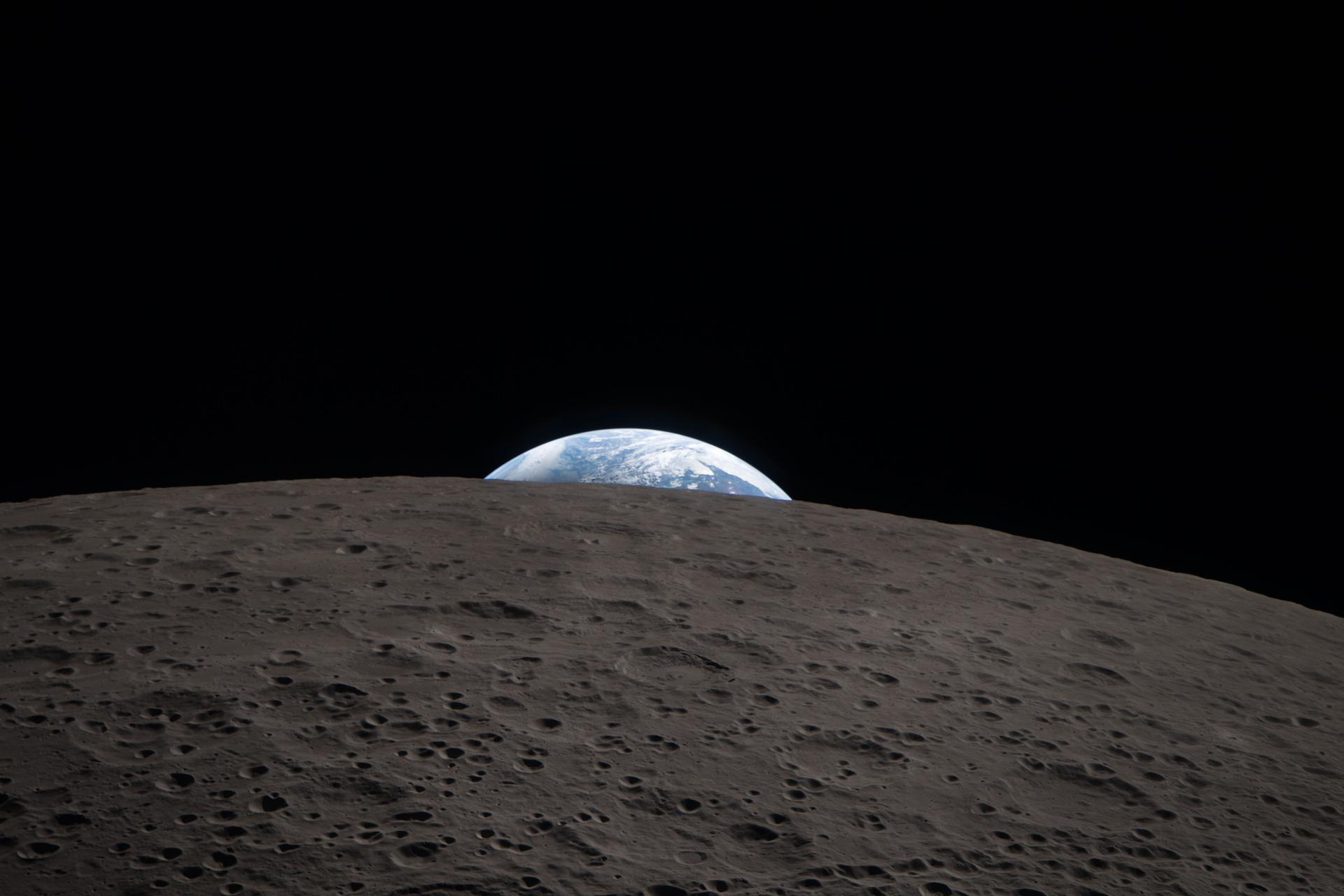
art002e021278 (April 6, 2026) – Echoing the iconic Earthrise photo captured by the Apollo 8 astronauts in 1968, during the lunar flyby, the Artemis II crew captured a shot of Earthset as they passed behind the Moon’s far side. It is one of many photos taken during the seven-hour lunar flyby by the Artemis II crew on the Orion spacecraft. Credit: NASA
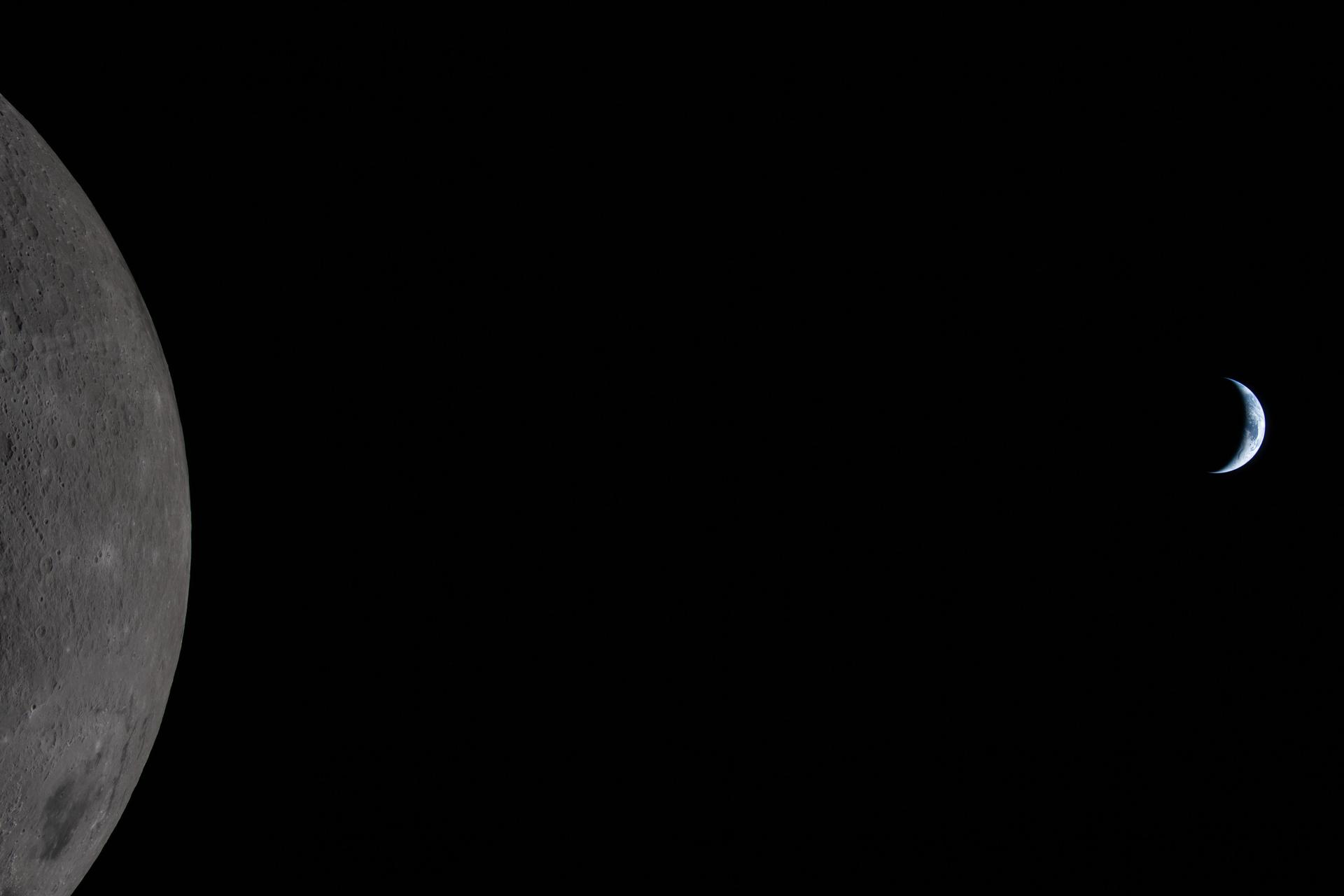
art002e009284 (April 6, 2026) – Earth appears tiny as the Moon looms large in this photo taken by the Artemis II crew during their lunar flyby on April 6, 2026. Taken 36 minutes before Earthset, our home planet is visible in the blackness of space off the limb of the illuminated Moon. Earth is in a crescent phase, with sunlight coming from the right. Orientale mare basin, with its dark floor of cooled lava and outer rings of mountains, covers nearly the lower third of the imaged lunar surface. Different colors in the mare hint at its mineral composition. The lines of small indentations above Orientale are secondary crater chains, formed by material ejected during a violent primary impact. Both of the new craters that the Artemis II crew has suggested names for – Integrity and Carroll – are in full view. The edge of the visible surface of the Moon is called the “lunar limb.” Seen from afar, it almost looks like a circular arc – except when backlit, as in other images captured by the Artemis II crew.

art002e021007 (April 6, 2026) – Earthset captured through the Orion spacecraft window at 6:37 p.m. EDT, April 6, 2026, during the Artemis II crew’s flyby of the Moon. A muted blue Earth with bright white clouds sets behind the cratered lunar surface. The dark portion of Earth is in nighttime. Credit: NASA
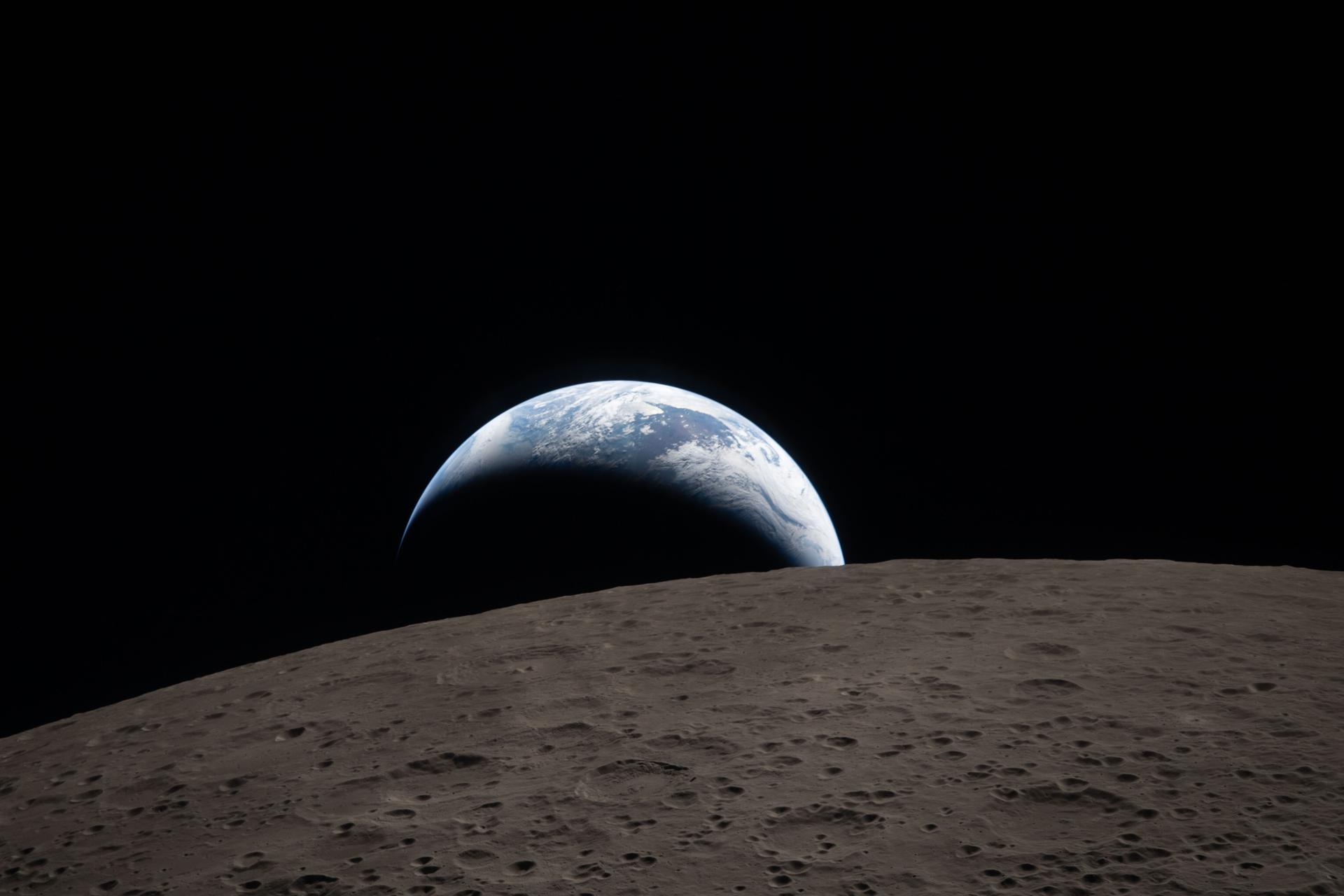
art002e009288 (April 6, 2026) – Earthset captured through the Orion spacecraft window at 6:41 p.m. EDT, April 6, 2026, during the Artemis II crew’s flyby of the Moon. A muted blue Earth with bright white clouds sets behind the cratered lunar surface. The dark portion of Earth is experiencing nighttime. On Earth’s day side, swirling clouds are visible over the Australia and Oceania region. In the foreground, Ohm crater has terraced edges and a flat floor interrupted by central peaks—formed when the surface rebounded upward during the impact that created the crater.
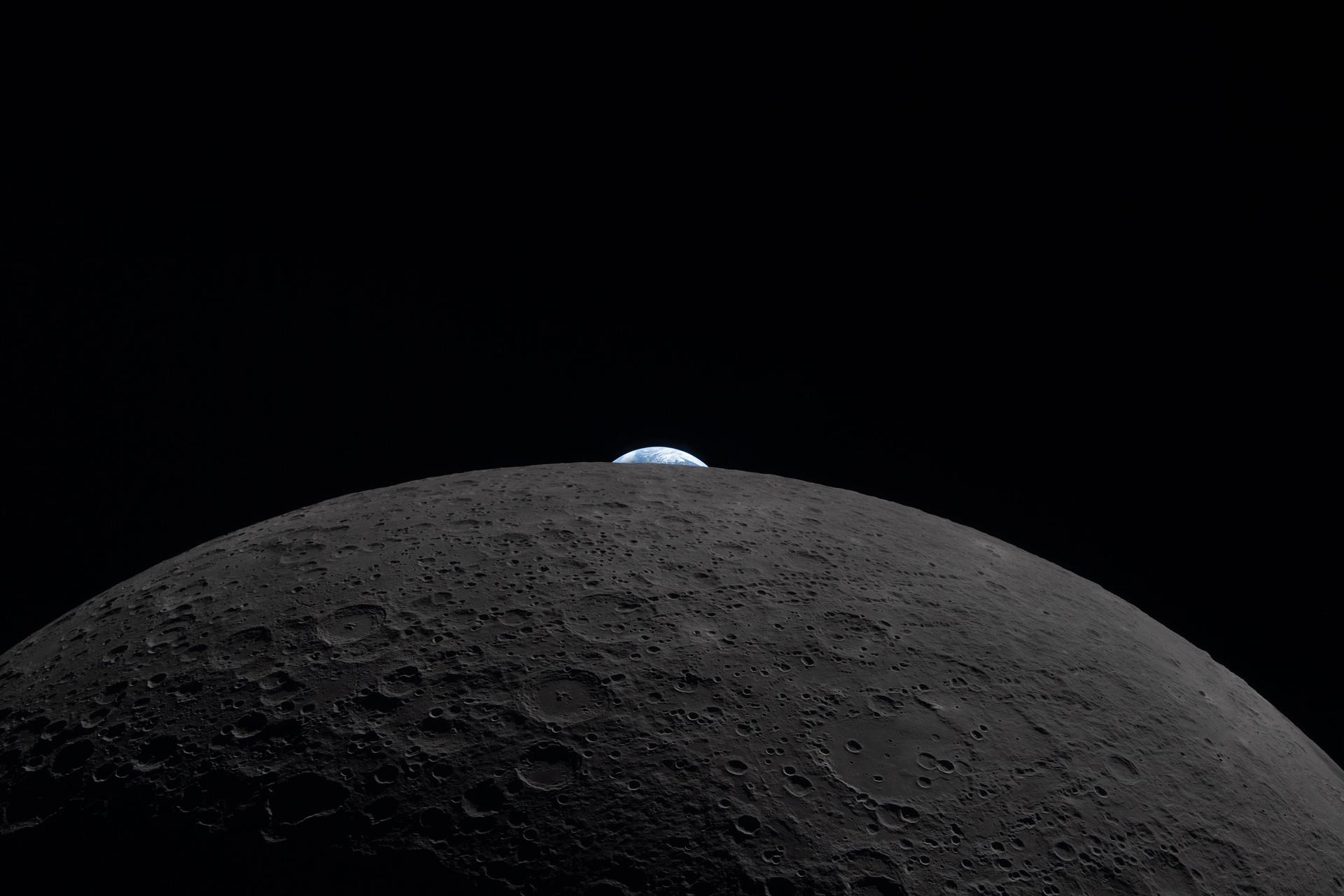
art002e021283 (April 6, 2026) – The Earth appears to be peeking out over the horizon of the Moon,but pictured here is actually an Earthset. During an Earthset, the planet appears to sink below the lunar horizon. In this scene, a partially lit crescent Earth drops behind the Moon as seen by crew on the Orion spacecraft. The image also shows the vast canvas of the Moon’s surface with its overlapping craters and basins. Credit: NASA
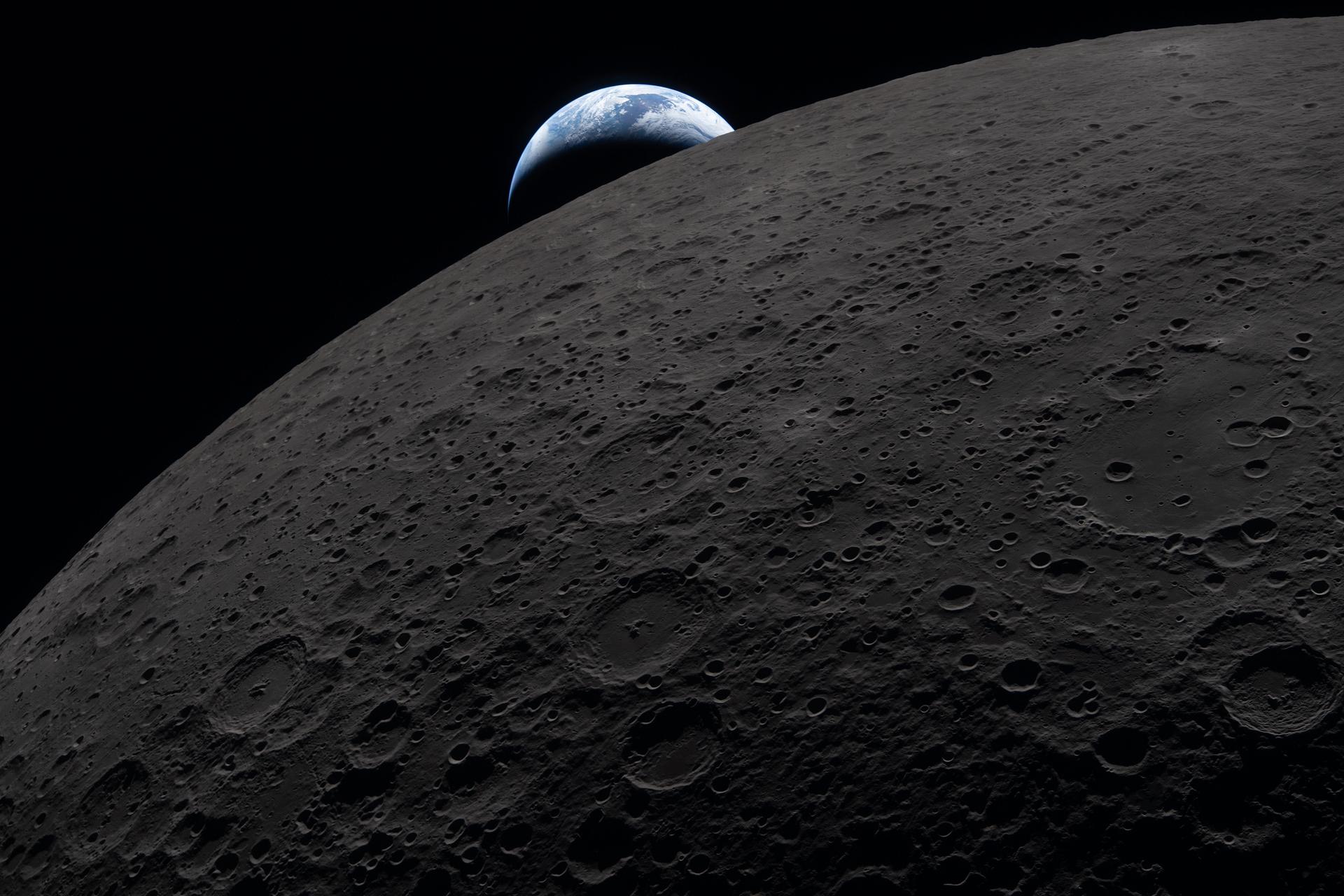
art002e021219 (April 6, 2026) – Earthset captured through the Orion spacecraft window at 6:41 p.m. EDT, April 6, 2026, during the Artemis II crew’s flyby of the Moon. A muted blue Earth with bright white clouds sets behind the cratered lunar surface. The dark portion of Earth is in nighttime. On Earth’s day side, swirling clouds are visible over the Australia and Oceania region. Credit: NASA
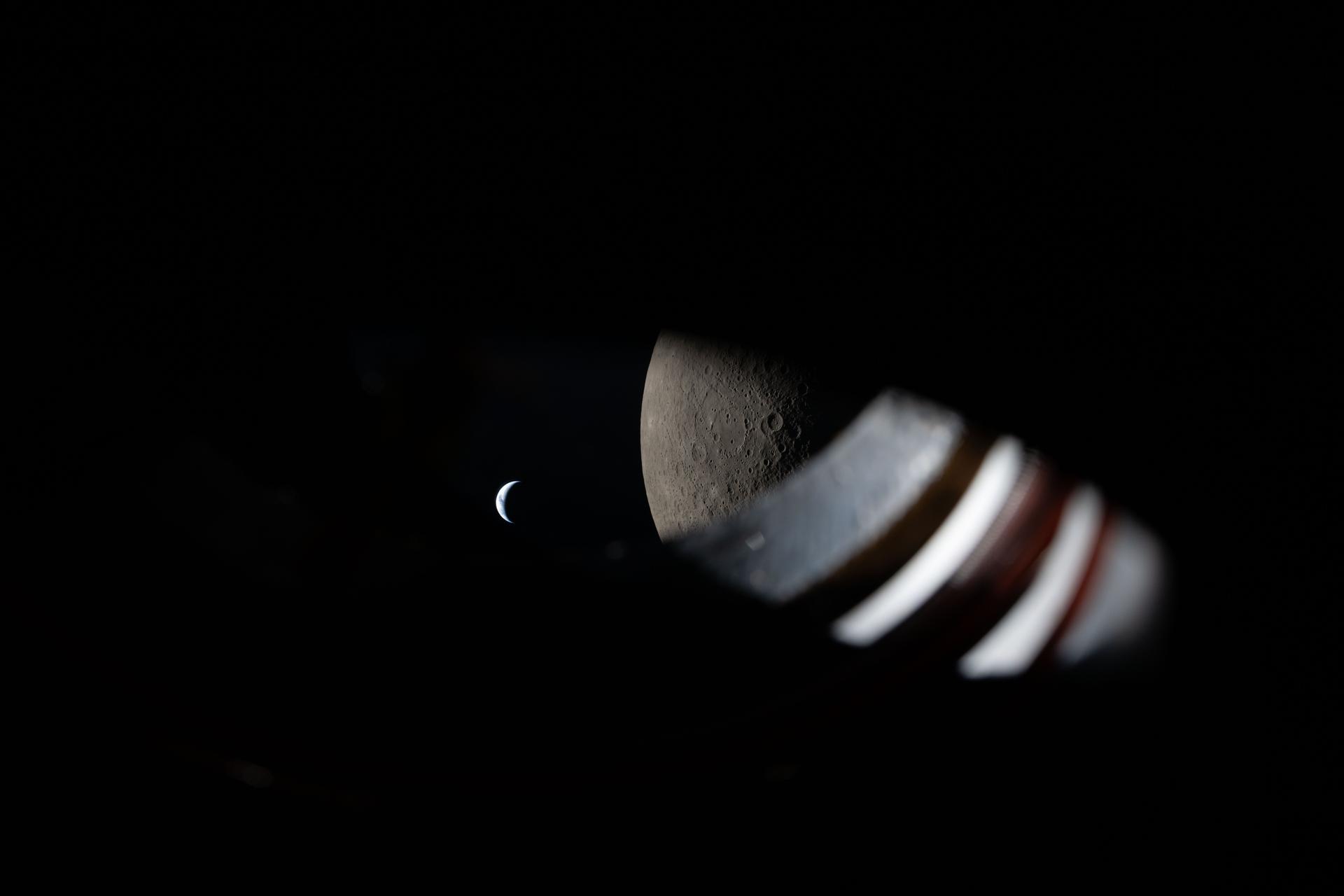
art002e012279 (April 6, 2026) - A view from the window of the Orion spacecraft approximately 9 minutes before Earthset during the Artemis II lunar flyby on April 6, 2026.
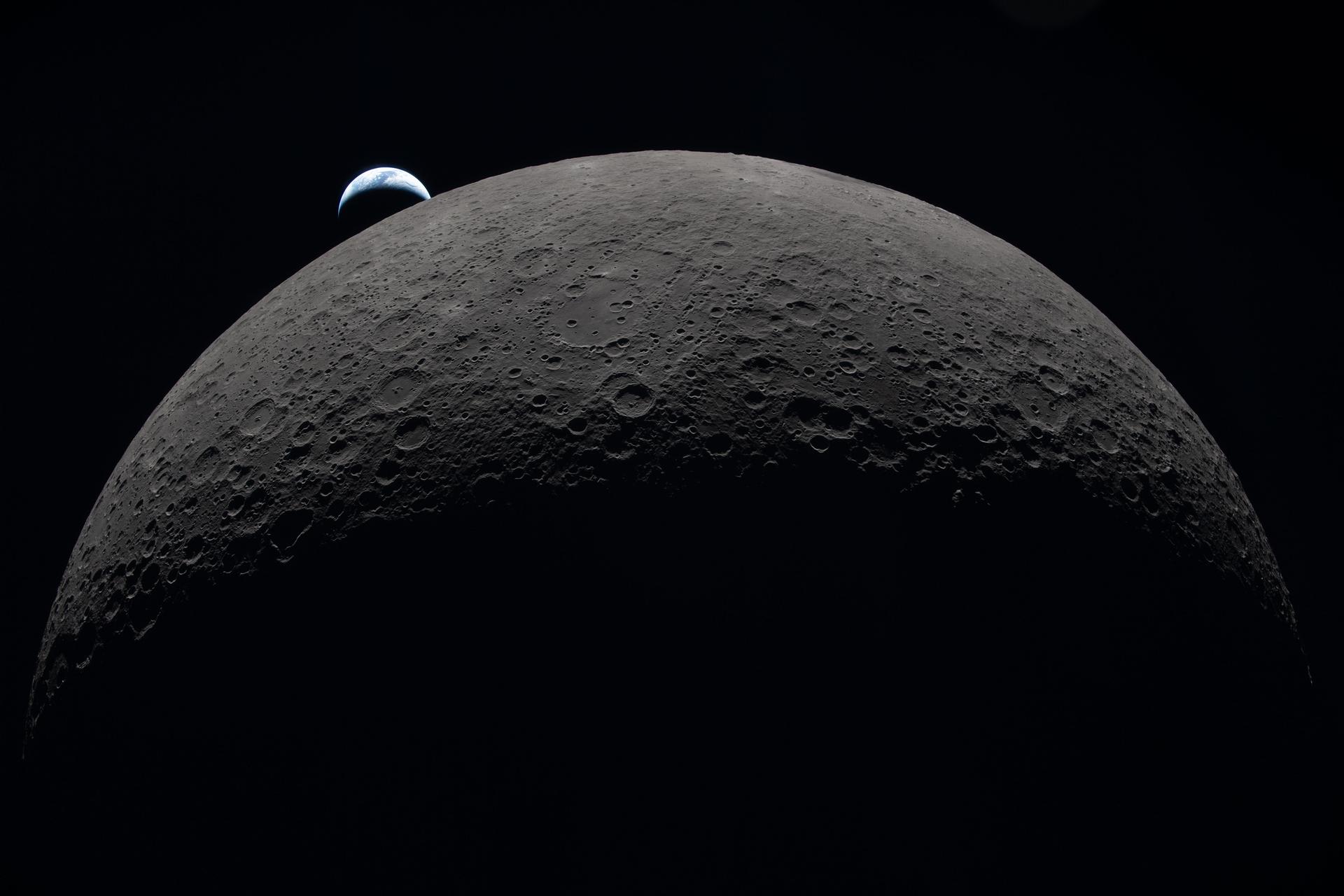
art002e009287 (April 6, 2026) – Earth sets at 6:41 p.m. EDT, April 6, 2026, over the Moon’s curved limb in this photo captured by the Artemis II crew during their journey around the far side of the Moon. Orientale basin is perched on the edge of the visible lunar surface. Hertzsprung Basin appears as two subtle concentric rings, which are interrupted by Vavilov, a younger crater superimposed over the older structure. The lines of indentations are secondary crater chains formed by ejecta from the massive impact that created Orientale. The dark portion of Earth is experiencing nighttime. On Earth’s day side, swirling clouds are visible over the Australia and Oceania region.
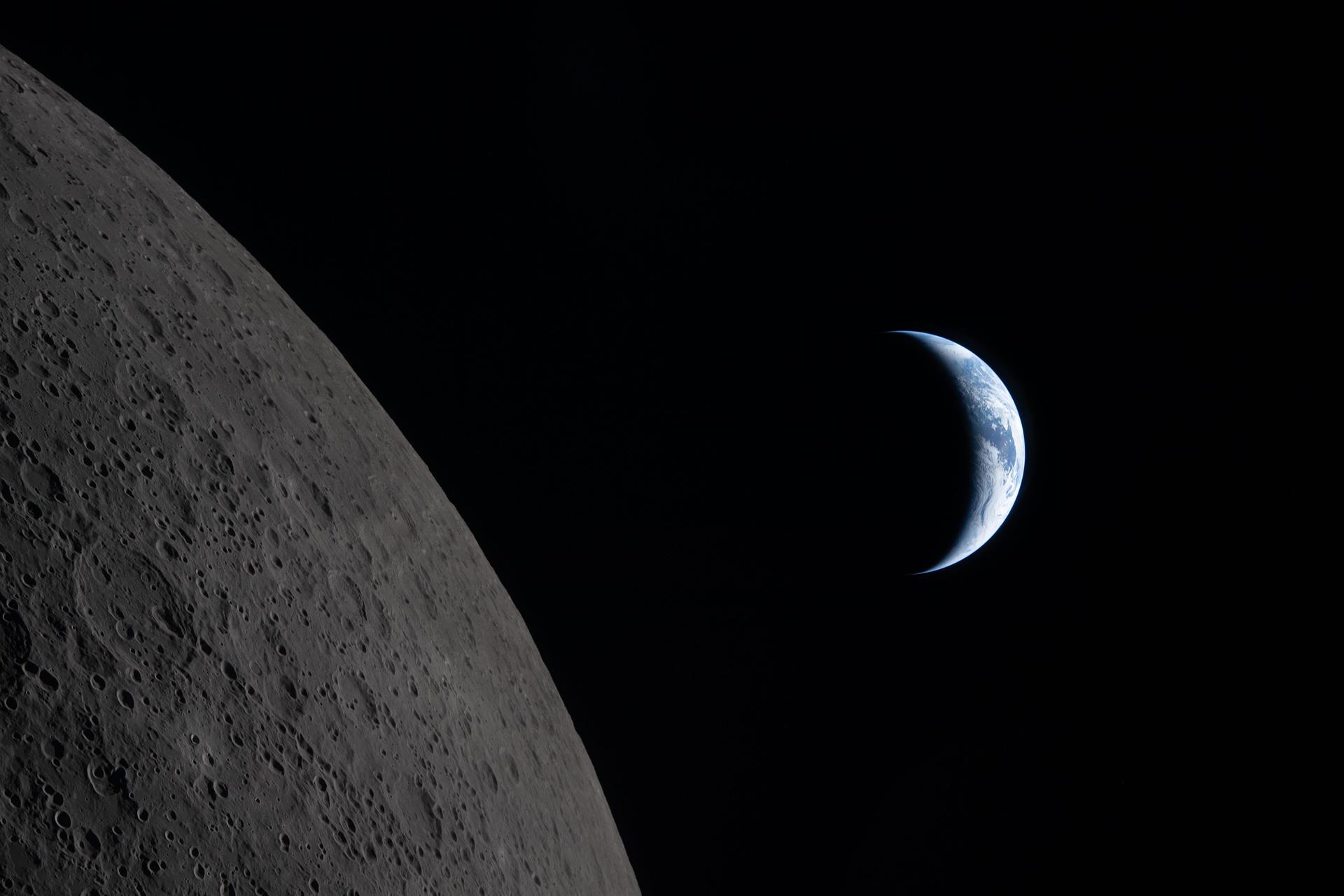
art002e009285 (April 6, 2026) – Our planet draws closer to passing behind the Moon in this image captured by the Artemis II crew during their lunar flyby, about six minutes before Earthset. Earth is in a crescent phase, with sunlight coming from the right. The dark portion of Earth is experiencing nighttime. On Earth’s day side, swirling clouds are visible over muted blue in the Australia and Oceania region. The lines of small indentations on the Moon’s rugged surface are secondary crater chains. These structures are formed by material ejected during a violent primary impact.
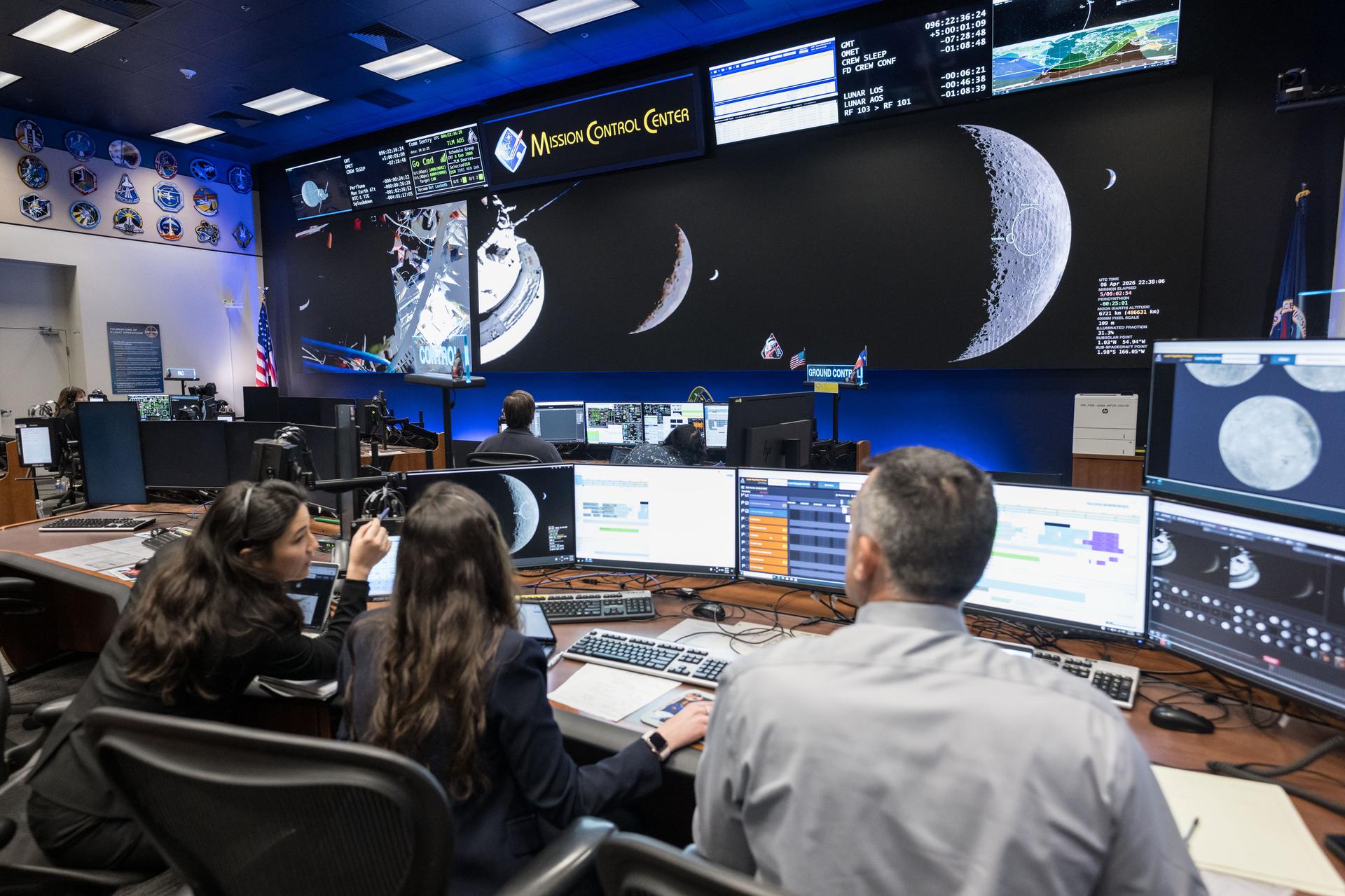
jsc2026e020490 (April 6, 2026) - Pictured from left to right, Angela Garcia, Dr. Kelsey Young, and Dr. Trevor Graff, the first science officers of the Artemis program in the White Flight Control Room in the Christopher C. Kraft Jr. Mission Control Center at NASA’s Johnson Space Center. Seen here about ten minutes before Earthset during Artemis II, these science officers are seen monitoring mission data in real-time from the Science console. They support flight controllers by analyzing scientific measurements and system performance. Their work helps ensure mission objectives are achieved safely and efficiently. Credit: NASA
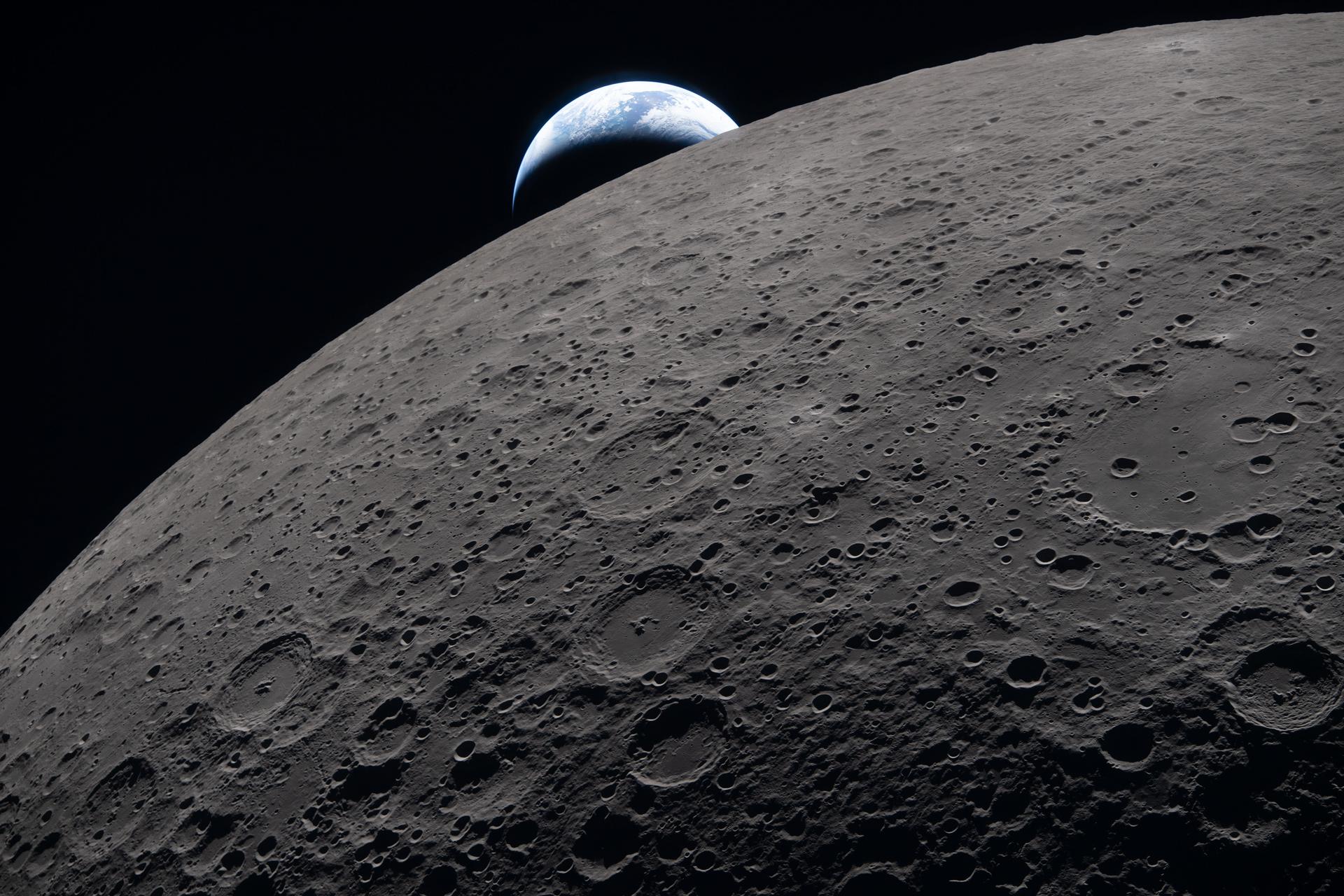
art002e009289 (April 6, 2026) – The lunar surface fills the frame in sharp detail, as seen during the Artemis II lunar flyby, while a distant Earth sets in the background. This image was captured at 6:41 p.m. EDT, on April 6, 2026, just three minutes before the Orion spacecraft and its crew went behind the Moon and lost contact with Earth for 40 minutes before emerging on the other side. In this image, the dark portion of Earth is experiencing nighttime, while on its day side, swirling clouds are visible over the Australia and Oceania region. In the foreground, Ohm crater shows terraced edges and a relatively flat floor marked by central peaks — formed when the surface rebounded upward during the impact that created the crater.