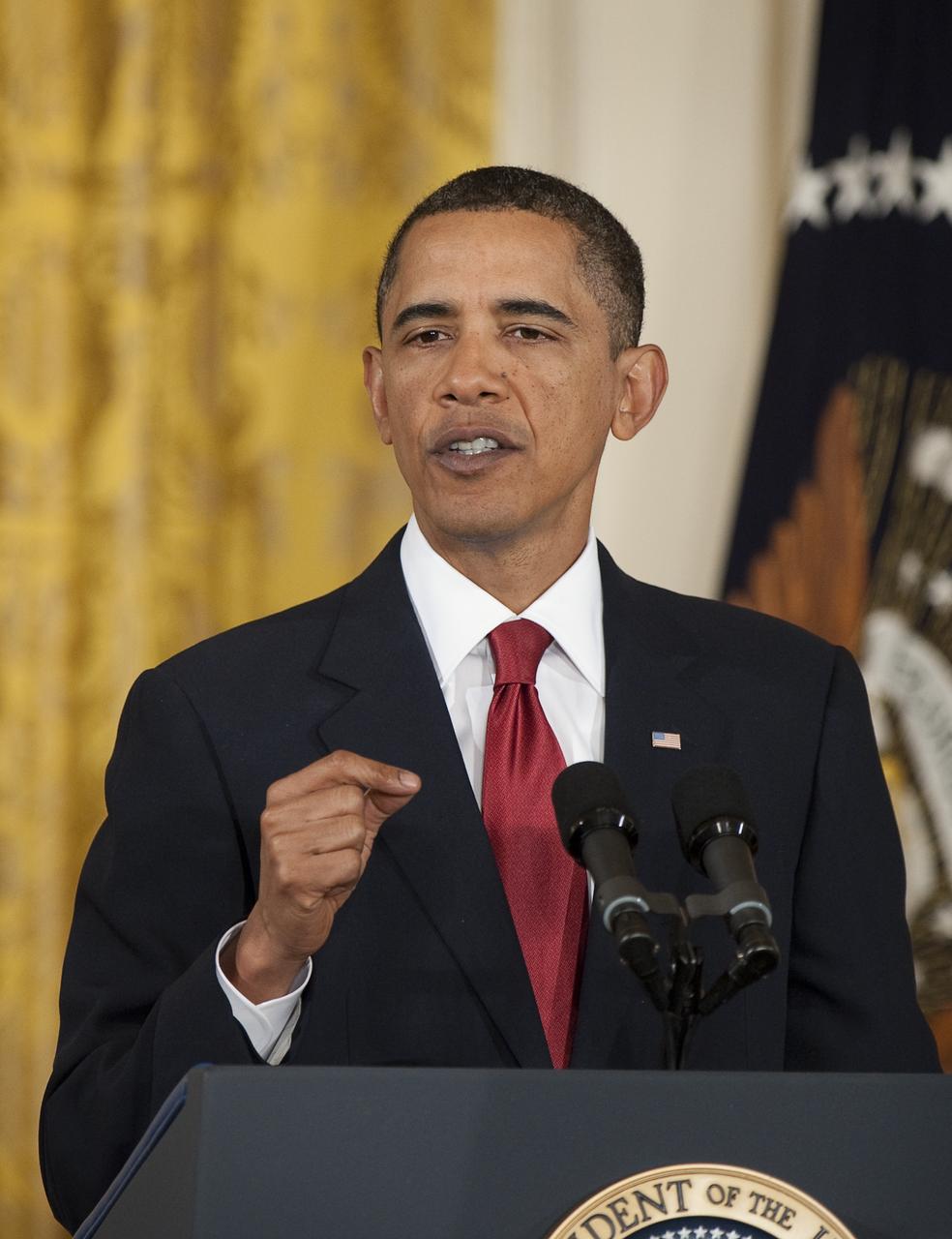
U.S. President Barack Obama speaks in the East Room of the White House in Washington, Wednesday, Jan. 6, 2010, during an 'Educate to Innovate' event where he honored teachers who received awards for excellence in Science, Technology, Engineering and Math (STEM) education. NASA's 'Summer of Innovation' program supports the President's 'Educate to Innovate' campaign. Photo Credit: (NASA/Bill Ingalls)
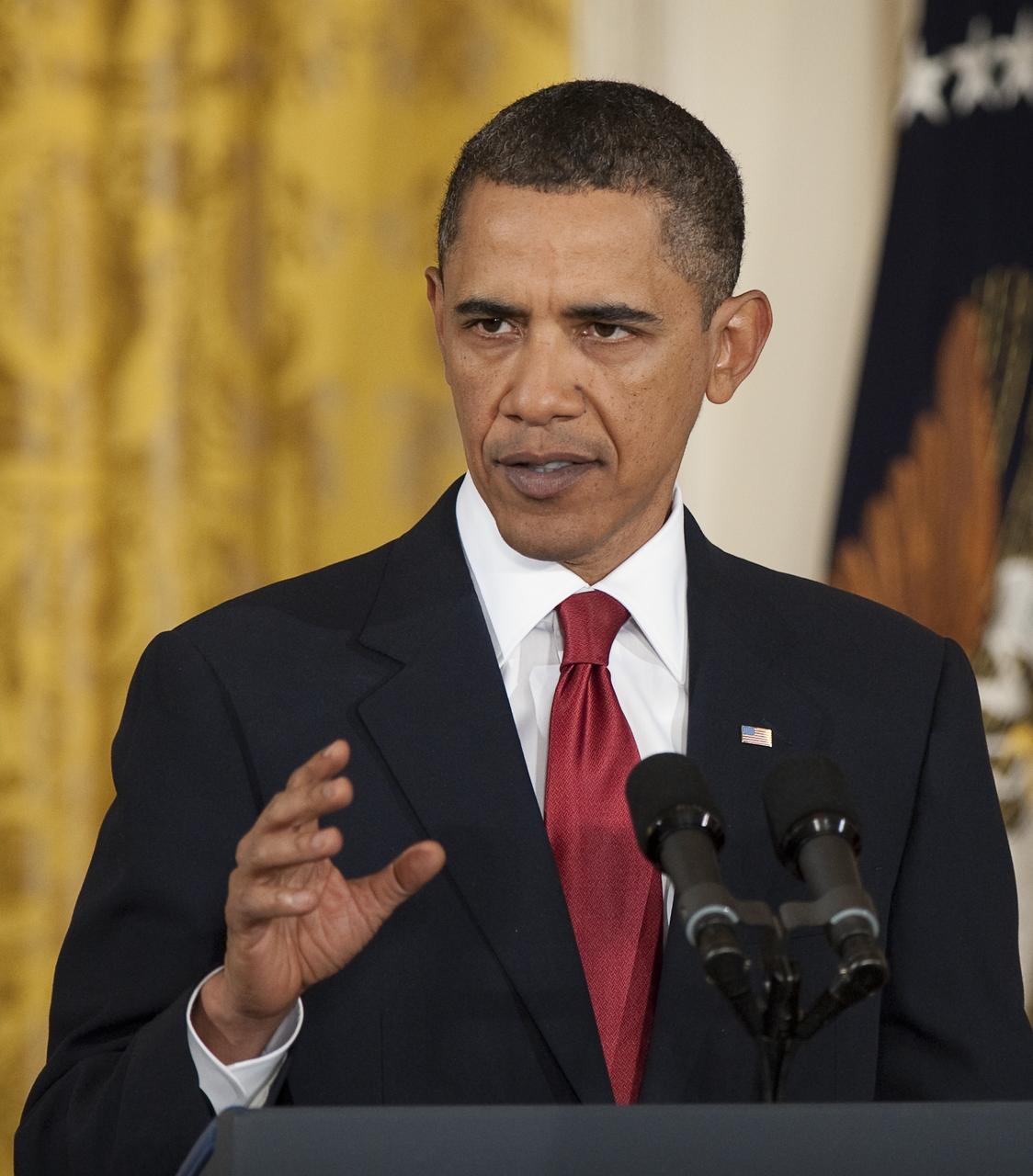
U.S. President Barack Obama speaks in the East Room of the White House in Washington, Wednesday, Jan. 6, 2010, during an 'Educate to Innovate' event where he honored teachers who received awards for excellence in Science, Technology, Engineering and Math (STEM) education. NASA's 'Summer of Innovation' program supports the President's 'Educate to Innovate' campaign. Photo Credit: (NASA/Bill Ingalls)
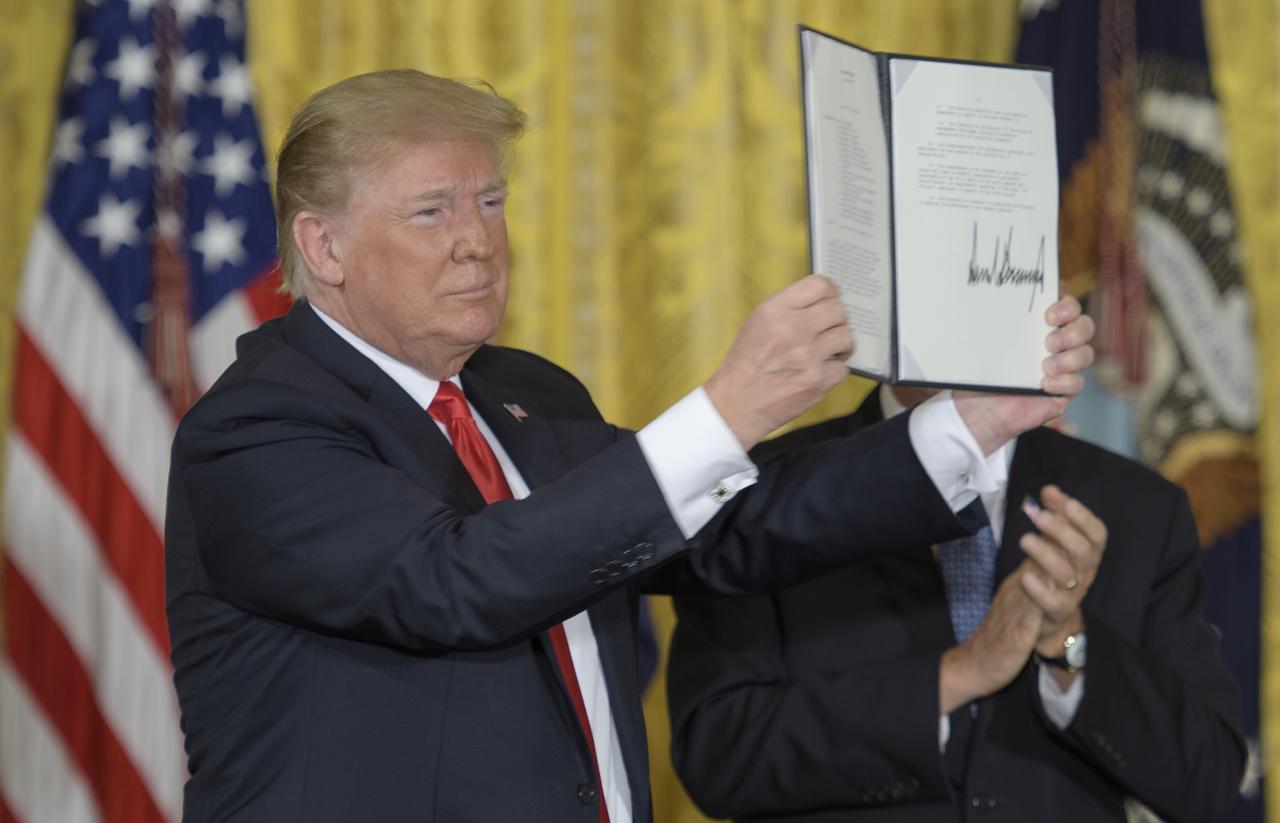
President Donald Trump holds up Space Policy Directive - 3 after signing it during a meeting of the National Space Council in the East Room of the White House, Monday, June 18, 2018, in Washington. Chaired by the Vice President, the council's role is to advise the President regarding national space policy and strategy, and review the nation's long-range goals for space activities. Photo Credit: (NASA/Bill Ingalls)

President Donald Trump delivers opening remarks during a meeting of the National Space Council in the East Room of the White House, Monday, June 18, 2018, in Washington. Chaired by the Vice President, the council's role is to advise the President regarding national space policy and strategy, and review the nation's long-range goals for space activities. Photo Credit: (NASA/Bill Ingalls)
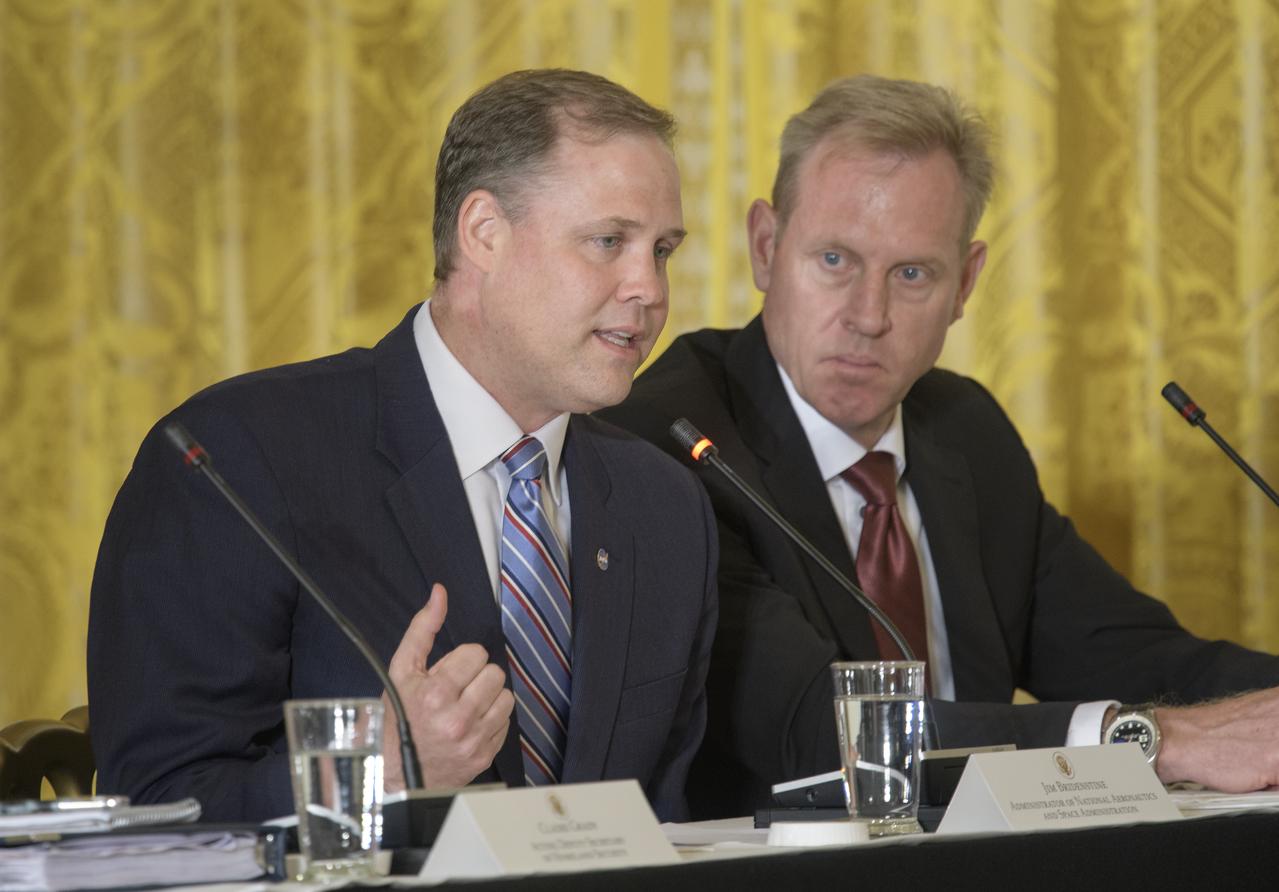
NASA Administrator Jim Bridenstine speaks during a meeting of the National Space Council in the East Room of the White House, Monday, June 18, 2018, in Washington. Chaired by the Vice President, the council's role is to advise the President regarding national space policy and strategy, and review the nation's long-range goals for space activities. Photo Credit: (NASA/Bill Ingalls)
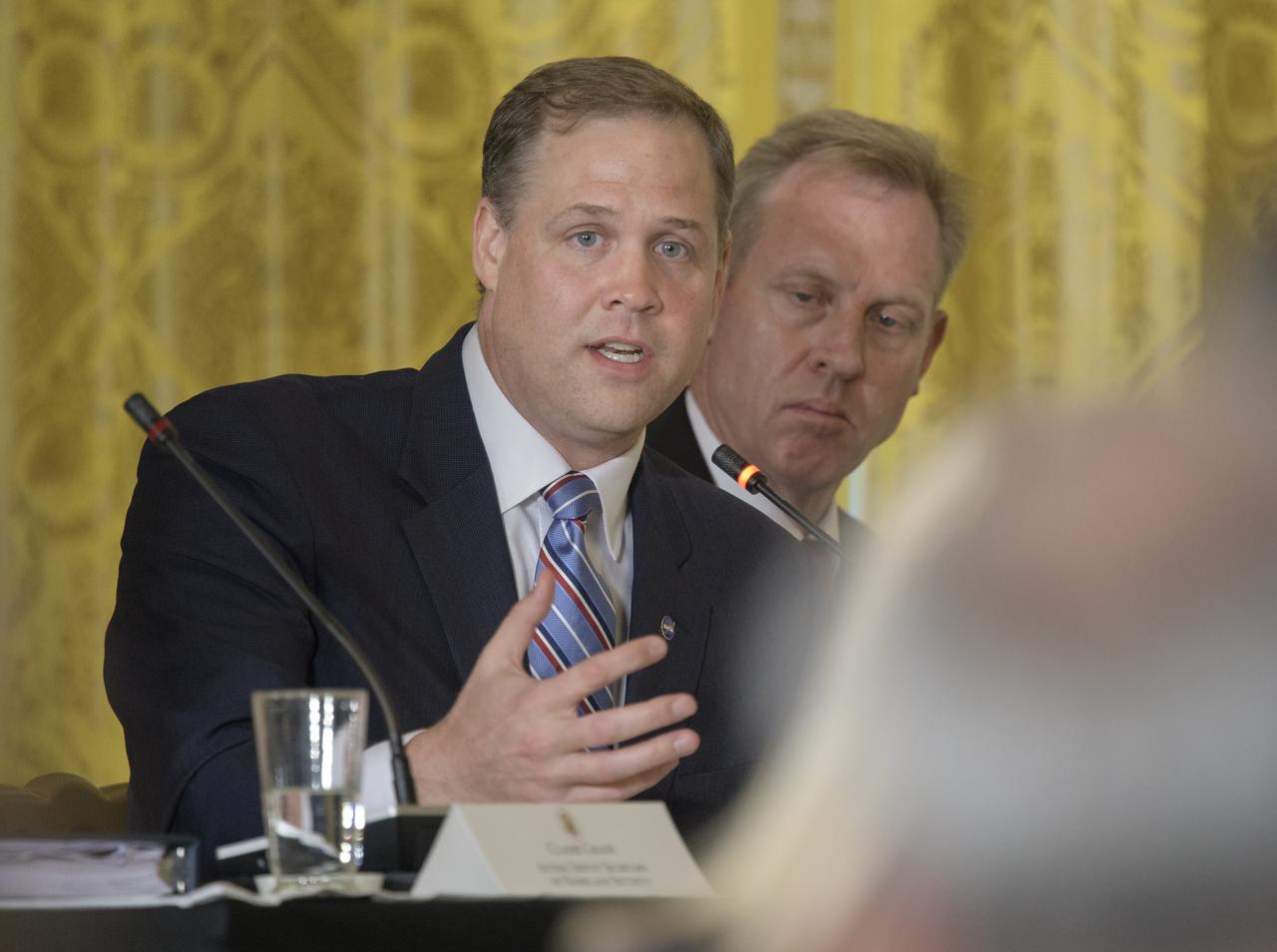
NASA Administrator Jim Bridenstine speaks during a meeting of the National Space Council in the East Room of the White House, Monday, June 18, 2018, in Washington. Chaired by the Vice President, the council's role is to advise the President regarding national space policy and strategy, and review the nation's long-range goals for space activities. Photo Credit: (NASA/Bill Ingalls)
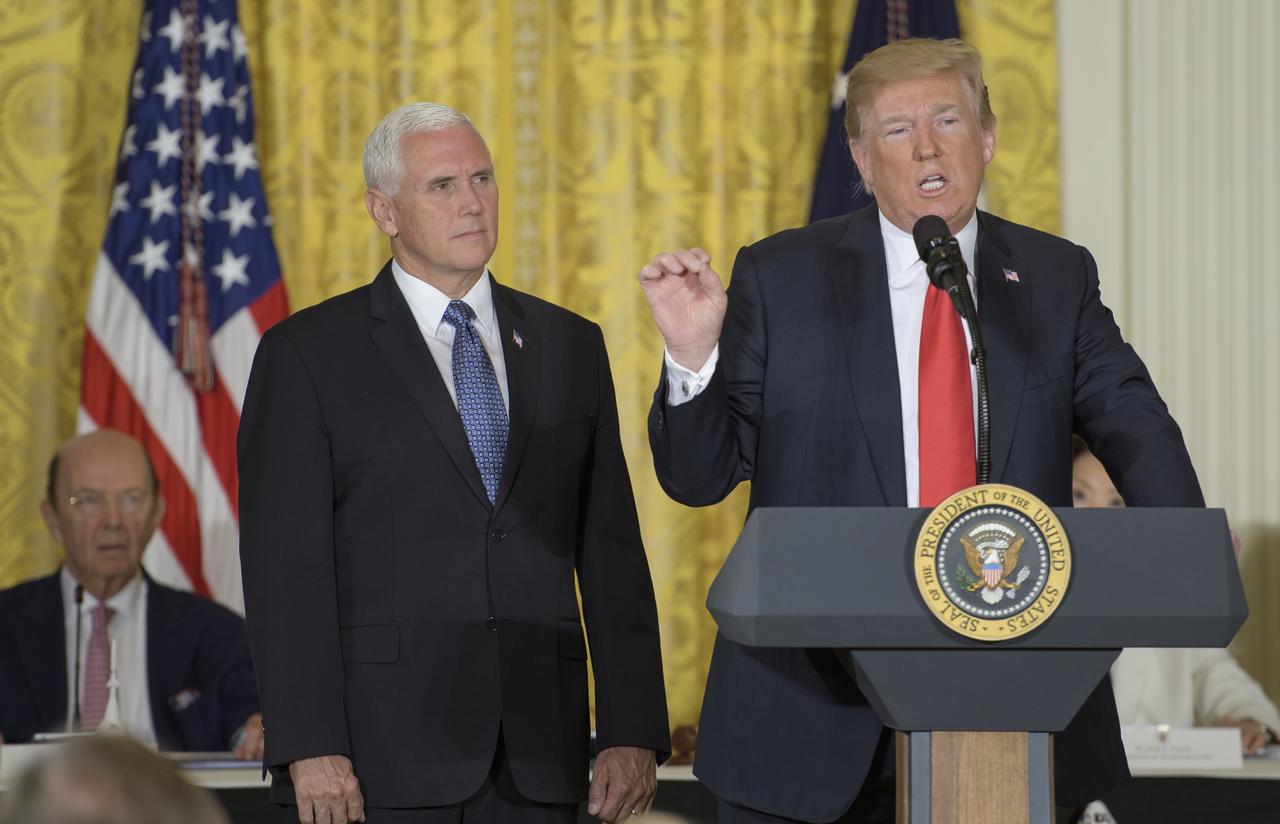
President Donald Trump delivers opening remarks as Vice President Mike Pence looks on during a meeting of the National Space Council in the East Room of the White House, Monday, June 18, 2018, in Washington. Chaired by the Vice President, the council's role is to advise the President regarding national space policy and strategy, and review the nation's long-range goals for space activities. Photo Credit: (NASA/Bill Ingalls)
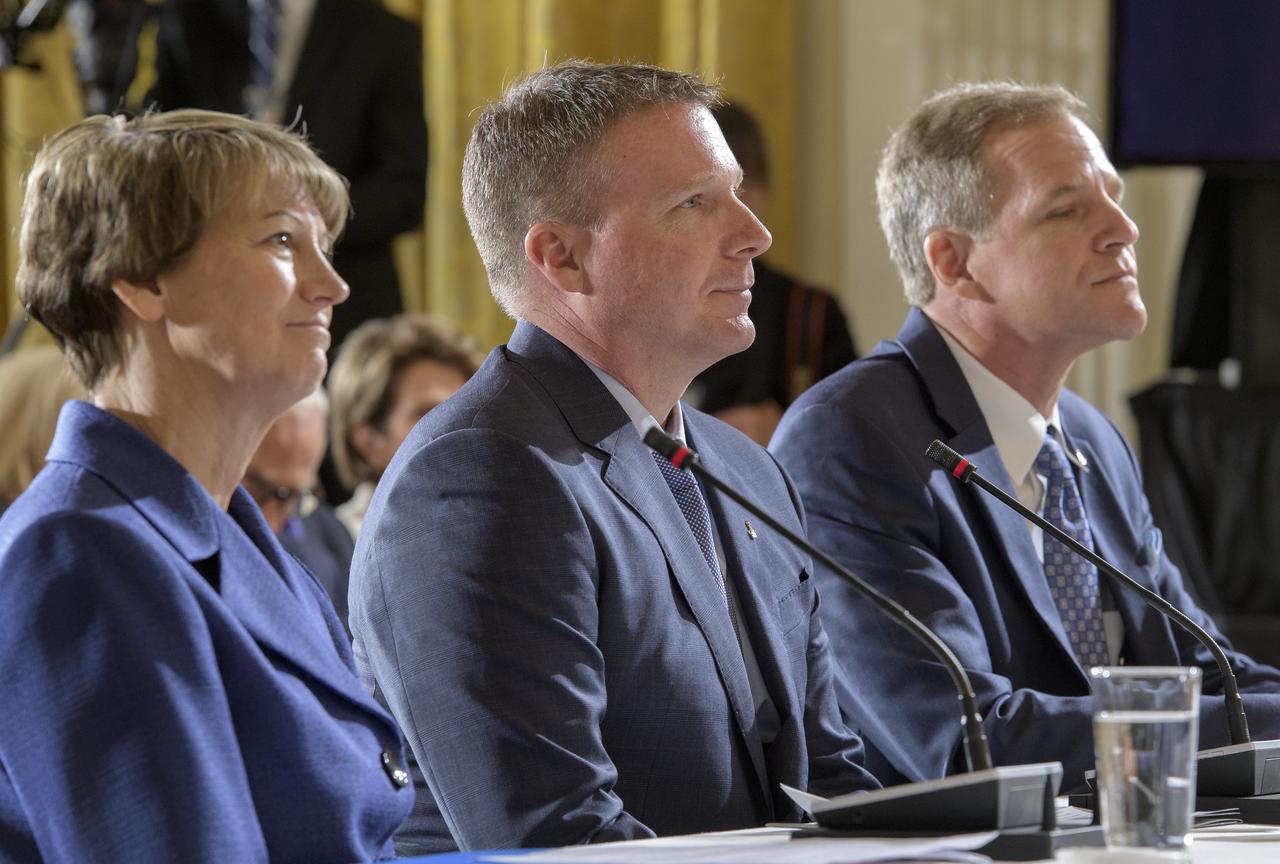
Former NASA astronauts Eileen Collins, left, Terry Virts, center, and Scott Parazynski are seen during a meeting of the National Space Council in the East Room of the White House, Monday, June 18, 2018, in Washington. Chaired by the Vice President, the council's role is to advise the President regarding national space policy and strategy, and review the nation's long-range goals for space activities. Photo Credit: (NASA/Bill Ingalls)

Vice President Mike Pence ask questions of former NASA astronauts Eileen Collins, Terry Virts and Scott Parazynski during a meeting of the National Space Council in the East Room of the White House, Monday, June 18, 2018, in Washington. Chaired by the Vice President, the council's role is to advise the President regarding national space policy and strategy, and review the nation's long-range goals for space activities. Photo Credit: (NASA/Bill Ingalls)
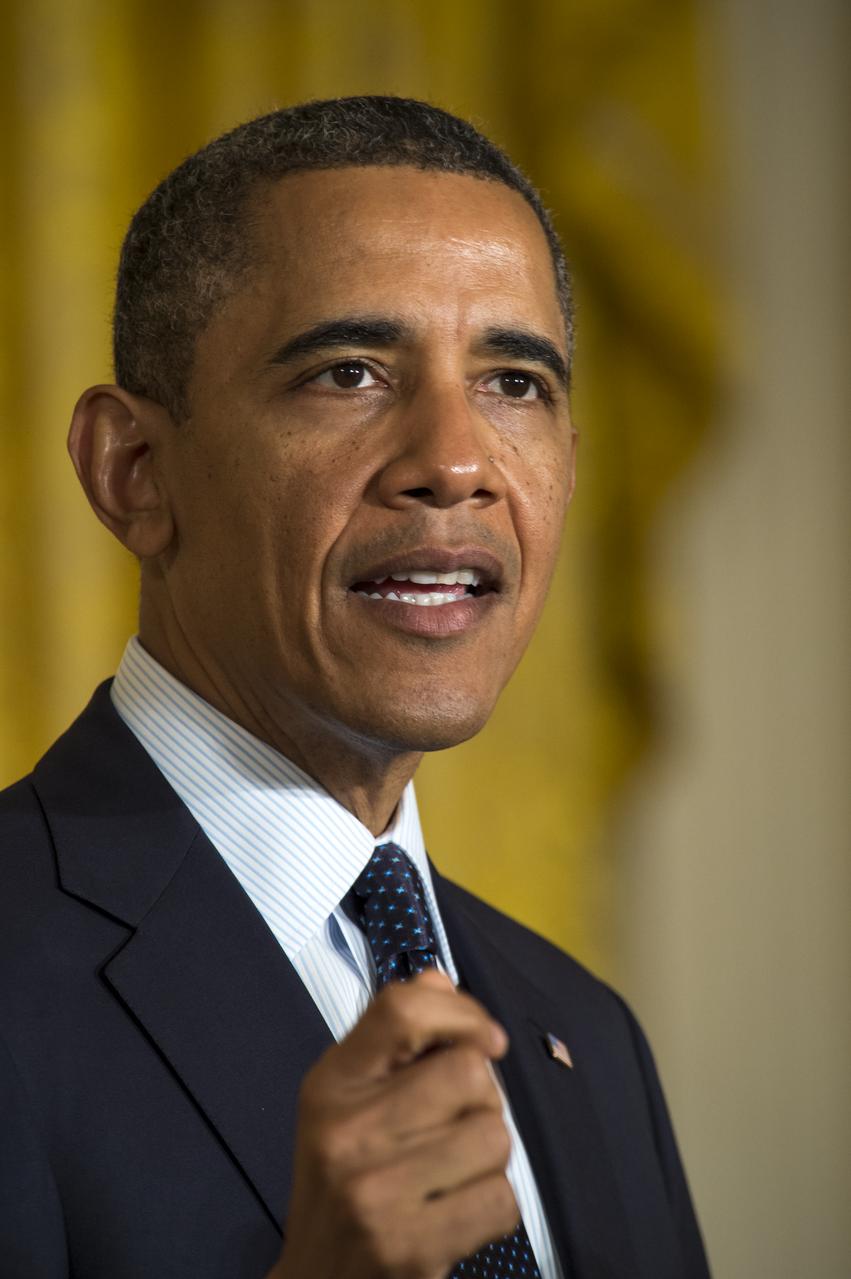
U.S. President Barack Obama speaks as he hosts the third-ever White House Science Fair in the East Room at the White House in Washington, April 22, 2013. The science fair celebrated student winners of a broad range of science, technology, engineering and math (STEM) competitions from across the country. Photo Credit: (NASA/Bill Ingalls)
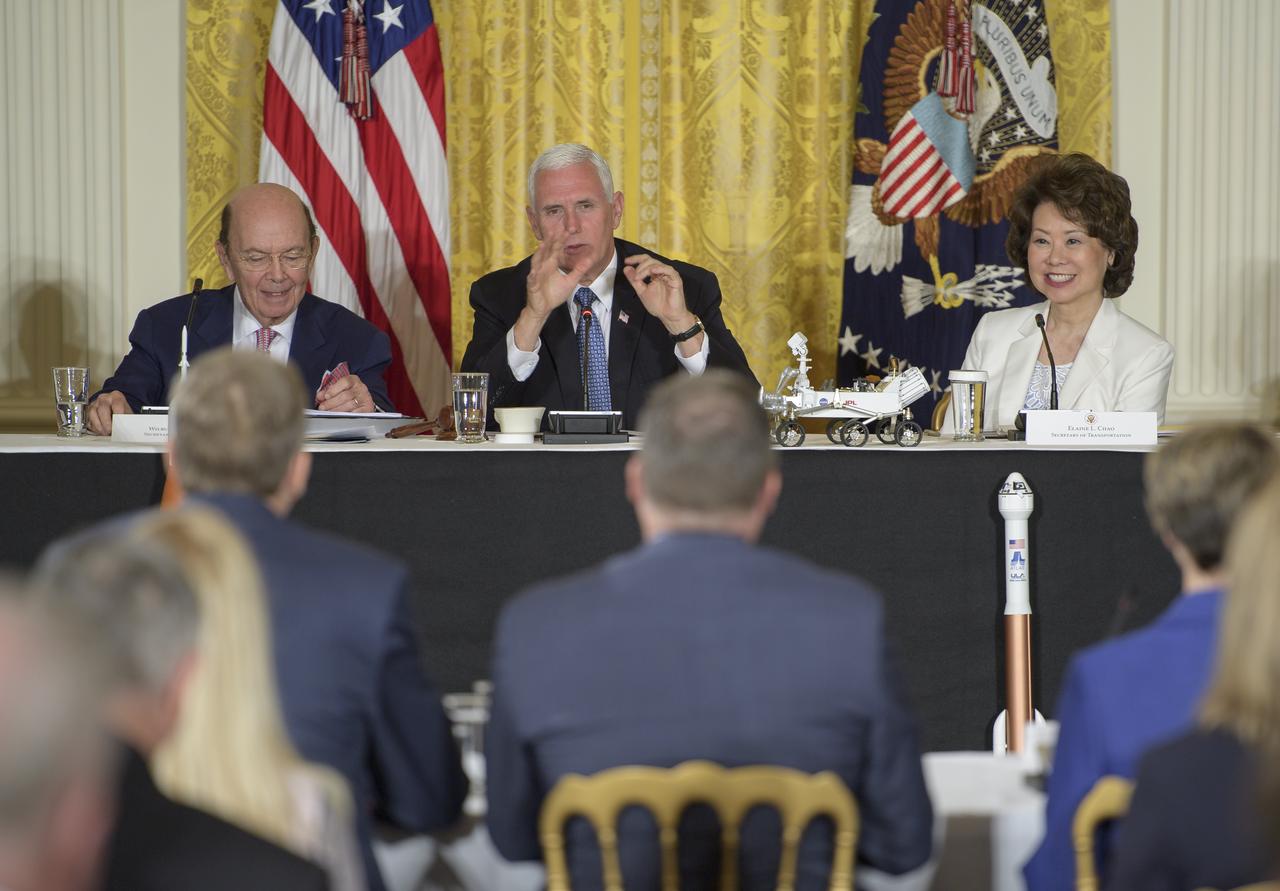
Vice President Mike Pence ask questions of former NASA astronauts Eileen Collins, Terry Virts and Scott Parazynski during a meeting of the National Space Council in the East Room of the White House, Monday, June 18, 2018, in Washington. Chaired by the Vice President, the council's role is to advise the President regarding national space policy and strategy, and review the nation's long-range goals for space activities. Photo Credit: (NASA/Bill Ingalls)
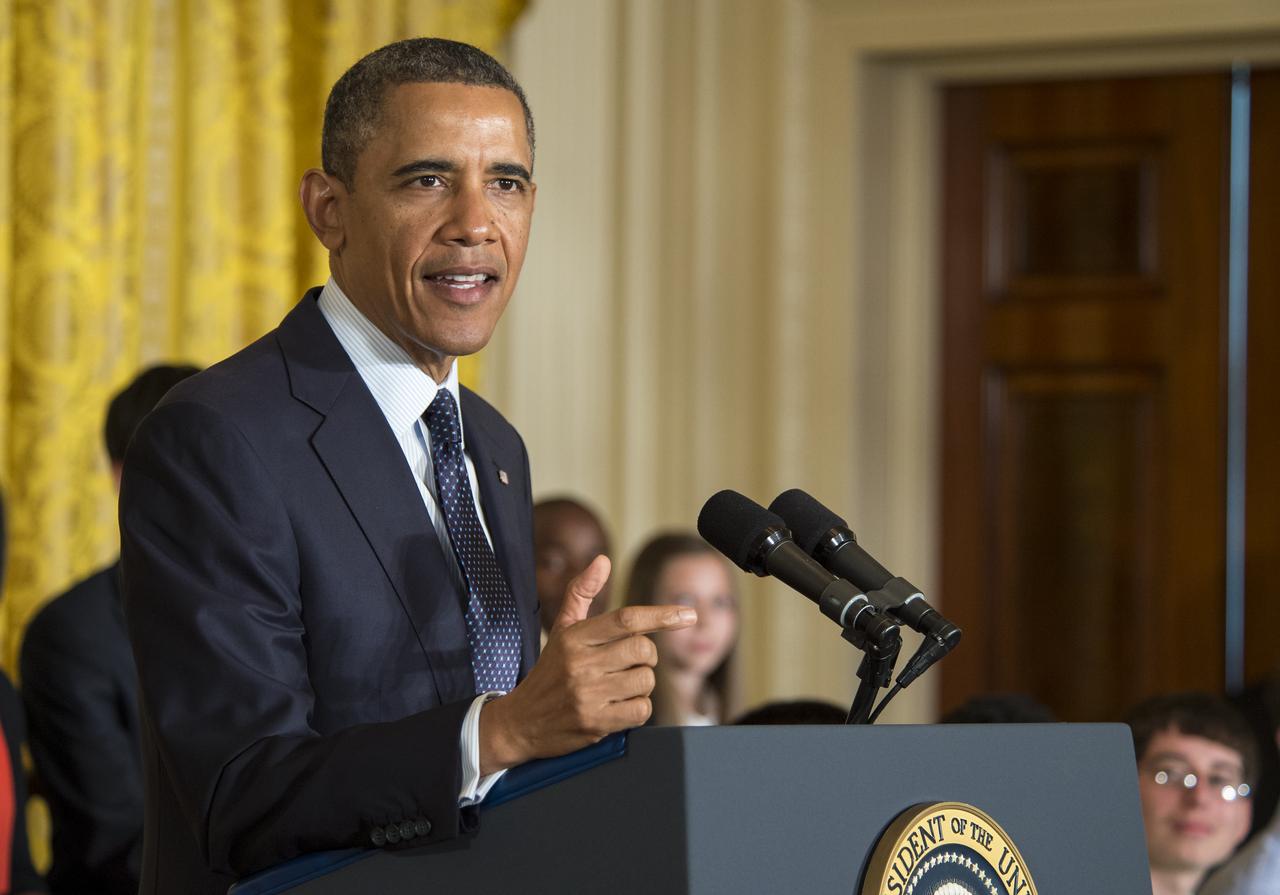
U.S. President Barack Obama speaks as he hosts the third-ever White House Science Fair in the East Room at the White House in Washington, April 22, 2013. The science fair celebrated student winners of a broad range of science, technology, engineering and math (STEM) competitions from across the country. Photo Credit: (NASA/Bill Ingalls)
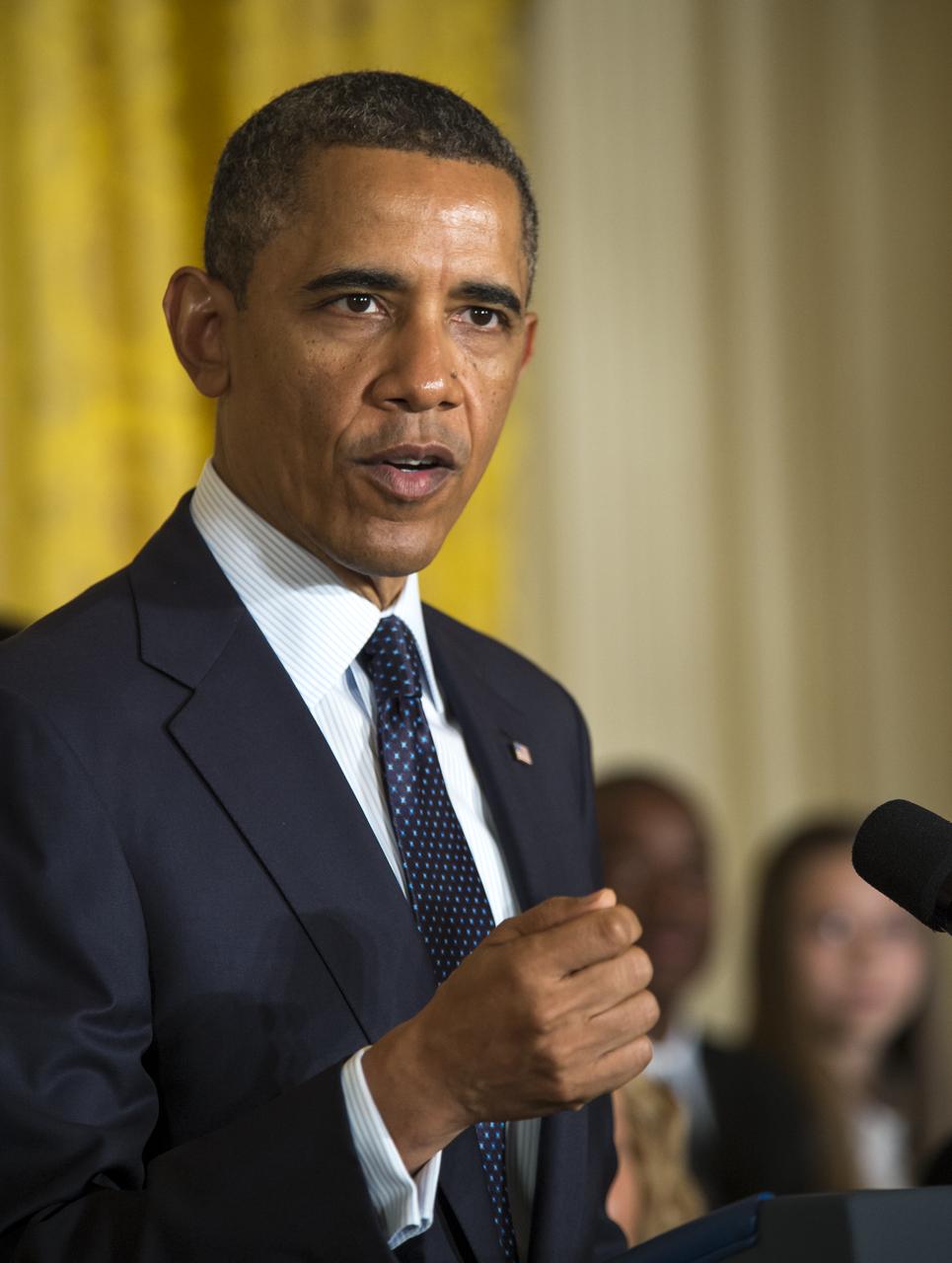
U.S. President Barack Obama speaks as he hosts the third-ever White House Science Fair in the East Room at the White House in Washington, April 22, 2013. The science fair celebrated student winners of a broad range of science, technology, engineering and math (STEM) competitions from across the country. Photo Credit: (NASA/Bill Ingalls)
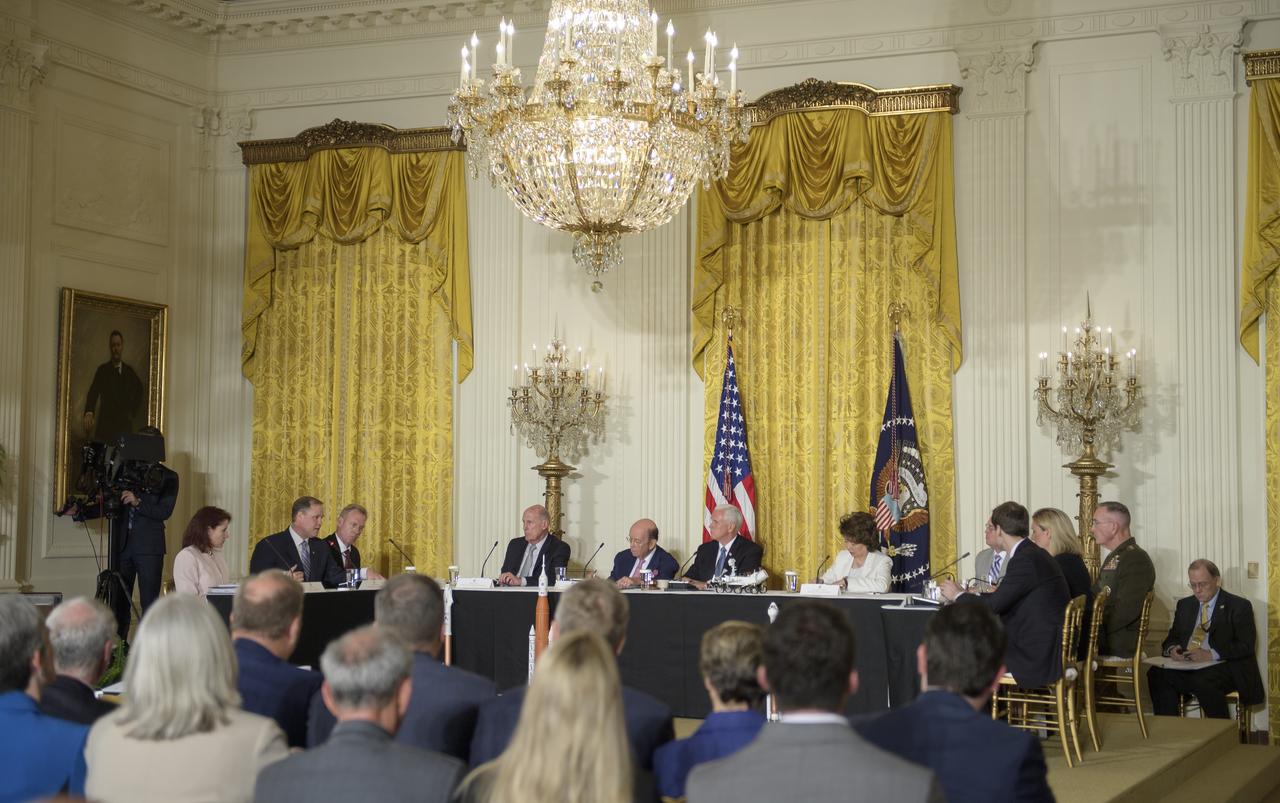
NASA Administrator Jim Bridenstine, second from left, speaks during a meeting of the National Space Council in the East Room of the White House, Monday, June 18, 2018, in Washington. Chaired by the Vice President, the council's role is to advise the President regarding national space policy and strategy, and review the nation's long-range goals for space activities. Photo Credit: (NASA/Bill Ingalls)
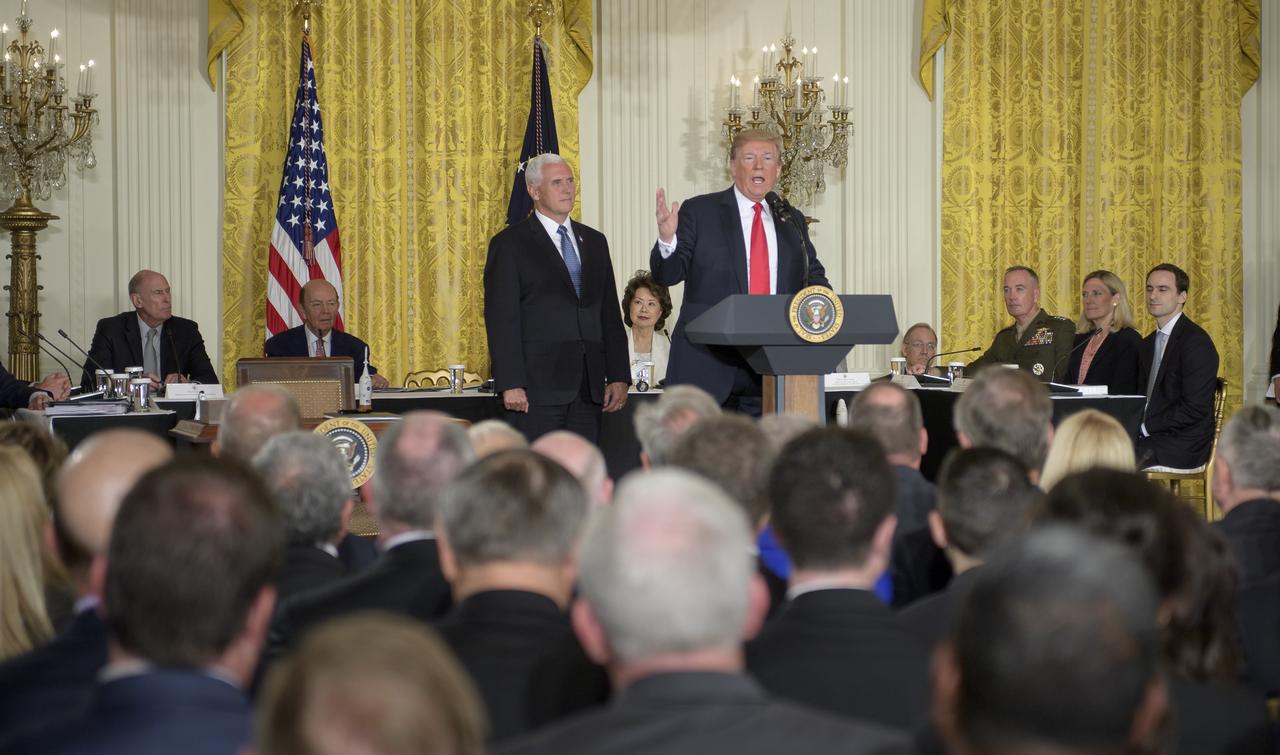
President Donald Trump delivers opening remarks as Vice President Mike Pence looks on during a meeting of the National Space Council in the East Room of the White House, Monday, June 18, 2018, in Washington. Chaired by the Vice President, the council's role is to advise the President regarding national space policy and strategy, and review the nation's long-range goals for space activities. Photo Credit: (NASA/Bill Ingalls)
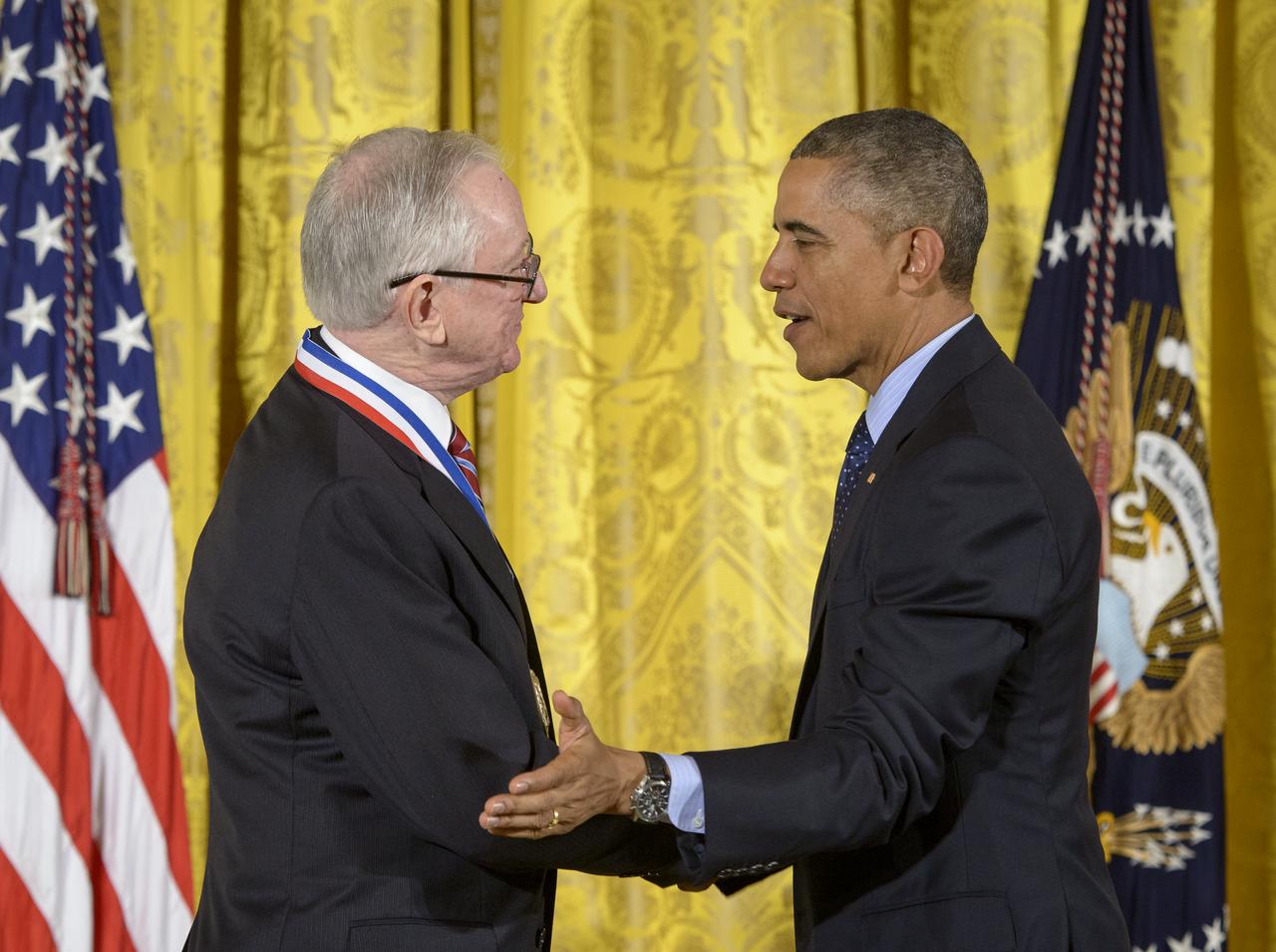
President Barack Obama congratulates MESSENGER Principal Investigator, director of Columbia University's Lamont-Doherty Earth Observatory, Sean Solomon, after awarding him the National Medal of Science, the nation's top scientific honor,Thursday, Nov. 20, 2014 during a ceremony in the East Room of the White House in Washington. MESSENGER (MErcury Surface, Space ENvironment, GEochemistry, and Ranging) is a NASA-sponsored scientific investigation of the planet Mercury and the first space mission designed to orbit the planet closest to the Sun. Photo Credit: (NASA/Bill Ingalls)
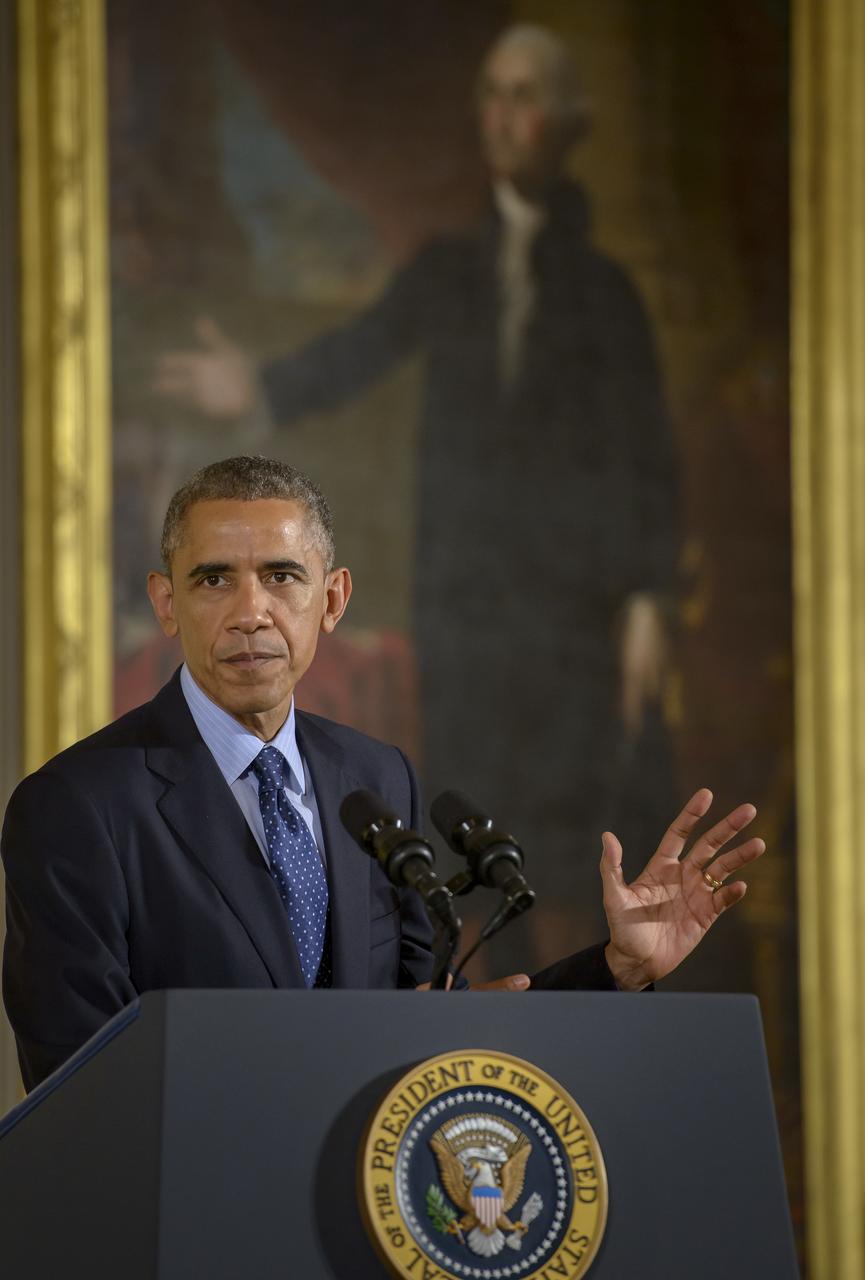
President Barack Obama delivers remarks at the National Medals of Science and National Medals of Technology and Innovation Awards Ceremony, Thursday, Nov. 20, 2014 in the East Room of the White House in Washington. MESSENGER Principal Investigator, director of Columbia University's Lamont-Doherty Earth Observatory, Sean Solomon, was awarded the National Medal of Science, the nation's top scientific honor, at the ceremony. MESSENGER (MErcury Surface, Space ENvironment, GEochemistry, and Ranging) is a NASA-sponsored scientific investigation of the planet Mercury and the first space mission designed to orbit the planet closest to the Sun. Photo Credit: (NASA/Bill Ingalls)

President Barack Obama, right, and MESSENGER Principal Investigator, director of Columbia University's Lamont-Doherty Earth Observatory, Sean Solomon, listen as a citation is read prior to the President bestowing the National Medal of Science, the nation's top scientific honor to Solomon, Thursday, Nov. 20, 2014 during a ceremony in the East Room of the White House in Washington. MESSENGER (MErcury Surface, Space ENvironment, GEochemistry, and Ranging) is a NASA-sponsored scientific investigation of the planet Mercury and the first space mission designed to orbit the planet closest to the Sun. Photo Credit: (NASA/Bill Ingalls)
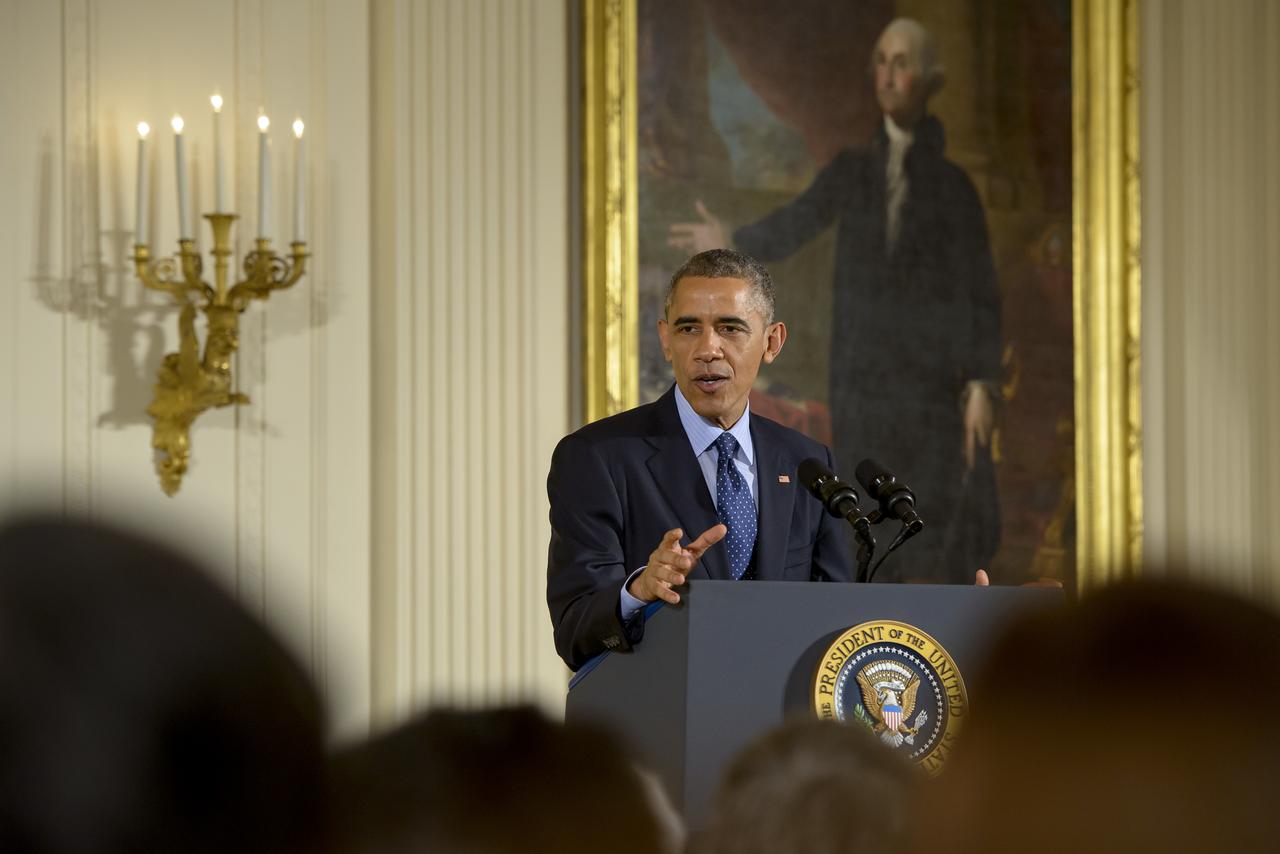
President Barack Obama delivers remarks at the National Medals of Science and National Medals of Technology and Innovation Awards Ceremony, Thursday, Nov. 20, 2014 in the East Room of the White House in Washington. MESSENGER Principal Investigator, director of Columbia University's Lamont-Doherty Earth Observatory, Sean Solomon, was awarded the National Medal of Science, the nation's top scientific honor, at the ceremony. MESSENGER (MErcury Surface, Space ENvironment, GEochemistry, and Ranging) is a NASA-sponsored scientific investigation of the planet Mercury and the first space mission designed to orbit the planet closest to the Sun. Photo Credit: (NASA/Bill Ingalls)
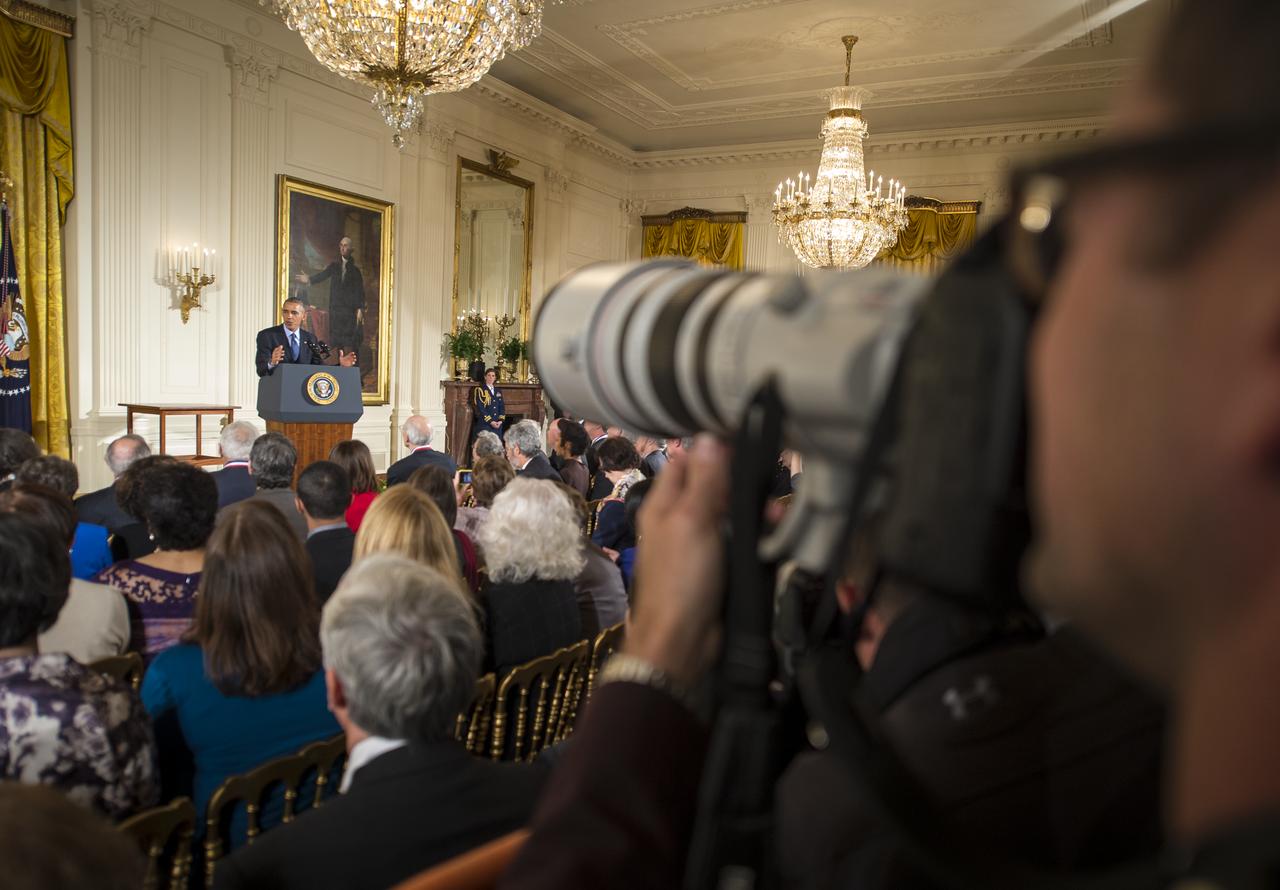
President Barack Obama delivers remarks at the National Medals of Science and National Medals of Technology and Innovation Awards Ceremony, Thursday, Nov. 20, 2014 in the East Room of the White House in Washington. MESSENGER Principal Investigator, director of Columbia University's Lamont-Doherty Earth Observatory, Sean Solomon, was awarded the National Medal of Science, the nation's top scientific honor, at the ceremony. MESSENGER (MErcury Surface, Space ENvironment, GEochemistry, and Ranging) is a NASA-sponsored scientific investigation of the planet Mercury and the first space mission designed to orbit the planet closest to the Sun. Photo Credit: (NASA/Bill Ingalls)
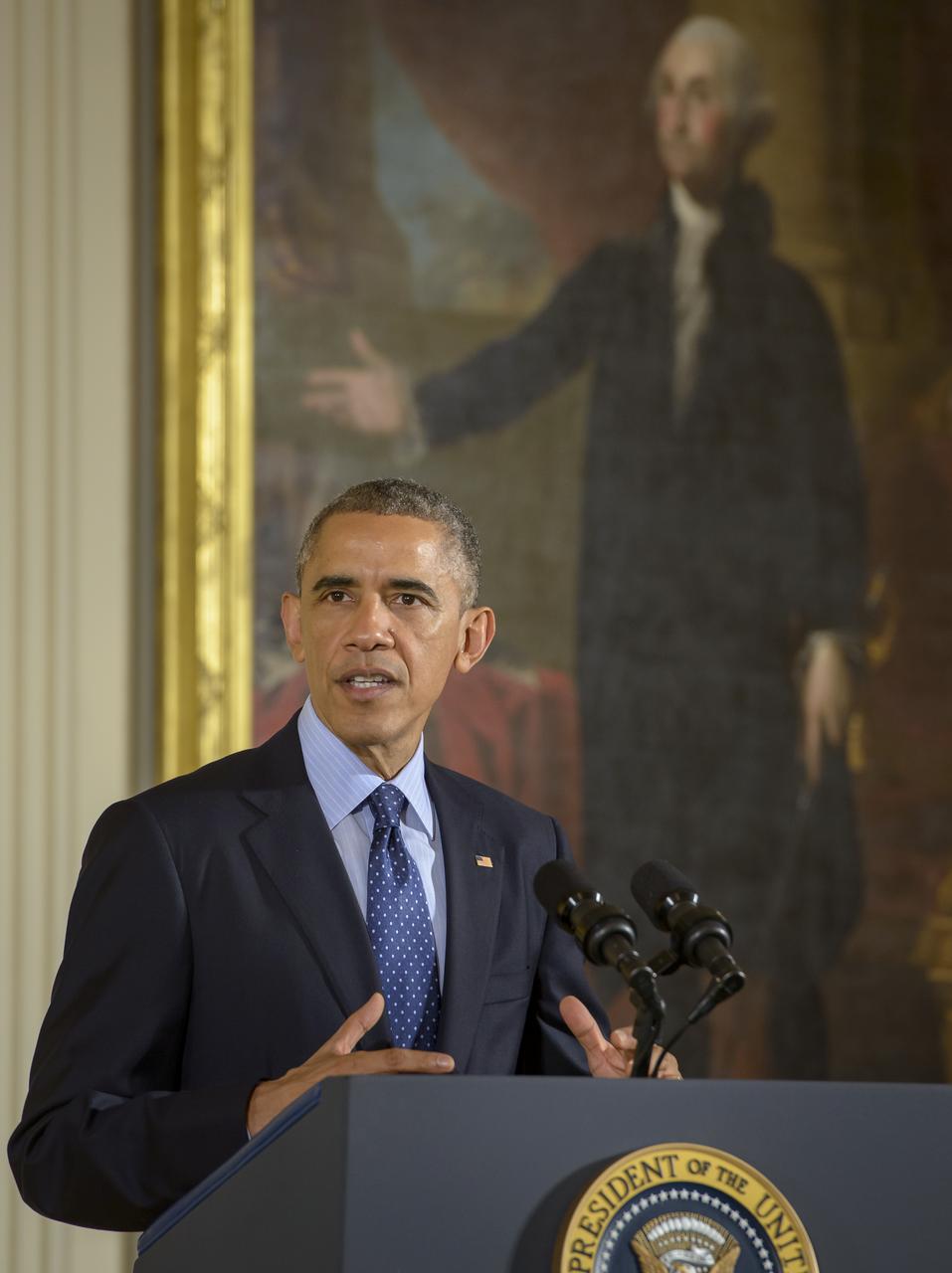
President Barack Obama delivers remarks at the National Medals of Science and National Medals of Technology and Innovation Awards Ceremony, Thursday, Nov. 20, 2014 in the East Room of the White House in Washington. MESSENGER Principal Investigator, director of Columbia University's Lamont-Doherty Earth Observatory, Sean Solomon, was awarded the National Medal of Science, the nation's top scientific honor, at the ceremony. MESSENGER (MErcury Surface, Space ENvironment, GEochemistry, and Ranging) is a NASA-sponsored scientific investigation of the planet Mercury and the first space mission designed to orbit the planet closest to the Sun. Photo Credit: (NASA/Bill Ingalls)
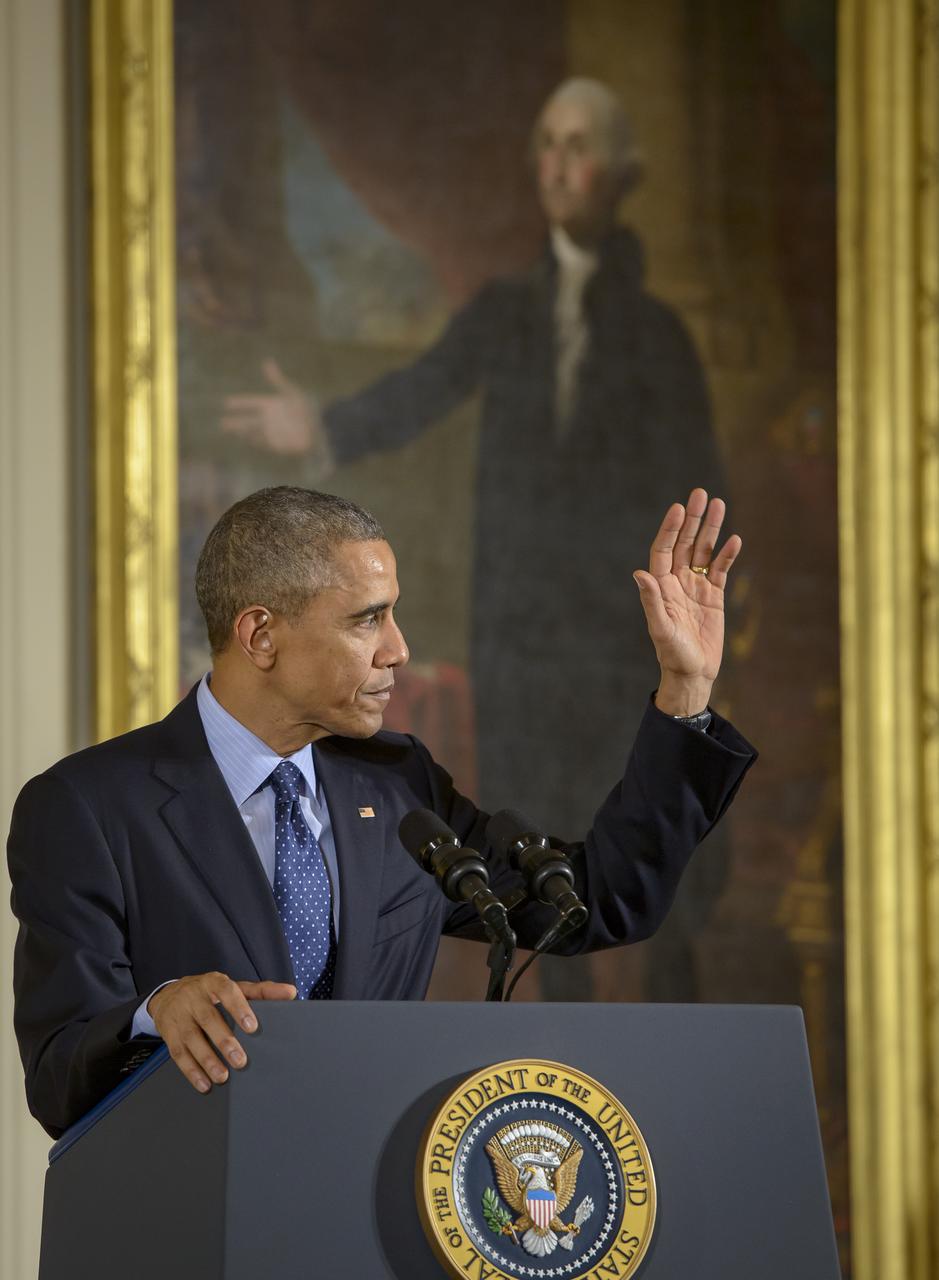
President Barack Obama delivers remarks at the National Medals of Science and National Medals of Technology and Innovation Awards Ceremony, Thursday, Nov. 20, 2014 in the East Room of the White House in Washington. MESSENGER Principal Investigator, director of Columbia University's Lamont-Doherty Earth Observatory, Sean Solomon, was awarded the National Medal of Science, the nation's top scientific honor, at the ceremony. MESSENGER (MErcury Surface, Space ENvironment, GEochemistry, and Ranging) is a NASA-sponsored scientific investigation of the planet Mercury and the first space mission designed to orbit the planet closest to the Sun. Photo Credit: (NASA/Bill Ingalls)
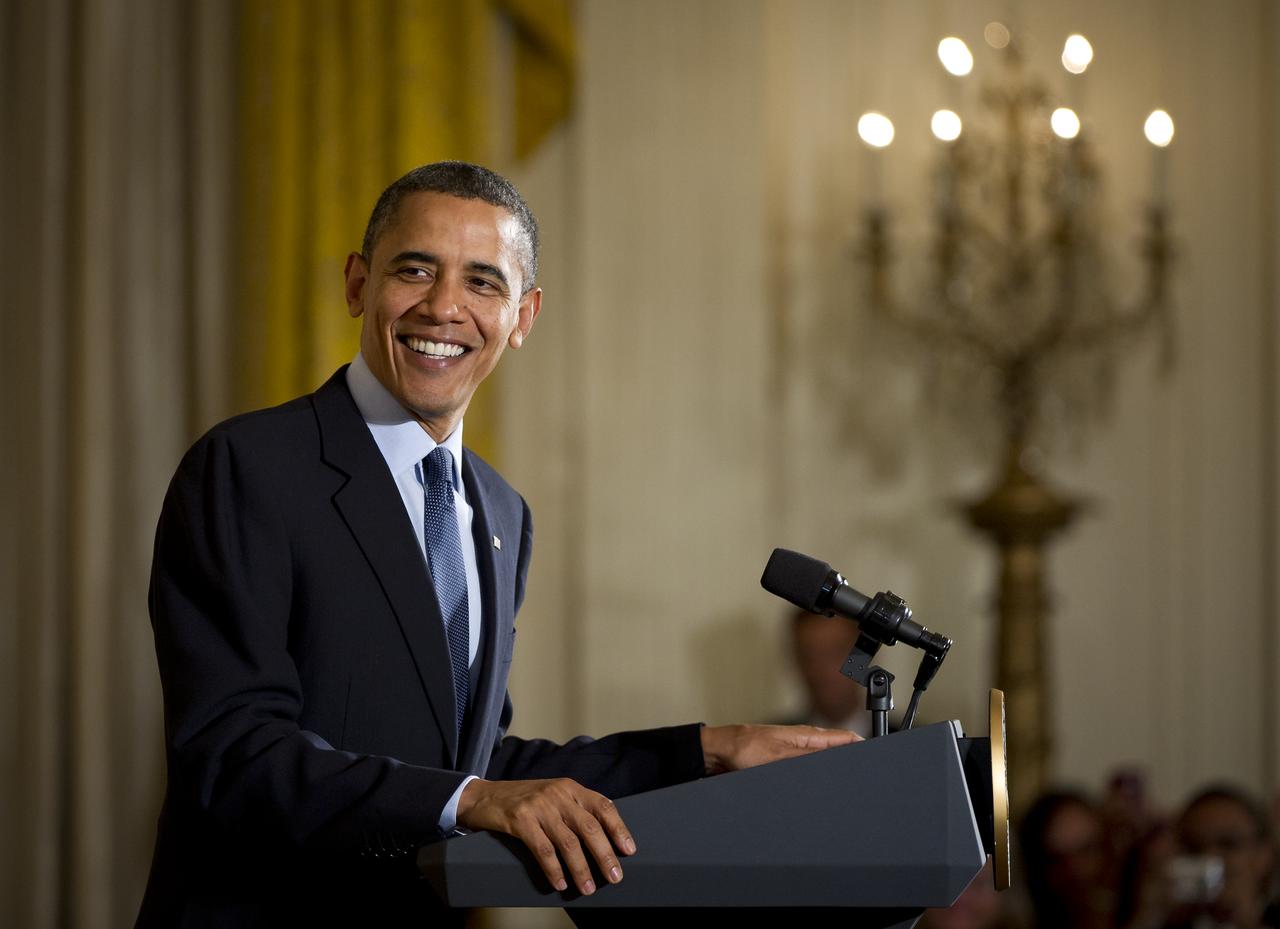
U.S. President Barack Obama smiles during a ceremony for recipients of the National Medal of Science and the National Medal of Technology and Innovation, the highest honors bestowed by the United States government on scientists, engineers, and inventors, at the White House in Washington, Wednesday, Nov. 17, 2010. Amongst those in attendance where NASA Administrator Charles Bolden and NASA Deputy Administrator Lori Garver. Photo Credit: (NASA/Bill Ingalls)
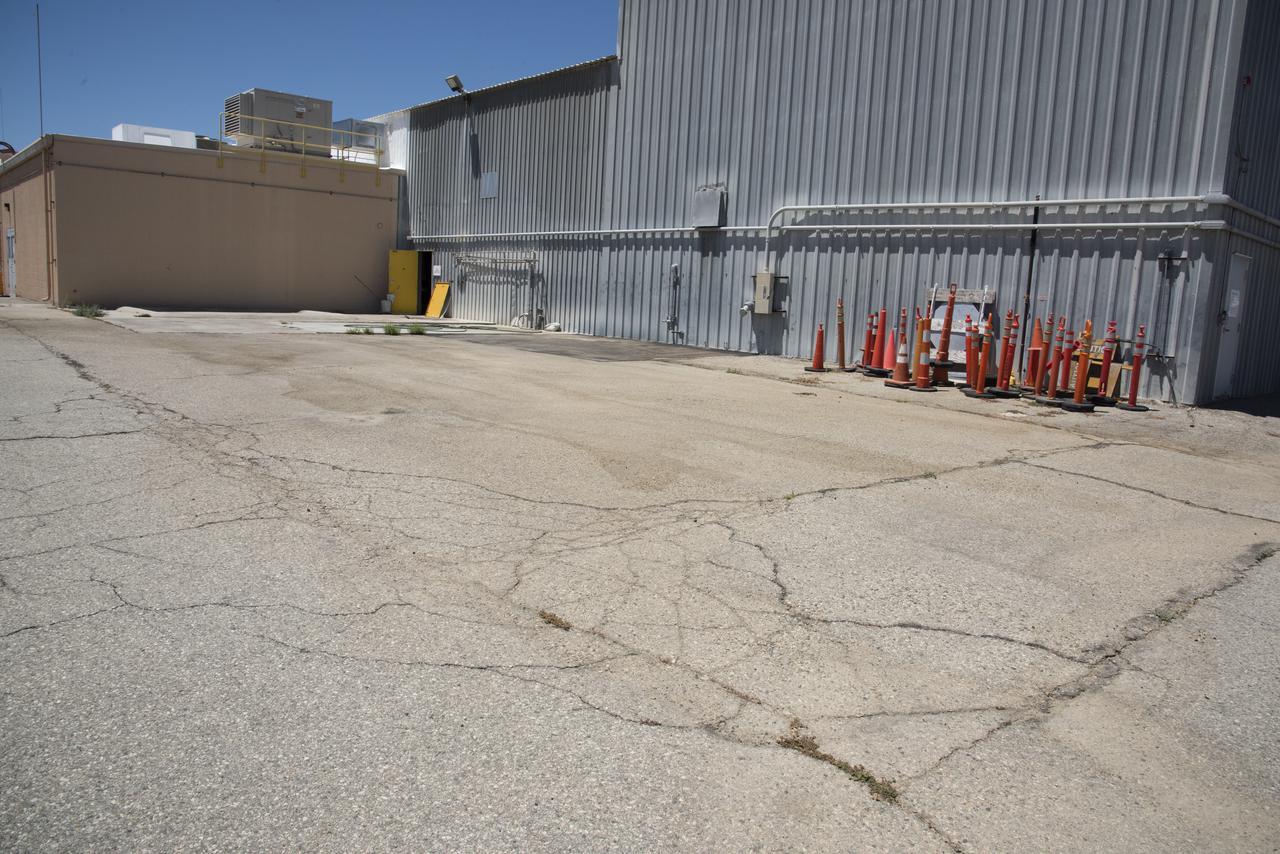
On the east side of Building 4826, the future home of the X-59 Quiet SuperSonic Technology aircraft, a conference room, offices, restrooms and a communications room are under construction at NASA's Armstrong Flight Research Center in Edwards, California.
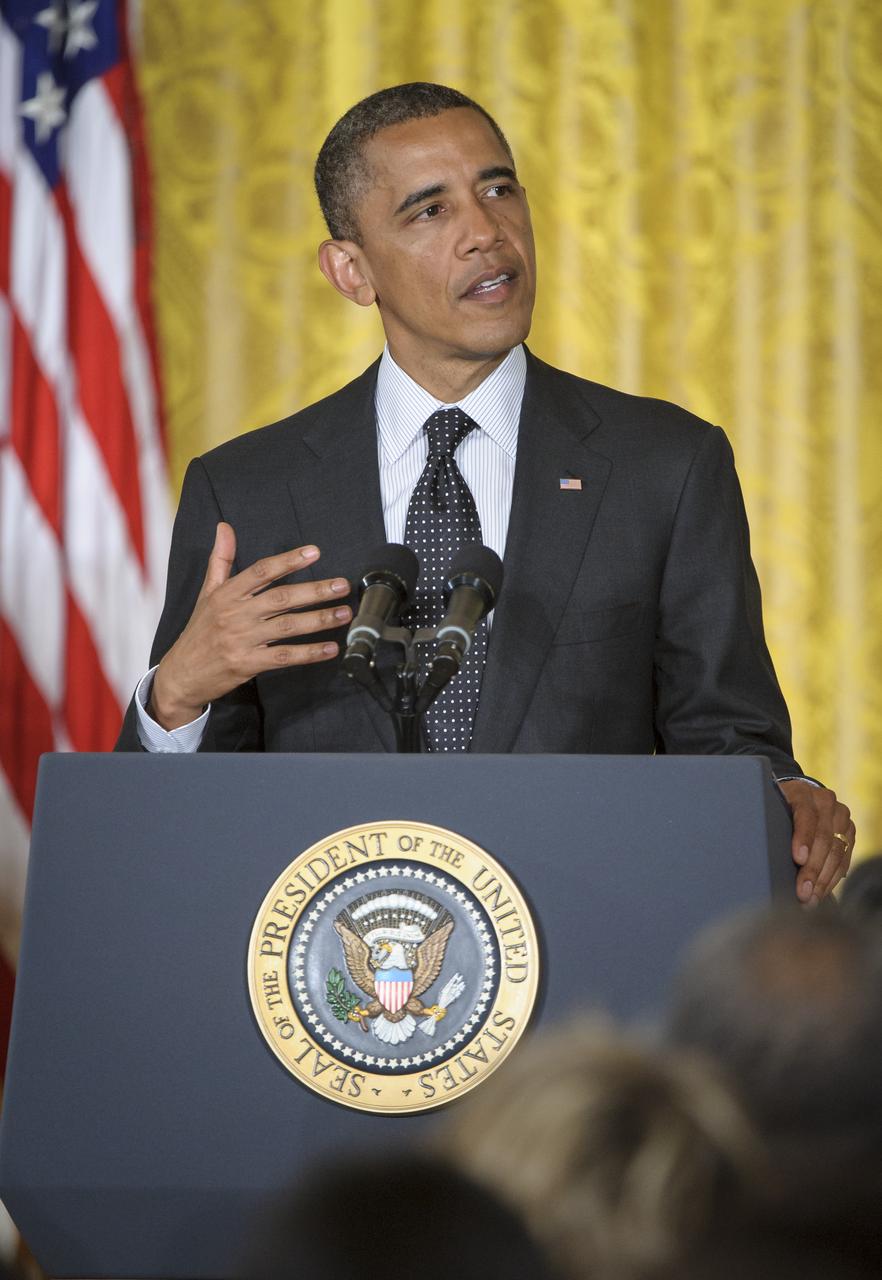
President Barack Obama talks to attendees during the Presidential Medal of Freedom ceremony, held on Tuesday, May 29, 2012, at the White House in Washington. One of the awardees was former United States Marine Corps pilot, astronaut, and United States Senator John Glenn. Photo Credit: (NASA/Bill Ingalls)
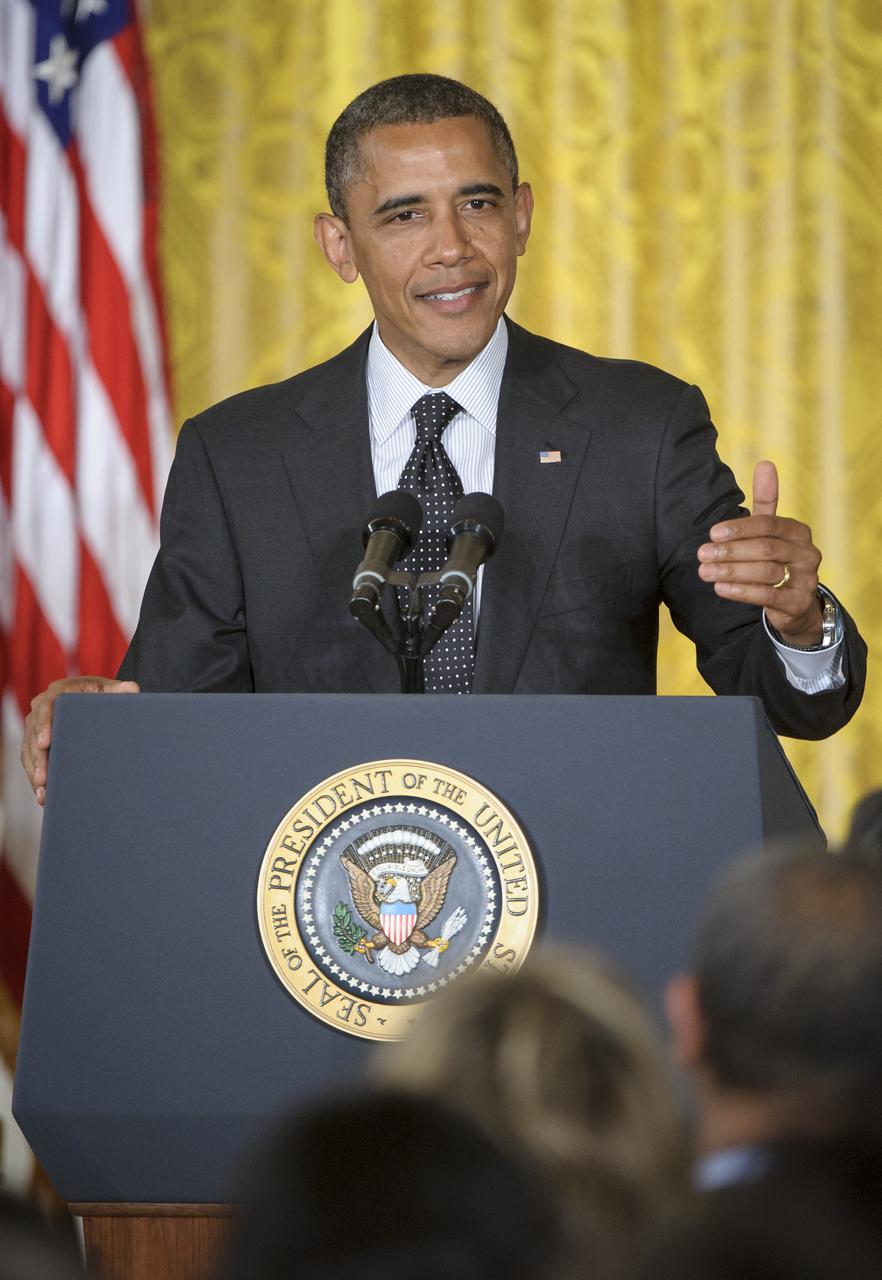
President Barack Obama talks to attendees during the Presidential Medal of Freedom ceremony, held on Tuesday, May 29, 2012, at the White House in Washington. One of the awardees was former United States Marine Corps pilot, astronaut, and United States Senator John Glenn. Photo Credit: (NASA/Bill Ingalls)
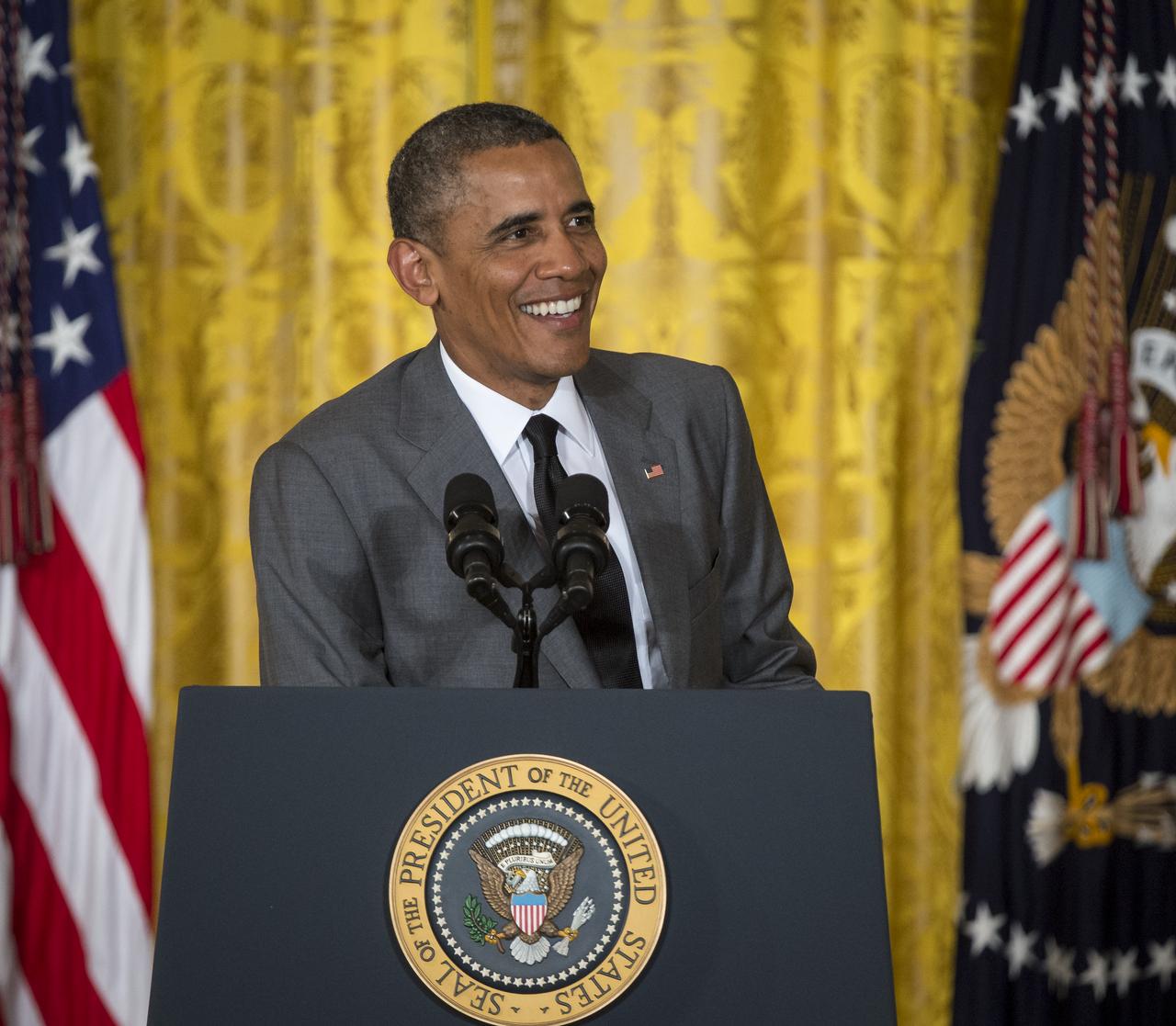
President Barack Obama delivers his remarks at the first ever White House Maker Faire, which brings together students, entrepreneurs, and everyday citizens who are using new tools and techniques to launch new businesses, learn vital skills in science, technology, engineering, and math (STEM), and fuel the renaissance in American manufacturing, at the White House, Wednesday, June 18, 2014 in Washington. The President announced new steps the Administration and its partners are taking to support the ability of more Americans, young and old, to have to access to these tools and techniques and brings their ideas to life. Photo Credit: (NASA/Bill Ingalls)
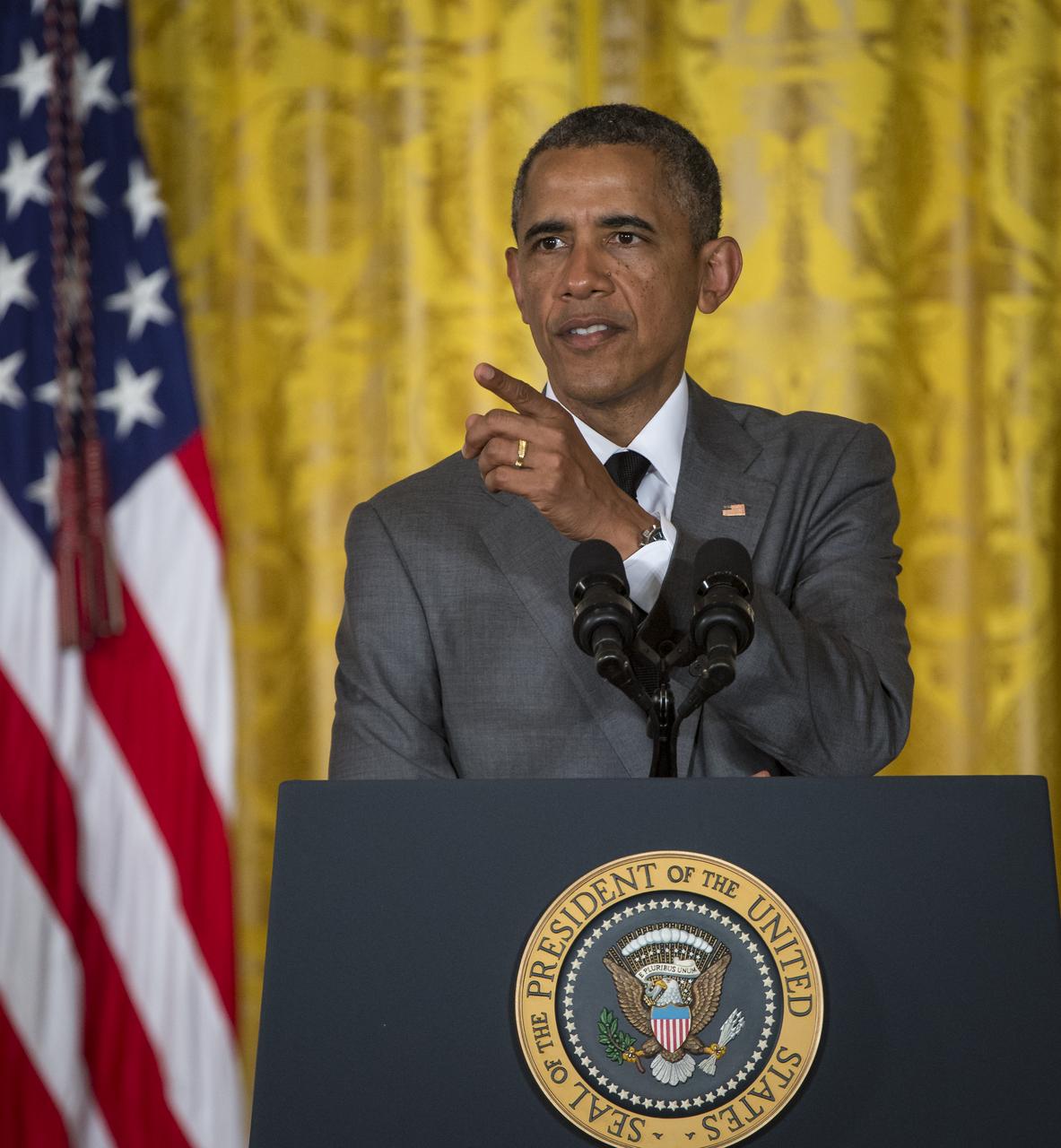
President Barack Obama delivers his remarks at the first ever White House Maker Faire, which brings together students, entrepreneurs, and everyday citizens who are using new tools and techniques to launch new businesses, learn vital skills in science, technology, engineering, and math (STEM), and fuel the renaissance in American manufacturing, at the White House, Wednesday, June 18, 2014 in Washington. The President announced new steps the Administration and its partners are taking to support the ability of more Americans, young and old, to have to access to these tools and techniques and brings their ideas to life. Photo Credit: (NASA/Bill Ingalls)
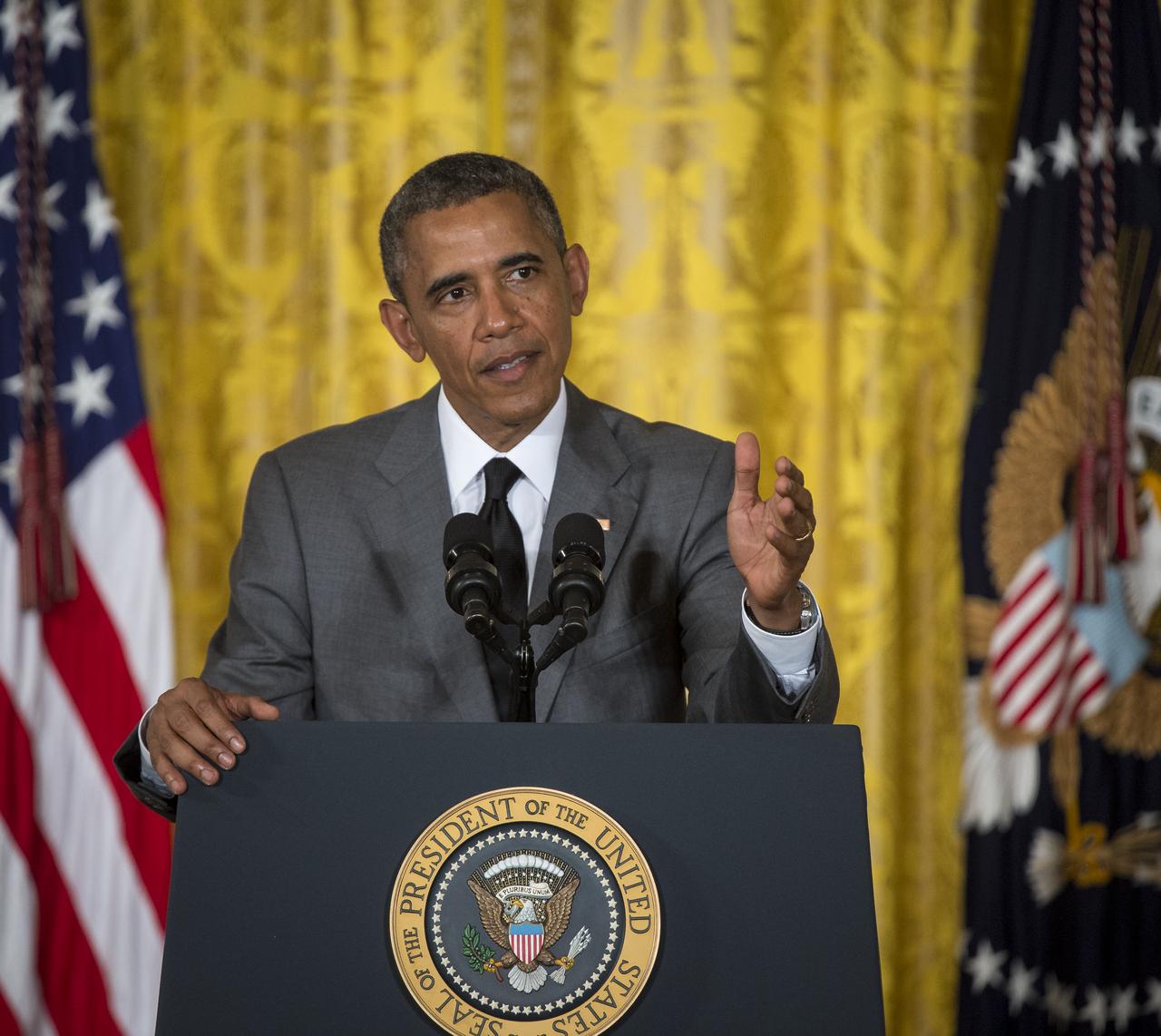
President Barack Obama delivers his remarks at the first ever White House Maker Faire, which brings together students, entrepreneurs, and everyday citizens who are using new tools and techniques to launch new businesses, learn vital skills in science, technology, engineering, and math (STEM), and fuel the renaissance in American manufacturing, at the White House, Wednesday, June 18, 2014 in Washington. The President announced new steps the Administration and its partners are taking to support the ability of more Americans, young and old, to have to access to these tools and techniques and brings their ideas to life. Photo Credit: (NASA/Bill Ingalls)
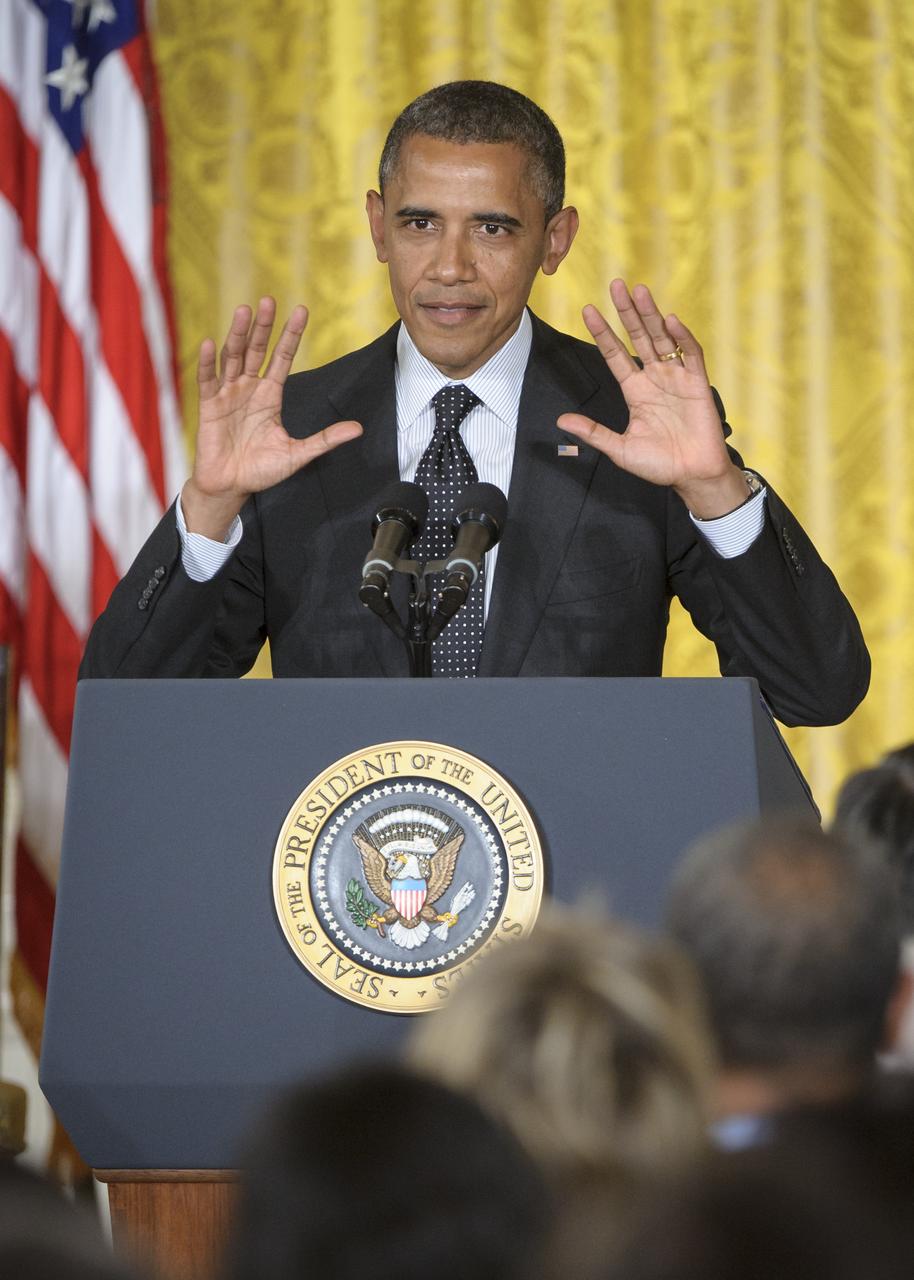
President Barack Obama talks to attendees during the Presidential Medal of Freedom ceremony, held on Tuesday, May 29, 2012, at the White House in Washington. One of the awardees was former United States Marine Corps pilot, astronaut, and United States Senator John Glenn. Photo Credit: (NASA/Bill Ingalls)
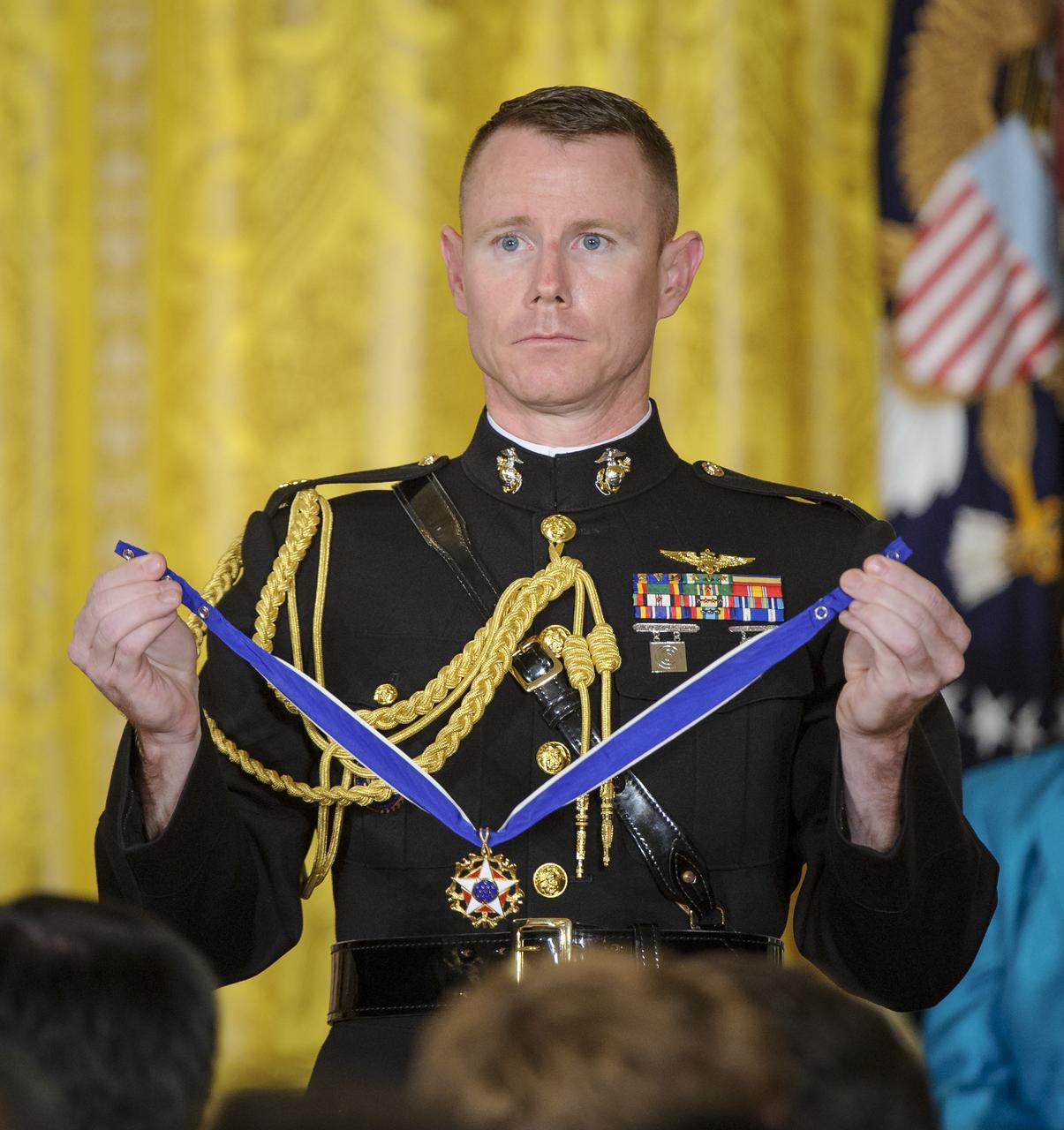
Major S. Lee Meyer, USMC, Military Aide to the President, holds the Presidential Medal of Freedom that is to be presented by President Barack Obama to former United States Marine Corps pilot, astronaut, and United States Senator John Glenn, Tuesday, May 29, 2012, during a ceremony at the White House in Washington. Photo Credit: (NASA/Bill Ingalls)
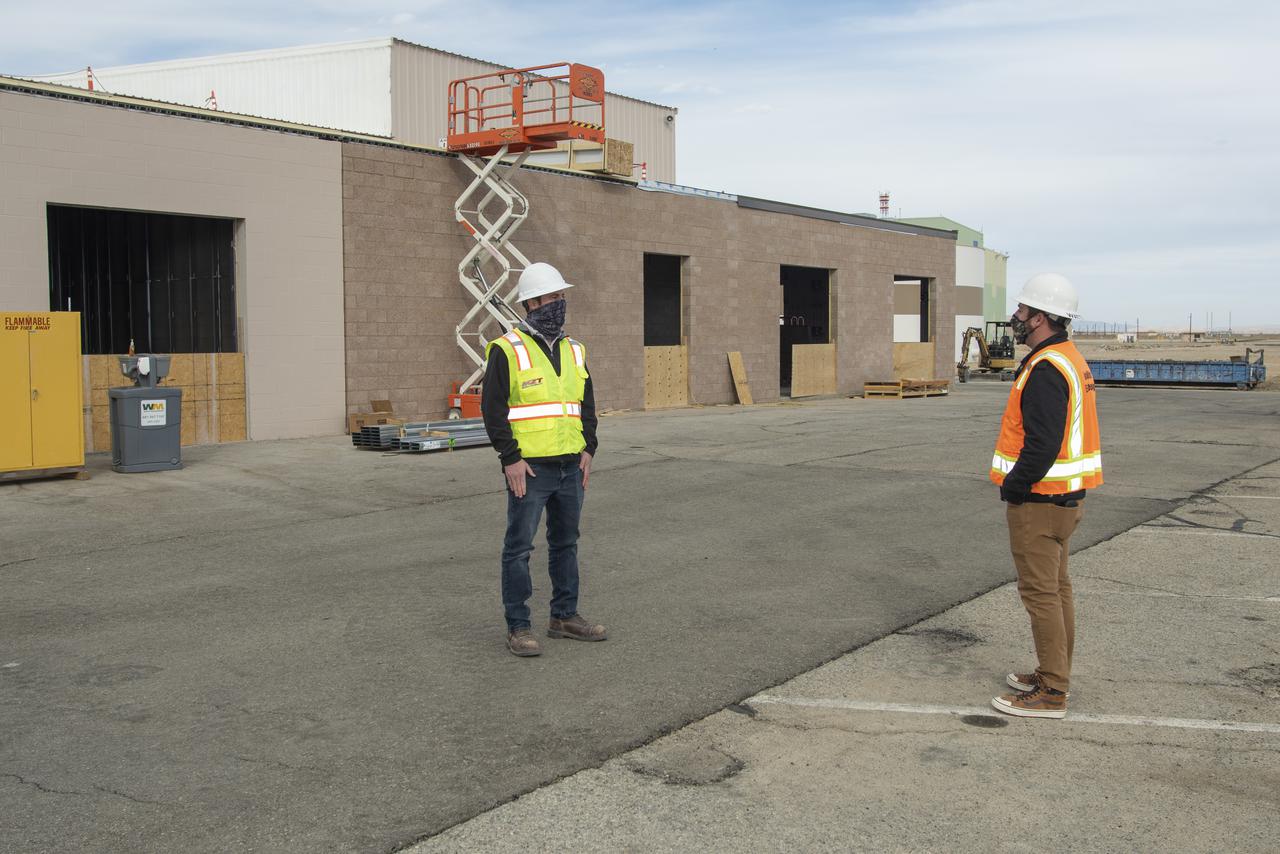
Collin Morris, CJW/MZT project manager and Bryan Watters, NASA civil/structural engineer and project manager, discuss work on the east side of Building 4826. Building 4826 is the future home of the X-59 Quiet SuperSonic Technology aircraft, where a conference room, offices, restrooms and a communications room will be added at NASA's Armstrong Flight Research Center in Edwards, California.
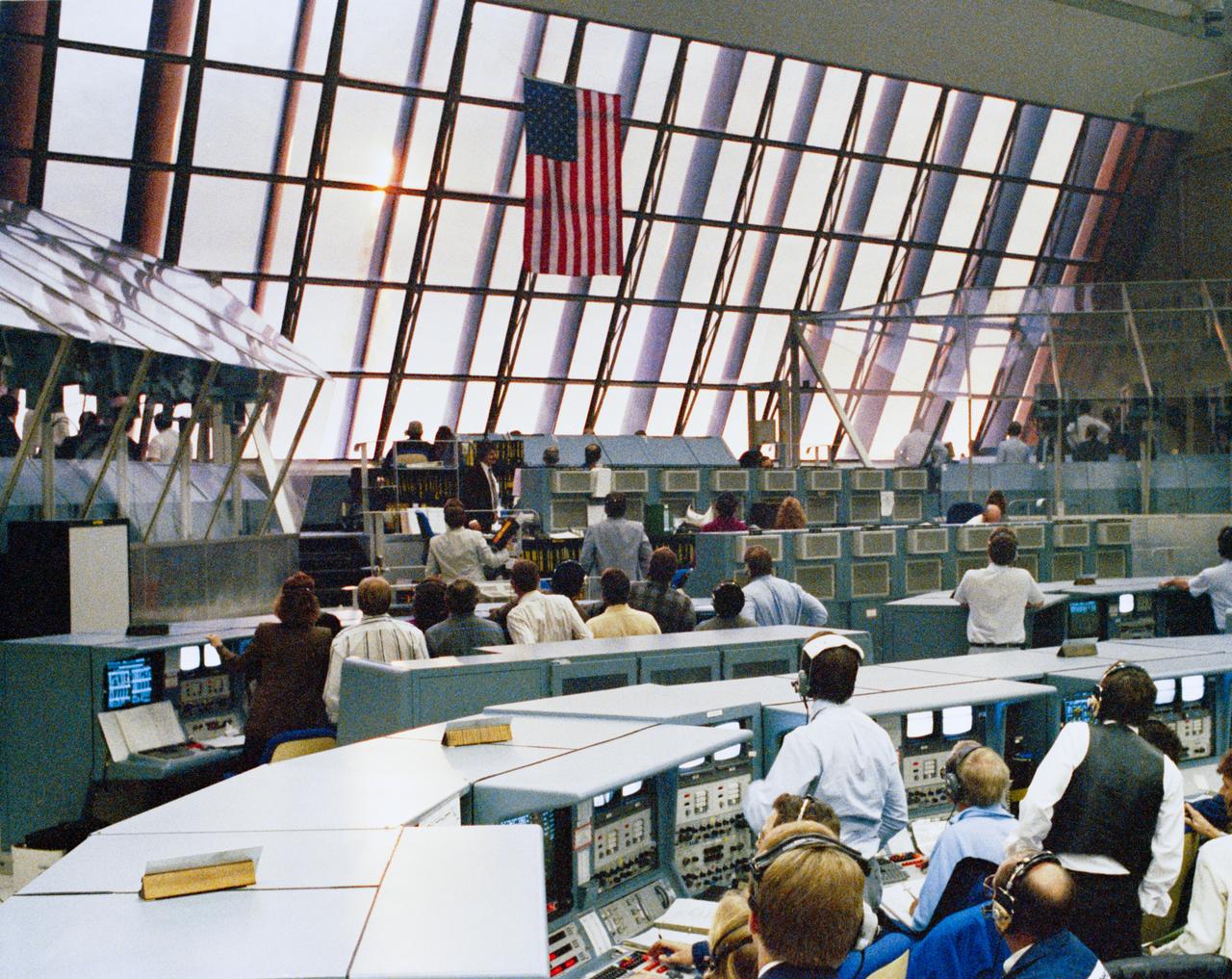
S90-29047 99Jan 1990) --- At the conclusion of another successful countdown, members of the KSC launch team in Firing Room 1 rivet their eyes on the skies to the east of the Launch Control Center. Their reward was a glimpse of Columbia burning its way upward up from Complex 39's Pad A. The brilliant flame of the boosters hurled shadows and patches of light into the firing room's interior. Launch of the STS-32 mission at 7:35 a.m. EST today marked the beginning of a busy year which could see the launch of as many as 10 missions.

U.S. President Obama recognizes NASA Administrator Charles Bolden during his remarks at the 3rd Annual White House Science Fair in the East Room of the White House on Monday, April 22, 2013. The science fair celebrated student winners of a broad range of science, technology, engineering and math (STEM) competitions from across the country. Photo Credit: (NASA/Bill Ingalls)
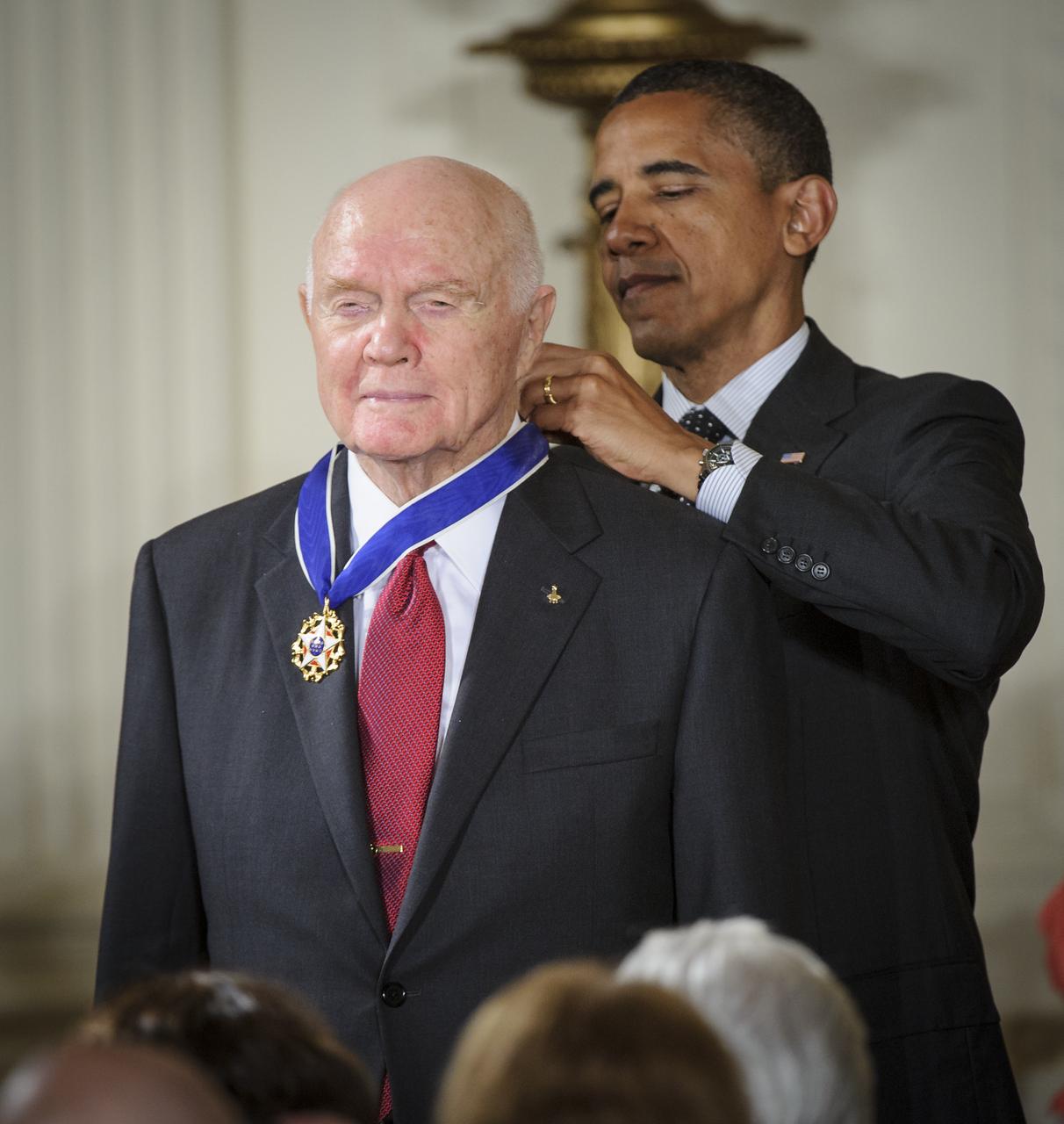
President Barack Obama presents former United States Marine Corps pilot, astronaut, and United States Senator John Glenn with a Medal of Freedom, Tuesday, May 29, 2012, during a ceremony at the White House in Washington. Photo Credit: (NASA/Bill Ingalls)
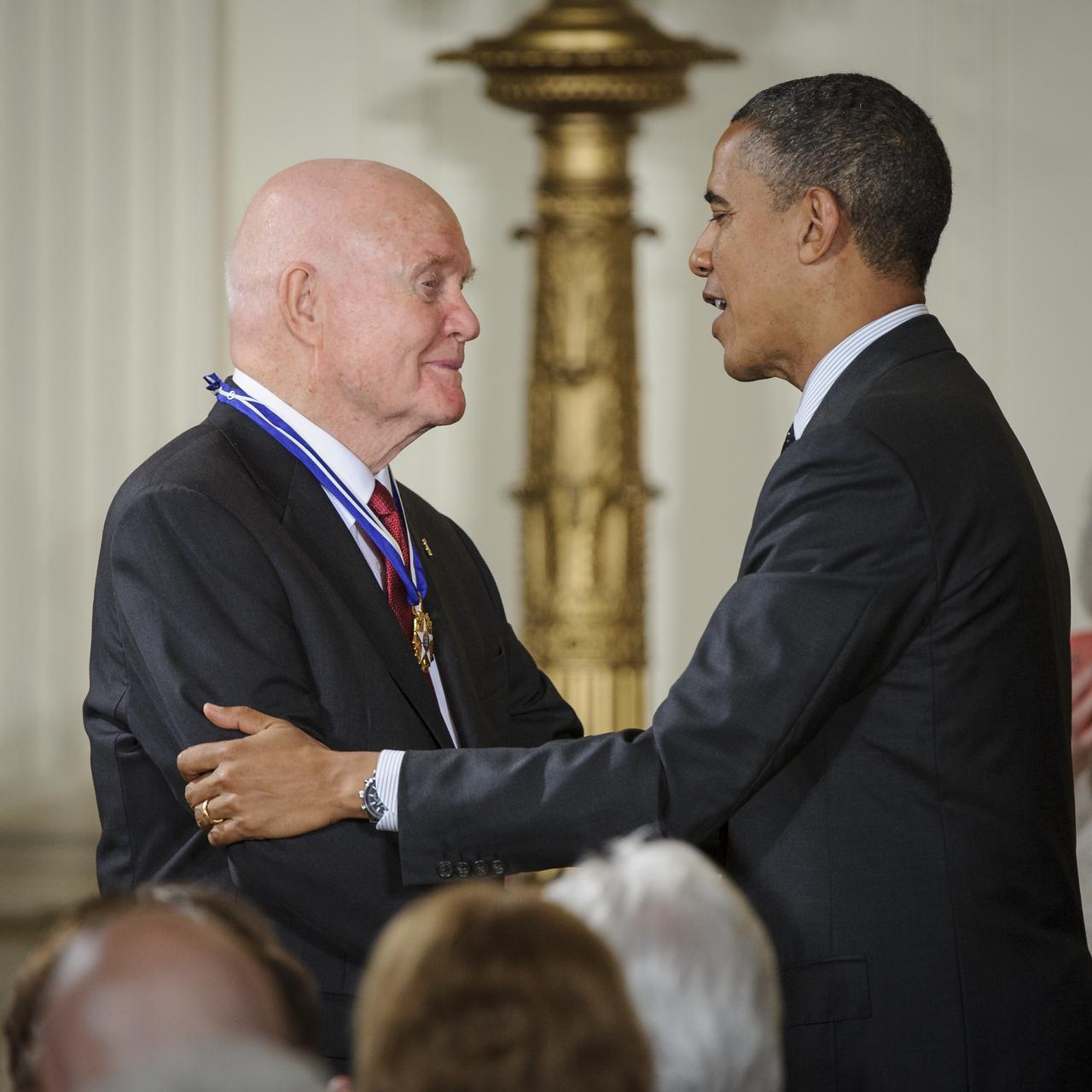
President Barack Obama congratulates former United States Marine Corps pilot, astronaut, and United States Senator John Glenn after presenting him with a Medal of Freedom, Tuesday, May 29, 2012, during a ceremony at the White House in Washington. Photo Credit: (NASA/Bill Ingalls)

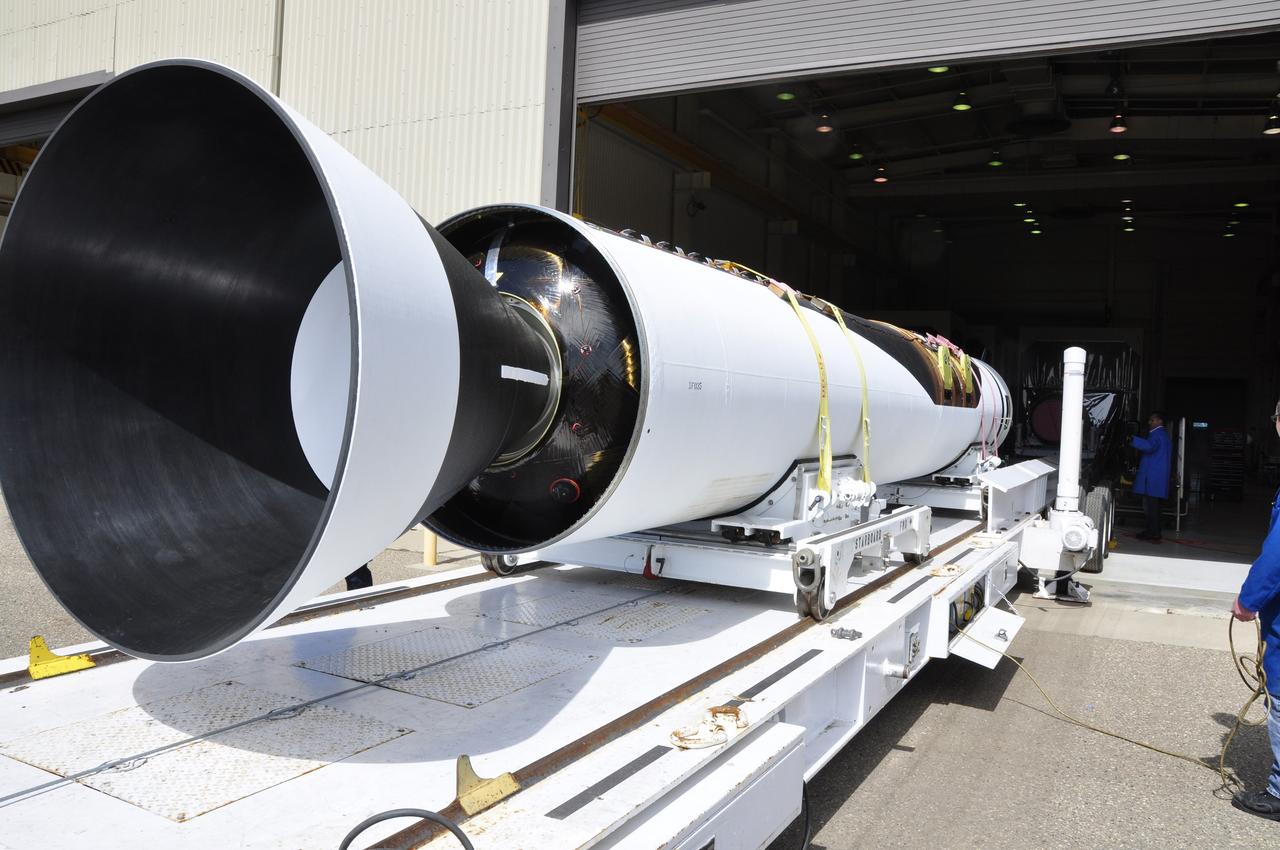
VANDENBERG AIR FORCE BASE, Calif. -- Orbital Sciences Corp. technicians prepare to move the first, second and third stages of the Pegasus XL rocket that will launch the Nuclear Spectroscopic Telescope Array NuSTAR to orbit from the west high bay to the east high bay of Building 1555 at Vandenberg Air Force Base in California. The move will allow technicians to process the spacecraft and fairing in the clean rooms of the east high bay before attaching it to the rocket. After the rocket and spacecraft are processed at Vandenberg, they will be flown on the Orbital Sciences' L-1011 carrier aircraft to the Ronald Reagan Ballistic Missile Defense Test Site located at the Pacific Ocean’s Kwajalein Atoll for launch. The high-energy X-ray telescope will conduct a census for black holes, map radioactive material in young supernovae remnants, and study the origins of cosmic rays and the extreme physics around collapsed stars. Photo credit: NASA/Randy Beaudoin, VAFB
VANDENBERG AIR FORCE BASE, Calif. -- The first, second and third stages of the Orbital Sciences Corp. Pegasus XL rocket that will launch the Nuclear Spectroscopic Telescope Array NuSTAR to orbit are moved from the west high bay to the east high bay of Building 1555 at Vandenberg Air Force Base in California. The move will allow technicians to process the spacecraft and fairing in the clean rooms of the east high bay before attaching it to the rocket. After the rocket and spacecraft are processed at Vandenberg, they will be flown on the Orbital Sciences' L-1011 carrier aircraft to the Ronald Reagan Ballistic Missile Defense Test Site located at the Pacific Ocean’s Kwajalein Atoll for launch. The high-energy X-ray telescope will conduct a census for black holes, map radioactive material in young supernovae remnants, and study the origins of cosmic rays and the extreme physics around collapsed stars. Photo credit: NASA/Randy Beaudoin, VAFB
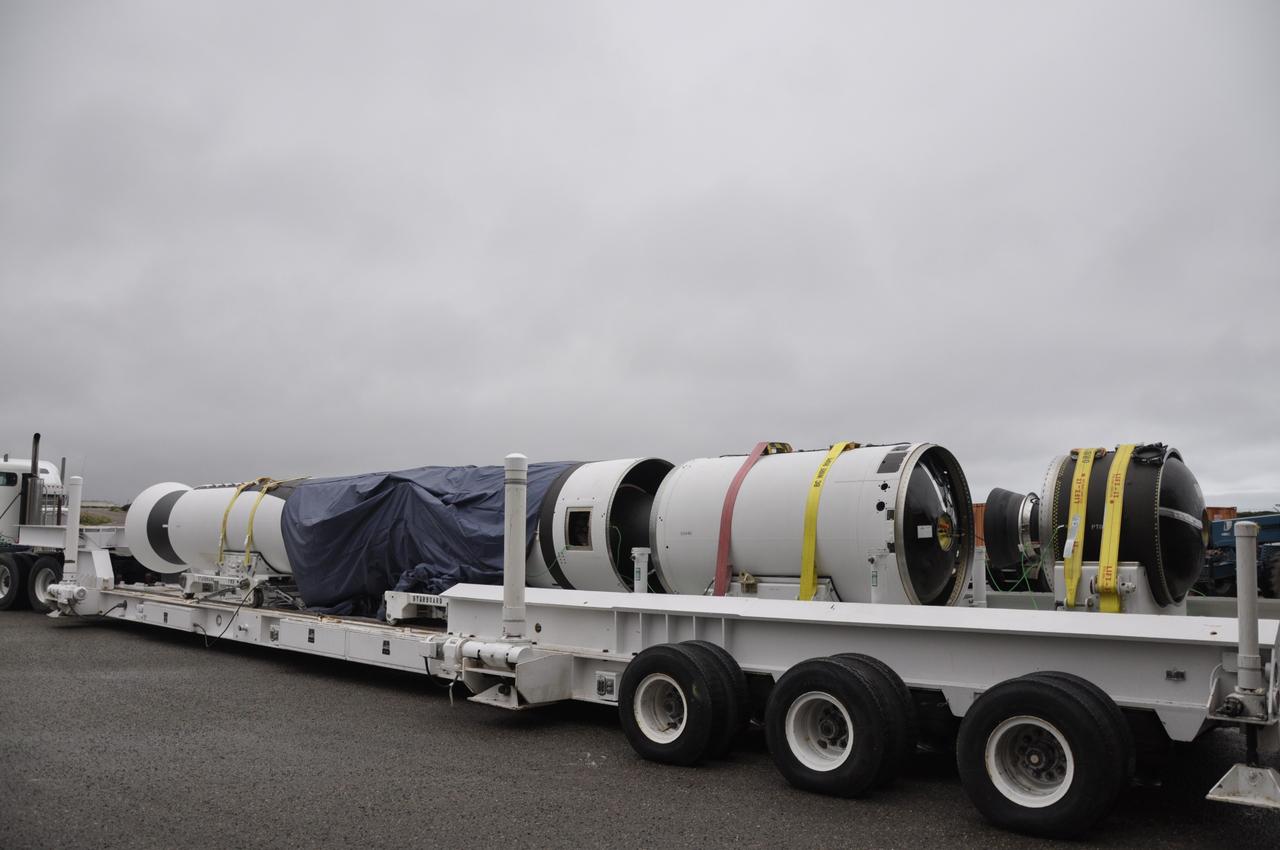
VANDENBERG AIR FORCE BASE, Calif. -- The first, second and third stages of the Orbital Sciences Corp. Pegasus XL rocket that will launch the Nuclear Spectroscopic Telescope Array (NuSTAR) to orbit are moved from the west high bay to the east high bay of Building 1555 at Vandenberg Air Force Base in California. The move will allow technicians to process the spacecraft and fairing in the clean rooms of the east high bay before attaching it to the rocket. After the rocket and spacecraft are processed at Vandenberg, they will be flown on the Orbital Sciences' L-1011 carrier aircraft to the Ronald Reagan Ballistic Missile Defense Test Site located at the Pacific Ocean’s Kwajalein Atoll for launch. The high-energy X-ray telescope will conduct a census for black holes, map radioactive material in young supernovae remnants, and study the origins of cosmic rays and the extreme physics around collapsed stars. Photo credit: NASA/Randy Beaudoin, VAFB
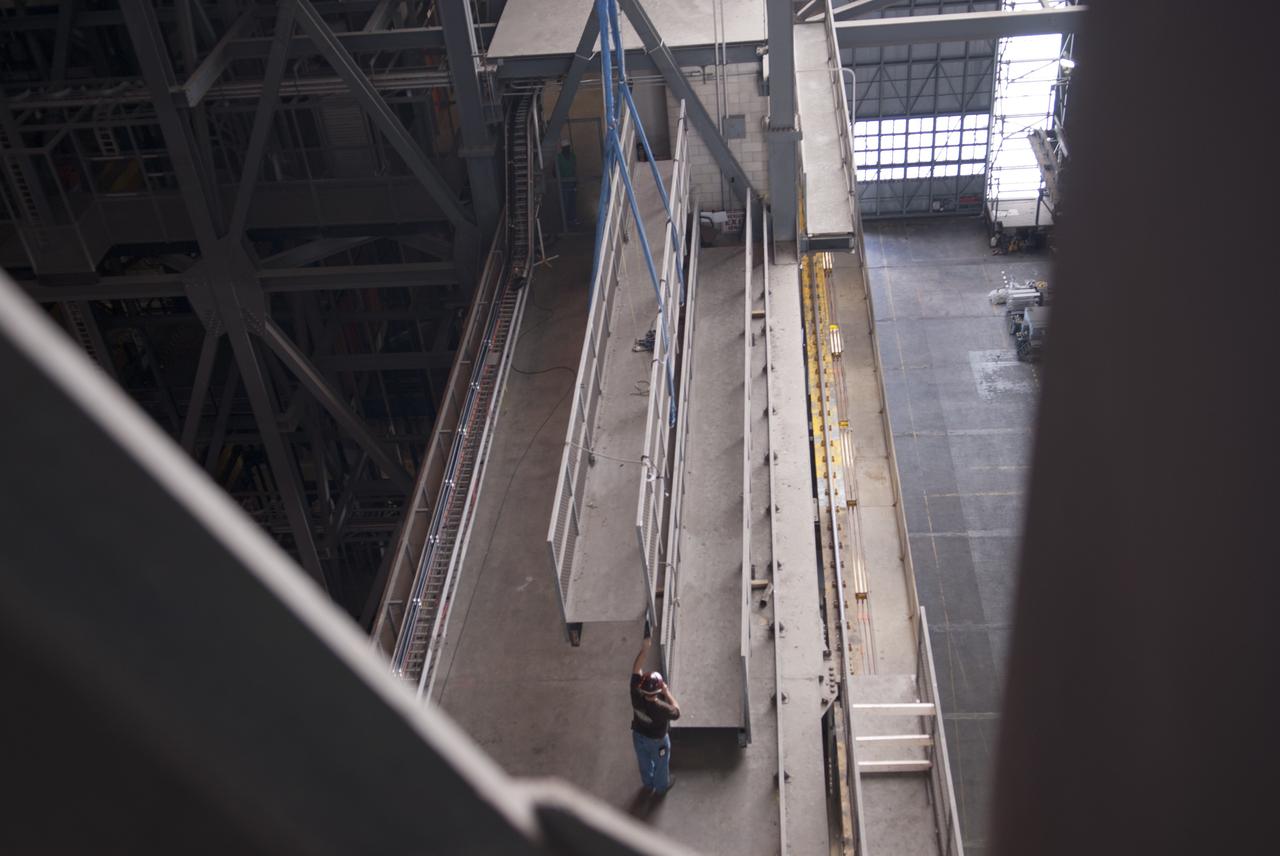
CAPE CANAVERAL, Fla. – Inside the Vehicle Assembly Building, or VAB, at NASA's Kennedy Space Center in Florida, portions of the catwalks on the east and west sides of Level 16 have been removed by crane and are being placed on the east side for storage. The catwalks were removed to allow room for the removal of the 175-ton crane that is situated above the transfer aisle. The crane will be lowered to the floor to perform upgrades to its 45-year-old controls in order to improve reliability, precision and safety. The Ground Systems Development and Operations Program is overseeing upgrades and modifications to the VAB. The crane will be upgraded so that it can support lifting needs for NASA and other exploration vehicles, including the agency's Space Launch System and Orion spacecraft. Photo credit: NASA/Jim Grossmann
VANDENBERG AIR FORCE BASE, Calif. -- Orbital Sciences Corp. technicians prepare to move the first, second and third stages of the Pegasus XL rocket that will launch the Nuclear Spectroscopic Telescope Array NuSTAR to orbit from the west high bay to the east high bay of Building 1555 at Vandenberg Air Force Base in California. The move will allow technicians to process the spacecraft and fairing in the clean rooms of the east high bay before attaching it to the rocket. After the rocket and spacecraft are processed at Vandenberg, they will be flown on the Orbital Sciences' L-1011 carrier aircraft to the Ronald Reagan Ballistic Missile Defense Test Site located at the Pacific Ocean’s Kwajalein Atoll for launch. The high-energy X-ray telescope will conduct a census for black holes, map radioactive material in young supernovae remnants, and study the origins of cosmic rays and the extreme physics around collapsed stars. Photo credit: NASA/Randy Beaudoin, VAFB
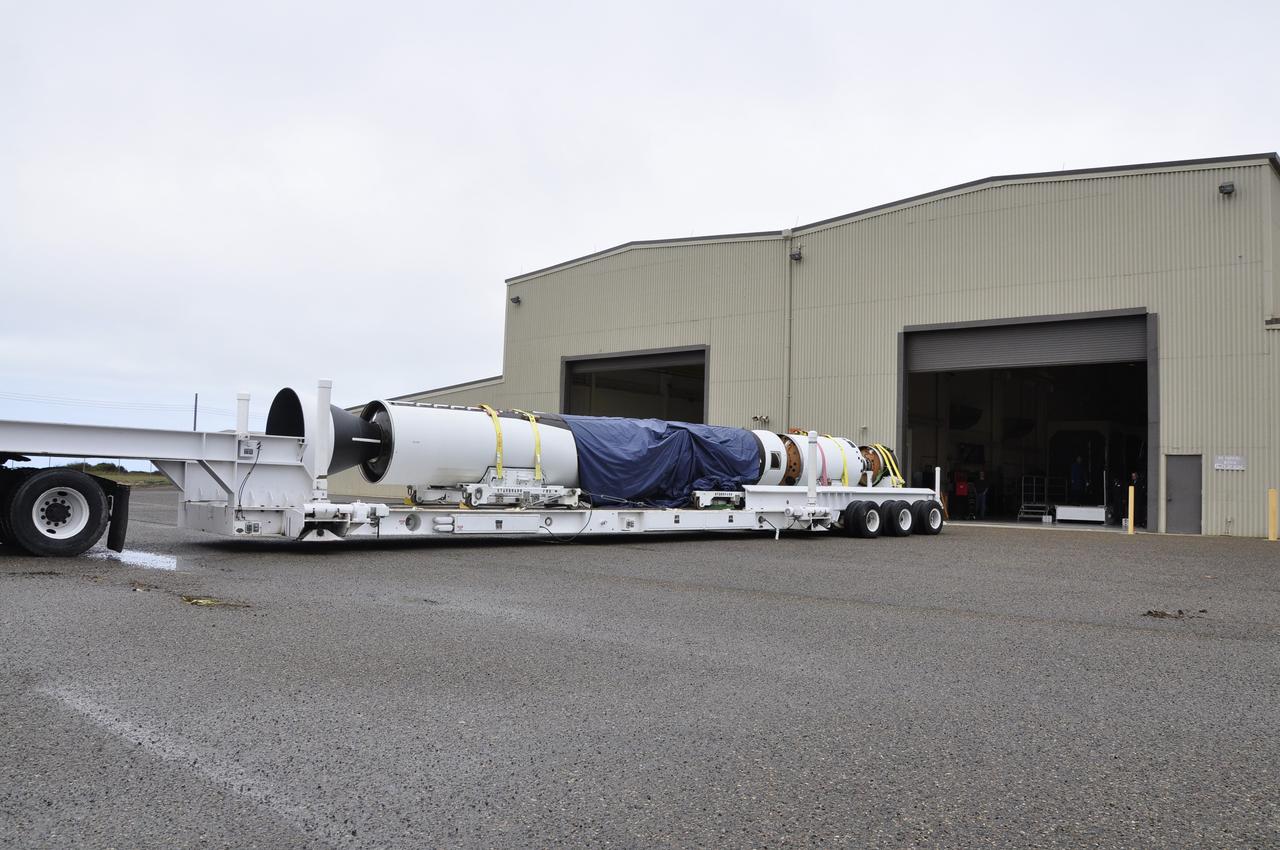
VANDENBERG AIR FORCE BASE, Calif. -- The first, second and third stages of the Orbital Sciences Corp. Pegasus XL rocket that will launch the Nuclear Spectroscopic Telescope Array NuSTAR to orbit are moved from the west high bay to the east high bay of Building 1555 at Vandenberg Air Force Base in California. The move will allow technicians to process the spacecraft and fairing in the clean rooms of the east high bay before attaching it to the rocket. After the rocket and spacecraft are processed at Vandenberg, they will be flown on the Orbital Sciences' L-1011 carrier aircraft to the Ronald Reagan Ballistic Missile Defense Test Site located at the Pacific Ocean’s Kwajalein Atoll for launch. The high-energy X-ray telescope will conduct a census for black holes, map radioactive material in young supernovae remnants, and study the origins of cosmic rays and the extreme physics around collapsed stars. Photo credit: NASA/Randy Beaudoin, VAFB
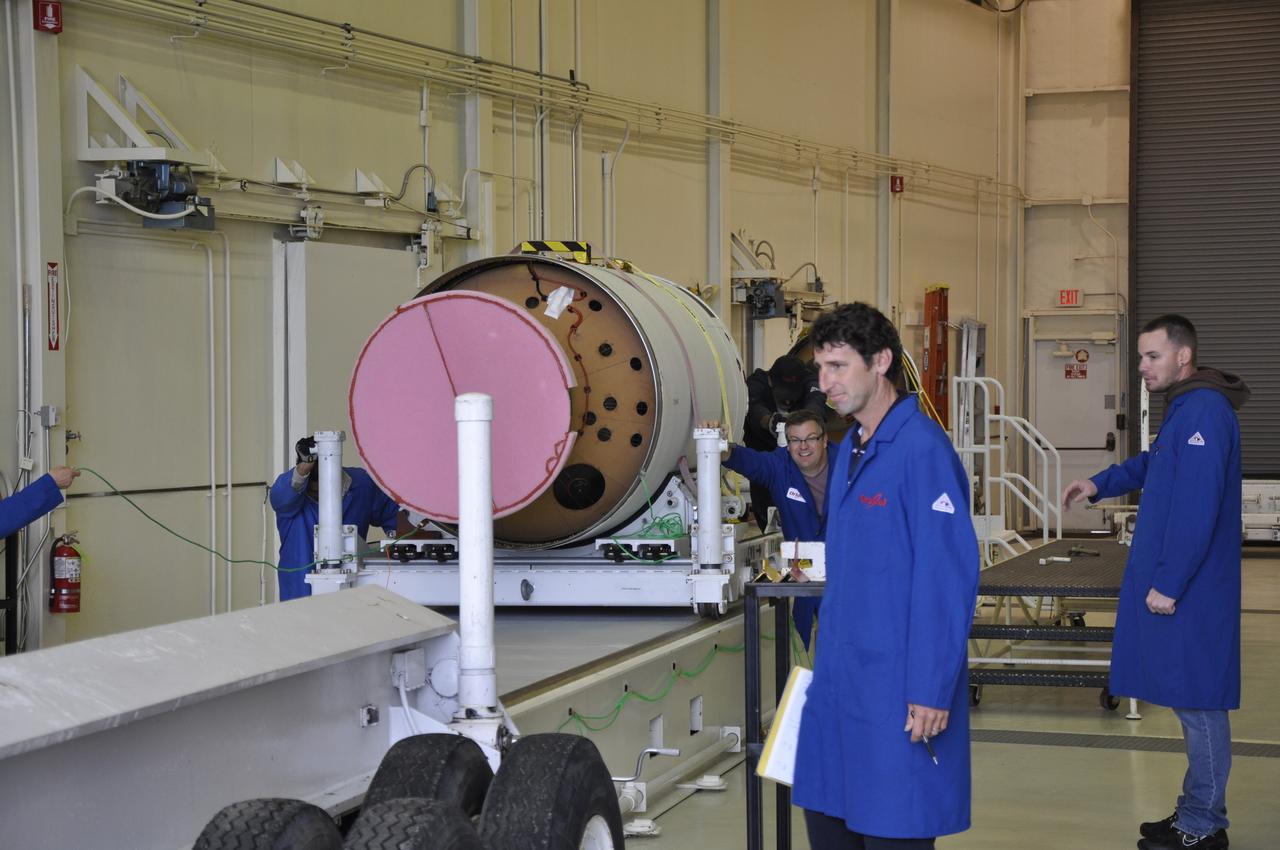
VANDENBERG AIR FORCE BASE, Calif. -- Orbital Sciences Corp. technicians prepare to move the first, second and third stages of the Pegasus XL rocket that will launch the Nuclear Spectroscopic Telescope Array NuSTAR to orbit from the west high bay to the east high bay of Building 1555 at Vandenberg Air Force Base in California. The move will allow technicians to process the spacecraft and fairing in the clean rooms of the east high bay before attaching it to the rocket. After the rocket and spacecraft are processed at Vandenberg, they will be flown on the Orbital Sciences' L-1011 carrier aircraft to the Ronald Reagan Ballistic Missile Defense Test Site located at the Pacific Ocean’s Kwajalein Atoll for launch. The high-energy X-ray telescope will conduct a census for black holes, map radioactive material in young supernovae remnants, and study the origins of cosmic rays and the extreme physics around collapsed stars. Photo credit: NASA/Randy Beaudoin, VAFB
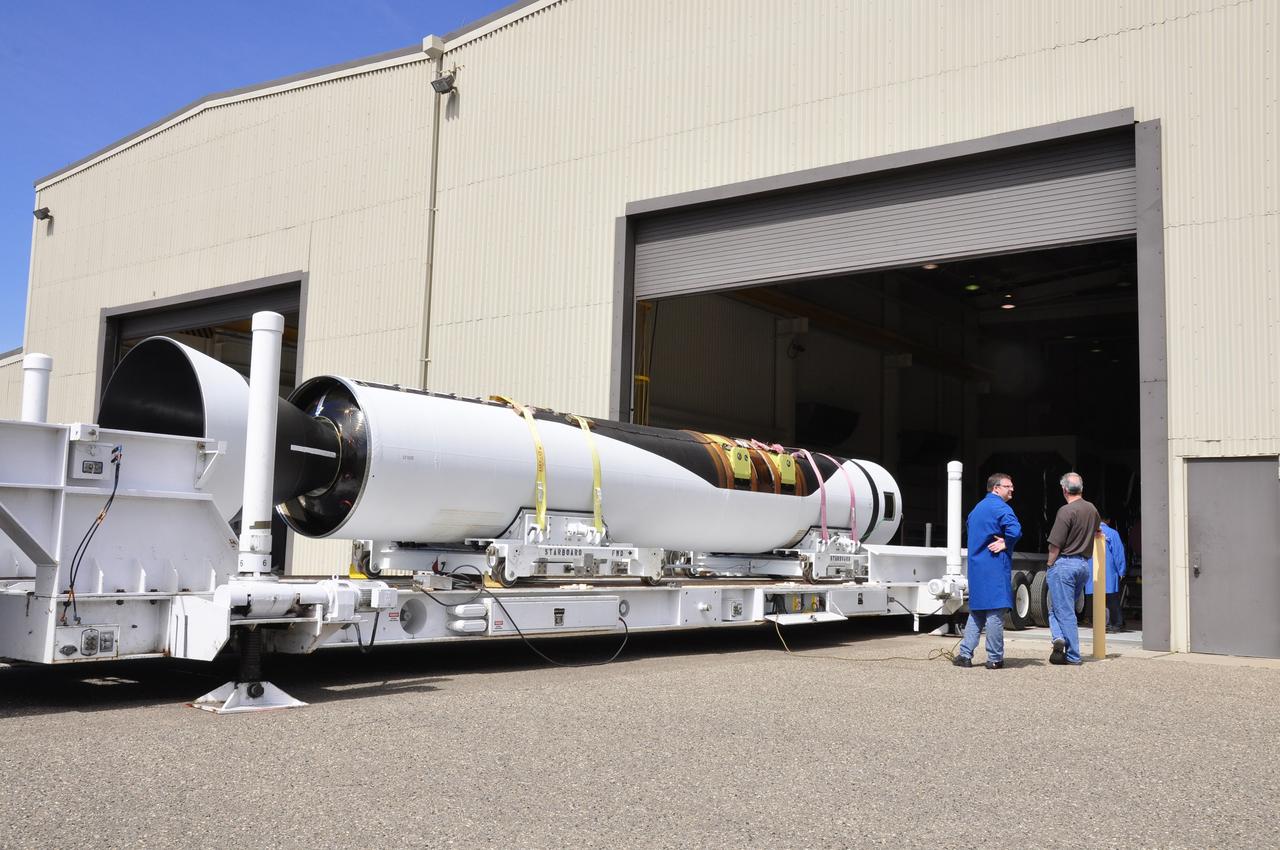
VANDENBERG AIR FORCE BASE, Calif. -- The first, second and third stages of the Orbital Sciences Corp. Pegasus XL rocket that will launch the Nuclear Spectroscopic Telescope Array NuSTAR to orbit are moved from the west high bay to the east high bay of Building 1555 at Vandenberg Air Force Base in California. The move will allow technicians to process the spacecraft and fairing in the clean rooms of the east high bay before attaching it to the rocket. After the rocket and spacecraft are processed at Vandenberg, they will be flown on the Orbital Sciences' L-1011 carrier aircraft to the Ronald Reagan Ballistic Missile Defense Test Site located at the Pacific Ocean’s Kwajalein Atoll for launch. The high-energy X-ray telescope will conduct a census for black holes, map radioactive material in young supernovae remnants, and study the origins of cosmic rays and the extreme physics around collapsed stars. Photo credit: NASA/Randy Beaudoin, VAFB
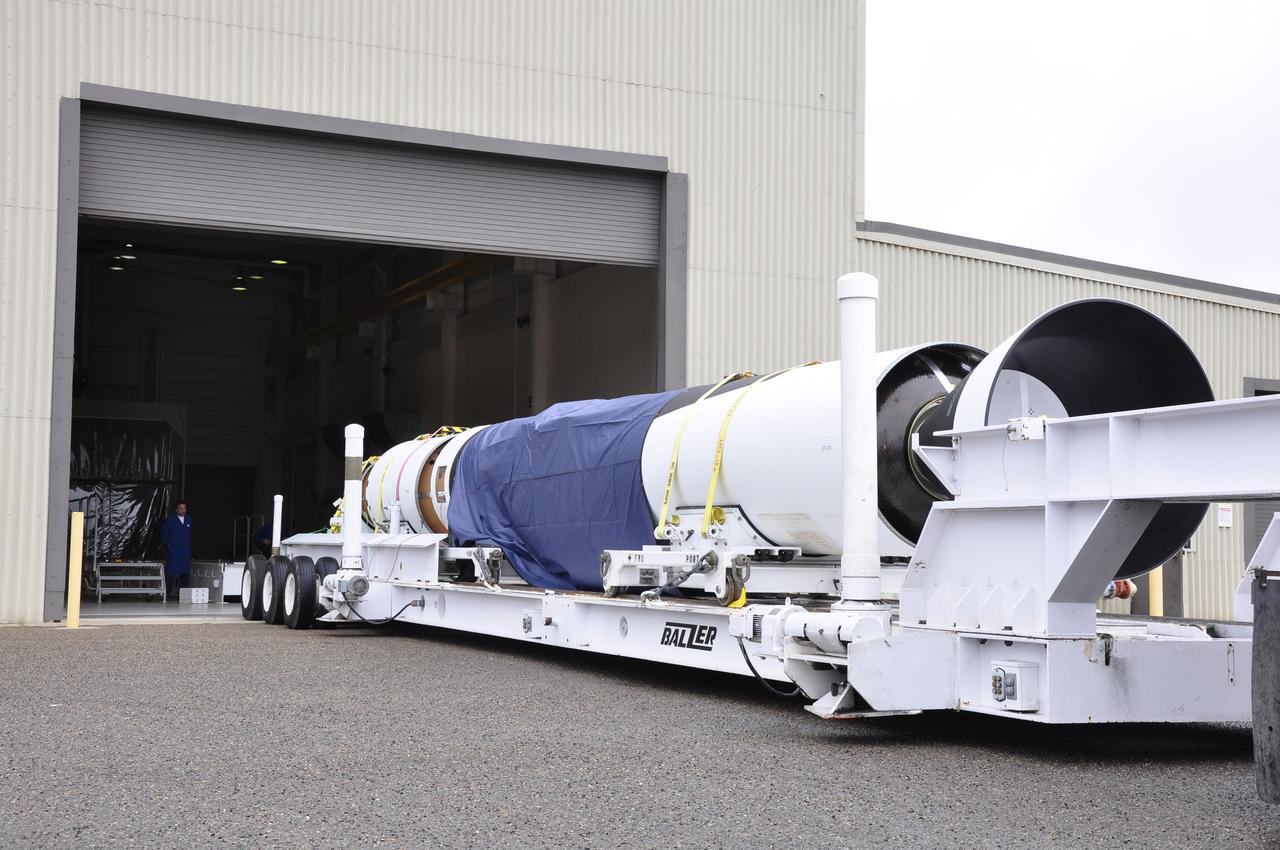
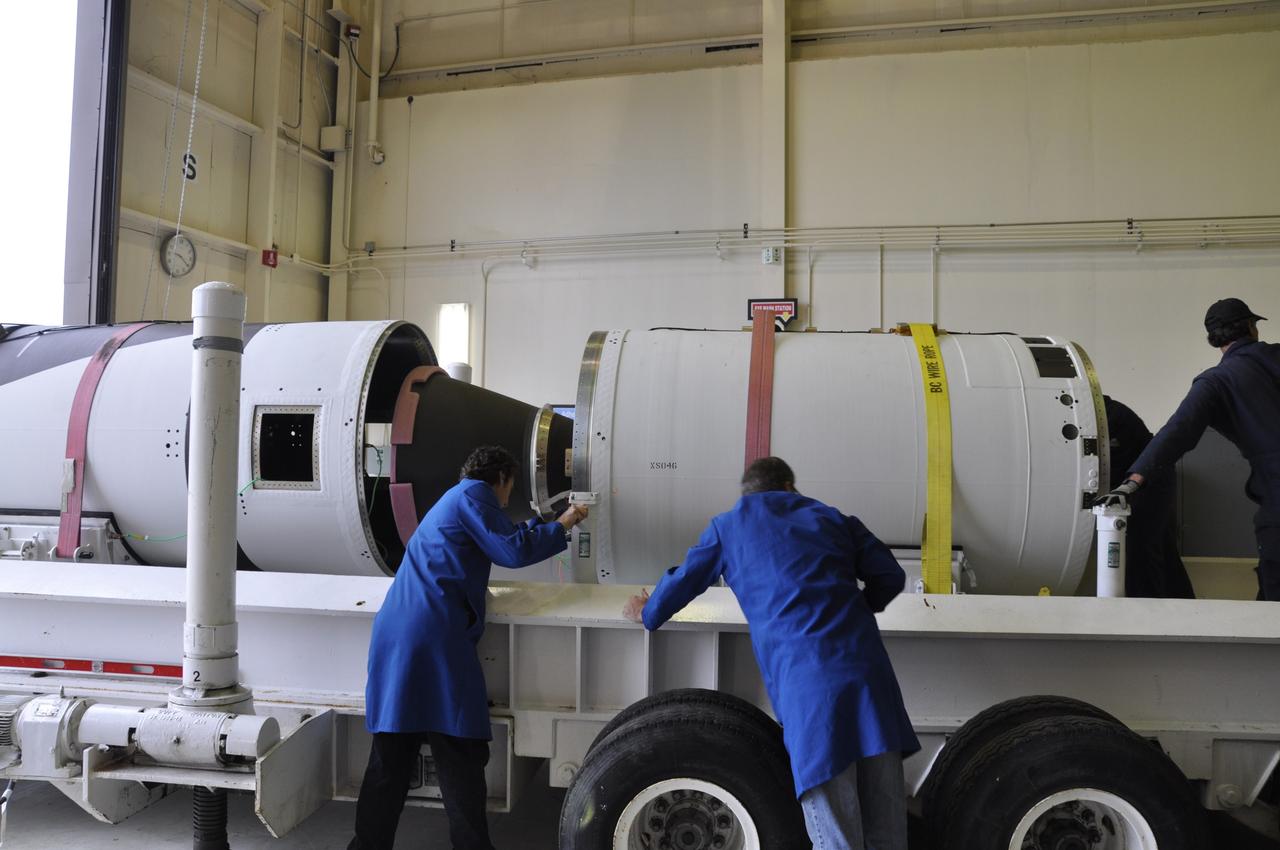
VANDENBERG AIR FORCE BASE, Calif. -- The first, second and third stages of the Orbital Sciences Corp. Pegasus XL rocket that will launch the Nuclear Spectroscopic Telescope Array NuSTAR to orbit are moved from the west high bay to the east high bay of Building 1555 at Vandenberg Air Force Base in California. The move will allow technicians to process the spacecraft and fairing in the clean rooms of the east high bay before attaching it to the rocket. After the rocket and spacecraft are processed at Vandenberg, they will be flown on the Orbital Sciences' L-1011 carrier aircraft to the Ronald Reagan Ballistic Missile Defense Test Site located at the Pacific Ocean’s Kwajalein Atoll for launch. The high-energy X-ray telescope will conduct a census for black holes, map radioactive material in young supernovae remnants, and study the origins of cosmic rays and the extreme physics around collapsed stars. Photo credit: NASA/Randy Beaudoin, VAFB
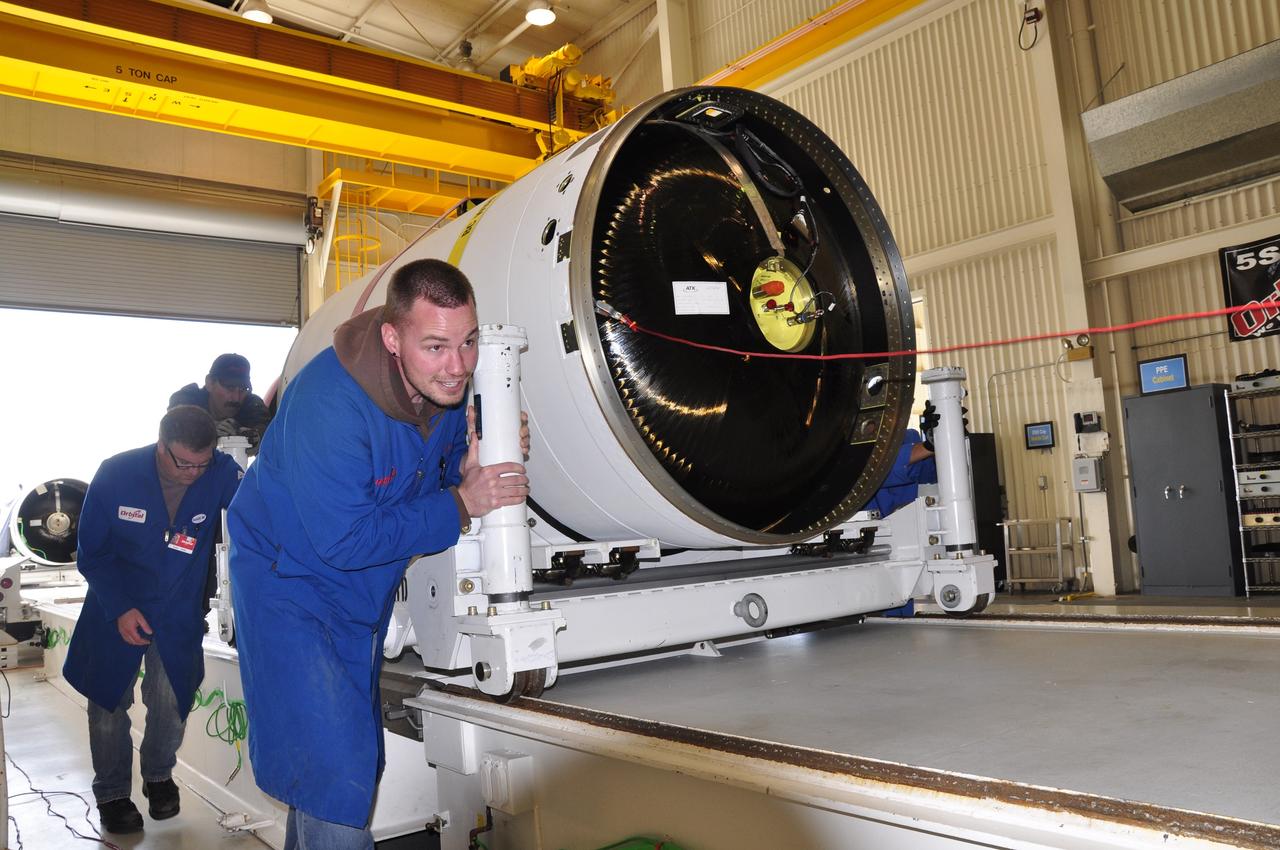
VANDENBERG AIR FORCE BASE, Calif. -- The first, second and third stages of the Orbital Sciences Corp. Pegasus XL rocket that will launch the Nuclear Spectroscopic Telescope Array NuSTAR to orbit are moved from the west high bay to the east high bay of Building 1555 at Vandenberg Air Force Base in California. The move will allow technicians to process the spacecraft and fairing in the clean rooms of the east high bay before attaching it to the rocket. After the rocket and spacecraft are processed at Vandenberg, they will be flown on the Orbital Sciences' L-1011 carrier aircraft to the Ronald Reagan Ballistic Missile Defense Test Site located at the Pacific Ocean’s Kwajalein Atoll for launch. The high-energy X-ray telescope will conduct a census for black holes, map radioactive material in young supernovae remnants, and study the origins of cosmic rays and the extreme physics around collapsed stars. Photo credit: NASA/Randy Beaudoin, VAFB
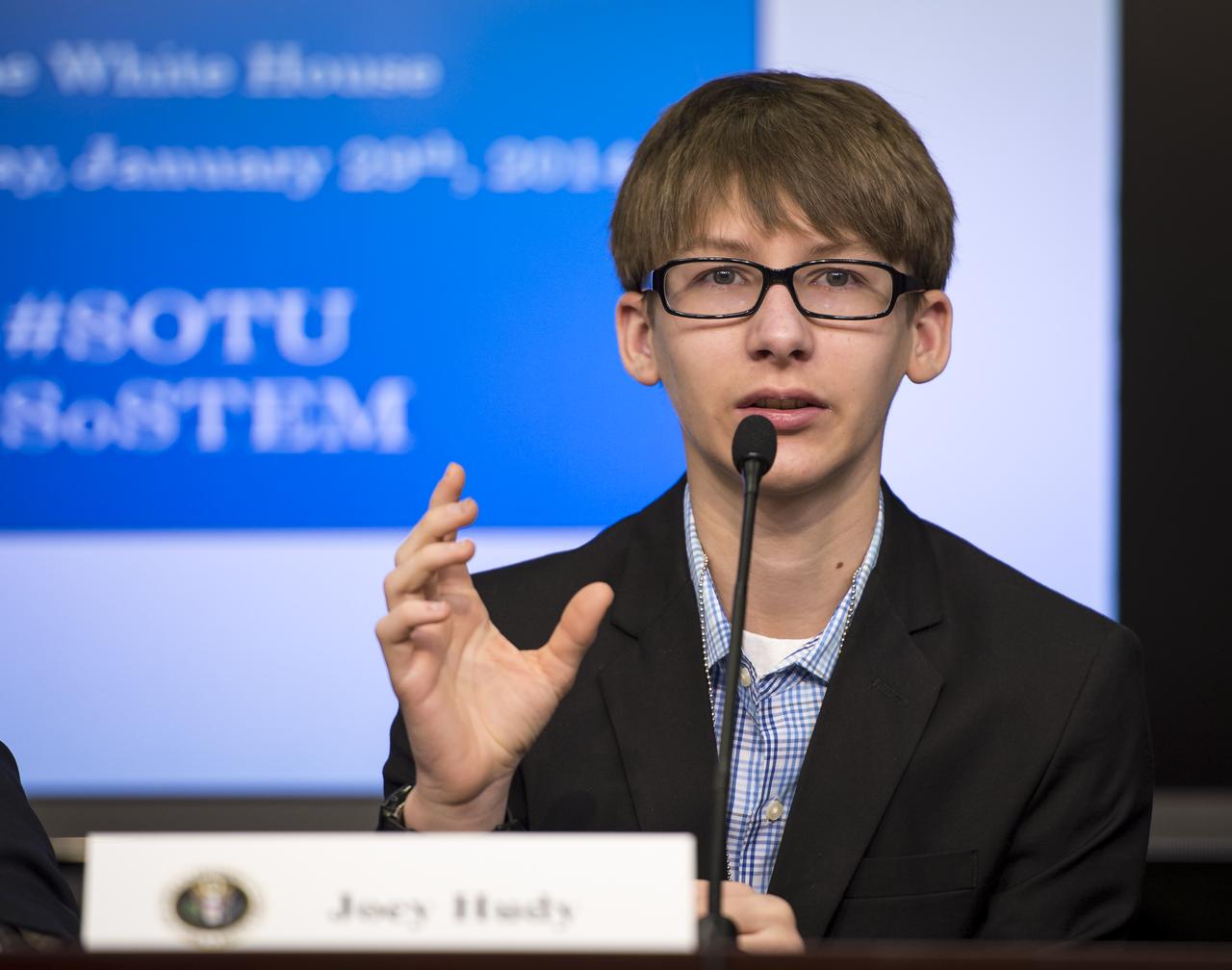
Joey Hudy, Anthem, AZ, 16-year-old self-described “Maker” answers a question from the audience at the annual White House State of Science, Technology, Engineering, and Math (SoSTEM) address, Wednesday, Jan. 29, 2014, in the South Court Auditorium in the Eisenhower Executive Office Building on the White House complex in Washington. Joey sat with the First Lady at the President’s 2014 State of the Union Address after his first shot to fame in 2012 when he attended the White House Science Fair where the President took a turn using his “extreme marshmallow cannon” to launch a marshmallow across the East Room of the White House. Photo Credit: (NASA/Bill Ingalls)
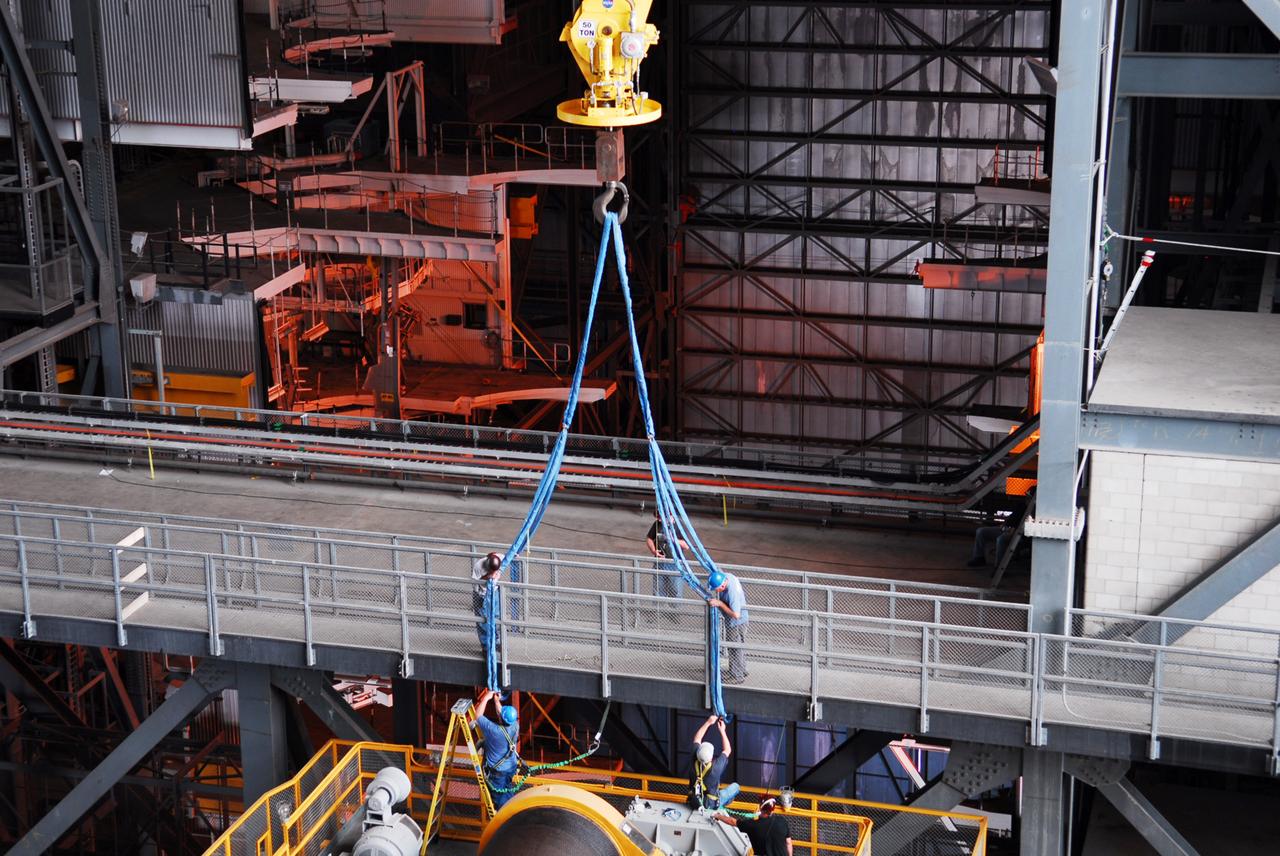
CAPE CANAVERAL, Fla. – Inside the Vehicle Assembly Building, or VAB, at NASA's Kennedy Space Center in Florida, workers have secured a crane to a portion of the catwalk on the east side of Level 16. The catwalk will be removed to allow room for the removal of the 175-ton crane that is situated above the transfer aisle. The crane will be lowered to the floor to perform upgrades to its 45-year-old controls in order to improve reliability, precision and safety. The Ground Systems Development and Operations Program is overseeing upgrades and modifications to the VAB. The crane will be upgraded so that it can support lifting needs for NASA and other exploration vehicles, including the agency's Space Launch System and Orion spacecraft. Photo credit: NASA/Jim Grossmann
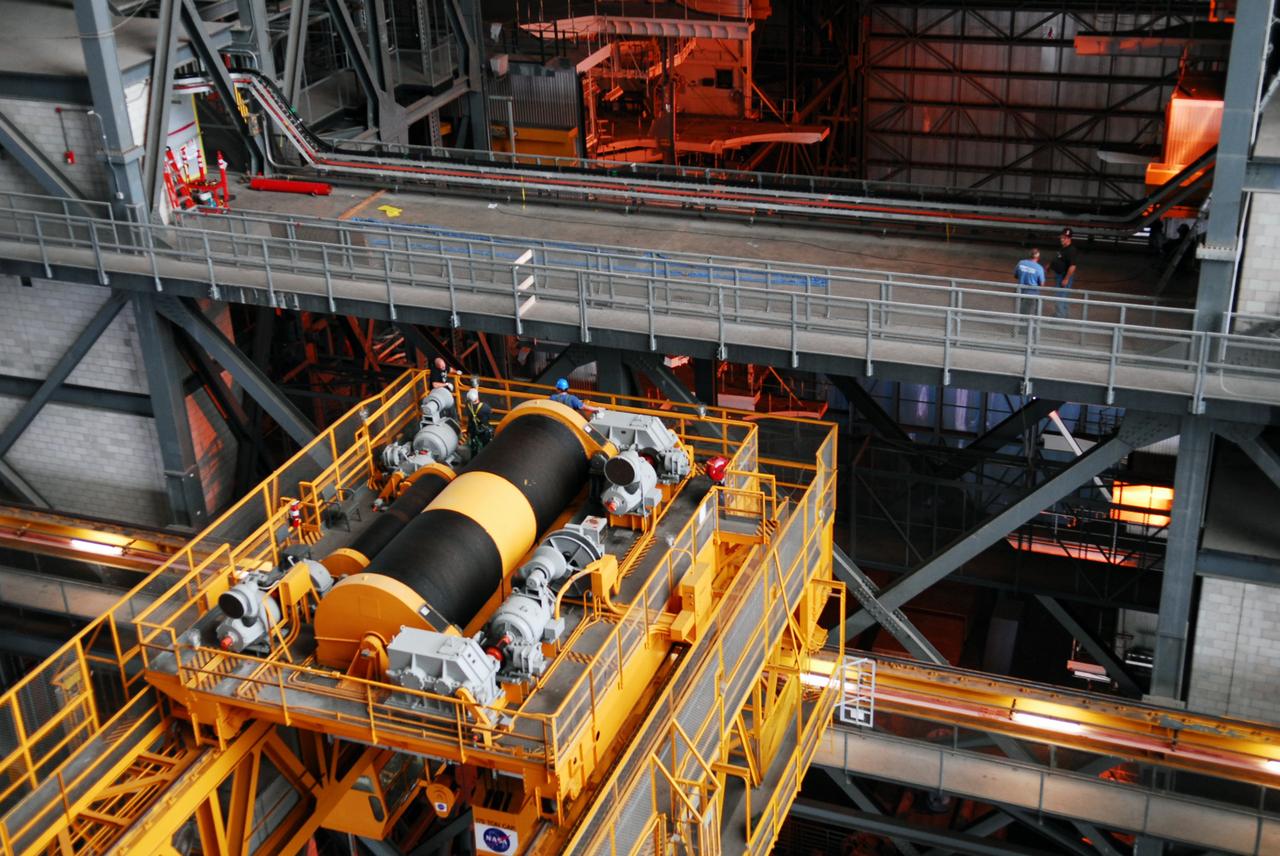
CAPE CANAVERAL, Fla. – Inside the Vehicle Assembly Building, or VAB, at NASA's Kennedy Space Center in Florida, preparations are underway to remove a portion of the catwalk on the east side of Level 16 to allow room for the removal of the 175-ton crane that is situated above the transfer aisle. The crane will be lowered to the floor to perform upgrades to its 45-year-old controls in order to improve reliability, precision and safety. The Ground Systems Development and Operations Program is overseeing upgrades and modifications to the VAB. The crane will be upgraded so that it can support lifting needs for NASA and other exploration vehicles, including the agency's Space Launch System and Orion spacecraft. Photo credit: NASA/Jim Grossmann
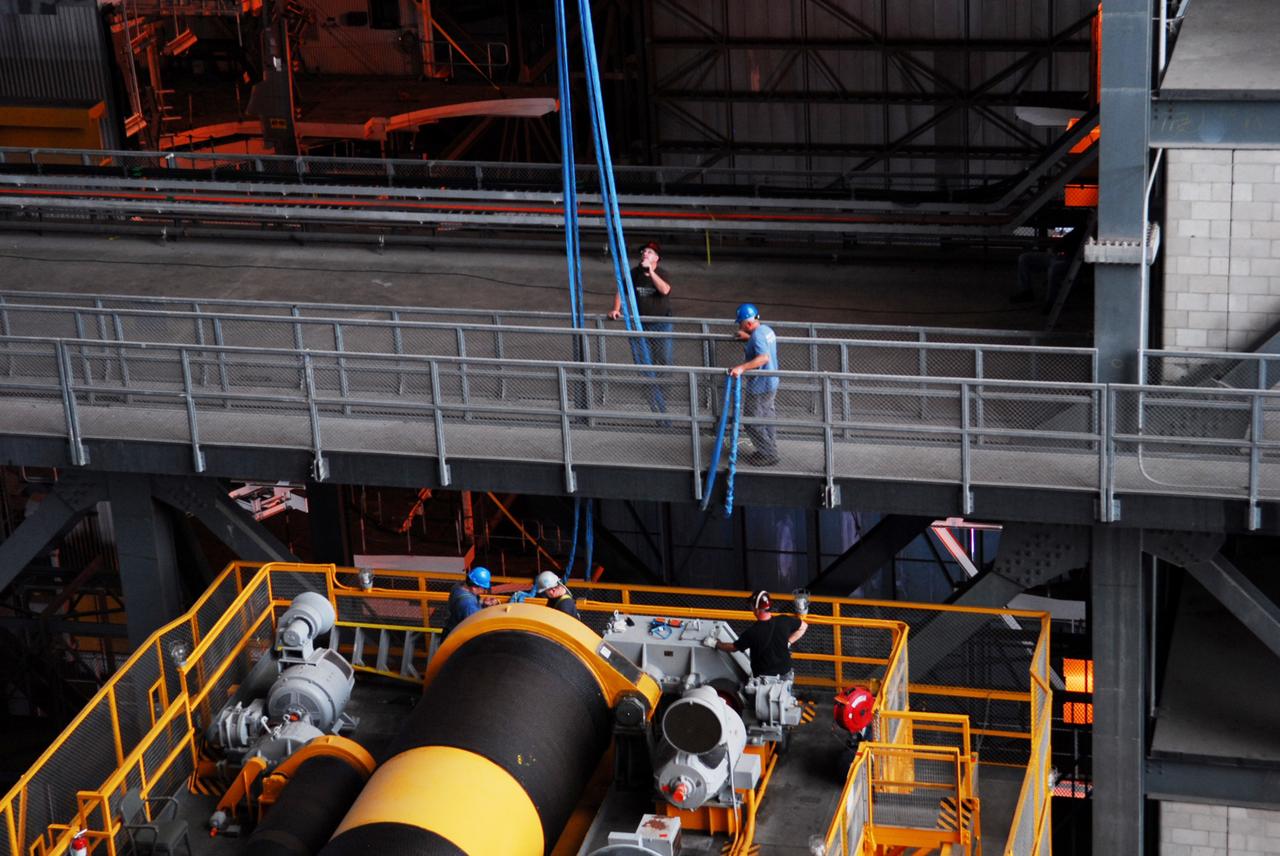
CAPE CANAVERAL, Fla. – Inside the Vehicle Assembly Building, or VAB, at NASA's Kennedy Space Center in Florida, preparations are underway to remove a portion of the catwalk on the east side of Level 16 to allow room for the removal of the 175-ton crane that is situated above the transfer aisle. The crane will be lowered to the floor to perform upgrades to its 45-year-old controls in order to improve reliability, precision and safety. The Ground Systems Development and Operations Program is overseeing upgrades and modifications to the VAB. The crane will be upgraded so that it can support lifting needs for NASA and other exploration vehicles, including the agency's Space Launch System and Orion spacecraft. Photo credit: NASA/Jim Grossmann
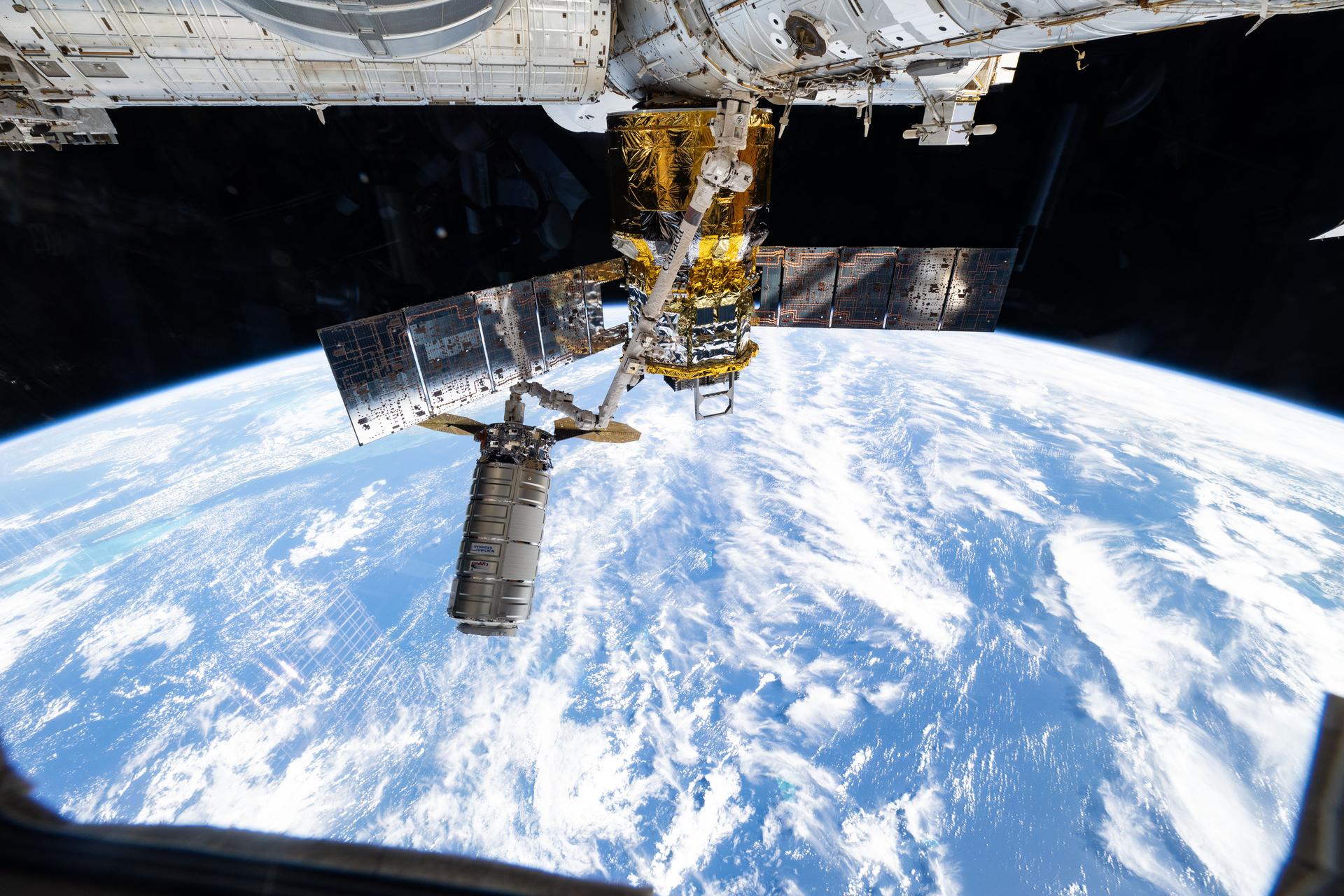
iss073e1196882 (Nov. 25, 2025) --- Northrop Grumman's Cygnus XL cargo craft is pictured in the grips of the International Space Station Canadarm2 robotic arm. Cygnus XL had been temporarily released from its Earth-facing port on the Unity module to make room for the Soyuz MS-28 crew spacecraft, which was scheduled to arrive the next day and dock to the Rassvet module. JAXA's (Japan Aerospace Exploration Agency) HTV-X1 cargo craft, with its solar arrays deployed, is seen berthed to the Earth-facing port of the Harmony module. The orbital outpost was soaring 262 miles above the Caribbean Sea east of the Yucatan Peninsula.
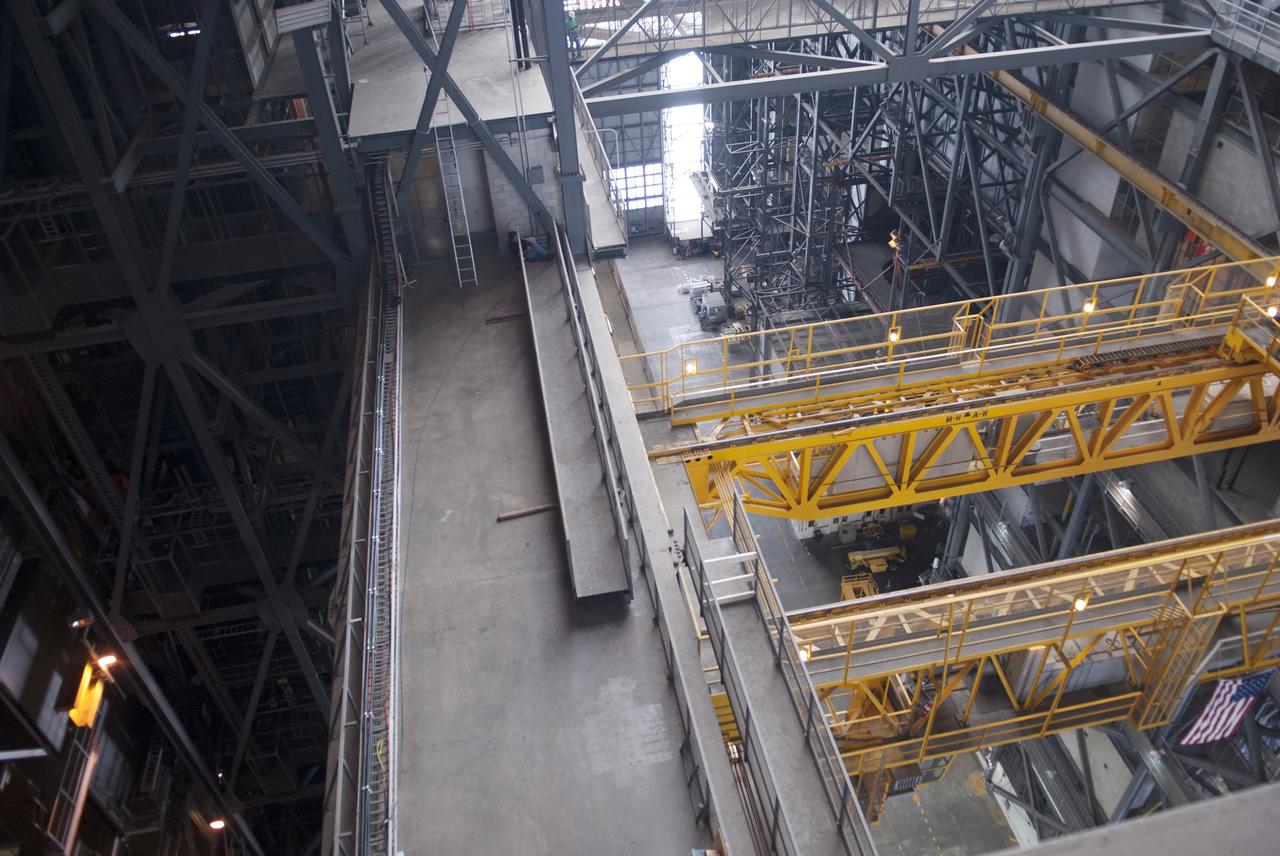
CAPE CANAVERAL, Fla. – Inside the Vehicle Assembly Building, or VAB, at NASA's Kennedy Space Center in Florida, a portion of the catwalk on the east side of Level 16 has been removed to allow room for the removal of the 175-ton crane that is situated above the transfer aisle. The crane will be lowered to the floor to perform upgrades to its 45-year-old controls in order to improve reliability, precision and safety. The Ground Systems Development and Operations Program is overseeing upgrades and modifications to the VAB. The crane will be upgraded so that it can support lifting needs for NASA and other exploration vehicles, including the agency's Space Launch System and Orion spacecraft. Photo credit: NASA/Jim Grossmann
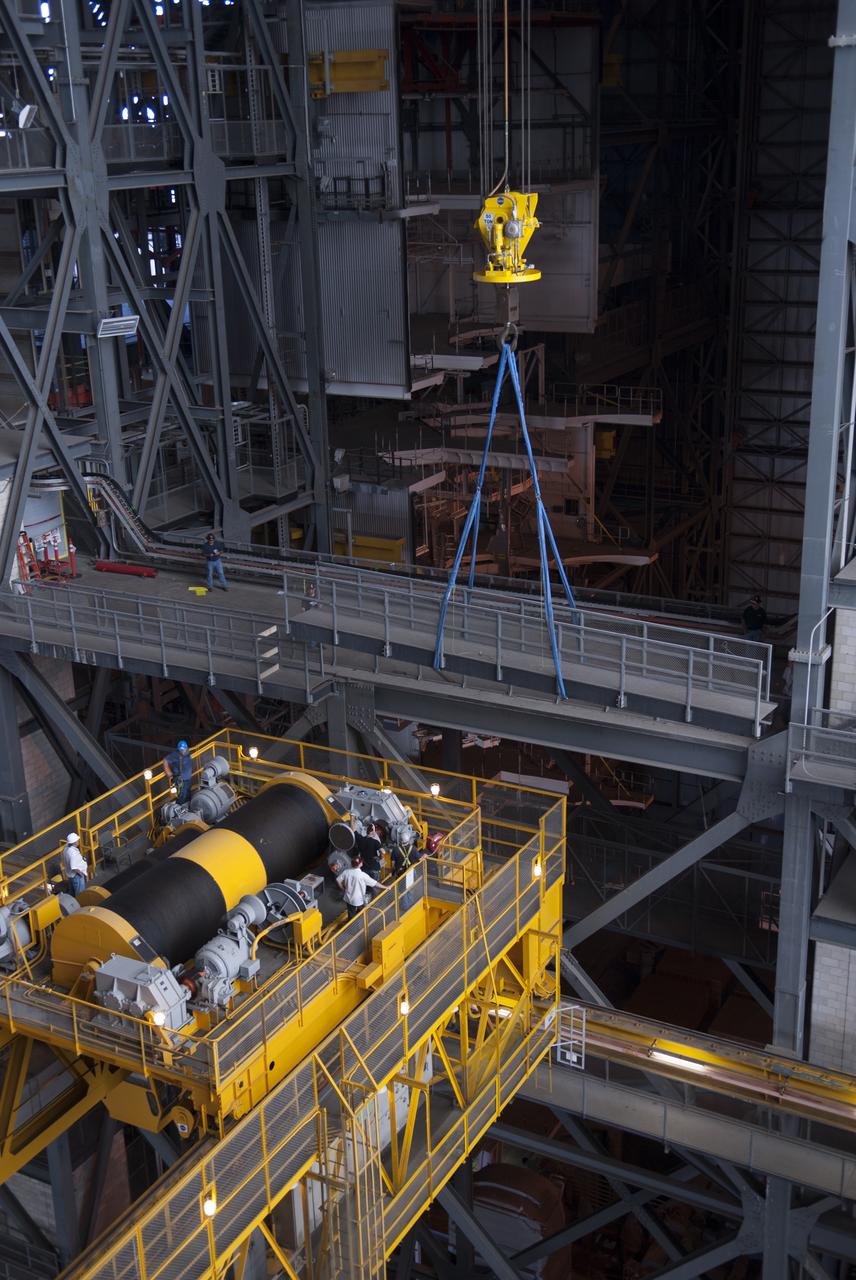
CAPE CANAVERAL, Fla. – Inside the Vehicle Assembly Building, or VAB, at NASA's Kennedy Space Center in Florida, a crane is used to lift up a portion of the catwalk on the east side of Level 16. The catwalk is being removed to allow room for the removal of the 175-ton crane that is situated above the transfer aisle. The crane will be lowered to the floor to perform upgrades to its 45-year-old controls in order to improve reliability, precision and safety. The Ground Systems Development and Operations Program is overseeing upgrades and modifications to the VAB. The crane will be upgraded so that it can support lifting needs for NASA and other exploration vehicles, including the agency's Space Launch System and Orion spacecraft. Photo credit: NASA/Jim Grossmann
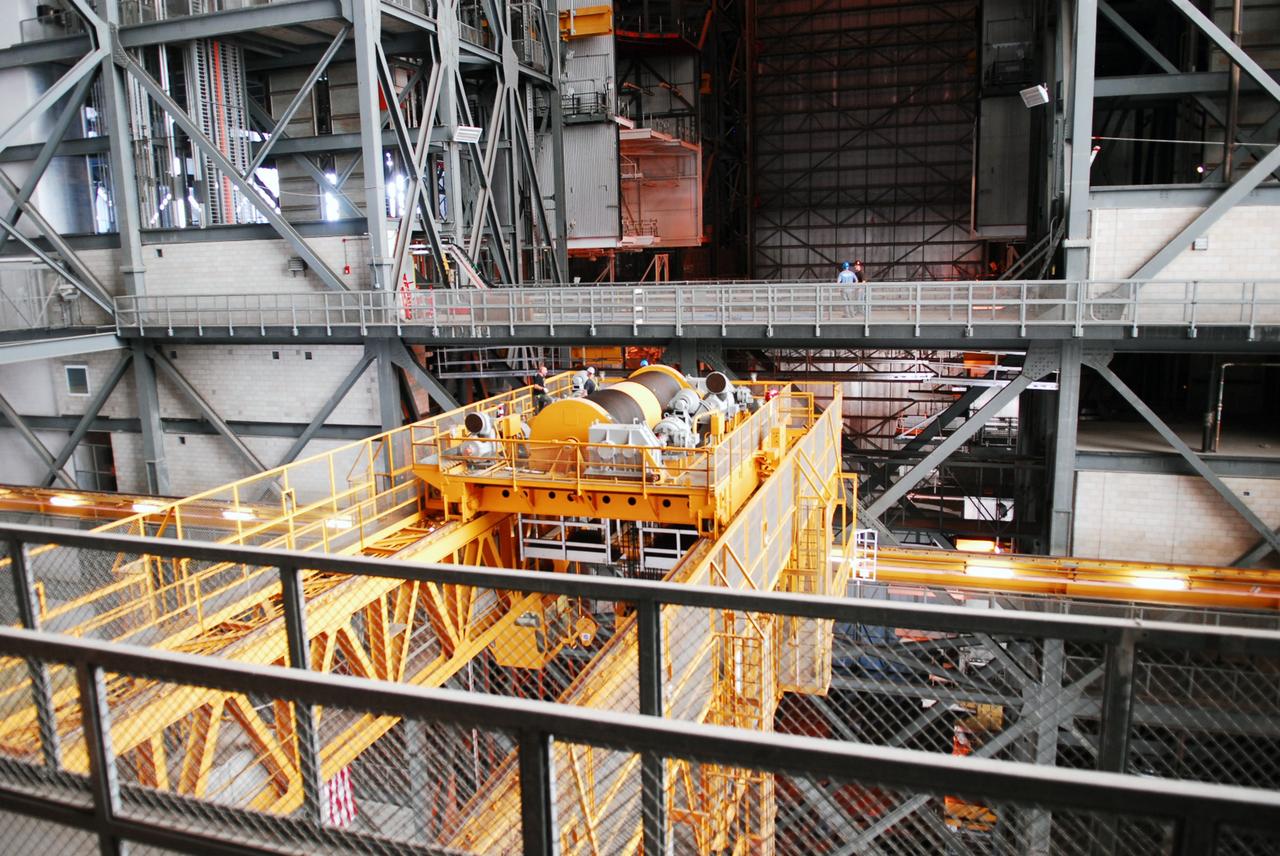
CAPE CANAVERAL, Fla. – Inside the Vehicle Assembly Building, or VAB, at NASA's Kennedy Space Center in Florida, preparations are underway to remove a portion of the catwalk on the east side of Level 16 to allow room for the removal of the 175-ton crane that is situated above the transfer aisle. The crane will be lowered to the floor to perform upgrades to its 45-year-old controls in order to improve reliability, precision and safety. The Ground Systems Development and Operations Program is overseeing upgrades and modifications to the VAB. The crane will be upgraded so that it can support lifting needs for NASA and other exploration vehicles, including the agency's Space Launch System and Orion spacecraft. Photo credit: NASA/Jim Grossmann
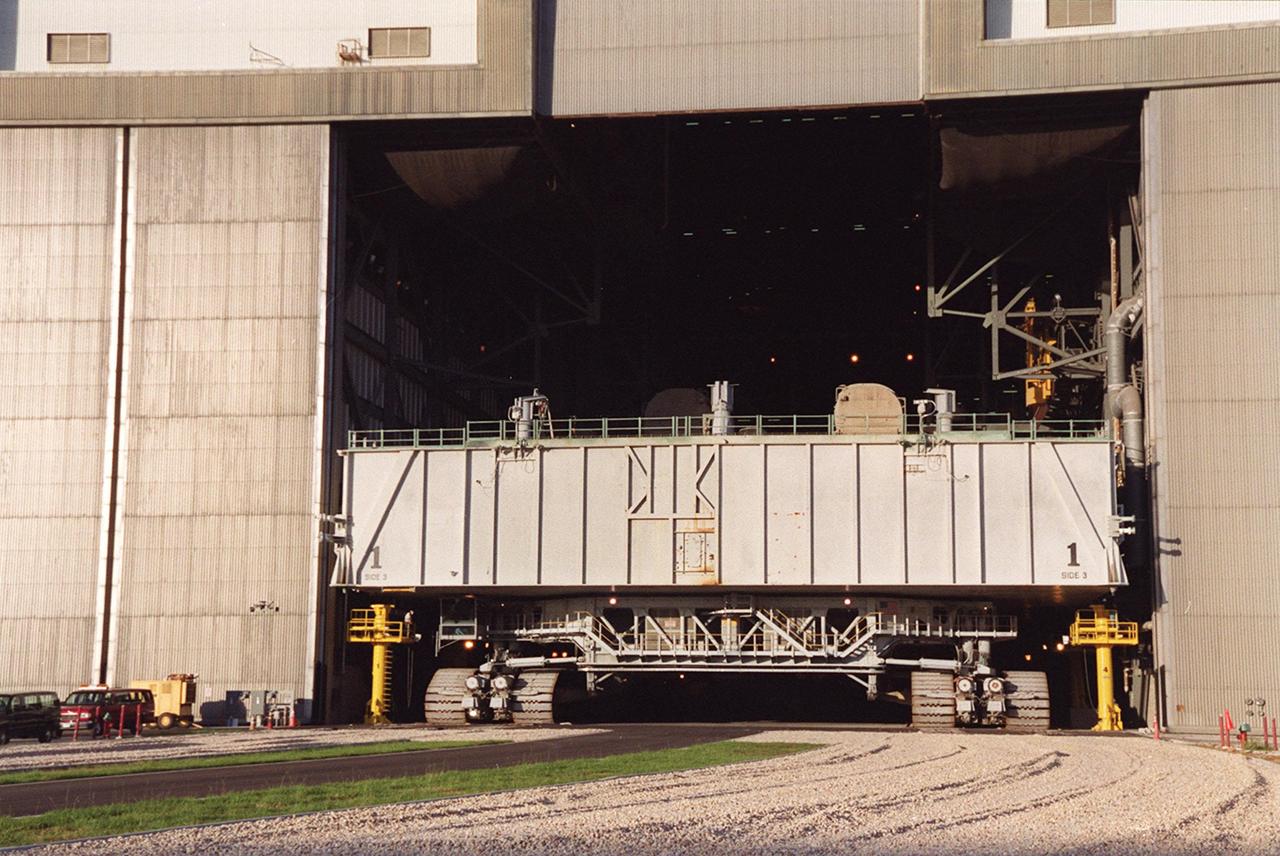
KENNEDY SPACE CENTER, FLA. -- A mobile launcher platform atop a crawler-transporter, moves into the Vehicle Assembly Building high bay 2. As part of the Safe Haven project, a once-buried portion of the crawlerway was restored to enable rollout of a Shuttle from this third stacking area. The primary goal of the Safe Haven construction project was to strengthen readiness for hurricane season by expanding the VAB’s storage capacity. The new area, in high bay 2, will allow NASA to preassemble stacks and still have room in the VAB to pull a Shuttle back from the pad if severe weather threatens. Potential rollouts of the Space Shuttle to the launch pad from high bay 2 will involve making a turn around the north side of the VAB in contrast to the straight rollouts from high bays 1 and 3, on the east side of the VAB facing the launch pads
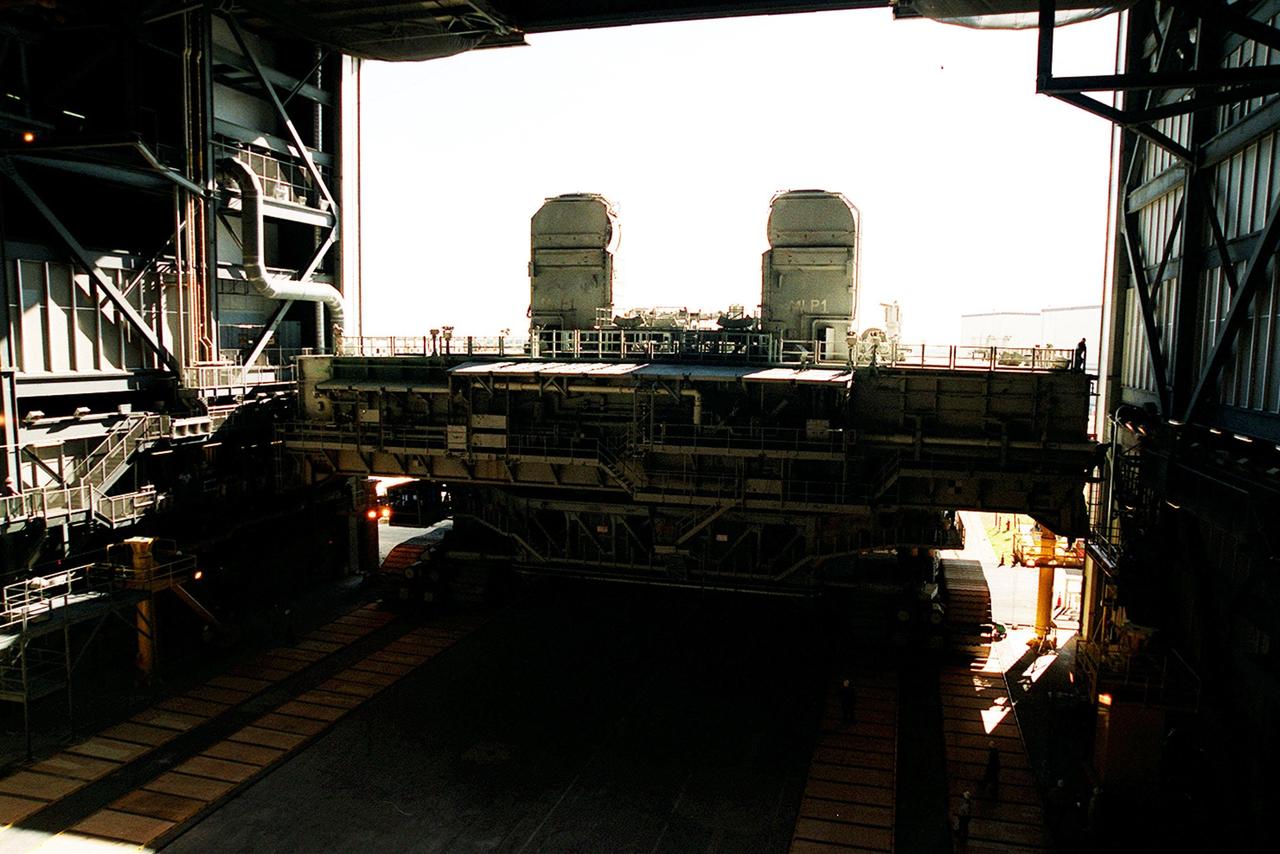
KENNEDY SPACE CENTER, FLA. -- From inside the VAB high bay 2, a mobile launcher platform atop a crawler transporter is viewed as it rolls through the doorway using the recently restored crawlerway. As part of the Safe Haven project, a once-buried portion of the crawlerway was restored to enable rollout of a Shuttle from high bay 2. The primary goal of the Safe Haven construction project was to strengthen readiness for hurricane season by expanding the VAB’s storage capacity. The new area, in high bay 2, will allow NASA to preassemble stacks and still have room in the VAB to pull a Shuttle back from the pad if severe weather threatens. Potential rollouts of the Space Shuttle to the launch pad from high bay 2 will involve making a turn around the north side of the VAB in contrast to the straight rollouts from high bays 1 and 3, on the east side of the VAB facing the launch pads
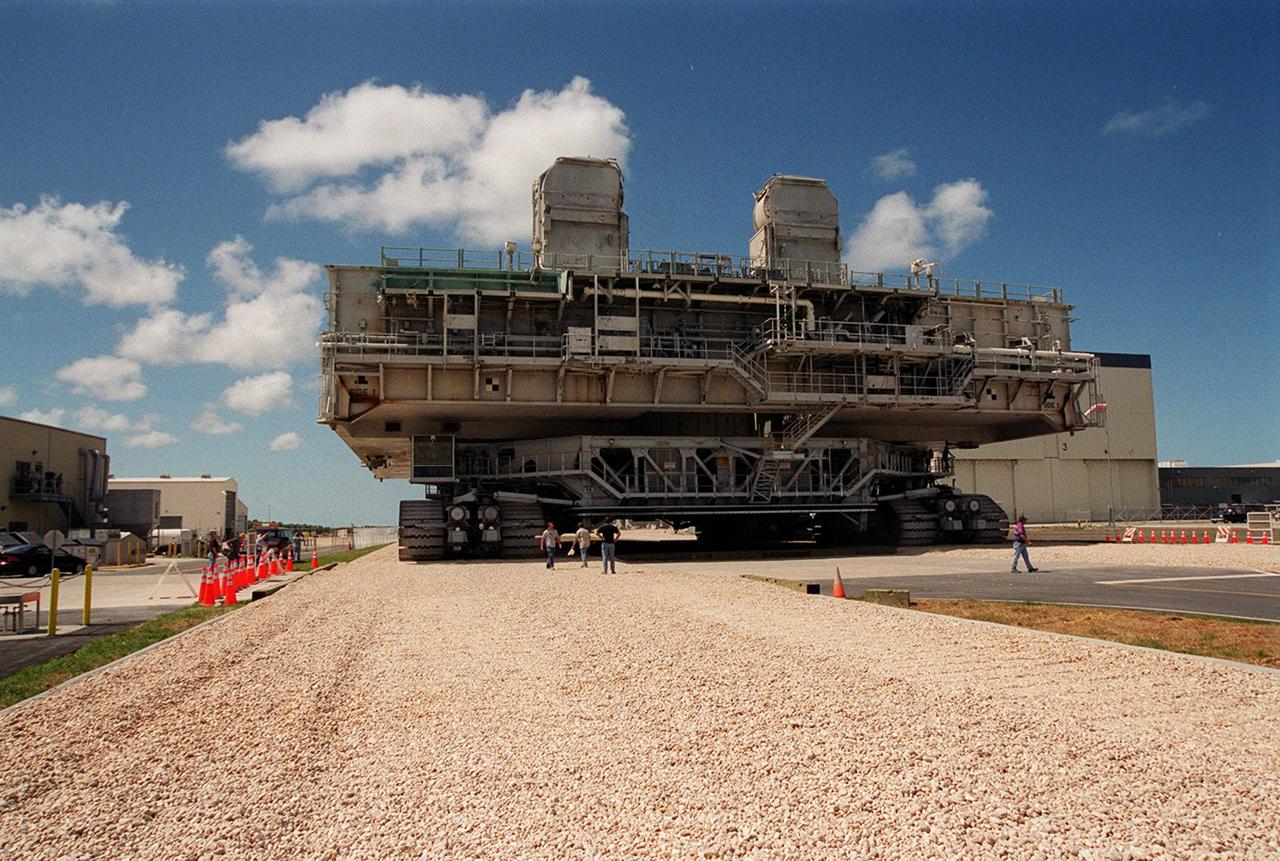
KENNEDY SPACE CENTER, FLA. -- A crawler-transporter with mobile launcher platform on top makes its way from the Orbiter Processing Facility along the once-buried portion of the Apollo-era crawlerway leading to the Vehicle Assembly Building (VAB) high bay. The road was restored as part of KSC’s Safe Haven project. High bay 2 provides a third stacking area.. The primary goal of the Safe Haven construction project was to strengthen readiness for hurricane season by expanding the VAB’s storage capacity. The new area, in high bay 2, will allow NASA to preassemble stacks and still have room in the VAB to pull a Shuttle back from the pad if severe weather threatens. Potential rollouts of the Space Shuttle to the launch pad from high bay 2 will involve making a turn around the north side of the VAB in contrast to the straight rollouts from high bays 1 and 3, on the east side of the VAB facing the launch pads
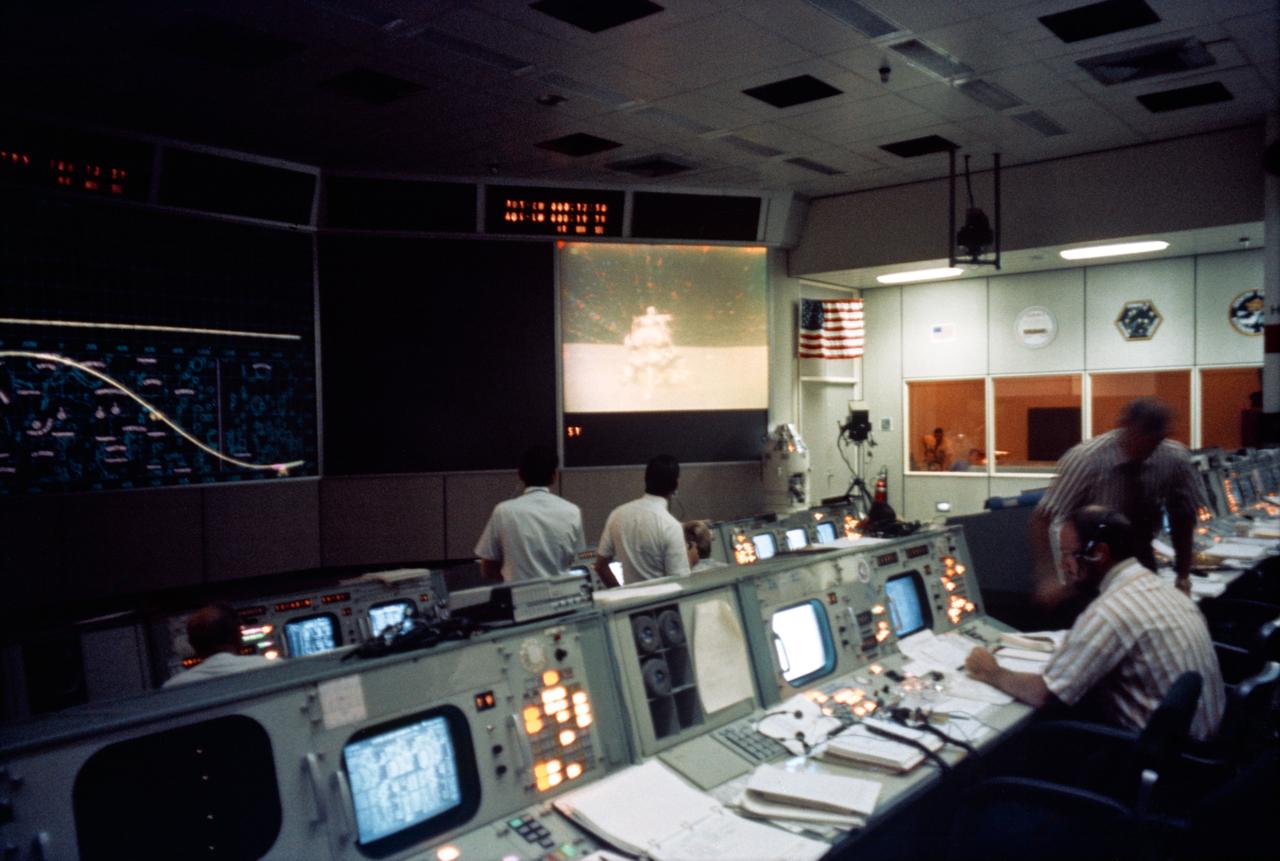
S71-41759 (2 Aug. 1971) --- A partial view of activity in the Mission Operations Control Room in the Mission Control Center during the liftoff of the Apollo 15 Lunar Module "Falcon" ascent stage from the lunar surface. An RCA color television camera mounted on the Lunar Roving Vehicle made it possible for people on Earth to watch the LM's spectacular launch from the moon. The LM liftoff was at 171:37 ground elapsed time. The LRV was parked about 300 feet east of the LM. The TV camera was remotely controlled from a console in the MOCR. Seated in the right foreground is astronaut Edgar D. Mitchell, a spacecraft communicator. Mitchell was lunar module pilot of the Apollo 14 lunar landing mission. Note liftoff on the television monitor in the center background.
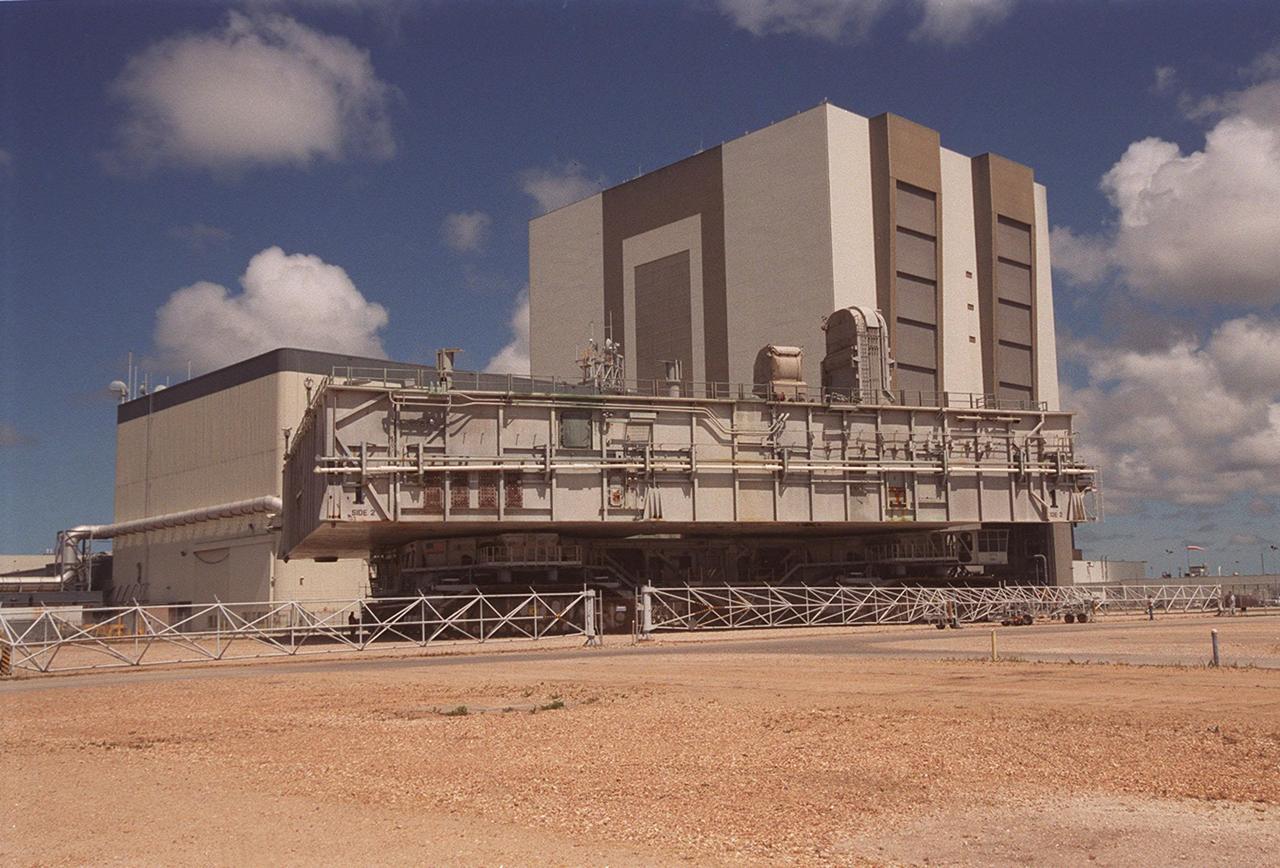
KENNEDY SPACE CENTER, FLA. -- A crawler-transporter with mobile launcher platform on top tests the buried portion of the Apollo-era crawlerway leading to the Vehicle Assembly Building (VAB) high bay 2 on the southwest side. The road was restored as part of KSC’s Safe Haven project. High bay 2 provides a third stacking area. The primary goal of the Safe Haven construction project was to strengthen readiness for hurricane season by expanding the VAB’s storage capacity. The new area, in high bay 2, will allow NASA to preassemble stacks and still have room in the VAB to pull a Shuttle back from the pad if severe weather threatens. Potential rollouts of the Space Shuttle to the launch pad from high bay 2 will involve making a turn around the north side of the VAB in contrast to the straight rollouts from high bays 1 and 3, on the east side of the VAB facing the launch pads
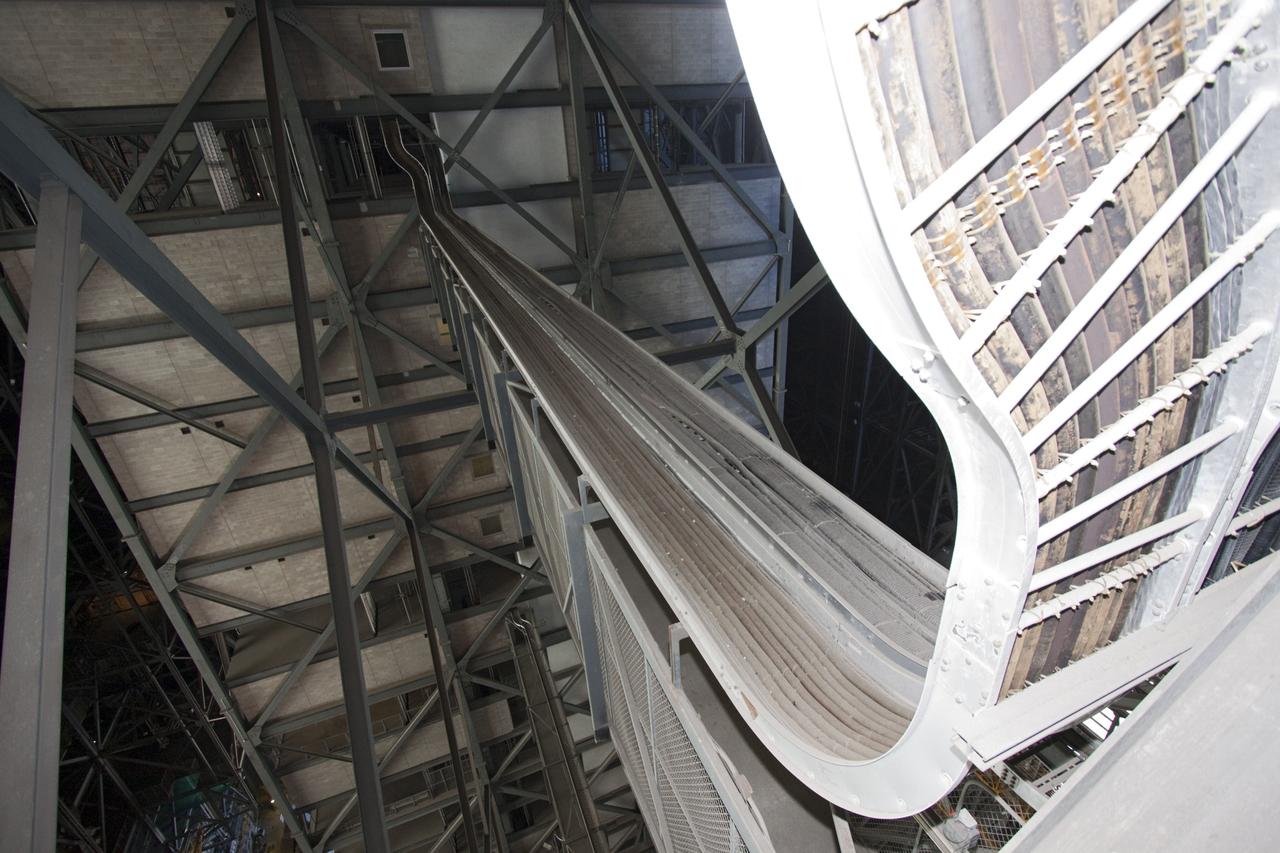
CAPE CANAVERAL, Fla. – At NASA’s Kennedy Space Center in Florida, cable trays wind their way along the grating in high bay 3 in the Vehicle Assembly Building, or VAB, during part of a centerwide refurbishment initiative under the Ground Systems Development and Operations GSDO Program. The cable replacement project is under way in high bays 1 and 3 on the east side of the building, facing Launch Complex 39’s pads A and B. Approximately 150 miles of existing Apollo/shuttle era cabling is being removed to make room for installation of state-of-the-art command, communication and control systems that will be needed by future users to perform vehicle testing and verification prior to rollout to the launch pad. For more information, visit http://go.nasa.gov/groundsystems. Photo credit: NASA/Jim Grossmann
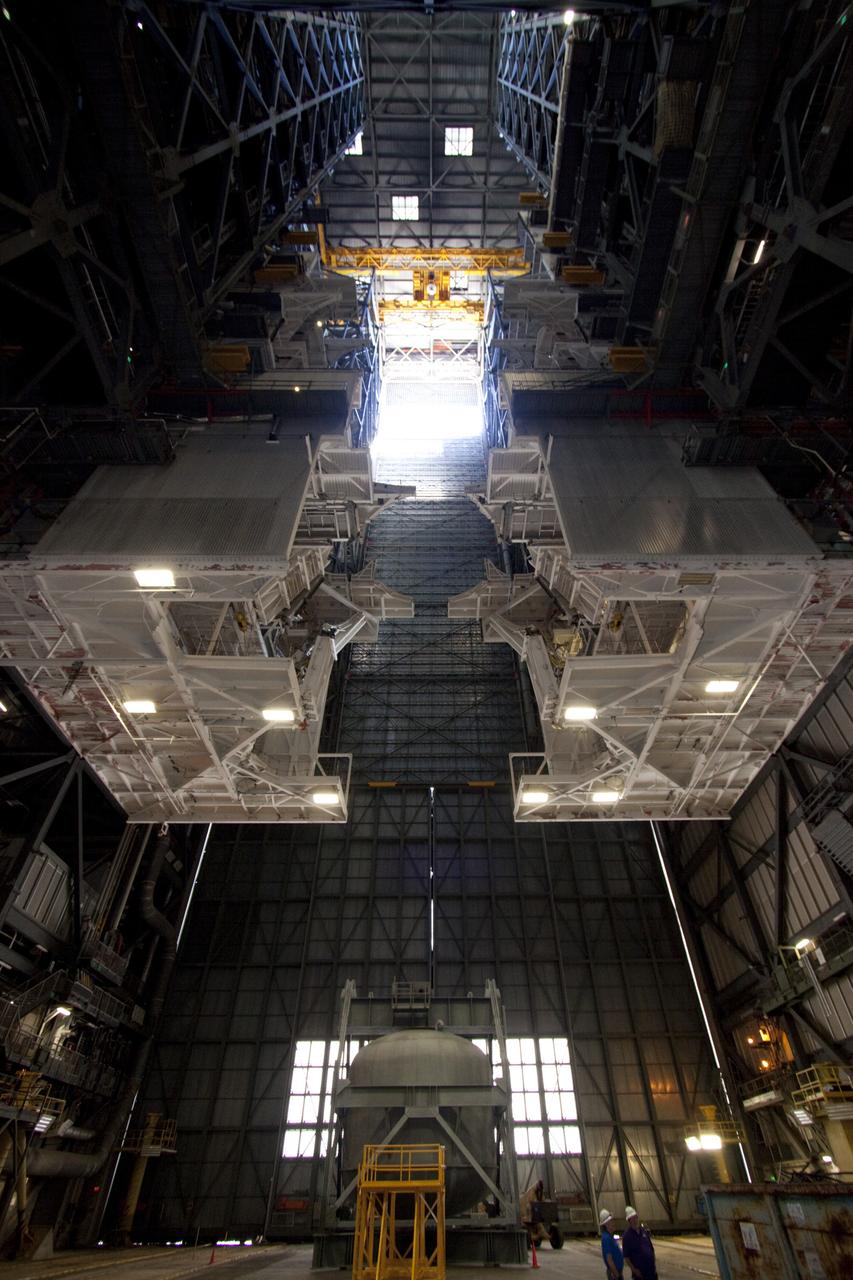
CAPE CANAVERAL, Fla. – At NASA’s Kennedy Space Center in Florida, refurbishment of high bay 3 is under way in the Vehicle Assembly Building, or VAB, as part of a centerwide refurbishment initiative under the Ground Systems Development and Operations GSDO Program. It is 525 feet from the bay’s ceiling to the floor. The cable replacement project is under way in high bays 1 and 3 on the east side of the building, facing Launch Complex 39’s pads A and B. Approximately 150 miles of existing Apollo/shuttle era cabling is being removed to make room for installation of state-of-the-art command, communication and control systems that will be needed by future users to perform vehicle testing and verification prior to rollout to the launch pad. For more information, visit http://go.nasa.gov/groundsystems. Photo credit: NASA/Jim Grossmann

CAPE CANAVERAL, Fla. – At NASA’s Kennedy Space Center in Florida, workers pull cables between the 26th and 29th floors of high bay 3 in the 525-foot-tall Vehicle Assembly Building, or VAB, during part of a centerwide refurbishment initiative under the Ground Systems Development and Operations GSDO Program. The cable replacement project is under way in high bays 1 and 3 on the east side of the building, facing Launch Complex 39’s pads A and B. Approximately 150 miles of existing Apollo/shuttle era cabling is being removed to make room for installation of state-of-the-art command, communication and control systems that will be needed by future users to perform vehicle testing and verification prior to rollout to the launch pad. For more information, visit http://go.nasa.gov/groundsystems. Photo credit: NASA/Jim Grossmann
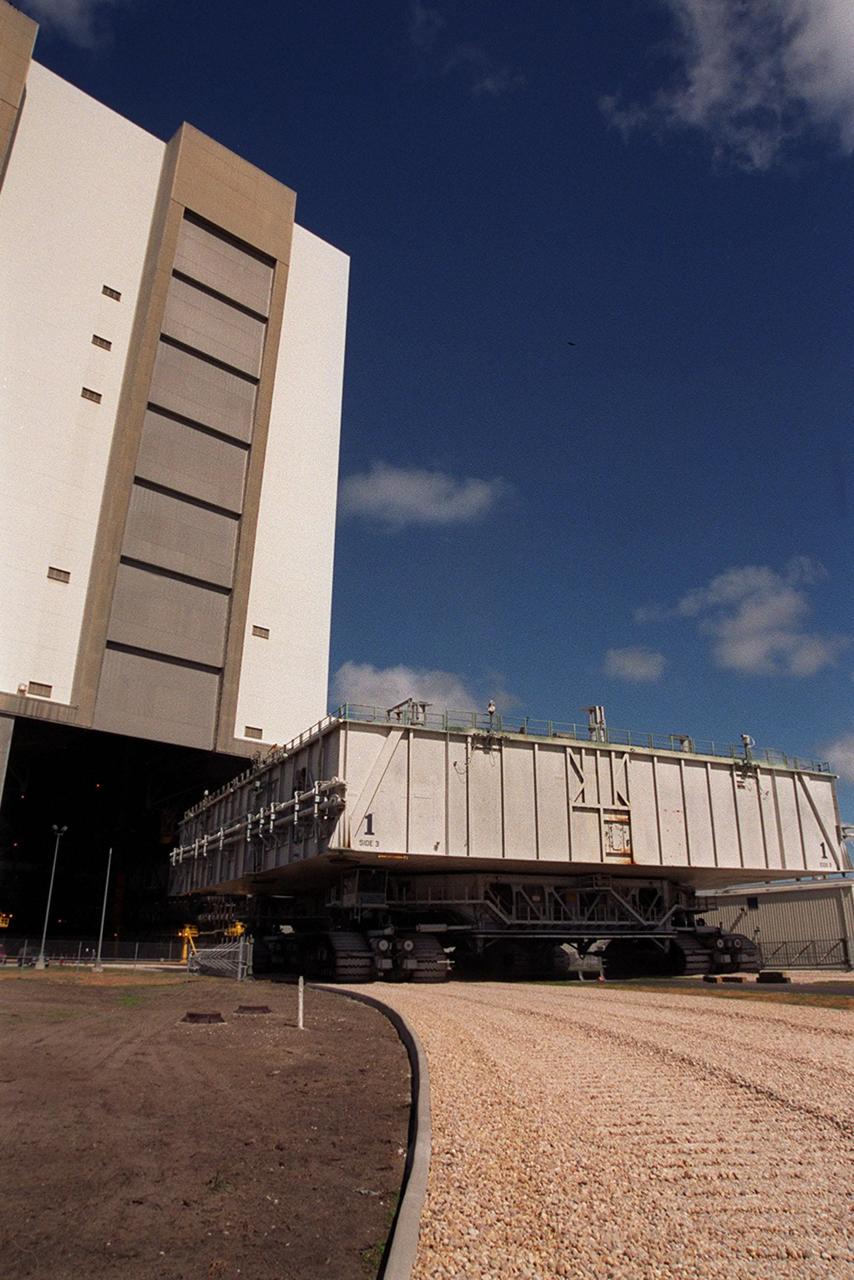
KENNEDY SPACE CENTER, FLA. -- A mobile launcher platform atop a crawler-transporter, heads to the open door of the Vehicle Assembly Building high bay 2. As part of the Safe Haven project, a once-buried portion of the crawlerway was restored to enable rollout of a Shuttle from this third stacking area. The primary goal of the Safe Haven construction project was to strengthen readiness for hurricane season by expanding the VAB’s storage capacity. The new area, in high bay 2, will allow NASA to preassemble stacks and still have room in the VAB to pull a Shuttle back from the pad if severe weather threatens. Potential rollouts of the Space Shuttle to the launch pad from high bay 2 will involve making a turn around the north side of the VAB in contrast to the straight rollouts from high bays 1 and 3, on the east side of the VAB facing the launch pads
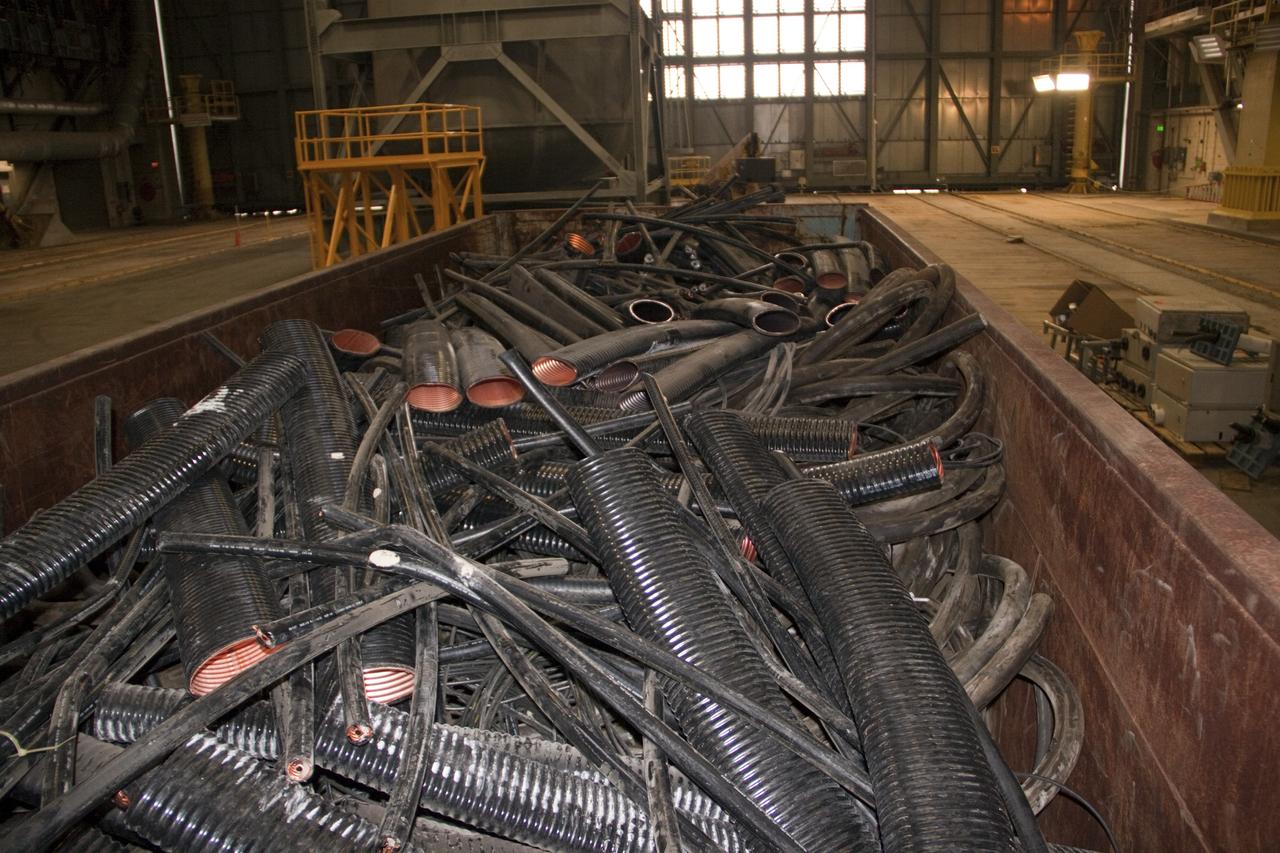
CAPE CANAVERAL, Fla. – At NASA’s Kennedy Space Center in Florida, old cabling is being pulled from high bay 3 in the Vehicle Assembly Building, or VAB, as part of a centerwide refurbishment initiative under the Ground Systems Development and Operations GSDO Program. The cable replacement project is under way in high bays 1 and 3 on the east side of the building, facing Launch Complex 39’s pads A and B. Approximately 150 miles of existing Apollo/shuttle era cabling is being removed to make room for installation of state-of-the-art command, communication and control systems that will be needed by future users to perform vehicle testing and verification prior to rollout to the launch pad. For more information, visit http://go.nasa.gov/groundsystems. Photo credit: NASA/Jim Grossmann

KENNEDY SPACE CENTER, FLA. -- On a portion of the once-buried crawlerway that was recently restored, a crawler-transporter with mobile launcher platform on top turns toward the Vehicle Assembly Building (VAB) high bay 2. The road was restored as part of KSC’s Safe Haven project. High bay 2 provides a third stacking area. The primary goal of the Safe Haven construction project was to strengthen readiness for hurricane season by expanding the VAB’s storage capacity. The new area, in high bay 2, will allow NASA to preassemble stacks and still have room in the VAB to pull a Shuttle back from the pad if severe weather threatens. Potential rollouts of the Space Shuttle to the launch pad from high bay 2 will involve making a turn around the north side of the VAB in contrast to the straight rollouts from high bays 1 and 3, on the east side of the VAB facing the launch pads
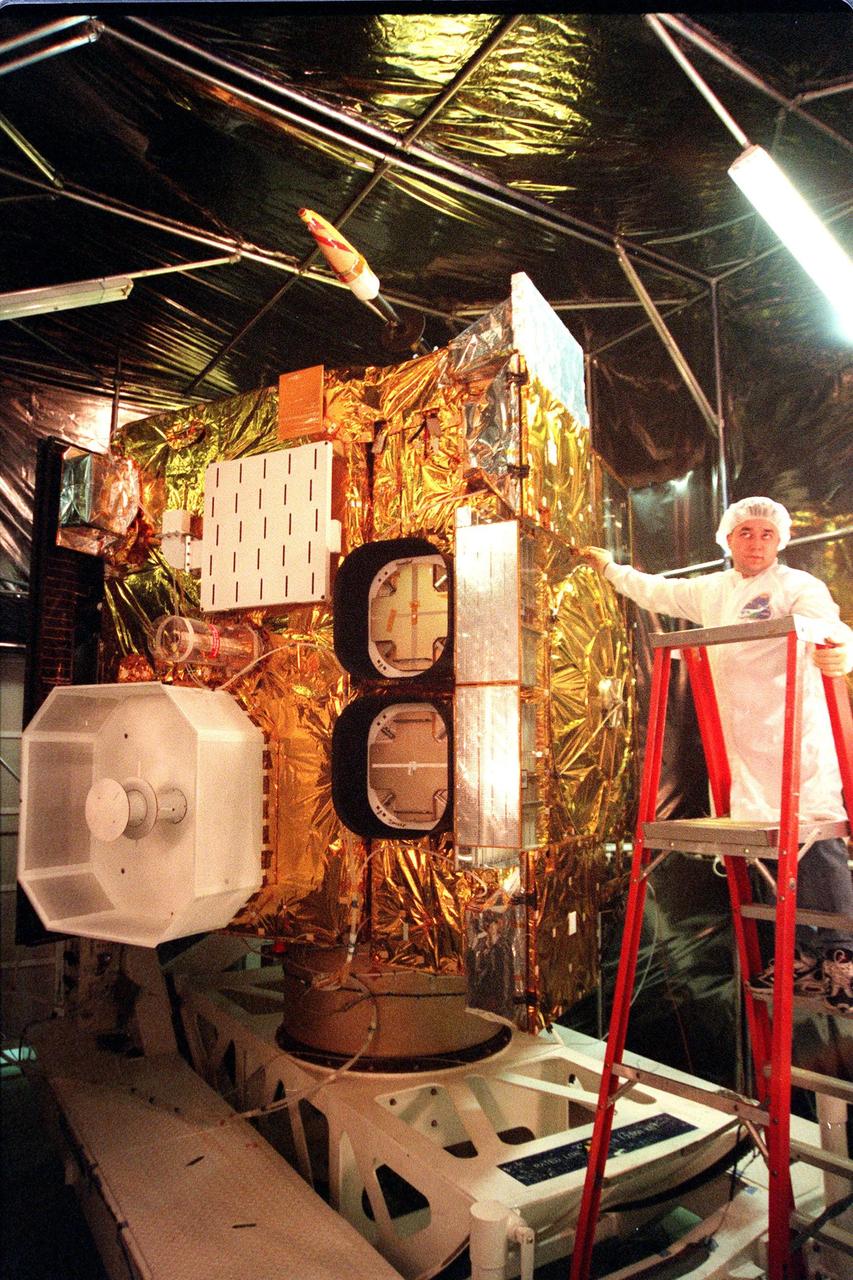
In a specially built clean room at Astrotech, Titusville, Fla., Loral technician Roberto Caballero checks the position of the <a href="http://www-pao.ksc.nasa.gov/kscpao/captions/subjects/goes-l.htm">GOES-L</a> weather satellite before beginning deployment of the sounder instrument's cooler cover door. The sounder, one of two meteorological instruments on the satellite, measures temperature and moisture in a vertical column of air from the satellite to Earth. Its findings will help forecast weather. GOES-L, which is to be launched from Cape Canaveral Air Station aboard an Atlas II rocket in late March, is the fourth of a new advanced series of geostationary weather satellites for the National Oceanic and Atmospheric Administration. It is a three-axis inertially stabilized spacecraft that will provide pictures as well as perform the atmospheric sounding. Once launched, the satellite, to be designated GOES-11, will undergo checkout and provide backup capabilities for the existing, aging GOES East weather satellite
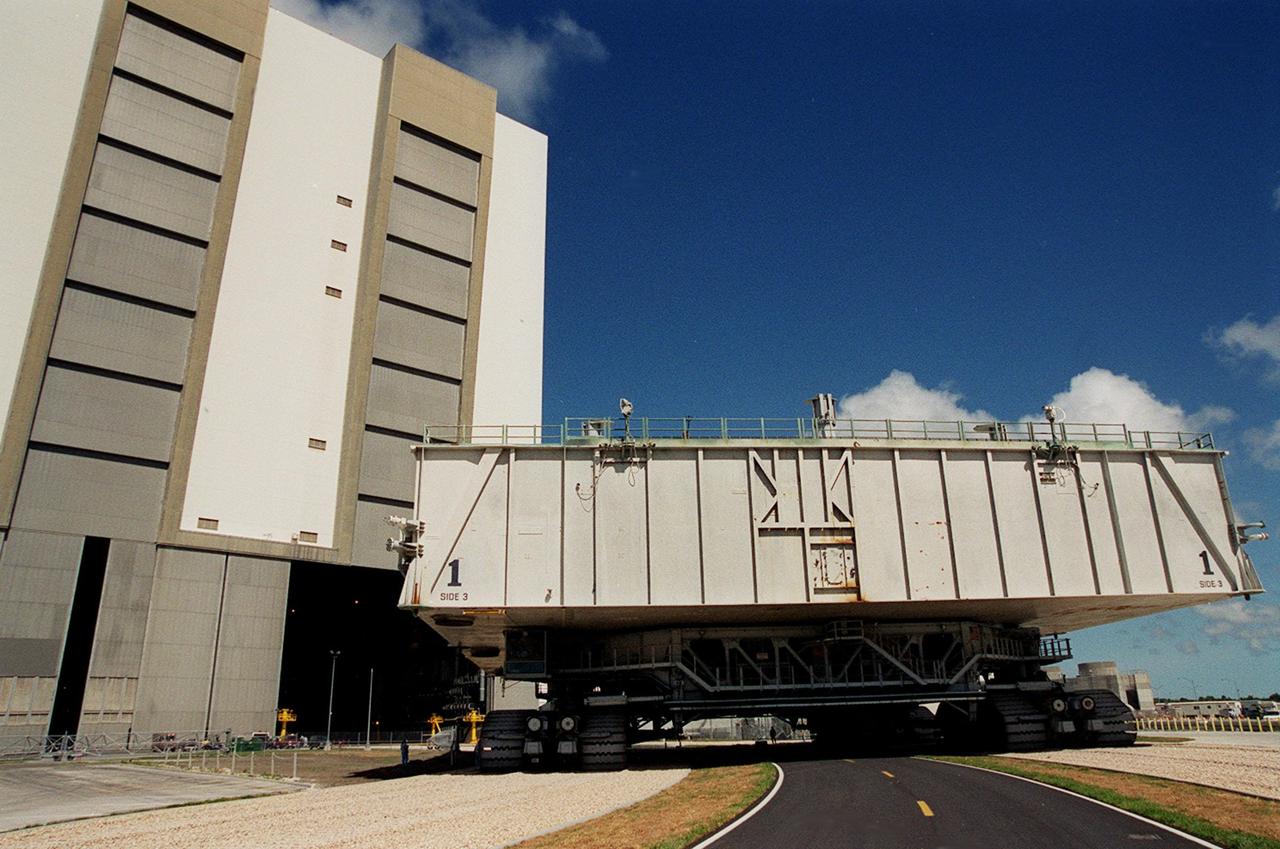
KENNEDY SPACE CENTER, FLA. -- On a portion of the once-buried crawlerway that was recently restored, a crawler-transporter with mobile launcher platform on top turns toward the Vehicle Assembly Building (VAB) high bay 2. The road was restored as part of KSC’s Safe Haven project. High bay 2 provides a third stacking area. The primary goal of the Safe Haven construction project was to strengthen readiness for hurricane season by expanding the VAB’s storage capacity. The new area, in high bay 2, will allow NASA to preassemble stacks and still have room in the VAB to pull a Shuttle back from the pad if severe weather threatens. Potential rollouts of the Space Shuttle to the launch pad from high bay 2 will involve making a turn around the north side of the VAB in contrast to the straight rollouts from high bays 1 and 3, on the east side of the VAB facing the launch pads
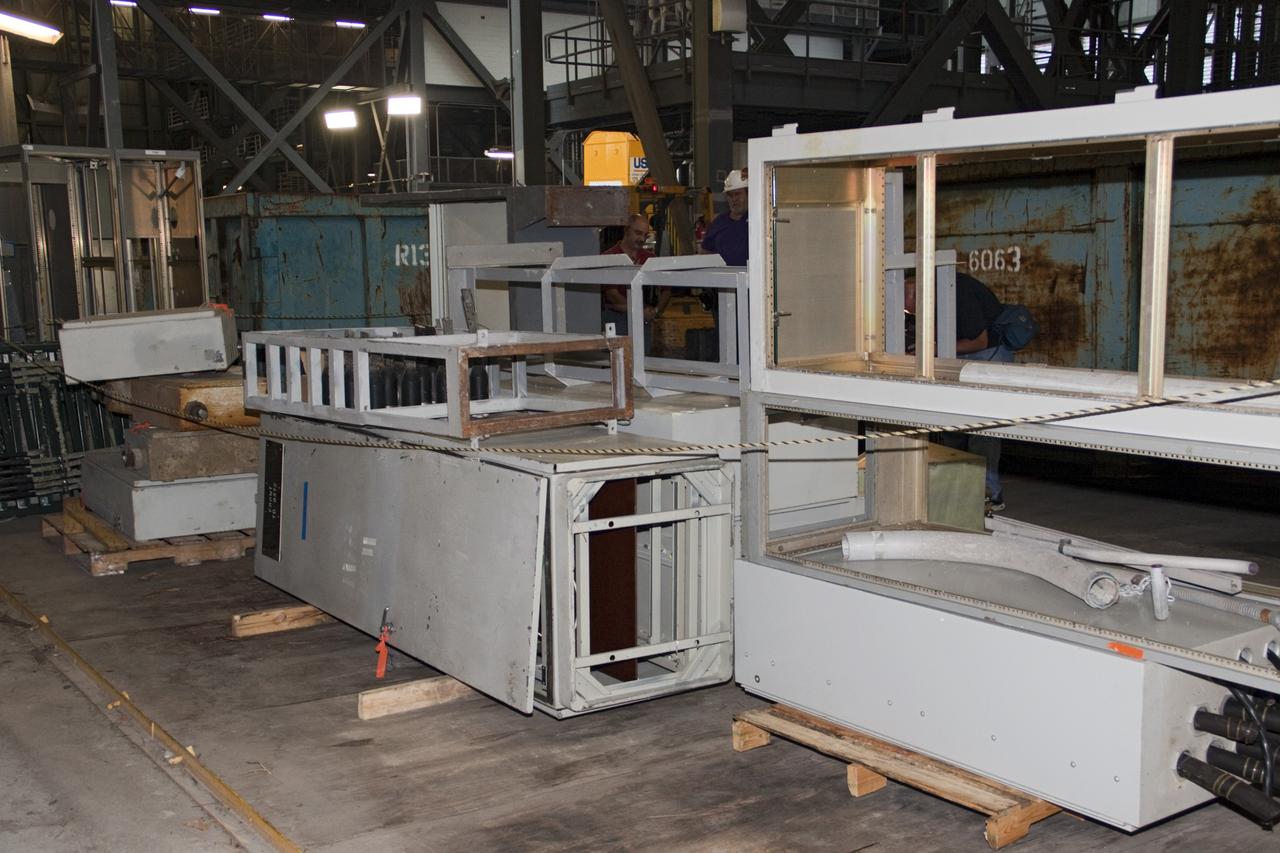
CAPE CANAVERAL, Fla. – At NASA’s Kennedy Space Center in Florida, old racks are being excessed in high bay 3 in the Vehicle Assembly Building, or VAB, as part of a centerwide refurbishment initiative under the Ground Systems Development and Operations GSDO Program The cable replacement project is under way in high bays 1 and 3 on the east side of the building, facing Launch Complex 39’s pads A and B. Approximately 150 miles of existing Apollo/shuttle era cabling is being removed to make room for installation of state-of-the-art command, communication and control systems that will be needed by future users to perform vehicle testing and verification prior to rollout to the launch pad. For more information, visit http://go.nasa.gov/groundsystems. Photo credit: NASA/Jim Grossmann
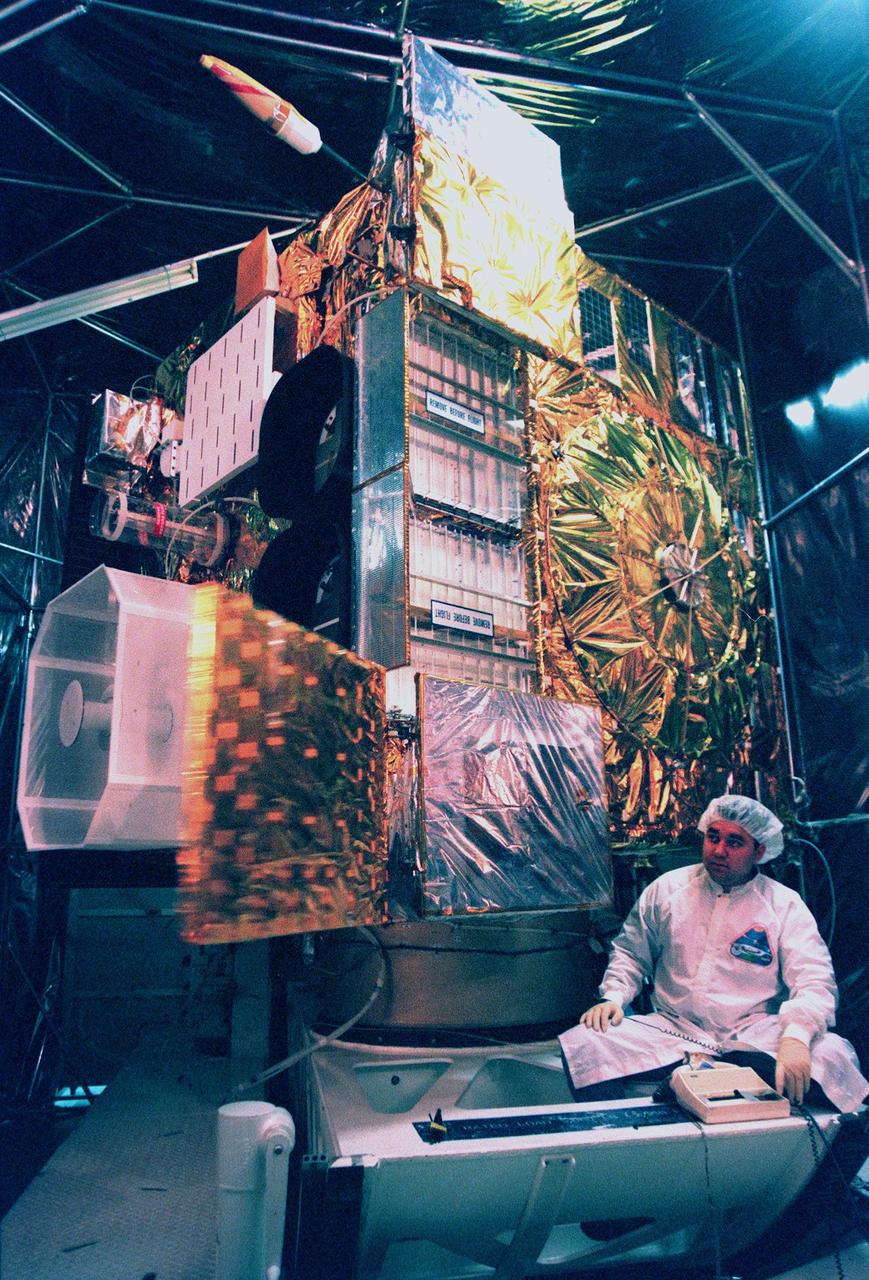
With the light casting a rosy glow in a specially built clean room at Astrotech, Titusville, Fla., Loral technician Roberto Caballero tests the deployment of the sounder instrument's cooler cover door on the <a href="http://www-pao.ksc.nasa.gov/kscpao/captions/subjects/goes-l.htm">GOES-L</a> weather satellite. The sounder, one of two meteorological instruments on the satellite, measures temperature and moisture in a vertical column of air from the satellite to Earth. Its findings will help forecast weather. GOES-L, which is to be launched from Cape Canaveral Air Station aboard an Atlas II rocket in late March, is the fourth of a new advanced series of geostationary weather satellites for the National Oceanic and Atmospheric Administration. It is a three-axis inertially stabilized spacecraft that will provide pictures as well as perform the atmospheric sounding. Once launched, the satellite, to be designated GOES-11, will undergo checkout and provide backup capabilities for the existing, aging GOES East weather satellite
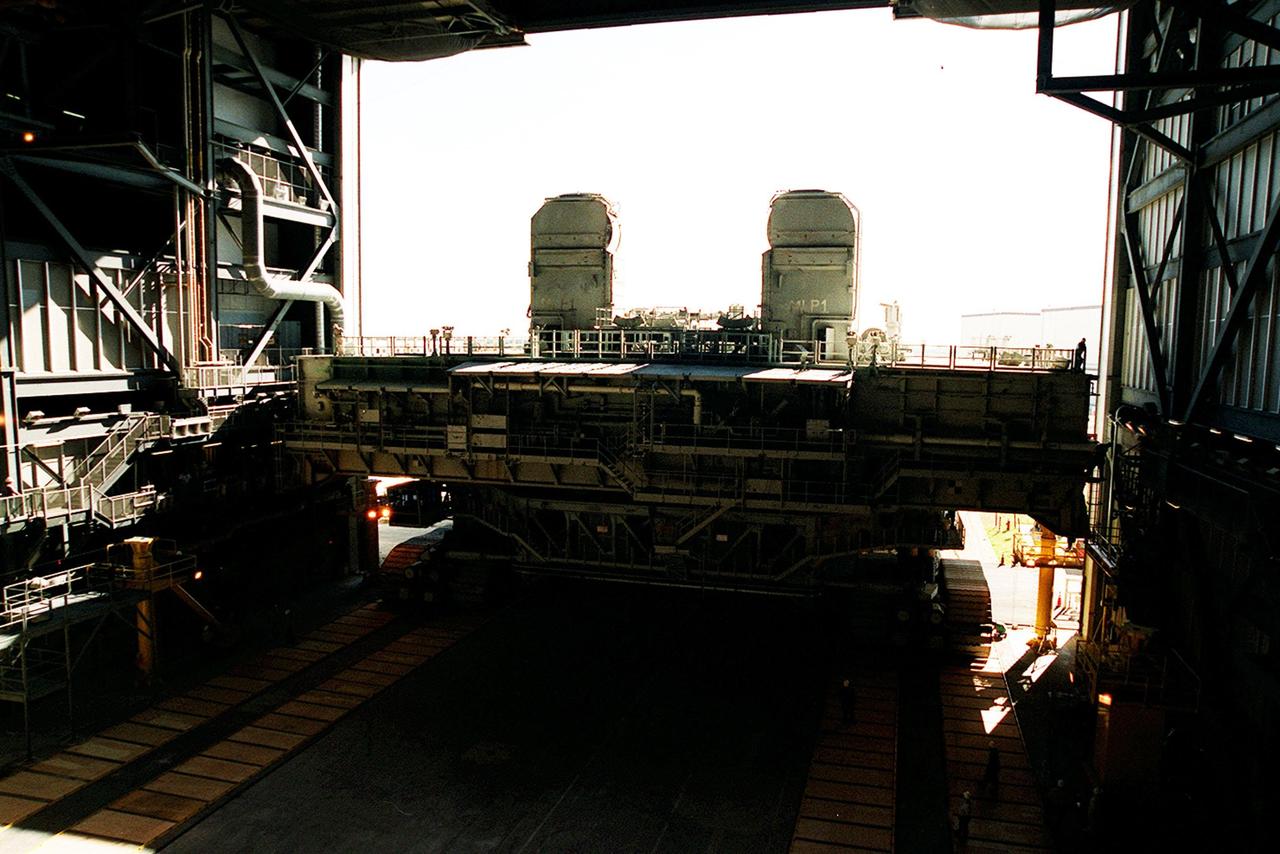
KENNEDY SPACE CENTER, FLA. -- From inside the VAB high bay 2, a mobile launcher platform atop a crawler transporter is viewed as it rolls through the doorway using the recently restored crawlerway. As part of the Safe Haven project, a once-buried portion of the crawlerway was restored to enable rollout of a Shuttle from high bay 2. The primary goal of the Safe Haven construction project was to strengthen readiness for hurricane season by expanding the VAB’s storage capacity. The new area, in high bay 2, will allow NASA to preassemble stacks and still have room in the VAB to pull a Shuttle back from the pad if severe weather threatens. Potential rollouts of the Space Shuttle to the launch pad from high bay 2 will involve making a turn around the north side of the VAB in contrast to the straight rollouts from high bays 1 and 3, on the east side of the VAB facing the launch pads
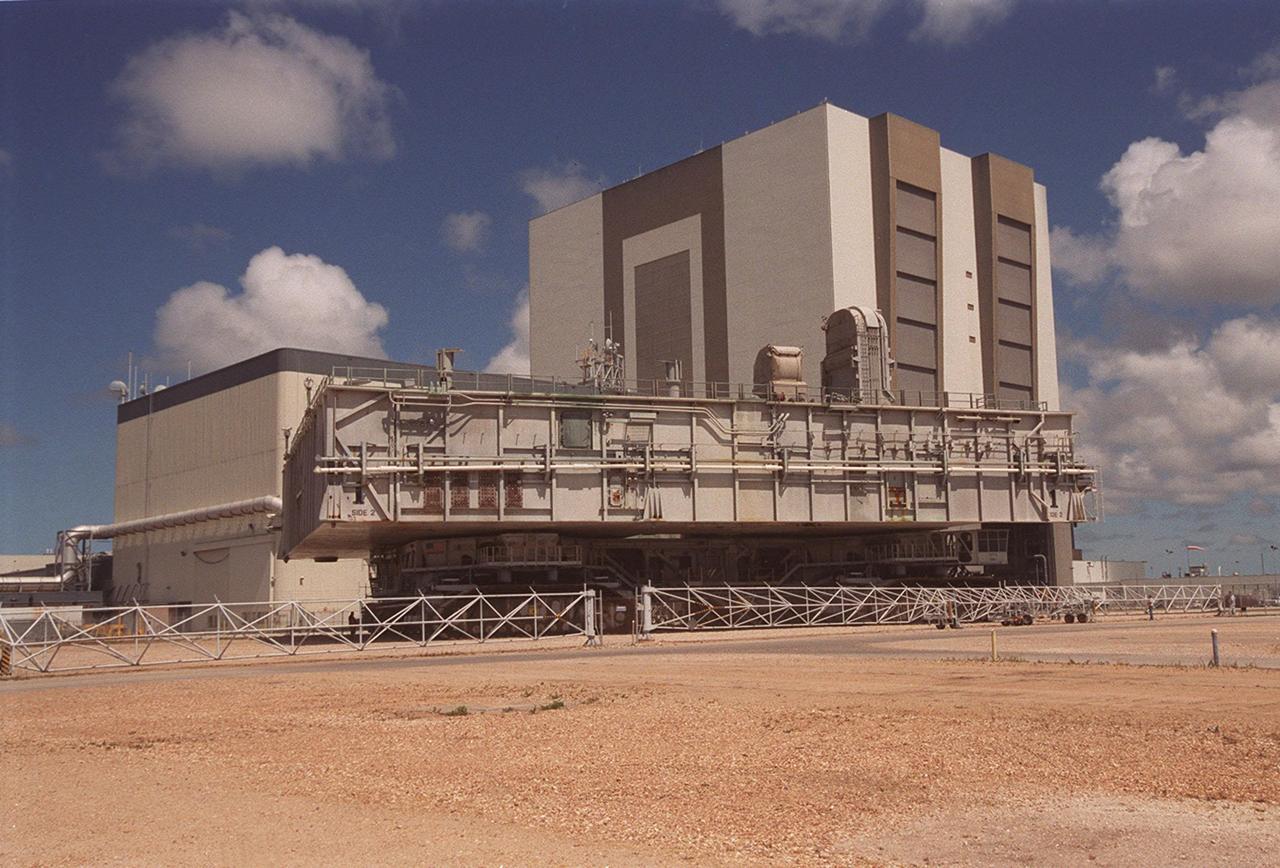
KENNEDY SPACE CENTER, FLA. -- A crawler-transporter with mobile launcher platform on top tests the buried portion of the Apollo-era crawlerway leading to the Vehicle Assembly Building (VAB) high bay 2 on the southwest side. The road was restored as part of KSC’s Safe Haven project. High bay 2 provides a third stacking area. The primary goal of the Safe Haven construction project was to strengthen readiness for hurricane season by expanding the VAB’s storage capacity. The new area, in high bay 2, will allow NASA to preassemble stacks and still have room in the VAB to pull a Shuttle back from the pad if severe weather threatens. Potential rollouts of the Space Shuttle to the launch pad from high bay 2 will involve making a turn around the north side of the VAB in contrast to the straight rollouts from high bays 1 and 3, on the east side of the VAB facing the launch pads
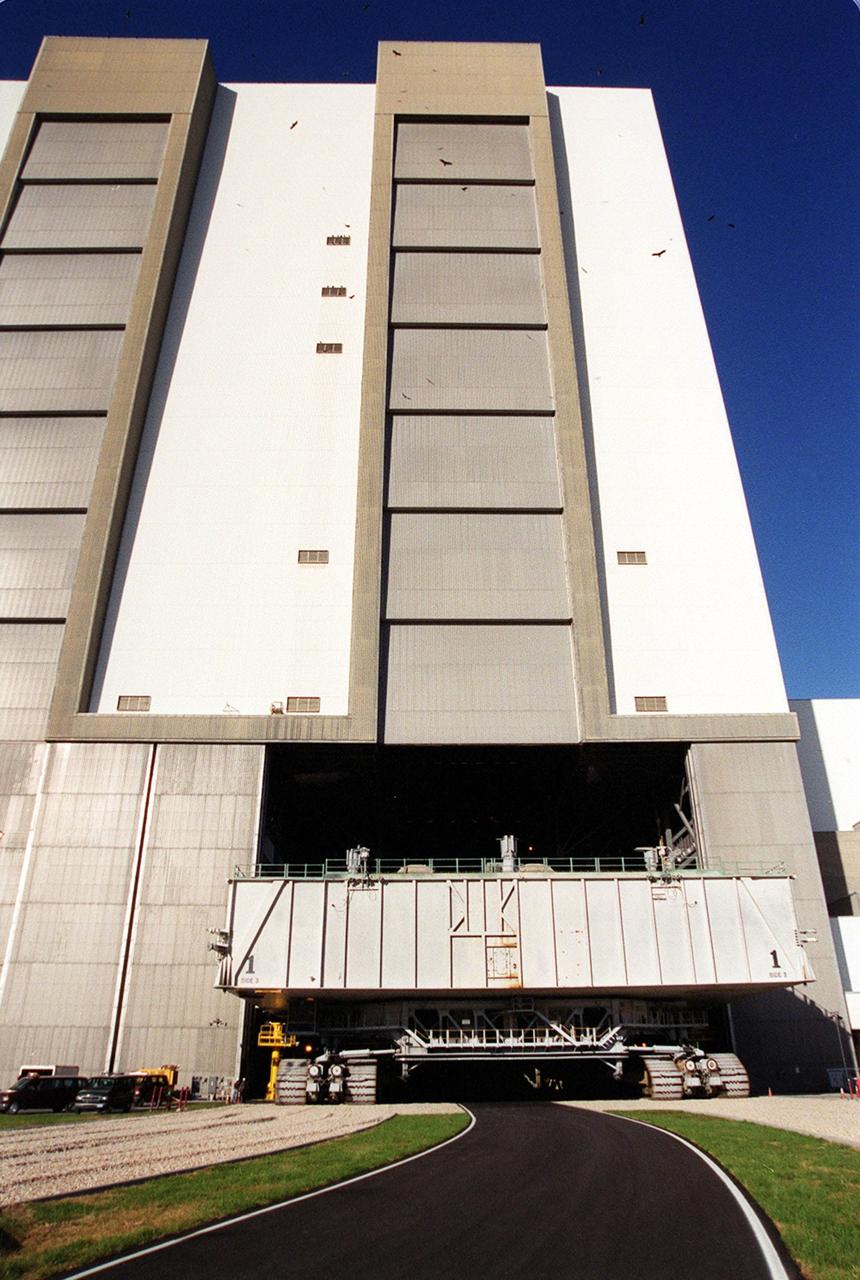
KENNEDY SPACE CENTER, FLA. -- A mobile launcher platform atop a crawler-transporter, heads through the open door of the Vehicle Assembly Building high bay 2. As part of the Safe Haven project, a once-buried portion of the crawlerway was restored to enable rollout of a Shuttle from this third stacking area. The primary goal of the Safe Haven construction project was to strengthen readiness for hurricane season by expanding the VAB’s storage capacity. The new area, in high bay 2, will allow NASA to preassemble stacks and still have room in the VAB to pull a Shuttle back from the pad if severe weather threatens. Potential rollouts of the Space Shuttle to the launch pad from high bay 2 will involve making a turn around the north side of the VAB in contrast to the straight rollouts from high bays 1 and 3, on the east side of the VAB facing the launch pads
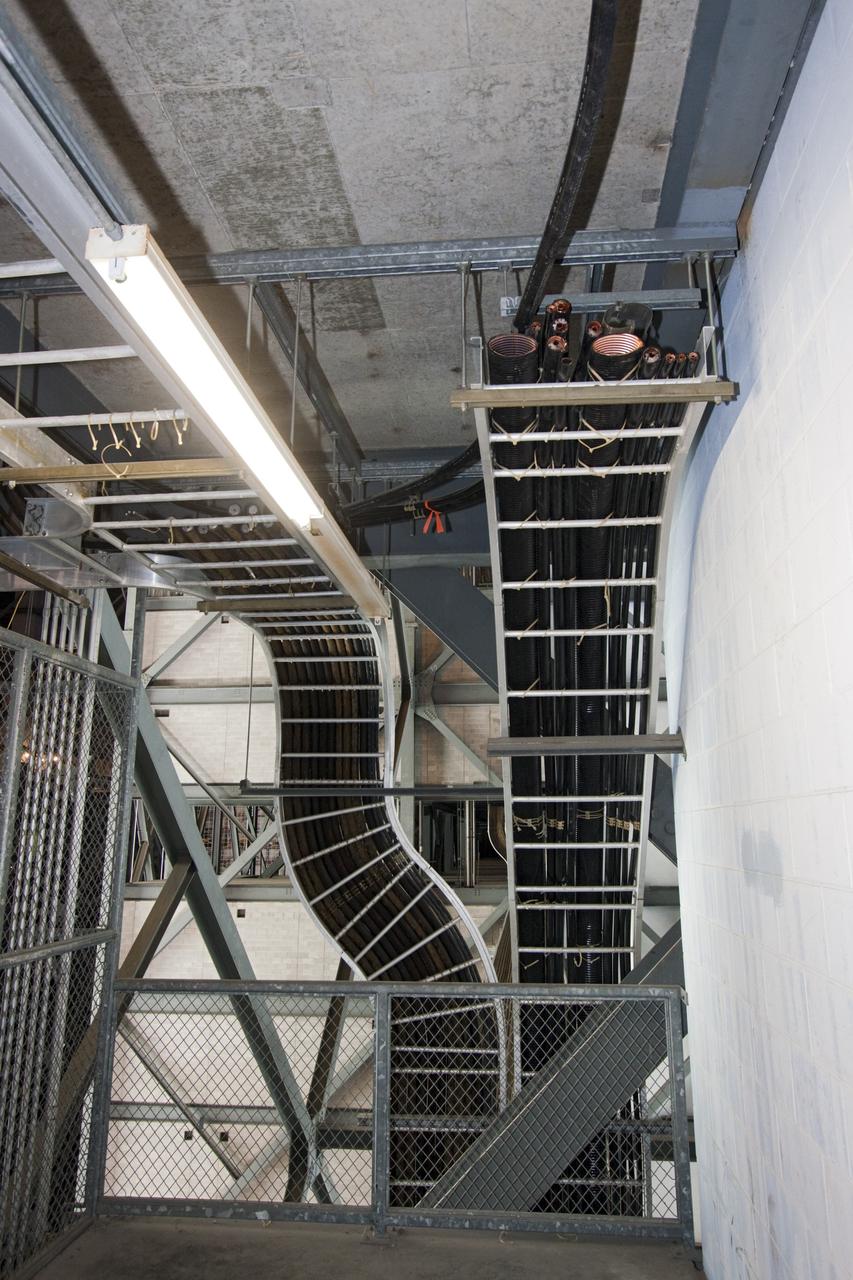
CAPE CANAVERAL, Fla. – At NASA’s Kennedy Space Center in Florida, cable is being pulled from the cable trays lining the walls of high bay 3 in the Vehicle Assembly Building, or VAB, as part of a centerwide refurbishment initiative under the Ground Systems Development and Operations GSDO Program. The cable replacement project is under way in high bays 1 and 3 on the east side of the building, facing Launch Complex 39’s pads A and B. Approximately 150 miles of existing Apollo/shuttle era cabling is being removed to make room for installation of state-of-the-art command, communication and control systems that will be needed by future users to perform vehicle testing and verification prior to rollout to the launch pad. For more information, visit http://go.nasa.gov/groundsystems. Photo credit: NASA/Jim Grossmann
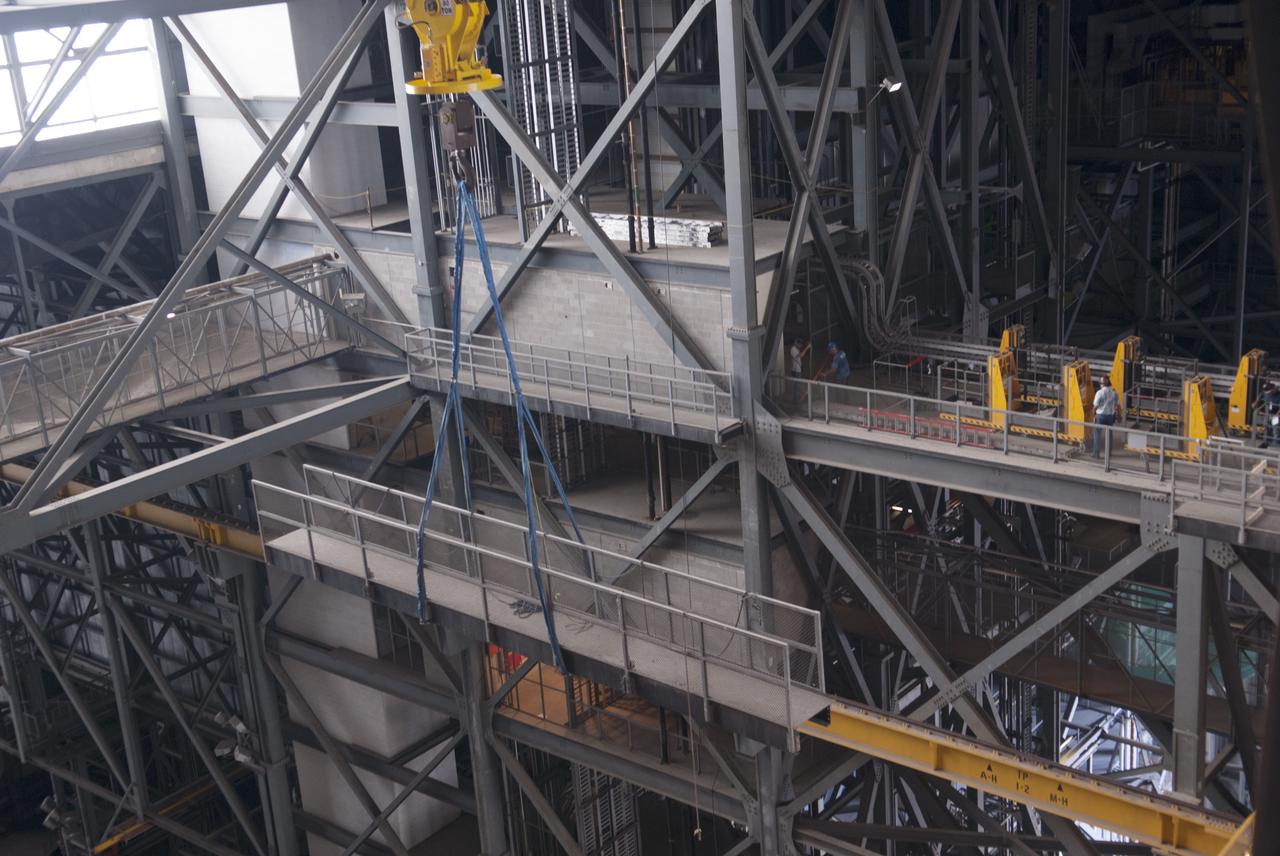
CAPE CANAVERAL, Fla. – Inside the Vehicle Assembly Building, or VAB, at NASA's Kennedy Space Center in Florida, a portion of the catwalk on the west side of Level 16 has been removed by crane and is being moved over the east side for storage. The catwalk was removed to allow room for the removal of the 175-ton crane that is situated above the transfer aisle. The crane will be lowered to the floor to perform upgrades to its 45-year-old controls in order to improve reliability, precision and safety. The Ground Systems Development and Operations Program is overseeing upgrades and modifications to the VAB. The crane will be upgraded so that it can support lifting needs for NASA and other exploration vehicles, including the agency's Space Launch System and Orion spacecraft. Photo credit: NASA/Jim Grossmann
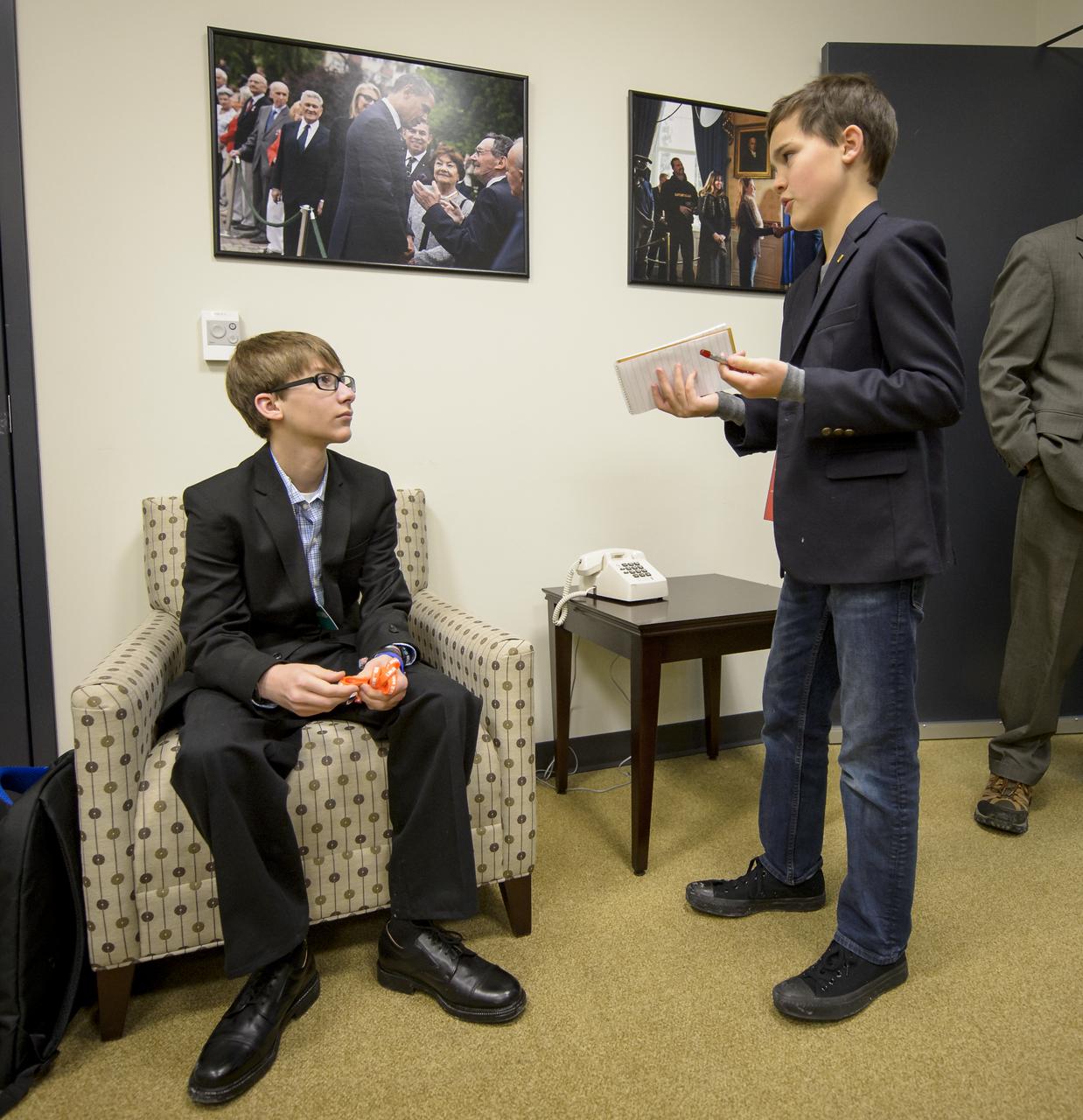
National Geographic Kids reporter Trevor Jehl, right, interviews Joey Hudy, Anthem, AZ, 16-year-old self-described “Maker” at the annual White House State of Science, Technology, Engineering, and Math (SoSTEM) address, Wednesday, Jan. 29, 2014, in the South Court Auditorium in the Eisenhower Executive Office Building on the White House complex in Washington. Joey sat with the First Lady at the President’s 2014 State of the Union Address after his first shot to fame in 2012 when he attended the White House Science Fair where the President took a turn using his “extreme marshmallow cannon” to launch a marshmallow across the East Room of the White House. Photo Credit: (NASA/Bill Ingalls)
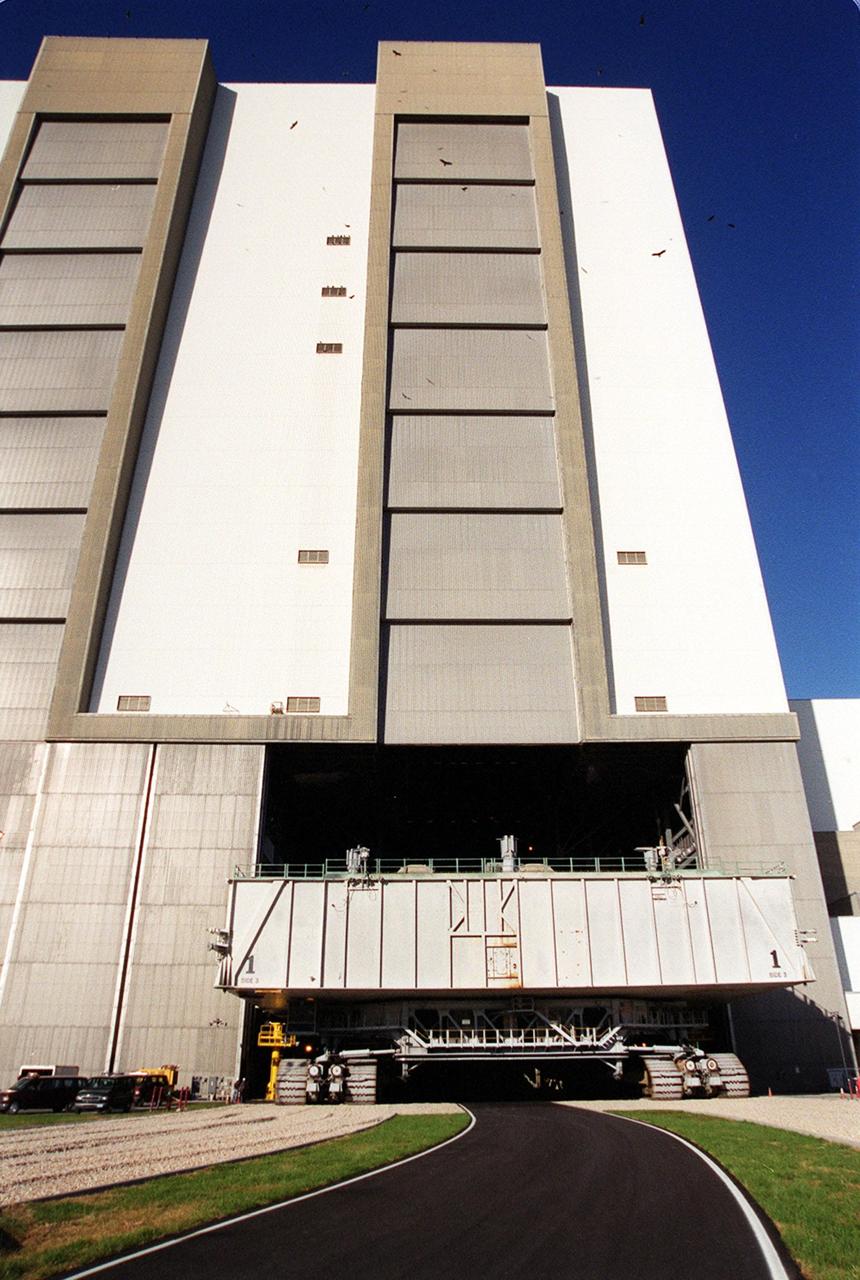
KENNEDY SPACE CENTER, FLA. -- A mobile launcher platform atop a crawler-transporter, heads through the open door of the Vehicle Assembly Building high bay 2. As part of the Safe Haven project, a once-buried portion of the crawlerway was restored to enable rollout of a Shuttle from this third stacking area. The primary goal of the Safe Haven construction project was to strengthen readiness for hurricane season by expanding the VAB’s storage capacity. The new area, in high bay 2, will allow NASA to preassemble stacks and still have room in the VAB to pull a Shuttle back from the pad if severe weather threatens. Potential rollouts of the Space Shuttle to the launch pad from high bay 2 will involve making a turn around the north side of the VAB in contrast to the straight rollouts from high bays 1 and 3, on the east side of the VAB facing the launch pads
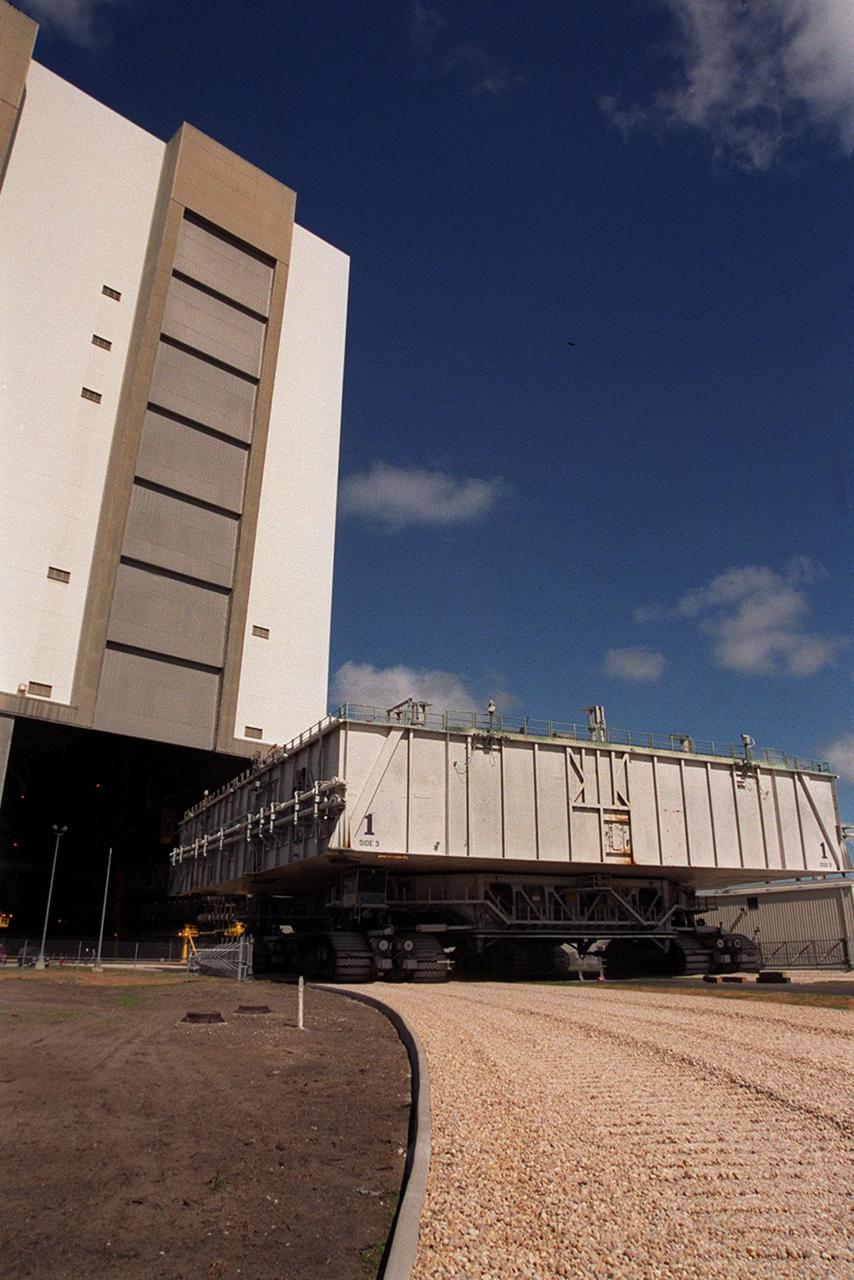
KENNEDY SPACE CENTER, FLA. -- A mobile launcher platform atop a crawler-transporter, heads to the open door of the Vehicle Assembly Building high bay 2. As part of the Safe Haven project, a once-buried portion of the crawlerway was restored to enable rollout of a Shuttle from this third stacking area. The primary goal of the Safe Haven construction project was to strengthen readiness for hurricane season by expanding the VAB’s storage capacity. The new area, in high bay 2, will allow NASA to preassemble stacks and still have room in the VAB to pull a Shuttle back from the pad if severe weather threatens. Potential rollouts of the Space Shuttle to the launch pad from high bay 2 will involve making a turn around the north side of the VAB in contrast to the straight rollouts from high bays 1 and 3, on the east side of the VAB facing the launch pads
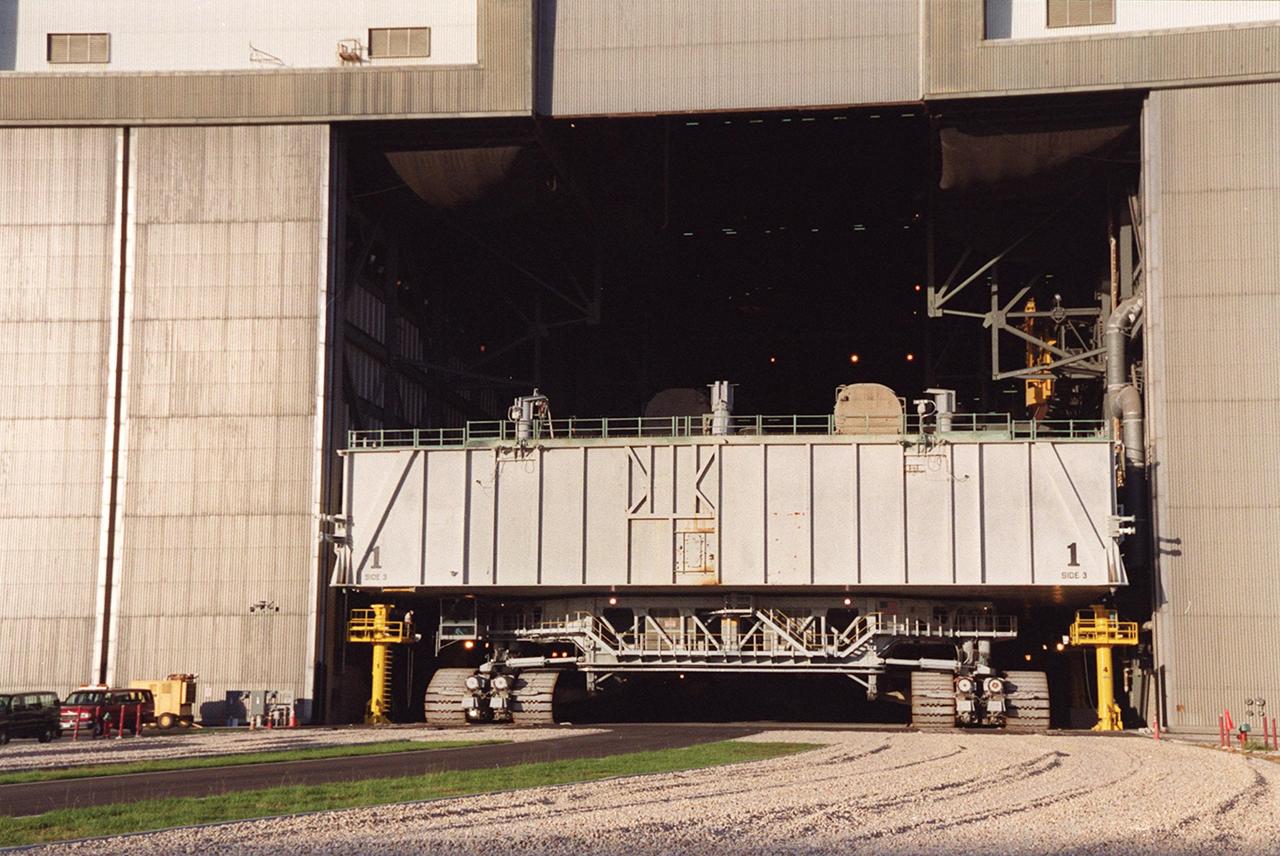
KENNEDY SPACE CENTER, FLA. -- A mobile launcher platform atop a crawler-transporter, moves into the Vehicle Assembly Building high bay 2. As part of the Safe Haven project, a once-buried portion of the crawlerway was restored to enable rollout of a Shuttle from this third stacking area. The primary goal of the Safe Haven construction project was to strengthen readiness for hurricane season by expanding the VAB’s storage capacity. The new area, in high bay 2, will allow NASA to preassemble stacks and still have room in the VAB to pull a Shuttle back from the pad if severe weather threatens. Potential rollouts of the Space Shuttle to the launch pad from high bay 2 will involve making a turn around the north side of the VAB in contrast to the straight rollouts from high bays 1 and 3, on the east side of the VAB facing the launch pads
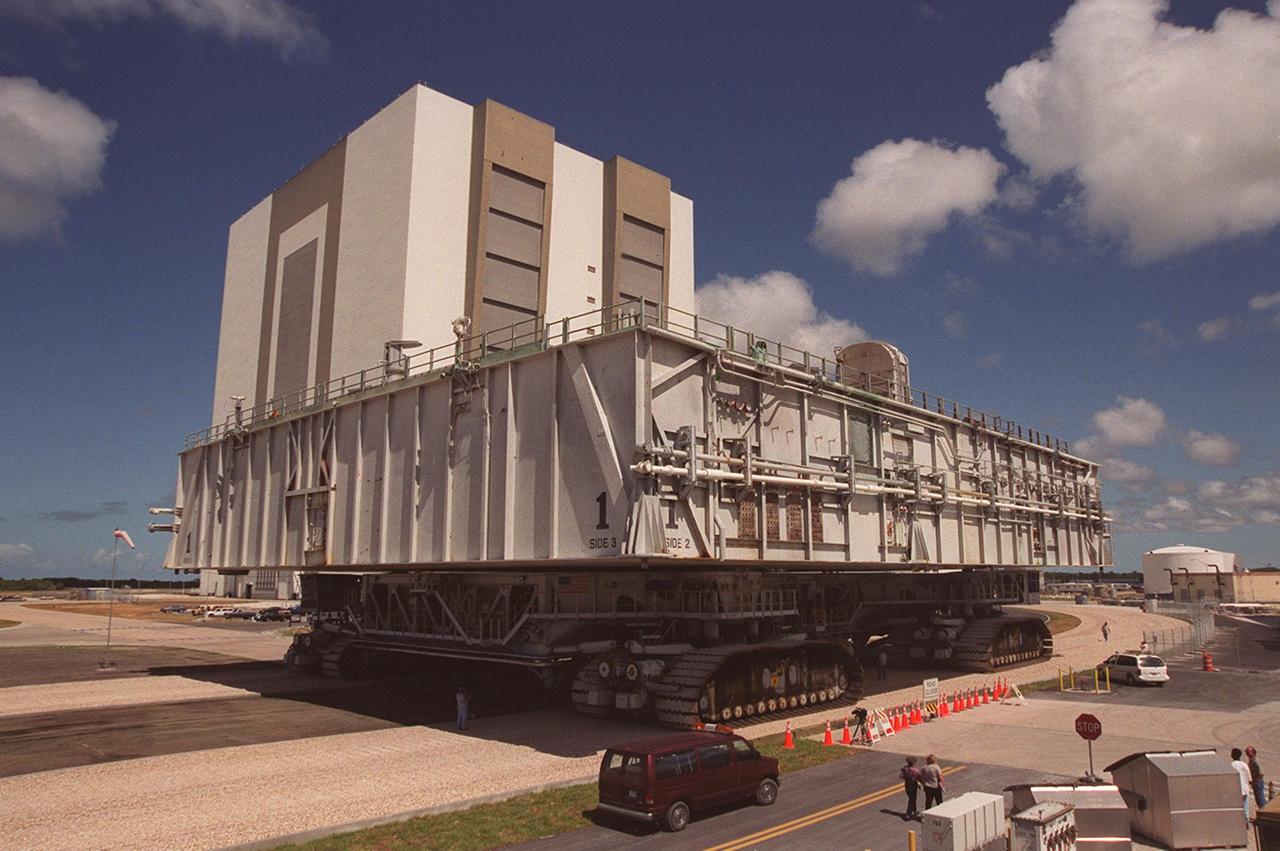
KENNEDY SPACE CENTER, FLA. -- A crawler-transporter with mobile launcher platform on top moves along a portion of the once-buried crawlerway toward the Vehicle Assembly Building (VAB). The road was restored as part of KSC’s Safe Haven project. High bay 2 provides a third stacking area. The primary goal of the Safe Haven construction project was to strengthen readiness for hurricane season by expanding the VAB’s storage capacity. The new area, in high bay 2, will allow NASA to preassemble stacks and still have room in the VAB to pull a Shuttle back from the pad if severe weather threatens. Potential rollouts of the Space Shuttle to the launch pad from high bay 2 will involve making a turn around the north side of the VAB in contrast to the straight rollouts from high bays 1 and 3, on the east side of the VAB facing the launch pads
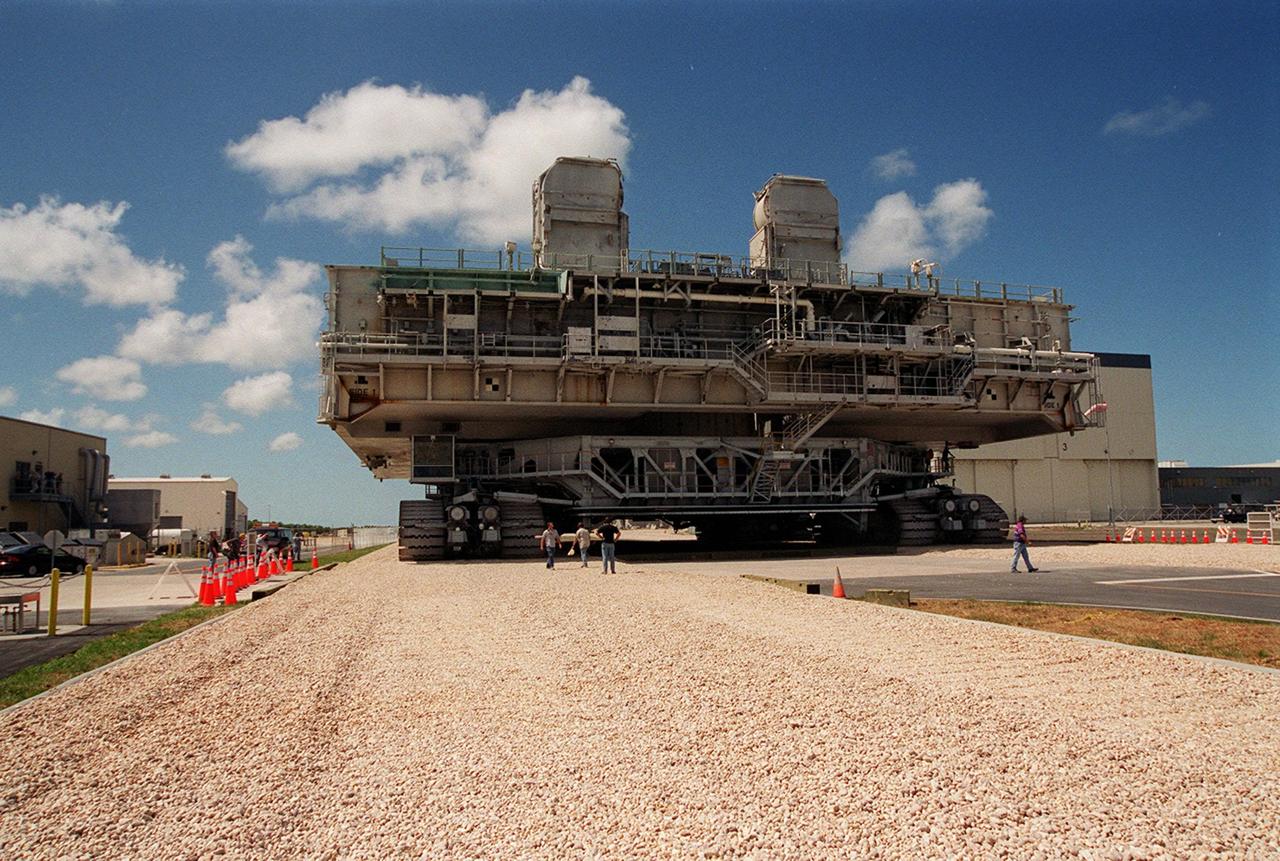
KENNEDY SPACE CENTER, FLA. -- A crawler-transporter with mobile launcher platform on top makes its way from the Orbiter Processing Facility along the once-buried portion of the Apollo-era crawlerway leading to the Vehicle Assembly Building (VAB) high bay. The road was restored as part of KSC’s Safe Haven project. High bay 2 provides a third stacking area.. The primary goal of the Safe Haven construction project was to strengthen readiness for hurricane season by expanding the VAB’s storage capacity. The new area, in high bay 2, will allow NASA to preassemble stacks and still have room in the VAB to pull a Shuttle back from the pad if severe weather threatens. Potential rollouts of the Space Shuttle to the launch pad from high bay 2 will involve making a turn around the north side of the VAB in contrast to the straight rollouts from high bays 1 and 3, on the east side of the VAB facing the launch pads
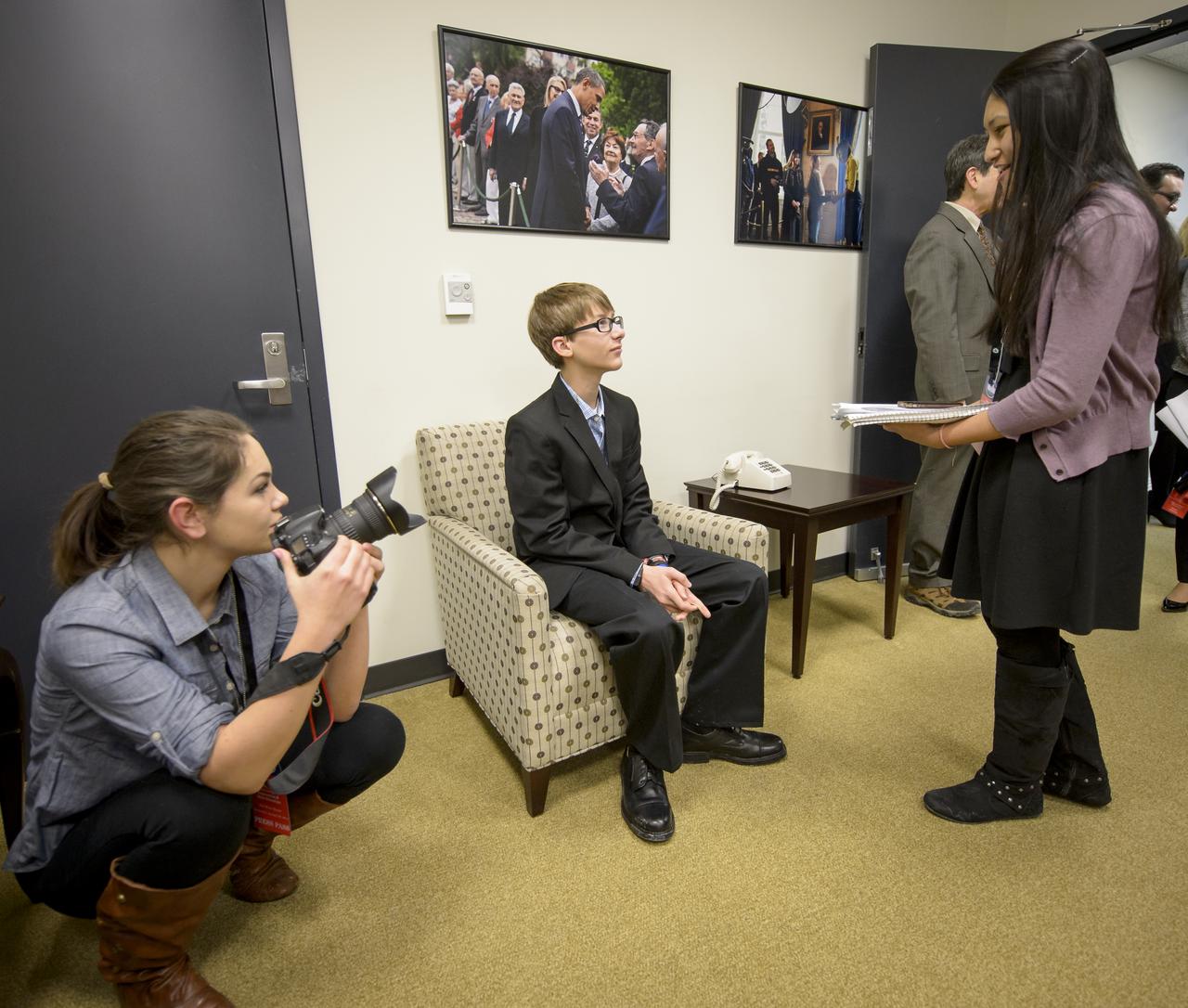
Montgomery Blair High School Student Newspaper “Silver Chips” Online Editor-in-Chief Aanchal Johri, right, and Photo Editor Emma Howells, left, from Silver Spring, MD. interview Joey Hudy, Anthem, AZ, 16-year-old self-described “Maker” at the annual White House State of Science, Technology, Engineering, and Math (SoSTEM) address, Wednesday, Jan. 29, 2014, in the South Court Auditorium in the Eisenhower Executive Office Building on the White House complex in Washington. Joey sat with the First Lady at the President’s 2014 State of the Union Address after his first shot to fame in 2012 when he attended the White House Science Fair where the President took a turn using his “extreme marshmallow cannon” to launch a marshmallow across the East Room of the White House. Photo Credit: (NASA/Bill Ingalls)

CAPE CANAVERAL, Fla. – At NASA’s Kennedy Space Center in Florida, cable trays run along the walls in high bay 3 in the Vehicle Assembly Building, or VAB, as part of a centerwide refurbishment initiative under the Ground Systems Development and Operations GSDO Program. The cable replacement project is under way in high bays 1 and 3 on the east side of the building, facing Launch Complex 39’s pads A and B. Approximately 150 miles of existing Apollo/shuttle era cabling is being removed to make room for installation of state-of-the-art command, communication and control systems that will be needed by future users to perform vehicle testing and verification prior to rollout to the launch pad. For more information, visit http://go.nasa.gov/groundsystems. Photo credit: NASA/Jim Grossmann
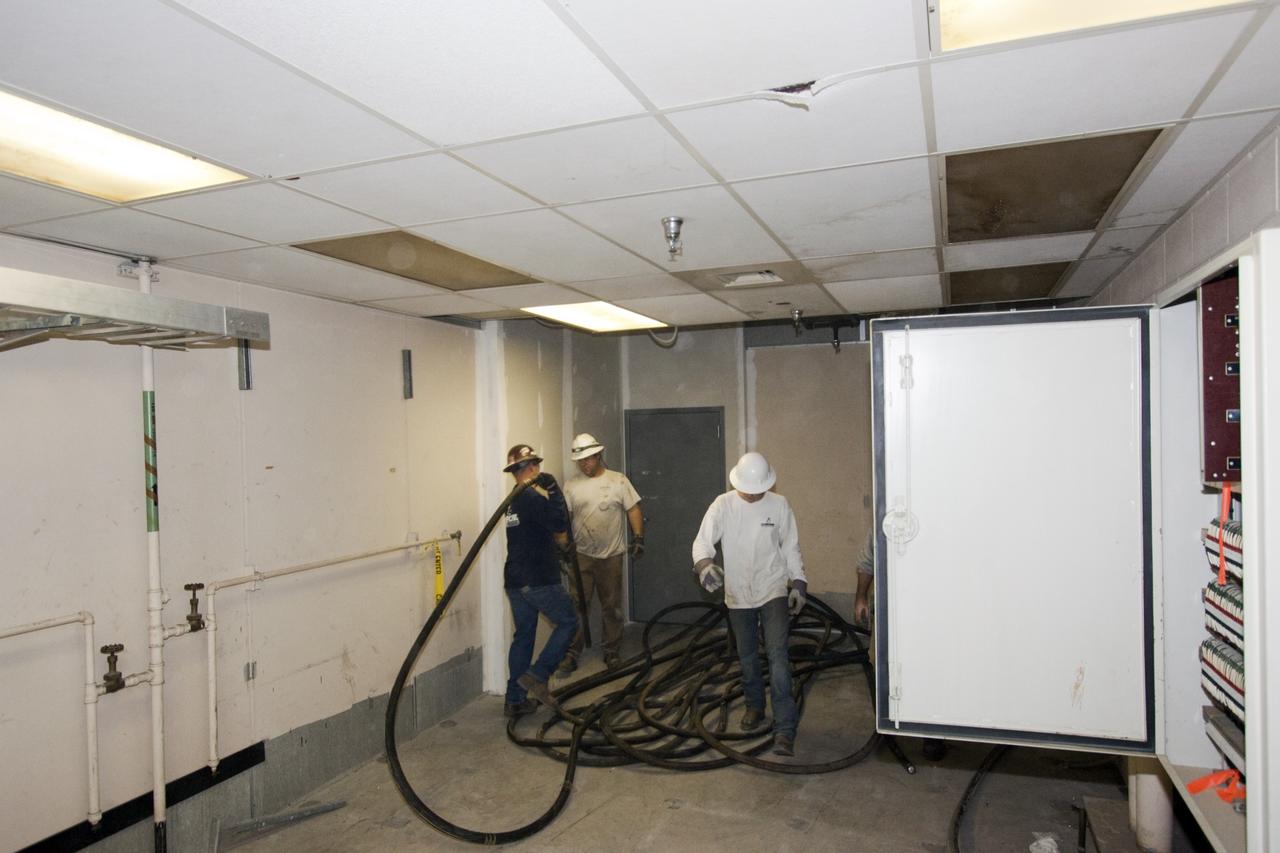
CAPE CANAVERAL, Fla. – At NASA’s Kennedy Space Center in Florida, workers remove cables between the 26th and 29th floors of high bay 3 in the 525-foot-tall Vehicle Assembly Building, or VAB, during part of a centerwide refurbishment initiative under the Ground Systems Development and Operations GSDO Program. The cable replacement project is under way in high bays 1 and 3 on the east side of the building, facing Launch Complex 39’s pads A and B. Approximately 150 miles of existing Apollo/shuttle era cabling is being removed to make room for installation of state-of-the-art command, communication and control systems that will be needed by future users to perform vehicle testing and verification prior to rollout to the launch pad. For more information, visit http://go.nasa.gov/groundsystems. Photo credit: NASA/Jim Grossmann
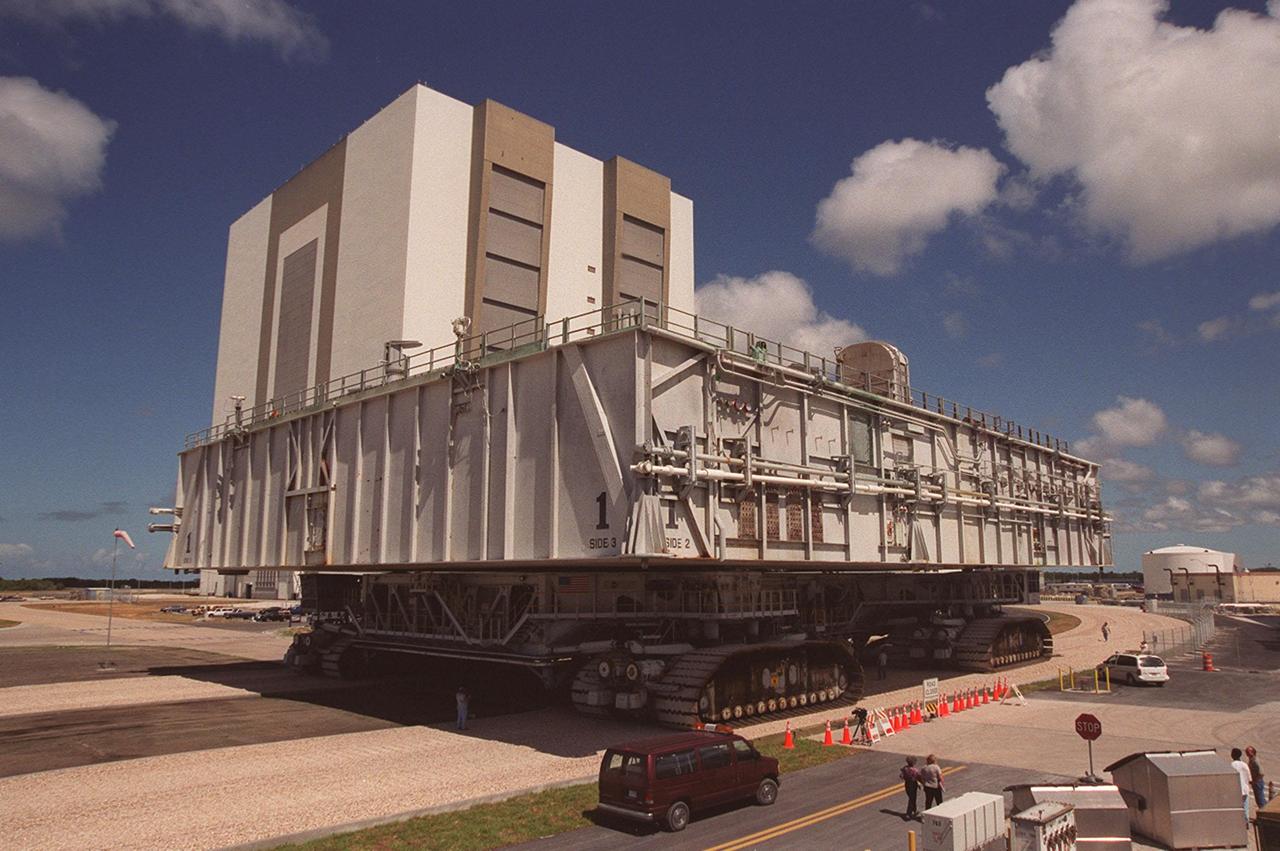
KENNEDY SPACE CENTER, FLA. -- A crawler-transporter with mobile launcher platform on top moves along a portion of the once-buried crawlerway toward the Vehicle Assembly Building (VAB). The road was restored as part of KSC’s Safe Haven project. High bay 2 provides a third stacking area. The primary goal of the Safe Haven construction project was to strengthen readiness for hurricane season by expanding the VAB’s storage capacity. The new area, in high bay 2, will allow NASA to preassemble stacks and still have room in the VAB to pull a Shuttle back from the pad if severe weather threatens. Potential rollouts of the Space Shuttle to the launch pad from high bay 2 will involve making a turn around the north side of the VAB in contrast to the straight rollouts from high bays 1 and 3, on the east side of the VAB facing the launch pads
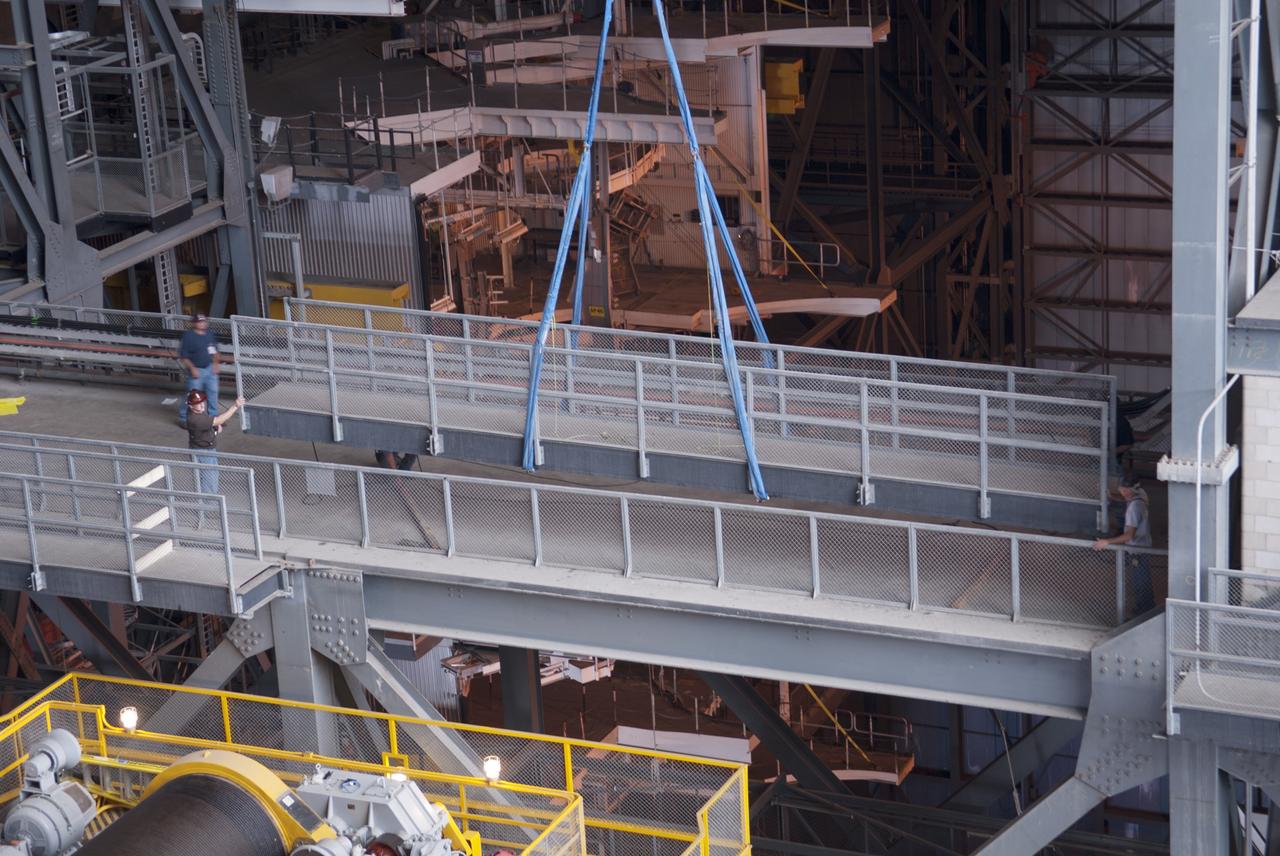
CAPE CANAVERAL, Fla. – Inside the Vehicle Assembly Building, or VAB, at NASA's Kennedy Space Center in Florida, workers monitor the progress as a crane lifts up a portion of the catwalk on the east side of Level 16. The catwalk is being removed to allow room for the removal of the 175-ton crane that is situated above the transfer aisle. The crane will be lowered to the floor to perform upgrades to its 45-year-old controls in order to improve reliability, precision and safety. The Ground Systems Development and Operations Program is overseeing upgrades and modifications to the VAB. The crane will be upgraded so that it can support lifting needs for NASA and other exploration vehicles, including the agency's Space Launch System and Orion spacecraft. Photo credit: NASA/Jim Grossmann
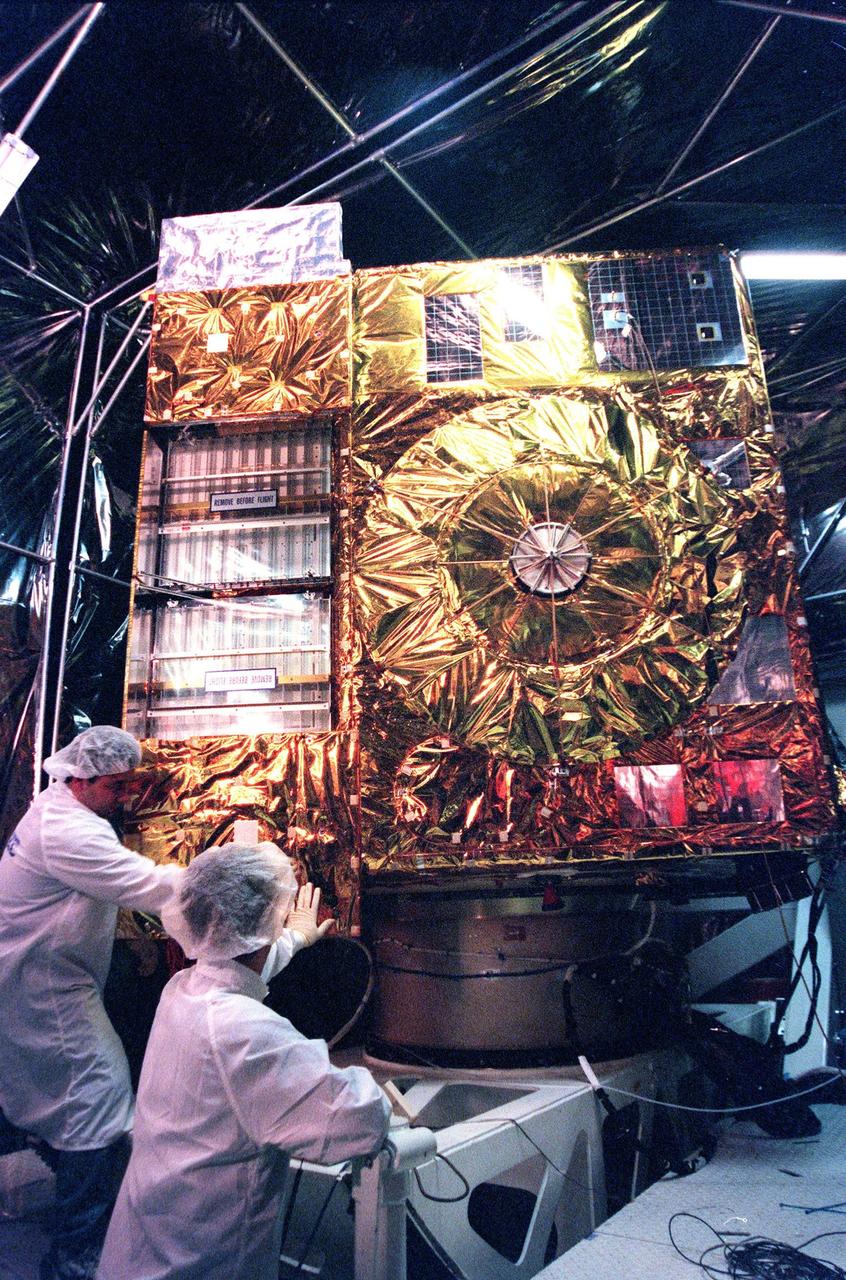
With the light casting a rosy glow in a specially built clean room at Astrotech, Titusville, Fla., Loral technicians Roberto Caballero (left) and Paul Giordano (right) maneuver the <a href="http://www-pao.ksc.nasa.gov/kscpao/captions/subjects/goes-l.htm">GOES-L</a> weather satellite into position for testing the deployment of the sounder instrument's cooler cover door. The sounder, one of two meteorological instruments on the satellite, measures temperature and moisture in a vertical column of air from the satellite to Earth. Its findings will help forecast weather. GOES-L, which is to be launched from Cape Canaveral Air Station aboard an Atlas II rocket in late March, is the fourth of a new advanced series of geostationary weather satellites for the National Oceanic and Atmospheric Administration. It is a three-axis inertially stabilized spacecraft that will provide pictures as well as perform the atmospheric sounding. Once launched, the satellite, to be designated GOES-11, will undergo checkout and provide backup capabilities for the existing, aging GOES East weather satellite
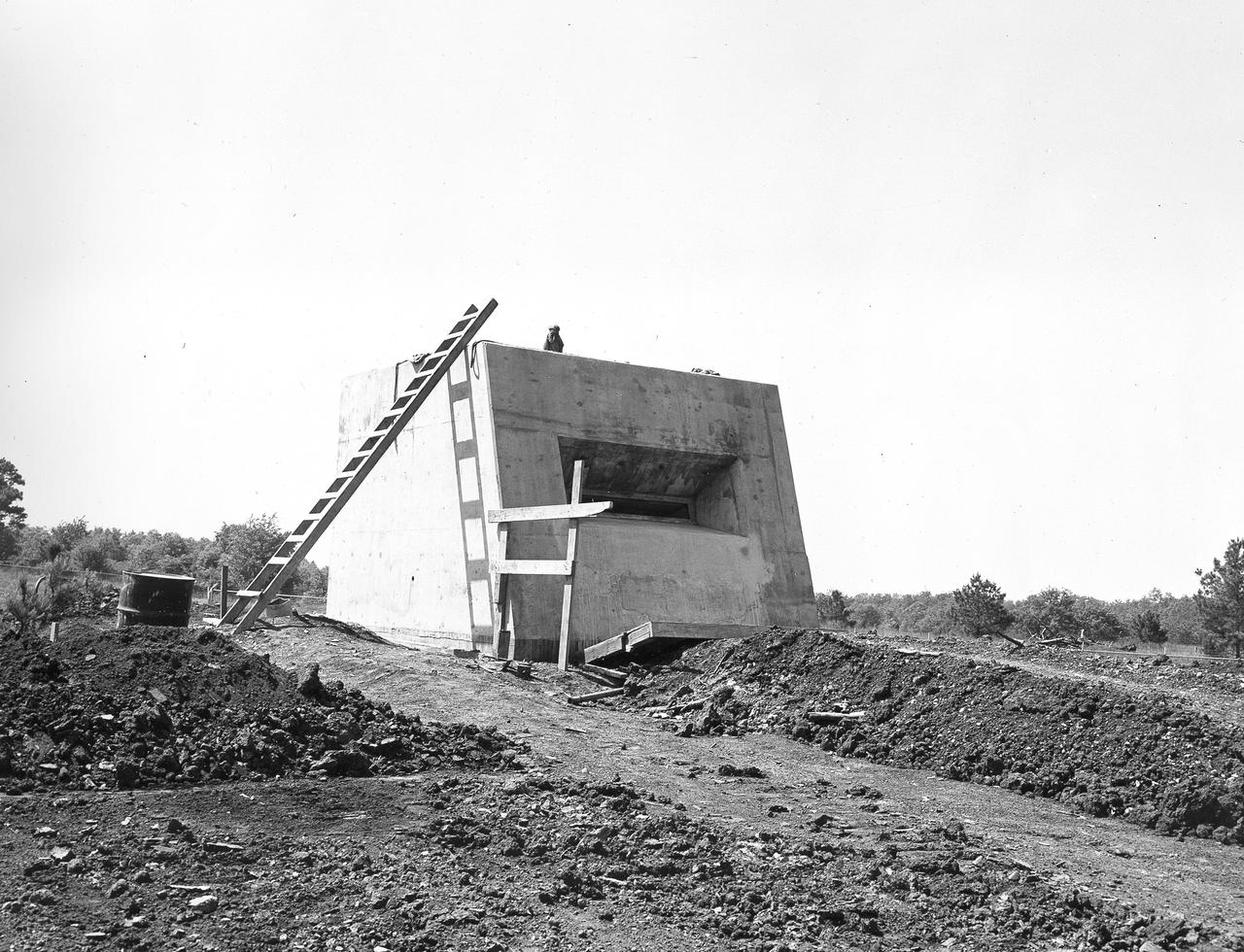
At its founding, the Marshall Space Flight Center (MSFC) inherited the Army’s Jupiter and Redstone test stands, but much larger facilities were needed for the giant stages of the Saturn V. From 1960 to 1964, the existing stands were remodeled and a sizable new test area was developed. The new comprehensive test complex for propulsion and structural dynamics was unique within the nation and the free world, and they remain so today because they were constructed with foresight to meet the future as well as on going needs. Construction of the S-IC Static test stand complex began in 1961 in the west test area of MSFC, and was completed in 1964. The S-IC static test stand was designed to develop and test the 138-ft long and 33-ft diameter Saturn V S-IC first stage, or booster stage, weighing in at 280,000 pounds. Required to hold down the brute force of a 7,500,000-pound thrust produced by 5 F-1 engines, the S-IC static test stand was designed and constructed with the strength of hundreds of tons of steel and 12,000,000 pounds of cement, planted down to bedrock 40 feet below ground level. The foundation walls, constructed with concrete and steel, are 4 feet thick. The base structure consists of four towers with 40-foot-thick walls extending upward 144 feet above ground level. The structure was topped by a crane with a 135-foot boom. With the boom in the upright position, the stand was given an overall height of 405 feet, placing it among the highest structures in Alabama at the time. In addition to the S-IC stand, additional related facilities were built during this time frame. Built to the east of the S-IC stand, the block house served as the control room. To the south of the blockhouse was a newly constructed pump house used for delivering water to the S-IC stand during testing. North of the massive test stand, the F-1 Engine test stand was built for testing a single F-1 engine. Just southeast of the S-IC stand a concrete bunker house was constructed. The bunker housed an emergency crew clad in fire proof gear, who were close at hand should any emergencies arise during testing. This photo of the completed bunker house was taken on May 7, 1963.

NASA image acquired September 6, 2010 The Matusevich Glacier flows toward the coast of East Antarctica, pushing through a channel between the Lazarev Mountains and the northwestern tip of the Wilson Hills. Constrained by surrounding rocks, the river of ice holds together. But stresses resulting from the glacier’s movement make deep crevasses, or cracks, in the ice. After passing through the channel, the glacier has room to spread out as it floats on the ocean. The expanded area and the jostling of ocean waves prompts the ice to break apart, which it often does along existing crevasses. On September 6, 2010, the Advanced Land Imager (ALI) on NASA’s Earth Observing-1 (EO-1) satellite captured this natural-color image of the margin of Matusevich Glacier. Shown here just past the rock-lined channel, the glacier is calving large icebergs. Low-angled sunlight illuminates north-facing surfaces and casts long shadows to the south. Fast ice anchored to the shore surrounds both the glacier tongue and the icebergs it has calved. Compared to the glacier and icebergs, the fast ice is thinner with a smoother surface. Out to sea (image left), the sea ice is even thinner and moves with winds and currents. Matusevich Glacier does not drain a significant amount of ice off of the Antarctic continent, so the glacier’s advances and retreats lack global significance. Like other Antarctic glaciers, however, Matusevich helps glaciologists form a larger picture of Antarctica’s glacial health and ice sheet volume. NASA Earth Observatory image created by Jesse Allen and Robert Simmon, using EO-1 ALI data provided courtesy of the NASA EO-1 team. Caption by Michon Scott based on image interpretation by Robert Bindschadler, NASA Goddard Space Flight Center, and Walt Meier, National Snow and Ice Data Center. Instrument: EO-1 - ALI Credit: <b><a href="http://www.earthobservatory.nasa.gov/" rel="nofollow"> NASA Earth Observatory</a></b> <b><a href="http://www.nasa.gov/centers/goddard/home/index.html" rel="nofollow">NASA Goddard Space Flight Center</a></b> enables NASA’s mission through four scientific endeavors: Earth Science, Heliophysics, Solar System Exploration, and Astrophysics. Goddard plays a leading role in NASA’s accomplishments by contributing compelling scientific knowledge to advance the Agency’s mission. <b>Follow us on <a href="http://twitter.com/NASA_GoddardPix" rel="nofollow">Twitter</a></b> <b>Join us on <a href="http://www.facebook.com/pages/Greenbelt-MD/NASA-Goddard/395013845897?ref=tsd" rel="nofollow">Facebook</a></b> To download the full resolution image go to: <a href="http://earthobservatory.nasa.gov/IOTD/view.php?id=46840" rel="nofollow">earthobservatory.nasa.gov/IOTD/view.php?id=46840</a>