
The THEMIS VIS camera contains 5 filters. The data from different filters can be combined in multiple ways to create a false color image. These false color images may reveal subtle variations of the surface not easily identified in a single band image. Today's false color image shows the delta deposit in Eberswalde Crater. Channels from the crater rim hosted material entering the crater. Orbit Number: 44018 Latitude: -23.9442 Longitude: 326.361 Instrument: VIS Captured: 2011-11-16 16:04 http://photojournal.jpl.nasa.gov/catalog/PIA21161
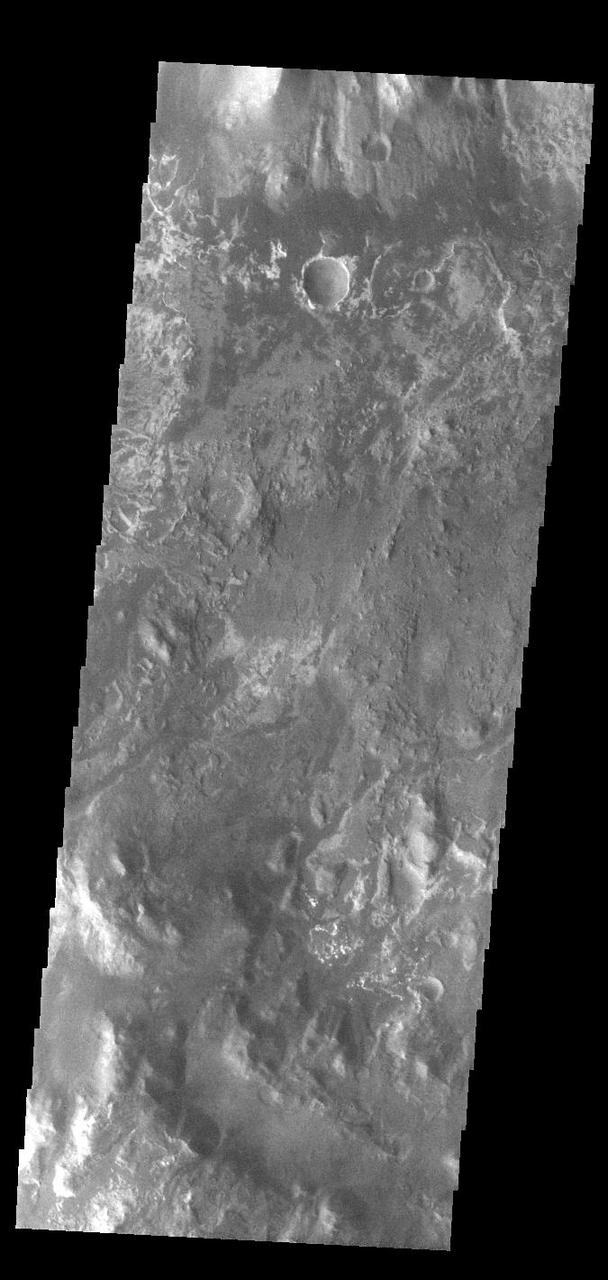
Today's VIS image show part of the floor of Eberswalde Crater. This crater is host to a large delta, a feature formed when a channel enters standing water and the velocity slows, depositing the sediment carried by the water. The complexity of the crater floor indicates many layers of materials, perhaps deposited when Eberswalde Crater was a lake. The Eberswalde Crater delta is one of the best preserved on Mars. Orbit Number: 91575 Latitude: -23.9969 Longitude: 326.583 Instrument: VIS Captured: 2022-08-06 13:22 https://photojournal.jpl.nasa.gov/catalog/PIA25607
Proposed MSL Site in Eberswalde Crater
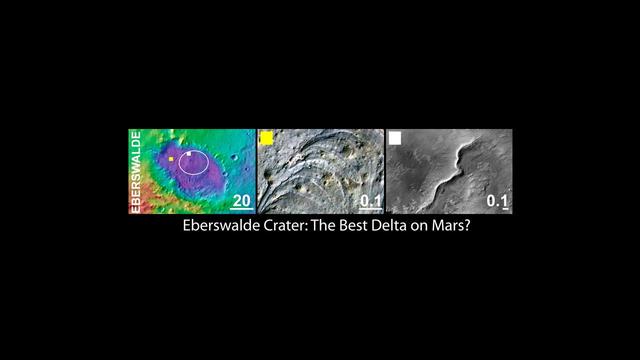
Eberswalde Crater, a Finalist Not Selected as Landing Site for Curiosity
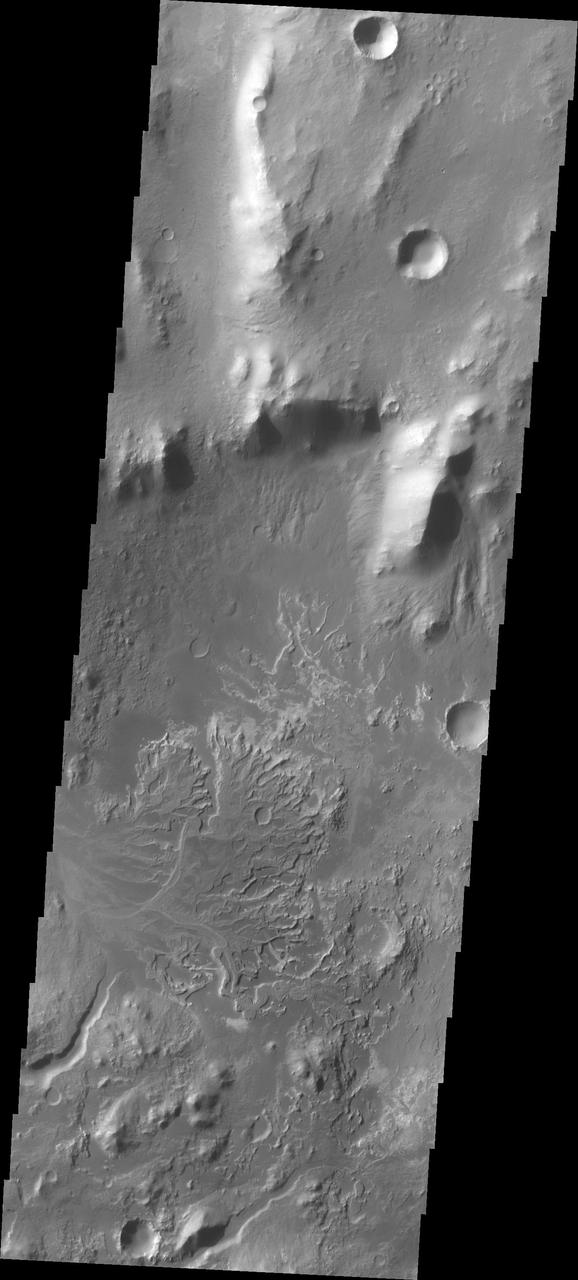
NASA 2001 Mars Odyssey captured this image of a channel entering Eberswalde Crater and depositing a fan-shaped delta on the crater floor.
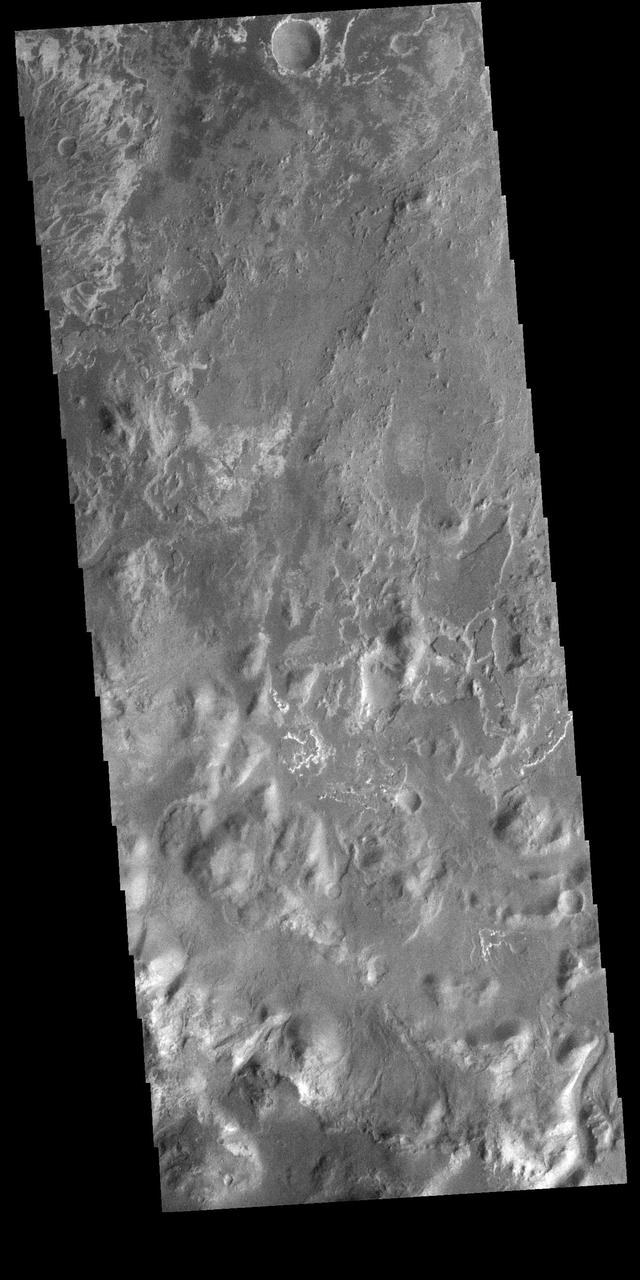
At the top left corner of today's VIS image is the delta deposit located on the floor of Eberswalde Crater. Deltas are formed when sediment laden rivers slow down – either due to a flattening of topography, or entering a standing body of water. The reduction in velocity causes the sediments to be deposited. The main channel often diverges into numerous smaller channel that spread apart to form the typical fan shape of a delta. The Eberswalde Crater delta is one of the best preserved on Mars. Orbit Number: 90982 Latitude: -24.1271 Longitude: 326.604 Instrument: VIS Captured: 2022-06-18 18:13 https://photojournal.jpl.nasa.gov/catalog/PIA25520
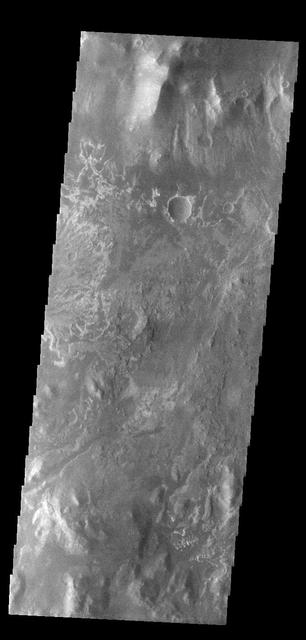
At the top of today's VIS image is the delta deposit on the floor of Eberswalde Crater. Deltas are formed when sediment laden rivers slow down — either due to a flattening of topography, or entering a standing body of water. The reduction in velocity causes the sediments to be deposited. The main channel often diverges into numerous smaller channel that spread apart to form the typical fan shape of a delta. The Eberswalde Crater delta is one of the best preserved on Mars. Orbit Number: 84562 Latitude: -23.9124 Longitude: 326.56 Instrument: VIS Captured: 2021-01-06 02:41 https://photojournal.jpl.nasa.gov/catalog/PIA24362
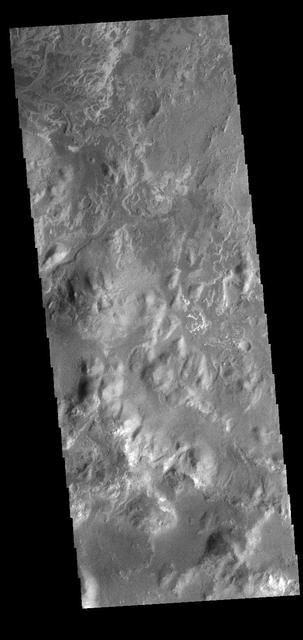
At the top of today's VIS image is the delta deposit on the floor of Eberswalde Crater. Deltas are formed when sediment laden rivers slow down — either due to a flattening of topography, or entering a standing body of water. The reduction in velocity causes the sediments to be deposited. The main channel often diverges into numerous smaller channel that spread apart to form the typical fan shape of a delta. The Eberswalde Crater delta is one of the best preserved on Mars. Orbit Number: 82771 Latitude: -24.1614 Longitude: 326.528 Instrument: VIS Captured: 2020-08-11 16:12 https://photojournal.jpl.nasa.gov/catalog/PIA24157
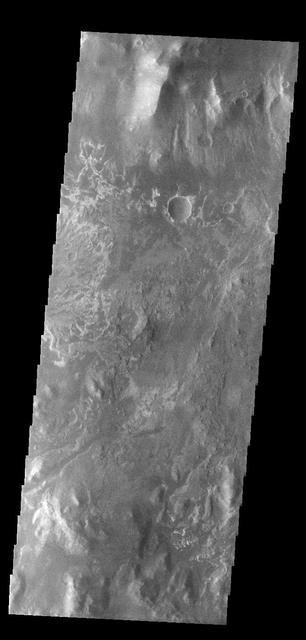
On the left side of today's VIS image is part of the delta deposit on the floor of Eberswalde Crater. Deltas are formed when sediment laden rivers slow down – either due to a flattening of topography, or entering a standing body of water. The reduction in velocity causes the sediments to be deposited. The main channel often diverges into numerous smaller channel that spread apart to form the typical fan shape of a delta. The Eberswalde Crater delta is one of the best preserved on Mars. Orbit Number: 84562 Latitude: -23.912 Longitude: 326.56 Instrument: VIS Captured: 2021-01-06 02:41 https://photojournal.jpl.nasa.gov/catalog/PIA24718
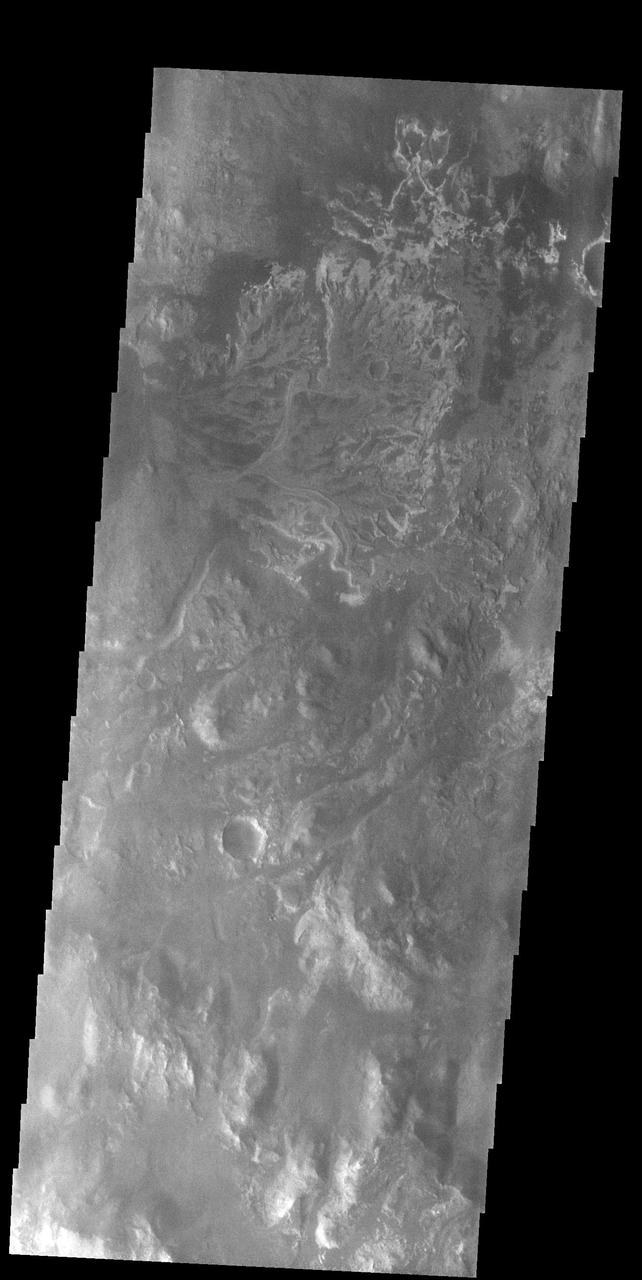
In the top half of today's VIS image is the delta deposit on the floor of Eberswalde Crater. Deltas are formed when sediment laden rivers slow down – either due to a flattening of topography, or entering a standing body of water. The reduction in velocity causes the sediments to be deposited. The main channel often diverges into numerous smaller channel that spread apart to form the typical fan shape of a delta. The Eberswalde Crater delta is one of the best preserved on Mars. Orbit Number: 91288 Latitude: -23.9644 Longitude: 326.398 Instrument: VIS Captured: 2022-07-13 22:12 https://photojournal.jpl.nasa.gov/catalog/PIA25543
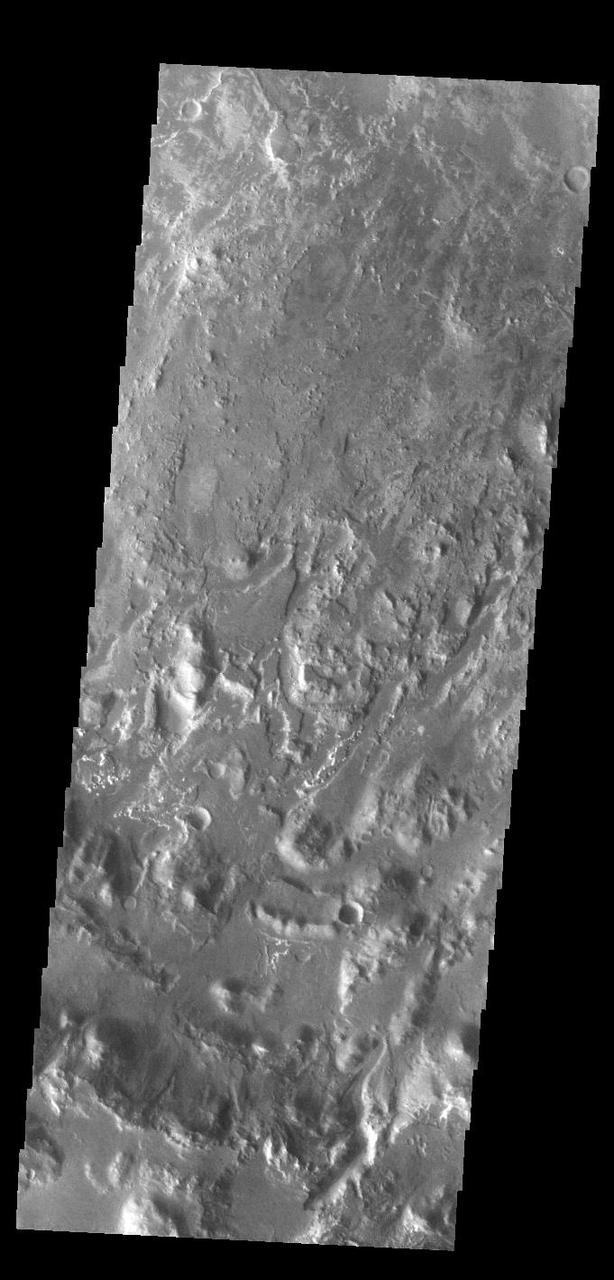
Today's VIS image shows part of the floor of Eberwalde Crater. A large delta deposit is located just to the northwest of this image. This crater once hosted a lake, and the floor is covered with layered materials. Clays have been identified, the result of the interaction of water and eroded materials from the crater floor, as well as the influx of sediments from the channel that created the delta. Eberswalde Crater is 62 km in diameter (38 miles). Orbit Number: 91862 Latitude: -24.1163 Longitude: 326.755 Instrument: VIS Captured: 2022-08-30 04:31 https://photojournal.jpl.nasa.gov/catalog/PIA25715
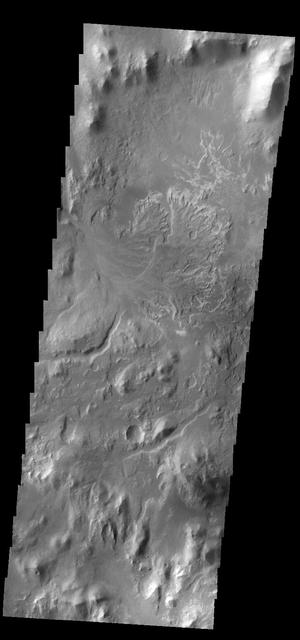
This image captured by NASA 2001 Mars Odyssey spacecraft shows the delta deposit on the floor of Eberswalde Crater.
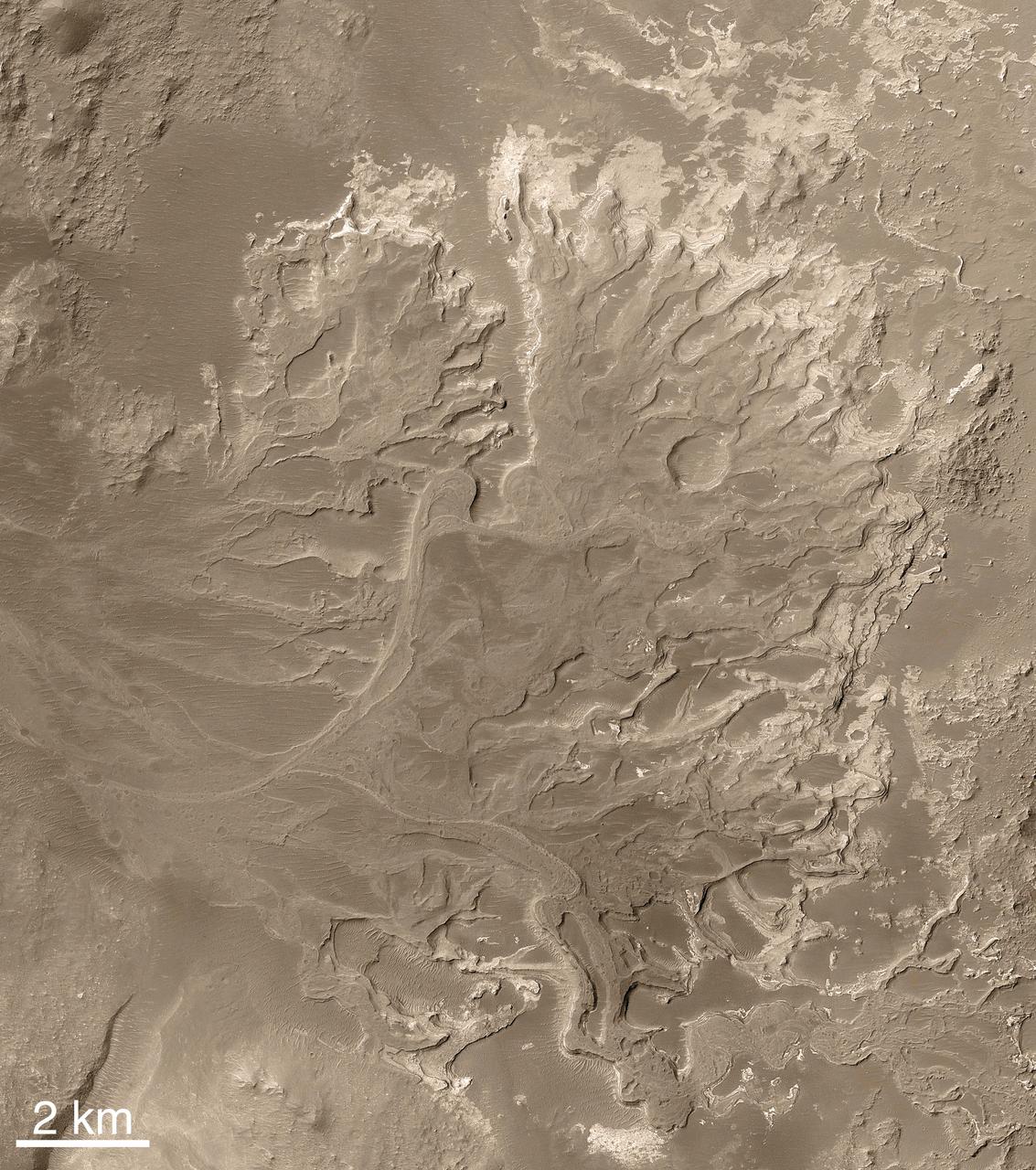
NASA is considering Eberswalde crater as a possible landing site for the Mars Science Laboratory mission; the spacecraft will arrive at Mars in August 2012.
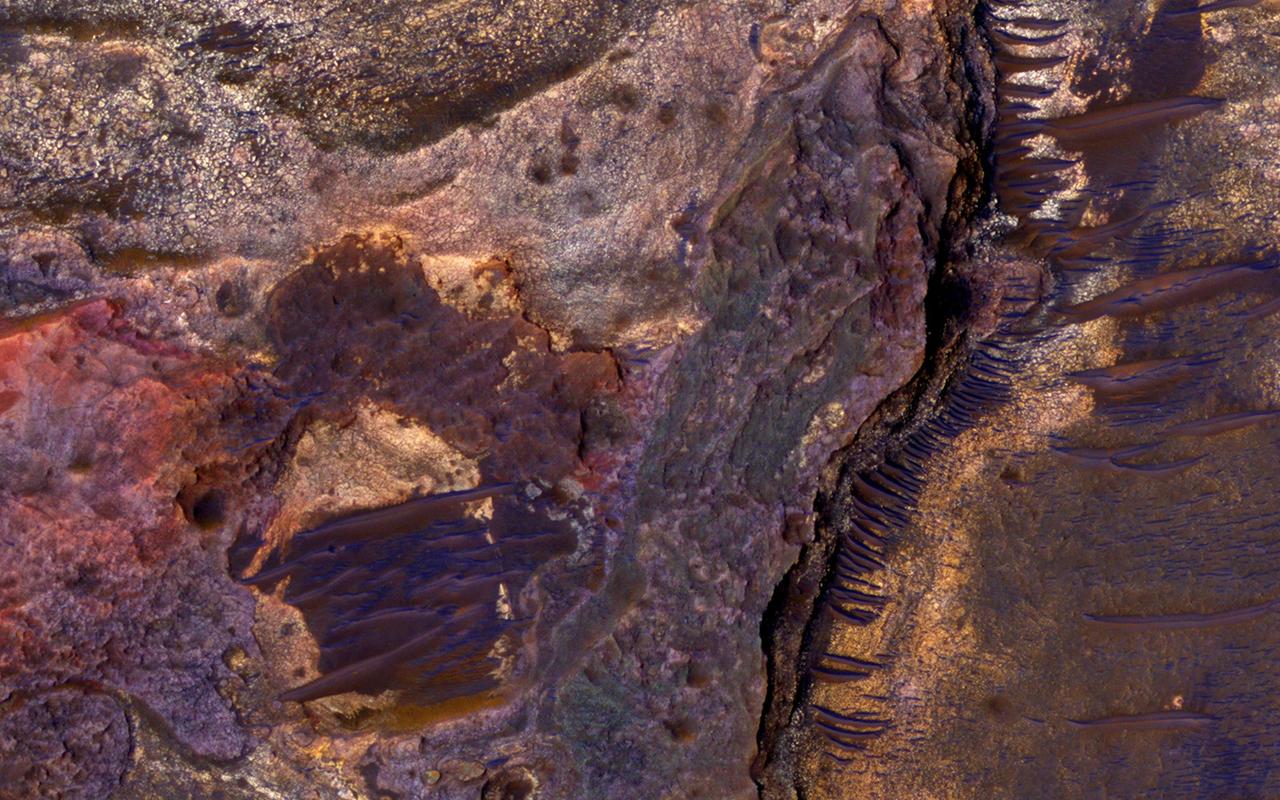
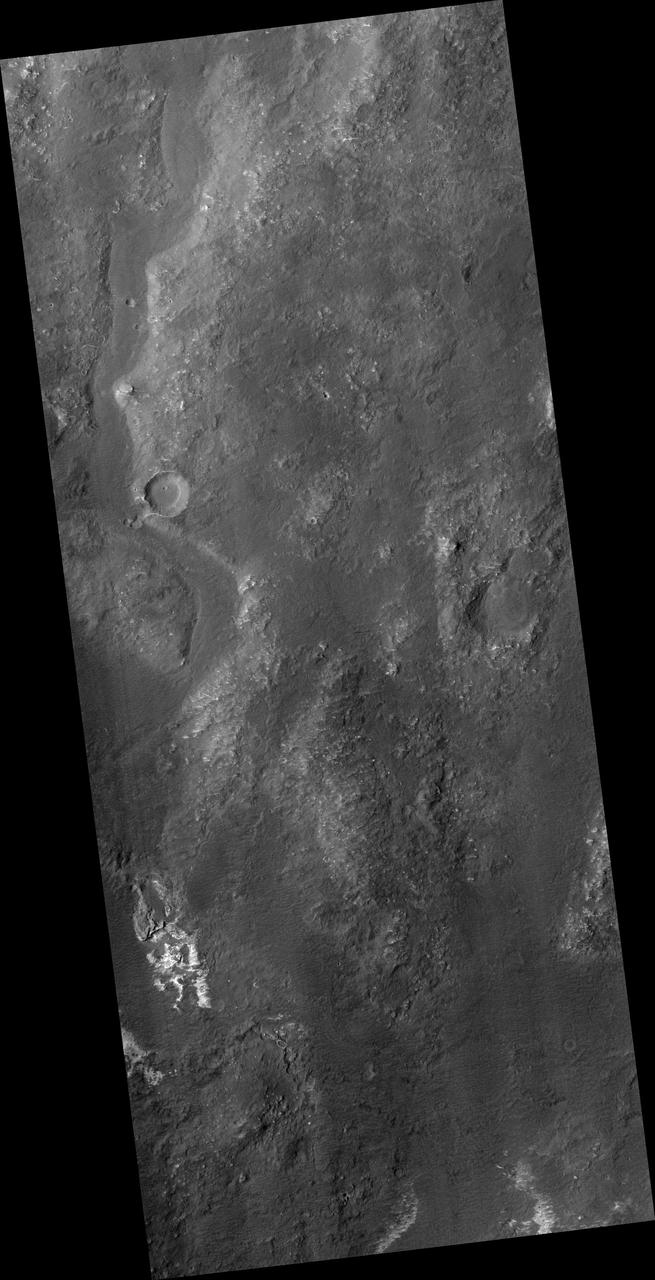
This image from NASA Mars Reconnaissance Orbiter covers layered sedimentary rocks on the floor of an impact crater north of Eberswalde Crater. There may have been a lake in this crater billions of years ago.
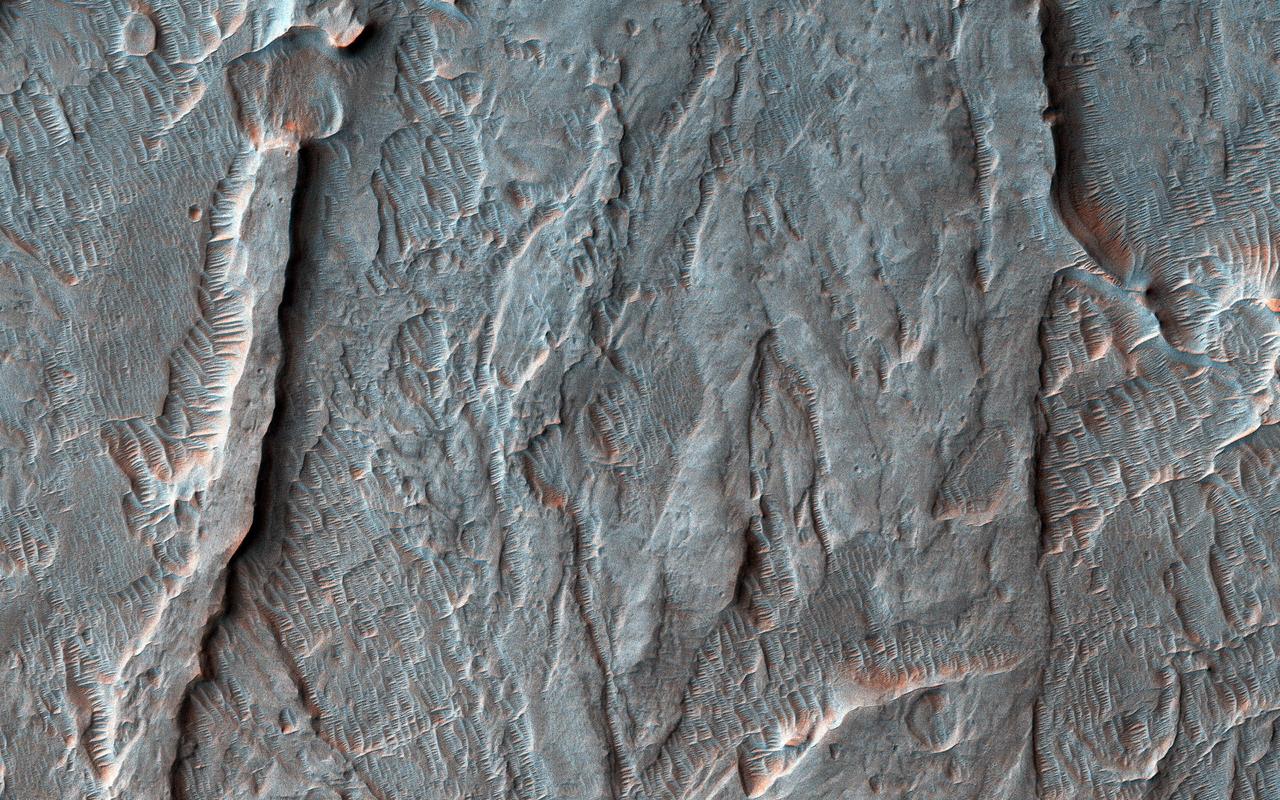
This image was acquired on May 30, 2018 by NASA's Mars Reconnaissance Orbiter. This image shows inverted channels within a fan whose origin could be either fluvial (produced by the action of a stream) or alluvial (created by sedimentary deposits). If the fan is alluvial, then it formed on dry land. If the fan is fluvial, then it could have formed in water, like a delta. Similar fans with inverted channels are found in Eberswalde and Jezero craters, both of which are interpreted as deltas and are considered candidate locations of future rover landing sites. More information is available at https://photojournal.jpl.nasa.gov/catalog/PIA22683