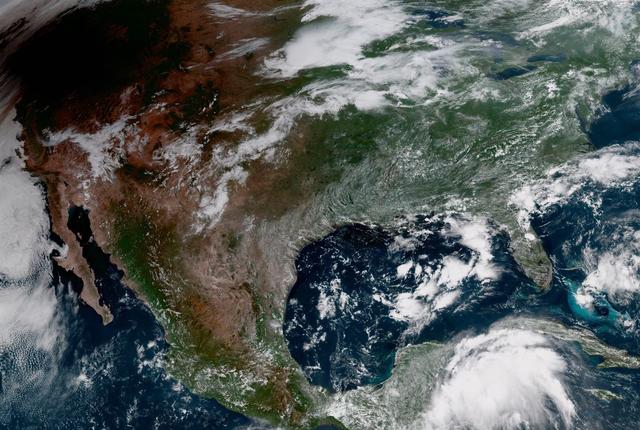
The shadow of the moon blots out the Pacific Northwest in this GOES-16 geocolor image of the 2017 Solar Eclipse. Credit: CIRA View more eclipse imagery at <a href="http://www.nesdis.noaa.gov/content/multimedia" rel="nofollow">www.nesdis.noaa.gov/content/multimedia</a>
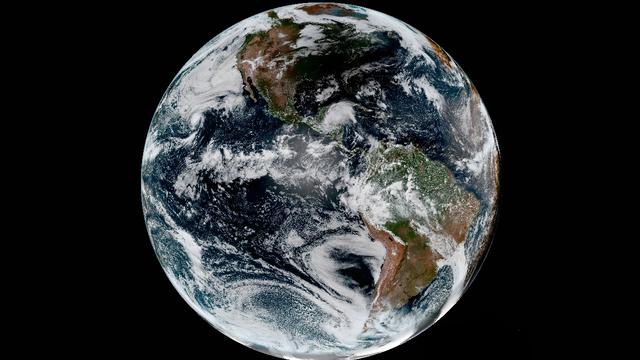
On August 21, 2017, the first total solar eclipse to move across the United States in 99 years occurred. GOES-16 captured the eclipse with the Advanced Baseline Imager (ABI) which had a clear view of the moon’s shadow as it traveled diagonally across the path of totality of the Continental United States from the Pacific Northwest through South Carolina. In this full disk geocolor image from GOES-16 on August 21, 2017, the center of the moon's shadow is now east of the Mississippi River. Credit: CIRA View more eclipse imagery at <a href="http://www.nesdis.noaa.gov/content/multimedia" rel="nofollow">www.nesdis.noaa.gov/content/multimedia</a>
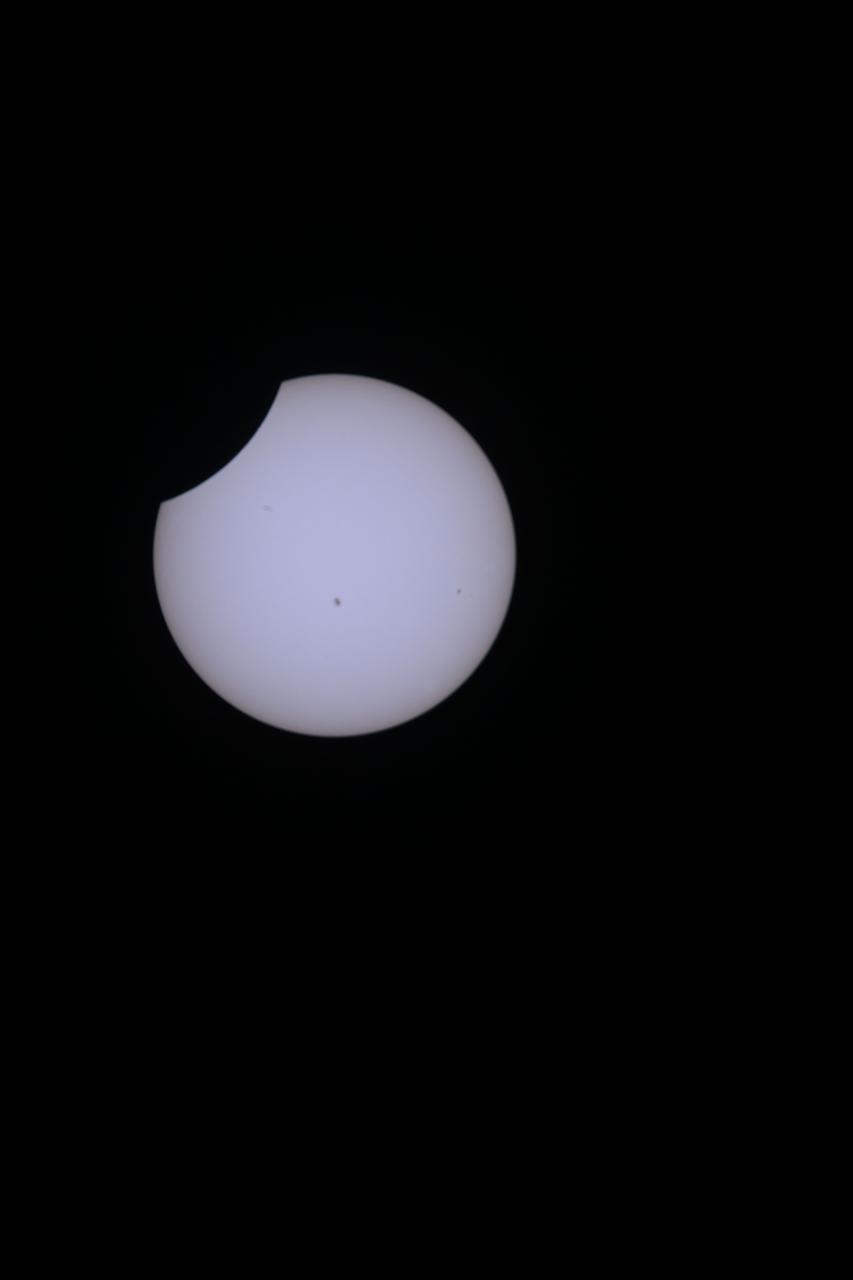
iss071e001435 (April 8, 2024) -- As the International Space Station orbited 257 miles above Earth, NASA astronaut and Expedition 71 Flight Engineer Matthew Dominick captured a still image of the 2024 solar eclipse from the unique vantage point of the orbiting laboratory,
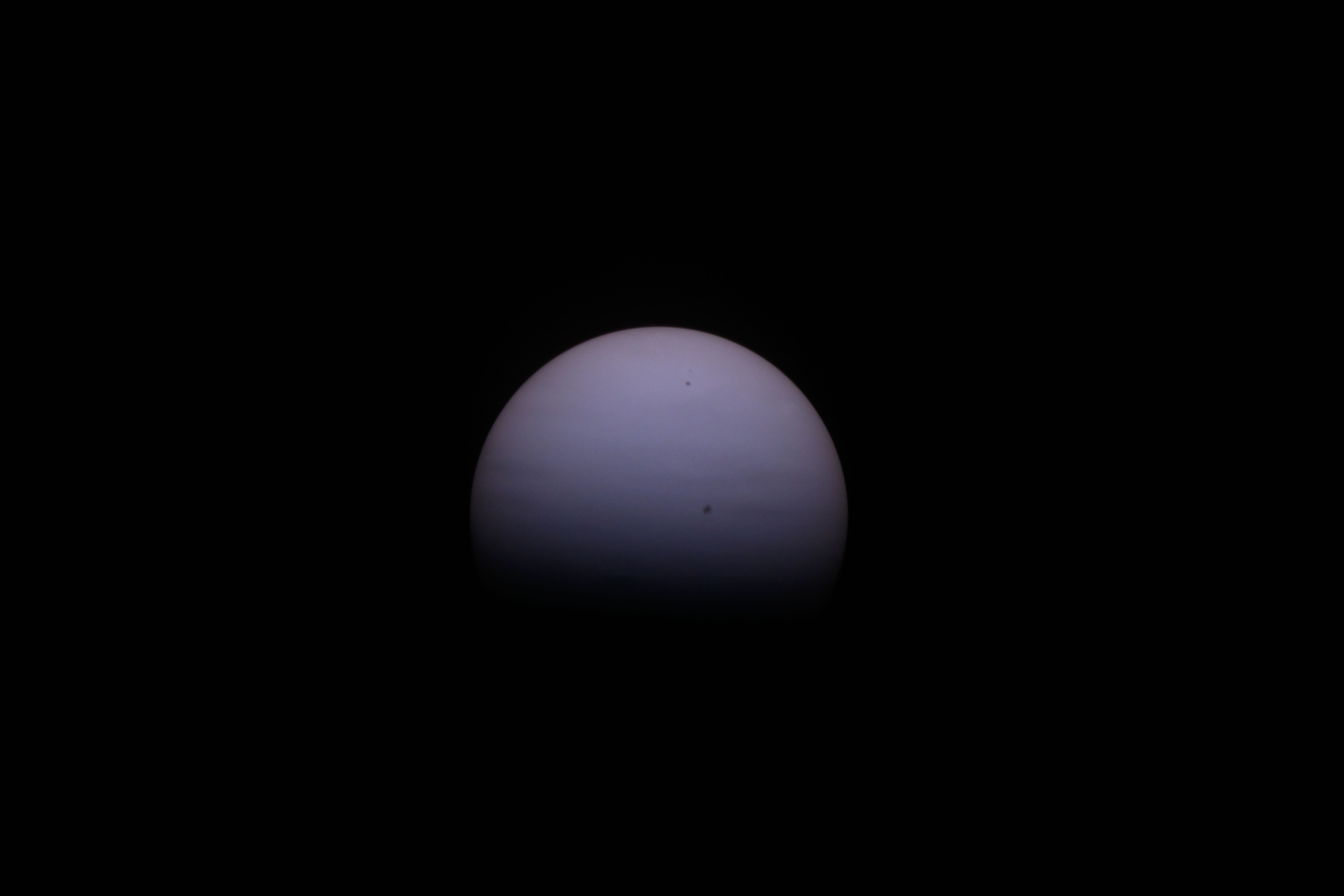
iss071e001438 (April 8, 2024) -- During the 2024 solar eclipse, four NASA astronauts and three Roscosmos cosmonauts had the opportunity to view the celestial event from the unique vantage point of the International Space Station. Pictured here by NASA astronaut Matthew Dominick is the Sun as the orbital complex orbited 257 miles off the west coast of Mexico.
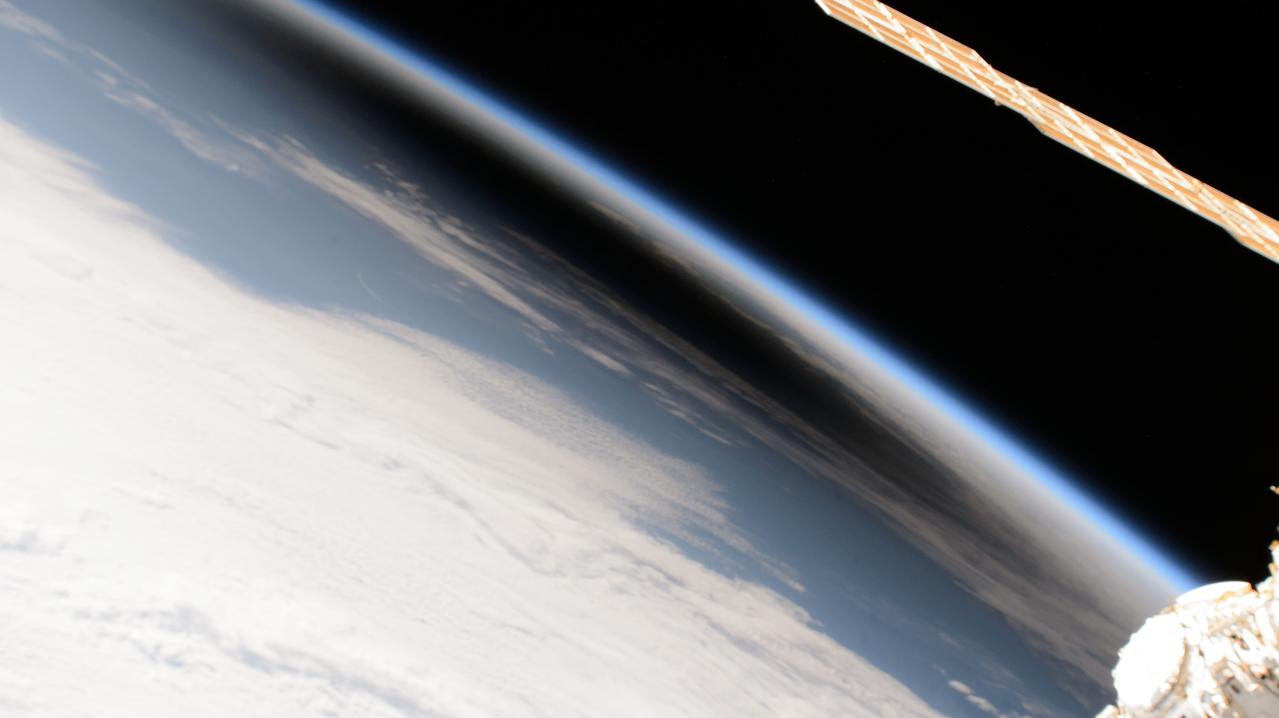
iss071e002694 (April 8, 2024) -- Orbiting 260 miles above the Northeastern coast of the United States, the Expedition 71 crew experienced the 2024 solar eclipse from space. Pictured here is the umbra, or the Moon's shadow, passing over Earth. Aboard the International Space Station to witness the celestial event was NASA astronauts Matthew Dominick, Michael Barratt, Jeanette Epps, and Tracy Dyson, as well as cosmonauts Oleg Kononenko, Nikolai Chub, and Alexander Grebenkin.
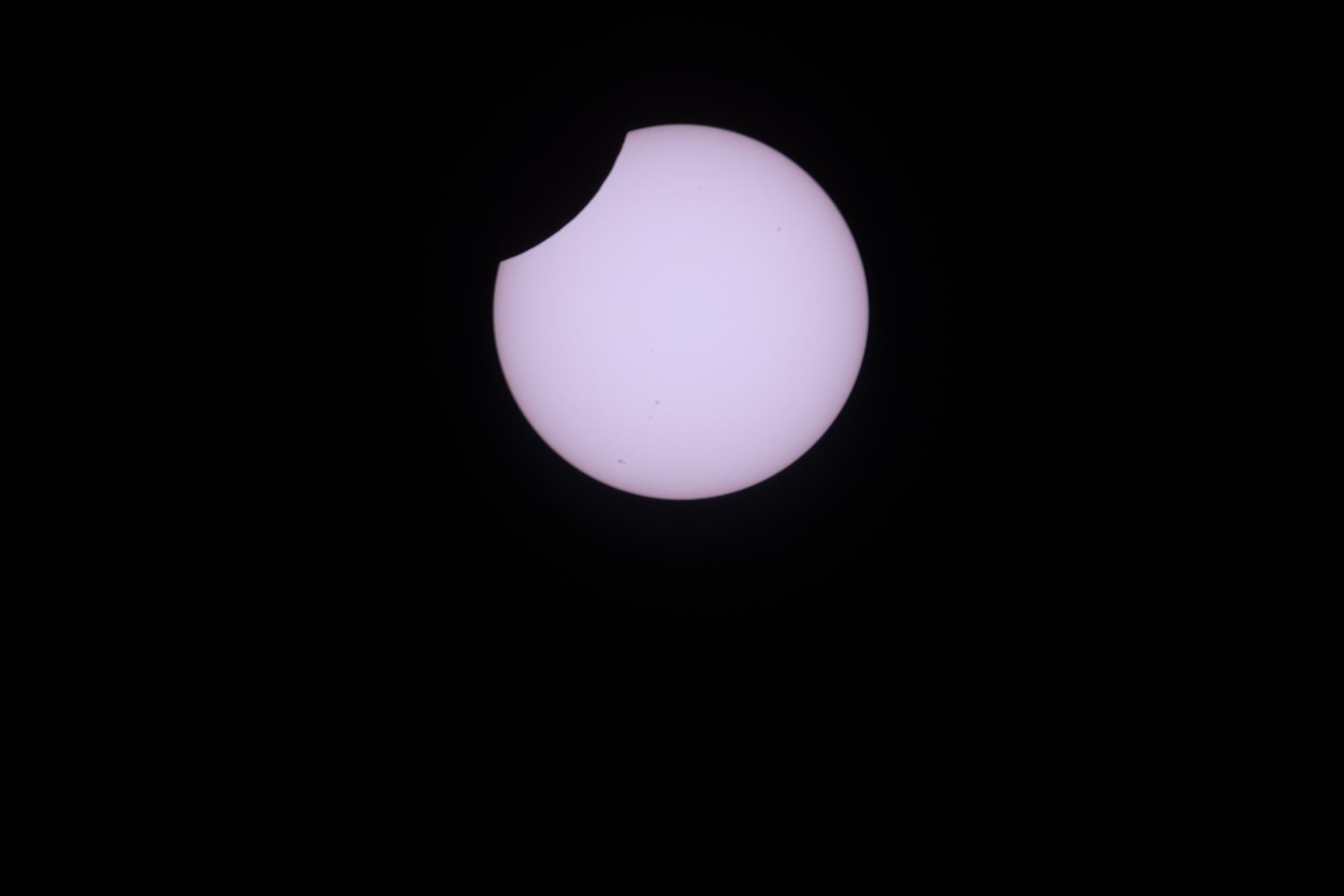
iss075e0014011 (Aug. 12, 2026) --- A partial solar eclipse, with peak sun coverage of around 18 percent, is pictured from the International Space Station. NASA astronaut Jessica Meir pointed a Nikon Z9 camera with an 800mm lens, a 1.4x teleconverter, and a solar filter out a window to capture this photograph as the orbital outpost soared 262 miles above southern Quebec, Canada. Credit: NASA/Jessica Meir
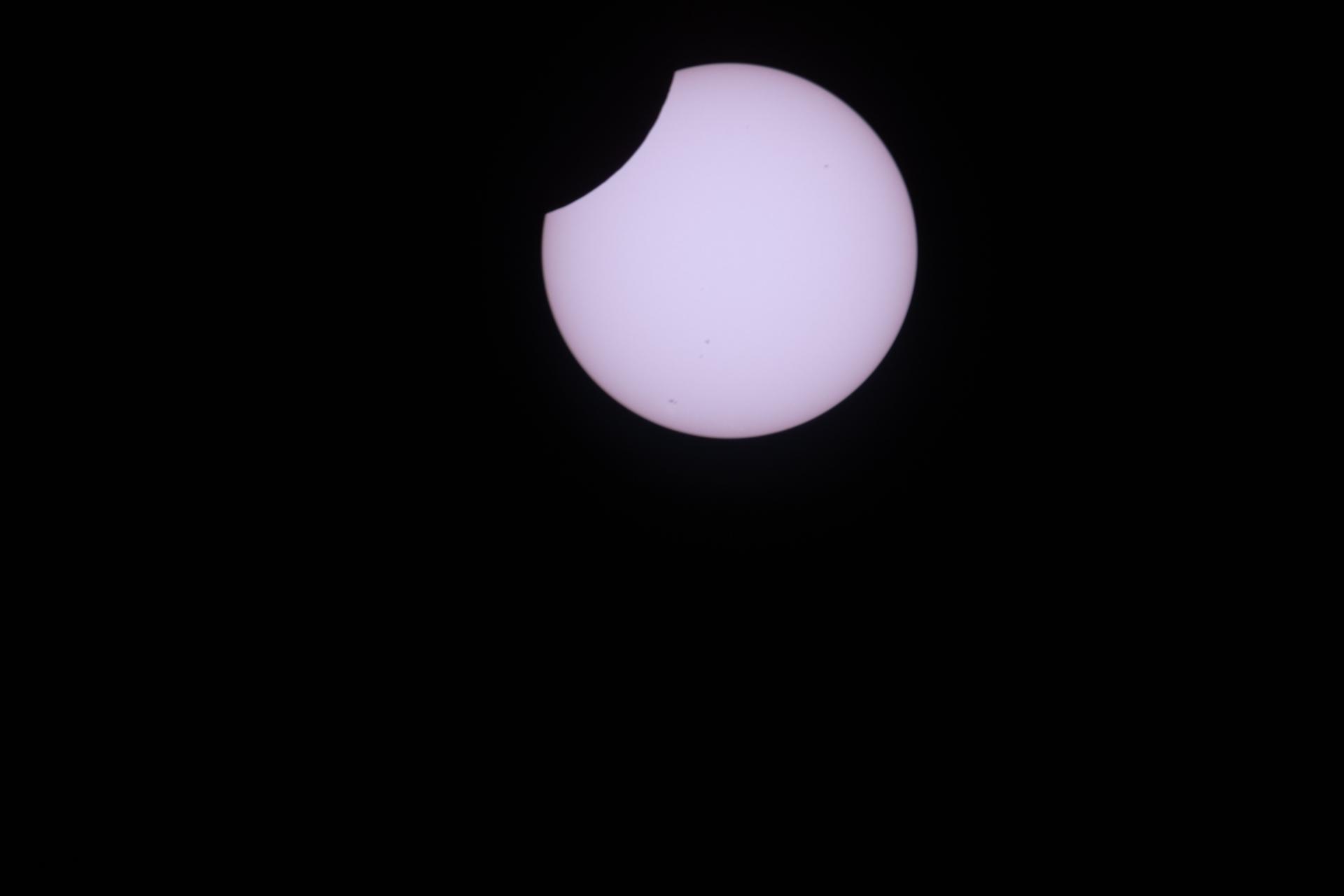
iss075e0014010 (Aug. 12, 2026) --- A partial solar eclipse, with peak sun coverage of around 18 percent, is pictured from the International Space Station. NASA astronaut Jessica Meir pointed a Nikon Z9 camera with an 800mm lens, a 1.4x teleconverter, and a solar filter out a window to capture this photograph as the orbital outpost soared 262 miles above southern Quebec, Canada. Credit: NASA/Jessica Meir
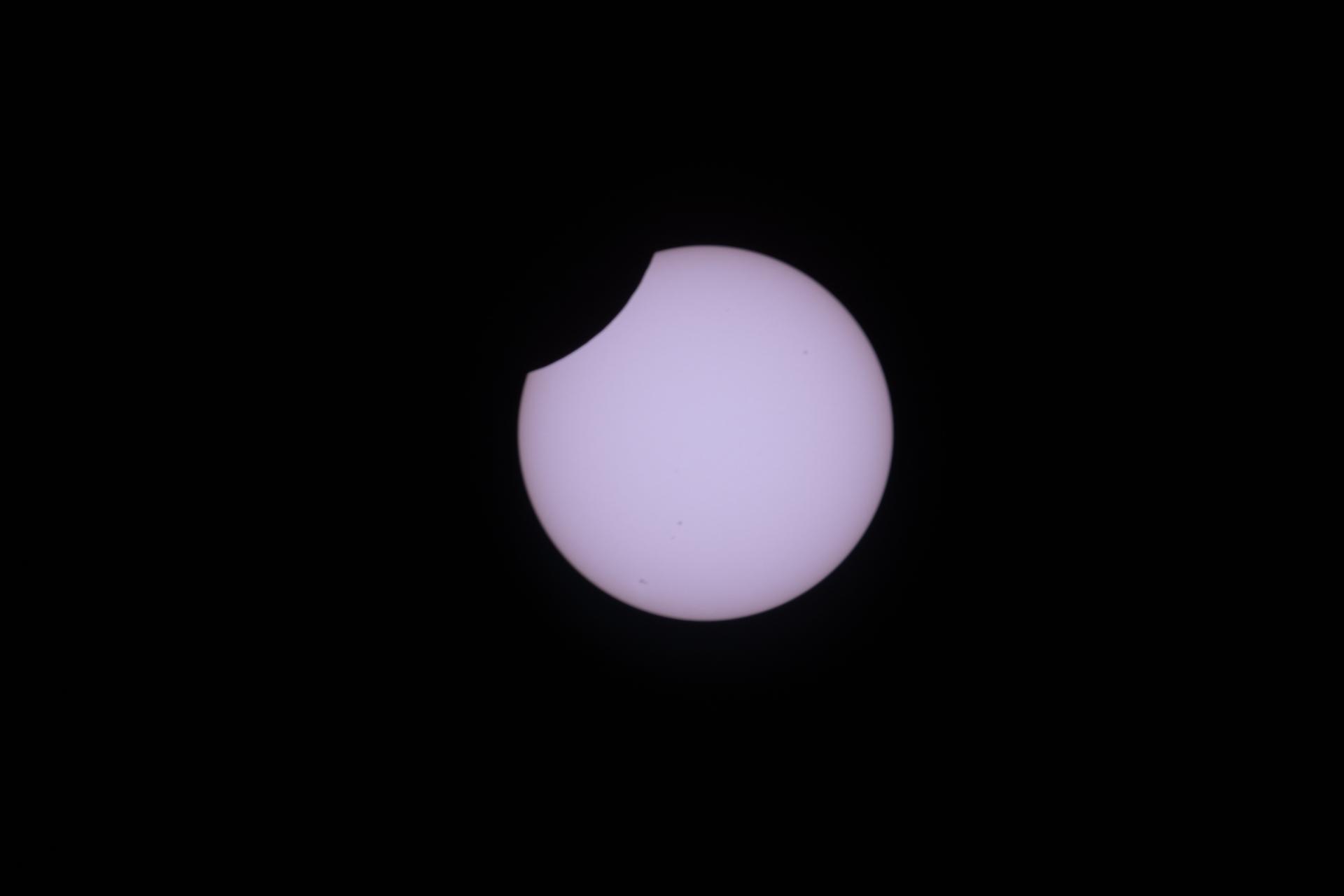
iss075e0014012 (Aug. 12, 2026) --- A partial solar eclipse, with peak sun coverage of around 18 percent, is pictured from the International Space Station. NASA astronaut Jessica Meir pointed a Nikon Z9 camera with an 800mm lens, a 1.4x teleconverter, and a solar filter out a window to capture this photograph as the orbital outpost soared 262 miles above southern Quebec, Canada. Credit: NASA/Jessica Meir
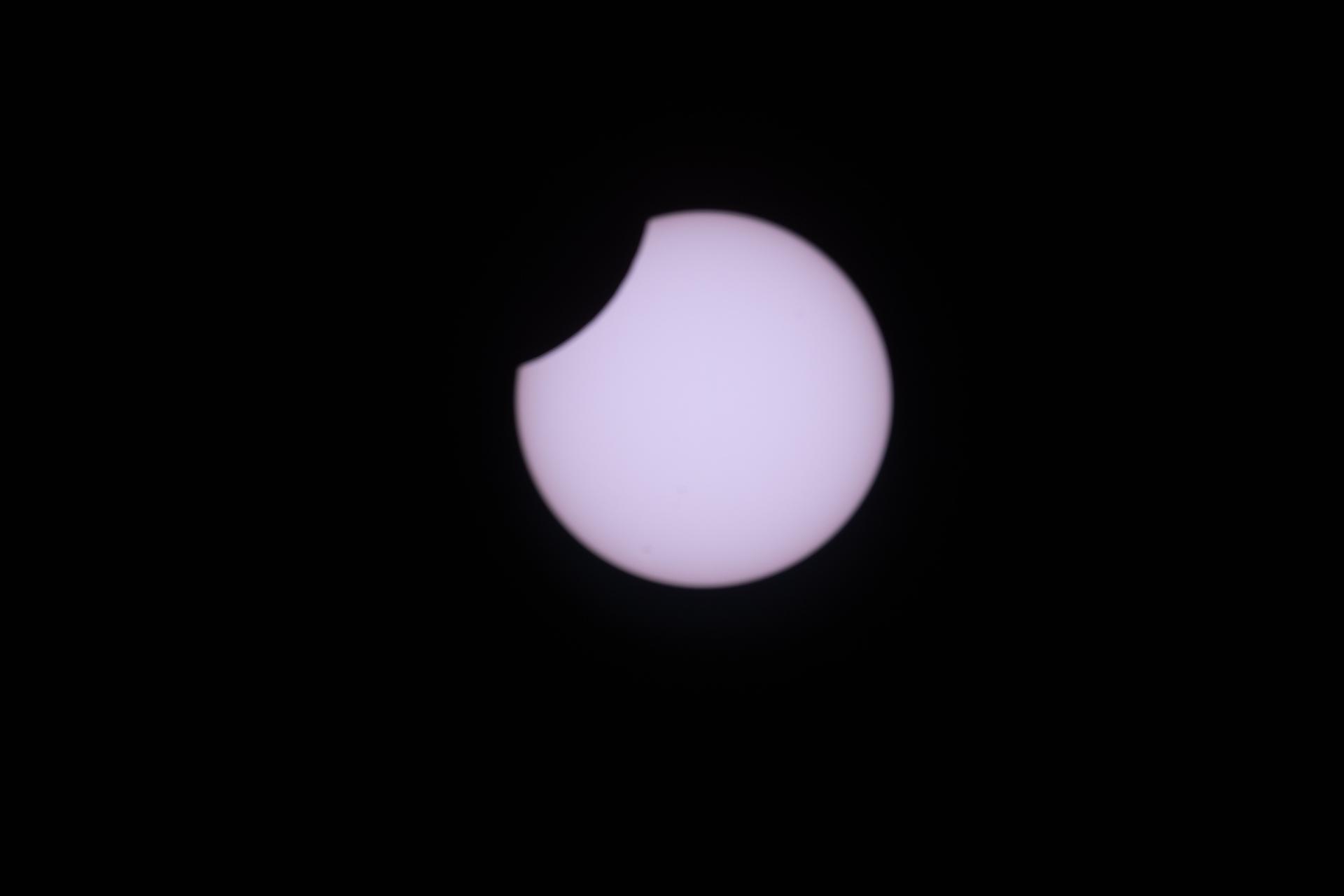
iss075e0014009 (Aug. 12, 2026) --- A partial solar eclipse, with peak sun coverage of around 18 percent, is pictured from the International Space Station. NASA astronaut Jessica Meir pointed a Nikon Z9 camera with an 800mm lens, a 1.4x teleconverter, and a solar filter out a window to capture this photograph as the orbital outpost soared 262 miles above southern Quebec, Canada. Credit: NASA/Jessica Meir
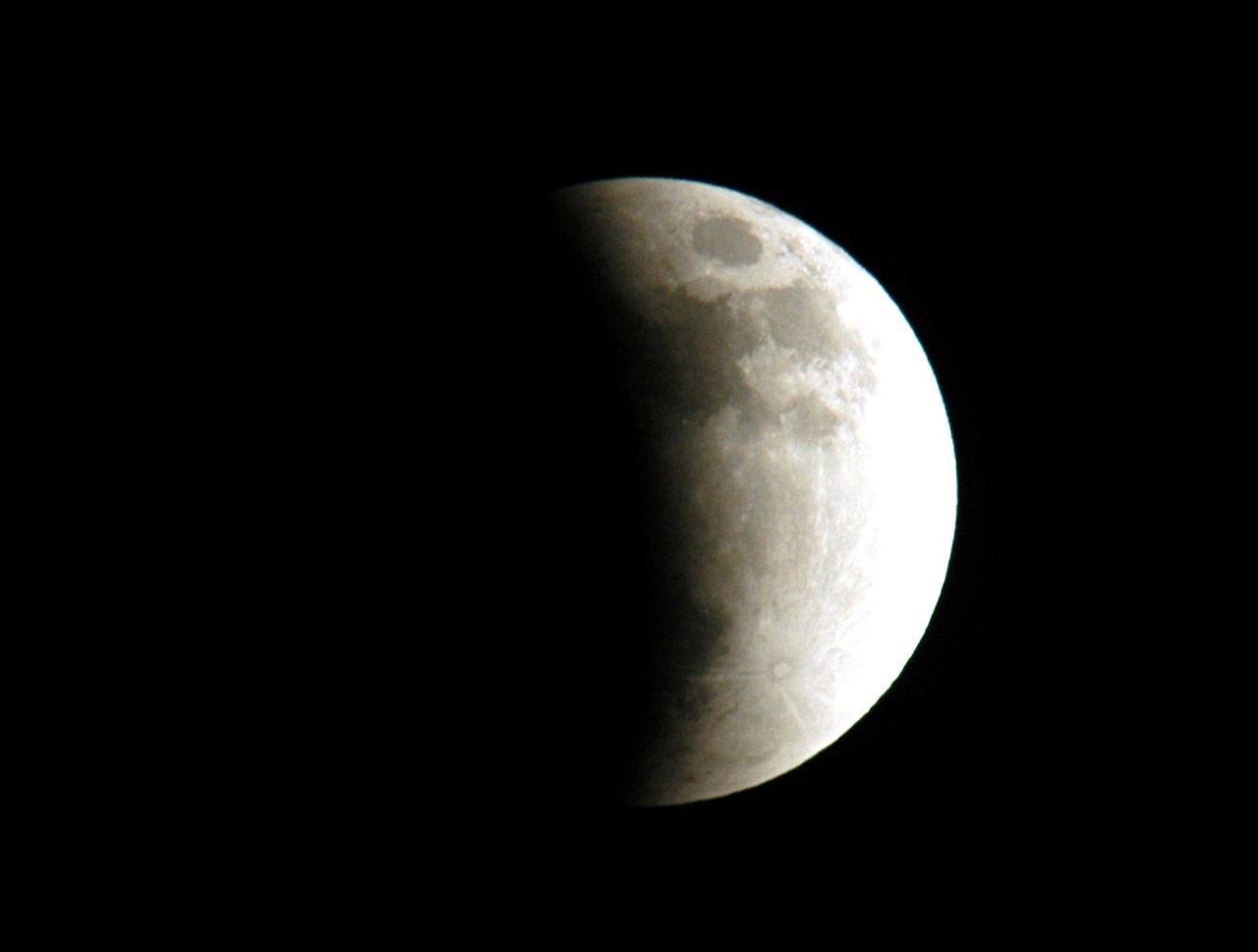
KENNEDY SPACE CENTER, FLA. - The start of a lunar eclipse is viewed from Merritt Island, Fla. Eclipses occur when the Sun, Earth and Moon line up. They are rare because the Moon usually passes above or below the imaginary line connecting Earth and the Sun. The Earth casts a shadow that the Moon can pass through - when it does, it is called a lunar eclipse.
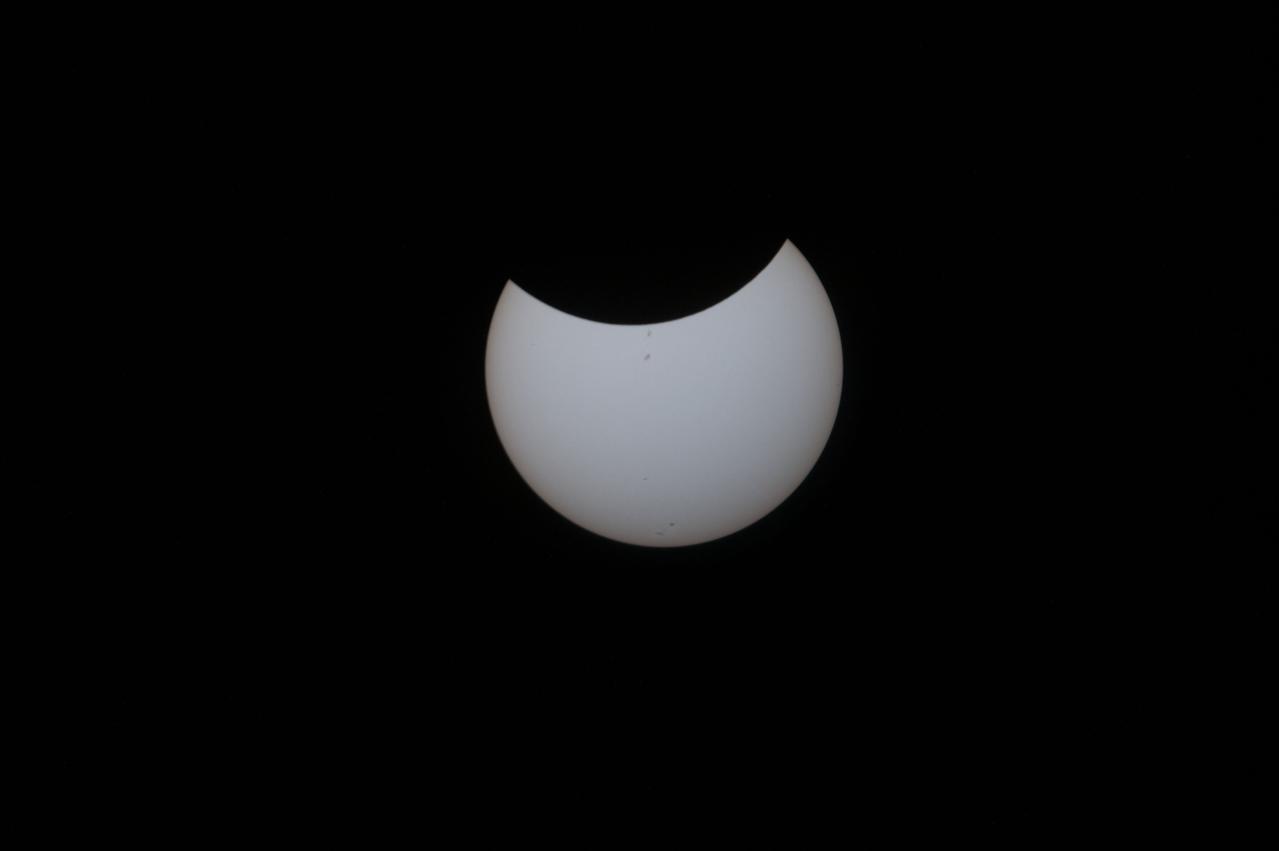
iss052e055885 (Aug. 21, 2017) --- Aboard the International Space Station, NASA Flight Engineer Randy Bresnik took still images of the eclipse as seen from the unique vantage of the Expedition 52 crew. Witnessing the eclipse from orbit with Bresnik were NASA’s Jack Fischer and Peggy Whitson, ESA (European Space Agency’s) Paolo Nespoli, and Roscosmos’ Commander Fyodor Yurchikhin and Sergey Ryazanskiy. The space station crossed the path of the eclipse three times as it orbited above the continental United States at an altitude of 250 miles.
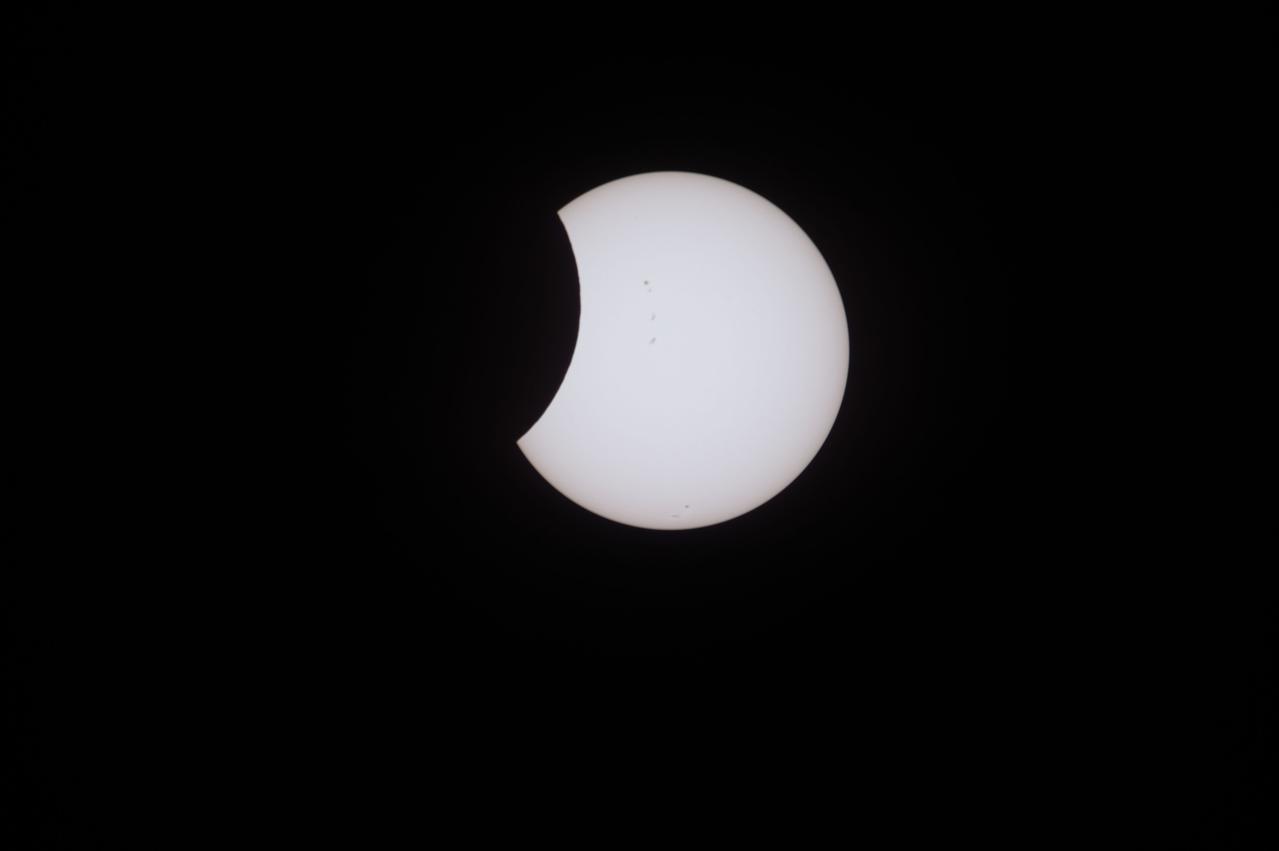
iss052e055851 (Aug. 21, 2017) --- Aboard the International Space Station, NASA Flight Engineer Randy Bresnik took still images of the eclipse as seen from the unique vantage of the Expedition 52 crew. Witnessing the eclipse from orbit with Bresnik were NASA’s Jack Fischer and Peggy Whitson, ESA (European Space Agency’s) Paolo Nespoli, and Roscosmos’ Commander Fyodor Yurchikhin and Sergey Ryazanskiy. The space station crossed the path of the eclipse three times as it orbited above the continental United States at an altitude of 250 miles
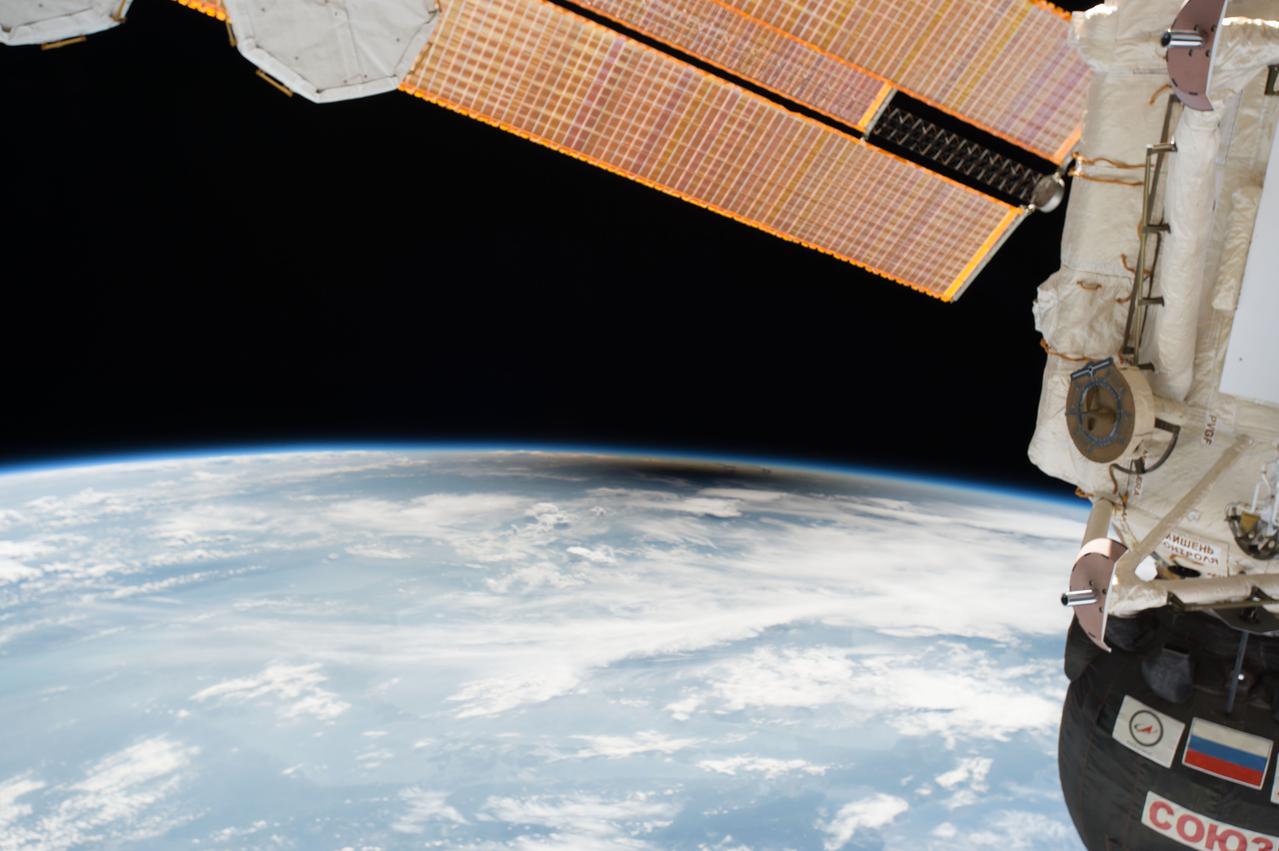
iss052e056245 (Aug. 21, 2017) --- As millions of people across the United States experienced a total eclipse as the umbra, or moon’s shadow passed over them, only six people witnessed the umbra from space. Viewing the eclipse from orbit were NASA’s Randy Bresnik, Jack Fischer and Peggy Whitson, ESA (European Space Agency’s) Paolo Nespoli, and Roscosmos’ Commander Fyodor Yurchikhin and Sergey Ryazanskiy. The space station crossed the path of the eclipse three times as it orbited above the continental United States at an altitude of 250 miles.
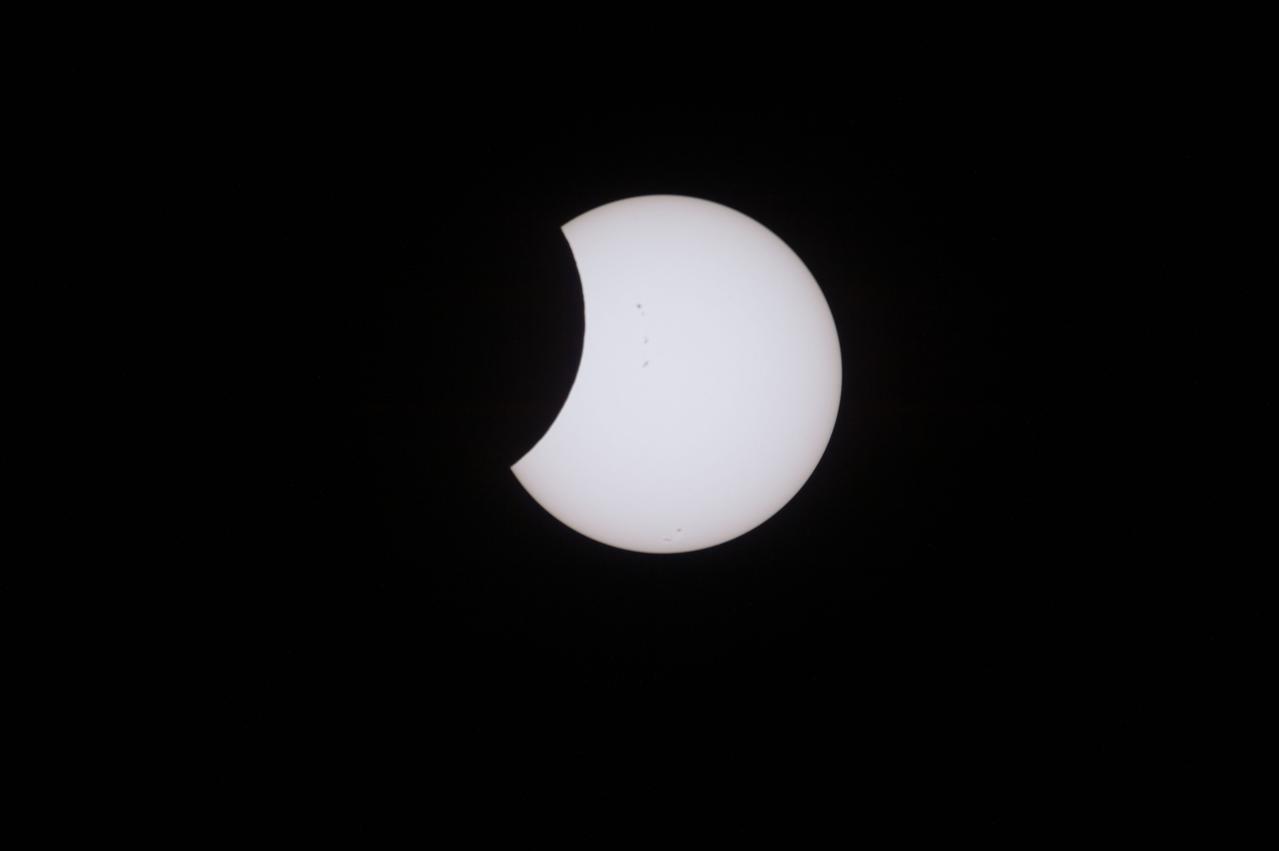
iss052e055856 (Aug. 21, 2017) --- Aboard the International Space Station, NASA Flight Engineer Randy Bresnik took still images of the eclipse as seen from the unique vantage of the Expedition 52 crew. Witnessing the eclipse from orbit with Bresnik were NASA’s Jack Fischer and Peggy Whitson, ESA (European Space Agency’s) Paolo Nespoli, and Roscosmos’ Commander Fyodor Yurchikhin and Sergey Ryazanskiy. The space station crossed the path of the eclipse three times as it orbited above the continental United States at an altitude of 250 miles
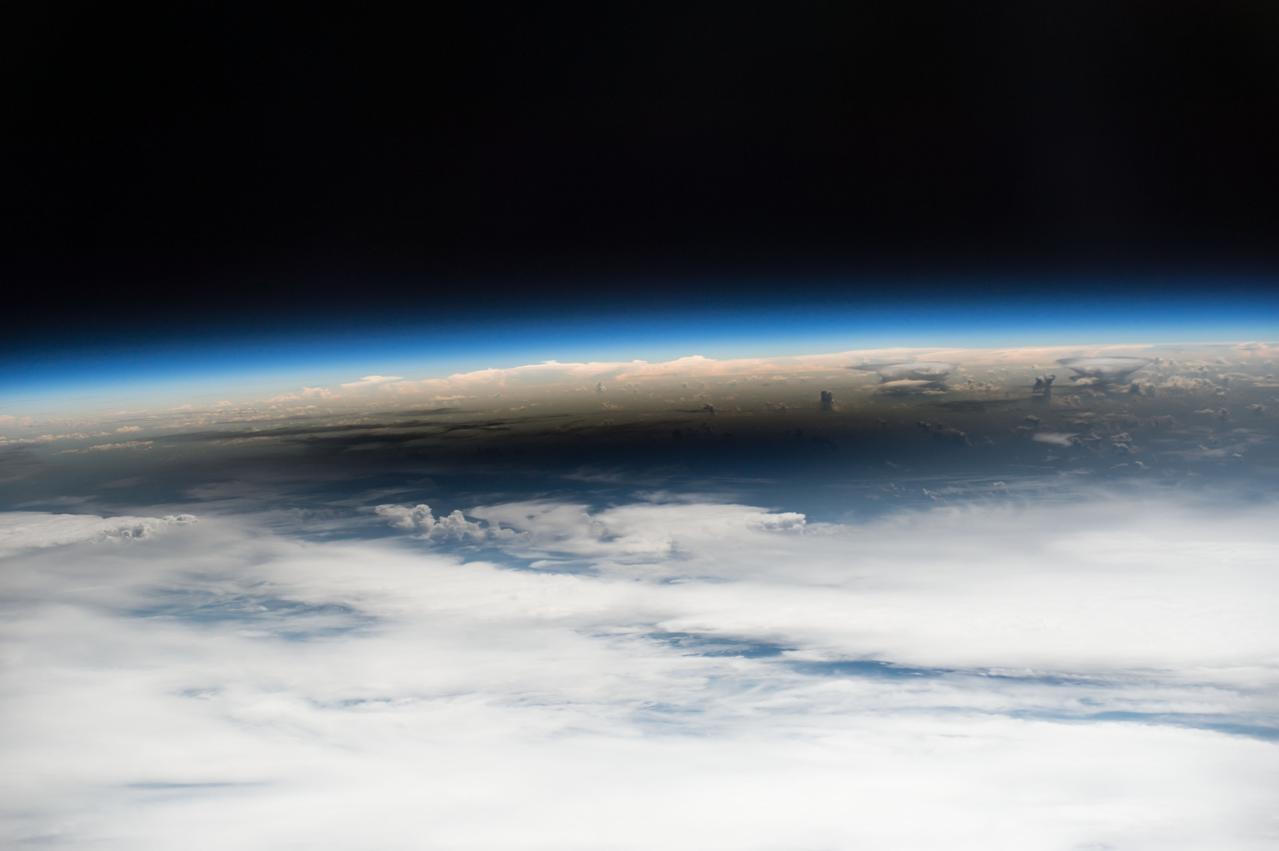
iss052e056122 (Aug. 21, 2017) --- As millions of people across the United States experienced a total eclipse as the umbra, or moon’s shadow passed over them, only six people witnessed the umbra from space. Viewing the eclipse from orbit were NASA’s Randy Bresnik, Jack Fischer and Peggy Whitson, ESA (European Space Agency’s) Paolo Nespoli, and Roscosmos’ Commander Fyodor Yurchikhin and Sergey Ryazanskiy. The space station crossed the path of the eclipse three times as it orbited above the continental United States at an altitude of 250 miles.
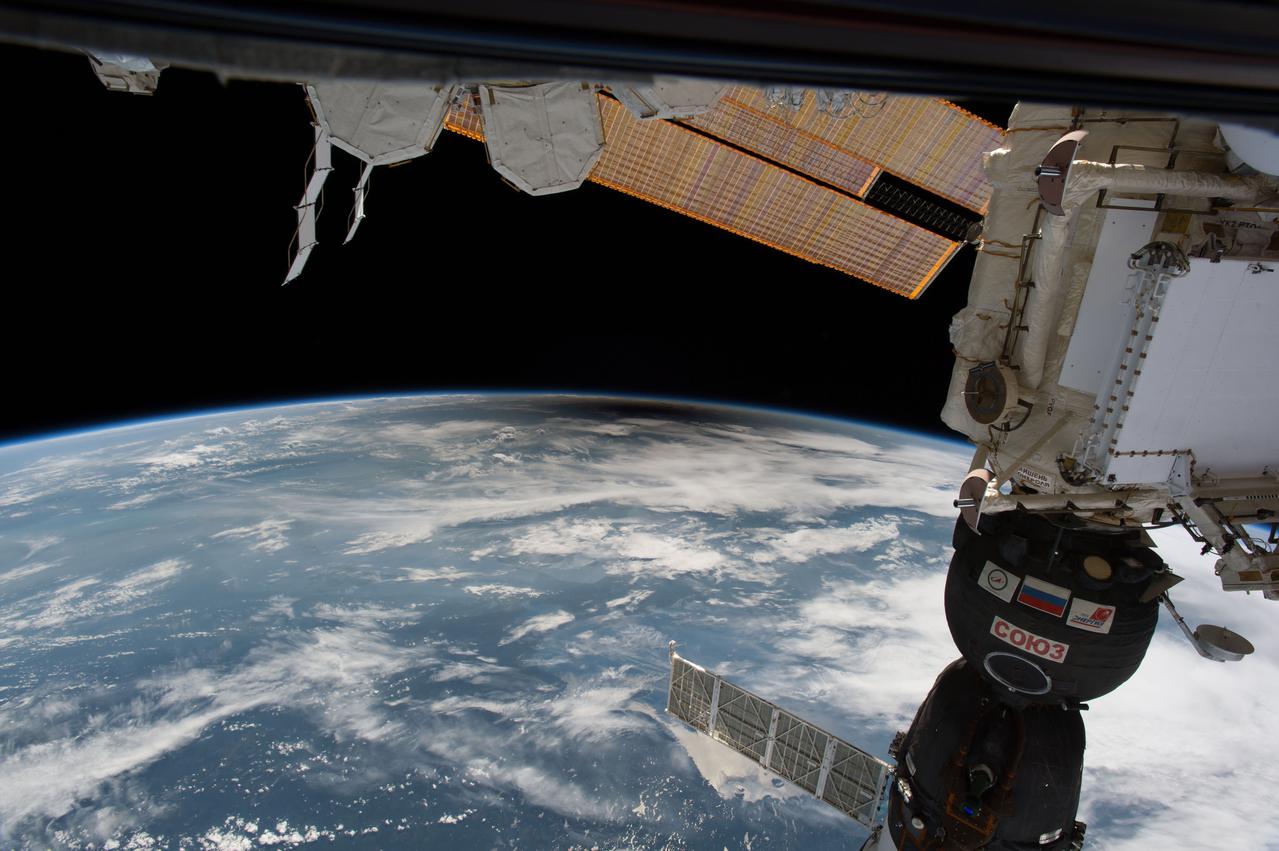
iss052e056225 (Aug. 21, 2017) --- As millions of people across the United States experienced a total eclipse as the umbra, or moon’s shadow passed over them, only six people witnessed the umbra from space. Viewing the eclipse from orbit were NASA’s Randy Bresnik, Jack Fischer and Peggy Whitson, ESA (European Space Agency’s) Paolo Nespoli, and Roscosmos’ Commander Fyodor Yurchikhin and Sergey Ryazanskiy. The space station crossed the path of the eclipse three times as it orbited above the continental United States at an altitude of 250 miles.
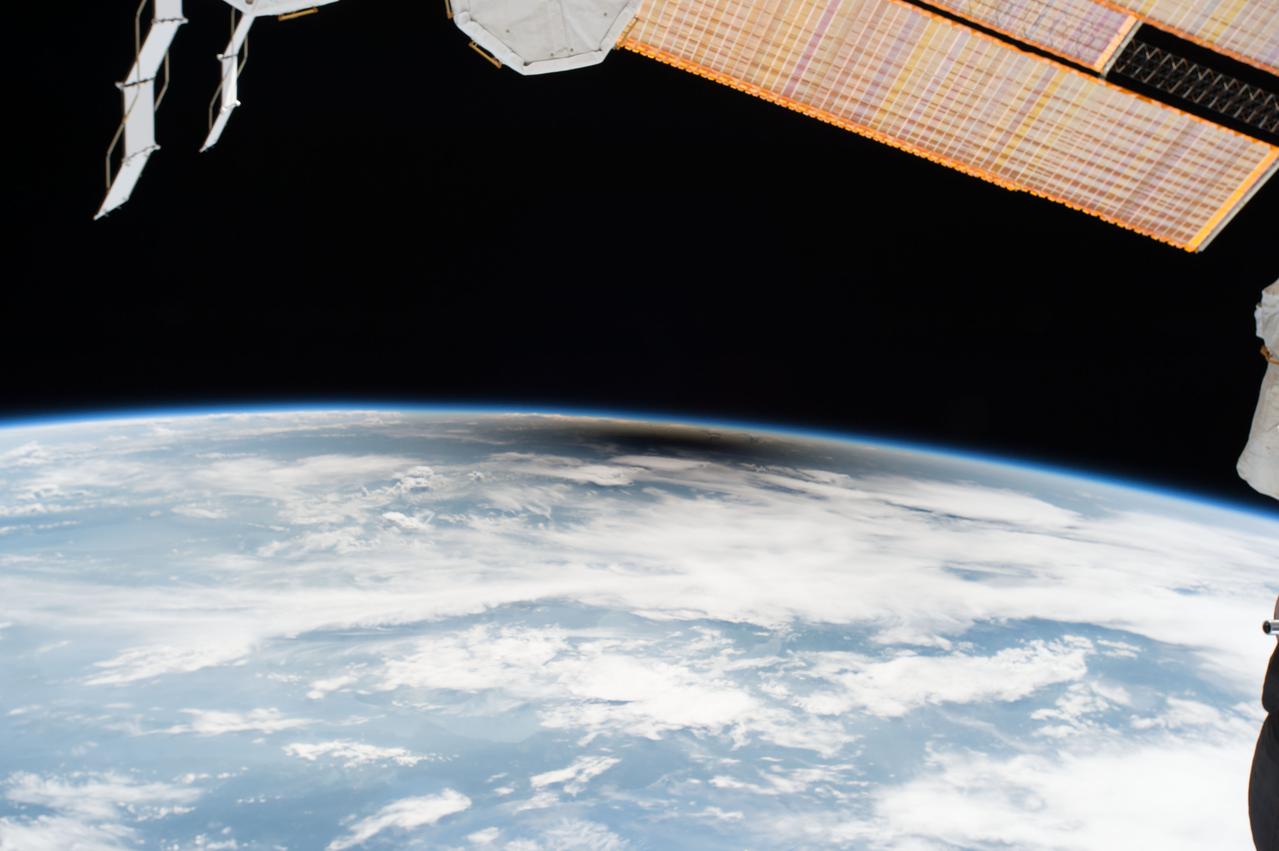
iss052e056222 (Aug. 21, 2017) --- As millions of people across the United States experienced a total eclipse as the umbra, or moon’s shadow passed over them, only six people witnessed the umbra from space. Viewing the eclipse from orbit were NASA’s Randy Bresnik, Jack Fischer and Peggy Whitson, ESA (European Space Agency’s) Paolo Nespoli, and Roscosmos’ Commander Fyodor Yurchikhin and Sergey Ryazanskiy. The space station crossed the path of the eclipse three times as it orbited above the continental United States at an altitude of 250 miles.
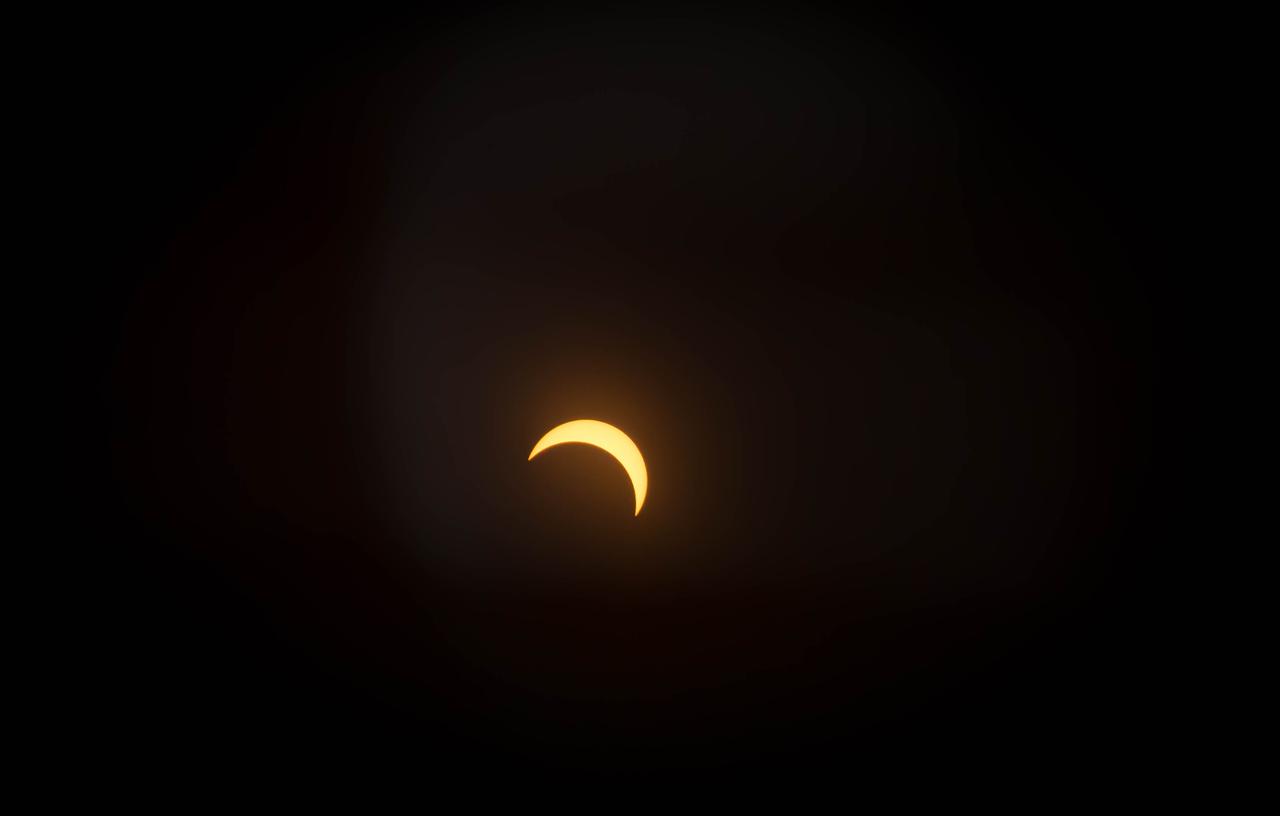
View of the partial solar eclipse from NASA's Goddard Space Flight Center in Greenbelt, Md on Monday, August 21, 2017. A total solar eclipse swept across a narrow portion of the contiguous United States from Lincoln Beach, Oregon to Charleston, South Carolina. A partial solar eclipse was visible across the entire North American continent along with parts of South America, Africa, and Europe. Credit: NASA/Goddard/Rebecca Roth
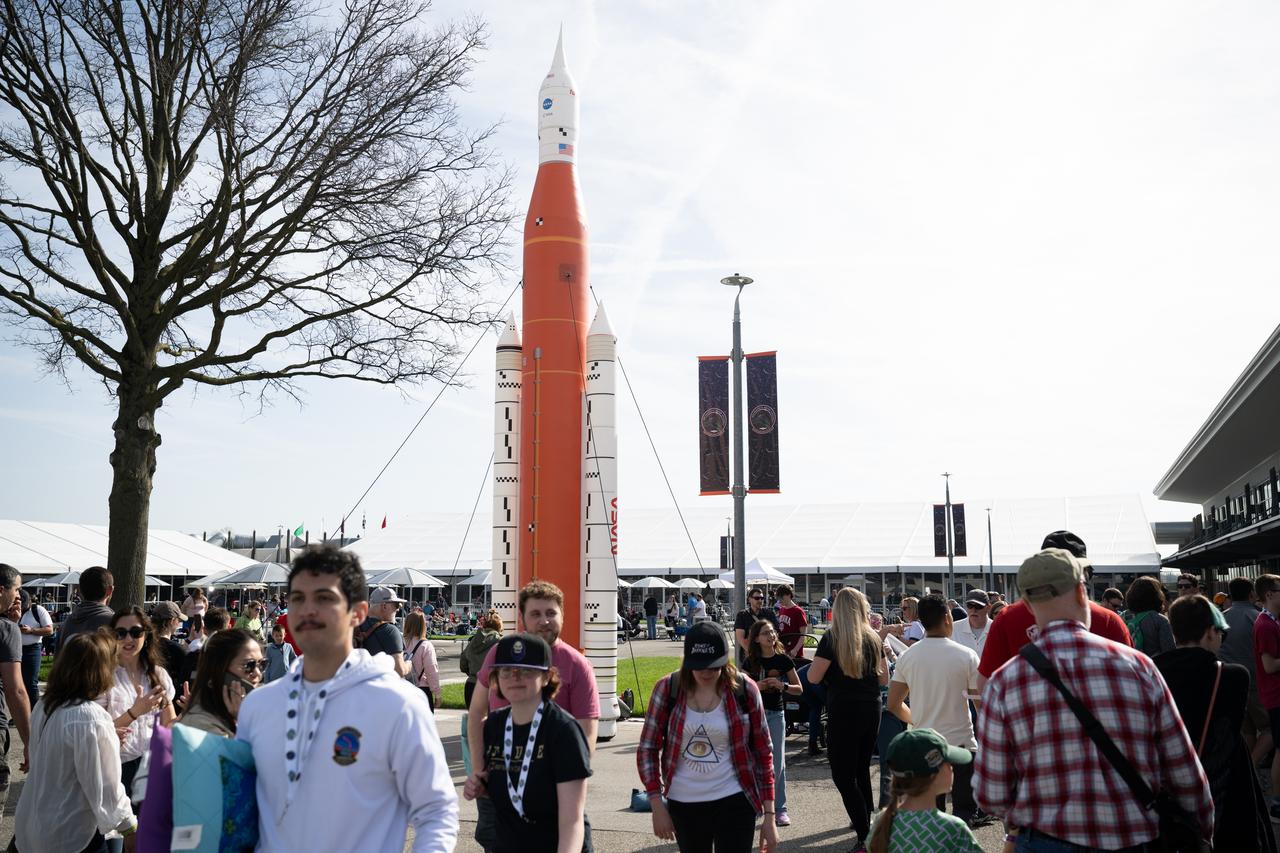
Attendees at the Indianapolis Motor Speedway walk past an inflatable version of NASA’s Space Launch System rocket ahead of the total solar eclipse, Monday, April 8, 2024, in Indianapolis, Ind. A total solar eclipse swept across a narrow portion of the North American continent from Mexico’s Pacific coast to the Atlantic coast of Newfoundland, Canada. A partial solar eclipse was visible across the entire North American continent along with parts of Central America and Europe. Photo Credit: (NASA/Joel Kowsky)
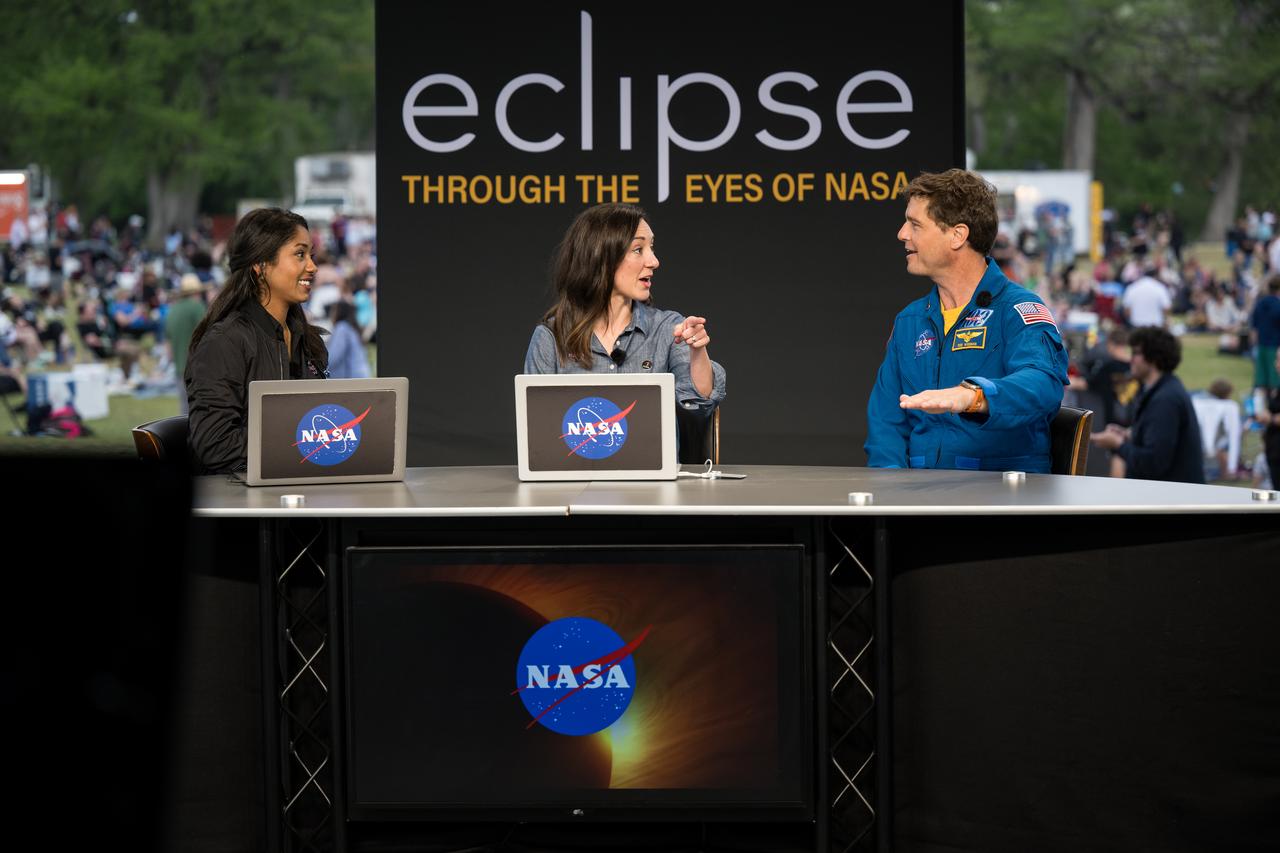
NASA Broadcast Host Tahira Allen, Space Physicist Gina DiBraccio, and NASA astronaut Reid Wiseman are seen during the broadcast of the total solar eclipse in Kerrville, TX on Monday, April 8, 2024. A total solar eclipse swept across a narrow portion of the North American continent from Mexico’s Pacific coast to the Atlantic coast of Newfoundland, Canada. A partial solar eclipse was visible across the entire North American continent along with parts of Central America and Europe. Photo Credit: (NASA/Aubrey Gemignani)
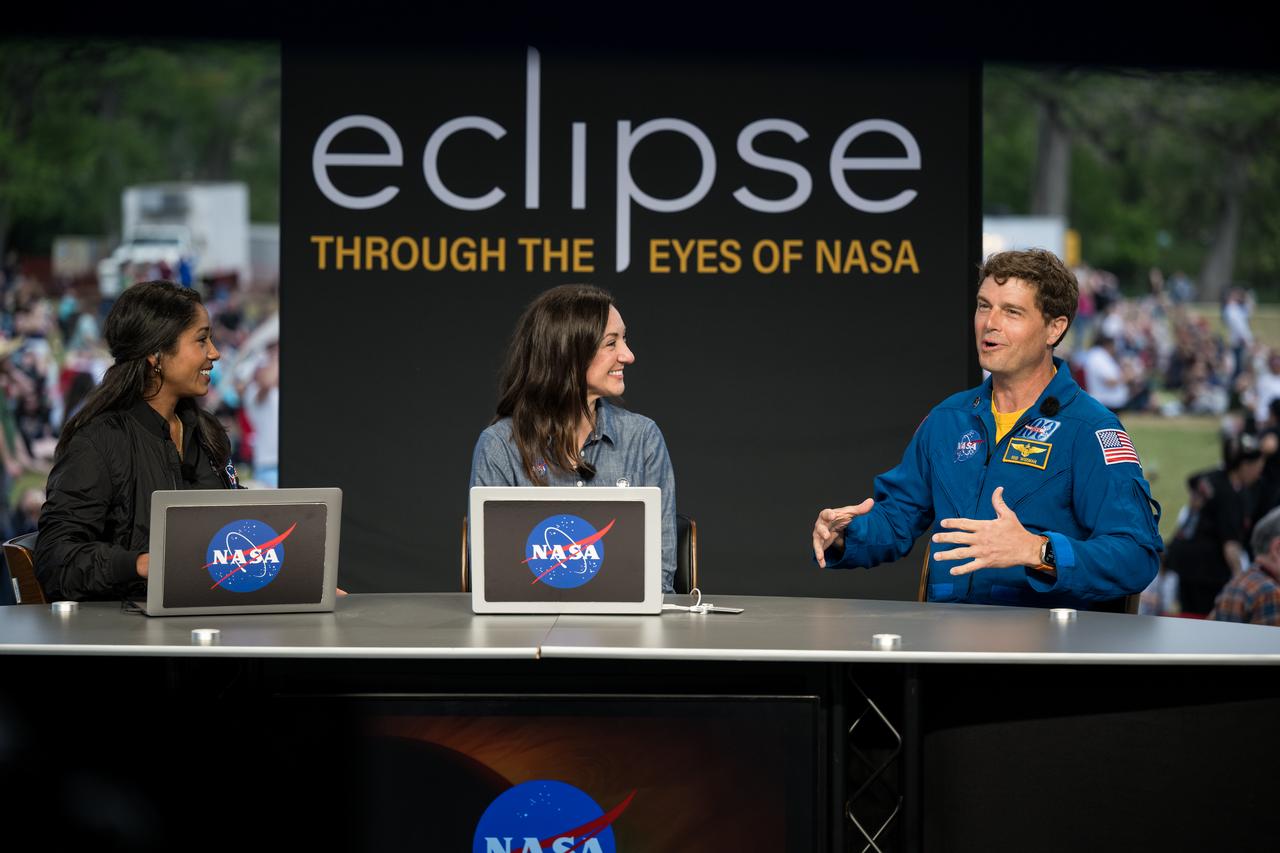
NASA Broadcast Host Tahira Allen, Space Physicist Gina DiBraccio, and NASA astronaut Reid Wiseman are seen during the broadcast of the total solar eclipse in Kerrville, TX on Monday, April 8, 2024. A total solar eclipse swept across a narrow portion of the North American continent from Mexico’s Pacific coast to the Atlantic coast of Newfoundland, Canada. A partial solar eclipse was visible across the entire North American continent along with parts of Central America and Europe. Photo Credit: (NASA/Aubrey Gemignani)
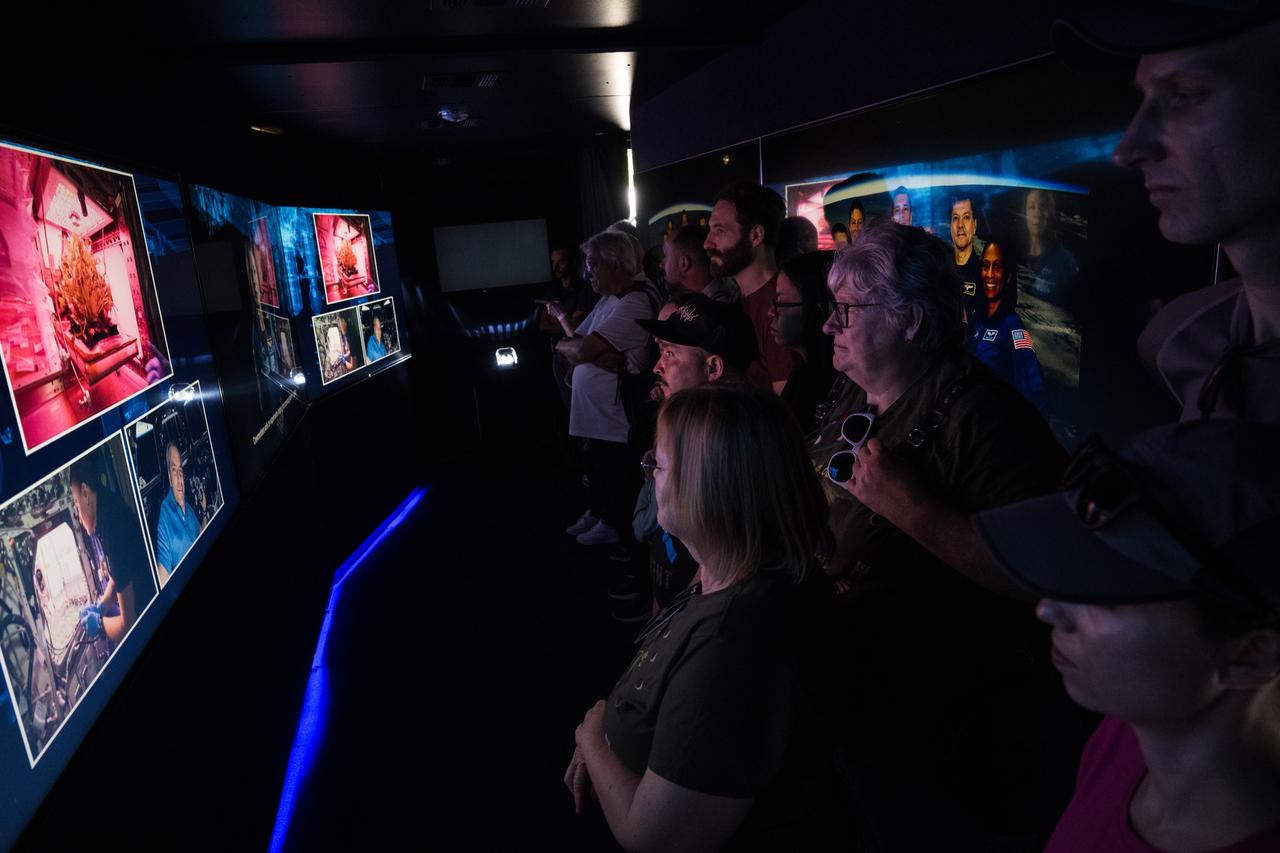
Guests visit the “Explore Humans in Space” exhibit during the Kerrville eclipse festival in Kerrville, TX on Monday, April 8, 2024. A total solar eclipse swept across a narrow portion of the North American continent from Mexico’s Pacific coast to the Atlantic coast of Newfoundland, Canada. A partial solar eclipse was visible across the entire North American continent along with parts of Central America and Europe. Photo Credit: (NASA/Aubrey Gemignani)
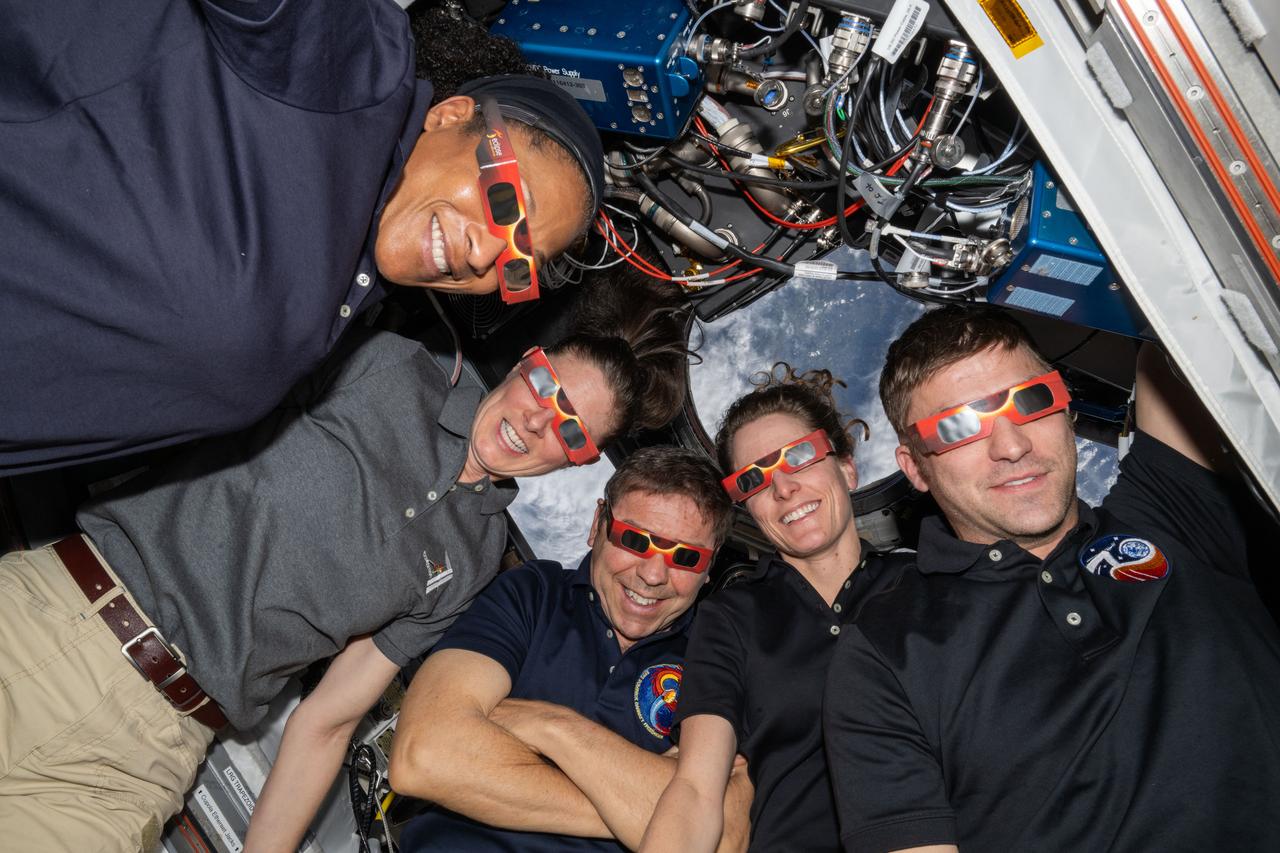
iss070e129908 (March 26, 2024) --- Five NASA astronauts wear eye-protecting specs in anticipation of viewing the solar eclipse from the International Space Station's cupola. The Expedition 70 crewmates will have three opportunities on April 8 to view the Moon's shadow as it tracks across the Earth surface during the eclipse.

This composite image of seven pictures shows the progression of a partial solar eclipse near from Ross Lake, Northern Cascades National Park, Washington on Monday, Aug. 21, 2017. The second to the last frame shows the International Space Station, with a crew of six onboard, in silhouette as it transits the Sun at roughly five miles per second. A total solar eclipse swept across a narrow portion of the contiguous United States from Lincoln Beach, Oregon to Charleston, South Carolina. A partial solar eclipse was visible across the entire North American continent along with parts of South America, Africa, and Europe. Photo Credit: (NASA/Bill Ingalls)
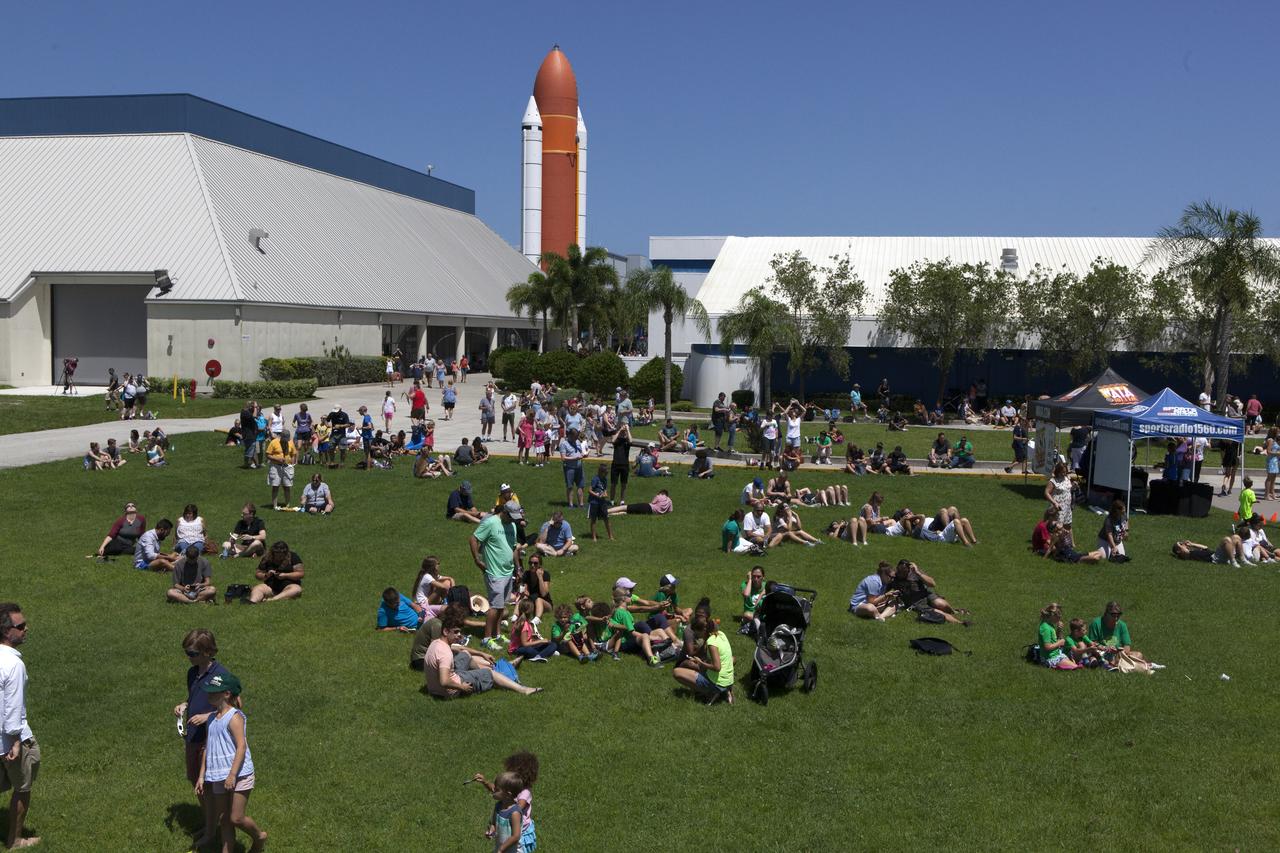
From the Kennedy Space Center Visitor Complex, guests joined Americans from coast to coast following the solar eclipse. Although a partial eclipse on Florida's Space Coast, young and old alike found many ways to watch the rare astronomical event. As the Moon passed between Earth and the midafternoon Sun, a shadow moved across the landscape. The 70-mile-wide totality path, or "umbral cone" -- where the entire Sun will vanish behind the Moon -- stretched across 14 states, from Oregon to South Carolina.
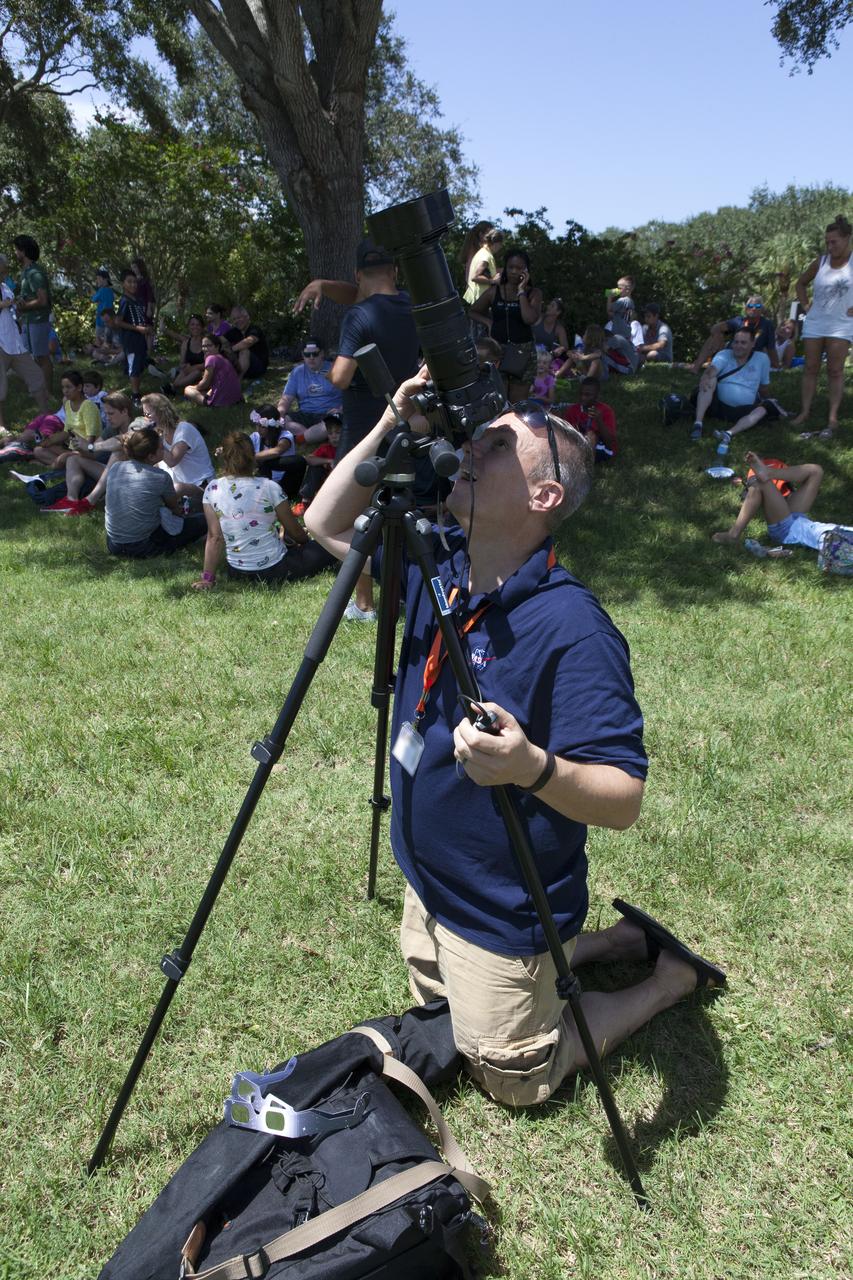
From the Kennedy Space Center Visitor Complex, guests joined Americans from coast to coast following the solar eclipse. Although a partial eclipse on Florida's Space Coast, young and old alike found many ways to watch the rare astronomical event. As the Moon passed between Earth and the midafternoon Sun, a shadow moved across the landscape. The 70-mile-wide totality path, or "umbral cone" -- where the entire Sun will vanish behind the Moon -- stretched across 14 states, from Oregon to South Carolina.
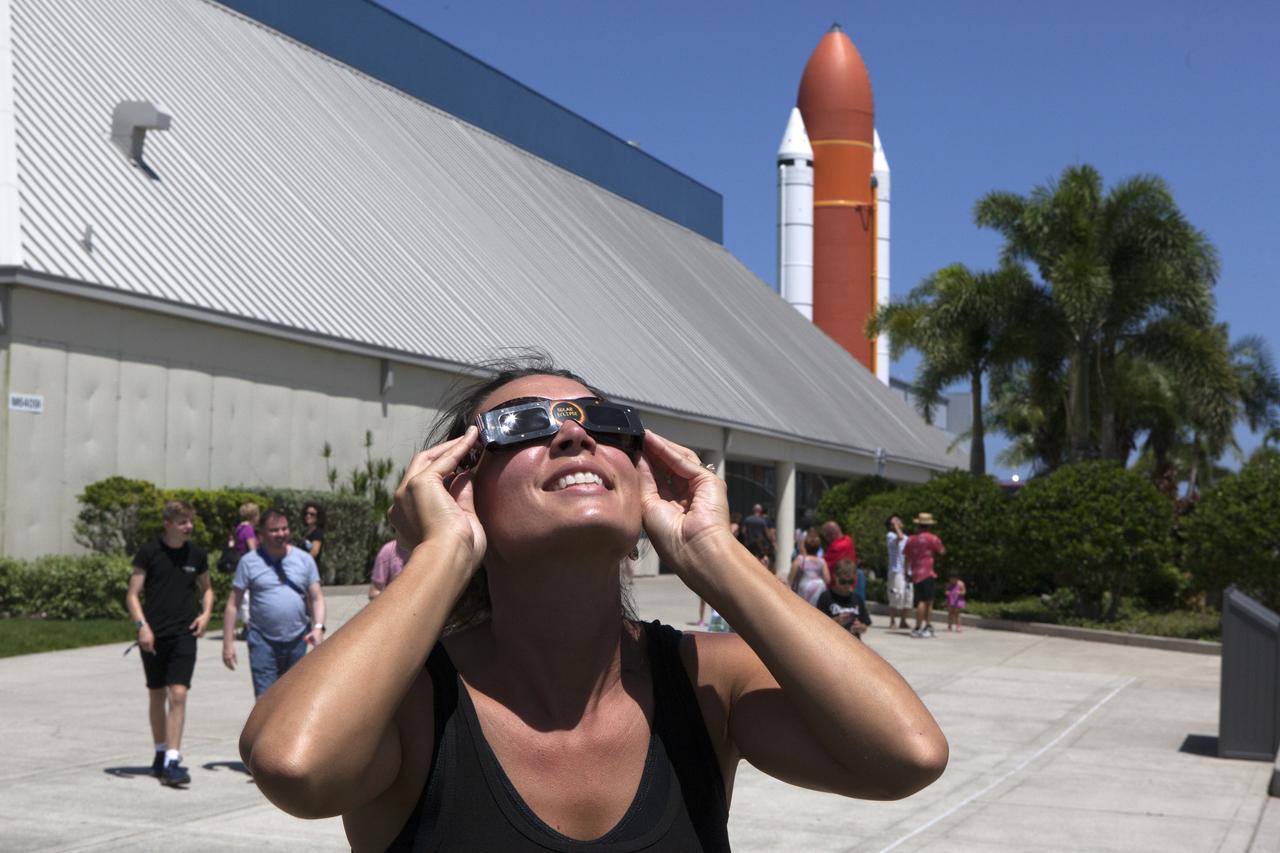
From the Kennedy Space Center Visitor Complex, guests joined Americans from coast to coast following the solar eclipse. Although a partial eclipse on Florida's Space Coast, young and old alike found many ways to watch the rare astronomical event. As the Moon passed between Earth and the midafternoon Sun, a shadow moved across the landscape. The 70-mile-wide totality path, or "umbral cone" -- where the entire Sun will vanish behind the Moon -- stretched across 14 states, from Oregon to South Carolina.
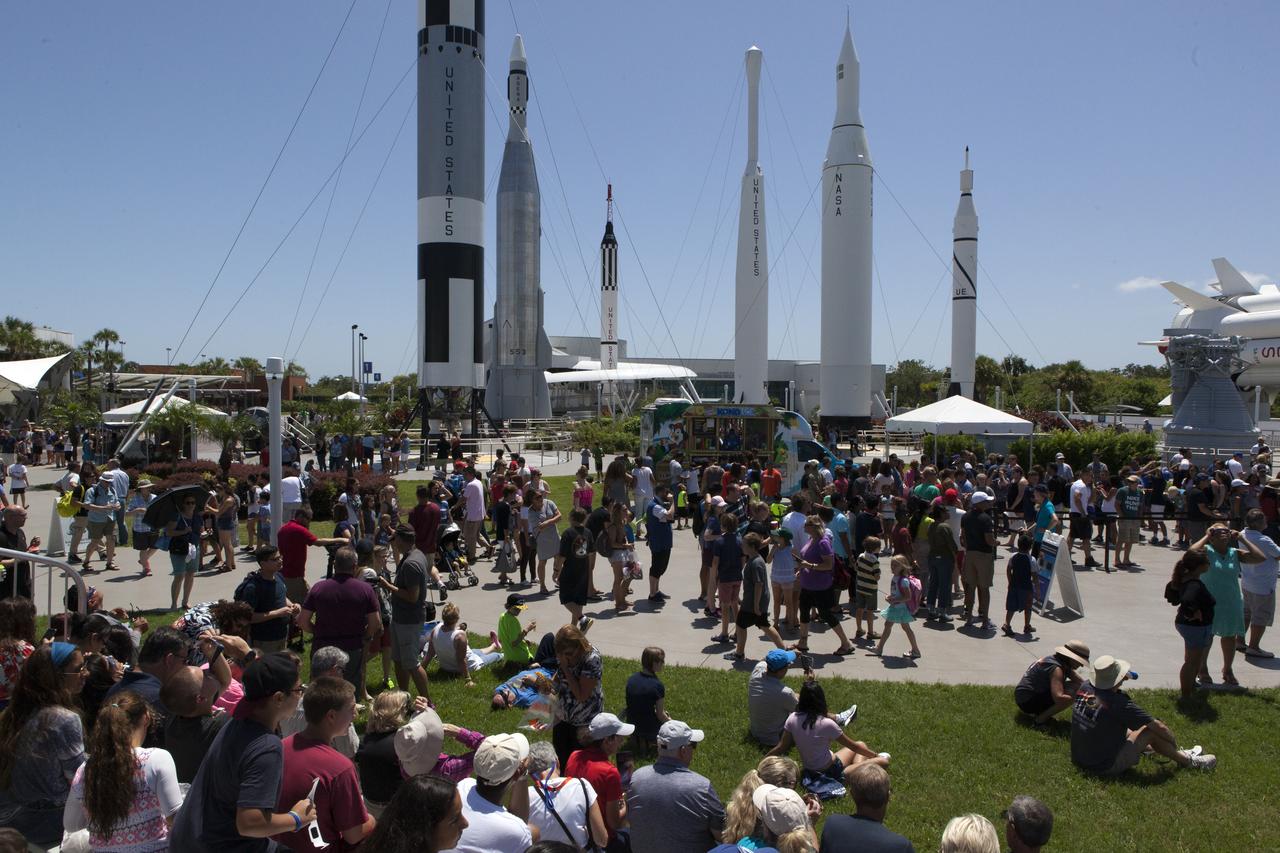
From the Kennedy Space Center Visitor Complex, guests joined Americans from coast to coast following the solar eclipse. Although a partial eclipse on Florida's Space Coast, young and old alike found many ways to watch the rare astronomical event. As the Moon passed between Earth and the midafternoon Sun, a shadow moved across the landscape. The 70-mile-wide totality path, or "umbral cone" -- where the entire Sun will vanish behind the Moon -- stretched across 14 states, from Oregon to South Carolina.
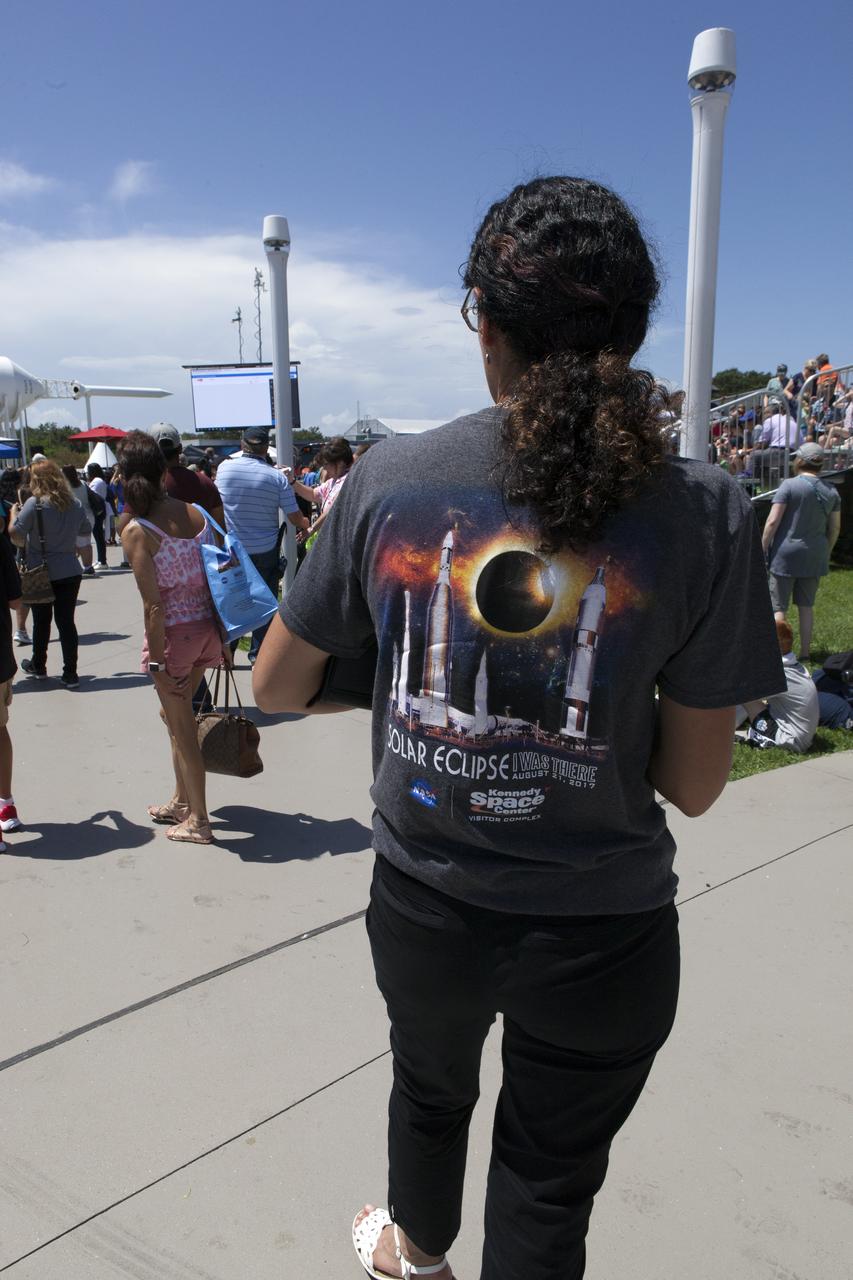
From the Kennedy Space Center Visitor Complex, guests joined Americans from coast to coast following the solar eclipse. Although a partial eclipse on Florida's Space Coast, young and old alike found many ways to watch the rare astronomical event. As the Moon passed between Earth and the midafternoon Sun, a shadow moved across the landscape. The 70-mile-wide totality path, or "umbral cone" -- where the entire Sun will vanish behind the Moon -- stretched across 14 states, from Oregon to South Carolina.
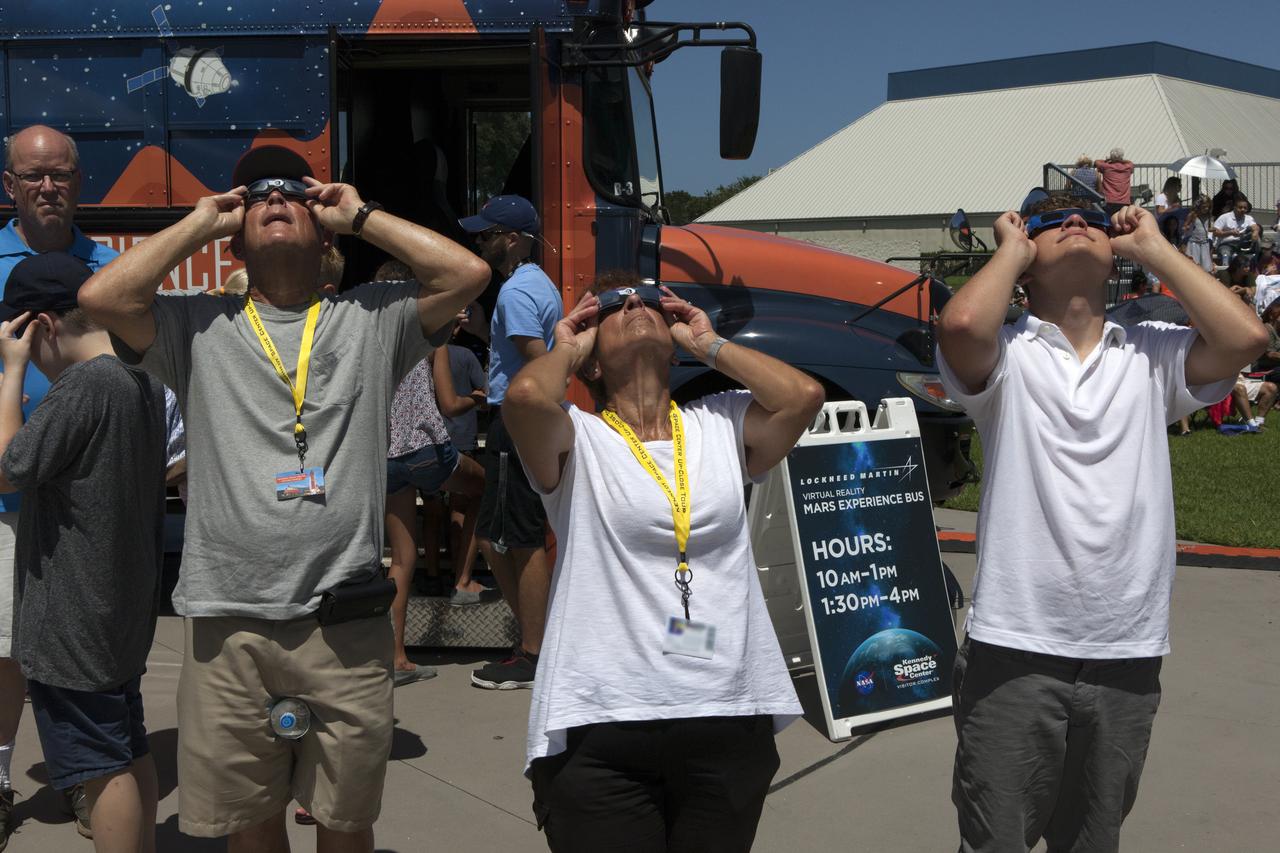
From the Kennedy Space Center Visitor Complex, guests joined Americans from coast to coast following the solar eclipse. Although a partial eclipse on Florida's Space Coast, young and old alike found many ways to watch the rare astronomical event. As the Moon passed between Earth and the midafternoon Sun, a shadow moved across the landscape. The 70-mile-wide totality path, or "umbral cone" -- where the entire Sun will vanish behind the Moon -- stretched across 14 states, from Oregon to South Carolina.
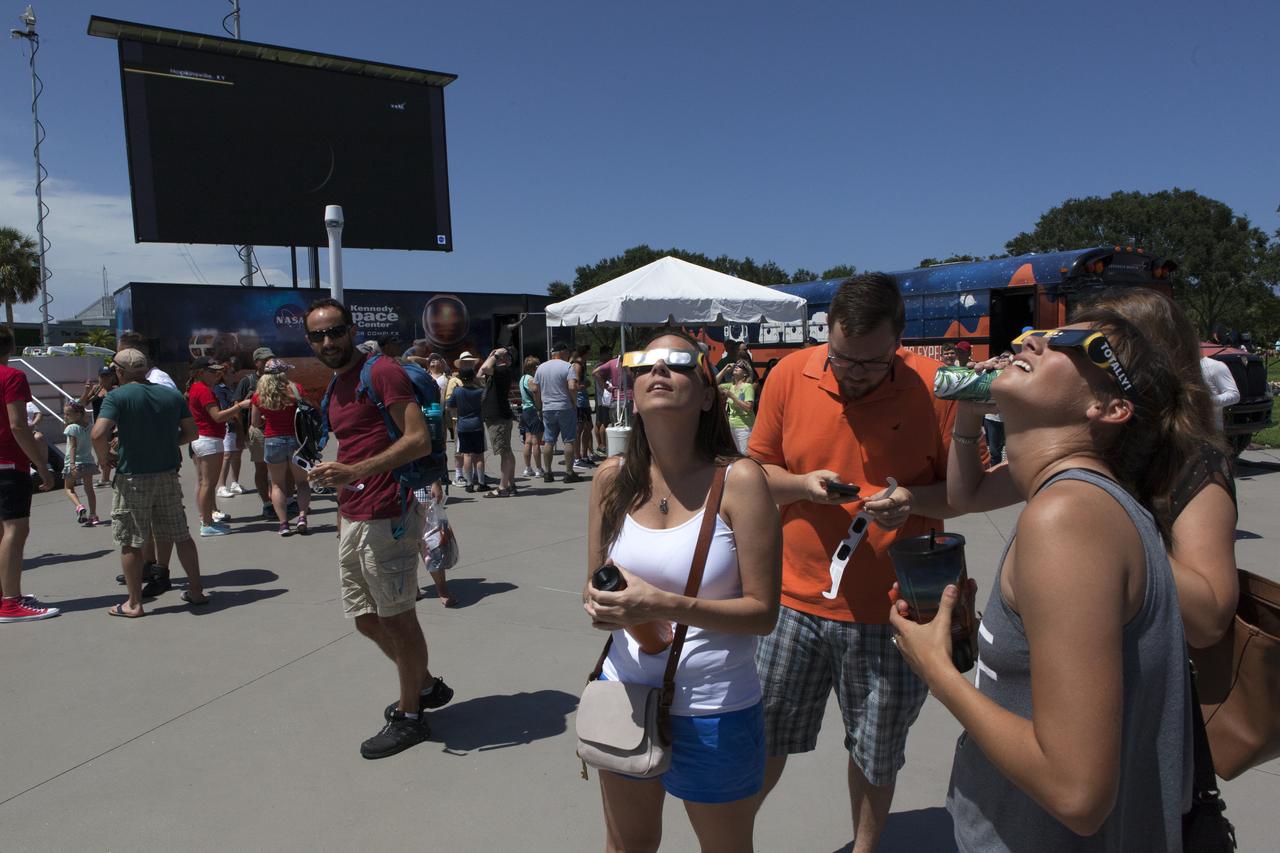
From the Kennedy Space Center Visitor Complex, guests joined Americans from coast to coast following the solar eclipse. Although a partial eclipse on Florida's Space Coast, young and old alike found many ways to watch the rare astronomical event. As the Moon passed between Earth and the midafternoon Sun, a shadow moved across the landscape. The 70-mile-wide totality path, or "umbral cone" -- where the entire Sun will vanish behind the Moon -- stretched across 14 states, from Oregon to South Carolina.
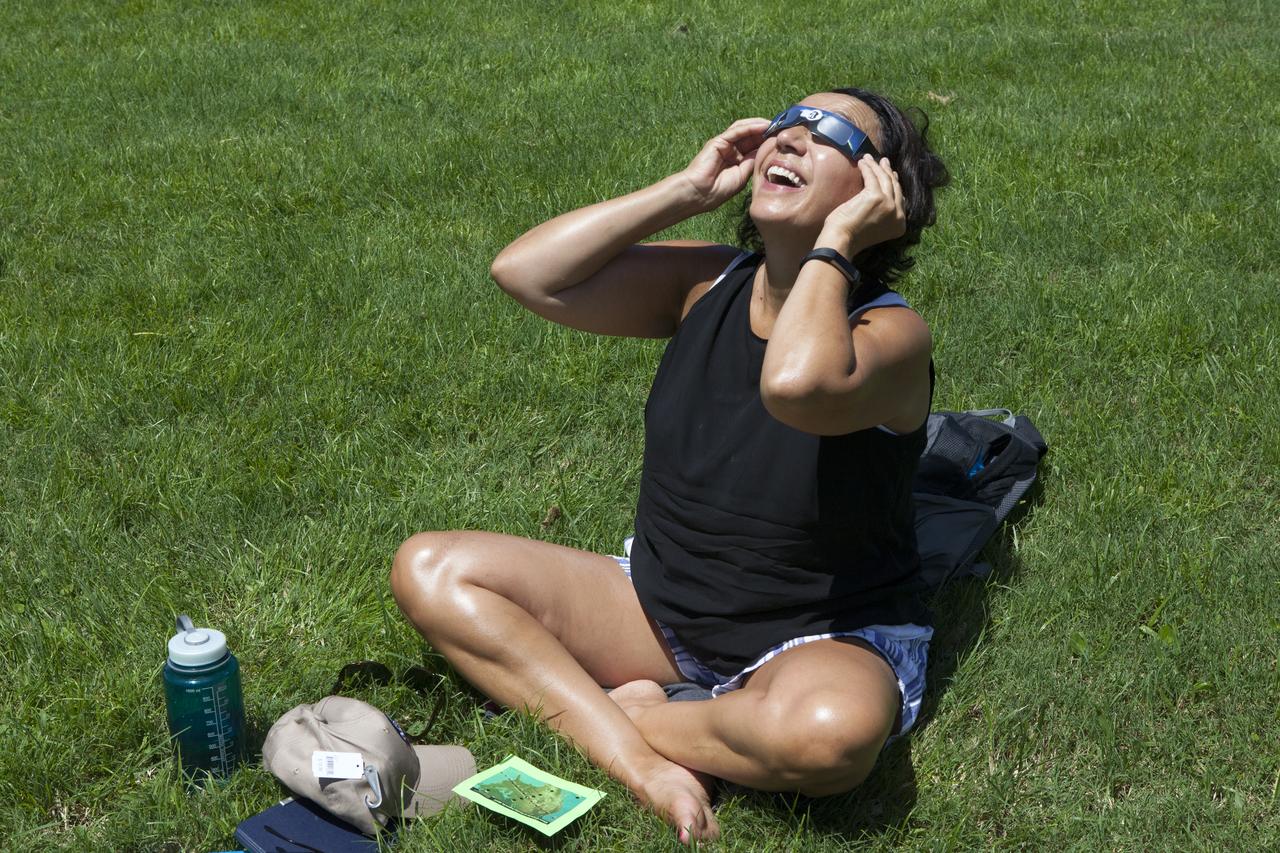
From the Kennedy Space Center Visitor Complex, guests joined Americans from coast to coast following the solar eclipse. Although a partial eclipse on Florida's Space Coast, young and old alike found many ways to watch the rare astronomical event. As the Moon passed between Earth and the midafternoon Sun, a shadow moved across the landscape. The 70-mile-wide totality path, or "umbral cone" -- where the entire Sun will vanish behind the Moon -- stretched across 14 states, from Oregon to South Carolina.
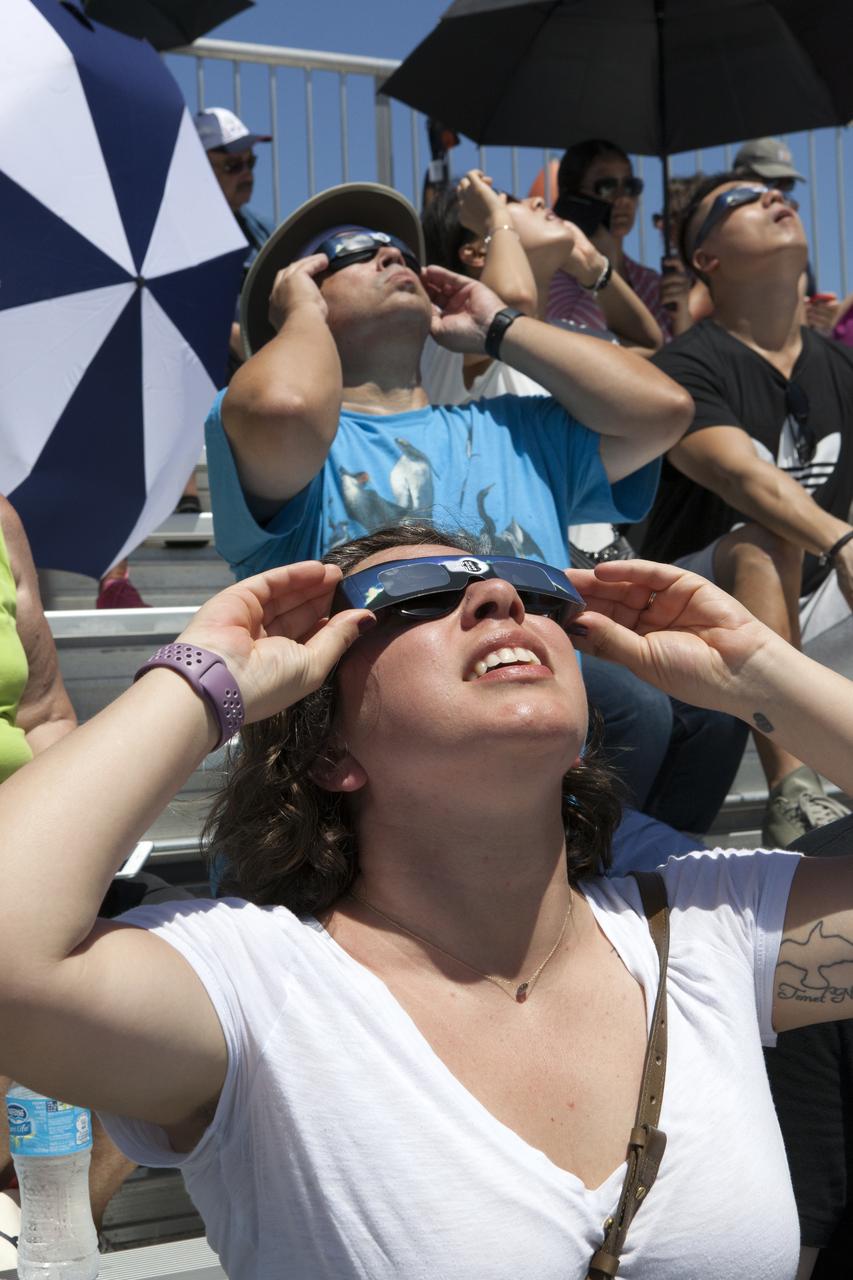
From the Kennedy Space Center Visitor Complex, guests joined Americans from coast to coast following the solar eclipse. Although a partial eclipse on Florida's Space Coast, young and old alike found many ways to watch the rare astronomical event. As the Moon passed between Earth and the midafternoon Sun, a shadow moved across the landscape. The 70-mile-wide totality path, or "umbral cone" -- where the entire Sun will vanish behind the Moon -- stretched across 14 states, from Oregon to South Carolina.
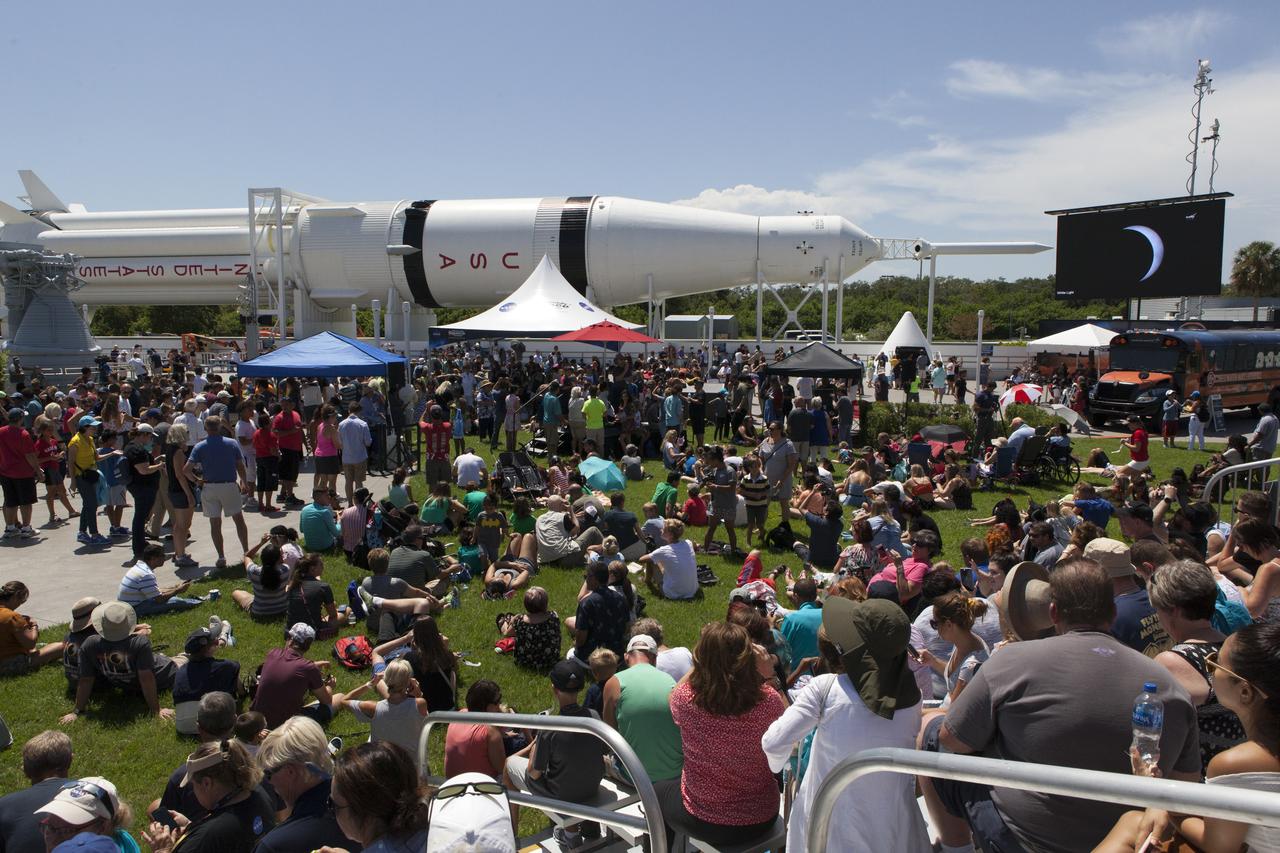
From the Kennedy Space Center Visitor Complex, guests joined Americans from coast to coast following the solar eclipse. Although a partial eclipse on Florida's Space Coast, young and old alike found many ways to watch the rare astronomical event. As the Moon passed between Earth and the midafternoon Sun, a shadow moved across the landscape. The 70-mile-wide totality path, or "umbral cone" -- where the entire Sun will vanish behind the Moon -- stretched across 14 states, from Oregon to South Carolina.

Panelists, from left to right, NASA Administrator Bill Nelson, NASA Deputy Administrator Pam Melroy, Director of the National Oceanic and Atmospheric Administration’s Office of Space Weather Observations, Elsayed Talaat, NASA Headquarters eclipse program manager, Kelly Korreck, and NASA Associate Administrator Jim Free are seen during a media briefing to discuss the upcoming solar eclipse, Tuesday, March 26, 2024 at the Mary W. Jackson NASA Headquarters building in Washington. A total solar eclipse will sweep across a narrow portion of the North American continent from Mexico’s Pacific coast to the Atlantic coast of Newfoundland, Canada on April 8, 2024. A partial solar eclipse will be visible across the entire North American continent along with parts of Central America and Europe. Photo Credit: (NASA/Aubrey Gemignani)
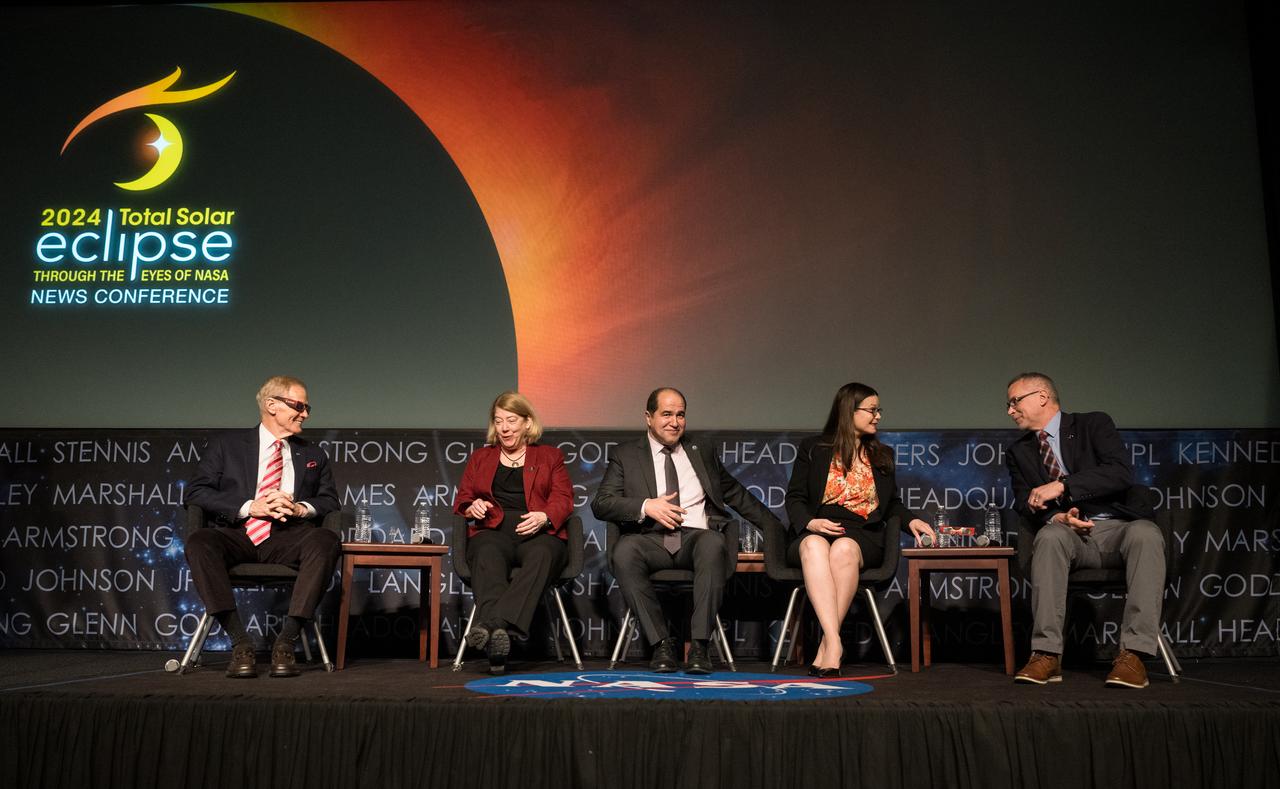
Panelists, from left to right, NASA Administrator Bill Nelson, NASA Deputy Administrator Pam Melroy, Director of the National Oceanic and Atmospheric Administration’s Office of Space Weather Observations, Elsayed Talaat, NASA Headquarters eclipse program manager, Kelly Korreck, and NASA Associate Administrator Jim Free are seen at the conclusion of a media briefing to discuss the upcoming solar eclipse, Tuesday, March 26, 2024 at the Mary W. Jackson NASA Headquarters building in Washington. A total solar eclipse will sweep across a narrow portion of the North American continent from Mexico’s Pacific coast to the Atlantic coast of Newfoundland, Canada on April 8, 2024. A partial solar eclipse will be visible across the entire North American continent along with parts of Central America and Europe. Photo Credit: (NASA/Aubrey Gemignani)

iss067e043903 (May 16, 2022) --- The Moon, with Earth's shadow draping across it during a lunar eclipse, is pictured from the International Space Station.

iss067e043895 (May 16, 2022) --- The Moon, with Earth's shadow draping across it during a lunar eclipse, is pictured from the International Space Station.
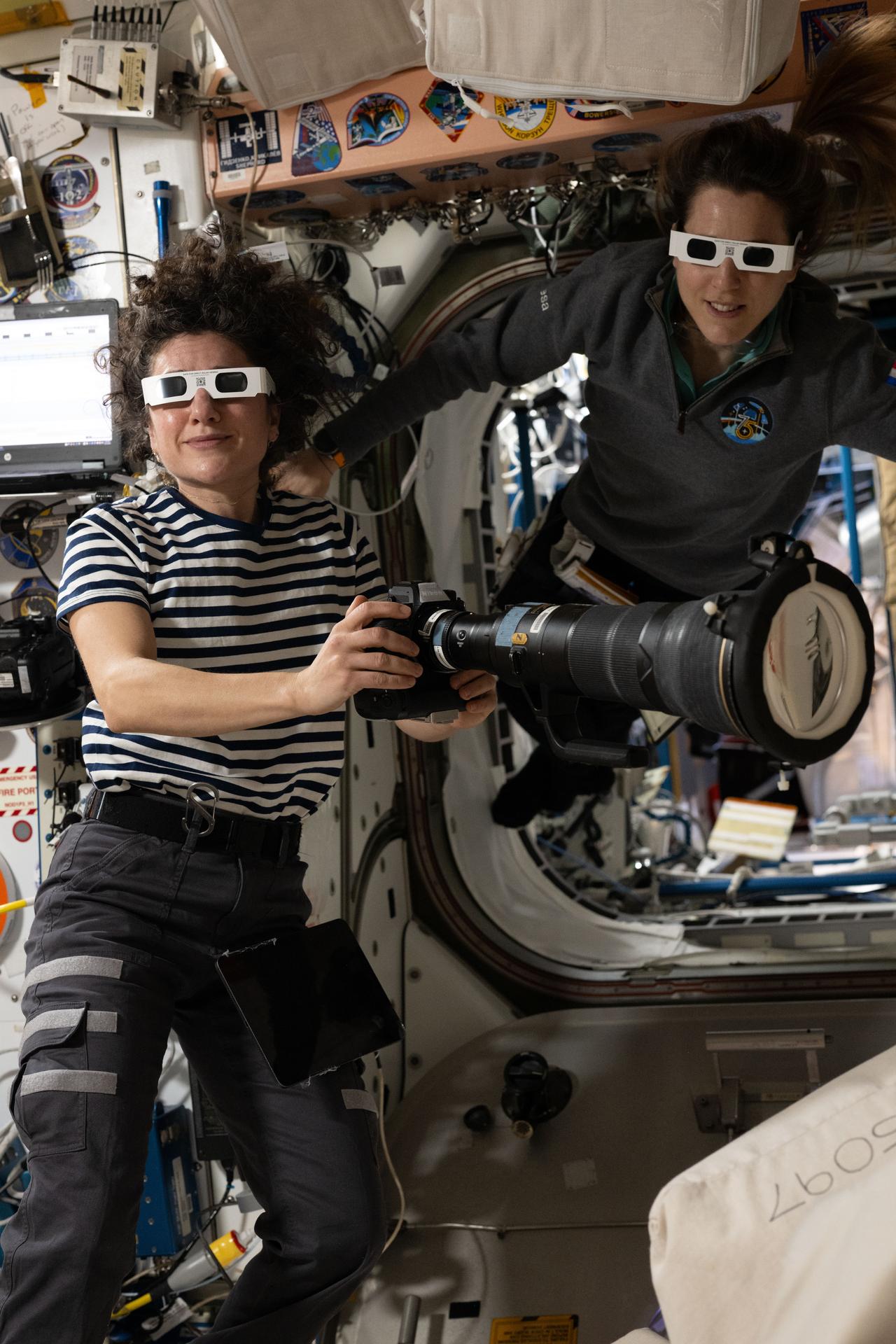
iss075e0039474 (Aug. 12, 2026) --- From left, Expedition 75 commander Jessica Meir of NASA and flight engineer Sophie Adenot of ESA (European Space Agency) wear solar eclipse glasses to protect their eyes while photographing a partial solar eclipse from the International Space Station. Meir is holding a Nikon Z9 camera with an 800mm lens, a 1.4x teleconverter, and a solar filter. Credit: NASA/Anil Menon
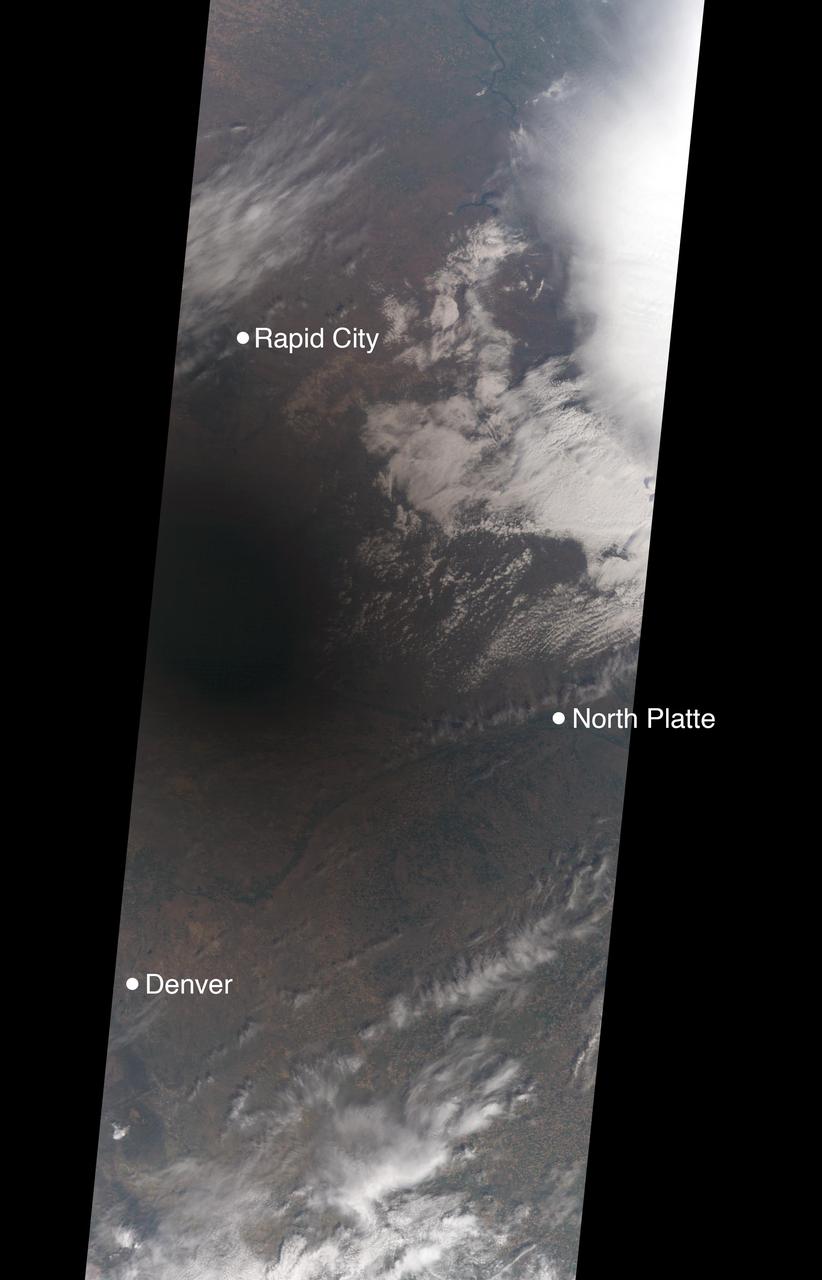
On Aug. 21, 2017, a total solar eclipse swept across the United States -- the first such eclipse in the contiguous 48 states since 1979, and the first cross-country eclipse since 1918. A partial eclipse was visible in all 50 states, and initial estimates suggest that upwards of 20 million people observed the Moon completely obscuring the Sun in the 70-mile-wide (113-kilometer-wide) path of totality. While viewing a total solar eclipse from the ground is an amazing experience, satellites orbiting Earth see the eclipse from a unique perspective. As the Moon's shadow passed through the United States, the Multi-angle Imaging SpectroRadiometer (MISR) instrument aboard NASA's Terra satellite was capturing images of eastern Wyoming and western Nebraska from its altitude of 438 miles (705 kilometers) above the surface. MISR gathers images on a strip about 249 miles (400 kilometers) wide directly below the path of the satellite. Incredibly, given that the shadow of the Moon took only 90 minutes to cross the entire United States, and Terra itself moves at a brisk 16,700 miles per hour from north to south, MISR happened to be in exactly the right place at the right time to capture totality. From the ground, the moment of totality appears suddenly, sweeping over the sky in just a few seconds. "I was unprepared for just how dark it actually was," says Mika Tosca, a researcher who works with MISR data and who observed the eclipse in Nebraska. "The streetlights even turned on. Everything fell silent, and I swear the temperature dropped." From the vantage point of space, however, it’s possible to see the entire shadow of the Moon, with the completely dark, circular umbra and the more diffuse penumbra. MISR contains nine cameras oriented at different angles, viewing forward, downward, and backward along the flight path, resulting in an approximate seven-minute interval for all nine cameras to image a single location on Earth's surface. This animation combines these nine images into a movie showing the motion of the Moon's shadow during this seven-minute period. In the first image, captured by the camera pointing farthest ahead of the satellite, totality has not quite begun in the area seen by MISR. From the second camera onward, totality sweeps across the image area from west to east, beginning just west of the town of Jay Em, Wyoming, and proceeding about halfway across the MISR swath to the town of Alliance, Nebraska. The motion of the lunar shadow in different pairs of images leads to estimates of the local ground speed ranging between 1,480 and 1,820 miles per hour (2,382 and 2,929 kilometers per hour). The spread in values is a measure of the uncertainty of the estimate. At this location, the predicted speed of the eclipse calculated from lunar orbital motion is about 1,658 miles per hour (2,668 kilometers per hour), which falls in the middle of the range estimated from the MISR images. Tosca's observation that the temperature dropped during the eclipse is a well-known phenomenon. The GLOBE Observer, a phone application dedicated to citizen science and sponsored by NASA, encouraged eclipse-goers to record the local air temperature at regular intervals. Data collected by nearby observers in the path of totality show that, on average, temperatures dropped by 9.3 degrees Fahrenheit (5.2 degrees Celsius) during the eclipse. This compares to an average of 5.4 degrees Fahrenheit drop measured at several Nebraska Mesonet weather stations within the path of totality. The decrease in the amount of sunlight reaching Earth affected more than temperatures. Areas that get a large portion of their power from solar energy were naturally concerned about shortages during the eclipse -- the state of California, though not in the path of totality, estimated that 6,000 megawatts of solar power would be lost during the eclipse. An animation is available at https://photojournal.jpl.nasa.gov/catalog/PIA21957

Asal Naseri, program executive in the Heliophysics Division of NASA's Science Mission Directorate, speaks to attendees at the Indianapolis Motor Speedway during a panel discussion about the James Webb Space Telescope ahead of the total solar eclipse, Monday, April 8, 2024, in Indianapolis, Ind. A total solar eclipse swept across a narrow portion of the North American continent from Mexico’s Pacific coast to the Atlantic coast of Newfoundland, Canada. A partial solar eclipse was visible across the entire North American continent along with parts of Central America and Europe. Photo Credit: (NASA/Joel Kowsky)

Director of the National Oceanic and Atmospheric Administration’s Office of Space Weather Observations, Elsayed Talaat, speaks during a media briefing to discuss the upcoming solar eclipse, Tuesday, March 26, 2024 at the Mary W. Jackson NASA Headquarters building in Washington. A total solar eclipse will sweep across a narrow portion of the North American continent from Mexico’s Pacific coast to the Atlantic coast of Newfoundland, Canada on April 8, 2024. A partial solar eclipse will be visible across the entire North American continent along with parts of Central America and Europe. Photo Credit: (NASA/Aubrey Gemignani)
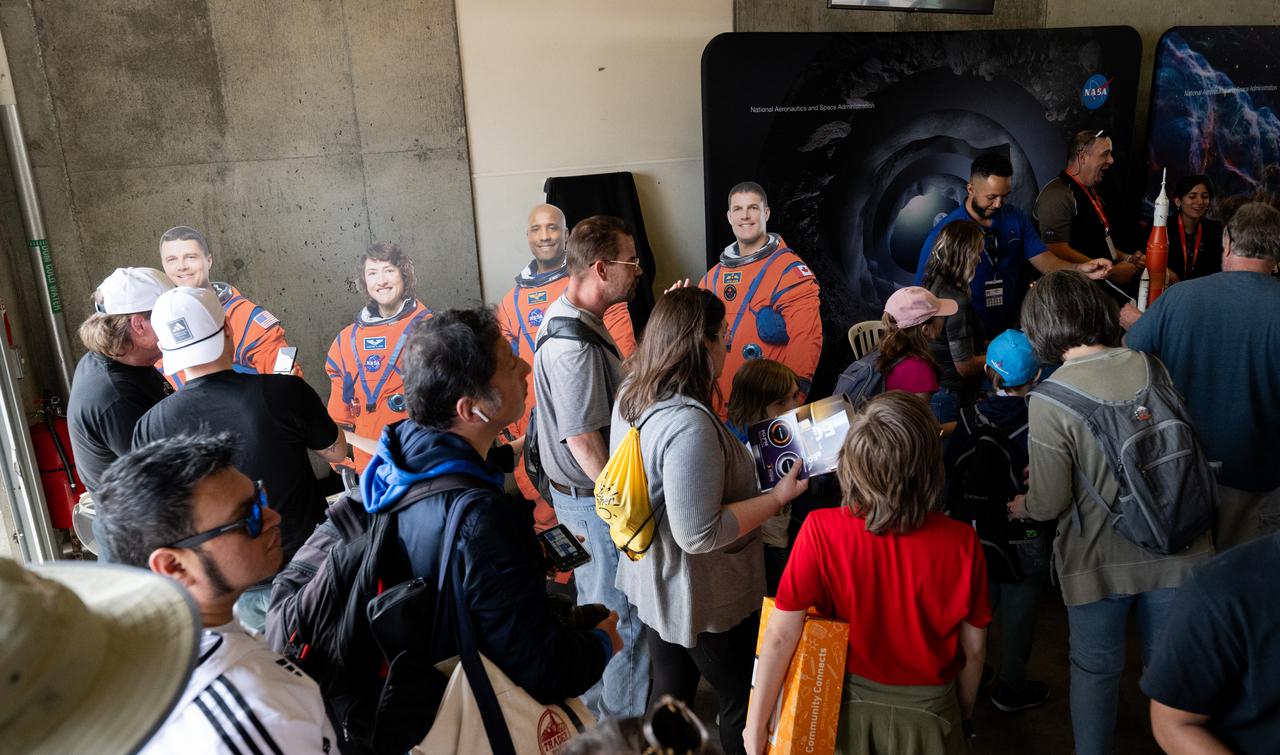
Life-size cutouts of Artemis II crewmembers NASA astronauts Reid Wiseman, Christina Koch, Victor Glover, and Canadian Space Agency astronaut Jermey Hansen are seen as attendees at the Indianapolis Motor Speedway view NASA exhibits ahead of the total solar eclipse, Monday, April 8, 2024, in Indianapolis, Ind. A total solar eclipse swept across a narrow portion of the North American continent from Mexico’s Pacific coast to the Atlantic coast of Newfoundland, Canada. A partial solar eclipse was visible across the entire North American continent along with parts of Central America and Europe. Photo Credit: (NASA/Joel Kowsky)
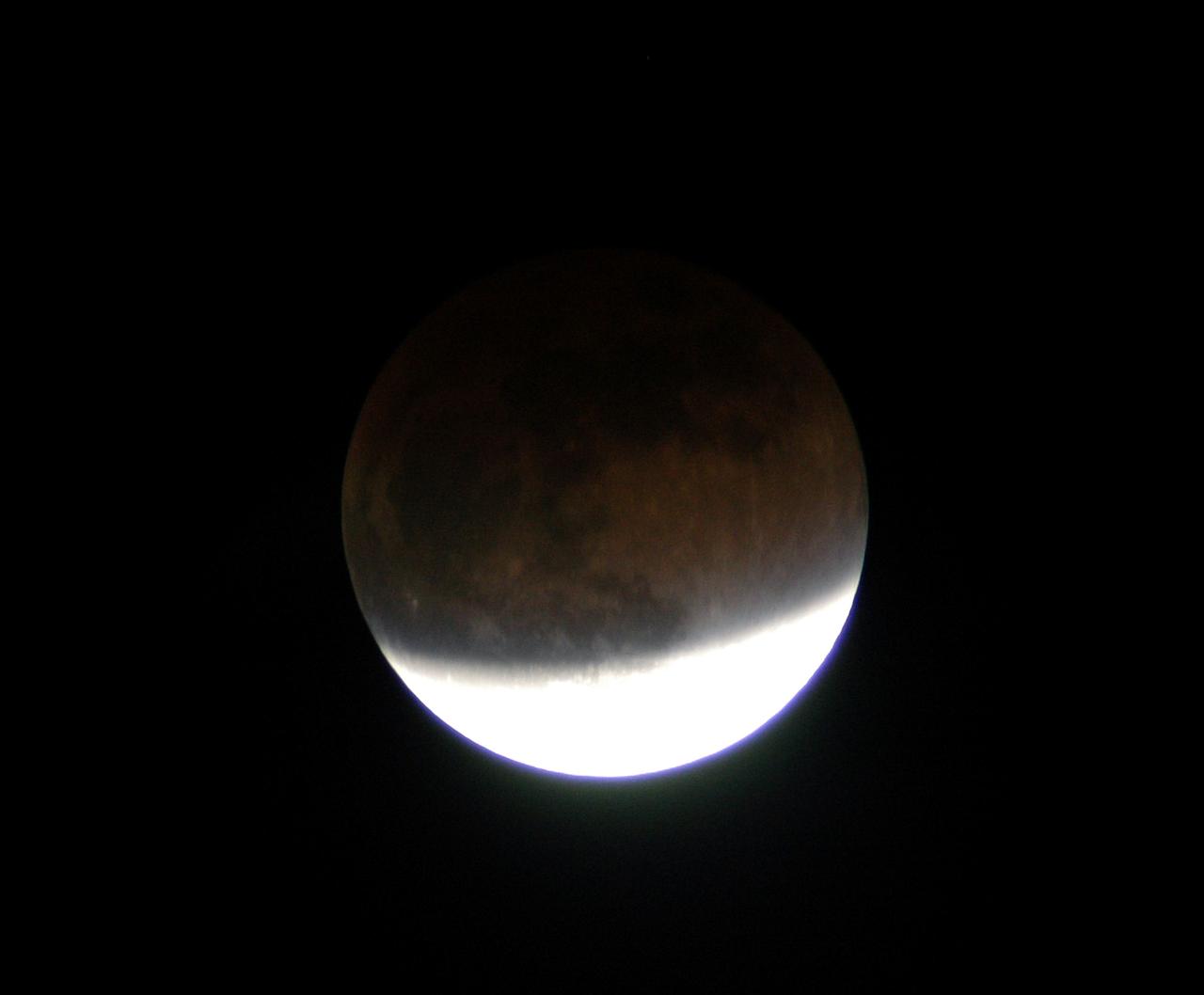
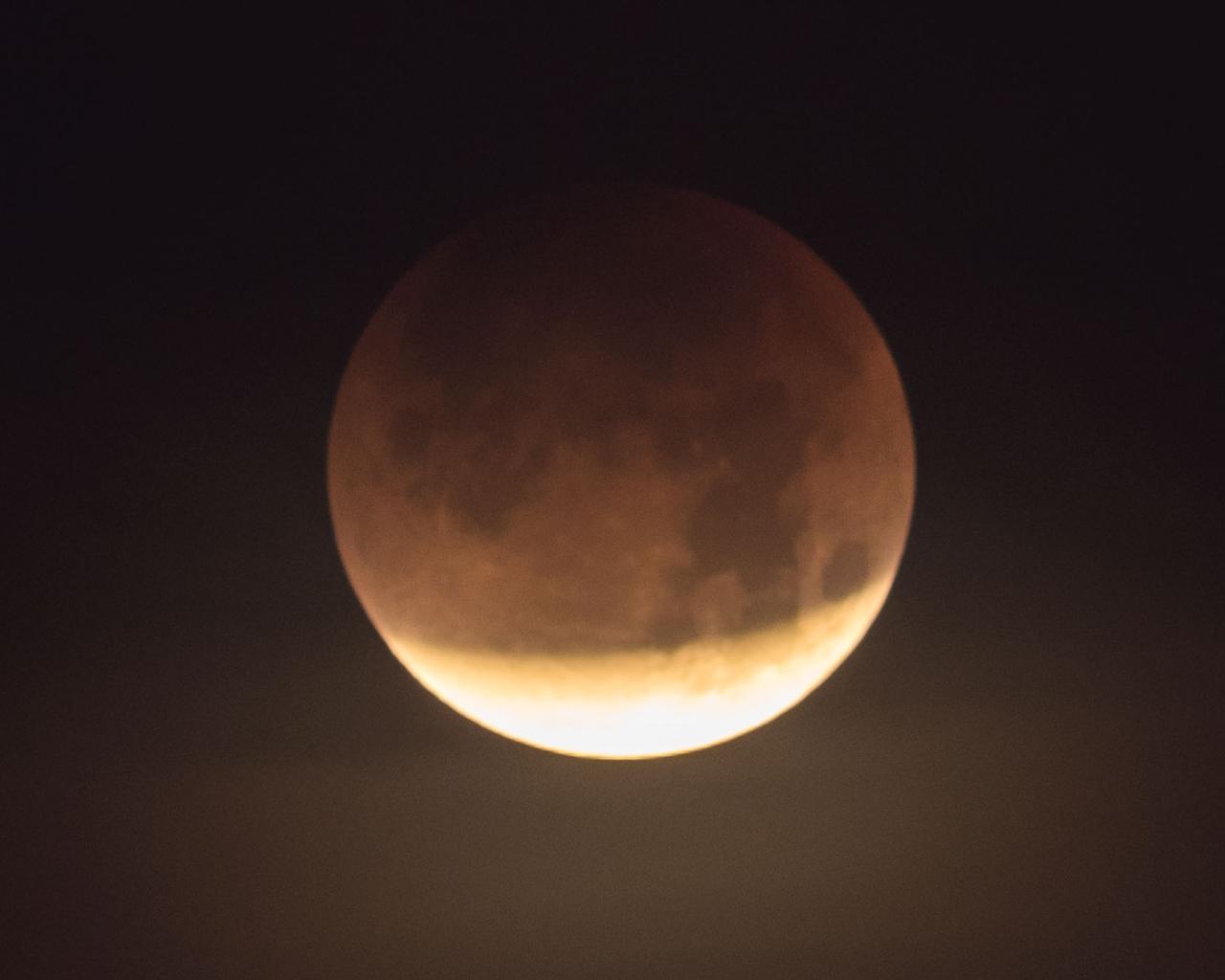
KENNEDY SPACE CENTER, FLA. - In this lunar eclipse viewed from Merritt Island, Fla., the full moon changes color because it is being lighted slightly by sunlight passing through the Earth’s atmosphere. The earlier reddish color is fading but still somewhat visible on the darker, upper portion. Eclipses occur when the Sun, Earth and Moon line up. They are rare because the Moon usually passes above or below the imaginary line connecting Earth and the Sun. The Earth casts a shadow that the Moon can pass through - when it does, it is called a lunar eclipse.
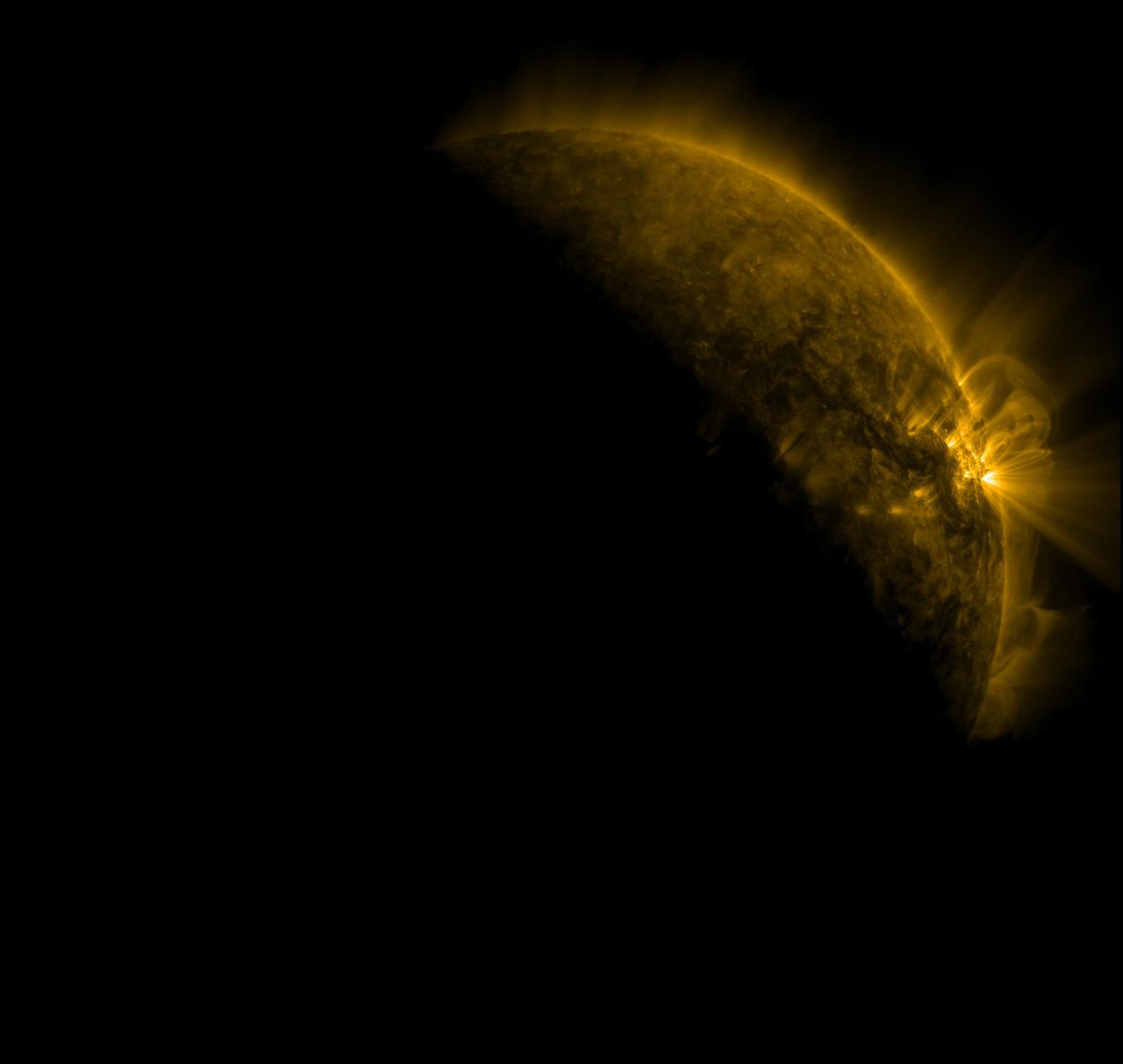
The Fall 2011 eclipse season started on September 11. Here is an AIA 171 image from 0657 UT with the first eclipse! SDO has eclipse seasons twice a year near each equinox. For three weeks near midnight Las Cruces time (about 0700 UT) our orbit has the Earth pass between SDO and the Sun. These eclipses can last up to 72 minutes in the middle of an eclipse season. The current eclipse season started on September 11 and lasts until October 4. To read more about SDO go to: <a href="http://sdo.gsfc.nasa.gov/" rel="nofollow">sdo.gsfc.nasa.gov/</a> Credit: NASA/GSFC/SDO <b><a href="http://www.nasa.gov/centers/goddard/home/index.html" rel="nofollow">NASA Goddard Space Flight Center</a></b> enables NASA’s mission through four scientific endeavors: Earth Science, Heliophysics, Solar System Exploration, and Astrophysics. Goddard plays a leading role in NASA’s accomplishments by contributing compelling scientific knowledge to advance the Agency’s mission. <b>Follow us on <a href="http://twitter.com/NASA_GoddardPix" rel="nofollow">Twitter</a></b> <b>Like us on <a href="http://www.facebook.com/pages/Greenbelt-MD/NASA-Goddard/395013845897?ref=tsd" rel="nofollow">Facebook</a></b> <b>Find us on <a href="http://instagrid.me/nasagoddard/?vm=grid" rel="nofollow">Instagram</a></b>

NASA Armstrong Flight Research Center photographer Lauren Hughes takes photos of the Super Blue Blood Moon eclipse from California’s Trona Pinnacles Desert National Conservation for the Jan. 31 of the total lunar eclipse that provided a rare opportunity to capture a supermoon, a blue moon and a lunar eclipse at the same time. A supermoon occurs when the Moon is closer to Earth in its orbit and appearing 14 percent brighter than usual. As the second full moon of the month, this moon is also commonly known as a blue moon, though it will not be blue in appearance. The super blue moon passed through Earth’s shadow and took on a reddish tint, known as a blood moon. This total lunar eclipse occurs when the Sun, Earth, and a full moon form a near-perfect lineup in space. The Moon passes directly behind the Earth into its umbra (shadow).
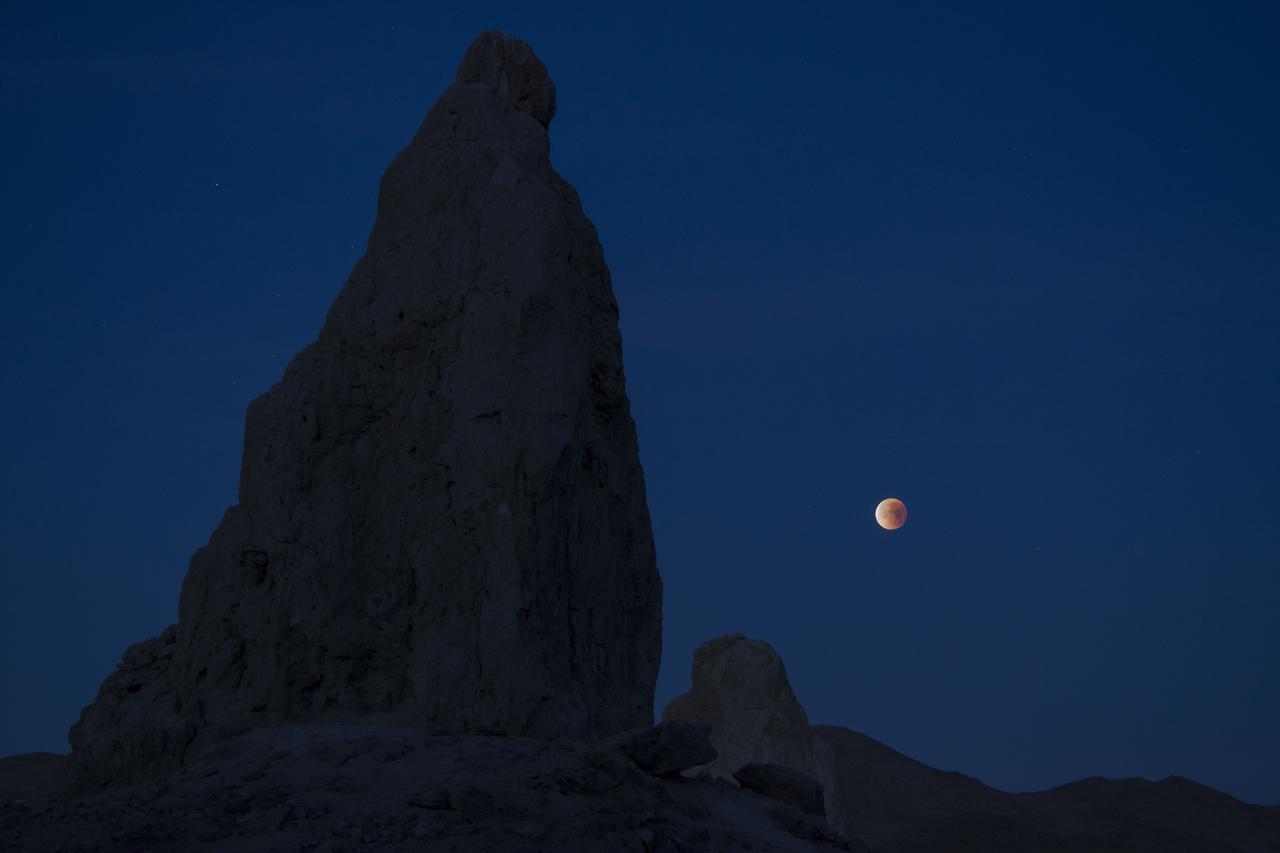
NASA Armstrong Flight Research Center photographer Lauren Hughes takes photos of the Super Blue Blood Moon eclipse from California's Trona Pinnacles Desert National Conservation for the Jan. 31 of the total lunar eclipse that provided a rare opportunity to capture a supermoon, a blue moon and a lunar eclipse at the same time. A supermoon occurs when the Moon is closer to Earth in its orbit and appearing 14 percent brighter than usual. As the second full moon of the month, this moon is also commonly known as a blue moon, though it will not be blue in appearance. The super blue moon passed through Earth's shadow and took on a reddish tint, known as a blood moon. This total lunar eclipse occurs when the Sun, Earth, and a full moon form a near-perfect lineup in space. The Moon passes directly behind the Earth into its umbra (shadow).
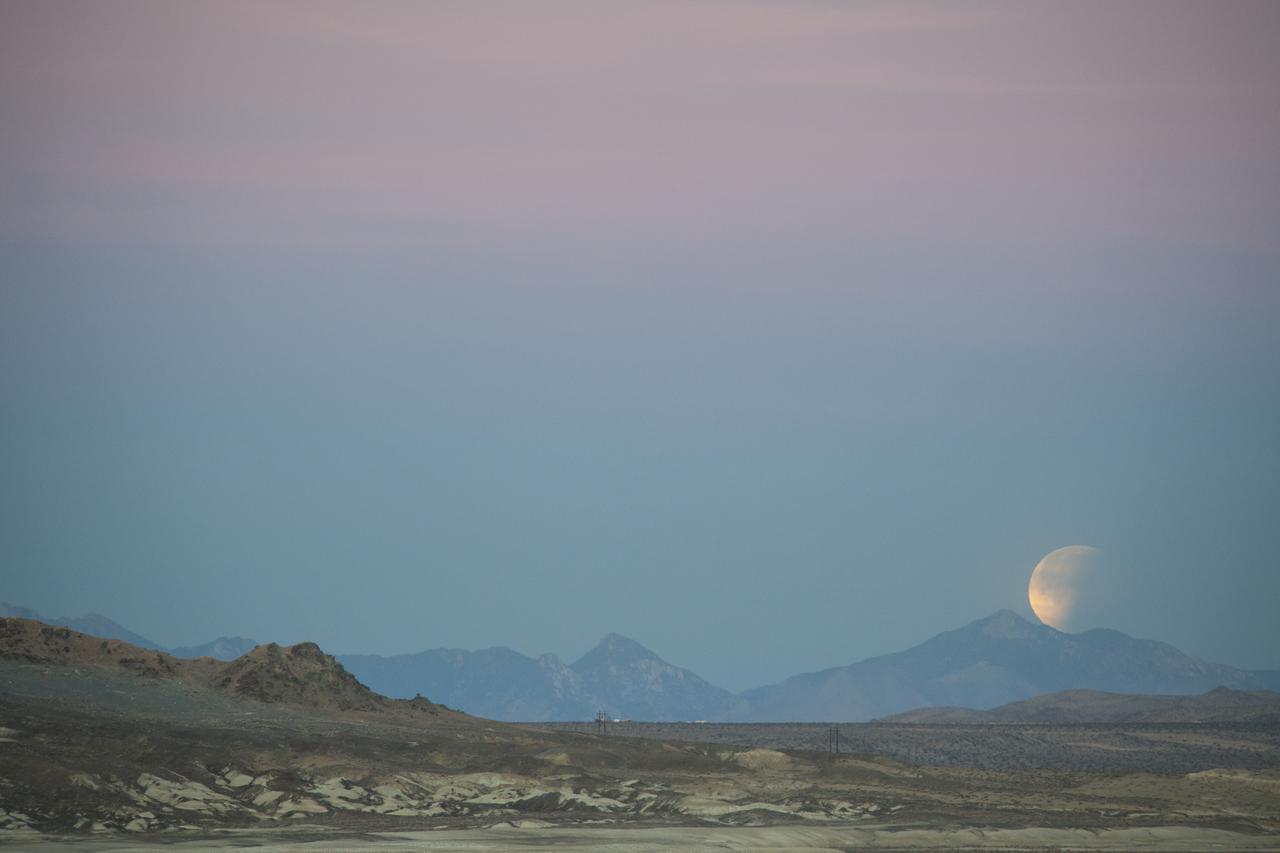
NASA Armstrong Flight Research Center photographer Lauren Hughes takes photos of the Super Blue Blood Moon eclipse from California’s Trona Pinnacles Desert National Conservation for the Jan. 31 of the total lunar eclipse that provided a rare opportunity to capture a supermoon, a blue moon and a lunar eclipse at the same time. A supermoon occurs when the Moon is closer to Earth in its orbit and appearing 14 percent brighter than usual. As the second full moon of the month, this moon is also commonly known as a blue moon, though it will not be blue in appearance. The super blue moon passed through Earth’s shadow and took on a reddish tint, known as a blood moon. This total lunar eclipse occurs when the Sun, Earth, and a full moon form a near-perfect lineup in space. The Moon passes directly behind the Earth into its umbra (shadow).
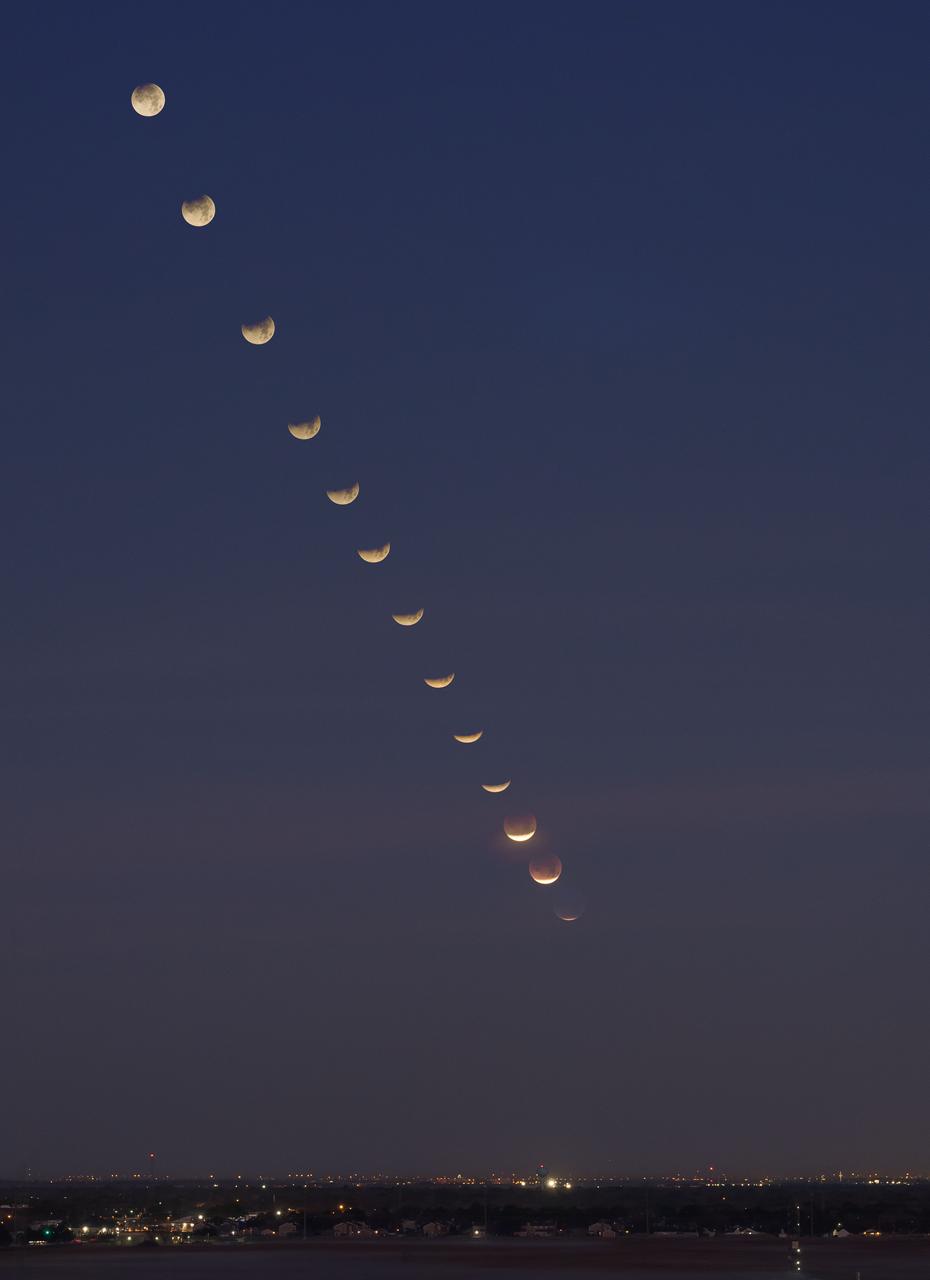
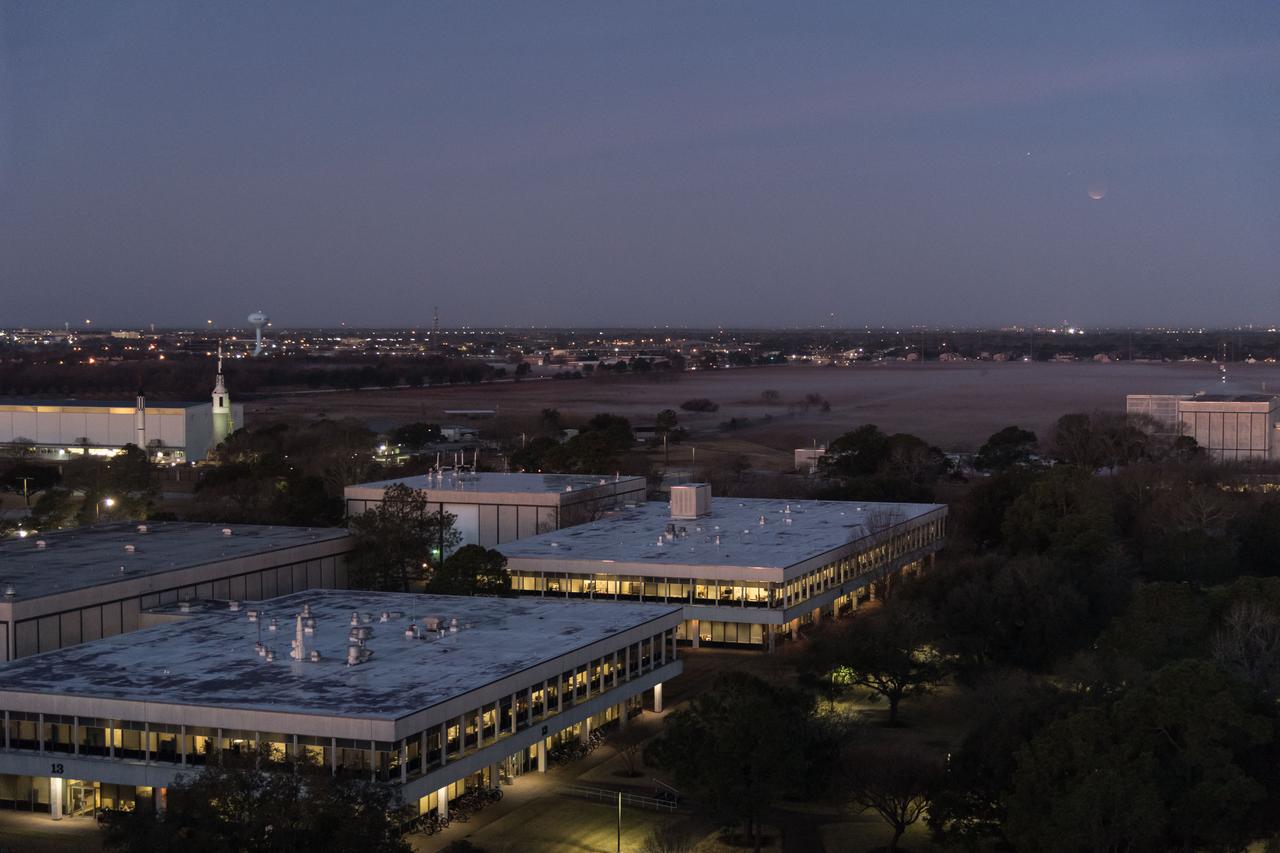
jsc2018e003235 (Jan. 31, 2018) --- Composite photograph created from 13 images of the lunar eclipse through its phases as viewed from the 9th floor of NASA Johnson Space Center’s Building 1.
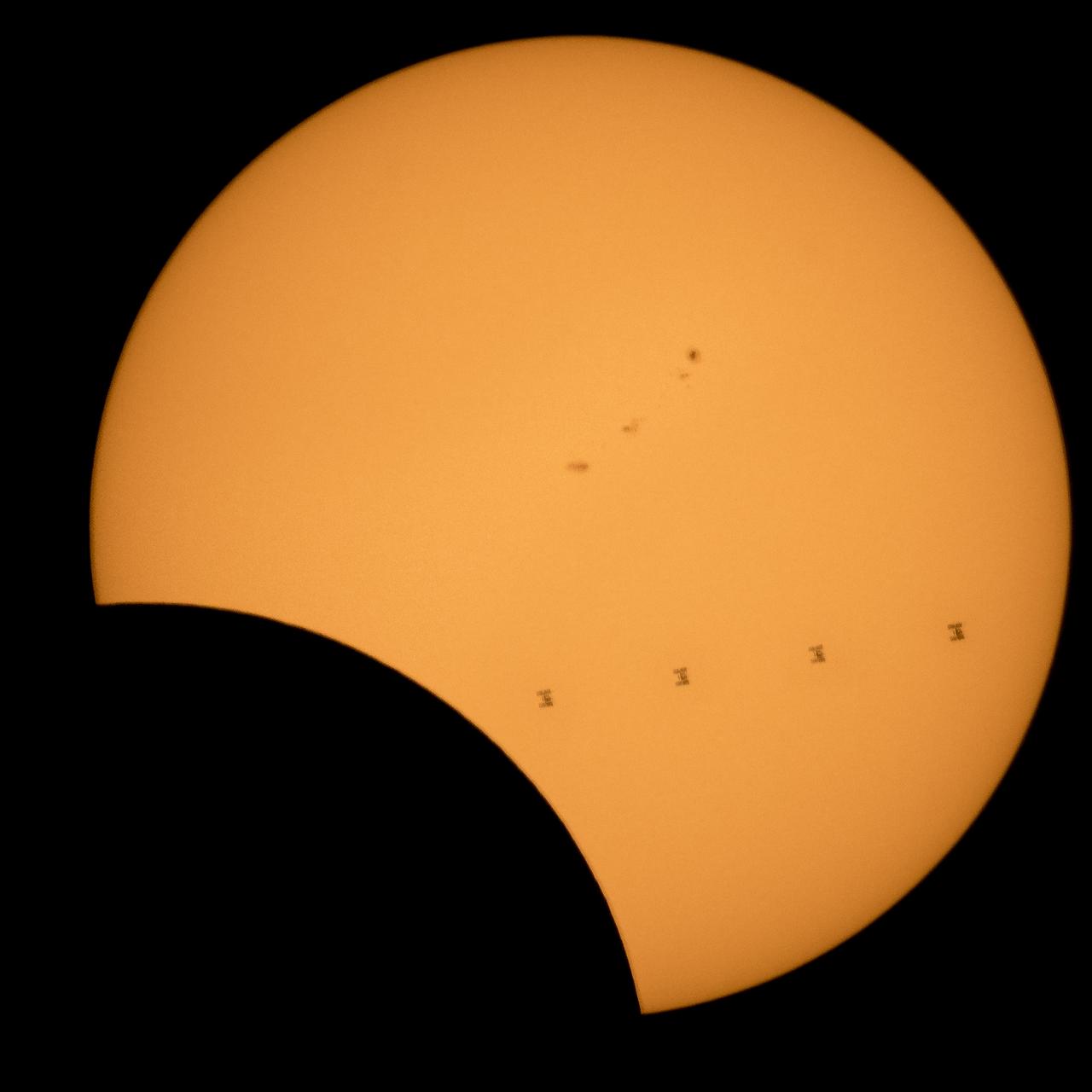
This composite image, made from 4 frames, shows the International Space Station, with a crew of six onboard, as it transits the Sun at roughly five miles per second during a partial solar eclipse, Monday, Aug. 21, 2017 from , Northern Cascades National Park in Washington. Onboard as part of Expedition 52 are: NASA astronauts Peggy Whitson, Jack Fischer, and Randy Bresnik; Russian cosmonauts Fyodor Yurchikhin and Sergey Ryazanskiy; and ESA (European Space Agency) astronaut Paolo Nespoli. A total solar eclipse swept across a narrow portion of the contiguous United States from Lincoln Beach, Oregon to Charleston, South Carolina. A partial solar eclipse was visible across the entire North American continent along with parts of South America, Africa, and Europe. Photo Credit: (NASA/Bill Ingalls)
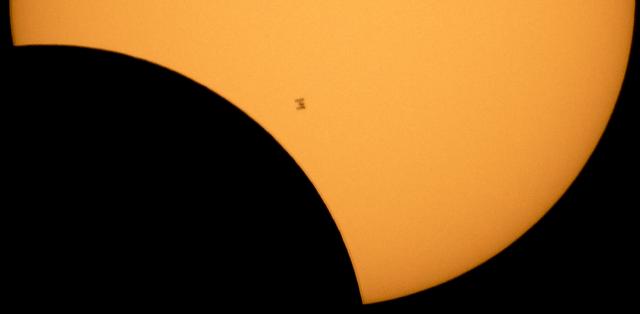
The International Space Station, with a crew of six onboard, is seen in silhouette as it transits the Sun at roughly five miles per second during a partial solar eclipse, Monday, Aug. 21, 2017 from Ross Lake, Northern Cascades National Park, Washington. Onboard as part of Expedition 52 are: NASA astronauts Peggy Whitson, Jack Fischer, and Randy Bresnik; Russian cosmonauts Fyodor Yurchikhin and Sergey Ryazanskiy; and ESA (European Space Agency) astronaut Paolo Nespoli. A total solar eclipse swept across a narrow portion of the contiguous United States from Lincoln Beach, Oregon to Charleston, South Carolina. A partial solar eclipse was visible across the entire North American continent along with parts of South America, Africa, and Europe. Photo Credit: (NASA/Bill Ingalls)
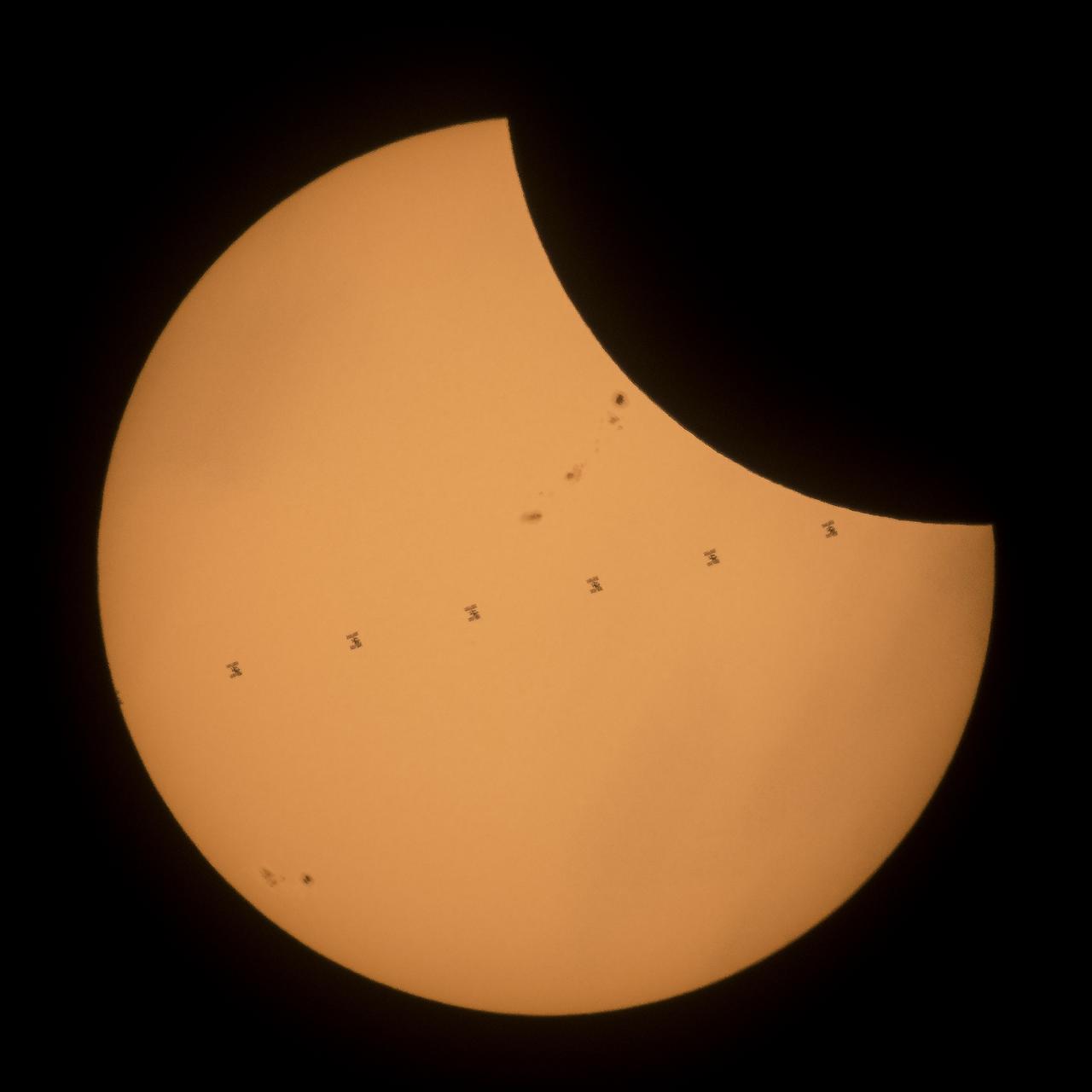
This composite image, made from seven frames, shows the International Space Station, with a crew of six onboard, as it transits the Sun at roughly five miles per second during a partial solar eclipse, Monday, Aug. 21, 2017 near Banner, Wyoming. Onboard as part of Expedition 52 are: NASA astronauts Peggy Whitson, Jack Fischer, and Randy Bresnik; Russian cosmonauts Fyodor Yurchikhin and Sergey Ryazanskiy; and ESA (European Space Agency) astronaut Paolo Nespoli. A total solar eclipse swept across a narrow portion of the contiguous United States from Lincoln Beach, Oregon to Charleston, South Carolina. A partial solar eclipse was visible across the entire North American continent along with parts of South America, Africa, and Europe. Photo Credit: (NASA/Joel Kowsky)

Astrophysicist Dr. Kelly Korreck, Kennedy Space Center Director Janet Petro, Astonaut Jessica Watkins and Representative Shontel Brown pose for a photo at the Read to the Final Four Event in Cleveland Ohio on April 5th 2024. A total solar eclipse swept across a narrow portion of the North American continent from Mexico’s Pacific coast to the Atlantic coast of Newfoundland, Canada. A partial solar eclipse was visible across the entire North American continent along with parts of Central America and Europe.
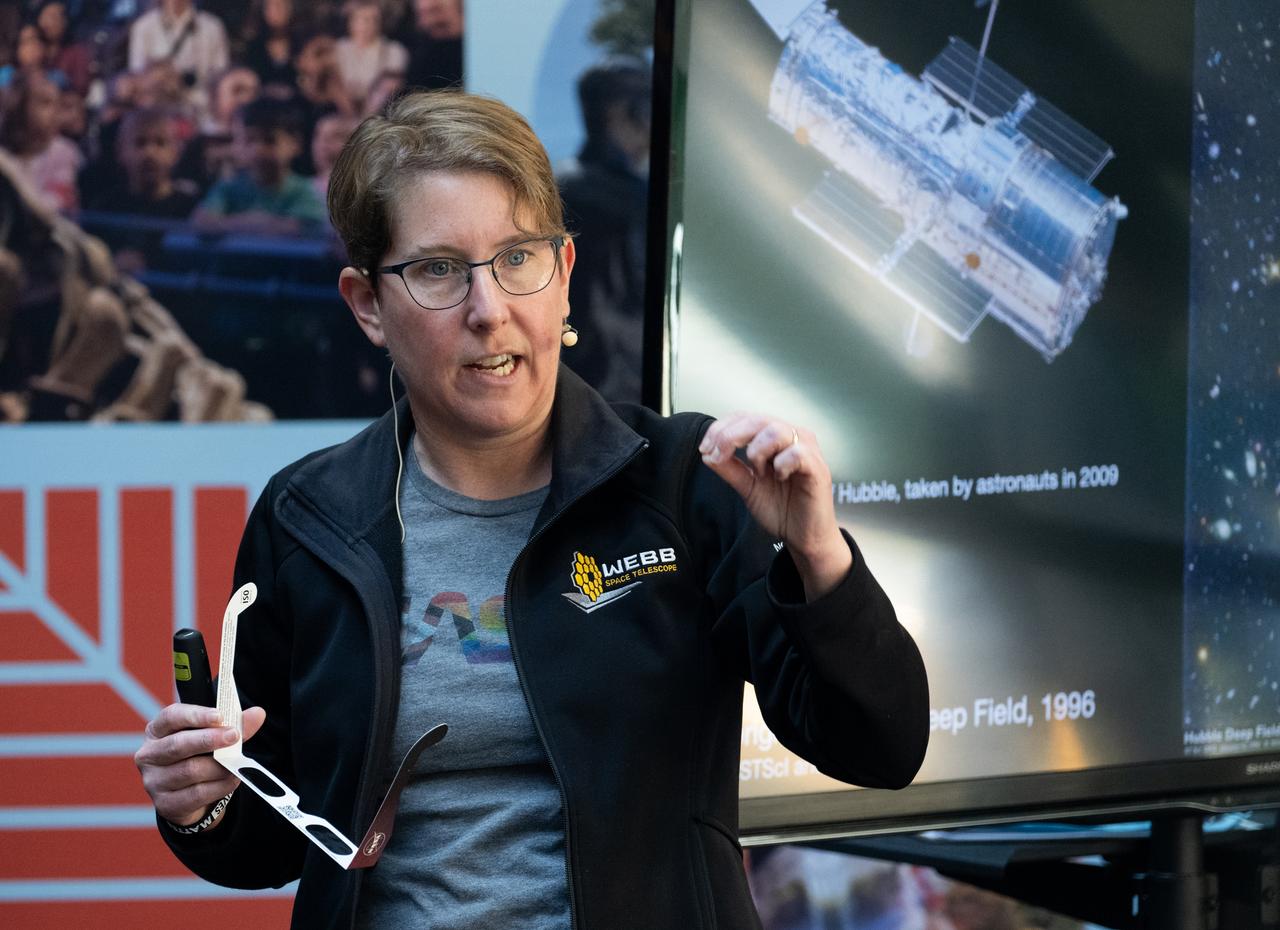
Jane Rigby, senior project scientist for NASA's James Webb Space Telescope, speaks to visitors at The Children’s Museum of Indianapolis, Saturday, April 6, 2024, in Indianapolis, Ind. On Monday, April 8, a total solar eclipse will sweep across a narrow portion of the North American continent from Mexico’s Pacific coast to the Atlantic coast of Newfoundland, Canada, while a partial solar eclipse will be visible across the entire North American continent along with parts of Central America and Europe. Photo Credit: (NASA/Joel Kowsky)
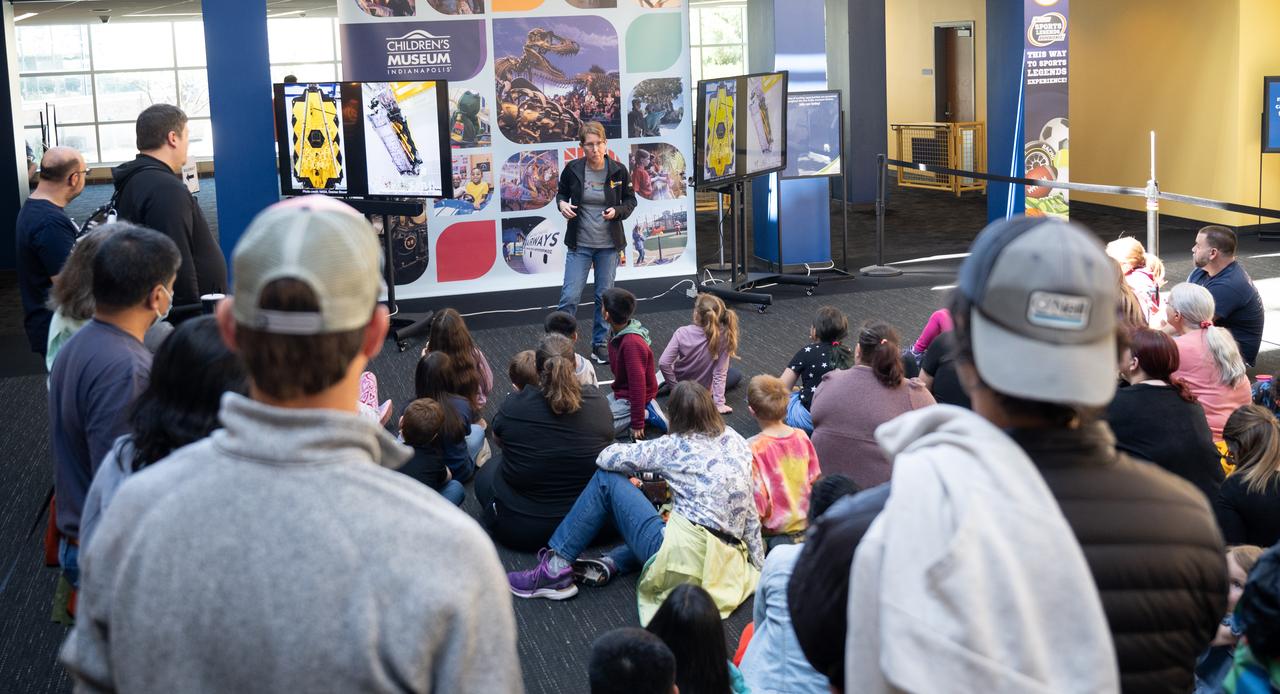
Jane Rigby, senior project scientist for NASA's James Webb Space Telescope, speaks to visitors at The Children’s Museum of Indianapolis, Saturday, April 6, 2024, in Indianapolis, Ind. On Monday, April 8, a total solar eclipse will sweep across a narrow portion of the North American continent from Mexico’s Pacific coast to the Atlantic coast of Newfoundland, Canada, while a partial solar eclipse will be visible across the entire North American continent along with parts of Central America and Europe. Photo Credit: (NASA/Joel Kowsky)
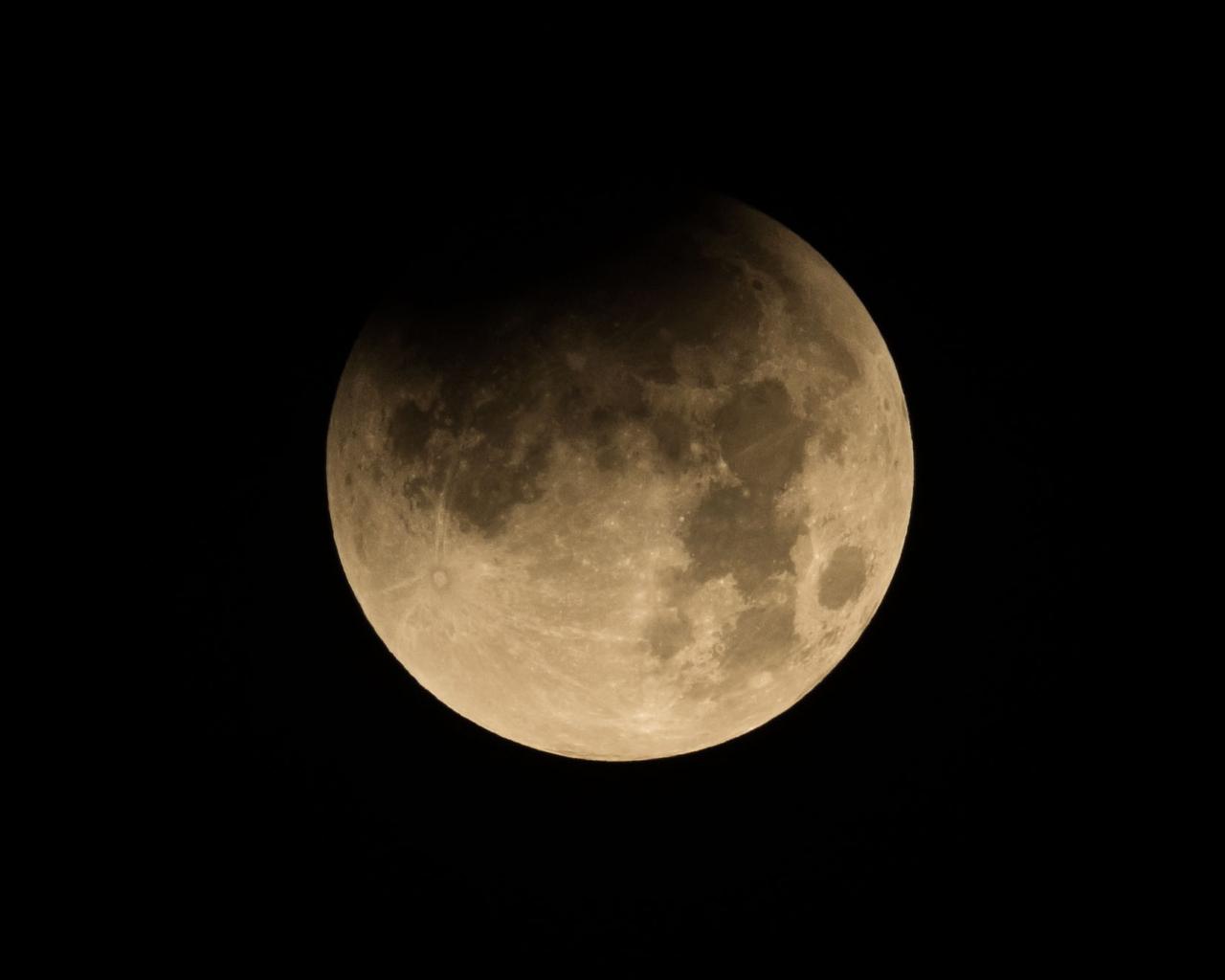
jsc2018e003245 (Jan. 31, 2018) --- The lunar eclipse "Blood Moon" was photographed from the Johnson Space Center in Houston, Texas, during the early morning hours of Jan. 31, 2018. Credit: NASA/Robert Markowitz
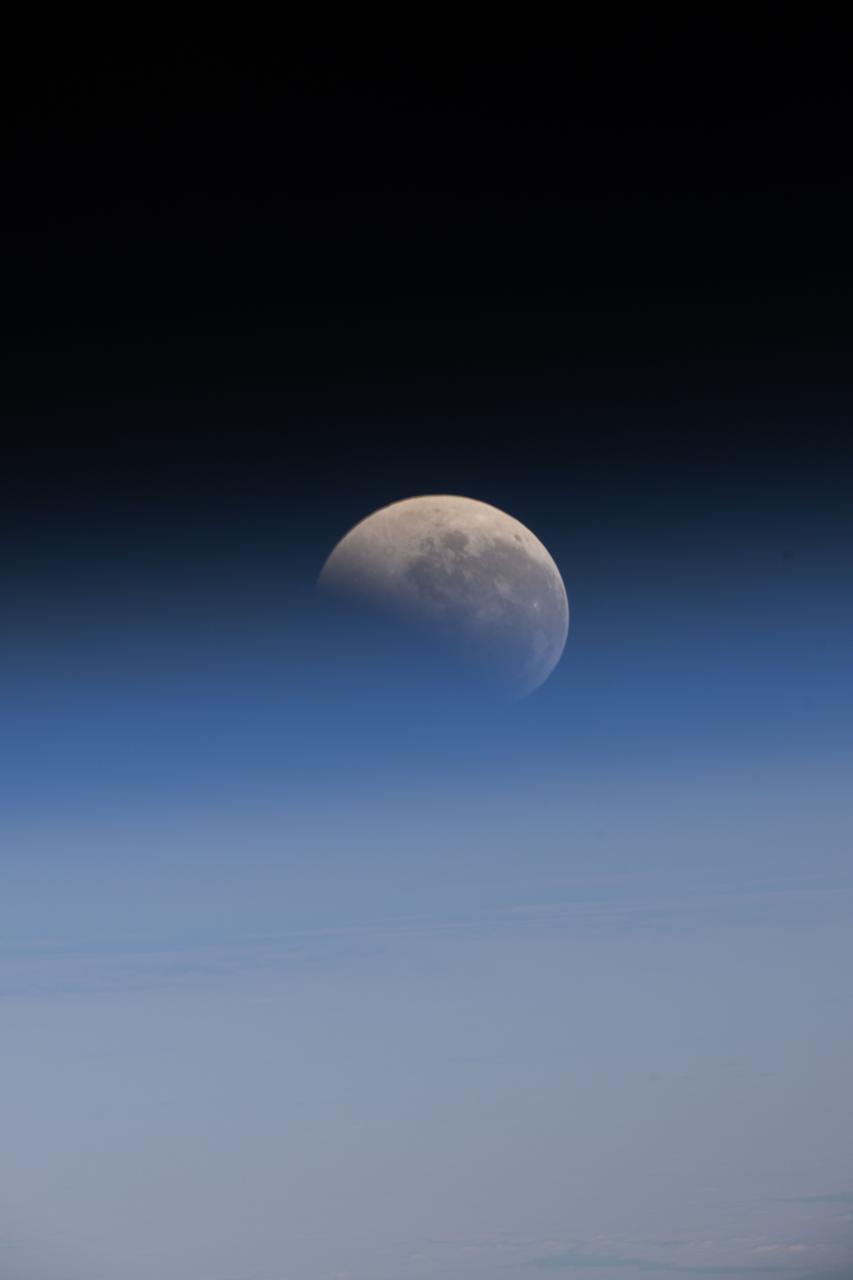
iss073e0611610 (Sept. 7, 2025) --- The lunar eclipse, also known as the Blood Moon, is pictured just above Earth's horizon from the International Space Station as it orbited 266 miles above the South Pacific Ocean.
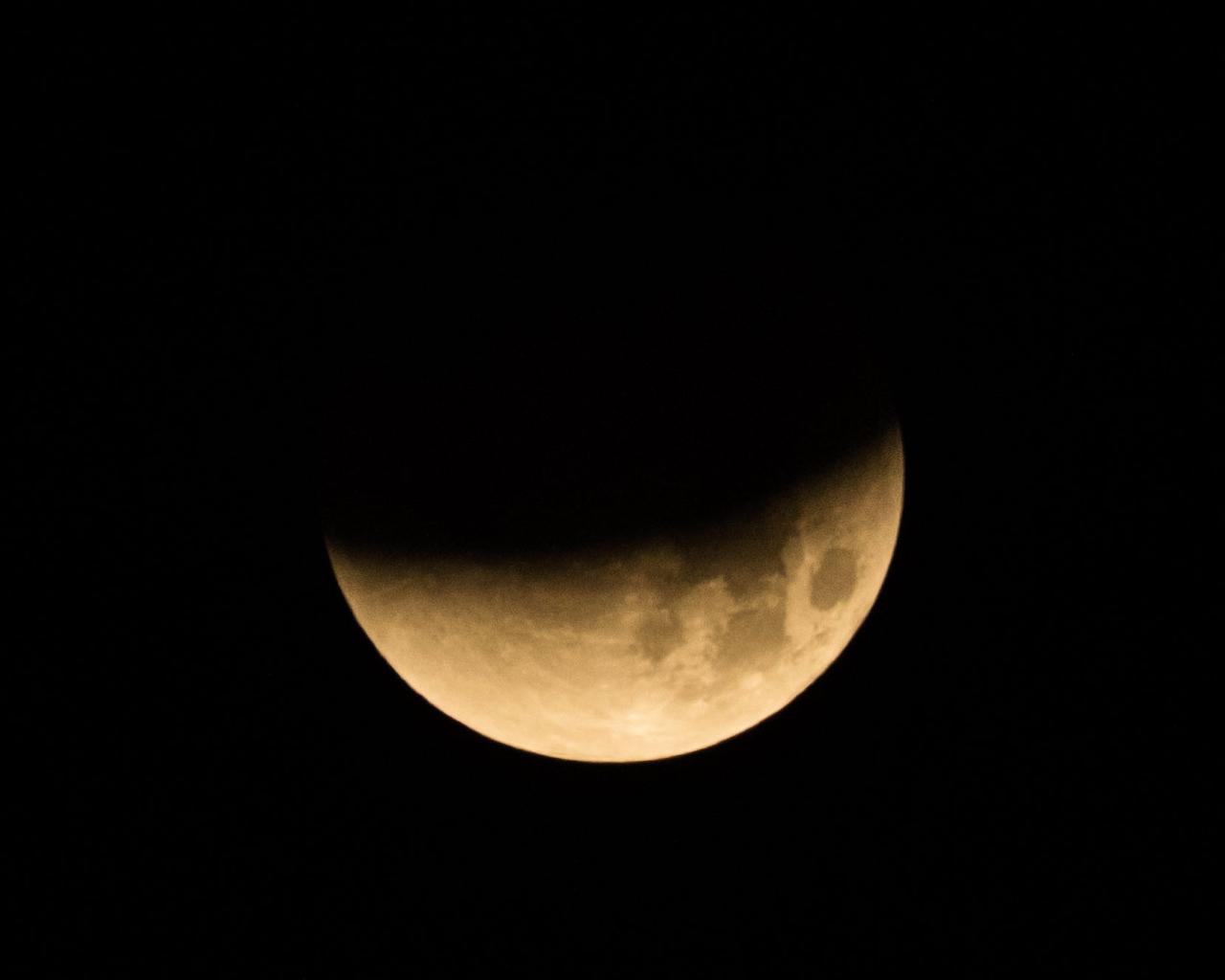
jsc2018e003250 (Jan. 31, 2018) --- The lunar eclipse "Blood Moon" was photographed from the Johnson Space Center in Houston, Texas, during the early morning hours of Jan. 31, 2018. Credit: NASA/Robert Markowitz
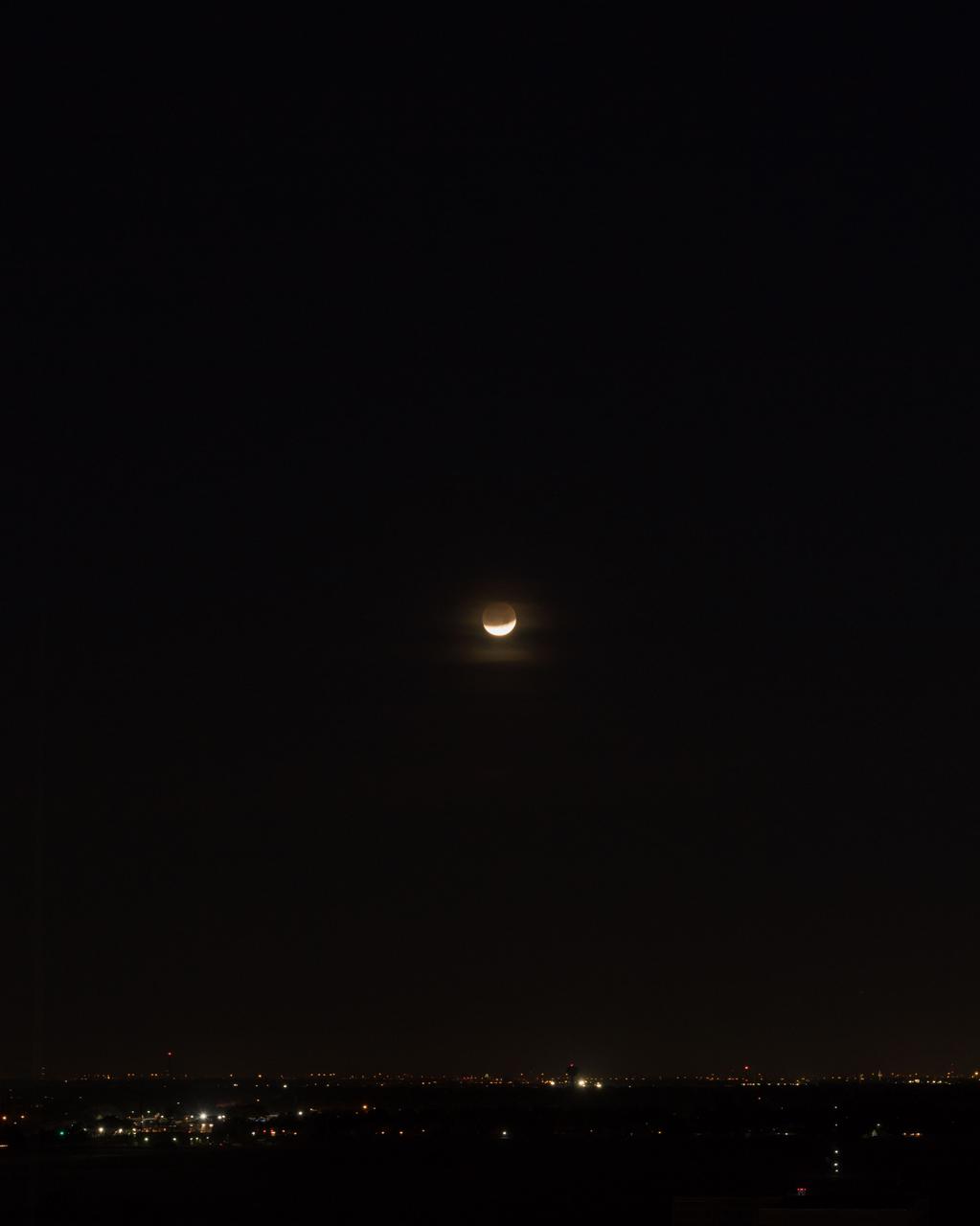
jsc2018e003259 (Jan. 31, 2018) --- The lunar eclipse "Blood Moon" was photographed from the Johnson Space Center in Houston, Texas, during the early morning hours of Jan. 31, 2018. Credit: NASA/ Norah Moran
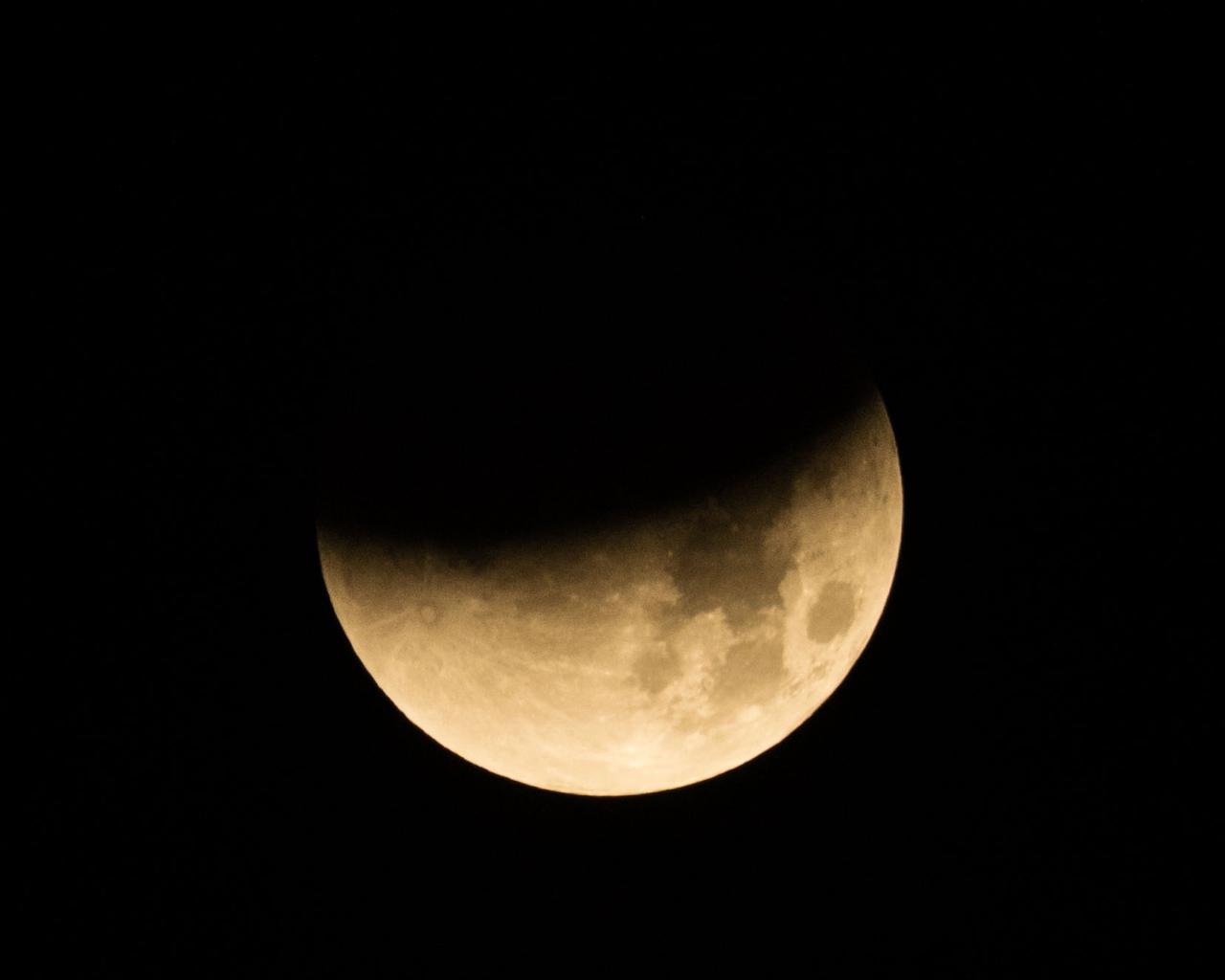
jsc2018e003249 (Jan. 31, 2018) --- The lunar eclipse "Blood Moon" was photographed from the Johnson Space Center in Houston, Texas, during the early morning hours of Jan. 31, 2018. Credit: NASA/Robert Markowitz
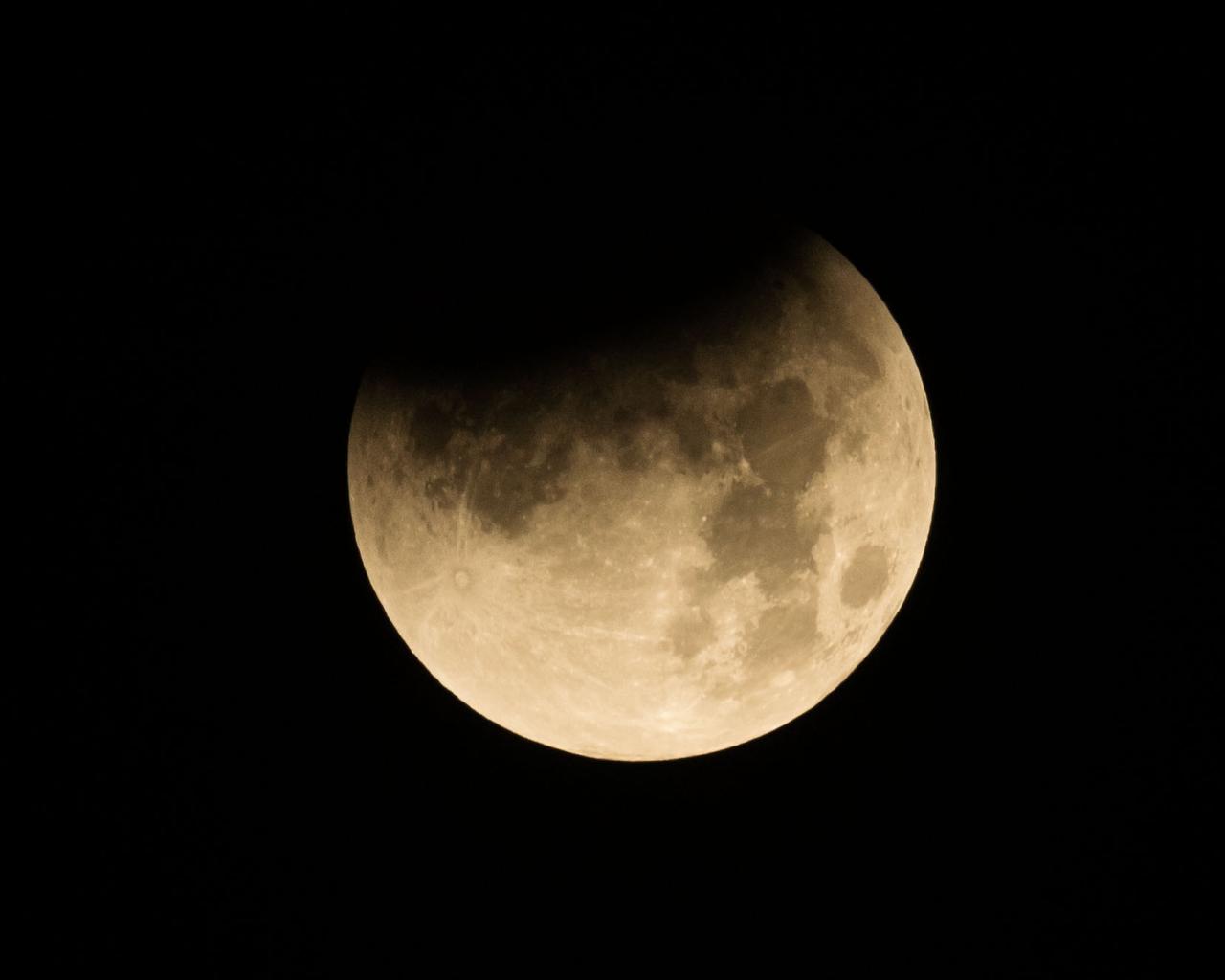
jsc2018e003247 (Jan. 31, 2018) --- The lunar eclipse "Blood Moon" was photographed from the Johnson Space Center in Houston, Texas, during the early morning hours of Jan. 31, 2018. Credit: NASA/Robert Markowitz
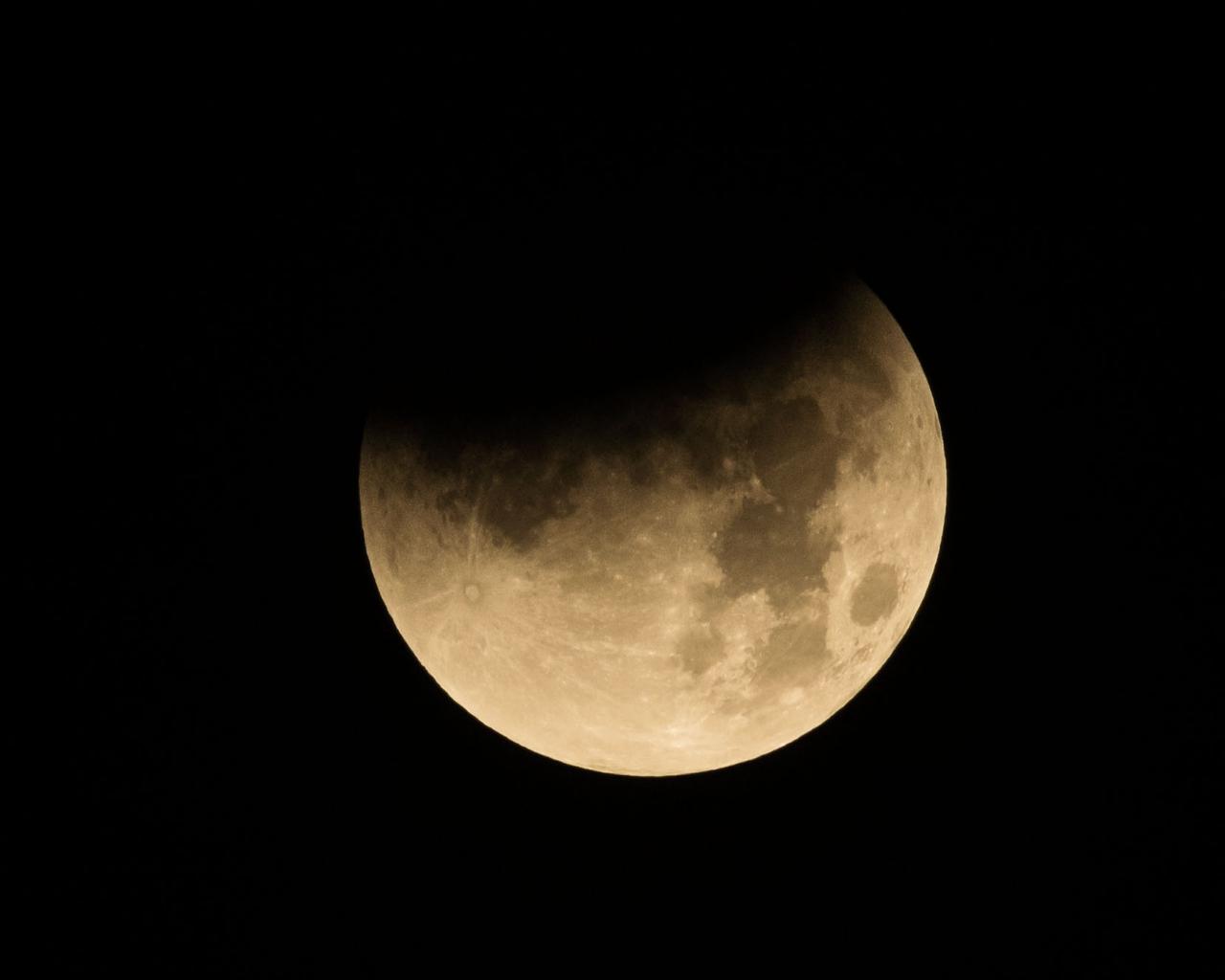
jsc2018e003248 (Jan. 31, 2018) --- The lunar eclipse "Blood Moon" was photographed from the Johnson Space Center in Houston, Texas, during the early morning hours of Jan. 31, 2018. Credit: NASA/Robert Markowitz
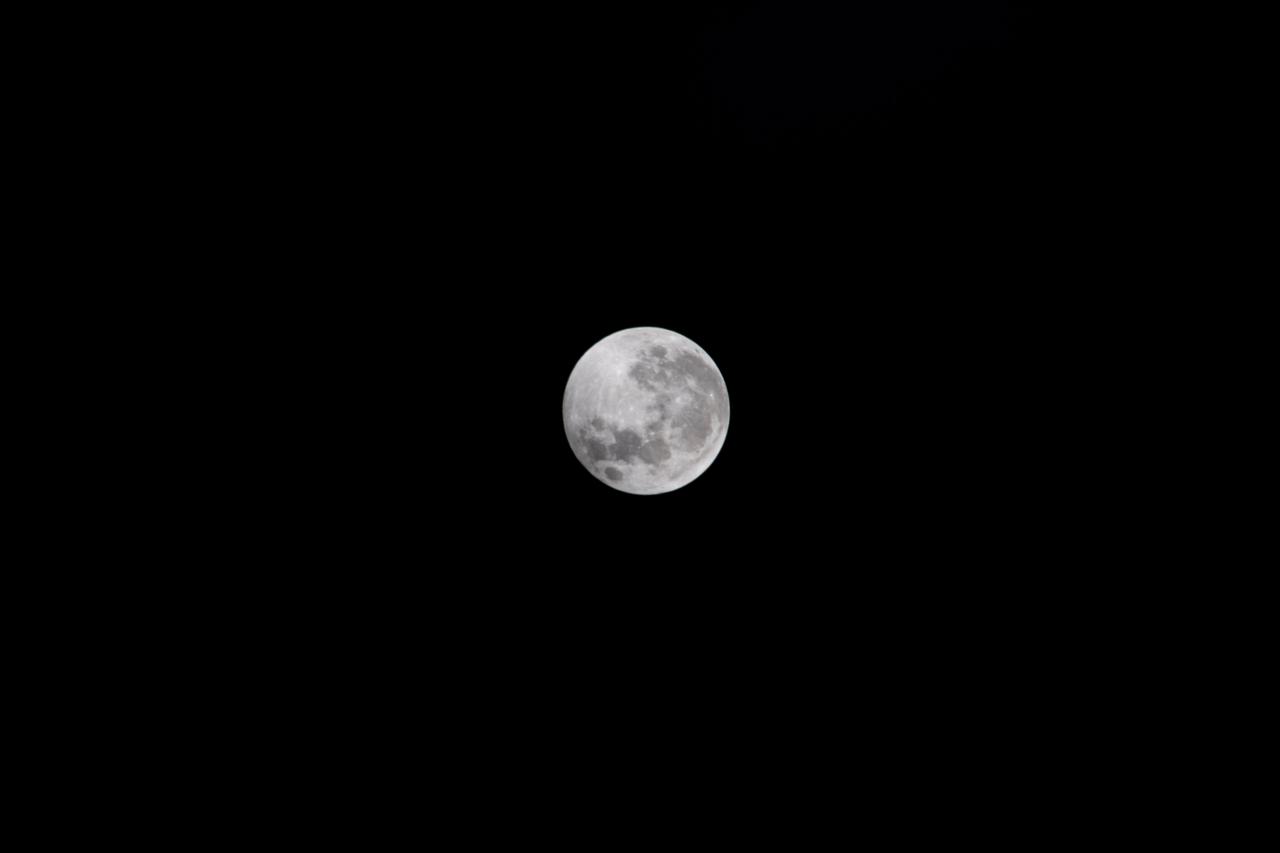
iss065e074019 (May 26, 23021) --- The full Moon is pictured before a lunar eclipse from the International Space Station during a southwest to northeast orbital trek 262 miles above Africa.
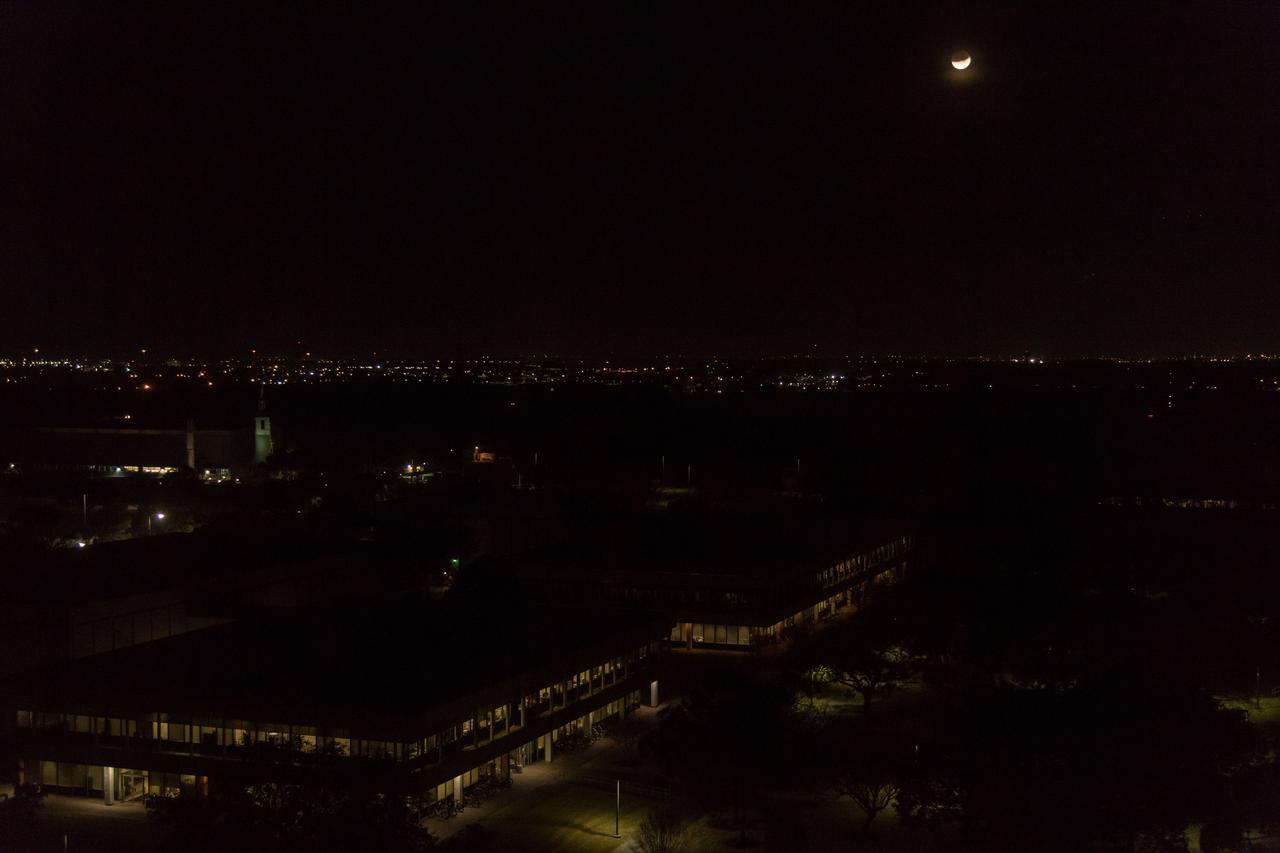
jsc2018e003254 (Jan. 31, 2018) --- The lunar eclipse "Blood Moon" was photographed from the Johnson Space Center in Houston, Texas, during the early morning hours of Jan. 31, 2018. Credit: NASA/Robert Markowitz
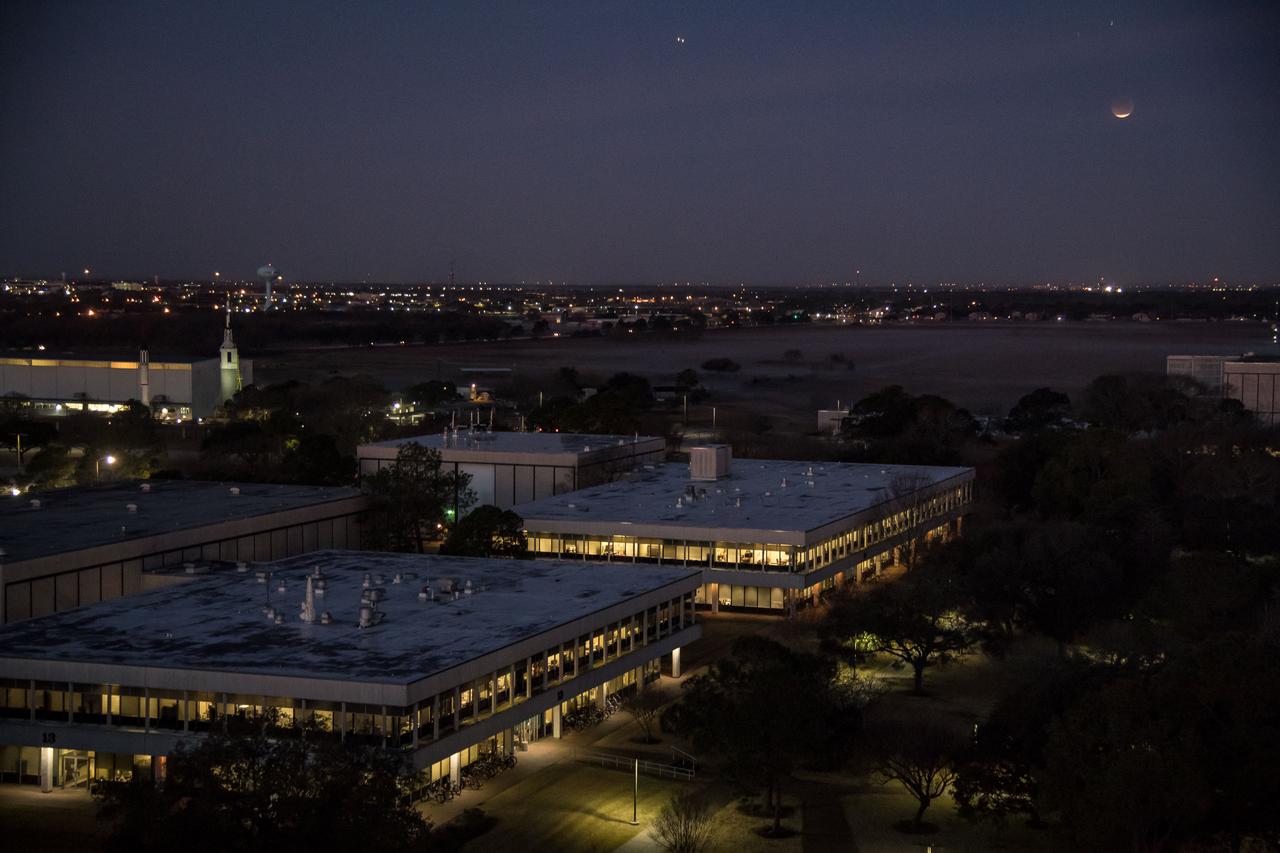
jsc2018e003252 (Jan. 31, 2018) --- The lunar eclipse "Blood Moon" was photographed from the Johnson Space Center in Houston, Texas, during the early morning hours of Jan. 31, 2018. Credit: NASA/Robert Markowitz
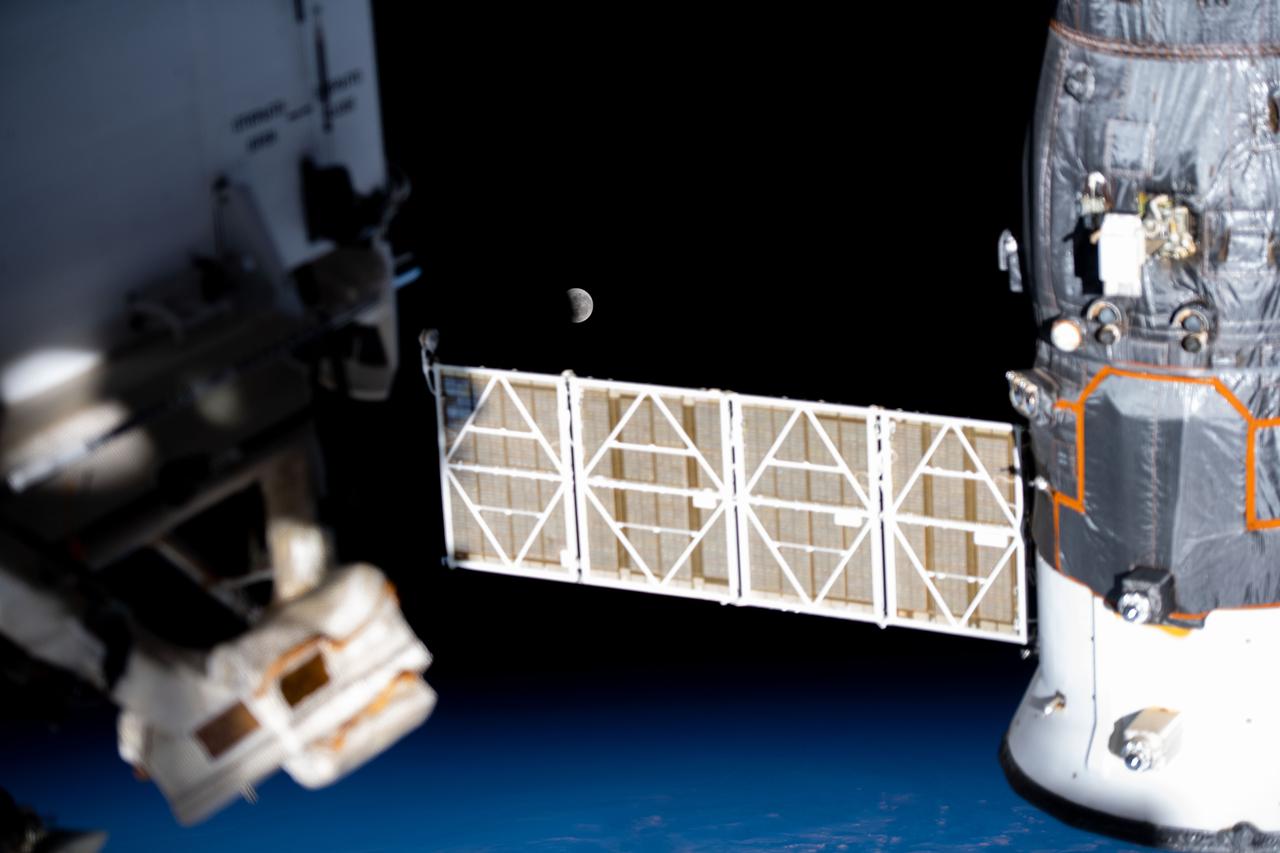
iss065e074503 (May 26, 2021) --- The Moon pictured during a lunar eclipse is seen from the International Space Station during a northwest to southeast orbital trek 263 miles above the Pacific Ocean.
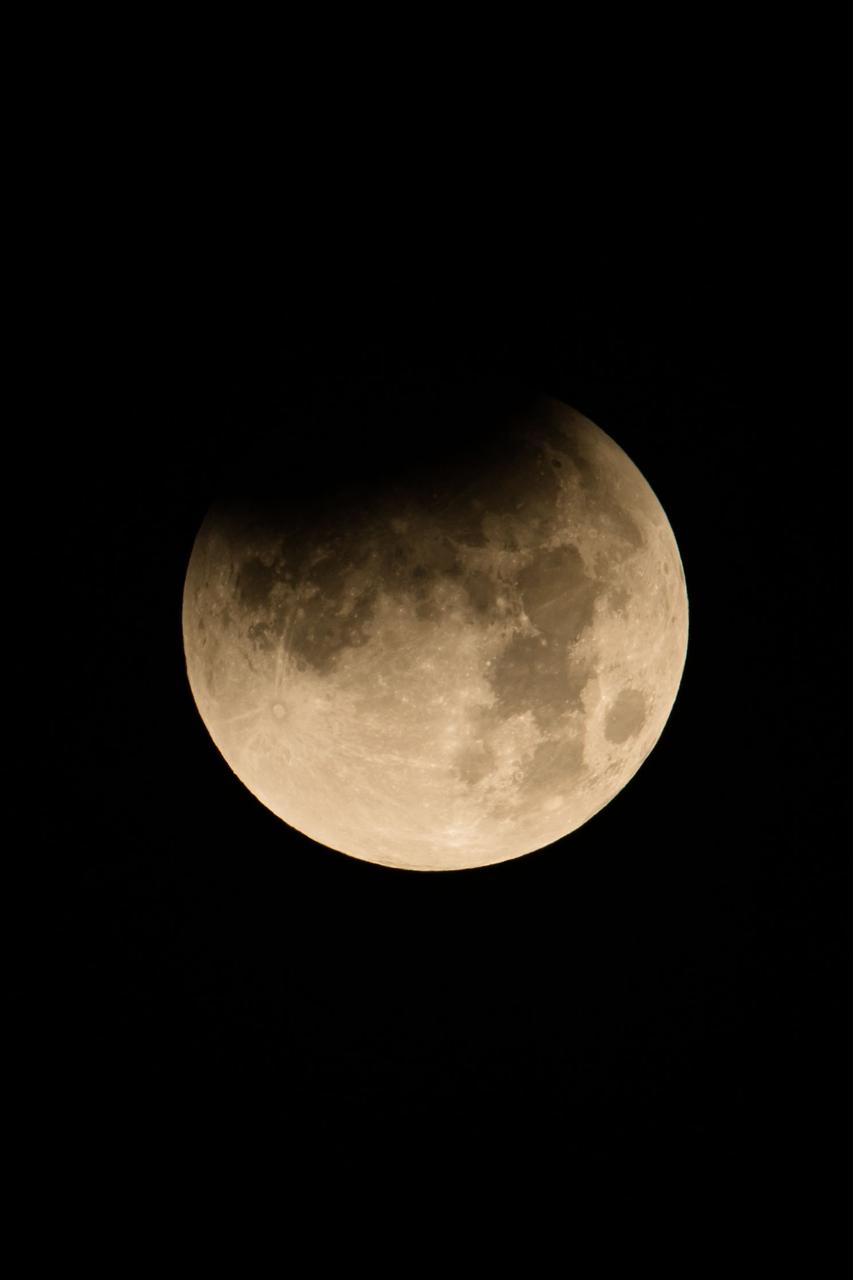
jsc2018e003241 (Jan. 31, 2018) --- The early stage of the lunar eclipse "Blood Moon" is photographed from the Johnson Space Center in Houston, Texas. Credit: NASA/Josh Valcarcel
jsc2018e003201 (Jan. 31, 2018) --- The lunar eclipse "Blood Moon" was photographed from the Johnson Space Center in Houston, Texas, during sunrise on Jan. 31, 2018. Credit: NASA/Robert Markowitz
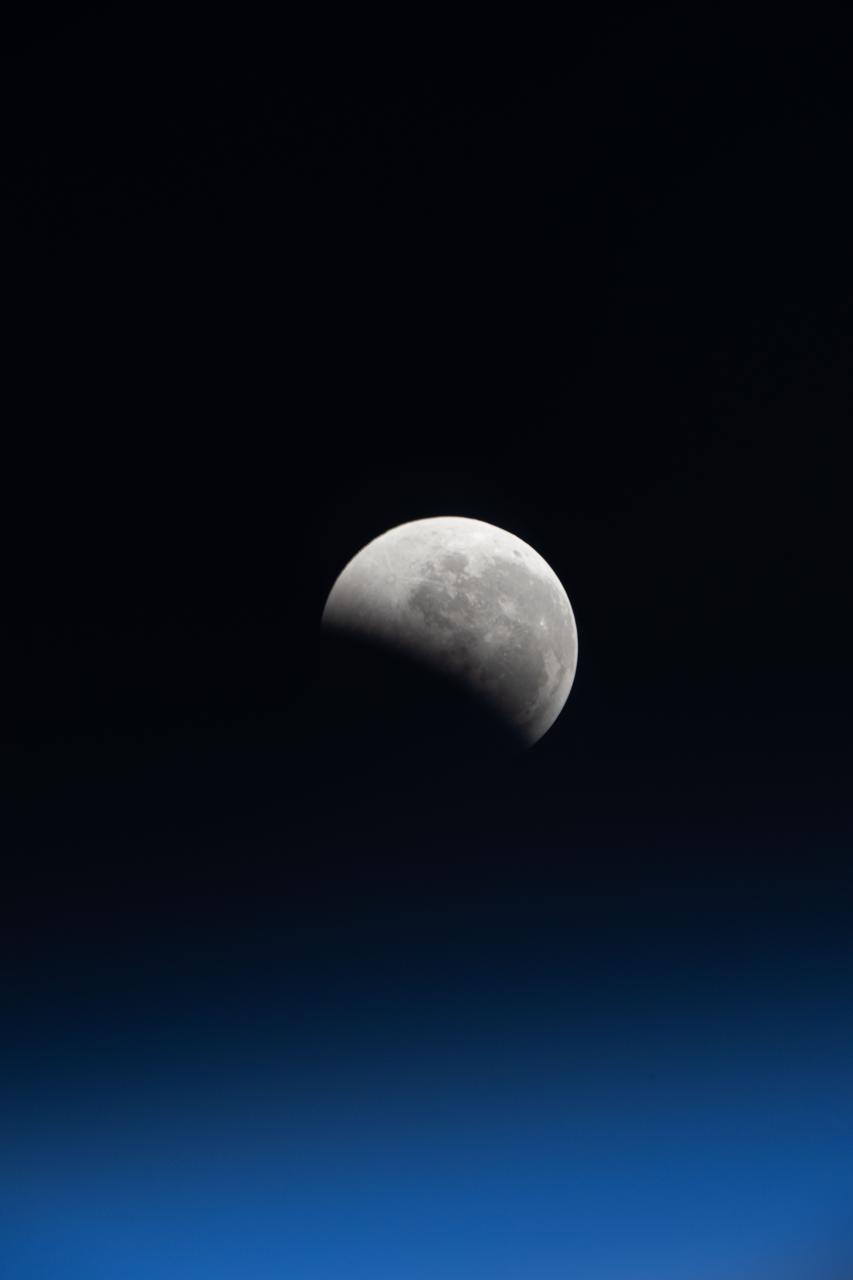
iss073e0611600 (Sept. 7, 2025) --- The lunar eclipse, also known as the Blood Moon, is pictured just above Earth's horizon from the International Space Station as it orbited 266 miles above the South Pacific Ocean.
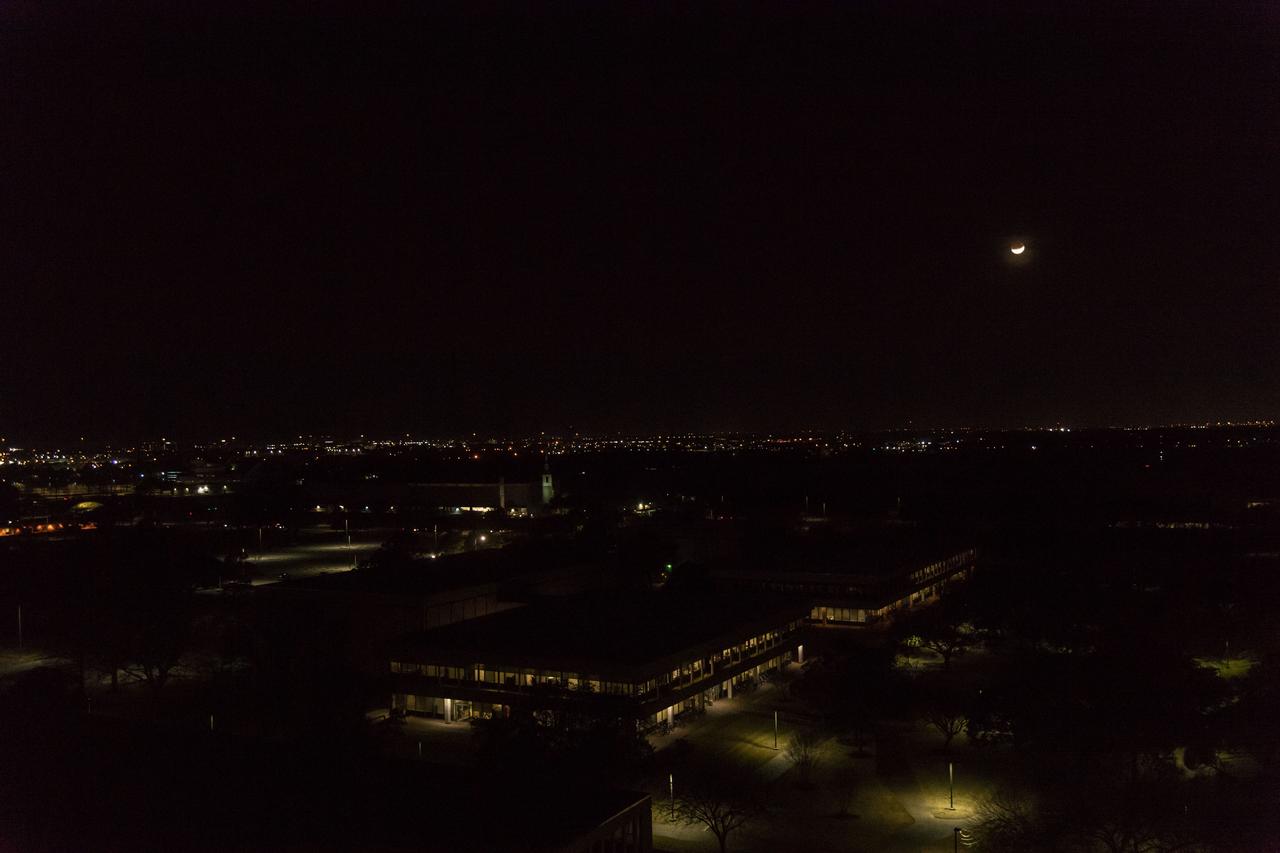
jsc2018e003255 (Jan. 31, 2018) --- The lunar eclipse "Blood Moon" was photographed from the Johnson Space Center in Houston, Texas, during the early morning hours of Jan. 31, 2018. Credit: NASA/Robert Markowitz
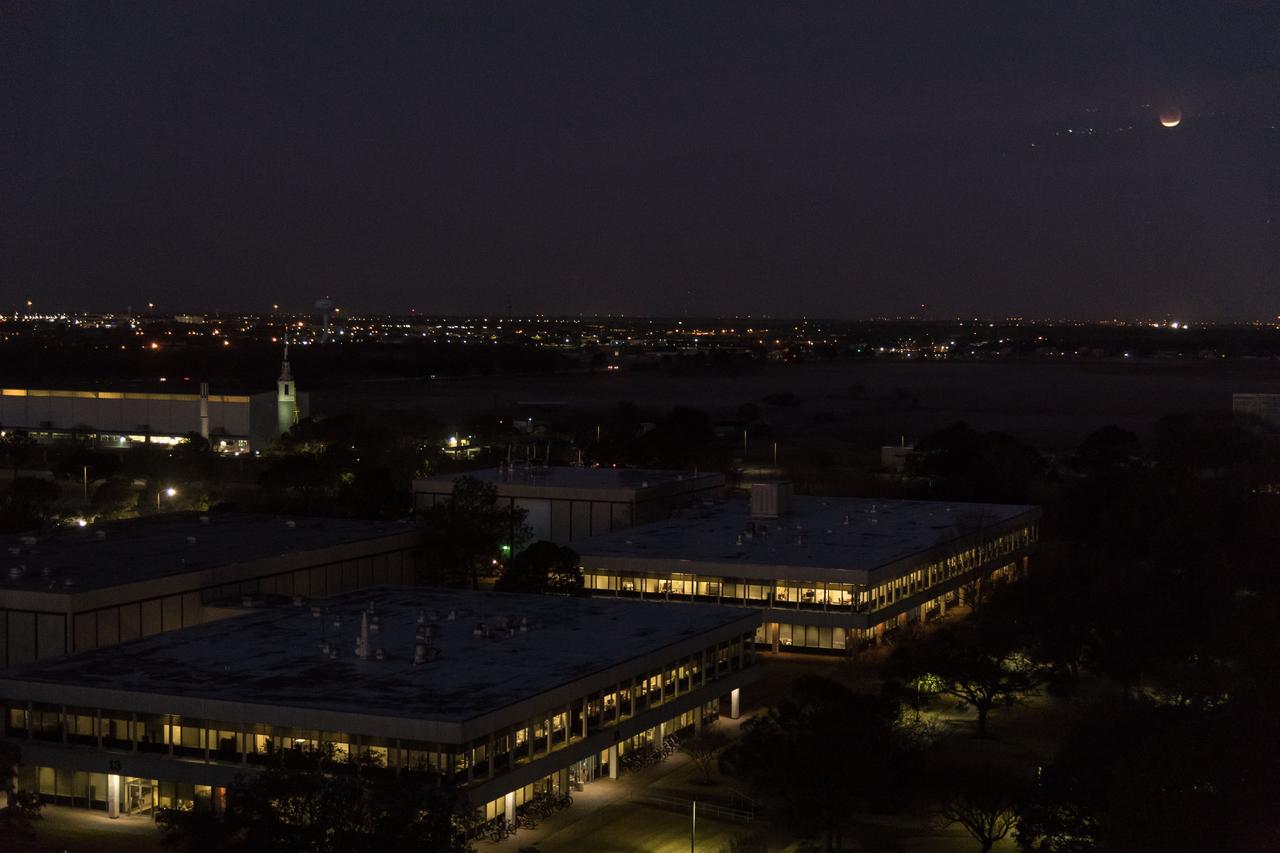
jsc2018e003256 (Jan. 31, 2018) --- The lunar eclipse "Blood Moon" was photographed from the Johnson Space Center in Houston, Texas, during an early sunrise on Jan. 31, 2018. Credit: NASA/Robert Markowitz

iss065e074523 (May 26, 2021) --- The Moon pictured during a lunar eclipse, and intersecting with the Earth's horizon, is seen from the International Space Station during a northwest to southeast orbital trek 263 miles above the Pacific Ocean.
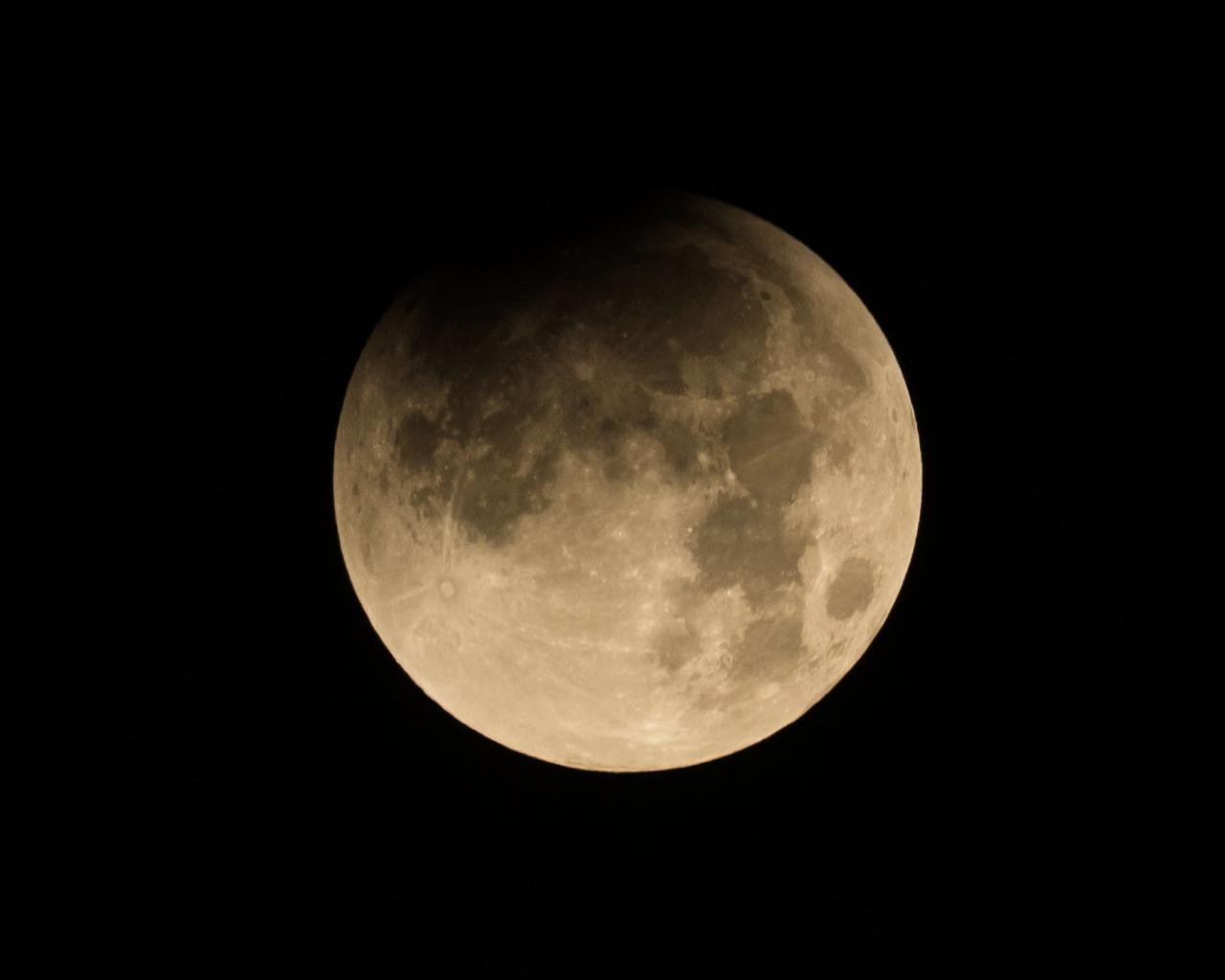
jsc2018e003244 (Jan. 31, 2018) --- The lunar eclipse "Blood Moon" was photographed from the Johnson Space Center in Houston, Texas, during the early morning hours of Jan. 31, 2018. Credit: NASA/Robert Markowitz

iss065e074511 (May 26, 2021) --- The Moon pictured during a lunar eclipse is seen from the International Space Station during a northwest to southeast orbital trek 263 miles above the Pacific Ocean.
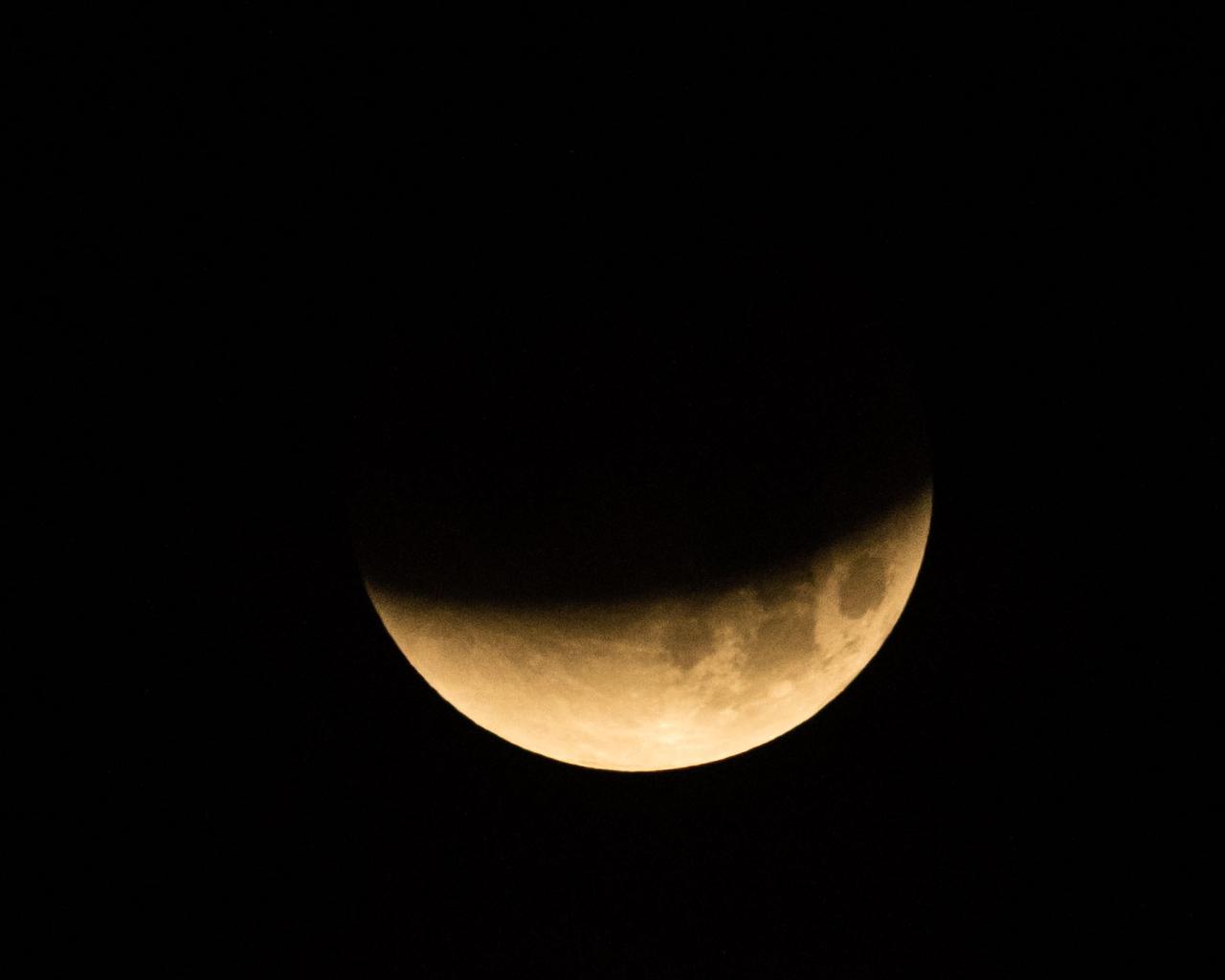
jsc2018e003257 (Jan. 31, 2018) --- The lunar eclipse "Blood Moon" was photographed from the Johnson Space Center in Houston, Texas during sunrise on Jan. 31, 2018. Credit: NASA/Robert Markowitz
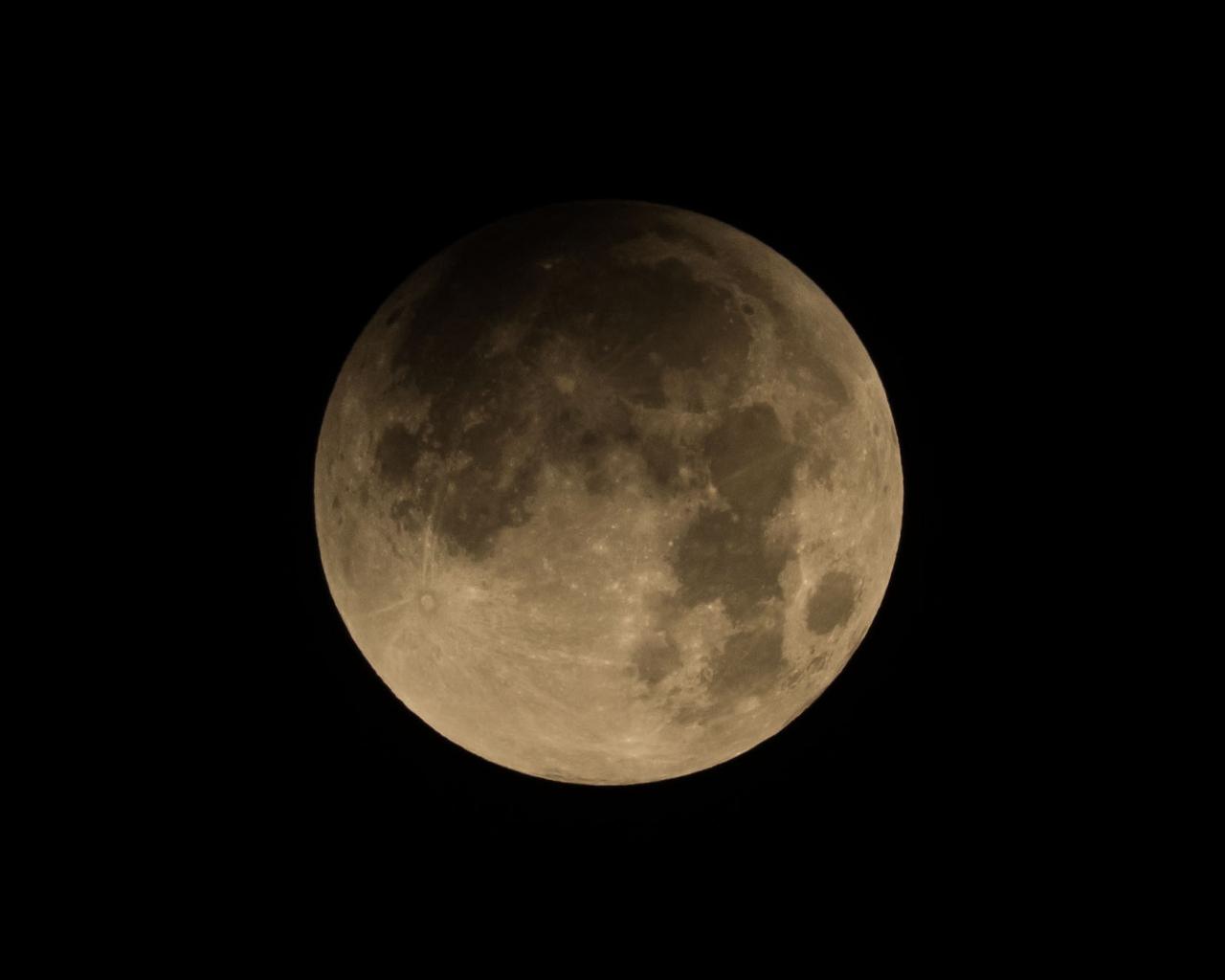
jsc2018e003251 (Jan. 31, 2018) --- The lunar eclipse "Blood Moon" was photographed from the Johnson Space Center in Houston, Texas, during the early morning hours of Jan. 31, 2018. Credit: NASA/Robert Markowitz
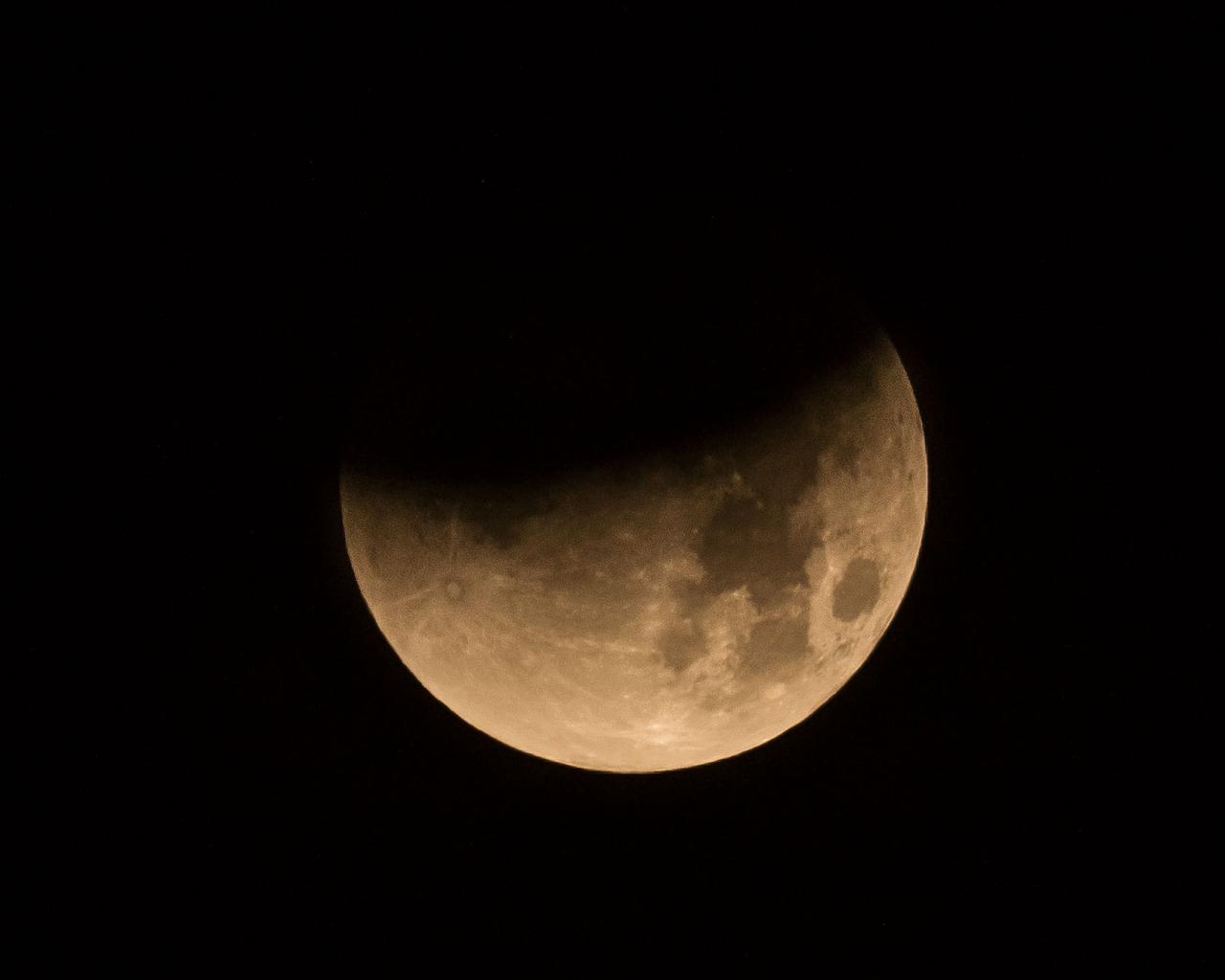
jsc2018e003243 (Jan. 31, 2018) --- The lunar eclipse "Blood Moon" was photographed from the Johnson Space Center in Houston, Texas, during the early morning hours of Jan. 31, 2018. Credit: NASA/Robert Markowitz
jsc2018e003200 (Jan. 31, 2018) --- The lunar eclipse "Blood Moon" was photographed from the Johnson Space Center in Houston, Texas, during the early morning hours of Jan. 31, 2018. Credit: NASA/Robert Markowitz
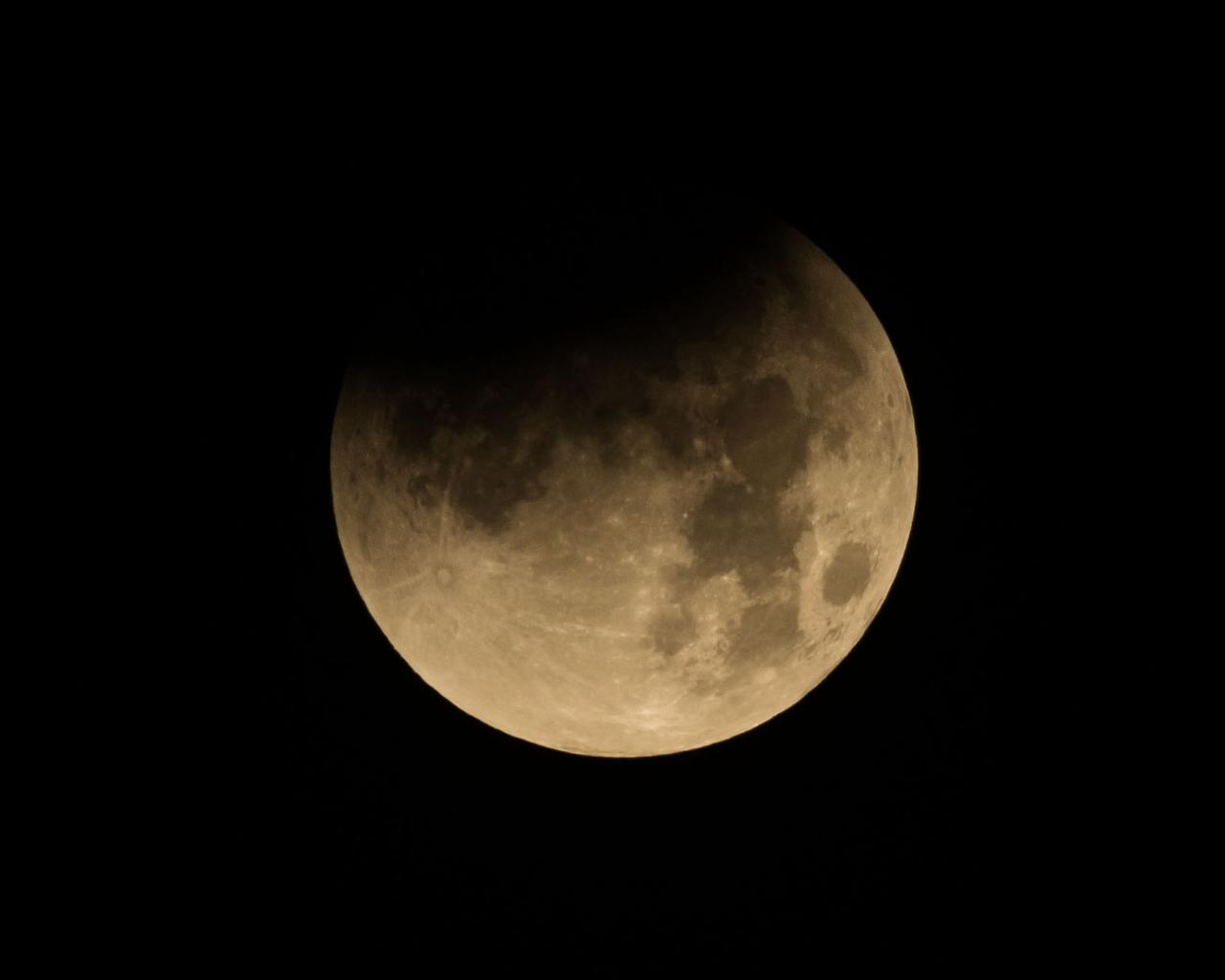
jsc2018e003246 (Jan. 31, 2018) --- The lunar eclipse "Blood Moon" was photographed from the Johnson Space Center in Houston, Texas, during the early morning hours of Jan. 31, 2018. Credit: NASA/Robert Markowitz
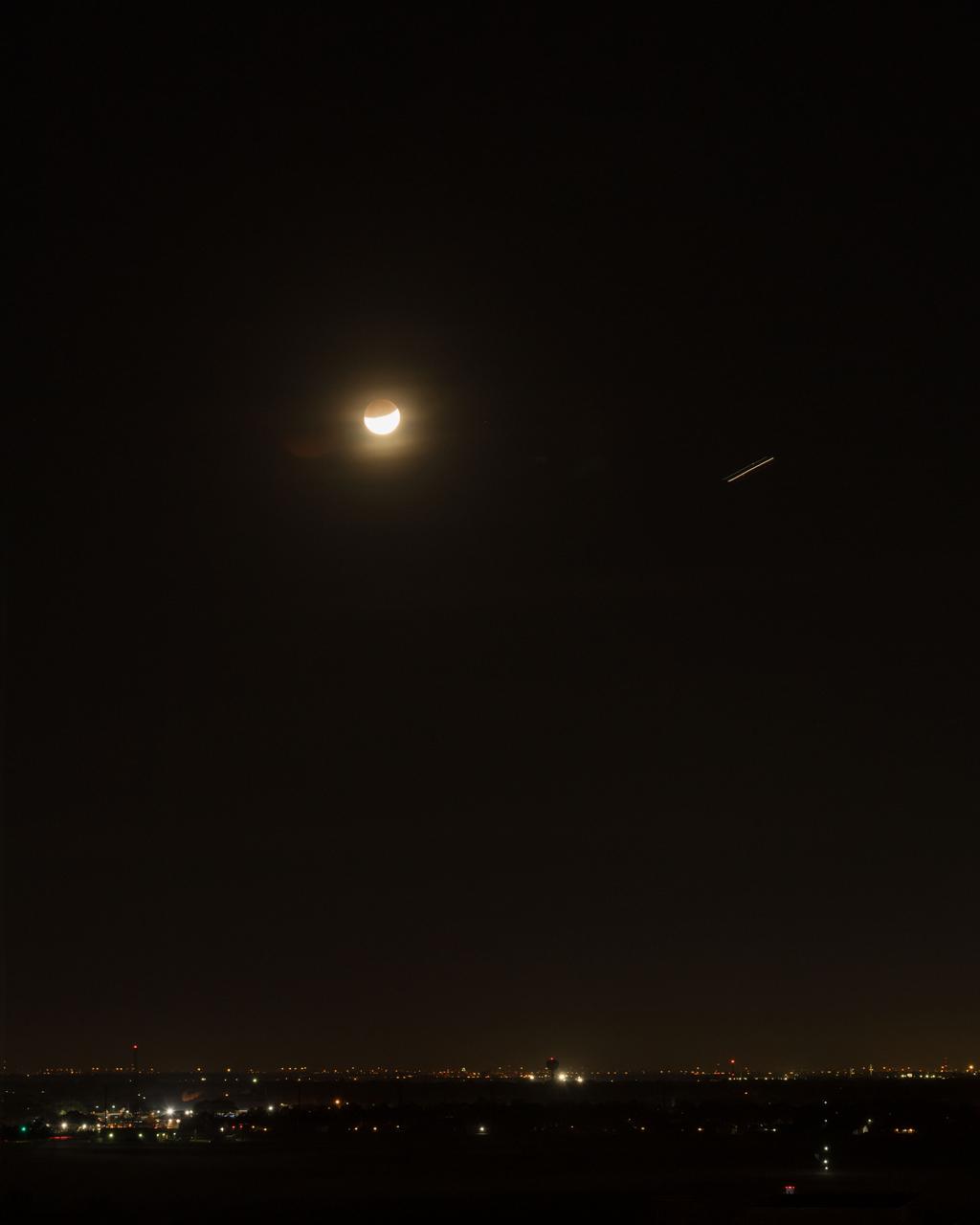
jsc2018e003258 (Jan. 31, 2018) --- The lunar eclipse "Blood Moon" was photographed from the Johnson Space Center in Houston, Texas, during the early morning hours of Jan. 31, 2018. Credit: NASA/ Norah Moran
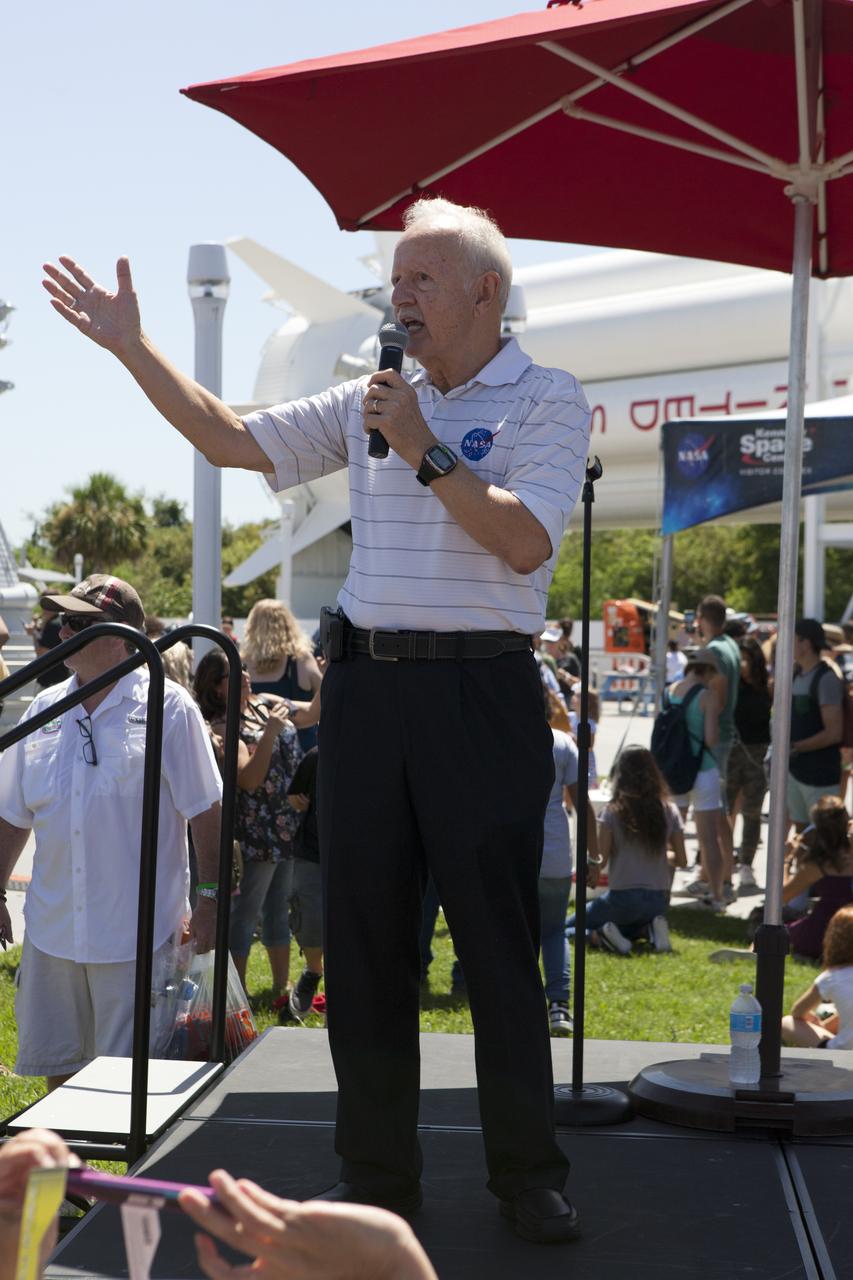
From the Kennedy Space Center Visitor Complex, guests joined Americans from coast to coast following the solar eclipse. Speaking at the event was astronaut John-David Bartoe. Although a partial eclipse on Florida's Space Coast, young and old alike found many ways to watch the rare astronomical event. As the Moon passed between Earth and the midafternoon Sun, a shadow moved across the landscape. The 70-mile-wide totality path, or "umbral cone" -- where the entire Sun will vanish behind the Moon -- stretched across 14 states, from Oregon to South Carolina.
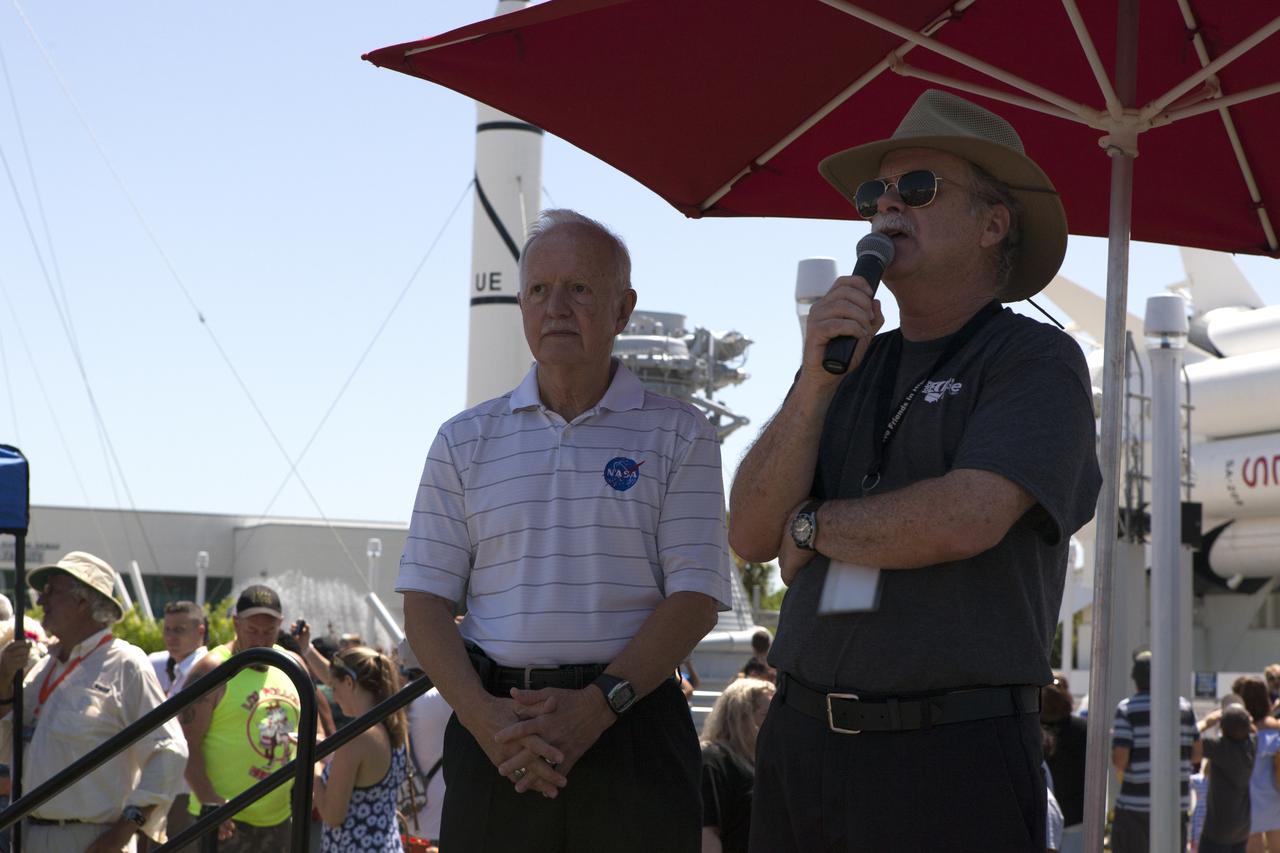
From the Kennedy Space Center Visitor Complex, guests joined Americans from coast to coast following the solar eclipse. Guest speakers were, astronaut John-David Bartoe, left, and communicator Jeff Lucas. Although a partial eclipse on Florida's Space Coast, young and old alike found many ways to watch the rare astronomical event. As the Moon passed between Earth and the midafternoon Sun, a shadow moved across the landscape. The 70-mile-wide totality path, or "umbral cone" -- where the entire Sun will vanish behind the Moon -- stretched across 14 states, from Oregon to South Carolina.
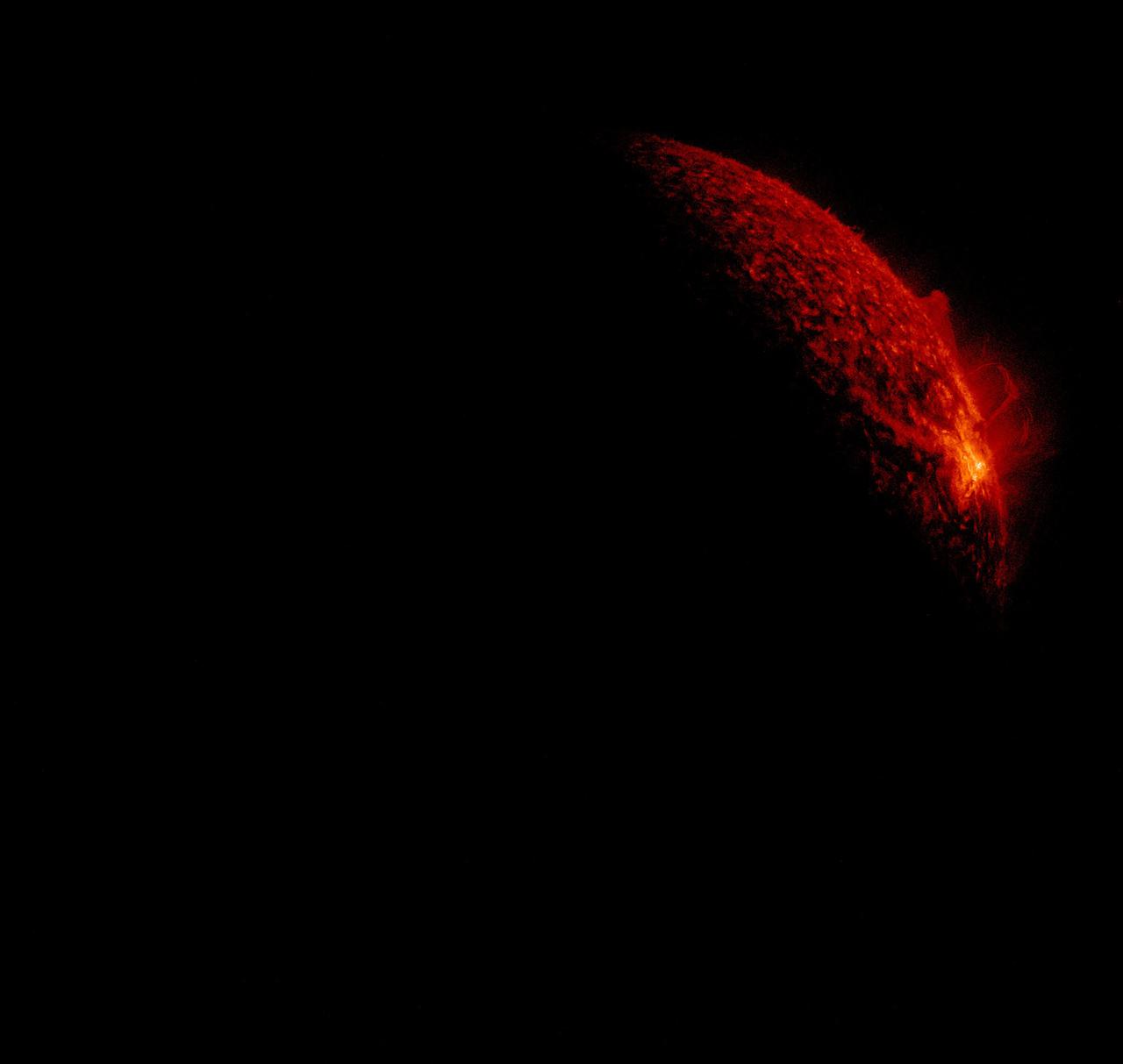
The Fall 2011 eclipse season started on September 11, 2011. Here is an AIA 304 image from 0658 UT. SDO has eclipse seasons twice a year near each equinox. For three weeks near midnight Las Cruces time (about 0700 UT) our orbit has the Earth pass between SDO and the Sun. These eclipses can last up to 72 minutes in the middle of an eclipse season. The current eclipse season started on September 11 and lasts until October 4. To read more about SDO go to: <a href="http://sdo.gsfc.nasa.gov/" rel="nofollow">sdo.gsfc.nasa.gov/</a> Credit: NASA/GSFC/SDO <b><a href="http://www.nasa.gov/centers/goddard/home/index.html" rel="nofollow">NASA Goddard Space Flight Center</a></b> enables NASA’s mission through four scientific endeavors: Earth Science, Heliophysics, Solar System Exploration, and Astrophysics. Goddard plays a leading role in NASA’s accomplishments by contributing compelling scientific knowledge to advance the Agency’s mission. <b>Follow us on <a href="http://twitter.com/NASA_GoddardPix" rel="nofollow">Twitter</a></b> <b>Like us on <a href="http://www.facebook.com/pages/Greenbelt-MD/NASA-Goddard/395013845897?ref=tsd" rel="nofollow">Facebook</a></b> <b>Find us on <a href="http://instagrid.me/nasagoddard/?vm=grid" rel="nofollow">Instagram</a></b>
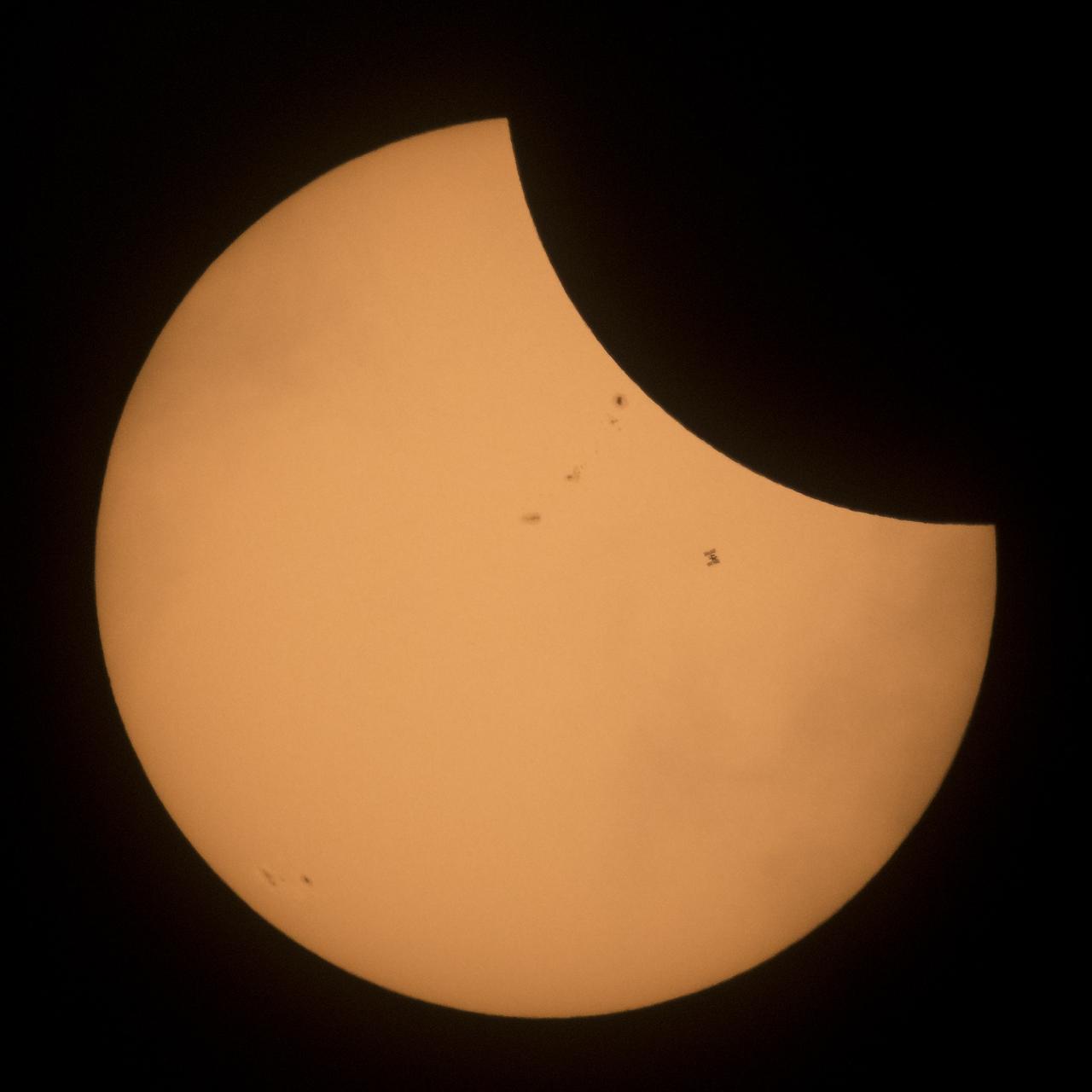
The International Space Station, with a crew of six onboard, is seen in silhouette as it transits the Sun at roughly five miles per second during a partial solar eclipse, Monday, Aug. 21, 2017 near Banner, Wyoming. Onboard as part of Expedition 52 are: NASA astronauts Peggy Whitson, Jack Fischer, and Randy Bresnik; Russian cosmonauts Fyodor Yurchikhin and Sergey Ryazanskiy; and ESA (European Space Agency) astronaut Paolo Nespoli. A total solar eclipse swept across a narrow portion of the contiguous United States from Lincoln Beach, Oregon to Charleston, South Carolina. A partial solar eclipse was visible across the entire North American continent along with parts of South America, Africa, and Europe. Photo Credit: (NASA/Joel Kowsky)

Danny Milisavljevic, associate professor of Physics and Astronomy at Purdue University, speaks to attendees at the Indianapolis Motor Speedway during a panel discussion along with Peg Luce, deputy director of the Heliophysics Division of NASA's Science Mission Directorate, Jane Rigby, senior project scientist for NASA's James Webb Space Telescope, and Asal Naseri, program executive in the Heliophysics Division of NASA's Science Mission Directorate, about the James Webb Space Telescope ahead of the total solar eclipse, Monday, April 8, 2024, in Indianapolis, Ind. A total solar eclipse swept across a narrow portion of the North American continent from Mexico’s Pacific coast to the Atlantic coast of Newfoundland, Canada. A partial solar eclipse was visible across the entire North American continent along with parts of Central America and Europe. Photo Credit: (NASA/Joel Kowsky)

Peg Luce, deputy director of the Heliophysics Division of NASA's Science Mission Directorate, left, asks of question of Jane Rigby, senior project scientist for NASA's James Webb Space Telescope, Danny Milisavljevic, associate professor of Physics and Astronomy at Purdue University, and Asal Naseri, program executive in the Heliophysics Division of NASA's Science Mission Directorate, as they speak to attendees at the Indianapolis Motor Speedway during a panel discussion about the James Webb Space Telescope ahead of the total solar eclipse, Monday, April 8, 2024, in Indianapolis, Ind. A total solar eclipse swept across a narrow portion of the North American continent from Mexico’s Pacific coast to the Atlantic coast of Newfoundland, Canada. A partial solar eclipse was visible across the entire North American continent along with parts of Central America and Europe. Photo Credit: (NASA/Joel Kowsky)

Jane Rigby, senior project scientist for NASA's James Webb Space Telescope, center, is seen alongside Peg Luce, deputy director of the Heliophysics Division of NASA's Science Mission Directorate, left, and Danny Milisavljevic, associate professor of Physics and Astronomy at Purdue University, as she speaks to attendees at the Indianapolis Motor Speedway during a panel discussion about the James Webb Space Telescope ahead of the total solar eclipse, Monday, April 8, 2024, in Indianapolis, Ind. A total solar eclipse swept across a narrow portion of the North American continent from Mexico’s Pacific coast to the Atlantic coast of Newfoundland, Canada. A partial solar eclipse was visible across the entire North American continent along with parts of Central America and Europe. Photo Credit: (NASA/Joel Kowsky)
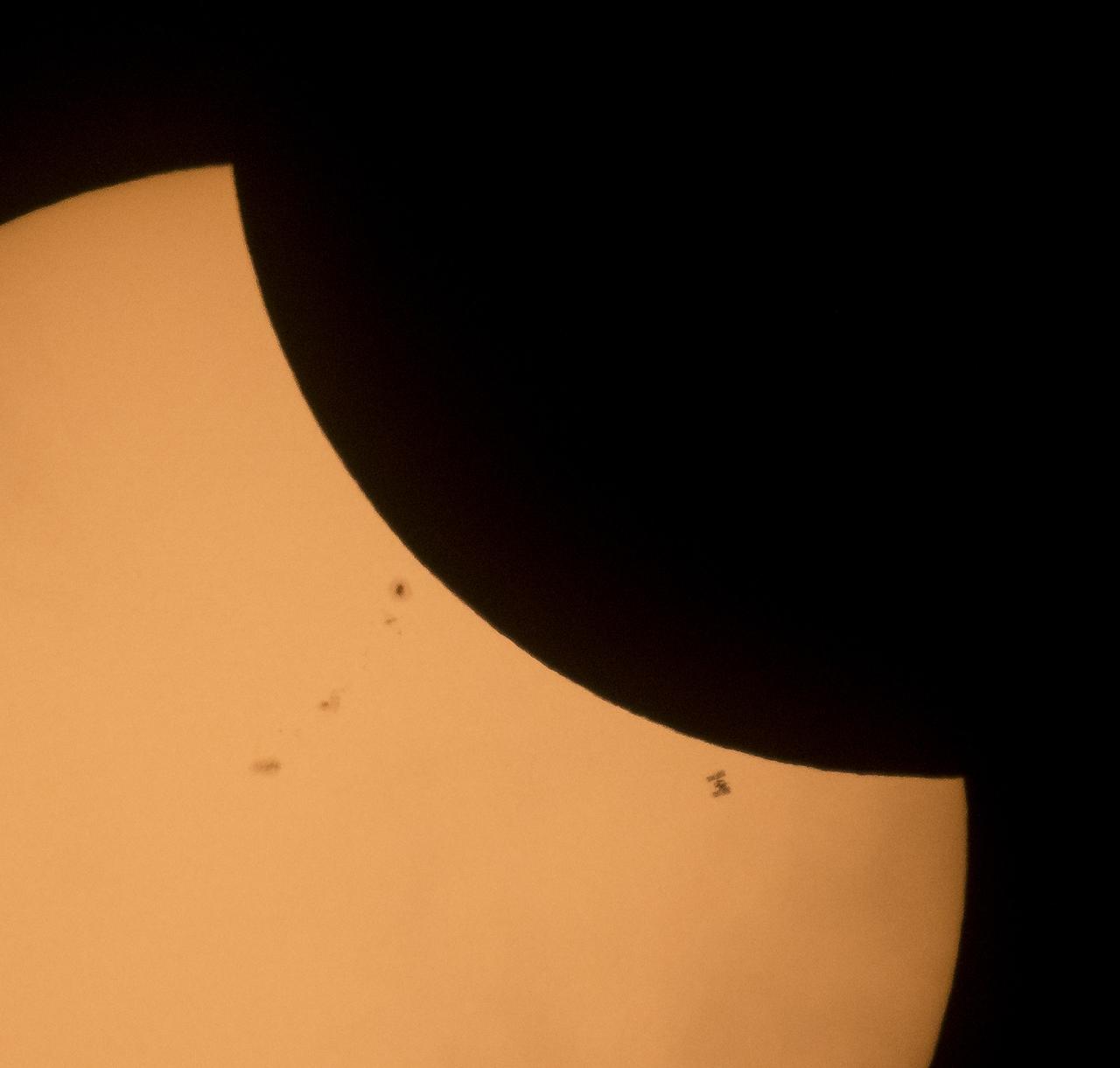
The International Space Station, with a crew of six onboard, is seen in silhouette as it transits the Sun at roughly five miles per second during a partial solar eclipse, Monday, Aug. 21, 2017 near Banner, Wyoming. Onboard as part of Expedition 52 are: NASA astronauts Peggy Whitson, Jack Fischer, and Randy Bresnik; Russian cosmonauts Fyodor Yurchikhin and Sergey Ryazanskiy; and ESA (European Space Agency) astronaut Paolo Nespoli. A total solar eclipse swept across a narrow portion of the contiguous United States from Lincoln Beach, Oregon to Charleston, South Carolina. A partial solar eclipse was visible across the entire North American continent along with parts of South America, Africa, and Europe. Photo Credit: (NASA/Joel Kowsky)

Carolin Frueh, associate professor of Aeronautics and Astronautics at Purdue University, left, Heather Futrell, program executive in the Heliophysics Division of NASA's Science Mission Directorate, Briony Horgan, associate professor of Planetary Science at Purdue University, and Nicole Rayl, associate director for Flight Programs in the Heliophysics Divison of NASA's Science Mission Directorate, speak to attendees at the Indianapolis Motor Speedway during a panel discussion about the Parker Solar Probe and space weather ahead of the total solar eclipse, Monday, April 8, 2024, in Indianapolis, Ind. A total solar eclipse swept across a narrow portion of the North American continent from Mexico’s Pacific coast to the Atlantic coast of Newfoundland, Canada. A partial solar eclipse was visible across the entire North American continent along with parts of Central America and Europe. Photo Credit: (NASA/Joel Kowsky)
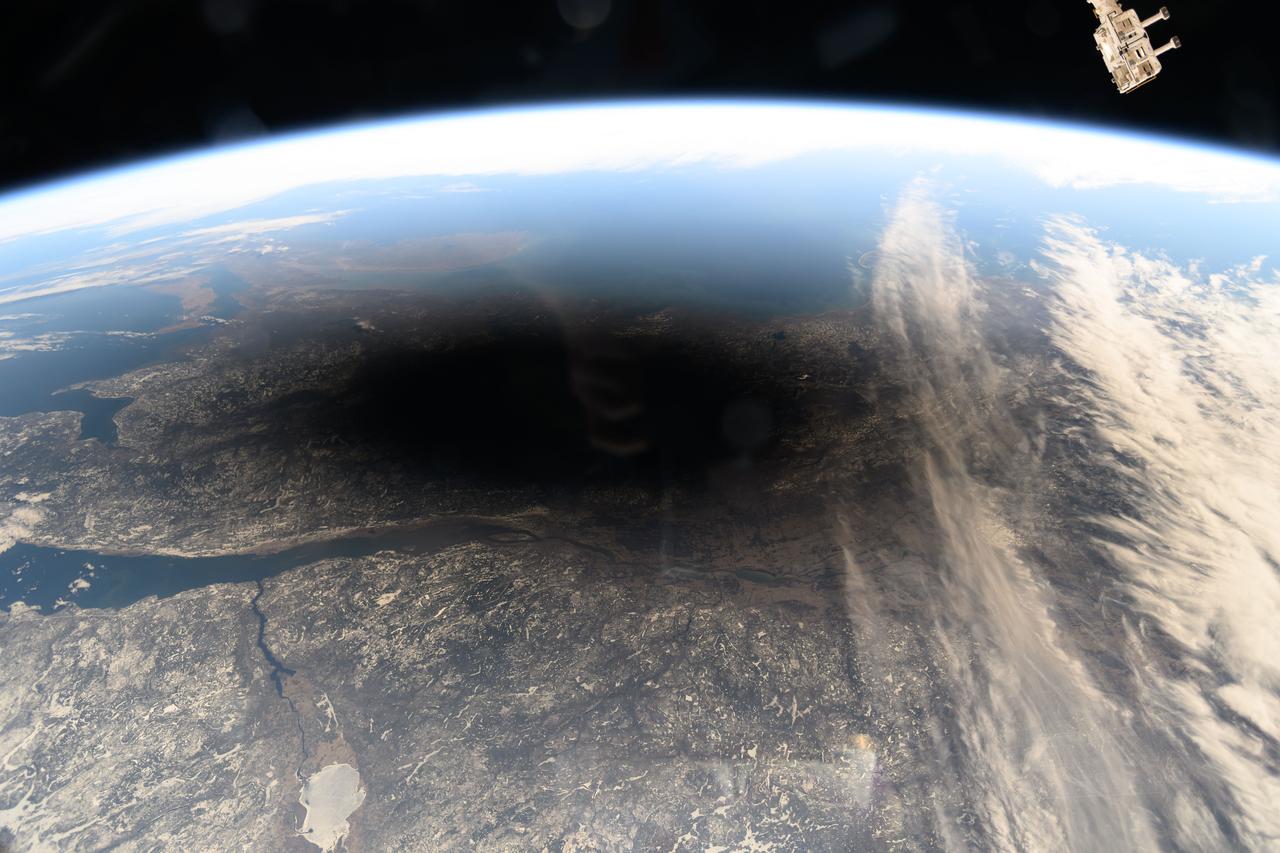
iss071e002844 (April 8, 2024) --- The Moon's shadow, or umbra, is pictured covering portions of the Canadian provinces of Quebec and New Brunswick and the American state of Maine in this photograph from the International Space Station as it soared into the solar eclipse from 261 miles above.
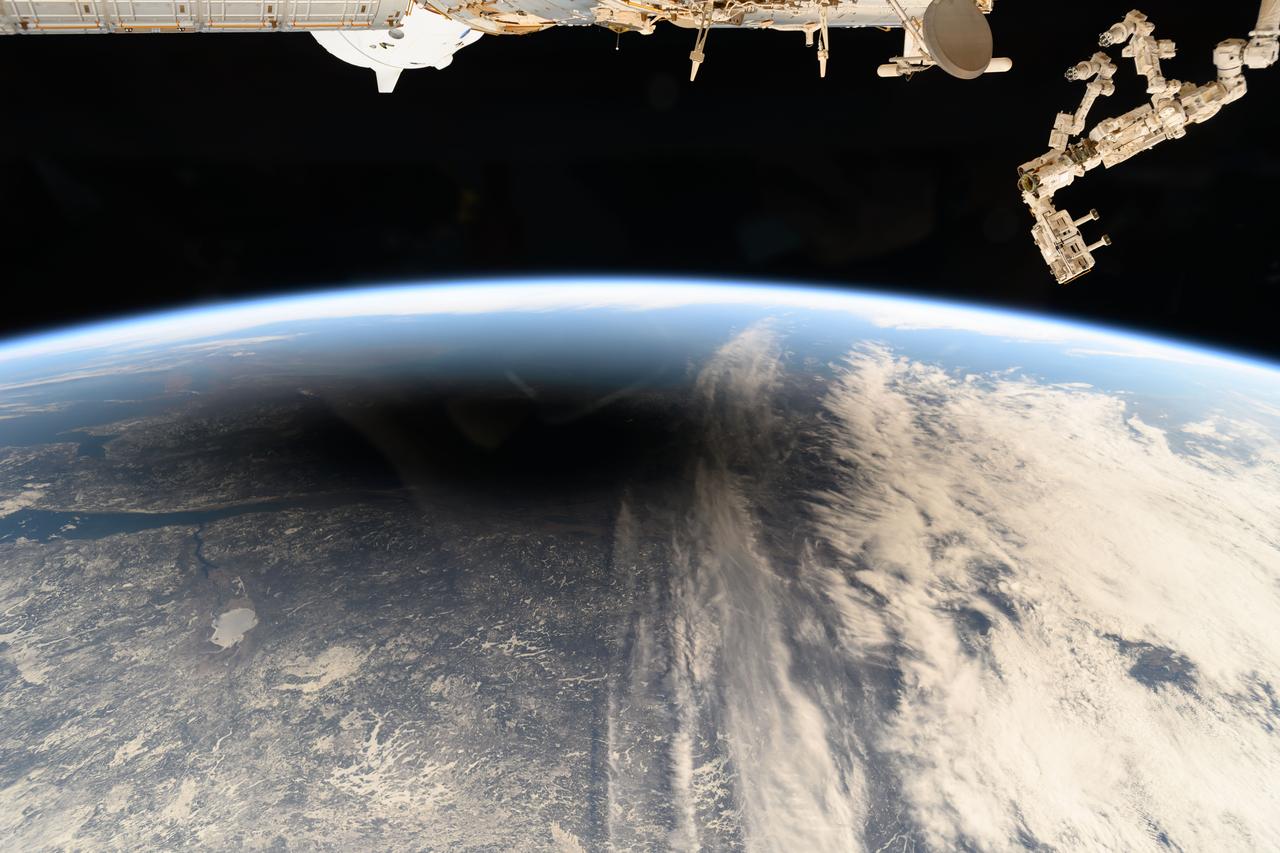
iss071e002842 (April 8, 2024) --- The Moon's shadow, or umbra, is pictured covering portions of the Canadian provinces of Quebec and New Brunswick and the American state of Maine in this photograph from the International Space Station as it soared into the solar eclipse from 261 miles above.
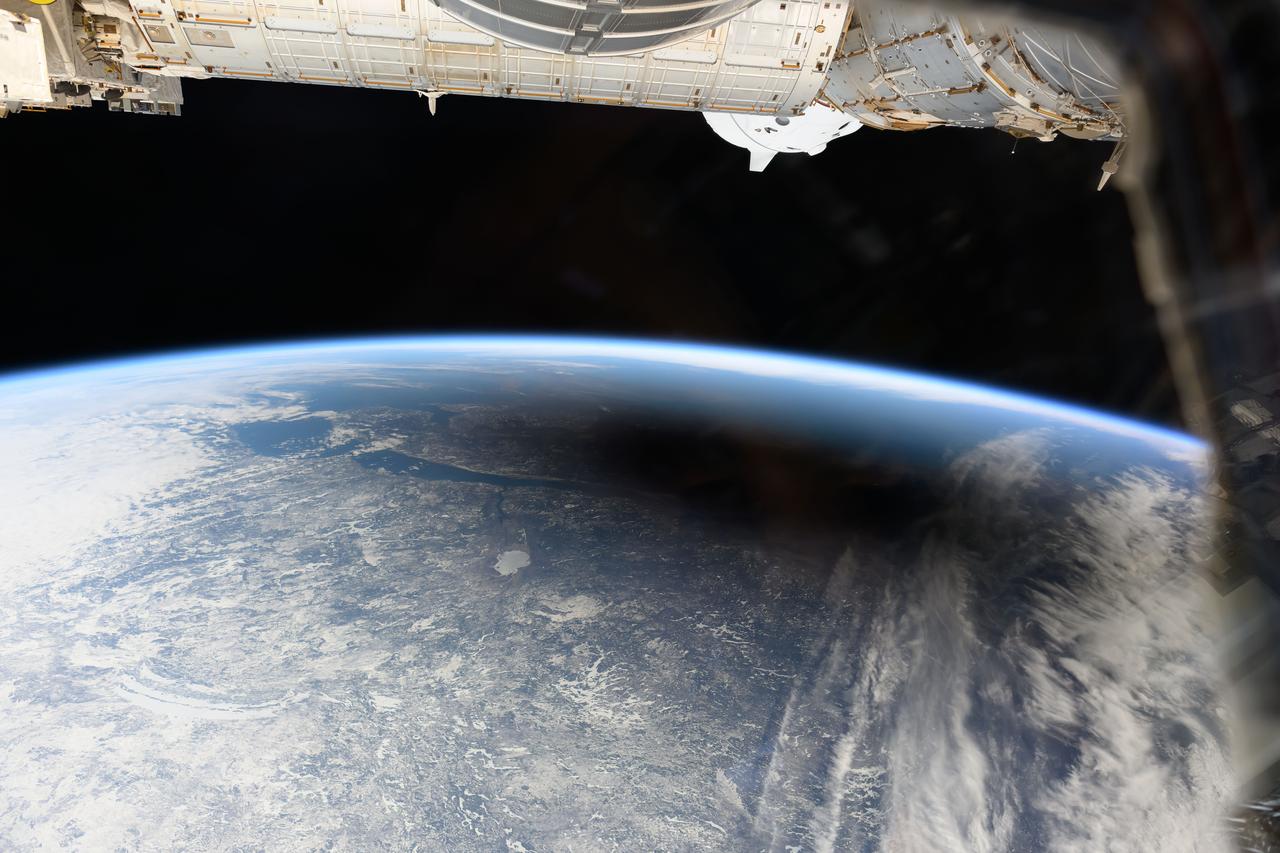
iss071e002903 (April 8, 2024) --- The Moon's shadow, or umbra, is pictured covering portions of the Canadian provinces of Quebec and New Brunswick and the American state of Maine in this photograph from the International Space Station as it soared into the solar eclipse from 261 miles above.
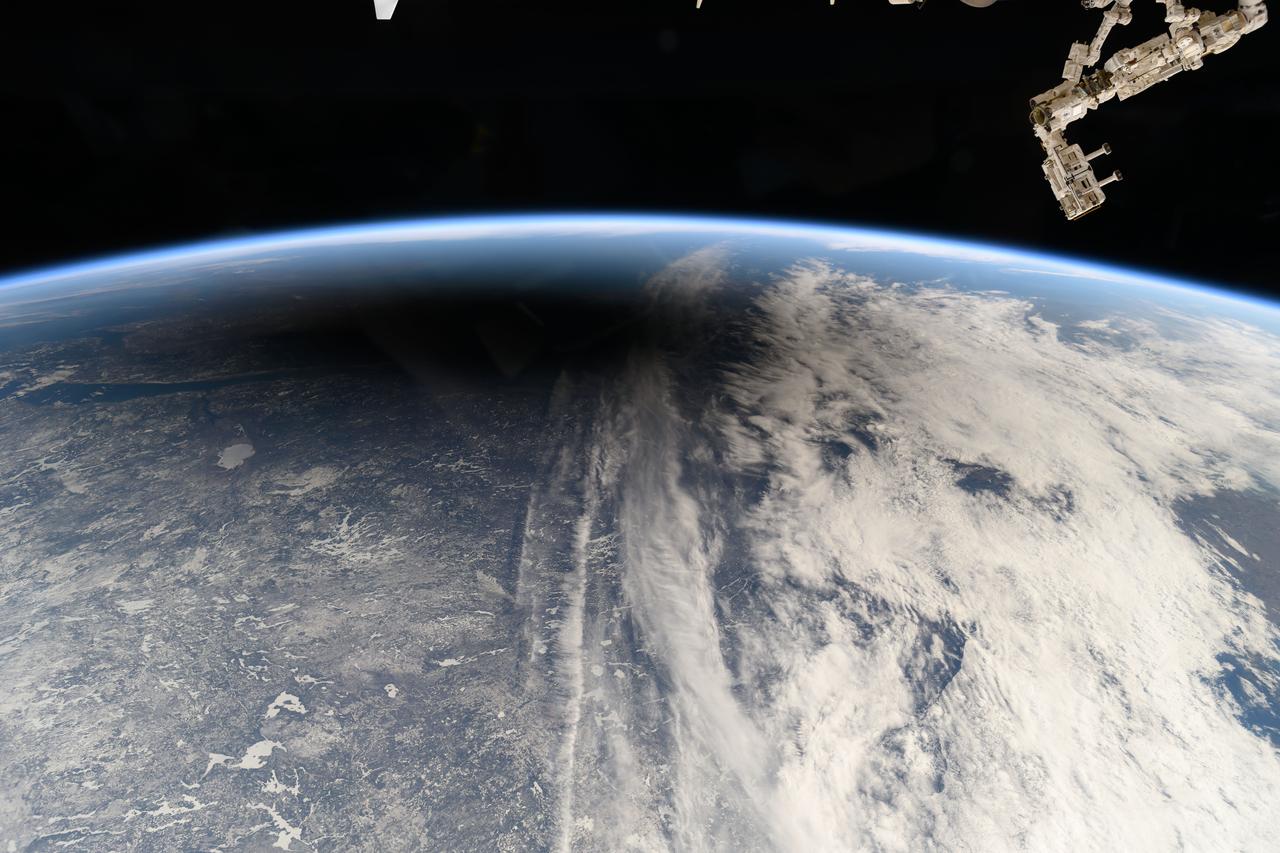
iss071e002836 (April 8, 2024) --- The Moon's shadow, or umbra, is pictured covering portions of the Canadian provinces of Quebec and New Brunswick and the American state of Maine in this photograph from the International Space Station as it soared into the solar eclipse from 261 miles above.
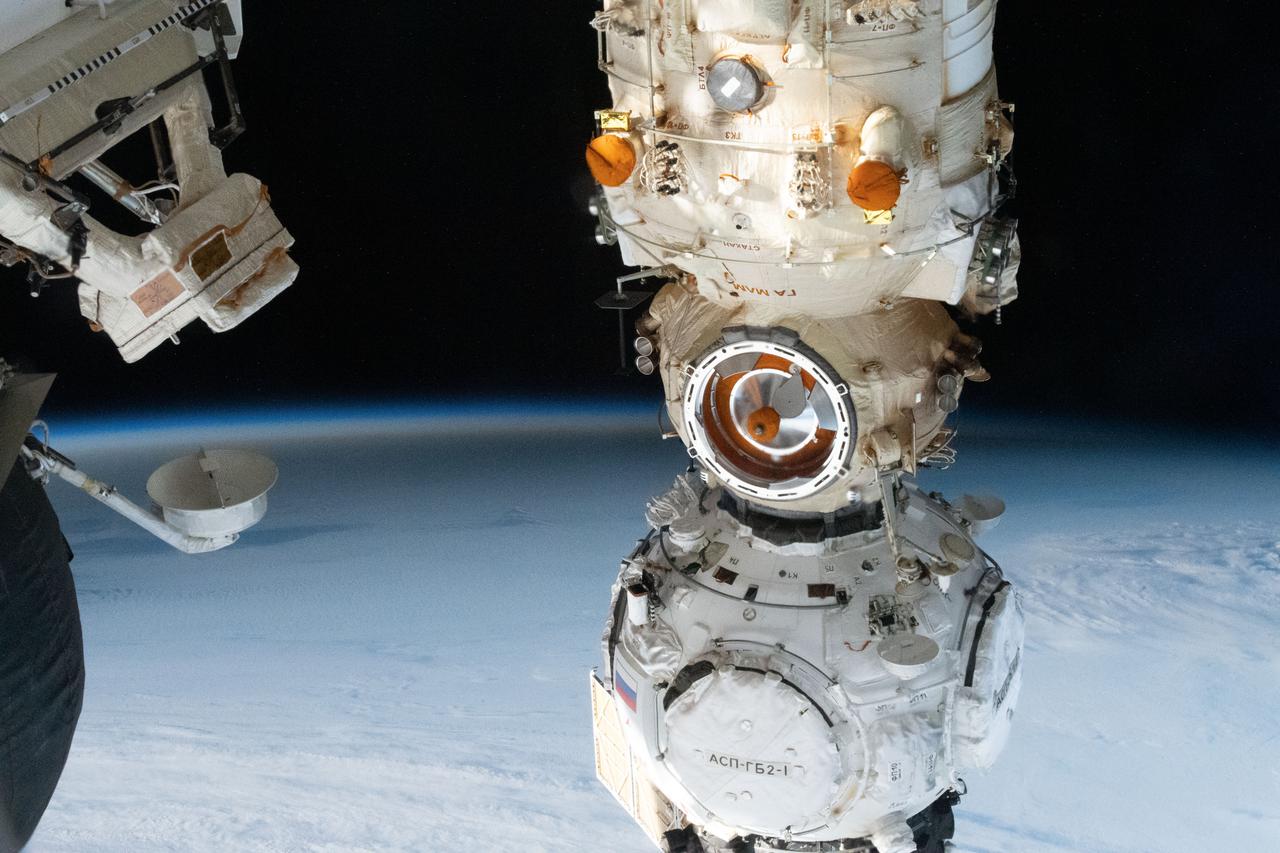
iss066e086505 (Dec, 4, 2021) --- The Moon's shadow, caused by a solar eclipse over Antarctica, is pictured from the International Space Station as it orbits 269 miles above the south Atlantic Ocean. In the foreground, is the Russian Prichal module attached to the Nauka multipurpose docking module.

This composite made from ten images shows the progression of the Moon during a total lunar eclipse above the Vehicle Assembly Building, Nov. 8, 2022, at NASA’s Kennedy Space Center in Florida. Visible trailing the Moon in this composite is Mars. Photo Credit: (NASA/Joel Kowsky)
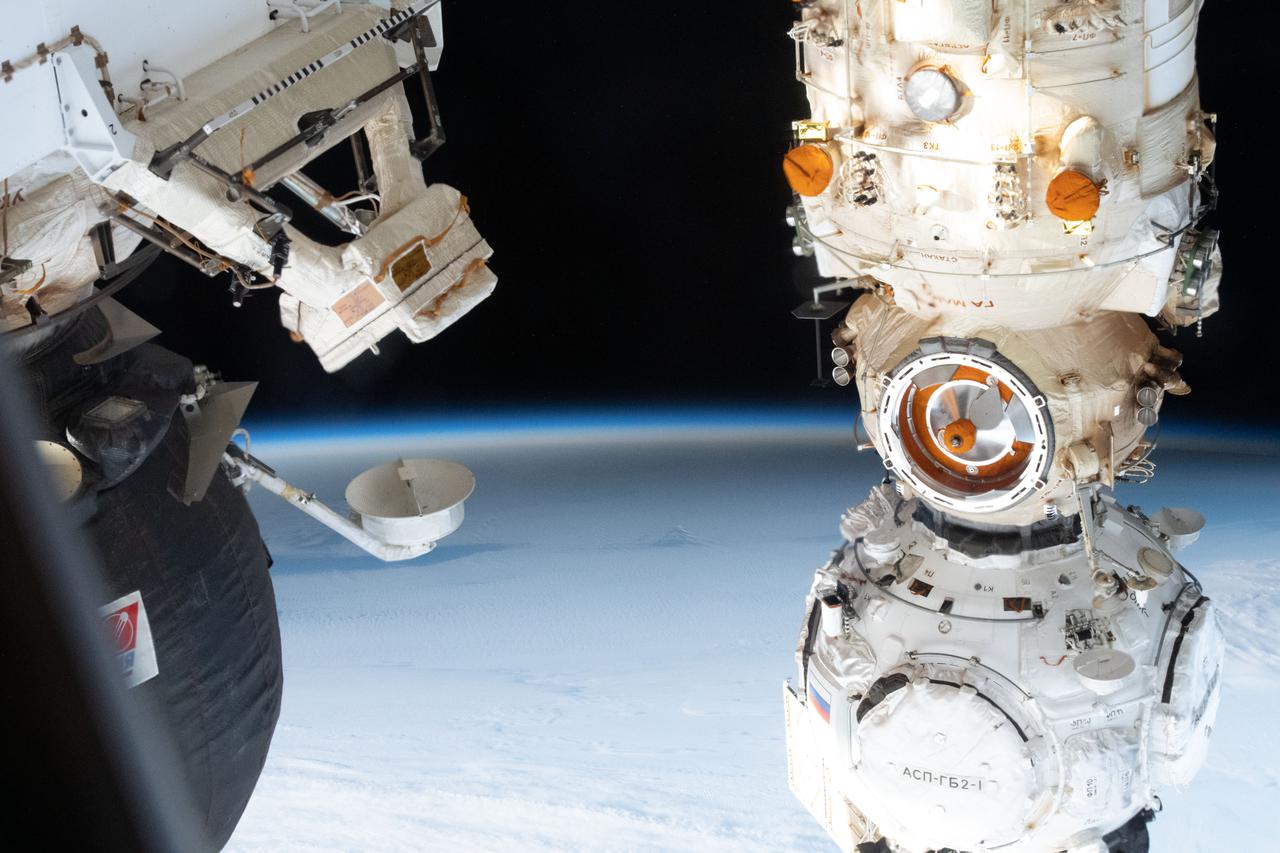
iss066e086503 (Dec, 4, 2021) --- The Moon's shadow, caused by a solar eclipse over Antarctica, is pictured from the International Space Station as it orbits 269 miles above the south Atlantic Ocean. In the foreground, is the Russian Prichal module attached to the Nauka multipurpose docking module.
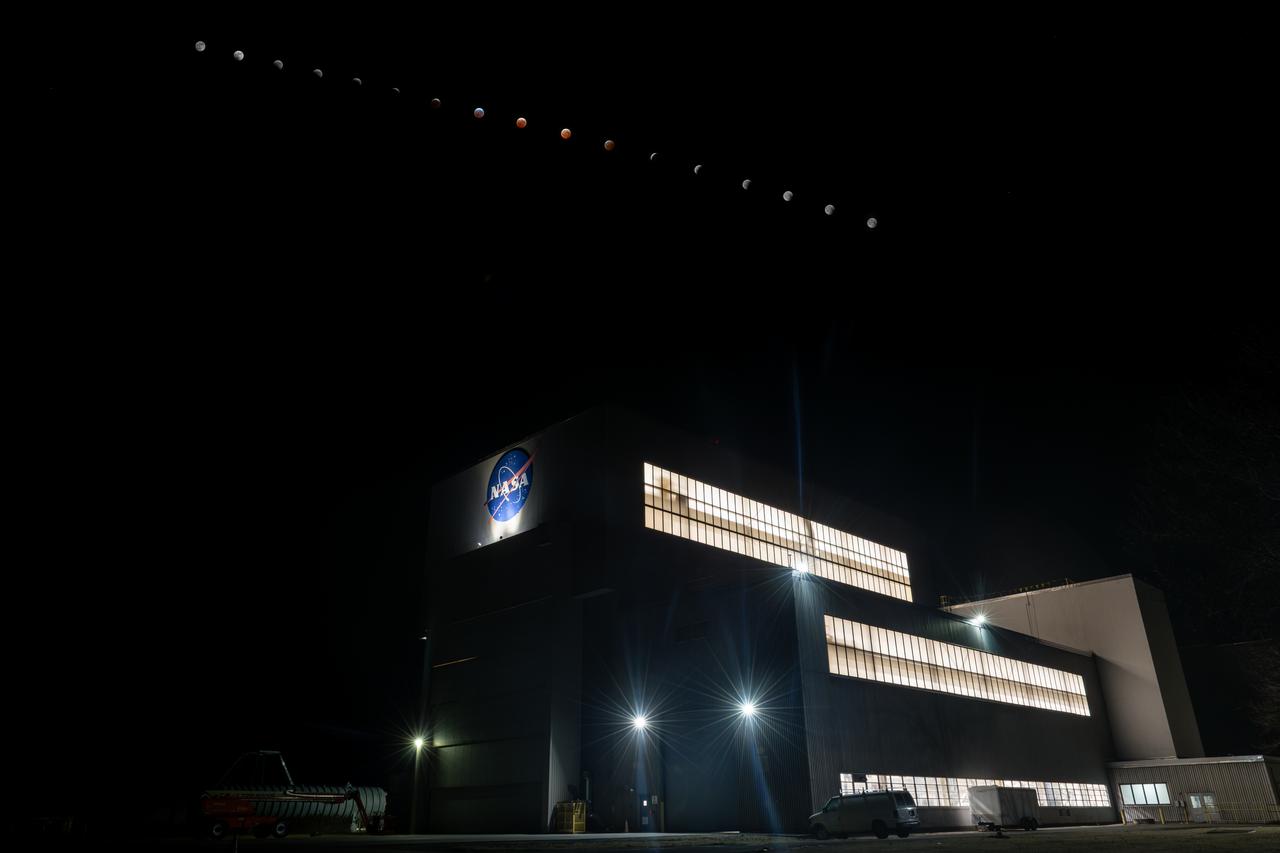
A composite photo made from 18 images of the lunar eclipse above the Space Environments Complex at NASA’s Glenn Research Center at Neil Armstrong Test Facility in Sandusky, Ohio, during the early hours of March 14, 2025. Photo Credit: (NASA/Sara Lowthian-Hanna)
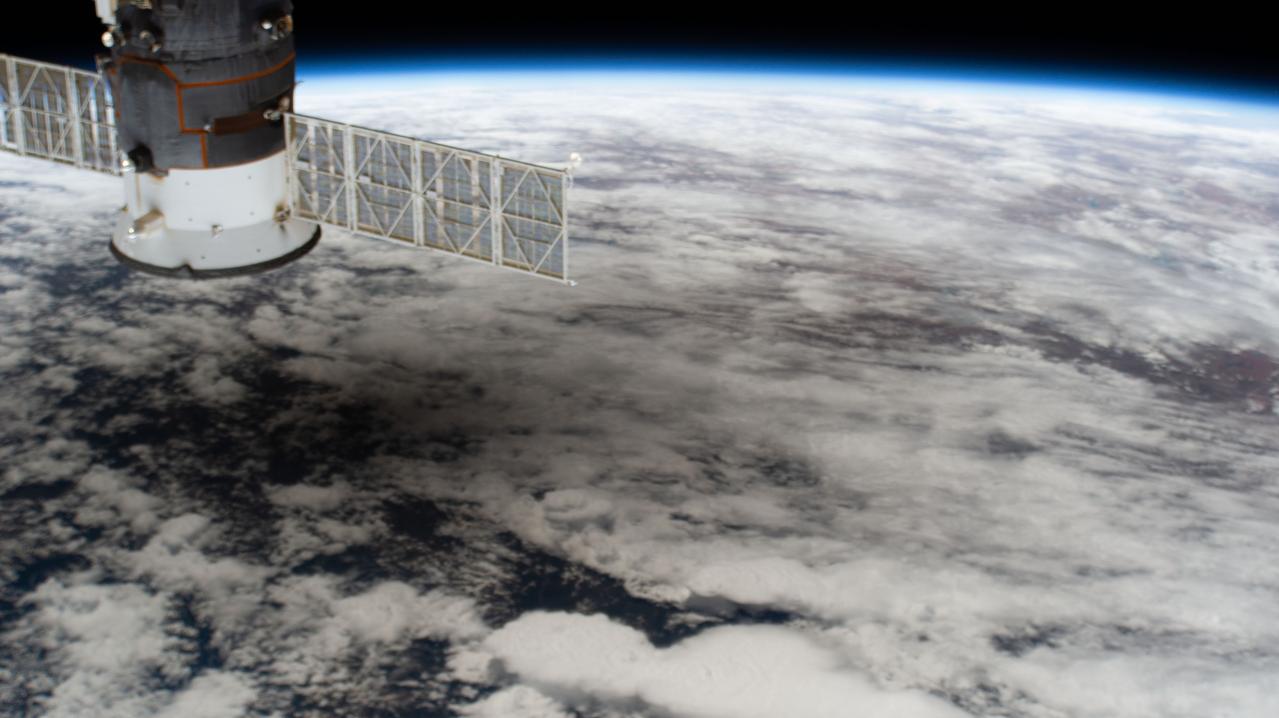
iss063e031864 (June 21, 2020) --- The International Space Station was orbiting above China when this picture of the solar eclipse shadowing a portion of the Asian continent was captured by an external high definition camera. In the left foreground, is the Progress 74 resupply ship from Russia.
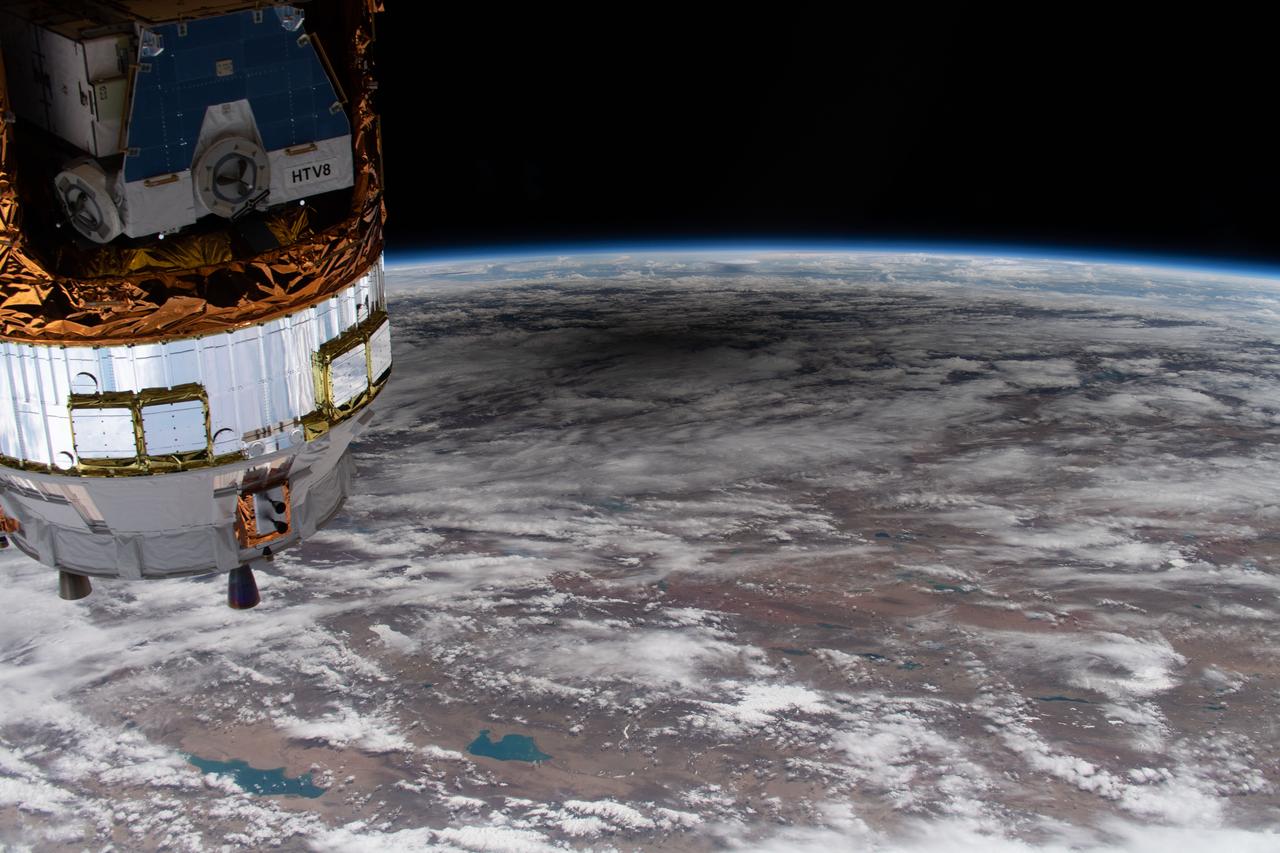
iss063e031761 (June 21, 2020) --- The International Space Station was orbiting over Kazakhstan and into China when this picture of the solar eclipse shadowing a portion of the Asian continent was captured by an external high definition camera. In the left foreground, is the H-II Transfer Vehicle-9 from Japan.
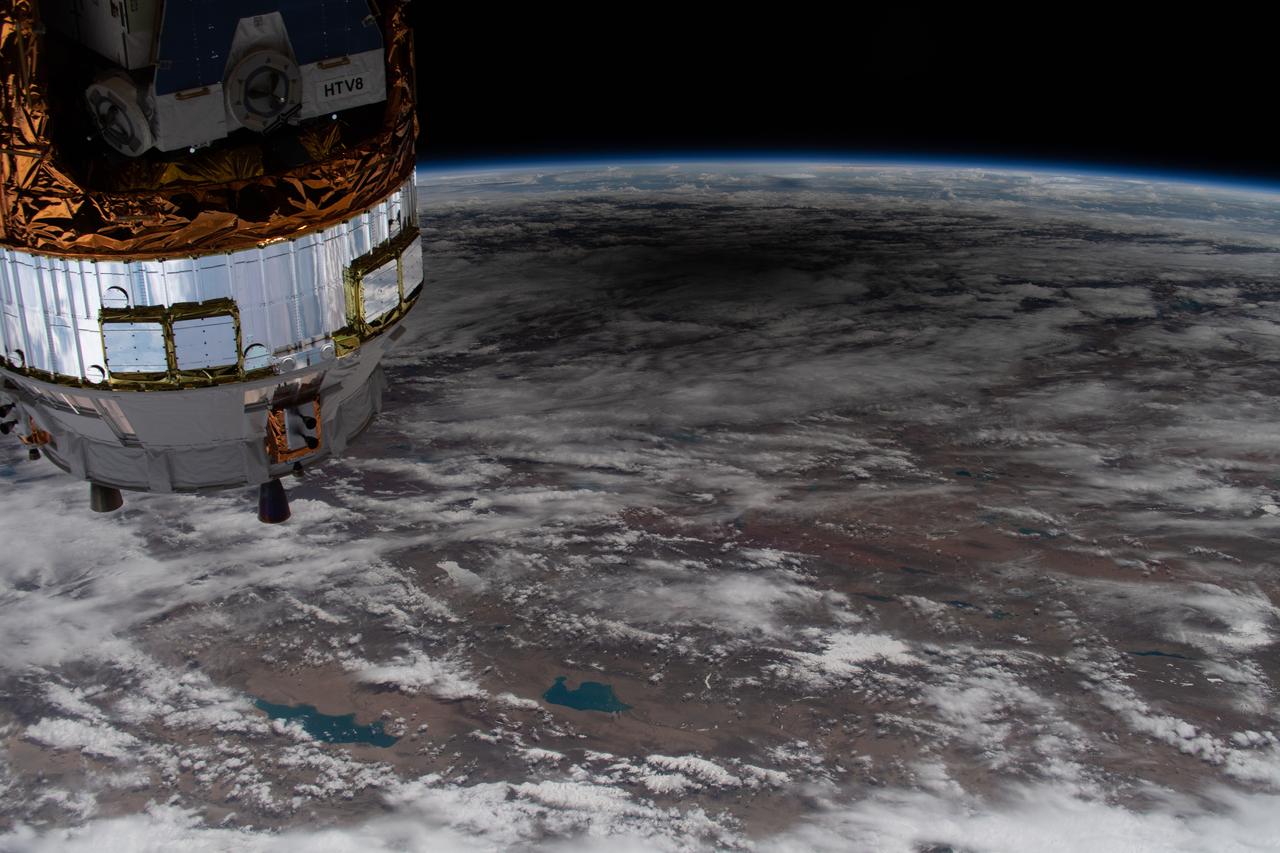
iss063e031763 (June 21, 2020) --- The International Space Station was orbiting above China when this picture of the solar eclipse shadowing a portion of the Asian continent was captured by an external high definition camera. In the left foreground, is the Progress 74 resupply ship from Russia.