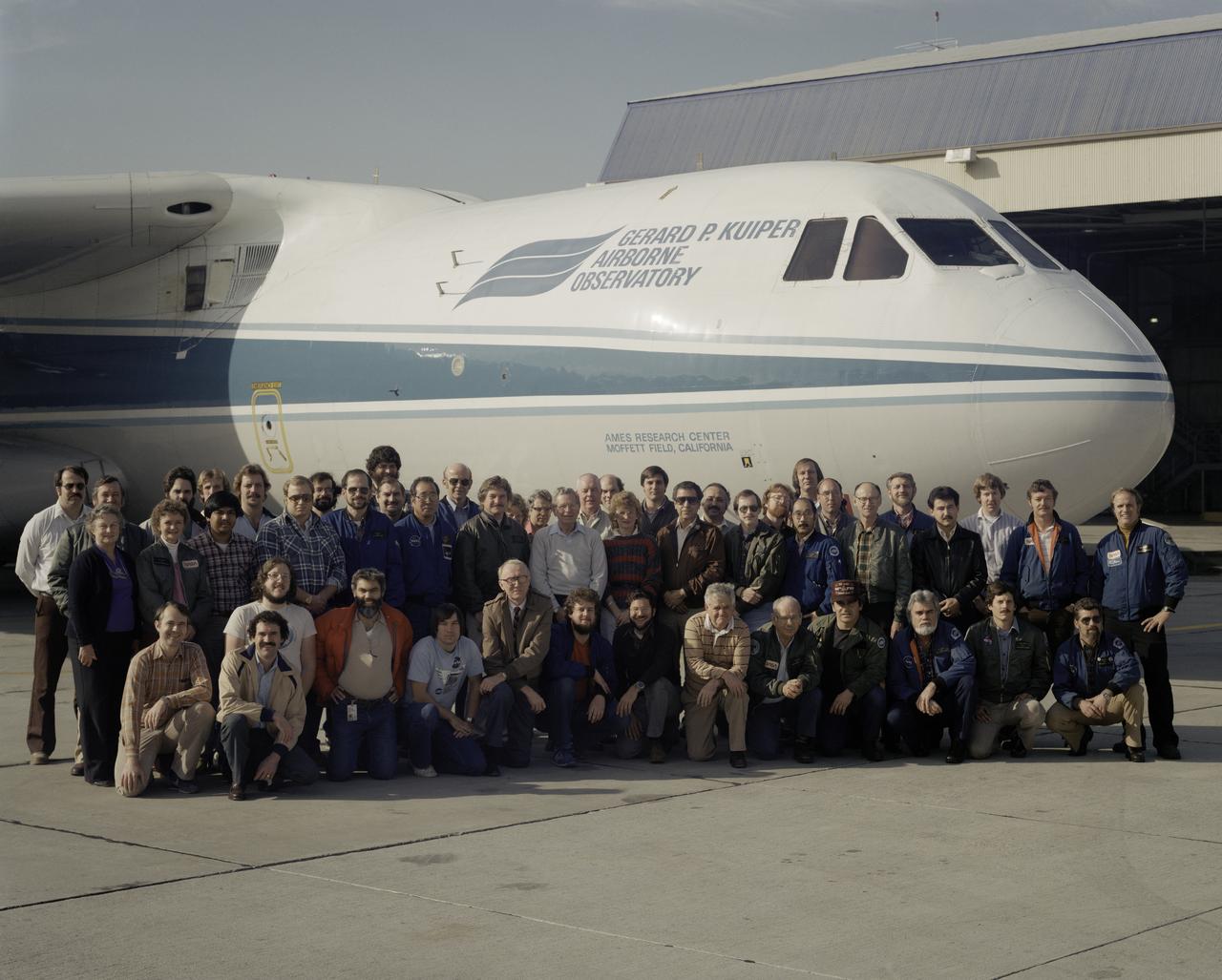
Medium Altitude Missions Branch: C-141 KAO Personnel, Mike Robinson, Mike Landis, Ed Hall, Tom Jones, John Graybeal, Louis Haughney, Brian Wright, Allan Meyer, Dick Gallant, Al Silva, Louis Russo, Hap Arnold, Randy Hobbs, Bill Laurie, Louis Foss, Sue Laurie, Tony Tieas, Tom Connors, Dave Brown, Alan Dunn, Don Oishi, Don Olson, Jim McClenahan, Wally Stahl, Sandy Mayville, Hank Hermosillo, Doug Ziebell, Ben Horita, Bill Hightower, Ron Sanchez, Terry Stoeffler, Lee Montz, Gene Moniz, John Brown, Bob America, Mike Craig, Kent Shiffer, Sandy Kogan, George Gull, Judy Pipher, Larry Helpher, Don MacKinnon, Jesse Bregmann, Jim Eilers, Nabil Hanania, Jim Cockrell, Keith Ackerman, Dave Walton, Lloyd Domeier, Pat Atchison
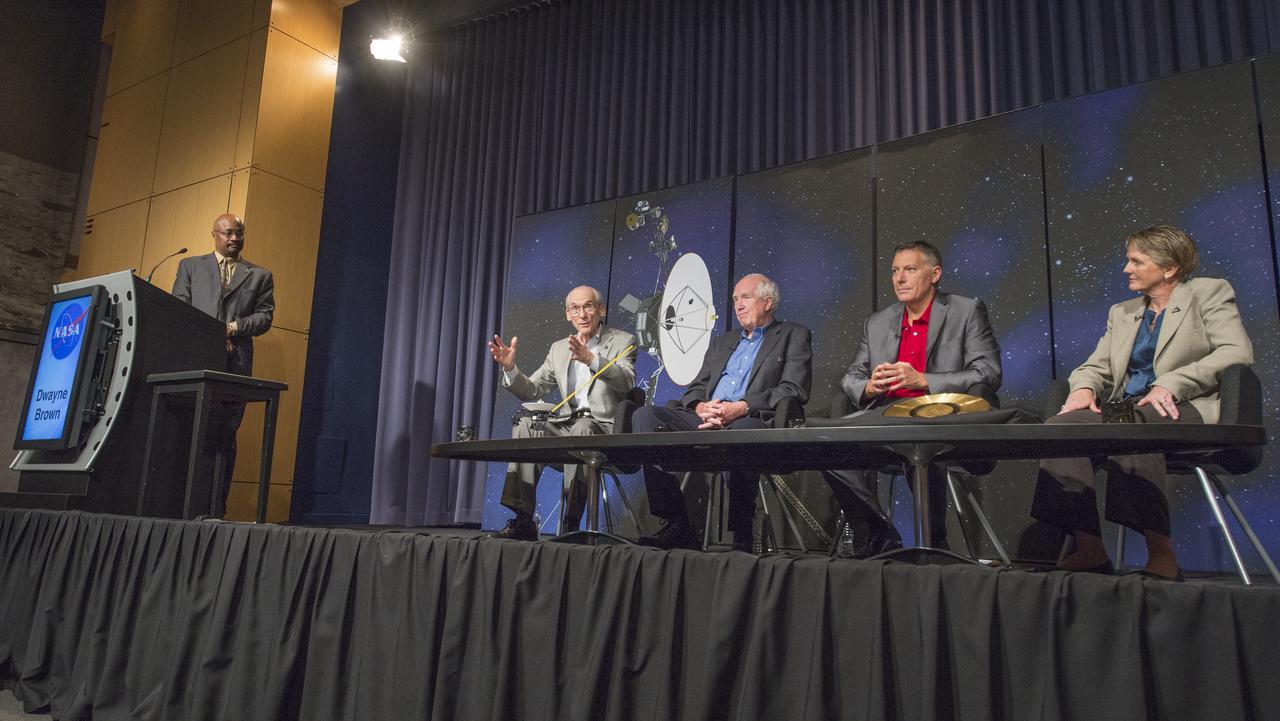
Ed Stone, Voyager project scientist, California Institute of Technology, is seen as he speaks at a news conference on NASA's Voyager 1 spacecraft, Thursday, Sept. 12, 2013 at NASA Headquarters in Washington. NASA's Voyager 1 spacecraft officially is the first human-made object to venture into interstellar space. The 36-year-old probe is about 12 billion miles (19 billion kilometers) from our sun. New and unexpected data indicate Voyager 1 has been traveling for about one year through plasma, or ionized gas, present in the space between stars. A report on the analysis of this new data is published in Thursday's edition of the journal Science. Photo Credit: (NASA/Carla Cioffi)
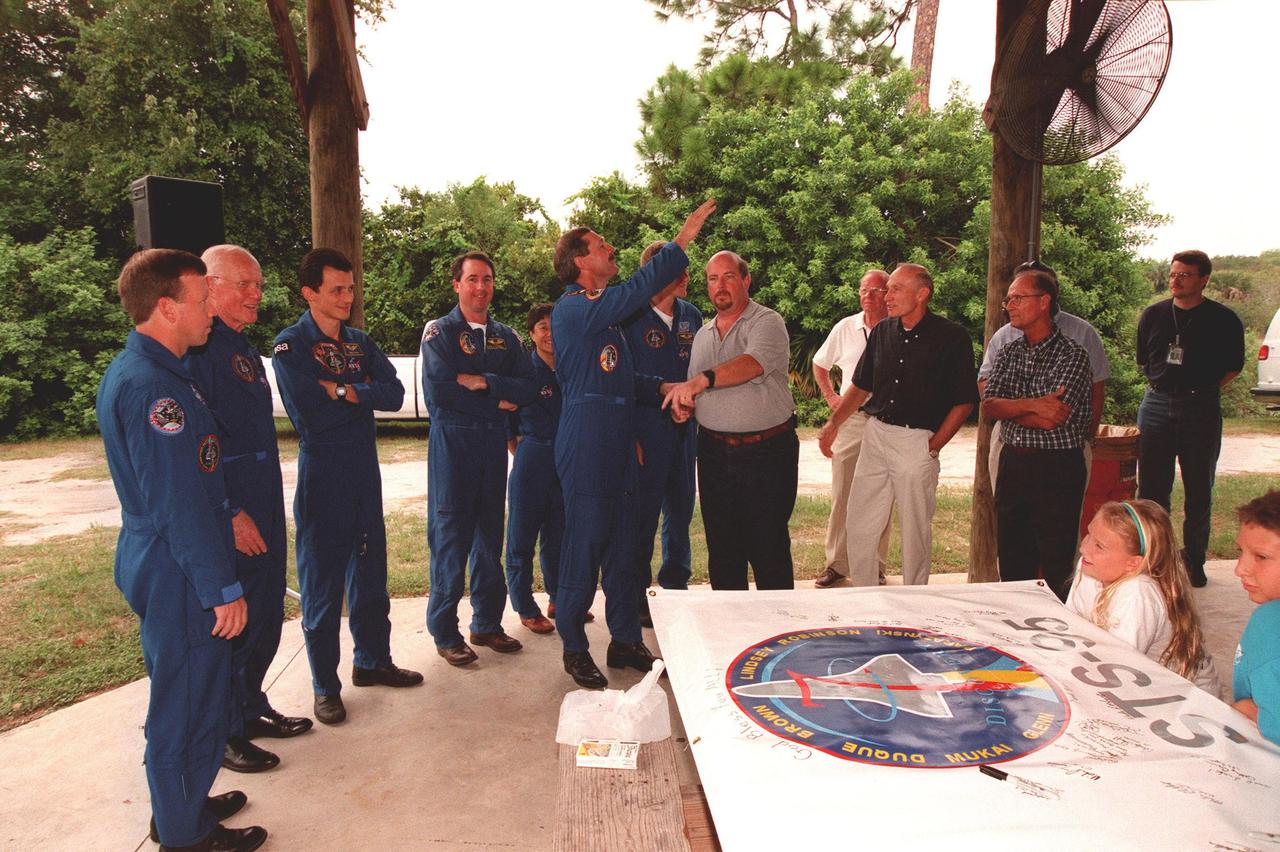
During a break in the Crew Equipment Interface Test (CEIT), the STS-95 crew gathers with United Space Alliance (USA) personnel and their families. From left are Pilot Steven W. Lindsey; Payload Specialist John H. Glenn Jr., a senator from Ohio; Pedro Duque, with the European Space Agency (ESA); Mission Specialist Stephen K. Robinson, Ph.D.; Chiaki Mukai, with the National Space Development Agency of Japan (NASDA); Mission Commander Curtis L. Brown Jr. (with arm raised); Mission Specialist Scott E. Parazynski, M.D.; Jim Furr, USA National Space Flight Awareness representative; Jack King, USA Public Affairs; Bob Sieck, KSC director of Shuttle Processing; and Ed Adamek, USA vice president and associate program manager for Ground Operations at KSC
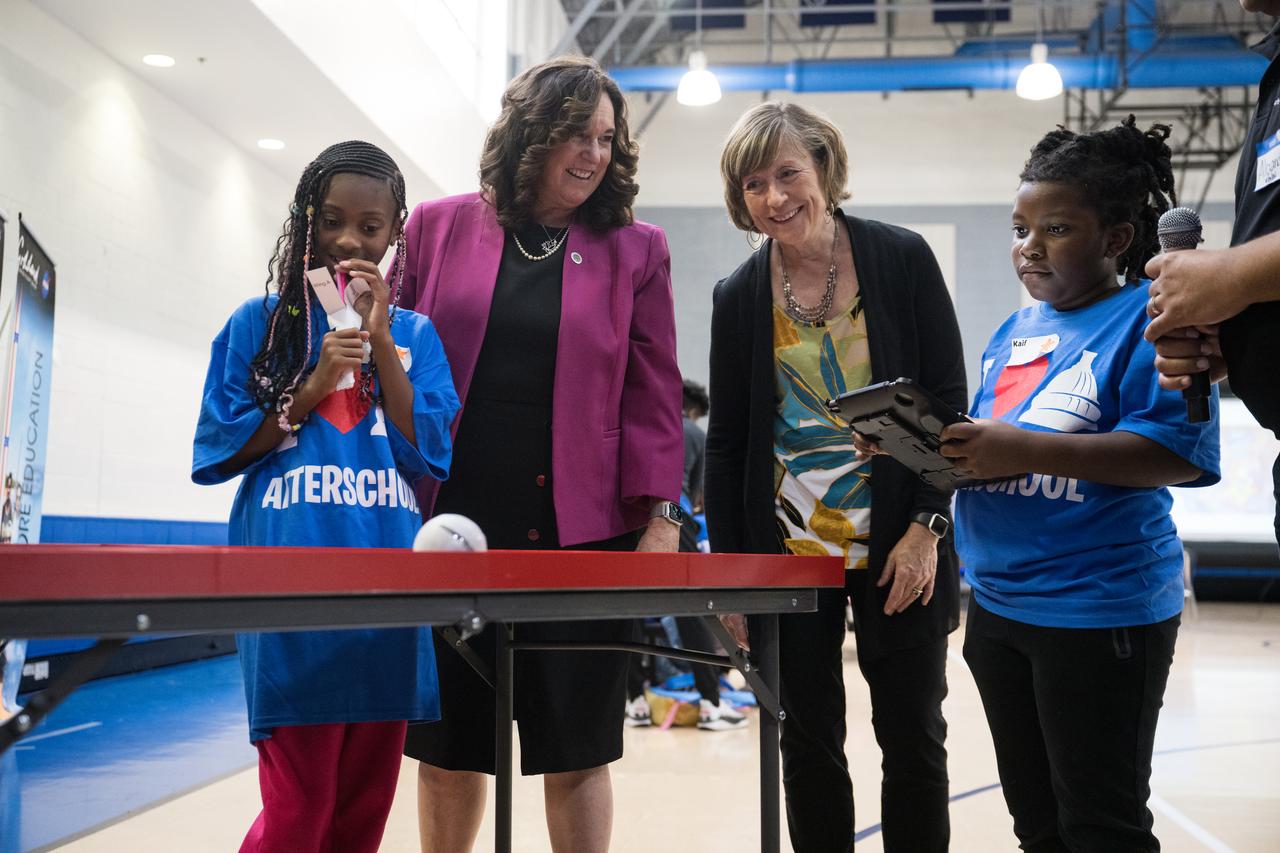
NASA Deputy Associate Administrator for NASA’s Office of STEM Engagement, Kris Brown, second from right, and U.S. Department of Education Deputy Secretary Cindy Marten, second from left, watch as a student operates a robot during a STEM event to kickoff the 21st Century Community Learning Centers NASA and U.S. Department of Education partnership, Monday, Sept. 23, 2024 at Wheatley Education Campus (EC) in Washington. Students engaged in NASA hands-on activities and an engineering design challenge. Photo Credit: (NASA/Aubrey Gemignani)
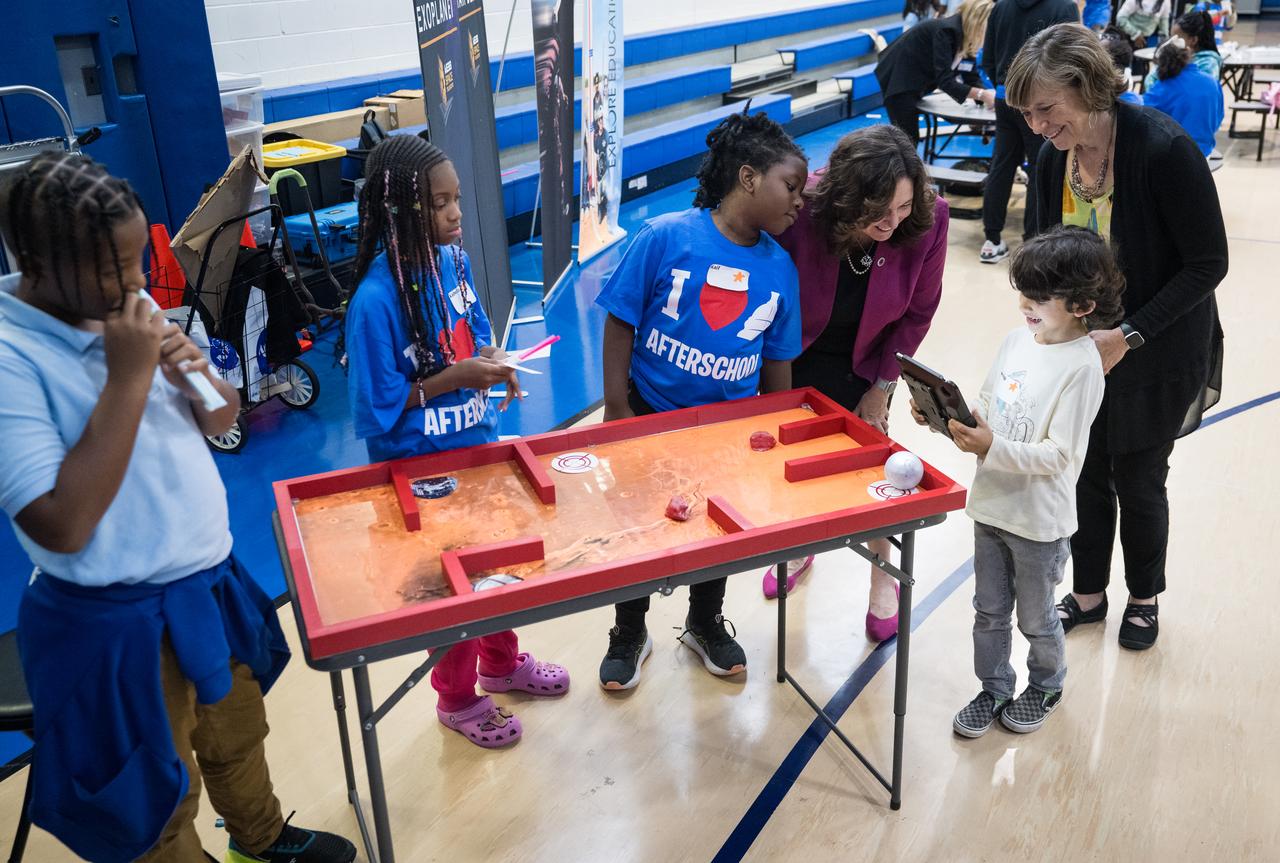
Students at Wheatley Education Campus participate in a Mars rolling rover activity with a robot, during a kickoff event for the 21st Century Community Learning Centers NASA and Department of Education partnership, Monday, Sept. 23, 2024 at Wheatley Education Campus in Washington. Photo Credit: (NASA/Aubrey Gemignani)
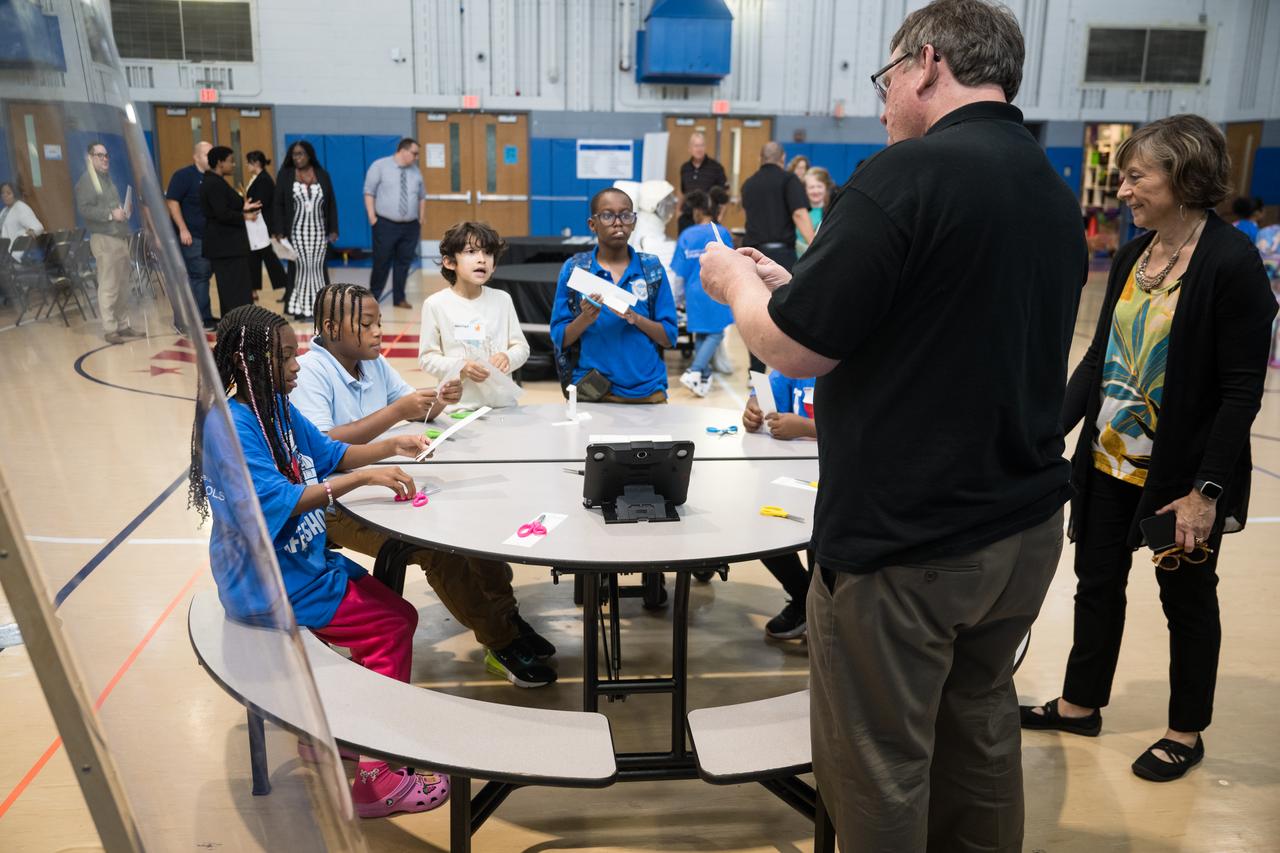
Students at Wheatley Education Campus participate in a rotor motor and wind tunnel activity during a kickoff event for the 21st Century Community Learning Centers NASA and Department of Education partnership, Monday, Sept. 23, 2024 at Wheatley Education Campus in Washington. Photo Credit: (NASA/Aubrey Gemignani)
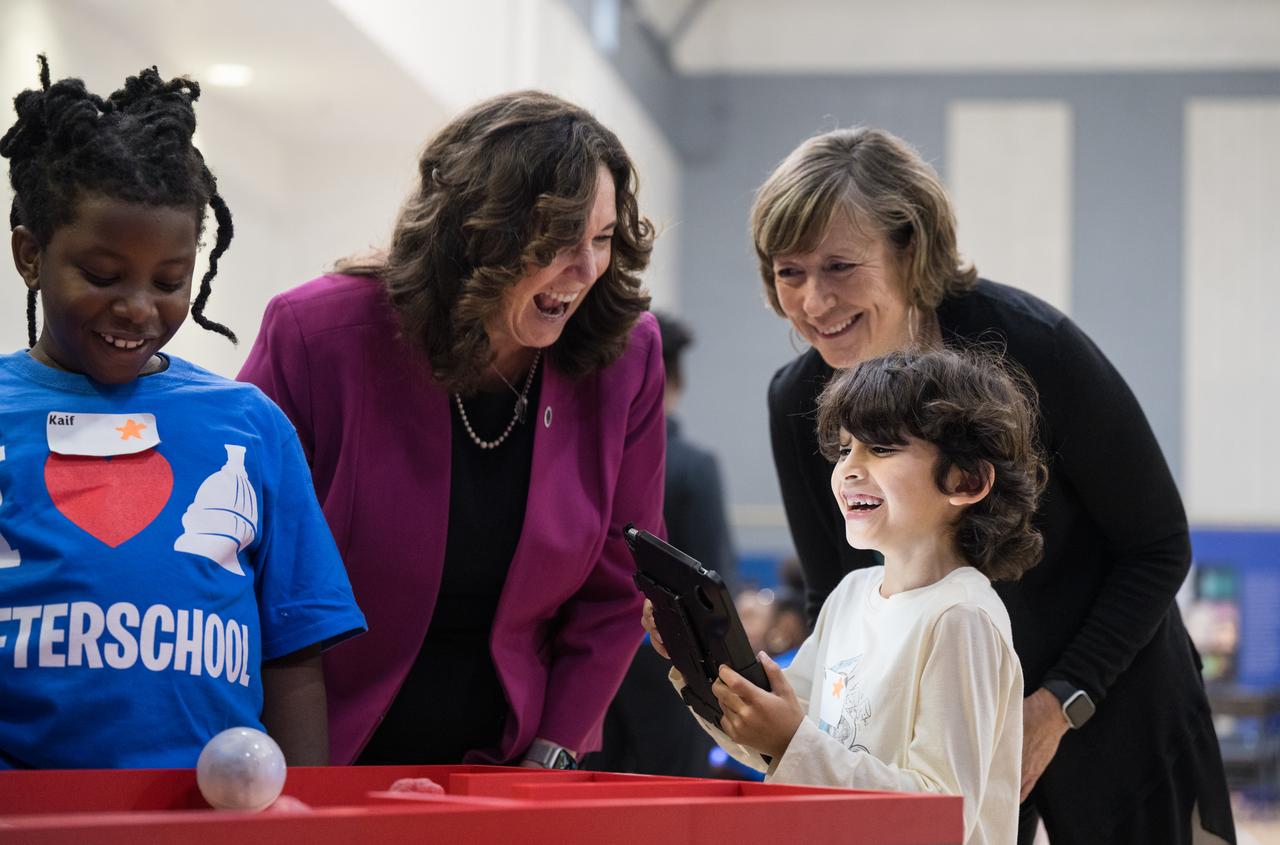
NASA Deputy Associate Administrator for NASA’s Office of STEM Engagement, Kris Brown, right, and U.S. Department of Education Deputy Secretary Cindy Marten, left, watch as a student operates a robot during a STEM event to kickoff the 21st Century Community Learning Centers NASA and U.S. Department of Education partnership, Monday, Sept. 23, 2024 at Wheatley Education Campus (EC) in Washington. Students engaged in NASA hands-on activities and an engineering design challenge. Photo Credit: (NASA/Aubrey Gemignani)

NASA Deputy Associate Administrator for NASA’s Office of STEM Engagement, Kris Brown, provides remarks at a kickoff event for the 21st Century Community Learning Centers NASA and Department of Education partnership, Monday, Sept. 23, 2024 at Wheatley Education Campus in Washington. Students engaged in NASA hands-on activities and an engineering design challenge. Photo Credit: (NASA/Aubrey Gemignani)
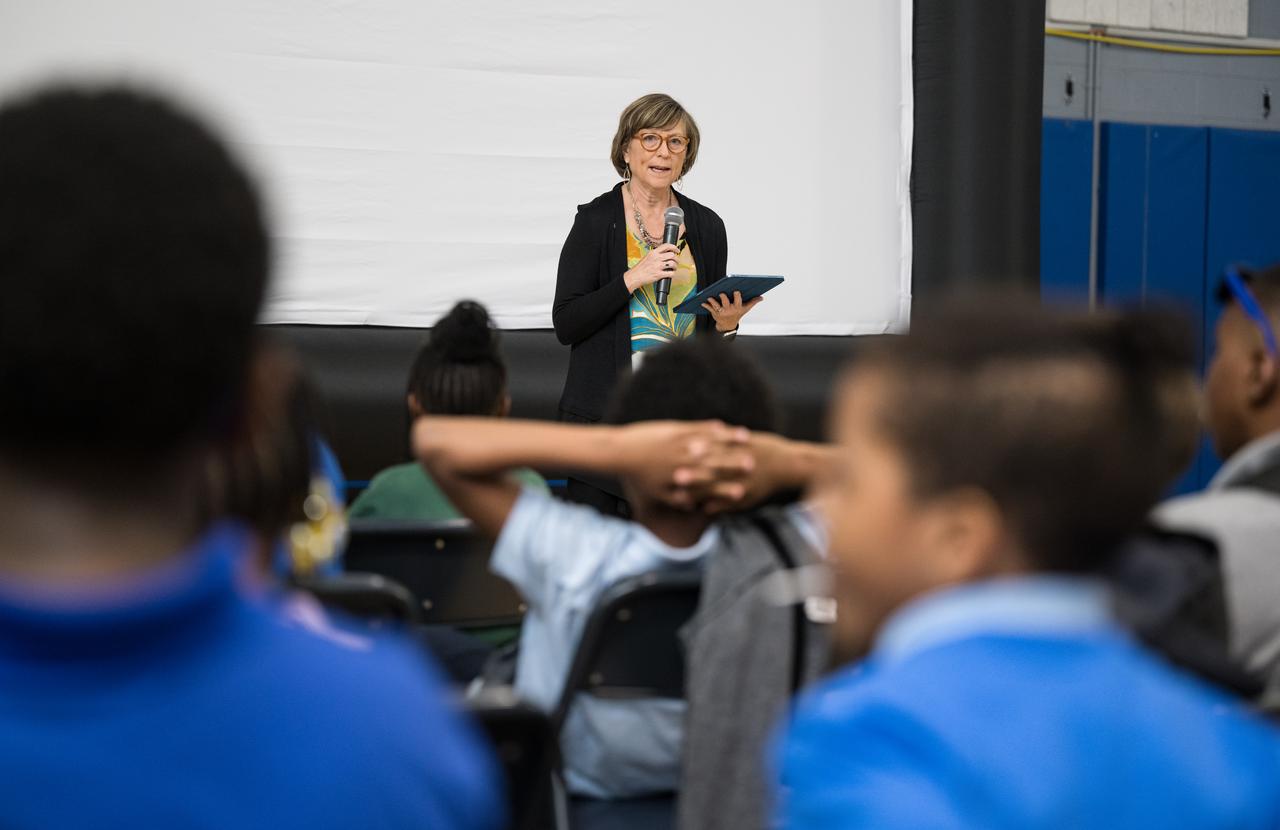
NASA Deputy Associate Administrator for NASA’s Office of STEM Engagement, Kris Brown, provides remarks at a kickoff event for the 21st Century Community Learning Centers NASA and Department of Education partnership, Monday, Sept. 23, 2024 at Wheatley Education Campus in Washington. Students engaged in NASA hands-on activities and an engineering design challenge. Photo Credit: (NASA/Aubrey Gemignani)
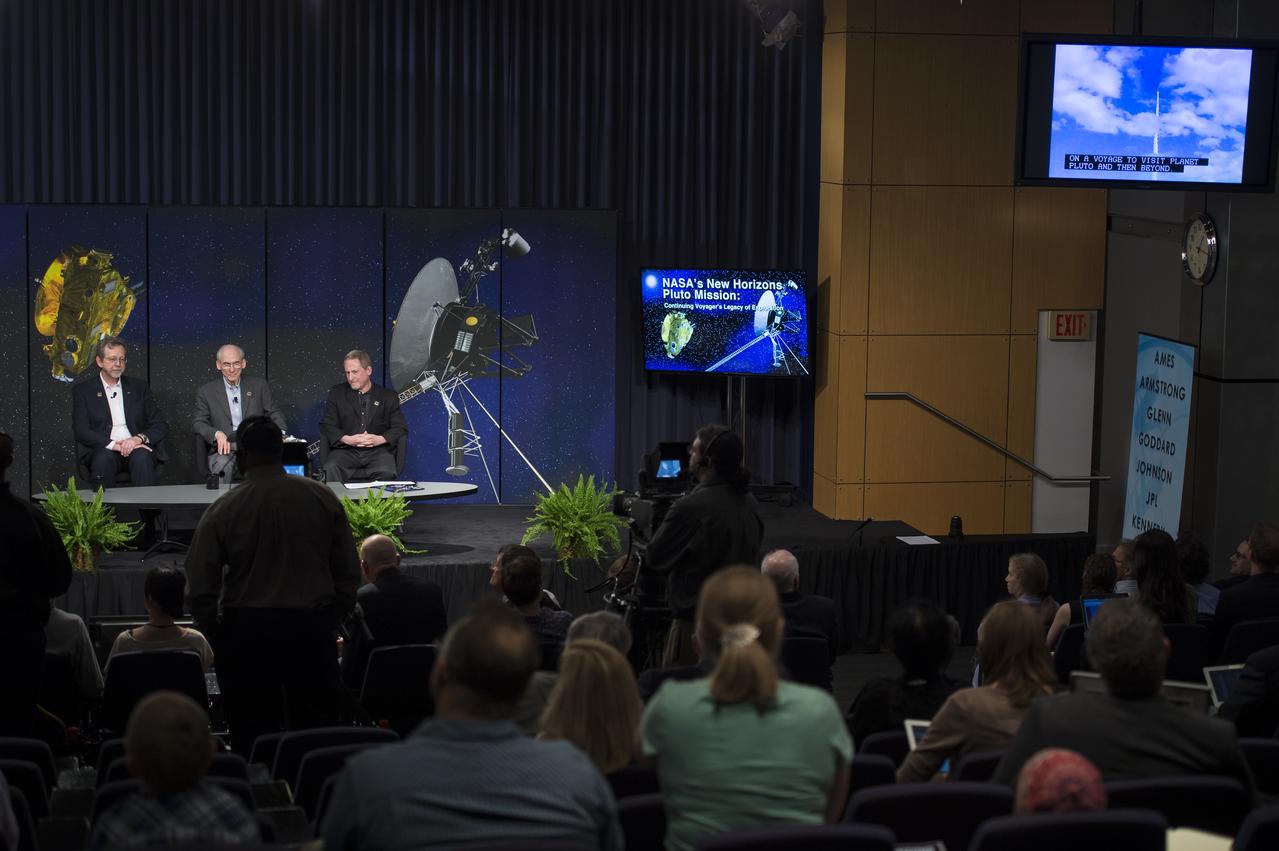
Dr. Jim Green, Dr. Ed Stone, and Dr. Alan Stern speak on a panel at the "New Horizons: The First Mission to the Pluto System and the Kuiper Belt" Event at NASA Headquarters in Washington, DC Monday, August 25, 2014. They discussed how the first images of Pluto and its moons would be captured by the New Horizons spacecraft during a five month long reconnaissance flyby study starting in the summer of 2015. New Horizons launched on January 19, 2006 and is scheduled to make its closest approach to Pluto on July 14, 2015. Photo Credit: (NASA/Aubrey Gemignani)
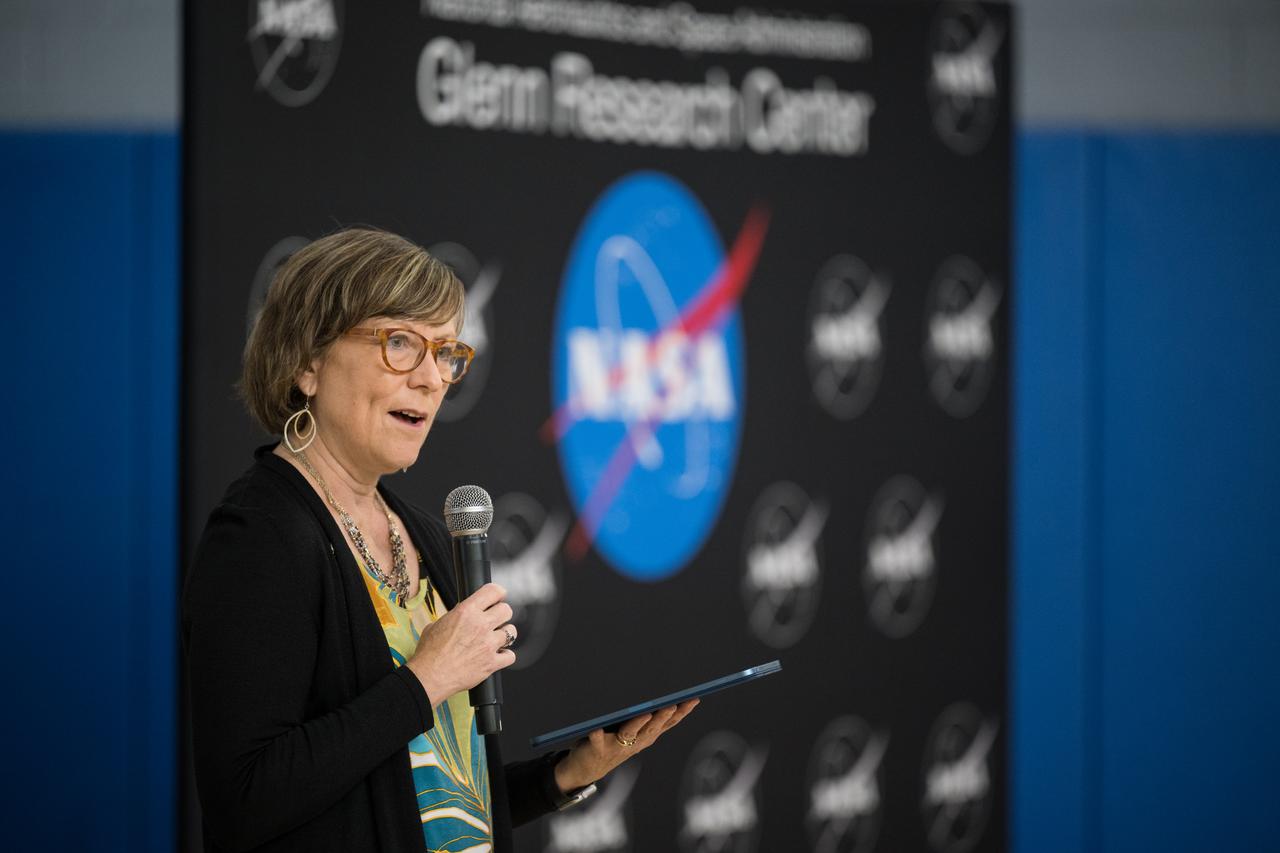
NASA Deputy Associate Administrator for NASA’s Office of STEM Engagement, Kris Brown, provides remarks at a kickoff event for the 21st Century Community Learning Centers NASA and Department of Education partnership, Monday, Sept. 23, 2024 at Wheatley Education Campus in Washington. Students engaged in NASA hands-on activities and an engineering design challenge. Photo Credit: (NASA/Aubrey Gemignani)
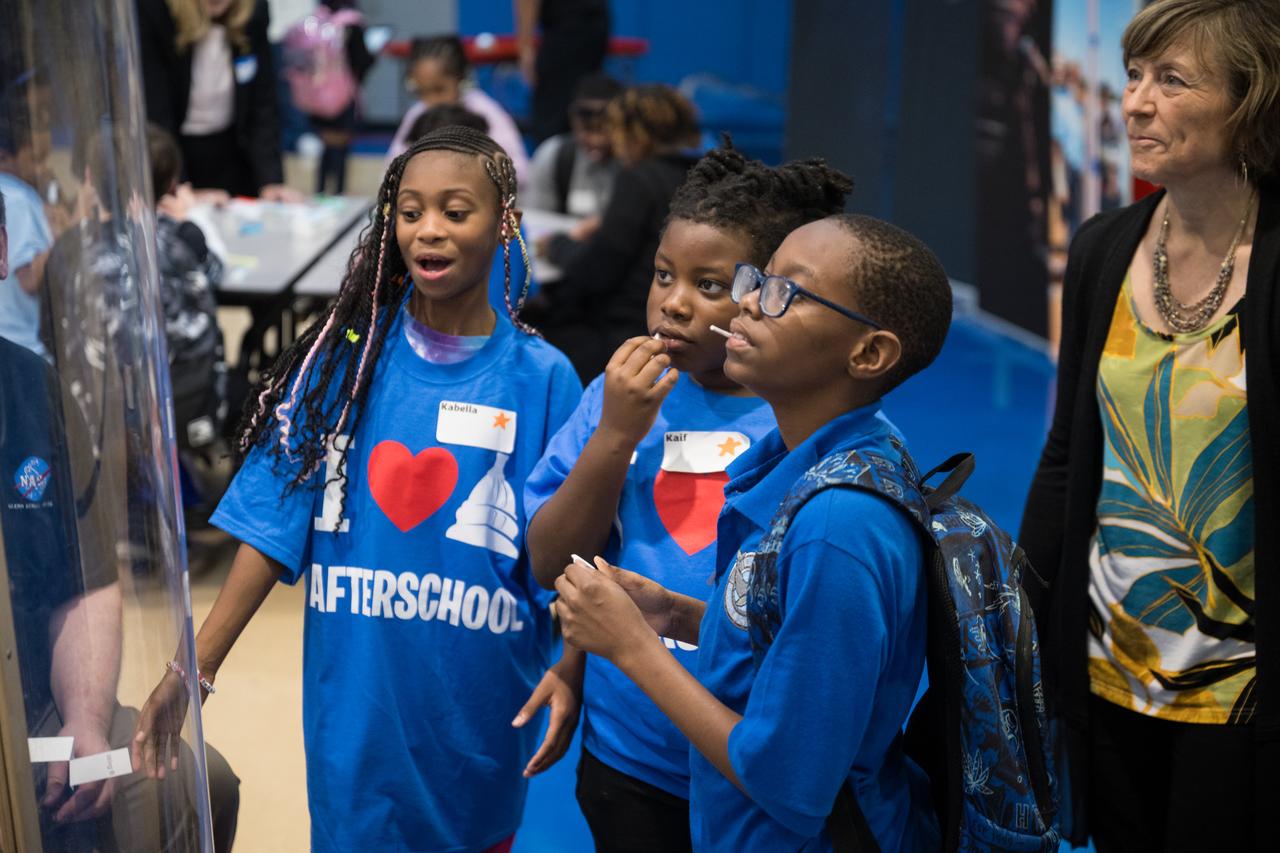
Students at Wheatley Education Campus participate in a rotor motor and wind tunnel activity during a kickoff event for the 21st Century Community Learning Centers NASA and Department of Education partnership, Monday, Sept. 23, 2024 at Wheatley Education Campus in Washington. Photo Credit: (NASA/Aubrey Gemignani)
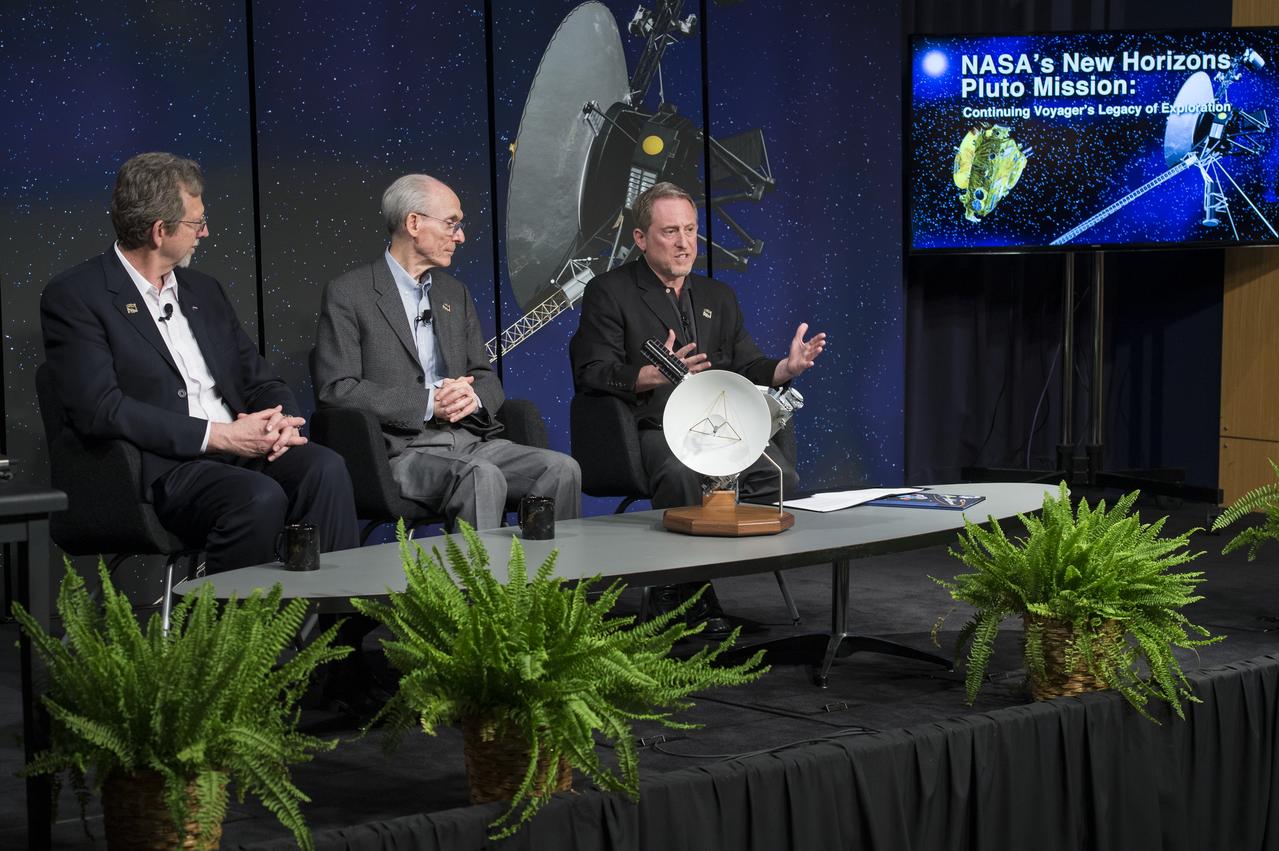
Dr. Jim Green, Dr. Ed Stone, and Dr. Alan Stern speak on a panel at the "New Horizons: The First Mission to the Pluto System and the Kuiper Belt" Event at NASA Headquarters in Washington, DC Monday, August 25, 2014. They discussed how the first images of Pluto and its moons would be captured by the New Horizons spacecraft during a five month long reconnaissance flyby study starting in the summer of 2015. New Horizons launched on January 19, 2006 and is scheduled to make its closest approach to Pluto on July 14, 2015. Photo Credit: (NASA/Aubrey Gemignani)
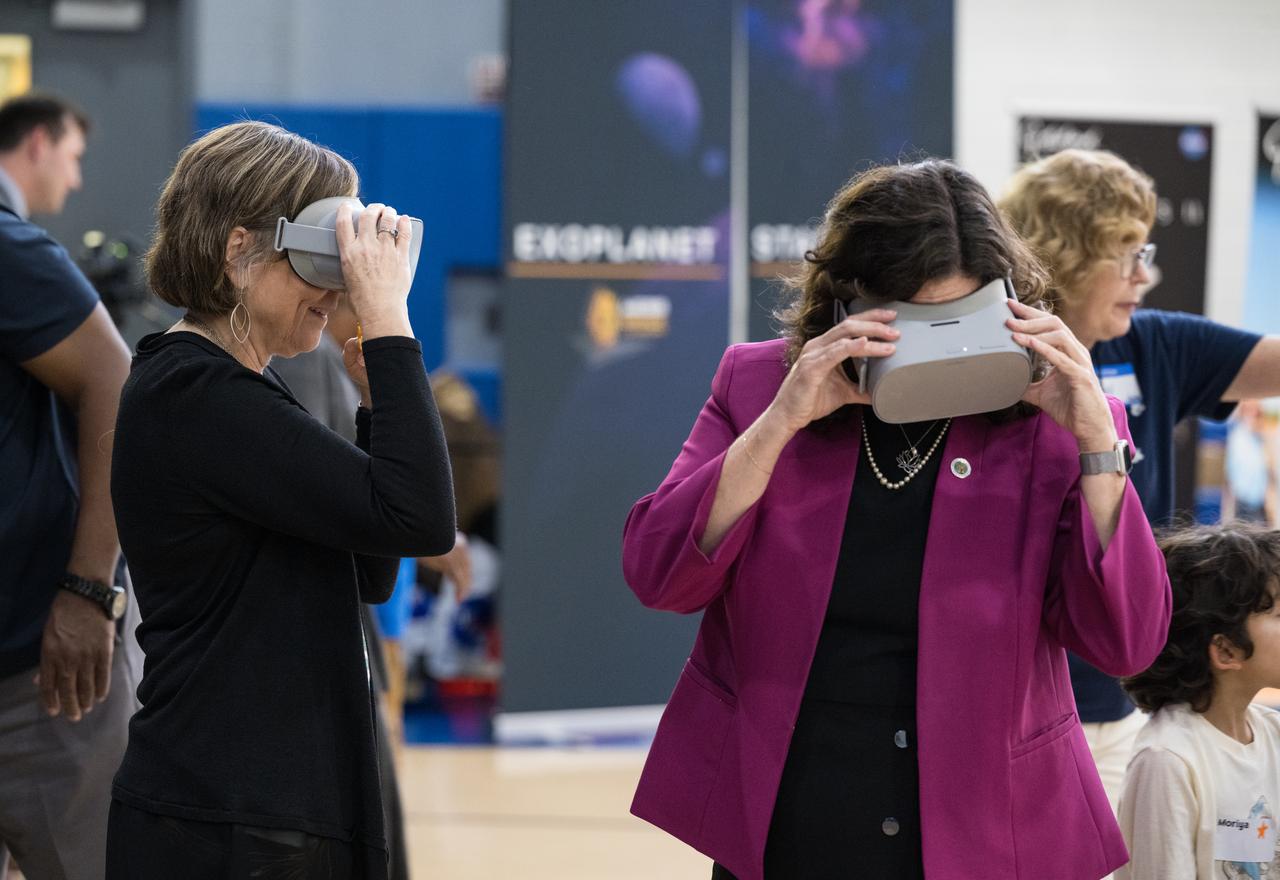
NASA Deputy Associate Administrator for NASA’s Office of STEM Engagement, Kris Brown, left, and U.S. Department of Education Deputy Secretary Cindy Marten, right, participate in a virtual reality tour of NASA’s Neutral Buoyancy Lab during a kickoff event for the 21st Century Community Learning Centers NASA and Department of Education partnership, Monday, Sept. 23, 2024 at Wheatley Education Campus in Washington. Photo Credit: (NASA/Aubrey Gemignani)
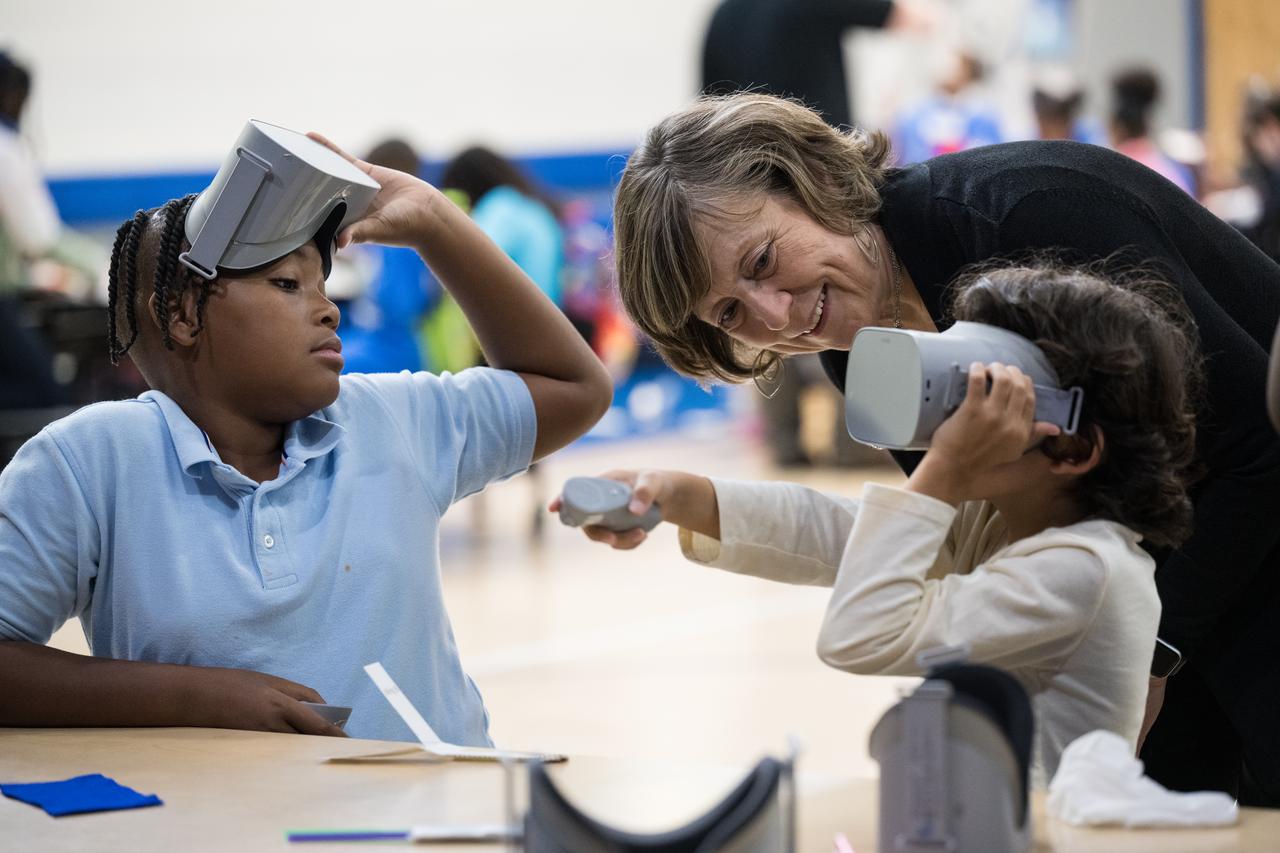
Students at Wheatley Education Campus participate in a virtual reality tour of NASA’s Neutral Buoyancy Lab during a kickoff event for the 21st Century Community Learning Centers NASA and Department of Education partnership, Monday, Sept. 23, 2024 at Wheatley Education Campus in Washington. Photo Credit: (NASA/Aubrey Gemignani)
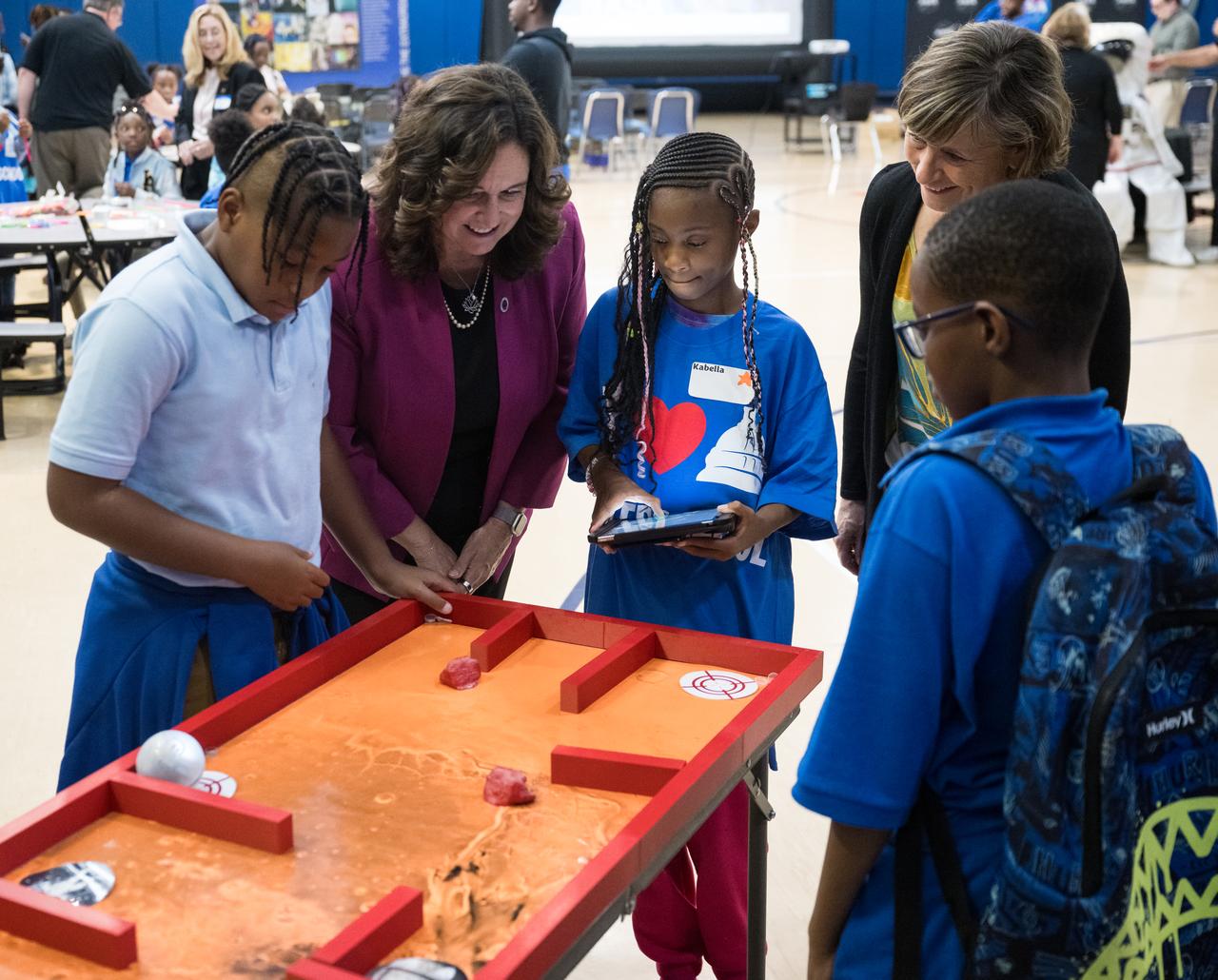
NASA Deputy Associate Administrator for NASA’s Office of STEM Engagement, Kris Brown, second from right, and U.S. Department of Education Deputy Secretary Cindy Marten, second from left, watch as a student operates a robot during a STEM event to kickoff the 21st Century Community Learning Centers NASA and U.S. Department of Education partnership, Monday, Sept. 23, 2024 at Wheatley Education Campus (EC) in Washington. Students engaged in NASA hands-on activities and an engineering design challenge. Photo Credit: (NASA/Aubrey Gemignani)
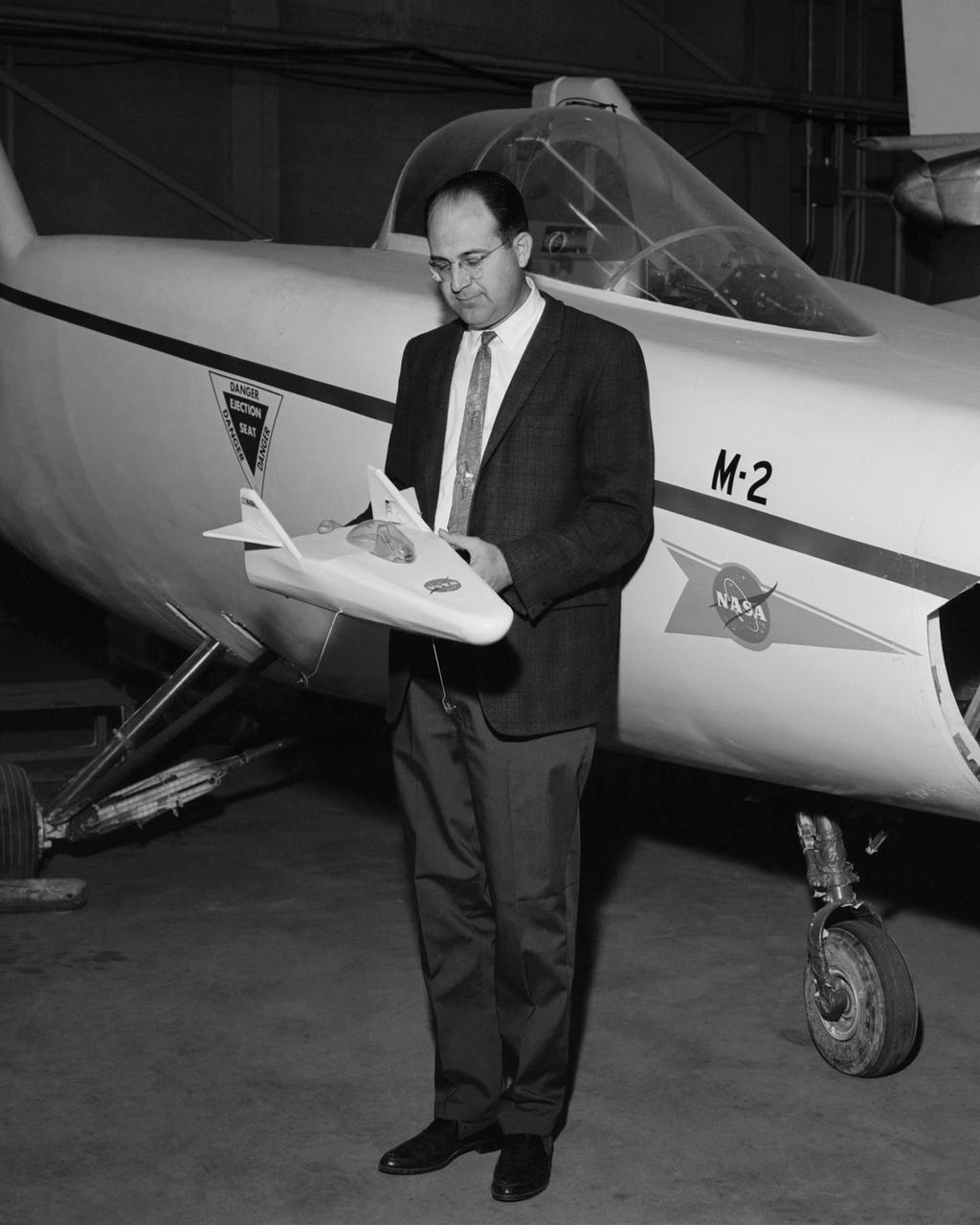
Dale Reed with a model of the M2-F1 in front of the actual lifting body. Reed used the model to show the potential of the lifting bodies. He first flew it into tall grass to test stability and trim, then hand-launched it from buildings for longer flights. Finally, he towed the lifting-body model aloft using a powered model airplane known as the "Mothership." A timer released the model and it glided to a landing. Dale's wife Donna used a 9 mm. camera to film the flights of the model. Its stability as it glided--despite its lack of wings--convinced Milt Thompson and some Flight Research Center engineers including the center director, Paul Bikle, that a piloted lifting body was possible.