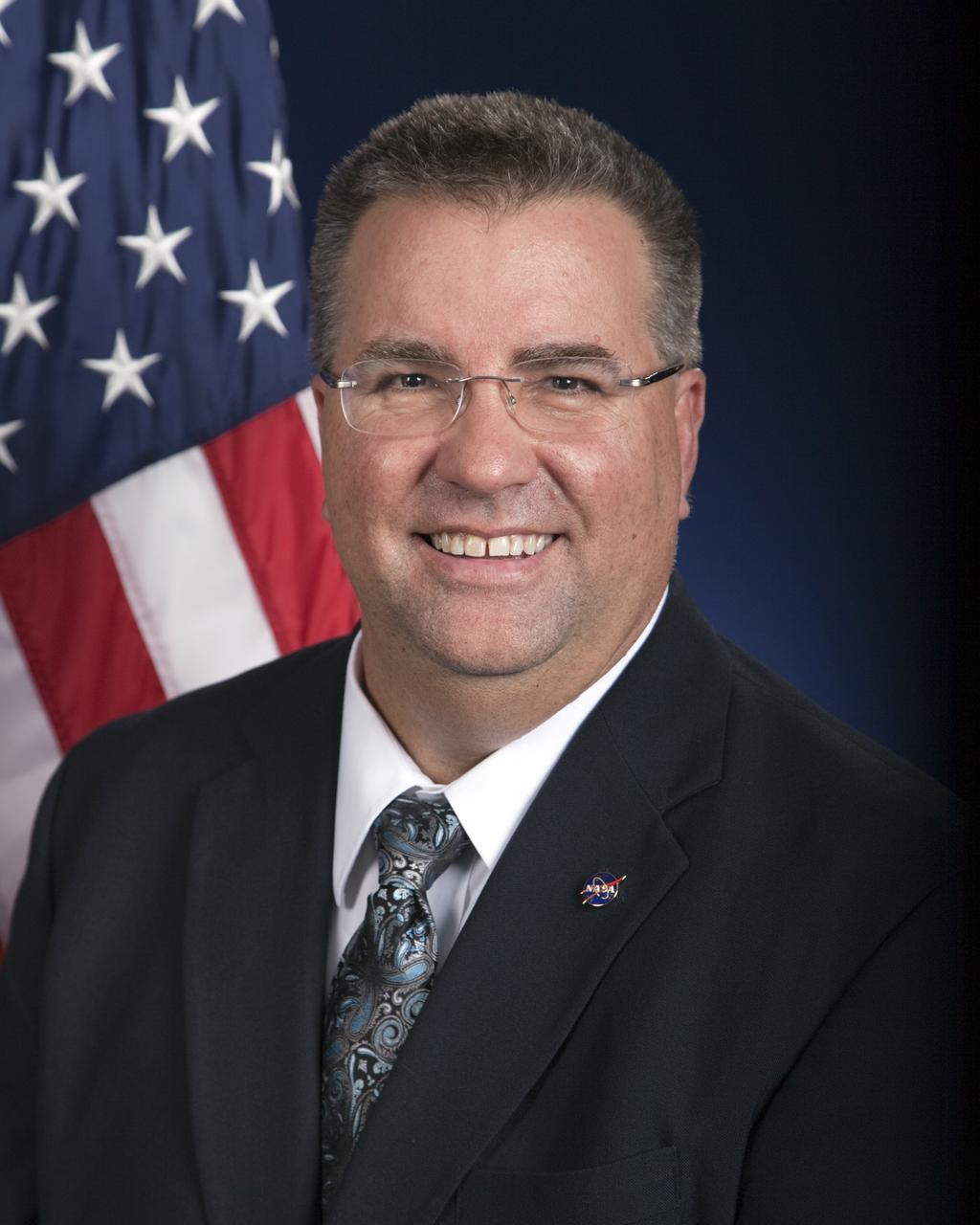
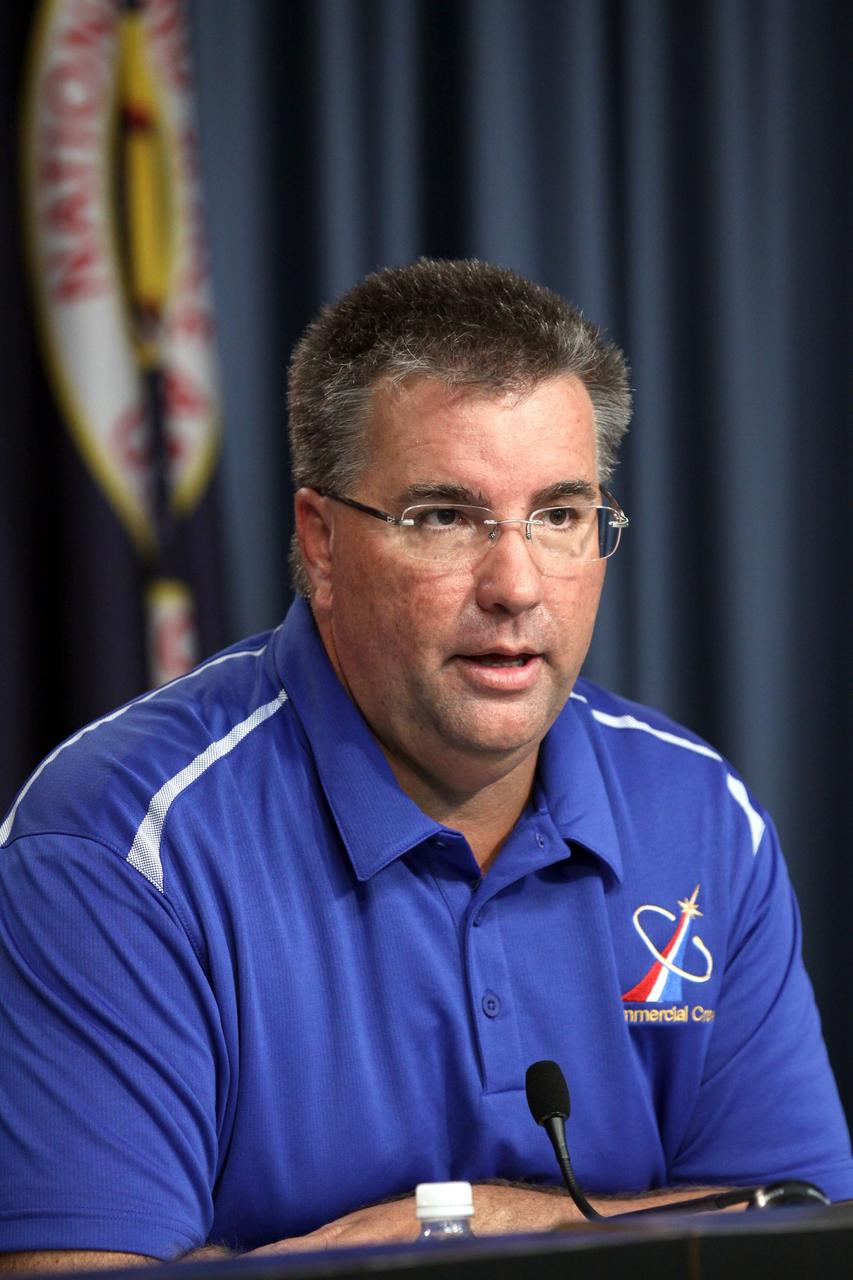
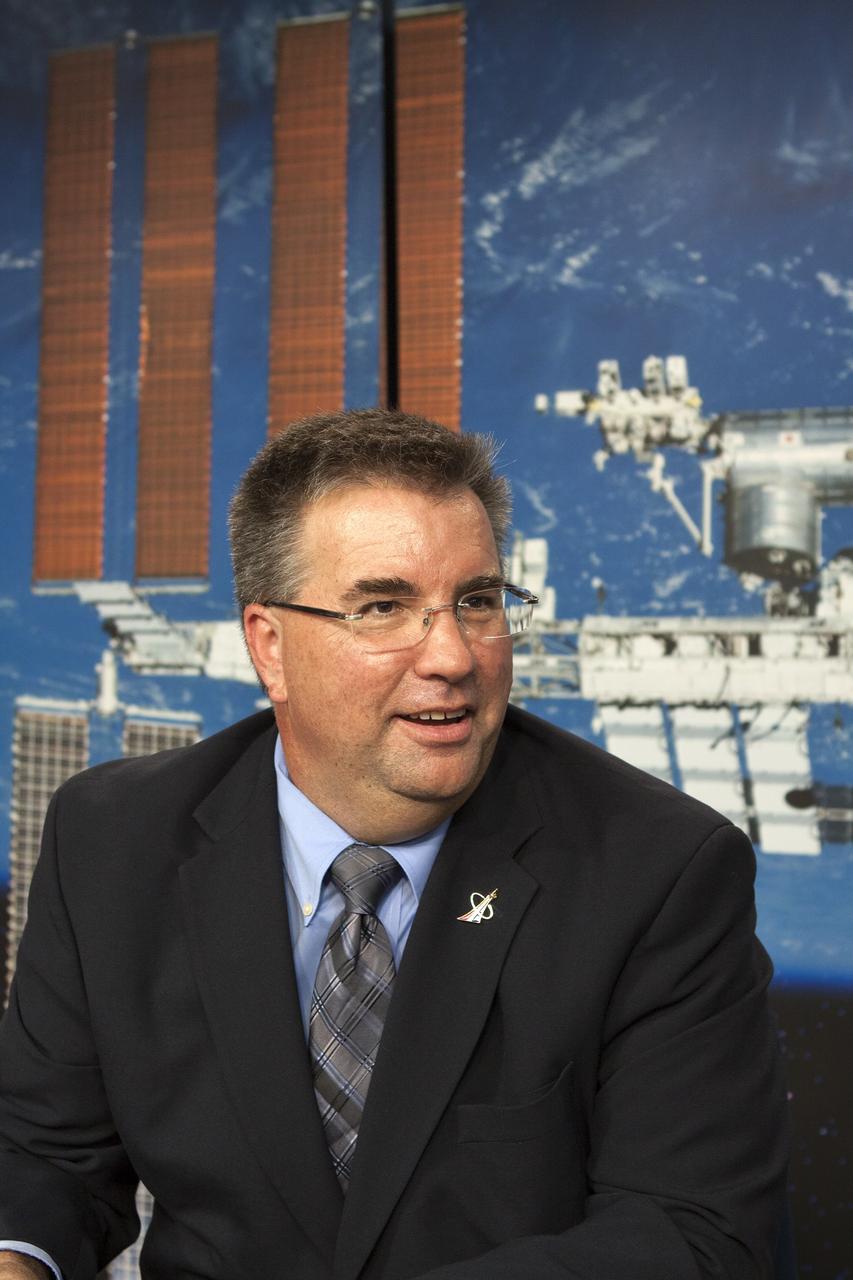
CAPE CANAVERAL, Fla. -- Official portrait of Ed Mango, manager of NASA's Commercial Crew Program at the agency's Kennedy Space Center in Florida. To learn more about Mango, go to http://www.nasa.gov/centers/kennedy/about/biographies/mango.html. Photo credit: NASA
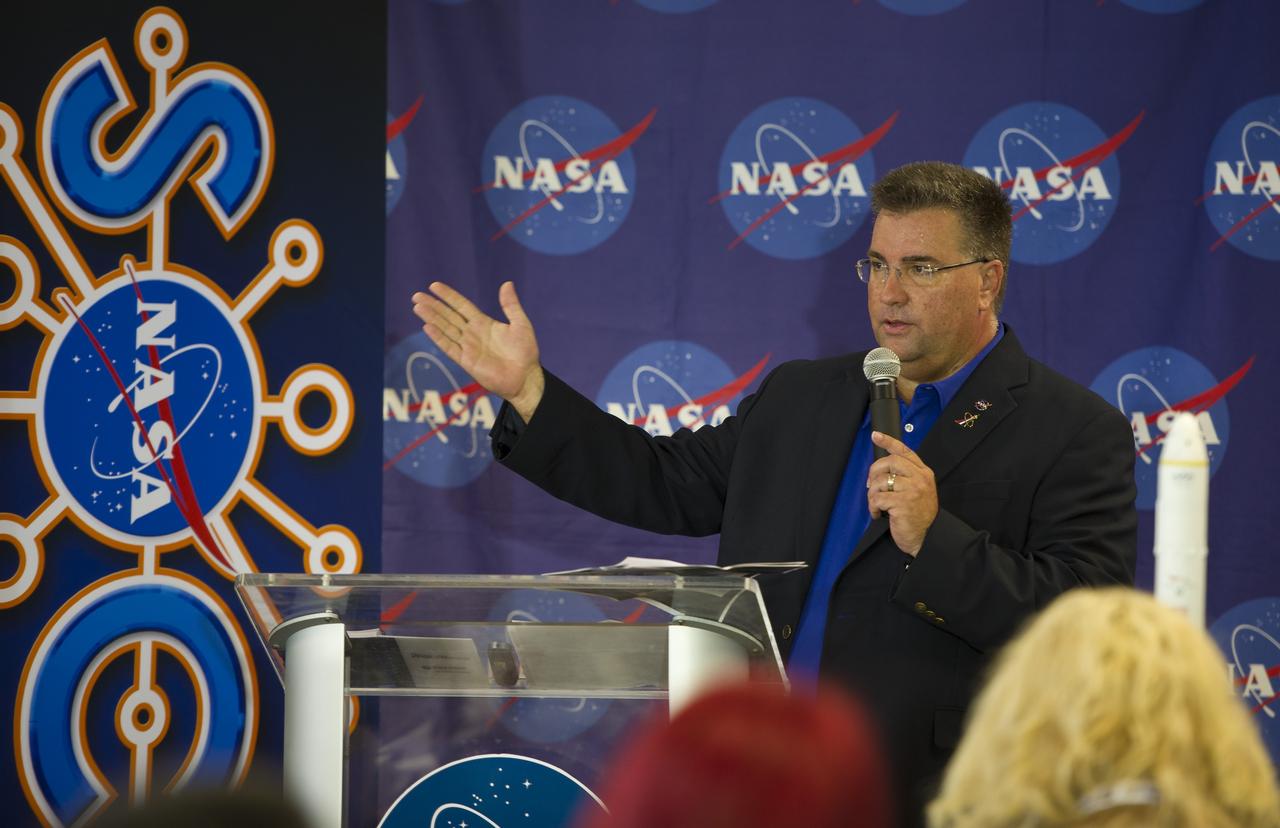
Ed Mango, of the NASA Commercial Crew Office, speaks during a NASA Social, Friday, May 18, 2012, at Kennedy Space Center in Cape Canaveral, Fla. About 50 NASA Social followers attended an event as part of activities surrounding the launch of Space Exploration Technologies, or SpaceX, demonstration mission of the company's Falcon 9 rocket to the International Space Station. Photo Credit: (NASA/Paul E. Alers)
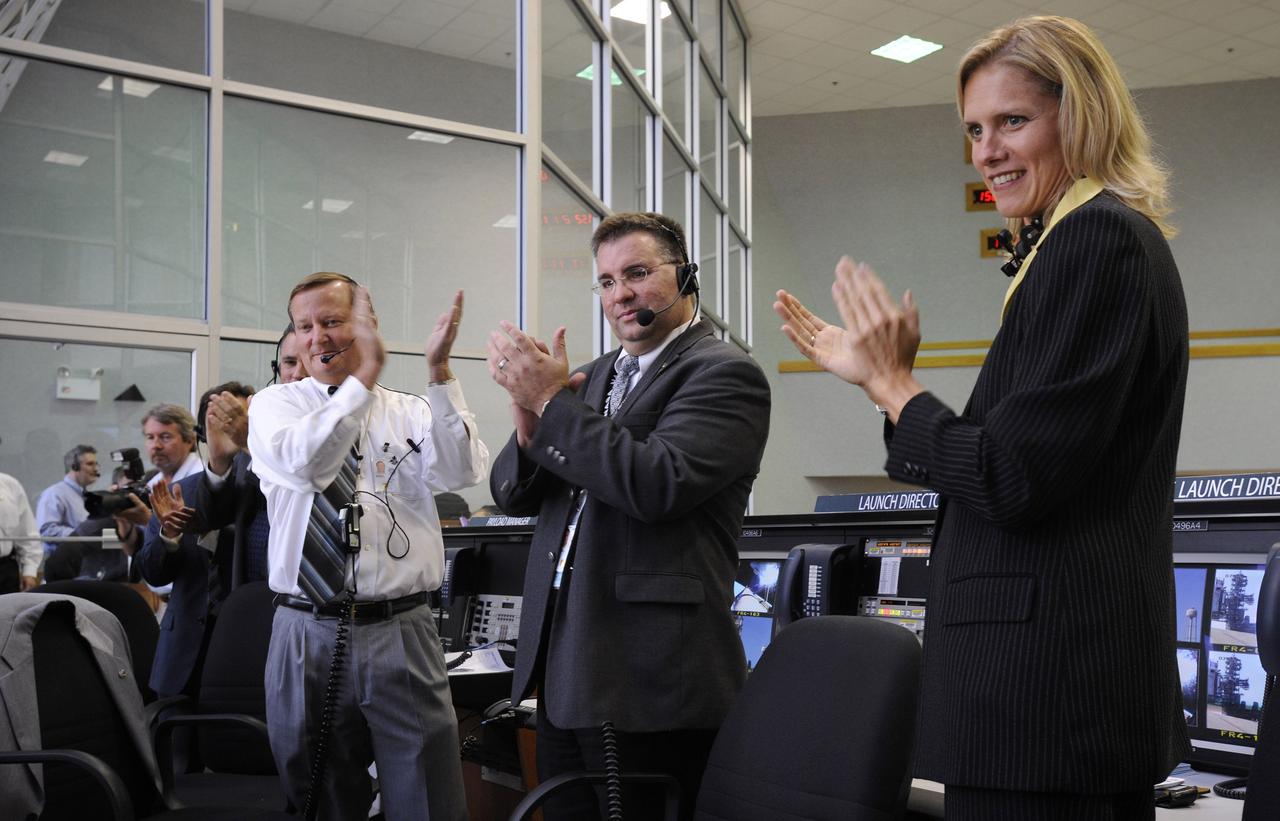
NASA Shuttle Launch Director Michael Leinbach, left, STS-124 Assistant Launch Director Ed Mango, center, and Flow Director for Space Shuttle Discovery Stephanie Stilson clap in the the Launch Control Center after the main engine cut off and successful launch of the Space Shuttle Discovery (STS-124) Saturday, May 31, 2008, at the Kennedy Space Center in Cape Canaveral, Fla. The Shuttle lifted off from launch pad 39A at 5:02 p.m. EDT. Photo Credit: (NASA/Bill Ingalls)
NASA Shuttle Launch Director Michael Leinbach, left, STS-124 Assistant Launch Director Ed Mango, center, and Flow Director for Space Shuttle Discovery Stephanie Stilson clap in the the Launch Control Center after the main engine cut off and successful launch of the Space Shuttle Discovery (STS-124) Saturday, May 31, 2008, at the Kennedy Space Center in Cape Canaveral, Fla. The Shuttle lifted off from launch pad 39A at 5:02 p.m. EDT. Photo Credit: (NASA/Bill Ingalls)
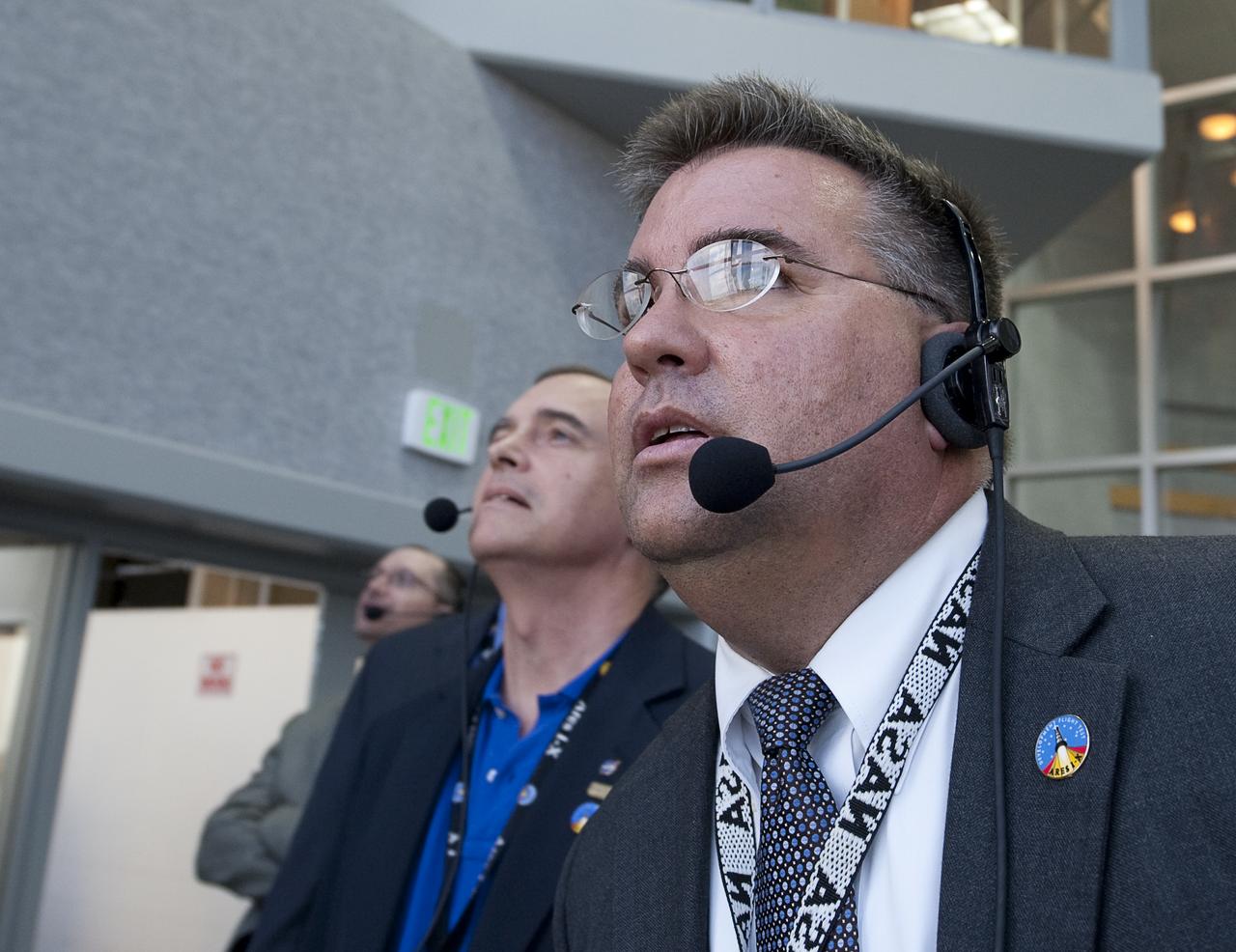
NASA Ares I-X Launch Director Ed Mango, 3rd from left, along with other mission managers watches the launch of the Ares I-X rocket from Firing Room One of the Launch Control Center (LCC) at the Kennedy Space Center in Cape Canaveral, Fla., Wednesday, Oct. 28, 2009. The flight test of Ares I-X will provide NASA with an early opportunity to test and prove flight characteristics, hardware, facilities and ground operations associated with the Ares I. Photo Credit: (NASA/Bill Ingalls)
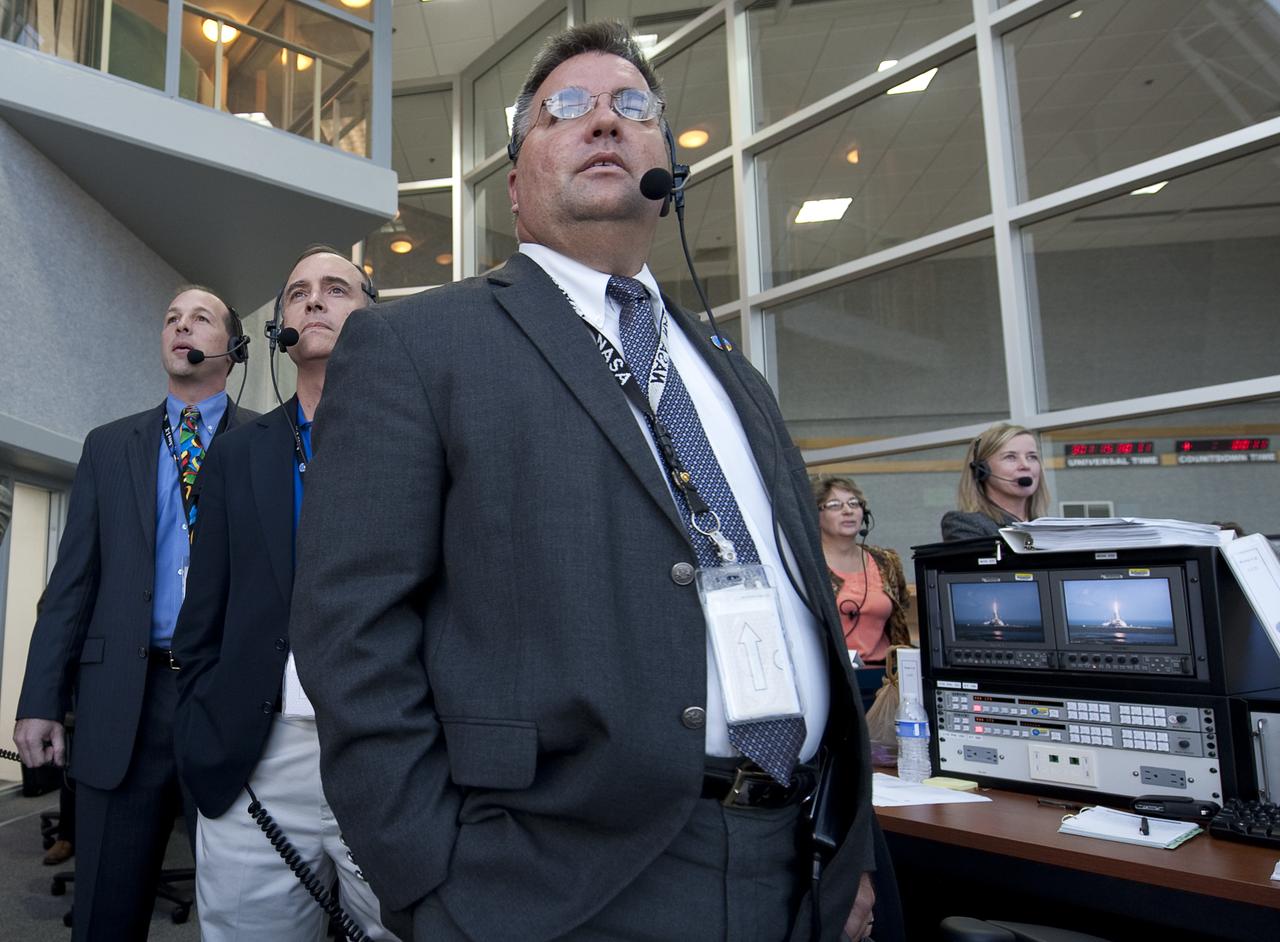
NASA Ares I-X Launch Director Ed Mango, 3rd from left, along with other mission managers watches the launch of the Ares I-X rocket from Firing Room One of the Launch Control Center (LCC) at the Kennedy Space Center in Cape Canaveral, Fla., Wednesday, Oct. 28, 2009. The flight test of Ares I-X will provide NASA with an early opportunity to test and prove flight characteristics, hardware, facilities and ground operations associated with the Ares I. Photo Credit: (NASA/Bill Ingalls)
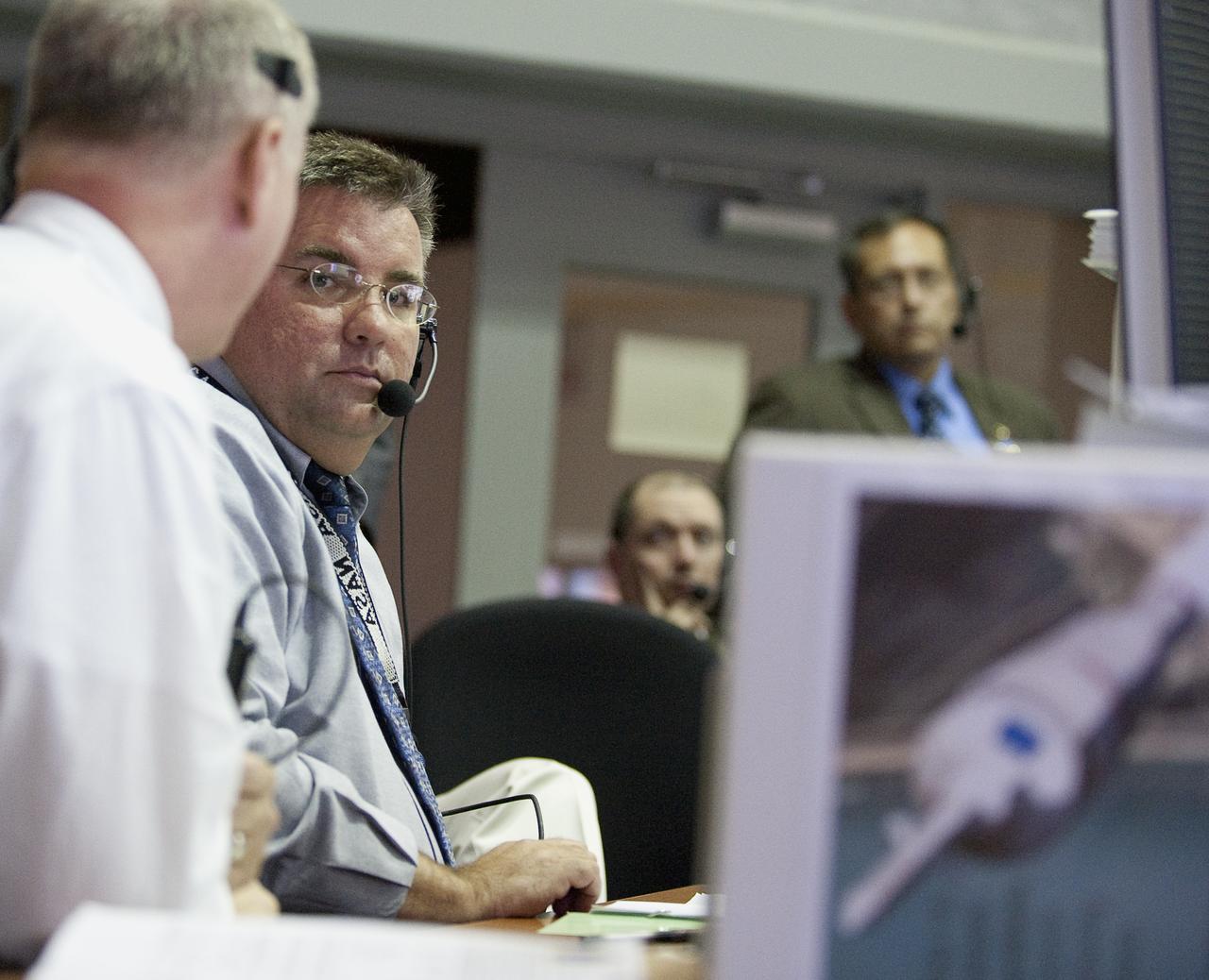
NASA Ares I-X Launch Director Ed Mango monitors the launch countdown from Firing Room One of the Launch Control Center (LCC) at the Kennedy Space Center during the planned launch of the Ares I-X rocket from pad 39b at the Kennedy Space Center in Cape Canaveral, Fla., Tuesday, Oct. 27, 2009. The flight test of Ares I-X will provide NASA with an early opportunity to test and prove flight characteristics, hardware, facilities and ground operations associated with the Ares I. Photo Credit: (NASA/Bill Ingalls)
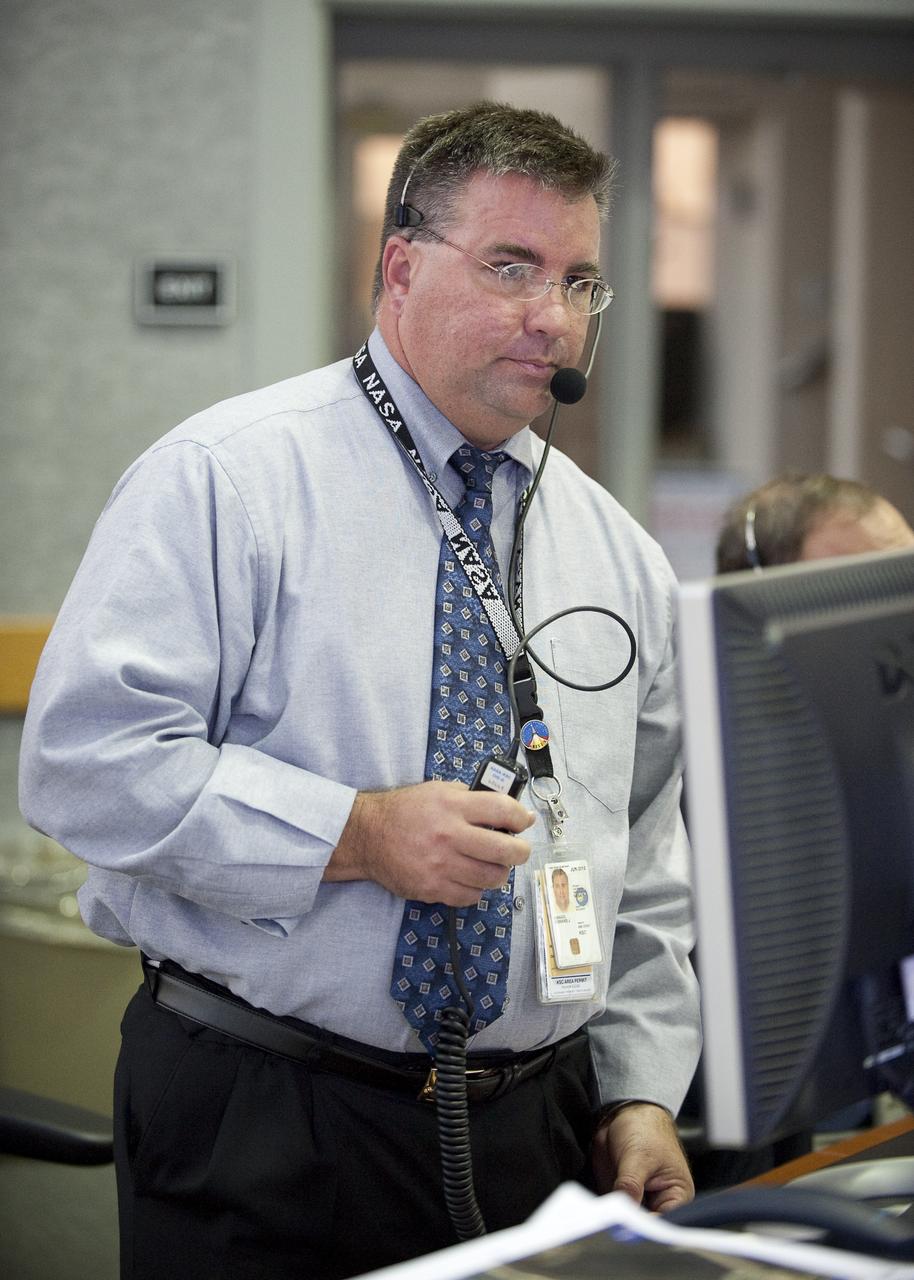
NASA Ares I-X Launch Director Ed Mango monitors the launch countdown from Firing Room One of the Launch Control Center (LCC) at the Kennedy Space Center during the planned launch of the Ares I-X rocket from pad 39b at the Kennedy Space Center in Cape Canaveral, Fla., Tuesday, Oct. 27, 2009. The flight test of Ares I-X will provide NASA with an early opportunity to test and prove flight characteristics, hardware, facilities and ground operations associated with the Ares I. Photo Credit: (NASA/Bill Ingalls)
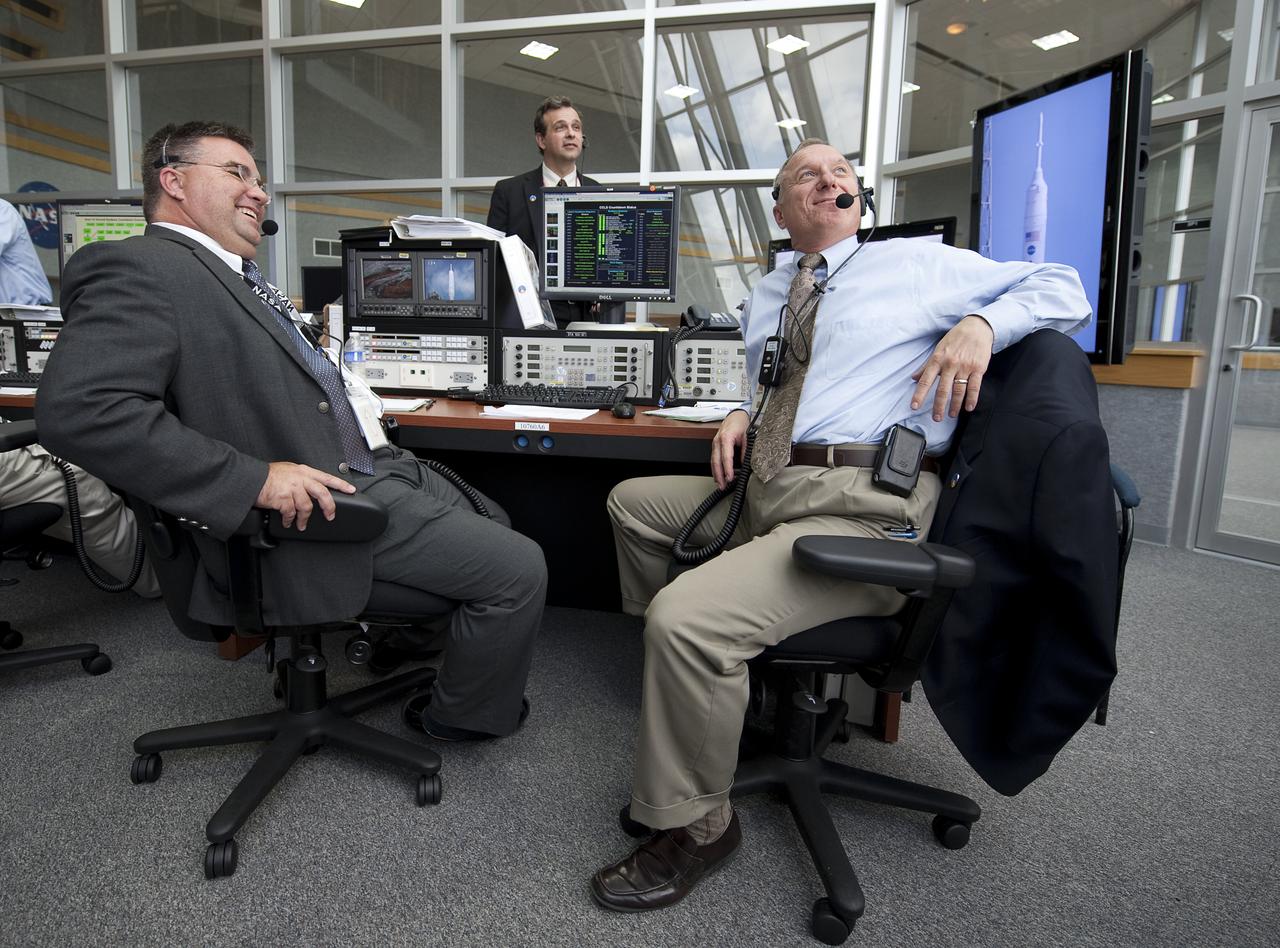
NASA Ares I-X Launch Director Ed Mango, left, laughs as NASA Ares I-X Assistant Launch Director Pete Nickolenko looks out the window of Firing Room One of the Launch Control Center (LCC) at the Kennedy Space Center prior to the launch of the Ares I-X rocket from pad 39b at the Kennedy Space Center in Cape Canaveral, Fla., Wednesday, Oct. 28, 2009. The flight test of Ares I-X will provide NASA with an early opportunity to test and prove flight characteristics, hardware, facilities and ground operations associated with the Ares I. Photo Credit: (NASA/Bill Ingalls)

Mission managers, from left, NASA Constellation Program manager Jeff Hanley, Ares I-X Launch Director Ed Mango, Ares I-X mission manager Bob Ess, Ground Operations Manager Philip "Pepper" Phillips, review the latest data in Firing Room One of the Launch Control Center (LCC) at the Kennedy Space Center during the launch countdown of the Ares I-X rocket in Cape Canaveral, Fla., Tuesday, Oct. 27, 2009. The flight test of Ares I-X will provide NASA with an early opportunity to test and prove flight characteristics, hardware, facilities and ground operations associated with the Ares I. Photo Credit: (NASA/Bill Ingalls)
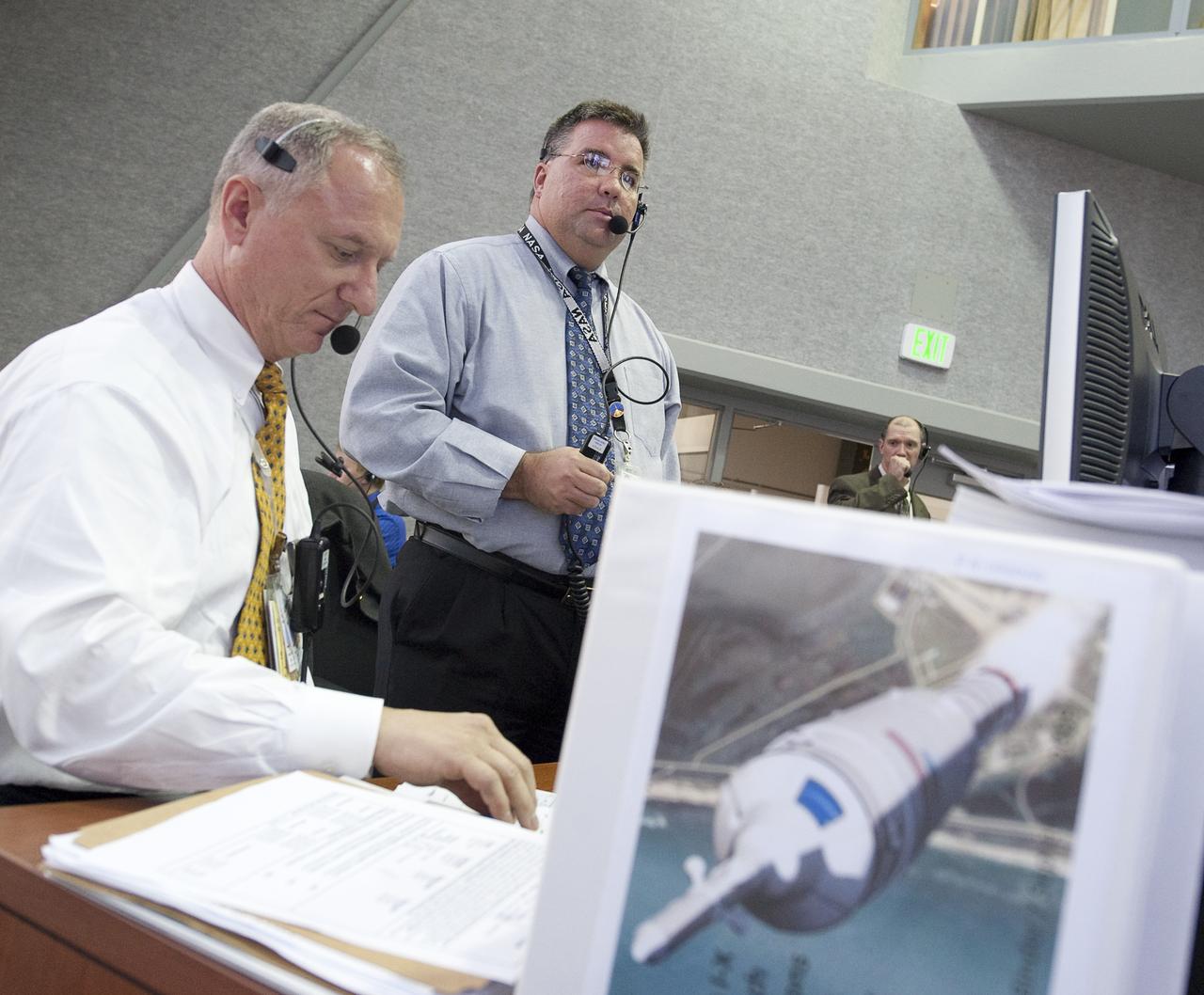
NASA Ares I-X Assistant Launch Director Pete Nickolenko, left, and NASA Ares I-X Launch Director Ed Mango monitor the launch countdown from Firing Room One of the Launch Control Center (LCC) at the Kennedy Space Center during the planned launch of the Ares I-X rocket from pad 39b at the Kennedy Space Center in Cape Canaveral, Fla., Tuesday, Oct. 27, 2009. The flight test of Ares I-X will provide NASA with an early opportunity to test and prove flight characteristics, hardware, facilities and ground operations associated with the Ares I. Photo Credit: (NASA/Bill Ingalls)
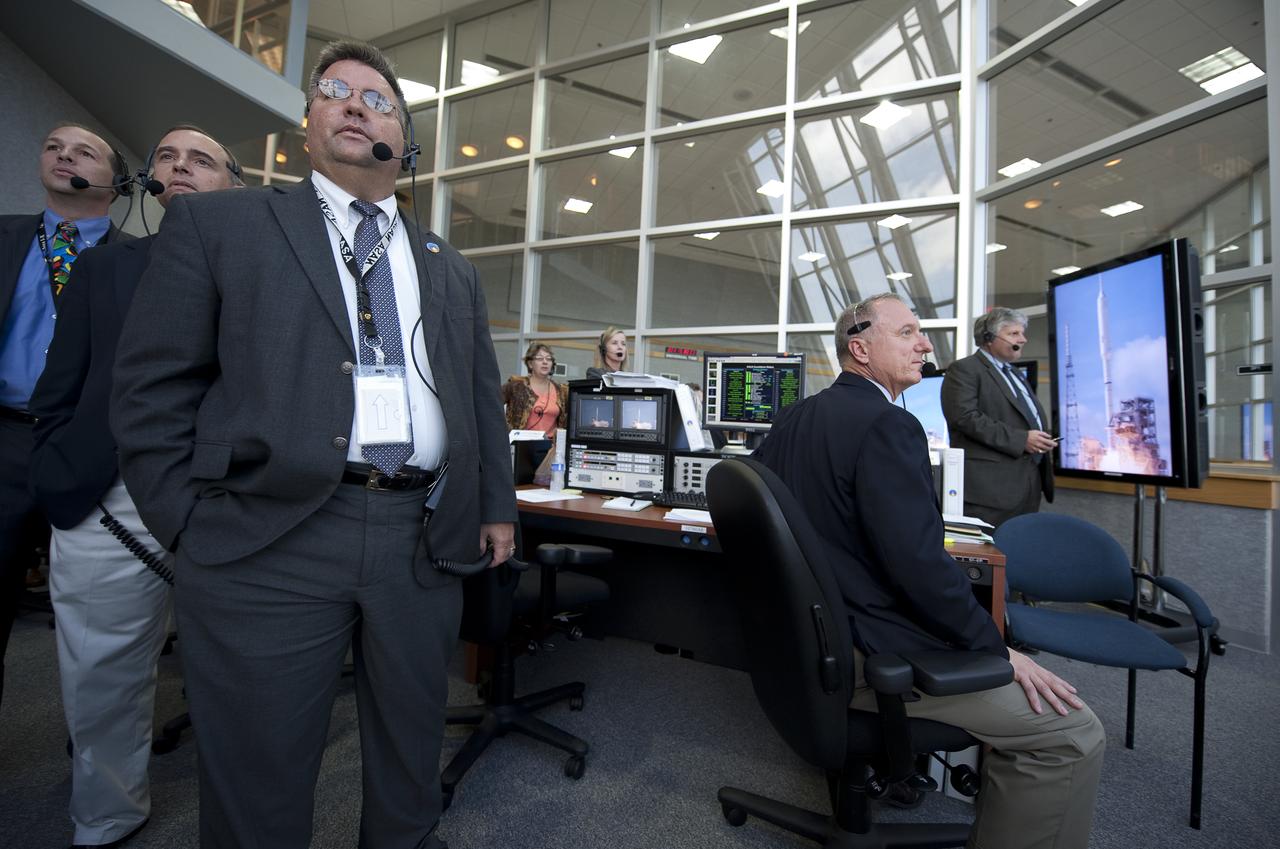
NASA Ares I-X Launch Director Ed Mango, 3rd from left, along with other mission managers watches the launch of the Ares I-X rocket from Firing Room One of the Launch Control Center (LCC) at the Kennedy Space Center in Cape Canaveral, Fla., Wednesday, Oct. 28, 2009. The flight test of Ares I-X will provide NASA with an early opportunity to test and prove flight characteristics, hardware, facilities and ground operations associated with the Ares I. Photo Credit: (NASA/Bill Ingalls)
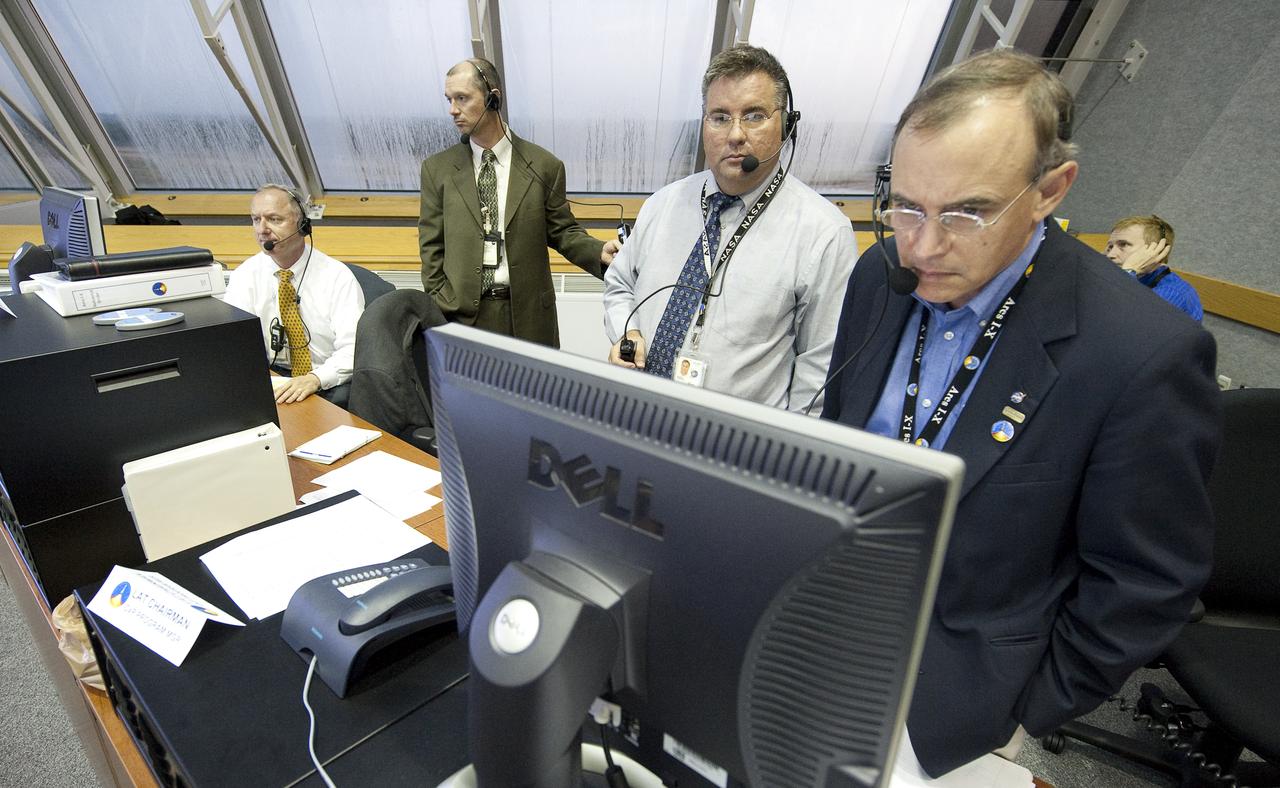
Mission managers, from left, NASA Ares I-X Assistant Launch Director Pete Nickolenko, Ground Operations Manager Philip "Pepper" Phillips, Ares I-X Launch Director Ed Mango, and Constellation Program manager Jeff Hanley review the latest weather radar from Firing Room One of the Launch Control Center (LCC) at the Kennedy Space Center during the launch countdown of the Ares I-X rocket in Cape Canaveral, Fla., Tuesday, Oct. 27, 2009. The flight test of Ares I-X will provide NASA with an early opportunity to test and prove flight characteristics, hardware, facilities and ground operations associated with the Ares I. Photo Credit: (NASA/Bill Ingalls)
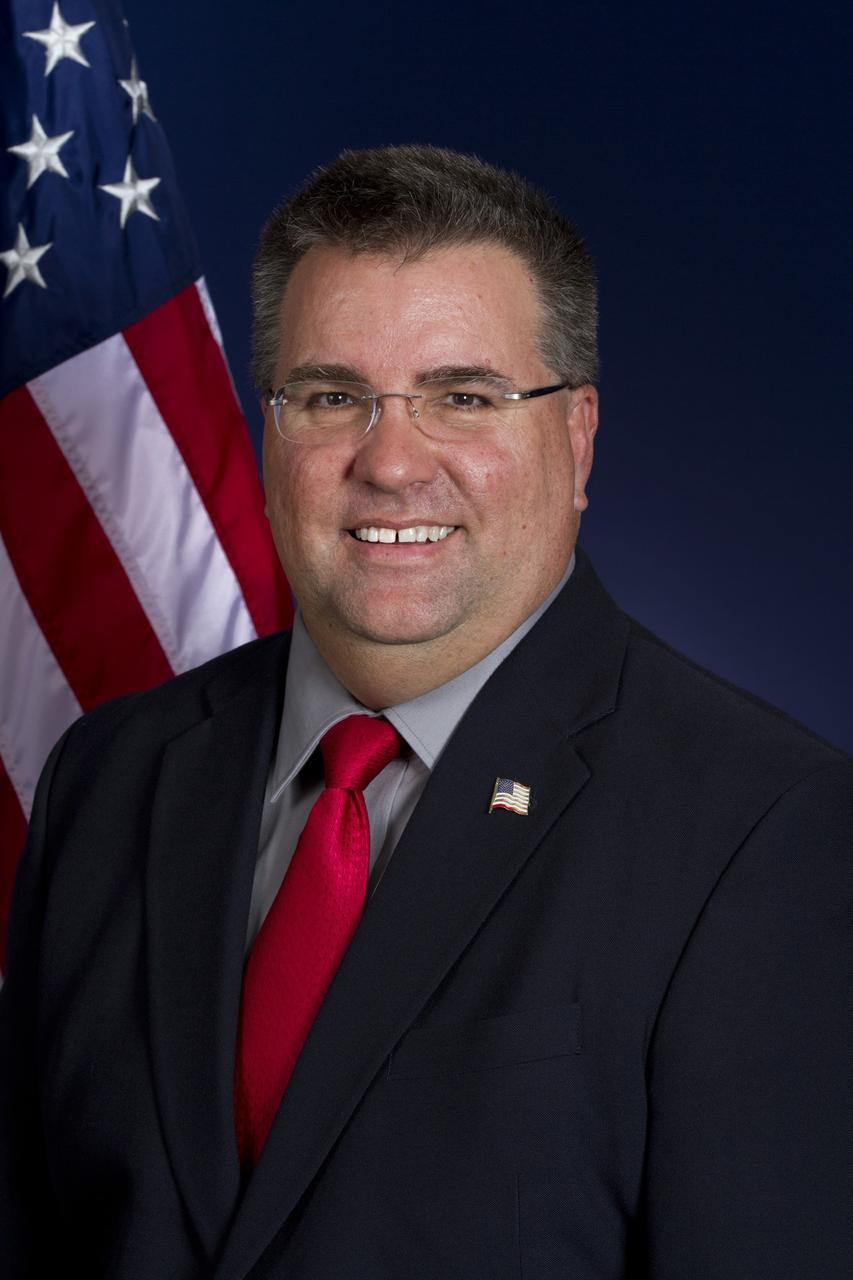
CAPE CANAVERAL, Fla. -- Commercial Crew Program manager Ed Mango. For more information, go to http://www.nasa.gov/centers/kennedy/about/biographies/mango.html. Photo credit: NASA/Kim Shiflett
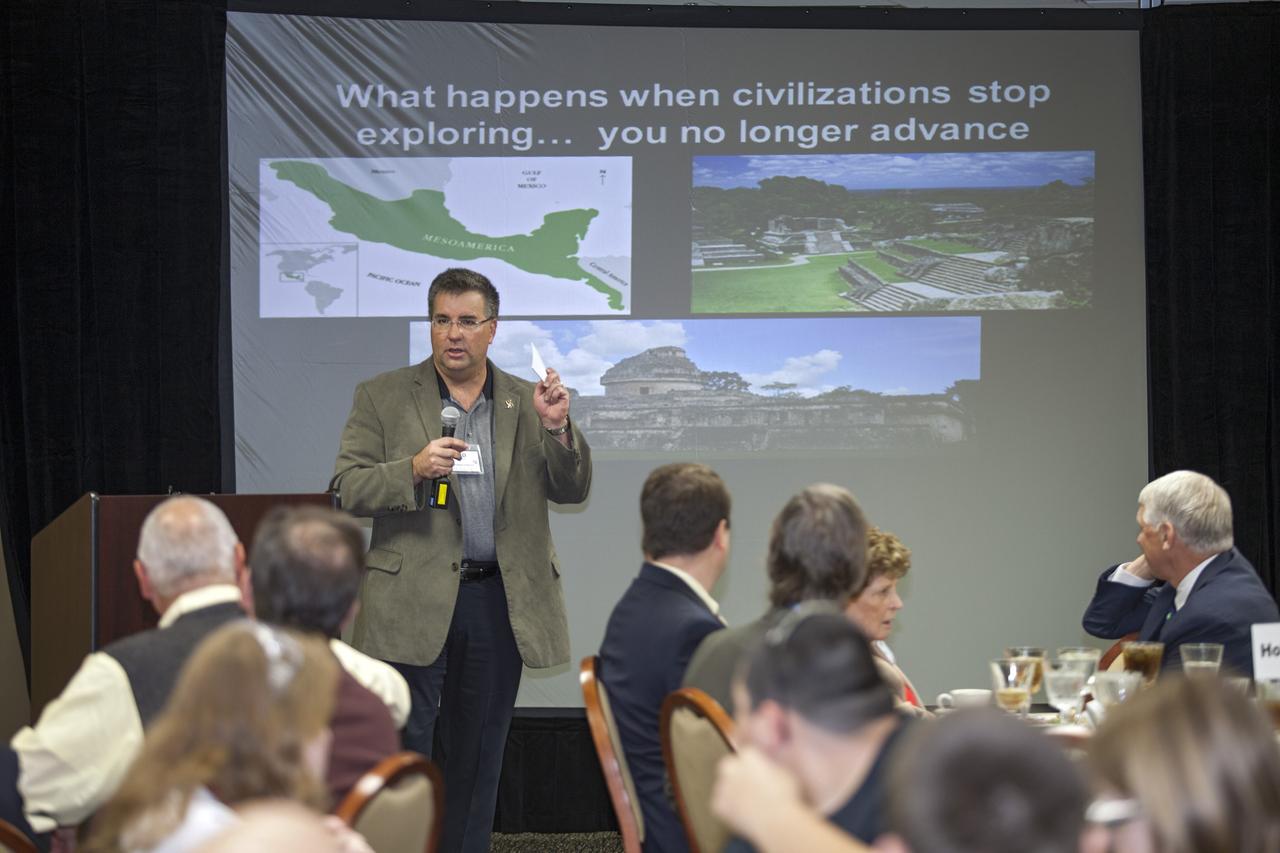
ORLANDO, Fla. – Ed Mango, program manager of NASA's Commercial Crew Program, speaks during a luncheon for the FIRST Robotics Competition's 2013 Orlando Regional in the University of Central Florida Arena. The student-built robots were required to throw discs into boxes or make climbs to score points. Photo credit: NASA/Frankie Martin
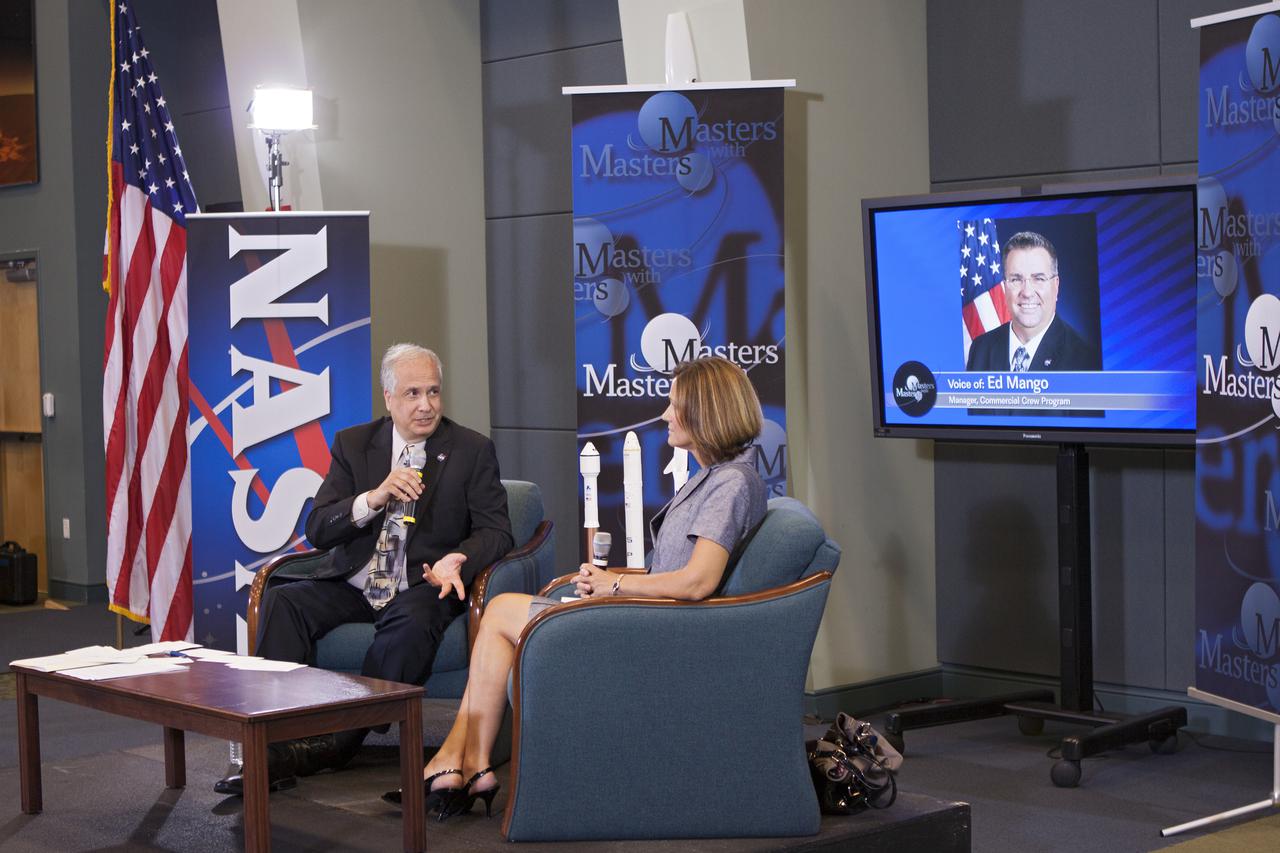
CAPE CANAVERAL, Fla. – Ed Hoffman and Lisa Colloredo discuss NASA's Commercial Crew Program during the first of a weeklong series called 'Masters with Masters' at the agency's Kennedy Space Center in Florida. Hoffman, NASA's chief Knowledge officer, and Colloredo, associate program manager at Kennedy, were joined by phone by Ed Mango, program manager for CCP. Photo credit: NASA_Jim Grossmann
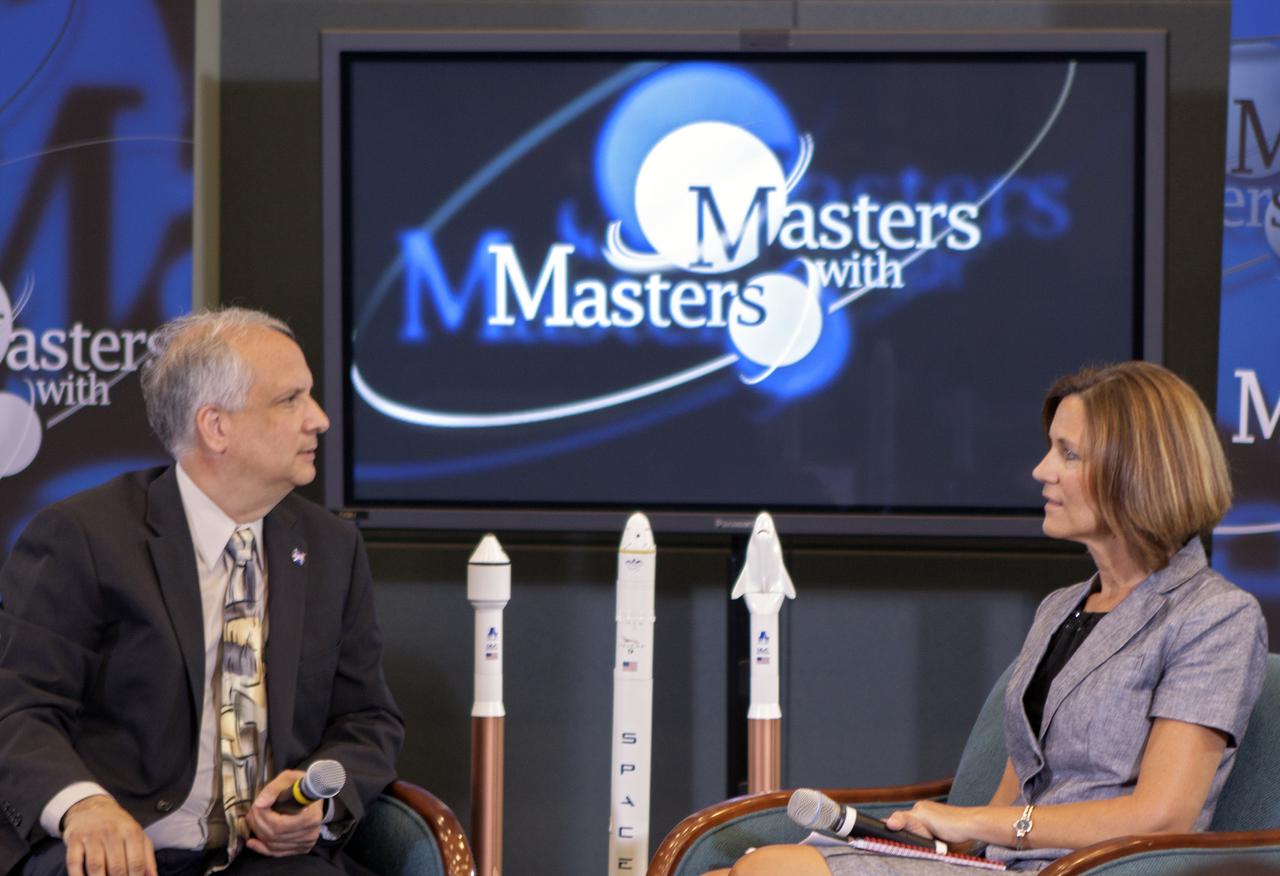
CAPE CANAVERAL, Fla. – Ed Hoffman and Lisa Colloredo discuss NASA's Commercial Crew Program during the first of a weeklong series called 'Masters with Masters' at the agency's Kennedy Space Center in Florida. Hoffman, NASA's chief Knowledge officer, and Colloredo, associate program manager at Kennedy, were joined by phone by Ed Mango, program manager for CCP. Photo credit: NASA_Jim Grossmann
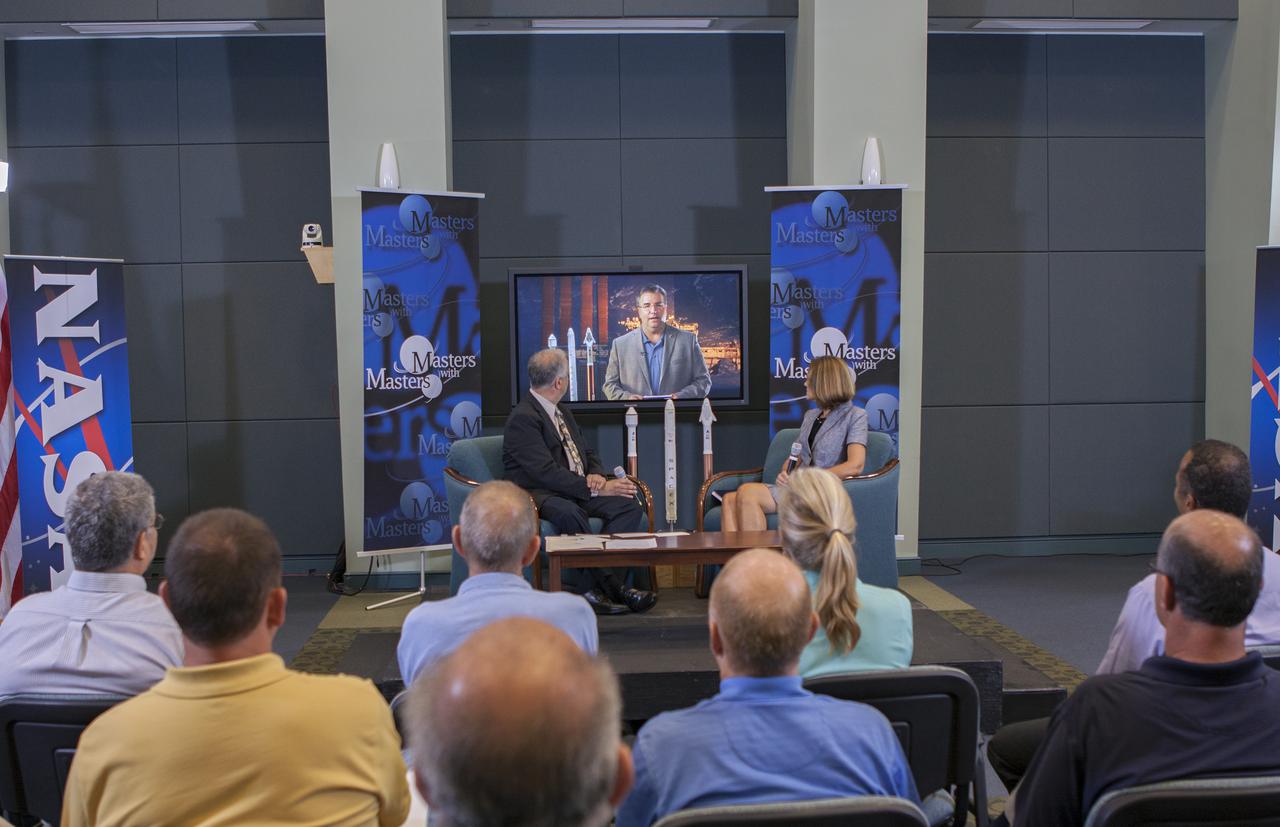
CAPE CANAVERAL, Fla. – Ed Hoffman and Lisa Colloredo discuss NASA's Commercial Crew Program during the first of a weeklong series called 'Masters with Masters' at the agency's Kennedy Space Center in Florida. Hoffman, NASA's chief Knowledge officer, and Colloredo, associate program manager at Kennedy, were joined by phone by Ed Mango, program manager for CCP. Photo credit: NASA_Jim Grossmann
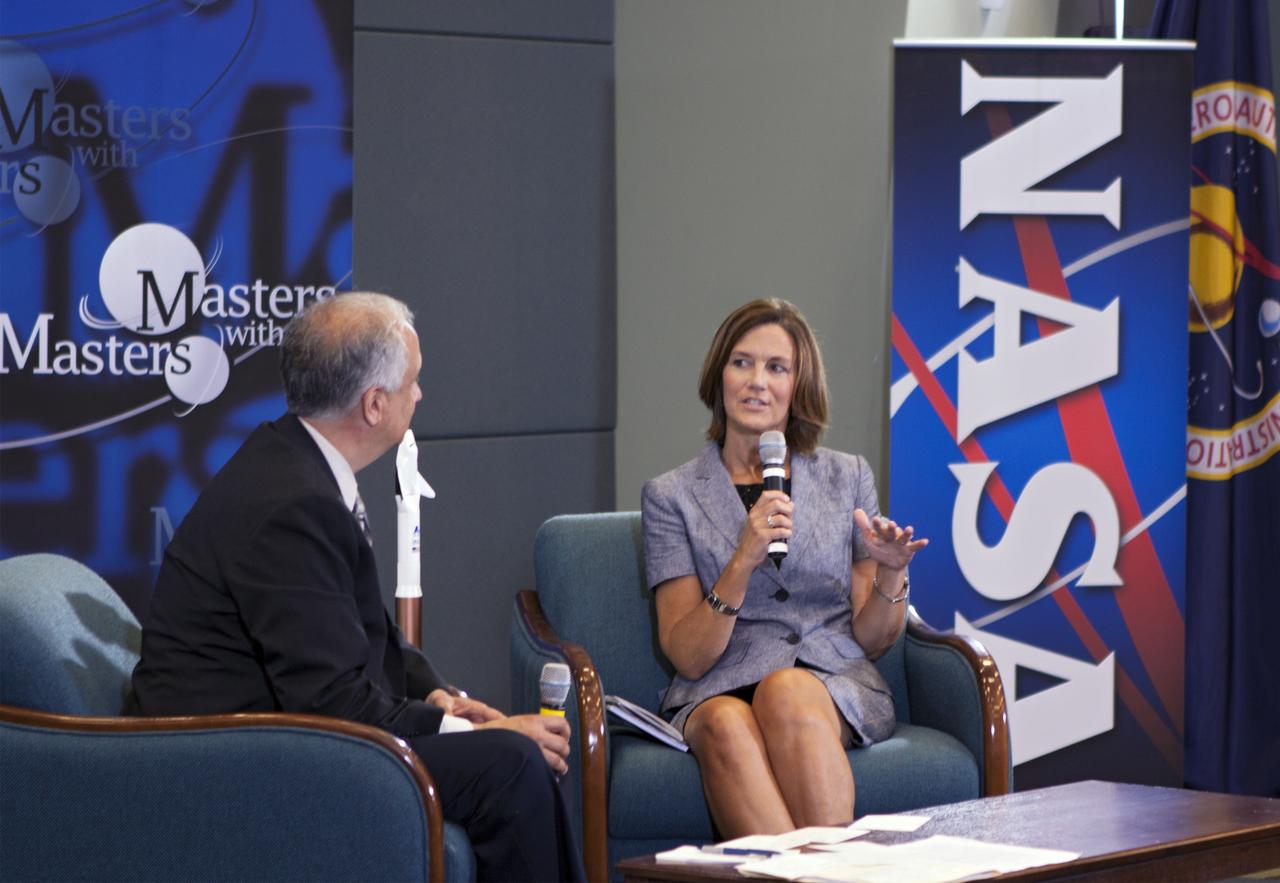
CAPE CANAVERAL, Fla. – Ed Hoffman and Lisa Colloredo discuss NASA's Commercial Crew Program during the first of a weeklong series called 'Masters with Masters' at the agency's Kennedy Space Center in Florida. Hoffman, NASA's chief Knowledge officer, and Colloredo, associate program manager at Kennedy, were joined by phone by Ed Mango, program manager for CCP. Photo credit: NASA_Jim Grossmann
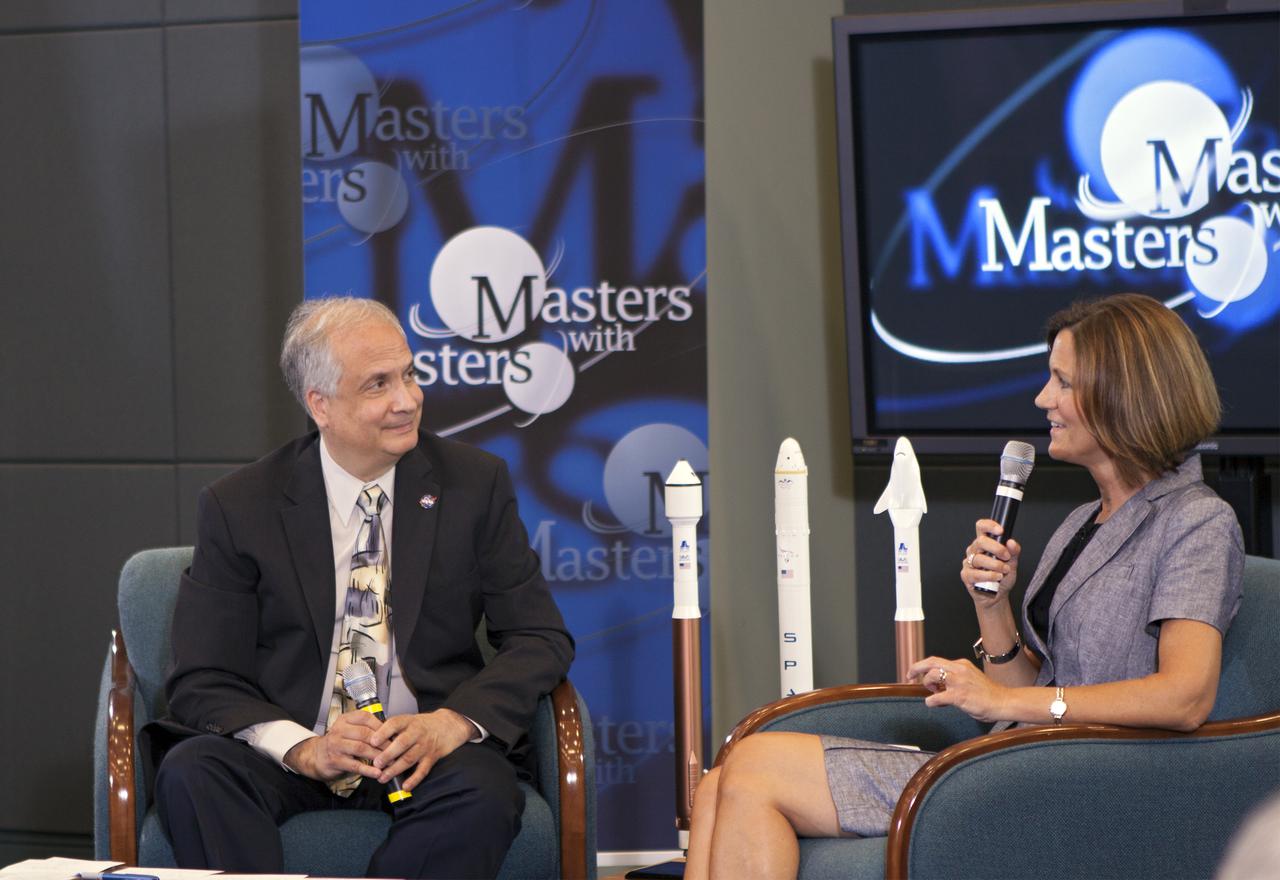
CAPE CANAVERAL, Fla. – Ed Hoffman and Lisa Colloredo discuss NASA's Commercial Crew Program during the first of a weeklong series called 'Masters with Masters' at the agency's Kennedy Space Center in Florida. Hoffman, NASA's chief Knowledge officer, and Colloredo, associate program manager at Kennedy, were joined by phone by Ed Mango, program manager for CCP. Photo credit: NASA_Jim Grossmann
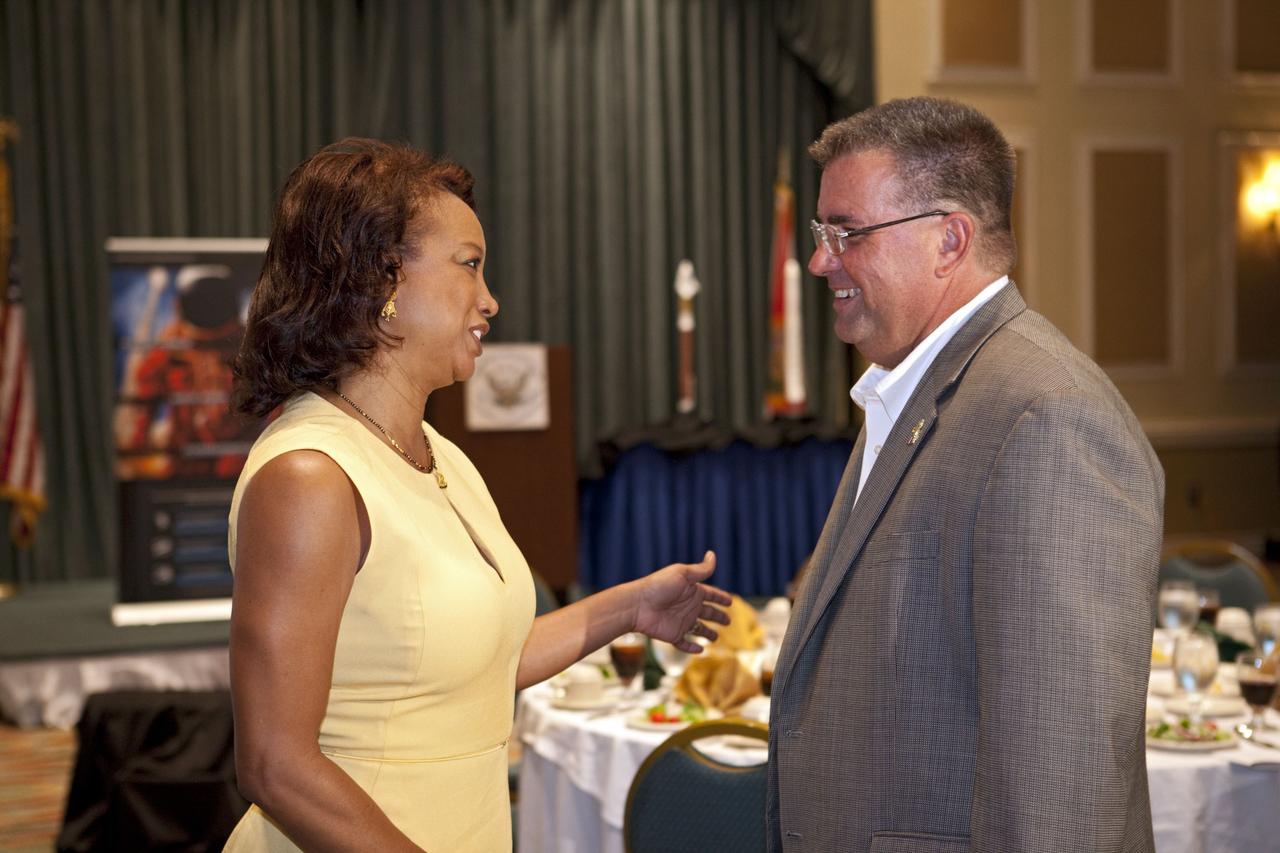
CAPE CANAVERAL, Fla. -- Florida's Lt. Gov. Jennifer Carroll, left, and NASA Commercial Crew Program Manager Ed Mango discuss the future of human spaceflight at the National Space Club Florida Committee's August luncheon at the Radisson Resort at the Port in Cape Canaveral, Fla. Mango was the event's guest speaker, discussing the innovative steps the agency is taking with industry partners to develop the next U.S. space transportation capability to and from low Earth orbit, which will eventually be available for use by the U.S. government and other commercial customers. To learn more about the Commercial Crew Program, visit www.nasa.gov/commercialcrew. Photo credit: Kim Shiflett
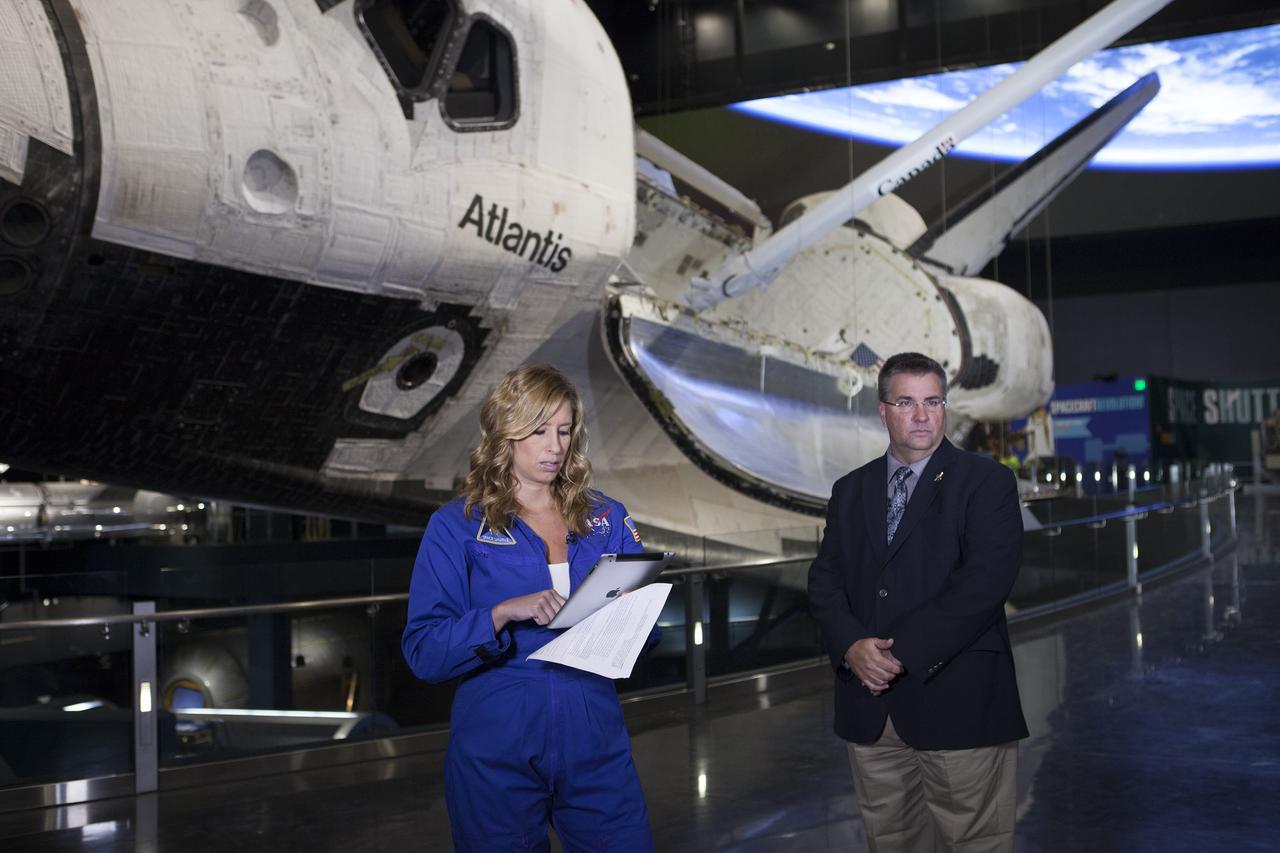
CAPE CANAVERAL, Fla. - Stephanie Abrams, a meteorologist with The Weather Channel, prepares for a live interview with Ed Mango, manager of NASA's Commercial Crew Program, or CCP, in front of the Atlantis display at the Kennedy Space Center Visitor Complex in Florida. During the interview, Mango explained the program is working with the commercial aerospace industry to return America's domestic capability to launch astronauts from U.S. soil to the International Space Station around the middle of the decade. He also discussed the program's role in helping NASA reach its deep-space exploration goals. To learn more about CCP, visit www.nasa.gov/commercialcrew. Photo credit: Kim Shiflett
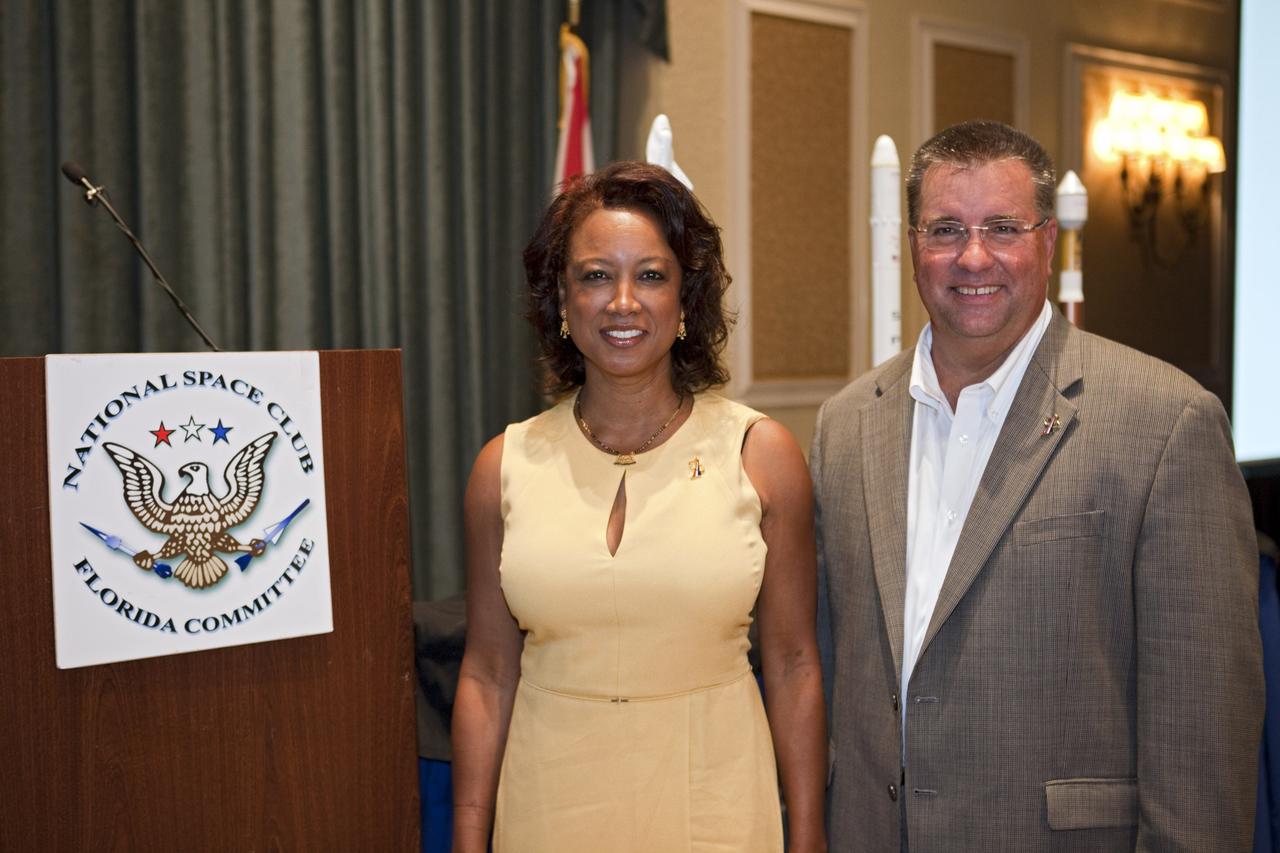
CAPE CANAVERAL, Fla. -- Florida's Lt. Gov. Jennifer Carroll, left, and NASA Commercial Crew Program Manager Ed Mango pose for a photo at the National Space Club Florida Committee's August luncheon at the Radisson Resort at the Port in Cape Canaveral, Fla. Mango was the event's guest speaker, discussing the innovative steps the agency is taking with industry partners to develop the next U.S. space transportation capability to and from low Earth orbit, which will eventually be available for use by the U.S. government and other commercial customers. To learn more about the Commercial Crew Program, visit www.nasa.gov/commercialcrew. Photo credit: Kim Shiflett
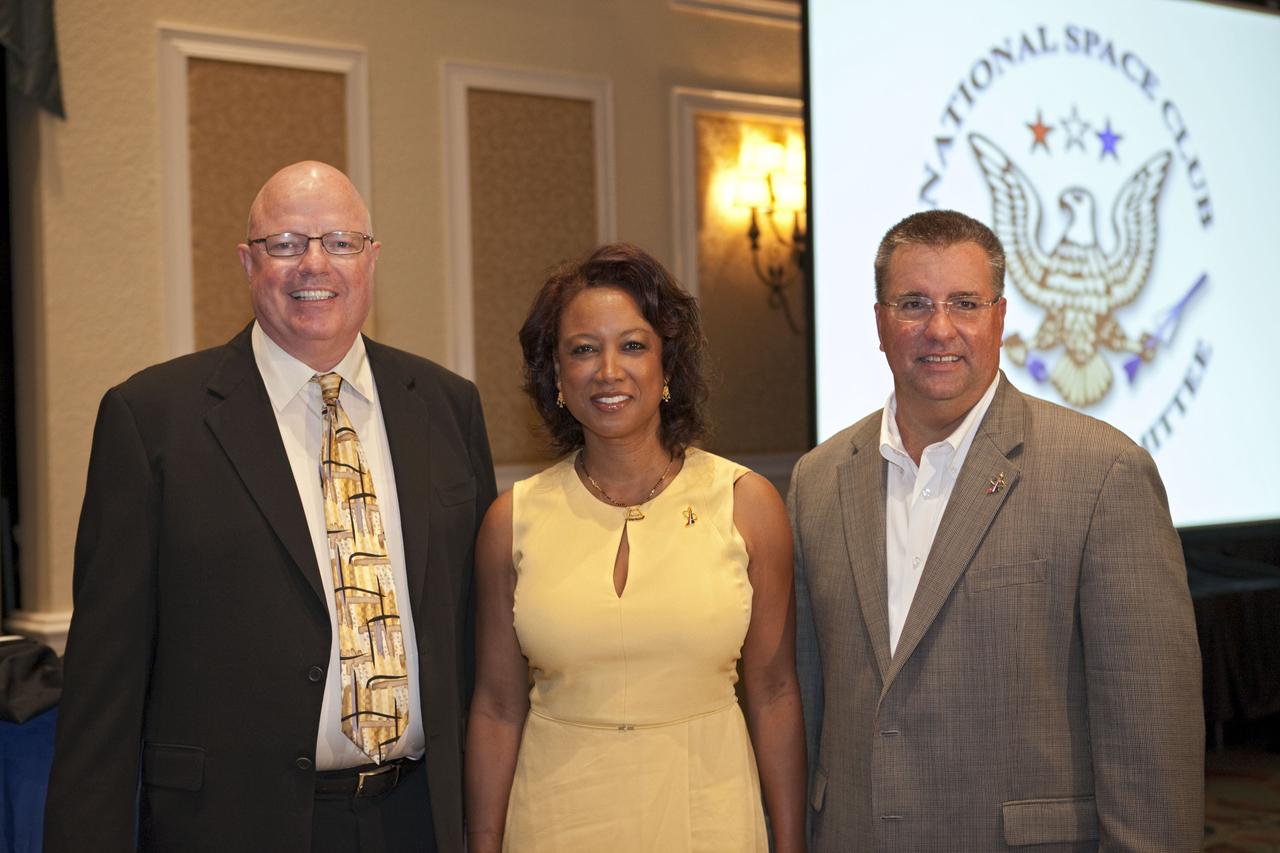
CAPE CANAVERAL, Fla. -- National Space Club Florida Committee Chair Steve Griffin, left, Florida's Lt. Gov. Jennifer Carroll, and NASA Commercial Crew Program Manager Ed Mango pose for a photo at the club's August luncheon at the Radisson Resort at the Port in Cape Canaveral, Fla. Mango was the event's guest speaker, discussing the innovative steps the agency is taking with industry partners to develop the next U.S. space transportation capability to and from low Earth orbit, which will eventually be available for use by the U.S. government and other commercial customers. To learn more about the Commercial Crew Program, visit www.nasa.gov/commercialcrew. Photo credit: Kim Shiflett
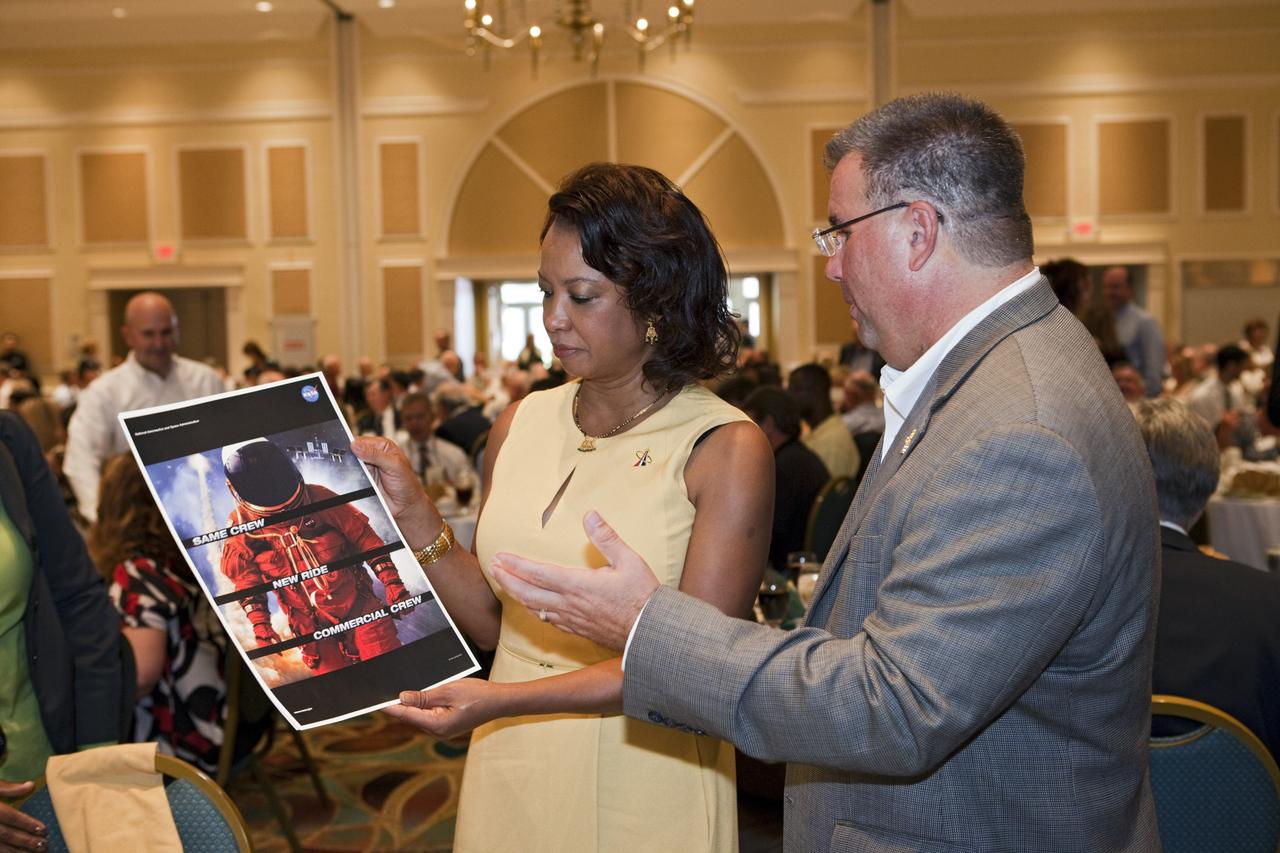
CAPE CANAVERAL, Fla. -- NASA Commercial Crew Program Manager Ed Mango, right, shows Florida's Lt. Gov. Jennifer Carroll the program's "Same Crew, New Ride" poster at the National Space Club Florida Committee's August luncheon at the Radisson Resort at the Port in Cape Canaveral, Fla. Mango was the event's guest speaker, discussing the innovative steps the agency is taking with industry partners to develop the next U.S. space transportation capability to and from low Earth orbit, which will eventually be available for use by the U.S. government and other commercial customers. To learn more about the Commercial Crew Program, visit www.nasa.gov/commercialcrew. Photo credit: Kim Shiflett
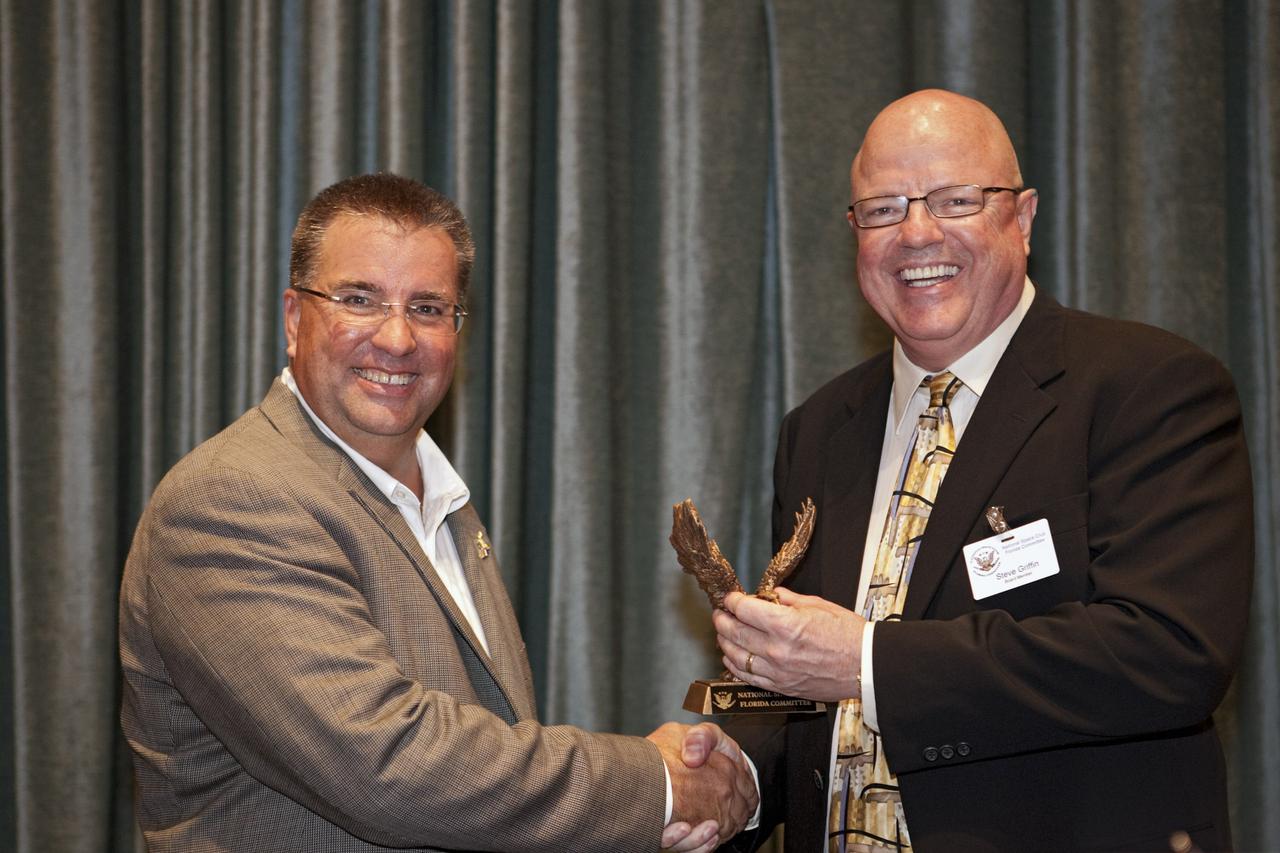
CAPE CANAVERAL, Fla. -- National Space Club Florida Committee Chair Steve Griffin presents NASA Commercial Crew Program Manager Ed Mango with an eagle statue during the club's August luncheon at the Radisson Resort at the Port in Cape Canaveral, Fla. Mango was the event's guest speaker, discussing the innovative steps the agency is taking with industry partners to develop the next U.S. space transportation capability to and from low Earth orbit, which will eventually be available for use by the U.S. government and other commercial customers. To learn more about the Commercial Crew Program, visit www.nasa.gov/commercialcrew. Photo credit: Kim Shiflett
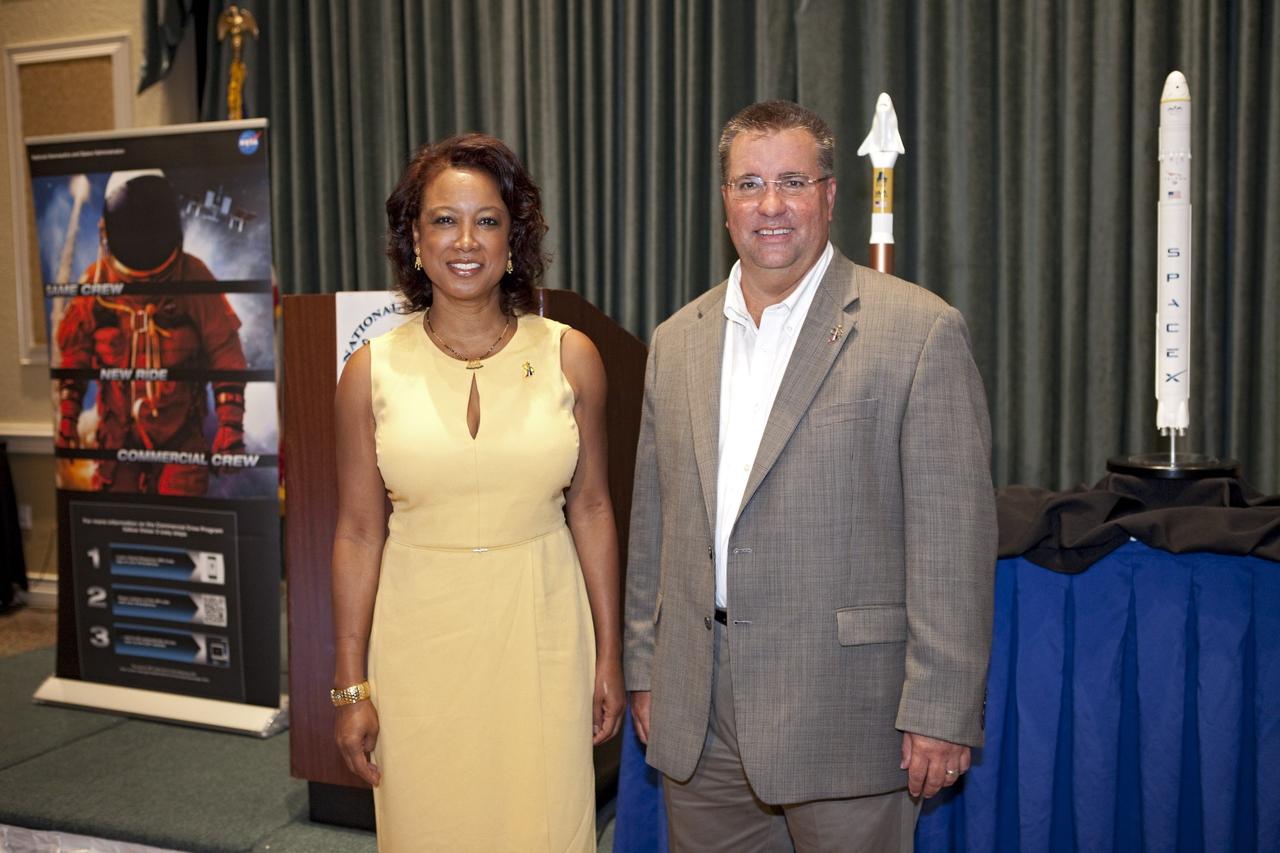
CAPE CANAVERAL, Fla. -- Florida's Lt. Gov. Jennifer Carroll, left, and NASA Commercial Crew Program Manager Ed Mango pose for a photo at the National Space Club Florida Committee's August luncheon at the Radisson Resort at the Port in Cape Canaveral, Fla. Mango was the event's guest speaker, discussing the innovative steps the agency is taking with industry partners to develop the next U.S. space transportation capability to and from low Earth orbit, which will eventually be available for use by the U.S. government and other commercial customers. To learn more about the Commercial Crew Program, visit www.nasa.gov/commercialcrew. Photo credit: Kim Shiflett
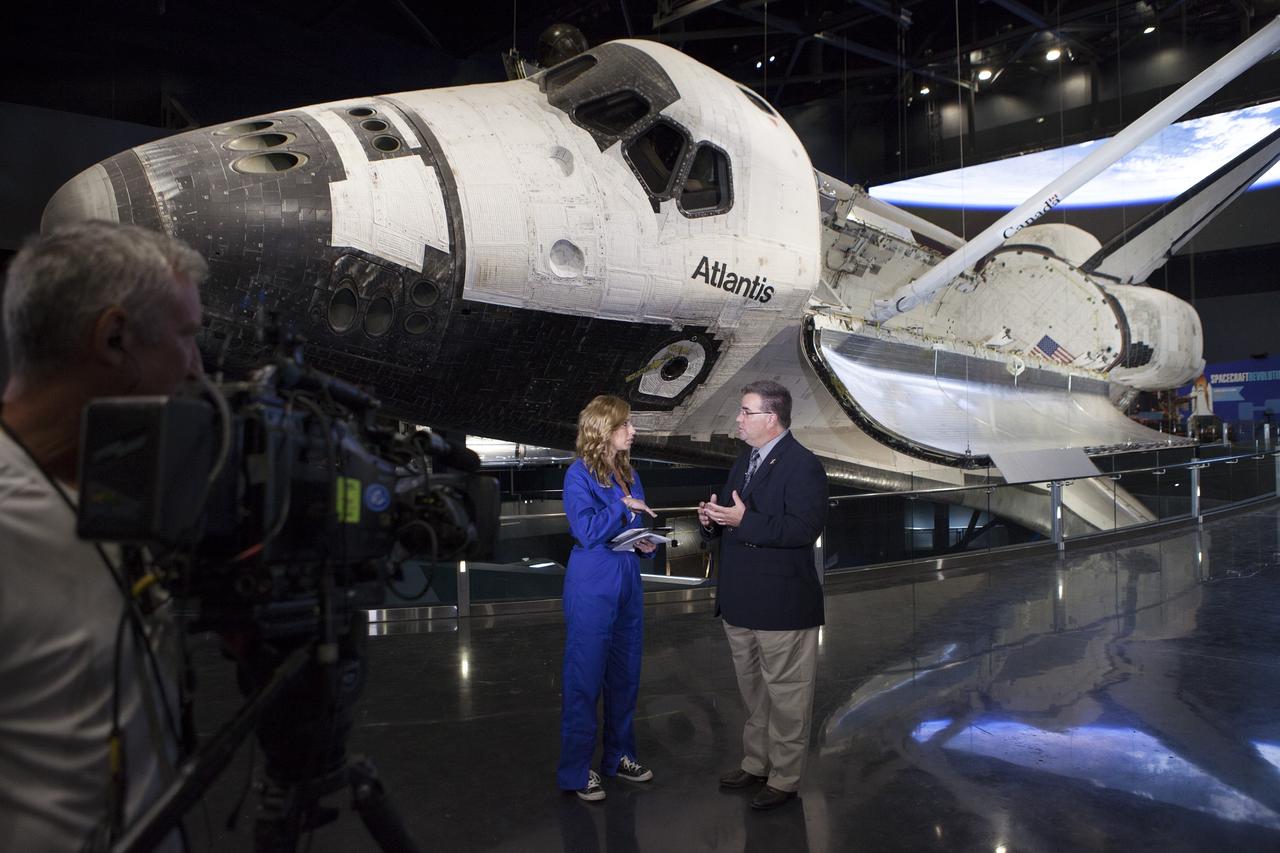
CAPE CANAVERAL, Fla. - Stephanie Abrams, a meteorologist with The Weather Channel, performs a live interview with Ed Mango, manager of NASA's Commercial Crew Program, or CCP, in front of the Atlantis display at the Kennedy Space Center Visitor Complex in Florida. Mango explained the program is working with the commercial aerospace industry to return America's domestic capability to launch astronauts from U.S. soil to the International Space Station around the middle of the decade. He also discussed the program's role in helping NASA reach its deep-space exploration goals. To learn more about CCP, visit www.nasa.gov/commercialcrew. Photo credit: Kim Shiflett
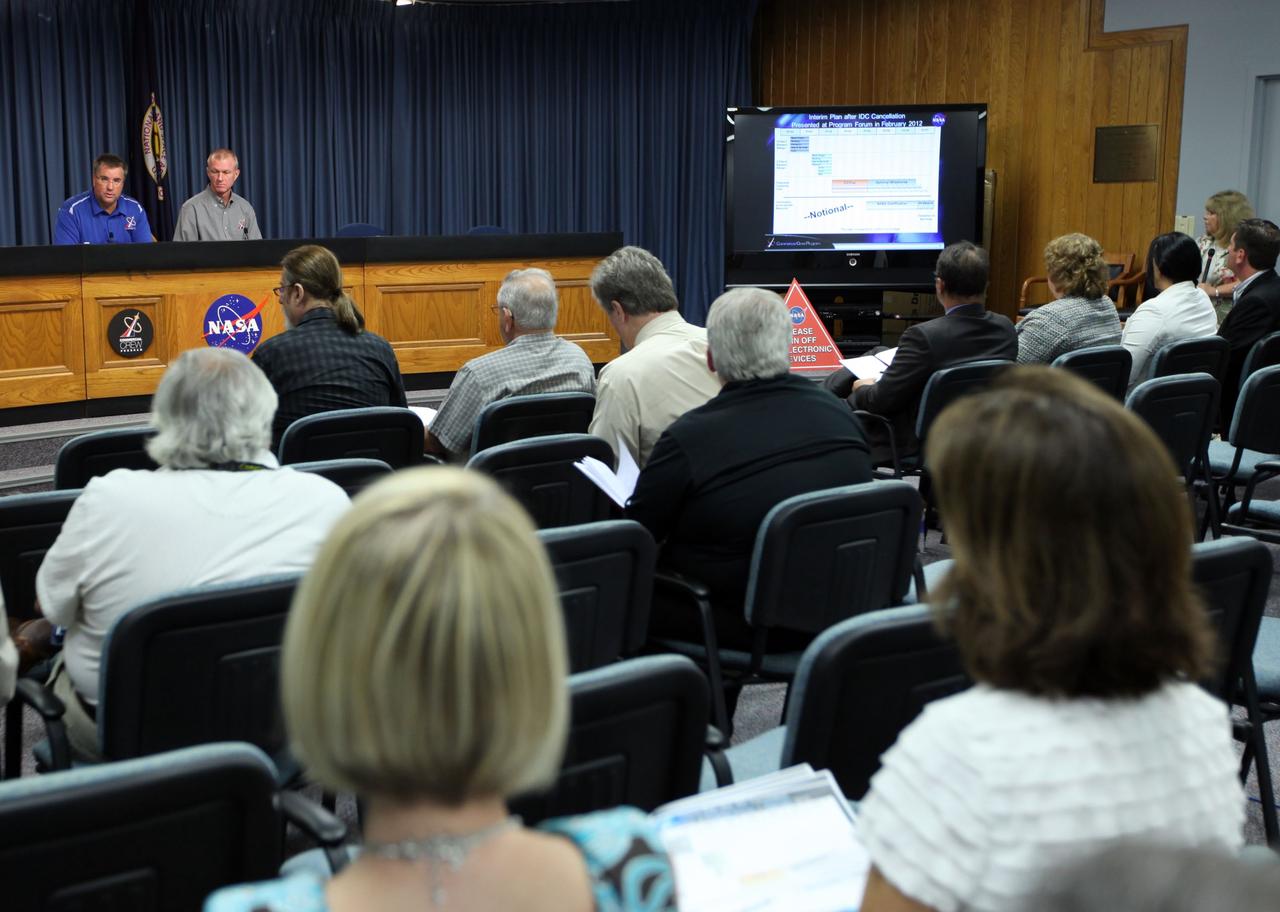
CAPE CANAVERAL, Fla. -- Ed Mango, program manager for NASA's Commercial Crew Program CCP, left, and Brent Jett, CCP's deputy program manager, host a forum for the commercial spaceflight industry to introduce the agency's plans for certifying commercially developed spacecraft and launch systems in support of crewed missions to the International Space Station around the middle of the decade. To learn more about CCP, visit www.nasa.gov/commercialcrew. Photo credit: NASA/Kim Shiflett
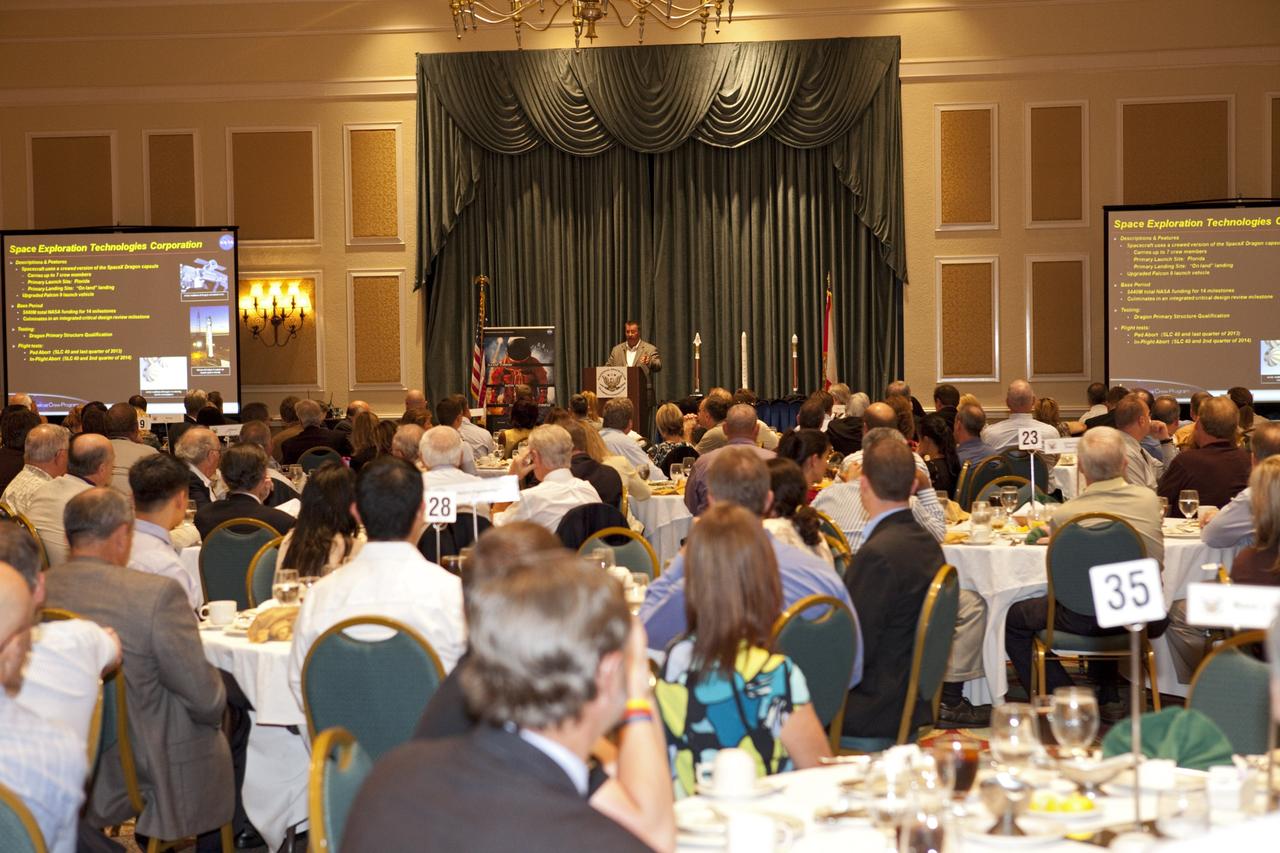
CAPE CANAVERAL, Fla. -- At the National Space Club Florida Committee's August luncheon at the Radisson Resort at the Port in Cape Canaveral, Fla., NASA Commercial Crew Program Manager Ed Mango discusses the innovative steps the agency is taking with industry partners to develop the next U.S. space transportation capability to and from low Earth orbit, which will eventually be available for use by the U.S. government and other commercial customers. To learn more about the Commercial Crew Program, visit www.nasa.gov/commercialcrew. Photo credit: Kim Shiflett

CAPE CANAVERAL, Fla. -- At a news conference NASA officials and industry partners discuss progress of the agency's Commercial Crew Program. Among those participating in the briefing is Ed Mango, NASA Commercial Crew Program manager. Through CCP, NASA is facilitating the development of U.S. commercial crew space transportation capabilities to achieve safe, reliable and cost-effective access to and from low-Earth orbit for potential future government and commercial customers. For more information, visit http://www.nasa.gov/commercialcrew Photo credit: NASA/Kim Shiflett
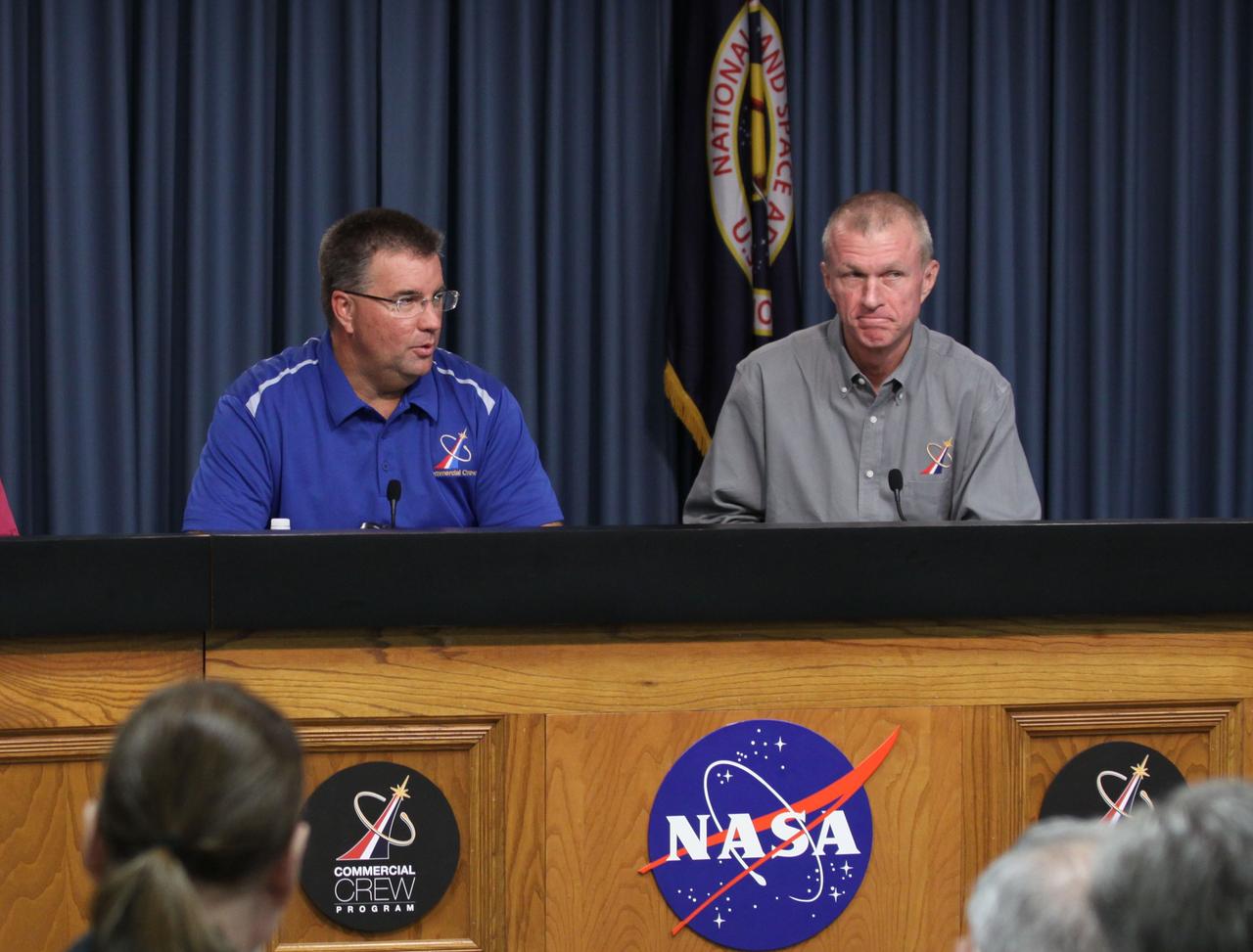
CAPE CANAVERAL, Fla. -- Ed Mango, program manager for NASA's Commercial Crew Program CCP, left, and Brent Jett, CCP's deputy program manager, host a forum for the commercial spaceflight industry to introduce the agency's plans for certifying commercially developed spacecraft and launch systems in support of crewed missions to the International Space Station around the middle of the decade. To learn more about CCP, visit www.nasa.gov/commercialcrew. Photo credit: NASA/Kim Shiflett
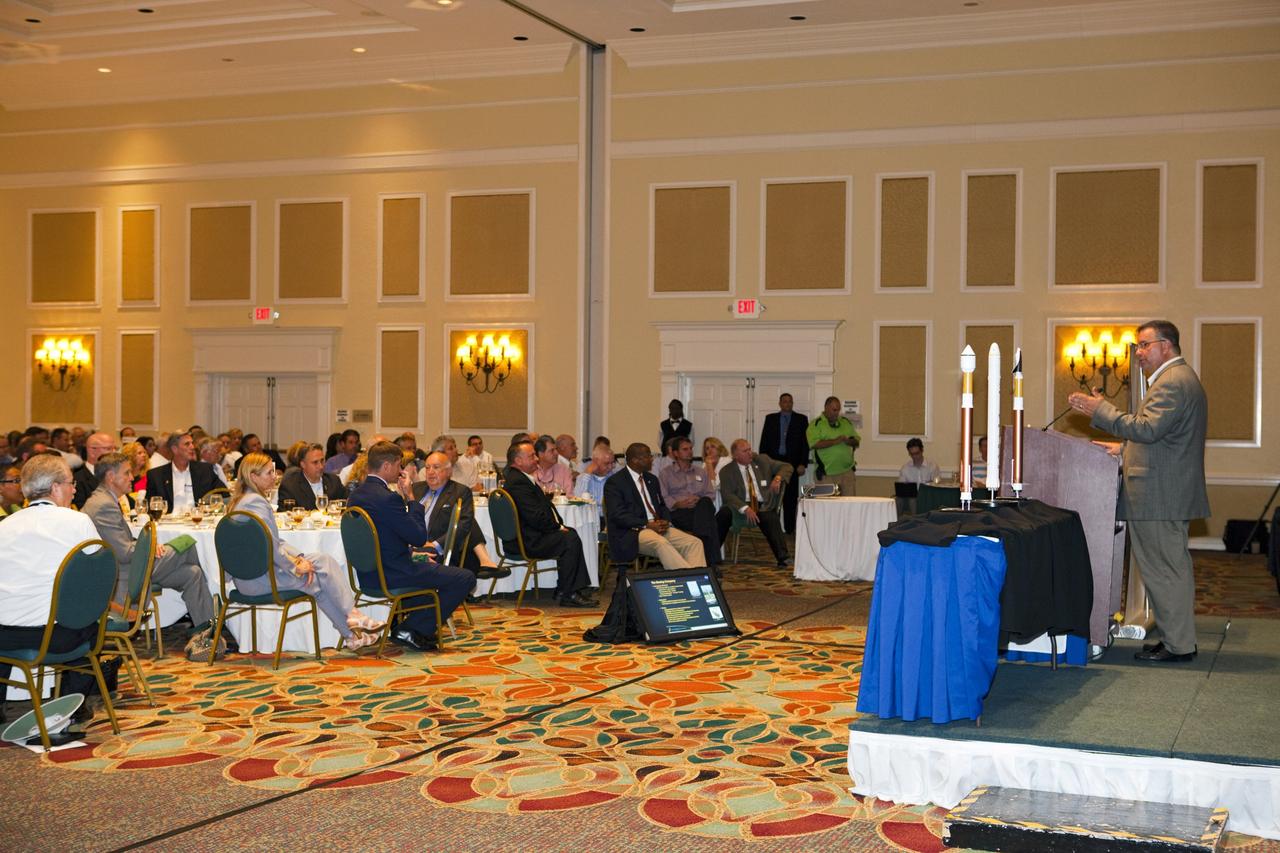
CAPE CANAVERAL, Fla. -- At the National Space Club Florida Committee's August luncheon at the Radisson Resort at the Port in Cape Canaveral, Fla., NASA Commercial Crew Program Manager Ed Mango discusses the innovative steps the agency is taking with industry partners to develop the next U.S. space transportation capability to and from low Earth orbit, which will eventually be available for use by the U.S. government and other commercial customers. To learn more about the Commercial Crew Program, visit www.nasa.gov/commercialcrew. Photo credit: Kim Shiflett

ORLANDO, Fla. – Ed Mango, program manager of NASA's Commercial Crew Program, discusses technological advances with teams of high school students taking part in the FIRST Robotics Competition's 2013 Orlando Regional in the University of Central Florida Arena. The student-built robots were required to throw discs into boxes or make climbs to score points. Photo credit: NASA/Frankie Martin
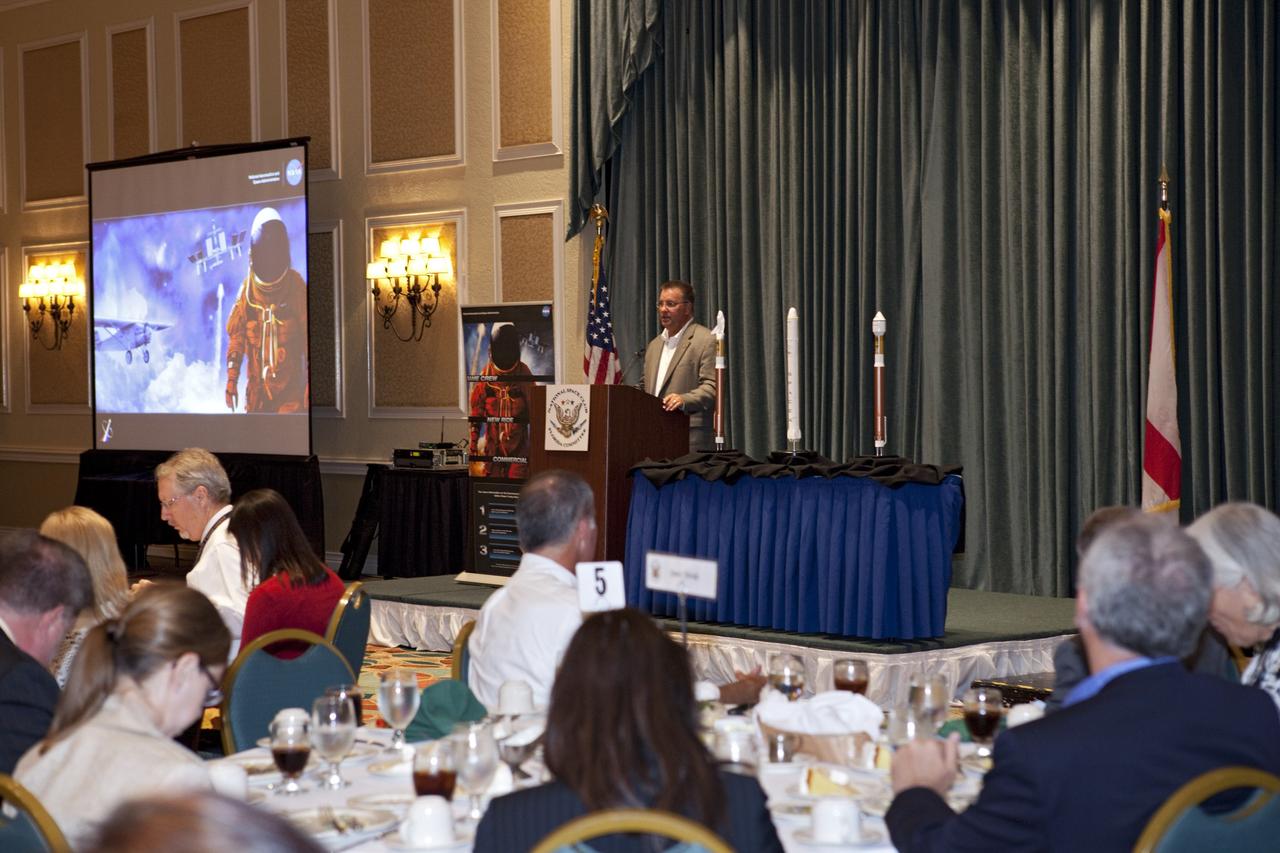
CAPE CANAVERAL, Fla. -- At the National Space Club Florida Committee's August luncheon at the Radisson Resort at the Port in Cape Canaveral, Fla., NASA Commercial Crew Program Manager Ed Mango discusses the innovative steps the agency is taking with industry partners to develop the next U.S. space transportation capability to and from low Earth orbit, which will eventually be available for use by the U.S. government and other commercial customers. To learn more about the Commercial Crew Program, visit www.nasa.gov/commercialcrew. Photo credit: Kim Shiflett
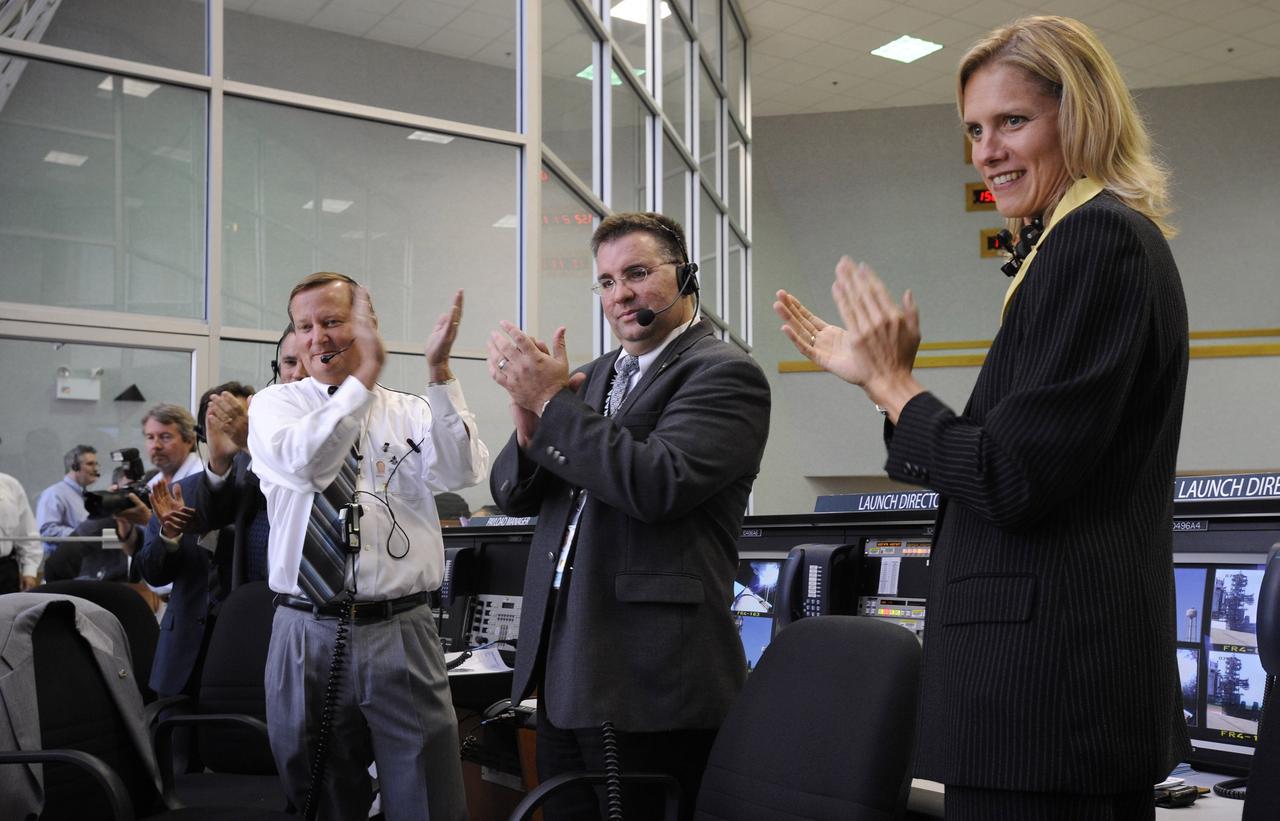
CAPE CANAVERAL, Fla. -- NASA Shuttle Launch Director Michael Leinbach, left, STS-124 Assistant Launch Director Ed Mango, center, and Flow Director for space shuttle Discovery Stephanie Stilson clap in the Launch Control Center after the main engine cut-off and successful launch of Discovery on the STS-124 mission Saturday, May 31, 2008, at NASA's Kennedy Space Center. The shuttle lifted off from Launch Pad 39A at 5:02 p.m. EDT. Photo credit: NASA/Bill Ingalls
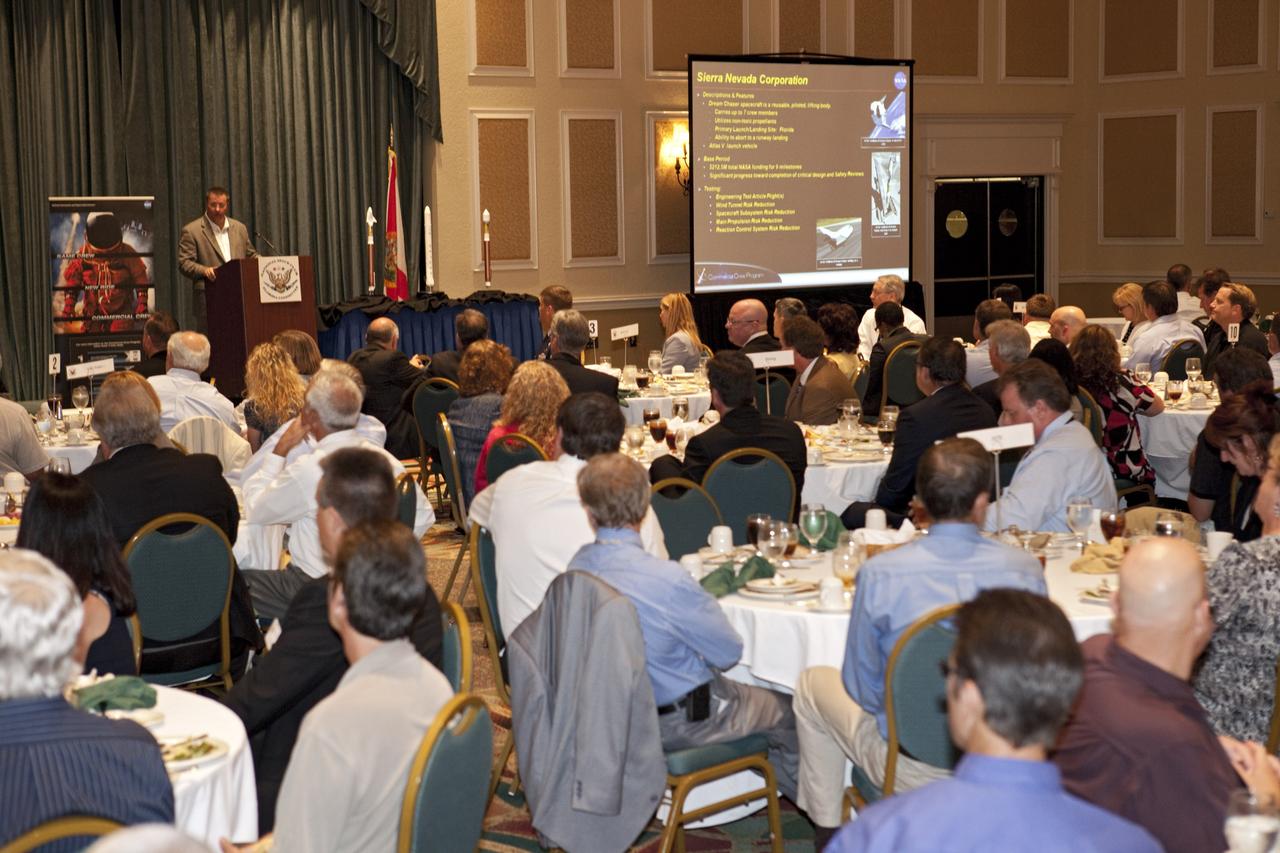
CAPE CANAVERAL, Fla. -- At the National Space Club Florida Committee's August luncheon at the Radisson Resort at the Port in Cape Canaveral, Fla., NASA Commercial Crew Program Manager Ed Mango discusses the innovative steps the agency is taking with industry partners to develop the next U.S. space transportation capability to and from low Earth orbit, which will eventually be available for use by the U.S. government and other commercial customers. To learn more about the Commercial Crew Program, visit www.nasa.gov/commercialcrew. Photo credit: Kim Shiflett
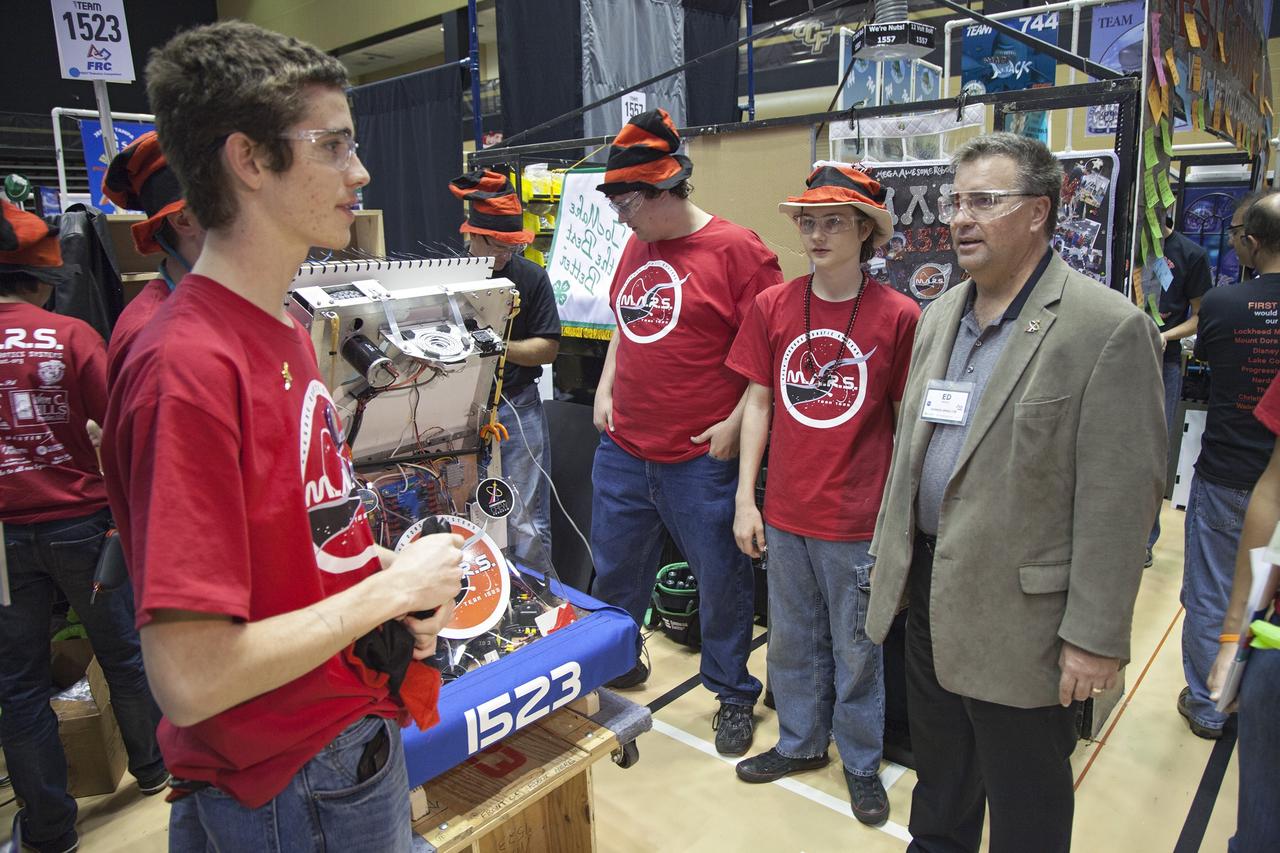
ORLANDO, Fla. – Ed Mango, program manager of NASA's Commercial Crew Program, discusses technological advances with teams of high school students taking part in the FIRST Robotics Competition's 2013 Orlando Regional in the University of Central Florida Arena. The student-built robots were required to throw discs into boxes or make climbs to score points. Photo credit: NASA/Frankie Martin
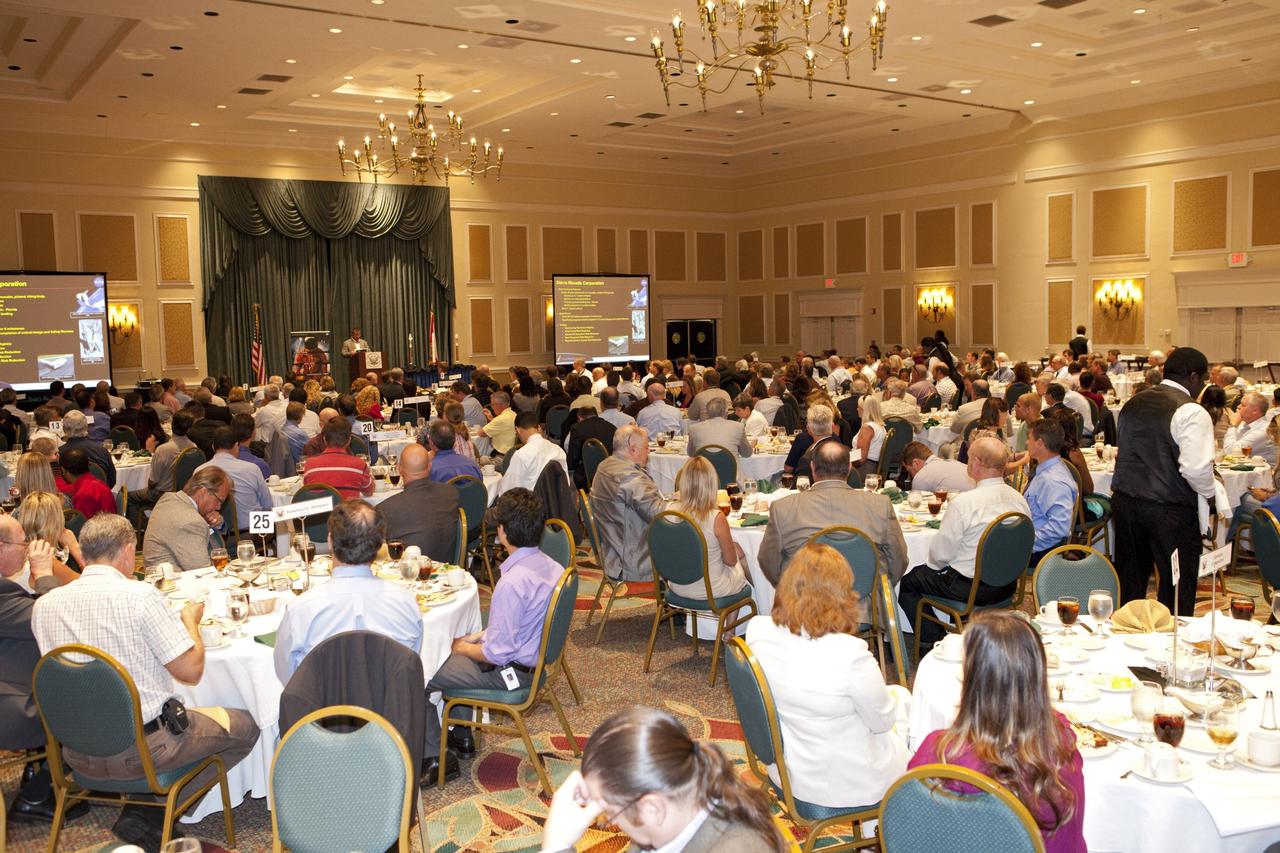
CAPE CANAVERAL, Fla. -- At the National Space Club Florida Committee's August luncheon at the Radisson Resort at the Port in Cape Canaveral, Fla., NASA Commercial Crew Program Manager Ed Mango discusses the innovative steps the agency is taking with industry partners to develop the next U.S. space transportation capability to and from low Earth orbit, which will eventually be available for use by the U.S. government and other commercial customers. To learn more about the Commercial Crew Program, visit www.nasa.gov/commercialcrew. Photo credit: Kim Shiflett
CAPE CANAVERAL, Fla. -- NASA Commercial Crew Program Manager Ed Mango talks to commercial spaceflight industry representatives about the agency's plans for certifying commercially developed spacecraft and launch systems in support of crewed missions to the International Space Station around the middle of the decade. To learn more about CCP, visit www.nasa.gov/commercialcrew. Photo credit: NASA/Kim Shiflett
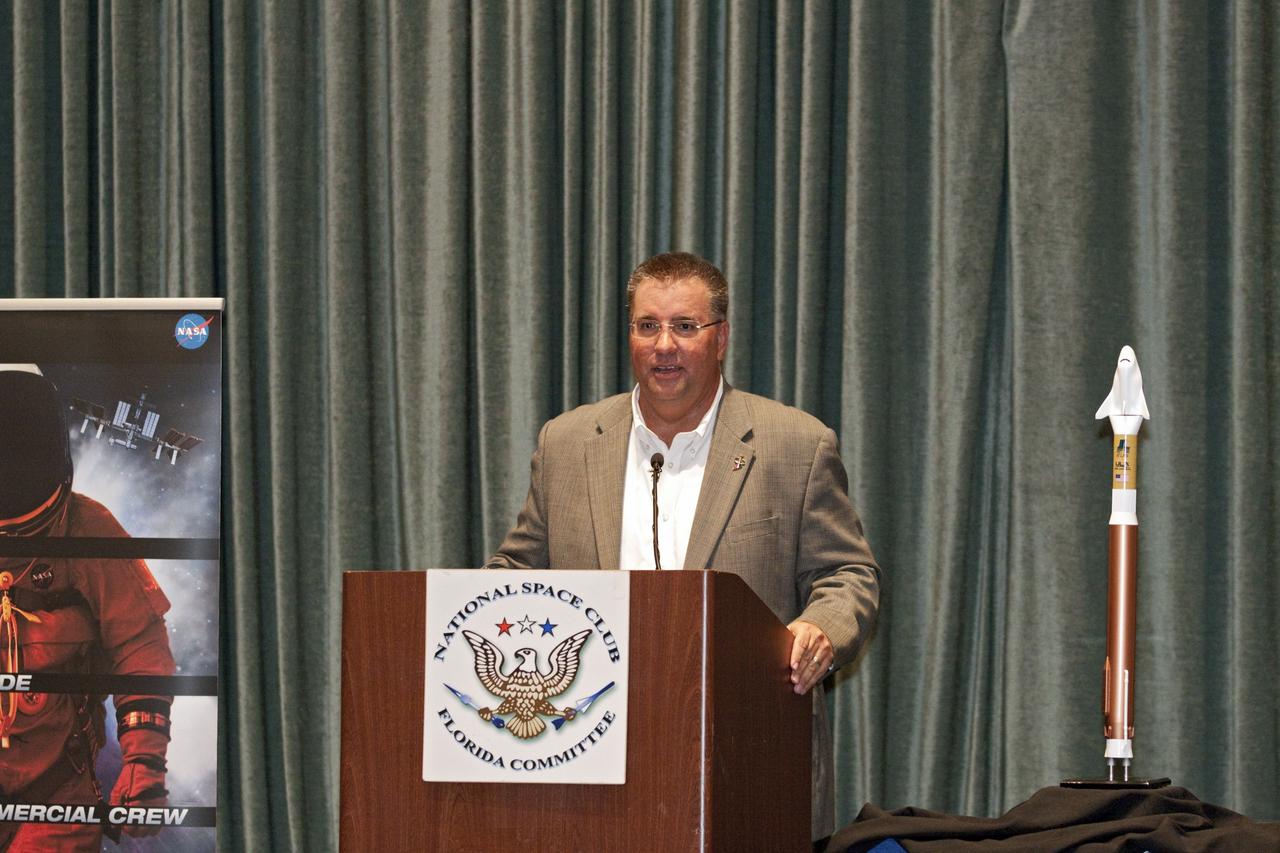
CAPE CANAVERAL, Fla. -- At the National Space Club Florida Committee's August luncheon at the Radisson Resort at the Port in Cape Canaveral, Fla., NASA Commercial Crew Program Manager Ed Mango discusses the innovative steps the agency is taking with industry partners to develop the next U.S. space transportation capability to and from low Earth orbit, which will eventually be available for use by the U.S. government and other commercial customers. To learn more about the Commercial Crew Program, visit www.nasa.gov/commercialcrew. Photo credit: Kim Shiflett
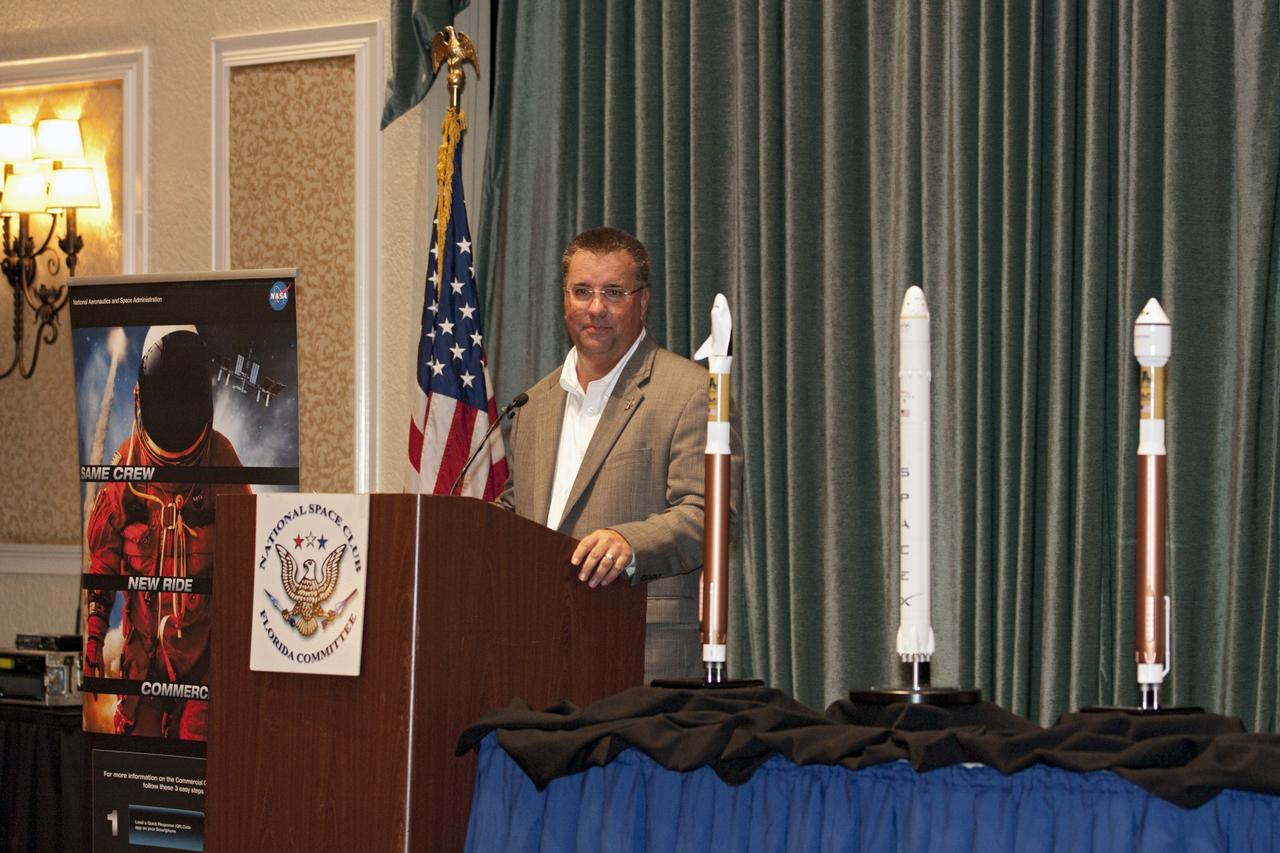
CAPE CANAVERAL, Fla. -- At the National Space Club Florida Committee's August luncheon at the Radisson Resort at the Port in Cape Canaveral, Fla., NASA Commercial Crew Program Manager Ed Mango discusses the innovative steps the agency is taking with industry partners to develop the next U.S. space transportation capability to and from low Earth orbit, which will eventually be available for use by the U.S. government and other commercial customers. To learn more about the Commercial Crew Program, visit www.nasa.gov/commercialcrew. Photo credit: Kim Shiflett
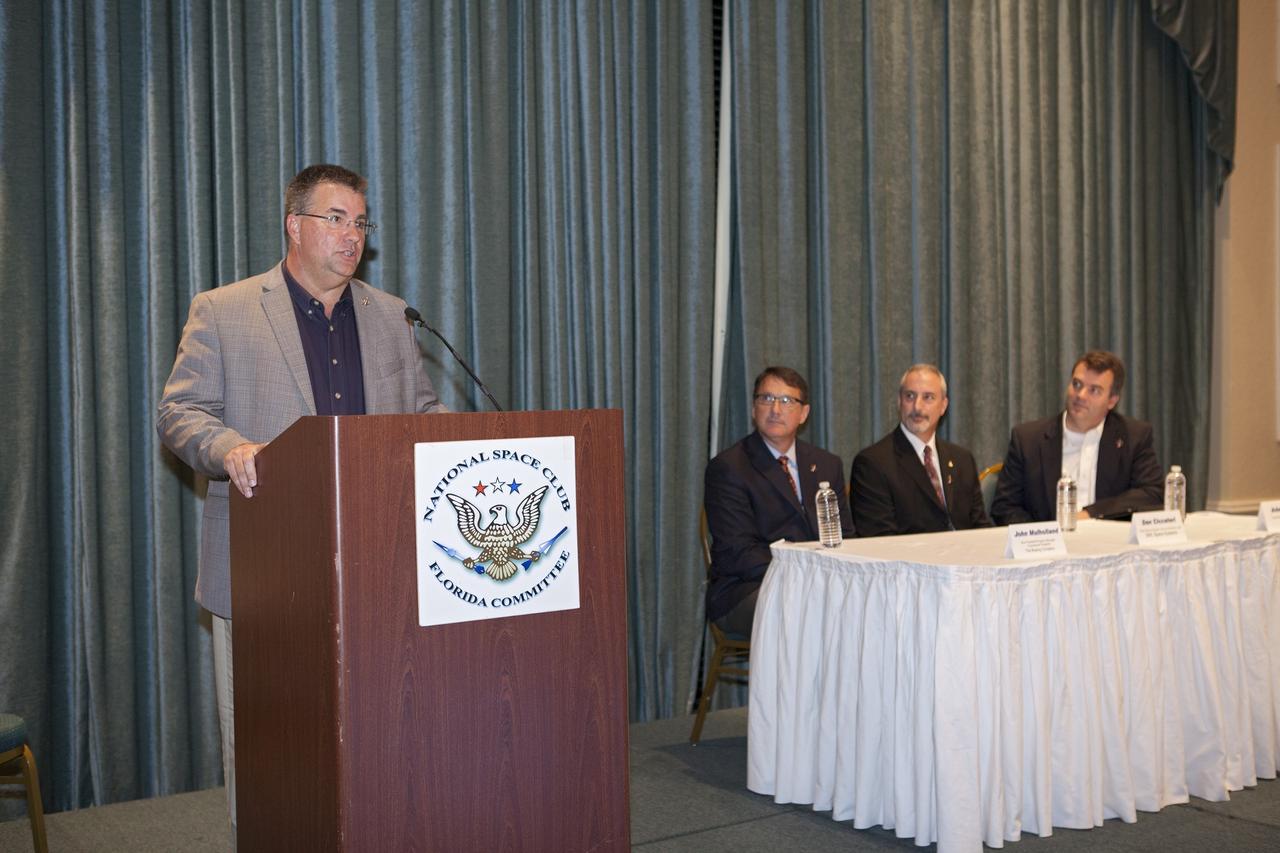
CAPE CANAVERAL, Fla. - Ed Mango, manager of NASA's Commercial Crew Program, or CCP, speaks to a crowd of spaceflight enthusiasts at the National Space Club Florida Committee's June meeting near the Kennedy Space Center. Mango was joined at the Radisson Resort at the Port in Cape Canaveral, Fla., by partner representatives from The Boeing Company, Sierra Nevada Corporation, or SNC, and Space Exploration Technologies, or SpaceX, all of whom plan to increase their commercial activities on Florida’s space coast to send astronauts to low-Earth orbit. Seated from left are vice president and program manager of Boeing's Commercial Programs John Mulholland, SNC's chief systems engineer Dan Ciccateri, and SpaceX's vice president of government sales Adam Harris. To learn more about the Commercial Crew Program, visit www.nasa.gov/commercialcrew. Photo credit: Kim Shiflett
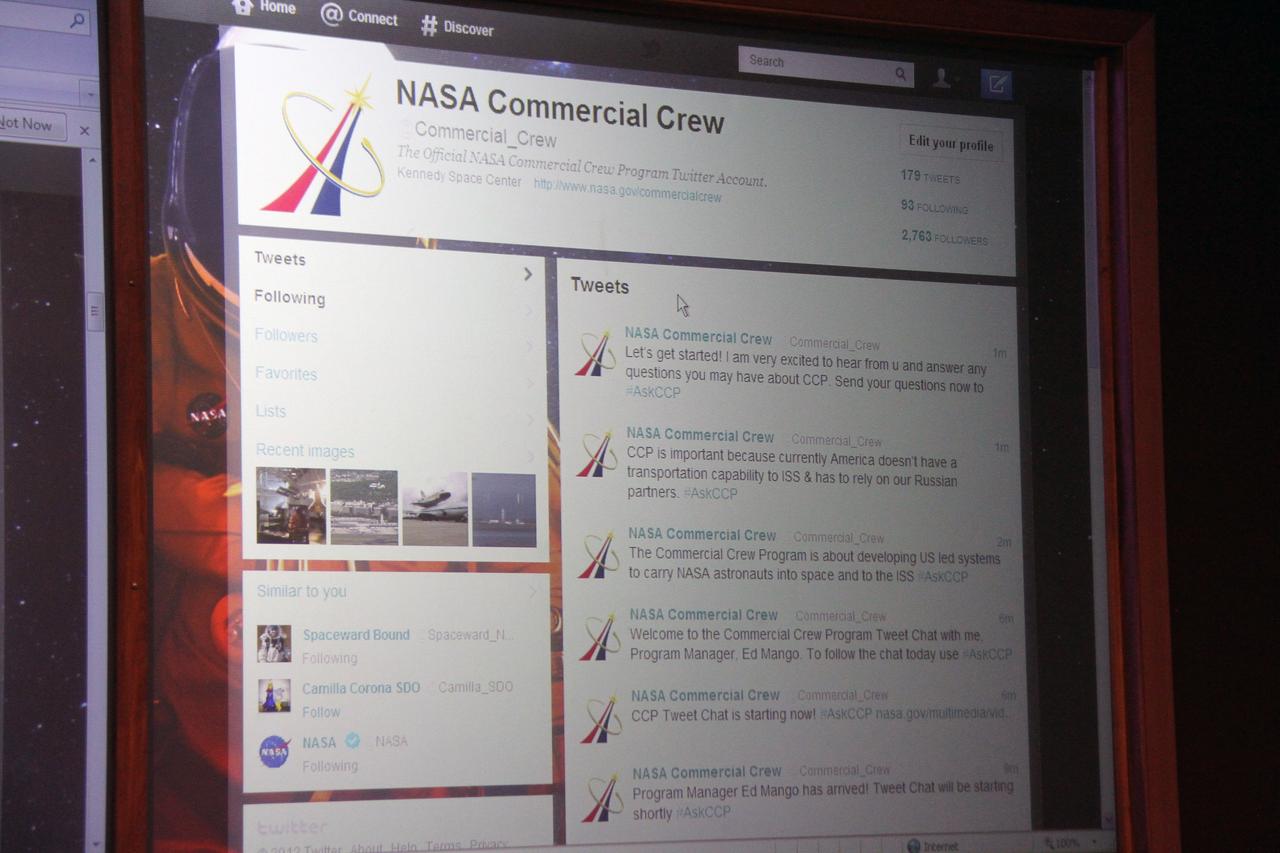
CAPE CANAVERAL, Fla. – The Twitter page of NASA’s Commercial Crew Program CCP buzzes with activity as program manager, Ed Mango, hosts a virtual conversation, called a Tweet Chat, with followers from around the world. Those who follow www.twitter.com/commercial_crew had an hour-long opportunity to ask Mango questions about NASA’s efforts to get astronauts to low Earth orbit and the International Space Station aboard American rockets and spacecraft. Mango stuck to the social networking service's 140 character limit and answered dozens of questions. The goal of CCP is to drive down the cost of space travel as well as open up space to more people than ever before by balancing industry’s own innovative capabilities with NASA's 50 years of human spaceflight experience. Seven aerospace companies are maturing launch vehicle and spacecraft designs under the program’s second round of development, called Commercial Crew Development Round 2 CCDev2), including Alliant Techsystems Inc. ATK, The Boeing Co., Excalibur Almaz Inc., Blue Origin, Sierra Nevada, Space Exploration Technologies SpaceX, and United Launch Alliance ULA. For more information, visit www.nasa.gov/commercialcrew. Image credit: NASA/Gianni Woods
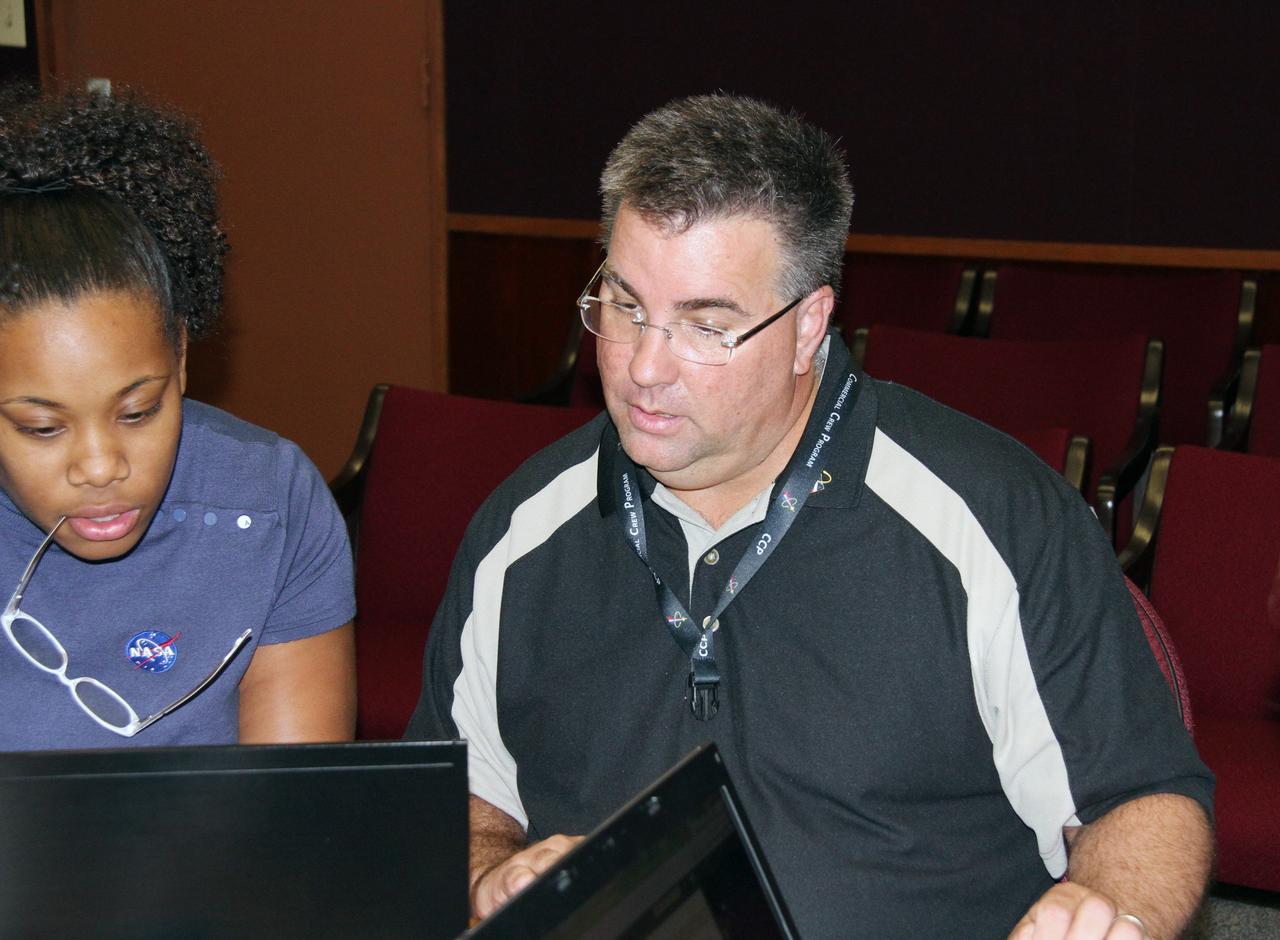
CAPE CANAVERAL, Fla. – The manager of NASA's Commercial Crew Program CCP, Ed Mango, hosts a virtual conversation, called a Tweet Chat, with Twitter followers from around the world. Those who follow www.twitter.com/commercial_crew had an hour-long opportunity to ask Mango questions about NASA’s efforts to get astronauts to low Earth orbit and the International Space Station aboard American rockets and spacecraft. Mango stuck to the social networking service's 140 character limit and answered dozens of questions. At left, is Brittani Sims, a member of the CCP team. The goal of CCP is to drive down the cost of space travel as well as open up space to more people than ever before by balancing industry’s own innovative capabilities with NASA's 50 years of human spaceflight experience. Seven aerospace companies are maturing launch vehicle and spacecraft designs under the program’s second round of development, called Commercial Crew Development Round 2 CCDev2), including Alliant Techsystems Inc. ATK, The Boeing Co., Excalibur Almaz Inc., Blue Origin, Sierra Nevada, Space Exploration Technologies SpaceX, and United Launch Alliance ULA. For more information, visit www.nasa.gov/commercialcrew. Image credit: NASA/Gianni Woods
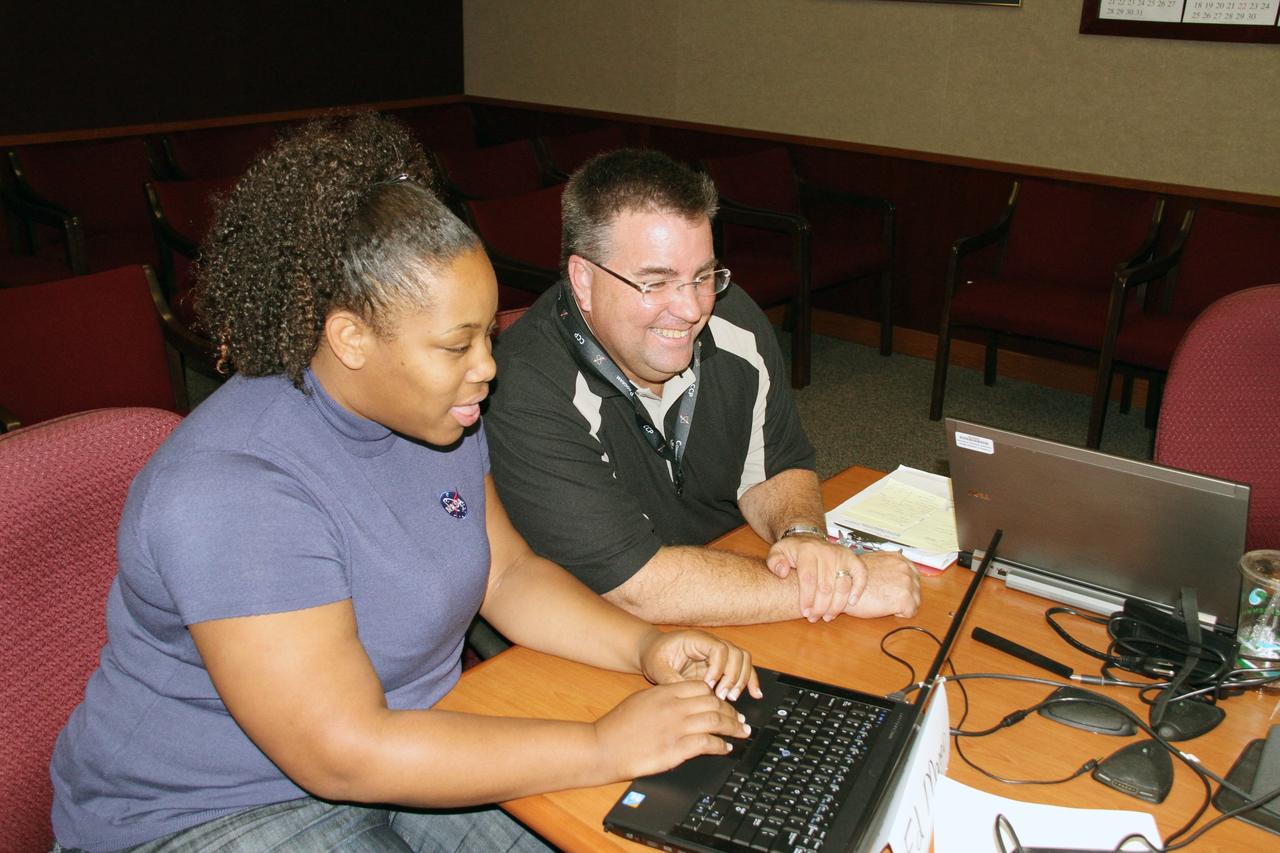
CAPE CANAVERAL, Fla. – The manager of NASA's Commercial Crew Program CCP, Ed Mango, hosts a virtual conversation, called a Tweet Chat, with Twitter followers from around the world. Those who follow www.twitter.com/commercial_crew had an hour-long opportunity to ask Mango questions about NASA’s efforts to get astronauts to low Earth orbit and the International Space Station aboard American rockets and spacecraft. Mango stuck to the social networking service's 140 character limit and answered dozens of questions. At left, is Brittani Sims, a member of the CCP team. The goal of CCP is to drive down the cost of space travel as well as open up space to more people than ever before by balancing industry’s own innovative capabilities with NASA's 50 years of human spaceflight experience. Seven aerospace companies are maturing launch vehicle and spacecraft designs under the program’s second round of development, called Commercial Crew Development Round 2 CCDev2), including Alliant Techsystems Inc. ATK, The Boeing Co., Excalibur Almaz Inc., Blue Origin, Sierra Nevada, Space Exploration Technologies SpaceX, and United Launch Alliance ULA. For more information, visit www.nasa.gov/commercialcrew. Image credit: NASA/Gianni Woods

CAPE CANAVERAL, Fla. -- Florida's Lt. Gov. Jennifer Carroll talks about the positive impact the aerospace industry has on the state of Florida during the National Space Club Florida Committee's August luncheon at the Radisson Resort at the Port in Cape Canaveral, Fla. NASA Commercial Crew Program Manager Ed Mango also discussed the innovative steps the agency is taking with industry partners to develop the next U.S. space transportation capability to and from low Earth orbit, which will eventually be available for use by the U.S. government and other commercial customers. To learn more about the Commercial Crew Program, visit www.nasa.gov/commercialcrew. Photo credit: Kim Shiflett
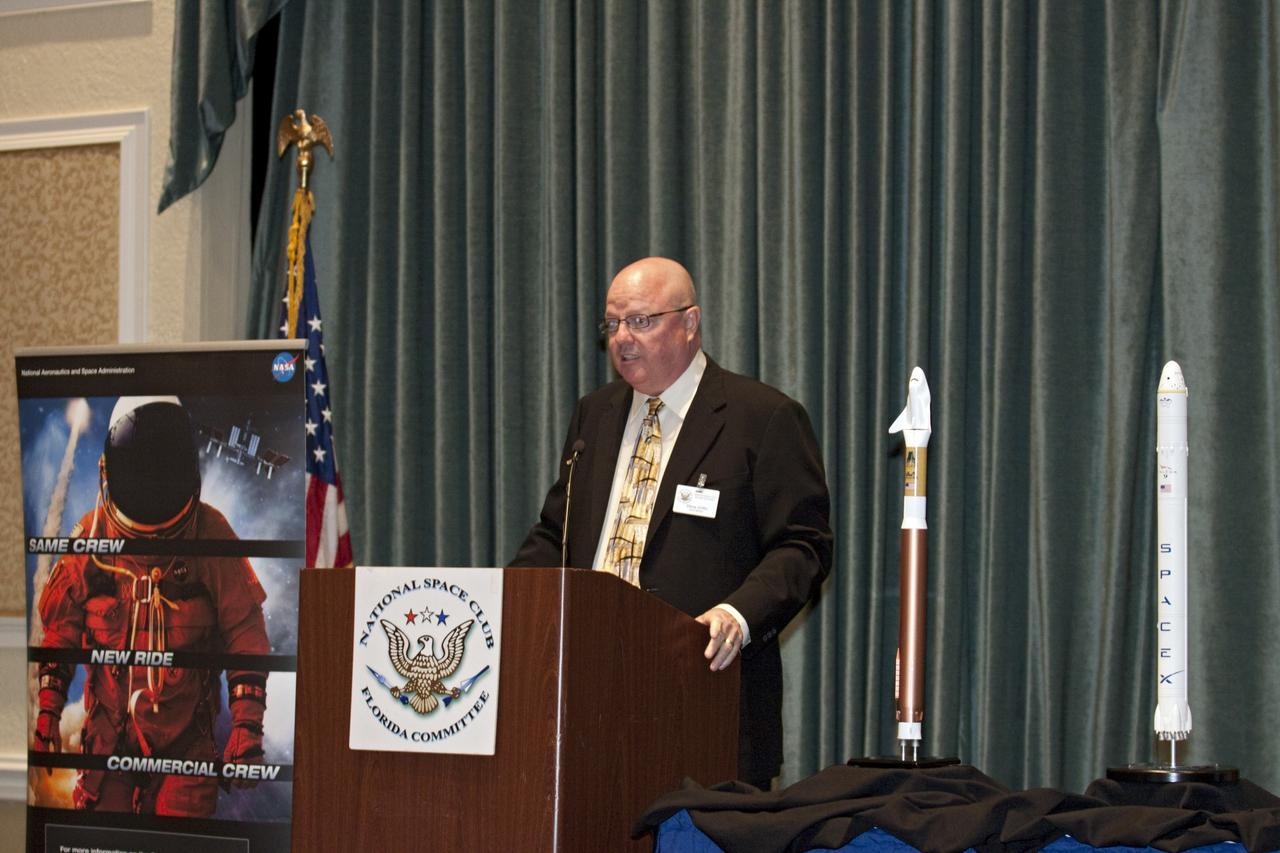
CAPE CANAVERAL, Fla. -- National Space Club Florida Committee Chair Steve Griffin welcomes attendees of the club's August luncheon at the Radisson Resort at the Port in Cape Canaveral, Fla. NASA Commercial Crew Program Manager Ed Mango was the event's guest speaker, discussing the innovative steps the agency is taking with industry partners to develop the next U.S. space transportation capability to and from low Earth orbit, which will eventually be available for use by the U.S. government and other commercial customers. To learn more about the Commercial Crew Program, visit www.nasa.gov/commercialcrew. Photo credit: Kim Shiflett

CAPE CANAVERAL, Fla. - Attendees of the National Space Club Florida Committee's August luncheon gather at the Radisson Resort at the Port in Cape Canaveral, Fla. NASA Commercial Crew Program Manager Ed Mango was the guest speaker, discussing the innovative steps the agency is taking with industry partners to develop the next U.S. space transportation capability to and from low Earth orbit, which will eventually be available for use by the U.S. government and other commercial customers. To learn more about the Commercial Crew Program, visit www.nasa.gov/commercialcrew. Photo credit: Kim Shiflett
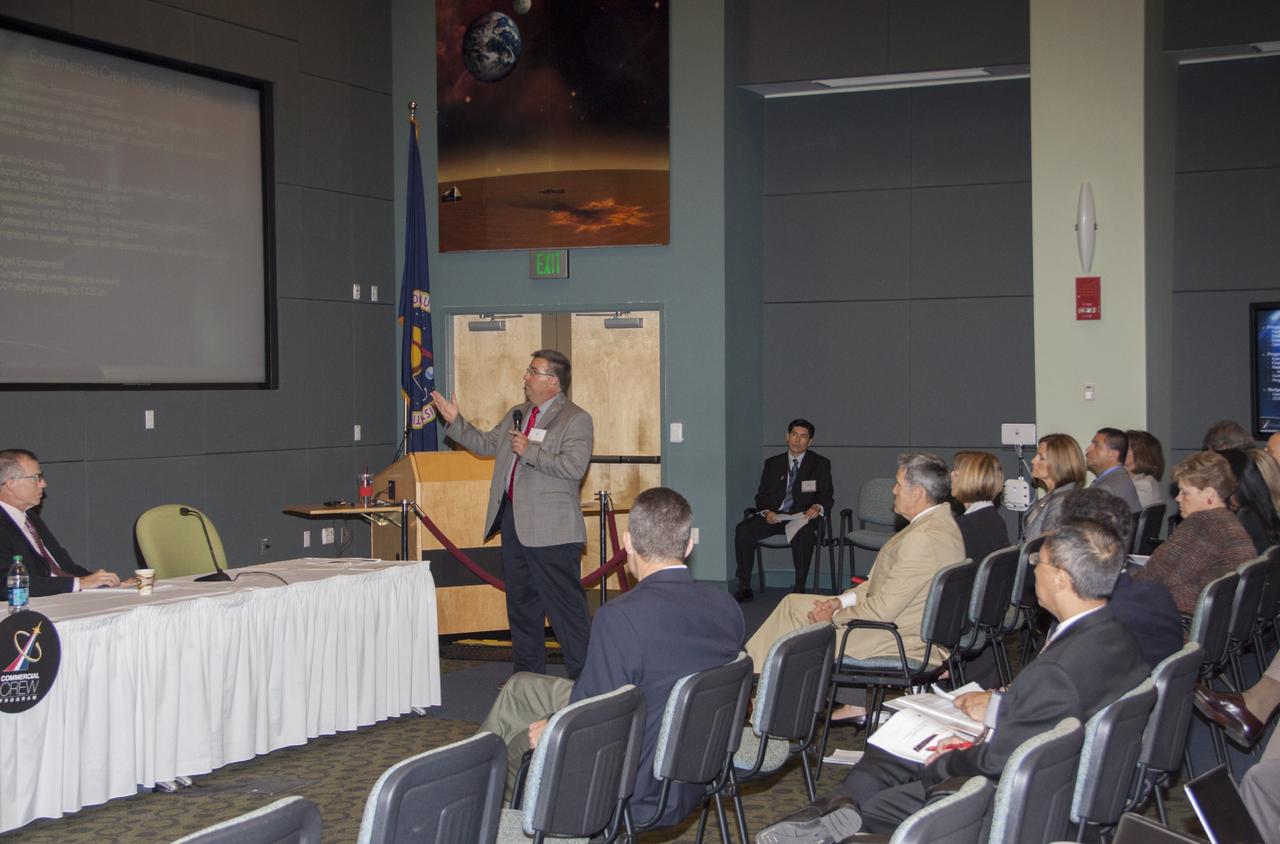
CAPE CANAVERAL, Fla. - Ed Mango, manager of NASA's Commercial Crew Program, or CCP, makes opening remarks at the Commercial Crew Transportation Capability, or CCtCap, Pre-Proposal Conference at Kennedy Space Center in Florida. CCtCap will be the next phase of certification efforts for CCP mission to the International Space Station. The purpose of the conference was to involve aerospace industry representatives in the CCtCap draft Request for Proposal, or RFP, process and provide a greater understanding for both parties before the official RFP is released in the fall of 2013. To learn more about CCP, visit www.nasa.gov/commercialcrew. Photo credit: NASA/Jim Grossmann
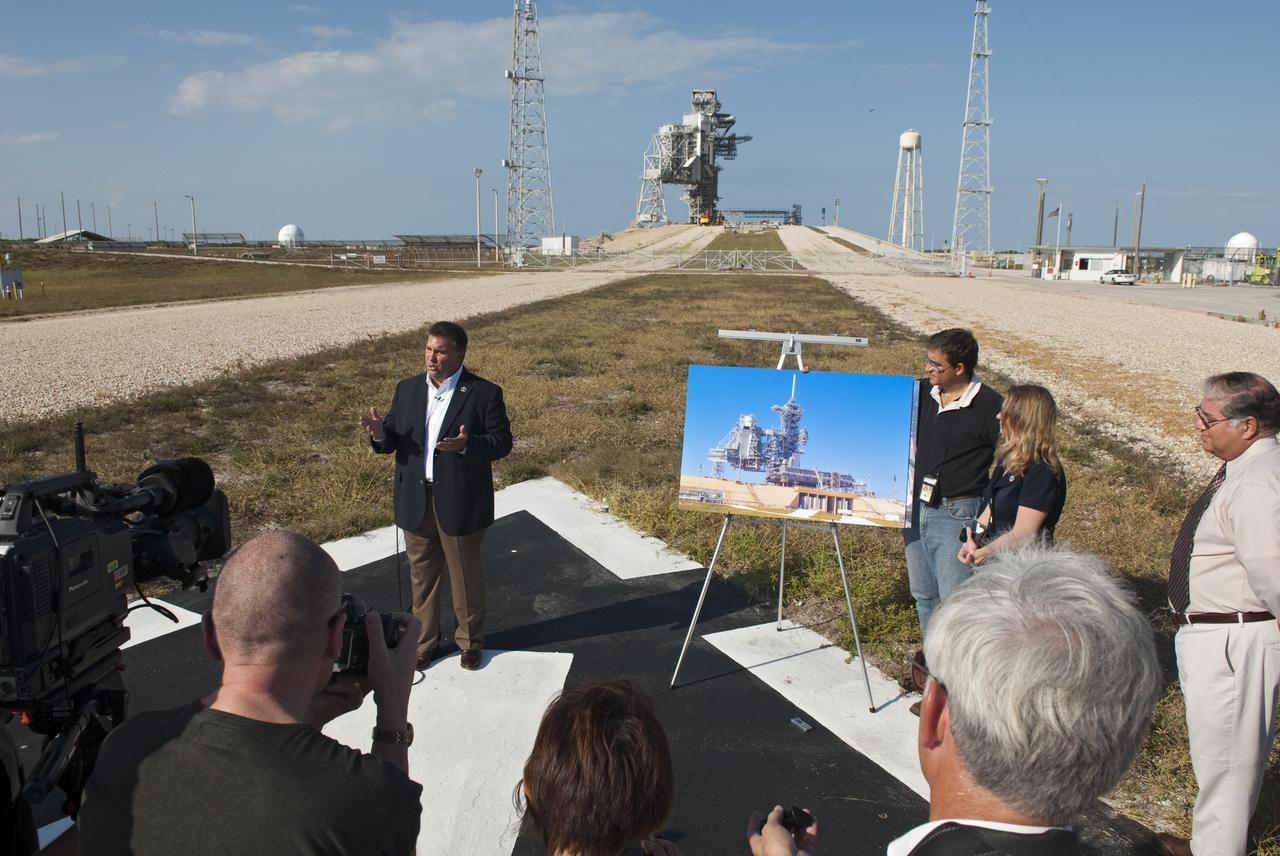
CAPE CANAVERAL, Fla. -- At NASA's Kennedy Space Center in Florida, media learn about the future plans for Launch Pad 39B from Ed Mango, NASA's Space Transportation Planning Office director. If appropriations are provided for NASA's current Authorization Act, those plans would include a robust commercial space program with multiple customers, multiple providers and multiple systems that take Americans to the International Space Station and other low-Earth orbit destinations. For information on NASA's future plans, visit www.nasa.gov. Photo credit: NASA/Jim Grossmann
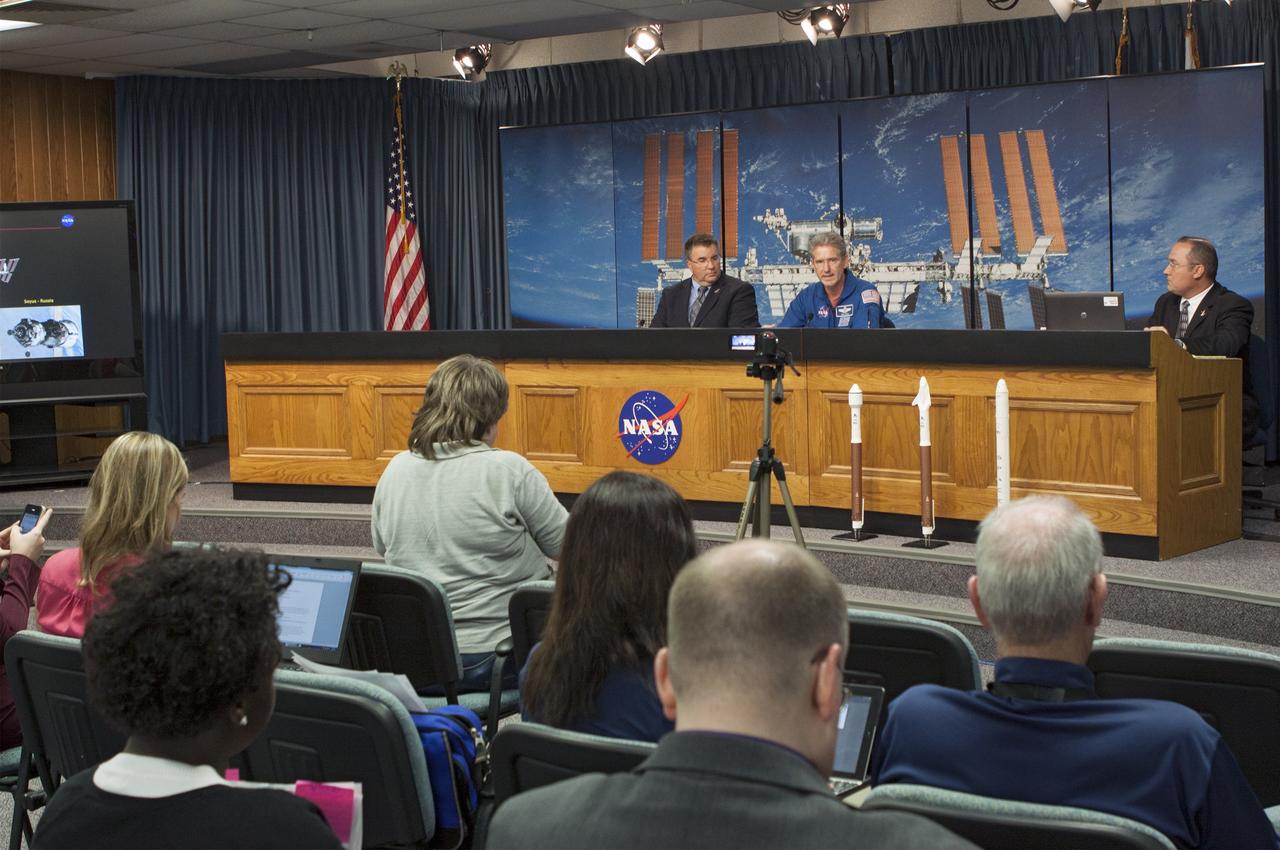
CAPE CANAVERAL, Fla. - NASA's Commercial Crew Program Manager Ed Mango and astronaut Mike Good media on the progress of American human spaceflight development at Kennedy Space Center in Florida. At right is NASA Public Affairs Officer Gregory Harland. They also discussed the future steps the program will take to certify crew transportation systems for missions to the International Space Station. The program is working toward the next phase of certification, which will be called Commercial Crew Transportation Capability, or CCtCap. That phase will include a joint test concept in which NASA astronauts will play a role in flight testing the systems. To learn more about CCP, visit www.nasa.gov/commercialcrew. Photo credit: Jim Grossmann

CAPE CANAVERAL, Fla. - Ed Mango, manager of NASA's Commercial Crew Program, or CCP, makes opening remarks at the Commercial Crew Transportation Capability, or CCtCap, Pre-Proposal Conference at Kennedy Space Center in Florida. CCtCap will be the next phase of certification efforts for CCP mission to the International Space Station. The purpose of the conference was to involve aerospace industry representatives in the CCtCap draft Request for Proposal, or RFP, process and provide a greater understanding for both parties before the official RFP is released in the fall of 2013. To learn more about CCP, visit www.nasa.gov/commercialcrew. Photo credit: NASA/Jim Grossmann
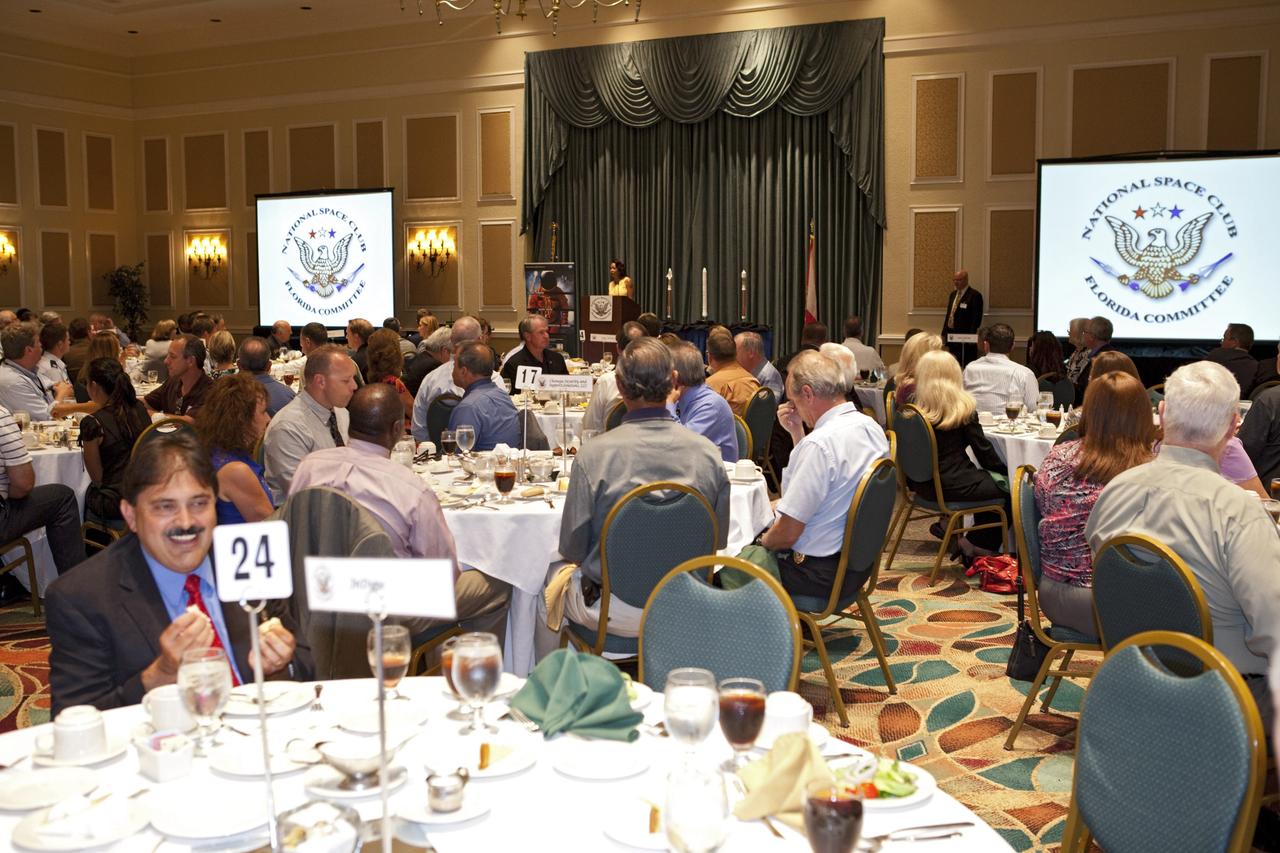
CAPE CANAVERAL, Fla. -- Florida's Lt. Gov. Jennifer Carroll talks about the positive impact the aerospace industry has on the state of Florida during the National Space Club Florida Committee's August luncheon at the Radisson Resort at the Port in Cape Canaveral, Fla. NASA Commercial Crew Program Manager Ed Mango also discussed the innovative steps the agency is taking with industry partners to develop the next U.S. space transportation capability to and from low Earth orbit, which will eventually be available for use by the U.S. government and other commercial customers. To learn more about the Commercial Crew Program, visit www.nasa.gov/commercialcrew. Photo credit: Kim Shiflett
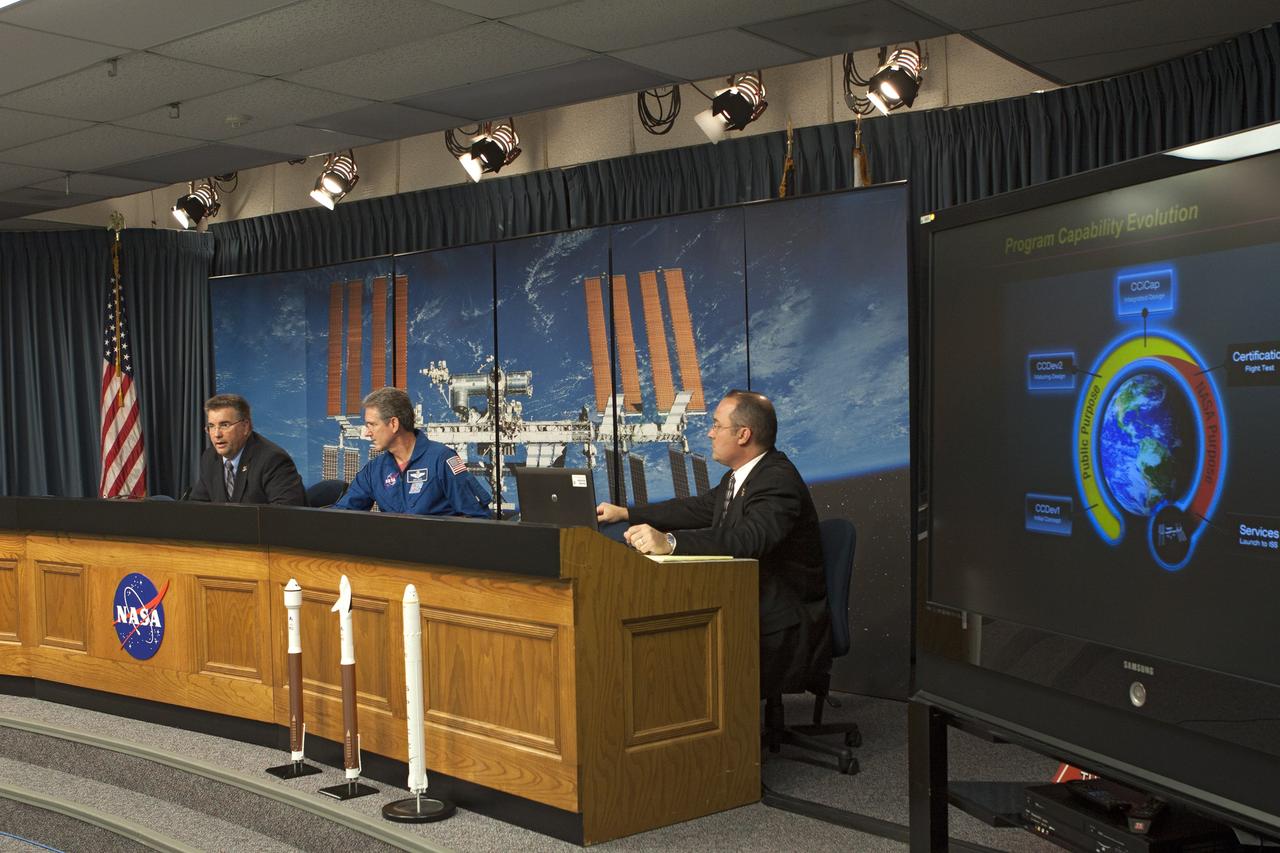
CAPE CANAVERAL, Fla. - NASA's Commercial Crew Program Manager Ed Mango and astronaut Mike Good media on the progress of American human spaceflight development at Kennedy Space Center in Florida. At right is NASA Public Affairs Officer Gregory Harland. They also discussed the future steps the program will take to certify crew transportation systems for missions to the International Space Station. The program is working toward the next phase of certification, which will be called Commercial Crew Transportation Capability, or CCtCap. That phase will include a joint test concept in which NASA astronauts will play a role in flight testing the systems. To learn more about CCP, visit www.nasa.gov/commercialcrew. Photo credit: Jim Grossmann
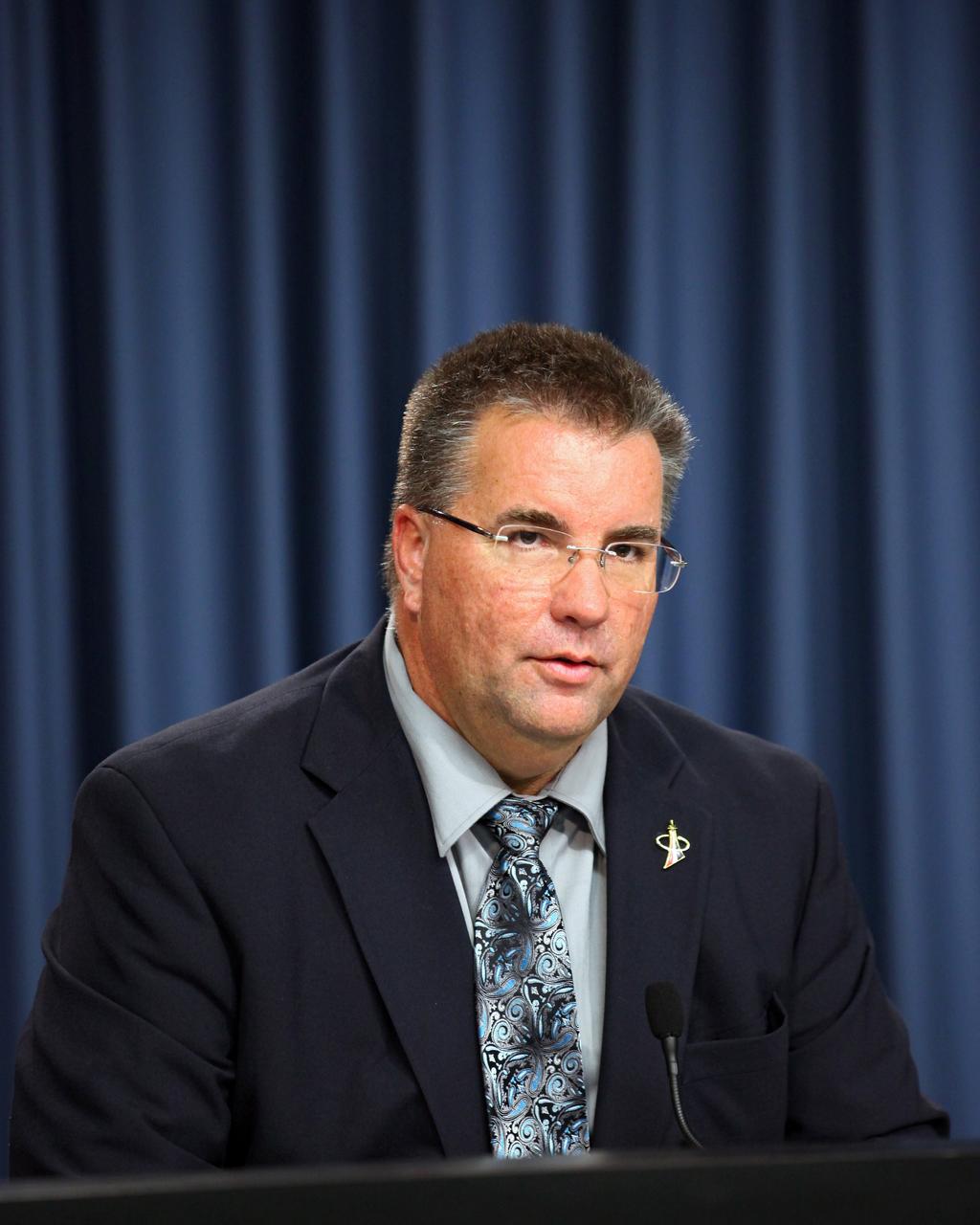
CAPE CANAVERAL, Fla. -- Ed Mango, manager of NASA's Commercial Crew Program, or CCP, talks to aerospace industry representatives during a pre-proposal conference to inform prospective companies about the recently released request for contract proposals and updates to the certification requirements for crewed missions to the International Space Station, or ISS. The two-phase certification process, called Certification Products Contract, or CPC, will enable NASA to eventually purchase service missions to fly astronauts to and from the ISS. To learn more about CCP, visit www.nasa.gov/commercialcrew. Photo credit: Kim Shiflett
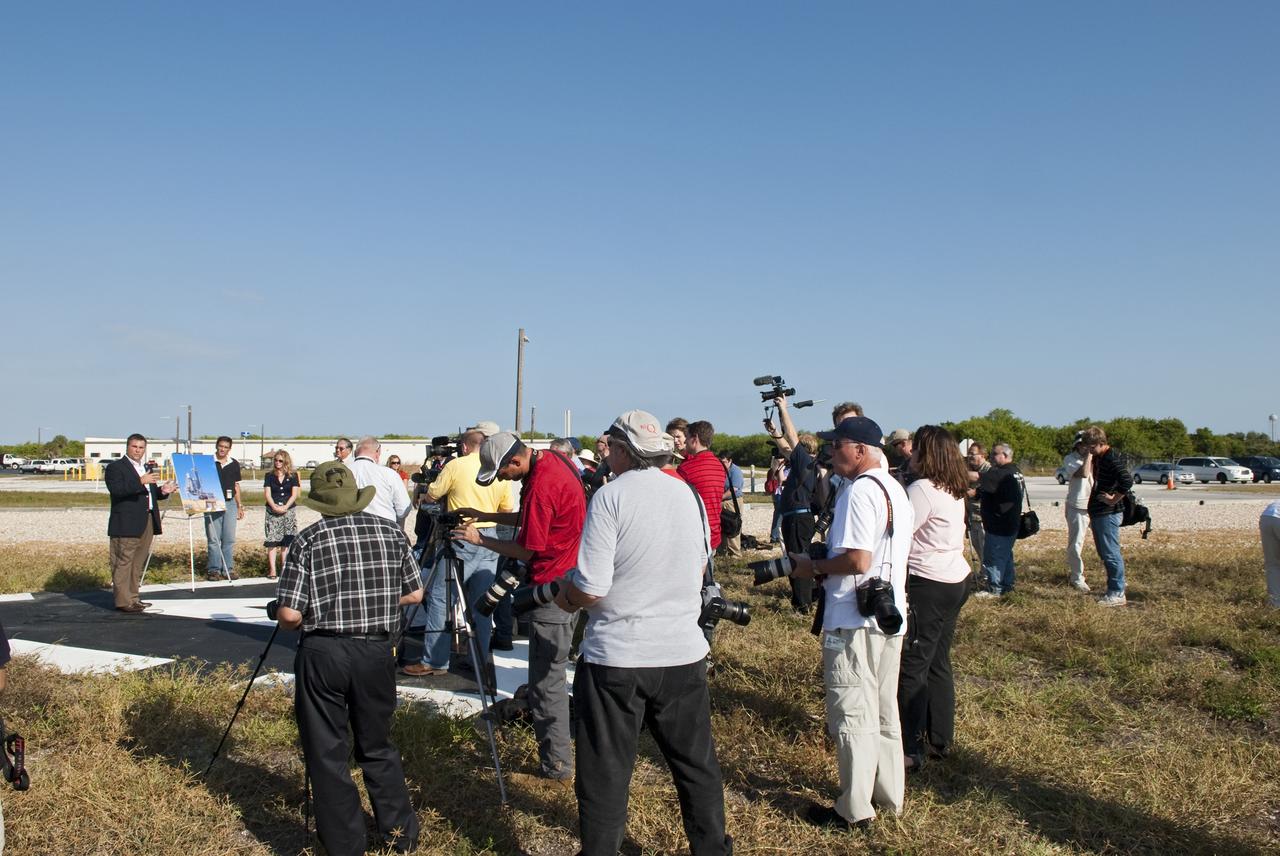
CAPE CANAVERAL, Fla. -- At NASA's Kennedy Space Center in Florida, media learn about the future plans for Launch Pad 39B from Ed Mango, NASA's Space Transportation Planning Office director. If appropriations are provided for NASA's current Authorization Act, those plans would include a robust commercial space program with multiple customers, multiple providers and multiple systems that take Americans to the International Space Station and other low-Earth orbit destinations. For information on NASA's future plans, visit www.nasa.gov. Photo credit: NASA/Jim Grossmann
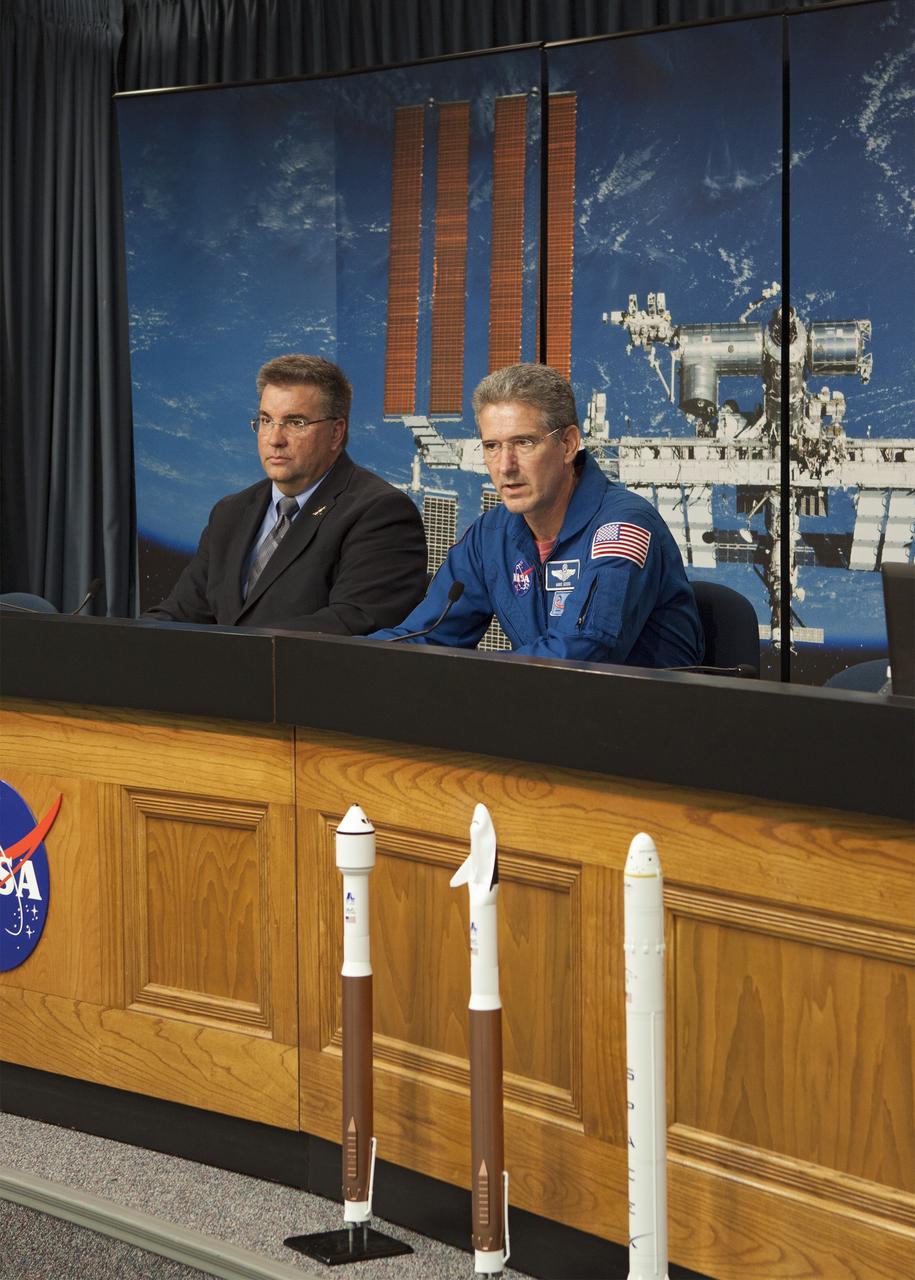
CAPE CANAVERAL, Fla. - NASA's Commercial Crew Program Manager Ed Mango and astronaut Mike Good media on the progress of American human spaceflight development at Kennedy Space Center in Florida. They also discussed the future steps the program will take to certify crew transportation systems for missions to the International Space Station. The program is working toward the next phase of certification, which will be called Commercial Crew Transportation Capability, or CCtCap. That phase will include a joint test concept in which NASA astronauts will play a role in flight testing the systems. To learn more about CCP, visit www.nasa.gov/commercialcrew. Photo credit: Jim Grossmann
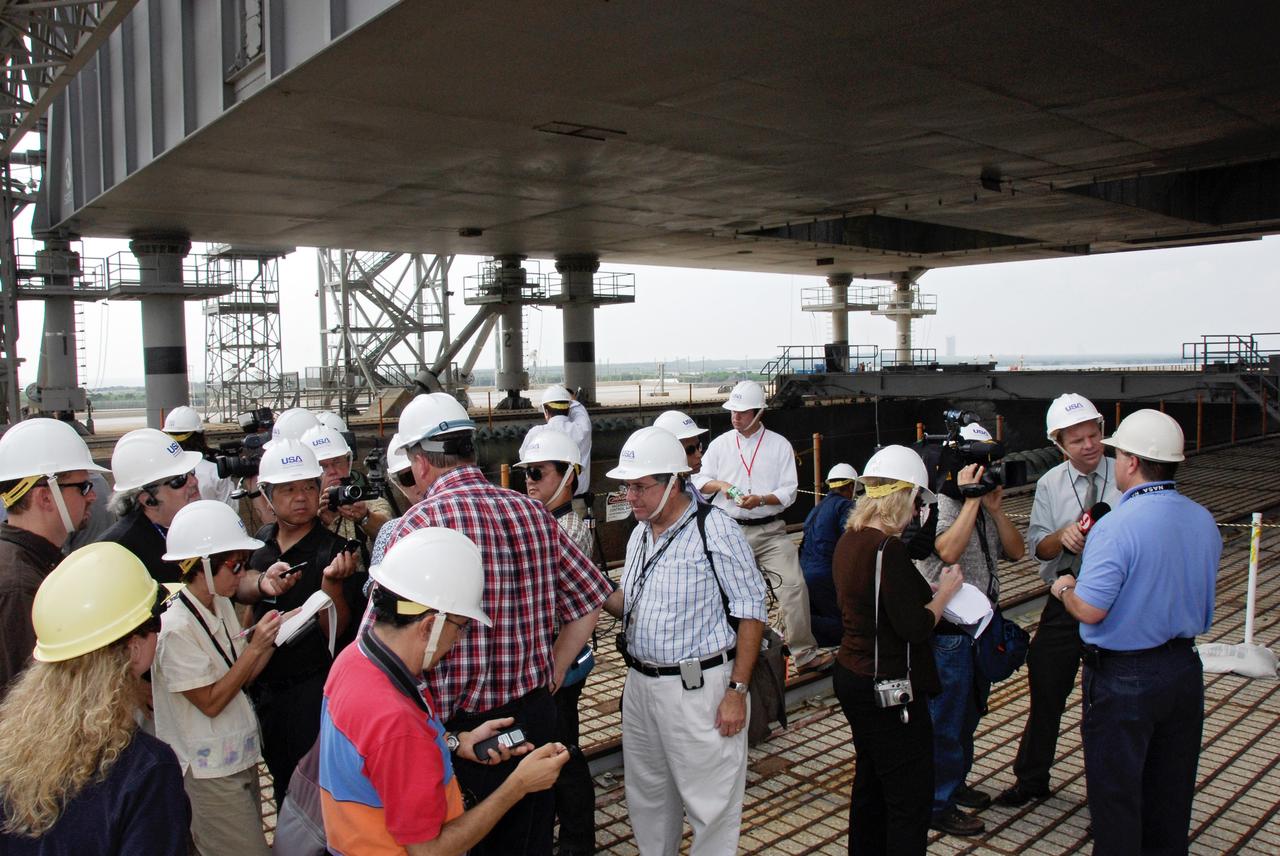
CAPE CANAVERAL, Fla. – The media gather on Launch Pad 39A at NASA's Kennedy Space Center to view the flame trench damaged during the May 31 launch of space shuttle Discovery. Reporters had the opportunity to ask questions of Ed Mango, deputy director of the shuttle program's launch vehicle processing, and Perry Becker, who is leading the launch pad engineering investigation team. Repairs are expected to be completed in time for space shuttle Atlantis' STS-125 mission to NASA's Hubble Space Telescope targeted for Oct. 8. Photo credit: NASA/Kim Shiflett
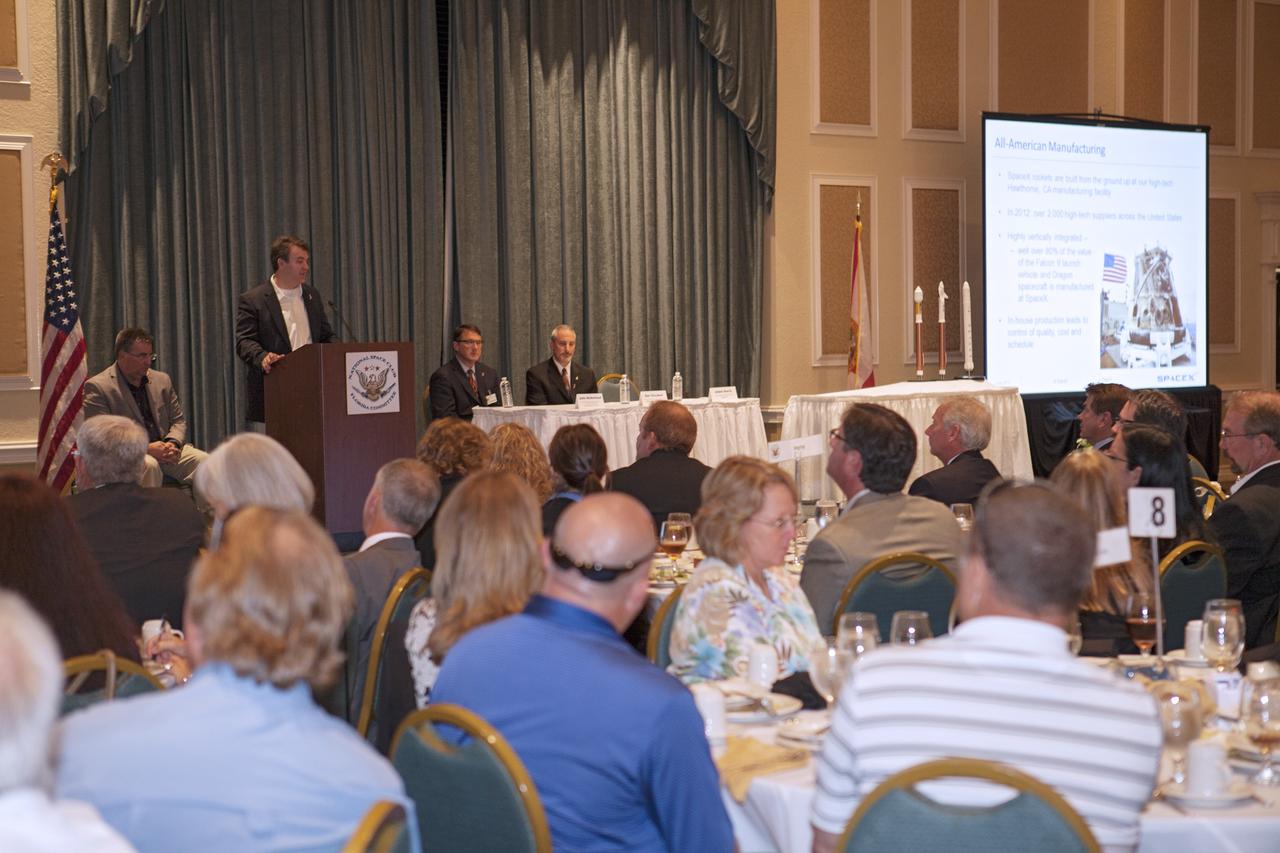
CAPE CANAVERAL, Fla. - Adam Harris, vice president of government sales for Space Exploration Technologies, or SpaceX, speaks to a crowd of spaceflight enthusiasts at the National Space Club Florida Committee's June meeting near the Kennedy Space Center. Harris was joined at the Radisson Resort at the Port in Cape Canaveral, Fla., by Ed Mango, manager of NASA's Commercial Crew Program, or CCP, left, and representatives from The Boeing Company and Sierra Nevada Corporation, or SNC. All three CCP partner are planning to increase their commercial activities on Florida’s space coast to send astronauts to low-Earth orbit. To learn more about the Commercial Crew Program, visit www.nasa.gov/commercialcrew. Photo credit: Kim Shiflett
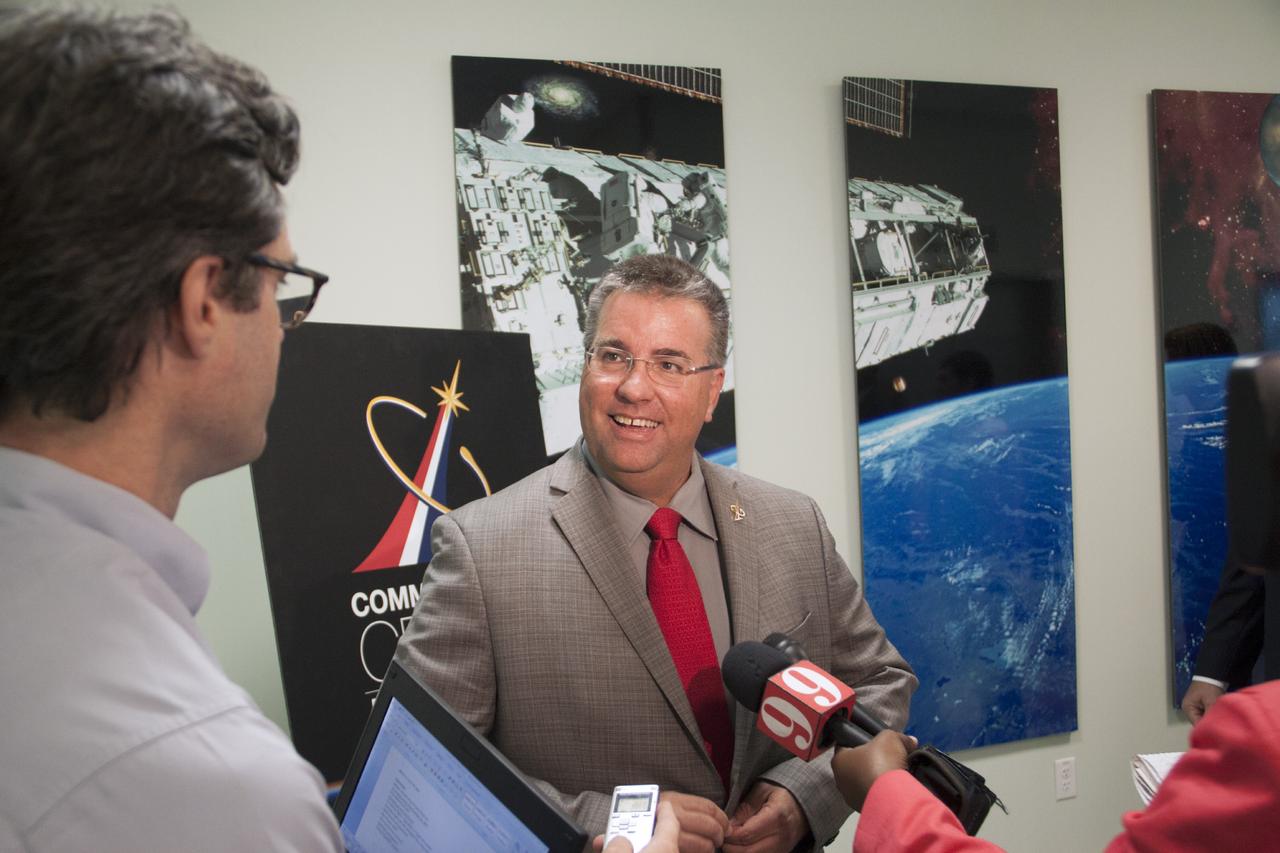
CAPE CANAVERAL, Fla. - Ed Mango, manager of NASA's Commercial Crew Program, or CCP, talks to media following the Commercial Crew Transportation Capability, or CCtCap, Pre-Proposal Conference at Kennedy Space Center in Florida. CCtCap will be the next phase of certification efforts for CCP mission to the International Space Station. The purpose of the conference was to involve aerospace industry representatives in the CCtCap draft Request for Proposal, or RFP, process and provide a greater understanding for both parties before the official RFP is released in the fall of 2013. To learn more about CCP, visit www.nasa.gov/commercialcrew. Photo credit: NASA/Jim Grossmann
CAPE CANAVERAL, Fla. - NASA's Commercial Crew Program Manager Ed Mango updates media on the progress of American human spaceflight development at Kennedy Space Center in Florida. He and astronaut Mike Good discussed the future steps the program will take to certify crew transportation systems for missions to the International Space Station. The program is working toward the next phase of certification, which will be called Commercial Crew Transportation Capability, or CCtCap. That phase will include a joint test concept in which NASA astronauts will play a role in flight testing the systems. To learn more about CCP, visit www.nasa.gov/commercialcrew. Photo credit: Jim Grossmann
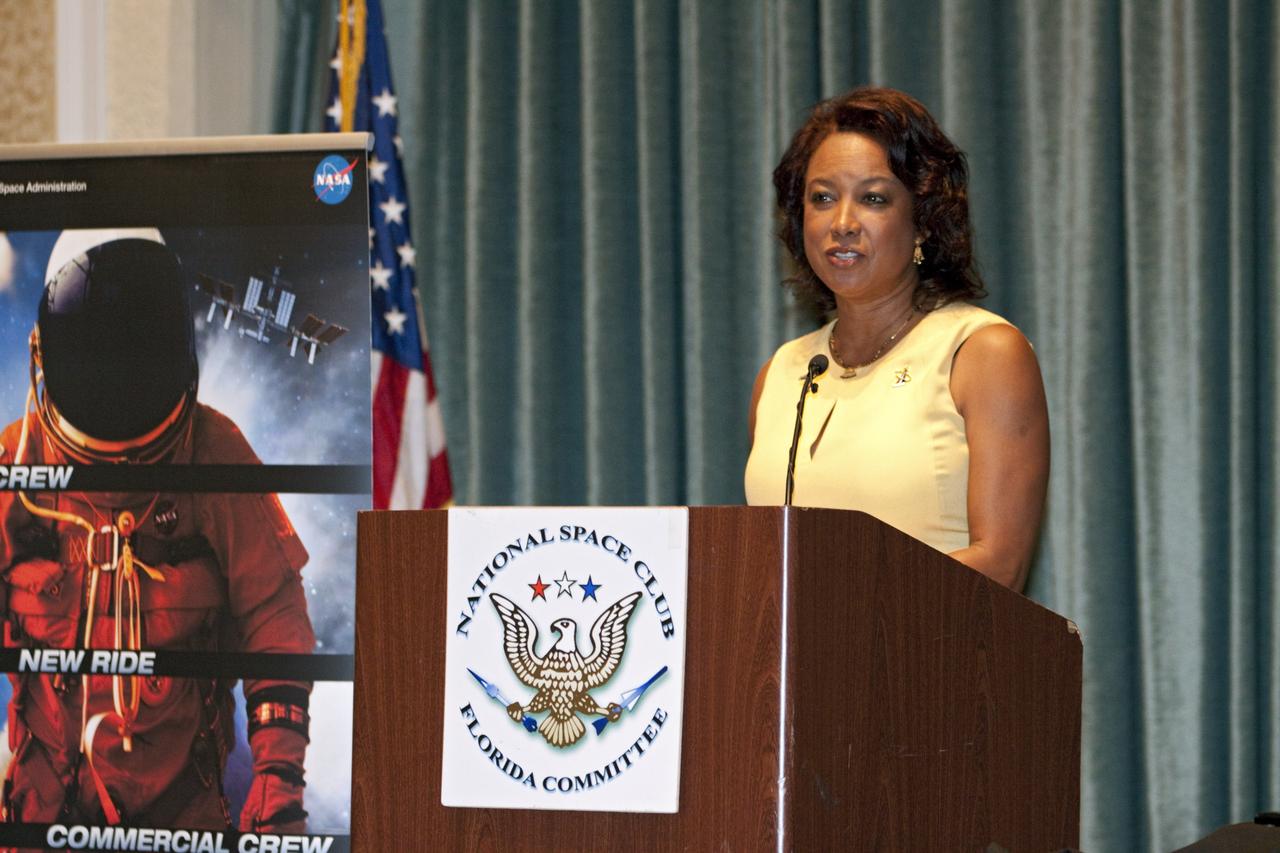
CAPE CANAVERAL, Fla. -- Florida's Lt. Gov. Jennifer Carroll talks about the positive impact the aerospace industry has on the state of Florida during the National Space Club Florida Committee's August luncheon at the Radisson Resort at the Port in Cape Canaveral, Fla. NASA Commercial Crew Program Manager Ed Mango also discussed the innovative steps the agency is taking with industry partners to develop the next U.S. space transportation capability to and from low Earth orbit, which will eventually be available for use by the U.S. government and other commercial customers. To learn more about the Commercial Crew Program, visit www.nasa.gov/commercialcrew. Photo credit: Kim Shiflett

CAPE CANAVERAL, Fla. -- Florida's Lt. Gov. Jennifer Carroll, left, and NASA Commercial Crew Program Manager Ed Mango shake hands at the National Space Club Florida Committee's August luncheon at the Radisson Resort at the Port in Cape Canaveral, Fla. Mango was the event's guest speaker, discussing the innovative steps the agency is taking with industry partners to develop the next U.S. space transportation capability to and from low Earth orbit, which will eventually be available for use by the U.S. government and other commercial customers. To learn more about the Commercial Crew Program, visit www.nasa.gov/commercialcrew. Photo credit: Kim Shiflett NASA's Ground Systems Development and Operations Program is leading the 20-year life-extension project for the crawler. A pair of behemoth machines called crawler-transporters has carried the load of taking rockets and spacecraft to the launch pad for more than 40 years at NASA’s Kennedy Space Center in Florida. Each weighing six and a half million pounds and larger in size than a professional baseball infield, the crawler-transporters are powered by locomotive and large electrical power generator engines. The crawler-transporters will stand ready to keep up the work for the next generation of launch vehicles to lift astronauts into space. For more information, visit http://www.nasa.gov/exploration/systems/ground/index.html Photo credit: NASA/Jim Grossmann
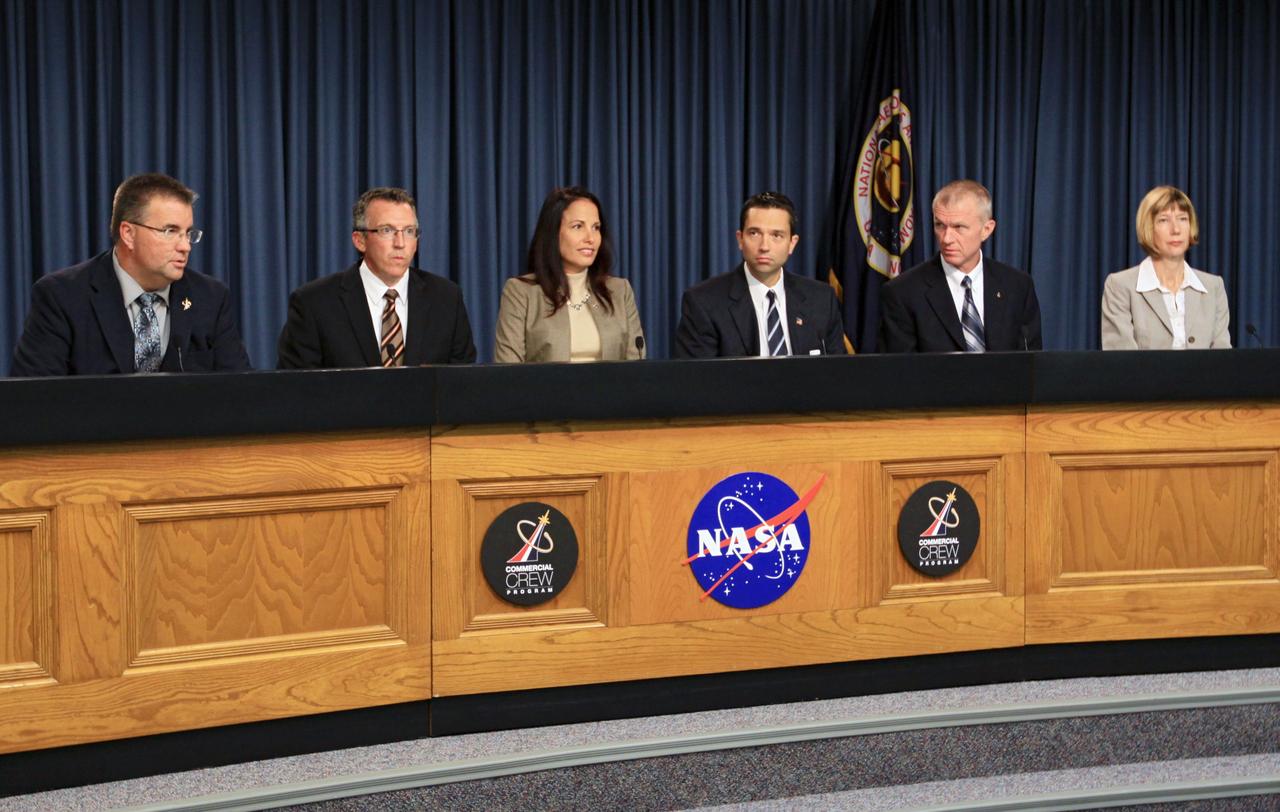
CAPE CANAVERAL, Fla. -- NASA's Commercial Crew Program, or CCP, hosts a pre-proposal conference to inform prospective companies about the recently released request for contract proposals and updates to the certification requirements for crewed missions to the International Space Station, or ISS. The two-phase certification process, called Certification Products Contract, or CPC, will enable NASA to eventually purchase service missions to fly astronauts to and from the ISS. From left, Ed Mango, CCP's program manager Steve Janney, CPC contracting officer Maria Collura, CCP certification manager Tom Simon, CPC Evaluation Team chair Brent Jett, CCP deputy program manager and Kathy Lueders, manager of the ISS Transportation Integration Office. To learn more about CCP, visit www.nasa.gov/commercialcrew. Photo credit: Kim Shiflett
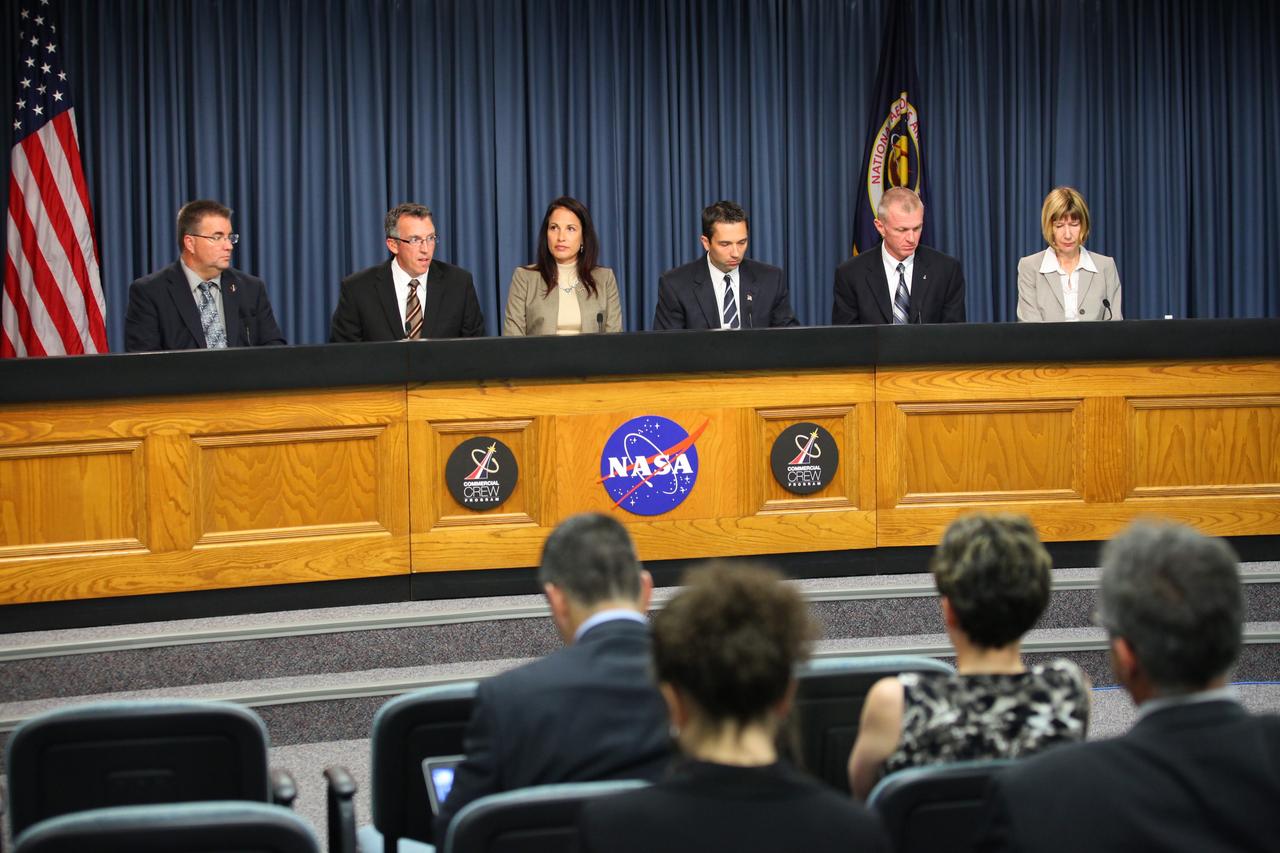
CAPE CANAVERAL, Fla. -- NASA's Commercial Crew Program, or CCP, hosts a pre-proposal conference to inform prospective companies about the recently released request for contract proposals and updates to the certification requirements for crewed missions to the International Space Station, or ISS. The two-phase certification process, called Certification Products Contract, or CPC, will enable NASA to eventually purchase service missions to fly astronauts to and from the ISS. From left, Ed Mango, CCP's program manager Steve Janney, CPC contracting officer Maria Collura, CCP certification manager Tom Simon, CPC Evaluation Team chair Brent Jett, CCP deputy program manager and Kathy Lueders, manager of the ISS Transportation Integration Office. To learn more about CCP, visit www.nasa.gov/commercialcrew. Photo credit: Kim Shiflett
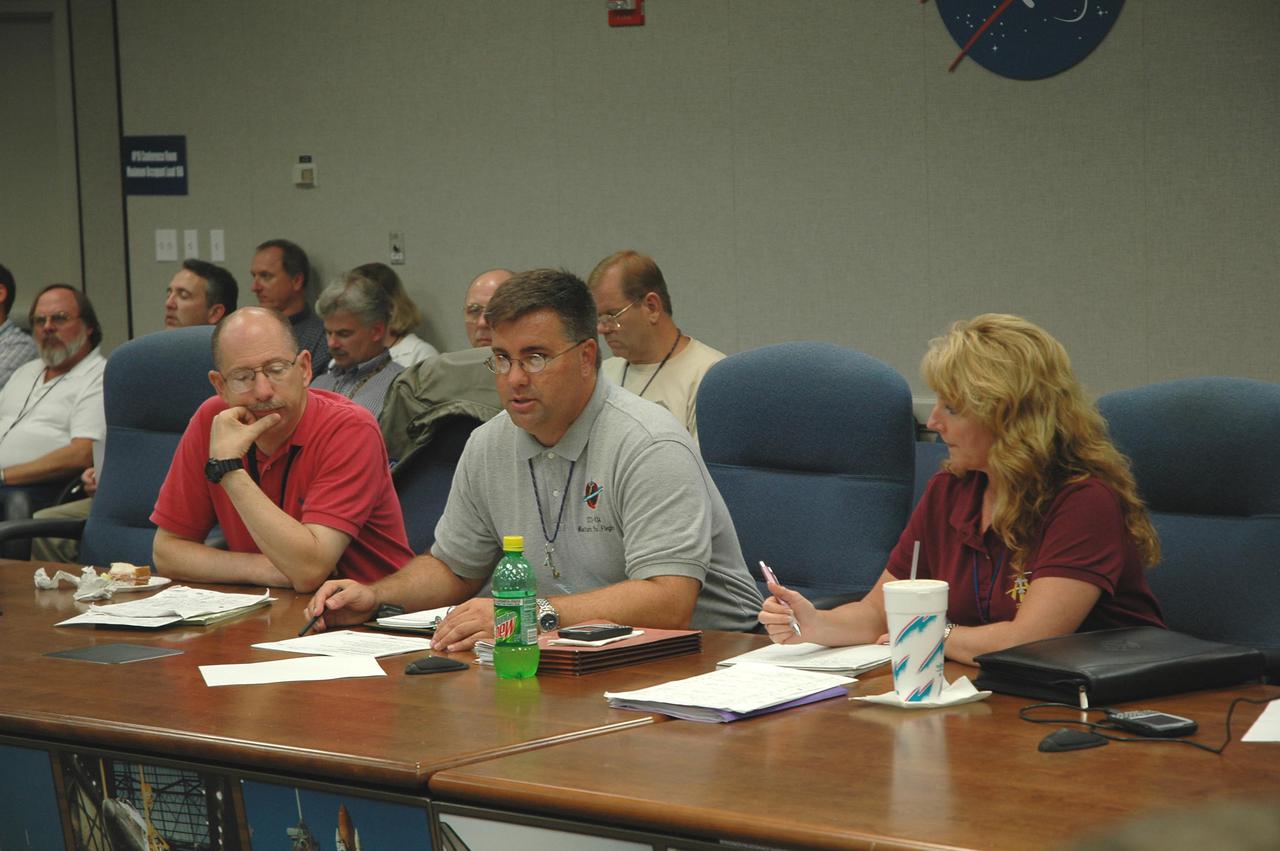
KENNEDY SPACE CENTER, FLA. - Members of the engineering team are meeting in the Launch Control Center to review data and possible troubleshooting plans for the liquid hydrogen tank low-level fuel cut-off sensor. At left is John Muratore, manager of Systems Engineering and Integration for the Space Shuttle Program; Ed Mango, JSC deputy manager of the orbiter project office; and Carol Scott, KSC Integration Manager. The sensor failed a routine prelaunch check during the launch countdown July 13, causing mission managers to scrub Discovery's first launch attempt. The sensor protects the Shuttle's main engines by triggering their shutdown in the event fuel runs unexpectedly low. The sensor is one of four inside the liquid hydrogen section of the External Tank (ET).
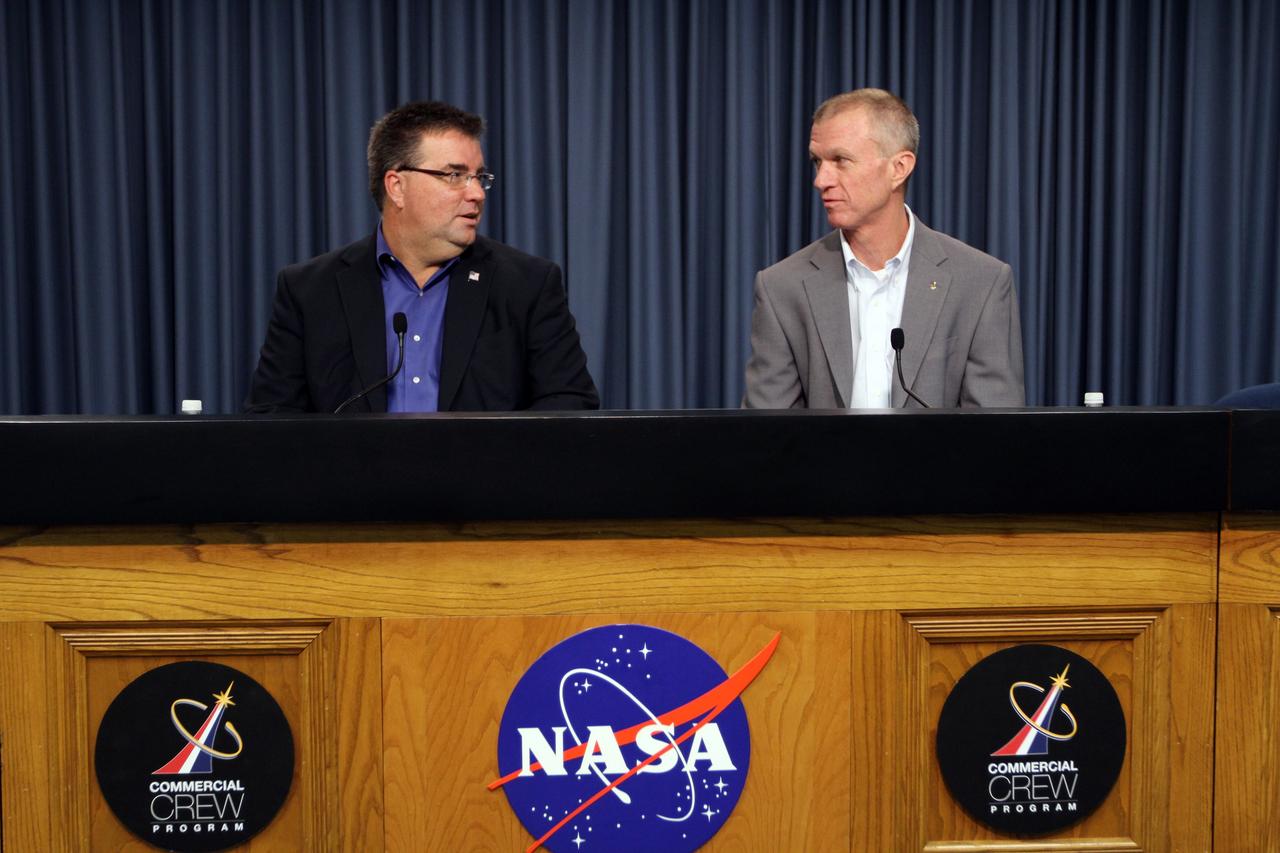
CAPE CANAVERAL, Fla. -- Commercial Crew Program (CCP) Manager Ed Mango, left, and Deputy Program Manager Brent Jett host a Program Strategy Forum at NASA's Kennedy Space Center in Florida. The forum was held to update industry partners about NASA's next phase of developing commercial space transportation system capabilities. CCP is helping to mature the design and development of a crew transportation system with the overall goal of accelerating a United States-led capability to the International Space Station. The goal of the program is to drive down the cost of space travel as well as open up space to more people than ever before by balancing industry’s own innovative capabilities with NASA's 50 years of human spaceflight experience. For more information, visit www.nasa.gov/commercialcrew. Photo credit: NASA/Kim Shiflett

CAPE CANAVERAL, Fla. -- In the firing room, Shuttle Launch Director Mike Leinbach (right) congratulates the team for the successful launch of space shuttle Discovery on its STS-124 mission. With him are (from left) NASA Flow Director Stephanie Stilson and Deputy Orbiter Project Manager Ed Mango from NASA's Johnson Space Center. Launch was on time at 5:02 p.m. EDT. Discovery is making its 35th flight. The STS-124 mission is the 26th in the assembly of the space station. It is the second of three flights launching components to complete the Japan Aerospace Exploration Agency's Kibo laboratory. The shuttle crew will install Kibo's large Japanese Pressurized Module and its remote manipulator system, or RMS. The 14-day flight includes three spacewalks. Photo credit: NASA/Kim Shiflett
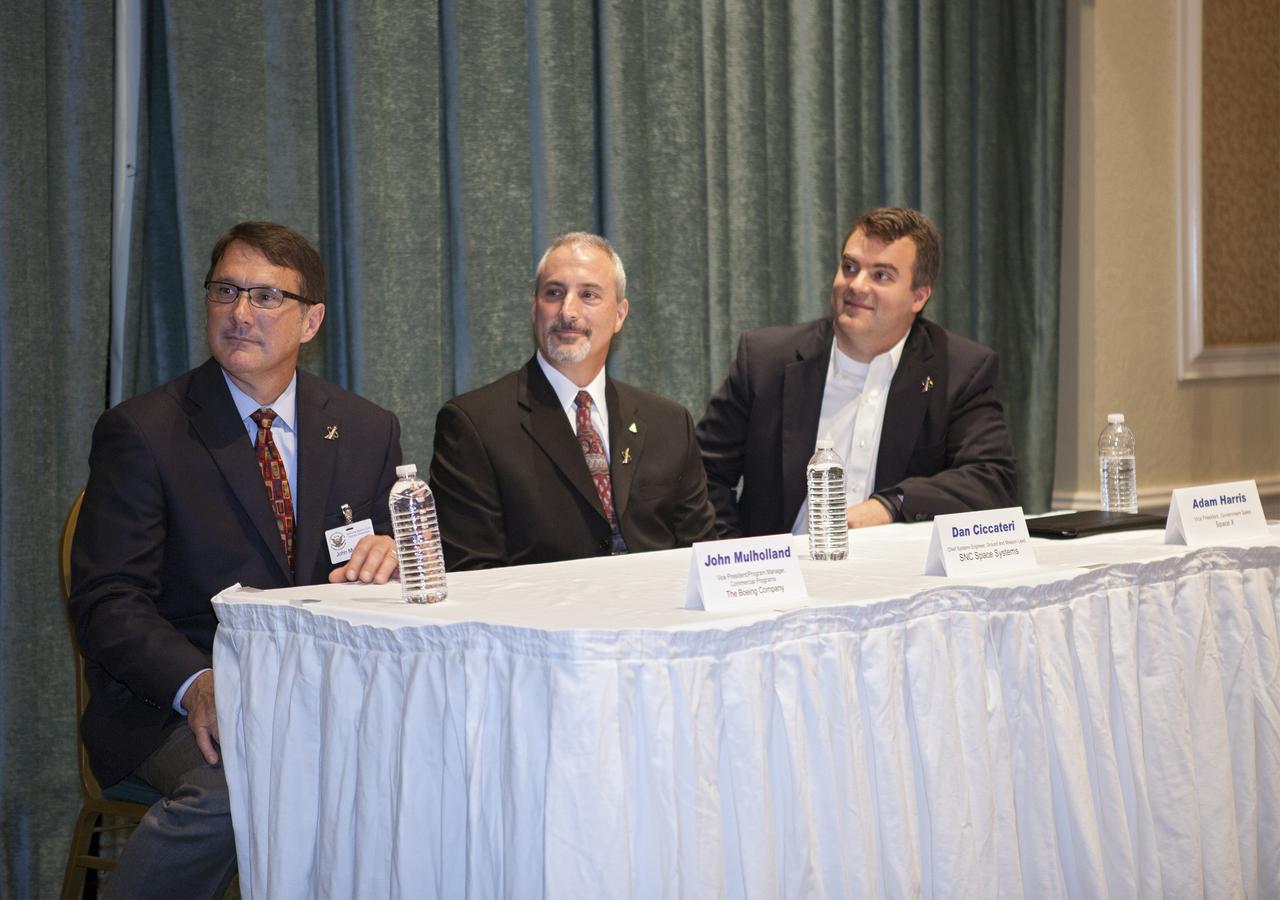
CAPE CANAVERAL, Fla. - NASA Commercial Crew Program, or CCP, partner representatives participate in the National Space Club Florida Committee's June meeting near the Kennedy Space Center. From left are The Boeing Company's vice president and program manager of Commercial Programs John Mulholland, Sierra Nevada Corporation, or SNC, Space Systems chief systems engineer Dan Ciccateri, and Space Exploration Technologies, or SpaceX, vice president of government sales Adam Harris. CCP Program Manager Ed Mango and the partners talked about plans to increase commercial activities on Florida’s space coast to send astronauts to low-Earth orbit. To learn more about the Commercial Crew Program, visit www.nasa.gov/commercialcrew. Photo credit: Kim Shiflett
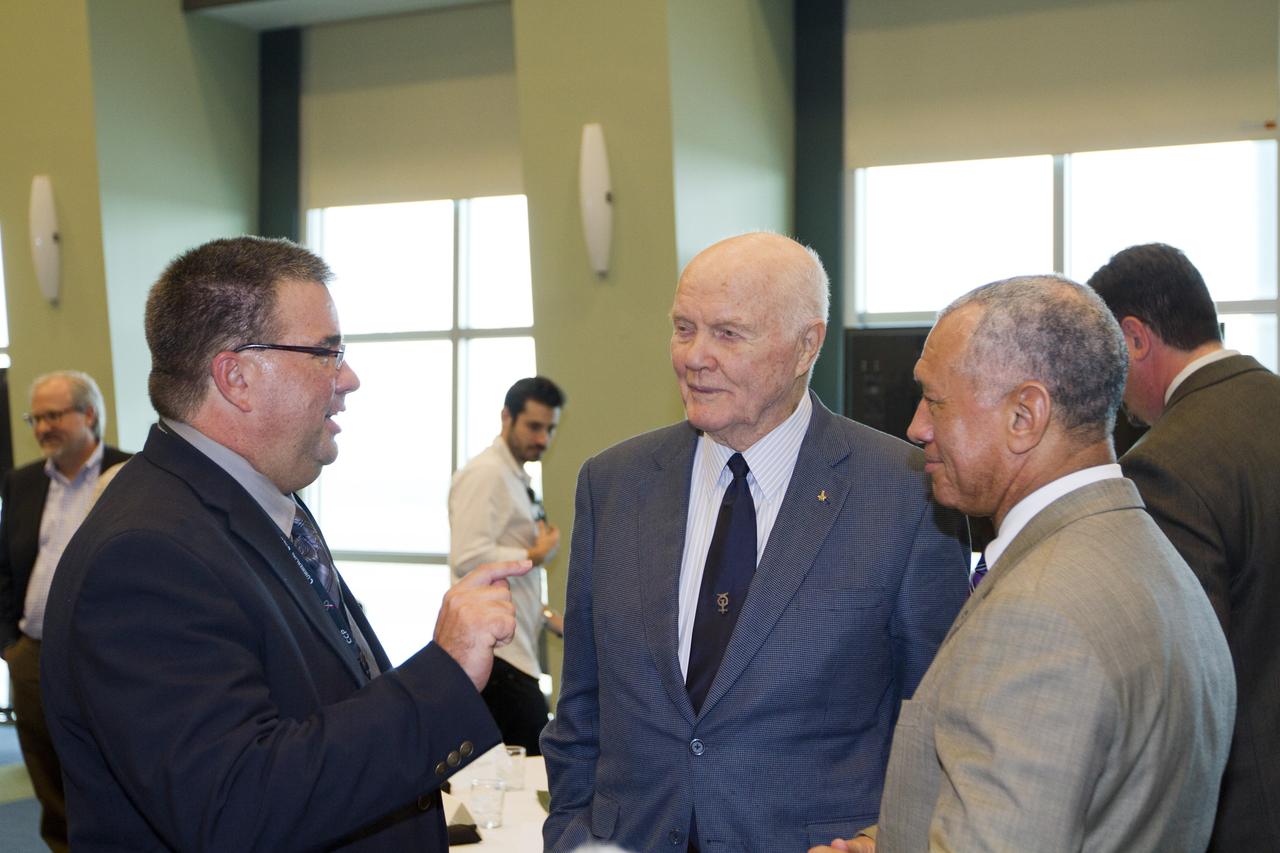
CAPE CANAVERAL, Fla. - Ed Mango, program manager of NASA's Commercial Crew Program, left, talks with astronaut John Glenn, center and NASA Administrator Charles Bolden before a luncheon Feb. 17, 2012, celebrating 50 years of Americans in orbit, an era which began with Glenn's Mercury mission MA-6, on Feb. 20, 1962. Glenn's launch aboard an Atlas rocket took with it the hopes of an entire nation and ushered in a new era of space travel that eventually led to Americans walking on the moon by the end of the 1960s. Glenn soon was followed into orbit by Scott Carpenter, Walter Schirra and Gordon Cooper. Their fellow Mercury astronauts Alan Shepard and Virgil "Gus" Grissom flew earlier suborbital flights. Deke Slayton, a member of NASA's original Mercury 7 astronauts, was grounded by a medical condition until the Apollo-Soyuz Test Project in 1975. Photo credit: NASA/Kim Shiflett
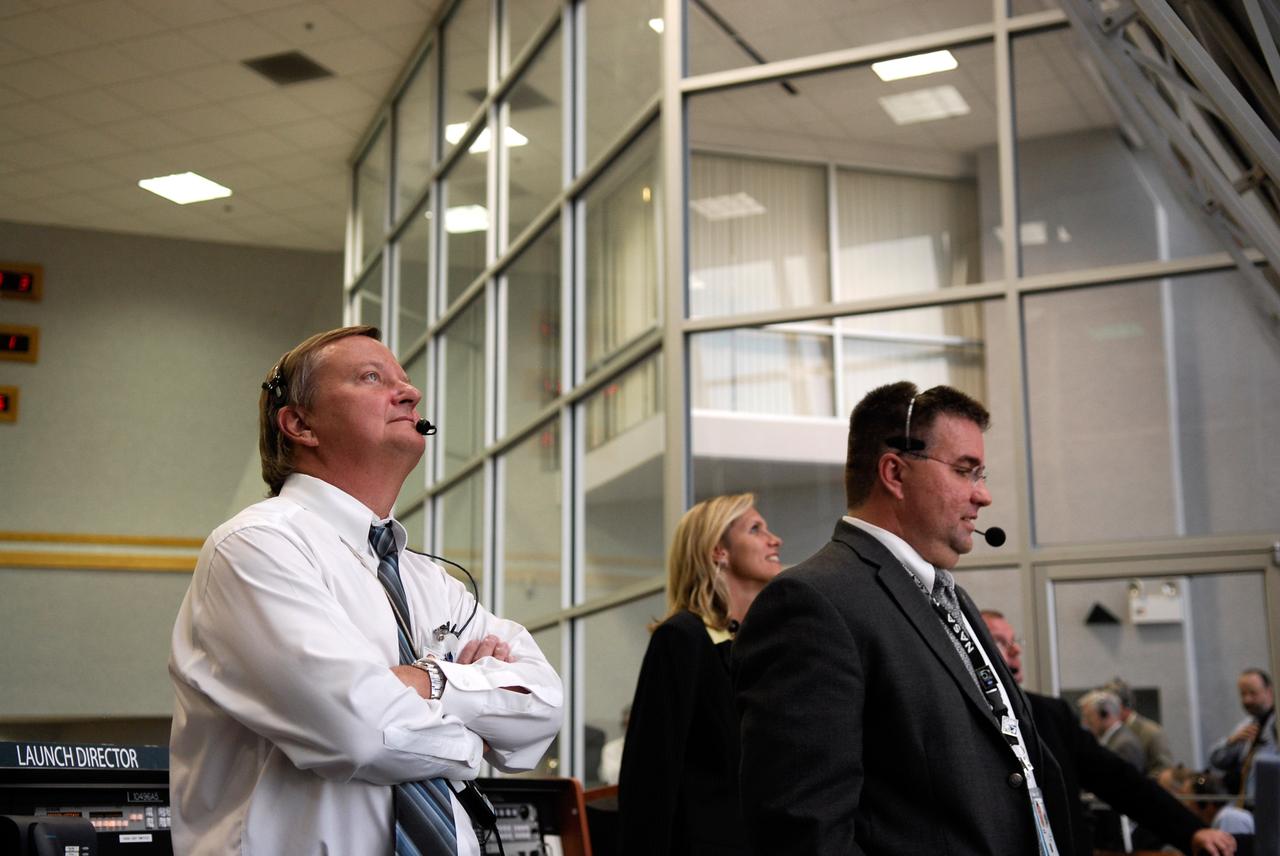
CAPE CANAVERAL, Fla. -- From the firing room, Shuttle Launch Director Mike Leinbach, NASA Flow Director Stephanie Stilson and Deputy Orbiter Project Manager Ed Mango from NASA's Johnson Space Center watch the successful launch of space shuttle Discovery. Launch was on time at 5:02 p.m. EDT. Discovery is making its 35th flight. The STS-124 mission is the 26th in the assembly of the space station. It is the second of three flights launching components to complete the Japan Aerospace Exploration Agency's Kibo laboratory. The shuttle crew will install Kibo's large Japanese Pressurized Module and its remote manipulator system, or RMS. The 14-day flight includes three spacewalks. Photo credit: NASA/Kim Shiflett
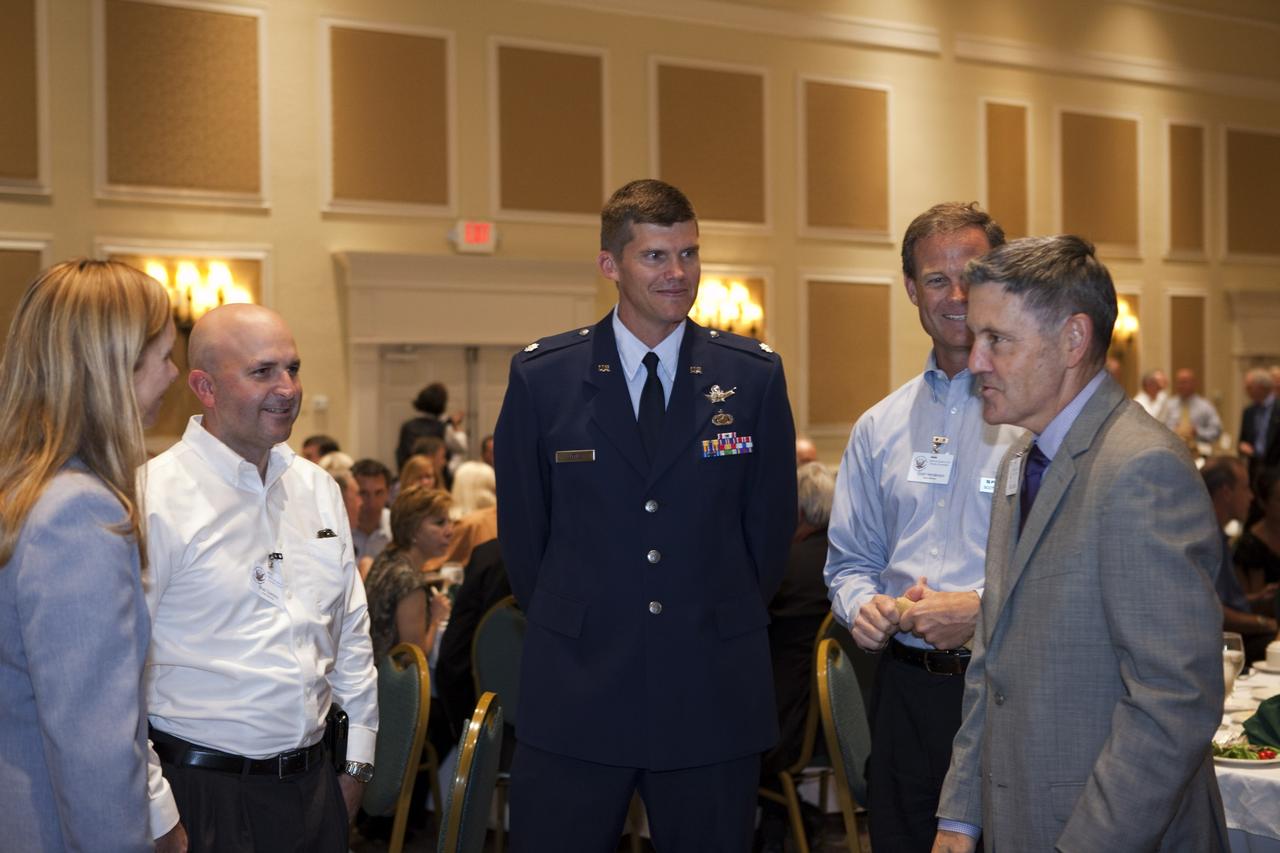
CAPE CANAVERAL, Fla. -- NASA Kennedy Space Center Director Bob Cabana, right, and Kennedy Deputy Director Janet Petro, left, talk with aerospace industry representatives during the National Space Club Florida Committee's August luncheon at the Radisson Resort at the Port in Cape Canaveral, Fla. NASA Commercial Crew Program Manager Ed Mango was the event's guest speaker, discussing the innovative steps the agency is taking with industry partners to develop the next U.S. space transportation capability to and from low Earth orbit, which will eventually be available for use by the U.S. government and other commercial customers. To learn more about the Commercial Crew Program, visit www.nasa.gov/commercialcrew. Photo credit: Kim Shiflett
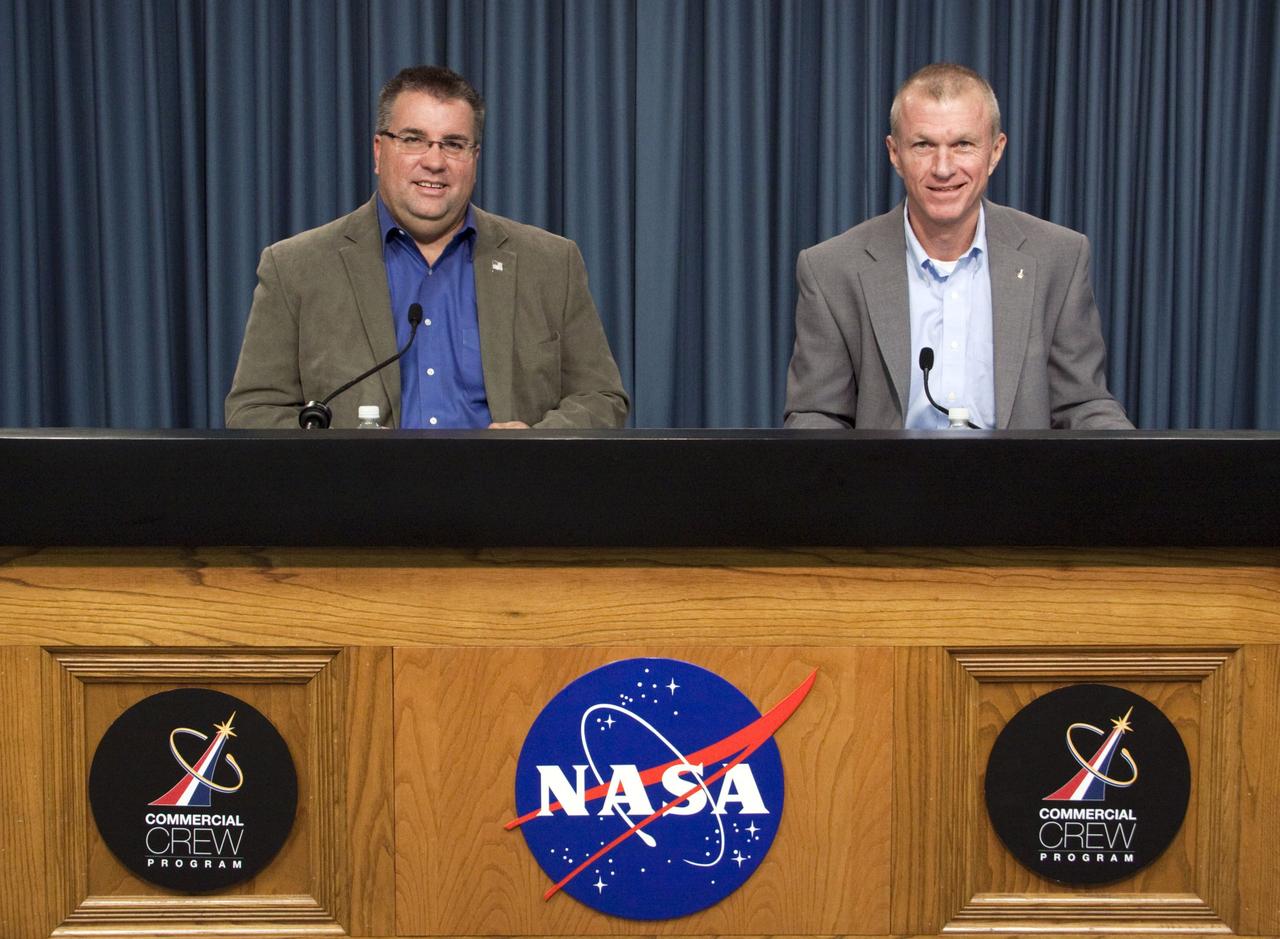
CAPE CANAVERAL, Fla. -- Commercial Crew Program (CCP) Manager Ed Mango, left, and Deputy Program Manager Brent Jett host a Program Strategy Forum at NASA's Kennedy Space Center in Florida. The forum was held to update industry partners about NASA's decision to use multiple, competitively awarded Space Act Agreements (SAAs) instead of an Integrated Design Contract for the agency's next phase of developing commercial space transportation system capabilities. Using SAAs instead of a contract will allow NASA to maintain multiple partners, with the flexibility to adjust technical direction, milestones and funding. The move was made so the program could adapt to dynamic budgetary circumstances while maintaining a high level of competition among transportation providers. CCP is helping to mature the design and development of a crew transportation system with the overall goal of accelerating a United States-led capability to the International Space Station. The goal of the program is to drive down the cost of space travel as well as open up space to more people than ever before by balancing industry’s own innovative capabilities with NASA's 50 years of human spaceflight experience. For more information, visit www.nasa.gov/commercialcrew. Photo credit: NASA/Jim Grossmann
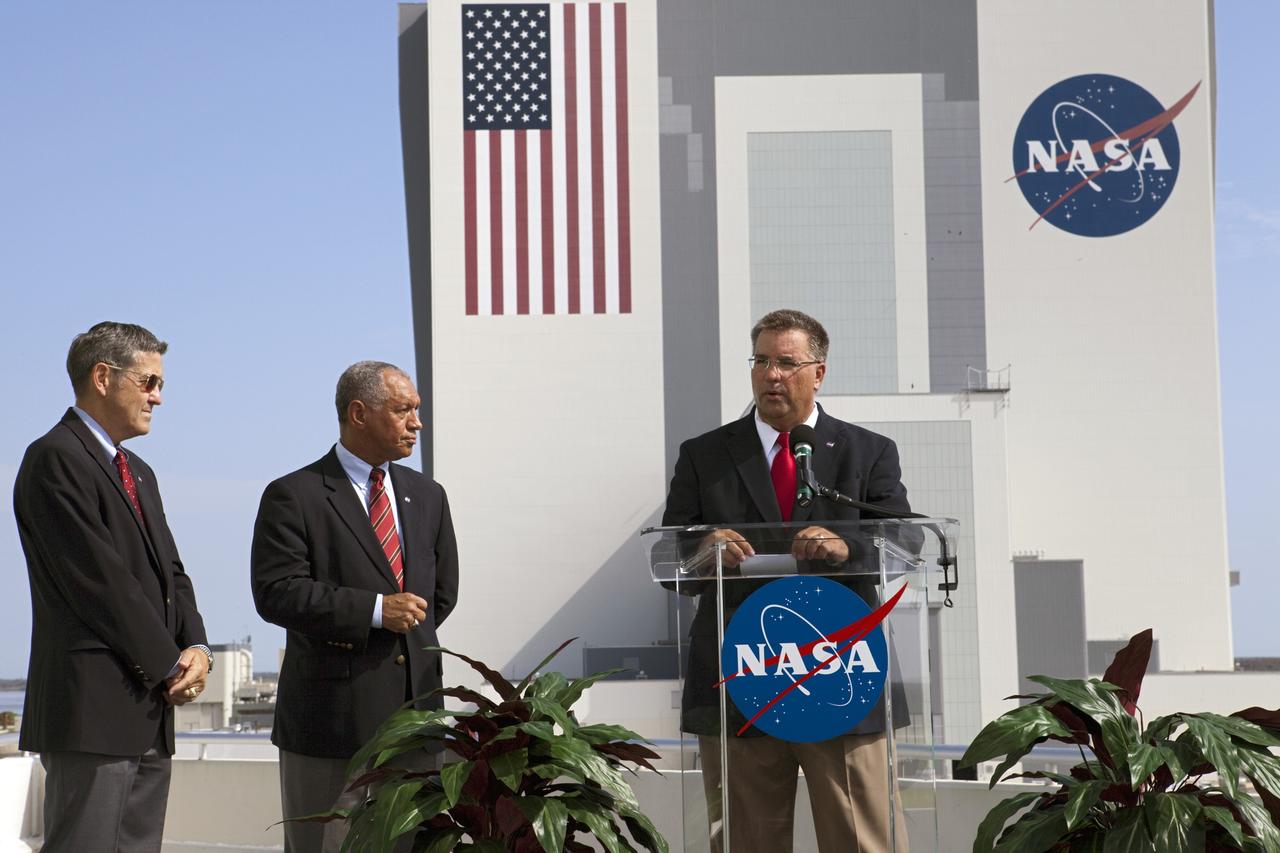
Cape Canaveral, Fla. -- NASA Commercial Crew Program CCP Manager Ed Mango discusses the program's newest partnerships from the Operations Support Building 2 OSB II at Kennedy Space Center in Florida. From left, are Kennedy Space Center Director Robert Cabana and NASA Administrator Charlie Bolden. Three integrated systems were selected for CCP's Commercial Crew Integrated Capability CCiCap initiative to propel America's next human space transportation system to low Earth orbit forward. Operating under funded Space Act Agreements SAAs, The Boeing Co. of Houston, Sierra Nevada Corp. SNC Space Systems of Louisville, Colo., and Space Exploration Technologies SpaceX of Hawthorne, Calif., will spend the next 21 months completing their designs, conducting critical risk reduction testing on their spacecraft and launch vehicles, and showcasing how they would operate and manage missions from launch through orbit and landing, setting the stage for future demonstration missions. To learn more about CCP, which is based at Kennedy and supported by NASA's Johnson Space Center in Houston, visit www.nasa.gov/commercialcrew. Photo credit: NASA/Kim Shiflett
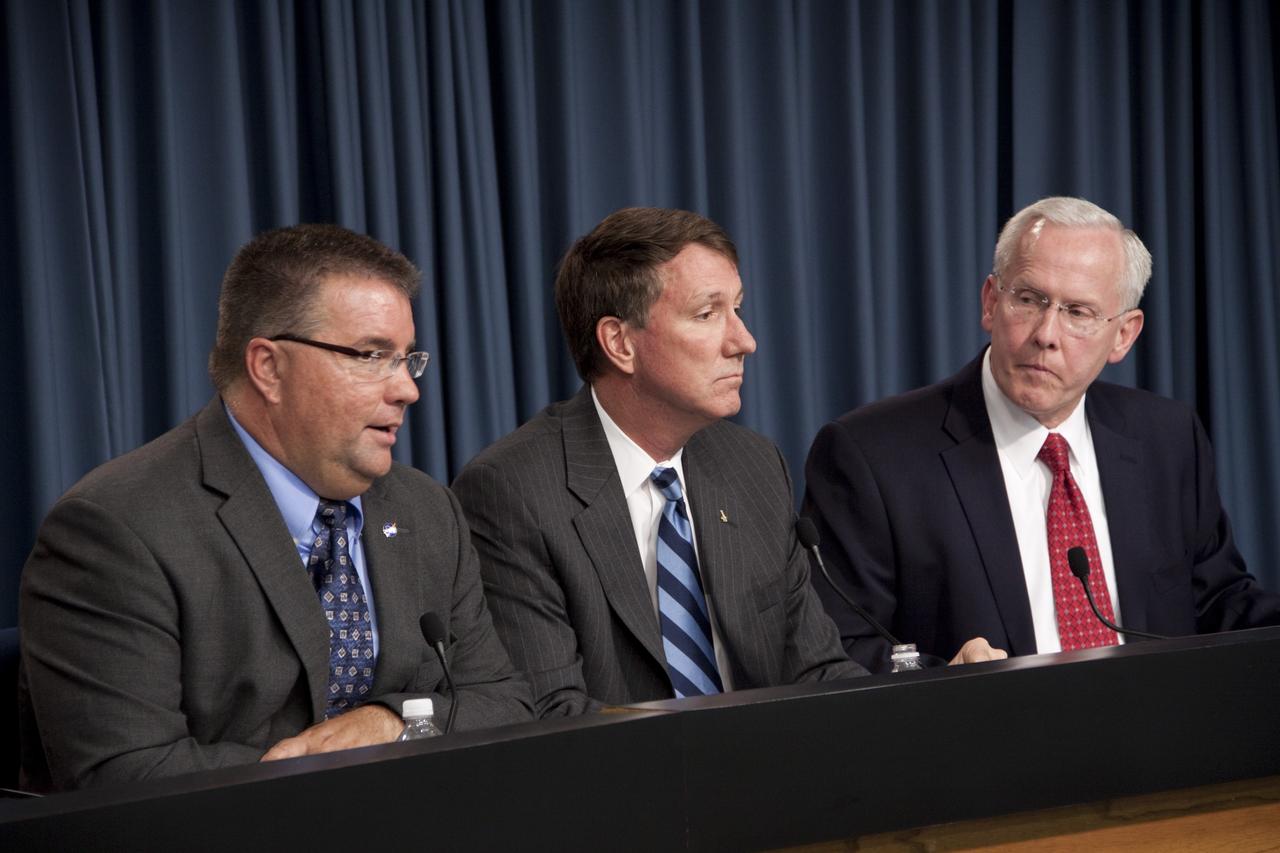
CAPE CANAVERAL, Fla. -- NASA and Alliant Techsystems (ATK) managers discuss an agreement that could accelerate the availability of U.S. commercial crew transportation capabilities with media representatives in the Press Site auditorium at NASA's Kennedy Space Center in Florida. From left are Ed Mango, Commercial Crew Program manager, NASA; Kent Rominger, vice president, Strategy and Business Development, ATK Aerospace; and John Schumacher, vice president, Space Programs, EADS North America. The unfunded Space Act Agreement (SAA) through NASA's Commercial Crew Program will allow the agency and ATK to review and discuss Liberty system requirements, safety and certification plans, computational models of rocket stage performance, and avionics architecture designs. The agreement outlines key milestones including an Initial System Design review, during which ATK will present to NASA officials the Liberty systems level requirements, preliminary design, and certification process development. For more information about NASA's Commercial Crew Program, visit http://www.nasa.gov/exploration/commercial. Photo credit: NASA/Jim Grossmann
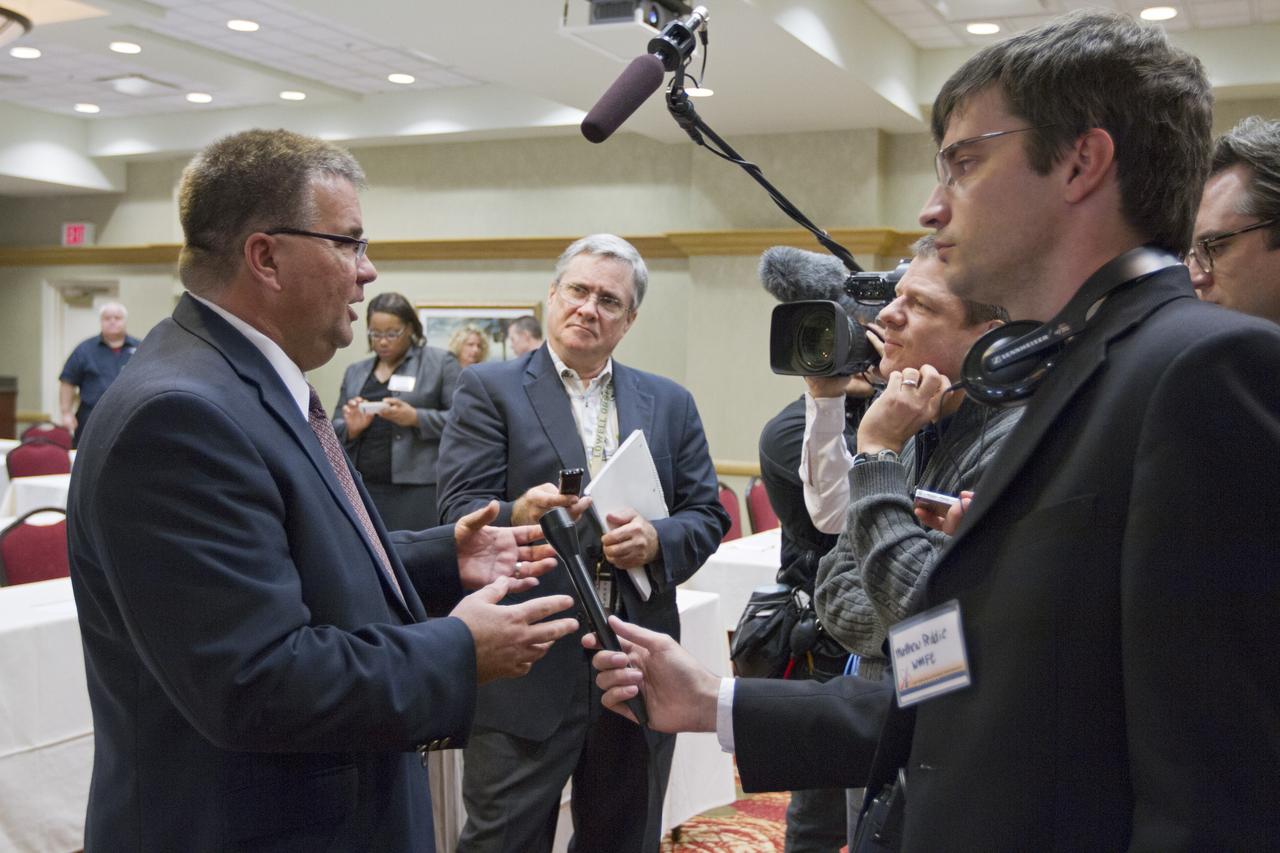
COCOA BEACH, Fla. -- Ed Mango, program manager for NASA's Commercial Crew Program CCP, talks to media during a preproposal conference at the Courtyard Marriott in Cocoa Beach, Fla. The meeting focused on information related to NASA's release of the Commercial Crew Integrated Capability CCiCap Announcement for Proposals on Feb. 7. More than 50 industry partners and stakeholders from 25 aerospace companies attended the conference to find out what the space agency would be looking for in terms of milestones, funding, schedules, strategies, safety cultures, business modules and eventual flight certification standards of integrated crew space transportation systems. The goal of the CCiCap is to develop an indigenous U.S. transportation system that can safely, affordably and routinely fly to low Earth orbit destinations, including the International Space Station. Proposals are due March 23 and NASA plans to award multiple Space Act Agreements, valued from $300 million to $500 million each, toward the development of fully integrated commercial crew transportation systems in the summer of 2012. For more information, visit www.nasa.gov/commercialcrew Photo credit: Kim Shiflett
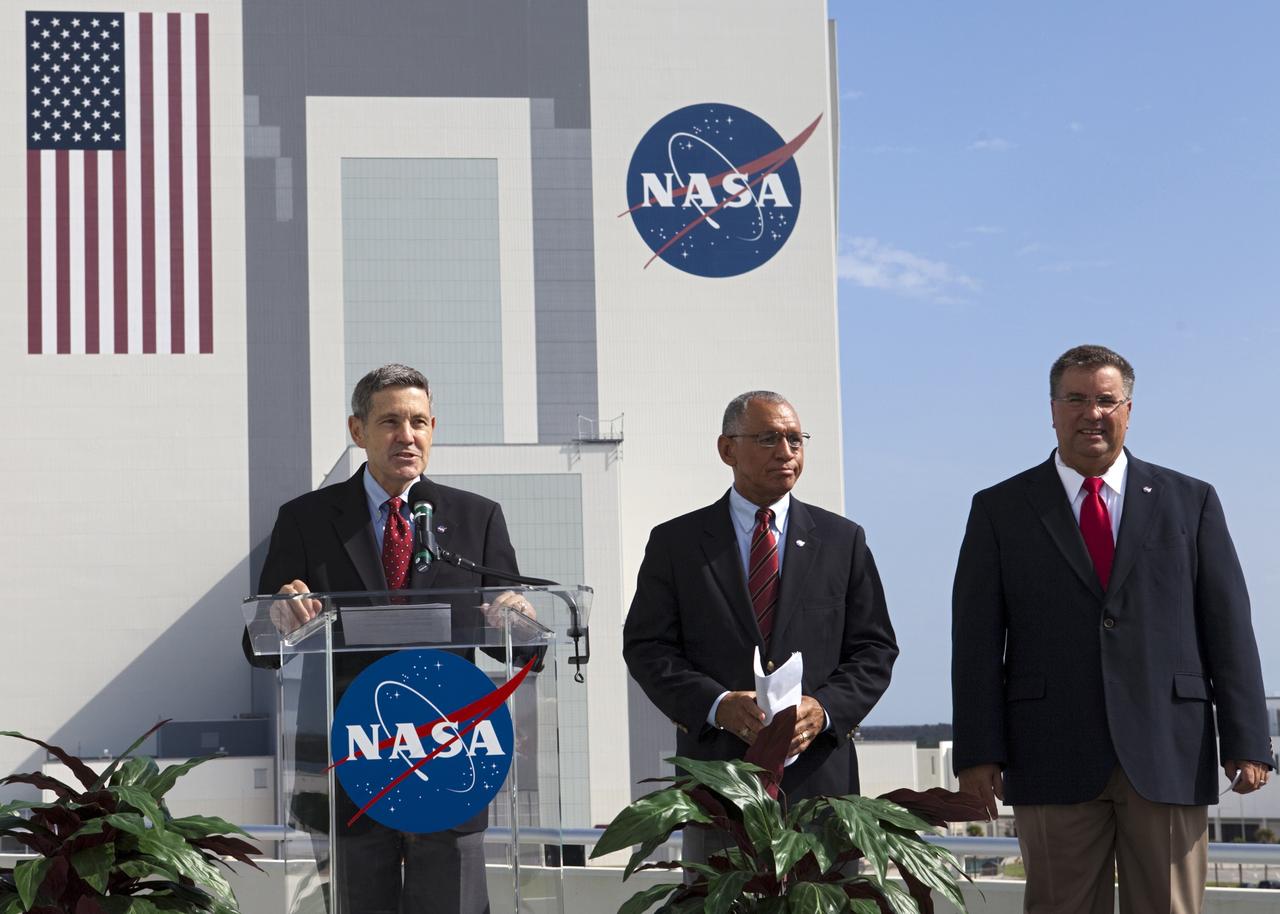
Cape Canaveral, Fla. -- From left, Kennedy Space Center Director Robert Cabana, NASA Administrator Charlie Bolden and Commercial Crew Program CCP, Manager Ed Mango announce the newest partners of NASA's Commercial Crew Program from Operations Support Building 2 OSB II at Kennedy Space Center in Florida. Three integrated systems were selected for CCP's Commercial Crew Integrated Capability CCiCap initiative to propel America's next human space transportation system to low Earth orbit forward. Operating under funded Space Act Agreements SAAs, The Boeing Co. of Houston, Sierra Nevada Corp. SNC Space Systems of Louisville, Colo., and Space Exploration Technologies SpaceX of Hawthorne, Calif., will spend the next 21 months completing their designs, conducting critical risk reduction testing on their spacecraft and launch vehicles, and showcasing how they would operate and manage missions from launch through orbit and landing, setting the stage for future demonstration missions. To learn more about CCP, which is based at Kennedy and supported by NASA's Johnson Space Center in Houston, visit www.nasa.gov/commercialcrew. Photo credit: NASA/Kim Shiflett
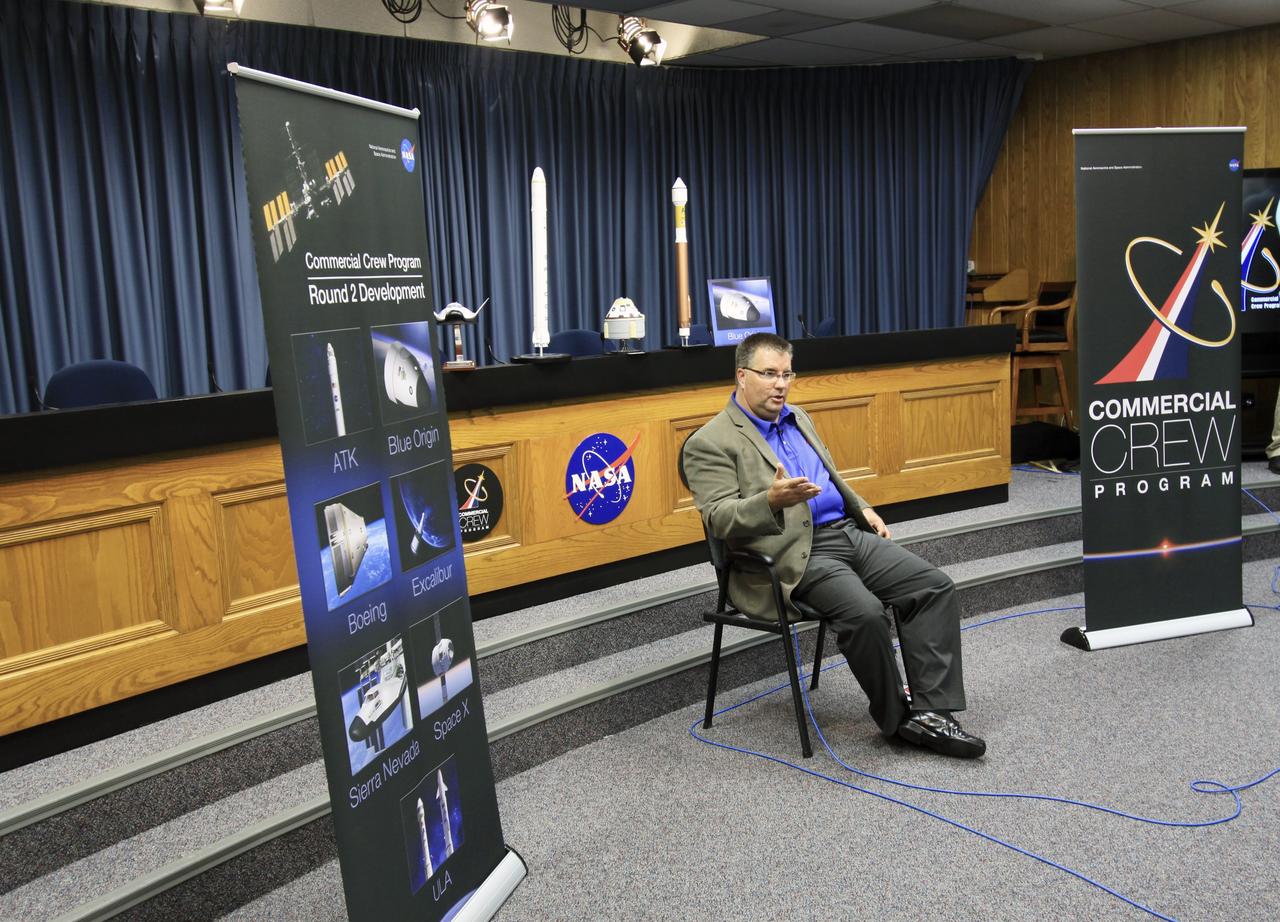
CAPE CANAVERAL, Fla. -- Ed Mango, program manager for NASA's Commercial Crew Program (CCP), updates media on the progress of Commercial Crew Development Round 2 (CCDev2) activities in which seven aerospace companies are maturing launch vehicle and spacecraft systems designed to take astronauts to the International Space Station. The goal of the program is to drive down the cost of space travel as well as open up space to more people than ever before by balancing industry’s own innovative capabilities with NASA's 50 years of human spaceflight experience. Seven aerospace companies are maturing launch vehicle and spacecraft designs under CCDev2, including Alliant Techsystems Inc. (ATK) of Promontory, Utah, Blue Origin of Kent, Wash., The Boeing Co., of Houston, Excalibur Almaz Inc. of Houston, Sierra Nevada Corp. of Louisville, Colo., Space Exploration Technologies (SpaceX) of Hawthorne, Calif., and United Launch Alliance (ULA) of Centennial, Colo. For more information, visit www.nasa.gov/exploration/commercial Photo credit: Jim Grossmann
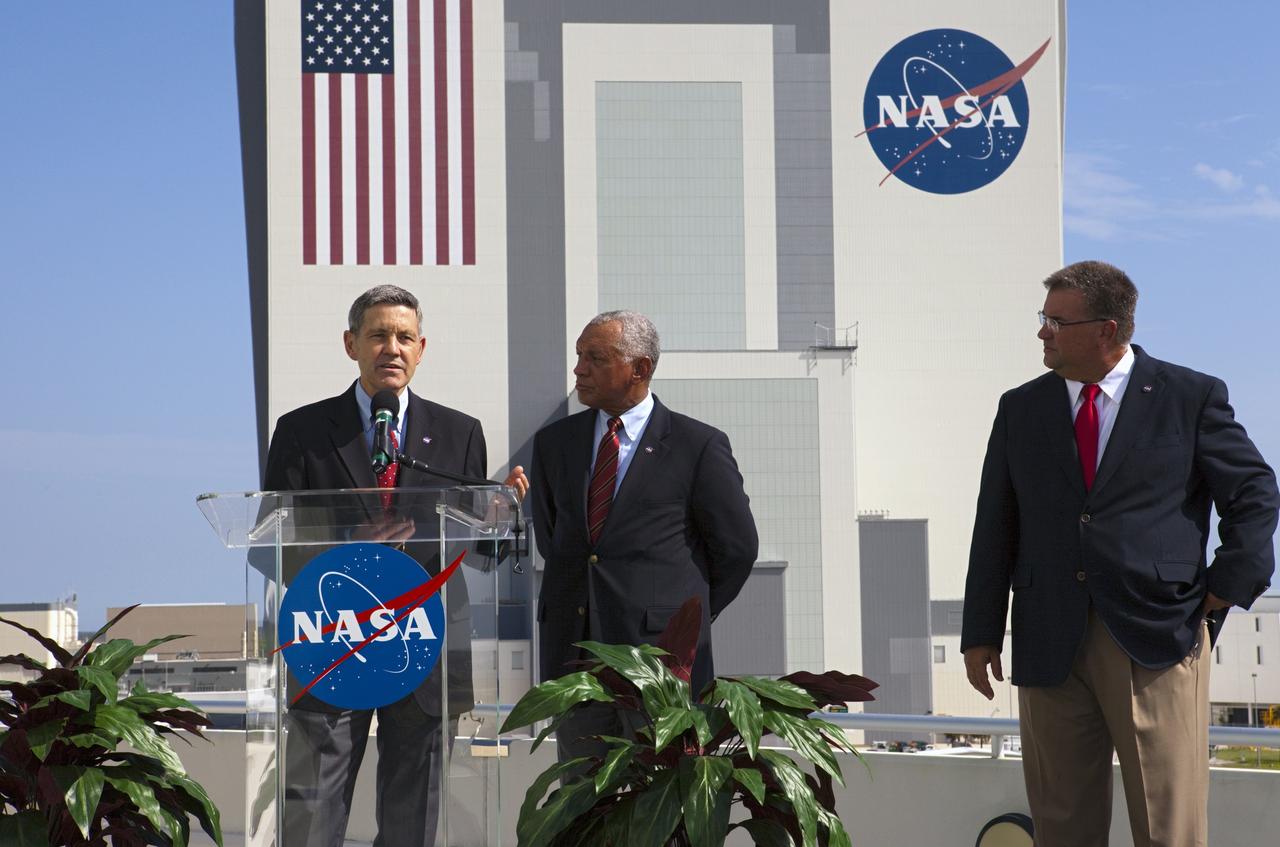
Cape Canaveral, Fla. -- NASA Kennedy Space Center Director Bob Cabana discusses the Commercial Crew Program's CCP newest partnerships from the center's Operations Support Building 2 OSB II. To his right, is NASA Administrator Charlie Bolden, and to his far right, is Commercial Crew Program Manager Ed Mango. Three integrated systems were selected for CCP's Commercial Crew Integrated Capability CCiCap initiative to propel America's next human space transportation system to low Earth orbit forward. Operating under funded Space Act Agreements SAAs, The Boeing Co. of Houston, Sierra Nevada Corp. SNC Space Systems of Louisville, Colo., and Space Exploration Technologies SpaceX of Hawthorne, Calif., will spend the next 21 months completing their designs, conducting critical risk reduction testing on their spacecraft and launch vehicles, and showcasing how they would operate and manage missions from launch through orbit and landing, setting the stage for future demonstration missions. To learn more about CCP, which is based at Kennedy and supported by NASA's Johnson Space Center in Houston, visit www.nasa.gov/commercialcrew. Photo credit: NASA/Kim Shiflett
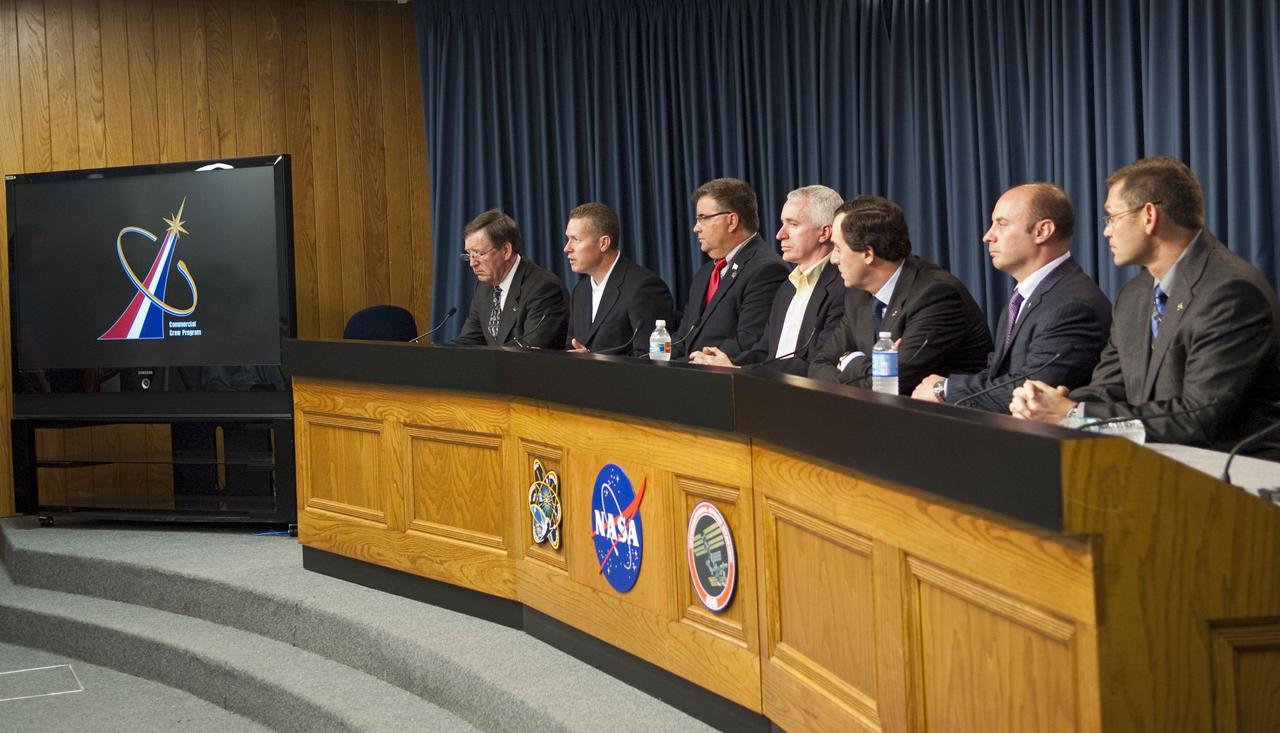
CAPE CANAVERAL, Fla. -- At NASA's Kennedy Space Center in Florida, the agency hosts a media briefing highlighting the four companies selected for the second round of the Commercial Crew Development (CCDev2) efforts. From left, are Michael Braukus, NASA Public Affairs specialist; Phil McAlister, acting director of Commercial Spaceflight Development at NASA Headquarters; Ed Mango, program manager for NASA's Commercial Crew Program at Kennedy; Rob Meyerson, program manager of Blue Origin; Mark Sirangelo, program manager of Sierra Nevada; Garrett Reisman, program manager of SpaceX; and John Elbon, program manager of The Boeing Company. NASA awarded $269.3 million to these companies to accelerate the availability of U.S. commercial crew transportation capabilities and reduce the gap in American human spaceflight capability. Through this activity, NASA also may be able to spur economic growth as potential new space markets are created. Once developed, crew transportation capabilities could become available to commercial and government customers. Photo credit: NASA_Jim Grossmann
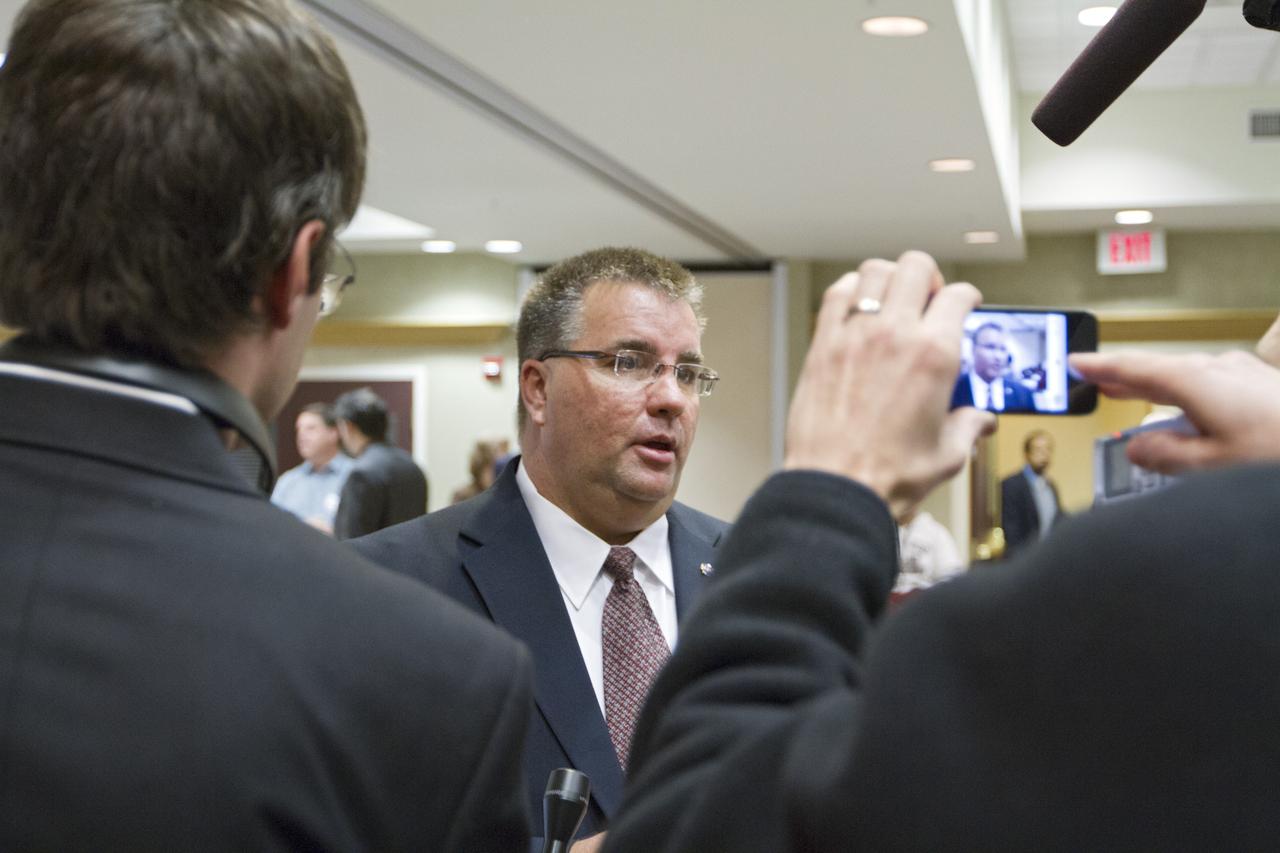
COCOA BEACH, Fla. -- Ed Mango, program manager for NASA's Commercial Crew Program CCP, talks to media during a preproposal conference at the Courtyard Marriott in Cocoa Beach, Fla. The meeting focused on information related to NASA's release of the Commercial Crew Integrated Capability CCiCap Announcement for Proposals on Feb. 7. More than 50 industry partners and stakeholders from 25 aerospace companies attended the conference to find out what the space agency would be looking for in terms of milestones, funding, schedules, strategies, safety cultures, business modules and eventual flight certification standards of integrated crew space transportation systems. The goal of the CCiCap is to develop an indigenous U.S. transportation system that can safely, affordably and routinely fly to low Earth orbit destinations, including the International Space Station. Proposals are due March 23 and NASA plans to award multiple Space Act Agreements, valued from $300 million to $500 million each, toward the development of fully integrated commercial crew transportation systems in the summer of 2012. For more information, visit www.nasa.gov/commercialcrew Photo credit: Kim Shiflett
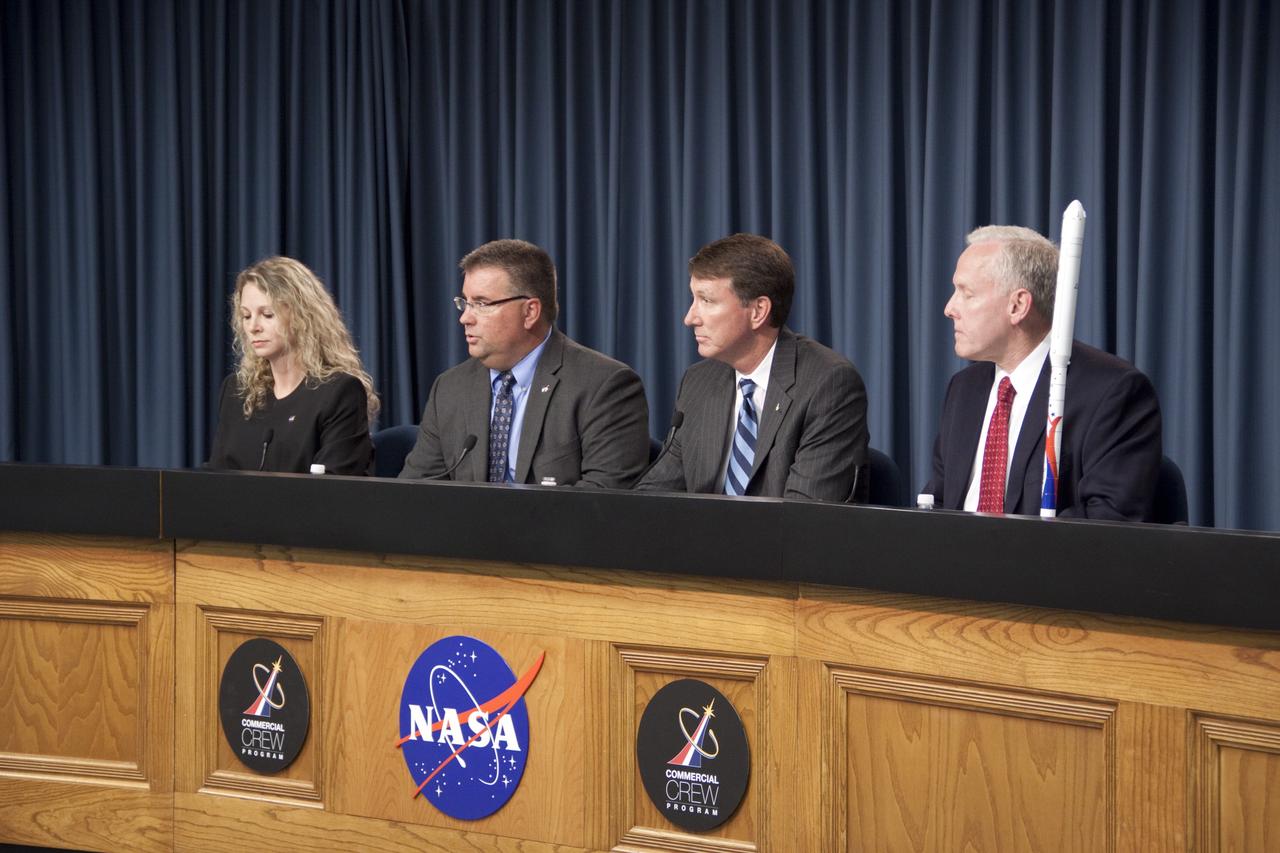
CAPE CANAVERAL, Fla. -- NASA and Alliant Techsystems (ATK) managers announce an agreement that could accelerate the availability of U.S. commercial crew transportation capabilities in the Press Site auditorium at NASA's Kennedy Space Center in Florida. From left are Candrea Thomas, NASA Public Affairs; Ed Mango, Commercial Crew Program manager, NASA; Kent Rominger, vice president, Strategy and Business Development, ATK Aerospace; and John Schumacher, vice president, Space Programs, EADS North America. The unfunded Space Act Agreement (SAA) through NASA's Commercial Crew Program will allow the agency and ATK to review and discuss Liberty system requirements, safety and certification plans, computational models of rocket stage performance, and avionics architecture designs. The agreement outlines key milestones including an Initial System Design review, during which ATK will present to NASA officials the Liberty systems level requirements, preliminary design, and certification process development. For more information about NASA's Commercial Crew Program, visit http://www.nasa.gov/exploration/commercial. Photo credit: NASA/Jim Grossmann
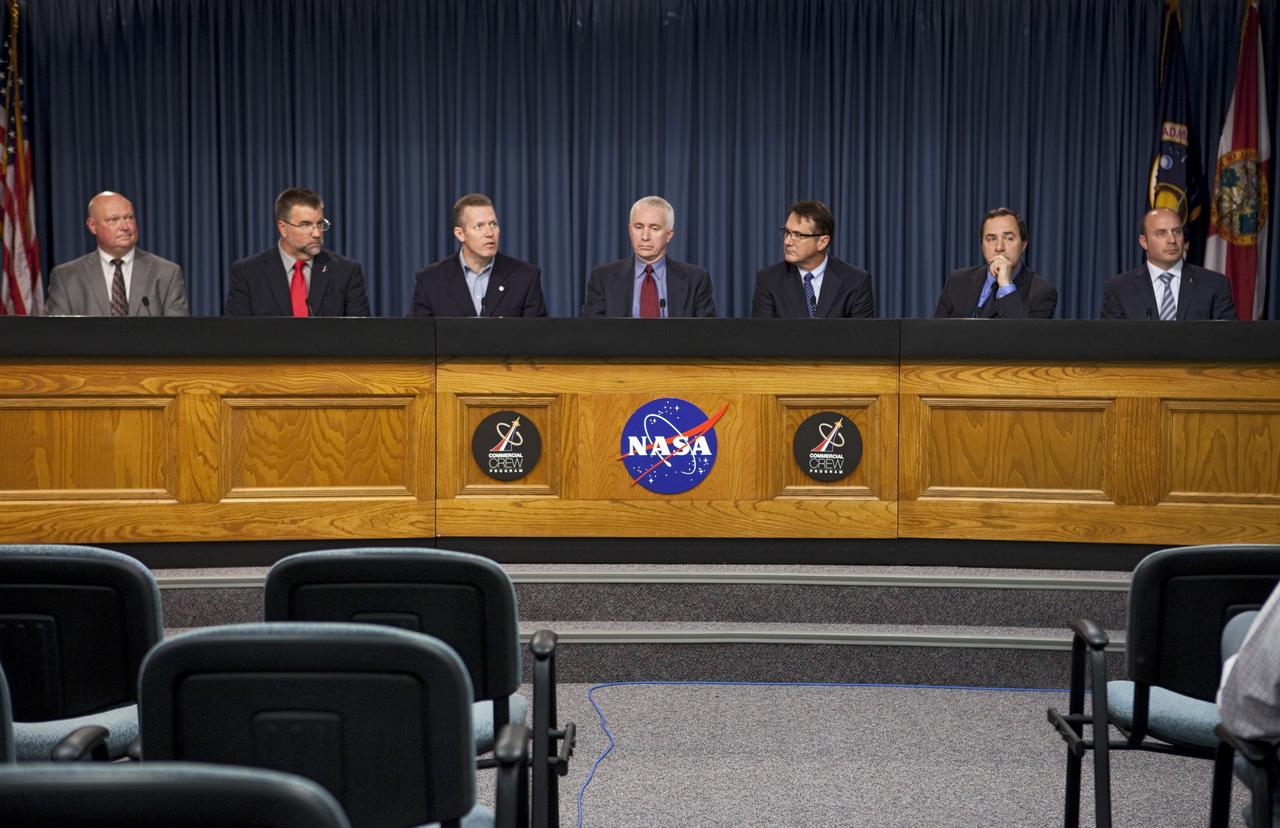
CAPE CANAVERAL, Fla. -- At a news conference NASA officials and industry partners discuss progress of the agency's Commercial Crew Program CCP. Participating in the briefing, from the left are, Mike Curie, NASA Public Affairs, Ed Mango, NASA Commercial Crew Program manager, Phil McAlister, NASA Commercial Spaceflight Development director, Rob Meyerson, Blue Origin president and program manager, John Mulholland, The Boeing Company Commercial Programs Space Exploration vice president and program manager, Mark Sirangelo, Sierra Nevada Corp. vice president and SNC Space Systems chairman and Garrett Reisman, Space Exploration Technologies SpaceX Commercial Crew project manager. Through CCP, NASA is facilitating the development of U.S. commercial crew space transportation capabilities to achieve safe, reliable and cost-effective access to and from low-Earth orbit for potential future government and commercial customers. For more information, visit http://www.nasa.gov/commercialcrew Photo credit: NASA/Kim Shiflett
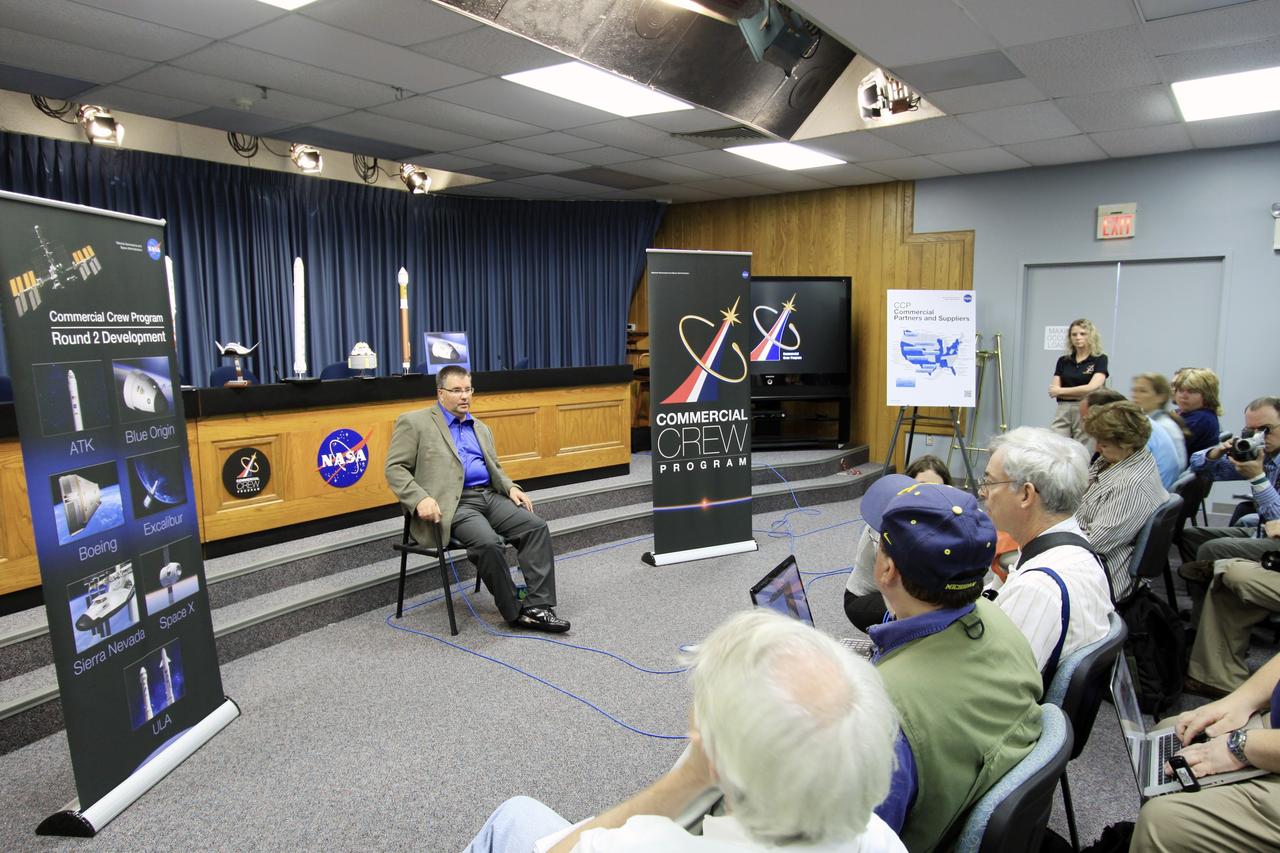
CAPE CANAVERAL, Fla. -- Ed Mango, program manager for NASA's Commercial Crew Program (CCP), updates media on the progress of Commercial Crew Development Round 2 (CCDev2) activities in which seven aerospace companies are maturing launch vehicle and spacecraft systems designed to take astronauts to the International Space Station. The goal of the program is to drive down the cost of space travel as well as open up space to more people than ever before by balancing industry’s own innovative capabilities with NASA's 50 years of human spaceflight experience. Seven aerospace companies are maturing launch vehicle and spacecraft designs under CCDev2, including Alliant Techsystems Inc. (ATK) of Promontory, Utah, Blue Origin of Kent, Wash., The Boeing Co., of Houston, Excalibur Almaz Inc. of Houston, Sierra Nevada Corp. of Louisville, Colo., Space Exploration Technologies (SpaceX) of Hawthorne, Calif., and United Launch Alliance (ULA) of Centennial, Colo. For more information, visit www.nasa.gov/exploration/commercial Photo credit: Jim Grossmann
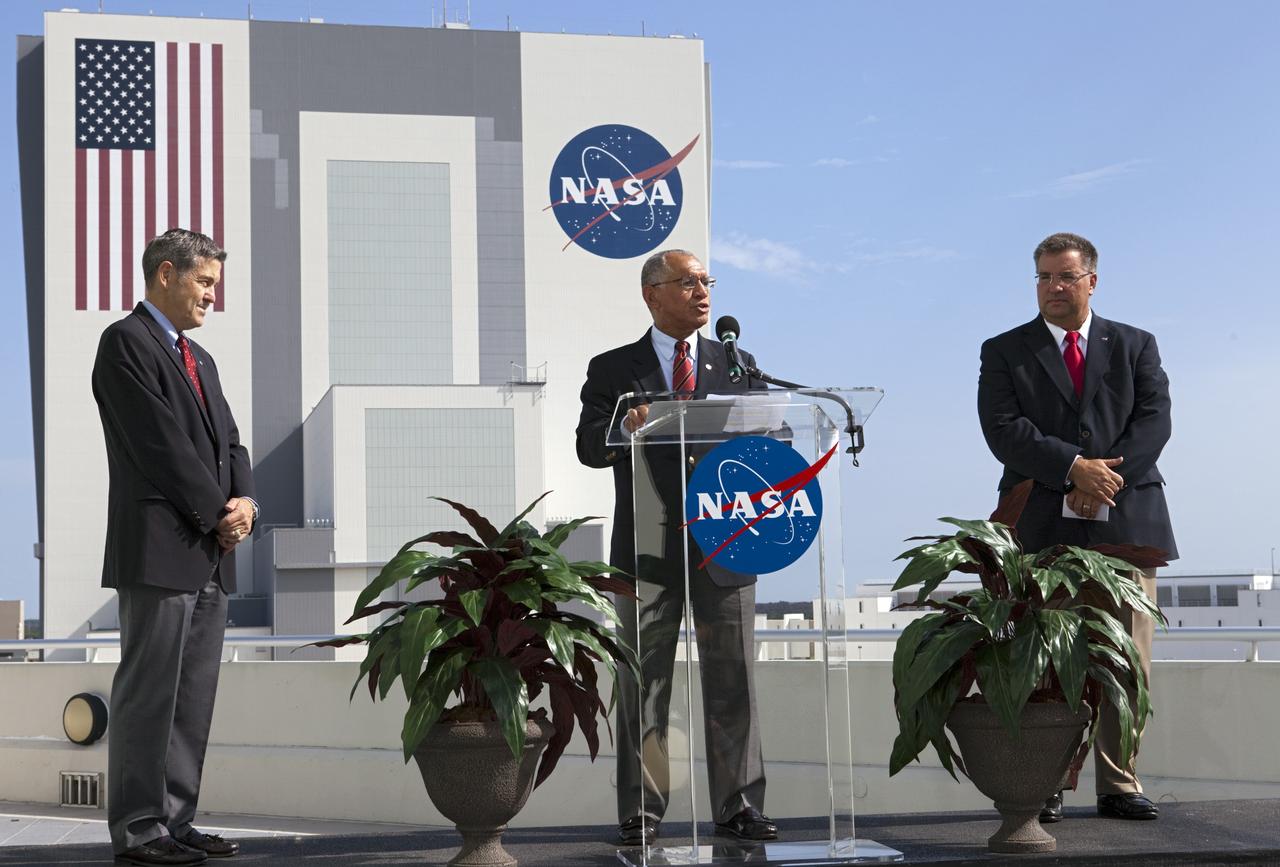
Cape Canaveral, Fla. -- NASA Administrator Charlie Bolden announces the newest partners of NASA's Commercial Crew Program CCP from Operations Support Building 2 OSB II at Kennedy Space Center in Florida. At left, is Kennedy Space Center Director Robert Cabana and at right, is Commercial Crew Program CCP Manager Ed Mango. Three integrated systems were selected for CCP's Commercial Crew Integrated Capability CCiCap initiative to propel America's next human space transportation system to low Earth orbit forward. Operating under funded Space Act Agreements SAAs, The Boeing Co. of Houston, Sierra Nevada Corp. SNC Space Systems of Louisville, Colo., and Space Exploration Technologies SpaceX of Hawthorne, Calif., will spend the next 21 months completing their designs, conducting critical risk reduction testing on their spacecraft and launch vehicles, and showcasing how they would operate and manage missions from launch through orbit and landing, setting the stage for future demonstration missions. To learn more about CCP, which is based at Kennedy and supported by NASA's Johnson Space Center in Houston, visit www.nasa.gov/commercialcrew. Photo credit: NASA/Kim Shiflett
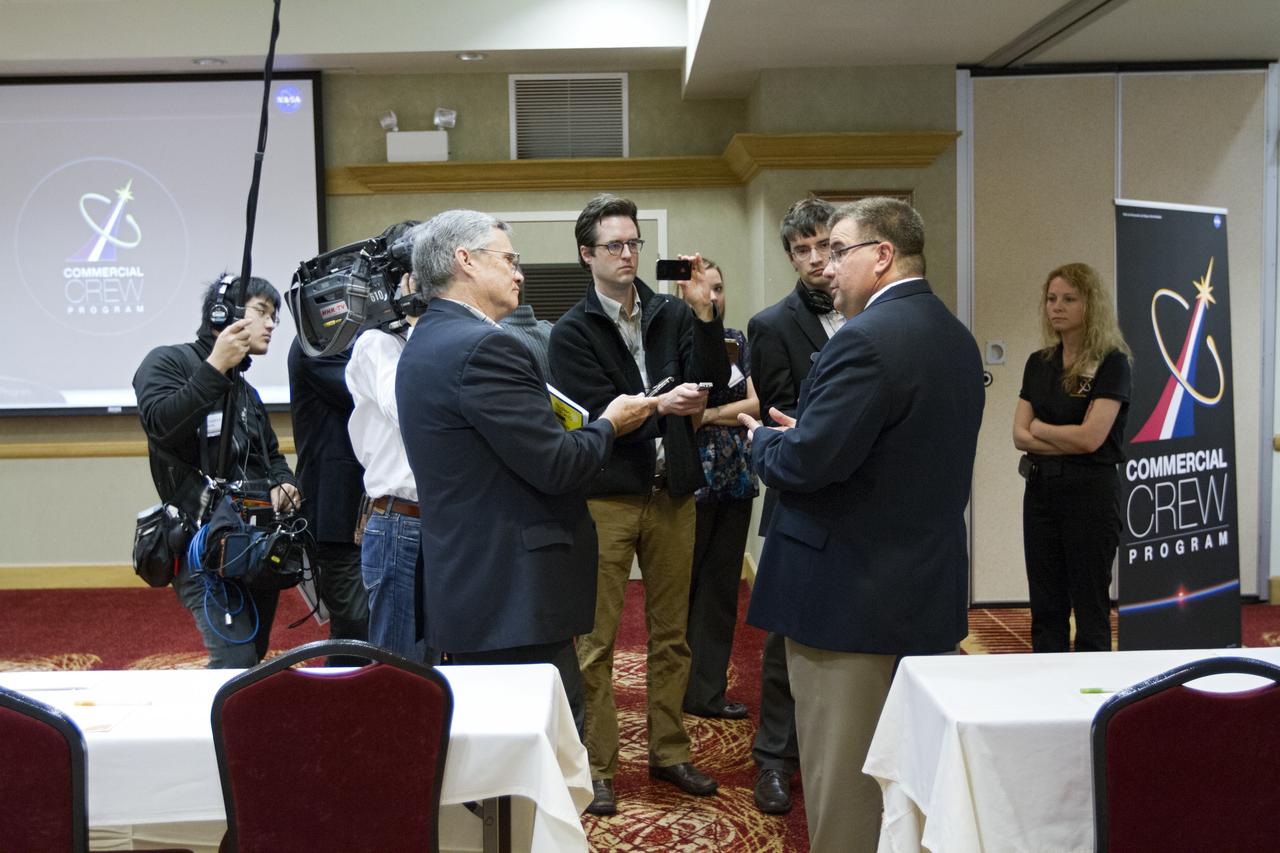
COCOA BEACH, Fla. -- Ed Mango, program manager for NASA's Commercial Crew Program CCP, talks to media during a preproposal conference at the Courtyard Marriott in Cocoa Beach, Fla. The meeting focused on information related to NASA's release of the Commercial Crew Integrated Capability CCiCap Announcement for Proposals on Feb. 7. More than 50 industry partners and stakeholders from 25 aerospace companies attended the conference to find out what the space agency would be looking for in terms of milestones, funding, schedules, strategies, safety cultures, business modules and eventual flight certification standards of integrated crew space transportation systems. The goal of the CCiCap is to develop an indigenous U.S. transportation system that can safely, affordably and routinely fly to low Earth orbit destinations, including the International Space Station. Proposals are due March 23 and NASA plans to award multiple Space Act Agreements, valued from $300 million to $500 million each, toward the development of fully integrated commercial crew transportation systems in the summer of 2012. For more information, visit www.nasa.gov/commercialcrew Photo credit: Kim Shiflett
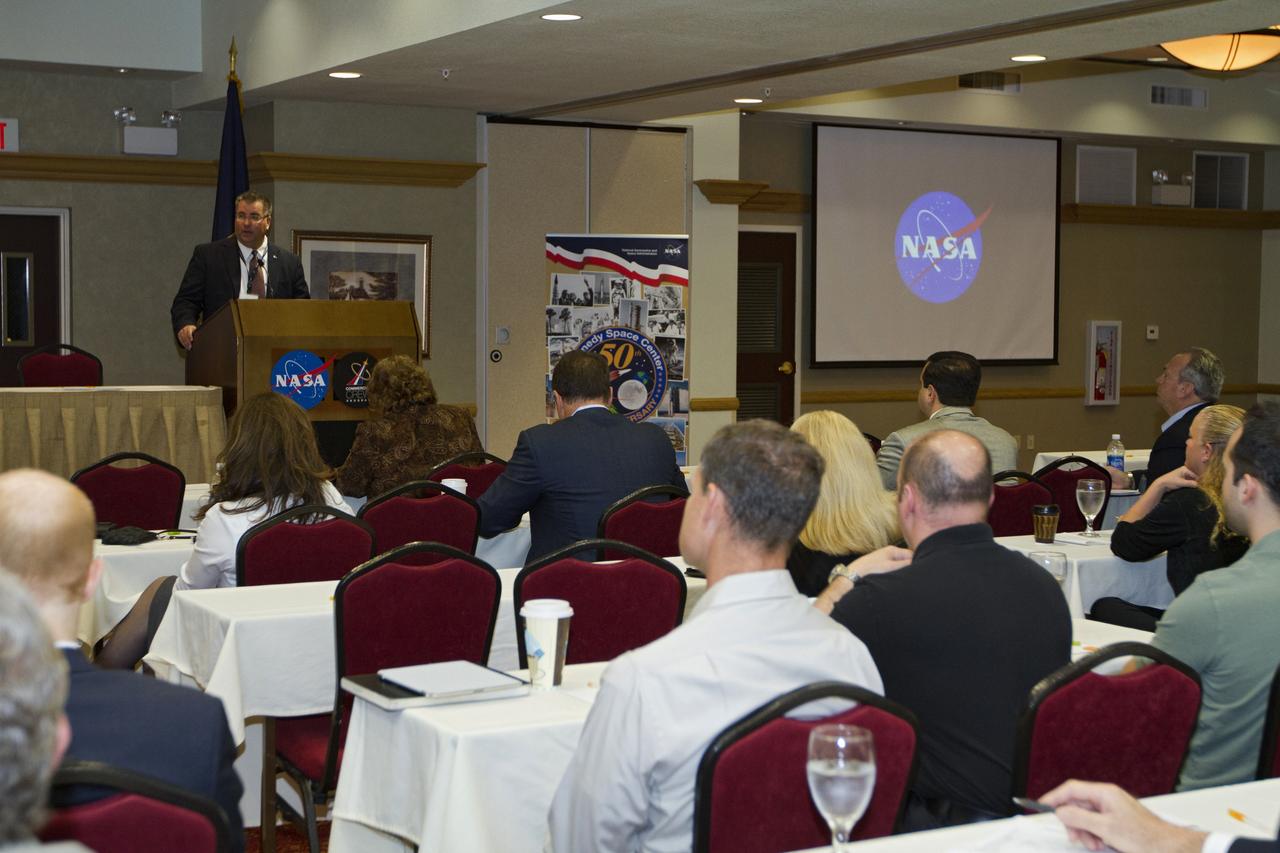
COCOA BEACH, Fla. -- Ed Mango, program manager for NASA's Commercial Crew Program CCP, talks to industry partners and stakeholders during a preproposal conference at the Courtyard Marriott in Cocoa Beach, Fla. The meeting focused on information related to NASA's release of the Commercial Crew Integrated Capability CCiCap Announcement for Proposals on Feb. 7. More than 50 people from 25 aerospace companies attended the conference to find out what the space agency would be looking for in terms of milestones, funding, schedules, strategies, safety cultures, business modules and eventual flight certification standards of integrated crew space transportation systems. The goal of the CCiCap is to develop an indigenous U.S. transportation system that can safely, affordably and routinely fly to low Earth orbit destinations, including the International Space Station. Proposals are due March 23 and NASA plans to award multiple Space Act Agreements, valued from $300 million to $500 million each, toward the development of fully integrated commercial crew transportation systems in the summer of 2012. For more information, visit www.nasa.gov/commercialcrew Photo credit: Kim Shiflett
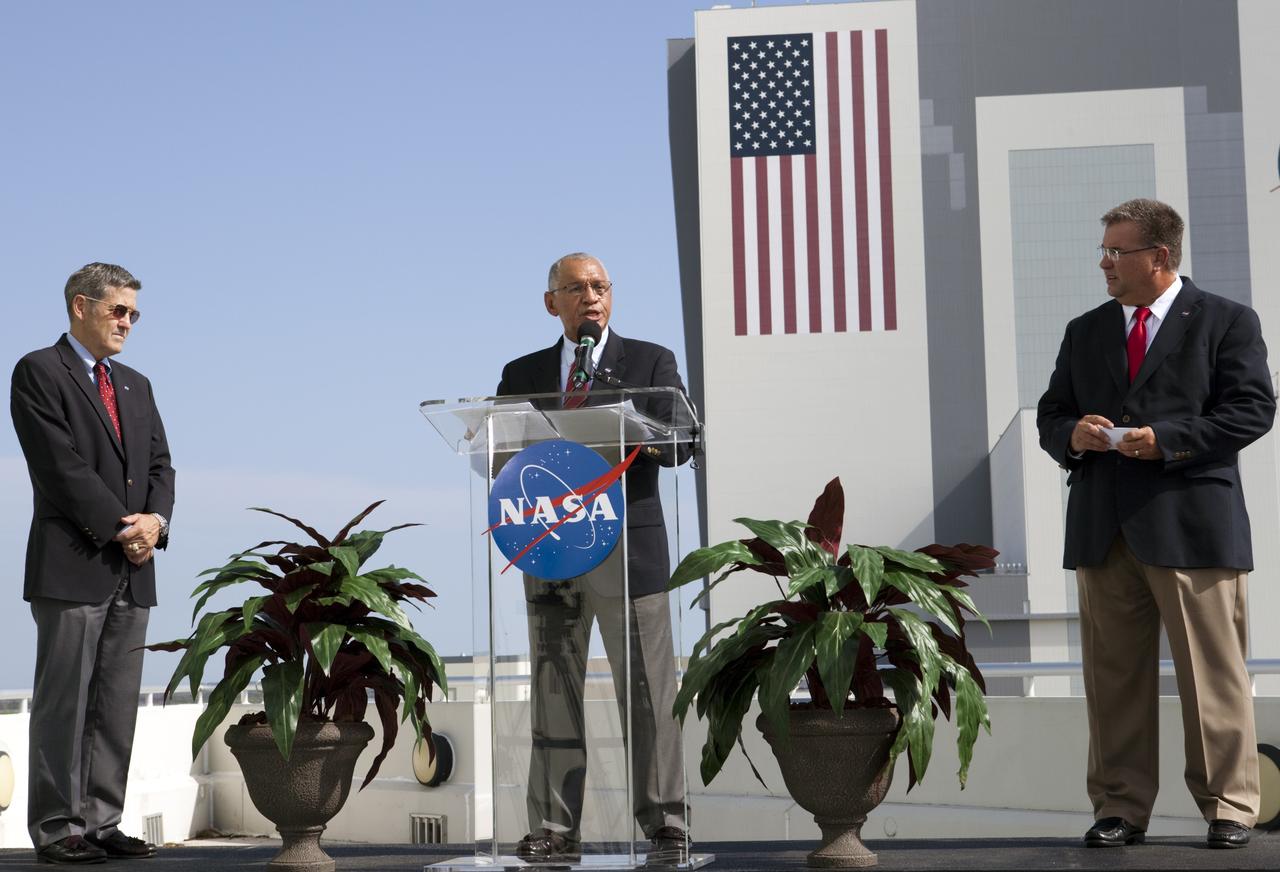
Cape Canaveral, Fla. -- NASA Administrator Charlie Bolden announces the newest partners of NASA's Commercial Crew Program CCP from Operations Support Building 2 OSB II at Kennedy Space Center in Florida. At left, is Kennedy Space Center Director Robert Cabana, and at right, is Commercial Crew Program CCP Manager Ed Mango. Three integrated systems were selected for CCP's Commercial Crew Integrated Capability CCiCap initiative to propel America's next human space transportation system to low Earth orbit forward. Operating under funded Space Act Agreements SAAs, The Boeing Co. of Houston, Sierra Nevada Corp. SNC Space Systems of Louisville, Colo., and Space Exploration Technologies SpaceX of Hawthorne, Calif., will spend the next 21 months completing their designs, conducting critical risk reduction testing on their spacecraft and launch vehicles, and showcasing how they would operate and manage missions from launch through orbit and landing, setting the stage for future demonstration missions. To learn more about CCP, which is based at Kennedy and supported by NASA's Johnson Space Center in Houston, visit www.nasa.gov/commercialcrew. Photo credit: NASA/Kim Shiflett
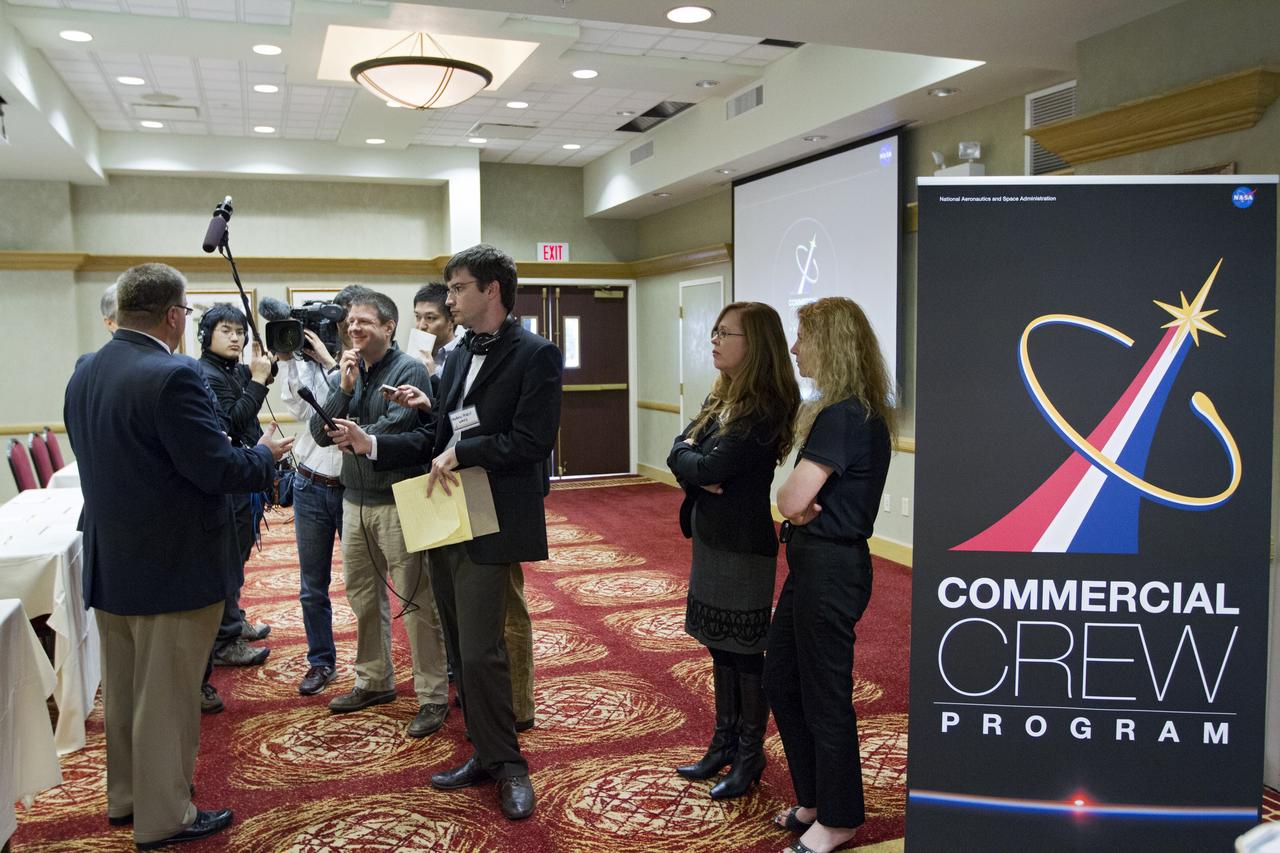
COCOA BEACH, Fla. -- Ed Mango, program manager for NASA's Commercial Crew Program CCP, talks to media during a preproposal conference at the Courtyard Marriott in Cocoa Beach, Fla. The meeting focused on information related to NASA's release of the Commercial Crew Integrated Capability CCiCap Announcement for Proposals on Feb. 7. More than 50 industry partners and stakeholders from 25 aerospace companies attended the conference to find out what the space agency would be looking for in terms of milestones, funding, schedules, strategies, safety cultures, business modules and eventual flight certification standards of integrated crew space transportation systems. The goal of the CCiCap is to develop an indigenous U.S. transportation system that can safely, affordably and routinely fly to low Earth orbit destinations, including the International Space Station. Proposals are due March 23 and NASA plans to award multiple Space Act Agreements, valued from $300 million to $500 million each, toward the development of fully integrated commercial crew transportation systems in the summer of 2012. For more information, visit www.nasa.gov/commercialcrew Photo credit: Kim Shiflett
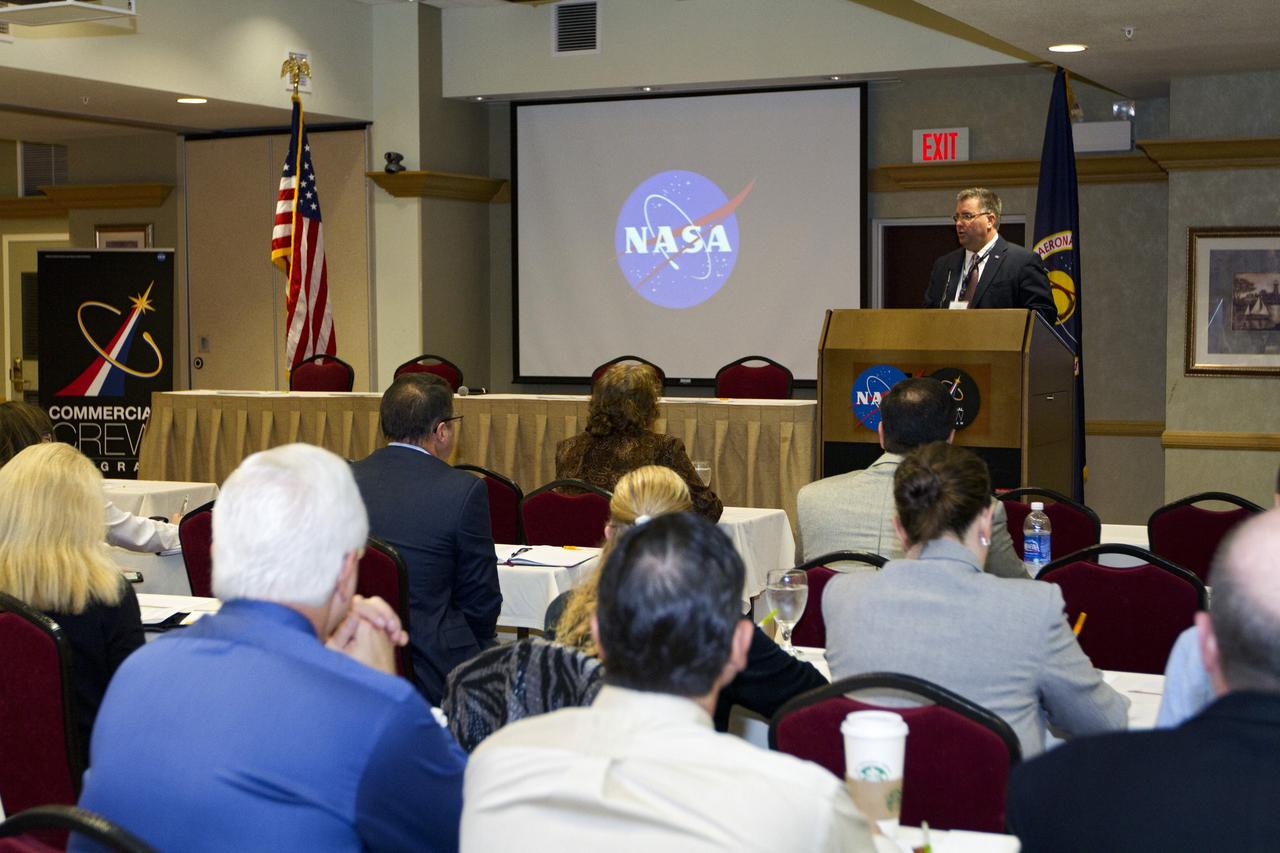
COCOA BEACH, Fla. -- Ed Mango, program manager for NASA's Commercial Crew Program CCP, talks to industry partners and stakeholders during a preproposal conference at the Courtyard Marriott in Cocoa Beach, Fla. The meeting focused on information related to NASA's release of the Commercial Crew Integrated Capability CCiCap Announcement for Proposals on Feb. 7. More than 50 people from 25 aerospace companies attended the conference to find out what the space agency would be looking for in terms of milestones, funding, schedules, strategies, safety cultures, business modules and eventual flight certification standards of integrated crew space transportation systems. The goal of the CCiCap is to develop an indigenous U.S. transportation system that can safely, affordably and routinely fly to low Earth orbit destinations, including the International Space Station. Proposals are due March 23 and NASA plans to award multiple Space Act Agreements, valued from $300 million to $500 million each, toward the development of fully integrated commercial crew transportation systems in the summer of 2012. For more information, visit www.nasa.gov/commercialcrew Photo credit: Kim Shiflett
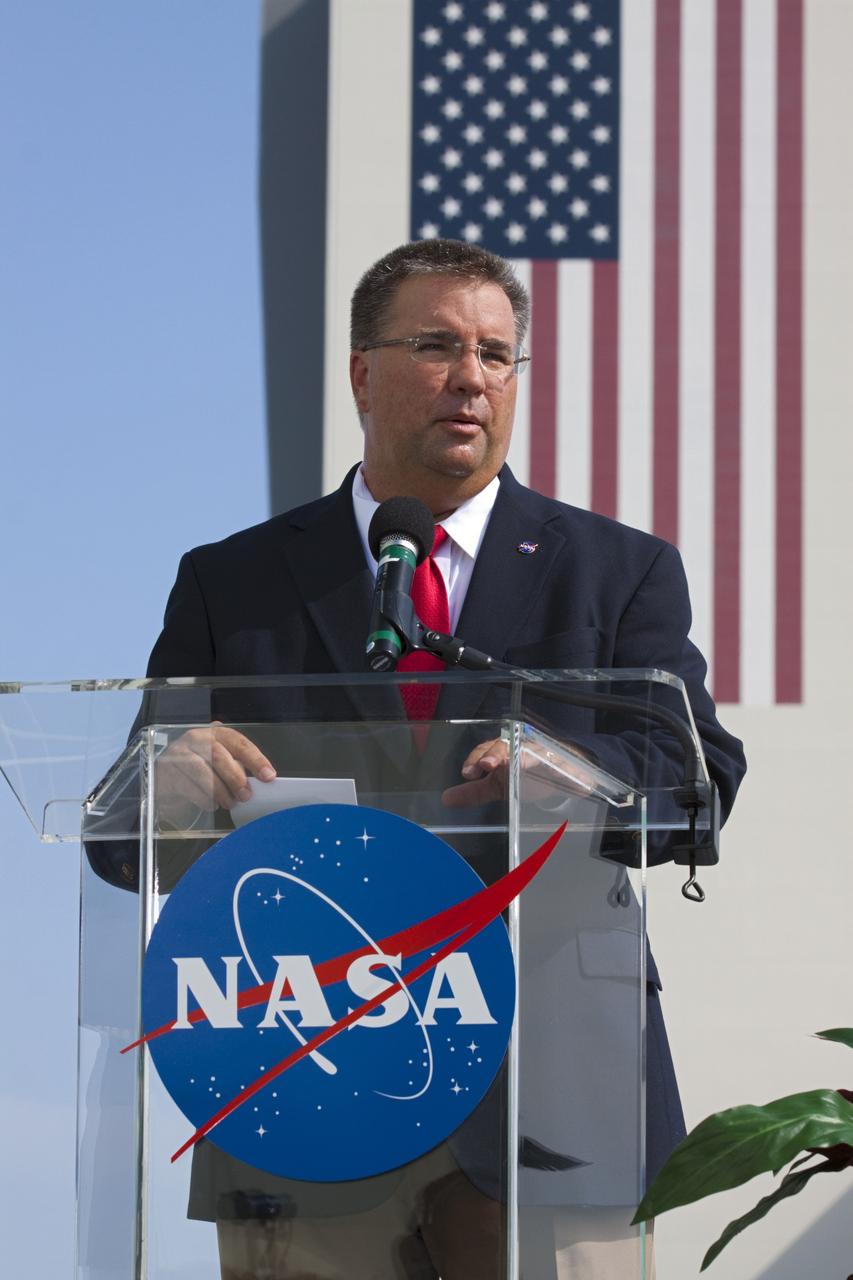
Cape Canaveral, Fla. -- NASA Commercial Crew Program CCP Manager Ed Mango discusses the program's newest partnerships from the Operations Support Building 2 OSB II at Kennedy Space Center in Florida. Three integrated systems were selected for CCP's Commercial Crew Integrated Capability CCiCap initiative to propel America's next human space transportation system to low Earth orbit forward. Operating under funded Space Act Agreements SAAs, The Boeing Co. of Houston, Sierra Nevada Corp. SNC Space Systems of Louisville, Colo., and Space Exploration Technologies SpaceX of Hawthorne, Calif., will spend the next 21 months completing their designs, conducting critical risk reduction testing on their spacecraft and launch vehicles, and showcasing how they would operate and manage missions from launch through orbit and landing, setting the stage for future demonstration missions. To learn more about CCP, which is based at Kennedy and supported by NASA's Johnson Space Center in Houston, visit www.nasa.gov/commercialcrew. Photo credit: NASA/Kim Shiflett
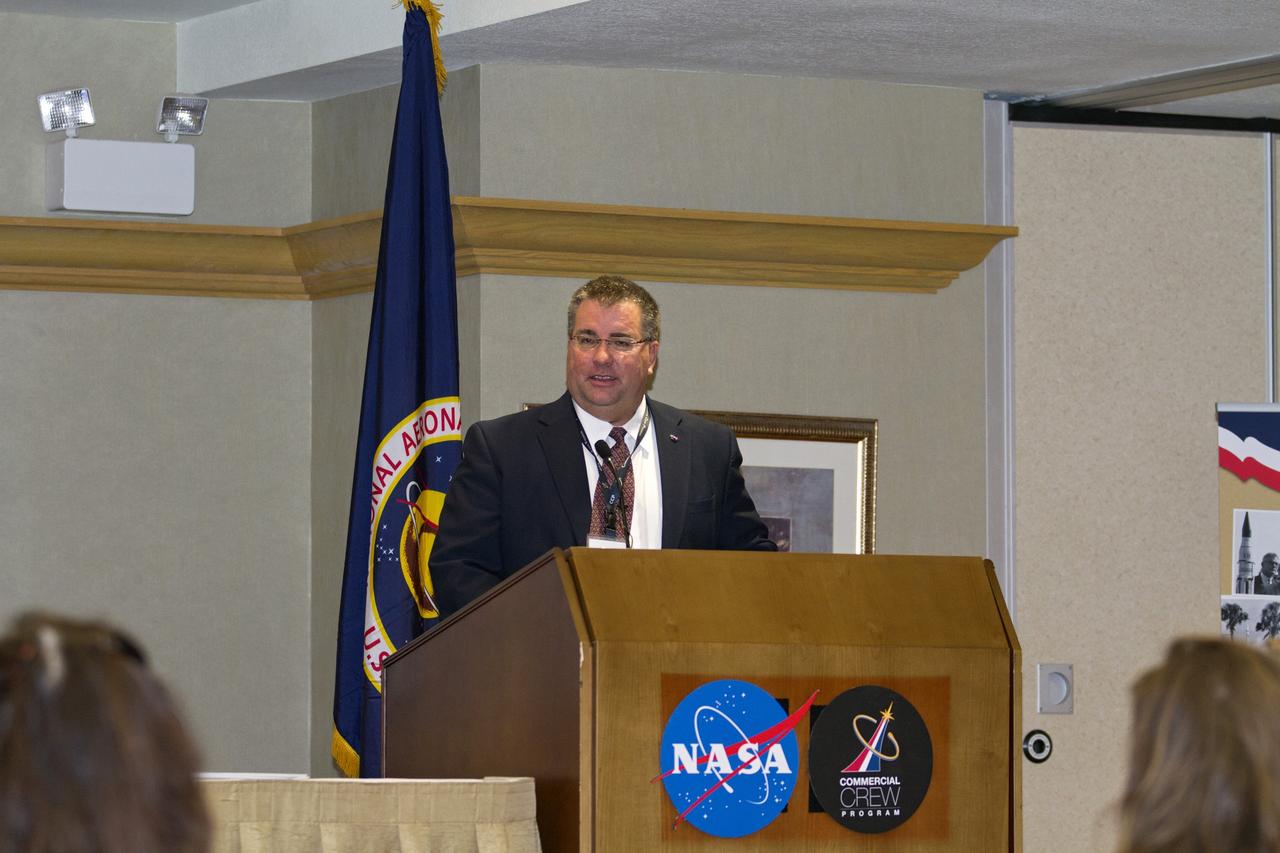
COCOA BEACH, Fla. -- Ed Mango, program manager for NASA's Commercial Crew Program CCP, talks to industry partners and stakeholders during a preproposal conference at the Courtyard Marriott in Cocoa Beach, Fla. The meeting focused on information related to NASA's release of the Commercial Crew Integrated Capability CCiCap Announcement for Proposals on Feb. 7. More than 50 people from 25 aerospace companies attended the conference to find out what the space agency would be looking for in terms of milestones, funding, schedules, strategies, safety cultures, business modules and eventual flight certification standards of integrated crew space transportation systems. The goal of the CCiCap is to develop an indigenous U.S. transportation system that can safely, affordably and routinely fly to low Earth orbit destinations, including the International Space Station. Proposals are due March 23 and NASA plans to award multiple Space Act Agreements, valued from $300 million to $500 million each, toward the development of fully integrated commercial crew transportation systems in the summer of 2012. For more information, visit www.nasa.gov/commercialcrew Photo credit: Kim Shiflett
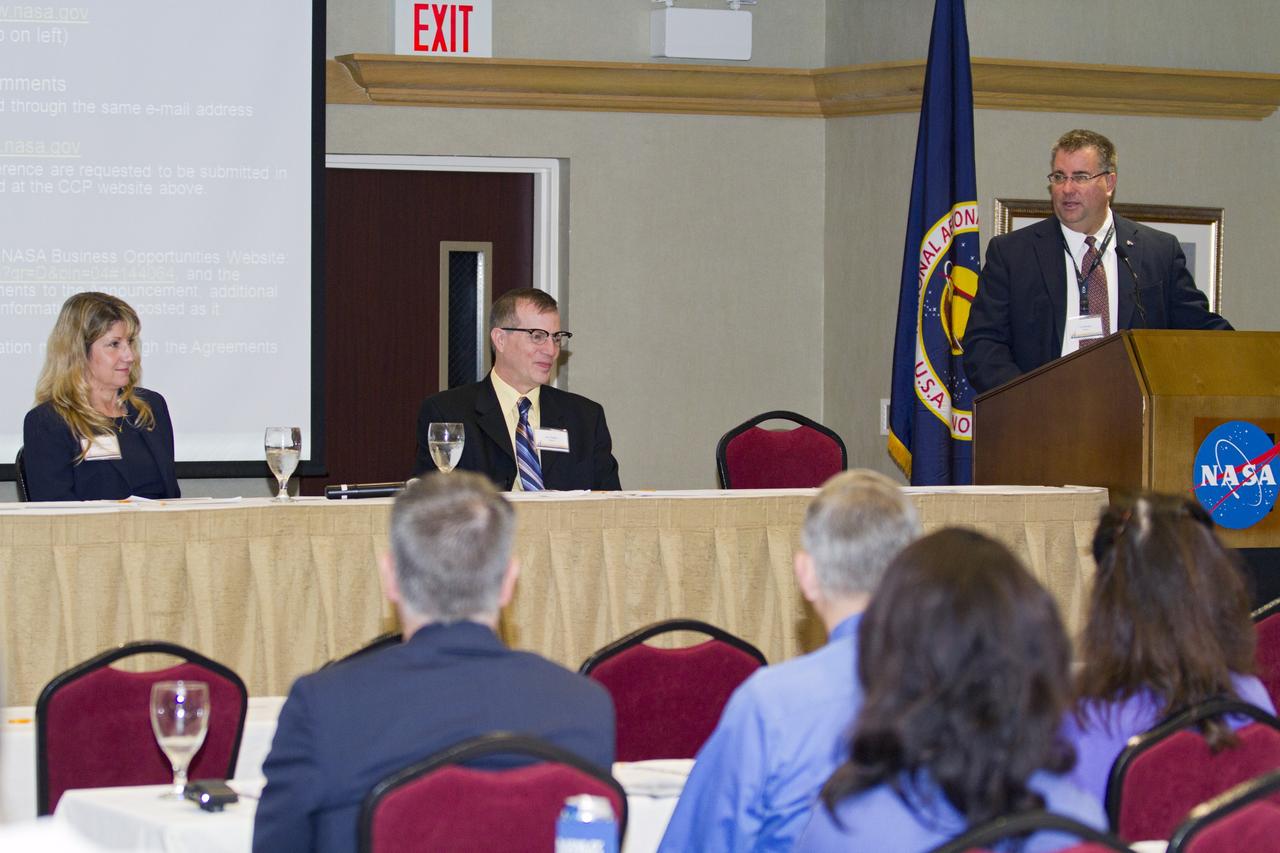
COCOA BEACH, Fla. -- Ed Mango, program manager for NASA's Commercial Crew Program CCP, talks to industry partners and stakeholders during a preproposal conference at the Courtyard Marriott in Cocoa Beach, Fla. At left, are Cheryl McPhillips, the NASA Participant Evaluation Panel PEP chair for the Commercial Crew Program CCP, and Lee Pagel, the NASA PEP deputy. The meeting focused on information related to NASA's release of the Commercial Crew Integrated Capability CCiCap Announcement for Proposals on Feb. 7. More than 50 people from 25 aerospace companies attended the conference to find out what the space agency would be looking for in terms of milestones, funding, schedules, strategies, safety cultures, business modules and eventual flight certification standards of integrated crew space transportation systems. The goal of the CCiCap is to develop an indigenous U.S. transportation system that can safely, affordably and routinely fly to low Earth orbit destinations, including the International Space Station. Proposals are due March 23 and NASA plans to award multiple Space Act Agreements, valued from $300 million to $500 million each, toward the development of fully integrated commercial crew transportation systems in the summer of 2012. For more information, visit www.nasa.gov/commercialcrew Photo credit: Kim Shiflett The Ground Systems Development and Operations Program is developing the necessary ground systems, infrastructure and operational approaches required to safely process, assemble, transport and launch the next generation of rockets and spacecraft in support of NASA’s exploration objectives. Future work also will replace the antiquated communications, power and vehicle access resources with modern efficient systems. Some of the utilities and systems slated for replacement have been used since the VAB opened in 1965. For more information, visit http://www.nasa.gov/exploration/systems/ground/index.html Photo credit: NASA/Kim Shiflett