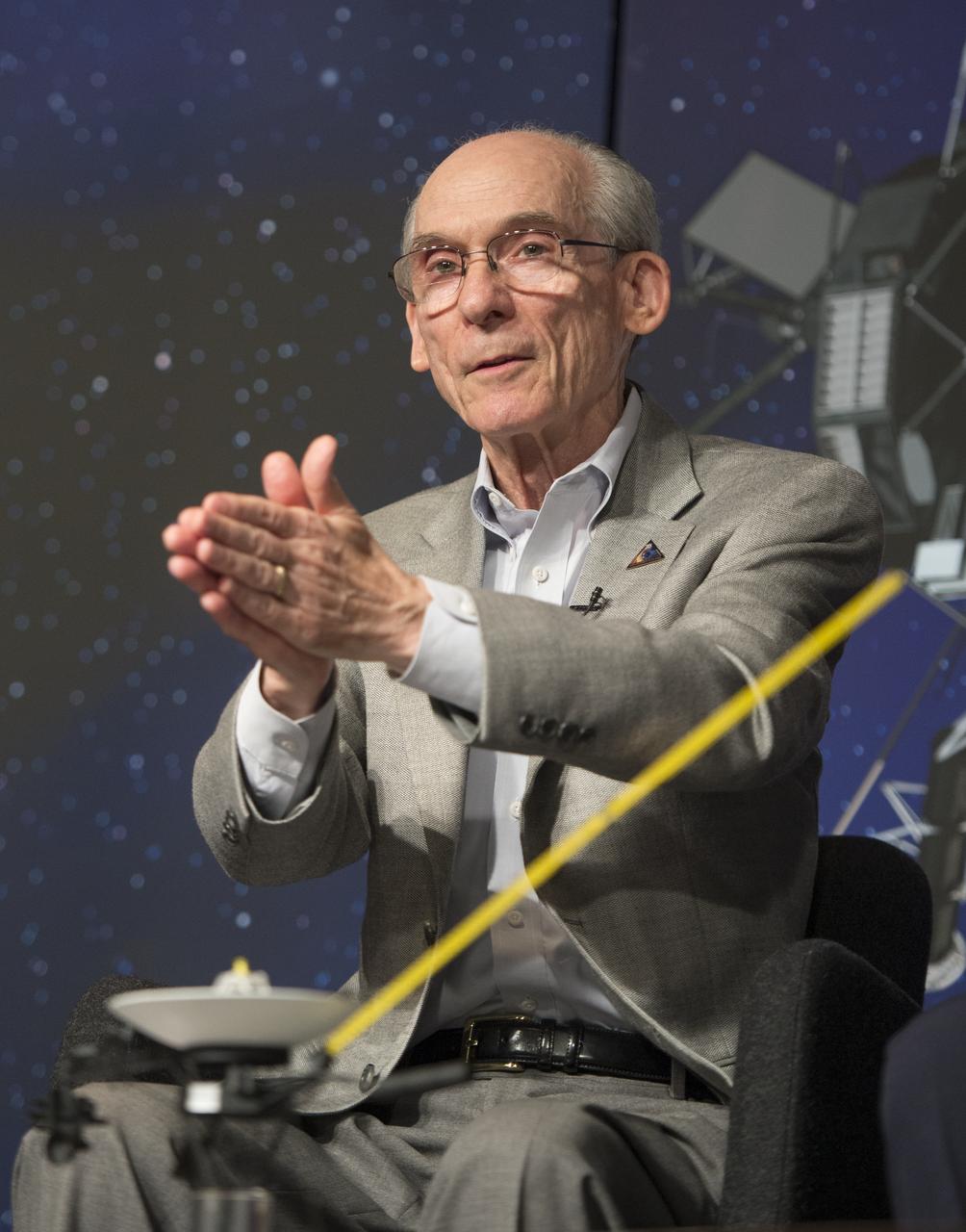
Ed Stone, Voyager project scientist, California Institute of Technology, is seen as he speaks at a news conference on NASA's Voyager 1 spacecraft, Thursday, Sept. 12, 2013 at NASA Headquarters in Washington. NASA's Voyager 1 spacecraft officially is the first human-made object to venture into interstellar space. The 36-year-old probe is about 12 billion miles (19 billion kilometers) from our sun. New and unexpected data indicate Voyager 1 has been traveling for about one year through plasma, or ionized gas, present in the space between stars. A report on the analysis of this new data is published in Thursday's edition of the journal Science. Photo Credit: (NASA/Carla Cioffi)

Ed Stone, Voyager project scientist, speaks at an event to celebrate the 40th Anniversary of the launch of the Voyager 1 and 2 missions, Tuesday, September 5, 2017 at Smithsonian's National Air and Space Museum in Washington. Voyager 1 was launched September 5, 1977, with a mission to study Jupiter and Saturn, but now the twin Voyager spacecrafts are on a journey into interstellar space to search for the heliopause, a region never reached by any other spacecraft. Photo Credit: (NASA/Aubrey Gemignani)

Ed Stone, Voyager project scientist, speaks at an event to celebrate the 40th Anniversary of the launch of the Voyager 1 and 2 missions, Tuesday, September 5, 2017 at Smithsonian's National Air and Space Museum in Washington. Voyager 1 was launched September 5, 1977, with a mission to study Jupiter and Saturn, but now the twin Voyager spacecrafts are on a journey into interstellar space to search for the heliopause, a region never reached by any other spacecraft. Photo Credit: (NASA/Aubrey Gemignani)

Ed Stone, Voyager project scientist, right, speaks on a panel with Thomas Zurbuchen, NASA associate administrator, Science Mission Directorate, left, at an event to celebrate the 40th Anniversary of the launch of the Voyager 1 and 2 missions, Tuesday, September 5, 2017 at National Geographic Society Headquarters in Washington. Voyager 1 was launched September 5, 1977, with a mission to study Jupiter and Saturn, but now the twin Voyager spacecrafts are on a journey into interstellar space to search for the heliopause, a region never reached by any other spacecraft. Photo Credit: (NASA/Aubrey Gemignani)
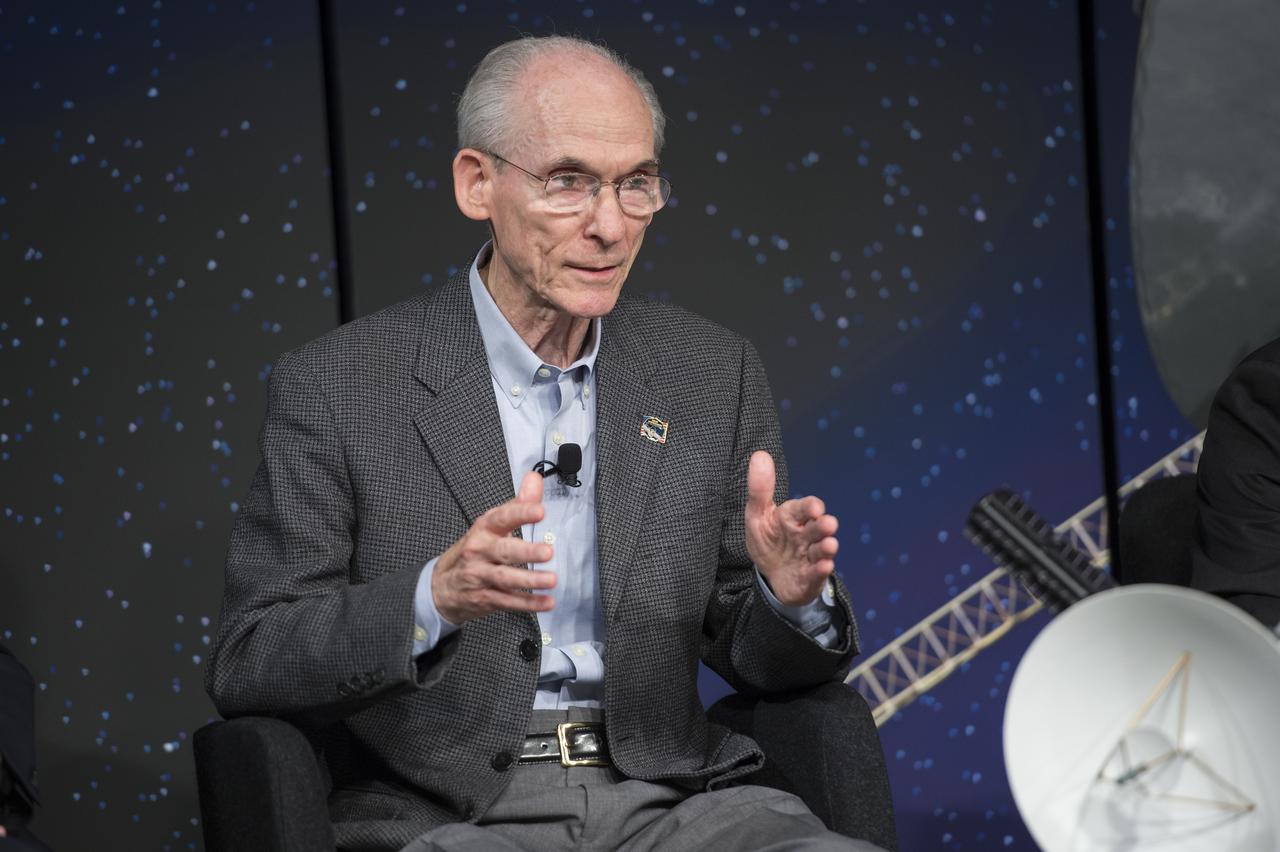
Dr. Ed Stone, Voyager project scientist, speaks on a panel at the "New Horizons: The First Mission to the Pluto System and the Kuiper Belt" Event at NASA Headquarters in Washington, DC Monday, August 25, 2014. Scientists discussed how the first images of Pluto and its moons would be captured by the New Horizons spacecraft during a five month long reconnaissance flyby study starting in the summer of 2015. New Horizons launched on January 19, 2006 and is scheduled to make its closest approach to Pluto on July 14, 2015. Photo Credit: (NASA/Aubrey Gemignani)
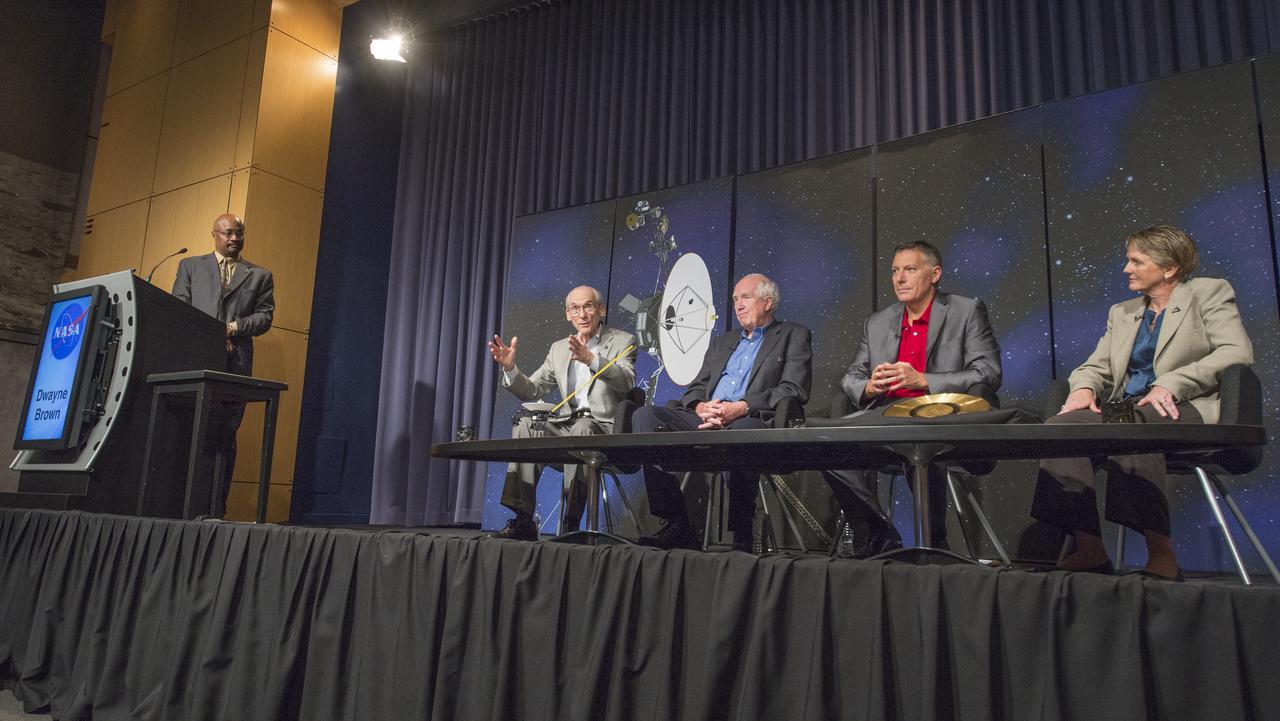
Ed Stone, Voyager project scientist, California Institute of Technology, is seen as he speaks at a news conference on NASA's Voyager 1 spacecraft, Thursday, Sept. 12, 2013 at NASA Headquarters in Washington. NASA's Voyager 1 spacecraft officially is the first human-made object to venture into interstellar space. The 36-year-old probe is about 12 billion miles (19 billion kilometers) from our sun. New and unexpected data indicate Voyager 1 has been traveling for about one year through plasma, or ionized gas, present in the space between stars. A report on the analysis of this new data is published in Thursday's edition of the journal Science. Photo Credit: (NASA/Carla Cioffi)
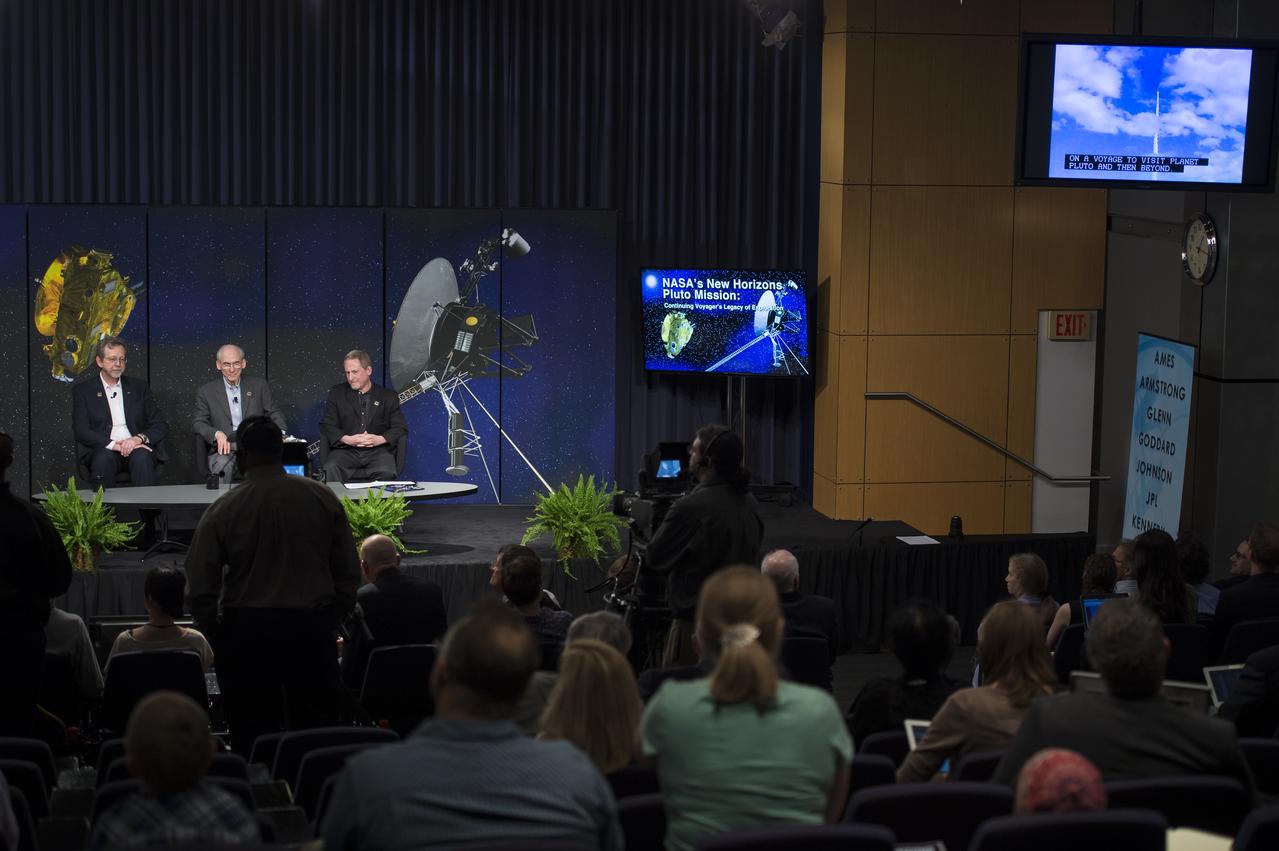
Dr. Jim Green, Dr. Ed Stone, and Dr. Alan Stern speak on a panel at the "New Horizons: The First Mission to the Pluto System and the Kuiper Belt" Event at NASA Headquarters in Washington, DC Monday, August 25, 2014. They discussed how the first images of Pluto and its moons would be captured by the New Horizons spacecraft during a five month long reconnaissance flyby study starting in the summer of 2015. New Horizons launched on January 19, 2006 and is scheduled to make its closest approach to Pluto on July 14, 2015. Photo Credit: (NASA/Aubrey Gemignani)
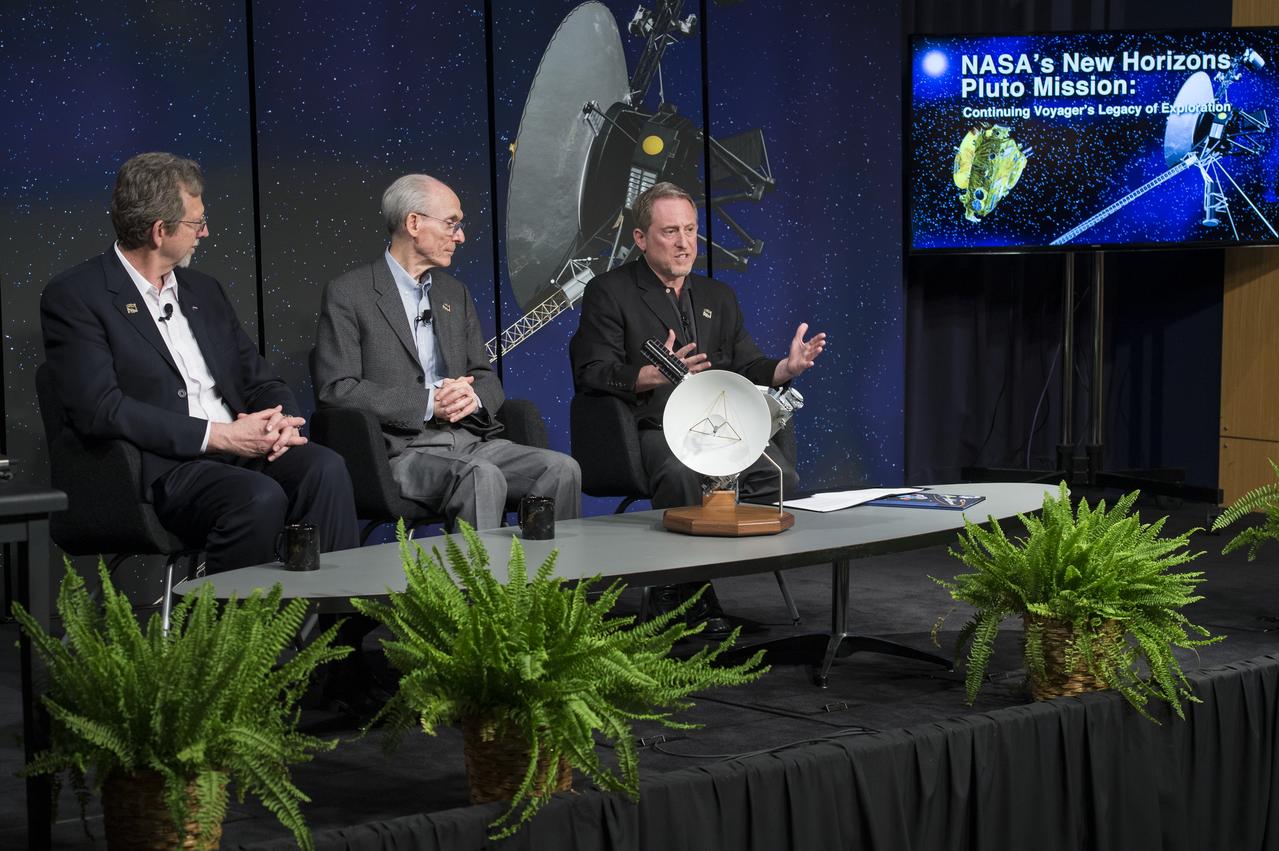
Dr. Jim Green, Dr. Ed Stone, and Dr. Alan Stern speak on a panel at the "New Horizons: The First Mission to the Pluto System and the Kuiper Belt" Event at NASA Headquarters in Washington, DC Monday, August 25, 2014. They discussed how the first images of Pluto and its moons would be captured by the New Horizons spacecraft during a five month long reconnaissance flyby study starting in the summer of 2015. New Horizons launched on January 19, 2006 and is scheduled to make its closest approach to Pluto on July 14, 2015. Photo Credit: (NASA/Aubrey Gemignani)
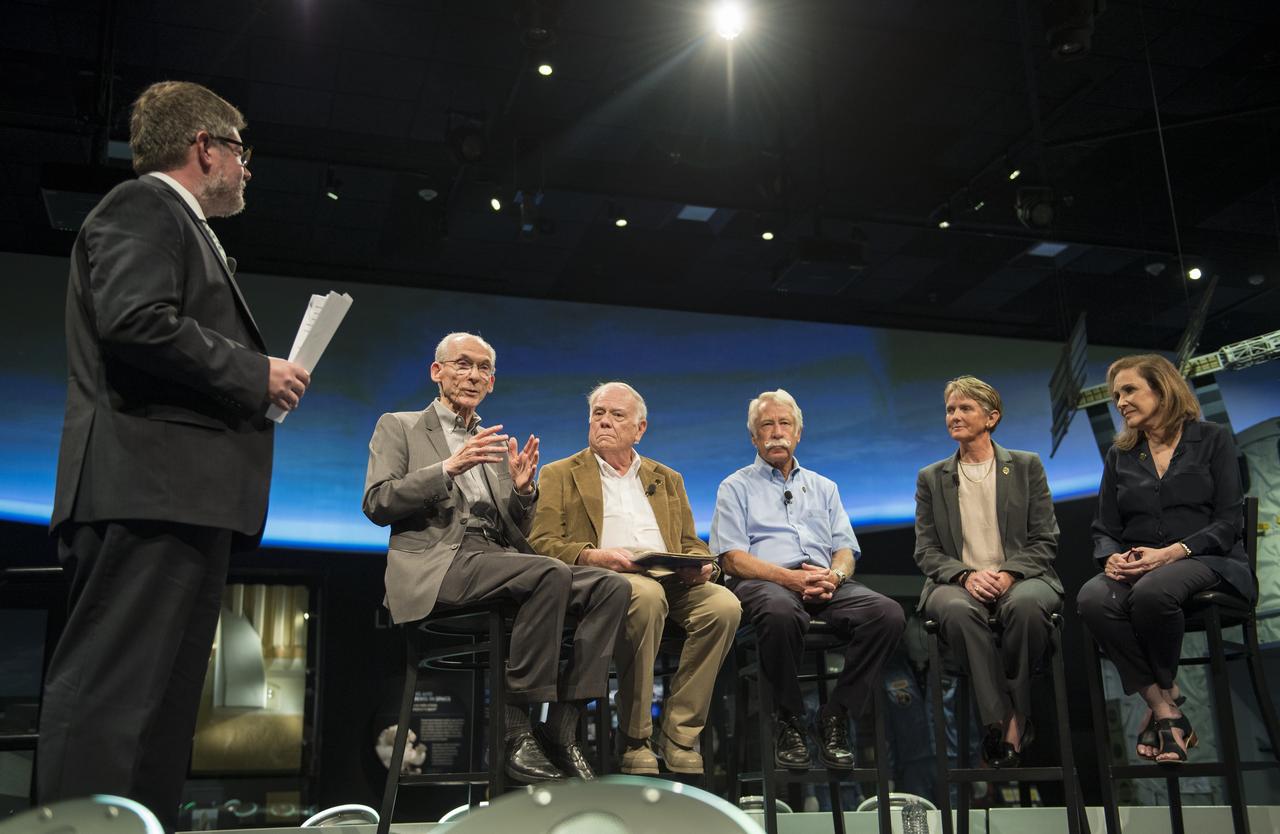
Matthew Shindell, curator, Smithsonian National Air and Space Museum (NASM), far left, moderates a panel including, from left to right, Ed Stone, Voyager project scientist; Gary Flandro, Voyager mission grand tour creator; Alan Cummings, Voyager researcher; Suzy Dodd, Voyager project manager, NASA's Jet Propulsion Laboratory; and Ann Druyan, writer/producer, Golden Record Visionary during a celebration of the 40th Anniversary of the launch of the Voyager 1 and 2 missions, Tuesday, September 5, 2017 at NASM in Washington. Voyager 1 was launched September 5, 1977, with a mission to study Jupiter and Saturn, but now the twin Voyager spacecrafts are on a journey into interstellar space to search for the heliopause, a region never reached by any other spacecraft. Photo Credit: (NASA/Aubrey Gemignani)

Panelists, from left to right, Ed Stone, Voyager project scientist; Victoria Jaggard, National Geographic Magazine science editor and moderator for the panel; Thomas Zurbuchen, associate administrator for NASA's Science Mission Directorate; and Ann Druyan, writer/producer and golden record visionary, visit in the green room before speaking at an event to celebrate the 40th Anniversary of the launch of the Voyager 1 and 2 missions, Tuesday, September 5, 2017 at National Geographic Society Headquarters in Washington. Voyager 1 was launched September 5, 1977, with a mission to study Jupiter and Saturn, but now the twin Voyager spacecrafts are on a journey into interstellar space to search for the heliopause, a region never reached by any other spacecraft. Photo Credit: (NASA/Aubrey Gemignani)

Victoria Jaggard, National Geographic Magazine science editor, left, moderates a panel discussion with, Ann Druyan, writer/producer and golden record visionary, second from left; Thomas Zurbuchen, associate administrator for NASA's Science Mission Directorate, second from right; and Ed Stone, Voyager project scientist, right, at an event to celebrate the 40th Anniversary of the launch of the Voyager 1 and 2 missions, Tuesday, September 5, 2017 at National Geographic Society Headquarters in Washington. Voyager 1 was launched September 5, 1977, with a mission to study Jupiter and Saturn, but now the twin Voyager spacecrafts are on a journey into interstellar space to search for the heliopause, a region never reached by any other spacecraft. Photo Credit: (NASA/Aubrey Gemignani)
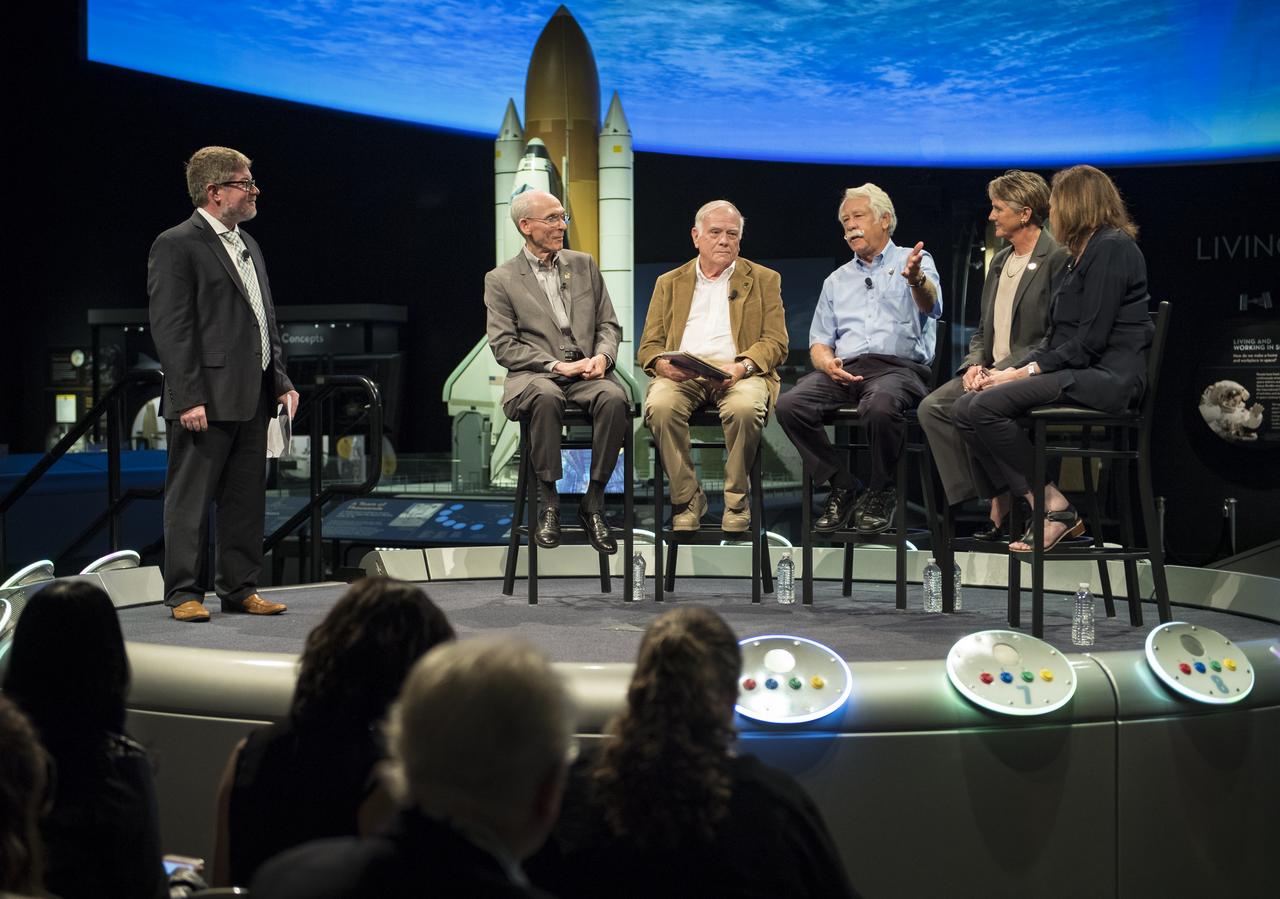
Matthew Shindell, curator, Smithsonian National Air and Space Museum (NASM), far left, moderates a panel including, from left to right, Ed Stone, Voyager project scientist; Gary Flandro, Voyager mission grand tour creator; Alan Cummings, Voyager researcher; Suzy Dodd, Voyager project manager, NASA's Jet Propulsion Laboratory; and Ann Druyan, writer/producer, Golden Record Visionary during a celebration of the 40th Anniversary of the launch of the Voyager 1 and 2 missions, Tuesday, September 5, 2017 at NASM in Washington. Voyager 1 was launched September 5, 1977, with a mission to study Jupiter and Saturn, but now the twin Voyager spacecrafts are on a journey into interstellar space to search for the heliopause, a region never reached by any other spacecraft. Photo Credit: (NASA/Aubrey Gemignani)
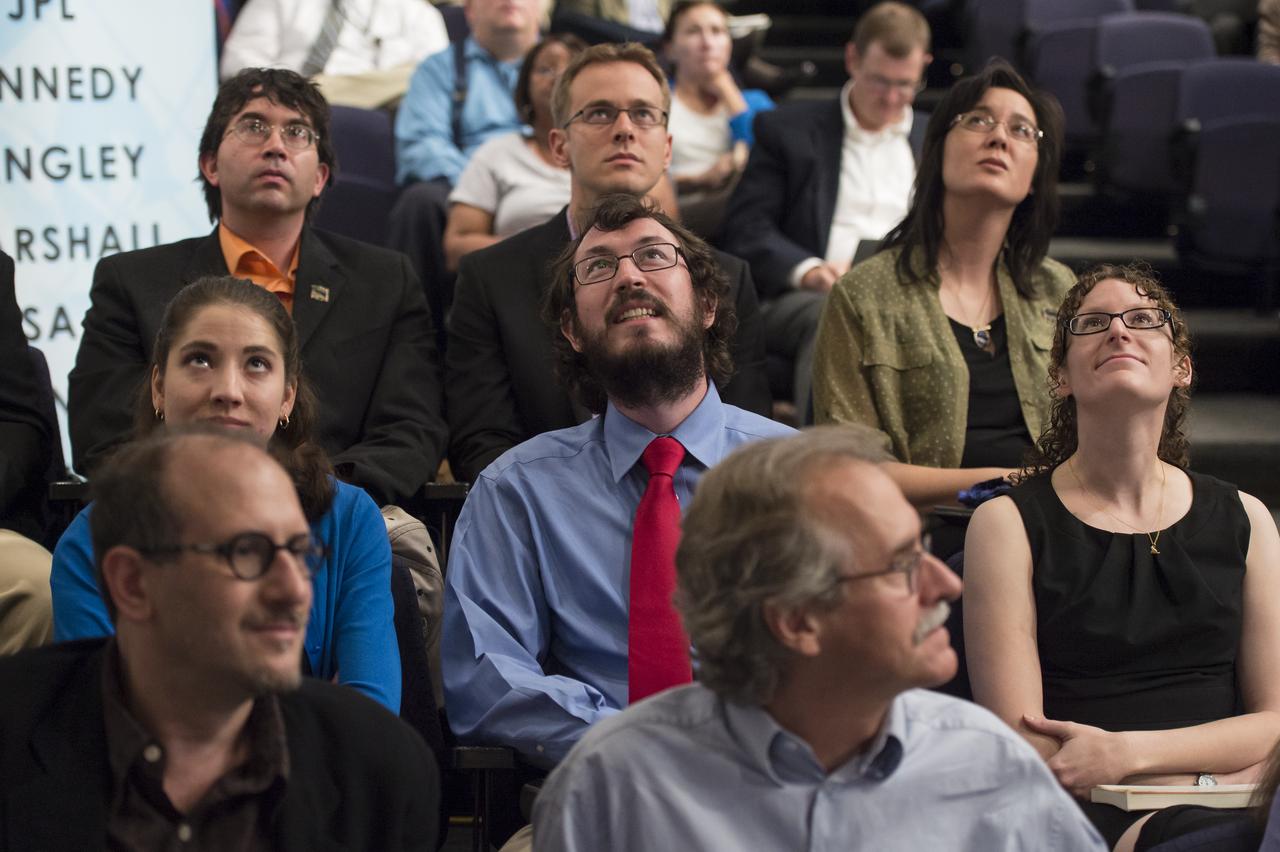
Audience members view slides from a presentation by Dr. Jim Green, Dr. Ed Stone, and Dr. Alan Stern at the "New Horizons: The First Mission to the Pluto System and the Kuiper Belt" Event at NASA Headquarters in Washington, DC Monday, August 25, 2014. They discussed how the first images of Pluto and its moons would be captured by the New Horizons spacecraft during a five month long reconnaissance flyby study starting in the summer of 2015. New Horizons launched on January 19, 2006 and is scheduled to make its closest approach to Pluto on July 14, 2015. Photo Credit: (NASA/Aubrey Gemignani)

Ann Druyan, writer/producer and golden record visionary, speaks on a panel with moderator Victoria Jaggard, National Geographic Magazine science editor, left, Thomas Zurbuchen, associate administrator for NASA's Science Mission Directorate, right; and Ed Stone, Voyager project scientist, not pictured, at an event to celebrate the 40th Anniversary of the launch of the Voyager 1 and 2 missions, Tuesday, September 5, 2017 at National Geographic Society Headquarters in Washington. Voyager 1 was launched September 5, 1977, with a mission to study Jupiter and Saturn, but now the twin Voyager spacecrafts are on a journey into interstellar space to search for the heliopause, a region never reached by any other spacecraft. Photo Credit: (NASA/Aubrey Gemignani)
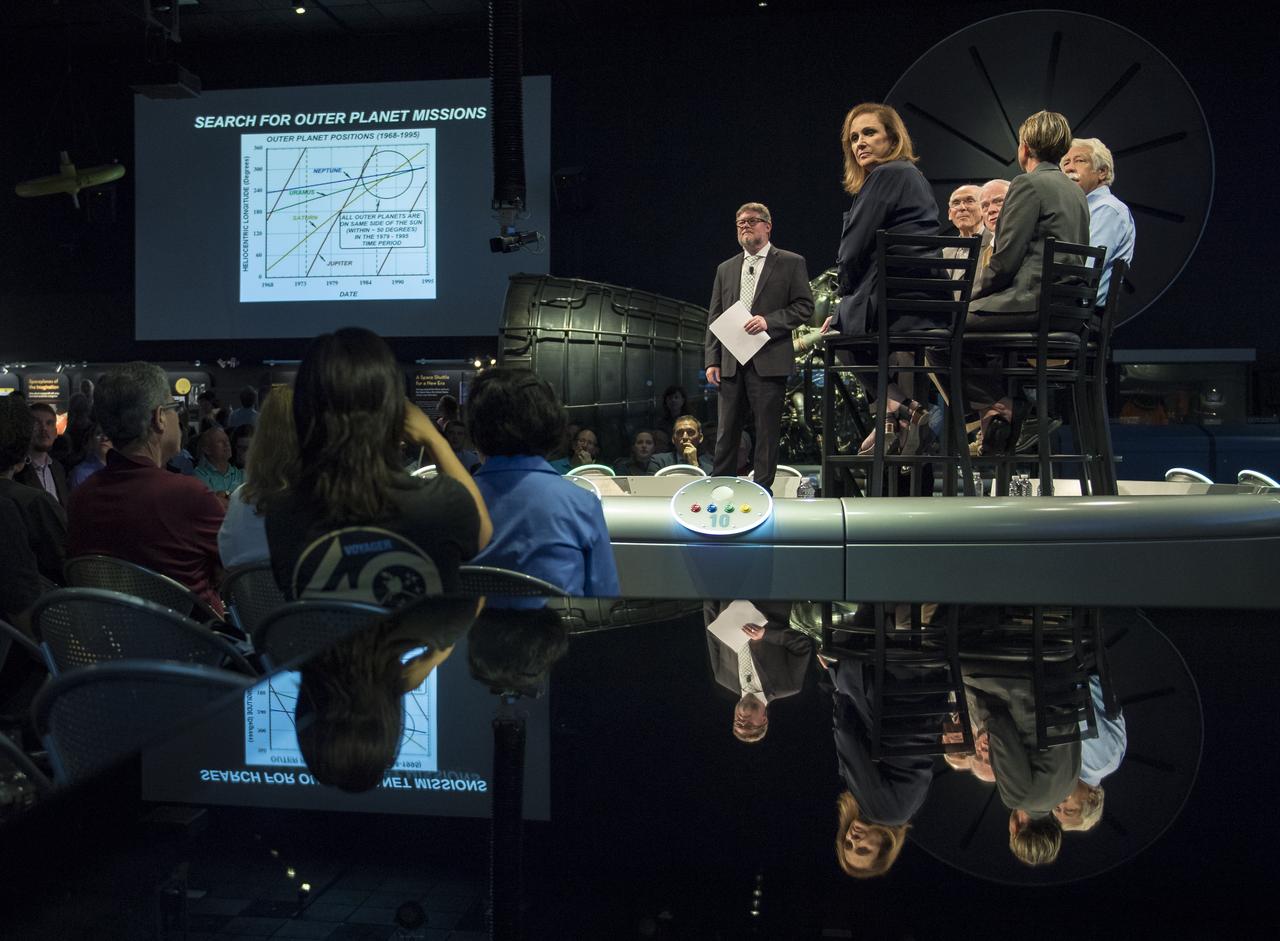
Gary Flandro, Voyager mission grand tour creator, speaks on a panel at an event to celebrate the 40th Anniversary of the launch of the Voyager 1 and 2 missions, Tuesday, September 5, 2017 at Smithsonian's National Air and Space Museum in Washington. Voyager 1 was launched September 5, 1977, with a mission to study Jupiter and Saturn, but now the twin Voyager spacecrafts are on a journey into interstellar space to search for the heliopause, a region never reached by any other spacecraft. Photo Credit: (NASA/Aubrey Gemignani)