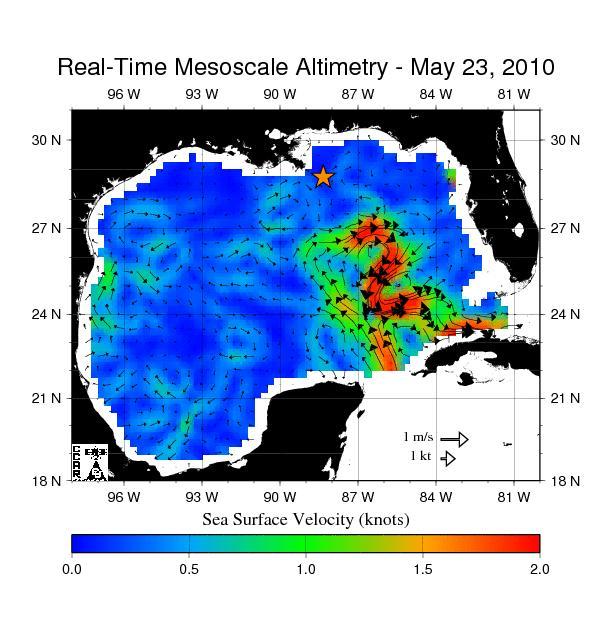
The northern portion of the Gulf of Mexico Loop Current, shown in red, appears about to detach a large ring of current, creating a separate eddy. An eddy is a large, warm, clockwise-spinning vortex of water -- the ocean version of a cyclone.
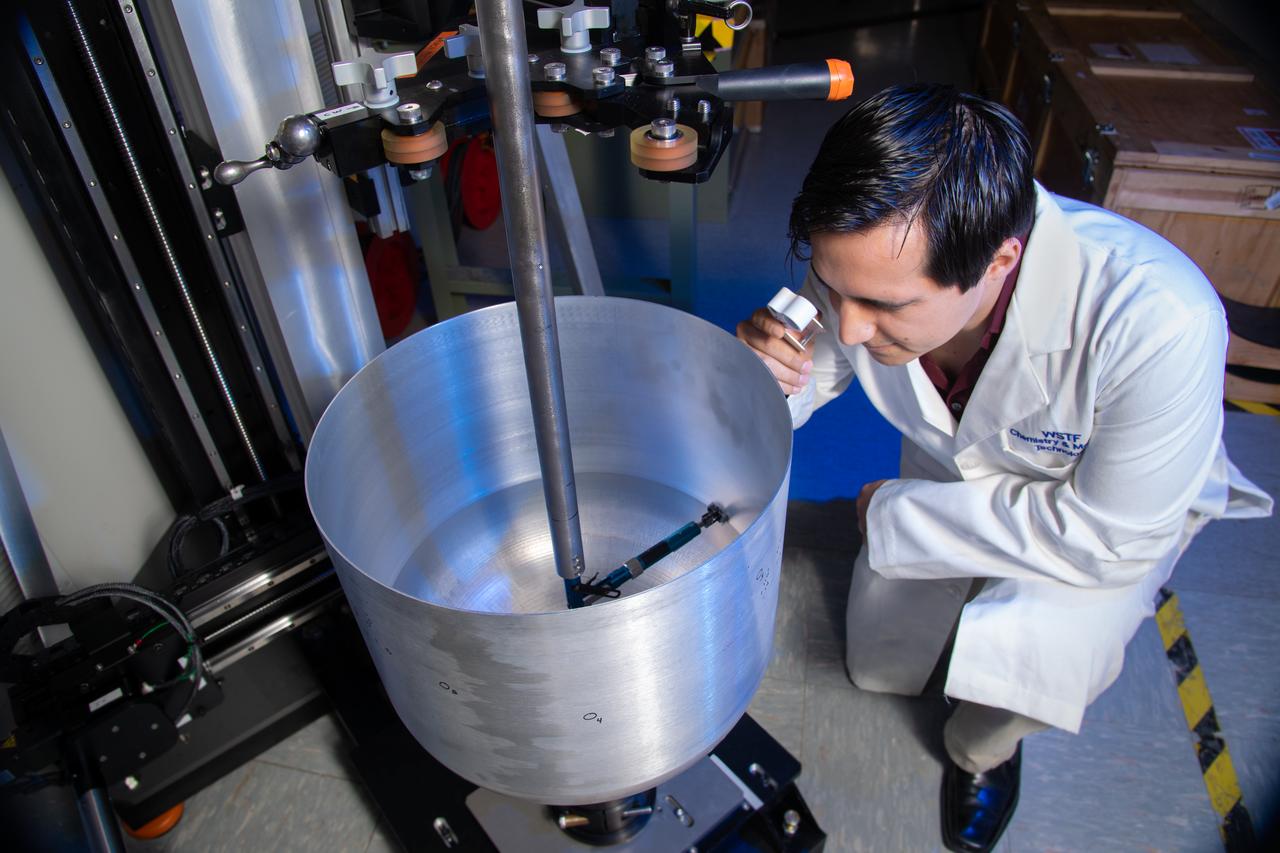
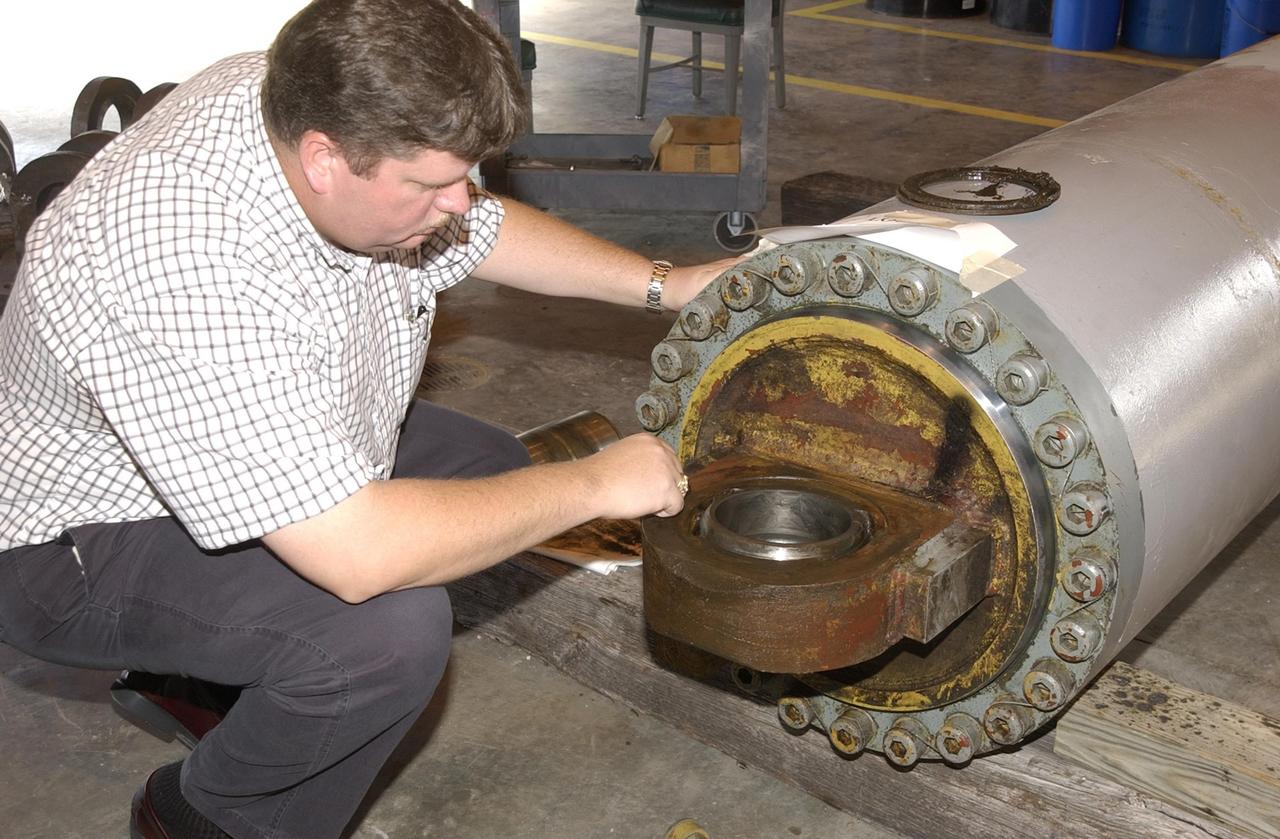
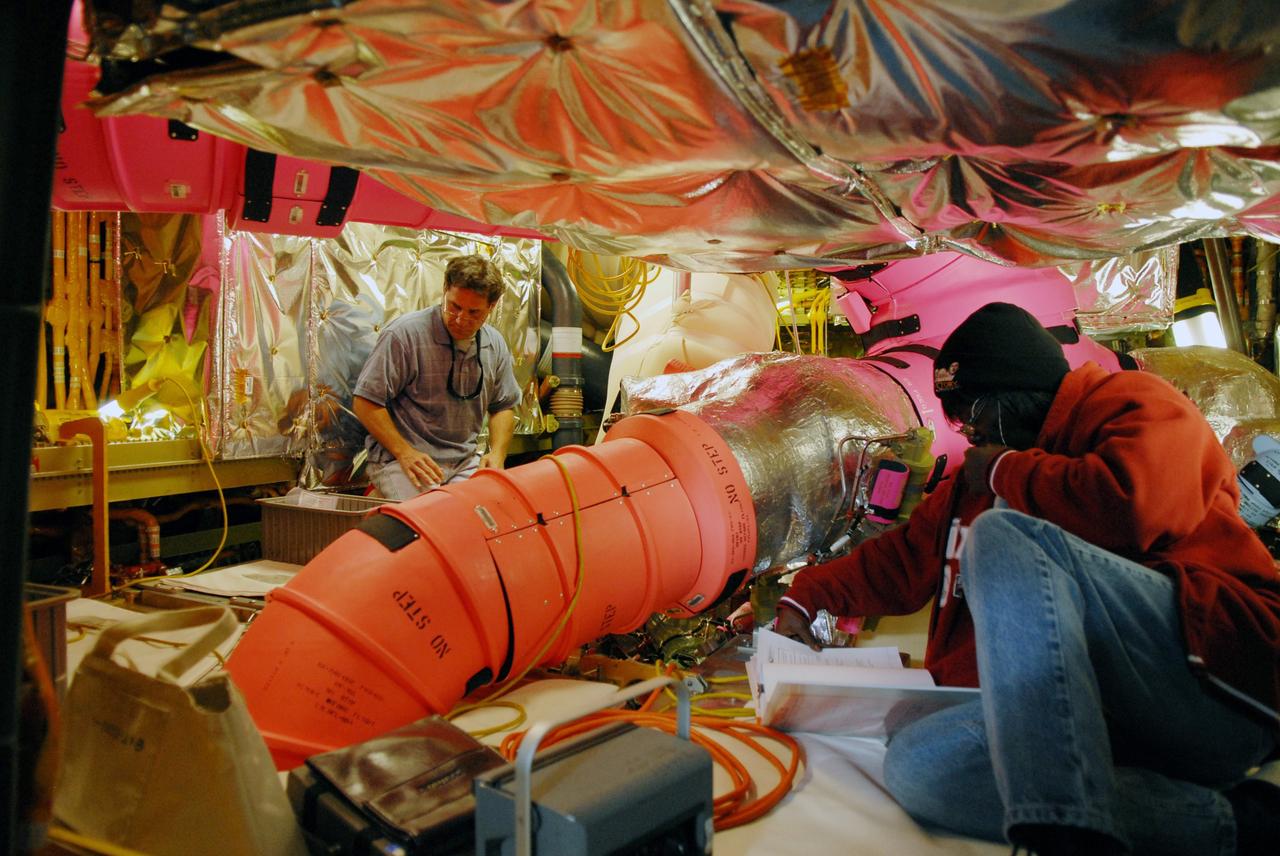
Edgar Reyes, a materials engineer and recent graduate of The University of Texas at El Paso, visually inspects a crack identified on the outer surface of a composite overwrapped pressure vessel (COPV) following an internal eddy-current through-wall nondestructive inspection conducted at the NASA White Sands Test Facility in Las Cruces, N.M. Eddy-current testing is one of many electromagnetic testing methods used in nondestructive testing to identify cracks in COPVS that can potentially threaten spacecraft crew and mission success. Photo Credit: (NASA/Reed P. Elliott)
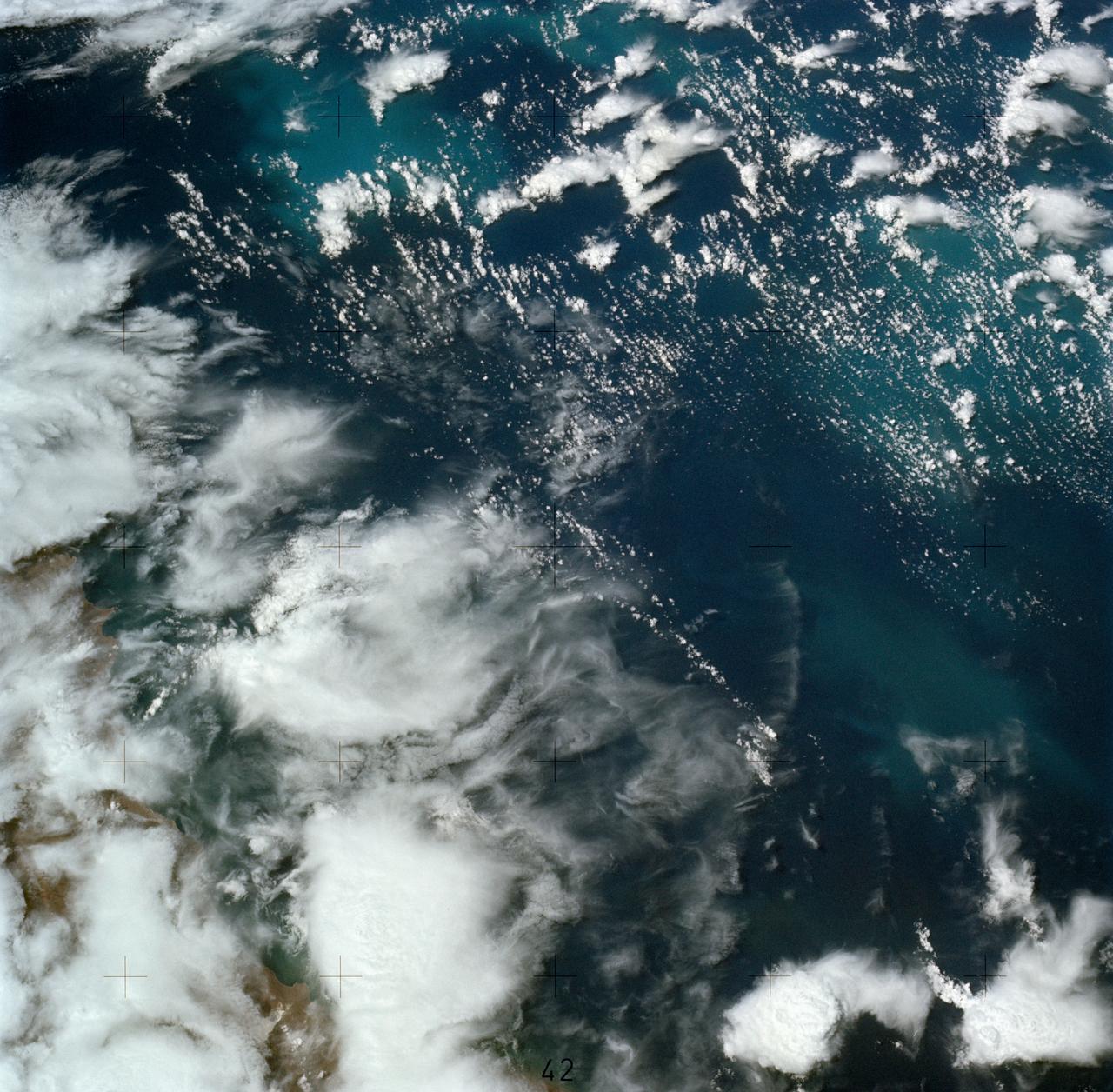
SL4-137-3608 (14 Dec. 1973) --- A view of cold water eddies in the Falkland Current off the South Atlantic coast of southern Argentina as seen from the Skylab space station in Earth orbit. This picture was taken by one of the Skylab 4 crewmen using a hand-held 70mm Hasselblad camera. This land area (left corner) extends south along the coast from Puerto Deseado (center left border) for about 50 miles. Within the ocean, several light blue areas are visible and represent the occurrence of plankton with the Falkland Current. Over the ocean, the cold water eddies are identified by the circular cloud-free areas within the cloud street pattern and bordered by cumulus cloud buildup (white). The cloud streets indicate the wind is from the southwest and do not form over eddies because energy form the atmosphere is absorbed by the cold ocean water. On the downwind side of the eddies, cumulus clouds tend to form as the cold moist air flows over the warmer water. Similar cloud and eddy features have been observed by the Skylab 4 crewmen in the Yucatan Current off Yucatan Peninsula and in some parts of the South Pacific. Studies are underway by Dr. George Maul, NOAA, and Dr. Robert Stevenson, ONR, to determine the significance of the cold water eddies to ocean dynamics. Photo credit: NASA
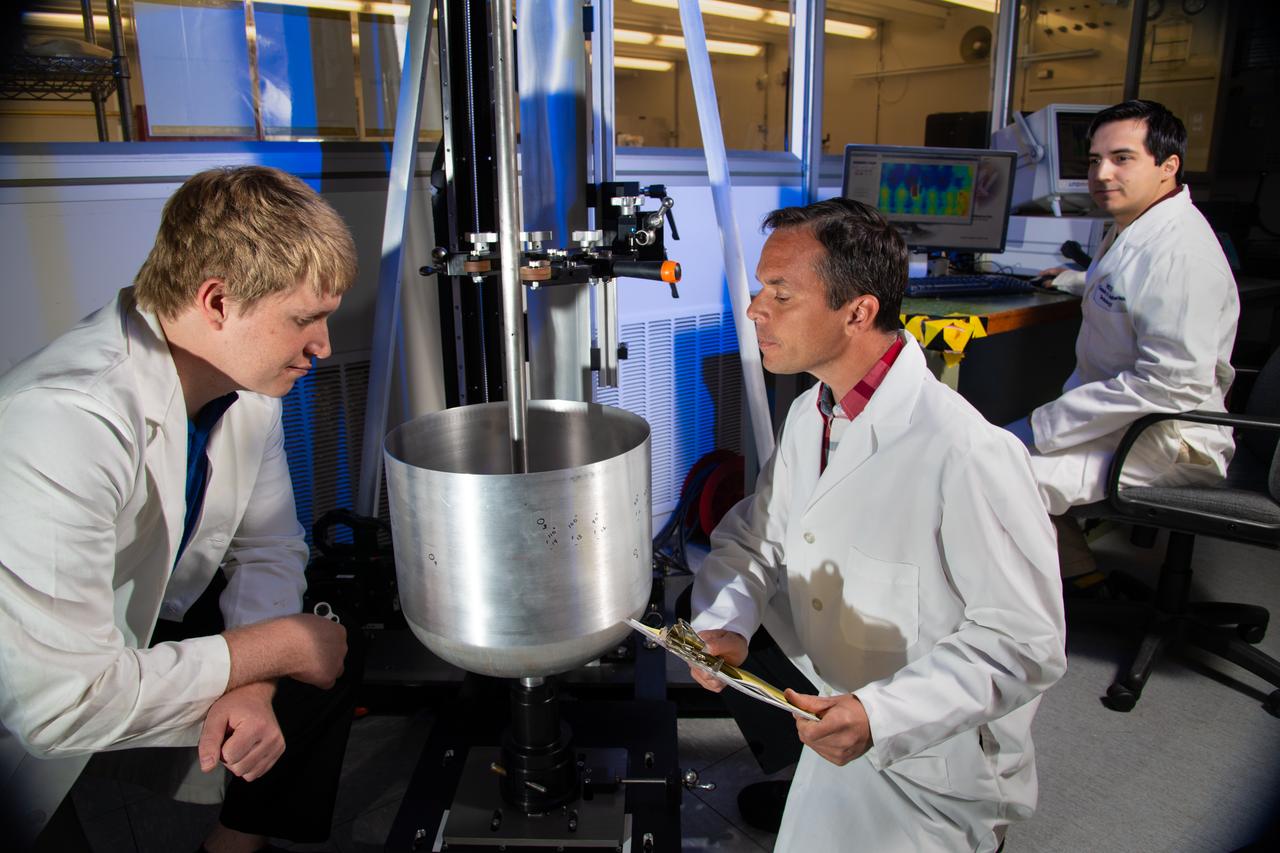
Engineers (from left) Ayrton Jordan, Anthony Milana and Edgar Reyes from the NASA White Sands Test Facility (WSTF) in Las Cruces, N.M. qualify an interior surface pressure vessel crack inspection using the eddy current nondestructive testing technique to find flaws smaller than more common and less capable penetrant testing methods. Detecting cracks smaller than the eye can detect is an important feature as manufacturers push performance limits to achieve lighter, more efficient spacecraft. Photo Credit: (NASA/Reed P. Elliott)

STS054-72-056 (13-19 Jan 1993) --- A ship wake in the Bay of Bengal is noticeable in this 70mm frame. The sun glint pattern on the ocean reveals many patterns of sea surface roughness related to currents, waves, wind roughening, and biology that and are not apparent when the ocean is viewed away from the Sun's reflection. In this view of the Bay of Bengal, southeast of Madras, India, sun glint highlights convergence zones between ocean currents (bright, linear features), a eddy, and the wake of a ship. In several locations where the ship has passed areas of current shear, the ship wake is distorted, indicating the relative current direction.
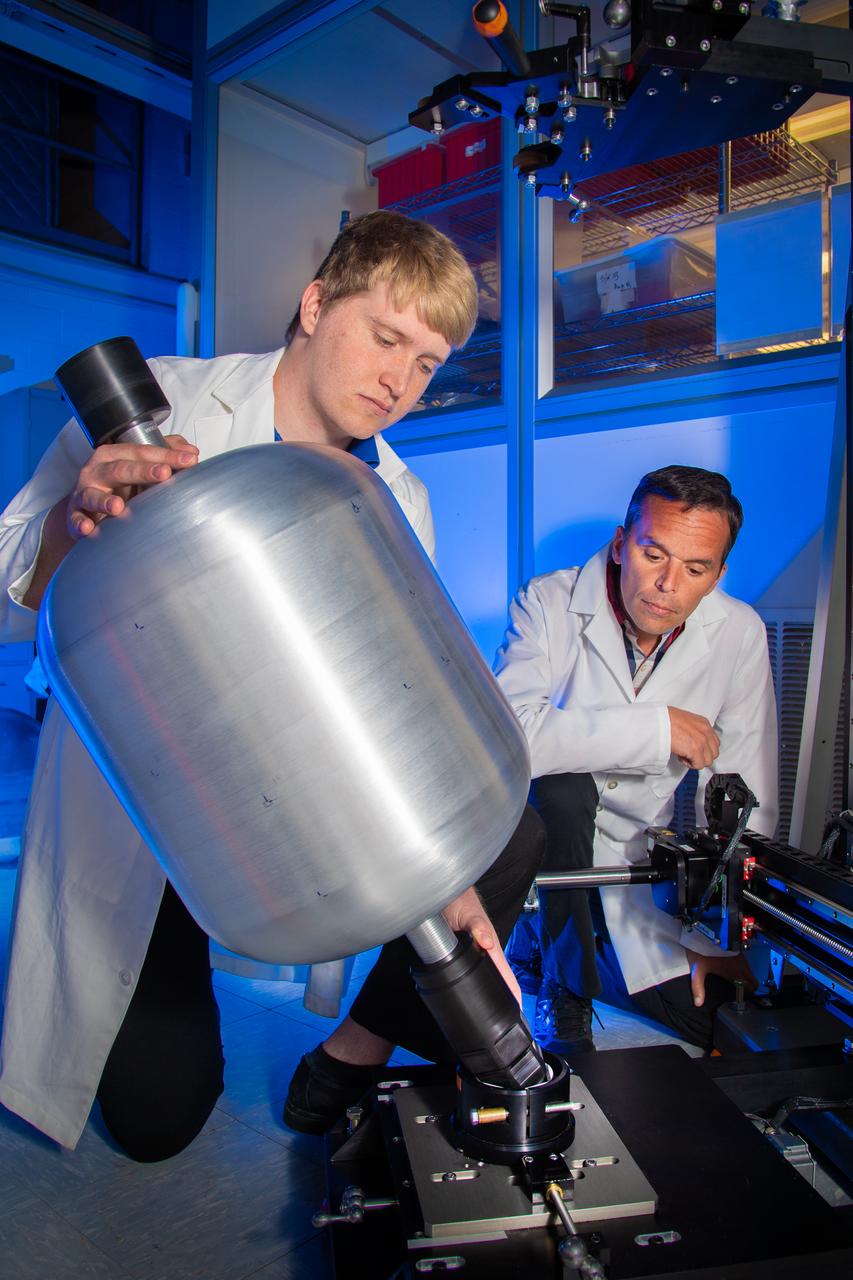
Engineers Ayrton Jordan (left) and Anthony Milana (right) at the NASA White Sands Test Facility (WSTF) in Las Cruces, N.M. install a metallic liner into the multipurpose pressure vessel scanner that could one day become part of a composite overwrapped pressure vessel. A slotted ball joint at the base of the rotary stage allows the tank to pivot resulting in helical scans that are more reliable when measuring interior and exterior 3D surface profiles. Photo Credit: (NASA/Reed P. Elliott)
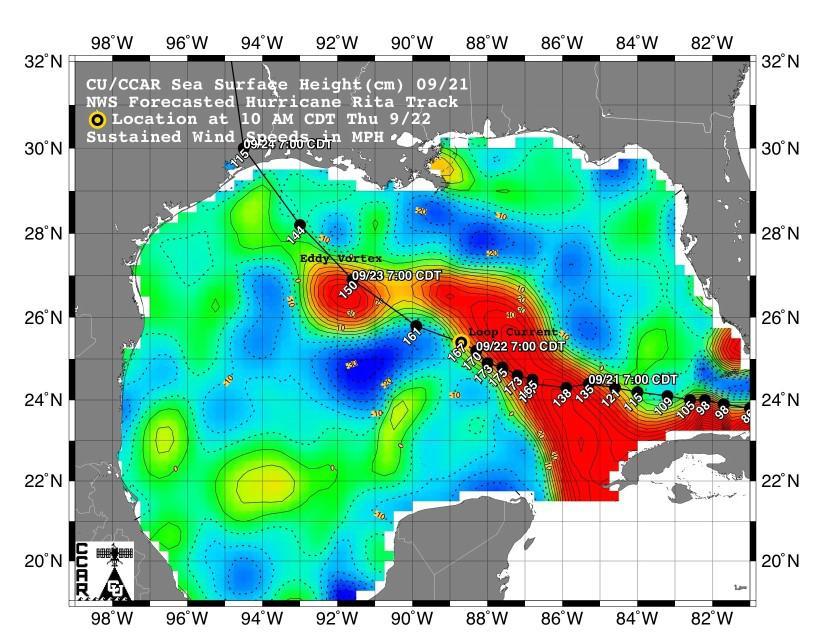
This sea surface height map of the Gulf of Mexico, with the Florida peninsula on the right and the Texas-Mexico Gulf Coast on the left, is based on altimeter data from four satellites including NASA’s Topex/Poseidon and Jason. Red indicates a strong circulation of much warmer waters, which can feed energy to a hurricane. This area stands 35 to 60 centimeters (about 13 to 23 inches) higher than the surrounding waters of the Gulf. The actual track of a hurricane is primarily dependent upon steering winds, which are forecasted through the use of atmospheric models. However, the interaction of the hurricane with the upper ocean is the primary source of energy for the storm. Hurricane intensity is therefore greatly affected by the upper ocean temperature structure and can exhibit explosive growth over warm ocean currents and eddies. Eddies are currents of water that run contrary to the direction of the main current. According to the forecasted track through the Gulf of Mexico, Hurricane Rita will continue crossing the warm waters of a Gulf of Mexico circulation feature called the Loop Current and then pass near a warm-water eddy called the Eddy Vortex, located in the north central Gulf, south of Louisiana. http://photojournal.jpl.nasa.gov/catalog/PIA06427
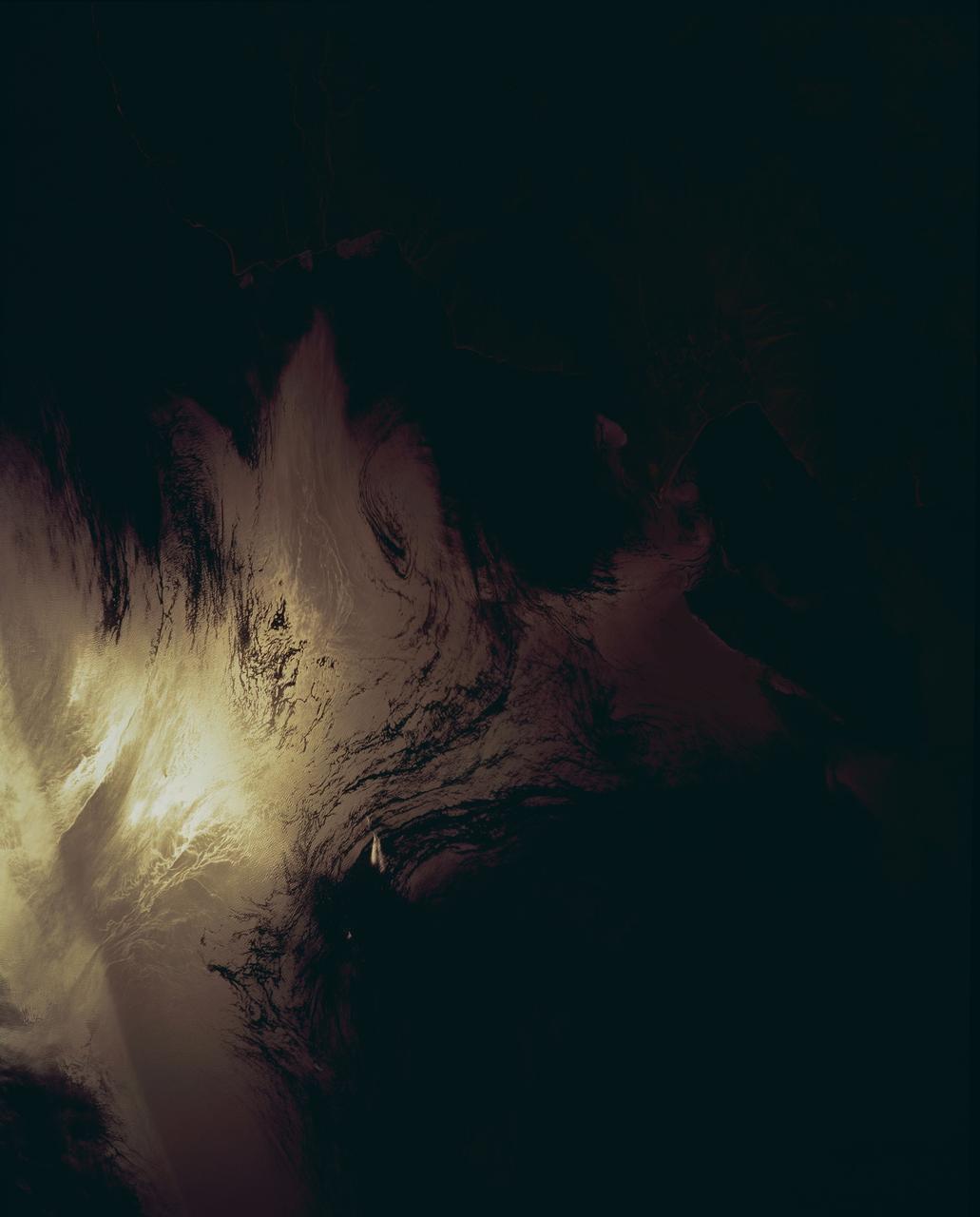
STS062-153-226 (4-18 March 1994) --- Though it did not reproduce well, this photo gives scientific information to aid in studying all types of earth's processes. It documents ocean features in the sunglint in the Gulf of California, off the Isla Cerralvo, souther Baja, California. Biological oils collect on the surface and shows current patterns, eddies and ship wakes. The small bright spot on the edge of the eddy is a ship dumping oily water from its bilges. The line in the brighter area is a light wind gust roughening the surface.
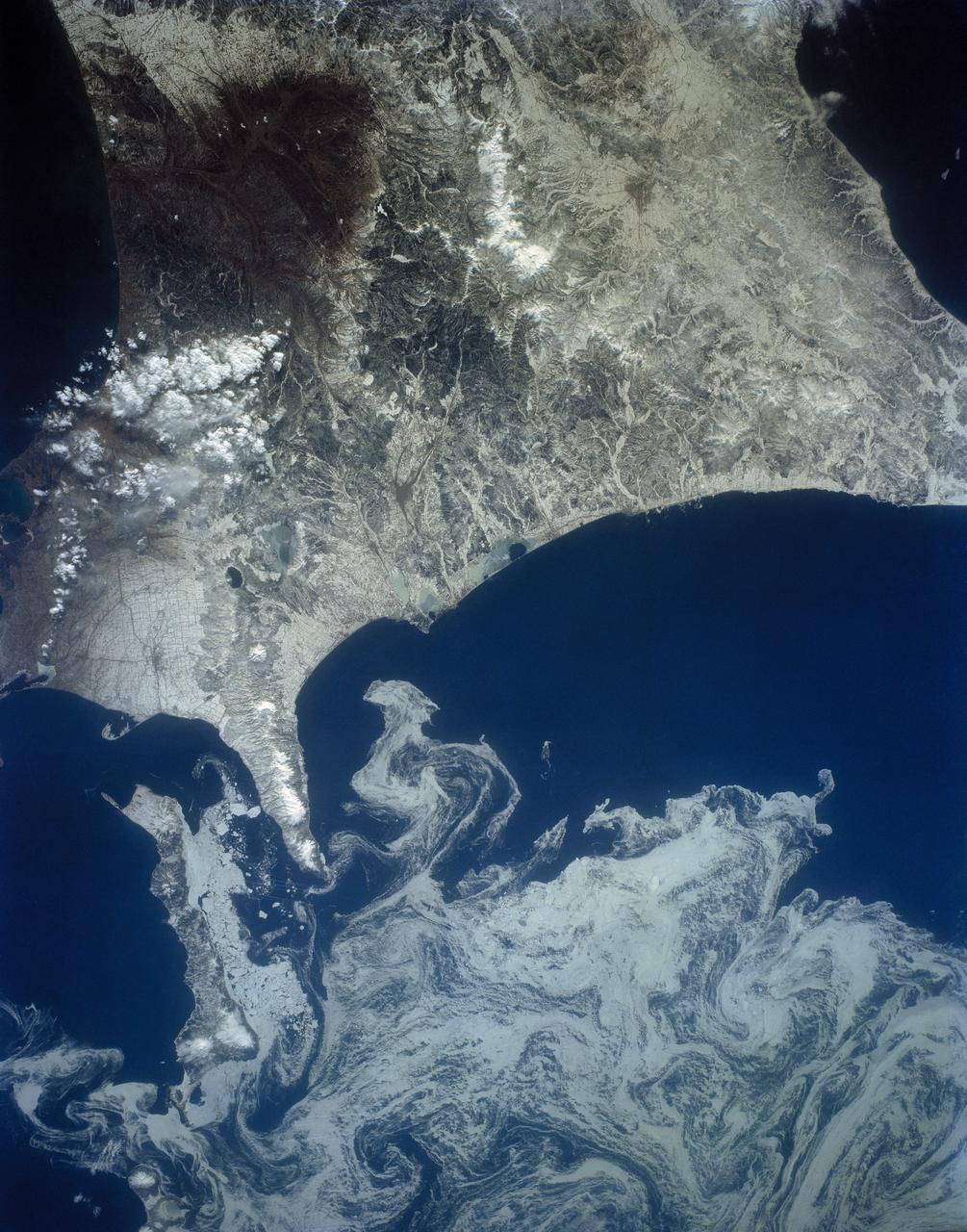
The northeast coast of Hokkaido and Kunashir Island, Japan (44.0N, 143.0E) are seen bordered by drifting sea ice. The sea ice has formed a complex pattern of eddies in response to surface water currents and winds. Photos of this kind aid researchers in describing local ocean current patterns and the effects of wind speed and direction on the drift of surface material, such as ice floes or oil. Kunashir is the southernmost of the Kuril Islands.
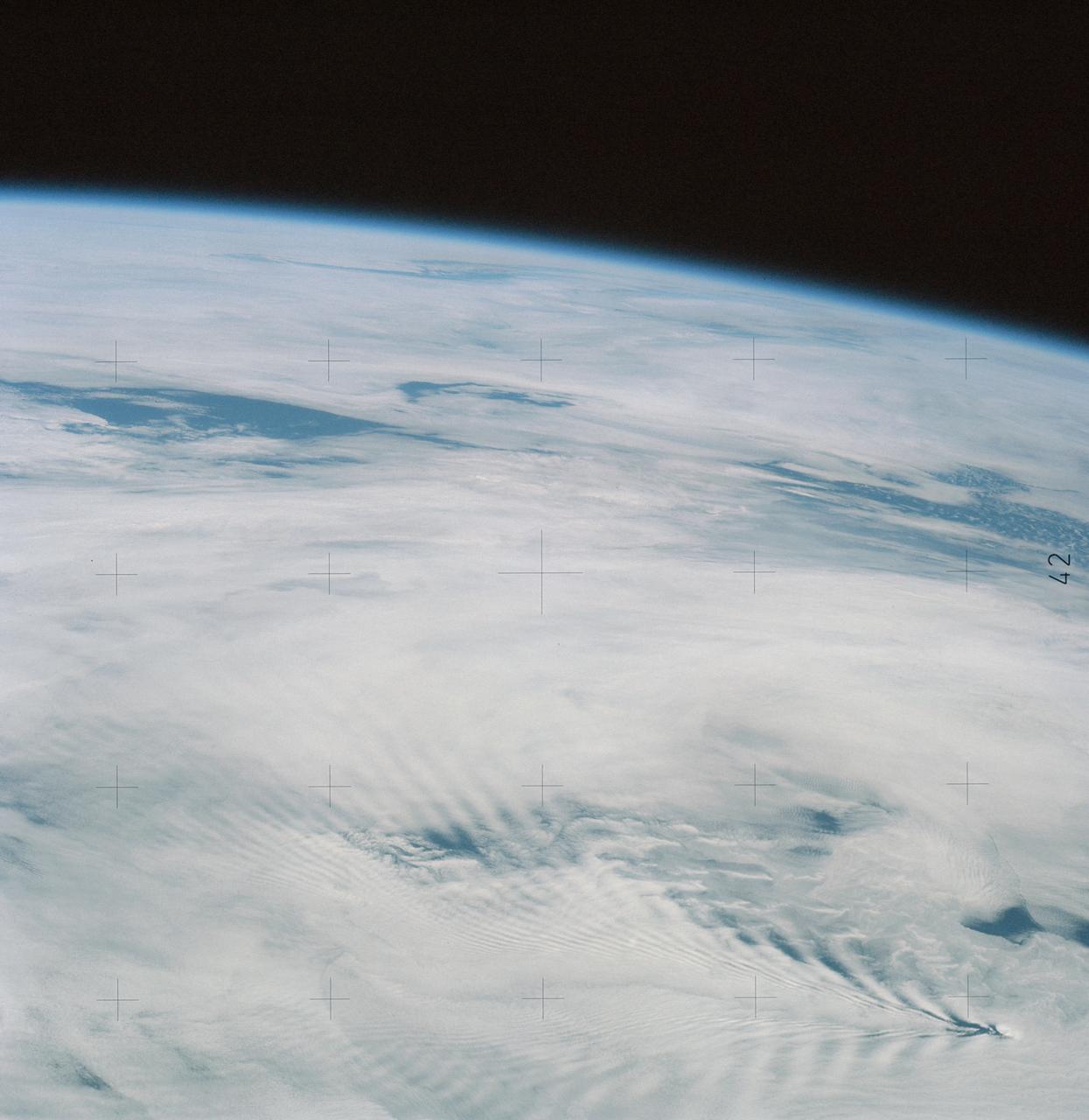
SL4-137-3632 (February 1974) --- A photograph taken from the Skylab space station in Earth orbit illustrating an atmospheric wave pattern by the affect of a small mountainous island on wind currents. Various patterns can be seen downwind of small islands. Often a Von Karmon vortex can be seen which appears as a spiral pattern. Multiple vortices have been photographed on previous missions. This photograph illustrates a "bow wave" pattern which extends for hundreds of miles downwind from the island. The island itself is often clear when a wave pattern is formed downstream. This particular pattern is very symmetrical. These wave patterns are most common in the South Pacific. This picture was taken by a Skylab 4 crewmen using a hand-held 70mm Hasselblad camera. Photo credit: NASA
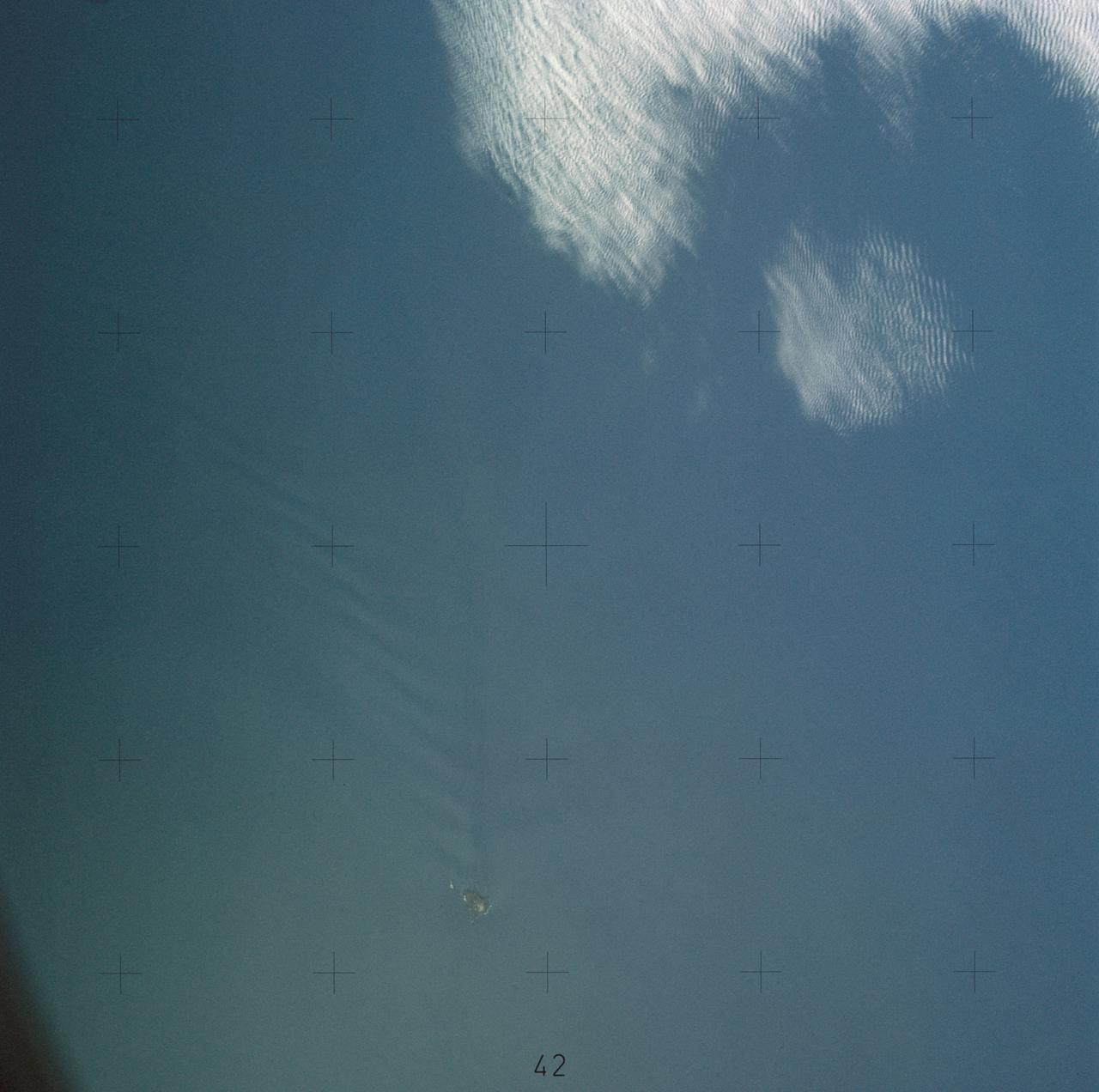
SL4-137-3655 (16 Dec. 1973) --- An island wake produced by the Antipodes Islands in the ocean current south of New Zealand is seen in this photograph taken from the Skylab space station in Earth orbit. A Skylab 4 crewmen took the picture with a hand-held 70mm Hasselblad camera. The bow wave pattern is quite evident and can be used to determine the current speed from the angle of the bow wave if the propagation speed of the surface wave is known. Also, evident is the darker band extending downstream from the island tens of miles. This is the actual wake of the island. The existence of water color differences from within to outside a turbulent island wake may indicate a temperature difference, with cooler water being stirred to the surface in the wake. This temperature difference could be used to drive a thermo-electric type generator to reduce small islands' dependence on imported oil for power generation. Photo credit: NASA
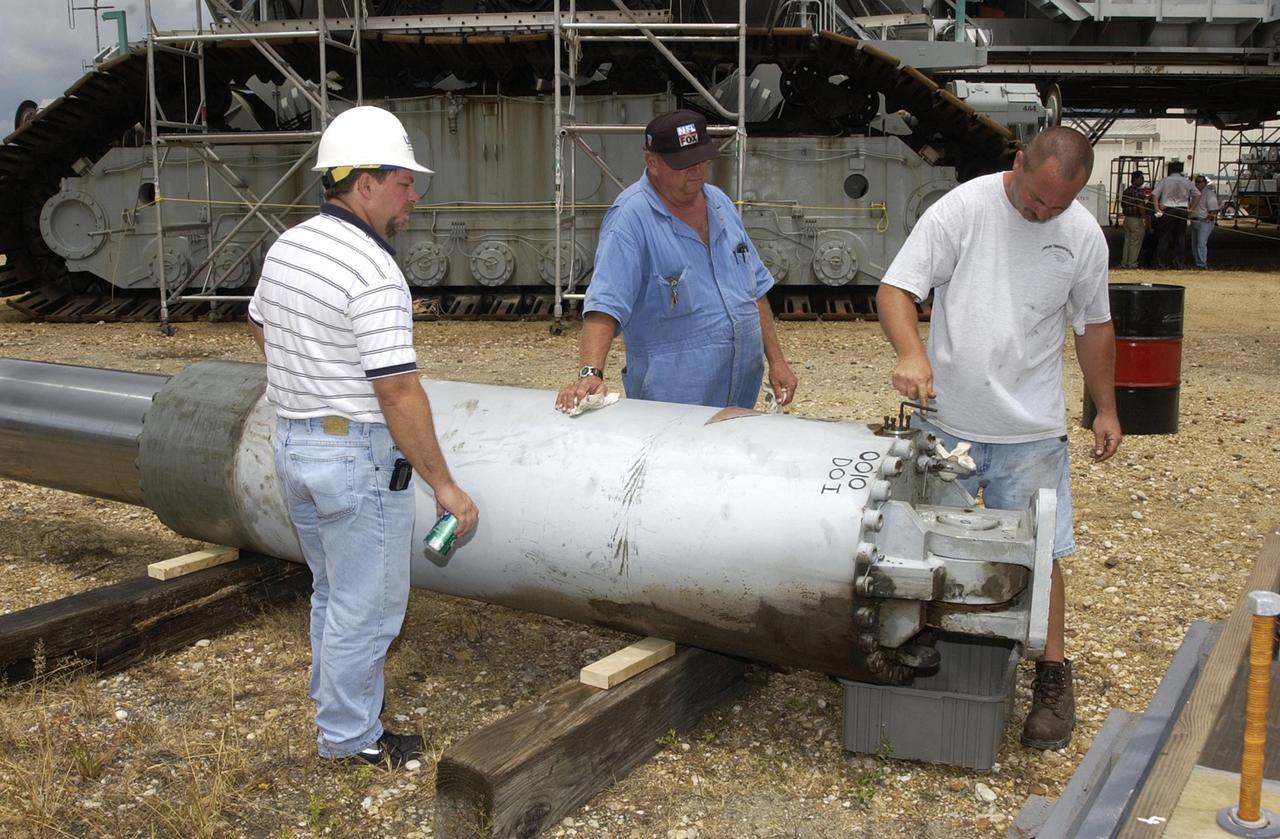
KENNEDY SPACE CENTER, FLA. -- Technicians check out a jacking, equalization and leveling (JEL) cylinders from Crawler-Transporter No. 2. During inspections, technicians removed two of the 16 JEL cylinders on the vehicle to gain access to the bearings for routine maintenance and found three of the four bearings had cracks. Of the three bearings, two had extensive damage. Further eddy current inspections indicate that cracks are present on 15 of the bearings. There are 16 cylinders and 32 bearings per crawler. Although no cause for the cracks is known at this time, engineers are currently evaluating the situation to determine the most appropriate solution. The crawler is in the background.
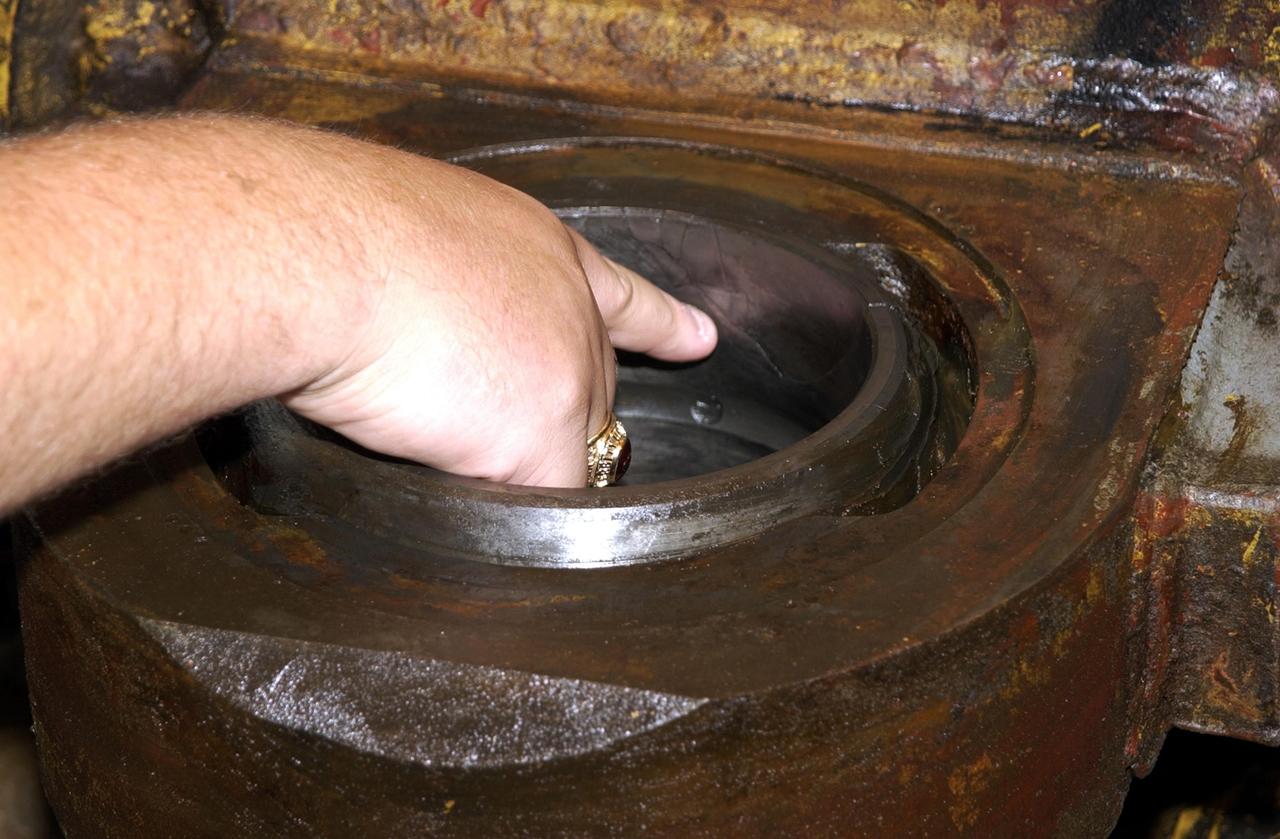
KENNEDY SPACE CENTER, FLA. -- Perry Becker, an engineer with NASA, points to a crack in a bearing from one of the jacking, equalization and leveling (JEL) cylinders on Crawler-Transporter No. 2. During inspections, technicians removed two of the 16 JEL cylinders on the vehicle to gain access to the bearings for routine maintenance and found three of the four bearings had cracks. Of the three bearings, two had extensive damage. Further eddy current inspections indicate that cracks are present on 15 of the bearings. There are 16 cylinders and 32 bearings per crawler. Although no cause for the cracks is known at this time, engineers are currently evaluating the situation to determine the most appropriate solution.

KENNEDY SPACE CENTER, FLA. -- Perry Becker, an engineer with NASA, looks at a spacer on the bearing in one of the jacking, equalization and leveling (JEL) cylinders on Crawler-Transporter No. 2. During inspections, technicians removed two of the 16 JEL cylinders on the vehicle to gain access to the bearings for routine maintenance and found three of the four bearings had cracks. Of the three bearings, two had extensive damage. Further eddy current inspections indicate that cracks are present on 15 of the bearings. There are 16 cylinders and 32 bearings per crawler. Although no cause for the cracks is known at this time, engineers are currently evaluating the situation to determine the most appropriate solution.
KENNEDY SPACE CENTER, FLA. -- Perry Becker, an engineer with NASA, looks at a bearing from one of the jacking, equalization and leveling (JEL) cylinders on Crawler-Transporter No. 2. During inspections, technicians removed two of the 16 JEL cylinders on the vehicle to gain access to the bearings for routine maintenance and found three of the four bearings had cracks. Of the three bearings, two had extensive damage. Further eddy current inspections indicate that cracks are present on 15 of the bearings. There are 16 cylinders and 32 bearings per crawler. Although no cause for the cracks is known at this time, engineers are currently evaluating the situation to determine the most appropriate solution.
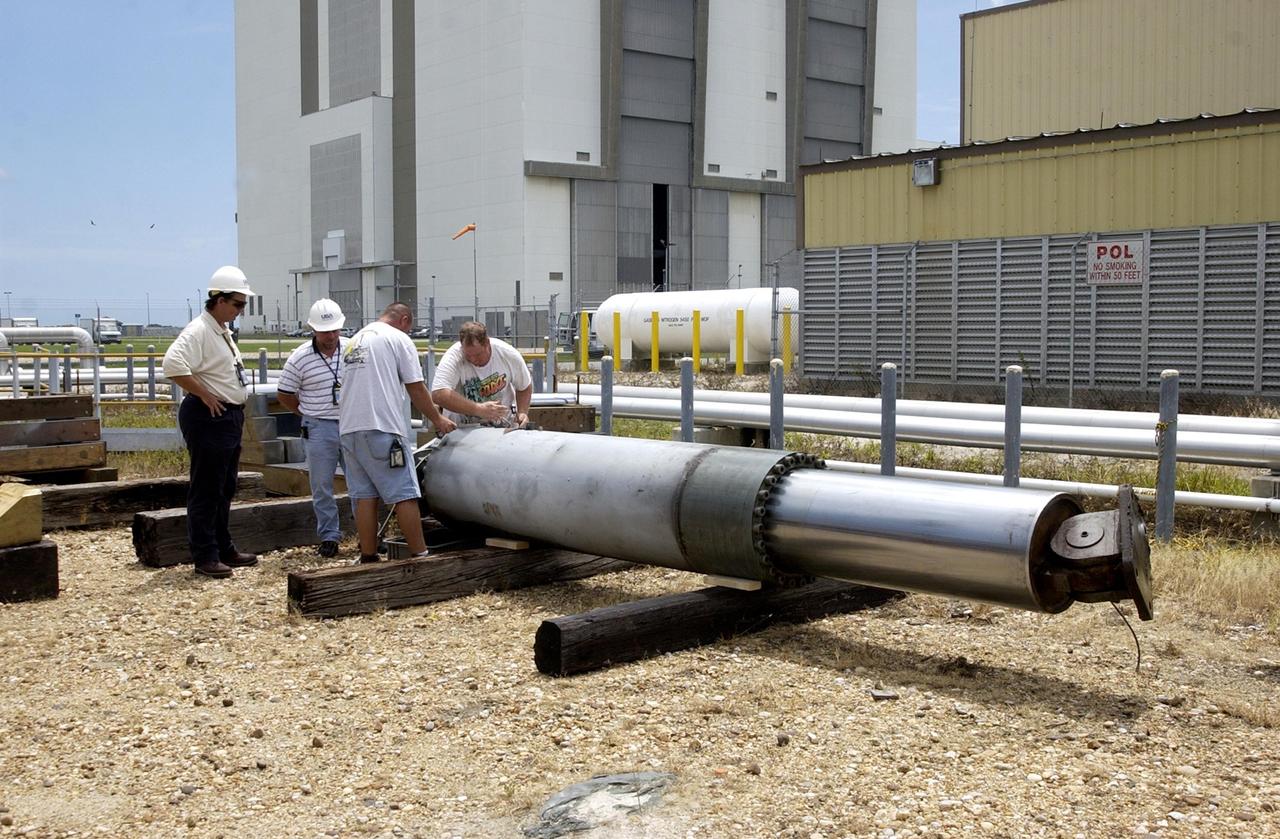
KENNEDY SPACE CENTER, FLA. -- Technicians check out a jacking, equalization and leveling (JEL) cylinders from Crawler-Transporter No. 2. During inspections, technicians removed two of the 16 JEL cylinders on the vehicle to gain access to the bearings for routine maintenance and found three of the four bearings had cracks. Of the three bearings, two had extensive damage. Further eddy current inspections indicate that cracks are present on 15 of the bearings. There are 16 cylinders and 32 bearings per crawler. Although no cause for the cracks is known at this time, engineers are currently evaluating the situation to determine the most appropriate solution.
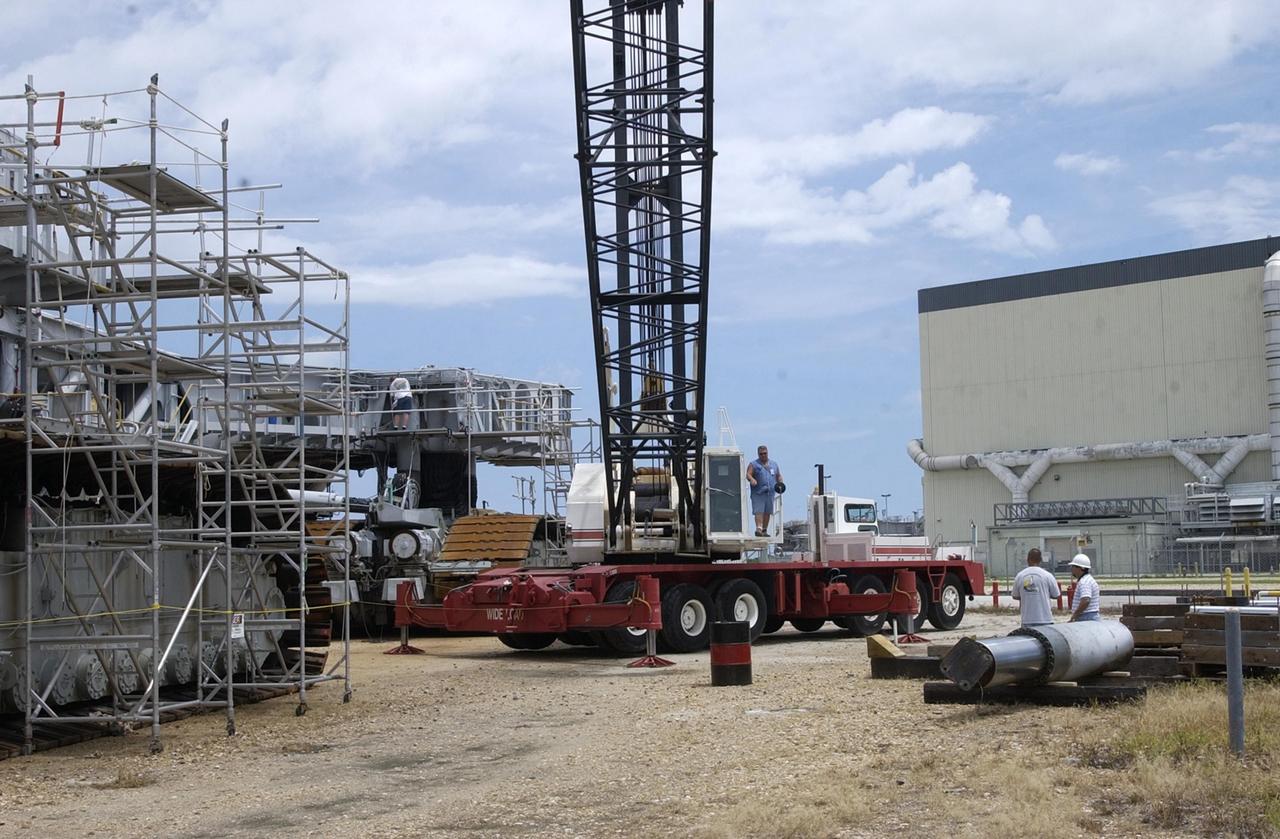
KENNEDY SPACE CENTER, FLA. -- A crane operator (center) talks with technicians (right) standing next to one of the jacking, equalization and leveling (JEL) cylinders from Crawler-Transporter No. 2. During inspections, technicians removed two of the 16 JEL cylinders on the vehicle to gain access to the bearings for routine maintenance and found three of the four bearings had cracks. Of the three bearings, two had extensive damage. Further eddy current inspections indicate that cracks are present on 15 of the bearings. There are 16 cylinders and 32 bearings per crawler. Although no cause for the cracks is known at this time, engineers are currently evaluating the situation to determine the most appropriate solution.
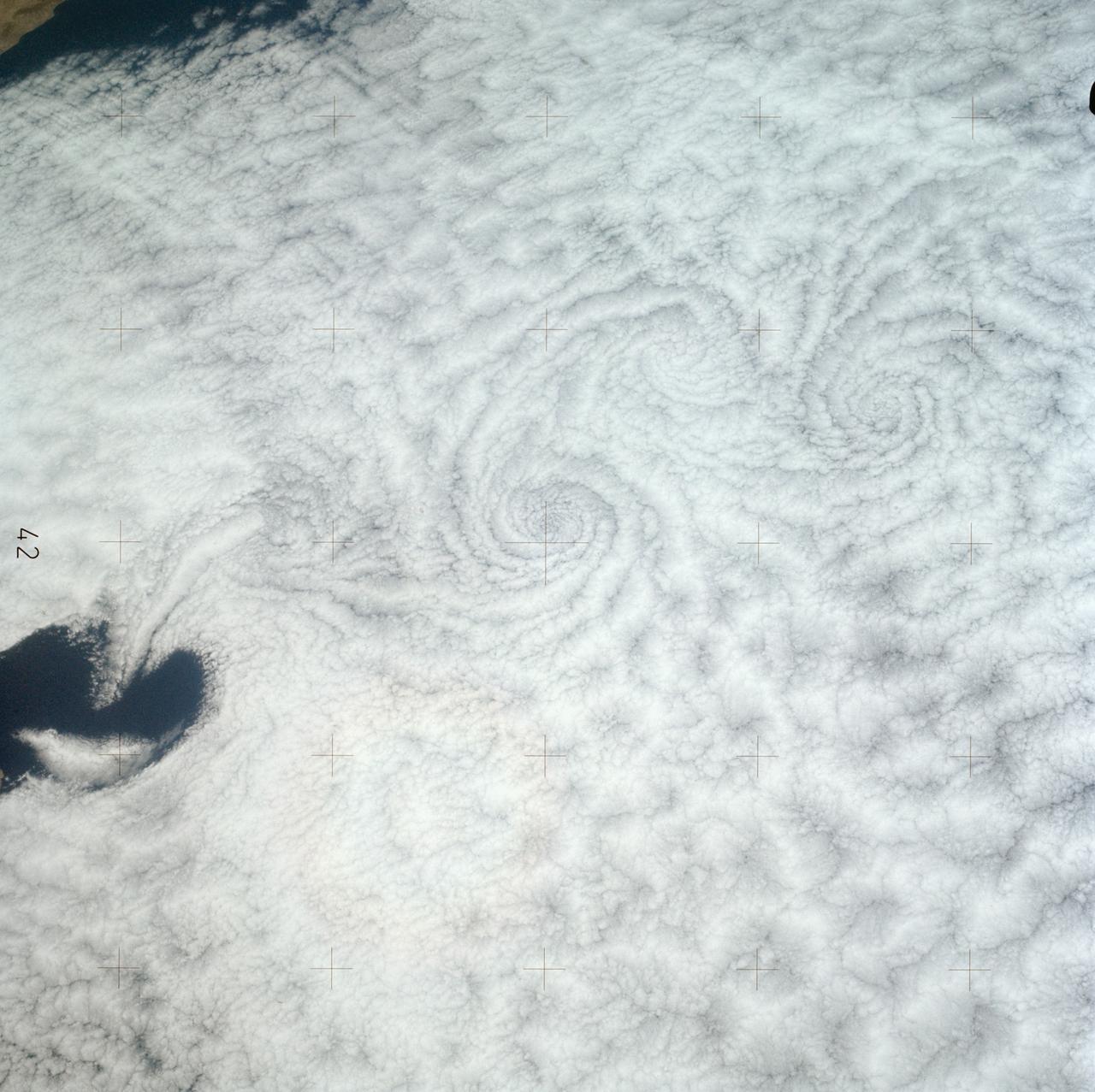
SL3-121-2371 (July-September 1973) --- A pattern of downstream eddies in the stratocumulus clouds over the Pacific Ocean west of Baja California, as photographed by the crewmen of the second Skylab manned mission (Skylab 3) from the space station cluster in Earth orbit. The clouds, produced by the cold California current running to the south and southwest, are prevented from rising by warm air above them. Photo credit: NASA
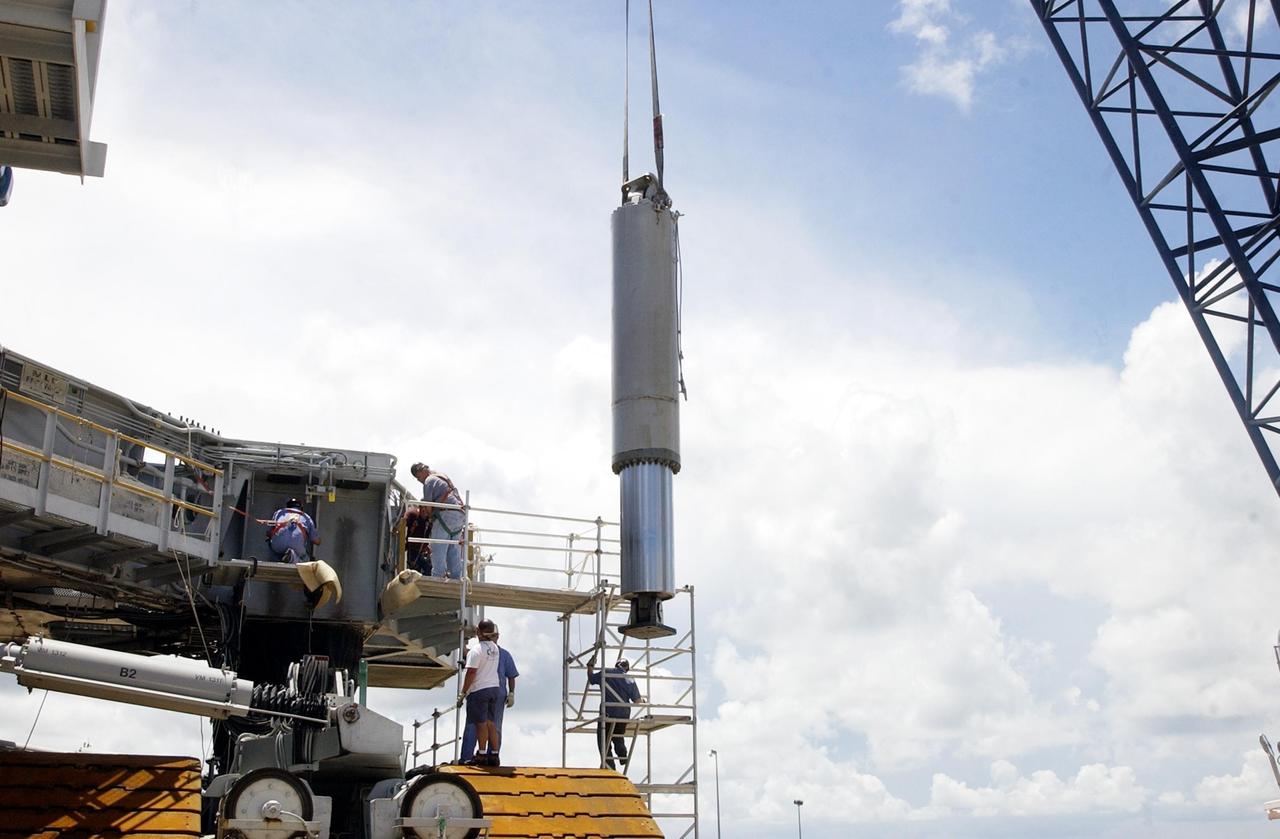
KENNEDY SPACE CENTER, FLA. -- A crane lifts a jacking, equalization and leveling (JEL) cylinder and bearing from Crawler-Transporter No. 2. During routine maintenance inspections last week, technicians removed two of the 16 JEL cylinders on the crawler to gain access to the bearings and found three of the four bearings cracked. Further eddy current inspections indicated that cracks are present on 15 of the bearings. There are 16 cylinders and 32 bearings per crawler. Engineers are evaluating the situation to determine the cause of the cracks and an appropriate solution to the problem.
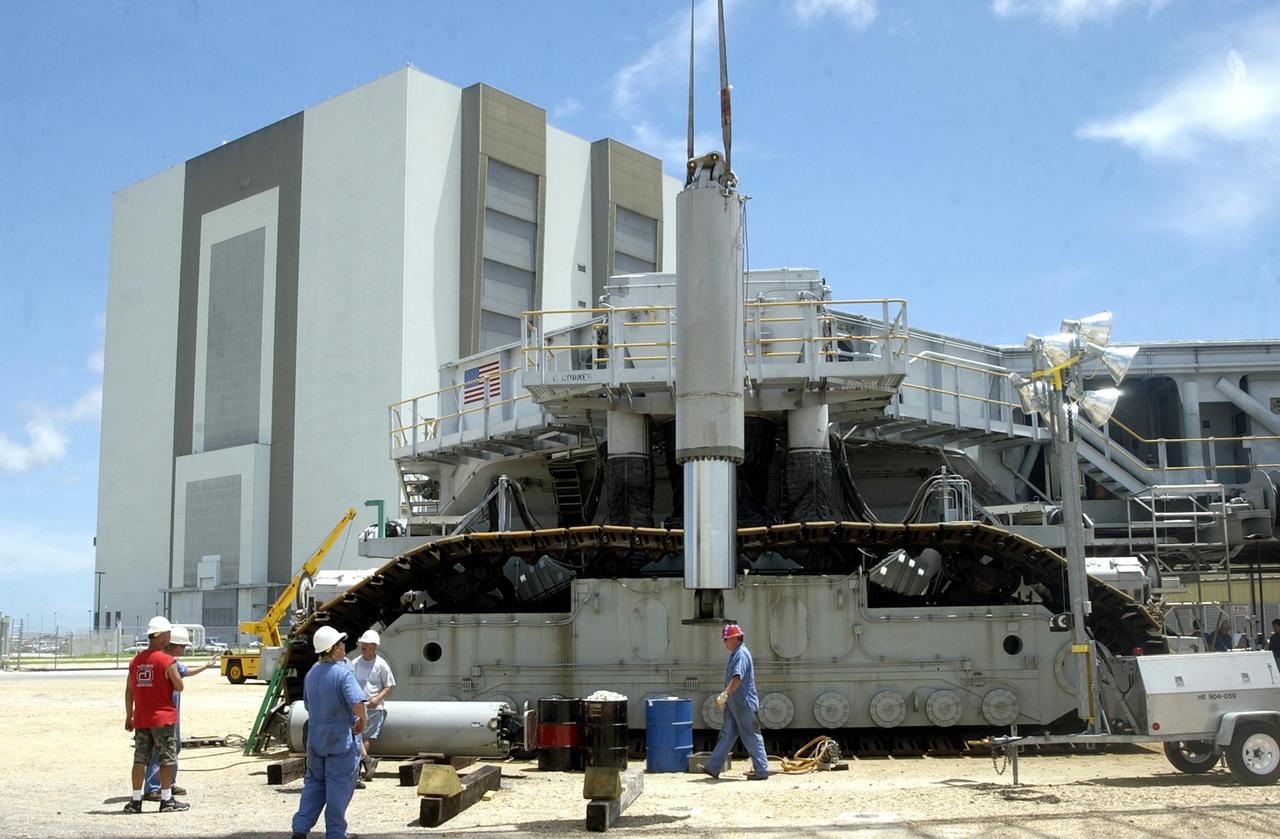
KENNEDY SPACE CENTER, FLA. -- A jacking, equalization and leveling (JEL) cylinder and bearing from Crawler-Transporter No. 2 is lowered by a crane to a position on the ground. During routine maintenance inspections last week, technicians removed two of the 16 JEL cylinders on the crawler to gain access to the bearings and found three of the four bearings cracked. Further eddy current inspections indicated that cracks are present on 15 of the bearings. There are 16 cylinders and 32 bearings per crawler.
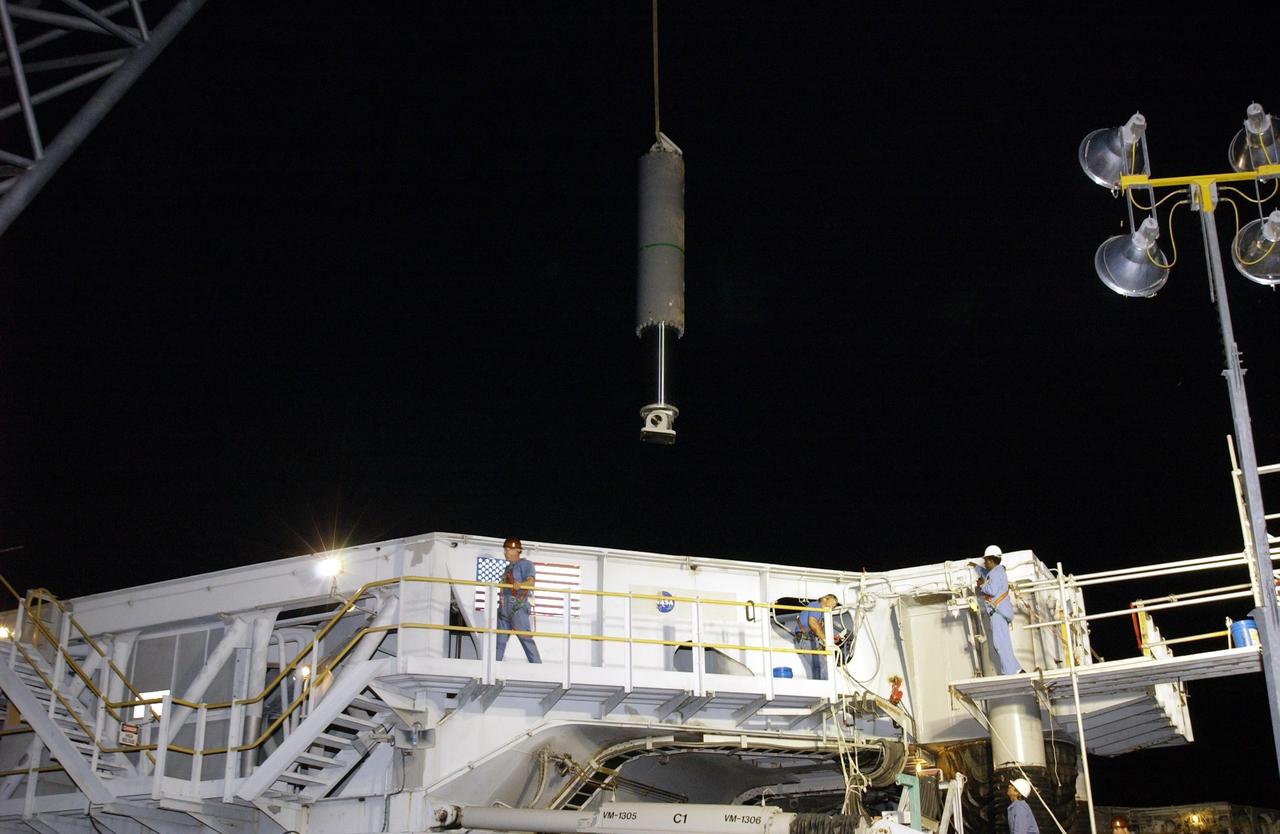
KENNEDY SPACE CENTER, FLA. -- The final Jacking, Equalization and Leveling (JEL) cylinder is moved to Crawler Transporter No. 2 (CT-2) for installation. During recent routine maintenance inspections, cracks were found on four bearings in two JEL cylinders. Further eddy current inspections indicated that cracks were present on 15 bearings. There are 16 cylinders and 32 bearings per crawler. CT-2 was repaired in order to enable Atlantis' rollout for mission STS-112, scheduled for launch no earlier than Oct. 2.
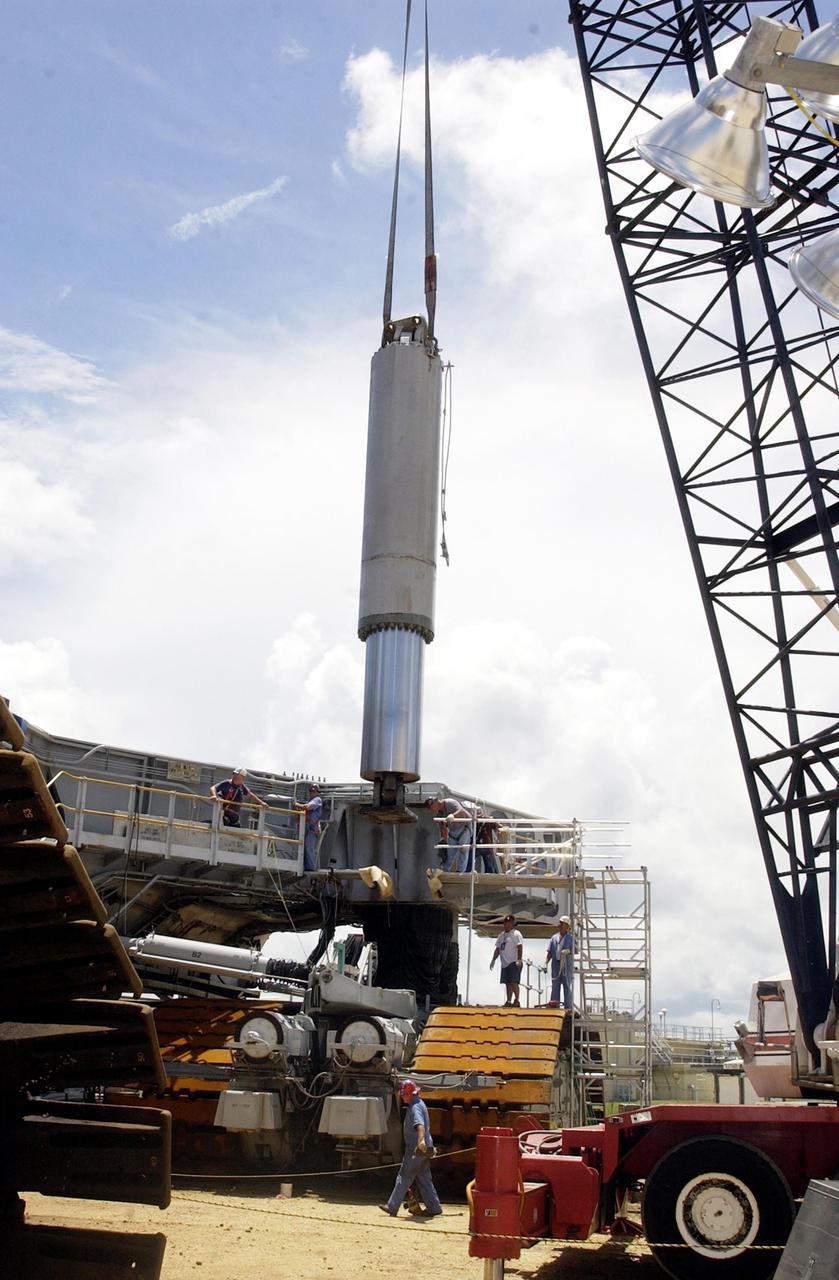
KENNEDY SPACE CENTER, FLA. -- A crane lowers a jacking, equalization and leveling (JEL) cylinder and bearing from Crawler-Transporter No. 2 to a position on the ground. During routine maintenance inspections last week, technicians removed two of the 16 JEL cylinders on the crawler to gain access to the bearings and found three of the four bearings cracked. Further eddy current inspections indicated that cracks are present on 15 of the bearings. There are 16 cylinders and 32 bearings per crawler. Engineers are evaluating the situation to determine the cause of the cracks and an appropriate solution to the problem.
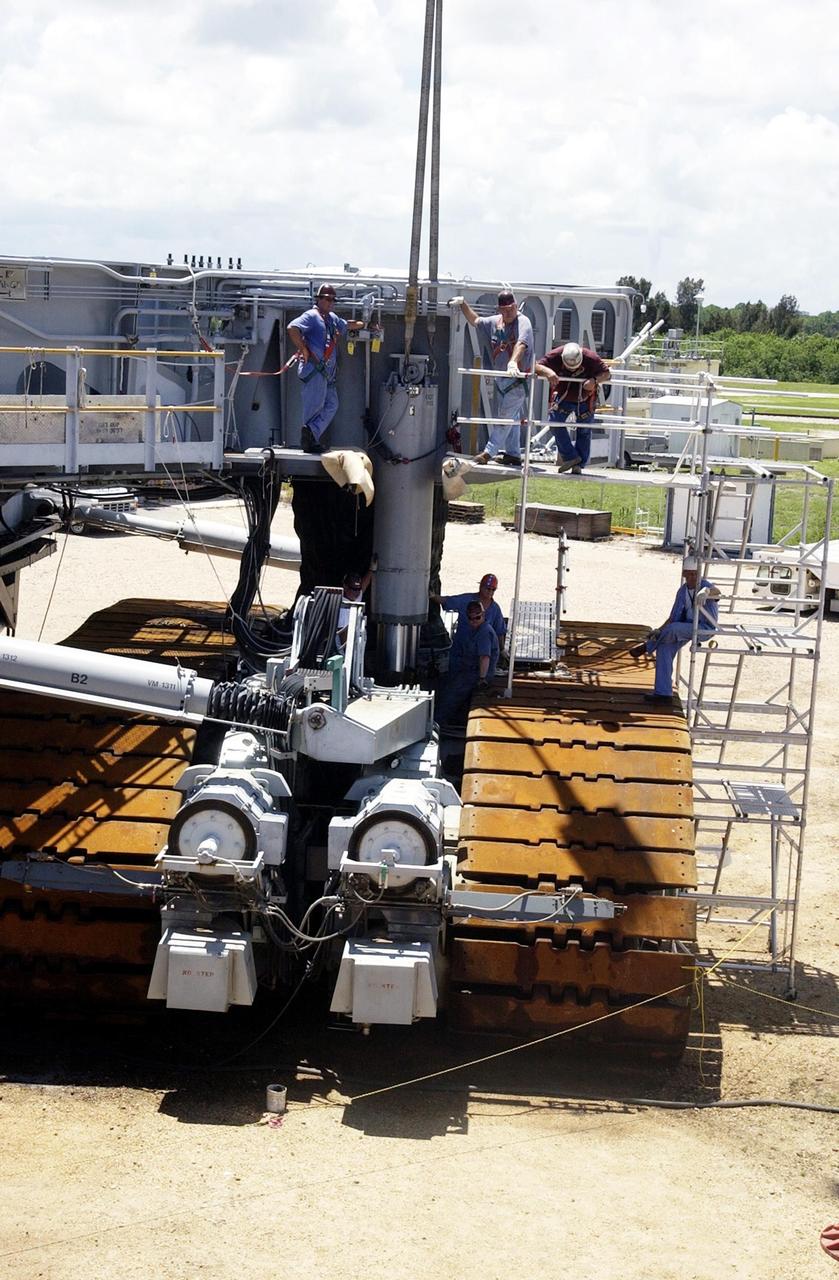
KENNEDY SPACE CENTER, FLA. -- Technicians hook a crane to a jacking, equalization and leveling (JEL) cylinder and bearing on Crawler-Transporter No. 2 in preparation for its removal. During routine maintenance inspections last week, technicians removed two of the 16 JEL cylinders on the crawler to gain access to the bearings and found three of the four bearings cracked. Further eddy current inspections indicated that cracks are present on 15 of the bearings. There are 16 cylinders and 32 bearings per crawler. Engineers are evaluating the situation to determine the cause of the cracks and an appropriate solution to the problem.
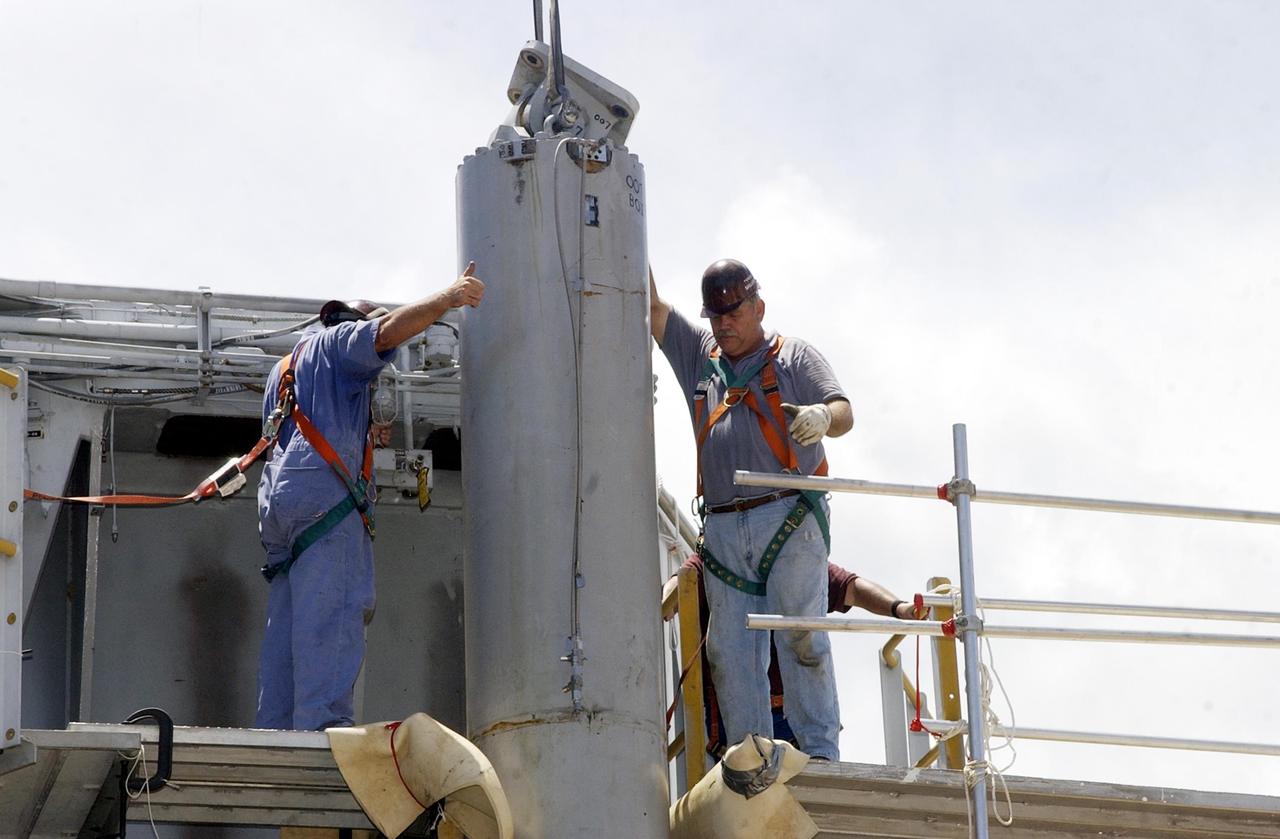
KENNEDY SPACE CENTER, FLA. -- Technicians give the signal for a crane to begin lifting a jacking, equalization and leveling (JEL) cylinder and bearing on Crawler-Transporter No. 2. During routine maintenance inspections last week, technicians removed two of the 16 JEL cylinders on the crawler to gain access to the bearings and found three of the four bearings cracked. Further eddy current inspections indicated that cracks are present on 15 of the bearings. There are 16 cylinders and 32 bearings per crawler. Engineers are evaluating the situation to determine the cause of the cracks and an appropriate solution to the problem.
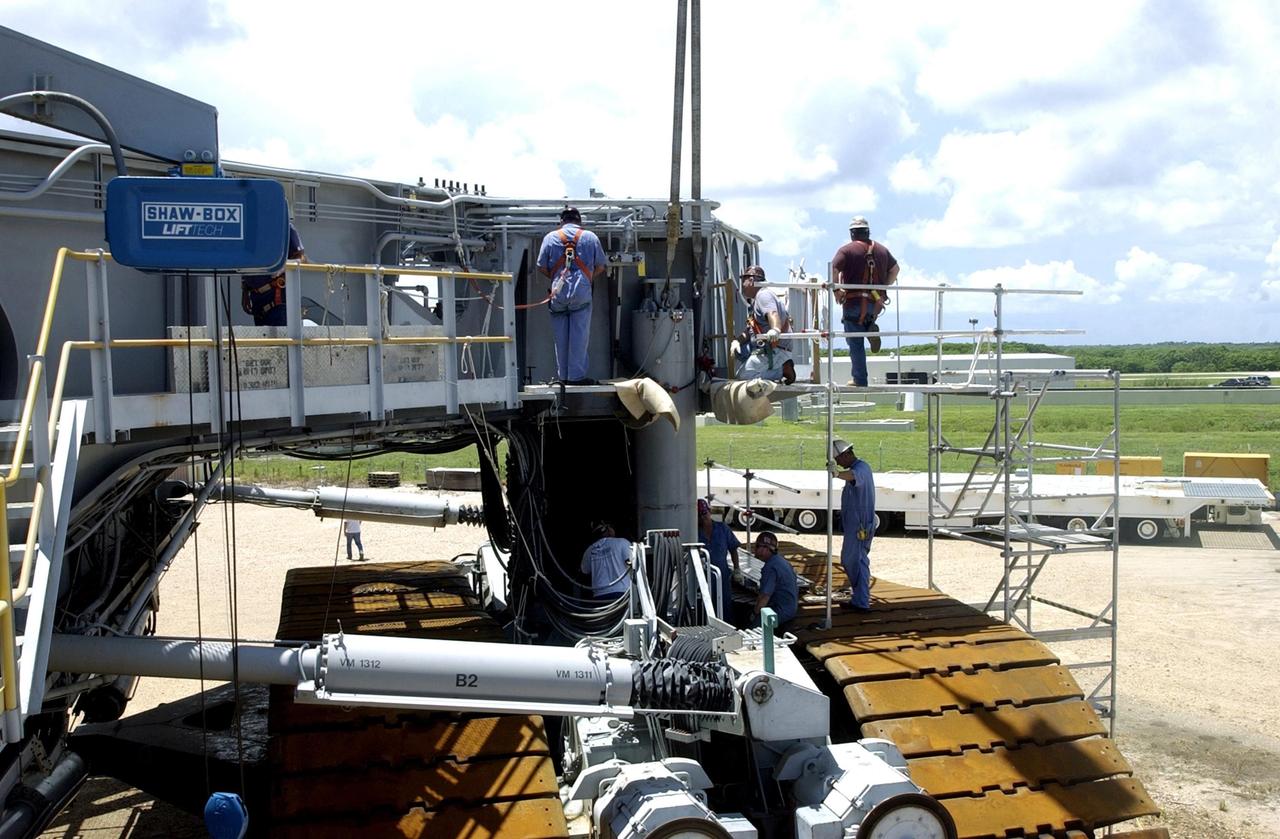
KENNEDY SPACE CENTER, FLA. -- Technicians hook a crane to a jacking, equalization and leveling (JEL) cylinder and bearing on Crawler-Transporter No. 2 in preparation for its removal. During routine maintenance inspections last week, technicians removed two of the 16 JEL cylinders on the crawler to gain access to the bearings and found three of the four bearings cracked. Further eddy current inspections indicated that cracks are present on 15 of the bearings. There are 16 cylinders and 32 bearings per crawler. Engineers are evaluating the situation to determine the cause of the cracks and an appropriate solution to the problem.
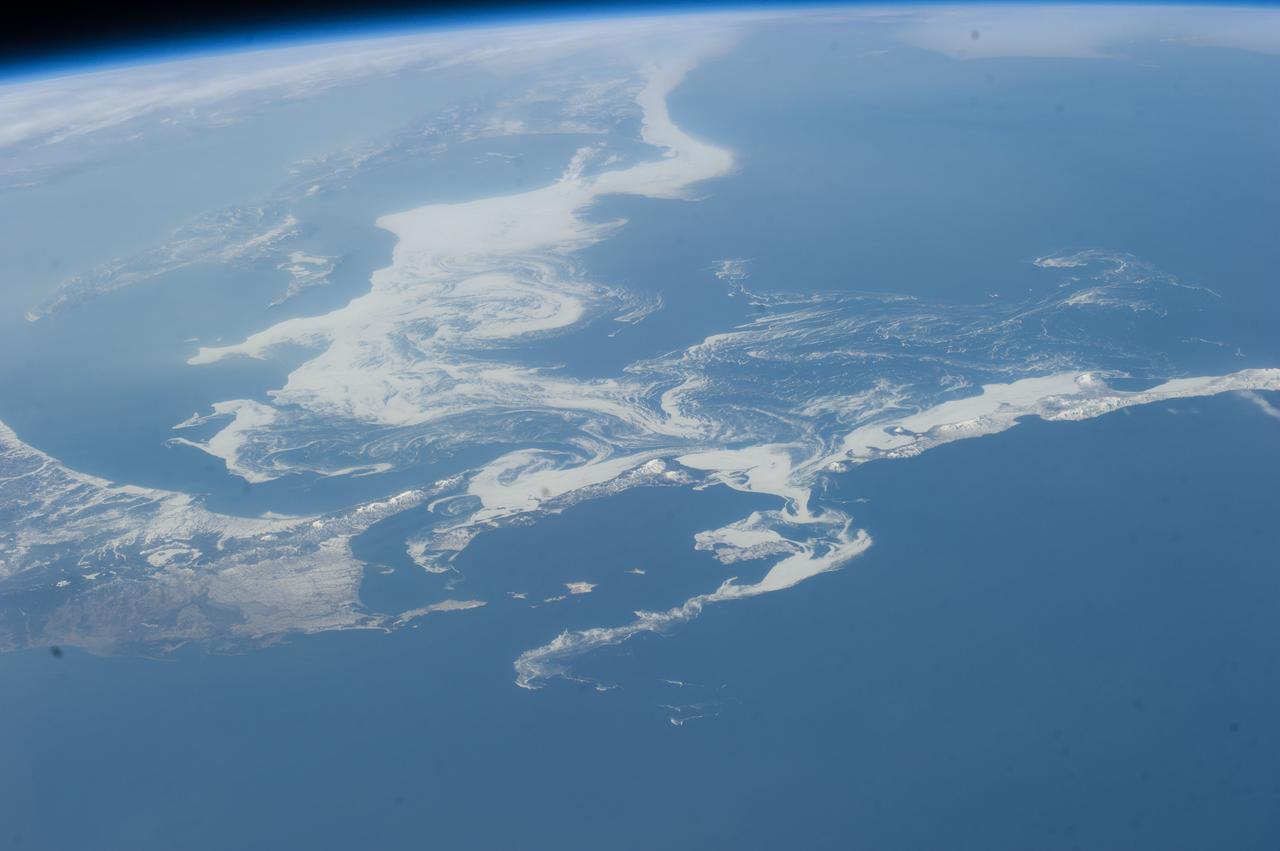
ISS039-E-11773 (14 April 2014) --- Photographed with a camera equipped with an 80mm lens from the International Space Station, patterns of sea ice in the Sea of Okhotsk reveal the dynamics of ocean currents that could otherwise only be seen in sunglint. In this Expedition 39 photo, one can see nearly 1,000 kilometers (600 miles) of the East Sakhalin Current, which is carrying winter ice south toward Japan’s Hokkaido Island. The current is marked by the narrow corridor of dense ice that hugs the coast of Russia’s Sakhalin Island. As it approaches Hokkaido, the ice patterns show a series of eddies and swirls. The East Sakhalin Current wanes in summer when the Soya Current begins to enter the Sea of Okhotsk. This inrush of summer water starts in April and, according to NASA scientists, probably expresses itself in this image as ice pattern to the east above Hokkaido. The Sakhalin current turns east and transports ice toward the Kuril Island chain. Some ice can spill through gaps in the islands, where it is swept southwest by the Kuril Current (lower right).
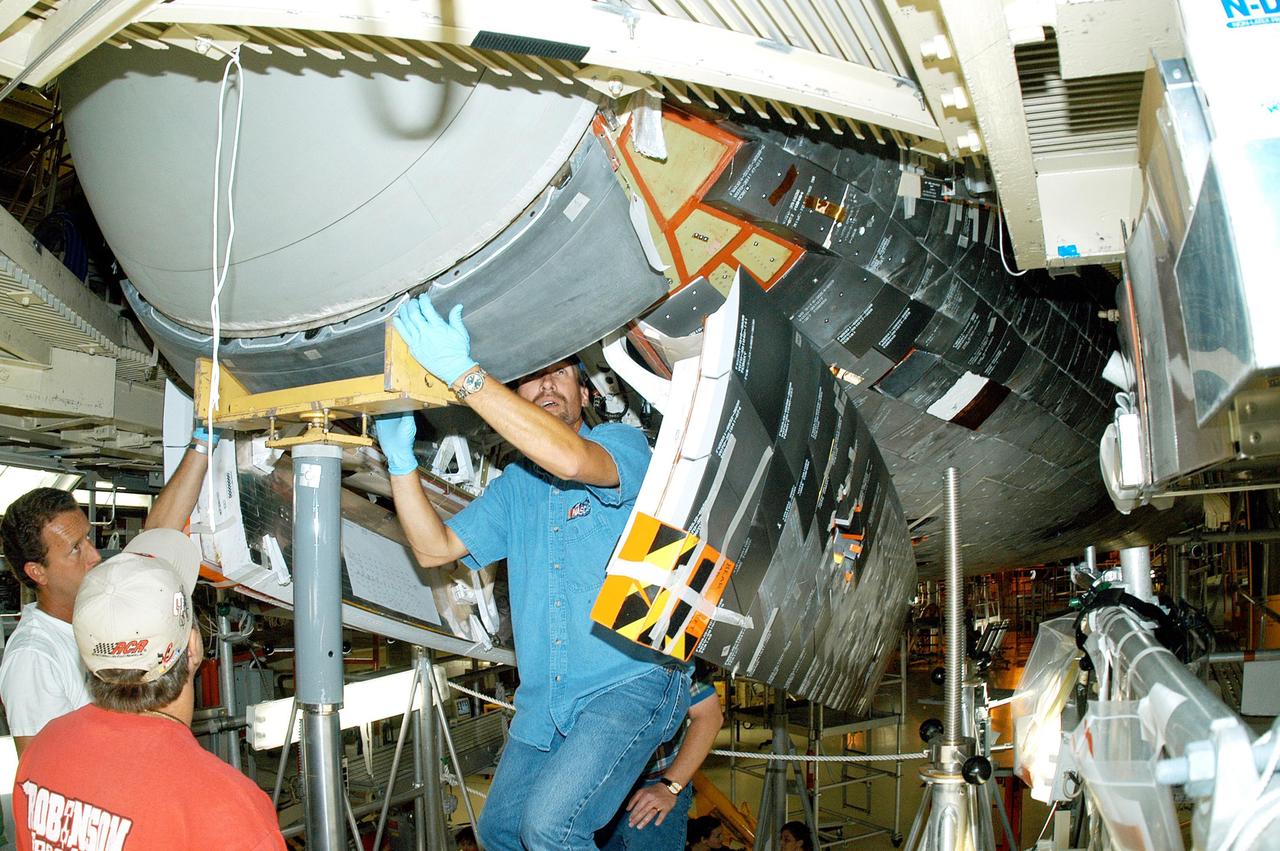
KENNEDY SPACE CENTER, FLA. - - Workers in the Orbiter Processing Facility complete the installation of the Reinforced Carbon-Carbon panel on Discovery. The chin panel is the smile-shaped section of RCC directly below the nose cap that provides a thermal barrier during re-entry. The nose cap, with chin panel, was removed from the vehicle in the summer of 2003 and returned to the vendor, where it underwent numerous forms of Non-Destructive Evaluation. These tests included X-ray, ultrasound and eddy current to ensure its structural integrity prior to reinstallation. Discovery is designated as the Return to Flight vehicle for mission STS-114, no earlier than March 2005.

KENNEDY SPACE CENTER, FLA. -- Technicians supervise a jacking, equalization and leveling (JEL) cylinder and bearing from Crawler-Transporter No. 2 as it is lowered by a crane to a position on the ground. During routine maintenance inspections last week, technicians removed two of the 16 JEL cylinders on the crawler to gain access to the bearings and found three of the four bearings cracked. Further eddy current inspections indicated that cracks are present on 15 of the bearings. There are 16 cylinders and 32 bearings per crawler. Engineers are evaluating the situation to determine the cause of the cracks and an appropriate solution to the problem.
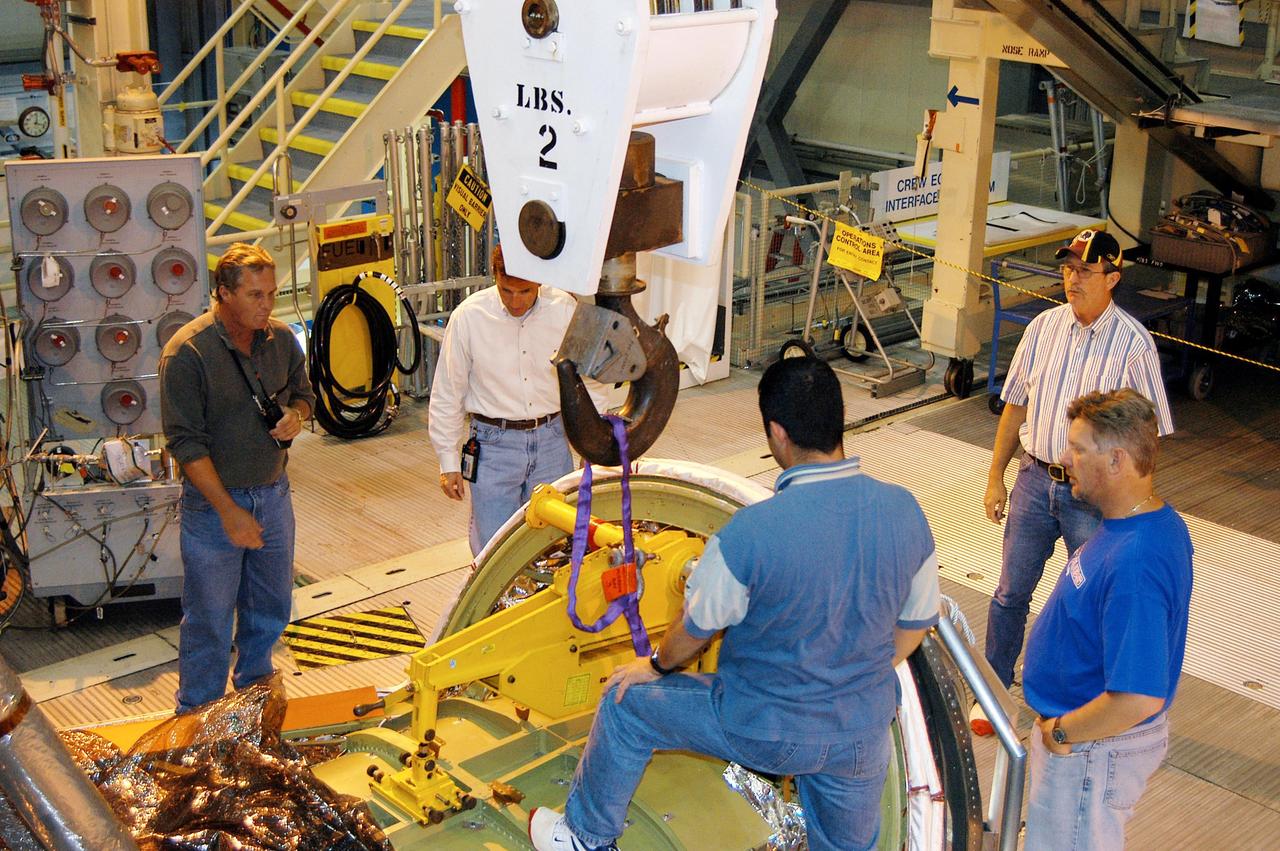
KENNEDY SPACE CENTER, FLA. - Workers in the Orbiter Processing Facility get ready to remove Ground Support Equipment used to install Discovery’s nose cap on Friday. The nose cap had been removed from the vehicle in the summer of 2003 and returned to the vendor, where it underwent numerous forms of Non-Destructive Evaluation. These tests included X-ray, ultrasound and eddy current to ensure its structural integrity prior to installation on the vehicle. The nose cap was also recoated. Once returned to KSC, new Thermal Protection System blankets were assembled inside of the nose cap and thermography was performed prior to installation on the orbiter.
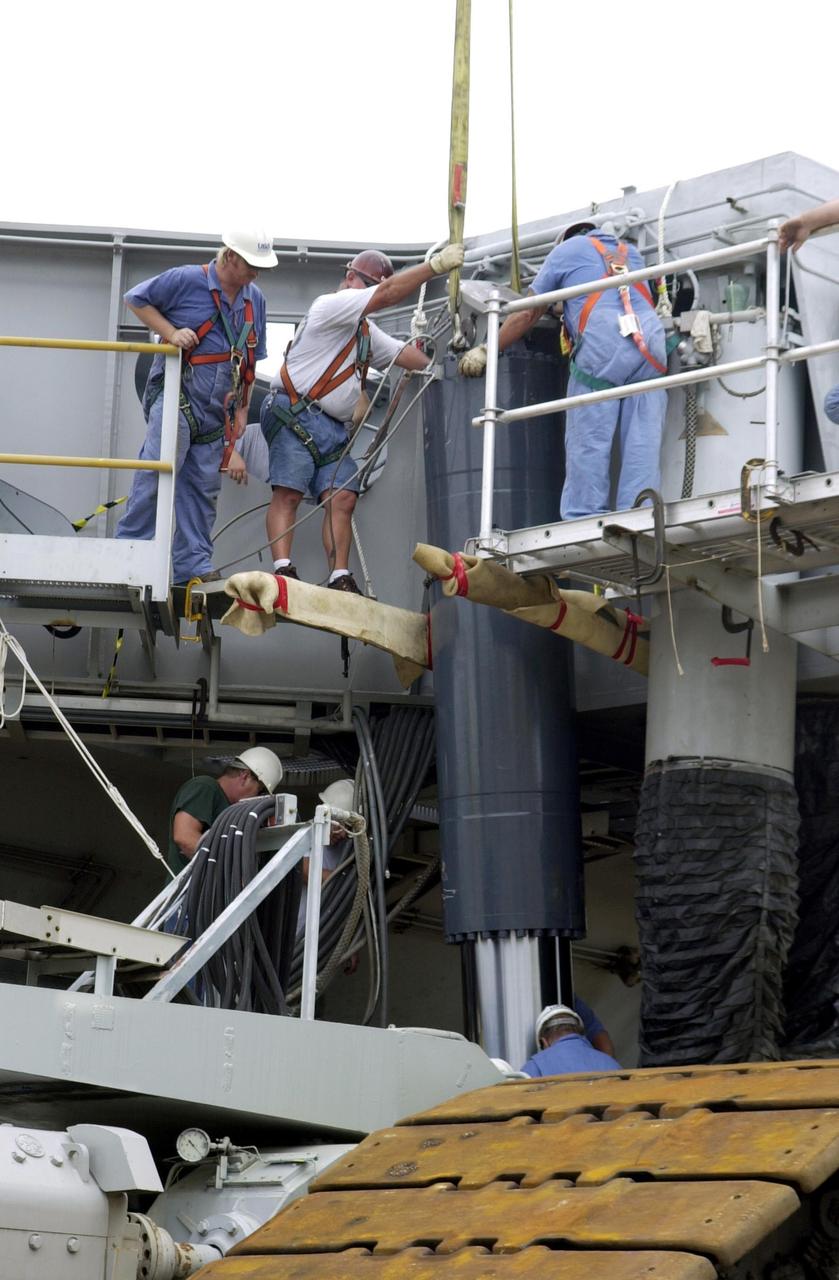
KENNEDY SPACE CENTER, FLA. -- Workers on Crawler Transporter No. 2 help guide a repaired Jacking, Equalization and Leveling (JEL) cylinder as it is lowered into place. There are 16 cylinders and 32 bearings per crawler. During recent routine maintenance inspections, technicians removed two of the 16 JEL cylinders on the crawler to gain access to the bearings and found three of the four bearings cracked. Further eddy current inspections indicated that cracks were present on 15 of the bearings.. Technicians have removed and replaced 14 of the bearings on CT-2, which is being repaired in order to enable Atlantis' rollout for mission STS-112, scheduled for launch no earlier than Oct. 2.
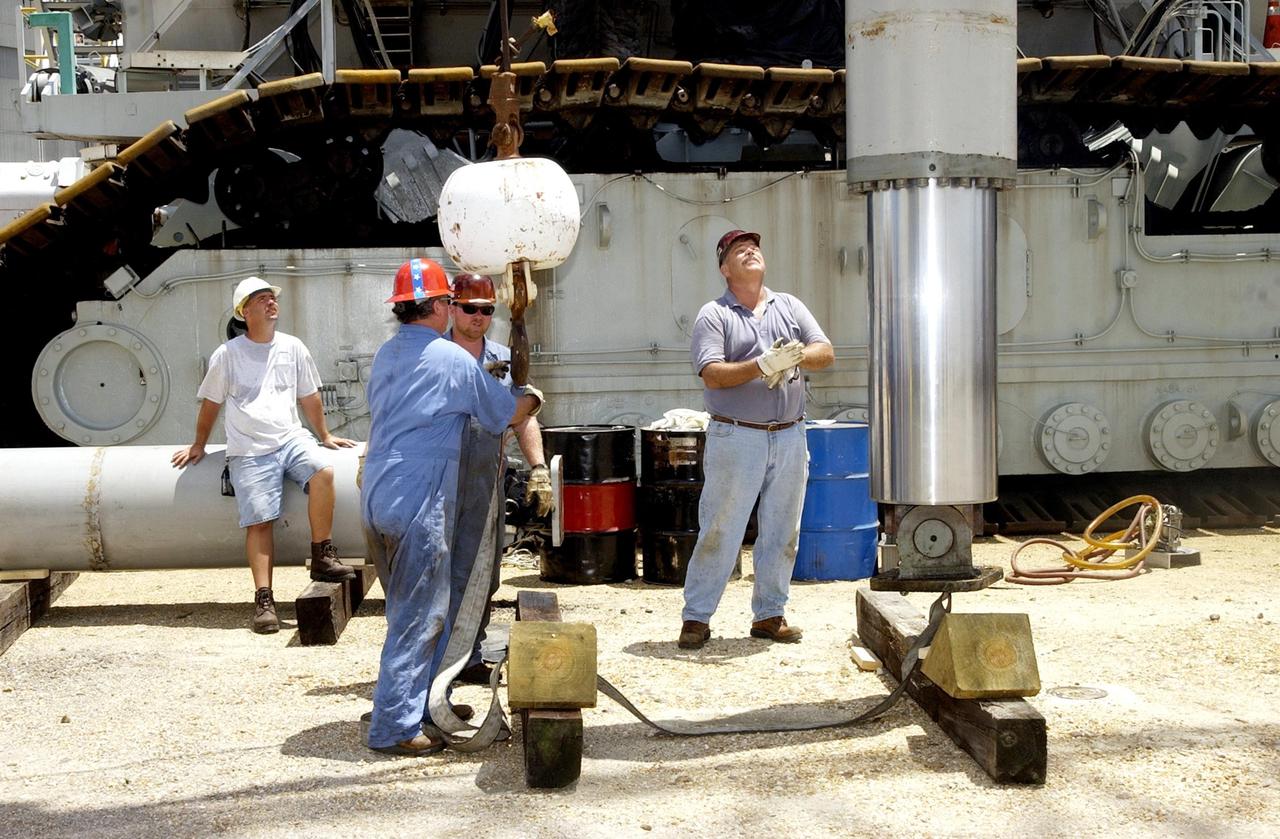
KENNEDY SPACE CENTER, FLA. -- Technicians closely monitor a jacking, equalization and leveling (JEL) cylinder and bearing from Crawler-Transporter No. 2 as it lowered by a crane to a position on the ground. During routine maintenance inspections last week, technicians removed two of the 16 JEL cylinders on the crawler to gain access to the bearings and found three of the four bearings cracked. Further eddy current inspections indicated that cracks are present on 15 of the bearings. There are 16 cylinders and 32 bearings per crawler. Engineers are evaluating the situation to determine the cause of the cracks and an appropriate solution to the problem.
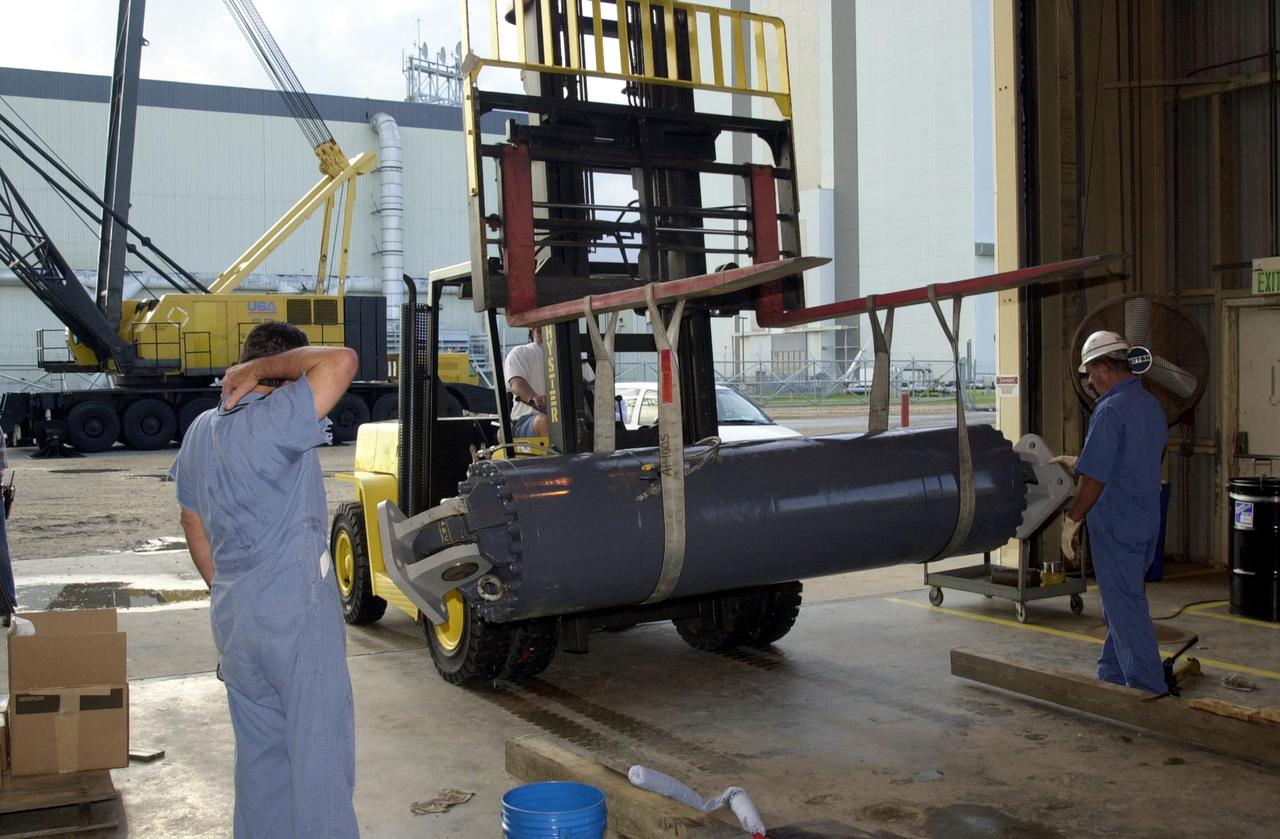
KENNEDY SPACE CENTER, FLA. -- One of the repaired Jacking, Equalization and Leveling (JEL) cylinders is moved from the repair site for installation into Crawler Transporter No. 2. There are 16 cylinders and 32 bearings per crawler. During recent routine maintenance inspections, technicians removed two of the 16 JEL cylinders on the crawler to gain access to the bearings and found three of the four bearings cracked. Further eddy current inspections indicated that cracks were present on 15 of the bearings.. Technicians have removed and replaced 14 of the bearings on CT-2, which is being repaired in order to enable Atlantis' rollout for mission STS-112, scheduled for launch no earlier than Oct. 2.
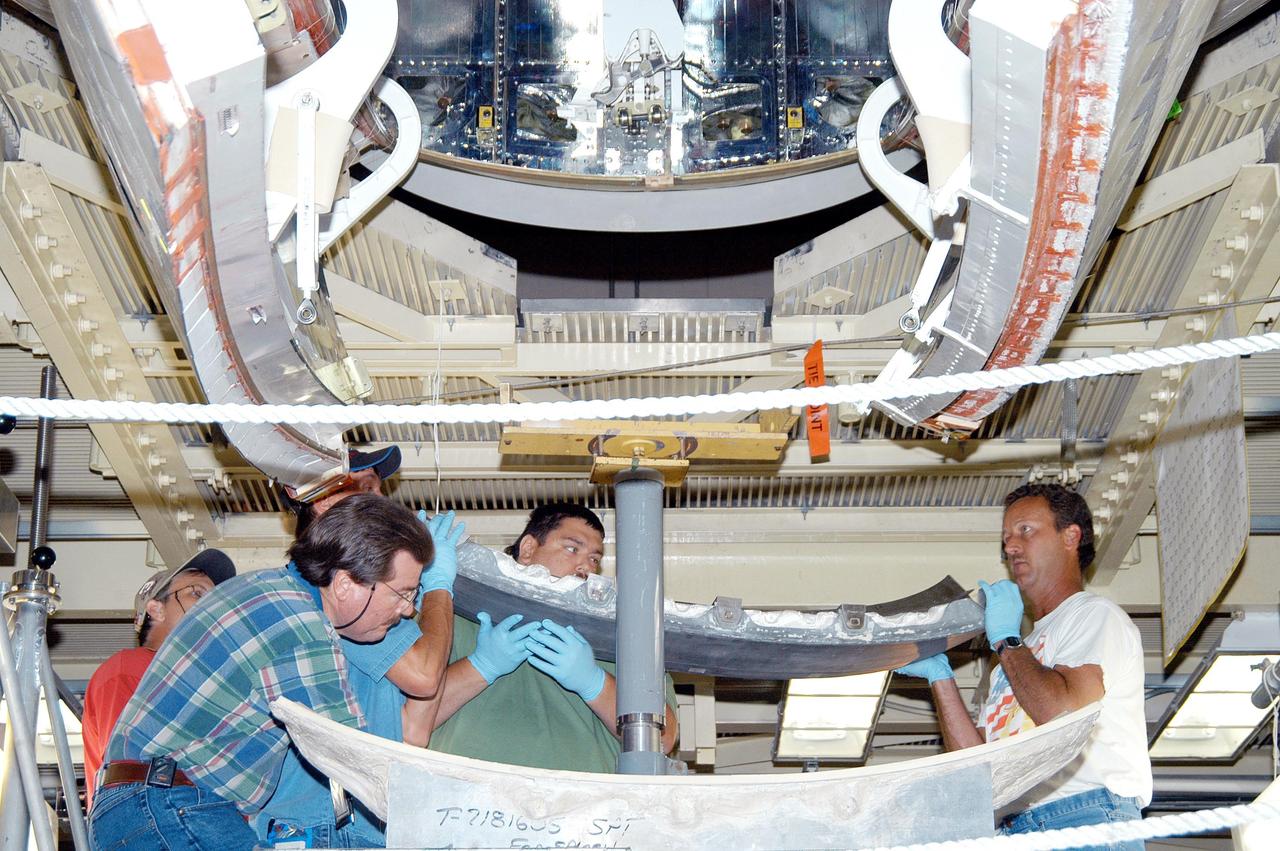
KENNEDY SPACE CENTER, FLA. - Workers in the Orbiter Processing Facility lift the Reinforced Carbon-Carbon (RCC) chin panel to install on Discovery. The chin panel is the smile-shaped section of RCC directly below the nose cap that provides a thermal barrier during re-entry. The nose cap, with chin panel, was removed from the vehicle in the summer of 2003 and returned to the vendor, where it underwent numerous forms of Non-Destructive Evaluation. These tests included X-ray, ultrasound and eddy current to ensure its structural integrity prior to reinstallation. Discovery is designated as the Return to Flight vehicle for mission STS-114, no earlier than March 2005.
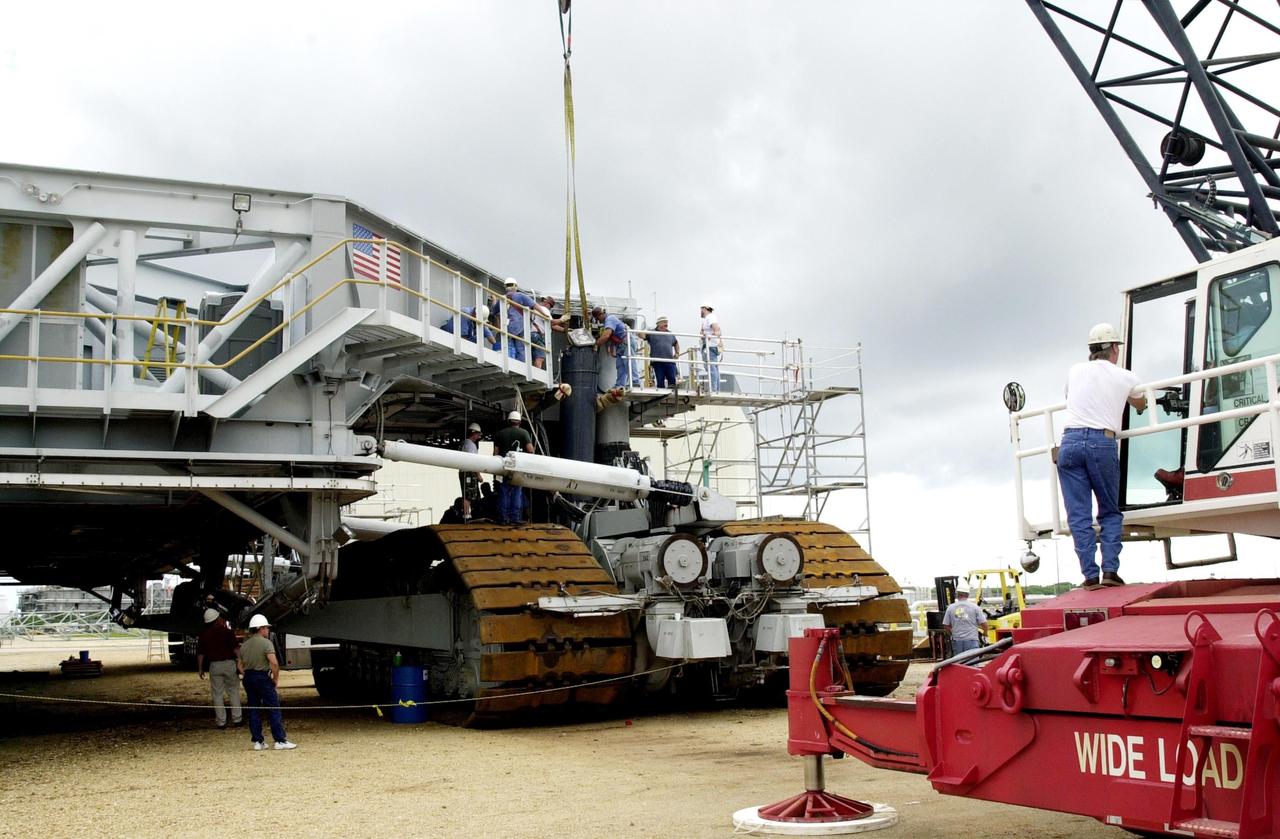
KENNEDY SPACE CENTER, FLA. -- Supported by the overhead crane and maneuvered by several workers, a repaired Jacking, Equalization and Leveling (JEL) cylinder is lifted into position on Crawler Transporter No. 2. There are 16 cylinders and 32 bearings per crawler. During recent routine maintenance inspections, technicians removed two of the 16 JEL cylinders on the crawler to gain access to the bearings and found three of the four bearings cracked. Further eddy current inspections indicated that cracks were present on 15 of the bearings.. Technicians have removed and replaced 14 of the bearings on CT-2, which is being repaired in order to enable Atlantis' rollout for mission STS-112, scheduled for launch no earlier than Oct. 2.
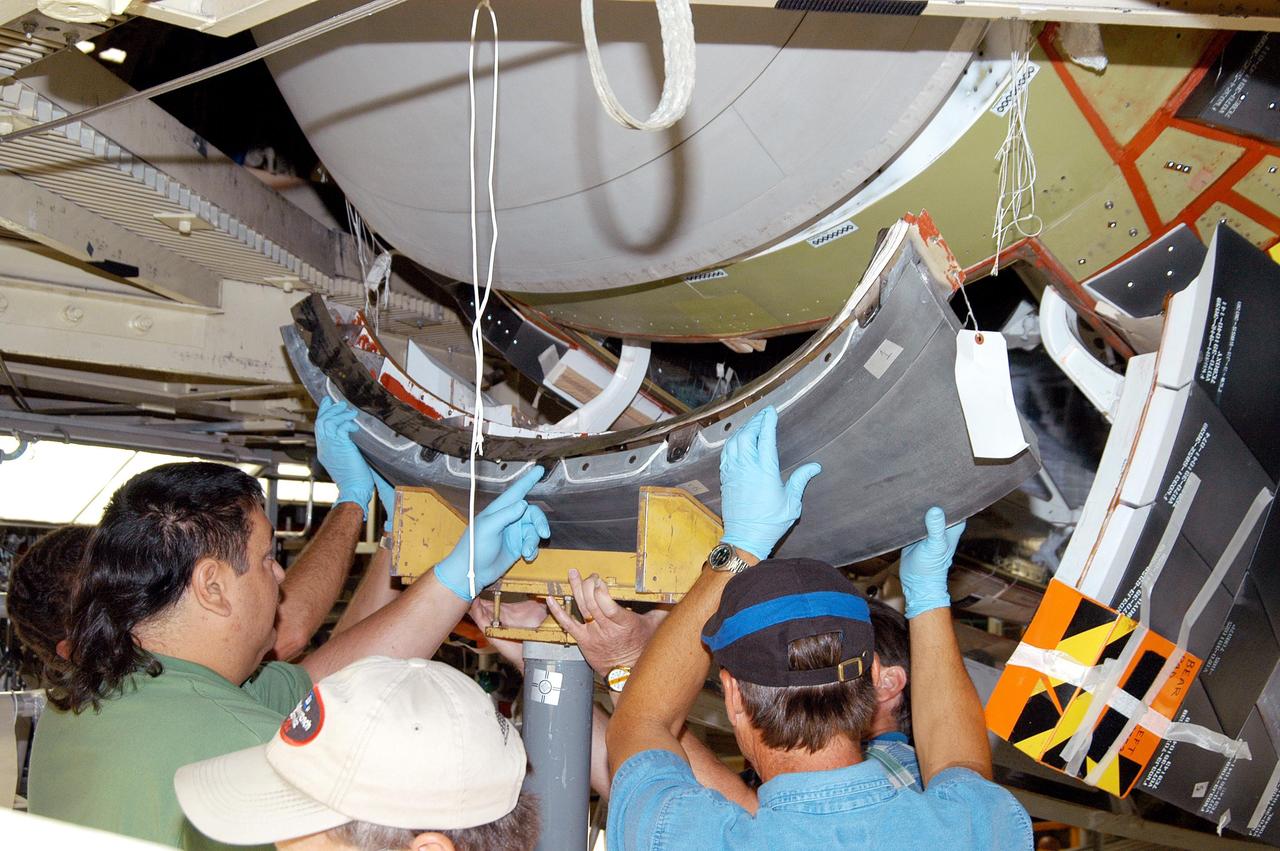
KENNEDY SPACE CENTER, FLA. - Workers in the Orbiter Processing Facility check the placement of the Reinforced Carbon-Carbon (RCC) chin panel on Discovery. . The chin panel is the smile-shaped section of RCC directly below the nose cap that provides a thermal barrier during re-entry. The nose cap, with chin panel, was removed from the vehicle in the summer of 2003 and returned to the vendor, where it underwent numerous forms of Non-Destructive Evaluation. These tests included X-ray, ultrasound and eddy current to ensure its structural integrity prior to reinstallation. Discovery is designated as the Return to Flight vehicle for mission STS-114, no earlier than March 2005.
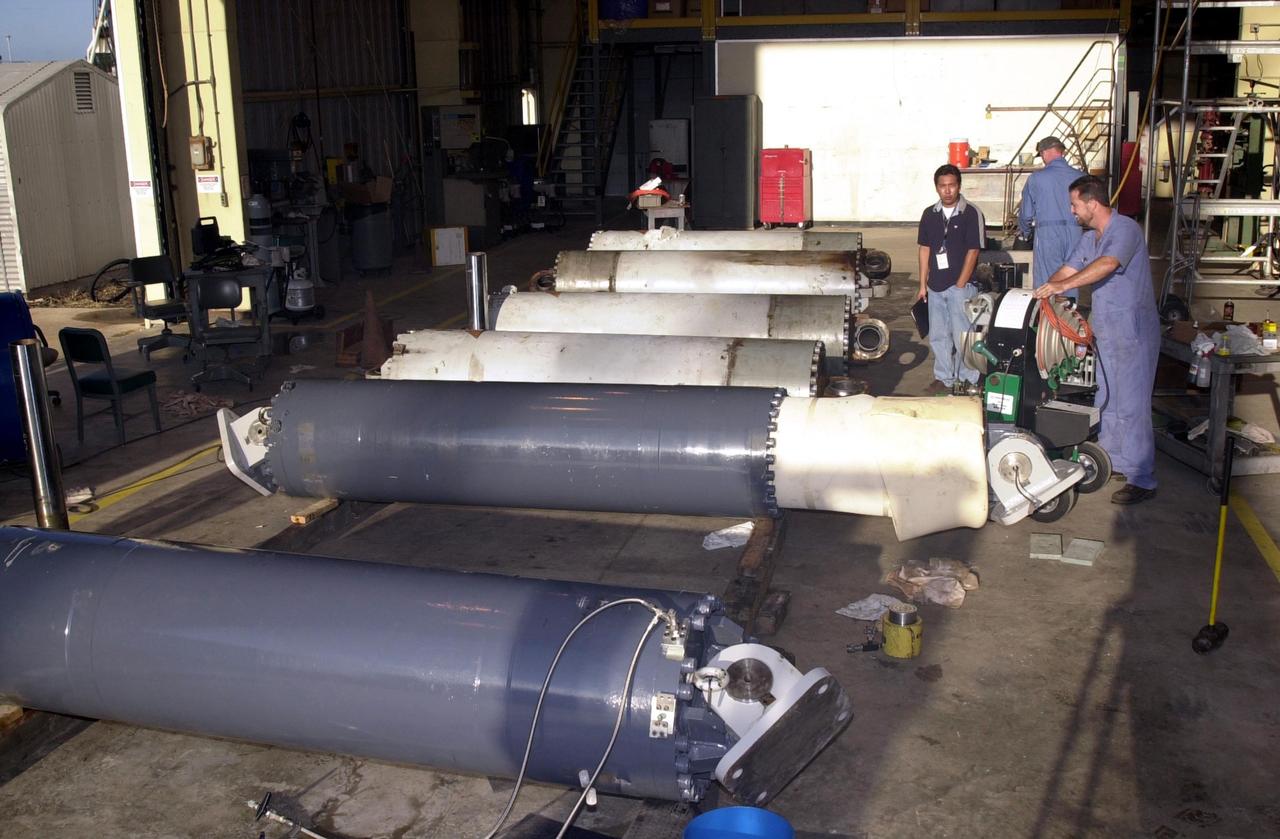
KENNEDY SPACE CENTER, FLA. -- Jacking, Equalization and Leveling (JEL) cylinders with repaired bearings are ready to be moved to Crawler Transporter No. 2. There are 16 cylinders and 32 bearings per crawler. During recent routine maintenance inspections, technicians removed two of the 16 JEL cylinders on the crawler to gain access to the bearings and found three of the four bearings cracked. Further eddy current inspections indicated that cracks were present on 15 of the bearings. Technicians have removed and replaced 14 of the bearings on CT-2, which is being repaired in order to enable Atlantis' rollout for mission STS-112, scheduled for launch no earlier than Oct. 2.
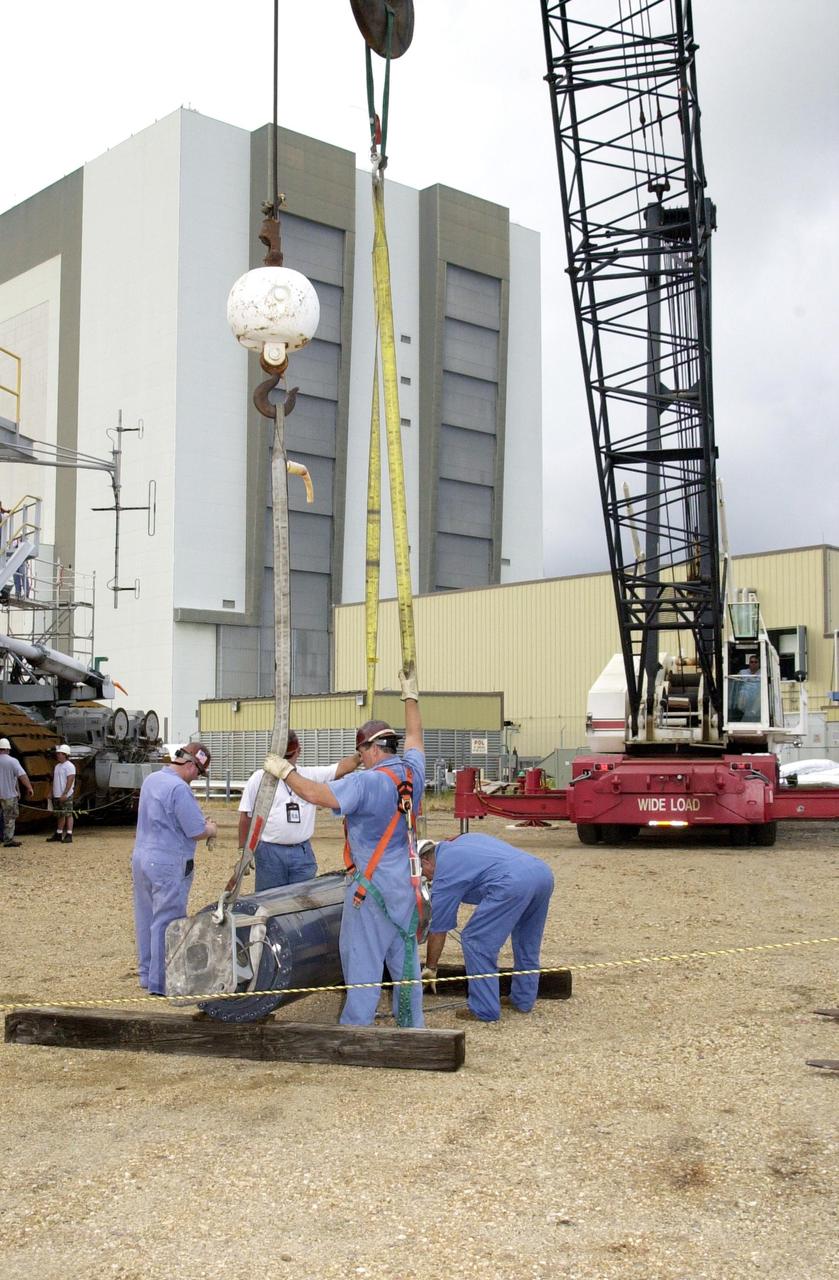
KENNEDY SPACE CENTER, FLA. -- The repaired Jacking, Equalization and Leveling (JEL) cylinder is attached to a crane. The crane will lift the JEL for placement in Crawler Transporter No. 2. There are 16 cylinders and 32 bearings per crawler. During recent routine maintenance inspections, technicians removed two of the 16 JEL cylinders on the crawler to gain access to the bearings and found three of the four bearings cracked. Further eddy current inspections indicated that cracks were present on 15 of the bearings.. Technicians have removed and replaced 14 of the bearings on CT-2, which is being repaired in order to enable Atlantis' rollout for mission STS-112, scheduled for launch no earlier than Oct. 2.
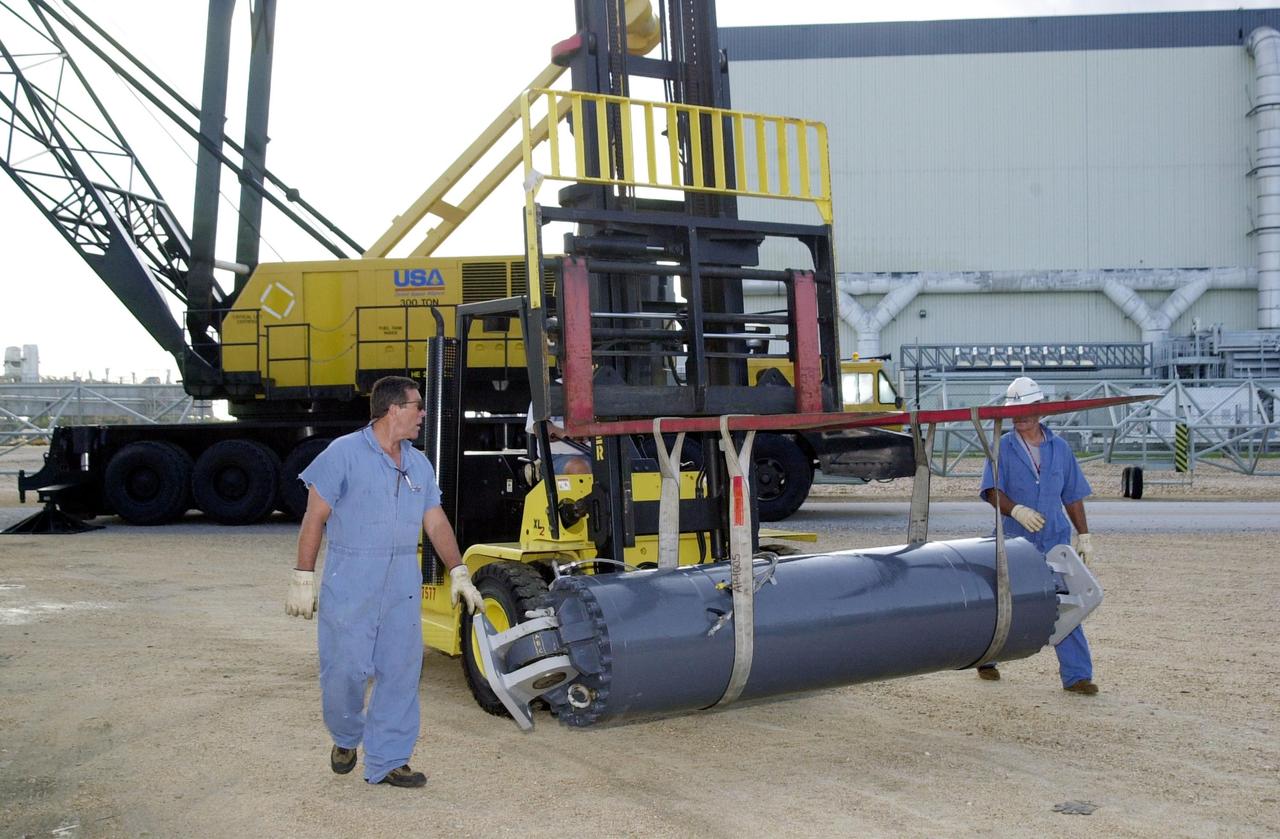
KENNEDY SPACE CENTER, FLA. -- Workers accompany the repaired Jacking, Equalization and Leveling (JEL) cylinder as it is moved from the repair site for installation into Crawler Transporter No. 2. There are 16 cylinders and 32 bearings per crawler. During recent routine maintenance inspections, technicians removed two of the 16 JEL cylinders on the crawler to gain access to the bearings and found three of the four bearings cracked. Further eddy current inspections indicated that cracks were present on 15 of the bearings.. Technicians have removed and replaced 14 of the bearings on CT-2, which is being repaired in order to enable Atlantis' rollout for mission STS-112, scheduled for launch no earlier than Oct. 2.
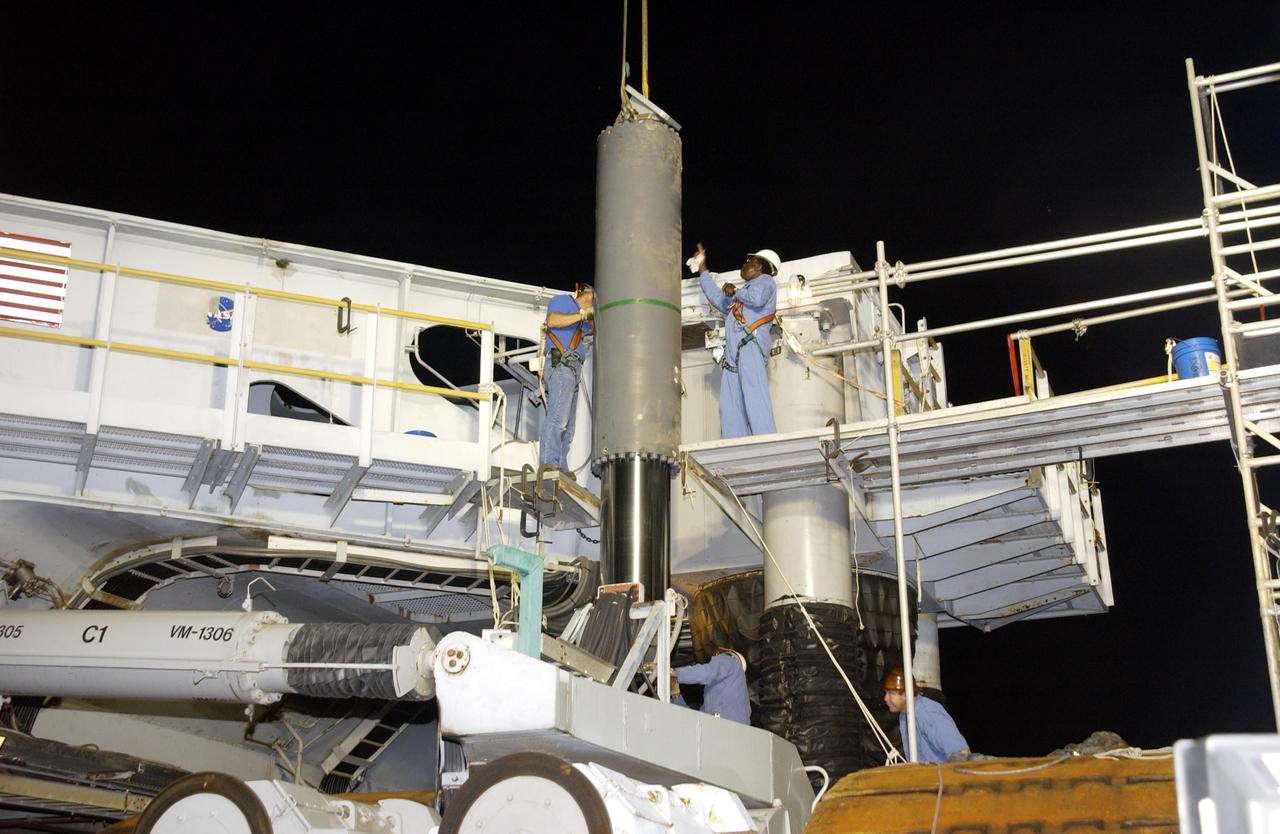
KENNEDY SPACE CENTER, FLA. -- Workers help guide the final Jacking, Equalization and Leveling (JEL) cylinder into place on Crawler Transporter No. 2 (CT-2) for installation. During recent routine maintenance inspections, cracks were found on four bearings in two JEL cylinders. Further eddy current inspections indicated that cracks were present on 15 bearings. There are 16 cylinders and 32 bearings per crawler. CT-2 was repaired in order to enable Atlantis' rollout for mission STS-112, scheduled for launch no earlier than Oct. 2.
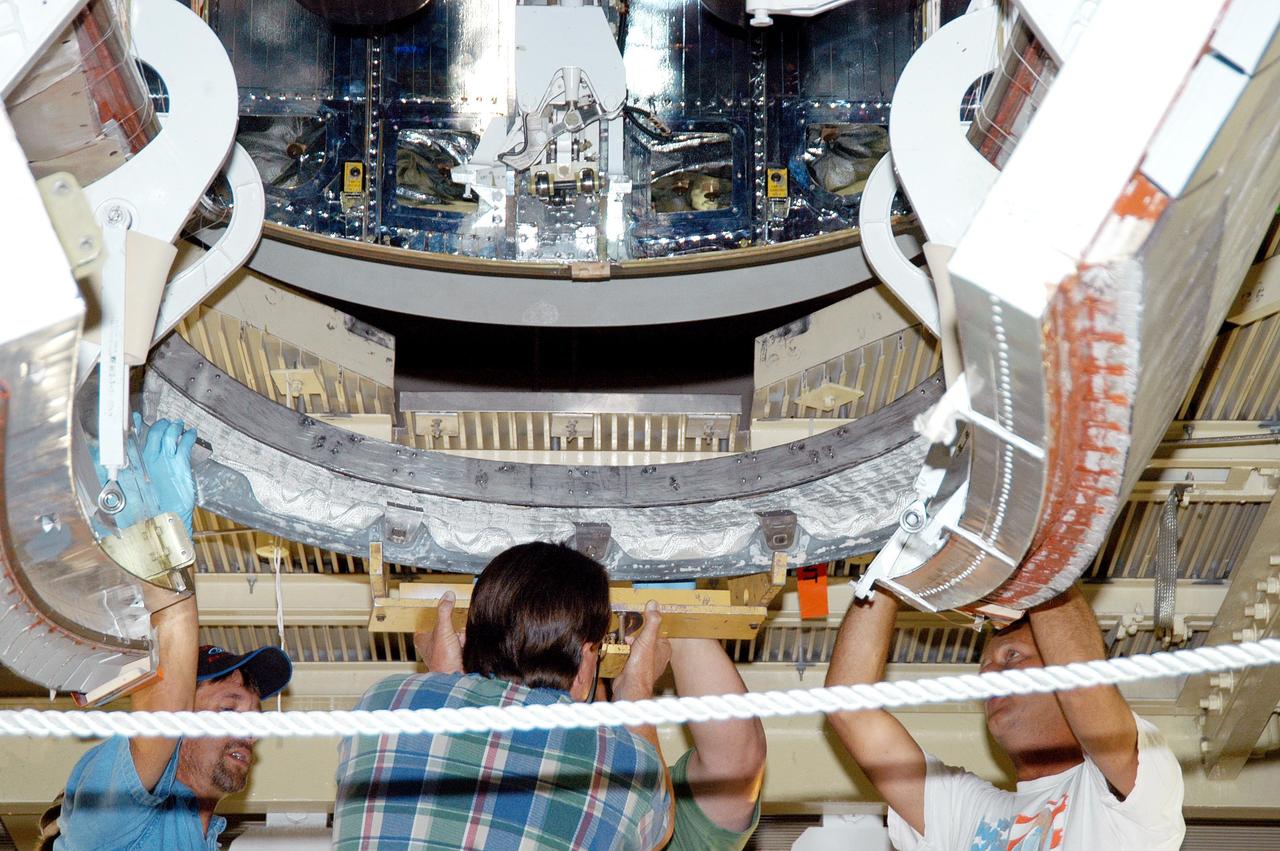
KENNEDY SPACE CENTER, FLA. - Workers in the Orbiter Processing Facility lift the Reinforced Carbon-Carbon (RCC) chin panel into place on Discovery. The chin panel is the smile-shaped section of RCC directly below the nose cap that provides a thermal barrier during re-entry. The nose cap, with chin panel, was removed from the vehicle in the summer of 2003 and returned to the vendor, where it underwent numerous forms of Non-Destructive Evaluation. These tests included X-ray, ultrasound and eddy current to ensure its structural integrity prior to reinstallation. Discovery is designated as the Return to Flight vehicle for mission STS-114, no earlier than March 2005.

KENNEDY SPACE CENTER, FLA. - Workers in the Orbiter Processing Facility prepare the Reinforced Carbon-Carbon (RCC) chin panel to install on Discovery. The chin panel is the smile-shaped section of RCC directly below the nose cap that provides a thermal barrier during re-entry. The nose cap, with chin panel, was removed from the vehicle in the summer of 2003 and returned to the vendor, where it underwent numerous forms of Non-Destructive Evaluation. These tests included X-ray, ultrasound and eddy current to ensure its structural integrity prior to reinstallation. Discovery is designated as the Return to Flight vehicle for mission STS-114, no earlier than March 2005.
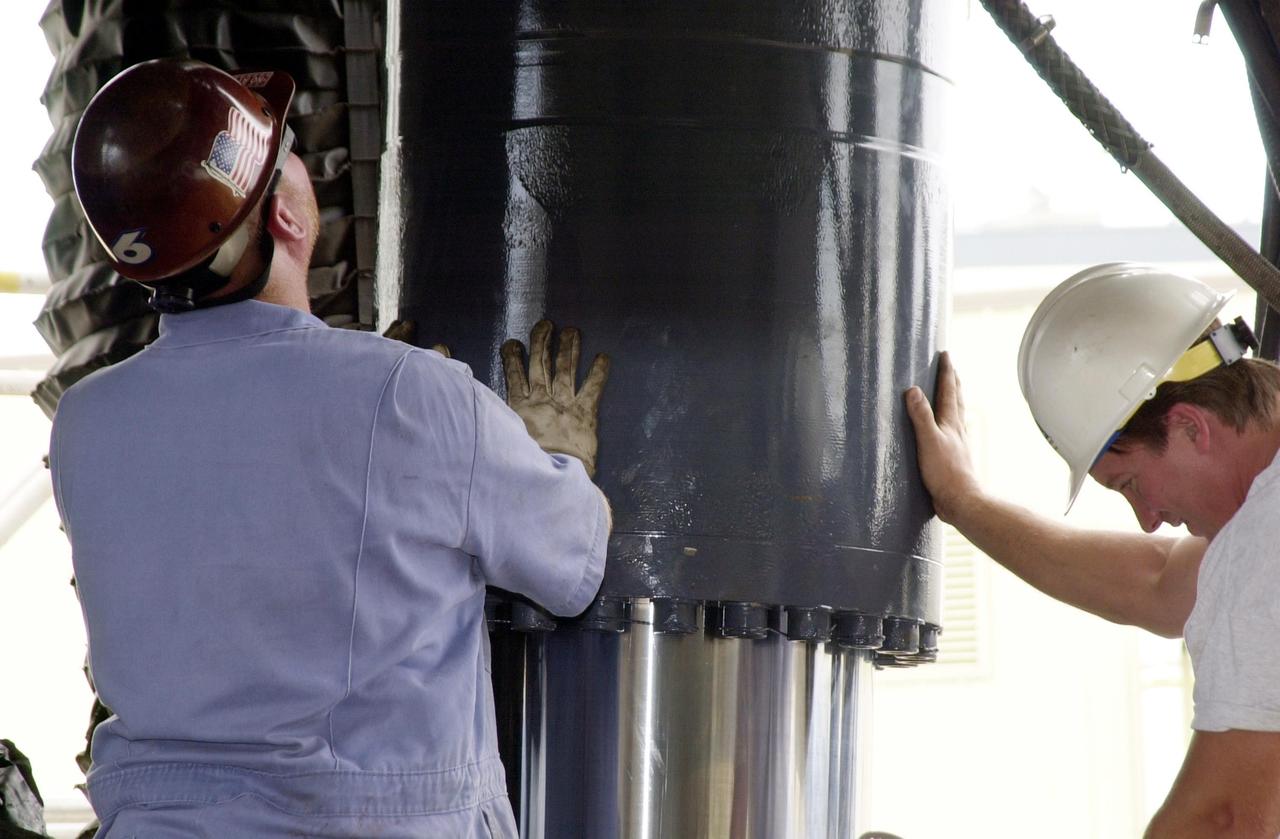
KENNEDY SPACE CENTER, FLA. -- Two workers help maneuver a repaired Jacking, Equalization and Leveling (JEL) cylinder as it is lowered into place on Crawler Transporter No. 2. There are 16 cylinders and 32 bearings per crawler. During recent routine maintenance inspections, technicians removed two of the 16 JEL cylinders on the crawler to gain access to the bearings and found three of the four bearings cracked. Further eddy current inspections indicated that cracks were present on 15 of the bearings.. Technicians have removed and replaced 14 of the bearings on CT-2, which is being repaired in order to enable Atlantis' rollout for mission STS-112, scheduled for launch no earlier than Oct. 2.
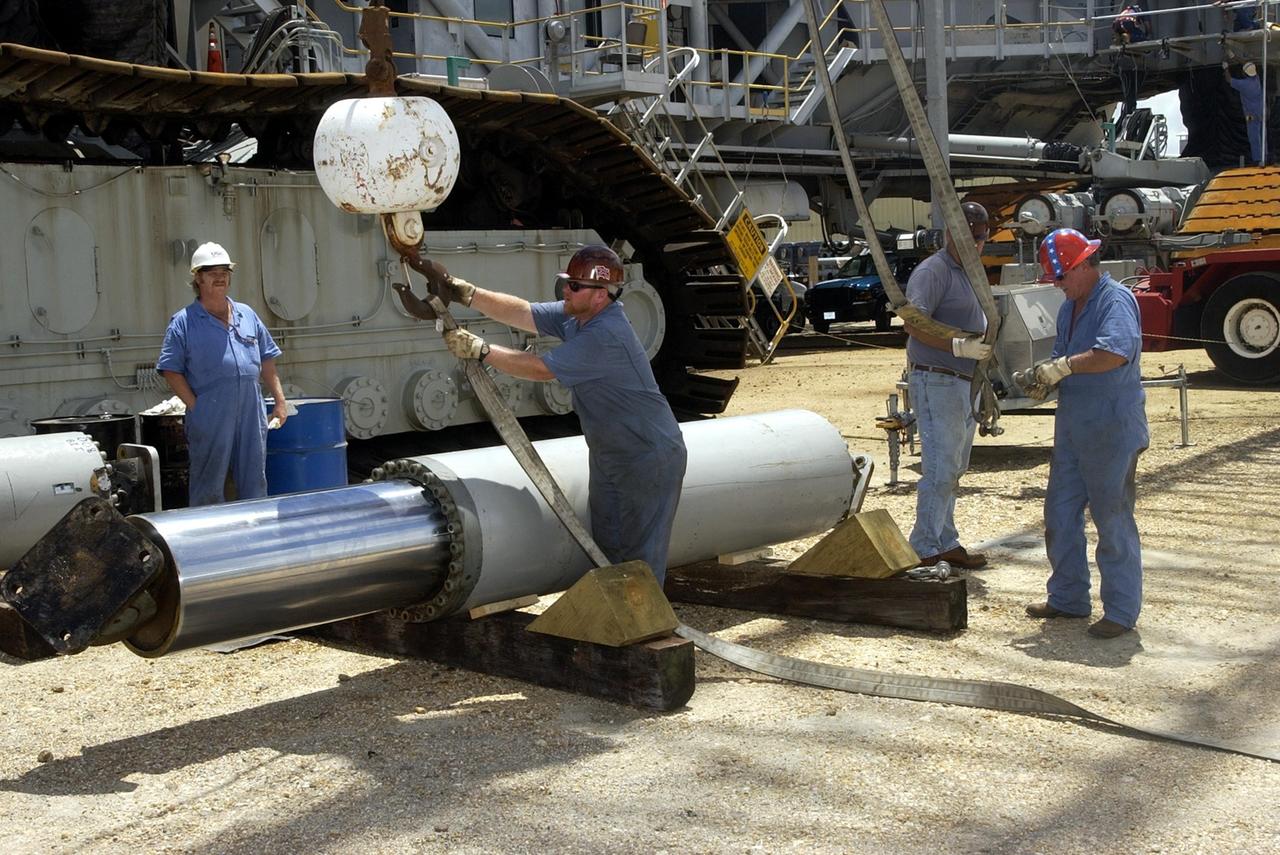
KENNEDY SPACE CENTER, FLA. -- Technicians remove the crane straps from a jacking, equalization and leveling (JEL) cylinder and bearing from Crawler-Transporter No. 2 after it is lowered by a crane to a resting position on the ground. During routine maintenance inspections last week, technicians removed two of the 16 JEL cylinders on the crawler to gain access to the bearings and found three of the four bearings cracked. Further eddy current inspections indicated that cracks are present on 15 of the bearings. There are 16 cylinders and 32 bearings per crawler. Engineers are evaluating the situation to determine the cause of the cracks and an appropriate solution to the problem.
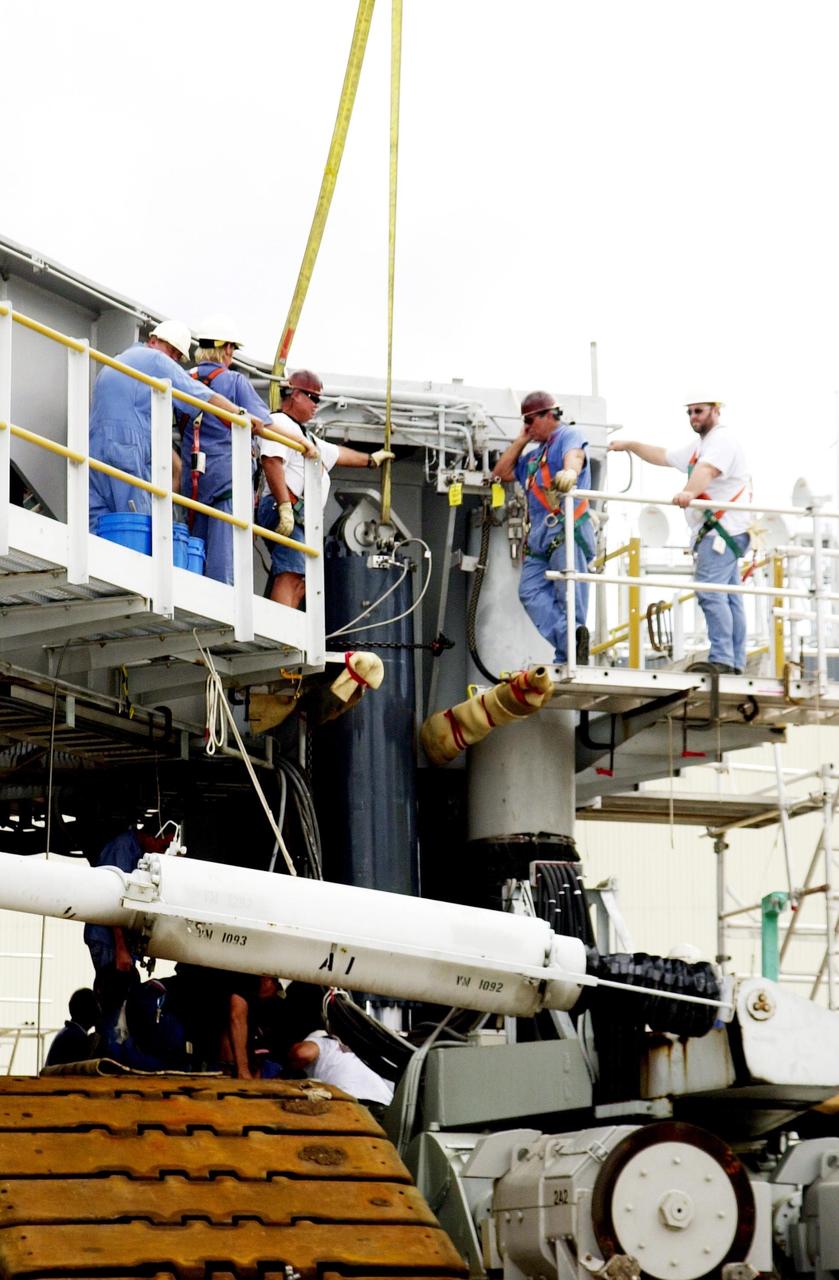
KENNEDY SPACE CENTER, FLA. -- Near the bottom of the repaired Jacking, Equalization and Leveling (JEL) cylinder, workers fasten the JEL to Crawler Transporter No. 2. There are 16 cylinders and 32 bearings per crawler. During recent routine maintenance inspections, technicians removed two of the 16 JEL cylinders on the crawler to gain access to the bearings and found three of the four bearings cracked. Further eddy current inspections indicated that cracks were present on 15 of the bearings.. Technicians have removed and replaced 14 of the bearings on CT-2, which is being repaired in order to enable Atlantis' rollout for mission STS-112, scheduled for launch no earlier than Oct. 2.
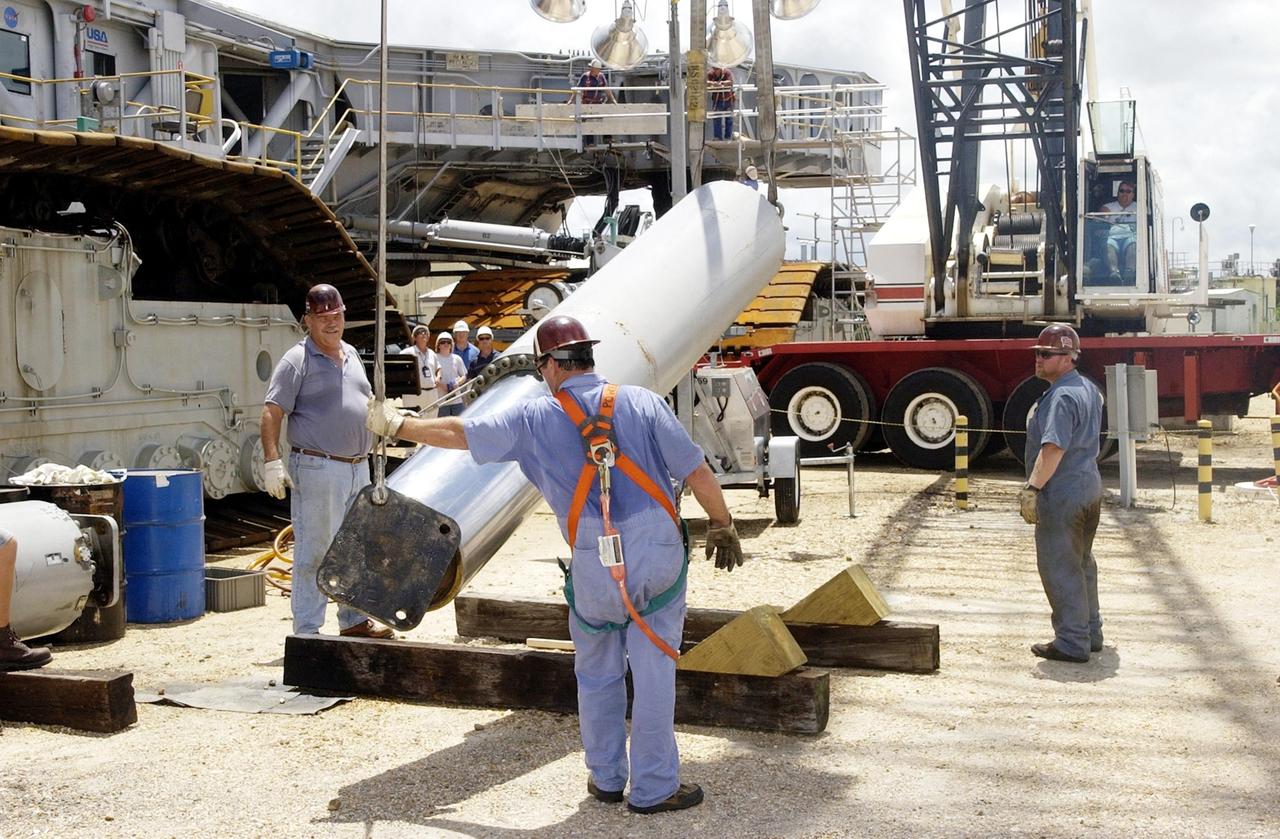
KENNEDY SPACE CENTER, FLA. -- A technician holds a crane strap to steady and guide a jacking, equalization and leveling (JEL) cylinder and bearing from Crawler-Transporter No. 2 as it is lowered by a crane to a resting position on the ground. During routine maintenance inspections last week, technicians removed two of the 16 JEL cylinders on the crawler to gain access to the bearings and found three of the four bearings cracked. Further eddy current inspections indicated that cracks are present on 15 of the bearings. There are 16 cylinders and 32 bearings per crawler. Engineers are evaluating the situation to determine the cause of the cracks and an appropriate solution to the problem.
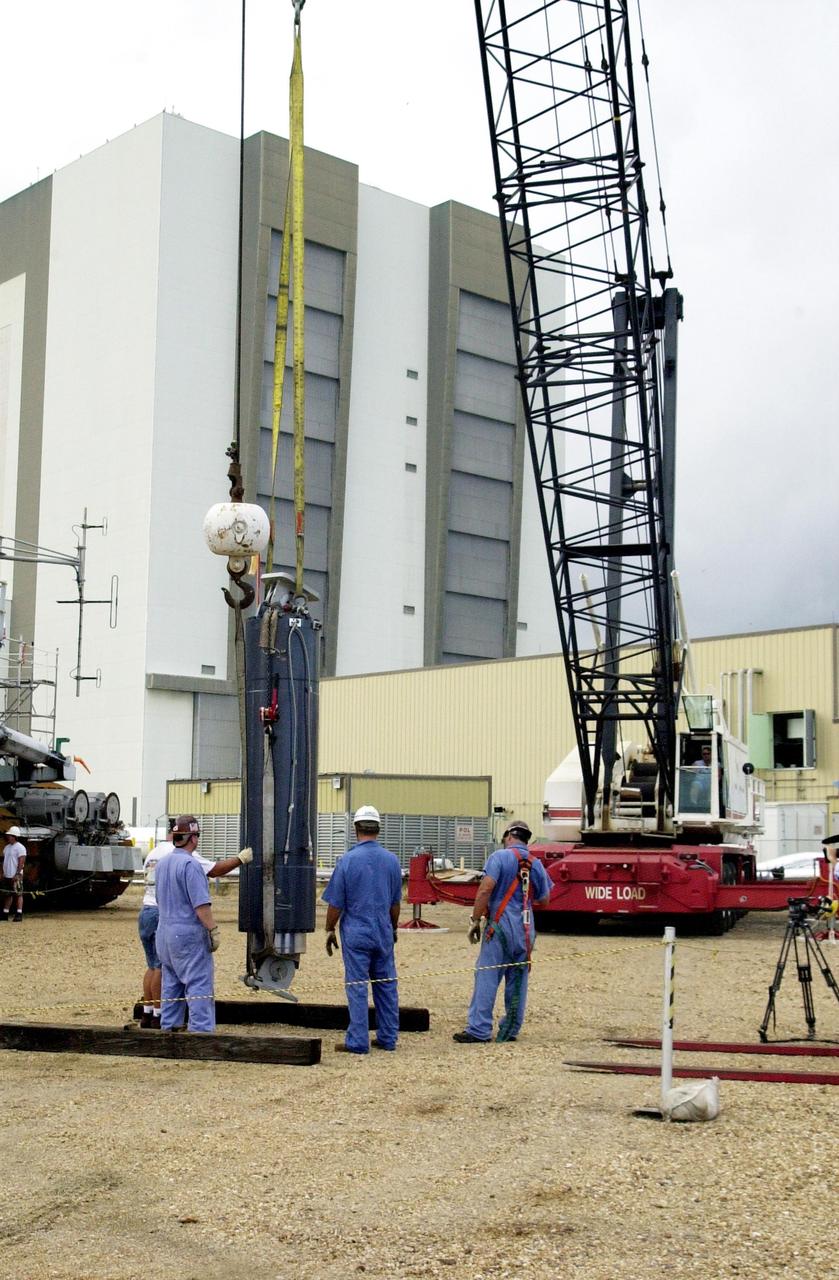
KENNEDY SPACE CENTER, FLA. -- A crane lifts the repaired Jacking, Equalization and Leveling (JEL) cylinder to move into to Crawler Transporter No. 2. There are 16 cylinders and 32 bearings per crawler. During recent routine maintenance inspections, technicians removed two of the 16 JEL cylinders on the crawler to gain access to the bearings and found three of the four bearings cracked. Further eddy current inspections indicated that cracks were present on 15 of the bearings.. Technicians have removed and replaced 14 of the bearings on CT-2, which is being repaired in order to enable Atlantis' rollout for mission STS-112, scheduled for launch no earlier than Oct. 2.
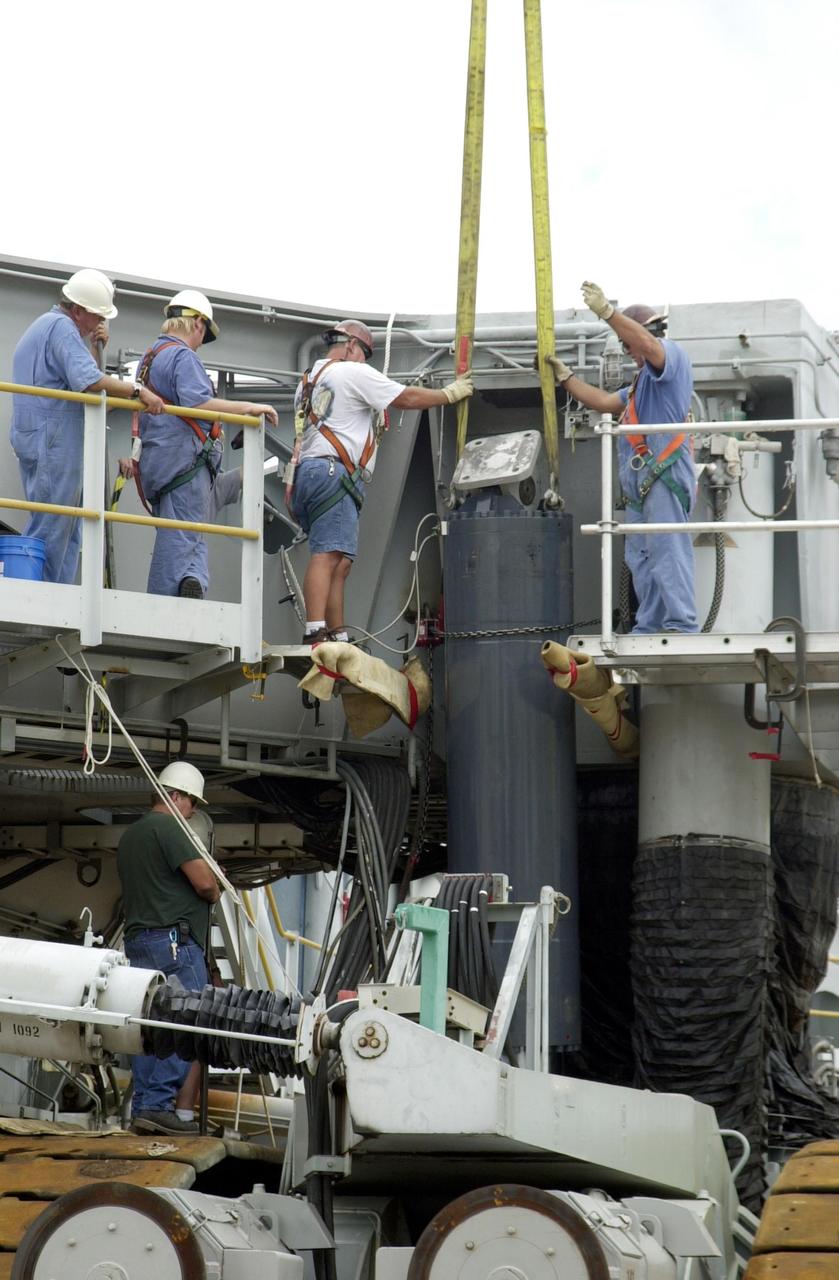
KENNEDY SPACE CENTER, FLA. -- Workers on Crawler Transporter No. 2 help guide a repaired Jacking, Equalization and Leveling (JEL) cylinder into place. There are 16 cylinders and 32 bearings per crawler. During recent routine maintenance inspections, technicians removed two of the 16 JEL cylinders on the crawler to gain access to the bearings and found three of the four bearings cracked. Further eddy current inspections indicated that cracks were present on 15 of the bearings. Technicians have removed and replaced 14 of the bearings on CT-2, which is being repaired in order to enable Atlantis' rollout for mission STS-112, scheduled for launch no earlier than Oct. 2.
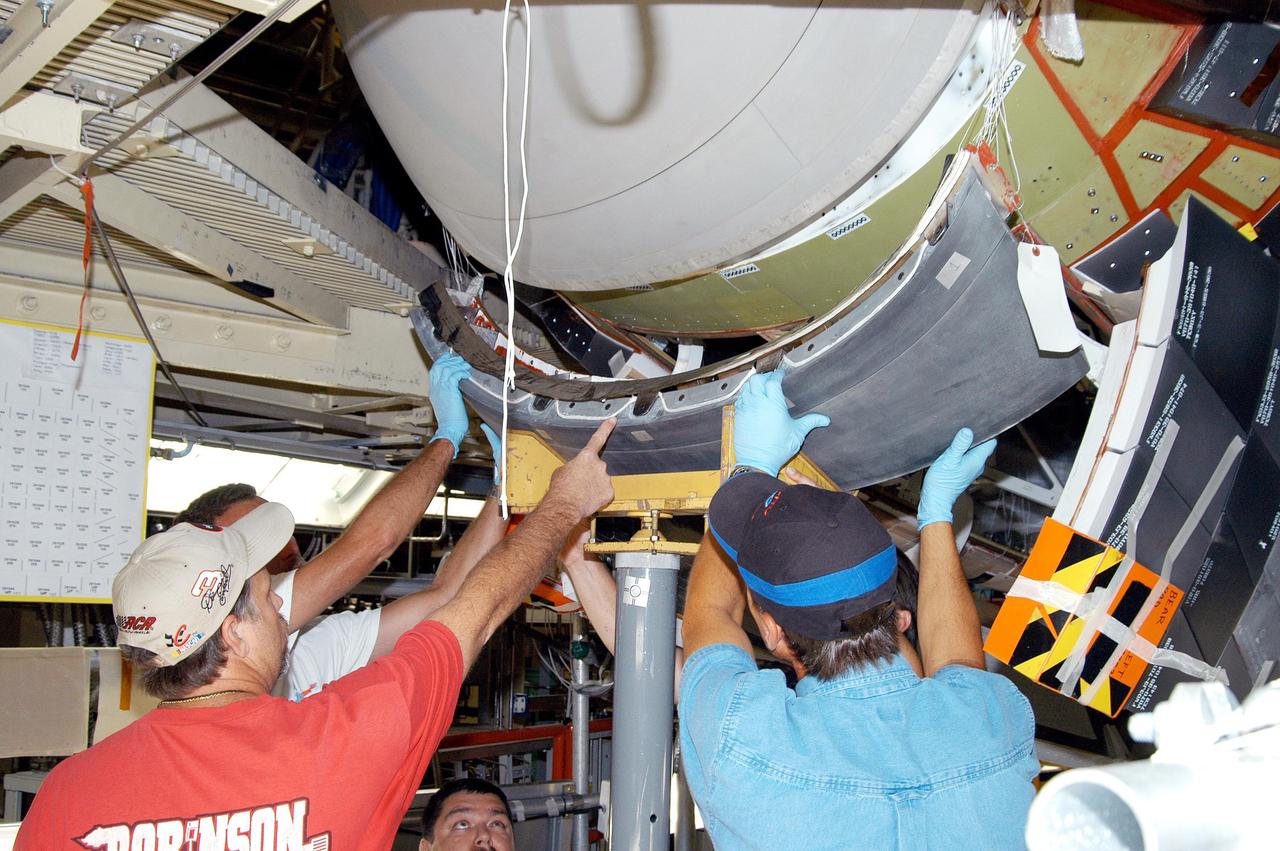
KENNEDY SPACE CENTER, FLA. - - Workers in the Orbiter Processing Facility check the placement of the Reinforced Carbon-Carbon chin panel on Discovery. The chin panel is the smile-shaped section of RCC directly below the nose cap that provides a thermal barrier during re-entry. The nose cap, with chin panel, was removed from the vehicle in the summer of 2003 and returned to the vendor, where it underwent numerous forms of Non-Destructive Evaluation. These tests included X-ray, ultrasound and eddy current to ensure its structural integrity prior to reinstallation. Discovery is designated as the Return to Flight vehicle for mission STS-114, no earlier than March 2005.
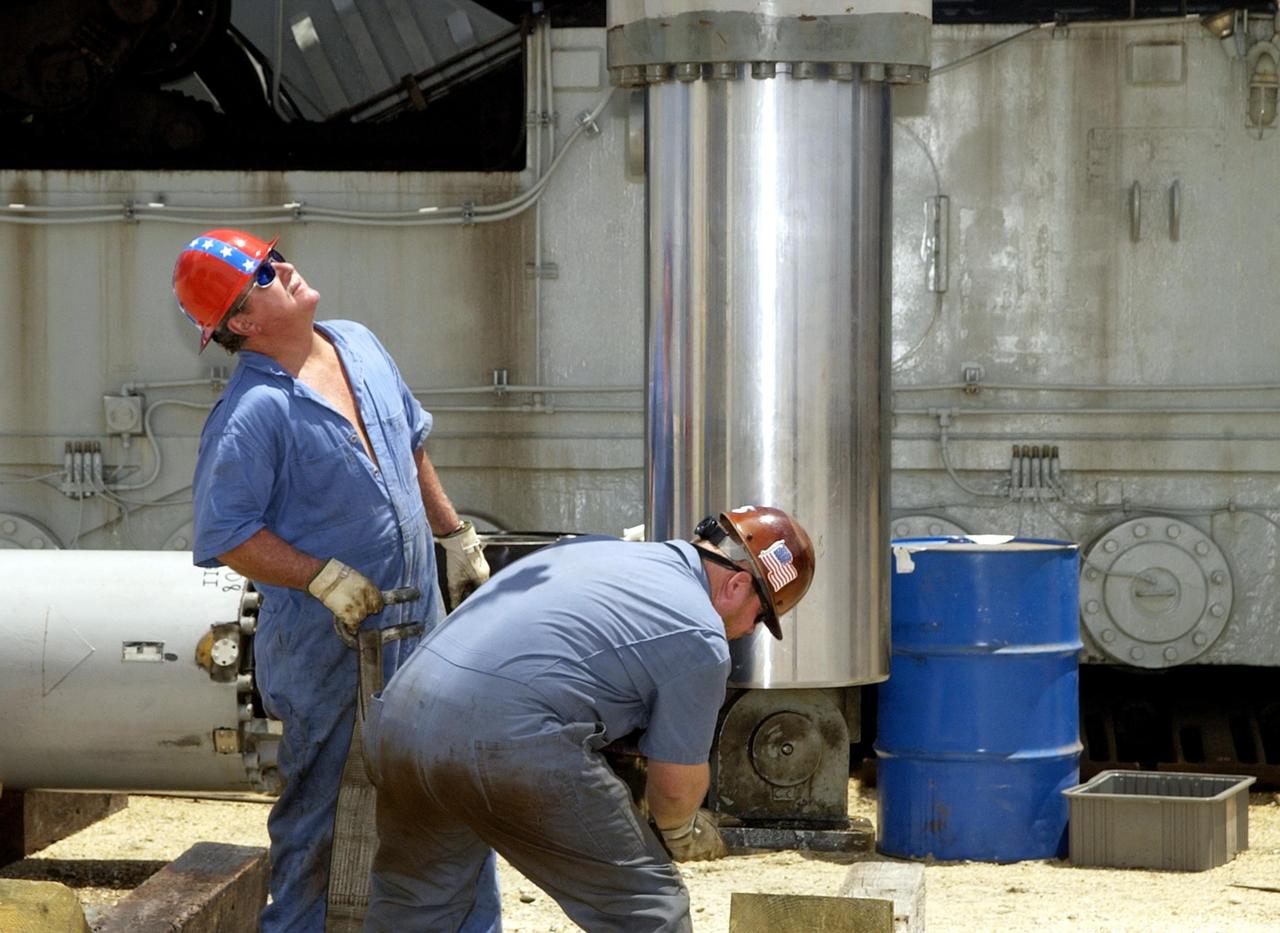
KENNEDY SPACE CENTER, FLA. -- Technicians closely monitor a jacking, equalization and leveling (JEL) cylinder and bearing from Crawler-Transporter No. 2 as it lowered by a crane to a position on the ground. During routine maintenance inspections last week, technicians removed two of the 16 JEL cylinders on the crawler to gain access to the bearings and found three of the four bearings cracked. Further eddy current inspections indicated that cracks are present on 15 of the bearings. There are 16 cylinders and 32 bearings per crawler. Engineers are evaluating the situation to determine the cause of the cracks and an appropriate solution to the problem.
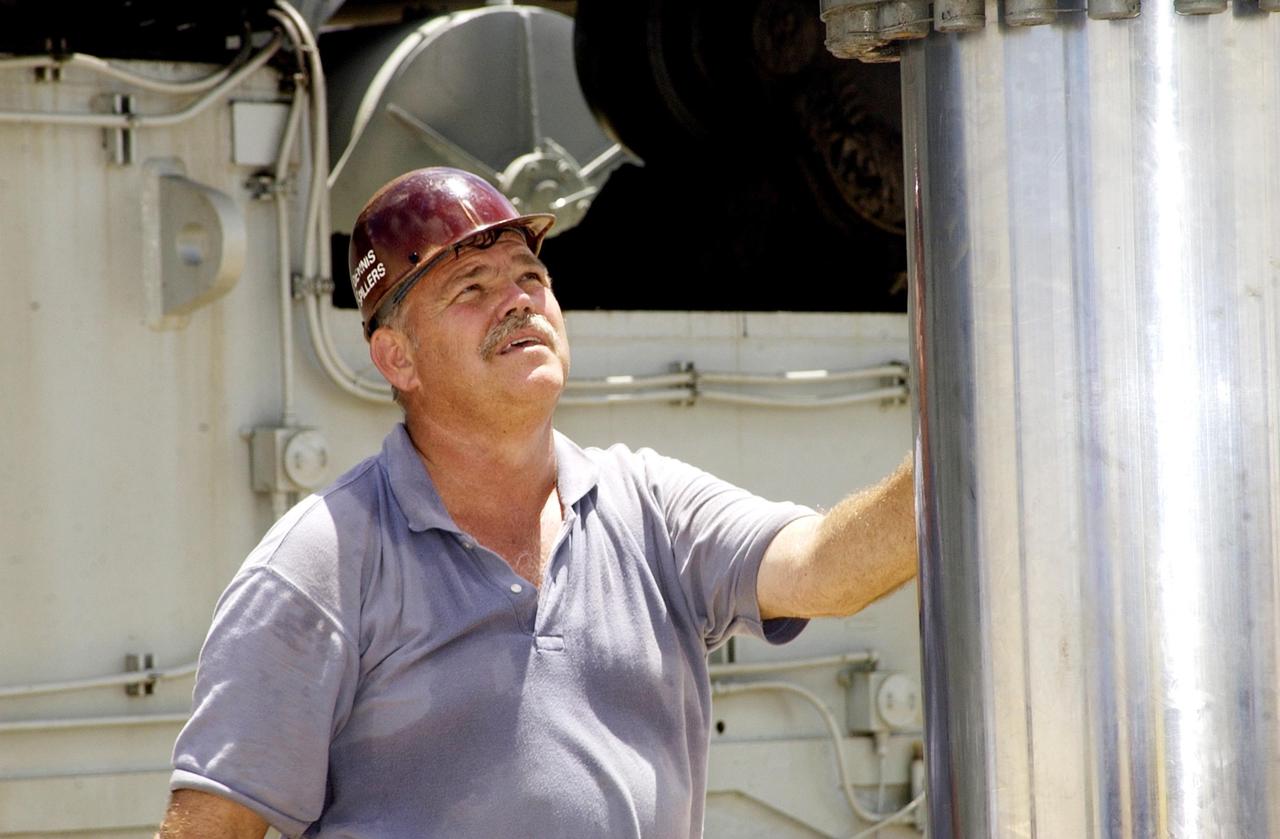
KENNEDY SPACE CENTER, FLA. -- A technician steadies a jacking, equalization and leveling (JEL) cylinder and bearing from Crawler-Transporter No. 2 as it is lowered by a crane to a position on the ground. During routine maintenance inspections last week, technicians removed two of the 16 JEL cylinders on the crawler to gain access to the bearings and found three of the four bearings cracked. Further eddy current inspections indicated that cracks are present on 15 of the bearings. There are 16 cylinders and 32 bearings per crawler. Engineers are evaluating the situation to determine the cause of the cracks and an appropriate solution to the problem.
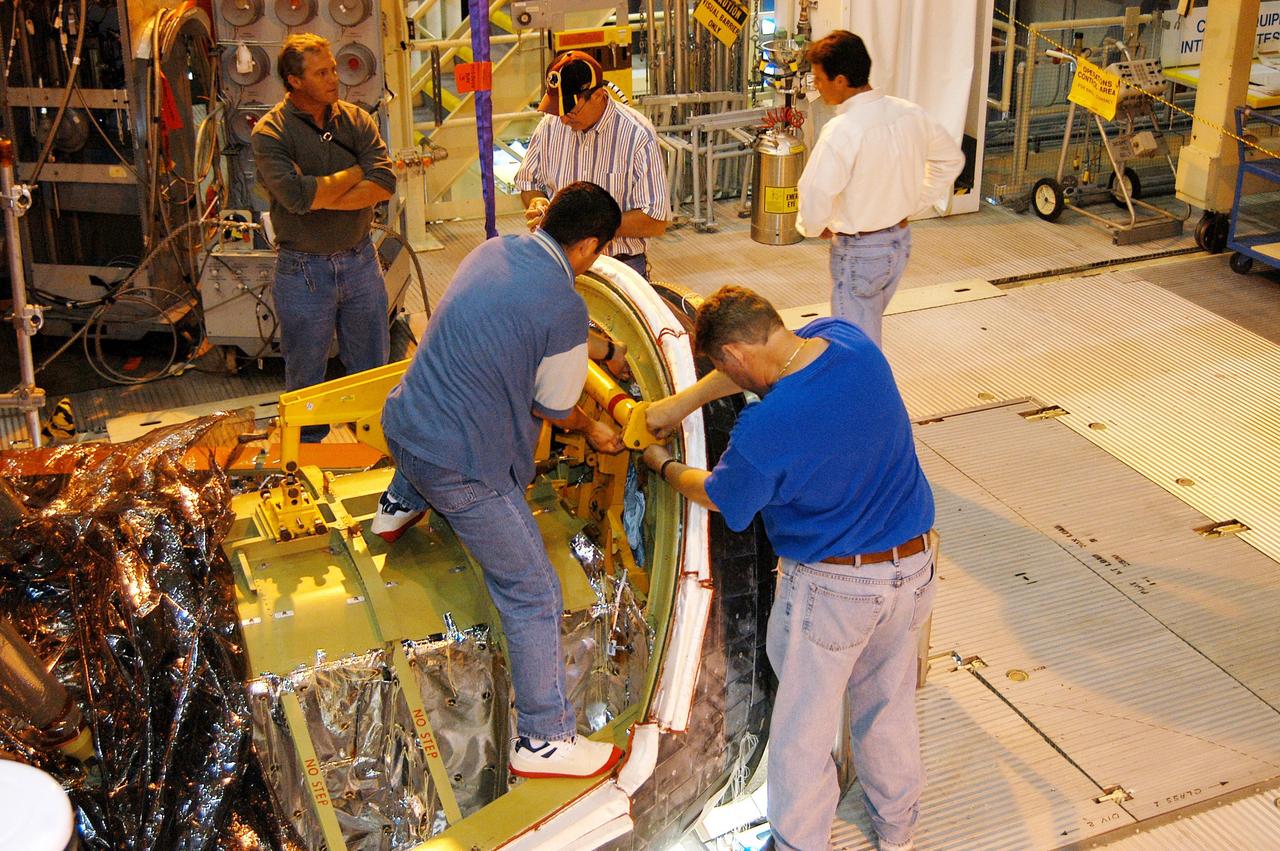
KENNEDY SPACE CENTER, FLA. - Workers in the Orbiter Processing Facility remove Ground Support Equipment used to install Discovery’s nose cap on Friday. The nose cap had been removed from the vehicle in the summer of 2003 and returned to the vendor, where it underwent numerous forms of Non-Destructive Evaluation. These tests included X-ray, ultrasound and eddy current to ensure its structural integrity prior to installation on the vehicle. The nose cap was also recoated. Once returned to KSC, new Thermal Protection System blankets were assembled inside of the nose cap and thermography was performed prior to installation on the orbiter.
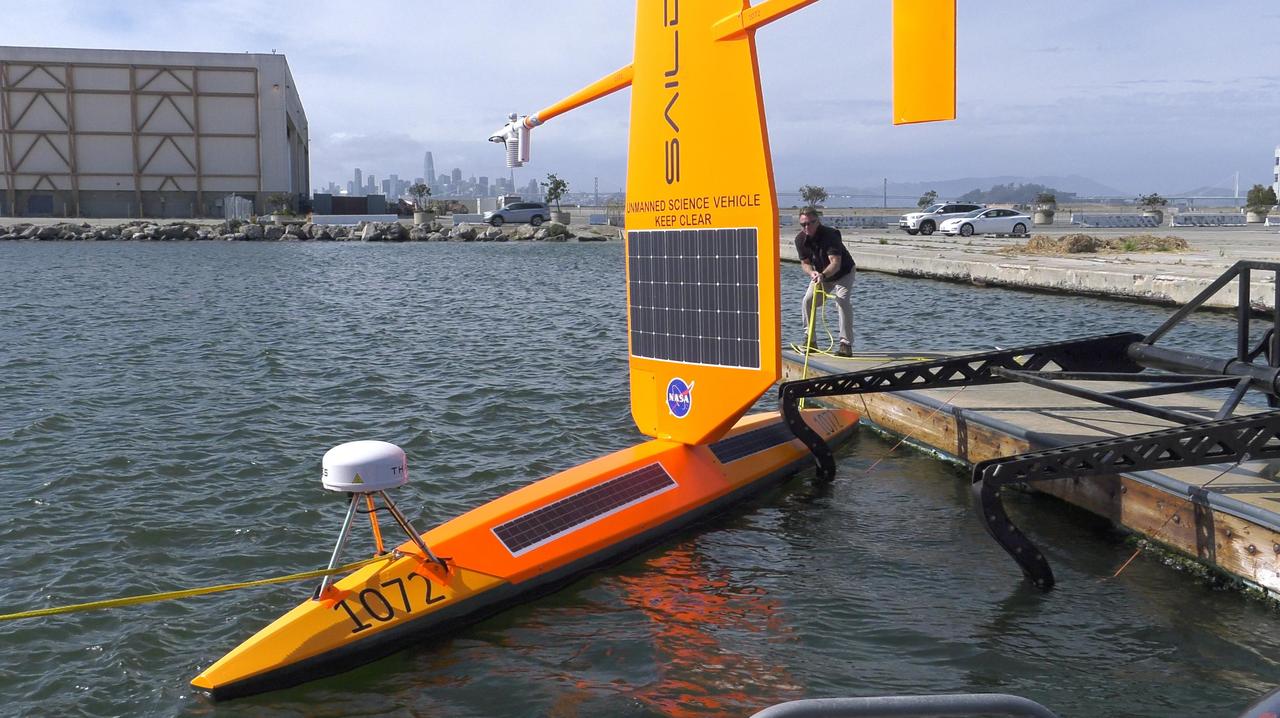
As part of NASA's Sub-Mesoscale Ocean Dynamics Experiment (S-MODE) field campaign, several Saildrones like the one pictured here were launched from San Francisco Bay. The Saildrones were part of a fleet of autonomous marine research vessels designed to measure a vast array of factors such as ocean currents, wind speed and direction, air and water temperature, salinity, dissolved oxygen, and chlorophyll content. S-MODE is a NASA Earth mission to use newly developed in-situ and remote-sensing techniques to look at small-scale ocean whirlpools, eddies, and currents. The observations could help scientists better understand how these dynamics drive the give-and-take of material and energy between the ocean and atmosphere and, ultimately, help shape Earth's climate. More information about S-MODE is at https://espo.nasa.gov/s-mode/content/S-MODE https://photojournal.jpl.nasa.gov/catalog/PIA25523
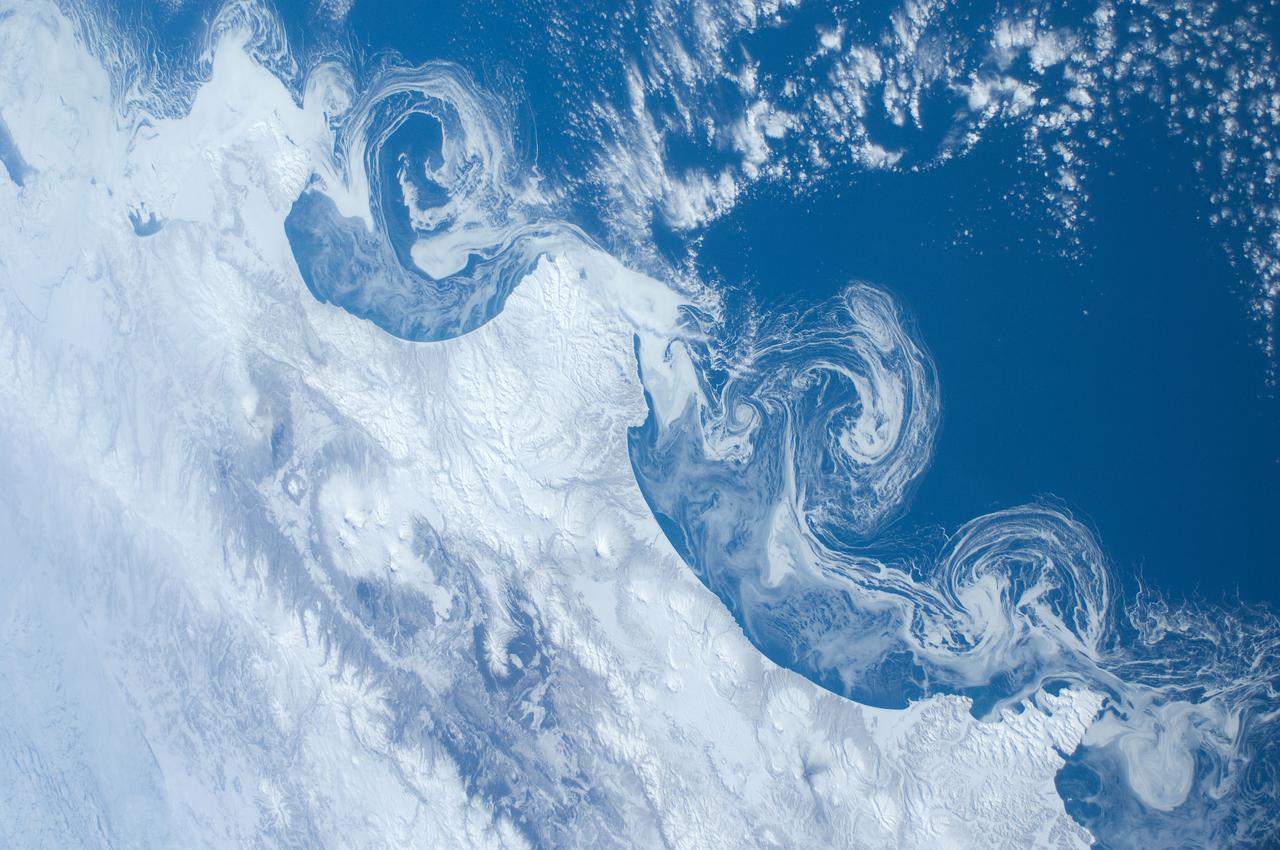
ISS030-E-162344 (15 March 2012) --- Ice floes along the Kamchatka coastline are featured in this image photographed by an Expedition 30 crew member on the International Space Station. The vantage point from orbit frequently affords the opportunity to observe processes that are impossible to see on the ground – or in this case the northeastern Pacific Ocean. The winter season blankets the Kamchatka Peninsula of Russia in snow, but significant amounts of sea ice can also form and collect along the coastline. As ice floes grind against each other, they produce smaller floes that can be moved by wind and water currents acting along the coastline. The irregular southeastern coastline of Kamchatka helps to produce large circular eddy currents from the main southwestward-flowing Kamchatka current. Three such eddies are clearly highlighted by surface ice floe patterns at center. The ice patterns are very difficult (and dangerous) to navigate in an ocean vessel – while the floes may look thin and delicate from the space station vantage point, even the smaller ice chunks are likely several meters across. White clouds at top right are distinguished from the sea ice and snow cover in the image by their high brightness and discontinuous nature. The Kamchatka Peninsula also hosts many currently and historically active stratovolcanoes. Kliuchevskoi Volcano, the highest in Kamchatka (summit elevation 4,835 meters) and one of the most active, had its most recent confirmed eruption in June of 2011, while Karymsky Volcano to the south likely produced ash plumes days before this image was taken; the snow cover near the volcano to the south and east of the summit is darkened, probably due to a cover of fresh ash, or melted away altogether (bottom center). In contrast, Kronotsky Volcano – a “textbook” symmetrical cone-shaped stratovolcano – last erupted in 1923.
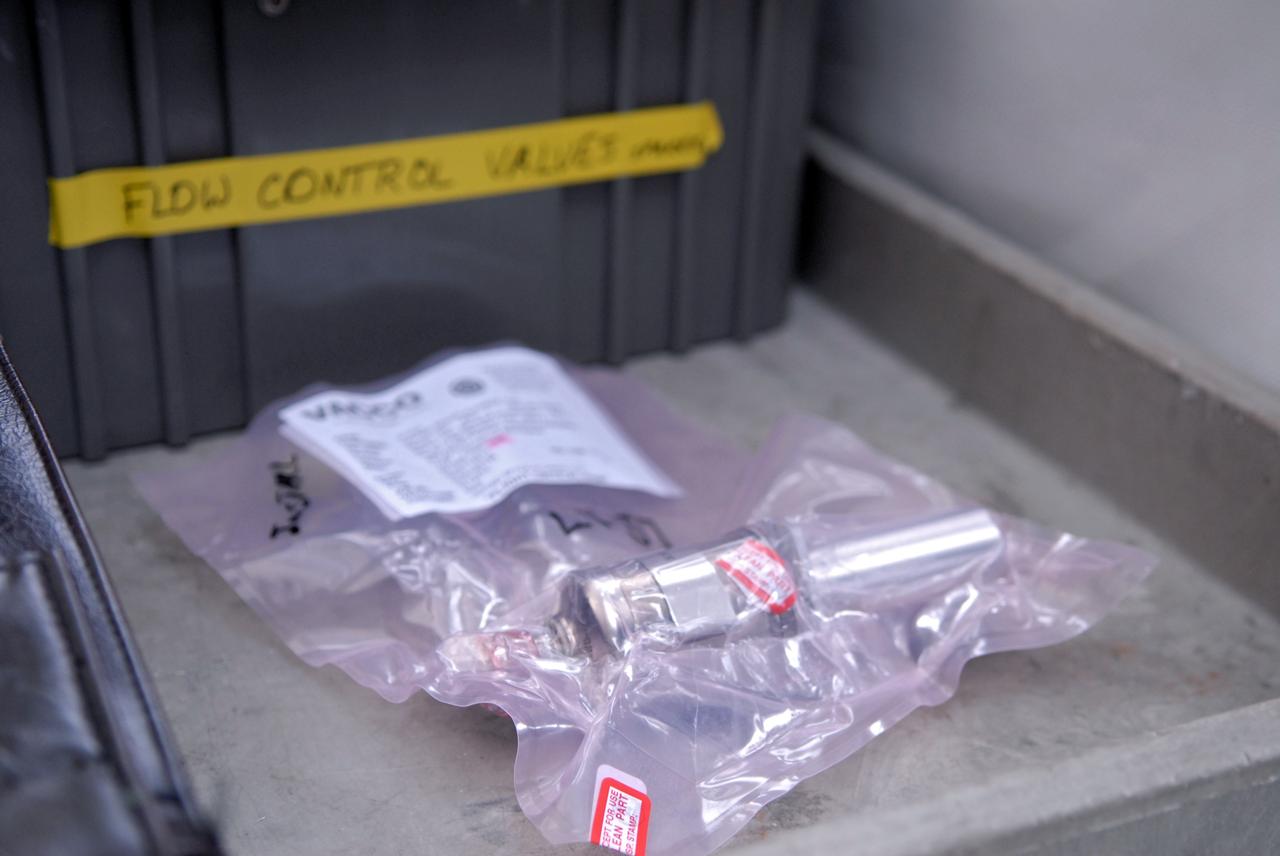
CAPE CANAVERAL, Fla. – One of the three thoroughly inspected gaseous hydrogen flow control valves is shown after its arrival at NASA's Kennedy Space Center in Florida. Technicians installed and retested them in space shuttle Discovery. Part of the main propulsion system, the valves channel gaseous hydrogen from the main engines to the external tank. NASA and contractor teams have worked to identify what caused damage to a flow control valve on shuttle Endeavour during its November 2008 flight. Space Shuttle Program managers decided to replace Discovery's valves with others that have undergone a detailed eddy current inspection. Program managers will review the testing and determine whether to meet on March 6 for the Flight Readiness Review for the STS-119 mission. Launch of Discovery tentatively is targeted for March 12. Photo credit: NASA/Chris Rhodes
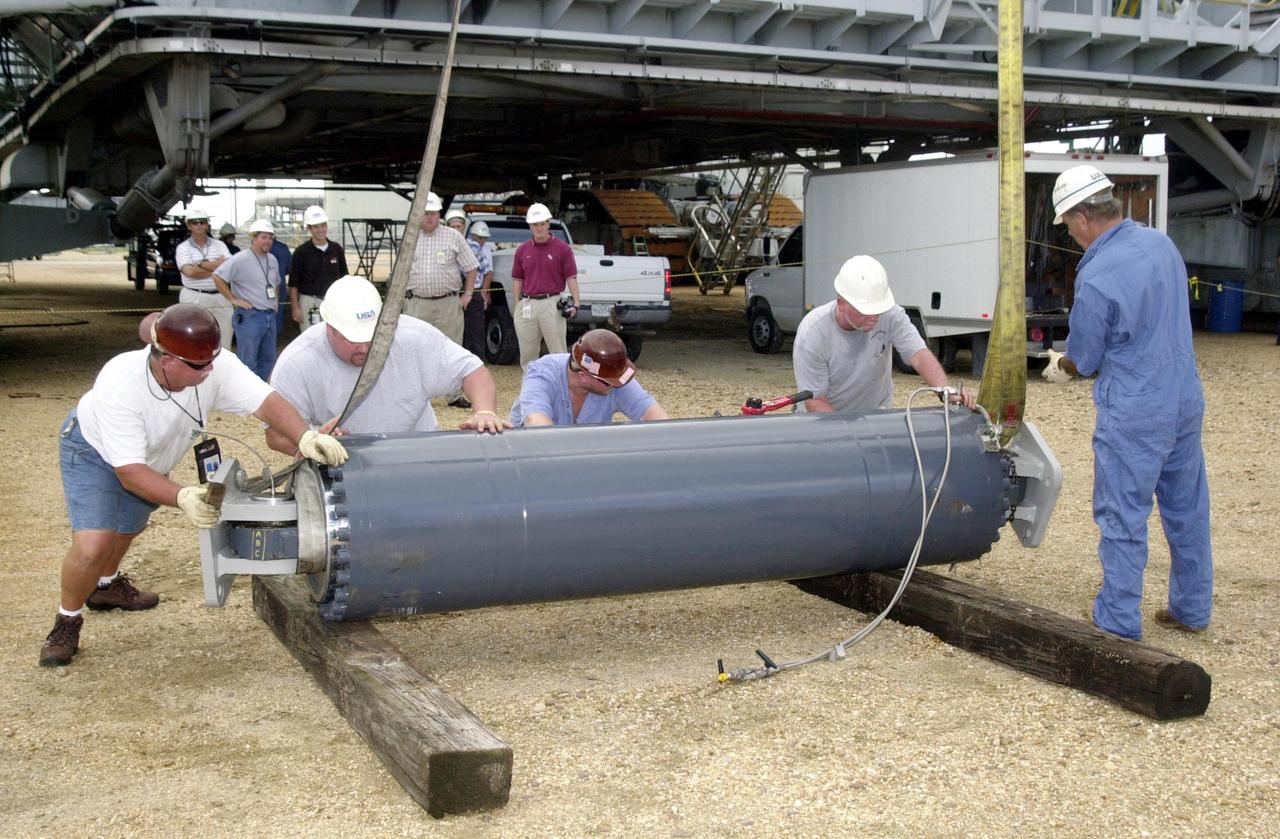
KENNEDY SPACE CENTER, FLA. -- At the crawler parking area, one of the repaired Jacking, Equalization and Leveling (JEL) cylinders is positioned for hookup to a crane. The crane will lift the JEL for placement in Crawler Transporter No. 2. There are 16 cylinders and 32 bearings per crawler. During recent routine maintenance inspections, technicians removed two of the 16 JEL cylinders on the crawler to gain access to the bearings and found three of the four bearings cracked. Further eddy current inspections indicated that cracks were present on 15 of the bearings. Technicians have removed and replaced 14 of the bearings on CT-2, which is being repaired in order to enable Atlantis' rollout for mission STS-112, scheduled for launch no earlier than Oct. 2.
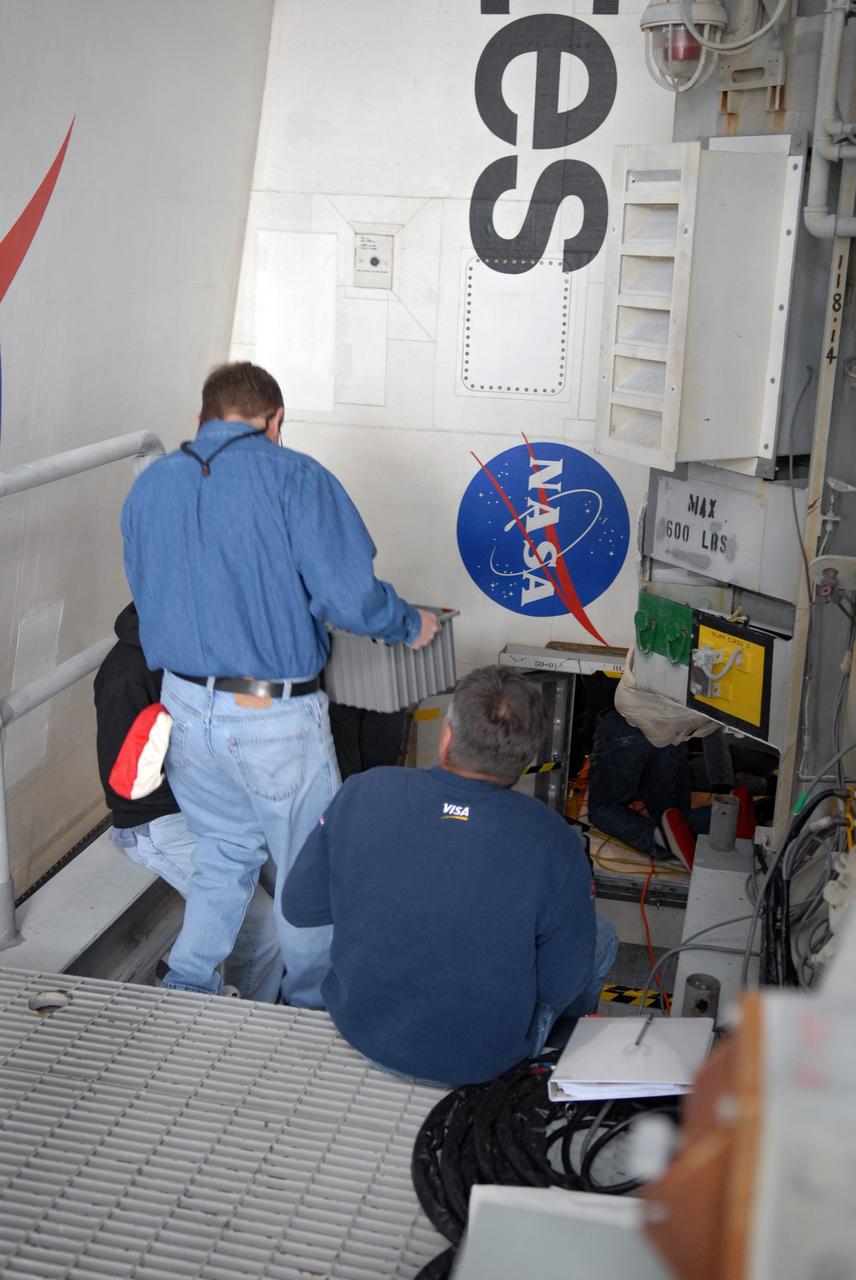
CAPE CANAVERAL, Fla. – On Launch Pad 39A at NASA's Kennedy Space Center in Florida, technicians prepare to install three gaseous hydrogen flow control valves on space shuttle Discovery. The valves were retested after installation. Part of the main propulsion system, the valves channel gaseous hydrogen from the main engines to the external tank. NASA and contractor teams have worked to identify what caused damage to a flow control valve on shuttle Endeavour during its November 2008 flight. Space Shuttle Program managers decided to replace Discovery's valves with others that have undergone a detailed eddy current inspection. Program managers will review the testing and determine whether to meet on March 6 for the Flight Readiness Review for the STS-119 mission. Launch of Discovery tentatively is targeted for March 12. Photo credit: NASA/Chris Rhodes
CAPE CANAVERAL, Fla. – On Launch Pad 39A at NASA's Kennedy Space Center in Florida, technicians install three gaseous hydrogen flow control valves on space shuttle Discovery. The valves were retested after installation. Part of the main propulsion system, the valves channel gaseous hydrogen from the main engines to the external tank. NASA and contractor teams have worked to identify what caused damage to a flow control valve on shuttle Endeavour during its November 2008 flight. Space Shuttle Program managers decided to replace Discovery's valves with others that have undergone a detailed eddy current inspection. Program managers will review the testing and determine whether to meet on March 6 for the Flight Readiness Review for the STS-119 mission. Launch of Discovery tentatively is targeted for March 12. Photo credit: NASA/Chris Rhodes
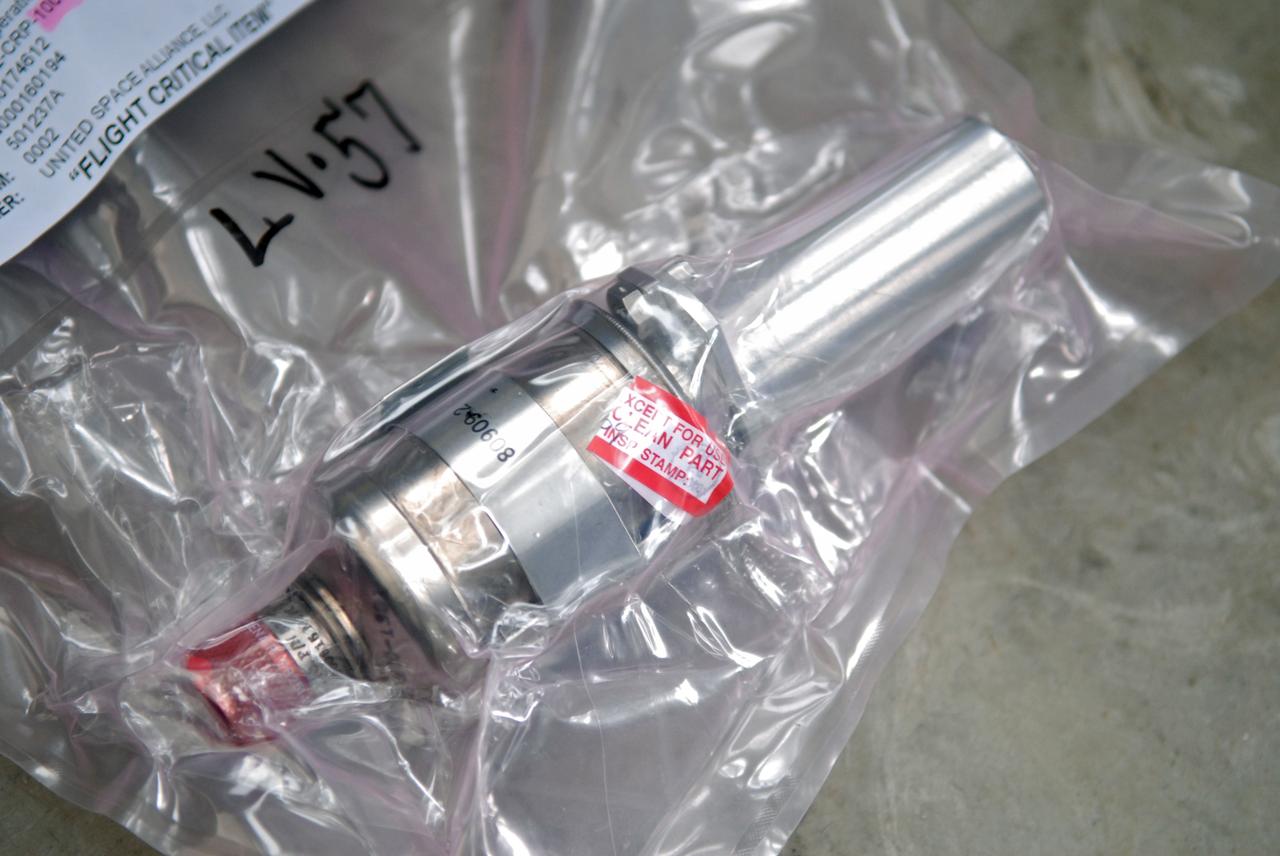
CAPE CANAVERAL, Fla. – One of the three thoroughly inspected gaseous hydrogen flow control valves is shown after its arrival at NASA's Kennedy Space Center in Florida. Technicians installed and retested them in space shuttle Discovery. Part of the main propulsion system, the valves channel gaseous hydrogen from the main engines to the external tank. NASA and contractor teams have worked to identify what caused damage to a flow control valve on shuttle Endeavour during its November 2008 flight. Space Shuttle Program managers decided to replace Discovery's valves with others that have undergone a detailed eddy current inspection. Program managers will review the testing and determine whether to meet on March 6 for the Flight Readiness Review for the STS-119 mission. Launch of Discovery tentatively is targeted for March 12. Photo credit: NASA/Chris Rhodes
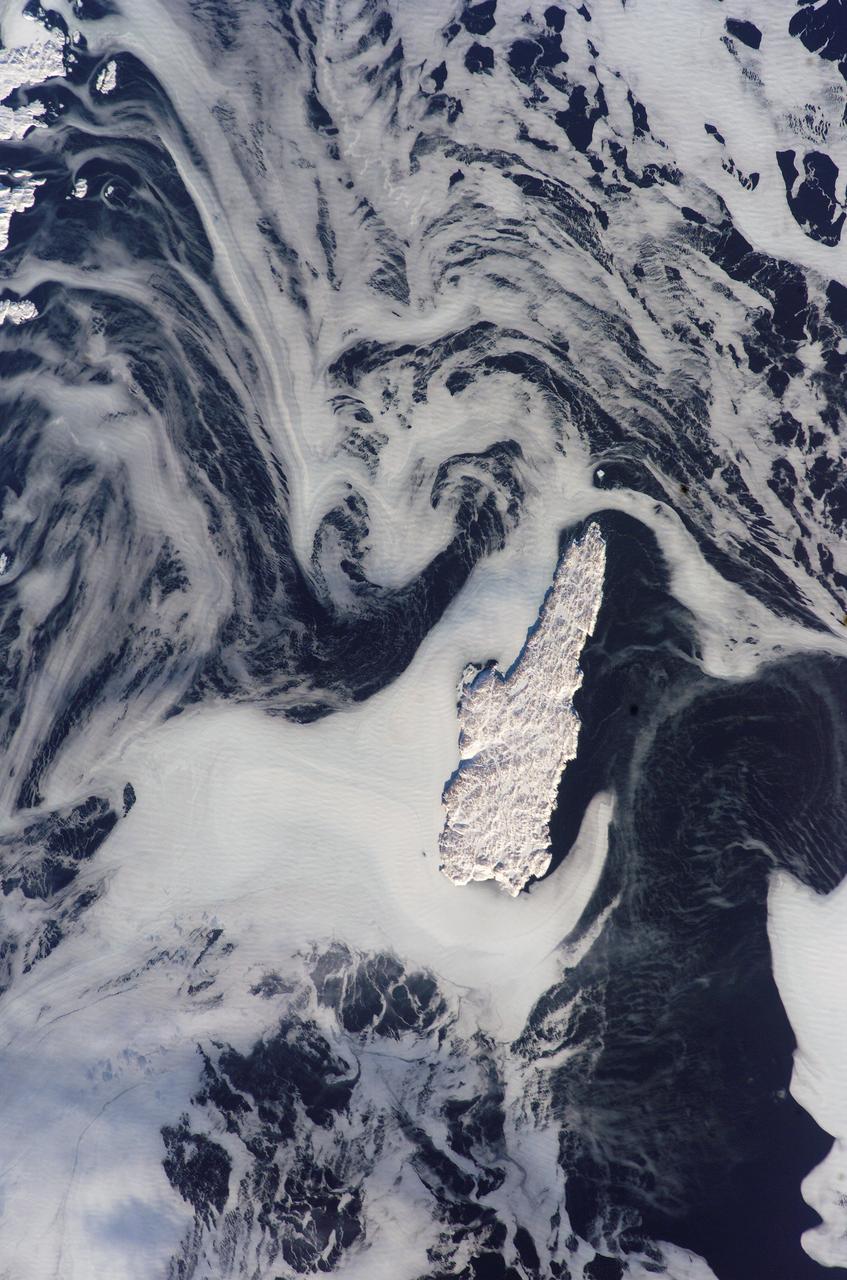
ISS012-E-15918 (24 Jan. 2006) --- Belle Isle and a portion of Newfoundland, Canada are featured in this image photographed by an Expedition 12 crew member on the International Space Station. Belle Isle (center) is surrounded by sea ice in this recent winter view. Belle Isle lies in the strait between the Island of Newfoundland and Labrador (the mainland portion of Canada’s province of Newfoundland). Small islands along the coast of Labrador appear in the top left corner. In this key location Belle Isle lies on the shortest shipping lanes between the Great Lakes and Europe, and also on the main north-south shipping route to Hudson Bay and the Northwest Territories. Snow and ice in this recent winter view obliterate the dozens of glacier-scoured lakes that dot the surface of the island. The single community of Belle Isle Landing on the southeast tip is equally hard to see. Ice patterns also show that the island lies at the meeting point of two sea currents. The Labrador Current flows from the northwest (top left), and a smaller current, driven by dominant westerly winds, flows from the southwest (lower left) out of the narrow Belle Isle Strait (out of frame lower left). Flow lines in sea ice indicate the sense of movement of the ice. Ice floes embedded in the Labrador Current appear in the upper part of the image as a relatively open pattern. Sea ice with a denser pattern enters from the lower left corner, banking against the west side of Belle Isle. Tendrils flow around capes at either end of the island, with an ice-free “shadow” on the opposite, downstream side. Eddies (center) in the ice patterns show where the currents interact, north and west of the island.
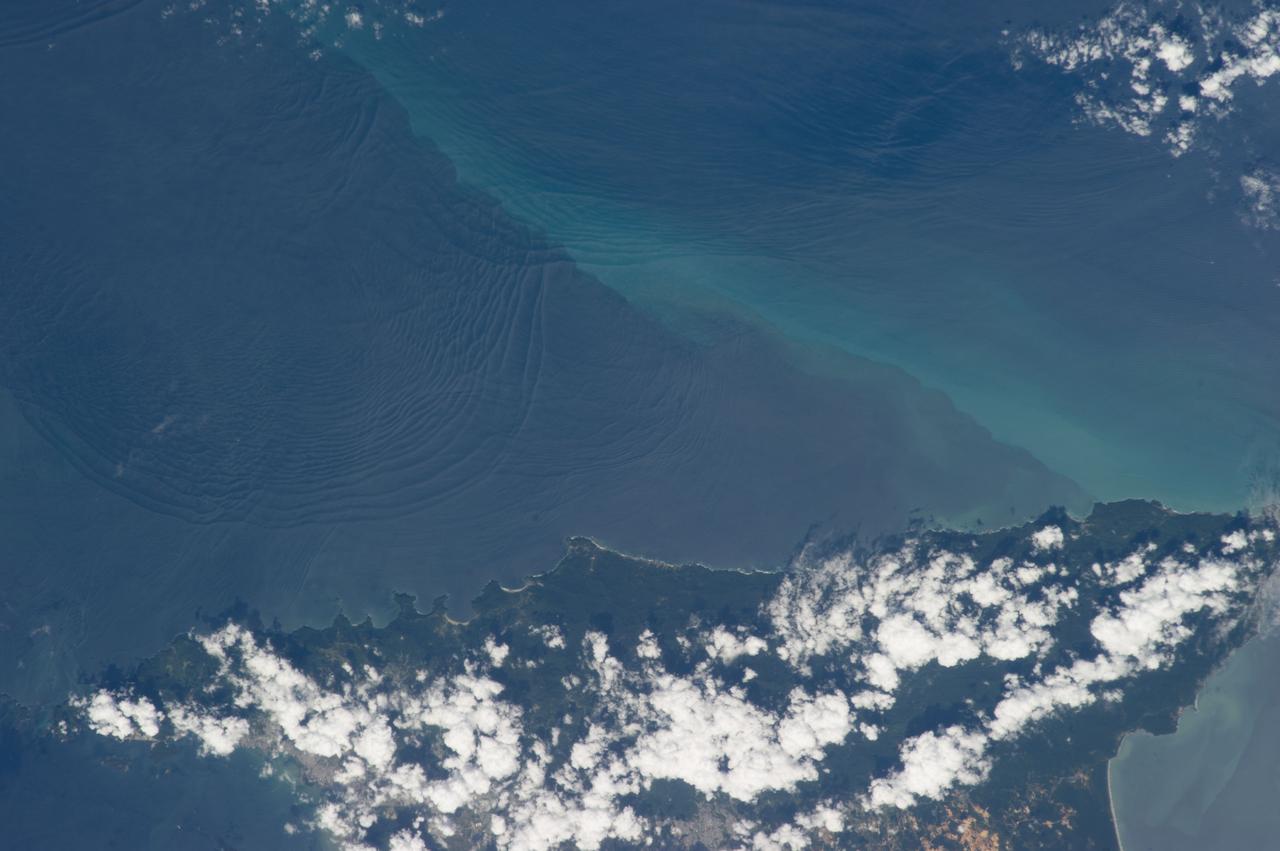
ISS034-E-032377 (18 Jan. 2013) --- Internal waves off Northern Trinidad are featured in this image photographed by an Expedition 34 crew member on the International Space Station. This photograph shows the north coast of the island of Trinidad in the southeastern Caribbean Sea, where heating of the land is setting off the growth of cumulus clouds. The light blue northwest-southeast trending plume at center is sediment from one of the rivers that flows into the sea here. Adjacent to, and appearing to cross the sediment plume, a series of subtle interacting arcs can be seen in the sea. These are known as internal waves which are the surface manifestation of slow waves moving tens of meters beneath the sea surface. These produce enough of an effect on the sea surface to be seen from space, but only where they are enhanced due to reflection of sunlight, or sunglint, back towards the space station. The image shows at least three sets of internal waves interacting. The most prominent set (top left) shows a “packet” of several waves moving from the northwest due to the tidal flow towards the north coast of Trinidad. Two less prominent, younger sets can be seen further out to sea. A very broad set enters the view from the north and northeast, and interacts at top center with the first set. All the internal waves are probably caused by the shelf break near Tobago (outside the image to top right). The shelf break is the step between shallow seas (around continents and islands) and the deep ocean. It is the line at which tides usually start to generate internal waves. The sediment plume at center is embedded in the Equatorial Current (also known as the Guyana Current) and is transporting material to the northwest—in almost the opposite direction to the movement of the internal waves. The current flows strongly from east to west around Trinidad, all the way from equatorial Africa, driven by year-round easterly winds. Seafarers in the vicinity of Trinidad are warned that the current, and its local reverse eddies, make navigation of smaller craft in these waters complicated and sometimes dangerous.
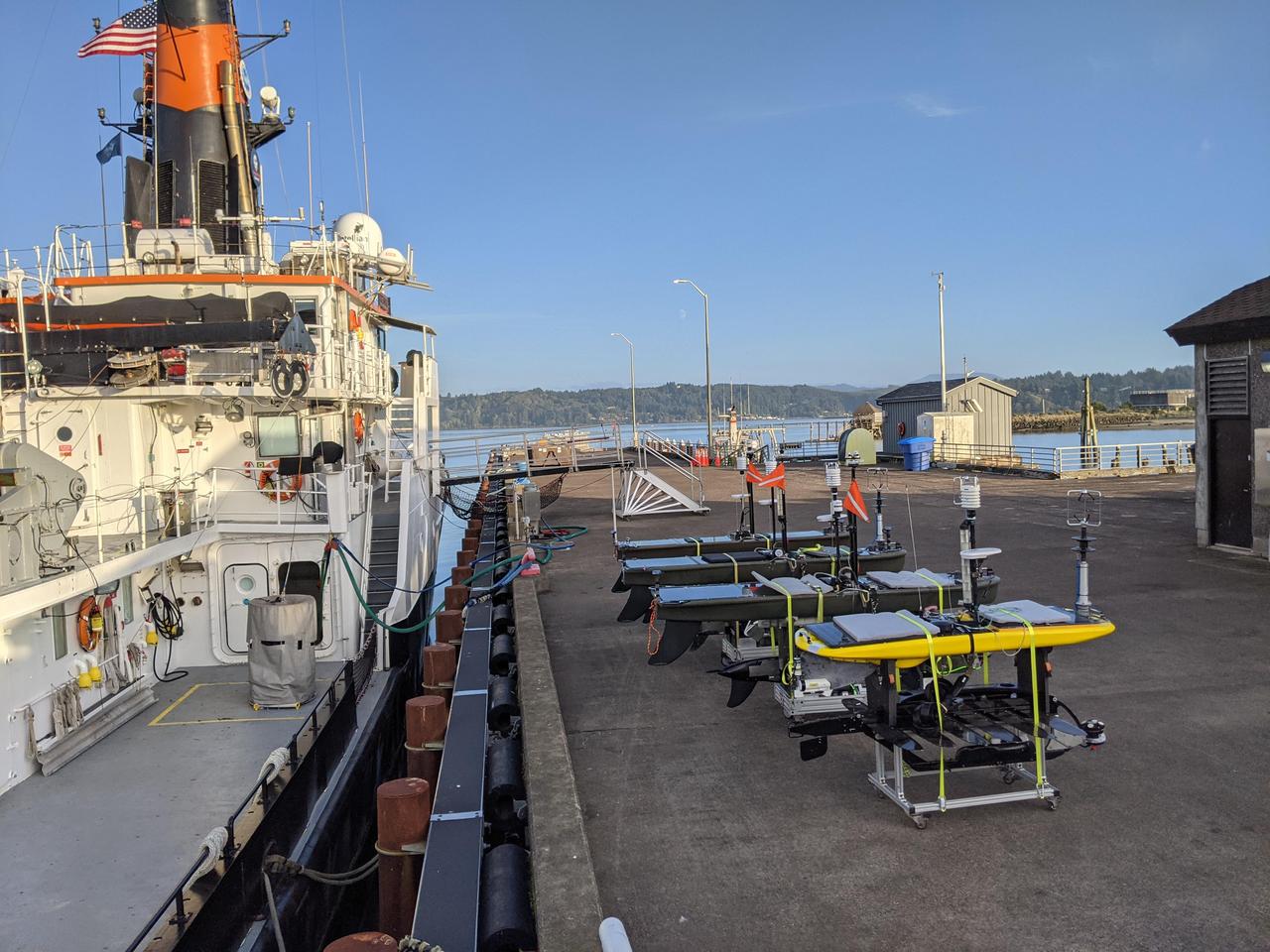
As part of NASA's Sub-Mesoscale Ocean Dynamics Experiment (S-MODE) pilot campaign in 2021, the research vessel Oceanus, owned by the National Science Foundation, set sail to an area 110 nautical miles off the coast of San Francisco, accompanied by a fleet of several types of autonomous marine research vessels. The wave gliders pictured here on the dock carry a variety of sensors and instruments. Because they're autonomous, their use reduces the risk posed to human researchers who could be exposed to large storms at sea. S-MODE is a NASA Earth mission to use newly developed in-situ and remote-sensing techniques to look at small-scale ocean whirlpools, eddies, and currents. The observations could help scientists better understand how these dynamics drive the give-and-take of material and energy between the ocean and atmosphere and, ultimately, help shape Earth's climate. More information about S-MODE is at https://espo.nasa.gov/s-mode/content/S-MODE https://photojournal.jpl.nasa.gov/catalog/PIA25524
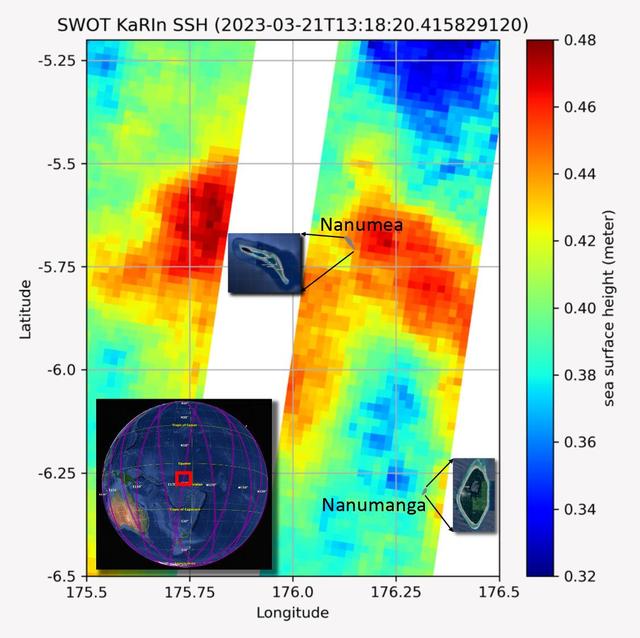
The recently launched Surface Water and Ocean Topography (SWOT) mission collected data on sea levels around two of the inhabited islands of Tuvalu, a nation in the South Pacific Ocean that has been threatened with sea level rise that substantially exceeds the global average. The image shows two areas of red that indicate higher than normal sea levels around two of Tuvalu's inhabited islands, Nanumanga and Nanumea. The higher sea levels were likely caused by internal tides or circular currents called eddies. The SWOT data illuminates for the first time these small ocean features that, when they occur on top of rising sea levels, can lead to episodic flooding along coastlines. The Tuvalu data was collected March 21, 2023. Rising seas are a direct consequence of climate change. On a global scale, the combination of warming ocean waters and ice melt from glaciers and ice sheets is leading to sea level rise that is occurring at an ever-increasing rate. The current rate of rise is more than 0.15 inches (4 millimeters) per year, an increase from 0.08 inches (2 millimeters) per year in 1993. This seemingly small increase holds great significance for coastal communities that have seen more than a century of persistent sea level rise. The gap between the average high tide and flooding conditions has narrowed, and coastal impacts driven by sea level rise have increased in frequency and severity in recent years. This is particularly true for low-lying island nations like Tuvalu, located about 620 miles (1,000 kilometers) north of Fiji. Sea level rise does not occur at the same rate everywhere across the globe, and can be exacerbated by natural ocean fluctuations that occur over time periods from years to decades. For Tuvalu, the amount of sea level rise has been substantially higher than the global average over the past three decades. The amount of rise, when coupled with Tuvalu's low land elevations, places the country increasingly under threat. In the near term, sea level rise will combine with naturally occurring ocean variability and storms to exacerbate events like coastal flooding. Monitoring and understanding sea level change is critical for Tuvalu and other low-lying island nations. Launched on Dec. 16, 2022, from Vandenberg Space Force Base in central California, SWOT collected the Tuvalu sea level data during a period of commissioning, calibration, and validation. Engineers are checking out the performance of the satellite's systems and science instruments before the planned start of science operations in summer 2023. https://photojournal.jpl.nasa.gov/catalog/PIA25777
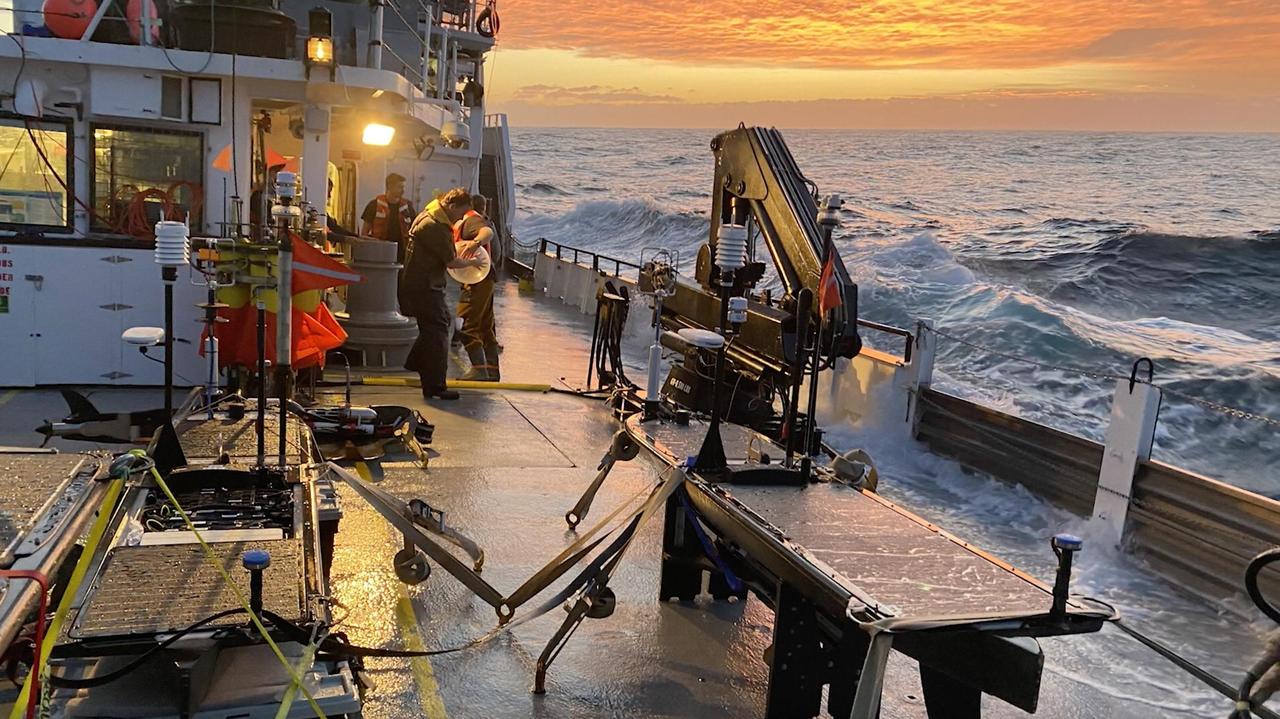
During the pilot campaign for NASA's Sub-Mesoscale Ocean Dynamics Experiment (S-MODE) in 2021, on the transit from Oregon to the experiment site off the coast of San Francisco, large waves (some reaching around 23 feet or 7 meters tall) rolled over the deck of the research vessel Oceanus, damaging several autonomous wave gliders seen here. Scientists from across the country then assembled to repair the instruments in San Francisco harbor. Wave gliders are one type of autonomous marine research platform deployed at sea during S-MODE's field campaigns in the Pacific Ocean. The uncrewed vessels feature a set of fins – on a submersible platform tethered to a surface float – which it uses to propel the craft around the upper ocean. The platforms carry a variety of sensors and instruments. Because they're autonomous, their use reduces the risk posed to human researchers who could be exposed to large storms at sea. S-MODE is a NASA Earth mission to use newly developed in-situ and remote-sensing techniques to look at small-scale ocean whirlpools, eddies, and currents. The observations could help scientists better understand how these dynamics drive the give-and-take of material and energy between the ocean and atmosphere and, ultimately, help shape Earth's climate. More information about S-MODE is at https://espo.nasa.gov/s-mode/content/S-MODE https://photojournal.jpl.nasa.gov/catalog/PIA25522
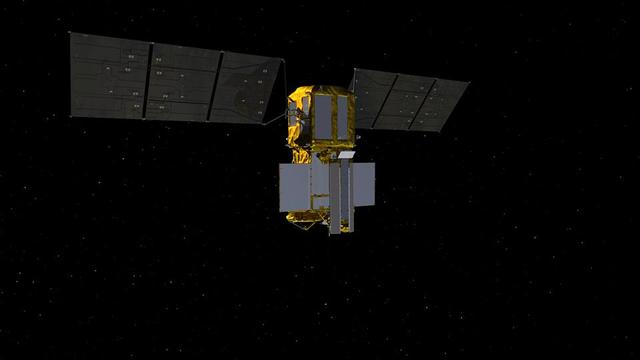
This video animation shows antennas for the Ka-band Radar Interferometer (KaRIn) instrument deploying on the Surface Water and Ocean Topography (SWOT) satellite. KaRIn is the scientific heart of the spacecraft, which launched into Earth orbit on Friday, Dec. 16, 2022, from Vandenberg Space Force Base in central California. SWOT will measure the height of water on over 90% of Earth's surface, providing a high-definition survey of our planet's water for the first time. But before it can do that, engineers need to deploy the satellite's solar panel arrays, which power the spacecraft, and unfold the large mast and antenna panels for the KaRIn instrument. The mast and antenna deployment is a four-day process. Thirty-three feet (10 meters) apart, at either end of the mast, the two antennas are designed to capture precise measurements of the height of water in Earth's freshwater bodies and the ocean. KaRIn will see eddies, currents, and other ocean features less than 13 miles (20 kilometers) across, and it will collect data on lakes and reservoirs larger than 15 acres (62,500 square meters) and rivers wider than 330 feet (100 meters) across. KaRIn will do this by bouncing radar pulses off the surface of the water and receiving the return signals with both of those antennas, collecting data along a swath on the surface that's 30 miles (50 kilometers) wide on either side of the satellite. The data SWOT provides will help researchers and decision-makers address some of the most pressing climate questions of our time and help communities prepare for a warming world. Animation available at https://photojournal.jpl.nasa.gov/catalog/PIA25596

ISS019-E-005501 (9 April 2009) --- Split Region in Croatia is featured in this image photographed by an Expedition 19 crewmember on the International Space Station. One the world?s most rugged coastlines are located in Croatia along the Adriatic Sea. This view features the Dalmatian coastline of Croatia around the city of Split. Much of the region can be characterized by northwest-southeast oriented linear islands and embayments of the Adriatic Sea. This distinctive coastal geomorphology is the result of faulting caused by tectonic activity in the region and sea level rise. Split has a long history - the Roman Emperor Diocletian retired to Spalatum (the present-day Split) in 305, and his palace constitutes the core of the city today. The city is a popular resort destination for its historic sites, Mediterranean climate, and ready access to the Adriatic islands (such as Brac to the south). Other large cities in the region include Kastela and Trogir; together with Split, these form an almost continuous urban area bordering the coast (visible as pink regions). A thin zone marking a water boundary is visible in this image between Split and the island of Brac. It may represent a local plankton bloom, or a line of convergence between water masses creating rougher water. A unique combination of geography -- including dramatic topography that channels local winds, the complicated coastline, input of fresh water from rivers, and ample nutrients and surface oils -- makes for interesting mesoscale surface dynamics throughout the Adriatic Sea. Over the years, astronauts have taken images of the Split region using sunglint and changes in water color to highlight features like eddies, water boundaries and mixing zones between fresh waters flowing into the saltier (denser) waters of the Adriatic, and wind-driven surface currents. Split is an important transit center connecting islands in the Adriatic Sea to the Italian peninsula, and an important regional manufacturing center of goods such as solar cells, plastics, and paper products. The city was heavily industrialized during the post World War II period as a member state of Yugoslavia. By the 1980s, the marine environment bordered by Split, Kastela, and Trogir (known as Kastela Bay) had been identified as one of the most polluted areas of the Adriatic from both sewage and industrial wastes. Concerted efforts by the Croatian government and international partners to improve waste handling and treatment infrastructure over the past 10 years seem to have been successful ? both marine species and water polo players have returned to the area.
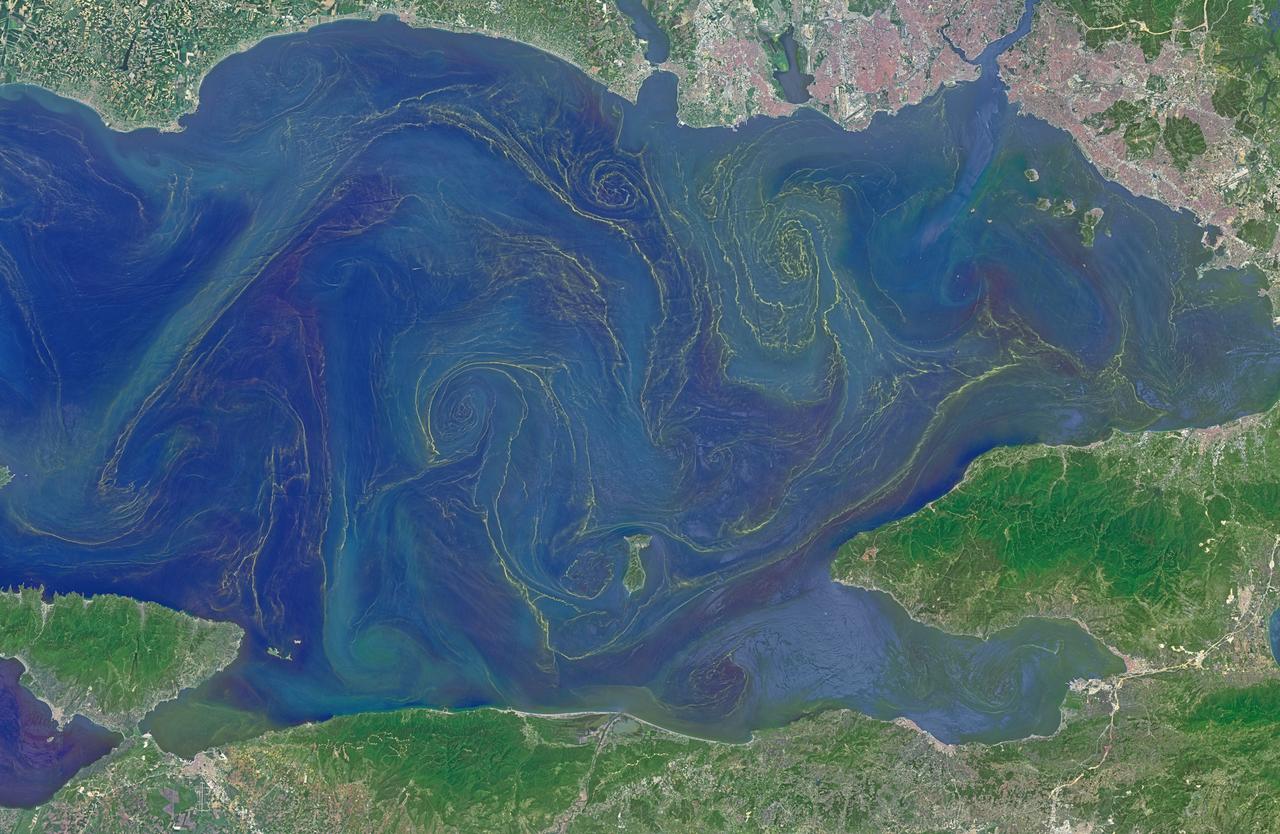
Situated between the Black Sea and the Aegean Sea, the Sea of Marmara is full of a rich soup of nutrients and life and surrounded by a rich history of civilization. Like the Black Sea to its northeast, the Marmara has an unusual layered structure with fresher water near the surface and much saltier water near the bottom. That fresh surface is fed by exchanges with the Black Sea and by flows from the Susurluk, Biga, and Gonen Rivers. The fresh water (just two thirds the salinity of the ocean) makes it easier for floating, plant-like organisms—phytoplankton—to grow, as does the abundance of nutrients pouring into the seas from European and Turkish rivers. The Operational Land Imager on the Landsat 8 satellite captured this image of a phytoplankton bloom in the Sea of Marmara on May 17, 2015. The sea is surrounded on all sides by the nation of Turkey. The swirling shapes on the water are phytoplankton, with the yellow-green and red-purple filaments likely (but not necessarily) representing different species. Those wavy colored lines not only show where the densest concentrations of plankton are floating, but also reveal the eddies and currents within the small sea. Waters rushing in through the narrow Bosphorous Strait (at Istanbul) and Dardanelles Strait (off the left side of the image), as well as a jagged coastline and tectonically fractured seafloor on this edge of the Asian and European continents, all conspire to create intricate mixing patterns. If you download the large image and open it in full resolution, you also can see ship tracks crossing the bloom lines. “I often see features in imagery and wonder: what could be causing that?” said Norman Kuring, an ocean color specialist at NASA Goddard. “Remote sensing is great for the big picture, but it still needs data from the surface for validation and interpretation.” According to scientists Baris Salihoglu of Turkey’s Institute of Marine Sciences and Ahsen Yuksek of Istanbul University, the blooms in the satellite image are mostly Prorocentrum micans and Noctiluca scintillans. They recently sampled the waters of the Marmara and found that Prorocentrum bloomed first, though Noctiluca eventually dominated. According to Ajit Subramaniam of the Lamont Doherty Earth Observatory, both species are dinoflagellates, known to discolor the water (red tides). Neither is directly toxic to humans, but they can kill marine life by becoming caught in fish gills, depleting the sea of oxygen, or excreting ammonia into the water. “Noctiluca is phagotrophic—a really interesting beast since it eats other phytoplankton that can then change its color,” Subramaniam noted. “It switches from being photosynthetic to becoming heterotrophic.” The Moderate Resolution Imaging Spectroradiometer (MODIS) on NASA’s Terra satellite captured wider views of bloom events in the Sea of Marmara on on May 23 and May 25. Credit: <b><a href="http://www.earthobservatory.nasa.gov/" rel="nofollow"> NASA Earth Observatory</a></b> Read more: <a href="http://earthobservatory.nasa.gov/IOTD/view.php?id=85947" rel="nofollow">earthobservatory.nasa.gov/IOTD/view.php?id=85947</a> <b><a href="http://www.nasa.gov/audience/formedia/features/MP_Photo_Guidelines.html" rel="nofollow">NASA image use policy.</a></b> <b><a href="http://www.nasa.gov/centers/goddard/home/index.html" rel="nofollow">NASA Goddard Space Flight Center</a></b> enables NASA’s mission through four scientific endeavors: Earth Science, Heliophysics, Solar System Exploration, and Astrophysics. Goddard plays a leading role in NASA’s accomplishments by contributing compelling scientific knowledge to advance the Agency’s mission. <b>Follow us on <a href="http://twitter.com/NASAGoddardPix" rel="nofollow">Twitter</a></b> <b>Like us on <a href="http://www.facebook.com/pages/Greenbelt-MD/NASA-Goddard/395013845897?ref=tsd" rel="nofollow">Facebook</a></b> <b>Find us on <a href="http://instagrid.me/nasagoddard/?vm=grid" rel="nofollow">Instagram</a></b>