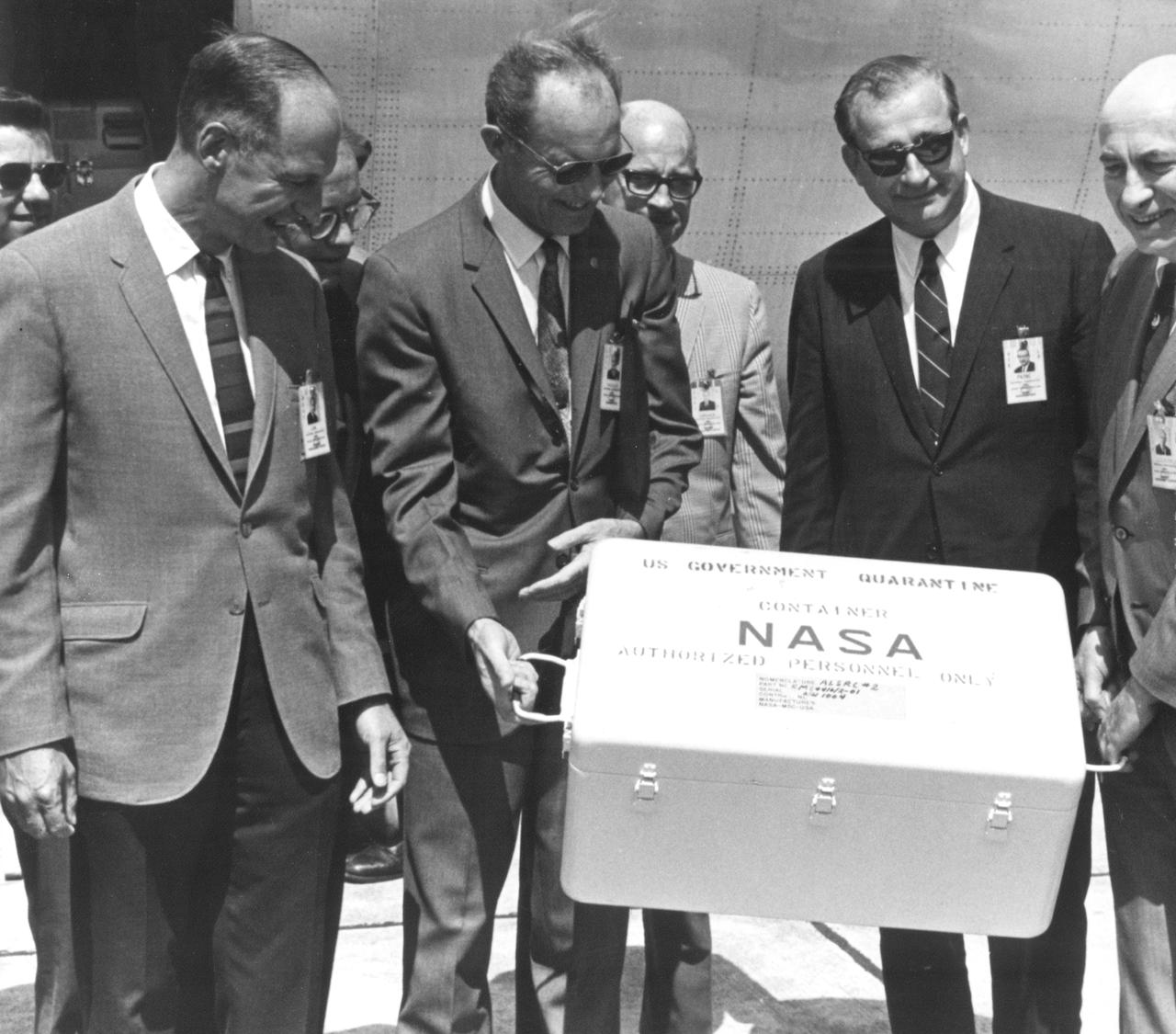
The Apollo 11 mission, the first manned lunar mission, launched from the Kennedy Space Center, Florida via the Marshall Space Flight Center (MSFC) developed Saturn V launch vehicle on July 16, 1969 and safely returned to Earth on July 24, 1969. Aboard the space craft were astronauts Neil A. Armstrong, commander; Michael Collins, Command Module (CM) pilot; and Edwin E. Aldrin Jr., Lunar Module (LM) pilot. The CM, piloted by Michael Collins remained in a parking orbit around the Moon while the LM, named “Eagle’’, carrying astronauts Neil Armstrong and Edwin Aldrin, landed on the Moon. During 2½ hours of surface exploration, the crew collected 47 pounds of lunar surface material for analysis back on Earth. This photograph was taken as the mission’s first loaded sample return container arrived at Ellington Air Force Base by air from the Pacific recovery area. The rock box was immediately taken to the Lunar Receiving Laboratory at the Manned Spacecraft Center (MSC) in Houston, Texas. Happily posing for the photograph with the rock container are (L-R) Richard S. Johnston (back), special assistant to the MSC Director; George M. Low, MSC Apollo Spacecraft Program manager; George S. Trimble (back), MSC Deputy Director; Lt. General Samuel C. Phillips, Apollo Program Director, Office of Manned Spaceflight at NASA headquarters; Eugene G. Edmonds, MSC Photographic Technology Laboratory; Dr. Thomas O. Paine, NASA Administrator; and Dr. Robert R. Gilruth, MSC Director.
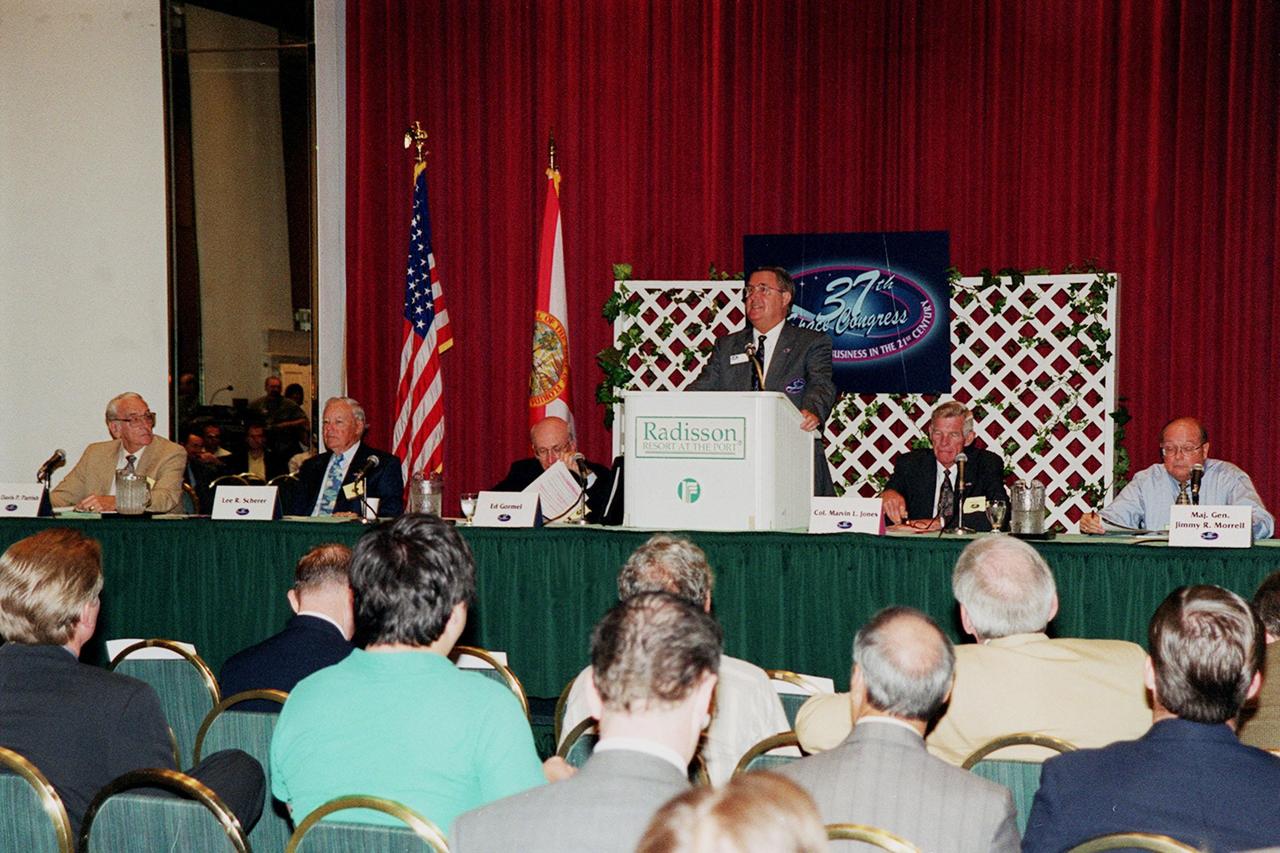
A panel session on the first day of the 37th Space Congress presents "50 Years of Space Exploration." Seated from left are Davis P. Parrish, Col., USAF (ret.); Lee R. Scherer, a senior executive with General Dynamics Commercial Services Group, San Diego, Calif., and former director, KSC; Edmond F. Gormel, executive director of Joint Performance Management Office, KSC; Marvin L. Jones, Col. USAF (ret.)and director of Installation Operations, KSC; and Jimmy R. Morrell, Maj. Gen., USAF (ret.). At the podium is Charles Murphy, Space Congress general chairman. Sponsored by the Canaveral Council of Technical Societies, the 37th Space Congress featured the theme "Space Means Business in the 21st Century." The event was held at the Radisson Resort at the Port in Cape Canaveral
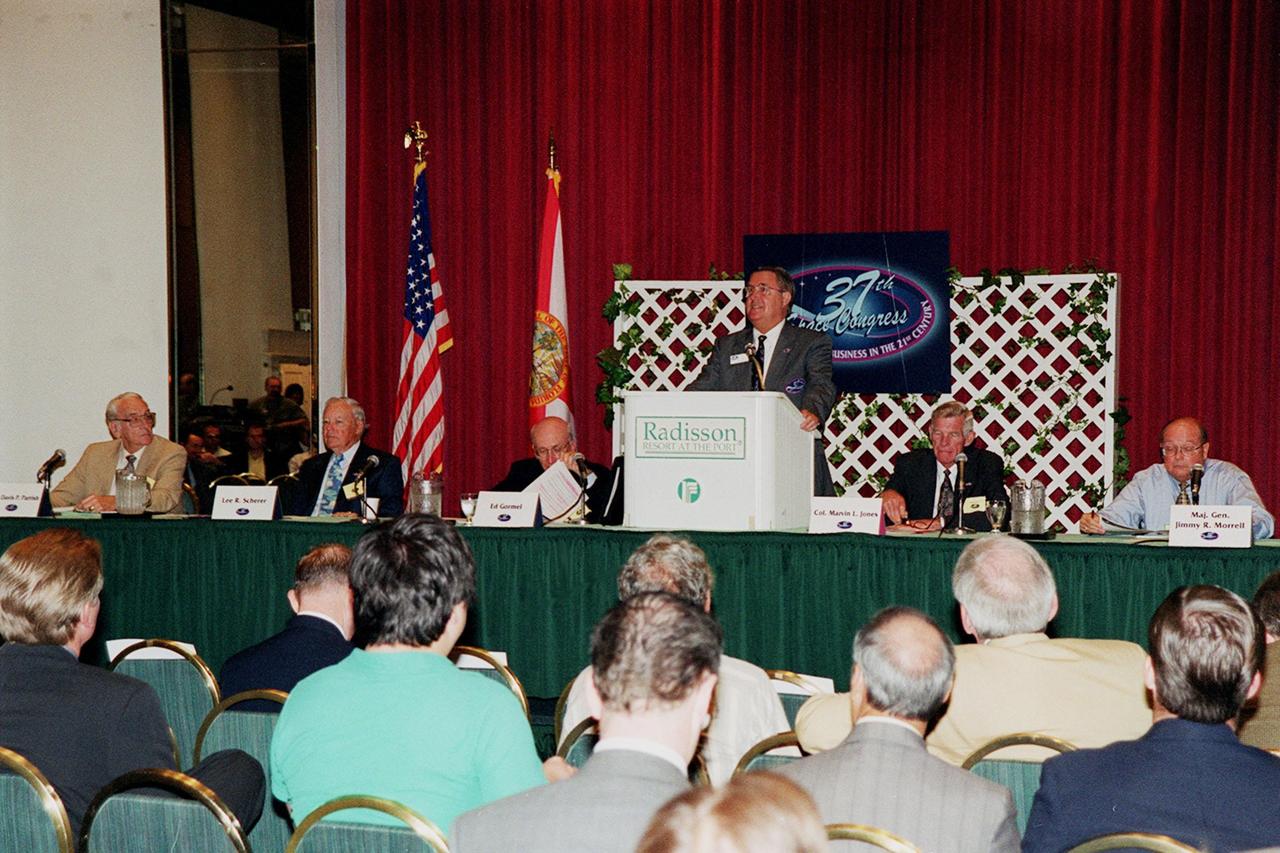
A panel session on the first day of the 37th Space Congress presents "50 Years of Space Exploration." Seated from left are Davis P. Parrish, Col., USAF (ret.); Lee R. Scherer, a senior executive with General Dynamics Commercial Services Group, San Diego, Calif., and former director, KSC; Edmond F. Gormel, executive director of Joint Performance Management Office, KSC; Marvin L. Jones, Col. USAF (ret.)and director of Installation Operations, KSC; and Jimmy R. Morrell, Maj. Gen., USAF (ret.). At the podium is Charles Murphy, Space Congress general chairman. Sponsored by the Canaveral Council of Technical Societies, the 37th Space Congress featured the theme "Space Means Business in the 21st Century." The event was held at the Radisson Resort at the Port in Cape Canaveral
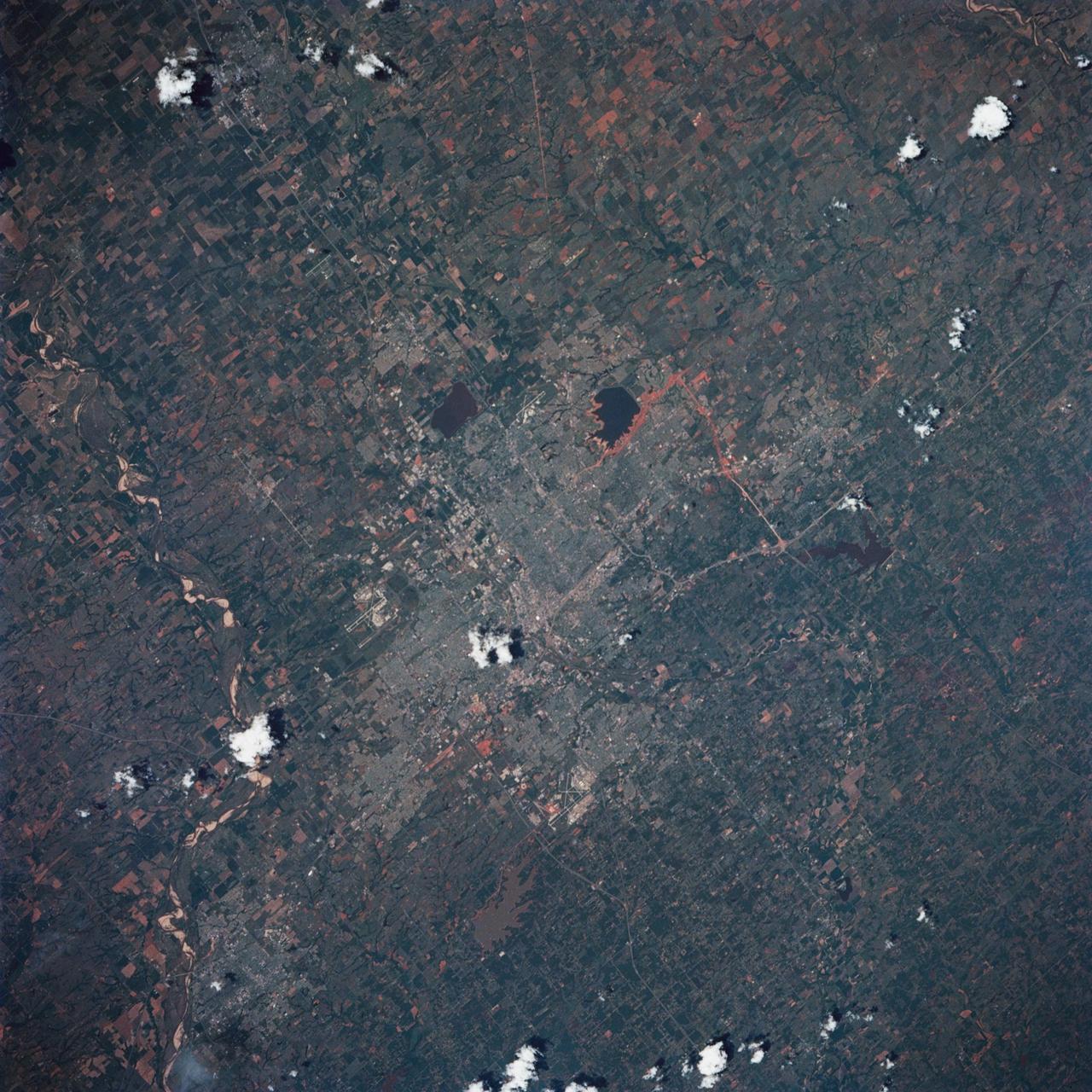
STS039-85-029 (28 April-6 May 1991) --- This 70mm frame is one of the best pictures of the Oklahoma City area from the manned space program, according to NASA photo experts studying STS-39 onboard photography. The central business district is near the center. Several municipalities are visible, along with thousands of acres of farmland. The towns of Norman and Moore and the South Canadian River are in the bottom (south). El Reno and Wiley Post Field off I-40W are just below center in lower left quadrant. Edmond is seen at the top (north). Tinker Field can be seen north of I-40E at right center. Lake Overholser shows recent spring rainfall northwest of the central business district.
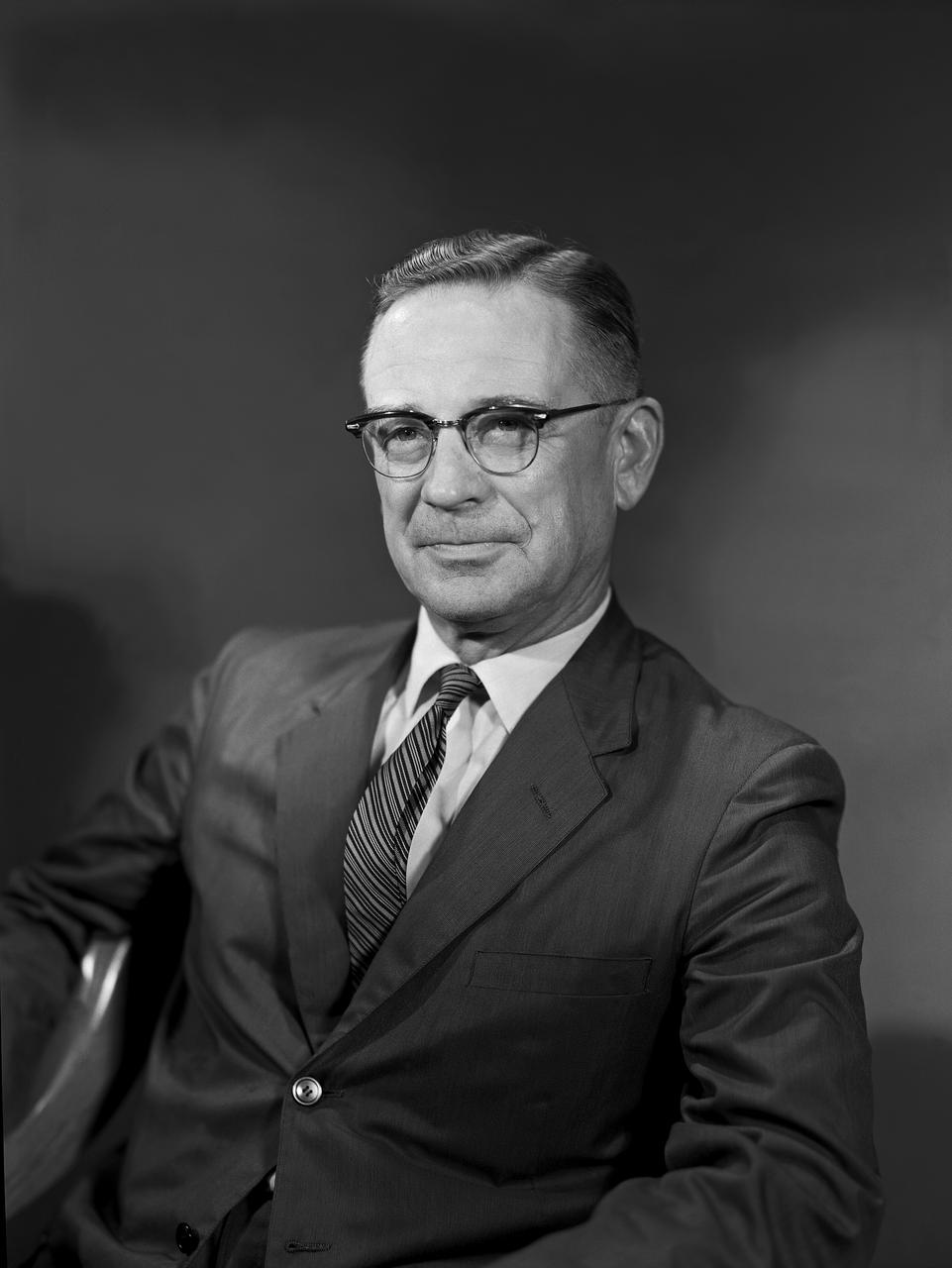
Portrait of Charles H. Zimmerman Associate Chief, Aero-Space Mechanics Division