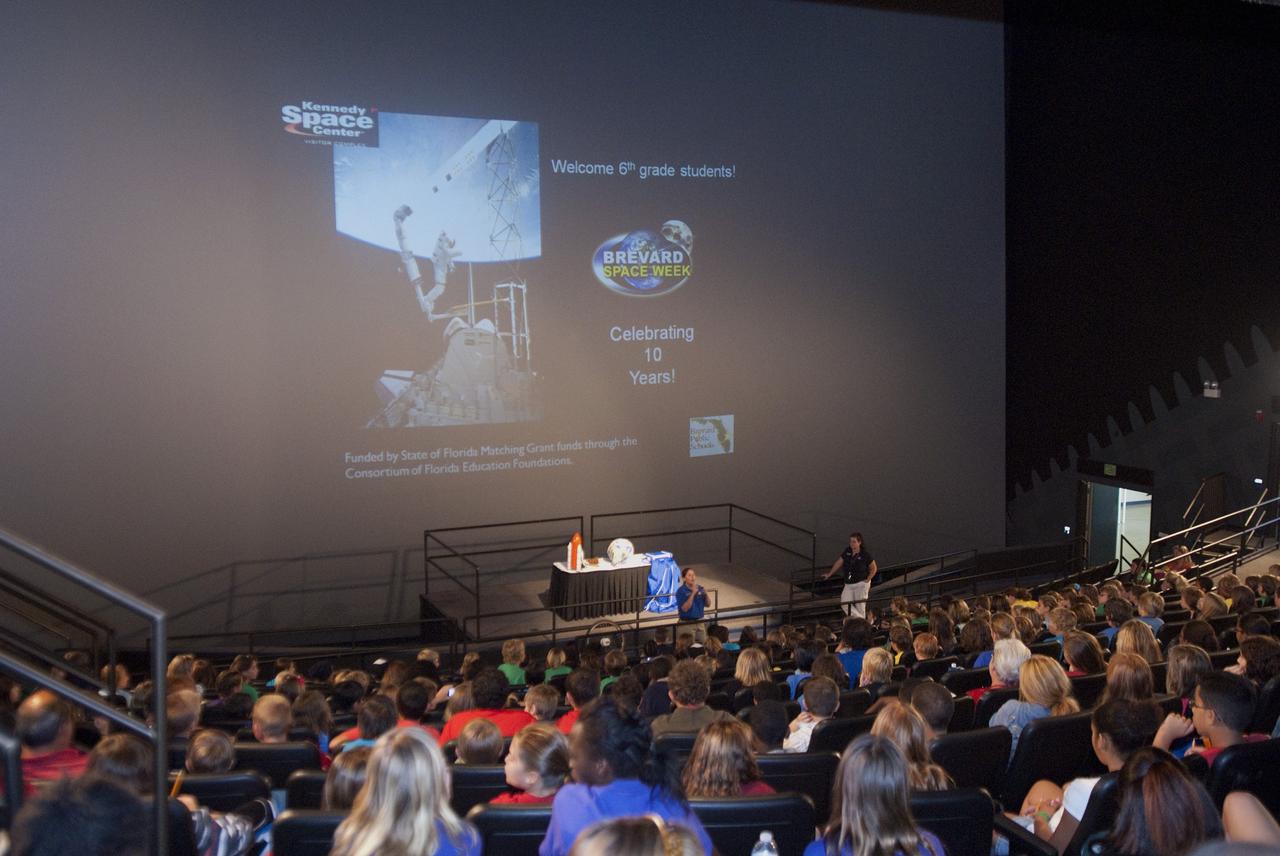
CAPE CANAVERAL, Fla. – At the Kennedy Space Center Visitor Complex in Florida sixth-grade students are welcomed to an interactive science demonstration by Kerri Lubeski, senior educator and coordinator of Brevard Space Week for Delaware North Companies Parks and Resorts. Between Nov. 26 and Dec. 7, 2012, about 5,300 sixth-graders in Brevard County, Florida were bused to Kennedy's Visitor Complex for Brevard Space Week, an educational program designed to encourage interest in science, technology, engineering and mathematics STEM careers. Photo credit: NASA/Tim Jacobs
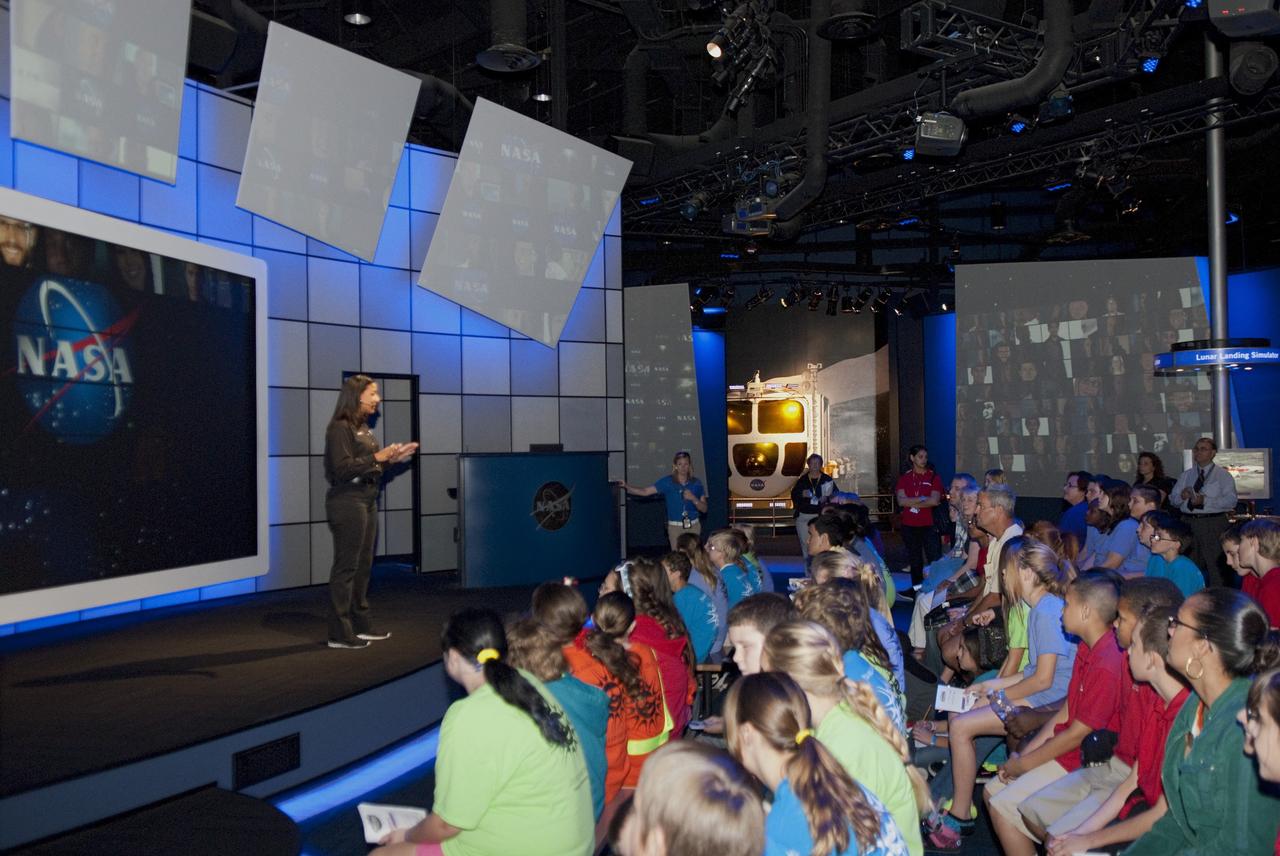
CAPE CANAVERAL, Fla. – At the Kennedy Space Center Visitor Complex in Florida sixth-grade students listen to a science presentation on NASA programs. Between Nov. 26 and Dec. 7, 2012, about 5,300 sixth-graders in Brevard County, Florida were bused to Kennedy's Visitor Complex for Brevard Space Week, an educational program designed to encourage interest in science, technology, engineering and mathematics STEM careers. Photo credit: NASA/Tim Jacobs
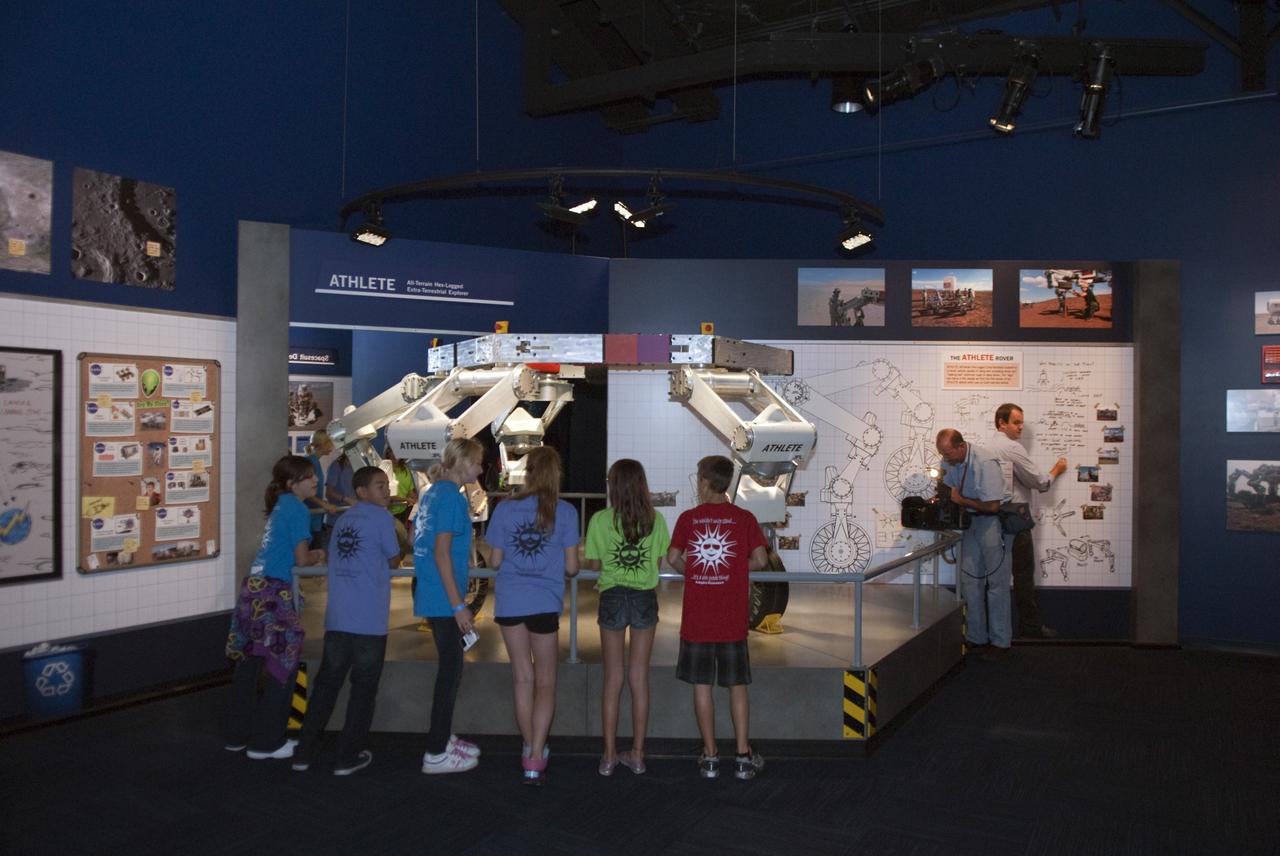
CAPE CANAVERAL, Fla. – At the Kennedy Space Center Visitor Complex in Florida sixth-grade students view a mock-up of a robotic device that could one day be sent to a distant planet. Between Nov. 26 and Dec. 7, 2012, about 5,300 sixth-graders in Brevard County, Florida were bused to Kennedy's Visitor Complex for Brevard Space Week, an educational program designed to encourage interest in science, technology, engineering and mathematics STEM careers. Photo credit: NASA/Tim Jacobs
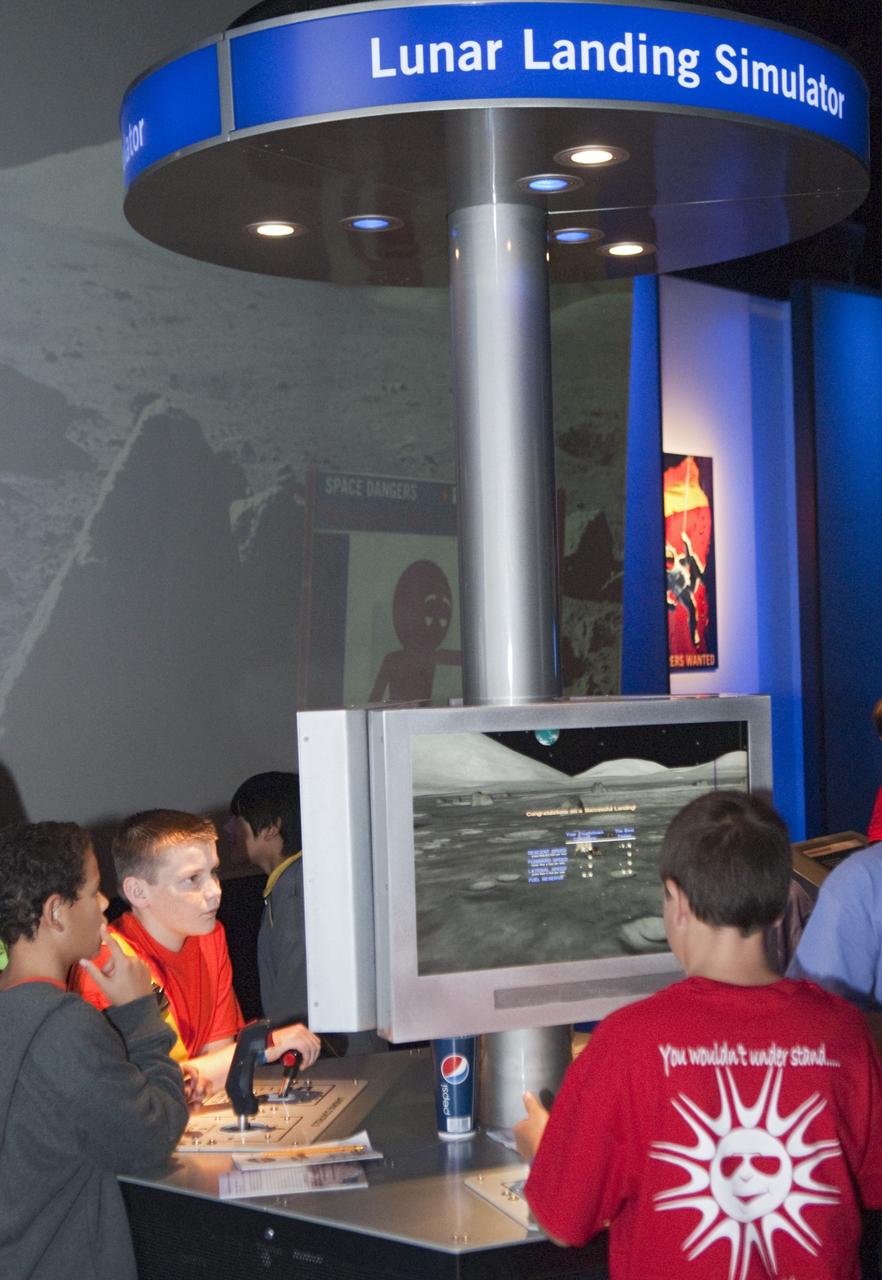
CAPE CANAVERAL, Fla. – At the Kennedy Space Center Visitor Complex in Florida sixth-grade students use a computer simulation to practice landing a spacecraft on the moon. Between Nov. 26 and Dec. 7, 2012, about 5,300 sixth-graders in Brevard County, Florida were bused to Kennedy's Visitor Complex for Brevard Space Week, an educational program designed to encourage interest in science, technology, engineering and mathematics STEM careers. Photo credit: NASA/Tim Jacobs
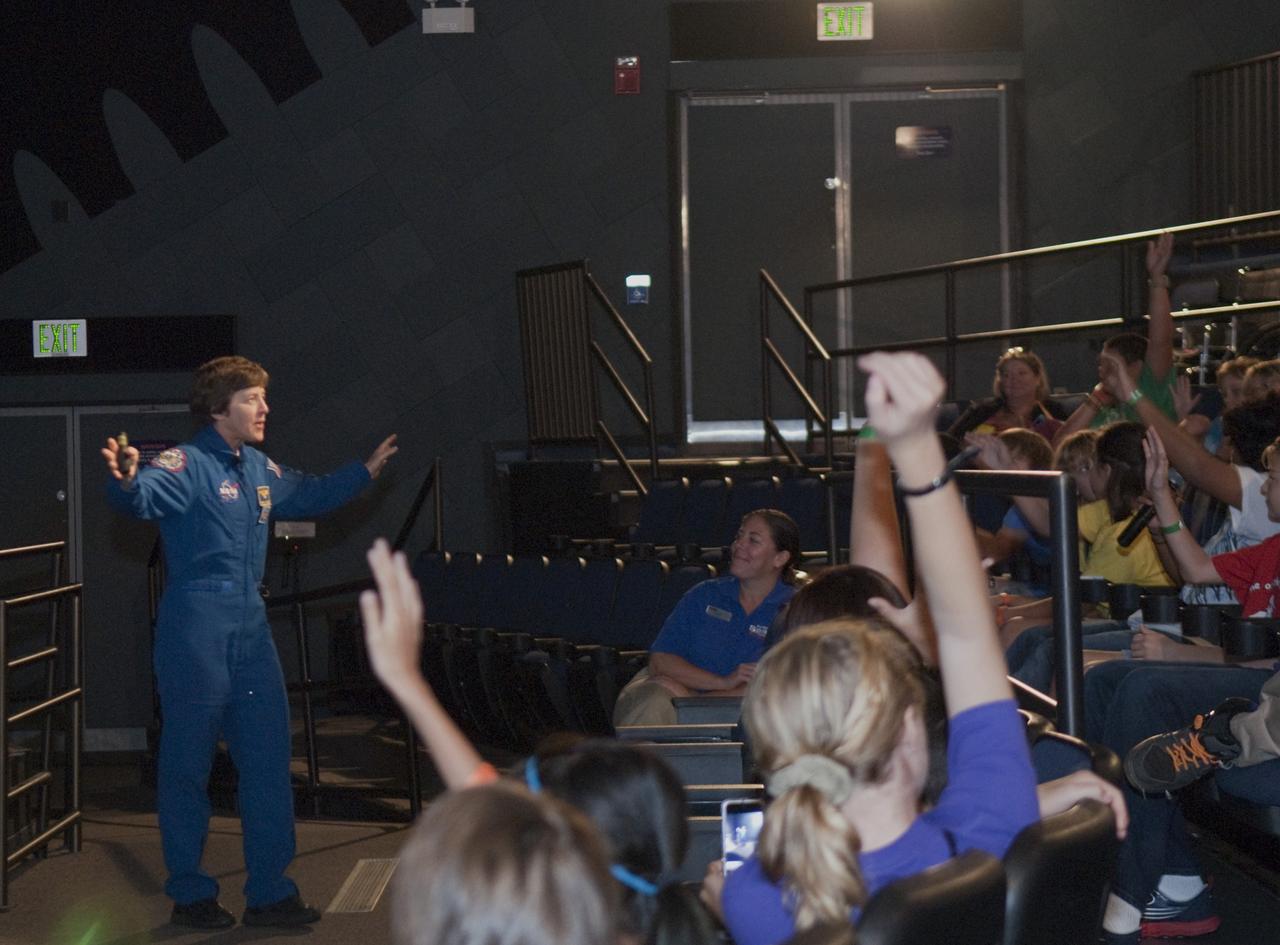
CAPE CANAVERAL, Fla. – At the Kennedy Space Center Visitor Complex in Florida sixth-grade students listen to a presentation by former NASA astronaut Wendy Lawrence. Between Nov. 26 and Dec. 7, 2012, about 5,300 sixth-graders in Brevard County, Florida were bused to Kennedy's Visitor Complex for Brevard Space Week, an educational program designed to encourage interest in science, technology, engineering and mathematics STEM careers. Photo credit: NASA/Tim Jacobs
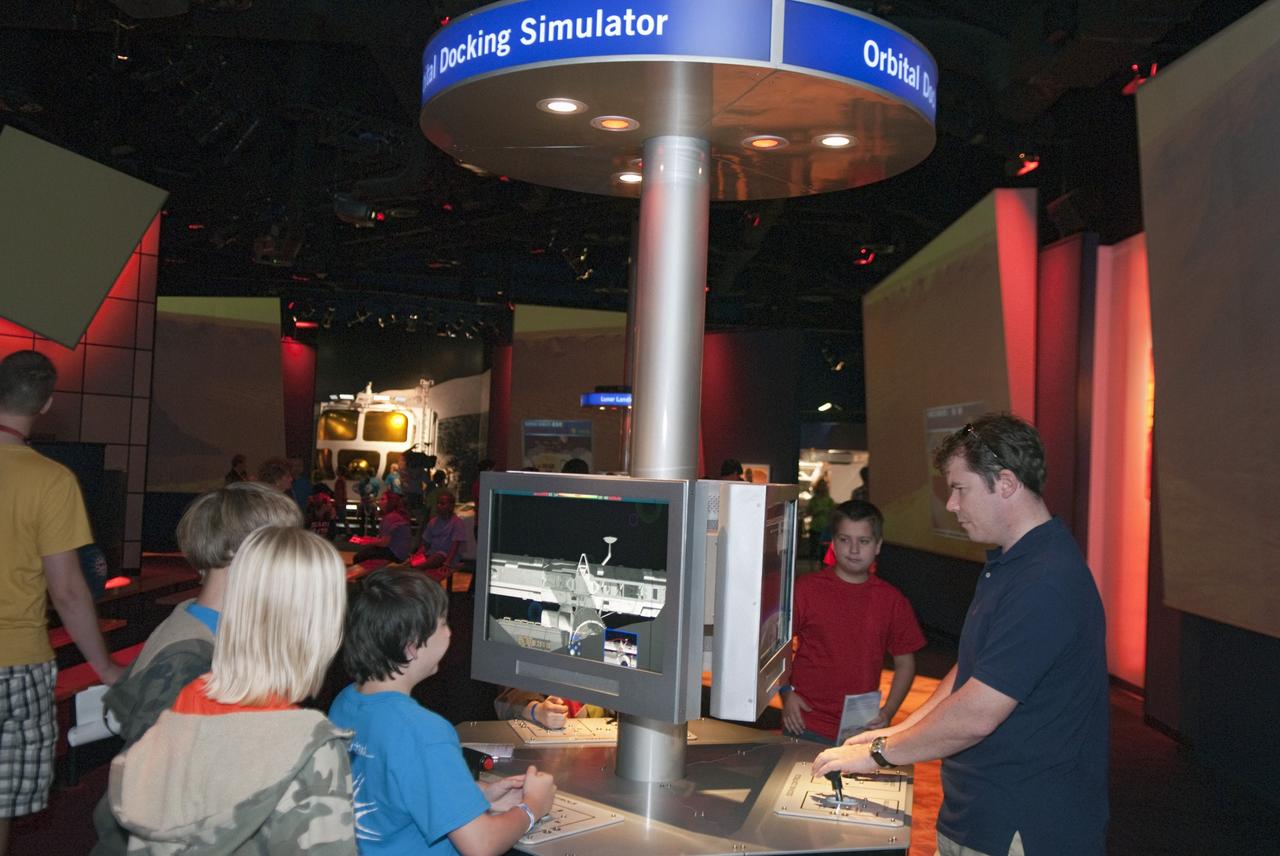
CAPE CANAVERAL, Fla. – At the Kennedy Space Center Visitor Complex in Florida sixth-grade students use a computer simulation to practice docking a spacecraft to the International Space Station. Between Nov. 26 and Dec. 7, 2012, about 5,300 sixth-graders in Brevard County, Florida were bused to Kennedy's Visitor Complex for Brevard Space Week, an educational program designed to encourage interest in science, technology, engineering and mathematics STEM careers. Photo credit: NASA/Tim Jacobs
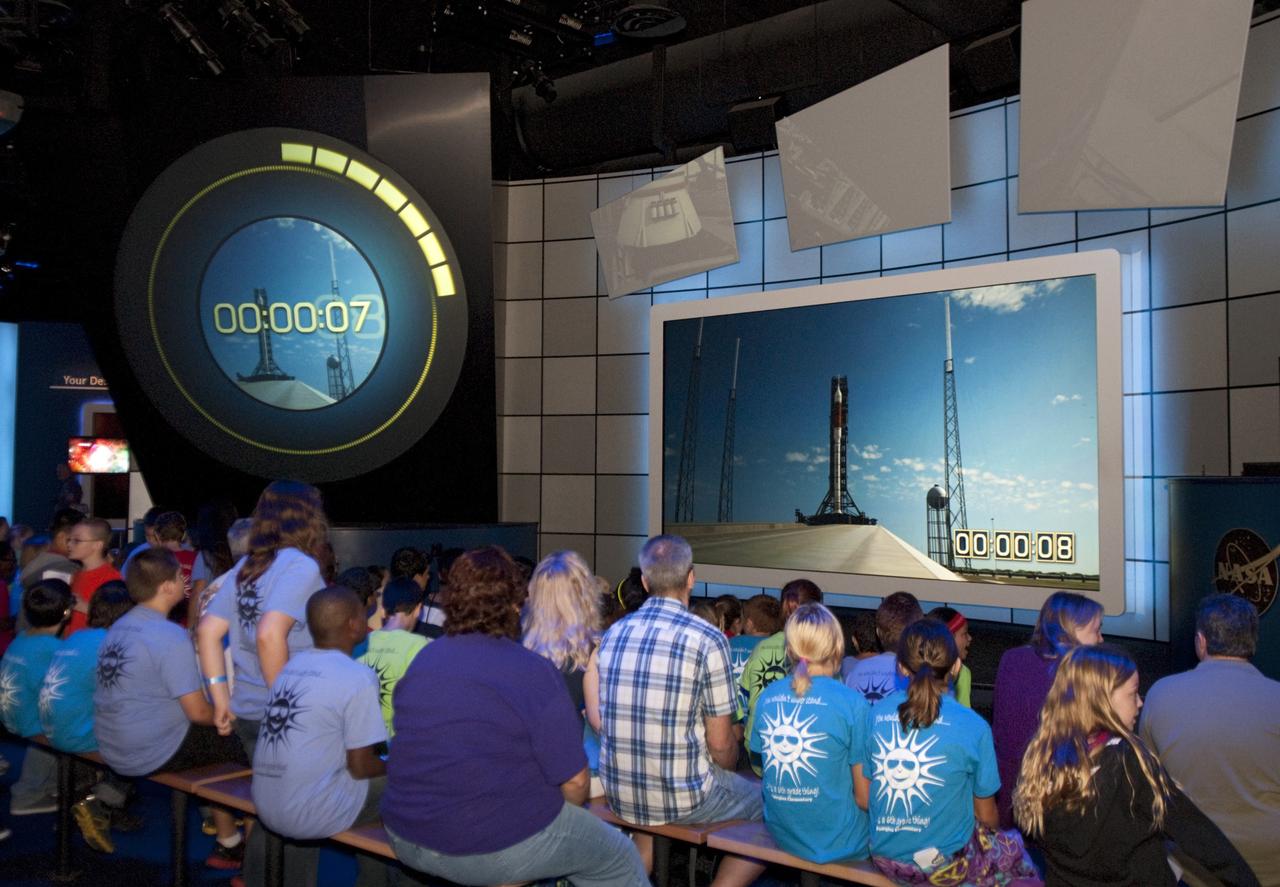
CAPE CANAVERAL, Fla. – At the Kennedy Space Center Visitor Complex in Florida sixth-grade students watch a video presentation about a future rocket launch. Between Nov. 26 and Dec. 7, 2012, about 5,300 sixth-graders in Brevard County, Florida were bused to Kennedy's Visitor Complex for Brevard Space Week, an educational program designed to encourage interest in science, technology, engineering and mathematics STEM careers. Photo credit: NASA/Tim Jacobs
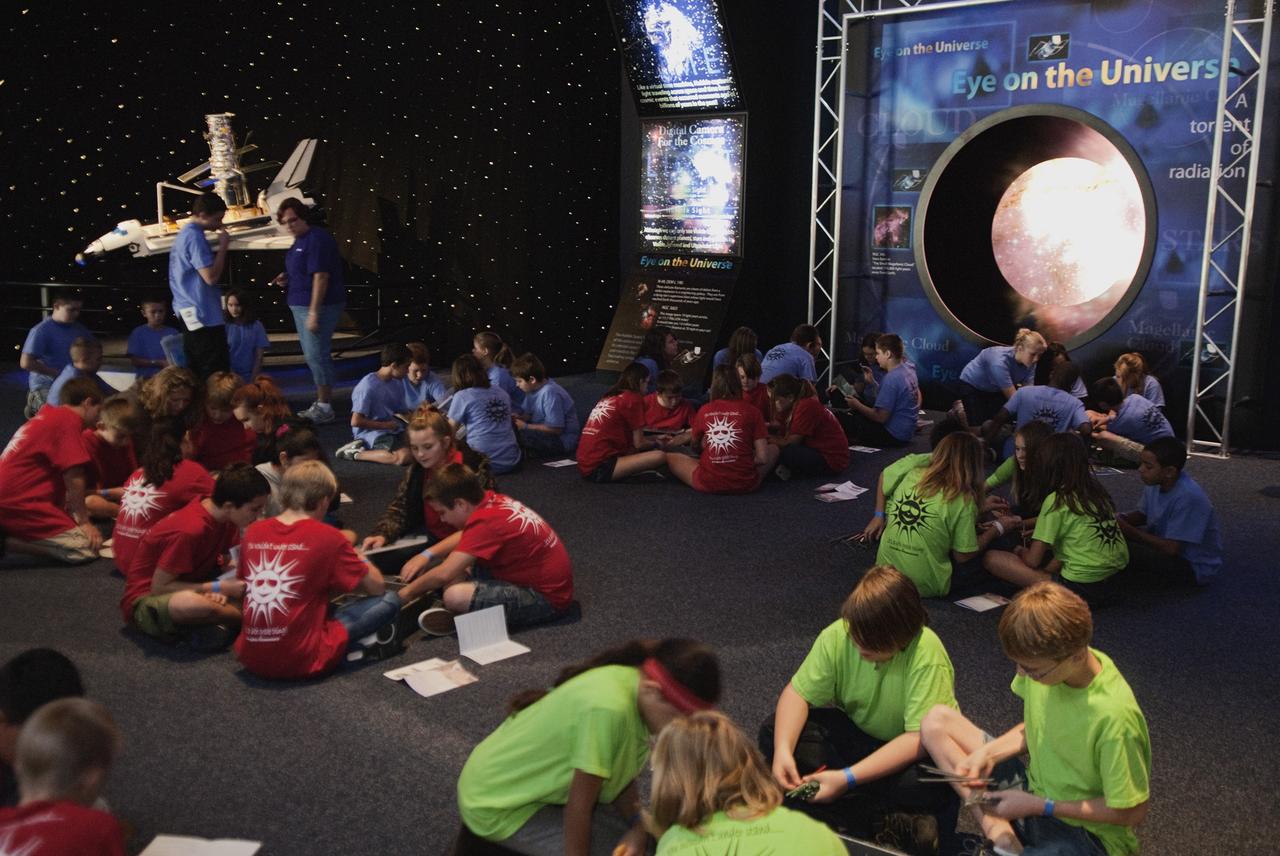
CAPE CANAVERAL, Fla. – At the Kennedy Space Center Visitor Complex in Florida teams of five students are using kits with identical plastic pieces to build a space station-like truss. Following construction, weights were added to determine its strength and points were awarded based on how much weight their truss would support. Between Nov. 26 and Dec. 7, 2012, about 5,300 sixth-graders in Brevard County, Florida were bused to Kennedy's Visitor Complex for Brevard Space Week, an educational program designed to encourage interest in science, technology, engineering and mathematics STEM careers. Photo credit: NASA/Tim Jacobs
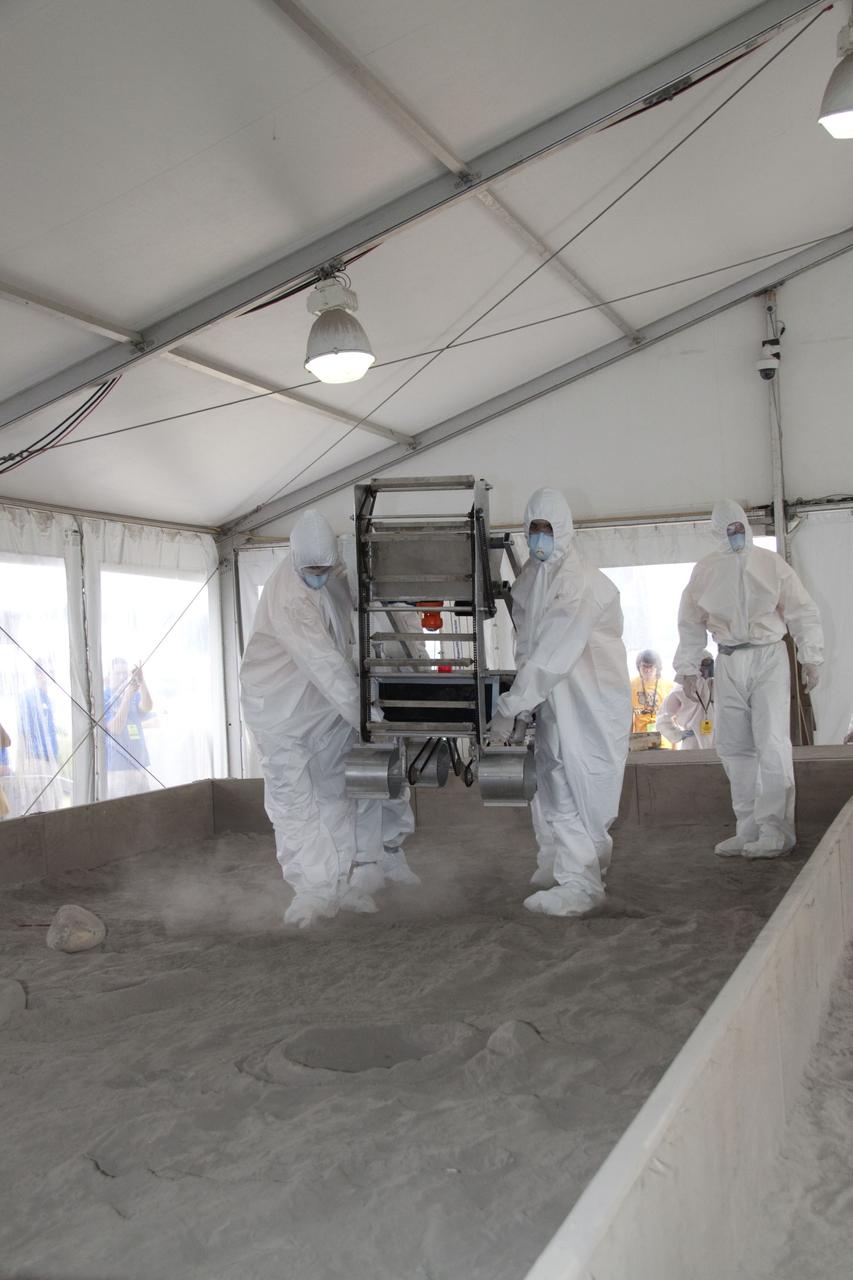
CAPE CANAVERAL, Fla. -- Inside the "Lunarena" at the Kennedy Space Center Visitor Complex in Florida, university students maneuver their remote controlled or autonomous excavators, called lunabots, in a "sand box" of ultra-fine simulated lunar soil during NASA's second annual Lunabotics Mining Competition. Thirty-six teams of undergraduate and graduate students from the United States, Bangladesh, Canada, Colombia and India will participate in NASA's Lunabotics Mining Competition May 26 - 28 at the agency's Kennedy Space Center in Florida. The competition is designed to engage and retain students in science, technology, engineering and mathematics (STEM). Teams will maneuver their remote controlled or autonomous excavators, called lunabots, in about 60 tons of ultra-fine simulated lunar soil, called BP-1. The competition is an Exploration Systems Mission Directorate project managed by Kennedy's Education Division. The event also provides a competitive environment that could result in innovative ideas and solutions for NASA's future excavation of the moon. Photo credit: NASA/Jack Pfaller
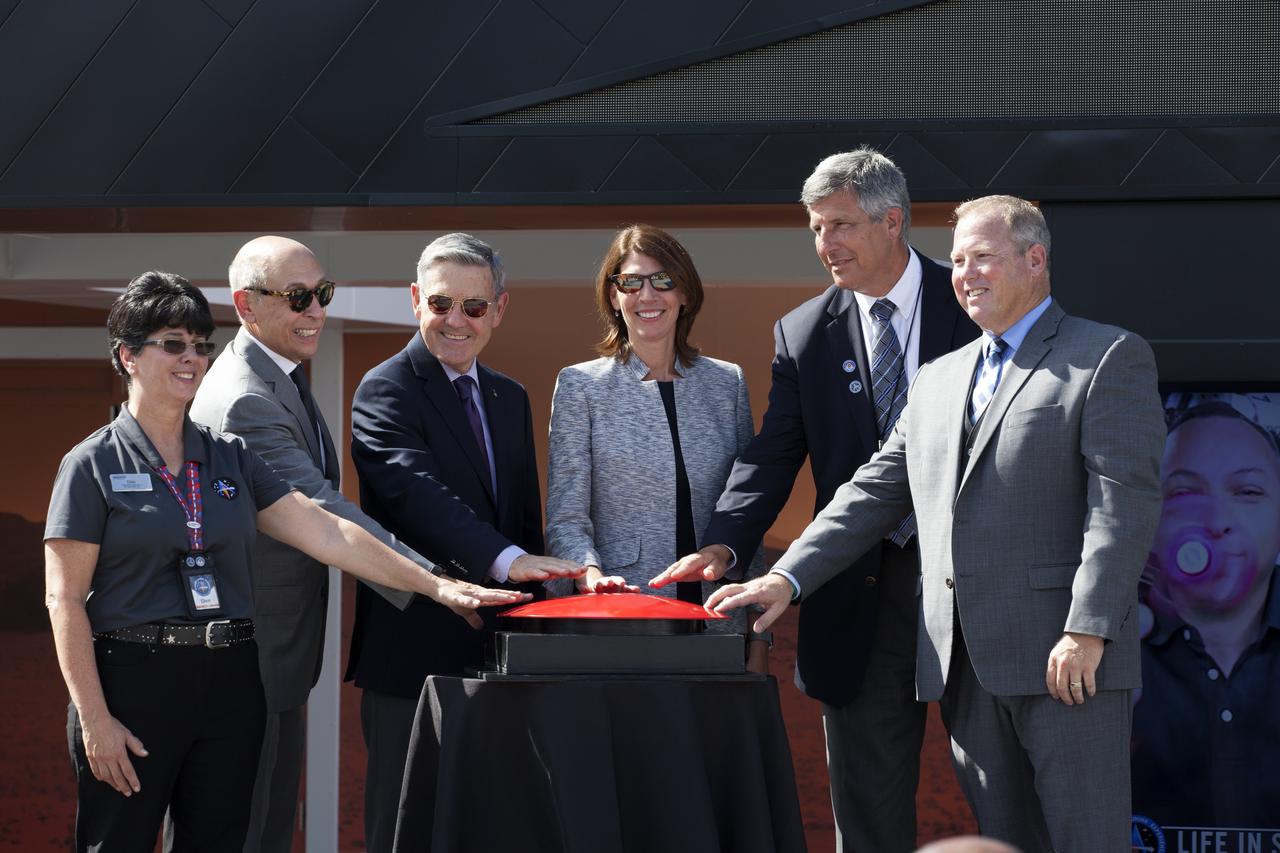
Officials at the Kennedy Space Center Visitor Complex prepare to push a ceremonial button to "launch" the facility's new Astronaut Training Experience (ATX). Participating, from the left, are: Dee Maynard, private education program manager for the Kennedy visitor complex, Rick Abramson, chief customer officer for Delaware North, Kennedy Director Bob Cabana, Lisa Callahan vice president and general manager of Commercial Civil Space at Lockheed Martin Space, Jim Houser, executive vice president and chief operating officer for Delaware North, and Therrin Protze, chief operating officer of the Kennedy visitor complex. The ATX uses three-dimensional computer display simulation technology to "transport" participants to Mars, training them to live and work in the environment of the Red Planet. The educational experience also teaches what it’s like to travel there. The facility uses NASA science to address engineering challenges in space travel. Lockheed Martin is the title sponsor for the Astronaut Training Experience.
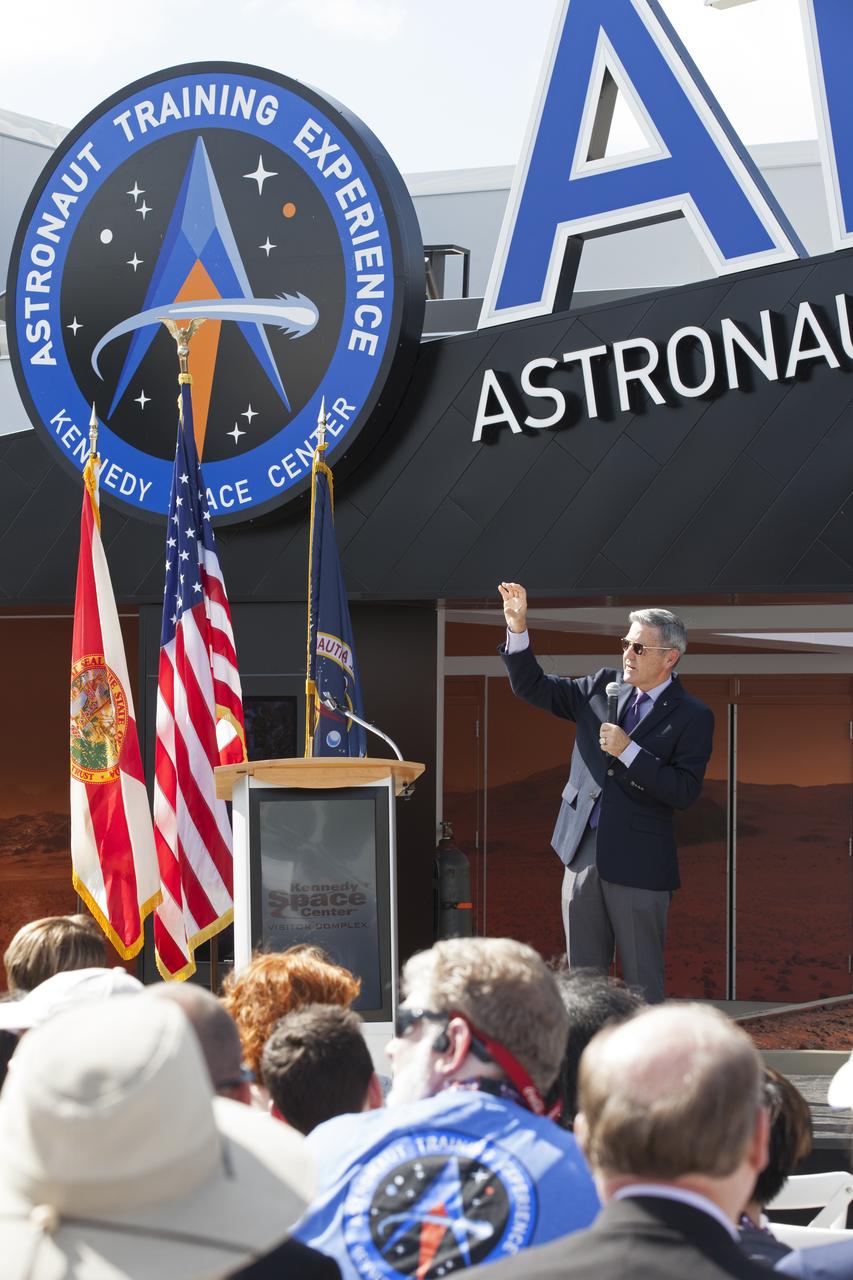
Kennedy Space Center Director Bob Cabana speaks to guests attending the opening ceremony for the new Astronaut Training Experience (ATX) at the Kennedy Space Center Visitor Complex. The ATX uses three-dimensional computer display simulation technology to "transport" participants to Mars, training them to live and work in the environment of the Red Planet. The educational experience also teaches what it’s like to travel there. The facility uses NASA science to address engineering challenges in space travel. Lockheed Martin is the title sponsor for the Astronaut Training Experience.
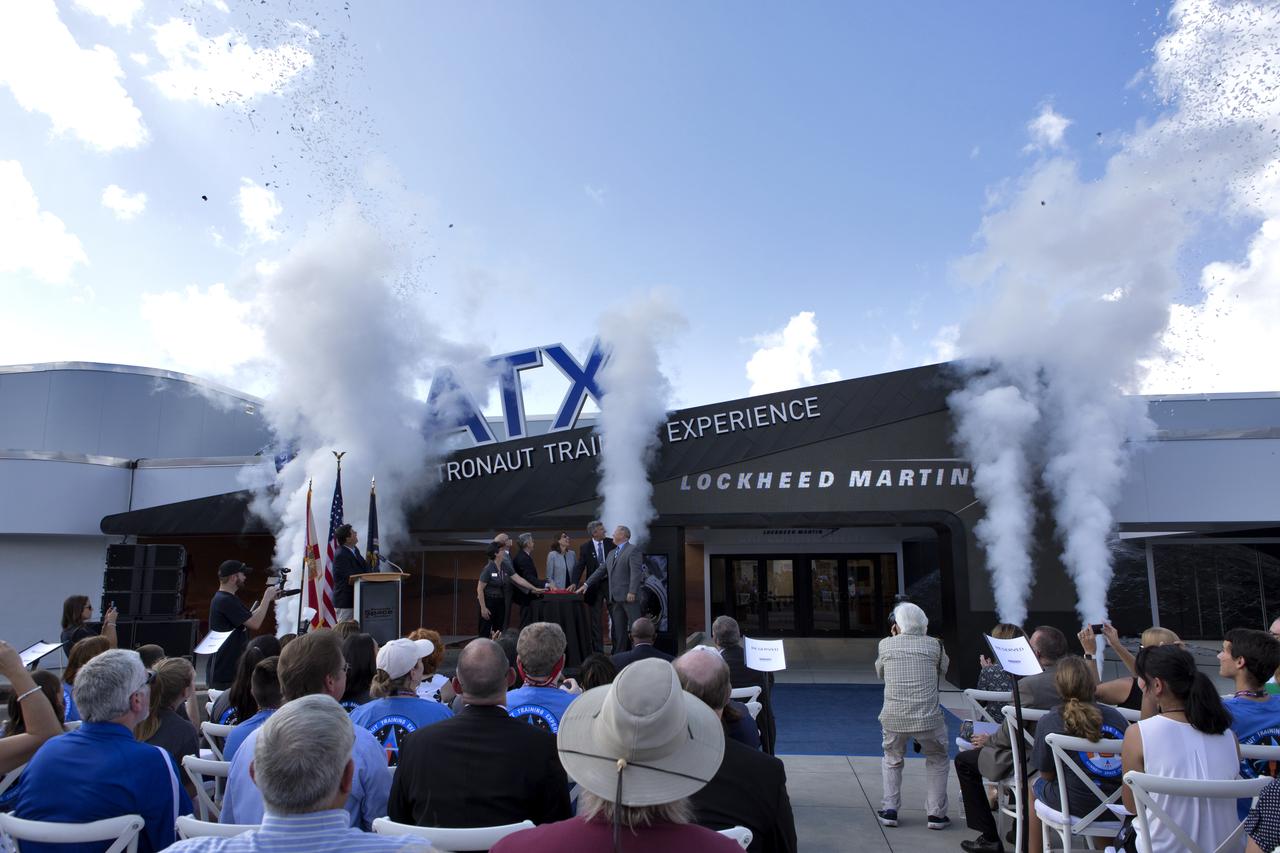
Guests cheer the opening of the new Astronaut Training Experience (ATX) at the Kennedy Space Center Visitor Complex. The ATX uses three-dimensional computer display simulation technology to "transport" participants to Mars, training them to live and work in the environment of the Red Planet. The educational experience also teaches what it’s like to travel there. The facility uses NASA science to address engineering challenges in space travel. Lockheed Martin is the title sponsor for the Astronaut Training Experience.
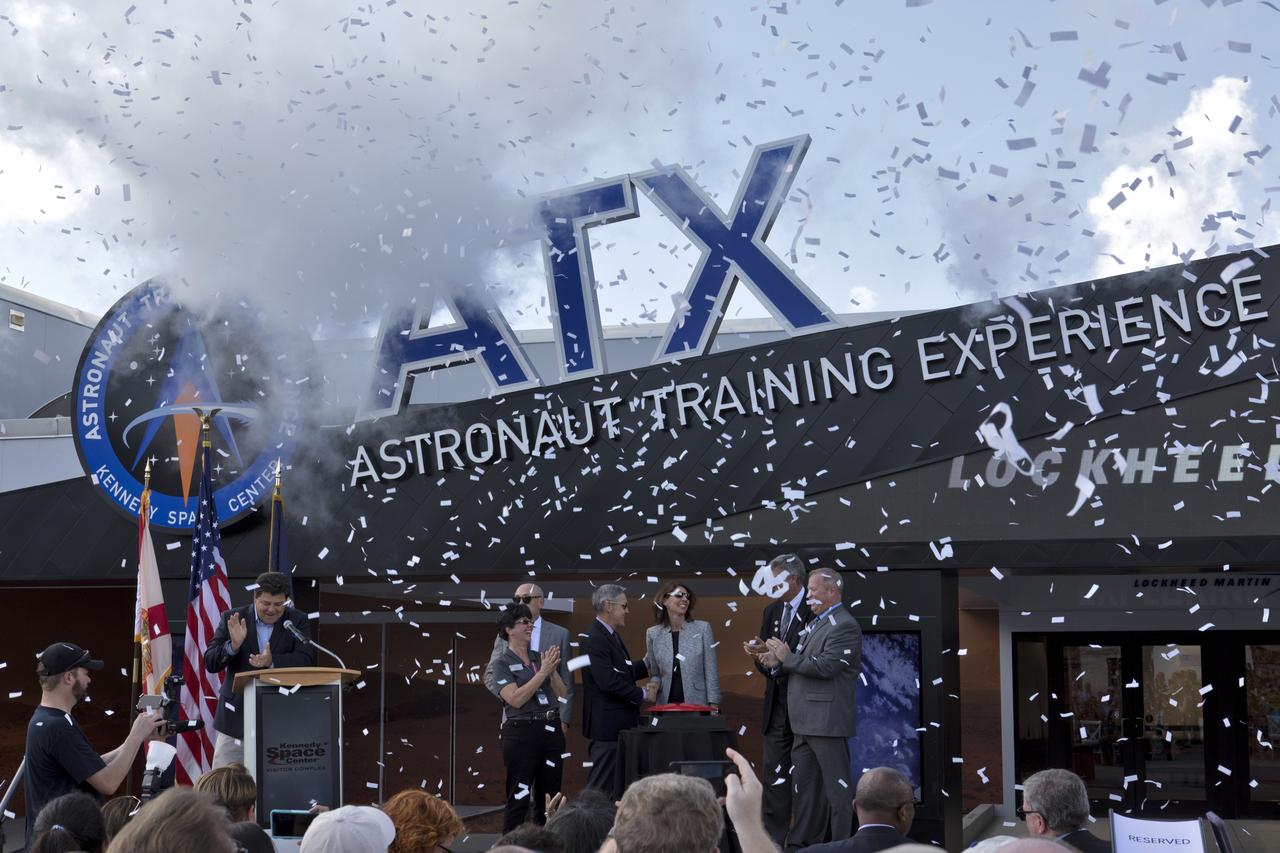
Confetti flies during the opening ceremony for the new Astronaut Training Experience (ATX) at the Kennedy Space Center Visitor Complex. The ATX uses three-dimensional computer display simulation technology to "transport" participants to Mars, training them to live and work in the environment of the Red Planet. The educational experience also teaches what it’s like to travel there. The facility uses NASA science to address engineering challenges in space travel. Lockheed Martin is the title sponsor for the Astronaut Training Experience.

The Kennedy Space Center Visitor Complex kicked off its "Summer of Mars" promotion with a ceremony which included former NASA astronaut Jon McBride, who serves as director of Astronaut Education Programs for the visitor complex. The "Summer of Mars" promotion is designed to provide guests with a better understanding of NASA's studies of the Red Planet.
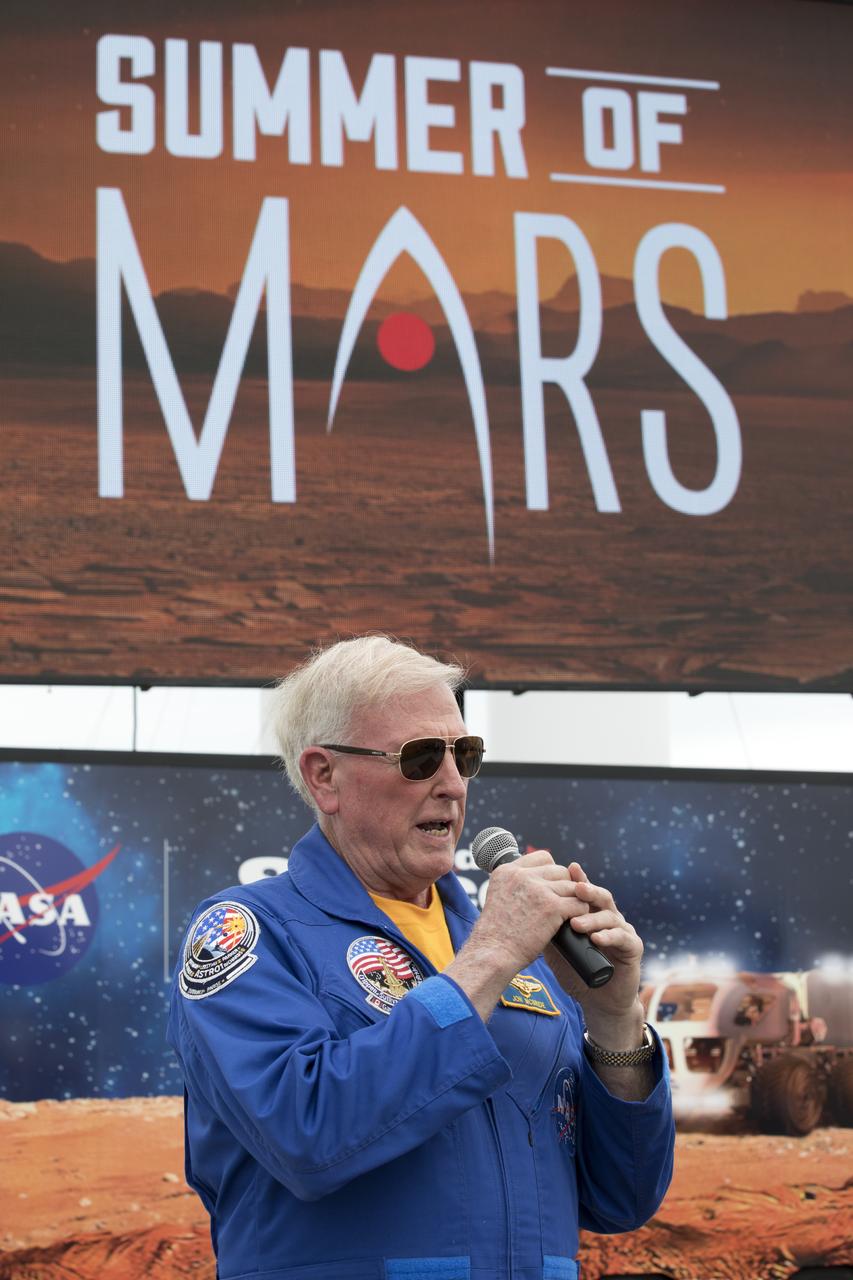
The Kennedy Space Center Visitor Complex kicked off its "Summer of Mars" promotion with a ceremony which included former NASA astronaut Jon McBride, who serves as director of Astronaut Education Programs for the visitor complex. The "Summer of Mars" promotion is designed to provide guests with a better understanding of NASA's studies of the Red Planet.
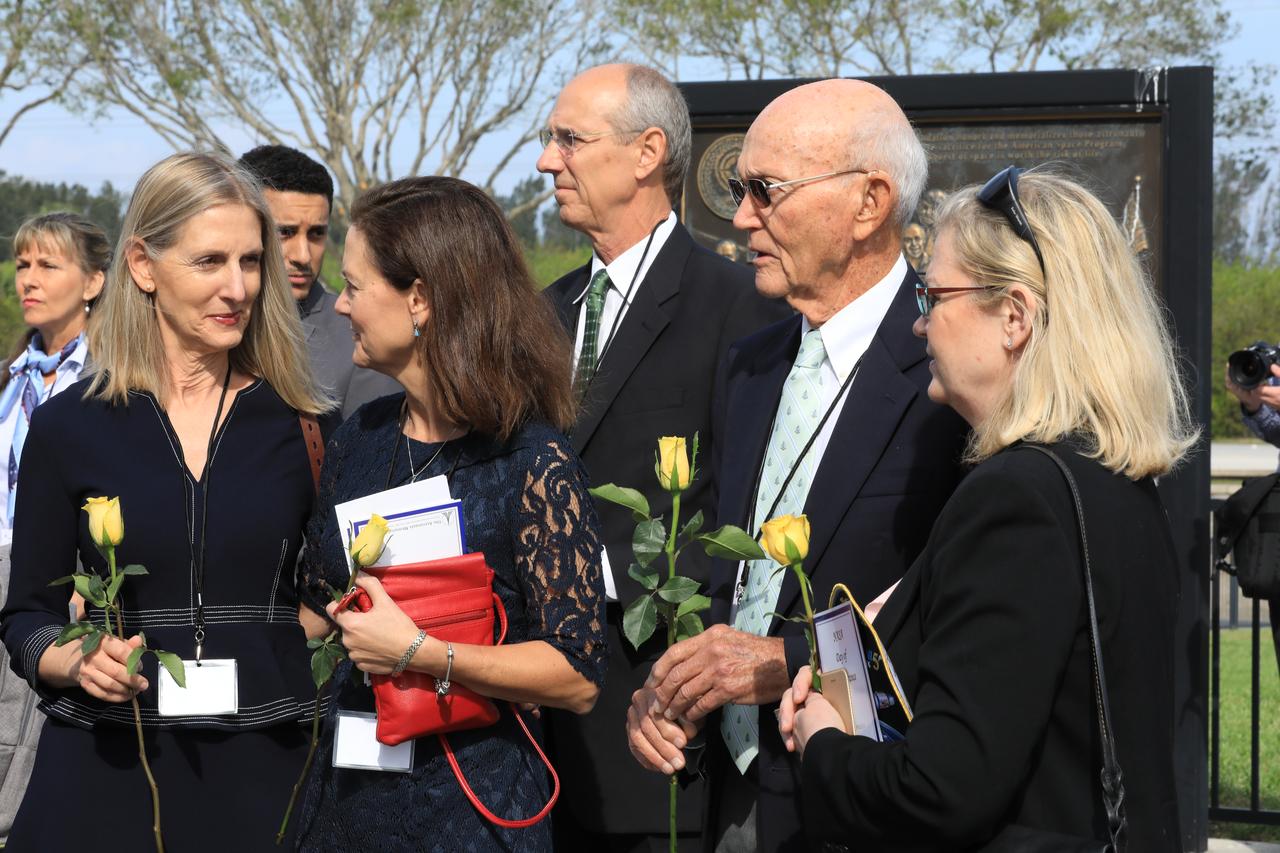
Following Kennedy Space Center's Day of Remembrance ceremony in the Center for Space Education at the Kennedy visitor complex, guests gathered to place flowers at the Space Mirror Memorial. Many of those in attendance were family members of the fallen astronauts.
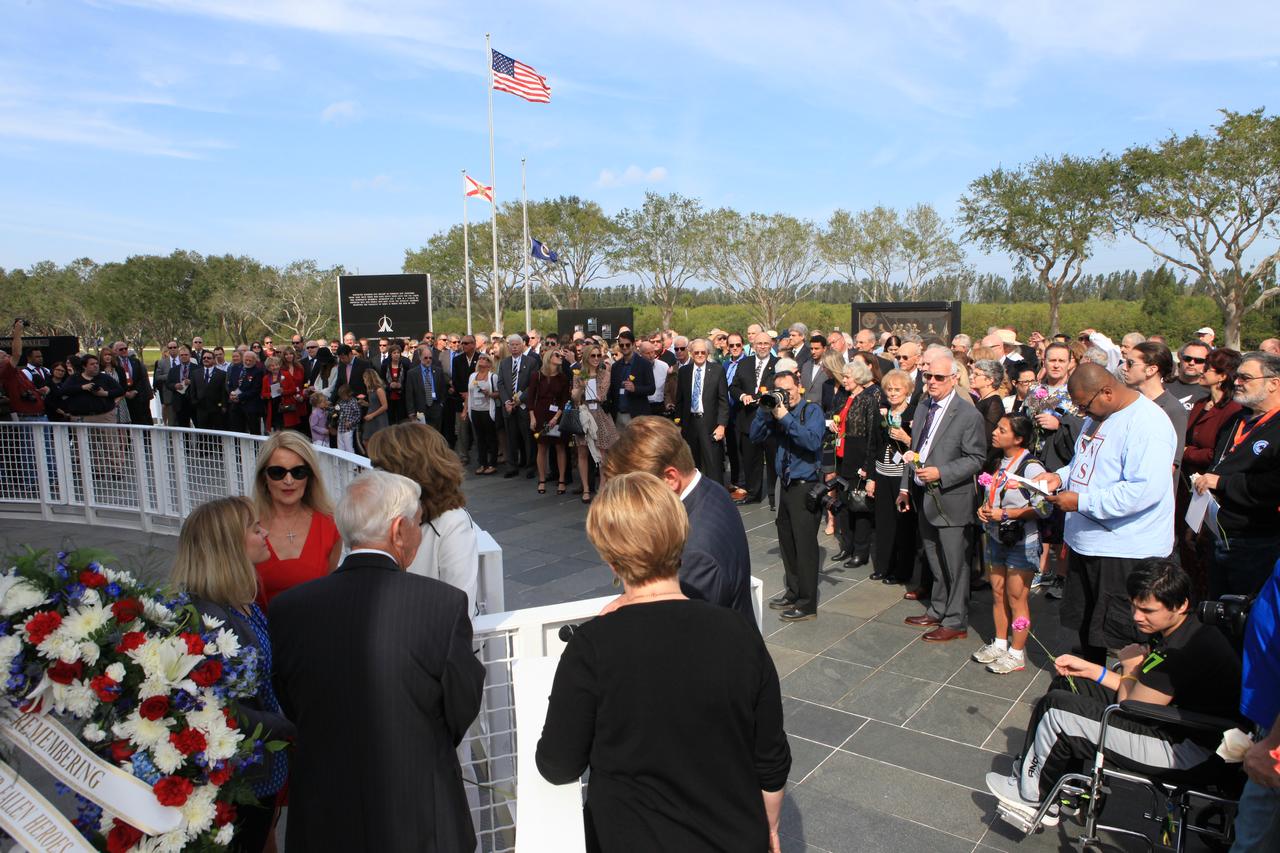
Following Kennedy Space Center's Day of Remembrance ceremony in the Center for Space Education at the Kennedy visitor complex, guests gathered to place flowers at the Space Mirror Memorial. Many of those in attendance were family members of the fallen astronauts.
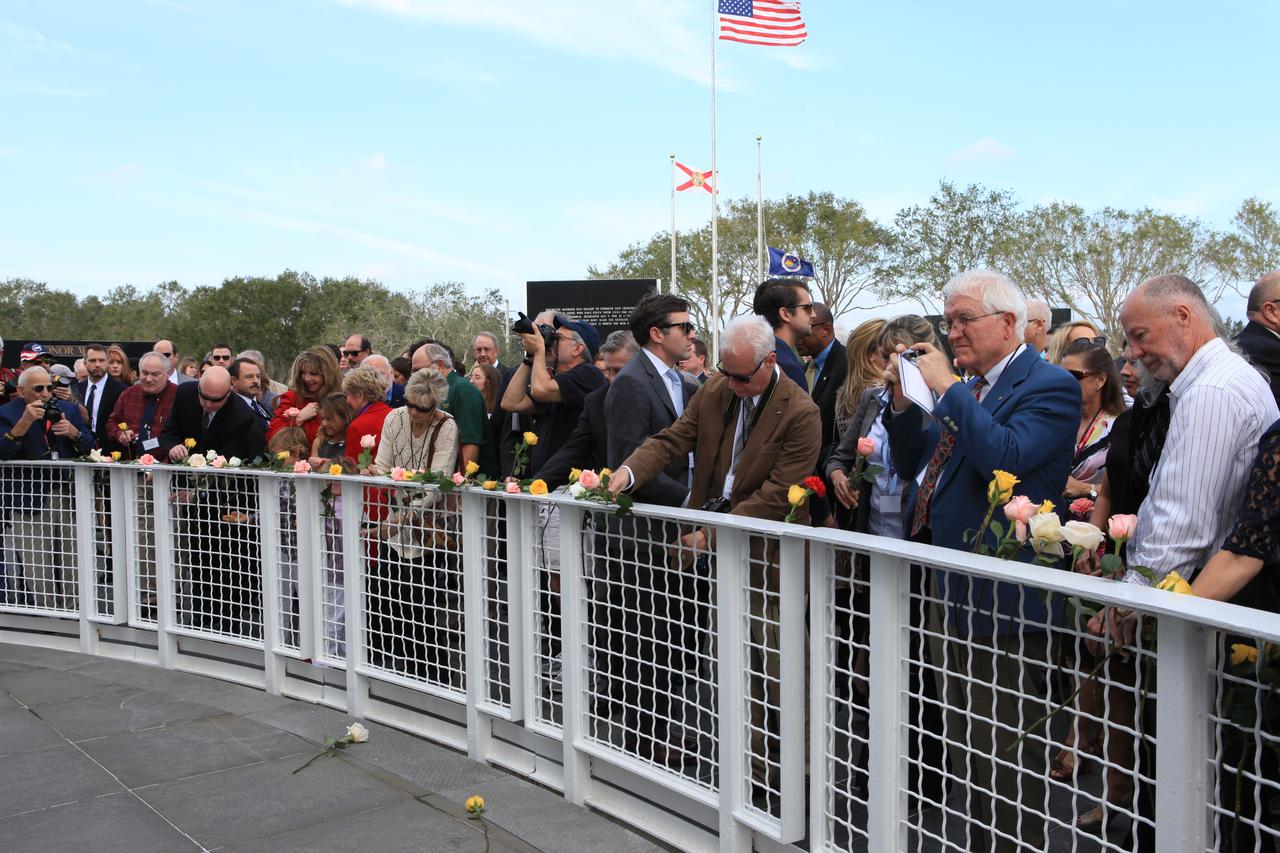
Following Kennedy Space Center's Day of Remembrance ceremony in the Center for Space Education at the Kennedy visitor complex, guests gathered to place flowers at the Space Mirror Memorial. Many of those in attendance were family members of the fallen astronauts.

Following Kennedy Space Center's Day of Remembrance ceremony in the Center for Space Education at the Kennedy visitor complex, a wreath was placed at the Space Mirror Memorial family members of the fallen astronauts.
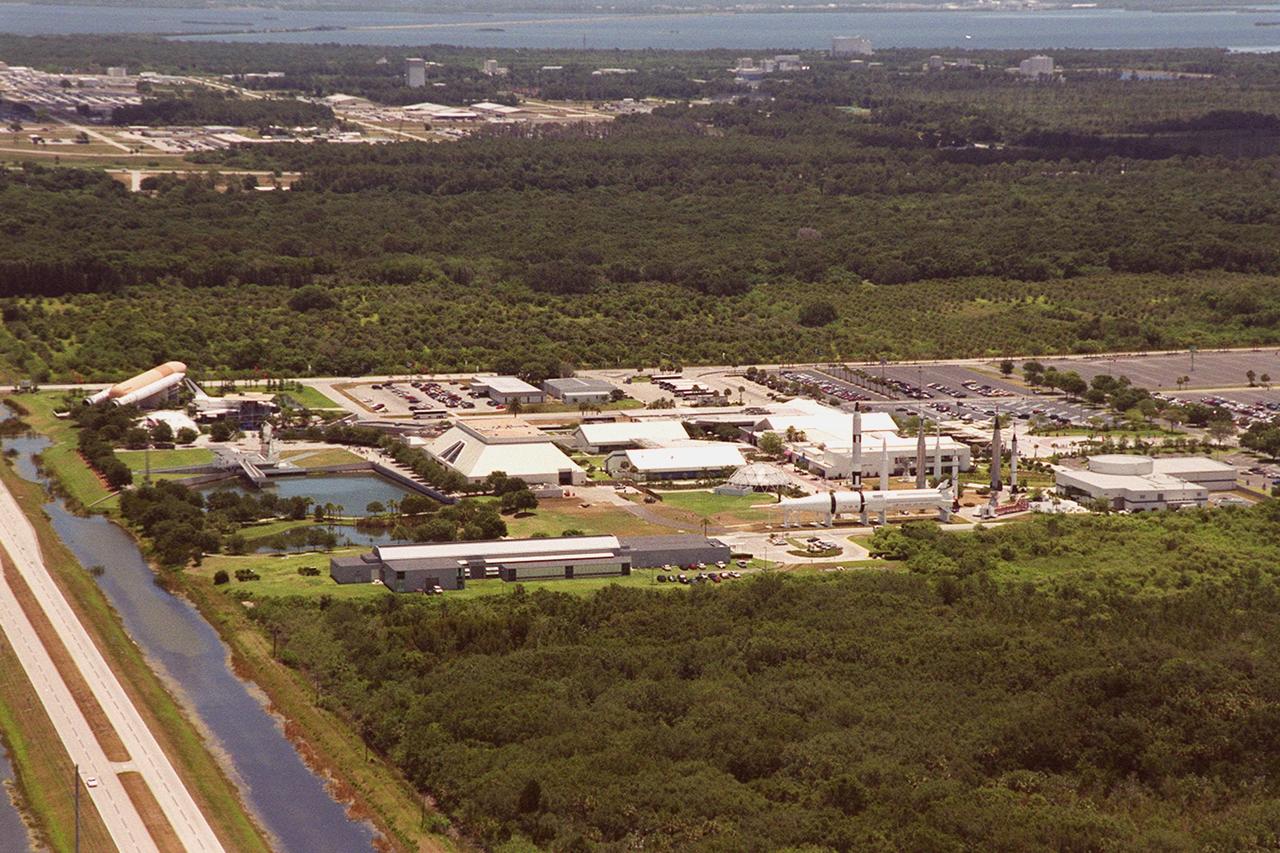
This aerial view is of Kennedy Space Center's Visitor Complex. The full-scale replicas of the Space Shuttle external tank, solid rocket boosters and orbiter are located to the left of the various buildings which comprise the complex. The long narrow building in the left foreground is the Center for Space Education which houses the Educators Resource Center and the Astronauts Memorial Foundation
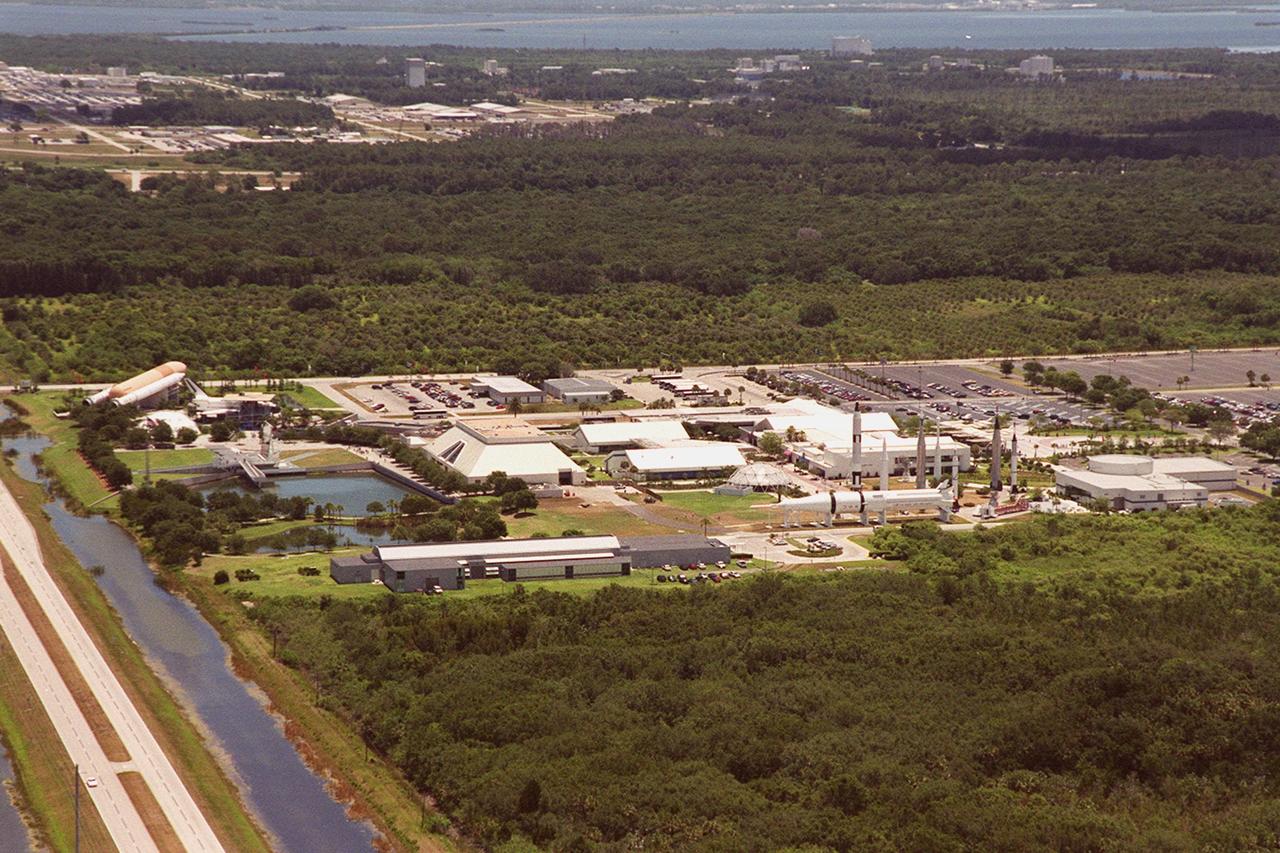
This aerial view is of Kennedy Space Center's Visitor Complex. The full-scale replicas of the Space Shuttle external tank, solid rocket boosters and orbiter are located to the left of the various buildings which comprise the complex. The long narrow building in the left foreground is the Center for Space Education which houses the Educators Resource Center and the Astronauts Memorial Foundation
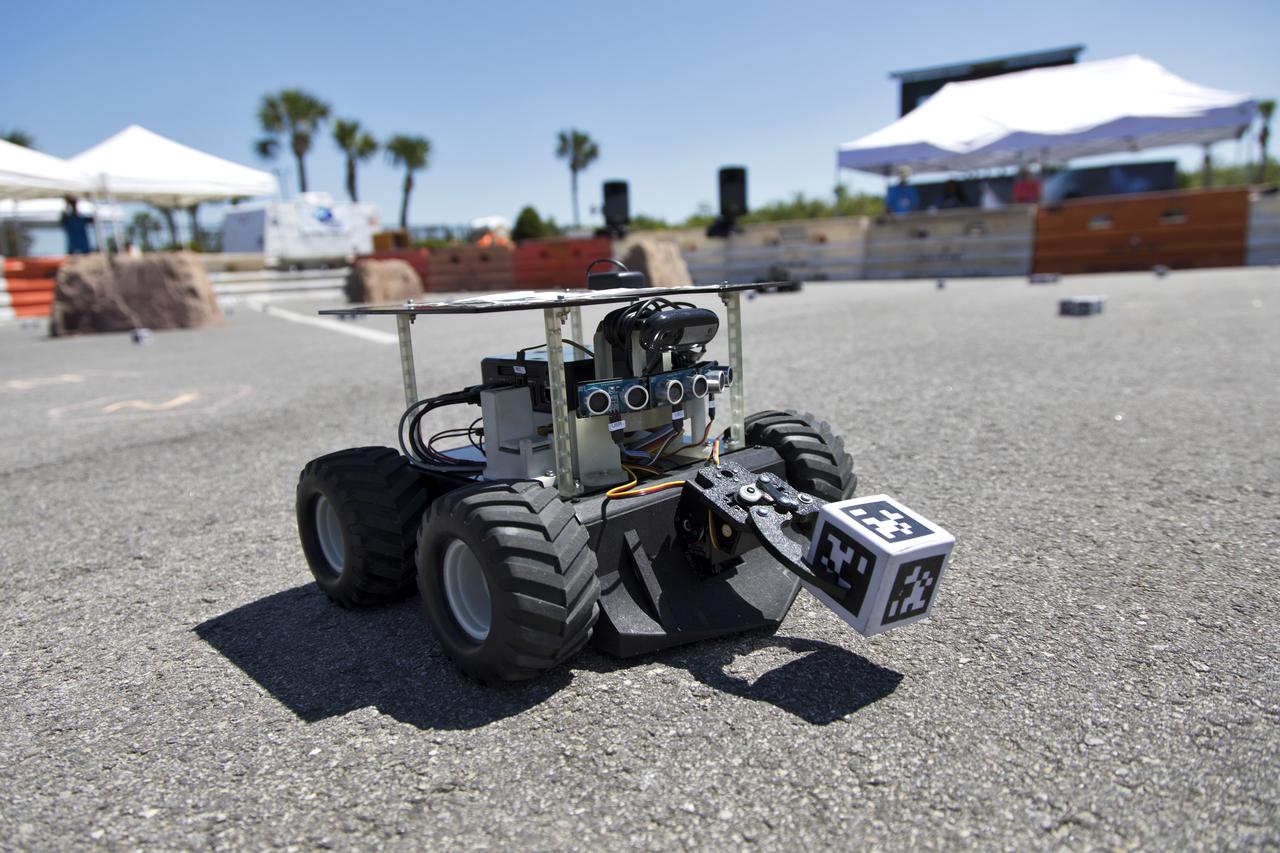
In the Swarmathon competition at the Kennedy Space Center Visitor Complex, students were asked to develop computer code for the small robots, programming them to look for "resources" in the form of AprilTag cubes, similar to barcodes. Teams developed search algorithms for the Swarmies to operate autonomously, communicating and interacting as a collective swarm similar to ants foraging for food. In the spaceport's third annual Swarmathon, 23 teams represented 24 minority serving universities and community colleges were invited to develop software code to operate these innovative robots known as "Swarmies" to help find resources when astronauts explore distant locations, such as the Moon or Mars.
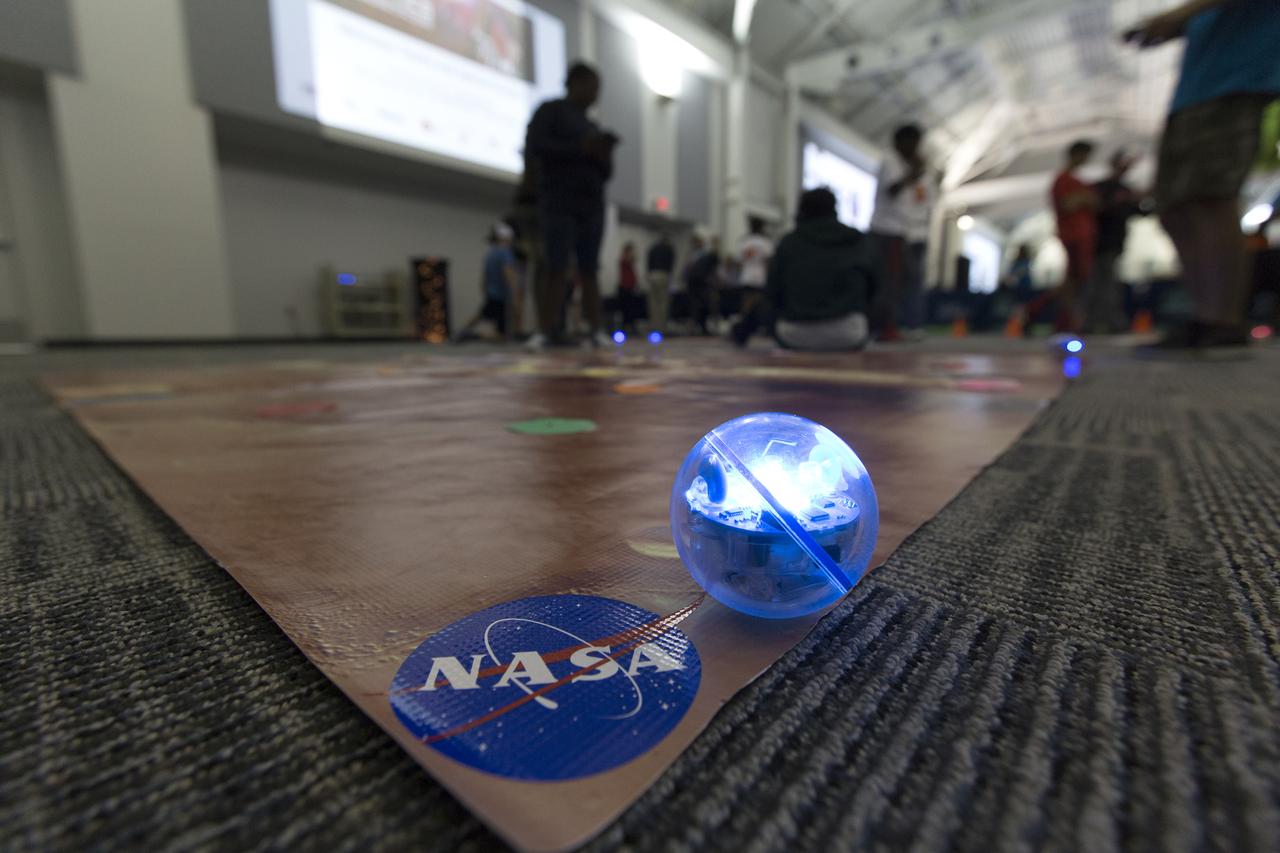
A programmable off-the-shelf Sphero robot is shown on a Mars mat at the Center for Space Education at NASA's Kennedy Space Center in Florida. The Spheros were available for students to practice their programming skills by navigating the robots around a challenge course on the mat. Students used the mat and Sphero robots during "loss of signal" times when the connection to the International Space Station was temporarily unavailable. Teams from across the state of Florida were gathered at Kennedy for the finals of the Zero Robotics Middle School Summer Program national championship. The five-week program allows rising sixth- through ninth-graders to write programs for small satellites called SPHERES (Synchronized, Position, Hold, Engage, Reorient, Experimental Satellites). Finalists saw their code tested aboard the orbiting laboratory.
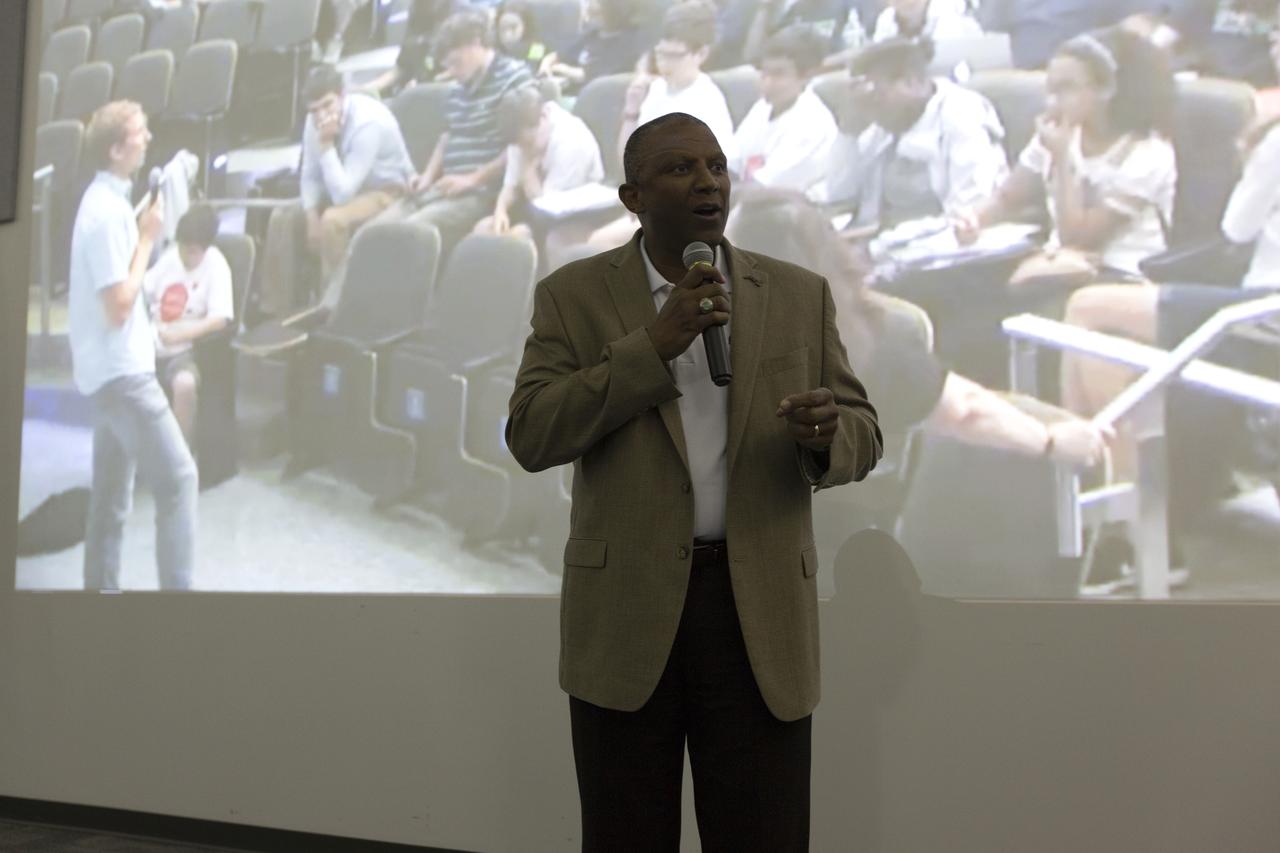
NASA Kennedy Space Center Associate Director Kelvin Manning speaks to students and sponsors in the spaceport’s Center for Space Education. Teams from across the state of Florida were gathered at Kennedy for the finals of the Zero Robotics Middle School Summer Program national championship. The five-week program allows rising sixth- through ninth-graders to write programs for small satellites called SPHERES (Synchronized, Position, Hold, Engage, Reorient, Experimental Satellites). Finalists saw their code tested aboard the International Space Station.
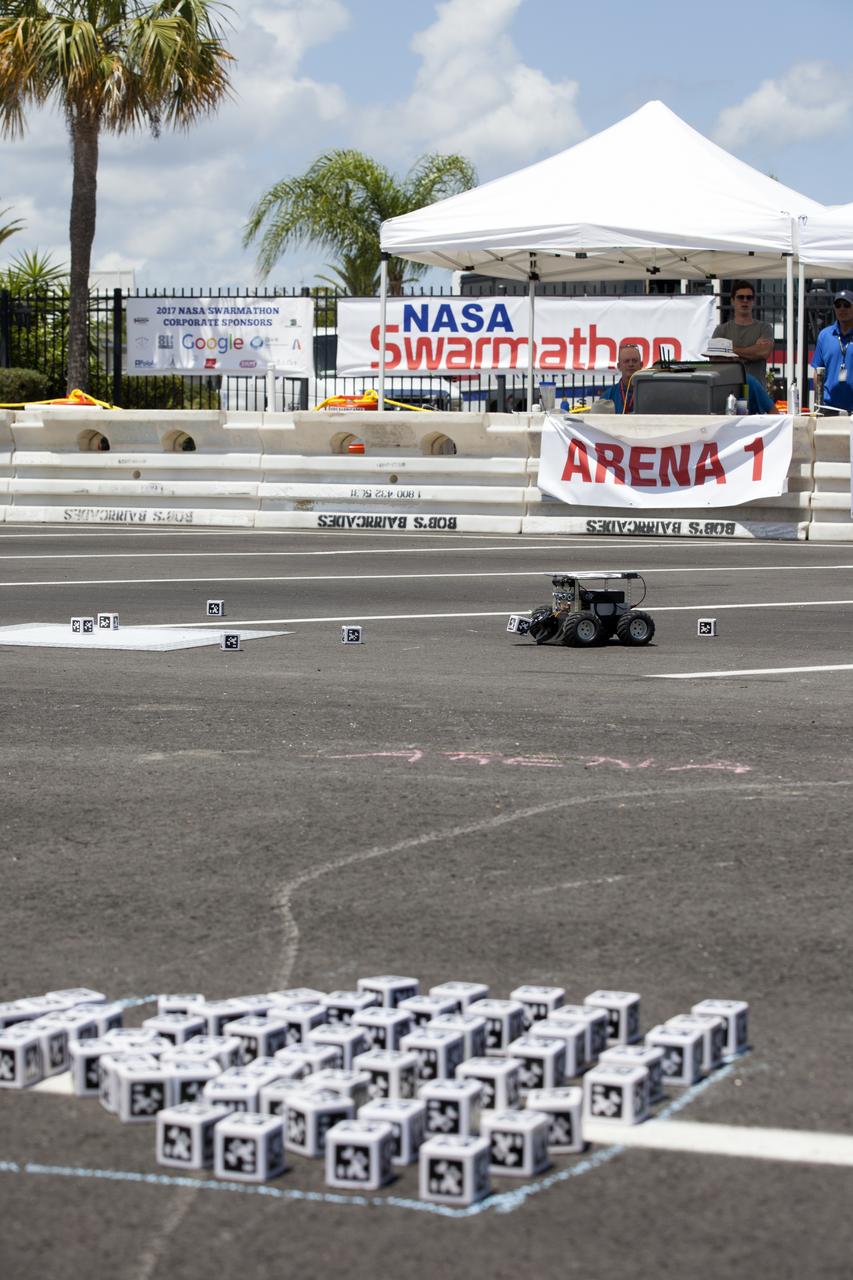
In the Swarmathon competition at the Kennedy Space Center Visitor Complex, students were asked to develop computer code for the small robots, programming them to look for "resources" in the form of AprilTag cubes, similar to barcodes. Teams developed search algorithms for the Swarmies to operate autonomously, communicating and interacting as a collective swarm similar to ants foraging for food. In the spaceport's second annual Swarmathon, 20 teams representing 22 minority serving universities and community colleges were invited to develop software code to operate these innovative robots known as "Swarmies" to help find resources when astronauts explore distant locations, such as the moon or Mars.
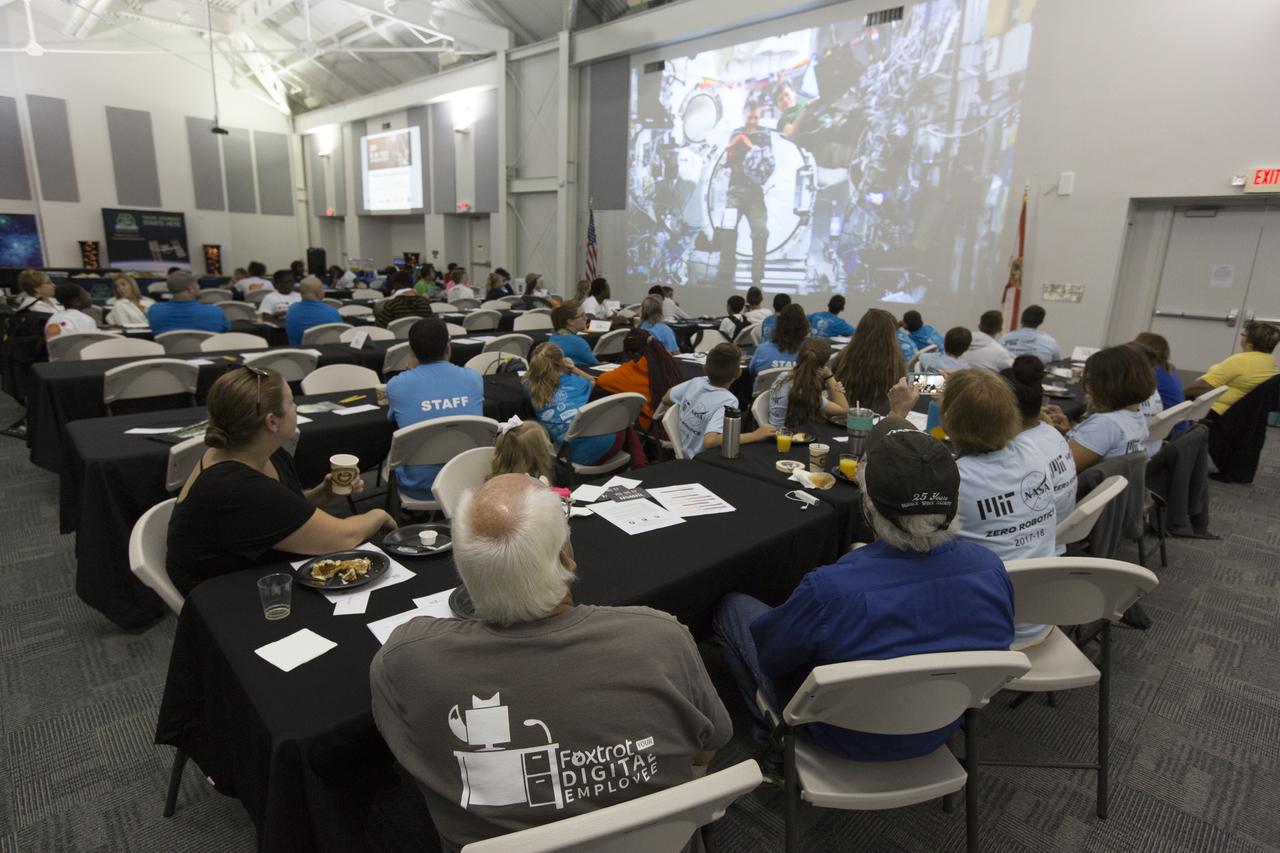
Students and sponsors hear from astronauts aboard the International Space Station on a big screen in the Center for Space Education at NASA’s Kennedy Space Center in Florida. Teams from across the state of Florida were gathered at Kennedy for the finals of the Zero Robotics Middle School Summer Program national championship. The five-week program allows rising sixth- through ninth-graders to write programs for small satellites called SPHERES (Synchronized, Position, Hold, Engage, Reorient, Experimental Satellites). Finalists saw their code tested aboard the orbiting laboratory.
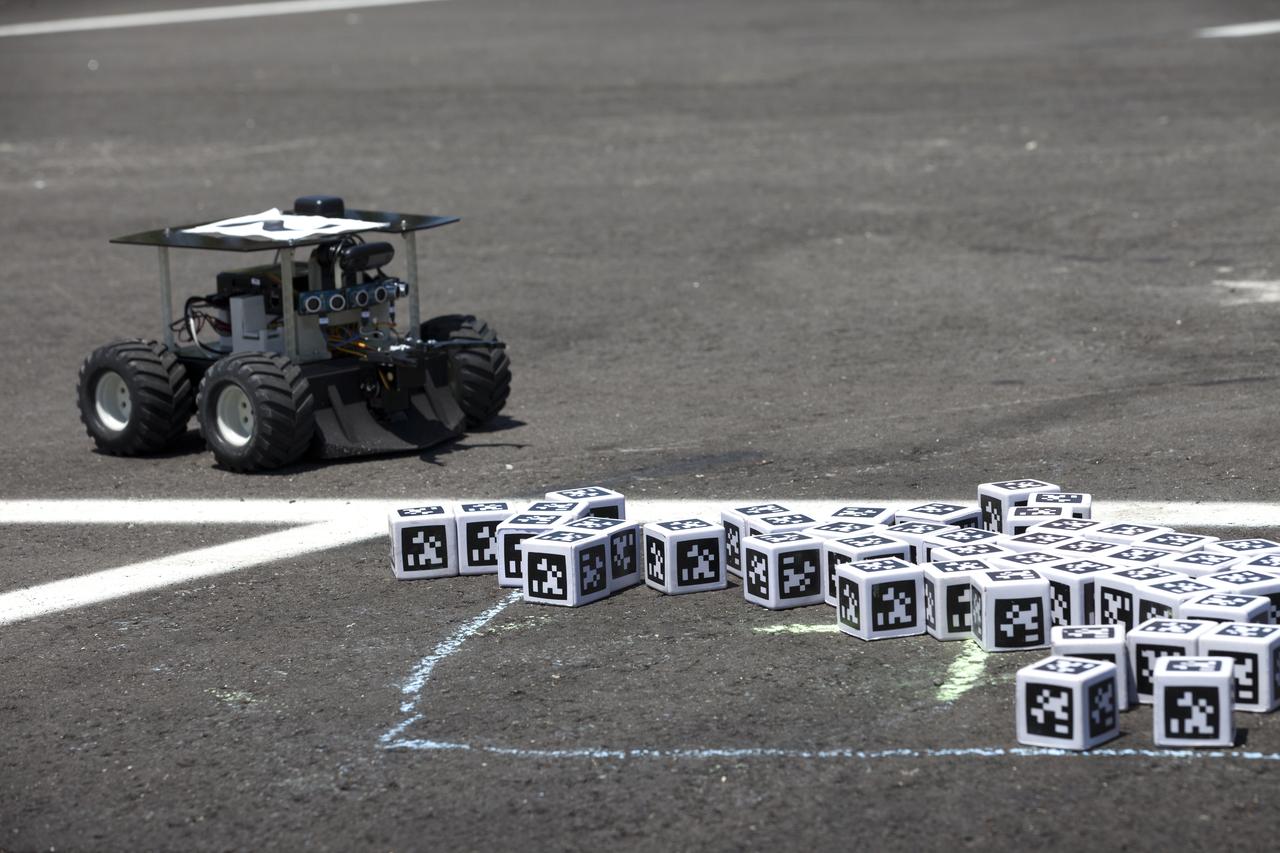
In the Swarmathon competition at the Kennedy Space Center Visitor Complex, students were asked to develop computer code for the small robots, programming them to look for "resources" in the form of AprilTag cubes, similar to barcodes. Teams developed search algorithms for the Swarmies to operate autonomously, communicating and interacting as a collective swarm similar to ants foraging for food. In the spaceport's second annual Swarmathon, 20 teams representing 22 minority serving universities and community colleges were invited to develop software code to operate these innovative robots known as "Swarmies" to help find resources when astronauts explore distant locations, such as the moon or Mars.
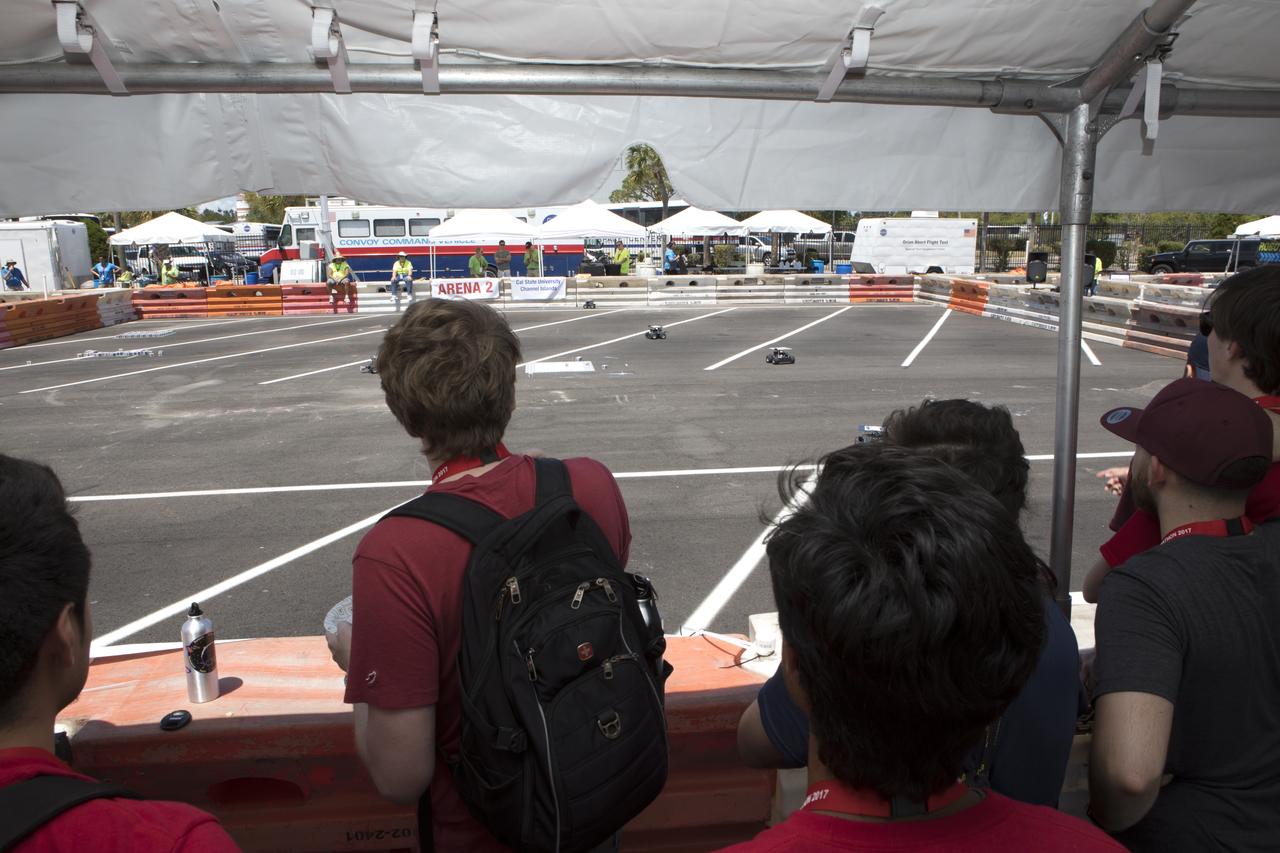
At the Kennedy Space Center Visitor Complex, students monitor progress as their Swarmie robots as they search for "resources." The goal is for the robots to pick up cubes with AprilTags, which are similar to bar codes. The Swarmies then move the cubes to a white square in the center of the completion arena. The small, four-wheeled robots are designed to effectively and efficiently locate hidden resources while astronauts explore distant destinations such as the moon or Mars.
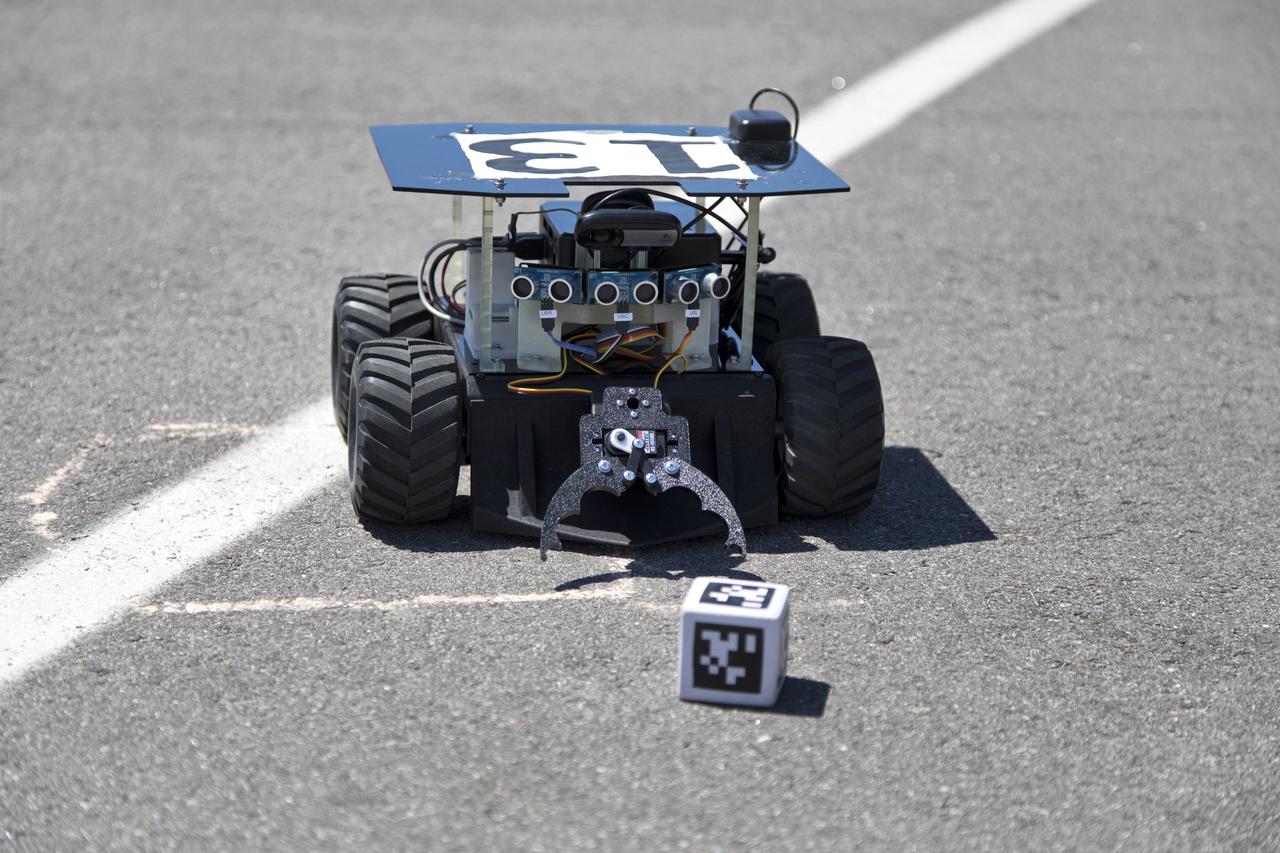
In the Swarmathon competition at the Kennedy Space Center Visitor Complex, students were asked to develop computer code for the small robots, programming them to look for "resources" in the form of AprilTag cubes, similar to barcodes. Teams developed search algorithms for the Swarmies to operate autonomously, communicating and interacting as a collective swarm similar to ants foraging for food. In the spaceport's third annual Swarmathon, 23 teams represented 24 minority serving universities and community colleges were invited to develop software code to operate these innovative robots known as "Swarmies" to help find resources when astronauts explore distant locations, such as the Moon or Mars.
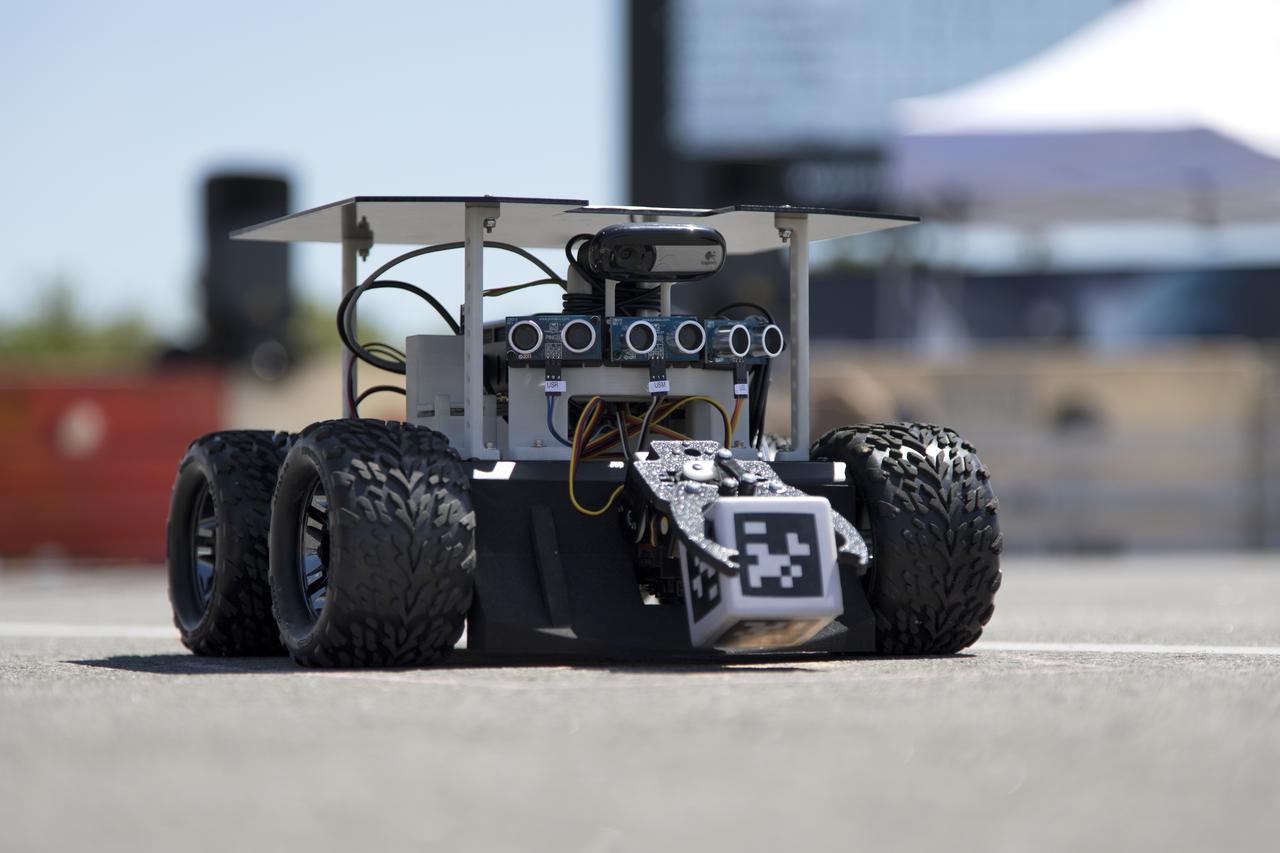
In the Swarmathon competition at the Kennedy Space Center Visitor Complex, students were asked to develop computer code for the small robots, programming them to look for "resources" in the form of AprilTag cubes, similar to barcodes. Teams developed search algorithms for the Swarmies to operate autonomously, communicating and interacting as a collective swarm similar to ants foraging for food. In the spaceport's third annual Swarmathon, 23 teams represented 24 minority serving universities and community colleges were invited to develop software code to operate these innovative robots known as "Swarmies" to help find resources when astronauts explore distant locations, such as the Moon or Mars.
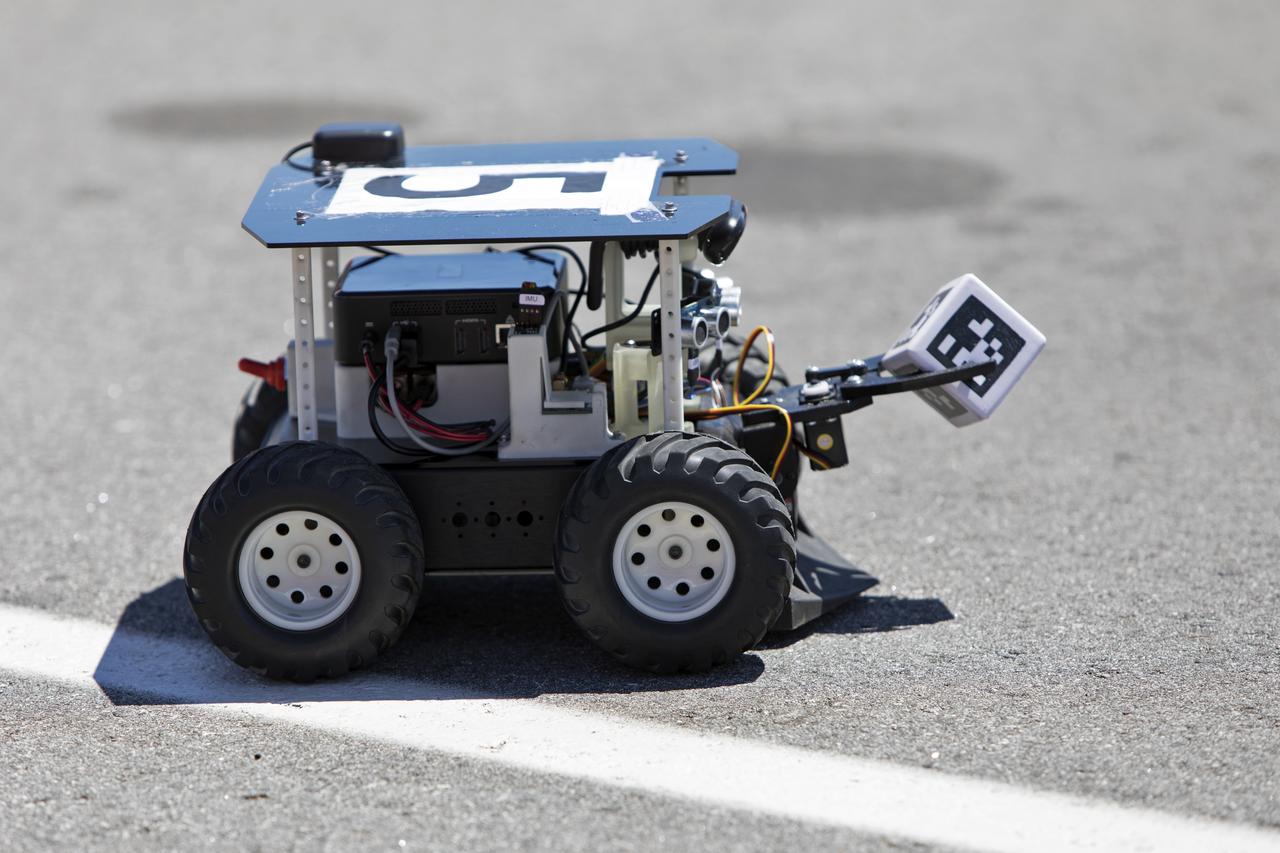
In the Swarmathon competition at the Kennedy Space Center Visitor Complex, students were asked to develop computer code for the small robots, programming them to look for "resources" in the form of AprilTag cubes, similar to barcodes. Teams developed search algorithms for the Swarmies to operate autonomously, communicating and interacting as a collective swarm similar to ants foraging for food. In the spaceport's third annual Swarmathon, 23 teams represented 24 minority serving universities and community colleges were invited to develop software code to operate these innovative robots known as "Swarmies" to help find resources when astronauts explore distant locations, such as the Moon or Mars.
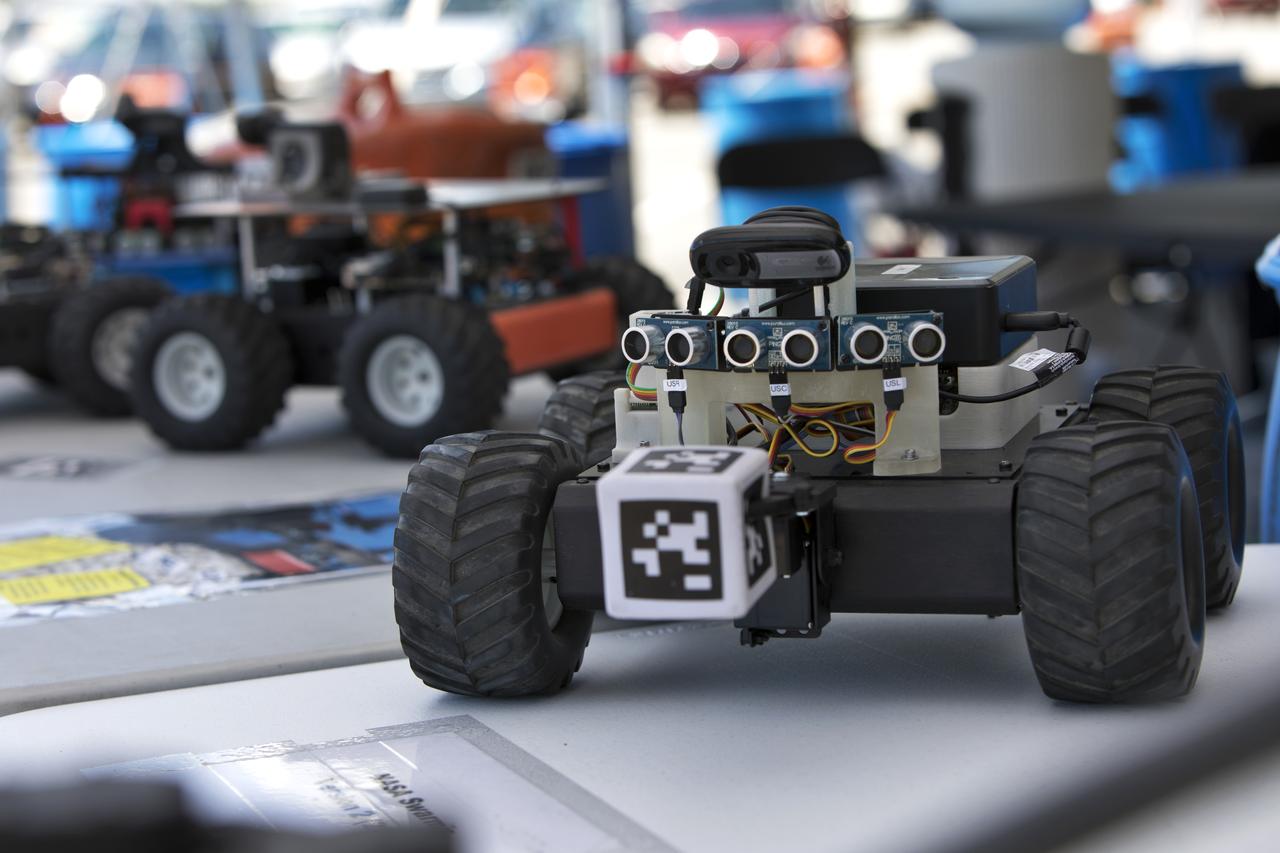
In the Swarmathon competition at the Kennedy Space Center Visitor Complex, students were asked to develop computer code for the small robots, programming them to look for "resources" in the form of AprilTag cubes, similar to barcodes. Teams developed search algorithms for the Swarmies to operate autonomously, communicating and interacting as a collective swarm similar to ants foraging for food. In the spaceport's third annual Swarmathon, 23 teams represented 24 minority serving universities and community colleges were invited to develop software code to operate these innovative robots known as "Swarmies" to help find resources when astronauts explore distant locations, such as the Moon or Mars.
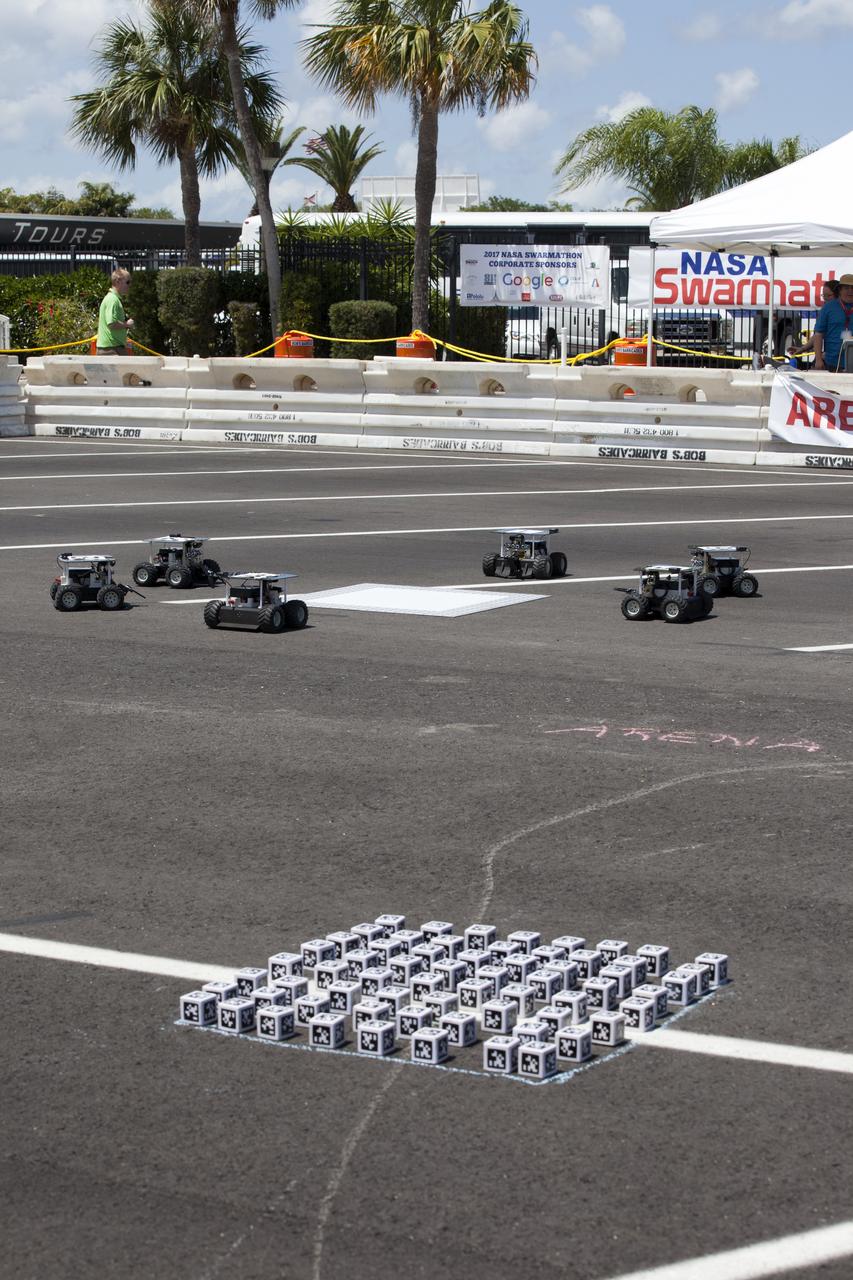
In the Swarmathon competition at the Kennedy Space Center Visitor Complex, students were asked to develop computer code for the small robots, programming them to look for "resources" in the form of AprilTag cubes, similar to barcodes. Teams developed search algorithms for the Swarmies to operate autonomously, communicating and interacting as a collective swarm similar to ants foraging for food. In the spaceport's second annual Swarmathon, 20 teams representing 22 minority serving universities and community colleges were invited to develop software code to operate these innovative robots known as "Swarmies" to help find resources when astronauts explore distant locations, such as the moon or Mars.
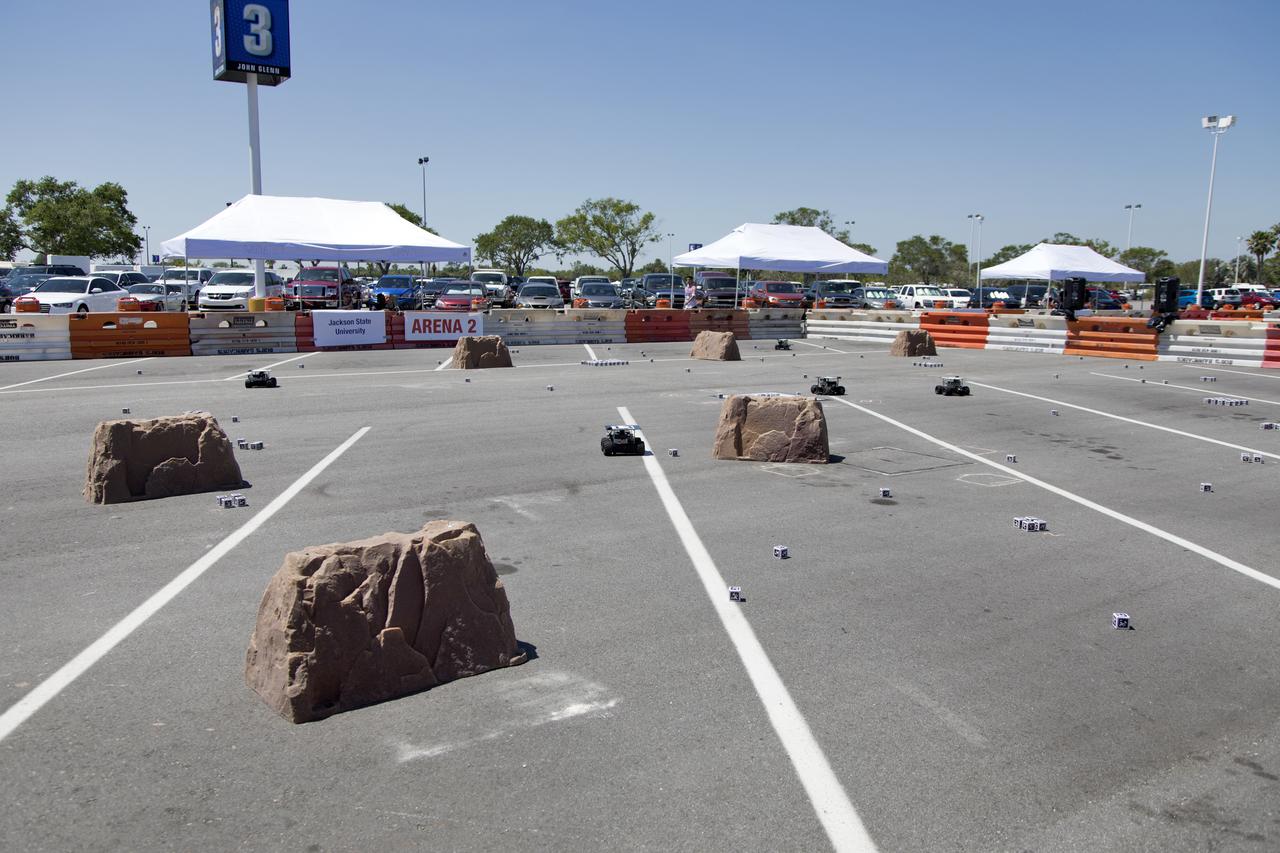
In the Swarmathon competition at the Kennedy Space Center Visitor Complex, students were asked to develop computer code for the small robots, programming them to look for "resources" in the form of AprilTag cubes, similar to barcodes. To add to the challenge, obstacles in the form of simulated rocks were placed in the completion arena. Teams developed search algorithms for the Swarmies to operate autonomously, communicating and interacting as a collective swarm similar to ants foraging for food. In the spaceport's third annual Swarmathon, 23 teams represented 24 minority serving universities and community colleges were invited to develop software code to operate these innovative robots known as "Swarmies" to help find resources when astronauts explore distant locations, such as the Moon or Mars.
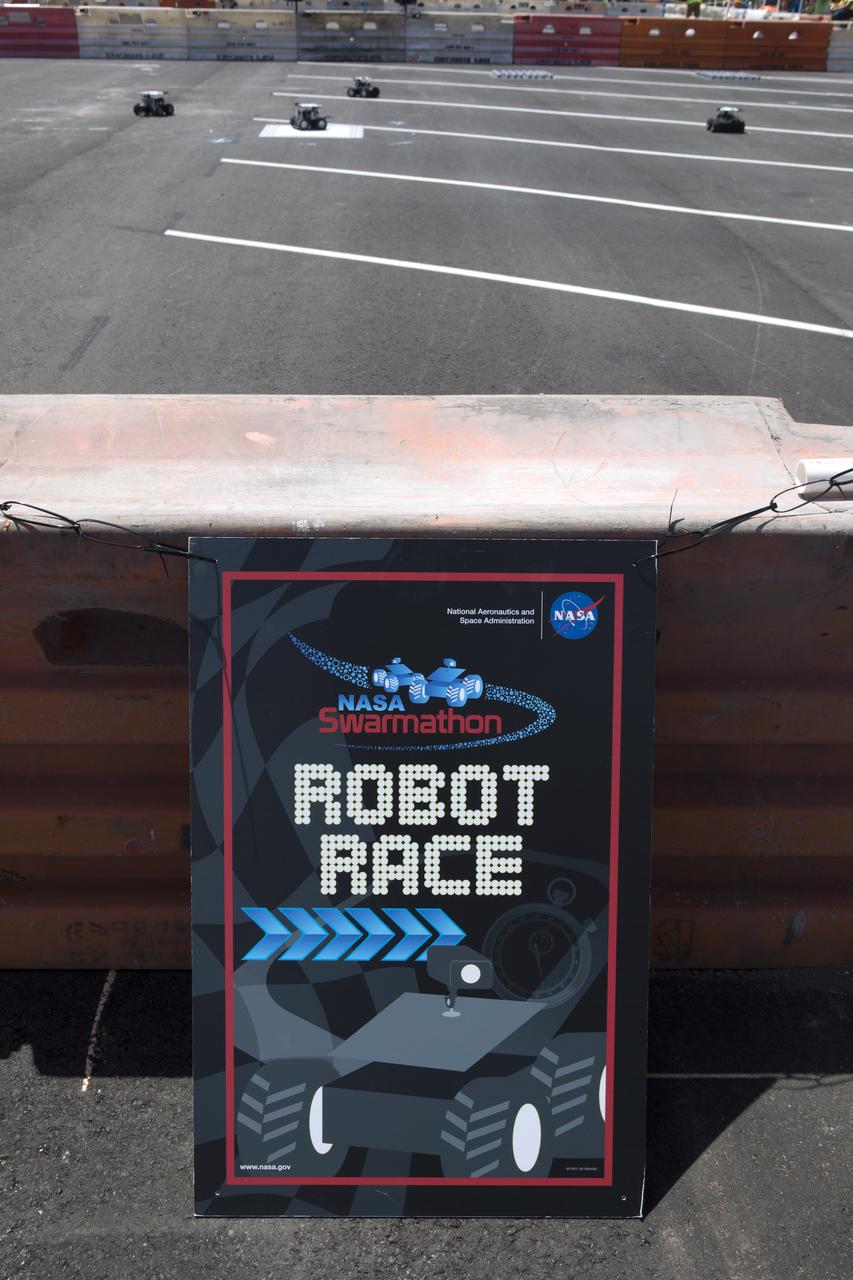
A sign at the Kennedy Space Center Visitor Complex announces the second annual Swarmathon competition. Students were asked to develop computer code for the small robots, programming them to look for "resources" in the form of cubes with AprilTags, similar to barcodes. Teams developed search algorithms for the Swarmies to operate autonomously, communicating and interacting as a collective swarm similar to ants foraging for food. In the spaceport's second annual Swarmathon, 20 teams representing 22 minority serving universities and community colleges were invited to develop software code to operate these innovative robots known as "Swarmies" to help find resources when astronauts explore distant locations, such as the moon or Mars.
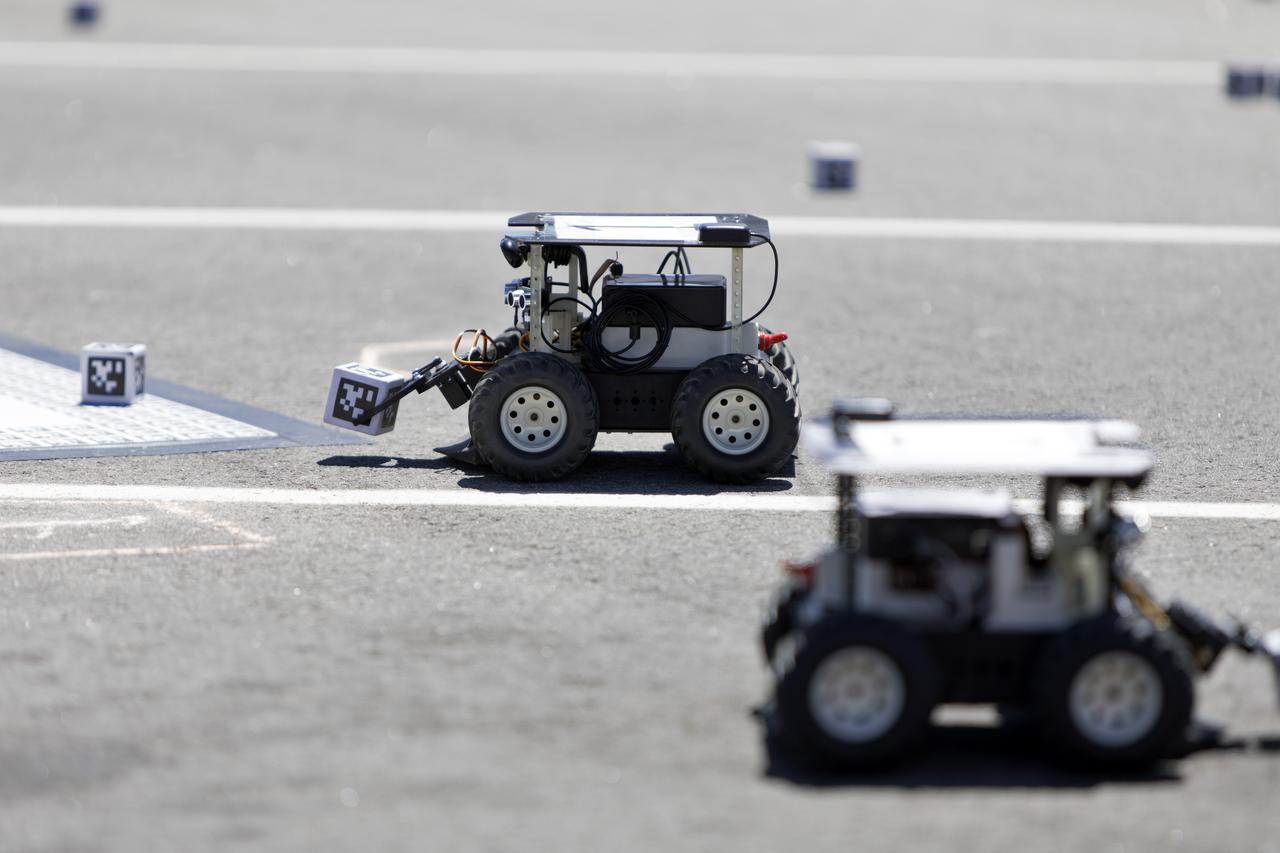
In the Swarmathon competition at the Kennedy Space Center Visitor Complex, students were asked to develop computer code for the small robots, programming them to look for "resources" in the form of AprilTag cubes, similar to barcodes. Teams developed search algorithms for the Swarmies to operate autonomously, communicating and interacting as a collective swarm similar to ants foraging for food. In the spaceport's third annual Swarmathon, 23 teams represented 24 minority serving universities and community colleges were invited to develop software code to operate these innovative robots known as "Swarmies" to help find resources when astronauts explore distant locations, such as the Moon or Mars.
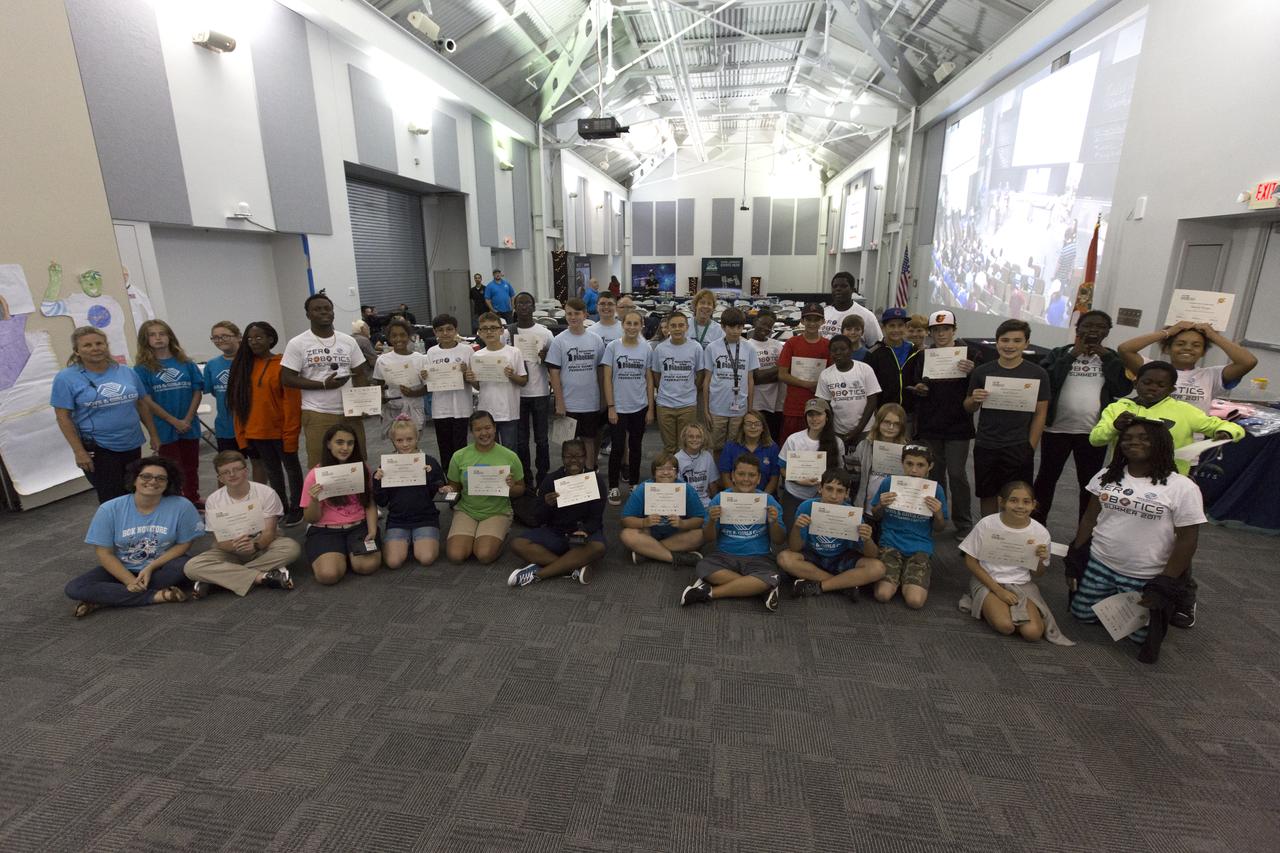
Students and their sponsors gather for a commemorative photo in the Center for Space Education at NASA’s Kennedy Space Center in Florida after participating in the finals of the Zero Robotics Middle School Summer Program national championship. The five-week program allows rising sixth- through ninth-graders to write programs for small satellites called SPHERES (Synchronized, Position, Hold, Engage, Reorient, Experimental Satellites). Finalists saw their code tested aboard the International Space Station.
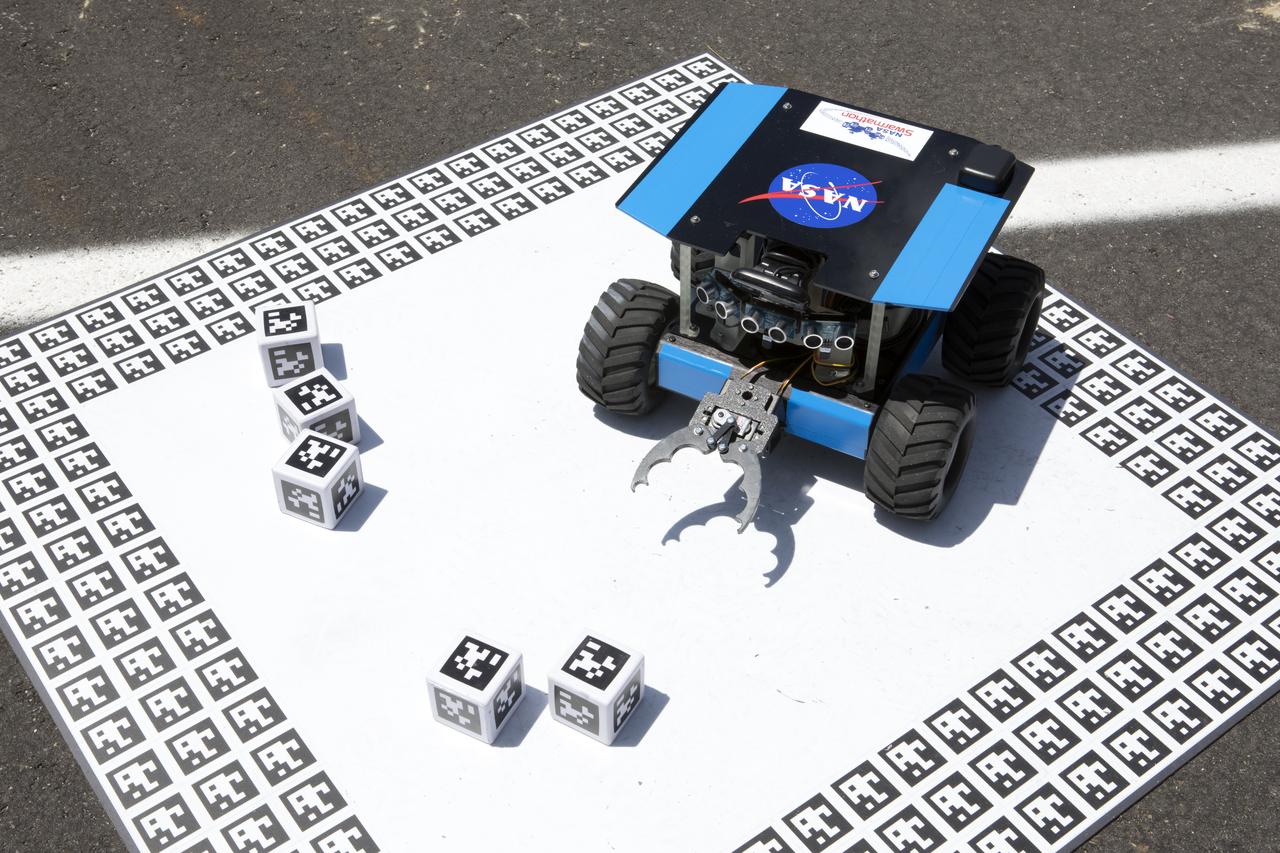
A cube identified with an AprilTag, similar to a barcode, is delivered to a "home" square in the middle of a competition arena during the Swarmathon competition. At the Kennedy Space Center Visitor Complex, student teams developed search algorithms for the Swarmies to operate autonomously, communicating and interacting as a collective swarm similar to ants foraging for food.
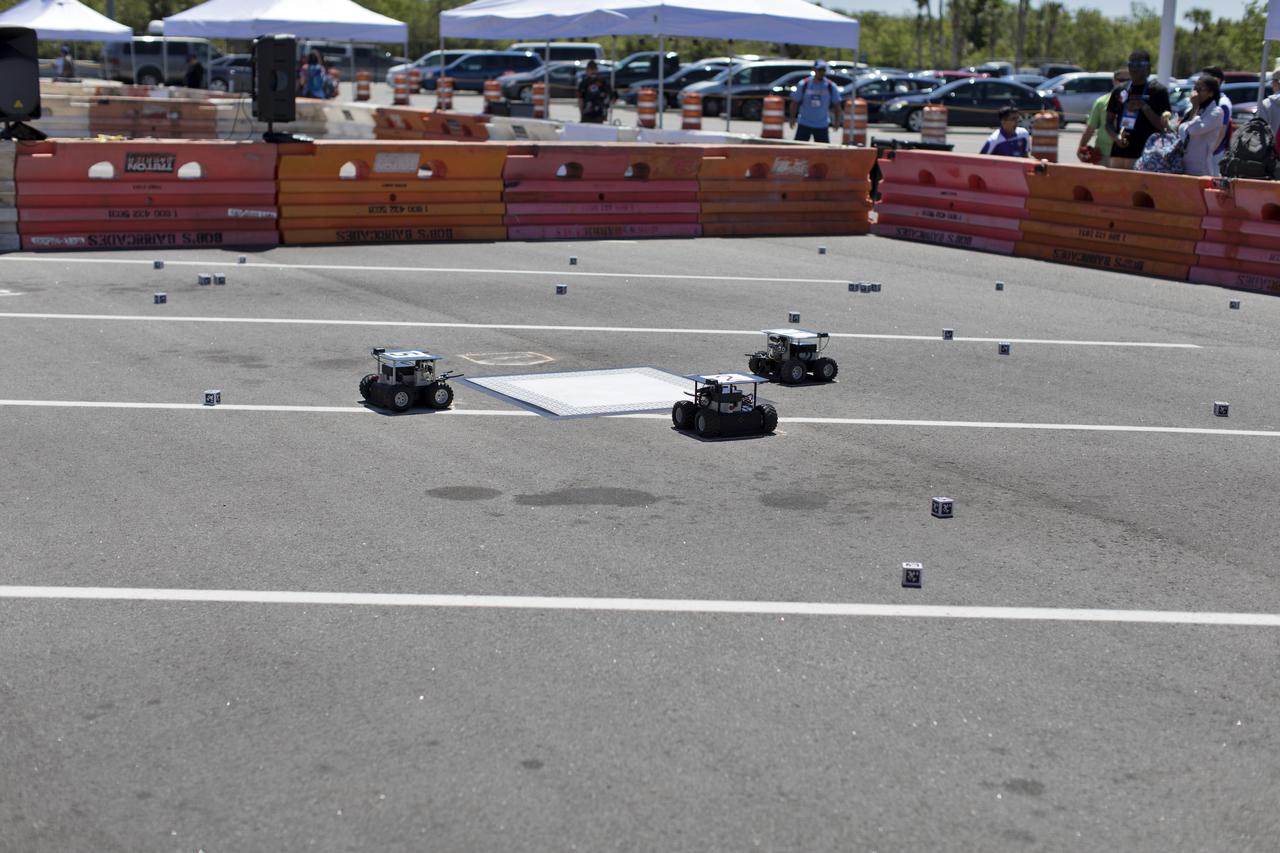
In the Swarmathon competition at the Kennedy Space Center Visitor Complex, students were asked to develop computer code for the small robots, programming them to look for "resources" in the form of AprilTag cubes, similar to barcodes. Teams developed search algorithms for the Swarmies to operate autonomously, communicating and interacting as a collective swarm similar to ants foraging for food. In the spaceport's third annual Swarmathon, 23 teams represented 24 minority serving universities and community colleges were invited to develop software code to operate these innovative robots known as "Swarmies" to help find resources when astronauts explore distant locations, such as the Moon or Mars.
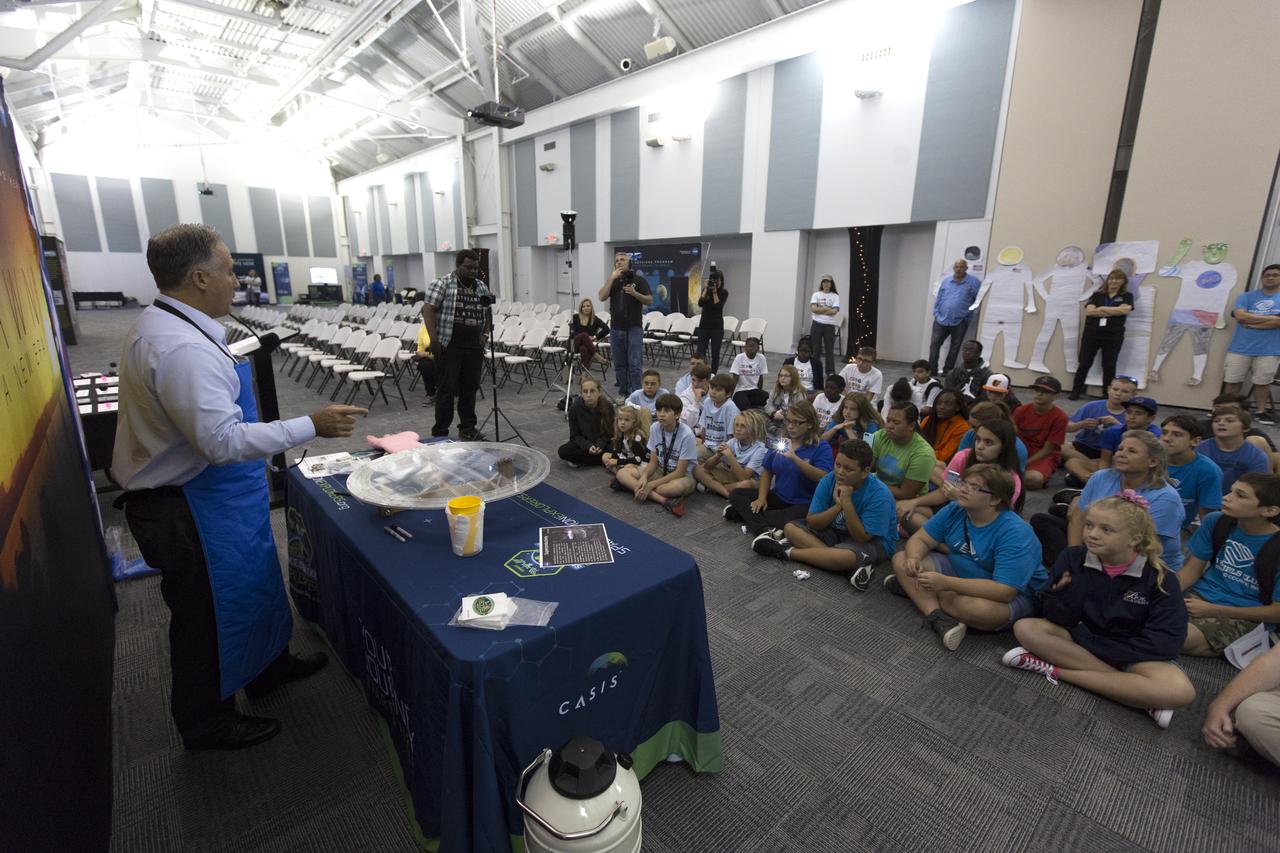
NASA Kennedy Space Center's Trent Smith conducts a quantum levitation demonstration, using liquid nitrogen, metal and a magnetic track, for students and their sponsors in the Center for Space Education at NASA’s Kennedy Space Center in Florida. Teams from across the state of Florida were gathered at Kennedy for the finals of the Zero Robotics Middle School Summer Program national championship. The five-week program allows rising sixth- through ninth-graders to write programs for small satellites called SPHERES (Synchronized, Position, Hold, Engage, Reorient, Experimental Satellites). Finalists saw their code tested aboard the International Space Station.
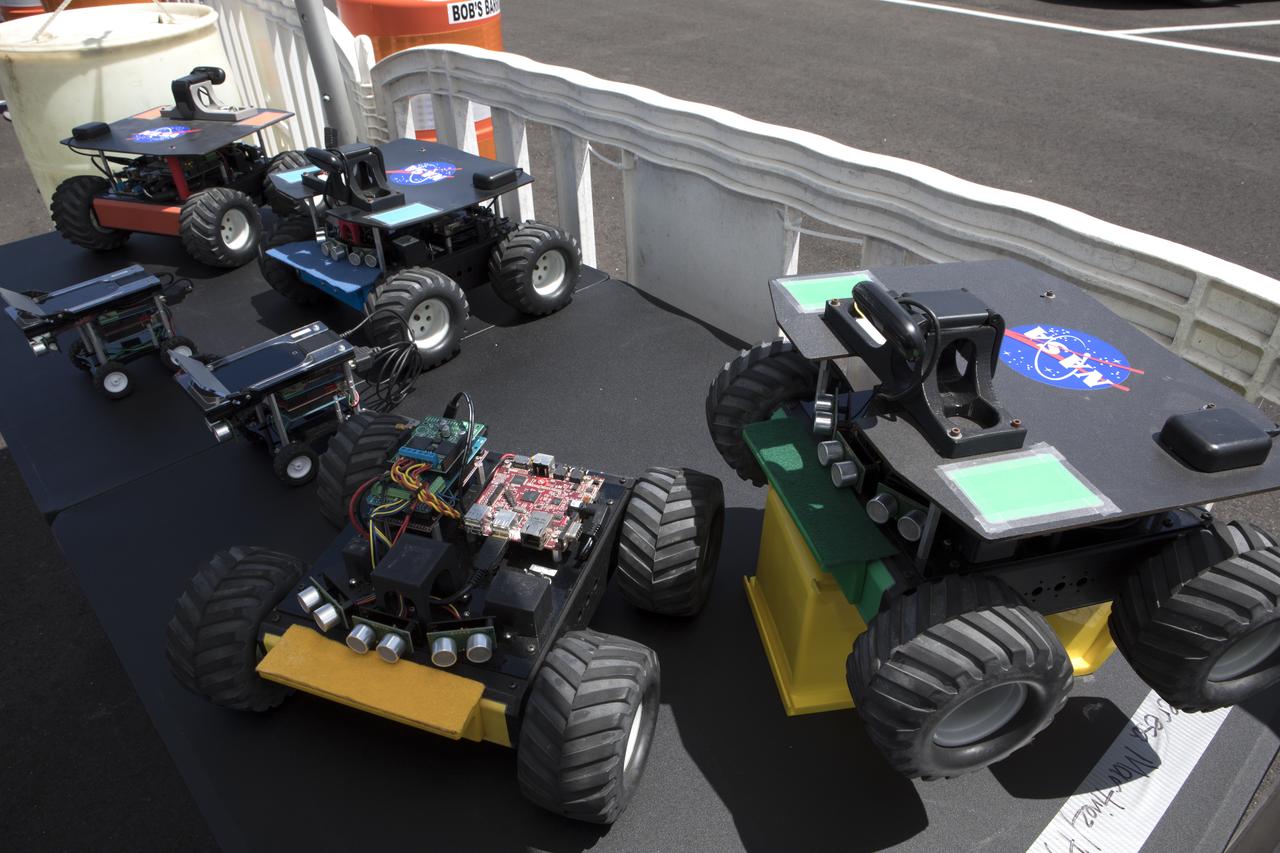
A display at the Kennedy Space Center Visitor Complex describes the purpose of Swarmies. Computer scientists are developing these robots focusing not so much on the hardware, but the software. In the spaceport's annual Swarmathon, students from 12 colleges and universities across the nation were invited to develop software code to operate Swarmies to help find resources when astronauts explore distant planets, such as Mars.
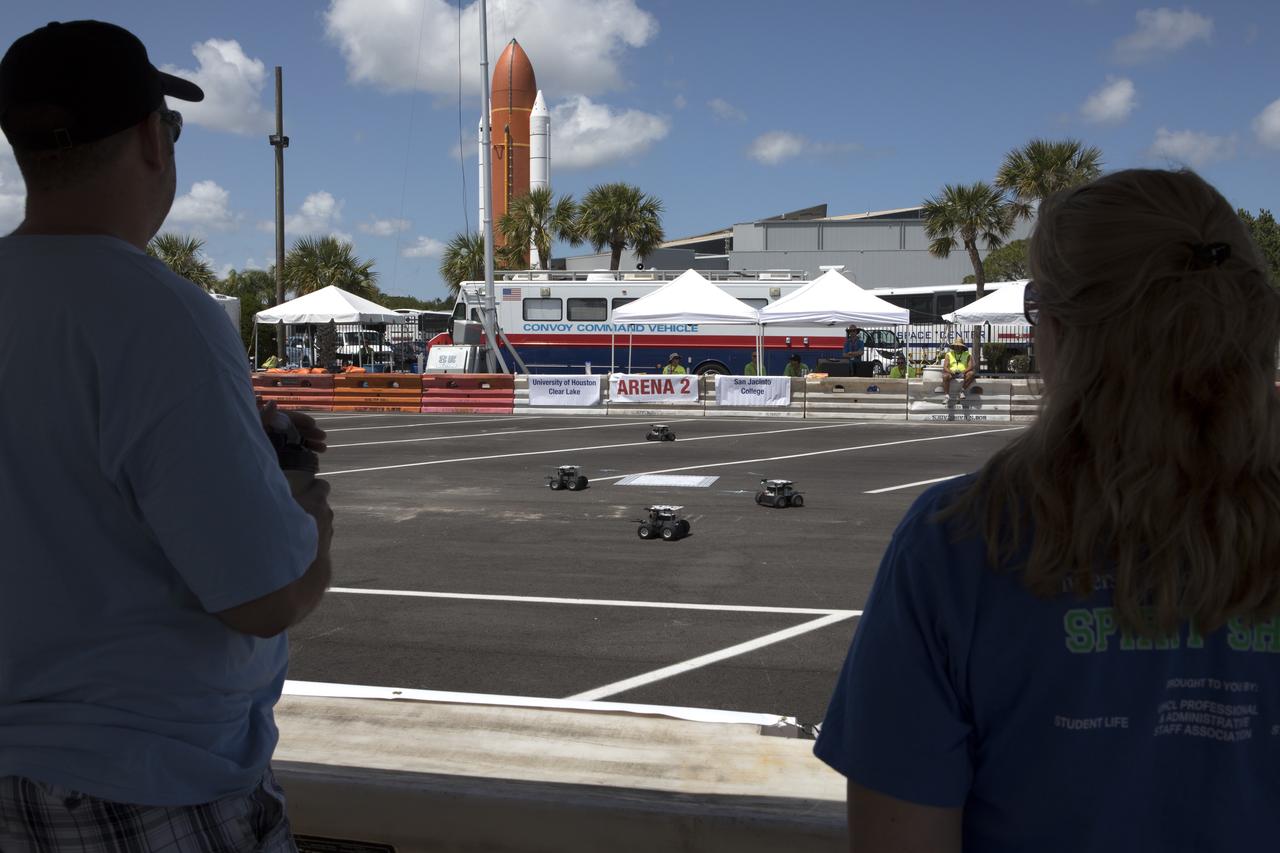
At the Kennedy Space Center Visitor Complex, students monitor progress as their Swarmie robots as they search for "resources." The goal is for the robots to pick up cubes with AprilTags, which are similar to bar codes. The Swarmies then move the cubes to a white square in the center of the completion arena. The small, four-wheeled robots are designed to effectively and efficiently locate hidden resources while astronauts explore distant destinations such as the moon or Mars.
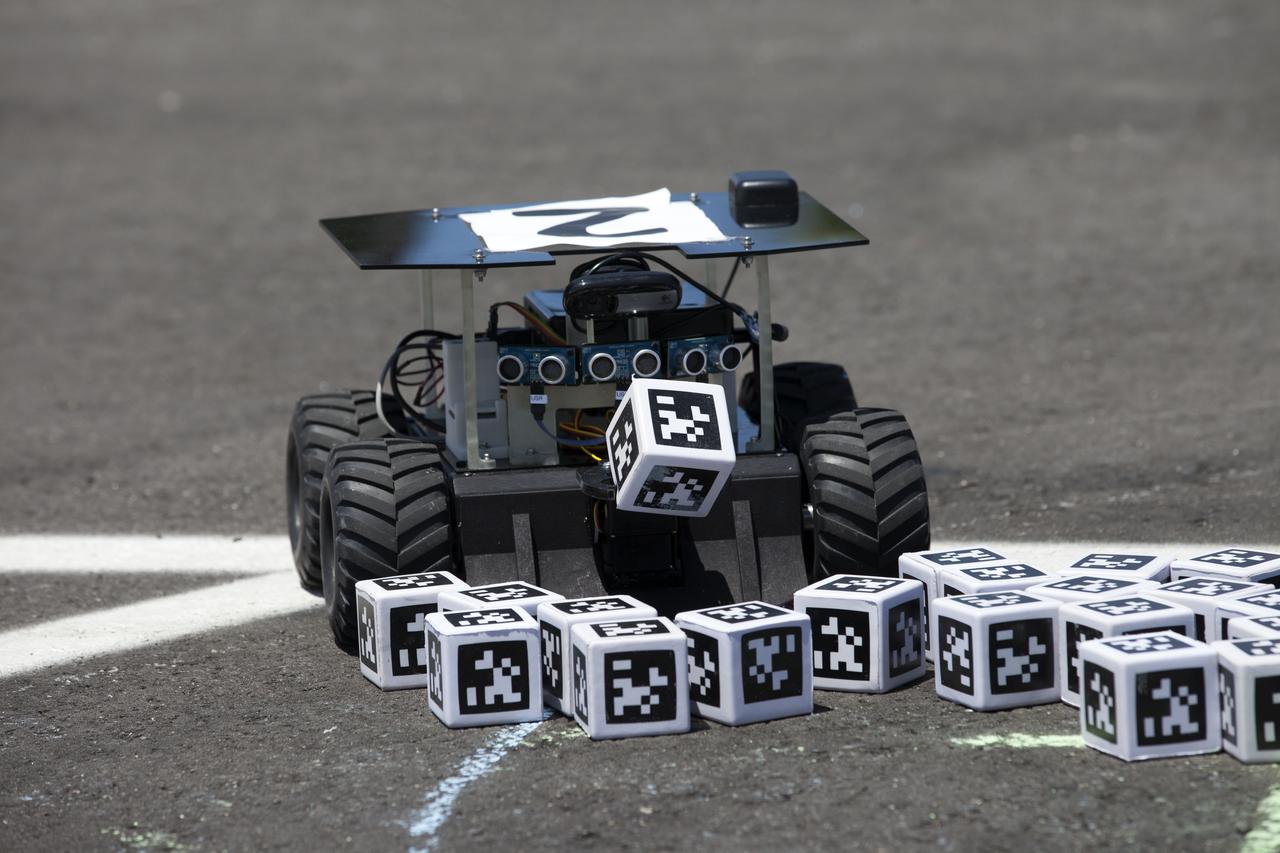
A Swarmie robot finds a "resource" cube marked with an AprilTag, similar to a barcode. In the Swarmathon competition at the Kennedy Space Center Visitor Complex, students were asked to develop computer code for the small robots, programming them to look for "resources" in the form of cubes with AprilTags.
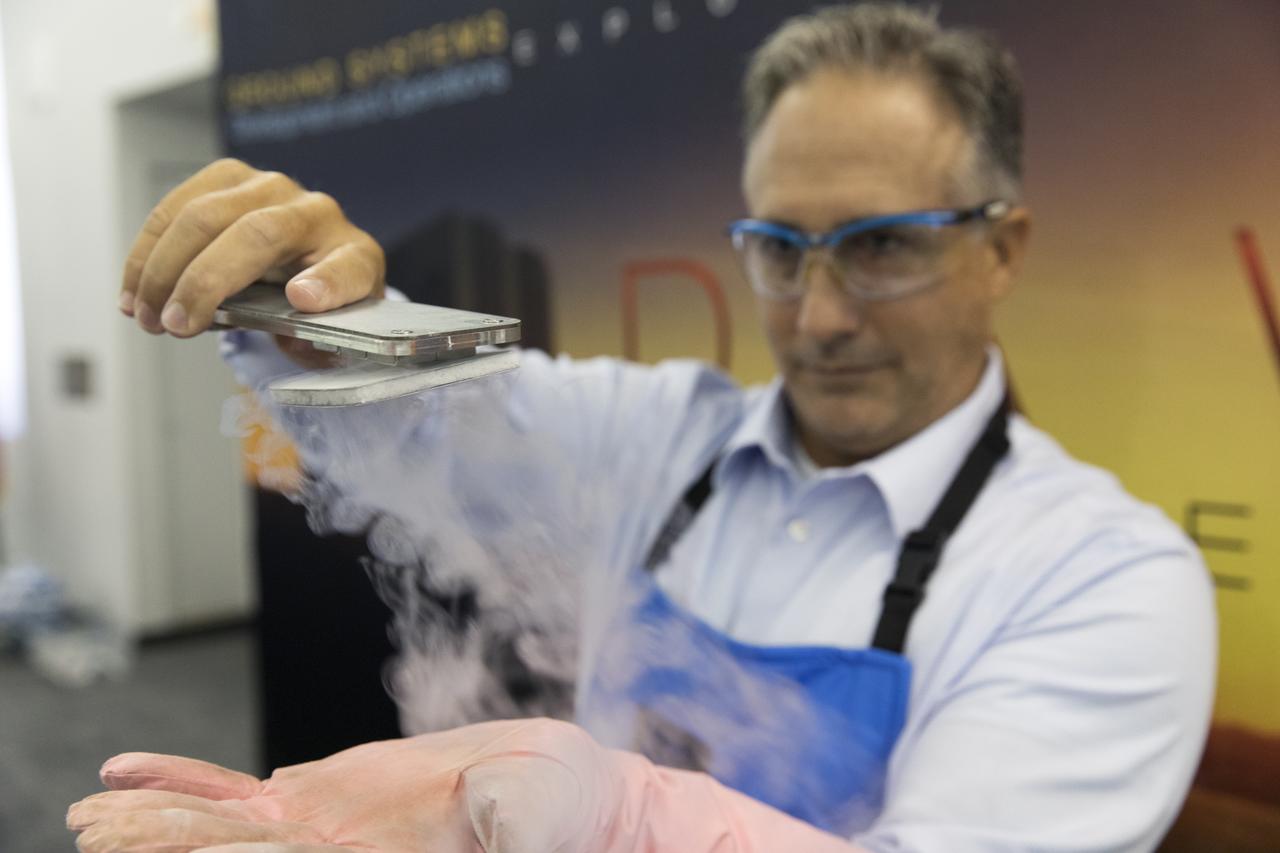
NASA Kennedy Space Center's Trent Smith conducts a quantum levitation demonstration, using liquid nitrogen, metal and a magnetic track, for students and their sponsors in the Center for Space Education at NASA’s Kennedy Space Center in Florida. Teams from across the state of Florida were gathered at Kennedy for the finals of the Zero Robotics Middle School Summer Program national championship. The five-week program allows rising sixth- through ninth-graders to write programs for small satellites called SPHERES (Synchronized, Position, Hold, Engage, Reorient, Experimental Satellites). Finalists saw their code tested aboard the International Space Station.
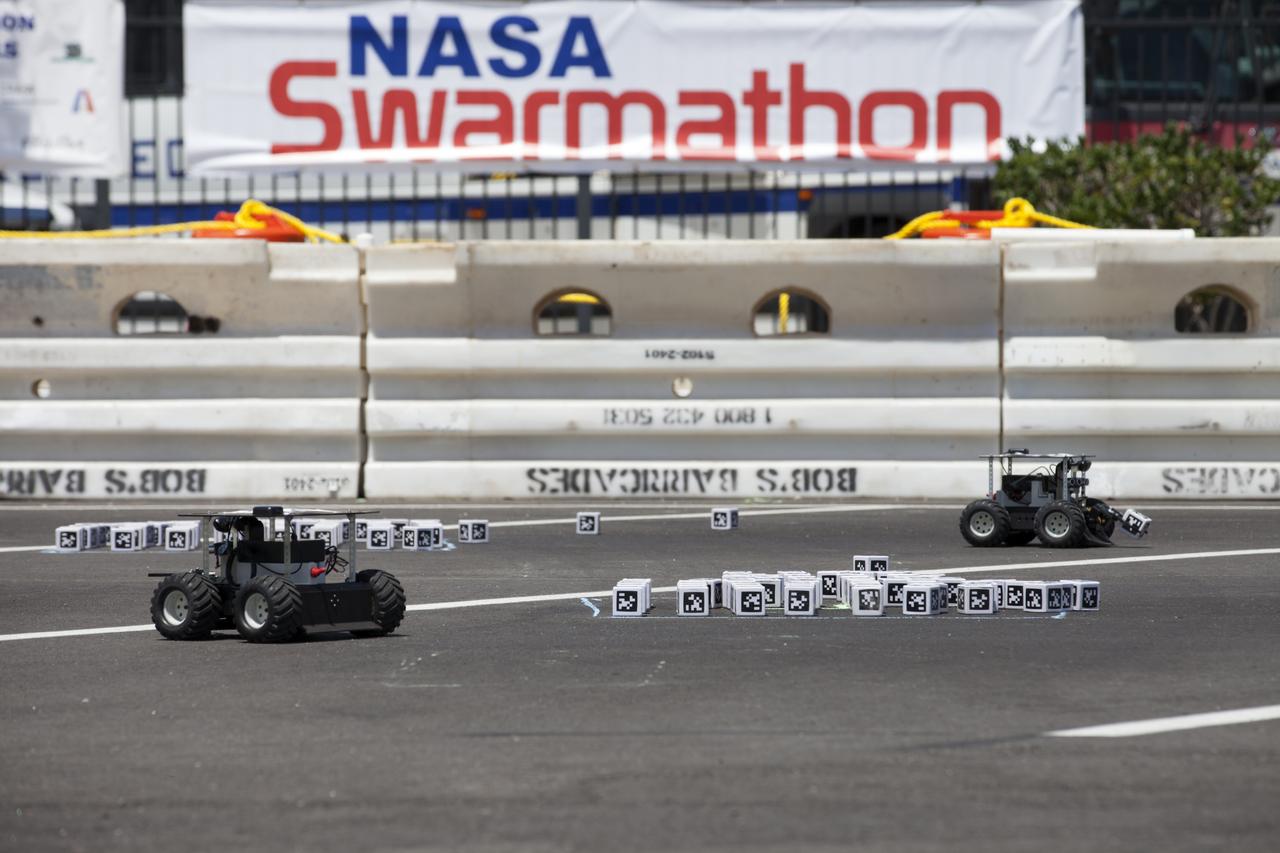
In the Swarmathon competition at the Kennedy Space Center Visitor Complex, students were asked to develop computer code for the small robots, programming them to look for "resources" in the form of AprilTag cubes, similar to barcodes. Teams developed search algorithms for the Swarmies to operate autonomously, communicating and interacting as a collective swarm similar to ants foraging for food. In the spaceport's second annual Swarmathon, 20 teams representing 22 minority serving universities and community colleges were invited to develop software code to operate these innovative robots known as "Swarmies" to help find resources when astronauts explore distant locations, such as the moon or Mars.
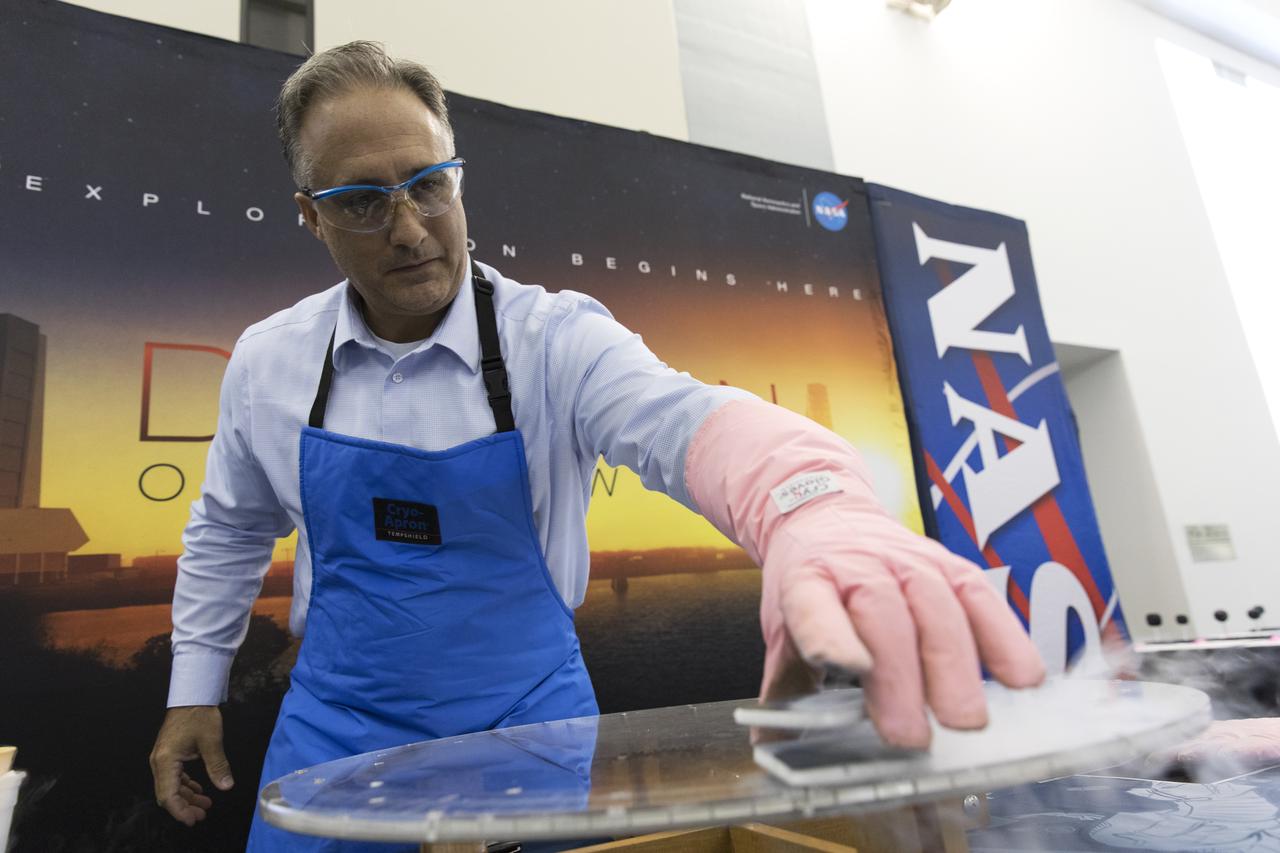
NASA Kennedy Space Center's Trent Smith conducts a quantum levitation demonstration, using liquid nitrogen, metal and a magnetic track, for students and their sponsors in the Center for Space Education at NASA’s Kennedy Space Center in Florida. Teams from across the state of Florida were gathered at Kennedy for the finals of the Zero Robotics Middle School Summer Program national championship. The five-week program allows rising sixth- through ninth-graders to write programs for small satellites called SPHERES (Synchronized, Position, Hold, Engage, Reorient, Experimental Satellites). Finalists saw their code tested aboard the International Space Station.
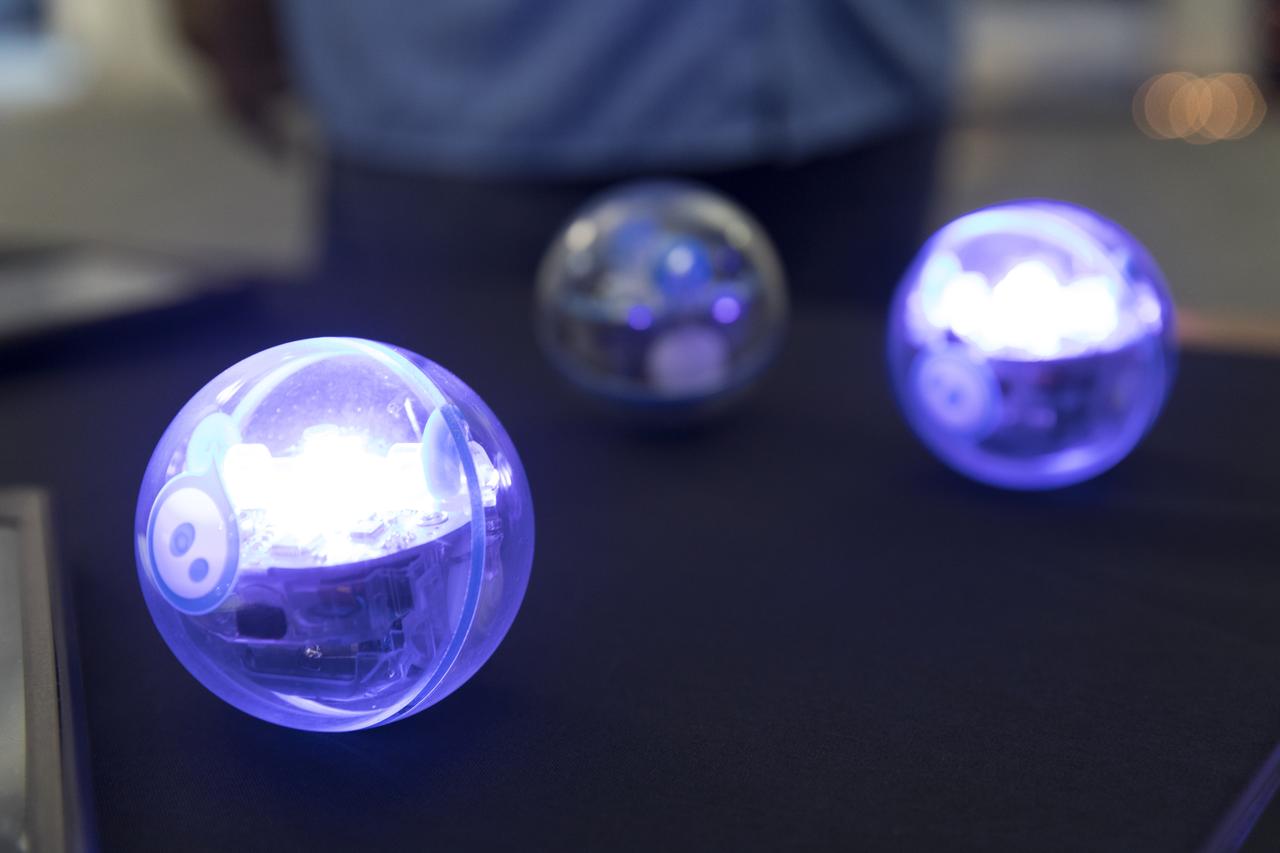
A trio of programmable off-the-shelf Sphero robots are shown at the Center for Space Education at NASA's Kennedy Space Center in Florida. The Spheros were available for students to practice their programming skills during "loss of signal" times when the connection to the International Space Station was temporarily unavailable. Teams from across the state of Florida were gathered at Kennedy for the finals of the Zero Robotics Middle School Summer Program national championship. The five-week program allows rising sixth- through ninth-graders to write programs for small satellites called SPHERES (Synchronized, Position, Hold, Engage, Reorient, Experimental Satellites). Finalists saw their code tested aboard the orbiting laboratory.
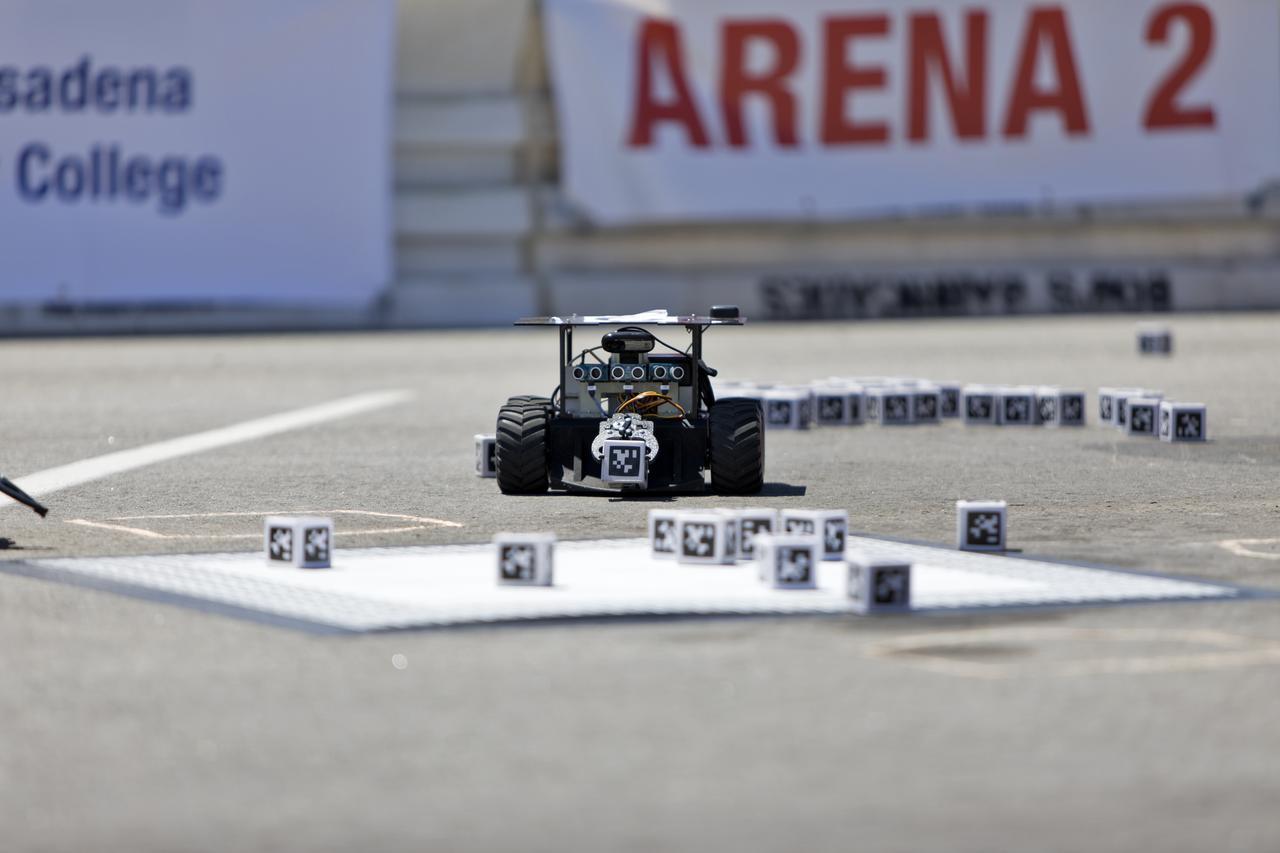
In the Swarmathon competition at the Kennedy Space Center Visitor Complex, students were asked to develop computer code for the small robots, programming them to look for "resources" in the form of AprilTag cubes, similar to barcodes. Teams developed search algorithms for the Swarmies to operate autonomously, communicating and interacting as a collective swarm similar to ants foraging for food. In the spaceport's third annual Swarmathon, 23 teams represented 24 minority serving universities and community colleges were invited to develop software code to operate these innovative robots known as "Swarmies" to help find resources when astronauts explore distant locations, such as the Moon or Mars.
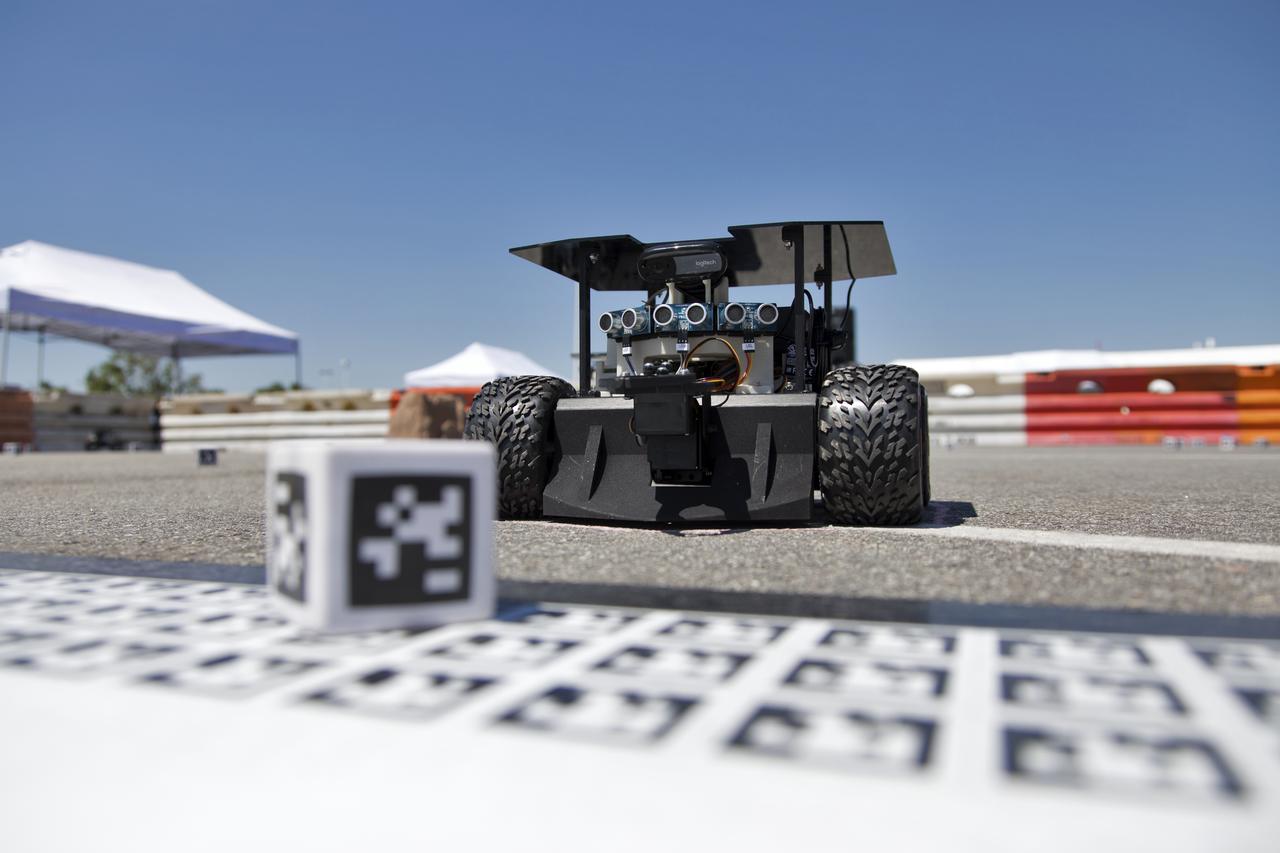
In the Swarmathon competition at the Kennedy Space Center Visitor Complex, students were asked to develop computer code for the small robots, programming them to look for "resources" in the form of AprilTag cubes, similar to barcodes. Teams developed search algorithms for the Swarmies to operate autonomously, communicating and interacting as a collective swarm similar to ants foraging for food. In the spaceport's third annual Swarmathon, 23 teams represented 24 minority serving universities and community colleges were invited to develop software code to operate these innovative robots known as "Swarmies" to help find resources when astronauts explore distant locations, such as the Moon or Mars.

Students from Montgomery College in Rockville in Maryland, follow the progress of their Swarmie robots during the Swarmathon competition at the Kennedy Space Center Visitor Complex. Students were asked to develop computer code for the small robots, programming them to look for "resources" in the form of AprilTag cubes, similar to barcodes. Teams developed search algorithms for the Swarmies to operate autonomously, communicating and interacting as a collective swarm similar to ants foraging for food. In the spaceport's third annual Swarmathon, 23 teams represented 24 minority serving universities and community colleges were invited to develop software code to operate these innovative robots known as "Swarmies" to help find resources when astronauts explore distant locations, such as the Moon or Mars.
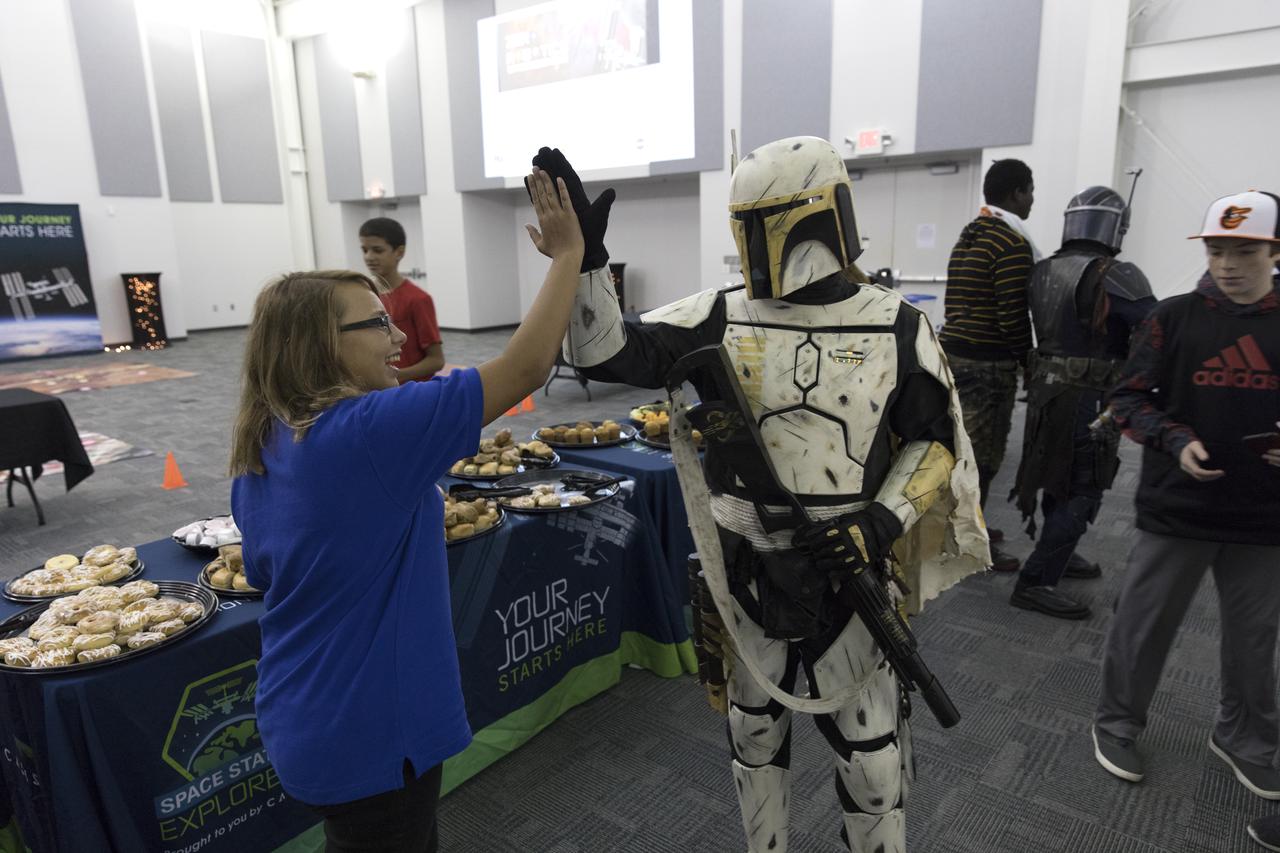
A middle-school student high-fives a Star Wars character from the 501st Legion in the Center for Space Education at NASA’s Kennedy Space Center in Florida. Teams from across the state of Florida were gathered at Kennedy for the finals of the Zero Robotics Middle School Summer Program national championship. The five-week program allows rising sixth- through ninth-graders to write programs for small satellites called SPHERES (Synchronized, Position, Hold, Engage, Reorient, Experimental Satellites). Finalists saw their code tested aboard the International Space Station.
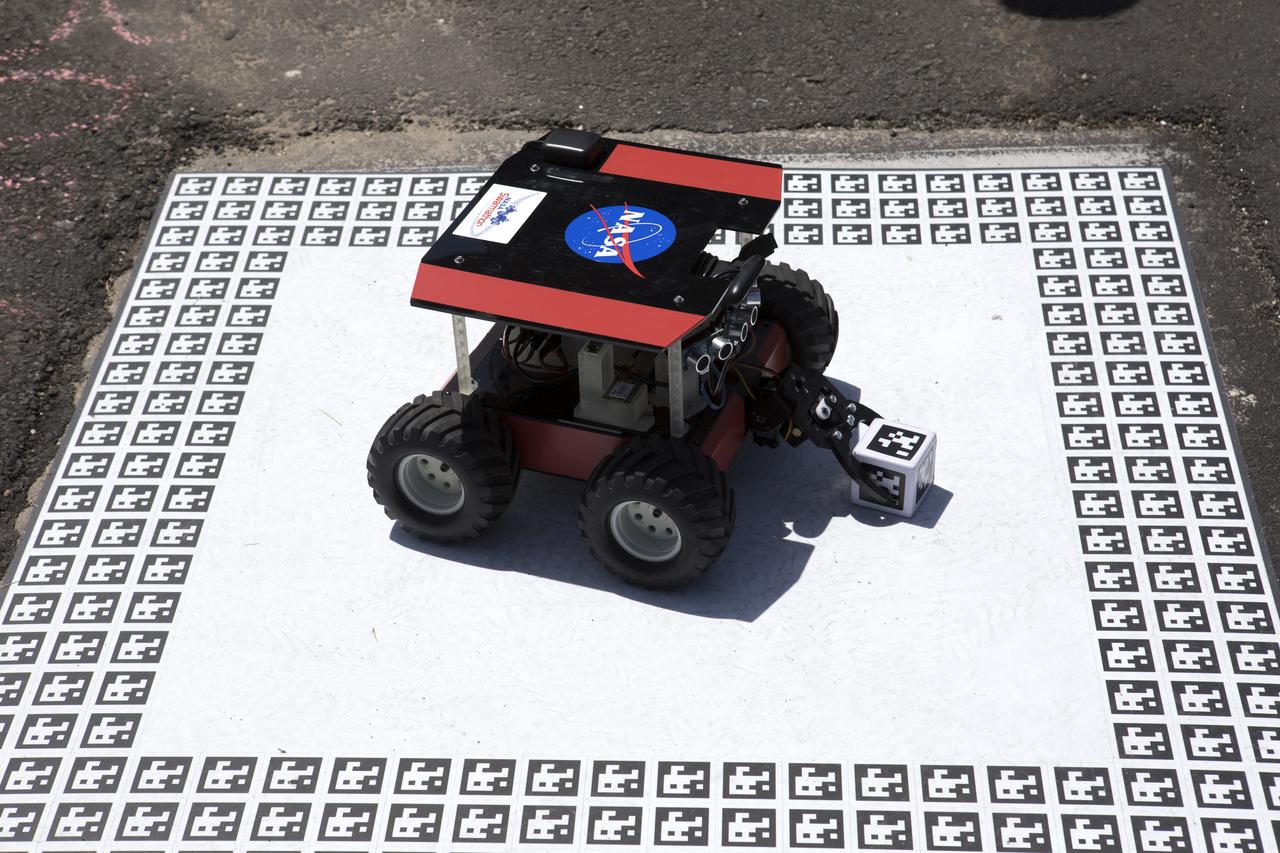
A cube identified with an AprilTag, similar to a barcode, is delivered to a "home" square in the middle of a competition arena during the Swarmathon competition. At the Kennedy Space Center Visitor Complex, student teams developed search algorithms for the Swarmies to operate autonomously, communicating and interacting as a collective swarm similar to ants foraging for food.
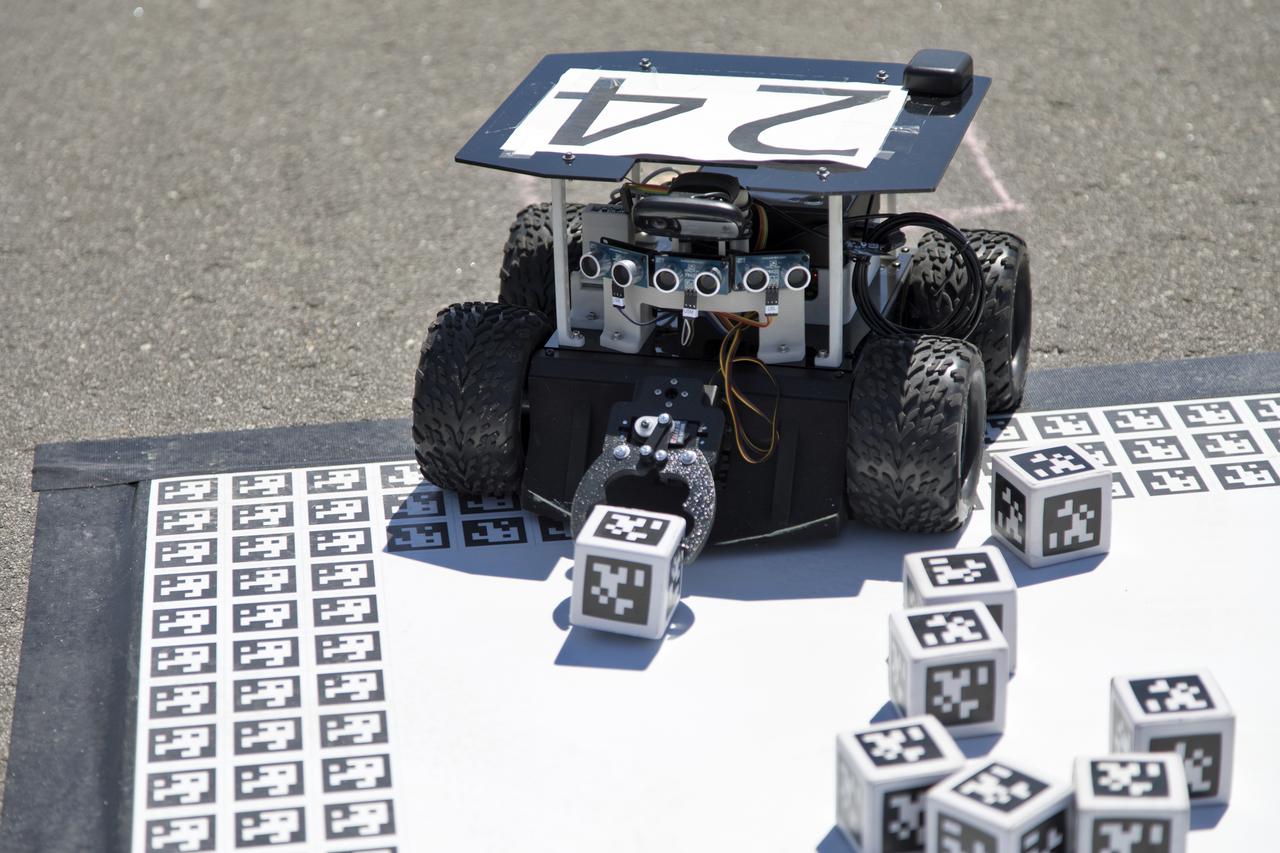
In the Swarmathon competition at the Kennedy Space Center Visitor Complex, students were asked to develop computer code for the small robots, programming them to look for "resources" in the form of AprilTag cubes, similar to barcodes. Teams developed search algorithms for the Swarmies to operate autonomously, communicating and interacting as a collective swarm similar to ants foraging for food. In the spaceport's third annual Swarmathon, 23 teams represented 24 minority serving universities and community colleges were invited to develop software code to operate these innovative robots known as "Swarmies" to help find resources when astronauts explore distant locations, such as the Moon or Mars.
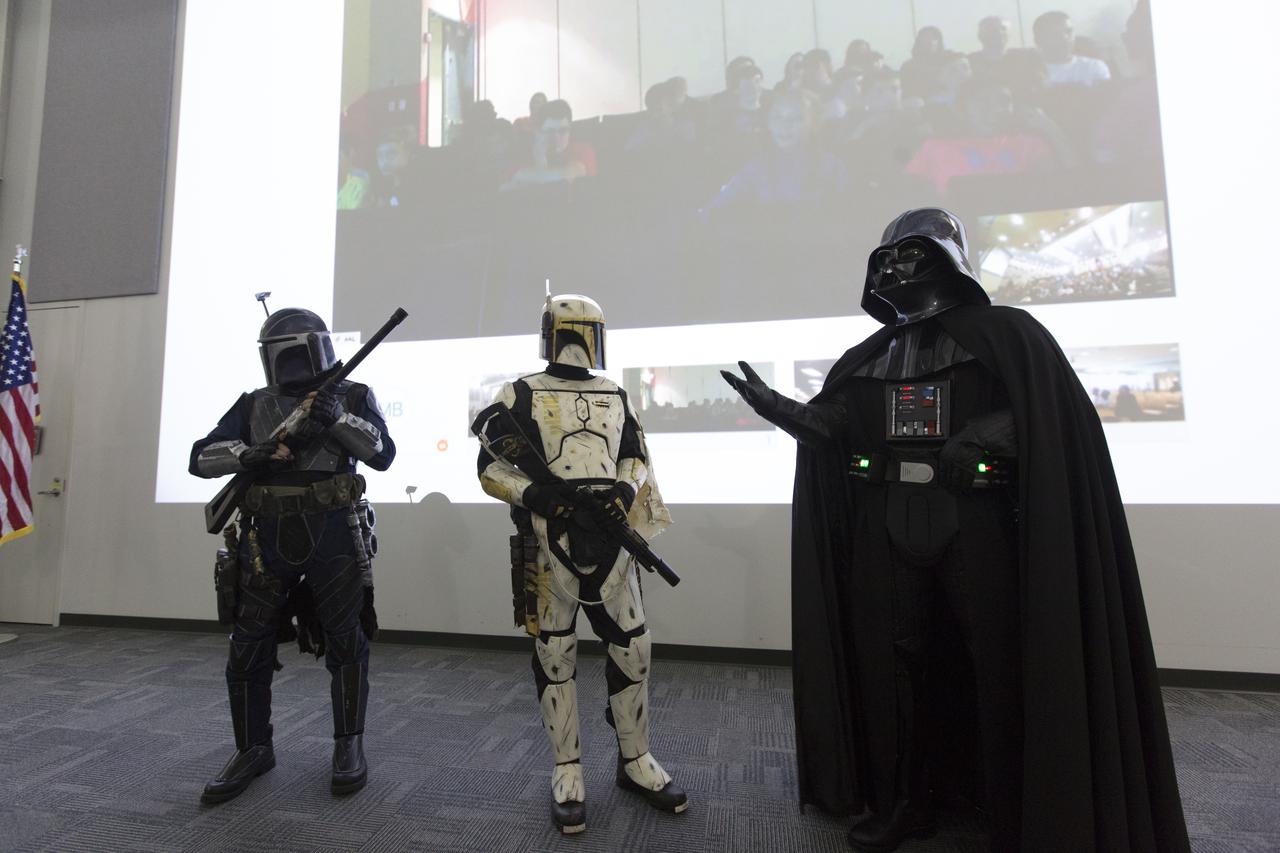
Darth Vader and other Star Wars characters from the 501st Legion address students and sponsors in the Center for Space Education at NASA’s Kennedy Space Center in Florida. Teams from across the state of Florida were gathered at Kennedy for the finals of the Zero Robotics Middle School Summer Program national championship. The five-week program allows rising sixth- through ninth-graders to write programs for small satellites called SPHERES (Synchronized, Position, Hold, Engage, Reorient, Experimental Satellites). Finalists saw their code tested aboard the International Space Station.
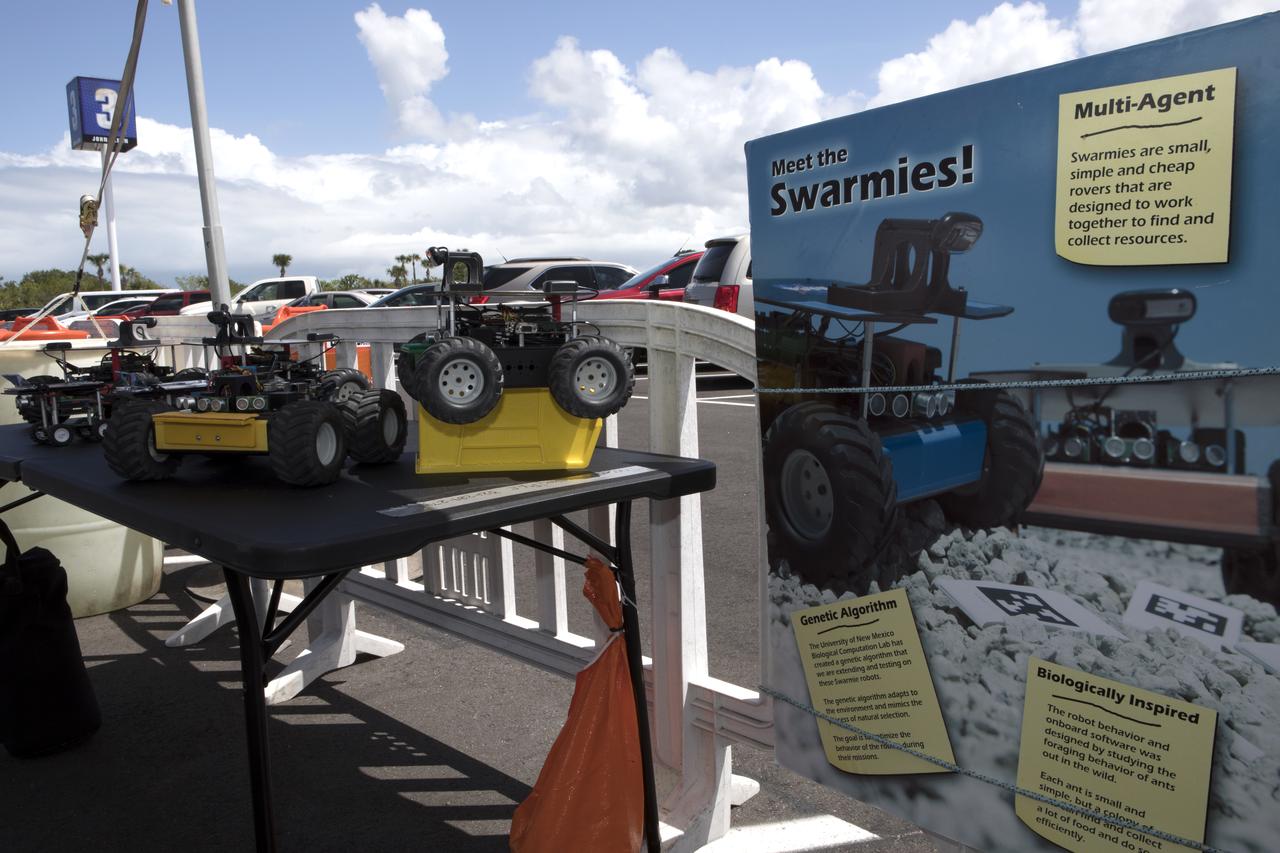
A display at the Kennedy Space Center Visitor Complex describes the purpose of Swarmies. Computer scientists are developing these robots focusing not so much on the hardware, but the software. In the spaceport's annual Swarmathon, students from 12 colleges and universities across the nation were invited to develop software code to operate Swarmies to help find resources when astronauts explore distant planets, such as Mars.
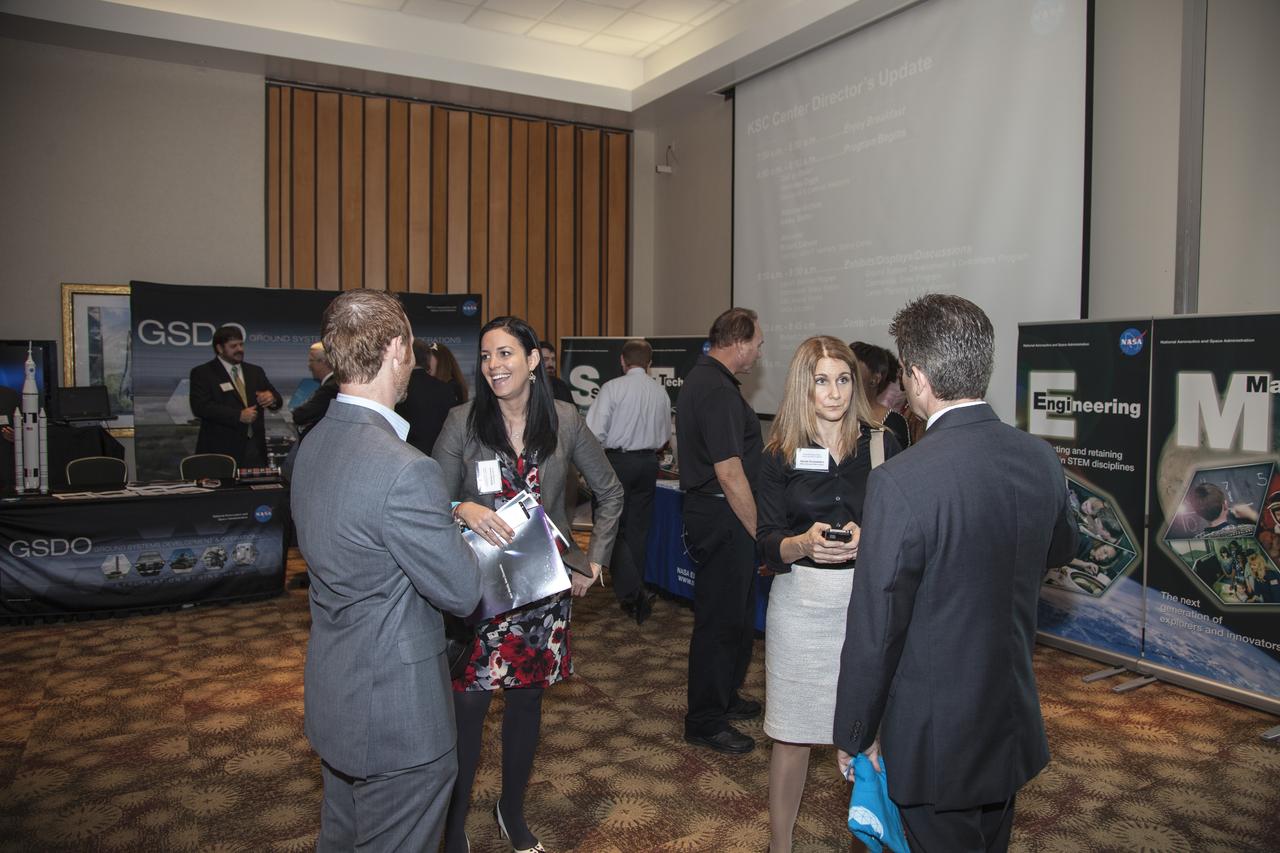
CAPE CANAVERAL, Fla. - Community leaders, business executives, educators, and state and local government leaders were updated on NASA Kennedy Space Center programs and accomplishments during Center Director Bob Cabana’s Center Director Update at the Debus Center at the Kennedy Space Center Visitor Complex in Florida. Attendees mingled and visited various displays, including Ground Systems Development and Operations Program and Education Office displays. Attendees talked with Cabana and other senior Kennedy managers and visited displays featuring updates on Kennedy programs and projects, including International Space Station, Commercial Crew, Ground System Development and Operations, Launch Services, Center Planning and Development, Technology, KSC Swamp Works and NASA Education. The morning concluded with a tour of the new Space Shuttle Atlantis exhibit at the visitor complex. For more information, visit http://www.nasa.gov/kennedy. Photo credit: NASA/Daniel Casper
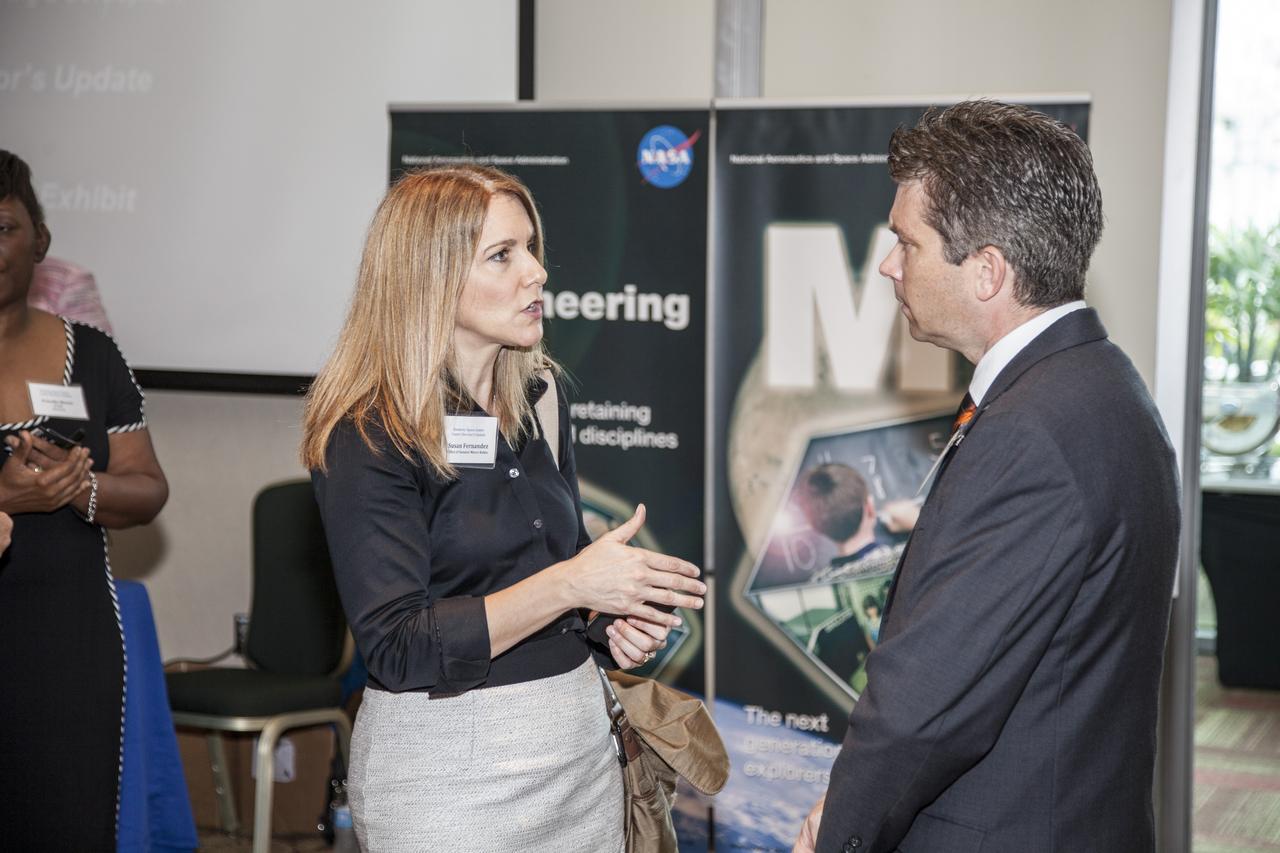
CAPE CANAVERAL, Fla. - Community leaders, business executives, educators, and state and local government leaders were updated on NASA Kennedy Space Center programs and accomplishments during Center Director Bob Cabana’s Center Director Update at the Debus Center at the Kennedy Space Center Visitor Complex in Florida. At left, Susan Fernandez from the Office of Senator Marco Rubio talks with another attendee near the Education display. Attendees talked with Cabana and other senior Kennedy managers and visited displays featuring updates on Kennedy programs and projects, including International Space Station, Commercial Crew, Ground System Development and Operations, Launch Services, Center Planning and Development, Technology, KSC Swamp Works and NASA Education. The morning concluded with a tour of the new Space Shuttle Atlantis exhibit at the visitor complex. For more information, visit http://www.nasa.gov/kennedy. Photo credit: NASA/Daniel Casper
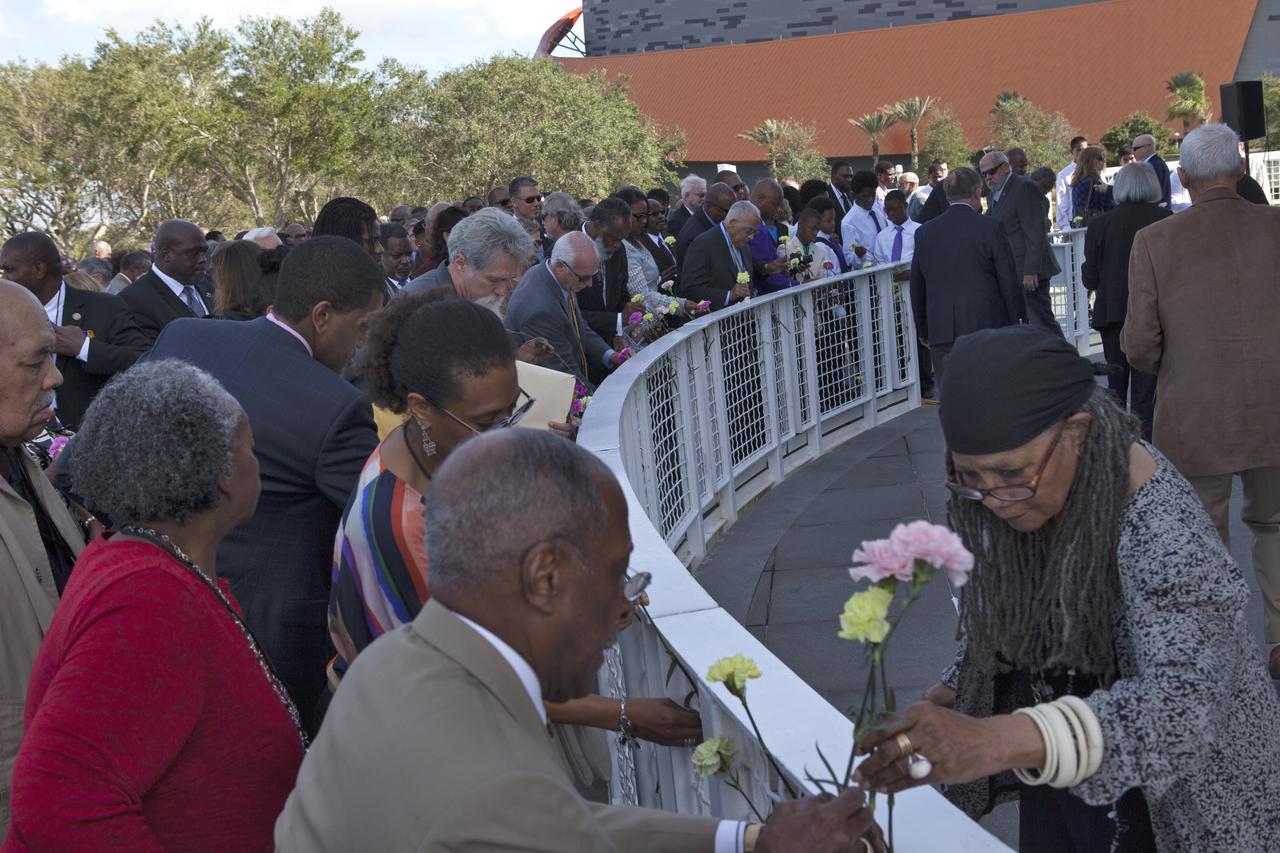
Following an Astronauts Memorial Foundation tribute honoring U.S. Air Foce Maj. Robert Lawrence, guests place flowers at the Space Mirror Memorial at the Kennedy Space Center Visitor Complex. Selected in 1967 for the Manned Orbiting Laboratory Program, Lawrence was the first African-American astronaut. He lost his life in a training accident 50 years ago. The ceremony took place in the Center for Space Education at the Kennedy Space Center Visitor Complex.
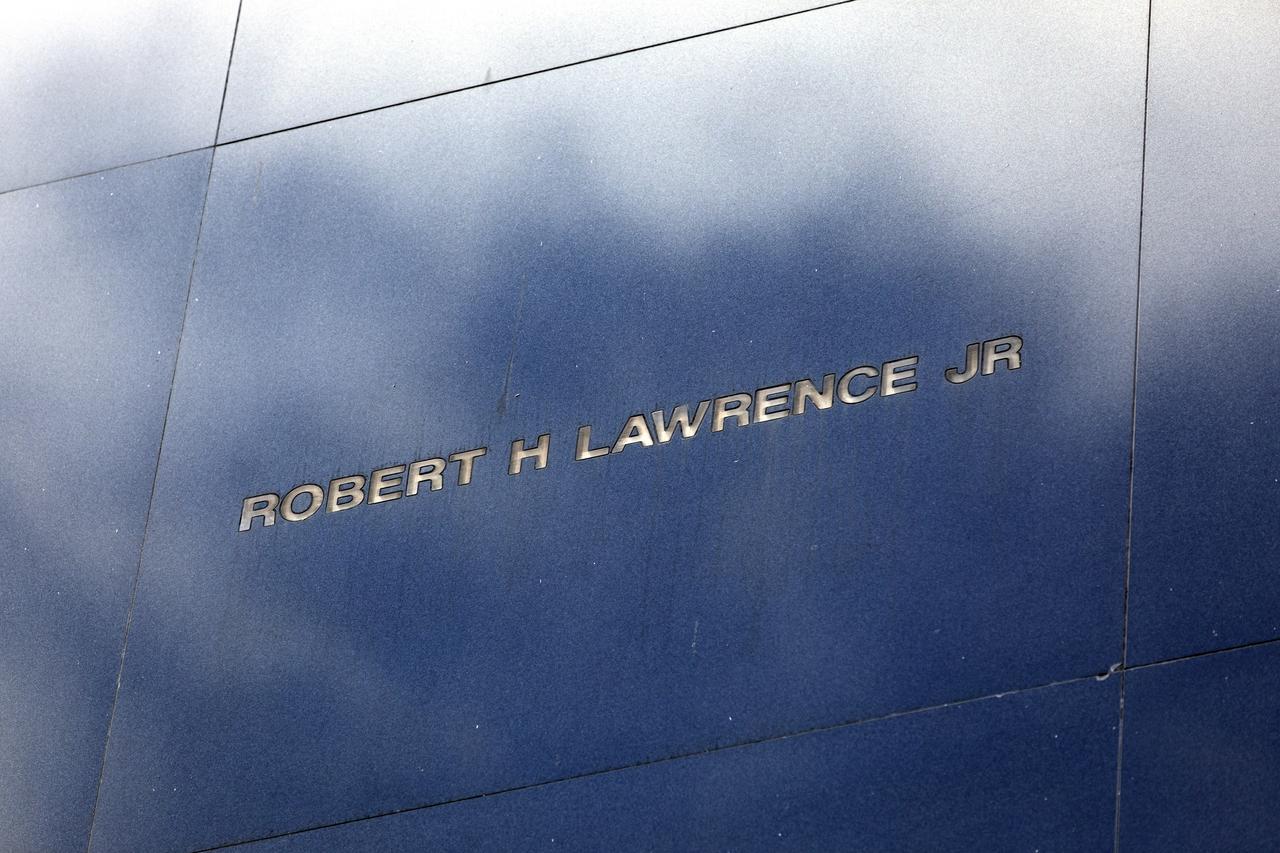
At the Kennedy Space Center's Visitor Complex, the name of U.S. Air Foce Maj. Robert Lawrence is one of those included on the Space Mirror Memorial which honors those lost in efforts to explore space. Selected in 1967 for the Manned Orbiting Laboratory Program, Lawrence was the first African-American astronaut. He lost his life in a training accident 50 years ago. The ceremony took place in the Center for Space Education at the Kennedy visitor complex.
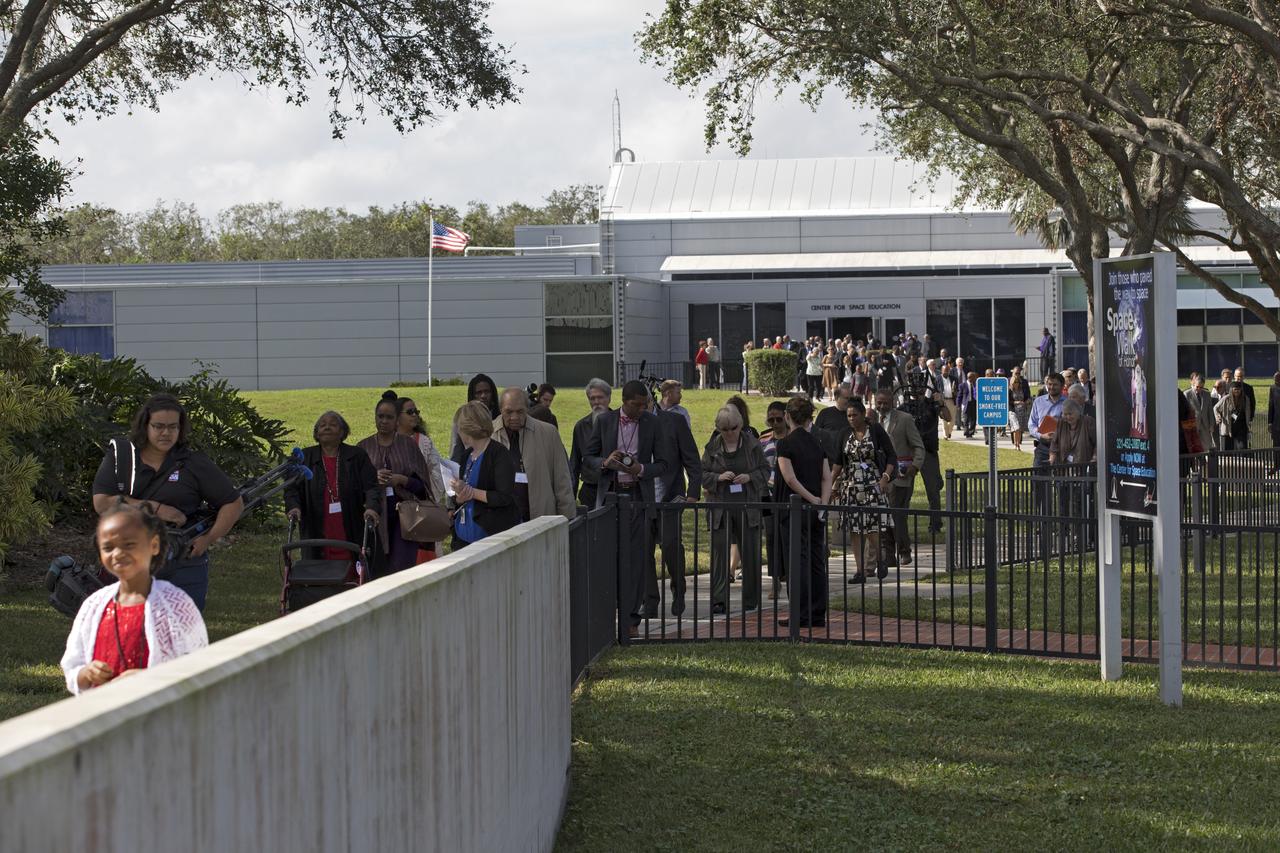
During an Astronauts Memorial Foundation tribute honoring U.S. Air Foce Maj. Robert Lawrence, guests walk to the Space Mirror Memorial at the Kennedy Space Center's Visitor Complex. Selected in 1967 for the Manned Orbiting Laboratory Program, Lawrence was the first African-American astronaut. He lost his life in a training accident 50 years ago. The ceremony took place in the Center for Space Education at the Kennedy visitor complex.
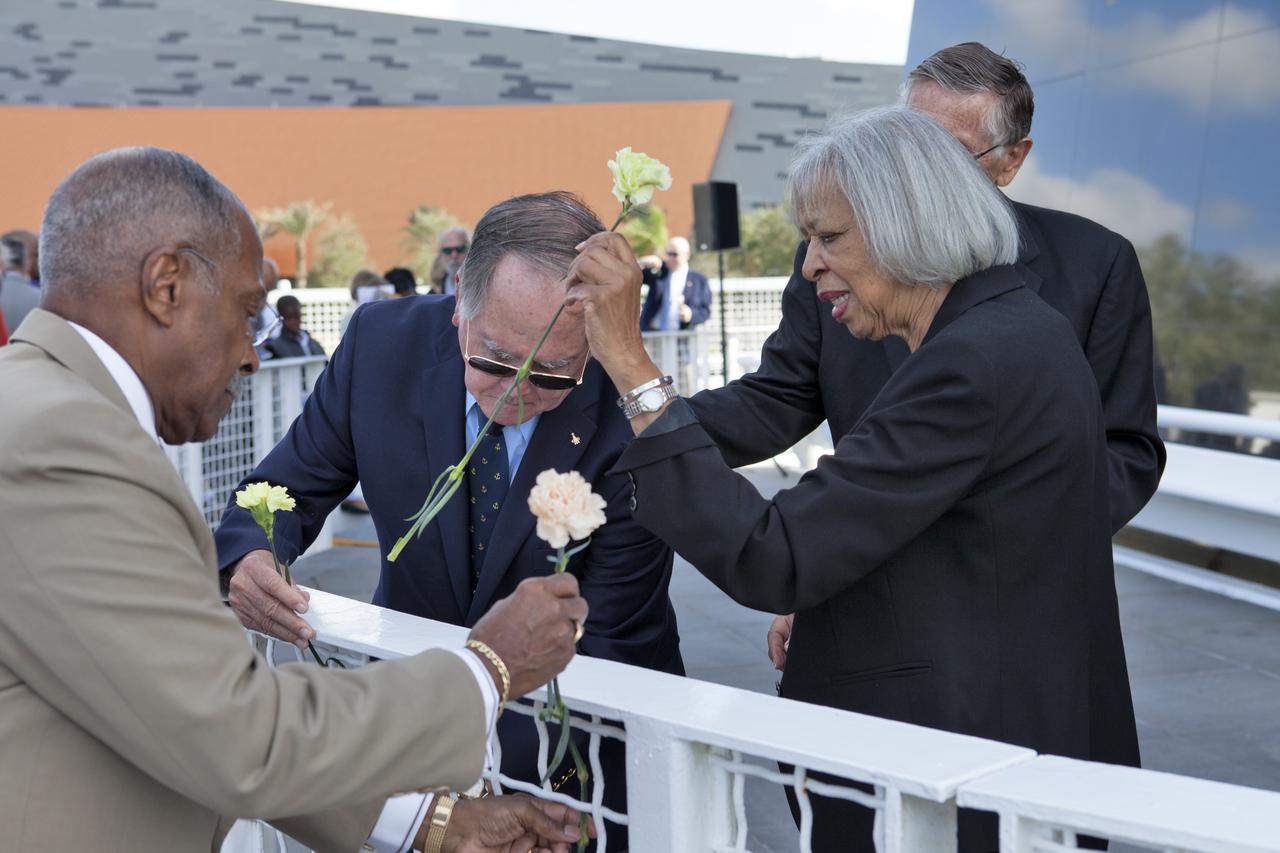
During an Astronauts Memorial Foundation tribute honoring U.S. Air Foce Maj. Robert Lawrence, his sister, Barbara Lawrence, Ph.D., far right, places a flower at the Space Mirror Memorial at the Kennedy Space Center Visitor Complex. Selected in 1967 for the Manned Orbiting Laboratory Program, Lawrence was the first African-American astronaut. He lost his life in a training accident 50 years ago. The ceremony took place in the Center for Space Education at the Kennedy Space Center Visitor Complex.

CAPE CANAVERAL, Fla. – Inside the Educator Resource Center at NASA’s Kennedy Space Center Visitor Complex in Florida, science teacher April Lanotte displays materials used for the Museum in a Box activities for K-12 students. Lanotte, who is an Albert Einstein Distinguished Educator Fellow working in NASA’s Aeronautics Research Mission Directorate, was at Kennedy to train education specialists and Kennedy Educate to Innovate program volunteers in the new series of lessons and activities. The Museum in a Box is a program designed to teach physical science through aeronautics using hands-on activities and experiments. Photo credit: NASA_Jim Grossmann

CAPE CANAVERAL, Fla. – Inside the Educator Resource Center at NASA’s Kennedy Space Center Visitor Complex in Florida, science teacher April Lanotte displays the Museum in a Box that contains activities and learning materials for K-12 students. Lanotte, who is an Albert Einstein Distinguished Educator Fellow working in NASA’s Aeronautics Research Mission Directorate, was at Kennedy to train education specialists and Kennedy Educate to Innovate program volunteers in the new series of lessons and activities. The Museum in a Box is a program designed to teach physical science through aeronautics using hands-on activities and experiments. Photo credit: NASA_Jim Grossmann
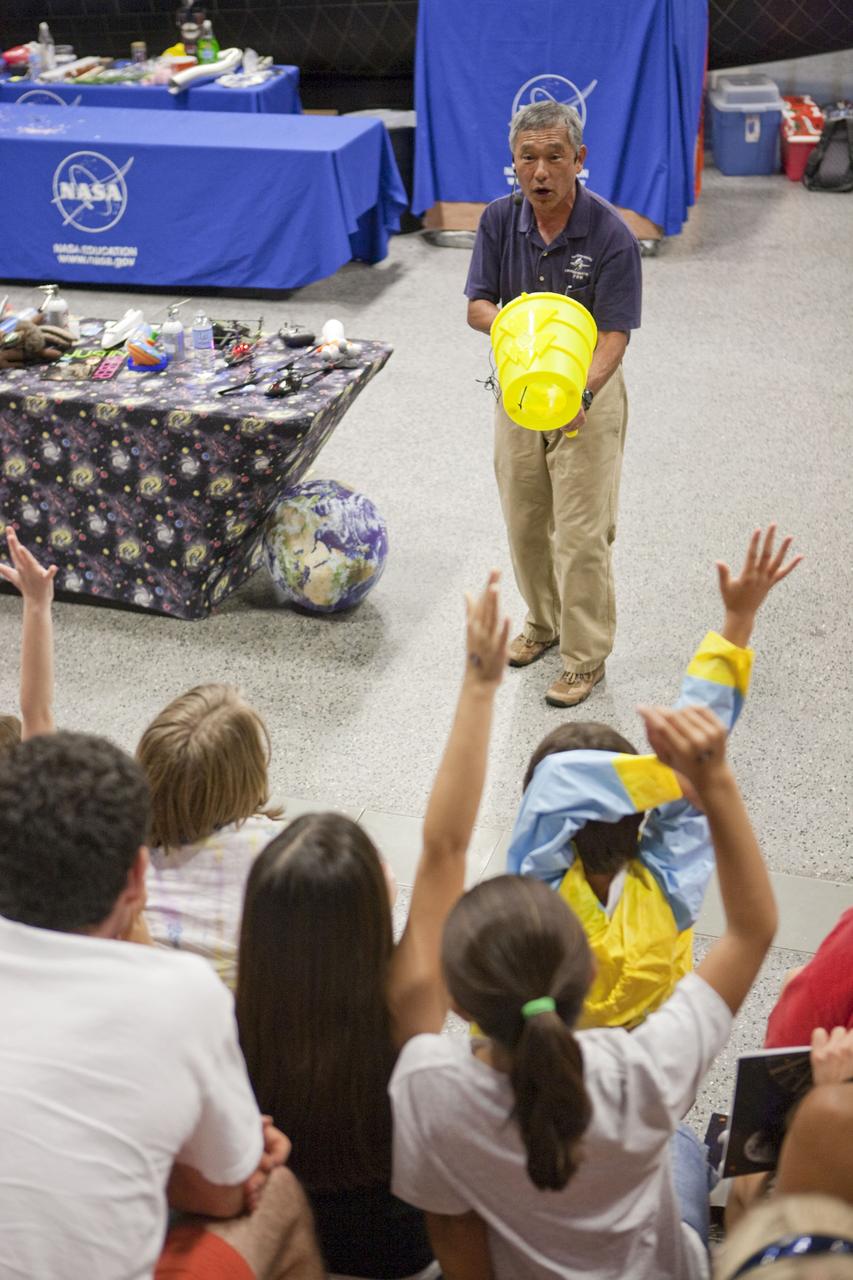
CAPE CANAVERAL, Fla. – An education specialist engages children in an educational activity during Kennedy Space Center’s Family Night, Sept. 10, at the U.S. Astronaut Hall of Fame in Florida. NASA and the Kennedy Space Center Visitor Complex hosted the annual NASA family education night. The event, for fifth- through eighth-grade students and their parents, focuses on science, technology, engineering and mathematics (STEM) education activities that included astronaut appearances, a hovercraft, vortex cannon and alternative fuel vehicles. The back-to-school event is part of NASA’s Summer of Innovation initiative to provide interactive learning experiences to middle school students nationwide. Photo credit: NASA/Amanda Diller

CAPE CANAVERAL, Fla. – Inside the Educator Resource Center at NASA’s Kennedy Space Center Visitor Complex in Florida, science teacher April Lanotte demonstrates one of the Museum in a Box experiments designed for K-12 students. Lanotte, who is an Albert Einstein Distinguished Educator Fellow working in NASA’s Aeronautics Research Mission Directorate, was at Kennedy to train education specialists and Kennedy Educate to Innovate program volunteers in the new series of lessons and activities. The Museum in a Box is a program designed to teach physical science through aeronautics using hands-on activities and experiments. Photo credit: NASA_Jim Grossmann
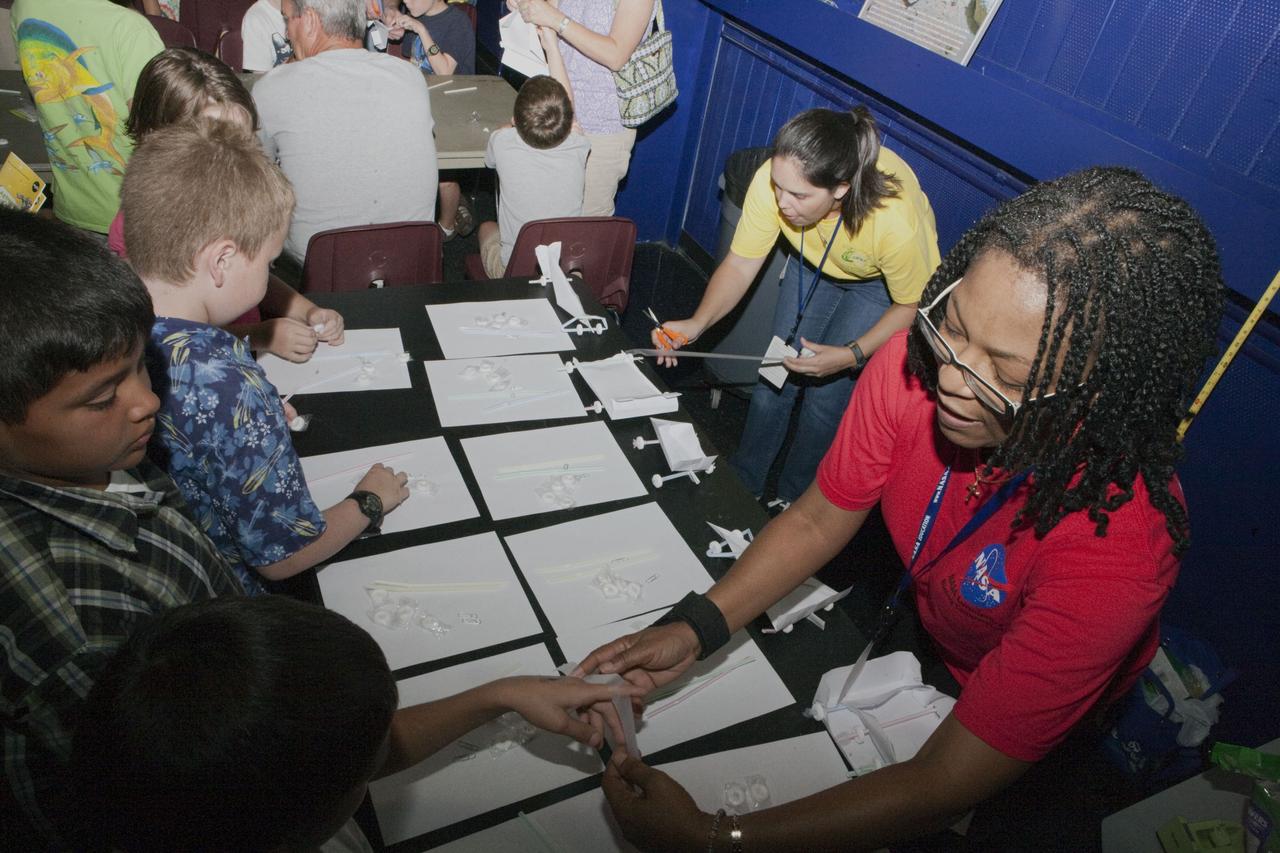
CAPE CANAVERAL, Fla. – Education specialists help children participation in educational activities during Family Night, Sept. 10, at Kennedy Space Center’s U.S. Astronaut Hall of Fame in Florida. NASA and the Kennedy Space Center Visitor Complex hosted the annual NASA family education night. The event, for fifth- through eighth-grade students and their parents, focuses on science, technology, engineering and mathematics (STEM) education activities that included astronaut appearances, a hovercraft, vortex cannon and alternative fuel vehicles. The back-to-school event is part of NASA’s Summer of Innovation initiative to provide interactive learning experiences to middle school students nationwide. Photo credit: NASA/Amanda Diller
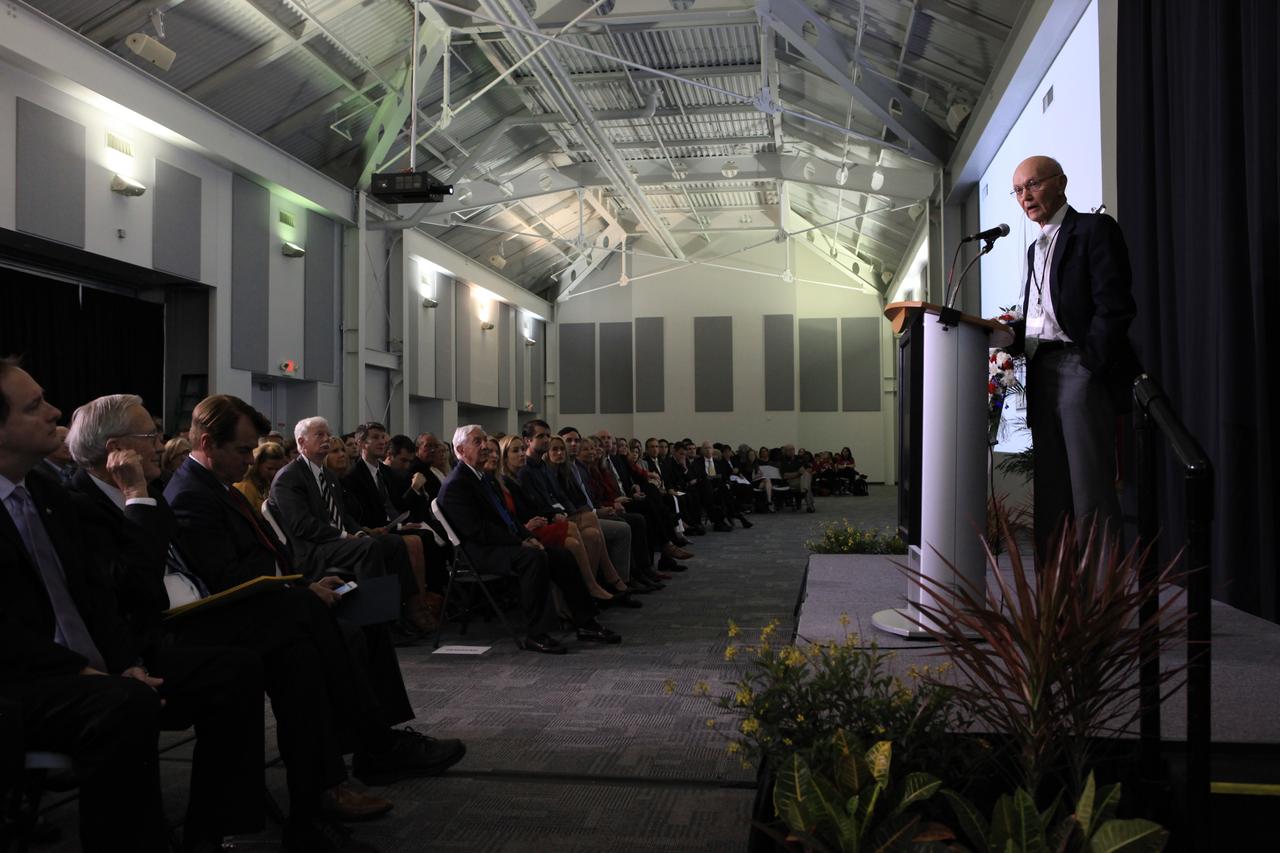
Astronaut Michael Collins addresses guests at Kennedy Space Center's Day of Remembrance ceremony. Held this year in the Center for Space Education at the Kennedy Space Center Visitor Complex in Florida, the annual event honors the contributions of all astronauts who lost their lives in the quest for space exploration.
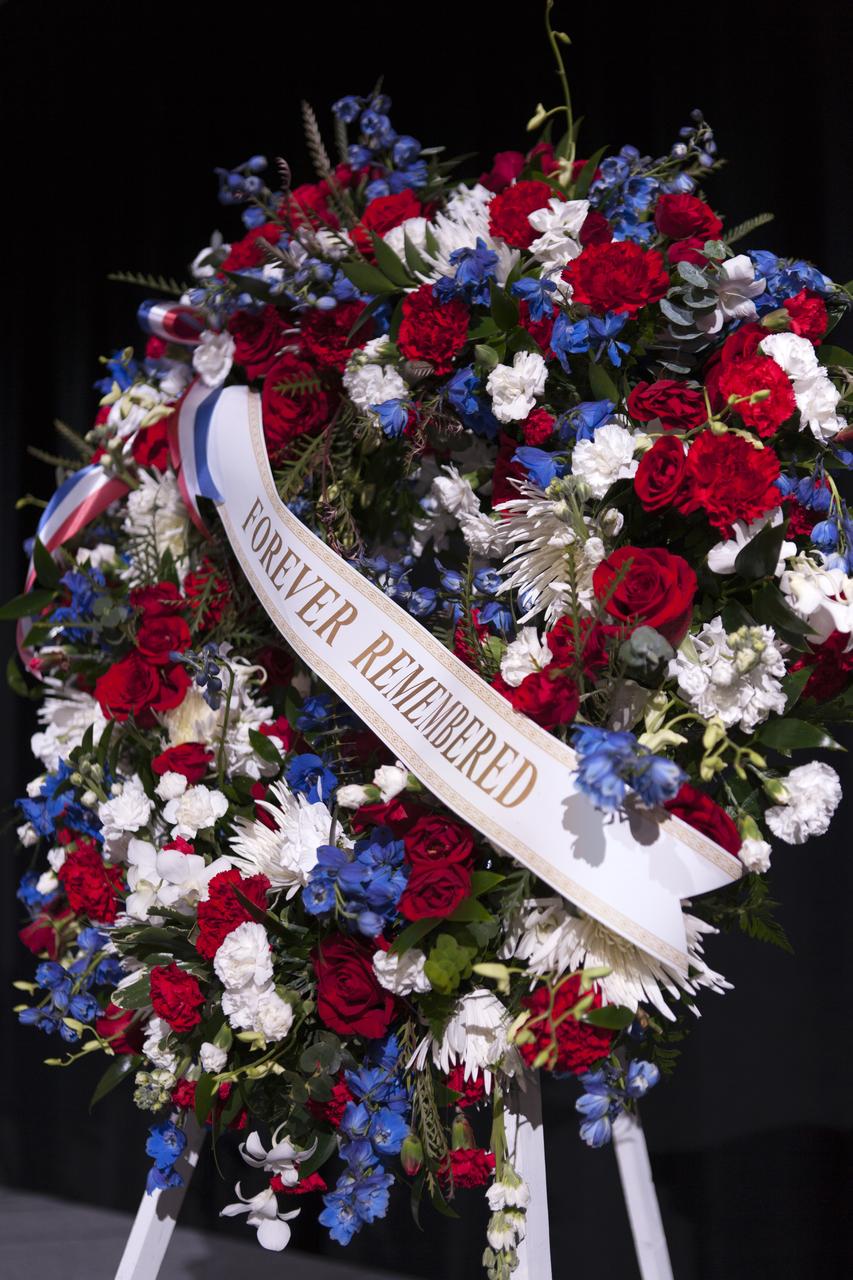
A memorial wreath stands in the Center for Space Education during this year's Day of Remembrance ceremony at the Kennedy Space Center Visitor Complex. Each year spaceport employees and guests join others throughout NASA honoring the contributions of astronauts who have perished in the conquest of space.
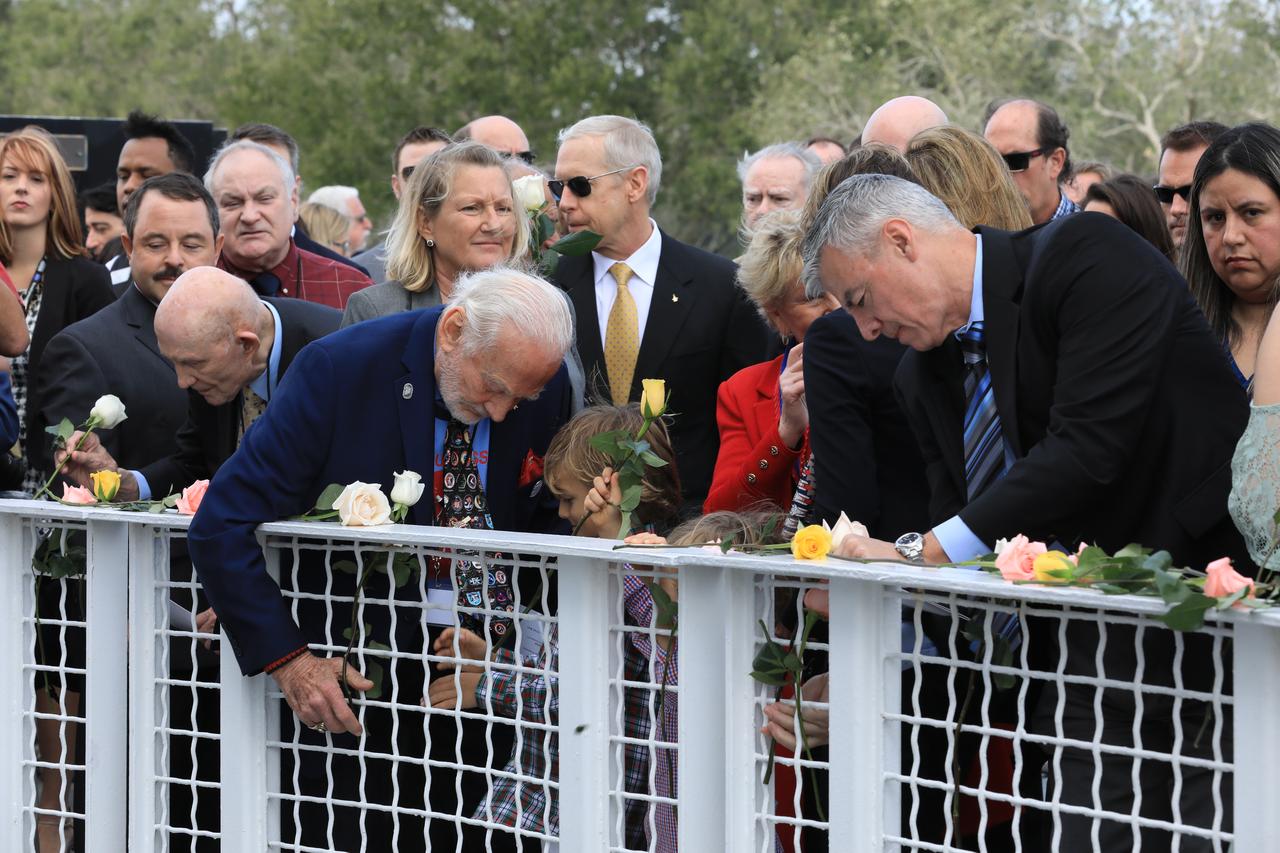
Following Kennedy Space Center's Day of Remembrance ceremony in the Center for Space Education at the Kennedy visitor complex, guests including astronauts Tom Stafford, left, and Buzz Aldrin, center, gathered to place flowers at the Space Mirror Memorial. Many of those in attendance were family members of the fallen astronauts.
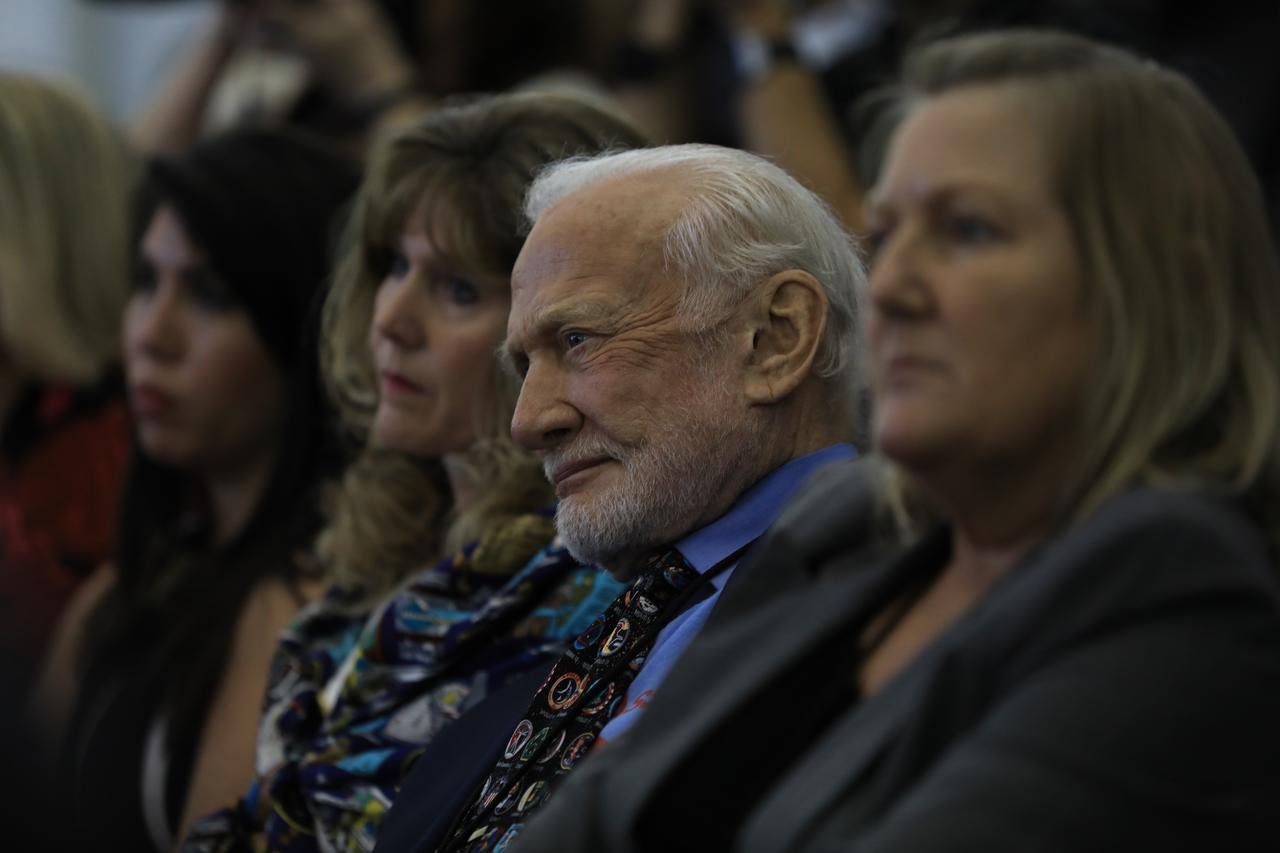
Astronaut Buzz Aldrin listens to remarks during Kennedy Space Center's Day of Remembrance ceremony. Held this year in the Center for Space Education at the Kennedy Space Center Visitor Complex in Florida, the annual event honors the contributions of all astronauts who lost their lives in the quest for space exploration.
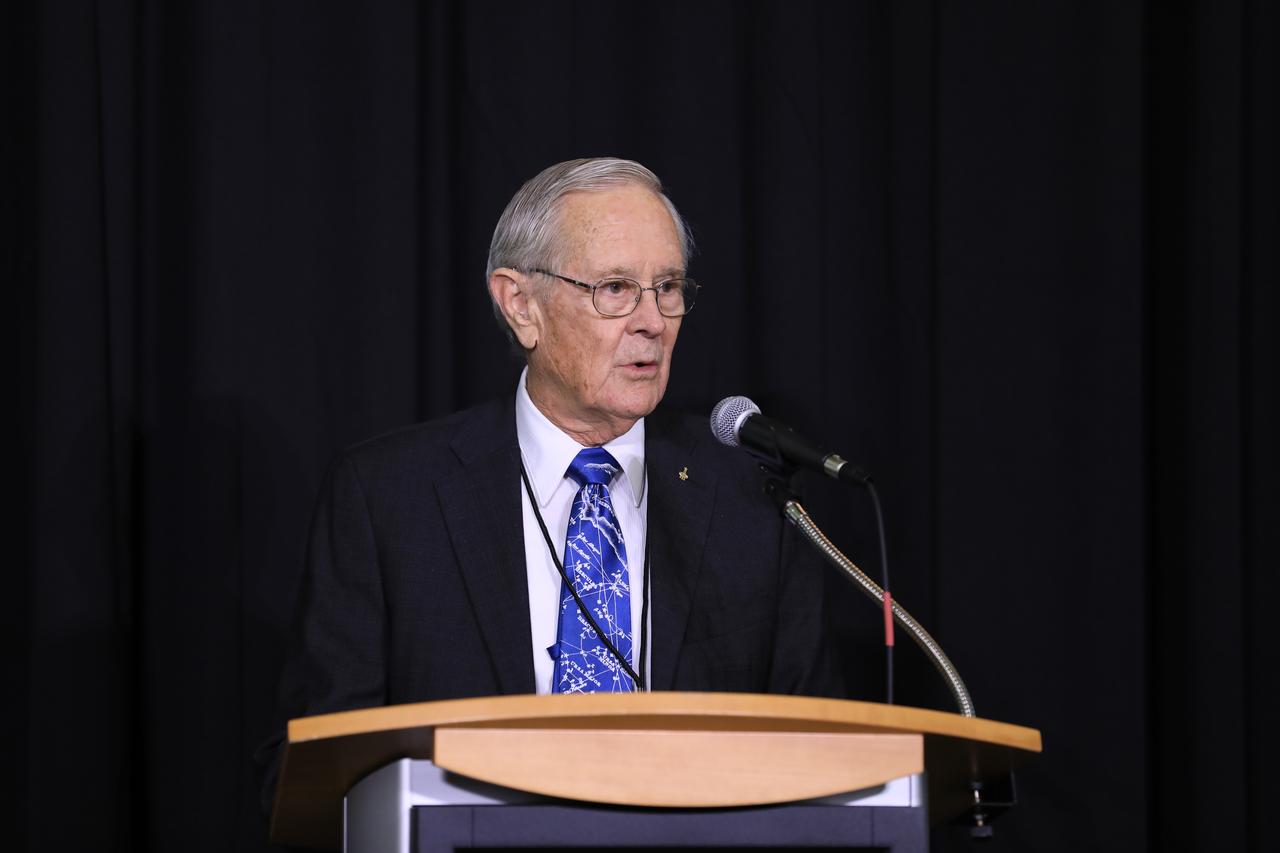
Astronaut Charlie Duke addresses guests at Kennedy Space Center's Day of Remembrance ceremony. Held this year in the Center for Space Education at the Kennedy Space Center Visitor Complex in Florida, the annual event honors the contributions of all astronauts who lost their lives in the quest for space exploration.
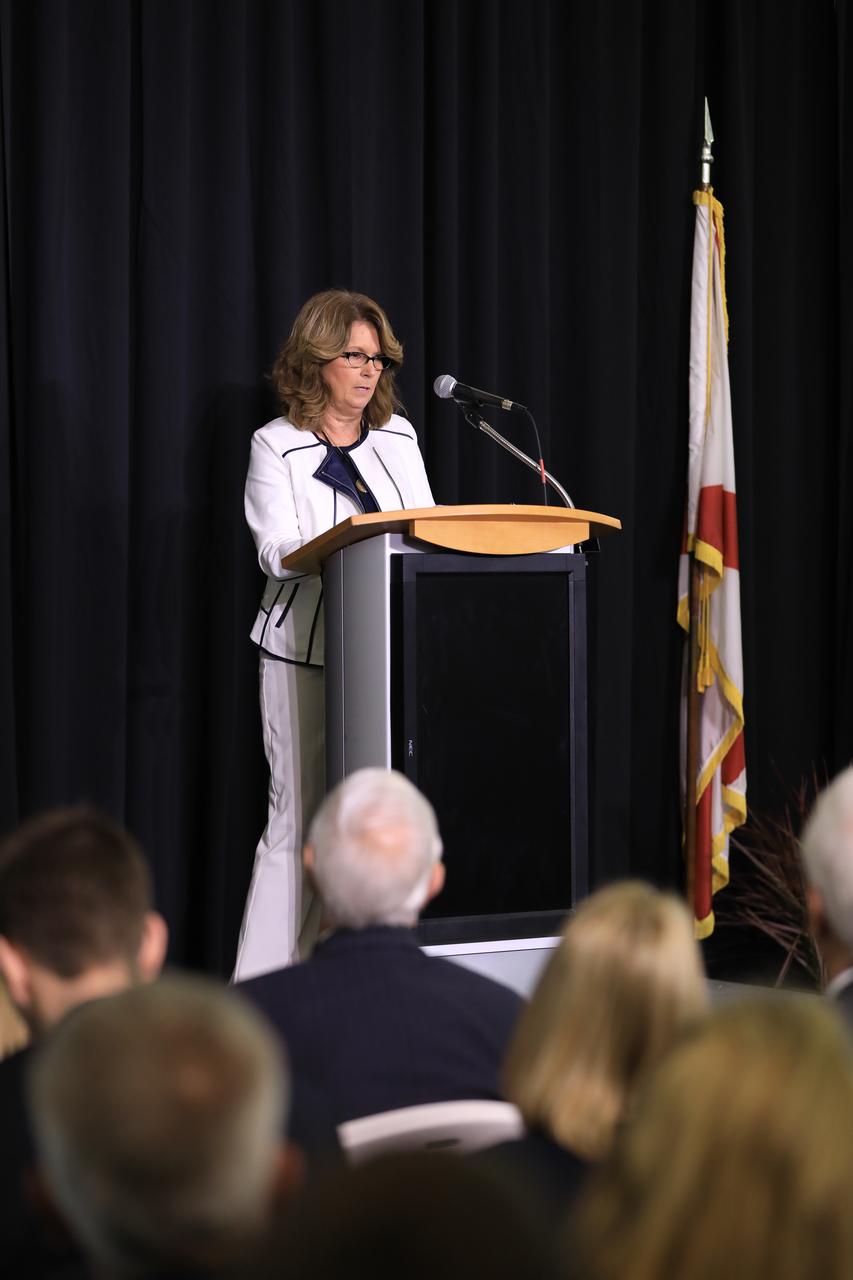
Sheryl Chaffee, daughter of Apollo 1 astronaut Roger Chaffee, addresses guests at Kennedy Space Center's Day of Remembrance ceremony. Held this year in the Center for Space Education at the Kennedy Space Center Visitor Complex in Florida, the annual event honors the contributions of all astronauts who lost their lives in the quest for space exploration.
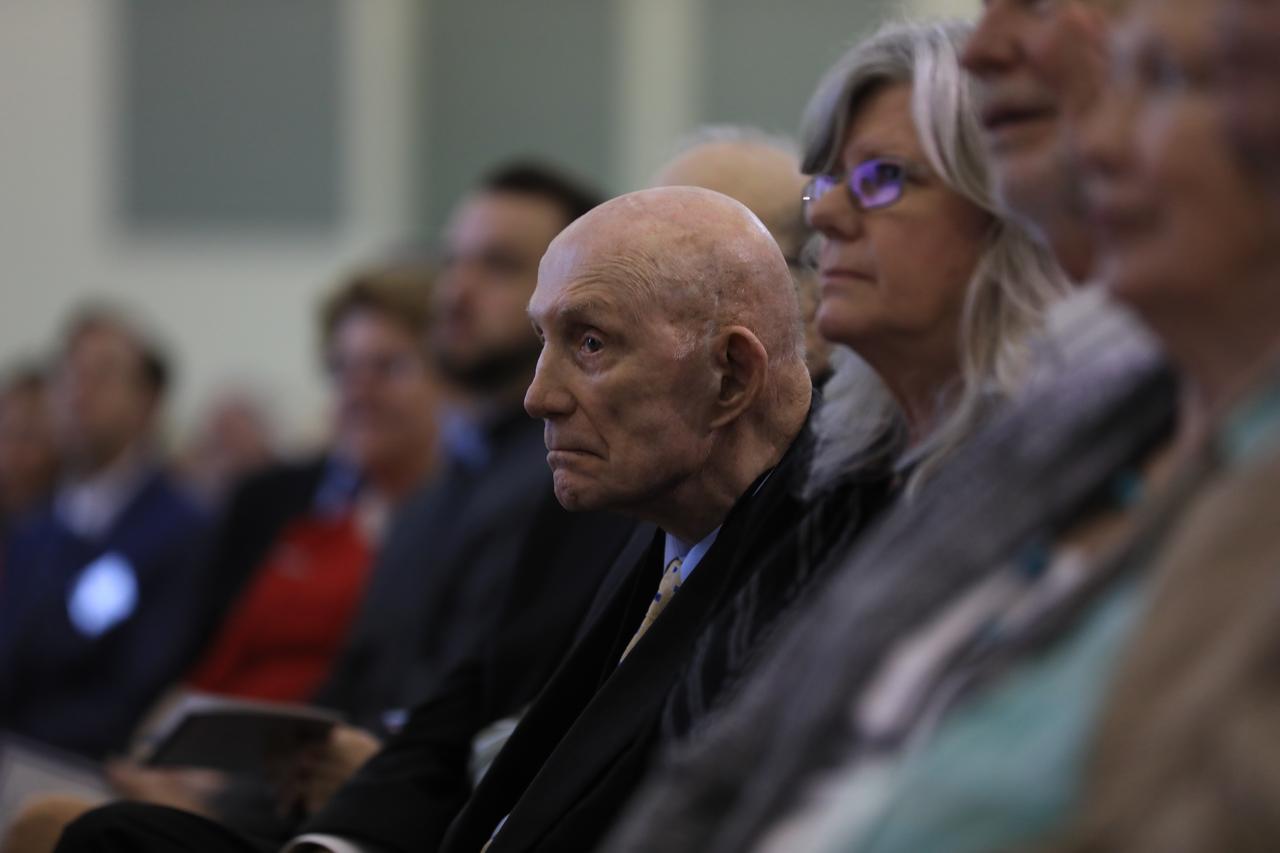
Astronaut Tom Stafford listens to remarks during Kennedy Space Center's Day of Remembrance ceremony. Held this year in the Center for Space Education at the Kennedy Space Center Visitor Complex in Florida, the annual event honors the contributions of all astronauts who lost their lives in the quest for space exploration.
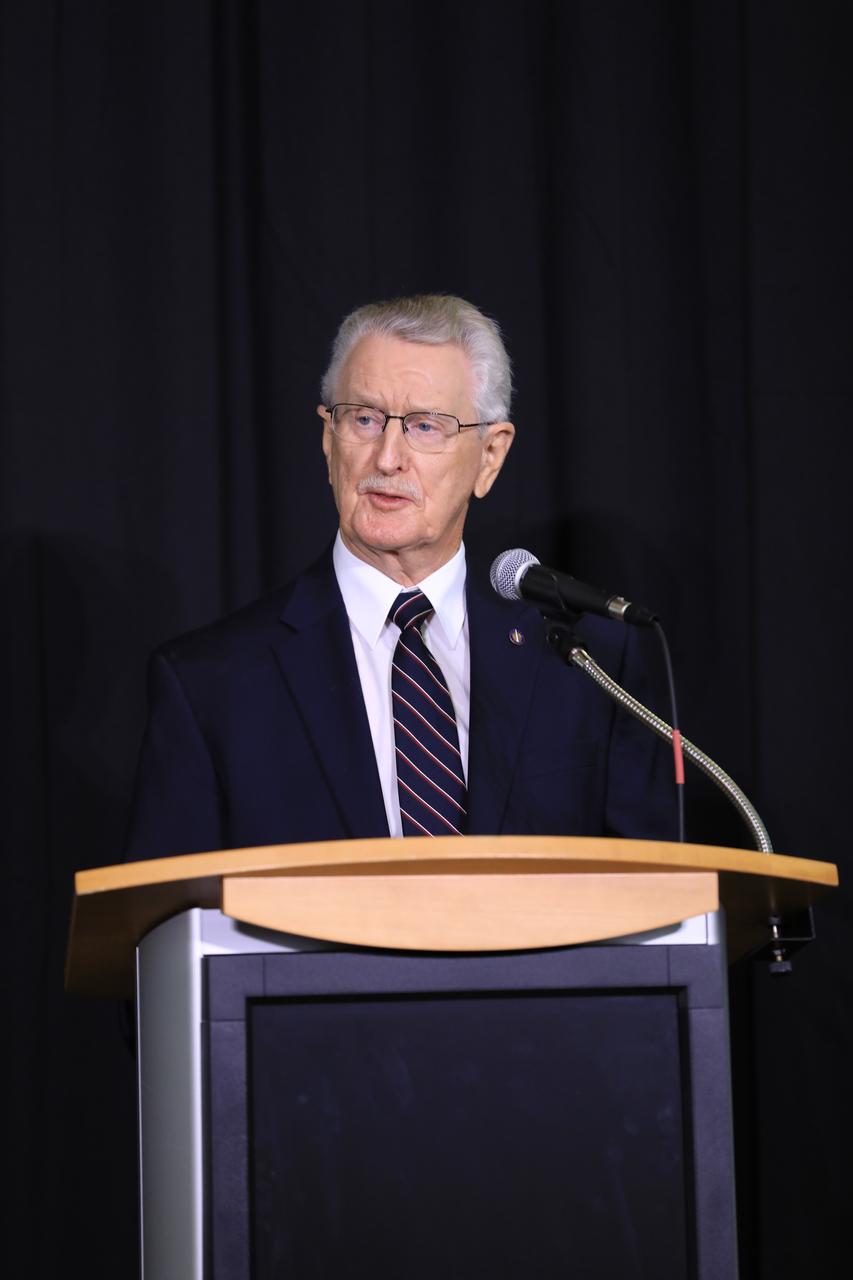
Apollo launch team member John Tribe addresses guests at Kennedy Space Center's Day of Remembrance ceremony. Held this year in the Center for Space Education at the Kennedy Space Center Visitor Complex in Florida, the annual event honors the contributions of all astronauts who lost their lives in the quest for space exploration.
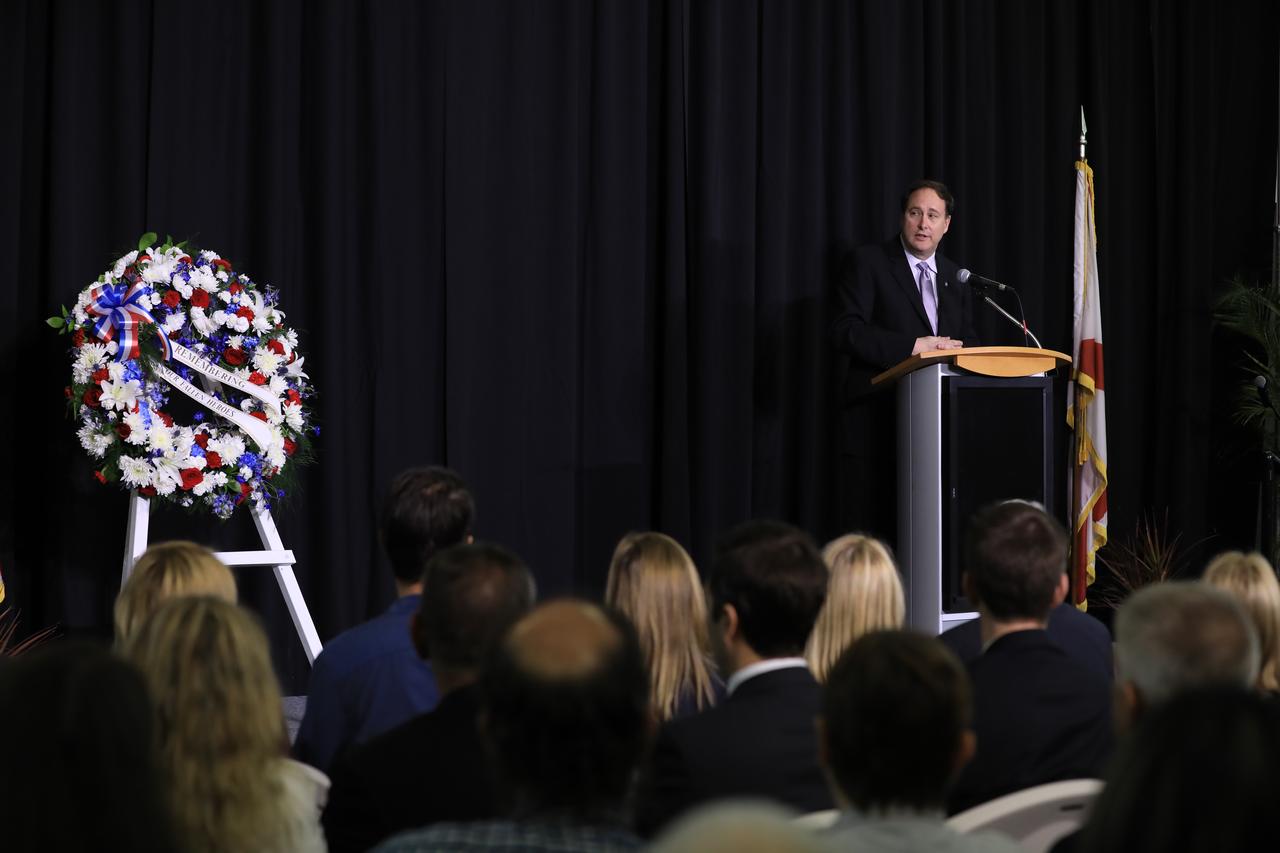
NASA Acting Administrator Robert Lightfoot addresses guests at Kennedy Space Center's Day of Remembrance ceremony. Held this year in the Center for Space Education at the Kennedy Space Center Visitor Complex in Florida, the annual event honors the contributions of all astronauts who lost their lives in the quest for space exploration.
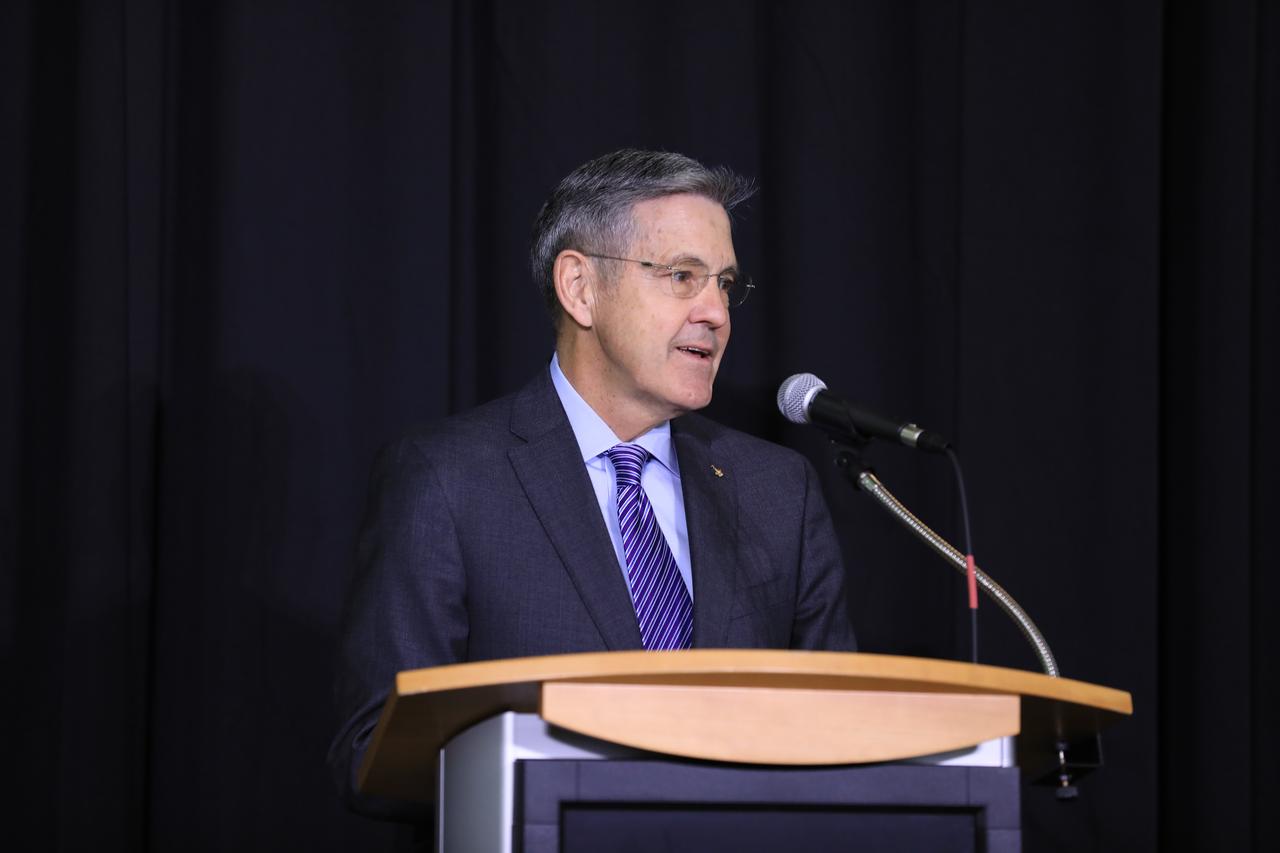
Kennedy Space Center Director Bob Cabana addresses guests at Kennedy Space Center's Day of Remembrance ceremony. Held this year in the Center for Space Education at the Kennedy Space Center Visitor Complex in Florida, the annual event honors the contributions of all astronauts who lost their lives in the quest for space exploration.

This Shuttle/Gantry mockup and Post Show Dome anchor the northeast corner of the Kennedy Space Center Visitor Complex. The Astronaut Memorial is located just above. Sprawling across 70 acres on Florida's Space Coast, the complex is located off State Road 405, NASA Parkway, six miles inside the Space Center entrance. The building at the upper left is the Theater Complex. Other exhibits and buildings on the site are the Center for Space Education, Cafeteria, Space Flight Exhibit Building, Souvenir Sales Building, Spaceport Central, Ticket Pavilion and Center for Space Education
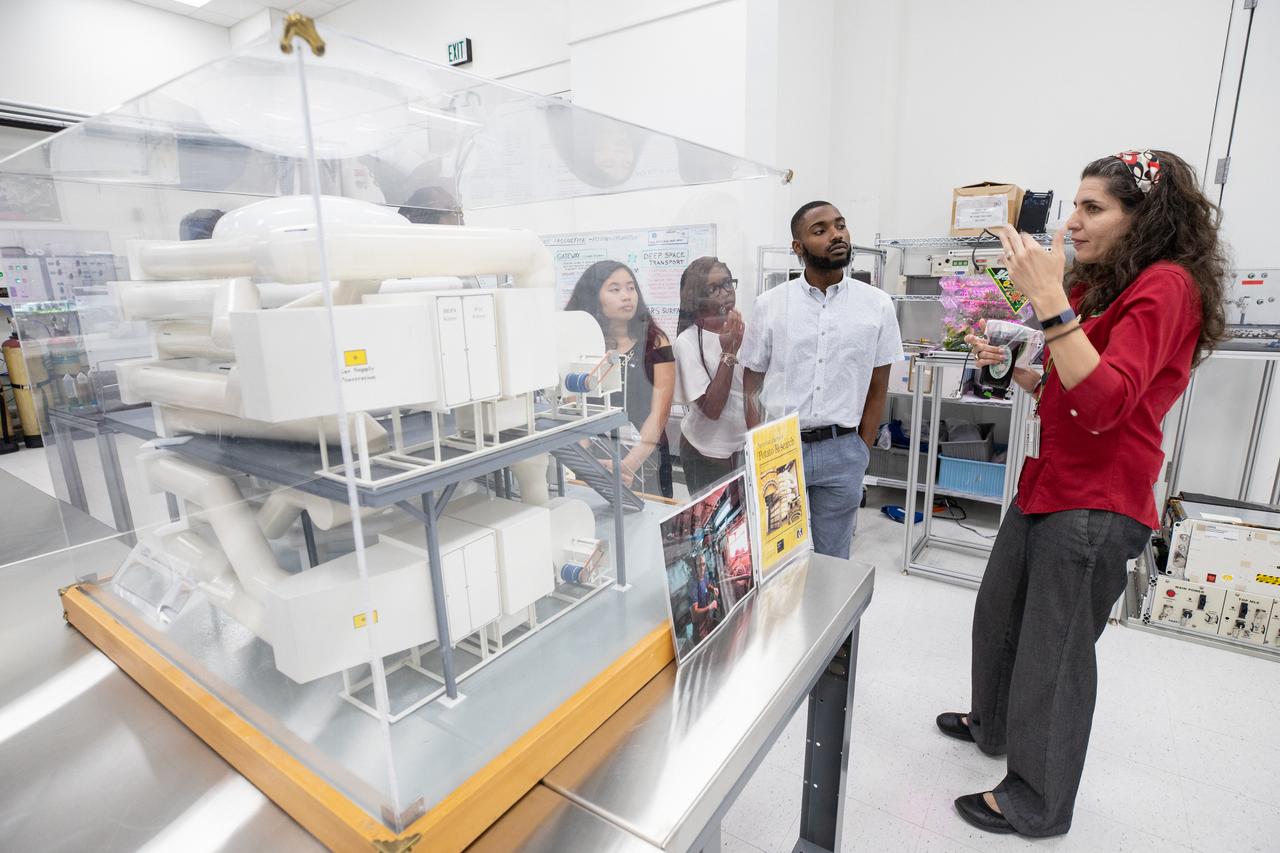
Dr. Gioia Massa, NASA Veggie project lead, addresses Langston University students inside a Space Station Processing Facility lab at Kennedy Space Center on Sept. 18, 2019. The tour of the Florida spaceport was organized by NASA’s Office of Education and Byron Quinn, Ph.D., Langston University director of the Science Research Institute. Students visited SwampWorks, the Neil Armstrong Operations and Checkout Building, the Vehicle Assembly Building, the visitor complex and the Center for Space Education.
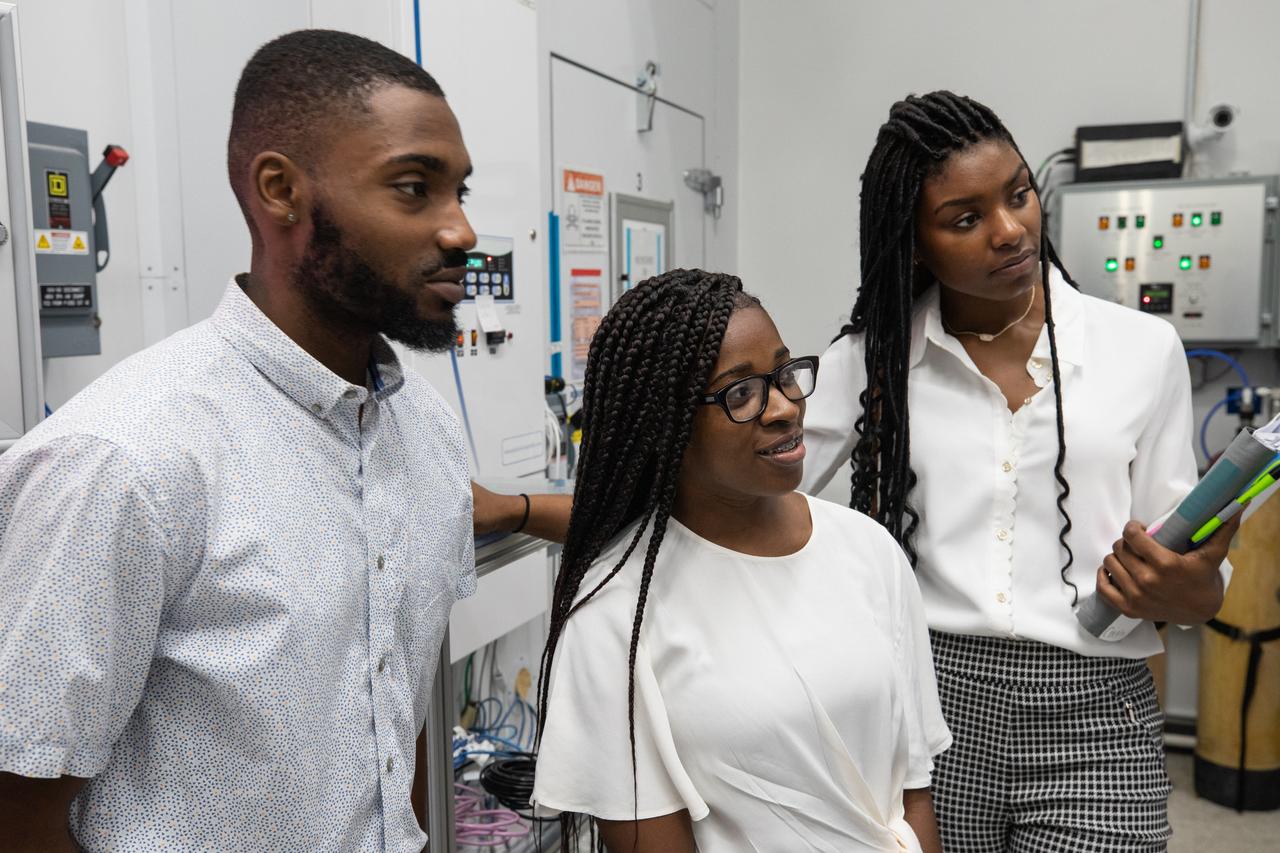
Langston University students, from left, Sherman Cravens, Makyah Farris and Courtney Miller listen to a presentation inside a Space Station Processing Facility lab at Kennedy Space Center on Sept. 18, 2019. The students were part of a tour of the Florida spaceport organized by NASA’s Office of Education and Byron Quinn, Ph.D., Langston University director of the Science Research Institute. The visit included stops at SwampWorks, the Neil Armstrong Operations and Checkout Building, the Vehicle Assembly Building, the visitor complex and the Center for Space Education.
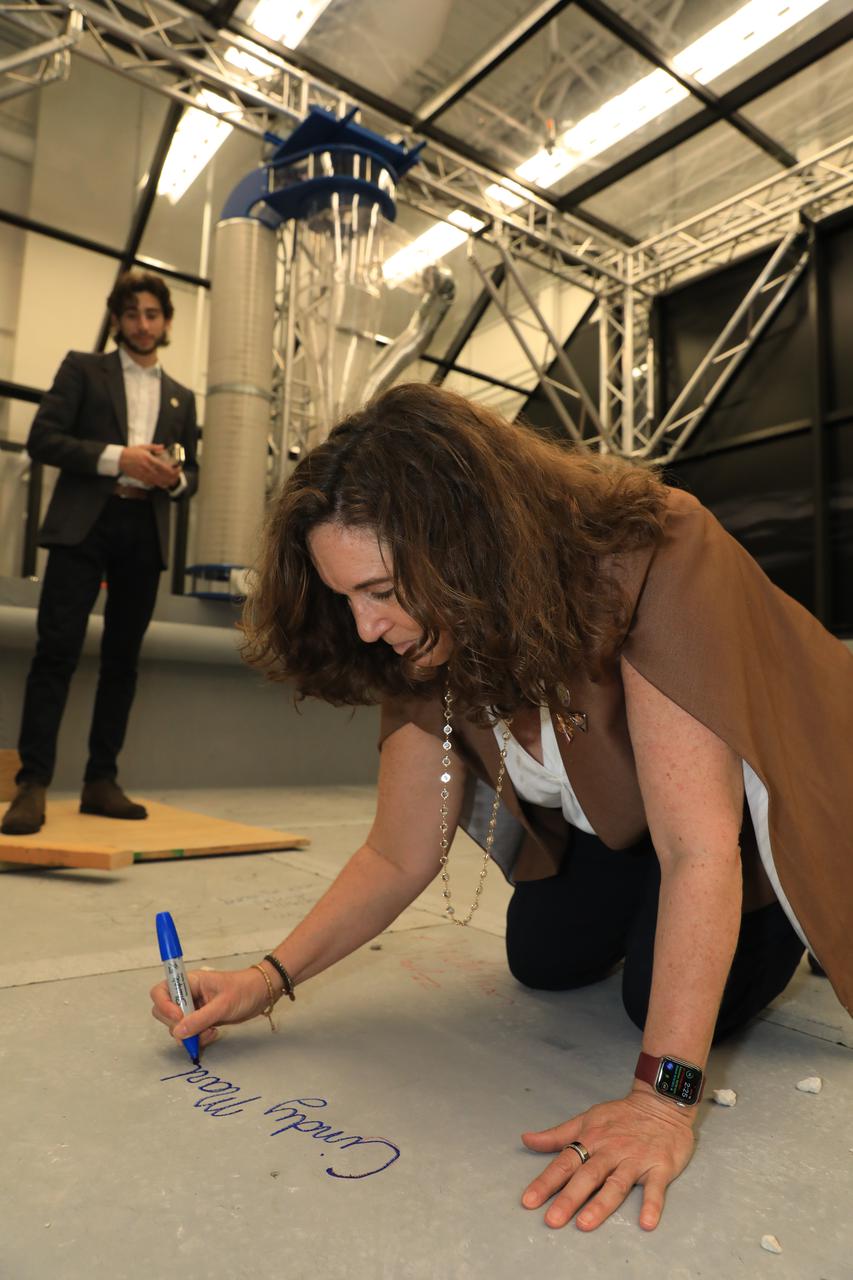
U.S. Dept. of Education Deputy Secretary Cindy Marten signs the floor of the Lunabotics arena at the Center for Space Education at NASA’s Kennedy Space Center Visitor Complex in Florida on March 16, 2022. The LUNABOTICS competition is an engineering exercise that challenges college students to develop a lunar excavator as part of NASA’s Artemis student challenges. Marten was at Kennedy Space Center to address NASA’s national partners and guests during the one-day Artemis Summit.
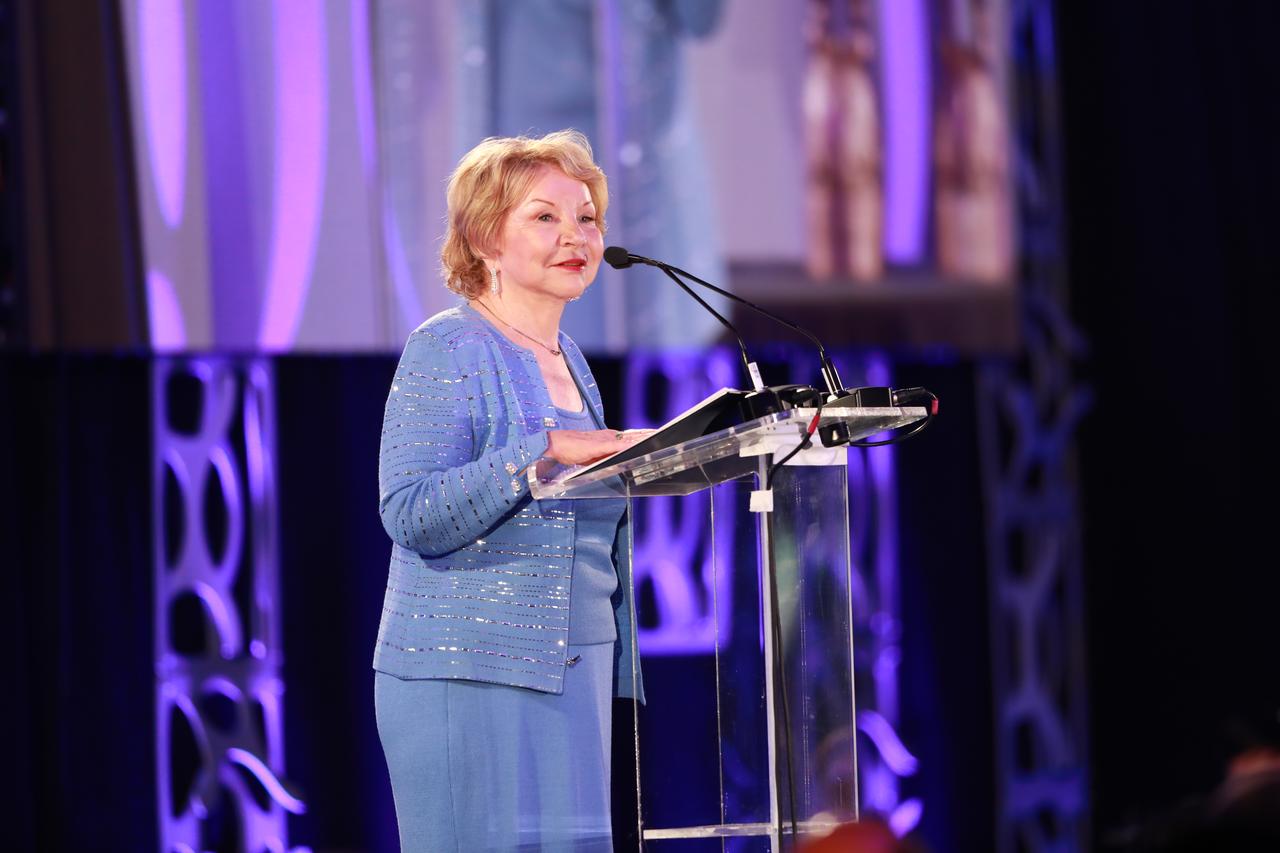
June Scobee Rodgers receives the Education Award during the Apollo 50th Gala, presented by Northrop Grumman, inside the Apollo/Saturn V Center at the Kennedy Space Center Visitor Complex in Florida on July 16, 2019. Scobbee Rodgers is the founding chairman of the Challenger Center for Space Science Education, established in 1986 following the Space Shuttle Challenger accident to continue the legacy of the Challenger crew.
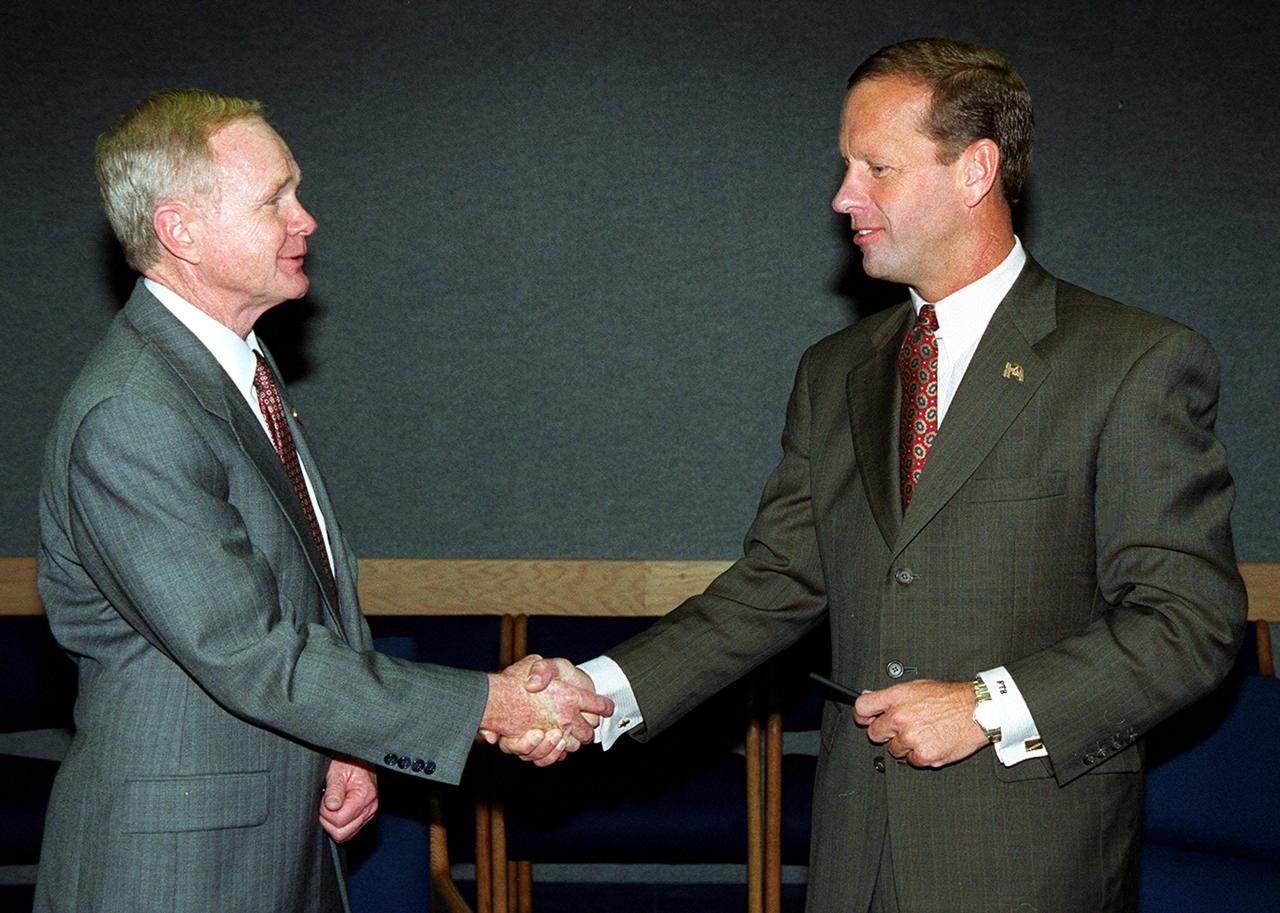
At the KSC Visitor Complex, Center Director Roy D. Bridges (left) and Florida’s Lieutenant Governor Frank T. Brogan shake hands after signing a Memorandum of Understanding (MOU). The MOU documents the intent of NASA KSC and the State of Florida to form partnerships with academic institutions in Florida for development of aerospace-related advanced training and academic/educational programs. The three-year project anticipates that the partnership and educational programs fostered will improve the lifelong learning environment for the aerospace and engineering workforce
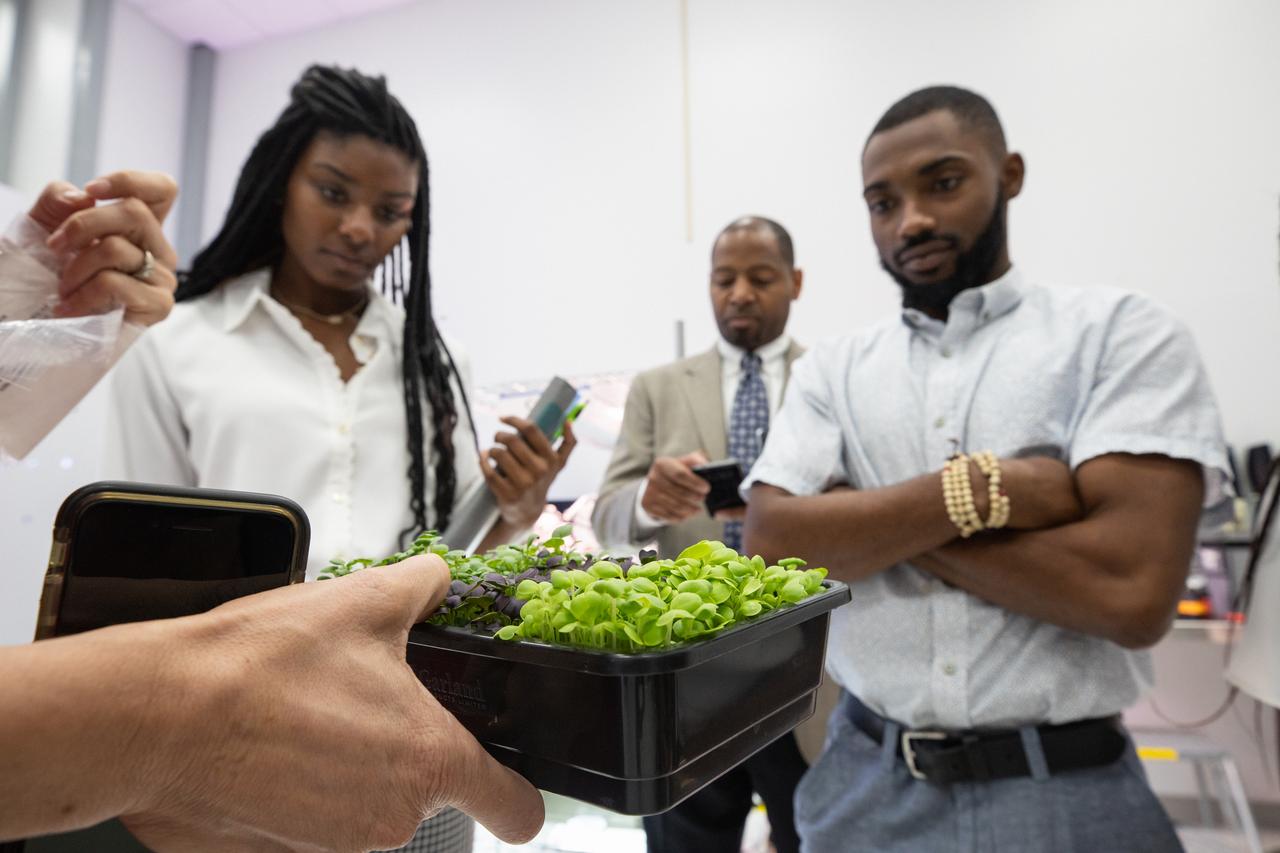
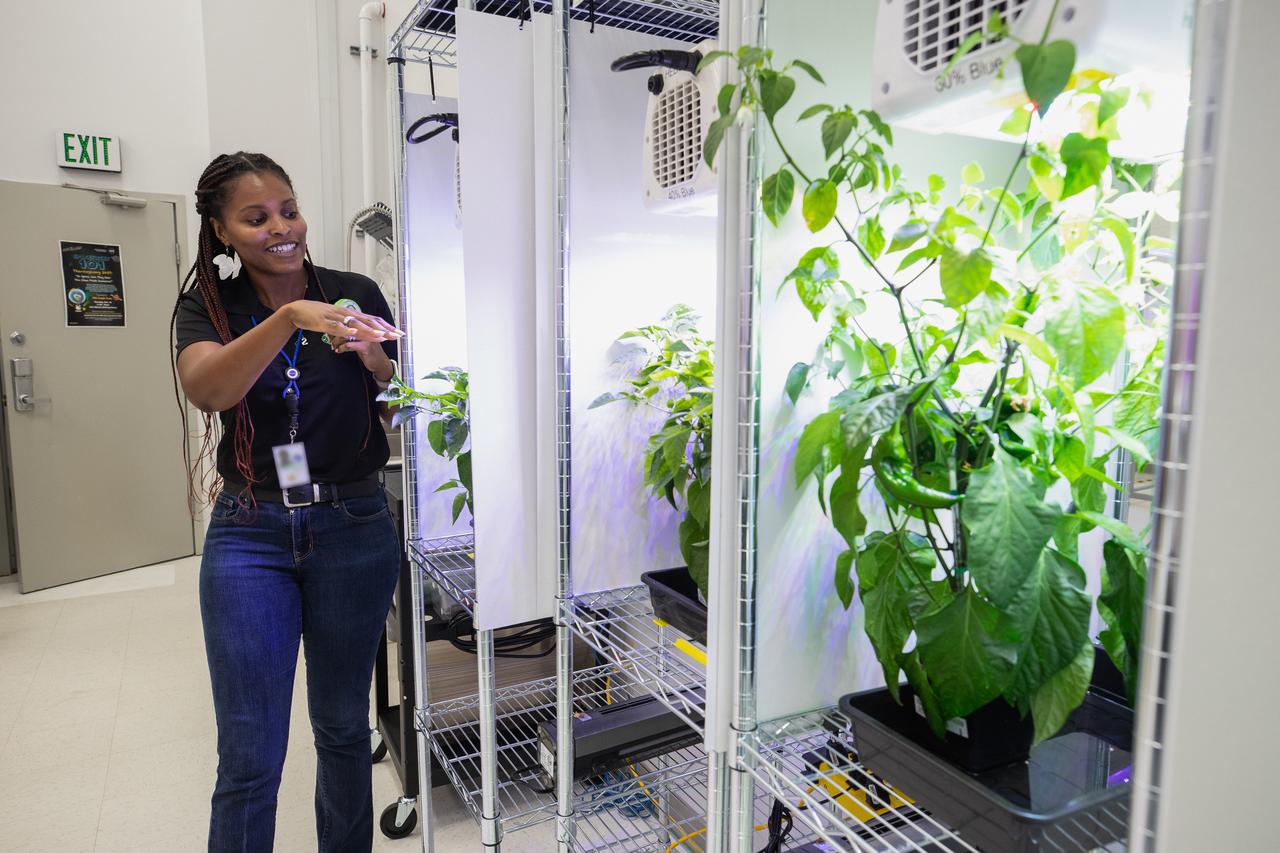
Langston University students Courtney Miller, left, and Sherman Cravens participate in a hands-on experience inside a Space Station Processing Facility lab at Kennedy Space Center on Sept. 18, 2019. Miller and Cravens were part of a tour of the Florida spaceport organized by Byron Quinn (background), Ph.D., Langston University director of the Science Research Institute, and NASA’s Office of Education. The Kennedy visit included stops at SwampWorks, the Neil Armstrong Operations and Checkout Building, the Vehicle Assembly Building, the visitor complex and the Center for Space Education.
Kennedy Space Center Research and Development Scientist Lashelle Spencer discusses plant growth in space with Langston University students and professor Byron Quinn, Ph.D., inside a Space Station Processing Facility lab at Kennedy Space Center on Sept. 18, 2019. Quinn organized the tour through NASA’s Office of Education. The visit included stops at SwampWorks, the Neil Armstrong Operations and Checkout Building, the Vehicle Assembly Building, the visitor complex and the Center for Space Education.
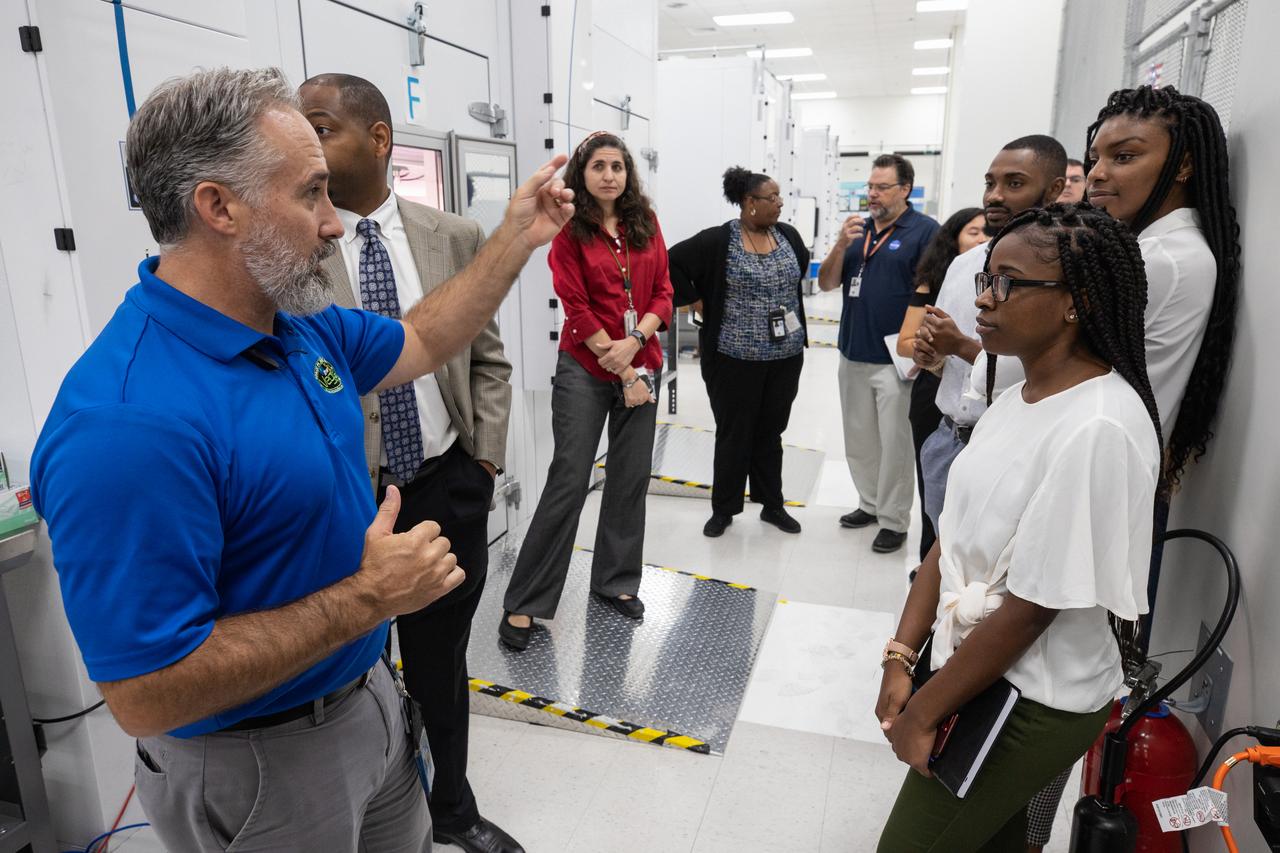
Kennedy Space Center Veggie Project Manager Trent Smith addresses students from Langston University in Oklahoma inside a Space Station Processing Facility lab at the Florida spaceport on Sept. 18, 2019. The students were part of a tour of Kennedy organized by Langston professor Byron Quinn, Ph.D., and NASA’s Office of Education. The visit included stops at SwampWorks, the Neil Armstrong Operations and Checkout Building, the Vehicle Assembly Building, the visitor complex and the Center for Space Education.
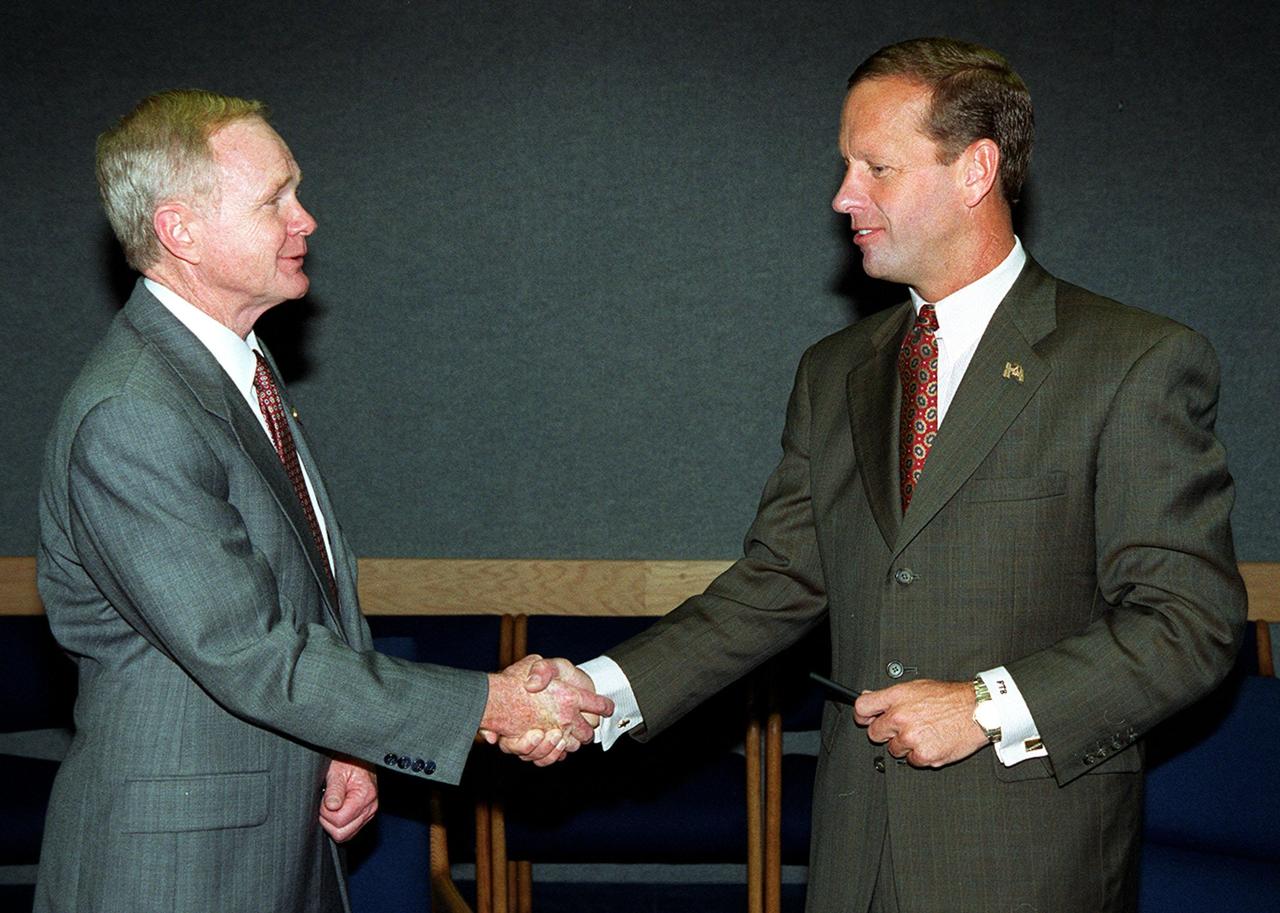
At the KSC Visitor Complex, Center Director Roy D. Bridges (left) and Florida’s Lieutenant Governor Frank T. Brogan shake hands after signing a Memorandum of Understanding (MOU). The MOU documents the intent of NASA KSC and the State of Florida to form partnerships with academic institutions in Florida for development of aerospace-related advanced training and academic/educational programs. The three-year project anticipates that the partnership and educational programs fostered will improve the lifelong learning environment for the aerospace and engineering workforce
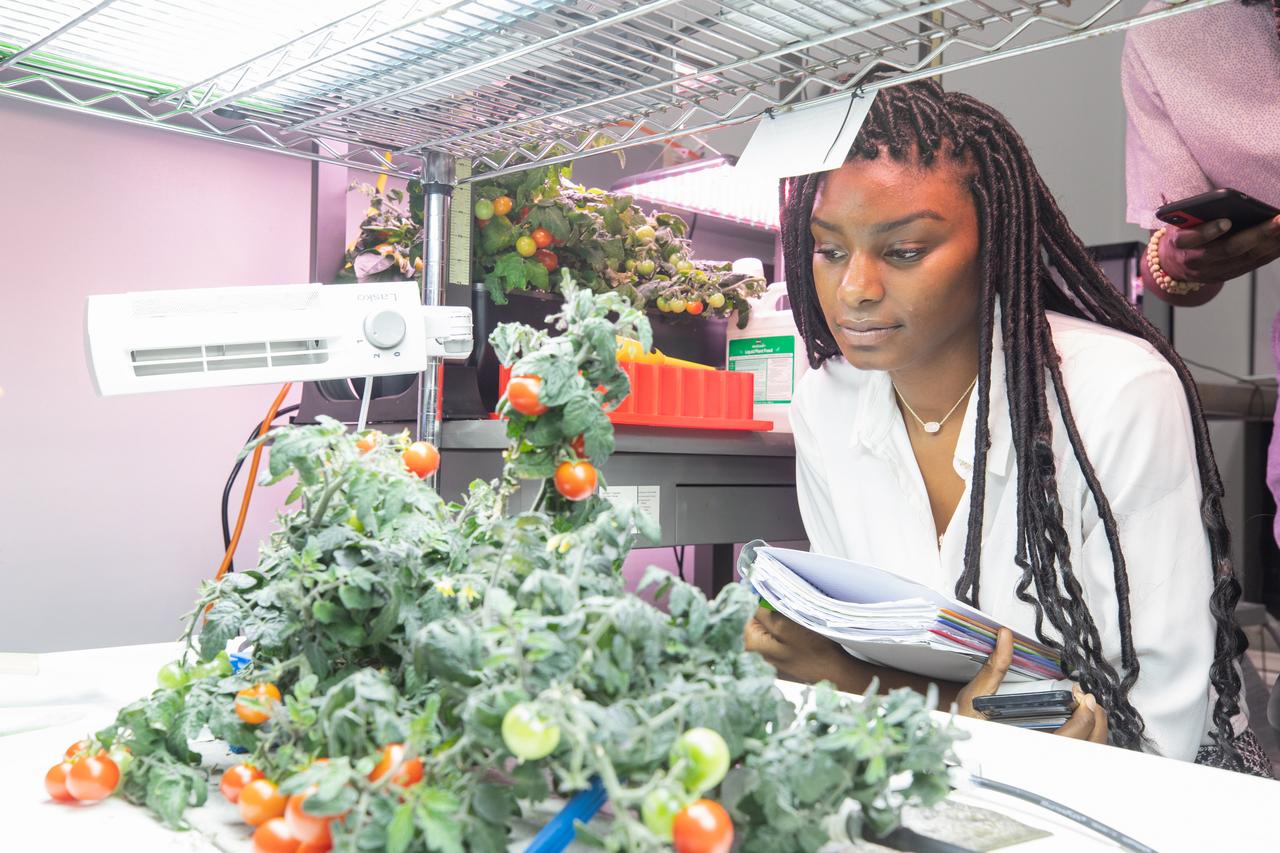
Courtney Miller, a student at Langston University in Oklahoma, participates in a hands-on experience inside a Space Station Processing Facility lab at Kennedy Space Center on Sept. 18, 2019. Miller was part of a tour of the Florida spaceport organized by NASA’s Office of Education and Langston professor Byron Quinn, Ph.D. The Kennedy visit included stops at SwampWorks, the Neil Armstrong Operations and Checkout Building, the Vehicle Assembly Building, the visitor complex and the Center for Space Education.
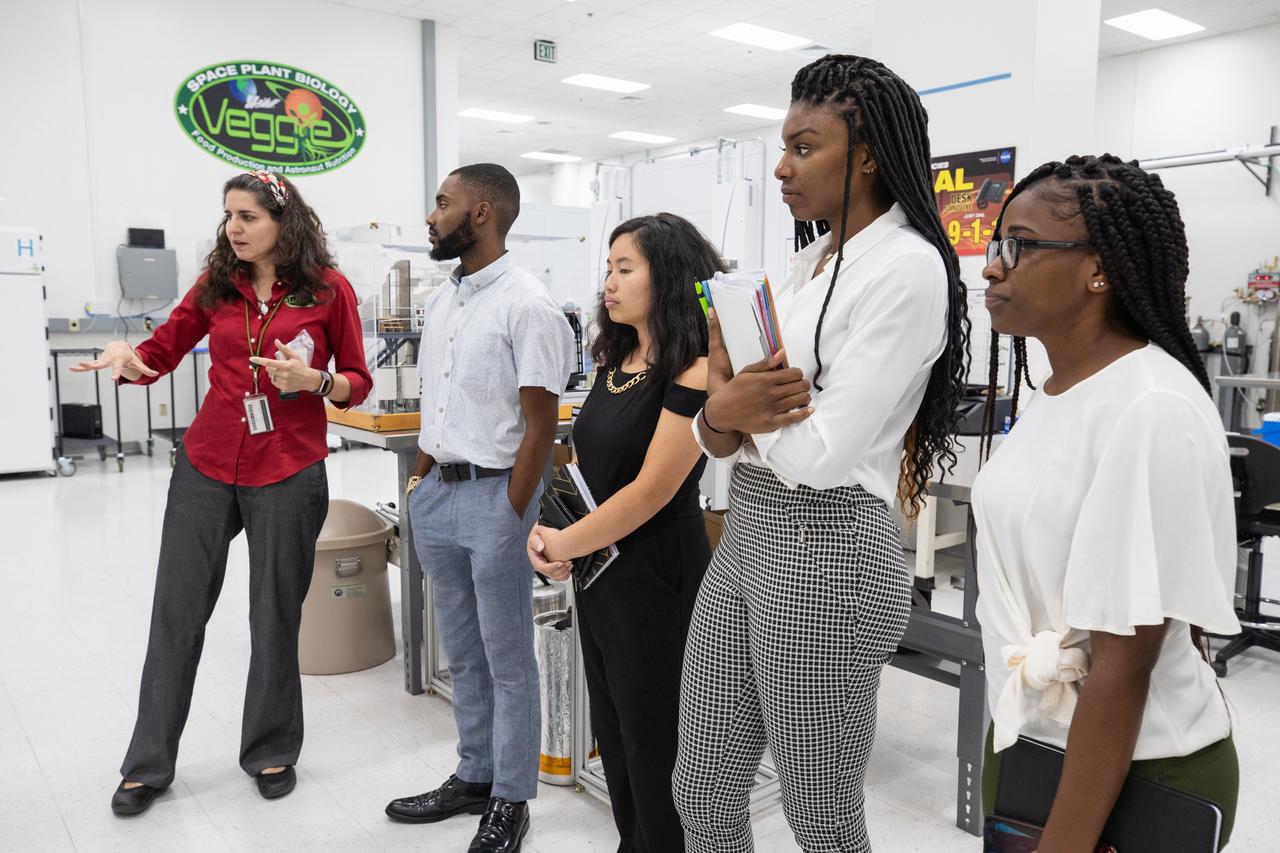
Dr. Gioia Massa, NASA Veggie project lead, addresses Langston University students, from left, Sherman Cravens, Kashia Cha, Courtney Miller and Makyah Farris inside a Space Station Processing Facility lab at Kennedy Space Center on Sept. 18, 2019. The tour, which was organized by Langston University professor Byron Quinn, Ph.D., and NASA’s Office of Education, included stops at SwampWorks, the Neil Armstrong Operations and Checkout Building, the Vehicle Assembly Building, the visitor complex and the Center for Space Education.
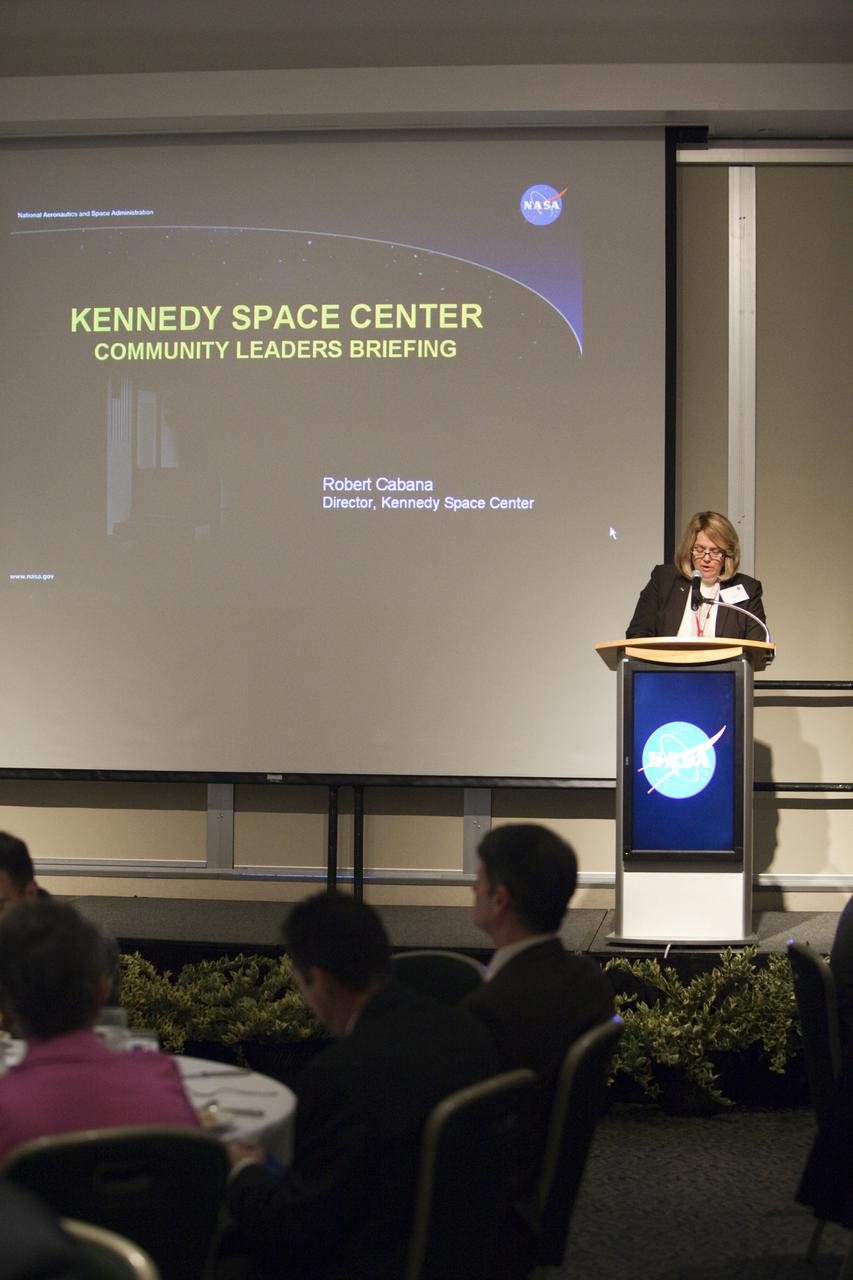
CAPE CANAVERAL, Fla. –Cheryl Hurst, Director of Education and External Relations for NASA’s Kennedy Space Center, addresses guests at the annual Community Leaders Breakfast held in the Debus Center at Kennedy's Visitor Complex in Florida. Community leaders, business executives, educators, community organizers and state and local government officials heard NASA Administrator Charlie Bolden, Kennedy Space Center Director Bob Cabana, and other senior Kennedy managers provide an overview of the future of the space center. Photo credit: NASA_Dimitri Gerondidakis
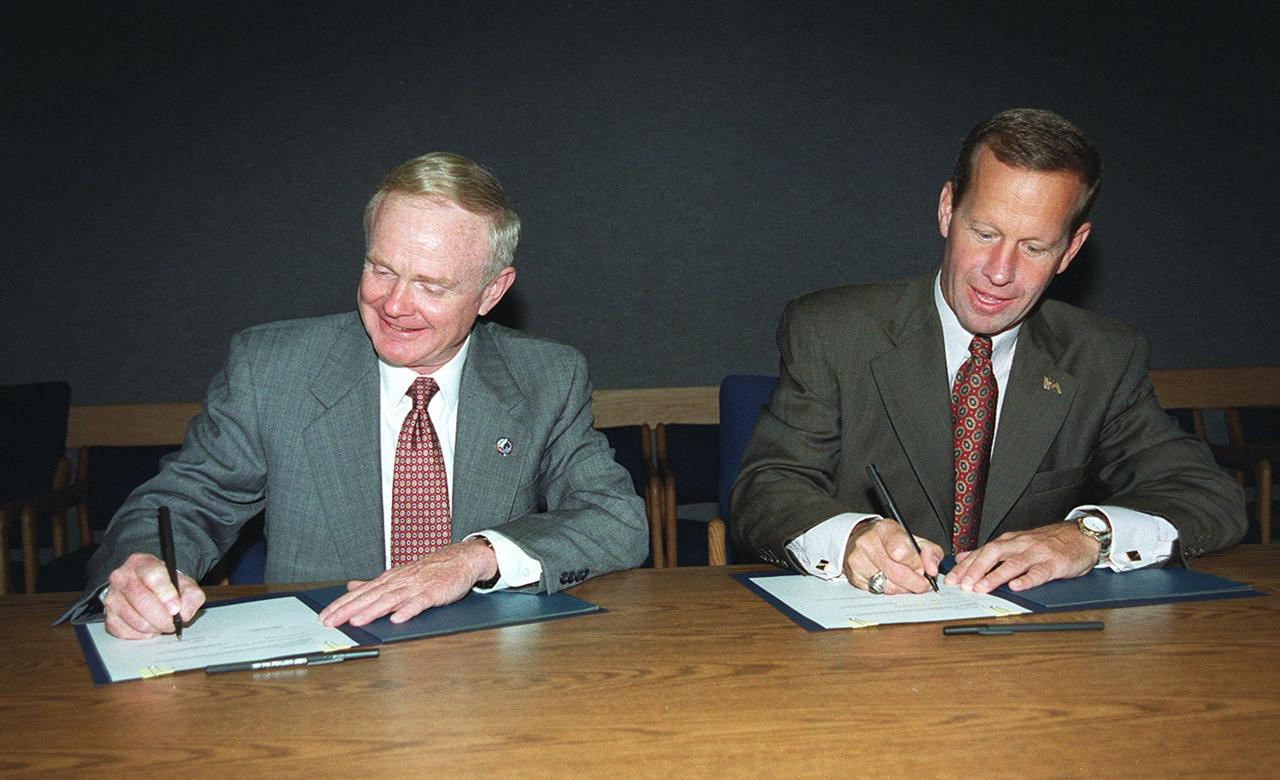
At the KSC Visitor Complex, Center Director Roy D. Bridges (left) and Florida’s Lieutenant Governor Frank T. Brogan sign a Memorandum of Understanding (MOU). The MOU documents the intent of NASA KSC and the State of Florida to form partnerships with academic institutions in Florida for development of aerospace-related advanced training and academic/educational programs. The three-year project anticipates that the partnership and educational programs fostered will improve the lifelong learning environment for the aerospace and engineering workforce
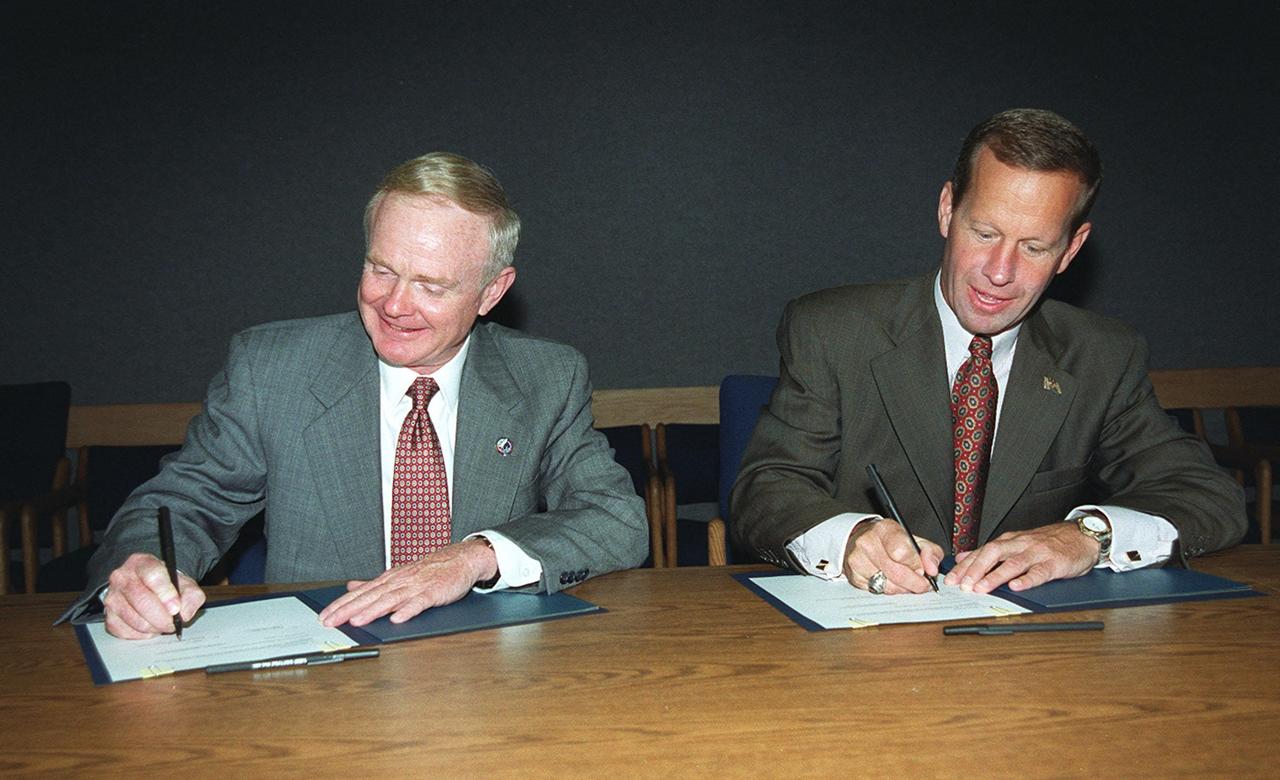
At the KSC Visitor Complex, Center Director Roy D. Bridges (left) and Florida’s Lieutenant Governor Frank T. Brogan sign a Memorandum of Understanding (MOU). The MOU documents the intent of NASA KSC and the State of Florida to form partnerships with academic institutions in Florida for development of aerospace-related advanced training and academic/educational programs. The three-year project anticipates that the partnership and educational programs fostered will improve the lifelong learning environment for the aerospace and engineering workforce
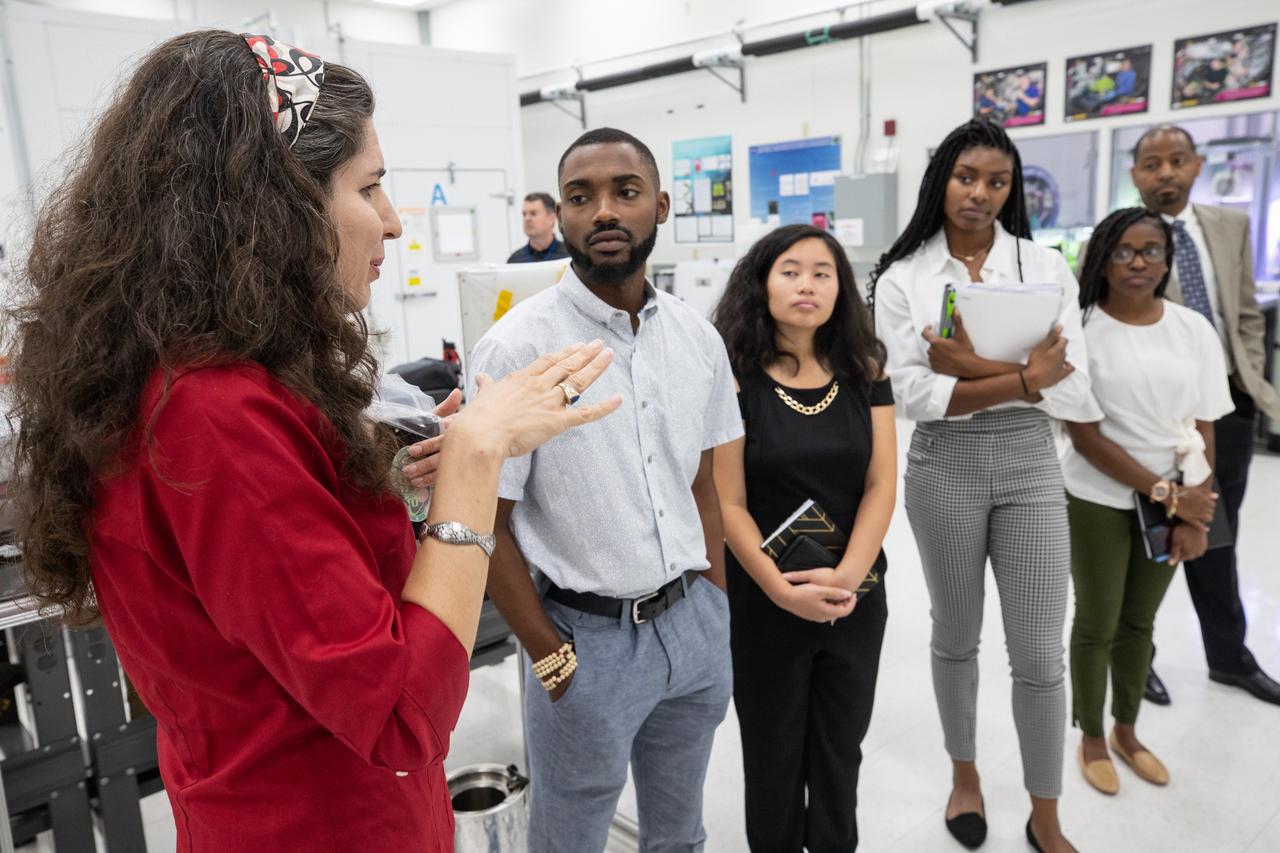
Dr. Gioia Massa, NASA Veggie project lead, addresses Langston University students, from left, Sherman Cravens, Kashia Cha, Courtney Miller and Makyah Farris, along with Langston professor Byron Quinn, Ph.D., inside a Space Station Processing Facility lab at Kennedy Space Center on Sept. 18, 2019. The tour, which was organized by Quinn and NASA’s Office of Education, included stops at SwampWorks, the Neil Armstrong Operations and Checkout Building, the Vehicle Assembly Building, the visitor complex and the Center for Space Education.
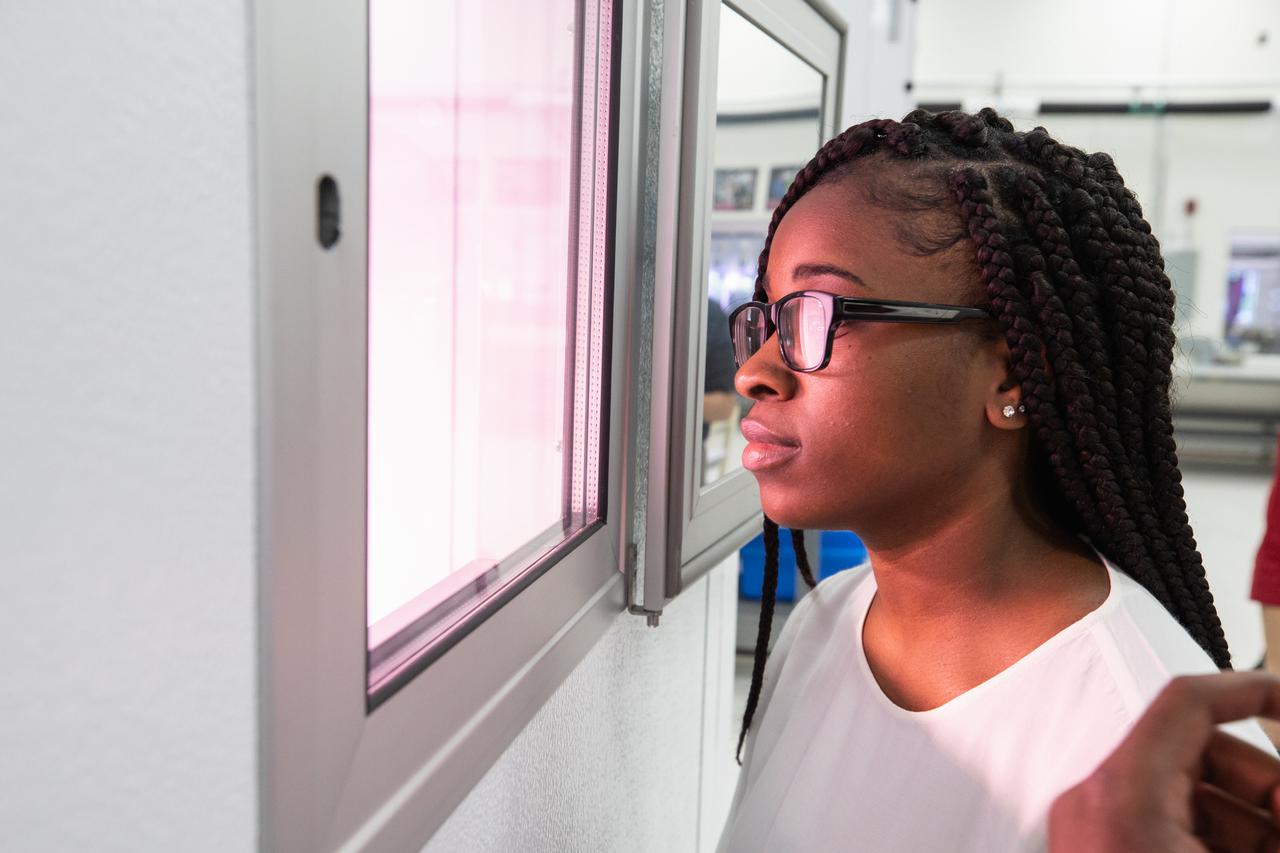
Langston University student Makyah Farris observes plants inside a Space Station Processing Facility lab at Kennedy Space Center on Sept. 18, 2019. Farris was part of a tour of the Florida spaceport organized by NASA’s Office of Education and Byron Quinn, Ph.D., Langston University director of the Science Research Institute. The students’ tour of Kennedy included stops at SwampWorks, the Neil Armstrong Operations and Checkout Building, the Vehicle Assembly Building, the visitor complex and the Center for Space Education.
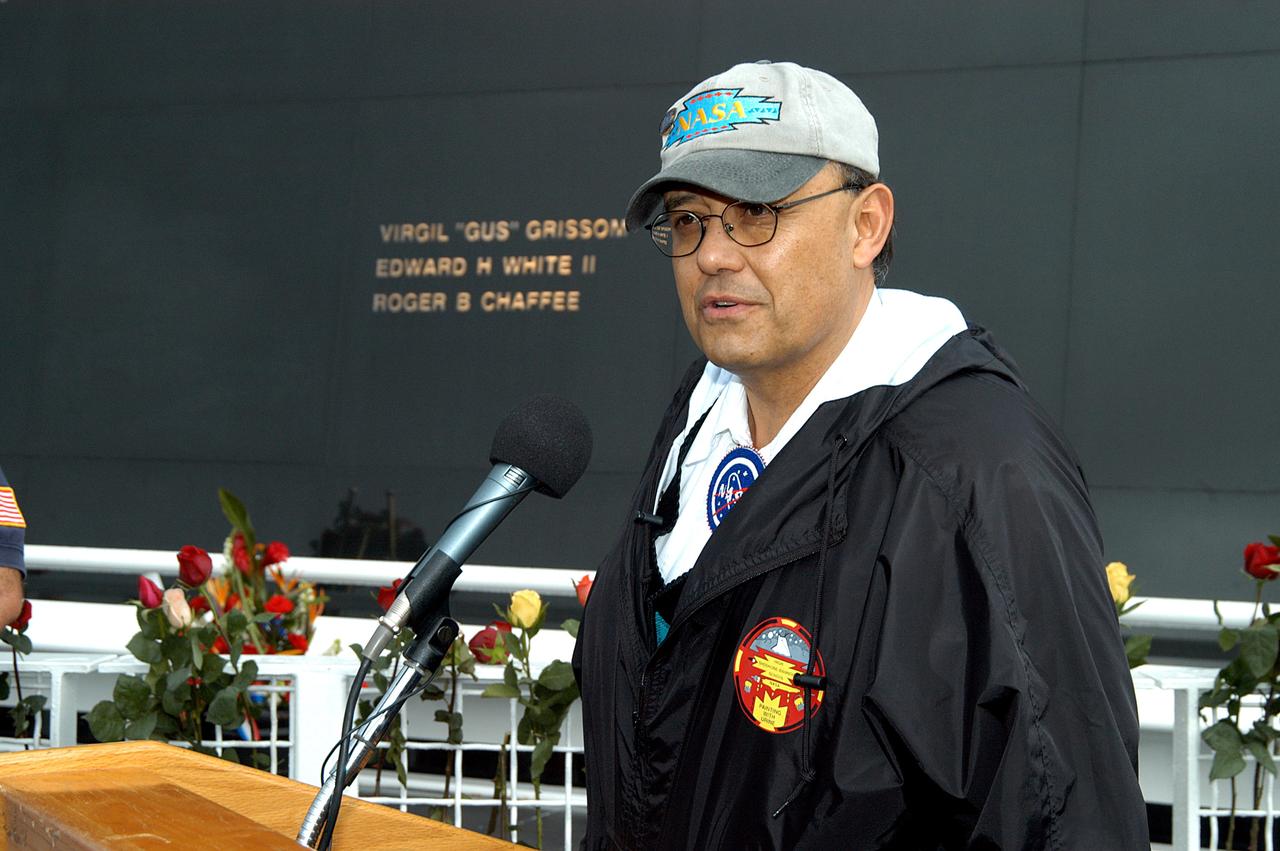
KENNEDY SPACE CENTER, FLA. - Dr. Ed Galindo speaks to the visitors at the memorial service held at the Space Memorial Mirror for the crew of Columbia. Galindo is science educator of Shoshone-Bannock High School and introduced the dancers from the Shoshone-Bannock Native American community in Fort Hall, Idaho. The dancers performed a healing ceremony during the memorial. Students and staff of the Shoshone-Bannock Nation had an experiment on board Columbia. Feb. 1 is the one-year anniversary of the loss of the crew and orbiter Columbia in a tragic accident as the ship returned to Earth following mission STS-107. The public was invited to the memorial service, held in the KSC Visitor Complex, which included comments by Center Director Jim Kennedy and Executive Director of Florida Space Authority Winston Scott. Scott is a former astronaut who flew on Columbia in 1997.
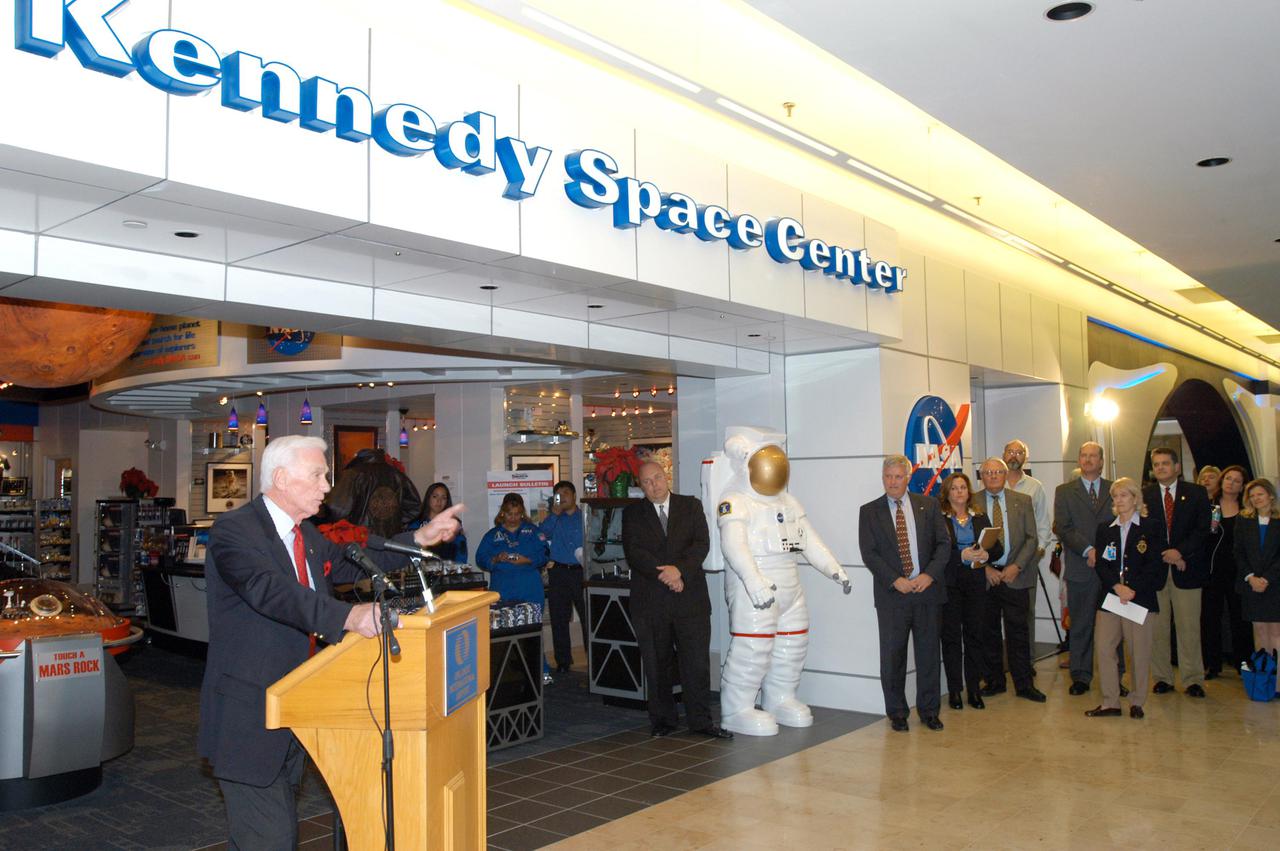
KENNEDY SPACE CENTER, FLA. - Apollo 17 Commander Gene Cernan (left) holds the attention of guests at the grand opening ceremony of the new Kennedy Space Center Store at Orlando International Airport. The store will help educate millions of airport visitors about America’s space program and the Vision for Space Exploration. The store is operated by Kennedy Space Center Visitor Complex concessionaire Delaware North Parks and Resorts.
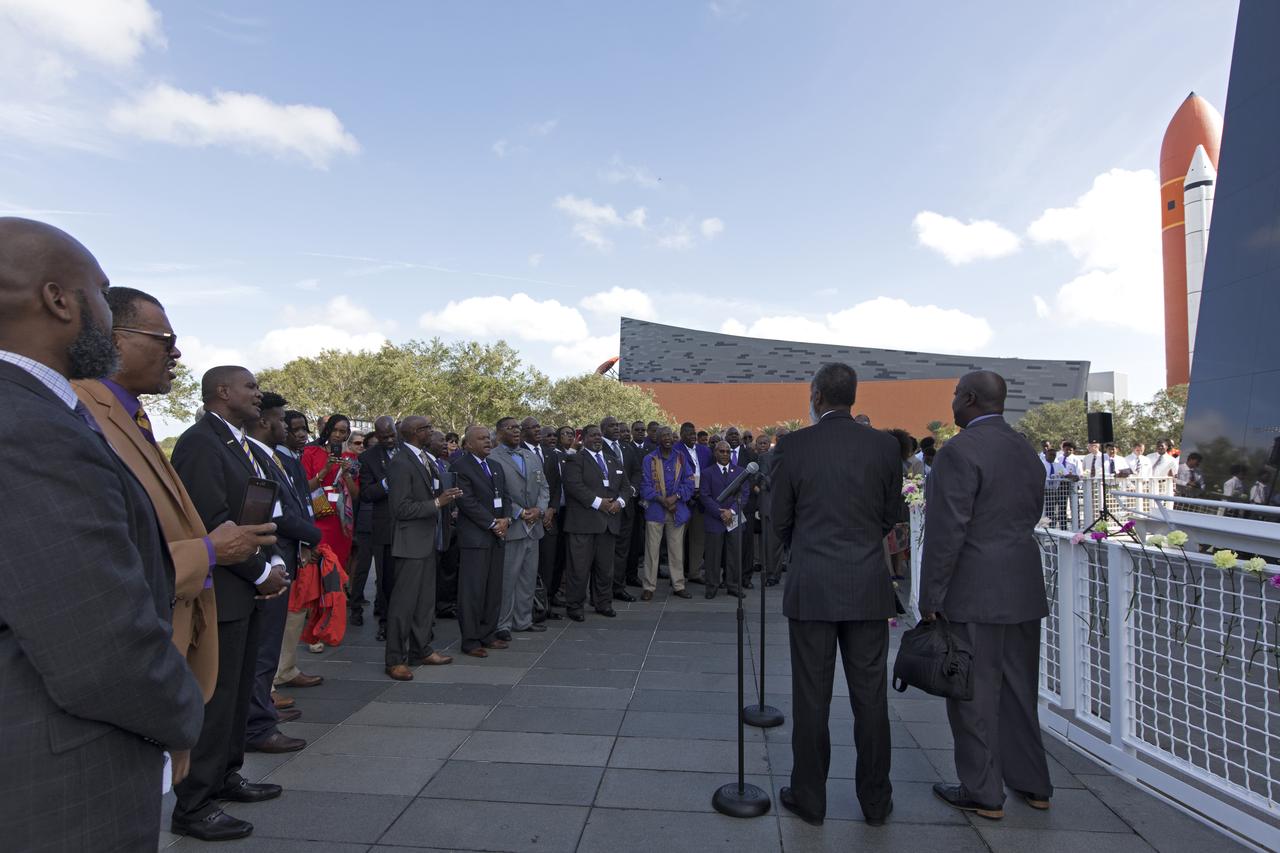
Following an Astronauts Memorial Foundation tribute honoring U.S. Air Foce Maj. Robert Lawrence, guests listen to speakers at the Space Mirror Memorial at the Kenendy Space Center Visitor Compelx. Selected in 1967 for the Manned Orbiting Laboratory Program, Lawrence was the first African-American astronaut. He lost his life in a training accident 50 years ago. The ceremony took place in the Center for Space Education at the Kennedy Space Center Visitor Complex.
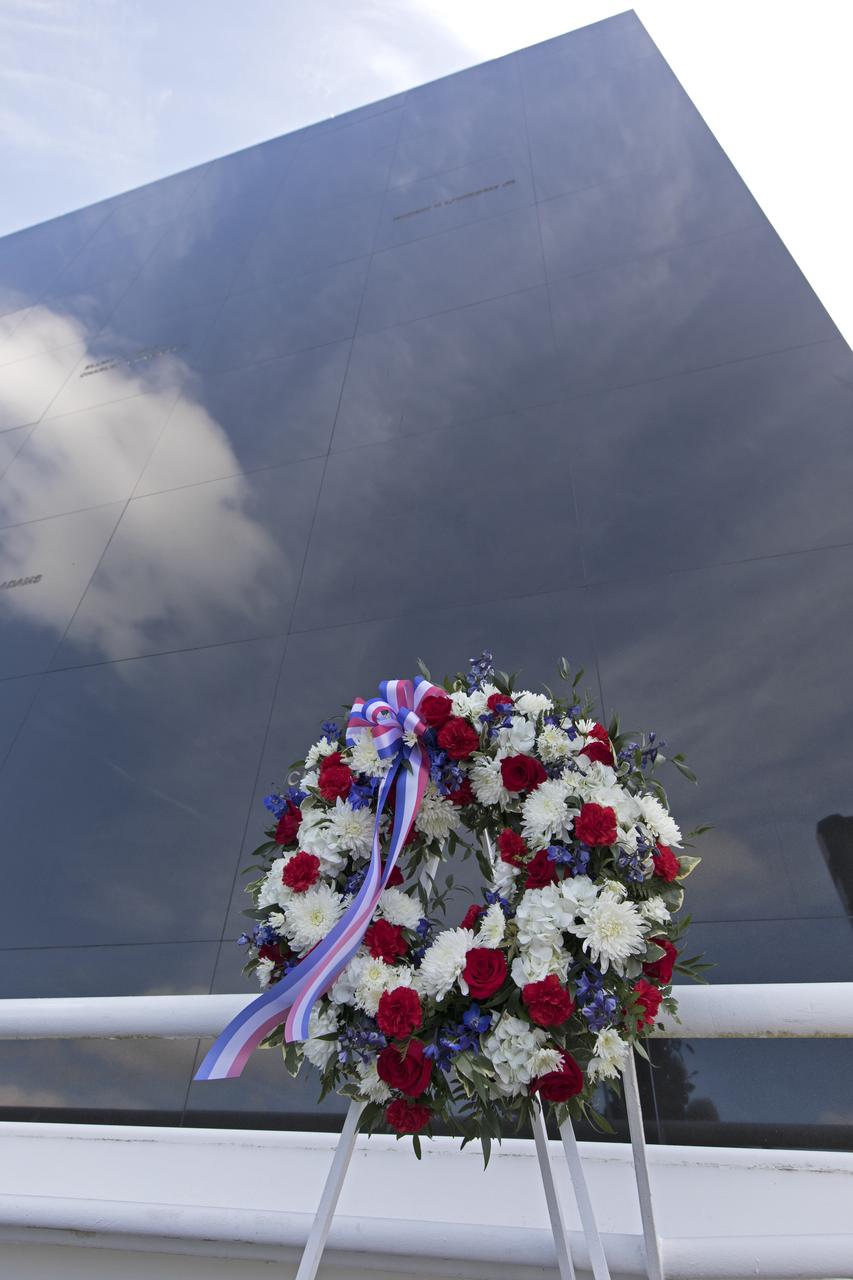
Following an Astronauts Memorial Foundation tribute honoring U.S. Air Foce Maj. Robert Lawrence, a wreath was place at the Space Mirror Memorial at the Kenendy Space Center Visitor Compelx. Selected in 1967 for the Manned Orbiting Laboratory Program, Lawrence was the first African-American astronaut. He lost his life in a training accident 50 years ago. The ceremony took place in the Center for Space Education at the Kennedy Space Center Visitor Complex.
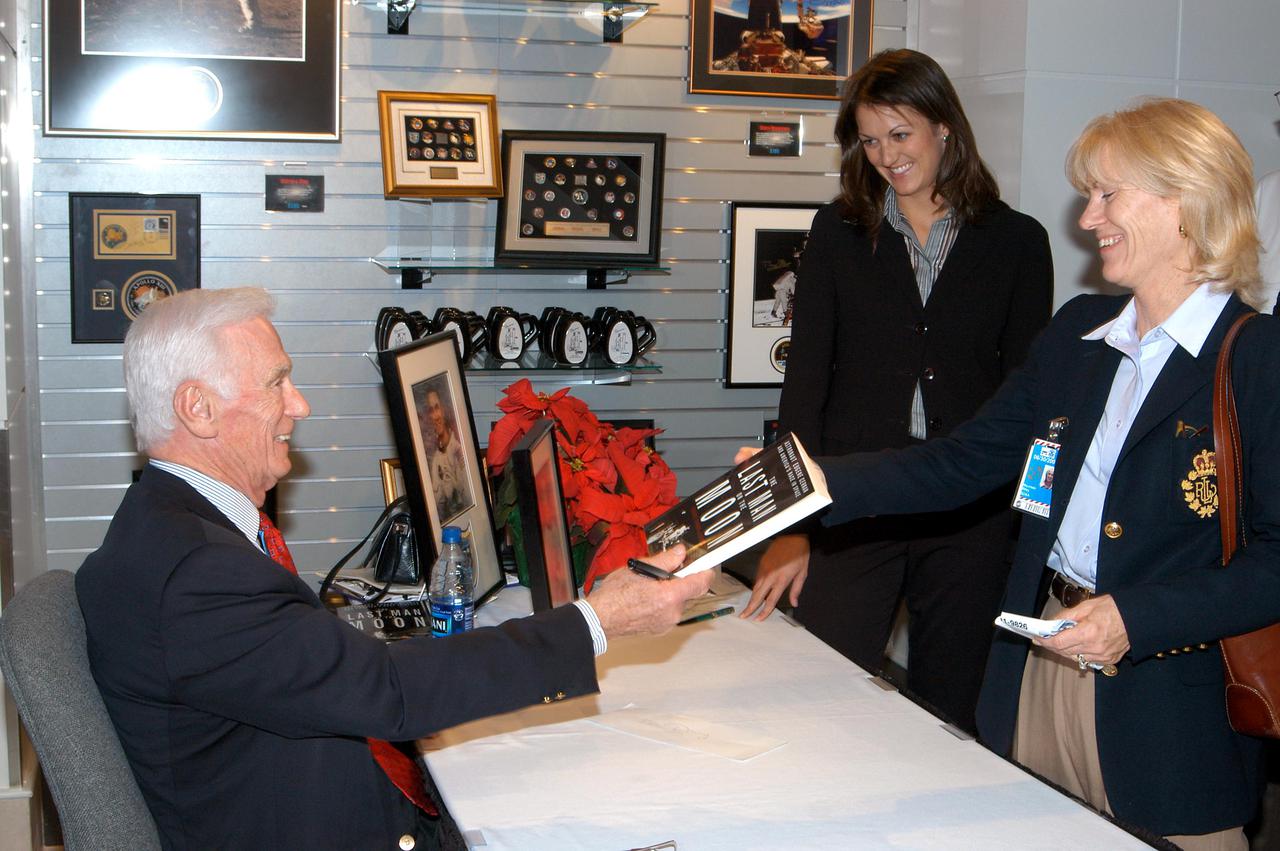
KENNEDY SPACE CENTER, FLA. - Apollo 17 Commander Gene Cernan autographs his book for attendees at the grand opening ceremony of new Kennedy Space Center Store at Orlando International Airport. NASA’s Kennedy Space Center Director Jim Kennedy and Cernan participated in the grand opening ceremony. The store will help educate millions of airport visitors about America’s space program and the Vision for Space Exploration. The store is operated by Kennedy Space Center Visitor Complex concessionaire Delaware North Parks and Resorts.
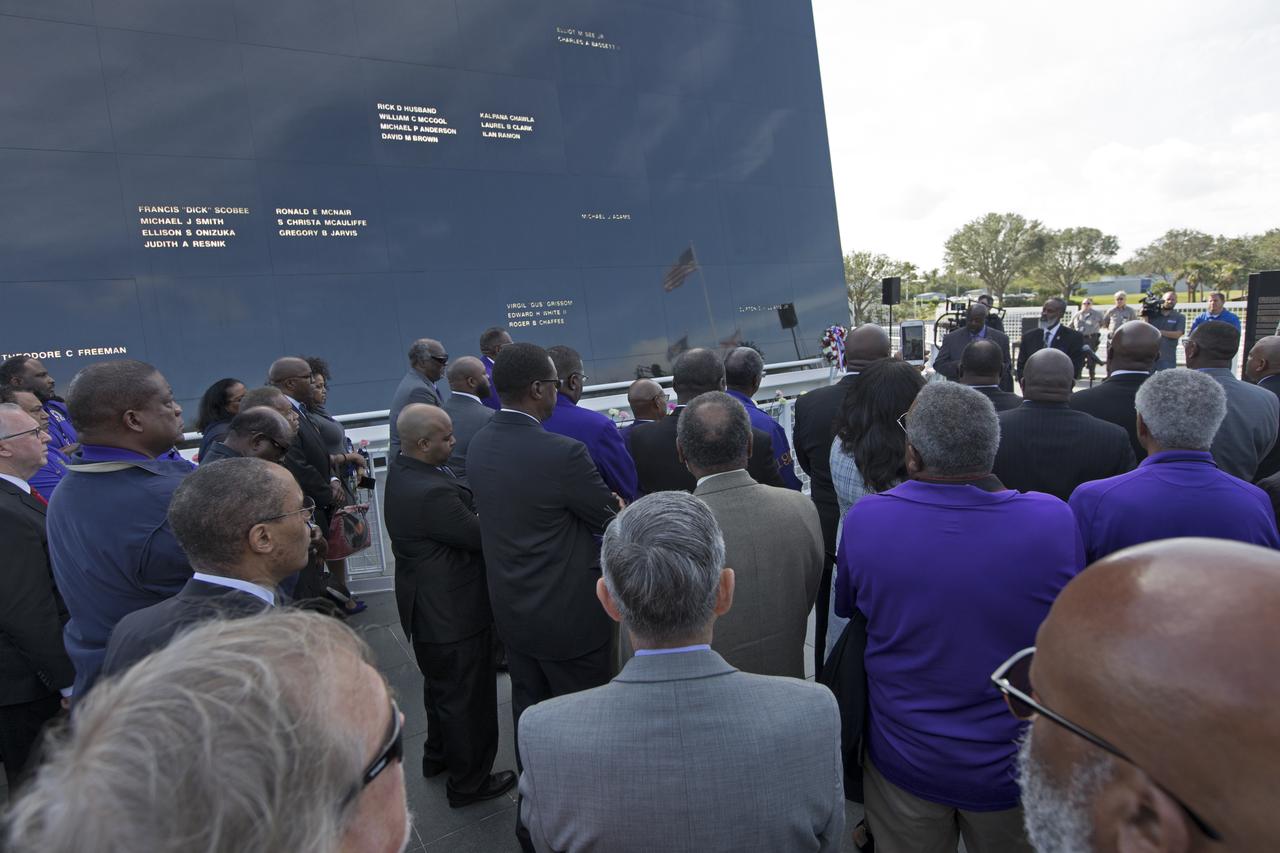
Following an Astronauts Memorial Foundation tribute honoring U.S. Air Foce Maj. Robert Lawrence, guests gathered at the Space Mirror Memorial at the Kenendy Space Center Visitor Compelx. Selected in 1967 for the Manned Orbiting Laboratory Program, Lawrence was the first African-American astronaut. He lost his life in a training accident 50 years ago. The ceremony took place in the Center for Space Education at the Kennedy Space Center Visitor Complex.
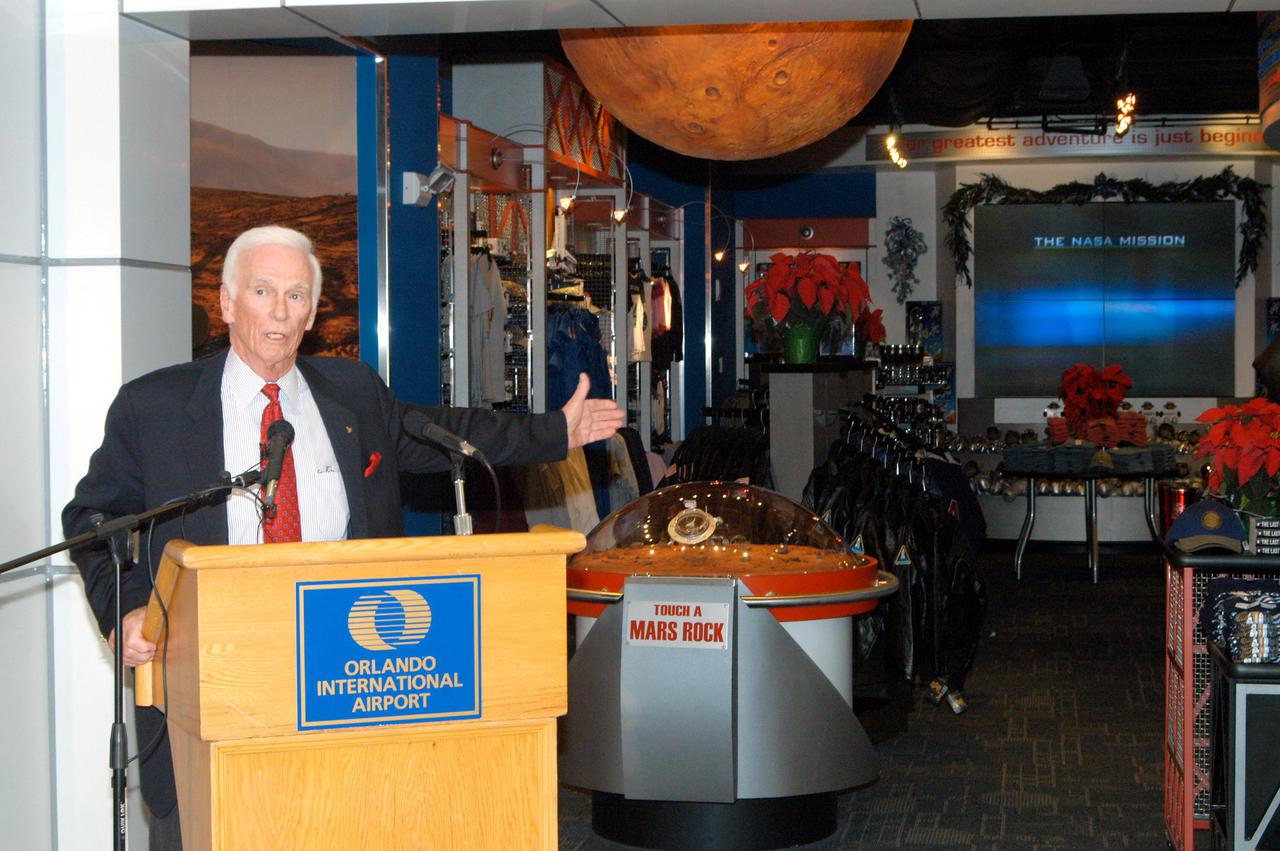
KENNEDY SPACE CENTER, FLA. - Apollo 17 Commander Gene Cernan talks about some of the exhibits in the new Kennedy Space Center Store at Orlando International Airport. NASA’s Kennedy Space Center Director Jim Kennedy and Cernan participated in the grand opening ceremony. The store will help educate millions of airport visitors about America’s space program and the Vision for Space Exploration. The store is operated by Kennedy Space Center Visitor Complex concessionaire Delaware North Parks and Resorts.