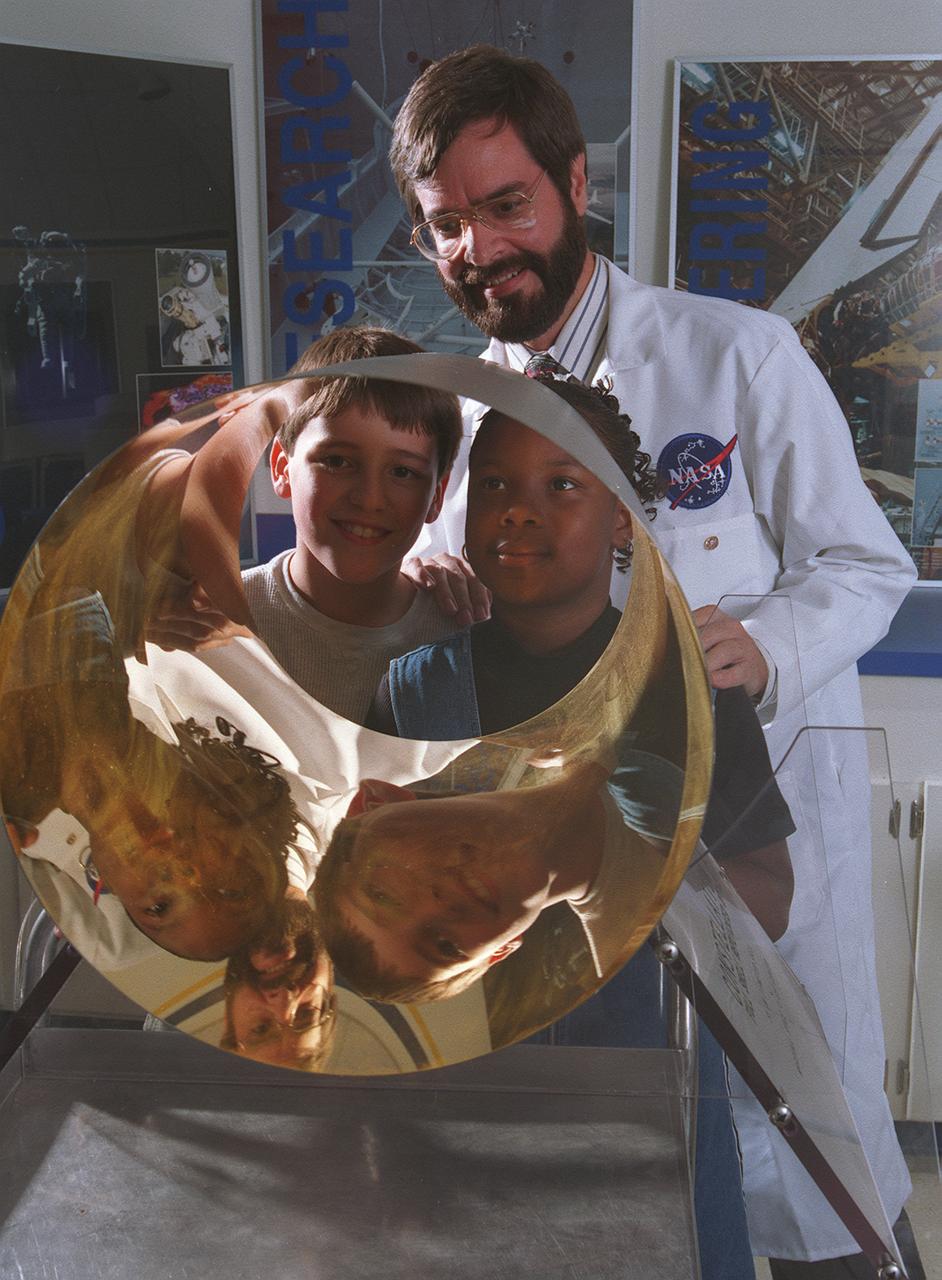
Through Marshall Space Flight Center (MSFC) Education Department, over 400 MSFC employees have volunteered to support educational program during regular work hours. Project LASER (Learning About Science, Engineering, and Research) provides support for mentor/tutor requests, education tours, classroom presentations, and curriculum development. This program is available to teachers and students living within commuting distance of the NASA/MSFC in Huntsville, Alabama (approximately 50-miles radius). This image depicts students viewing their reflections in an x-ray mirror with Marshall optic engineer Vince Huegele at the Discovery Laboratory, which is an onsite MSFC laboratory facility that provides hands-on educational workshop sessions for teachers and students learning activities.
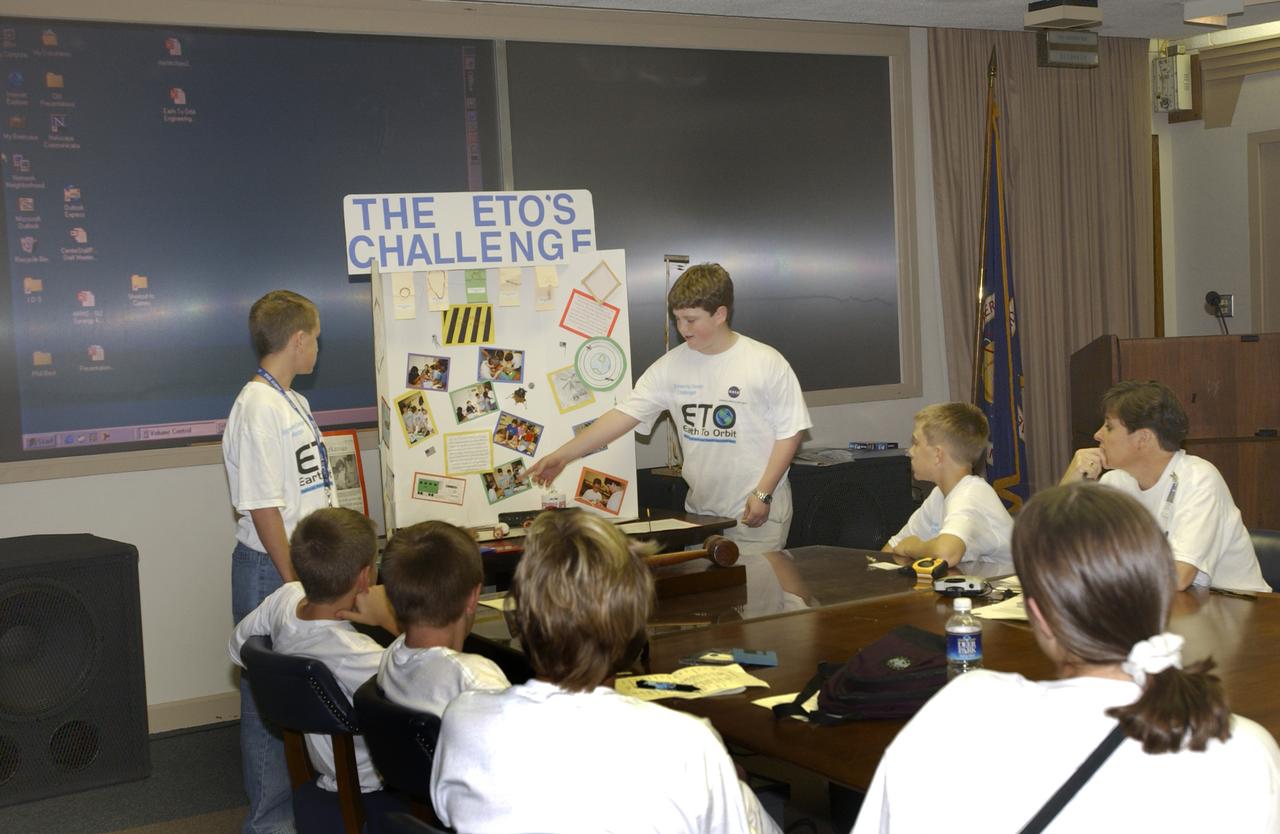
In this photograph, students from all over the country gathered and discussed their Earth-to-Orbit (ETO) Design Challenge project at NASA Marshall Space Flight Center in Huntsville, Alabama. These students who are just "typical teens," have been spending their time tackling some of the same challenges NASA engineers face when designing propulsion systems at MSFC. The ETO Design Challenge is a hands-on educational program, targeted to middle school students, in which students are assigned a project engaging in related design challenges in their classrooms under the supervision of their teachers. The project is valuable because it can be used by any student, and any teacher, even those without technical backgrounds. Student in 12 states: Alabama, Arkansas, California, Colorado, Illinois, Missouri, Montana, New York, Ohio, Ternessee, Virginia, and Washington, are taking part in MSFC's Earth-to-Orbit program. NASA uses such programs to support educational excellence while participating in educational outreach programs through centers around the country. One of the students' teachers, Joanne Fluvog, commented, "the biggest change I've seen is in the students' motivation and their belief in their ability to think." Justin O'Connor and Jeff Alden, students of Lane Middle School in Portland, Oregon, participated in the ETO program and said being involved in a real engineering project has made them realize that "science is cool."
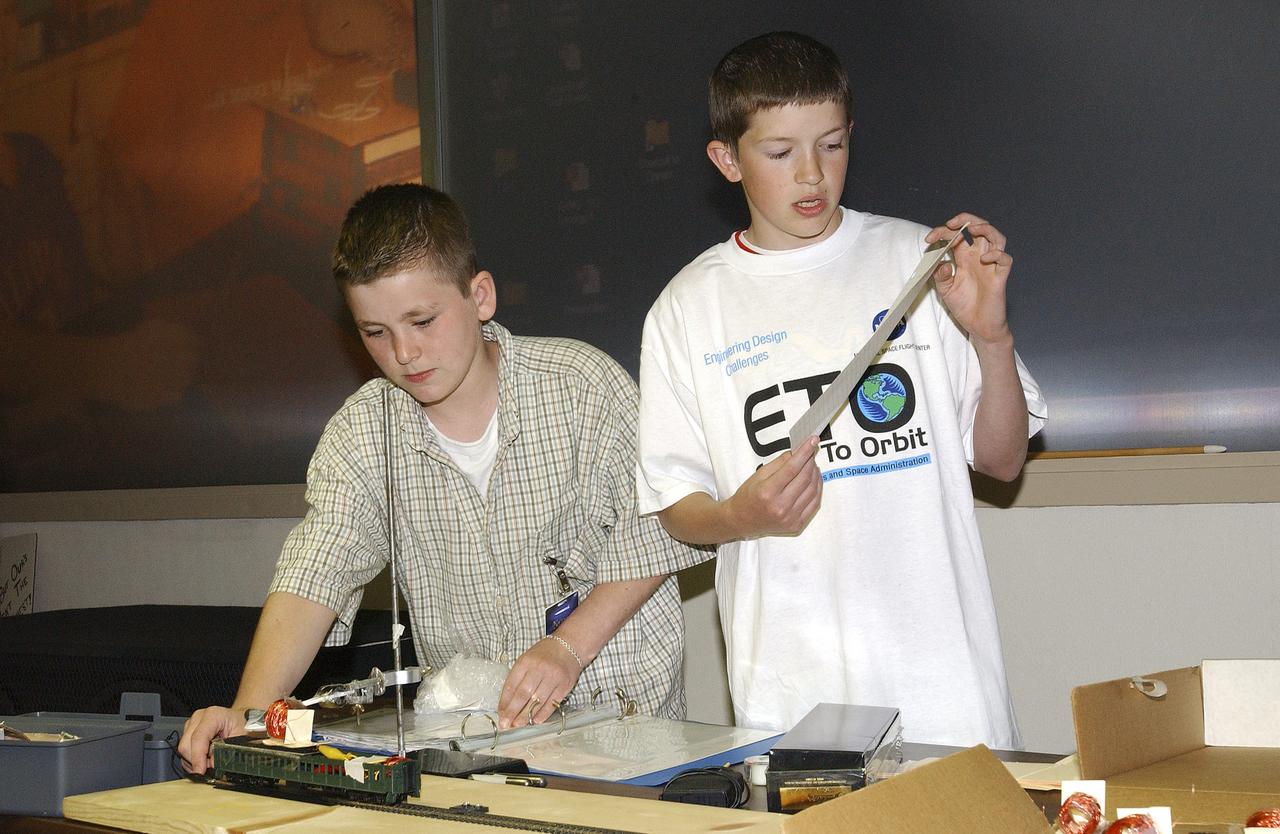
In this photograph, Jeff Alden (left) and Justin O'Cornor, two middle school students at Lane Middle School in Portland, Oregon are demonstrating their Earth-to-Orbit (ETO) Design Challenge project at NASA Marshall Space Flight Center (MSFC) in Huntsville, Alabama. Jeff and Justin, who are just a couple of "typical teens," have been spending their time tackling some of the same challenges NASA engineers face when designing propulsion systems at MSFC. The ETO Design Challenge is a hands-on educational program, targeted to middle school students, in which students are assigned a project engaging in related design challenges in their classrooms under the supervision of their teachers. The project is valuable because it can be used by any student and any teacher, even those without technical backgrounds. Students in 12 states: Alabama, Arkansas, California, Colorado, Illinois, Missouri, Montana, New York, Ohio, Tennessee, Virginia, and Washington, are taking part in the MSFC's Earth-to-Orbit program. NASA uses such programs to support educational excellence while participating in educational outreach programs through centers around the country. The Oregon students' teacher, Joanne Fluvog, commented, "the biggest change I've seen is in the students' motivation and their belief in their ability to think." Both Justin and Jeff said being involved in a real engineering project has made them realize that "science is cool."
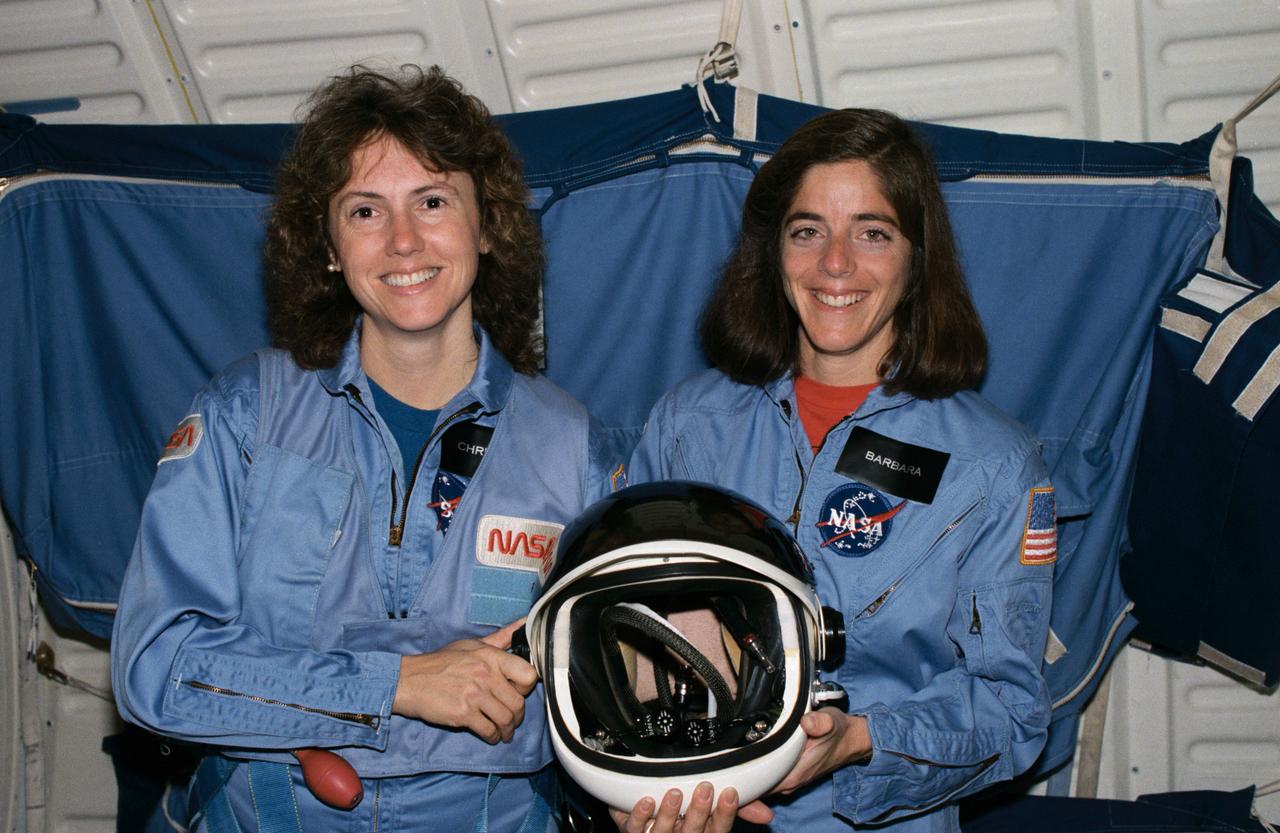
S85-46205 (December 1985) --- Sharon Christa McAuliffe (left), from Concord, New Hampshire, and Barbara R. Morgan of McCall, Idaho, have been named NASA Teacher-in-Space Project prime and backup payload specialists, respectively, for the first citizen observer position of the STS program, scheduled for a Challenger flight in January 1986. Photo credit: NASA
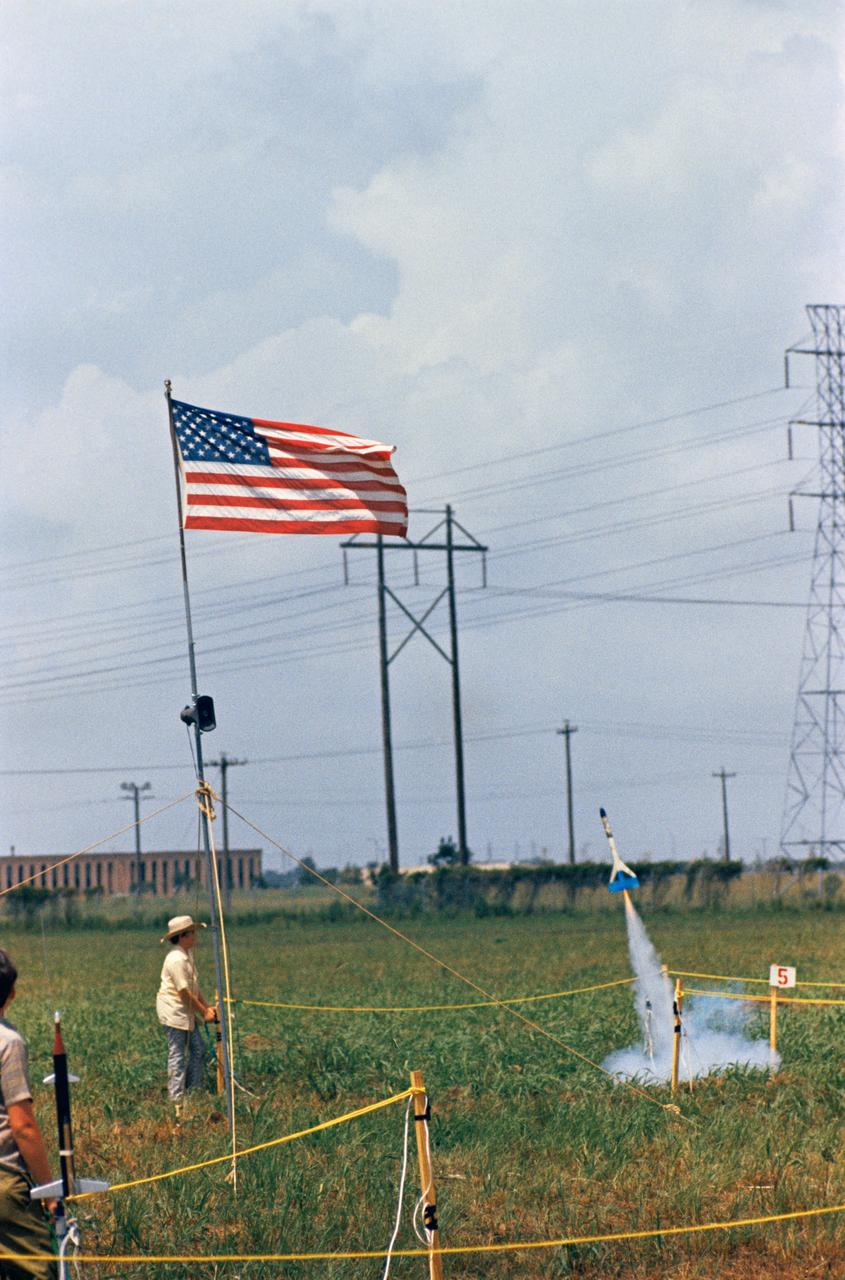
Views of the Texas Area Rocket Meet at MSC in Houston.
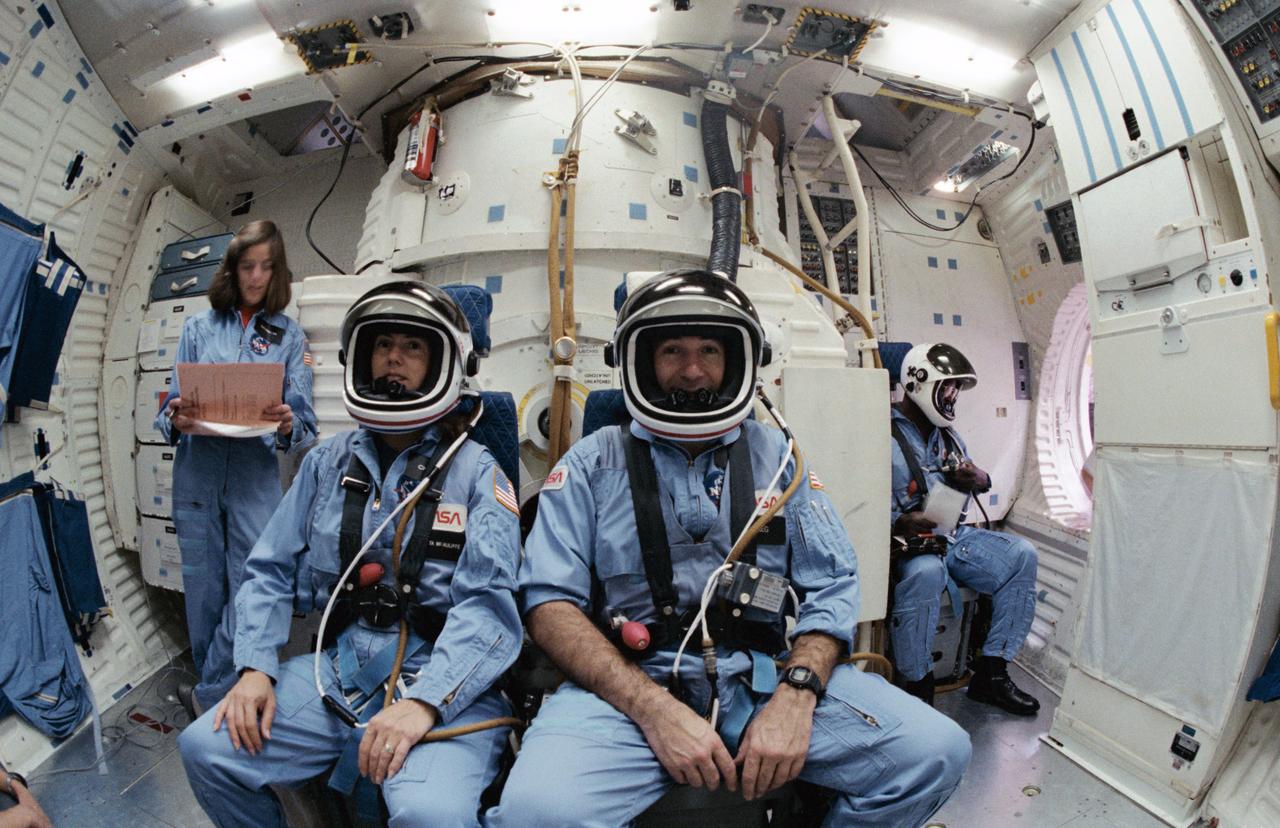
S85-46208 (December 1985) --- L.?R., backup Payload Specialist Barbara R. Morgan, Teacher Payload Specialist Christa McAuliffe, Hughes Payload Specialist Gregory B. Jarvis and Mission Specialist Ronald E. McNair in shuttle mission simulator at the Johnson Space Center. Photo was taken by Bill Bowers. Photo credit: NASA
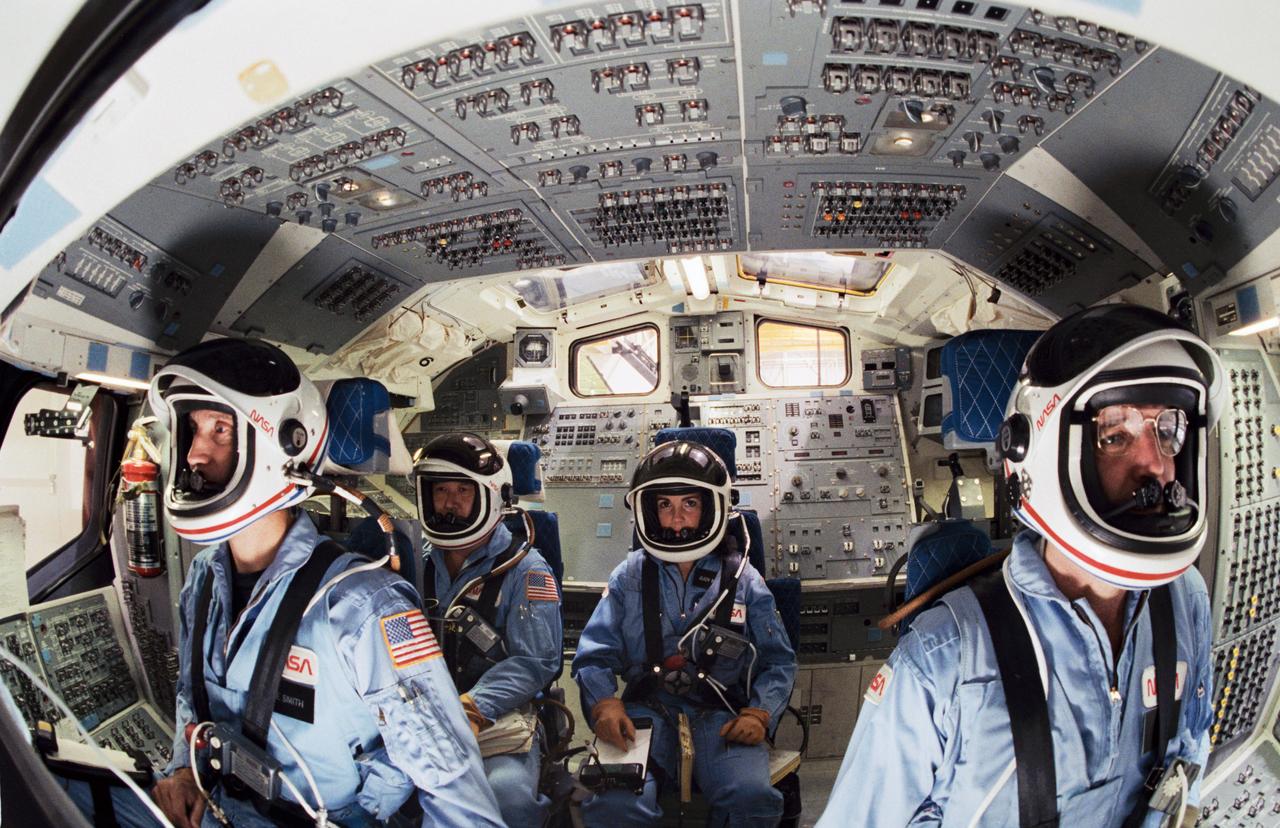
S85-46207 (December 1985) --- Shuttle Mission Simulator (SMS) scene of astronauts Michael J. Smith, Ellison S. Onizuka, Judith A. Resnik, and Francis R. (Dick) Scobee in their launch and entry positions on the flight deck. The photo was taken by Bill Bowers. Photo credit: NASA
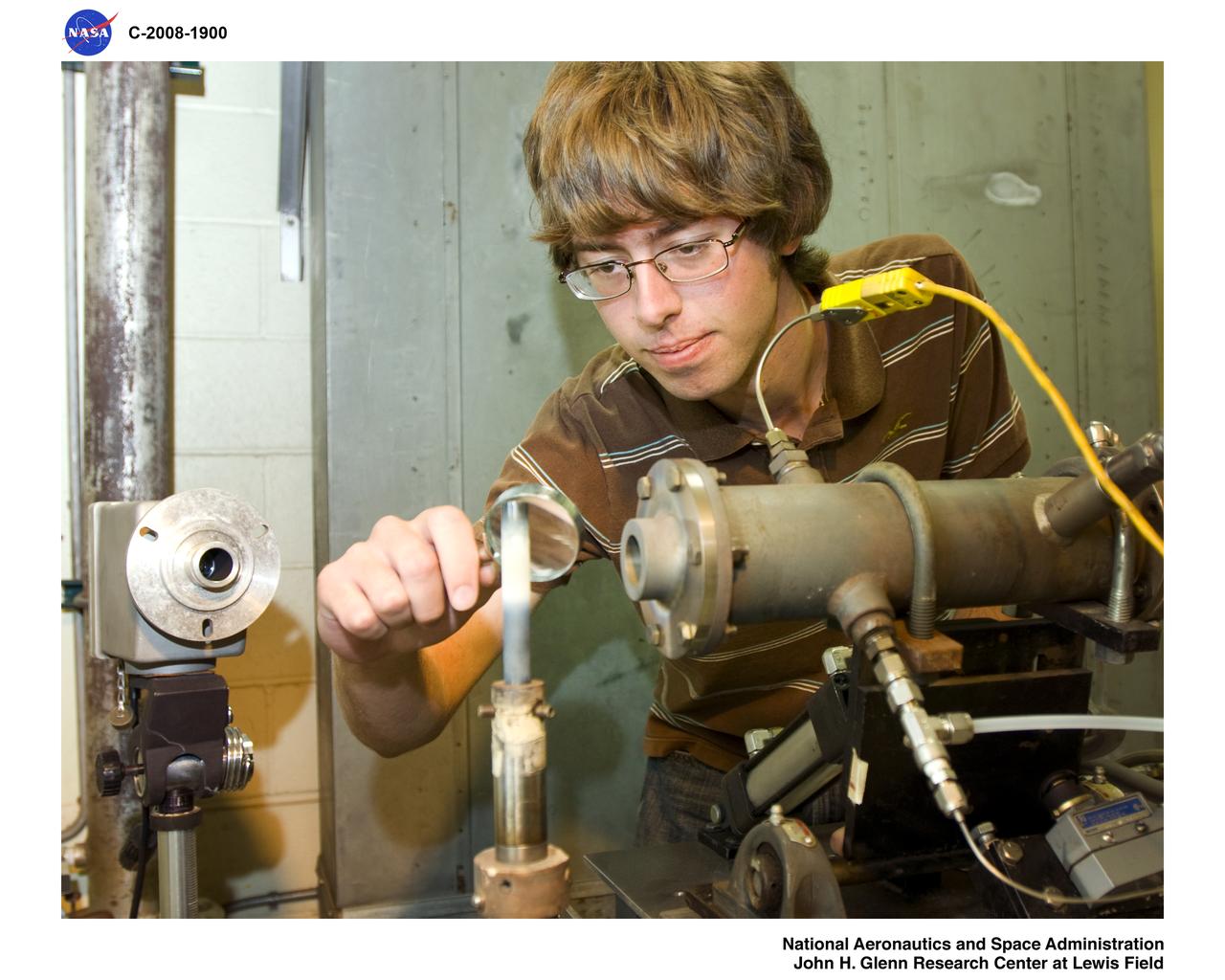
Lewis' Educational and Research Collaborative Intership Program (LERCIP)
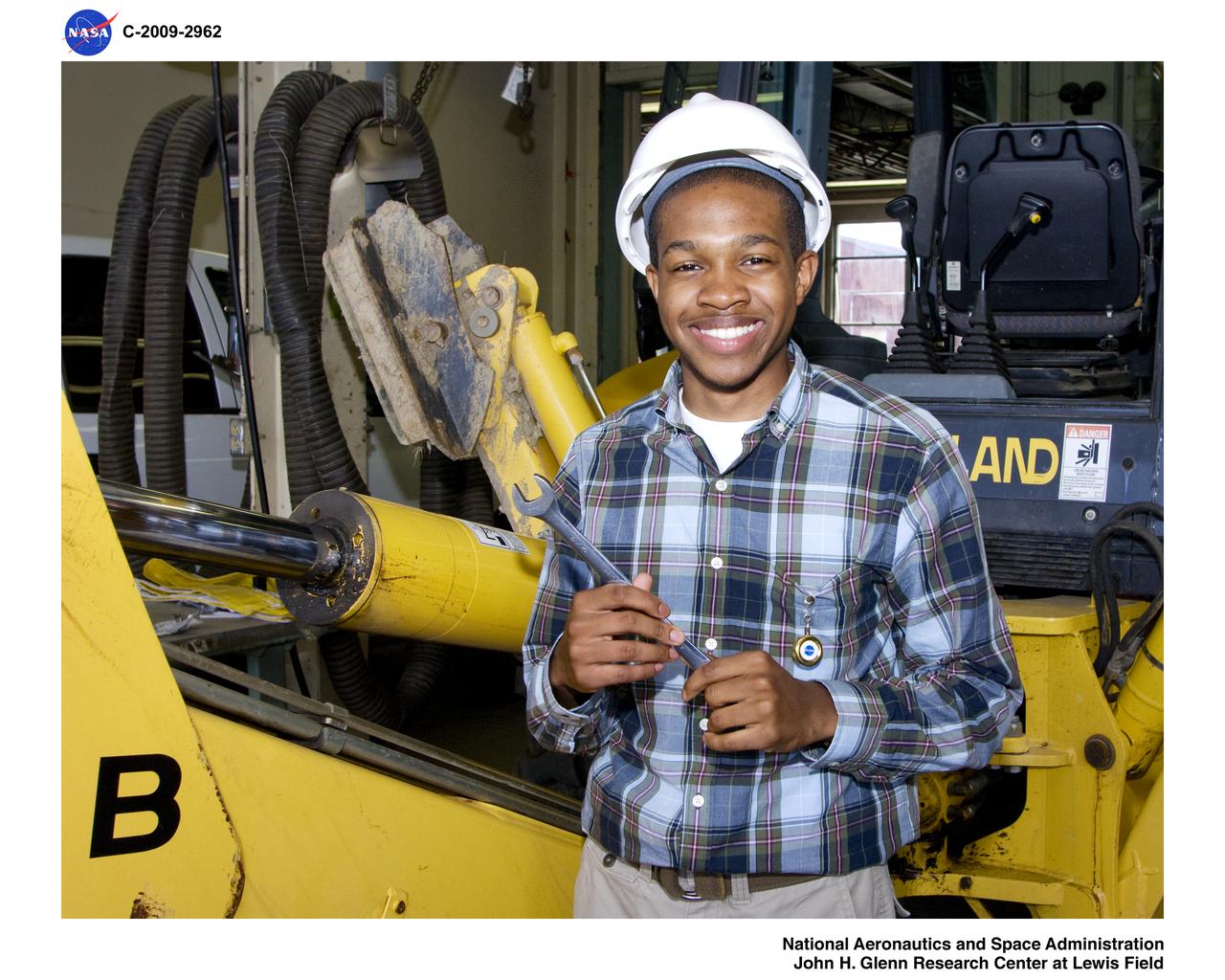
Lewis Educational and Research Collaborative Internship Program, LERCIP - College Student at the Worksite

CAPE CANAVERAL, Fla. – Inside the Educator Resource Center at NASA’s Kennedy Space Center Visitor Complex in Florida, science teacher April Lanotte displays materials used for the Museum in a Box activities for K-12 students. Lanotte, who is an Albert Einstein Distinguished Educator Fellow working in NASA’s Aeronautics Research Mission Directorate, was at Kennedy to train education specialists and Kennedy Educate to Innovate program volunteers in the new series of lessons and activities. The Museum in a Box is a program designed to teach physical science through aeronautics using hands-on activities and experiments. Photo credit: NASA_Jim Grossmann

CAPE CANAVERAL, Fla. – Inside the Educator Resource Center at NASA’s Kennedy Space Center Visitor Complex in Florida, science teacher April Lanotte displays the Museum in a Box that contains activities and learning materials for K-12 students. Lanotte, who is an Albert Einstein Distinguished Educator Fellow working in NASA’s Aeronautics Research Mission Directorate, was at Kennedy to train education specialists and Kennedy Educate to Innovate program volunteers in the new series of lessons and activities. The Museum in a Box is a program designed to teach physical science through aeronautics using hands-on activities and experiments. Photo credit: NASA_Jim Grossmann

CAPE CANAVERAL, Fla. – Inside the Educator Resource Center at NASA’s Kennedy Space Center Visitor Complex in Florida, science teacher April Lanotte demonstrates one of the Museum in a Box experiments designed for K-12 students. Lanotte, who is an Albert Einstein Distinguished Educator Fellow working in NASA’s Aeronautics Research Mission Directorate, was at Kennedy to train education specialists and Kennedy Educate to Innovate program volunteers in the new series of lessons and activities. The Museum in a Box is a program designed to teach physical science through aeronautics using hands-on activities and experiments. Photo credit: NASA_Jim Grossmann

EDWARDS AIR FORCE BASE, Calif. – While on the space station, Buzz Lightyear supported NASA’s education outreach program – STEM (Science, Technology, Engineering and Mathematics) -- by creating a series of fun, educational online outreach programs. Following his return, Disney is partnering with NASA to create a new online educational game and an online mission patch competition for school kids across America. NASA will fly the winning patch in space. In addition, NASA plans to announce on Oct. 2 the details of a new exciting educational competition that will give students the opportunity to design an experiment for the astronauts on the space station.
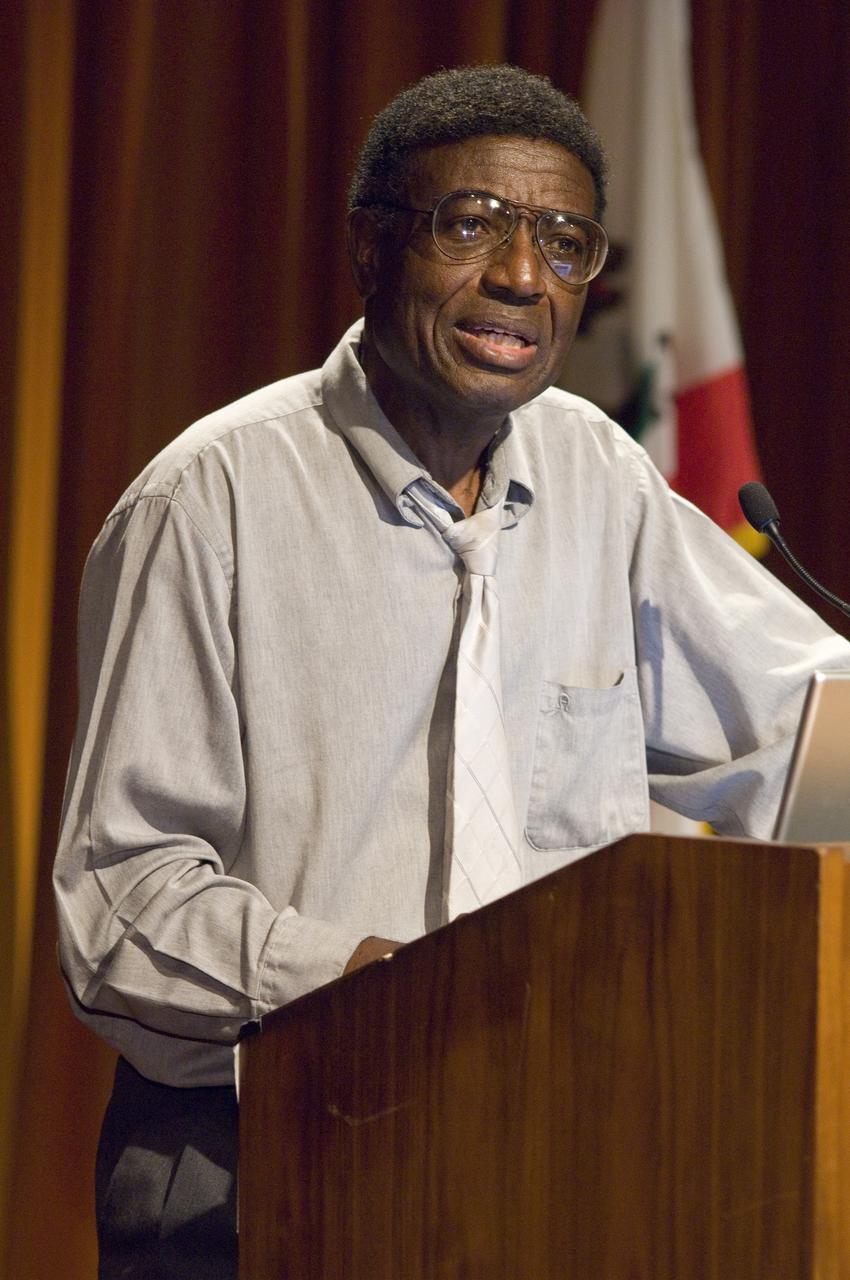
Summer Internship for 2008 closing ceremony: Dr Ben Oni, Higher Education Program Coordinator introduces the Keynote Speaker.
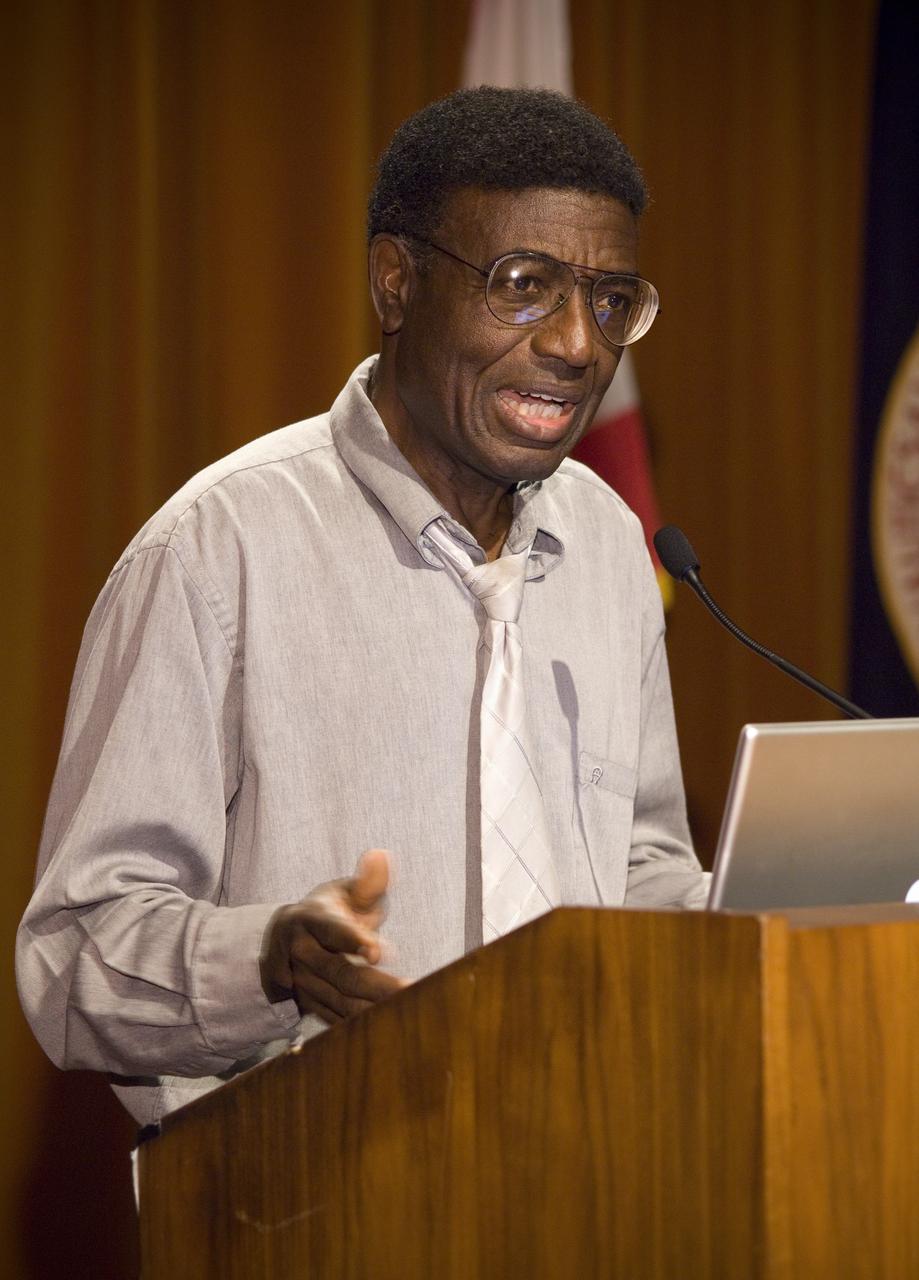
Summer Internship for 2008 closing ceremony: Dr Ben Oni, Higher Education Program Coordinator introduces the Keynote Speaker.
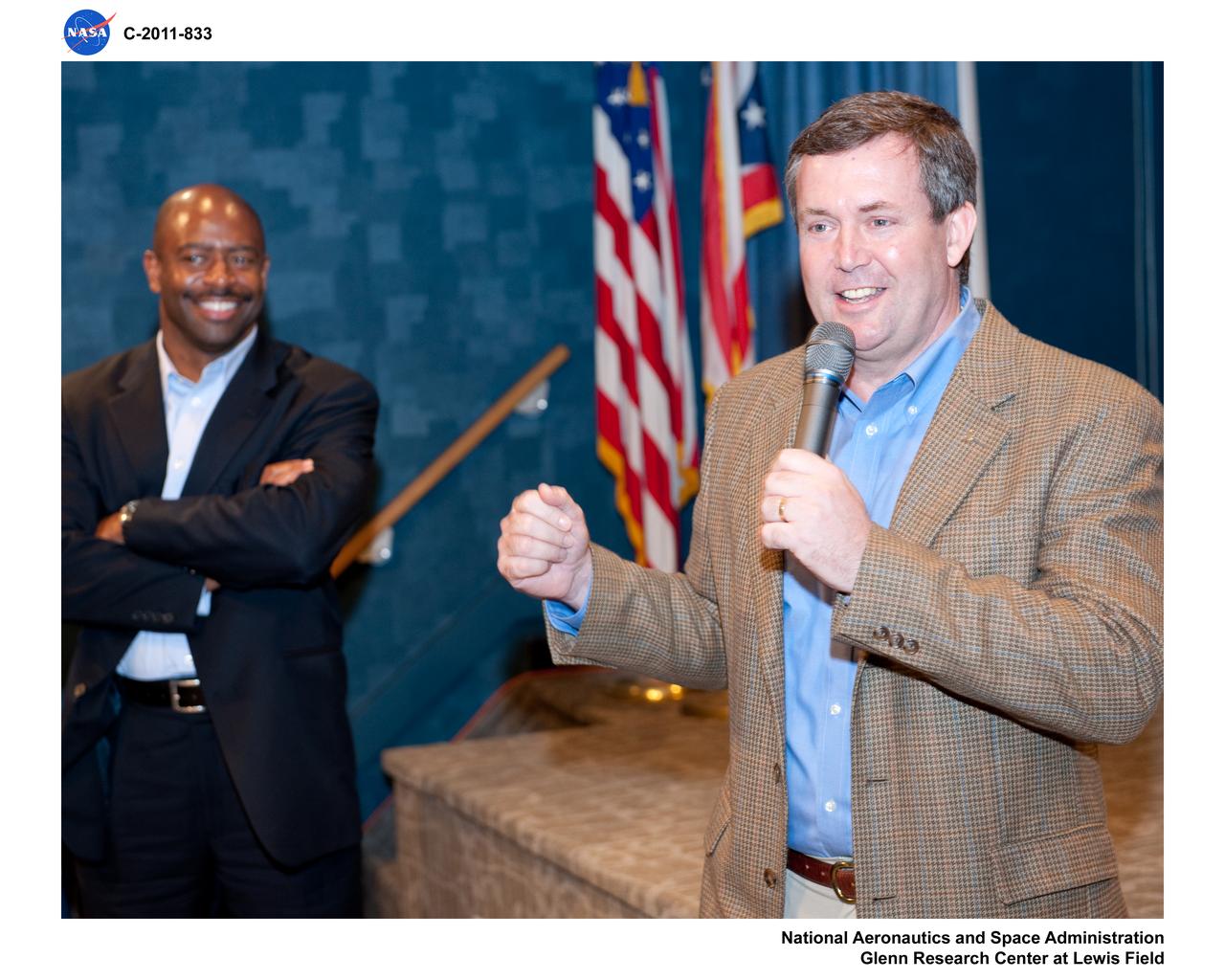
Associate Administrator for Education Presents a Farewell Momento to the Acting External Programs Division Chief
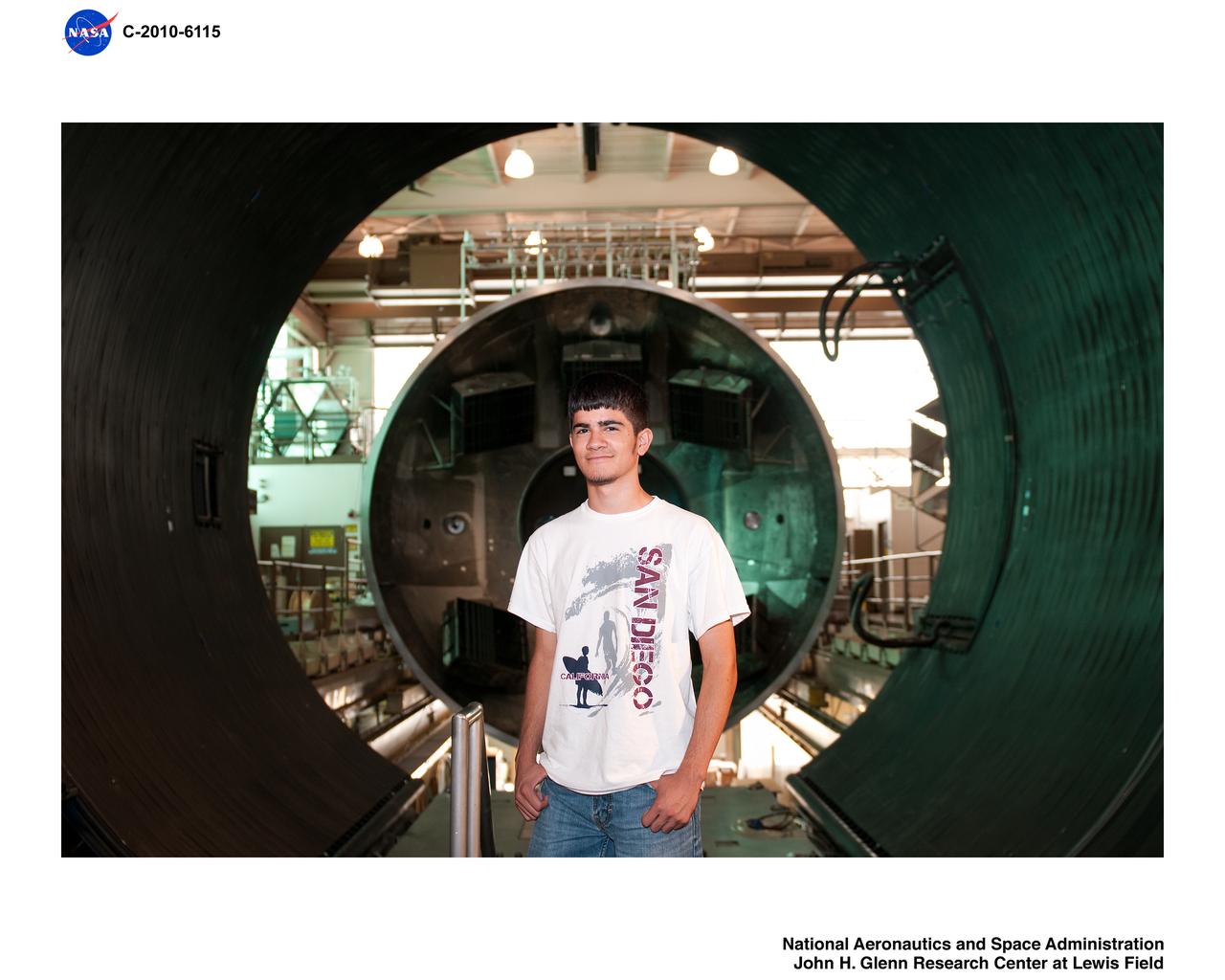
Lewis' Educational and Research Collaborative Internship Program - LERCIP - High School Student at the Worksite
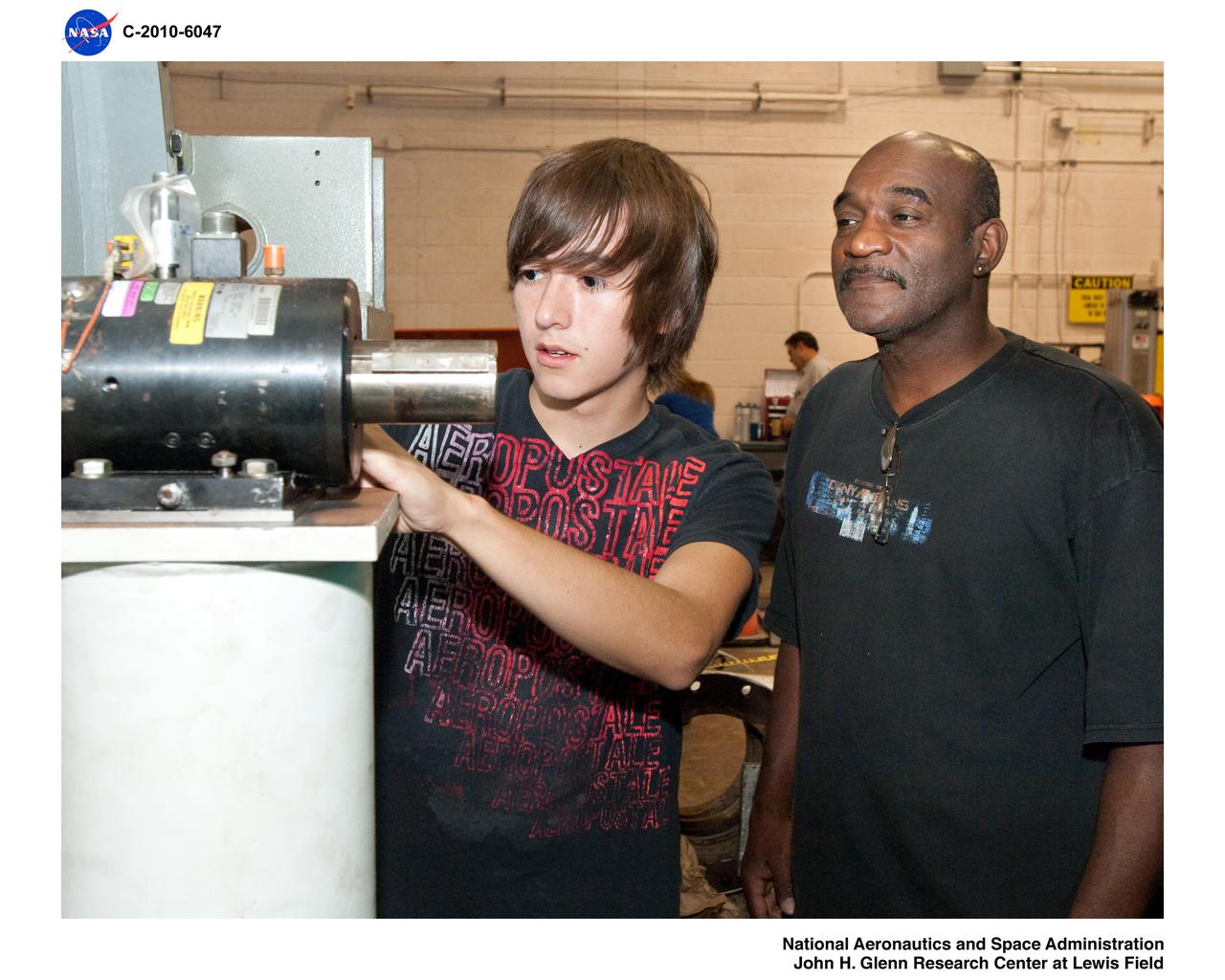
Lewis' Educational and Research Collaborative Internship Program - LERCIP - High School Student at the Worksite

NASA - Lewis' Educational and Research Collaborative Internship Program, LERCIP High School Student at worksite
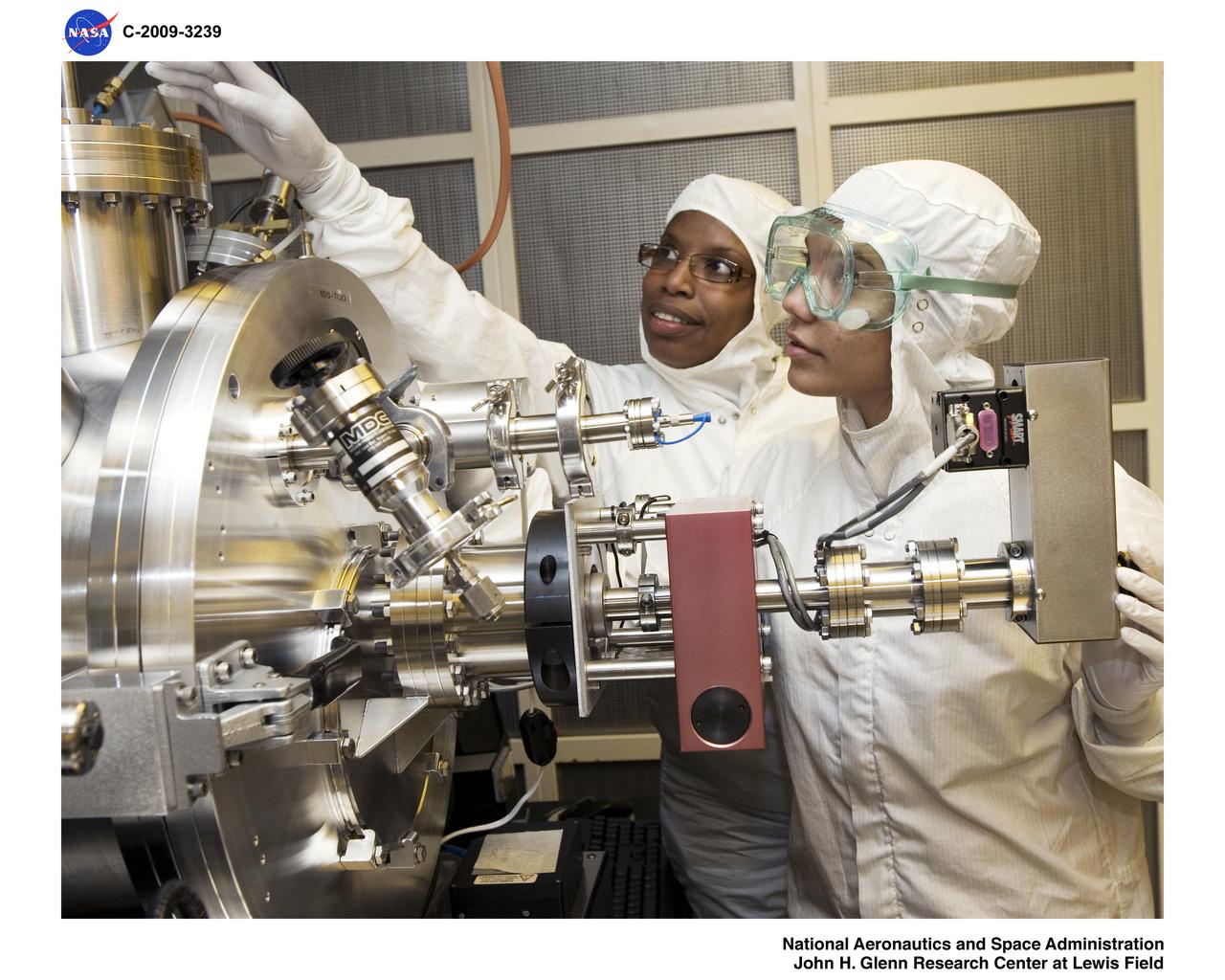
NASA - Lewis' Educational and Research Collaborative Internship Program, LERCIP High School Student at worksite
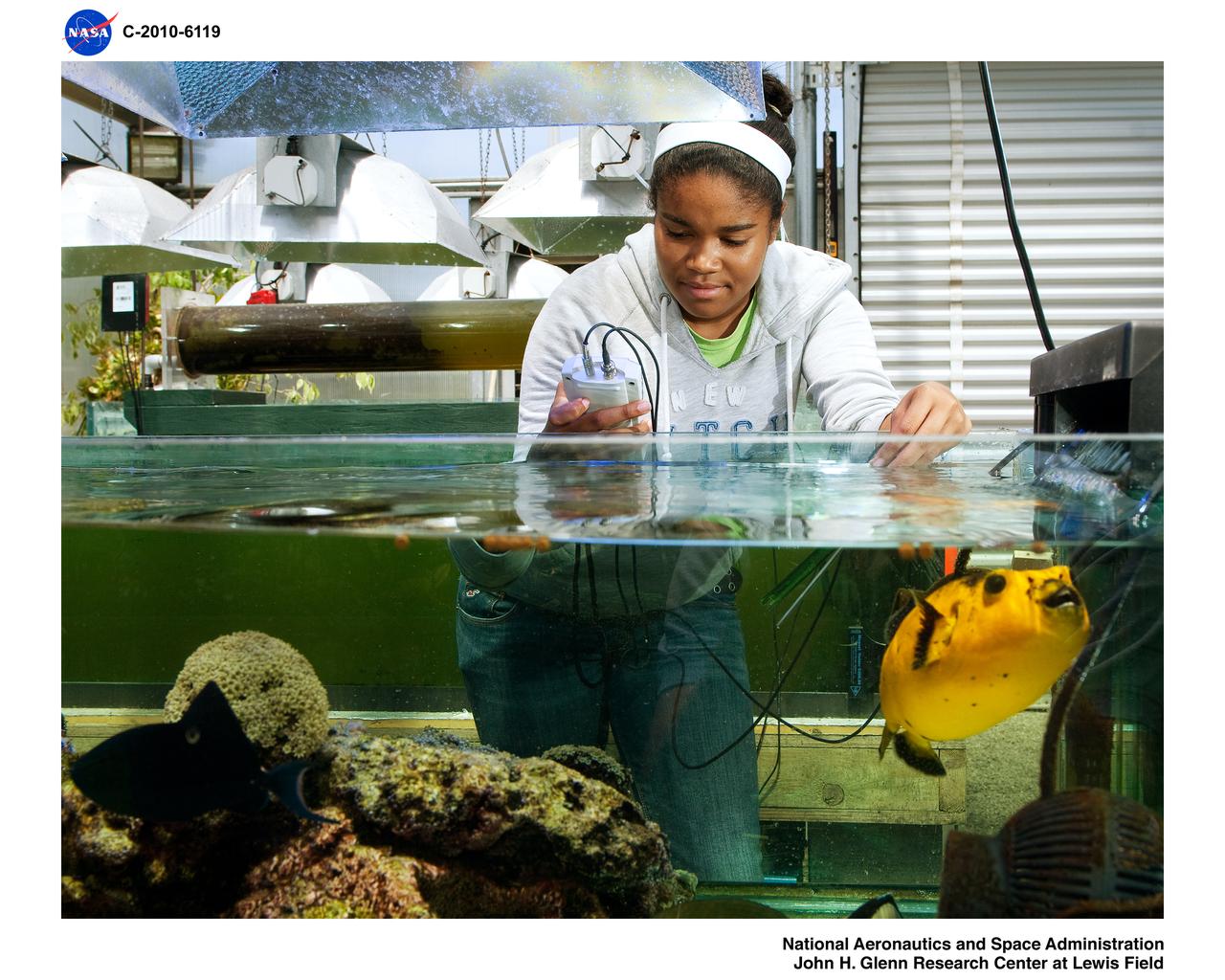
Lewis' Educational and Research Collaborative Internship Program - LERCIP - High School Student at the Worksite

Lewis' Educational and Research Collaborative Internship Program - LERCIP - High School Student at the Worksite
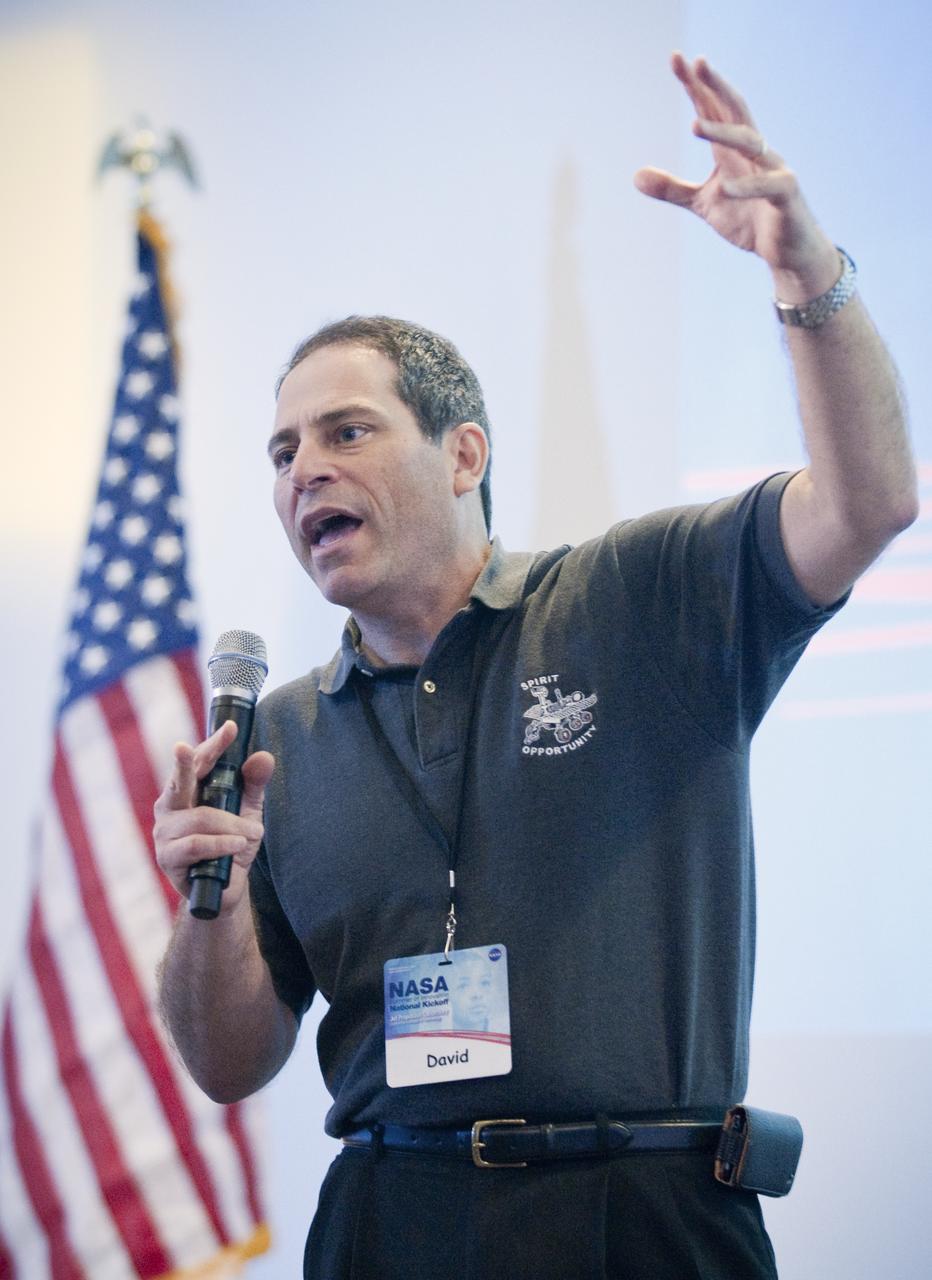
Jet Propulsion Laboratory Manager of Elementary and Secondary Education David Seidel motivates teachers and middle school students during the kick off of NASA's Summer of Innovation program at the Jet Propulsion Laboratory in Pasadena, Calif., Thursday, June 10, 2010. Through the program, NASA will engage thousands of middle school students and teachers in stimulating math and science-based education programs with the goal of increasing the number of future scientists, mathematicians, and engineers. Photo Credit: (NASA/Bill Ingalls)
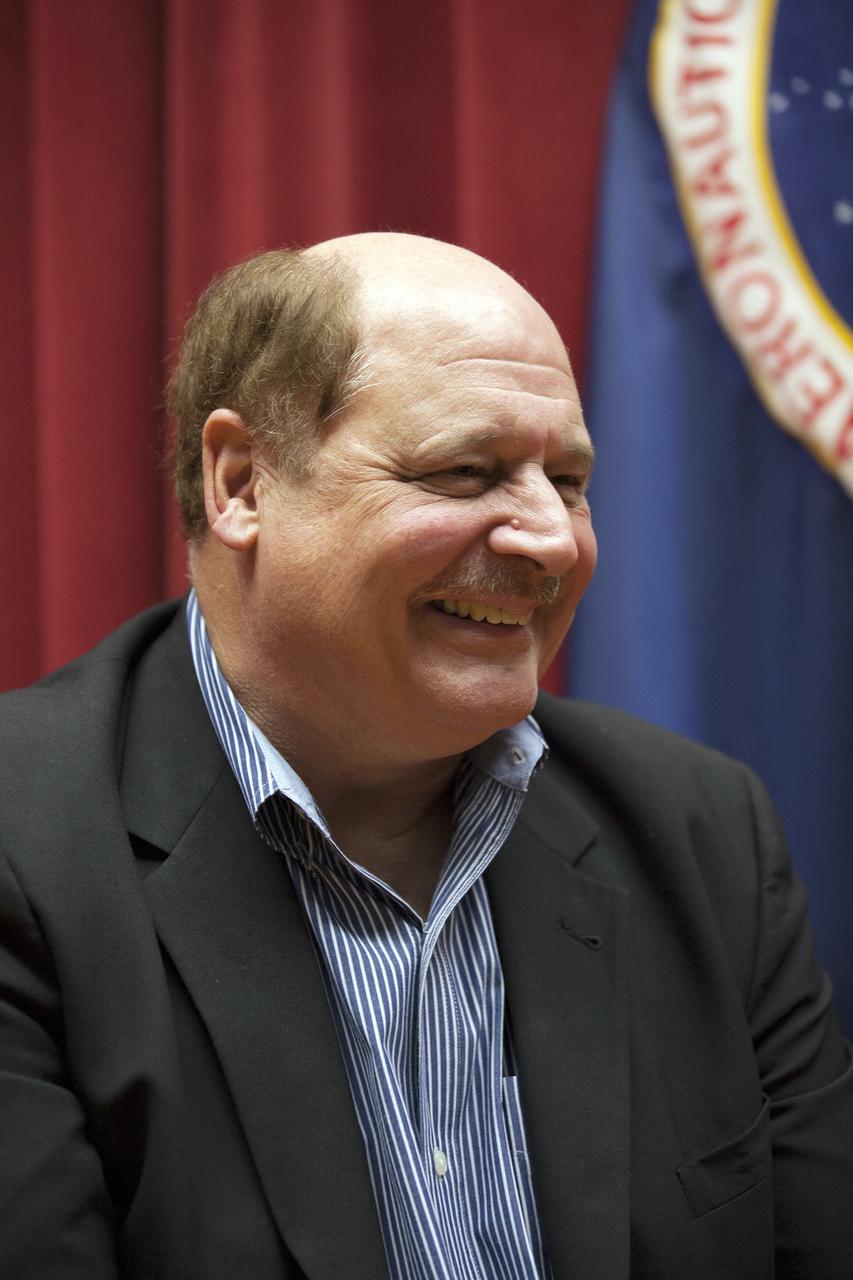
CAPE CANAVERAL, Fla. – Michael Kersjes, author and former special education teacher and football coach from Michigan, speaks to workers during the Disability Awareness and Action Working Group, or DAAWG, event at NASA's Kennedy Space Center in Florida. The theme of his presentation was "Power of the Human Spirit." Kersjes is the author of the book, "A Smile as Big as the Moon," which told the true story of how he worked to get special education students into Space Camp, a competitive education program at the U.S. Space and Rocket Center in Huntsville, Alabama. His book was made into a movie in 2012. For information on Kennedy's diversity programs, visit http://odeo.ksc.nasa.gov. Photo credit: NASA/Kim Shiflett
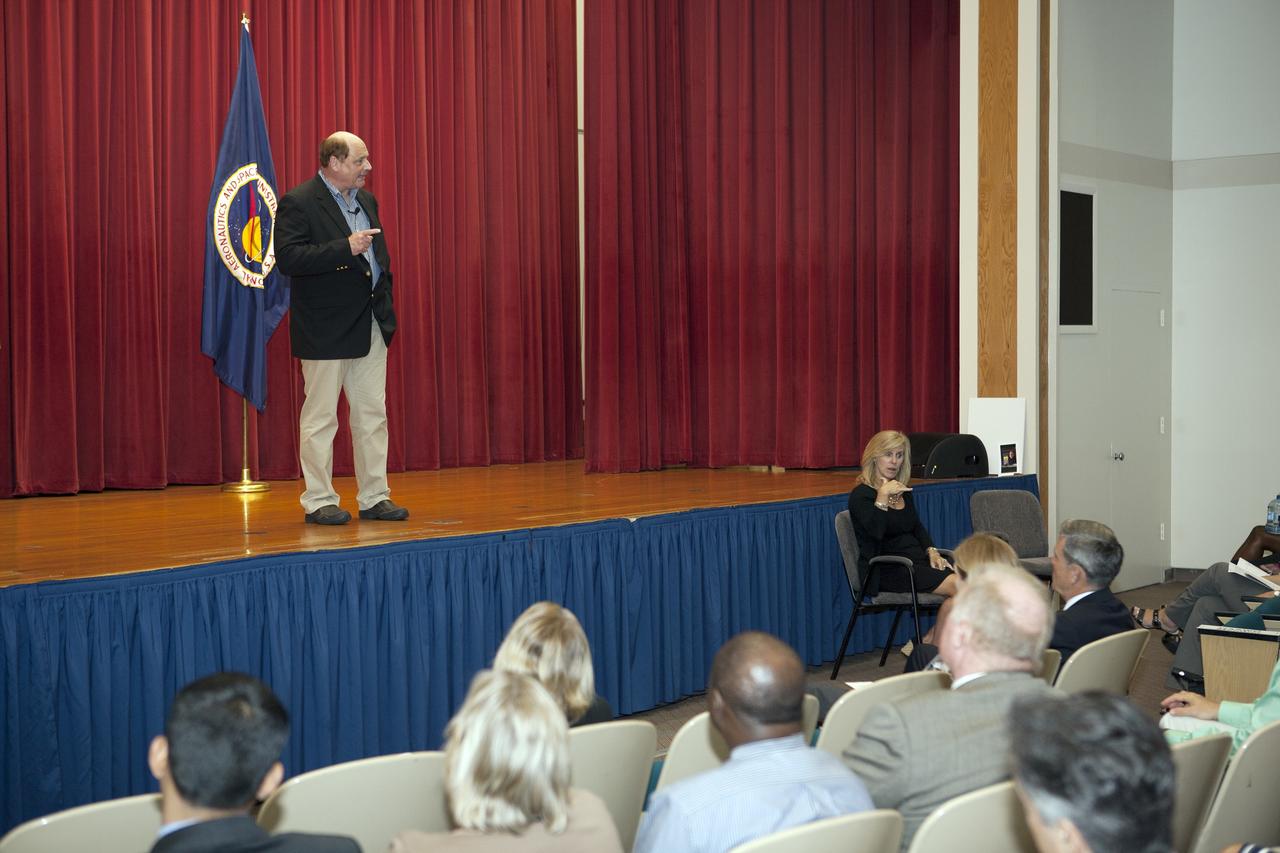
CAPE CANAVERAL, Fla. – Michael Kersjes, author and former special education teacher and football coach from Michigan, speaks to workers during the Disability Awareness and Action Working Group, or DAAWG, event at NASA's Kennedy Space Center in Florida. The theme of his presentation was "Power of the Human Spirit." Kersjes is the author of the book, "A Smile as Big as the Moon," which told the true story of how he worked to get special education students into Space Camp, a competitive education program at the U.S. Space and Rocket Center in Huntsville, Alabama. His book was made into a movie in 2012. For information on Kennedy's diversity programs, visit http://odeo.ksc.nasa.gov. Photo credit: NASA/Kim Shiflett
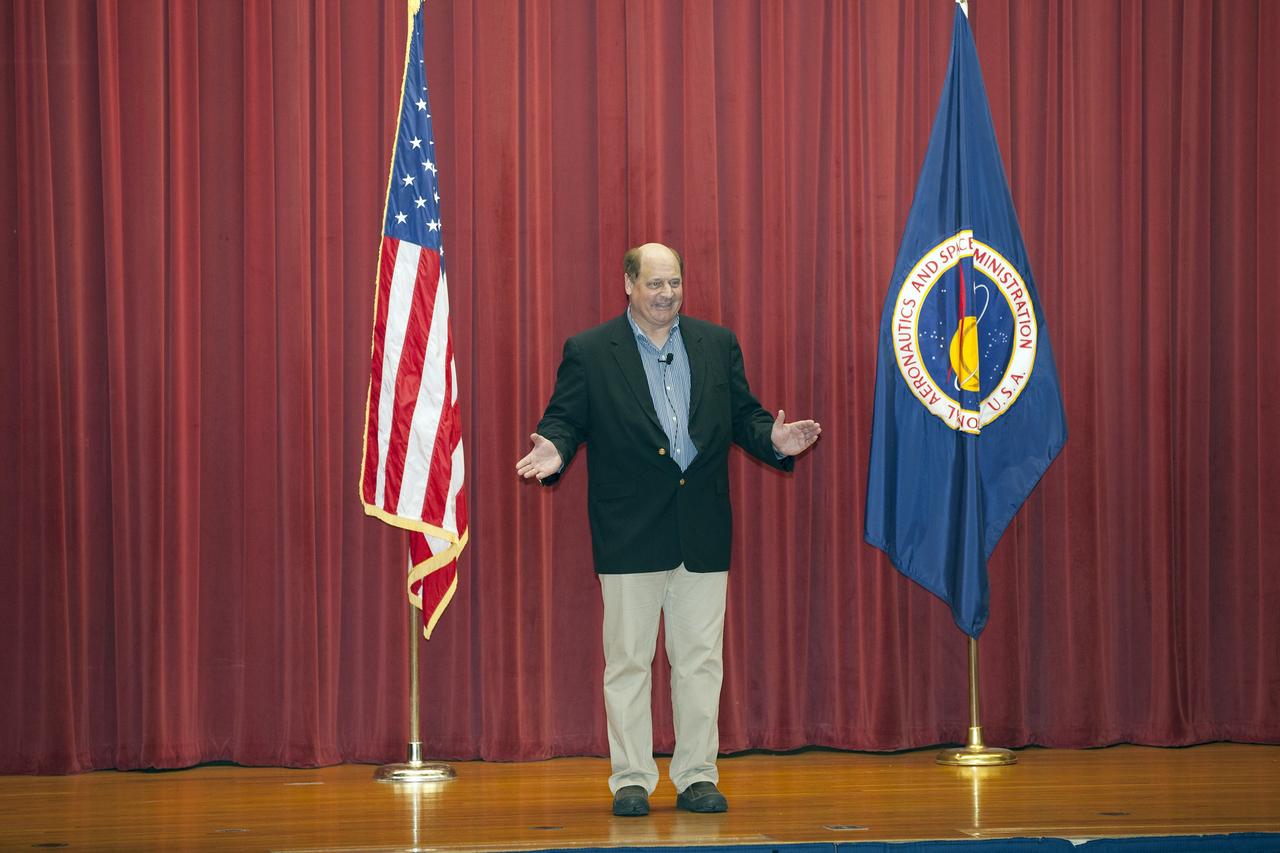
CAPE CANAVERAL, Fla. – Michael Kersjes, author and former special education teacher and football coach from Michigan, speaks to workers during the Disability Awareness and Action Working Group, or DAAWG, event at NASA's Kennedy Space Center in Florida. The theme of his presentation was "Power of the Human Spirit." Kersjes is the author of the book, "A Smile as Big as the Moon," which told the true story of how he worked to get special education students into Space Camp, a competitive education program at the U.S. Space and Rocket Center in Huntsville, Alabama. His book was made into a movie in 2012. For information on Kennedy's diversity programs, visit http://odeo.ksc.nasa.gov. Photo credit: NASA/Kim Shiflett
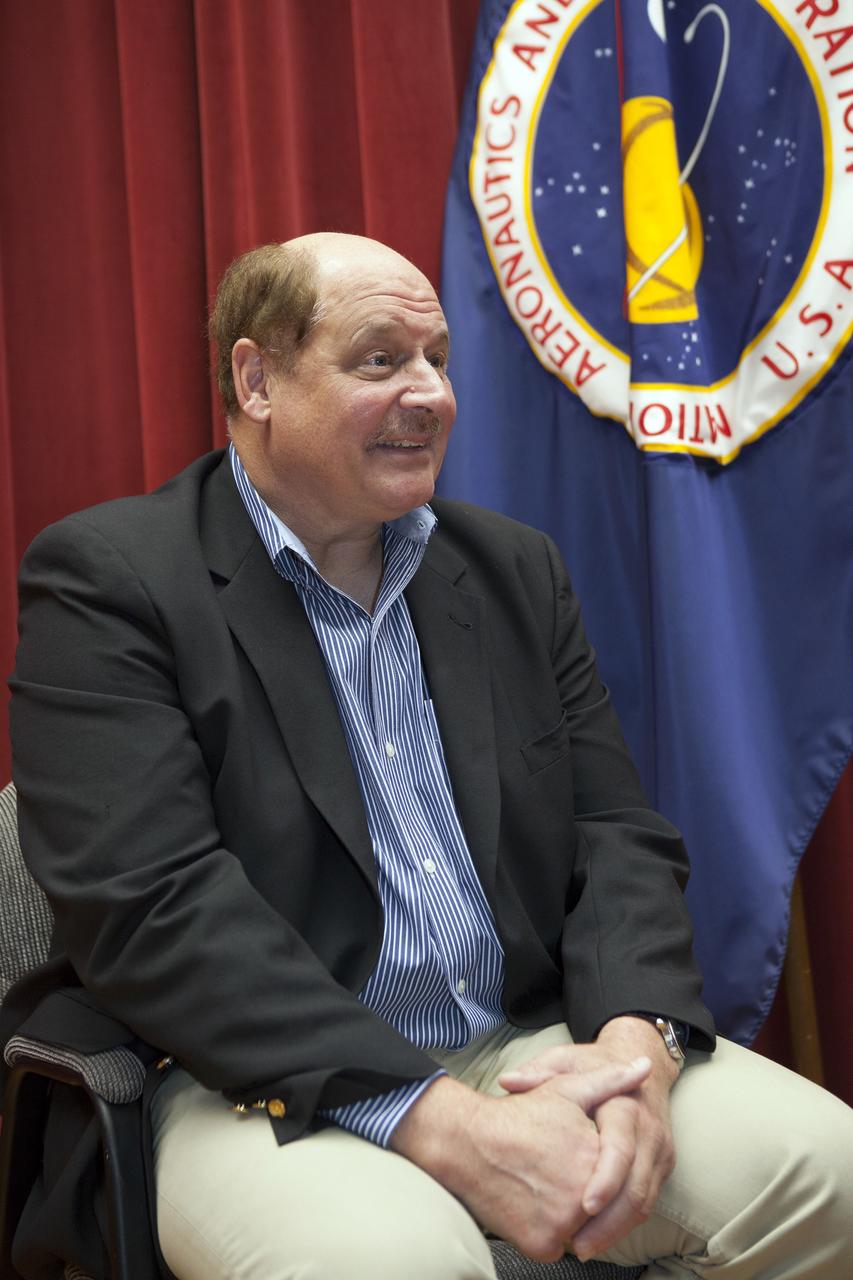
CAPE CANAVERAL, Fla. – Michael Kersjes, author and former special education teacher and football coach from Michigan, speaks to workers during the Disability Awareness and Action Working Group, or DAAWG, event at NASA's Kennedy Space Center in Florida. The theme of his presentation was "Power of the Human Spirit." Kersjes is the author of the book, "A Smile as Big as the Moon," which told the true story of how he worked to get special education students into Space Camp, a competitive education program at the U.S. Space and Rocket Center in Huntsville, Alabama. His book was made into a movie in 2012. For information on Kennedy's diversity programs, visit http://odeo.ksc.nasa.gov. Photo credit: NASA/Kim Shiflett
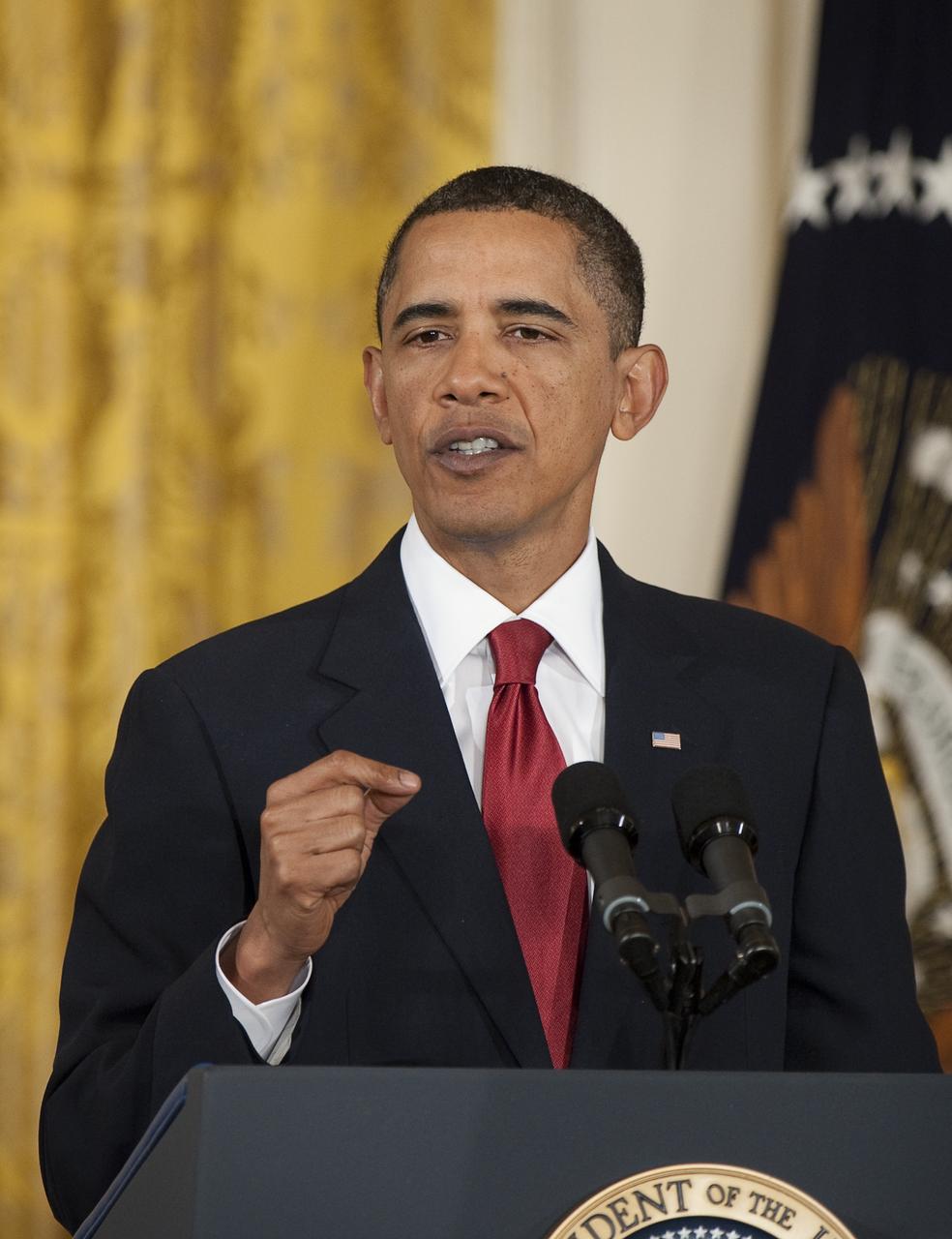
U.S. President Barack Obama speaks in the East Room of the White House in Washington, Wednesday, Jan. 6, 2010, during an 'Educate to Innovate' event where he honored teachers who received awards for excellence in Science, Technology, Engineering and Math (STEM) education. NASA's 'Summer of Innovation' program supports the President's 'Educate to Innovate' campaign. Photo Credit: (NASA/Bill Ingalls)
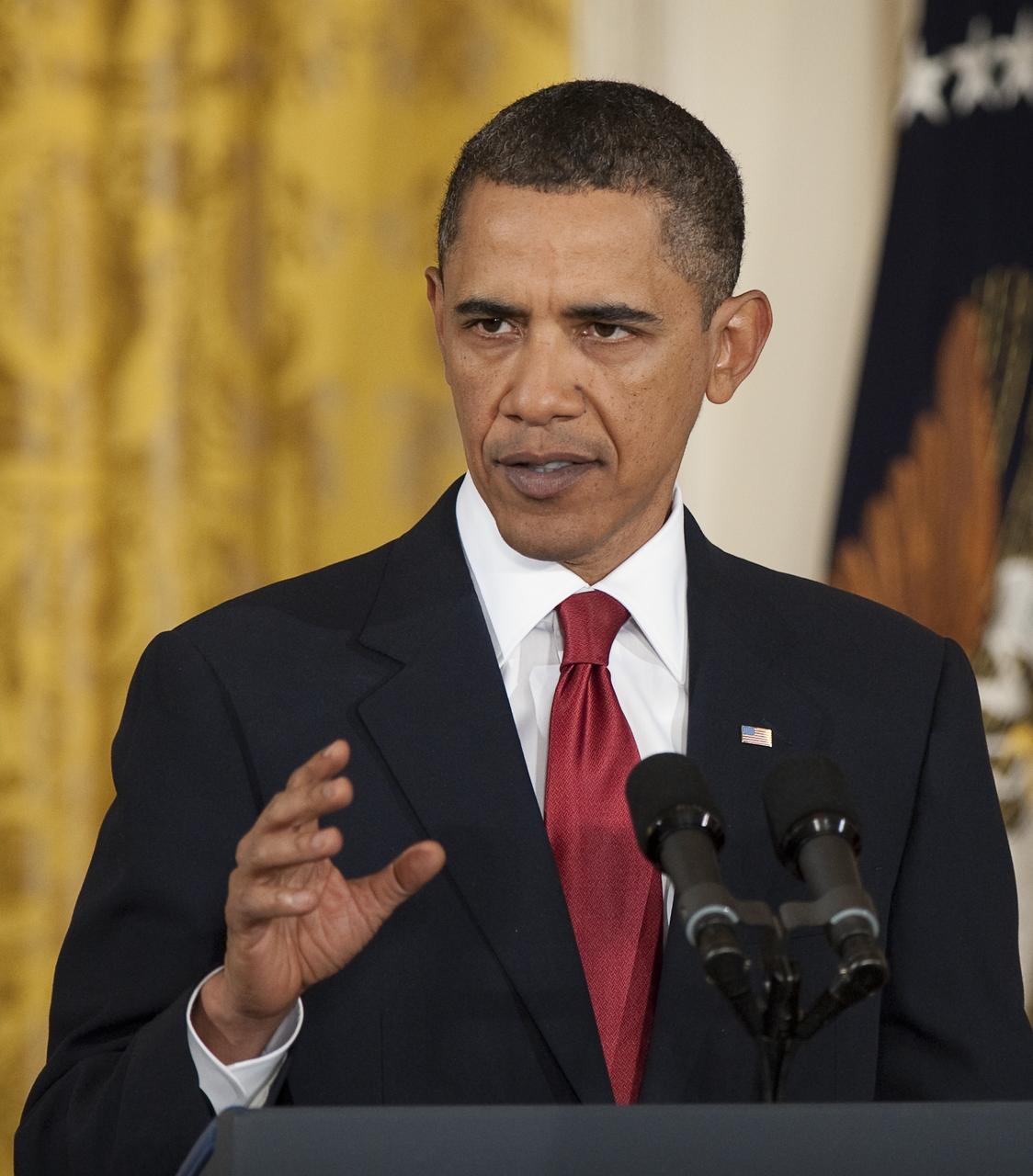
U.S. President Barack Obama speaks in the East Room of the White House in Washington, Wednesday, Jan. 6, 2010, during an 'Educate to Innovate' event where he honored teachers who received awards for excellence in Science, Technology, Engineering and Math (STEM) education. NASA's 'Summer of Innovation' program supports the President's 'Educate to Innovate' campaign. Photo Credit: (NASA/Bill Ingalls)
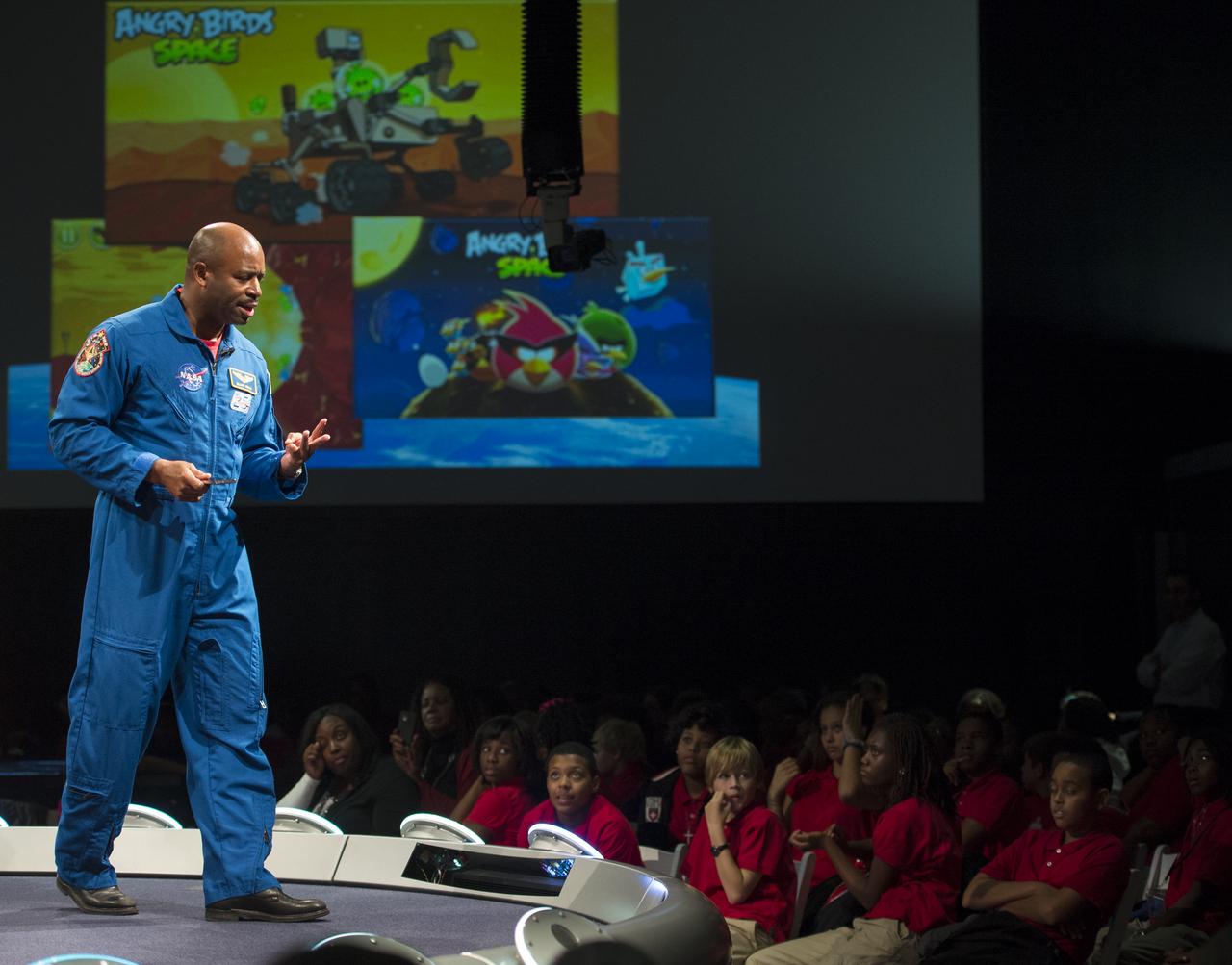
Leland Melvin, NASA Associate Administrator for Education and two-time space shuttle astronaut, speaks to students from D.C.'s Stuart-Hobson Middle School at the Smithsonian National Air and Space Museum, Thursday, Nov. 15, 2012 in Washington. The students, participants from the Student Spaceflight Experiments Program (SSEP) conducted a live conversation with astronauts aboard the International Space Station. The downlink is an annual event held in honor of International Education Week, and was co-hosted with the Department of Education and the National Center for Earth and Space Science Education (NCESSE). Photo Credit: (NASA/Carla Cioffi)
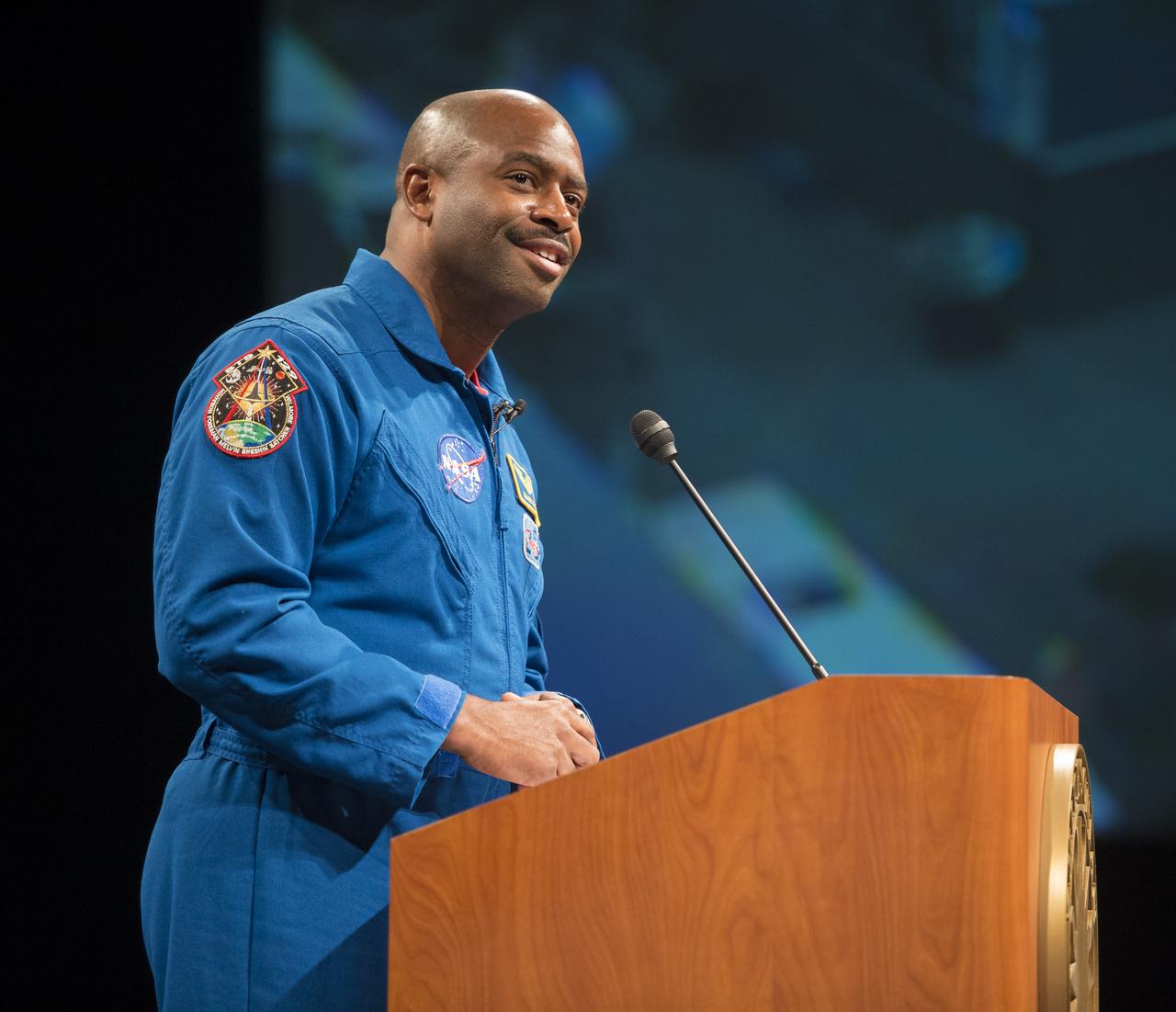
Leland Melvin, NASA Associate Administrator for Education and two-time space shuttle astronaut, speaks to students from D.C.'s Stuart-Hobson Middle School at the Smithsonian National Air and Space Museum, Thursday, Nov. 15, 2012 in Washington. The students, participants from the Student Spaceflight Experiments Program (SSEP) conducted a live conversation with astronauts aboard the International Space Station. The downlink is an annual event held in honor of International Education Week, and was co-hosted with the Department of Education and the National Center for Earth and Space Science Education (NCESSE). Photo Credit: (NASA/Carla Cioffi)
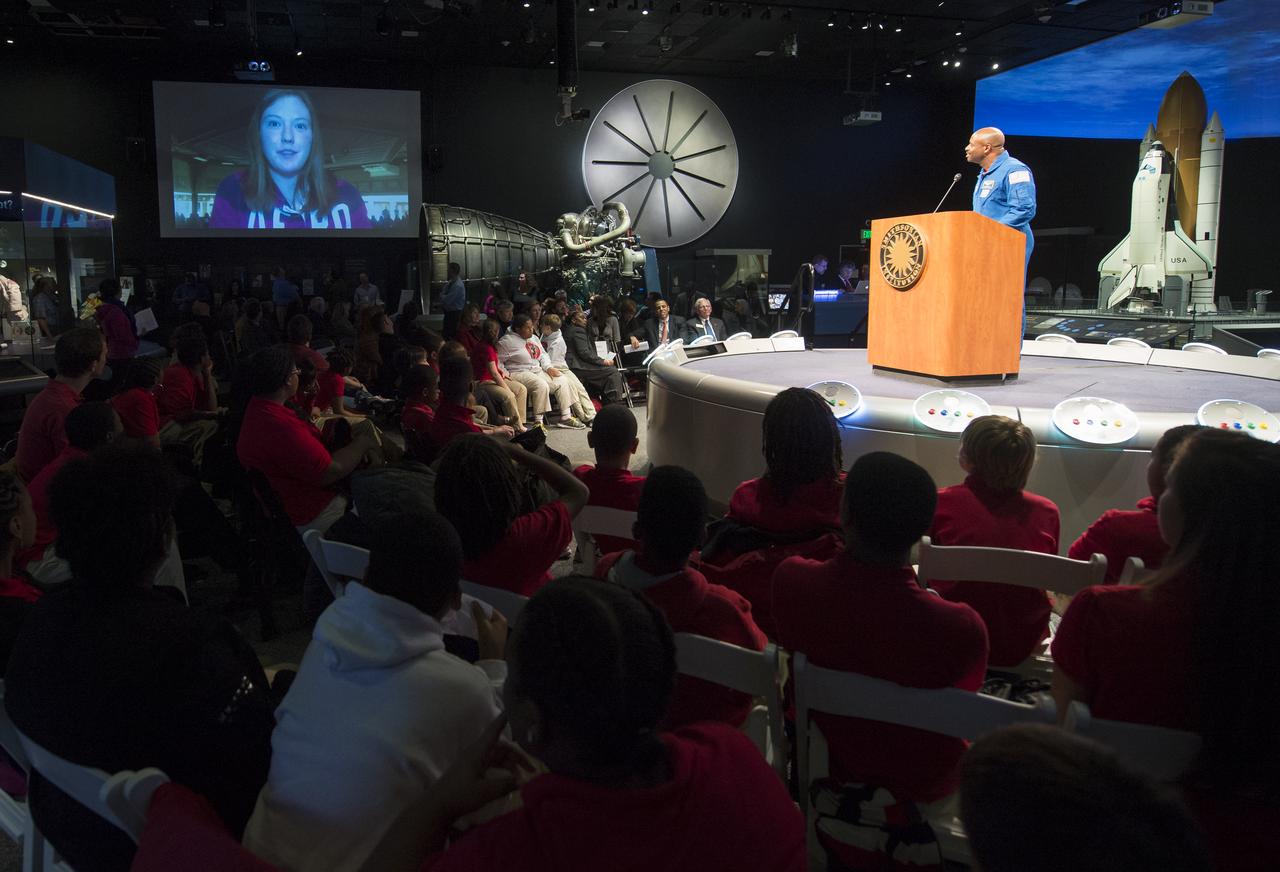
Leland Melvin, NASA Associate Administrator for Education and two-time space shuttle astronaut, answers a question from a student in a live video downlink at the Smithsonian National Air and Space Museum, Thursday, Nov. 15, 2012 in Washington. The students, participants from the Student Spaceflight Experiments Program (SSEP) conducted a live conversation with astronauts aboard the International Space Station. The downlink is an annual event held in honor of International Education Week, and was co-hosted with the Department of Education and the National Center for Earth and Space Science Education (NCESSE). Photo Credit: (NASA/Carla Cioffi)
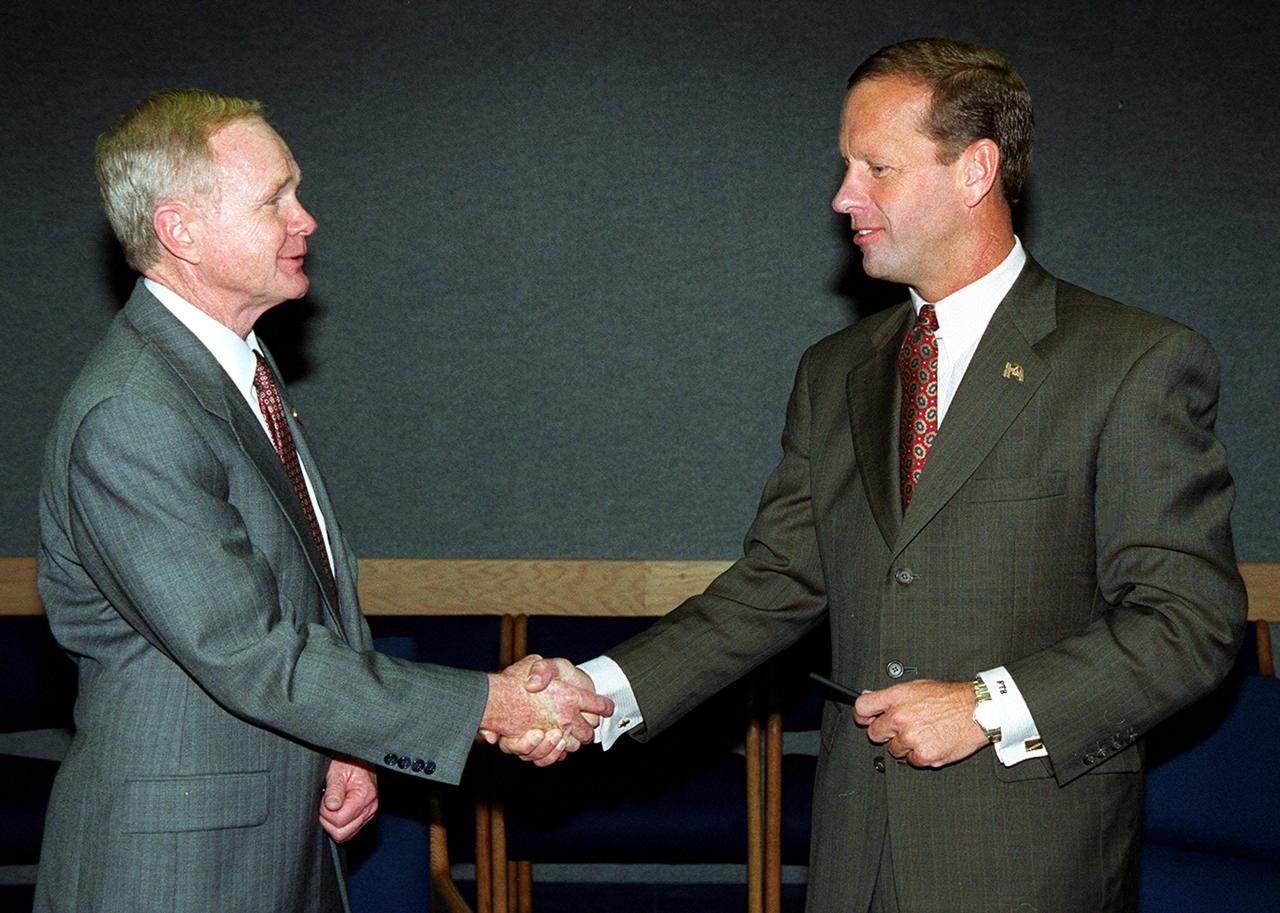
At the KSC Visitor Complex, Center Director Roy D. Bridges (left) and Florida’s Lieutenant Governor Frank T. Brogan shake hands after signing a Memorandum of Understanding (MOU). The MOU documents the intent of NASA KSC and the State of Florida to form partnerships with academic institutions in Florida for development of aerospace-related advanced training and academic/educational programs. The three-year project anticipates that the partnership and educational programs fostered will improve the lifelong learning environment for the aerospace and engineering workforce
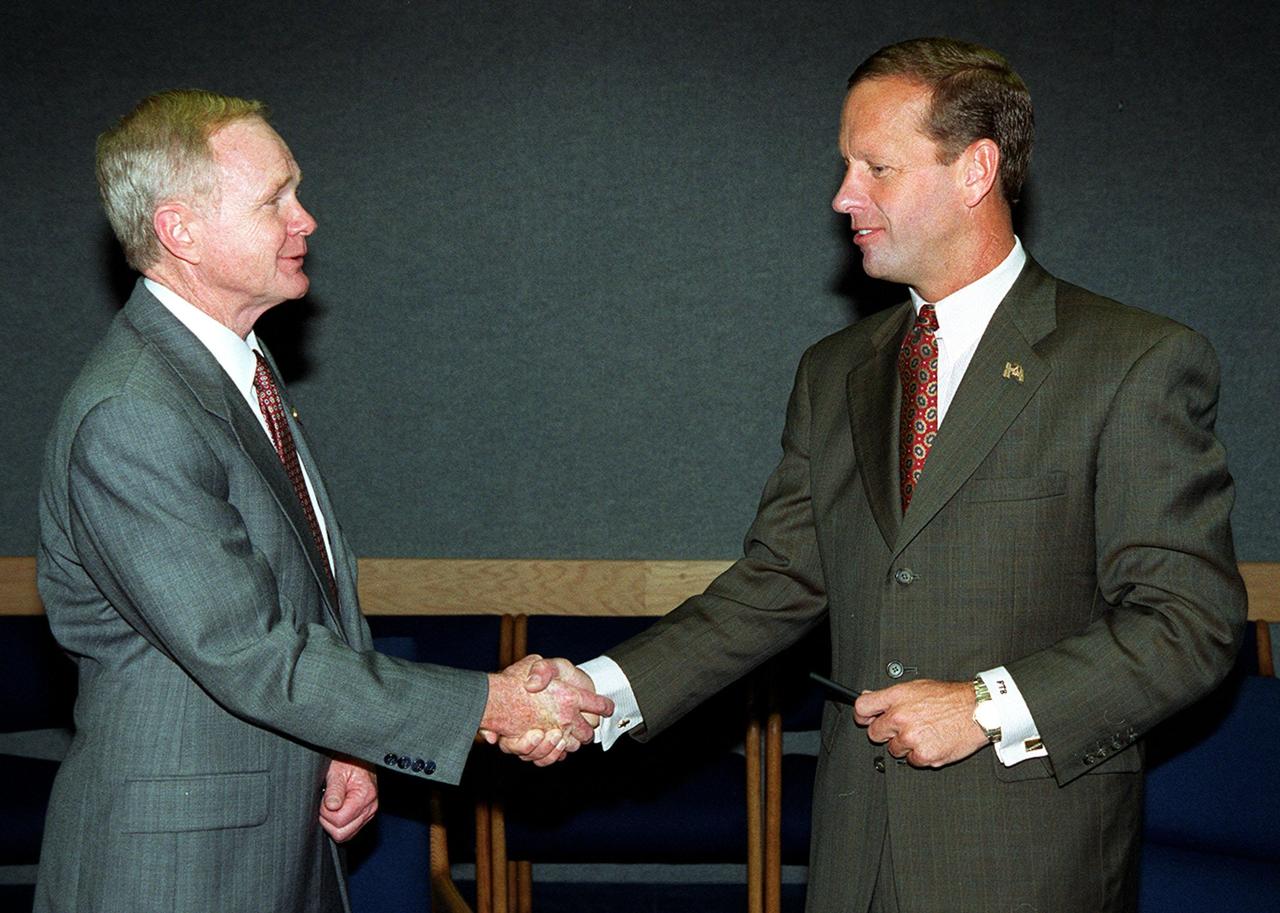
At the KSC Visitor Complex, Center Director Roy D. Bridges (left) and Florida’s Lieutenant Governor Frank T. Brogan shake hands after signing a Memorandum of Understanding (MOU). The MOU documents the intent of NASA KSC and the State of Florida to form partnerships with academic institutions in Florida for development of aerospace-related advanced training and academic/educational programs. The three-year project anticipates that the partnership and educational programs fostered will improve the lifelong learning environment for the aerospace and engineering workforce
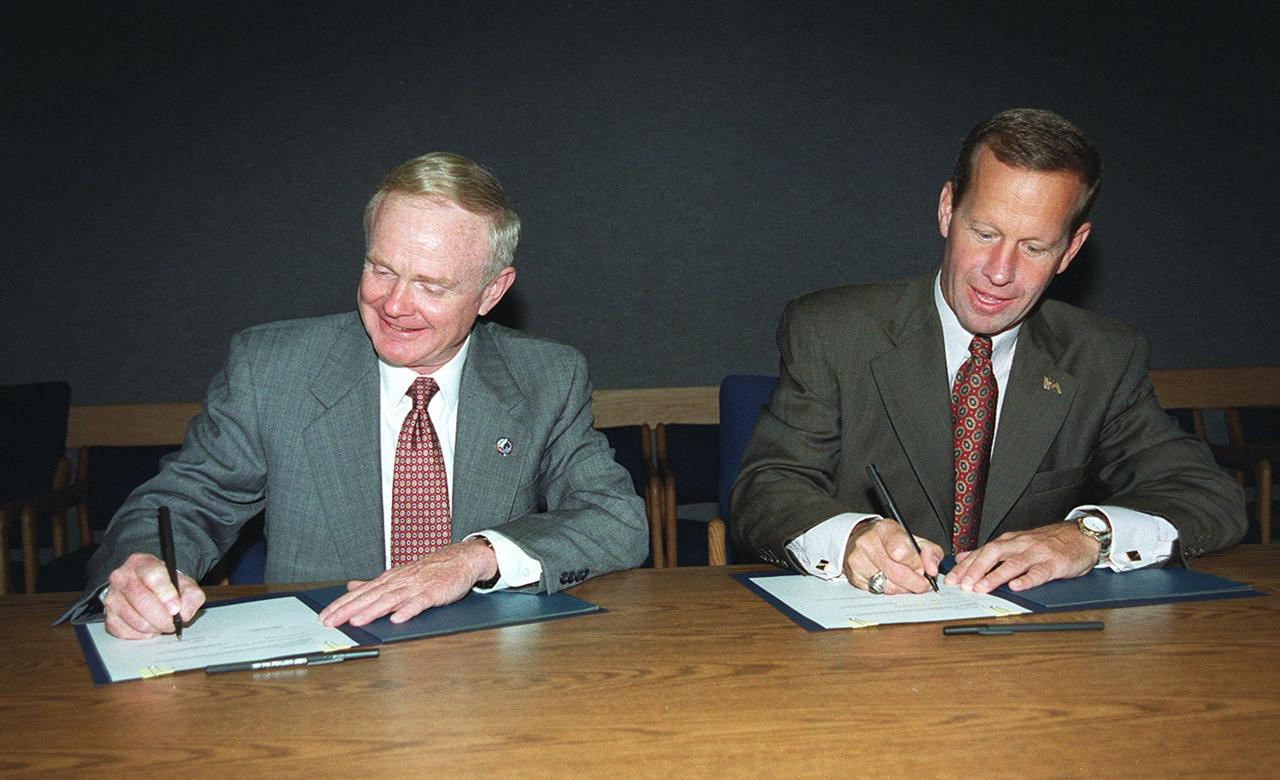
At the KSC Visitor Complex, Center Director Roy D. Bridges (left) and Florida’s Lieutenant Governor Frank T. Brogan sign a Memorandum of Understanding (MOU). The MOU documents the intent of NASA KSC and the State of Florida to form partnerships with academic institutions in Florida for development of aerospace-related advanced training and academic/educational programs. The three-year project anticipates that the partnership and educational programs fostered will improve the lifelong learning environment for the aerospace and engineering workforce
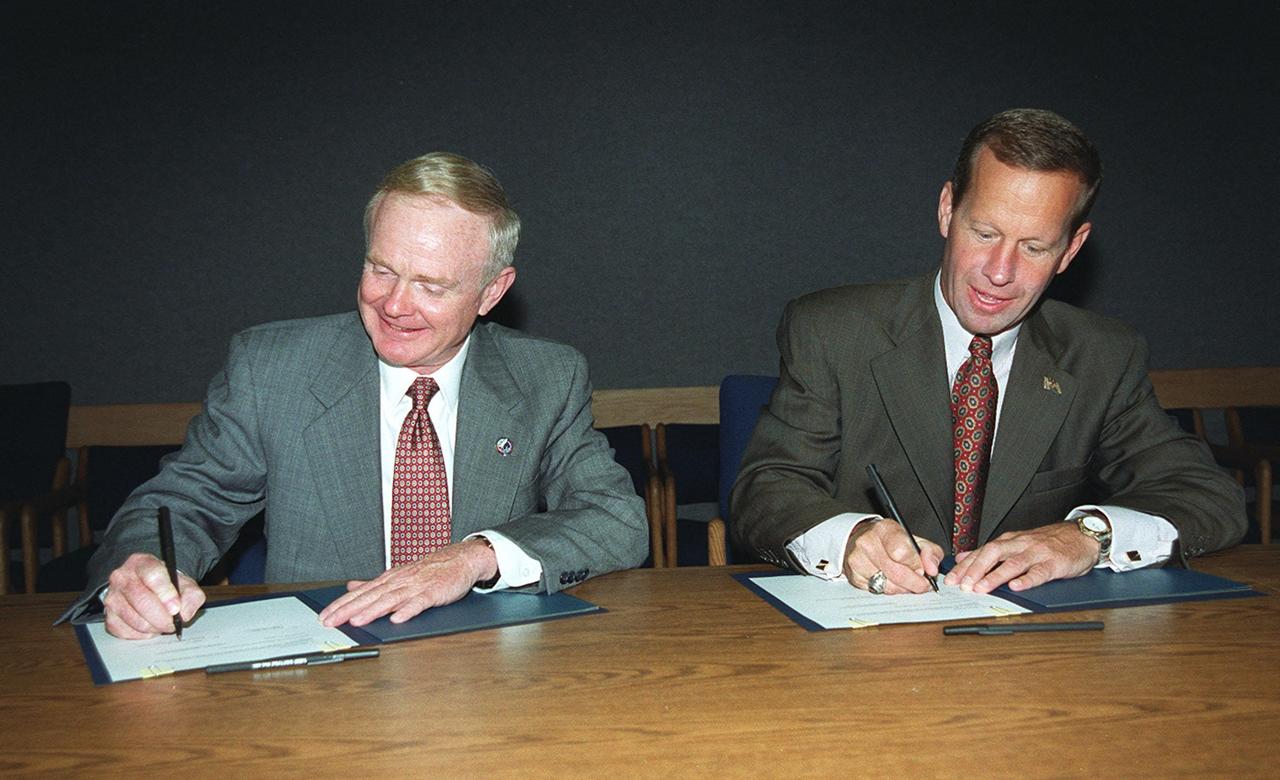
At the KSC Visitor Complex, Center Director Roy D. Bridges (left) and Florida’s Lieutenant Governor Frank T. Brogan sign a Memorandum of Understanding (MOU). The MOU documents the intent of NASA KSC and the State of Florida to form partnerships with academic institutions in Florida for development of aerospace-related advanced training and academic/educational programs. The three-year project anticipates that the partnership and educational programs fostered will improve the lifelong learning environment for the aerospace and engineering workforce
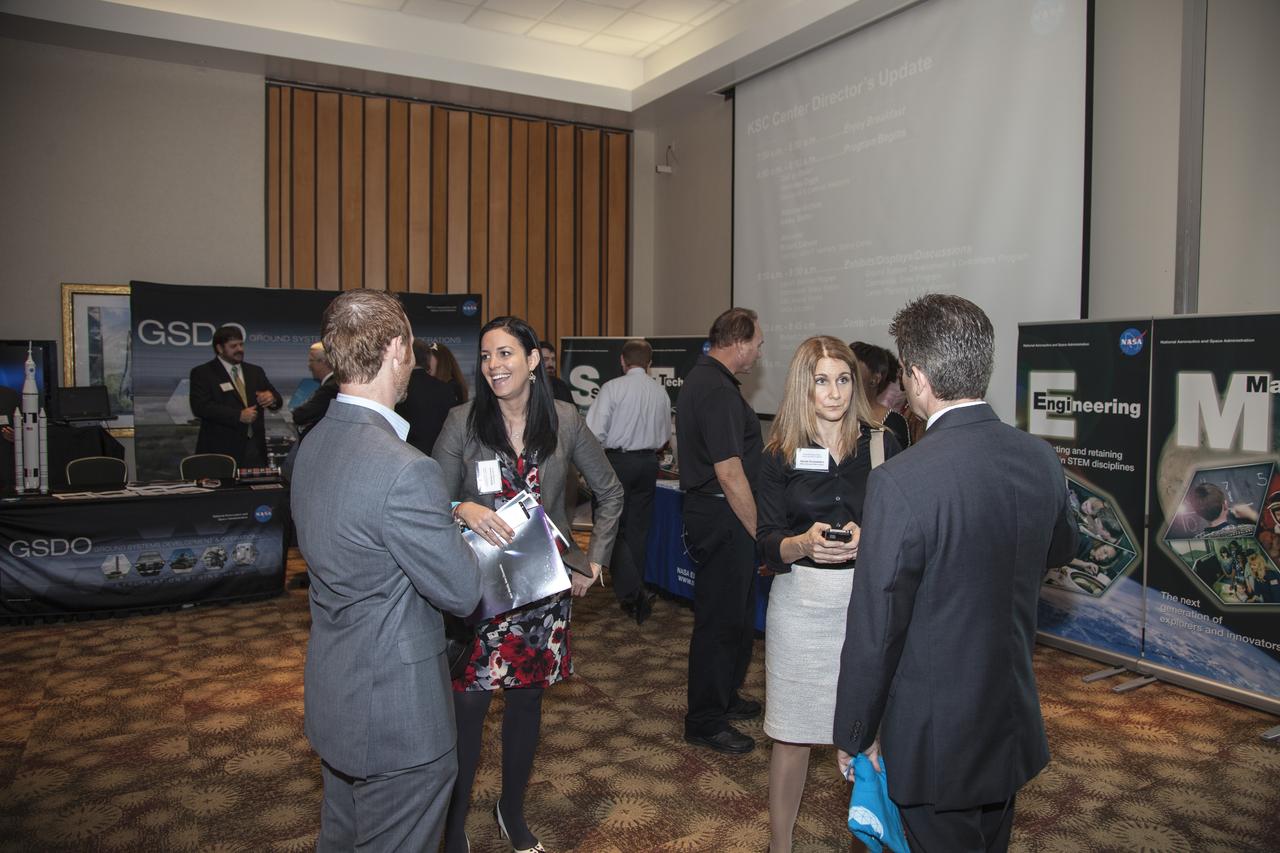
CAPE CANAVERAL, Fla. - Community leaders, business executives, educators, and state and local government leaders were updated on NASA Kennedy Space Center programs and accomplishments during Center Director Bob Cabana’s Center Director Update at the Debus Center at the Kennedy Space Center Visitor Complex in Florida. Attendees mingled and visited various displays, including Ground Systems Development and Operations Program and Education Office displays. Attendees talked with Cabana and other senior Kennedy managers and visited displays featuring updates on Kennedy programs and projects, including International Space Station, Commercial Crew, Ground System Development and Operations, Launch Services, Center Planning and Development, Technology, KSC Swamp Works and NASA Education. The morning concluded with a tour of the new Space Shuttle Atlantis exhibit at the visitor complex. For more information, visit http://www.nasa.gov/kennedy. Photo credit: NASA/Daniel Casper
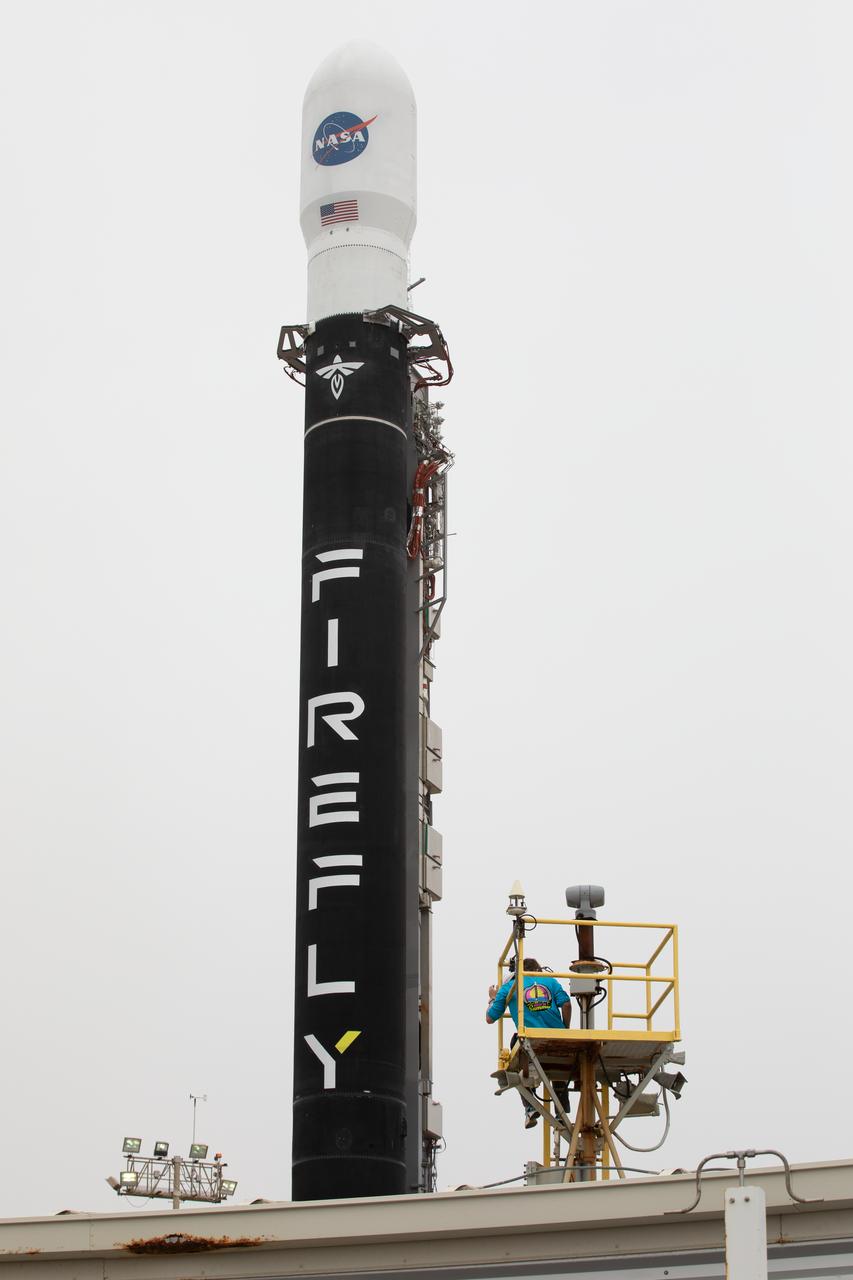
Firefly Aerospace’s Alpha rocket carrying eight CubeSats as part of NASA’s CubeSat Launch Initiative’s (CSLI) ELaNa 43 (Educational Launch of Nanosatellites) mission stands vertical at Space Launch Complex 2 at Vandenberg Space Force Base, California, on Monday, July 1, 2024. Firefly Aerospace is one of three companies selected to fly small satellites to space under NASA’s Launch Services Program Venture-Class Launch Services Demonstration 2 (VCLS Demo 2) contract awarded in December 2020.
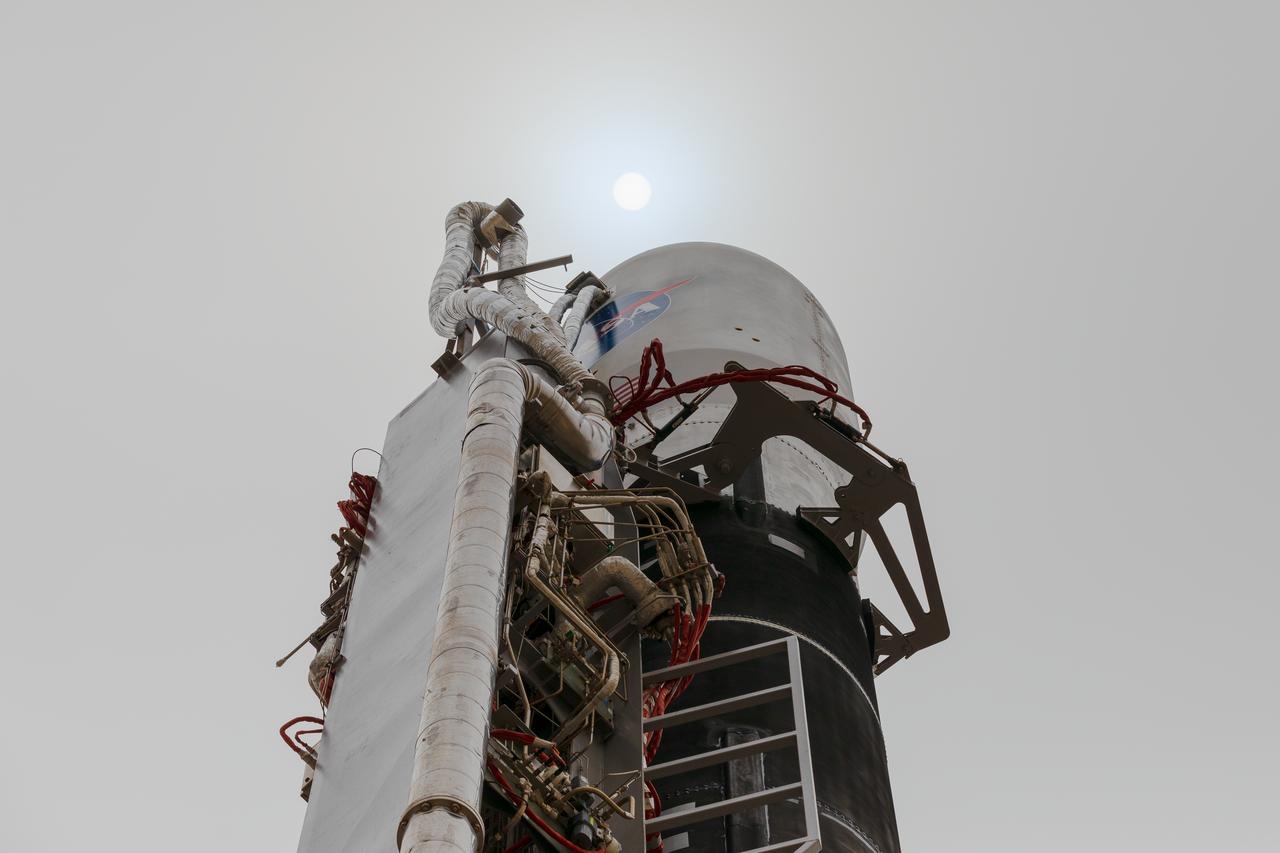
Firefly Aerospace’s Alpha rocket carrying eight CubeSats as part of NASA’s CubeSat Launch Initiative’s (CSLI) ELaNa 43 (Educational Launch of Nanosatellites) mission stands vertical at Space Launch Complex 2 at Vandenberg Space Force Base, California, on Monday, July 1, 2024. Firefly Aerospace is one of three companies selected to fly small satellites to space under NASA’s Launch Services Program Venture-Class Launch Services Demonstration 2 (VCLS Demo 2) contract awarded in December 2020.
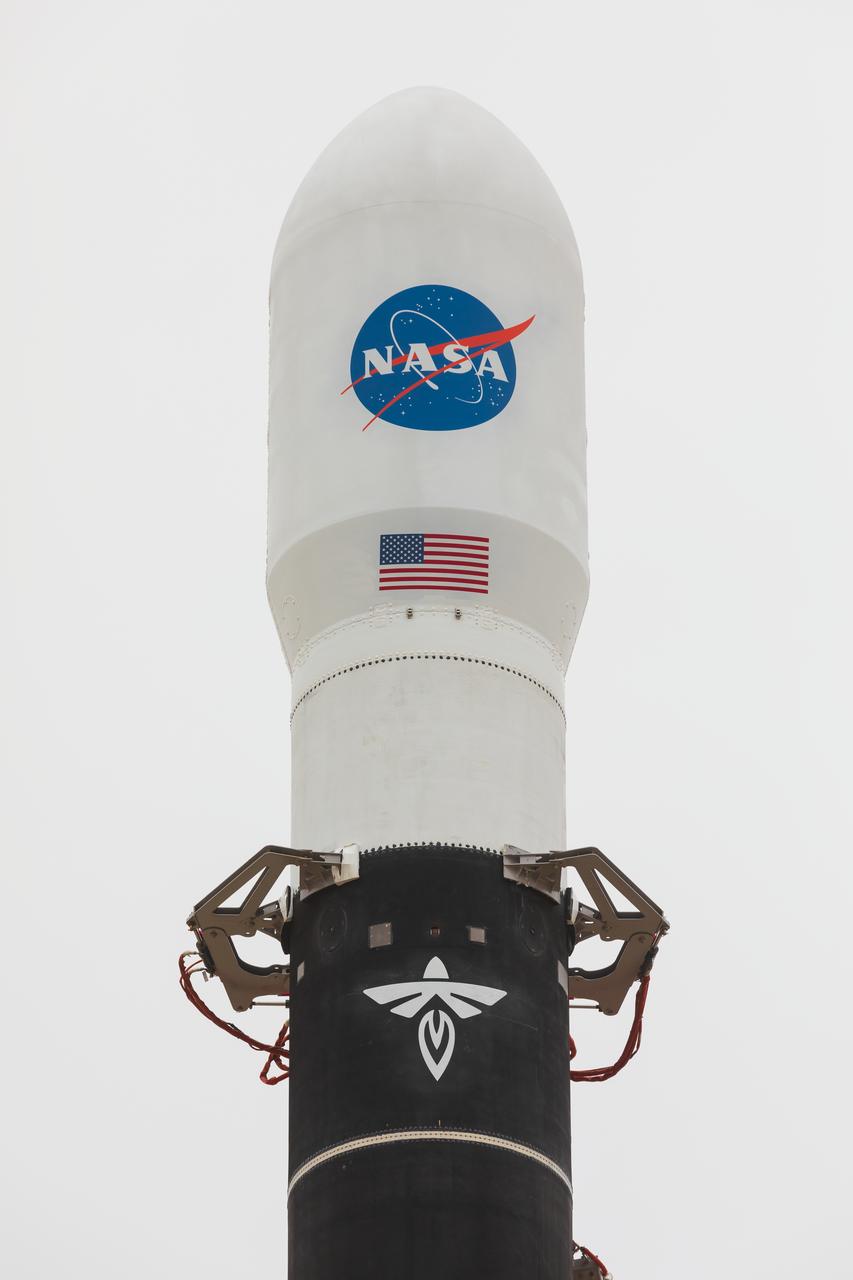
Firefly Aerospace’s Alpha rocket carrying eight CubeSats as part of NASA’s CubeSat Launch Initiative’s (CSLI) ELaNa 43 (Educational Launch of Nanosatellites) mission stands vertical at Space Launch Complex 2 at Vandenberg Space Force Base, California, on Monday, July 1, 2024. Firefly Aerospace is one of three companies selected to fly small satellites to space under NASA’s Launch Services Program Venture-Class Launch Services Demonstration 2 (VCLS Demo 2) contract awarded in December 2020.
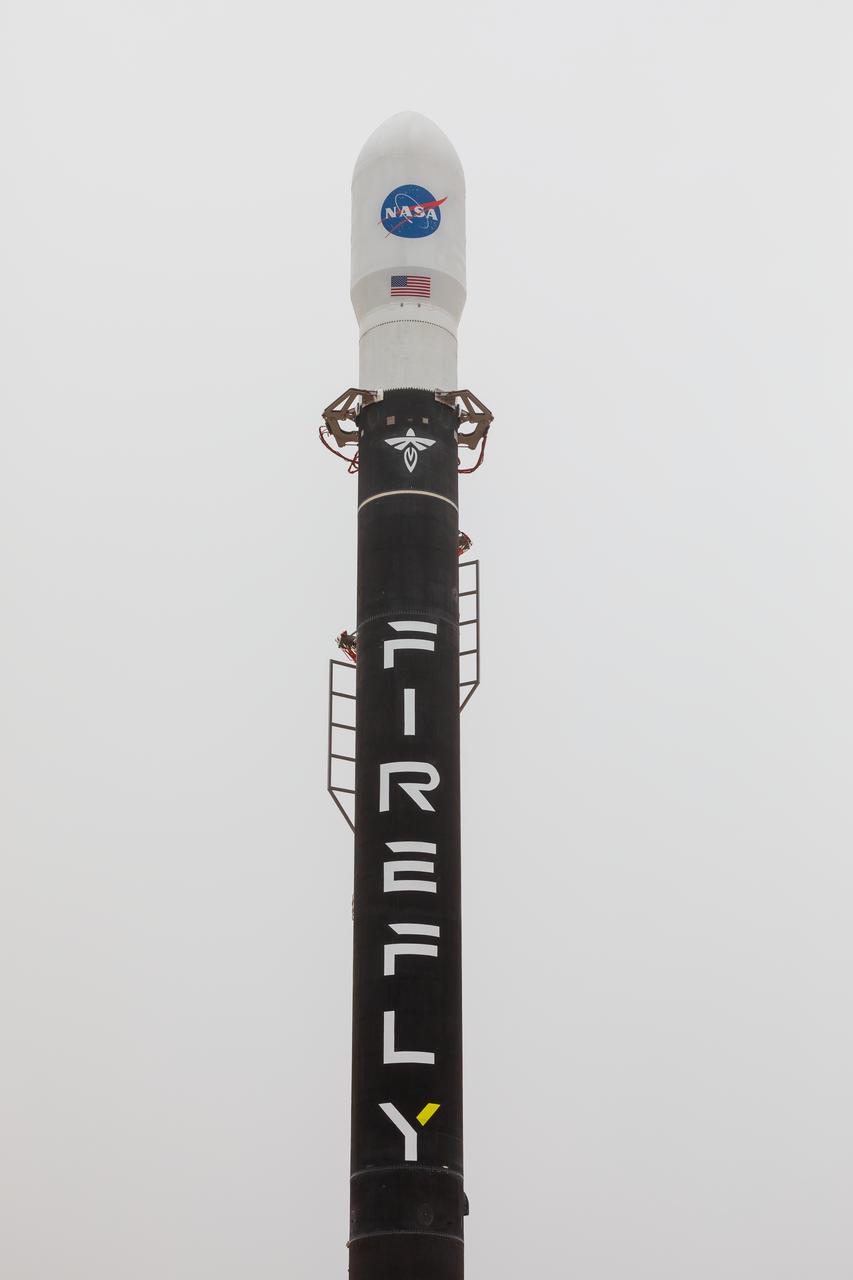
Firefly Aerospace’s Alpha rocket carrying eight CubeSats as part of NASA’s CubeSat Launch Initiative’s (CSLI) ELaNa 43 (Educational Launch of Nanosatellites) mission stands vertical at Space Launch Complex 2 at Vandenberg Space Force Base, California, on Monday, July 1, 2024. Firefly Aerospace is one of three companies selected to fly small satellites to space under NASA’s Launch Services Program Venture-Class Launch Services Demonstration 2 (VCLS Demo 2) contract awarded in December 2020.
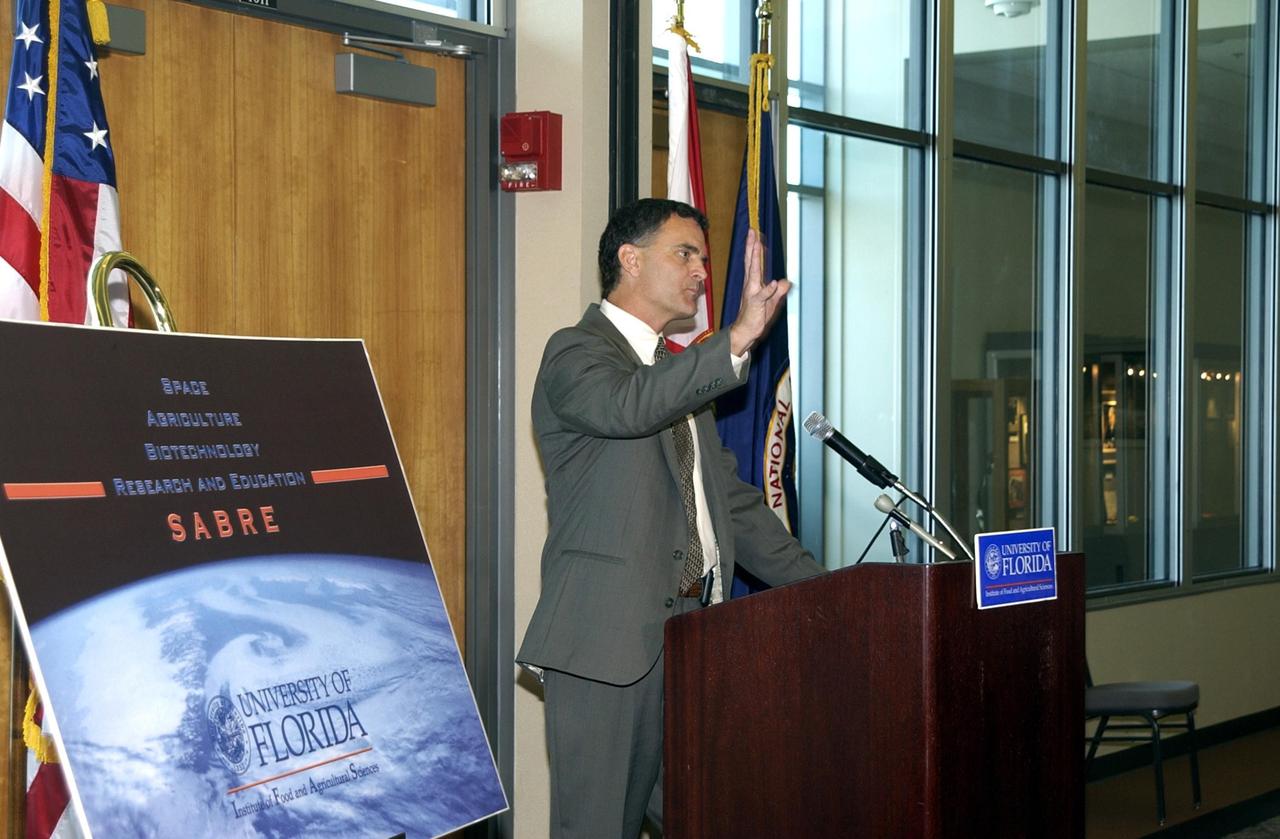
KENNEDY SPACE CENTER, FLA. -- Robert Ferl, professor in the horticultural sciences department and assistant director of the University of Florida Biotechnology Program, speaks during the opening ceremony to launch a new program called SABRE, Space Agricultural Biotechnology Research and Education, that involves UF and NASA. SABRE will focus on the discovery, development and application of the biological aspects of advanced life support strategies. The program will include faculty from UF's Institute of Food and Agricultural Sciences, who will be located at both KSC - in the state-owned Space Experiment Research and Processing Laboratory (SERPL) being built there - and UF in Gainesville. Ferl will direct and be responsible for coordinating the research and education efforts of UF and NASA.
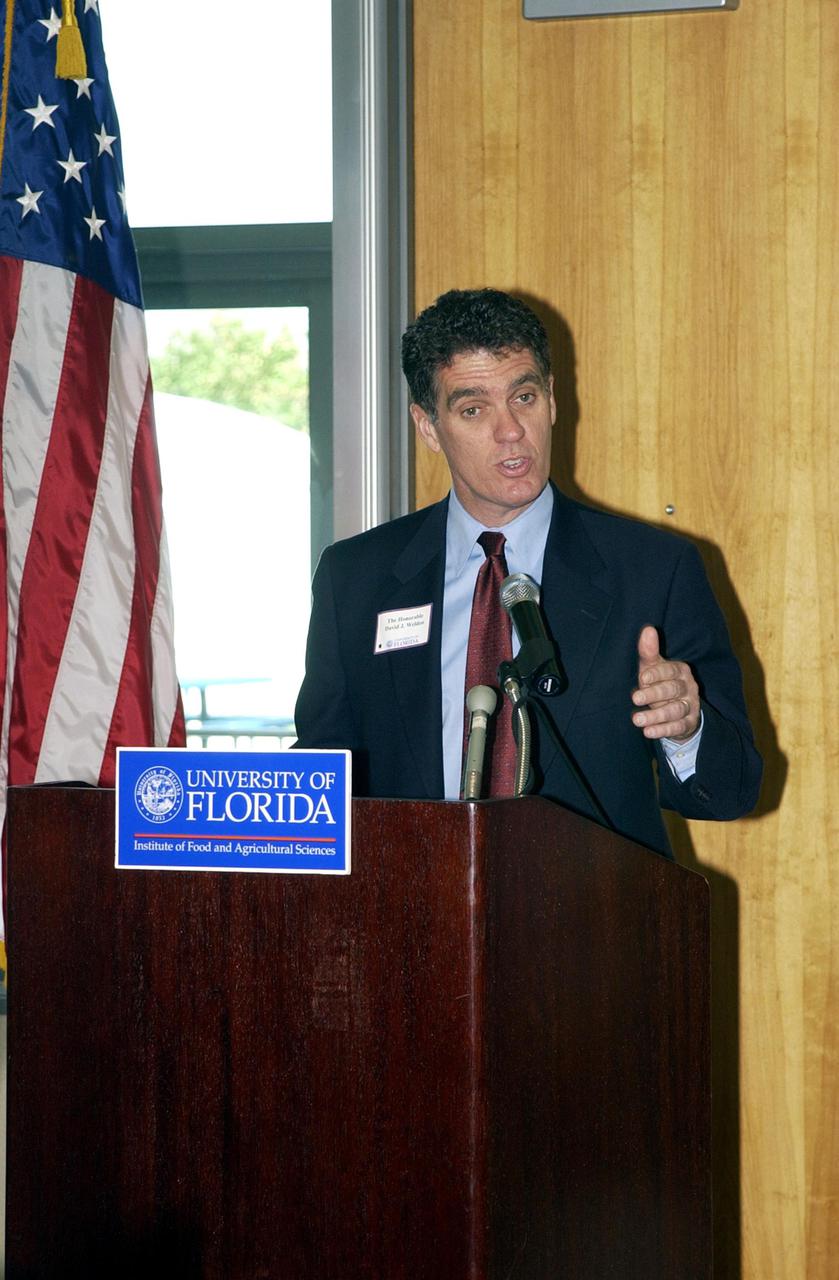
KENNEDY SPACE CENTER, FLA. -- U.S. Representative Dave Weldon addresses a large group attending the opening of a new program known as SABRE, Space Agricultural Biotechnology Research and Education, that involves the University of Florida and NASA. SABRE will focus on the discovery, development and application of the biological aspects of advanced life support strategies. The program will include faculty from UF's Institute of Food and Agricultural Sciences, who will be located at both KSC - in the state-owned Space Experiment Research and Processing Laboratory (SERPL) being built there - and UF in Gainesville. SABRE will be directed by Robert Ferl, professor in the horticultural sciences department and assistant director of UF's Biotechnology Program. He will be responsible for coordinating the research and education efforts of UF and NASA
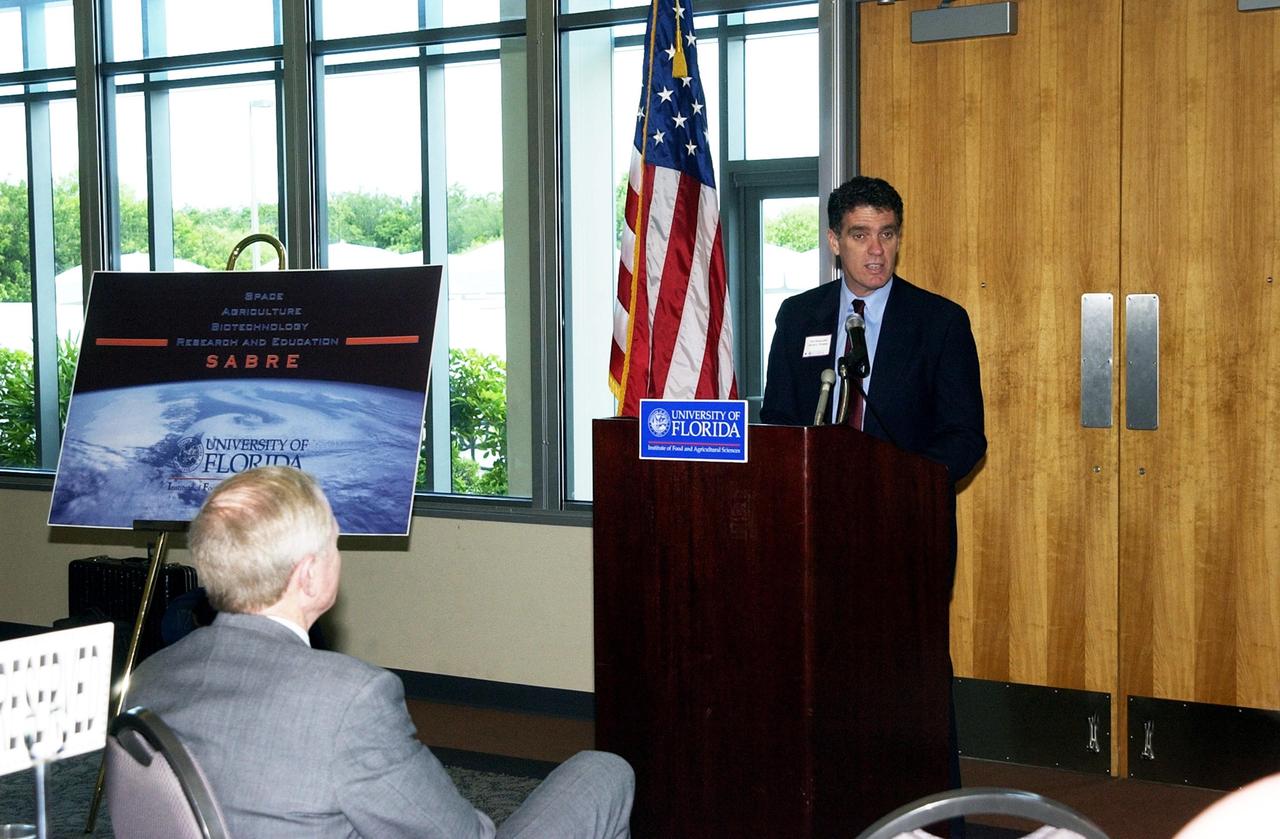
KENNEDY SPACE CENTER, FLA. -- U.S. Representative Dave Weldon addresses a large group attending the opening of a new program known as SABRE, Space Agricultural Biotechnology Research and Education, that involves the University of Florida and NASA. SABRE will focus on the discovery, development and application of the biological aspects of advanced life support strategies. The program will include faculty from UF's Institute of Food and Agricultural Sciences, who will be located at both KSC - in the state-owned Space Experiment Research and Processing Laboratory (SERPL) being built there - and UF in Gainesville. SABRE will be directed by Robert Ferl, professor in the horticultural sciences department and assistant director of UF's Biotechnology Program. He will be responsible for coordinating the research and education efforts of UF and NASA
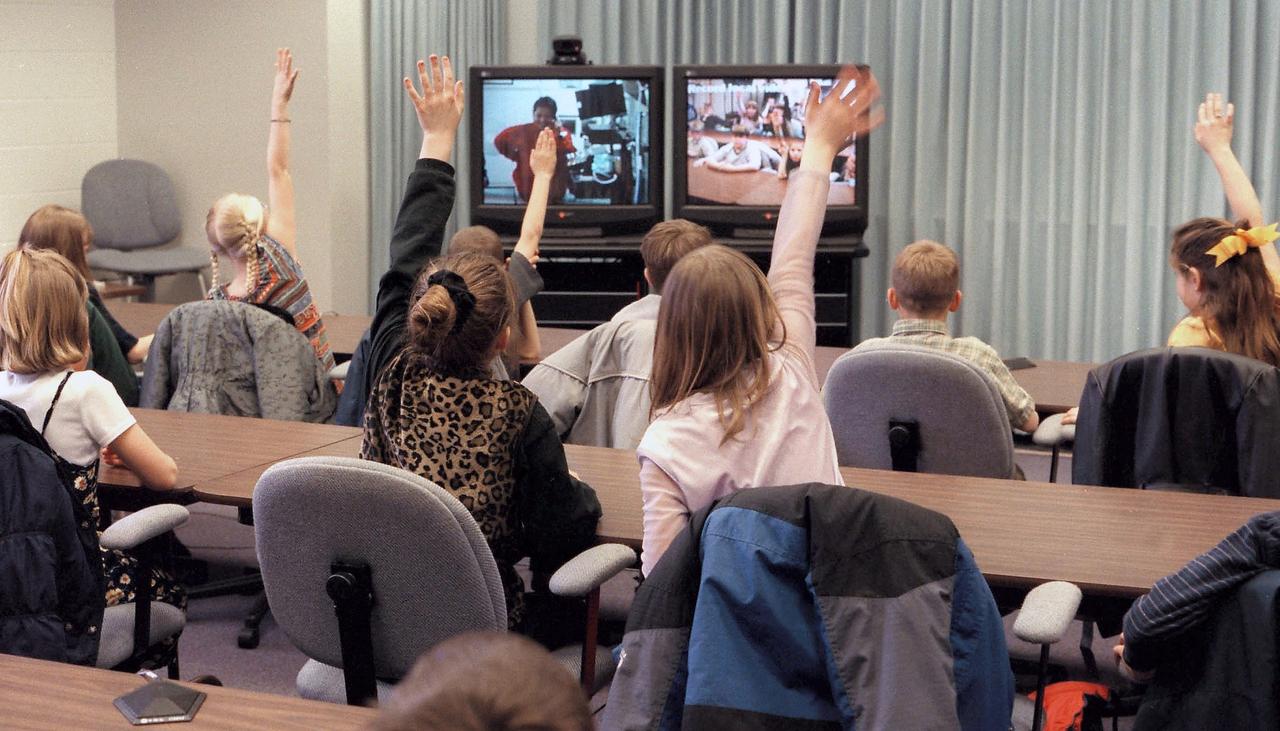
JSC2004E14751 --- Students interface with NASA via the Digital Learning Network. A classroom representative can directly communicate audibly and visibly with the NASA Education Specialist.

S99-E-5267 (13 February 2000) --- City of El Paso, Texas, and Ciudad Juarez, Chihuahua, Mexico and the Rio Grande River, which separates them. An electronic still camera (ESC), mounted in one of Endeavour's aft flight deck windows, is recording imagery of hundreds of Earth targets for the EarthKAM project. Students across the United States and in France, Germany and Japan are taking photos throughout the STS-99 mission. And they are using these new photos, plus all the images already available in the EarthKAM system, to enhance their classroom learning in Earth and space science, social studies, geography, mathematics and more. For general EarthKAM information and more images from this flight, go to http://www.earthkam.ucsd.edu/
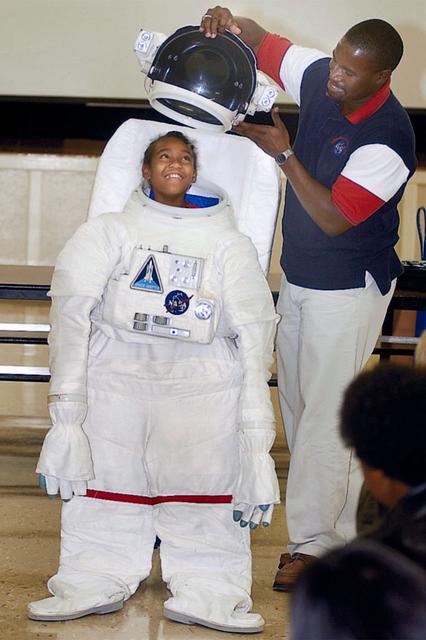
JSC2004E14160 --- AESP Student Assembly Program, Wilson Elementary School, Lawton, OK November 2003
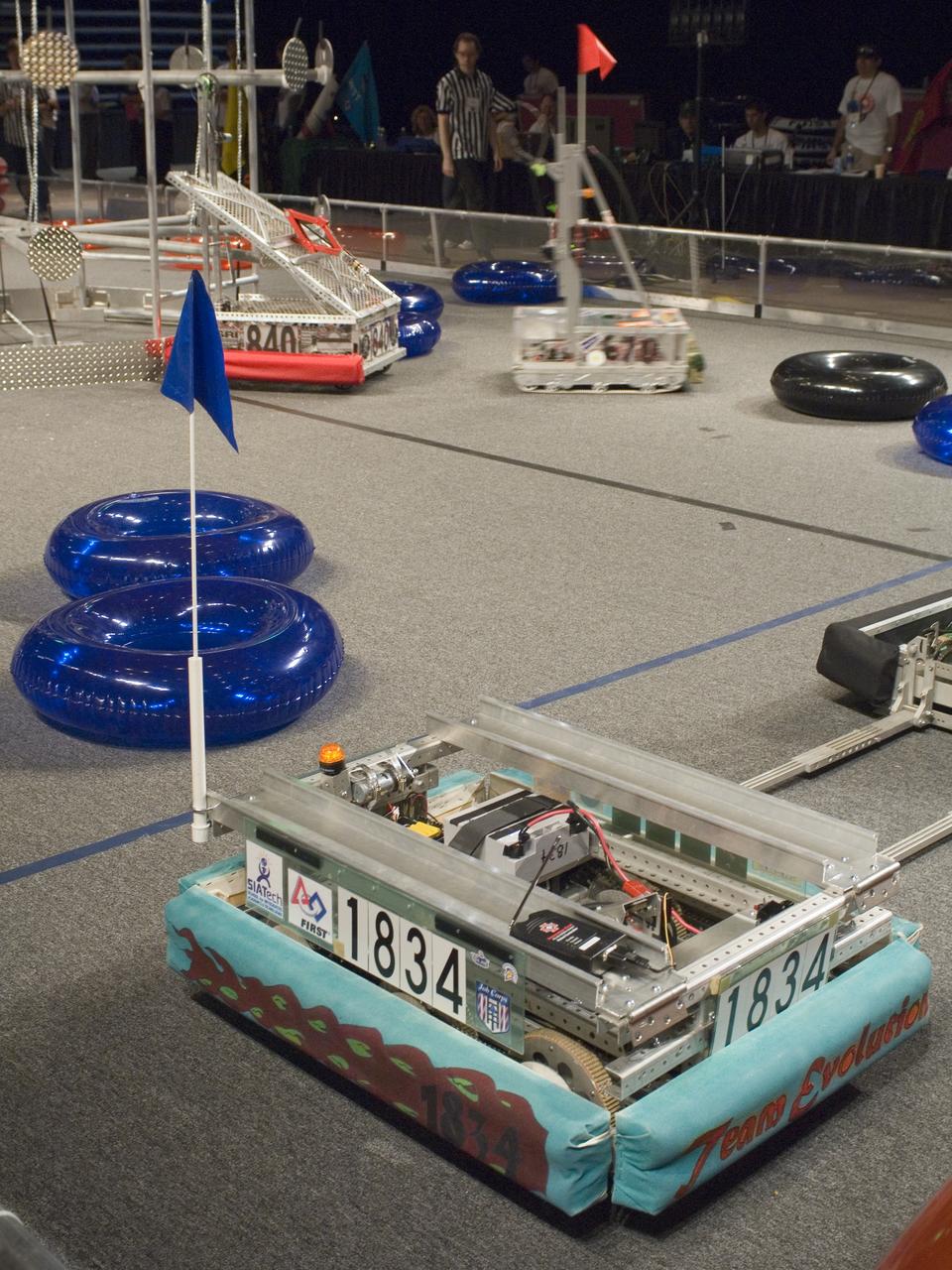
Silicon Valley FIRST Regional Robotics competition: Evolution Team 1834 - NASA/Google/NASA Robotics Education FIRST Spnsorship program/San Jose Job Corps/MetroED & SIA Tech, San Jose, California (CA)

STS045-19-032 (24 March-2 April 1992) --- Astronaut Brian Duffy, STS-45 pilot, uses an inflatable globe to demonstrate Earth observations for an educational program to be distributed to classrooms following the mission.
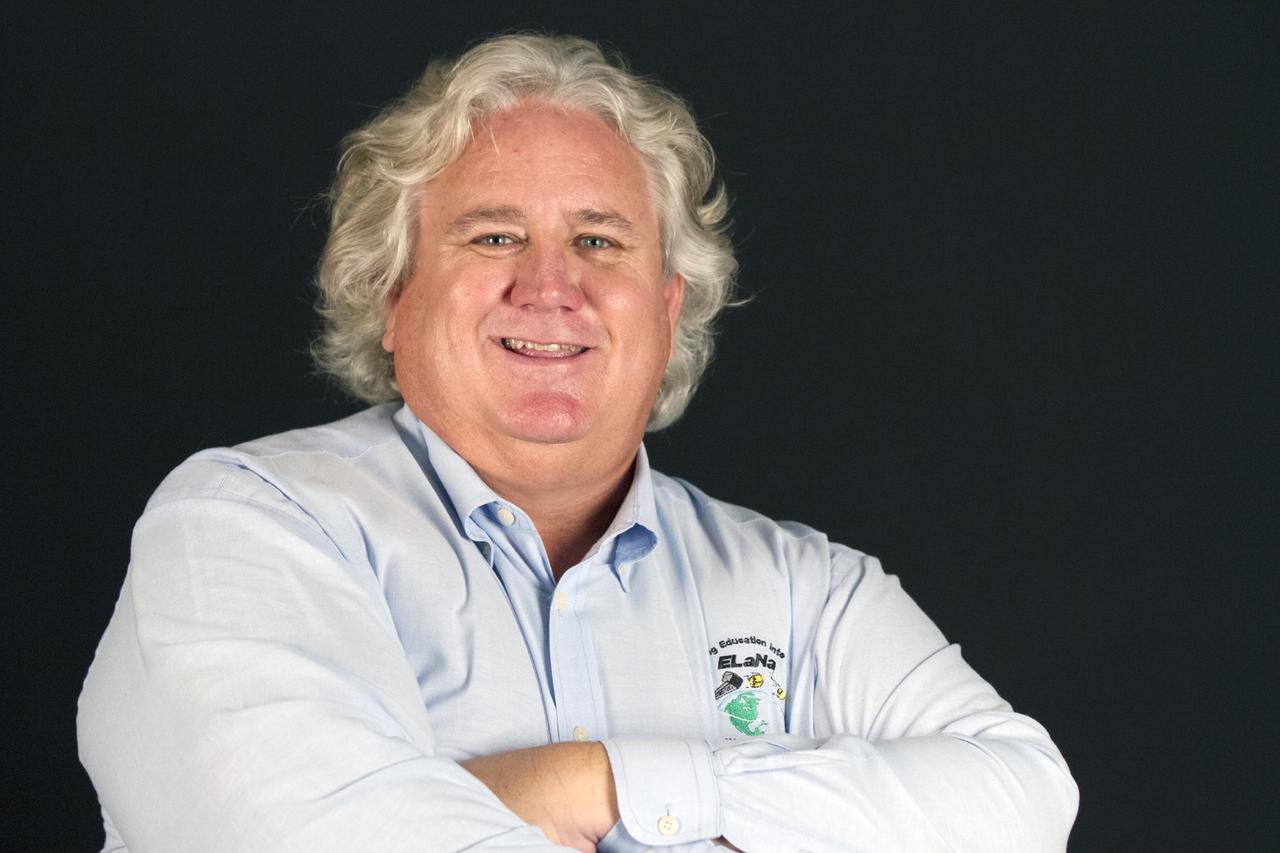
CAPE CANAVERAL, Fla. - Portrait of Garrett Skrobot, project manager for the Educational Launch of Nanosatellites, or ELaNa, Program at NASA's Kennedy Space Center. Photo credit: NASA/Cory Huston
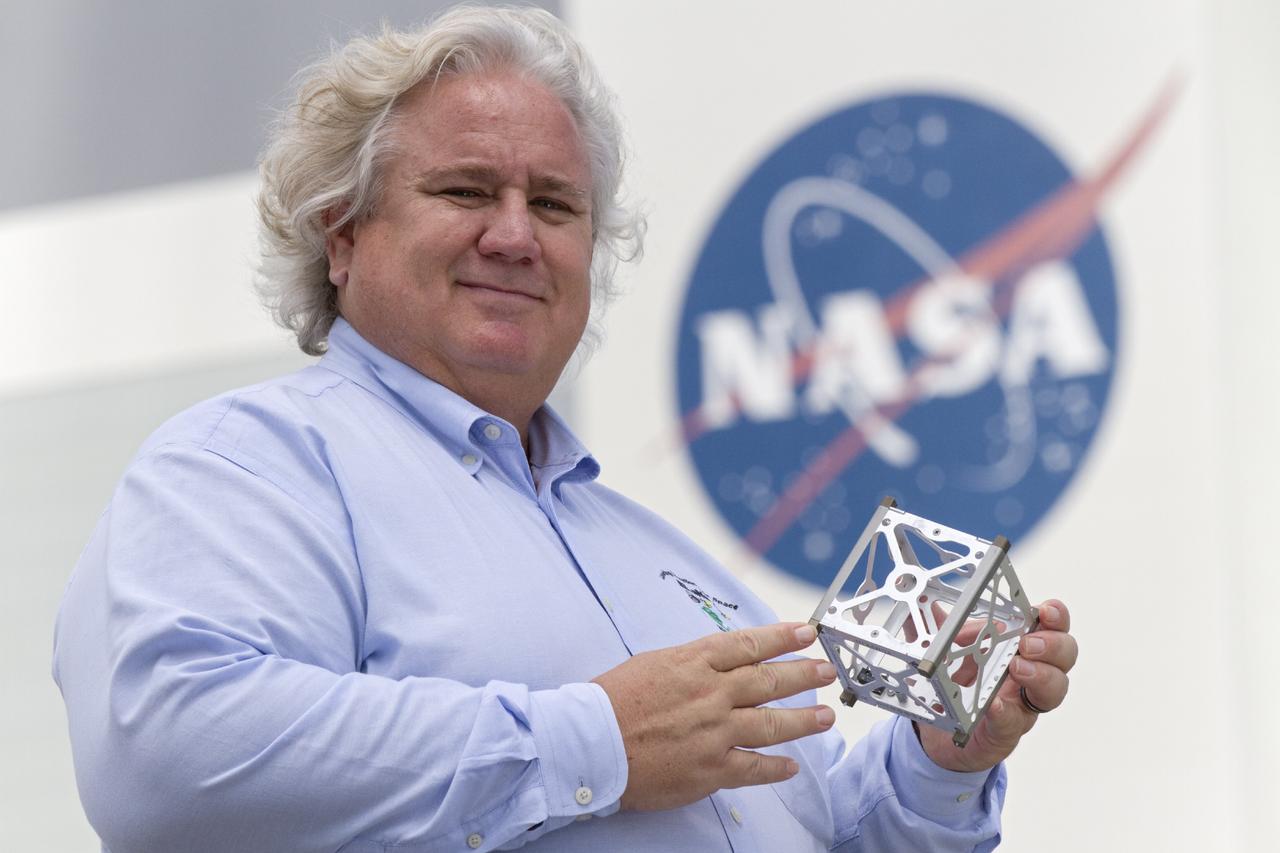
CAPE CANAVERAL, Fla. - Portrait of Garrett Skrobot, project manager for the Educational Launch of Nanosatellites, or ELaNa, Program at NASA's Kennedy Space Center. Photo credit: NASA/Cory Huston
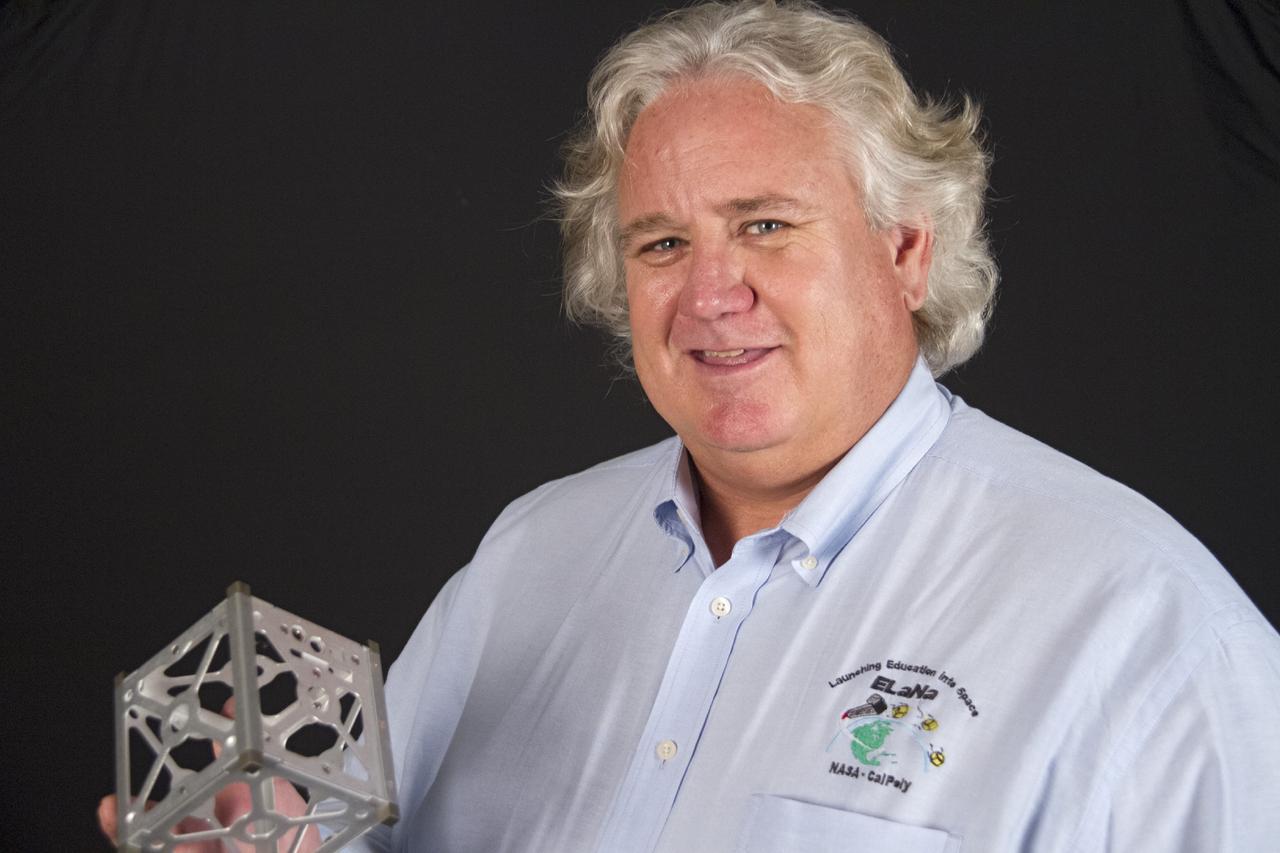
CAPE CANAVERAL, Fla. - Portrait of Garrett Skrobot, project manager for the Educational Launch of Nanosatellites, or ELaNa, Program at NASA's Kennedy Space Center. Photo credit: NASA/Cory Huston
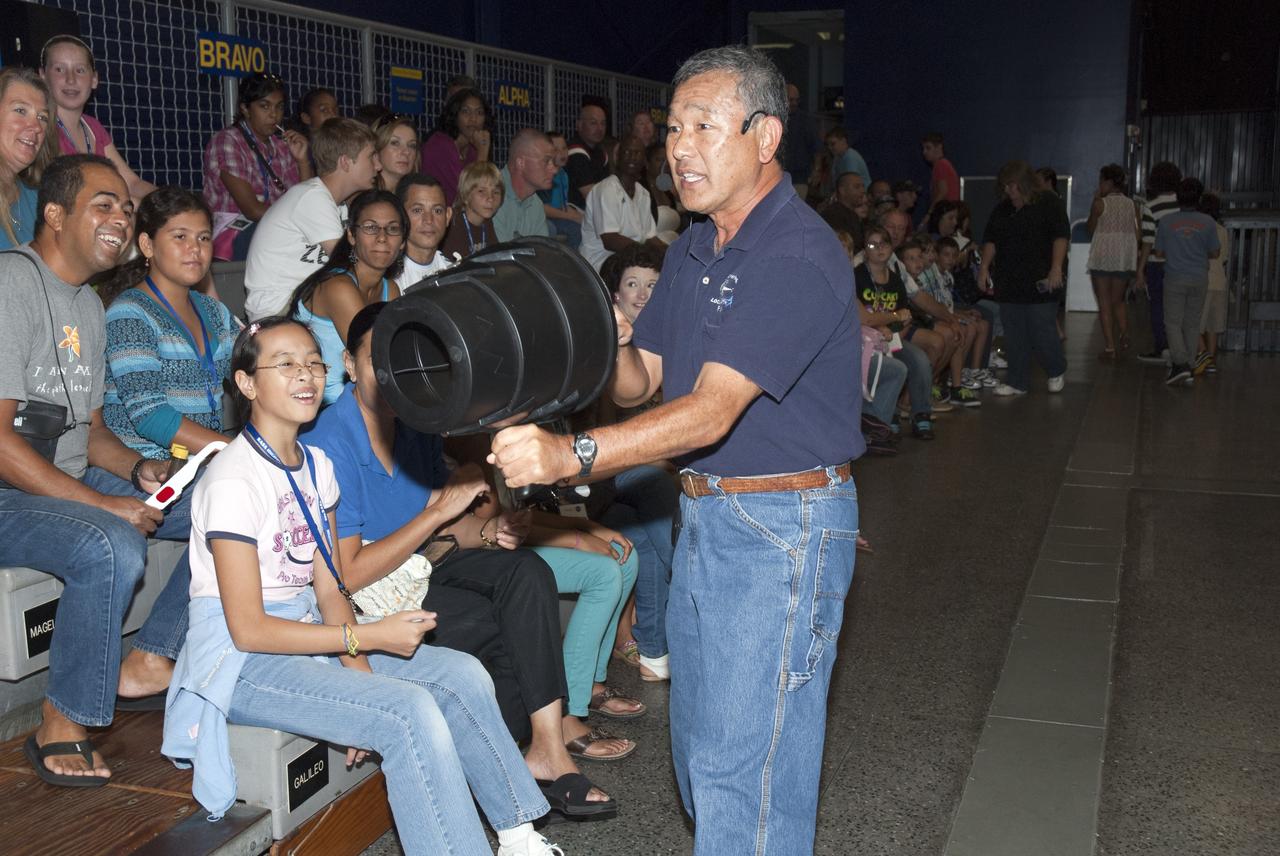
CAPE CANAVERAL, Fla. -- At the Astronaut Hall of Fame near the Kennedy Space Center Visitor Complex in Florida, fifth- through eighth-grade students and their parents participate in a vortex cannon experiment during the last NASA family education night event. Other activities included "gee-whiz" presentations, astronaut appearances, a hovercraft and alternative fuel vehicles, which promote science, technology, engineering and mathematics (STEM) education. The event is part of NASA's Summer of Innovation initiative to provide interactive learning experiences to middle school students nationwide during the summer months. The program is a cornerstone of the Educate to Innovate campaign announced by President Barack Obama in November 2009. Photo credit: NASA/Charisse Nahser
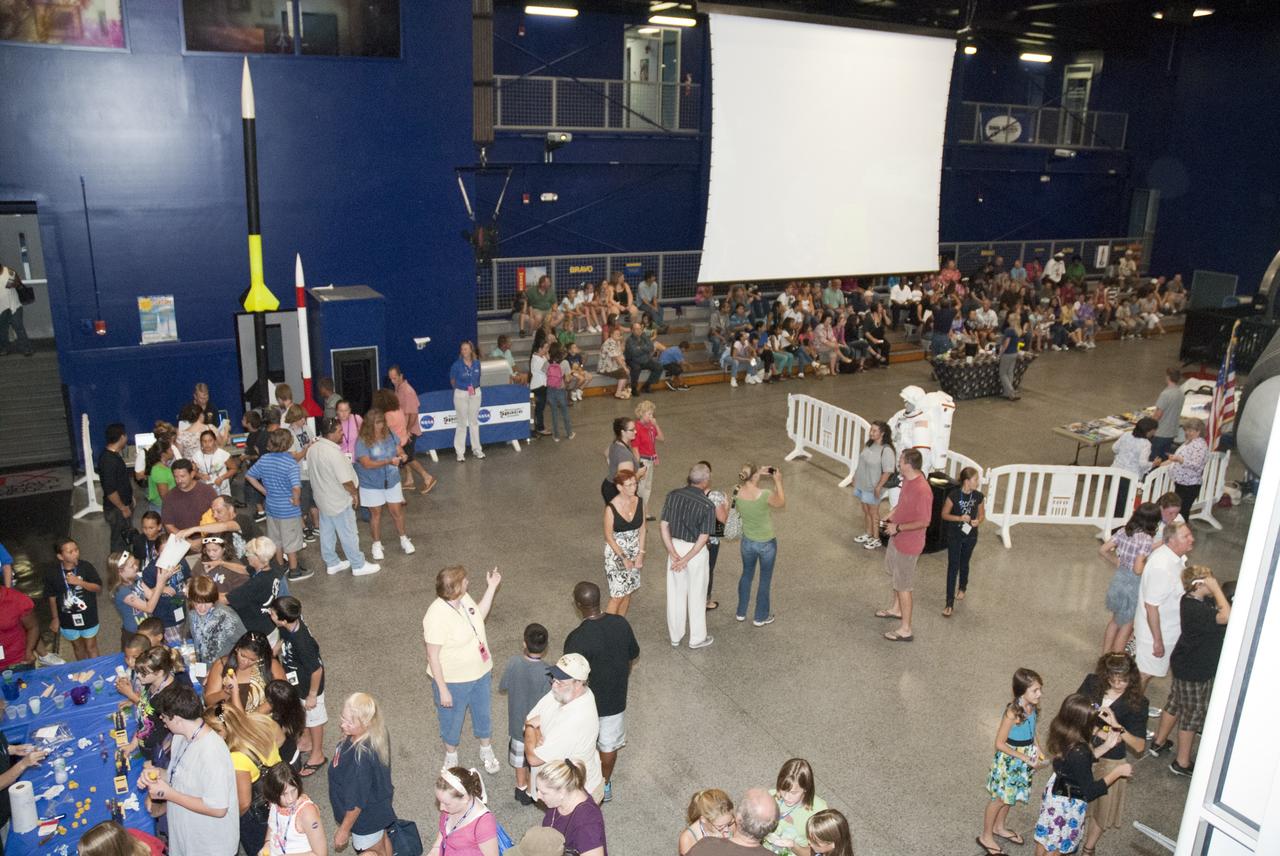
CAPE CANAVERAL, Fla. -- At the Astronaut Hall of Fame near the Kennedy Space Center Visitor Complex in Florida, fifth- through eighth-grade students and their parents participate in the last NASA family education night event. Activities included "gee-whiz" presentations, astronaut appearances, a hovercraft, vortex cannon and alternative fuel vehicles, which promote science, technology, engineering and mathematics (STEM) education. The event is part of NASA's Summer of Innovation initiative to provide interactive learning experiences to middle school students nationwide during the summer months. The program is a cornerstone of the Educate to Innovate campaign announced by President Barack Obama in November 2009. Photo credit: NASA/Charisse Nahser

International Space Station Expedition 33 Commander Sunita Williams (on screen) answers questions from students during a downlink event held in honor of International Education Week at the Smithsonian National Air and Space Museum, Thursday, Nov. 15, 2012 in Washington. Seen next to Williams is Exp. 33 Flight Engineer Kevin Ford. More than 9,500 student participants from the Student Spaceflight Experiments Program (SSEP) around the country took part in the live video event. This was a joint venture between the Department of Education and the National Center for Earth and Space Science Education (NCESSE). Photo Credit: (NASA/Carla Cioffi)
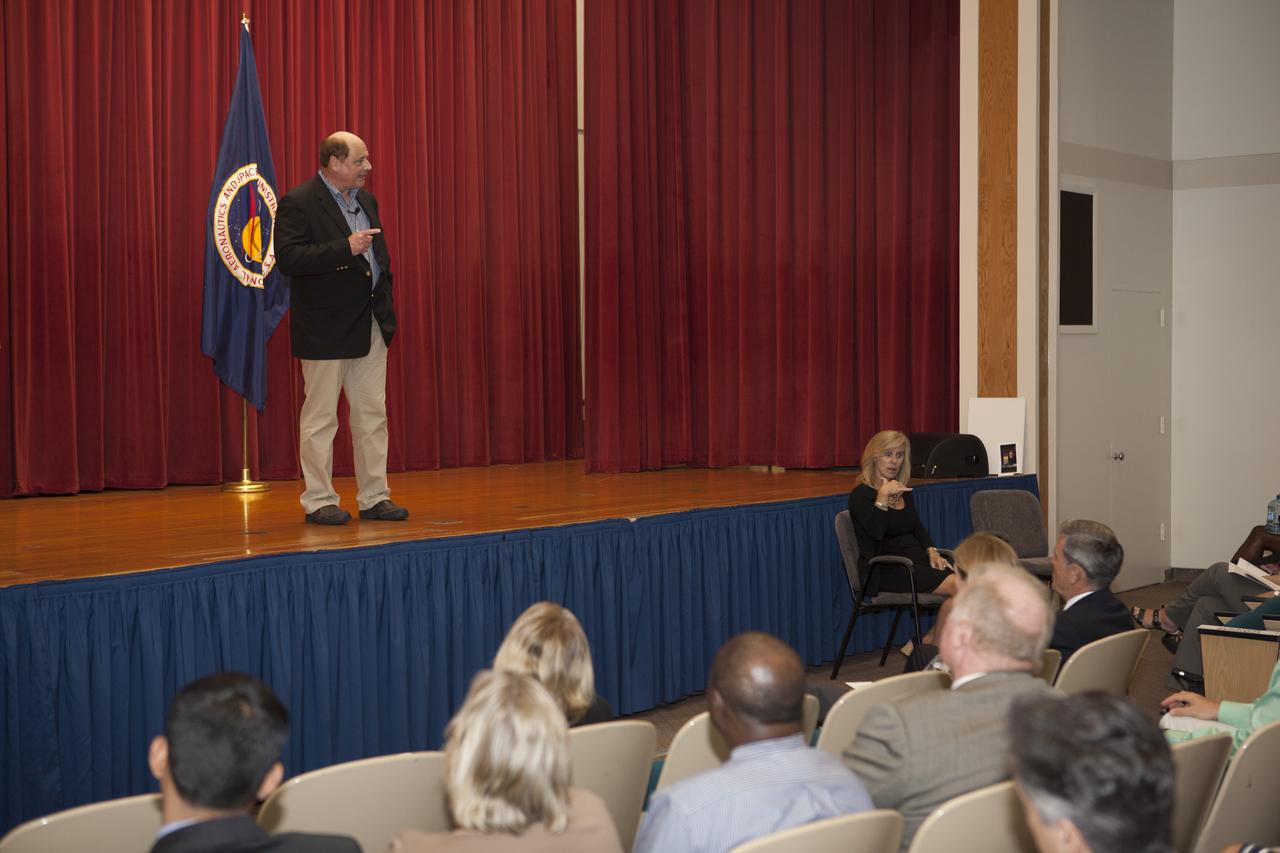
Michael Kersjes, author and former special education teacher and football coach from Michigan, speaks to workers during the Disability Awareness and Action Working Group, or DAAWG, event at NASA's Kennedy Space Center in Florida. The theme of his presentation was "Power of the Human Spirit." Kersjes is the author of the book, "A Smile as Big as the Moon," which told the true story of how he worked to get special education students into Space Camp, a competitive education program at the U.S. Space and Rocket Center in Huntsville, Alabama. His book was made into a movie in 2012.
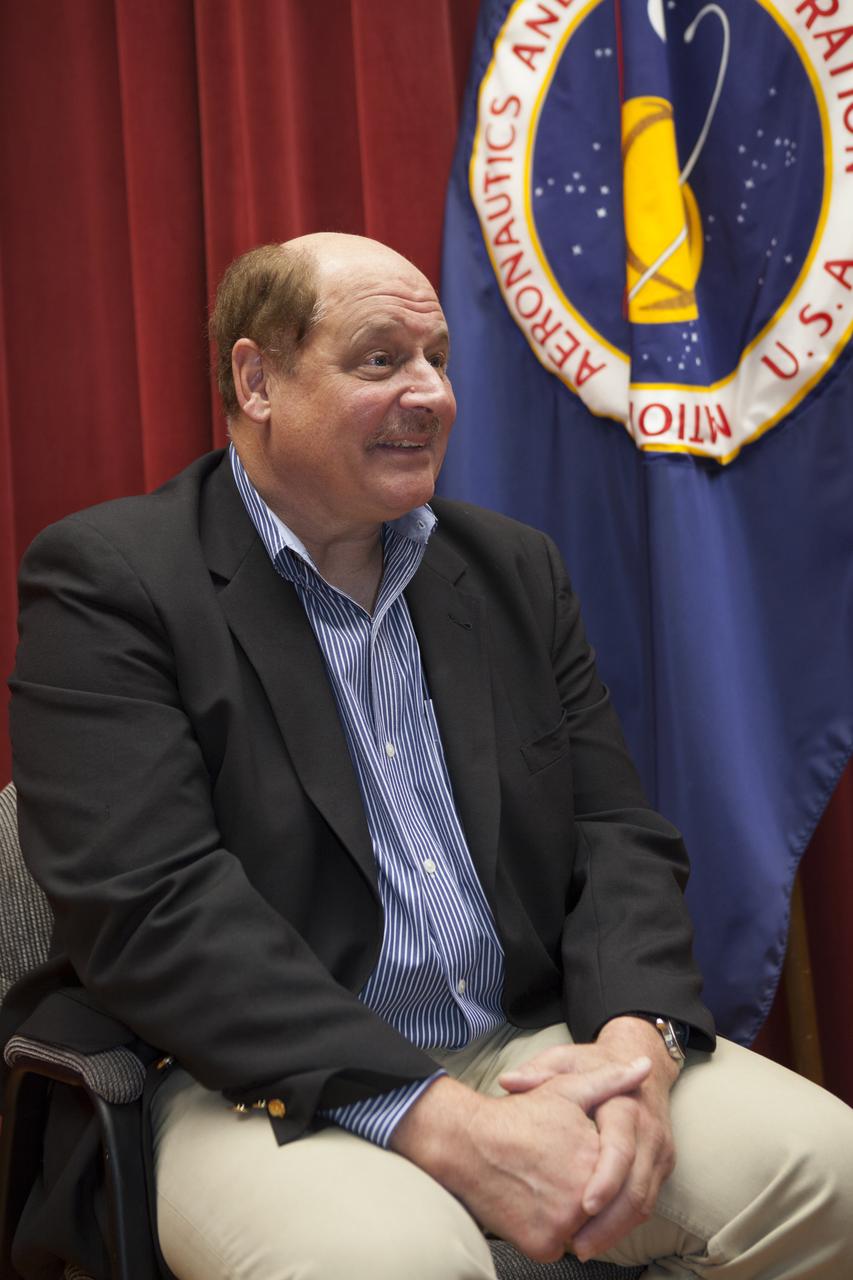
Michael Kersjes, author and former special education teacher and football coach from Michigan, speaks to workers during the Disability Awareness and Action Working Group, or DAAWG, event at NASA's Kennedy Space Center in Florida. The theme of his presentation was "Power of the Human Spirit." Kersjes is the author of the book, "A Smile as Big as the Moon," which told the true story of how he worked to get special education students into Space Camp, a competitive education program at the U.S. Space and Rocket Center in Huntsville, Alabama. His book was made into a movie in 2012.
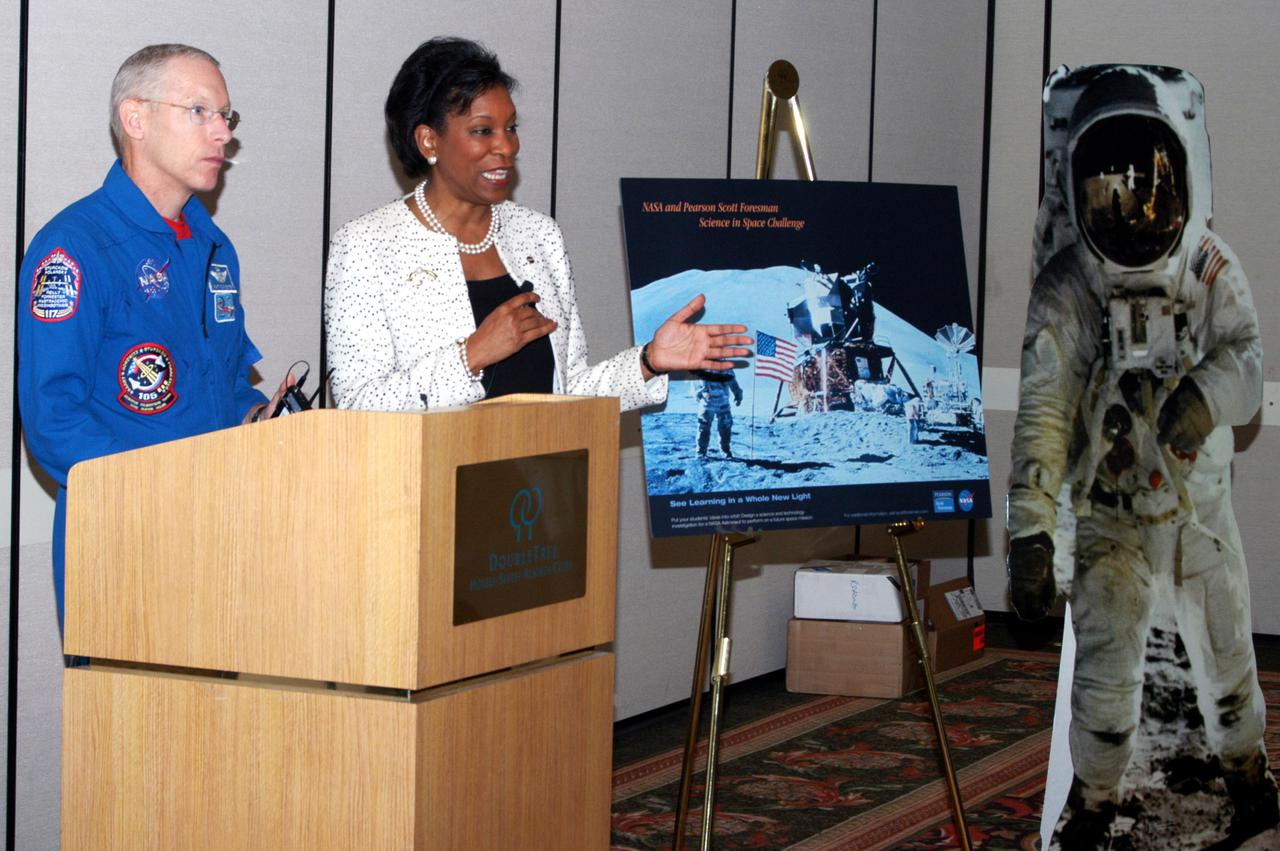
KENNEDY SPACE CENTER, FLA. - NASA astronaut Patrick Forrester (left) and Dr. Adena Williams Loston, NASA chief education officer, address a group of educators assembled for the kickoff of 'The Science in Space Challenge' at the Doubletree Hotel in Orlando, Fla. The national challenge program is sponsored by NASA and Pearson Scott Foresman, publisher of pre-K through grade six educational books. To participate in the challenge, teachers may submit proposals, on behalf of their students, for a science and technology investigation. Astronauts will conduct the winning projects on a Space Shuttle mission or on the International Space Station, while teachers and students follow along via television or the Web. For more information about the announcement, see the news release at http:__www.nasa.gov_home_hqnews_2004_oct_HQ_04341_publication.html.
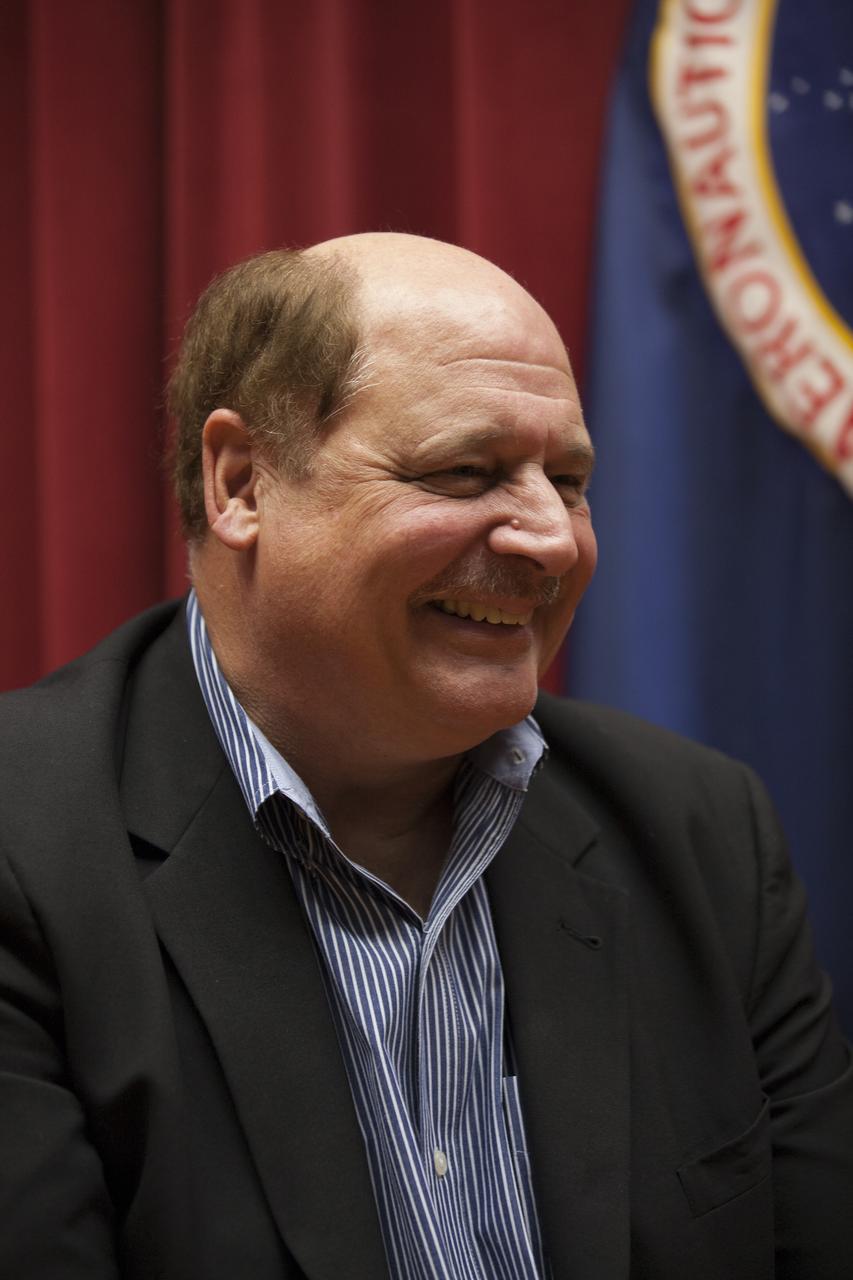
Michael Kersjes, author and former special education teacher and football coach from Michigan, speaks to workers during the Disability Awareness and Action Working Group, or DAAWG, event at NASA's Kennedy Space Center in Florida. The theme of his presentation was "Power of the Human Spirit." Kersjes is the author of the book, "A Smile as Big as the Moon," which told the true story of how he worked to get special education students into Space Camp, a competitive education program at the U.S. Space and Rocket Center in Huntsville, Alabama. His book was made into a movie in 2012.

International Space Station Expedition 33 flight engineer Kevin Ford (on screen) answers questions from students during a downlink event held in honor of International Education Week at the Smithsonian National Air and Space Museum, Thursday, Nov. 15, 2012 in Washington. Seen next to Ford is Exp. 33 Commander Sunita Williams. More than 9,500 student participants from the Student Spaceflight Experiments Program (SSEP) around the country took part in the live video event. This was a joint venture between the Department of Education and the National Center for Earth and Space Science Education (NCESSE). Photo Credit: (NASA/Carla Cioffi)
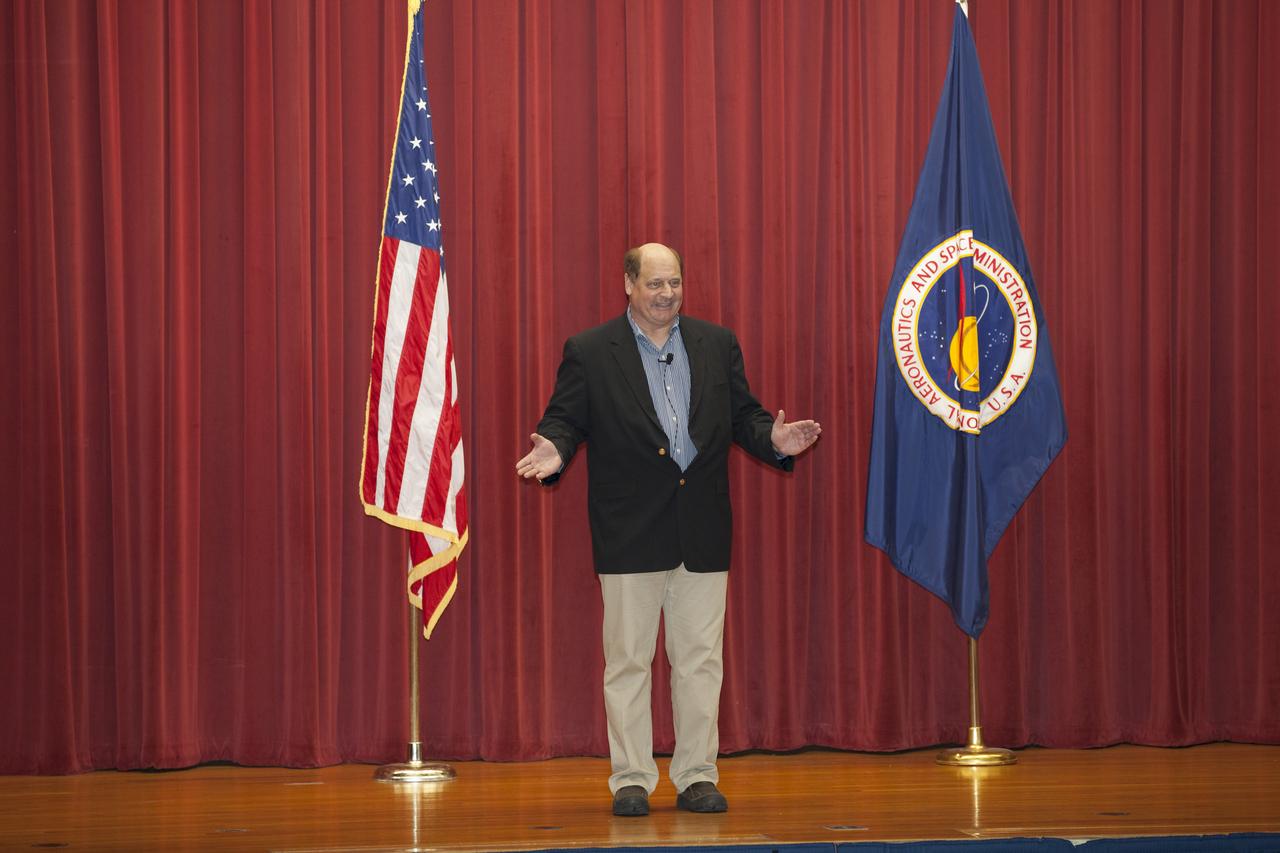
Michael Kersjes, author and former special education teacher and football coach from Michigan, speaks to workers during the Disability Awareness and Action Working Group, or DAAWG, event at NASA's Kennedy Space Center in Florida. The theme of his presentation was "Power of the Human Spirit." Kersjes is the author of the book, "A Smile as Big as the Moon," which told the true story of how he worked to get special education students into Space Camp, a competitive education program at the U.S. Space and Rocket Center in Huntsville, Alabama. His book was made into a movie in 2012.

International Space Station Expedition 33 flight engineer Kevin Ford (on screen) answers questions from students during a downlink event held in honor of International Education Week at the Smithsonian National Air and Space Museum, Thursday, Nov. 15, 2012 in Washington. Seen next to Ford is Exp. 33 Commander Sunita Williams. More than 9,500 student participants from the Student Spaceflight Experiments Program (SSEP) around the country took part in the live video event. This was a joint venture between the Department of Education and the National Center for Earth and Space Science Education (NCESSE). Photo Credit: (NASA/Carla Cioffi)
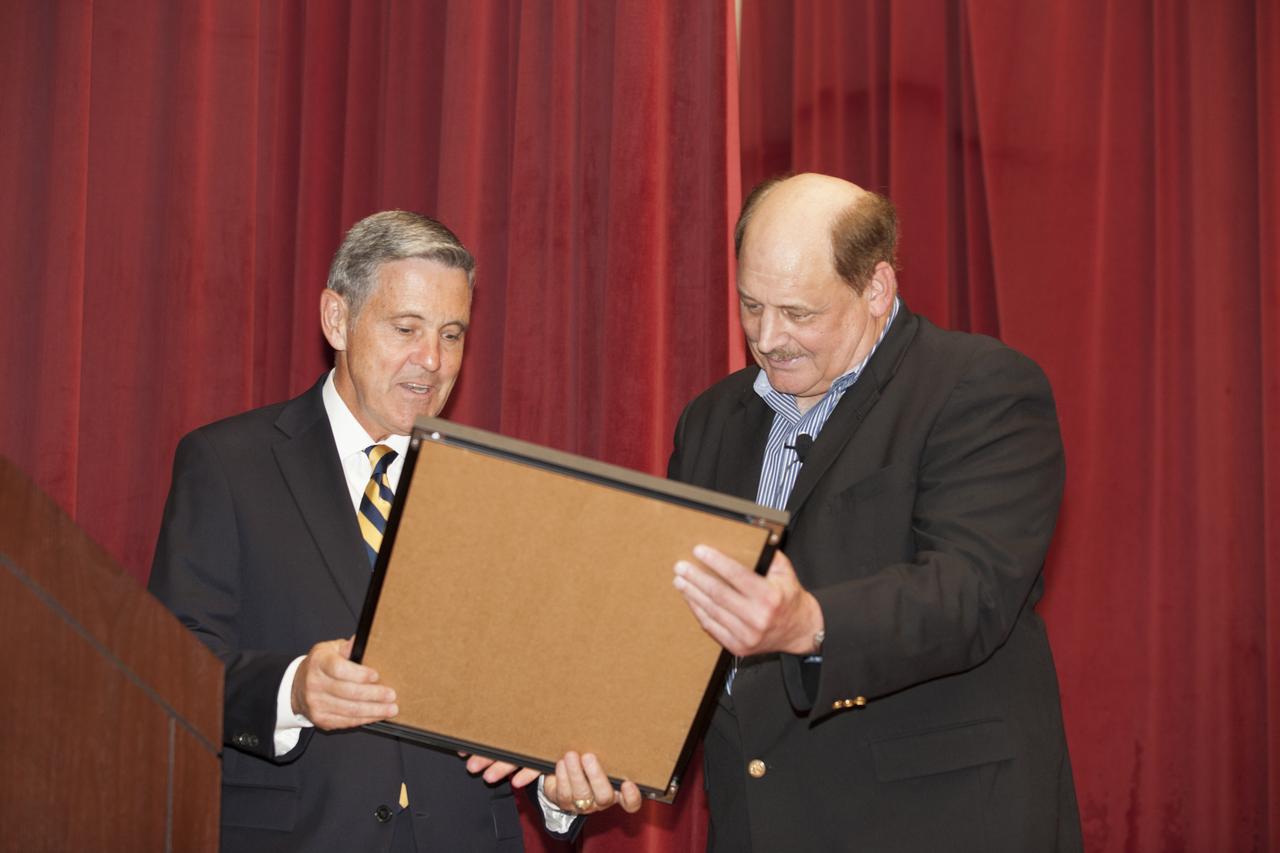
NASA Kennedy Space Center Director Bob Cabana, left, presents a special plaque to Michael Kersjes, author and former special education teacher and football coach from Michigan, after his presentation to workers during the Disability Awareness and Action Working Group, or DAAWG, event. The theme of Kersjes' presentation was "Power of the Human Spirit." Kersjes is the author of the book, "A Smile as Big as the Moon," which told the true story of how he worked to get special education students into Space Camp, a competitive education program at the U.S. Space and Rocket Center in Huntsville, Alabama. His book was made into a movie in 2012.
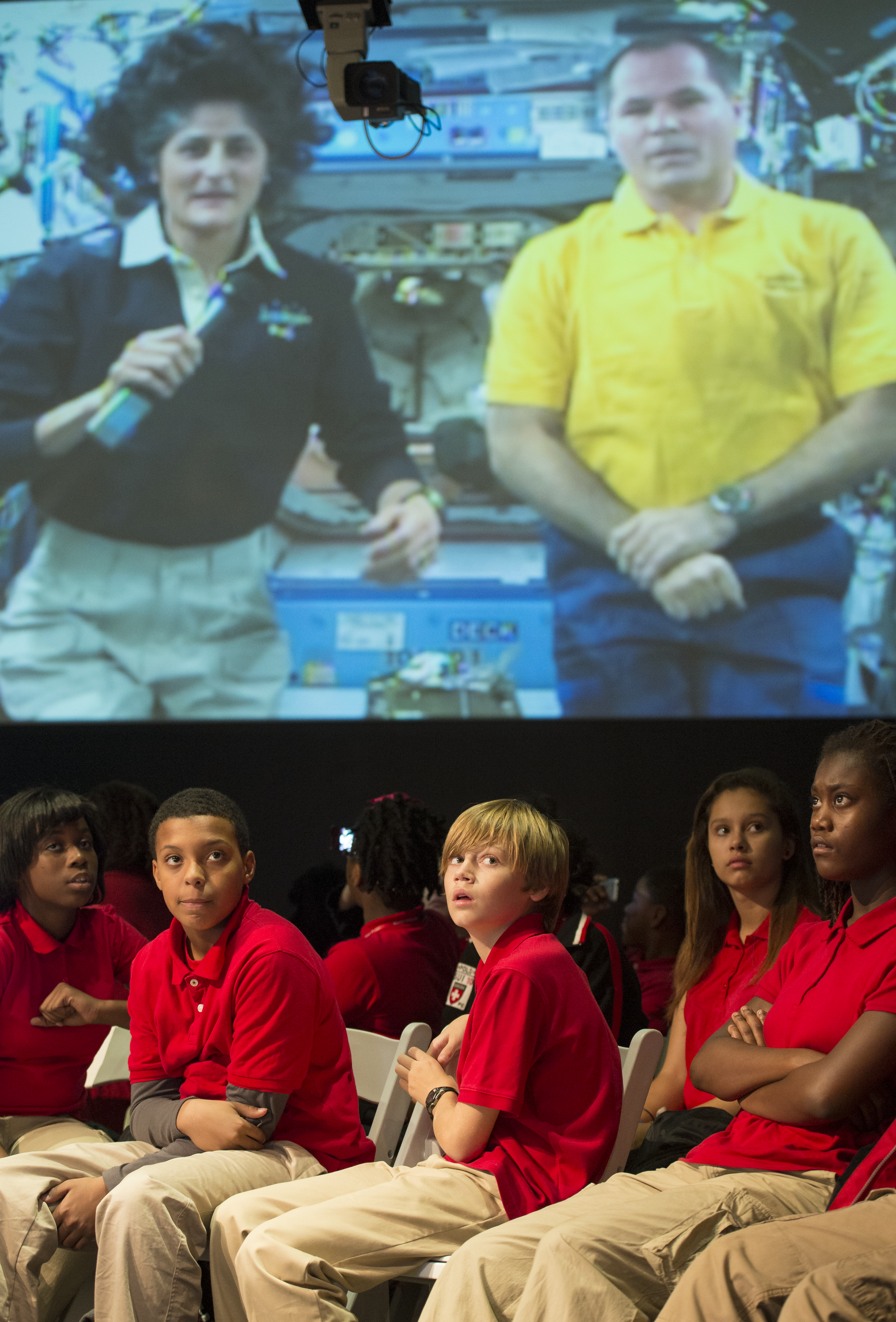
International Space Station Expedition 33 Commander Sunita Williams (on screen) answers questions from students during a downlink event held in honor of International Education Week at the Smithsonian National Air and Space Museum, Thursday, Nov. 15, 2012 in Washington. Seen next to Williams is Exp. 33 Flight Engineer Kevin Ford. More than 9,500 student participants from the Student Spaceflight Experiments Program (SSEP) around the country took part in the live video event. This was a joint venture between the Department of Education and the National Center for Earth and Space Science Education (NCESSE). Photo Credit: (NASA/Carla Cioffi)
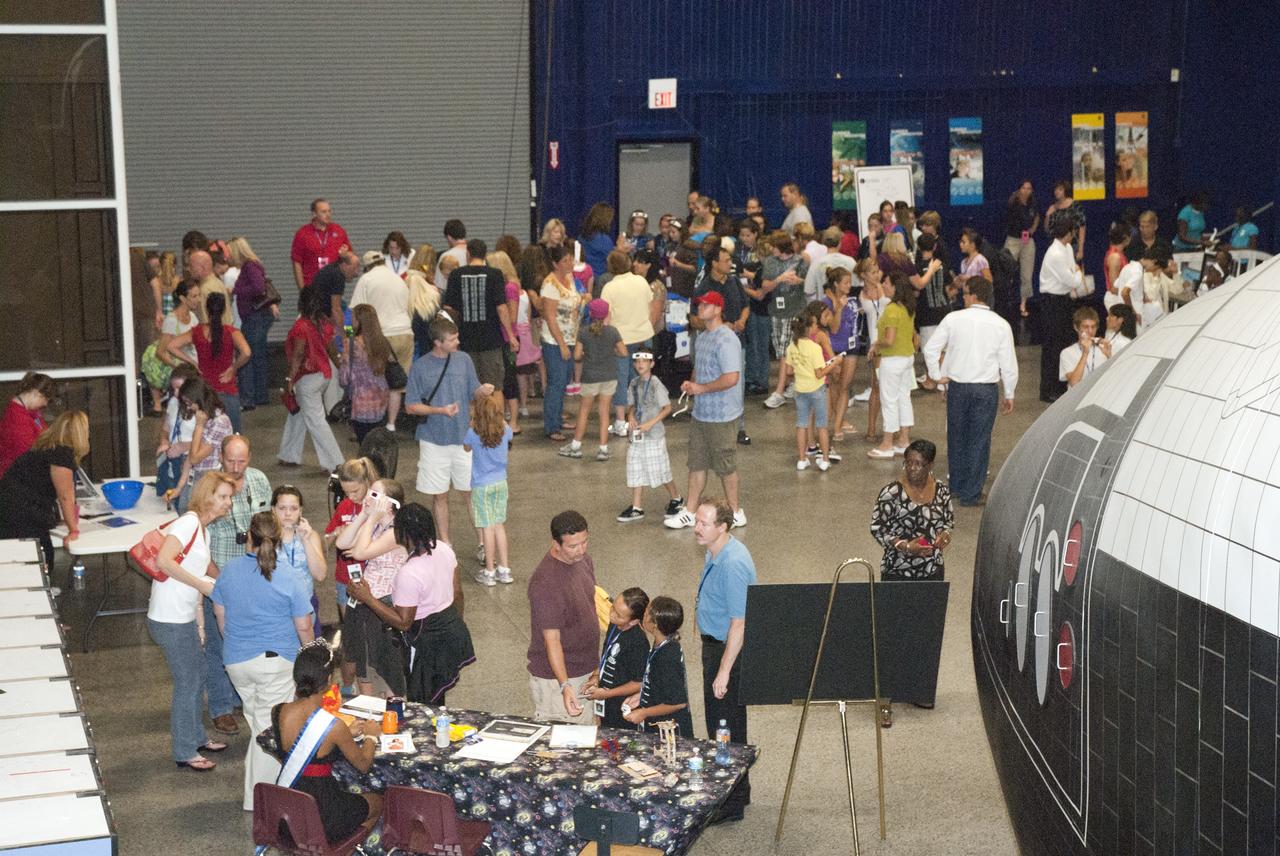
CAPE CANAVERAL, Fla. -- At the Astronaut Hall of Fame near the Kennedy Space Center Visitor Complex in Florida, fifth- through eighth-grade students and their parents participate in the last NASA family education night event. Activities included "gee-whiz" presentations, astronaut appearances, a hovercraft, vortex cannon and alternative fuel vehicles, which promote science, technology, engineering and mathematics (STEM) education. The event is part of NASA's Summer of Innovation initiative to provide interactive learning experiences to middle school students nationwide during the summer months. The program is a cornerstone of the Educate to Innovate campaign announced by President Barack Obama in November 2009. Photo credit: NASA/Charisse Nahser
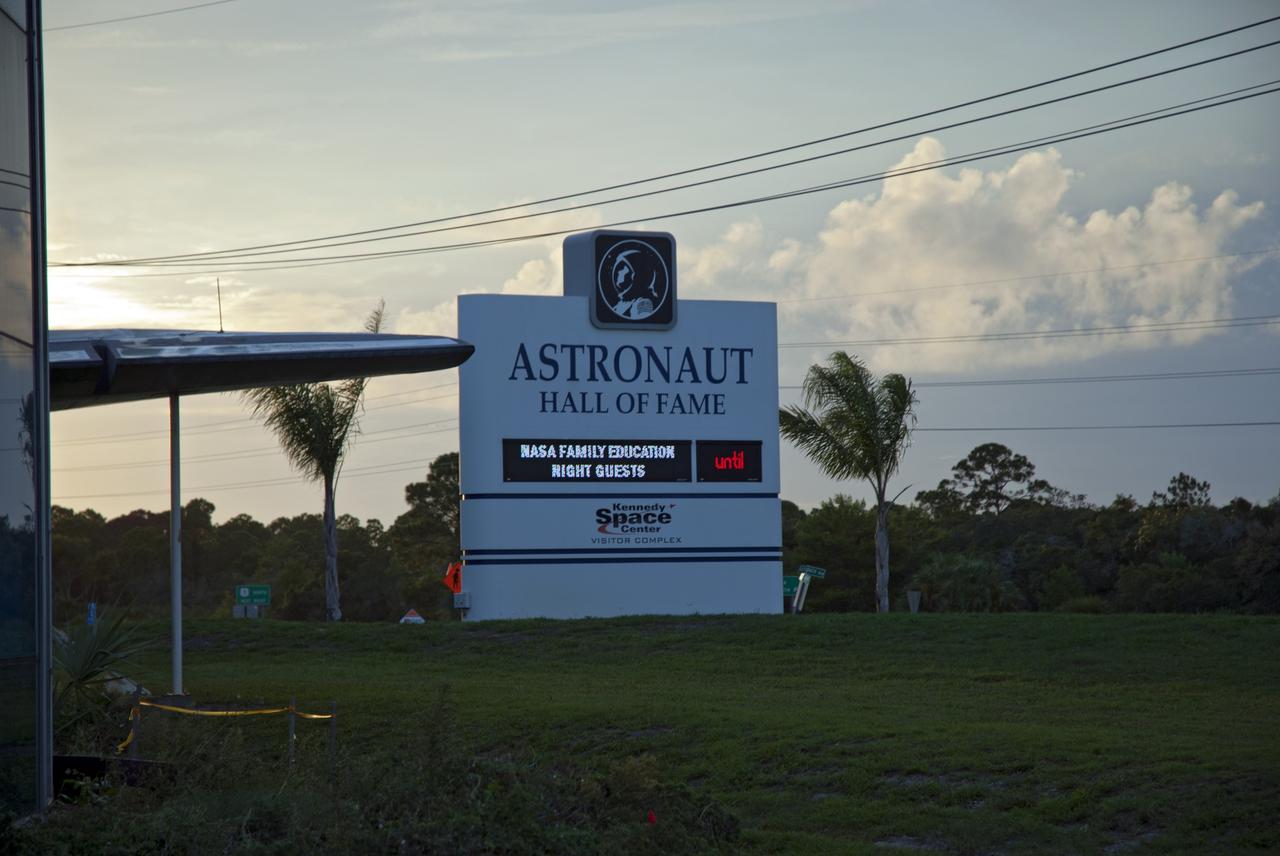
CAPE CANAVERAL, Fla. -- A sign welcomes fifth- through eighth-grade students and their parents to the last NASA family education night event at the Astronaut Hall of Fame near the Kennedy Space Center Visitor Complex in Florida. Activities included "gee-whiz" presentations, astronaut appearances, a hovercraft, vortex cannon and alternative fuel vehicles, which promote science, technology, engineering and mathematics (STEM) education. The event is part of NASA's Summer of Innovation initiative to provide interactive learning experiences to middle school students nationwide during the summer months. The program is a cornerstone of the Educate to Innovate campaign announced by President Barack Obama in November 2009. Photo credit: NASA/Charisse Nahser
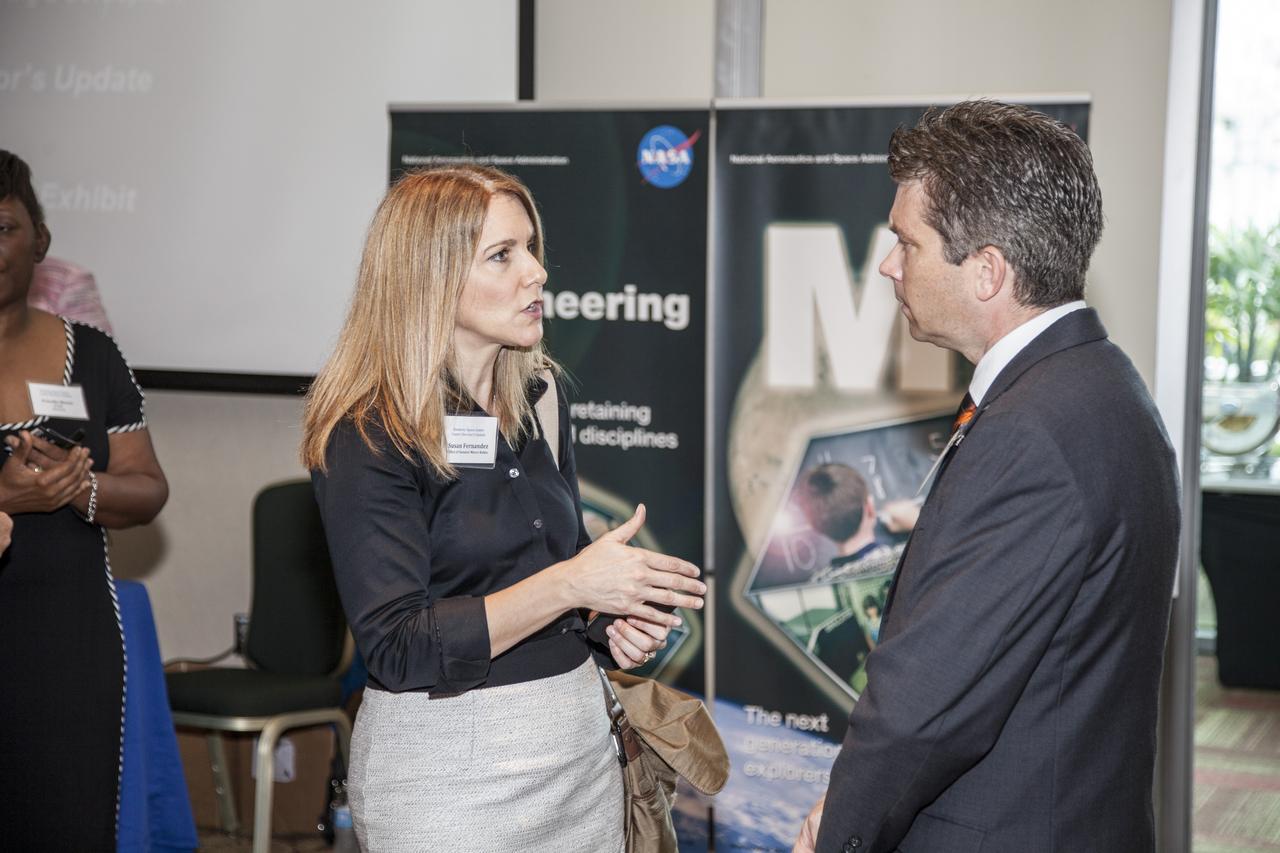
CAPE CANAVERAL, Fla. - Community leaders, business executives, educators, and state and local government leaders were updated on NASA Kennedy Space Center programs and accomplishments during Center Director Bob Cabana’s Center Director Update at the Debus Center at the Kennedy Space Center Visitor Complex in Florida. At left, Susan Fernandez from the Office of Senator Marco Rubio talks with another attendee near the Education display. Attendees talked with Cabana and other senior Kennedy managers and visited displays featuring updates on Kennedy programs and projects, including International Space Station, Commercial Crew, Ground System Development and Operations, Launch Services, Center Planning and Development, Technology, KSC Swamp Works and NASA Education. The morning concluded with a tour of the new Space Shuttle Atlantis exhibit at the visitor complex. For more information, visit http://www.nasa.gov/kennedy. Photo credit: NASA/Daniel Casper
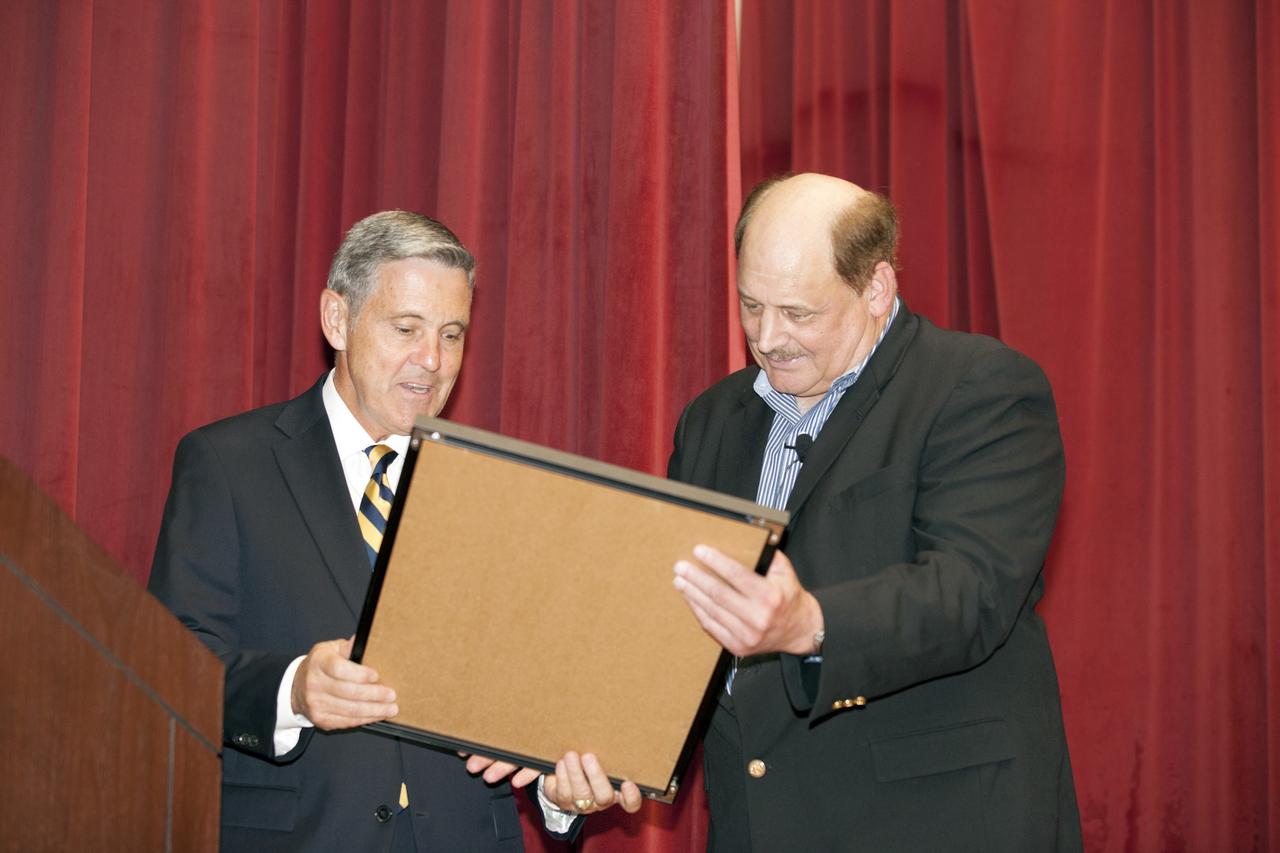
CAPE CANAVERAL, Fla. – NASA Kennedy Space Center Director Bob Cabana, left, presents a special plaque to Michael Kersjes, author and former special education teacher and football coach from Michigan, after his presentation to workers during the Disability Awareness and Action Working Group, or DAAWG, event. The theme of Kersjes' presentation was "Power of the Human Spirit." Kersjes is the author of the book, "A Smile as Big as the Moon," which told the true story of how he worked to get special education students into Space Camp, a competitive education program at the U.S. Space and Rocket Center in Huntsville, Alabama. His book was made into a movie in 2012. For information on Kennedy's diversity programs, visit http://odeo.ksc.nasa.gov. Photo credit: NASA/Kim Shiflett
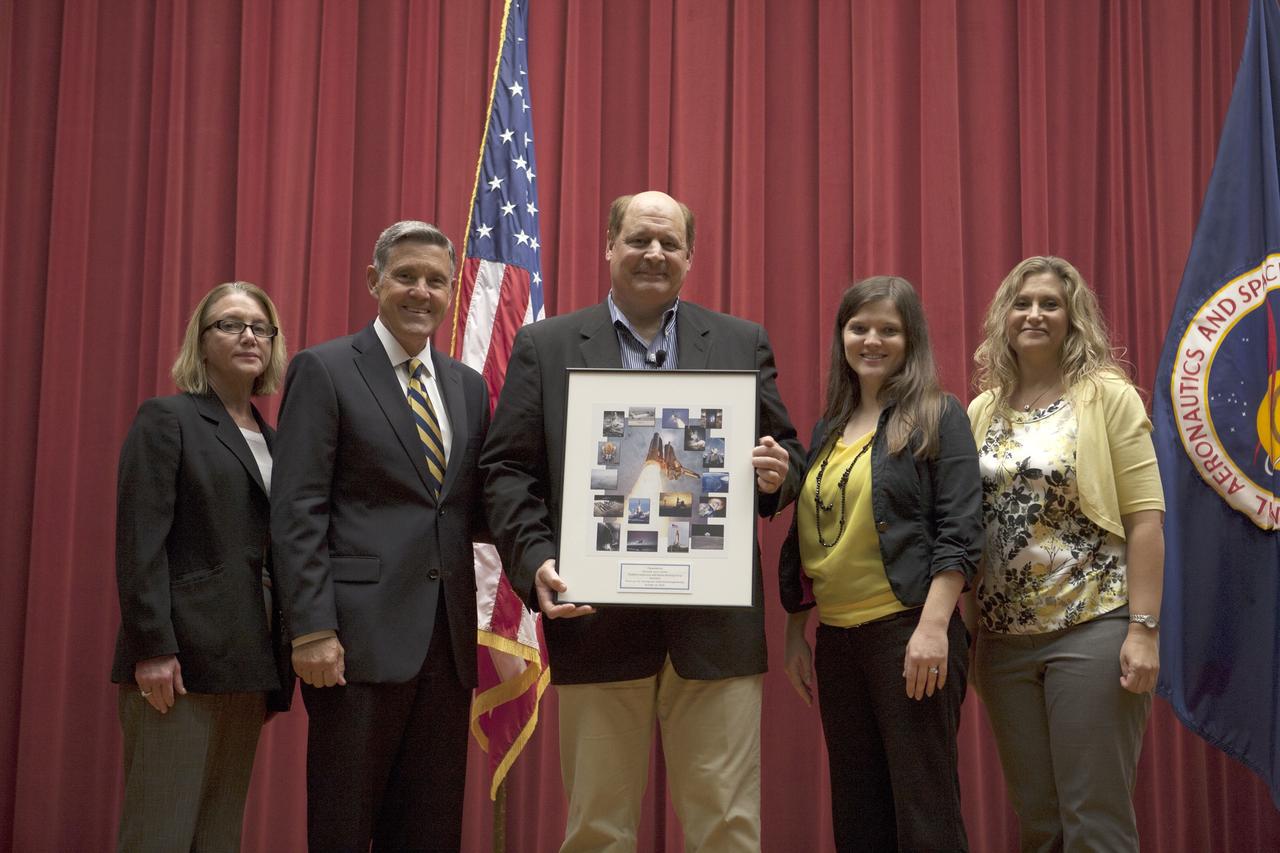
CAPE CANAVERAL, Fla. – Michael Kersjes, center, author and former special education teacher and football coach from Michigan, accepts a special plaque after his presentation to workers during the Disability Awareness and Action Working Group, or DAAWG, event at NASA's Kennedy Space Center in Florida. From left, are Susan Kroskey, Kennedy's chief financial officer and executive champion of DAAWG, Center Director Bob Cabana, and Jessica Conner and Nicole DelVesco, DAAWG co-chairpersons. The theme of Kersjes' presentation was "Power of the Human Spirit." Kersjes is the author of the book, "A Smile as Big as the Moon," which told the true story of how he worked to get special education students into Space Camp, a competitive education program at the U.S. Space and Rocket Center in Huntsville, Alabama. His book was made into a movie in 2012. For information on Kennedy's diversity programs, visit http://odeo.ksc.nasa.gov. Photo credit: NASA/Kim Shiflett

KENNEDY SPACE CENTER, FLA. - Kieta Osteen-Cochrane (left), executive director of the Institute for Business Training and Community Education at Brevard Community College, accepts a check for the WENDI program from Sandra Eliason, president of the Federally Employed Women-Space Coast Chapter at NASA's Kennedy Space Center. The FEW scholarship committee, chaired by Helen Kane, and the chapter’s Board of Directors, recently voted to contribute their educational scholarship money for 2006 to the WENDI program. This donation amounts to $6,000. FEW organizes and sponsors conferences and seminars on issues pertinent to women that have benefited not only their members and women at Kennedy Space Center, but throughout all of Brevard. Photo credit: NASA/George Shelton
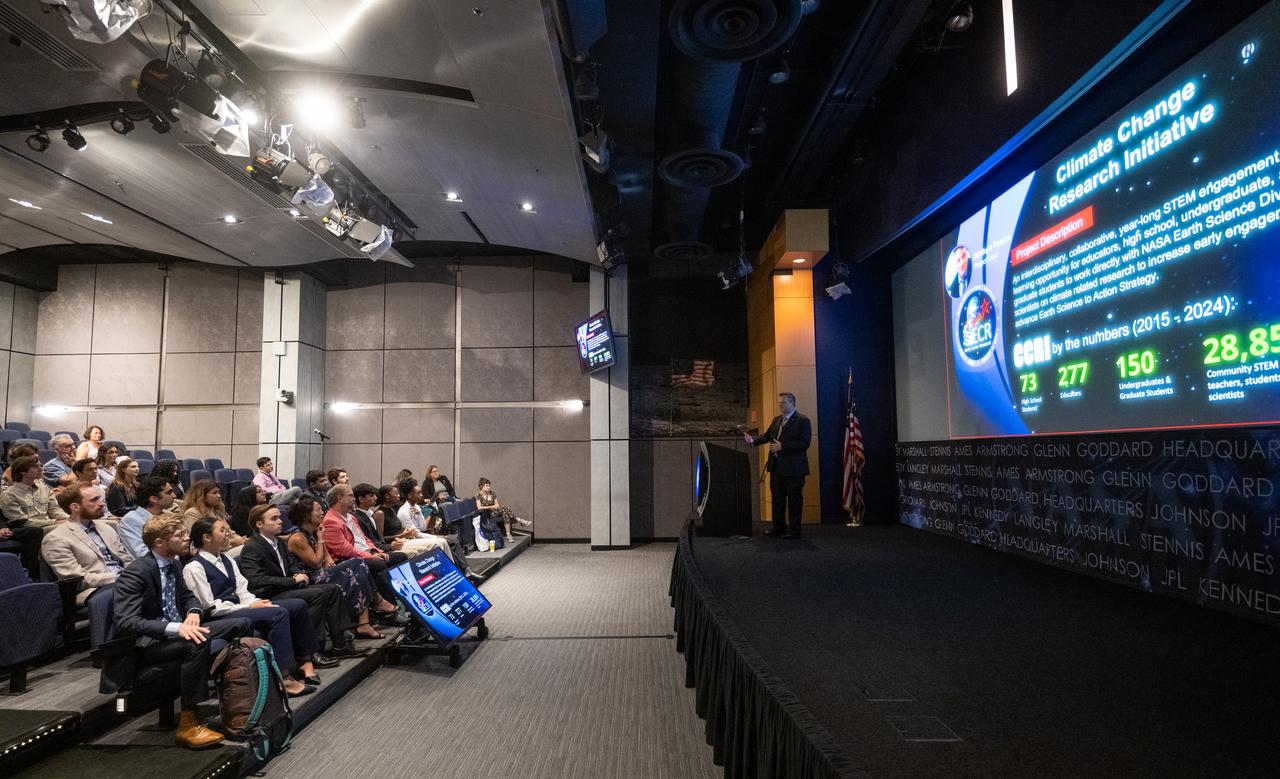
Matthew Pearce, education officer at NASA’s Goddard Institute for Space Studies and project lead for the Climate Change Research Initiative (CCRI), speaks with the CCRI cohort, Wednesday, Aug. 7, 2024, at the Mary W. Jackson NASA Headquarters building in Washington, DC. The Earth Science Division’s Early Career Research Program’s Climate Change Research Initiative (CCRI) is a year-long STEM engagement and experiential learning opportunity for educators and students from high school to graduate level. Photo Credit: (NASA/Joel Kowsky)
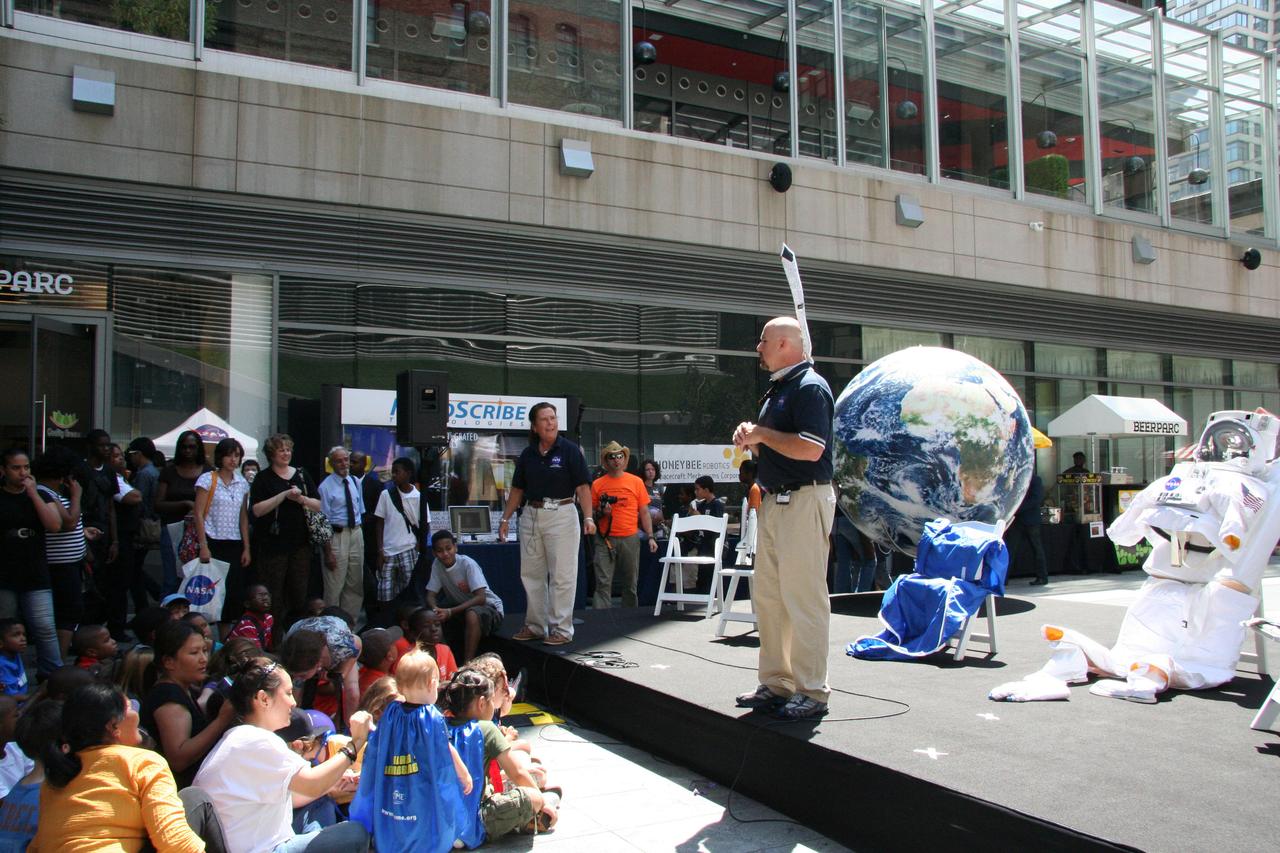
Chris Copelan (right), education program specialist at Stennis Space Center, and Maria Lott, Stennis Astro Camp director, talk about living and working in space with visitors gathered for the 'What's Your Favorite Space?' event in New York City on Aug. 17. Stennis educators teamed with peers from three other NASA centers to present a variety of hands-on activities and informational presentations during the event.
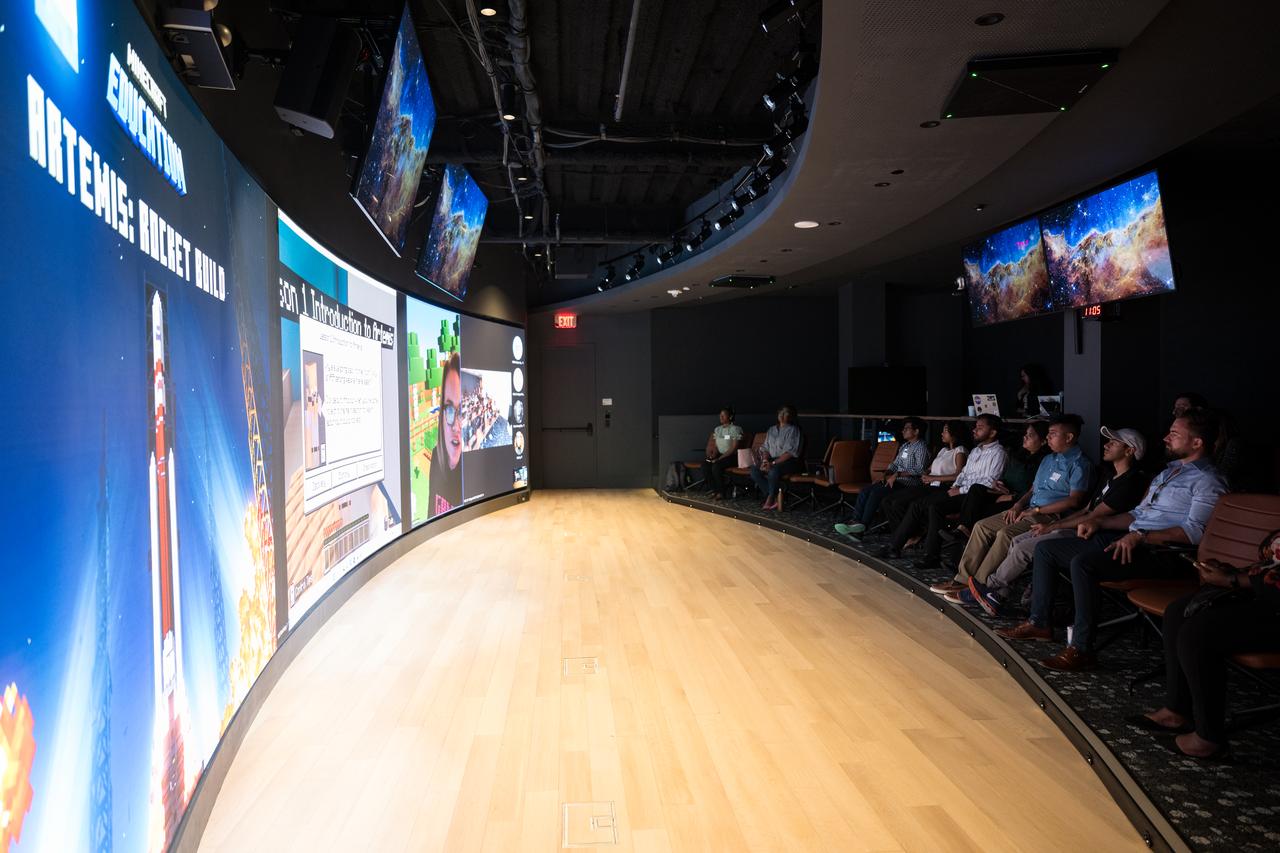
Microsoft Senior Program Manager and Executive Game Producer for Minecraft Education, Laylah Busman, provides instruction to DC area students during Space Education Day, Tuesday, June 20, 2023, at the Microsoft Technology Center in Arlington, Va. Microsoft hosted the event to showcase the collaboration, early successes, and future plans for high quality student engagement through activities that combined space content and technologies like artificial intelligence and cloud computing. Photo Credit: (NASA/Aubrey Gemignani)
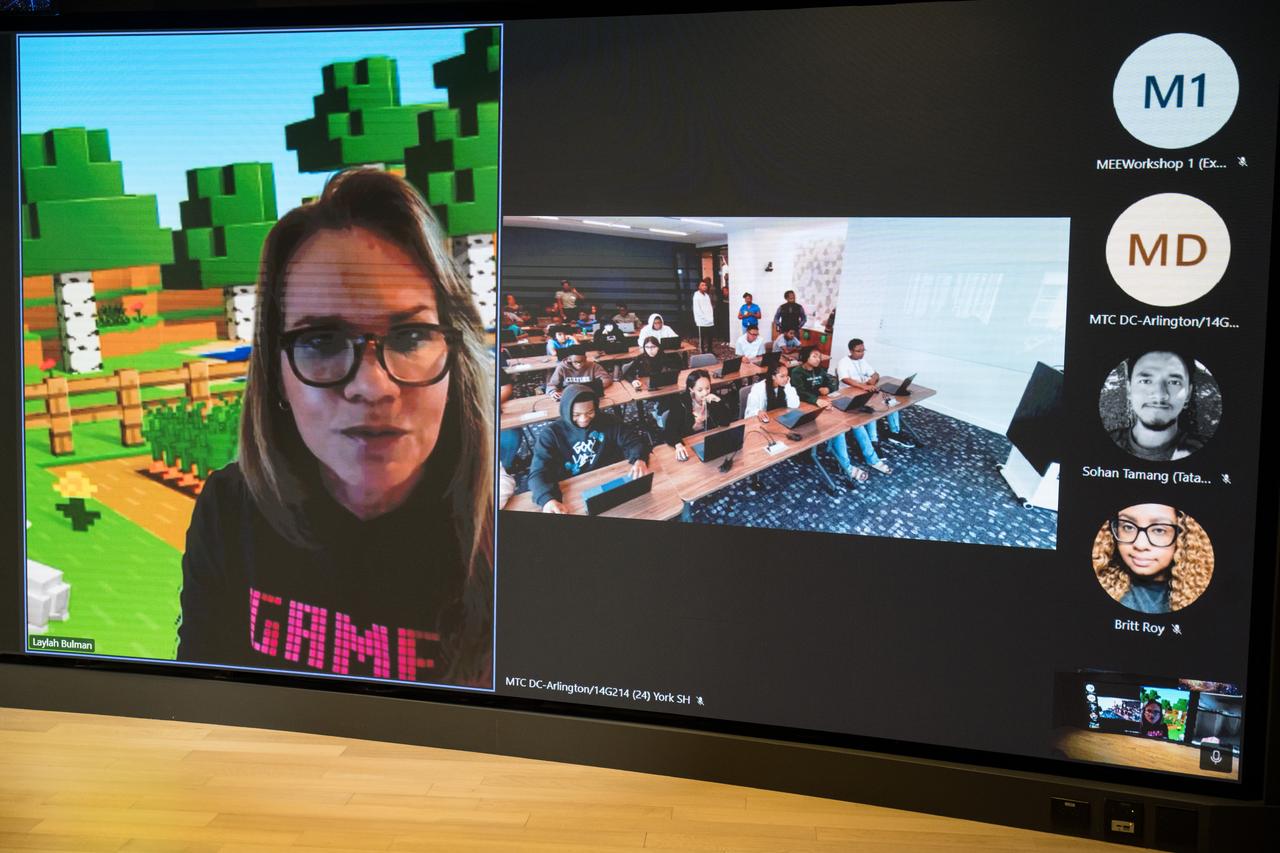
Microsoft Senior Program Manager and Executive Game Producer for Minecraft Education, Laylah Bulman, provides instruction to DC area students during Space Education Day, Tuesday, June 20, 2023, at the Microsoft Technology Center in Arlington, Va. Microsoft hosted the event to showcase the collaboration, early successes, and future plans for high quality student engagement through activities that combined space content and technologies like artificial intelligence and cloud computing. Photo Credit: (NASA/Aubrey Gemignani)
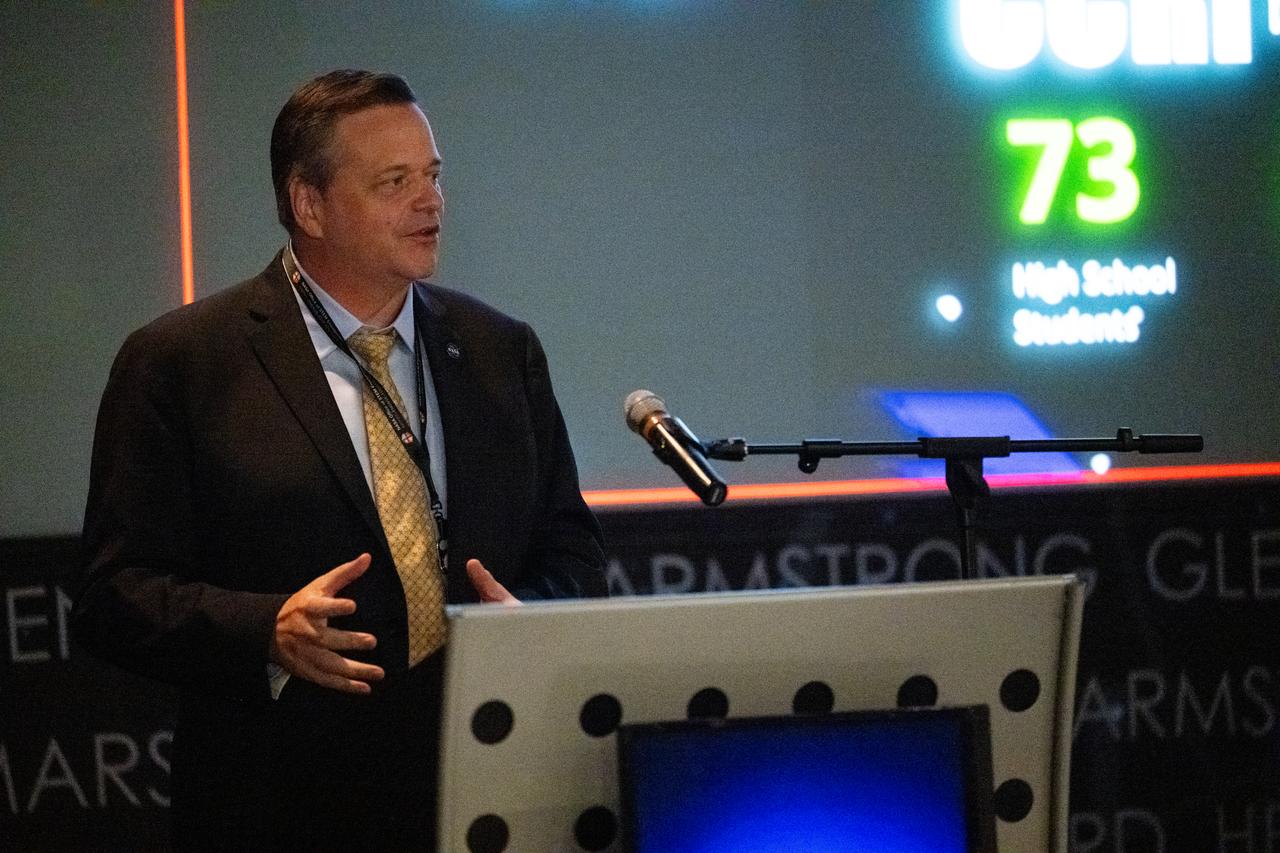
Matthew Pearce, education officer at NASA’s Goddard Institute for Space Studies and project lead for the Climate Change Research Initiative (CCRI), speaks with the CCRI cohort, Wednesday, Aug. 7, 2024, at the Mary W. Jackson NASA Headquarters building in Washington, DC. The Earth Science Division’s Early Career Research Program’s Climate Change Research Initiative (CCRI) is a year-long STEM engagement and experiential learning opportunity for educators and students from high school to graduate level. Photo Credit: (NASA/Joel Kowsky)
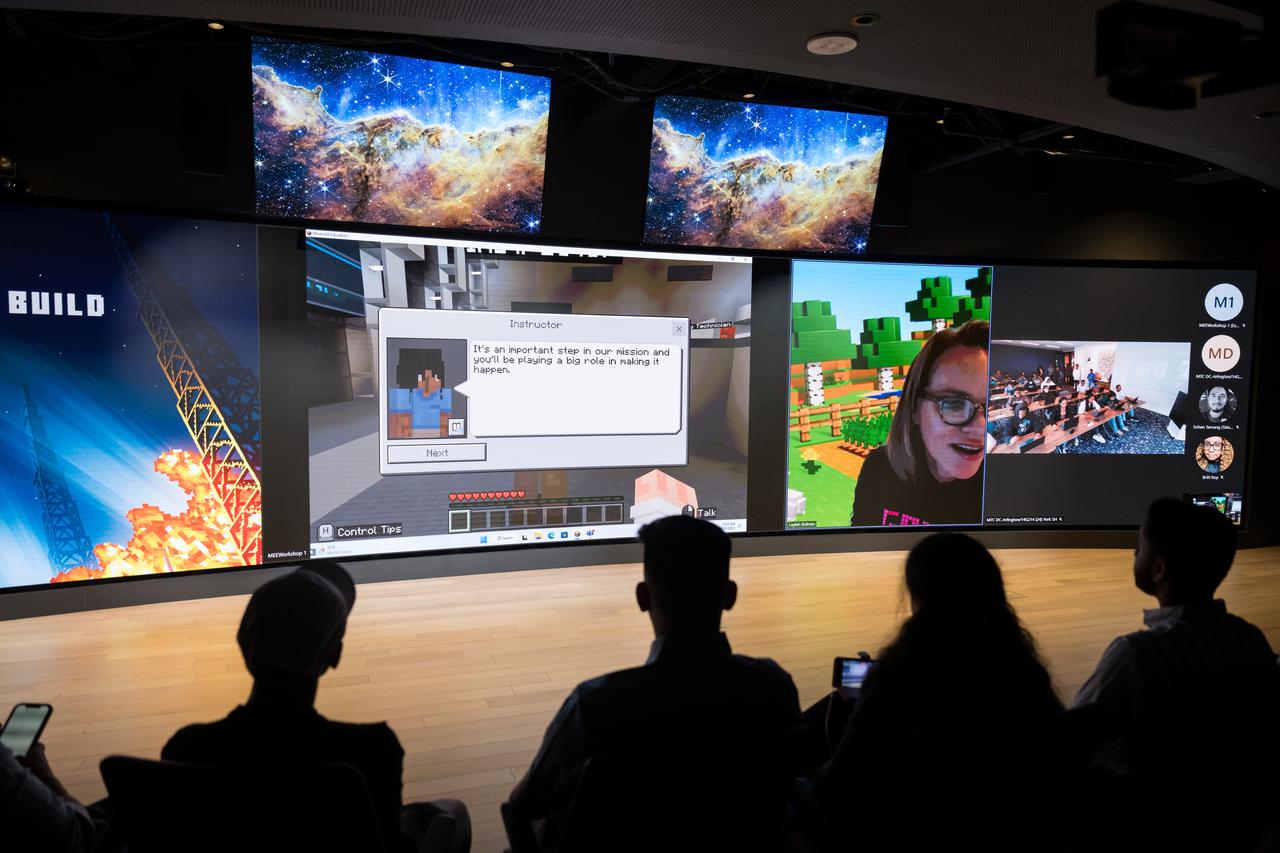
Microsoft Senior Program Manager and Executive Game Producer for Minecraft Education, Laylah Busman, provides instruction to DC area students during Space Education Day, Tuesday, June 20, 2023, at the Microsoft Technology Center in Arlington, Va. Microsoft hosted the event to showcase the collaboration, early successes, and future plans for high quality student engagement through activities that combined space content and technologies like artificial intelligence and cloud computing. Photo Credit: (NASA/Aubrey Gemignani)
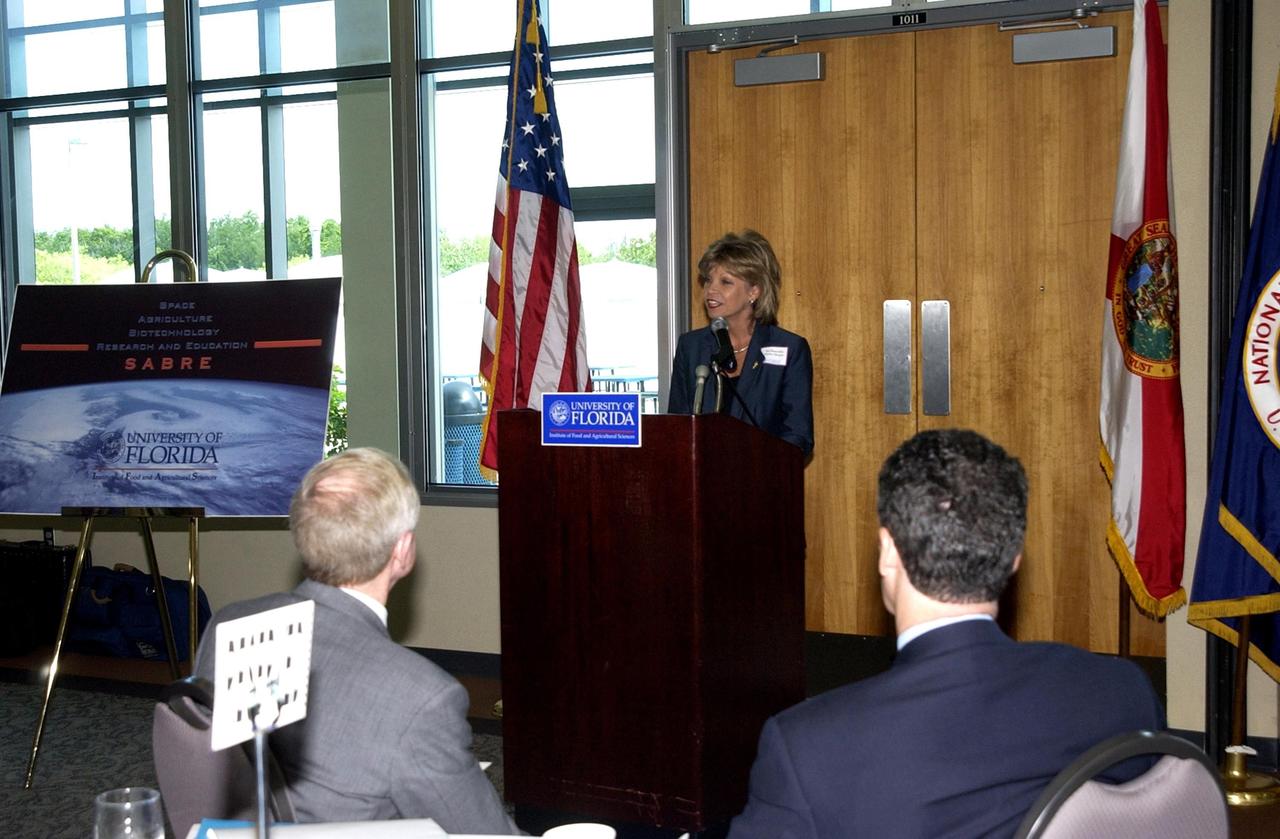
KENNEDY SPACE CENTER, FLA. -- The Honorable Diana Morgan speaks to attendees at the opening ceremony kicking off a new program known as SABRE, Space Agricultural Biotechnology Research and Education. In the foreground are Center Director Roy D. Bridges Jr. (left) and U.S. Representative Dave Weldon (right). The SABRE program is a combined effort of the University of Florida and NASA. Morgan is vice chair on the UF Board of Trustees. SABRE will focus on the discovery, development and application of the biological aspects of advanced life support strategies. The program will include faculty from UF's Institute of Food and Agricultural Sciences, who will be located at both KSC - in the state-owned Space Experiment Research and Processing Laboratory (SERPL) being built there - and UF in Gainesville. SABRE will be directed by Robert Ferl, professor in the horticultural sciences department and assistant director of UF's Biotechnology Program. He will be responsible for coordinating the research and education efforts of UF and NASA
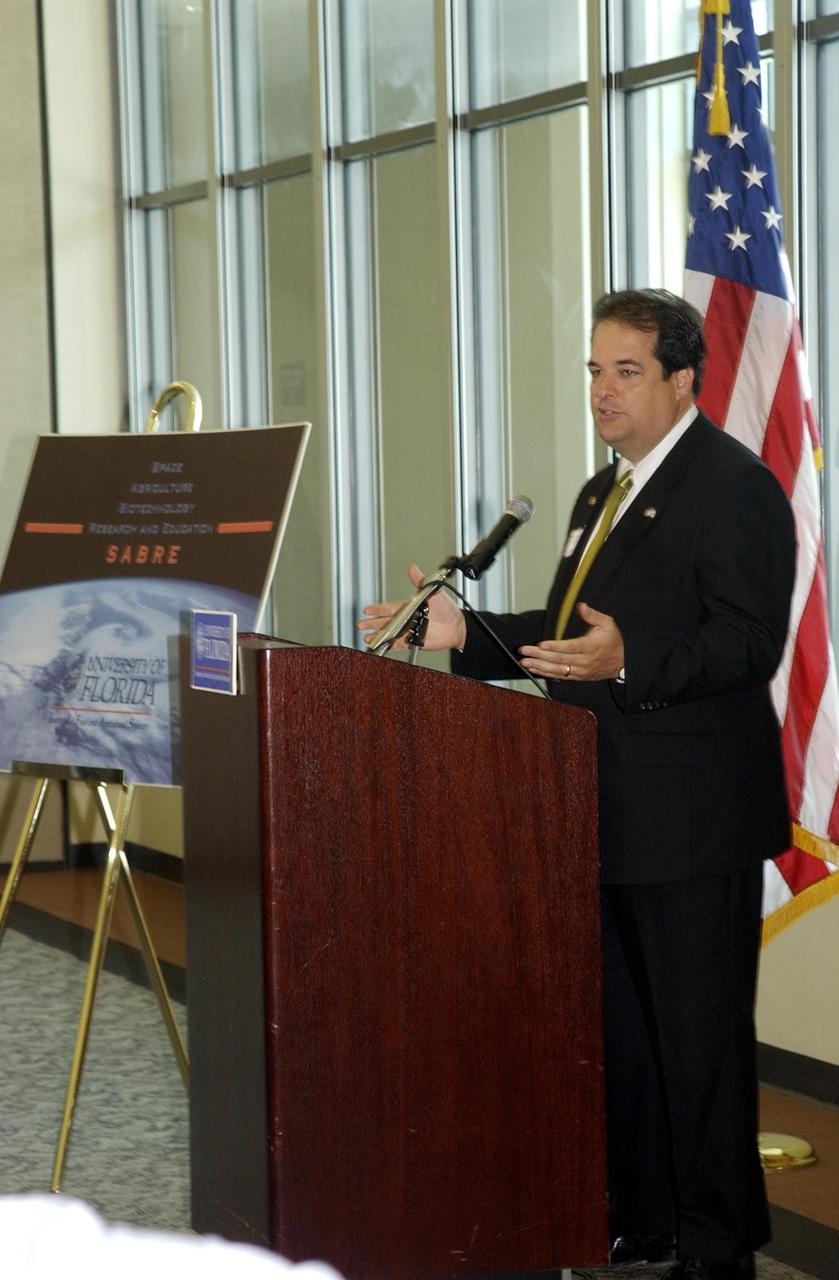
KENNEDY SPACE CENTER, FLA. -- Florida Representative Bob Allen speaks to attendees at the opening ceremony kicking off a new program known as SABRE, Space Agricultural Biotechnology Research and Education. The program is a combined effort of the University of Florida and NASA. SABRE will focus on the discovery, development and application of the biological aspects of advanced life support strategies. The program will include faculty from UF's Institute of Food and Agricultural Sciences, who will be located at both KSC - in the state-owned Space Experiment Research and Processing Laboratory (SERPL) being built there - and UF in Gainesville. SABRE will be directed by Robert Ferl, professor in the horticultural sciences department and assistant director of UF's Biotechnology Program. He will be responsible for coordinating the research and education efforts of UF and NASA
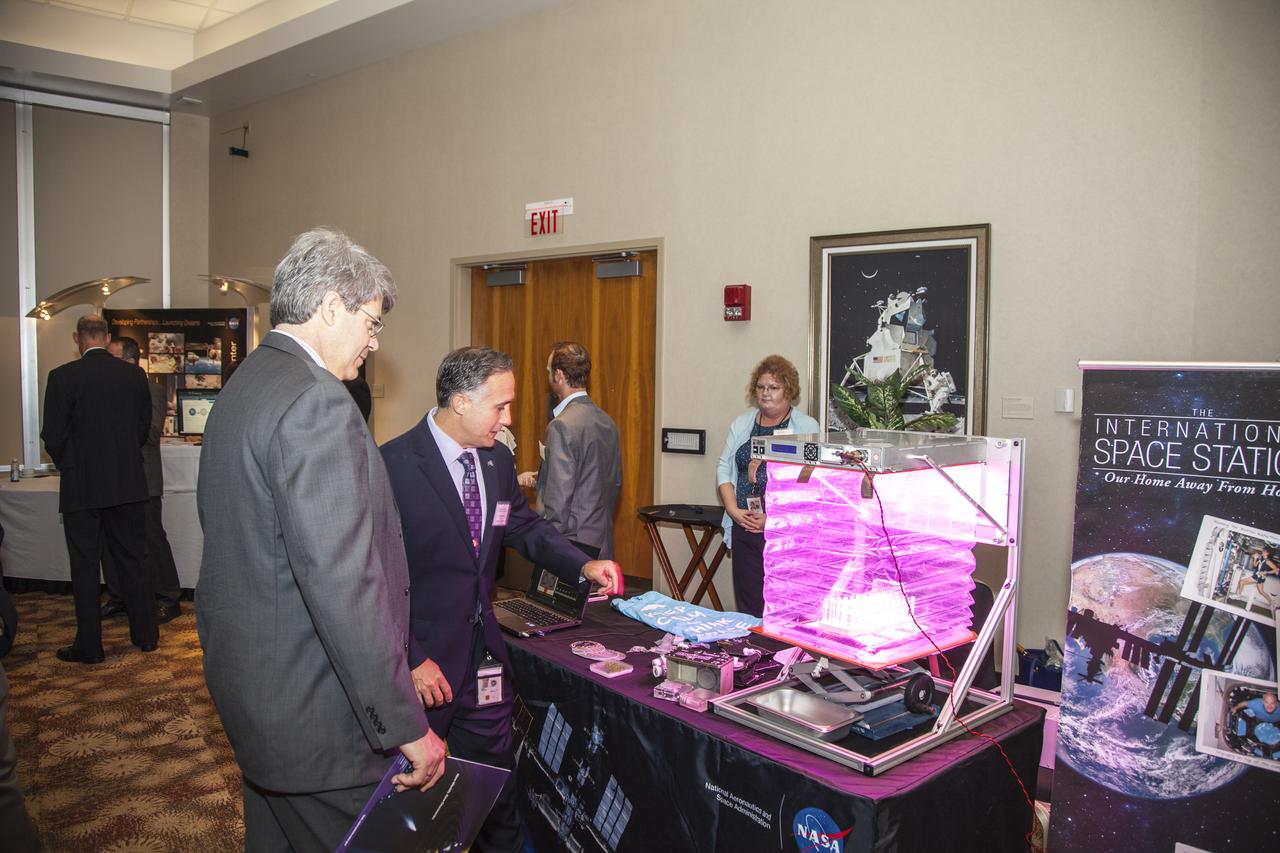
CAPE CANAVERAL, Fla. - Community leaders, business executives, educators, and state and local government leaders were updated on NASA Kennedy Space Center programs and accomplishments during Center Director Bob Cabana’s Center Director Update at the Debus Center at the Kennedy Space Center Visitor Complex in Florida. An attendee talks with Trent Smith, program manager, and Tammy Belk, a program specialist, at the ISS Ground Processing and Research Office display. Attendees talked with Cabana and other senior Kennedy managers and visited displays featuring updates on Kennedy programs and projects, including International Space Station, Commercial Crew, Ground System Development and Operations, Launch Services, Center Planning and Development, Technology, KSC Swamp Works and NASA Education. The morning concluded with a tour of the new Space Shuttle Atlantis exhibit at the visitor complex. For more information, visit http://www.nasa.gov/kennedy. Photo credit: NASA/Daniel Casper
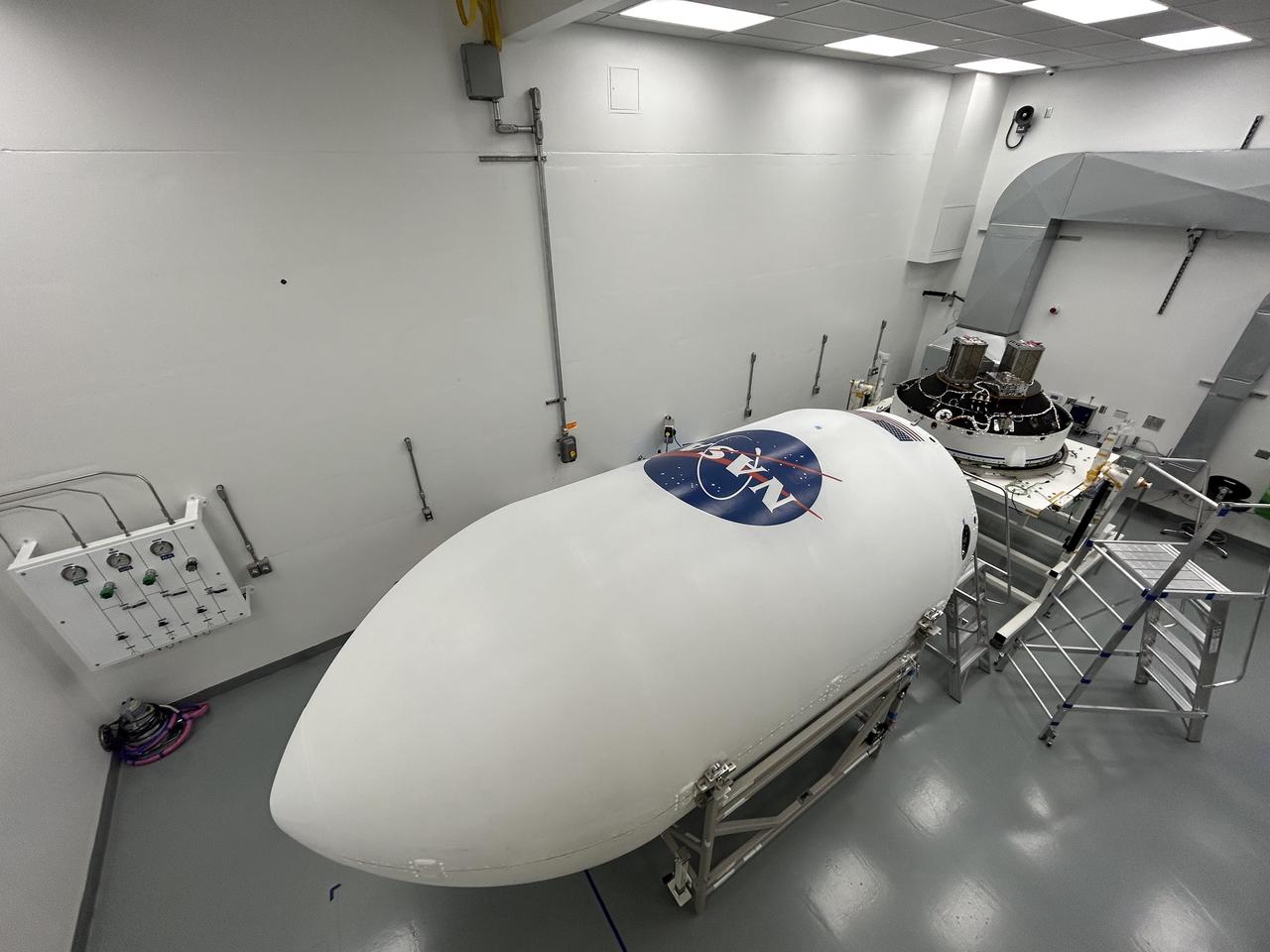
Technicians inside Firefly Aerospace’s Payload Processing Facility at Vandenberg Space Force Base, California, integrate eight CubeSats as part of NASA’s CubeSat Launch Initiative’s (CSLI) ELaNa (Educational Launch of Nanosatellites) 43 mission into payload fairings on Sunday, June 30, 2024. The mission will launch on the company’s Alpha rocket from Vandenberg’s Space Launch Complex 2. Firefly Aerospace is one of three companies selected to fly small satellites to space under NASA’s Launch Services Program Venture-Class Launch Services Demonstration 2 (VCLS Demo 2) contract awarded in December 2020.
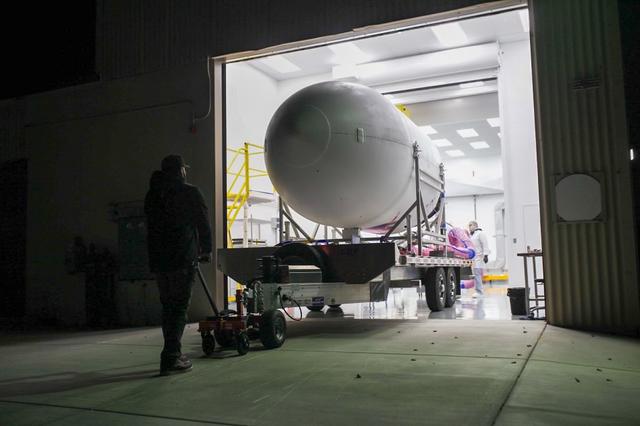
Firefly Aerospace’s Alpha rocket carrying eight CubeSats as part of NASA’s CubeSat Launch Initiative’s (CSLI) ELaNa (Educational Launch of Nanosatellites) 43 mission rolls out of the company’s Payload Processing Facility to Space Launch Complex 2 at Vandenberg Space Force Base, California, on Sunday, June 30, 2024. Firefly Aerospace is one of three companies selected to fly small satellites to space under NASA’s Launch Services Program Venture-Class Launch Services Demonstration 2 (VCLS Demo 2) contract awarded in December 2020.
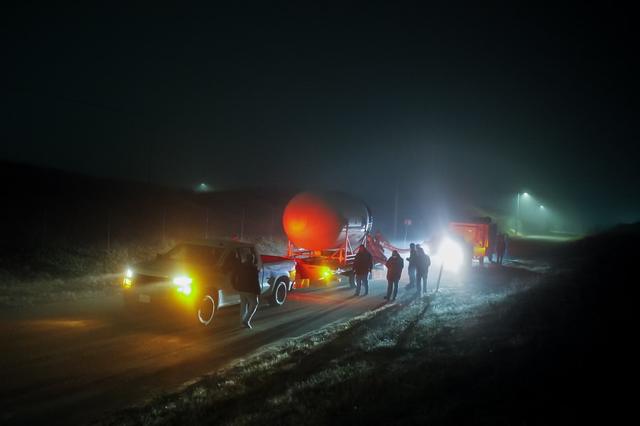
Firefly Aerospace’s Alpha rocket carrying eight CubeSats as part of NASA’s CubeSat Launch Initiative’s (CSLI) ELaNa (Educational Launch of Nanosatellites) 43 mission rolls out of the company’s Payload Processing Facility to Space Launch Complex 2 at Vandenberg Space Force Base, California, on Sunday, June 30, 2024. Firefly Aerospace is one of three companies selected to fly small satellites to space under NASA’s Launch Services Program Venture-Class Launch Services Demonstration 2 (VCLS Demo 2) contract awarded in December 2020.
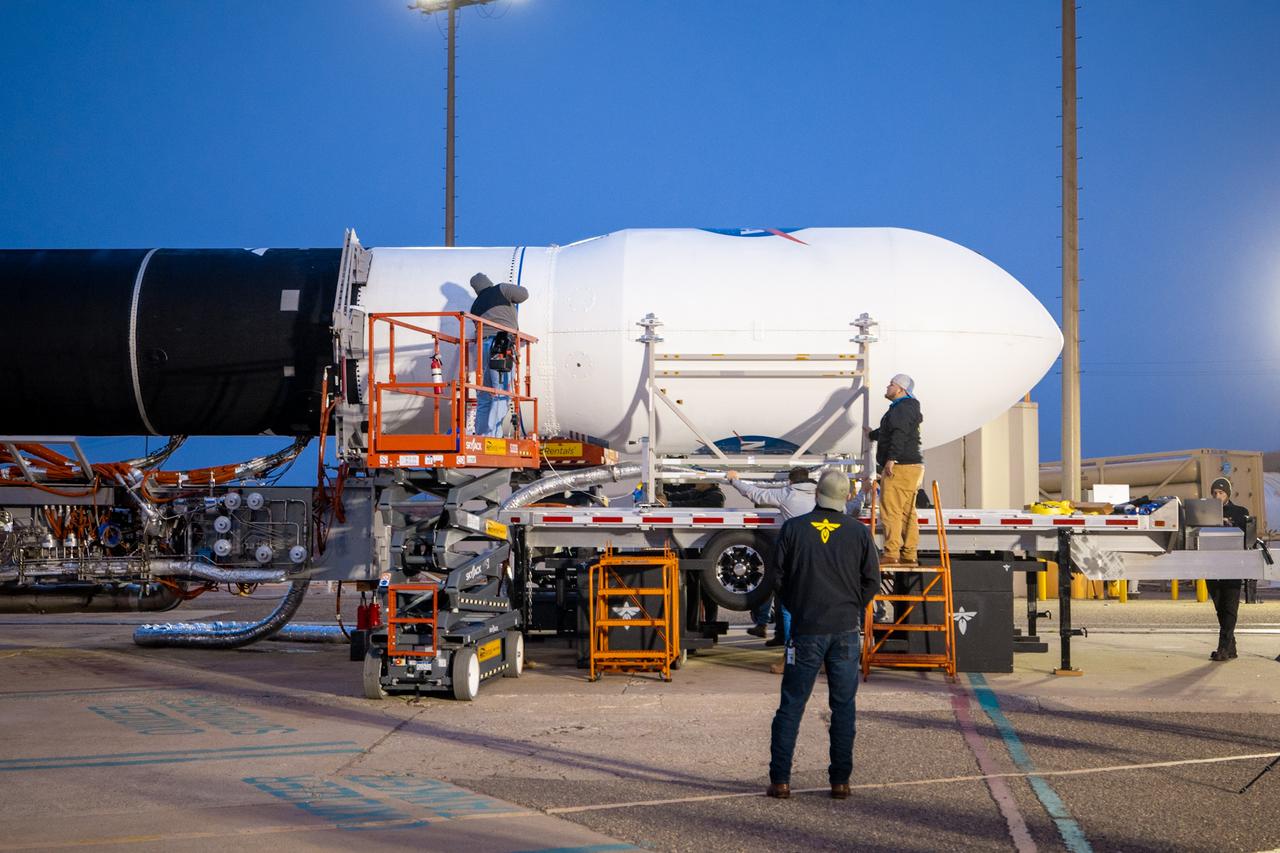
Firefly Aerospace’s Alpha rocket carrying eight CubeSats as part of NASA’s CubeSat Launch Initiative’s (CSLI) ELaNa (Educational Launch of Nanosatellites) 43 mission rolls out of the company’s Payload Processing Facility to Space Launch Complex 2 at Vandenberg Space Force Base, California, on Sunday, June 30, 2024. Firefly Aerospace is one of three companies selected to fly small satellites to space under NASA’s Launch Services Program Venture-Class Launch Services Demonstration 2 (VCLS Demo 2) contract awarded in December 2020.
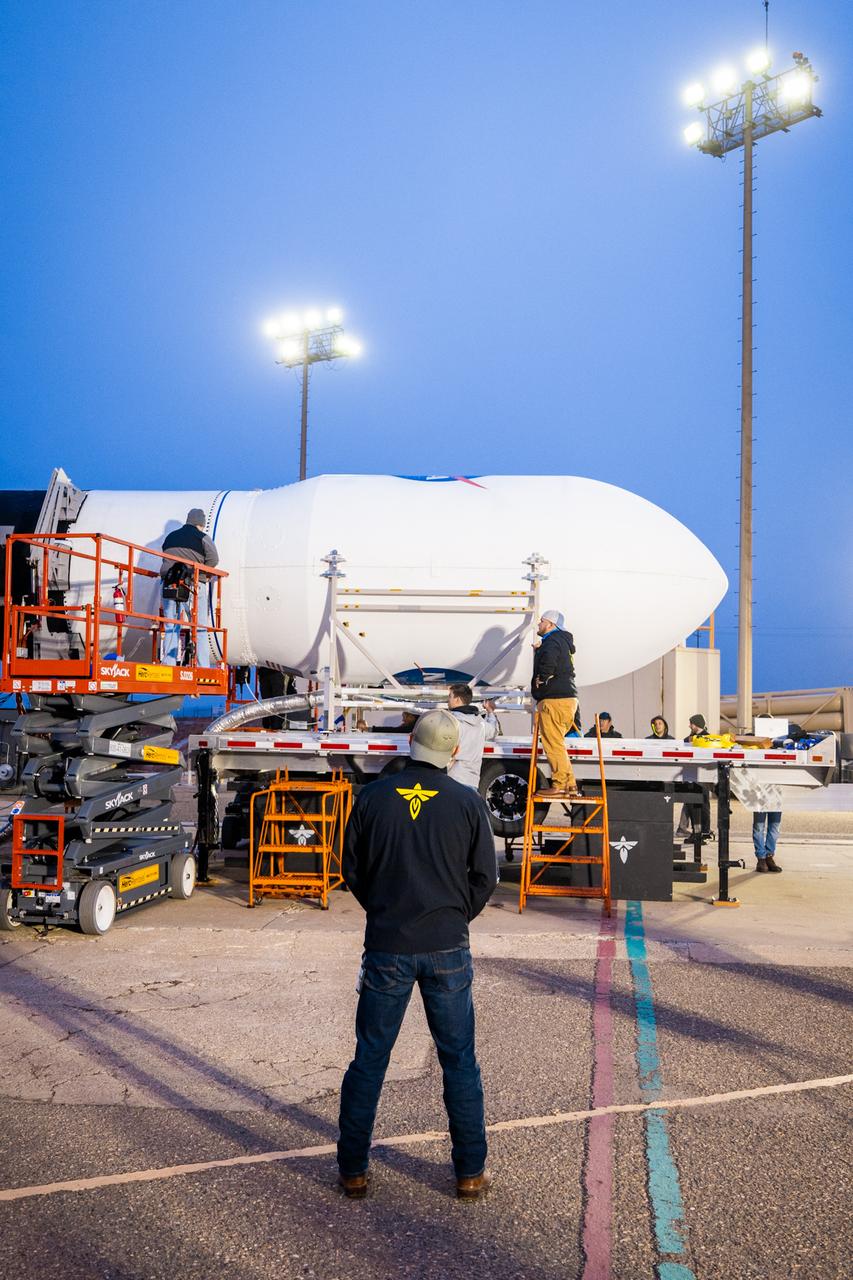
Firefly Aerospace’s Alpha rocket carrying eight CubeSats as part of NASA’s CubeSat Launch Initiative’s (CSLI) ELaNa (Educational Launch of Nanosatellites) 43 mission rolls out of the company’s Payload Processing Facility to Space Launch Complex 2 at Vandenberg Space Force Base, California, on Sunday, June 30, 2024. Firefly Aerospace is one of three companies selected to fly small satellites to space under NASA’s Launch Services Program Venture-Class Launch Services Demonstration 2 (VCLS Demo 2) contract awarded in December 2020.

NMTSat is a student-built satellite built by undergraduate and graduates students primarily from New Mexico Tech. NMTSat is designed to operate five sensors in four experiments in space for 3 months of data collection. The experiments will provide data on earth’s magnetic field, high altitude plasma density, atmospheric weather measurements, and an optical beacon experiment. Approximately 50 students have contributed to NMTSat and its design not including the students and groups who have developed the science instruments. NMTSat CubeSat is providing the opportunity for these science experiments to be conducted on orbit and demonstrates the collaborative nature of the Educational Launch of Nano Satellite (ELaNa) Program at NASA. The instruments have been contributed by New Mexico Tech, Turabo University in Puerto Rico, Los Alamos National Laboratory, and Atmospheric and Space Technology Research Associates (ASTRA) in Boulder, CO. Dr. Anders M. Jorgensen, Associate Professor at New Mexico Tech is the PI and Dr. Hien Vo from Vietnamese-German University in Ho Chi Minh University in Vietnam is a Co-Investigator. NMTSat is funded by the New Mexico NASA EPSCoR program as well as New Mexico Tech.

NMTSat is a student-built satellite built by undergraduate and graduates students primarily from New Mexico Tech. NMTSat is designed to operate five sensors in four experiments in space for 3 months of data collection. The experiments will provide data on earth’s magnetic field, high altitude plasma density, atmospheric weather measurements, and an optical beacon experiment. Approximately 50 students have contributed to NMTSat and its design not including the students and groups who have developed the science instruments. NMTSat CubeSat is providing the opportunity for these science experiments to be conducted on orbit and demonstrates the collaborative nature of the Educational Launch of Nano Satellite (ELaNa) Program at NASA. The instruments have been contributed by New Mexico Tech, Turabo University in Puerto Rico, Los Alamos National Laboratory, and Atmospheric and Space Technology Research Associates (ASTRA) in Boulder, CO. Dr. Anders M. Jorgensen, Associate Professor at New Mexico Tech is the PI and Dr. Hien Vo from Vietnamese-German University in Ho Chi Minh University in Vietnam is a Co-Investigator. NMTSat is funded by the New Mexico NASA EPSCoR program as well as New Mexico Tech.

NMTSat is a student-built satellite built by undergraduate and graduates students primarily from New Mexico Tech. NMTSat is designed to operate five sensors in four experiments in space for 3 months of data collection. The experiments will provide data on earth’s magnetic field, high altitude plasma density, atmospheric weather measurements, and an optical beacon experiment. Approximately 50 students have contributed to NMTSat and its design not including the students and groups who have developed the science instruments. NMTSat CubeSat is providing the opportunity for these science experiments to be conducted on orbit and demonstrates the collaborative nature of the Educational Launch of Nano Satellite (ELaNa) Program at NASA. The instruments have been contributed by New Mexico Tech, Turabo University in Puerto Rico, Los Alamos National Laboratory, and Atmospheric and Space Technology Research Associates (ASTRA) in Boulder, CO. Dr. Anders M. Jorgensen, Associate Professor at New Mexico Tech is the PI and Dr. Hien Vo from Vietnamese-German University in Ho Chi Minh University in Vietnam is a Co-Investigator. NMTSat is funded by the New Mexico NASA EPSCoR program as well as New Mexico Tech.
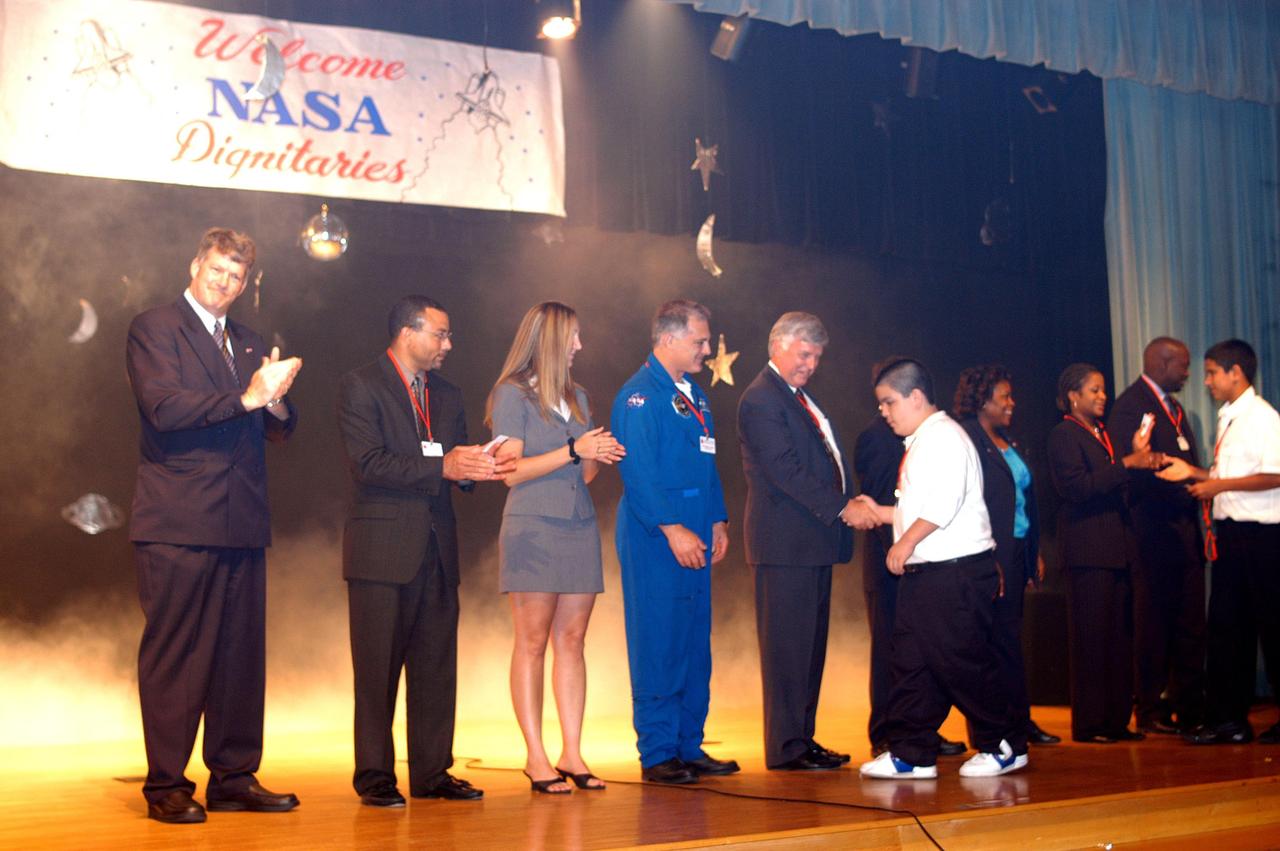
KENNEDY SPACE CENTER, FLA. -- During a visit to Howard A. Doolin Middle School, Miami, Fla., Center Director Jim Kennedy (shaking hands, center) and other NASA and KSC representatives are greeted by students on stage. With Kennedy on stage are (left to right), Jim Gerard, Aerospace Education Services Program (AESP) representative; Steve Lewis, assistant to Kennedy; Amber Marek, with KSC External Relations; David Wolf, astronaut; Kennedy; Les Gold, AESP representative; Burdette Brown; and Patricia Leonard and Clarence Bostic, Education Programs and University Research Division. Doolin Middle School is one of 100 to take part in the NASA Explorer Schools program. Kennedy is talking with students, the next generation of explorers, about our destiny as explorers, NASA’s stepping stone approach to exploring Earth, the Moon, Mars and beyond, how space impacts our lives, and how people and machines rely on each other in space.
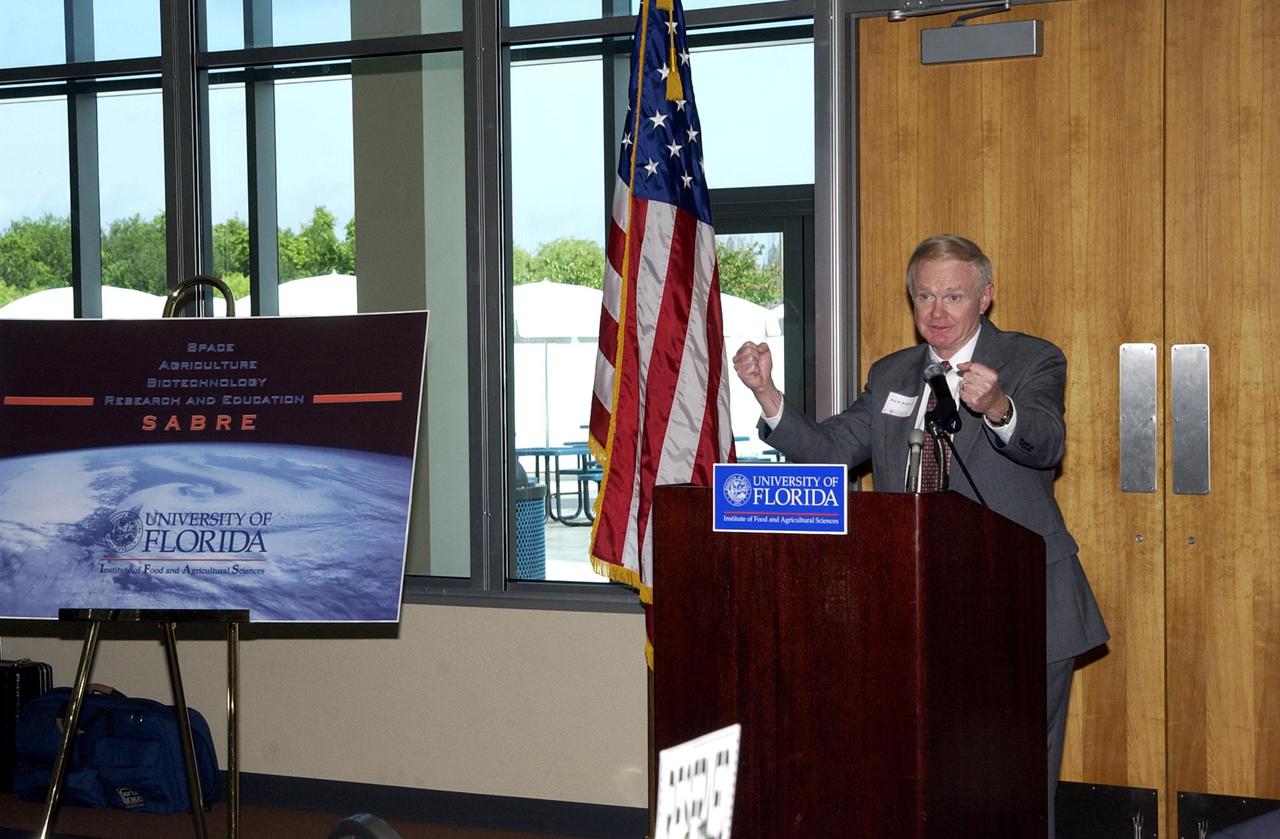
KENNEDY SPACE CENTER, FLA. - Center Director Roy D. Bridges Jr. shows his enthusiasm for the new program SABRE being launched at KSC. SABRE, Space Agricultural Biotechnology Research and Education, involves the University of Florida and NASA. Bridges was speaking at the opening ceremony that included officials from both organizations. SABRE will focus on the discovery, development and application of the biological aspects of advanced life support strategies. The program will include faculty from UF's Institute of Food and Agricultural Sciences, who will be located at both KSC - in the state-owned Space Experiment Research and Processing Laboratory (SERPL) being built there - and UF in Gainesville. SABRE will be directed by Robert Ferl, professor in the horticultural sciences department and assistant director of UF's Biotechnology Program. He will be responsible for coordinating the research and education efforts of UF and NASA

KENNEDY SPACE CENTER, FLA. -- Center Director Roy D. Bridges Jr. speaks at the opening ceremony to launch a new program called SABRE, Space Agricultural Biotechnology Research and Education, involving the University of Florida and NASA. Officials from UF and NASA attended the event. SABRE will focus on the discovery, development and application of the biological aspects of advanced life support strategies. The program will include faculty from UF's Institute of Food and Agricultural Sciences, who will be located at both KSC - in the state-owned Space Experiment Research and Processing Laboratory (SERPL) being built there - and UF in Gainesville. SABRE will be directed by Robert Ferl, professor in the horticultural sciences department and assistant director of UF's Biotechnology Program. He will be responsible for coordinating the research and education efforts of UF and NASA
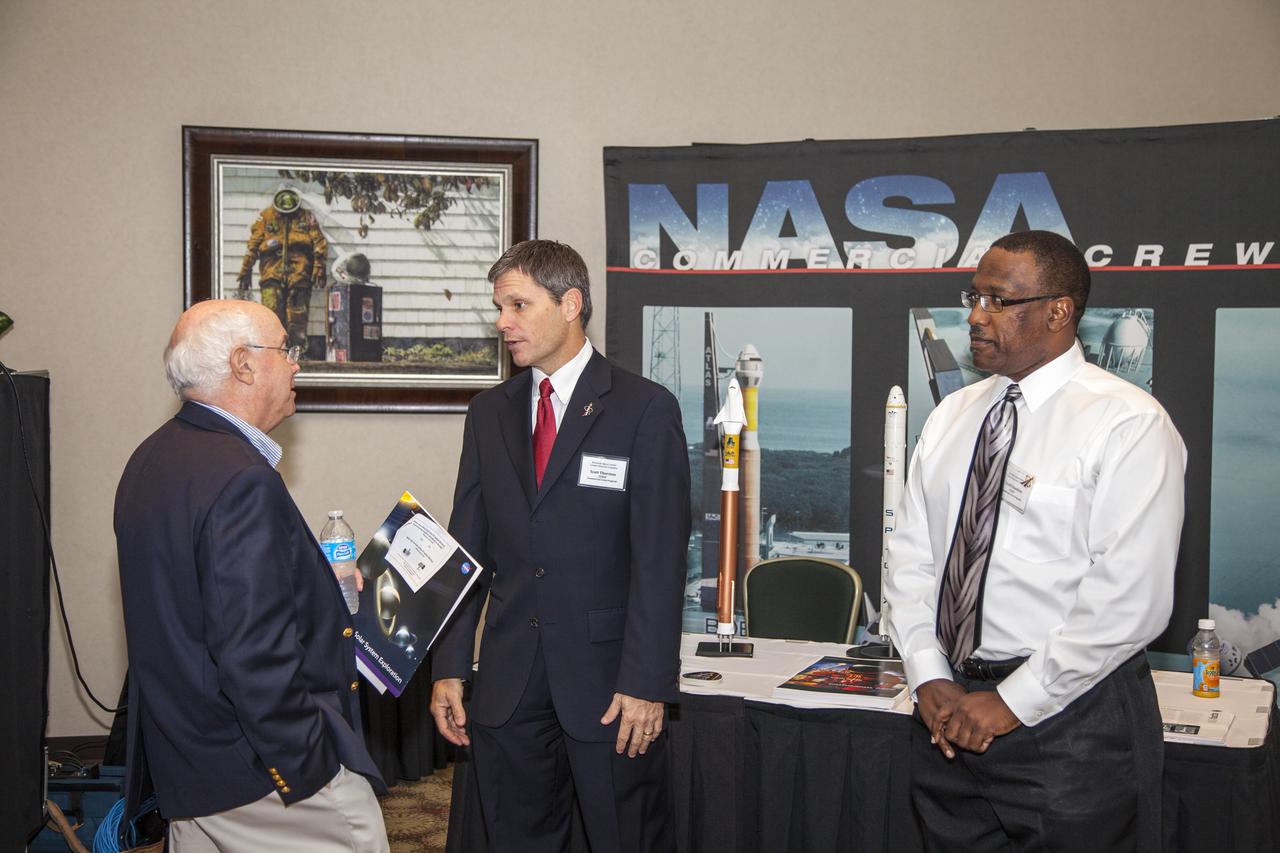
CAPE CANAVERAL, Fla. - Community leaders, business executives, educators, and state and local government leaders were updated on NASA Kennedy Space Center programs and accomplishments during Center Director Bob Cabana’s Center Director Update at the Debus Center at the Kennedy Space Center Visitor Complex in Florida. An attendee talks with Scott Thurston, Kennedy deputy of the spacecraft office at the Commercial Crew Program display. Attendees talked with Cabana and other senior Kennedy managers and visited displays featuring updates on Kennedy programs and projects, including International Space Station, Commercial Crew, Ground System Development and Operations, Launch Services, Center Planning and Development, Technology, KSC Swamp Works and NASA Education. The morning concluded with a tour of the new Space Shuttle Atlantis exhibit at the visitor complex. For more information, visit http://www.nasa.gov/kennedy. Photo credit: NASA/Daniel Casper
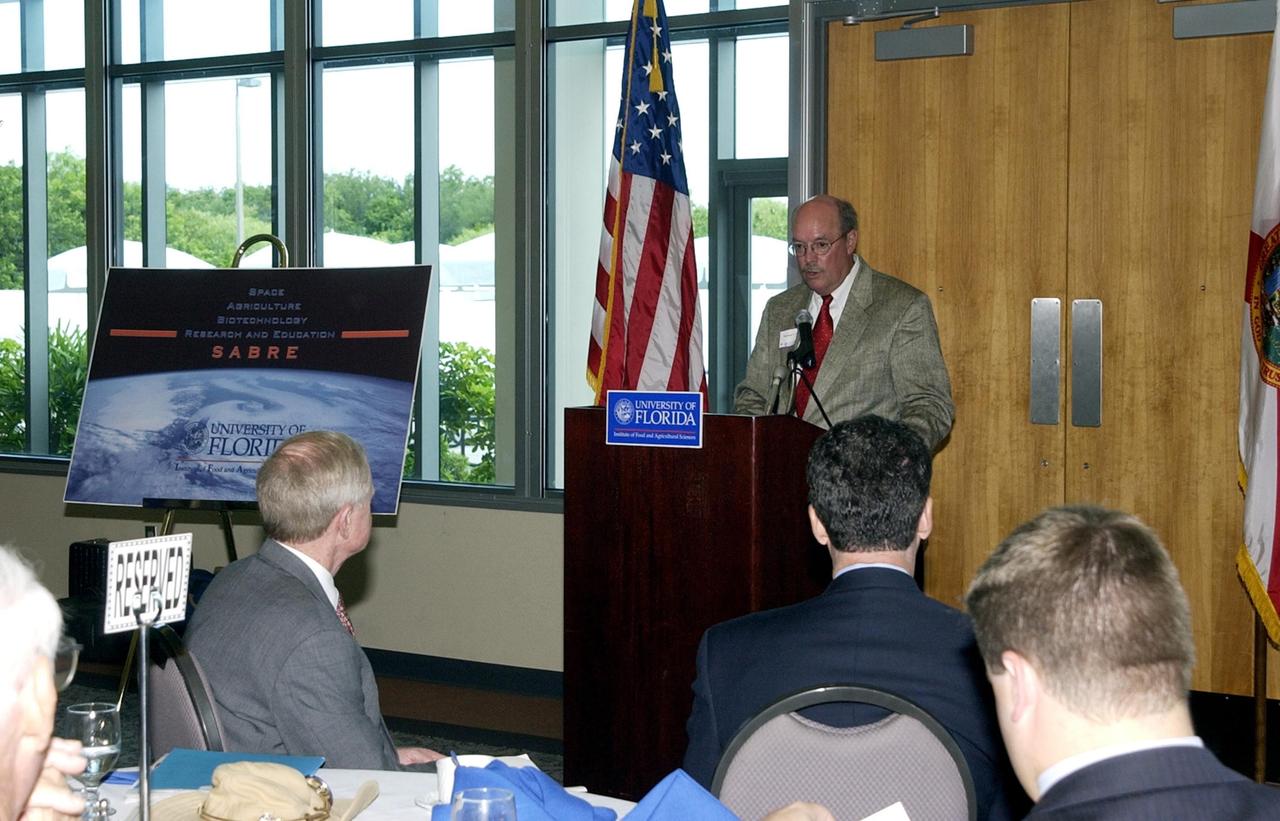
KENNEDY SPACE CENTER, FLA. -- Mike Martin, University of Florida vice president for agriculture and natural resources, speaks during the opening ceremony to launch a new program called SABRE, Space Agricultural Biotechnology Research and Education, that involves UF and NASA. Officials from UF and NASA attended the event. In the foreground are Center Director Roy D. Bridges Jr. (left) and U.S. Rep. Dave Weldon (right). SABRE will focus on the discovery, development and application of the biological aspects of advanced life support strategies. The program will include faculty from UF's Institute of Food and Agricultural Sciences, who will be located at both KSC - in the state-owned Space Experiment Research and Processing Laboratory (SERPL) being built there - and UF in Gainesville. SABRE will be directed by Robert Ferl, professor in the horticultural sciences department and assistant director of UF's Biotechnology Program. He will be responsible for coordinating the research and education efforts of UF and NASA
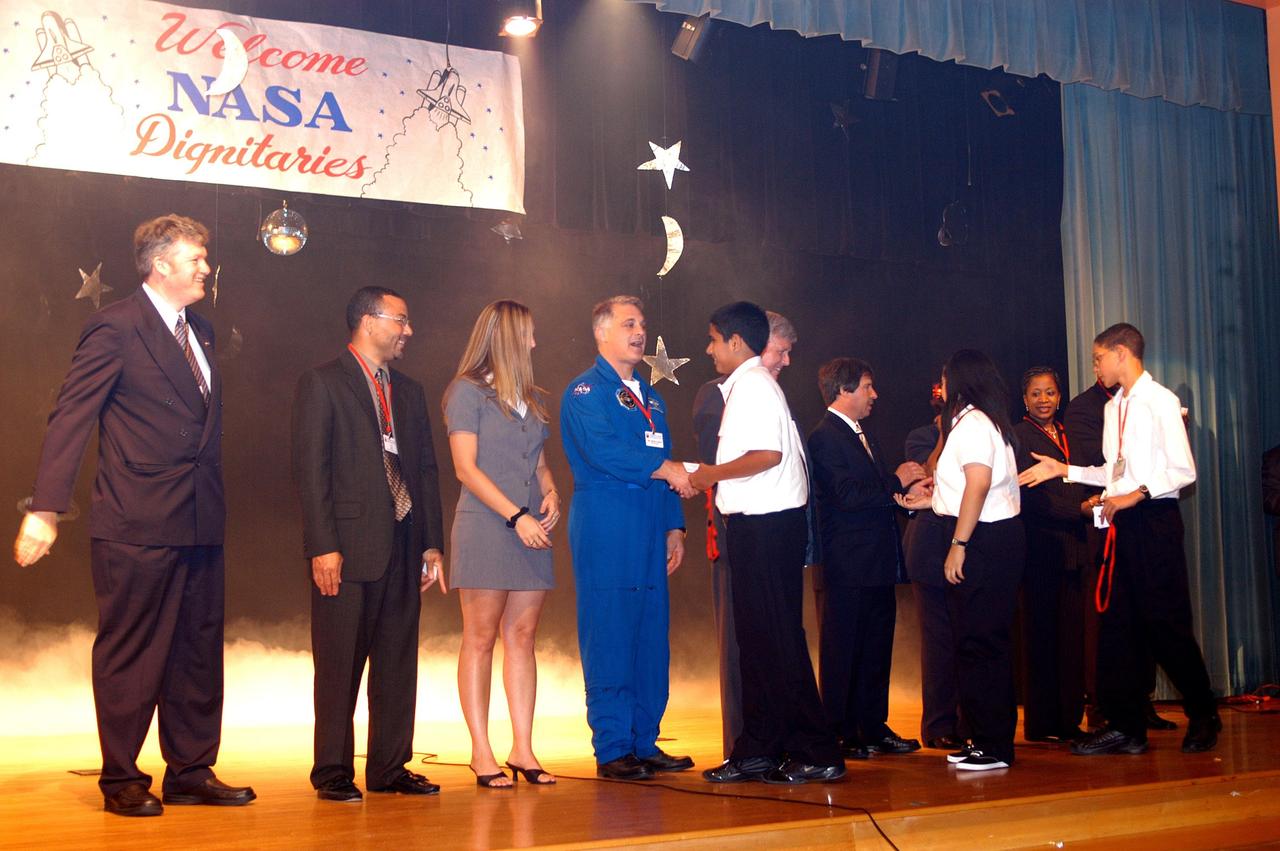
KENNEDY SPACE CENTER, FLA. -- During a visit to Howard A. Doolin Middle School, Miami, Fla., Center Director Jim Kennedy and other NASA and KSC representatives are greeted by students on stage. From left to right, are Jim Gerard, Aerospace Education Services Program (AESP) representative; Steve Lewis, assistant to Kennedy; Amber Marek, with KSC External Relations; David Wolf, astronaut; Kennedy; Les Gold, AESP representative; Burdette Brown; and Patricia Leonard and Clarence Bostic, Education Programs and University Research Division. Doolin Middle School is one of 100 to take part in the NASA Explorer Schools program. Kennedy is talking with students, the next generation of explorers, about our destiny as explorers, NASA’s stepping stone approach to exploring Earth, the Moon, Mars and beyond, how space impacts our lives, and how people and machines rely on each other in space.
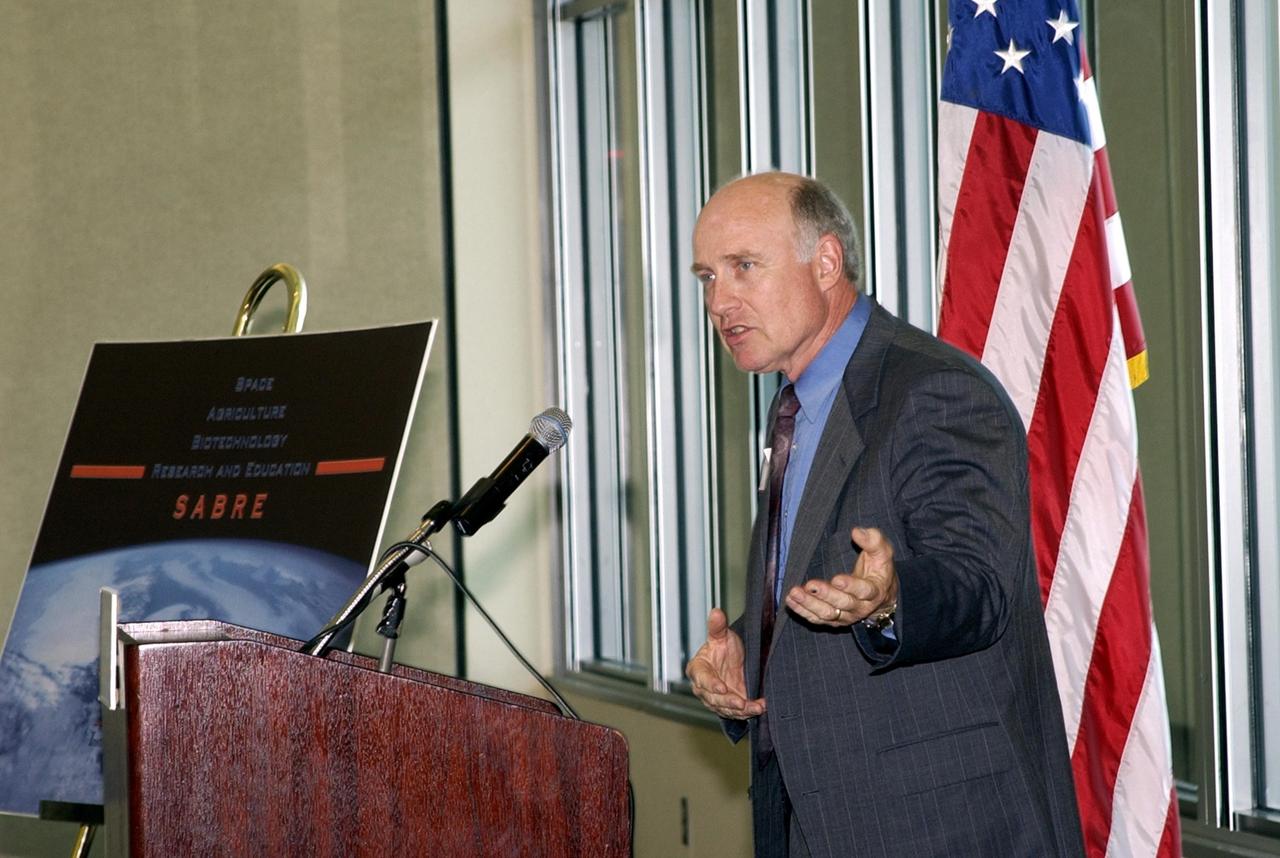
KENNEDY SPACE CENTER, FLA. -- At the opening ceremony for the new program known as SABRE, Space Agricultural Biotechnology Research and Education, William Knott speaks to attendees. Knott is senior scientist in the NASA biological sciences office. SABRE is a joint effort of the University of Florida and NASA and will focus on the discovery, development and application of the biological aspects of advanced life support strategies. The program will include faculty from UF's Institute of Food and Agricultural Sciences, who will be located at both KSC - in the state-owned Space Experiment Research and Processing Laboratory (SERPL) being built there - and UF in Gainesville. Robert Ferl, professor in the horticultural sciences department and assistant director of the University of Florida Biotechnology Program, will direct and be responsible for coordinating the research and education.
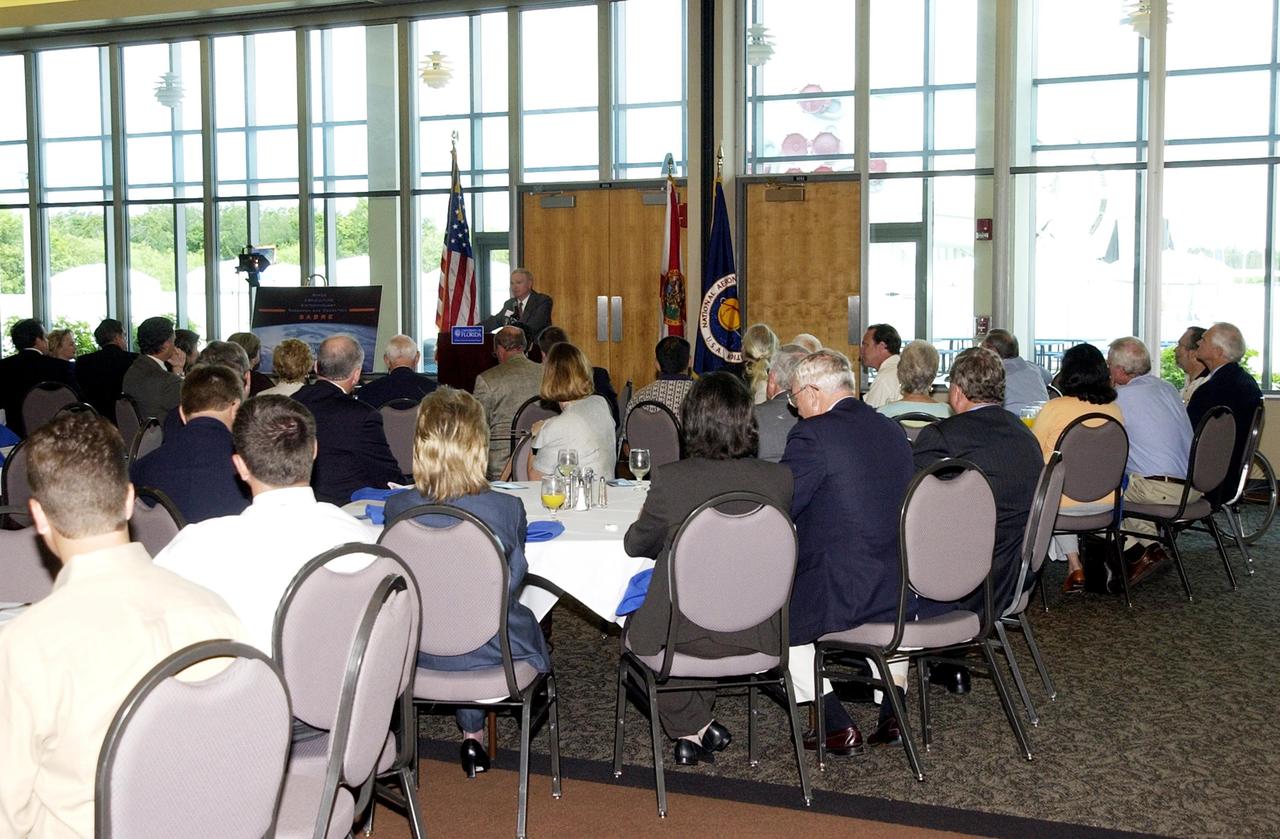
KENNEDY SPACE CENTER, FLA. -- Center Director Roy D. Bridges Jr. speaks to a large group attending the opening of a new program known as SABRE, Space Agricultural Biotechnology Research and Education, that involves the University of Florida and NASA. SABRE will focus on the discovery, development and application of the biological aspects of advanced life support strategies. The program will include faculty from UF's Institute of Food and Agricultural Sciences, who will be located at both KSC - in the state-owned Space Experiment Research and Processing Laboratory (SERPL) being built there - and UF in Gainesville. SABRE will be directed by Robert Ferl, professor in the horticultural sciences department and assistant director of UF's Biotechnology Program. He will be responsible for coordinating the research and education efforts of UF and NASA
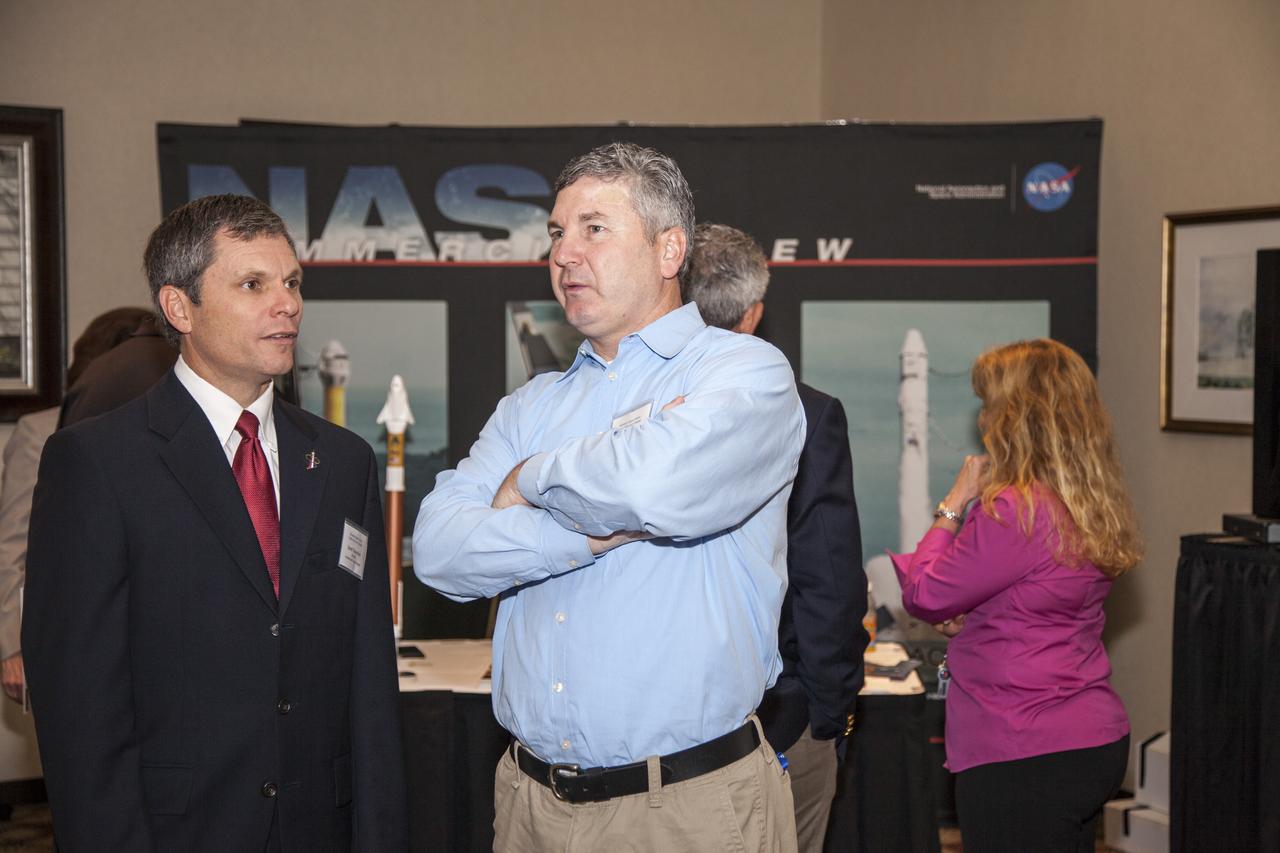
CAPE CANAVERAL, Fla. - Community leaders, business executives, educators, and state and local government leaders were updated on NASA Kennedy Space Center programs and accomplishments during Center Director Bob Cabana’s Center Director Update at the Debus Center at the Kennedy Space Center Visitor Complex in Florida. From left, Scott Thurston, Kennedy deputy of the spacecraft office of the Commercial Crew Program, talks with Scott Colloredo, director of the Center Planning and Development Directorate. Attendees talked with Cabana and other senior Kennedy managers and visited displays featuring updates on Kennedy programs and projects, including International Space Station, Commercial Crew, Ground System Development and Operations, Launch Services, Center Planning and Development, Technology, KSC Swamp Works and NASA Education. The morning concluded with a tour of the new Space Shuttle Atlantis exhibit at the visitor complex. For more information, visit http://www.nasa.gov/kennedy. Photo credit: NASA/Daniel Casper
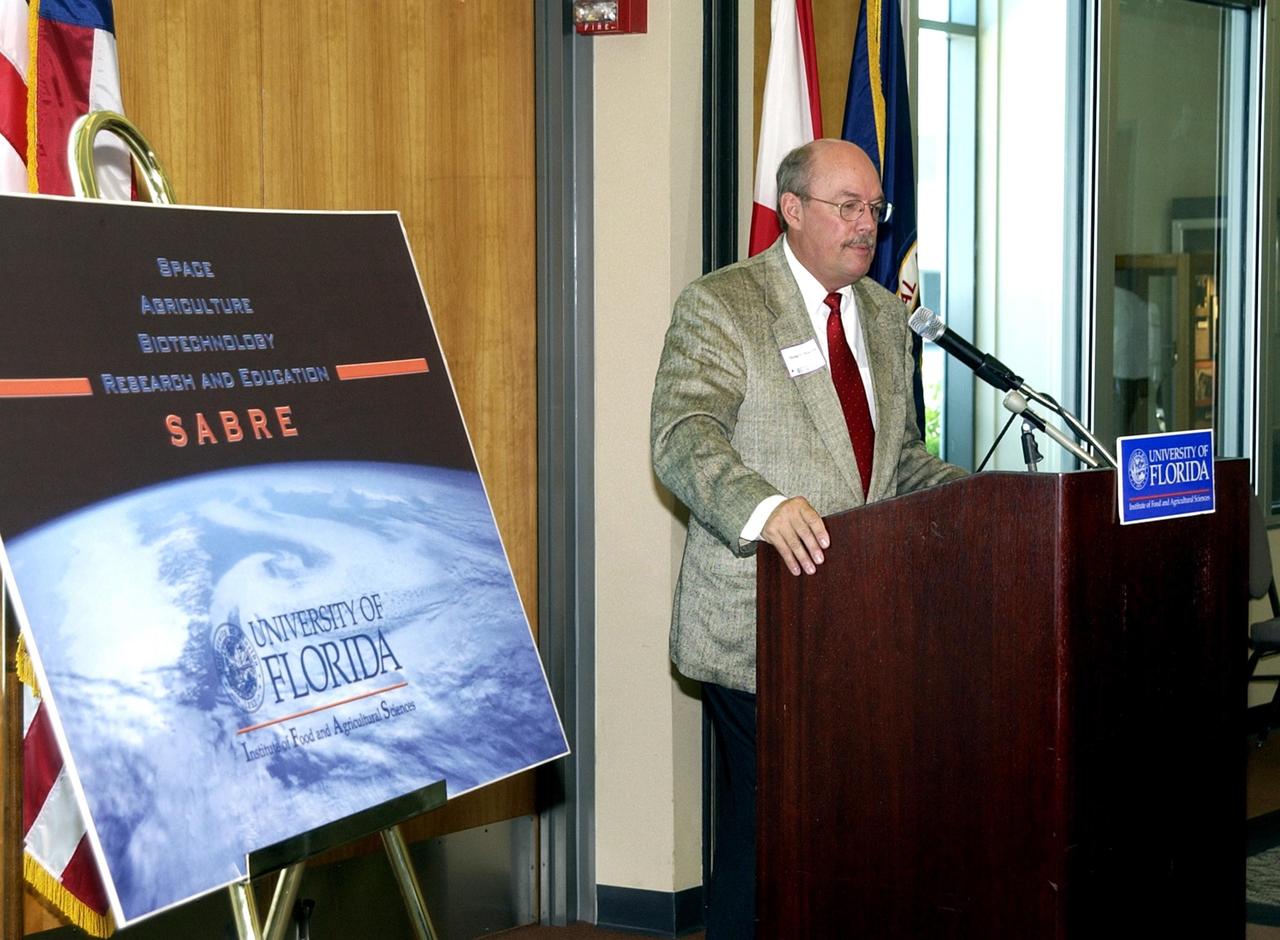
KENNEDY SPACE CENTER, FLA. -- Mike Martin, University of Florida vice president for agriculture and natural resources, speaks during the opening ceremony to launch a new program called SABRE, Space Agricultural Biotechnology Research and Education, that involves UF and NASA. Officials from UF and NASA attended the event. SABRE will focus on the discovery, development and application of the biological aspects of advanced life support strategies. The program will include faculty from UF's Institute of Food and Agricultural Sciences, who will be located at both KSC - in the state-owned Space Experiment Research and Processing Laboratory (SERPL) being built there - and UF in Gainesville. SABRE will be directed by Robert Ferl, professor in the horticultural sciences department and assistant director of UF's Biotechnology Program. He will be responsible for coordinating the research and education efforts of UF and NASA
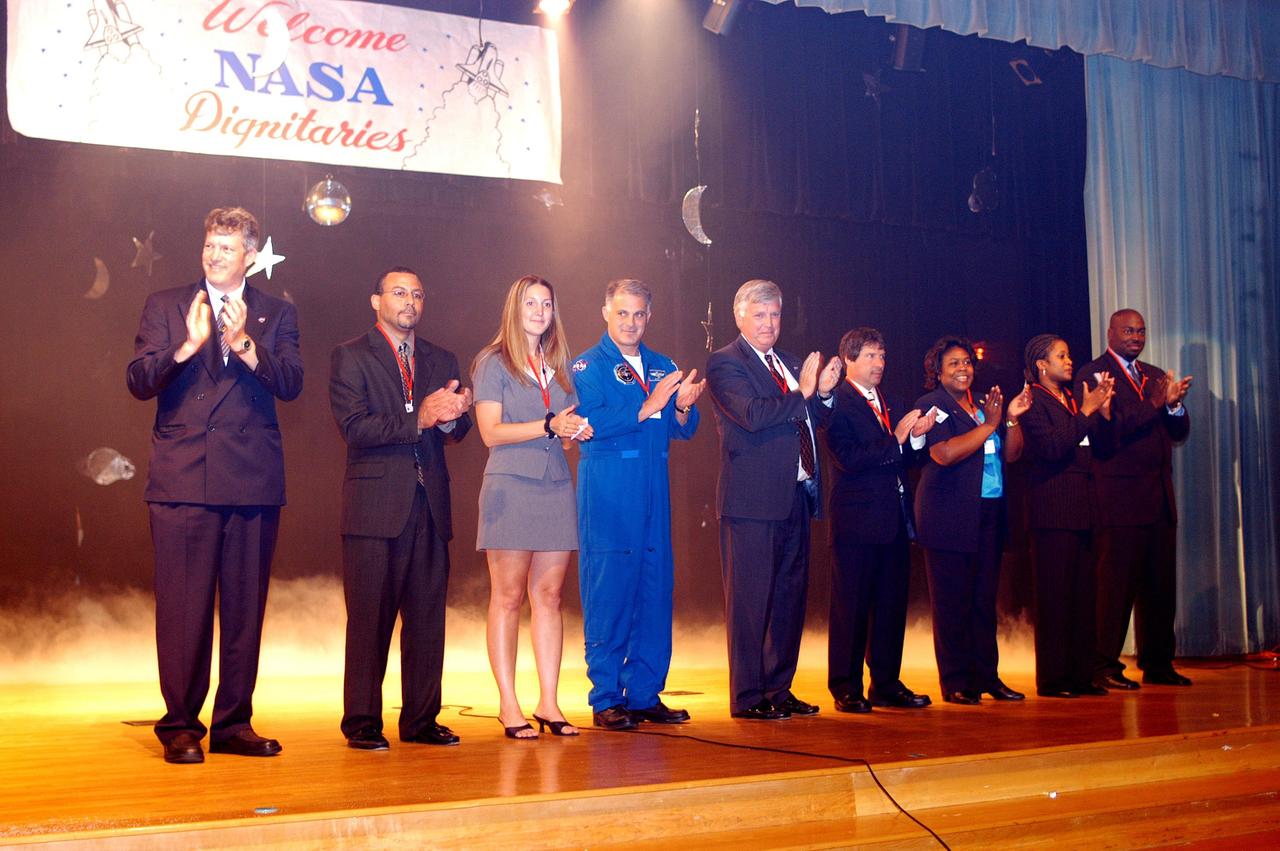
KENNEDY SPACE CENTER, FLA. -- During a visit to Howard A. Doolin Middle School, Miami, Fla., Center Director Jim Kennedy and other NASA and KSC representatives applaud faculty and students from the stage. From left to right are Jim Gerard, Aerospace Education Services Program (AESP) representative; Steve Lewis, assistant to Kennedy; Amber Marek, with KSC External Relations; David Wolf, astronaut; Kennedy; Les Gold, AESP representative; Burdette Brown; and Patricia Leonard and Clarence Bostic, Education Programs and University Research Division. Doolin Middle School is one of 100 to take part in the NASA Explorer Schools program. Kennedy is talking with students, the next generation of explorers, about our destiny as explorers, NASA’s stepping stone approach to exploring Earth, the Moon, Mars and beyond, how space impacts our lives, and how people and machines rely on each other in space.
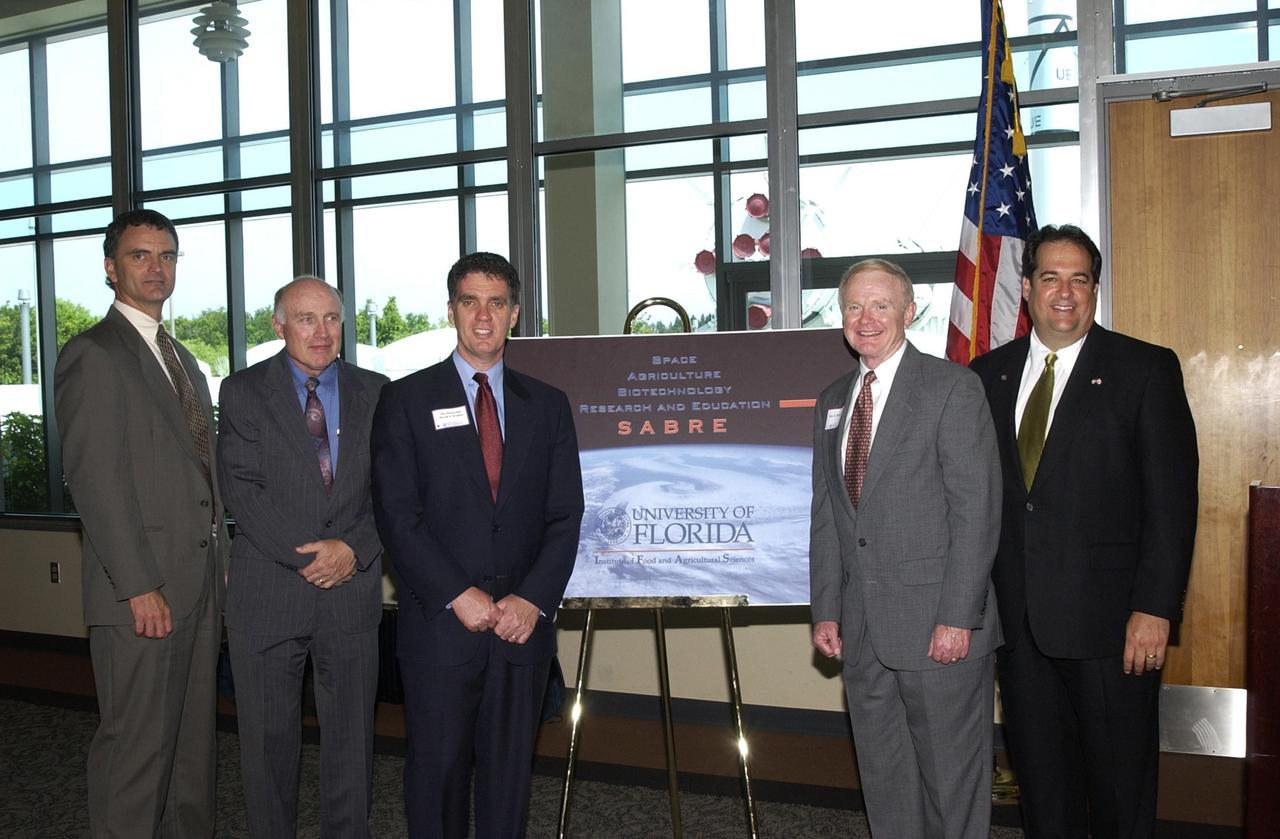
KENNEDY SPACE CENTER, FLA. -- At the opening ceremony for the new program known as SABRE, Space Agricultural Biotechnology Research and Education, key participants gather around the SABRE poster. From left are Robert Ferl, professor in the horticultural sciences department and assistant director of the University of Florida Biotechnology Program, who will direct and be responsible for coordinating the research and education; William Knott, senior scientist in the NASA biological sciences office; U.S. Representative Dave Weldon; Center Director Roy D. Bridges Jr.; and Florida Representative Bob Allen. Involving UF and NASA, SABRE will focus on the discovery, development and application of the biological aspects of advanced life support strategies. The program will include faculty from UF's Institute of Food and Agricultural Sciences, who will be located at both KSC - in the state-owned Space Experiment Research and Processing Laboratory (SERPL) being built there - and UF in Gainesville
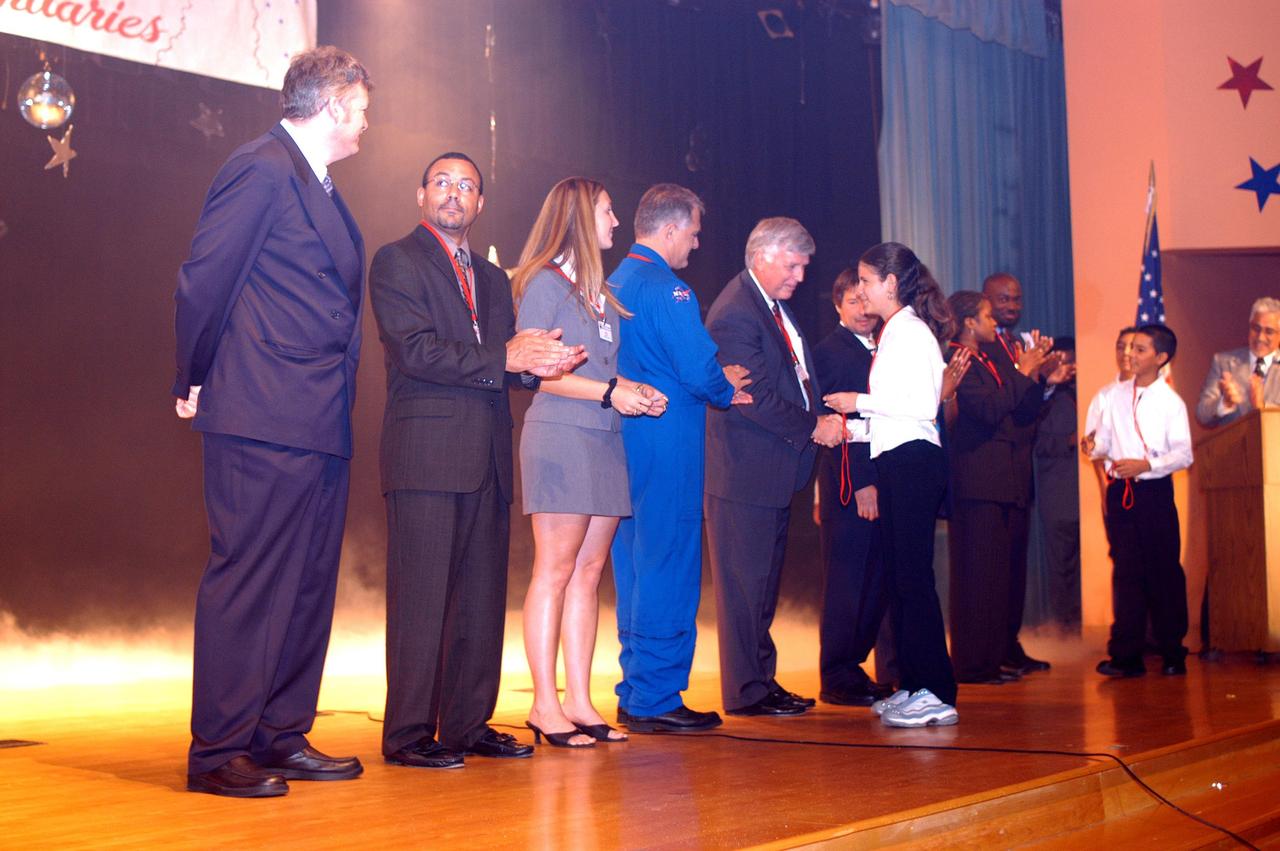
KENNEDY SPACE CENTER, FLA. -- During a visit to Howard A. Doolin Middle School, Miami, Fla., Center Director Jim Kennedy and other NASA and KSC representatives are greeted by students on stage. From left to right are Jim Gerard, Aerospace Education Services Program representative; Steve Lewis, assistant to Kennedy; Amber Marek, with KSC External Relations; David Wolf, astronaut; Kennedy; Les Gold, AESP representative; Burdette Brown; and Patricia Leonard and Clarence Bostic, Education Programs and University Research Division. Doolin Middle School is one of 100 to take part in the NASA Explorer Schools program. Kennedy is talking with students, the next generation of explorers, about our destiny as explorers, NASA’s stepping stone approach to exploring Earth, the Moon, Mars and beyond, how space impacts our lives, and how people and machines rely on each other in space.