
Dr. Edward Crawley, Ford Professor of Engineering at MIT and co-chair, NASA Exploration Technology Development Program Review Committee speaks during the final meeting of the Human Space Flight Review Committee, Wednesday, Aug. 12, 2009, in Washington. Photo Credit: (NASA/Paul E. Alers)
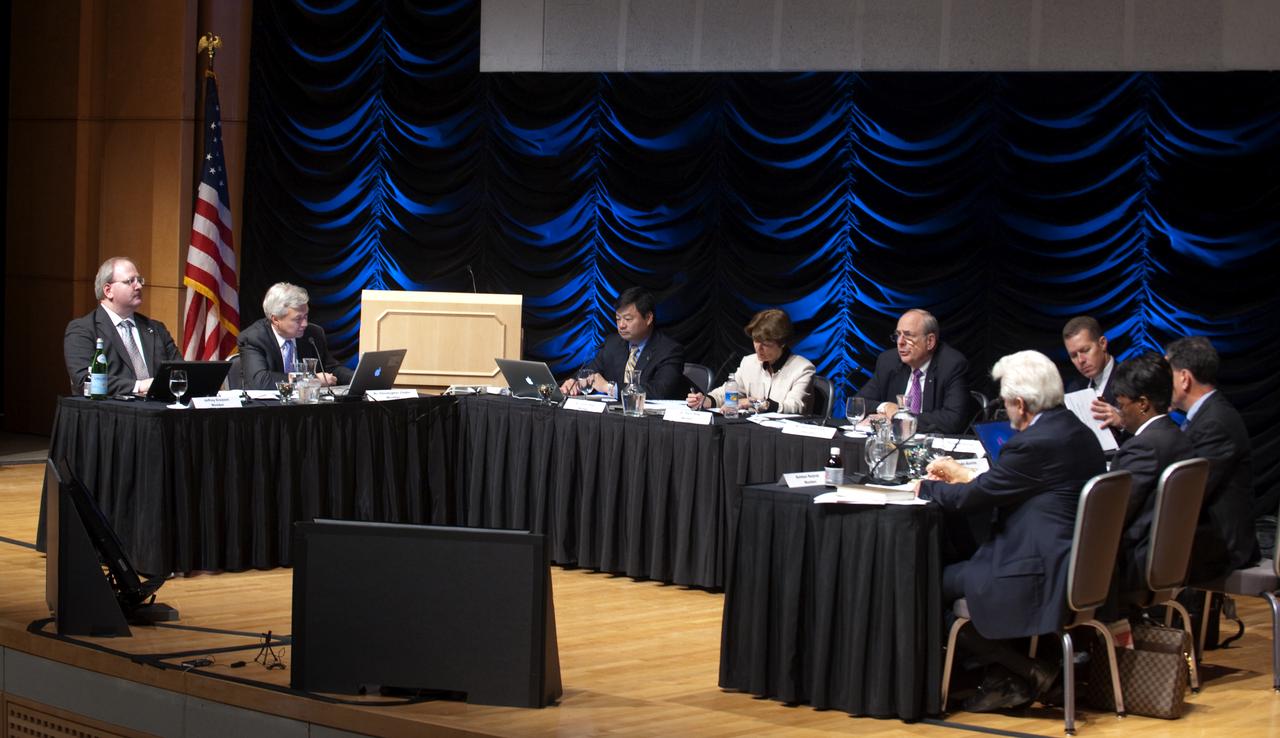
Members of the Human Space Flight Review Committee from left, Jeffrey Greason, Dr. Christopher Chyba, Dr. Leroy Chiao, Dr. Sally Ride, Norman Augustine (chair), Philip McAllister, Dr. Edward Crawley, Dr. Wanda Austin, and Bhodan Bejmuk review their notes prior to the start of a public meeting, Wednesday, Aug. 12, 2009, in Washington. Photo Credit: (NASA/Paul E. Alers)
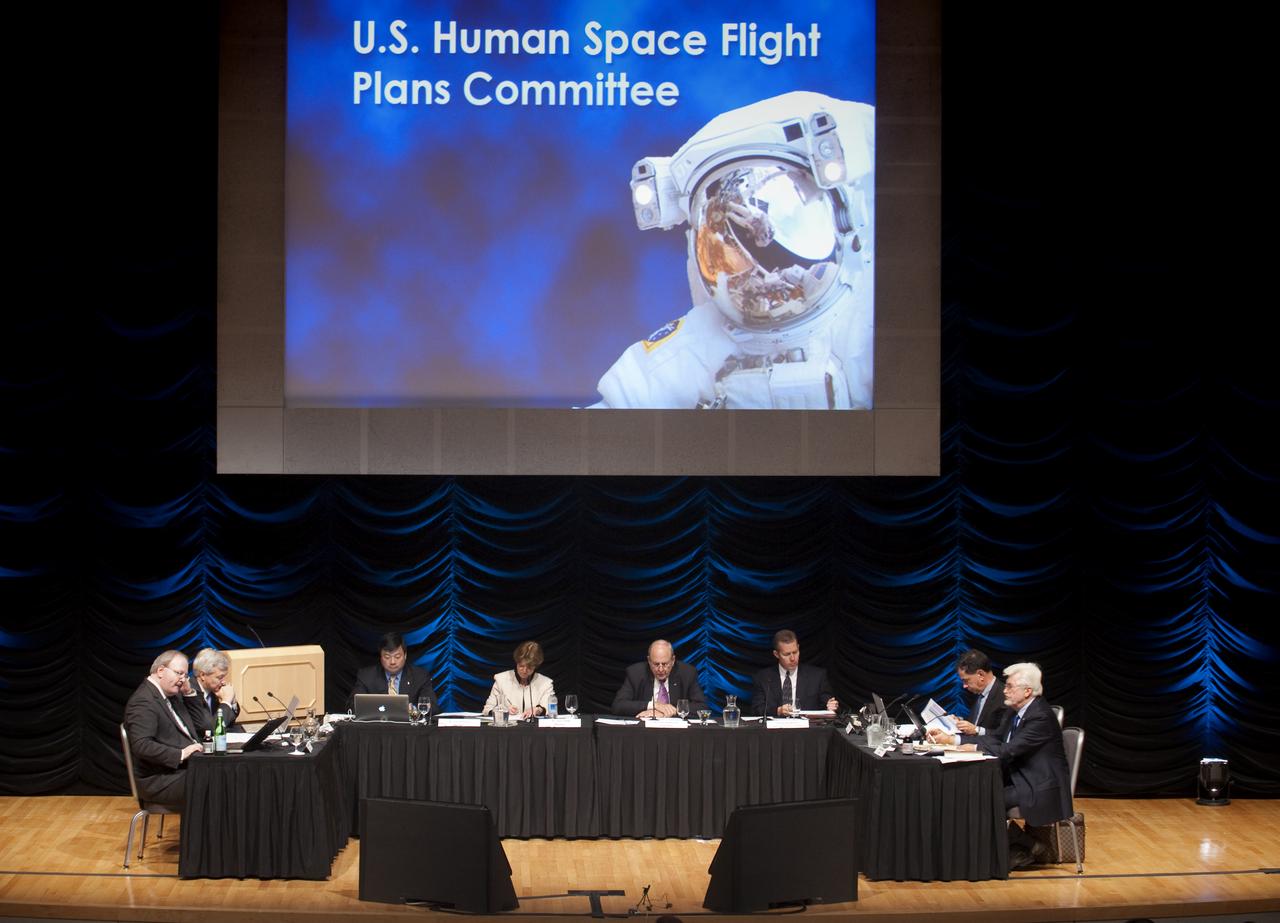
Members of the Human Space Flight Review Committee from left, Jeffrey Greason, Dr. Christopher Chyba, Dr. Leroy Chiao, Dr. Sally Ride, Norman Augustine (chair), Philip McAllister, Dr. Edward Crawley, Dr. Wanda Austin (not seen), and Bhodan Bejmuk review their notes prior to the start of a public meeting, Wednesday, Aug. 12, 2009, in Washington. Photo Credit: (NASA/Paul E. Alers)
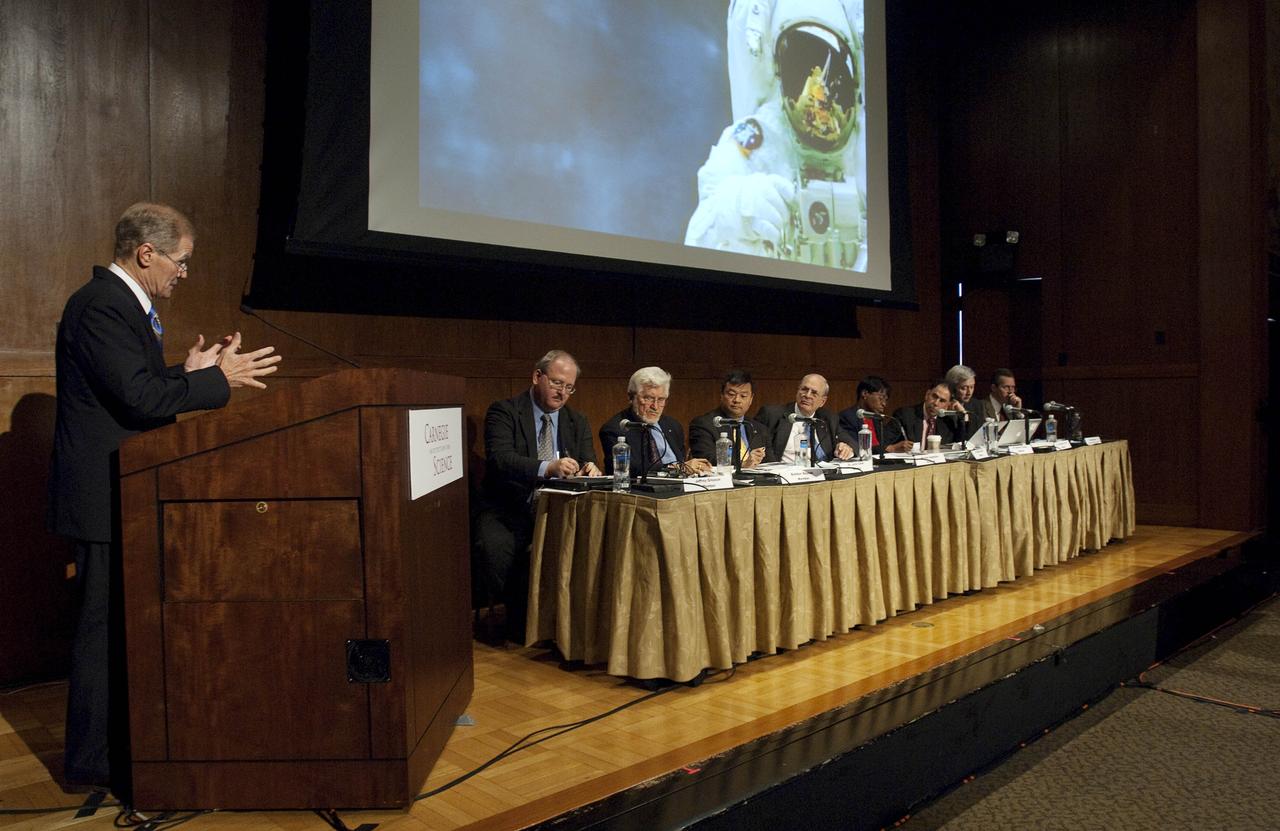
U.S. Sen. Bill Nelson, D-Fla., at podium, addresses members of the Human Space Flight Review Committee, Wednesday, June 17, 2009, at the Carnegie Institution in Washington. Seated from left are Jeffrey Greason, Bohdan Bejmuk, Dr. Leroy Chiao, Norman Augustine (chair), Dr. Wanda Austin, Dr. Edward Crawley, Dr. Christopher Chyba and Philip McAlister. The panel will examine ongoing and planned NASA development activities and potential alternatives in order to present options for advancing a safe, innovative, affordable and sustainable human space flight program following the space shuttle's retirement. The committee wil present its results by August 2009. Photo Credit: (NASA/Paul E. Alers)
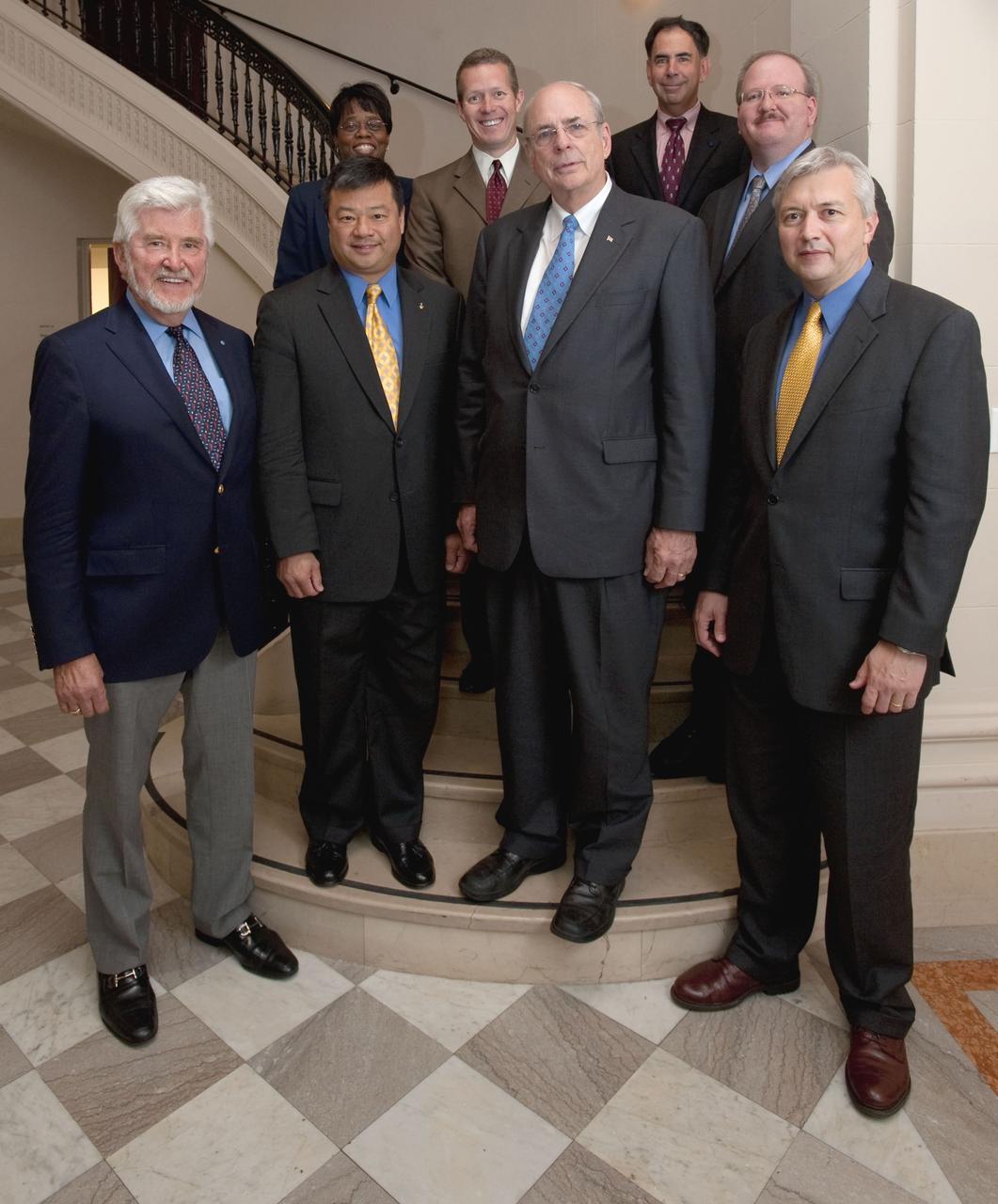
Norman Augustine, chair of the Human Space Flight Review Committee, front center, is joined by other members of the committee, clockwise from left, Bohdan Bejmuk, Leroy Chiao, Dr. Wanda Austin, Philip McAlister, Dr. Edward Crawley, Jeffrey Greason and Dr. Christopher Chyba prior to the start of the first of several public meetings at different U.S. locations, Wednesday, June 17, 2009, at the Carnegie Institution in Washington. The panel will examine ongoing and planned NASA development activities and potential alternatives in order to present options for advancing a safe, innovative, affordable and sustainable human space flight program following the space shuttle's retirement. The committee wil present its results by August 2009. Members of the committee that were not in attendance and are not pictured are Dr. Charles Kennel, Retired Air Force Gen. Lester Lyles and former astronaut Sally Ride. Photo Credit: (NASA/Paul E. Alers)
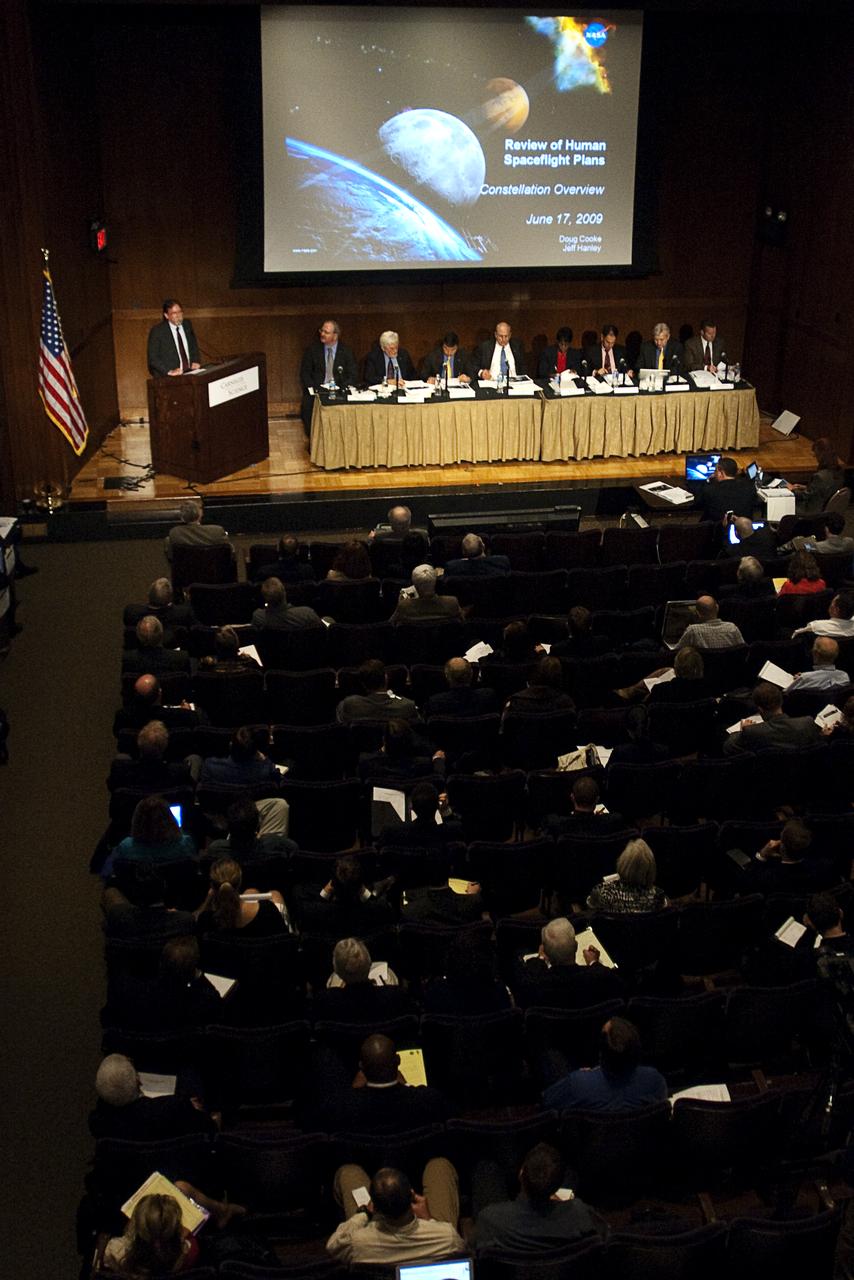
Douglas R. Cooke, Associate Administrator for Exploration Systems Mission Directorate, at podium, addresses the Human Space Flight Review Committee, Wednesday, June 17, 2009, at the Carnegie Institution in Washington. The panel will examine ongoing and planned NASA development activities and potential alternatives in order to present options for advancing a safe, innovative, affordable and sustainable human space flight program following the space shuttle's retirement. The committee wil present its results by August 2009. Seated from left on the panel is Jeffrey Greason, Bohdan Bejmuk, Dr. Leroy Chiao, Norman Augustine (chair), Dr. Wanda Austin, Dr. Edward Crawley, Dr. Christopher Chyba and Philip McAlister. Photo Credit: (NASA/Paul E. Alers)
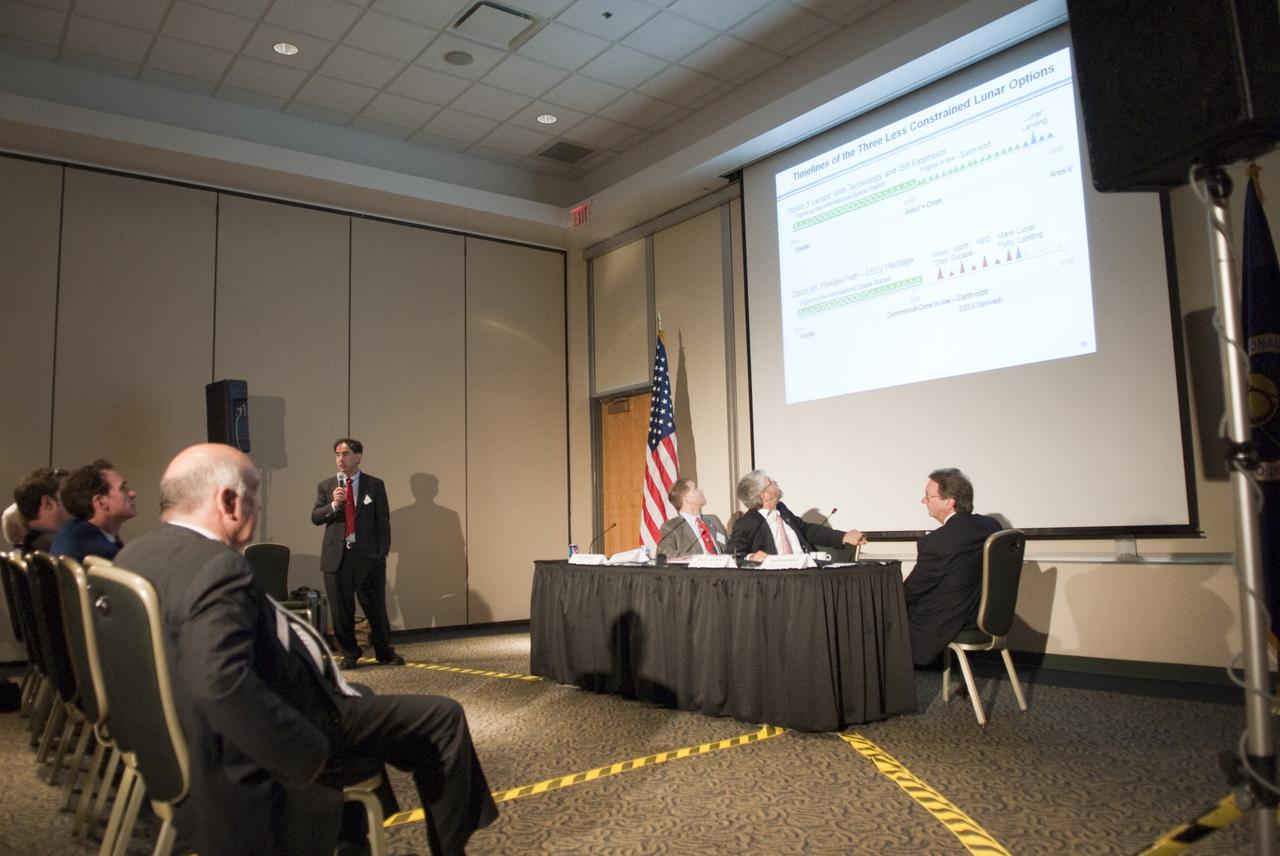
CAPE CANAVERAL, Fla. - In the Atlas_Redstone Room of the Debus Center at NASA's Kennedy Space Center Visitor Complex in Florida, Dr. Edward F. Crawley, Ford professor of engineering at MIT gives his presentation at the 'Expanding our Reach into the Solar System' break-out session, part of the Conference on the American Space Program for the 21st Century. The panel, moderated by John Holdren, assistant to the President for science and technology and director of the White House Office of Science and Technology Policy (center), included Crawley, Scott Hubbard, former director of NASA's Ames Research Center (right) and NASA Astronaut John Grunsfeld. Photo credit: NASA_Jim Grossmann

CAPE CANAVERAL, Fla. - In the Atlas_Redstone Room of the Debus Center at NASA's Kennedy Space Center Visitor Complex in Florida, Dr. Edward F. Crawley, Ford professor of engineering at MIT, speaks to the audience at the 'Expanding our Reach into the Solar System' break-out session, part of the Conference on the American Space Program for the 21st Century. The panel includes Scott Hubbard, former director of NASA's Ames Research Center (back to camera); John Holdren, assistant to the President for science and technology and director of the White House Office of Science and Technology Policy, panel moderator, and NASA Astronaut John Grunsfeld (obscured). Photo credit: NASA_Jim Grossmann
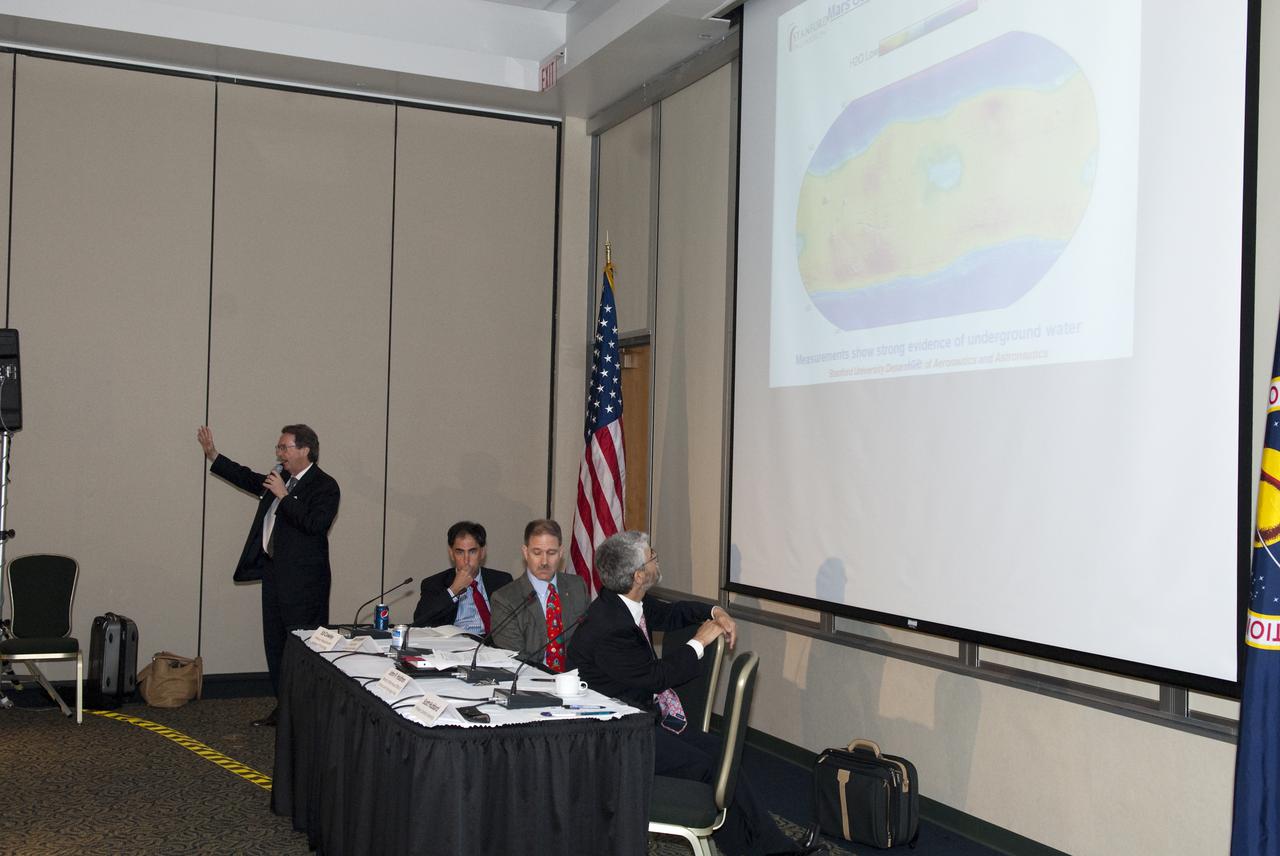
CAPE CANAVERAL, Fla. - In the Atlas_Redstone Room of the Debus Center at NASA's Kennedy Space Center Visitor Complex in Florida, Scott Hubbard, former director of NASA's Ames Research Center, addresses the participants at the 'Expanding our Reach into the Solar System' break-out session, part of the Conference on the American Space Program for the 21st Century. The panel, moderated by John Holdren, assistant to the President for science and technology and director of the White House Office of Science and Technology Policy (right), included Hubbard, Dr. Edward F. Crawley, Ford professor of engineering at MIT and NASA Astronaut John Grunsfeld. Photo credit: NASA_Jim Grossmann
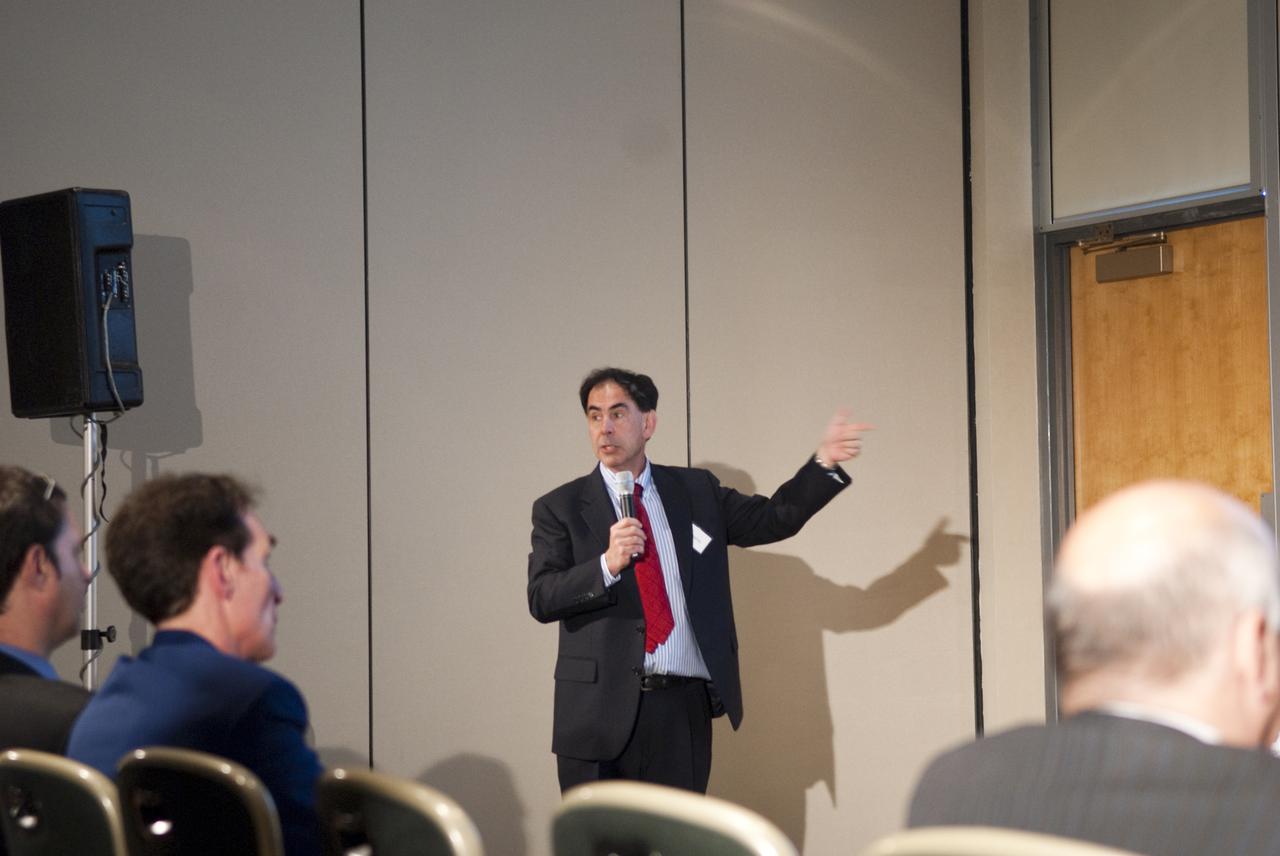
CAPE CANAVERAL, Fla. - In the Atlas_Redstone Room of the Debus Center at NASA's Kennedy Space Center Visitor Complex in Florida, Dr. Edward F. Crawley, Ford professor of engineering at MIT, speaks to the attendees at the 'Expanding our Reach into the Solar System' break-out session, part of the Conference on the American Space Program for the 21st Century. The panel included Scott Hubbard, former director of NASA's Ames Research Center, John Holdren, assistant to the President for science and technology and director of the White House Office of Science and Technology Policy and NASA, panel moderator; NASA Astronaut John Grunsfeld and Scott Hubbard, former director of NASA's Ames Research Center. Photo credit: NASA_Jim Grossmann.
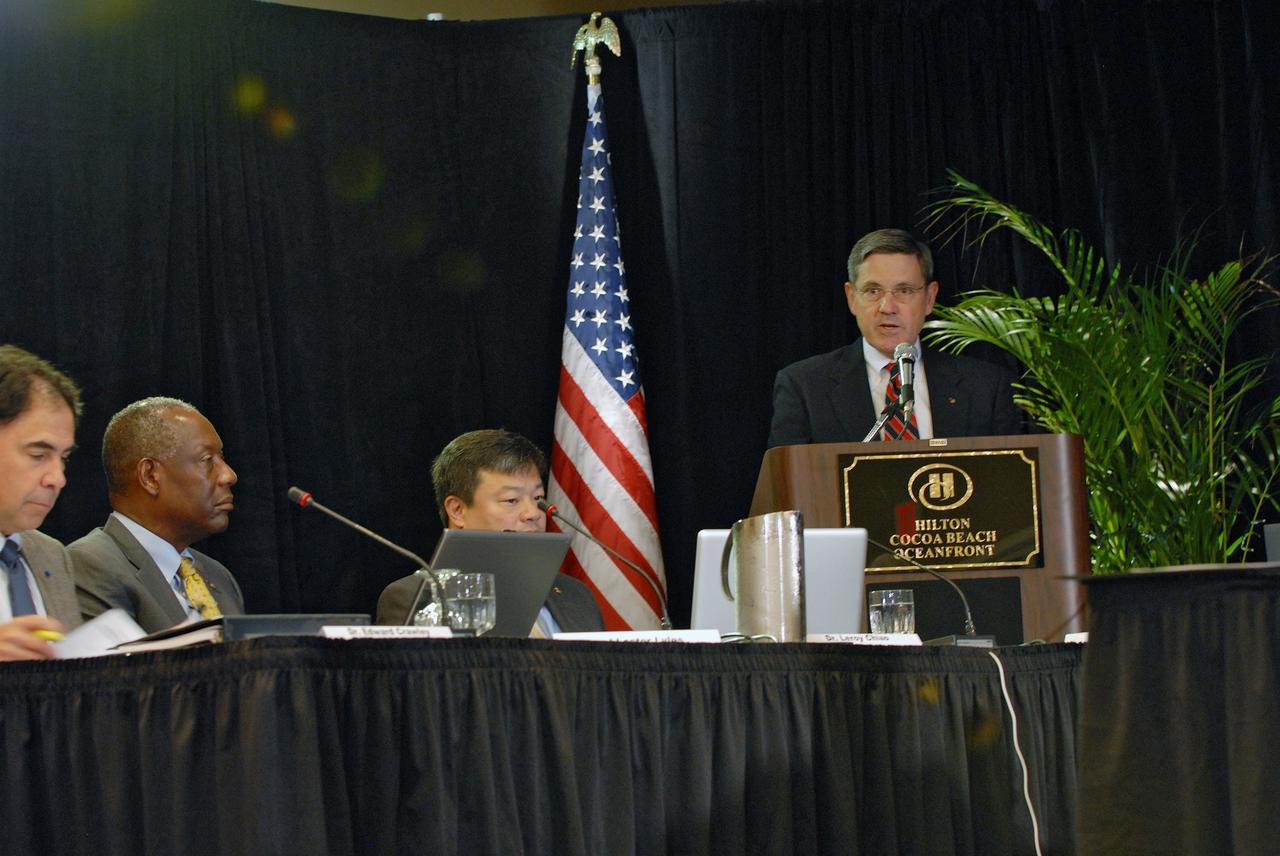
CAPE CANAVERAL, Fla. – NASA Kennedy Space Center's Center Director Bob Cabana (right) speaks during the meeting of the Augustine Commission in Cocoa Beach, Fla. At the conference table at left are members of the commission: Dr. Edward F. Crawley, Ford professor of engineering at MIT; General (ret.) Lester L. Lyles, chair of the National Academies Committee on the Rationale and Goals of the U.S. Civil Space Program; and former astronaut Dr. Leroy Chiao, former International Space Station commander and engineering consultant. At the request of the Office of Science and Technology Policy, NASA established the Review of U.S. Human Space Flight Plans Committee, known as the Augustine Commission. Chaired by Norman R. Augustine, retired chairman and CEO of Lockheed Martin Corp., the committee is conducting an independent review of ongoing U.S. human spaceflight plans and programs, as well as alternatives, to ensure the nation is pursuing the best trajectory for the future of human space flight - one that is safe, innovative, affordable, and sustainable. Photo credit: NASA/Jim Grossmann