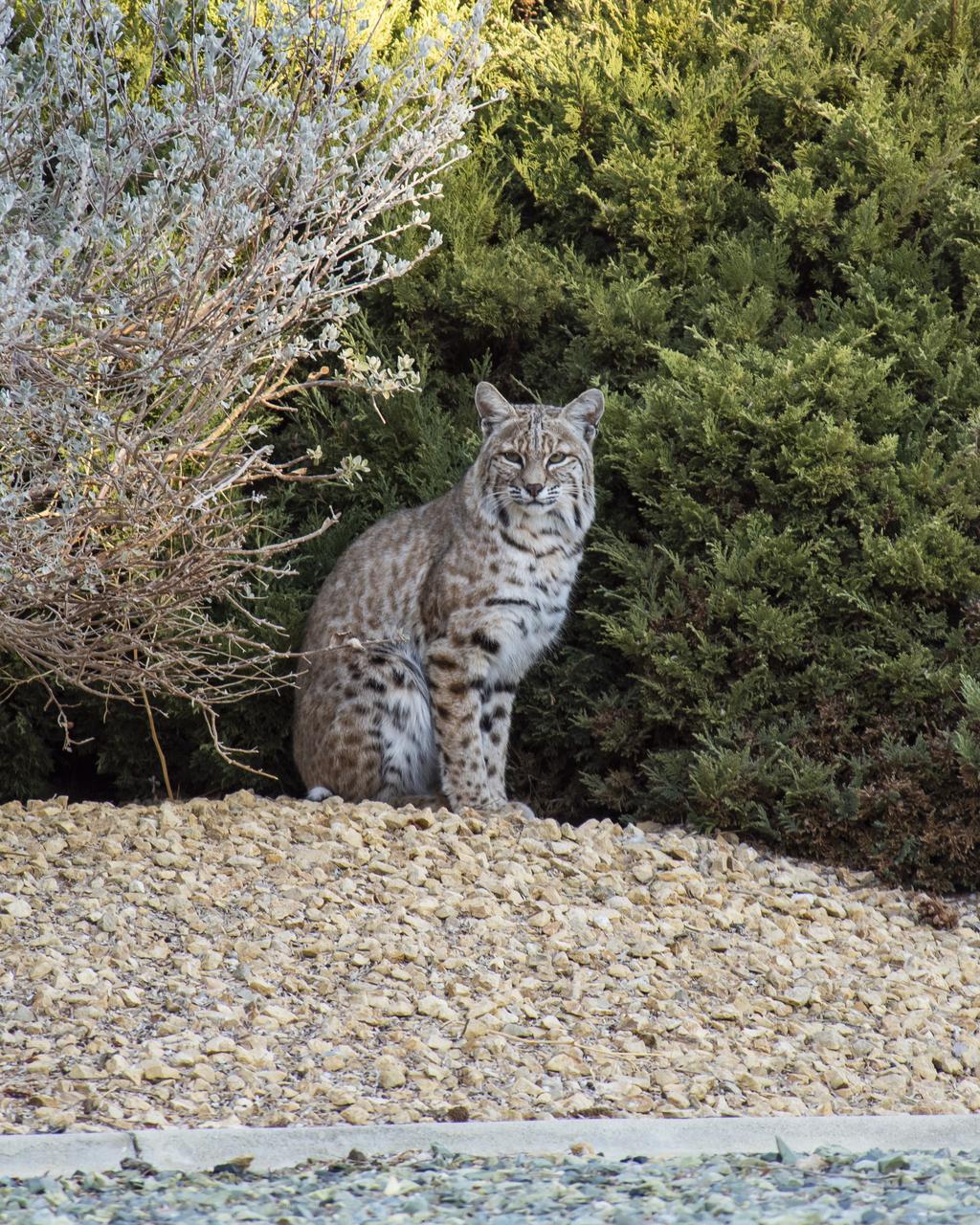
A bobcat surveying the landscape in between bushes at Armstrong Flight Research Center in Edwards, California. The spotted feline makes its home on the more than 300,000 acres of Mojave Desert surrounding the NASA facility housed at Edwards Air Force Base.
Room to roam for wildlife in the Mojave Desert at Armstrong Flight Research Center in Edwards, California
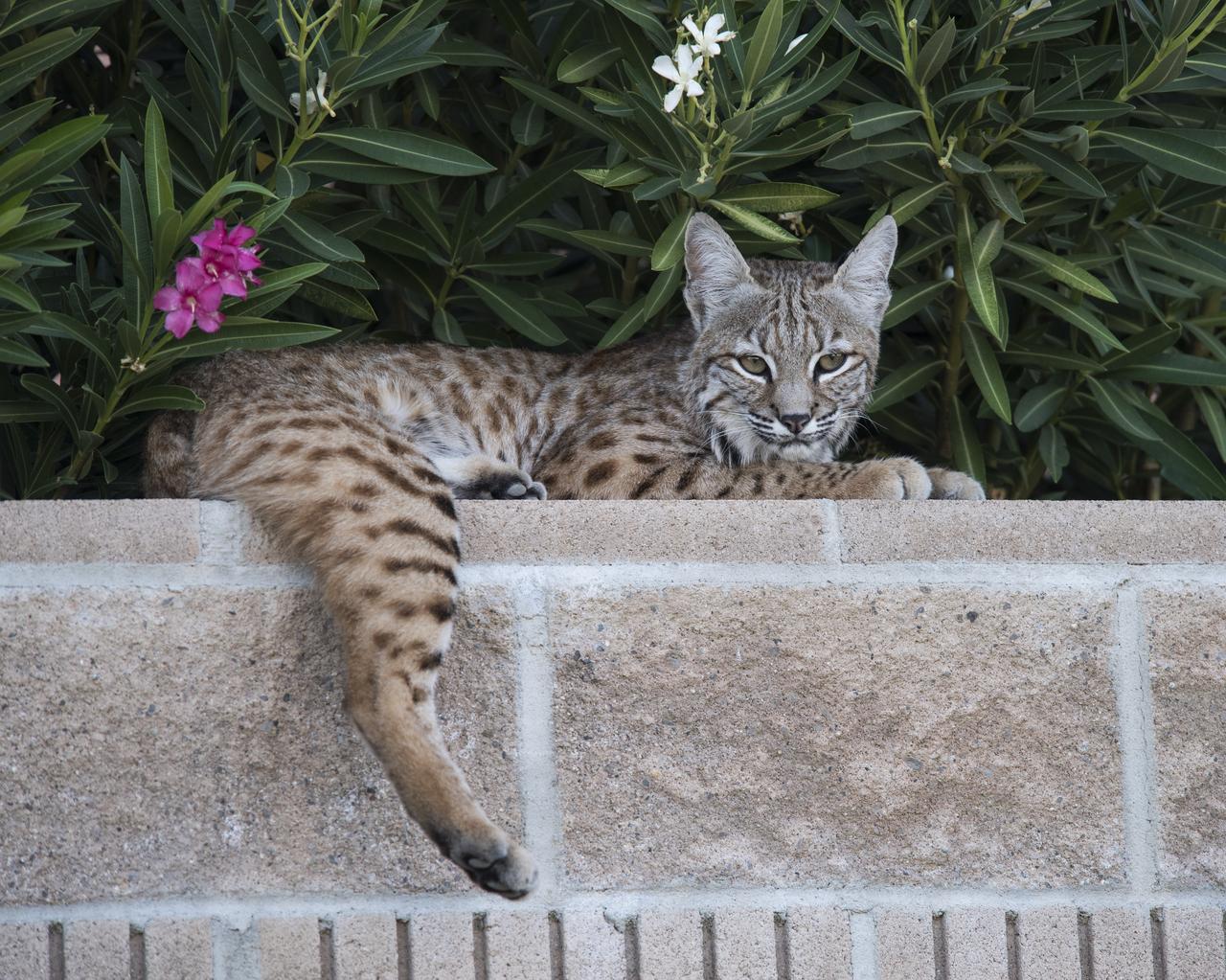
A bobcat resting leisurely on a retaining wall among the flowering bushes at Armstrong Flight Research Center in Edwards, California. The facility is home to a number of wild animals including the bobcats which are free to roam the more than 300,000 acres of Mojave Desert.
Room to roam for wildlife in the Mojave Desert at Armstrong Flight Research Center in Edwards, California
The F-18 simulator at NASA's Dryden Flight Research Center, Edwards, California. Simulators offer a safe and economical alternative to actual flights to gather data, as well as being excellent facilities for pilot practice and training. The F-18 Hornet is used primarily as a safety chase and mission support aircraft at NASA's Dryden Flight Research Center, Edwards, California. As support aircraft, the F-18's are used for safety chase, pilot proficiency, aerial photography and other mission support functions.
The F-18 simulator at NASA's Dryden Flight Research Center, Edwards, California
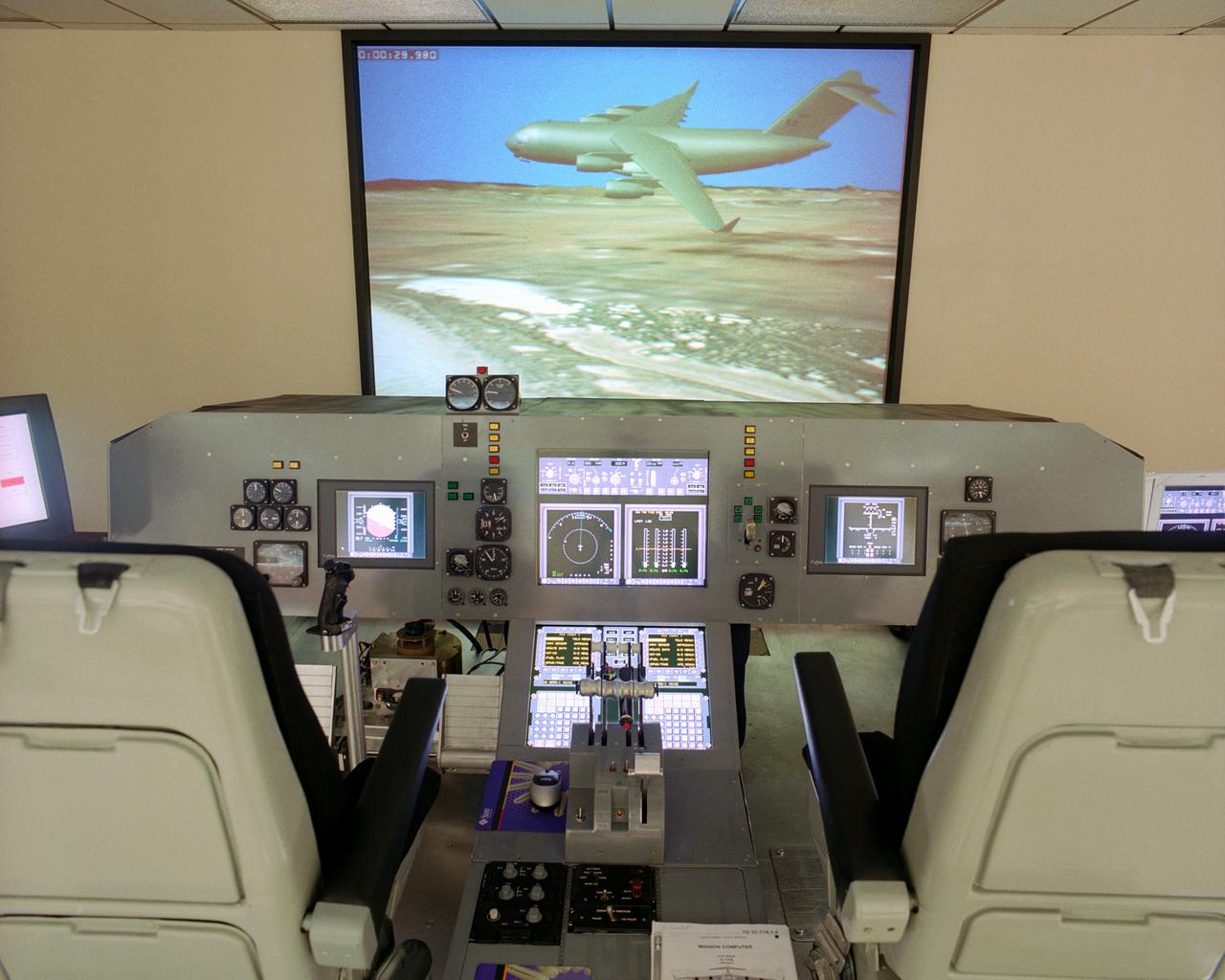
The C-17 simulator at NASA's Dryden Flight Research Center, Edwards, California. Simulators offer a safe and economical alternative to actual flights to gather data, as well as being excellent facilities for pilot practice and training.
The C-17 simulator at NASA's Dryden Flight Research Center, Edwards, California
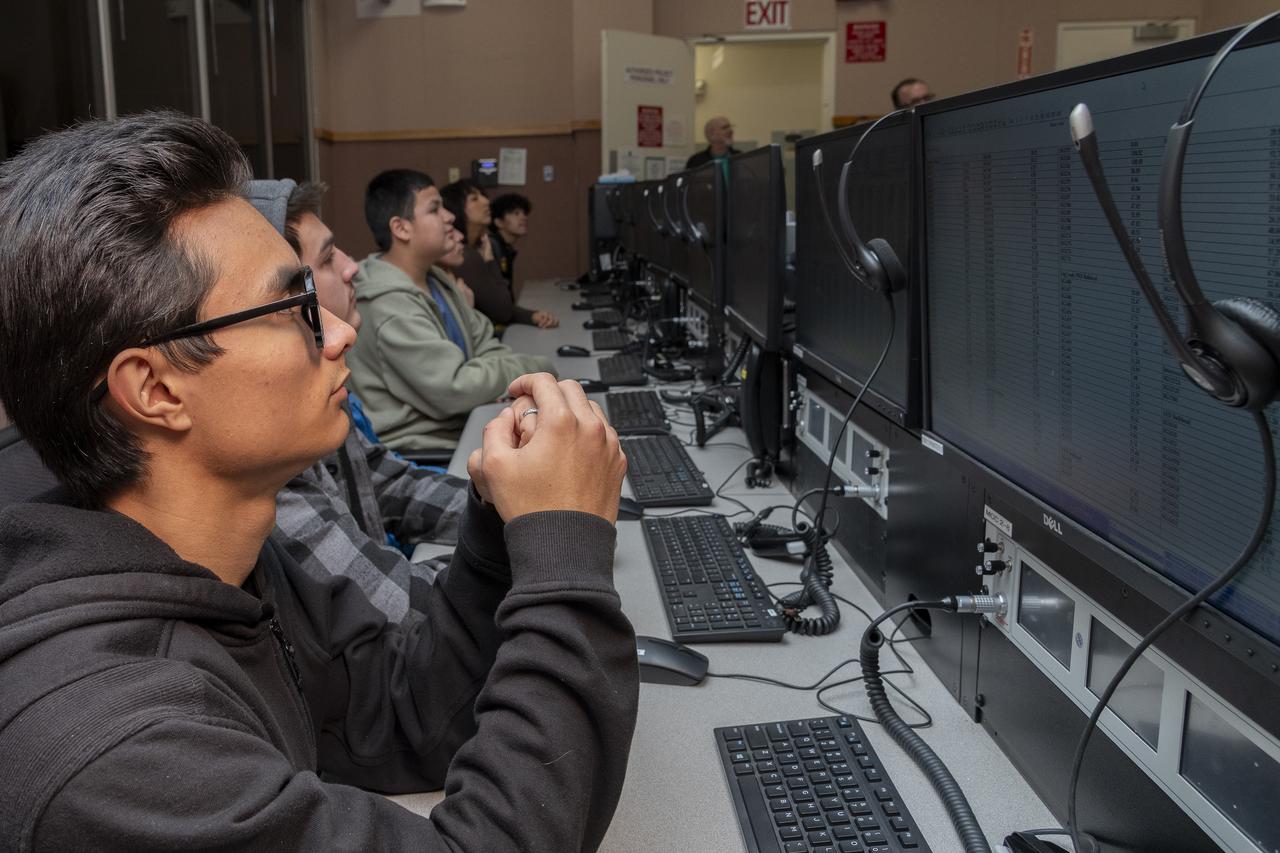
Students tour a control room at NASA’s Armstrong Research Flight Center in Edwards, California. The students are from the engineering club at Palmdale High School in Palmdale, California.
Engineering Club Visits NASA Armstrong
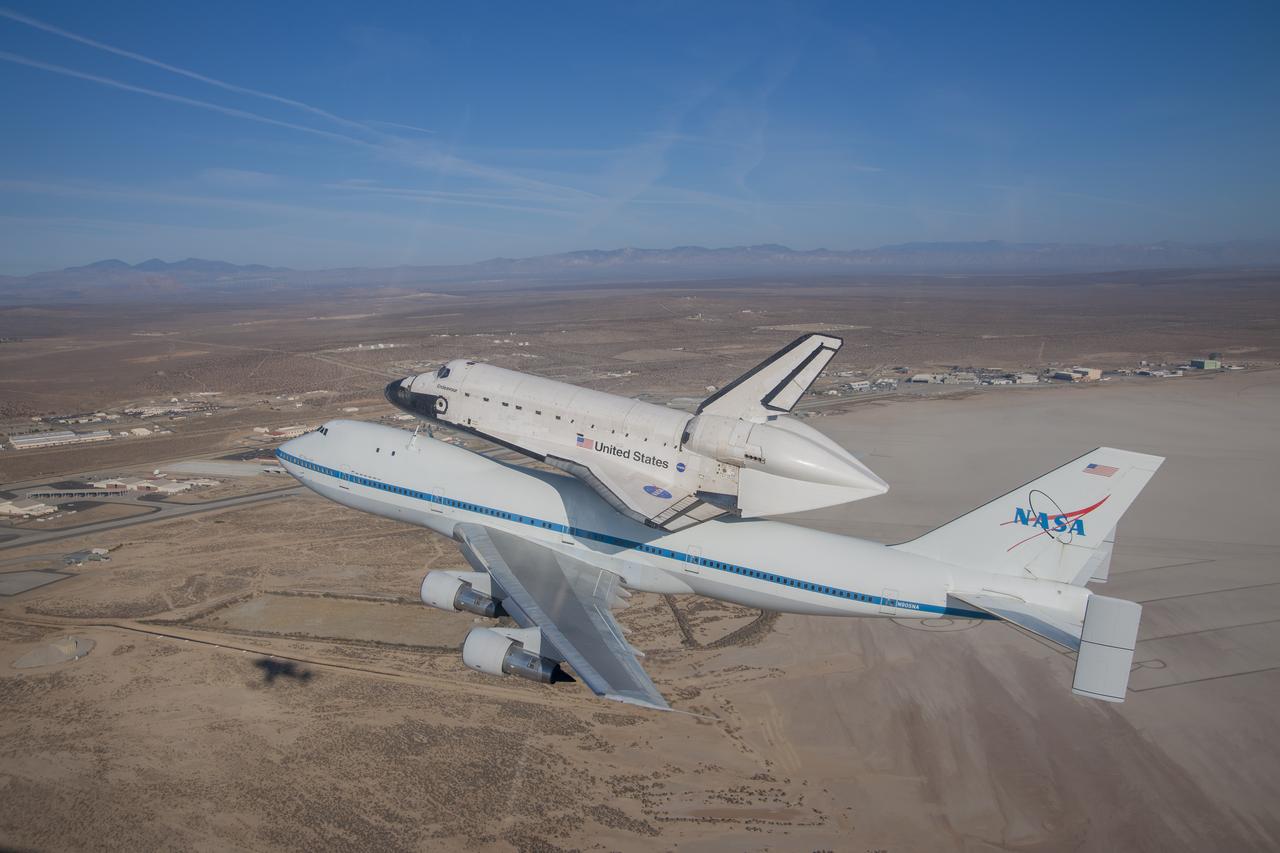
Space shuttle Endeavour and its host NASA 747 Shuttle Carrier Aircraft make a final flight over Edwards Air Force Base on Sept. 21, 2012. NASA’s Armstrong Flight Research Center in Edwards, California, is visible on the upper right of the frame.
Space Shuttle Endeavour Toured California in 2012
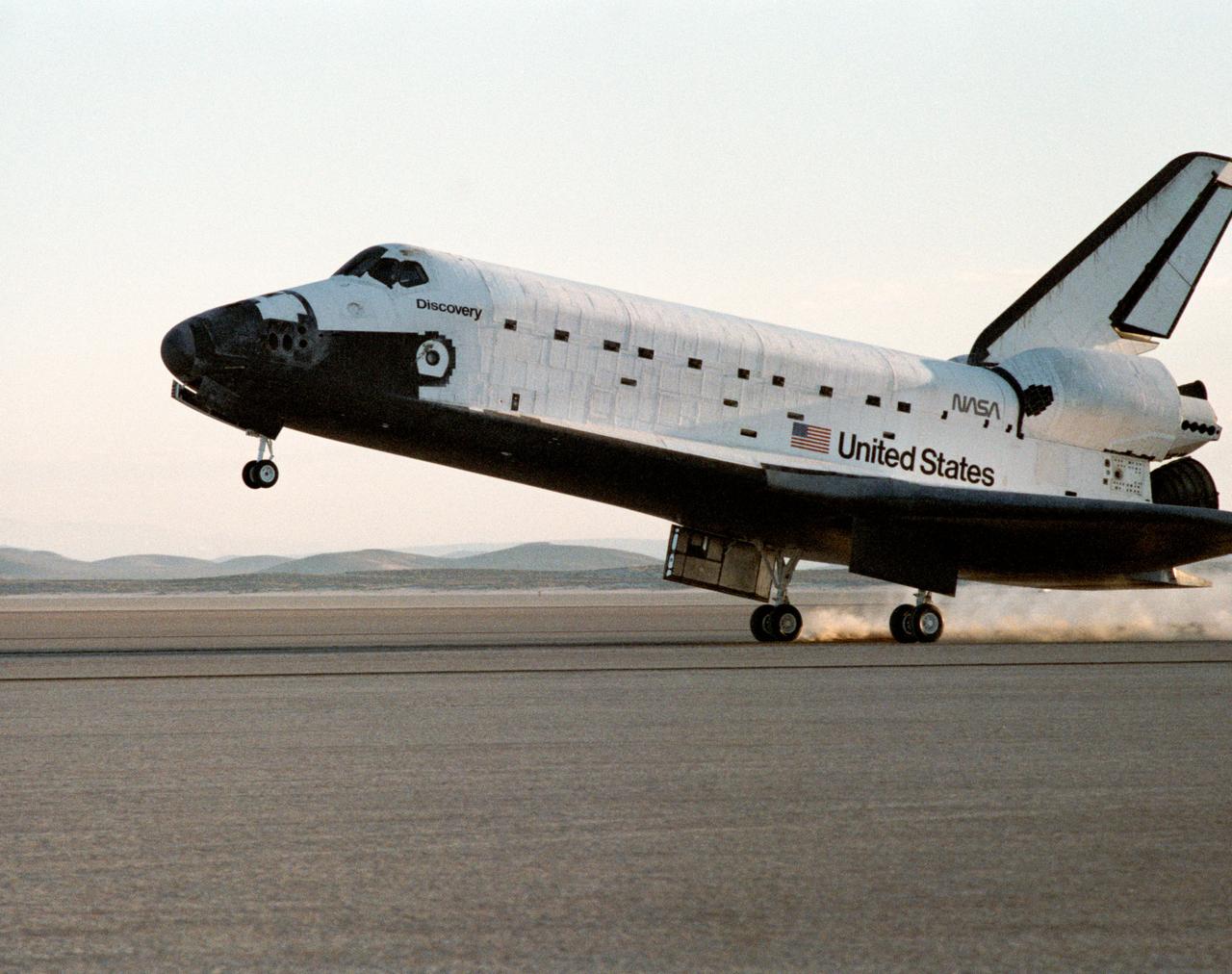
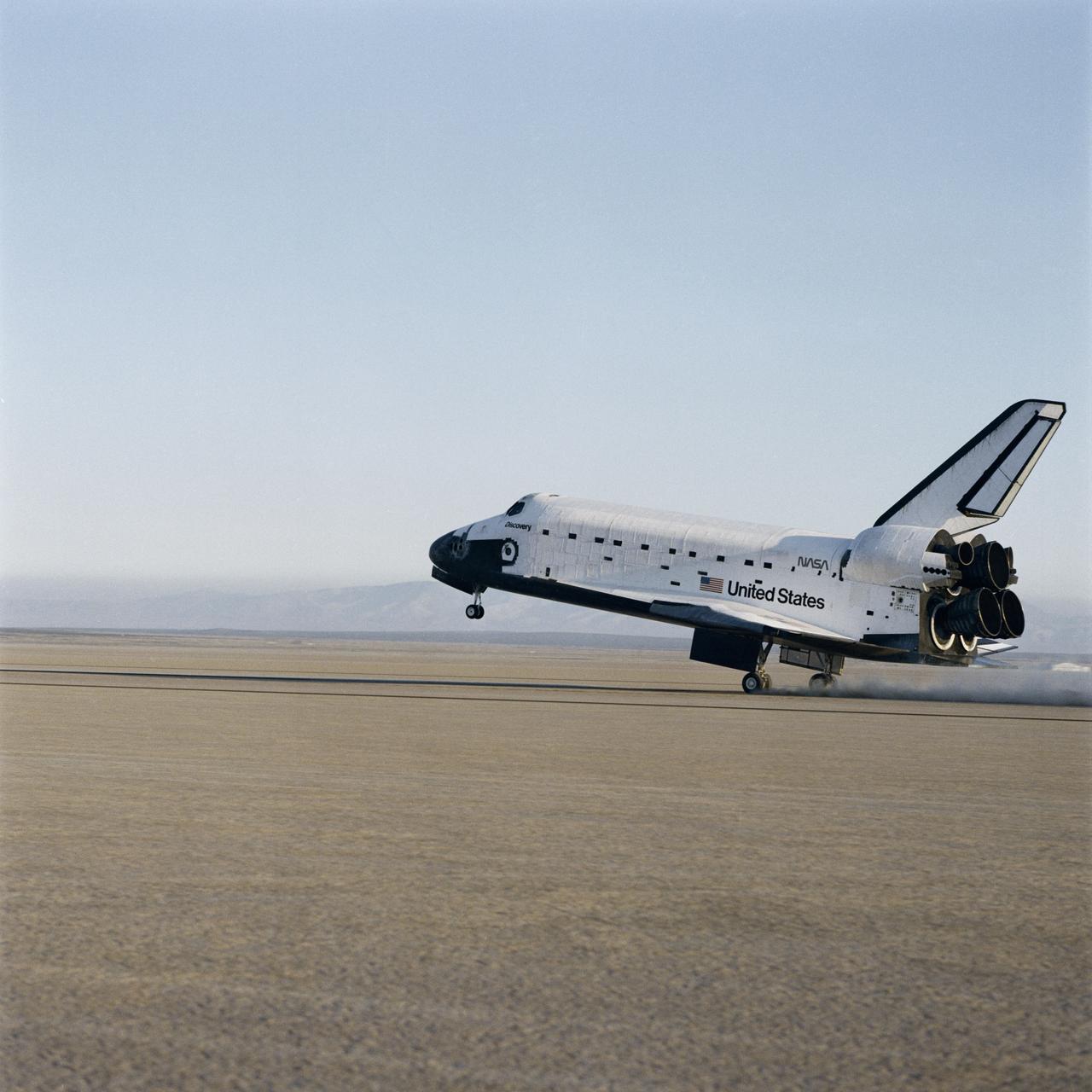
51G-S-225 (24 June 1985) --- Discovery, with its seven-member 51-G crew aboard, touches down on a dry lakebed at Edwards Air Force Base in California. Landing was noted at 6:11:53 a.m. (PDT), June 24, 1985.
STS 51-G Discovery lands at Edwards Air Force Base, California
51G-S-224 (24 June 1985) --- Discovery, with its seven-member 51-G crew aboard, touches down on a dry lakebed at Edwards Air Force Base in California. Landing was noted at 6:11:53 a.m. (PDT), June 24, 1985.
STS 51-G Discovery lands at Edwards Air Force Base, California
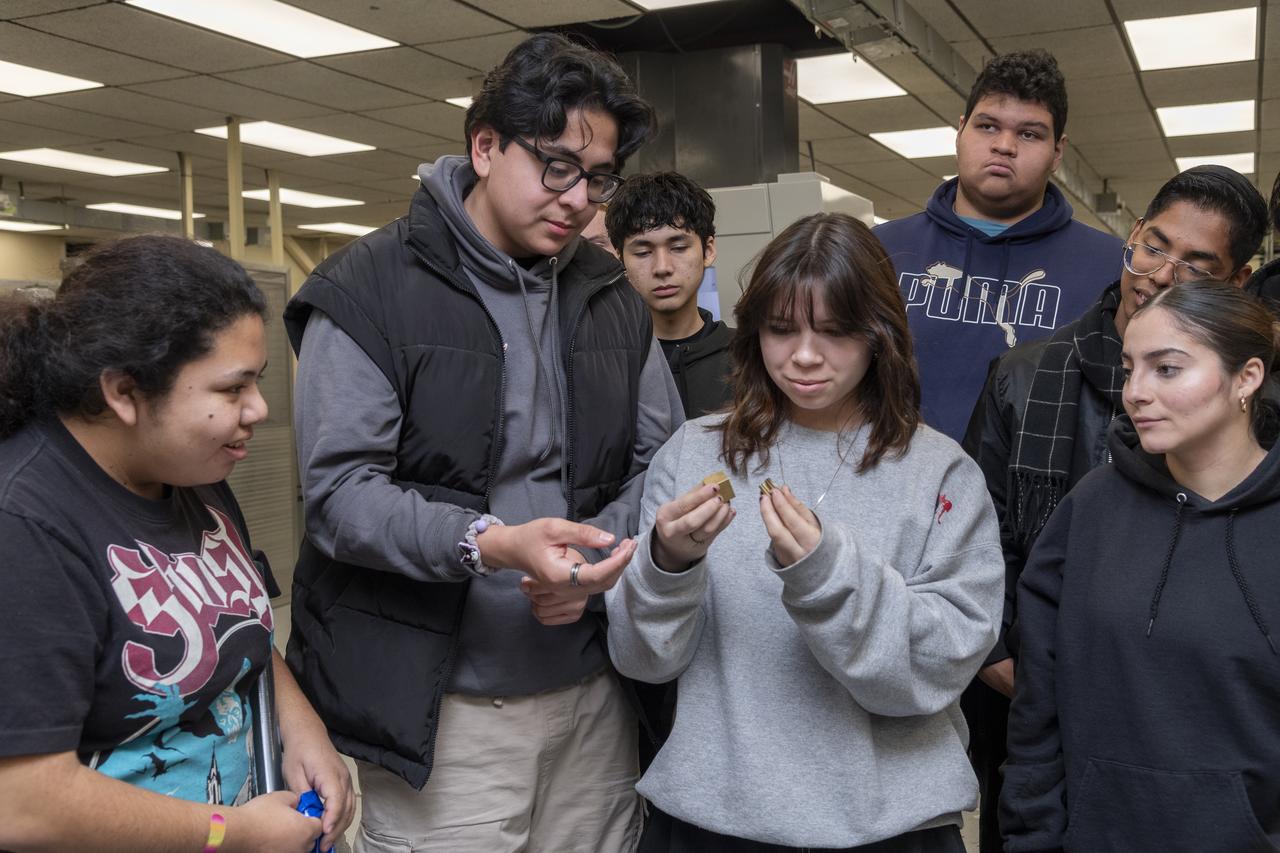
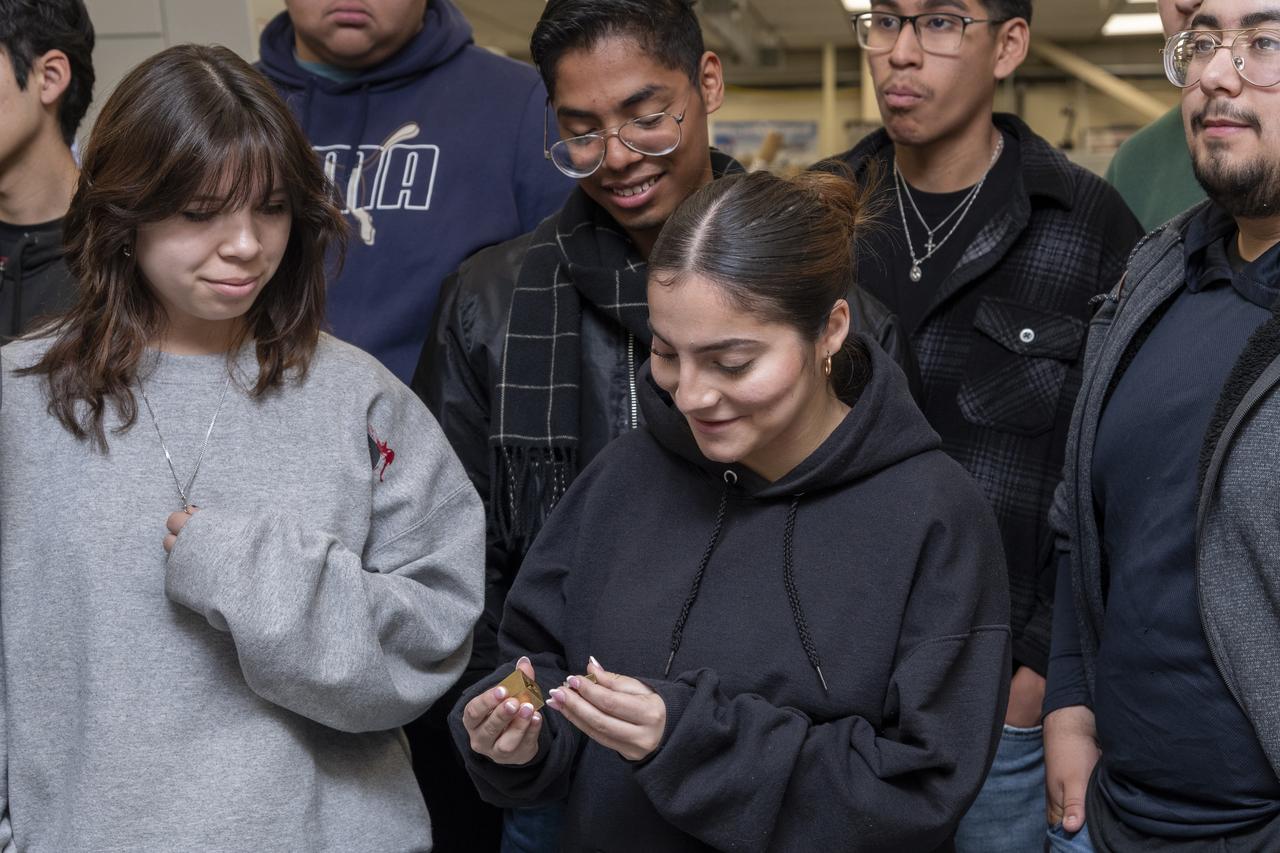
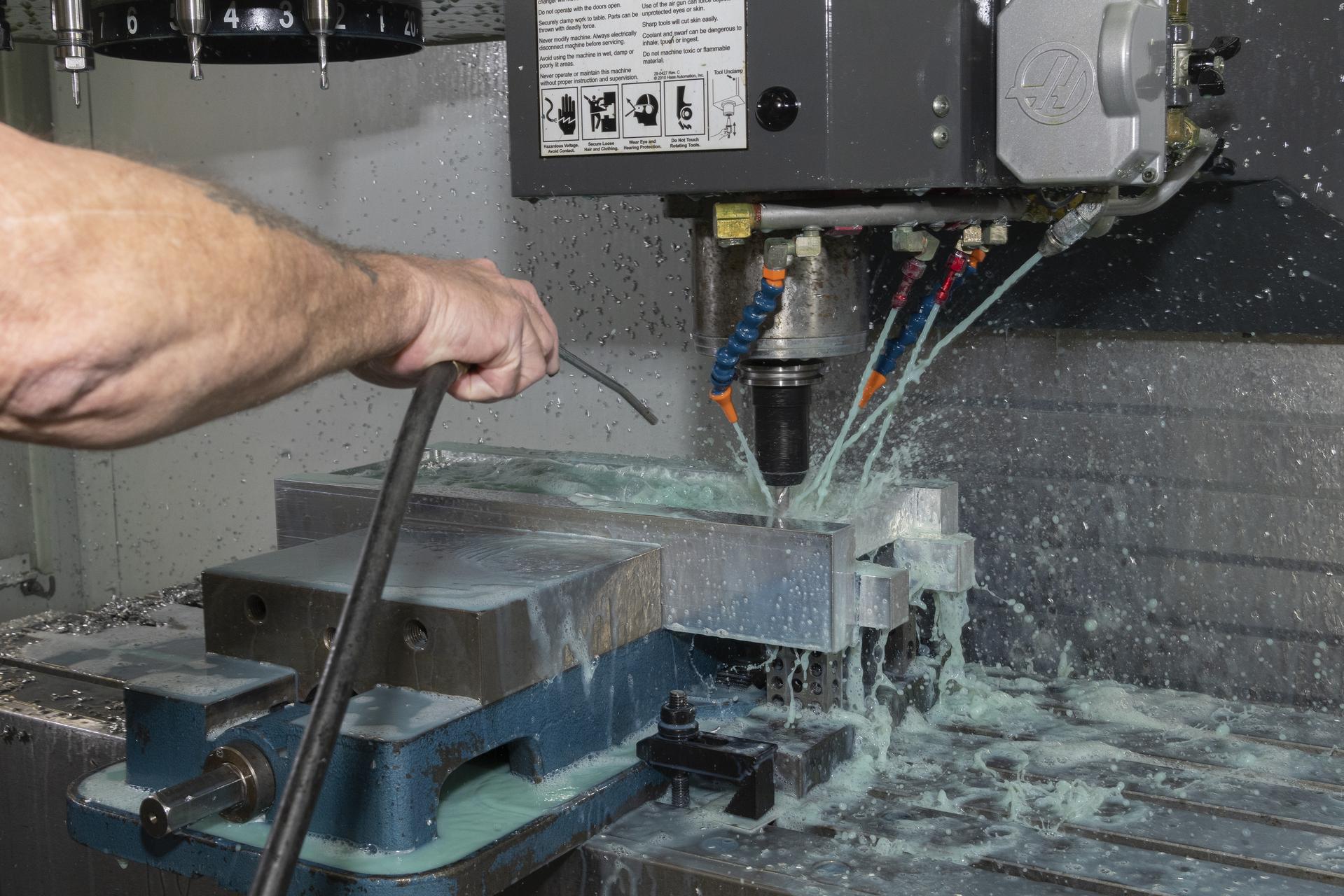
Students examine small parts made at the Experimental Fabrication Shop at NASA’s Armstrong Research Flight Center in Edwards, California. The students are from the engineering club from Palmdale High School in Palmdale, California.
Engineering Club Visits NASA Armstrong
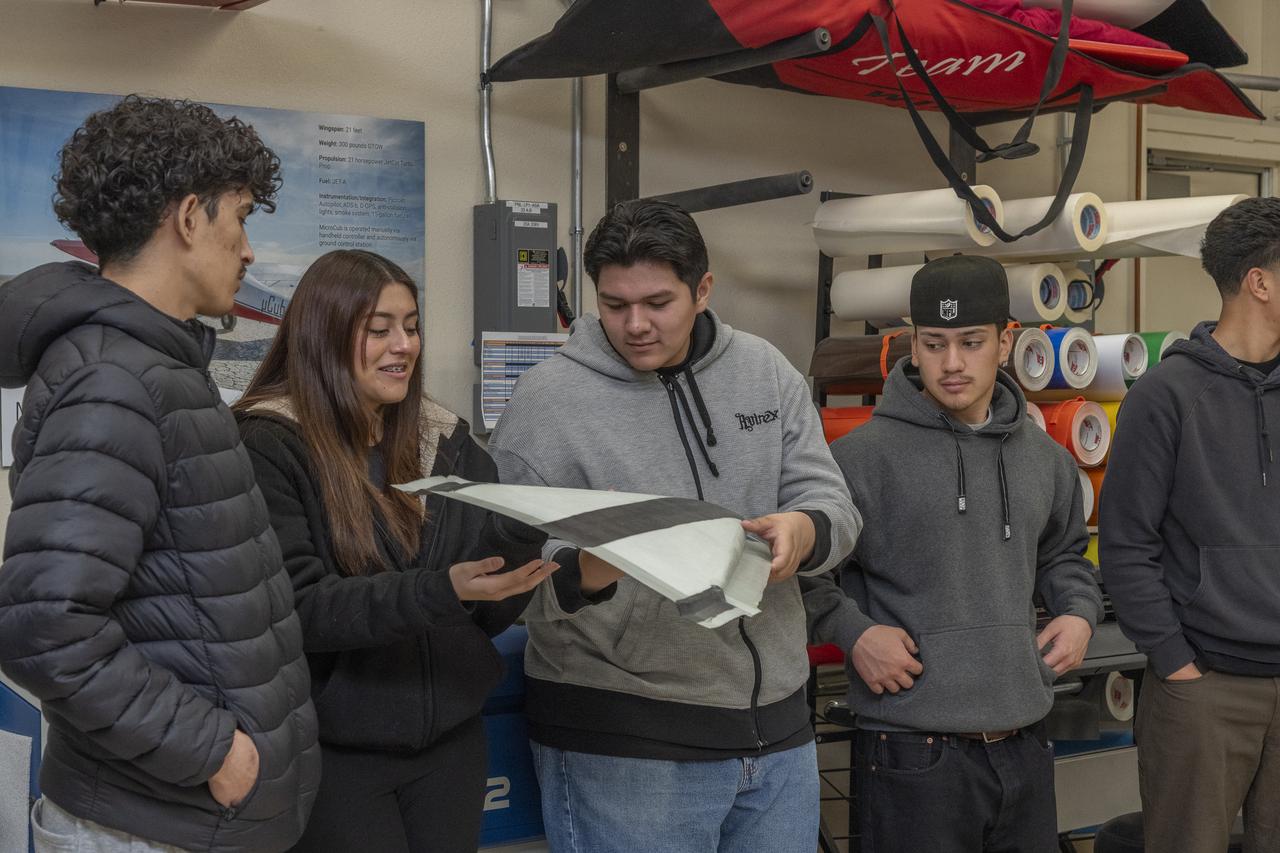
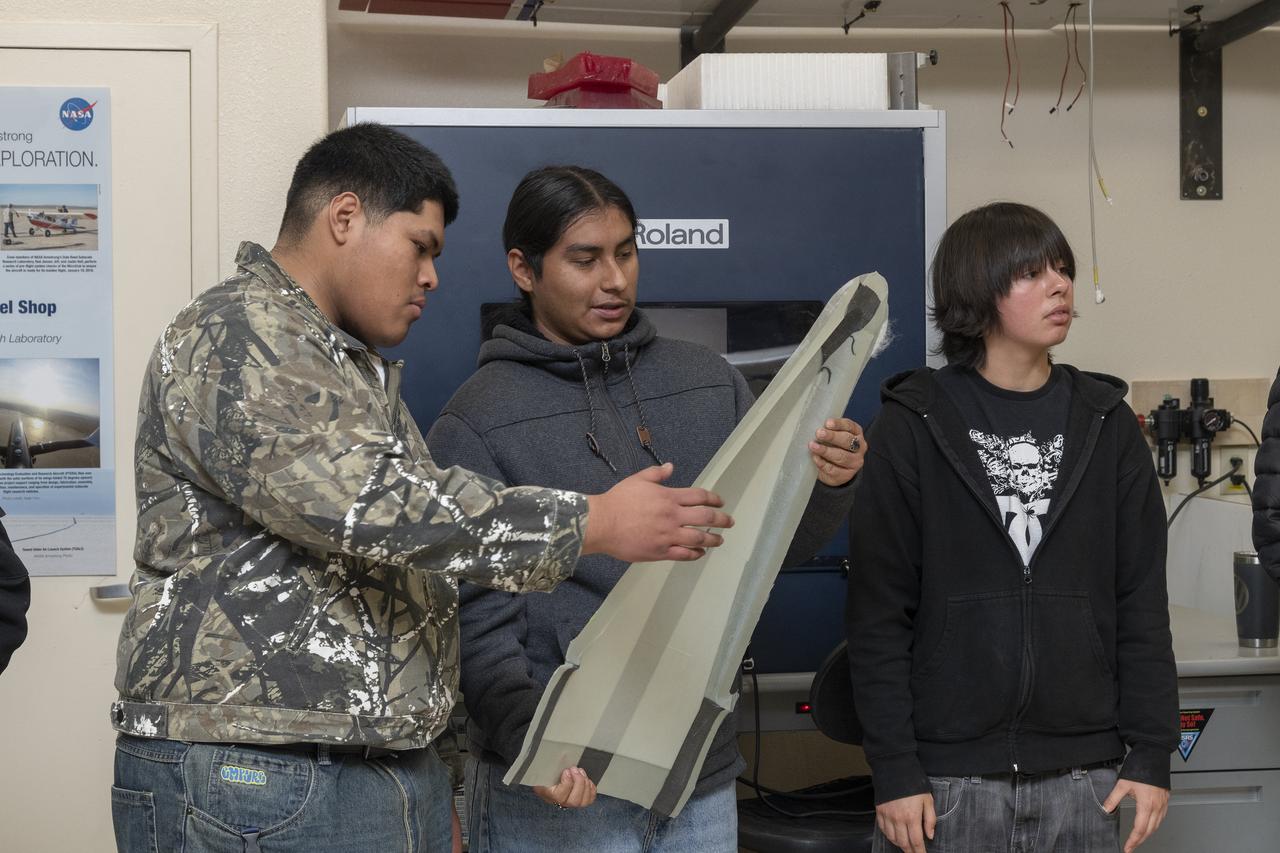
Students look at a subscale model at the Dale Reed Subscale Flight Research Laboratory at NASA’s Armstrong Research Flight Center in Edwards, California. The students are from the engineering club from Palmdale High School in Palmdale, California.
Engineering Club Visits NASA Armstrong
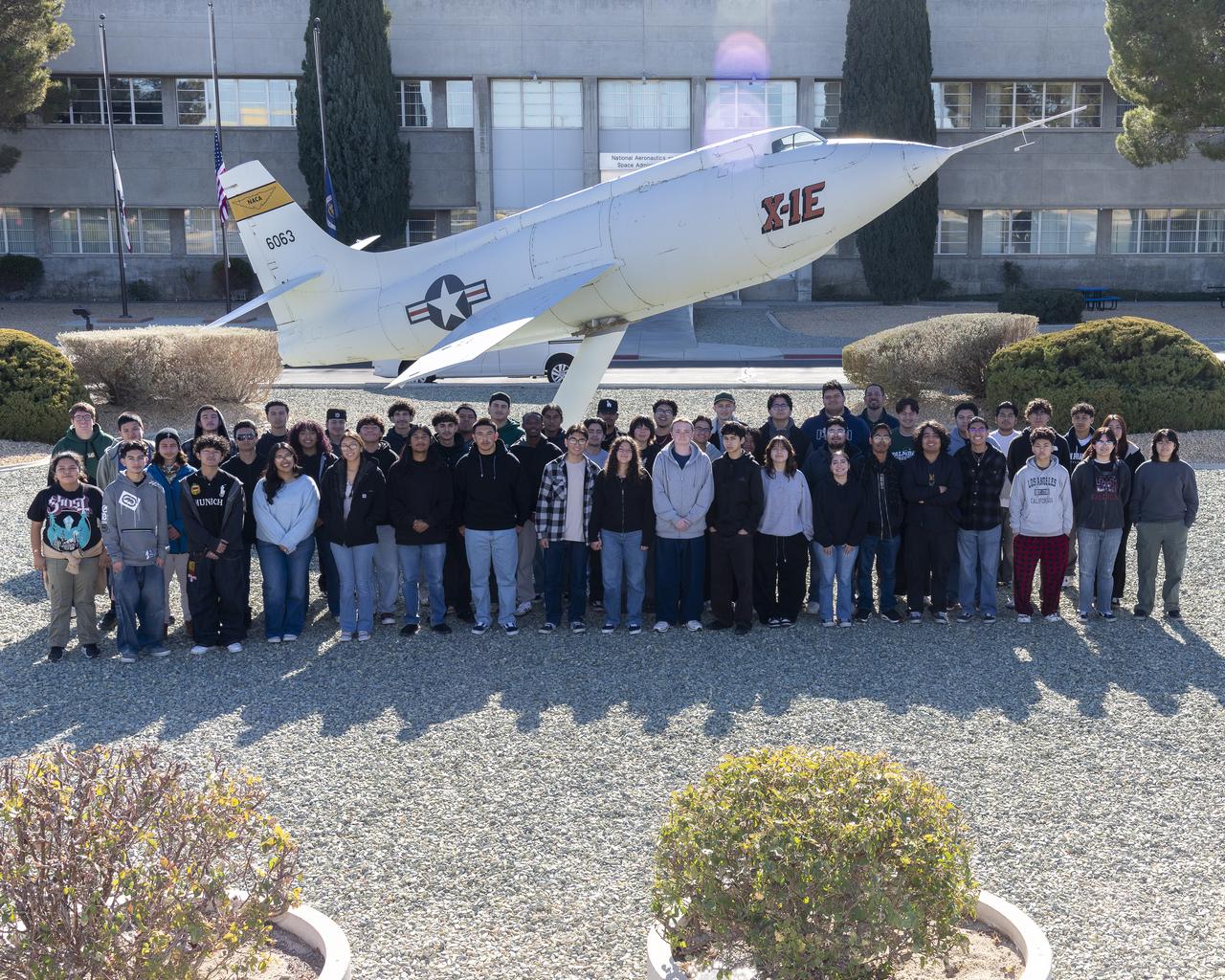
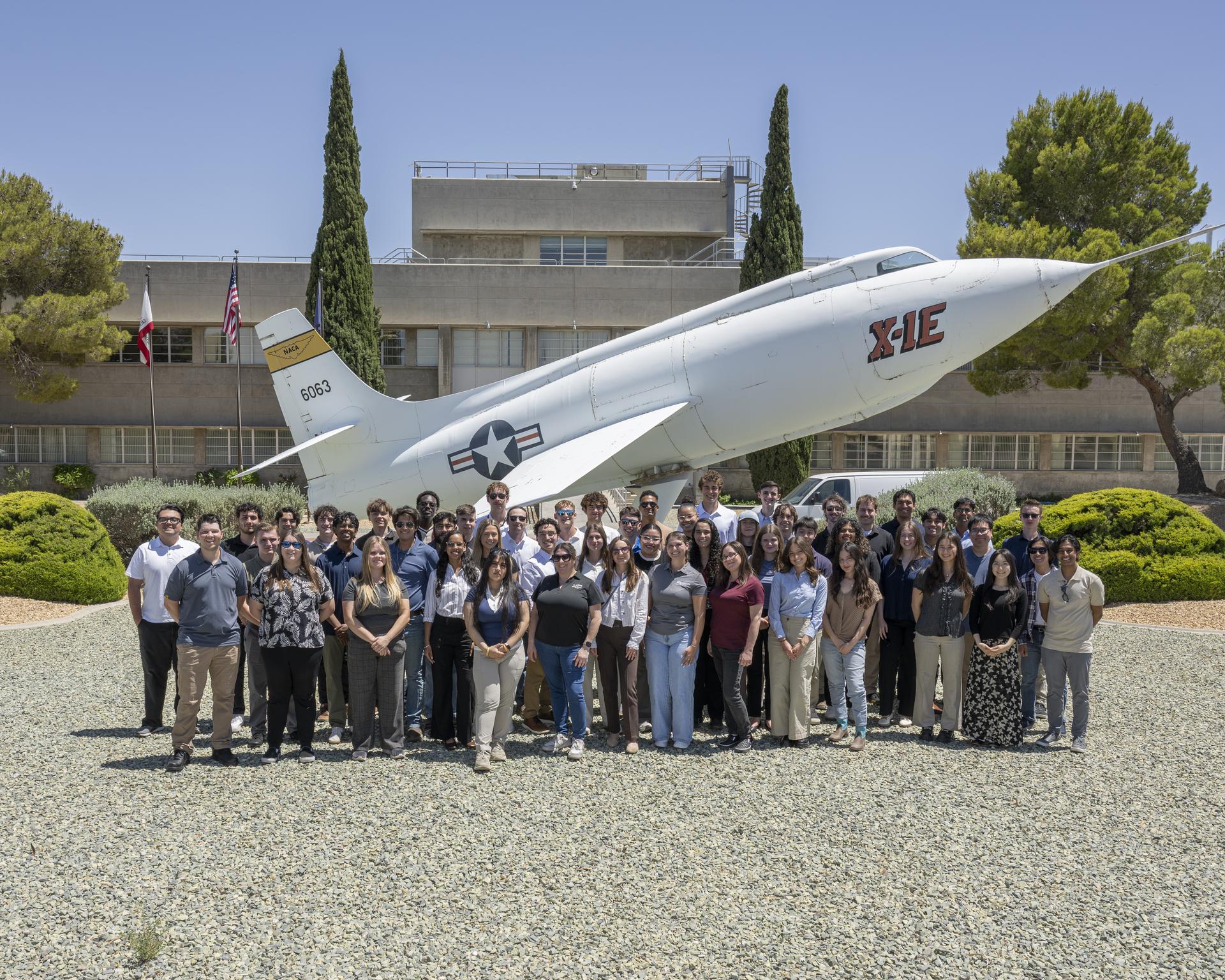
The engineering club from Palmdale High School in Palmdale, California, visits NASA’s Armstrong Research Flight Center in Edwards, California. The students took a group photo in front of the historic X-1E aircraft on display at the center.
Engineering Club Visits NASA Armstrong
Students look at a subscale model at the Dale Reed Subscale Flight Research Laboratory at NASA’s Armstrong Research Flight Center in Edwards, California. The students are from the engineering club from Palmdale High School in Palmdale, California.
Engineering Club Visits NASA Armstrong
Students examine small parts made at the Experimental Fabrication Shop at NASA’s Armstrong Research Flight Center in Edwards, California. The students are from the engineering club from Palmdale High School in Palmdale, California.
Engineering Club Visits NASA Armstrong
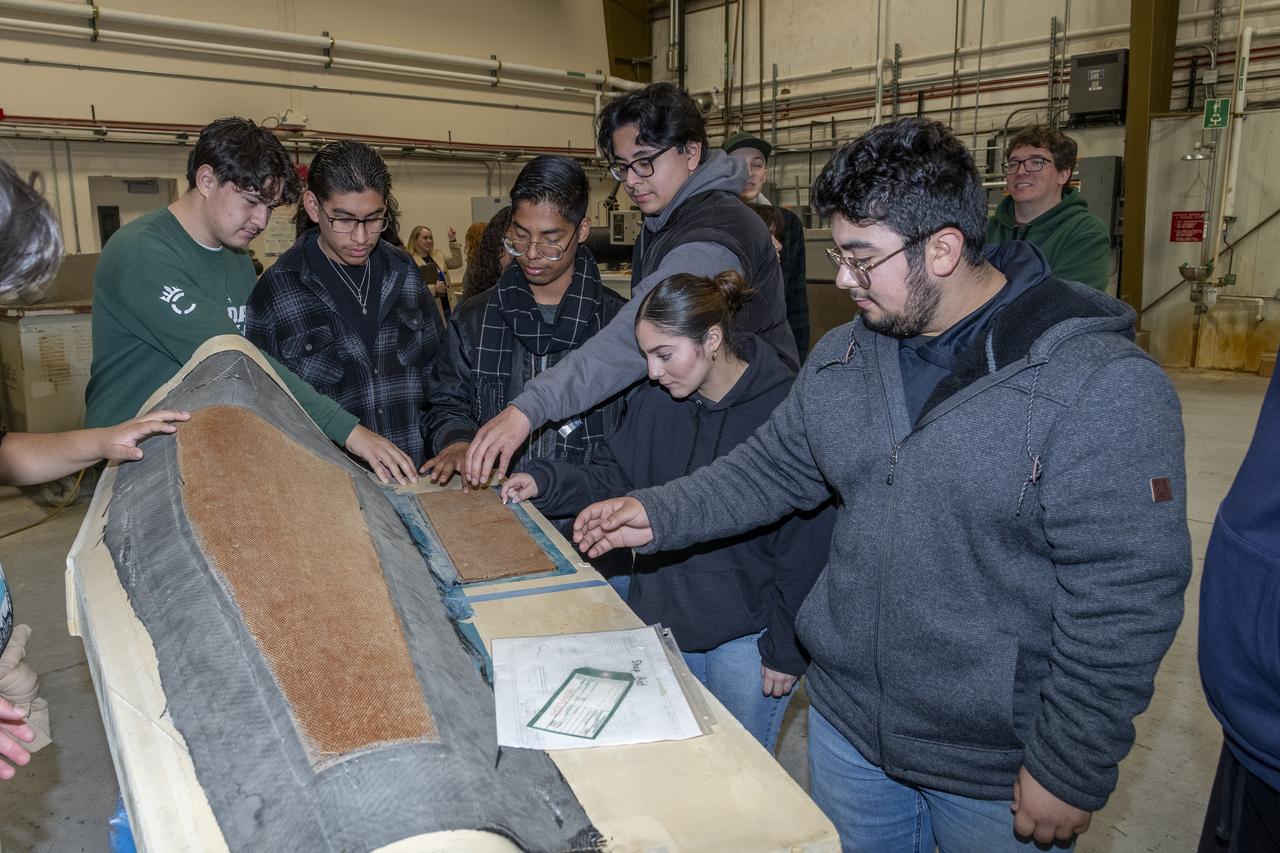
Students examine the Global Hawk Fairing Load Test at the Experimental Fabrication Shop at NASA’s Armstrong Research Flight Center in Edwards, California. The students are from the engineering club from Palmdale High School in Palmdale, California.
Engineering Club Visits NASA Armstrong
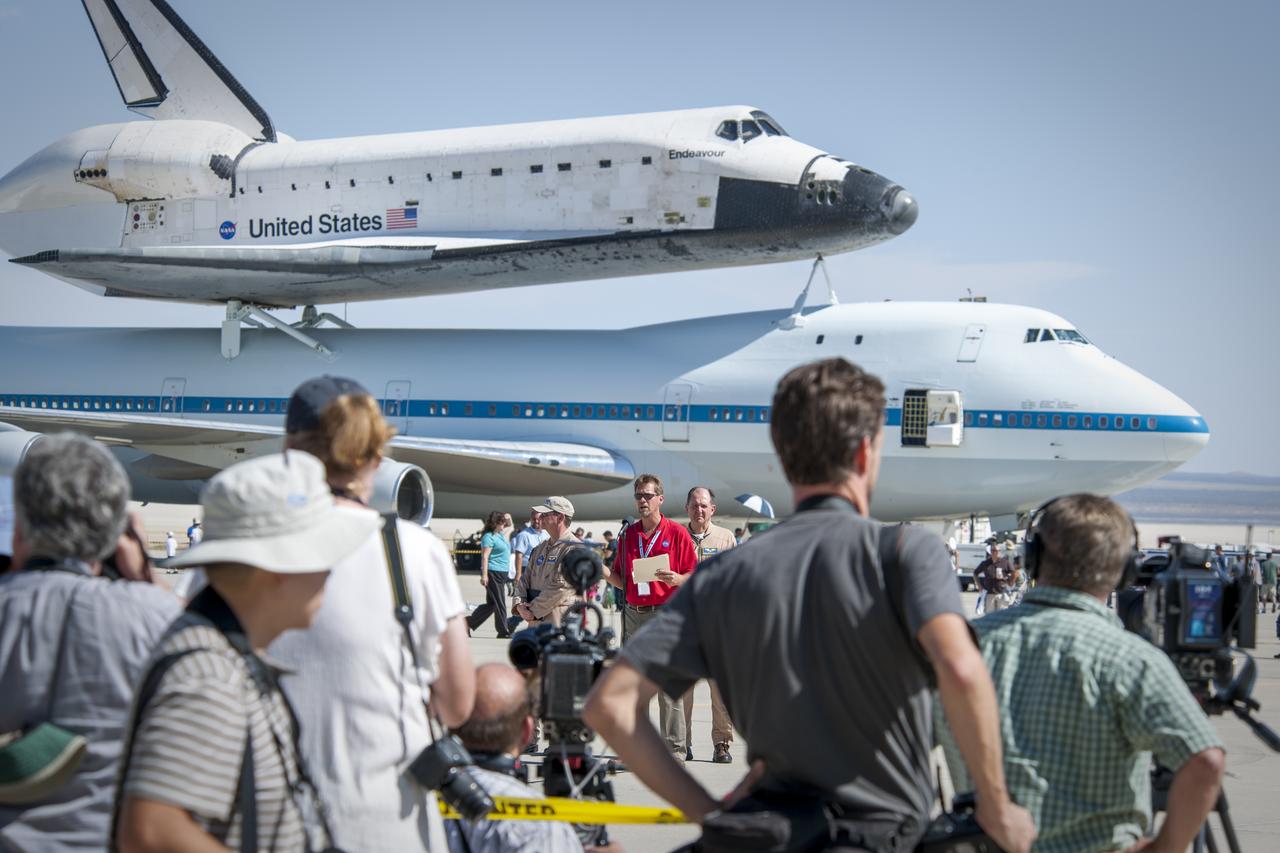
Media, social media, and NASA Armstrong (then Dryden) Flight Research Center employees and family wait for a press conference on the center’s back ramp on Sept. 20, 2012, in Edwards, California.
Space Shuttle Endeavour Toured California in 2012
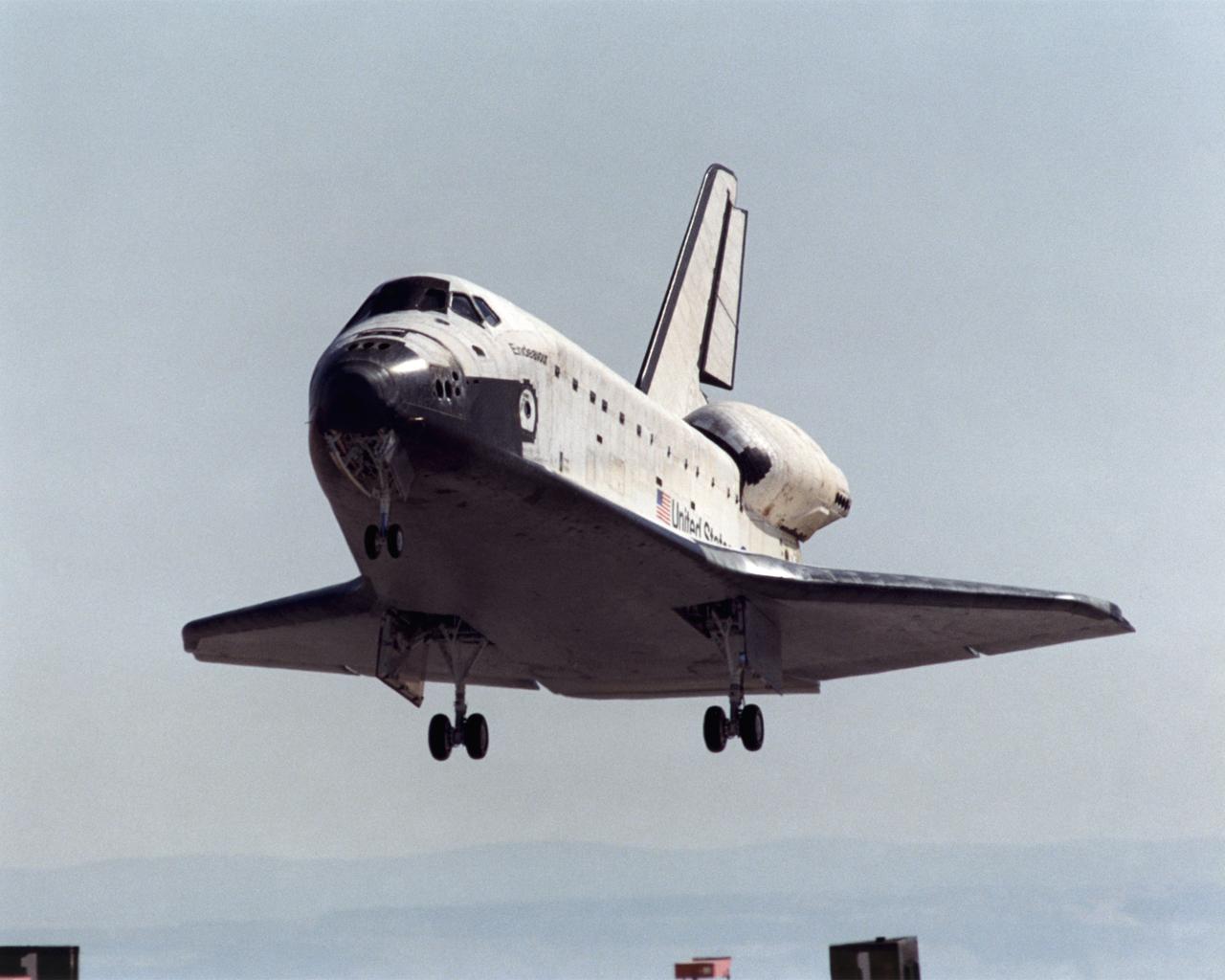
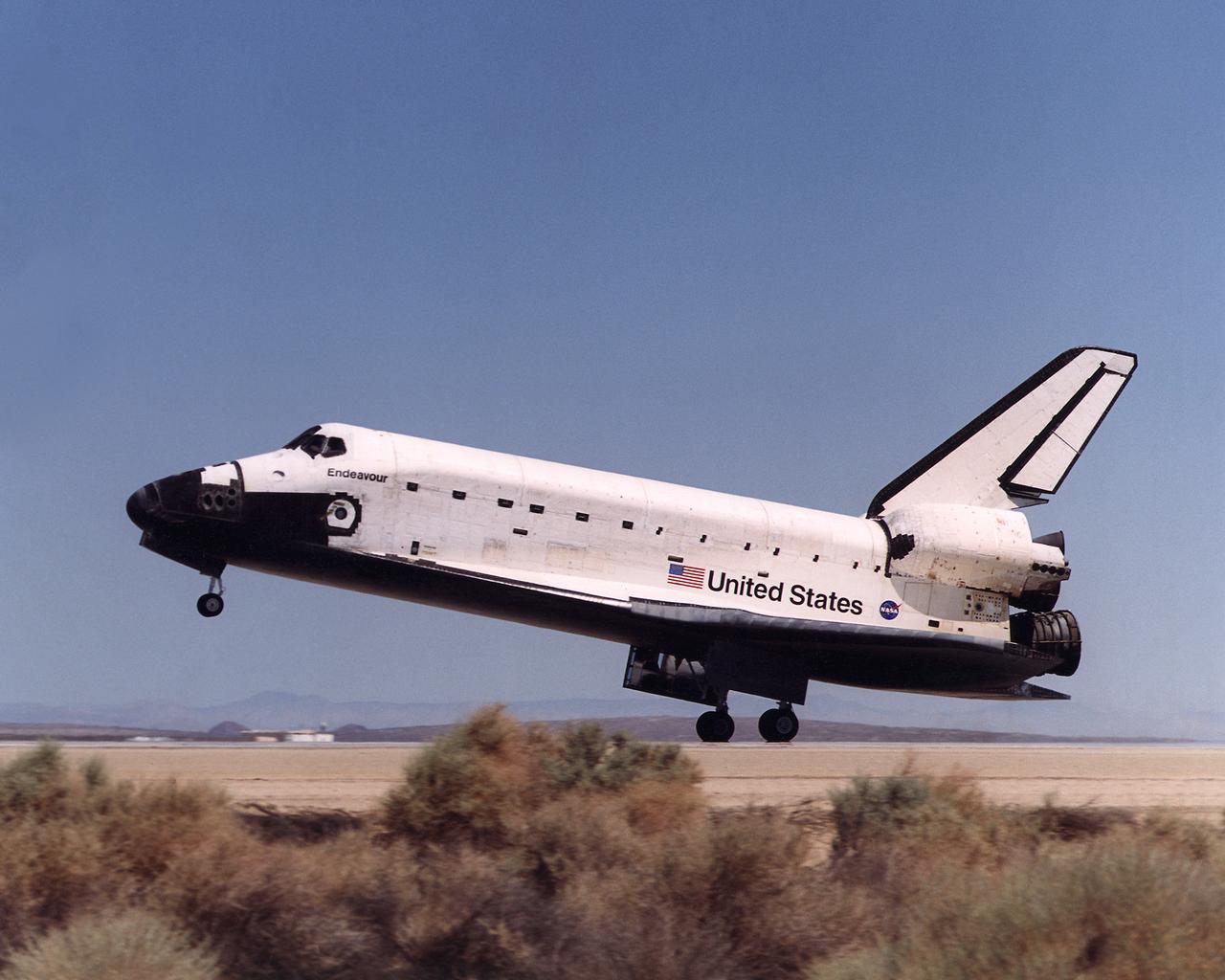
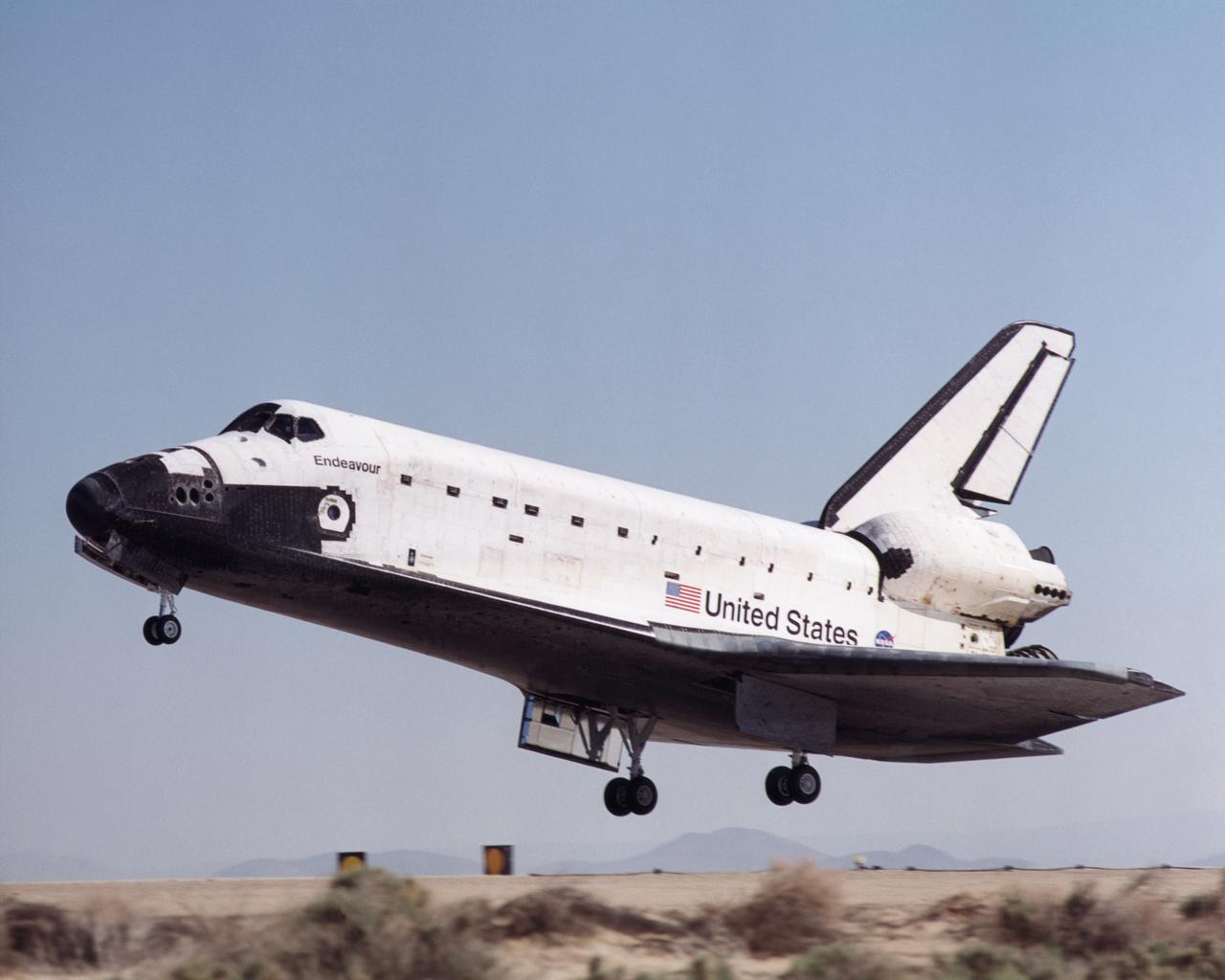
A long telephoto lens captured Space Shuttle Endeavour landing at Edwards Air Force Base, California, on May 1, 2001. NASA's Dryden Flight Research Center at Edwards would subsequently service the shuttle and mount it on a 747 for the ferry flight to the Kennedy Space Center in Florida.
A long telephoto lens captured Space Shuttle Endeavour landing at Edwards Air Force Base, California, on May 1, 2001
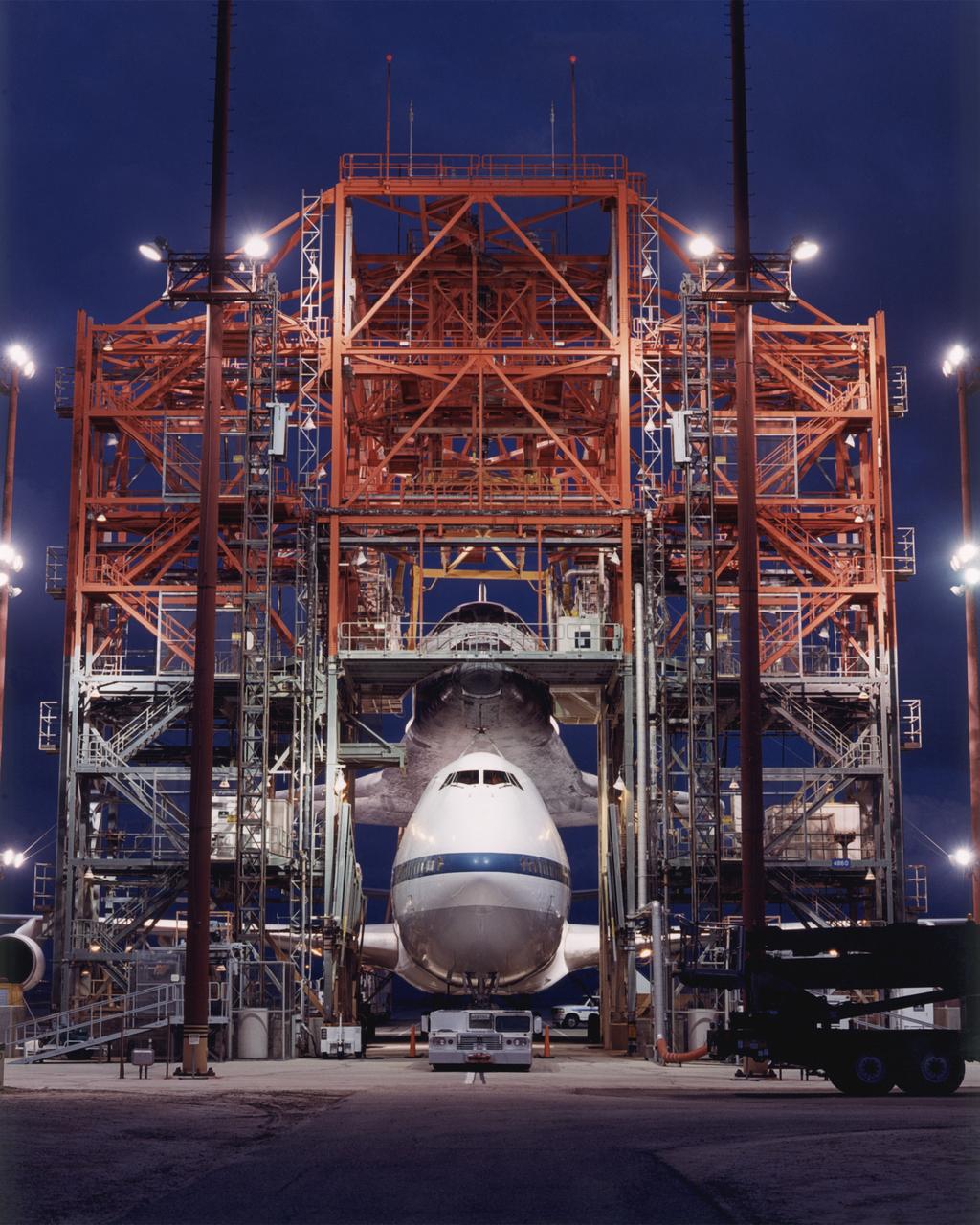
The Space Shuttle Atlantis is centered in the Mate-Demate Device (MDD) at NASA's Dryden Flight Research Center at Edwards, California. The gantry-like MDD structure is used for servicing the shuttle orbiters in preparation for their ferry flight back to the Kennedy Space Center in Florida, including mounting the shuttle atop NASA's modified Boeing 747 Shuttle Carrier Aircraft. Space Shuttle Atlantis landed at 12:33 p.m. February 20, 2001, on the runway at Edwards Air Force Base, California, where NASA's Dryden Flight Research Center is located. The mission, which began February 7, logged 5.3 million miles as the shuttle orbited earth while delivering the Destiny science laboratory to the International Space Station. Inclement weather conditions in Florida prompted the decision to land Atlantis at Edwards. The last time a space shuttle landed at Edwards was Oct. 24, 2000.
The Space Shuttle Atlantis centered in the Mate-Demate Device (MDD) at NASA's Dryden Flight Research Center at Edwards, California
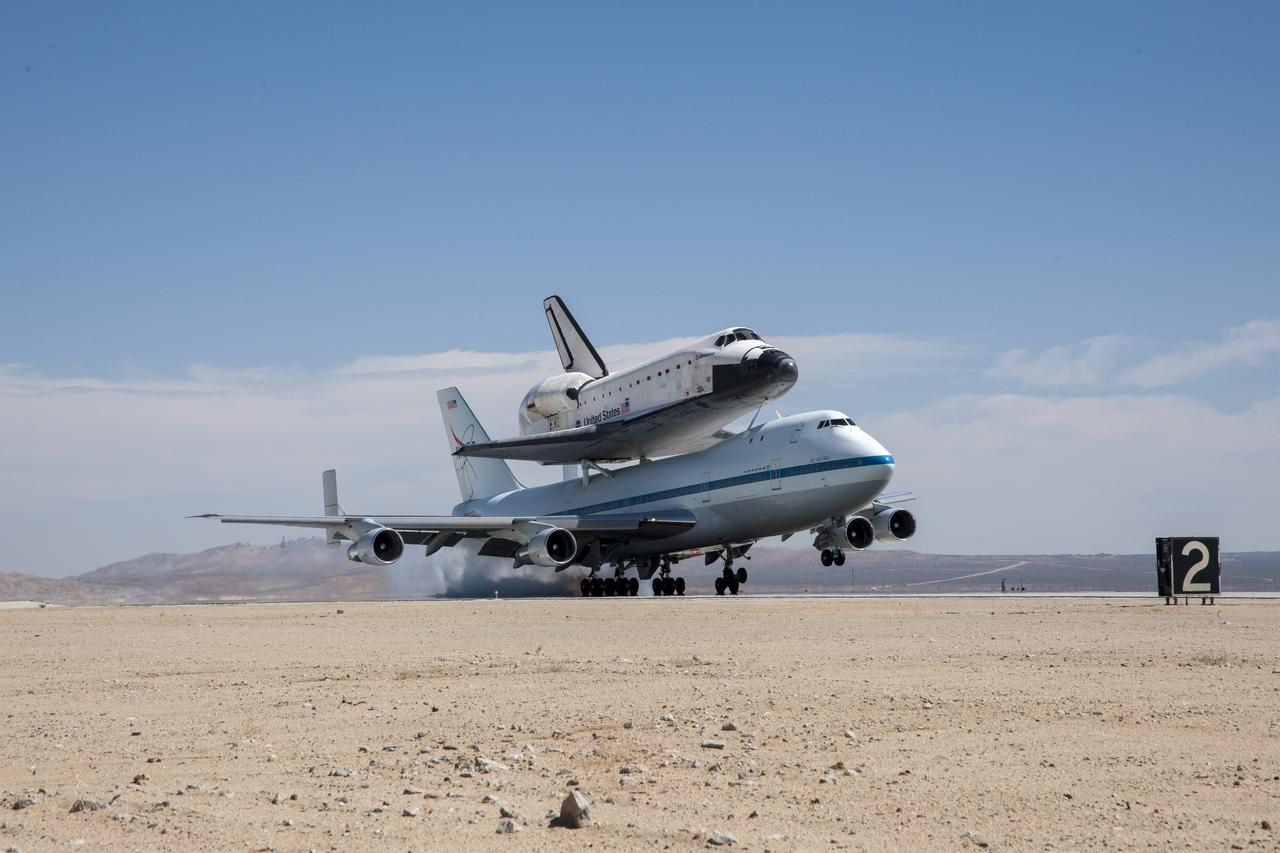
Space shuttle Endeavour and its host NASA 747 Shuttle Carrier Aircraft land at Edwards Air Force Base in California. It completed its third leg of a four-segment final ferry flight from NASA’s Kennedy Space Center in Florida to Los Angeles International Airport on Sept. 20, 2012. The landing was preceded by NASA’s Armstrong (then Dryden) Flight Research Center pilot Bill Brockett’s low-level flyby of the center and the Edwards flight line.
Space Shuttle Endeavour Toured California in 2012
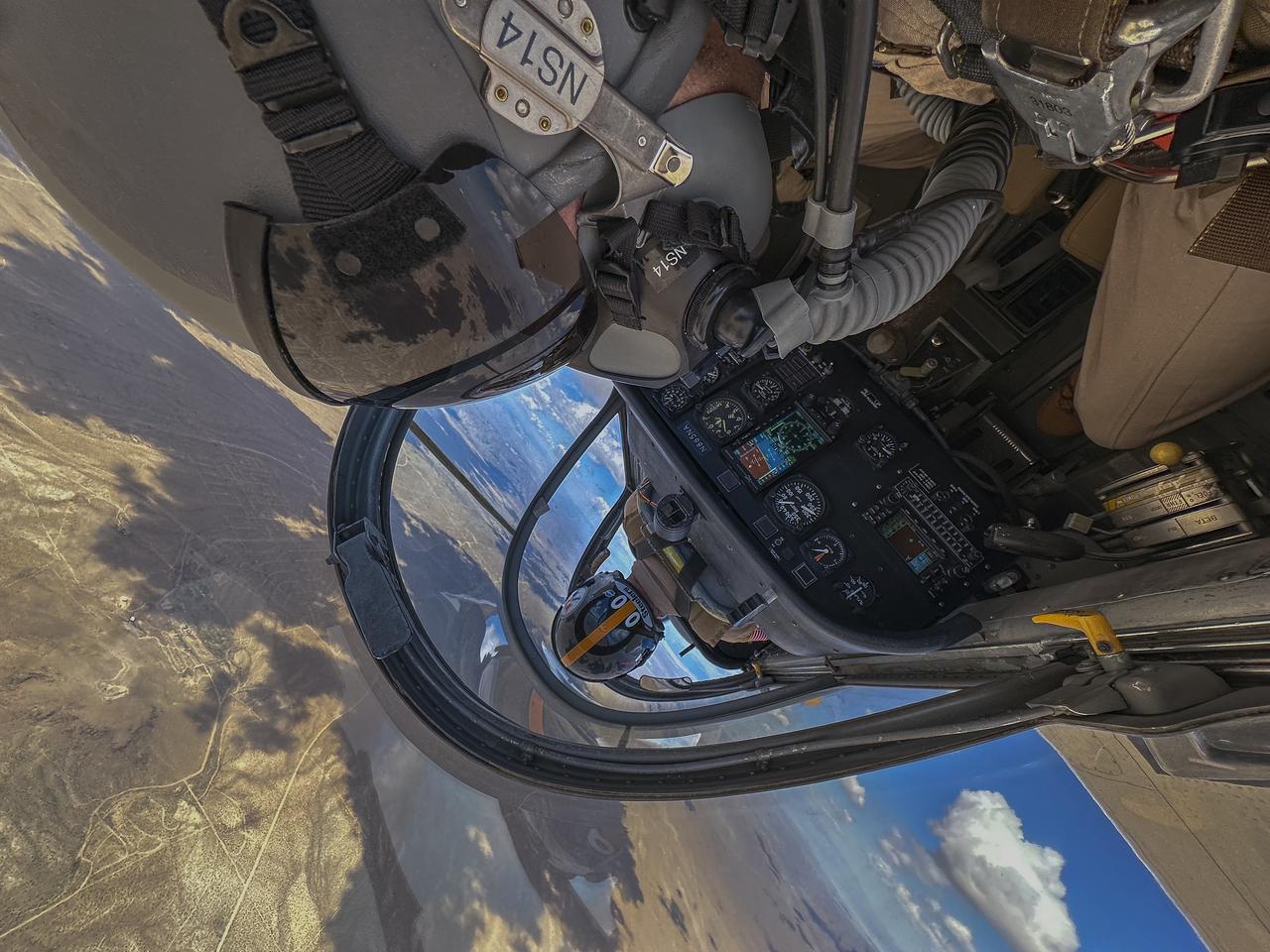
NASA research pilot Nils Larson and photographer Jim Ross complete aerobatic maneuvers in a NASA Armstrong Flight Research Center in Edwards, California owned T-34C aircraft during a proficiency flight. 
NASA Armstrong Flight Research Center T-34C Aircraft in Flight
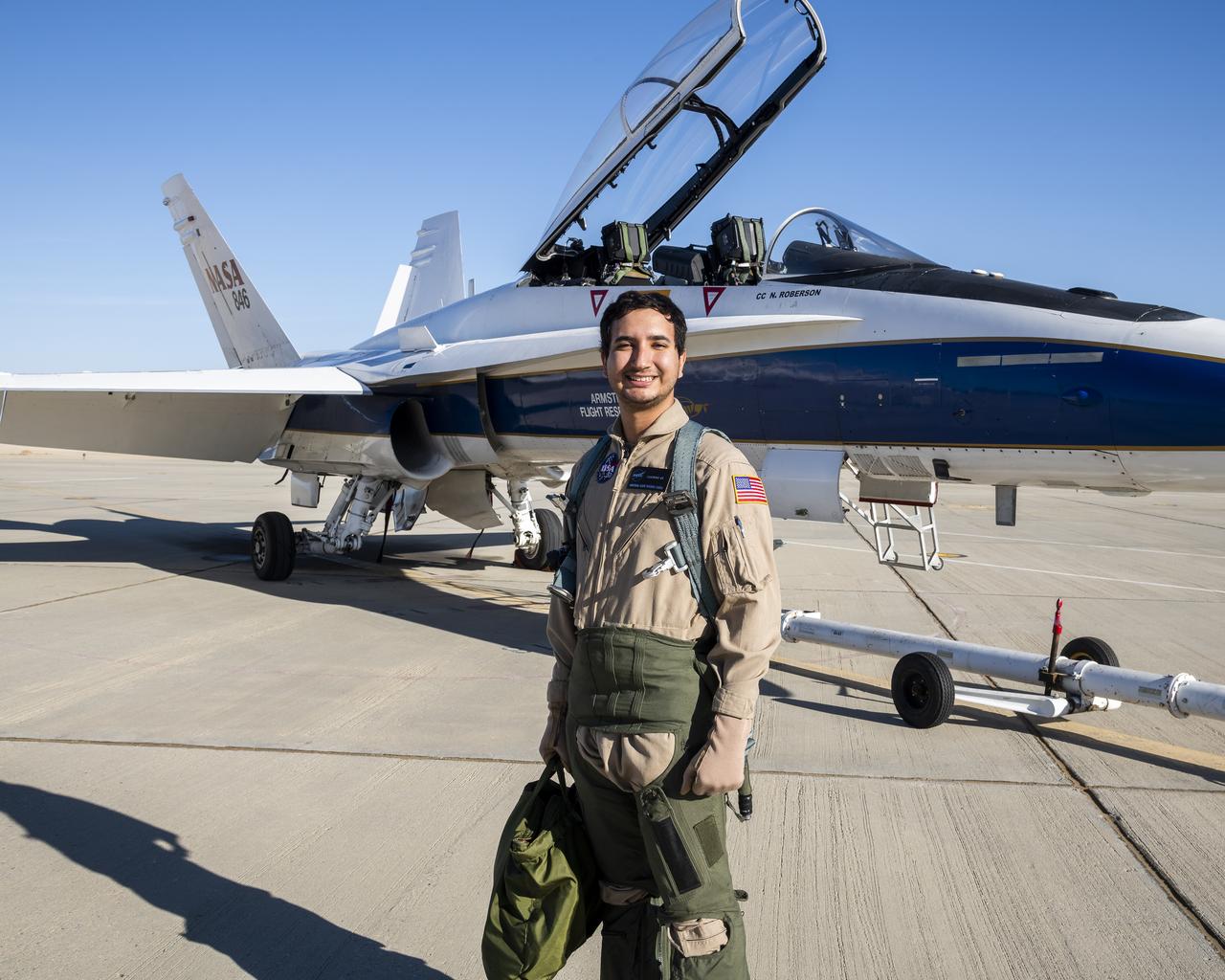
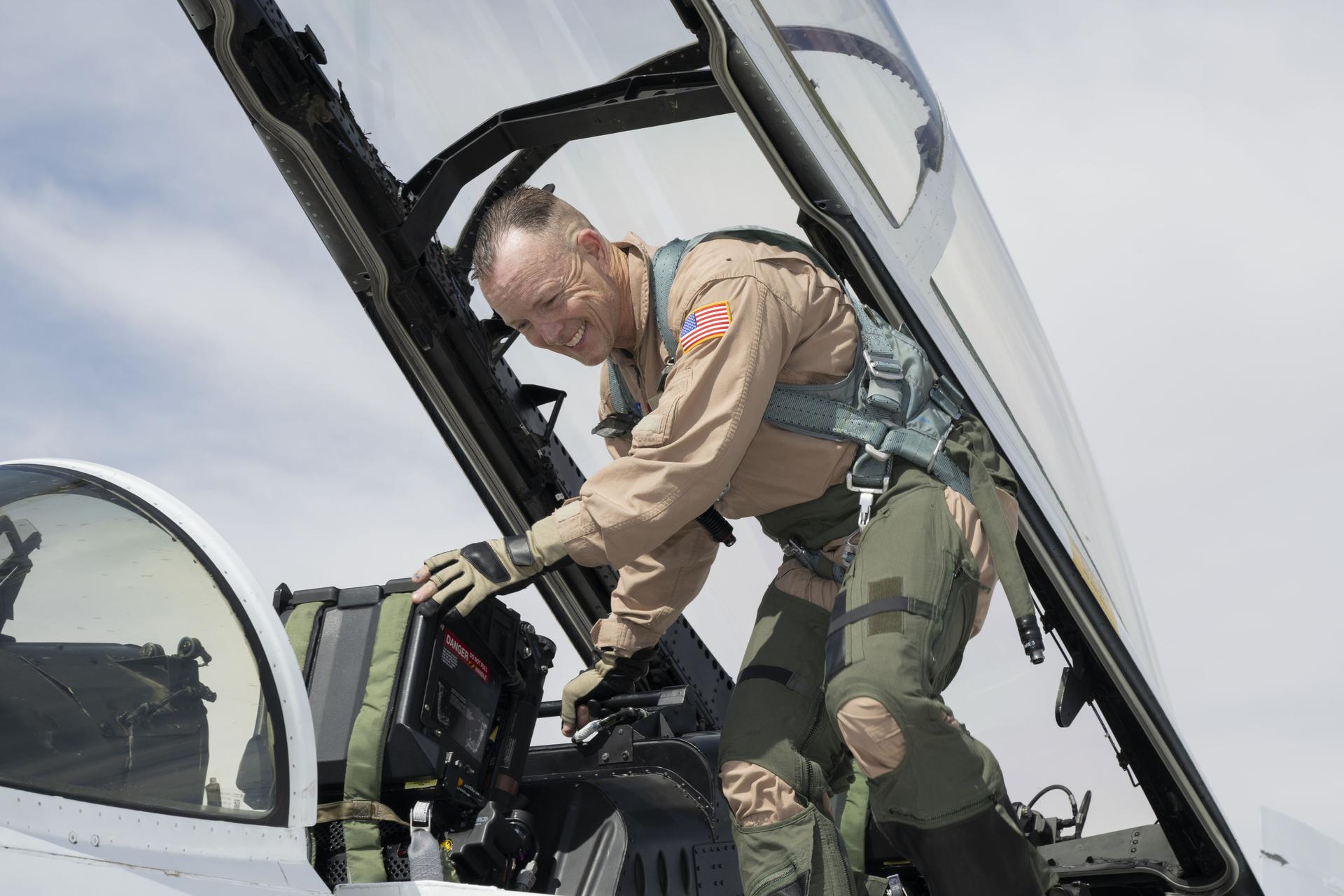
Julio Treviño, lead operations engineer for NASA’s Global Hawk SkyRange project, stands in front of an F/A-18 mission support aircraft at NASA’s Armstrong Flight Research Center in Edwards, California.
NASA Employees’ Careers Started as Interns
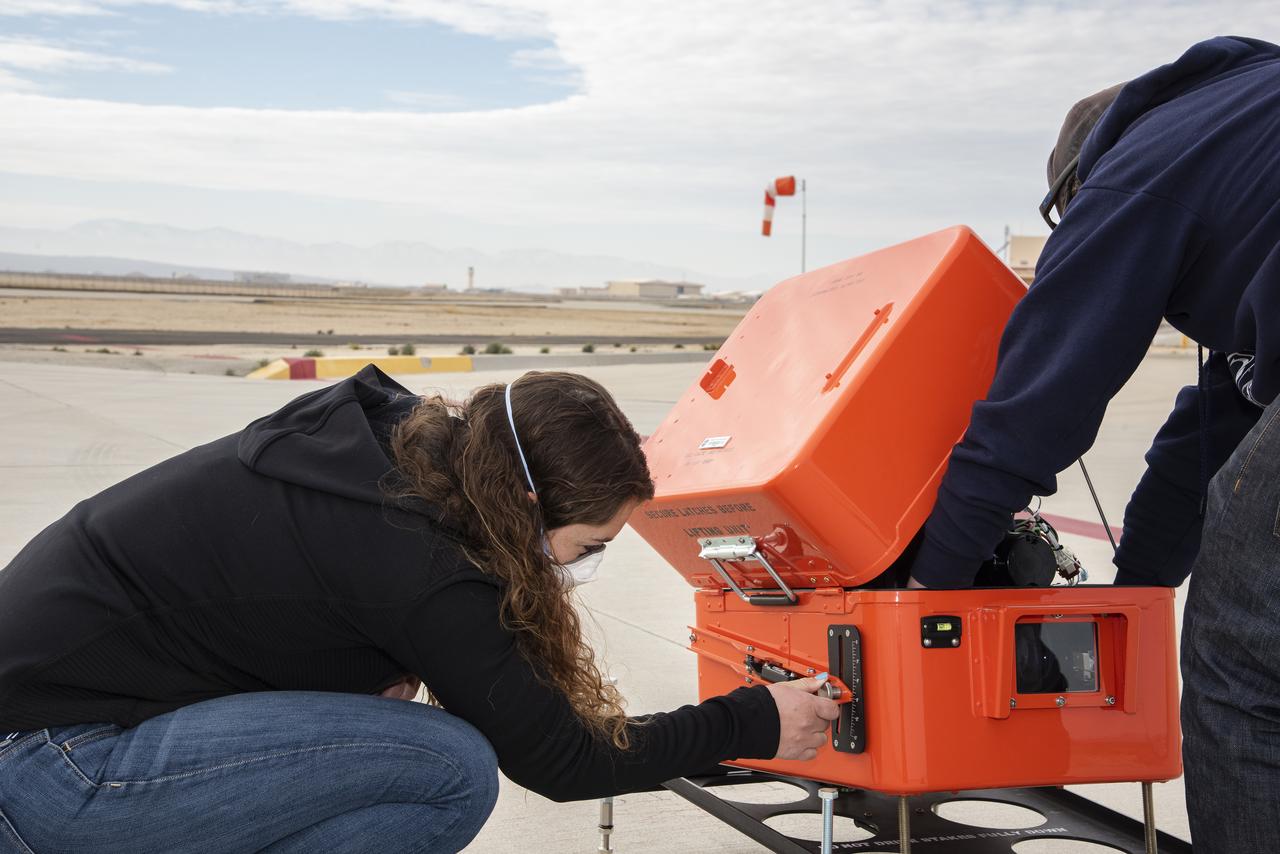
NASA’s flight systems engineer, Kassidy Mclaughlin conducts environmental testing on an instrumentation pallet. The pallet was used during NASA’s National Campaign project in 2020 at NASA’s Armstrong Flight Research Center in Edwards, California.
NASA Employees’ Careers Started as Interns
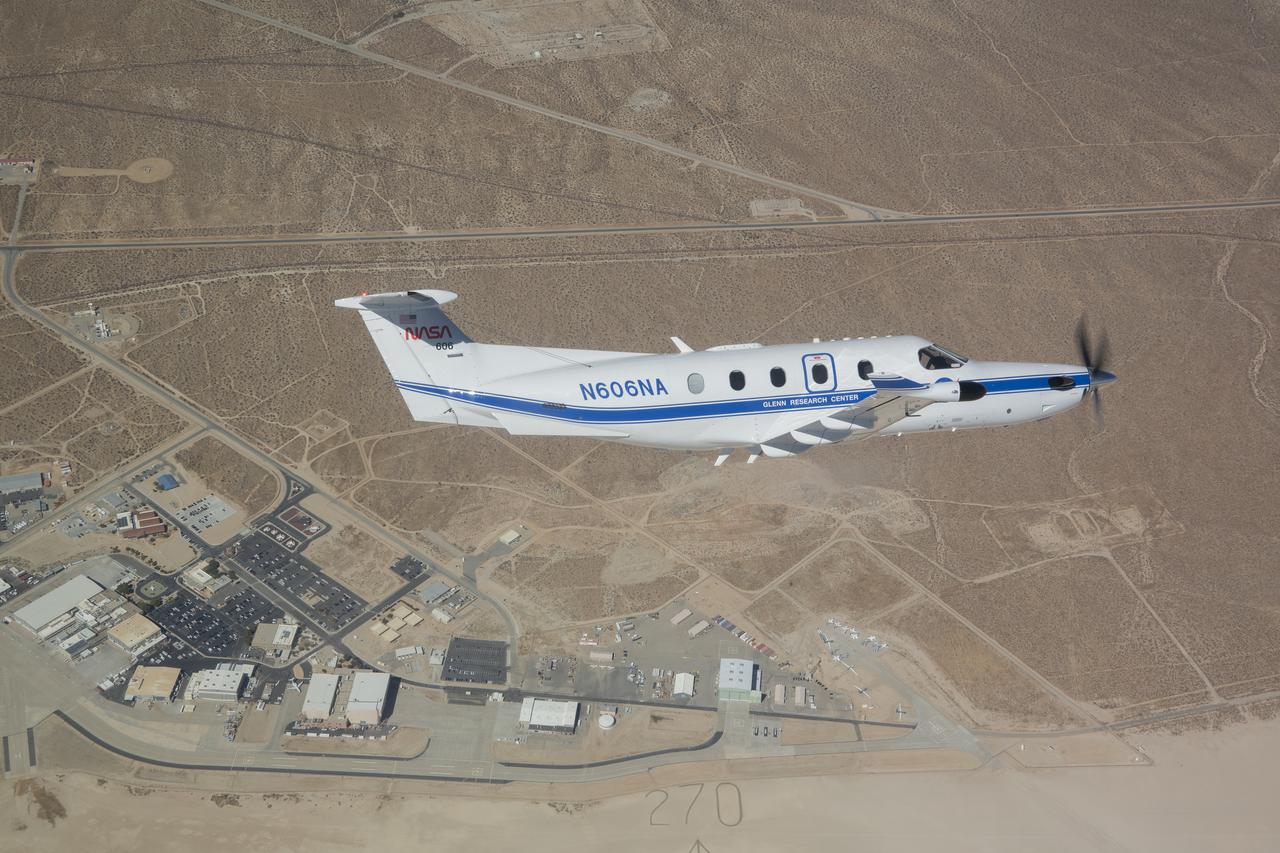
NASA’s Pilatus PC-12, based out of NASA’s Glenn Research Center in Cleveland, is seen flying over NASA’s Armstrong Flight Research Center in Edwards, California. On Sept. 18, 2024, NASA pilots and crew from both centers flew the PC-12 over the Mojave Desert in a series of familiarization flights. Familiarization flights involve egress training, preflight walkaround, interior preflight, engine start, taxi, and takeoff.  
NASA Pilatus PC-12 soars over NASA’s Armstrong Flight Research Center in Edwards, California on Sept. 18, 2024.
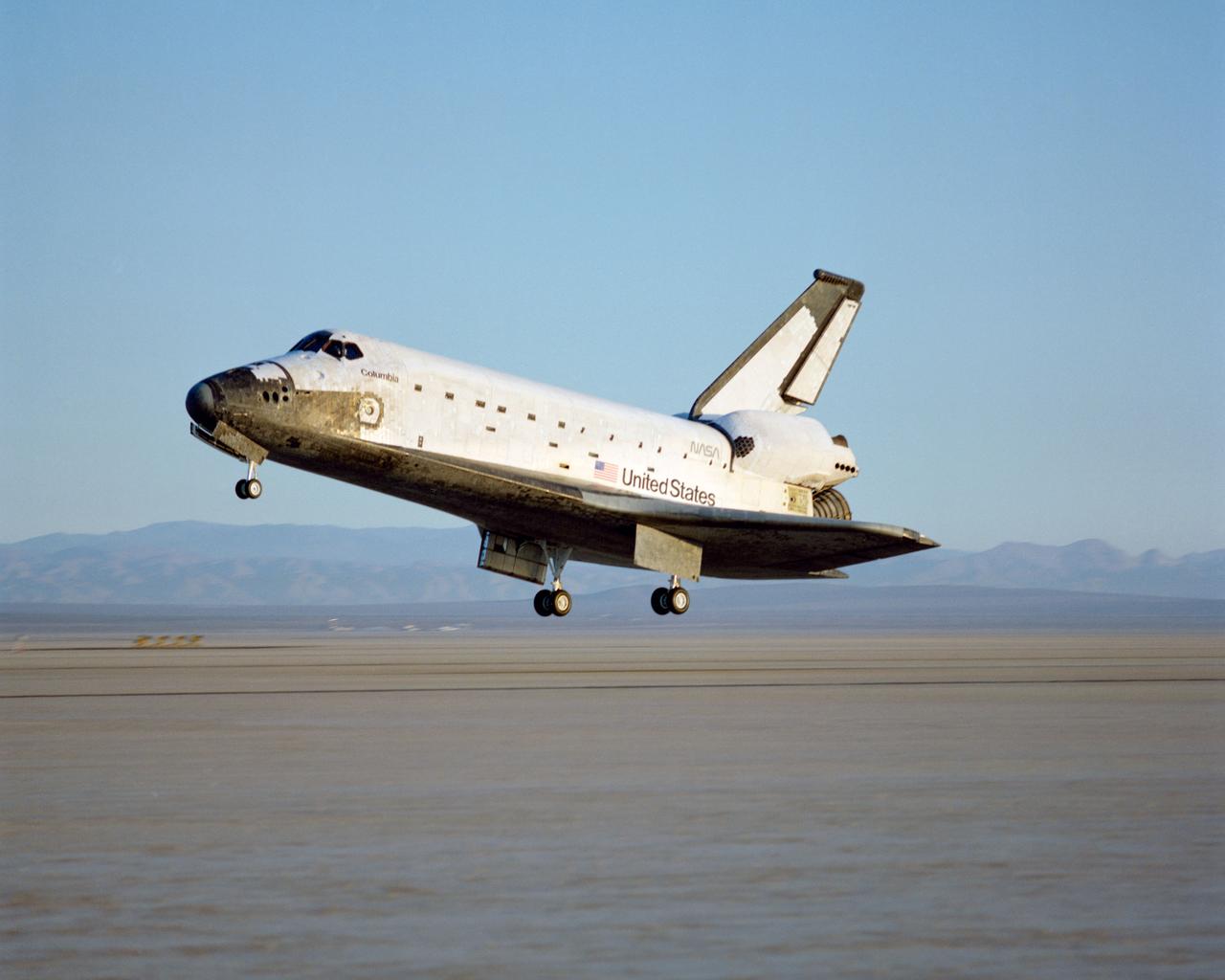
STS-28 Columbia, Orbiter Vehicle (OV) 102, approaches Runway 17 dry lake bed at Edwards Air Force Base (EAFB) California and is photographed just moments before main landing gear (MLG) touchdown. In the distance, are peaks of Southern California mountain range.
STS-28 Columbia, OV-102, landing at Edwards Air Force Base (EAFB) California
The Paresev 1-A (Paraglider Research Vehicle) and the tow airplane, 450-hp Stearman sport Biplane, sitting on Rogers dry lakebed, Edwards, California. The control system in the Paresev 1-A had a more conventional control stick position and was cable-operated; the main landing gear used shocks and bungees with the 100-square-foot wing membrane being made of 6-ounce unsealed Dacron.
Paresev 1-A on lakebed with tow plane
Space Shuttle Endeavour's tires produced a momentary puff of smoke as Mission STS-100 landed at NASA's Dryden Flight Research Center on Edwards Air Force Base, California, May 1, 2001.
Space Shuttle Endeavour touches down on the runway at Edwards Air Force Base, California
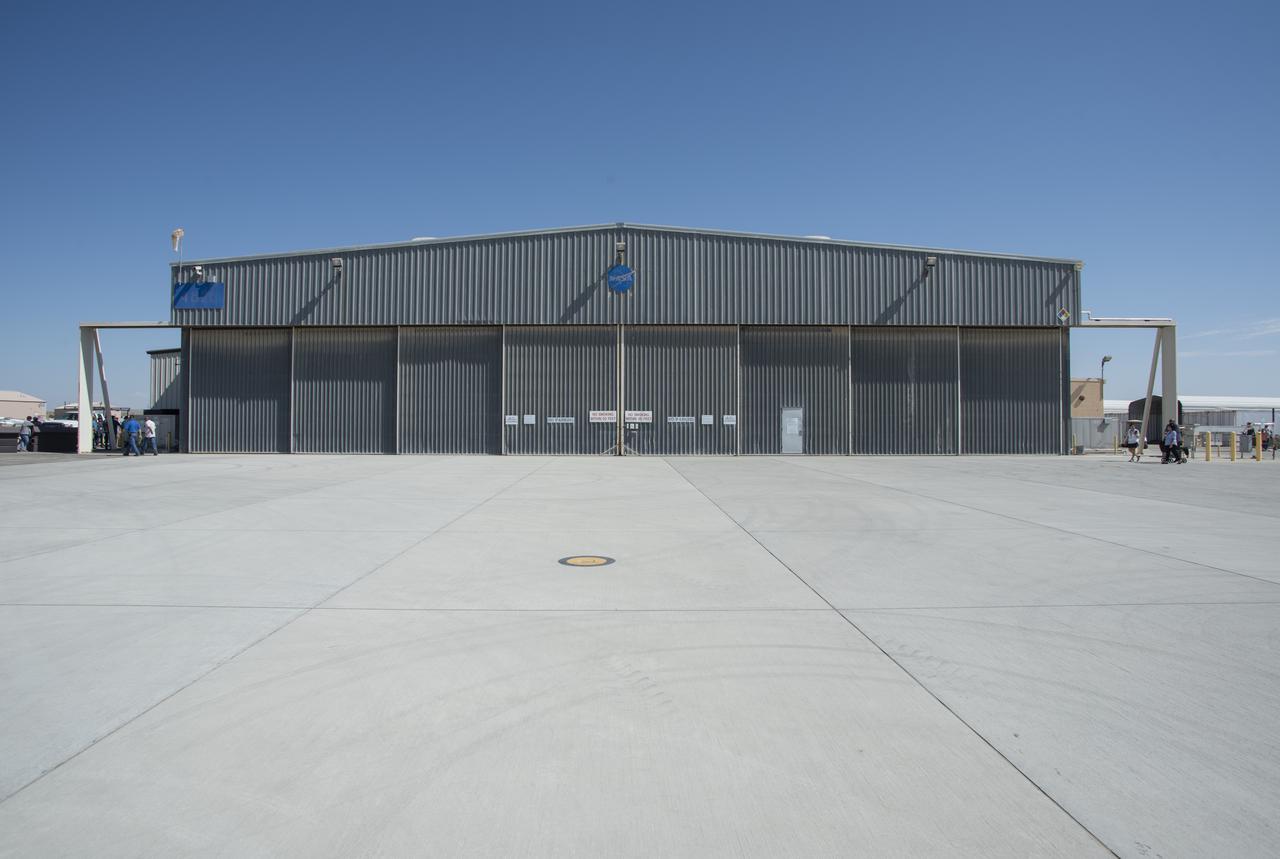
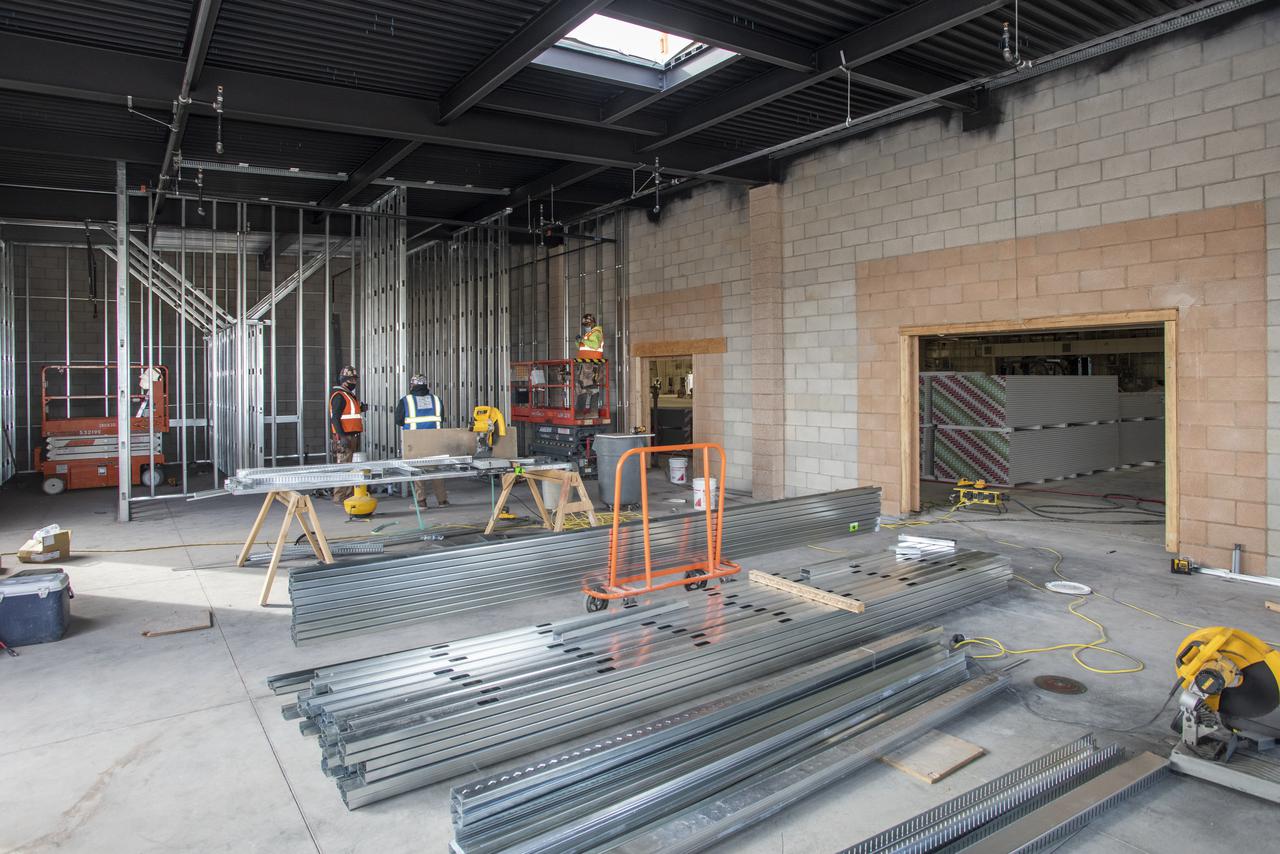
Work continues at Building 4826, the future home of the X-59 Quiet SuperSonic Technology aircraft, at NASA's Armstrong Flight Research Center in Edwards, California.
Work Continues on Future X-59 Home
Timothy Risch, a technical manager at NASA’s Armstrong Flight Research Center in Edwards, California, cautions people should prepare for and be ready to survive a serious accident. He presented during Safety Day on April 4, 2024, at NASA’s Armstrong Flight Research Center in Edwards, California.
NASA Values Safety and Reducing Risk
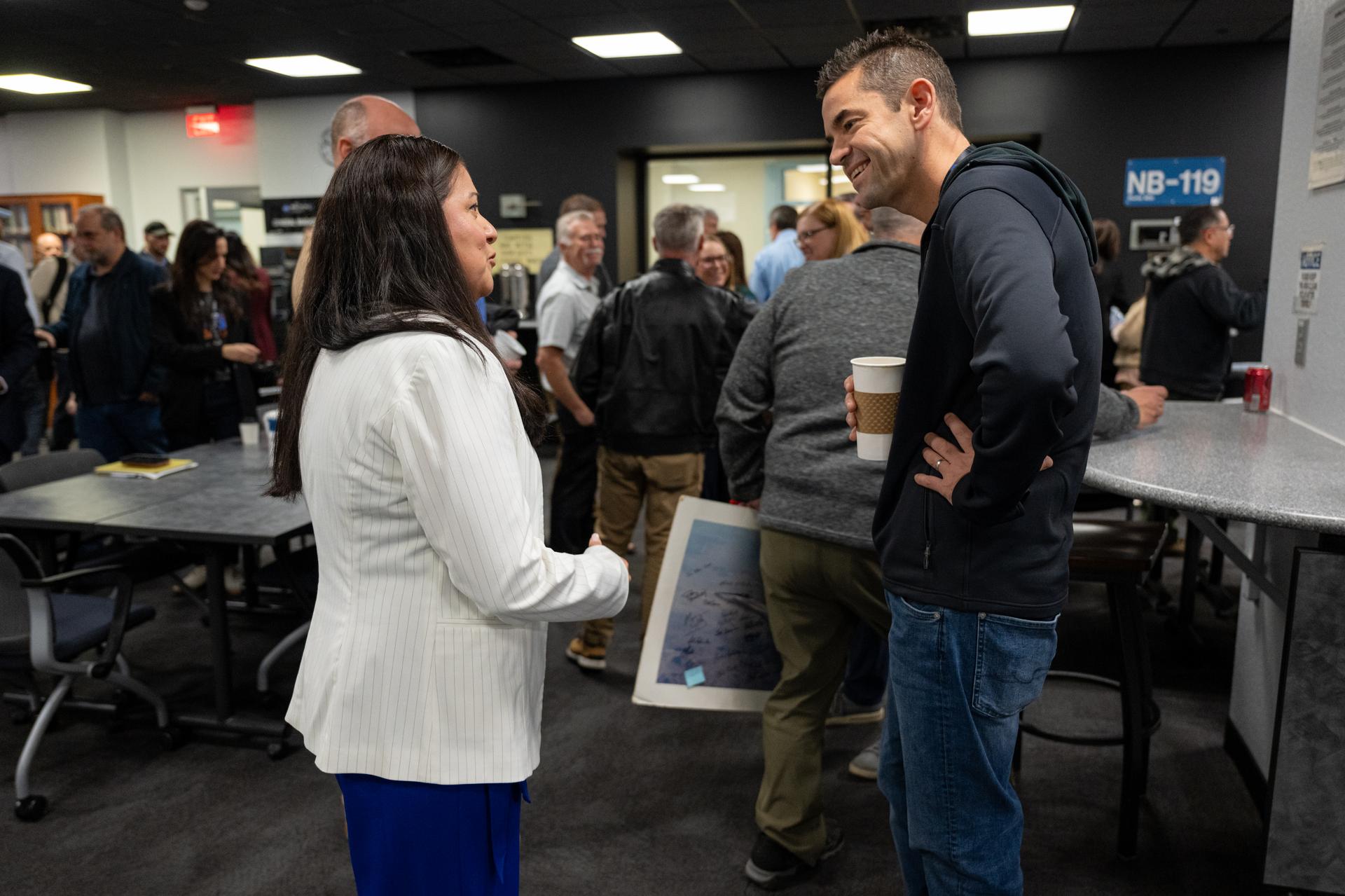
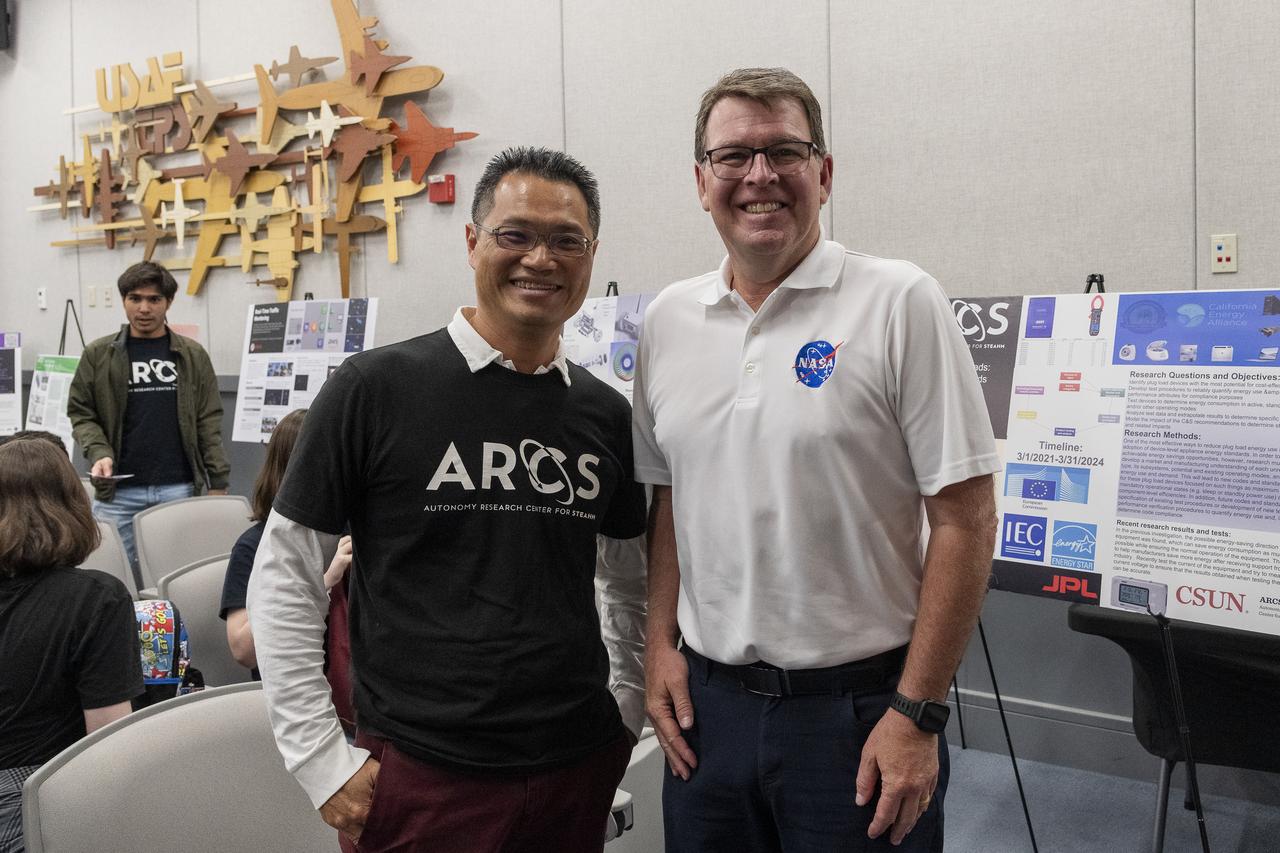
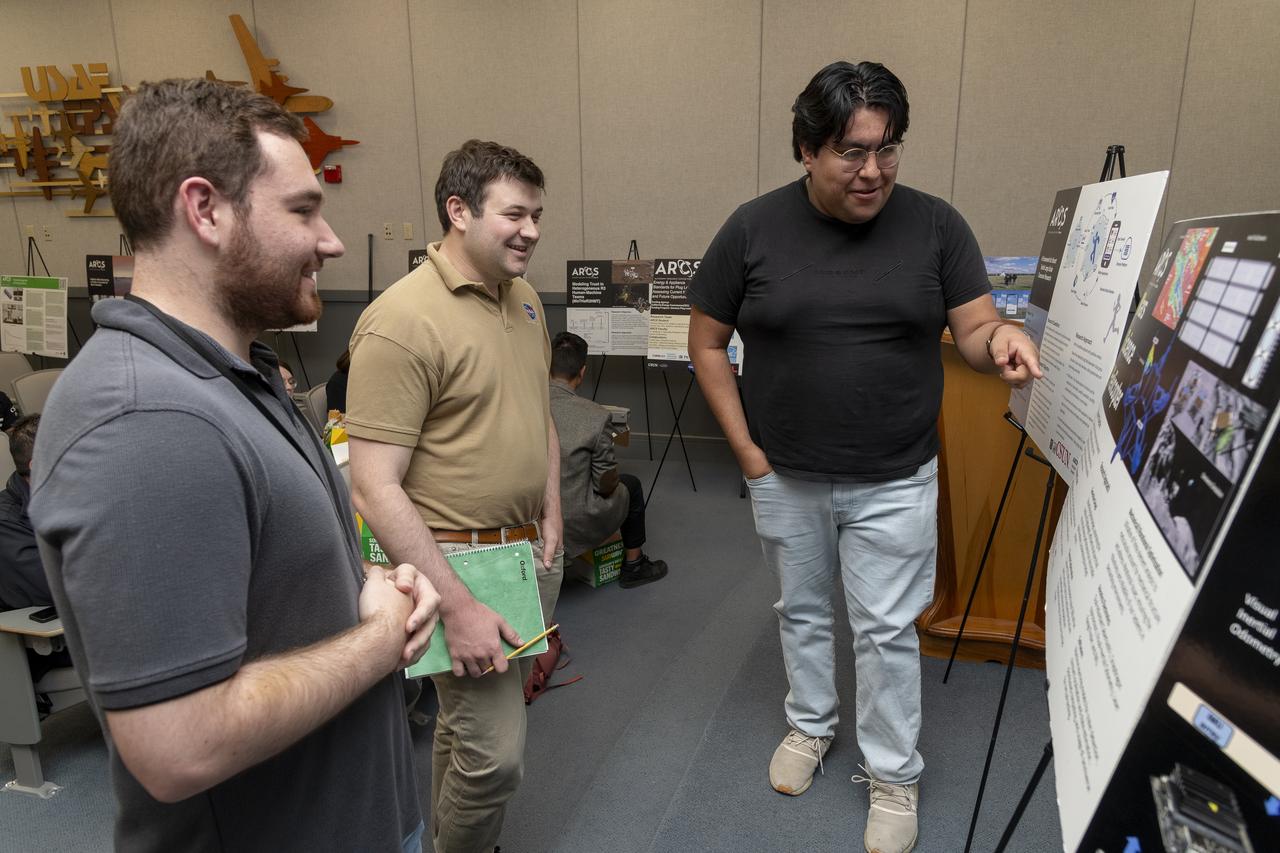
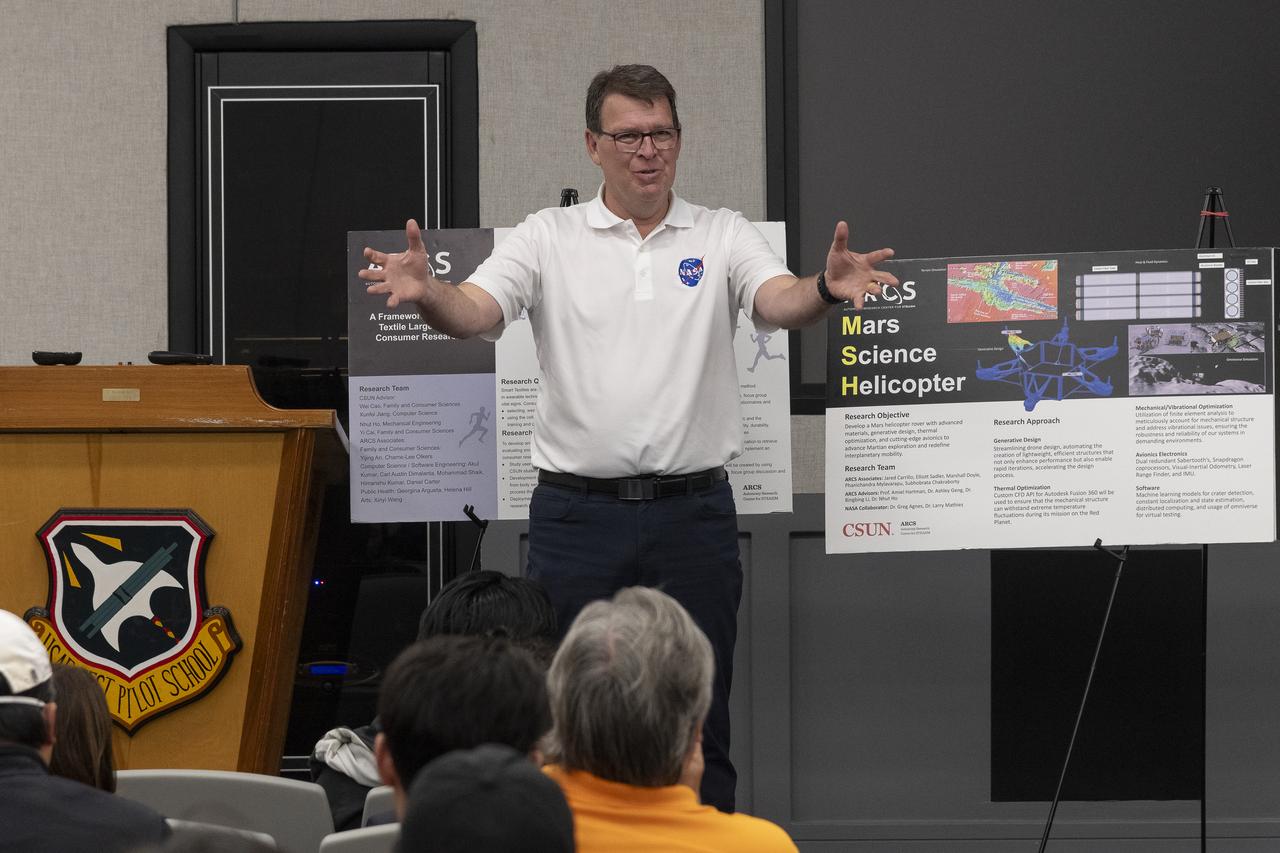
Brad Flick, center director at NASA’s Armstrong Flight Research Center in Edwards, California, talks to students from California State University, Northridge, California. As part of the university’s Autonomy Research Center for science, technology, engineering, entrepreneurship, arts, humanities, and mathematics, the students displayed posters and answered questions about their technologies May 23 at the Air Force Test Pilot School auditorium on Edwards Air Force Base, California.
California Students Aim for NASA Support to Develop Technology
Space Shuttle Endeavour touches down on the runway at Edwards Air Force Base, California to conclude International Space Station construction and supply mission STS-111.
Space Shuttle Endeavour touches down on the runway at Edwards Air Force Base, California to conclude International Space Station construction and supply mission STS-111
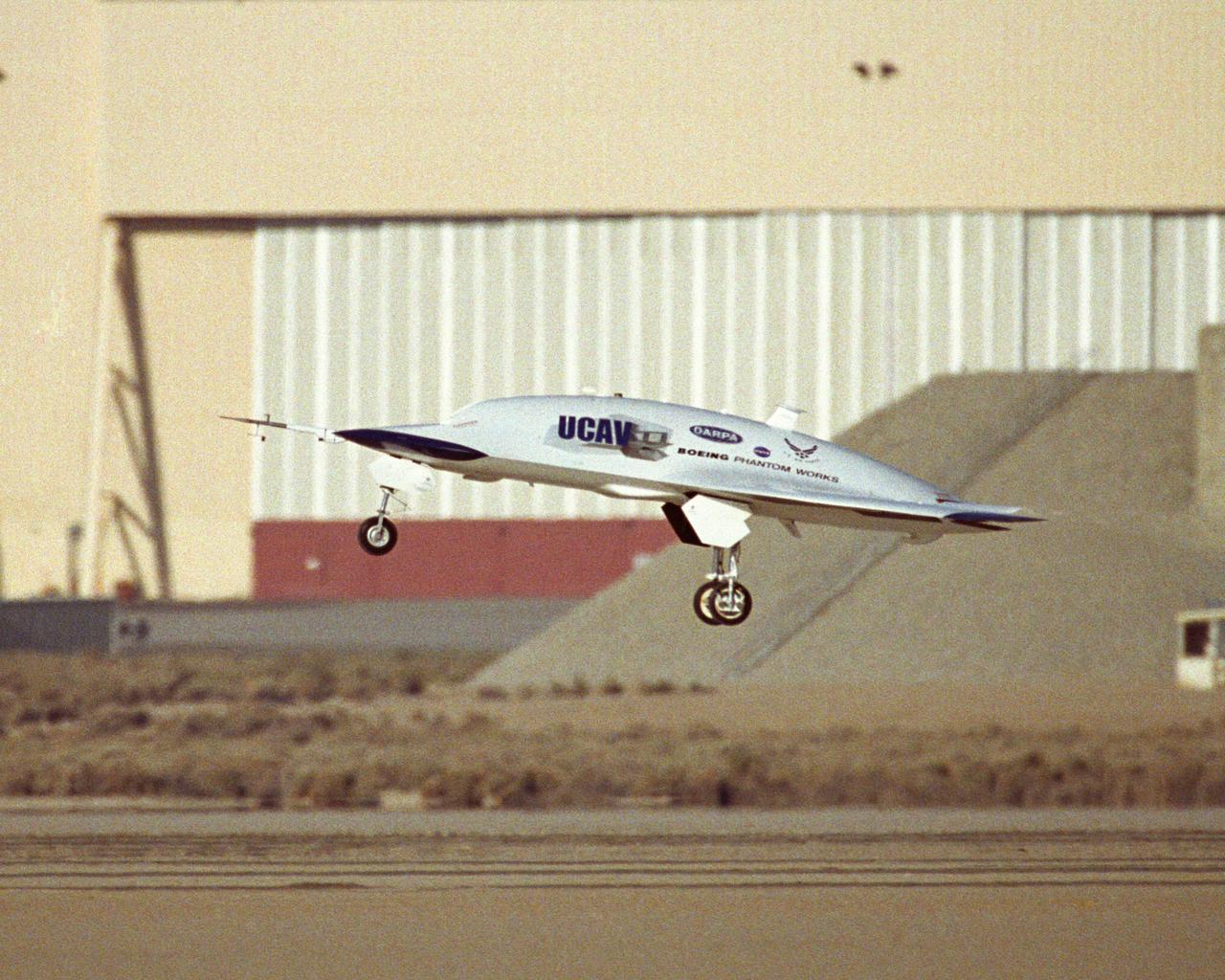
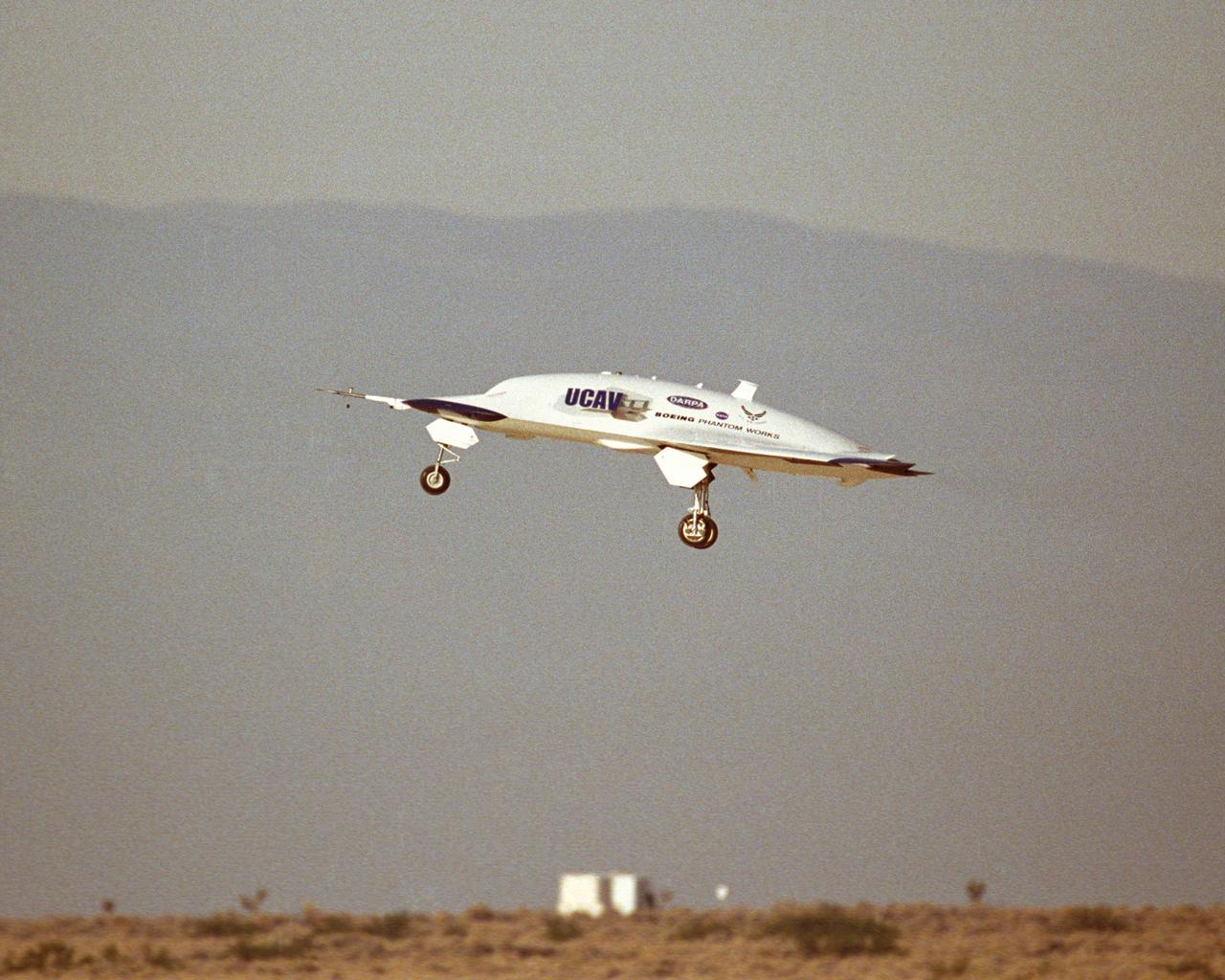
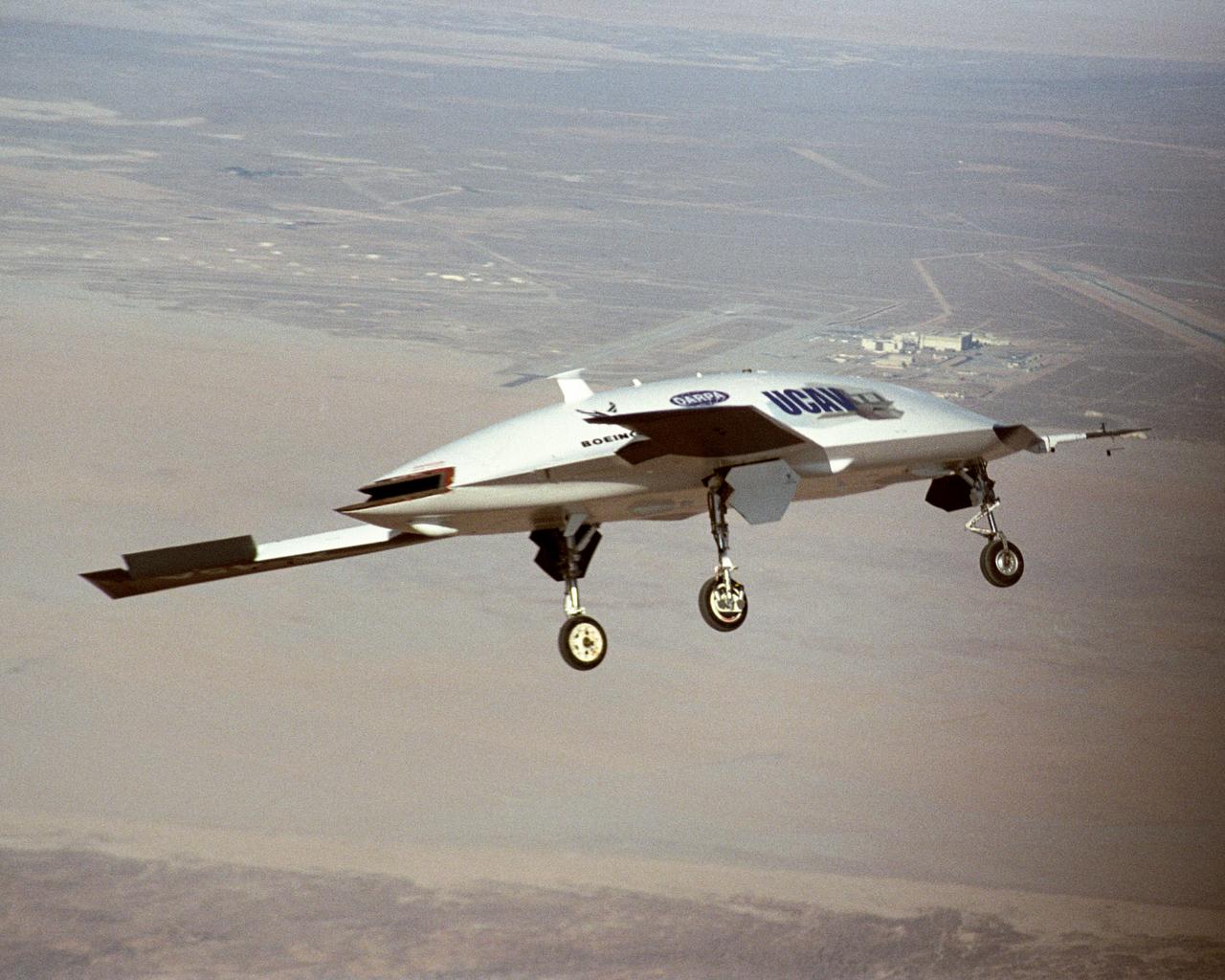
X-45A Unmanned Combat Air Vehicle, or UCAV, technology demonstration aircraft in flight during its first flight at Edwards Air Force Base, California.
X-45A Unmanned Combat Air Vehicle, or UCAV, technology demonstration aircraft in flight during its first flight at Edwards Air Force Base, California
Space Shuttle Atlantis starts to deploy its braking parachute following touchdown at Edwards Air Force Base, California, on June 22, 2007.
Space Shuttle Atlantis starts to deploy its braking parachute following touchdown at Edwards Air Force Base, California, on June 22, 2007
Space Shuttle Endeavour touches down on the runway at Edwards Air Force Base, California to conclude International Space Station construction and supply mission STS-111.
Space Shuttle Endeavour touches down on the runway at Edwards Air Force Base, California to conclude International Space Station construction and supply mission STS-111
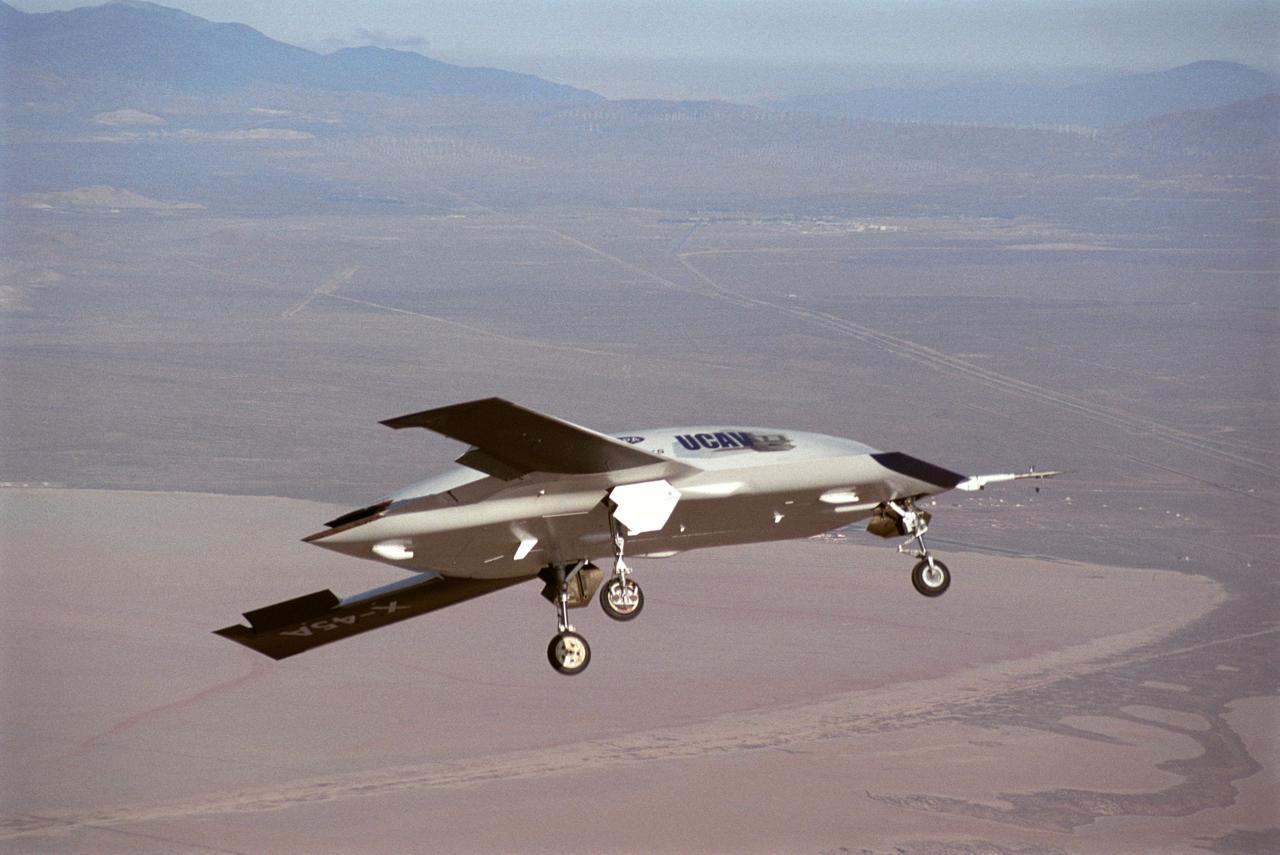
X-45A Unmanned Combat Air Vehicle, or UCAV, technology demonstration aircraft in flight during its first flight at Edwards Air Force Base, California.
X-45A Unmanned Combat Air Vehicle, or UCAV, technology demonstration aircraft in flight during its first flight at Edwards Air Force Base, California
X-45A Unmanned Combat Air Vehicle, or UCAV, technology demonstration aircraft in flight during its first flight at Edwards Air Force Base, California.
X-45A Unmanned Combat Air Vehicle, or UCAV, technology demonstration aircraft in flight during its first flight at Edwards Air Force Base, California
X-45A Unmanned Combat Air Vehicle, or UCAV, technology demonstration aircraft in flight during its first flight at Edwards Air Force Base, California.
X-45A Unmanned Combat Air Vehicle, or UCAV, technology demonstration aircraft in flight during its first flight at Edwards Air Force Base, California
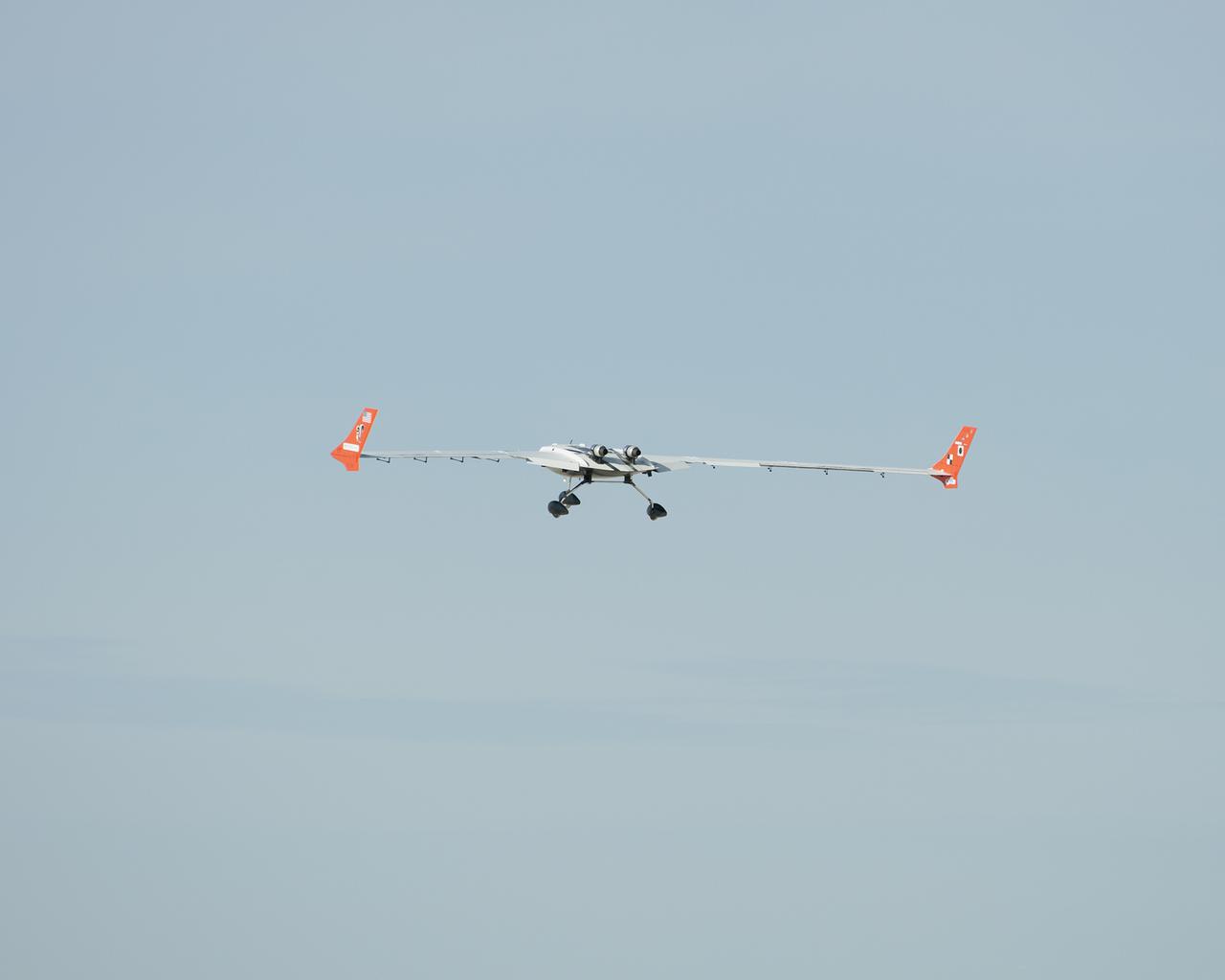
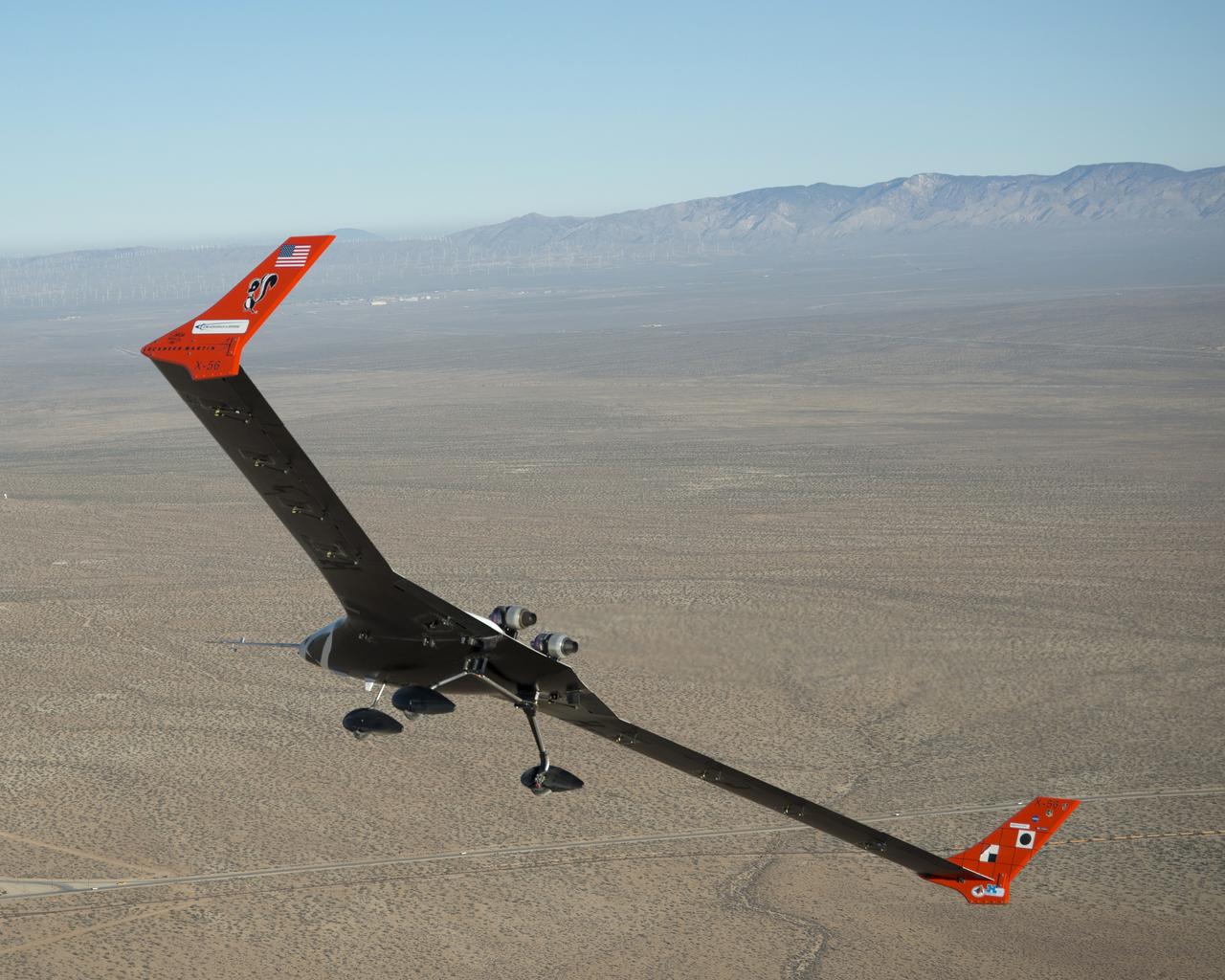
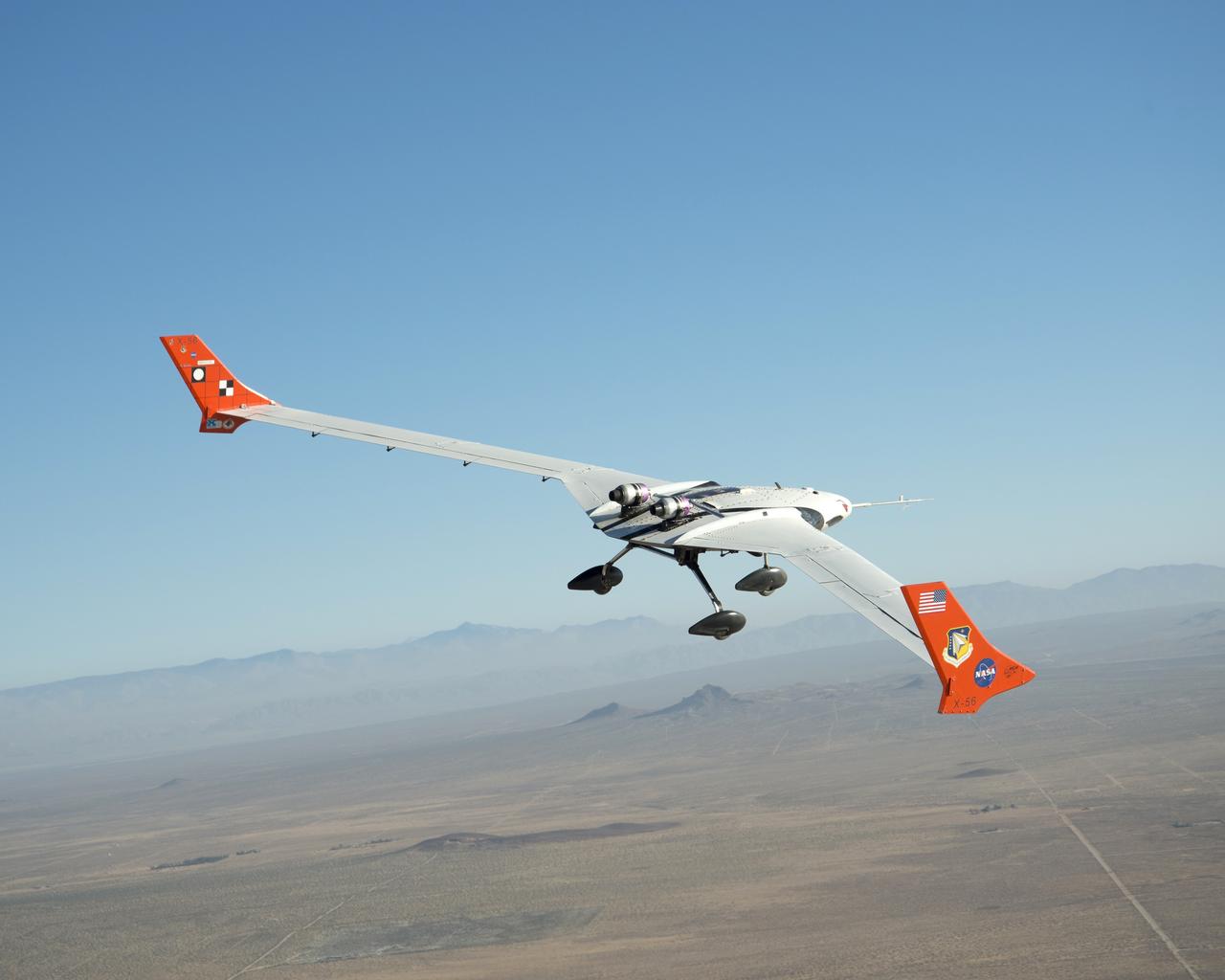
The X-56A takes off on its maiden flight from NASA Armstrong Flight Research Center, Edwards, California.
Second X-56A MUTT Makes First Flight
Claudia Sales, NASA’s acting X-59 deputy chief engineer and airworthiness certification lead for the quiet supersonic research aircraft, supports ground testing for Acoustic Research Measurements (ARM) flights. The test campaign to evaluate technologies that reduce aircraft noise was conducted at NASA’s Armstrong Flight Research Center in Edwards, California, in 2018.
NASA Employees’ Careers Started as Interns
NASA’s flight systems engineer, Kassidy Mclaughlin adjusts a visual approach aid for aircraft called Pulse Light Approach Slope Indicator (PLASI). Dry run build-up test flights were conducted in 2021 at NASA’s Armstrong Flight Research Center in Edwards, California.
NASA Employees’ Careers Started as Interns
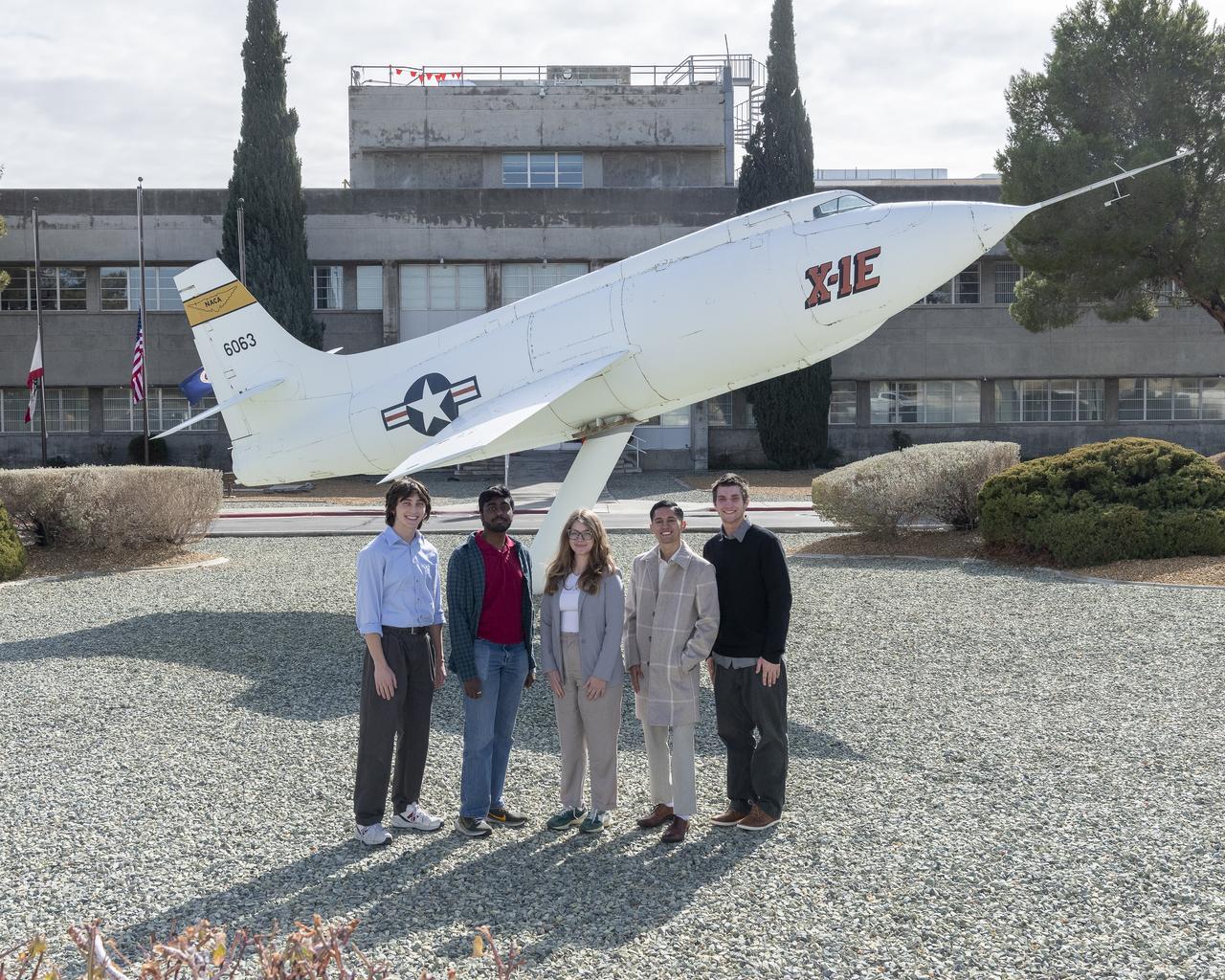
The 2025 internship class at NASA’s Armstrong Flight Research Center in Edwards, California, stand in front of the historic X-1E aircraft on display at the center. From left, are interns: Tyler Requa, Gokul Nookula, Madeleine Phillips, Oscar Keiloht Chavez Ramirez, and Nicolas Marzocchetti.
NASA Employees’ Careers Started as Interns
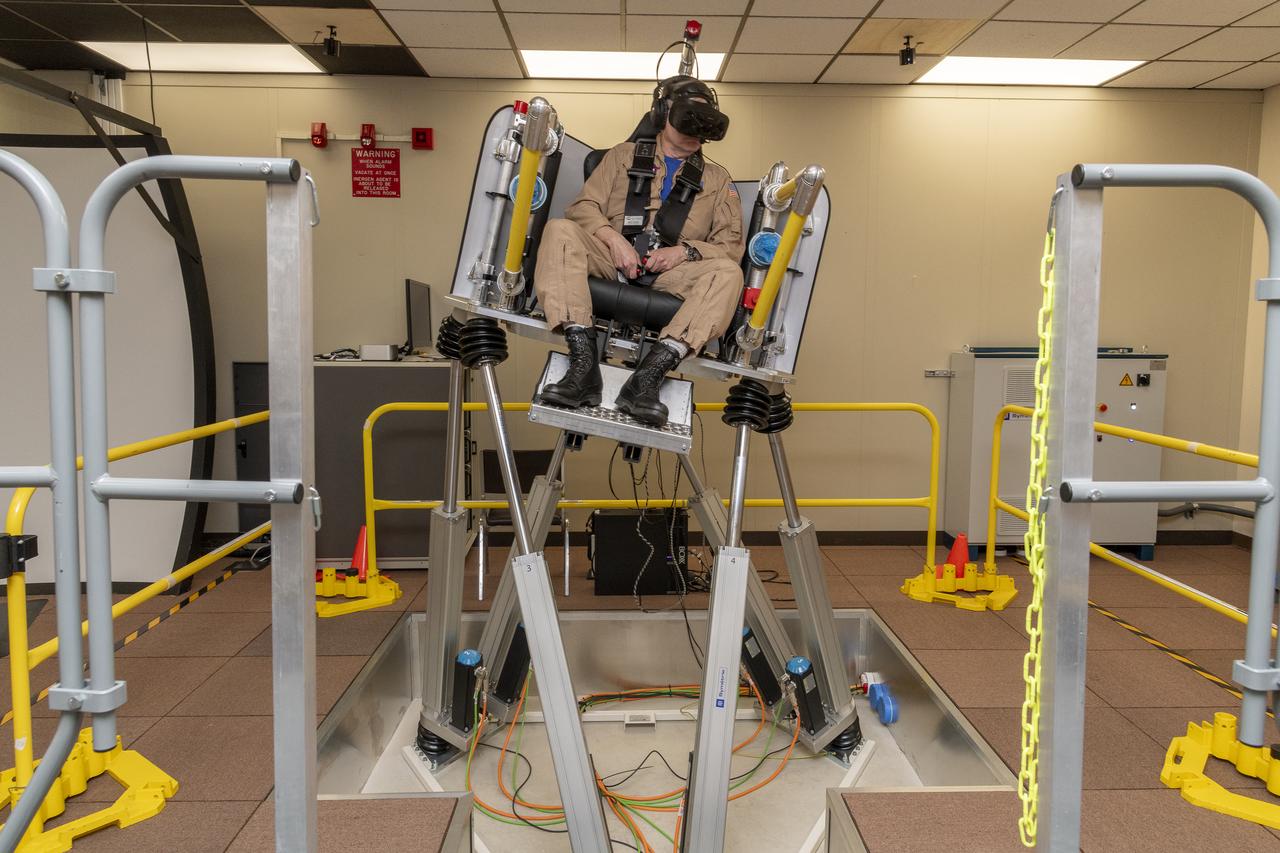
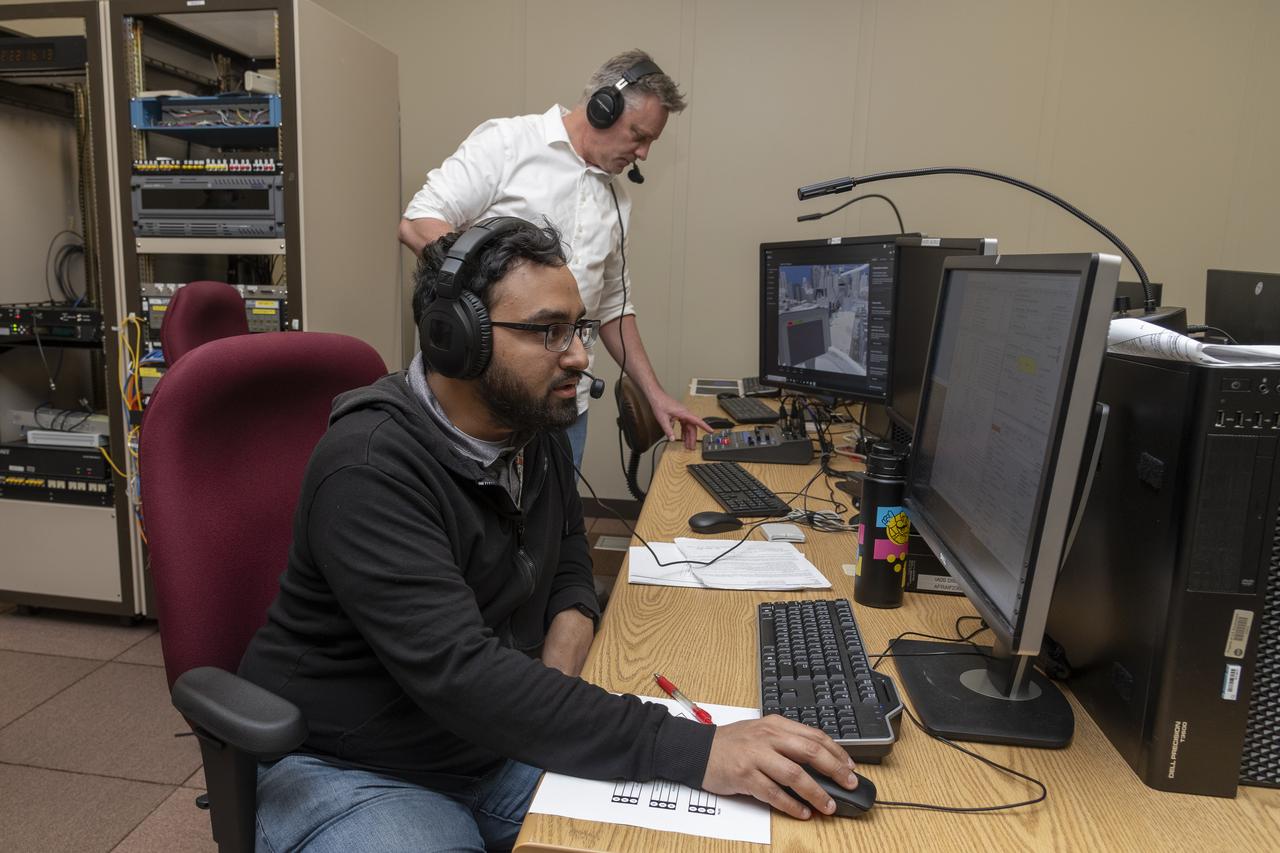
NASA researchers Curt Hanson (background) and Saravanakumaar Ramia (foreground) control the air taxi virtual reality flight simulator from computers during a test at NASA’s Armstrong Flight Research Center in Edwards, California in March 2024.
Air Taxi Passenger Comfort Simulator at NASA’s Armstrong Flight Research Center with Pilot
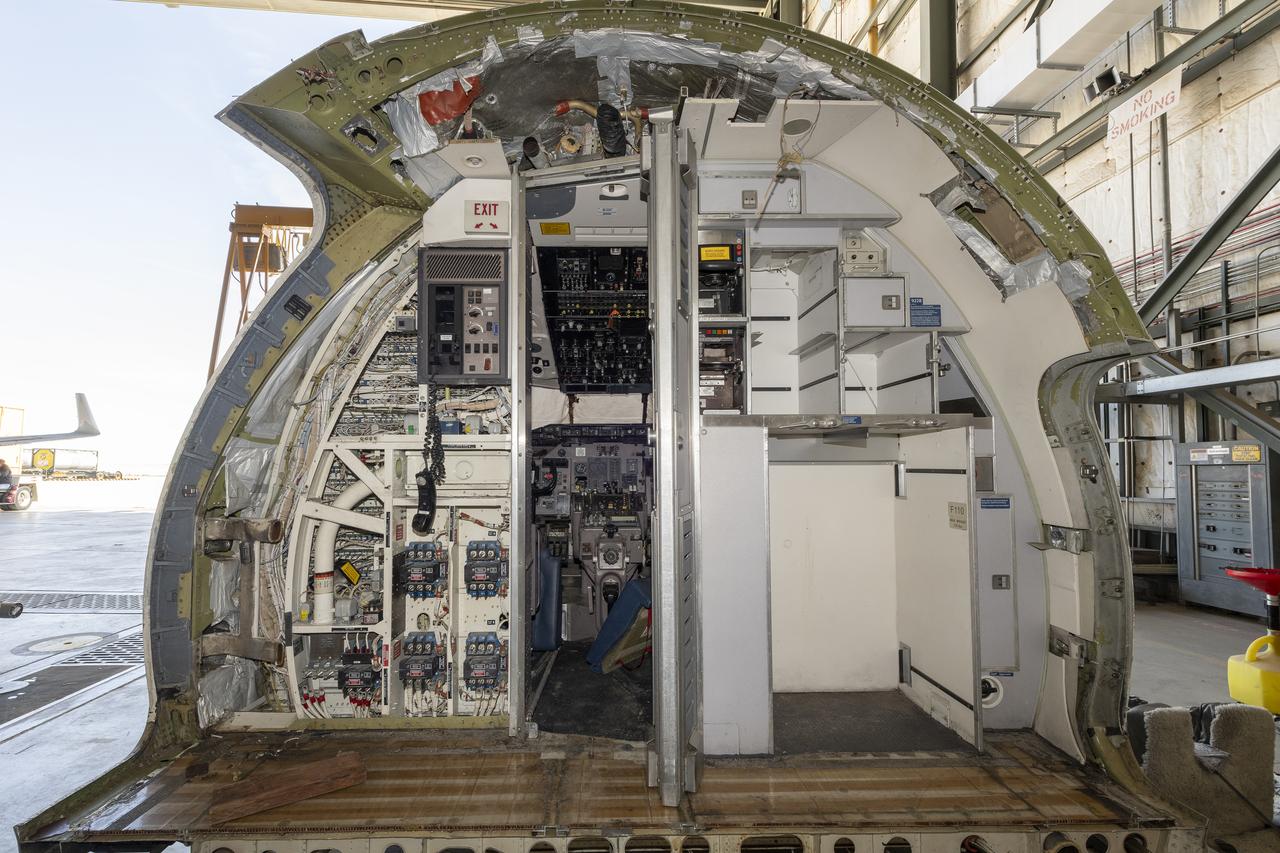
The cockpit of an old MD-90 aircraft arrived at NASA’s Armstrong Flight Research Center in Edwards, California, in March 2024. Parts will be used to build a simulator for NASA’s X-66, the demonstration aircraft for the Sustainable Flight Demonstrator project.
Boneyard Airplane Sees New Life as a NASA X-66 Simulator
The cockpit of an old MD-90 aircraft arrived at NASA’s Armstrong Flight Research Center in Edwards, California, in March 2024. Parts will be used to build a simulator for NASA’s X-66, the demonstration aircraft for the Sustainable Flight Demonstrator project.
Boneyard Airplane Sees New Life as a NASA X-66 Simulator
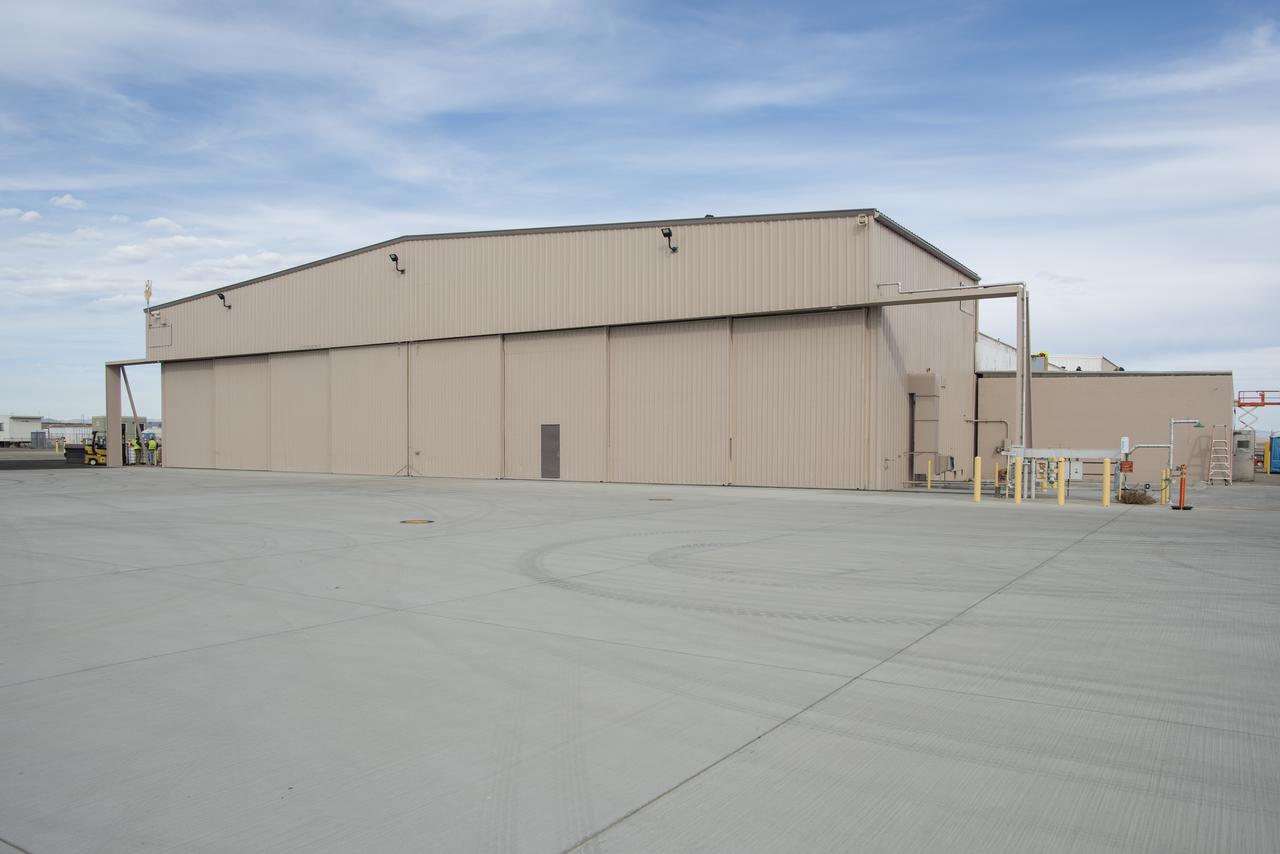
This is how Building 4826, the future home of the X-59 Quiet SuperSonic Technology aircraft, at NASA's Armstrong Flight Research Center in Edwards, California, looked prior to the building's renovations.
Work Continues on Future X-59 Home
On the east side of Building 4826, the future home of the X-59 Quiet SuperSonic Technology aircraft, a conference room, offices, restrooms and a communications room are under construction at NASA's Armstrong Flight Research Center in Edwards, California.
Work Continues on Future X-59 Home
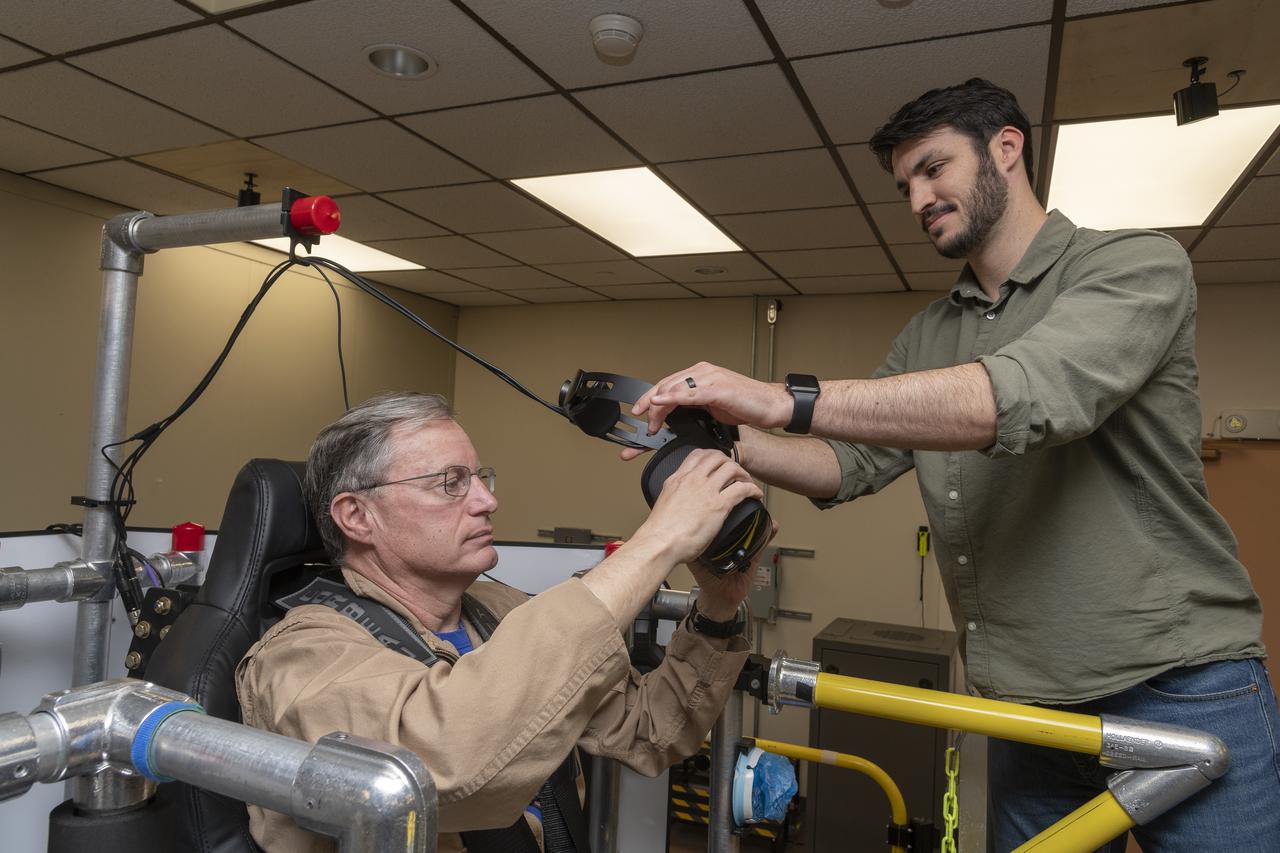
NASA test pilot Wayne Ringelberg sits in the air taxi virtual reality flight simulator during a test at NASA’s Armstrong Flight Research Center in Edwards, California in March 2024.
Air Taxi Passenger Comfort Simulator at NASA’s Armstrong Flight Research Center with Pilot
This is how Building 4826, the future home of the X-59 Quiet SuperSonic Technology aircraft, at NASA's Armstrong Flight Research Center in Edwards, California, looks as the building's renovations continue.
Work Continues on Future X-59 Home
This 8,800-square-foot canopy area was demolished during the refurbishment of the east side of Building 4826, the future home of the X-59 Quiet SuperSonic Technology aircraft, at NASA's Armstrong Flight Research Center in Edwards, California.
Work Continues on Future X-59 Home
Two men from NASA’s Armstrong Flight Research Center in Edwards, California, ask Jared Carrillo, a student from the California State University, Northridge, Autonomy Research Center for science, technology, engineering, entrepreneurship, arts, humanities, and mathematics, about his work on the Mars Science Helicopter. Students displayed posters and answered questions about their technologies May 23 at the Air Force Test Pilot School auditorium on Edwards Air Force Base, California.
California Students Aim for NASA Support to Develop Technology
Nhut Ho, director of the NASA-sponsored Autonomy Research Center for science, technology, engineering, entrepreneurship, arts, humanities, and mathematics at California State University, Northridge, left, spoke to Brad Flick, center director at NASA’s Armstrong Flight Research Center in Edwards, California. The men were attending a student poster event, where students showcased their technologies and answered questions May 23 at the Air Force Test Pilot School auditorium on Edwards Air Force Base, California.
California Students Aim for NASA Support to Develop Technology
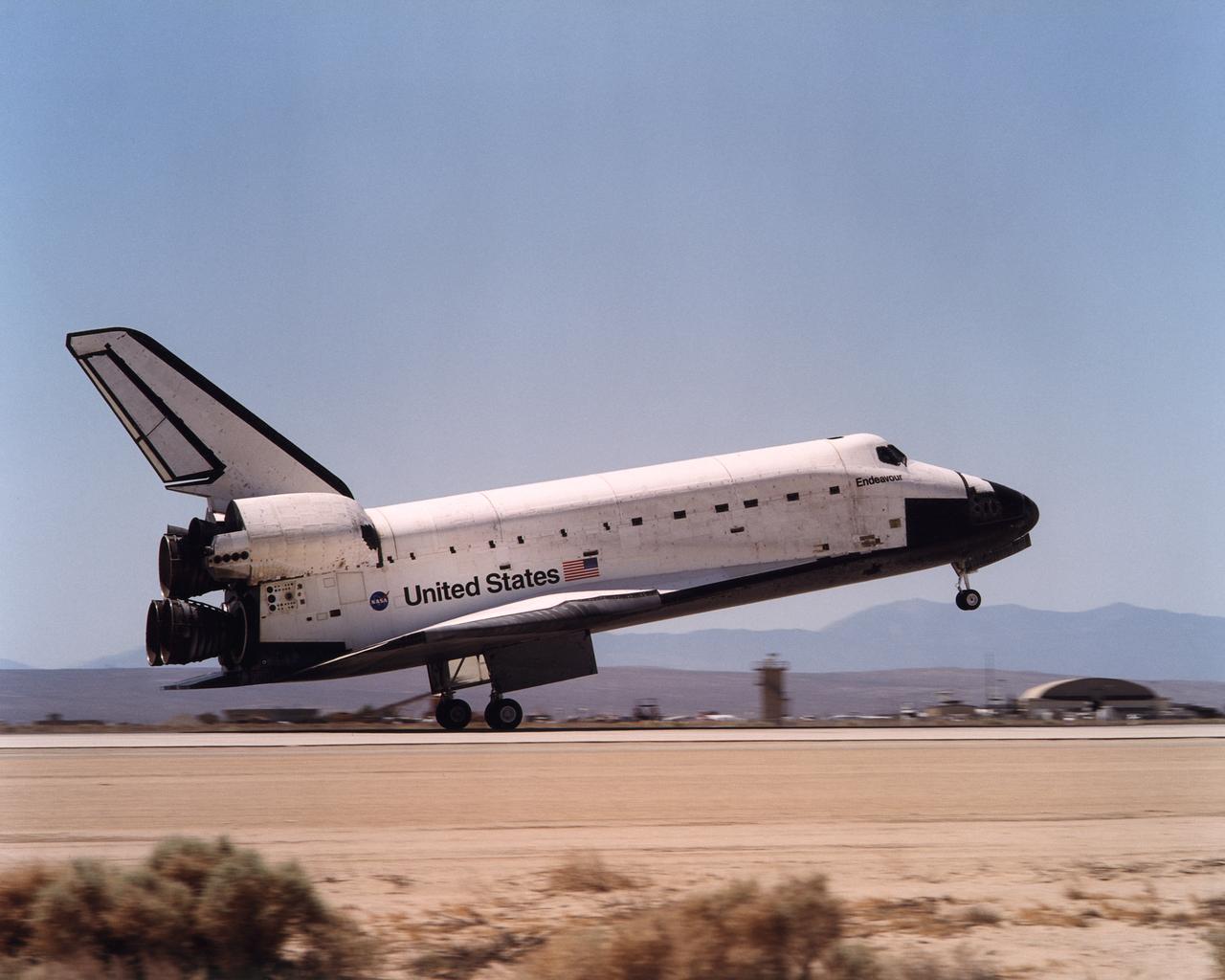
At the conclusion of Space Shuttle Mission STS-100, Endeavour landed at Edwards Air Force Base, California, May 1, 2001. There the Orbiter would be readied by technicians at NASA's Dryden Flight Research Center for return to Kennedy Space Center, Florida, atop a 747 carrier aircraft.
Space Shuttle Endeavour flares for landing at Edwards Air Force Base, California to conclude STS-100
The X-56A flies over the desert near NASA Armstrong Flight Research Center, Edwards, California.  NASA researchers are using the remotely piloted X-56A to explore the behavior of lightweight, flexible aircraft structures.
ED15-0241-21
The X-56A flies over the desert near NASA Armstrong Flight Research Center, Edwards, California.  NASA researchers are using the remotely piloted X-56A to explore the behavior of lightweight, flexible aircraft structures.
ED15-0241-05
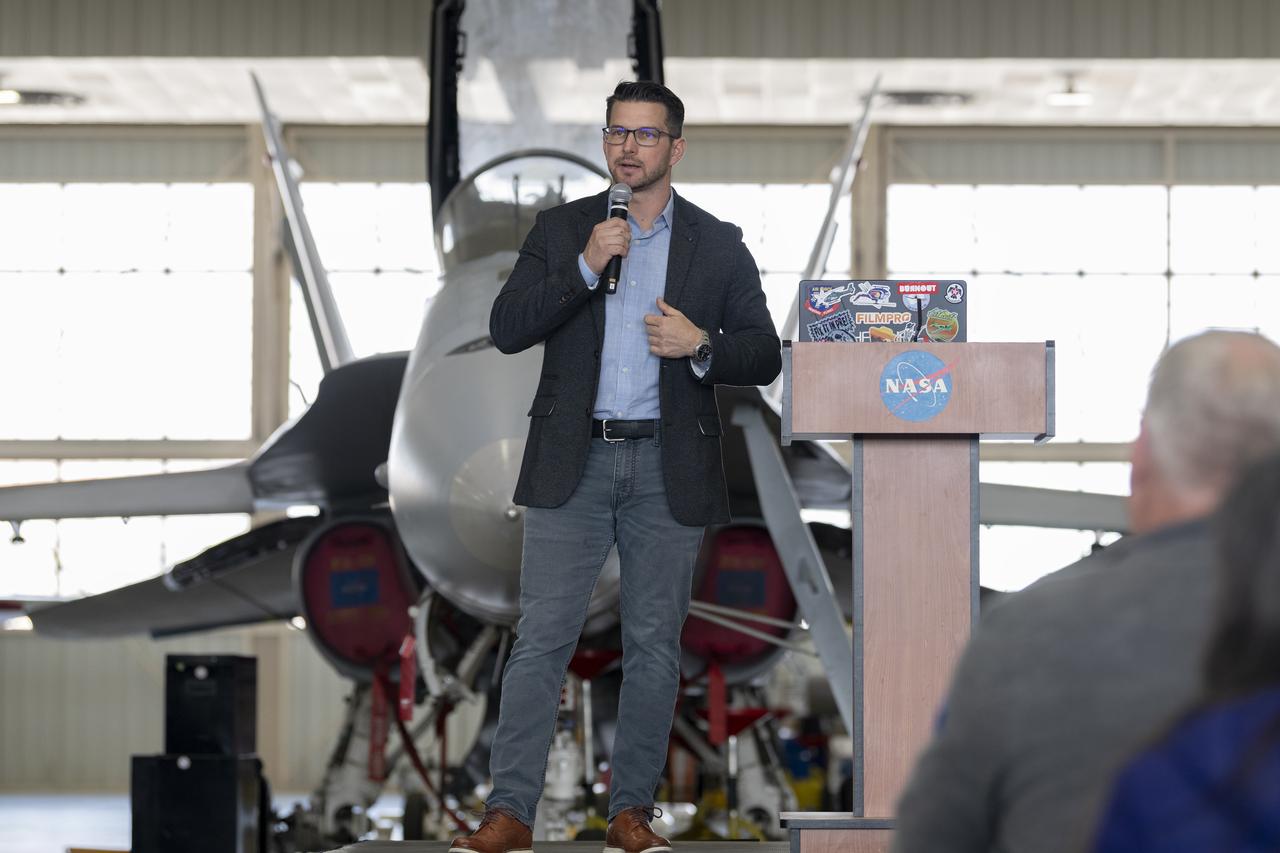
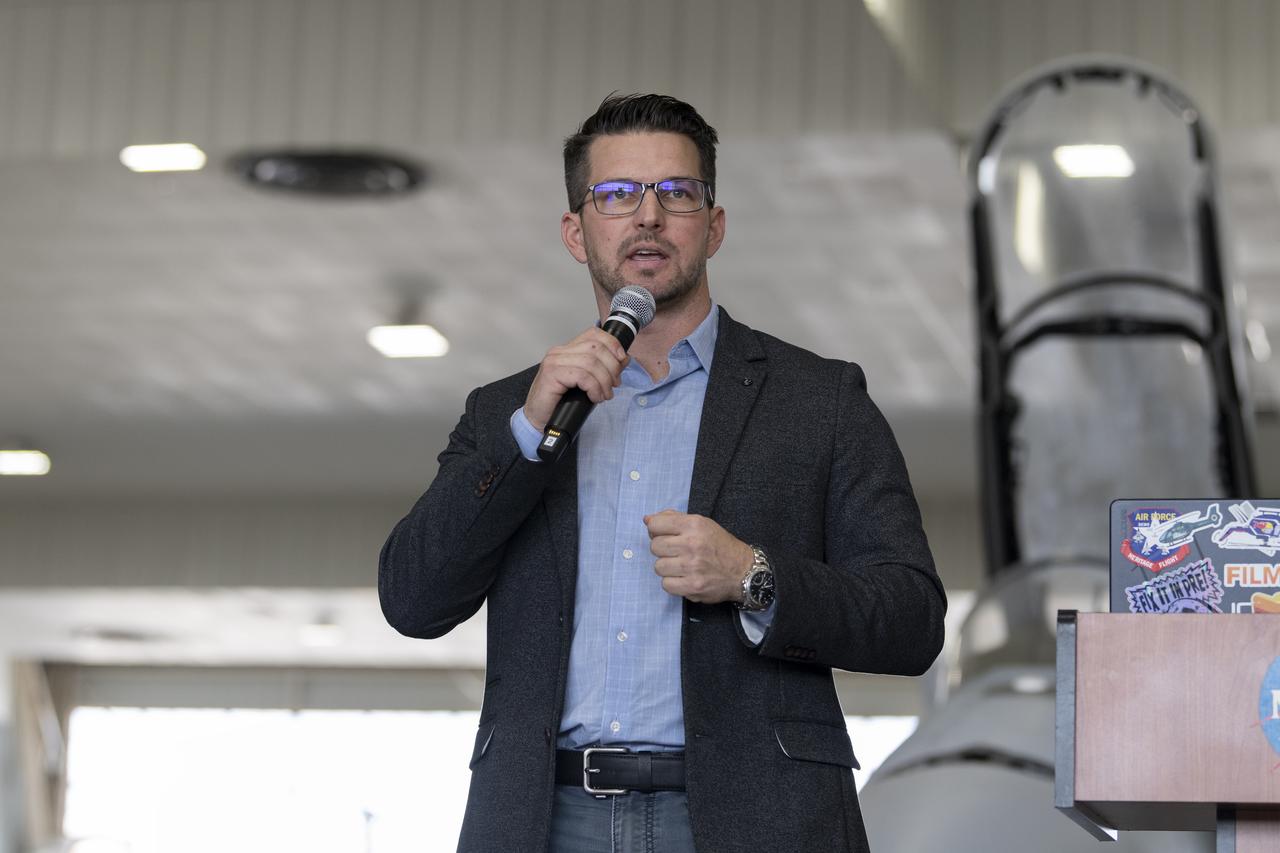
Aerial coordinator and test pilot Kevin LaRosa II describes what it takes to safely plan and document breathtaking footage of aircraft at a presentation at NASA’s Armstrong Flight Research Center in Edwards, California. He has a long list of film credits, including “Ironman”; “Avengers”; “Transformer 5”; “Top Gun: Maverick”; and “Devotion”.
LaRosa II Focuses on Flight Safety
NASA test pilot Wayne Ringelberg and NASA researcher Kyle Barnes prepare for Ringelberg’s ride in the air taxi virtual reality flight simulator during a test at NASA’s Armstrong Flight Research Center in Edwards, California in March 2024.
Air Taxi Passenger Comfort Simulator at NASA’s Armstrong Flight Research Center with Pilot
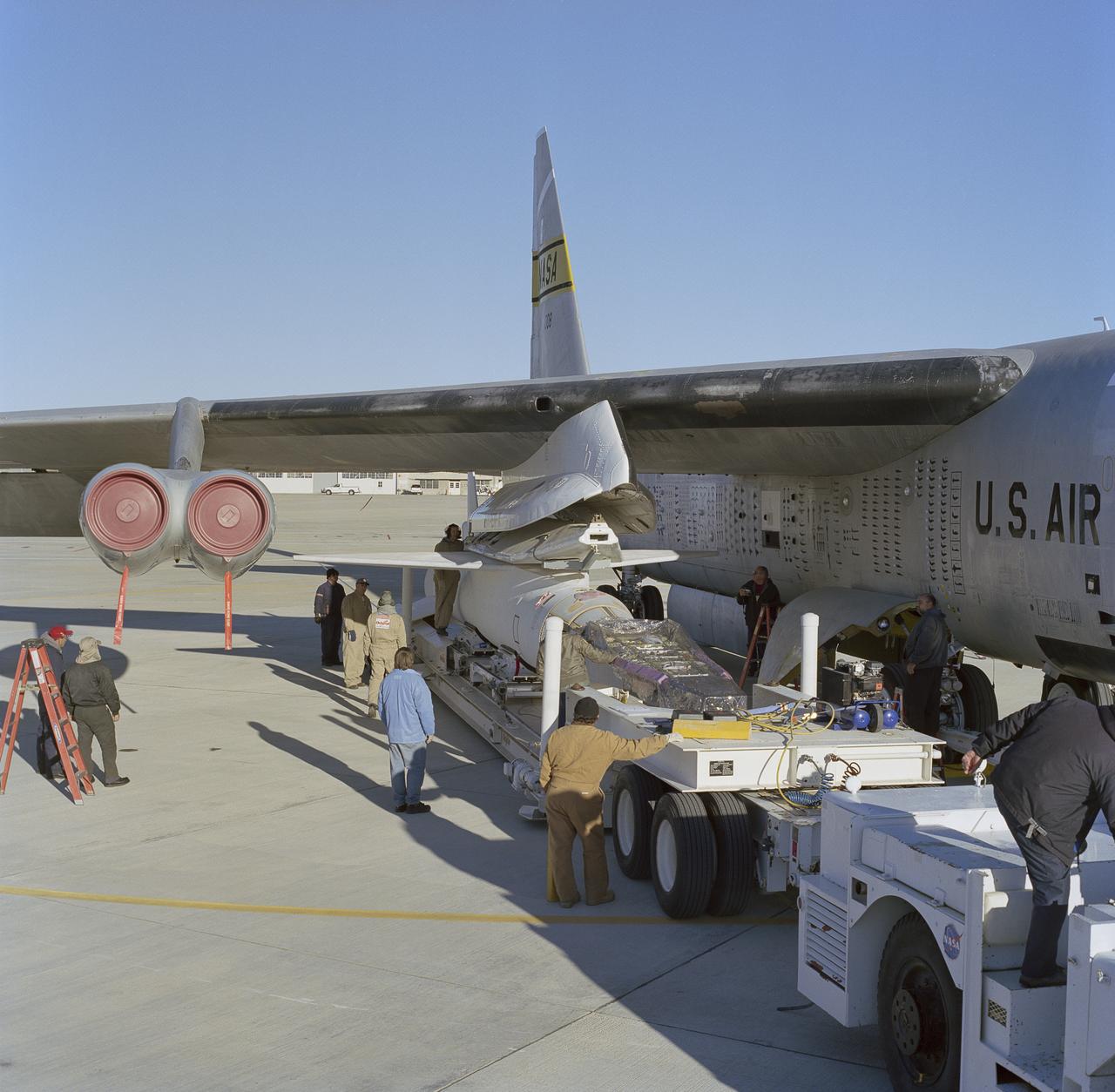
The Pegasus booster rocket, carrying the X-43A hypersonic aircraft, is mounted beneath NASA’s B-52B wing. A dry run, known as a captive carry mission, was conducted to monitor the research hardware in flight for any challenges. The January 2004 X-43A flight was based at NASA’s Armstrong Flight Research Center in Edwards, California.
NASA B-52B Carries Pegasus Booster, X-43A Aircraft
Aerial coordinator and test pilot Kevin LaRosa II describes what it takes to safely plan and document breathtaking footage of aircraft at a presentation at NASA’s Armstrong Flight Research Center in Edwards, California. He has a long list of film credits, including “Ironman”; “Avengers”; “Transformer 5”; “Top Gun: Maverick”; and “Devotion”.
LaRosa II Focuses on Flight Safety
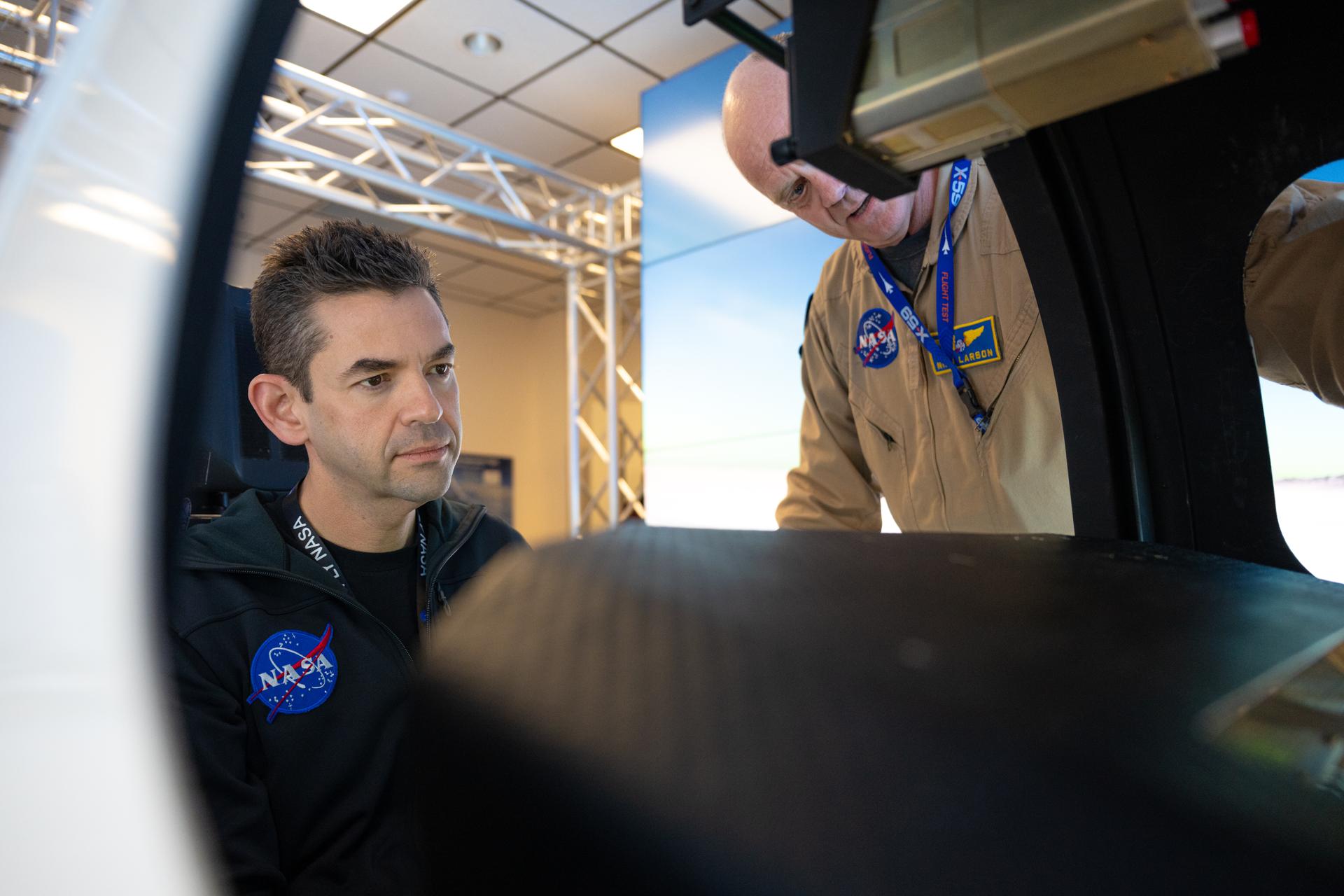
The X-59 simulator at NASA's Armstrong Flight Research Center in Edwards, California, will help pilots prepare for Quesst missions. Quesst is NASA's mission to demonstrate how the X-59 can fly supersonic without generating loud sonic booms and then survey what people hear when it flies overhead.
NASA Armstrong Facilities Include X-59 Simulator
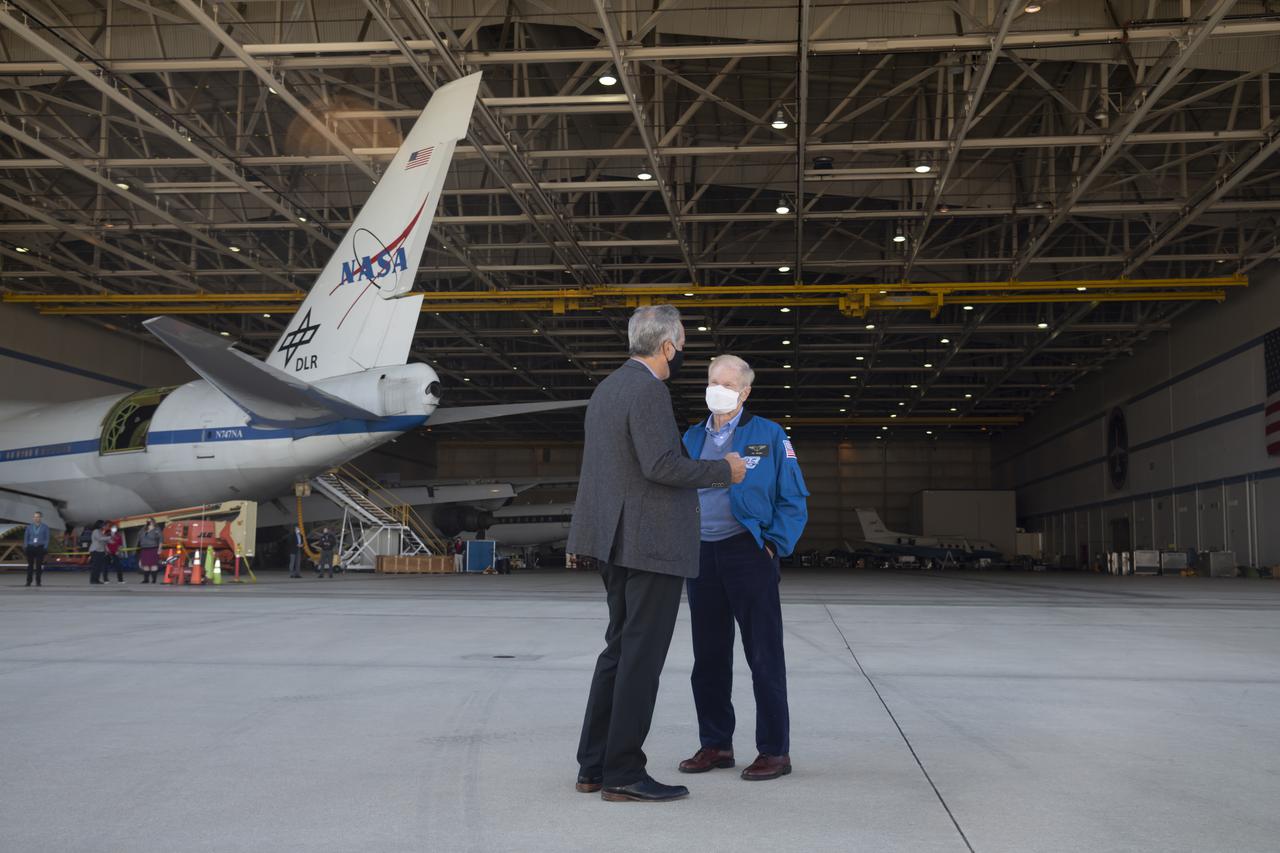
NASA Administrator Bill Nelson, right, and David McBride, center director at NASA’s Armstrong Flight Research Center in Edwards, California, talk by the Stratospheric Observatory for Infrared Science during the administrator’s visit to NASA Armstrong’s Building 703 in Palmdale, California, on Oct. 12.
NASA Administrator Visits NASA Armstrong
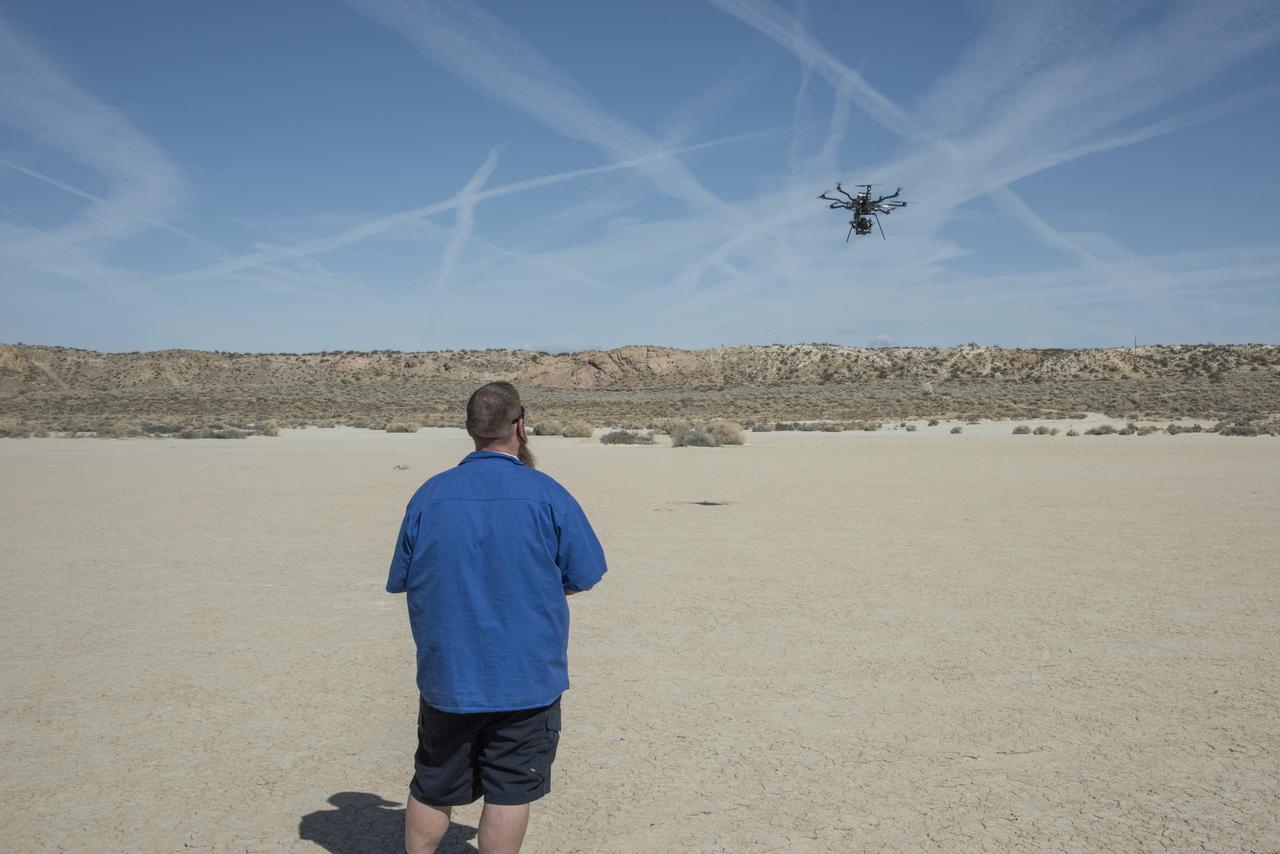
Justin Hall flies the Alta 8 remotely piloted aircraft in March 2021 at Rosamond North Lakebed at NASA’s Armstrong Flight Research Center in Edwards, California. The Resilient Autonomy project used these flights to collect data with the Nav Module hardware and software developed by NASA’s Jet Propulsion Laboratory in Pasadena, California.
The Resilient Autonomy Project Flies the Alta 8
NASA Administrator Bill Nelson and NASA Deputy Administrator Pam Melroy listen to NASA Armstrong Flight Research Center Director David McBride, at left, tell them about Building 703 in Palmdale, California. The building houses many of NASA's science aircraft. NASA Armstrong's main campus is in nearby Edwards, California.
NASA Administrator Visits NASA Armstrong
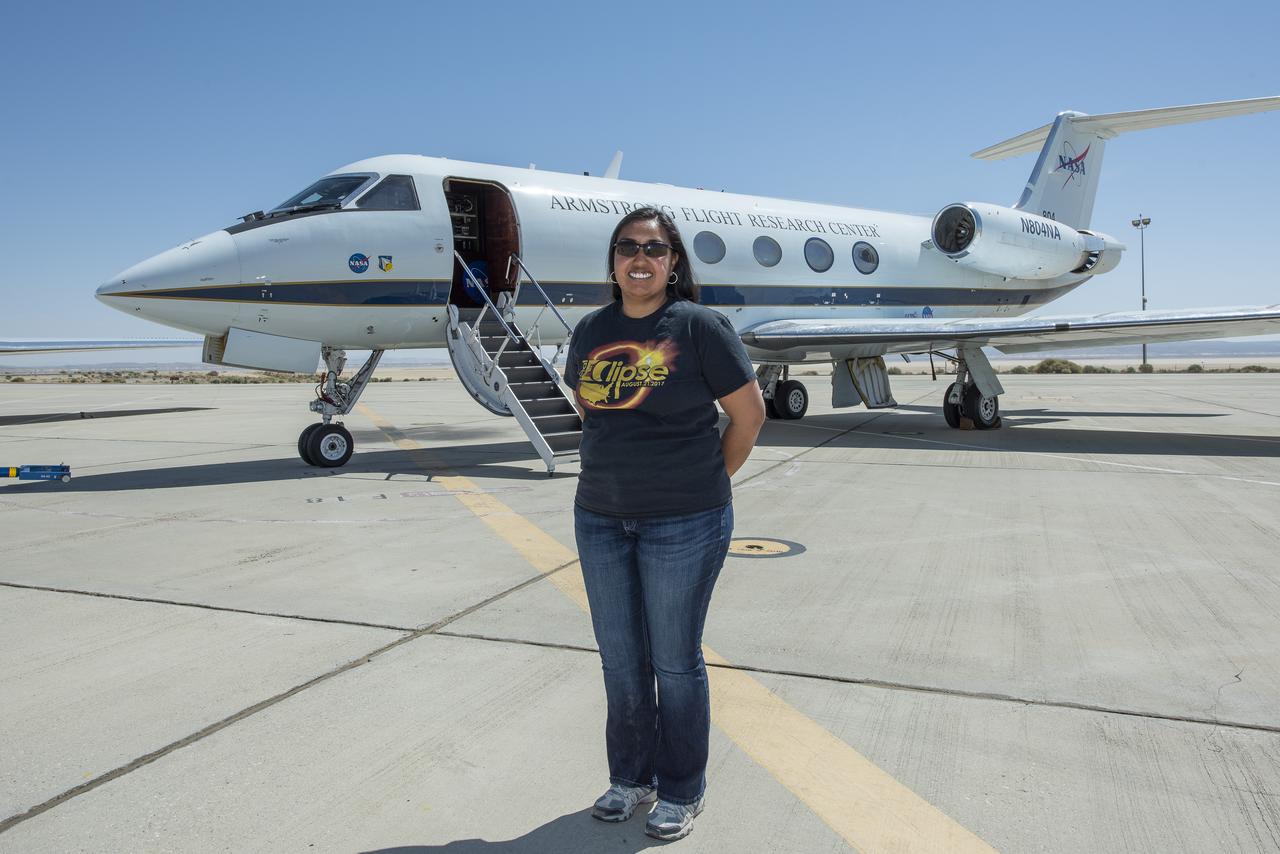
Claudia Sales, NASA’s acting X-59 deputy chief engineer and airworthiness certification lead for the quiet supersonic research aircraft, stands in front of a Gulfstream G-III, also known as Subsonic Research Aircraft Testbed (SCRAT). Sales supported ground testing as test conductor for Acoustics Research Measurements (ARM) flights at NASA’s Armstrong Research Flight Center in Edwards, California, in 2018.
NASA Employees’ Careers Started as Interns
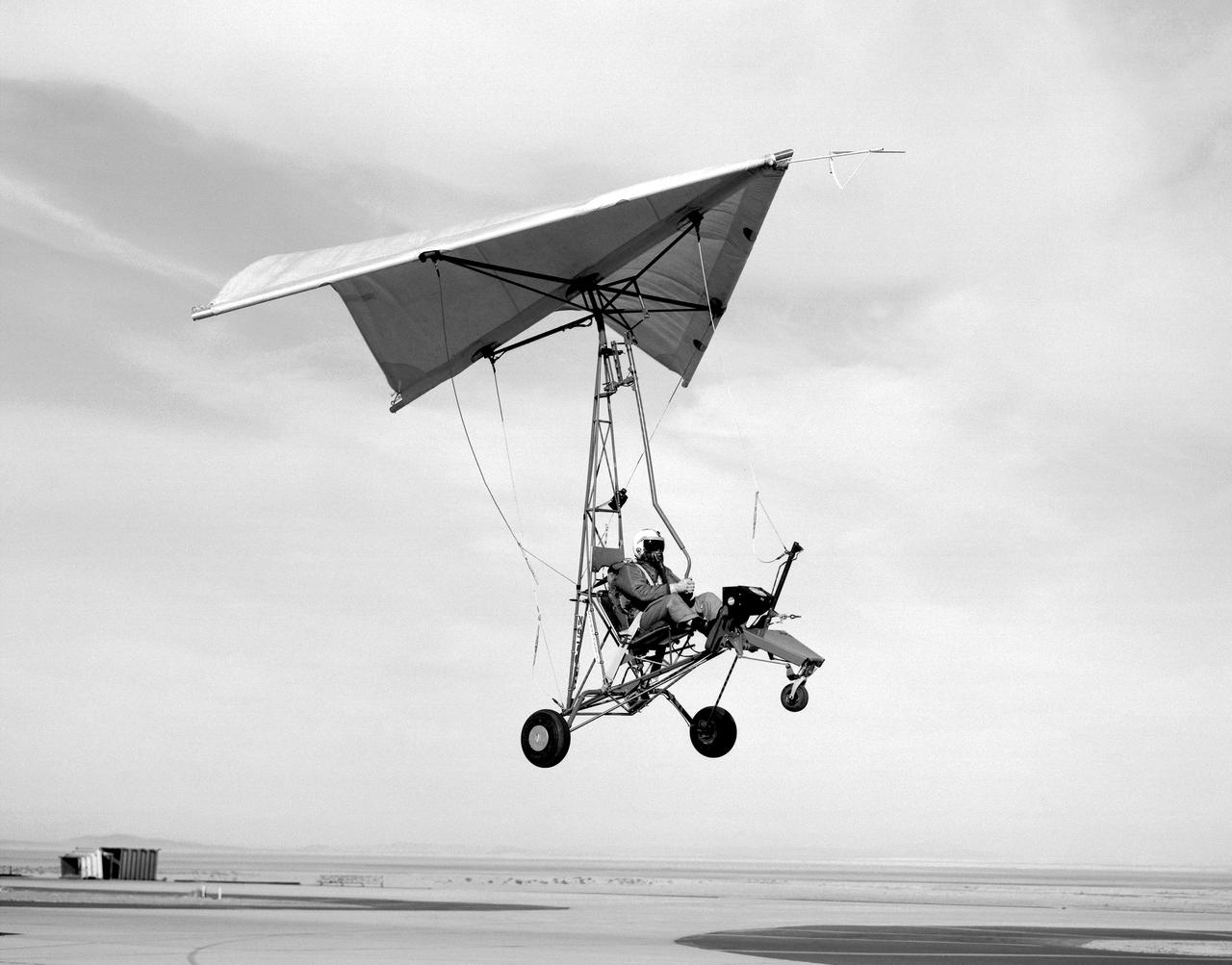
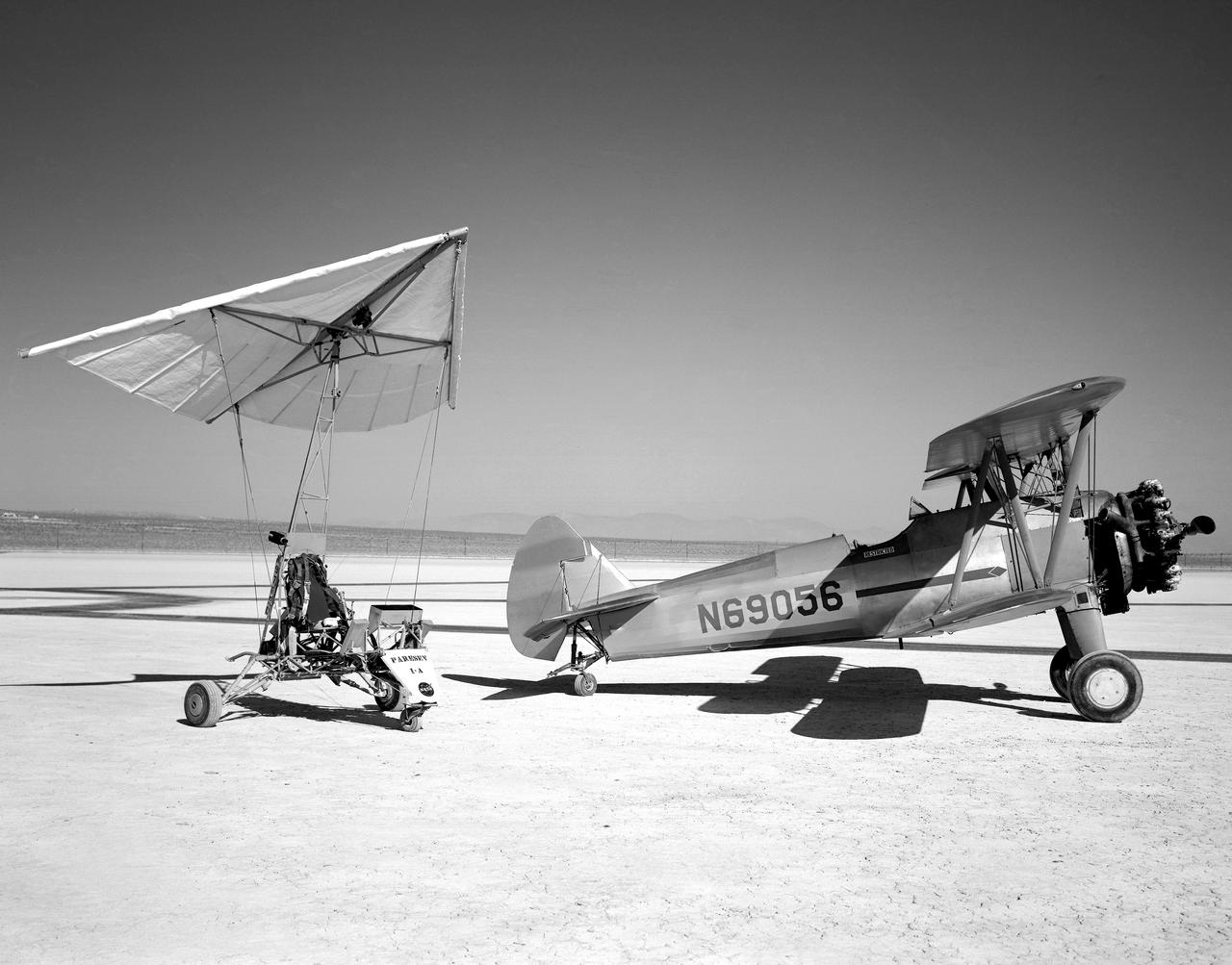
Pilot and Paresev 1 preparing for a landing on the Rogers dry lakebed in 1962 at Edwards Air Force Base, California. The flight program began with ground tow tests. Several tows were made before liftoff was attempted to check the control rigging and to familiarize the pilot with the vehicle’s ground stability. As the pilot’s confidence and experience increased, tow speeds were also increased until liftoff was attained. Liftoff was at about 40 knots indicated airspeed (kias).
Paresev 1 in Landing
NASA’s X-59 quiet supersonic research aircraft cruises above Palmdale and Edwards, California, during its first flight, Tuesday, Oct. 28, 2025. The aircraft traveled to NASA’s Armstrong Flight Research Center in Edwards, California.
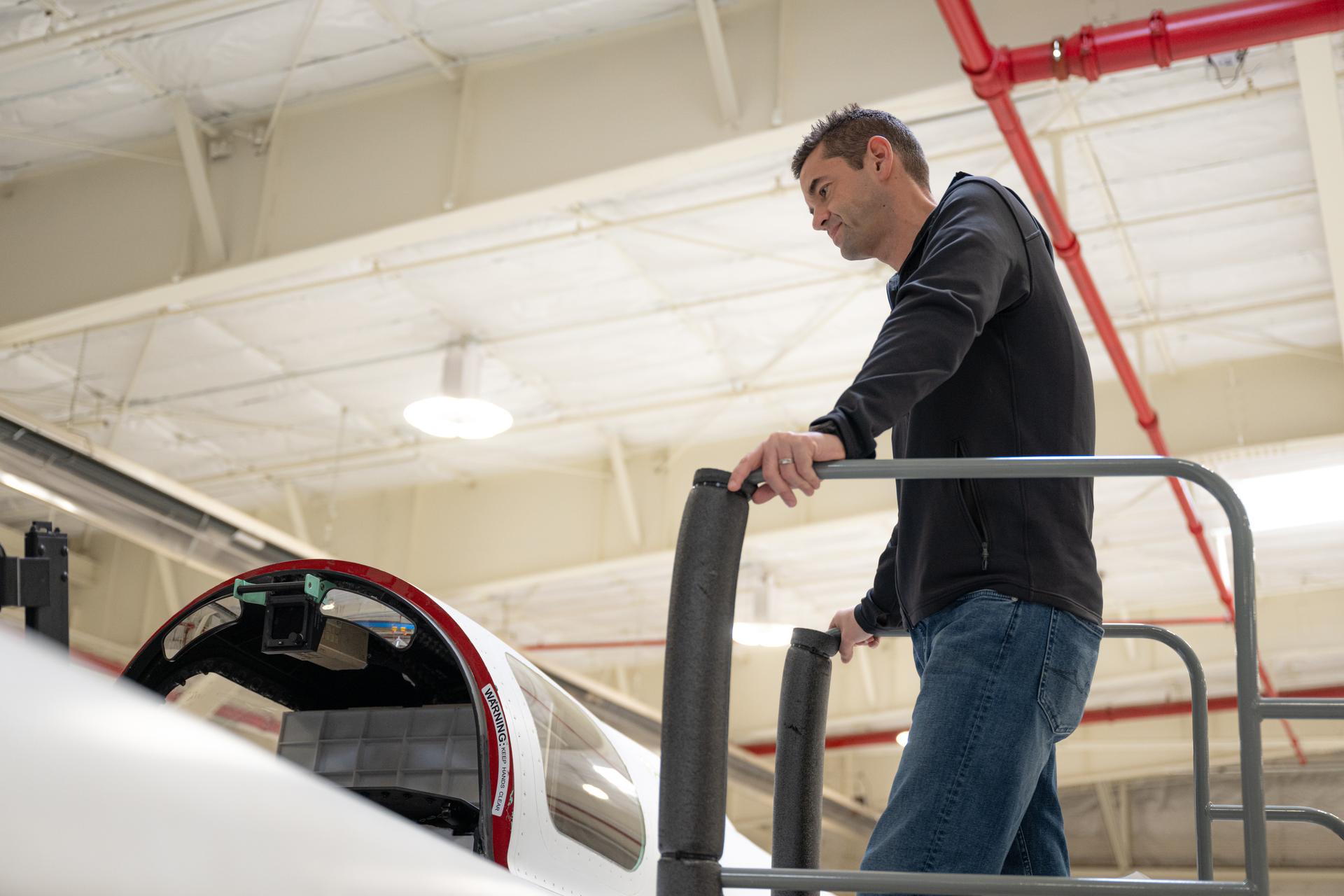
NASA’s X-59 in Flight Above the Mojave Desert
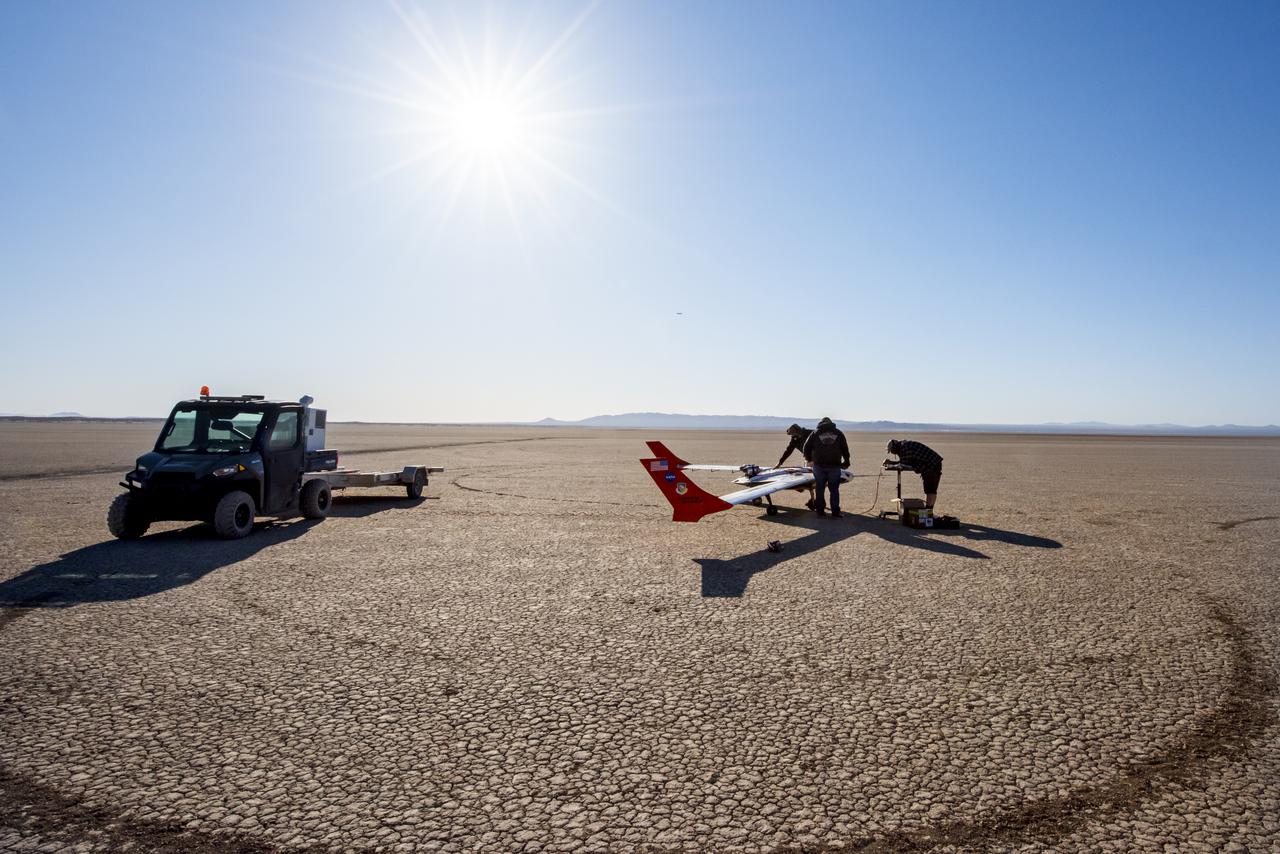
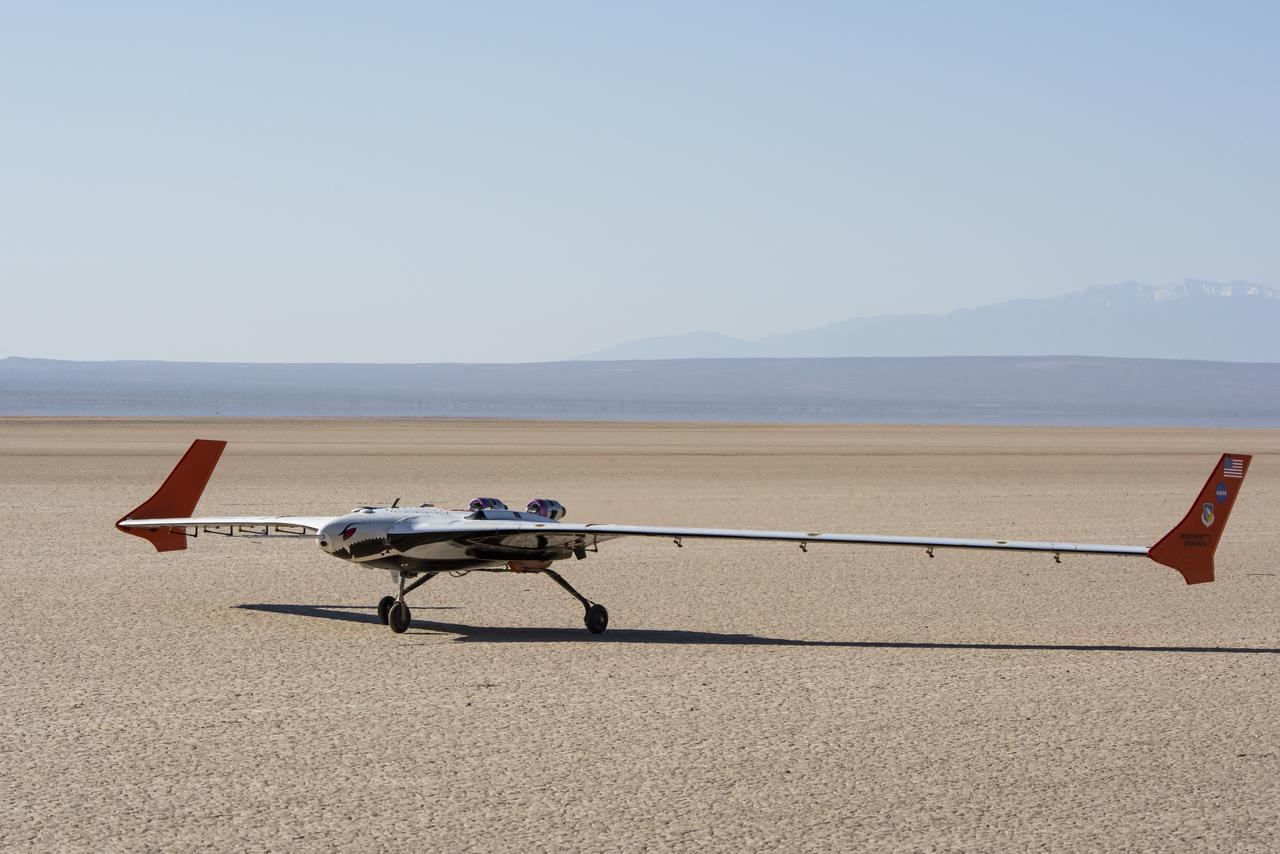
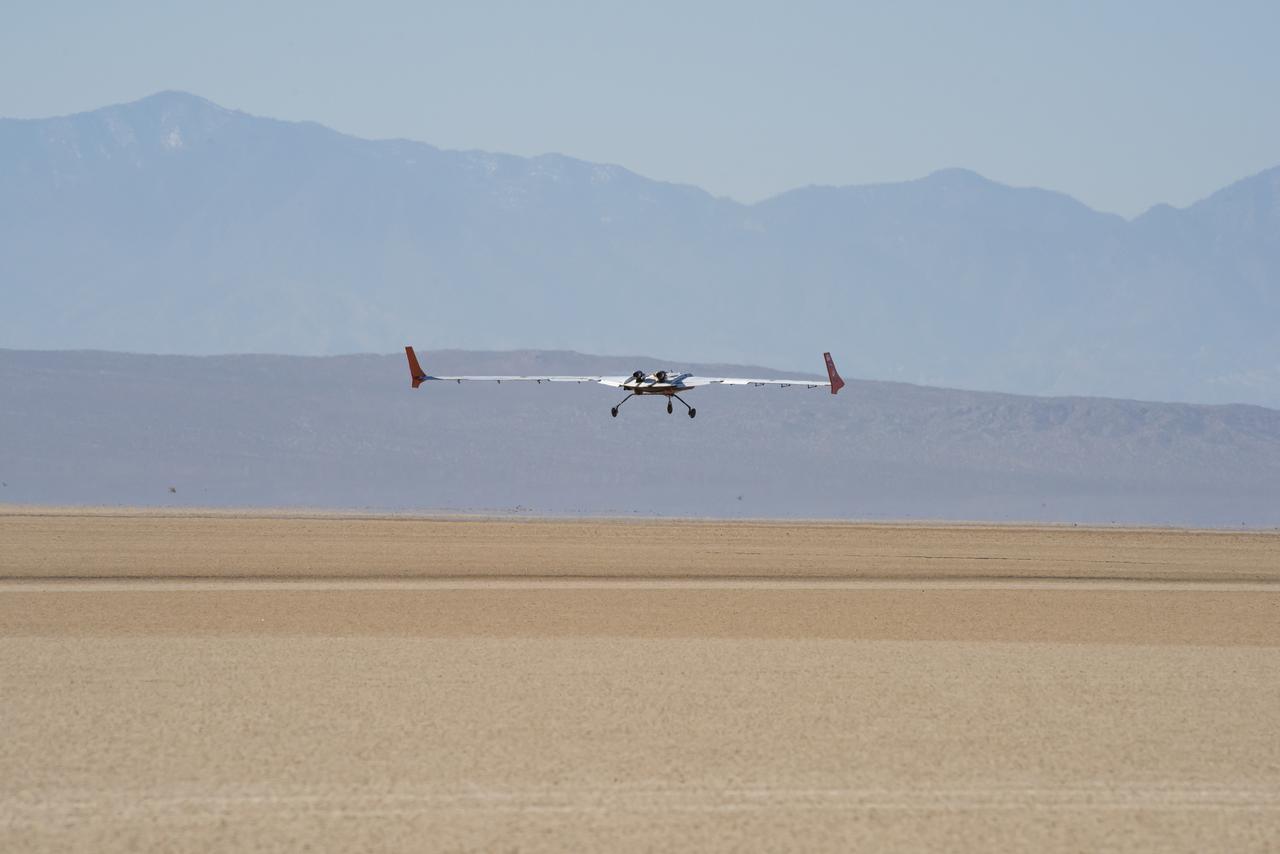
The X-56B remotely piloted aircraft lands following the first of a new flight series. The flight was April 19 at NASA's Armstrong Flight Research Center in Edwards, California, with partner Northrop Grumman.
X-56B Begins New Flight Series
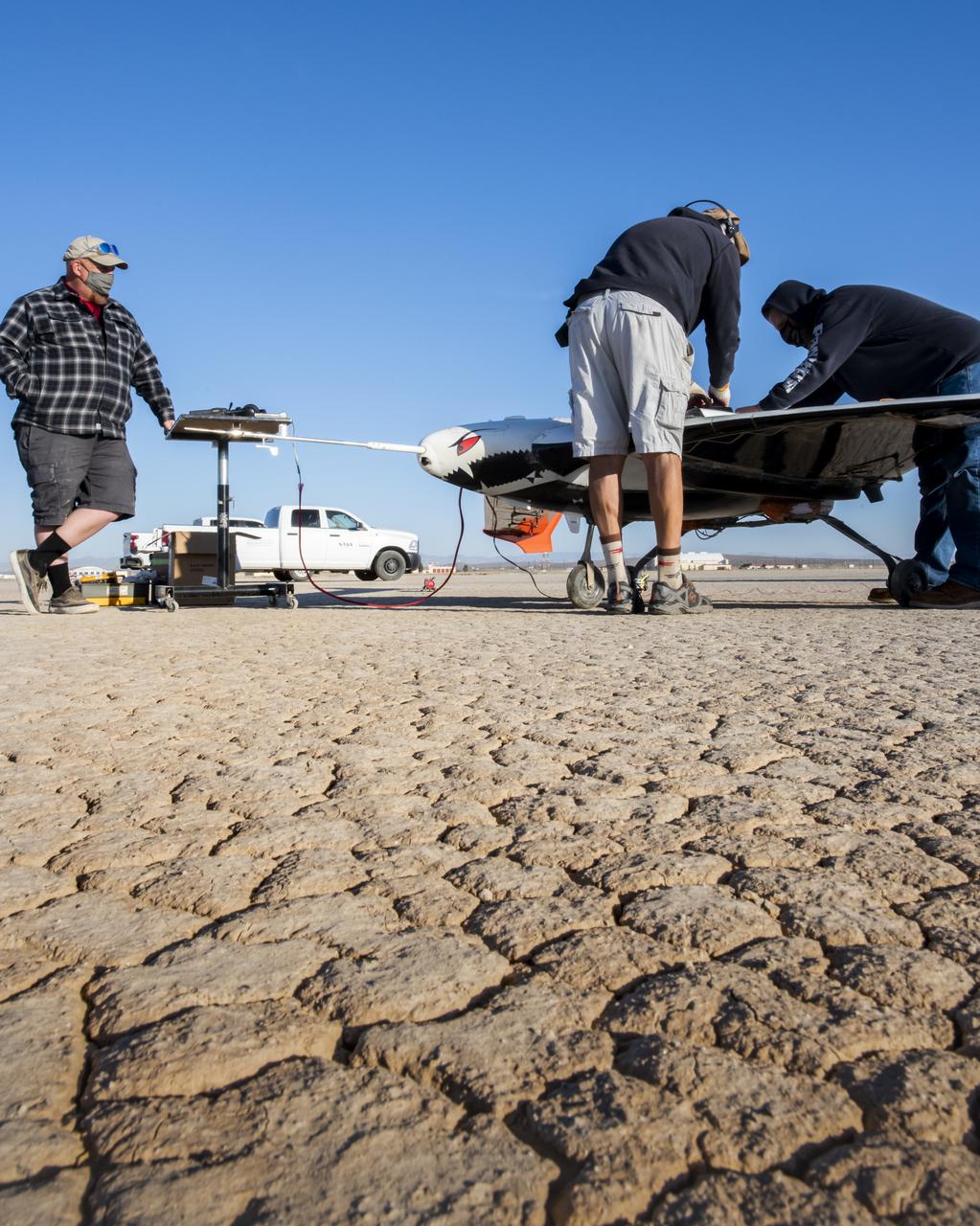
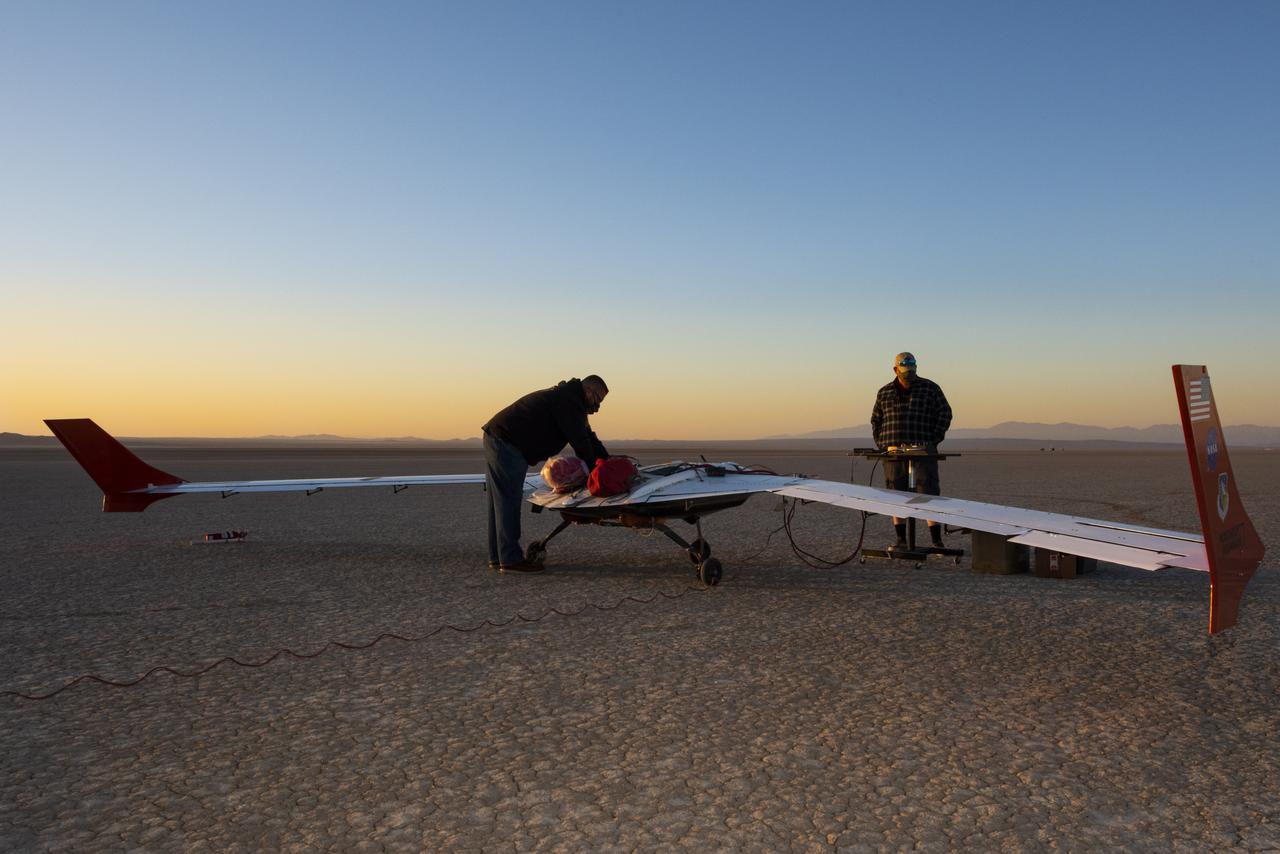
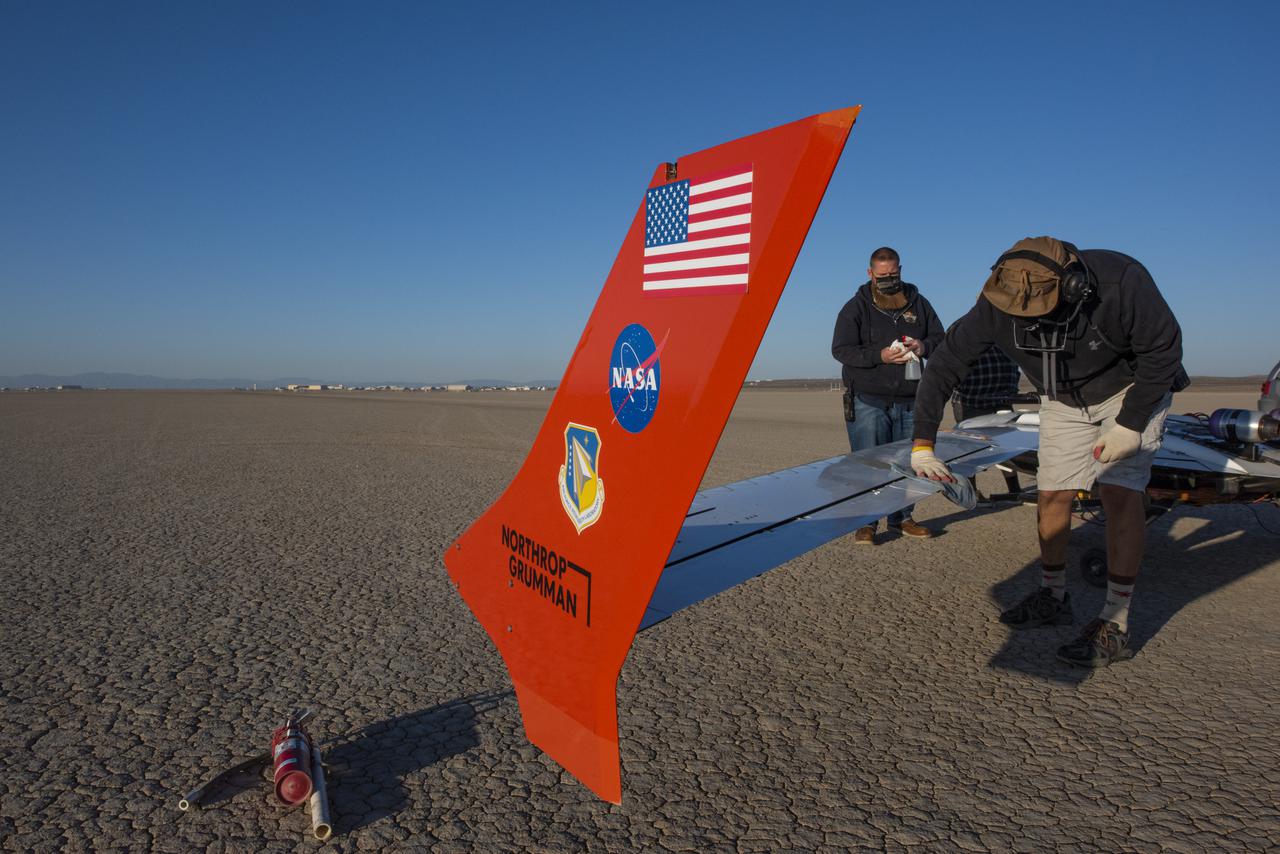
The X-56B remotely piloted aircraft ground crew prepares the aircraft to begin a new flight series. The flight was April 19 at NASA's Armstrong Flight Research Center in Edwards, California, with partner Northrop Grumman.
X-56B Begins New Flight Series
Elissa Dawson, an emergency management specialist at NASA’s Armstrong Flight Research Center in Edwards, California, highlights emergency response at the center.She presented during 4 Safety Day on April 4, 2024, at NASA Armstrong.
NASA Values Safety and Reducing Risk
The X-56B remotely piloted aircraft lands following the first of a new flight series. The flight was April 19 at NASA's Armstrong Flight Research Center in Edwards, California, with partner Northrop Grumman.
X-56B Begins New Flight Series
The X-56B remotely piloted aircraft ground crew prepares the aircraft to begin a new flight series. The flight was April 19 at NASA's Armstrong Flight Research Center in Edwards, California, with partner Northrop Grumman.
X-56B Begins New Flight Series
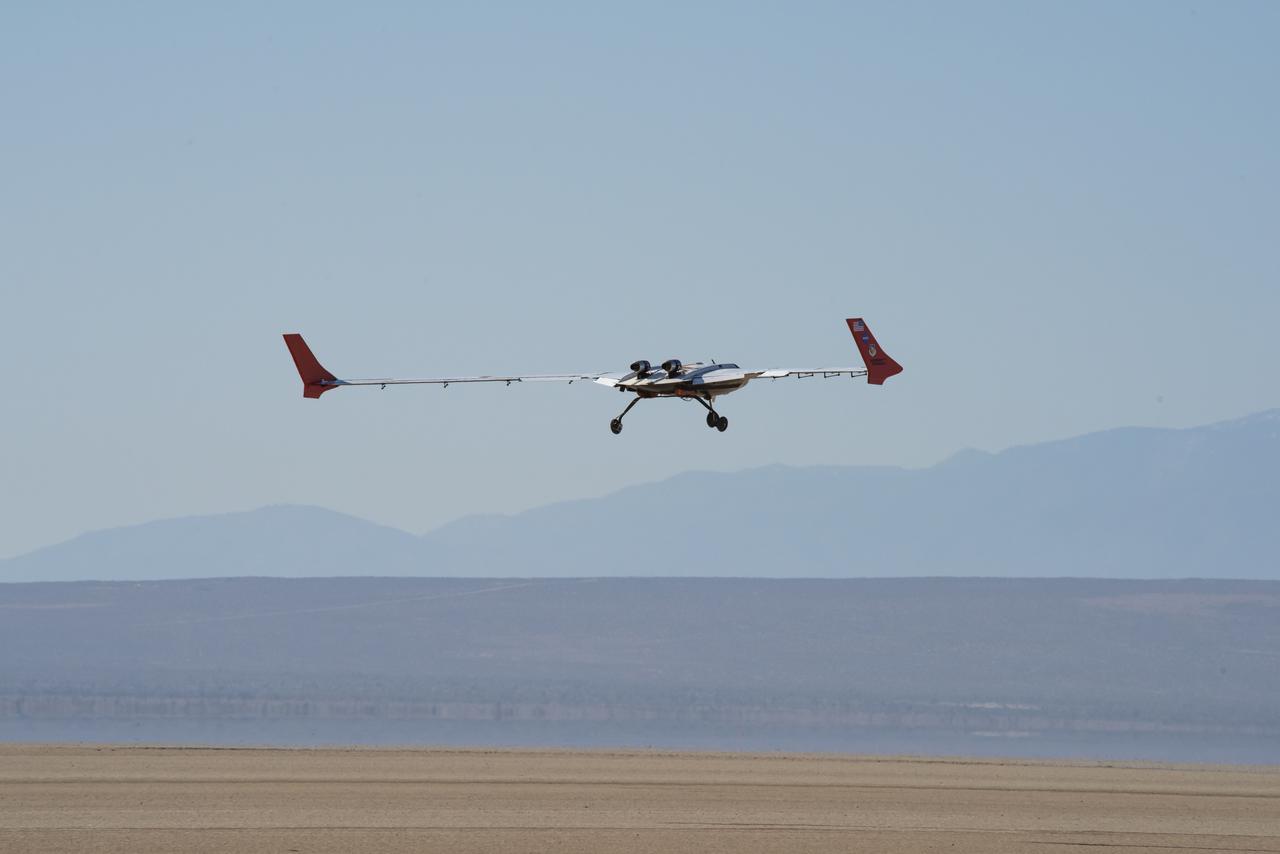
The X-56B remotely piloted aircraft prepares for a landing following the first of a new flight series. The flight was April 19 at NASA's Armstrong Flight Research Center in Edwards, California, with partner Northrop Grumman.
X-56B Begins New Flight Series
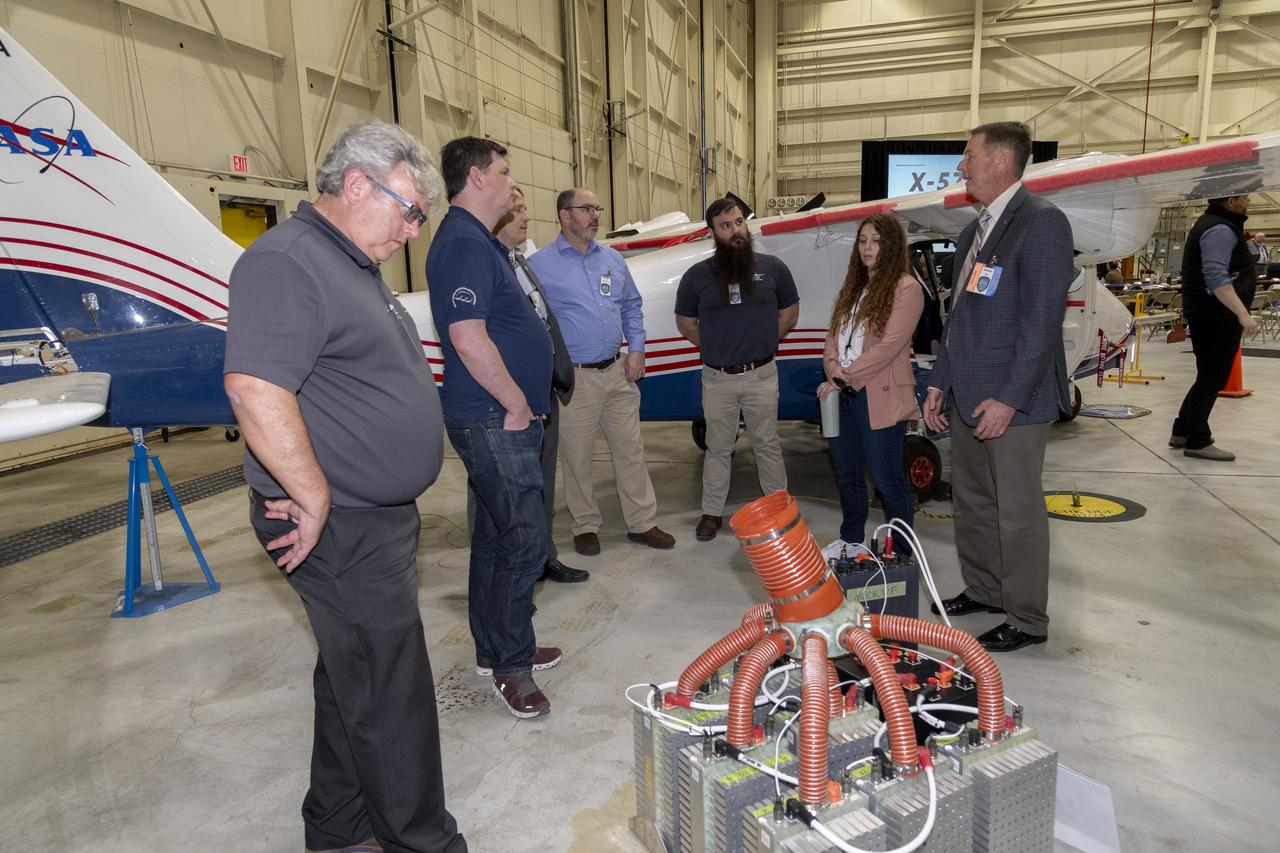
Attendees gather next to the X-57 Maxwell aircraft during a knowledge sharing meeting at NASA’s Armstrong Flight Research Center in Edwards, California looking at a display of the battery assembly that normally sits inside the aircraft.
X-57 Maxwell Technical Interchange Meeting
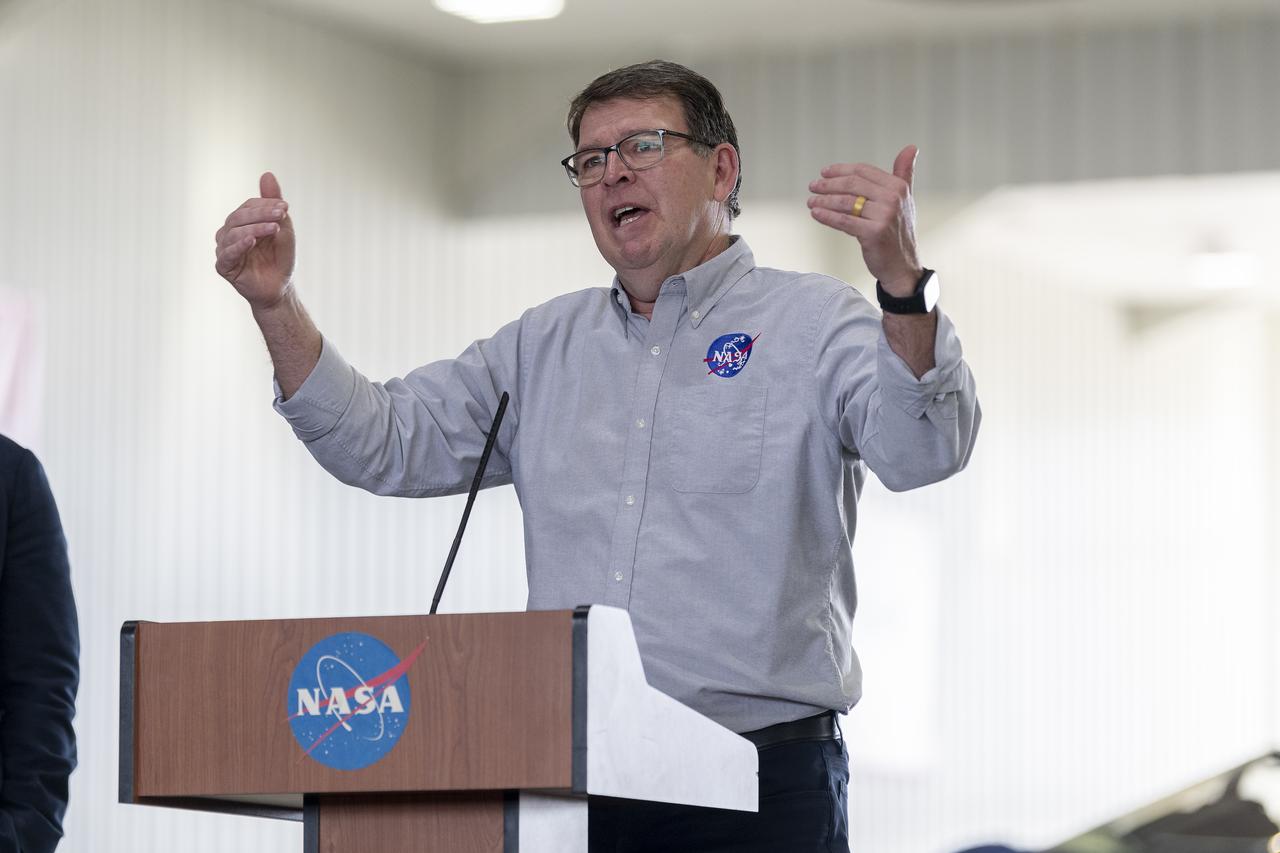
Brad Flick, center director at NASA’s Armstrong Flight Research Center in Edwards, California, amplifies the center’s safety commitment during Safety Day on April 2, 2024,at NASA Armstrong.
NASA Values Safety and Reducing Risk
Preparations begin before dawn for the X-56B remotely piloted aircraft for a new flight series. The flight was April 19 at NASA's Armstrong Flight Research Center in Edwards, California, with partner Northrop Grumman.
X-56B Begins New Flight Series
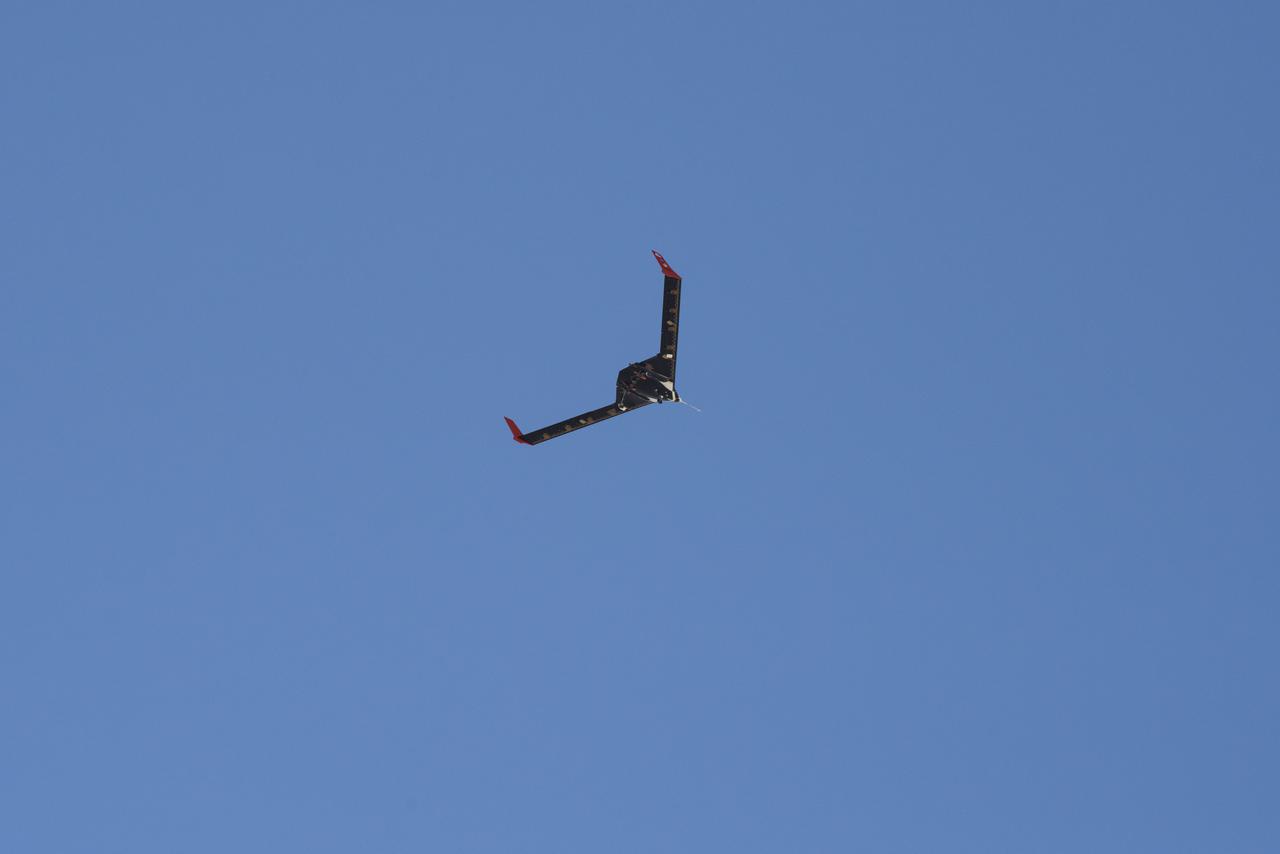
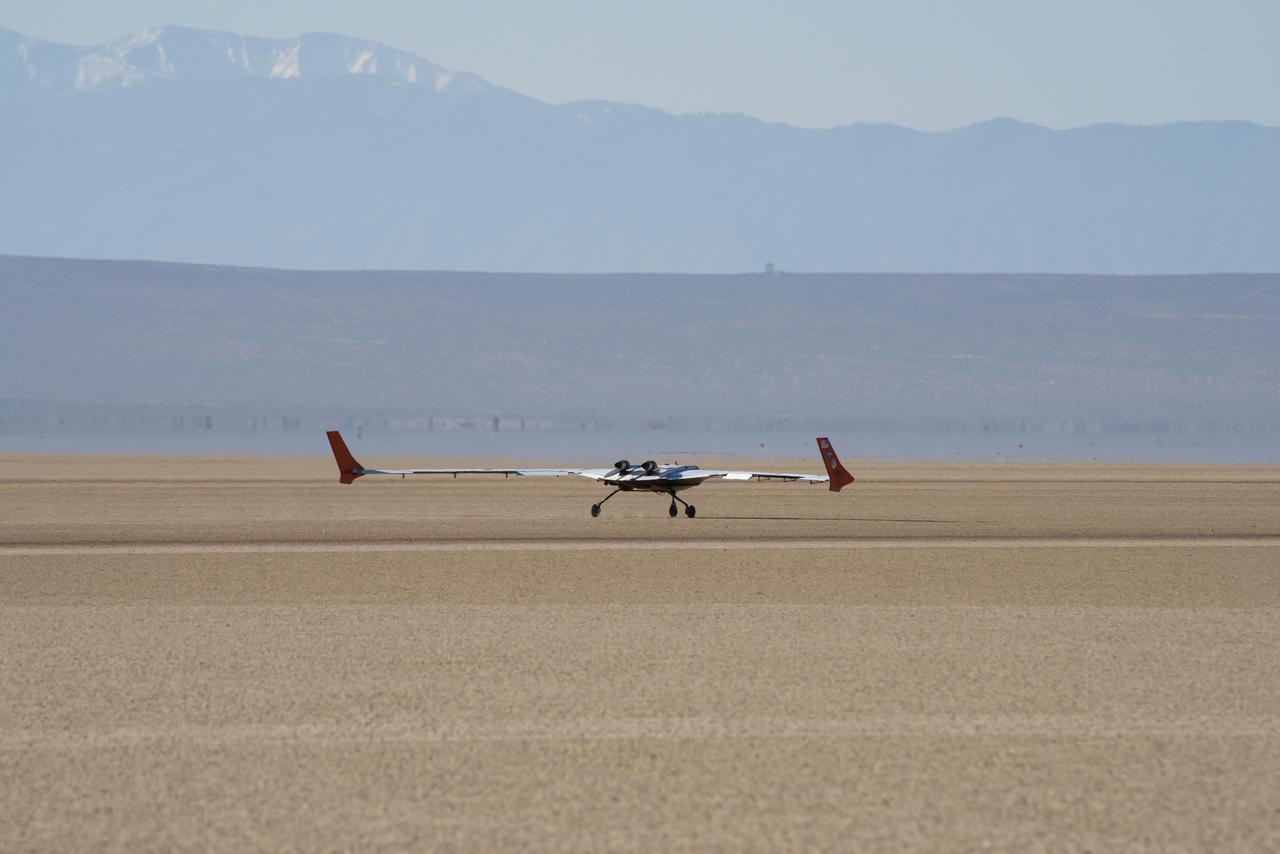
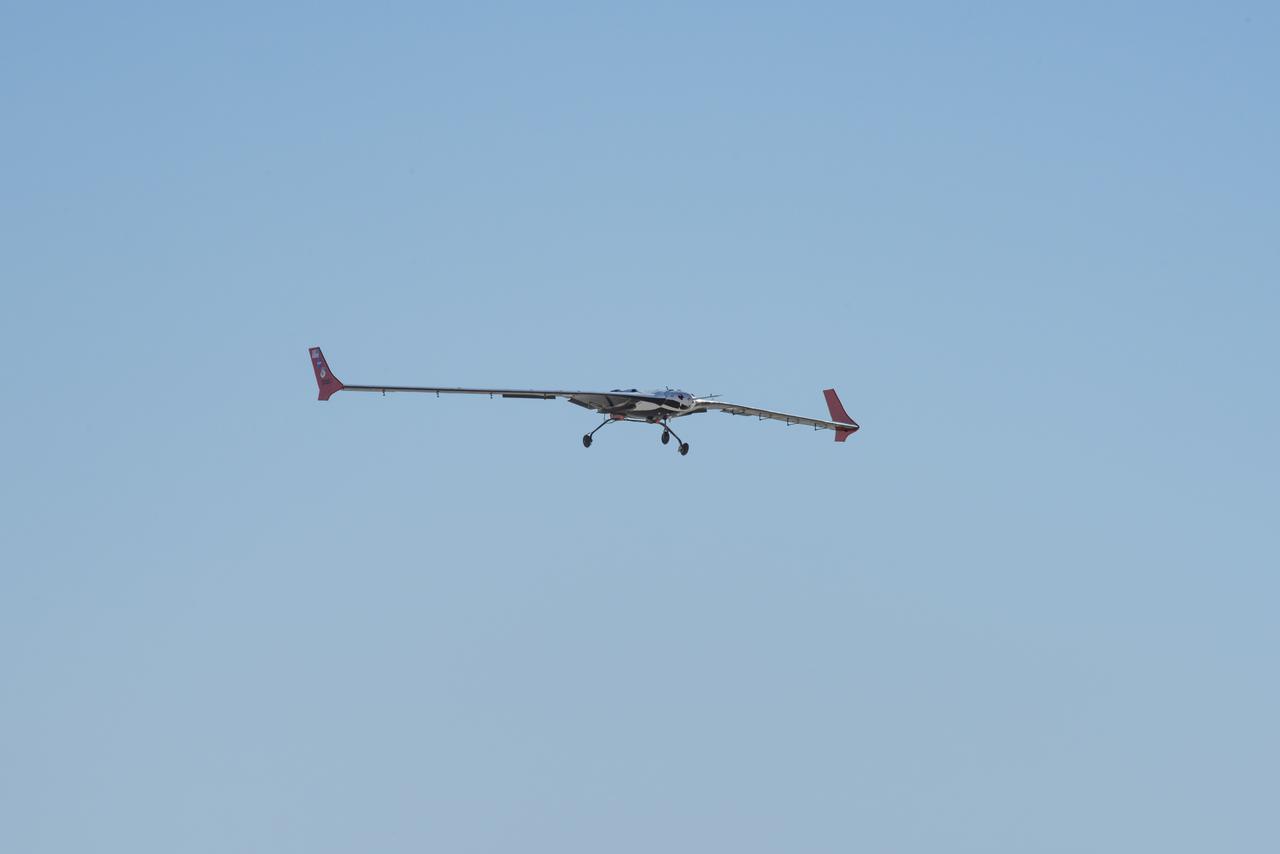
The X-56B remotely piloted aircraft flies the first of a new flight series. The flight was April 19 at NASA's Armstrong Flight Research Center in Edwards, California, with partner Northrop Grumman.
X-56B Begins New Flight Series
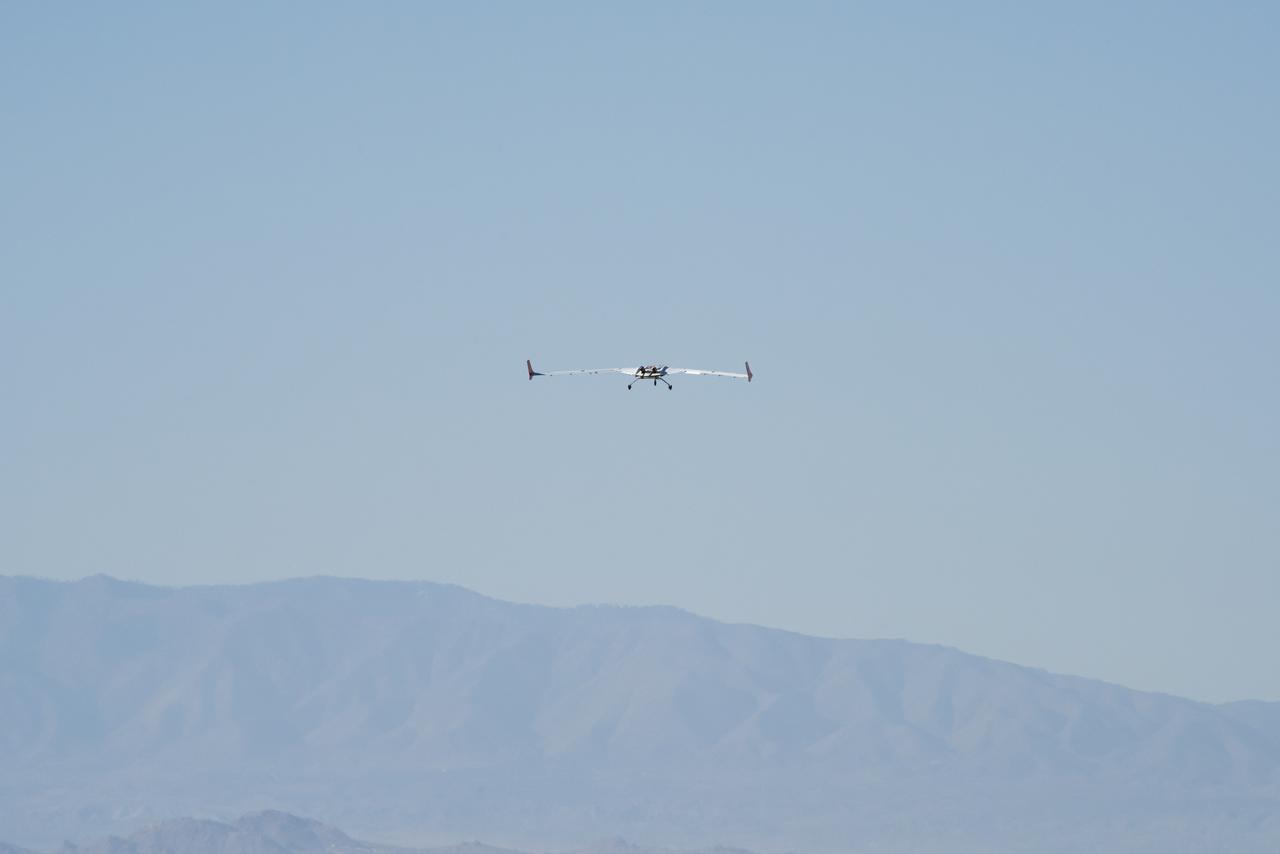
The X-56B remotely piloted aircraft began a new flight series April 19 at NASA's Armstrong Flight Research Center in Edwards, California, with partner Northrop Grumman.
X-56B Begins New Flight Series
The X-56B remotely piloted aircraft began a new flight series April 19 at NASA's Armstrong Flight Research Center in Edwards, California, with partner Northrop Grumman.
X-56B Begins New Flight Series
The X-56B remotely piloted aircraft prepares for a landing following the first of a new flight series. The flight was April 19 at NASA’s Armstrong Flight Research Center in Edwards, California, with partner Northrop Grumman.
X-56B Begins New Flight Series
The X-56B remotely piloted aircraft flies the first of a new flight series. The flight was April 19 at NASA's Armstrong Flight Research Center in Edwards, California, with partner Northrop Grumman.
X-56B Begins New Flight Series
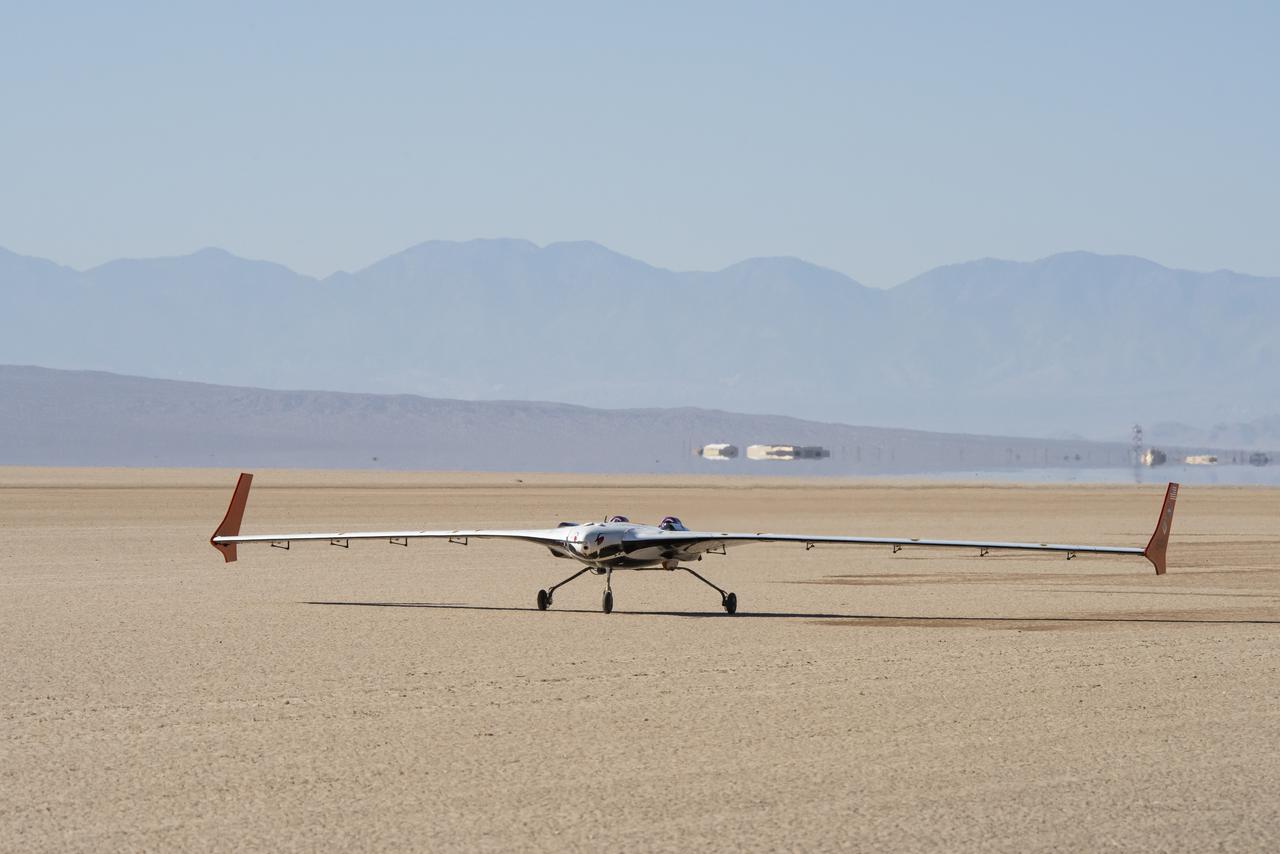
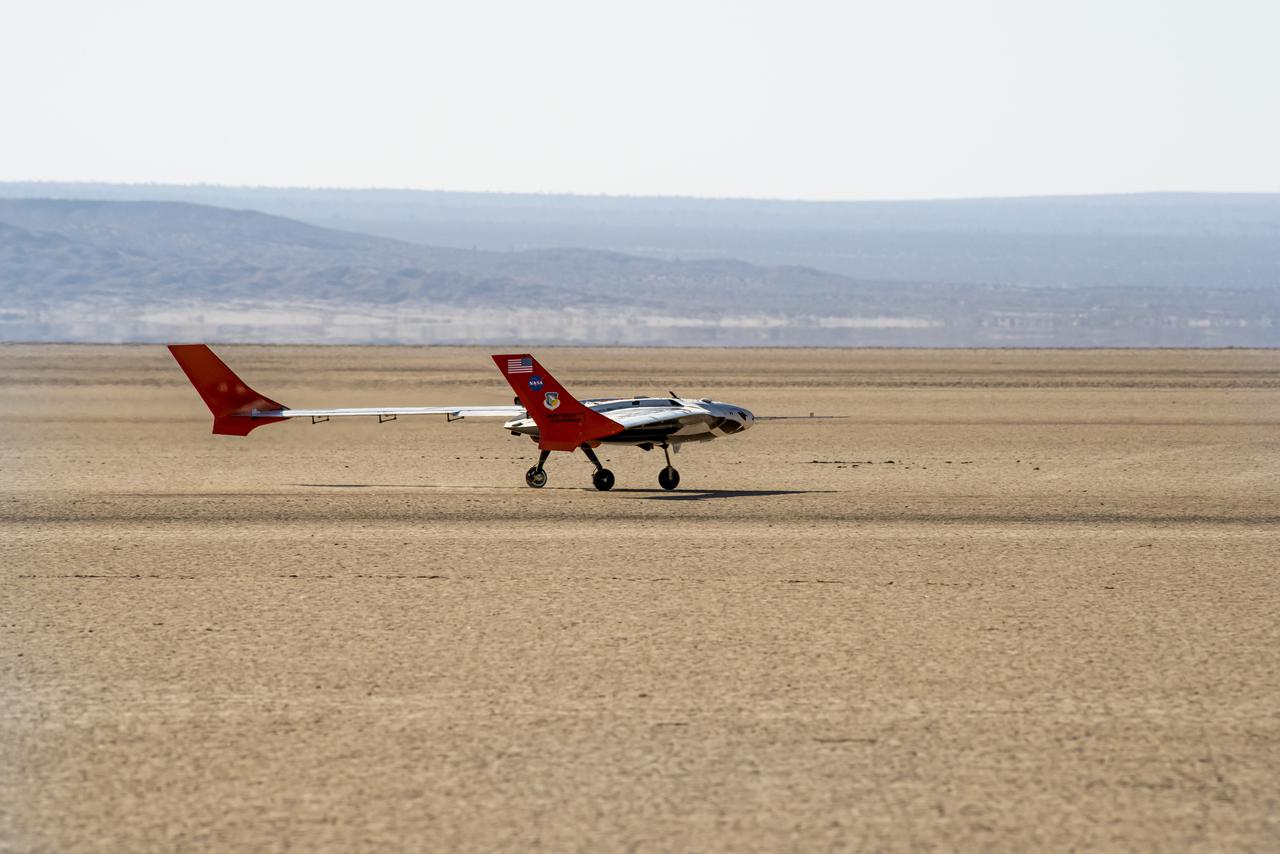
The X-56B remotely piloted aircraft prepares to takeoff to begin a new flight series. The flight was April 19 at NASA's Armstrong Flight Research Center in Edwards, California, with partner Northrop Grumman.
X-56B Begins New Flight Series
The X-56B remotely piloted aircraft prepares to takeoff to begin a new flight series. The flight was April 19 at NASA's Armstrong Flight Research Center in Edwards, California, with partner Northrop Grumman.
X-56B Begins New Flight Series
The X-56B remotely piloted aircraft ground crew prepares the aircraft to begin a new flight series. The flight was April 19 at NASA's Armstrong Flight Research Center in Edwards, California, with partner Northrop Grumman.
X-56B Begins New Flight Series
The X-56B remotely piloted aircraft flies the first of a new flight series, as a T-34 observes. The flight was April 19 at NASA's Armstrong Flight Research Center in Edwards, California, with partner Northrop Grumman.
X-56B Begins New Flight Series
The X-56B remotely piloted aircraft ground crew prepares the aircraft to begin a new flight series. The flight was April 19 at NASA's Armstrong Flight Research Center in Edwards, California, with partner Northrop Grumman.
X-56B Begins New Flight Series
The X-56B remotely piloted aircraft takeoff marks the start of a new flight series. The flight was April 19 at NASA's Armstrong Flight Research Center in Edwards, California, with partner Northrop Grumman.
X-56B Begins New Flight Series
The X-56B remotely piloted aircraft ground crew prepares the aircraft to begin a new flight series. The flight was April 19 at NASA's Armstrong Flight Research Center in Edwards, California, with partner Northrop Grumman.
X-56B Begins New Flight Series
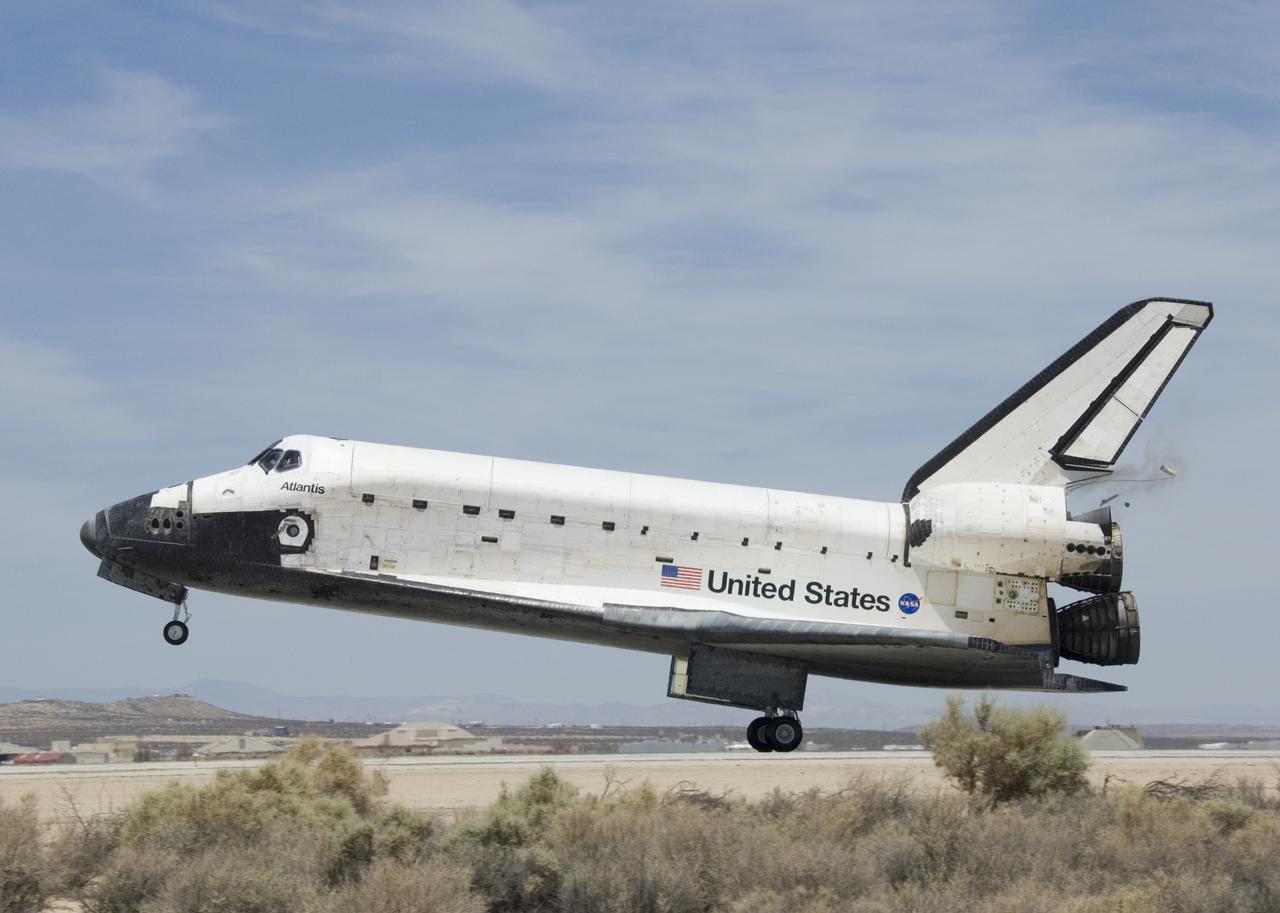
Space Shuttle Atlantis landed at 12:33 p.m. February 20, 2001, on the runway at Edwards Air Force Base, California, where NASA's Dryden Flight Research Center is located. The mission, which began February 7, logged 5.3 million miles as the shuttle orbited earth while delivering the Destiny science laboratory to the International Space Station. Inclement weather conditions in Florida prompted the decision to land Atlantis at Edwards. The last time a space shuttle landed at Edwards was Oct. 24, 2000.
Space Shuttle Atlantis landing at 12:33 p.m. February 20, 2001, on the runway at Edwards Air Force Base, California, where NASA's Dryden Flight Research Center is located
Space Shuttle Atlantis landed at 12:33 p.m. February 20, 2001, on the runway at Edwards Air Force Base, California, where NASA's Dryden Flight Research Center is located. The mission, which began February 7, logged 5.3 million miles as the shuttle orbited earth while delivering the Destiny science laboratory to the International Space Station. Inclement weather conditions in Florida prompted the decision to land Atlantis at Edwards. The last time a space shuttle landed at Edwards was Oct. 24, 2000.
Space Shuttle Atlantis landing at 12:33 p.m. February 20, 2001, on the runway at Edwards Air Force Base, California, where NASA's Dryden Flight Research Center is located
Space Shuttle Atlantis landed at 12:33 p.m. February 20 on the runway at Edwards Air Force Base, California, where NASA's Dryden Flight Research Center is located. The mission, which began February 7, logged 5.3 million miles as the shuttle orbited earth while delivering the Destiny science laboratory to the International Space Station. Inclement weather conditions in Florida prompted the decision to land Atlantis at Edwards. The last time a space shuttle landed at Edwards was Oct. 24, 2000.
Space Shuttle Atlantis landing at 12:33 p.m. February 20, 2001, on the runway at Edwards Air Force Base, California, where NASA's Dryden Flight Research Center is located
Space Shuttle Atlantis landed at 12:33 p.m. February 20, 2001, on the runway at Edwards Air Force Base, California, where NASA's Dryden Flight Research Center is located. The mission, which began February 7, logged 5.3 million miles as the shuttle orbited earth while delivering the Destiny science laboratory to the International Space Station. Inclement weather conditions in Florida prompted the decision to land Atlantis at Edwards. The last time a space shuttle landed at Edwards was Oct. 24, 2000.
Space Shuttle Atlantis landing at 12:33 p.m. February 20, 2001, on the runway at Edwards Air Force Base, California, where NASA's Dryden Flight Research Center is located
Workers move the Lunar Landing Research Vehicle, or LLRV, into the Edwards Air Force Base Flight Test Museum in California for temporary display.
NASA Lends Space Artifacts to Air Force Museum
Workers drive the space shuttle Crew Transport Vehicle, or CTV, to the Edwards Air Force Base Flight Test Museum in California for display.
NASA Lends Space Artifacts to Air Force Museum
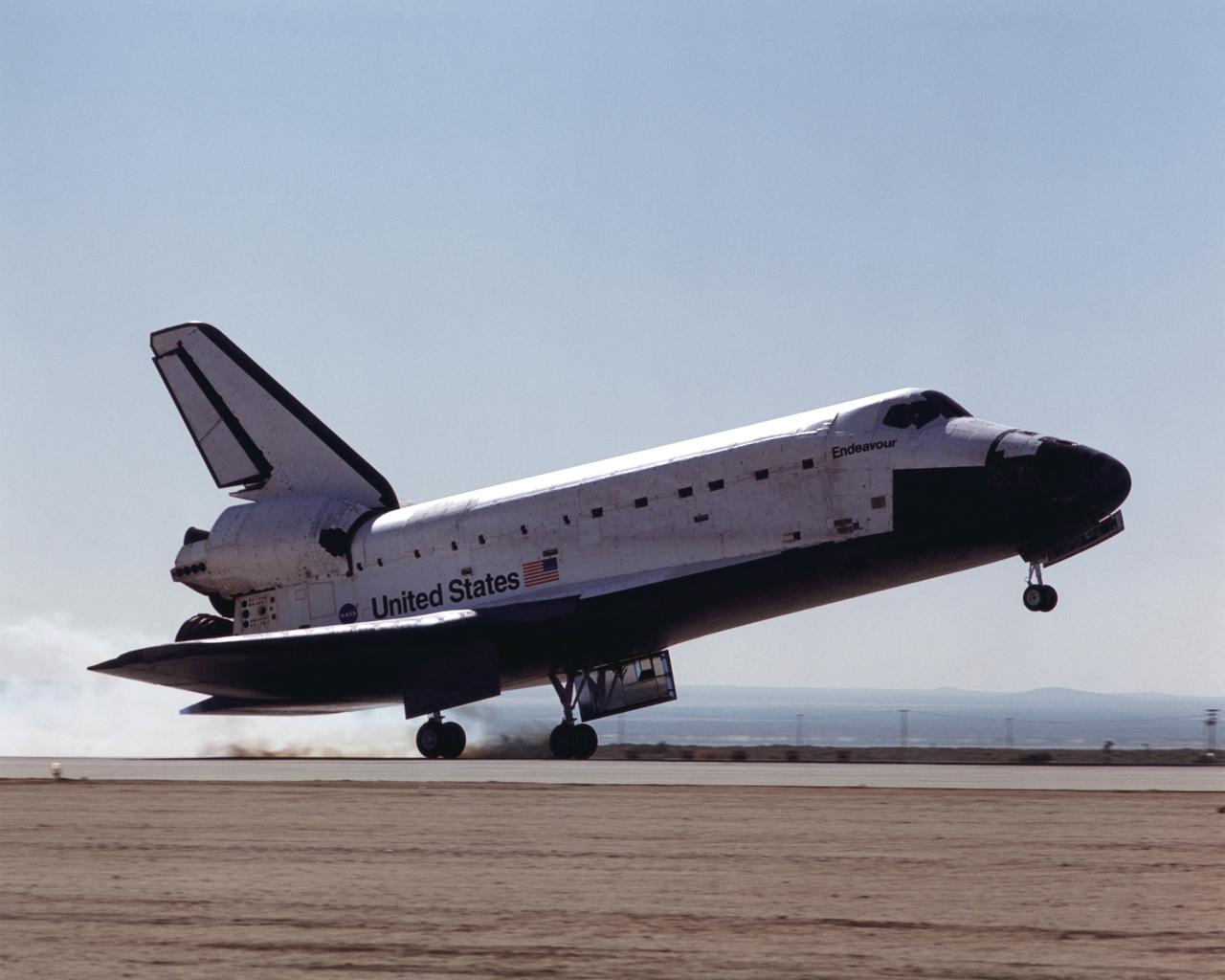
STS028-S-013 (13 Aug 1989) --- The Space Shuttle Columbia is captured on film just prior to main gear touchdown at Edwards Air Force Base in Southern California.  The landing marked a successful end to a five-day DOD-devoted mission.  Onboard the spacecraft were Astronauts Brewster H. Shaw Jr., Richard N. Richards, David C. Leestma, James C.  Adamson and Mark N. Brown.
STS-28 Columbia, OV-102, landing at Edwards Air Force Base (EAFB) California
STS028-S-018 (13 Aug 1989) --- The Space shuttle Columbia is captured on film just prior to main gear touchdown at Edwards Air Force Base in Southern California.  The landing marked a successful end to a five-day Department of Defense (DOD)-devoted mission.  Onboard the spacecraft were astronauts Brewster H. Shaw Jr., Richard N. Richards, David C. Leestma, James C.  Adamson and Mark N. Brown.
STS-28 Columbia, OV-102, landing at Edwards Air Force Base (EAFB) California
A lone desert Joshua tree greeted the arrival of Space Shuttle Endeavour at Edwards Air Force Base, California, May 1, 2001. A large drag chute helped slow Endeavour on the runway. After mounting the shuttle on a converted 747 airliner at NASA's Dryden Flight Research Center, Endeavour will be carried back to the Kennedy Space Center for its next mission. Weather in Florida necessitated landing in California.
A lone desert Joshua tree greeted the arrival of Space Shuttle Endeavour at Edwards Air Force Base, California, on May 1, 2001
The Space Shuttle Endeavour receives post-flight servicing in the Mate-Demate Device (MDD), following its landing at NASA's Dryden Flight Research Center, Edwards, California, June 19, 2002.
The Space Shuttle Endeavour receives post-flight servicing in the Mate-Demate Device (MDD), following its landing at NASA's Dryden Flight Research Center, Edwards, California, June 19, 2002
A Beech T-34C flown by NASA Dryden Flight Research Center for mission support descends over the Southern California desert near Edwards Air Force Base.
A Beech T-34C flown by NASA Dryden Flight Research Center for mission support descends over the Southern California desert near Edwards Air Force Base
An aerial image taken by one of NASA's photographers during recent helicopter flights shows a view of the windward helipad and surrounding areas and structures that the Advanced Air Mobility National Campaign used during flight research at NASA's Armstrong Flight Research Center in Edwards, California. Part of the compass rose on the Edwards Air Force Base dry lakebed can also be seen.
National Campaign Work Area Aerial Images
Instrumentation of the wing and strut that comprise the Mock Truss-Braced Wing 10-foot model are complete at NASA’s Armstrong Flight Research Center in Edwards, California.
NASA Prepares for Mock Truss-Braced Wing Tests
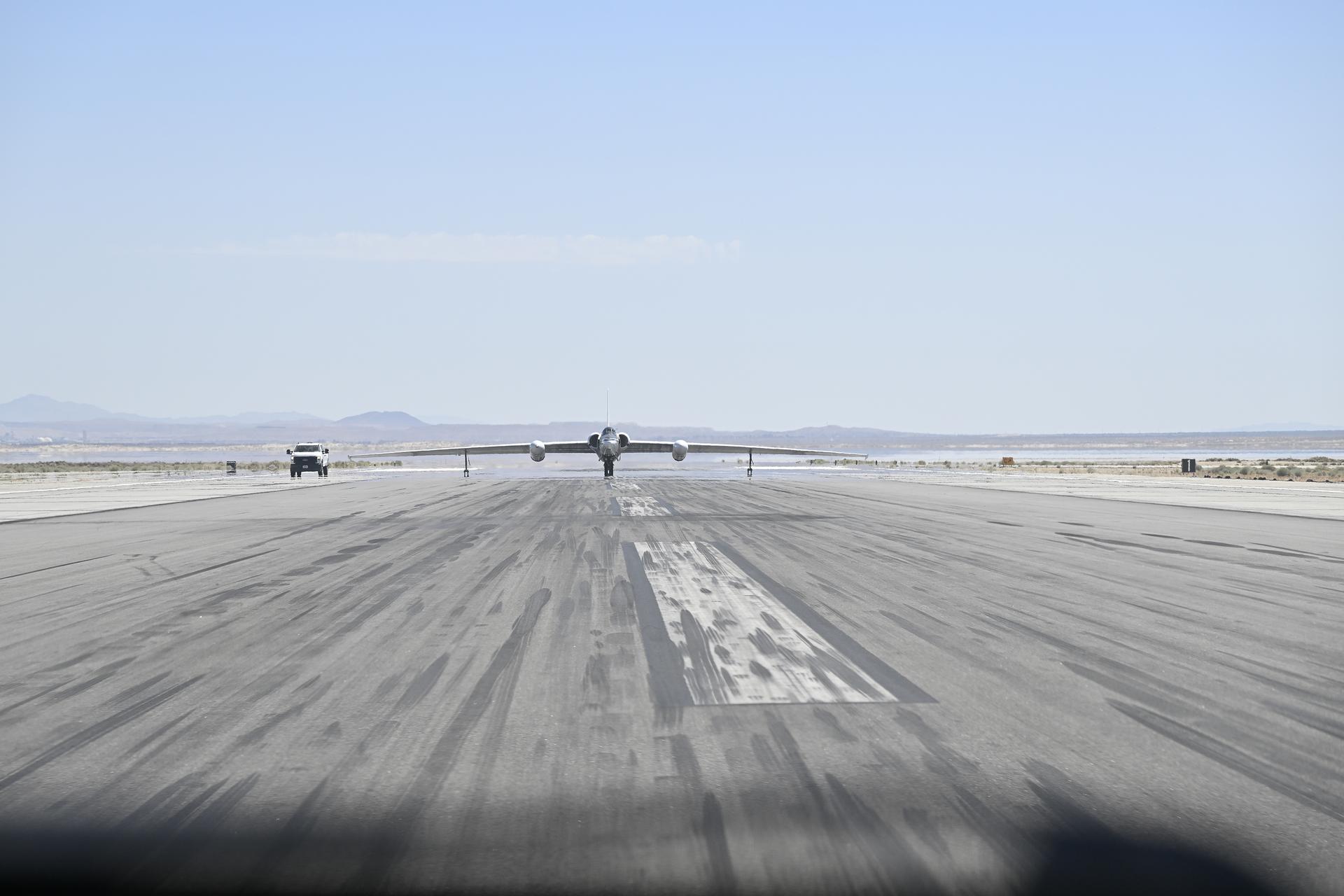
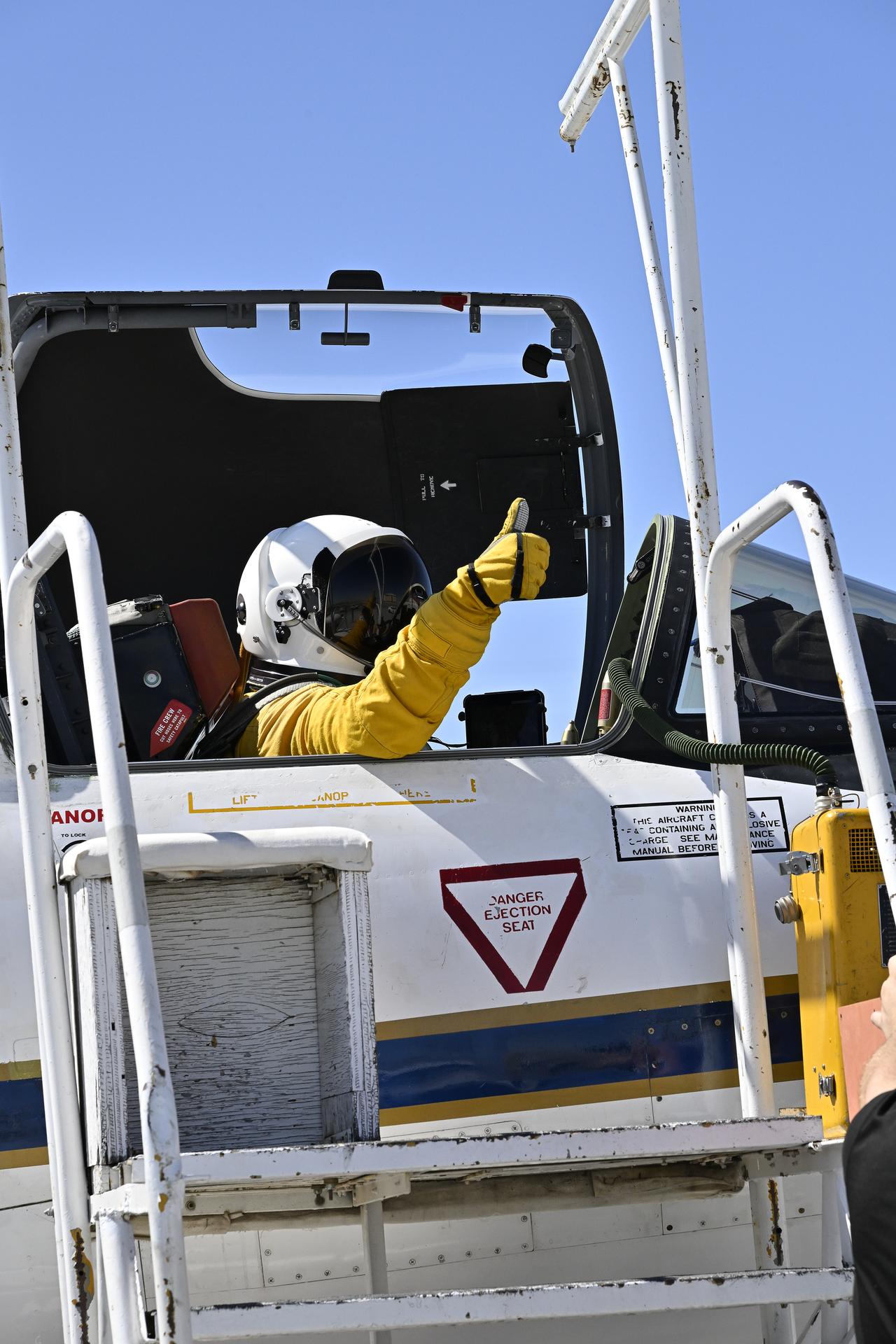
Kirt Stallings, an ER-2 pilot from NASA’s Armstrong Flight Research Center in Edwards California, completed a flight in support of the Investigation of Microphysics and Precipitation for Atlantic Coast-Threatening Storms (IMPACTS) mission. The IMPACTS team tracked storms across the Eastern United States to help understand how winter storms form and develop. The aircraft, which is based at NASA’s Armstrong Flight Research Center Building 703 in Palmdale, California, was temporarily based at Dobbins Air Reserve Base in Marietta, Georgia. The three-year IMPACTS campaign concluded on Feb. 28, 2023.
NASA’s ER-2 Supports IMPACTS Mission
Kirt Stallings, an ER-2 pilot from NASA’s Armstrong Flight Research Center in Edwards California, completed a flight in support of the Investigation of Microphysics and Precipitation for Atlantic Coast-Threatening Storms (IMPACTS) mission. The IMPACTS team tracked storms across the Eastern United States to help understand how winter storms form and develop. The aircraft, which is based at NASA’s Armstrong Flight Research Center Building 703 in Palmdale, California, was temporarily based at Dobbins Air Reserve Base in Marietta, Georgia. The three-year IMPACTS campaign concluded on Feb. 28, 2023.
NASA’s ER-2 Supports IMPACTS Mission
Kirt Stallings, an ER-2 pilot from NASA’s Armstrong Flight Research Center in Edwards California, completed a flight in support of the Investigation of Microphysics and Precipitation for Atlantic Coast-Threatening Storms (IMPACTS) mission. The IMPACTS team tracked storms across the Eastern United States to help understand how winter storms form and develop. The aircraft, which is based at NASA’s Armstrong Flight Research Center Building 703 in Palmdale, California, was temporarily based at Dobbins Air Reserve Base in Marietta, Georgia. The three-year IMPACTS campaign concluded on Feb. 28, 2023.
NASA’s ER-2 Supports IMPACTS Mission