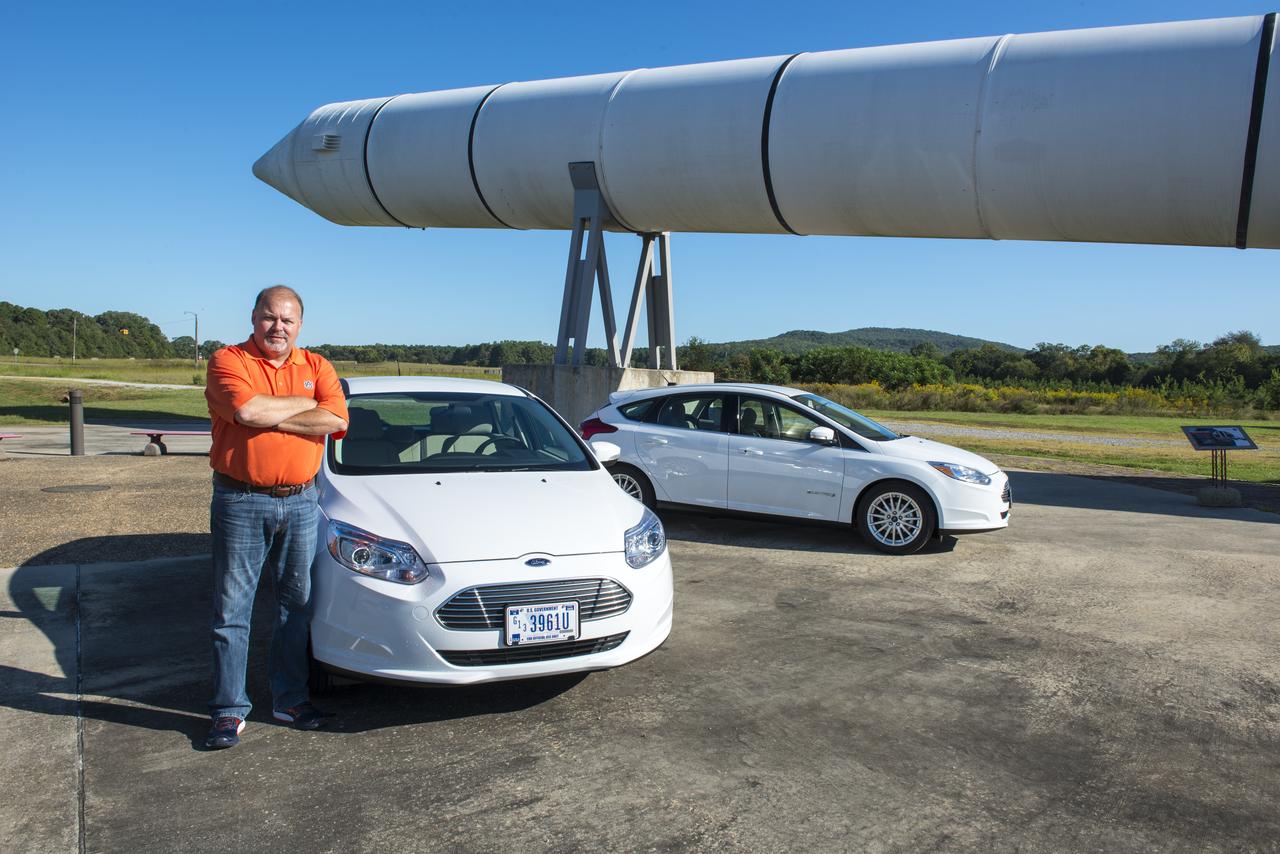
David Norris, Marshall transportation specialist, stands alongside two new, fully electric cars capable of traveling approximately 115 miles on a 5 1/2-hour charge using Marshall's 240-volt charging station. The electric cars join five "green" vehicles in use at Marshall since spring 2016.
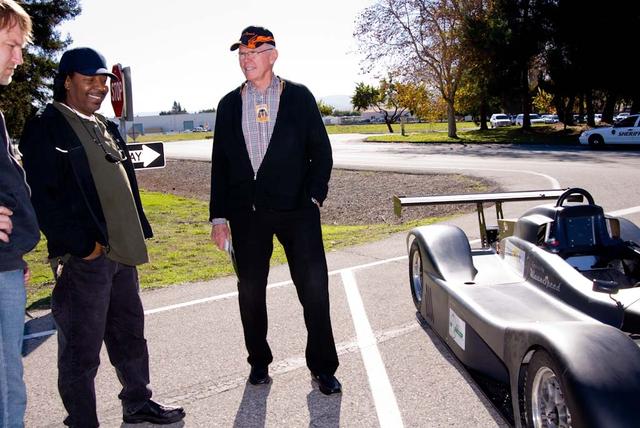
Airship Ventures Zeppelin Dedication during the Moffett Field Diamond Jubilee. New NRP Partner KleenSpeed Chairman Timothy Collins (l) with THRUXAR electric race car at the Nov. 21 Diamond Jubilee exhibits. KleenSpeed is an advanced R&D firm focusing on scalable electric propulsion systems for transportation
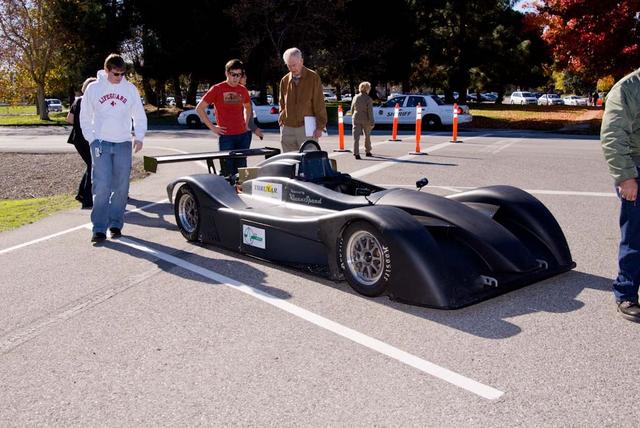
Airship Ventures Zeppelin Dedication during the Moffett Field Diamond Jubilee. The Thruxar electric race car at the Nov. 21 Diamond Jubilee exhibits. KleenSpeed is an advanced R&D firm focusing on scalable electric propulsion systems for transportation
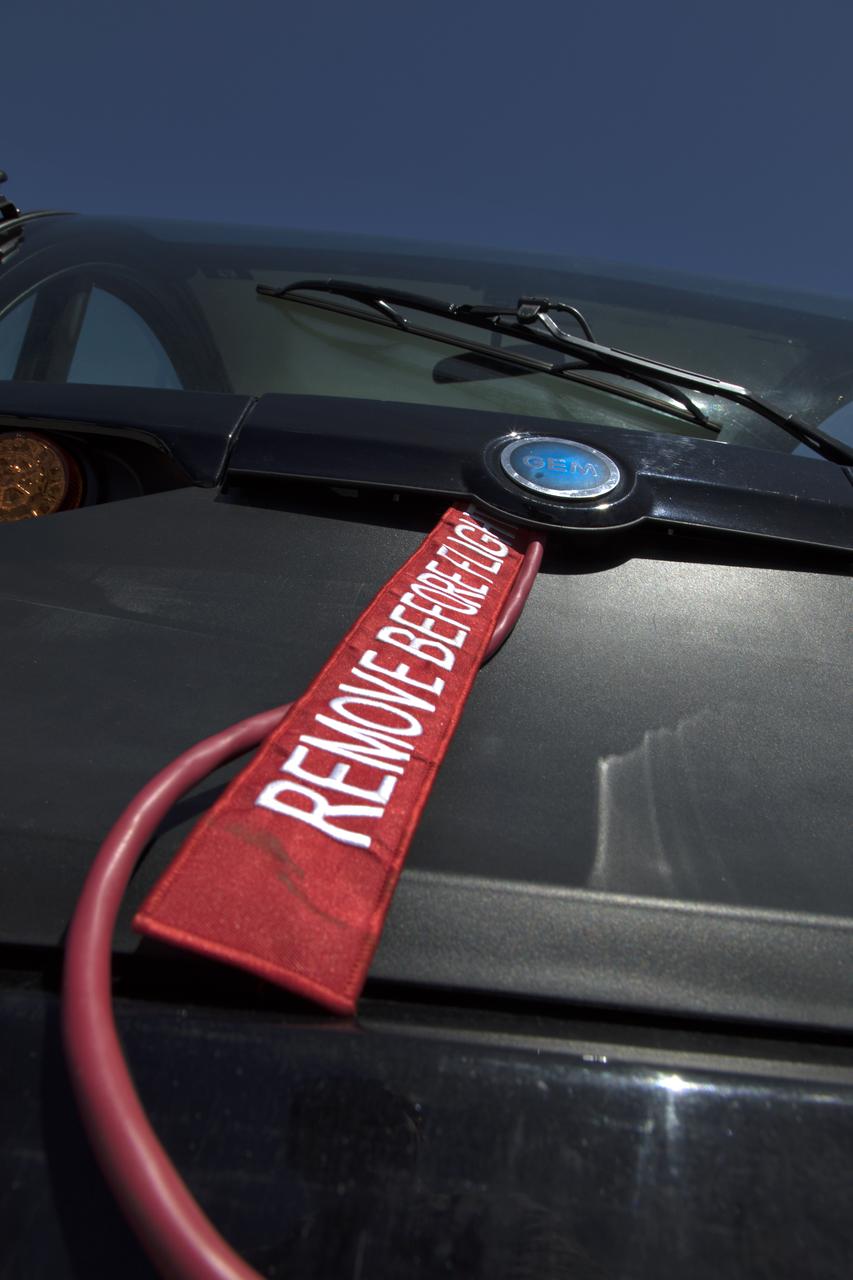
During the annual Earth Day celebration at the Kennedy Space Center Visitor Complex, guests have an opportunity to get an up-close look at experimental electric vehicles. The "Remove Before Flight" tag is on a Polaris GEM electric car. The two-day event featured approximately 50 exhibitors offering information on a variety of topics, including electric vehicles, sustainable lighting, renewable energy, Florida-friendly landscaping tips, Florida’s biking trails and more.
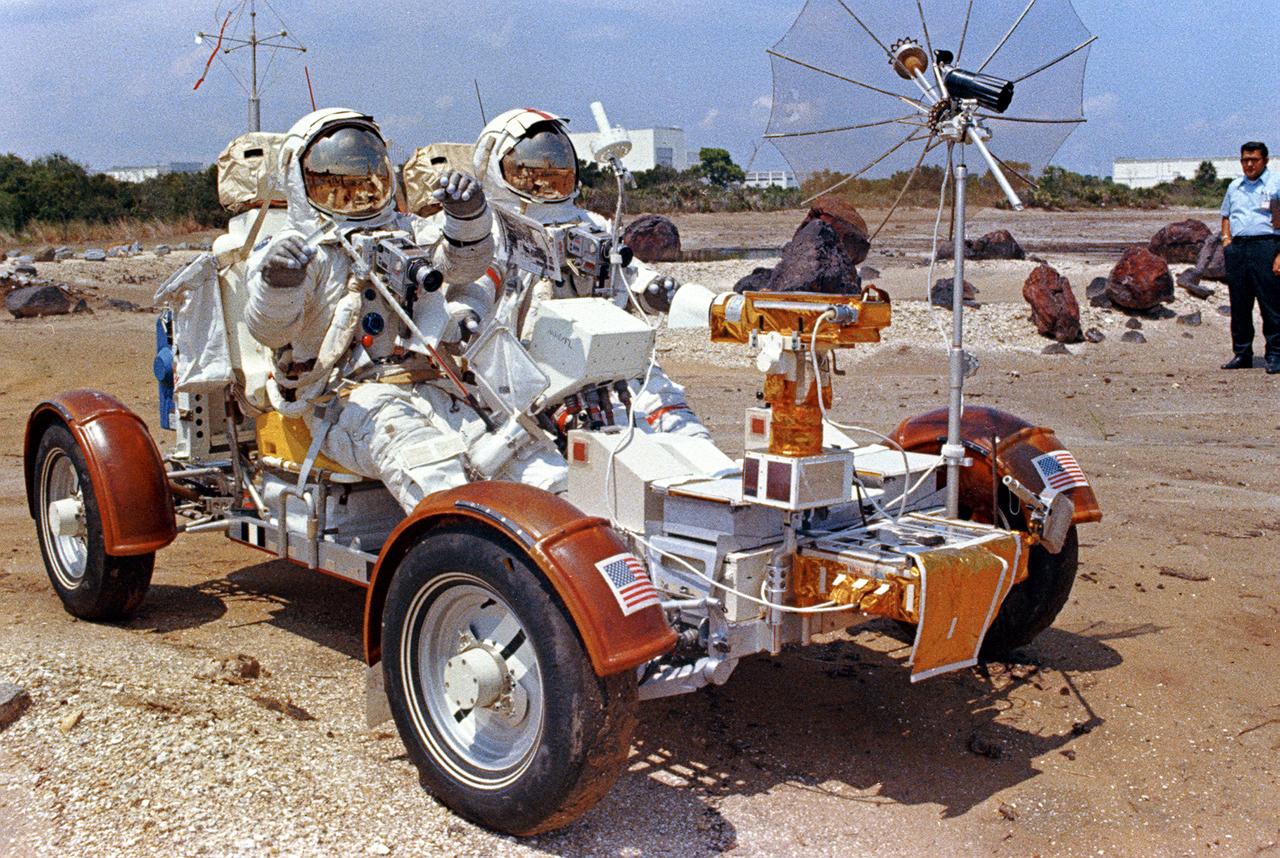
This photograph was taken during the testing of the Lunar Roving Vehicle (LRV) at the Johnson Space Center. Developed by the MSFC, the LRV was the lightweight electric car designed to increase the range of mobility and productivity of astronauts on the lunar surface. It was used on the last three Apollo missions; Apollo 15, Apollo 16, and Apollo 17.
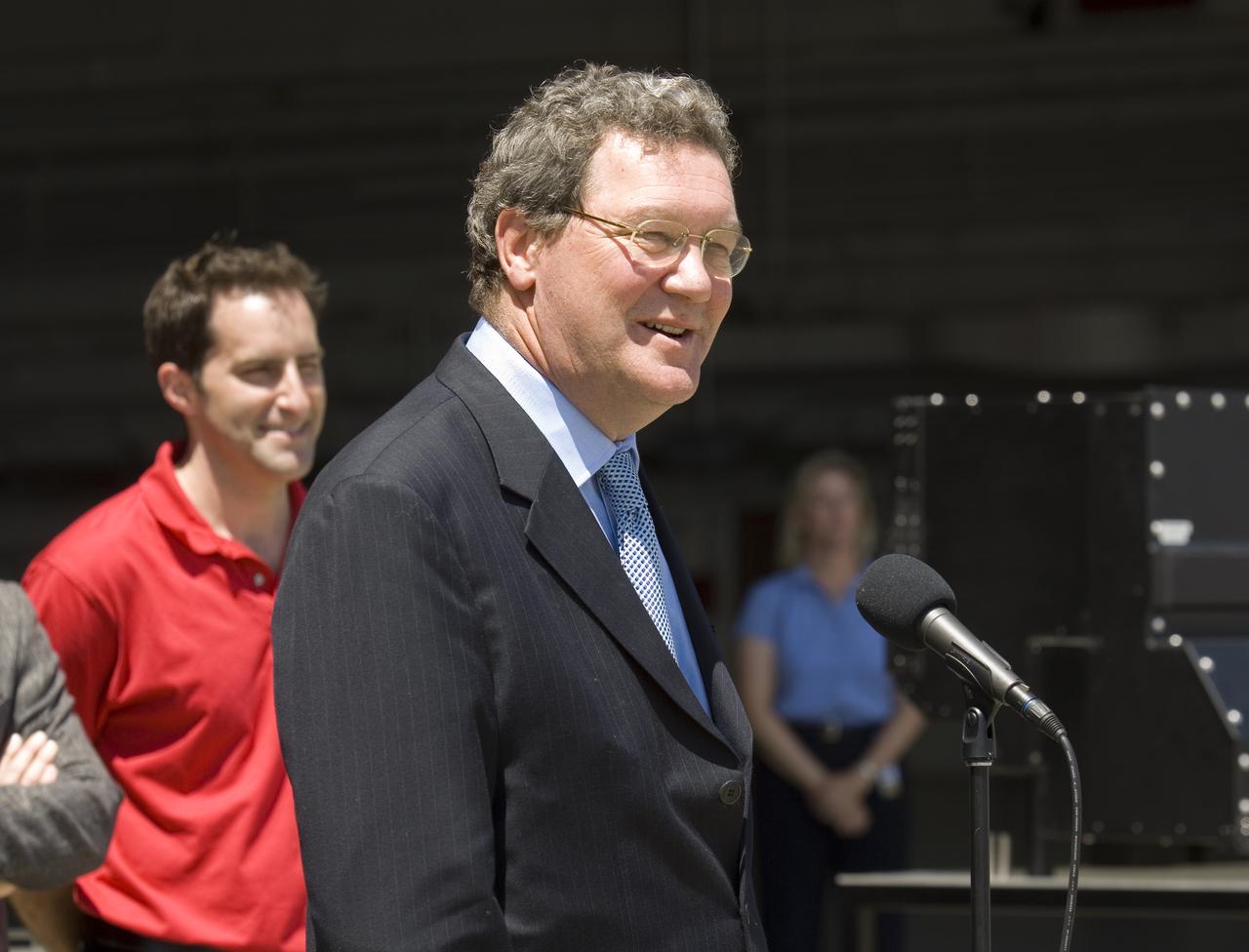
Dr Condoleezza Rice, United States Secretary of State visits Ames. Takes a demonstration ride in the Tesla Motors Electric Car. Australian Foreign Minister Alexander Downer traveling with Dr Rice addresses the assembled media and Ames staffers
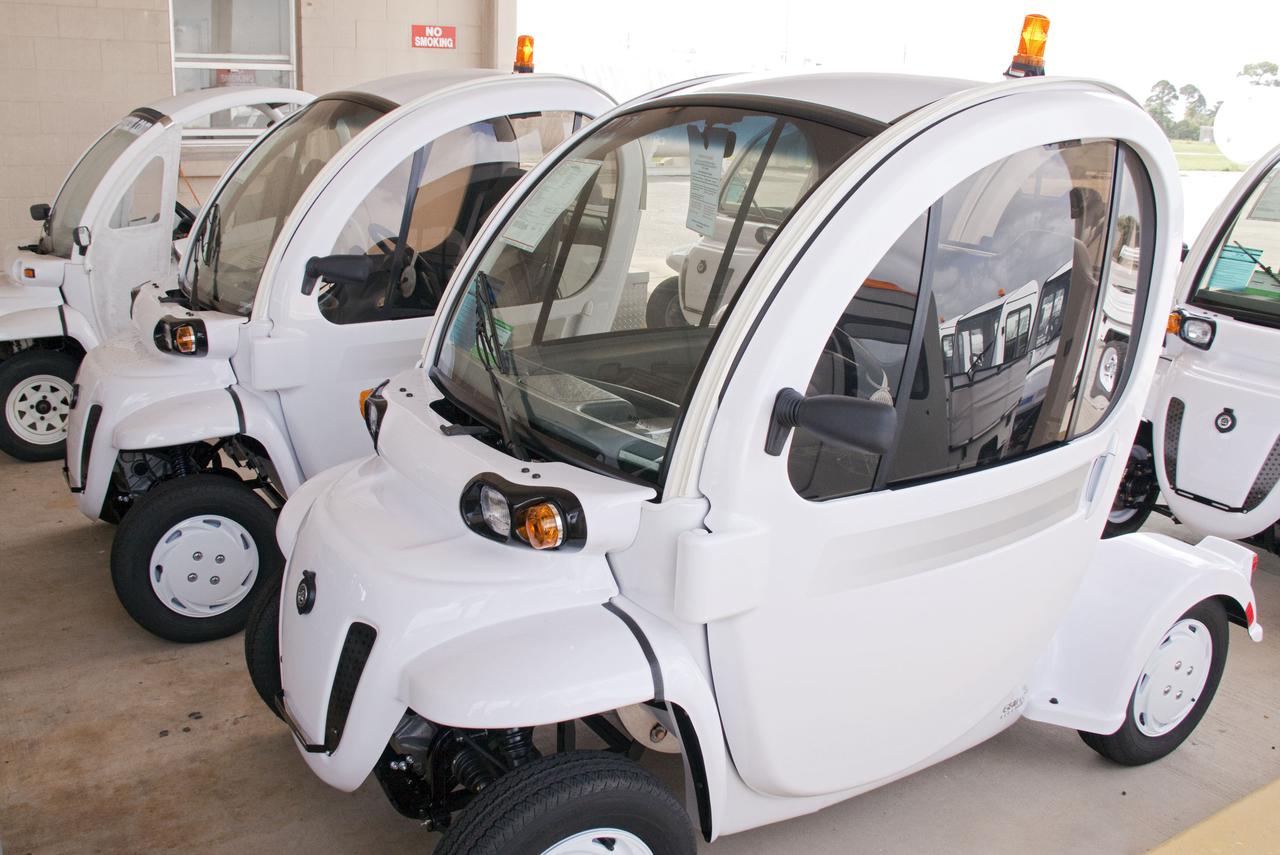
CAPE CANAVERAL, Fla. -- NASA's Kennedy Space Center in Florida has accepted delivery of several new low speed electric vehicles, or LSEV. The first LSEV was purchased in 2005 and through the American Recovery and Reinvestment Act, or ARRA, Kennedy will receive a total of 39 electric cars. The center's fleet is being augmented with alternative-fueled vehicles in an effort to reduce gasoline consumption and conserve energy. Photo credit: NASA_Jack Pfaller
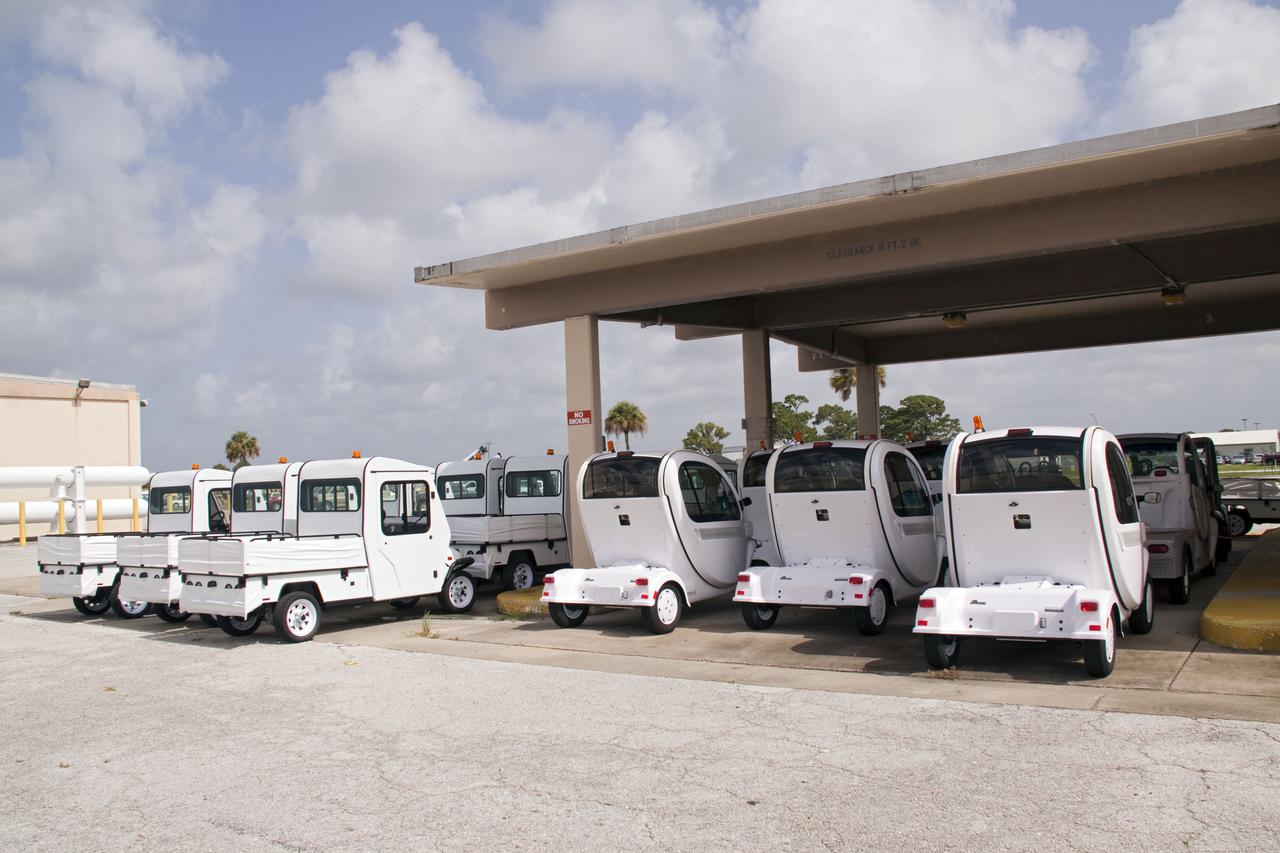
CAPE CANAVERAL, Fla. -- NASA's Kennedy Space Center in Florida has accepted delivery of several new low speed electric vehicles, or LSEV. The first LSEV was purchased in 2005 and through the American Recovery and Reinvestment Act, or ARRA, Kennedy will receive a total of 39 electric cars. The center's fleet is being augmented with alternative-fueled vehicles in an effort to reduce gasoline consumption and conserve energy. Photo credit: NASA_Jack Pfaller
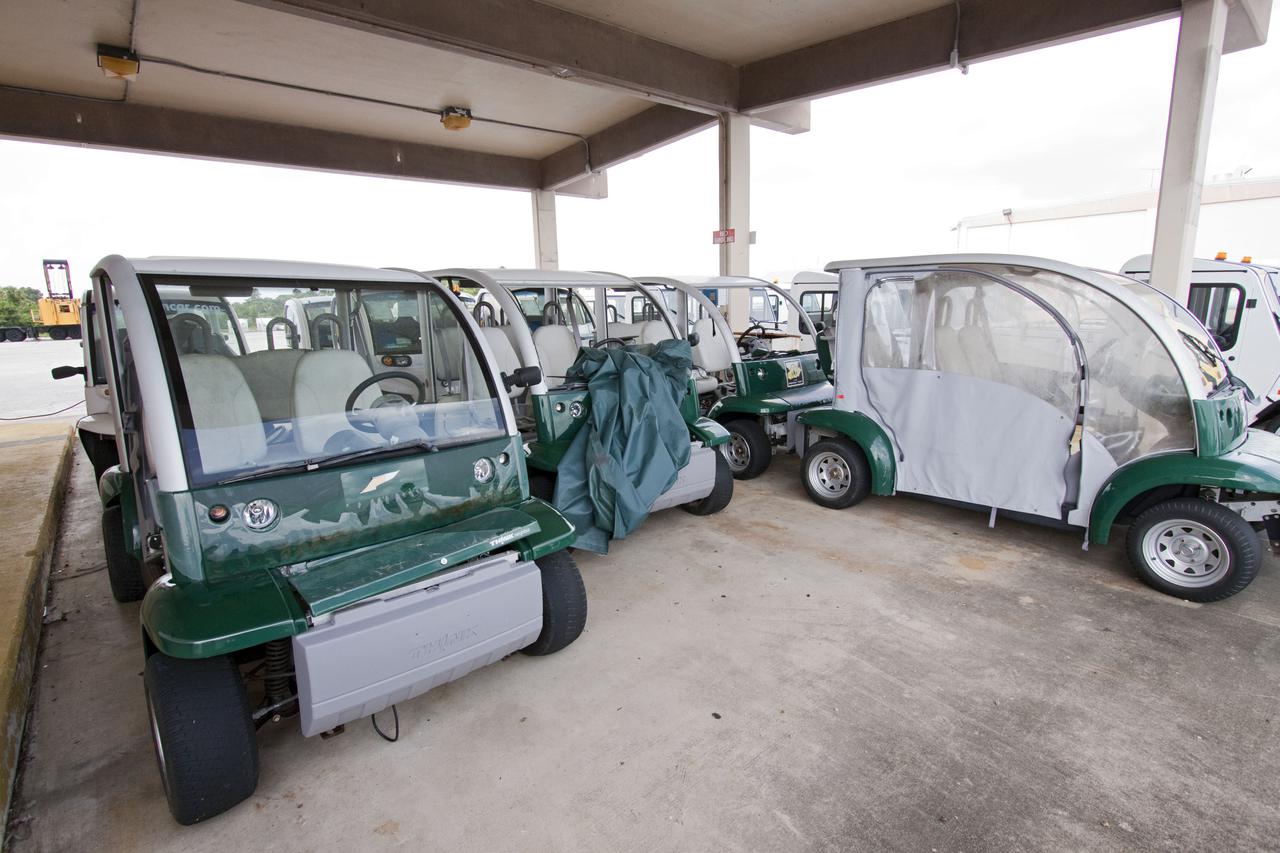
CAPE CANAVERAL, Fla. -- NASA's Kennedy Space Center in Florida has accepted delivery of several new low speed electric vehicles, or LSEV. The first LSEV was purchased in 2005 and through the American Recovery and Reinvestment Act, or ARRA, Kennedy will receive a total of 39 electric cars. The center's fleet is being augmented with alternative-fueled vehicles in an effort to reduce gasoline consumption and conserve energy. Photo credit: NASA_Jack Pfaller
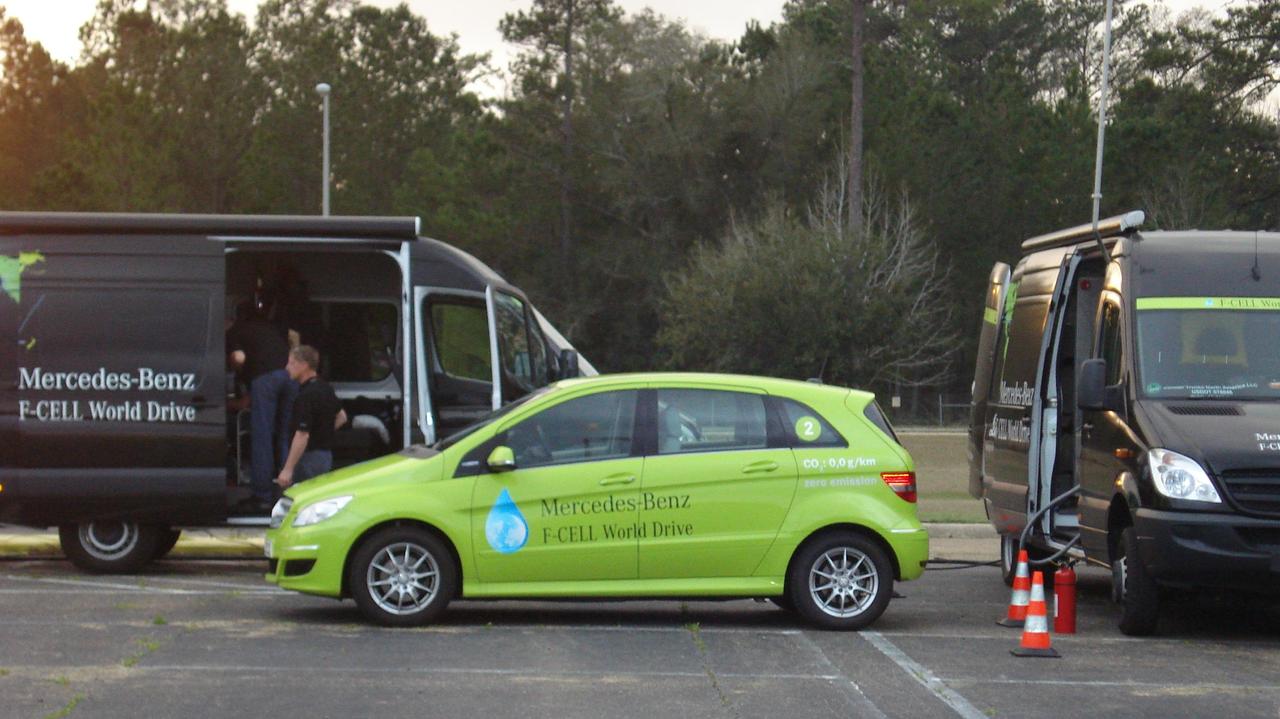
John C. Stennis Space Center, America's largest rocket engine test complex, and one of the country's leading consumers of liquid hydrogen, was the location Feb. 27 for a fuel stop of three Mercedes B-Class F-CELL vehicles. The B-Class F-CELL is an electric vehicle, which is powered by electricity produced on board the vehicle from hydrogen gas. The only emission by this unique vehicle is pure water vapor. Due to the limited number of existing hydrogen locations, Stennis Space Center provided a logical choice for a refueling location as the vehicle made its way across the United States as part of a worldwide tour.
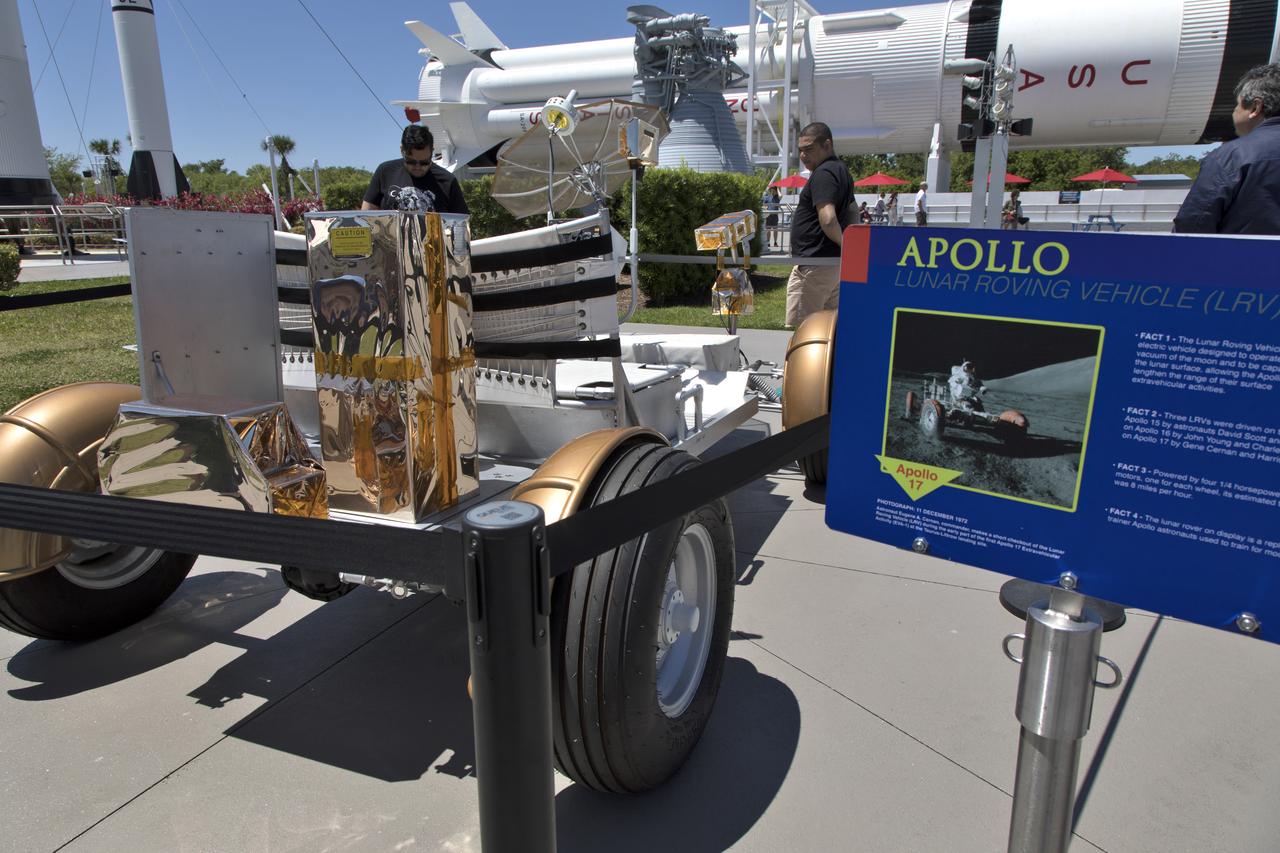
During the annual Earth Day celebration at the Kennedy Space Center Visitor Complex, guests have an opportunity to get an up-close look at experimental electric vehicles and see and Apollo era Lunar Roving Vehicle used in astronaut training. The battery-operated car was used on Apollos 15, 16 and 17 in 1971 and 1972. The two-day event featured approximately 50 exhibitors offering information on a variety of topics, including electric vehicles, sustainable lighting, renewable energy, Florida-friendly landscaping tips, Florida’s biking trails and more.
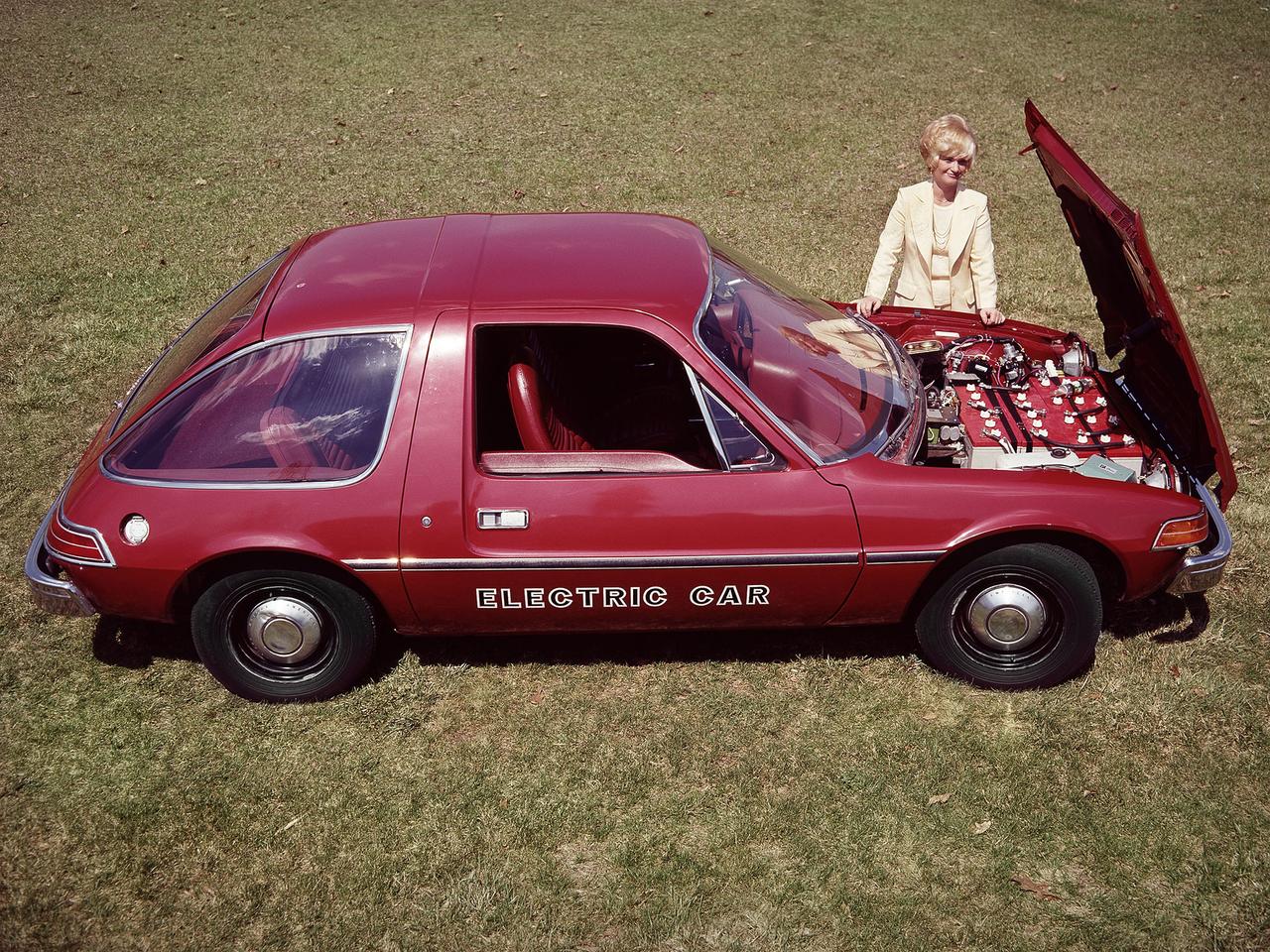
The National Aeronautics and Space Administration (NASA) Lewis Research Center tested 16 commercially-manufactured electric vehicles, including this modified Pacer, during the mid-1970s. The Electric Vehicle Project was just one of several energy-related programs that Lewis and the Energy Research and Development Administration (ERDA) undertook in the mid-1970s. NASA and ERDA embarked on this program in 1976 to determine the state of the current electric vehicle technology. As part of the project, Lewis tested a fleet composed of every commercially available electric car. The Cleveland-area Electric Vehicle Associates modified an American Motors Pacer vehicle to create this Change-of-Pace Coupe. It was powered by twenty 6-volt batteries whose voltage could be varied by a foot control. The tests analyzed the vehicle’s range, acceleration, coast-down, braking, and energy consumption. Some of the vehicles had analog data recording systems to measure the battery during operation and sensors to determine speed and distance. Lewis researchers found that the vehicle performance varied significantly from model to model. In general, the range, acceleration, and speed were lower than conventional vehicles. They also found that traditional gasoline-powered vehicles were as efficient as the electric vehicles. The researchers concluded, however, that advances in battery technology and electric drive systems would significantly improve the performance and efficiency.
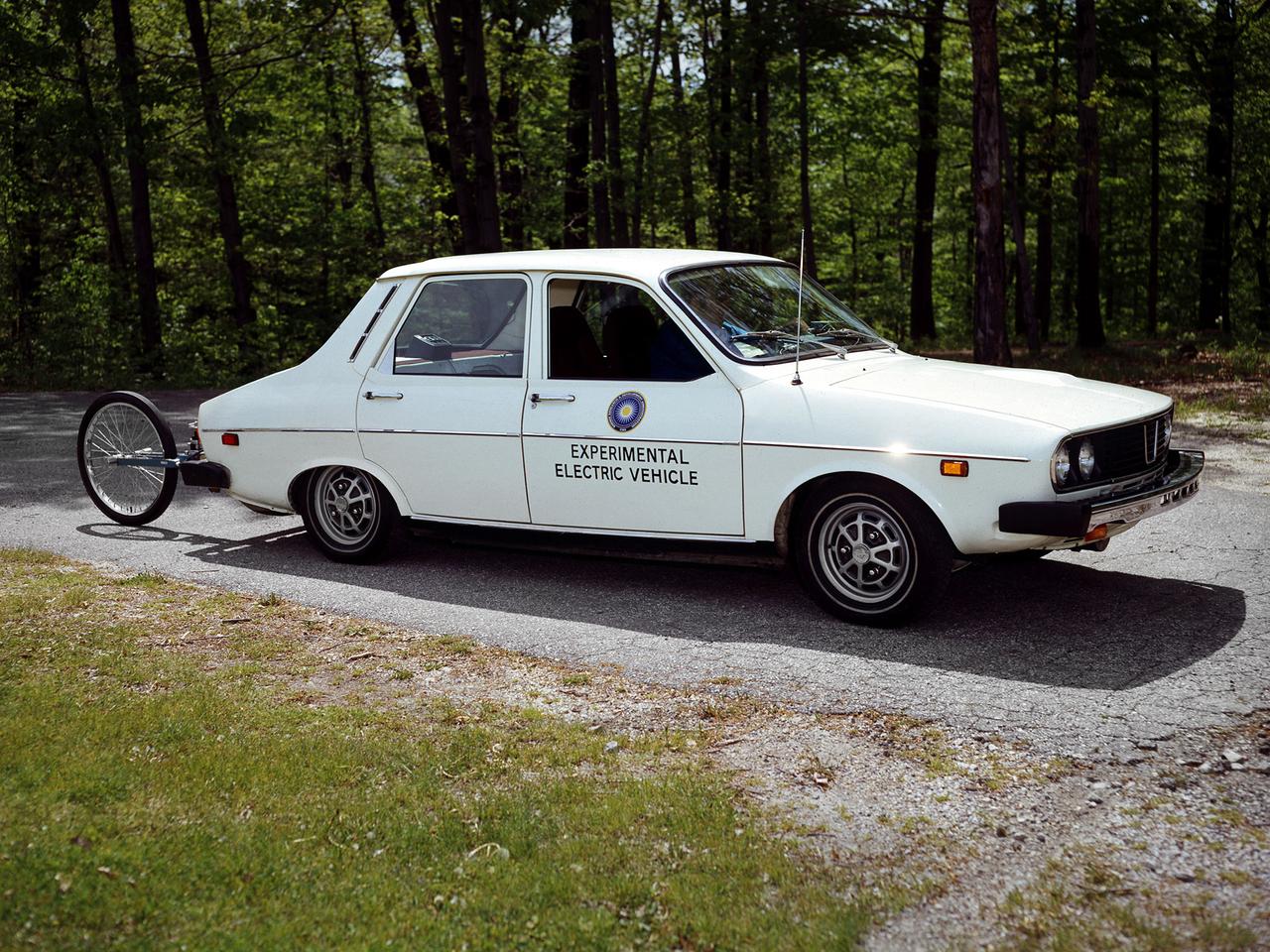
The National Aeronautics and Space Administration (NASA) Lewis Research Center tested 16 commercially-manufactured electric vehicles, including this Metro, during the mid-1970s. Lewis and the Energy Research and Development Administration (ERDA) engaged in several energy-related programs in the mid-1970s, including the Electric Vehicle Project. NASA and ERDA undertook the program in 1976 to determine the state of the current electric vehicle technology. As part of the project, Lewis and ERDA tested every commercially available electric car model. Electric Vehicle Associates, located in a Cleveland suburb, modified a Renault 12 vehicle to create this Metro. Its 1040-pound golfcart-type battery provided approximately 106 minutes of operation. The tests analyzed the vehicle’s range, acceleration, coast-down, braking, and energy consumption. Some of the vehicles had analog data recording systems to measure the battery during operation and sensors to determine speed and distance. The researchers found the performance of the different vehicles varied significantly. In general, the range, acceleration, and speed were lower than that found on conventional vehicles. They also found that traditional gasoline-powered vehicles were as efficient as the electric vehicles. The researchers concluded, however, that advances in battery technology and electric drive systems would significantly improve efficiency and performance.
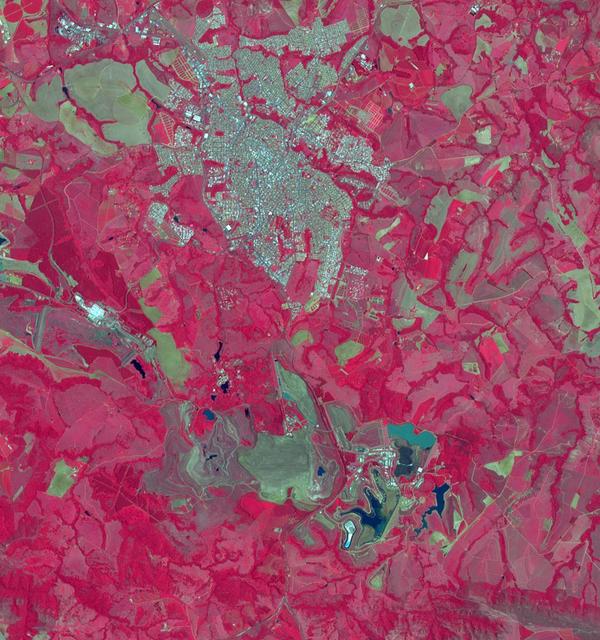
The Araxa mine in southern Brazil produces more than 80% of the world's Niobium. Niobium is used as an alloying agent in steels and in high-tech applications, such as electric car batteries. Brazil currently has 98% of commercial Niobium reserves in the world. The image was acquired November 5, 2023, covers an area of 16 by 17.1 km, and is located at 19.7 degrees south, 46.9 degrees west. https://photojournal.jpl.nasa.gov/catalog/PIA26395
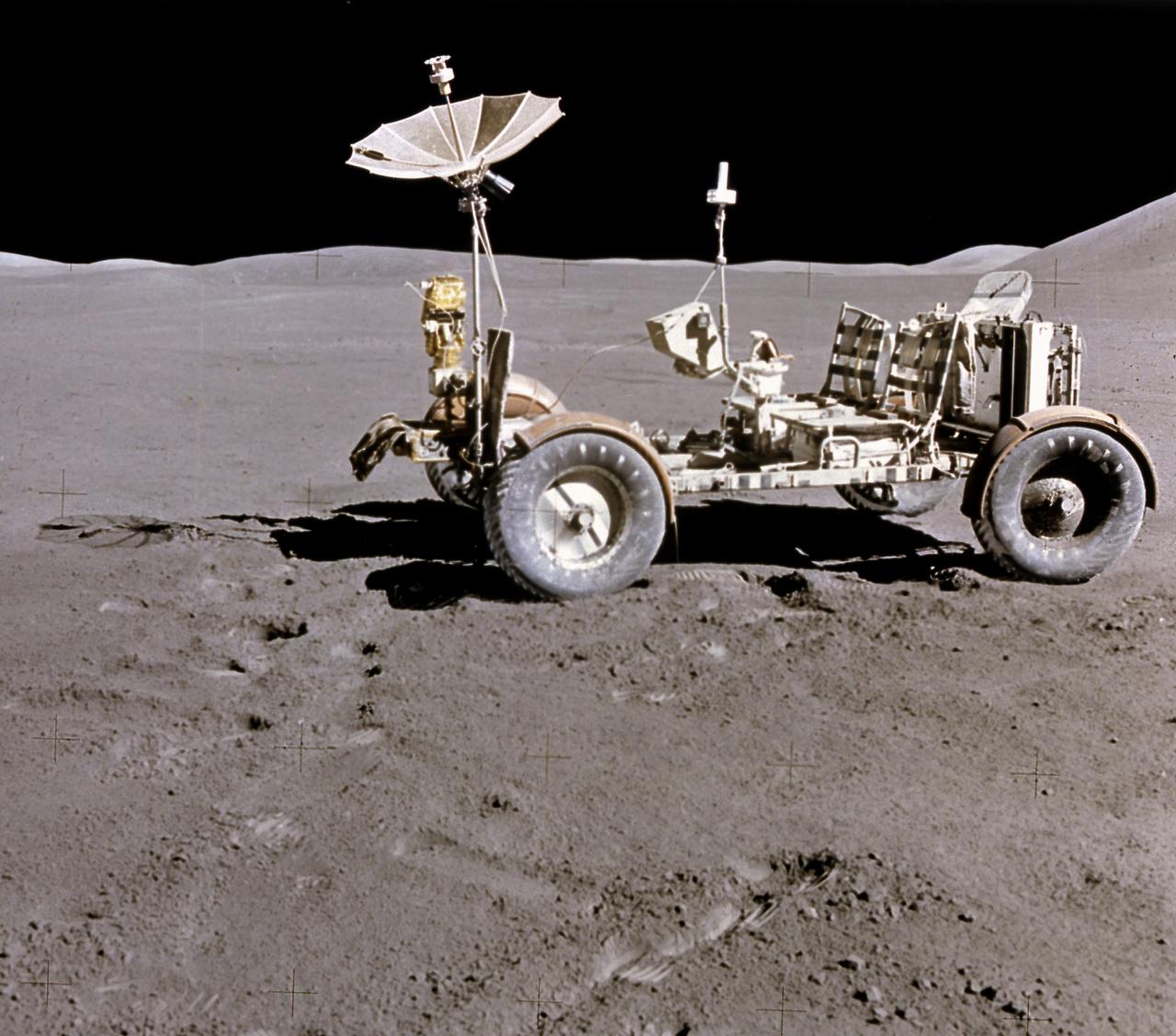
This photograph of the Lunar Roving Vehicle (LRV) was taken during the Apollo 15 mission. Powered by battery, the lightweight electric car greatly increased the range of mobility and productivity on the scientific traverses for astronauts. It weighed 462 pounds (77 pounds on the Moon) and could carry two suited astronauts, their gear and cameras, and several hundred pounds of bagged samples. The LRV's mobility was quite high. It could climb and descend slopes of about 25 degrees. The LRV was designed and developed by the Marshall Space Flight Center and built by the Boeing Company.
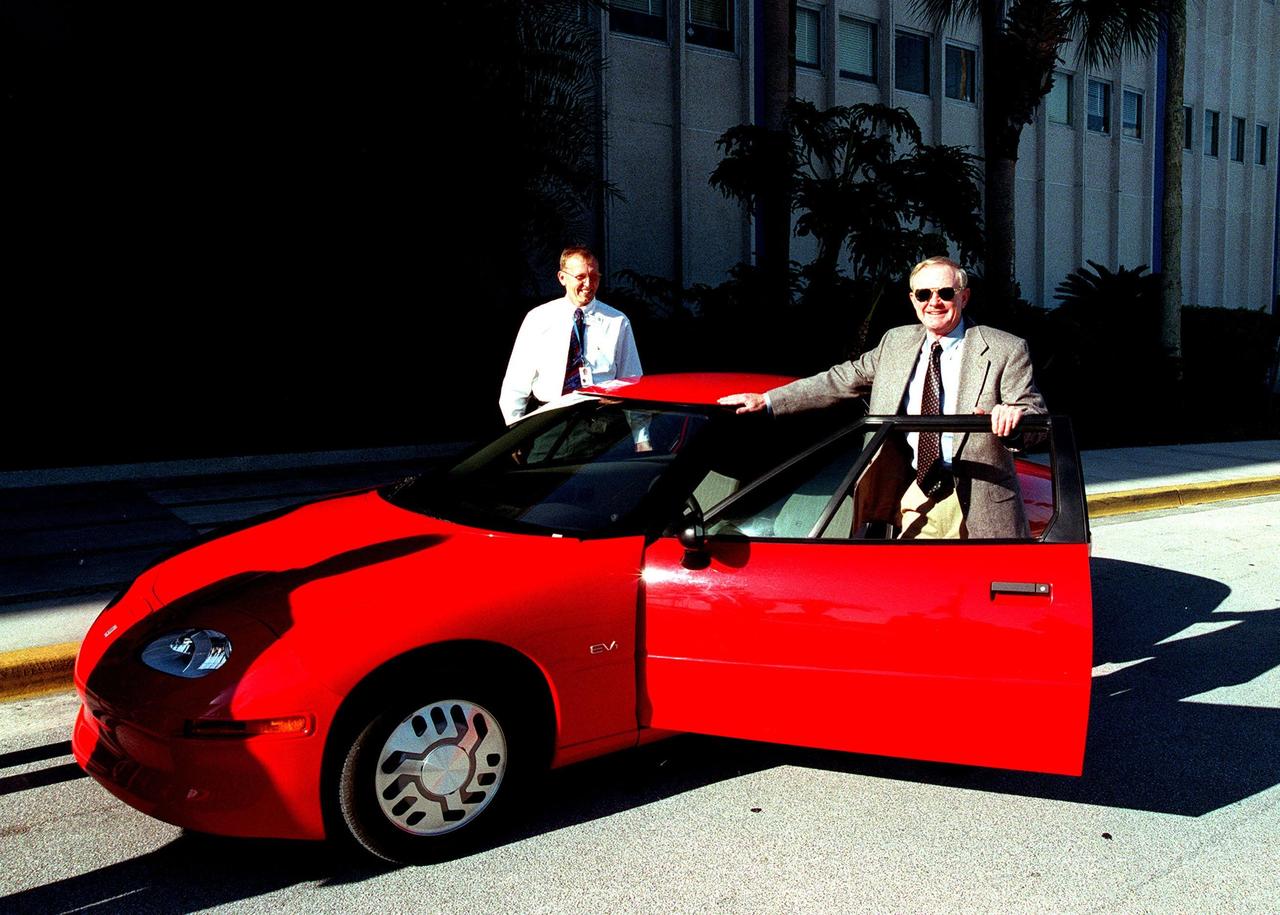
Center Director Roy Bridges (right) gets ready to drive an electric car, provided by Florida Power & Light, to the opening of Environmental and Energy Awareness Week at the Kennedy Space Center Visitor Complex. Exhibits and displays by KSC and 45th Space Wing organizations detail accomplishments in minimizing environmental impacts and conserving resources. They are on view April 19 22 at various sites at KSC, Cape Canaveral Air Station and Patrick Air Force Base
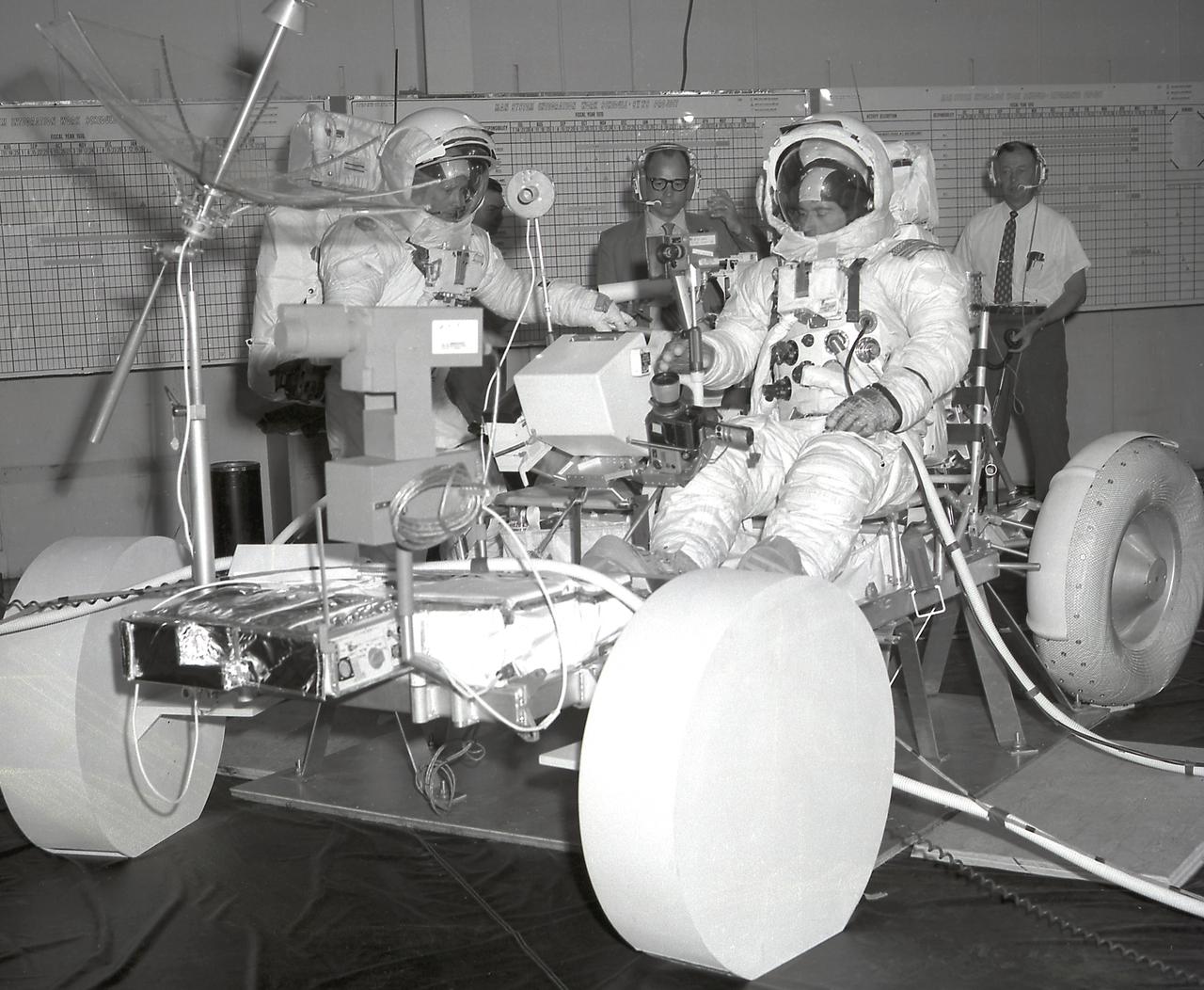
This image depicts the Apollo 16 mission astronauts John Young (right) and Charles Duke (left) in pressure suits during a final crew training on the Lunar Roving Vehicle (LRV) at the Marshall Space Flight Center (MSFC), building 4619. Developed by the MSFC, the LRV was the lightweight electric car designed to increase the range of mobility and productivity of astronauts on the lunar surface. It was used on the last three Apollo missions; Apollo 15, Apollo 16, and Apollo 17.
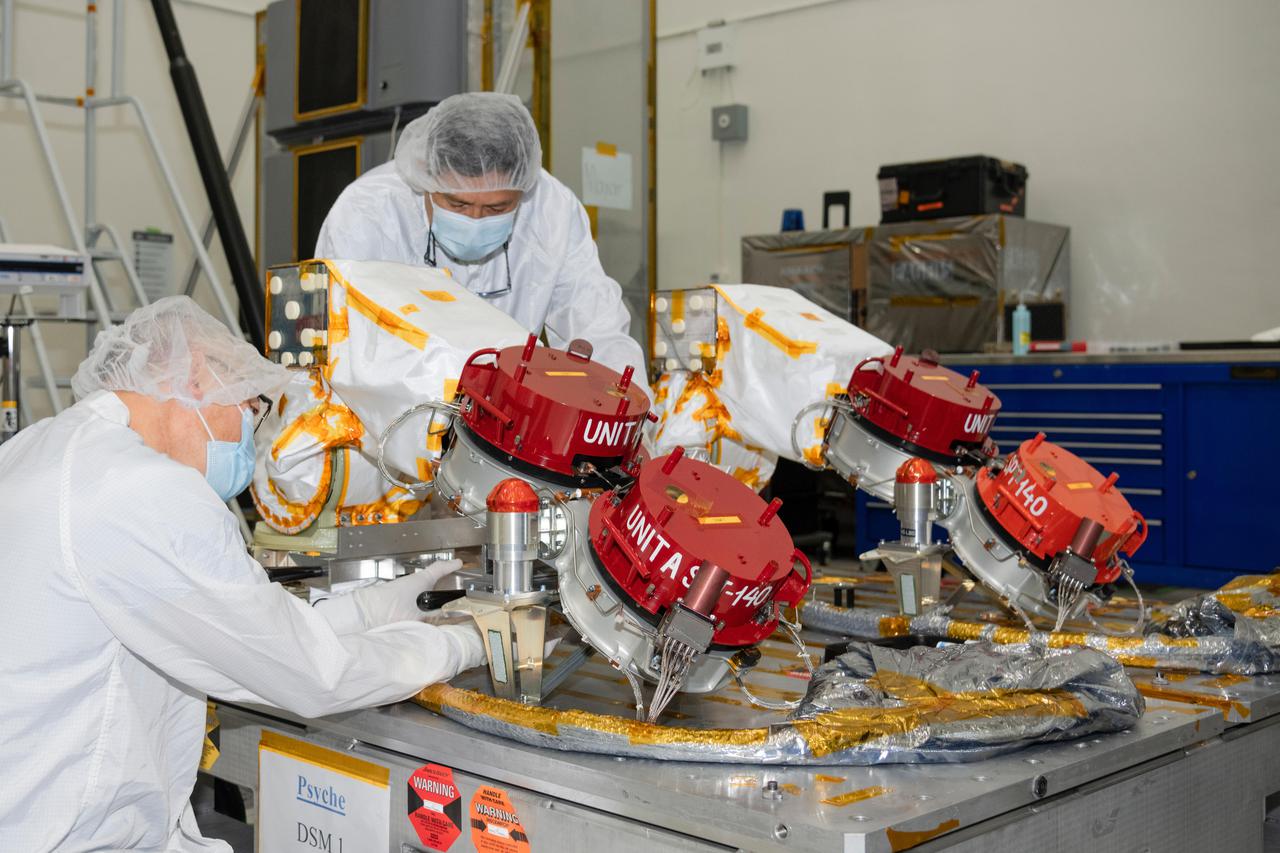
Engineers at NASA's Jet Propulsion Laboratory in Southern California prepare to integrate four Hall thrusters (beneath red protective covers) into the agency's Psyche spacecraft in July 2021. Psyche is set to launch in August 2022 and will travel to its target, a metal-rich asteroid also named Psyche, under the power of solar electric propulsion. This super-efficient mode of propulsion uses solar arrays to capture sunlight that is converted into electricity to power the spacecraft's thrusters. The thrusters work by turning xenon gas, a neutral gas used in car headlights and plasma TVs, into xenon ions. As the xenon ions are accelerated out of the thruster, they create the thrust that will propel the spacecraft. On the Psyche spacecraft, Hall thrusters will be used for the first time beyond lunar orbit, demonstrating that they could play a role in supporting future missions to deep space. https://photojournal.jpl.nasa.gov/catalog/PIA24788
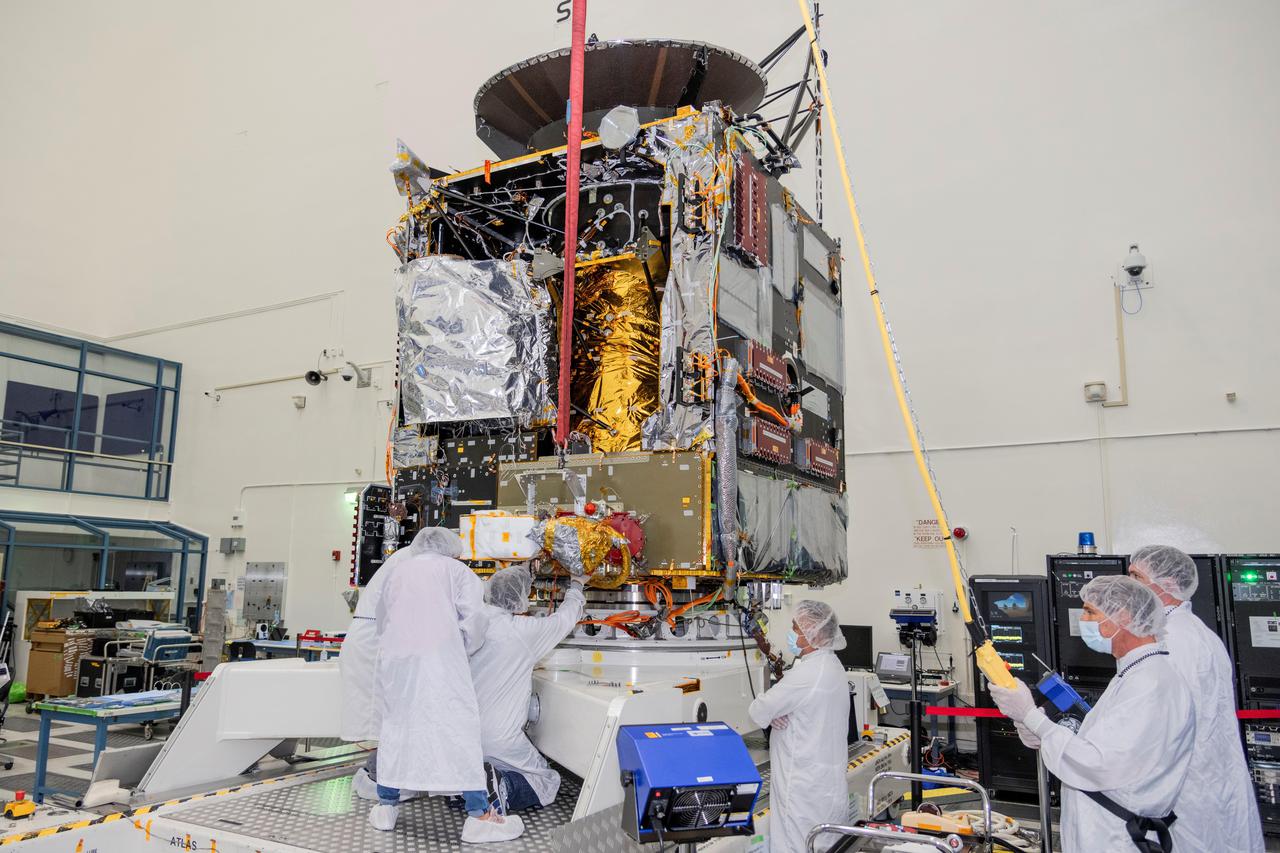
Engineers at NASA's Jet Propulsion Laboratory in Southern California work to integrate Hall thrusters into the agency's Psyche spacecraft in this July 2021 photo. One of the thrusters is visible on the side of the spacecraft beneath a red protective cover. Psyche is set to launch in August 2022 and will travel to its target, a metal-rich asteroid also named Psyche, under the power of solar electric propulsion. This super-efficient mode of propulsion uses solar arrays to capture sunlight that is converted into electricity to power the spacecraft's Hall thrusters. They work by turning xenon gas, a neutral gas used in car headlights and plasma TVs, into xenon ions. As the xenon ions are accelerated out of the thruster, they create the thrust that will propel the spacecraft. This will be the first use of Hall thrusters beyond lunar orbit, demonstrating that they could play a role in supporting future deep space missions. https://photojournal.jpl.nasa.gov/catalog/PIA24789
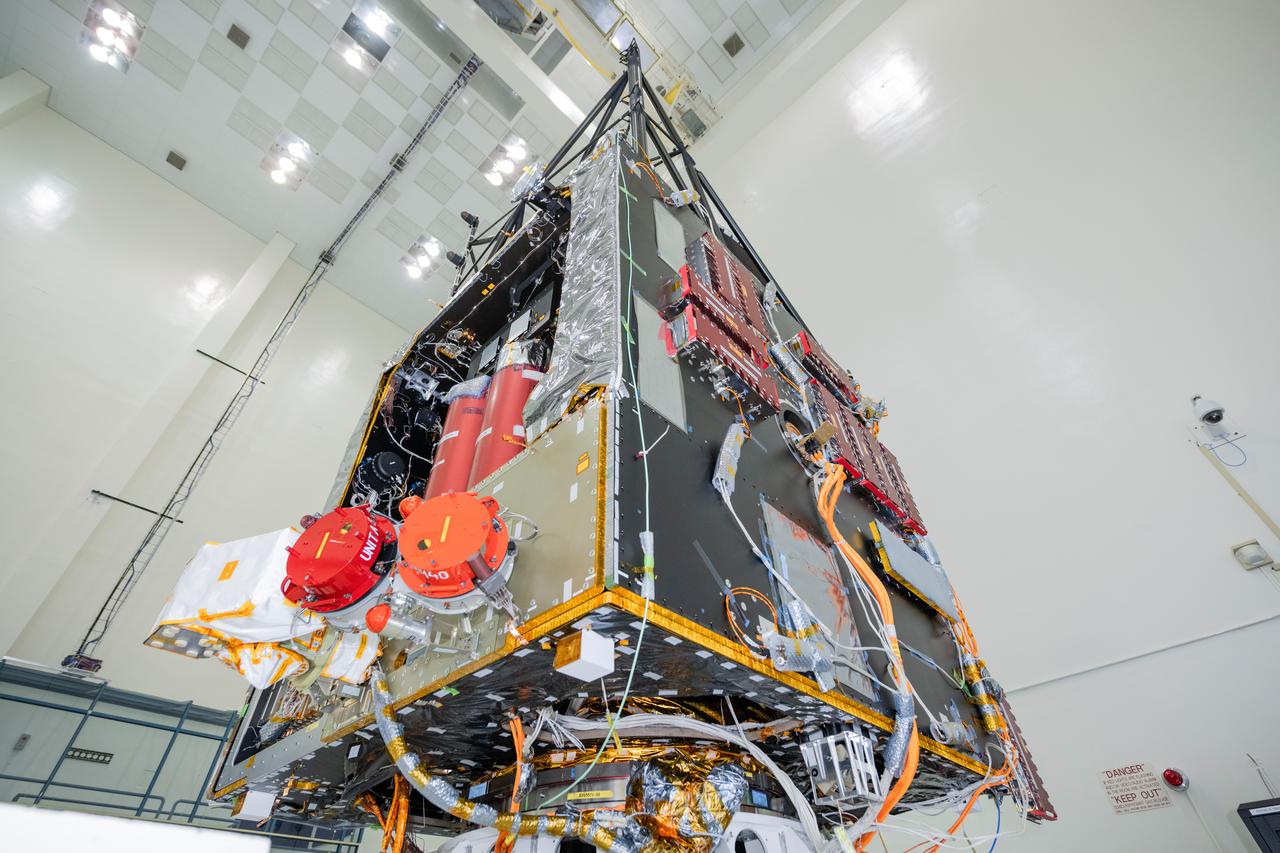
NASA's Psyche spacecraft is photographed in July 2021 during the mission's assembly, test, and launch operations phase at the agency's Jet Propulsion Laboratory in Southern California. Set to launch in August 2022, the spacecraft will use four Hall thrusters to propel itself to the metal-rich asteroid Psyche, using solar electric propulsion. Two thrusters are visible beneath red round protective covers, after being integrated into the spacecraft. Solar arrays on the spacecraft will capture sunlight, which will be converted into electricity to power the Hall thrusters. The thrusters work by turning xenon gas, a neutral gas used in car headlights and plasma TVs, into xenon ions. As the xenon ions are accelerated out of the thruster, they create the thrust that will propel the spacecraft. This will be the first use of Hall thrusters beyond lunar orbit, demonstrating that they could play a role in supporting future deep space missions. https://photojournal.jpl.nasa.gov/catalog/PIA24790
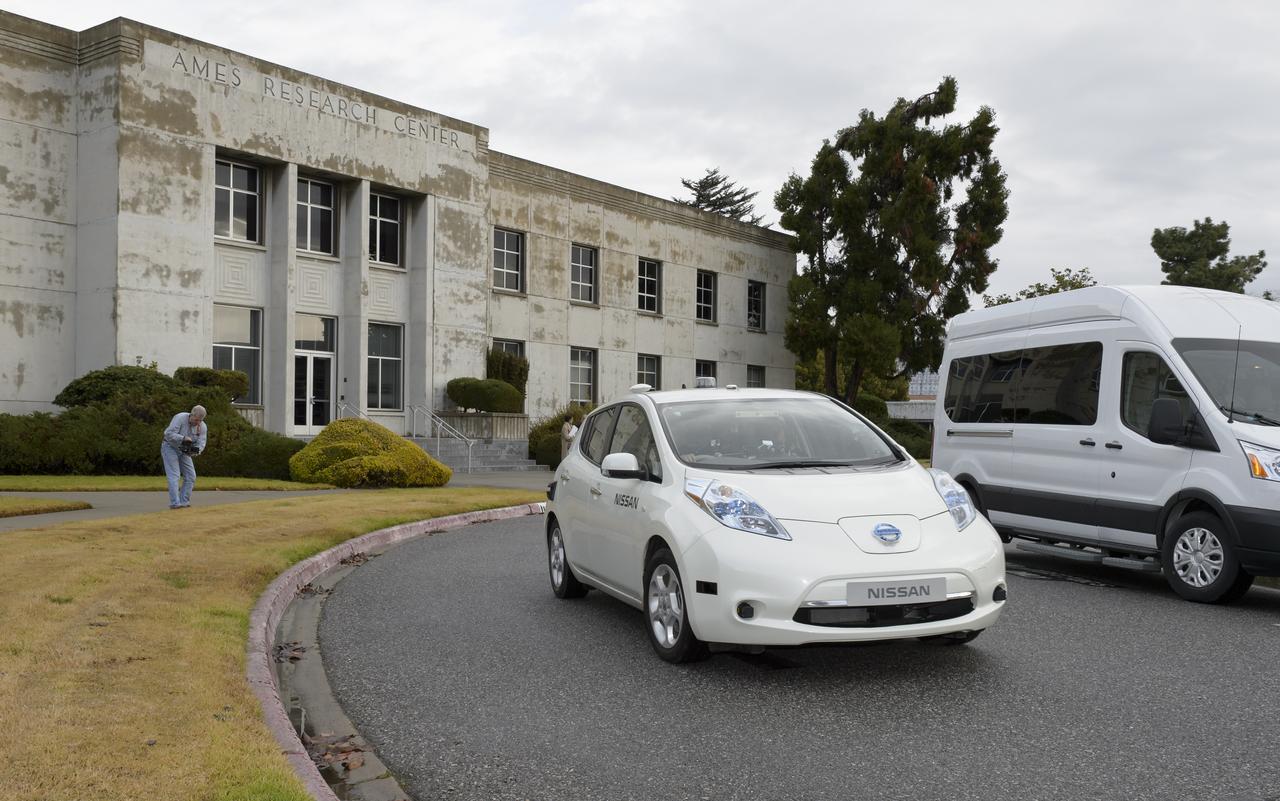
Senior executives from the Renault-Nissan Alliance, including Carlos Ghosn, chairman and CEO of Nissan, and Jose Munoz, chairman of Nissan North America, visited Ames for meetings and a showcase of the technical partnership between NASA and Nissan North America. The partnership allows researchers to develop and test autonomy algorithms, concepts, and integrated prototypes for a variety of vehicular transport applications – from rovers to self-driving cars. After briefings, a group take a ride in the autonomous vehicle to observed testing of Nissan’s all-electric LEAF as it performed safe autonomous drives across the center.
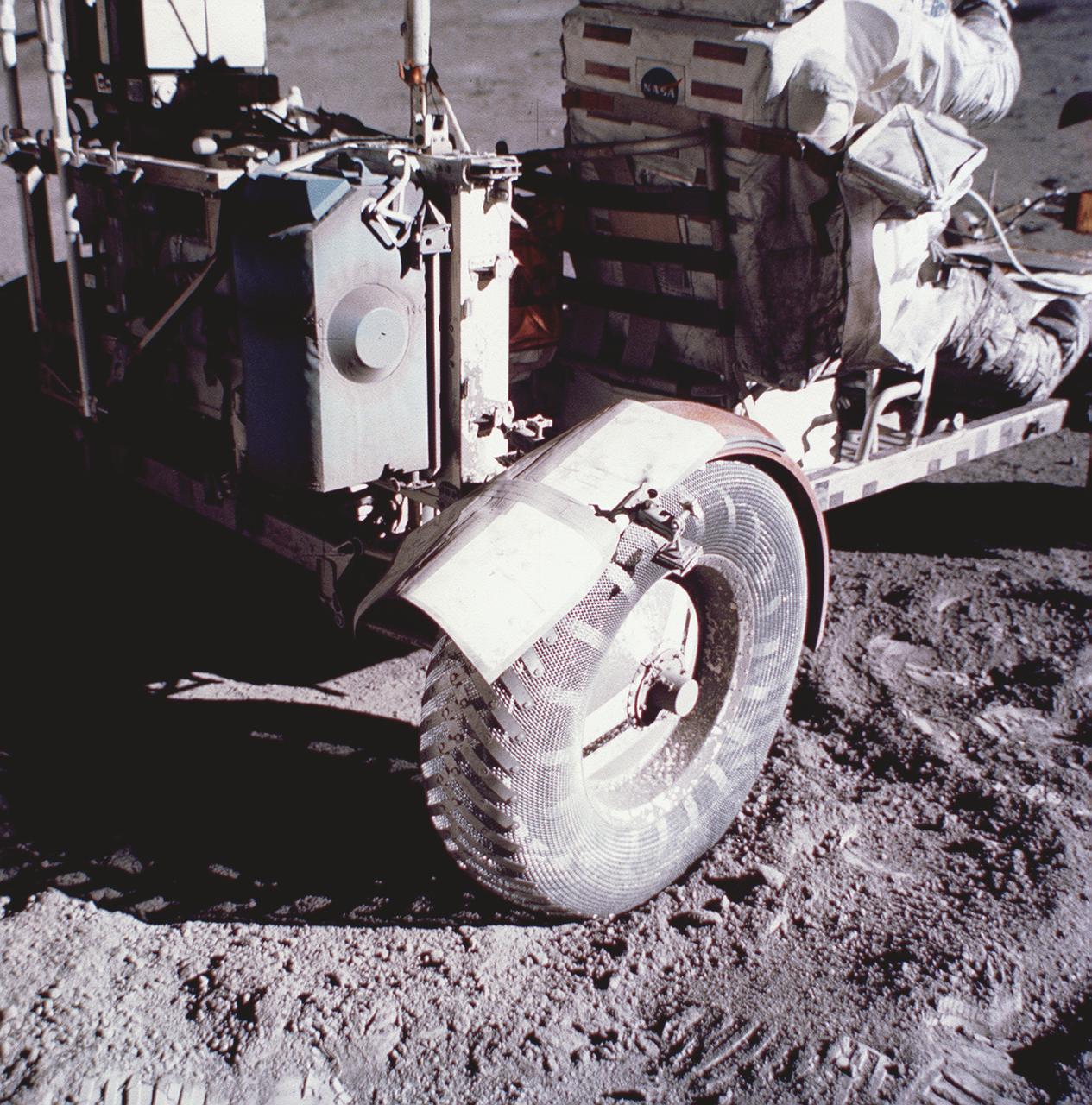
This photograph taken during the Apollo 17 mission (the last mission of the Apollo Program), depicts stiff plasticized maps being taped together and fastened by clamps to patch a broken fender of the Lunar Roving Vehicle (LRV). Powered by battery, the lightweight electric car greatly increased the range of mobility and productivity on the scientific traverses for astronauts. It weighed 462 pounds (77 pounds on the Moon) and could carry two suited astronauts, their gear and cameras, and several hundred pounds of bagged samples. The LRV's mobility was quite high. It could climb and descend slopes of about 25 degrees. The LRV was designed and developed by the Marshall Space Flight Center and built by the Boeing Company.
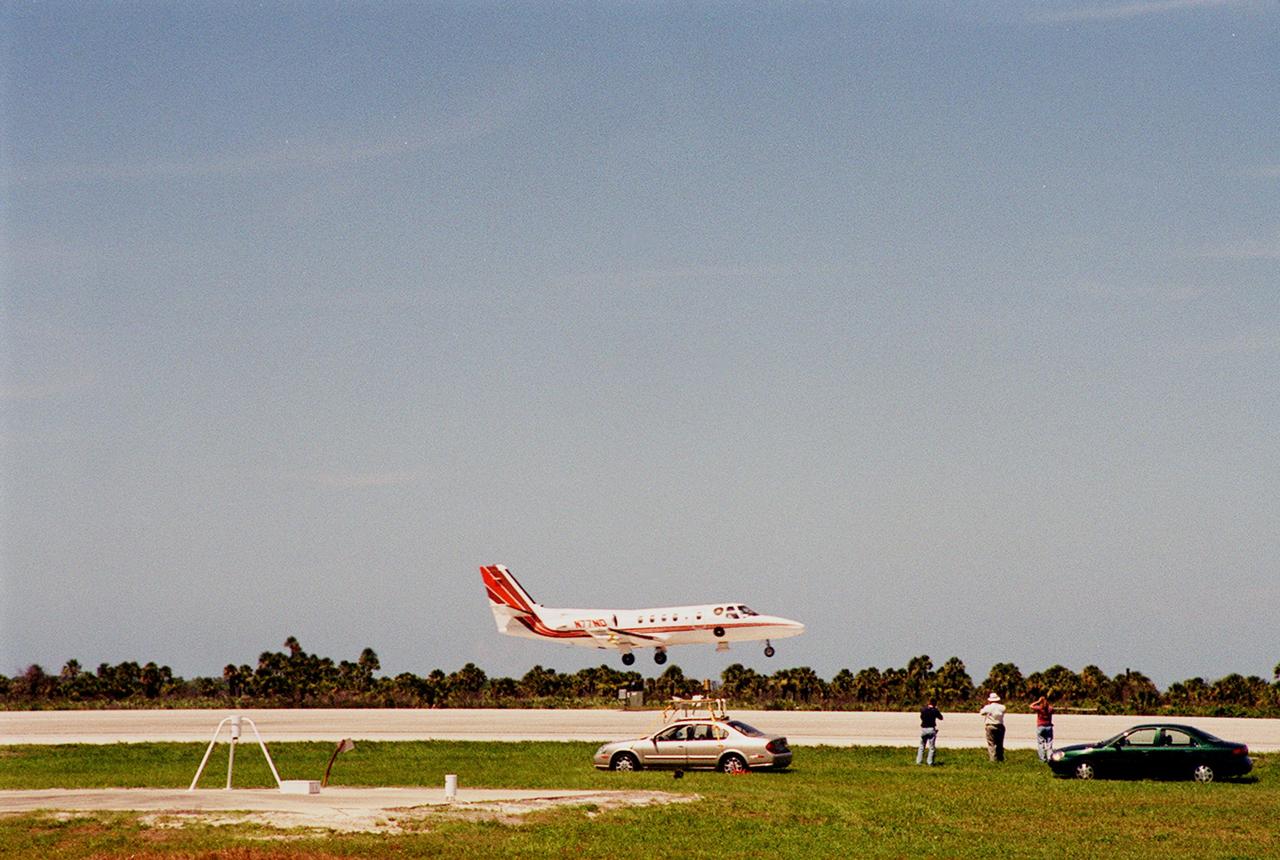
KENNEDY SPACE CENTER, FLA. -- At KSC's Shuttle Landing Facility, a specially equipped Cessna Citation aircraft flies over the runway to calibrate the Cesna's field mills with field mills on the ground (on the tripod at left) and on the car parked nearby (at center). Field mills measure electric fields. The aircraft is also equipped with cloud physics probes that measure the size, shape and number of ice and water particles in clouds. The plane is being flown into anvil clouds in the KSC area as part of a study to review and possibly modify lightning launch commit criteria. The weather study could lead to improved lightning avoidance rules and fewer launch scrubs for the Space Shuttle and other launch vehicles on the Eastern and Western ranges.
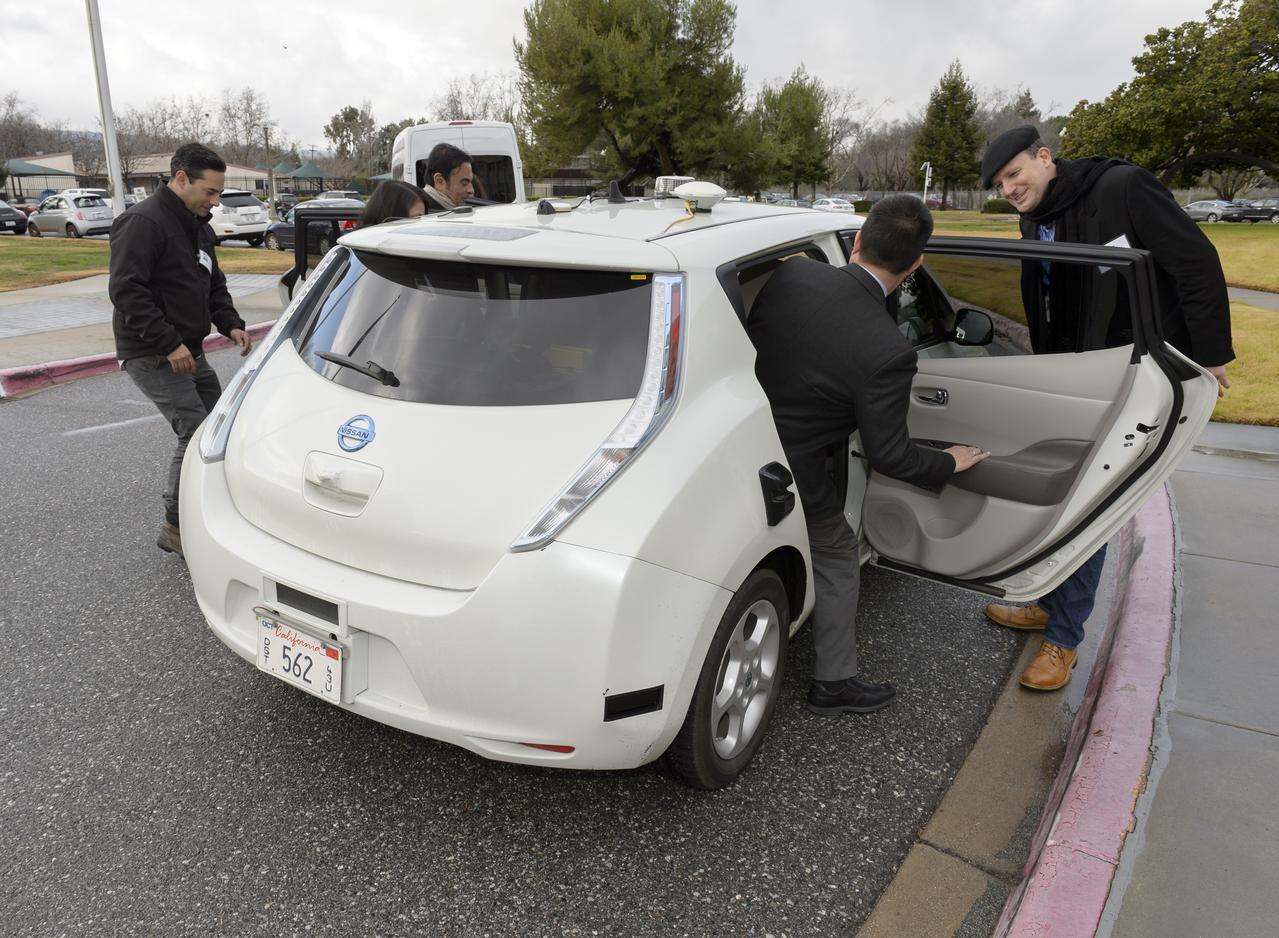
Senior executives from the Renault-Nissan Alliance, including Carlos Ghosn, chairman and CEO of Nissan, and Jose Munoz, chairman of Nissan North America, visited Ames for meetings and a showcase of the technical partnership between NASA and Nissan North America. The partnership allows researchers to develop and test autonomy algorithms, concepts, and integrated prototypes for a variety of vehicular transport applications – from rovers to self-driving cars. After briefings, a company of including Eugene Tu, Ames Center Director andLiam Pedersen, Nissan on right Carlos Ghosn, CE, Nissan on left climb into in the autonomous vehicle to observed testing of Nissan’s all-electric LEAF as it performed safe autonomous drives across the center.
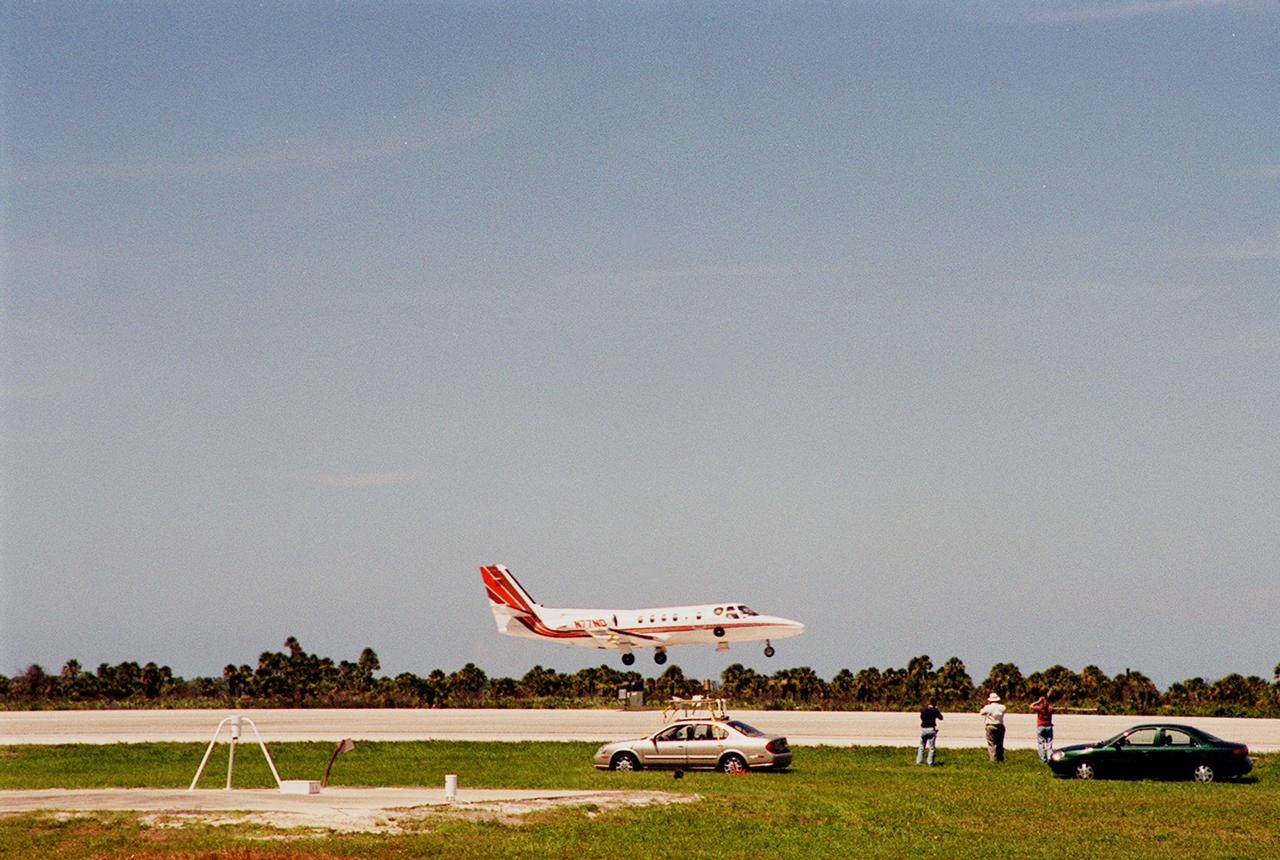
KENNEDY SPACE CENTER, FLA. -- At KSC's Shuttle Landing Facility, a specially equipped Cessna Citation aircraft flies over the runway to calibrate the Cesna's field mills with field mills on the ground (on the tripod at left) and on the car parked nearby (at center). Field mills measure electric fields. The aircraft is also equipped with cloud physics probes that measure the size, shape and number of ice and water particles in clouds. The plane is being flown into anvil clouds in the KSC area as part of a study to review and possibly modify lightning launch commit criteria. The weather study could lead to improved lightning avoidance rules and fewer launch scrubs for the Space Shuttle and other launch vehicles on the Eastern and Western ranges.
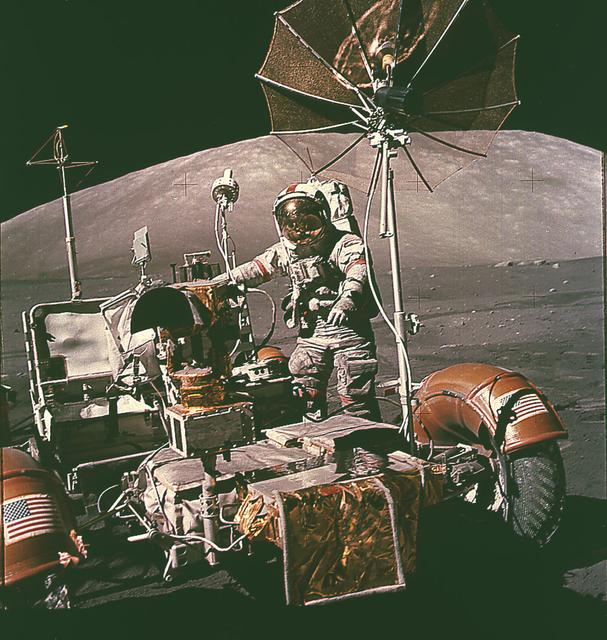
This is an Apollo 17 onboard photo of an astronaut beside the Lunar Roving Vehicle (LRV) on the lunar surface. Designed and developed by the Marshall Space Flight Center and built by the Boeing Company, the LRV was first used on the Apollo 15 mission and increased the range of astronauts' mobility and productivity on the lunar surface. This lightweight electric car had battery power sufficient for about 55 miles. It weighed 462 pounds (77 pounds on the Moon) and could carry two suited astronauts, their gear, cameras, and several hundred pounds of bagged samples. The LRV's mobility was quite high. It could climb and descend slopes of about 25 degrees.
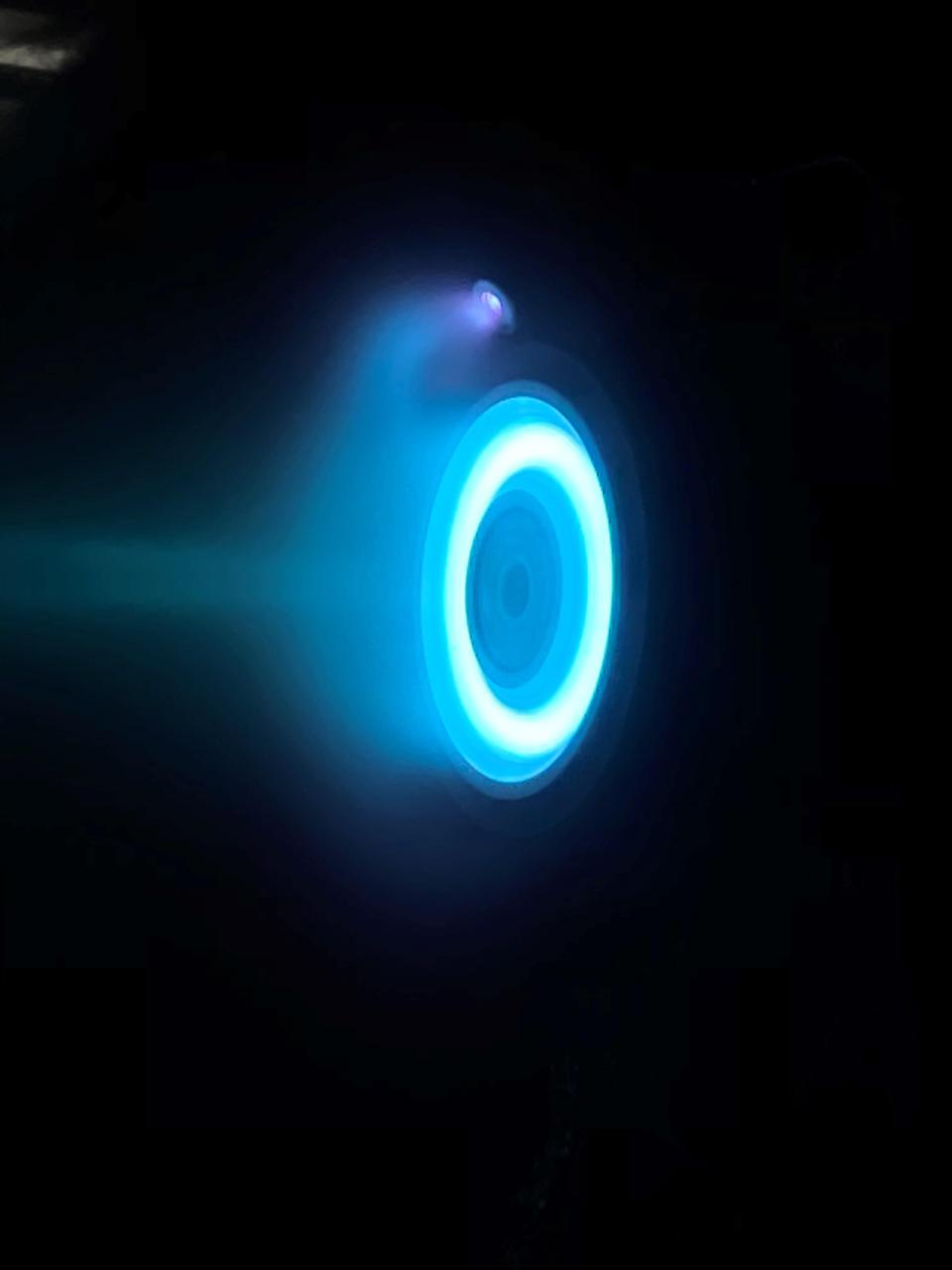
NASA's Psyche spacecraft, set to launch in August 2022, will travel to its target in the main asteroid belt between Mars and Jupiter under the power of super-efficient electric propulsion. This photo captures an operating electric Hall thruster identical to those that will be used to propel the Psyche spacecraft. This photo was taken at NASA's Jet Propulsion Laboratory in Southern California on May 20, 2020 with an iPhone, through the thick window of a vacuum chamber used to simulate the environment of deep space. The thruster works by turning xenon gas, a neutral gas used in car headlights and plasma TVs, into xenon ions. As the xenon ions are accelerated out of the thruster, they create the thrust that will propel the spacecraft. The xenon plasma emits a blue glow, seen here, as it operates. An observer in space traveling behind Psyche would see the blue glow of plasma trailing behind the spacecraft. Solar arrays will provide the electricity that powers the thrusters. Hall thrusters will be used for the first time beyond lunar orbit, demonstrating that they could play a role in supporting future missions to deep space. https://photojournal.jpl.nasa.gov/catalog/PIA23879
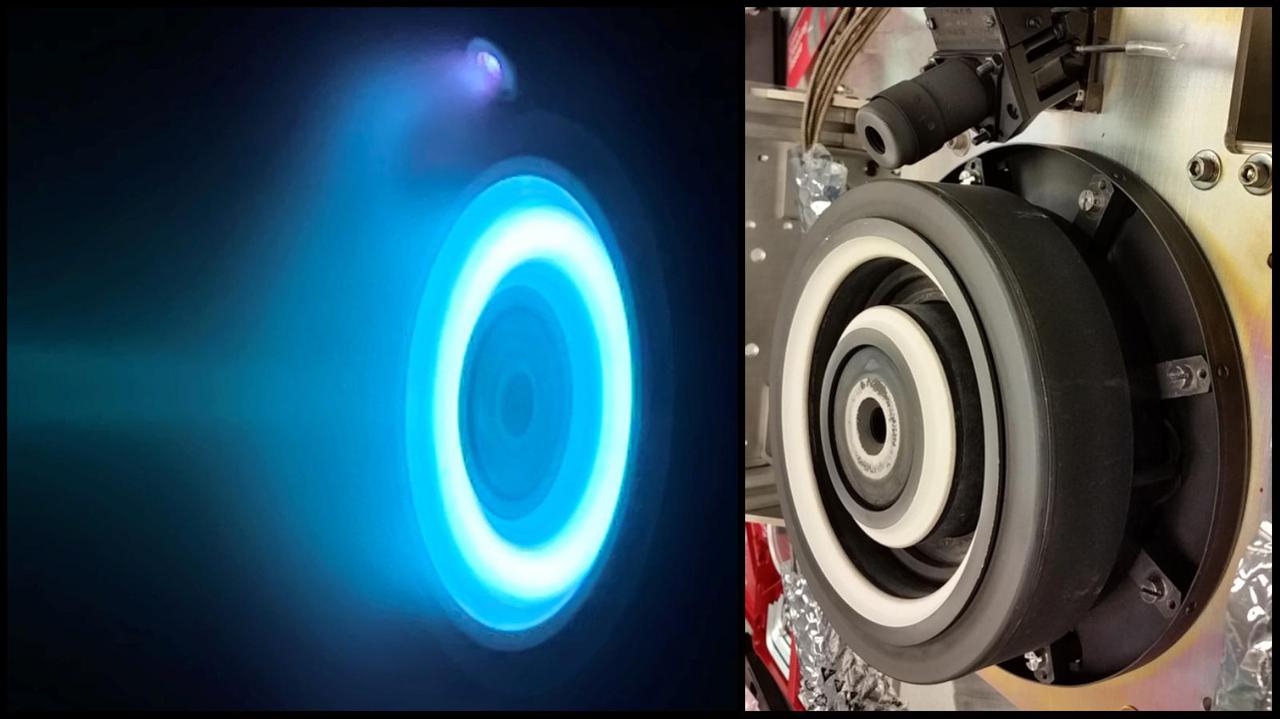
The photo on the left captures an operating electric Hall thruster identical to those that will propel NASA's Psyche spacecraft, which is set to launch in August 2022 and travel to the main asteroid belt between Mars and Jupiter. The xenon plasma emits a blue glow as the thruster operates. The photo on the right shows a similar non-operating Hall thruster. The photo on the left was taken at NASA's Jet Propulsion Laboratory in Southern California; the photo on the right was taken at NASA's Glenn Research Center. Psyche's Hall thrusters will be the first to be used beyond lunar orbit, demonstrating that they could play a role in supporting future missions to deep space. The spacecraft is set to launch in August 2022 and will travel to its target, a metal-rich asteroid also named Psyche, under the power of solar electric propulsion. This super-efficient mode of propulsion uses solar arrays to capture sunlight that is converted into electricity to power the spacecraft's thrusters. The thrusters work by turning xenon gas, a neutral gas used in car headlights and plasma TVs, into xenon ions. As the xenon ions are accelerated out of the thruster, they create the thrust that will propel the spacecraft. https://photojournal.jpl.nasa.gov/catalog/PIA24030
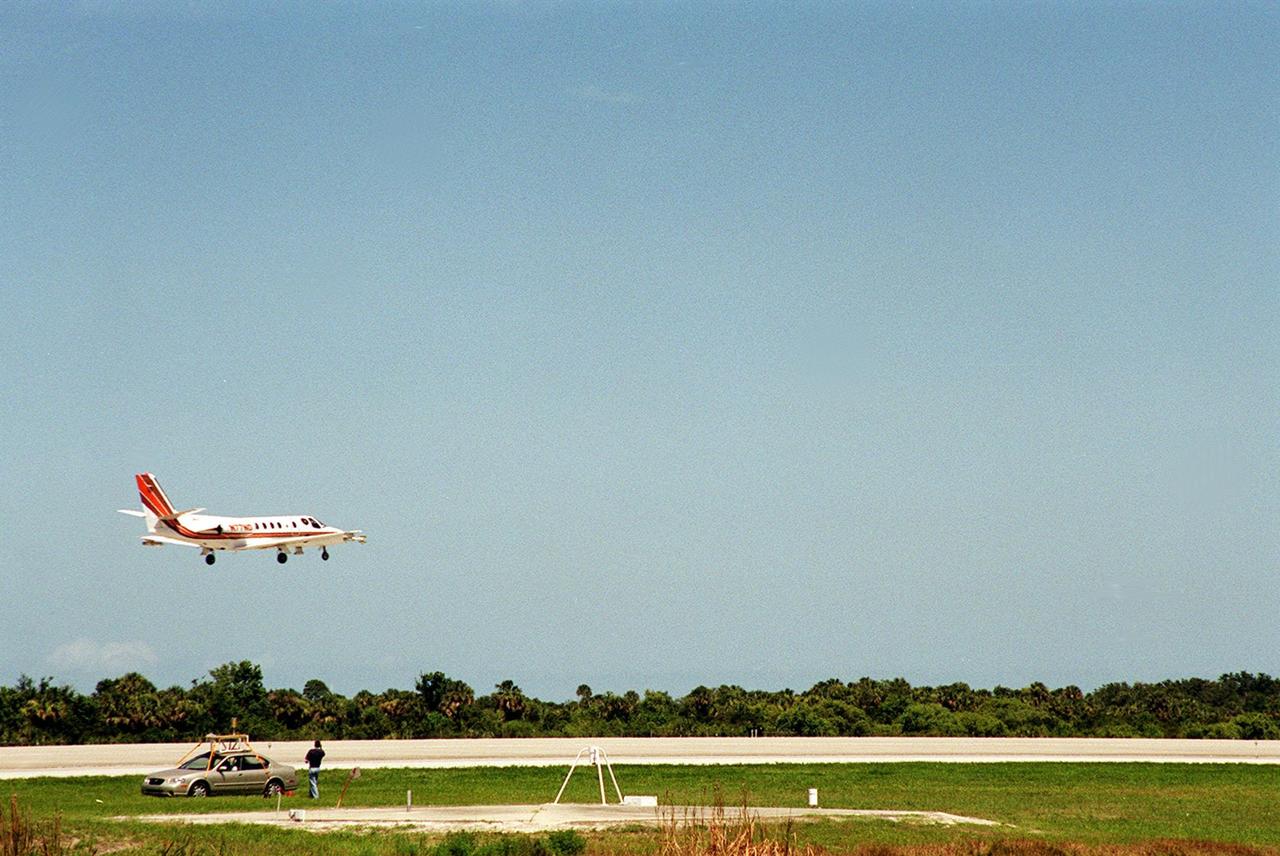
At KSC’s Shuttle Landing Facility, a specially equipped Cessna Citation aircraft approaches the runway to calibrate the Cessna’s field mills with field mills on the ground (on the tripod at left) and on the car parked nearby (at right). Field mills measure electric fields. The aircraft is also equipped with cloud physics probes that measure the size, shape and number of ice and water particles in clouds. The plane is being flown into anvil clouds in the KSC area as part of a study to review and possibly modify lightning launch commit criteria. The weather study could lead to improved lightning avoidance rules and fewer launch scrubs for the Space Shuttle and other launch vehicles on the Eastern and Western ranges.; More information on this study can be found in <a href="http://www-pao.ksc.nasa.gov/kscpao/release/2000/56-00.htm">Release No. 56-00</a>
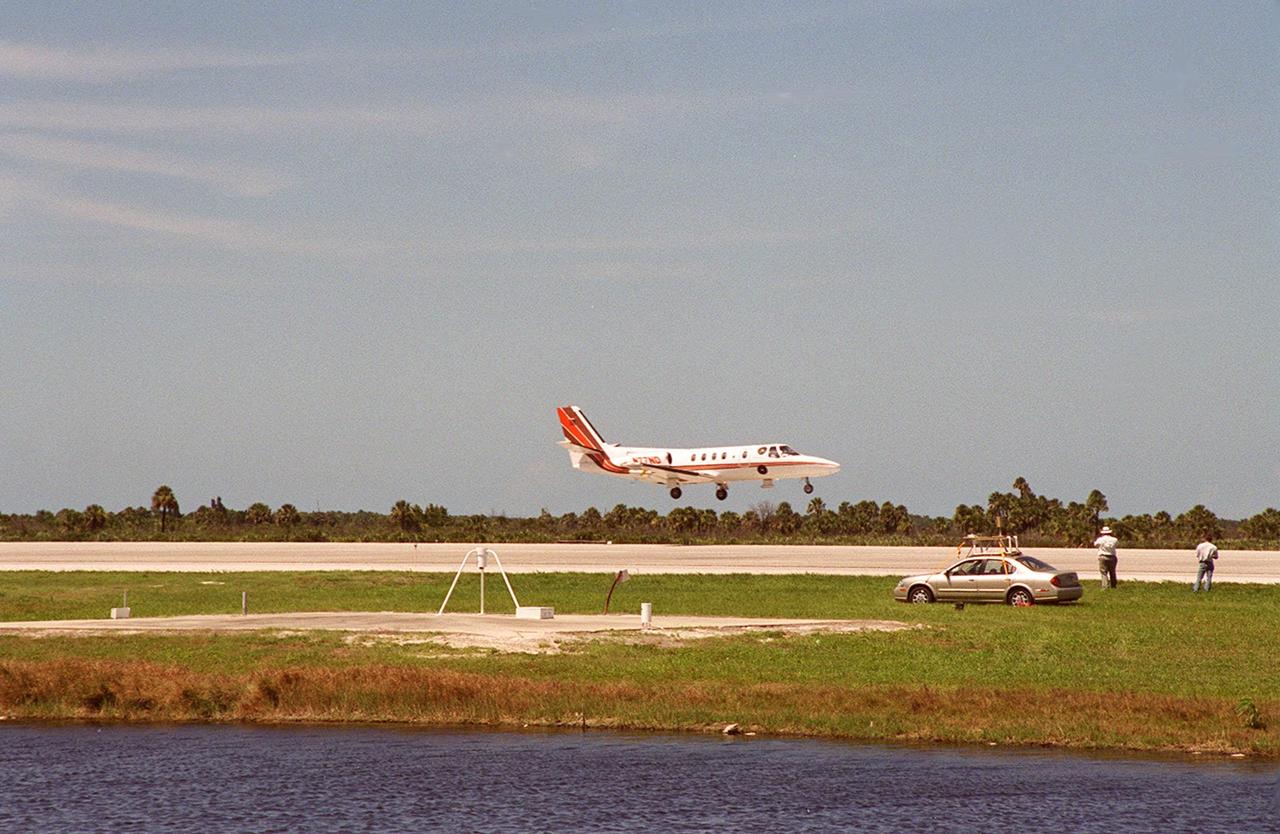
At KSC’s Shuttle Landing Facility, a specially equipped Cessna Citation aircraft flies over the runway to calibrate the Cessna’s field mills with field mills on the ground (on the tripod at left) and on the car parked nearby (at right). Field mills measure electric fields. The aircraft is also equipped with cloud physics probes that measure the size, shape and number of ice and water particles in clouds. The plane is being flown into anvil clouds in the KSC area as part of a study to review and possibly modify lightning launch commit criteria. The weather study could lead to improved lightning avoidance rules and fewer launch scrubs for the Space Shuttle and other launch vehicles on the Eastern and Western ranges.; More information about this study can be found in <a href="http://www-pao.ksc.nasa.gov/kscpao/release/2000/56-00.htm">Release No. 56-00</a>
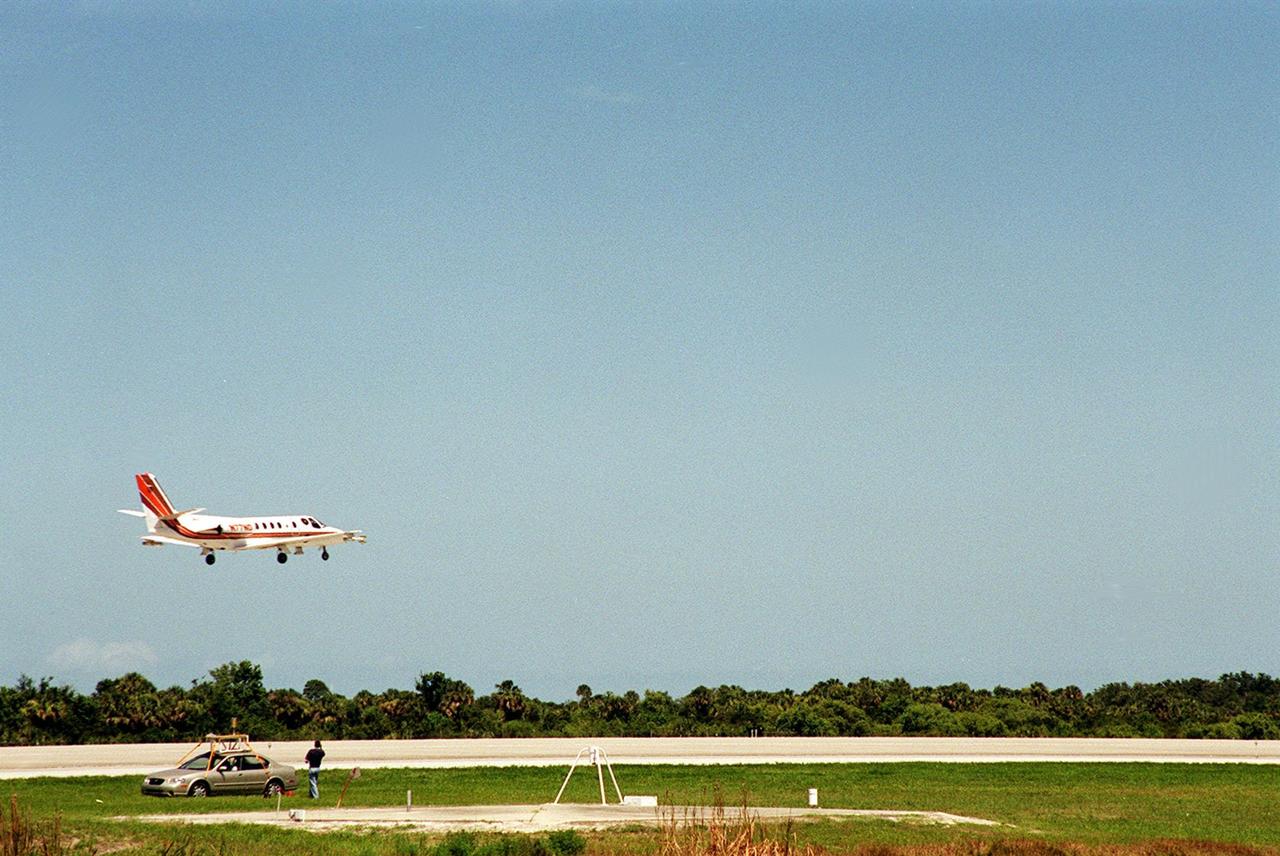
At KSC’s Shuttle Landing Facility, a specially equipped Cessna Citation aircraft approaches the runway to calibrate the Cessna’s field mills with field mills on the ground (on the tripod at left) and on the car parked nearby (at right). Field mills measure electric fields. The aircraft is also equipped with cloud physics probes that measure the size, shape and number of ice and water particles in clouds. The plane is being flown into anvil clouds in the KSC area as part of a study to review and possibly modify lightning launch commit criteria. The weather study could lead to improved lightning avoidance rules and fewer launch scrubs for the Space Shuttle and other launch vehicles on the Eastern and Western ranges.; More information on this study can be found in <a href="http://www-pao.ksc.nasa.gov/kscpao/release/2000/56-00.htm">Release No. 56-00</a>
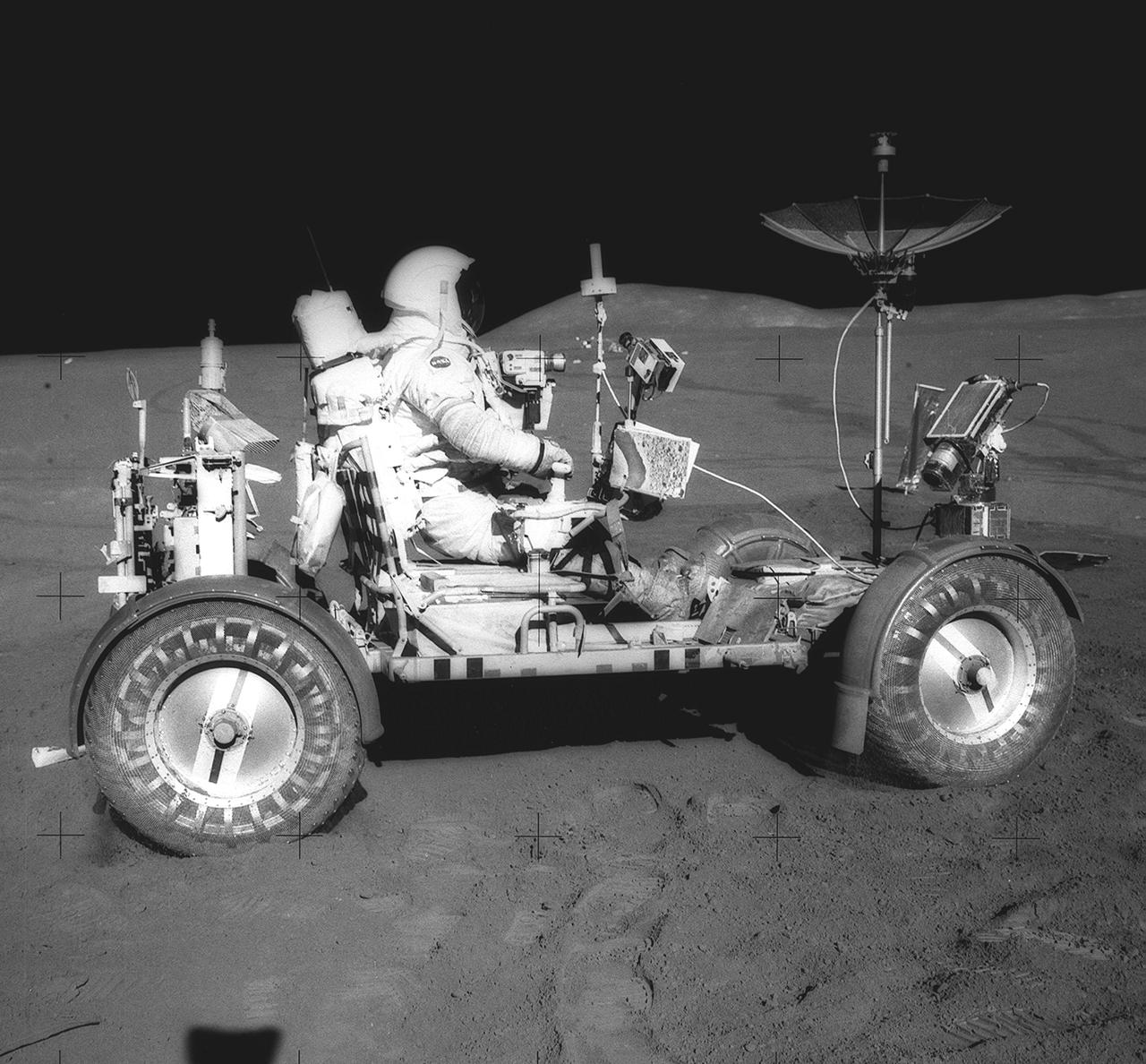
This photograph was taken during the Apollo 15 mission on the lunar surface. Astronaut David R. Scott waits in the Lunar Roving Vehicle (LRV) for astronaut James Irwin for the return trip to the Lunar Module, Falcon, with rocks and soil collected near the Hadley-Apernine landing site. The Apollo 15 was the first mission to use the LRV. Powered by battery, the lightweight electric car greatly increased the range of mobility and productivity on the scientific traverses for astronauts. It weighed 462 pounds (77 pounds on the Moon) and could carry two suited astronauts, their gear and cameras, and several hundred pounds of bagged samples. The LRV's mobility was quite high. It could climb and descend slopes of about 25 degrees. The LRV was designed and developed by the Marshall Space Flight Center and built by the Boeing Company.
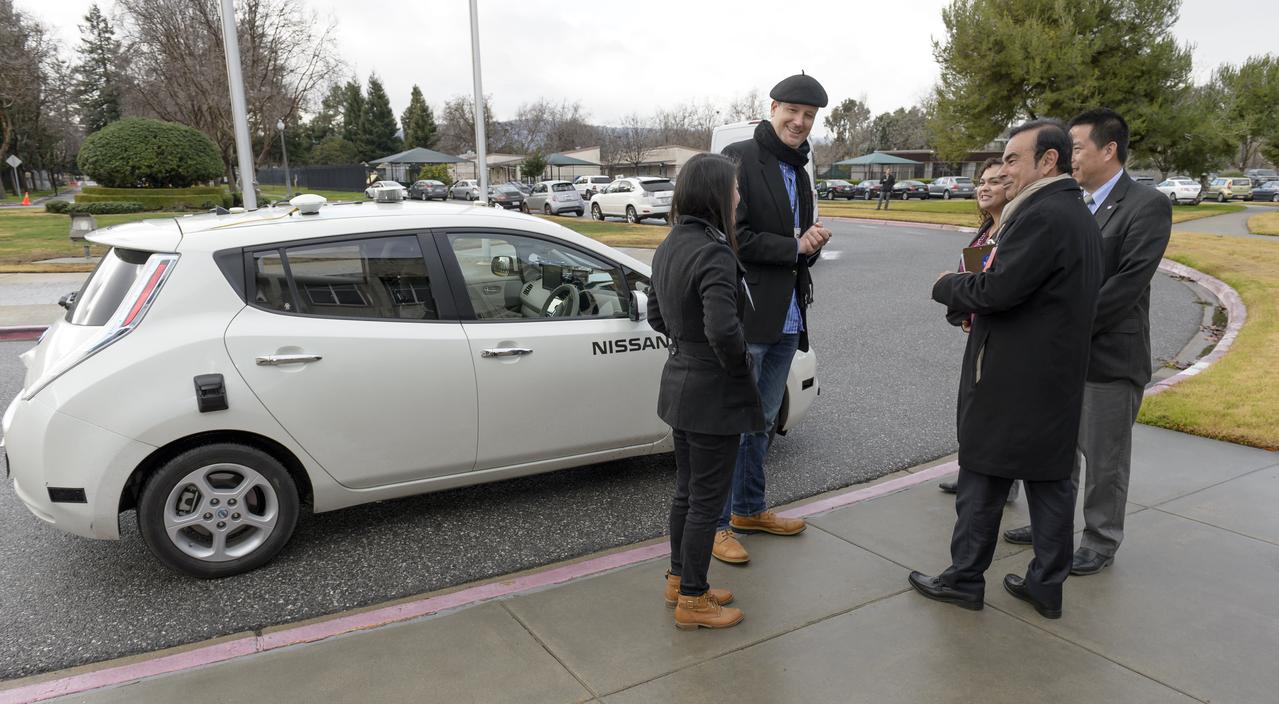
Senior executives from the Renault-Nissan Alliance, including Carlos Ghosn, chairman and CEO of Nissan, and Jose Munoz, chairman of Nissan North America, visited Ames for meetings and a showcase of the technical partnership between NASA and Nissan North America. The partnership allows researchers to develop and test autonomy algorithms, concepts, and integrated prototypes for a variety of vehicular transport applications – from rovers to self-driving cars. After briefings, the group on left from left to right Kathy Sun and Liam Pedersen, Nissan and on right from front to back Carlos Ghosn, CE, Nissan chatted before taking a ride in the autonomous vehicle to observed testing of Nissan’s all-electric LEAF as it performed safe autonomous drives across the center.
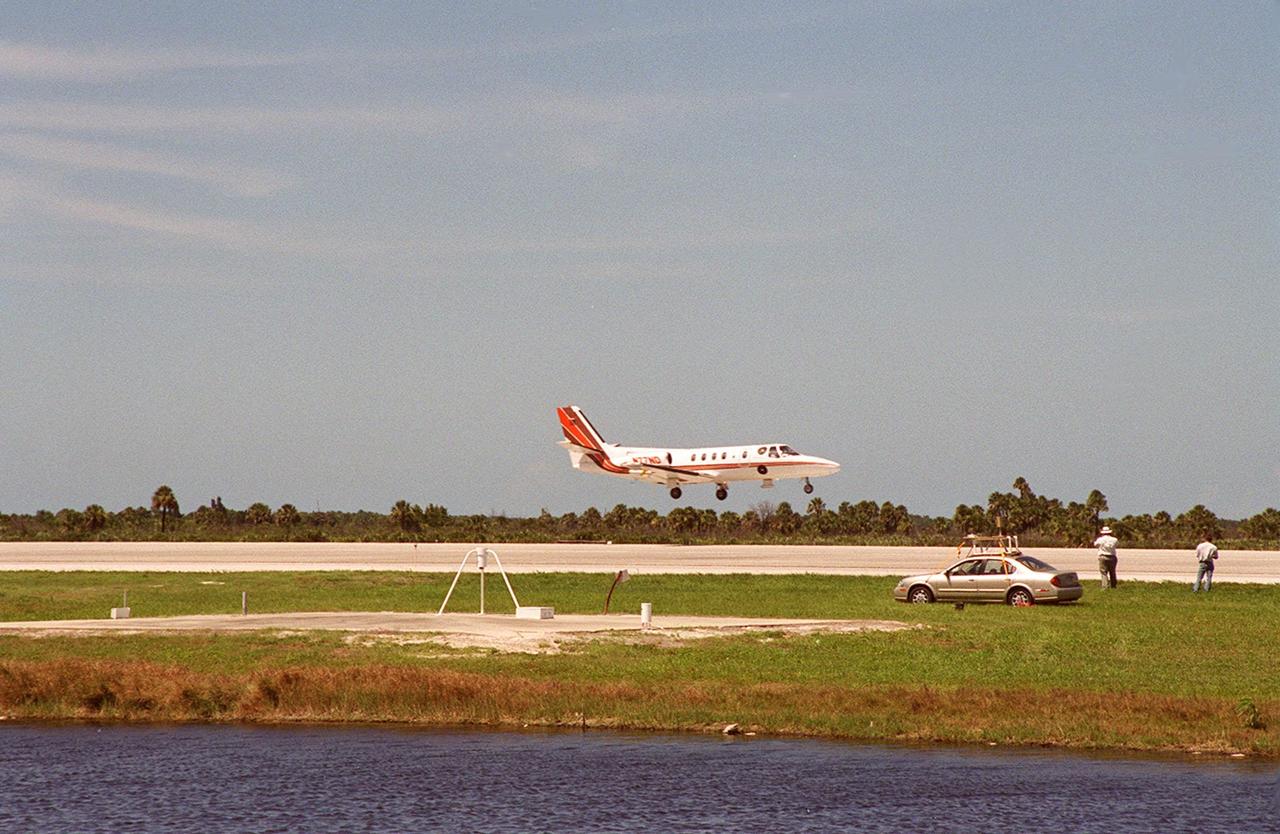
At KSC’s Shuttle Landing Facility, a specially equipped Cessna Citation aircraft flies over the runway to calibrate the Cessna’s field mills with field mills on the ground (on the tripod at left) and on the car parked nearby (at right). Field mills measure electric fields. The aircraft is also equipped with cloud physics probes that measure the size, shape and number of ice and water particles in clouds. The plane is being flown into anvil clouds in the KSC area as part of a study to review and possibly modify lightning launch commit criteria. The weather study could lead to improved lightning avoidance rules and fewer launch scrubs for the Space Shuttle and other launch vehicles on the Eastern and Western ranges.; More information about this study can be found in <a href="http://www-pao.ksc.nasa.gov/kscpao/release/2000/56-00.htm">Release No. 56-00</a>
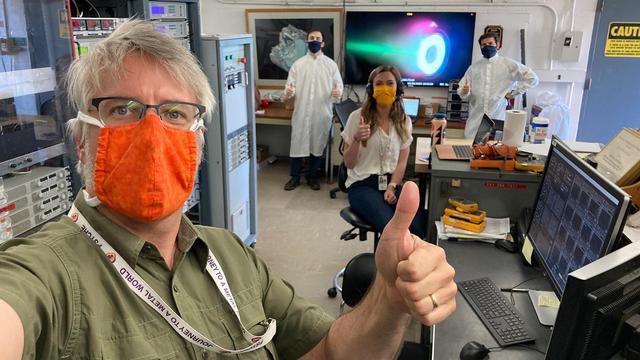
Psyche engineers adapted to COVID-19 social distancing and masking requirements while testing the Hall thrusters that will propel NASA's Psyche spacecraft on its journey to the main asteroid belt between Mars and Jupiter. Set to launch in August 2022, the spacecraft will utilize this super-efficient electric propulsion system to travel to the asteroid Psyche. On May 20, 2020, at NASA's Jet Propulsion Laboratory, Flight System Engineer Steve Snyder (foreground) of JPL and a crew of engineers from Maxar Technologies worked together in the control room next to the vacuum chamber where the thruster was fired up. Snyder and his Maxar colleagues (from left: Faraz Aghazadeh, Taylor Kerl and Giovanni Lenguito) put the thruster and its power supply through a series of stress tests to ensure they can operate together in the extreme conditions of deep space. In the background, a monitor projects the image of the thruster firing. The thruster works by turning xenon gas, a neutral gas used in car headlights and plasma TVs, into xenon ions. As the xenon ions are accelerated out of the thruster, they create the thrust that will propel the spacecraft. The xenon plasma emits a blue glow, seen here on the screen, as it operates. Hall thrusters will be used for the first time beyond lunar orbit, demonstrating that they could play a role in supporting future missions to deep space. Maxar and JPL adapted the Hall thruster system for use with the main body of the spacecraft that Maxar is building at its facility in Palo Alto, California. https://photojournal.jpl.nasa.gov/catalog/PIA23878