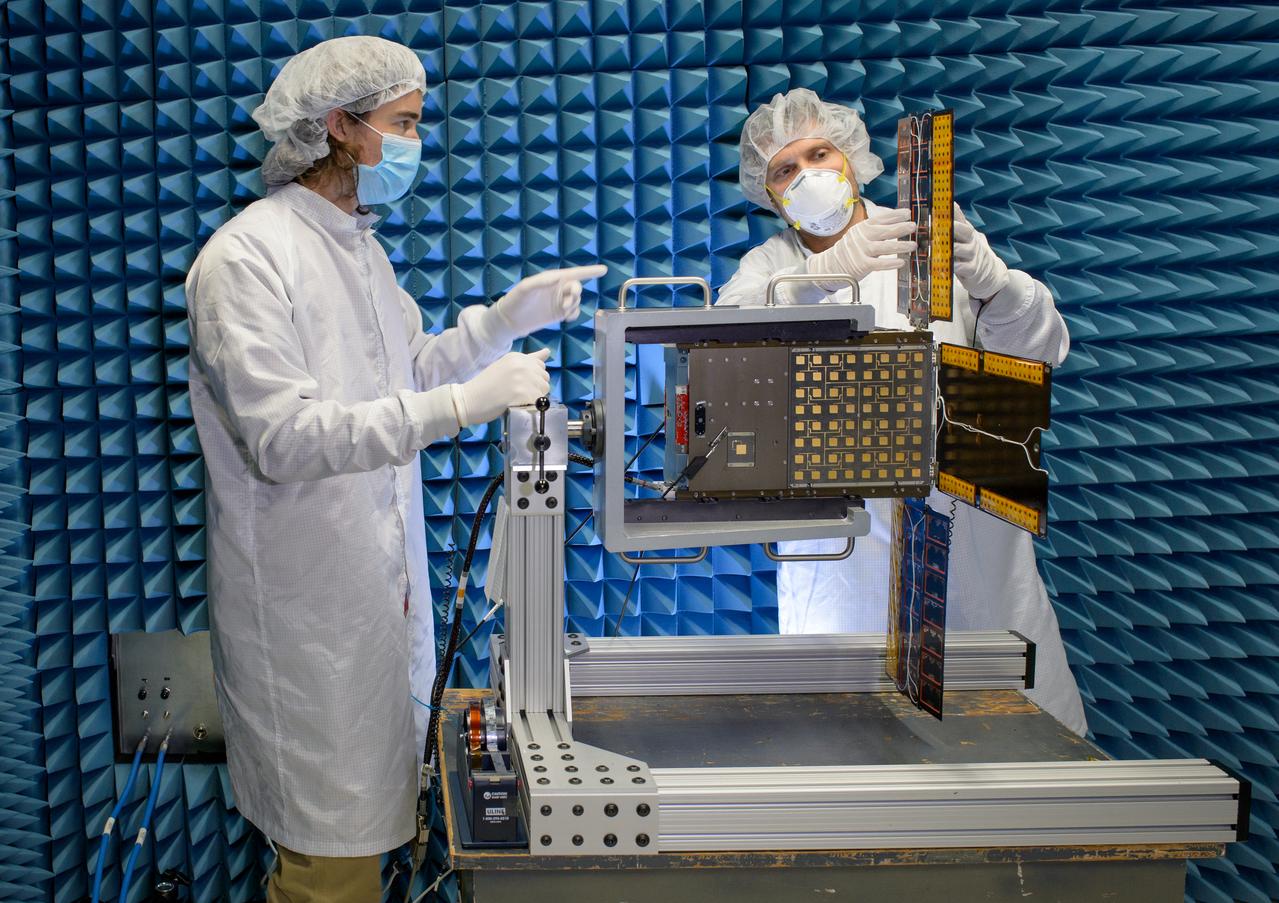
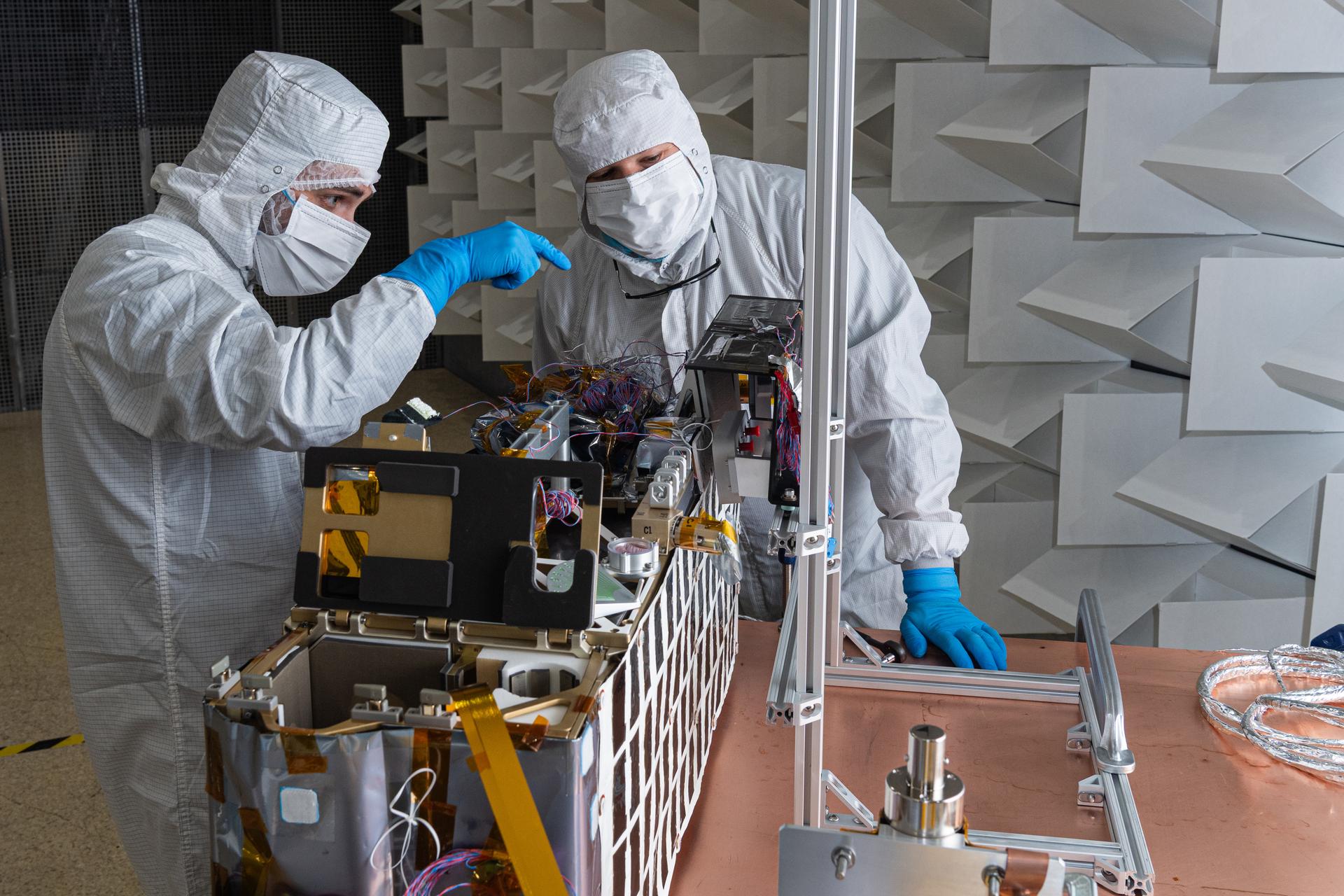
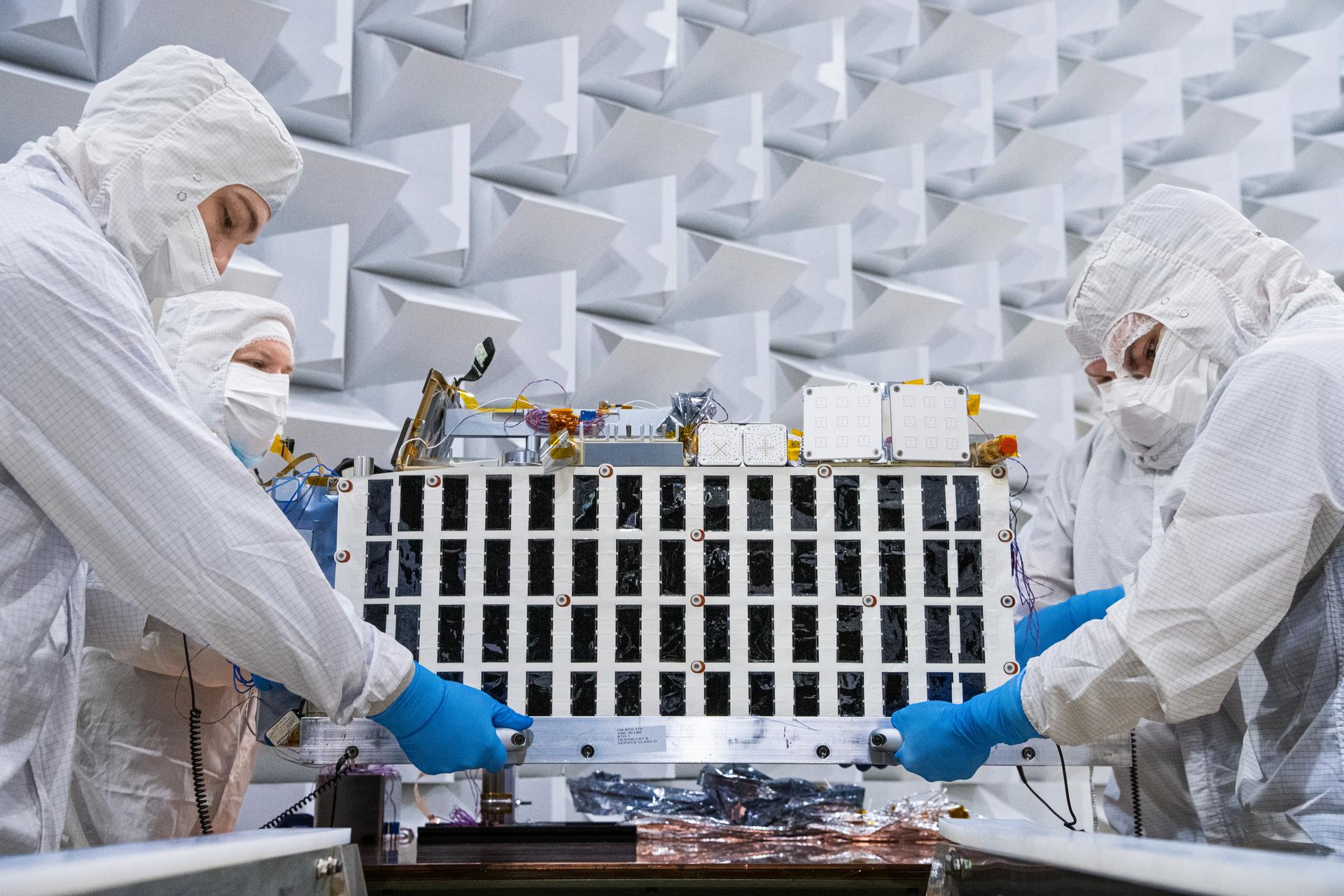
Austin Bowie, left, and Jesse Fusco fold the BioSentinel flight unit solar array in the Engineering Evaluation Laboratory, or EEL, Radio Frequency test facility, N244, after completion of an electromagnetic compatibility test procedure.

NASA’s F-15D research aircraft is positioned behind the X-59 during electromagnetic compatibility testing at U.S. Air Force Plant 42 in Palmdale, California. During this test, the F-15D’s radar and avionics were turned on one at a time while engineers evaluated each signal’s interaction with the X-59 for possible interference. NASA’s Quesst mission will demonstrate quiet supersonic technology that will provide data to help determine an acceptable sound limit in the sky.
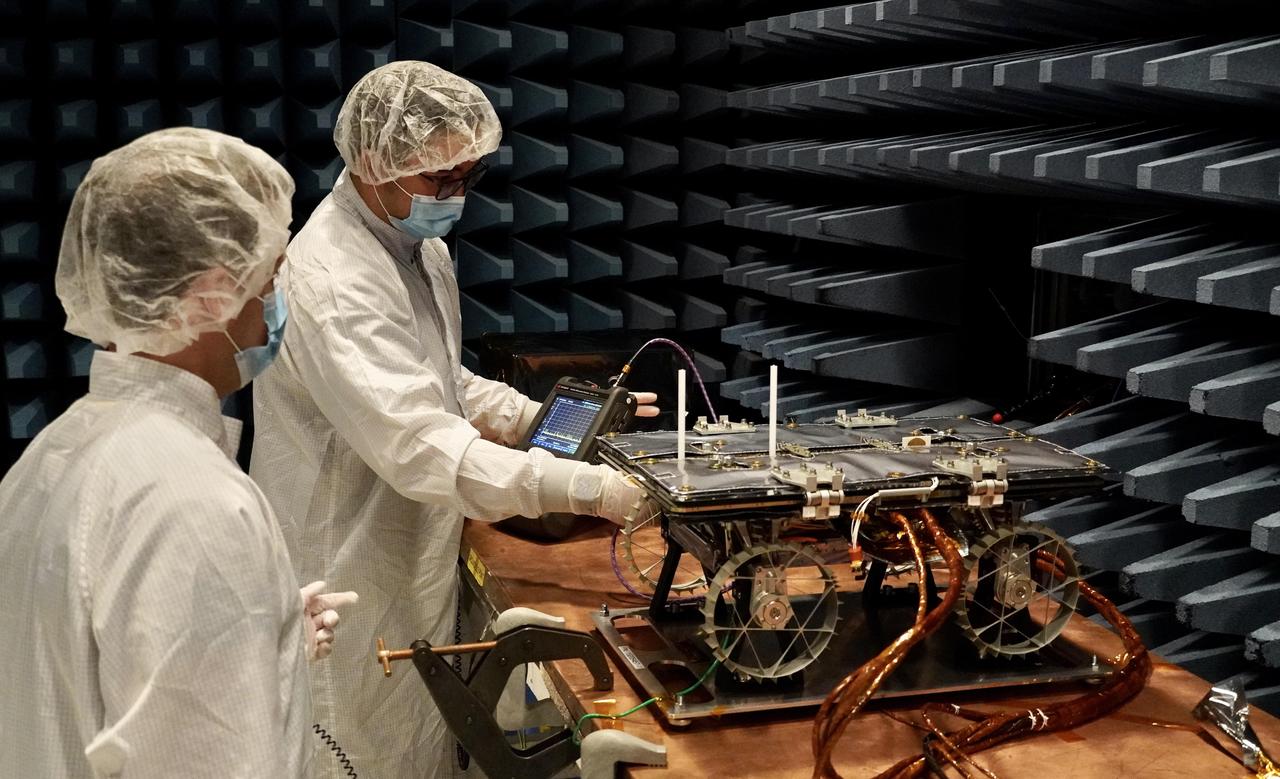
In a special chamber at NASA's Jet Propulsion Laboratory, engineers prepare to test a small rover that will go to the Moon as part of a NASA technology demonstration called CADRE (Cooperative Autonomous Distributed Robotic Exploration). The project is designed to show that a group of robotic spacecraft can work together as a team to accomplish tasks and record data autonomously – without explicit commands from mission controllers on Earth. This electromagnetic interference and compatibility testing took place in November 2023 in a chamber designed to absorb radio waves. Such testing is intended to confirm that the operation of the electronic subsystems do not interfere with each other nor with those on the lander, and that the rover can survive expected electromagnetic disturbances. Justin Schachter, left, and Manny Soriano are shown. https://photojournal.jpl.nasa.gov/catalog/PIA26166
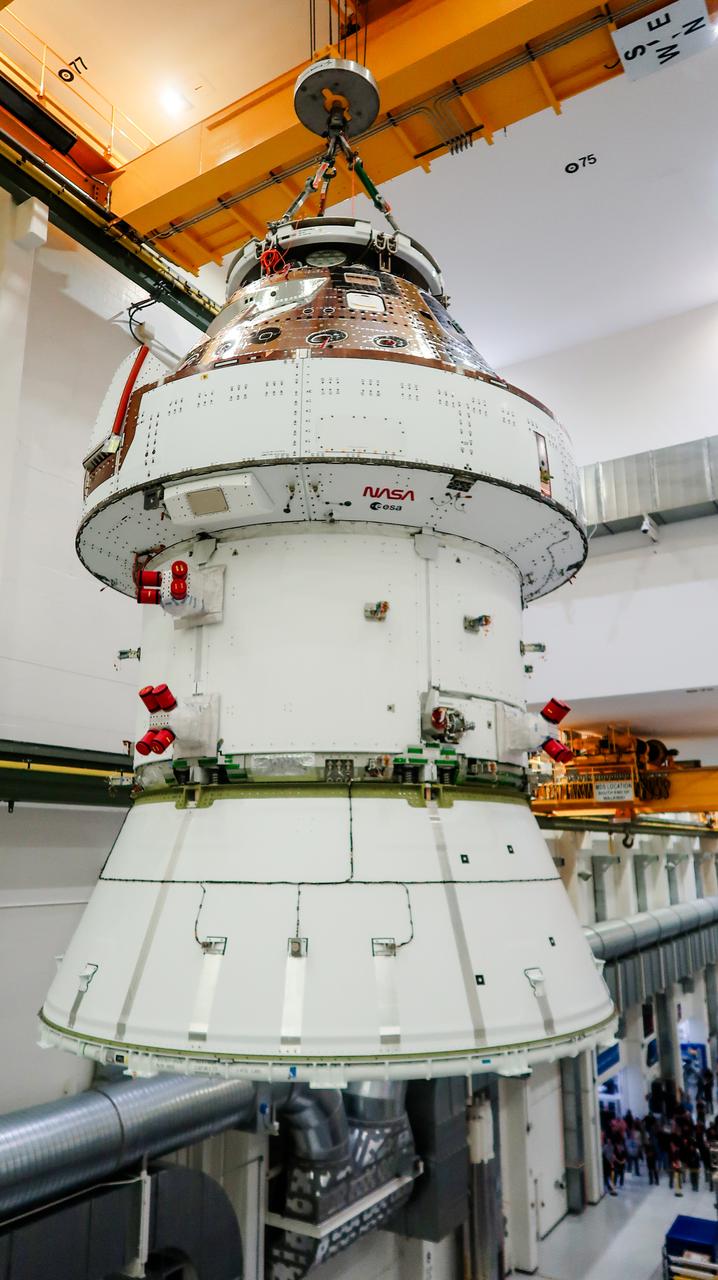
On April 4, 2024, a team lifts the Artemis II Orion spacecraft into a vacuum chamber inside the Operations and Checkout Building at NASA's Kennedy Space Center in Florida, where it will undergo electromagnetic compatibility and interference testing.
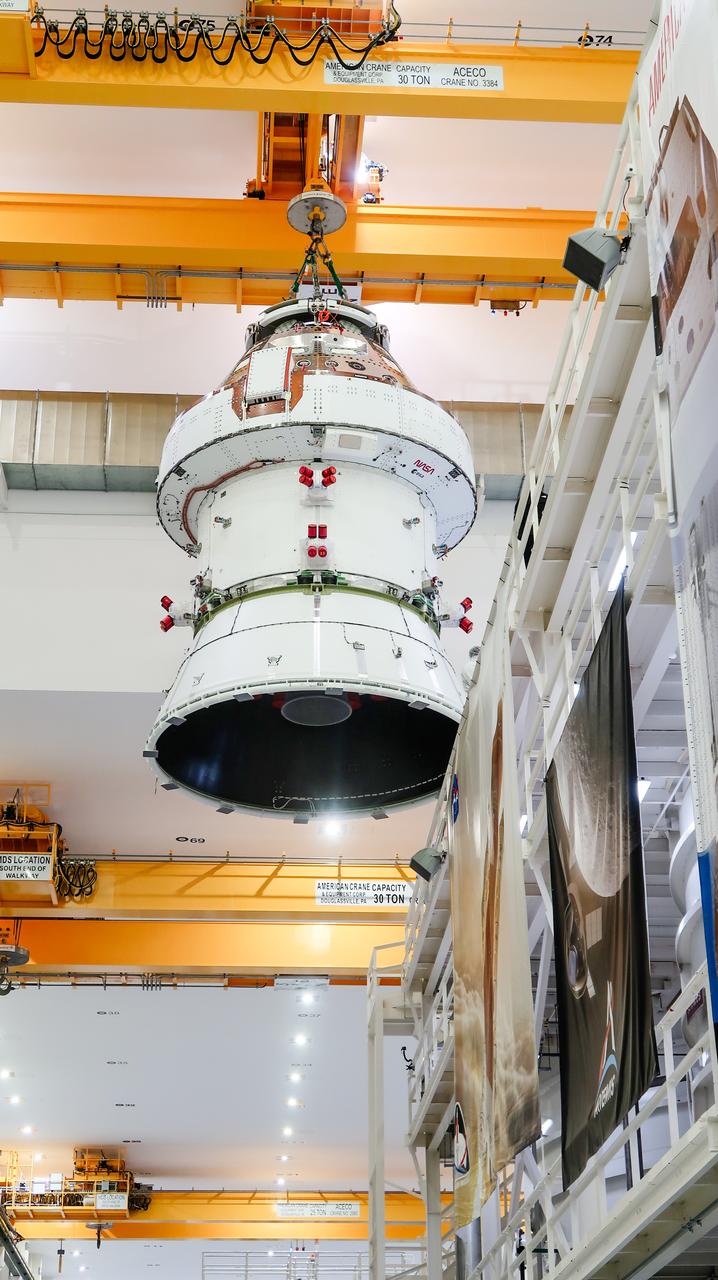
On April 4, 2024, a team lifts the Artemis II Orion spacecraft into a vacuum chamber inside the Operations and Checkout Building at NASA's Kennedy Space Center in Florida, where it will undergo electromagnetic compatibility and interference testing.

On April 4, 2024, a team lifts the Artemis II Orion spacecraft into a vacuum chamber inside the Operations and Checkout Building at NASA's Kennedy Space Center in Florida, where it will undergo electromagnetic compatibility and interference testing.
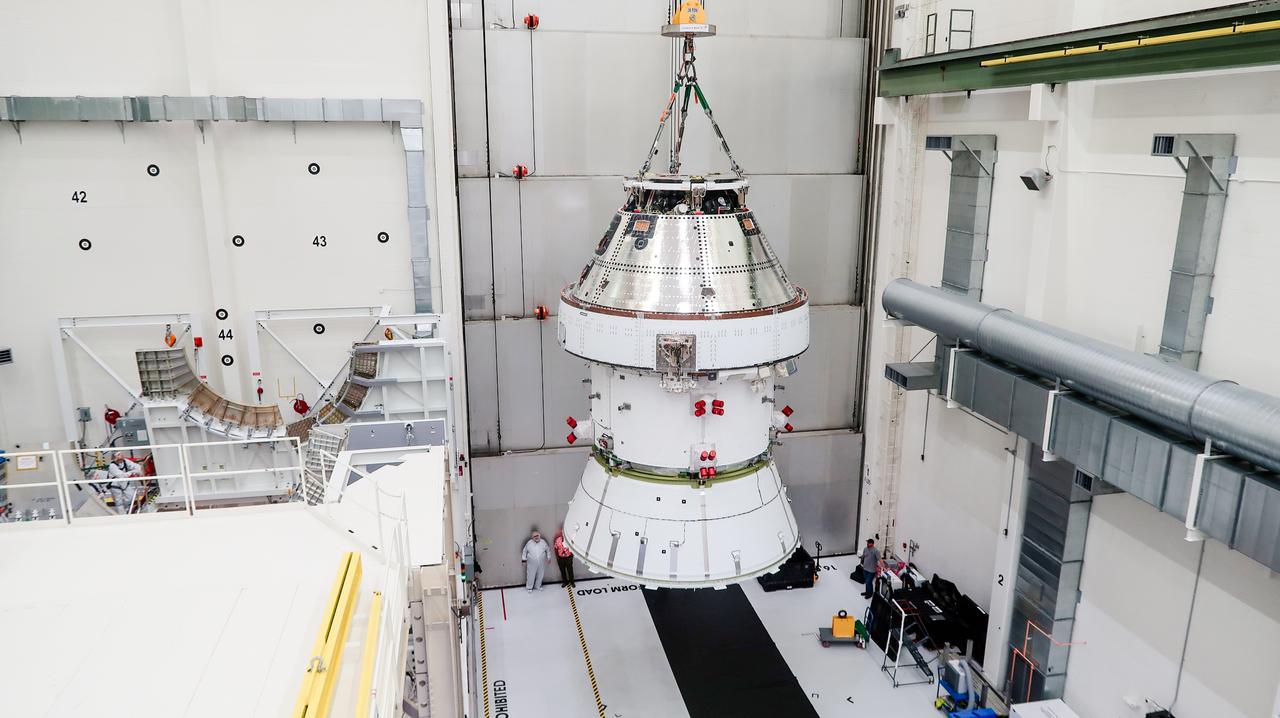
On April 4, 2024, a team lifts the Artemis II Orion spacecraft into a vacuum chamber inside the Operations and Checkout Building at NASA's Kennedy Space Center in Florida, where it will undergo electromagnetic compatibility and interference testing.

On April 4, 2024, a team lifts the Artemis II Orion spacecraft into a vacuum chamber inside the Operations and Checkout Building at NASA's Kennedy Space Center in Florida, where it will undergo electromagnetic compatibility and interference testing.
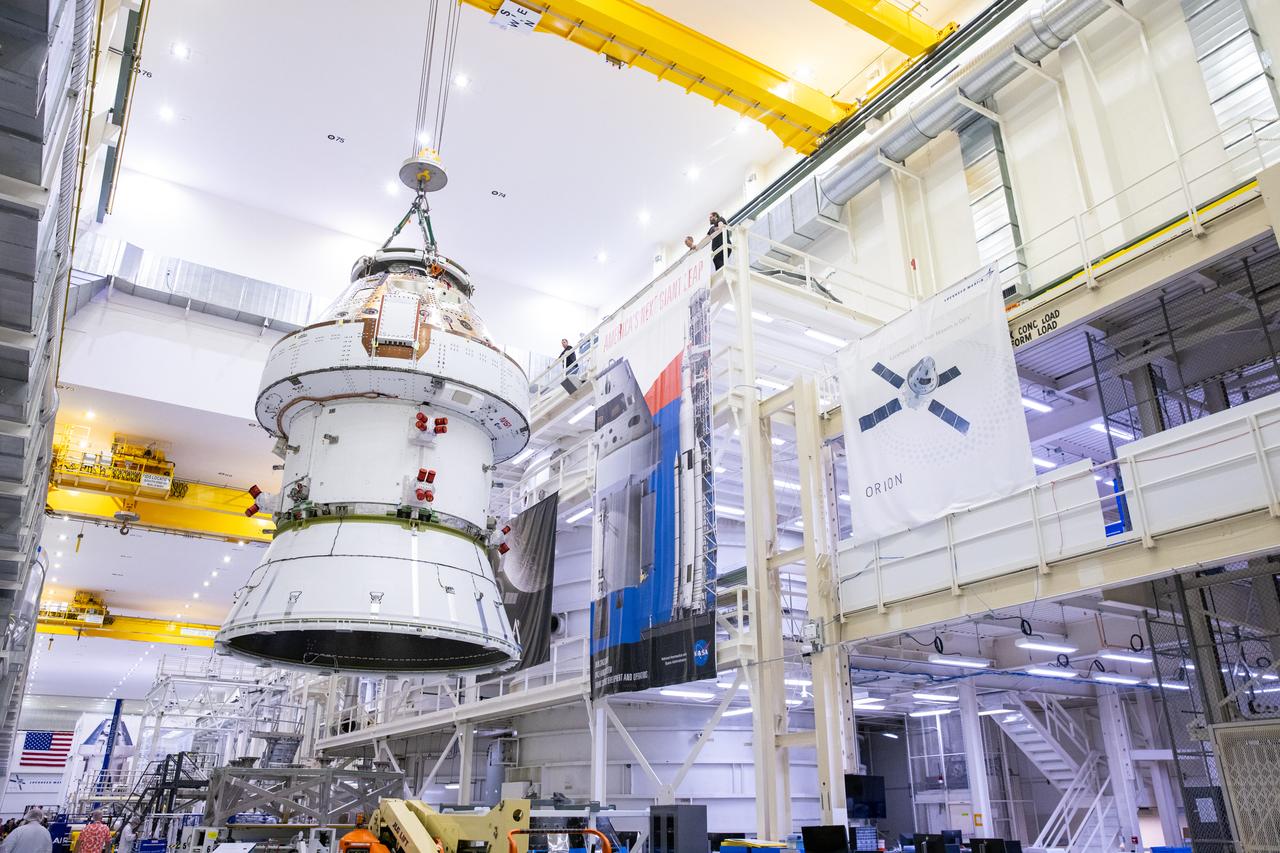
On April 4, 2024, teams lift the Artemis II Orion spacecraft into a vacuum chamber inside the Operations and Checkout Building at NASA's Kennedy Space Center in Florida, where it will undergo electromagnetic compatibility and interference testing.
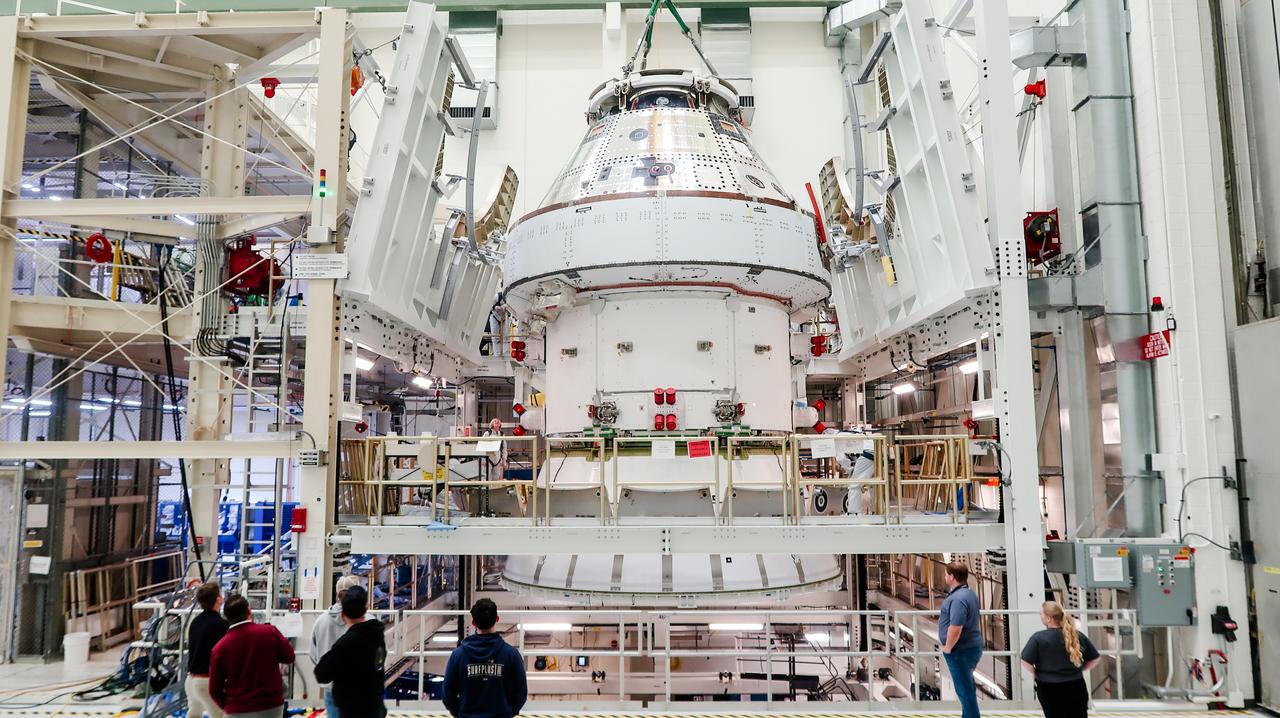
On April 4, 2024, a team lifts the Artemis II Orion spacecraft into a vacuum chamber inside the Operations and Checkout Building at NASA's Kennedy Space Center in Florida, where it will undergo electromagnetic compatibility and interference testing.
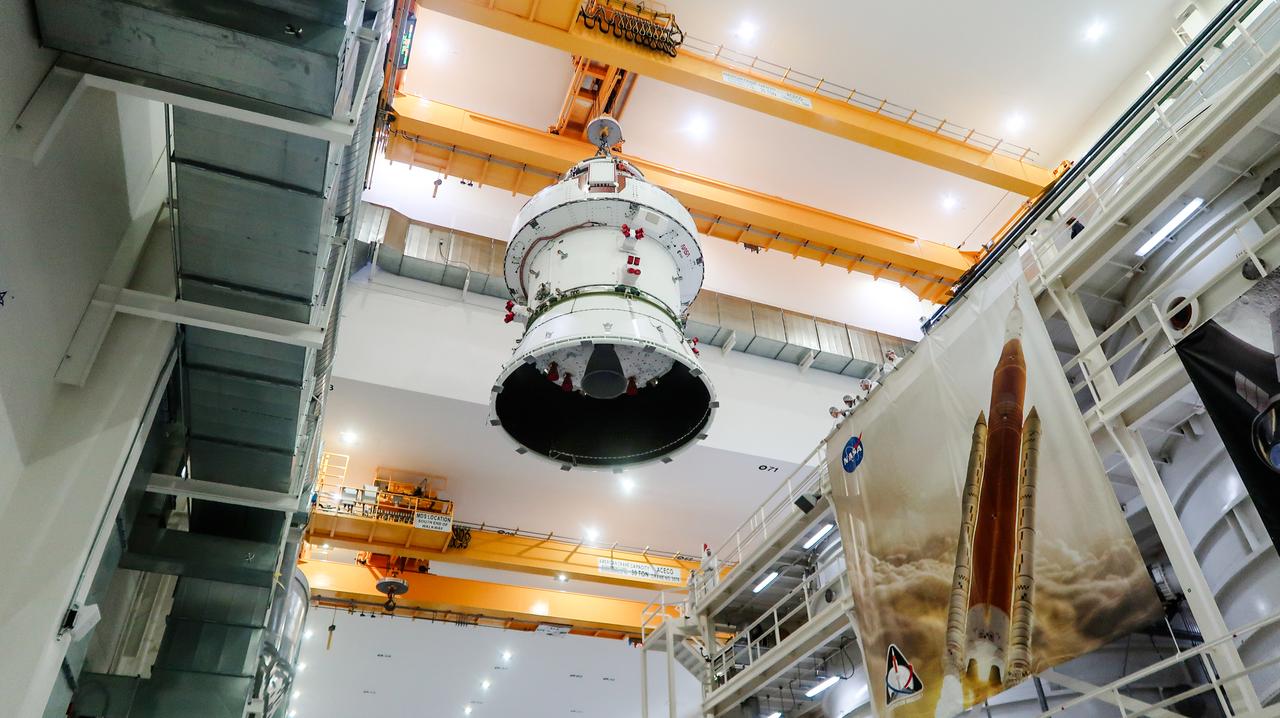
On April 4, 2024, a team lifts the Artemis II Orion spacecraft into a vacuum chamber inside the Operations and Checkout Building at NASA's Kennedy Space Center in Florida, where it will undergo electromagnetic compatibility and interference testing.
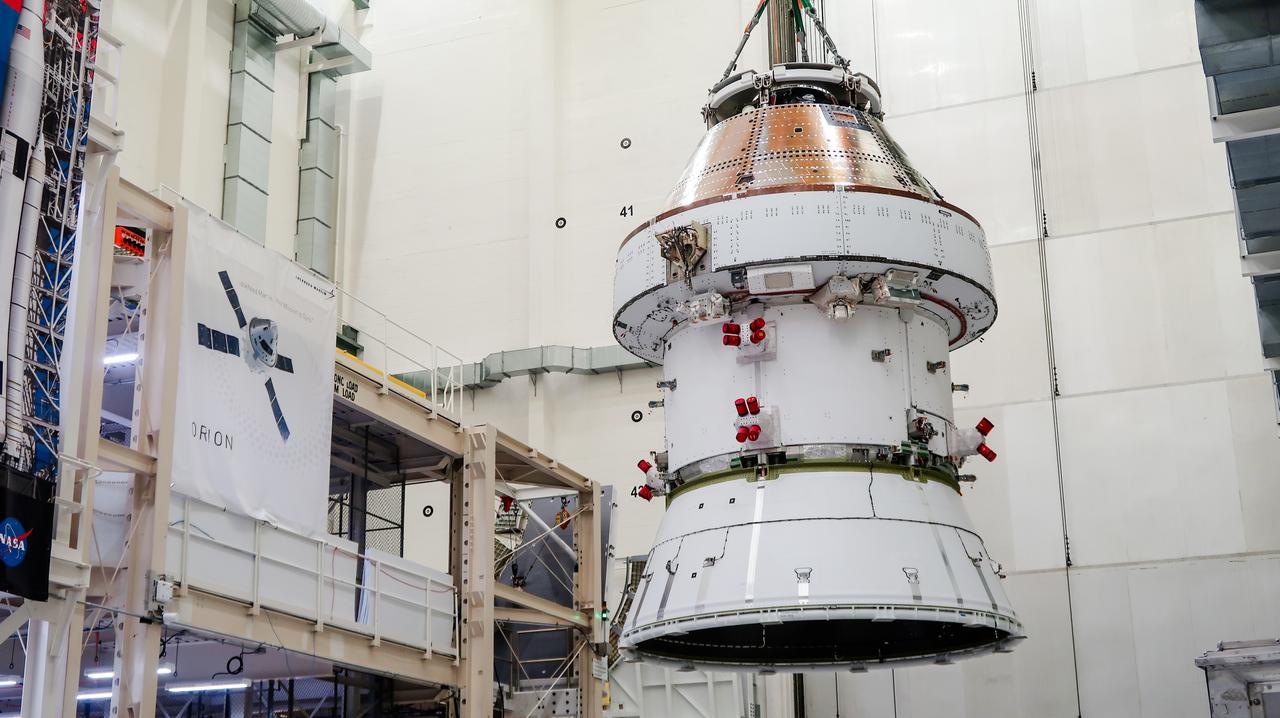
On April 4, 2024, a team lifts the Artemis II Orion spacecraft into a vacuum chamber inside the Operations and Checkout Building at NASA's Kennedy Space Center in Florida, where it will undergo electromagnetic compatibility and interference testing.
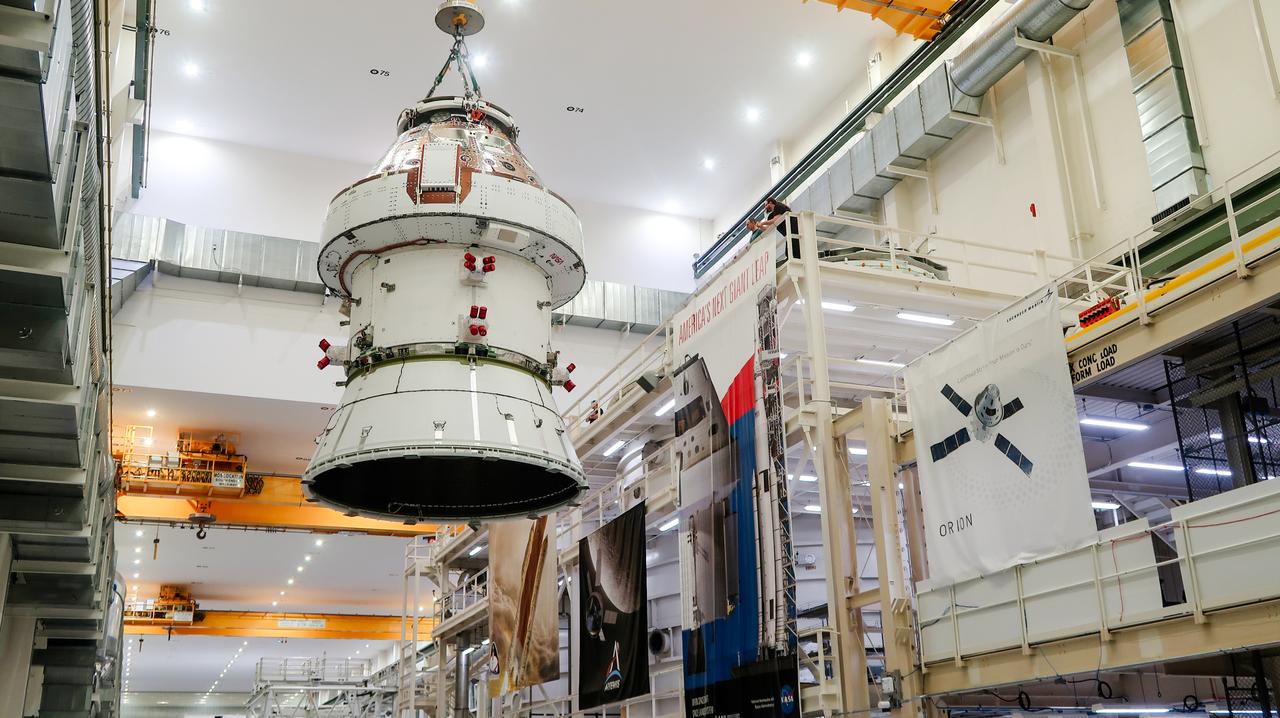
On April 4, 2024, a team lifts the Artemis II Orion spacecraft into a vacuum chamber inside the Operations and Checkout Building at NASA's Kennedy Space Center in Florida, where it will undergo electromagnetic compatibility and interference testing.
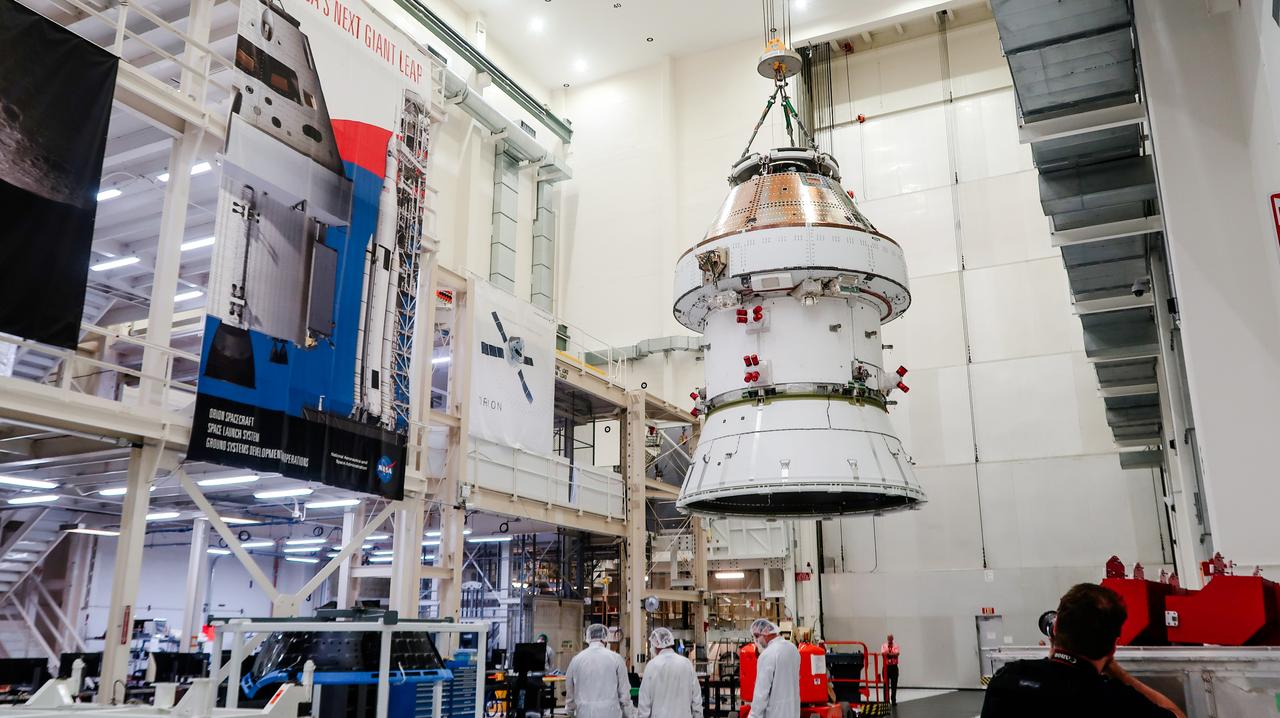
On April 4, 2024, a team lifts the Artemis II Orion spacecraft into a vacuum chamber inside the Operations and Checkout Building at NASA's Kennedy Space Center in Florida, where it will undergo electromagnetic compatibility and interference testing.
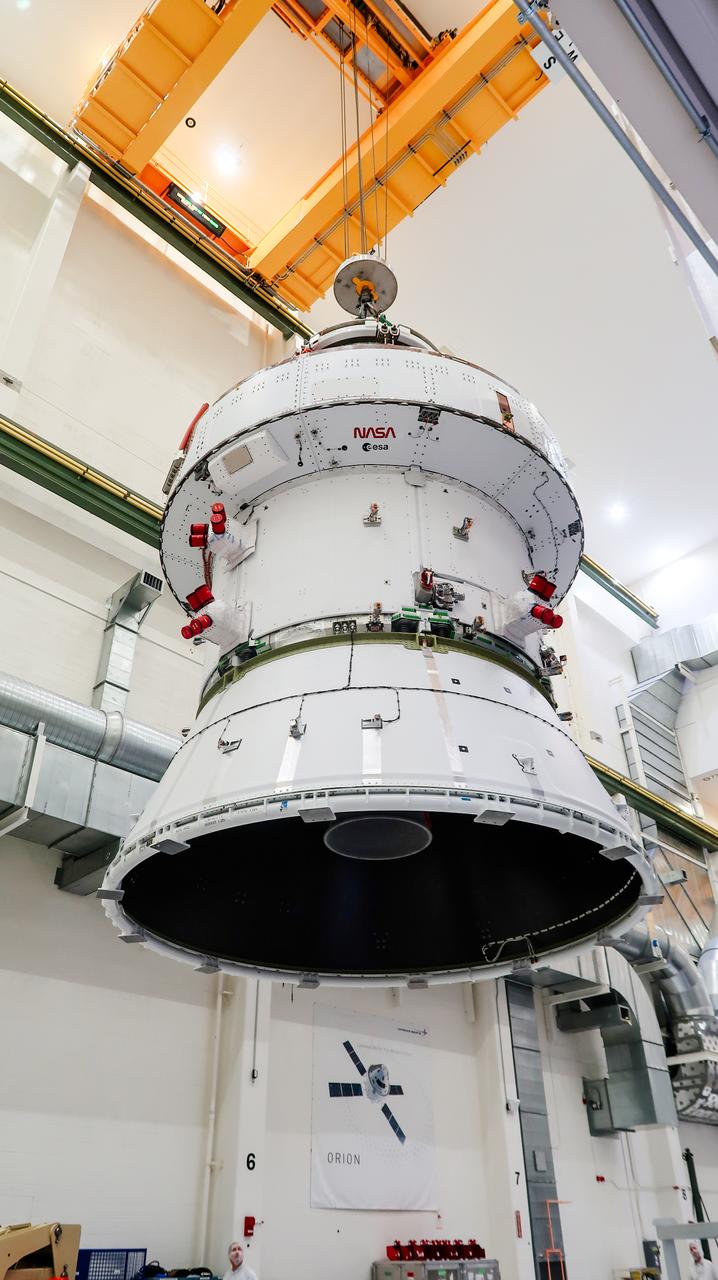
On April 4, 2024, a team lifts the Artemis II Orion spacecraft into a vacuum chamber inside the Operations and Checkout Building at NASA's Kennedy Space Center in Florida, where it will undergo electromagnetic compatibility and interference testing.
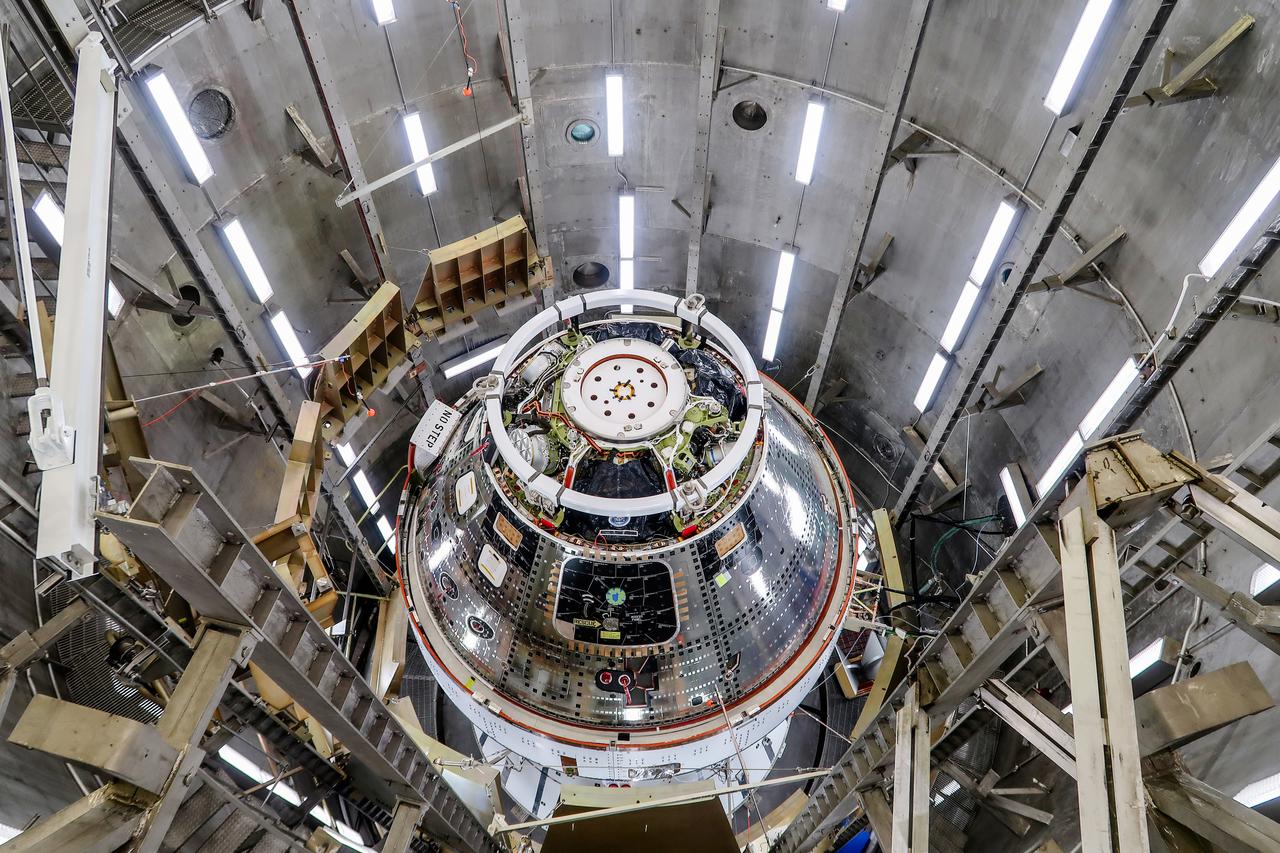
On April 10, 2024, the Artemis II Orion spacecraft is seen inside the west altitude chamber in the Operations and Checkout Building at NASA's Kennedy Space Center in Florida, where it will undergo electromagnetic interference and compatibility testing.
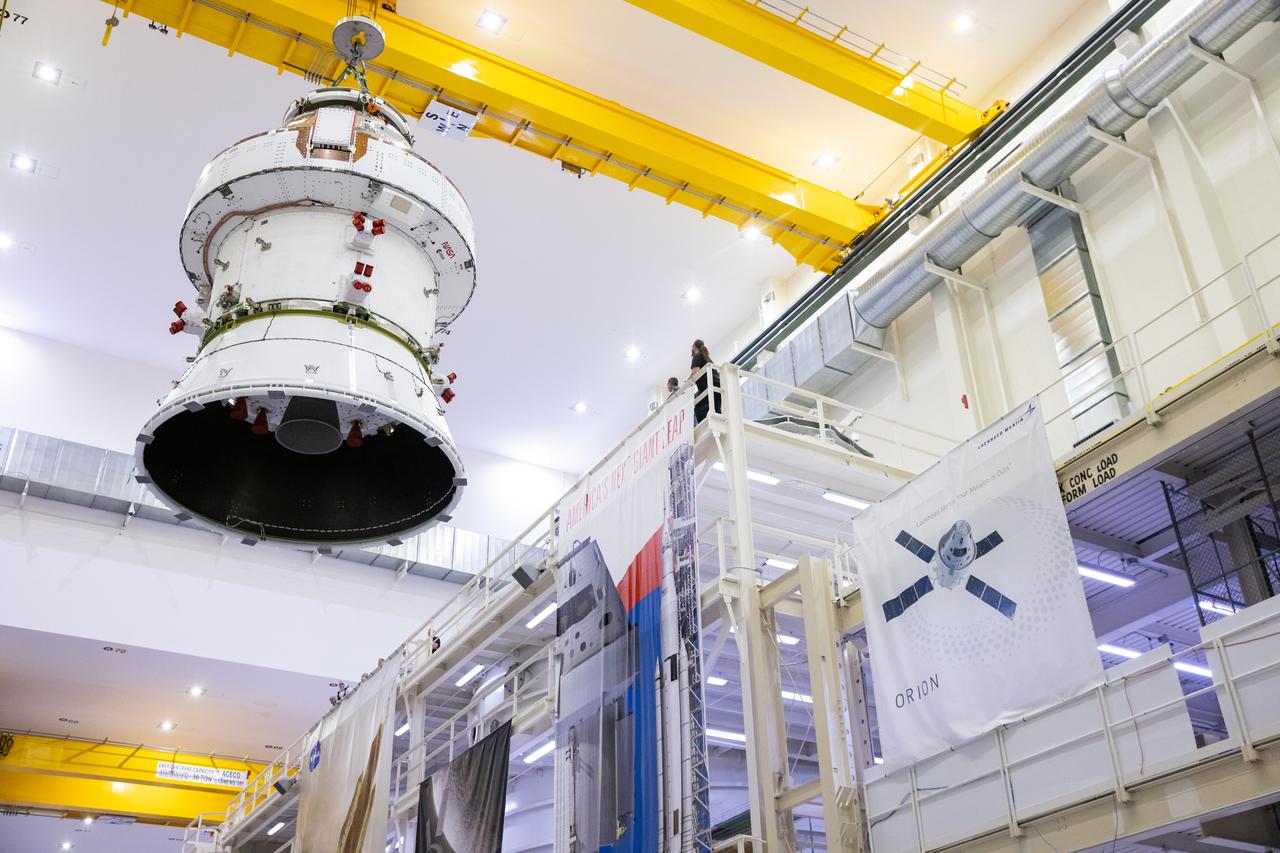
On April 4, 2024, teams lift the Artemis II Orion spacecraft into a vacuum chamber inside the Operations and Checkout Building at NASA's Kennedy Space Center in Florida, where it will undergo electromagnetic compatibility and interference testing.
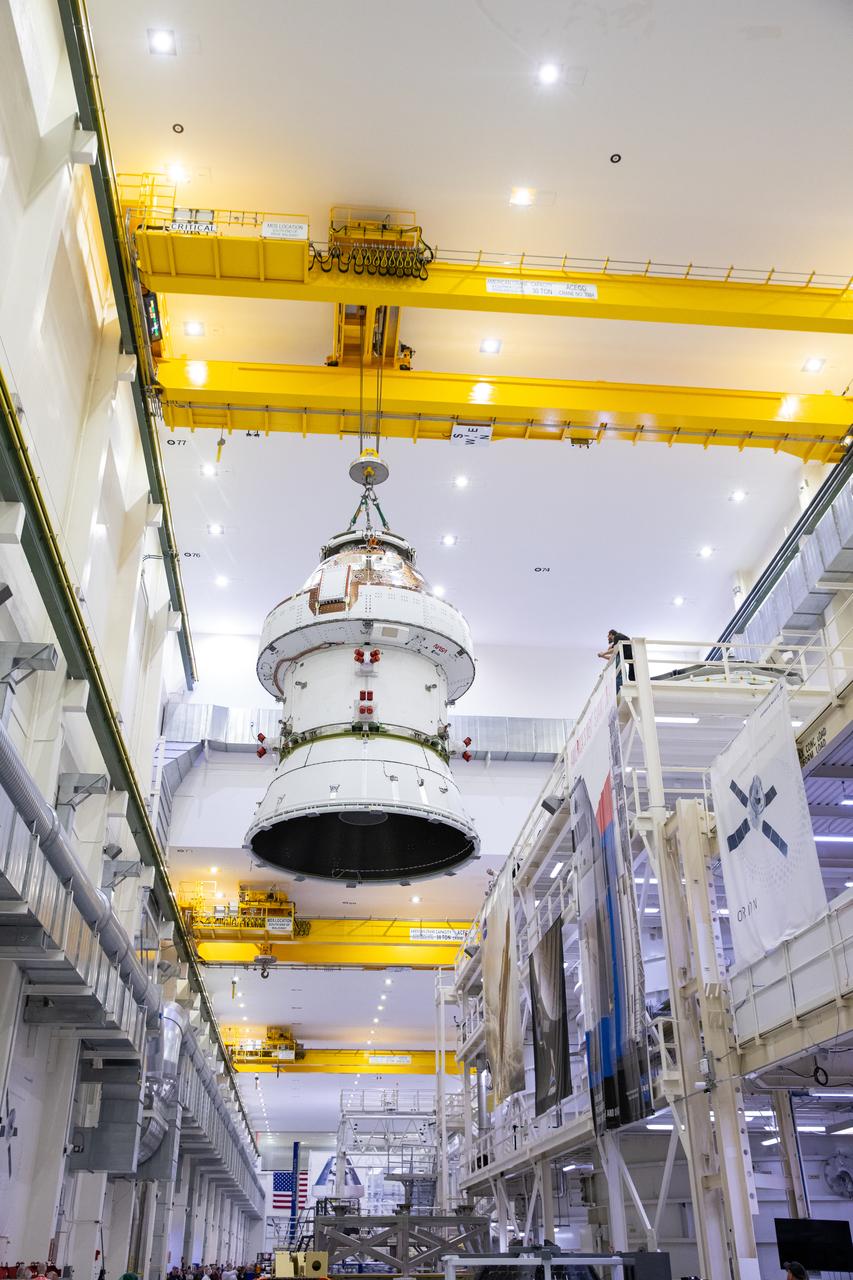
On April 4, 2024, teams lift the Artemis II Orion spacecraft into a vacuum chamber inside the Operations and Checkout Building at NASA's Kennedy Space Center in Florida, where it will undergo electromagnetic compatibility and interference testing.
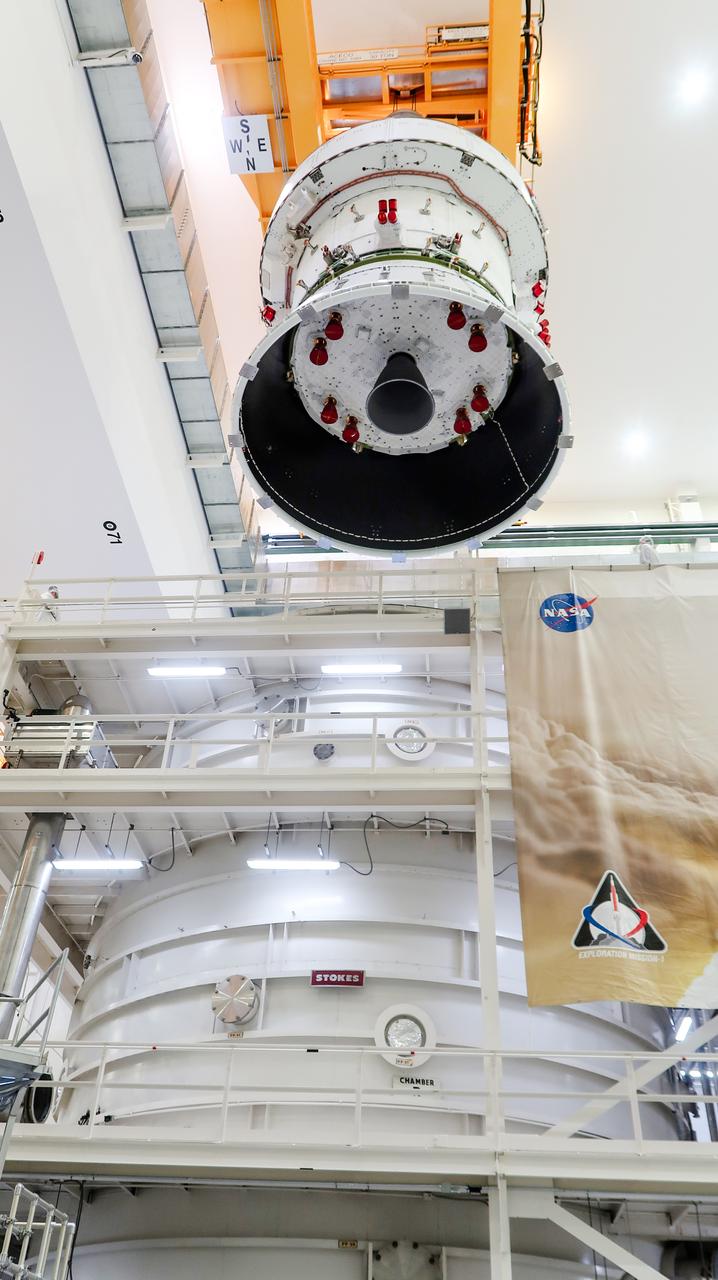
On April 4, 2024, a team lifts the Artemis II Orion spacecraft into a vacuum chamber inside the Operations and Checkout Building at NASA's Kennedy Space Center in Florida, where it will undergo electromagnetic compatibility and interference testing.
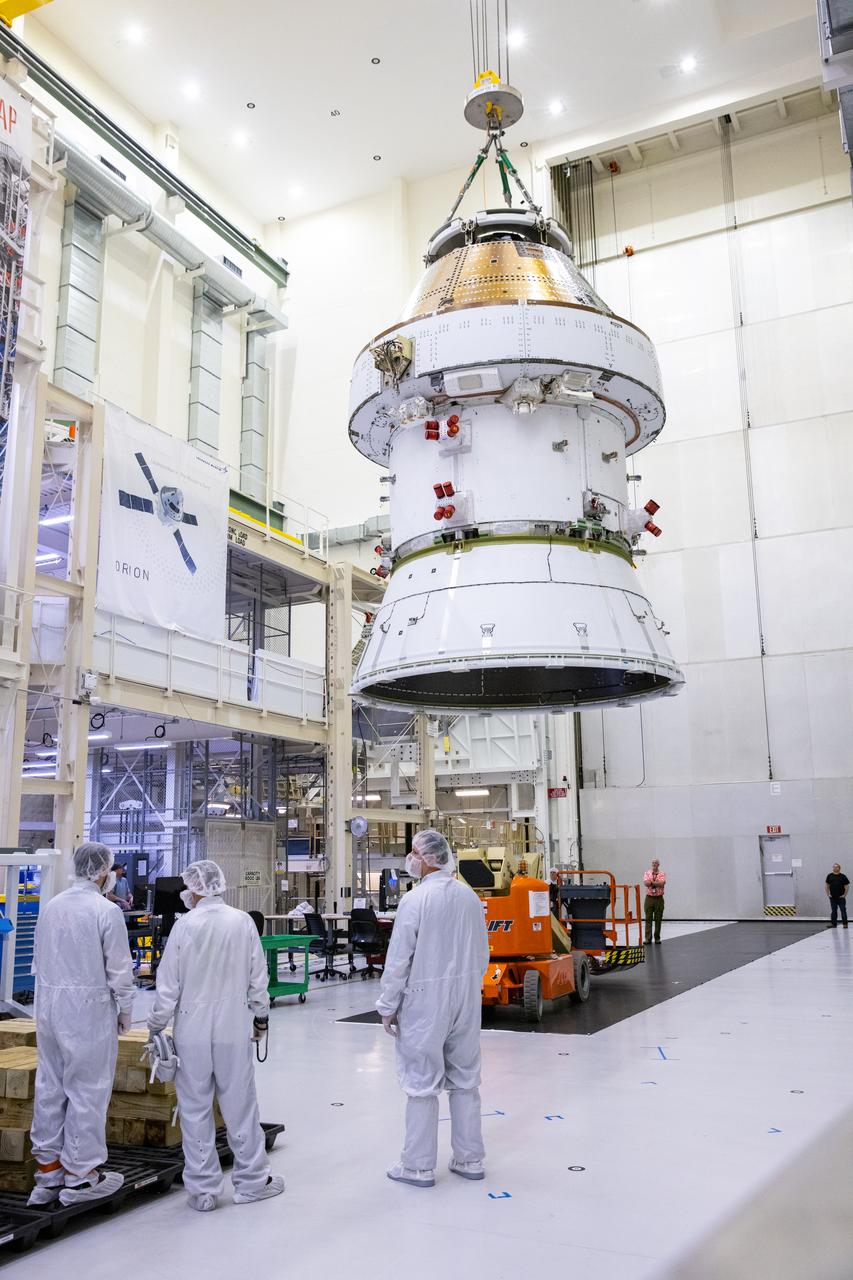
On April 4, 2024, technicians monitor as teams lift the Artemis II Orion spacecraft into a vacuum chamber inside the Operations and Checkout Building at NASA's Kennedy Space Center in Florida, where it will undergo electromagnetic compatibility and interference testing.
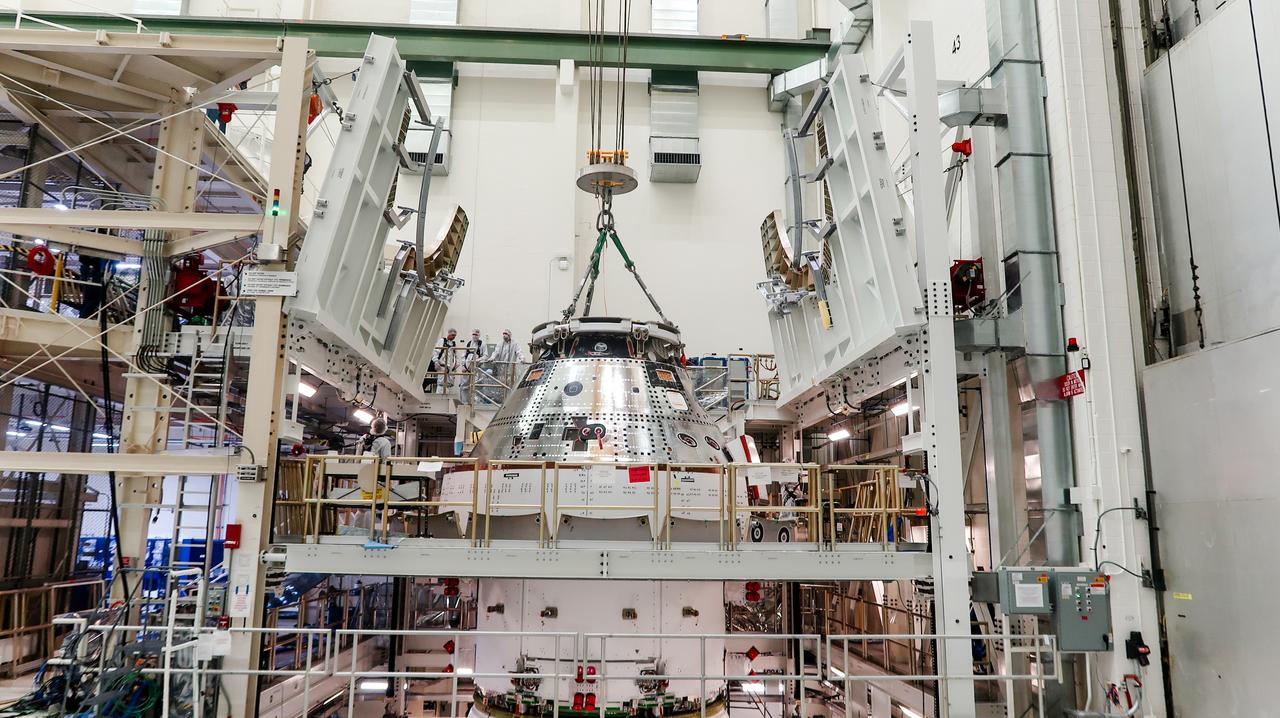
On April 4, 2024, a team lifts the Artemis II Orion spacecraft into a vacuum chamber inside the Operations and Checkout Building at NASA's Kennedy Space Center in Florida, where it will undergo electromagnetic compatibility and interference testing.
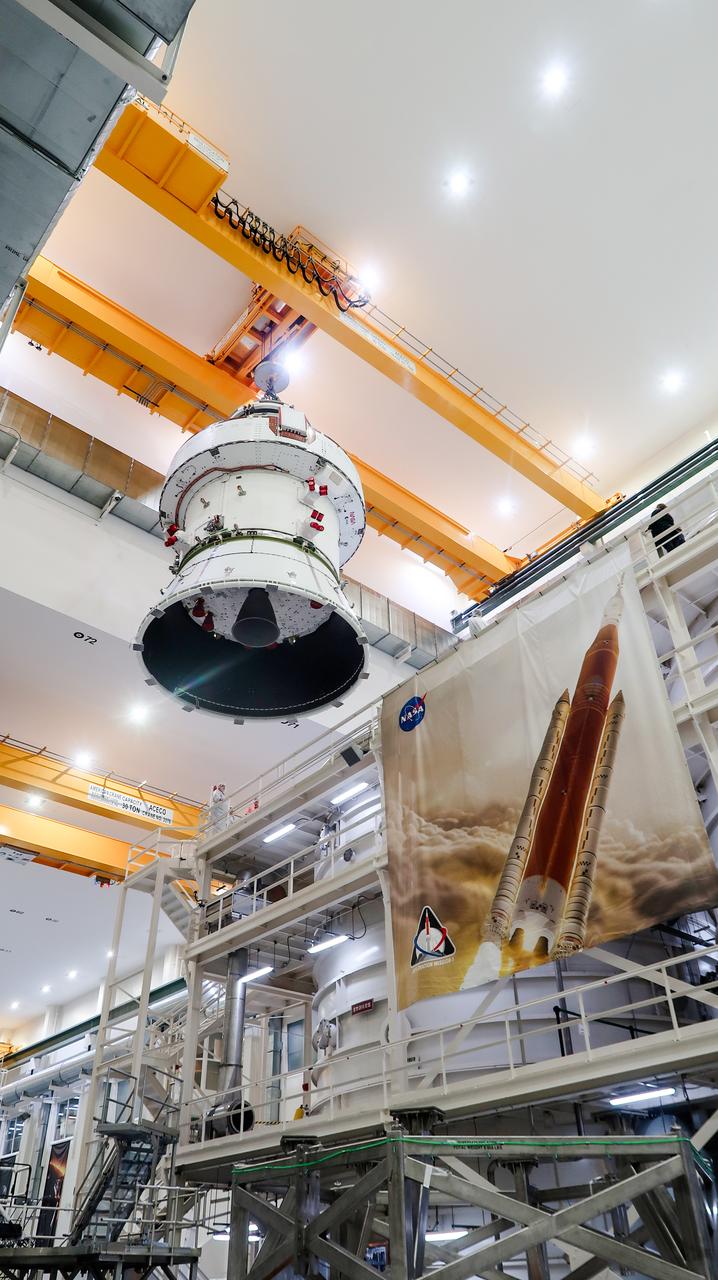
On April 4, 2024, a team lifts the Artemis II Orion spacecraft into a vacuum chamber inside the Operations and Checkout Building at NASA's Kennedy Space Center in Florida, where it will undergo electromagnetic compatibility and interference testing.

On April 4, 2024, a team lifts the Artemis II Orion spacecraft into a vacuum chamber inside the Operations and Checkout Building at NASA's Kennedy Space Center in Florida, where it will undergo electromagnetic compatibility and interference testing.
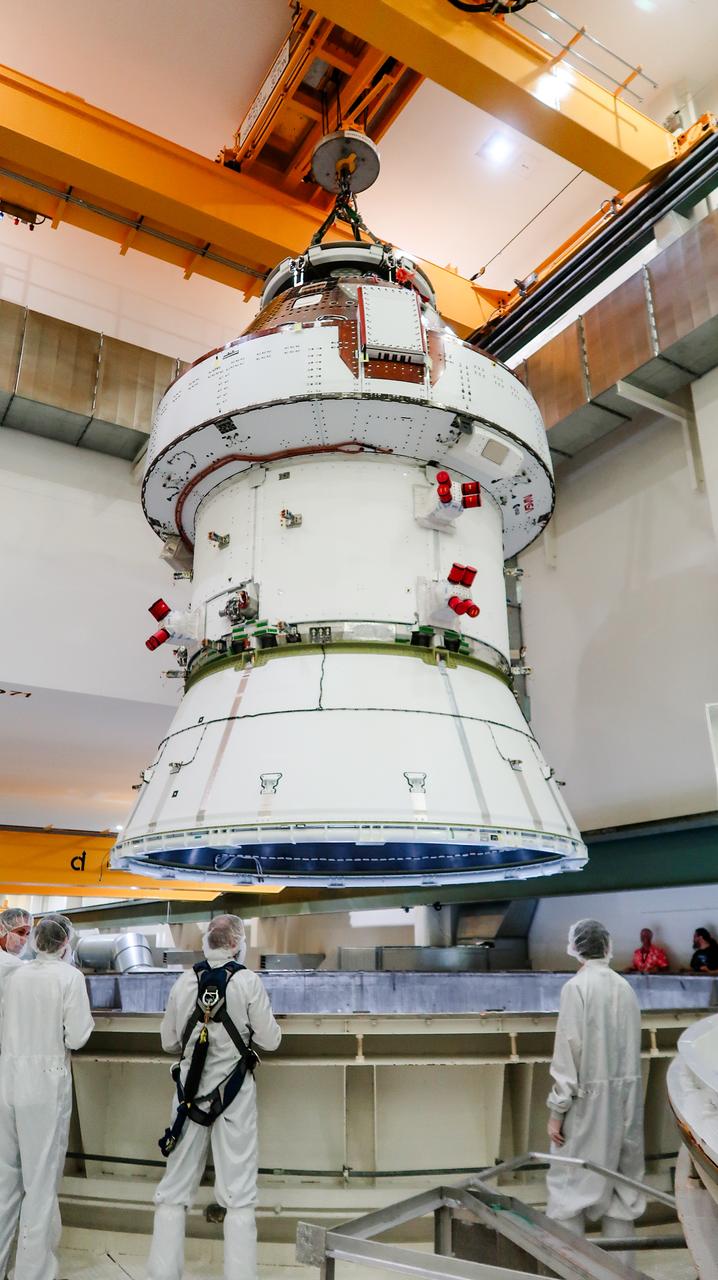
On April 4, 2024, a team lifts the Artemis II Orion spacecraft into a vacuum chamber inside the Operations and Checkout Building at NASA's Kennedy Space Center in Florida, where it will undergo electromagnetic compatibility and interference testing.
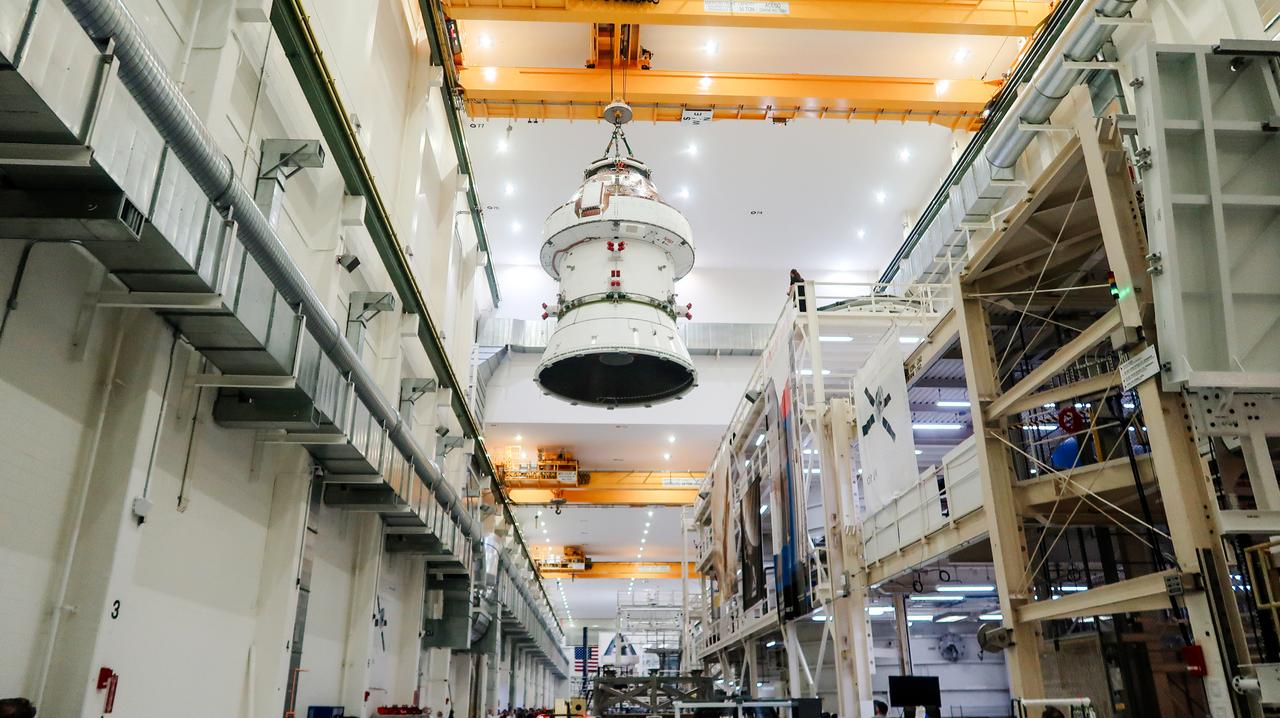
On April 4, 2024, a team lifts the Artemis II Orion spacecraft into a vacuum chamber inside the Operations and Checkout Building at NASA's Kennedy Space Center in Florida, where it will undergo electromagnetic compatibility and interference testing.
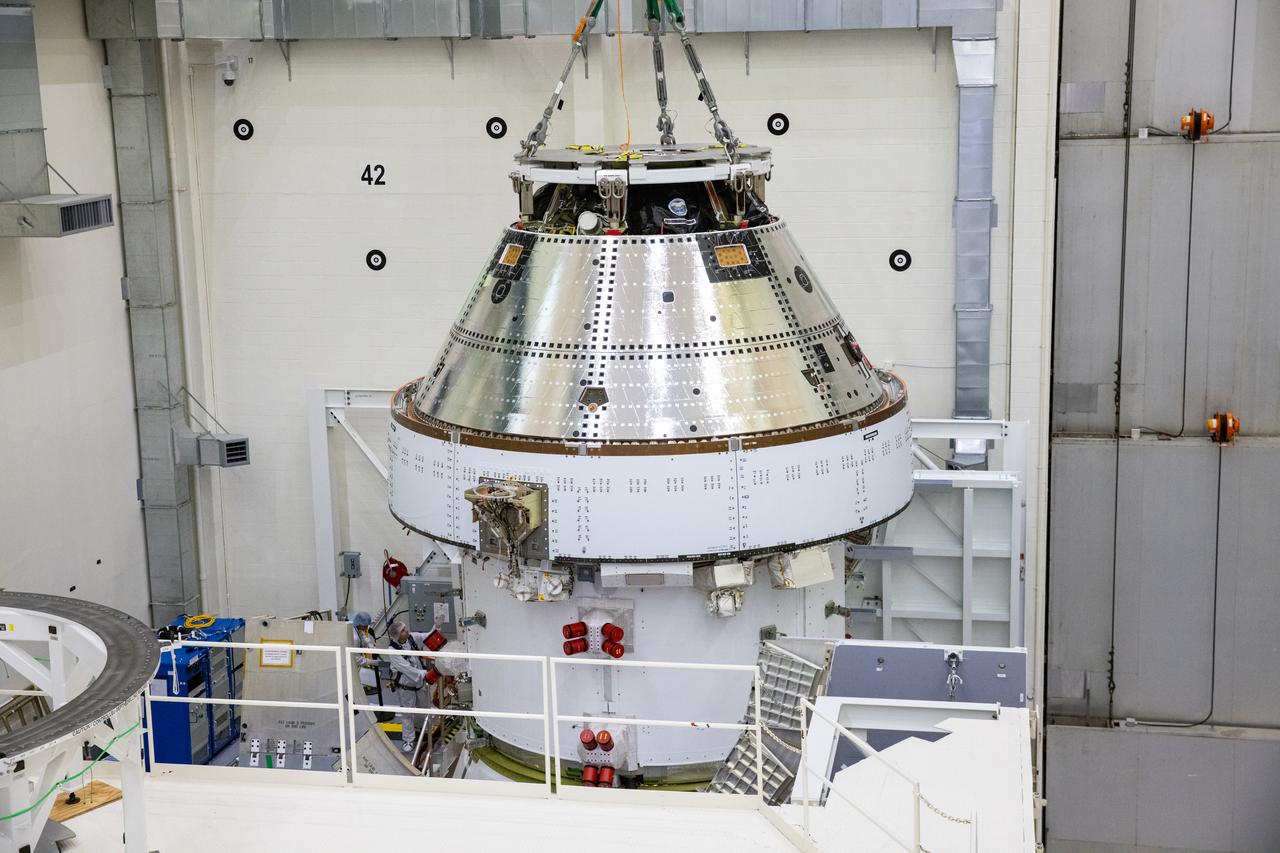
On April 4, 2024, teams lift the Artemis II Orion spacecraft into a vacuum chamber inside the Operations and Checkout Building at NASA's Kennedy Space Center in Florida, where it will undergo electromagnetic compatibility and interference testing.
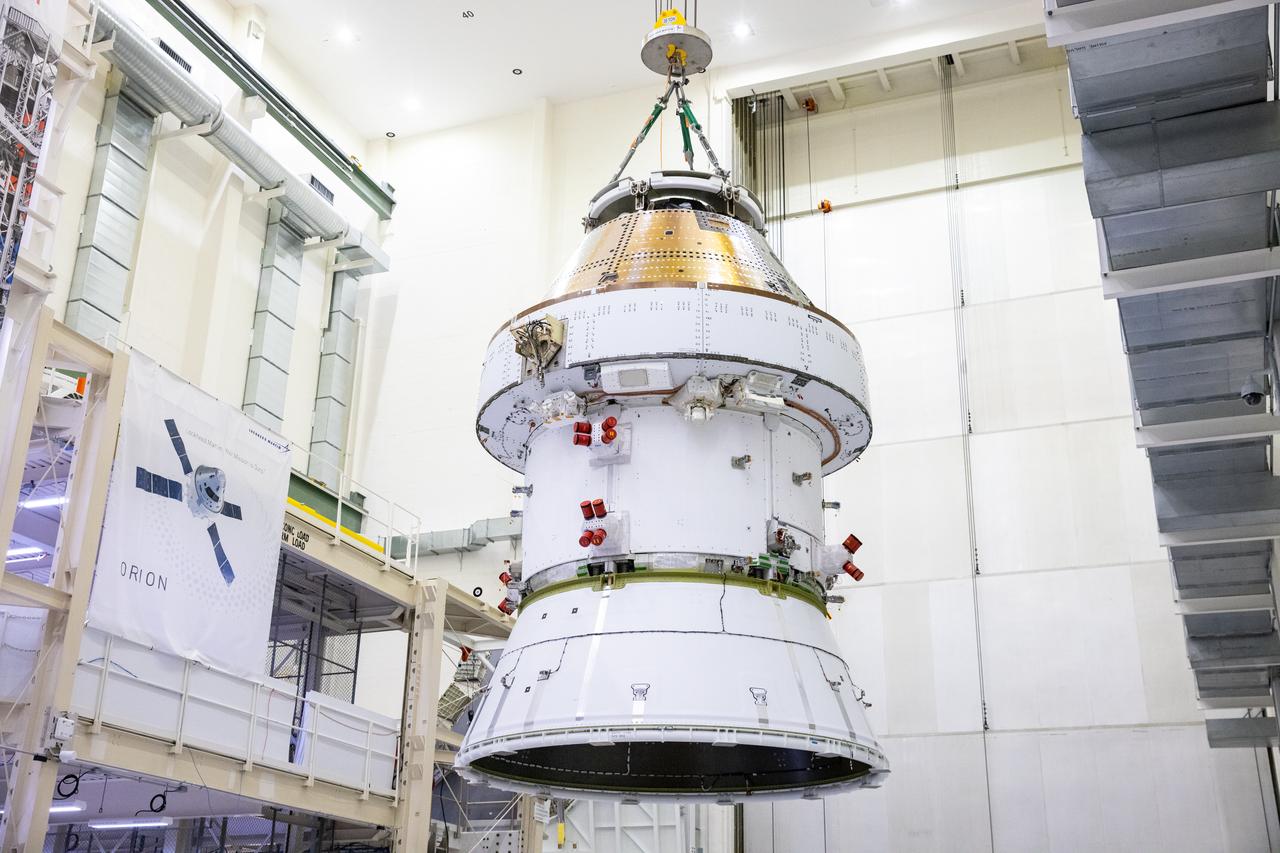
On April 4, 2024, teams lift the Artemis II Orion spacecraft into a vacuum chamber inside the Operations and Checkout Building at NASA's Kennedy Space Center in Florida, where it will undergo electromagnetic compatibility and interference testing.
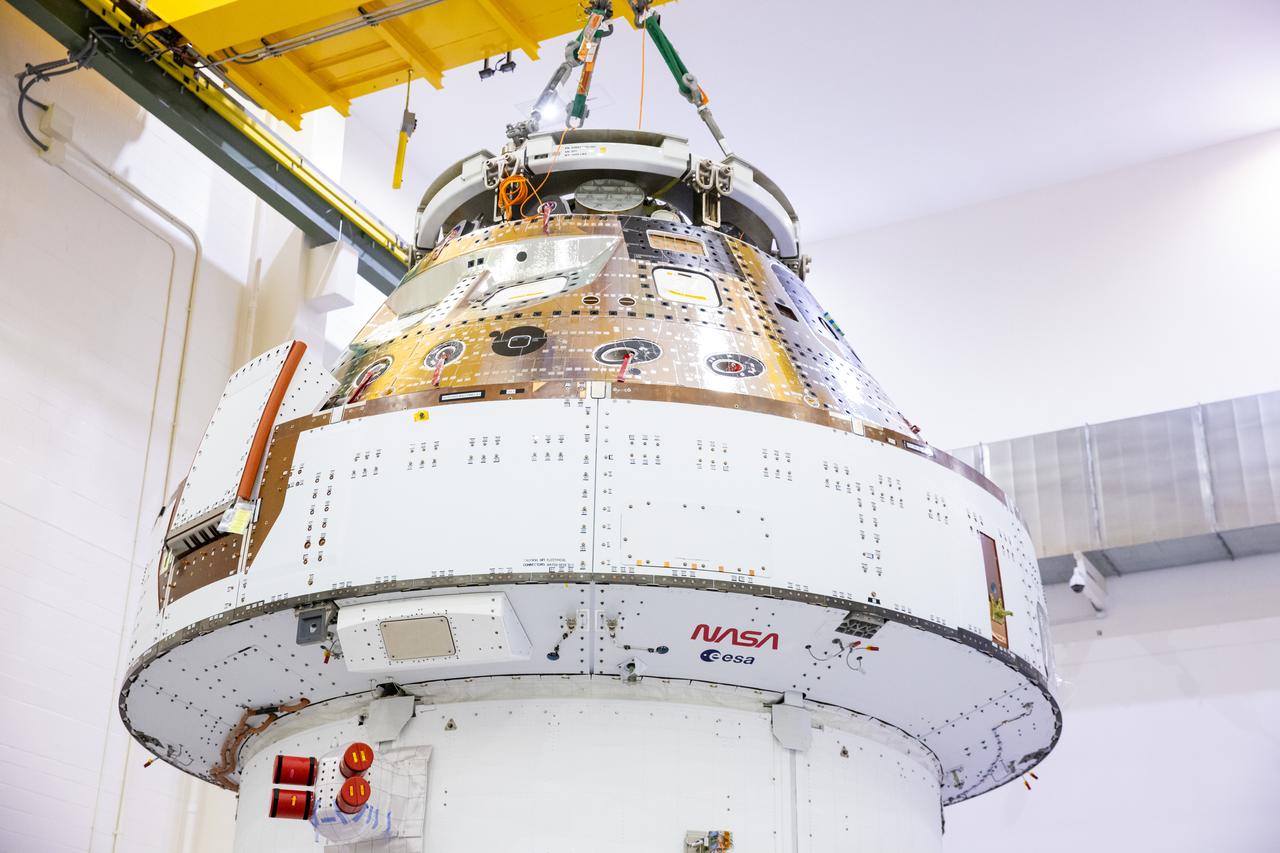
On April 4, 2024, teams lift the Artemis II Orion spacecraft into a vacuum chamber inside the Operations and Checkout Building at NASA's Kennedy Space Center in Florida, where it will undergo electromagnetic compatibility and interference testing.
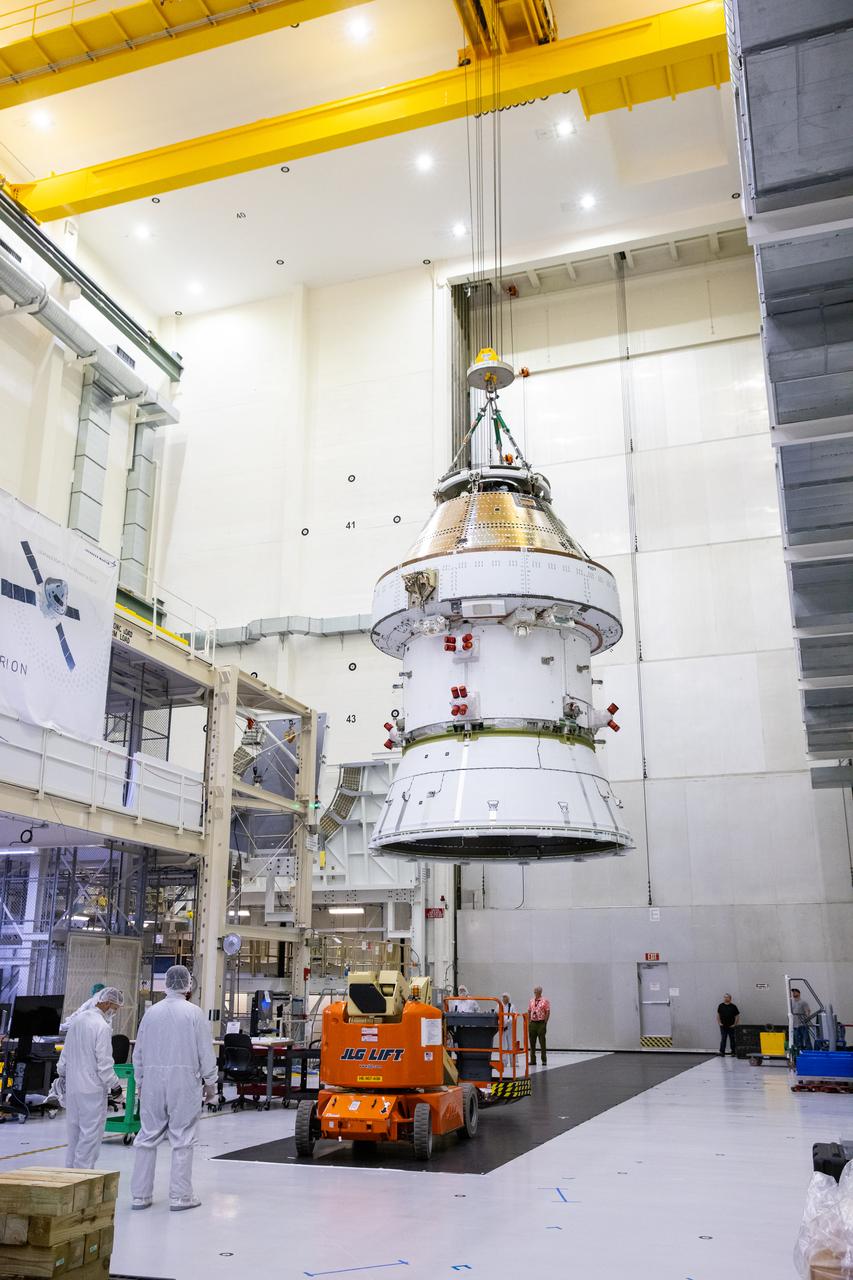
On April 4, 2024, technicians monitor as teams lift the Artemis II Orion spacecraft into a vacuum chamber inside the Operations and Checkout Building at NASA's Kennedy Space Center in Florida, where it will undergo electromagnetic compatibility and interference testing.
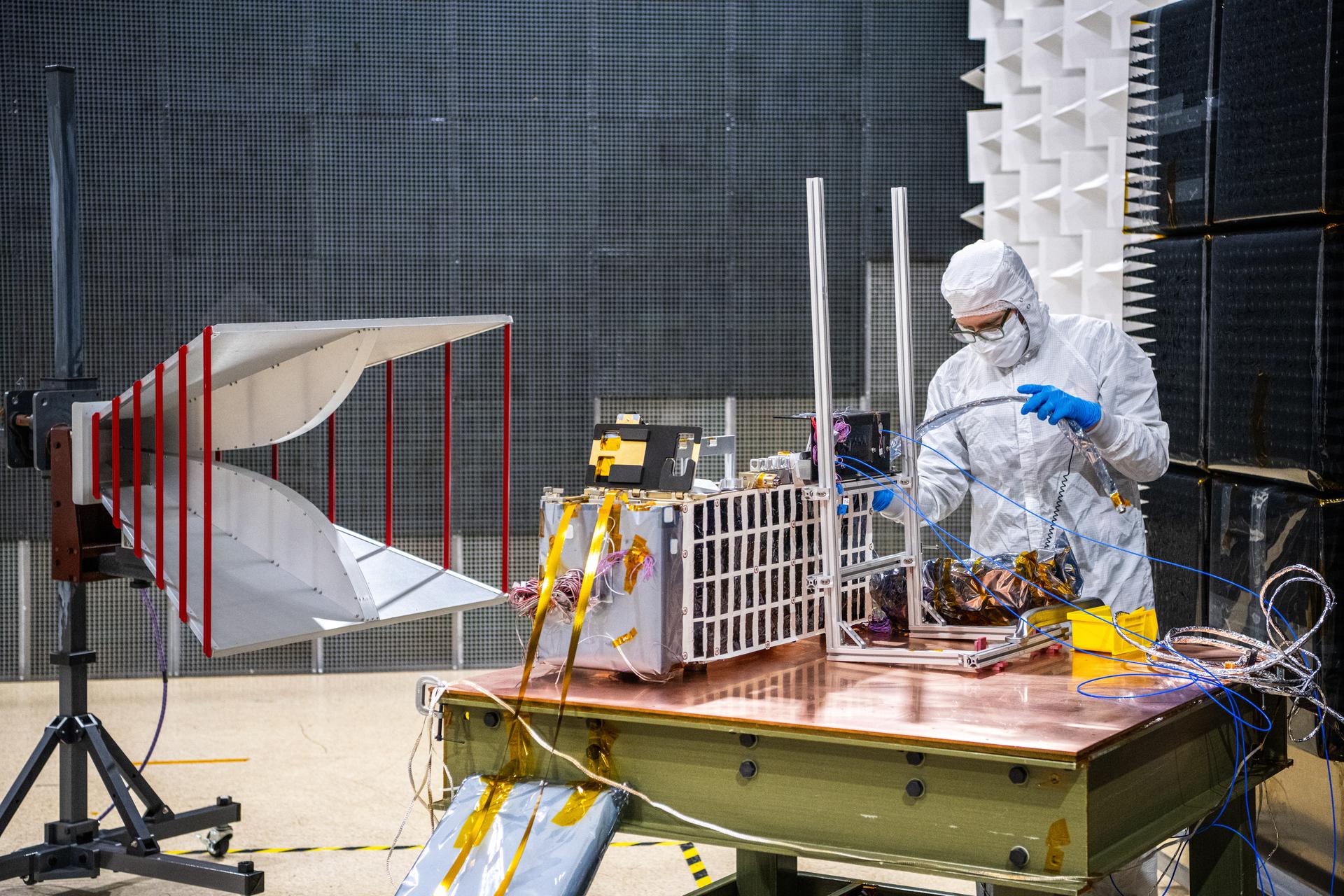
Electrical test engineer Thomas Schluszas configures the Lunar Environment Monitoring Station (LEMS) instrument for testing in the Electromagnetic Interference/Electromagnetic Compatibility (EMI/EMC) Chamber at Goddard Space Flight Center, Greenbelt Md., Feb 17, 2026. LEMS is a compact, autonomous, and self-sustaining seismometer suite designed to carry out continuous, long-term, monitoring of the lunar seismic environment at the South Polar region. Photo Credit: NASA/Denny Henry
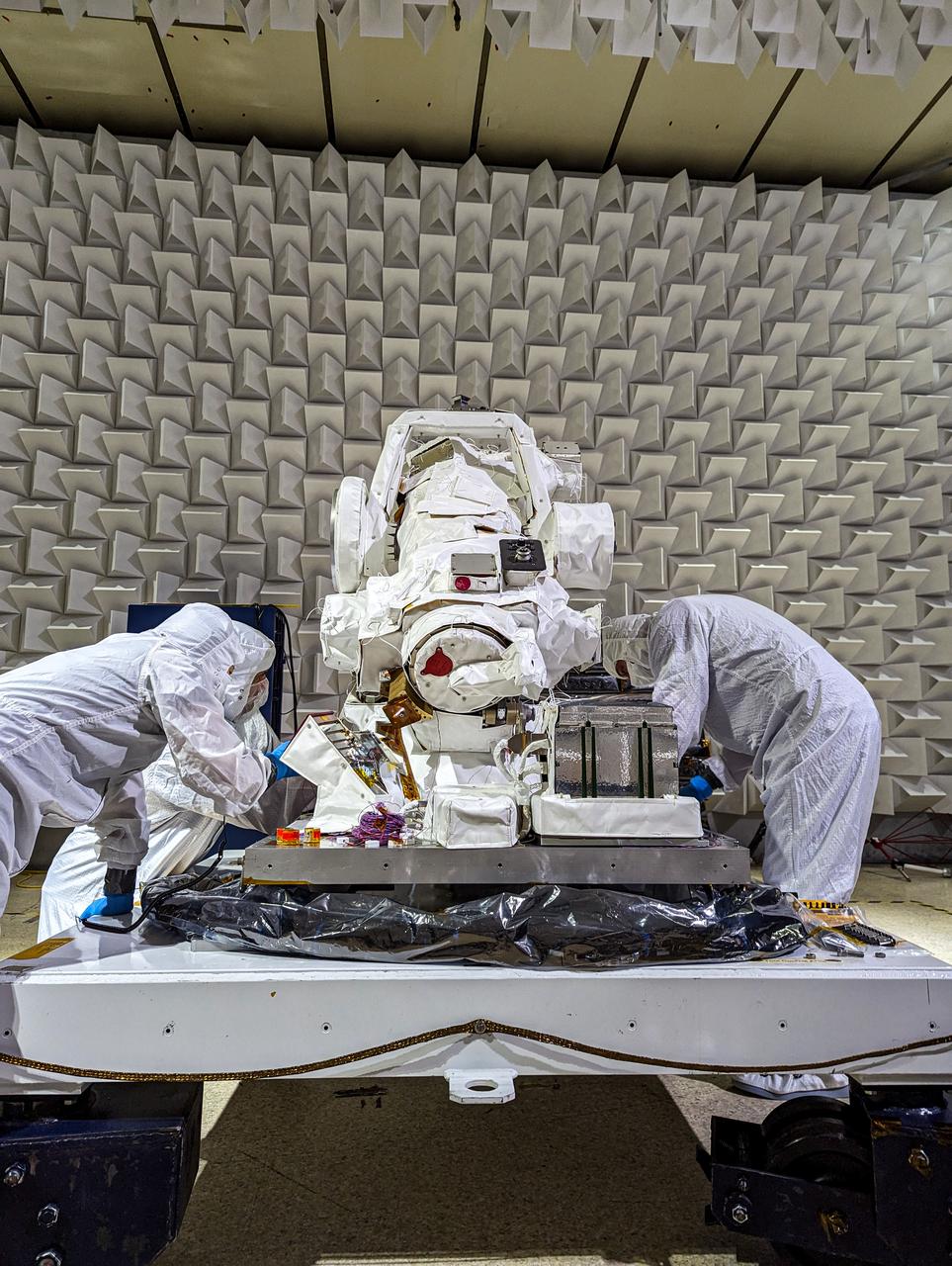
jsc2024e061947 (12/8/2023) --- Team members prepare the COronal Diagnostic EXperiment (CODEX) instrument for Electromagnetic Interference and Electromagnetic Compatibility testing at Goddard Space Flight Center. These tests ensure that CODEX will operate as intended in its shared operating environment while, at the same time, not affecting the ability of other equipment within the same environment to operate as intended. Credit: CODEX team / NASA
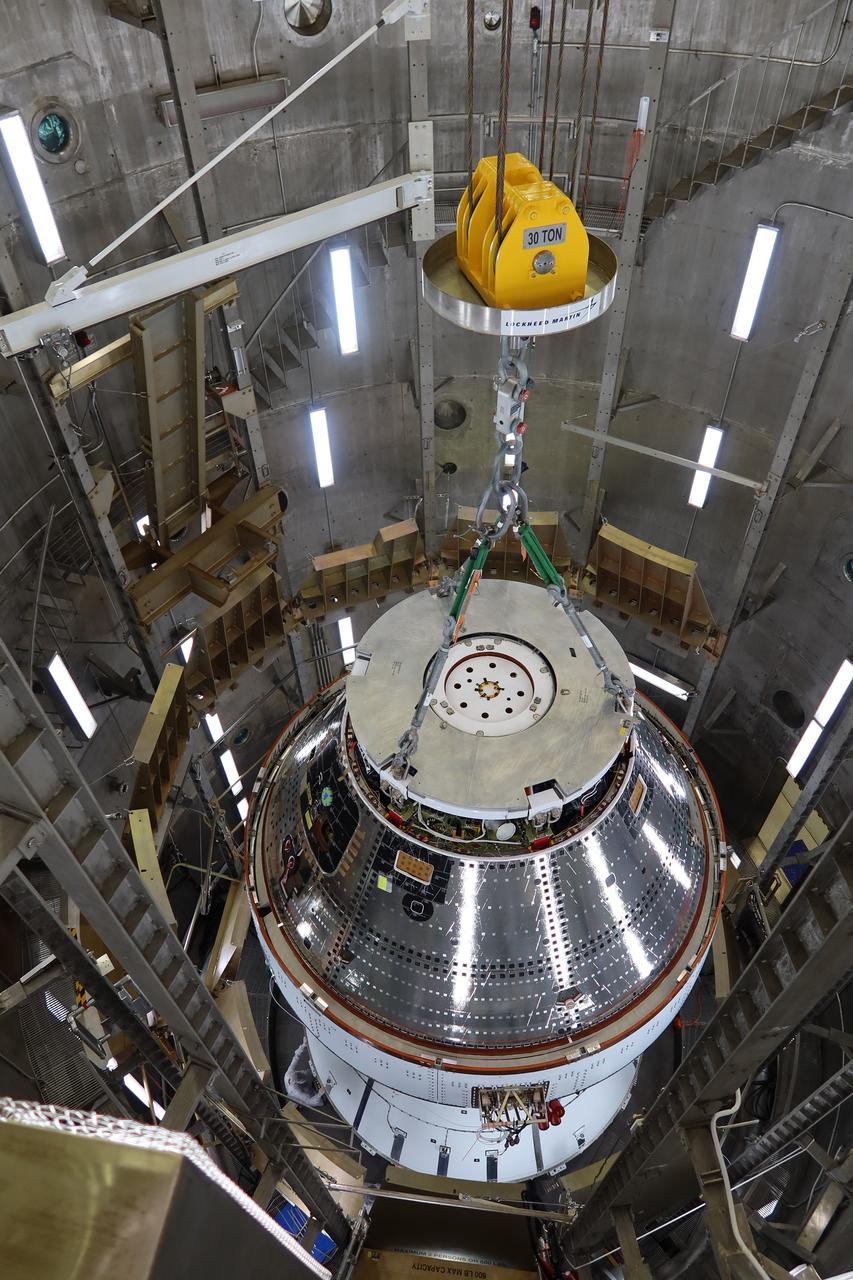
A team wearing bunny suits inside the Operations and Checkout Building at NASA's Kennedy Space Center in Florida on Saturday, April 27, 2024 prepare the Artemis II Orion spacecraft to be lifted by a 30 ton crane out of a vacuum chamber following a series of electromagnetic compatibility and interference testing.
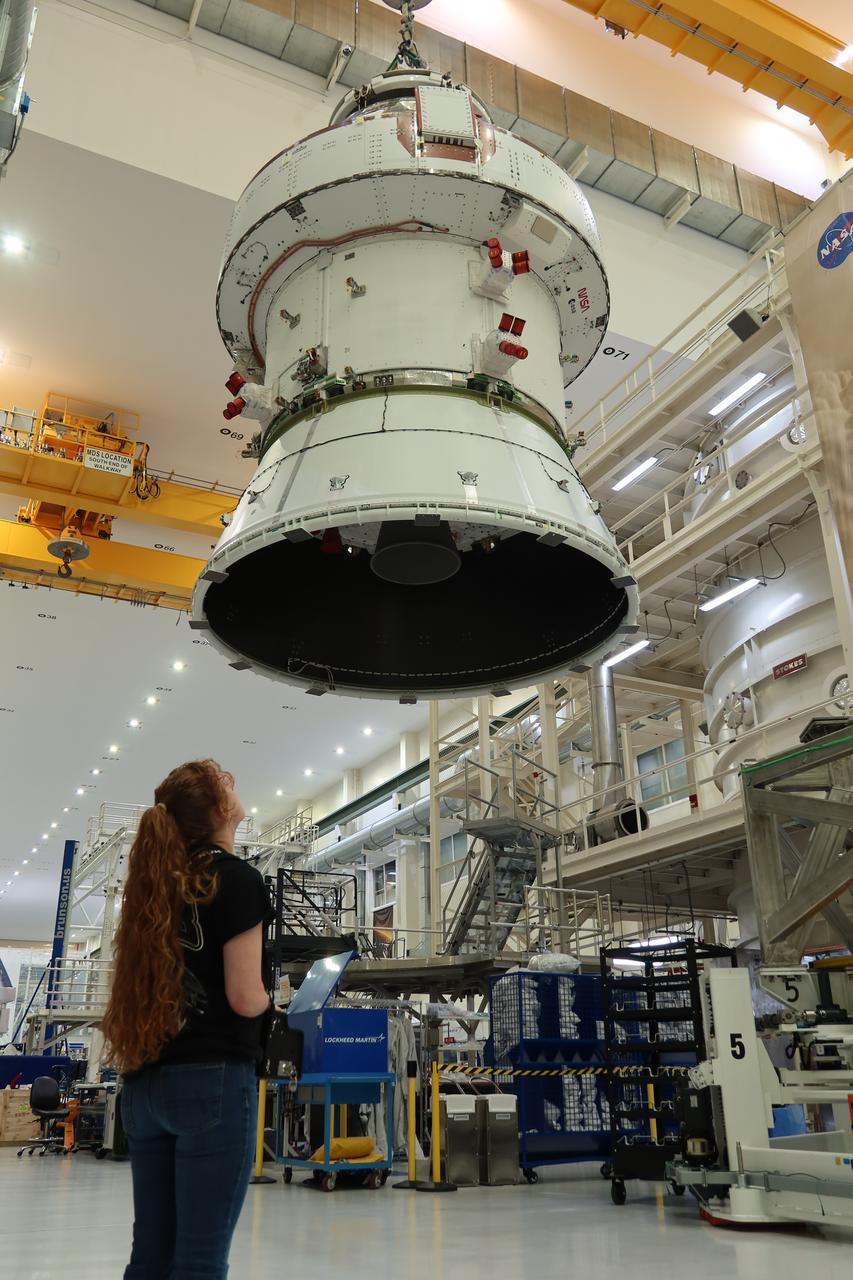
The Orion spacecraft crew module for NASA’s Artemis II mission is viewed by crane operator Rebekah Tolatovicz as it is transferred across the Neil A. Armstrong Operations and Checkout Building at NASA’s Kennedy Space Center in Florida on Saturday, April 27, 2024, following a series of electromagnetic compatibility and interference testing.

A team wearing bunny suits inside the Operations and Checkout Building at NASA's Kennedy Space Center in Florida on Saturday, April 27, 2024 prepare the Artemis II Orion spacecraft to be lifted by a 30 ton crane out of a vacuum chamber following a series of electromagnetic compatibility and interference testing.
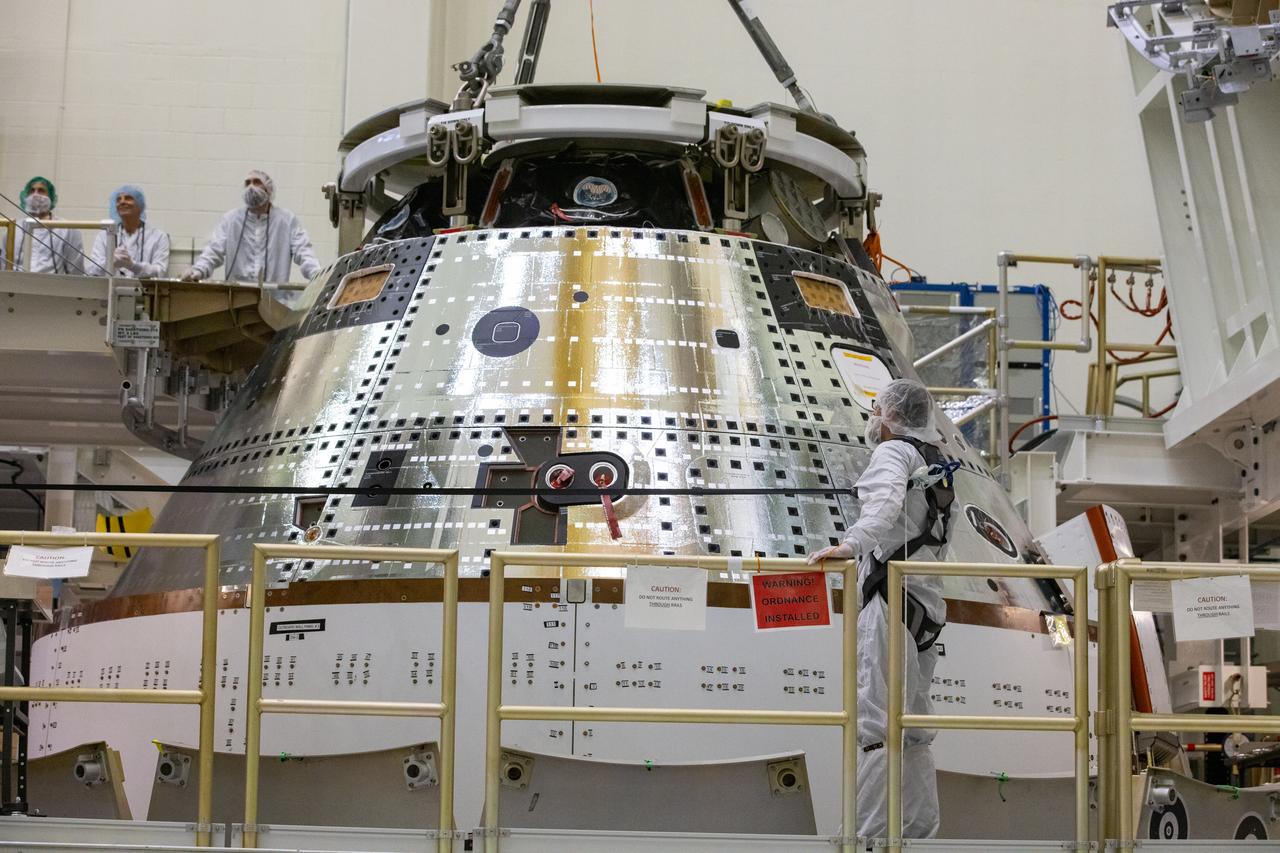
On April 4, 2024, technicians examine the Artemis II Orion spacecraft after a team lifts it into a vacuum chamber inside the Operations and Checkout Building at NASA's Kennedy Space Center in Florida, where it will undergo electromagnetic compatibility and interference testing.
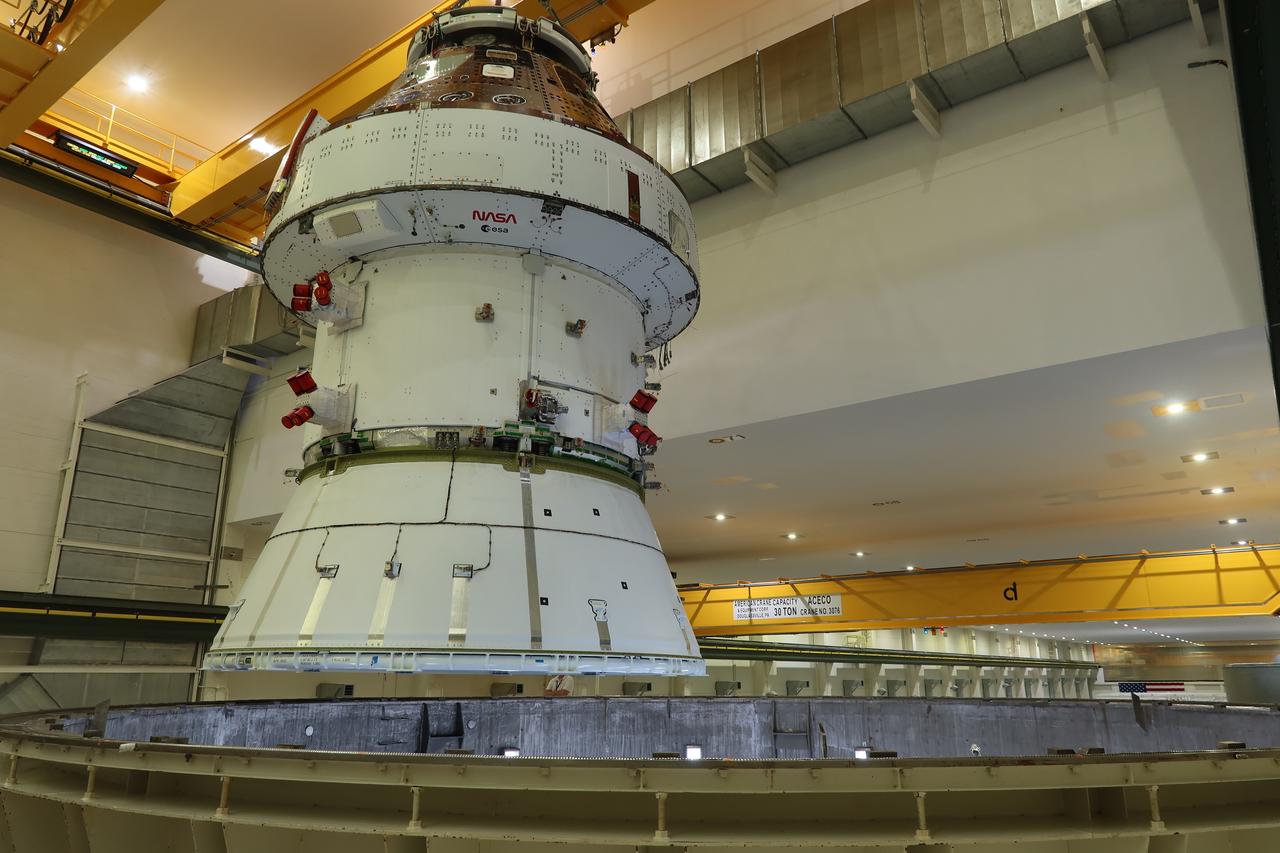
The Orion spacecraft crew for NASA’s Artemis II mission is photographed being transferred across the Neil Armstrong Operations and Checkout Building at NASA’s Kennedy Space Center in Florida on Saturday, April 27, 2024 following a series of electromagnetic compatibility and interference testing.
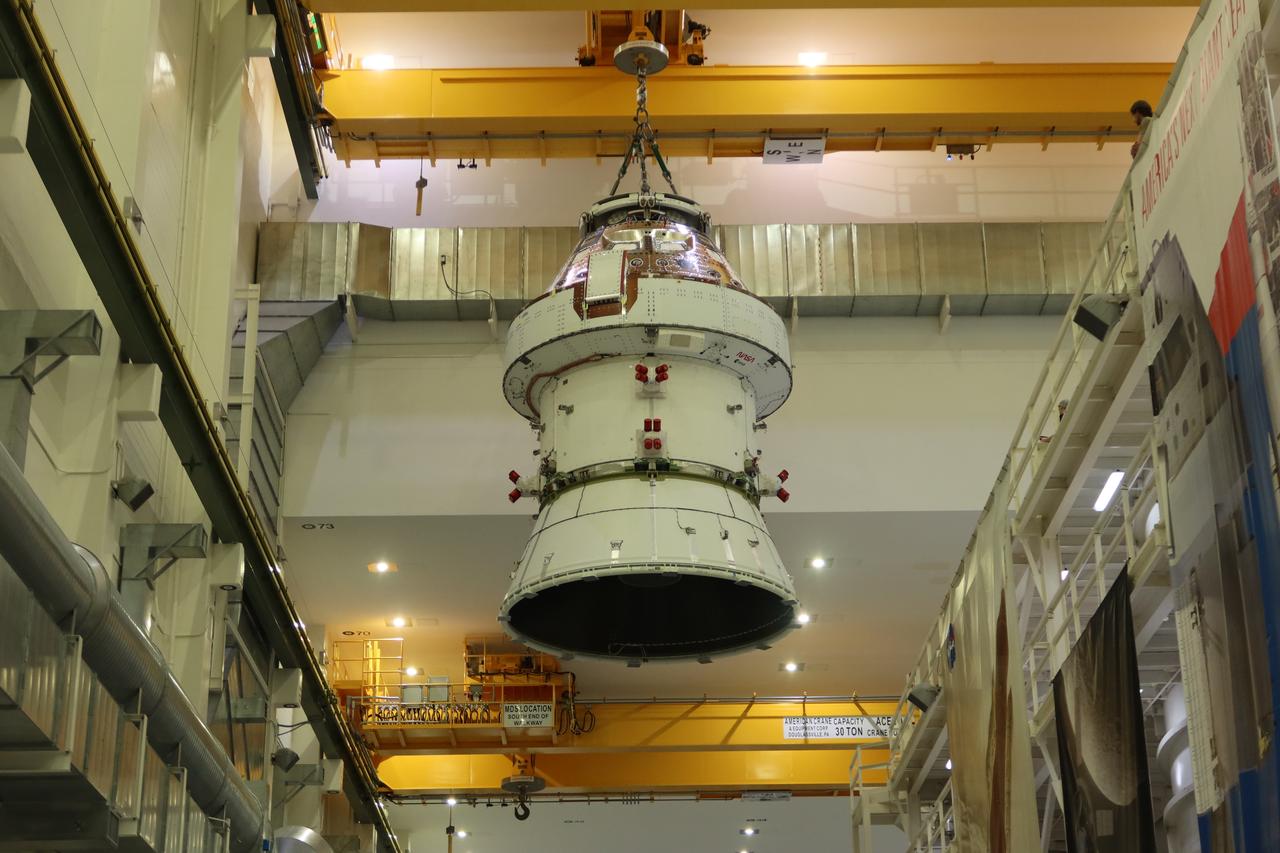
The Orion spacecraft crew for NASA’s Artemis II mission is photographed being transferred across the Neil Armstrong Operations and Checkout Building at NASA’s Kennedy Space Center in Florida on Saturday, April 27, 2024 following a series of electromagnetic compatibility and interference testing.
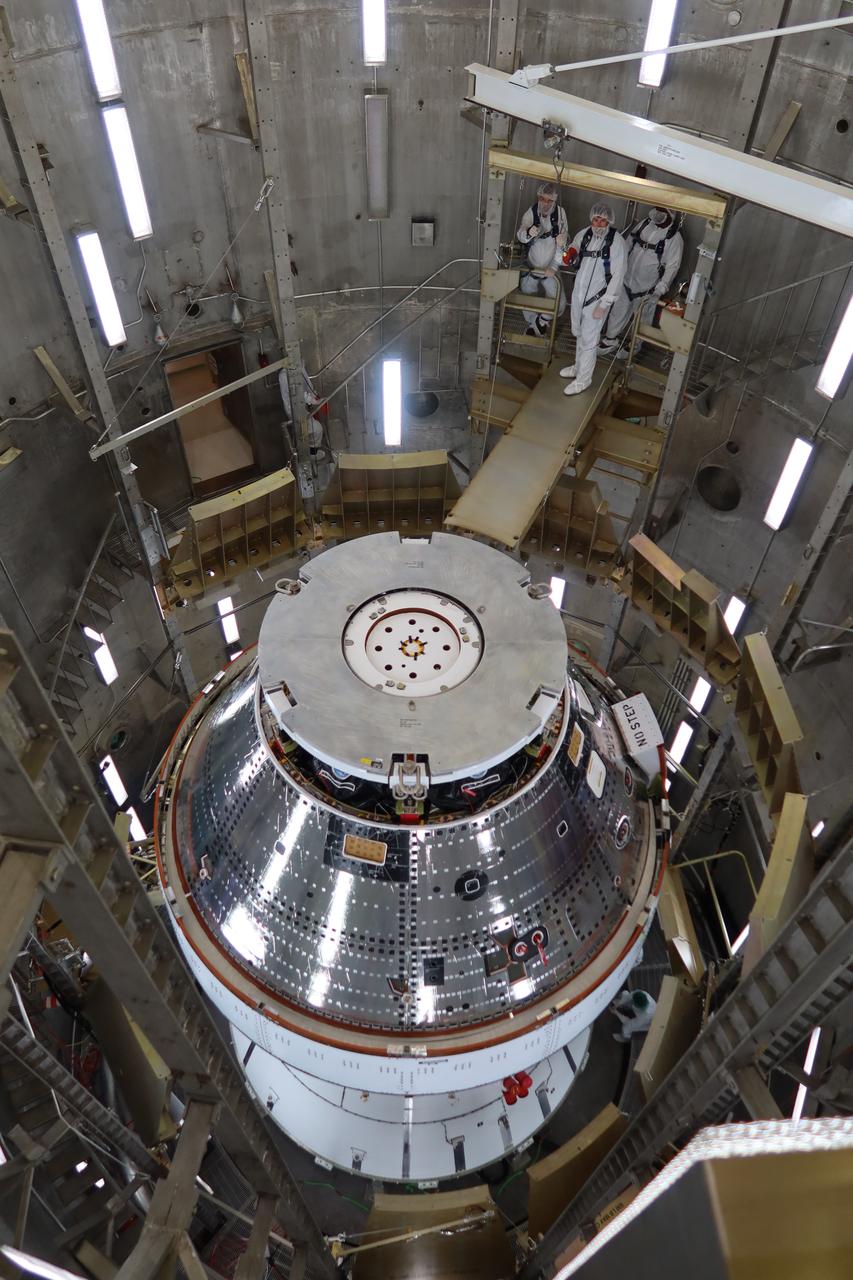
A team wearing bunny suits inside the Operations and Checkout Building at NASA's Kennedy Space Center in Florida on Saturday, April 27, 2024 prepare the Artemis II Orion spacecraft to be lifted by a 30 ton crane out of a vacuum chamber following a series of electromagnetic compatibility and interference testing.

The Orion spacecraft crew module for NASA’s Artemis II mission is viewed by crane operator Rebekah Tolatovicz as it is transferred across the Neil A. Armstrong Operations and Checkout Building at NASA’s Kennedy Space Center in Florida on Saturday, April 27, 2024, following a series of electromagnetic compatibility and interference testing.
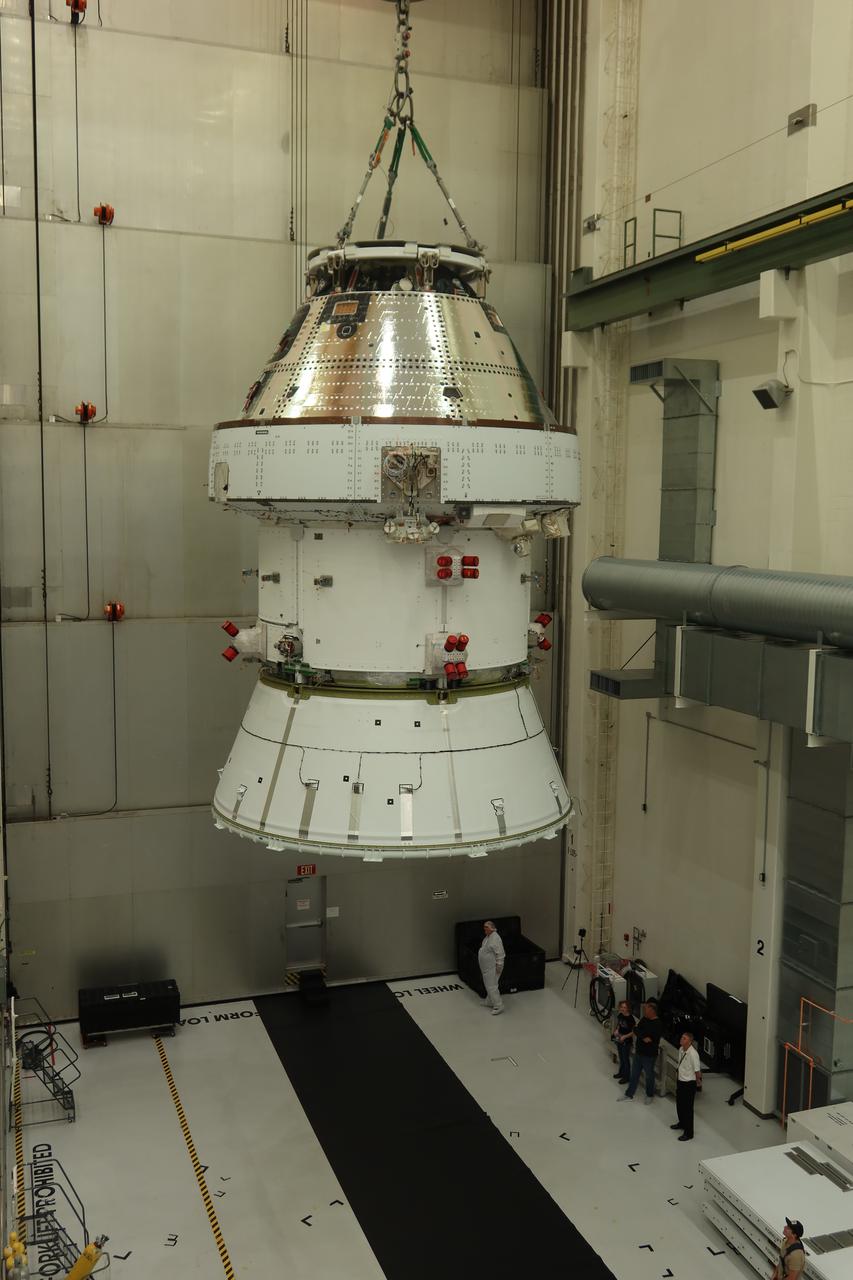
The Orion spacecraft crew for NASA’s Artemis II mission is photographed being transferred across the Neil Armstrong Operations and Checkout Building at NASA’s Kennedy Space Center in Florida on Saturday, April 27, 2024 following a series of electromagnetic compatibility and interference testing.
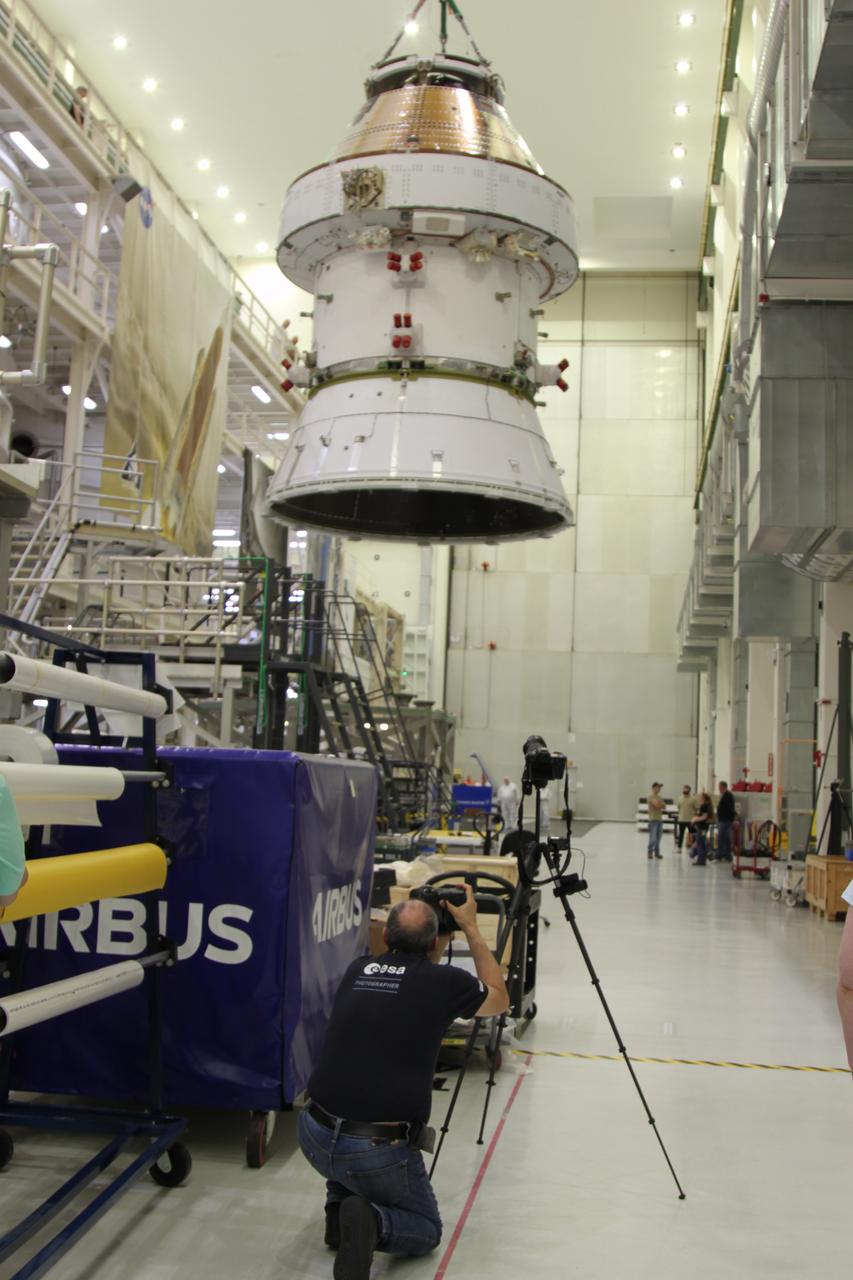
The Orion spacecraft crew for NASA’s Artemis II mission is photographed being transferred across the Neil Armstrong Operations and Checkout Building at NASA’s Kennedy Space Center in Florida on Saturday, April 27, 2024 following a series of electromagnetic compatibility and interference testing.

The Orion spacecraft crew for NASA’s Artemis II mission is photographed being transferred across the Neil Armstrong Operations and Checkout Building at NASA’s Kennedy Space Center in Florida on Saturday, April 27, 2024 following a series of electromagnetic compatibility and interference testing.
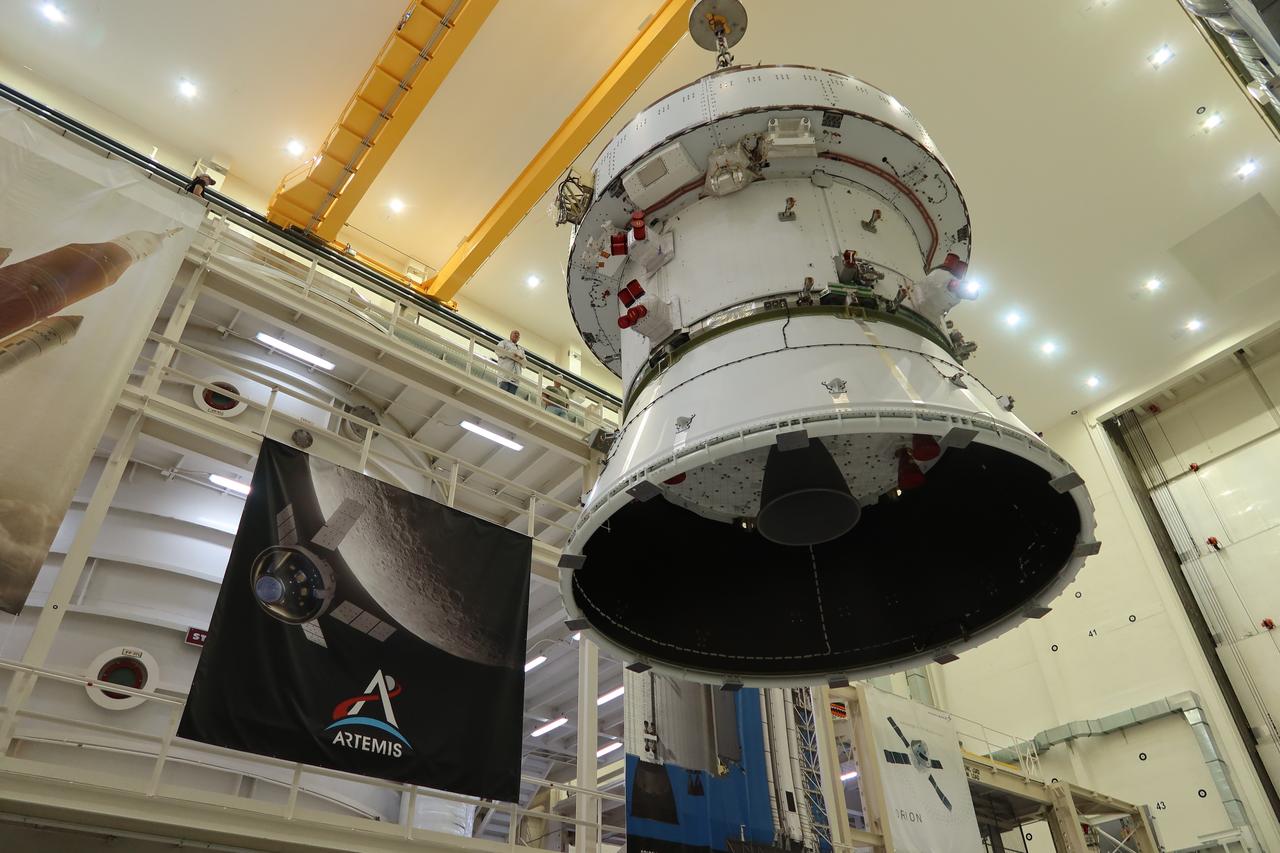
The Orion spacecraft crew for NASA’s Artemis II mission is photographed being transferred across the Neil Armstrong Operations and Checkout Building at NASA’s Kennedy Space Center in Florida on Saturday, April 27, 2024 following a series of electromagnetic compatibility and interference testing.
Mitchell Hamann and John Pindell configure the Lunar Environment Monitoring Station (LEMS) instrument for testing in the Electromagnetic Interference/Electromagnetic Compatibility (EMI/EMC) Chamber at Goddard Space Flight Center, Greenbelt Md., Feb 17, 2026. LEMS is a compact, autonomous, and self-sustaining seismometer suite designed to carry out continuous, long-term, monitoring of the lunar seismic environment at the South Polar region. Photo Credit: NASA/Mike Guinto
Lunar Environment Monitoring Station (LEMS) team members install the instrument for testing in the Electromagnetic Interference/Electromagnetic Compatibility (EMI/EMC) Chamber at Goddard Space Flight Center, Greenbelt Md., Feb 13, 2026. LEMS is a compact, autonomous, and self-sustaining seismometer suite designed to carry out continuous, long-term, monitoring of the lunar seismic environment at the South Polar region. Photo Credit: NASA/Denny Henry
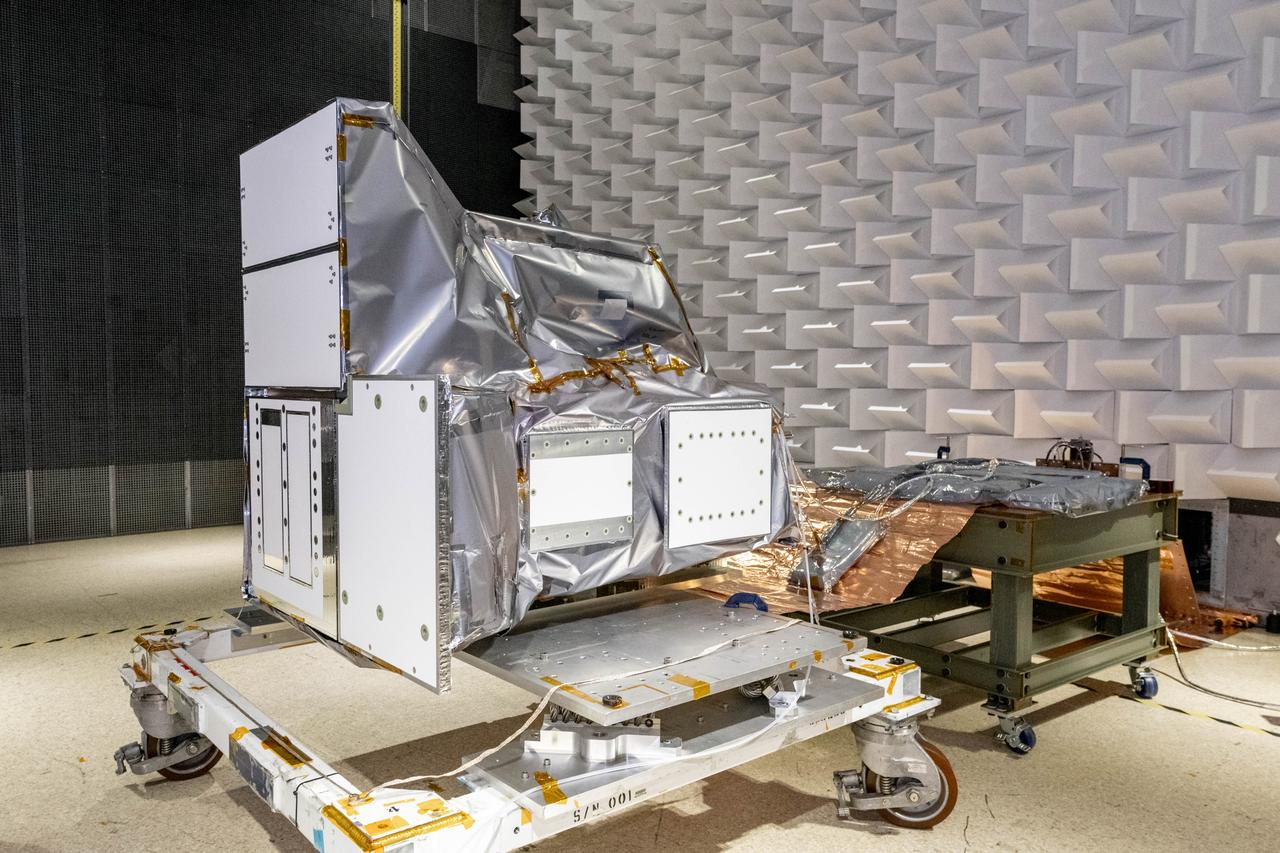
The Ocean Color Instrument (OCI) is prepared for testing in the Electro Magnetic Interference (EMI) chamber showing the radiator side of the instrument. This test will help engineers and scientists learn if OCI will be compatible with the electromagnetic environment on the spacecraft. OCI is a highly advanced optical spectrometer that will be used to measure properties of light over portions of the electromagnetic spectrum. It will enable continuous measurement of light at finer wavelength resolution than previous NASA satellite sensors, extending key system ocean color data records for climate studies. OCI is PACE's (Plankton, Aerosol, Cloud, ocean Ecosystem) primary sensor built at Goddard Space Flight Center in Greenbelt, MD.
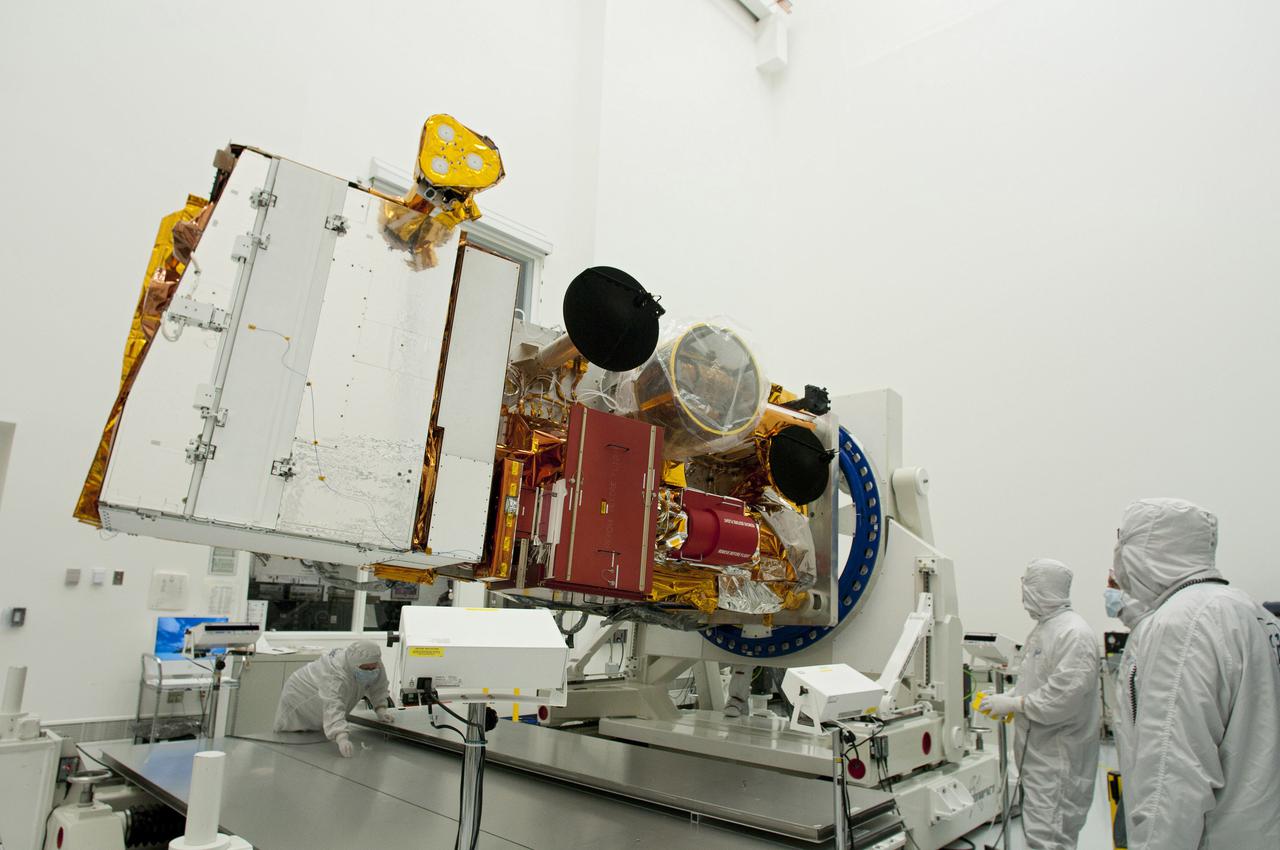
BALL AEROSPACE, Boulder, Colo. – In the Ball Aerospace and Technologies Corp. Production and Test Facility in Boulder, Colo., NASA's National Polar-orbiting Operational Environmental Satellite System Preparatory Project NPP satellite undergoes inspection by technicians after successfully completing end-to-end electromagnetic compatibility testing. A United Launch Alliance Delta II rocket will carry NPP into space. NPP represents a critical first step in building the next-generation of Earth-observing satellites. NPP will carry the first of the new sensors developed for this satellite fleet, now known as the Joint Polar Satellite System JPSS to be launched in 2016. NPP is the bridge between NASA's Earth Observing System EOS satellites and the forthcoming series of JPSS satellites. The mission will test key technologies and instruments for the JPSS missions. NPP is targeted to launch Oct. 27. For more information, visit http:__www.nasa.gov_NPP. Photo credit: Ball Aerospace
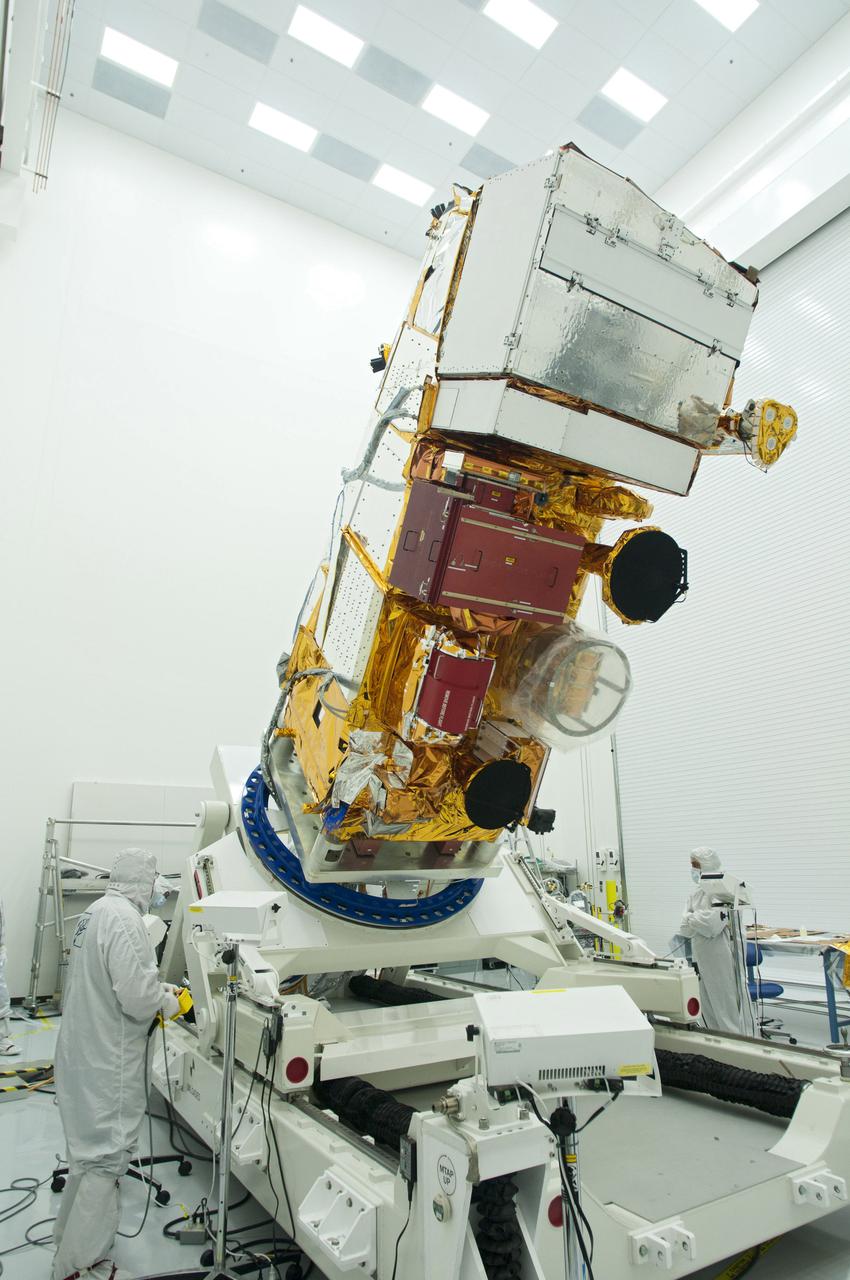
BALL AEROSPACE, Boulder, Colo. – In a cleanroom at Ball Aerospace and Technologies Corp., technicians inspect NASA's National Polar-orbiting Operational Environmental Satellite System Preparatory Project NPP satellite following electromagnetic compatibility testing. A United Launch Alliance Delta II rocket will carry NPP into space. NPP represents a critical first step in building the next-generation of Earth-observing satellites. NPP will carry the first of the new sensors developed for this satellite fleet, now known as the Joint Polar Satellite System JPSS to be launched in 2016. NPP is the bridge between NASA's Earth Observing System EOS satellites and the forthcoming series of JPSS satellites. The mission will test key technologies and instruments for the JPSS missions. NPP is targeted to launch Oct. 27. For more information, visit http:__www.nasa.gov_NPP. Photo credit: Ball Aerospace
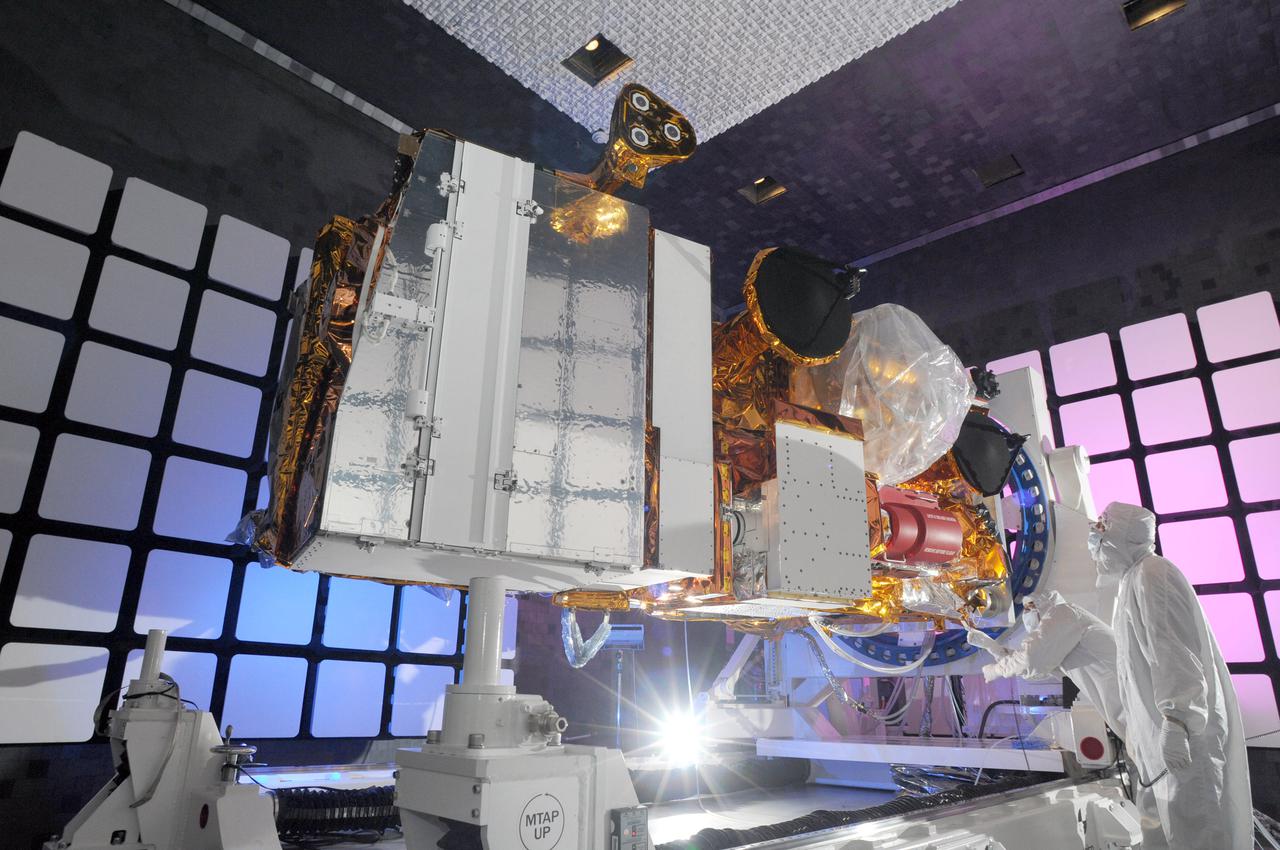
BALL AEROSPACE, Boulder, Colo. – In a Ball Aerospace and Technologies Corp. cleanroom in Boulder, Colo., NASA's National Polar-orbiting Operational Environmental Satellite System Preparatory Project NPP satellite is undergoing Electromagnetic Interference_Electromagnetic Compatibility EMI_EMC testing. A United Launch Alliance Delta II rocket will carry NPP into space. NPP represents a critical first step in building the next-generation of Earth-observing satellites. NPP will carry the first of the new sensors developed for this satellite fleet, now known as the Joint Polar Satellite System JPSS to be launched in 2016. NPP is the bridge between NASA's Earth Observing System EOS satellites and the forthcoming series of JPSS satellites. The mission will test key technologies and instruments for the JPSS missions. NPP is targeted to launch Oct. 27. For more information, visit http:__www.nasa.gov_NPP. Photo credit: Ball Aerospace
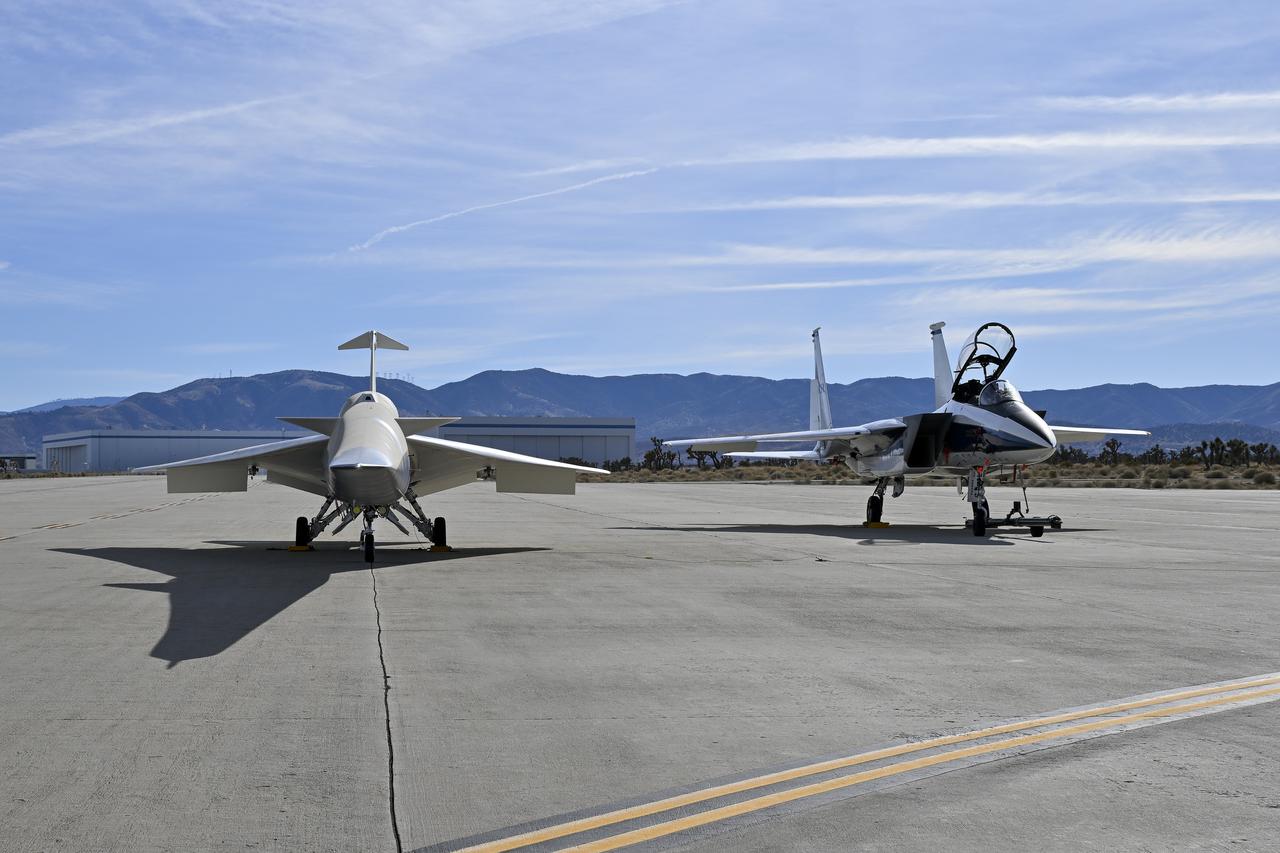
A NASA F-15 aircraft sits 20 feet off the left side of the X-59 aircraft, with a white hangar and hills in the background, during electromagnetic interference testing.
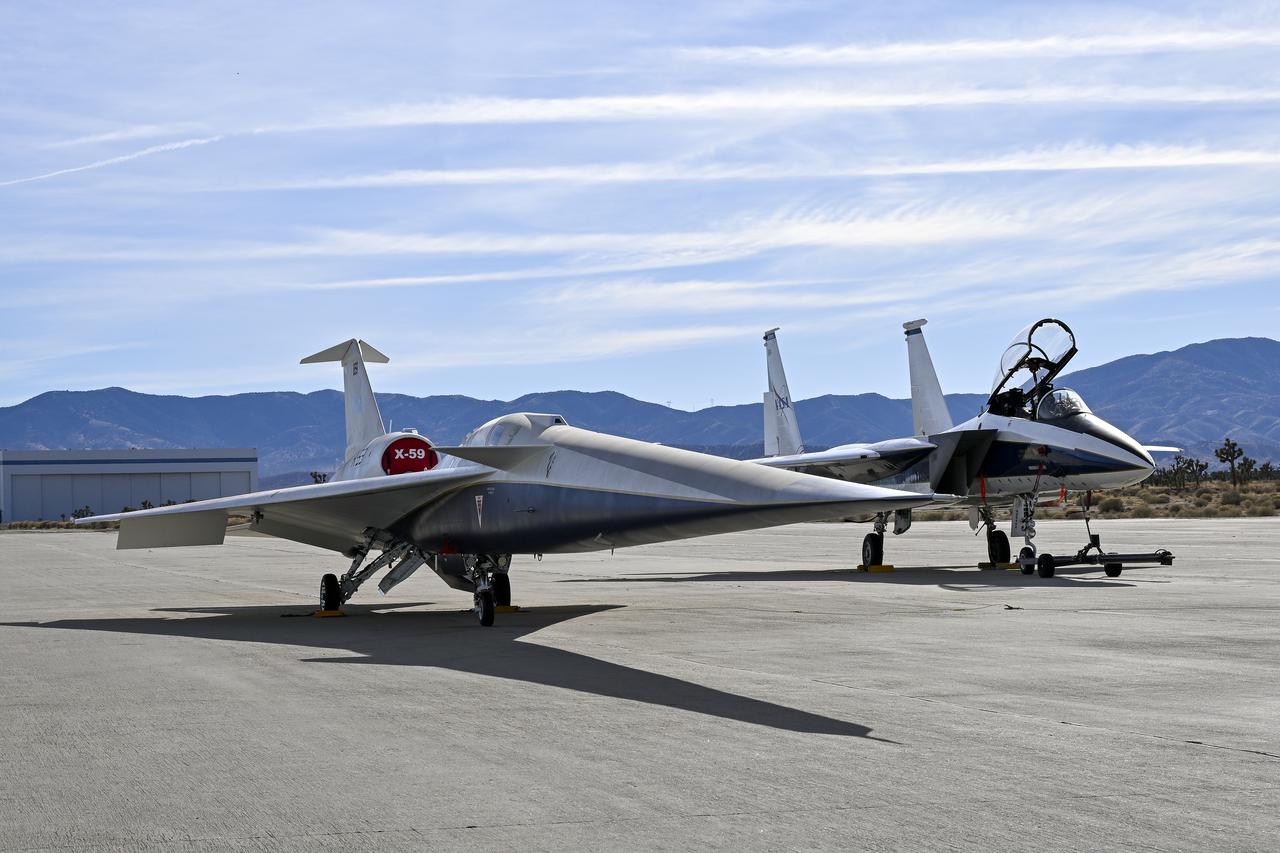
A NASA F-15 aircraft sits 20 feet off the left side of the X-59 aircraft, with a white hangar and hills in the background, during electromagnetic interference testing.
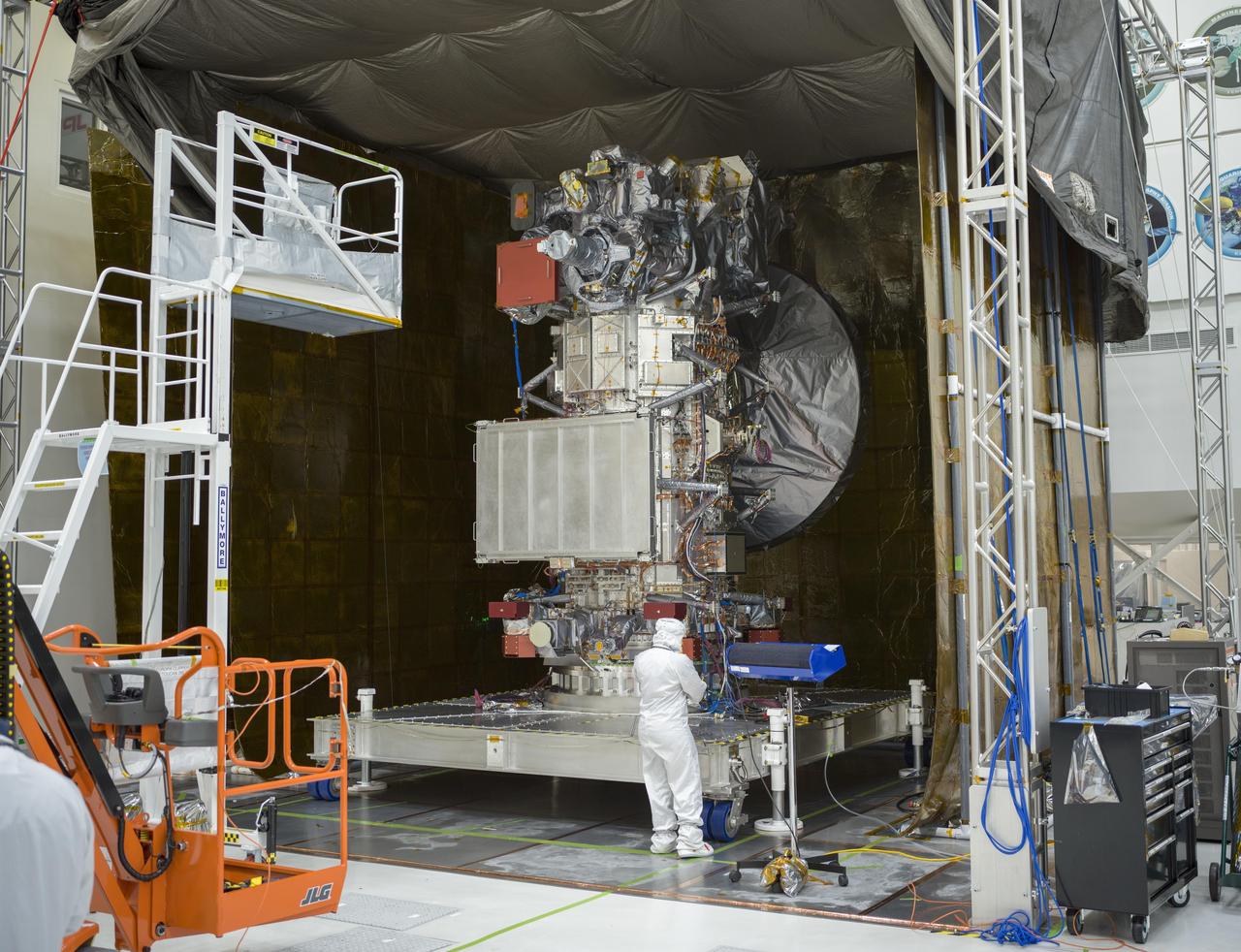
NASA's Europa Clipper spacecraft is seen in the main clean room of the Spacecraft Assembly Facility at the agency's Jet Propulsion Laboratory in Southern California on Jan. 19, 2024. The tent around the spacecraft was erected to support electromagnetic testing, which is designed to ensure the hardware will operate correctly in the electrical and magnetic conditions of space – and that the electrical and magnetic components that make up the spacecraft are compatible and don't interfere with one another. Set to launch from Kennedy Space Center in Florida in October, Europa Clipper will arrive at the Jupiter system in 2030 and conduct about 50 flybys of the moon Europa. The mission's main science goal is to determine whether there are places below the icy surface of Europa that could support life. The mission's three main science objectives are to determine the thickness of the moon's ice shell and its surface interactions with the ocean below, to investigate its composition, and to characterize its geology. The mission's detailed exploration of Europa will help scientists better understand the astrobiological potential for habitable worlds beyond our planet. https://photojournal.jpl.nasa.gov/catalog/PIA26061

NASA test pilot Jim Less prepares to exit the cockpit of the quiet supersonic X-59 aircraft in between electromagnetic interference (EMI) testing. The EMI testing ensures an aircraft’s systems function properly under various conditions of electromagnetic radiation. The X-59 is the centerpiece of the NASA’s Quesst mission, designed to demonstrate quiet supersonic technology and provide data to address a key barrier to commercial supersonic travel.