
"About 10 years ago, I started taking improv comedy classes when I lived back in Atlanta. It really teaches you how to go with the flow, to be present in a situation, to be ready for things to go wrong, and to be able to jump in and save a conversation or help somebody who is struggling to find the right words. These are things we do in our everyday lives that we can also do on stage, and I love that aspect of it. "I started using the tools of comedy to rewrite popular songs – such as from the musical Hamilton – to be about space. I love making people laugh and smile and think there’s something really special about finding things funny or amusing in a respectful way. It is a different level of connection than, ‘Oh, that's interesting.’ It ignites a different emotional response in you, and I think there’s a place for that in science communication as well. "Often in popular culture, there’s a bit of a stigma around people who enjoy learning about space and science; that it’s only for nerds. But if you insert it into a genre that you wouldn't normally find it in, like music or comedy, then suddenly you’re connecting with people on a different level. They might not go out and read a textbook, but they might come away from a song or a comedy show thinking, ‘Huh, I thought I was just going to this event for entertainment, but I actually learned something.’ That’s cool! It’s like you’re seasoning it or putting a little sugar in it. "Something improv comedy taught me is: When you start to let go and not take yourself too seriously and embrace the spontaneity of a situation, that’s really freeing, and people respond well to that." Elizabeth Landau, Senior Communications Specialist for NASA’s Science Mission Directorate, poses for a portrait, Friday, July 30, 2021, in Washington. Photo Credit: (NASA/Bill Ingalls)
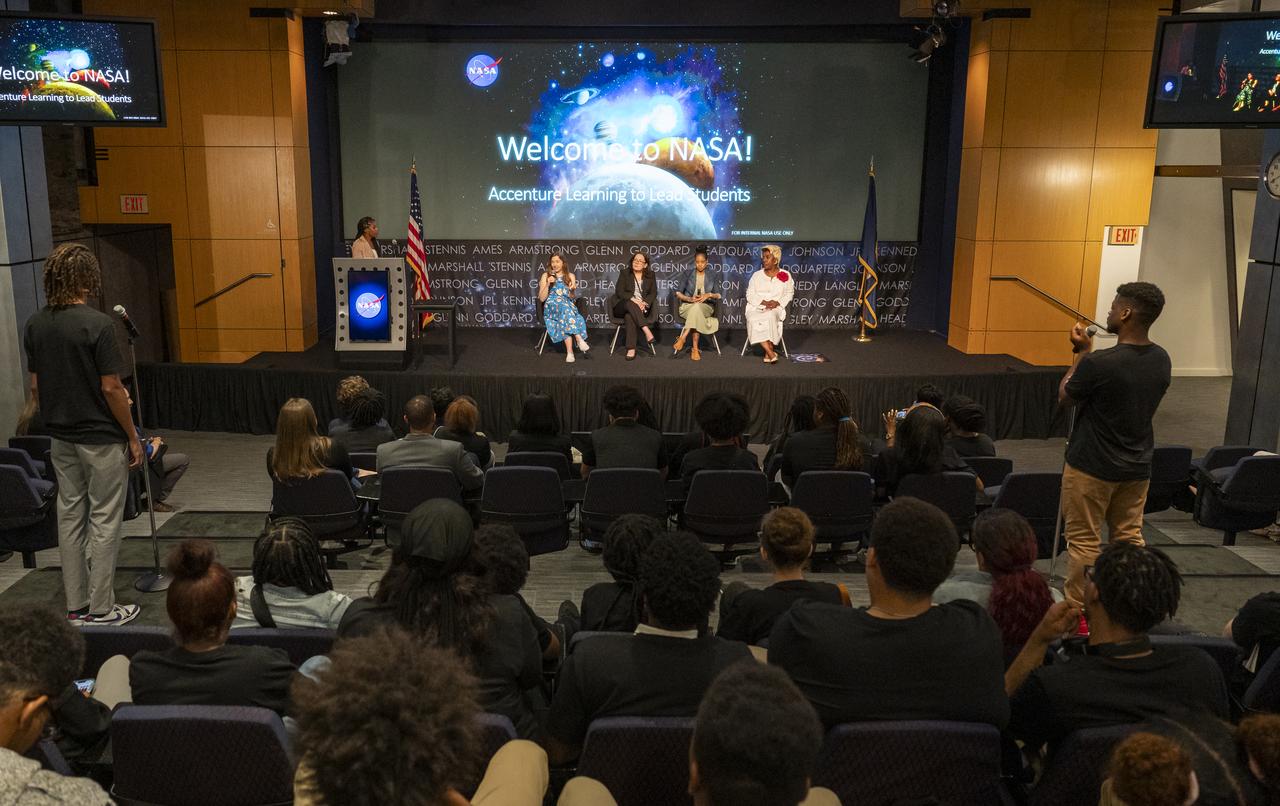
Senior Communications Specialist Elizabeth Landau, left, answers questions during a high school student engagement event, Thursday, July 6, 2023, at the Mary W. Jackson NASA Headquarters building in Washington. Photo Credit: (NASA/Keegan Barber)

From left to right, Senior Communications Specialist Elizabeth Landau, Chief Knowledge Officer for NASA’s Aeronautics Research Mission Directorate (ARMD) Tiffany Smith, Strategic Communications and Outreach Lead Denise Hill, and Strategic Integration & Management Division Director Alotta Taylor, answer questions during a high school student engagement event, Thursday, July 6, 2023, at the Mary W. Jackson NASA Headquarters building in Washington. Photo Credit: (NASA/Keegan Barber)

From left to right, Senior Communications Specialist Elizabeth Landau, Chief Knowledge Officer for NASA’s Aeronautics Research Mission Directorate (ARMD) Tiffany Smith, Strategic Communications and Outreach Lead Denise Hill, and Strategic Integration & Management Division Director Alotta Taylor, answer questions during a high school student engagement event, Thursday, July 6, 2023, at the Mary W. Jackson NASA Headquarters building in Washington. Photo Credit: (NASA/Keegan Barber)
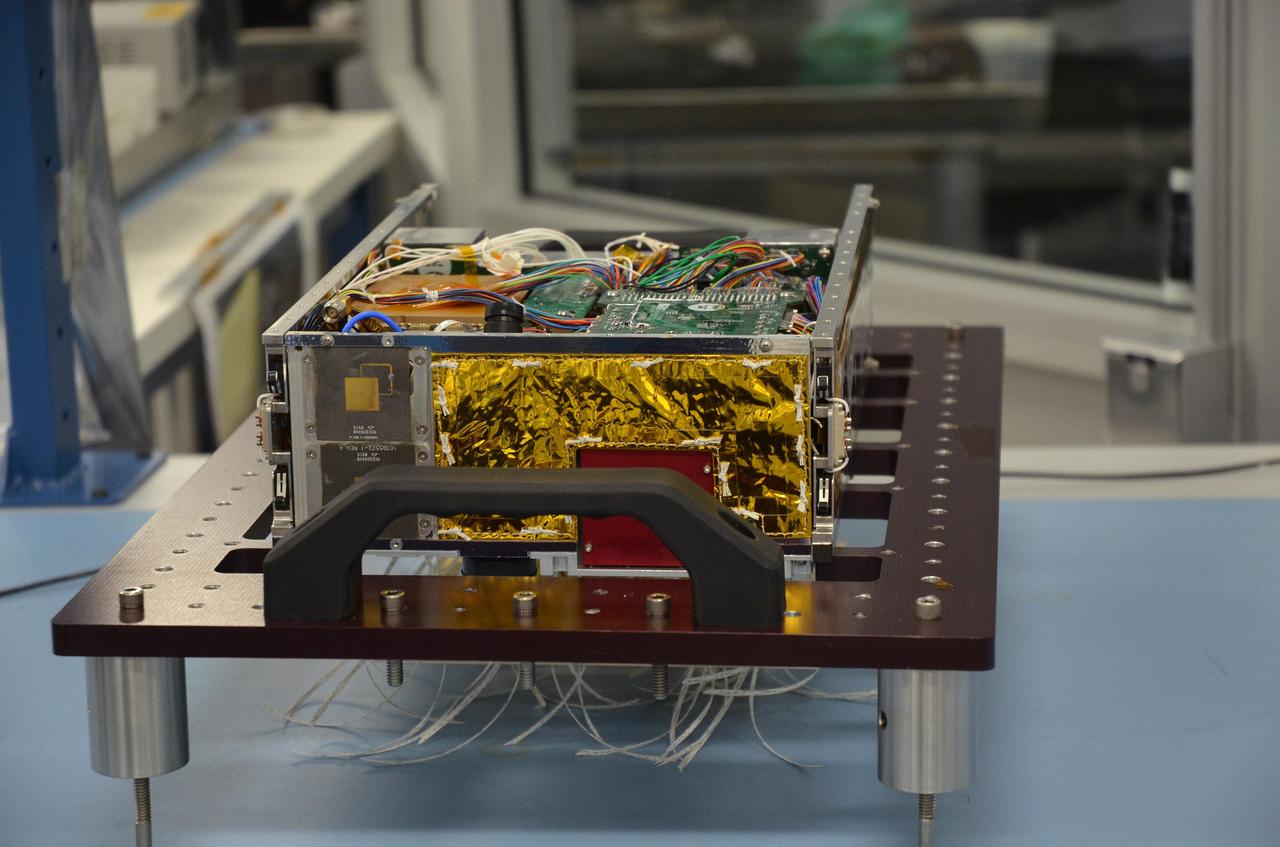
One of the two MarCO (Mars Cube One) CubeSat spacecraft, with its insides displayed, is seen at NASA's Jet Propulsion Laboratory, Pasadena, California. The briefcase-size MarCO twins were designed to ride along with NASA's next Mars lander, InSight. Its planned March 2016 launch was suspended. InSight -- an acronym for Interior Exploration using Seismic Investigations, Geodesy and Heat Transport -- will study the interior of Mars to improve understanding of the processes that formed and shaped rocky planets, including Earth. Note: After thorough examination, NASA managers have decided to suspend the planned March 2016 launch of the Interior Exploration using Seismic Investigations Geodesy and Heat Transport (InSight) mission. The decision follows unsuccessful attempts to repair a leak in a section of the prime instrument in the science payload. http://photojournal.jpl.nasa.gov/catalog/PIA20345
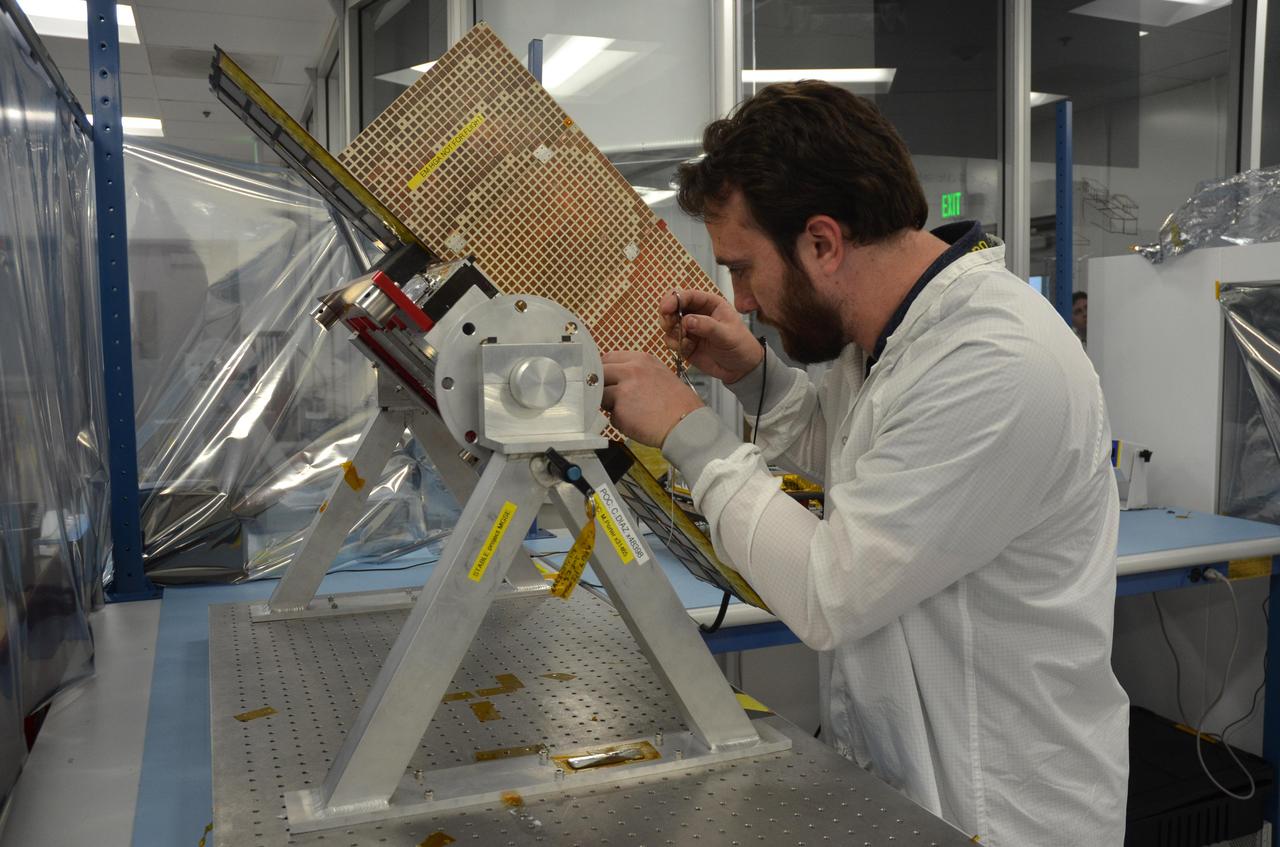
Joel Steinkraus, lead mechanical engineer for the MarCO (Mars Cube One) CubeSat spacecraft, adjusts a model of one of the two spacecraft. The mock-up in the photo is in a configuration to show the deployed position of components that correspond to MarCO's two solar panels and two antennas. During launch, those components will be stowed for a total vehicle size of about 14.4 inches (36.6 centimeters) by 9.5 inches (24.3 centimeters) by 4.6 inches (11.8 centimeters). The briefcase-size MarCO twins were designed to ride along with NASA's next Mars lander, InSight. Its planned March 2016 launch was suspended. InSight -- an acronym for Interior Exploration using Seismic Investigations, Geodesy and Heat Transport -- will study the interior of Mars to improve understanding of the processes that formed and shaped rocky planets, including Earth. Note: After thorough examination, NASA managers have decided to suspend the planned March 2016 launch of the Interior Exploration using Seismic Investigations Geodesy and Heat Transport (InSight) mission. The decision follows unsuccessful attempts to repair a leak in a section of the prime instrument in the science payload. http://photojournal.jpl.nasa.gov/catalog/PIA20344
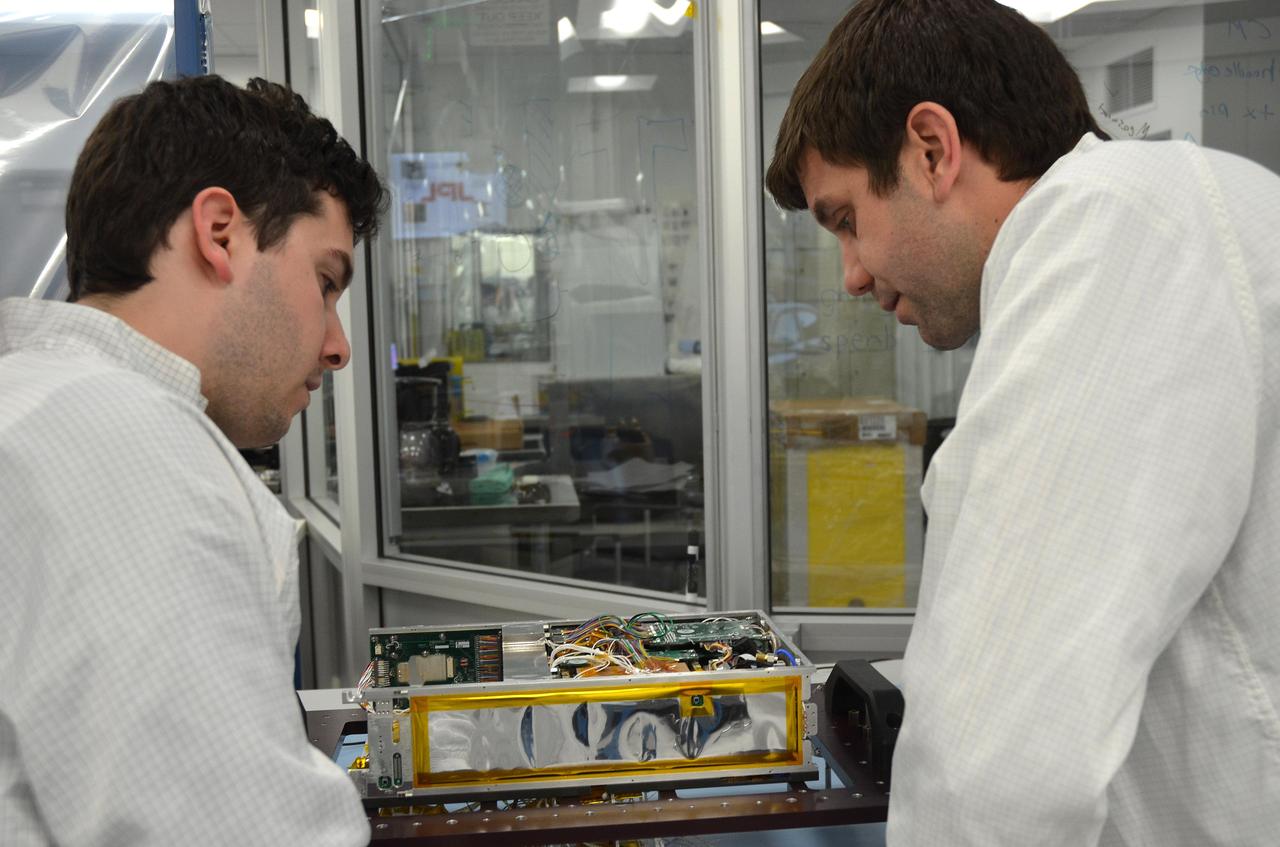
Engineers for NASA's MarCO (Mars Cube One) technology demonstration inspect one of the two MarCO CubeSats. Cody Colley, MarCO integration and test deputy, left, and Andy Klesh, MarCO chief engineer, are on the team at NASA's Jet Propulsion Laboratory, Pasadena, California, preparing twin MarCO CubeSats. The briefcase-size MarCO twins were designed to ride along with NASA's next Mars lander, InSight. Its planned March 2016 launch was suspended. InSight -- an acronym for Interior Exploration using Seismic Investigations, Geodesy and Heat Transport -- will study the interior of Mars to improve understanding of the processes that formed and shaped rocky planets, including Earth. Note: After thorough examination, NASA managers have decided to suspend the planned March 2016 launch of the Interior Exploration using Seismic Investigations Geodesy and Heat Transport (InSight) mission. The decision follows unsuccessful attempts to repair a leak in a section of the prime instrument in the science payload. http://photojournal.jpl.nasa.gov/catalog/PIA20342
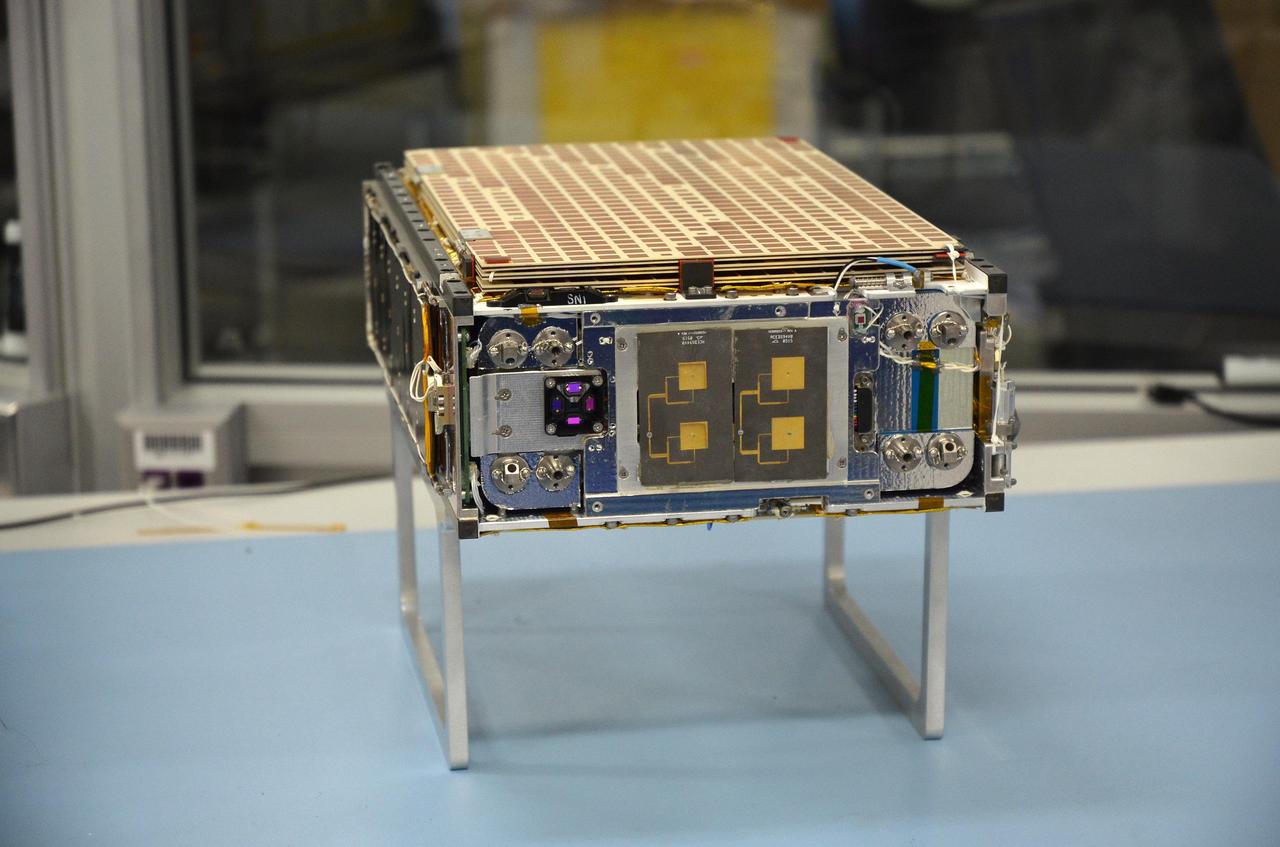
One of the two MarCO (Mars Cube One) CubeSat spacecraft is seen at NASA's Jet Propulsion Laboratory, Pasadena, California. The briefcase-size MarCO twins were designed to ride along with NASA's next Mars lander, InSight. Its planned March 2016 launch was suspended. InSight -- an acronym for Interior Exploration using Seismic Investigations, Geodesy and Heat Transport -- will study the interior of Mars to improve understanding of the processes that formed and shaped rocky planets, including Earth. Note: After thorough examination, NASA managers have decided to suspend the planned March 2016 launch of the Interior Exploration using Seismic Investigations Geodesy and Heat Transport (InSight) mission. The decision follows unsuccessful attempts to repair a leak in a section of the prime instrument in the science payload. http://photojournal.jpl.nasa.gov/catalog/PIA20346
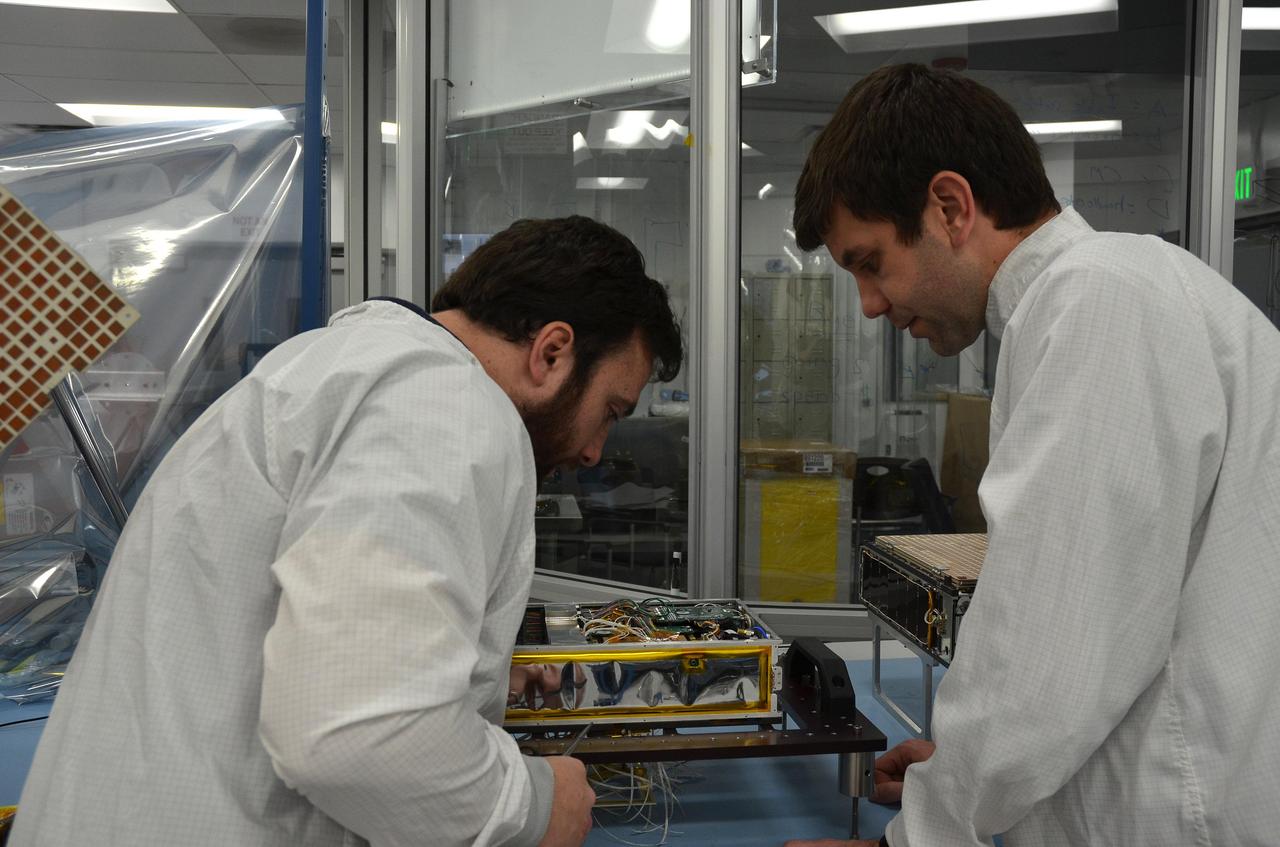
Engineers for NASA's MarCO (Mars Cube One) technology demonstration inspect one of the two MarCO CubeSats. Joel Steinkraus, MarCO lead mechanical engineer, left, and Andy Klesh, MarCO chief engineer, are on the team at NASA's Jet Propulsion Laboratory, Pasadena, California, preparing twin MarCO CubeSats. The briefcase-size MarCO twins were designed to ride along with NASA's next Mars lander, InSight. Its planned March 2016 launch was suspended. InSight -- an acronym for Interior Exploration using Seismic Investigations, Geodesy and Heat Transport -- will study the interior of Mars to improve understanding of the processes that formed and shaped rocky planets, including Earth. Note: After thorough examination, NASA managers have decided to suspend the planned March 2016 launch of the Interior Exploration using Seismic Investigations Geodesy and Heat Transport (InSight) mission. The decision follows unsuccessful attempts to repair a leak in a section of the prime instrument in the science payload. http://photojournal.jpl.nasa.gov/catalog/PIA20343
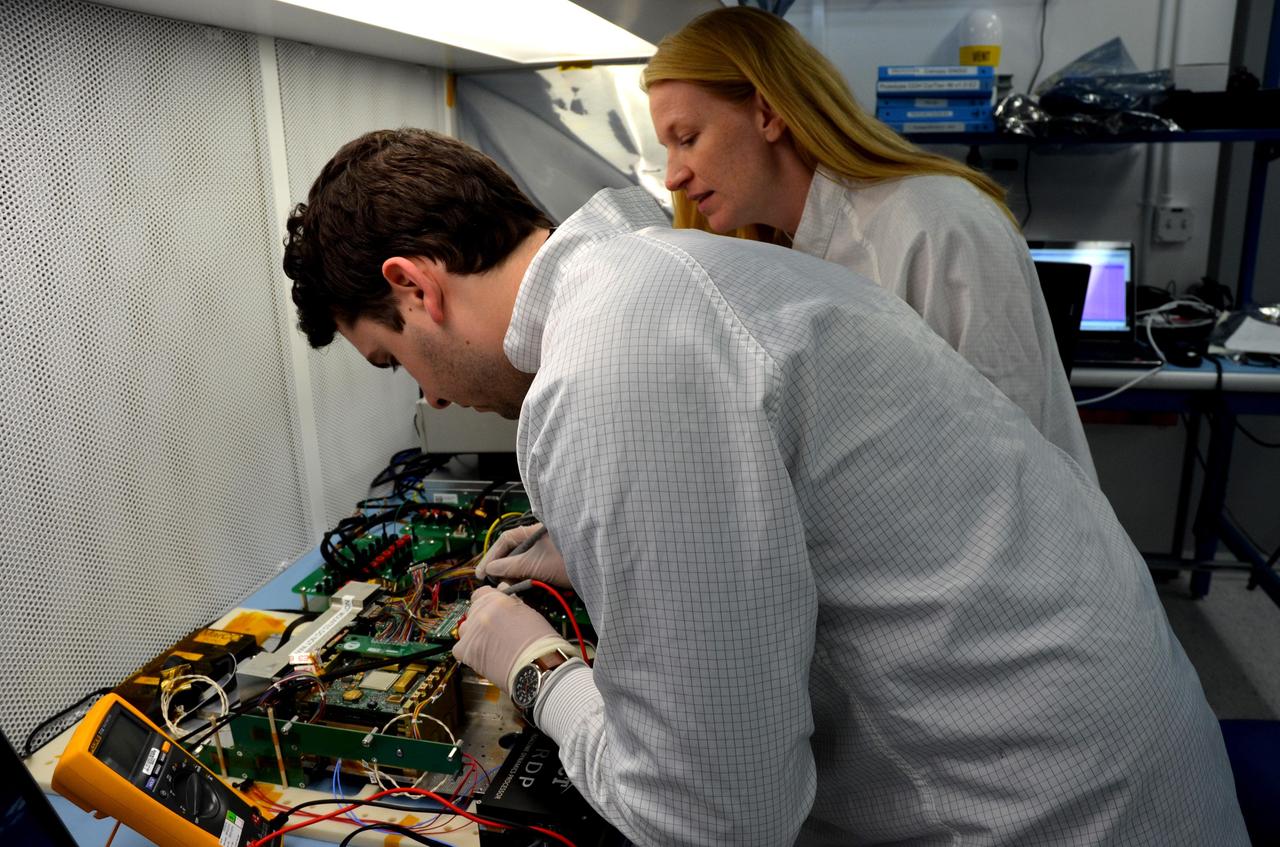
Engineers for NASA's MarCO (Mars Cube One) technology demonstration inspect the MarCO test bed, which contains components that are identical to those built for a flight to Mars. Cody Colley, left, MarCO integration and test deputy, and Shannon Statham, MarCO integration and test lead, are on the team at NASA's Jet Propulsion Laboratory, Pasadena, California, preparing twin MarCO CubeSats. The briefcase-size MarCO twins were designed to ride along with NASA's next Mars lander, InSight. Its planned March 2016 launch was suspended. InSight -- an acronym for Interior Exploration using Seismic Investigations, Geodesy and Heat Transport -- will study the interior of Mars to improve understanding of the processes that formed and shaped rocky planets, including Earth. Note: After thorough examination, NASA managers have decided to suspend the planned March 2016 launch of the Interior Exploration using Seismic Investigations Geodesy and Heat Transport (InSight) mission. The decision follows unsuccessful attempts to repair a leak in a section of the prime instrument in the science payload. http://photojournal.jpl.nasa.gov/catalog/PIA20341