
Director of the National Oceanic and Atmospheric Administration’s Office of Space Weather Observations, Elsayed Talaat, speaks during a media briefing to discuss the upcoming solar eclipse, Tuesday, March 26, 2024 at the Mary W. Jackson NASA Headquarters building in Washington. A total solar eclipse will sweep across a narrow portion of the North American continent from Mexico’s Pacific coast to the Atlantic coast of Newfoundland, Canada on April 8, 2024. A partial solar eclipse will be visible across the entire North American continent along with parts of Central America and Europe. Photo Credit: (NASA/Aubrey Gemignani)

Panelists, from left to right, NASA Administrator Bill Nelson, NASA Deputy Administrator Pam Melroy, Director of the National Oceanic and Atmospheric Administration’s Office of Space Weather Observations, Elsayed Talaat, NASA Headquarters eclipse program manager, Kelly Korreck, and NASA Associate Administrator Jim Free are seen during a media briefing to discuss the upcoming solar eclipse, Tuesday, March 26, 2024 at the Mary W. Jackson NASA Headquarters building in Washington. A total solar eclipse will sweep across a narrow portion of the North American continent from Mexico’s Pacific coast to the Atlantic coast of Newfoundland, Canada on April 8, 2024. A partial solar eclipse will be visible across the entire North American continent along with parts of Central America and Europe. Photo Credit: (NASA/Aubrey Gemignani)
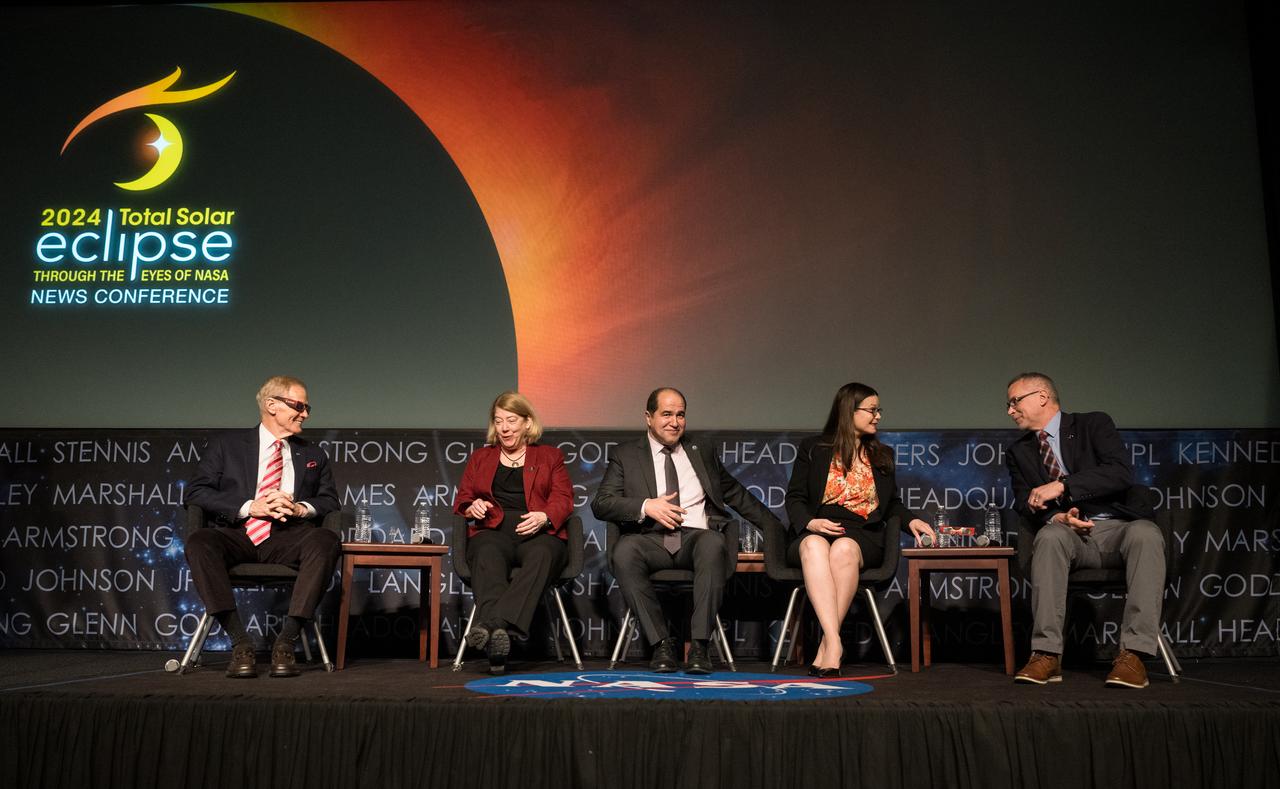
Panelists, from left to right, NASA Administrator Bill Nelson, NASA Deputy Administrator Pam Melroy, Director of the National Oceanic and Atmospheric Administration’s Office of Space Weather Observations, Elsayed Talaat, NASA Headquarters eclipse program manager, Kelly Korreck, and NASA Associate Administrator Jim Free are seen at the conclusion of a media briefing to discuss the upcoming solar eclipse, Tuesday, March 26, 2024 at the Mary W. Jackson NASA Headquarters building in Washington. A total solar eclipse will sweep across a narrow portion of the North American continent from Mexico’s Pacific coast to the Atlantic coast of Newfoundland, Canada on April 8, 2024. A partial solar eclipse will be visible across the entire North American continent along with parts of Central America and Europe. Photo Credit: (NASA/Aubrey Gemignani)
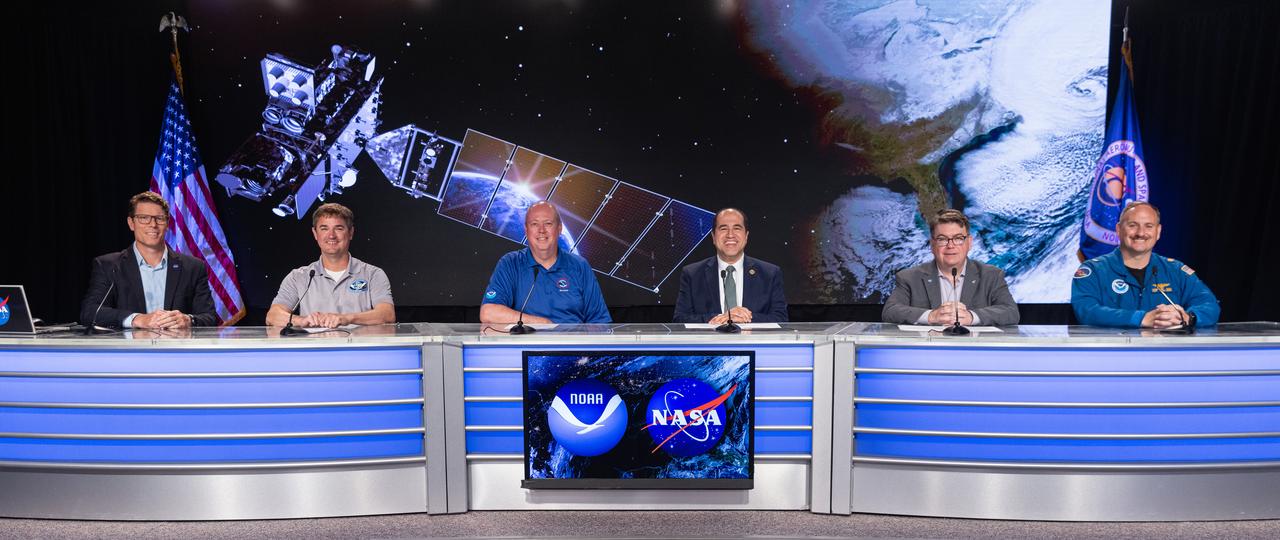
Officials from NASA and National Oceanic and Atmospheric Administration (NOAA) participate in a science briefing on Monday, June 24, 2024, at NASA’s Kennedy Space Center in Florida for the launch of GOES-U (Geostationary Operational Environmental Satellite U) mission. From left to right, Derrol Nail, NASA Communications; Dan Lindsey, chief scientist, GOES-R Program, NOAA; Ken Graham, director, NOAA’s National Weather Service; Elsayed Talaat, director, NOAA’s Office of Space Weather Observations; Charles Webb, deputy director, Joint Agency Satellite Division, NASA; Chris Wood, NOAA Hurricane Hunter pilot. The two-hour launch window opens at 5:16 p.m. EDT Tuesday, June 25, for the satellite’s launch on a SpaceX Falcon Heavy rocket from Launch Complex 39A at NASA’s Kennedy Space Center in Florida.

Elsayed Talaat, director, NOAA’s Office of Space Weather Observations, participates in a science briefing on Monday, June 24, 2024, at NASA’s Kennedy Space Center in Florida to discuss National Oceanic and Atmospheric Administration (NOAA) GOES-U (Geostationary Operational Environmental Satellite U) mission. The GOES-U satellite is the final addition to GOES-R series, which serves a critical role in providing continuous coverage of the Western Hemisphere, including monitoring tropical systems in the eastern Pacific and Atlantic oceans. The two-hour launch window opens at 5:16 p.m. EDT Tuesday, June 25, for the satellite’s launch on a SpaceX Falcon Heavy rocket from Launch Complex 39A at NASA’s Kennedy Space Center in Florida.

NASA Deputy Administrator Pam Melroy speaks during a media briefing to discuss the upcoming solar eclipse, Tuesday, March 26, 2024 at the Mary W. Jackson NASA Headquarters building in Washington. A total solar eclipse will sweep across a narrow portion of the North American continent from Mexico’s Pacific coast to the Atlantic coast of Newfoundland, Canada on April 8, 2024. A partial solar eclipse will be visible across the entire North American continent along with parts of Central America and Europe. Photo Credit: (NASA/Aubrey Gemignani)