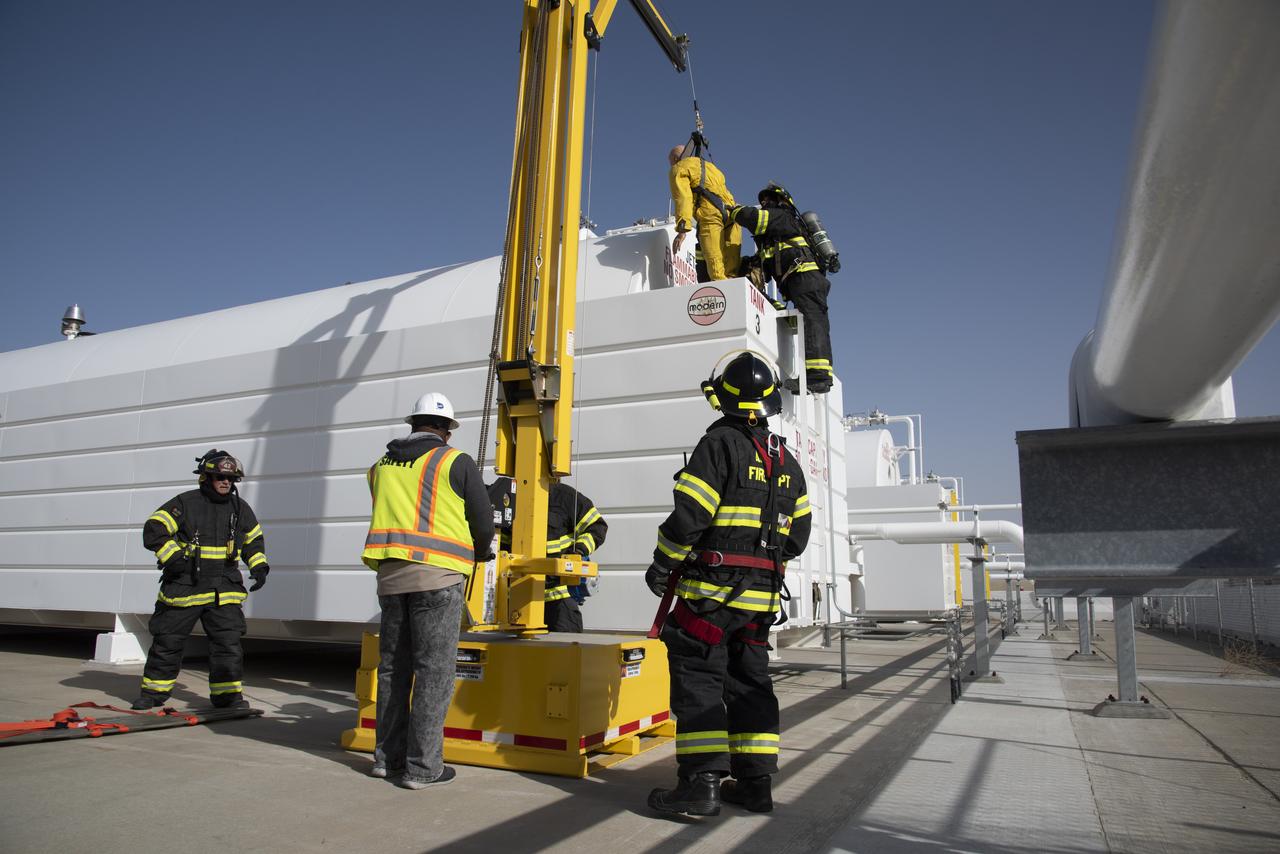
Syd Myers, a NASA Armstrong Flight Research Center confined space supervisor for a drill at NASA Armstrong Flight Research Center’s Building 703 in Palmdale, California, observes U.S. Air Force Plan 42 Fire Department responders extract a mannequin from a confined space as part of an emergency exercise.
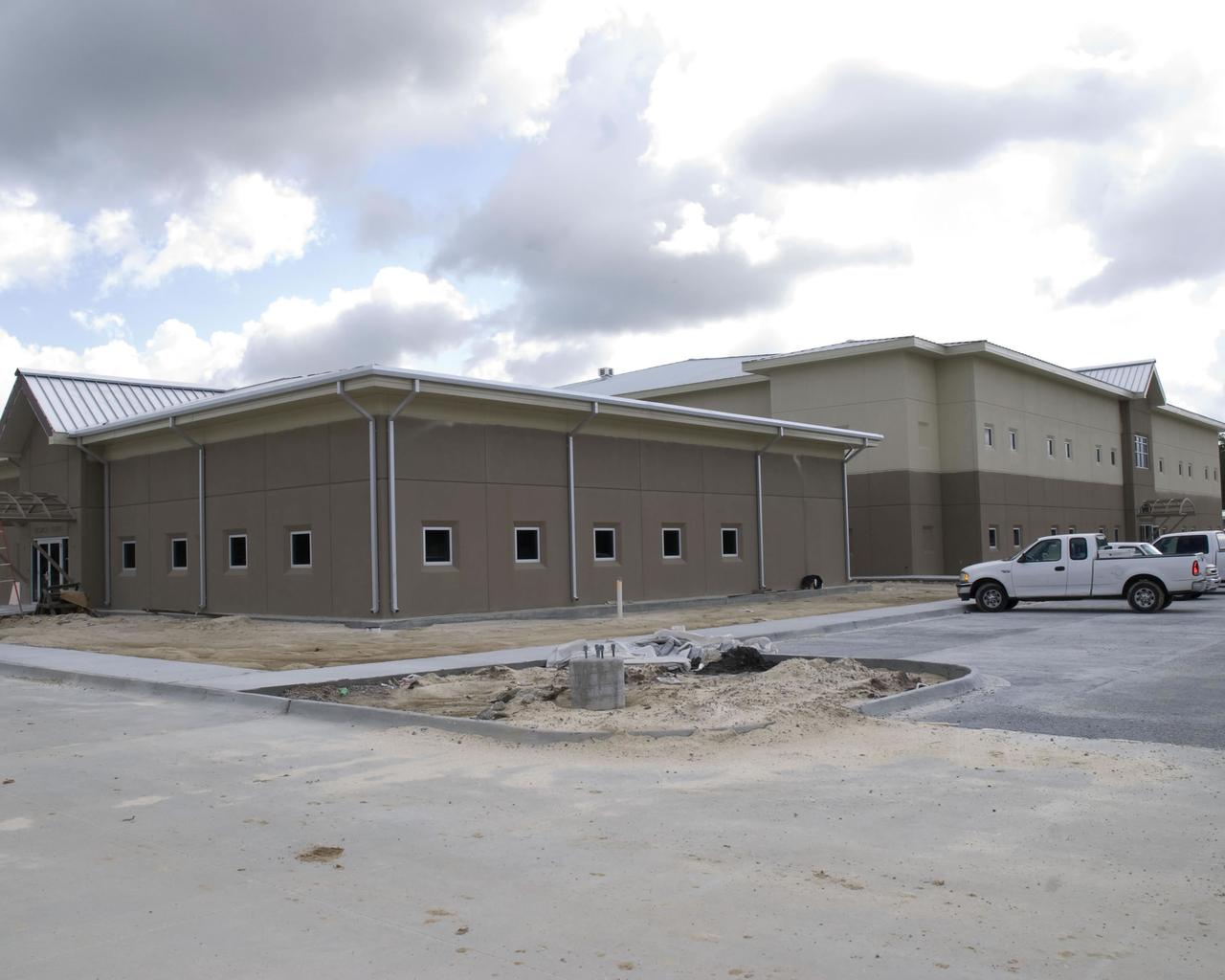
Construction work on a new Emergency Operations Center at Stennis Space Center is nearing completion. Construction is expected to be complete by February 2009, with actual occupancy of the building planned for later that year. The new building will house fire, medical and security teams and will provide a top-grade facility to support storm emergency responder teams and emergency management operations for the south Mississippi facility.
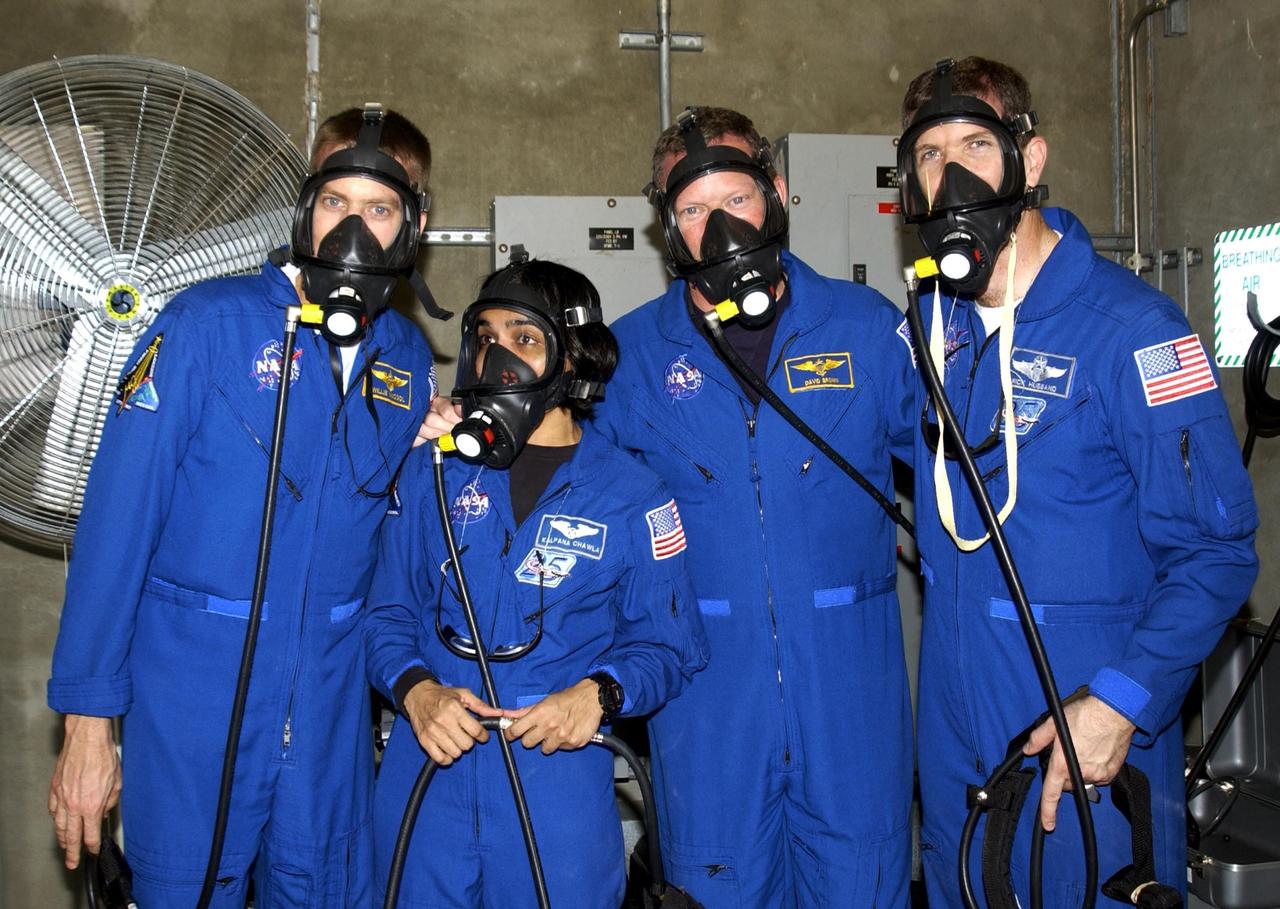
KENNEDY SPACE CENTER, FLA. -- During emergency egress training, part of Terminal Countdown Demonstration Test activities at the pad, STS-107 crew members test breathing masks in the emergency bunker. From left are Pilot William "Willie" McCool, Mission Specialists Kalpana Chawla and David Brown, and Commander Rick Husband. STS-107 is a mission devoted to research and will include more than 80 experiments that will study Earth and space science, advanced technology development, and astronaut health and safety. Launch is planned for Jan. 16, 2003, between 10 a.m. and 2 p.m. EST aboard Space Shuttle Columbia. .
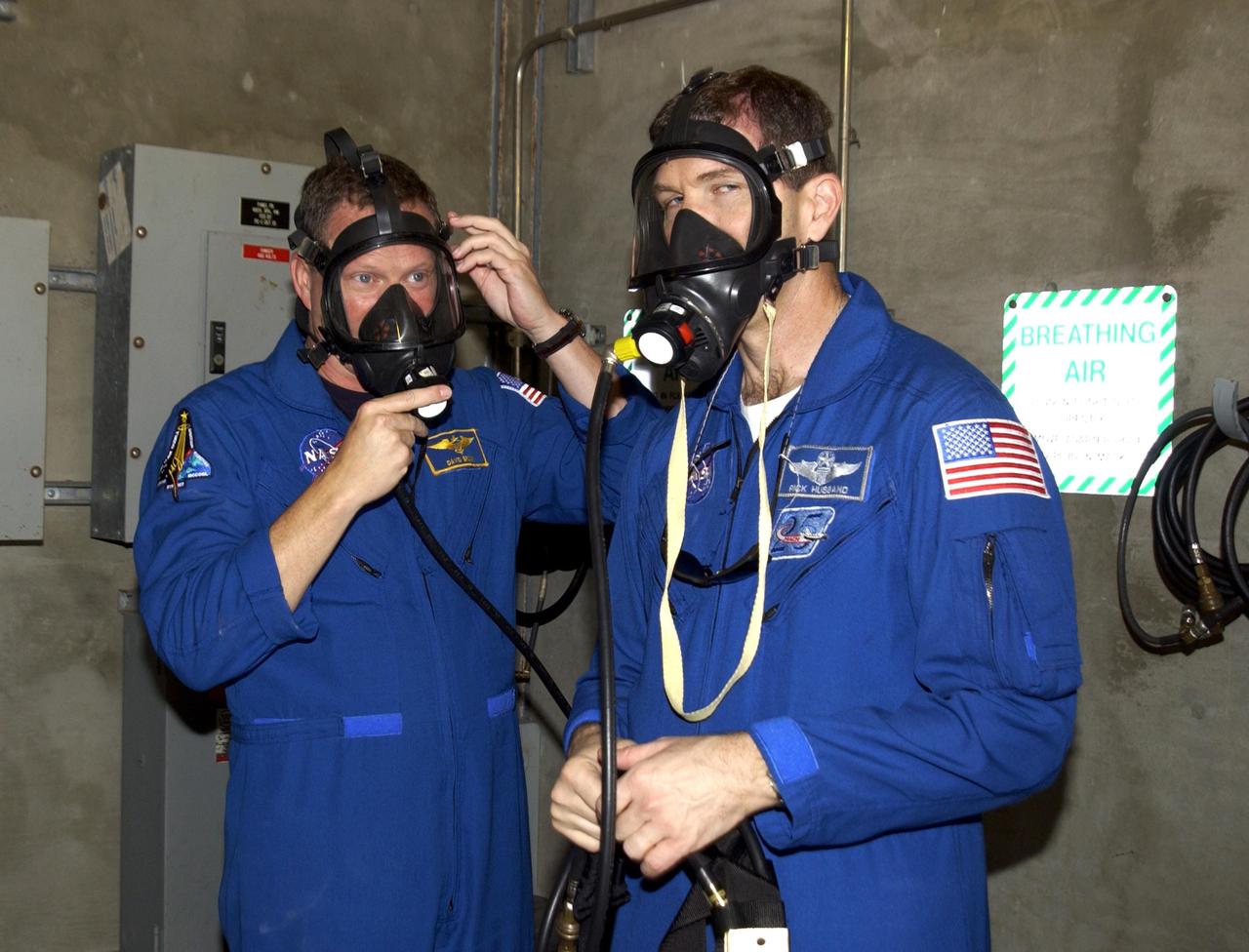
KENNEDY SPACE CENTER, FLA. -- During emergency egress training, part of Terminal Countdown Demonstration Test activities at the pad, STS-107 Mission Specialist David Brown (left) and Commander Rick Husband (right) test breathing masks in the emergency bunker. The TCDT also includes a simulated launch countdown. STS-107 is a mission devoted to research and will include more than 80 experiments that will study Earth and space science, advanced technology development, and astronaut health and safety. Launch is planned for Jan. 16, 2003, between 10 a.m. and 2 p.m. EST aboard Space Shuttle Columbia. .
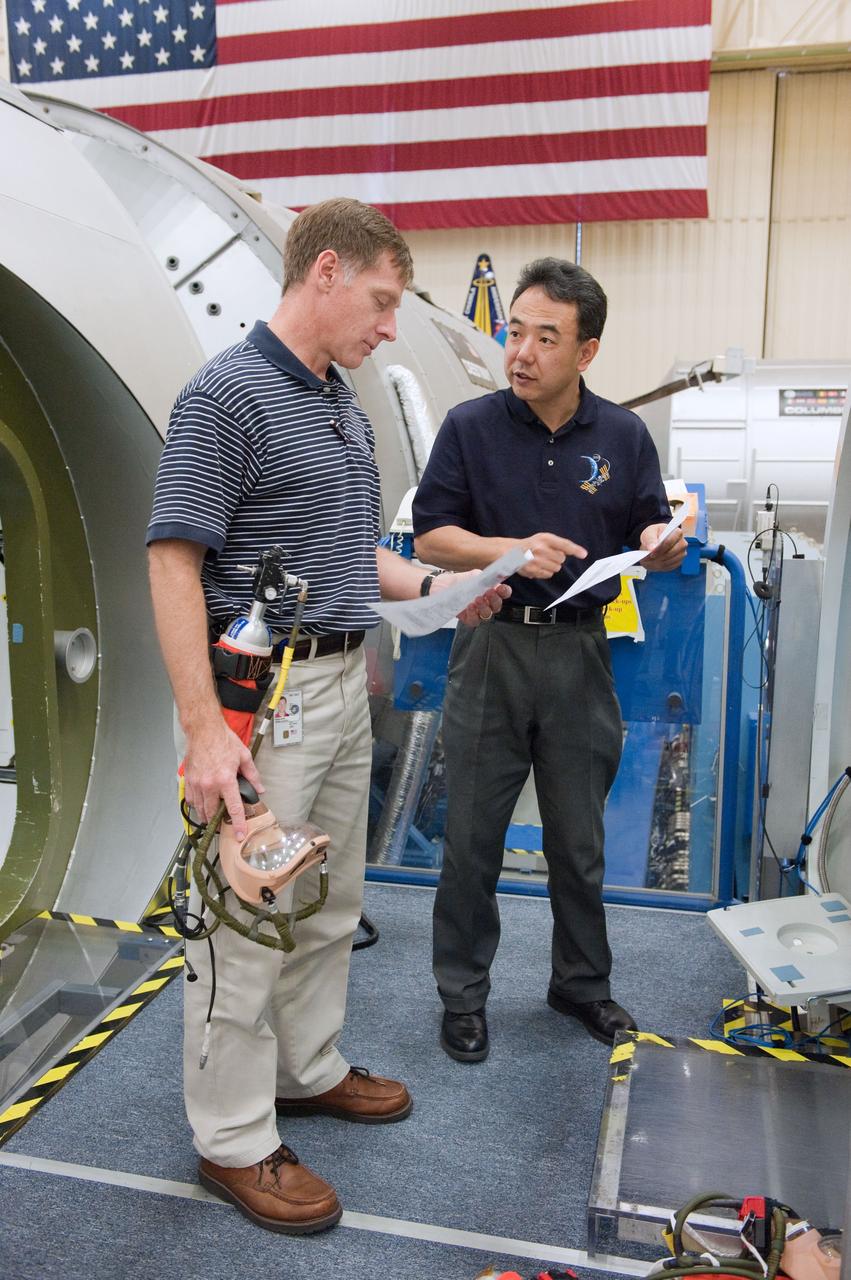
JSC2011-E-005869 (19 Jan. 2011) --- NASA astronaut Chris Ferguson (left), STS-135 commander; and Japan Aerospace Exploration Agency (JAXA) astronaut Satoshi Furukawa, Expedition 28/29 flight engineer, participate in a joint emergency scenarios training session in the Space Vehicle Mock-up Facility at NASA's Johnson Space Center. STS-135 is planned to be the final mission of the space shuttle program. Photo credit: NASA or National Aeronautics and Space Administration
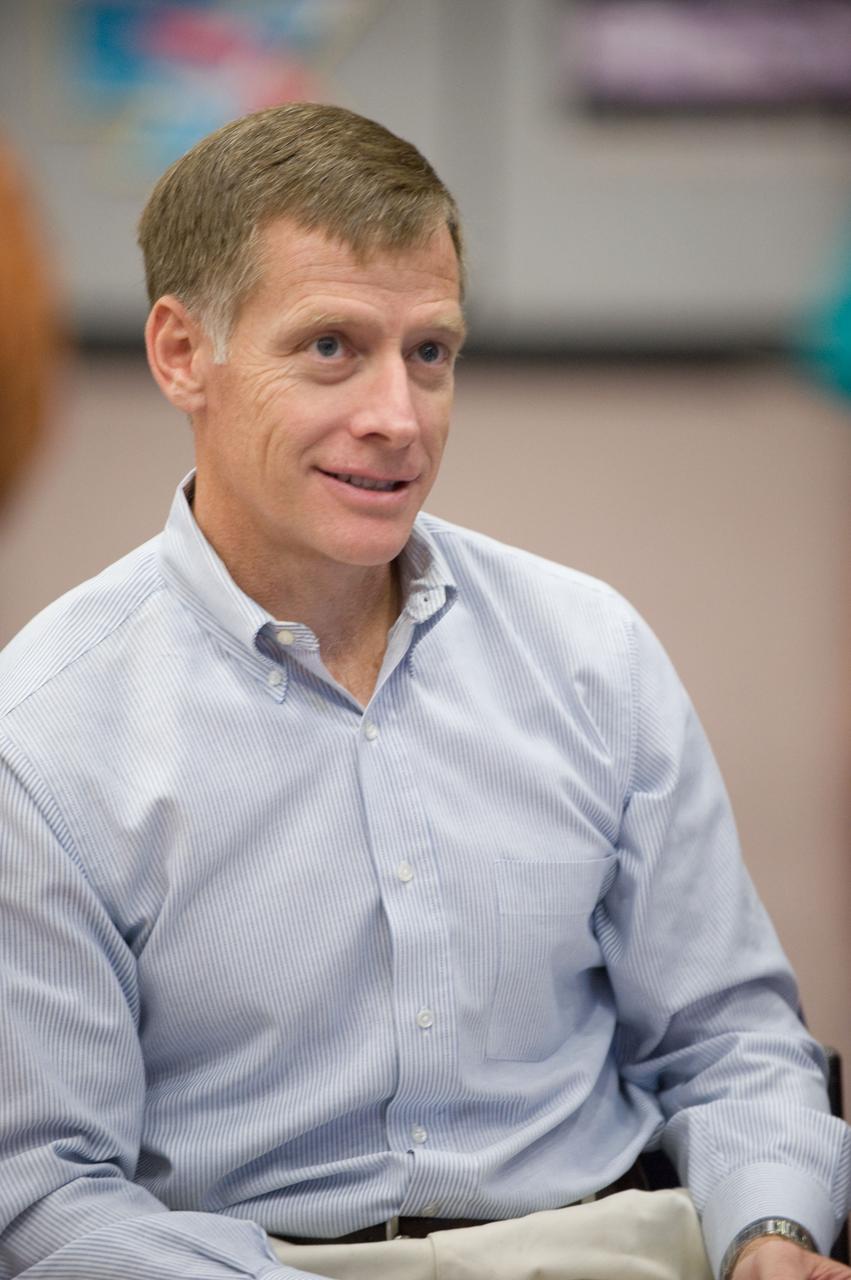
JSC2010-E-195519 (3 Dec. 2010) --- NASA astronaut Chris Ferguson, STS-135 commander, is pictured during an emergency egress training session in the Space Vehicle Mock-up Facility at NASA's Johnson Space Center. STS-135 is planned to be the final mission of the space shuttle program. Photo credit: NASA or National Aeronautics and Space Administration
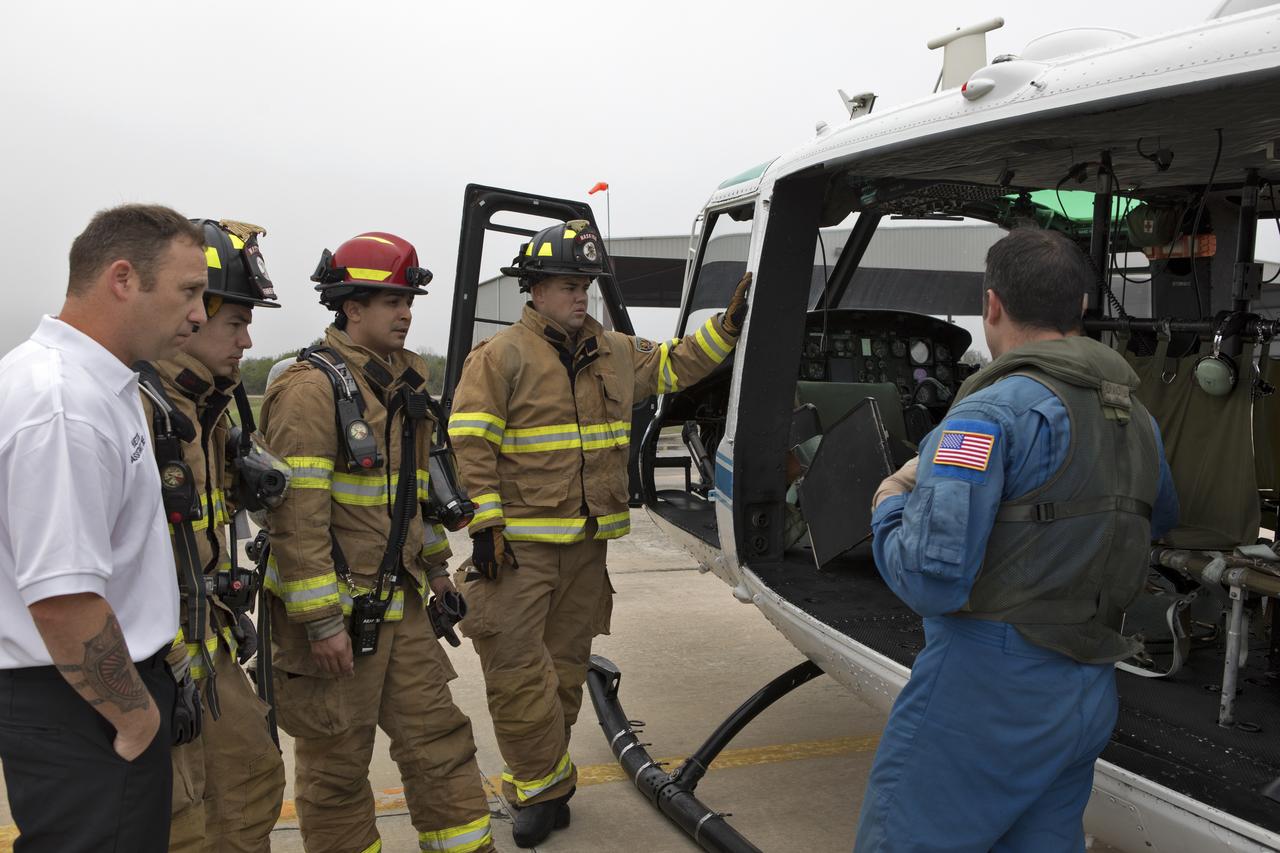
NASA Kennedy Space Center's Flight Operations team reviews procedures before beginning a rehearsal of a helicopter crash-landing to test new and updated emergency procedures. Called the Aircraft Mishap Preparedness and Contingency Plan, the operation was designed to validate several updated techniques the center's first responders would follow, should they ever need to rescue a crew in case of a real accident. The mishap exercise took place at the center's Shuttle Landing Facility.
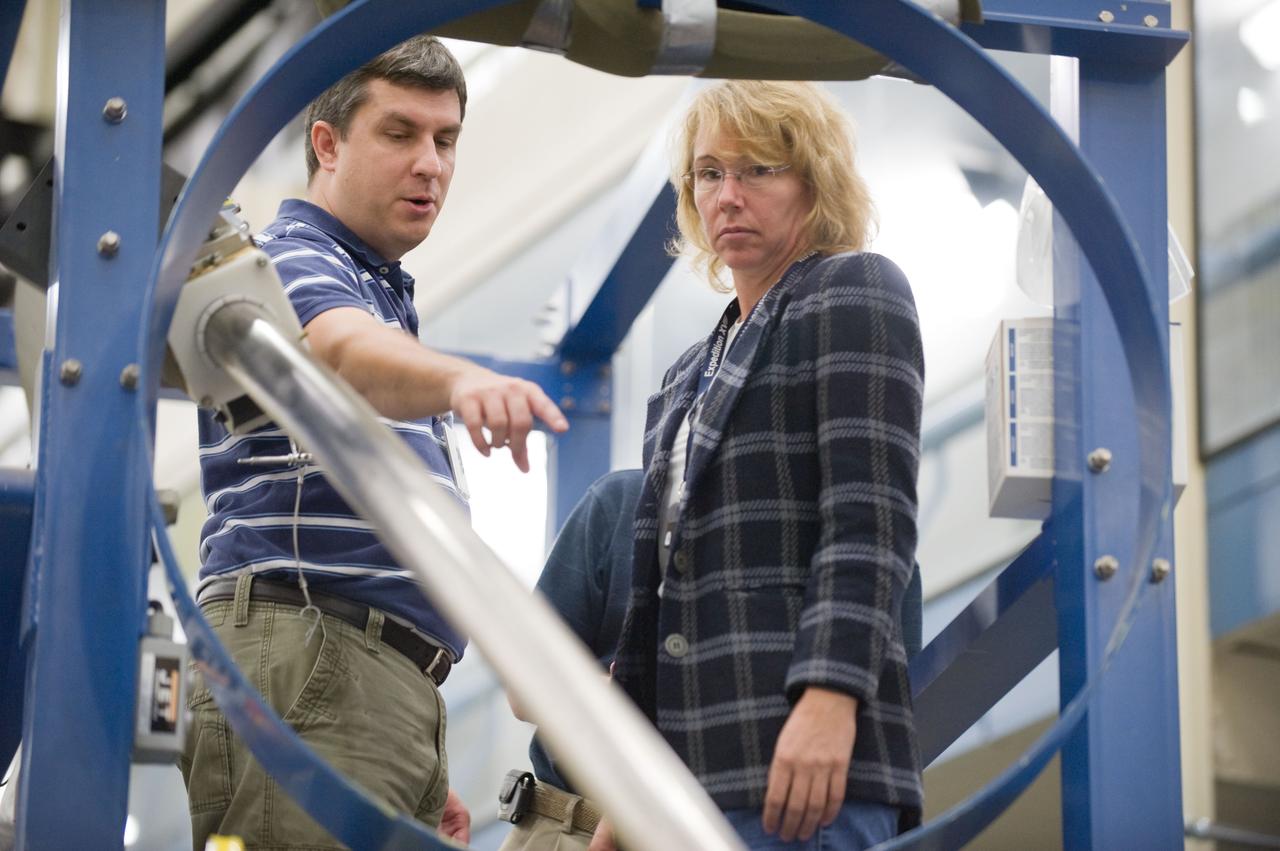
JSC2010-E-195522 (3 Dec. 2010) --- NASA astronaut Sandy Magnus, STS-135 mission specialist, participates in an emergency egress training session in the Space Vehicle Mock-up Facility at NASA's Johnson Space Center. Crew instructor Patrick Jones assisted Magnus. STS-135 is planned to be the final mission of the space shuttle program. Photo credit: NASA or National Aeronautics and Space Administration
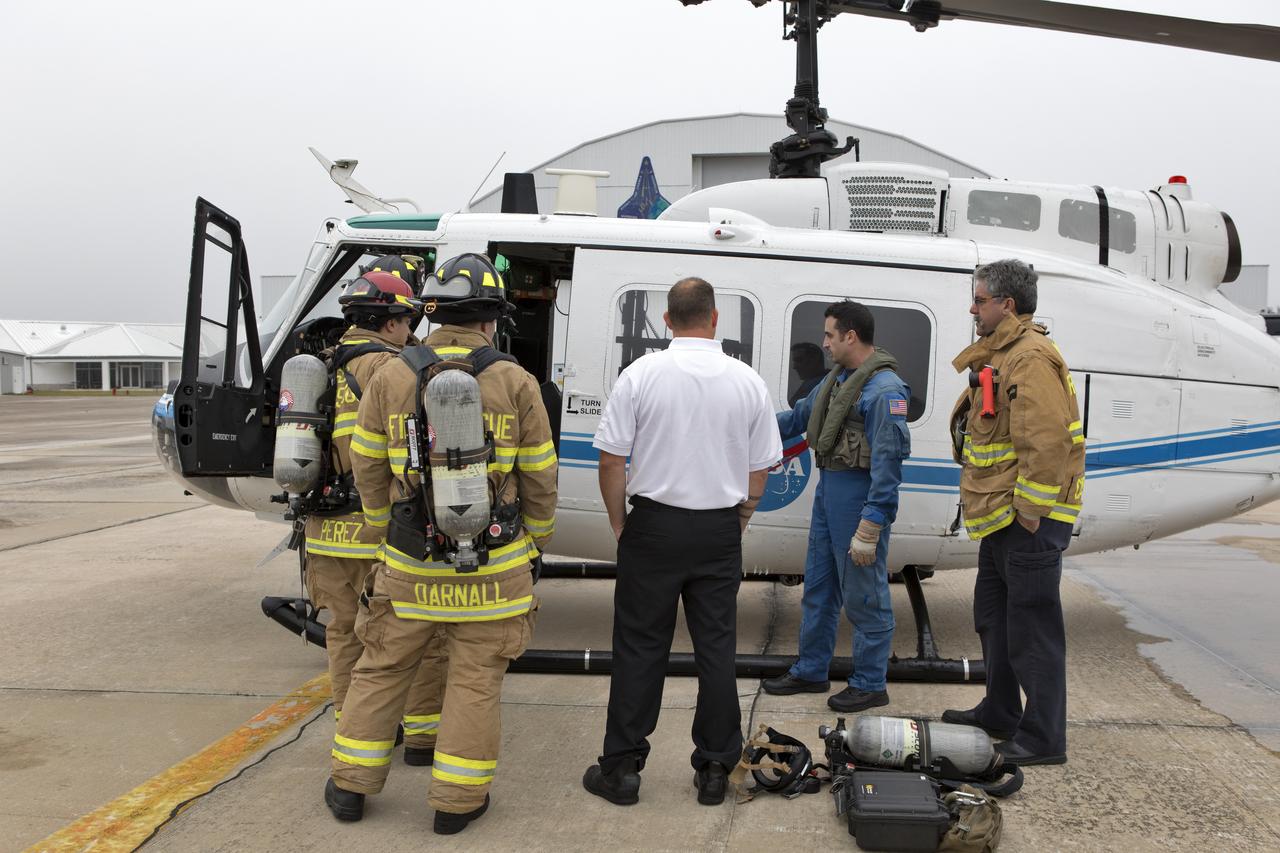
NASA Kennedy Space Center's Flight Operations team reviews procedures before beginning a rehearsal of a helicopter crash-landing to test new and updated emergency procedures. Called the Aircraft Mishap Preparedness and Contingency Plan, the operation was designed to validate several updated techniques the center's first responders would follow, should they ever need to rescue a crew in case of a real accident. The mishap exercise took place at the center's Shuttle Landing Facility.
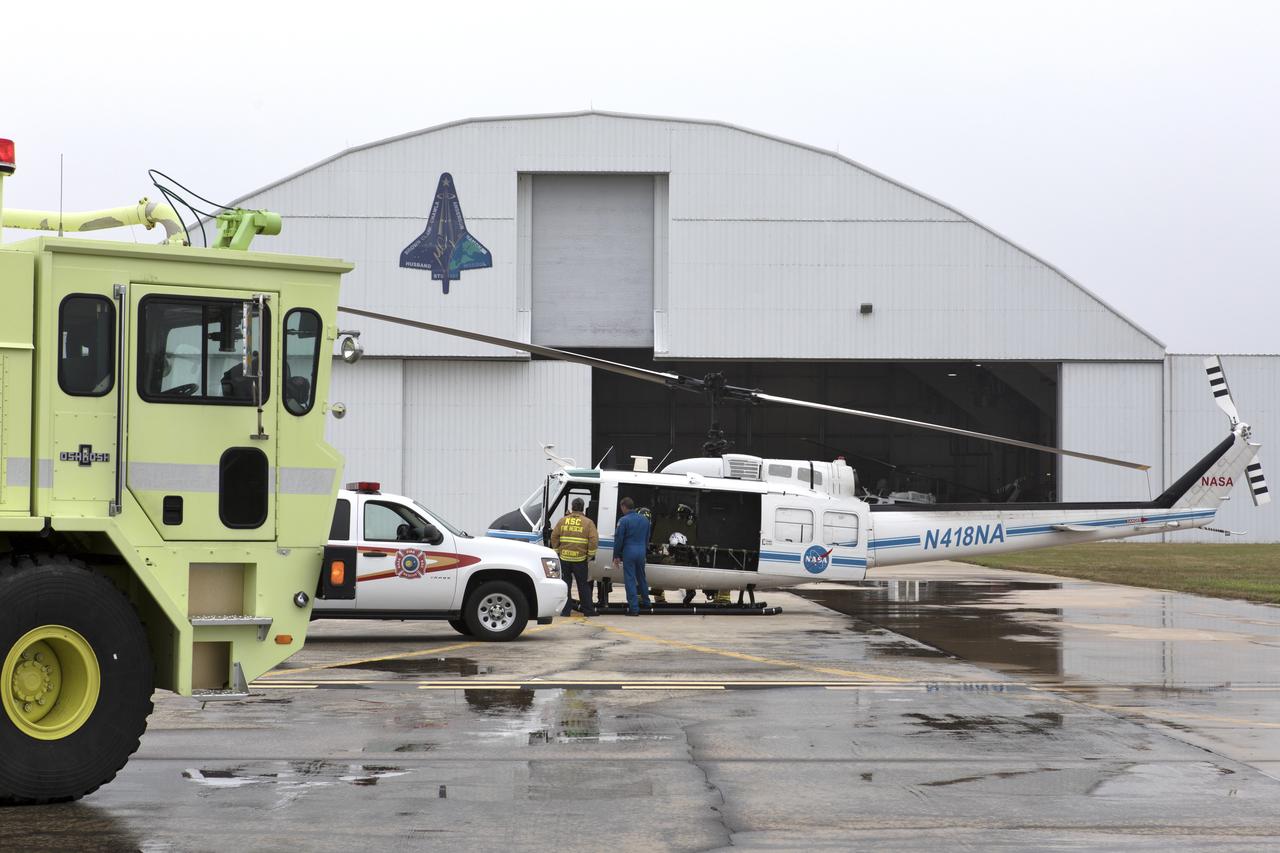
Members of NASA Kennedy Space Center's Flight Operations team prepare for a rehearsal of a helicopter crash-landing to test new and updated emergency procedures. Called the Aircraft Mishap Preparedness and Contingency Plan, the operation was designed to validate several updated techniques the center's first responders would follow, should they ever need to rescue a crew in case of a real accident. The mishap exercise took place at the center's Shuttle Landing Facility.
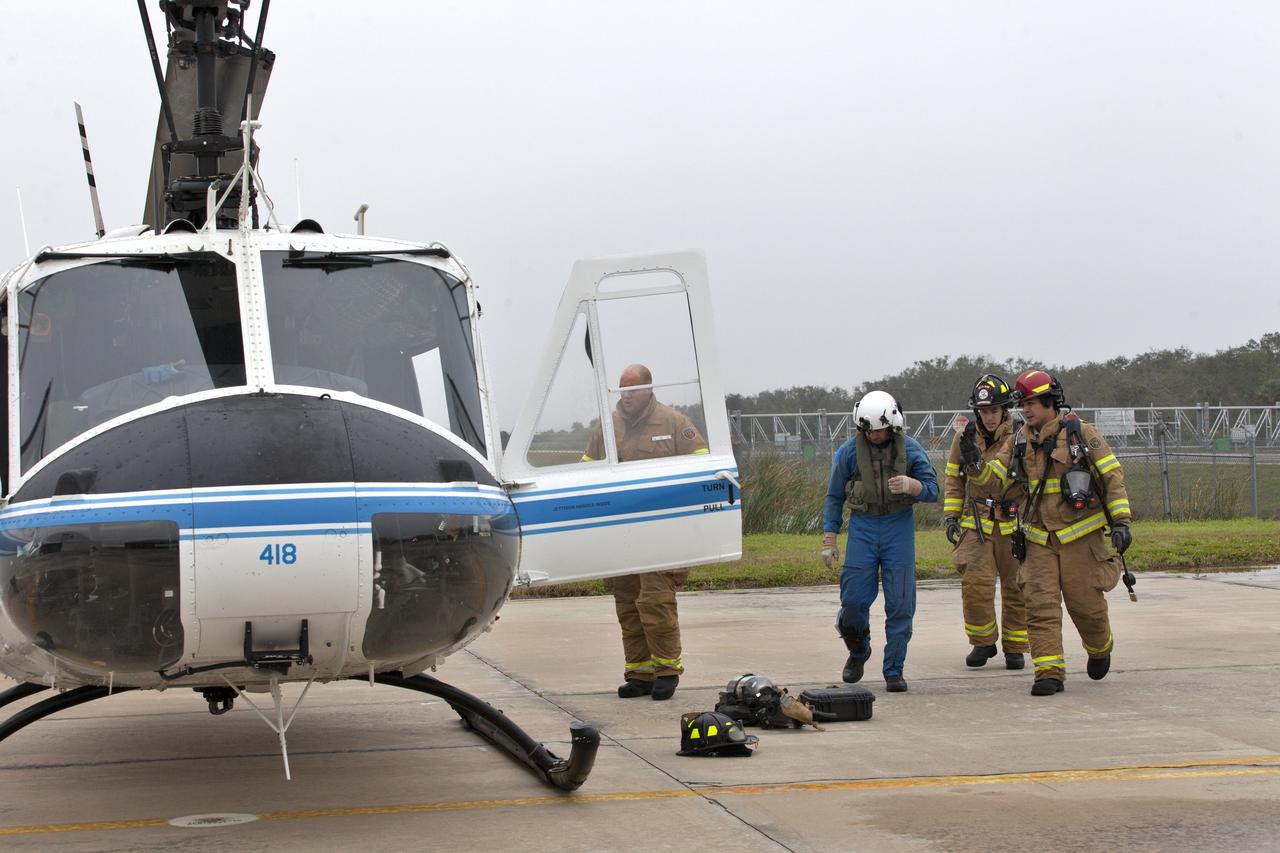
Members of NASA Kennedy Space Center's Flight Operations team participate in a rehearsal of a helicopter crash-landing to test new and updated emergency procedures. Called the Aircraft Mishap Preparedness and Contingency Plan, the operation was designed to validate several updated techniques the center's first responders would follow, should they ever need to rescue a crew in case of a real accident. The mishap exercise took place at the center's Shuttle Landing Facility.
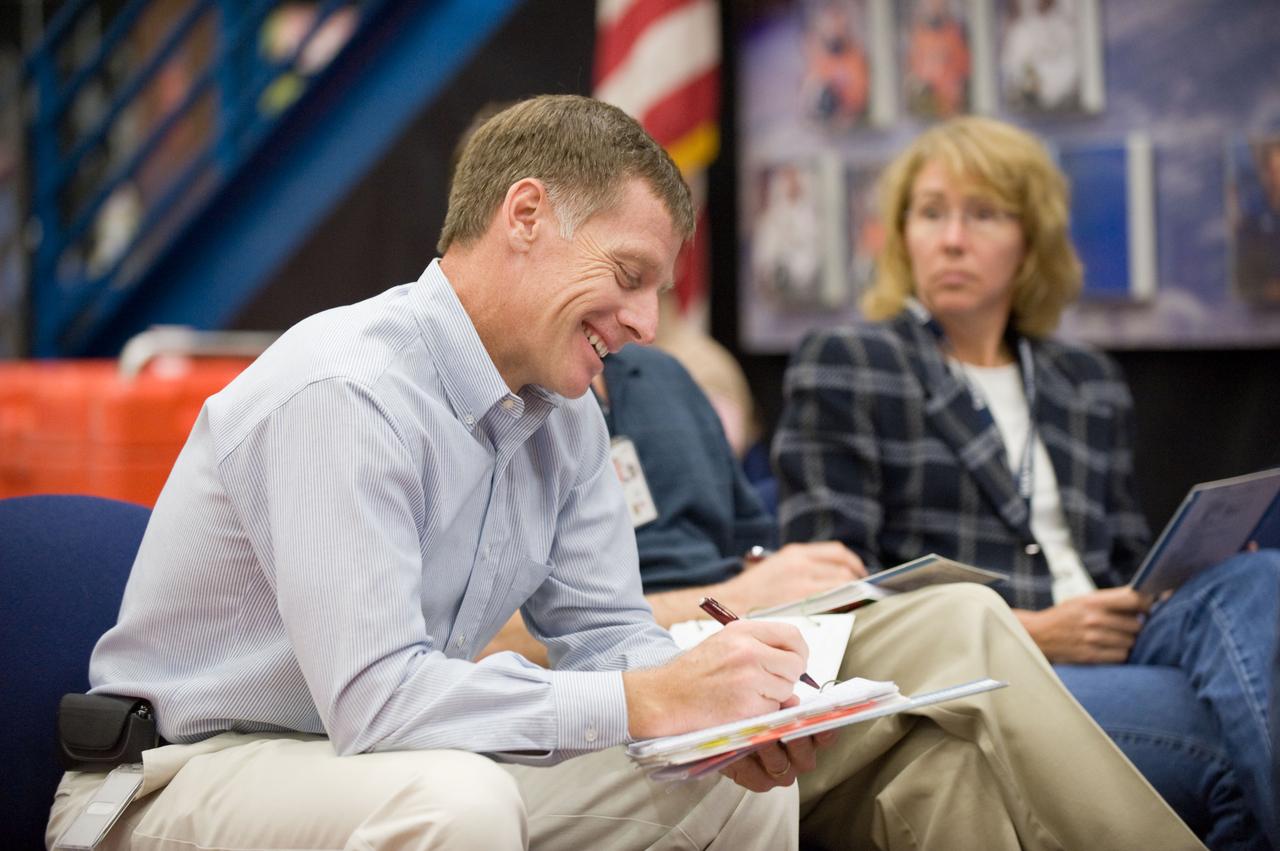
JSC2010-E-195517 (3 Dec. 2010) --- NASA astronauts Chris Ferguson, STS-135 commander; Rex Walheim (mostly obscured) and Sandy Magnus, both mission specialists, are pictured during an emergency egress training session in the Space Vehicle Mock-up Facility at NASA's Johnson Space Center. STS-135 is planned to be the final mission of the space shuttle program. Photo credit: NASA or National Aeronautics and Space Administration

Members of NASA Kennedy Space Center's Flight Operations team prepare for a rehearsal of a helicopter crash-landing to test new and updated emergency procedures. Called the Aircraft Mishap Preparedness and Contingency Plan, the operation was designed to validate several updated techniques the center's first responders would follow, should they ever need to rescue a crew in case of a real accident. The mishap exercise took place at the center's Shuttle Landing Facility.
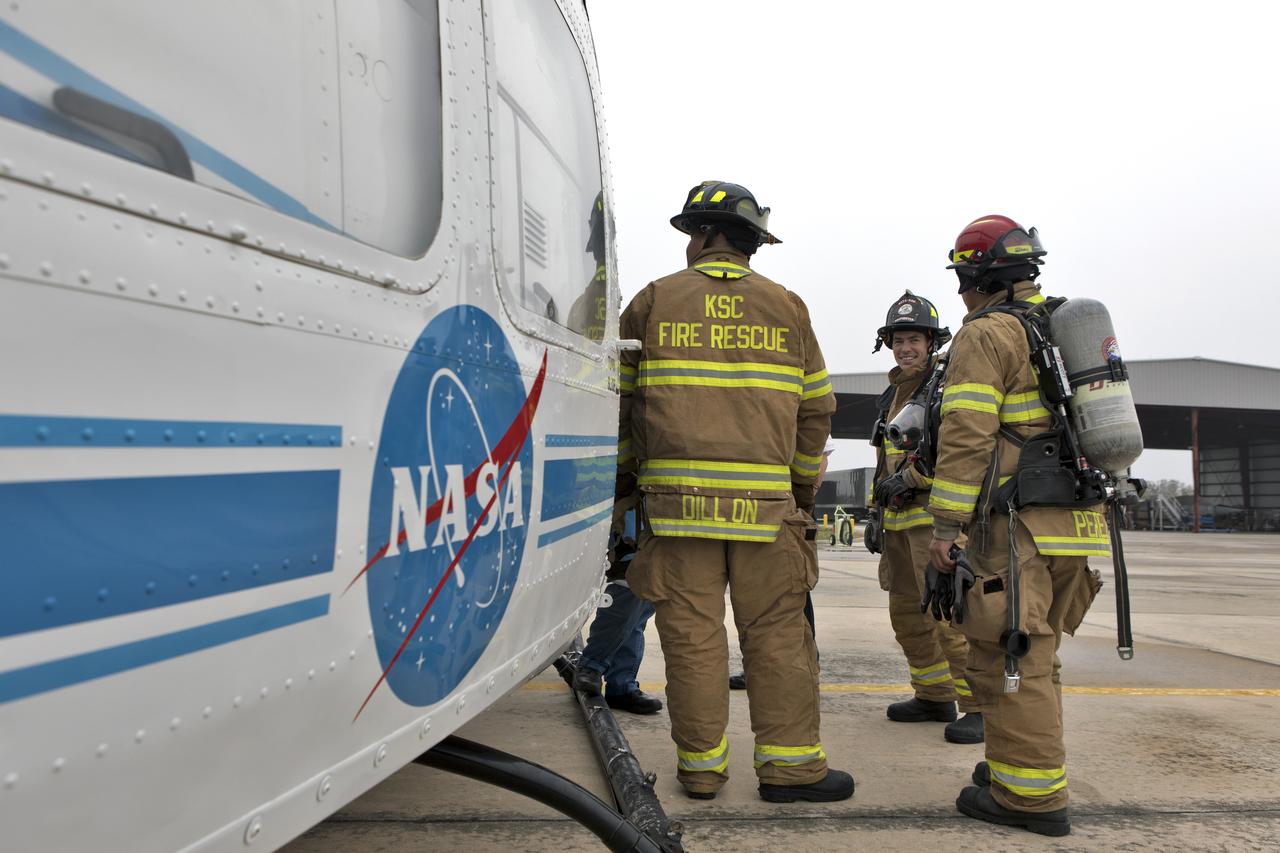
Members of NASA Kennedy Space Center's Flight Operations team prepare for a rehearsal of a helicopter crash-landing to test new and updated emergency procedures. Called the Aircraft Mishap Preparedness and Contingency Plan, the operation was designed to validate several updated techniques the center's first responders would follow, should they ever need to rescue a crew in case of a real accident. The mishap exercise took place at the center's Shuttle Landing Facility.
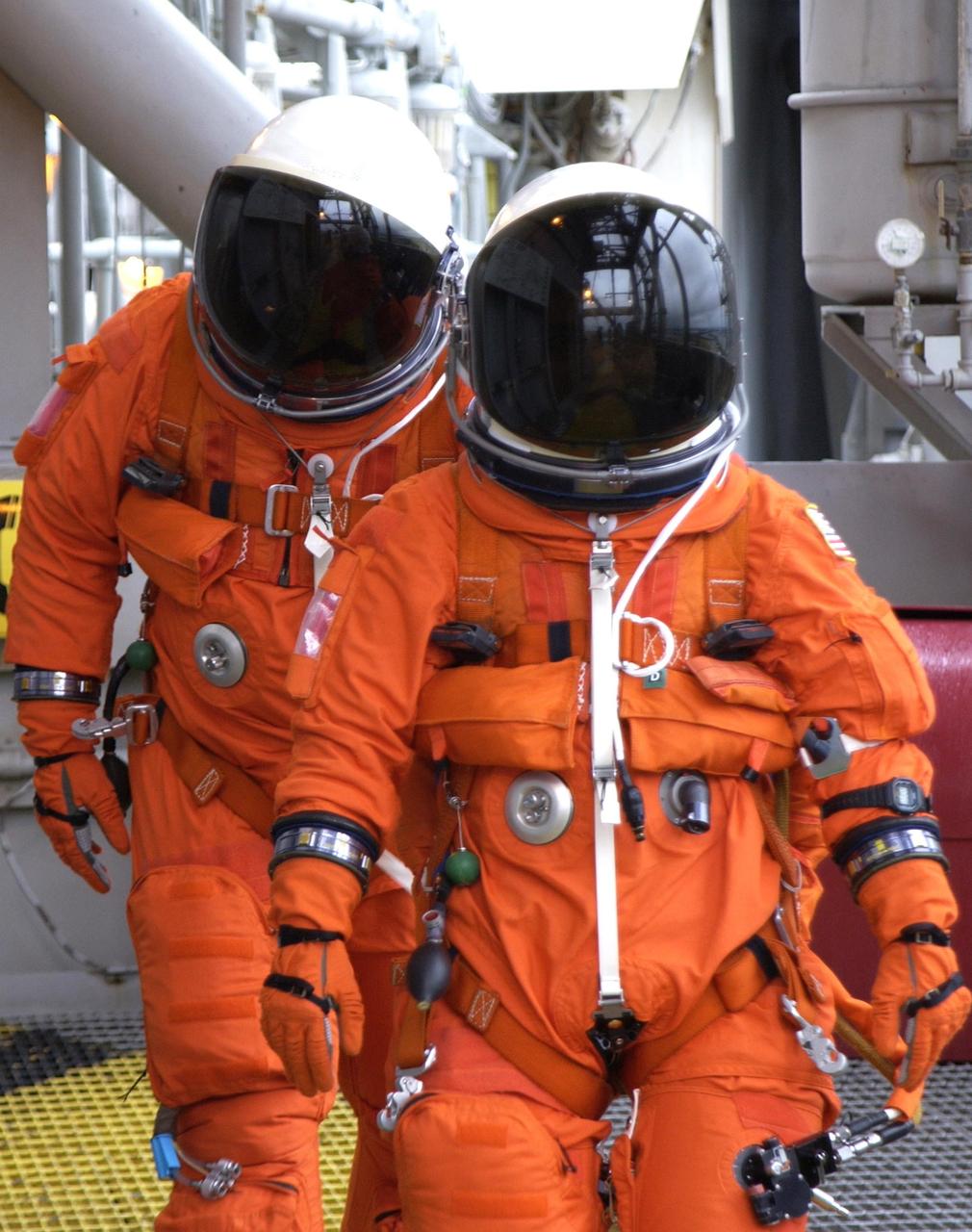
KENNEDY SPACE CENTER, FLA. - The STS-107 crew practice emergency egress from the launch pad during a simulated launch countdown, part of Terminal Countdown Demonstration Test activities. STS-107 is a mission devoted to research and will include more than 80 experiments that will study Earth and space science, advanced technology development, and astronaut health and safety. Launch is planned for Jan. 16, 2003, between 10 a.m. and 2 p.m. EST aboard Space Shuttle Columbia. .
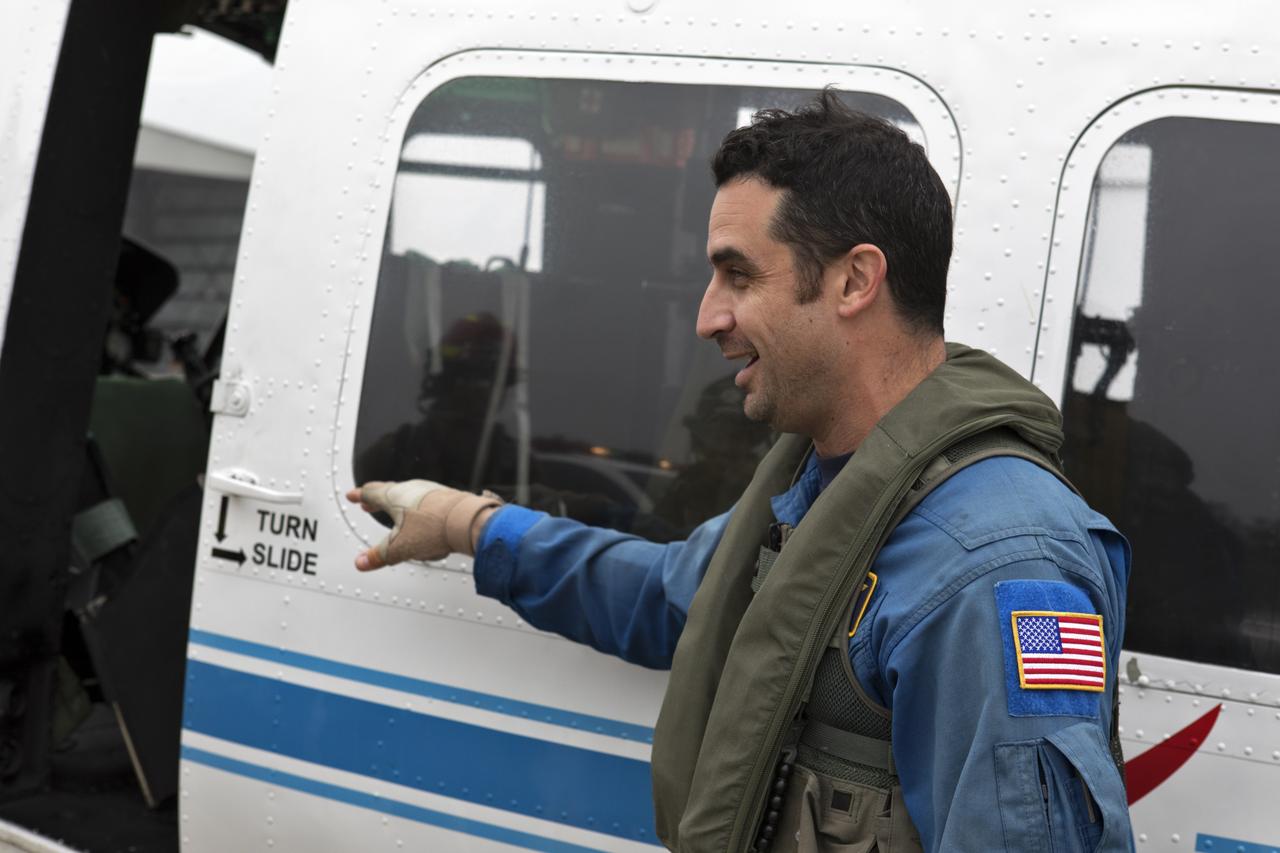
A member of NASA Kennedy Space Center's Flight Operations team prepares for a rehearsal of a helicopter crash-landing to test new and updated emergency procedures. Called the Aircraft Mishap Preparedness and Contingency Plan, the operation was designed to validate several updated techniques the center's first responders would follow, should they ever need to rescue a crew in case of a real accident. The mishap exercise took place at the center's Shuttle Landing Facility.

Members of NASA Kennedy Space Center's Flight Operations team participate in a rehearsal of a helicopter crash-landing to test new and updated emergency procedures. Called the Aircraft Mishap Preparedness and Contingency Plan, the operation was designed to validate several updated techniques the center's first responders would follow, should they ever need to rescue a crew in case of a real accident. The mishap exercise took place at the center's Shuttle Landing Facility.
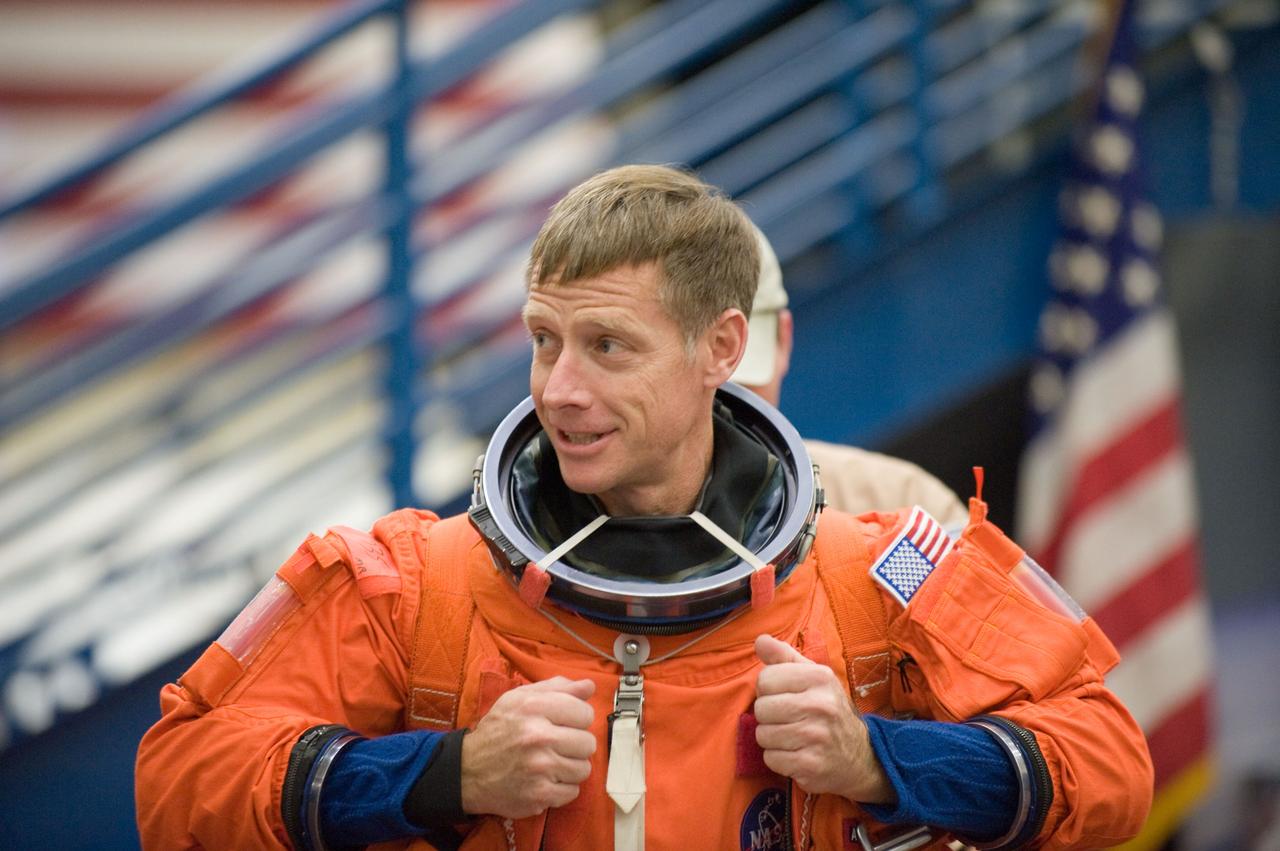
JSC2010-E-195524 (3 Dec. 2010) --- NASA astronaut Chris Ferguson, STS-135 commander, dons a training version of his shuttle launch and entry suit in preparation for an emergency egress training session in the Space Vehicle Mock-up Facility at NASA's Johnson Space Center. STS-135 is planned to be the final mission of the space shuttle program. Photo credit: NASA or National Aeronautics and Space Administration
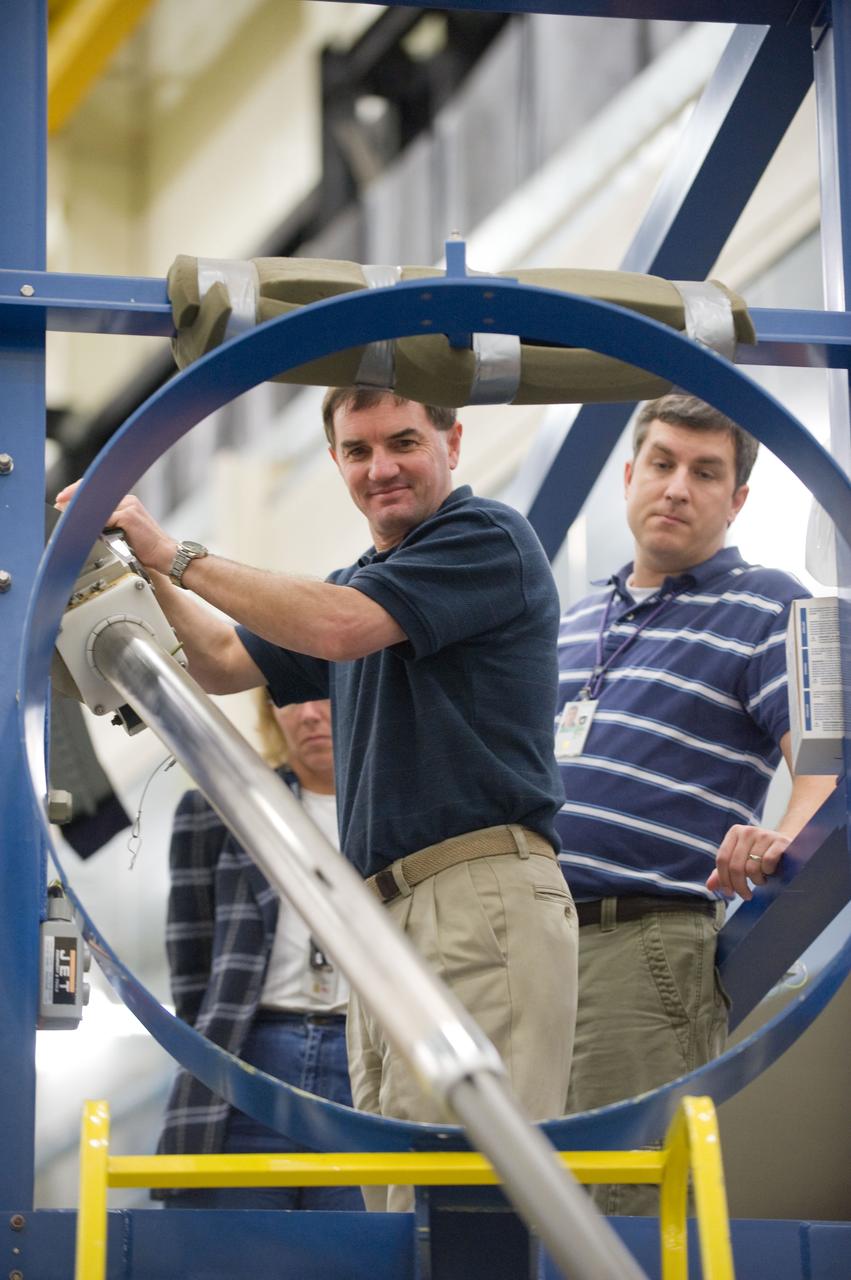
JSC2010-E-195521 (3 Dec. 2010) --- NASA astronaut Rex Walheim (left), STS-135 mission specialist, participates in an emergency egress training session in the Space Vehicle Mock-up Facility at NASA's Johnson Space Center. Crew instructor Patrick Jones assisted Walheim. STS-135 is planned to be the final mission of the space shuttle program. Photo credit: NASA or National Aeronautics and Space Administration
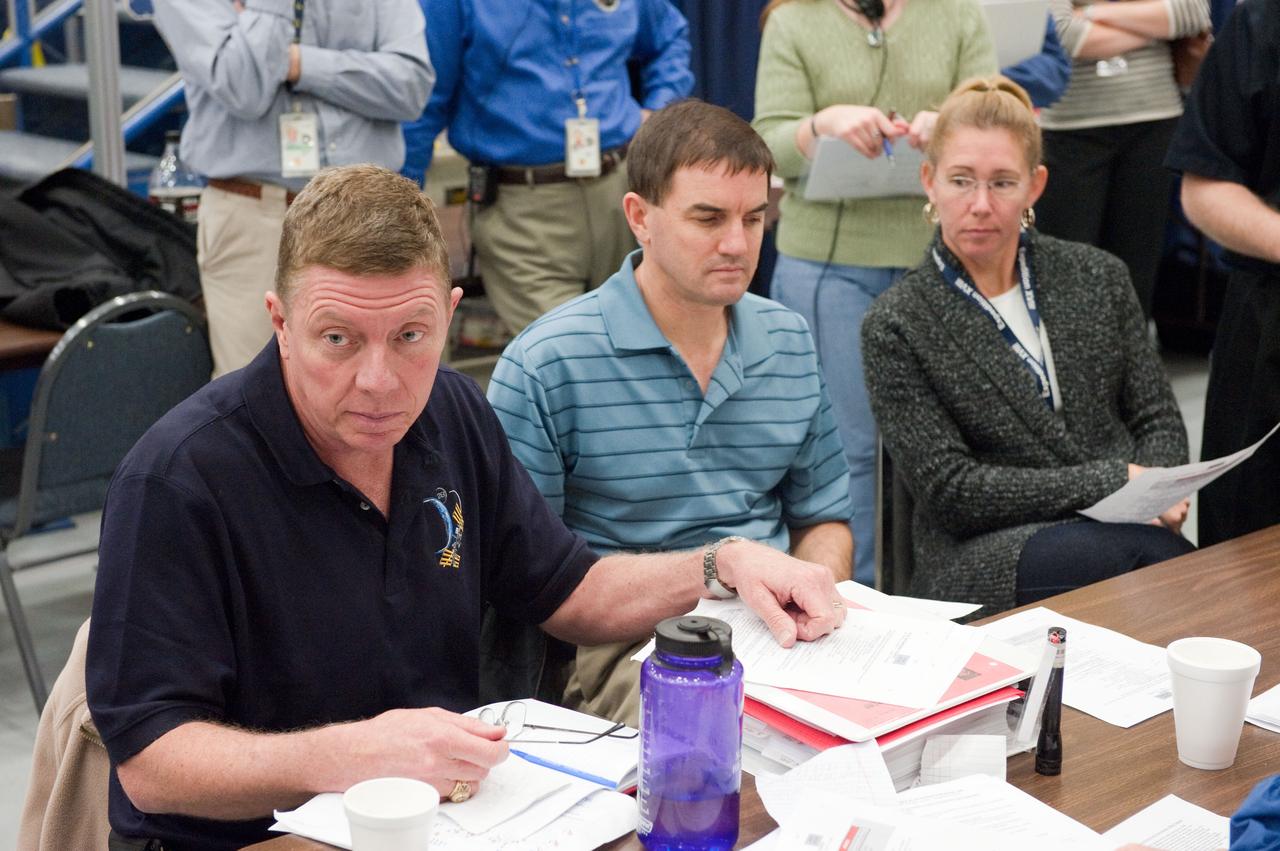
JSC2011-E-005861 (19 Jan. 2011) --- NASA astronauts Mike Fossum (left), Expedition 28 flight engineer and Expedition 29 commander; Rex Walheim and Sandy Magnus, both STS-135 mission specialists, participate in a joint emergency scenarios training session in the Space Vehicle Mock-up Facility at NASA's Johnson Space Center. STS-135 is planned to be the final mission of the space shuttle program. Photo credit: NASA or National Aeronautics and Space Administration
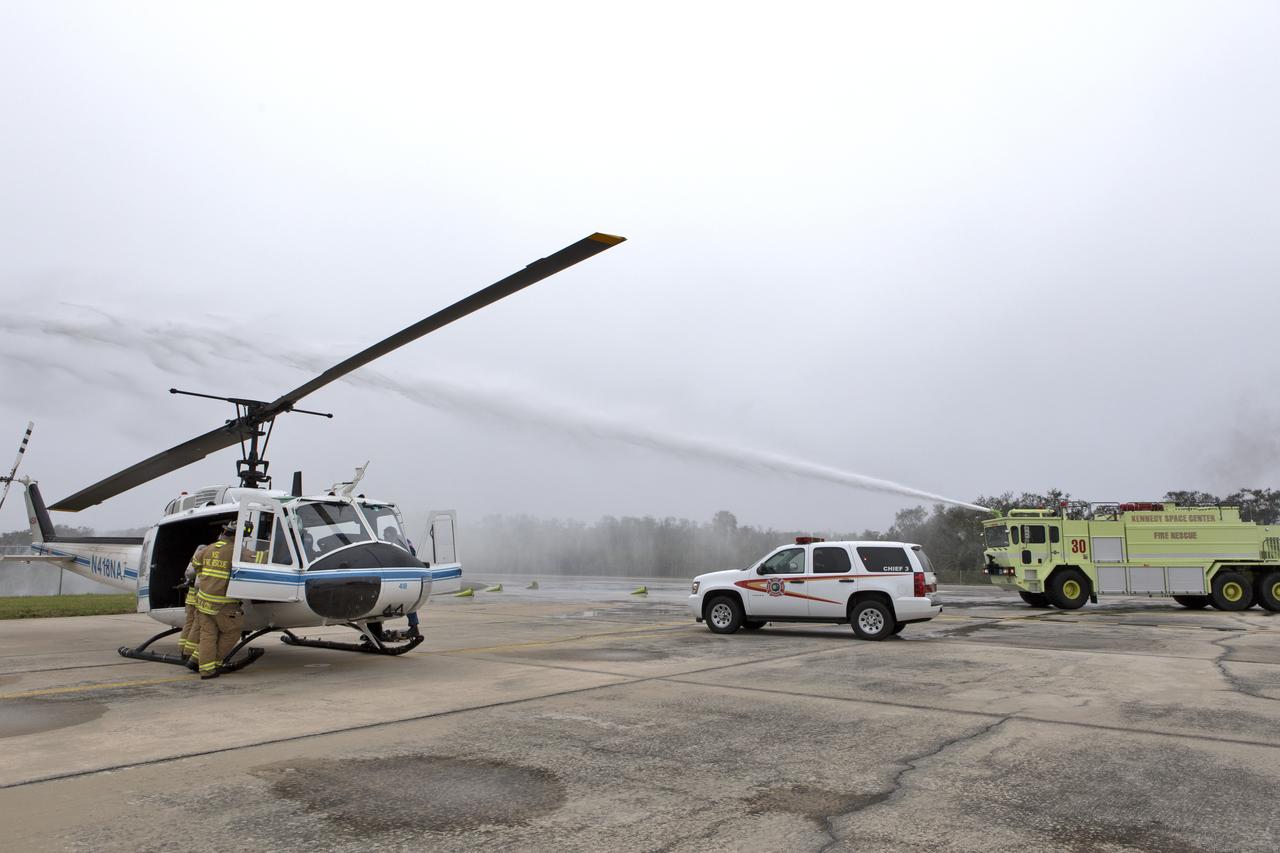
An Aircraft Mishap Preparedness and Contingency Plan is underway at the Shuttle Landing Facility at NASA's Kennedy Space Center in Florida. The center's Flight Operations rehearsed a helicopter crash-landing to test new and updated emergency procedures. The operation was designed to validate several updated techniques the center's first responders would follow, should they ever need to rescue a crew in case of a real accident. The mishap exercise took place at the center's Shuttle Landing Facility.

JSC2011-E-005872 (19 Jan. 2011) --- NASA astronaut Chris Ferguson, STS-135 commander, participates in an emergency scenarios training session in the Space Vehicle Mock-up Facility at NASA's Johnson Space Center. STS-135 is planned to be the final mission of the space shuttle program. Photo credit: NASA or National Aeronautics and Space Administration
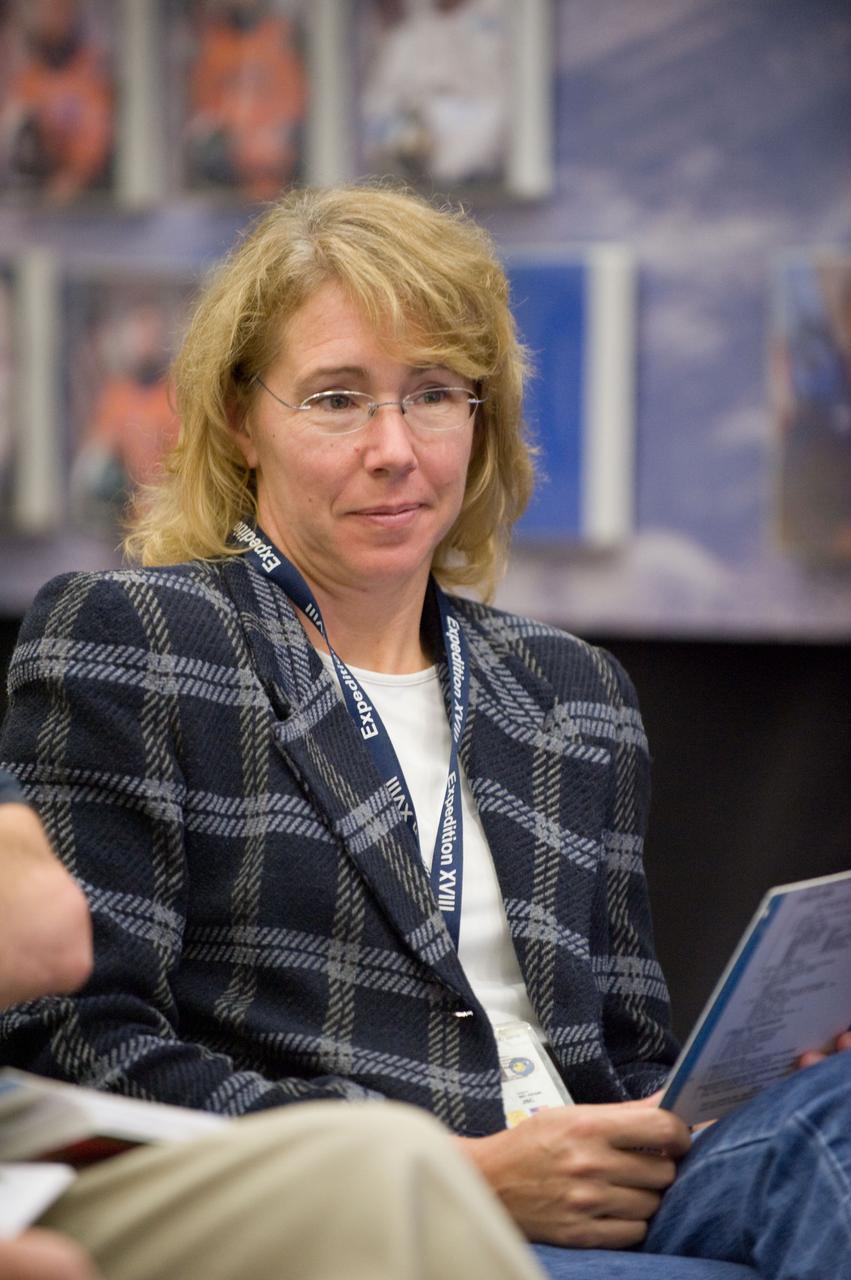
JSC2010-E-195518 (3 Dec. 2010) --- NASA astronaut Sandy Magnus, STS-135 mission specialist, is pictured during an emergency egress training session in the Space Vehicle Mock-up Facility at NASA's Johnson Space Center. STS-135 is planned to be the final mission of the space shuttle program. Photo credit: NASA or National Aeronautics and Space Administration
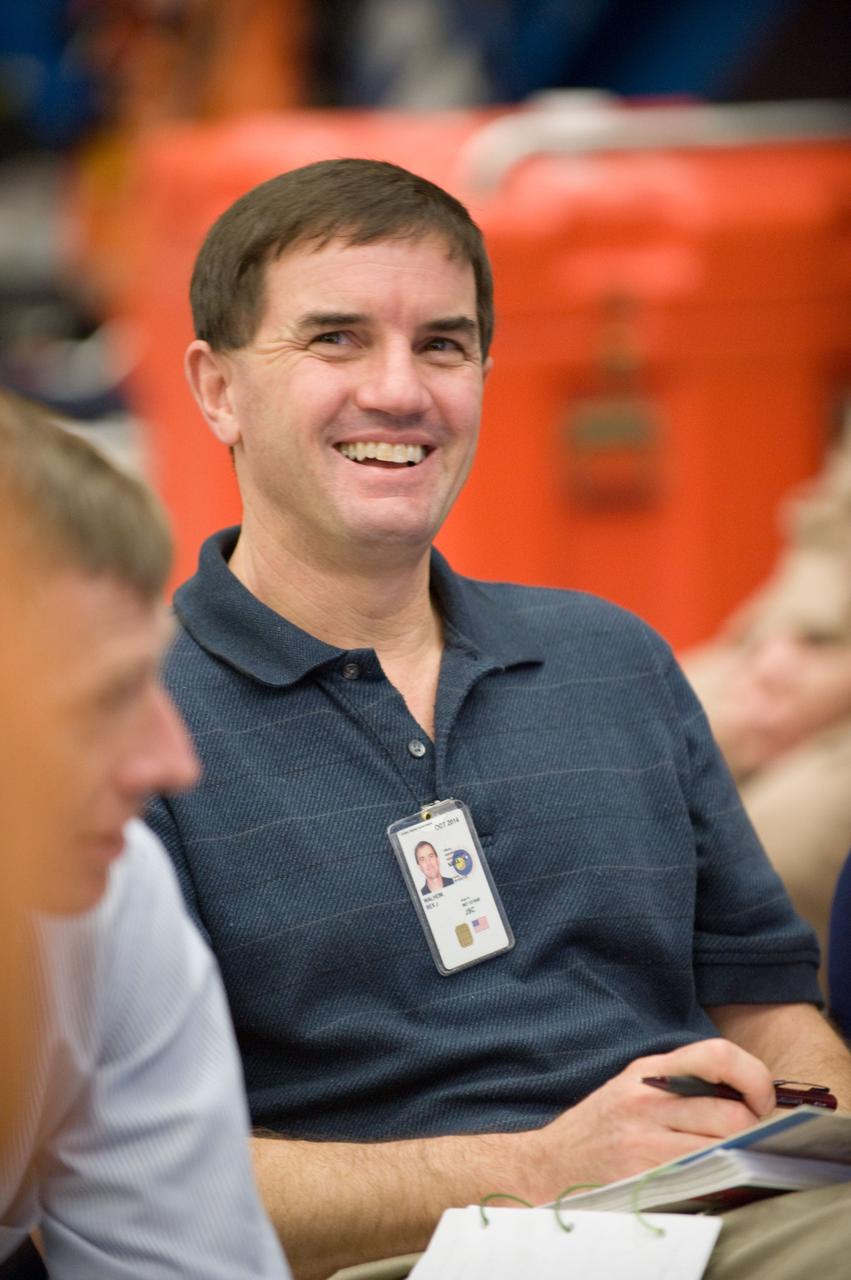
JSC2010-E-195514 (3 Dec. 2010) --- NASA astronaut Rex Walheim, STS-135 mission specialist, is pictured during an emergency egress training session in the Space Vehicle Mock-up Facility at NASA's Johnson Space Center. STS-135 is planned to be the final mission of the space shuttle program. Photo credit: NASA or National Aeronautics and Space Administration
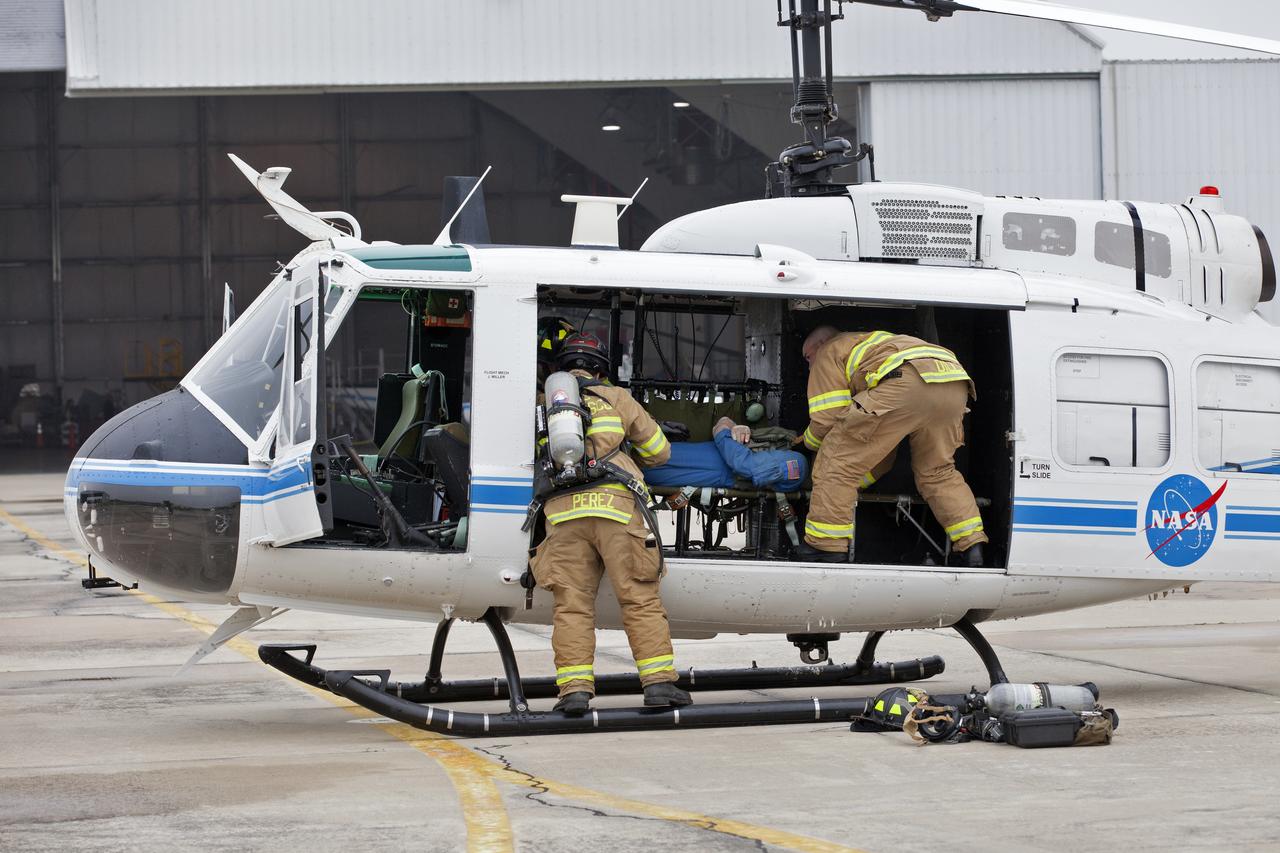
Members of NASA Kennedy Space Center's Flight Operations team participate in a rehearsal of a helicopter crash-landing to test new and updated emergency procedures. Called the Aircraft Mishap Preparedness and Contingency Plan, the operation was designed to validate several updated techniques the center's first responders would follow, should they ever need to rescue a crew in case of a real accident. The mishap exercise took place at the center's Shuttle Landing Facility.
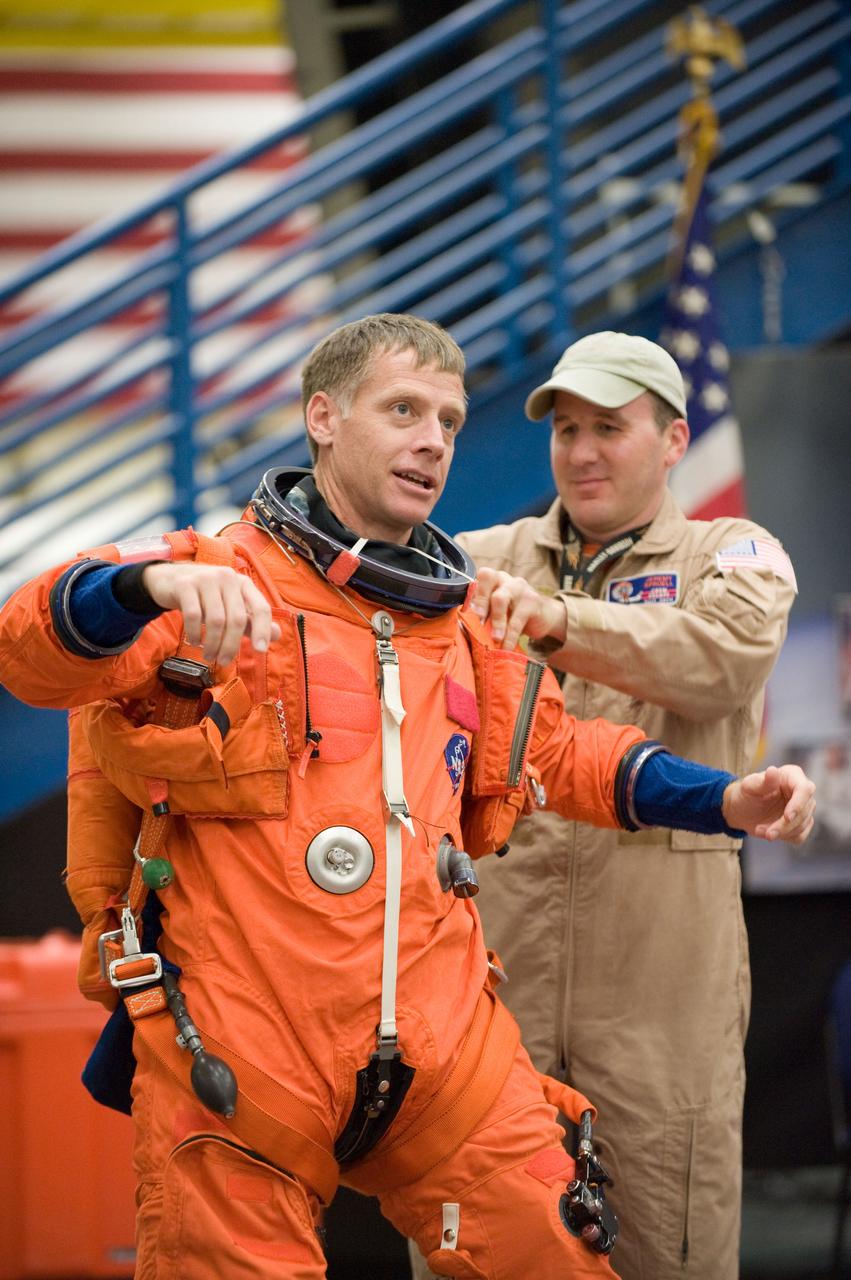
JSC2010-E-195523 (3 Dec. 2010) --- NASA astronaut Chris Ferguson, STS-135 commander, dons a training version of his shuttle launch and entry suit in preparation for an emergency egress training session in the Space Vehicle Mock-up Facility at NASA's Johnson Space Center. United Space Alliance suit technician Jeremy Spruell assisted Ferguson. STS-135 is planned to be the final mission of the space shuttle program. Photo credit: NASA or National Aeronautics and Space Administration
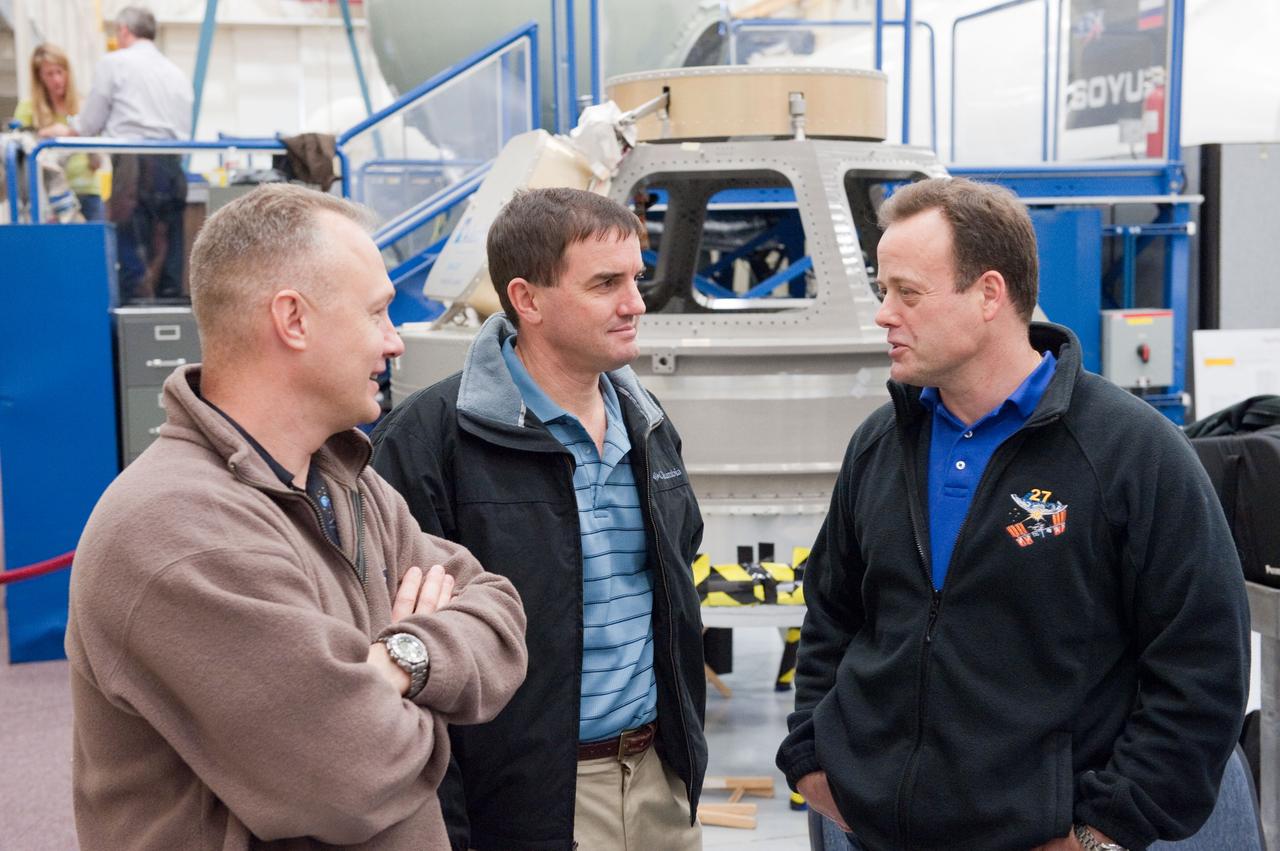
JSC2011-E-005854 (19 Jan. 2011) --- NASA astronauts Doug Hurley (left), STS-135 pilot; Rex Walheim (center), STS-135 mission specialist; and Ron Garan, Expedition 27/28 flight engineer, are pictured during a joint emergency scenarios training session in the Space Vehicle Mock-up Facility at NASA's Johnson Space Center. STS-135 is planned to be the final mission of the space shuttle program. Photo credit: NASA or National Aeronautics and Space Administration
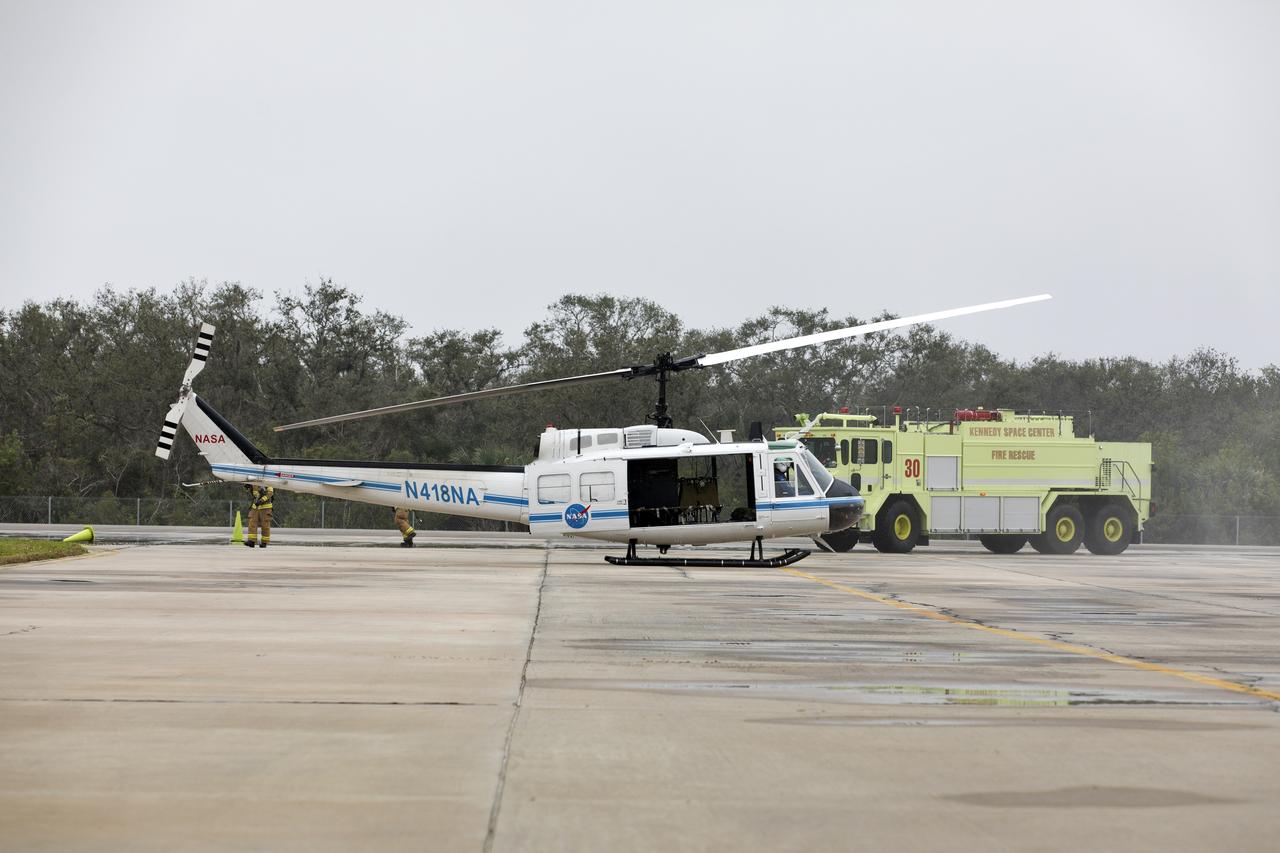
NASA Kennedy Space Center's Flight Operations prepares to rehearse a helicopter crash-landing to test new and updated emergency procedures. Called the Aircraft Mishap Preparedness and Contingency Plan, the operation was designed to validate several updated techniques the center's first responders would follow, should they ever need to rescue a crew in case of a real accident. The mishap exercise took place at the center's Shuttle Landing Facility.
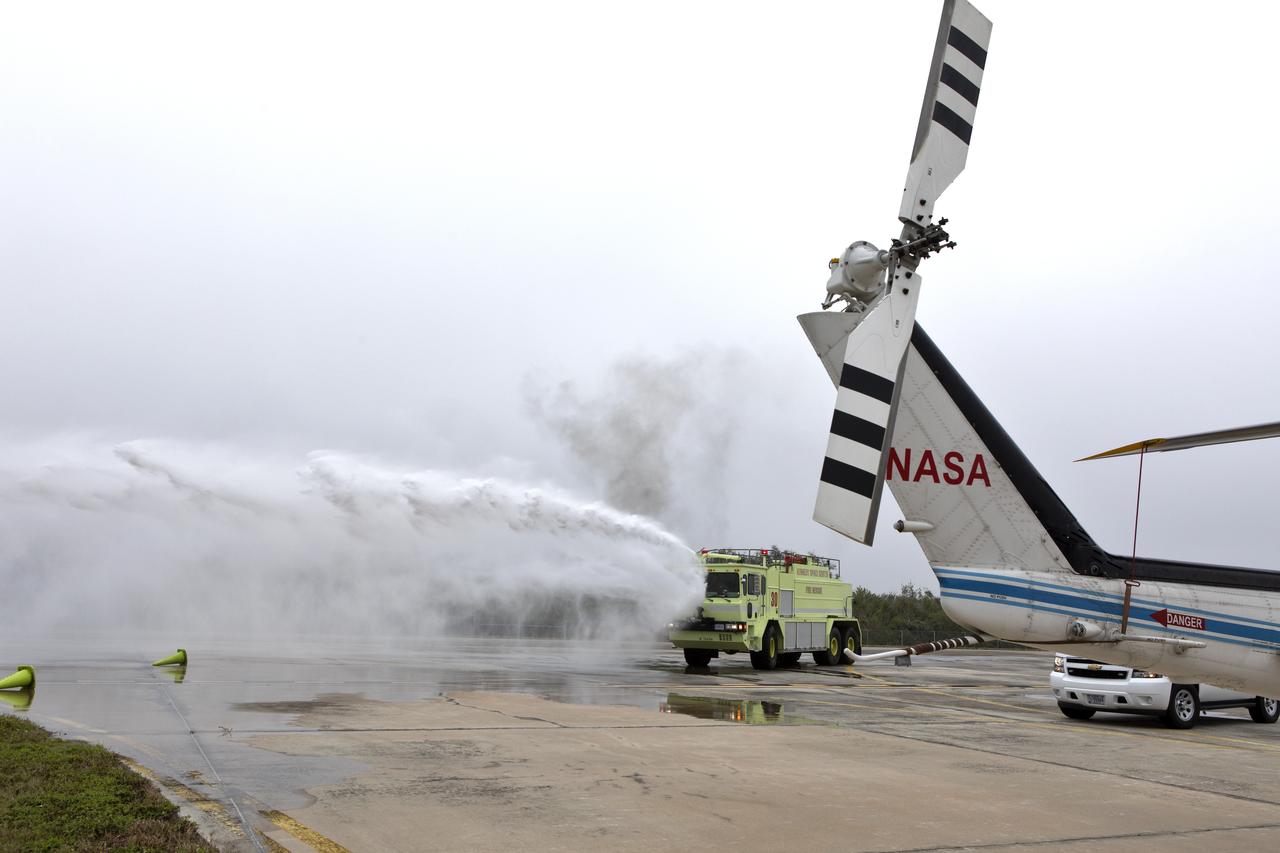
An Aircraft Mishap Preparedness and Contingency Plan is underway at the Shuttle Landing Facility at NASA's Kennedy Space Center in Florida. The center's Flight Operations rehearsed a helicopter crash-landing to test new and updated emergency procedures. The operation was designed to validate several updated techniques the center's first responders would follow, should they ever need to rescue a crew in case of a real accident. The mishap exercise took place at the center's Shuttle Landing Facility.
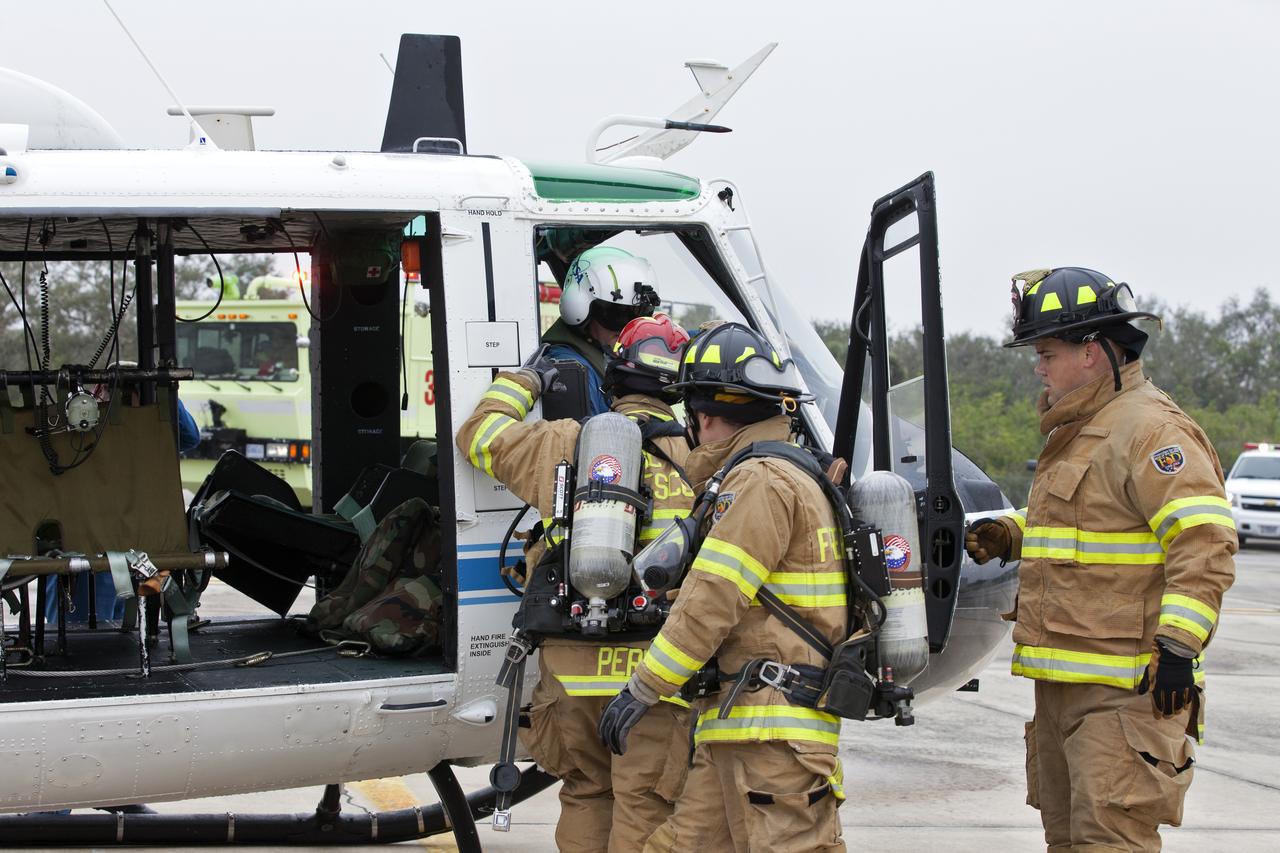
Members of NASA Kennedy Space Center's Flight Operations team participate in a rehearsal of a helicopter crash-landing to test new and updated emergency procedures. Called the Aircraft Mishap Preparedness and Contingency Plan, the operation was designed to validate several updated techniques the center's first responders would follow, should they ever need to rescue a crew in case of a real accident. The mishap exercise took place at the center's Shuttle Landing Facility.
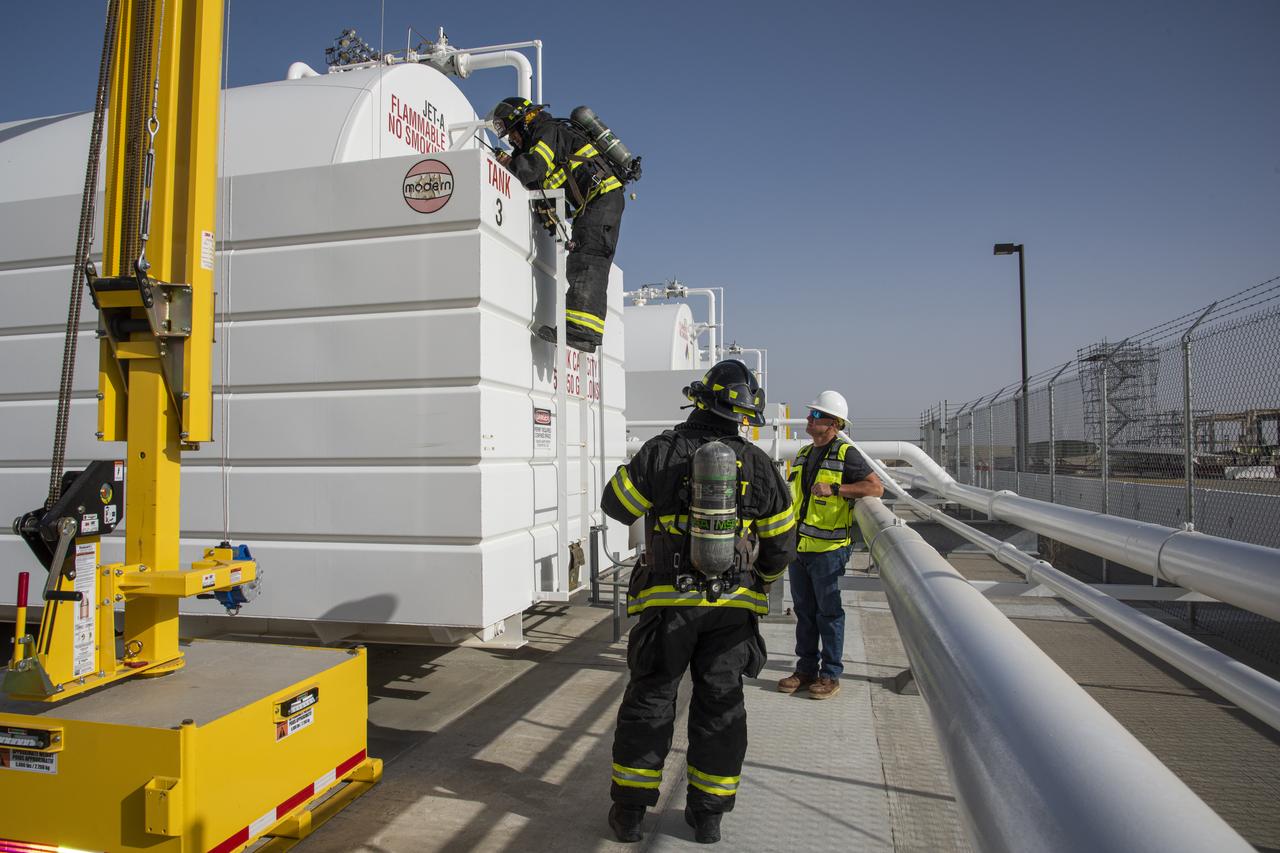
Air Force Plant 42 Fire Department responders Doug Mendez and Alfonzo Ortega test the air in a confined space with a gas meter during an exercise at NASA Armstrong Flight Research Center's Building 703 in Palmdale, California. Dale McCoy, Armstrong confined space co-program manager, observers.
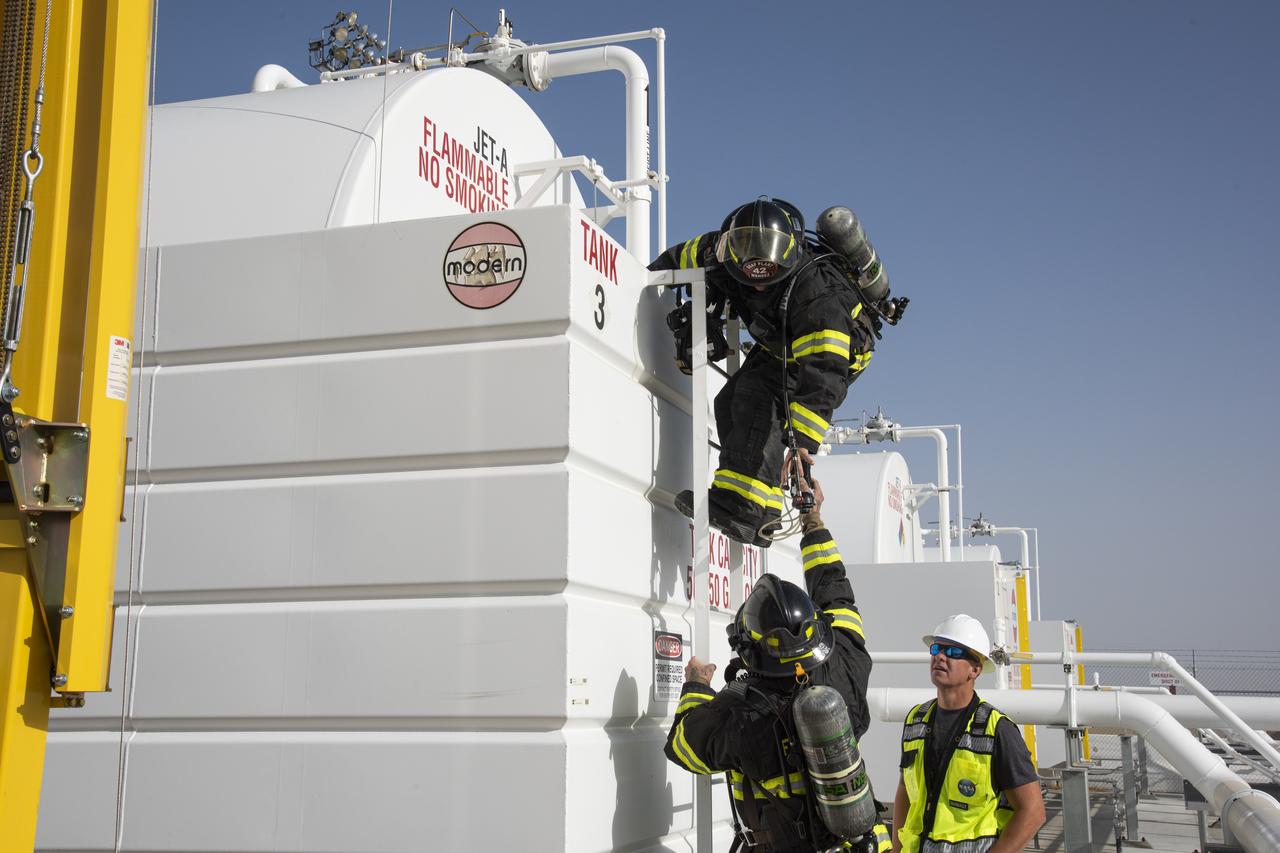
Air Force Plant 42 Fire Department responder Alfonzo Ortega, bottom, hands Doug Mendez a gas meter to test the air in a confined space during an exercise at NASA Armstrong Flight Research Center's Building 703 in Palmdale, California. Dale McCoy, Armstrong confined space co-program manager, observers.
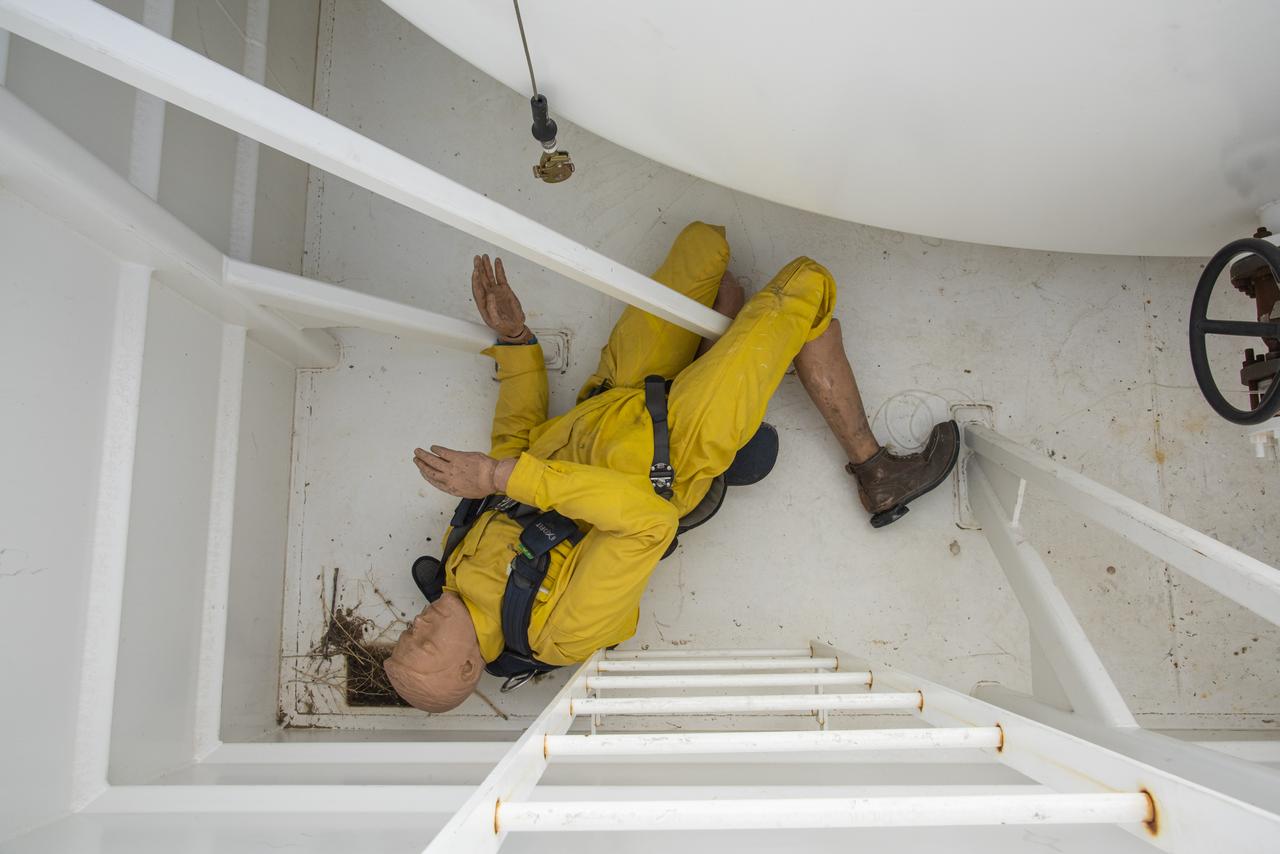
A mannequin is used to simulate a worker who has collapsed and come free from a harness intended to extricate the worker in case of emergency as part of a confined spaces training at NASA Armstrong Flight Research Center’s Building 703 in Palmdale, California.
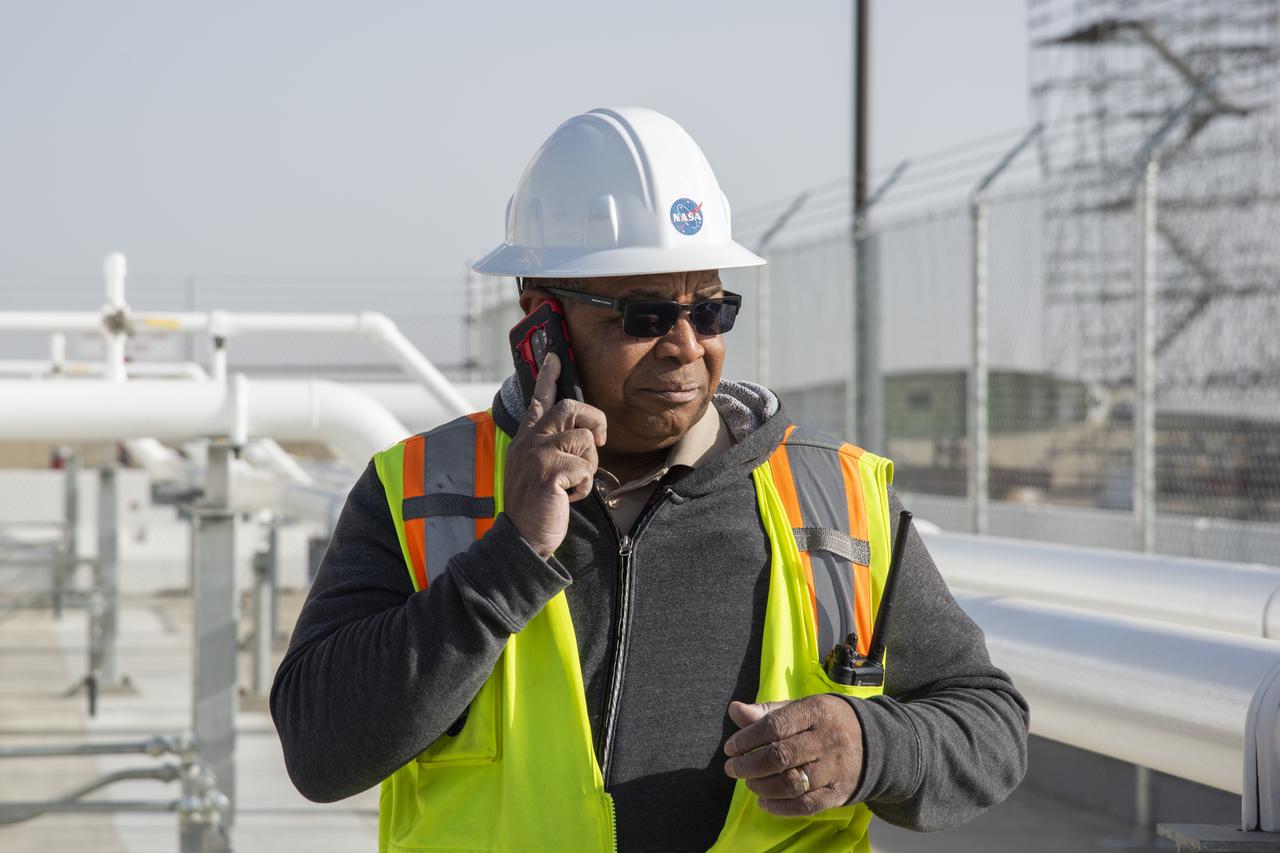
Syd Myers, a NASA Armstrong Flight Research Center confined space supervisor for a drill at NASA Armstrong Flight Research Center’s Building 703 in Palmdale, California, called 9-1-1 to begin the exercise. Myers continued to update responders how the situation was evolving until help arrived.
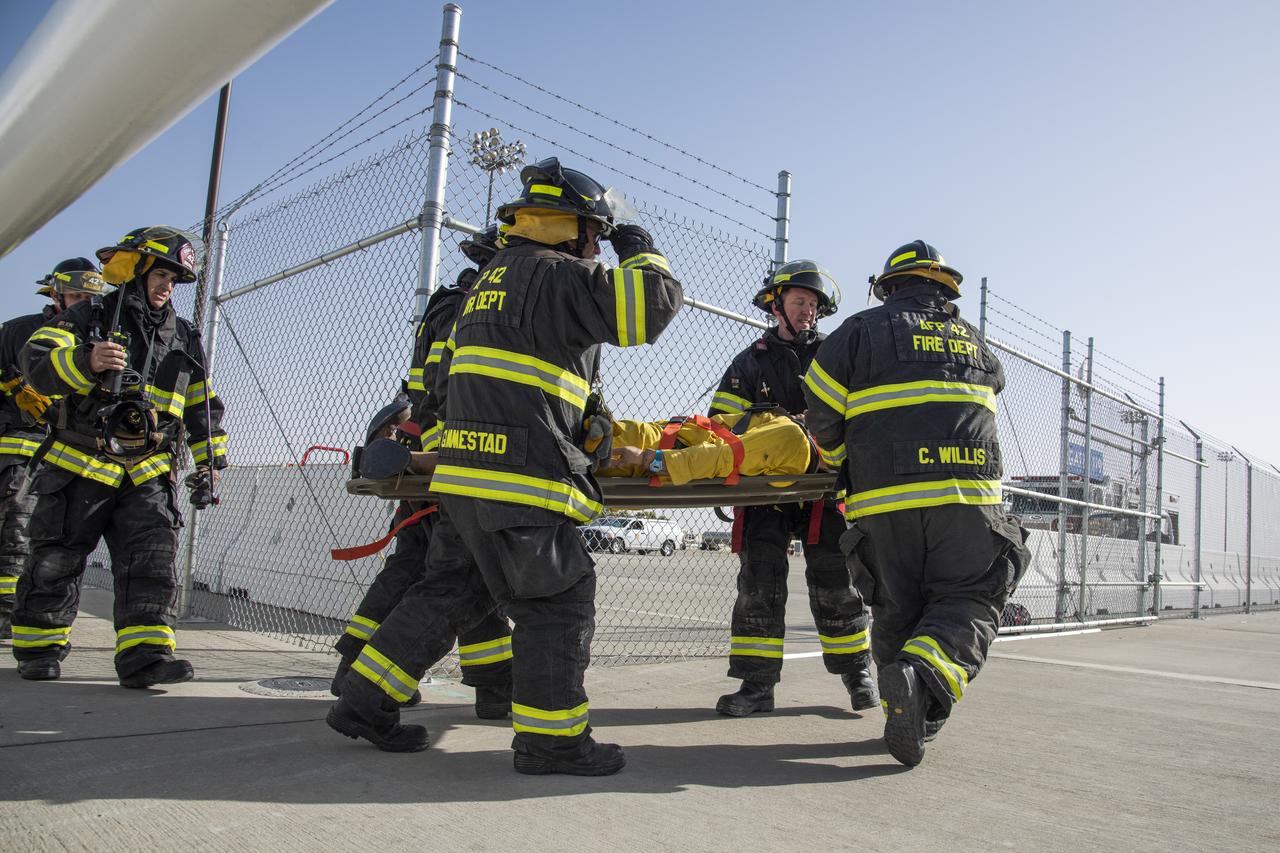
U.S. Air Force Plant 42 Fire Department responders carry out the mannequin to an emergency vehicle during an emergency exercise at NASA Armstrong Flight Research Center's Building 703 in Palmdale, California. Responders included, from left, Kent Courter, Doug Mendez, Alfonzo Ortega, Cedric Willis, Tyler Lippens and Ricky Gimmestad.
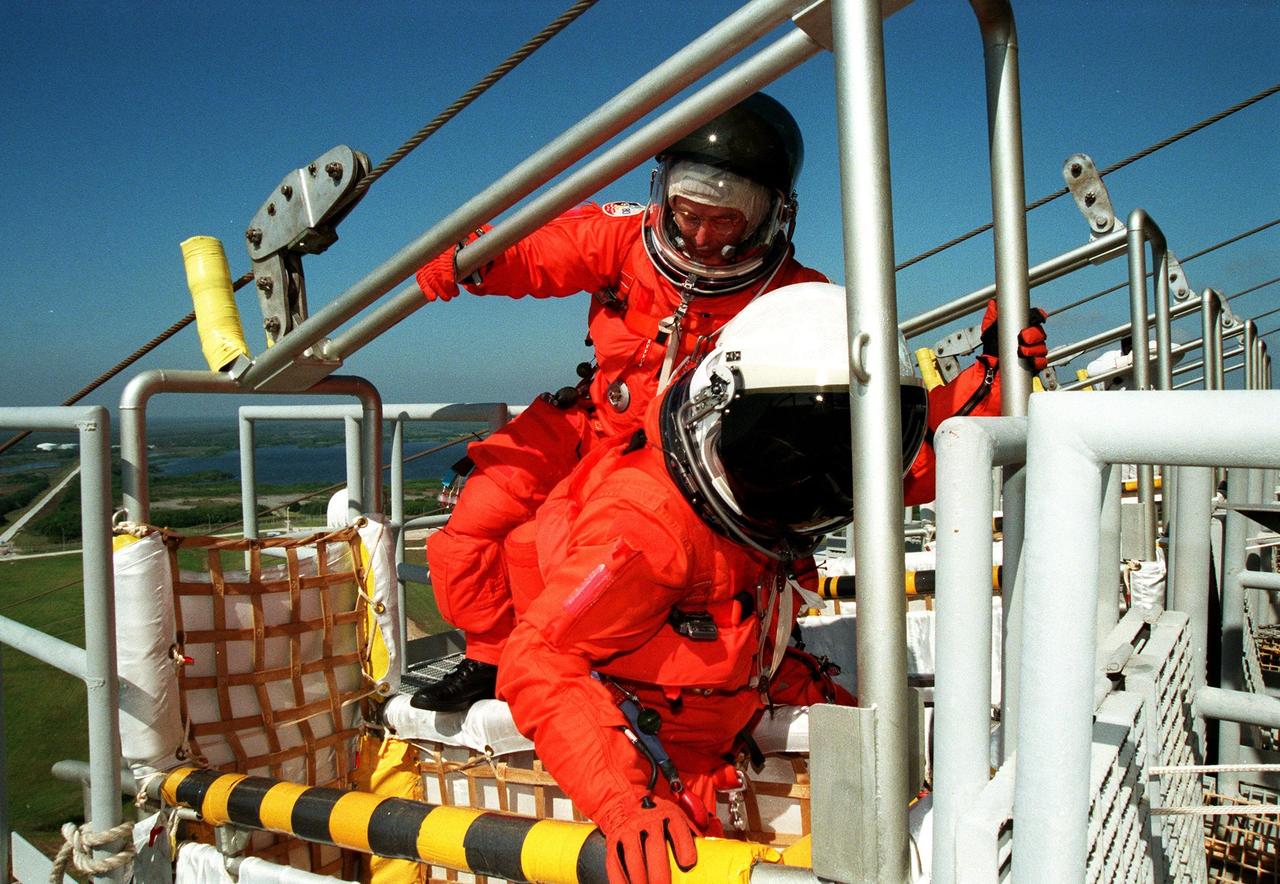
KENNEDY SPACE CENTER, Fla. -- STS-88 Mission Specialist Jerry L. Ross (left) climbs into slideware basket behind Mission Specialist Nancy Jane Currie, Ph.D., (right) at Launch Pad 39A as part of an emergency egress exercise. The crew are at KSC to participate in the Terminal Countdown Demonstration Test (TCDT) which includes mission familiarization activities, emergency egress training, and the simulated main engine cut-off exercise. Mission STS-88 is targeted for launch on Dec. 3, 1998. It is the first U.S. flight for the assembly of the International Space Station and will carry the Unity connecting module. Unity will be mated with the already orbiting Russian-built Zarya control module. The 12-day mission includes three planned spacewalks to connect power, data and utility lines and install exterior equipment
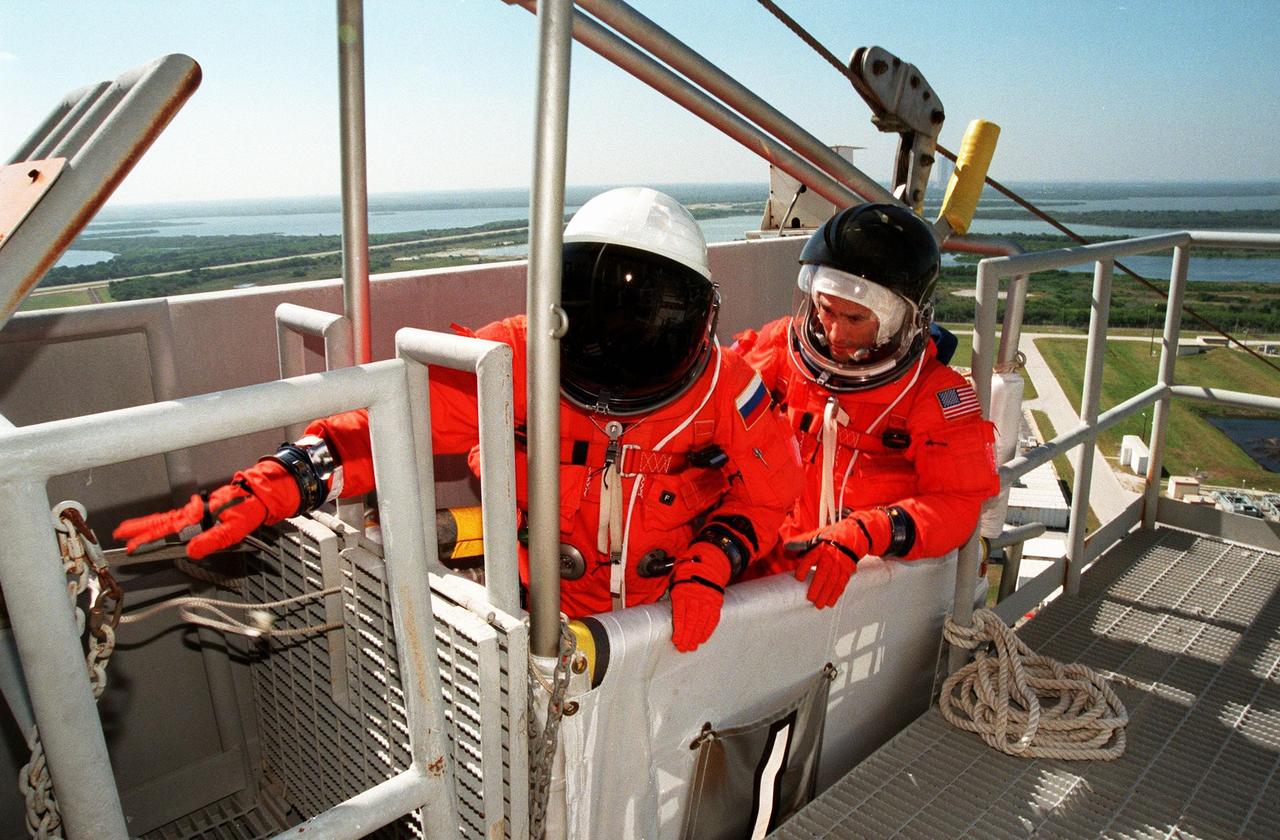
KENNEDY SPACE CENTER, Fla. -- STS-88 Mission Specialists Sergei Konstantinovich Krikalev (left) and James H. Newman (right) are ready to leave Launch Pad 39A in the slidewire basket during an emergency egress exercise. The crew are at KSC to participate in the Terminal Countdown Demonstration Test (TCDT) which includes mission familiarization activities, emergency egress training, and the simulated main engine cut-off exercise. Mission STS-88 is targeted for launch on Dec. 3, 1998. It is the first U.S. flight for the assembly of the International Space Station and will carry the Unity connecting module. Unity will be mated with the already orbiting Russian-built Zarya control module. The 12-day mission includes three planned spacewalks to connect power, data and utility lines and install exterior equipment

KENNEDY SPACE CENTER, Fla. -- STS-88 Mission Specialists Sergei Konstantinovich Krikalev (left) and James H. Newman (right) are ready to leave Launch Pad 39A in the slidewire basket during an emergency egress exercise. The crew are at KSC to participate in the Terminal Countdown Demonstration Test (TCDT) which includes mission familiarization activities, emergency egress training, and the simulated main engine cut-off exercise. Mission STS-88 is targeted for launch on Dec. 3, 1998. It is the first U.S. flight for the assembly of the International Space Station and will carry the Unity connecting module. Unity will be mated with the already orbiting Russian-built Zarya control module. The 12-day mission includes three planned spacewalks to connect power, data and utility lines and install exterior equipment
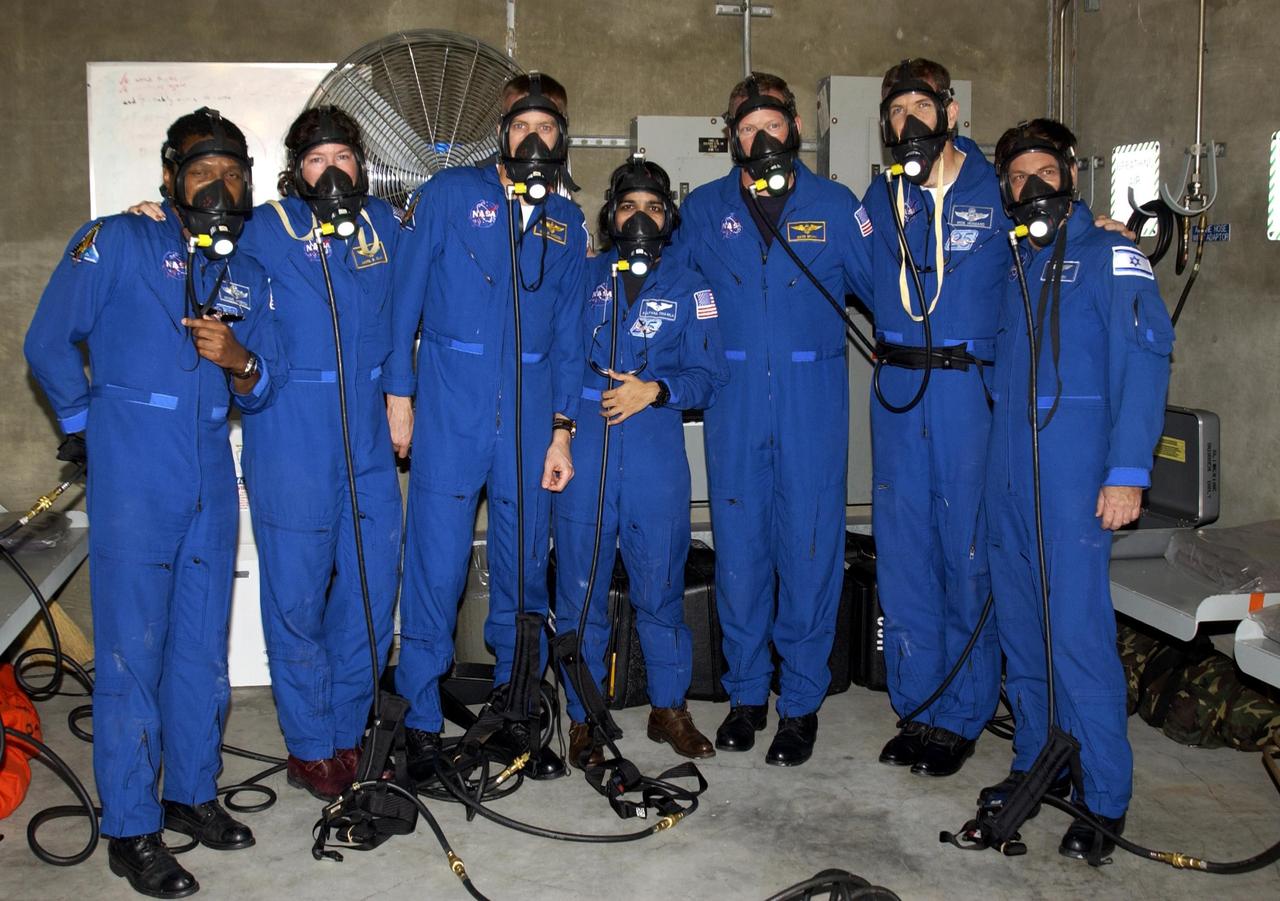
KENNEDY SPACE CENTER, FLA. -- During emergency egress training, part of Terminal Countdown Demonstration Test activities at the pad, STS-107 crew members test breathing masks in the emergency bunker. From left are Payload Commander Michael Anderson, Mission Specialist Laurel Clark, Pilot William "Willie" McCool, Mission Specialists Kalpana Chawla and David Brown, Commander Rick Husband and Mission Specialist Ilan Ramon (the first Israeli astronaut). STS-107 is a mission devoted to research and will include more than 80 experiments that will study Earth and space science, advanced technology development, and astronaut health and safety. Launch is planned for Jan. 16, 2003, between 10 a.m. and 2 p.m. EST aboard Space Shuttle Columbia. .
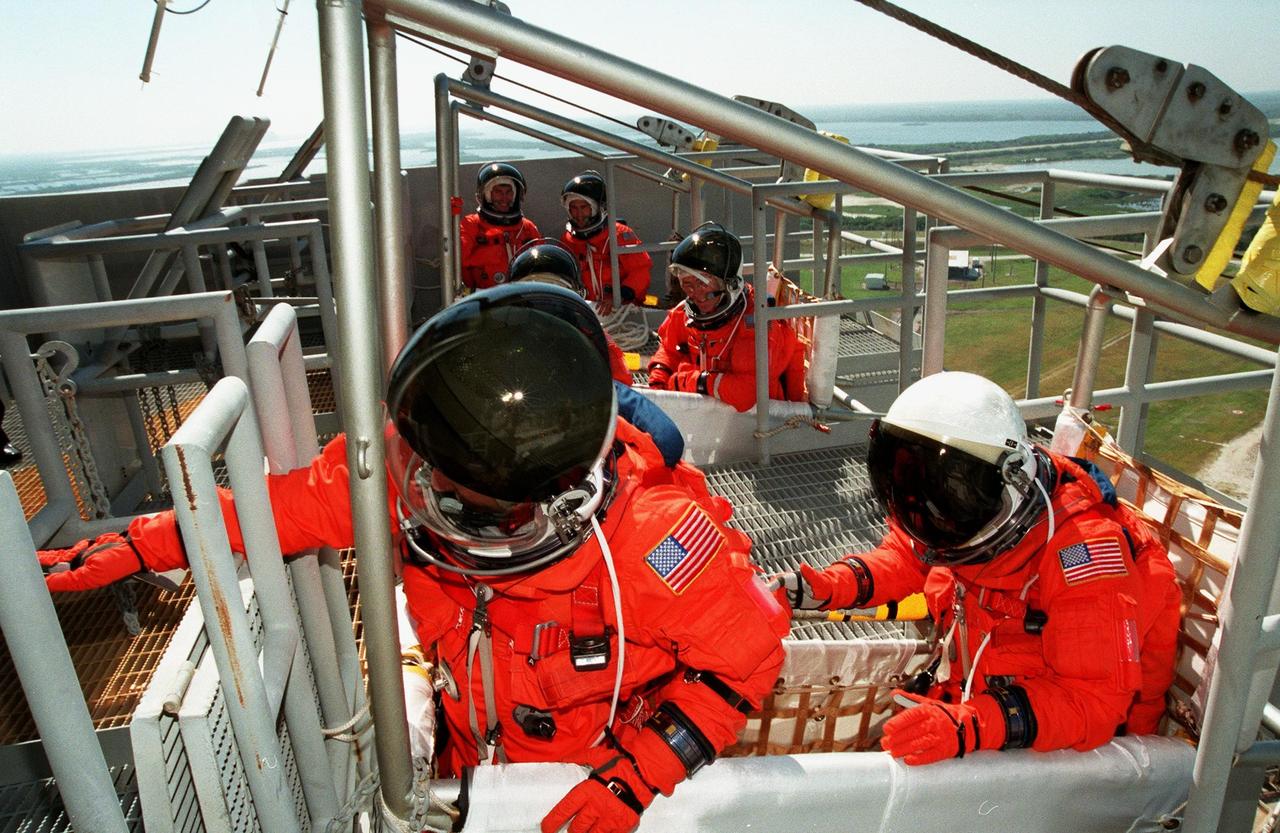
KENNEDY SPACE CENTER, Fla. -- STS-88 Mission Commander Robert D. Cabana (left) and Pilot Frederick W. "Rick" Sturckow (right) are ready to leave Launch Pad 39A in the slidewire basket during an emergency egress exercise. Other crew members watch from behind. The crew are at KSC to participate in the Terminal Countdown Demonstration Test (TCDT) which includes mission familiarization activities, emergency egress training, and the simulated main engine cut-off exercise. Mission STS-88 is targeted for launch on Dec. 3, 1998. It is the first U.S. flight for the assembly of the International Space Station and will carry the Unity connecting module. Unity will be mated with the already orbiting Russian-built Zarya control module. The 12-day mission includes three planned spacewalks to connect power, data and utility lines and install exterior equipment
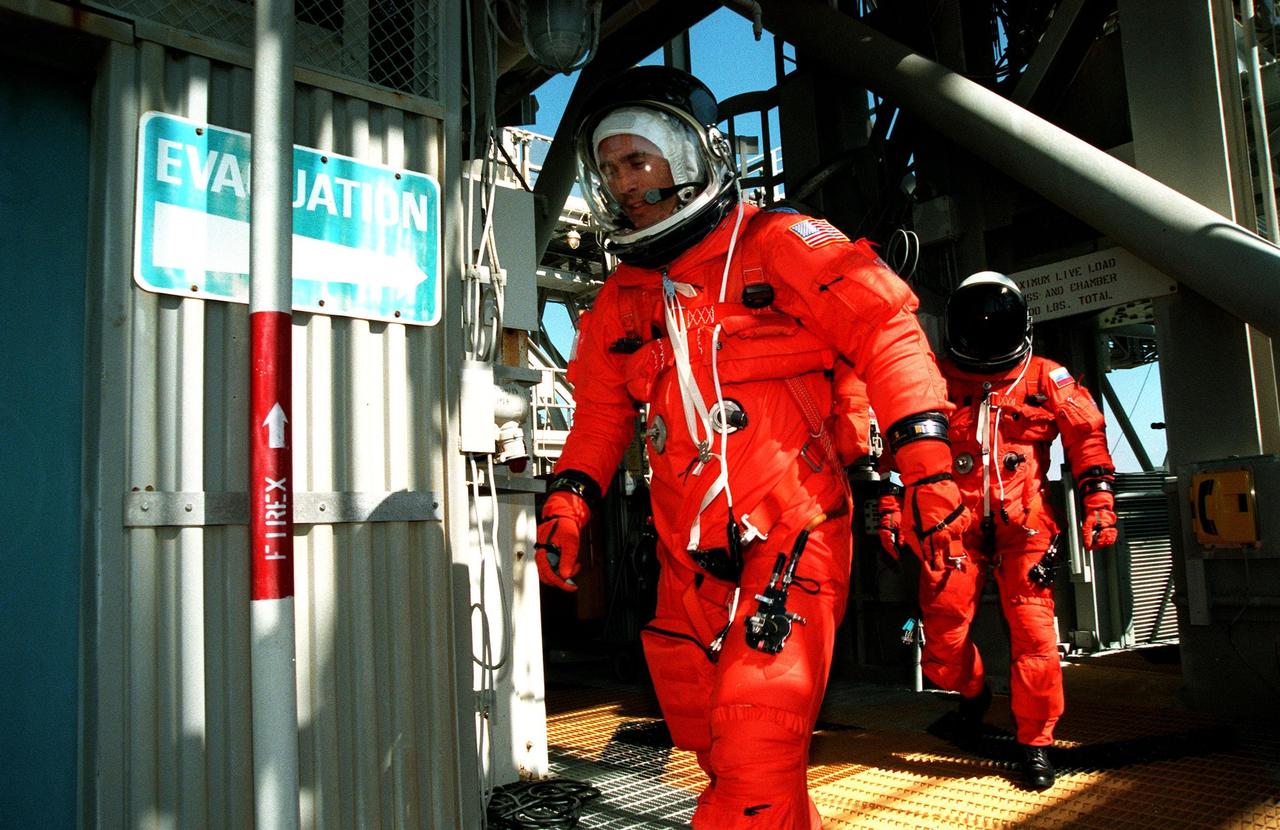
KENNEDY SPACE CENTER, Fla. -- STS-88 Mission Specialists James H. Newman (left) and Sergei Konstantinovich Krikalev (right) hurry toward the slidewire basket at the 195-foot level of Launch Pad 39A during an emergency egress exercise. The crew are at KSC to participate in the Terminal Countdown Demonstration Test (TCDT) which includes mission familiarization activities, emergency egress training, and the simulated main engine cut-off exercise. Mission STS-88 is targeted for launch on Dec. 3, 1998. It is the first U.S. flight for the assembly of the International Space Station and will carry the Unity connecting module. Unity will be mated with the already orbiting Russian-built Zarya control module. The 12-day mission includes three planned spacewalks to connect power, data and utility lines and install exterior equipment
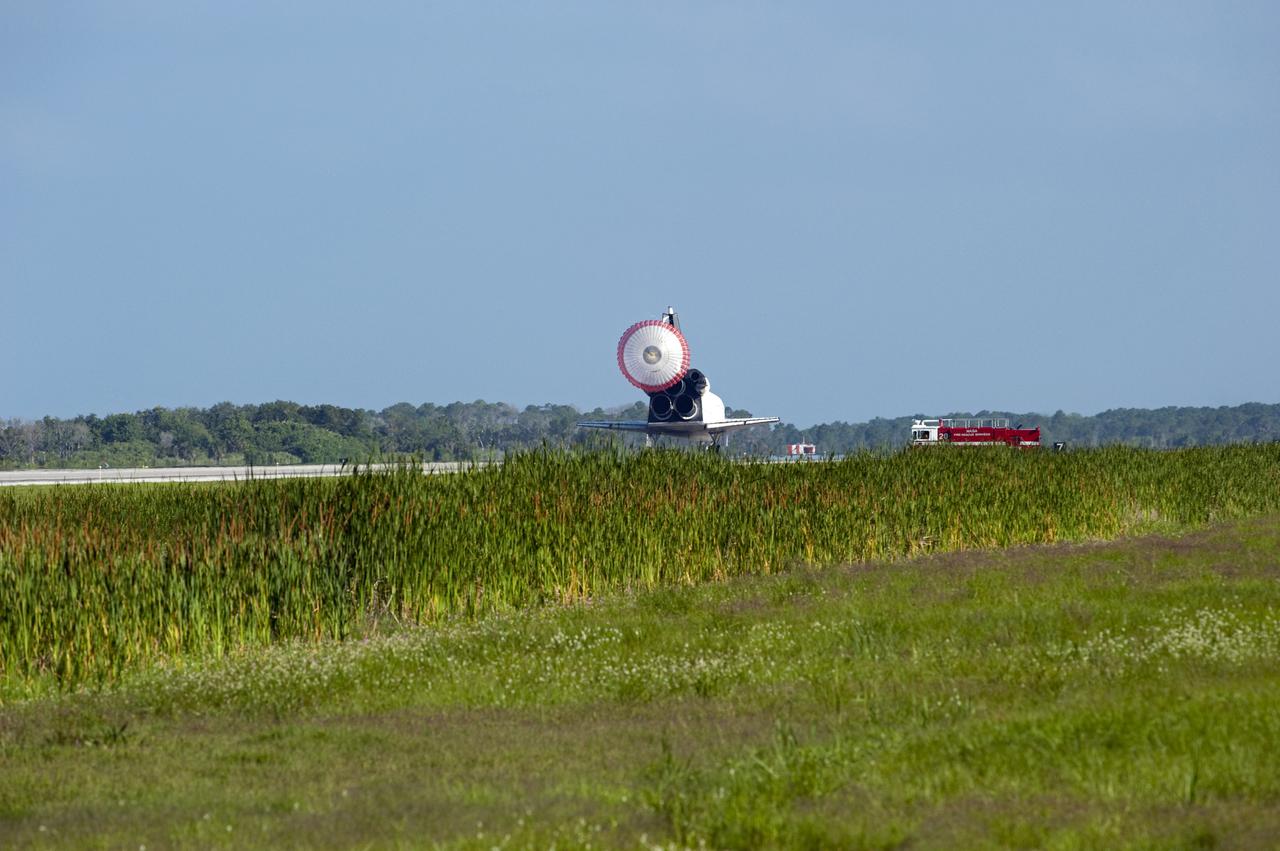
CAPE CANAVERAL, Fla. - Space shuttle Atlantis rolls to a stop as NASA's Fire Emergency Services vehicle approaches Runway 33 at the Shuttle Landing Facility at NASA's Kennedy Space Center in Florida. The emergency vehicle is part of a long convoy that greets every shuttle upon return to Earth. Landing was at 8:48 a.m. EDT, completing the 12-day STS-132 mission to the International Space Station. The six-member STS-132 crew carried the Russian-built Mini Research Module-1 to the space station. STS-132 is the 34th shuttle mission to the station, the 132nd shuttle mission overall and the last planned flight for Atlantis. For information on the STS-132 mission and crew, visit www.nasa.gov_mission_pages_shuttle_shuttlemissions_sts132_index.html. Photo credit: NASA_Tom Joseph
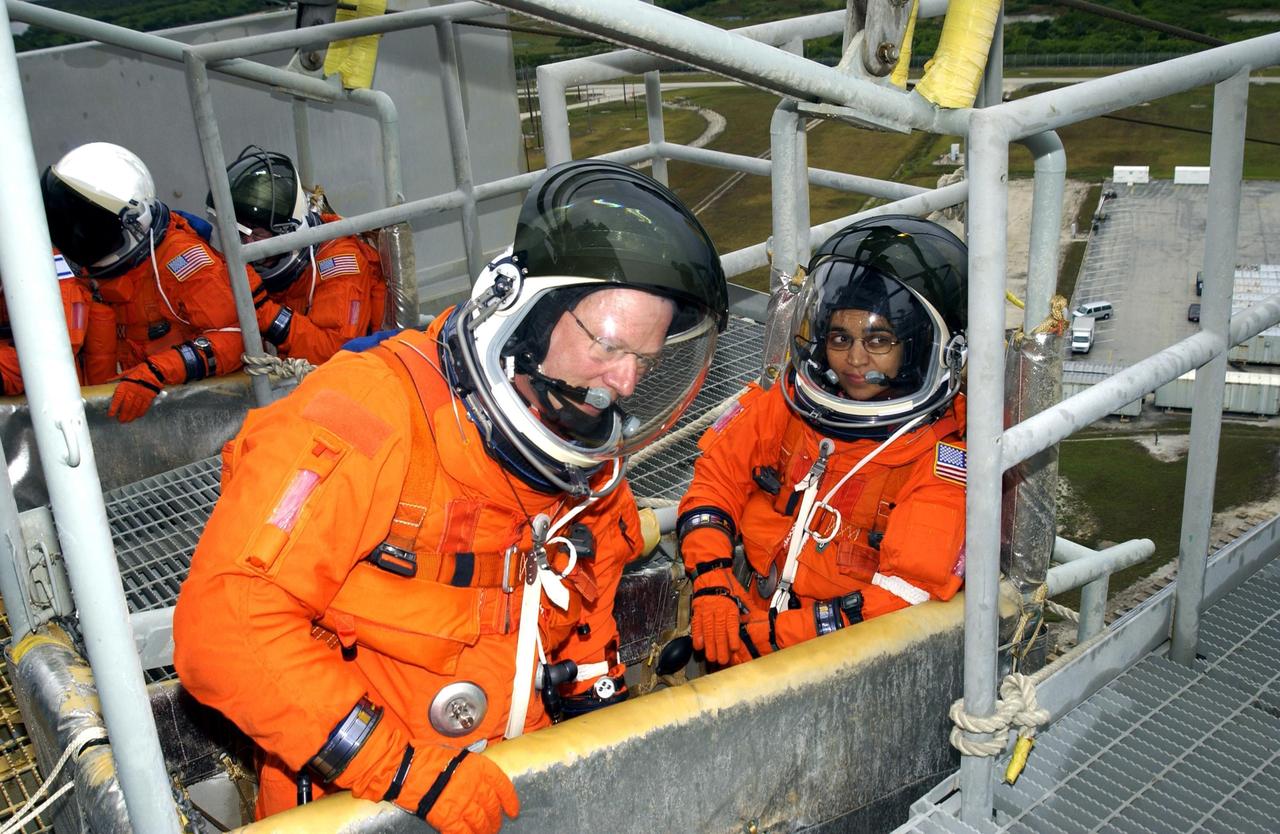
KENNEDY SPACE CENTER, FLA. - The STS-107 crew practice emergency egress from the launch pad during a simulated launch countdown, part of Terminal Countdown Demonstration Test activities. In the slidewire basket in the foreground are Mission Specialists David Brown and Kalpana Chawla. STS-107 is a mission devoted to research and will include more than 80 experiments that will study Earth and space science, advanced technology development, and astronaut health and safety. Launch is planned for Jan. 16, 2003, between 10 a.m. and 2 p.m. EST aboard Space Shuttle Columbia. .
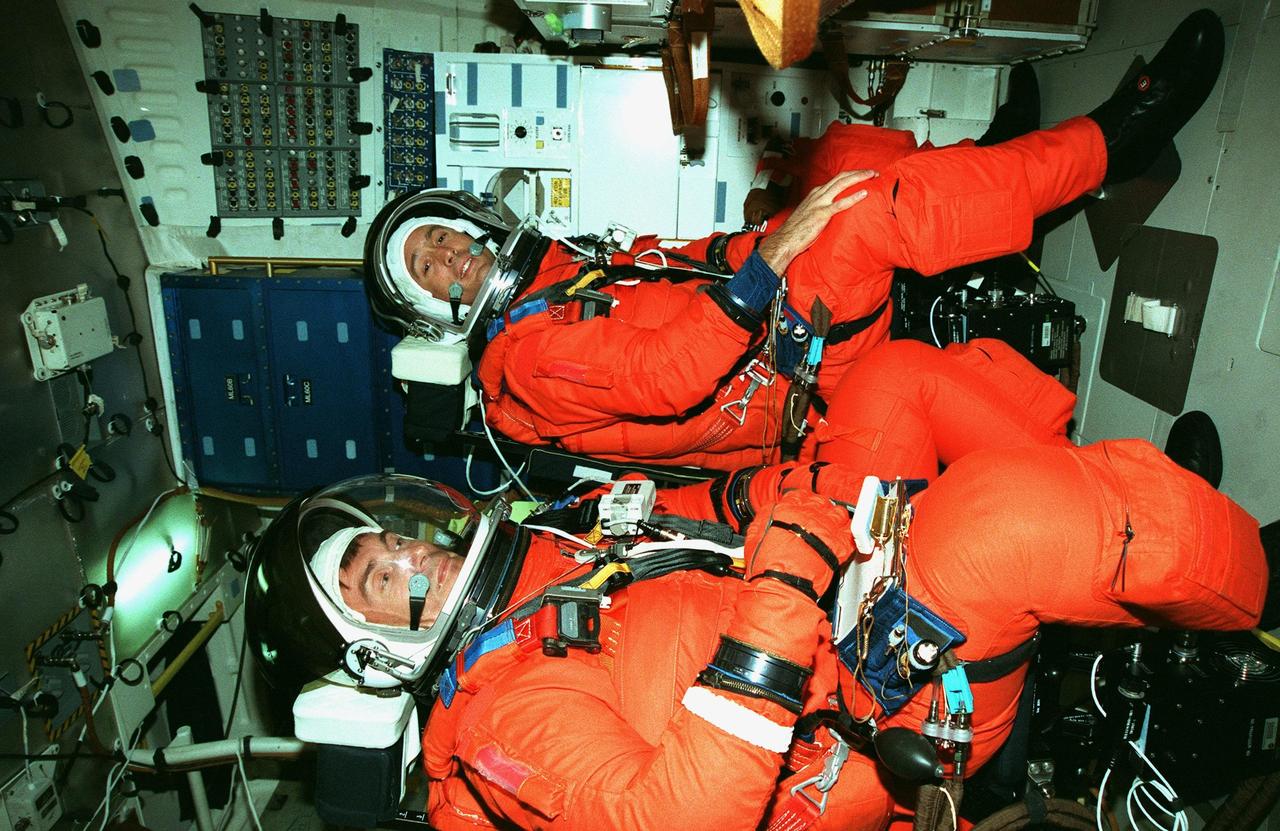
STS-88 Mission Specialists Sergei Konstantinovich Krikalev (left) and James H. Newman (right) sit inside orbiter Endeavour during Terminal Countdown Demonstration Activities (TCDT). The TCDT includes mission familiarization activities, emergency egress training, and the simulated main engine cut-off exercise. Mission STS-88 is targeted for launch on Dec. 3, 1998. It is the first U.S. flight for the assembly of the International Space Station and will carry the Unity connecting module. Unity will be mated with the already orbiting Russian-built Zarya control module. The 12-day mission includes three planned spacewalks to connect power, data and utility lines and install exterior equipment
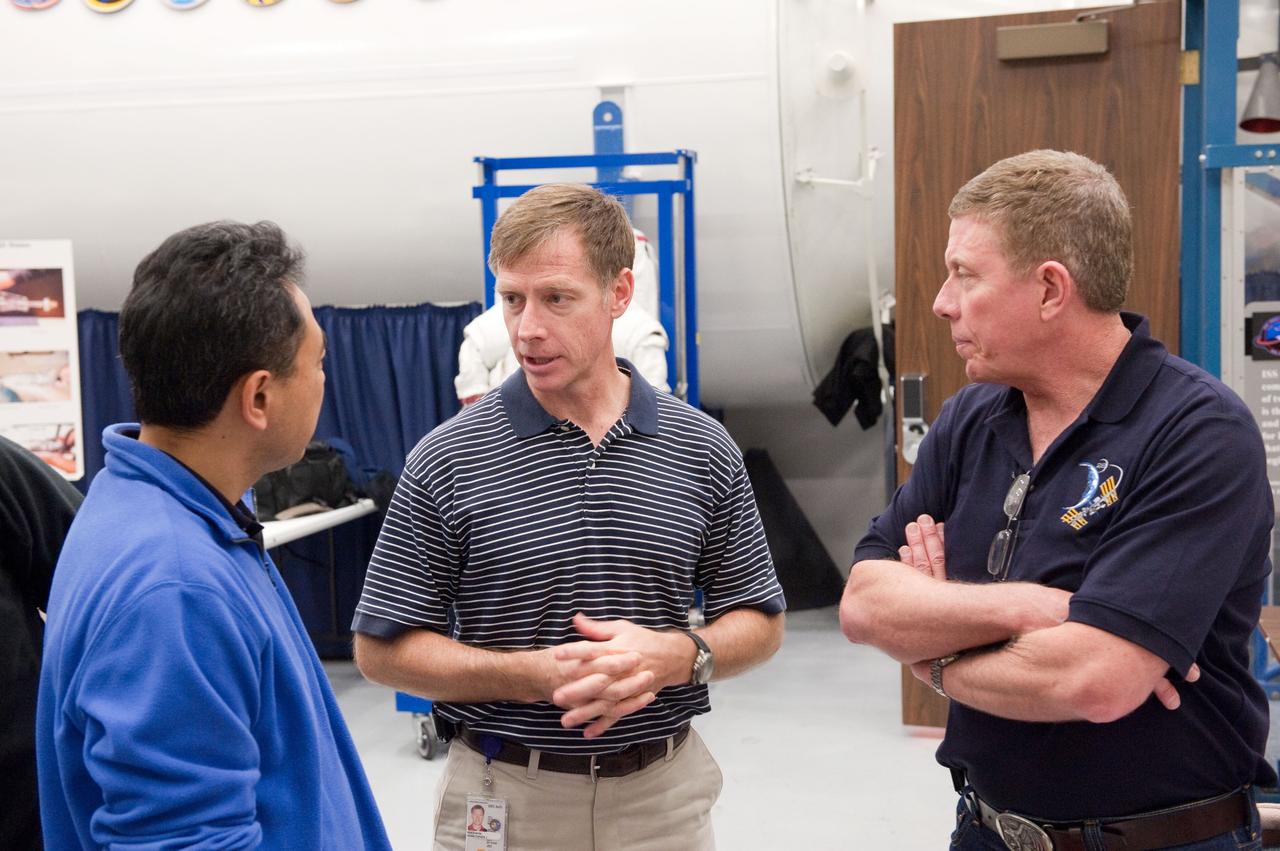
JSC2011-E-005852 (19 Jan. 2011) --- NASA astronaut Chris Ferguson (center), STS-135 commander; Japan Aerospace Exploration Agency (JAXA) astronaut Satoshi Furukawa (left), Expedition 28/29 flight engineer; and NASA astronaut Mike Fossum, Expedition 28 flight engineer and Expedition 29 commander, are pictured during a joint emergency scenarios training session in the Space Vehicle Mock-up Facility at NASA's Johnson Space Center. STS-135 is planned to be the final mission of the space shuttle program. Photo credit: NASA or National Aeronautics and Space Administration
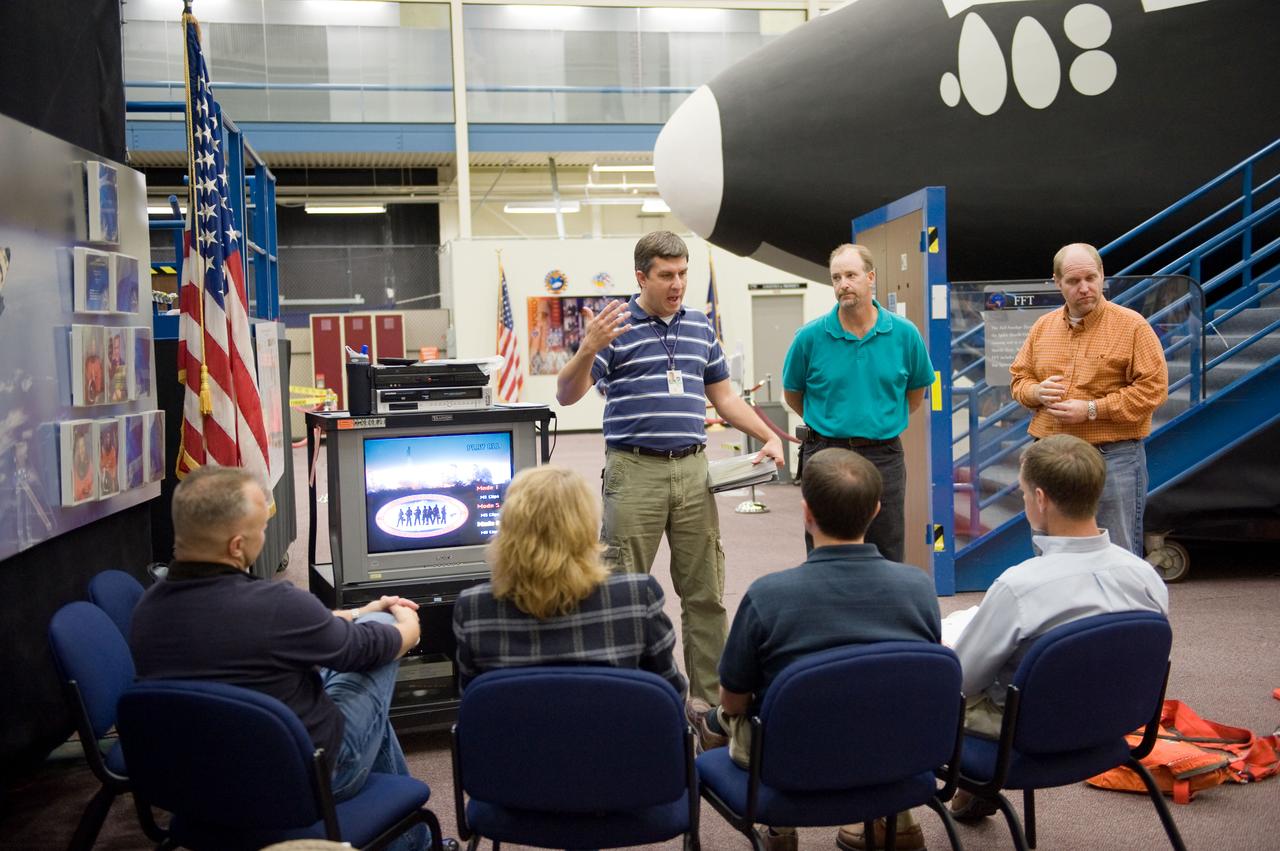
JSC2010-E-195512 (3 Dec. 2010) --- Crew instructors Patrick Jones (left), Robert (Rob) Tomaro and Bob Behrendsen brief STS-135 crew members during an emergency egress training session in the Space Vehicle Mock-up Facility at NASA's Johnson Space Center. Seated are NASA astronauts Chris Ferguson (right), commander; Doug Hurley (left), pilot; Sandy Magnus and Rex Walheim, both mission specialists. STS-135 is planned to be the final mission of the space shuttle program. Photo credit: NASA or National Aeronautics and Space Administration
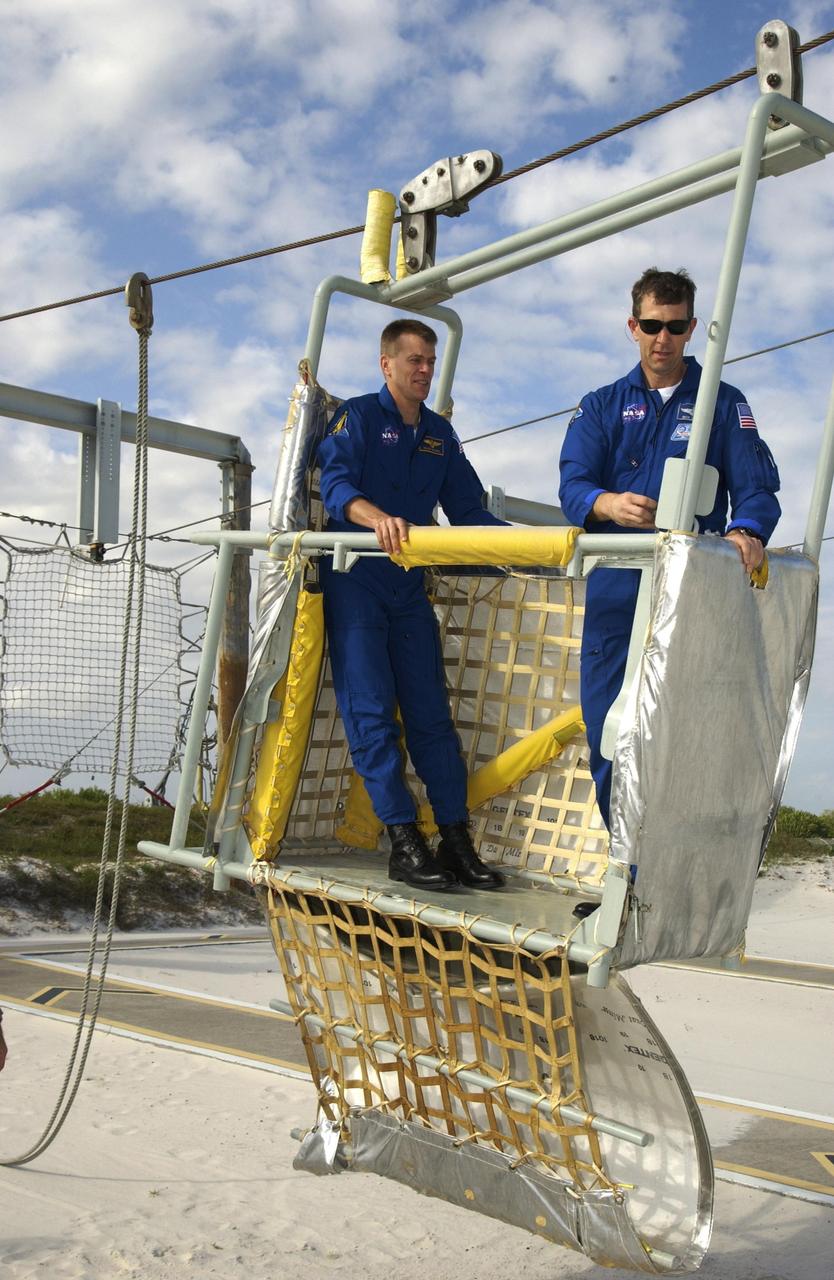
KENNEDY SPACE CENTER, FLA. -- During emergency egress training, part of Terminal Countdown Demonstration Test activities at the pad, STS-107 Pilot William "Willie" McCool and Commander Rick Husband share a slidewire basket. The TCDT also includes a simulated launch countdown. STS-107 is a mission devoted to research and will include more than 80 experiments that will study Earth and space science, advanced technology development, and astronaut health and safety. Launch is planned for Jan. 16, 2003, between 10 a.m. and 2 p.m. EST aboard Space Shuttle Columbia. .
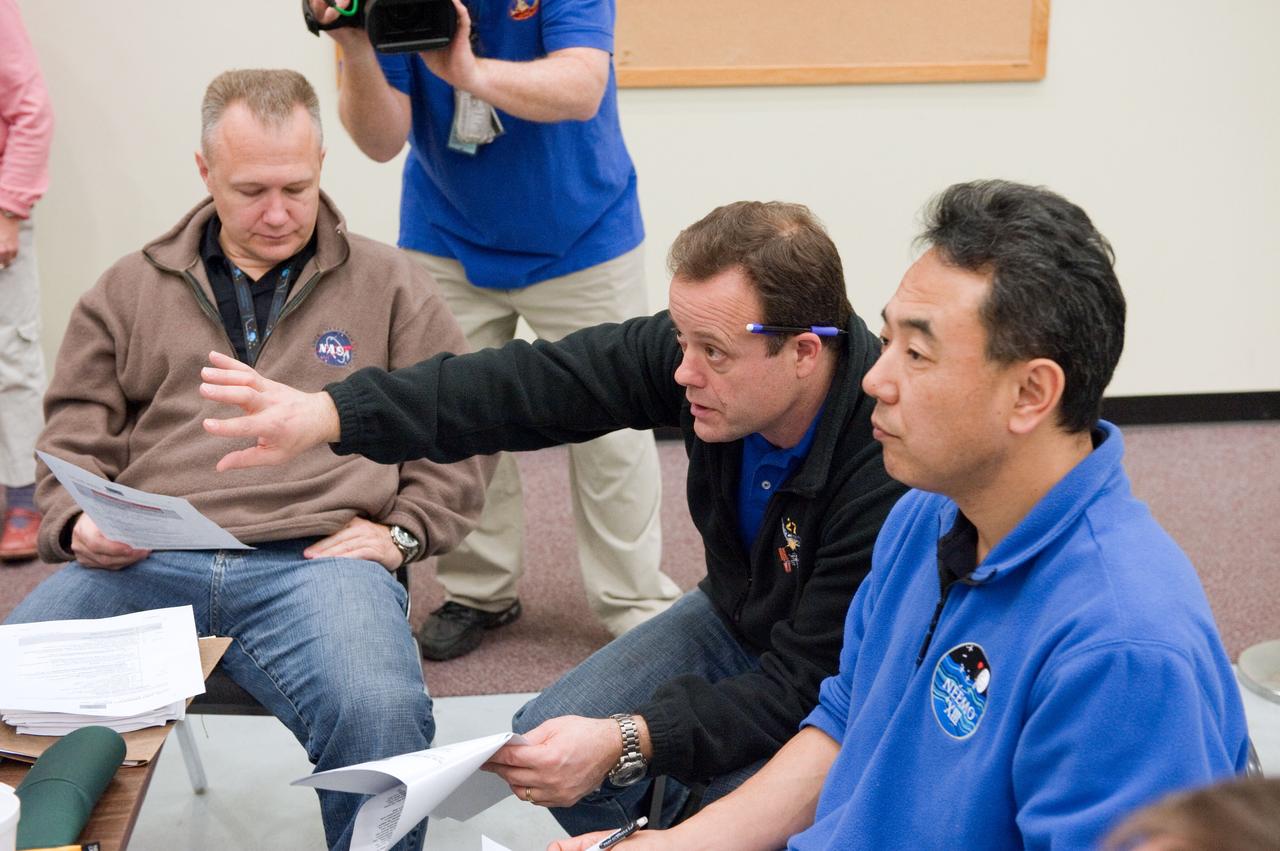
JSC2011-E-005860 (19 Jan. 2011) --- NASA astronauts Doug Hurley (left), STS-135 pilot; Ron Garan (center), Expedition 27/28 flight engineer; and Japan Aerospace Exploration Agency (JAXA) astronaut Satoshi Furukawa, Expedition 28/29 flight engineer, participate in a joint emergency scenarios training session in the Space Vehicle Mock-up Facility at NASA's Johnson Space Center. STS-135 is planned to be the final mission of the space shuttle program. Photo credit: NASA or National Aeronautics and Space Administration
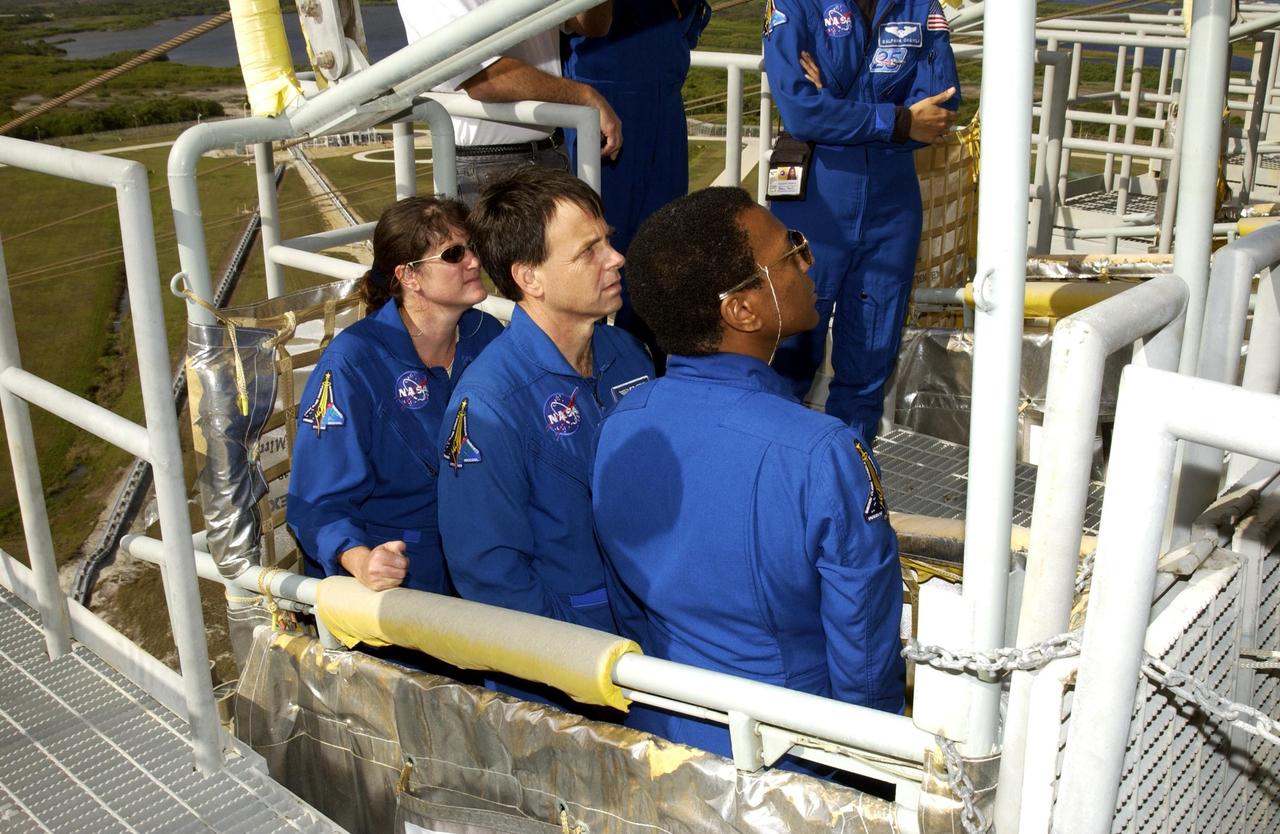
KENNEDY SPACE CENTER, FLA. -- The STS-107 crew gets instruction on the slidewire basket during emergency egress training, part of Terminal Countdown Demonstration Test activities. Seen are Mission Specialist Laurel Clark, Payload Commander Michael Anderson and Payload Specialist Ilan Ramon (the first Israeli astronaut). The TCDT also includes a simulated launch countdown. STS-107 is a mission devoted to research and will include more than 80 experiments that will study Earth and space science, advanced technology development, and astronaut health and safety. Launch is planned for Jan. 16, 2003, between 10 a.m. and 2 p.m. EST aboard Space Shuttle Columbia. .
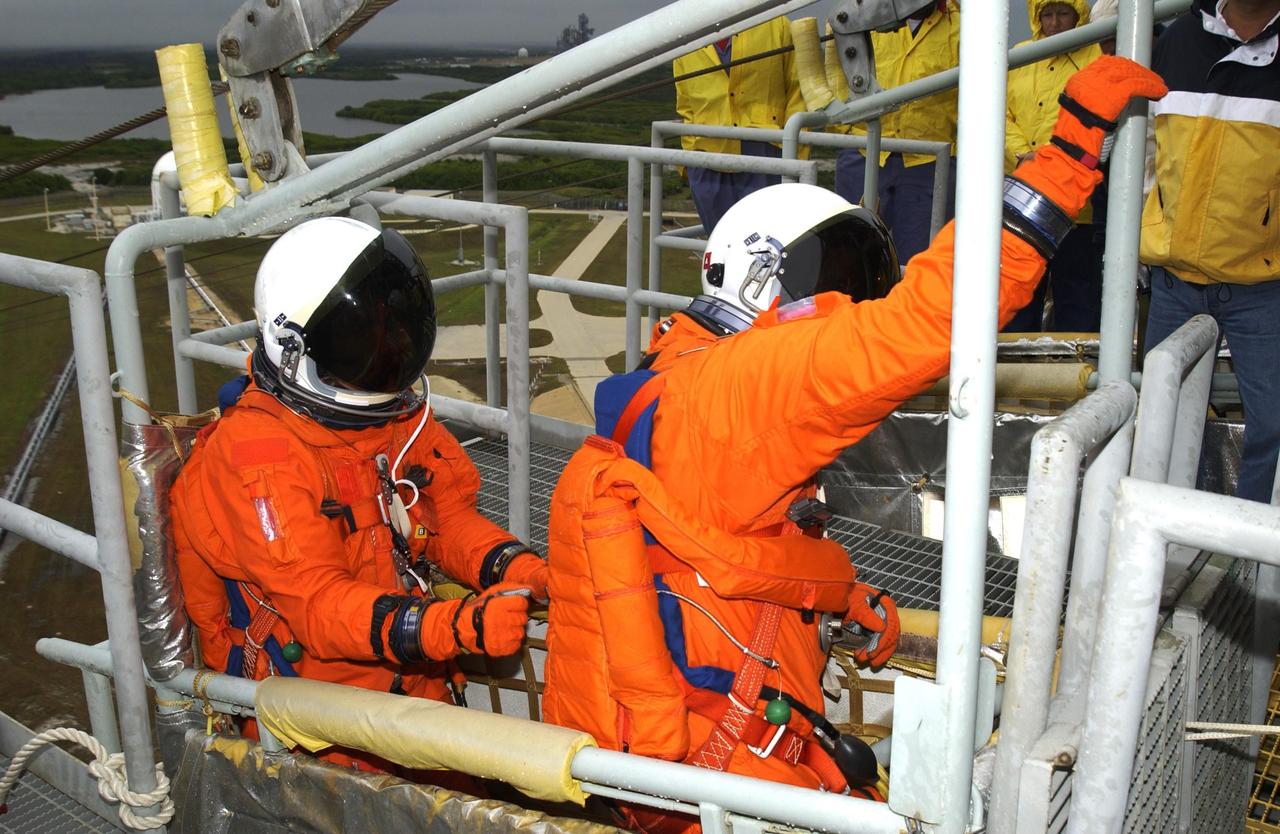
KENNEDY SPACE CENTER, FLA. - Members of the STS-107 crew practice emergency egress from the launch pad, reaching for the release lever of the slidewire basket they are in. The crew is taking part in a simulated launch countdown, part of Terminal Countdown Demonstration Test activities. STS-107 is a mission devoted to research and will include more than 80 experiments that will study Earth and space science, advanced technology development, and astronaut health and safety. Launch is planned for Jan. 16, 2003, between 10 a.m. and 2 p.m. EST aboard Space Shuttle Columbia. .
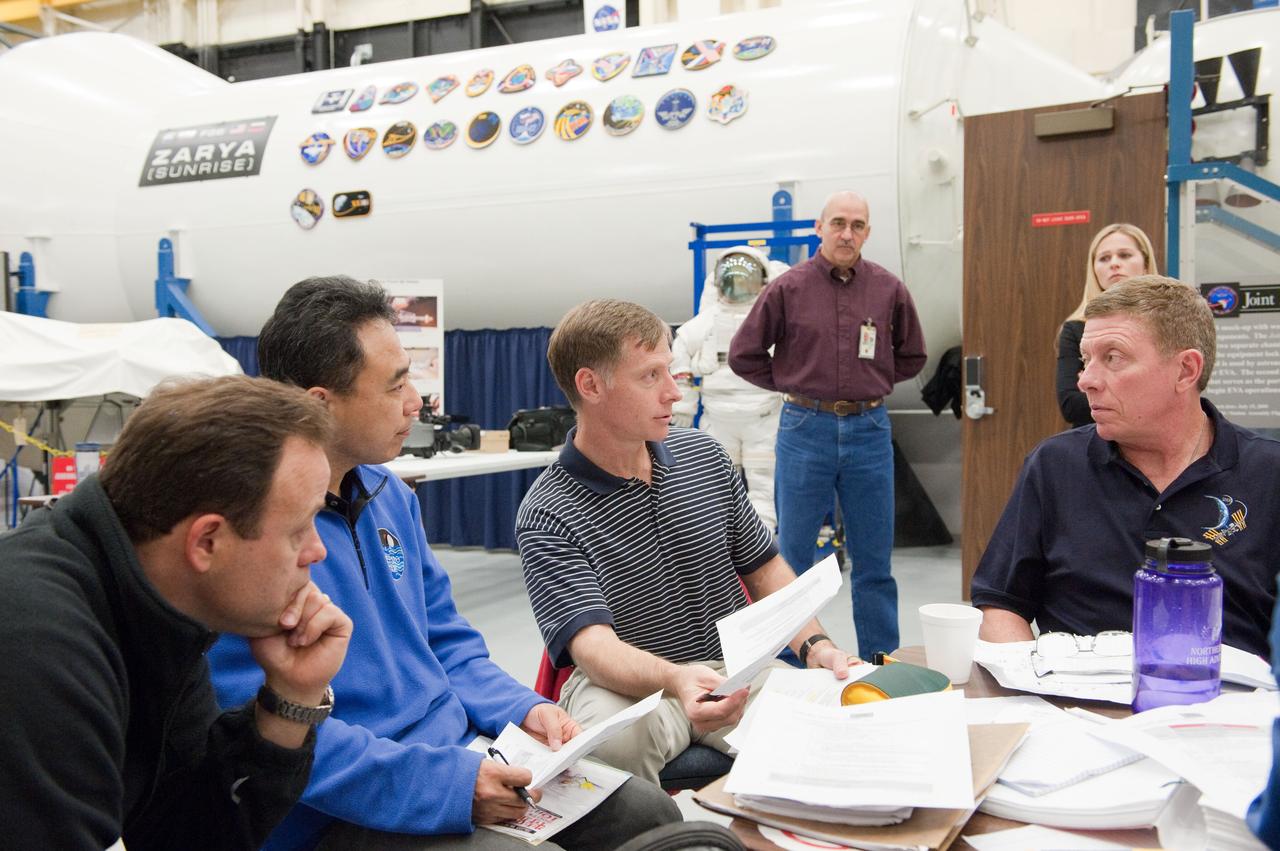
JSC2011-E-005863 (19 Jan. 2011) --- NASA astronauts Chris Ferguson (second right), STS-135 commander; Mike Fossum (right), Expedition 28 flight engineer and Expedition 29 commander; Ron Garan (left), Expedition 27/28 flight engineer; and Japan Aerospace Exploration Agency (JAXA) astronaut Satoshi Furukawa, Expedition 28/29 flight engineer, participate in a joint emergency scenarios training session in the Space Vehicle Mock-up Facility at NASA's Johnson Space Center. STS-135 is planned to be the final mission of the space shuttle program. Photo credit: NASA or National Aeronautics and Space Administration
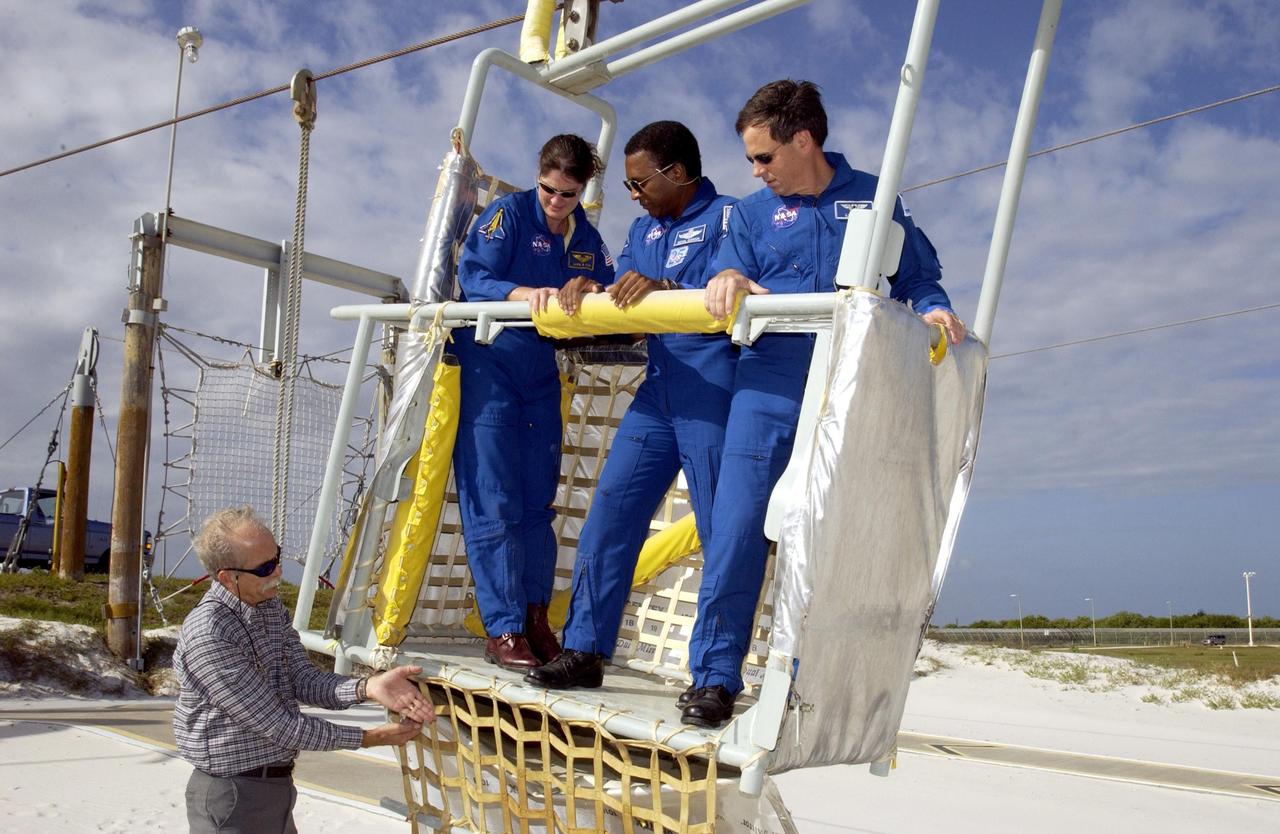
KENNEDY SPACE CENTER, FLA. - The STS-107 crew gets instruction on emergency egress from the pad during Terminal Countdown Demonstration Test activities. Standing in the slidewire basket are (from left) Mission Specialist Laurel Clark, Payload Specialist Ilan Ramon (the first Israeli astronaut) and Payload Commander Michael Anderson. The TCDT also includes a simulated launch countdown. STS-107 is a mission devoted to research and will include more than 80 experiments that will study Earth and space science, advanced technology development, and astronaut health and safety. Launch is planned for Jan. 16, 2003, between 10 a.m. and 2 p.m. EST aboard Space Shuttle Columbia. .
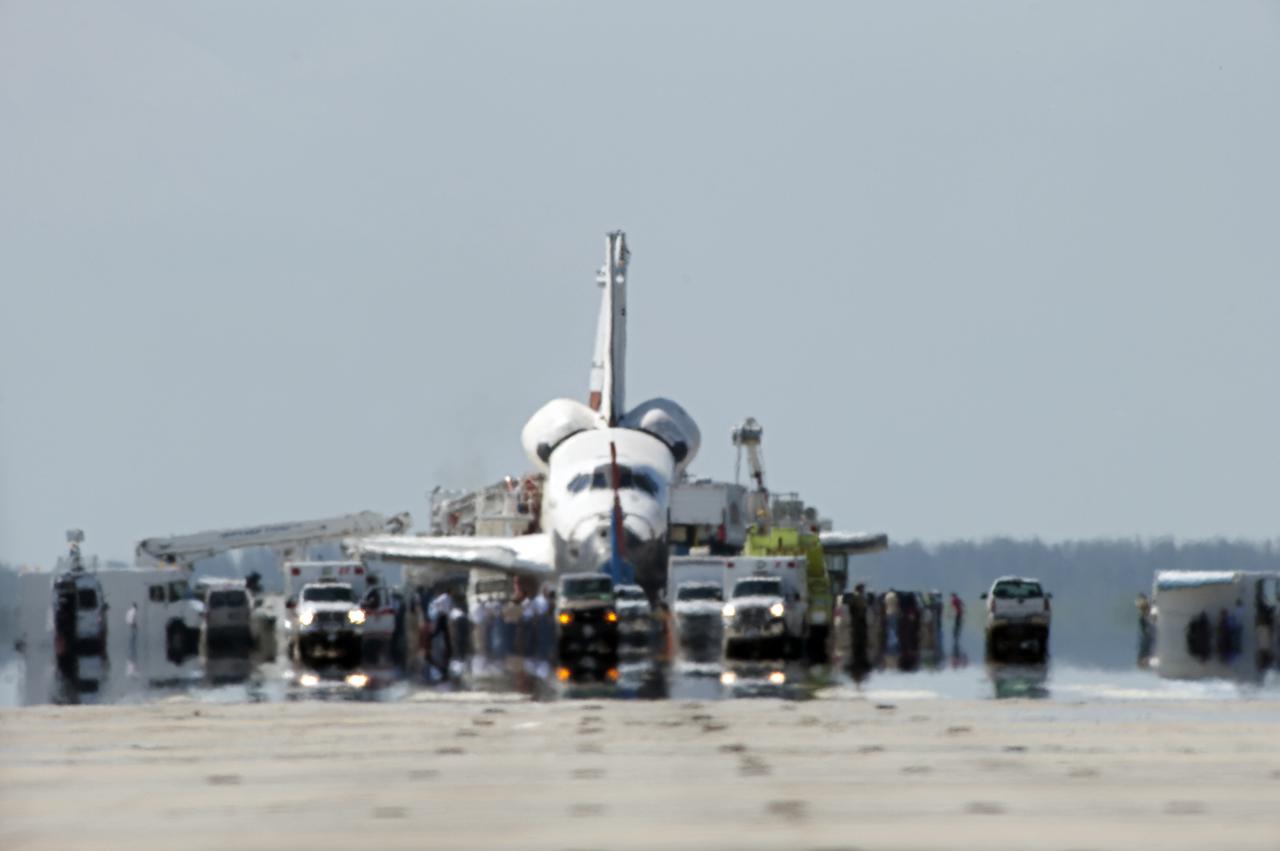
CAPE CANAVERAL, Fla. - A convoy of safing and emergency vehicles meet space shuttle Atlantis on Runway 33 at the Shuttle Landing Facility at NASA's Kennedy Space Center in Florida. Landing was at 8:48 a.m. EDT, completing the 12-day STS-132 mission to the International Space Station. The six-member STS-132 crew carried the Russian-built Mini Research Module-1 to the space station. STS-132 is the 34th shuttle mission to the station, the 132nd shuttle mission overall and the last planned flight for Atlantis. For information on the STS-132 mission and crew, visit www.nasa.gov_mission_pages_shuttle_shuttlemissions_sts132_index.html. Photo credit: NASA_Sandra Joseph and Carl Winebarger
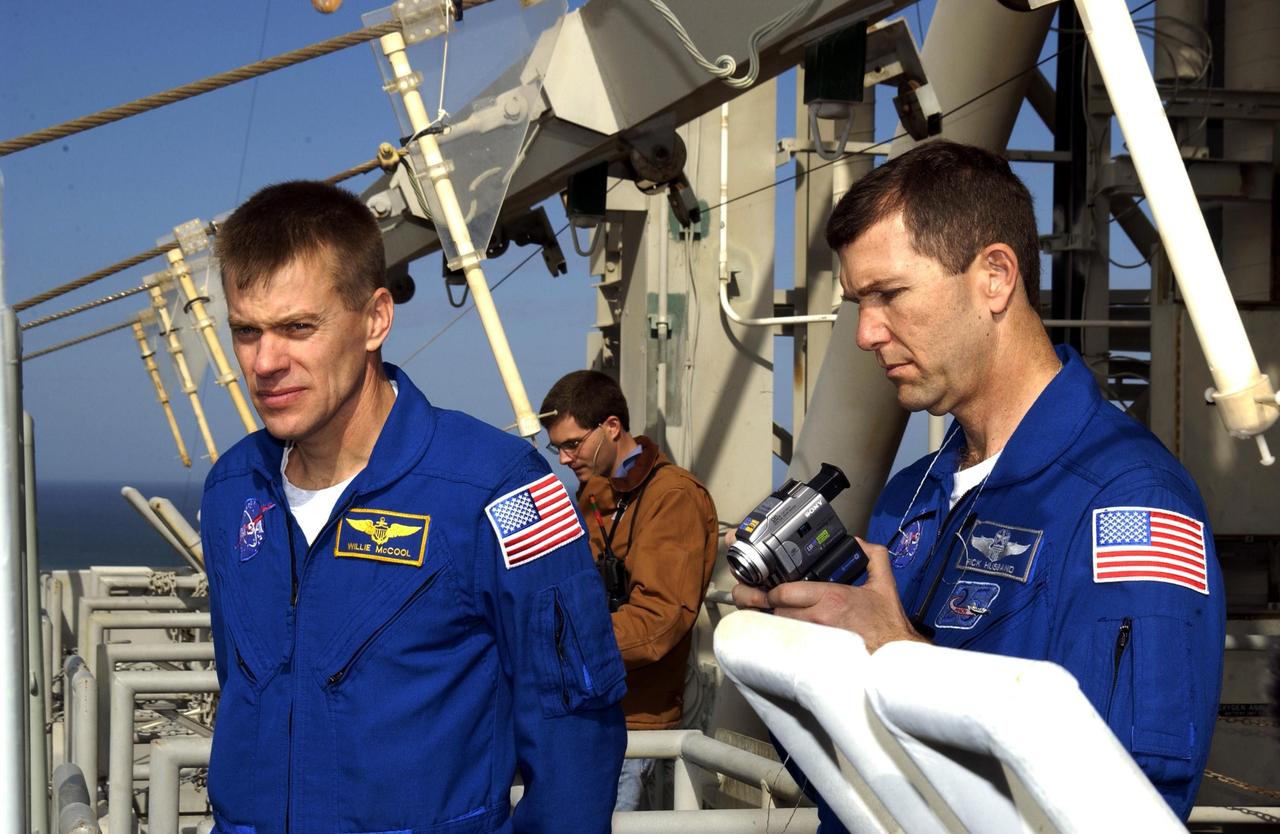
KENNEDY SPACE CENTER, FLA. -- The STS-107 crew gets instruction on emergency egress from the pad during Terminal Countdown Demonstration Test activities. Seen are Pilot William "Willie" McCool and Commander Rick Husband. The TCDT also includes a simulated launch countdown. STS-107 is a mission devoted to research and will include more than 80 experiments that will study Earth and space science, advanced technology development, and astronaut health and safety. Launch is planned for Jan. 16, 2003, between 10 a.m. and 2 p.m. EST aboard Space Shuttle Columbia. .
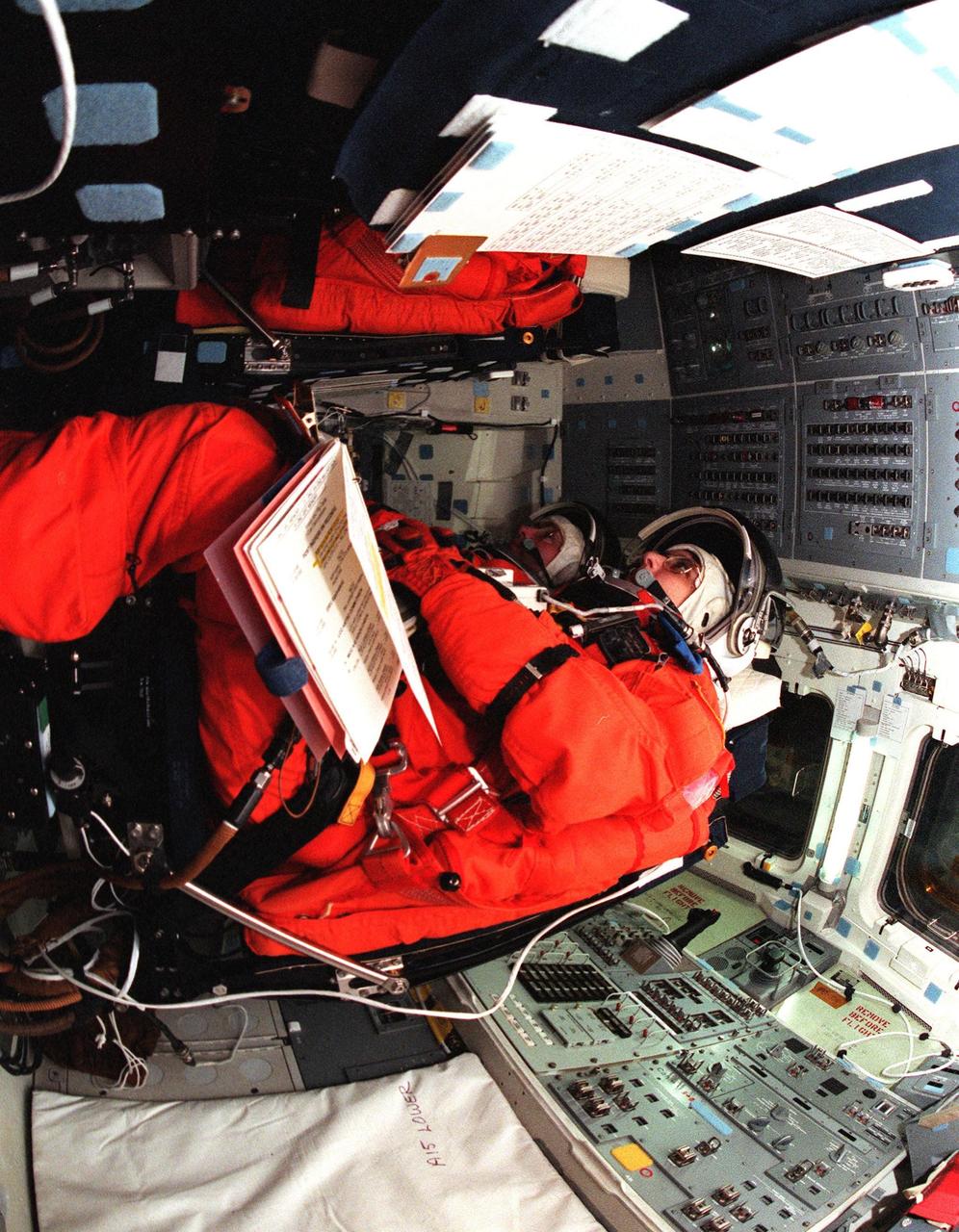
STS-88 Mission Specialists Nancy J. Currie, Ph.D., (back) and Jerry L. Ross (front) check over equipment inside orbiter Endeavour during Terminal Countdown Demonstration Activities (TCDT). The TCDT includes mission familiarization activities, emergency egress training, and the simulated main engine cut-off exercise. Mission STS-88 is targeted for launch on Dec. 3, 1998. It is the first U.S. flight for the assembly of the International Space Station and will carry the Unity connecting module. Unity will be mated with the already orbiting Russian-built Zarya control module. The 12-day mission includes three planned spacewalks to connect power, data and utility lines and install exterior equipment
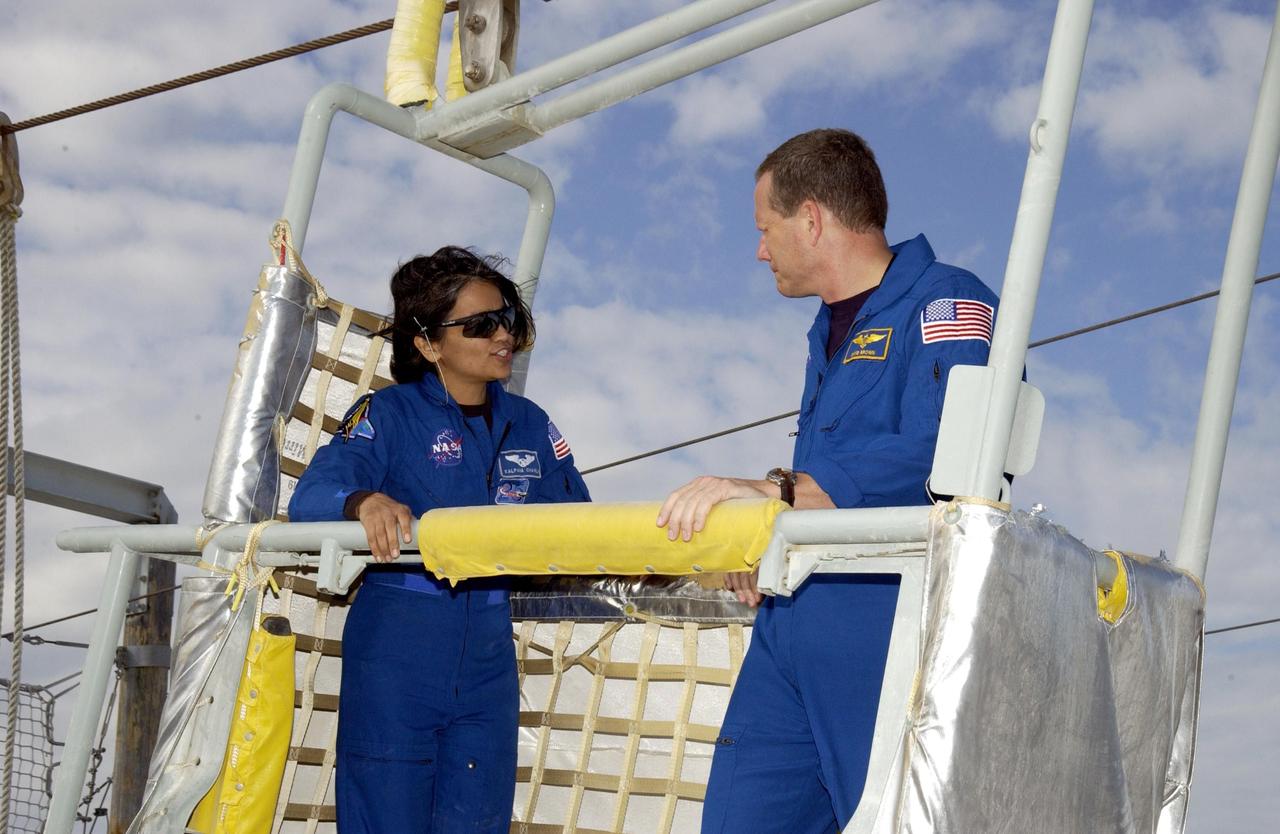
KENNEDY SPACE CENTER, FLA. -- During emergency egress training, part of Terminal Countdown Demonstration Test activities at the pad, STS-107 Mission Specialists Kalpana Chawla and David Brown share a slidewire basket. The TCDT also includes a simulated launch countdown. STS-107 is a mission devoted to research and will include more than 80 experiments that will study Earth and space science, advanced technology development, and astronaut health and safety. Launch is planned for Jan. 16, 2003, between 10 a.m. and 2 p.m. EST aboard Space Shuttle Columbia. .
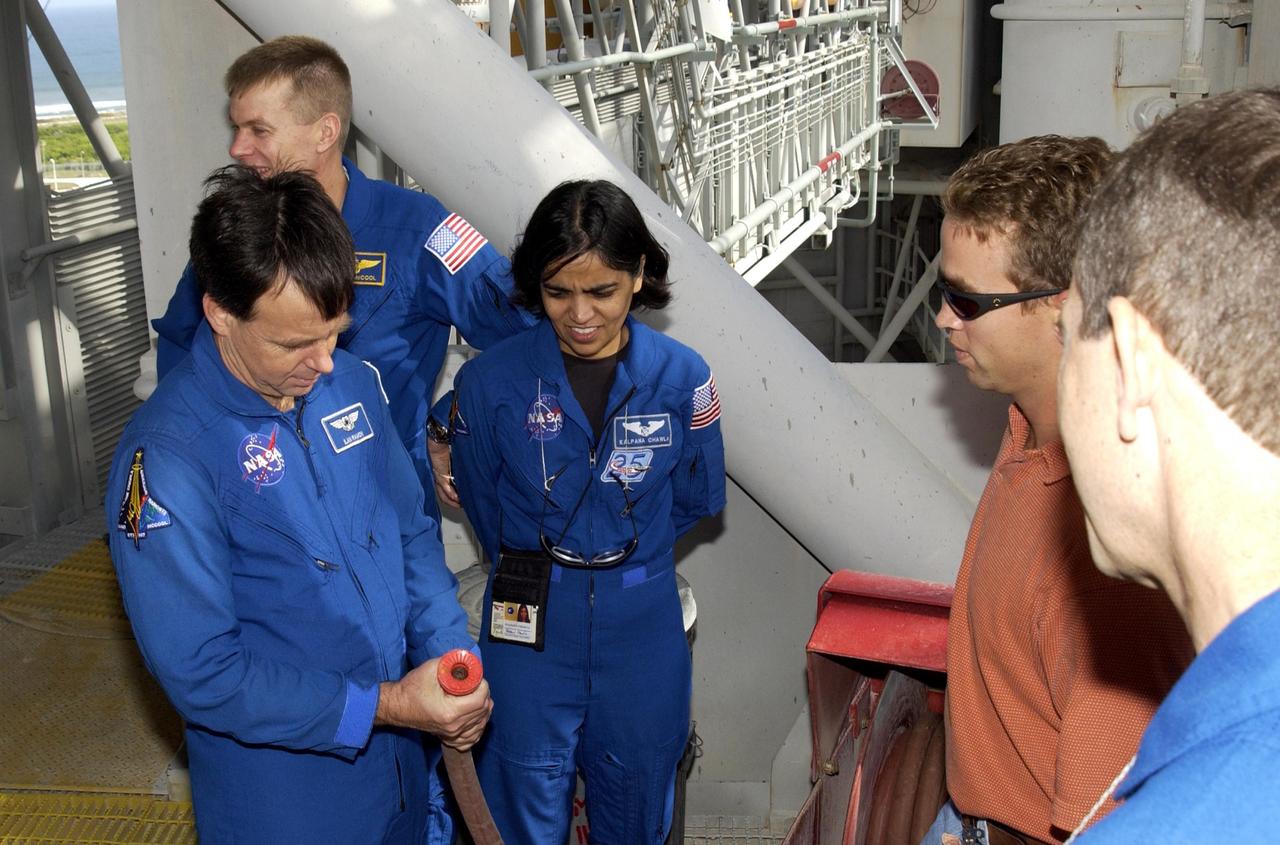
KENNEDY SPACE CENTER, FLA. - During Terminal Countdown Demonstration Test activities on Launch Pad 39A, members of the STS-107 crew check emergency equipment. From left are Payload Specialist Ilan Ramon (the first Israeli astronaut), Pilot William "Willie" McCool and Mission Specialist Kalpana Chawla. The TCDT also includes a simulated launch countdown. STS-107 is a mission devoted to research and will include more than 80 experiments that will study Earth and space science, advanced technology development, and astronaut health and safety. Launch is planned for Jan. 16, 2003, between 10 a.m. and 2 p.m. EST aboard Space Shuttle Columbia. .
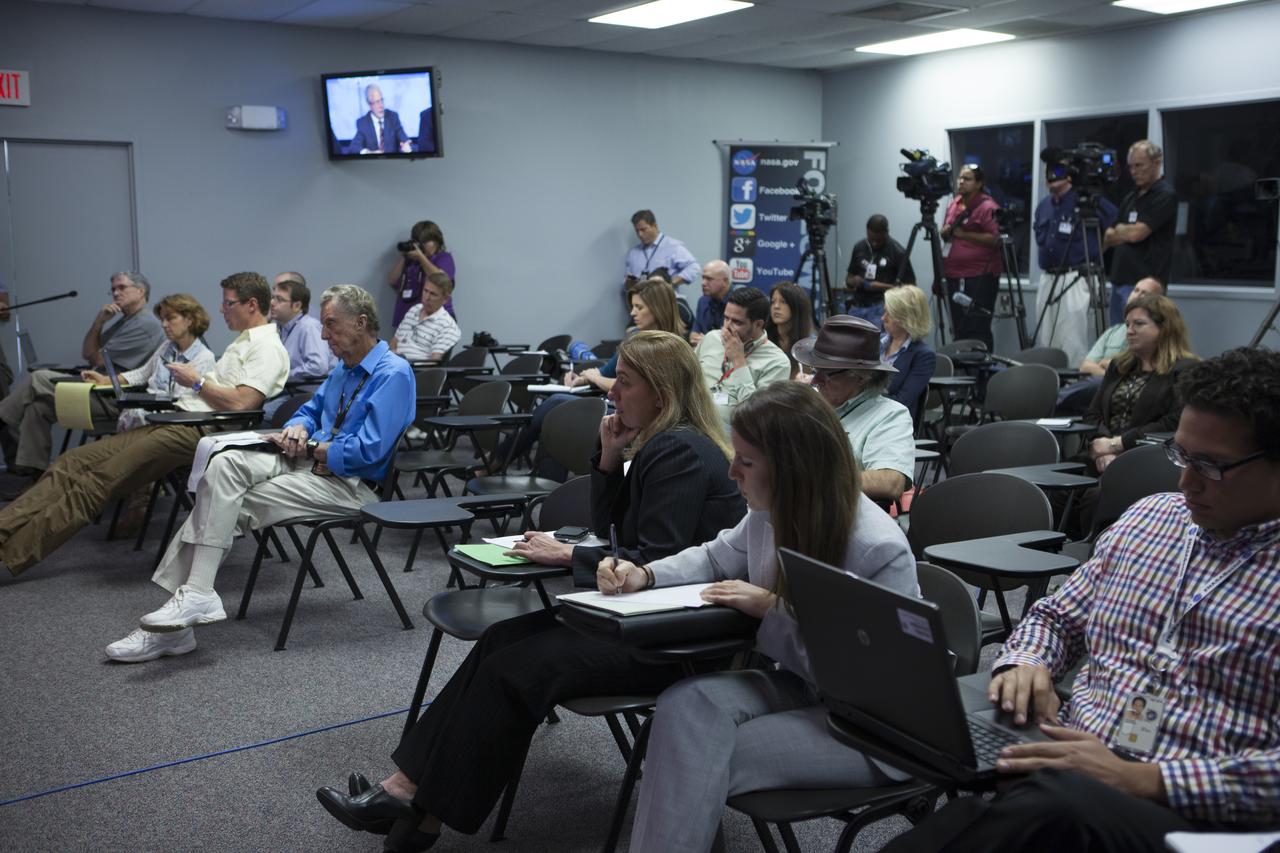
In the Kennedy Space Center’s Press Site auditorium, members of the news media listen as NASA and contractor officials plans for the upcoming Orion flight test. Orion is the exploration spacecraft designed to carry astronauts to destinations not yet explored by humans, including an asteroid and Mars. It will have emergency abort capability, sustain the crew during space travel and provide safe re-entry from deep space return velocities. The first unpiloted flight test of Orion is scheduled to launch Dec. 4, 2014 atop a United Launch Alliance Delta IV Heavy rocket, and in 2018 on NASA’s Space Launch System rocket.
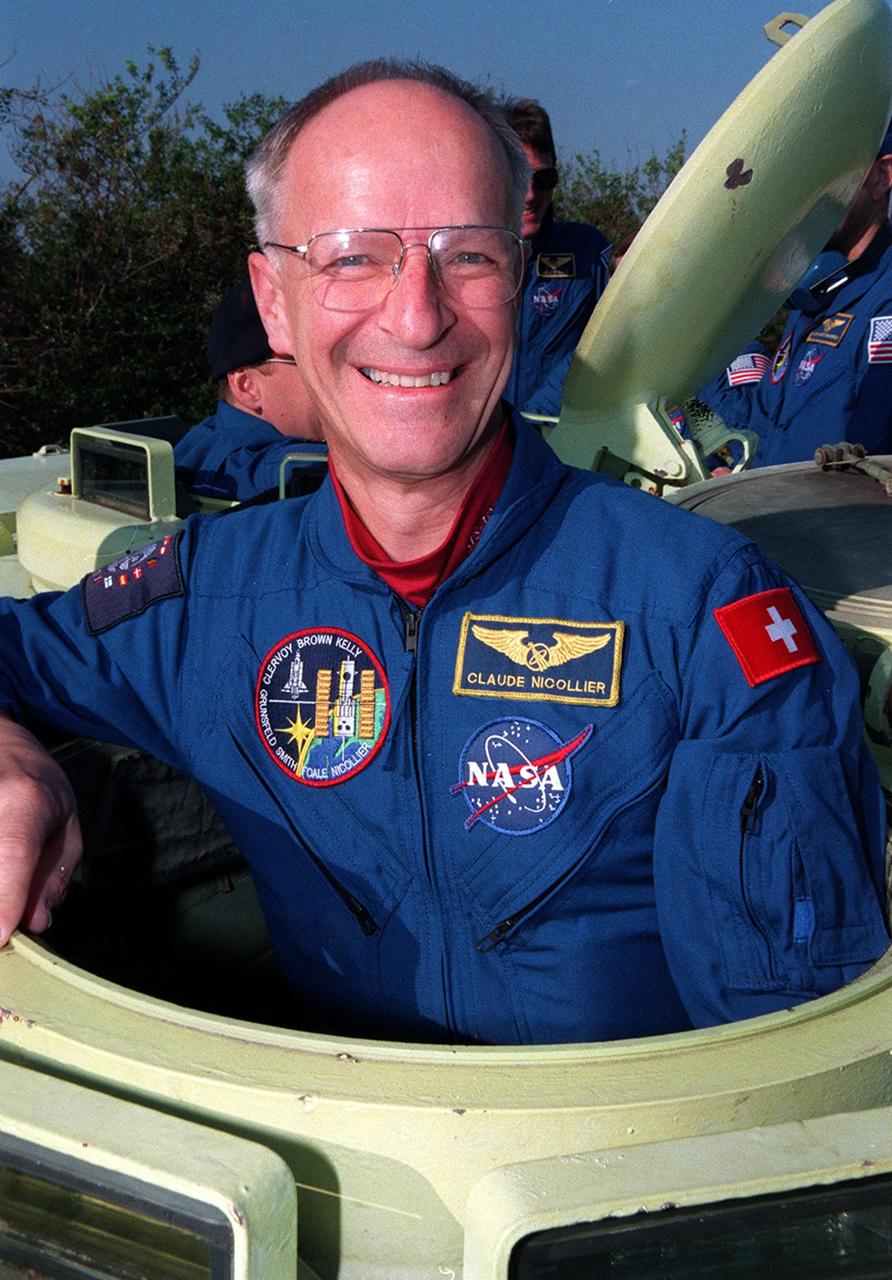
STS-103 Mission Specialist Claude Nicollier of Switzerland, who is with the European Space Agency, takes his turn at the helm of a small armored personnel carrier that is part of emergency egress training during Terminal Countdown Demonstration Test (TCDT) activities. The tracked vehicle could be used by the crew in the event of an emergency at the pad during which the crew must make a quick exit from the area. The TCDT also provides simulated countdown exercises and opportunities to inspect the mission payloads in the orbiter's payload bay. STS-103 is a "call-up" mission due to the need to replace and repair portions of the Hubble Space Telescope. Four EVA's are planned to make the necessary repairs and replacements on the telescope. The other STS-103 crew members are Commander Curtis L. Brown Jr., Pilot Scott J. Kelly, and Mission Specialists Steven L. Smith, C. Michael Foale (Ph.D.), John M. Grunsfeld (Ph.D.), and Jean-François Clervoy of France, also with the European Space Agency. The mission is targeted for launch Dec. 6 at 2:37 a.m. EST
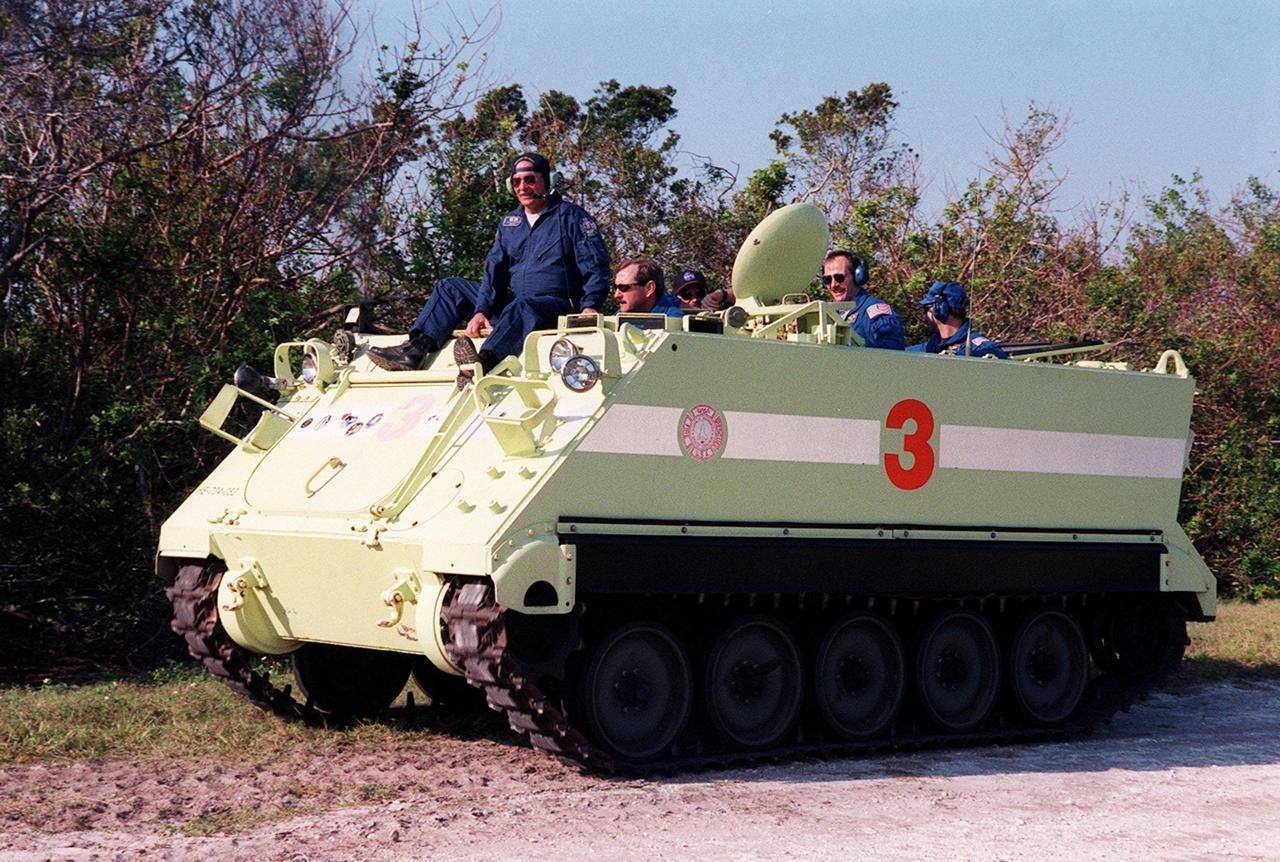
During Terminal Countdown Demonstration Test (TCDT) emergency egress training, STS-103 Commander Curtis L. Brown Jr. practices driving a small armored personnel carrier. Riding on the front is Capt. George Hoggard, a trainer with the KSC/CCAS Fire Department. In the carrier behind Brown is (left to right) Pilot Scott J. Kelly and Mission Specialists Steven L. Smith and John M. Grunsfeld (Ph.D.). The tracked vehicle could be used by the crew in the event of an emergency at the pad during which the crew must make a quick exit from the area. The TCDT also provides simulated countdown exercises and opportunities to inspect the mission payloads in the orbiter's payload bay. STS-103 is a "call-up" mission due to the need to replace and repair portions of the Hubble Space Telescope. Four EVA's are planned to make the necessary repairs and replacements on the telescope. The other STS-103 crew members are Mission Specialists C. Michael Foale (Ph.D.), plus Claude Nicollier of Switzerland and Jean-François Clervoy of France, who are with the European Space Agency. The mission is targeted for launch Dec. 6 at 2:37 a.m. EST
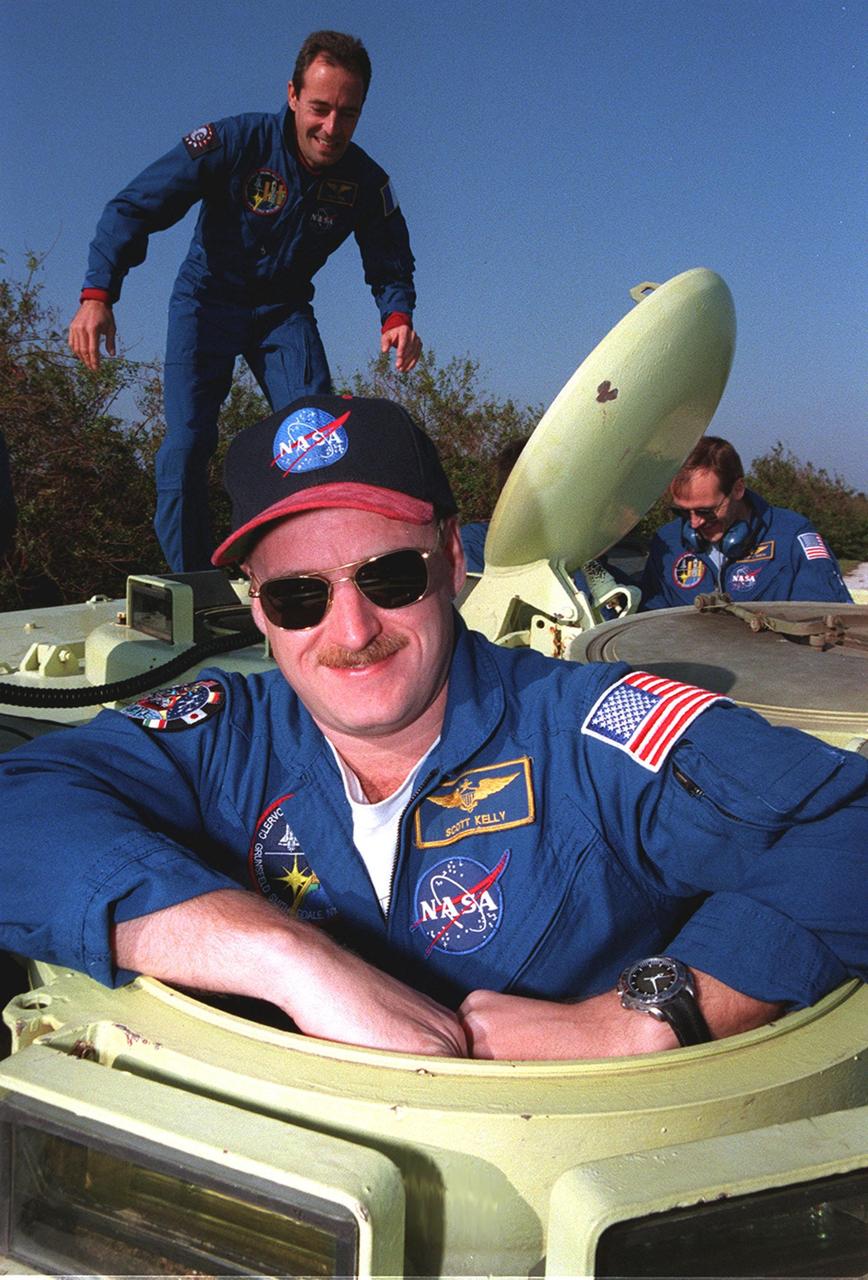
STS-103 Pilot Scott J. Kelly is ready to take his turn at driving a small armored personnel carrier that is part of emergency egress training during Terminal Countdown Demonstration Test (TCDT) activities. Behind him (left) is Mission Specialist Jean-François Clervoy of France, who is with the European Space Agency. At right is Mission Specialist Steven L. Smith. The tracked vehicle could be used by the crew in the event of an emergency at the pad during which the crew must make a quick exit from the area. The TCDT also provides simulated countdown exercises and opportunities to inspect the mission payloads in the orbiter's payload bay. STS-103 is a "call-up" mission due to the need to replace and repair portions of the Hubble Space Telescope. Four EVA's are planned to make the necessary repairs and replacements on the telescope. The other STS-103 crew members are Commander Curtis L. Brown Jr. and Mission Specialists C. Michael Foale (Ph.D.), John M. Grunsfeld (Ph.D.), plus Claude Nicollier of Switzerland, who also is with the European Space Agency. The mission is targeted for launch Dec. 6 at 2:37 a.m. EST
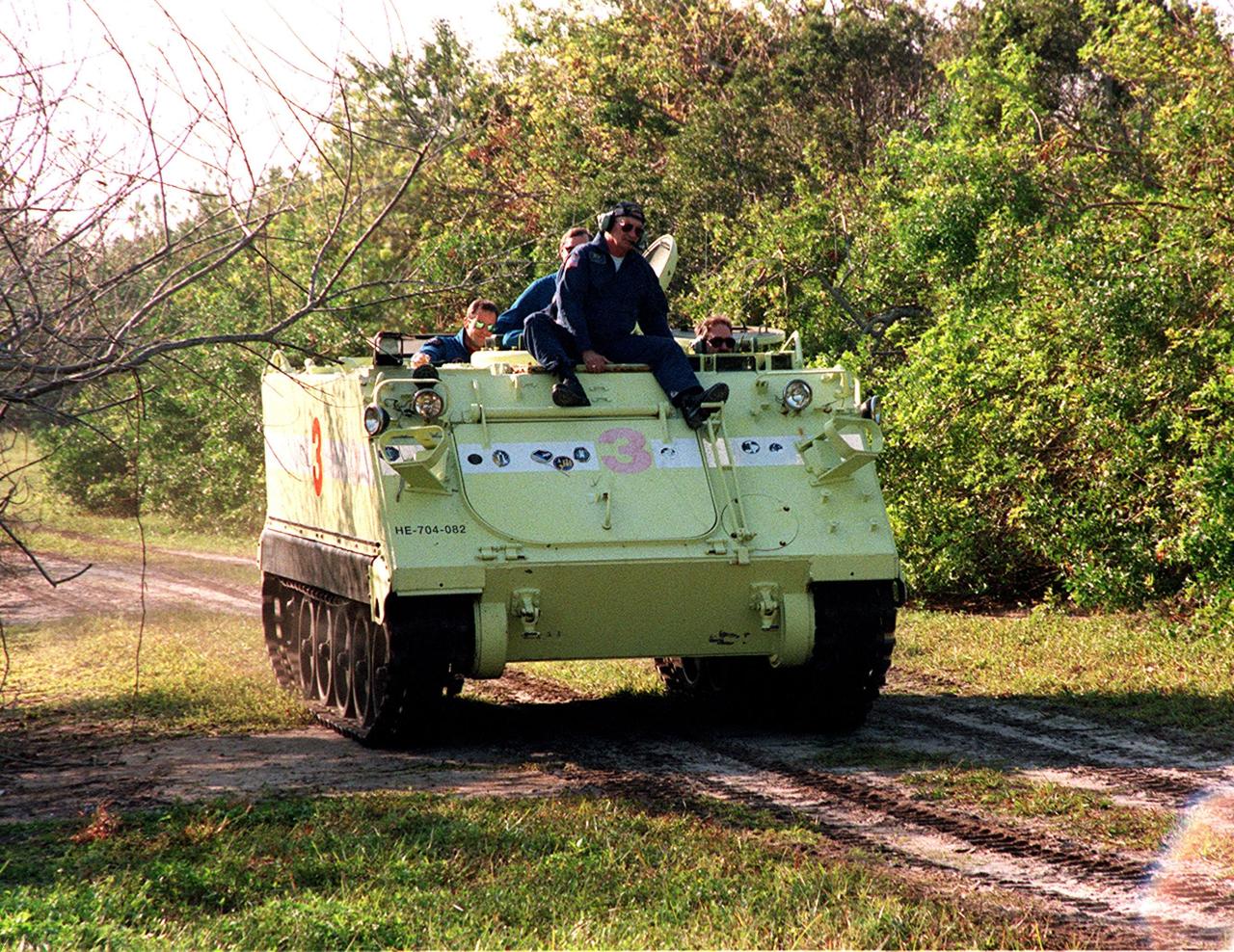
STS-103 Mission Specialist John M. Grunsfeld (Ph.D.) (far right) practices driving a small armored personnel carrier that is part of emergency egress training during Terminal Countdown Demonstration Test (TCDT) activities. In front is Capt. George Hoggard, trainer with the KSC Fire Department. At far left is Mission Specialist Jean-François Clervoy of France, who is with the European Space Agency. The tracked vehicle could be used by the crew in the event of an emergency at the pad during which the crew must make a quick exit from the area. The TCDT also provides simulated countdown exercises and opportunities to inspect the mission payloads in the orbiter's payload bay. STS-103 is a "call-up" mission due to the need to replace and repair portions of the Hubble Space Telescope. Four EVA's are planned to make the necessary repairs and replacements on the telescope. The other STS-103 crew members are Commander Curtis L. Brown Jr., Pilot Scott J. Kelly, and Mission Specialists Steven L. Smith, C. Michael Foale (Ph.D.), (Ph.D.), plus Claude Nicollier of Switzerland and Jean-François Clervoy of France, who are with the European Space Agency. The mission is targeted for launch Dec. 6 at 2:37 a.m. EST

STS-103 Mission Specialist Jean-François Clervoy of France, who is with the European Space Agency, practices driving a small armored personnel carrier that is part of emergency egress training during Terminal Countdown Demonstration Test (TCDT) activities. Riding on the front is Capt. George Hoggard, trainer with the KSC Fire Department. Behind him is Pilot Scott J. Kelly; at right (with earphones) is Mission Specialist Claude Nicollier of Switzerland, who is with the European Space Agency, and at the rear Mission Specialist Steven L. Smith. The tracked vehicle could be used by the crew in the event of an emergency at the pad during which the crew must make a quick exit from the area. The TCDT also provides simulated countdown exercises and opportunities to inspect the mission payloads in the orbiter's payload bay. STS-103 is a "call-up" mission due to the need to replace and repair portions of the Hubble Space Telescope. Four EVA's are planned to make the necessary repairs and replacements on the telescope. The other STS-103 crew members are Commander Curtis L. Brown Jr. and Mission Specialists C. Michael Foale (Ph.D.) and John M. Grunsfeld (Ph.D.). The mission is targeted for launch Dec. 6 at 2:37 a.m. EST
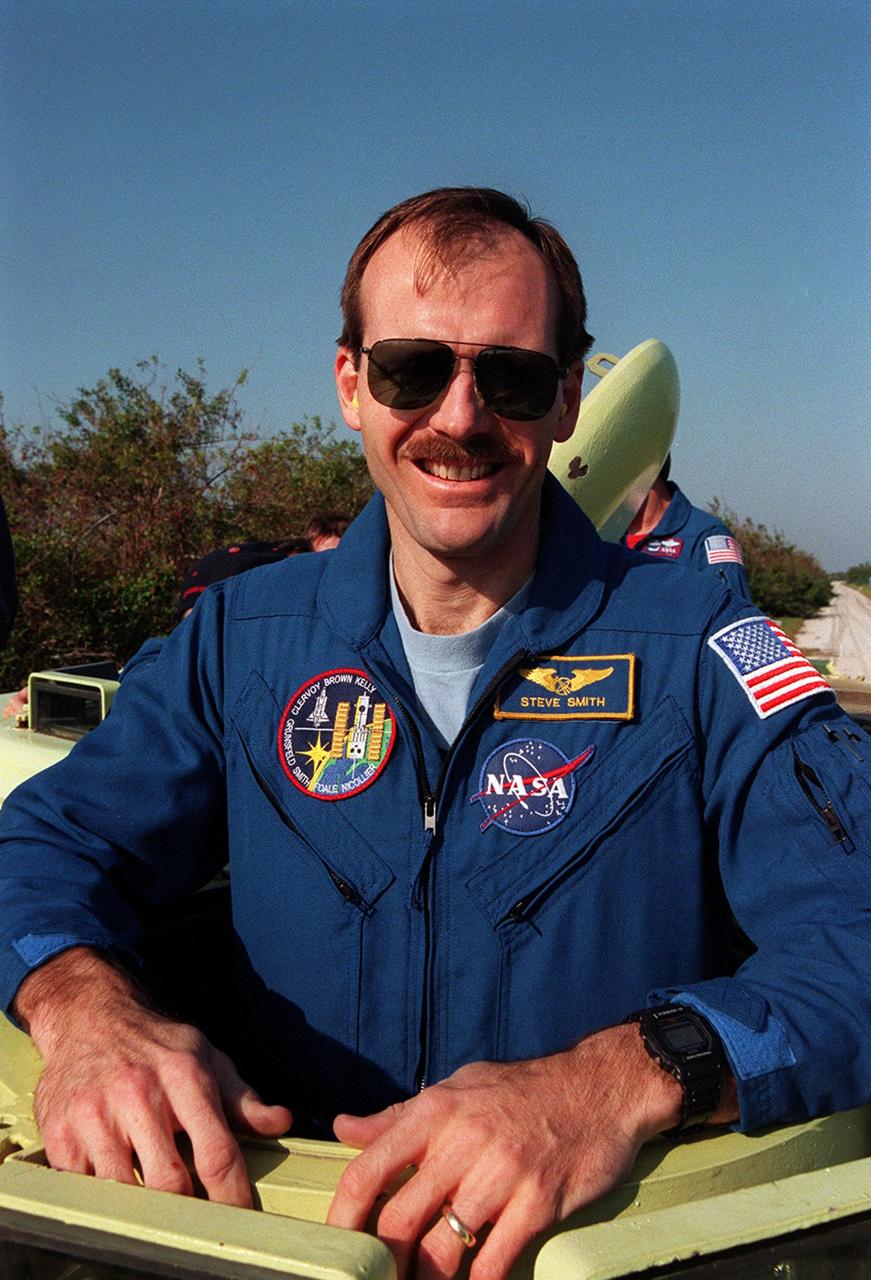
STS-103 Mission Specialist Steven L. Smith gets ready to practice driving a small armored personnel carrier that is part of emergency egress training during Terminal Countdown Demonstration Test (TCDT) activities. The tracked vehicle could be used by the crew in the event of an emergency at the pad during which the crew must make a quick exit from the area. The TCDT also provides simulated countdown exercises and opportunities to inspect the mission payloads in the orbiter's payload bay. STS-103 is a "call-up" mission due to the need to replace and repair portions of the Hubble Space Telescope. Four EVA's are planned to make the necessary repairs and replacements on the telescope. The other STS-103 crew members are Commander Curtis L. Brown Jr., Pilot Scott J. Kelly, and Mission Specialists John M. Grunsfeld (Ph.D.), C. Michael Foale (Ph.D.), (Ph.D.), plus Claude Nicollier of Switzerland and Jean-François Clervoy of France, who are with the European Space Agency. The mission is targeted for launch Dec. 6 at 2:37 a.m. EST
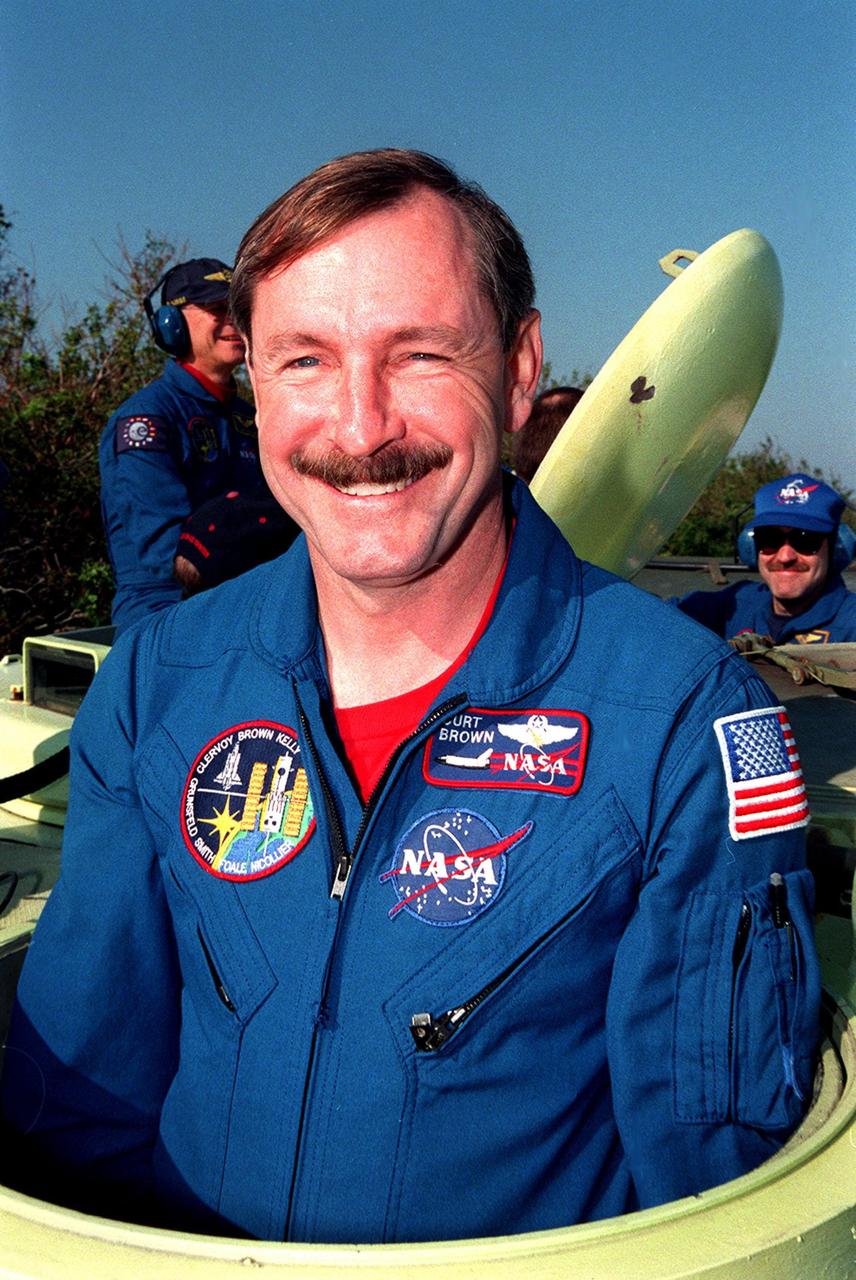
STS-103 Commander Curtis L. Brown Jr. gets ready to take the helm of a small armored personnel carrier that is part of emergency egress training during Terminal Countdown Demonstration Test (TCDT) activities. The tracked vehicle could be used by the crew in the event of an emergency at the pad during which the crew must make a quick exit from the area. The TCDT also provides simulated countdown exercises and opportunities to inspect the mission payloads in the orbiter's payload bay. STS-103 is a "call-up" mission due to the need to replace and repair portions of the Hubble Space Telescope. Four EVA's are planned to make the necessary repairs and replacements on the telescope. The other STS-103 crew members are Pilot Scott J. Kelly, and Mission Specialists Steven L. Smith , C. Michael Foale (Ph.D.), John M. Grunsfeld (Ph.D.), plus Claude Nicollier of Switzerland and Jean-François Clervoy of France, who are with the European Space Agency. The mission is targeted for launch Dec. 6 at 2:37 a.m. EST
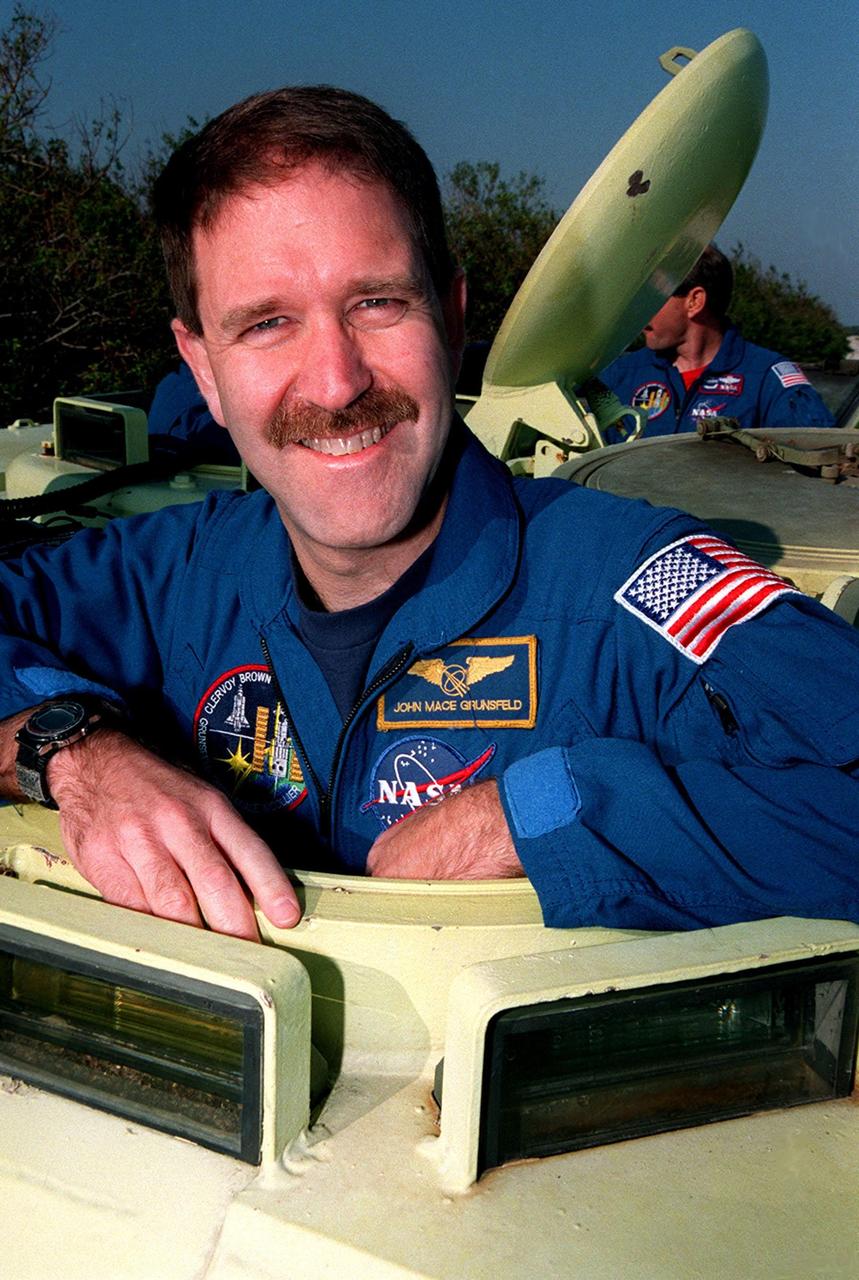
STS-103 Mission Specialist John M. Grunsfeld (Ph.D.) gets ready to take the wheel of a small armored personnel carrier that is part of emergency egress training during Terminal Countdown Demonstration Test (TCDT) activities. The tracked vehicle could be used by the crew in the event of an emergency at the pad during which the crew must make a quick exit from the area. The TCDT also provides simulated countdown exercises and opportunities to inspect the mission payloads in the orbiter's payload bay. STS-103 is a "call-up" mission due to the need to replace and repair portions of the Hubble Space Telescope. Four EVA's are planned to make the necessary repairs and replacements on the telescope. The other STS-103 crew members are Commander Curtis L. Brown Jr., Pilot Scott J. Kelly, and Mission Specialists Steven L. Smith, C. Michael Foale (Ph.D.), (Ph.D.), plus Claude Nicollier of Switzerland and Jean-François Clervoy of France, who are with the European Space Agency. The mission is targeted for launch Dec. 6 at 2:37 a.m. EST
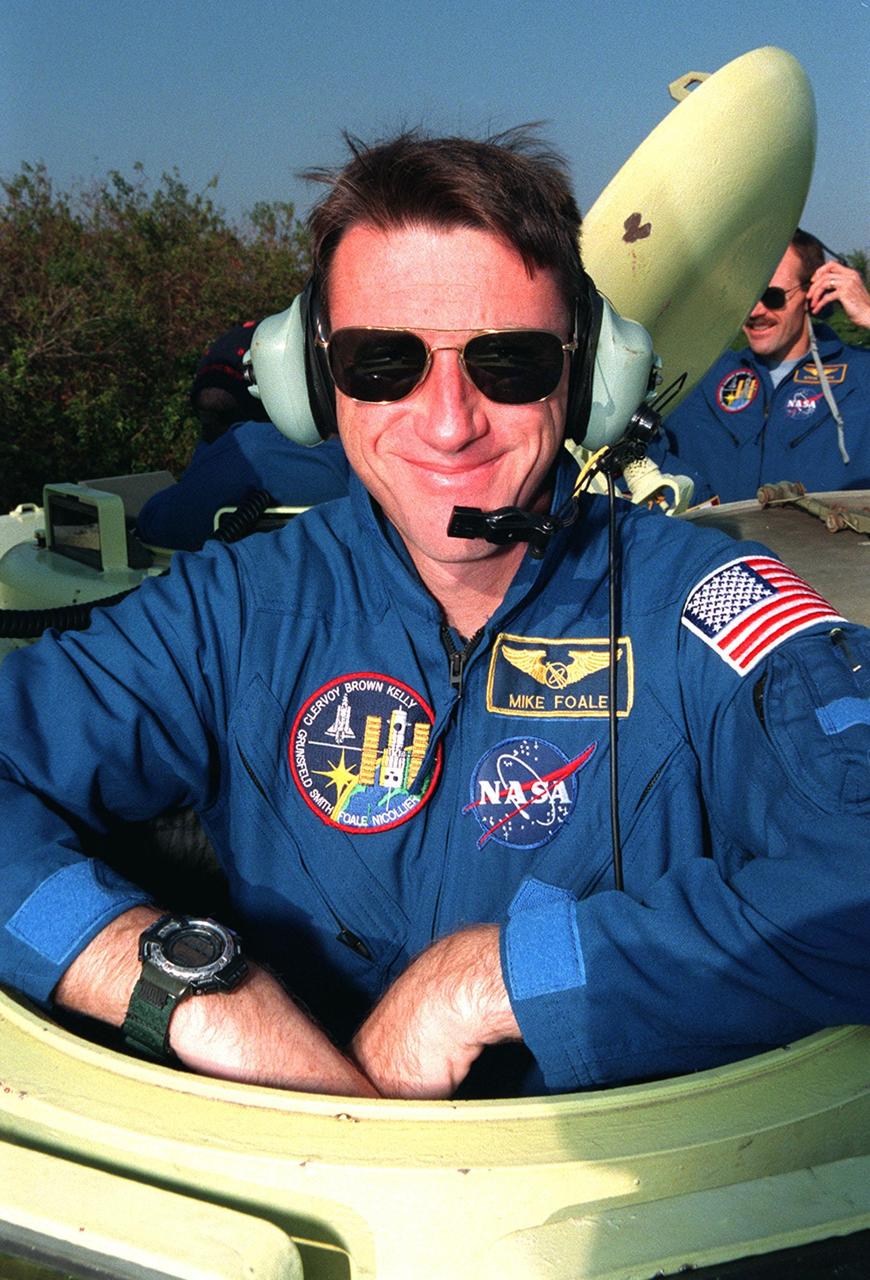
STS-103 Mission Specialist C. Michael Foale (Ph.D.) is ready to take his turn at driving a small armored personnel carrier that is part of emergency egress training during Terminal Countdown Demonstration Test (TCDT) activities. The tracked vehicle could be used by the crew in the event of an emergency at the pad during which the crew must make a quick exit from the area. The TCDT also provides simulated countdown exercises and opportunities to inspect the mission payloads in the orbiter's payload bay. STS-103 is a "call-up" mission due to the need to replace and repair portions of the Hubble Space Telescope. Four EVA's are planned to make the necessary repairs and replacements on the telescope. The other STS-103 crew members are Commander Curtis L. Brown Jr., Pilot Scott J. Kelly, and Mission Specialists Steven L. Smith , John M. Grunsfeld (Ph.D.), plus Claude Nicollier of Switzerland and Jean-François Clervoy of France, who are with the European Space Agency. The mission is targeted for launch Dec. 6 at 2:37 a.m. EST
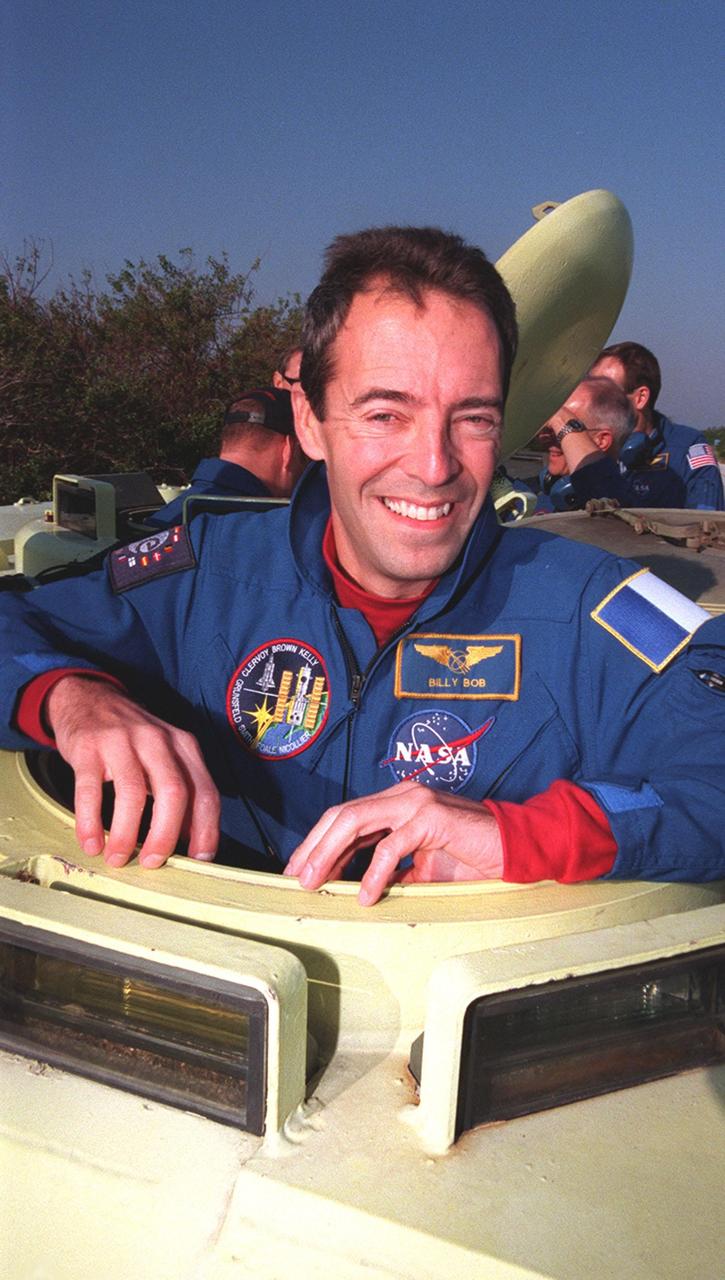
STS-103 Mission Specialist Jean-François Clervoy of France, who is with the European Space Agency, gets ready for his turn at driving a small armored personnel carrier that is part of emergency egress training during Terminal Countdown Demonstration Test (TCDT) activities. The tracked vehicle could be used by the crew in the event of an emergency at the pad during which the crew must make a quick exit from the area. The TCDT also provides simulated countdown exercises and opportunities to inspect the mission payloads in the orbiter's payload bay. STS-103 is a "call-up" mission due to the need to replace and repair portions of the Hubble Space Telescope. Four EVA's are planned to make the necessary repairs and replacements on the telescope. The other STS-103 crew members are Commander Curtis L. Brown Jr., Pilot Scott J. Kelly and Mission Specialists Steven L. Smith, C. Michael Foale (Ph.D.), John M. Grunsfeld (Ph.D.), plus Claude Nicollier of Switzerland, who also is with the European Space Agency. The mission is targeted for launch Dec. 6 at 2:37 a.m. EST
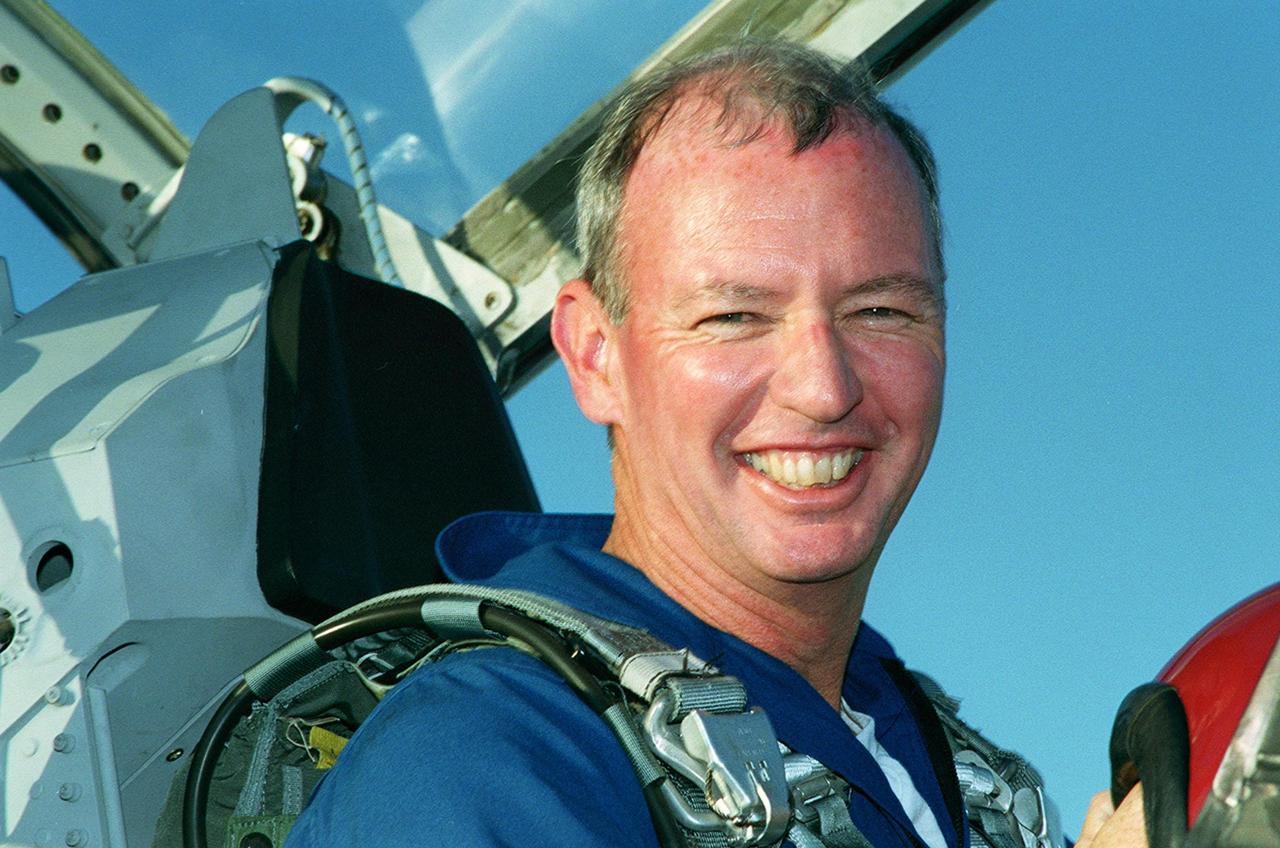
STS-92 Commander Brian Duffy smiles after landing at the KSC Shuttle Landing Facility in a T-38 training jet aircraft. He and the rest of the crew are at KSC to take part in Terminal Countdown Demonstration Test activities, which include emergency egress training from the orbiter and pad, and a simulated countdown. The fifth mission to the International Space Station, STS-92 will carry the Integrated Truss Structure Z1, the first of the planned 10 trusses on the Space Station, and the third Pressurized Mating Adapter. The Z1 will allow the first U.S. solar arrays on a future flight to be temporarily installed on Unity for early power. PMA-3 will provide a Shuttle docking port for the solar array installation on the sixth ISS flight and Lab installation on the seventh ISS flight. STS-92 is scheduled to launch Oct. 5 from launch Pad 39A. It will be the 100th flight in the Shuttle program
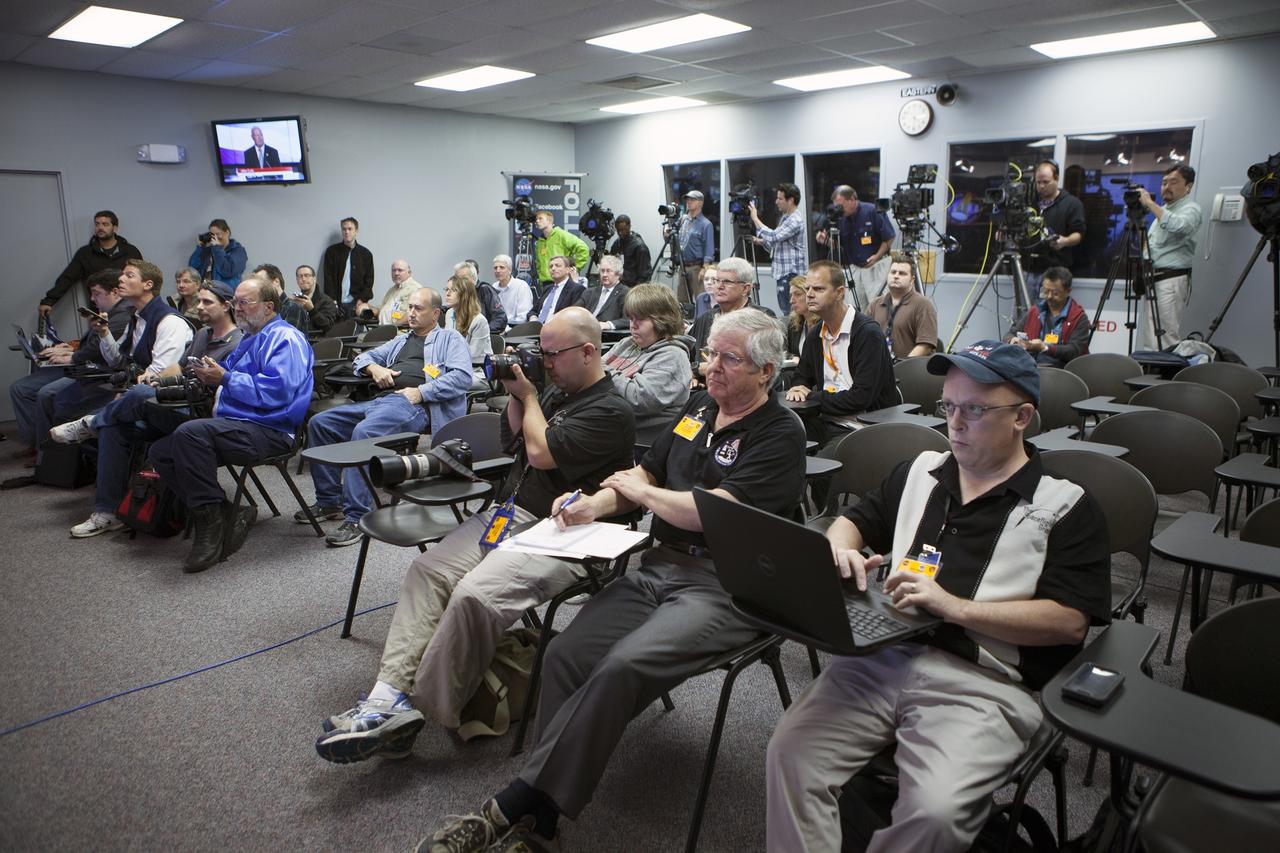
CAPE CANAVERAL, Fla. – In the Kennedy Space Center’s Press Site auditorium, members of the news media listen as NASA and contractor officials discuss plans for moving the completed Orion spacecraft from the Launch Abort System Facility to Launch Complex 37 at Cape Canaveral Air Force Station. Orion is the exploration spacecraft designed to carry astronauts to destinations not yet explored by humans, including an asteroid and Mars. It will have emergency abort capability, sustain the crew during space travel and provide safe re-entry from deep space return velocities. The first unpiloted flight test of Orion is scheduled to launch Dec. 4, 2014 atop a United Launch Alliance Delta IV Heavy rocket, and in 2018 on NASA’s Space Launch System rocket. For more information, visit www.nasa.gov/orion Photo credit: NASA/Kim Shiflett
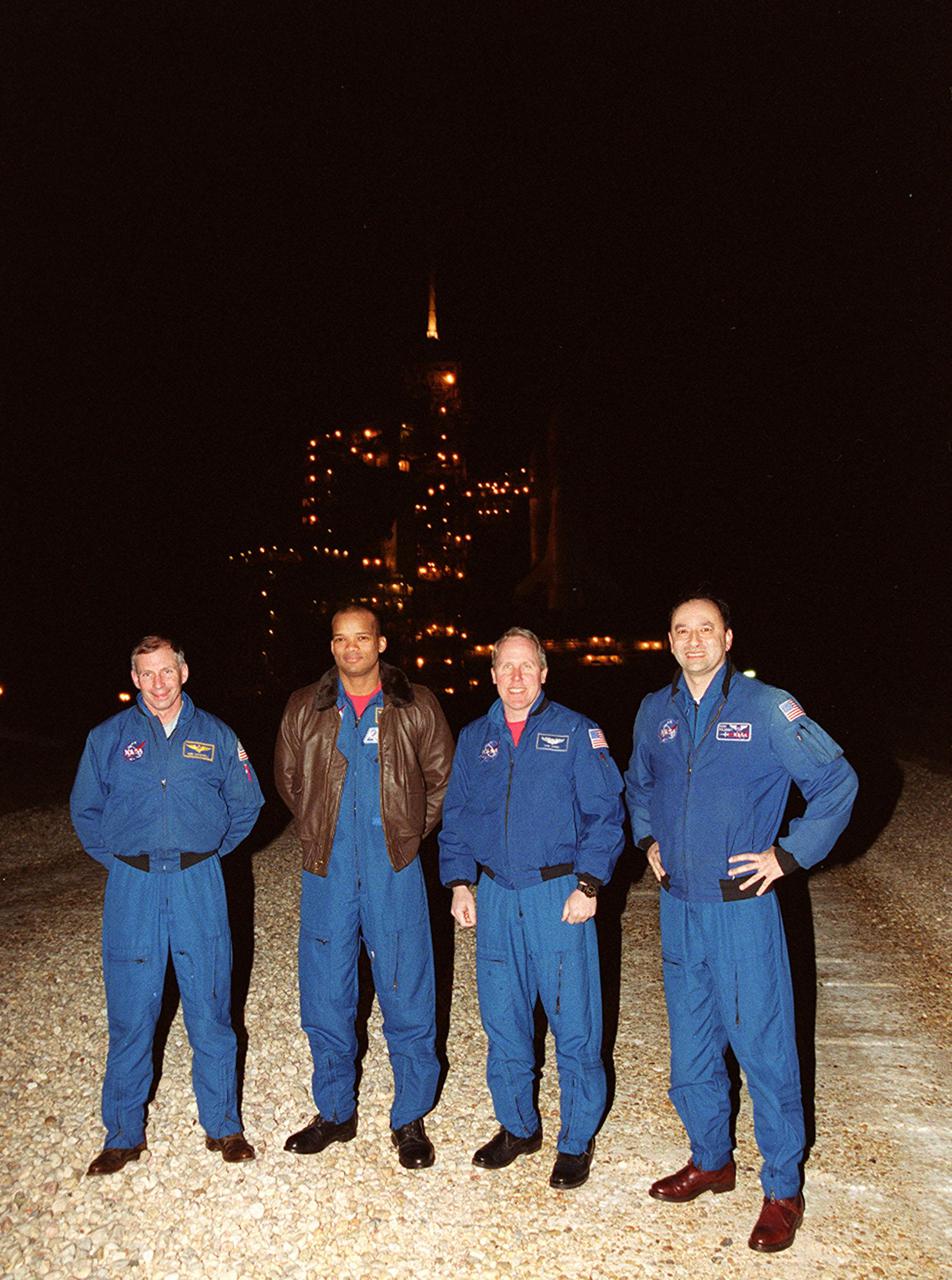
Members of the STS-98 crew pause for a photo after their arrival at KSC. From left, they are Commander Ken Cockrell, Mission Specialists Robert Curbeam and Thomas Jones, and Pilot Mark Polansky. Missing is Mission Specialist Marsha Ivins who was planning to arrive later. The crew is at KSC to take part in Terminal Countdown Test Demonstration activities in preparation for launch. They will be training in emergency procedures from the pad, checking the payload and taking part in a simulated countdown. The payload for the mission is the U.S. Lab Destiny, a key element in the construction of the International Space Station. The lab has five system racks already installed inside the module. After delivery of electronics in the lab, electrically powered attitude control for Control Moment Gyroscopes will be activated. STS-98 is the seventh construction flight to the ISS
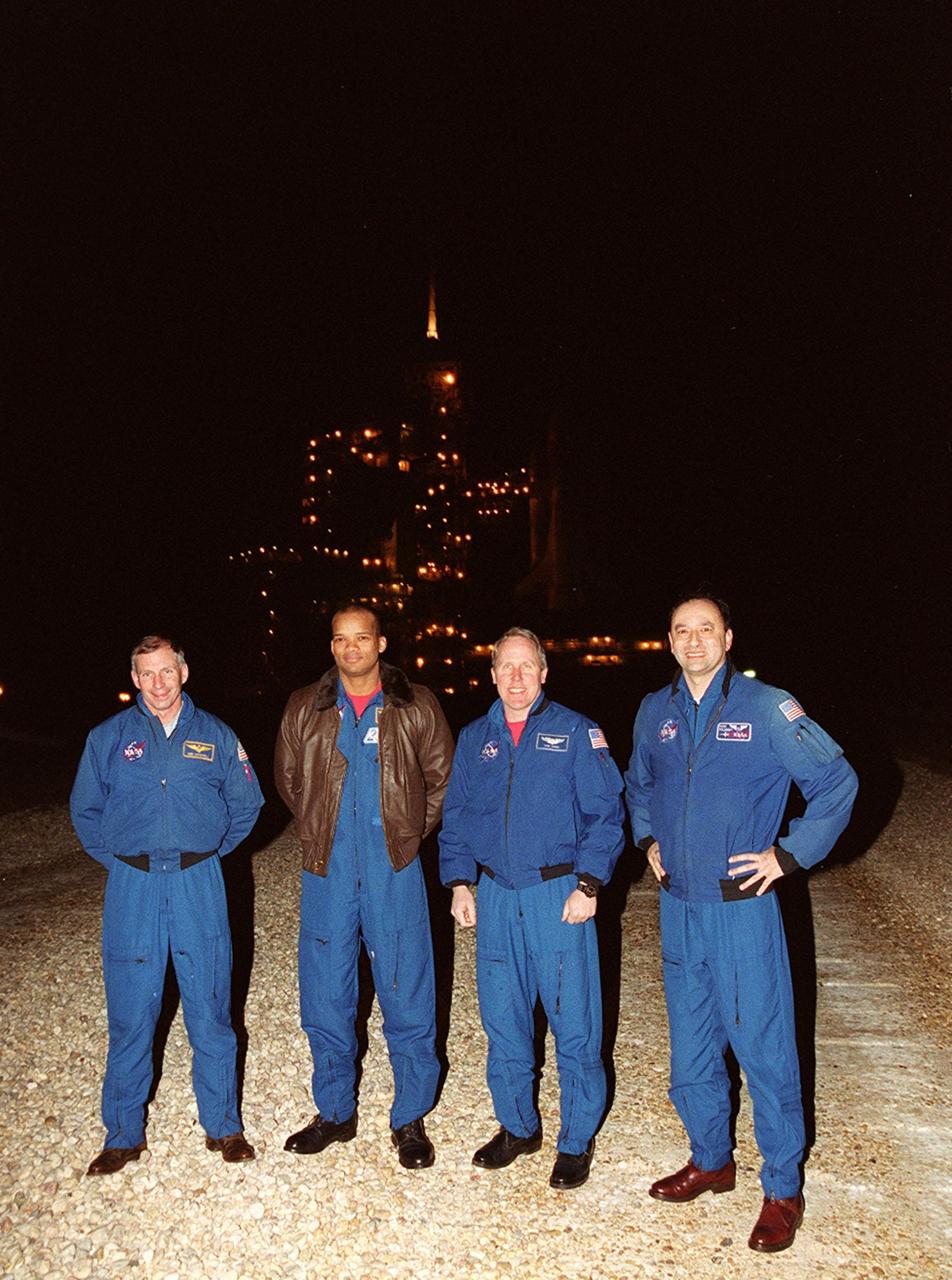
Members of the STS-98 crew pause for a photo after their arrival at KSC. From left, they are Commander Ken Cockrell, Mission Specialists Robert Curbeam and Thomas Jones, and Pilot Mark Polansky. Missing is Mission Specialist Marsha Ivins who was planning to arrive later. The crew is at KSC to take part in Terminal Countdown Test Demonstration activities in preparation for launch. They will be training in emergency procedures from the pad, checking the payload and taking part in a simulated countdown. The payload for the mission is the U.S. Lab Destiny, a key element in the construction of the International Space Station. The lab has five system racks already installed inside the module. After delivery of electronics in the lab, electrically powered attitude control for Control Moment Gyroscopes will be activated. STS-98 is the seventh construction flight to the ISS
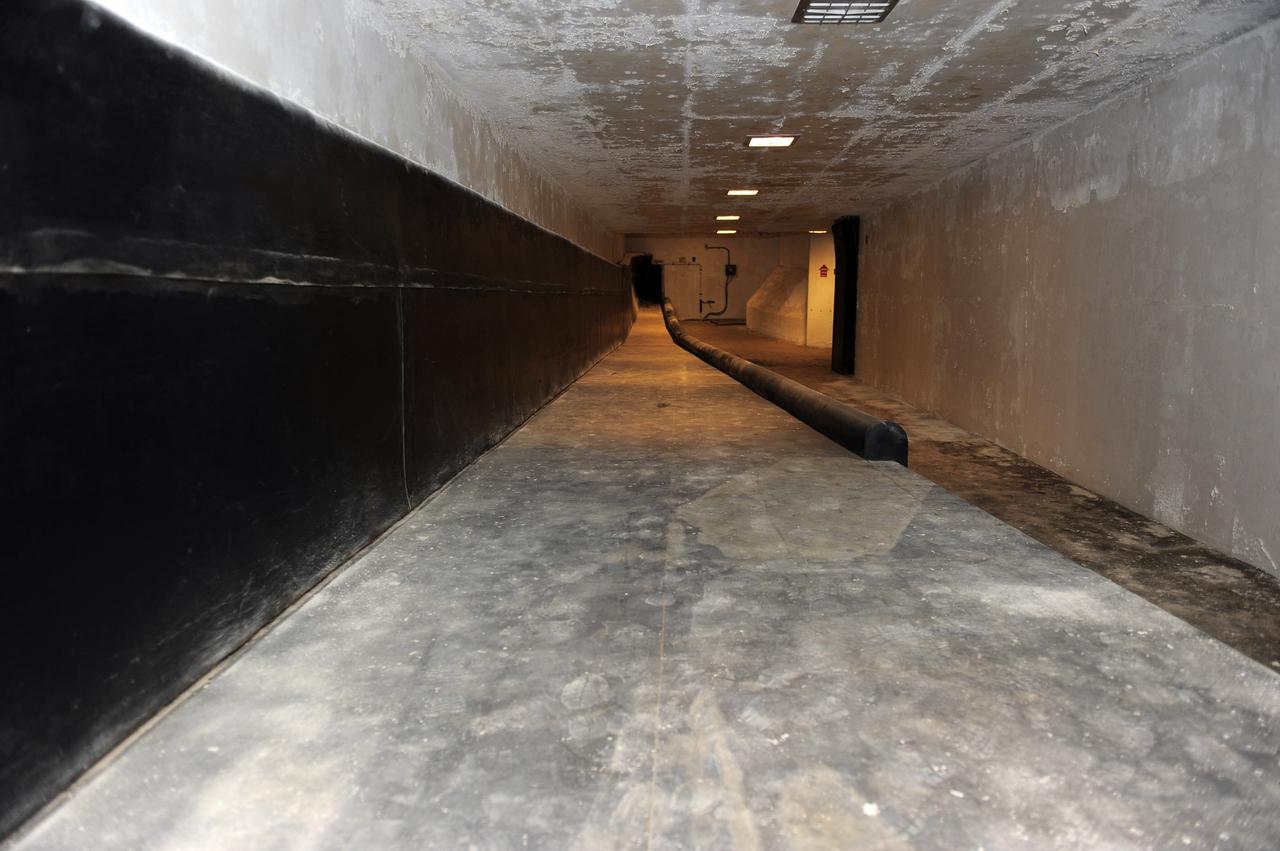
CAPE CANAVERAL, Fla. -- A tunnel beneath Launch Pad 39B at NASA's Kennedy Space Center in Florida leads to the blast-resistant "rubber room." The room is a steel dome floating on rubber isolators and was used as an escape route during the Apollo Program in case of an emergency. It has since been abandoned by astronauts, but throughout the years nature found its way inside, including raccoons, snakes, birds and even a bobcat and opossum. Starting in 2009, the structure above the room on the pad was no longer needed for NASA's Space Shuttle Program, so it is being restructured for future use. The new design will feature a "clean pad" for rockets to come with their own launcher, making it more versatile for a number of vehicles. For information on NASA's future plans, visit www.nasa.gov. Photo credit: NASA/Kim Shiflett
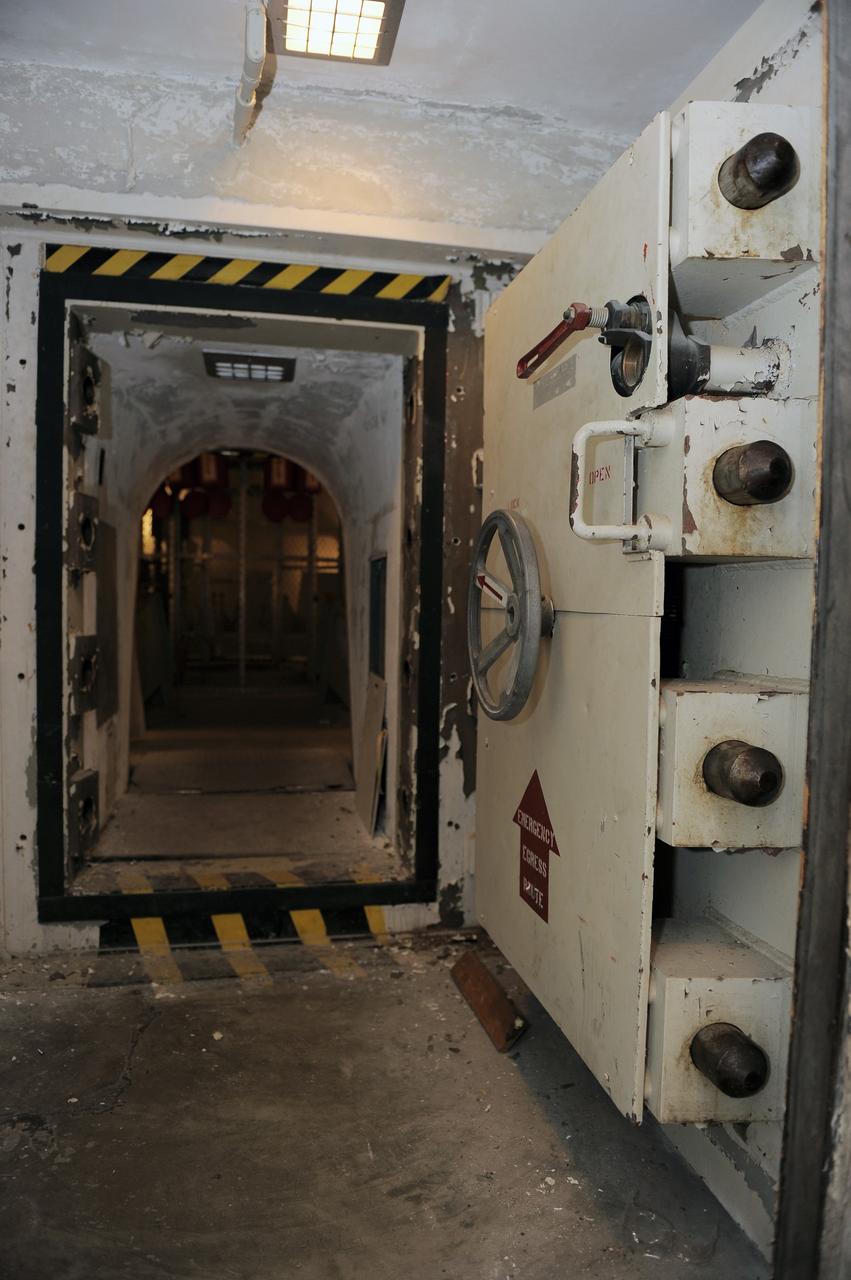
CAPE CANAVERAL, Fla. -- A steel door, similar to a bank vault door, leads to the blast-resistant "rubber room" beneath Launch Pad 39B at NASA's Kennedy Space Center. The room is a steel dome floating on rubber isolators and was used as an escape route during the Apollo Program in case of an emergency. It has since been abandoned by astronauts, but throughout the years nature found its way inside, including raccoons, snakes, birds and even a bobcat and opossum. Starting in 2009, the structure above the room on the pad was no longer needed for NASA's Space Shuttle Program, so it is being restructured for future use. The new design will feature a "clean pad" for rockets to come with their own launcher, making it more versatile for a number of vehicles. For information on NASA's future plans, visit www.nasa.gov. Photo credit: NASA/Kim Shiflett
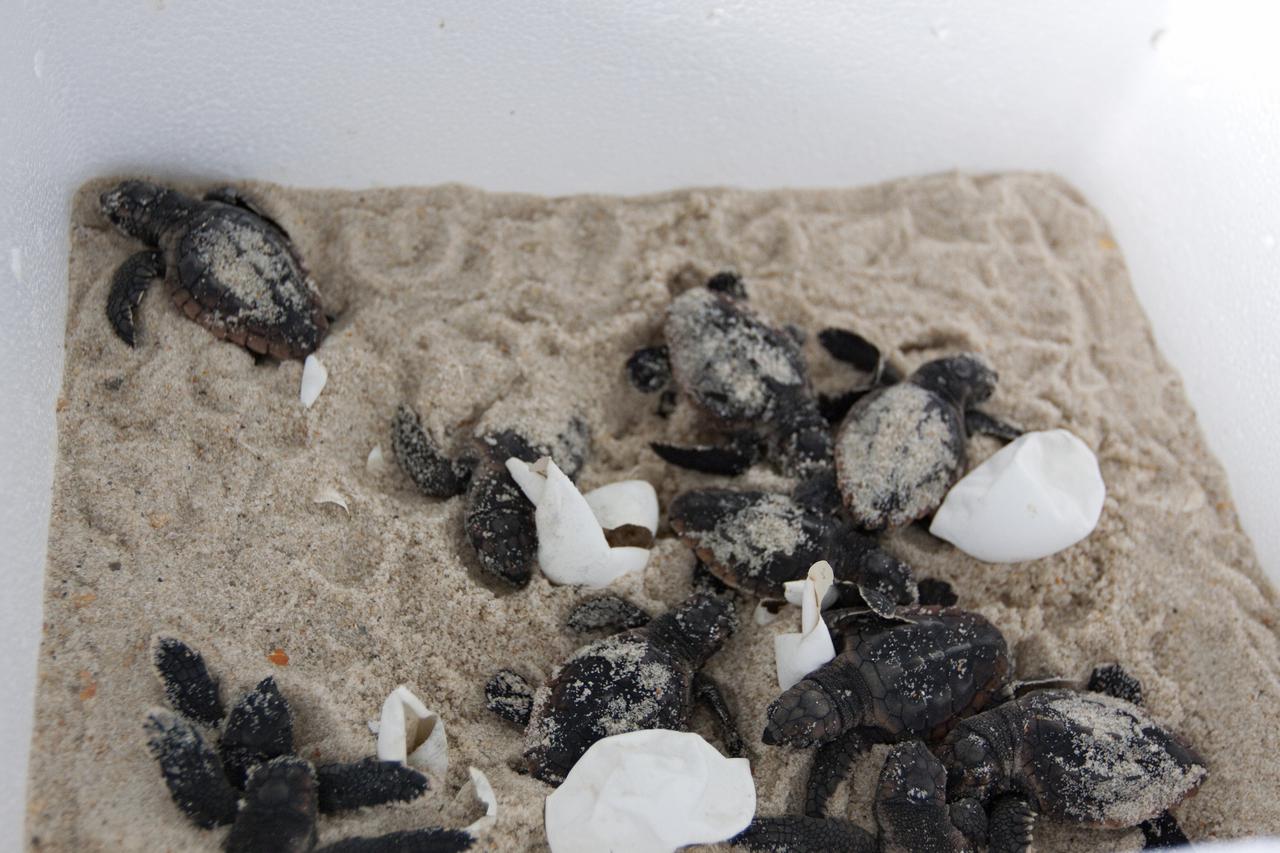
CAPE CANAVERAL, Fla. -- In a climate-controlled facility at NASA's Kennedy Space Center in Florida, newly-hatched Loggerhead turtles emerge from their eggs brought from beaches along the northern U.S. Gulf Coast. The eggs will be monitored by biologists and hatchery workers until incubation is complete. The hatchlings will be released at different points along a 100-mile stretch of the Atlantic Ocean shoreline. That includes beaches adjacent to the Merritt Island National Wildlife Refuge, which is located inside Kennedy. The release and relocation work is part of an effort by the U.S. Fish and Wildlife Service, the Florida Fish and Wildlife Conservation Commission, the National Park Service, NOAA, FedEx and conservationists to help minimize the risk to this year's sea turtle hatchlings from impacts of the BP Deepwater Horizon oil spill in the Gulf of Mexico. This plan involves carefully moving an anticipated 700 nests during the next several months. Photo credit: NASA_Troy Cryder
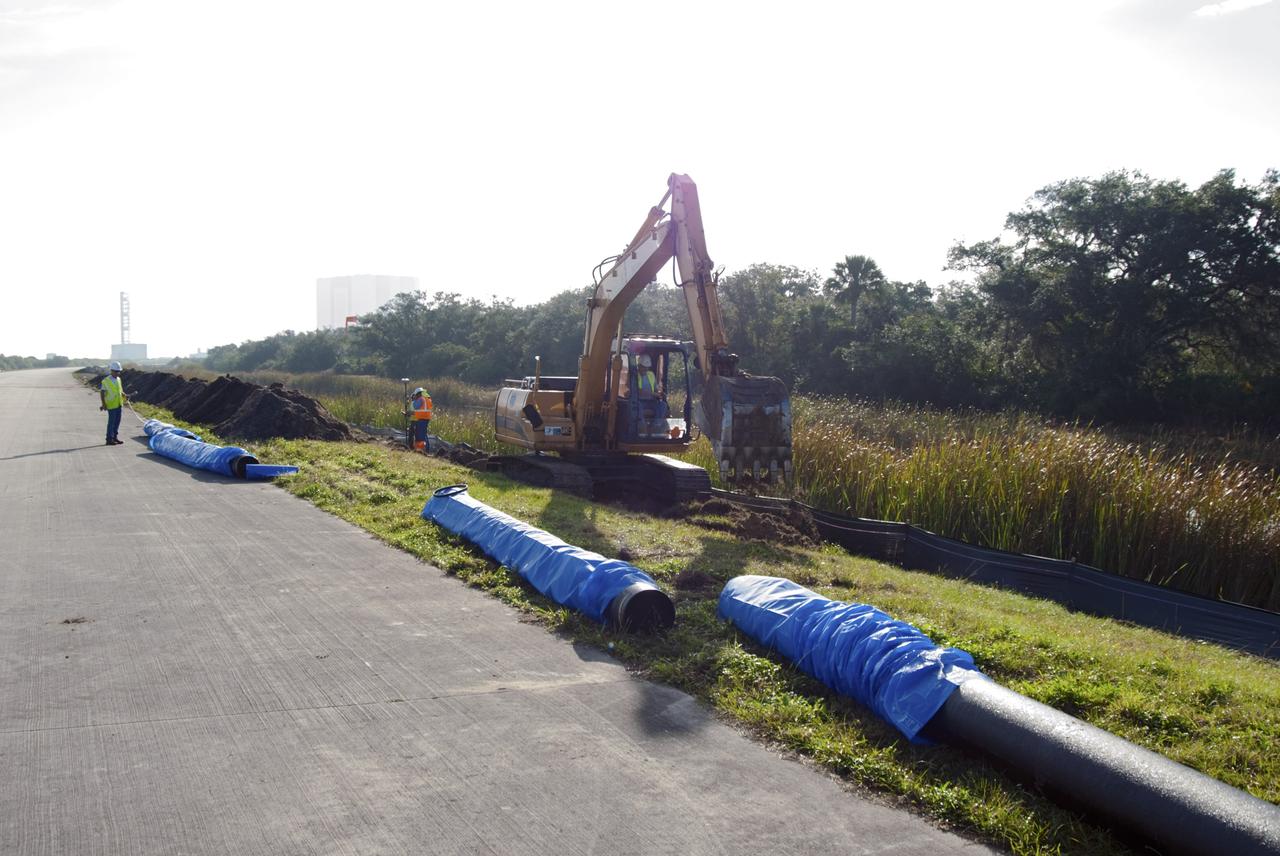
CAPE CANAVERAL, Fla. – At NASA’s Kennedy Space Center in Florida, a new 12-inch water main is being installed as part of a water/wastewater revitalizing plan. The main will provide water to the area around the shuttle landing facility's Landing Aids Control Building and fire station. NASA’s space shuttle runway is a unique national asset designed to enable the recovery of the agency’s fleet of space shuttle orbiters. The shuttle landing facility is a single, 15,000-foot long concrete runway oriented to the southeast and northwest. Air traffic control is provided from a control tower built to FAA standards. Fire and emergency response services are also available from an onsite facility. For more information, visit http://kscpartnerships.ksc.nasa.gov/slf.htm Photo credit: NASA/Tim Jacobs
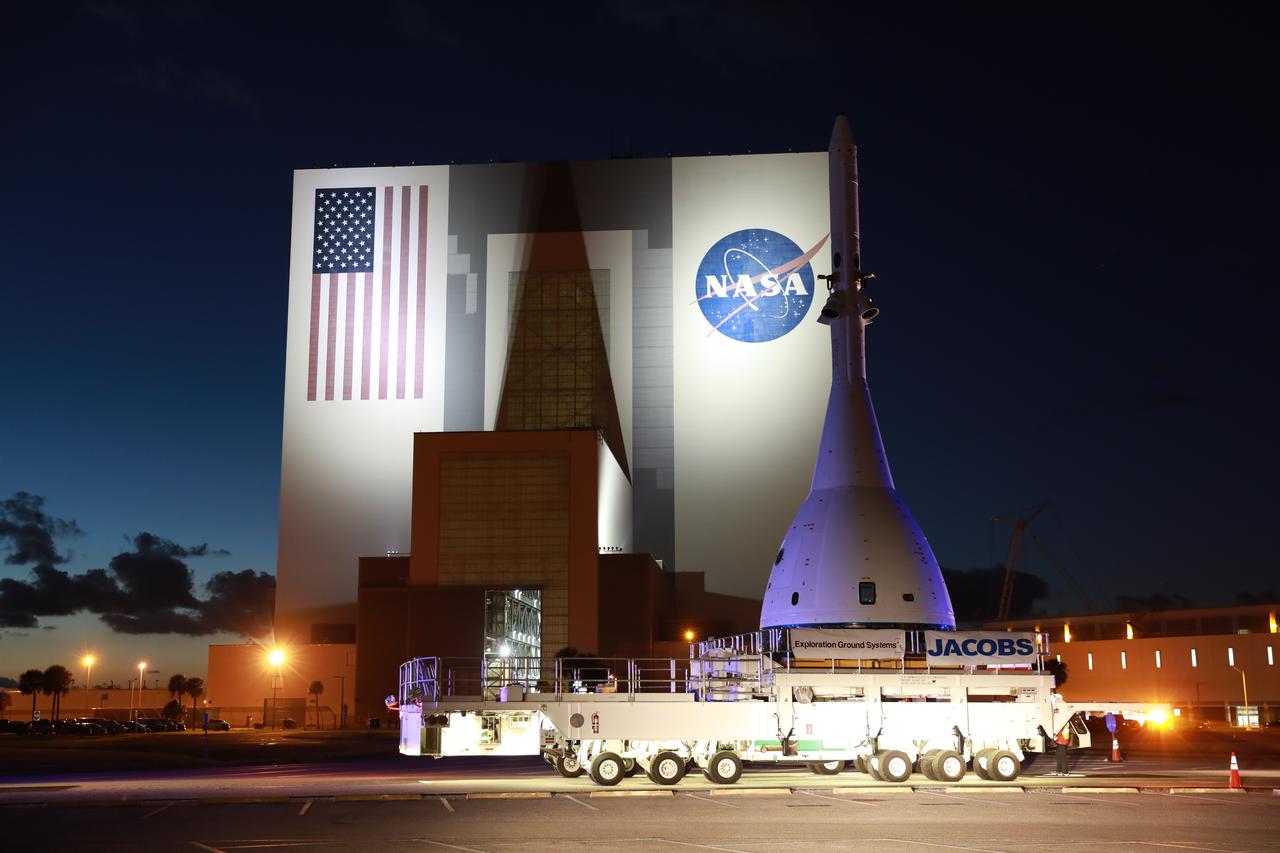
The vehicle for Orion’s Ascent Abort-2 (AA-2) fight test passes by the Vehicle Assembly Building at NASA’s Kennedy Space Center in Florida on its 21.5-mile-trek to Space Launch Complex 46 at Cape Canaveral Air Force Station on May 22, 2019. During AA-2, a test version of Orion will launch on a booster to more than six miles in altitude, where Orion’s launch abort system will pull the capsule away to demonstrate it can keep a future crew inside safe if an emergency occurs during ascent on the Space Launch System rocket. The AA-2 elements will be stacked together at the launch pad over the next several weeks. The launch is planned for July 2 and is a critical safety test that helps pave the way for Artemis missions near the Moon, and will enable astronauts to set foot on the lunar surface by 2024.
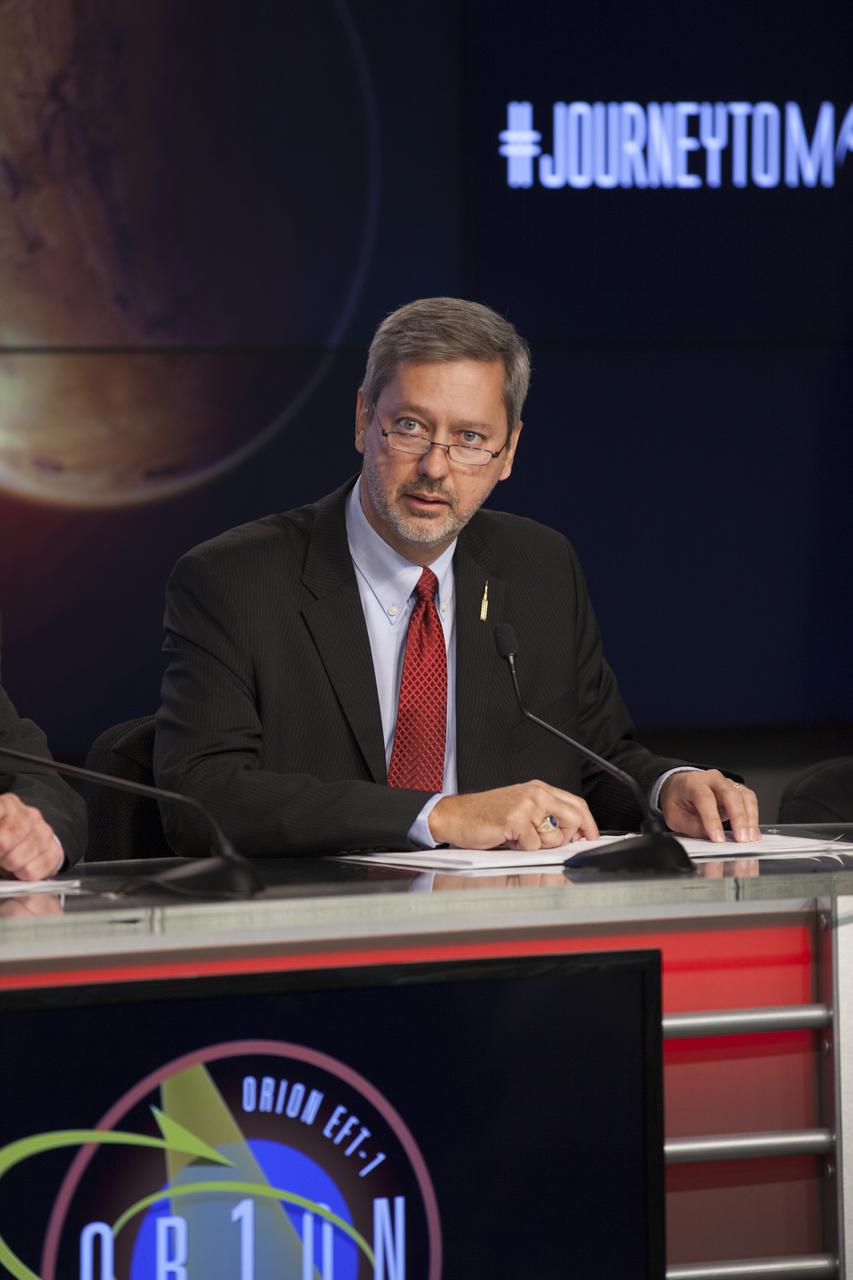
At NASA's Kennedy Space Center in Florida, Chris Crumbly, manager of Space Launch System Spacecraft/Payload Integration and Evolution, was one of several agency leaders who spoke to member of the news media about how the first flight of the new Orion spacecraft is a first step in the agency's plans to send humans to Mars. Orion is the exploration spacecraft designed to carry astronauts to destinations not yet explored by humans, including an asteroid and Mars. It will have emergency abort capability, sustain the crew during space travel and provide safe re-entry from deep space return velocities. The first unpiloted flight test of Orion is scheduled to launch Dec. 4, 2014 atop a United Launch Alliance Delta IV Heavy rocket, and in 2018 on NASA’s Space Launch System rocket.
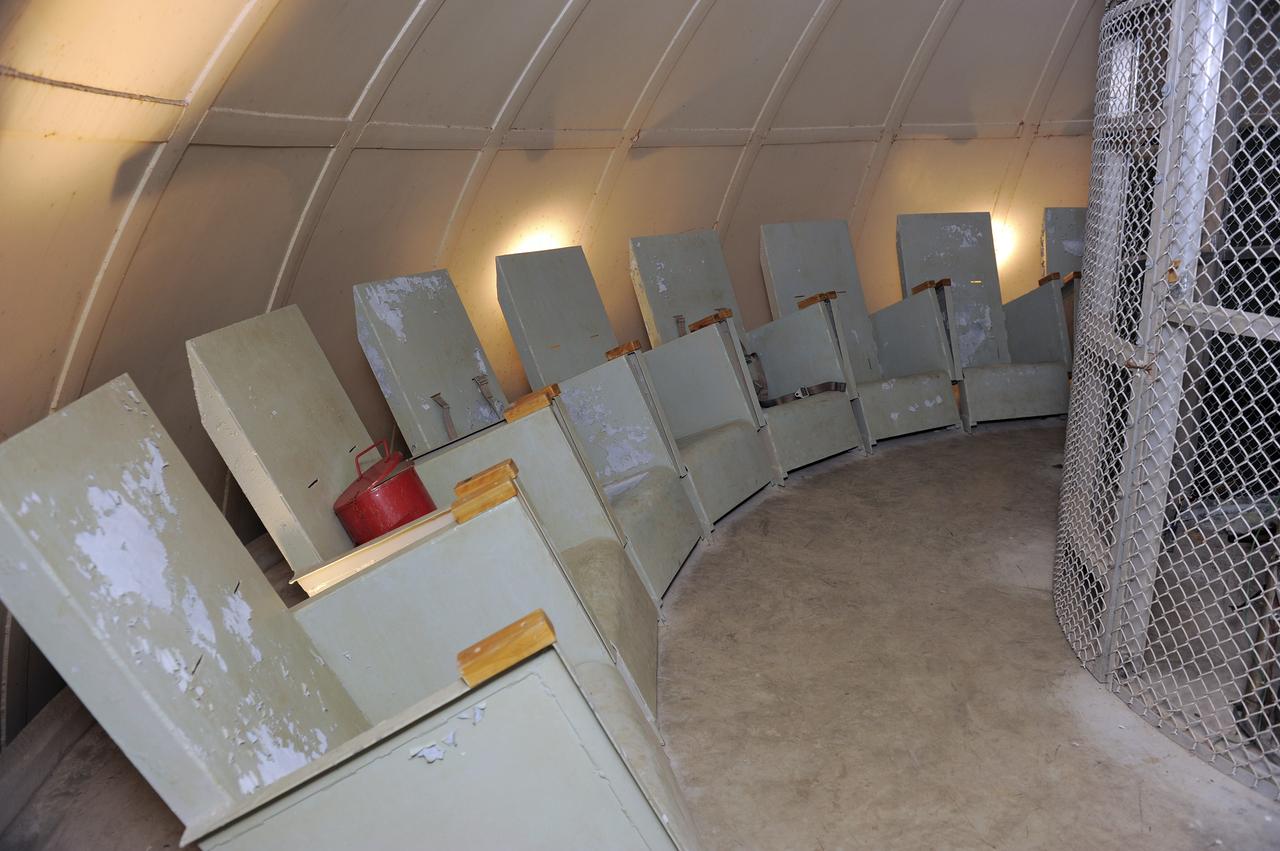
CAPE CANAVERAL, Fla. -- Twenty contour chairs line the blast-resistant "rubber room" beneath Launch Pad 39B at NASA's Kennedy Space Center in Florida. The room is a steel dome floating on rubber isolators and was used as an escape route during the Apollo Program in case of an emergency. It has since been abandoned by astronauts, but throughout the years nature found its way inside, including raccoons, snakes, birds and even a bobcat and opossum. Starting in 2009, the structure above the room on the pad was no longer needed for NASA's Space Shuttle Program, so it is being restructured for future use. The new design will feature a "clean pad" for rockets to come with their own launcher, making it more versatile for a number of vehicles. For information on NASA's future plans, visit www.nasa.gov. Photo credit: NASA/Kim Shiflett
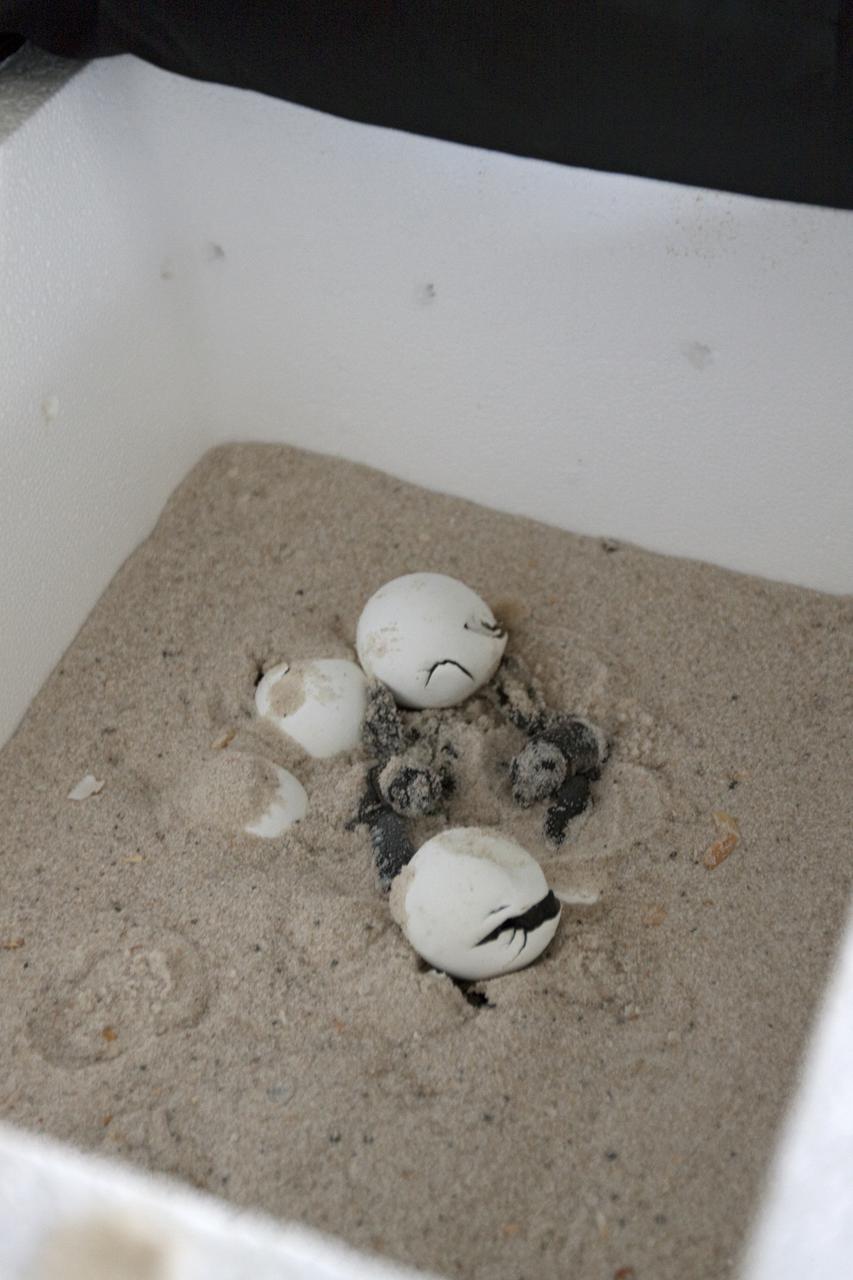
CAPE CANAVERAL, Fla. -- In a secure, climate-controlled facility at NASA's Kennedy Space Center in Florida, newly-hatched Loggerhead turtles emerge from their eggs brought from beaches along the northern U.S. Gulf Coast. The eggs will be monitored by biologists and hatchery workers until incubation is complete. The hatchlings will be released at different points along a 100-mile stretch of the Atlantic Ocean shoreline. That includes beaches adjacent to the Merritt Island National Wildlife Refuge, which is located inside Kennedy. The release and relocation work is part of an effort by the U.S. Fish and Wildlife Service, the Florida Fish and Wildlife Conservation Commission, the National Park Service, NOAA, FedEx and conservationists to help minimize the risk to this year's sea turtle hatchlings from impacts of the BP Deepwater Horizon oil spill in the Gulf of Mexico. This plan involves carefully moving an anticipated 700 nests during the next several months. Photo credit: NASA_Troy Cryder

STS-92 Pilot Pamela Ann Melroy is happy to arrive at the KSC Shuttle Landing Facility after a flight from Houston. She and the rest of the crew are at KSC to take part in Terminal Countdown Demonstration Test activities, which include emergency egress training from the orbiter and pad, and a simulated countdown. The fifth mission to the International Space Station, STS-92 will carry the Integrated Truss Structure Z1, the first of the planned 10 trusses on the Space Station, and the third Pressurized Mating Adapter. The Z1 will allow the first U.S. solar arrays on a future flight to be temporarily installed on Unity for early power. PMA-3 will provide a Shuttle docking port for the solar array installation on the sixth ISS flight and Lab installation on the seventh ISS flight. STS-92 is scheduled to launch Oct. 5 from launch Pad 39A. It will be the 100th flight in the Shuttle program
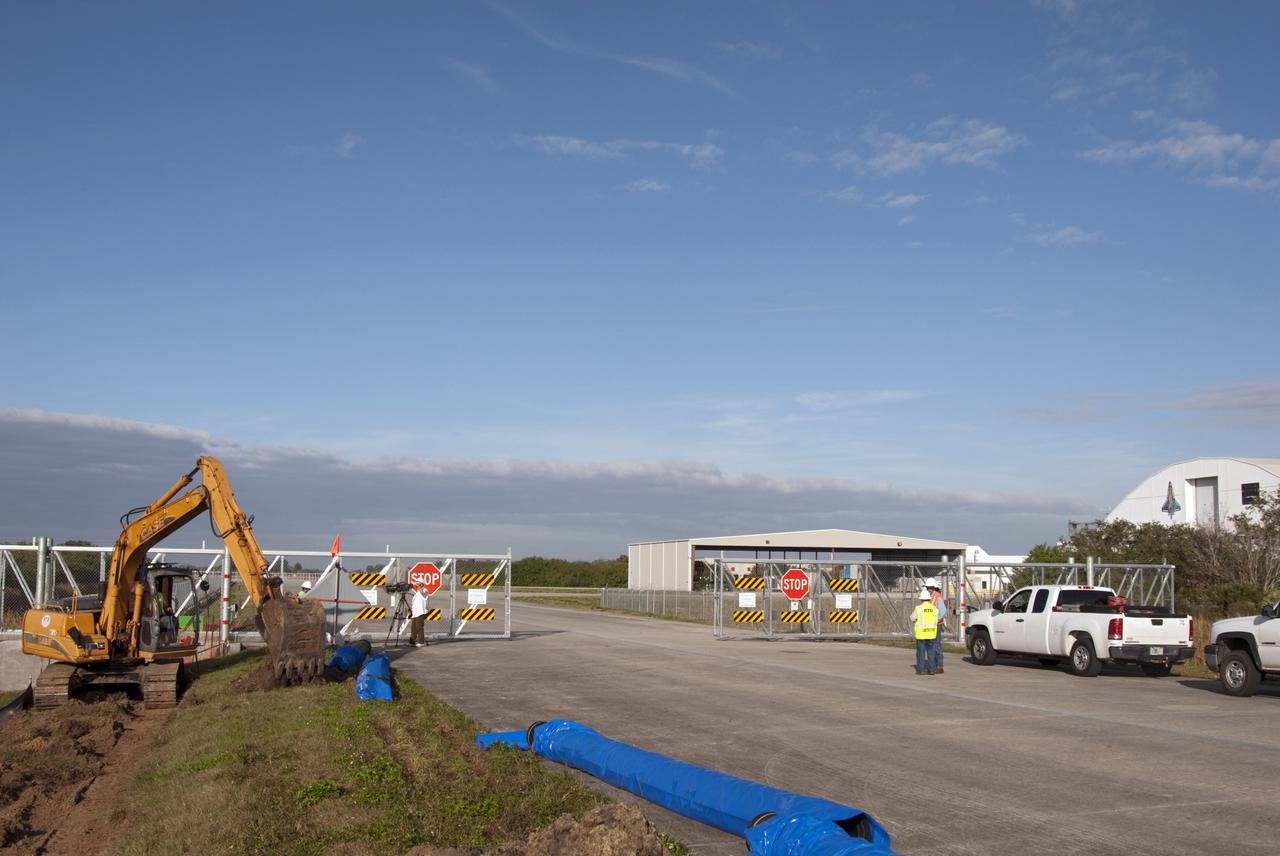
CAPE CANAVERAL, Fla. – At NASA’s Kennedy Space Center in Florida, a new 12-inch water main is being installed as part of a water/wastewater revitalizing plan. The main will provide water to the area around the shuttle landing facility's Landing Aids Control Building and fire station. NASA’s space shuttle runway is a unique national asset designed to enable the recovery of the agency’s fleet of space shuttle orbiters. The shuttle landing facility is a single, 15,000-foot long concrete runway oriented to the southeast and northwest. Air traffic control is provided from a control tower built to FAA standards. Fire and emergency response services are also available from an onsite facility. For more information, visit http://kscpartnerships.ksc.nasa.gov/slf.htm Photo credit: NASA/Tim Jacobs
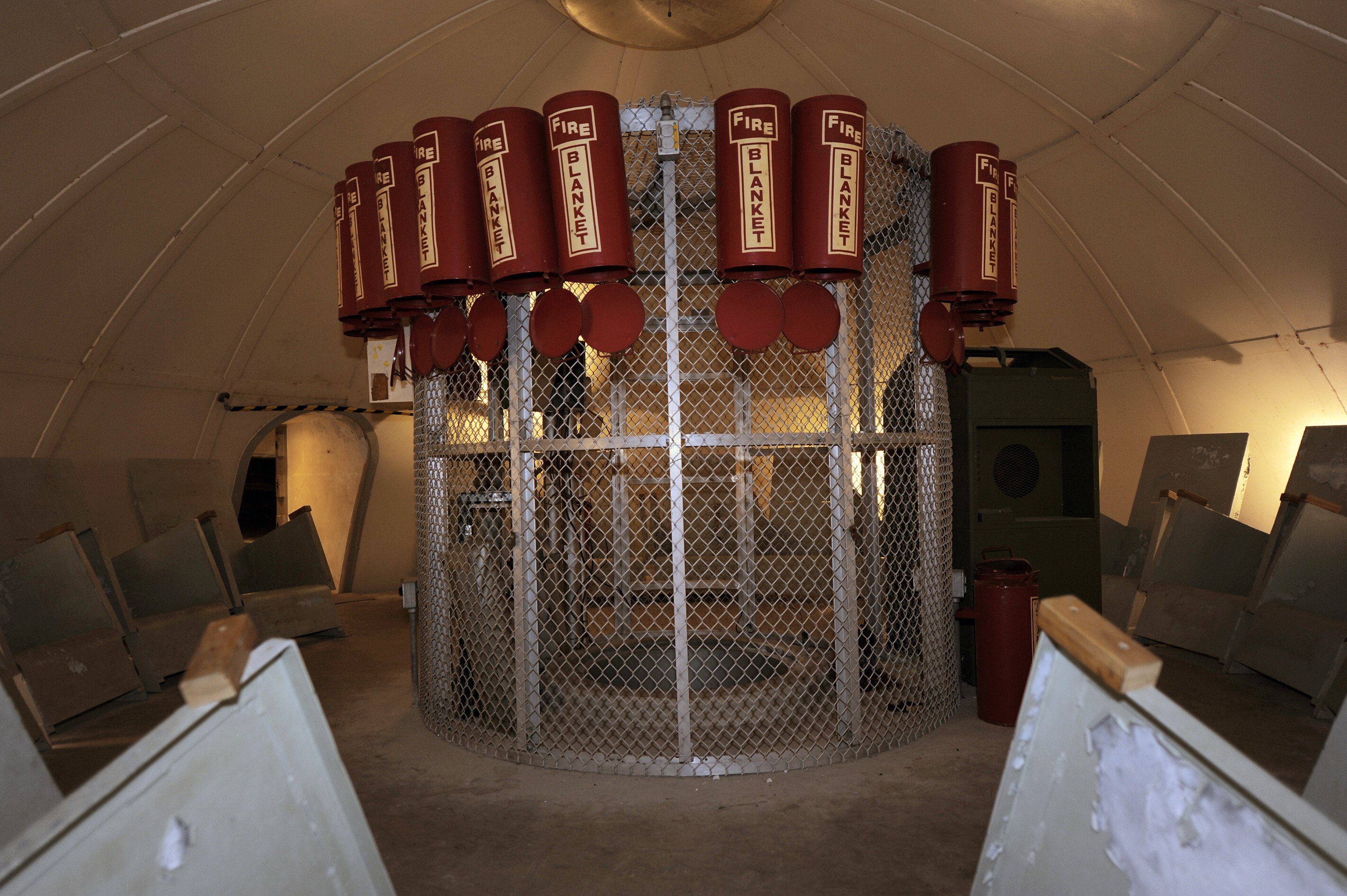
CAPE CANAVERAL, Fla. -- Empty fire blanket holders are at the center of the blast-resistant "rubber room" beneath Launch Pad 39B at NASA's Kennedy Space Center in Florida. The room is a steel dome floating on rubber isolators and was used as an escape route during the Apollo Program in case of an emergency. It has since been abandoned by astronauts, but throughout the years nature found its way inside, including raccoons, snakes, birds and even a bobcat and opossum. Starting in 2009, the structure above the room on the pad was no longer needed for NASA's Space Shuttle Program, so it is being restructured for future use. The new design will feature a "clean pad" for rockets to come with their own launcher, making it more versatile for a number of vehicles. For information on NASA's future plans, visit www.nasa.gov. Photo credit: NASA/Kim Shiflett
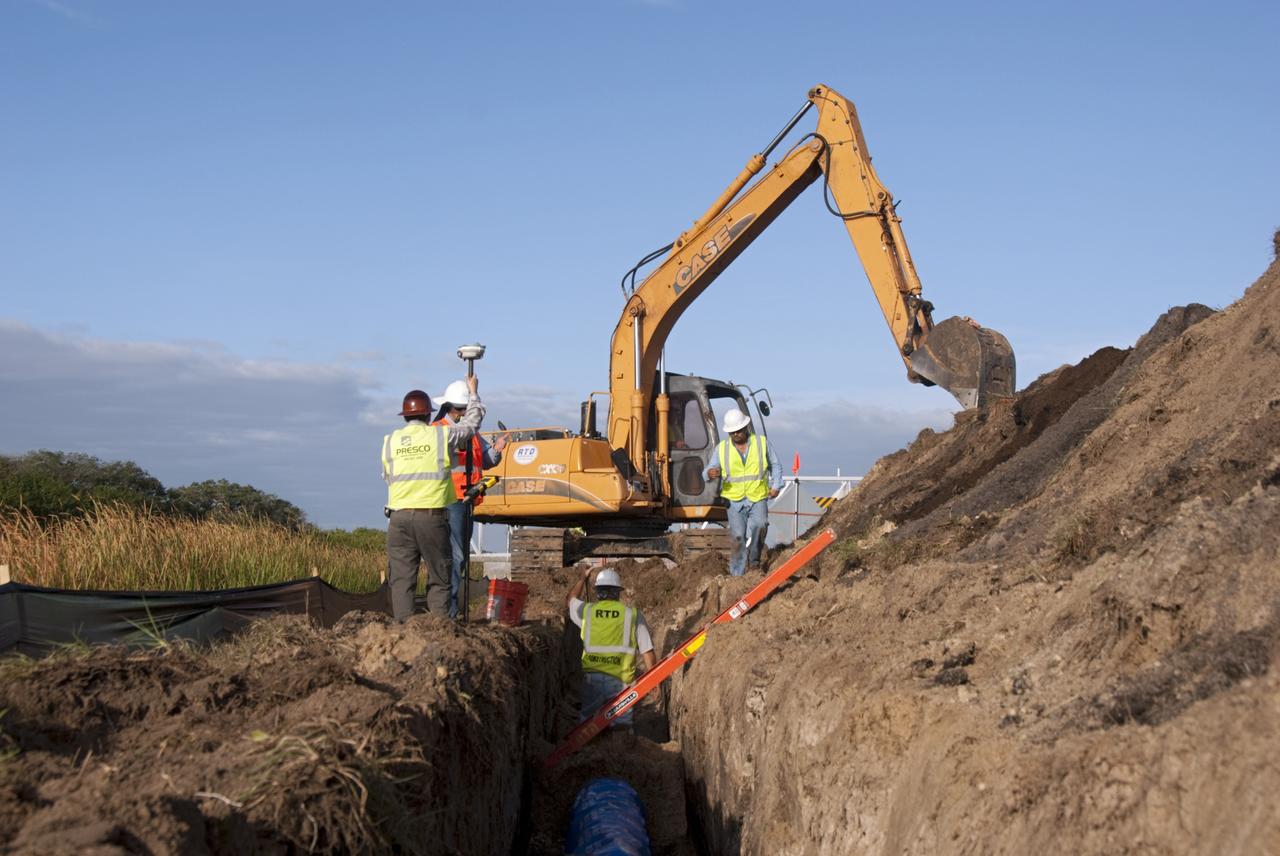
CAPE CANAVERAL, Fla. – At NASA’s Kennedy Space Center in Florida, a new 12-inch water main is being installed as part of a water/wastewater revitalizing plan. The main will provide water to the area around the shuttle landing facility's Landing Aids Control Building and fire station. NASA’s space shuttle runway is a unique national asset designed to enable the recovery of the agency’s fleet of space shuttle orbiters. The shuttle landing facility is a single, 15,000-foot long concrete runway oriented to the southeast and northwest. Air traffic control is provided from a control tower built to FAA standards. Fire and emergency response services are also available from an onsite facility. For more information, visit http://kscpartnerships.ksc.nasa.gov/slf.htm Photo credit: NASA/Tim Jacobs
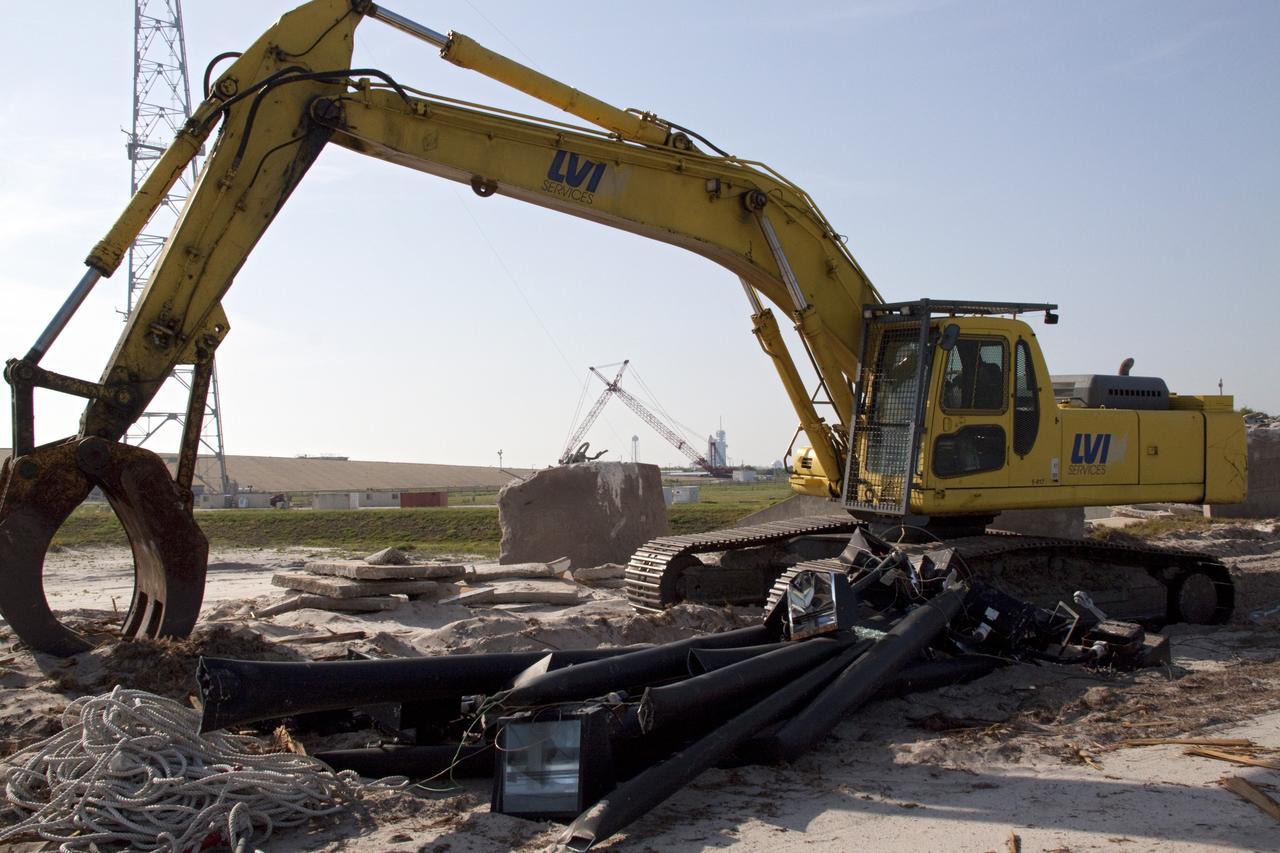
Cape Canaveral, Fla. -- At NASA's Kennedy Space Center in Florida, the emergency egress system that was part of Launch Pad 39B included seven baskets suspended from seven slidewires that extended from the pad to a landing zone 1,200 feet west of the pad. The system and the bunkers at the base also are being dismantled. In 2009, the pad was no longer needed for the shuttle program, so it is being restructured for future use. Its new design will feature a "clean pad" for rockets to come with their own launcher, making it more versatile for a number of vehicles. The new lightning protection system, which was in place for the October 2009 launch of Ares I-X, will remain. For information on NASA's future plans, visit www.nasa.gov. Photo credit: NASA/Jack Pfaller
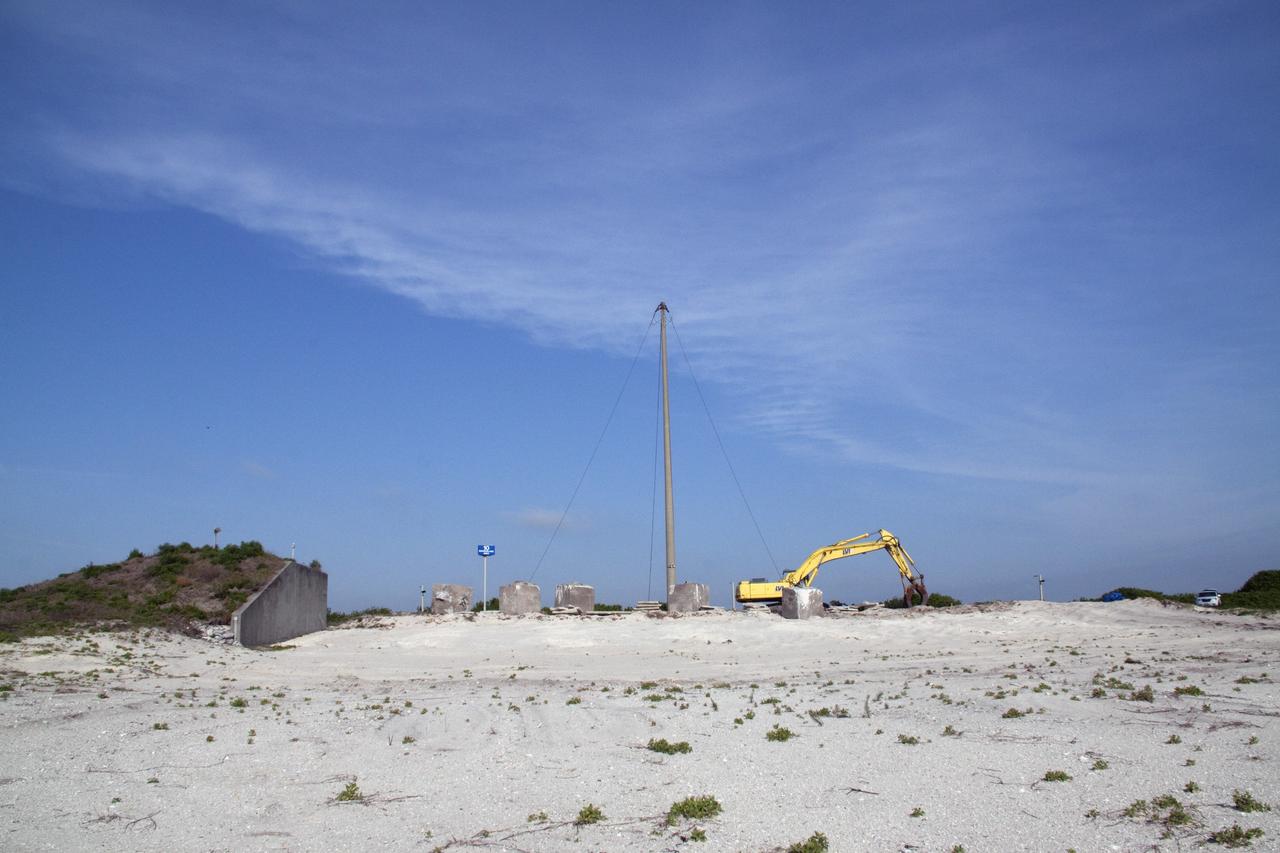
Cape Canaveral, Fla. -- At NASA's Kennedy Space Center in Florida, the emergency egress system that was part of Launch Pad 39B included seven baskets suspended from seven slidewires that extended from the pad to a landing zone 1,200 feet west of the pad. The system and the bunkers at the base also are being dismantled. In 2009, the pad was no longer needed for the shuttle program, so it is being restructured for future use. Its new design will feature a "clean pad" for rockets to come with their own launcher, making it more versatile for a number of vehicles. The new lightning protection system, which was in place for the October 2009 launch of Ares I-X, will remain. For information on NASA's future plans, visit www.nasa.gov. Photo credit: NASA/Jack Pfaller
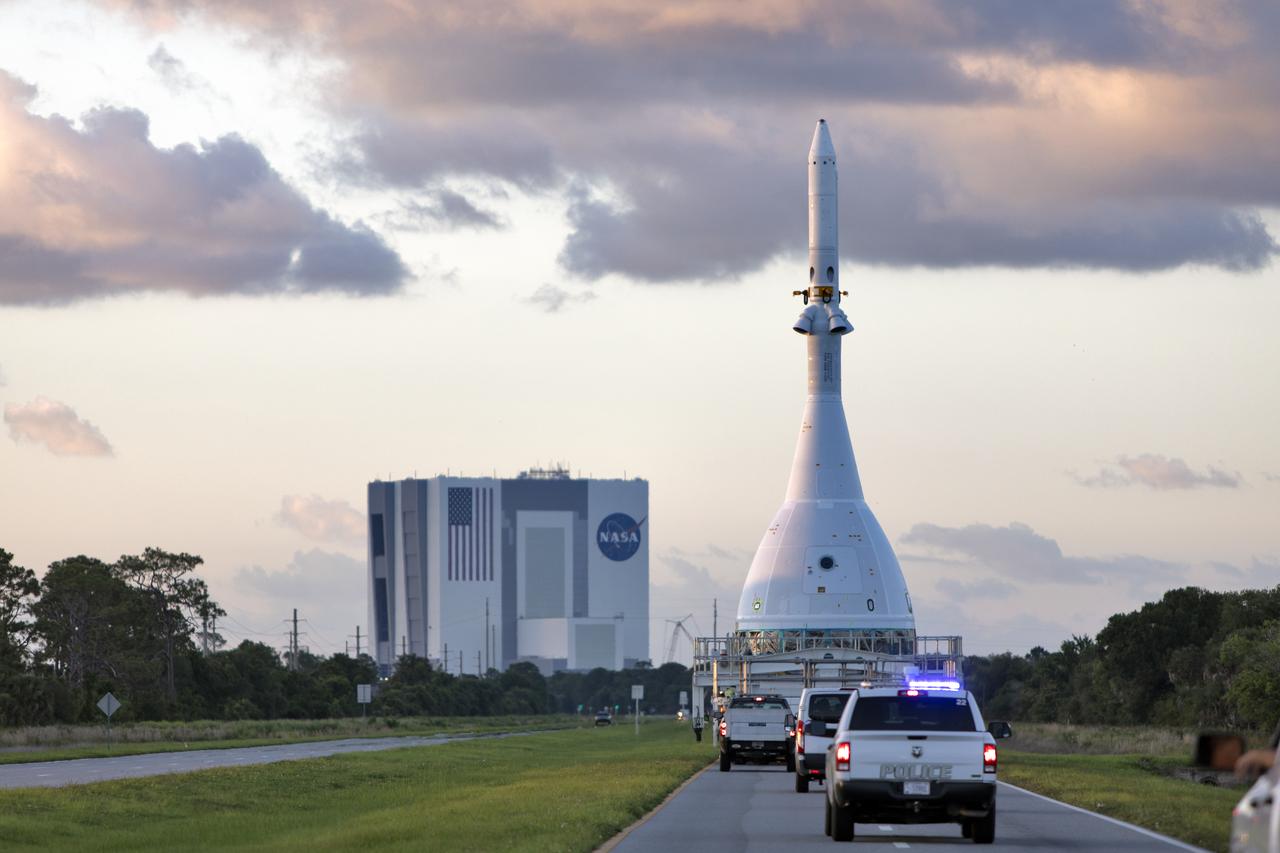
The test version of Orion attached to the Launch Abort System for the Ascent Abort-2 (AA-2) flight test is moved on a transport at NASA’s Kennedy Space Center in Florida on May 22, 2019, along the 21.5 mile trek to Space Launch Complex 46 at Cape Canaveral Air Force Station in preparation for its launch this summer. In the background is the iconic Vehicle Assembly Building. During AA-2, a test version of Orion will launch on a booster to more than six miles in altitude, where Orion’s launch abort system will pull the capsule and its crew away to safety if an emergency occurs during ascent on the Space Launch System rocket. The AA-2 elements will be stacked together at the launch pad over the next several weeks. The launch is planned for July 2 and is a critical safety test that helps pave the way for Artemis missions near the Moon, and will enable astronauts to set foot on the lunar surface by 2024.
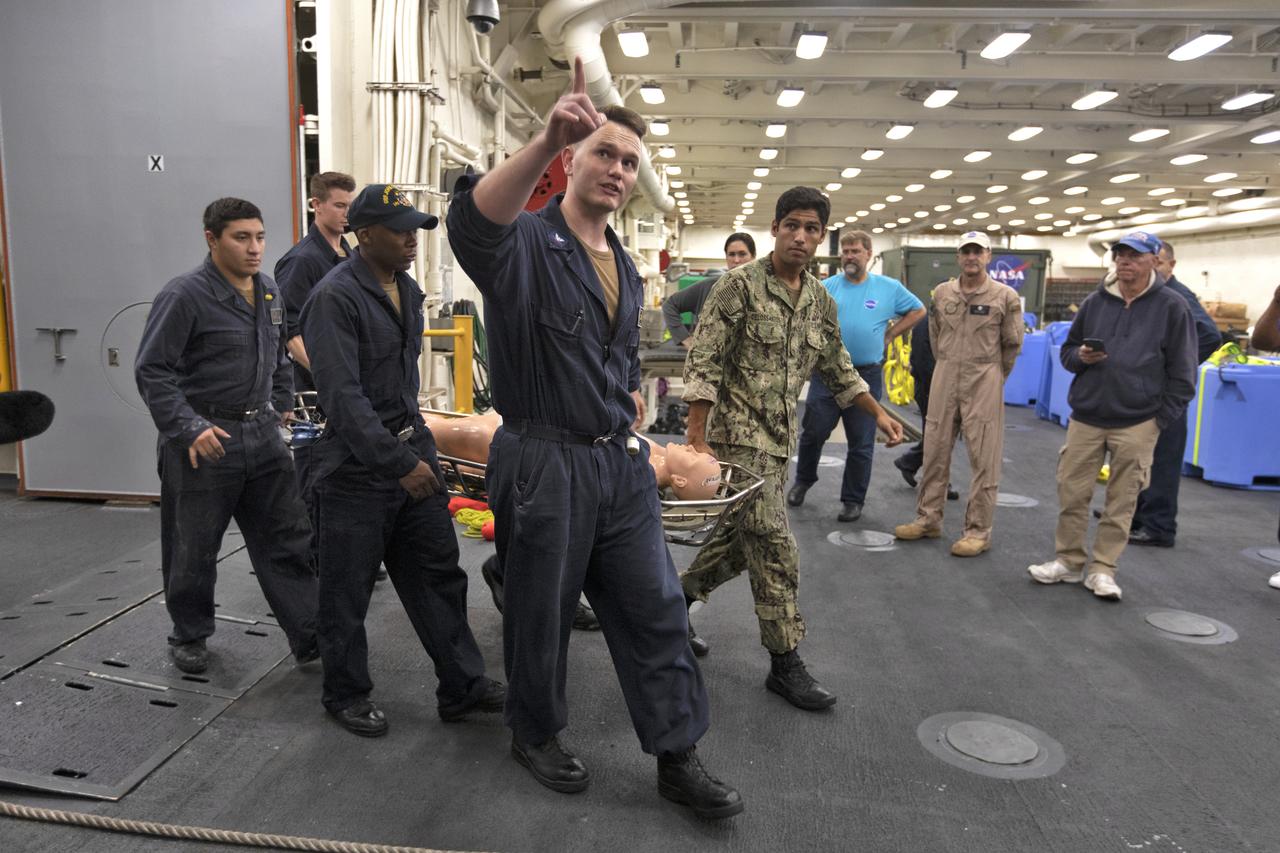
U.S. Navy recovery team members practice bringing an astronaut aboard the USS John P. Murtha, using a dummy, during Underway Recovery Test-7 (URT-7) on Nov. 5, 2018. NASA astronaut Don Pettit, in tan coveralls, looks on and discusses plans for moving the astronauts after returning from deep space. NASA's Recovery Team, along with the U.S. Navy, are practicing recovery of a test version of the Orion in the Pacific Ocean. URT-7 is one in a series of tests to verify and validate procedures and hardware that will be used to recover the Orion spacecraft after it splashes down in the Pacific Ocean following deep space exploration missions. Orion will have emergency abort capability, sustain the crew during space travel and provide safe re-entry from deep space return velocities.
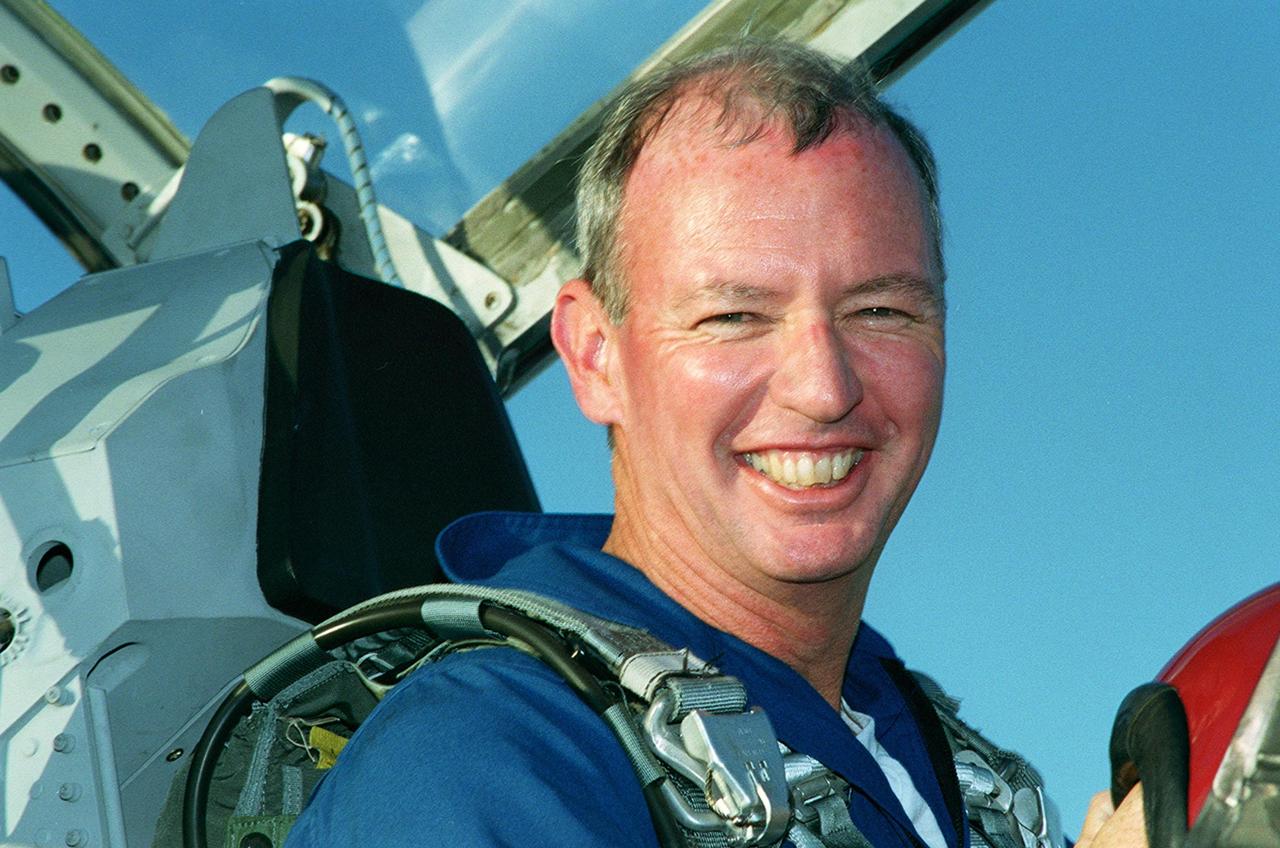
STS-92 Commander Brian Duffy smiles after landing at the KSC Shuttle Landing Facility in a T-38 training jet aircraft. He and the rest of the crew are at KSC to take part in Terminal Countdown Demonstration Test activities, which include emergency egress training from the orbiter and pad, and a simulated countdown. The fifth mission to the International Space Station, STS-92 will carry the Integrated Truss Structure Z1, the first of the planned 10 trusses on the Space Station, and the third Pressurized Mating Adapter. The Z1 will allow the first U.S. solar arrays on a future flight to be temporarily installed on Unity for early power. PMA-3 will provide a Shuttle docking port for the solar array installation on the sixth ISS flight and Lab installation on the seventh ISS flight. STS-92 is scheduled to launch Oct. 5 from launch Pad 39A. It will be the 100th flight in the Shuttle program
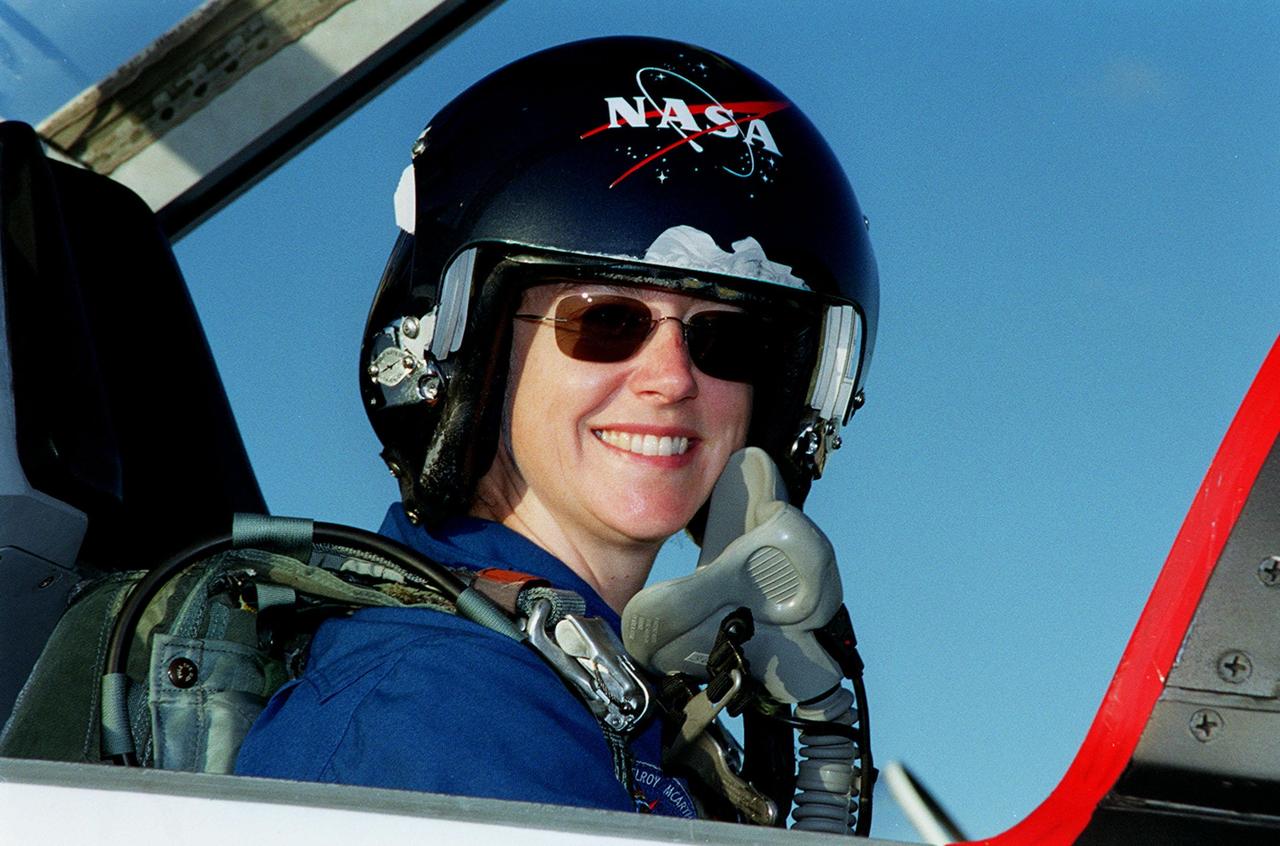
STS-92 Pilot Pamela Ann Melroy is happy to arrive at the KSC Shuttle Landing Facility after a flight from Houston. She and the rest of the crew are at KSC to take part in Terminal Countdown Demonstration Test activities, which include emergency egress training from the orbiter and pad, and a simulated countdown. The fifth mission to the International Space Station, STS-92 will carry the Integrated Truss Structure Z1, the first of the planned 10 trusses on the Space Station, and the third Pressurized Mating Adapter. The Z1 will allow the first U.S. solar arrays on a future flight to be temporarily installed on Unity for early power. PMA-3 will provide a Shuttle docking port for the solar array installation on the sixth ISS flight and Lab installation on the seventh ISS flight. STS-92 is scheduled to launch Oct. 5 from launch Pad 39A. It will be the 100th flight in the Shuttle program

CAPE CANAVERAL, Fla. – At NASA’s Kennedy Space Center in Florida, a new 12-inch water main is being installed as part of a water/wastewater revitalizing plan. The main will provide water to the area around the shuttle landing facility's Landing Aids Control Building and fire station. NASA’s space shuttle runway is a unique national asset designed to enable the recovery of the agency’s fleet of space shuttle orbiters. The shuttle landing facility is a single, 15,000-foot long concrete runway oriented to the southeast and northwest. Air traffic control is provided from a control tower built to FAA standards. Fire and emergency response services are also available from an onsite facility. For more information, visit http://kscpartnerships.ksc.nasa.gov/slf.htm Photo credit: NASA/Tim Jacobs

CAPE CANAVERAL, Fla. – At NASA’s Kennedy Space Center in Florida, a new 12-inch water main is being installed as part of a water/wastewater revitalizing plan. The main will provide water to the area around the shuttle landing facility's Landing Aids Control Building and fire station. NASA’s space shuttle runway is a unique national asset designed to enable the recovery of the agency’s fleet of space shuttle orbiters. The shuttle landing facility is a single, 15,000-foot long concrete runway oriented to the southeast and northwest. Air traffic control is provided from a control tower built to FAA standards. Fire and emergency response services are also available from an onsite facility. For more information, visit http://kscpartnerships.ksc.nasa.gov/slf.htm Photo credit: NASA/Tim Jacobs
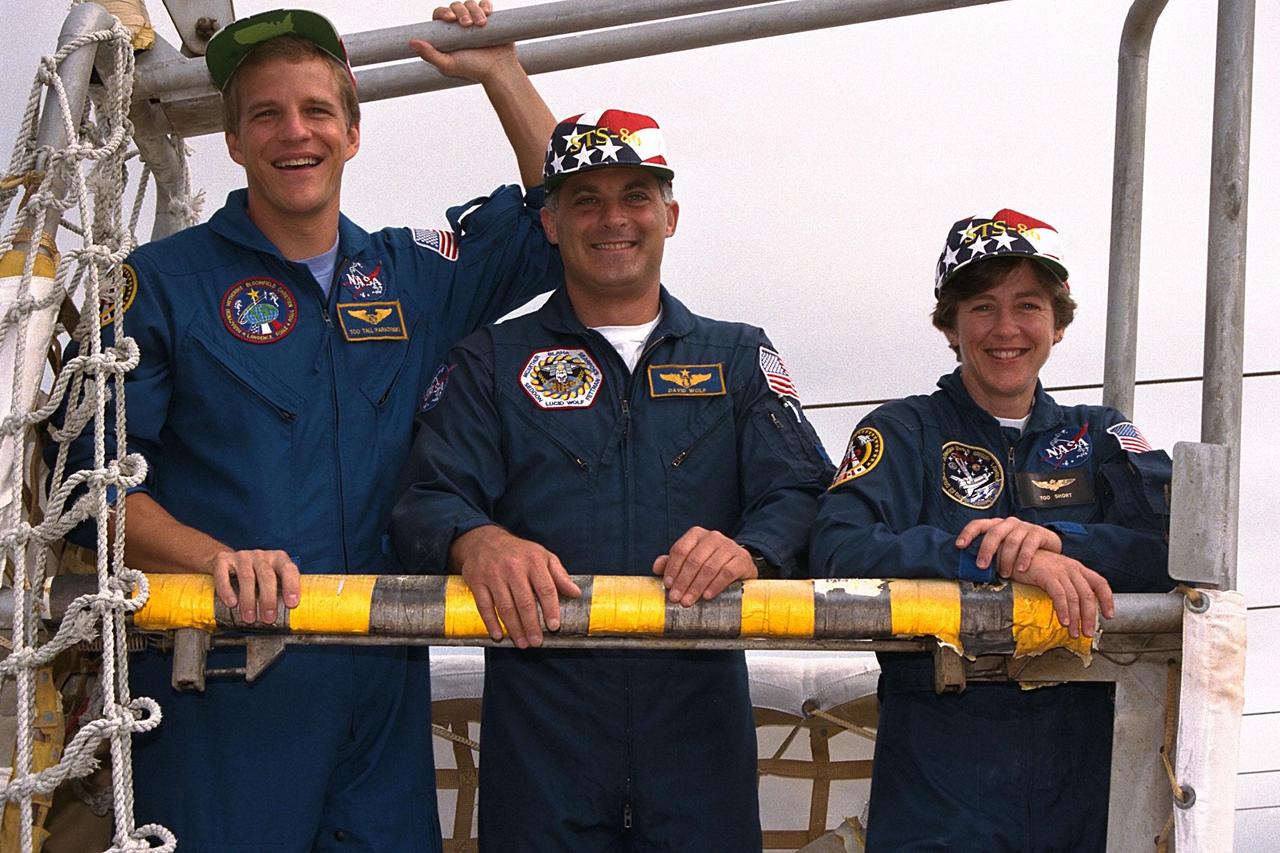
KENNEDY SPACE CENTER, Fla. -- STS-86 Mission Specialists Scott E. Parazynski, at left, David A. Wolf, and Wendy B. Lawrence, at right, participate in emergency egress training at Launch Pad 39A as part of Terminal Countdown Demonstration Test (TCDT) activities. They are the three U.S. astronauts who will serve as mission specialists during the planned 10-day flight to the Russian Space Station Mir. Also serving as mission specialists will be Vladimir Georgievich Titov of the Russian Space Agency and Jean-Loup J.M. Chretien of the French Space Agency, CNES. STS-86 will be the seventh docking of the Space Shuttle with the Mir. During the docking, Wolf will transfer to the orbiting Russian station and become a member of the Mir 24 crew, replacing U.S. astronaut C. Michael Foale, who has been on the Mir since the last docking mission, STS-84, in May. Launch of Mission STS-86 aboard the Space Shuttle Atlantis is targeted for Sept. 25
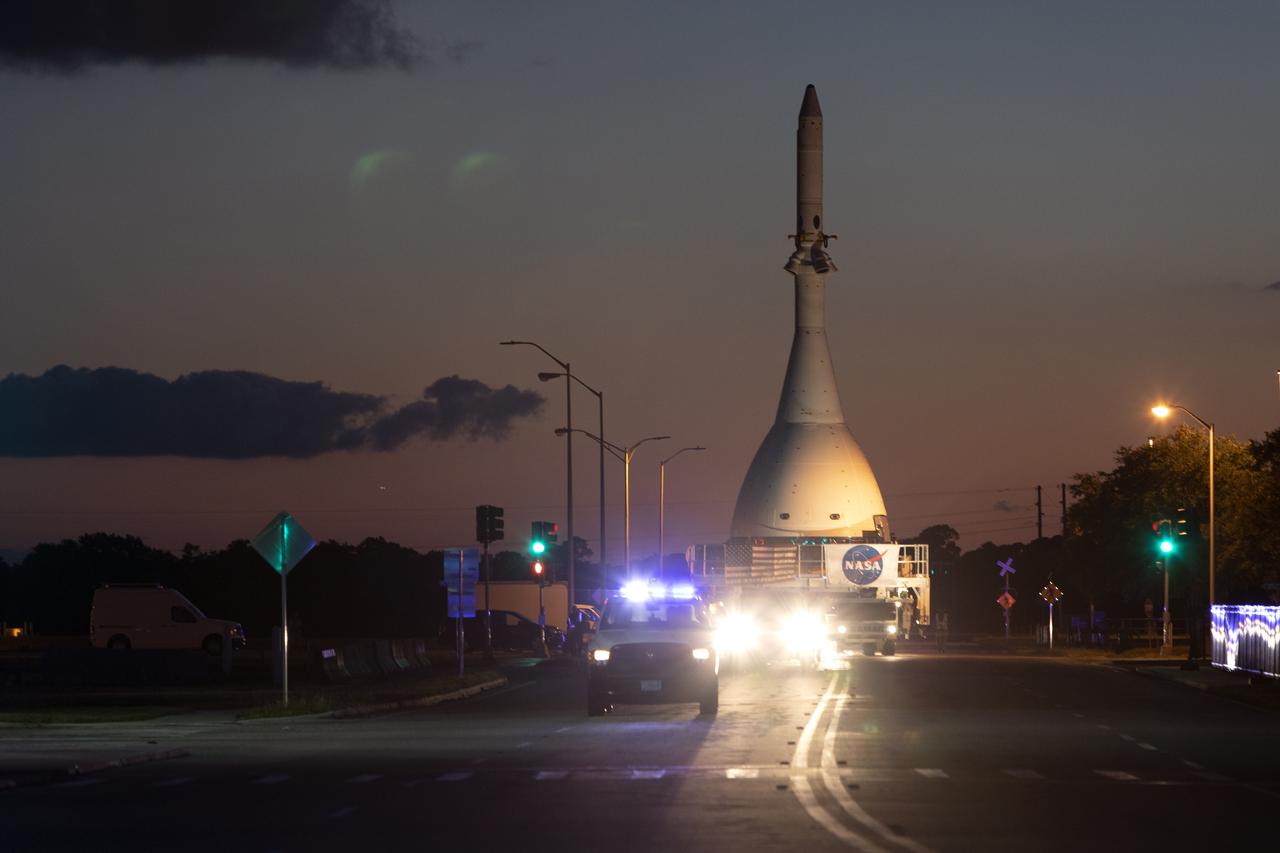
The test version of Orion attached to the Launch Abort System for the Ascent Abort-2 (AA-2) flight test is moved on a transport at NASA’s Kennedy Space Center in Florida on May 22, 2019, along the 21.5 mile trek to Space Launch Complex 46 at Cape Canaveral Air Force Station in preparation for its launch this summer. In the background is the iconic Vehicle Assembly Building. During AA-2, a test version of Orion will launch on a booster to more than six miles in altitude, where Orion’s launch abort system will pull the capsule and its crew away to safety if an emergency occurs during ascent on the Space Launch System rocket. The AA-2 elements will be stacked together at the launch pad over the next several weeks. The launch is planned for July 2 and is a critical safety test that helps pave the way for Artemis missions near the Moon, and will enable astronauts to set foot on the lunar surface by 2024.
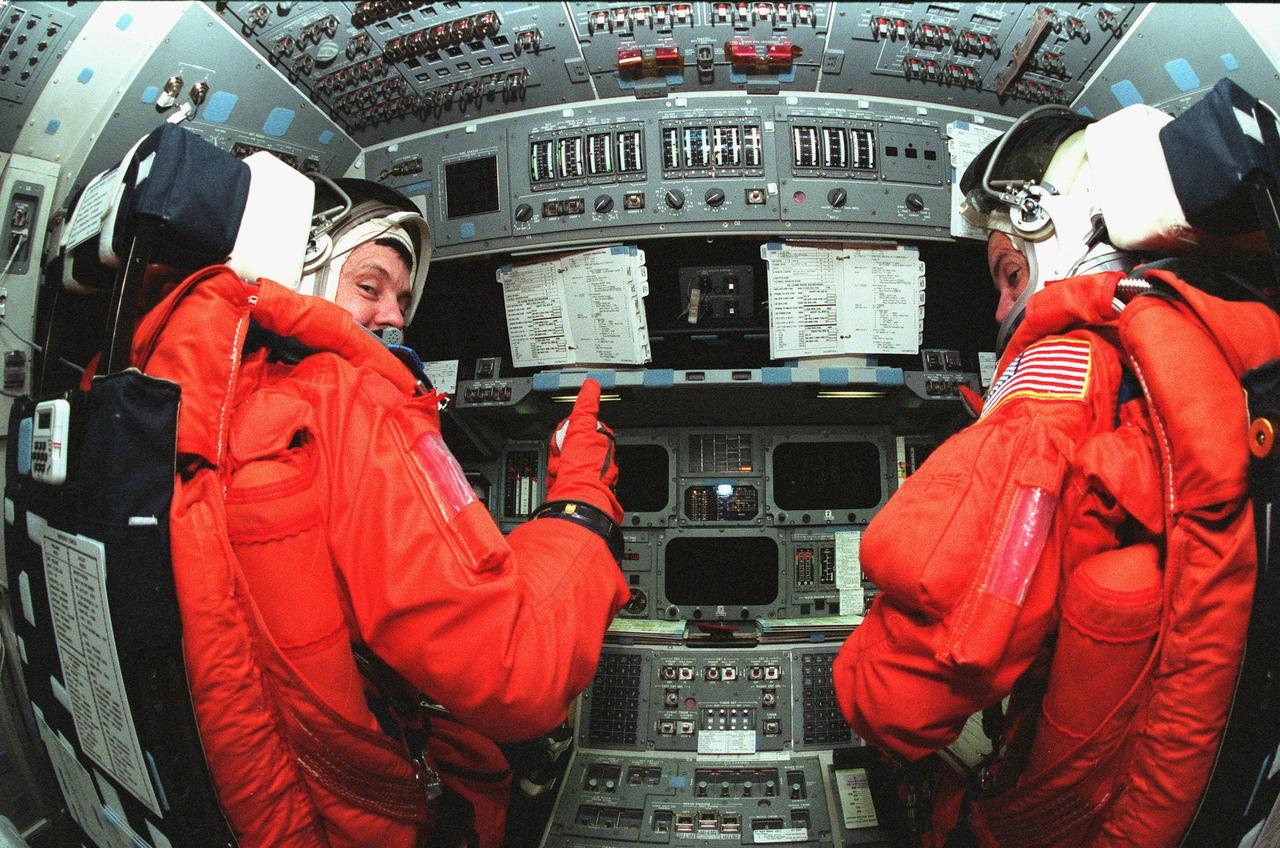
STS-88 Mission Commander Robert D. Cabana (left) and Pilot Frederick W. "Rick" Sturckow (right) take their seats in the flight deck inside orbiter Endeavour during Terminal Countdown Demonstration Activities (TCDT). The TCDT includes mission familiarization activities, emergency egress training, and the simulated main engine cut-off exercise. Mission STS-88 is targeted for launch on Dec. 3, 1998. It is the first U.S. flight for the assembly of the International Space Station and will carry the Unity connecting module. Unity will be mated with the already orbiting Russian-built Zarya control module. The 12-day mission includes three planned spacewalks to connect power, data and utility lines and install exterior equipment
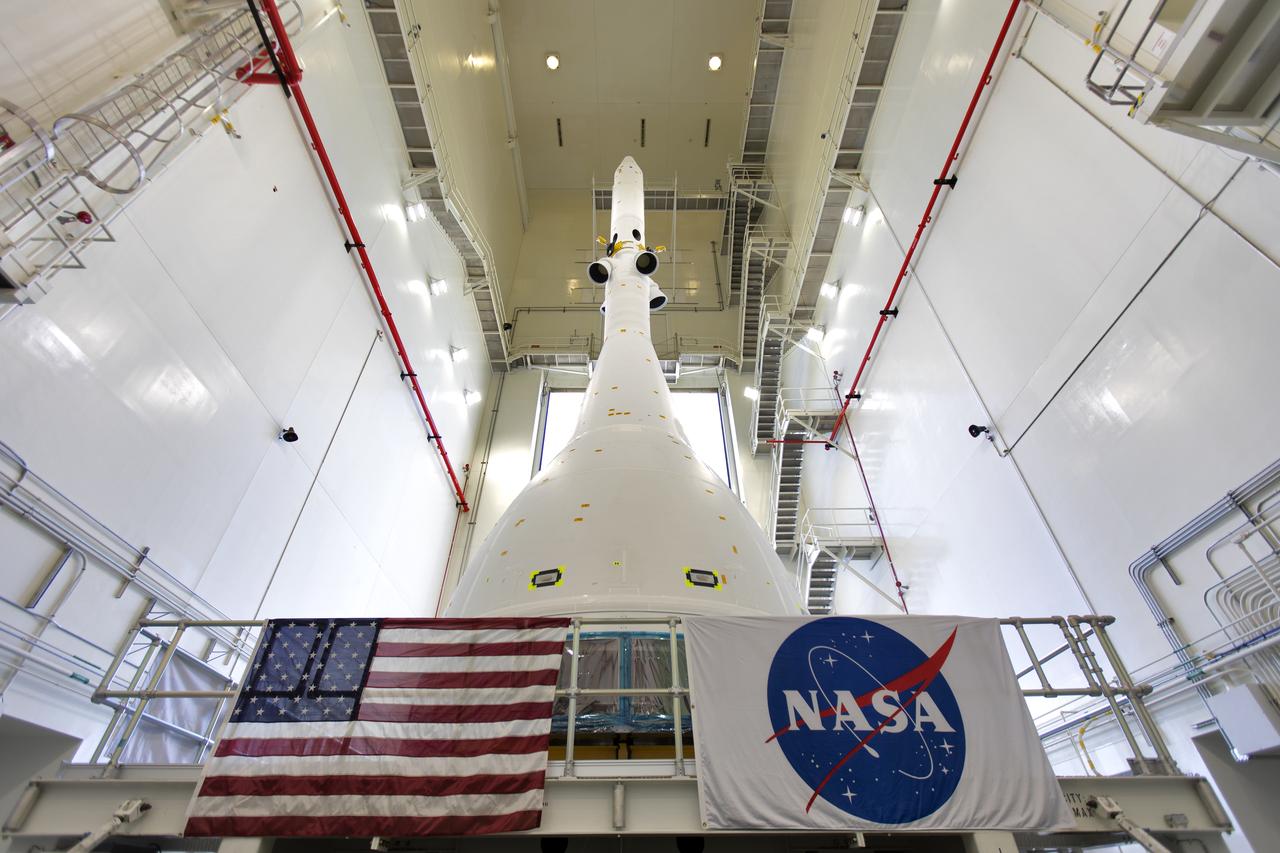
The test version of Orion attached to the Launch Abort System for the Ascent Abort-2 (AA-2) flight test exits the Launch Abort System Facility at NASA’s Kennedy Space Center in Florida on May 22, 2019. The flight test article will make the 21.5 mile trek to Space Launch Complex 46 at Cape Canaveral Air Force Station in preparation for its launch this summer. During AA-2, a test version of Orion will launch on a booster to more than six miles in altitude, where Orion’s launch abort system will pull the capsule and its crew away to safety if an emergency occurs during ascent on the Space Launch System rocket. The AA-2 elements will be stacked together at the launch pad over the next several weeks. The launch is planned for July 2 and is a critical safety test that helps pave the way for Artemis missions near the Moon, and will enable astronauts to set foot on the lunar surface by 2024.
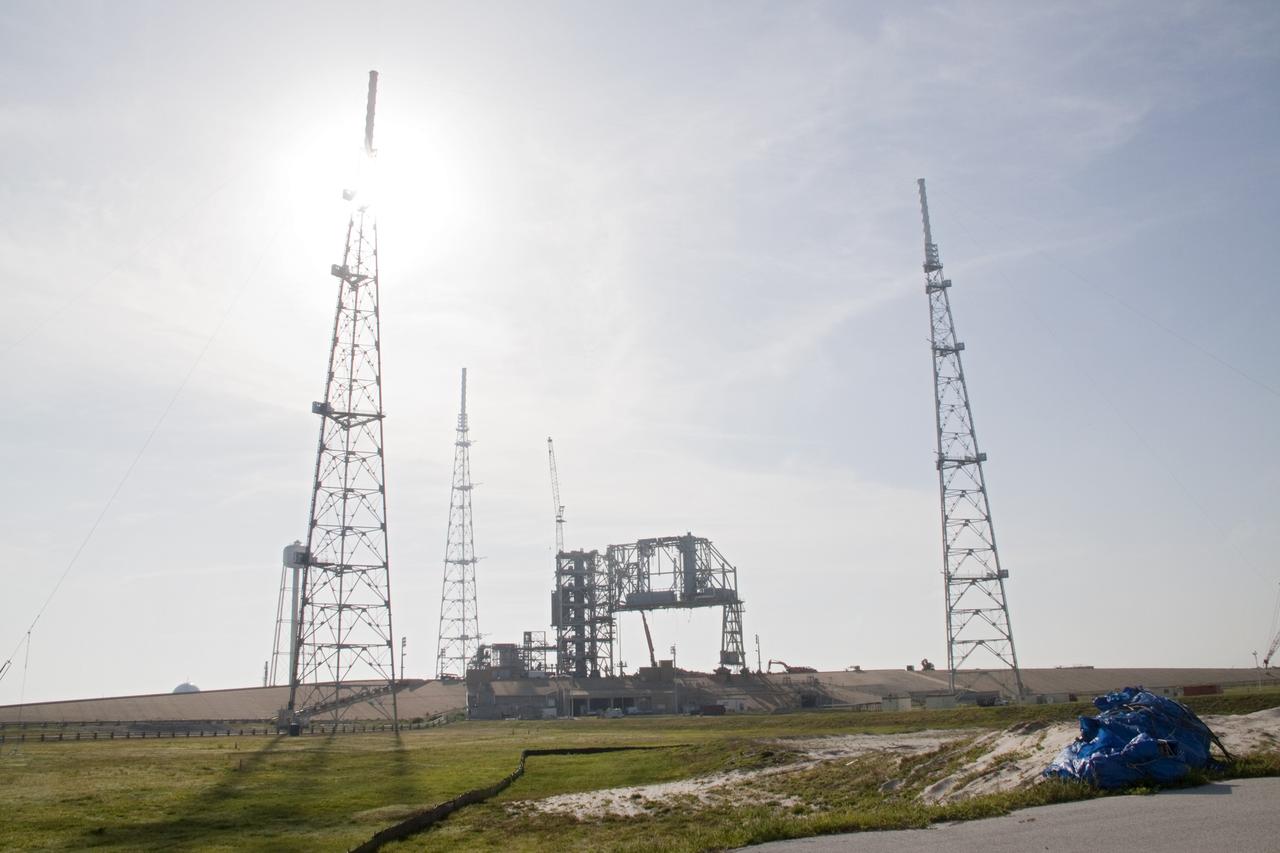
Cape Canaveral, Fla. -- Photographed from the base of the former emergency egress system at NASA's Kennedy Space Center in Florida, is the skeleton of steel that once was Launch Pad 39B after significant deconstruction. The system included seven baskets suspended from seven slidewires that extended from the pad to a landing zone 1,200 feet west of the pad. The bunkers at the base also are being dismantled. In 2009, the pad was no longer needed for the shuttle program, so it is being restructured for future use. Its new design will feature a "clean pad" for rockets to come with their own launcher, making it more versatile for a number of vehicles. The new lightning protection system, which was in place for the October 2009 launch of Ares I-X, will remain. For information on NASA's future plans, visit www.nasa.gov. Photo credit: NASA/Jack Pfaller
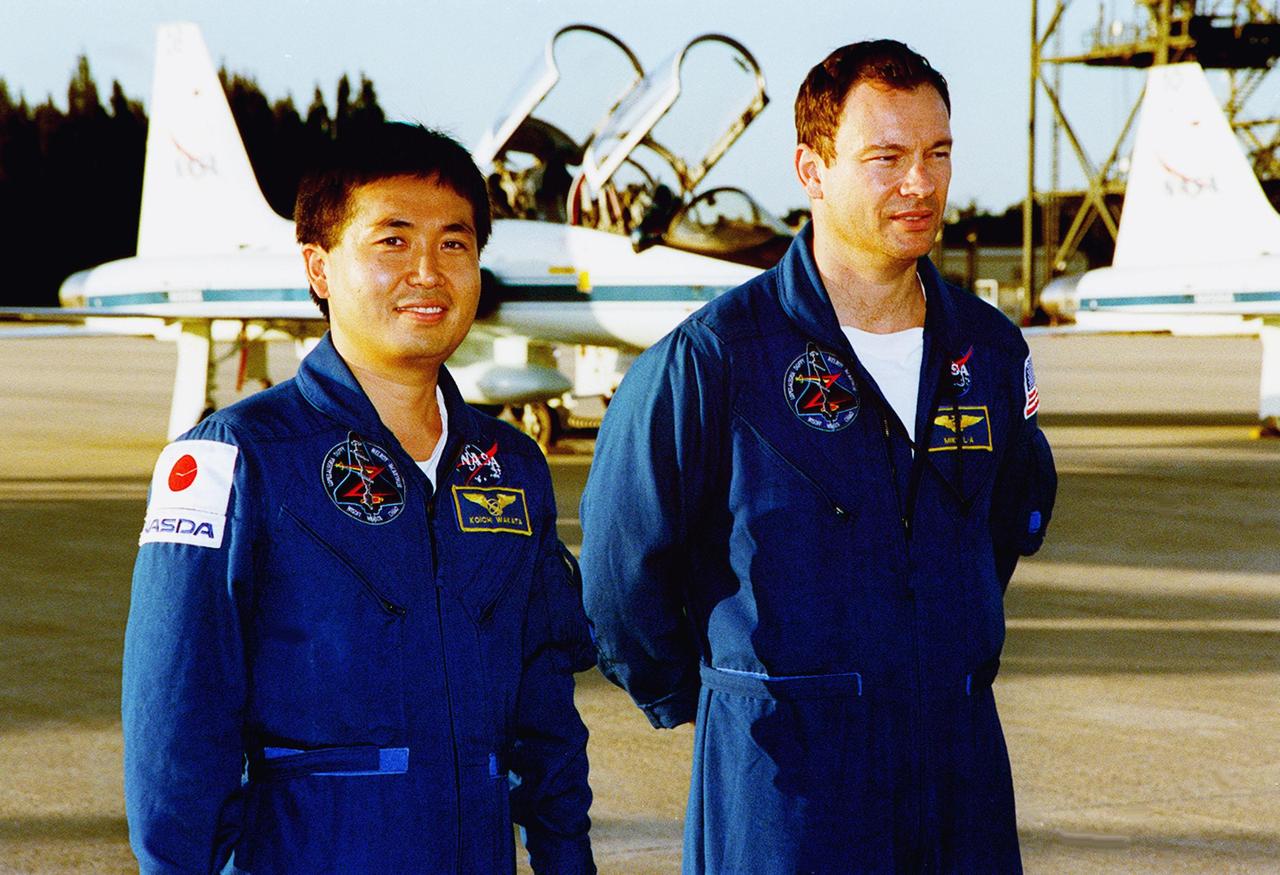
STS-92 Mission Specialists Koichi Wakata and Michael Lopez-Alegria pause on the tarmac after their arrival aboard the T-38 jet aircraft in the background. They and the rest of the crew are at KSC to take part in Terminal Countdown Demonstration Test (TCDT) activities. The TCDT includes emergency egress training from the orbiter and pad, plus a simulated countdown. The fifth mission to the International Space Station, STS-92 will carry the Integrated Truss Structure Z1, the first of the planned 10 trusses on the Space Station, and the third Pressurized Mating Adapter. The Z1 will allow the first U.S. solar arrays on a future flight to be temporarily installed on Unity for early power. PMA-3 will provide a Shuttle docking port for the solar array installation on the sixth ISS flight and Lab installation on the seventh ISS flight. STS-92 is scheduled to launch Oct. 5 from launch Pad 39A. It will be the 100th flight in the Shuttle program
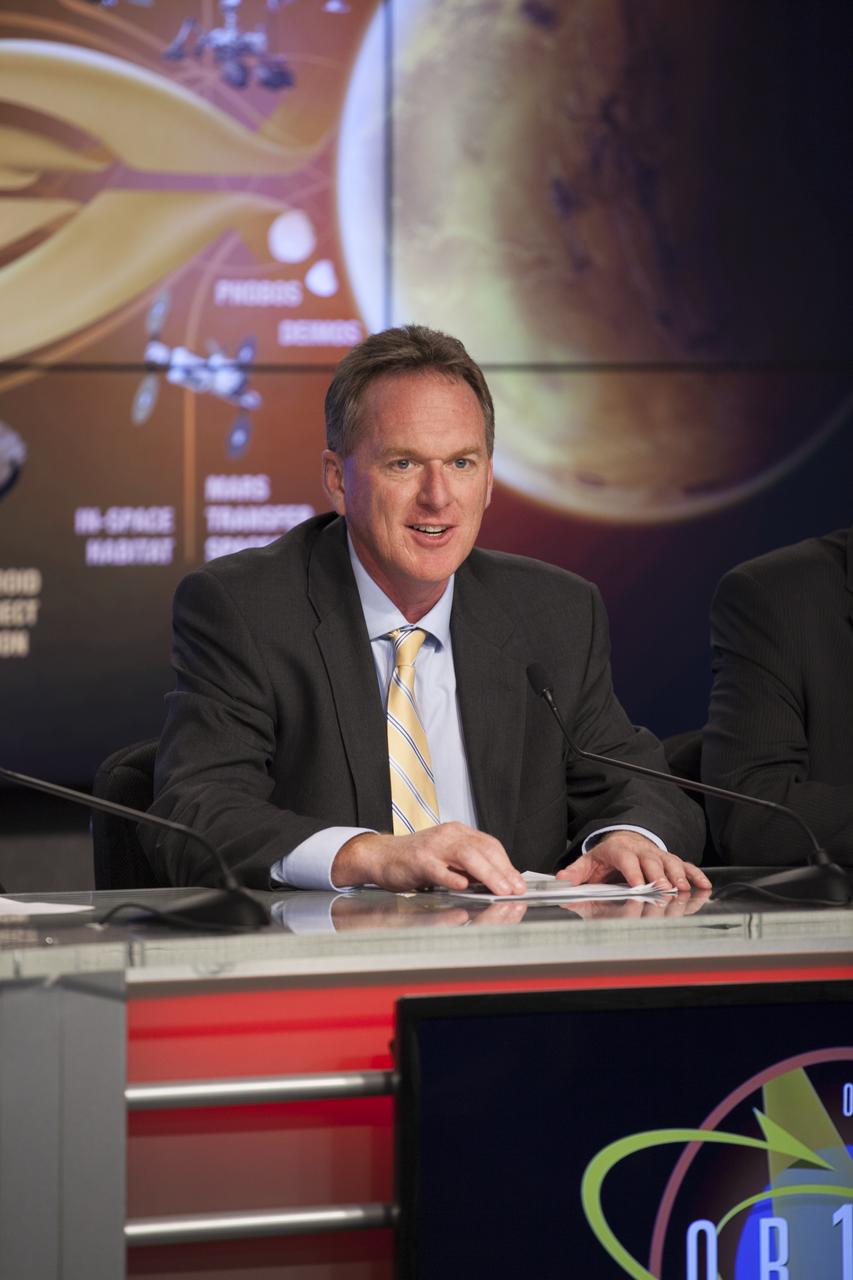
At NASA's Kennedy Space Center in Florida, Mike Bolger, program manager of Ground Systems Development and Operations Program, was one of several agency leaders who spoke to member of the news media about how the first flight of the new Orion spacecraft is a first step in the agency's plans to send humans to Mars. Orion is the exploration spacecraft designed to carry astronauts to destinations not yet explored by humans, including an asteroid and Mars. It will have emergency abort capability, sustain the crew during space travel and provide safe re-entry from deep space return velocities. The first unpiloted flight test of Orion is scheduled to launch Dec. 4, 2014 atop a United Launch Alliance Delta IV Heavy rocket, and in 2018 on NASA’s Space Launch System rocket.
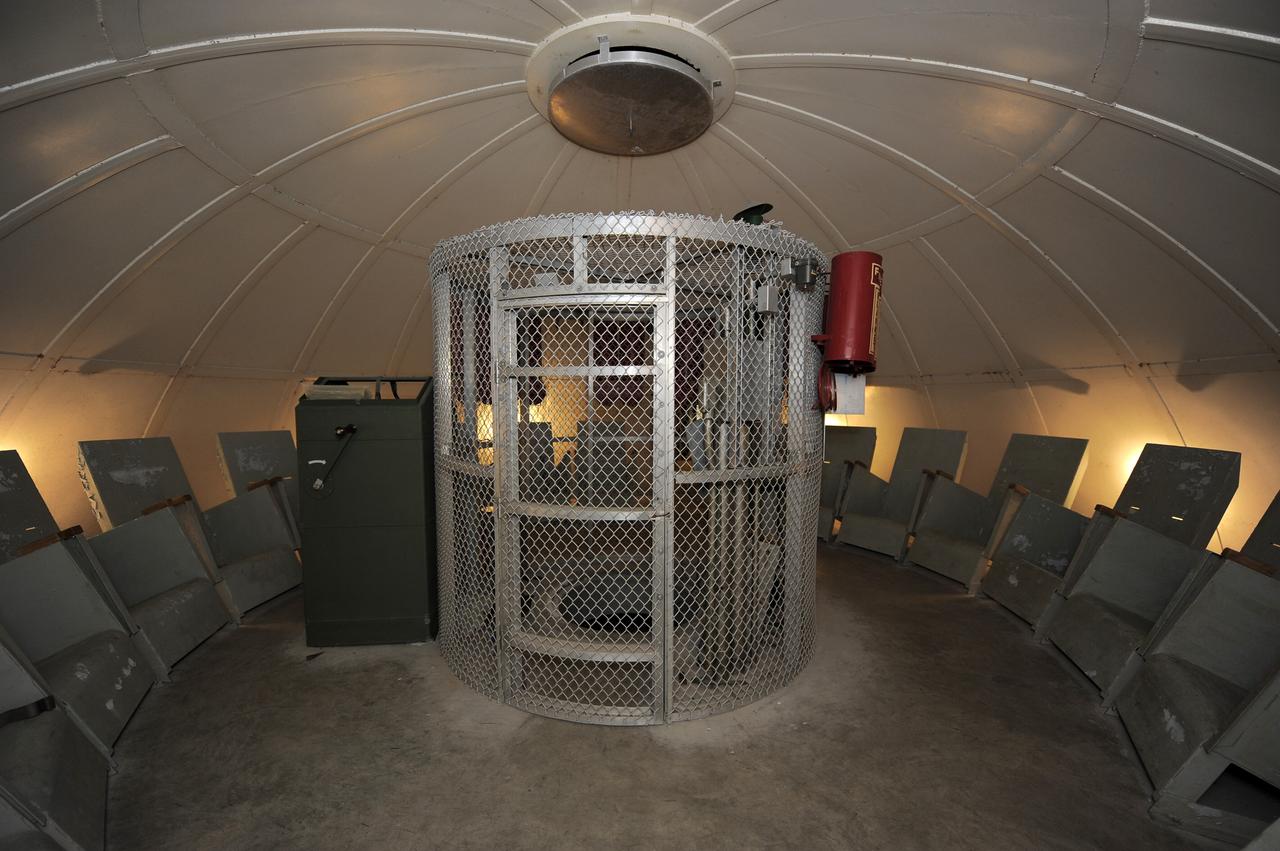
CAPE CANAVERAL, Fla. -- Empty fire blanket holders and 20 contour chairs remain in the blast-resistant "rubber room" beneath Launch Pad 39B at NASA's Kennedy Space Center in Florida. The room is a steel dome floating on rubber isolators and was used as an escape route during the Apollo Program in case of an emergency. It has since been abandoned by astronauts, but throughout the years nature found its way inside, including raccoons, snakes, birds and even a bobcat and opossum. Starting in 2009, the structure above the room on the pad was no longer needed for NASA's Space Shuttle Program, so it is being restructured for future use. The new design will feature a "clean pad" for rockets to come with their own launcher, making it more versatile for a number of vehicles. For information on NASA's future plans, visit www.nasa.gov. Photo credit: NASA/Kim Shiflett