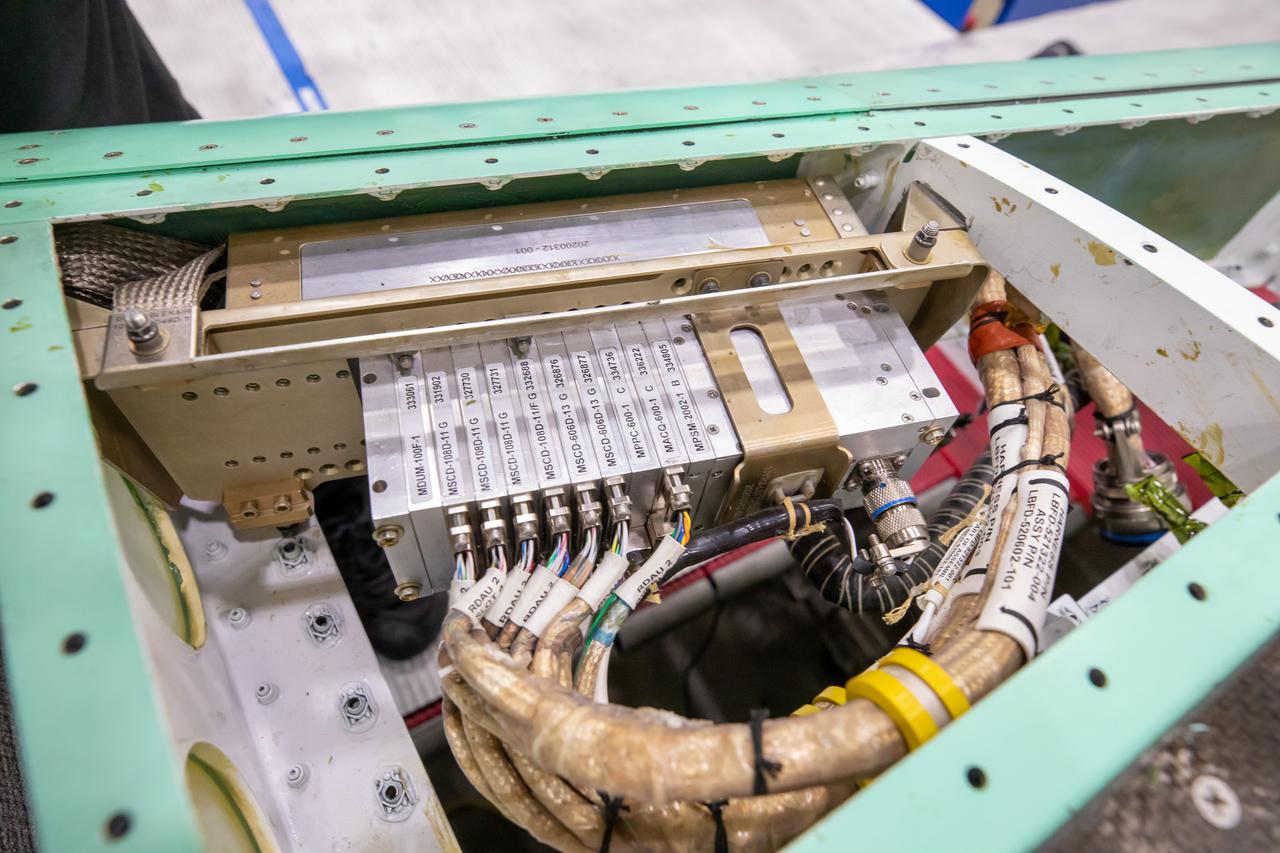
Here is a closeup of some of the X-59’s wiring and instrumentation system. Displayed here is the remote instrumentation encoder, which can be found in the wing of the aircraft. This encoder communicates with the plane’s other instrumentation systems like pressure and temperature sensors within the X-59.
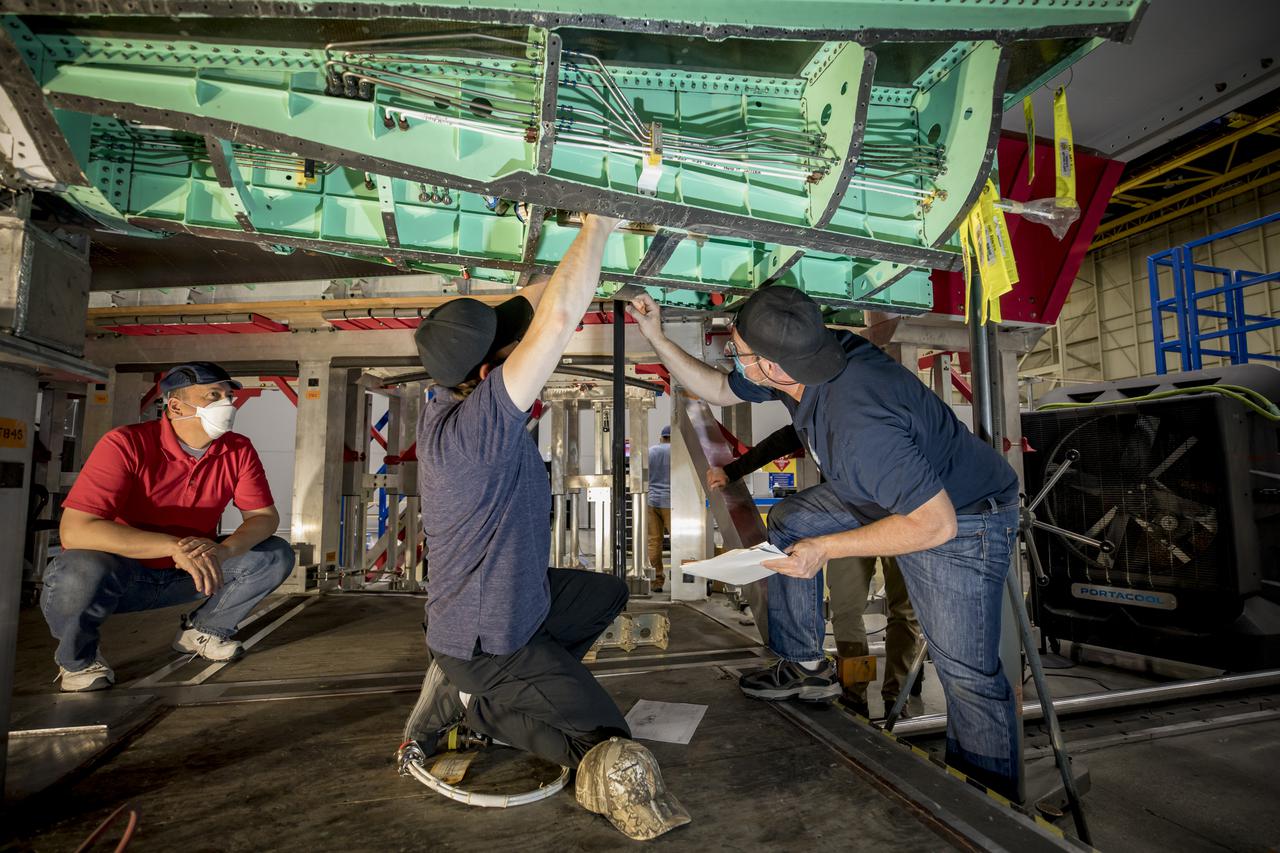
Technicians preform some installation work in the mid-bay on the X-59 Quiet SuperSonic Technology or QueSST aircraft. The aircraft, under construction at Lockheed Martin Skunk Works in Palmdale, California, will fly to demonstrate the ability to fly supersonic while reducing the loud sonic boom to a quiet sonic thump. Lockheed Martin Photography By Garry Tice 1011 Lockheed Way, Palmdale, Ca. 93599 Event: SEG 450 Mid Bay - Encoders Date: 4/28/2021
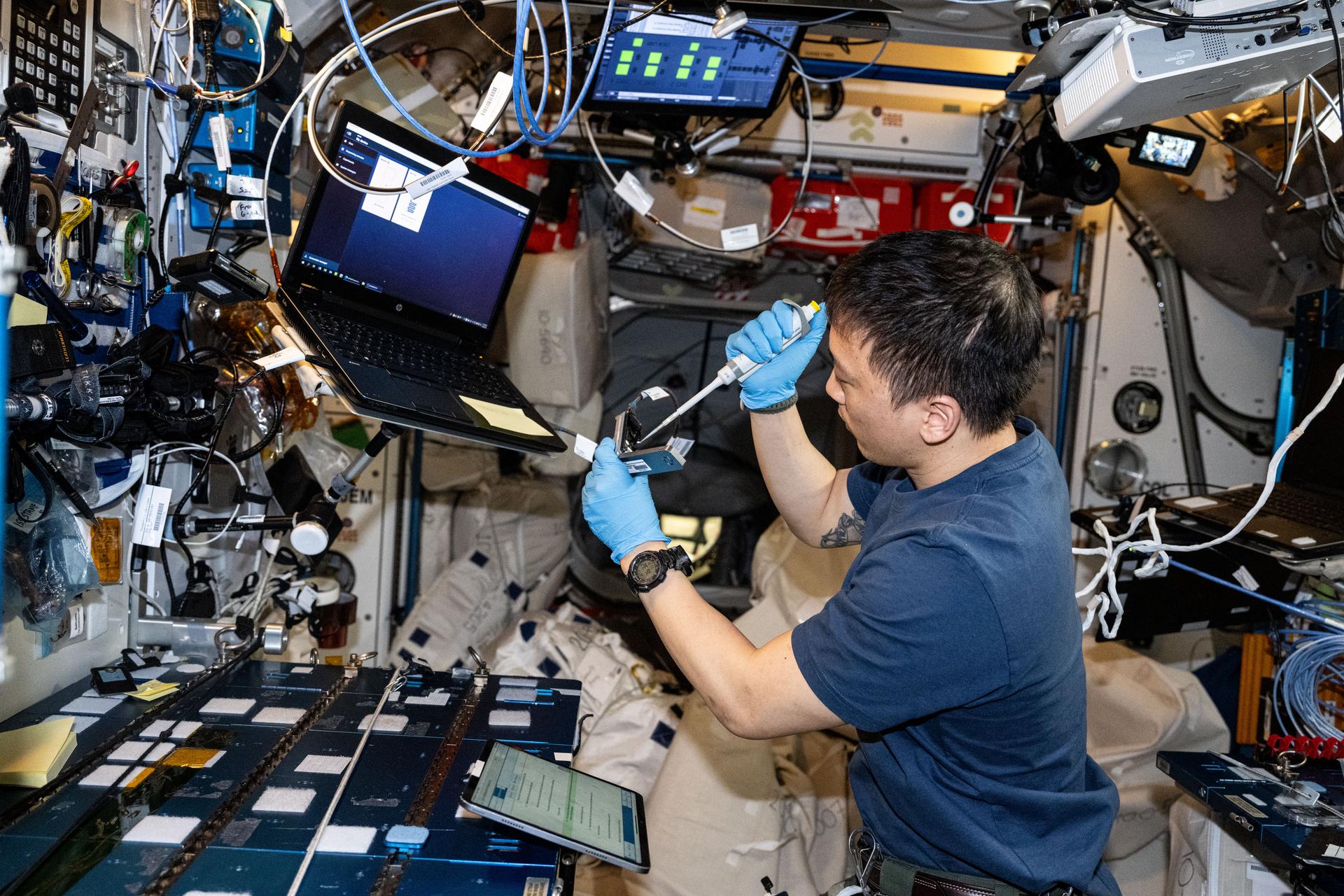
iss073e0768479 (Sept. 26, 2005) --- NASA astronaut and Expedition 73 Flight Engineer Johnny Kim works with DNA encoded with encrypted messages to demonstrate the feasibility of using DNA as a medium for securely encoding, transmitting, and decoding data both in space and on Earth. This investigation, Voyager DNA Decryption, could reduce the weight and energy requirements of traditional data storage for deep space missions.
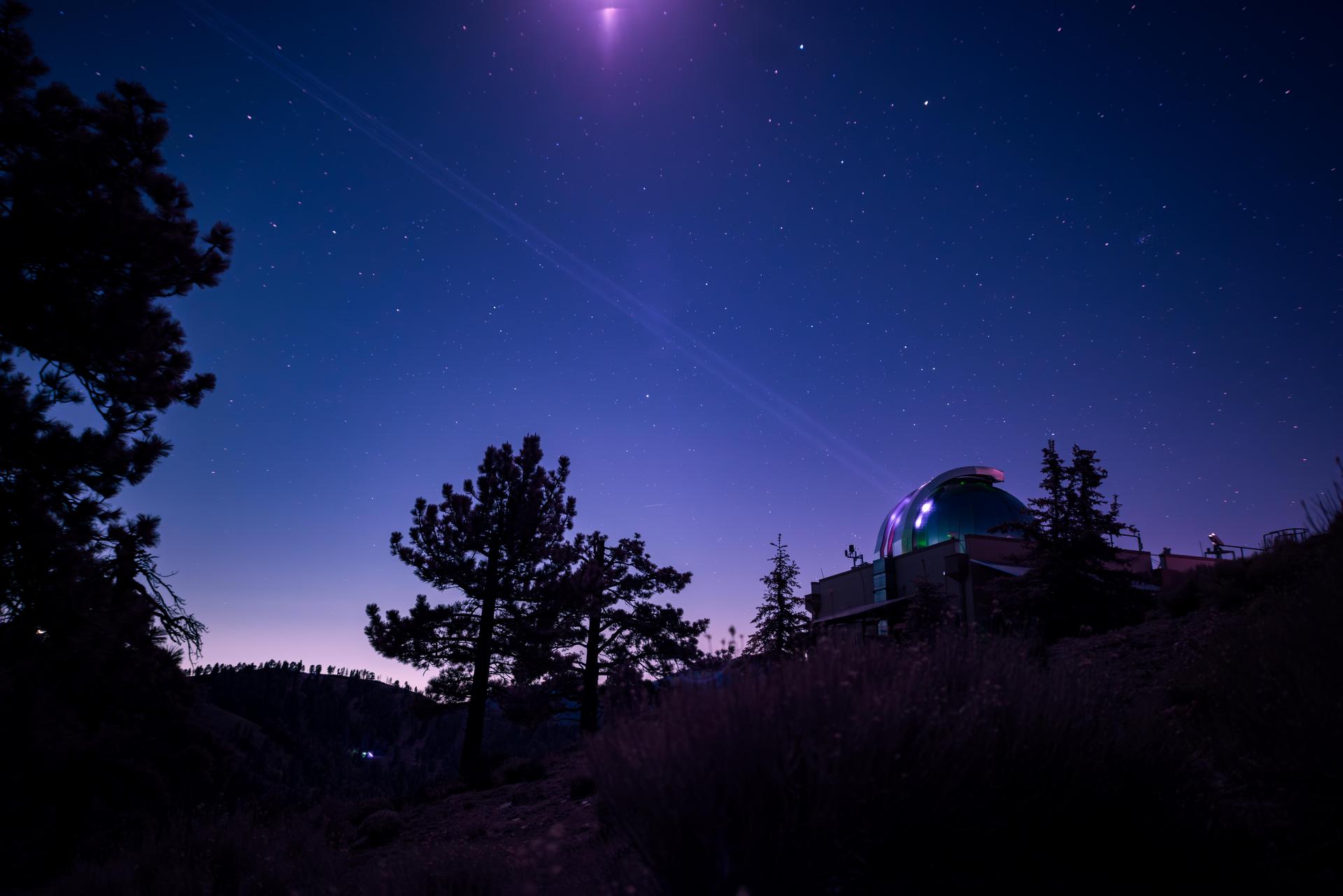
This infrared photograph shows the uplink laser beacon for NASA's Deep Space Optical Communications (DSOC) experiment beaming into the night sky from the Optical Communications Telescope Laboratory (OCTL) at NASA Jet Propulsion Laboratory's Table Mountain Facility near Wrightwood, California. Attached to the agency's Psyche spacecraft, the DSOC flight laser transceiver can receive and send data from Earth in encoded photons. As the experiment's ground laser transmitter, OCTL transmits at an infrared wavelength of 1,064 nanometers from its 3.3-foot-aperture (1-meter) telescope. The telescope can also receive faint infrared photons (at a wavelength of 1,550 nanometers) from the 4-watt flight laser transceiver on Psyche. Neither infrared wavelength is easily absorbed or scattered by Earth's atmosphere, making both ideal for deep space optical communications. To receive the most distant signals from Psyche, the project enlisted the powerful 200-inch-aperture (5-meter) Hale Telescope at Caltech's Palomar Observatory in San Diego County, California, as its primary downlink station, which provided adequate light-collecting area to capture the faintest photons. Those photons were then directed to a cryogenically cooled superconducting high-efficiency detector array at the observatory where the information encoded in the photons could be processed. Managed by JPL, DSOC was designed to demonstrate that data encoded in laser photons could be reliably transmitted, received, and then decoded after traveling millions of miles from Earth out to Mars distances. Nearly two years after launching aboard the agency's Psyche mission in 2023, the demonstration completed its 65th and final "pass" on Sept. 2, 2025, sending a laser signal to Psyche and receiving the return signal from 218 million miles (350 million kilometers) away. https://photojournal.jpl.nasa.gov/catalog/PIA26662
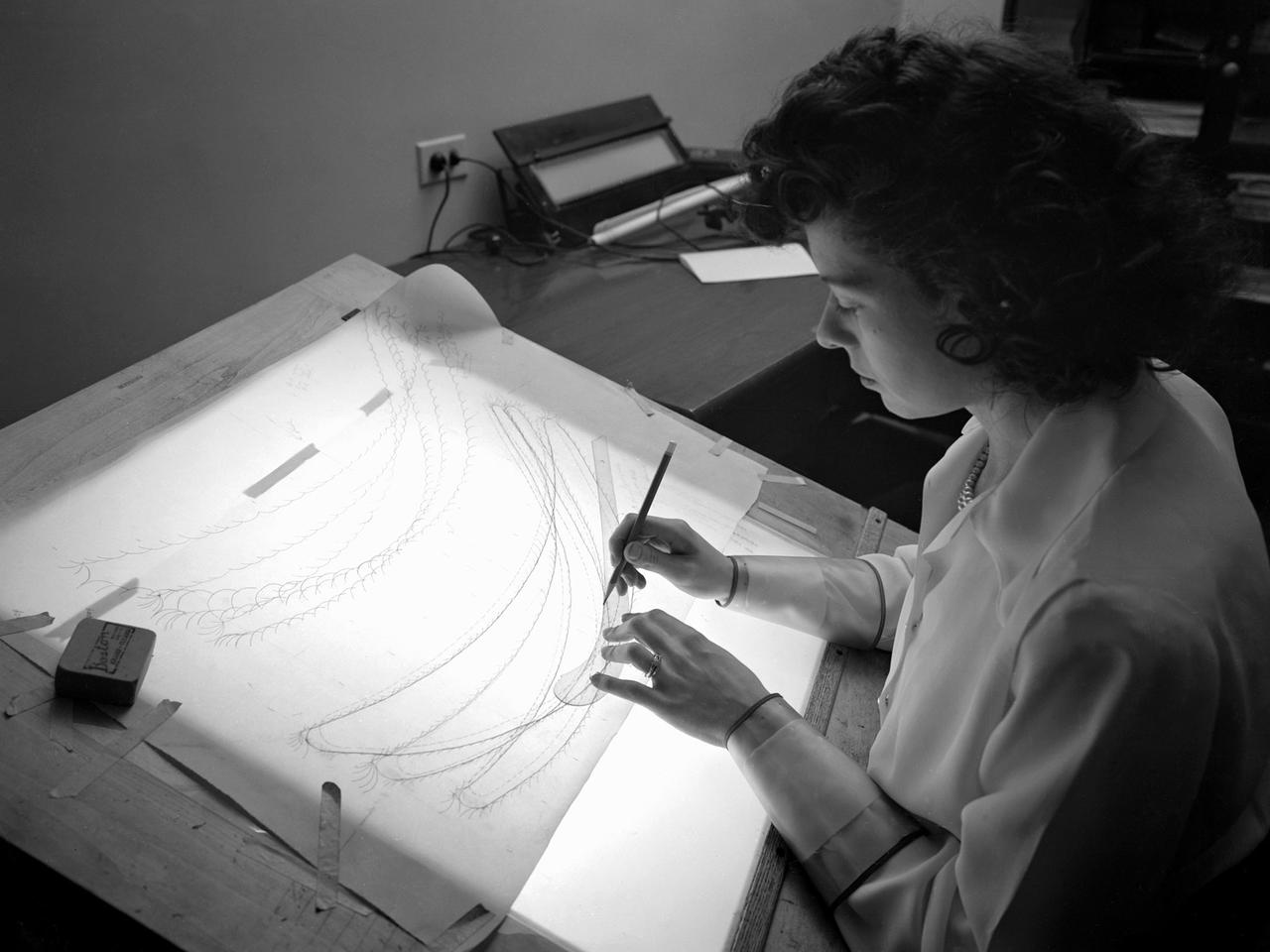
A female computer plotting compressor data in the Engine Research Building at the NACA’s Lewis Flight Propulsion Laboratory. The Computing Section was introduced during World War II to relieve short-handed research engineers of some of the tedious data-taking work. The computers made the initial computations and plotted the data graphically. The researcher then analyzed the data and either summarized the findings in a report or made modifications or ran the test again. With the introduction of mechanical computer systems in the 1950s the female computers learned how to encode the punch cards. As the data processing capabilities increased, fewer female computers were needed. Many left on their own to start families, while others earned mathematical degrees and moved into advanced positions.
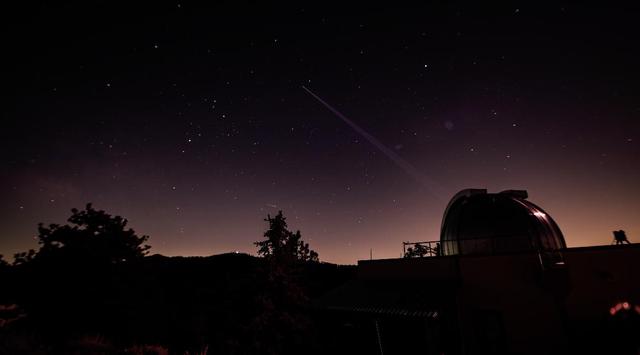
This timelapse video shows the NASA Jet Propulsion Laboratory's Table Mountain Facility near Wrightwood, California, transmitting its 3-kilowatt laser beacon to the agency's Deep Space Optical Communications (DSOC) experiment aboard NASA's Psyche mission on June 2, 2025; the spacecraft was about 143 million miles (230 million kilometers) from Earth at the time. Managed by JPL, DSOC was designed to demonstrate that data encoded in laser photons could be reliably transmitted, received, and then decoded after traveling millions of miles from Earth out to Mars distances. Nearly two years after launching aboard the agency's Psyche mission in 2023, the demonstration completed its 65th and final "pass" on Sept. 2, 2025, sending a laser signal to Psyche and receiving the return signal from 218 million miles (350 million kilometers) away. Animation available at https://photojournal.jpl.nasa.gov/catalog/PIA26663
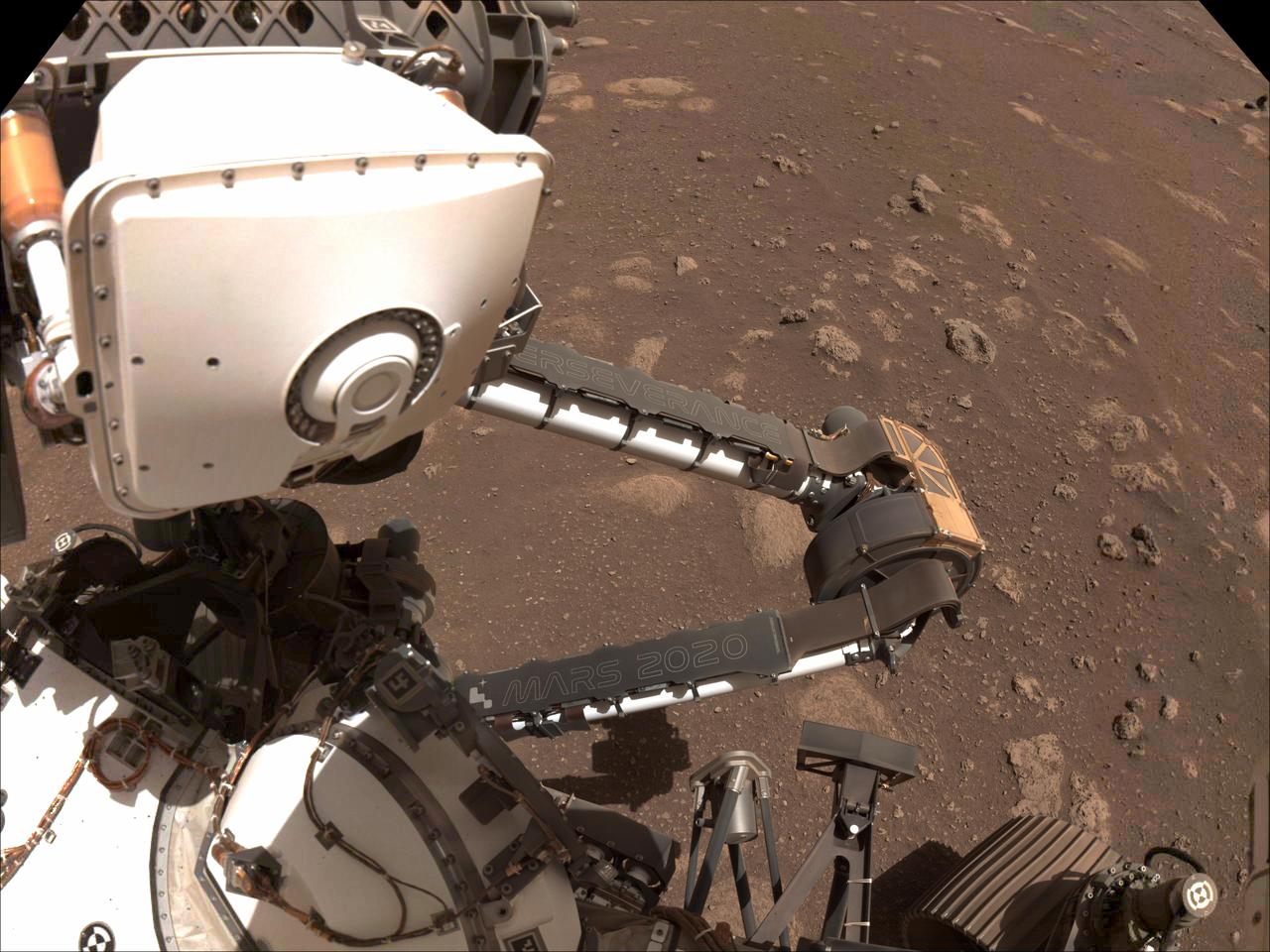
Two name plates mounted on the Mars Perseverance rover's robotic arm are visible in this composite image, made from photos taken by the rover's left Navcam on Sol 12 of its mission (March 2, 2021). The rover's name, "Perseverance," is inscribed on the plate attached to its forearm, and the mission name, "Mars 2020," is shown on its upper arm. Running vertically along the right side of the mission name plate is a string of 17 letters and numbers. These characters form a unique product identification number (PIN) similar to the Vehicle Identification Number (VIN) on vehicles on Earth, but signifying that this is an off-road vehicle. Issued in part by the Society of Automotive Engineers, a PIN or VIN number provides a unique vehicle identifier, while encoding information about the vehicle's characteristics and manufacture. Perseverance's PIN can be decoded to reveal clues about its destination, mission objective and power source. https://photojournal.jpl.nasa.gov/catalog/PIA24467
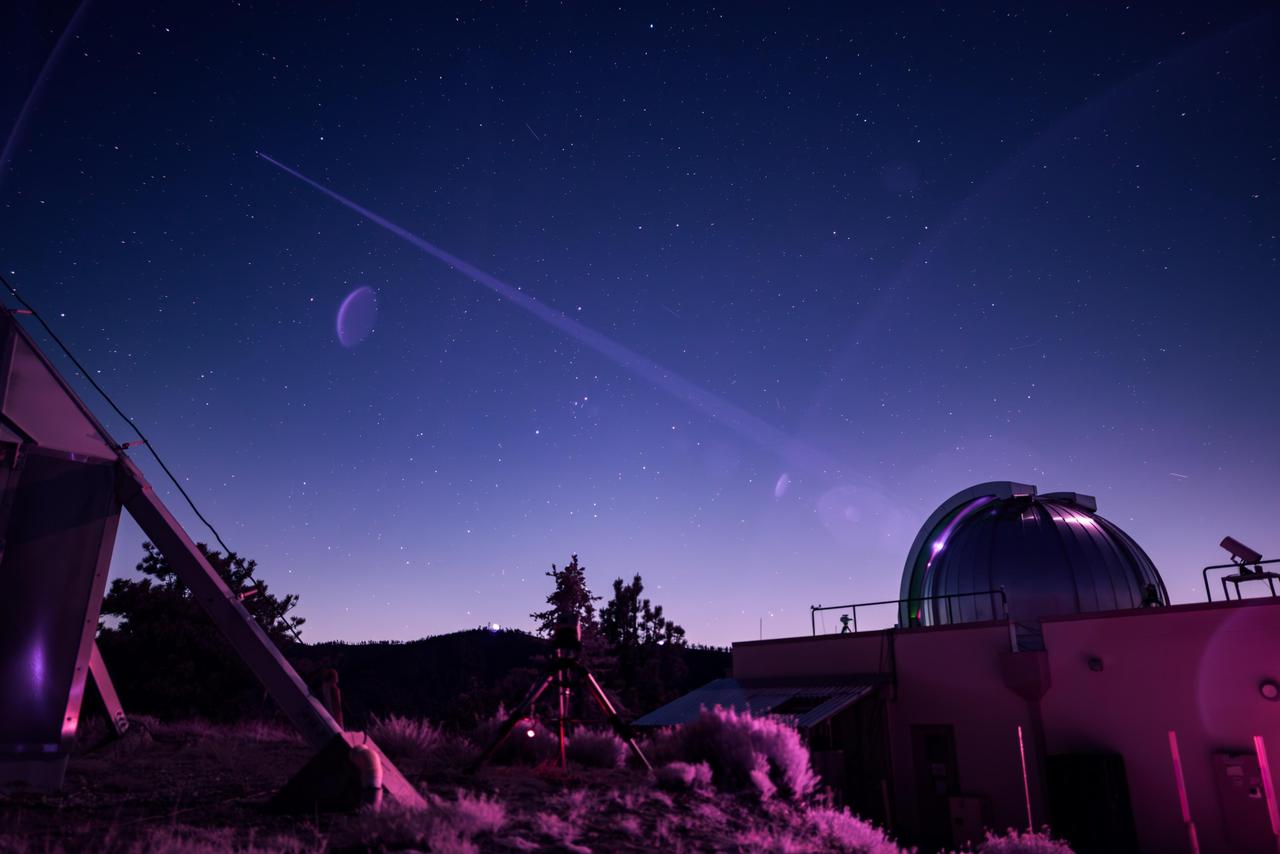
In this infrared photograph, the Optical Communications Telescope Laboratory (OCTL) at NASA Jet Propulsion Laboratory's Table Mountain Facility near Wrightwood, California, beams its eight-laser beacon (at a total power of 1.4 kilowatts) to the Deep Space Optical Communications (DSOC) flight laser transceiver aboard NASA's Psyche spacecraft. The photo was taken on June 2, 2025, when Psyche was about 143 million miles (230 million kilometers) from Earth. The faint purple crescent just left of center and near the laser beam is a lens flare caused by a bright light (out of frame) reflecting inside the camera lens. As the experiment's ground laser transmitter, OCTL transmits at an infrared wavelength of 1,064 nanometers from its 3.3-foot-aperture (1-meter) telescope. The telescope can also receive faint infrared photons (at a wavelength of 1,550 nanometers) from the 4-watt flight laser transceiver on Psyche. Neither infrared wavelength is easily absorbed or scattered by Earth's atmosphere, making both ideal for deep space optical communications. To receive the most distant signals from Psyche, the project enlisted the powerful 200-inch-aperture (5-meter) Hale Telescope at Caltech's Palomar Observatory in San Diego County, California, as its primary downlink station, which provided adequate light-collecting area to capture the faintest photons. Those photons were then directed to a cryogenically cooled superconducting high-efficiency detector array at the observatory where the information encoded in the photons could be processed. Managed by JPL, DSOC was designed to demonstrate that data encoded in laser photons could be reliably transmitted, received, and then decoded after traveling millions of miles from Earth out to Mars distances. Nearly two years after launching aboard the agency's Psyche mission in 2023, the demonstration completed its 65th and final "pass" on Sept. 2, 2025, sending a laser signal to Psyche and receiving the return signal from 218 million miles (350 million kilometers) away. https://photojournal.jpl.nasa.gov/catalog/PIA26661
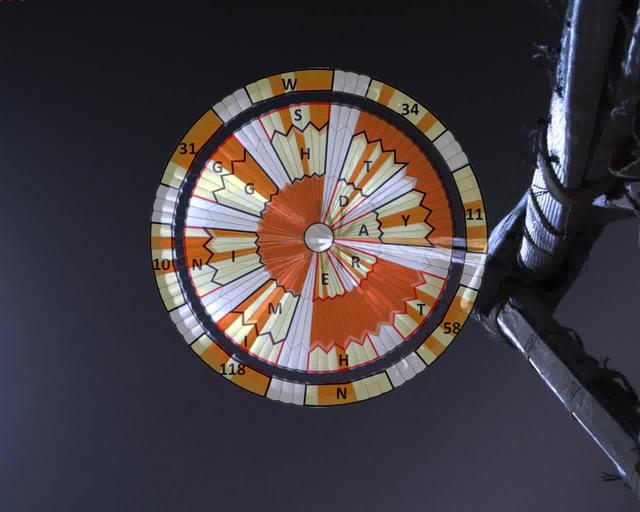
This annotated image was taken by a parachute-up-look camera aboard the protective back shell of NASA's Perseverance rover during its descent toward Mars' Jezero Crater on February 18, 2021. Using binary code, two messages have been encoded in the neutral white and international-orange parachute gores (the sections that make up the canopy's hemispherical shape). The inner portion spells out "DARE MIGHTY THINGS," with each word located on its own ring of gores. The outer band of the canopy provides GPS coordinates for NASA's Jet Propulsion Laboratory in Southern California, where the rover was built and the project is managed. Mars 2020 Perseverance Systems Engineer Ian Clark designed the binary code pattern. The saying is JPL's motto and is an abridgement of a quote from Teddy Roosevelt's "Strenuous Life" speech: "Far better is it to dare mighty things, to win glorious triumphs, even though checkered by failure ... than to rank with those poor spirits who neither enjoy nor suffer much, because they live in a gray twilight that knows not victory nor defeat." https://photojournal.jpl.nasa.gov/catalog/PIA24431
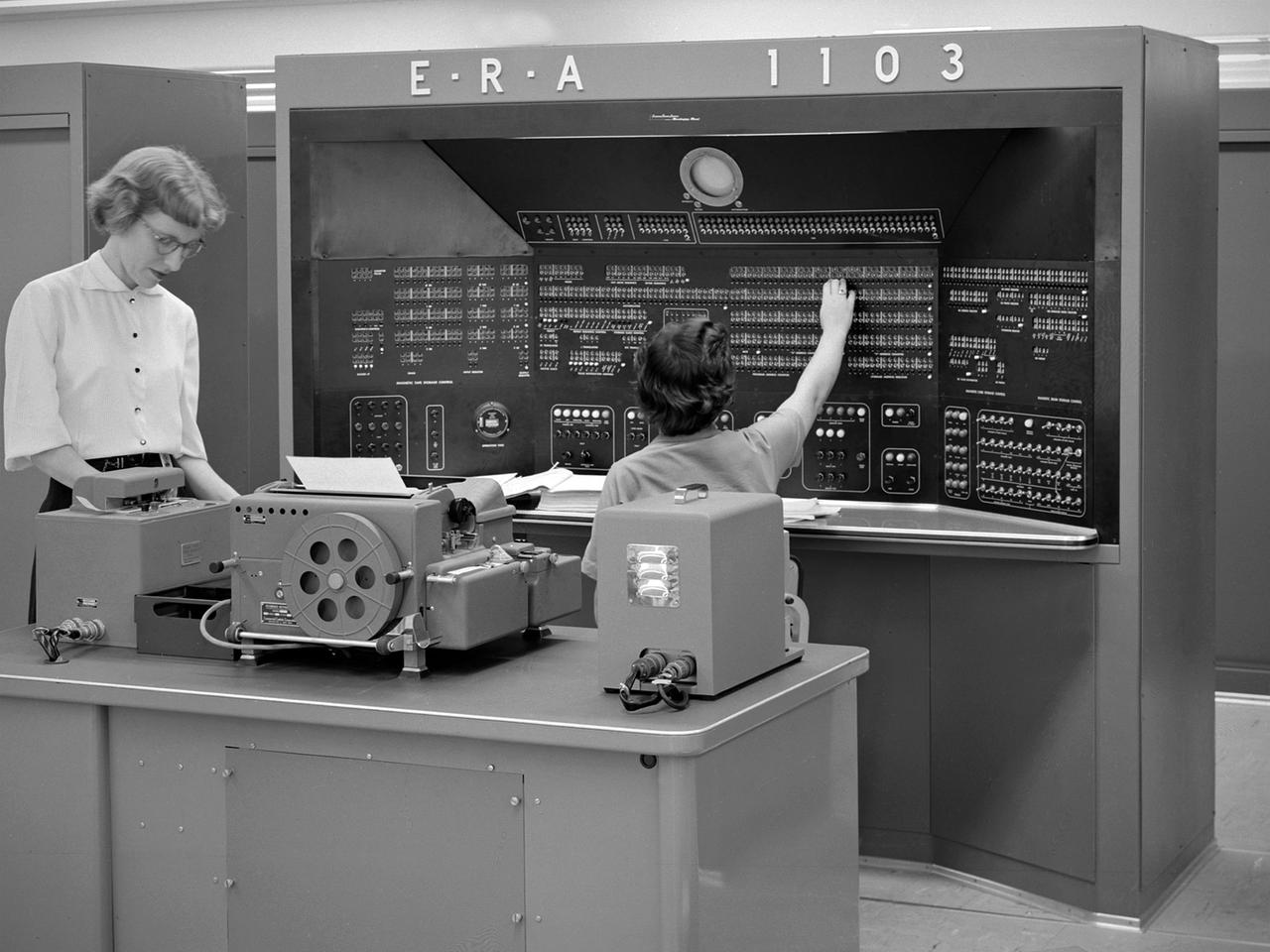
The new 10-by 10-Foot Supersonic Wind Tunnel at the Lewis Flight Propulsion Laboratory included high tech data acquisition and analysis systems. The reliable gathering of pressure, speed, temperature, and other data from test runs in the facilities was critical to the research process. Throughout the 1940s and early 1950s female employees, known as computers, recorded all test data and performed initial calculations by hand. The introduction of punch card computers in the late 1940s gradually reduced the number of hands-on calculations. In the mid-1950s new computational machines were installed in the office building of the 10-by 10-Foot tunnel. The new systems included this UNIVAC 1103 vacuum tube computer—the lab’s first centralized computer system. The programming was done on paper tape and fed into the machine. The 10-by 10 computer center also included the Lewis-designed Computer Automated Digital Encoder (CADDE) and Digital Automated Multiple Pressure Recorder (DAMPR) systems which converted test data to binary-coded decimal numbers and recorded test pressures automatically, respectively. The systems primarily served the 10-by 10, but were also applied to the other large facilities. Engineering Research Associates (ERA) developed the initial UNIVAC computer for the Navy in the late 1940s. In 1952 the company designed a commercial version, the UNIVAC 1103. The 1103 was the first computer designed by Seymour Cray and the first commercially successful computer.
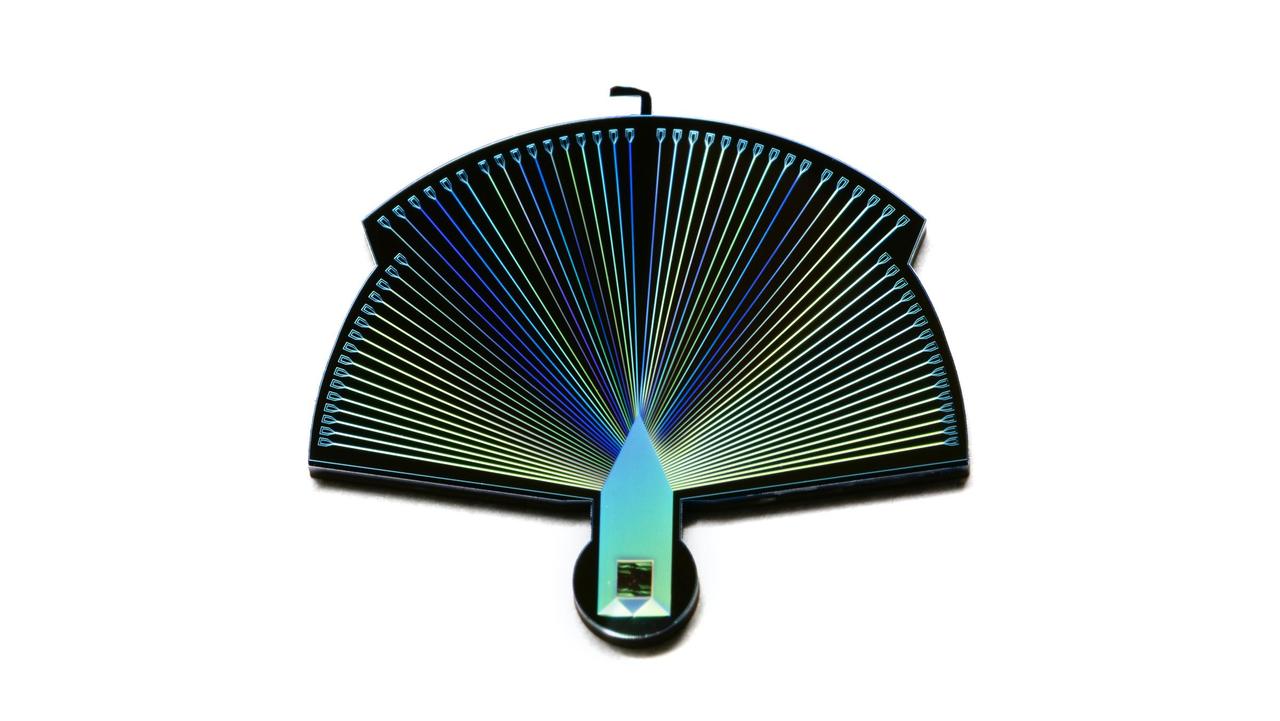
This close-up photograph shows a single Performance-Enhanced Array for Counting Optical Quanta (PEACOQ) detector. Smaller than a dime, a single detector consists of 32 niobium nitride superconducting nanowires on a silicon chip, which is attached to connectors that fan out like the plumage of the device's namesake. Each individual nanowire is about 10,000 times thinner than a human hair and the active detector (housed inside the green-black square at the bottom of the device) measures only 13 microns across. Figure A shows a silicon wafer that has had 32 PEACOQ detectors printed onto it by the Microdevices Laboratory at NASA's Jet Propulsion Laboratory in Southern California. The exquisitely sensitive PEACOQ detector is being developed at JPL to detect single photons – quantum particles of light – at an extremely high rate. Like counting individual droplets of water while being sprayed by a firehose, each PEACOQ detector can measure the precise time each photon hits the detector (to within 100 trillionths of a second) at a rate of 1.5 billion photons per second. No other detector has achieved that rate. The detector could help form a global quantum communications network, facilitating the transfer of data between quantum computers that are separated by hundreds of miles. PEACOQ detectors could be located at ground-based terminals to receive photons encoded with quantum information transmitted from space "nodes" aboard satellites orbiting Earth. https://photojournal.jpl.nasa.gov/catalog/PIA25260
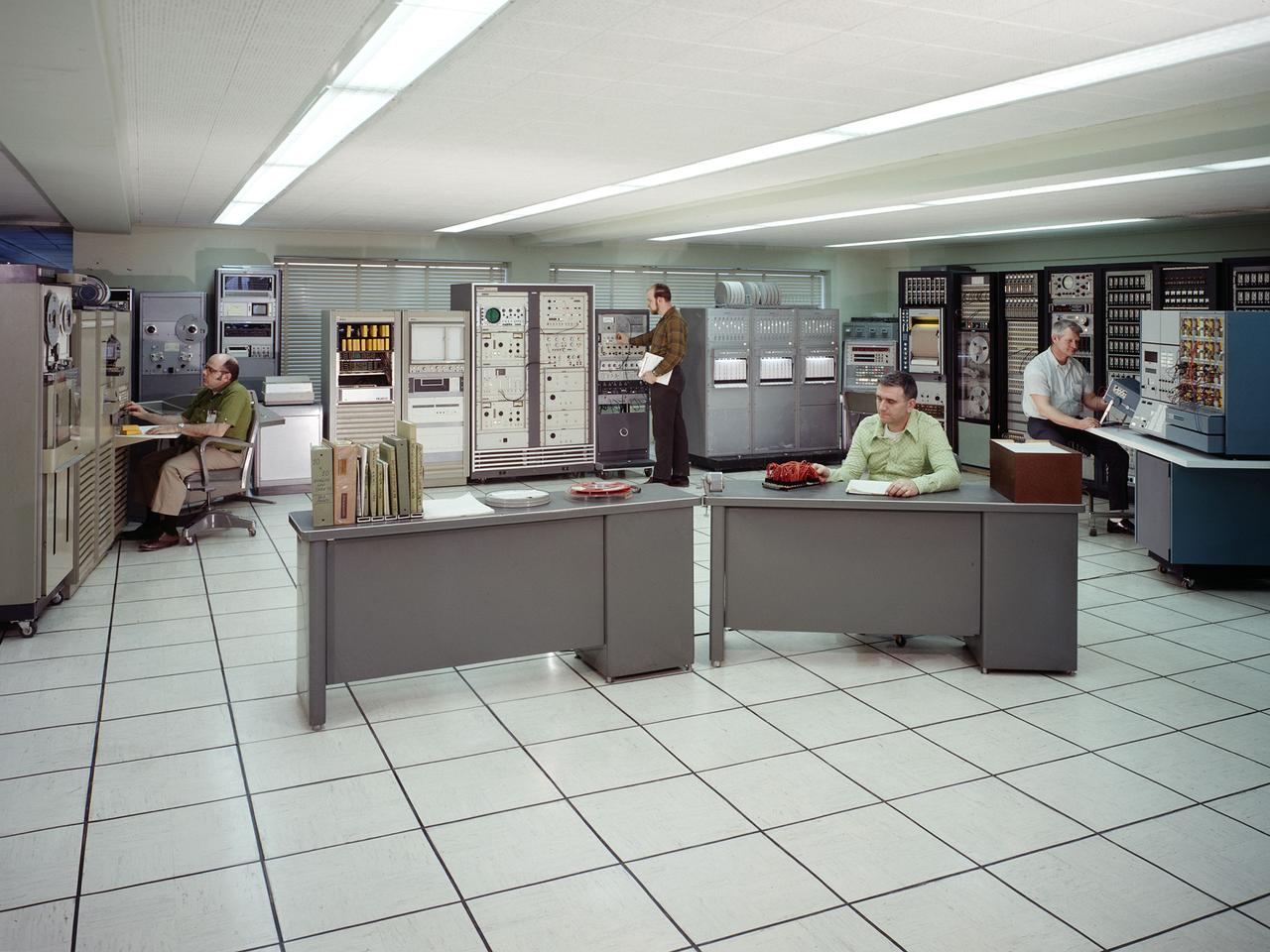
The test data recording equipment located in the office building of the 10-by 10-Foot Supersonic Wind Tunnel at the NASA Lewis Research Center. The data system was the state of the art when the facility began operating in 1955 and was upgraded over time. NASA engineers used solenoid valves to measure pressures from different locations within the test section. Up 48 measurements could be fed into a single transducer. The 10-by 10 data recorders could handle up to 200 data channels at once. The Central Automatic Digital Data Encoder (CADDE) converted this direct current raw data from the test section into digital format on magnetic tape. The digital information was sent to the Lewis Central Computer Facility for additional processing. It could also be displayed in the control room via strip charts or oscillographs. The 16-by 56-foot long ERA 1103 UNIVAC mainframe computer processed most of the digital data. The paper tape with the raw data was fed into the ERA 1103 which performed the needed calculations. The information was then sent back to the control room. There was a lag of several minutes before the computed information was available, but it was exponentially faster than the hand calculations performed by the female computers. The 10- by 10-foot tunnel, which had its official opening in May 1956, was built under the Congressional Unitary Plan Act which coordinated wind tunnel construction at the NACA, Air Force, industry, and universities. The 10- by 10 was the largest of the three NACA tunnels built under the act.
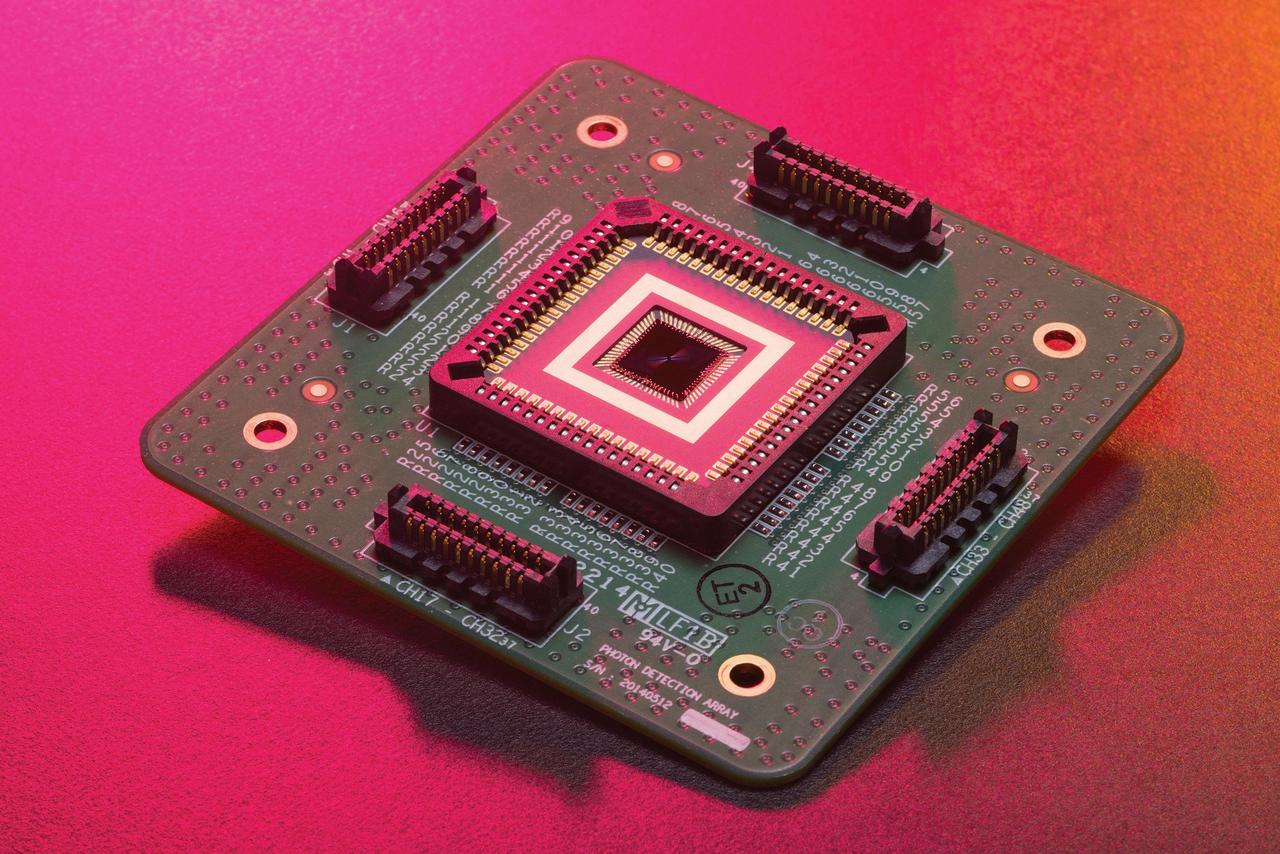
Shown here is a prototype of the Deep Space Optical Communications, or DSOC, ground receiver detector built by the Microdevices Laboratory at NASA's Jet Propulsion Laboratory in Southern California. The prototype superconducting nanowire single-photon detector was used by JPL technologists to help develop the detector that – from a station on Earth – will receive near-infrared laser signals from the DSOC flight transceiver traveling with NASA's Psyche mission in deep space. DSOC will test key technologies that could enable high-bandwidth optical, or laser, communications from Mars distances. Bolted to the side of the spacecraft and operating for the first two years of Psyche's journey to the asteroid of the same name, the DSOC flight laser transceiver will transmit high-rate data to Caltech's Palomar Observatory in San Diego County, California, which houses the 200-inch (5.1-meter) Hale Telescope. The downlink detector converts optical signals to electrical signals, which can be processed and decoded. The detector is designed to be both sensitive enough to detect single photons (quantum particles of light) and able to detect many photons arriving all at once. At its farthest point during the technology demonstration's operations period, the transceiver will be up to 240 million miles (390 million kilometers) away, meaning that by the time its weak laser pulses arrive at Earth, the detector will need to efficiently detect a trickle of single photons. But when the spacecraft is closer to Earth and the flight transceiver is delivering its highest bit rate to Palomar, the detector is capable of detecting very high numbers of photons without becoming overwhelmed. Because data is encoded in the timing of the laser pulses, the detector must also be able to determine the time of a photon's arrival with a precision of 100 picoseconds (one picosecond is one trillionth of a second). DSOC is the latest in a series of optical communication technology demonstrations funded by NASA's Technology Demonstrations Missions (TDM) program and the agency's Space Communications and Navigation (SCaN) program. JPL, a division of Caltech in Pasadena, California, manages DSOC for TDM within NASA's Space Technology Mission Directorate and SCaN within the agency's Space Operations Mission Directorate. https://photojournal.jpl.nasa.gov/catalog/PIA25840
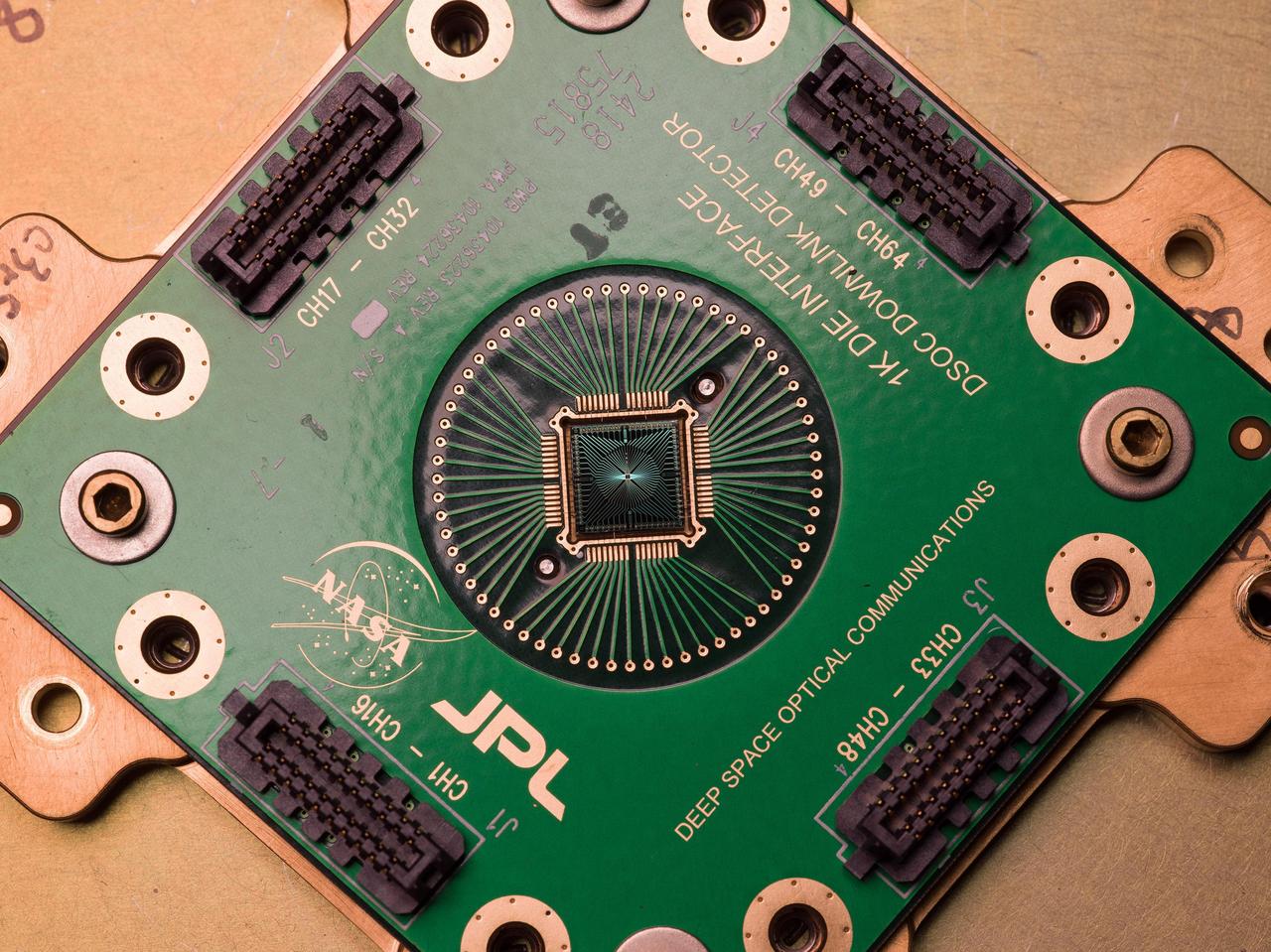
Shown here is an identical copy of the Deep Space Optical Communications, or DSOC, superconducting nanowire single-photon detector that is coupled to the 200-inch (5.1-meter) Hale Telescope located at Caltech's Palomar Observatory in San Diego County, California. Built by the Microdevices Laboratory at NASA's Jet Propulsion Laboratory in Southern California, the detector is designed to receive near-infrared laser signals from the DSOC flight transceiver traveling with NASA's Psyche mission in deep space as a part of the technology demonstration. DSOC will test key technologies that could enable high-bandwidth optical, or laser, communications from Mars distances. Bolted to the side of the spacecraft and operating for the first two years of Psyche's journey to the asteroid of the same name, the DSOC flight laser transceiver will transmit high-rate data to Caltech's Palomar Observatory in San Diego County, California, which houses the 200-inch (5.1-meter) Hale Telescope. The downlink detector converts optical signals to electrical signals, which can be processed and decoded. The detector is designed to be both sensitive enough to detect single photons (quantum particles of light) and able to detect many photons arriving all at once. At its farthest point during the technology demonstration's operations period, the transceiver will be up to 240 million miles (390 million kilometers) away, meaning that by the time its weak laser pulses arrive at Earth, the detector will need to efficiently detect a trickle of single photons. But when the spacecraft is closer to Earth and the flight transceiver is delivering its highest bit rate to Palomar, the detector is capable of detecting very high numbers of photons without becoming overwhelmed. Because data is encoded in the timing of the laser pulses, the detector must also be able to determine the time of a photon's arrival with a precision of 100 picoseconds (one picosecond is one trillionth of a second). To sense single photons, the detector must be in a superconducting state (when electrical current flows with zero resistance), so it is cryogenically cooled to less than minus 458 degrees Fahrenheit (or 1 Kelvin), which is close to absolute zero, or the lowest temperature possible. A photon absorbed in the detector disrupts its superconducting state, creating a measurable electrical pulse as current leaves the detector. DSOC is the latest in a series of optical communication technology demonstrations funded by NASA's Technology Demonstrations Missions (TDM) program and the agency's Space Communications and Navigation (SCaN) program. JPL, a division of Caltech in Pasadena, California, manages DSOC for TDM within NASA's Space Technology Mission Directorate and SCaN within the agency's Space Operations Mission Directorate. https://photojournal.jpl.nasa.gov/catalog/PIA26141
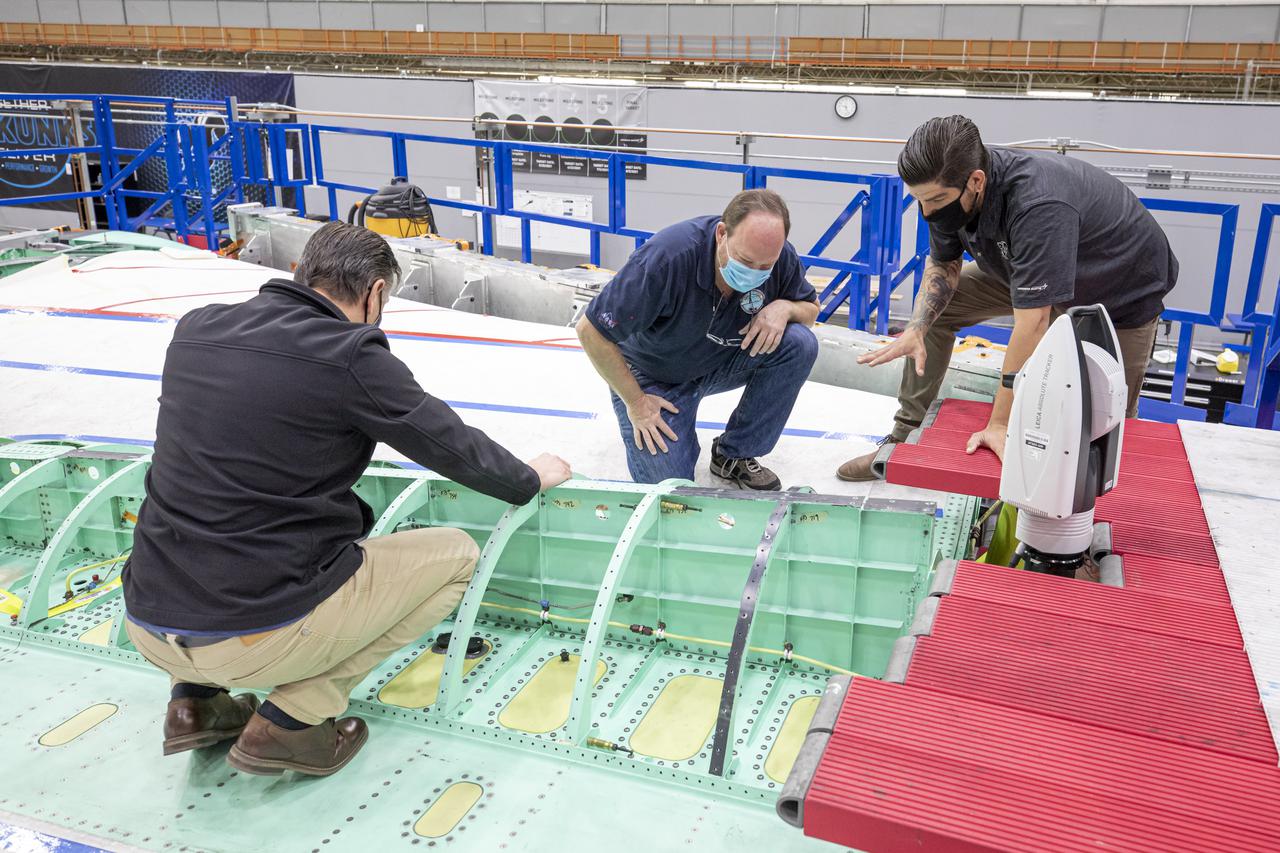
Technicians work with a laser measuring system on the X-59 spine. The X-59 Quiet SuperSonic Technology, or QueSST, aircraft is under construction at Lockheed Martin Skunk Works in Palmdale, California, and will fly to demonstrate the ability to fly supersonic while reducing the loud sonic boom to a quiet sonic thump. Lockheed Martin Photography By Garry Tice 1011 Lockheed Way, Palmdale, Ca. 93599 Event: SEG 400 Main Wing Assembly, SEG 430 Spine, SEG 500 Empennage Date: 4/28/2021
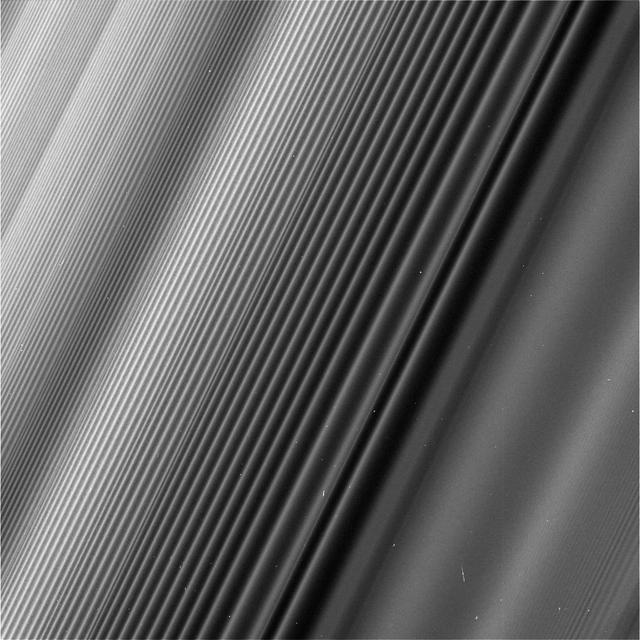
This view from NASA's Cassini spacecraft shows a wave structure in Saturn's rings known as the Janus 2:1 spiral density wave. Resulting from the same process that creates spiral galaxies, spiral density waves in Saturn's rings are much more tightly wound. In this case, every second wave crest is actually the same spiral arm which has encircled the entire planet multiple times. This is the only major density wave visible in Saturn's B ring. Most of the B ring is characterized by structures that dominate the areas where density waves might otherwise occur, but this innermost portion of the B ring is different. The radius from Saturn at which the wave originates (toward lower-right in this image) is 59,796 miles (96,233 kilometers) from the planet. At this location, ring particles orbit Saturn twice for every time the moon Janus orbits once, creating an orbital resonance. The wave propagates outward from the resonance (and away from Saturn), toward upper-left in this view. For reasons researchers do not entirely understand, damping of waves by larger ring structures is very weak at this location, so this wave is seen ringing for hundreds of bright wave crests, unlike density waves in Saturn's A ring. The image gives the illusion that the ring plane is tilted away from the camera toward upper-left, but this is not the case. Because of the mechanics of how this kind of wave propagates, the wavelength decreases with distance from the resonance. Thus, the upper-left of the image is just as close to the camera as the lower-right, while the wavelength of the density wave is simply shorter. This wave is remarkable because Janus, the moon that generates it, is in a strange orbital configuration. Janus and Epimetheus share practically the same orbit and trade places every four years. Every time one of those orbit swaps takes place, the ring at this location responds, spawning a new crest in the wave. The distance between any pair of crests corresponds to four years' worth of the wave propagating downstream from the resonance, which means the wave seen here encodes many decades' worth of the orbital history of Janus and Epimetheus. According to this interpretation, the part of the wave at the very upper-left of this image corresponds to the positions of Janus and Epimetheus around the time of the Voyager flybys in 1980 and 1981, which is the time at which Janus and Epimetheus were first proven to be two distinct objects (they were first observed in 1966). Epimetheus also generates waves at this location, but they are swamped by the waves from Janus, since Janus is the larger of the two moons. This image was taken on June 4, 2017, with the Cassini spacecraft narrow-angle camera. The image was acquired on the sunlit side of the rings from a distance of 47,000 miles (76,000 kilometers) away from the area pictured. The image scale is 1,730 feet (530 meters) per pixel. The phase angle, or sun-ring-spacecraft angle, is 90 degrees. https://photojournal.jpl.nasa.gov/catalog/PIA21627