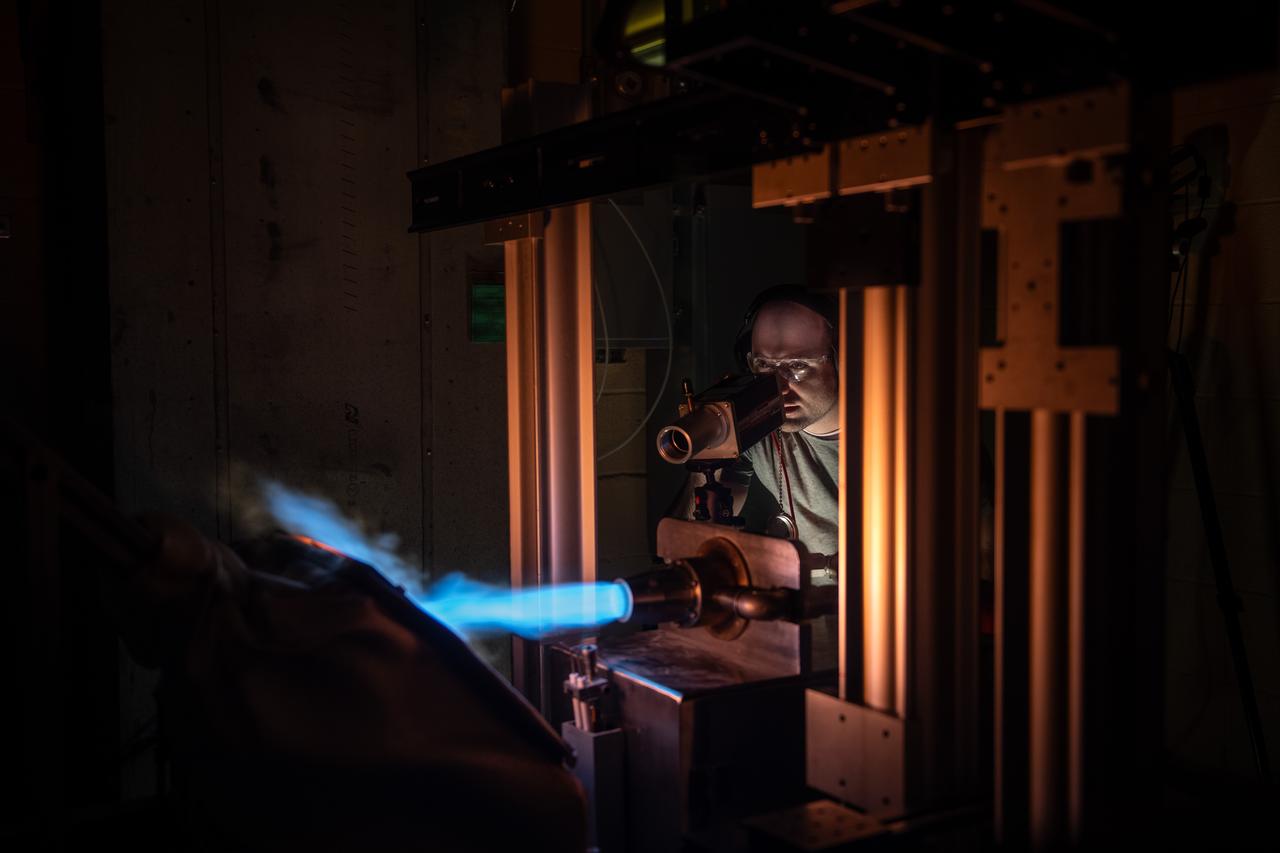
NASA Glenn’s Natural Gas/Oxygen Burner Rig is used to study the high temperature performance of various metal alloys, ceramics, and protective coatings for aero and space propulsion systems. The burner rig provides an easily accessible and economical method to simulate engine operating conditions to understand thermomechanical and thermochemical degradation of materials and structures. In the photo, Materials Research Engineer Michael Presby uses an infrared pyrometer to monitor the surface temperature of the material for a test on February 23, 2024. Photo Credit: (NASA/Sara Lowthian-Hanna)

KENNEDY SPACE CENTER, FLA. - While Jay Beason (left), with United Space Alliance, looks on, Jeremy Schwarz (front) and Tom Summers (behind), also with USA, place new tiles on the heat shield of main engine 1 for the orbiter Discovery. A heat shield is a protective layer on a spacecraft designed to protect it from the high temperatures, usually those that result from aerobraking during reentry into the Earth’s atmosphere.
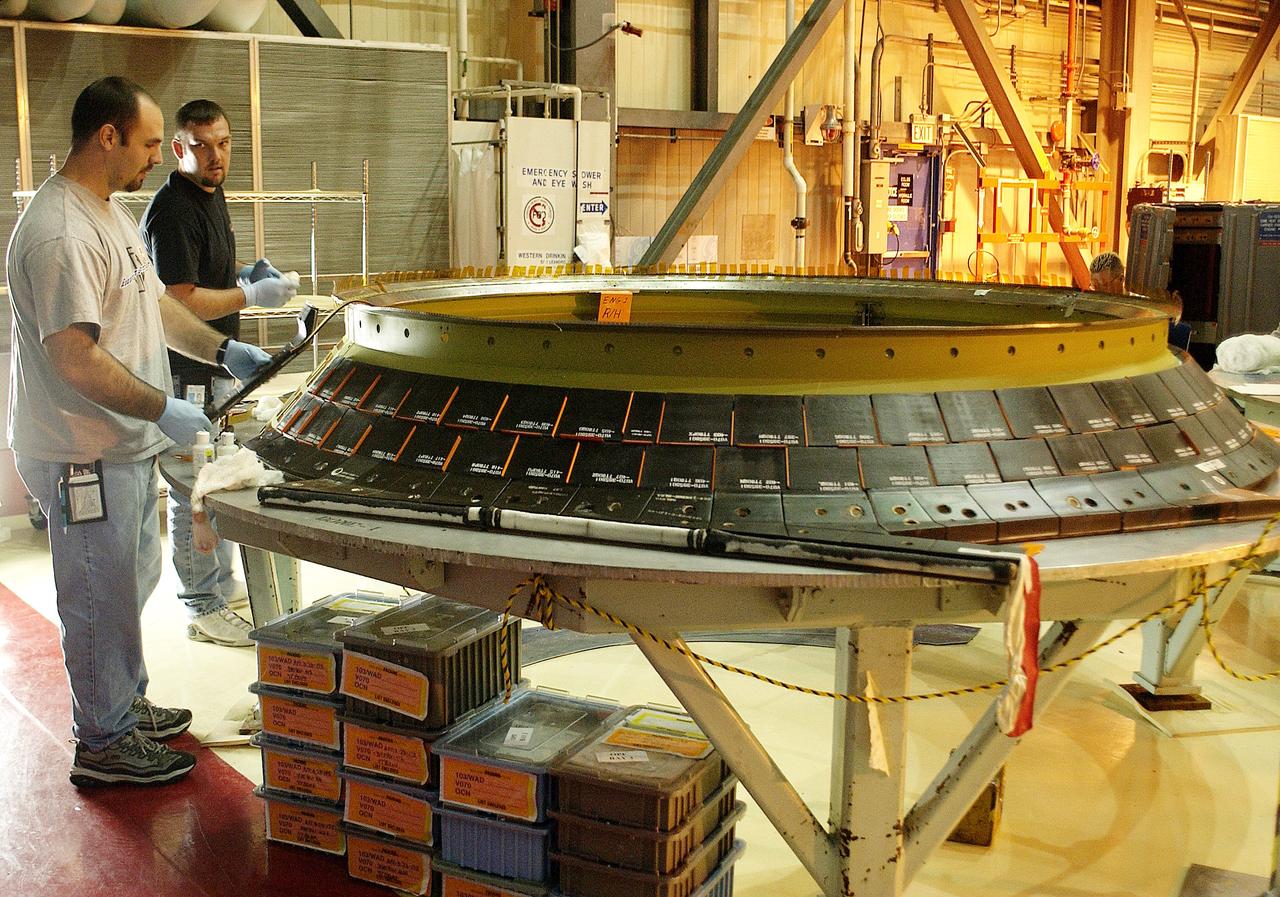
KENNEDY SPACE CENTER, FLA. - United Space Alliance employees Jeremy Schwarz (left) and Chris Keeling install new tiles on the heat shield of main engine 1 for the orbiter Discovery. A heat shield is a protective layer on a spacecraft designed to protect it from the high temperatures, usually those that result from aerobraking during reentry into the Earth’s atmosphere.
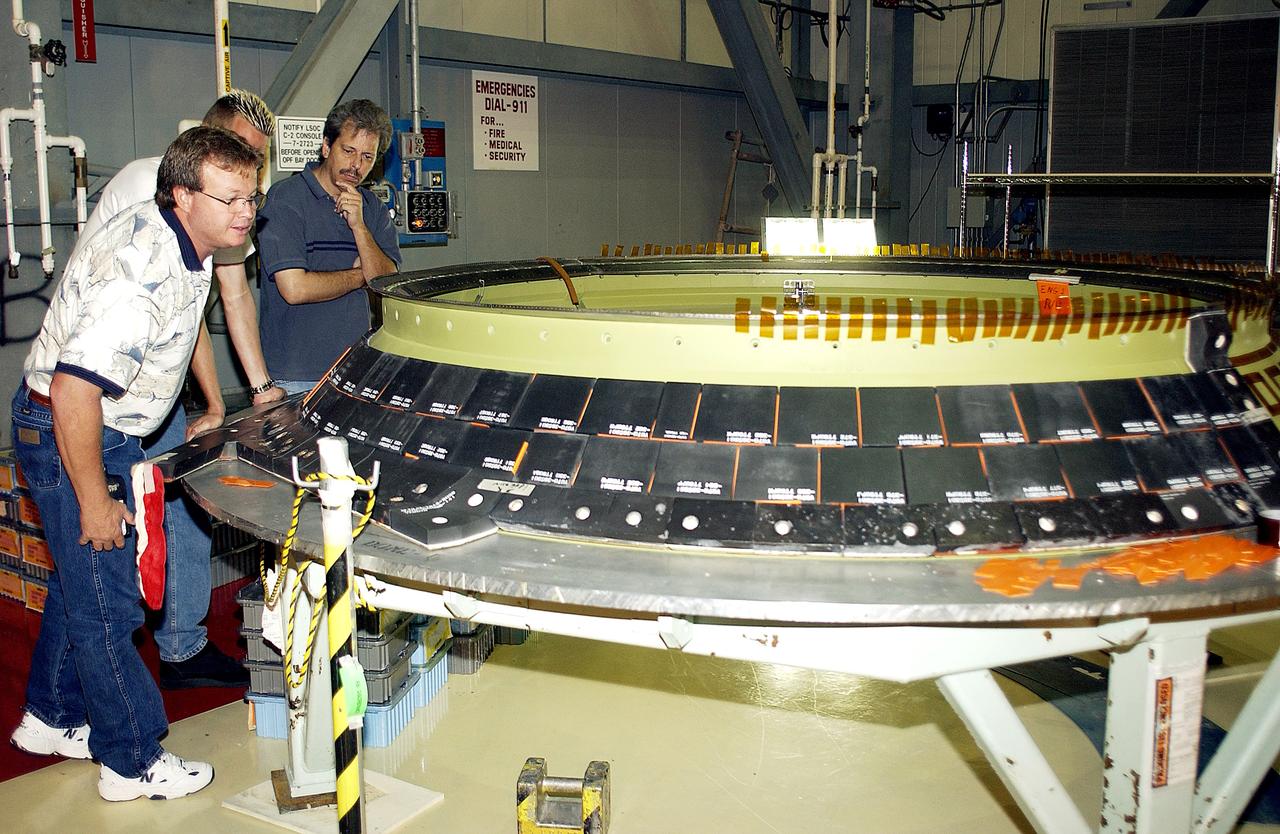
KENNEDY SPACE CENTER, FLA. - United Space Alliance employees (from left) Daryl Burke, Jay Beason and Tom Summers check new tiles installed on the heat shield of main engine 1 for the orbiter Discovery. A heat shield is a protective layer on a spacecraft designed to protect it from the high temperatures, usually those that result from aerobraking during reentry into the Earth’s atmosphere.
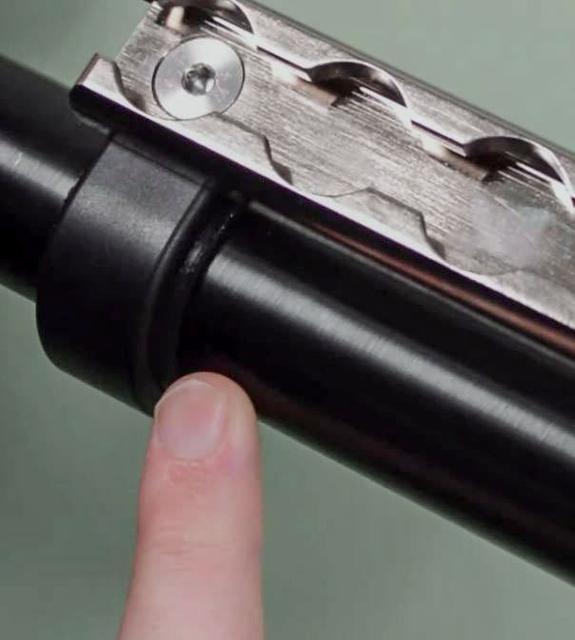
jsc2023e010183 (2/28/2023) --- The High school students United with NASA to Create Hardware (HUNCH) Ball Clamp Monopod (HUNCH Ball Clamp Monopod) investigation aims to test a temporary but stable platform for holding cameras, making camera operations easier and faster for the International Space Station crew. This hardware was designed and developed by HUNCH students using engineering design processes. They produced elements such as Computer Aided Design (CAD) drawings, CAD study models, and 3D printed engineering evaluation units on parts such as this insert that allow the seat track clamp to be positioned. Image courtesy of HUNCH.
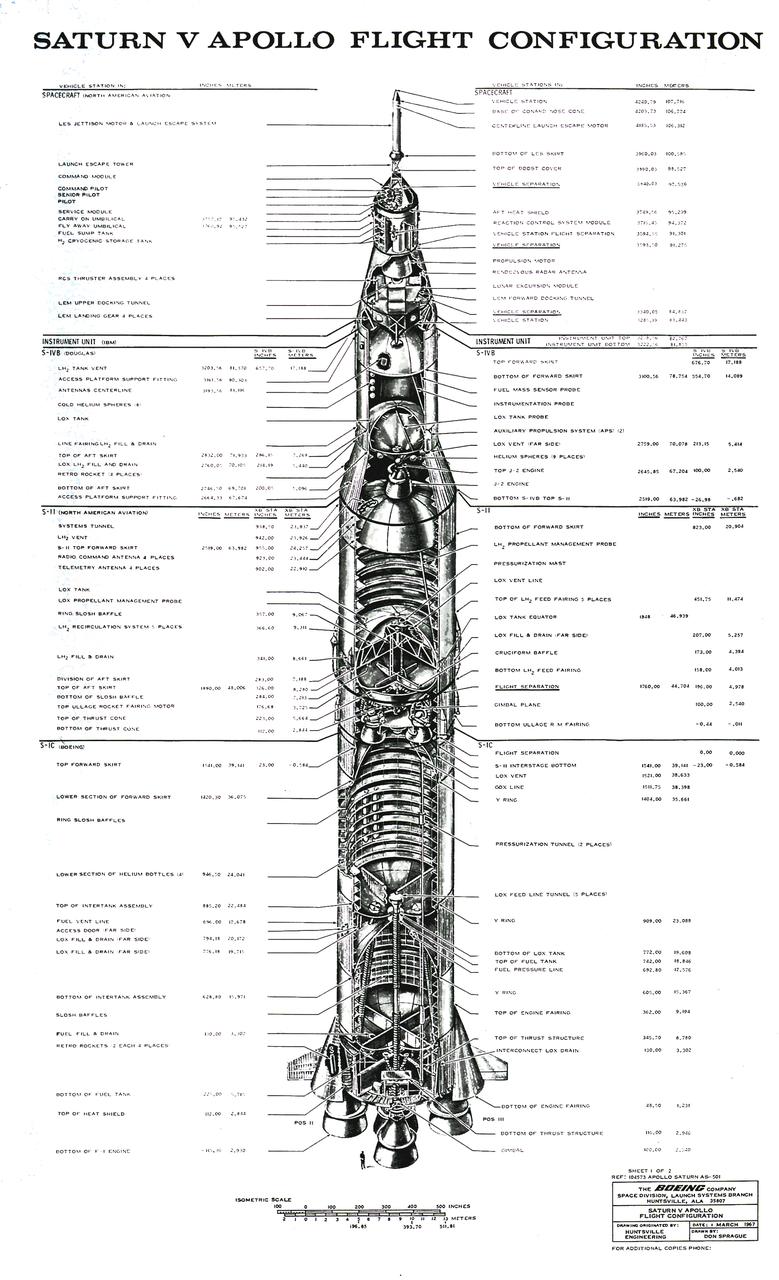
The Saturn V configuration is shown in inches and meters as illustrated by the Boeing Company. The Saturn V vehicle consisted of three stages: the S-IC (first) stage powered by five F-1 engines, the S-II (second) stage powered by five J-2 engines, the S-IVB (third) stage powered by one J-2 engine. A top for the first three stages was designed to contain the instrument unit, the guidance system, the Apollo spacecraft, and the escape system. The Apollo spacecraft consisted of the lunar module, the service module, and the command module. The Saturn V was designed perform lunar and planetary missions and it was capable of placing 280,000 pounds into Earth orbit.
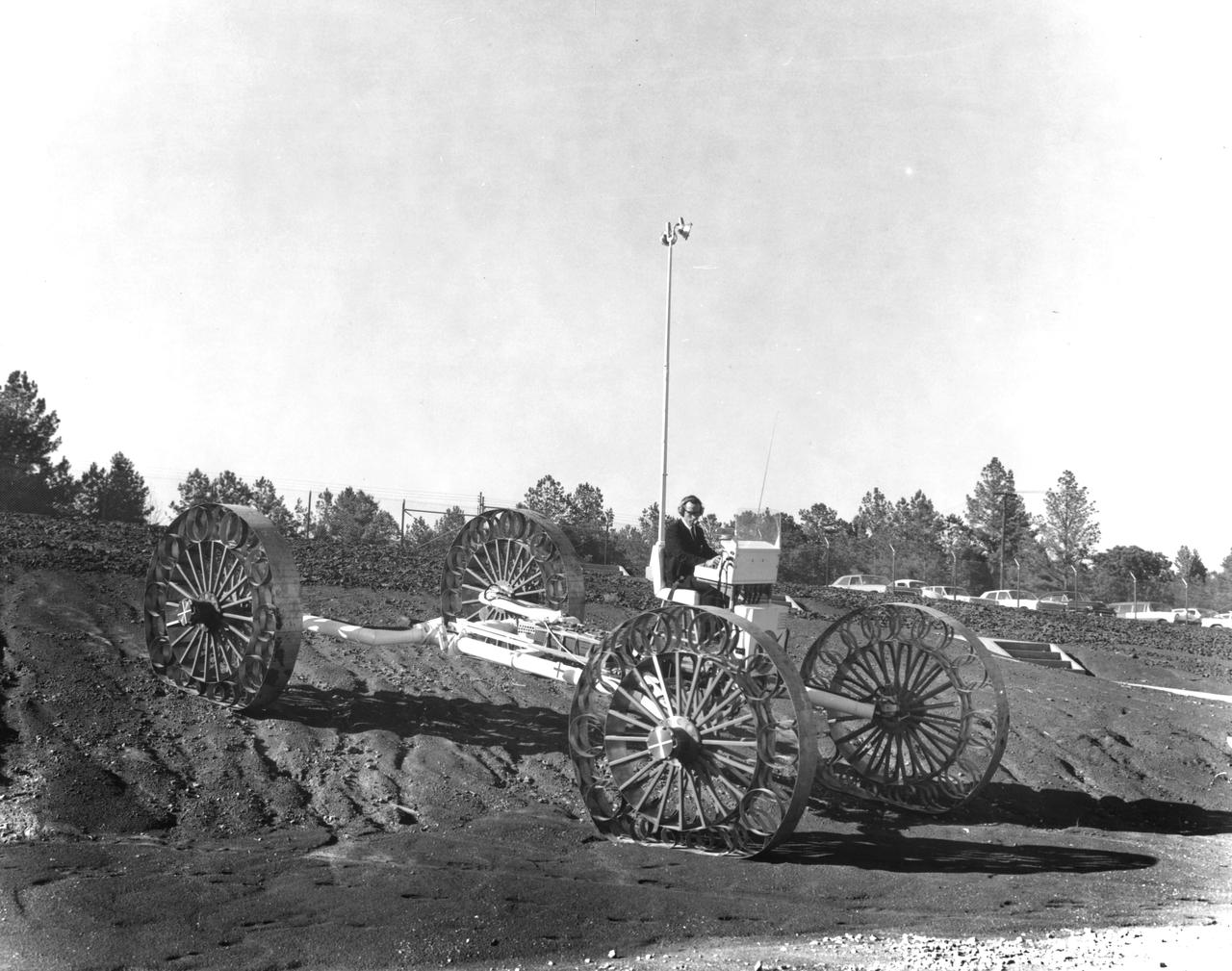
An engineer demonstrates a Mobility Test Article (MTA) at NASA’s Marshall Space Flight Center (MSFC) as he goes down a slope onto soft earth. This unit, weighing 1/6th as much as an actual vehicle, was built by the Bendix Corporation and was one of the concepts of a possible Lunar Roving Vehicle (LRV). The data provided by the MTA helped in designing the Lunar Roving Vehicle (LRV), developed under the direction of MSFC. The LRV was designed to allow Apollo astronauts a greater range of mobility during lunar exploration missions.
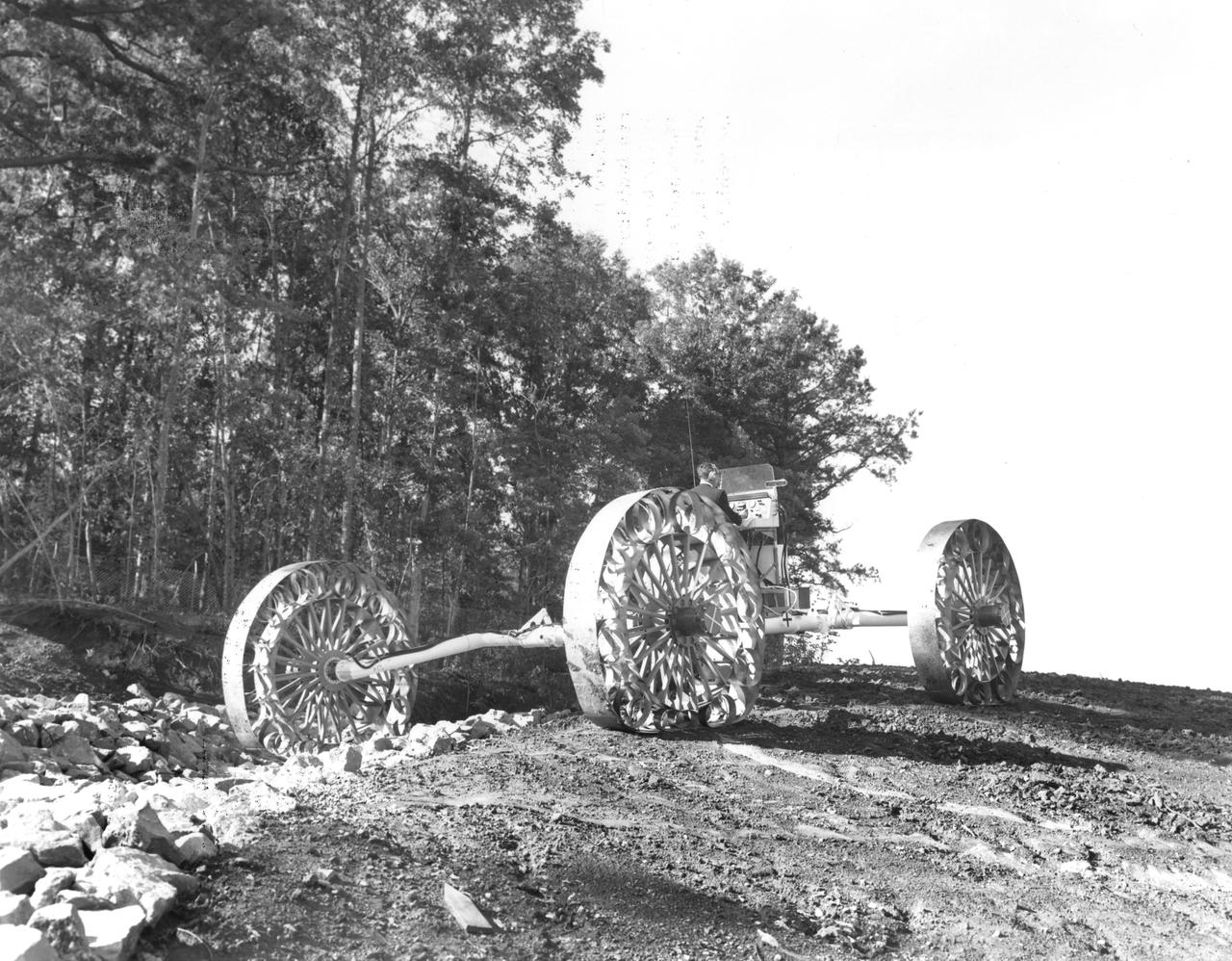
An engineer demonstrates a Mobility Test Article (MTA) at NASA’s Marshall Space Flight Center (MSFC). This unit, weighing 1/6th as much as an actual vehicle, was built by the Bendix Corporation and was one of the concepts of a possible Lunar Roving Vehicle (LRV). The data provided by the MTA helped in designing the Lunar Roving Vehicle (LRV), developed under the direction of MSFC. The LRV was designed to allow Apollo astronauts a greater range of mobility during lunar exploration missions.
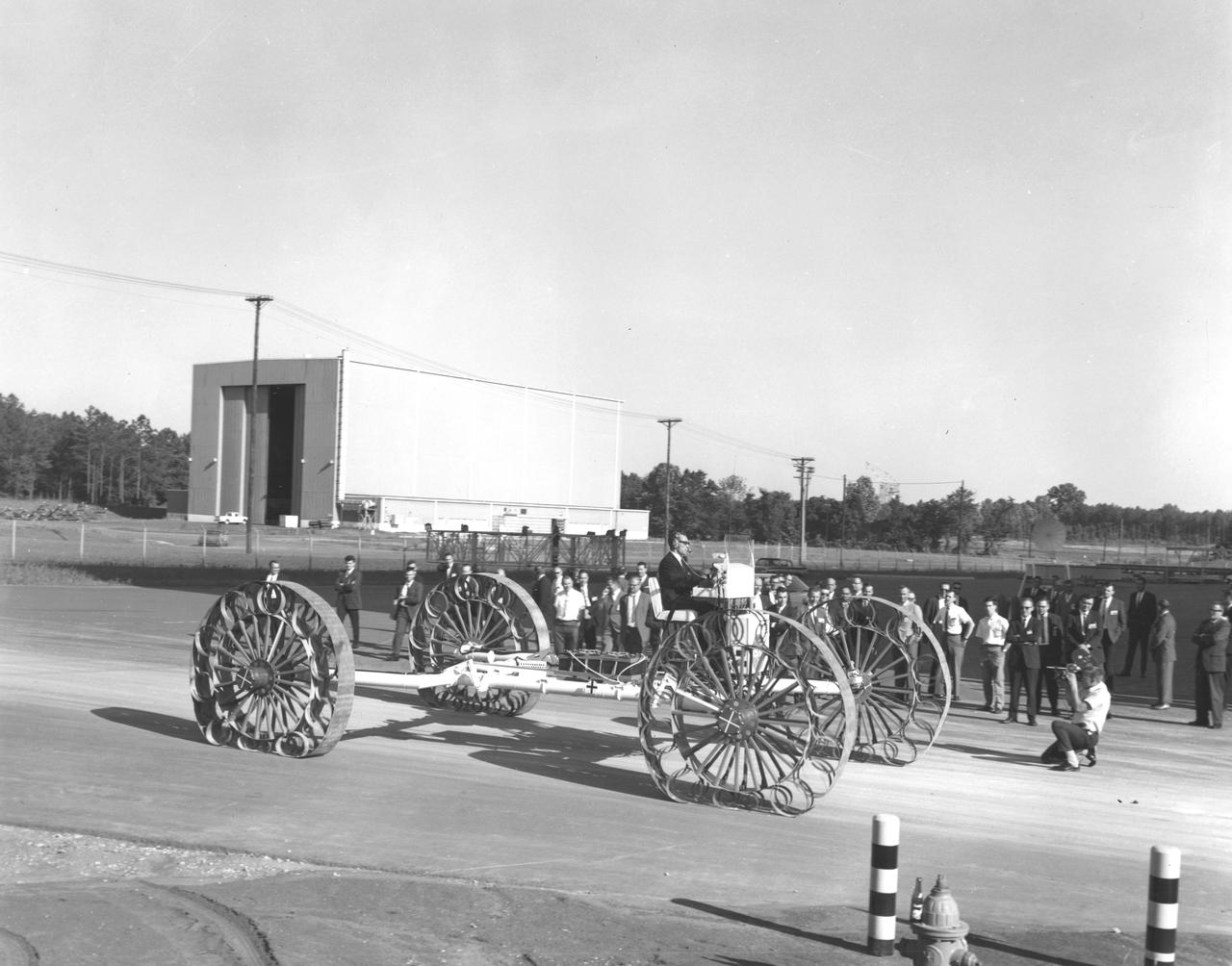
Newsmen watch a test engineer drive a Mobility Test Article (MTA) demonstrated at NASA’s Marshall Space Flight Center (MSFC). This unit, built by the Bendix Corporation, was one of the concepts of a possible Lunar Roving Vehicle (LRV). The data provided by the MTA helped in designing the LRV, developed under the direction of MSFC. The LRV was designed to allow Apollo astronauts a greater range of mobility during lunar exploration missions.

An engineer demonstrates a Mobility Test Article (MTA) at NASA’s Marshall Space Flight Center (MSFC). This unit, weighing 1/6th as much as an actual vehicle, was built by the Bendix Corporation and was one of the concepts of a possible Lunar Roving Vehicle (LRV). The data provided by the MTA helped in designing the LRV, developed under the direction of MSFC. The LRV was designed to allow Apollo astronauts a greater range of mobility during lunar exploration missions.
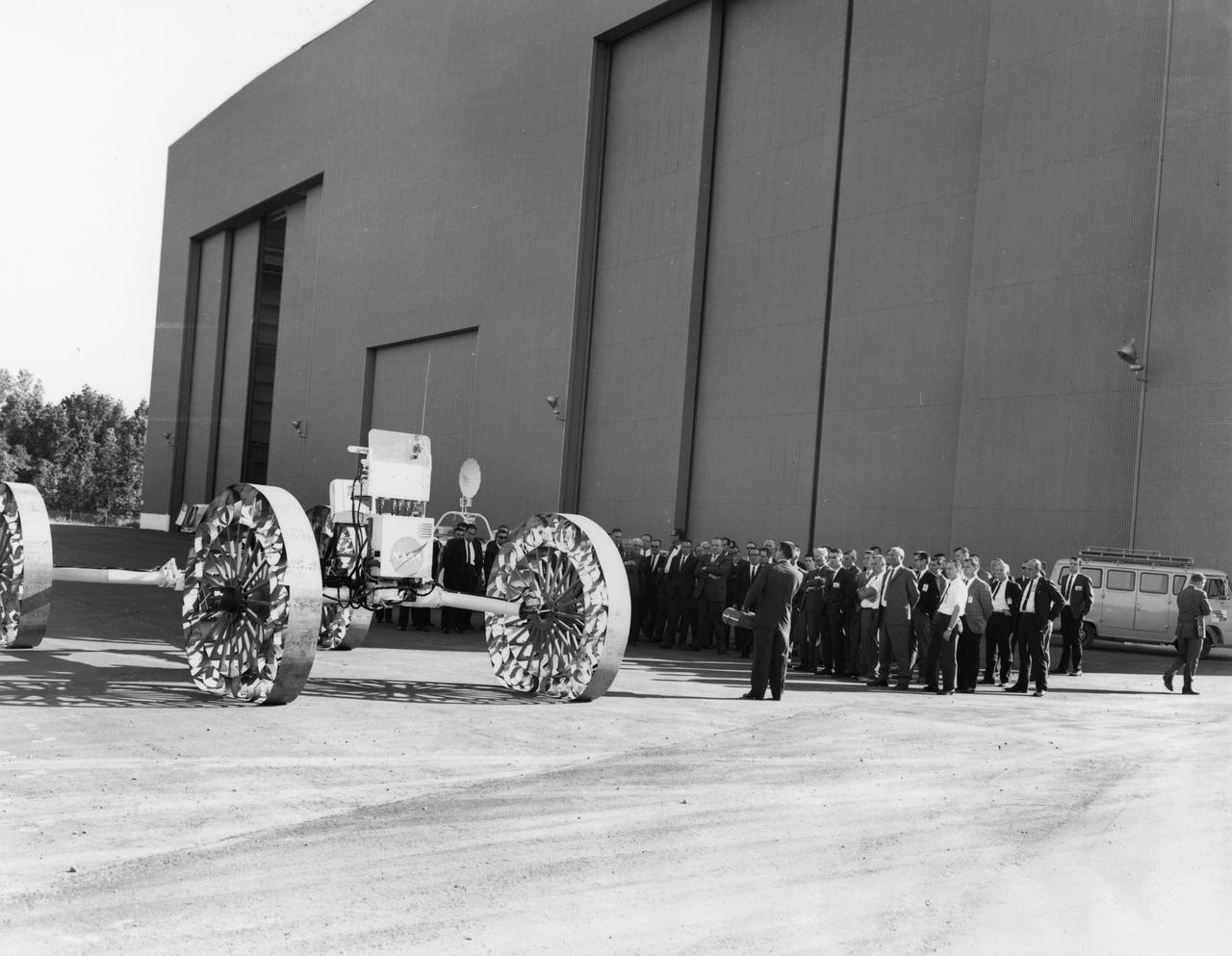
Newsmen listen as an engineer explains operations and capabilities of a Mobility Test Article (MTA) demonstrated at NASA’s Marshall Space Flight Center (MSFC). This unit, built by the Bendix Corporation, was one of the concepts of a possible Lunar Roving Vehicle (LRV). The data provided by the MTA helped in designing the LRV, developed under the direction of MSFC. The LRV was designed to allow Apollo astronauts a greater range of mobility during lunar exploration missions.
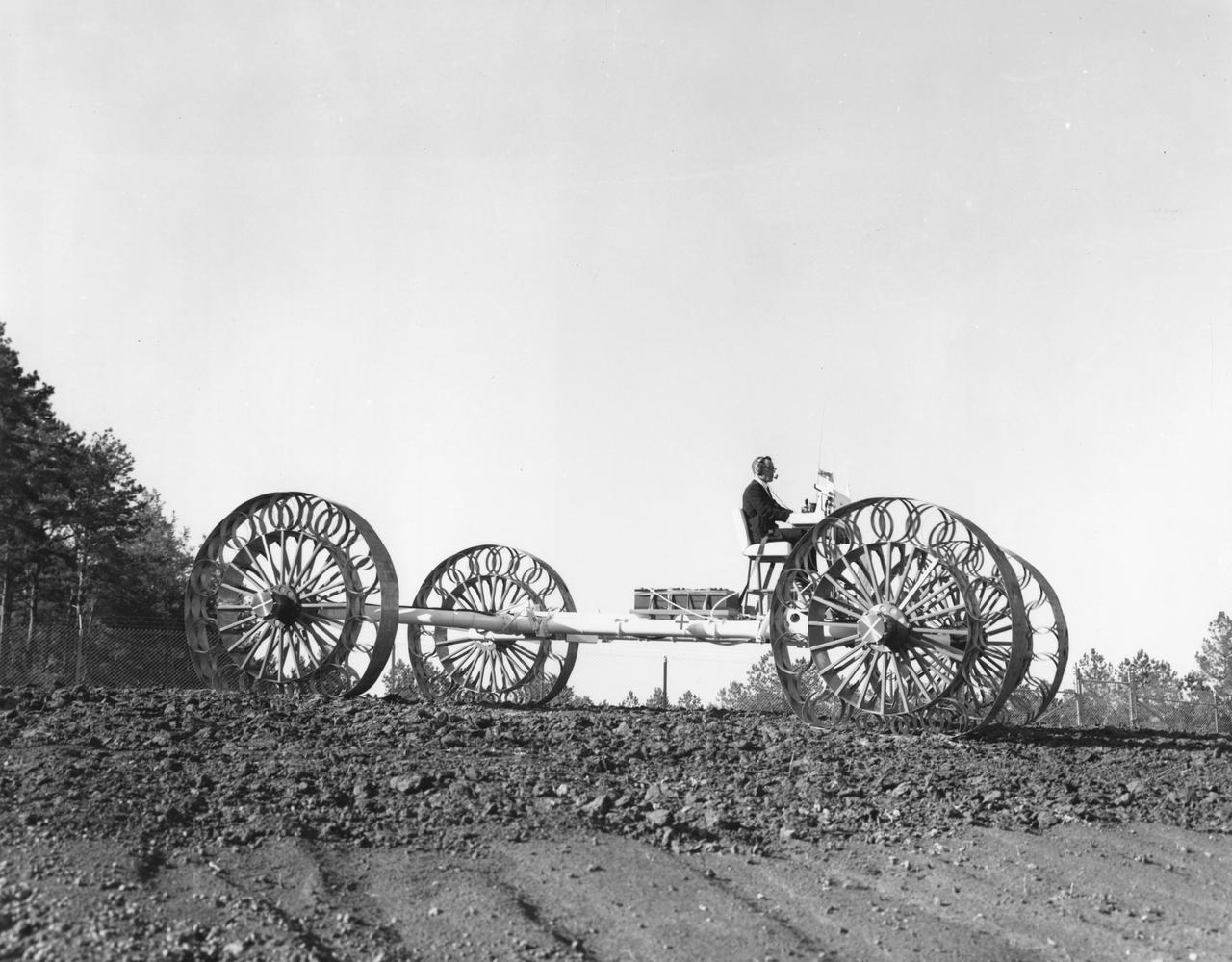
An engineer demonstrates a Mobility Test Article (MTA) at NASA’s Marshall Space Flight Center (MSFC). This unit, weighing 1/6th as much as an actual vehicle, was built by the Bendix Corporation and was one of the concepts of a possible Lunar Roving Vehicle (LRV). The data provided by the MTA helped in designing the Lunar Roving Vehicle (LRV), developed under the direction of MSFC. The LRV was designed to allow Apollo astronauts a greater range of mobility during lunar exploration missions.
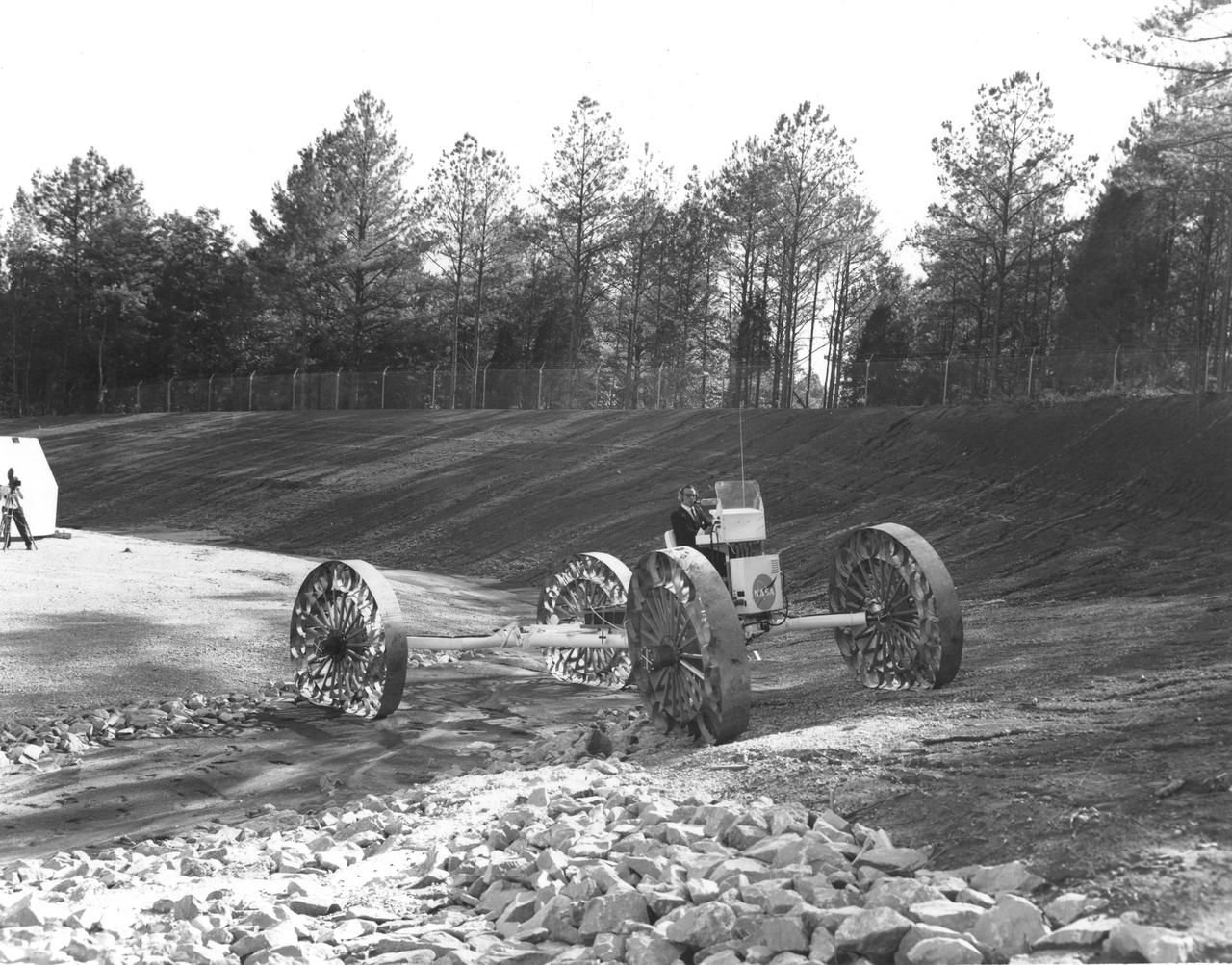
An engineer demonstrates a Mobility Test Article (MTA) at NASA’s Marshall Space Flight Center (MSFC) as he crosses a soft clay strip onto rocky ground. This unit, weighing 1/6th as much as an actual vehicle, was built by the Bendix Corporation and was one of the concepts of a possible Lunar Roving Vehicle (LRV). The data provided by the MTA helped in designing the LRV, developed under the direction of MSFC. The LRV was designed to allow Apollo astronauts a greater range of mobility during lunar exploration missions.

Dr. Scott Shipley of Ascentech Enterprises makes an adjustment to the Spectrum unit. He is the project engineer for the effort working under the Engineering Services Contract at NASA's Kennedy Space Center. The device is being built for use aboard the International Space Station and is designed to expose different organisms to different color of fluorescent light while a camera records what's happening with time-laps imagery. Results from the Spectrum project will shed light on which living things are best suited for long-duration flights into deep space.
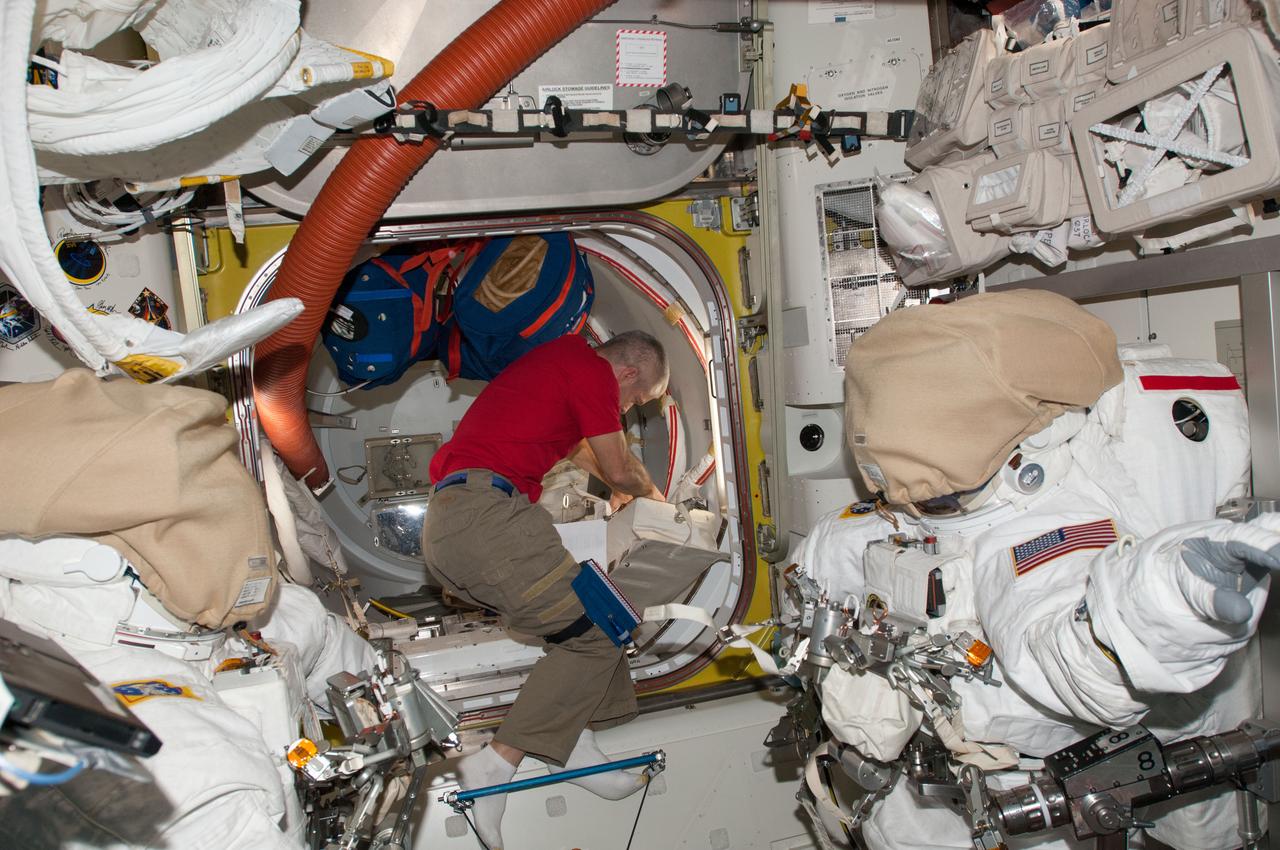
ISS039-E-013091 (17 April 2014) --- NASA astronaut Steve Swanson, Expedition 39 flight engineer, is seen in the Quest airlock of the Earth-orbiting International Space Station. He and NASA astronaut Rick Mastracchio, flight engineer, will conduct a spacewalk in the coming week to replace a failed backup computer relay system on the space station's truss. The activity, designated U.S. EVA 26, will be broadcast live on NASA Television. A pair of NASA extravehicular mobility units (EMU) can be seen in the foreground.
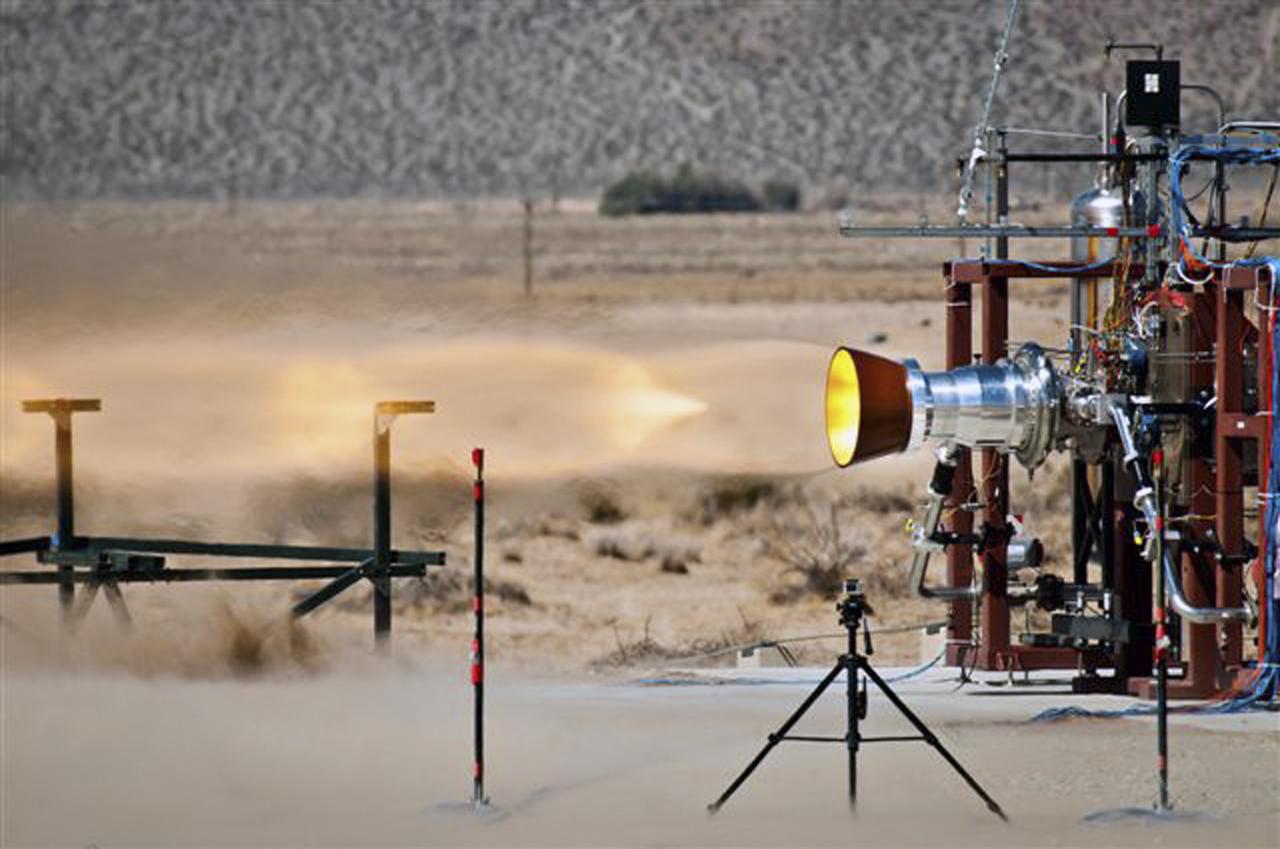
CANOGA PARK, Calif. -- Pratt & Whitney Rocketdyne hot-fires a launch abort engine for The Boeing Co., which is developing its CST-100 spacecraft for NASA's Commercial Crew Program. Under its fixed-price contract with Boeing, Pratt and Whitney Rocketdyne is combining its Attitude Control Propulsion System thrusters from heritage spaceflight programs, Bantam abort engine design and storable propellant engineering capabilities. In 2011, NASA selected Boeing of Houston during Commercial Crew Development Round 2 CCDev2) activities to mature the design and development of a crew transportation system with the overall goal of accelerating a United States-led capability to the International Space Station. The goal of CCP is to drive down the cost of space travel as well as open up space to more people than ever before by balancing industry’s own innovative capabilities with NASA's 50 years of human spaceflight experience. Six other aerospace companies also are maturing launch vehicle and spacecraft designs under CCDev2, including Alliant Techsystems Inc. ATK, Blue Origin, Excalibur Almaz Inc., Sierra Nevada Corp., Space Exploration Technologies SpaceX, and United Launch Alliance ULA. For more information, visit www.nasa.gov/commercialcrew. Image credit: Pratt & Whitney Rocketdyne
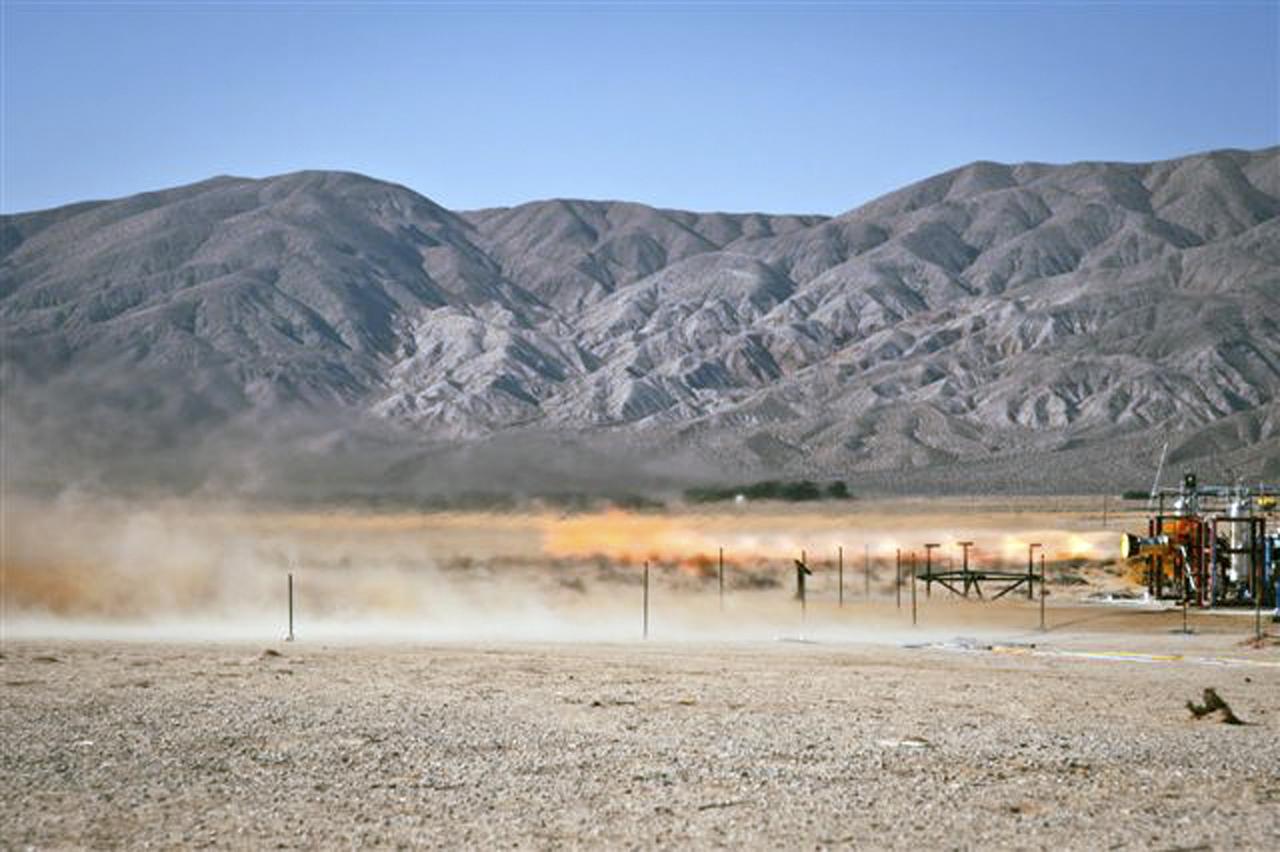
CANOGA PARK, Calif. -- Pratt & Whitney Rocketdyne hot-fires a launch abort engine for The Boeing Co., which is developing its CST-100 spacecraft for NASA's Commercial Crew Program. Under its fixed-price contract with Boeing, Pratt and Whitney Rocketdyne is combining its Attitude Control Propulsion System thrusters from heritage spaceflight programs, Bantam abort engine design and storable propellant engineering capabilities. In 2011, NASA selected Boeing of Houston during Commercial Crew Development Round 2 CCDev2) activities to mature the design and development of a crew transportation system with the overall goal of accelerating a United States-led capability to the International Space Station. The goal of CCP is to drive down the cost of space travel as well as open up space to more people than ever before by balancing industry’s own innovative capabilities with NASA's 50 years of human spaceflight experience. Six other aerospace companies also are maturing launch vehicle and spacecraft designs under CCDev2, including Alliant Techsystems Inc. ATK, Blue Origin, Excalibur Almaz Inc., Sierra Nevada Corp., Space Exploration Technologies SpaceX, and United Launch Alliance ULA. For more information, visit www.nasa.gov/commercialcrew. Image credit: Pratt & Whitney Rocketdyne
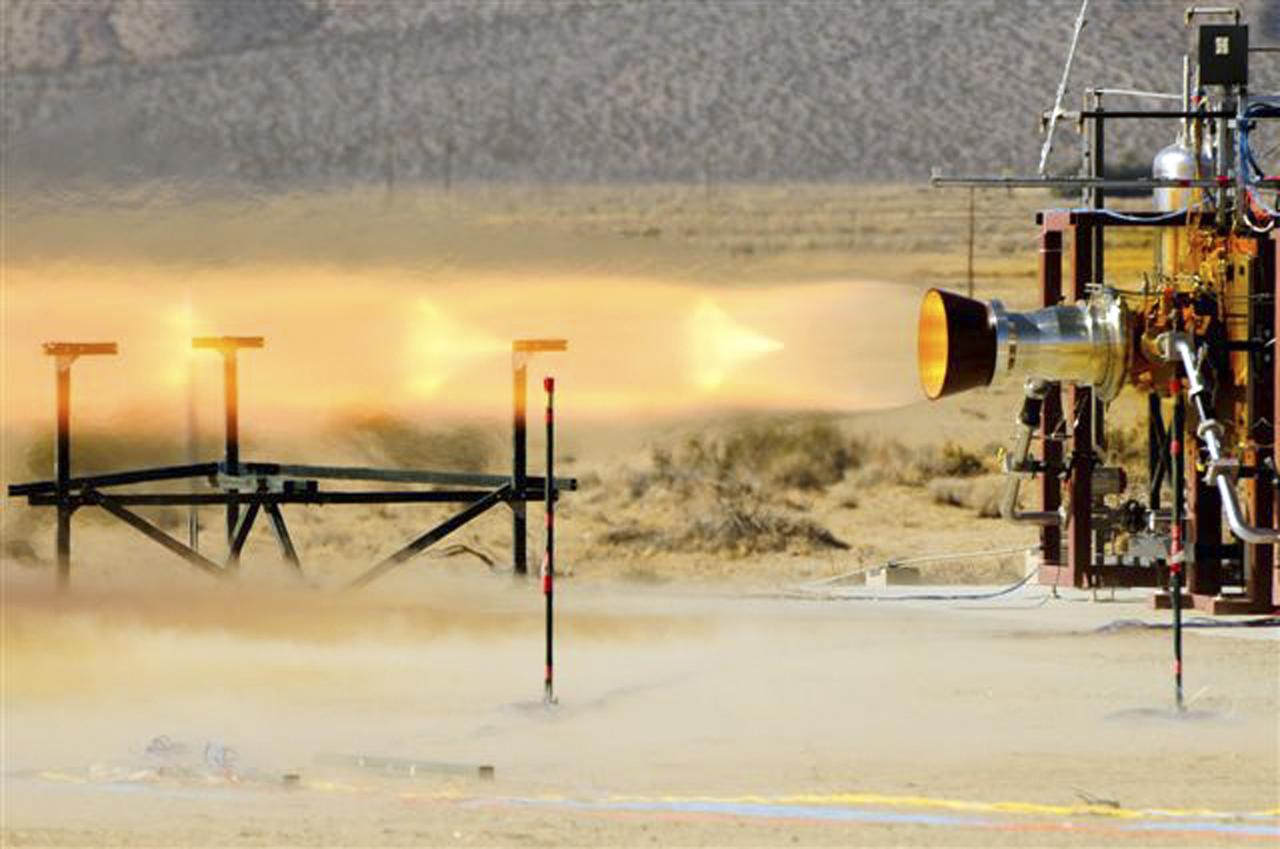
CANOGA PARK, Calif. -- Pratt & Whitney Rocketdyne hot-fires a launch abort engine for The Boeing Co., which is developing its CST-100 spacecraft for NASA's Commercial Crew Program. Under its fixed-price contract with Boeing, Pratt and Whitney Rocketdyne is combining its Attitude Control Propulsion System thrusters from heritage spaceflight programs, Bantam abort engine design and storable propellant engineering capabilities. In 2011, NASA selected Boeing of Houston during Commercial Crew Development Round 2 CCDev2) activities to mature the design and development of a crew transportation system with the overall goal of accelerating a United States-led capability to the International Space Station. The goal of CCP is to drive down the cost of space travel as well as open up space to more people than ever before by balancing industry’s own innovative capabilities with NASA's 50 years of human spaceflight experience. Six other aerospace companies also are maturing launch vehicle and spacecraft designs under CCDev2, including Alliant Techsystems Inc. ATK, Blue Origin, Excalibur Almaz Inc., Sierra Nevada Corp., Space Exploration Technologies SpaceX, and United Launch Alliance ULA. For more information, visit www.nasa.gov/commercialcrew. Image credit: Pratt & Whitney Rocketdyne
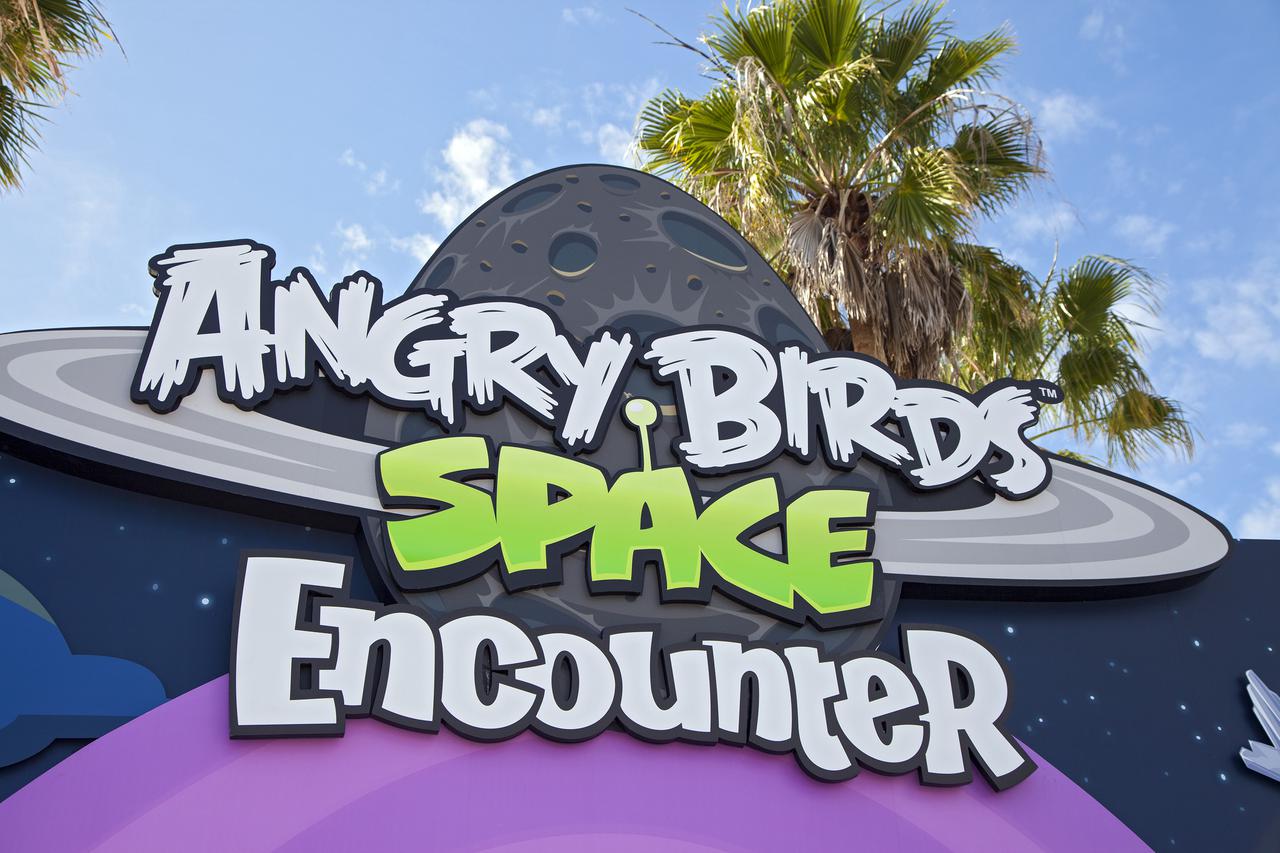
CAPE CANAVERAL, Fla. -- At NASA’s Kennedy Space Center Visitor Complex in Florida, a grand opening celebration was held for the new Angry Birds Space Encounter. Finland-based Rovio Entertainment, the creator of the Angry Birds Space game, partnered with Kennedy Space Center to bring the beloved characters to life. It is the first Angry Birds interactive exhibit in the United States designed for people of all ages. The 4,485-square-foot facility hosts the space adventures of the Angry Birds as they travel into an intergalactic wormhole, come face-to-face with Space Pigs and discover heroic superpowers. Six interactive stations are designed to encourage children in science, technology, engineering and mathematics fields of study. Photo credit: NASA_Kim Shiflett
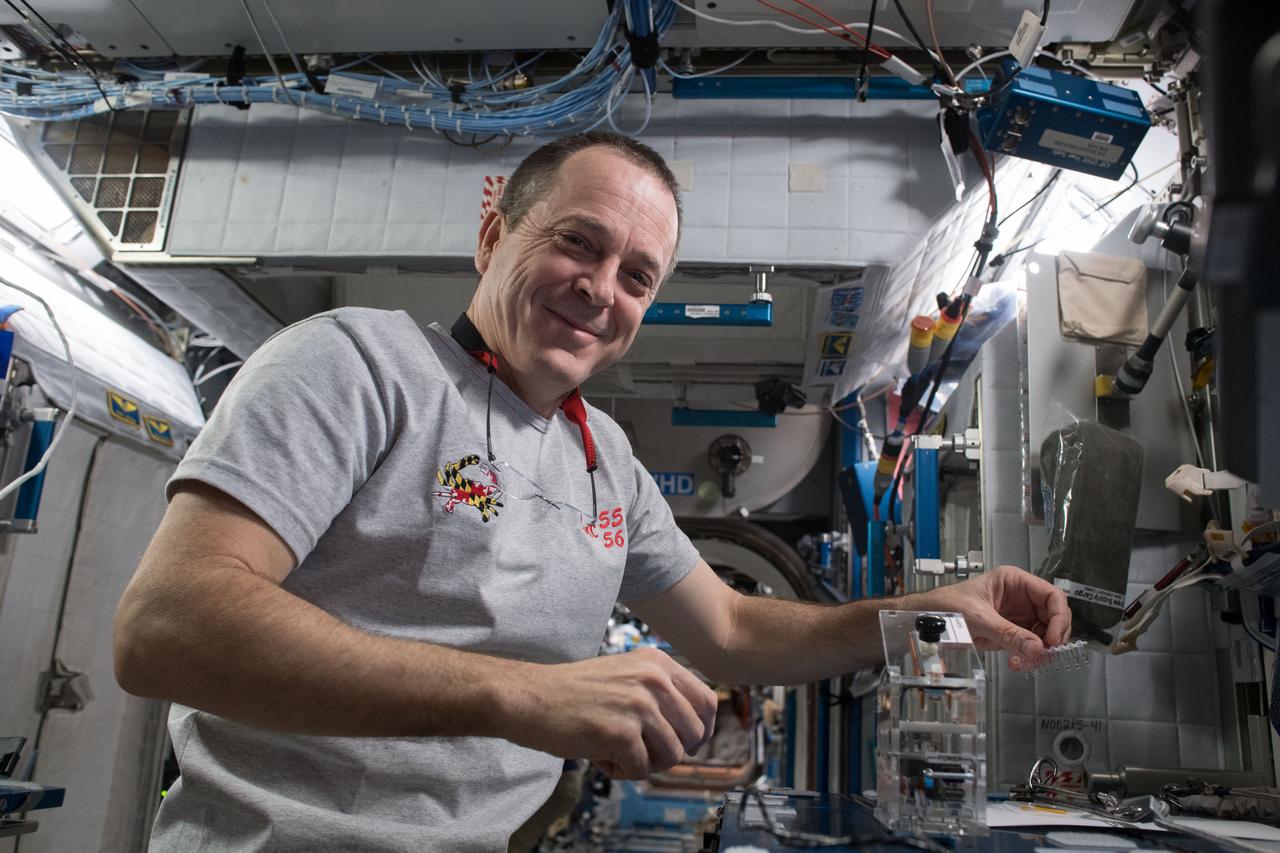
iss055e016053 (4/11/2018) --- NASA astronaut Ricky Arnold works with the student-designed Genes in Space-5 experiment inside the Harmony module. The genetic research is helping scientists understand the relationship between DNA alterations and weakened immune systems possibly caused by living in space. Genes in Space is an innovation challenge including students and teachers across the United States from grades 7 through 12. Students design a pioneering DNA-related experiment to fly on the ISS, providing real-world training in science, technology, engineering and math (STEM) fields and connecting students to the space program.
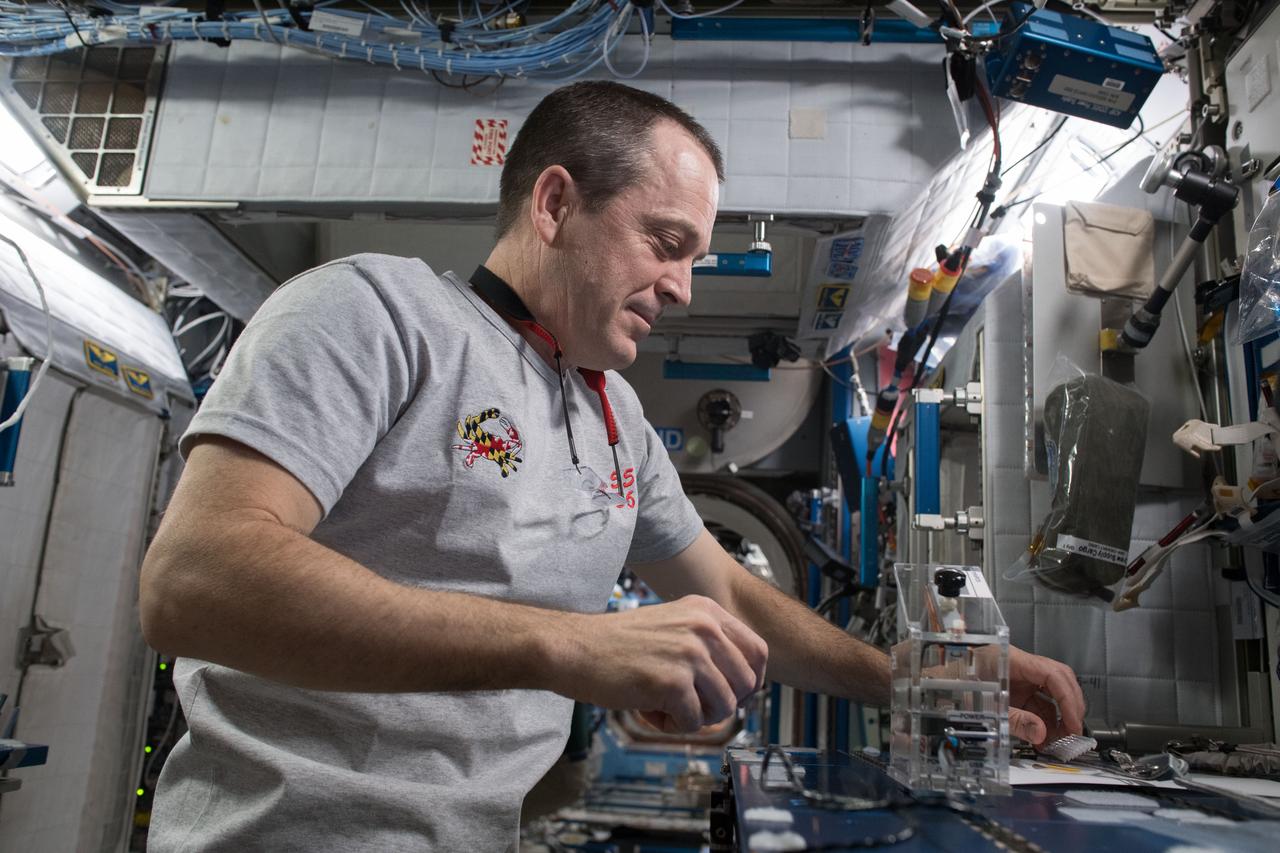
iss055e016052 (4/11/2018) --- NASA astronaut Ricky Arnold works with the student-designed Genes in Space-5 experiment inside the Harmony module. The genetic research is helping scientists understand the relationship between DNA alterations and weakened immune systems possibly caused by living in space. Genes in Space is an innovation challenge including students and teachers across the United States from grades 7 through 12. Students design a pioneering DNA-related experiment to fly on the ISS, providing real-world training in science, technology, engineering and math (STEM) fields and connecting students to the space program.
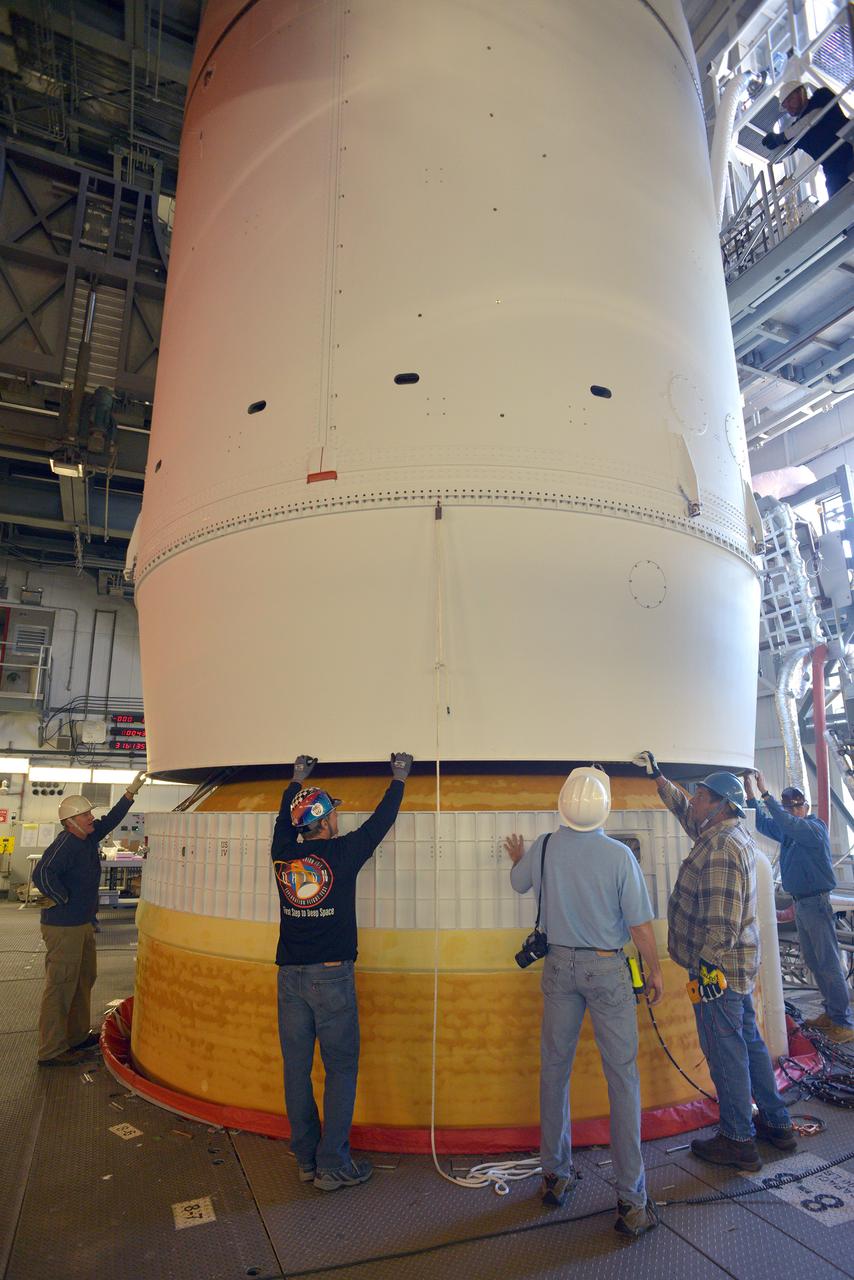
At Cape Canaveral Air Force Station's Launch Complex 37, United Launch Alliance engineers and technicians mate the agency's Orion spacecraft to its Delta IV Heavy rocket. Orion is the exploration spacecraft designed to carry astronauts to destinations not yet explored by humans, including an asteroid and Mars. It will have emergency abort capability, sustain the crew during space travel and provide safe re-entry from deep space return velocities. The first unpiloted flight test of Orion is scheduled to launch Dec. 4, 2014 atop a United Launch Alliance Delta IV Heavy rocket, and in 2018 on NASA’s Space Launch System rocket.
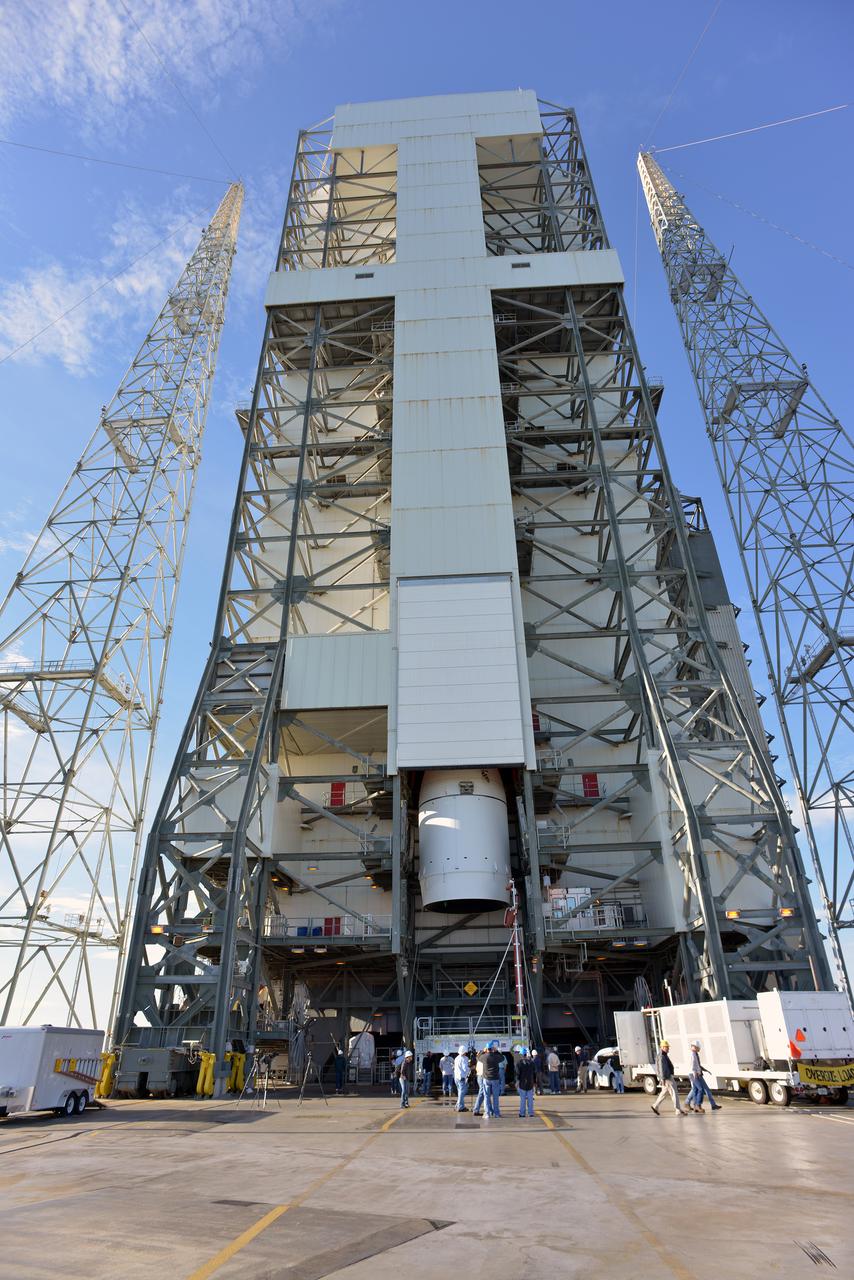
At Cape Canaveral Air Force Station's Launch Complex 37, United Launch Alliance engineers and technicians begin lifting the agency's Orion spacecraft for mounting atop its Delta IV Heavy rocket. Orion is the exploration spacecraft designed to carry astronauts to destinations not yet explored by humans, including an asteroid and Mars. It will have emergency abort capability, sustain the crew during space travel and provide safe re-entry from deep space return velocities. The first unpiloted flight test of Orion is scheduled to launch Dec. 4, 2014 atop a United Launch Alliance Delta IV Heavy rocket, and in 2018 on NASA’s Space Launch System rocket.
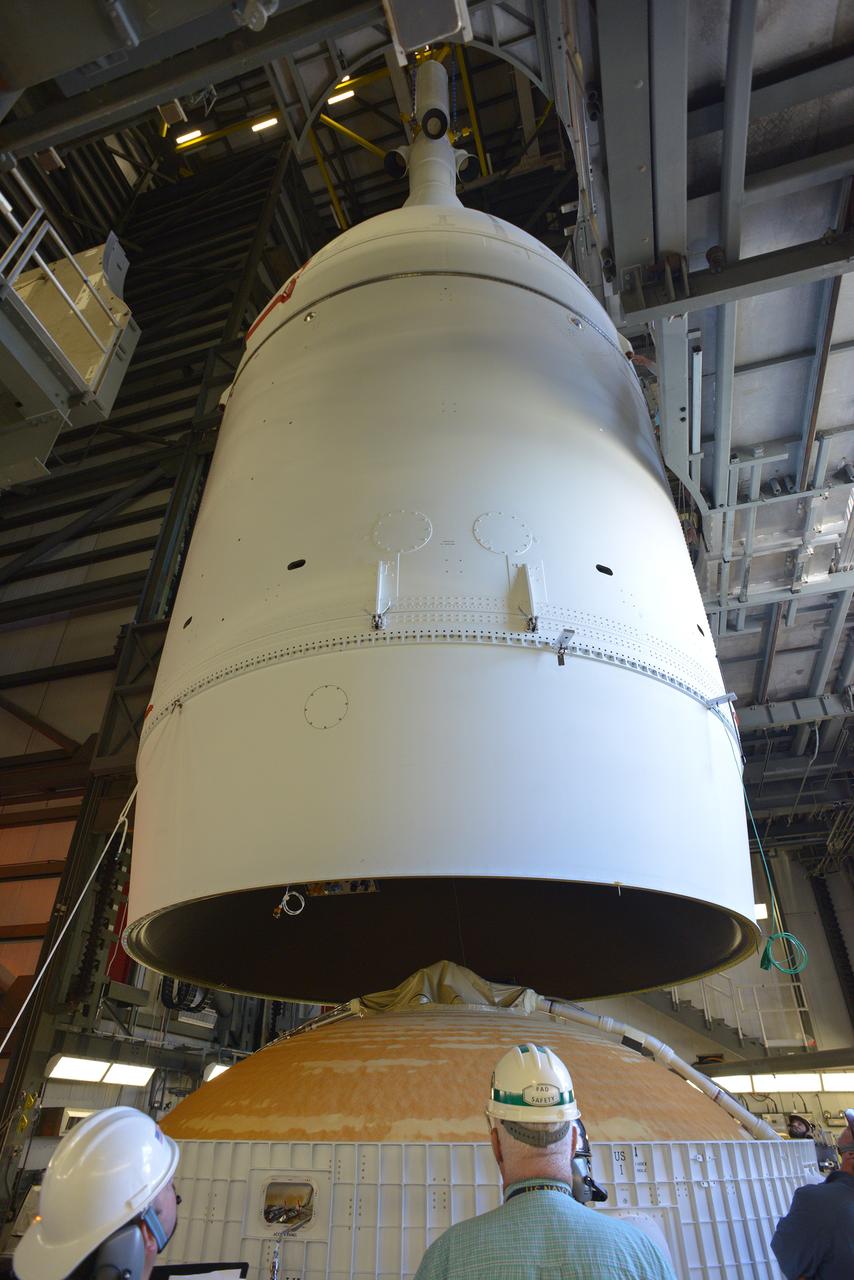
At Cape Canaveral Air Force Station's Launch Complex 37, United Launch Alliance engineers and technicians mate the agency's Orion spacecraft to its Delta IV Heavy rocket. Orion is the exploration spacecraft designed to carry astronauts to destinations not yet explored by humans, including an asteroid and Mars. It will have emergency abort capability, sustain the crew during space travel and provide safe re-entry from deep space return velocities. The first unpiloted flight test of Orion is scheduled to launch Dec. 4, 2014 atop a United Launch Alliance Delta IV Heavy rocket, and in 2018 on NASA’s Space Launch System rocket.
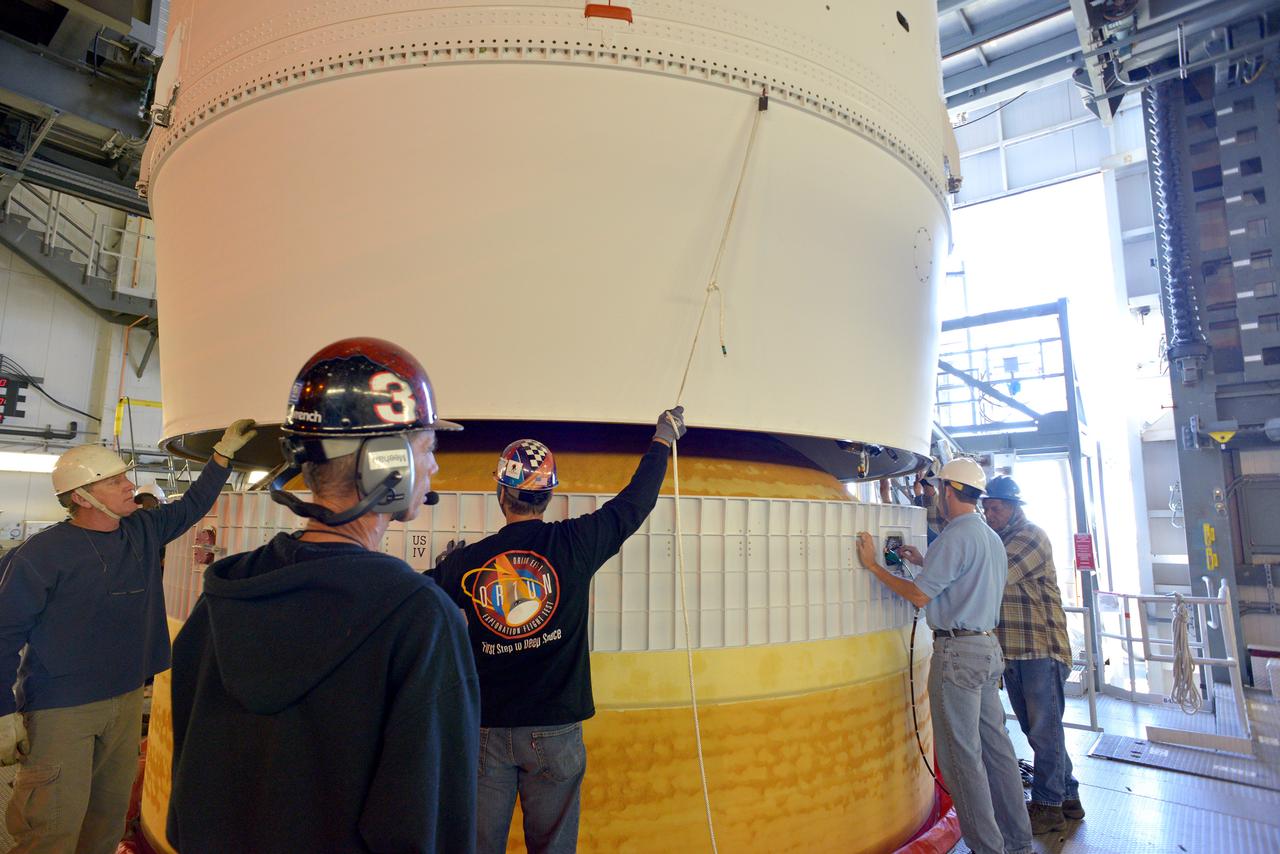
At Cape Canaveral Air Force Station's Launch Complex 37, United Launch Alliance engineers and technicians mate the agency's Orion spacecraft to its Delta IV Heavy rocket. Orion is the exploration spacecraft designed to carry astronauts to destinations not yet explored by humans, including an asteroid and Mars. It will have emergency abort capability, sustain the crew during space travel and provide safe re-entry from deep space return velocities. The first unpiloted flight test of Orion is scheduled to launch Dec. 4, 2014 atop a United Launch Alliance Delta IV Heavy rocket, and in 2018 on NASA’s Space Launch System rocket.
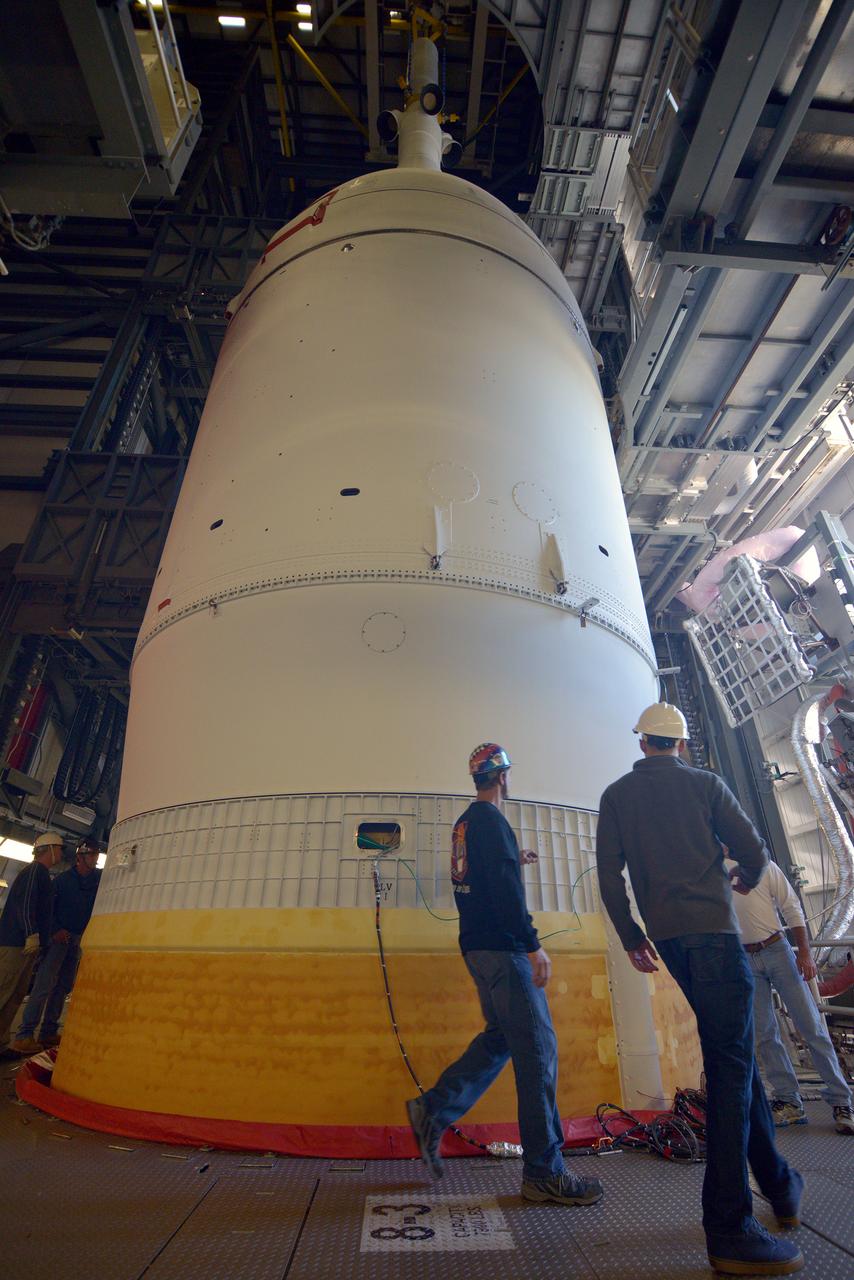
At Cape Canaveral Air Force Station's Launch Complex 37, United Launch Alliance engineers and technicians mate the agency's Orion spacecraft to its Delta IV Heavy rocket. Orion is the exploration spacecraft designed to carry astronauts to destinations not yet explored by humans, including an asteroid and Mars. It will have emergency abort capability, sustain the crew during space travel and provide safe re-entry from deep space return velocities. The first unpiloted flight test of Orion is scheduled to launch Dec. 4, 2014 atop a United Launch Alliance Delta IV Heavy rocket, and in 2018 on NASA’s Space Launch System rocket.
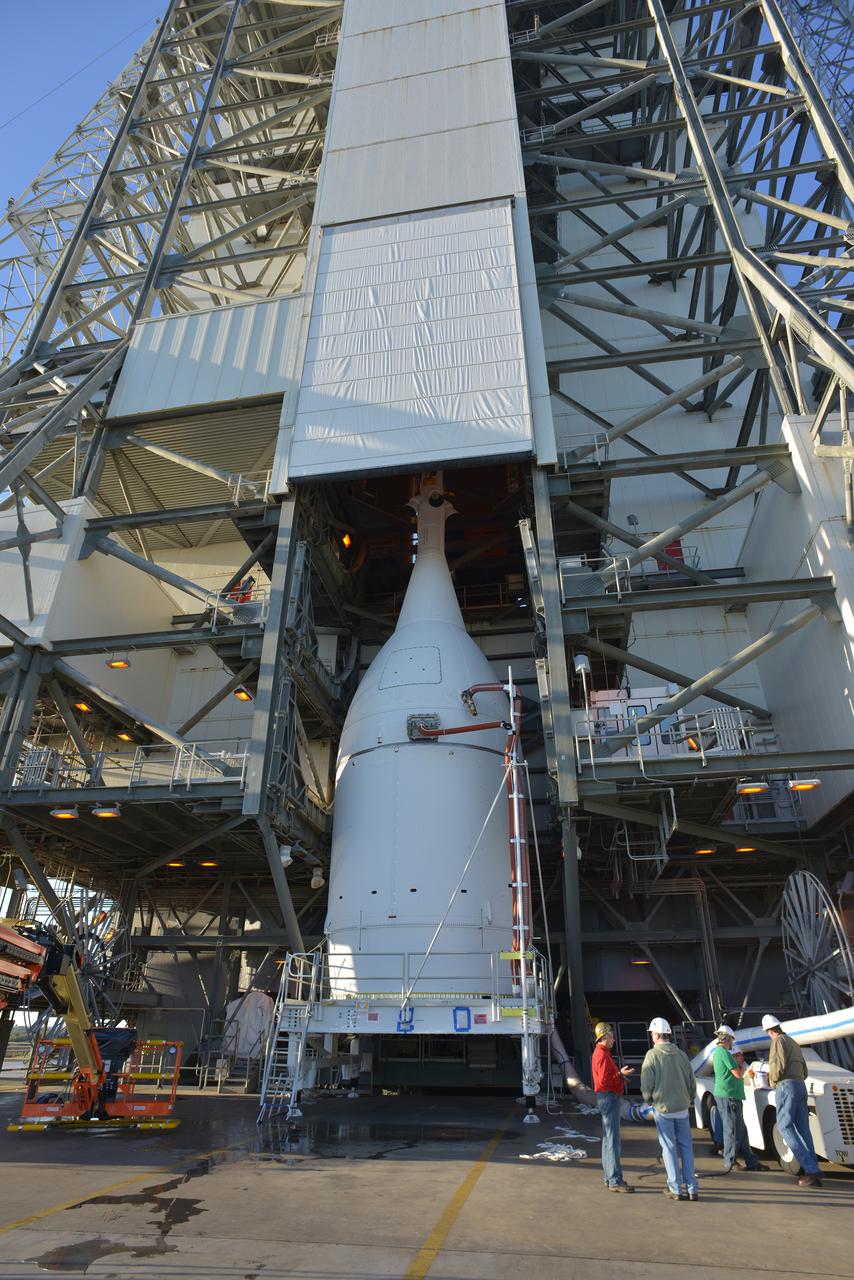
At Cape Canaveral Air Force Station's Launch Complex 37, United Launch Alliance engineers and technicians prepare to lift the agency's Orion spacecraft for mounting atop its Delta IV Heavy rocket. Orion is the exploration spacecraft designed to carry astronauts to destinations not yet explored by humans, including an asteroid and Mars. It will have emergency abort capability, sustain the crew during space travel and provide safe re-entry from deep space return velocities. The first unpiloted flight test of Orion is scheduled to launch Dec. 4, 2014 atop a United Launch Alliance Delta IV Heavy rocket, and in 2018 on NASA’s Space Launch System rocket.
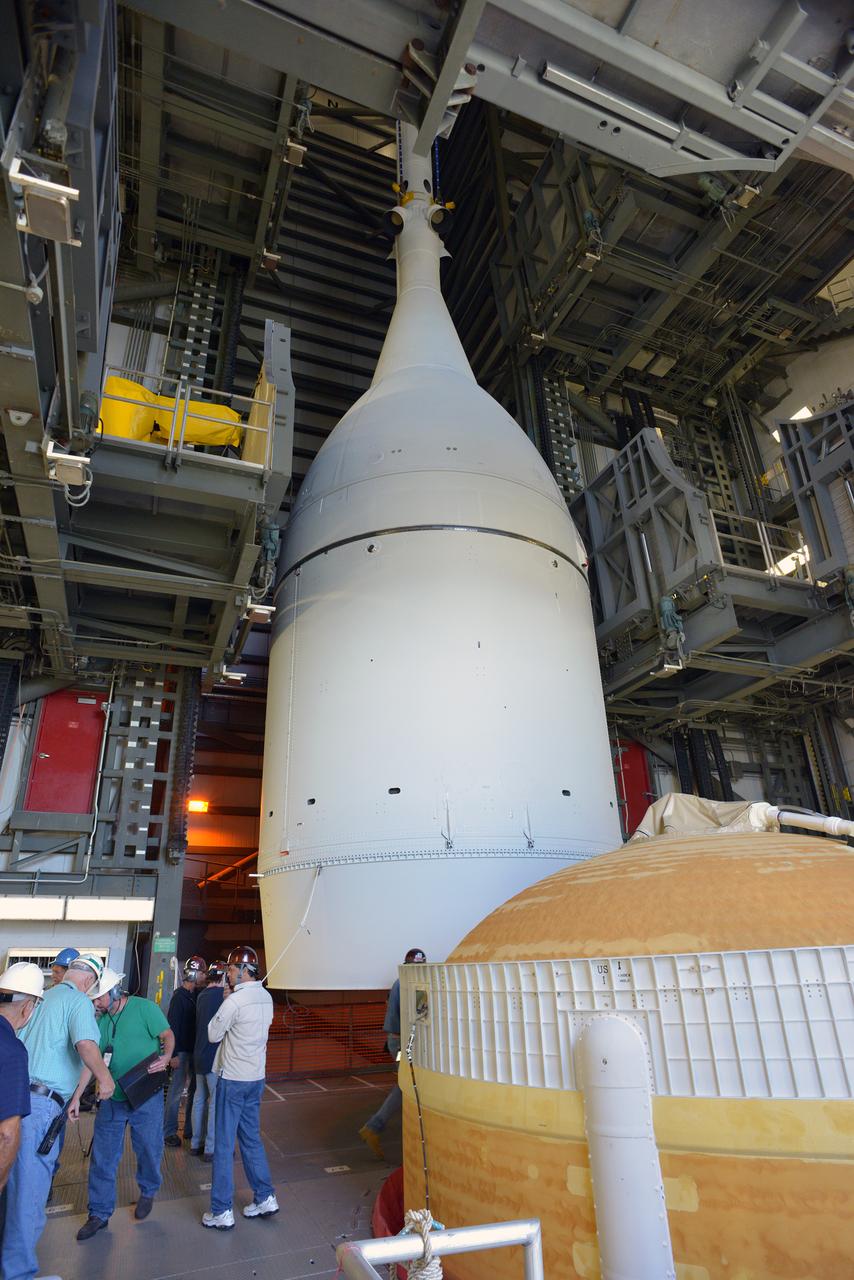
At Cape Canaveral Air Force Station's Launch Complex 37, United Launch Alliance engineers and technicians prepare to mate the agency's Orion spacecraft to its Delta IV Heavy rocket. Orion is the exploration spacecraft designed to carry astronauts to destinations not yet explored by humans, including an asteroid and Mars. It will have emergency abort capability, sustain the crew during space travel and provide safe re-entry from deep space return velocities. The first unpiloted flight test of Orion is scheduled to launch Dec. 4, 2014 atop a United Launch Alliance Delta IV Heavy rocket, and in 2018 on NASA’s Space Launch System rocket.
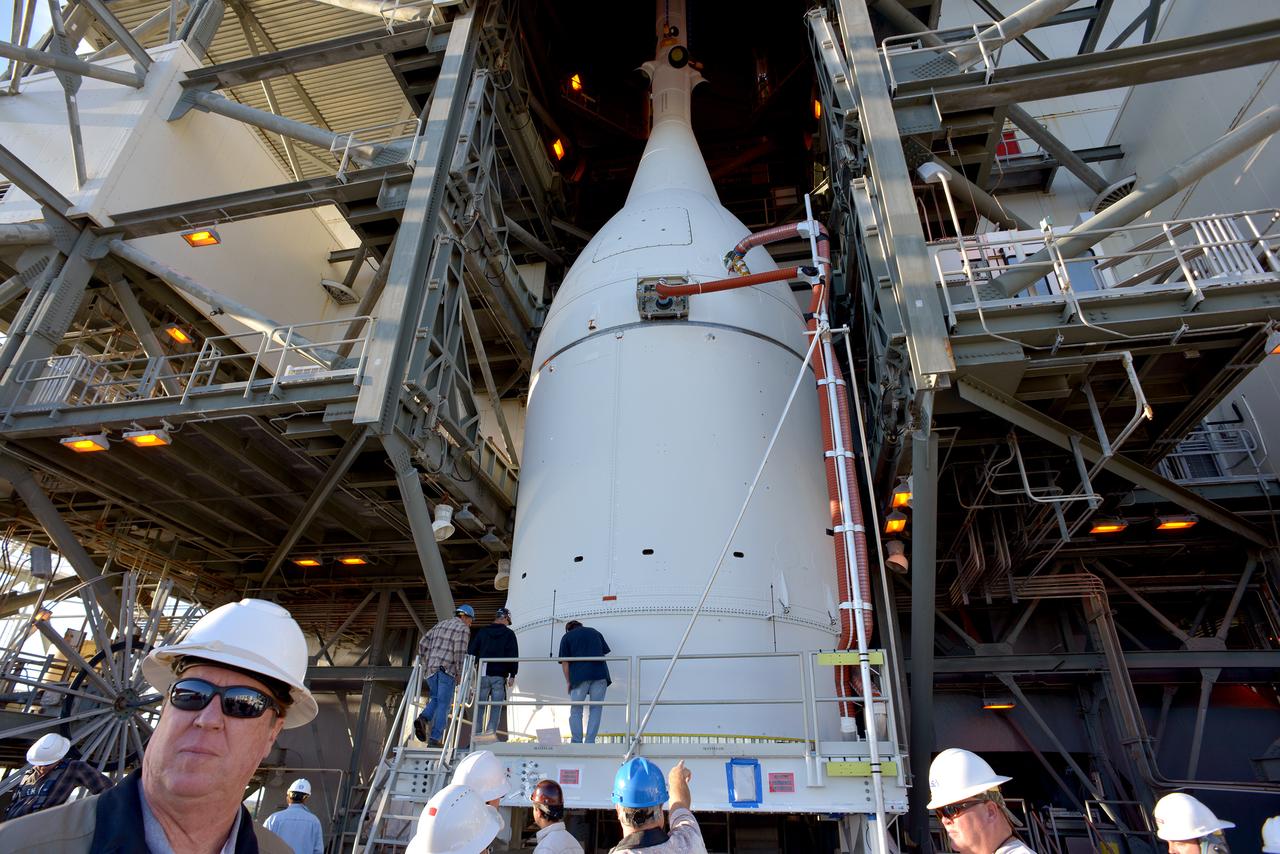
At Cape Canaveral Air Force Station's Launch Complex 37, United Launch Alliance engineers and technicians prepare to lift the agency's Orion spacecraft for mounting atop its Delta IV Heavy rocket. Orion is the exploration spacecraft designed to carry astronauts to destinations not yet explored by humans, including an asteroid and Mars. It will have emergency abort capability, sustain the crew during space travel and provide safe re-entry from deep space return velocities. The first unpiloted flight test of Orion is scheduled to launch Dec. 4, 2014 atop a United Launch Alliance Delta IV Heavy rocket, and in 2018 on NASA’s Space Launch System rocket.
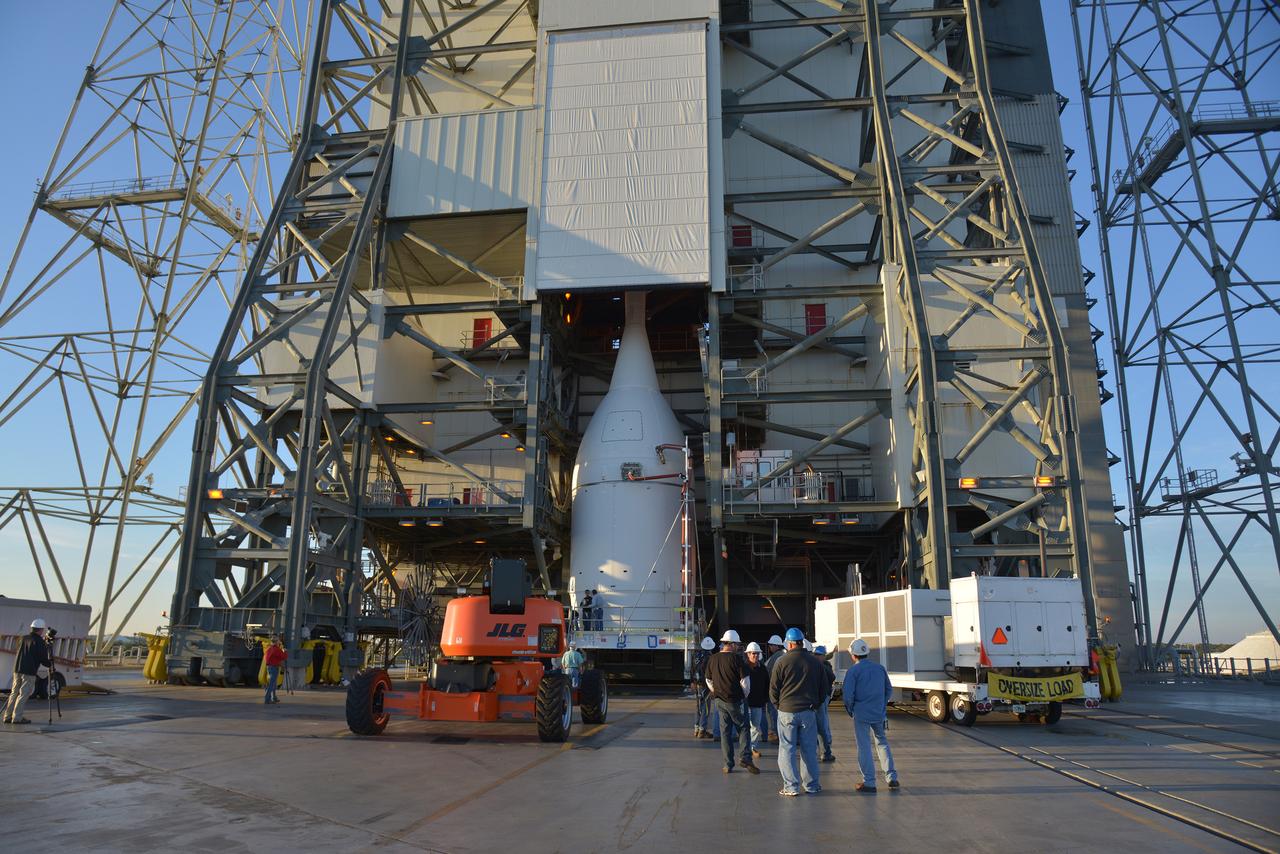
At Cape Canaveral Air Force Station's Launch Complex 37, United Launch Alliance engineers and technicians prepare to lift the agency's Orion spacecraft for mounting atop its Delta IV Heavy rocket. Orion is the exploration spacecraft designed to carry astronauts to destinations not yet explored by humans, including an asteroid and Mars. It will have emergency abort capability, sustain the crew during space travel and provide safe re-entry from deep space return velocities. The first unpiloted flight test of Orion is scheduled to launch Dec. 4, 2014 atop a United Launch Alliance Delta IV Heavy rocket, and in 2018 on NASA’s Space Launch System rocket.
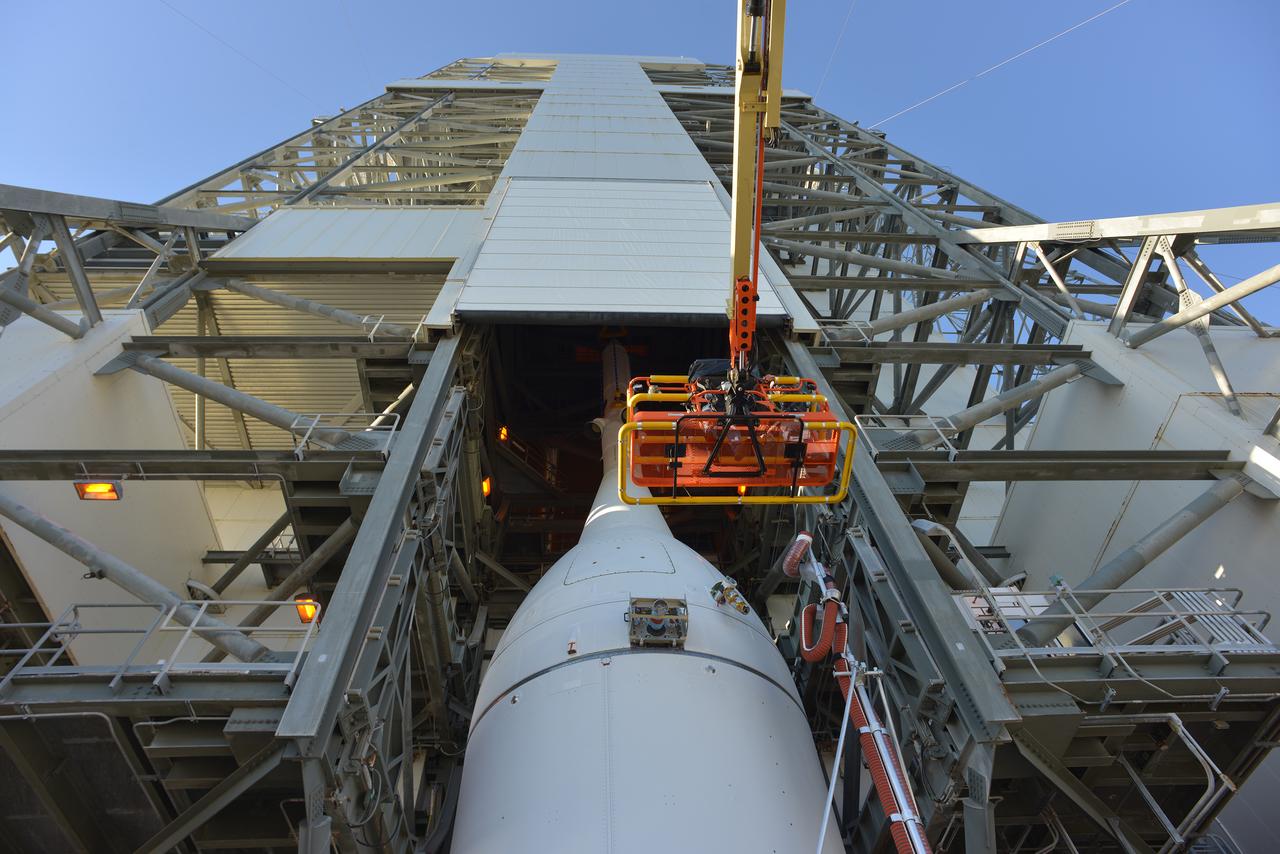
At Cape Canaveral Air Force Station's Launch Complex 37, United Launch Alliance engineers and technicians prepare to lift the agency's Orion spacecraft for mounting atop its Delta IV Heavy rocket. Orion is the exploration spacecraft designed to carry astronauts to destinations not yet explored by humans, including an asteroid and Mars. It will have emergency abort capability, sustain the crew during space travel and provide safe re-entry from deep space return velocities. The first unpiloted flight test of Orion is scheduled to launch Dec. 4, 2014 atop a United Launch Alliance Delta IV Heavy rocket, and in 2018 on NASA’s Space Launch System rocket.

At Cape Canaveral Air Force Station's Launch Complex 37, United Launch Alliance engineers and technicians prepare to lift the agency's Orion spacecraft for mounting atop its Delta IV Heavy rocket. Orion is the exploration spacecraft designed to carry astronauts to destinations not yet explored by humans, including an asteroid and Mars. It will have emergency abort capability, sustain the crew during space travel and provide safe re-entry from deep space return velocities. The first unpiloted flight test of Orion is scheduled to launch Dec. 4, 2014 atop a United Launch Alliance Delta IV Heavy rocket, and in 2018 on NASA’s Space Launch System rocket.
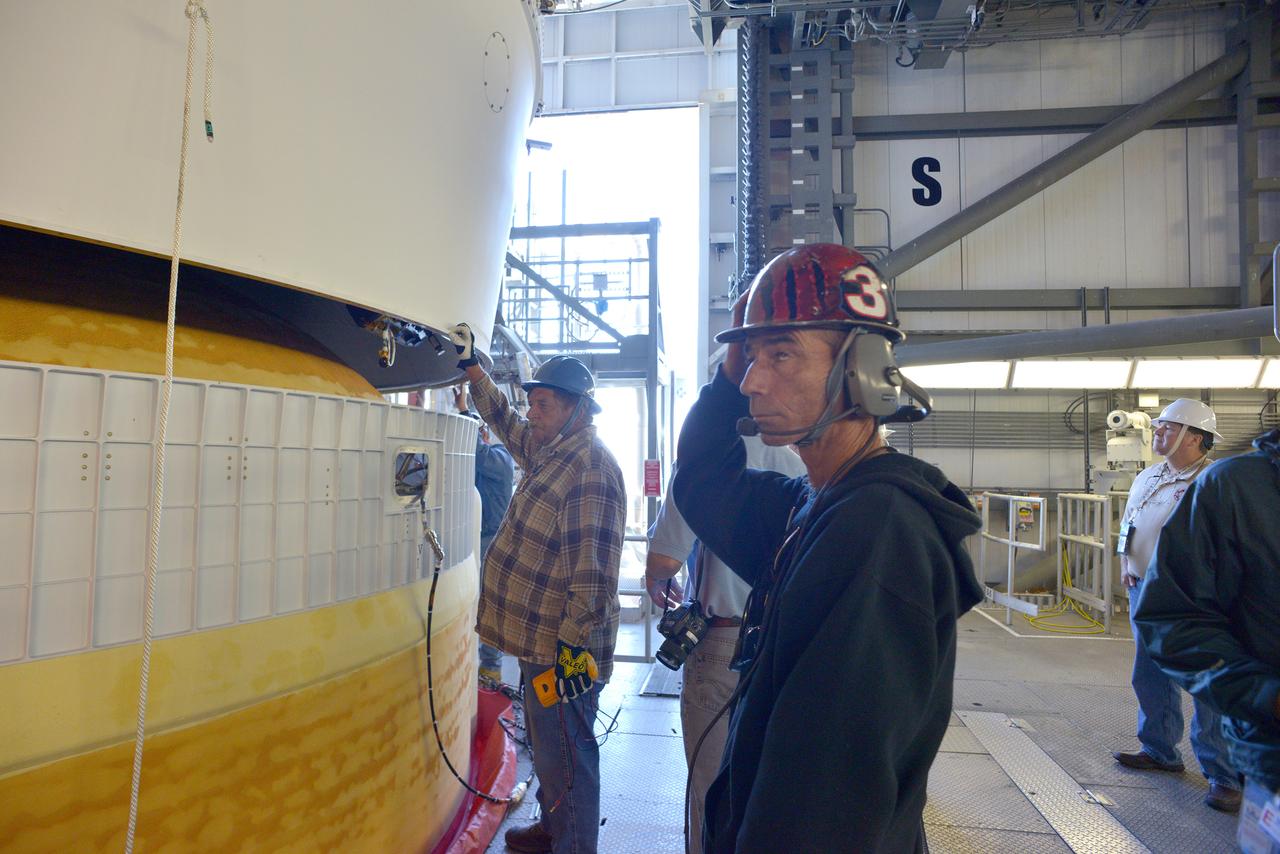
At Cape Canaveral Air Force Station's Launch Complex 37, United Launch Alliance engineers and technicians mate the agency's Orion spacecraft to its Delta IV Heavy rocket. Orion is the exploration spacecraft designed to carry astronauts to destinations not yet explored by humans, including an asteroid and Mars. It will have emergency abort capability, sustain the crew during space travel and provide safe re-entry from deep space return velocities. The first unpiloted flight test of Orion is scheduled to launch Dec. 4, 2014 atop a United Launch Alliance Delta IV Heavy rocket, and in 2018 on NASA’s Space Launch System rocket.
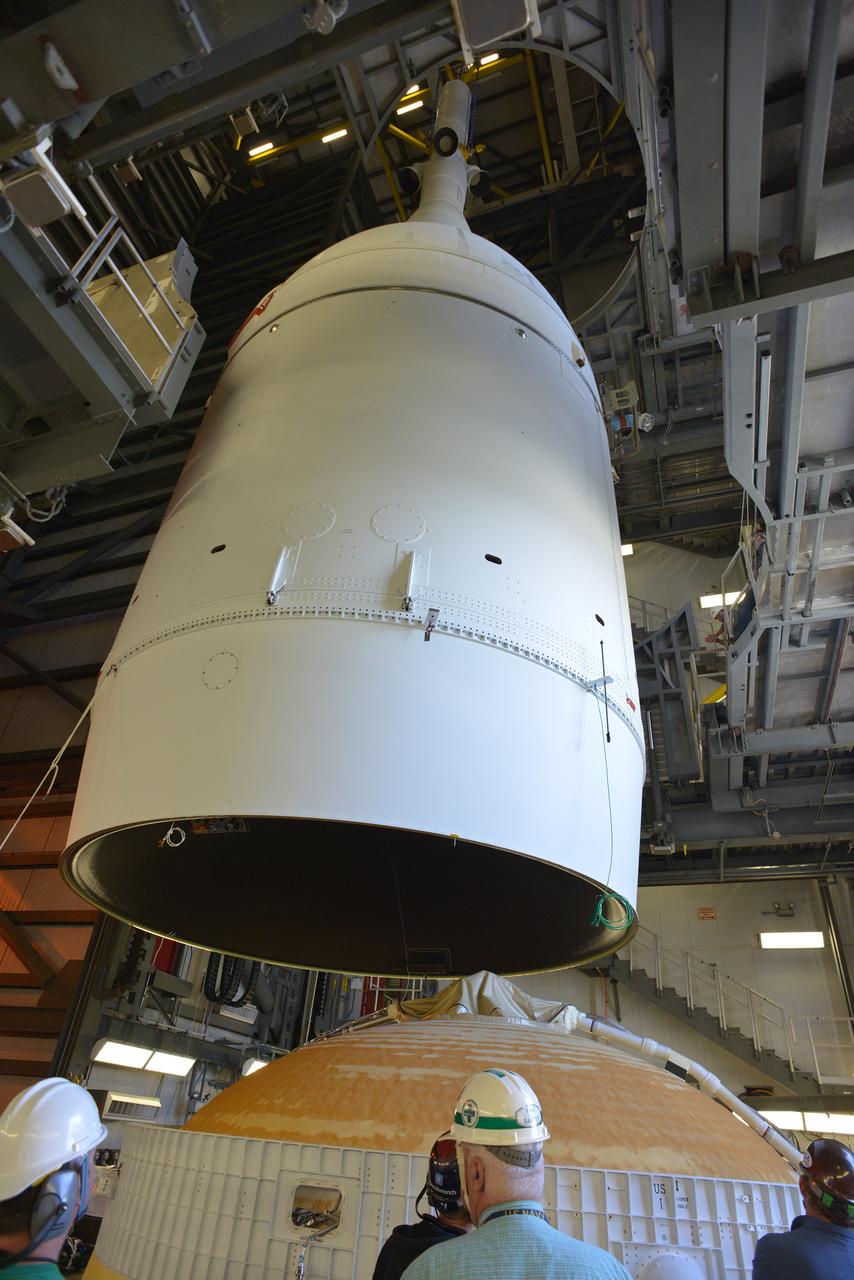
At Cape Canaveral Air Force Station's Launch Complex 37, United Launch Alliance engineers and technicians mate the agency's Orion spacecraft to its Delta IV Heavy rocket. Orion is the exploration spacecraft designed to carry astronauts to destinations not yet explored by humans, including an asteroid and Mars. It will have emergency abort capability, sustain the crew during space travel and provide safe re-entry from deep space return velocities. The first unpiloted flight test of Orion is scheduled to launch Dec. 4, 2014 atop a United Launch Alliance Delta IV Heavy rocket, and in 2018 on NASA’s Space Launch System rocket.
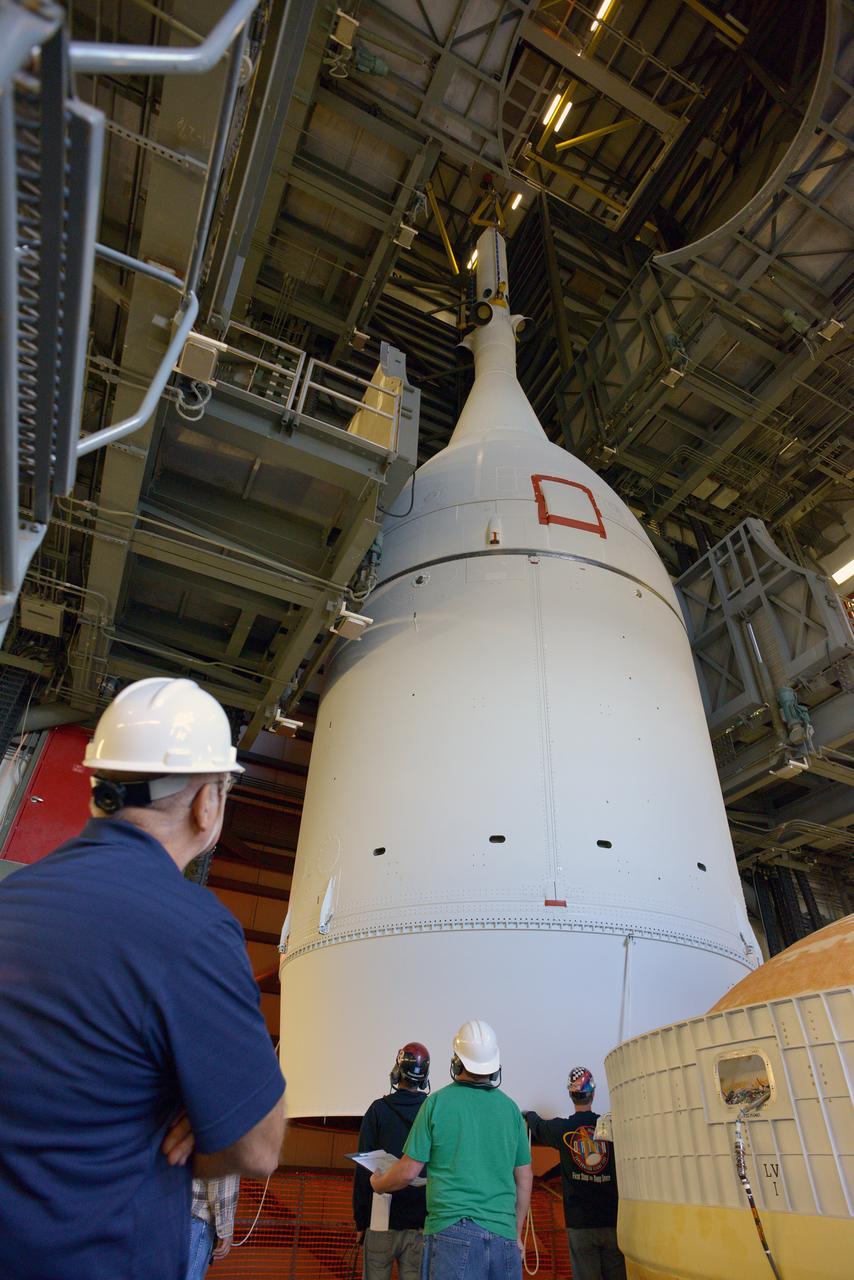
At Cape Canaveral Air Force Station's Launch Complex 37, United Launch Alliance engineers and technicians prepare to mate the agency's Orion spacecraft to its Delta IV Heavy rocket. Orion is the exploration spacecraft designed to carry astronauts to destinations not yet explored by humans, including an asteroid and Mars. It will have emergency abort capability, sustain the crew during space travel and provide safe re-entry from deep space return velocities. The first unpiloted flight test of Orion is scheduled to launch Dec. 4, 2014 atop a United Launch Alliance Delta IV Heavy rocket, and in 2018 on NASA’s Space Launch System rocket.
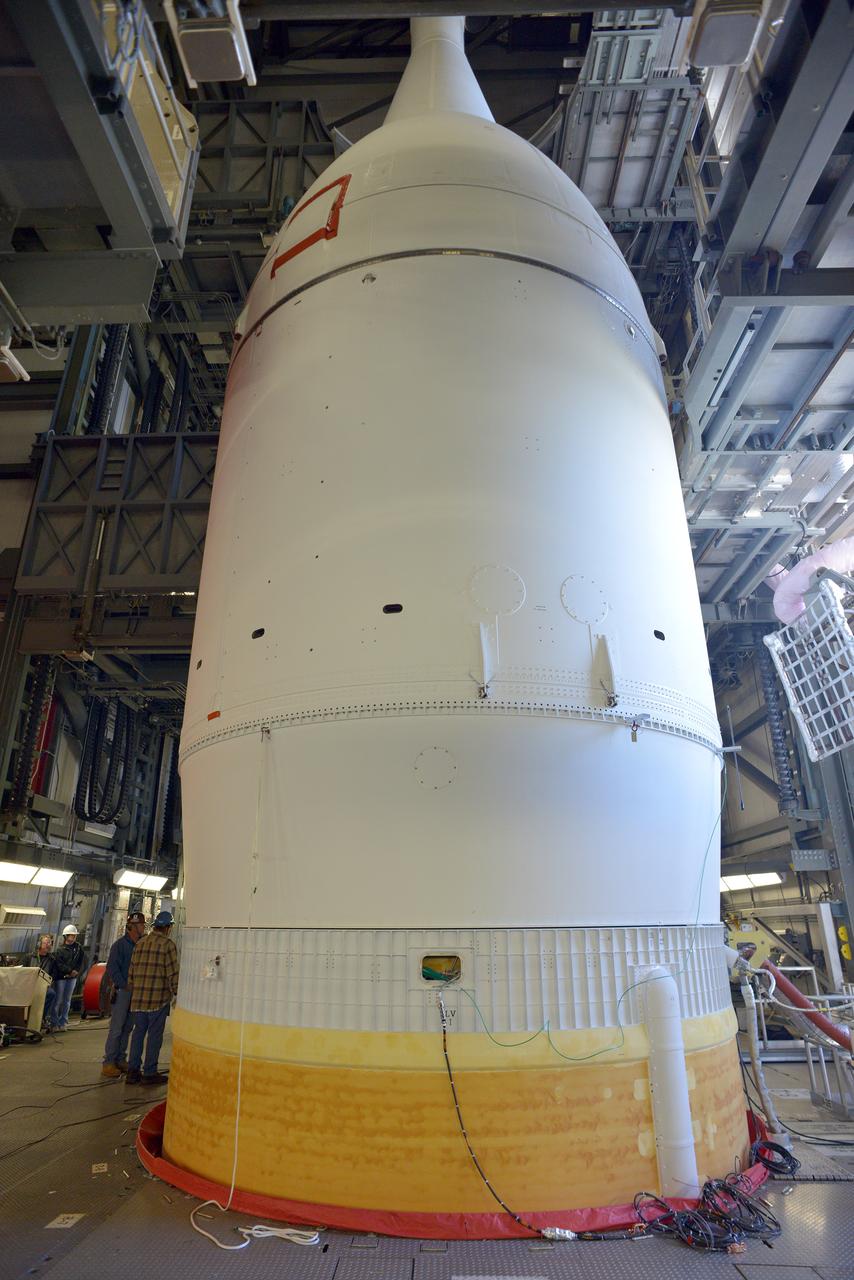
At Cape Canaveral Air Force Station's Launch Complex 37, United Launch Alliance engineers and technicians mate the agency's Orion spacecraft to its Delta IV Heavy rocket. Orion is the exploration spacecraft designed to carry astronauts to destinations not yet explored by humans, including an asteroid and Mars. It will have emergency abort capability, sustain the crew during space travel and provide safe re-entry from deep space return velocities. The first unpiloted flight test of Orion is scheduled to launch Dec. 4, 2014 atop a United Launch Alliance Delta IV Heavy rocket, and in 2018 on NASA’s Space Launch System rocket.
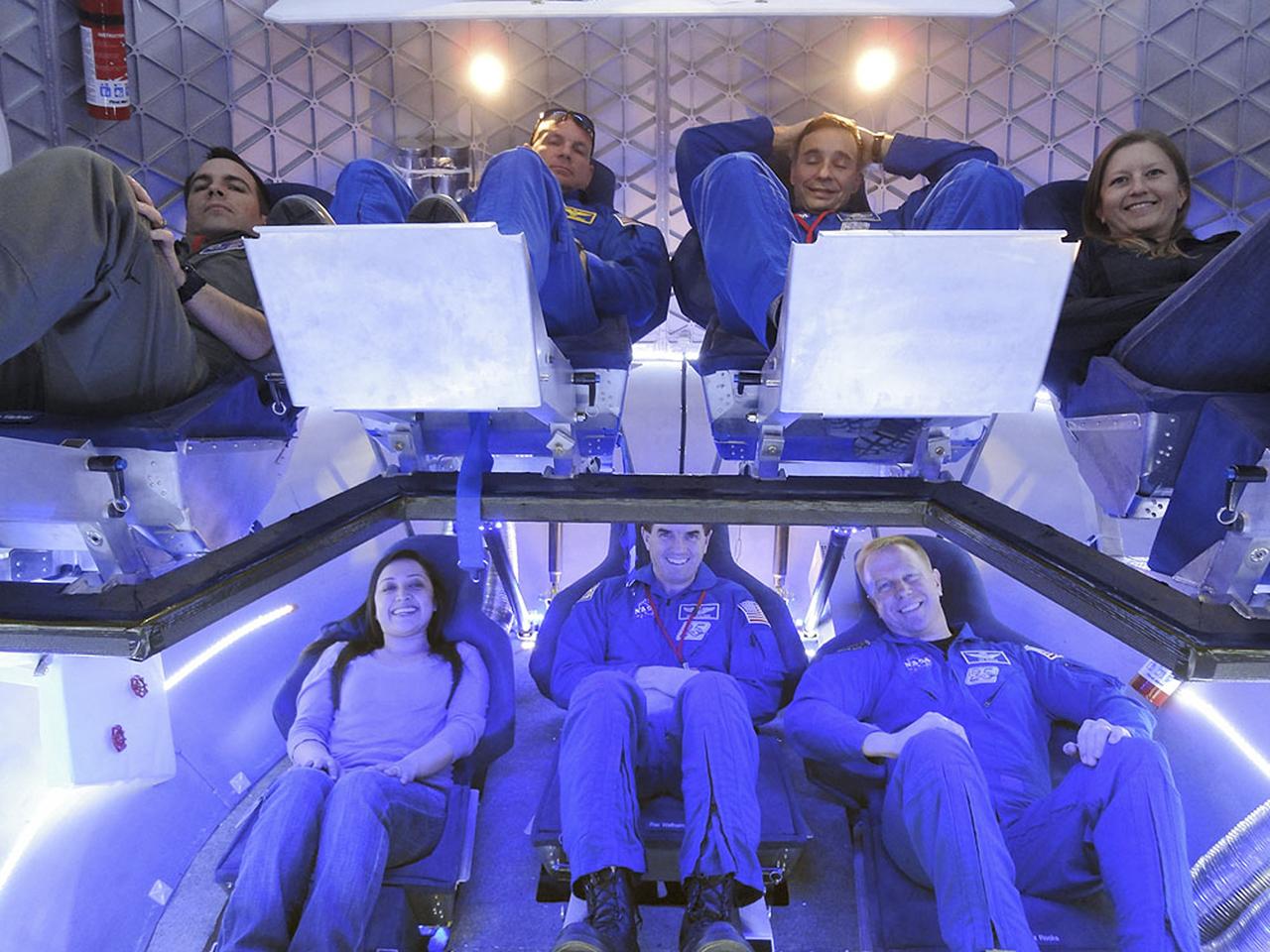
HAWTHORNE, Calif. -- NASA astronauts and industry experts check out the crew accommodations in the Dragon spacecraft under development by Space Exploration Technologies SpaceX of Hawthorne, Calif., for the agency's Commercial Crew Program. On top, from left, are NASA Crew Survival Engineering Team Lead Dustin Gohmert, NASA astronauts Tony Antonelli and Lee Archambault, and SpaceX Mission Operations Engineer Laura Crabtree. On bottom, from left, are SpaceX Thermal Engineer Brenda Hernandez and NASA astronauts Rex Walheim and Tim Kopra. In 2011, NASA selected SpaceX during Commercial Crew Development Round 2 CCDev2) activities to mature the design and development of a crew transportation system with the overall goal of accelerating a United States-led capability to the International Space Station. The goal of CCP is to drive down the cost of space travel as well as open up space to more people than ever before by balancing industry’s own innovative capabilities with NASA's 50 years of human spaceflight experience. Six other aerospace companies also are maturing launch vehicle and spacecraft designs under CCDev2, including Alliant Techsystems Inc. ATK, The Boeing Co., Excalibur Almaz Inc., Blue Origin, Sierra Nevada, and United Launch Alliance ULA. For more information, visit www.nasa.gov/commercialcrew. Image credit: Space Exploration Technologies
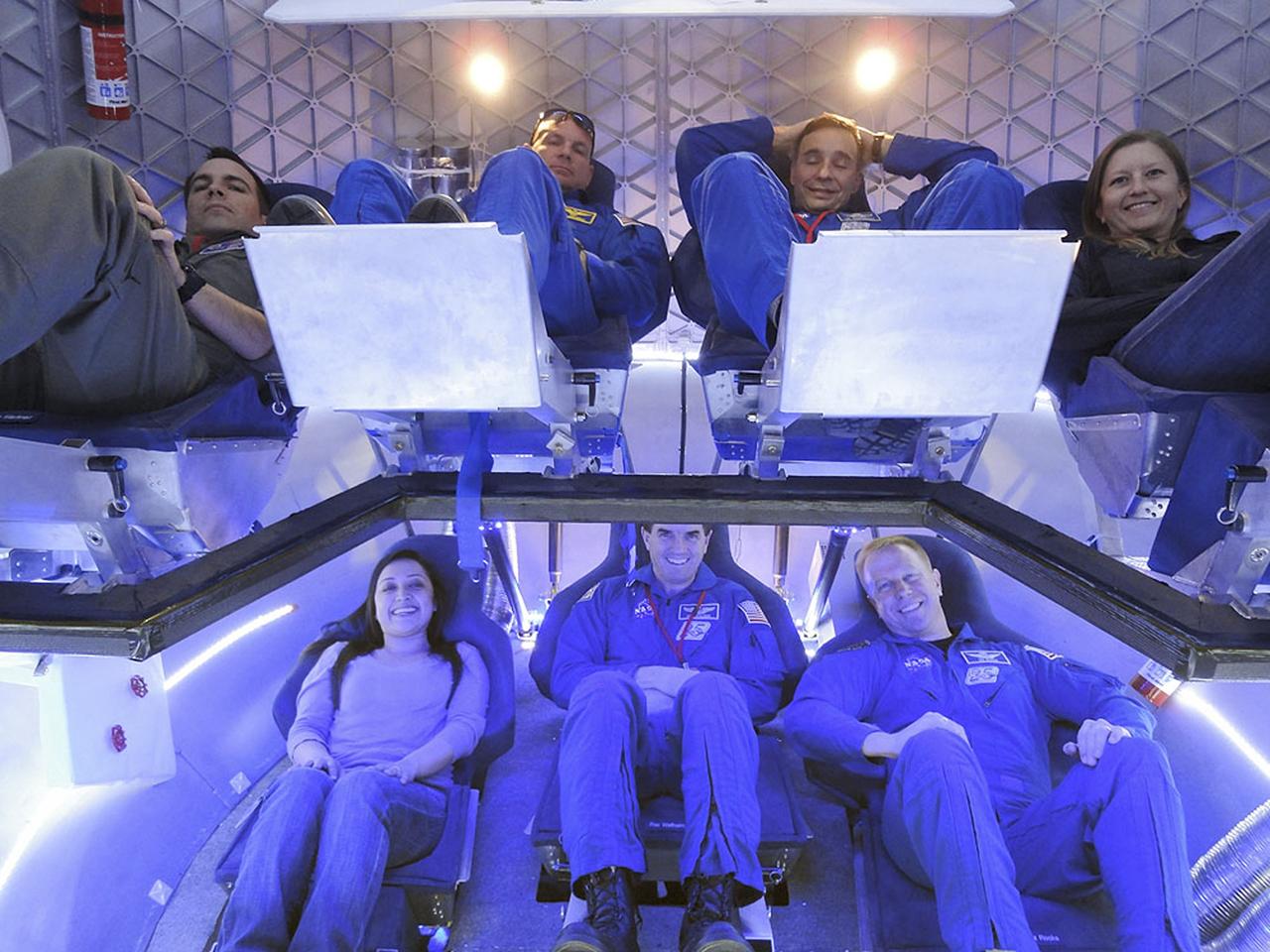
HAWTHORNE, Calif. -- NASA astronauts and industry experts check out the crew accommodations in the Dragon spacecraft under development by Space Exploration Technologies SpaceX of Hawthorne, Calif., for the agency's Commercial Crew Program. On top, from left, are NASA Crew Survival Engineering Team Lead Dustin Gohmert, NASA astronauts Tony Antonelli and Lee Archambault, and SpaceX Mission Operations Engineer Laura Crabtree. On bottom, from left, are SpaceX Thermal Engineer Brenda Hernandez and NASA astronauts Rex Walheim and Tim Kopra. In 2011, NASA selected SpaceX during Commercial Crew Development Round 2 CCDev2) activities to mature the design and development of a crew transportation system with the overall goal of accelerating a United States-led capability to the International Space Station. The goal of CCP is to drive down the cost of space travel as well as open up space to more people than ever before by balancing industry’s own innovative capabilities with NASA's 50 years of human spaceflight experience. Six other aerospace companies also are maturing launch vehicle and spacecraft designs under CCDev2, including Alliant Techsystems Inc. ATK, The Boeing Co., Excalibur Almaz Inc., Blue Origin, Sierra Nevada, and United Launch Alliance ULA. For more information, visit www.nasa.gov/commercialcrew. Image credit: Space Exploration Technologies
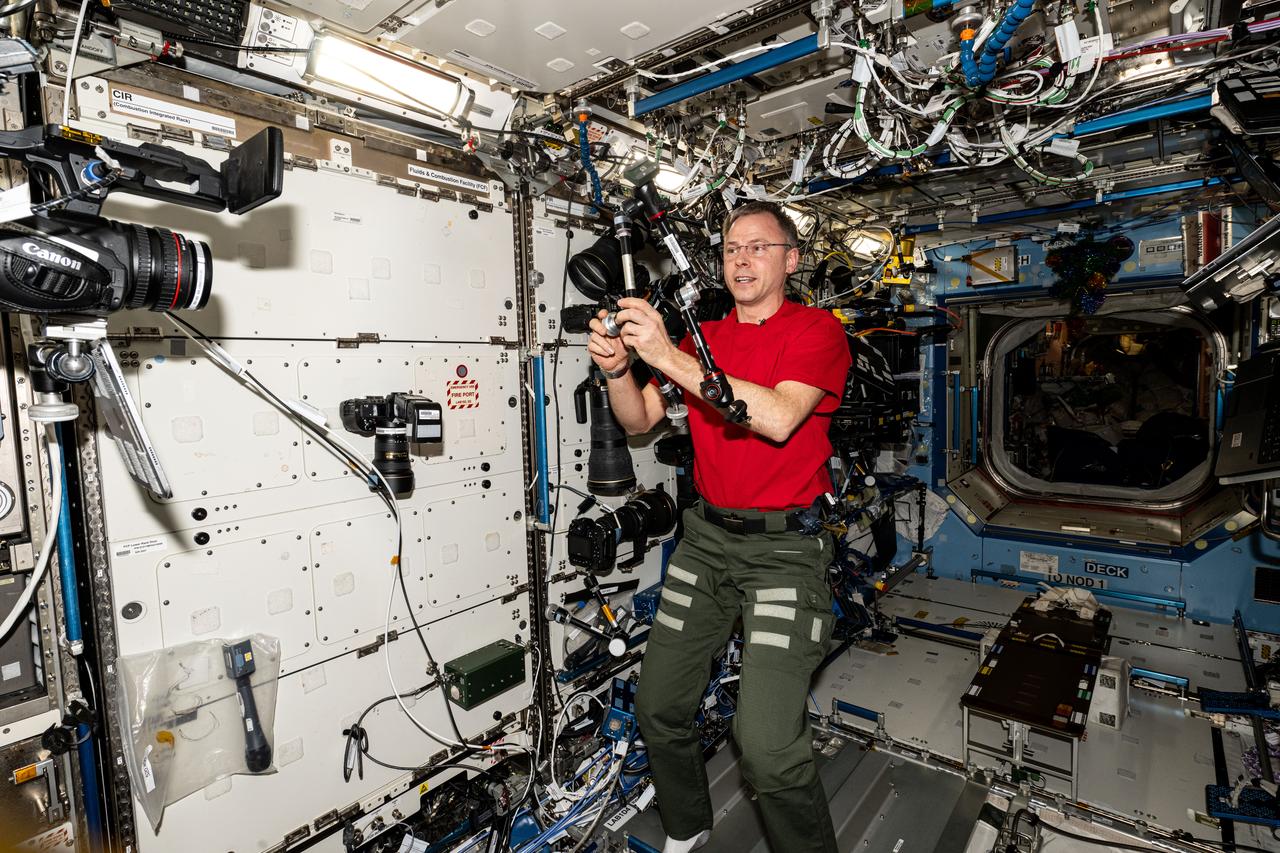
iss072e391290 (Dec. 17, 2024) --- NASA astronaut and Expedition 72 Flight Engineer Nick Hague demonstrates the range of motion and stability of student-designed space hardware aboard the International Space Station's Destiny laboratory module. Hague was testing the HUNCH (High school students United with NASA to Create Hardware) Utility Bracket for its ability to hold and position cameras, computer tablets, and other tools astronauts use daily.
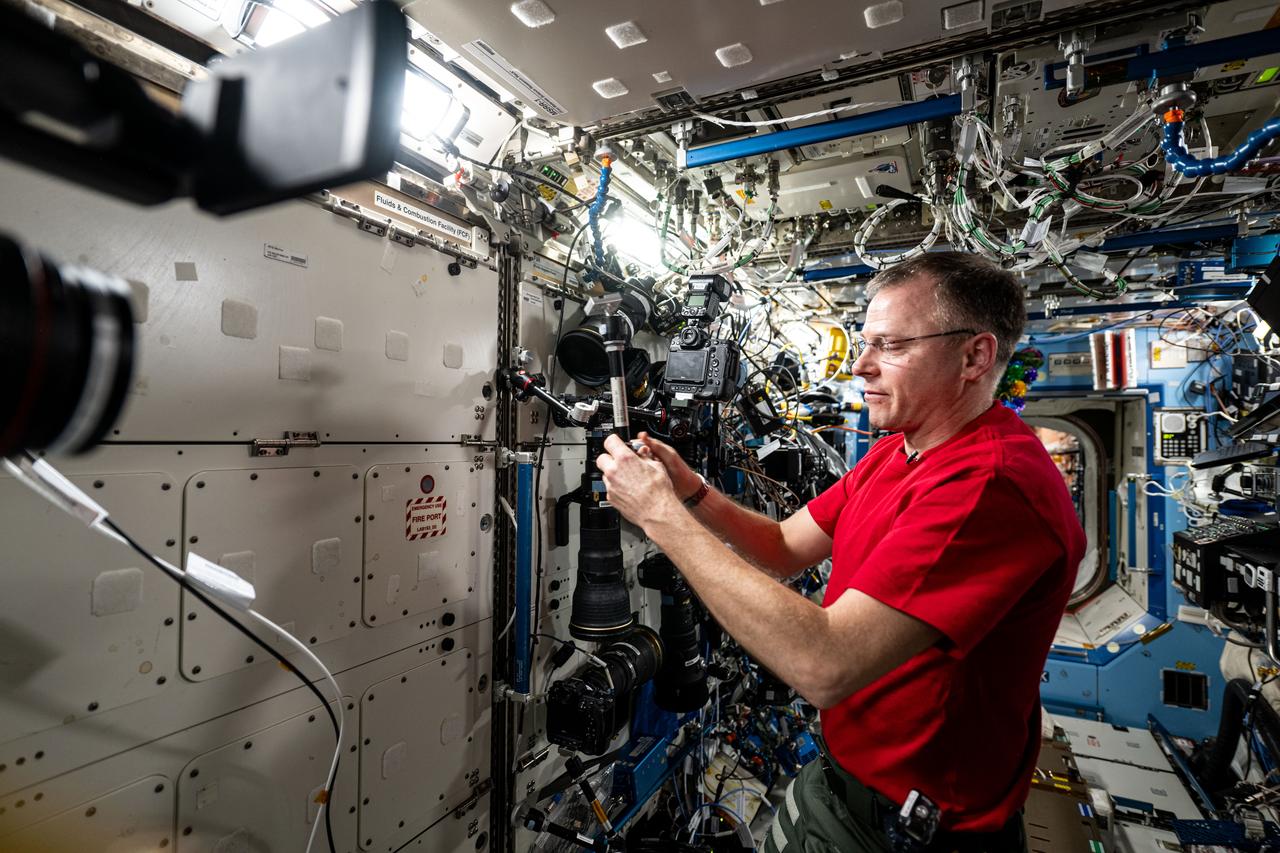
iss072e391307 (Dec. 17, 2024) --- NASA astronaut and Expedition 72 Flight Engineer Nick Hague demonstrates the range of motion and stability of student-designed space hardware aboard the International Space Station's Destiny laboratory module. Hague was testing the HUNCH (High school students United with NASA to Create Hardware) Utility Bracket for its ability to hold and position cameras, computer tablets, and other tools astronauts use daily.
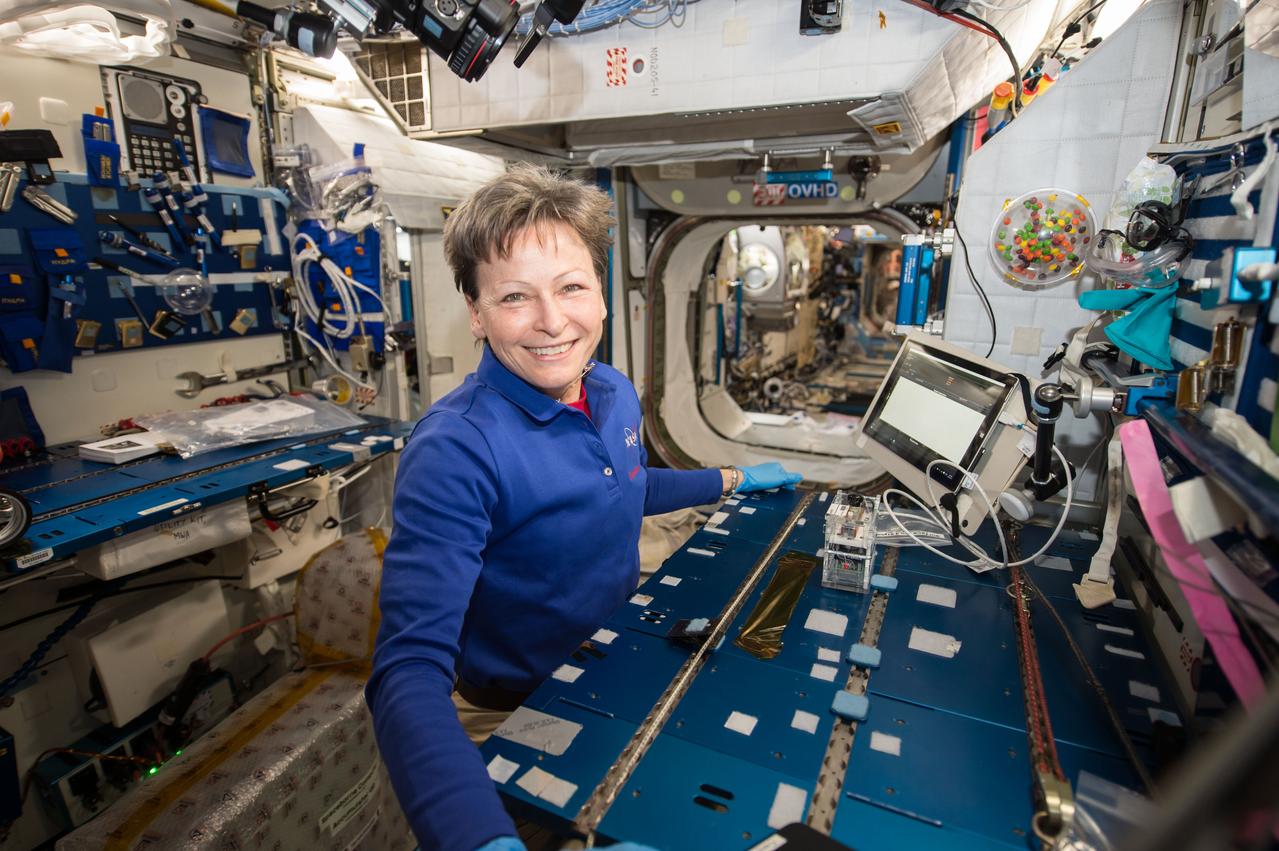
iss052e061925 (8/21/2017) --- NASA astronaut Peggy Whitson is photographed working with the Genes In Space experiment in the Node 2 module. Genes in Space is an innovation challenge including students and teachers across the United States from grades 7 through 12. Students design a pioneering DNA-related experiment to fly on the ISS, providing real-world training in science, technology, engineering and math (STEM) fields and connecting students to the space program.
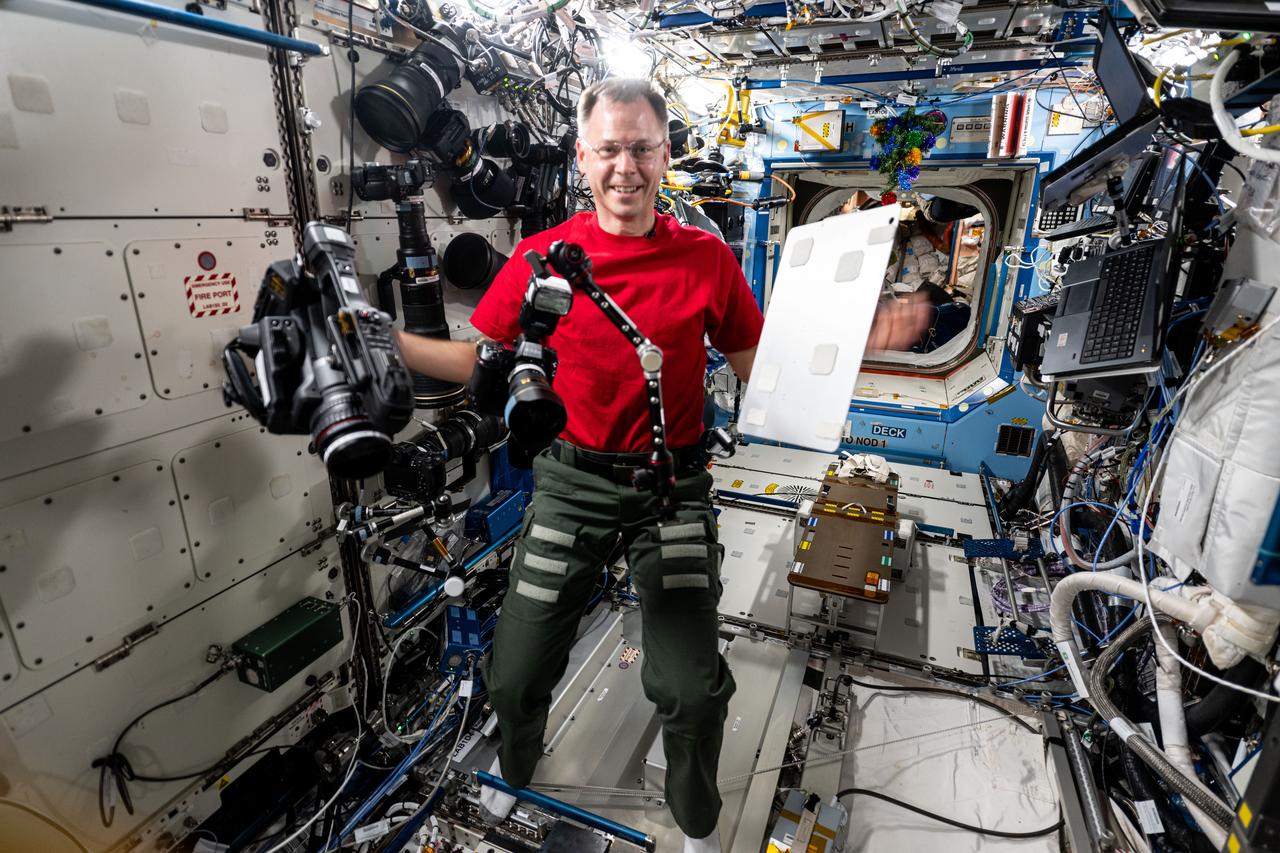
iss072e391353 (Dec. 17, 2024) --- NASA astronaut and Expedition 72 Flight Engineer Nick Hague demonstrates the range of motion and stability of student-designed space hardware aboard the International Space Station's Destiny laboratory module. Hague was testing the HUNCH (High school students United with NASA to Create Hardware) Utility Bracket for its ability to hold and position cameras, computer tablets, and other tools astronauts use daily.
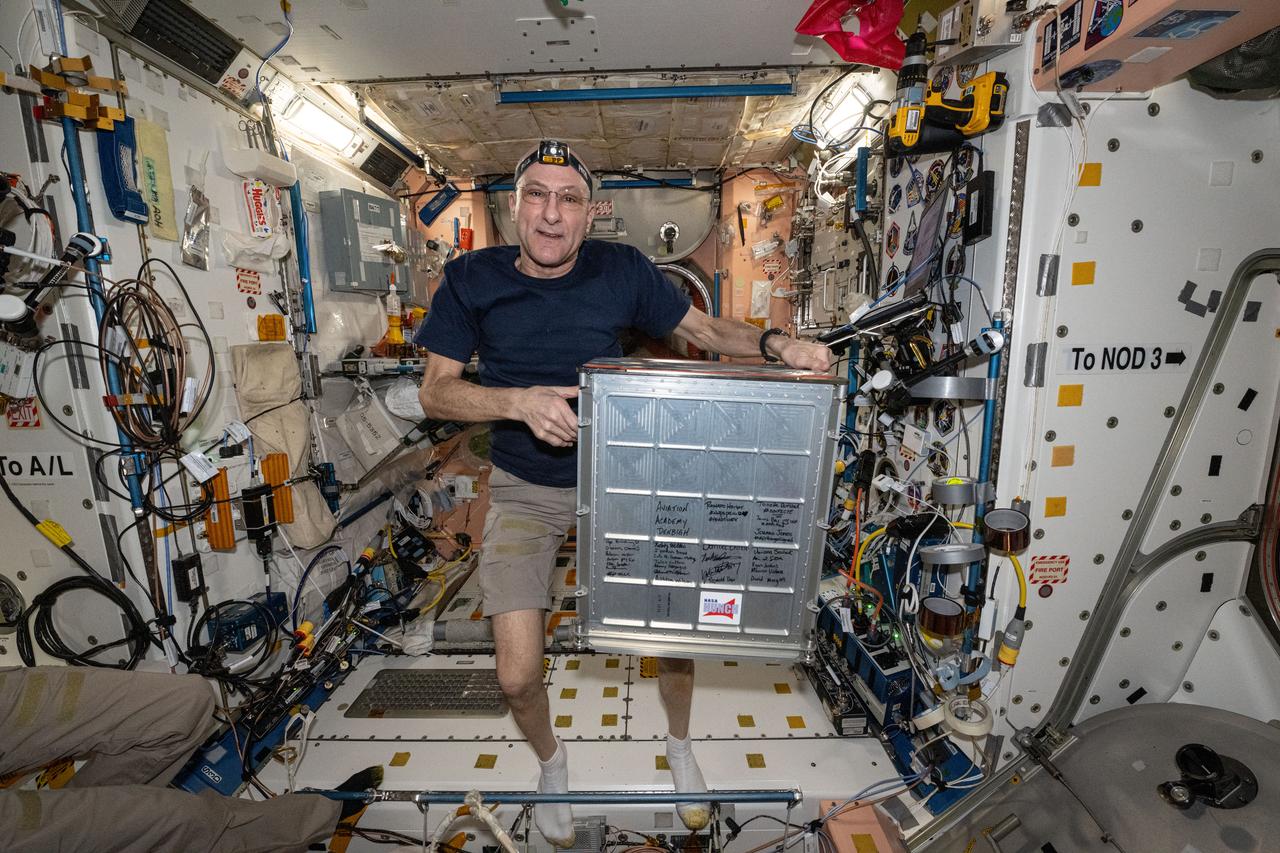
iss072e517816 (Jan. 21, 2025) --- NASA astronaut and Expedition 72 Flight Engineer Don Pettit displays HUNCH (High school students United with NASA to Create Hardware) gear inside the International Space Station's Unity module. The HUNCH mission empowers and inspires high school students to learn 21st-century skills and particpate in the design and fabrication of real-world tools for NASA.
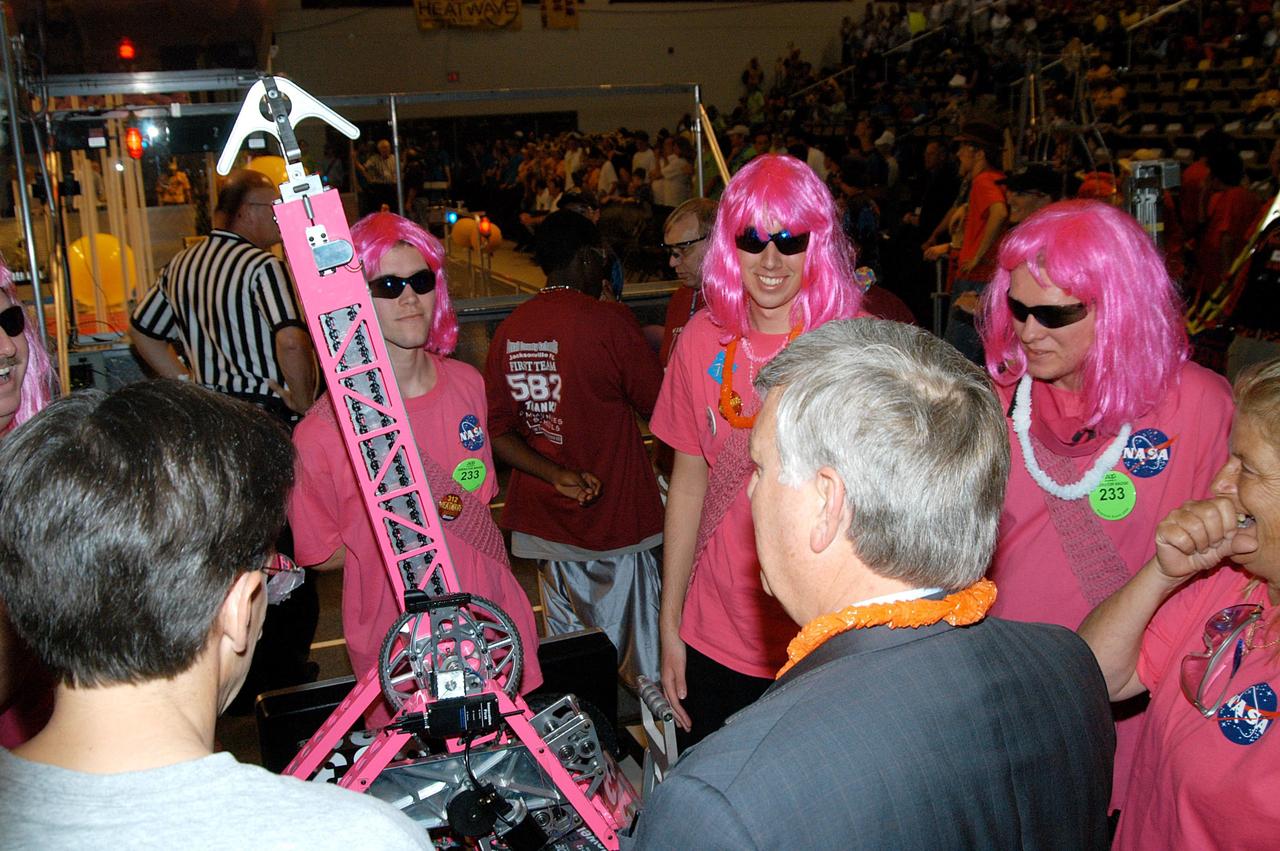
KENNEDY SPACE CENTER, FLA. - Center Director Jim Kennedy (right, back to camera) talks to members of the KSC-sponsored “Pink” team at the 2004 Florida Regional FIRST competition, held at the University of Central Florida. The annual event is hosting 41 teams from Canada, Brazil, Great Britain and the United States. FIRST is a nonprofit organization, For Inspiration and Recognition of Science and Technology, that sponsors the event pitting robots against each other in an athletic-style competition. The FIRST robotics competition is designed to provide students with a hands-on, inside look at engineering and other professional careers, pairing high school students with engineer mentors and corporations.
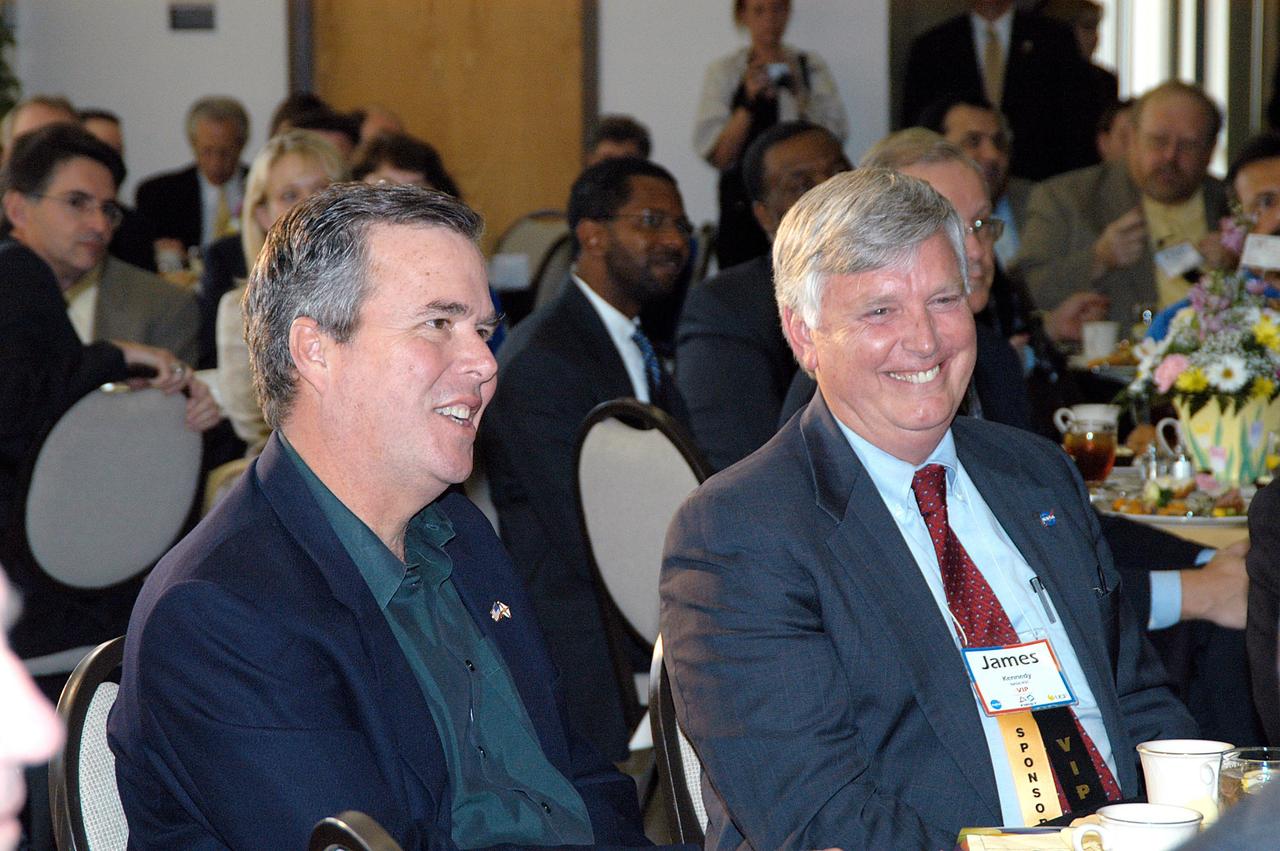
KENNEDY SPACE CENTER, FLA. - Florida Gov. Jeb Bush (left) and Center Director Jim Kennedy enjoy a humorous break at the luncheon for the 2004 Florida Regional FIRST competition held at the University of Central Florida. Both are featured speakers. The event hosted 41 teams from Canada, Brazil, Great Britain and the United States. FIRST is a nonprofit organization, For Inspiration and Recognition of Science and Technology, that sponsors the event pitting gladiator robots against each other in an athletic-style competition. The FIRST robotics competition is designed to provide students with a hands-on, inside look at engineering and other professional careers, pairing high school students with engineer mentors and corporations.

KENNEDY SPACE CENTER, FLA. - Florida Gov. Jeb Bush speaks to attendees at the luncheon held at the 2004 Florida Regional FIRST competition at the University of Central Florida. The event hosted 41 teams from Canada, Brazil, Great Britain and the United States. Center Director Jim Kennedy also spoke at the luncheon. FIRST is a nonprofit organization, For Inspiration and Recognition of Science and Technology, that sponsors the event pitting gladiator robots against each other in an athletic-style competition. The FIRST robotics competition is designed to provide students with a hands-on, inside look at engineering and other professional careers, pairing high school students with engineer mentors and corporations.
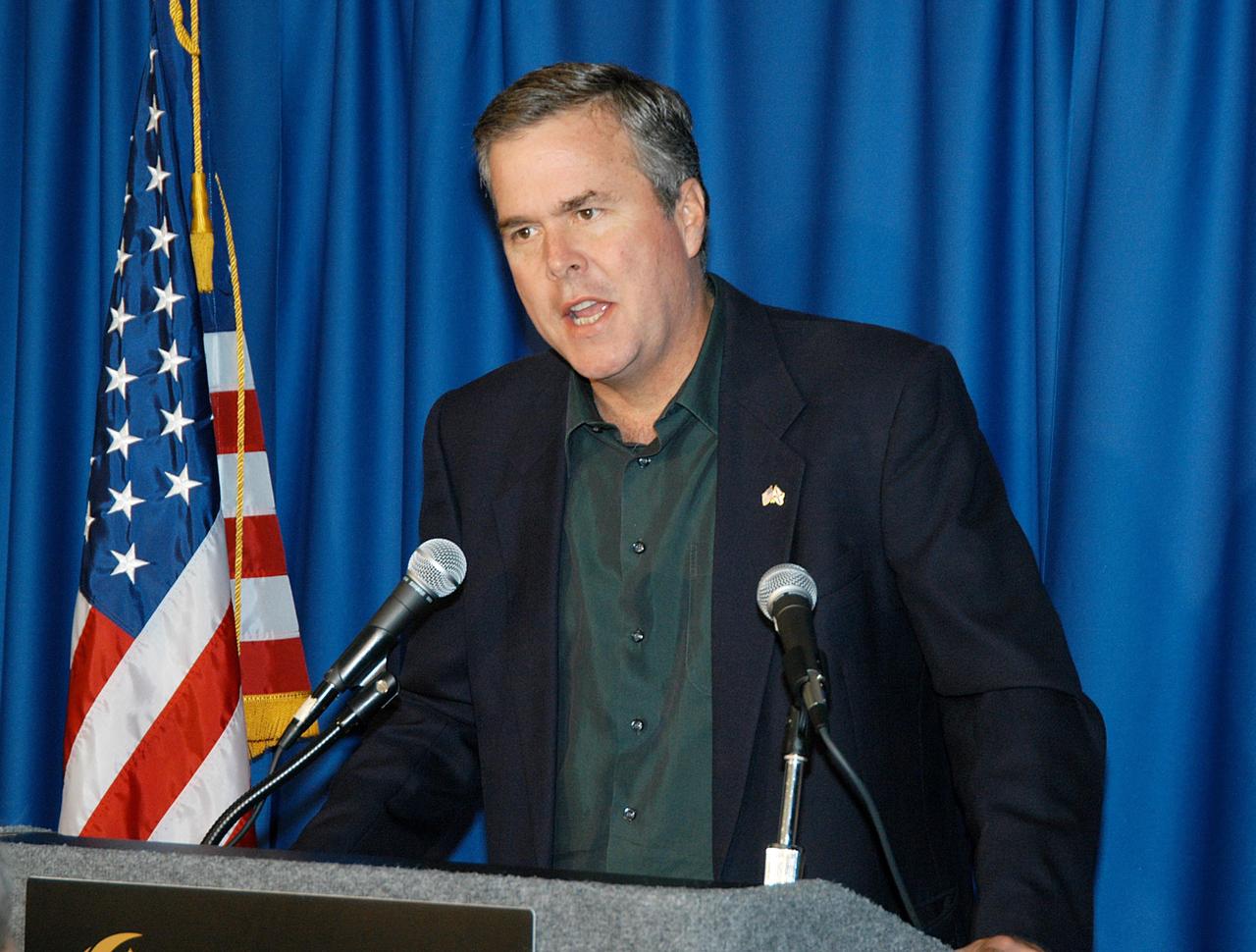
KENNEDY SPACE CENTER, FLA. - Florida Gov. Jeb Bush speaks to attendees at the luncheon held at the 2004 Florida Regional FIRST competition at the University of Central Florida. The event hosted 41 teams from Canada, Brazil, Great Britain and the United States. Florida Gov. Jeb Bush also spoke at the luncheon. FIRST is a nonprofit organization, For Inspiration and Recognition of Science and Technology, that sponsors the event pitting gladiator robots against each other in an athletic-style competition. The FIRST robotics competition is designed to provide students with a hands-on, inside look at engineering and other professional careers, pairing high school students with engineer mentors and corporations.
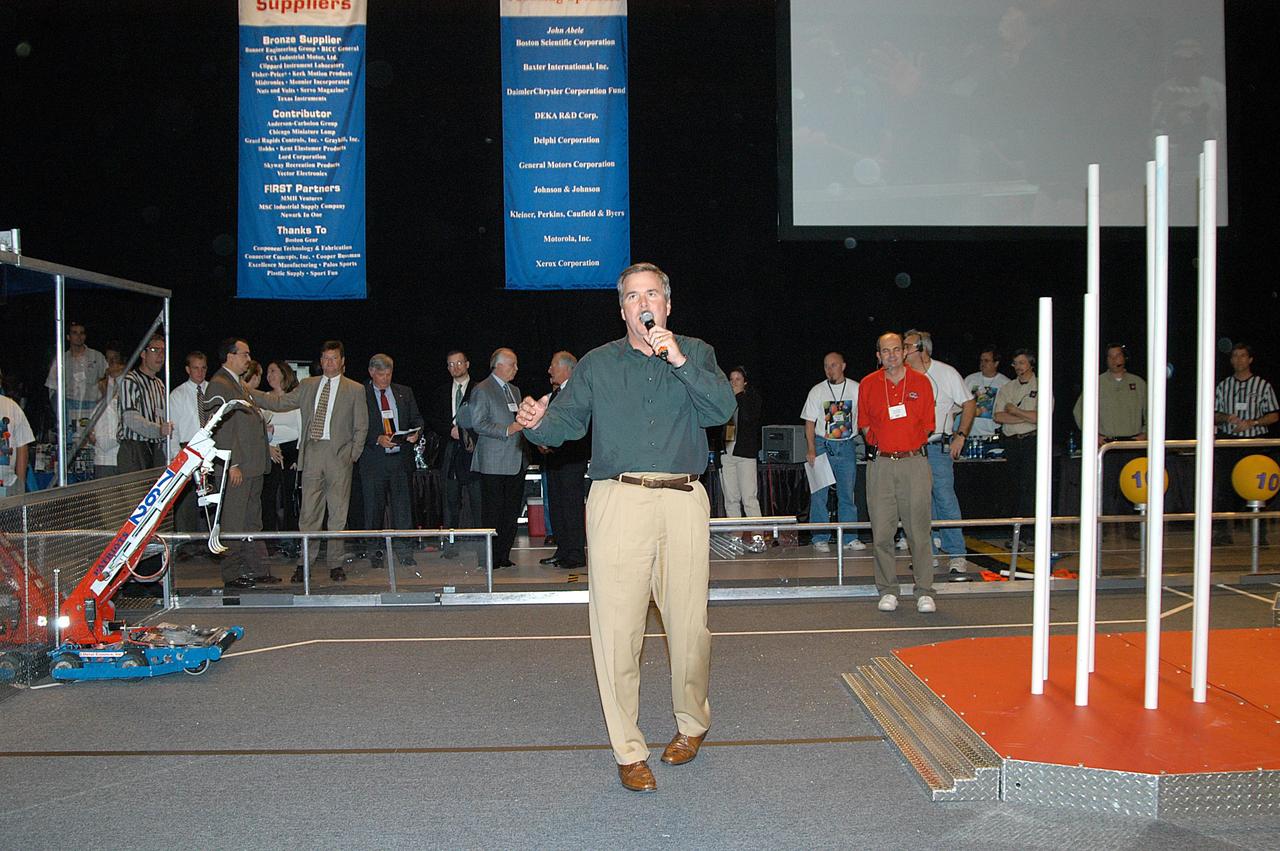
KENNEDY SPACE CENTER, FLA. - Florida Gov. Jeb Bush speaks to attendees at the 2004 Florida Regional FIRST competition at the University of Central Florida. The event hosted 41 teams from Canada, Brazil, Great Britain and the United States. Bush and Center Director Jim Kennedy also spoke at the luncheon. FIRST is a nonprofit organization, For Inspiration and Recognition of Science and Technology, that sponsors the event pitting robots against each other in an athletic-style competition. The FIRST robotics competition is designed to provide students with a hands-on, inside look at engineering and other professional careers, pairing high school students with engineer mentors and corporations.
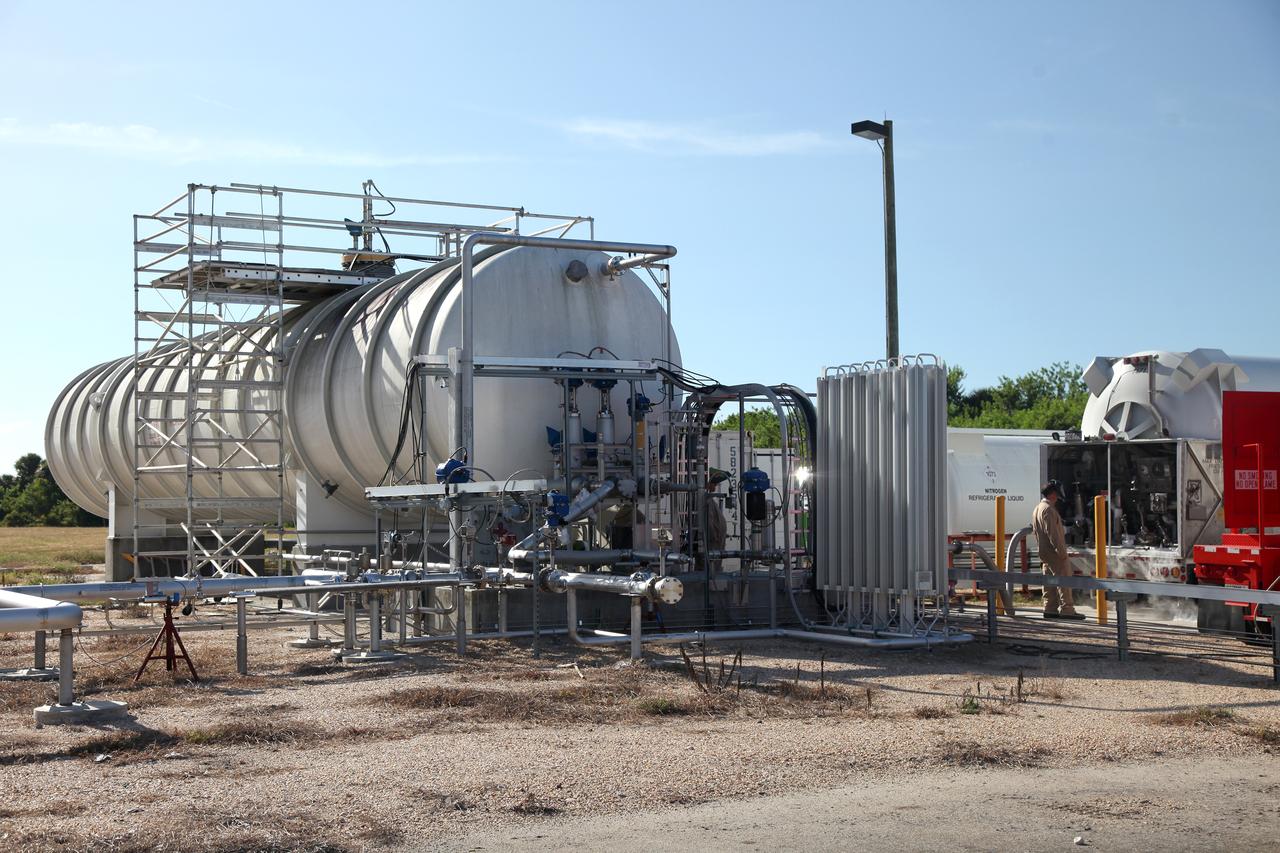
Engineers complete a test of the Ground Operations Demo Unit for liquid hydrogen at NASA's Kennedy Space Center in Florida. The system includes a 33,000 gallon liquid hydrogen storage tank with an internal cold heat exchanger supplied from a cryogenic refrigerator. The primary goal of the testing is to achieve a liquid hydrogen zero boil-off capability. The system was designed, installed and tested by a team of civil servants and contractors from the center's Cryogenic Test Laboratory, with support from engineers at NASA's Glenn Research Center in Cleveland and Stennis Space Center in Mississippi. It may be applicable for use by the Ground Systems Development and Operations Program at Launch Pad 39B.
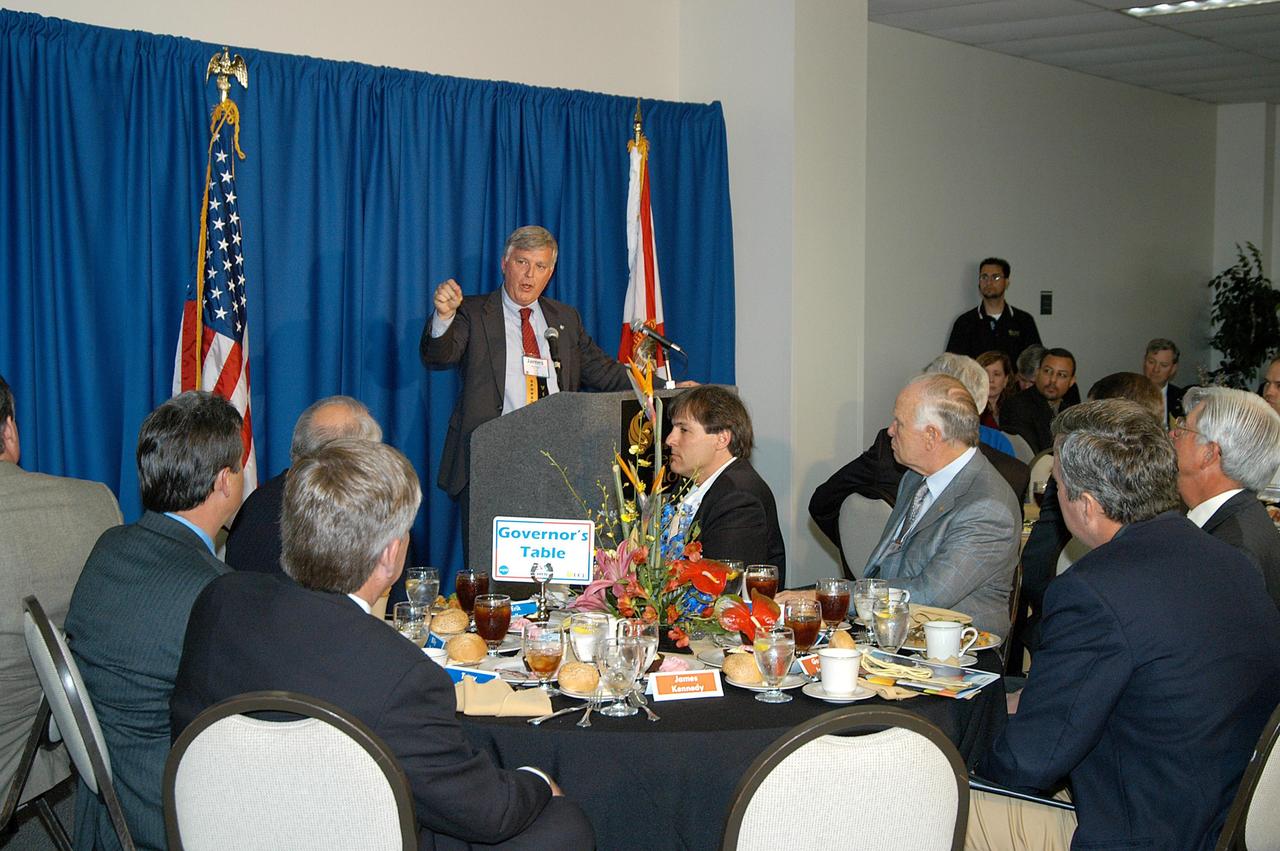
KENNEDY SPACE CENTER, FLA. - During the luncheon held at the 2004 Florida Regional FIRST competition at the University of Central Florida, Center Director Jim Kennedy praises the teamwork of the students involved. The event hosted 41 teams from Canada, Brazil, Great Britain and the United States. Florida Gov. Jeb Bush also spoke at the luncheon. FIRST is a nonprofit organization, For Inspiration and Recognition of Science and Technology, that sponsors the event pitting gladiator robots against each other in an athletic-style competition. The FIRST robotics competition is designed to provide students with a hands-on, inside look at engineering and other professional careers, pairing high school students with engineer mentors and corporations.
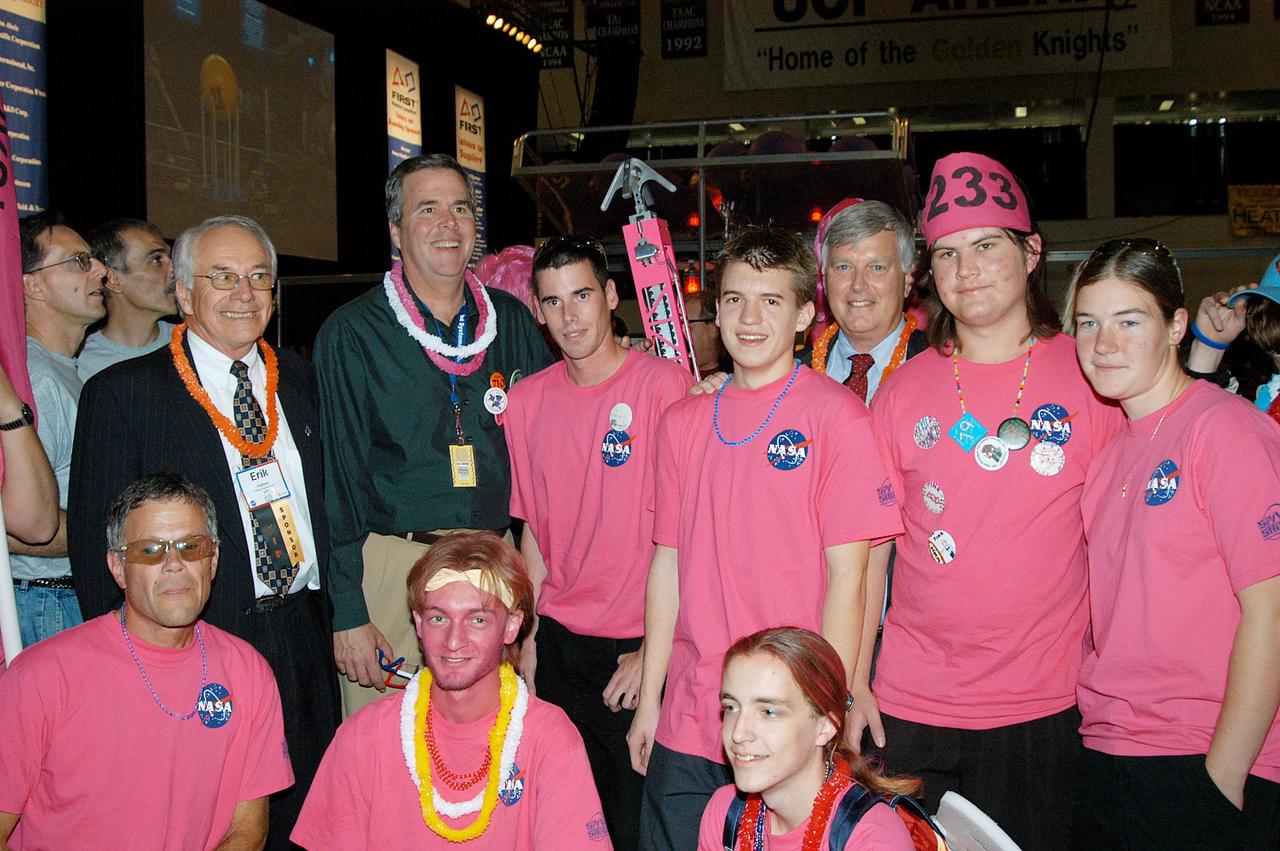
KENNEDY SPACE CENTER, FLA. - The KSC-sponsored “Pink” team poses for a photo with Florida Gov. Jeb Bush (second from left) during a break at the 2004 Florida Regional FIRST competition, held at the University of Central Florida. The annual event is hosting 41 teams from Canada, Brazil, Great Britain and the United States. FIRST is a nonprofit organization, For Inspiration and Recognition of Science and Technology, that sponsors the event pitting robots against each other in an athletic-style competition. The FIRST robotics competition is designed to provide students with a hands-on, inside look at engineering and other professional careers, pairing high school students with engineer mentors and corporations.
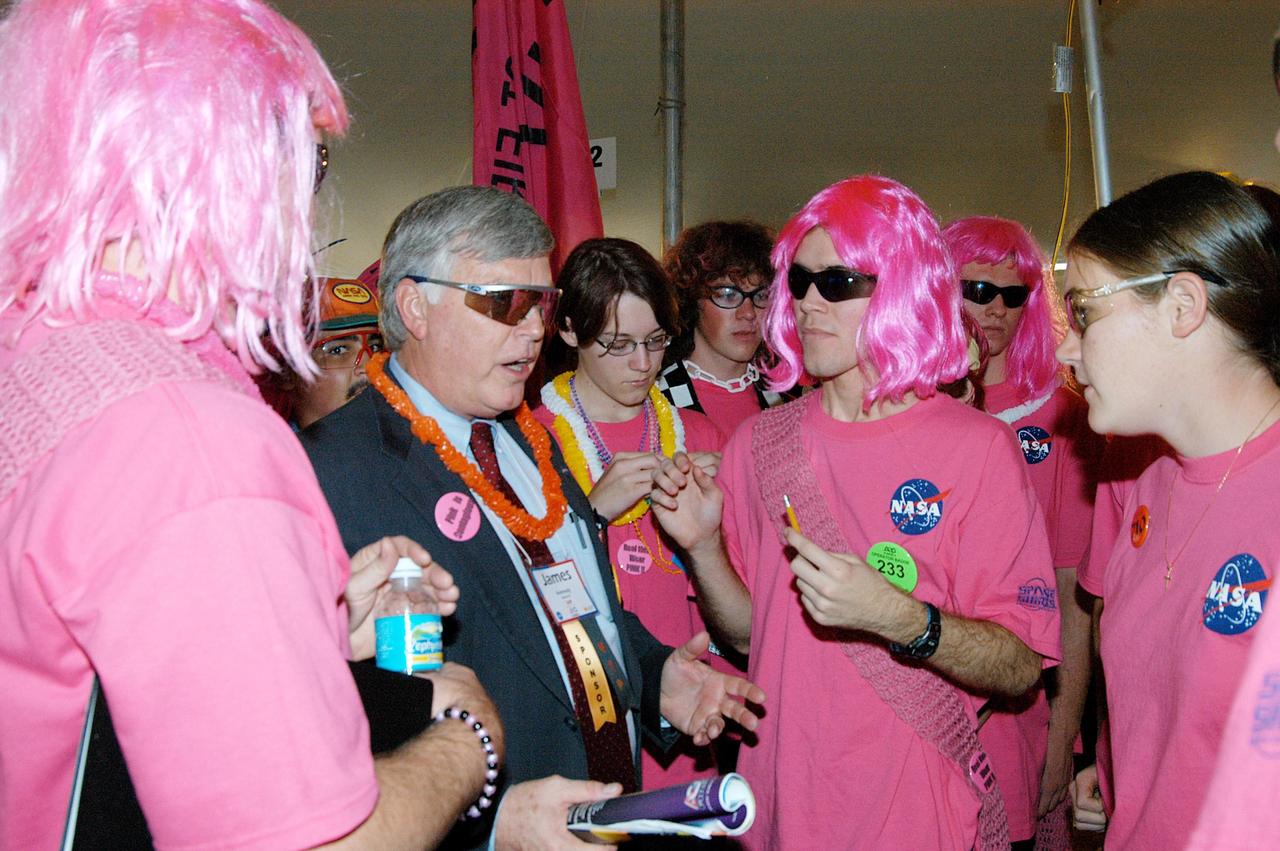
KENNEDY SPACE CENTER, FLA. - Center Director Jim Kennedy joins students on the KSC-sponsored “Pink” team at the 2004 Florida Regional FIRST competition, held at the University of Central Florida. The annual event is hosting 41 teams from Canada, Brazil, Great Britain and the United States. FIRST is a nonprofit organization, For Inspiration and Recognition of Science and Technology, that sponsors the event pitting robots against each other in an athletic-style competition. The FIRST robotics competition is designed to provide students with a hands-on, inside look at engineering and other professional careers, pairing high school students with engineer mentors and corporations.
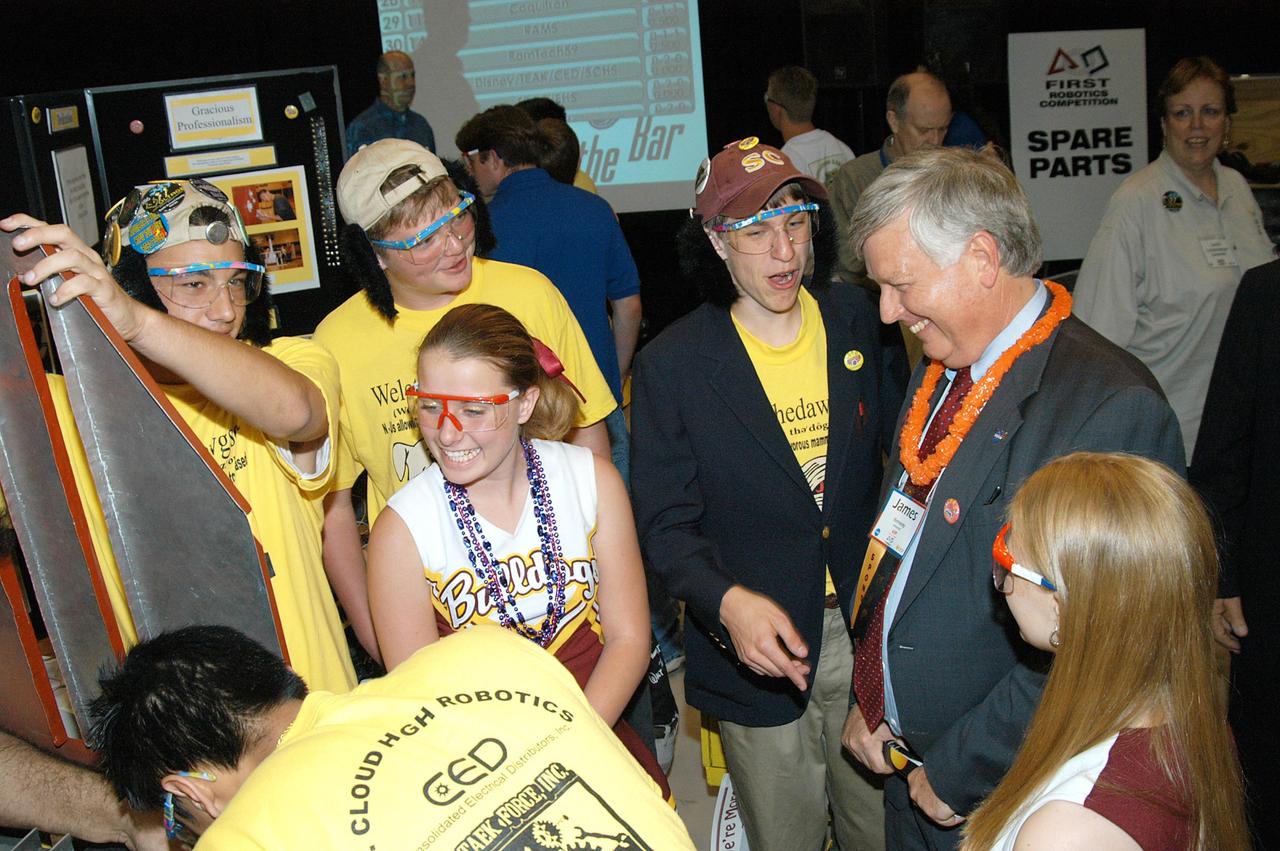
KENNEDY SPACE CENTER, FLA. - Center Director Jim Kennedy (right) talks to members of one of the teams at the 2004 Florida Regional FIRST competition, held at the University of Central Florida. The annual event is hosting 41 teams from Canada, Brazil, Great Britain and the United States. FIRST is a nonprofit organization, For Inspiration and Recognition of Science and Technology, that sponsors the event pitting robots against each other in an athletic-style competition. The FIRST robotics competition is designed to provide students with a hands-on, inside look at engineering and other professional careers, pairing high school students with engineer mentors and corporations.
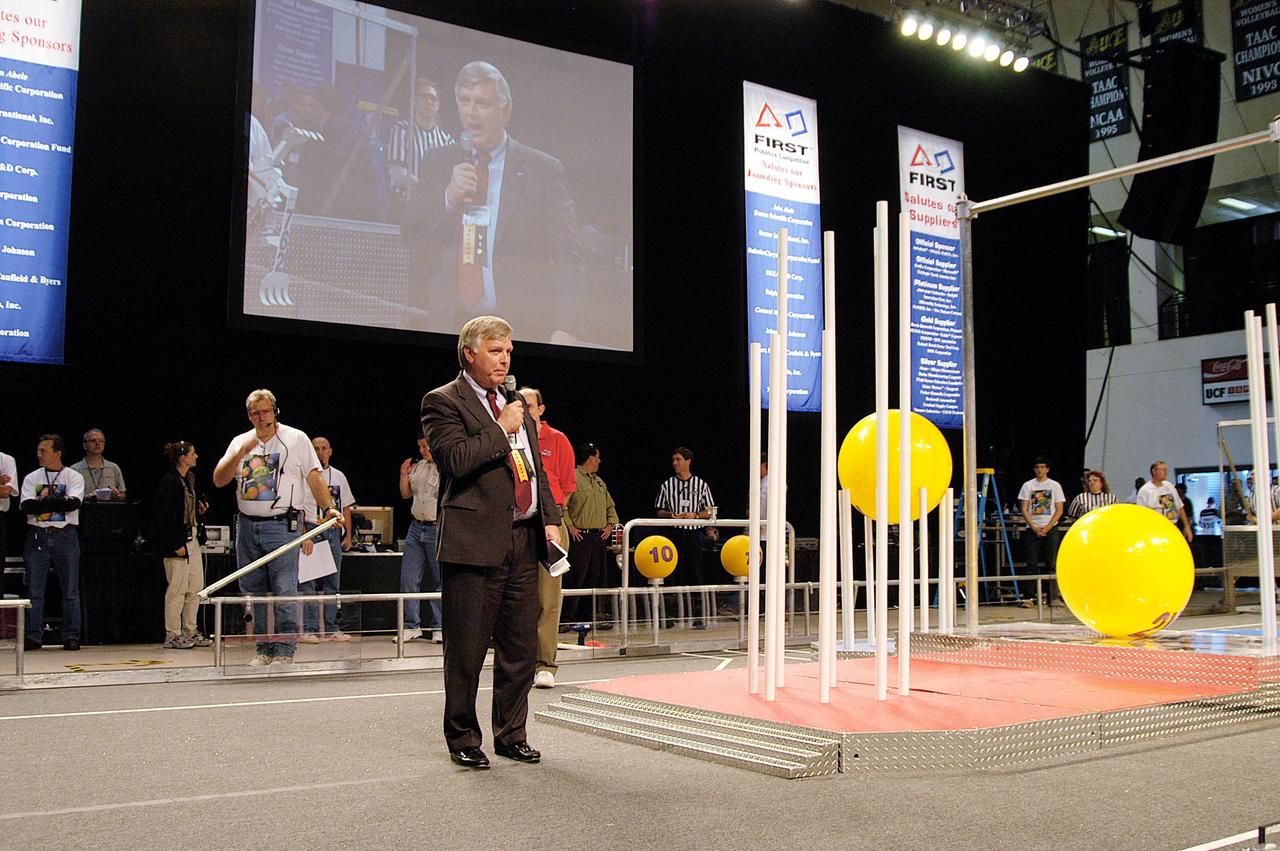
KENNEDY SPACE CENTER, FLA. - Center Director Jim Kennedy speaks to attendees at the 2004 Florida Regional FIRST competition at the University of Central Florida. The event hosted 41 teams from Canada, Brazil, Great Britain and the United States. Florida Gov. Jeb Bush also spoke at the luncheon. FIRST is a nonprofit organization, For Inspiration and Recognition of Science and Technology, that sponsors the event pitting gladiator robots against each other in an athletic-style competition. The FIRST robotics competition is designed to provide students with a hands-on, inside look at engineering and other professional careers, pairing high school students with engineer mentors and corporations.

KENNEDY SPACE CENTER, FLA. - Florida Gov. Jeb Bush (left) and Center Director Jim Kennedy attend the luncheon at the 2004 Florida Regional FIRST competition held at the University of Central Florida. Both are featured speakers. The event hosted 41 teams from Canada, Brazil, Great Britain and the United States. FIRST is a nonprofit organization, For Inspiration and Recognition of Science and Technology, that sponsors the event pitting gladiator robots against each other in an athletic-style competition. The FIRST robotics competition is designed to provide students with a hands-on, inside look at engineering and other professional careers, pairing high school students with engineer mentors and corporations.
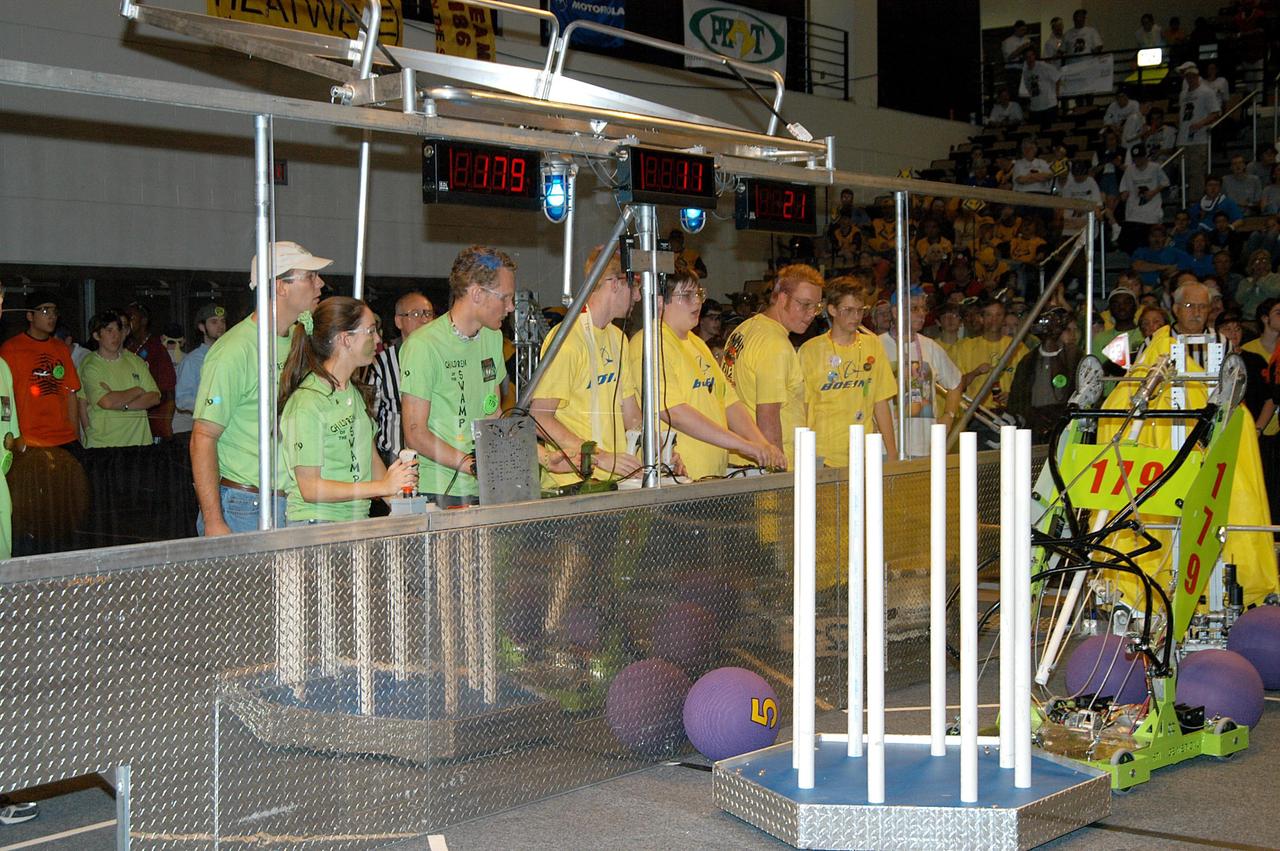
KENNEDY SPACE CENTER, FLA. - Two student teams vie for points during a match at the 2004 Florida Regional FIRST competition, held at the University of Central Florida. The annual event is hosting 41 teams from Canada, Brazil, Great Britain and the United States. FIRST is a nonprofit organization, For Inspiration and Recognition of Science and Technology, that sponsors the event pitting robots against each other in an athletic-style competition. The FIRST robotics competition is designed to provide students with a hands-on, inside look at engineering and other professional careers, pairing high school students with engineer mentors and corporations.
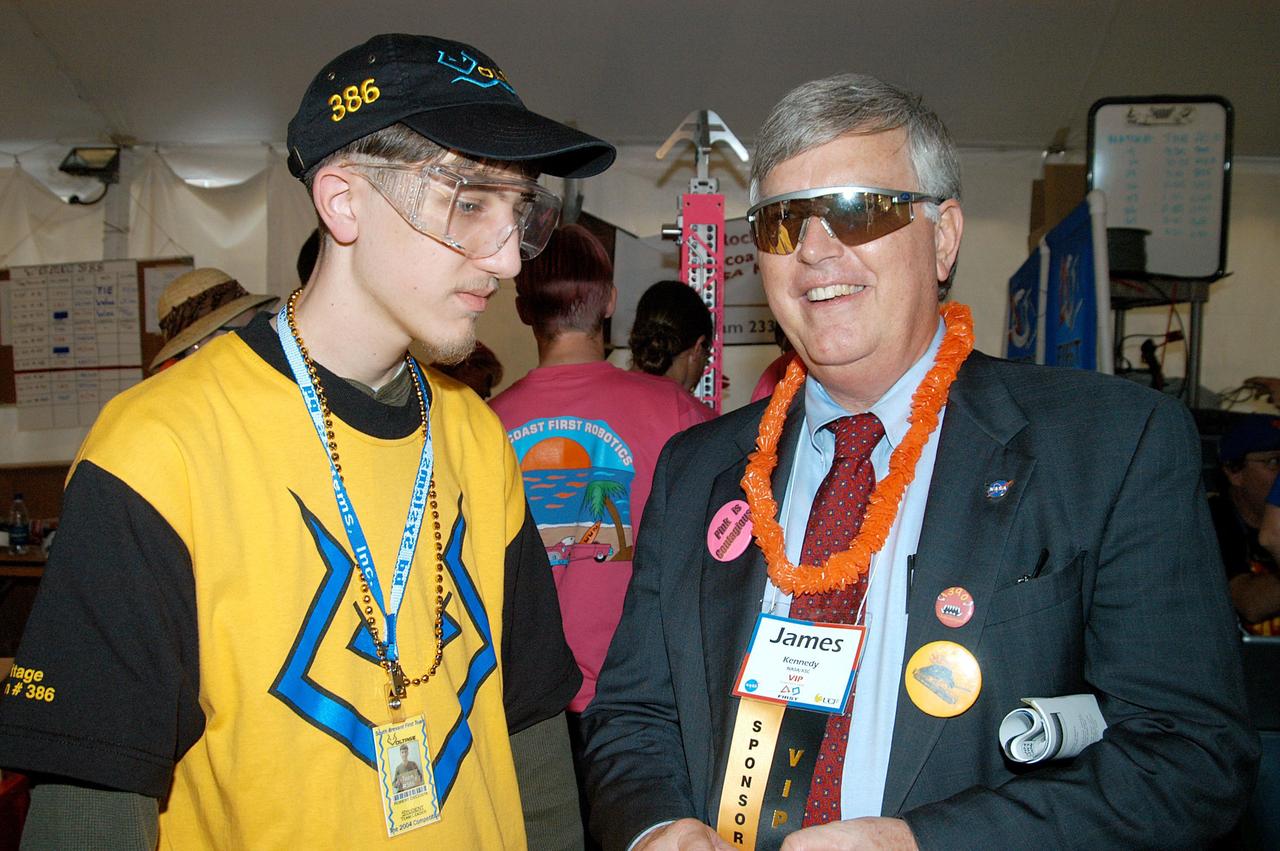
KENNEDY SPACE CENTER, FLA. - Center Director Jim Kennedy talks with a student team member at the 2004 Florida Regional FIRST competition, held at the University of Central Florida. The annual event is hosting 41 teams from Canada, Brazil, Great Britain and the United States. FIRST is a nonprofit organization, For Inspiration and Recognition of Science and Technology, that sponsors the event pitting robots against each other in an athletic-style competition. The FIRST robotics competition is designed to provide students with a hands-on, inside look at engineering and other professional careers, pairing high school students with engineer mentors and corporations.
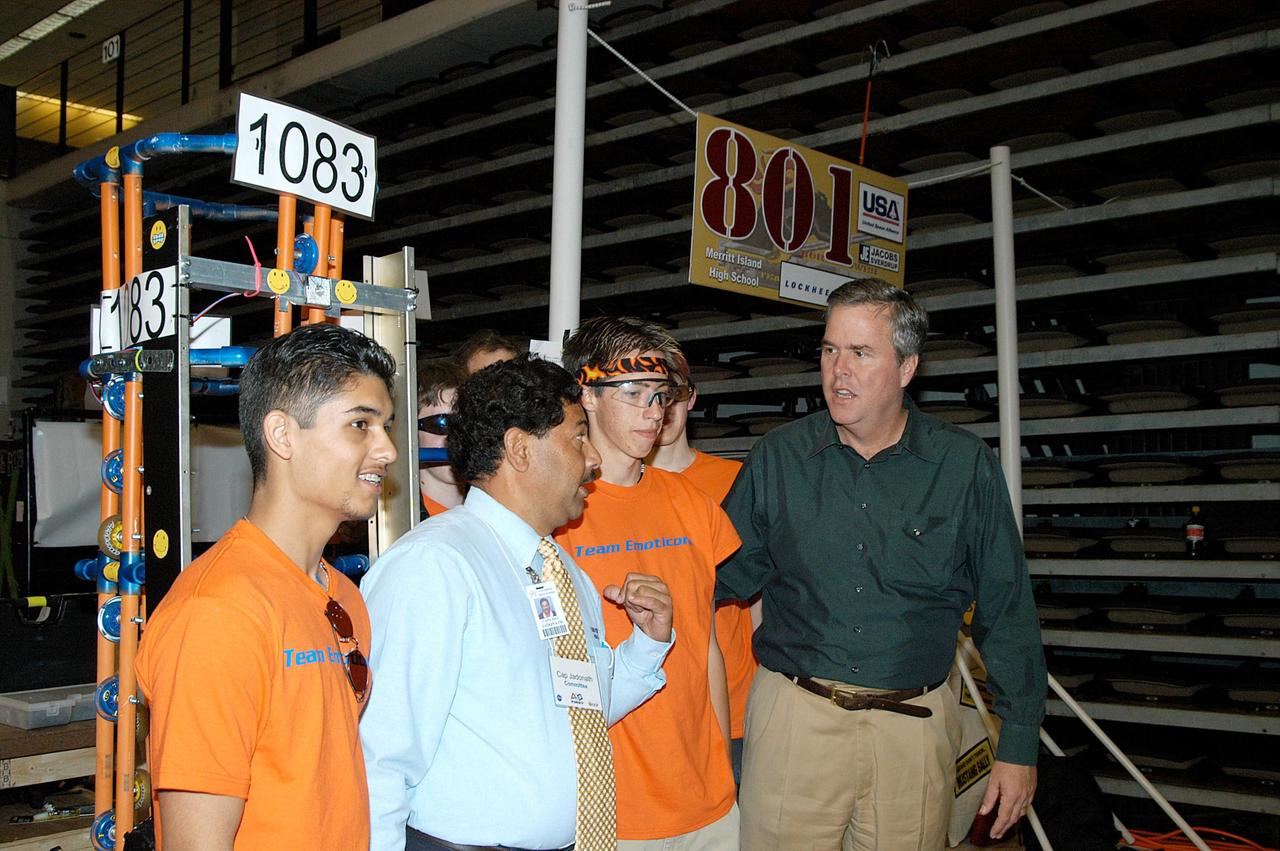
KENNEDY SPACE CENTER, FLA. - Florida Gov. Jeb Bush talks to students competing with their robot at the 2004 Florida Regional FIRST competition, held at the University of Central Florida. Bush and Center Director Jim Kennedy were among observers at the annual event that hosted 41 teams from Canada, Brazil, Great Britain and the United States. FIRST is a nonprofit organization, For Inspiration and Recognition of Science and Technology, that sponsors the event pitting gladiator robots against each other in an athletic-style competition. The FIRST robotics competition is designed to provide students with a hands-on, inside look at engineering and other professional careers, pairing high school students with engineer mentors and corporations.
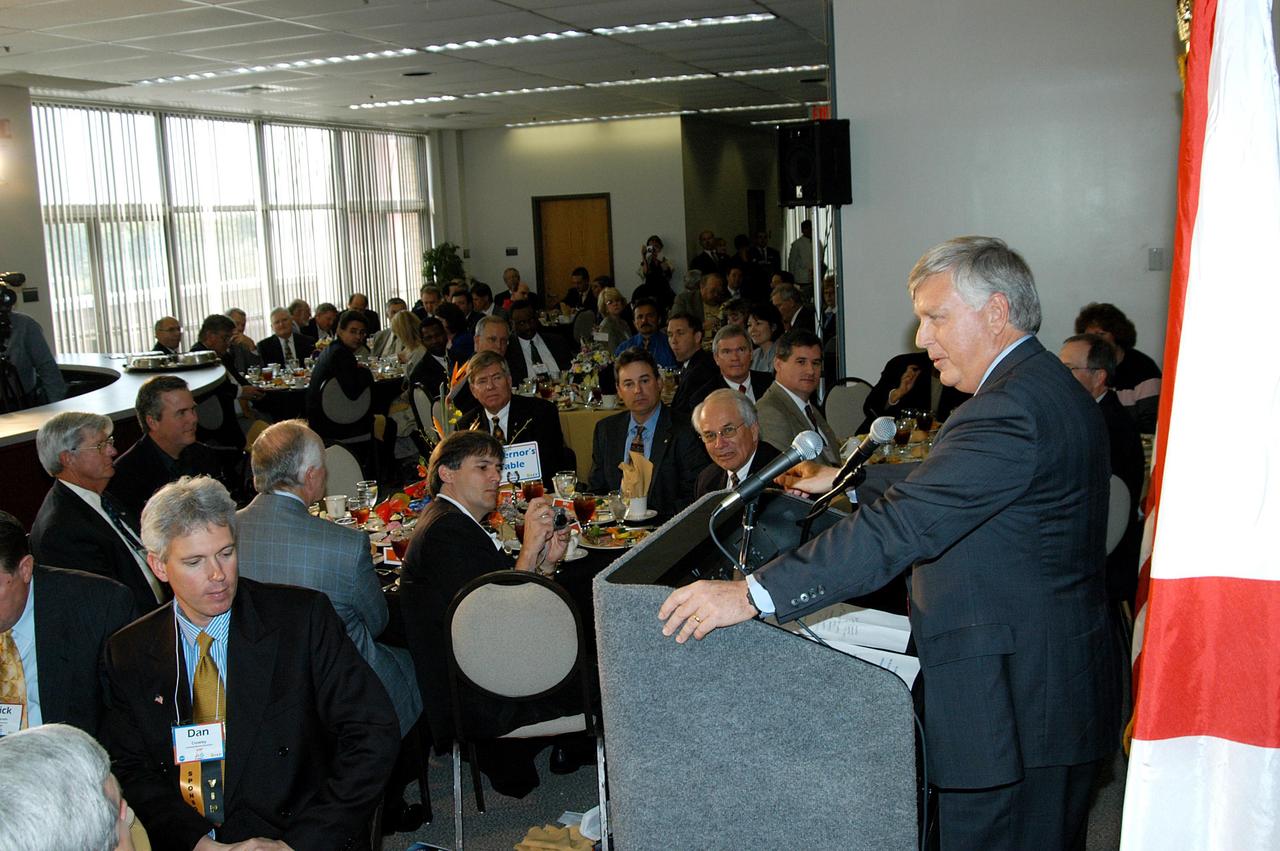
KENNEDY SPACE CENTER, FLA. - During the luncheon held at the 2004 Florida Regional FIRST competition at the University of Central Florida, Center Director Jim Kennedy praises the teamwork of the students involved. The event hosted 41 teams from Canada, Brazil, Great Britain and the United States. Florida Gov. Jeb Bush also spoke at the luncheon. FIRST is a nonprofit organization, For Inspiration and Recognition of Science and Technology, that sponsors the event pitting gladiator robots against each other in an athletic-style competition. The FIRST robotics competition is designed to provide students with a hands-on, inside look at engineering and other professional careers, pairing high school students with engineer mentors and corporations.
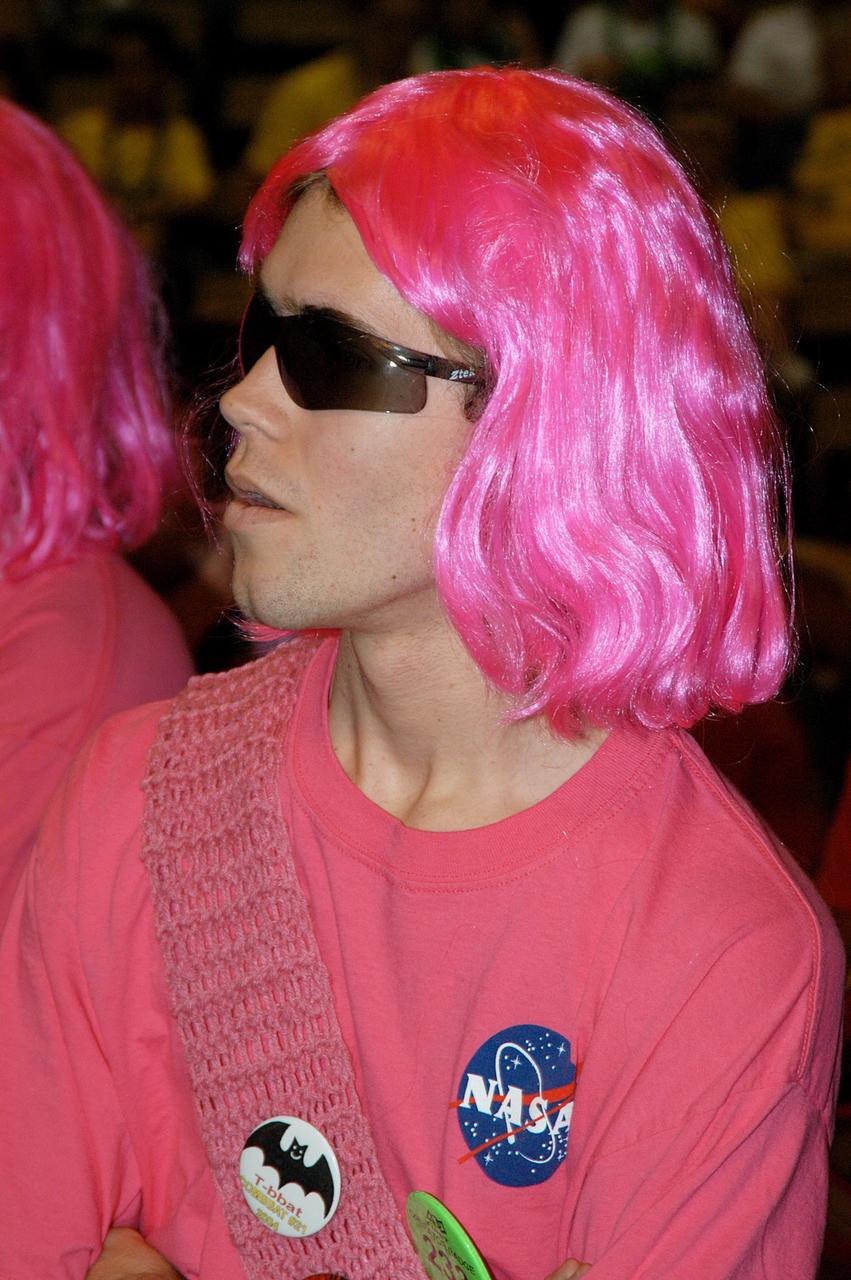
KENNEDY SPACE CENTER, FLA. - A member of the KSC-sponsored “Pink” team watches a match during the 2004 Florida Regional FIRST competition, held at the University of Central Florida. The annual event is hosting 41 teams from Canada, Brazil, Great Britain and the United States. FIRST is a nonprofit organization, For Inspiration and Recognition of Science and Technology, that sponsors the event pitting robots against each other in an athletic-style competition. The FIRST robotics competition is designed to provide students with a hands-on, inside look at engineering and other professional careers, pairing high school students with engineer mentors and corporations.
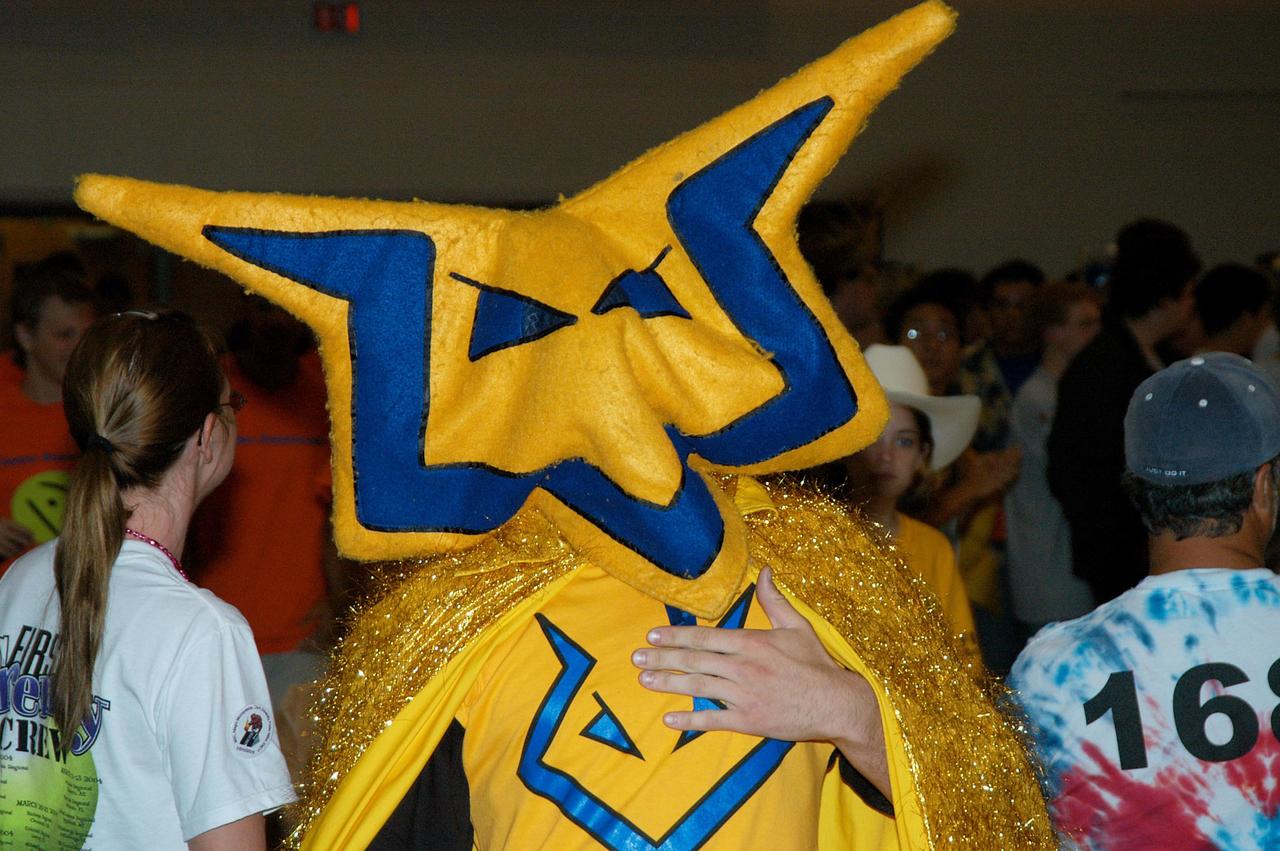
KENNEDY SPACE CENTER, FLA. - A closeup of the team mascot of the Central Florida robotic team “Voltage” at the 2004 Florida Regional FIRST competition, held at the University of Central Florida. Among the 41 teams competing from Canada, Brazil, Great Britain and the United States is the KSC-sponsored “Pink” team. FIRST is a nonprofit organization, For Inspiration and Recognition of Science and Technology, that sponsors the event pitting robots against each other in an athletic-style competition. The FIRST robotics competition is designed to provide students with a hands-on, inside look at engineering and other professional careers, pairing high school students with engineer mentors and corporations.
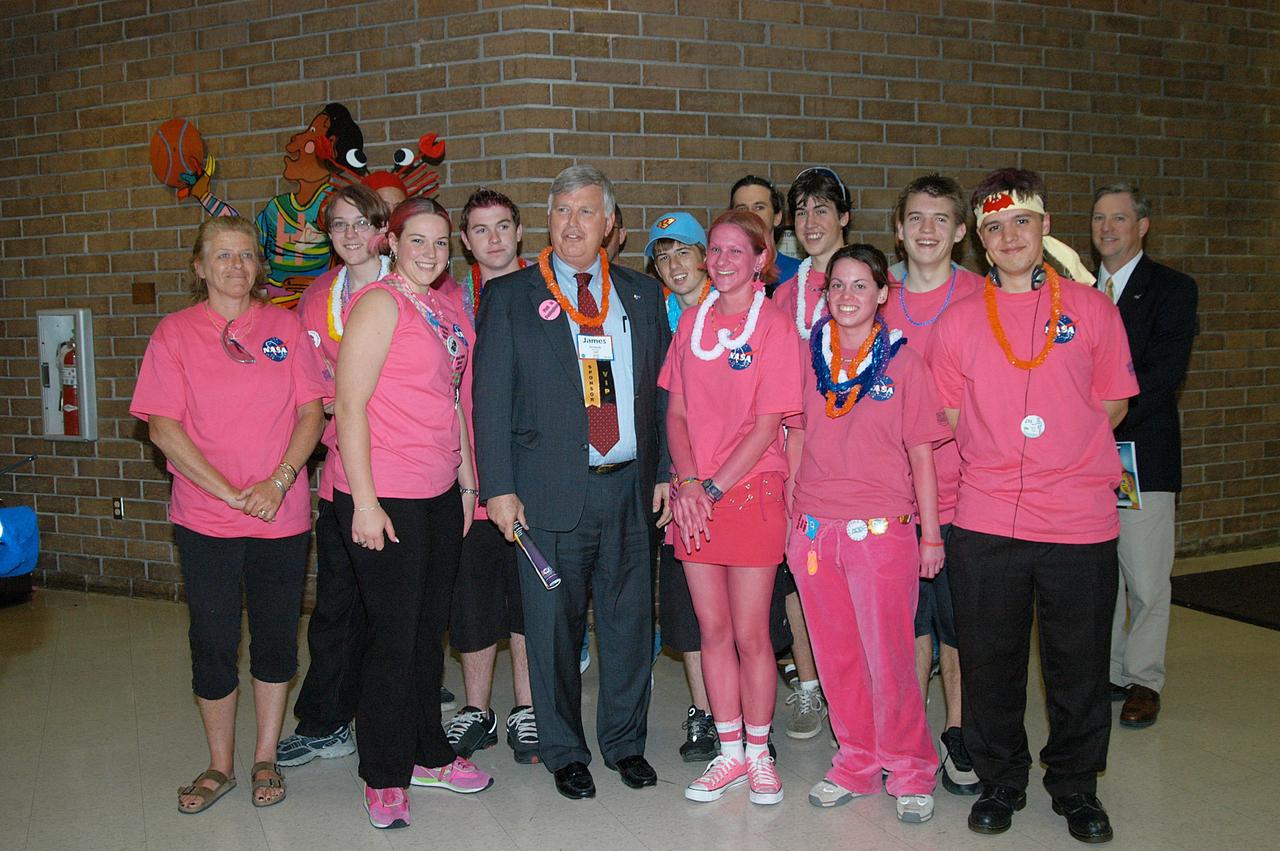
KENNEDY SPACE CENTER, FLA. - Center Director Jim Kennedy (center) poses for a photo amid the members of the KSC-sponsored “Pink” team at the 2004 Florida Regional FIRST competition, held at the University of Central Florida. The annual event is hosting 41 teams from Canada, Brazil, Great Britain and the United States. FIRST is a nonprofit organization, For Inspiration and Recognition of Science and Technology, that sponsors the event pitting gladiator robots against each other in an athletic-style competition. The FIRST robotics competition is designed to provide students with a hands-on, inside look at engineering and other professional careers, pairing high school students with engineer mentors and corporations.
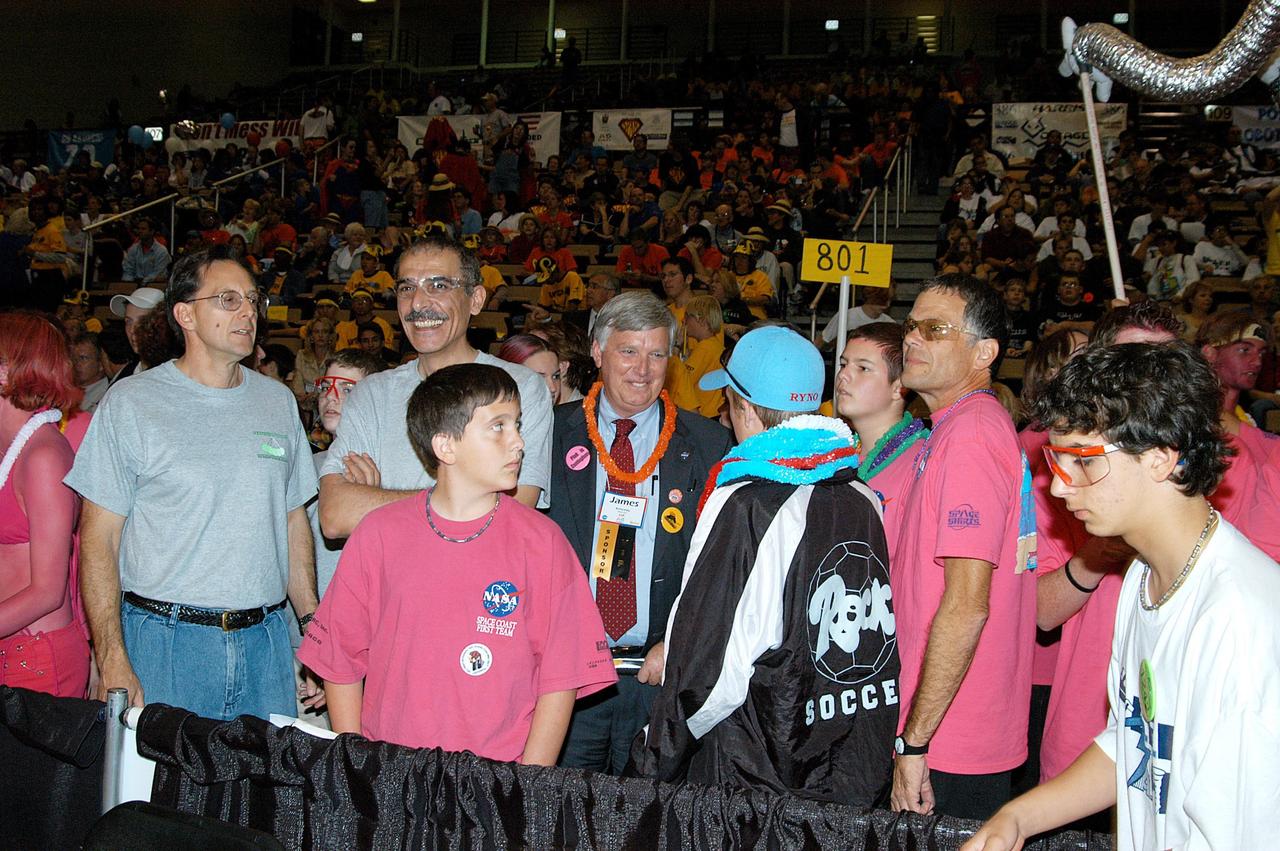
KENNEDY SPACE CENTER, FLA. - Center Director Jim Kennedy (center) joins team supporters at the 2004 Florida Regional FIRST competition, held at the University of Central Florida. The annual event is hosting 41 teams from Canada, Brazil, Great Britain and the United States. FIRST is a nonprofit organization, For Inspiration and Recognition of Science and Technology, that sponsors the event pitting robots against each other in an athletic-style competition. The FIRST robotics competition is designed to provide students with a hands-on, inside look at engineering and other professional careers, pairing high school students with engineer mentors and corporations.

KENNEDY SPACE CENTER, FLA. - Center Director Jim Kennedy (right) talks to members of the KSC-sponsored “Pink” team at the 2004 Florida Regional FIRST competition, held at the University of Central Florida. The annual event is hosting 41 teams from Canada, Brazil, Great Britain and the United States. FIRST is a nonprofit organization, For Inspiration and Recognition of Science and Technology, that sponsors the event pitting robots against each other in an athletic-style competition. The FIRST robotics competition is designed to provide students with a hands-on, inside look at engineering and other professional careers, pairing high school students with engineer mentors and corporations.
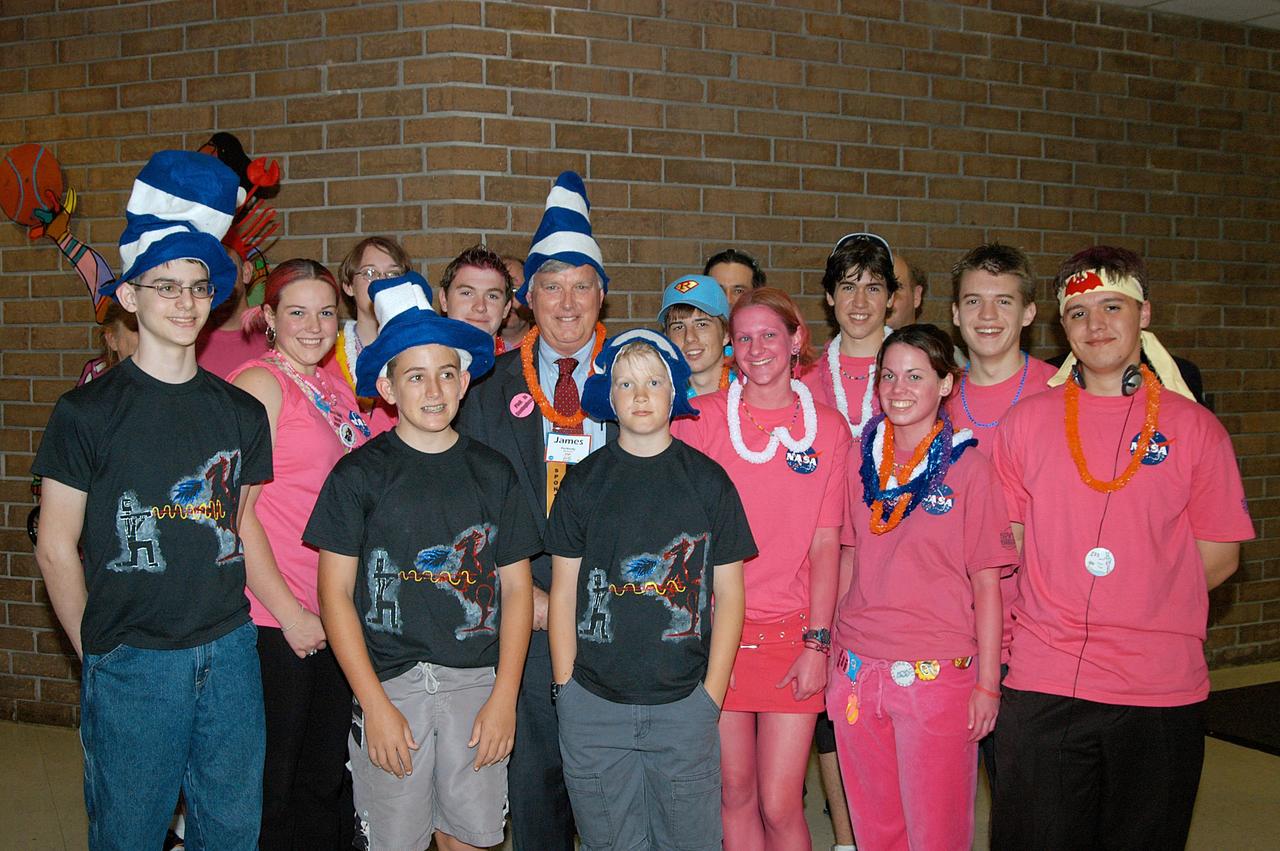
KENNEDY SPACE CENTER, FLA. - Center Director Jim Kennedy (center) poses for a photo amid the members of the KSC-sponsored “Pink” team and the FIRST LEGO™ League at the 2004 Florida Regional FIRST competition, held at the University of Central Florida. The annual event is hosting 41 teams from Canada, Brazil, Great Britain and the United States. FIRST is a nonprofit organization, For Inspiration and Recognition of Science and Technology, that sponsors the event pitting gladiator robots against each other in an athletic-style competition. The FIRST robotics competition is designed to provide students with a hands-on, inside look at engineering and other professional careers, pairing high school students with engineer mentors and corporations.
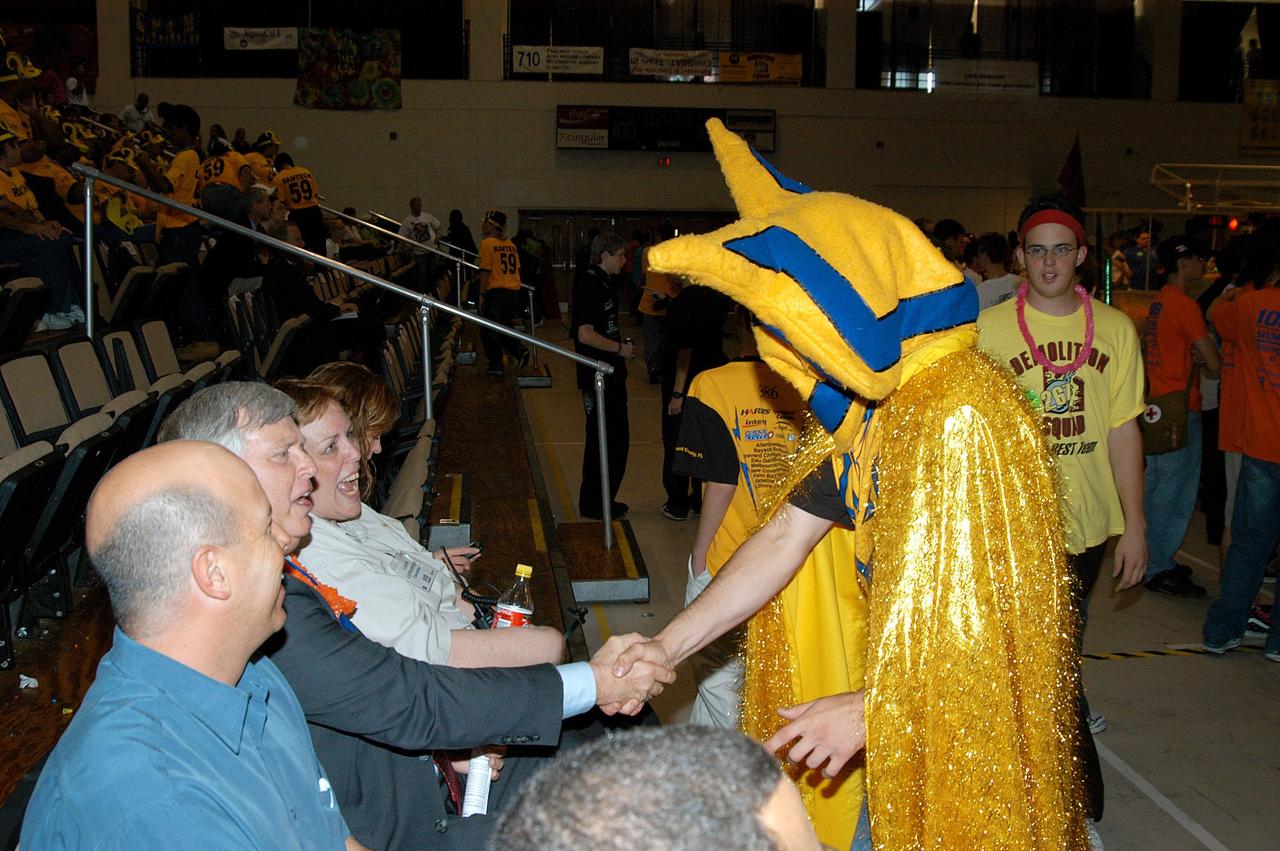
KENNEDY SPACE CENTER, FLA. - The team mascot of the Central Florida robotic team “Voltage” greets Center Director Jim Kennedy during a match at the 2004 Florida Regional FIRST competition, held at the University of Central Florida. Among the 41 teams competing from Canada, Brazil, Great Britain and the United States is the KSC-sponsored “Pink” team. FIRST is a nonprofit organization, For Inspiration and Recognition of Science and Technology, that sponsors the event pitting robots against each other in an athletic-style competition. The FIRST robotics competition is designed to provide students with a hands-on, inside look at engineering and other professional careers, pairing high school students with engineer mentors and corporations.
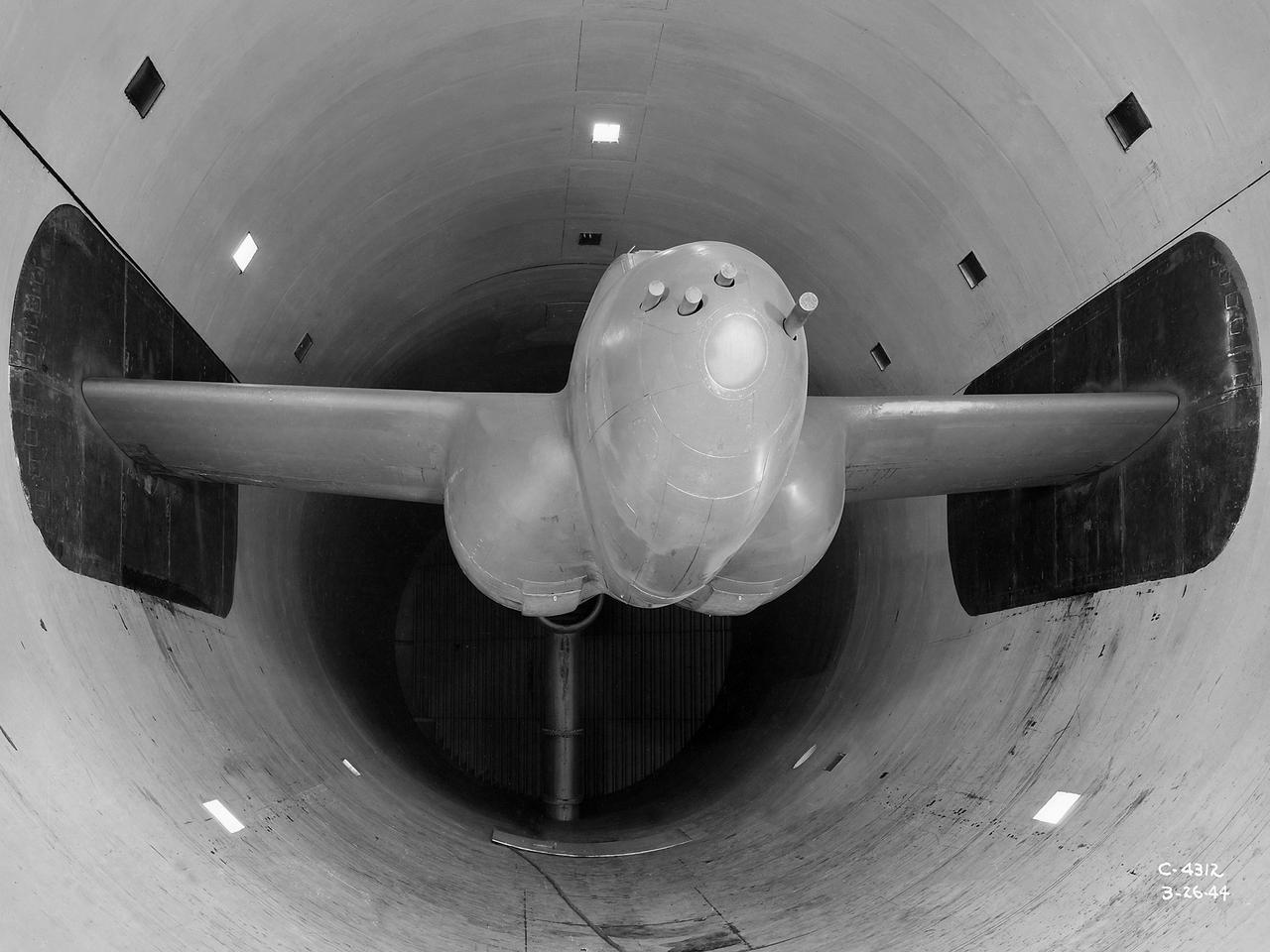
The Altitude Wind Tunnel (AWT) was the National Advisory Committee for Aeronautics (NACA) Aircraft Engine Research Laboratory’s largest and most important test facility in the 1940s. The AWT employed massive cooling and exhaust systems to simulate conditions found at high altitudes. The facility was originally designed to test large piston engines in a simulated flight environment. The introduction of the turbojet during the tunnel’s construction, however, changed the facility’s focus before it became operational. Its first test program was a study of the Bell YP–59A Airacomet and its General Electric I–16 turbojets. The Airacomet was the United States’ first attempt to build a jet aircraft. 1600-horsepower centrifugal engines based on an early design by British engineer Frank Whittle were incorporated into an existing Bell airframe. In October 1942 the Airacomet was secretly test flown in the California desert. The aircraft’s performance was limited, however, and the NACA was asked to study the engines in the AWT. The wind tunnel’s 20-foot-diameter test section was large enough to accommodate entire aircraft with its wing tips and tail removed. The I-16 engines were studied exhaustively in early 1944. They first analyzed the engines in their original configuration and then implemented a boundary layer removal duct, a new nacelle inlet, and new cooling seals. Tests of the modified version showed that the improved distribution of airflow increased the I–16’s performance by 25 percent. The Airacomet never overcame some of its inherent design issues, but the AWT went on to study nearly every emerging US turbojet model during the next decade.
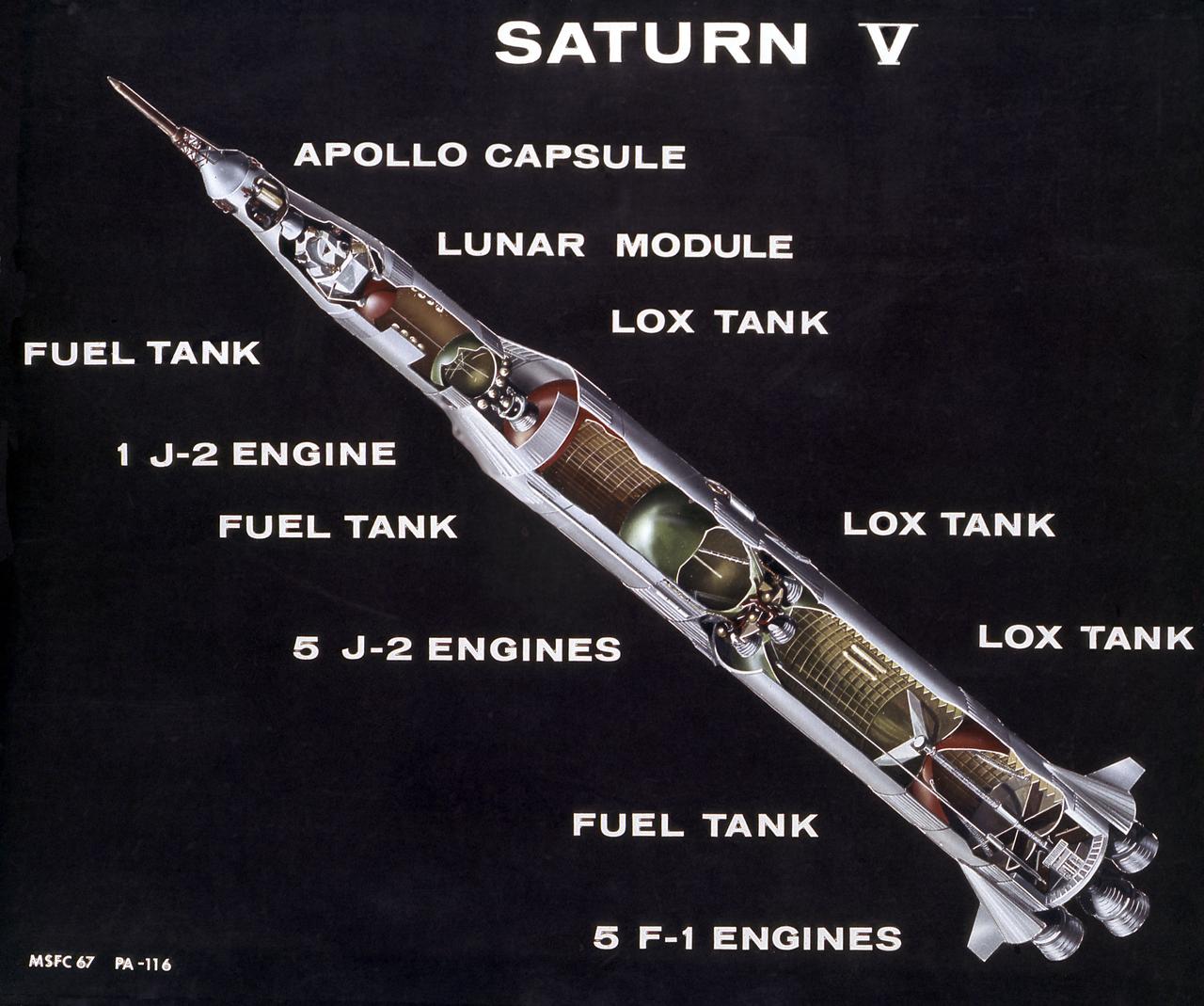
This is a cutaway illustration of the Saturn V launch vehicle with callouts of the major components. The Saturn V is the largest and most powerful launch vehicle developed in the United States. It was a three stage rocket, 363 feet in height, used for sending American astronauts to the moon and for placing the Skylab in Earth orbit. The Saturn V was designed to perform Earth orbital missions through the use of the first two stages, while all three stages were used for lunar expeditions. The S-IC stage (first stage) was powered by five F- engines, which burned kerosene and liquid oxygen to produce more than 7,500,000 pounds of thrust. The S-II (second) stage was powered by five J-2 engines, that burned liquid hydrogen and liquid oxygen and produced 1,150,000 pounds thrust. The S-IVB (third) stage used one J-2 engine, producing 230,000 pounds of thrust, with a re-start capability. The Marshall Space Flight Center and its contractors designed, developed, and assembled the Saturn V launch vehicle stages.
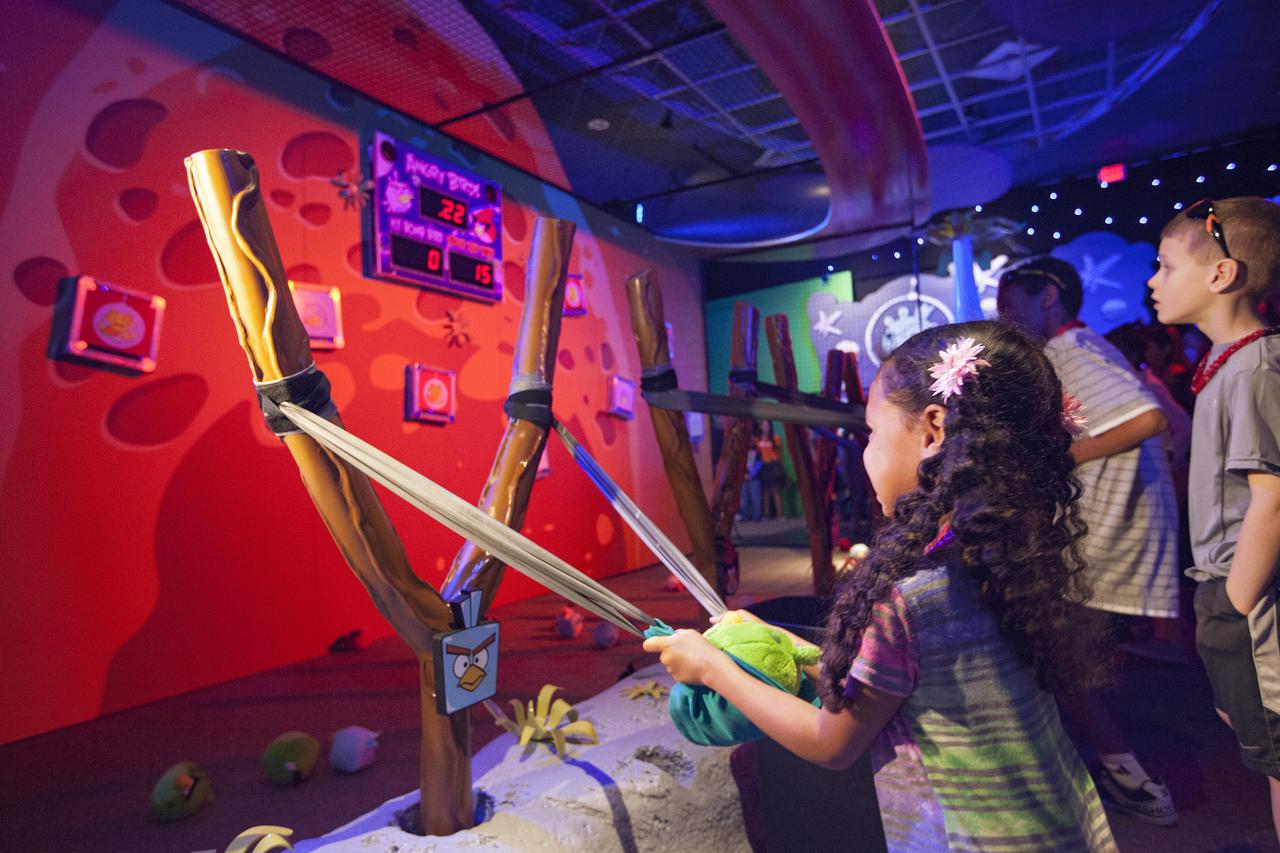
CAPE CANAVERAL, Fla. -- At NASA’s Kennedy Space Center Visitor Complex in Florida, children try out some of the interactive exhibits inside the new Angry Birds Space Encounter after the grand opening ceremony for the new attraction. Finland-based Rovio Entertainment, the creator of the Angry Birds Space game, partnered with Kennedy Space Center to bring the beloved characters to life. It is the first Angry Birds interactive exhibit in the United States designed for people of all ages. The 4,485-square-foot facility hosts the space adventures of the Angry Birds as they travel into an intergalactic wormhole, come face-to-face with Space Pigs and discover heroic superpowers. Six interactive stations are designed to encourage children in science, technology, engineering and mathematics fields of study. Photo credit: NASA_Kim Shiflett
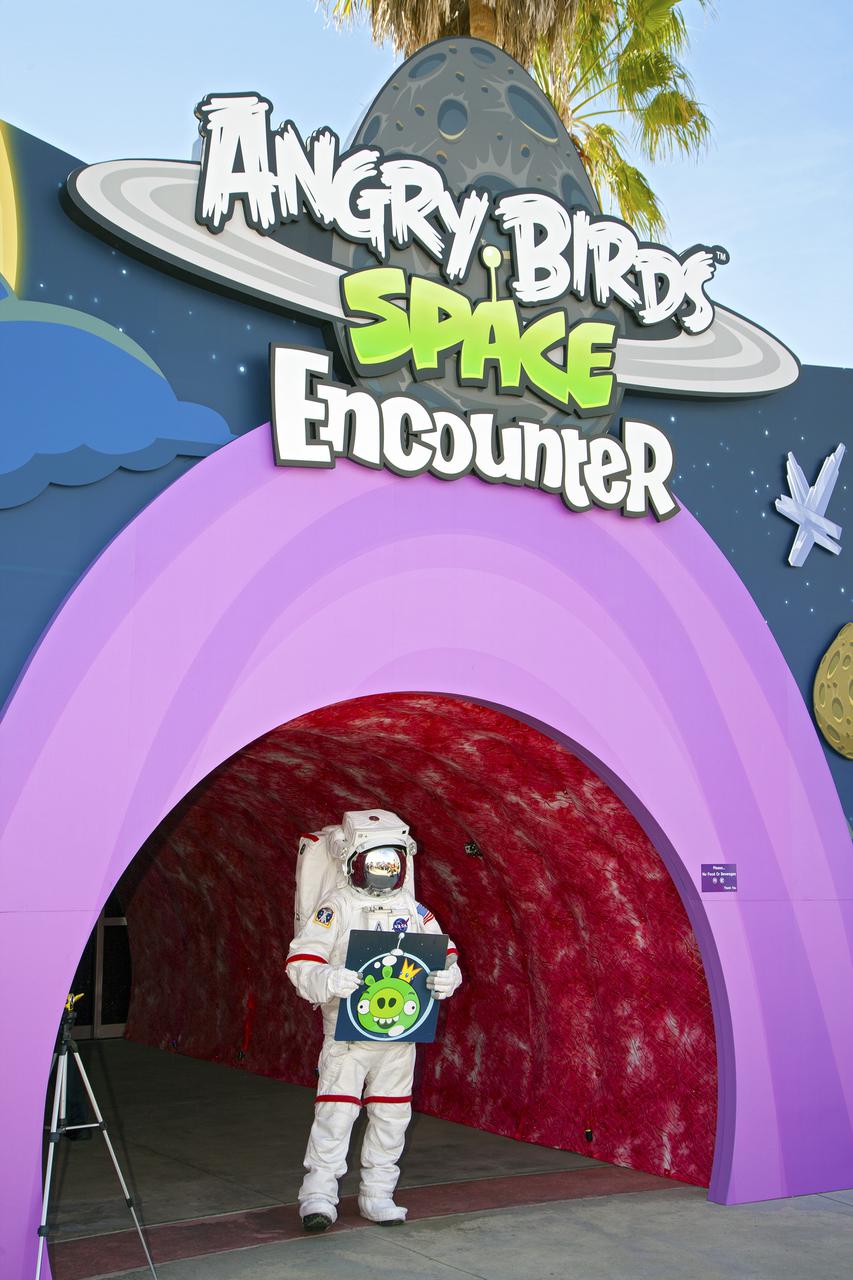
CAPE CANAVERAL, Fla. -- At NASA’s Kennedy Space Center Visitor Complex in Florida, the Spaceperson stands at the entrance of the new Angry Birds Space Encounter during the grand opening ceremony. Finland-based Rovio Entertainment, the creator of the Angry Birds Space game, partnered with Kennedy Space Center to bring the beloved characters to life. It is the first Angry Birds interactive exhibit in the United States designed for people of all ages. The 4,485-square-foot facility hosts the space adventures of the Angry Birds as they travel into an intergalactic wormhole, come face-to-face with Space Pigs and discover heroic superpowers. Six interactive stations are designed to encourage children in science, technology, engineering and mathematics fields of study. Photo credit: NASA_Kim Shiflett
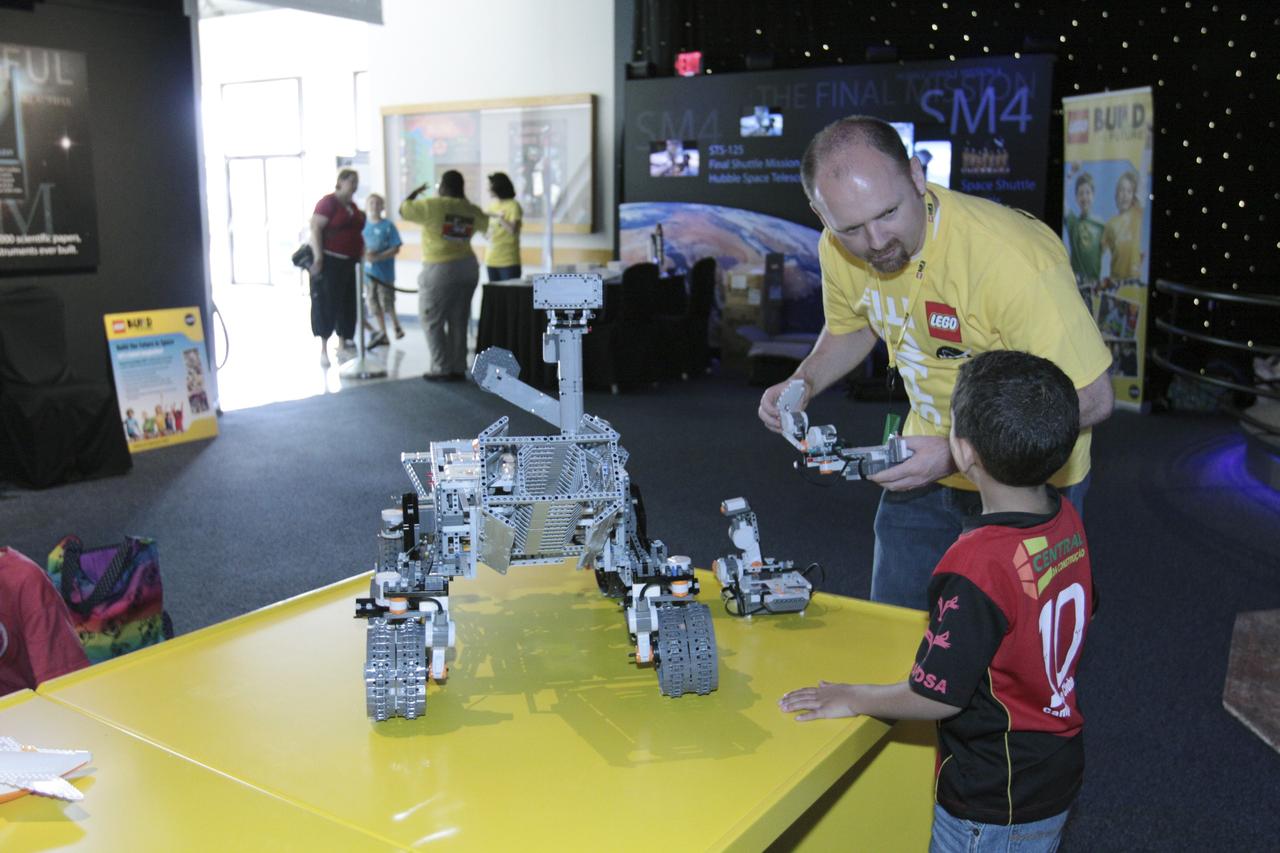
CAPE CANAVERAL, Fla. – LEGO NXT robots, designed to look like Mars rovers, are on display at the LEGO "Build the Future" event at the Kennedy Space Center Visitor Complex in Florida. The festivities coincide with the launch of NASA's Mars Science Laboratory (MSL), carrying a compact car-sized rover, Curiosity, to the red planet. Part of the Space Act Agreement between NASA and LEGO A/S, the activities are designed to inspire students of every age to consider an education and careers in the science, technology, engineering and mathematics, or STEM, disciplines. Launch of MSL aboard a United Launch Alliance Atlas V rocket is scheduled for Nov. 26 from Space Launch Complex-41 on Cape Canaveral Air Force Station in Florida. For more information, visit http://www.nasa.gov/audience/foreducators/nasa-lego-partnership.html. Photo credit: NASA/Kim Shiflett
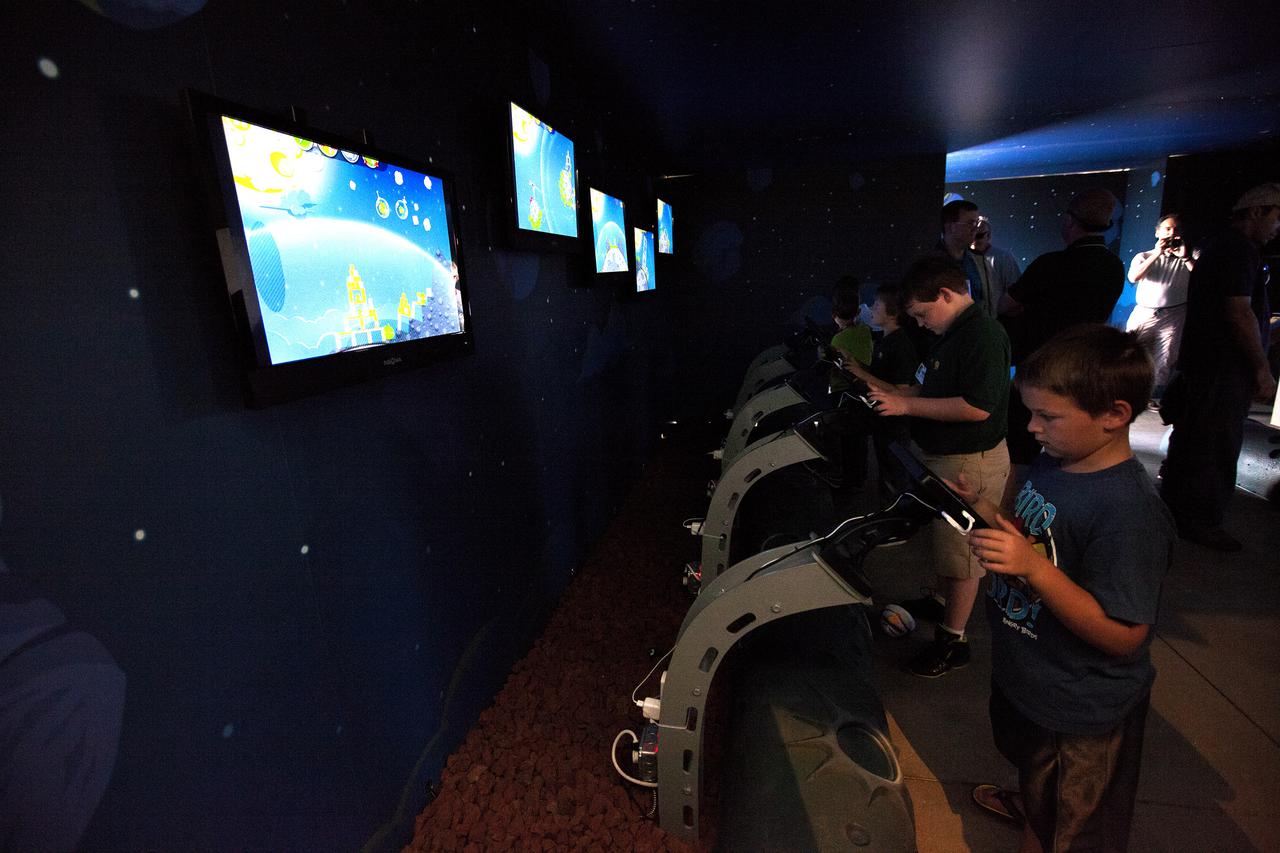
CAPE CANAVERAL, Fla. -- At NASA’s Kennedy Space Center Visitor Complex in Florida, children try out some of the interactive exhibits inside the new Angry Birds Space Encounter after the grand opening ceremony for the new attraction. Finland-based Rovio Entertainment, the creator of the Angry Birds Space game, partnered with Kennedy Space Center to bring the beloved characters to life. It is the first Angry Birds interactive exhibit in the United States designed for people of all ages. The 4,485-square-foot facility hosts the space adventures of the Angry Birds as they travel into an intergalactic wormhole, come face-to-face with Space Pigs and discover heroic superpowers. Six interactive stations are designed to encourage children in science, technology, engineering and mathematics fields of study. Photo credit: NASA_Kim Shiflett
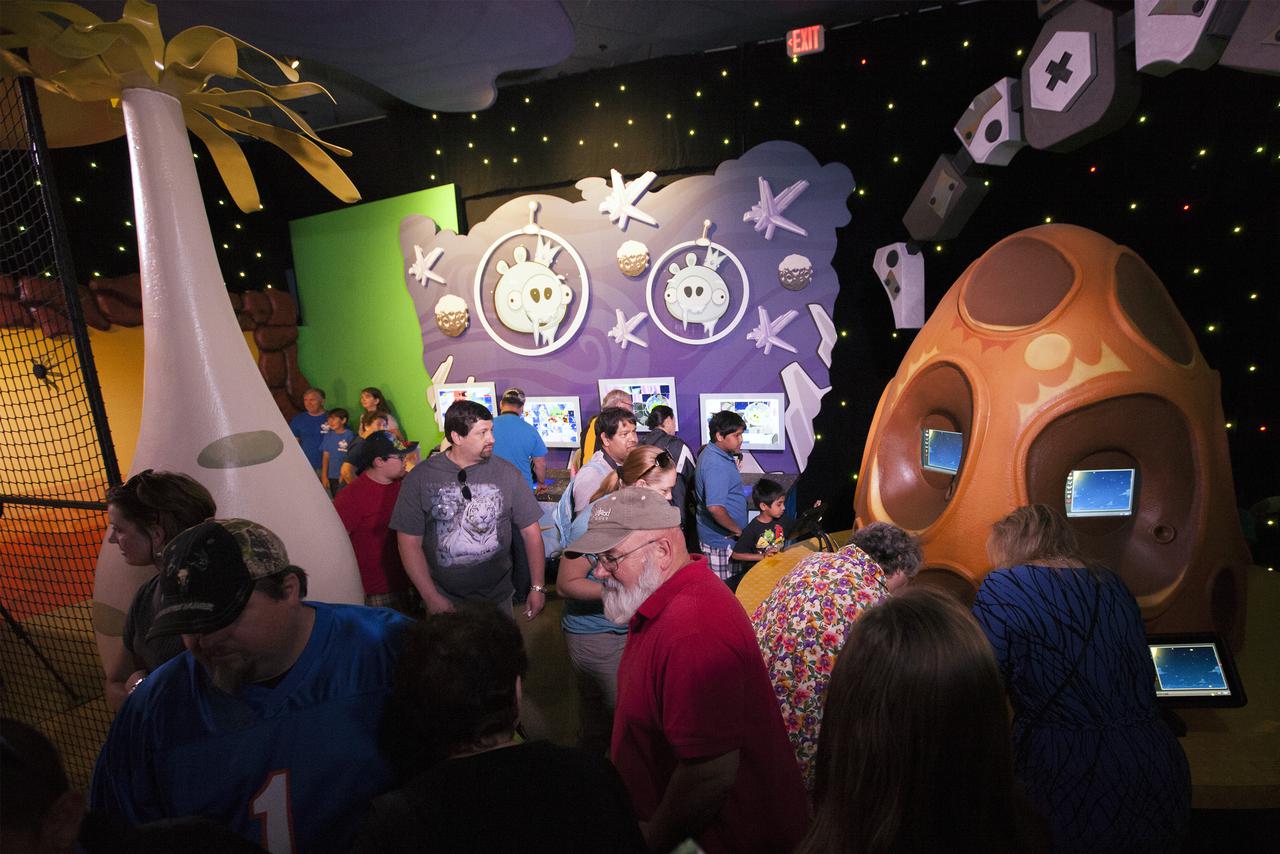
CAPE CANAVERAL, Fla. -- At NASA’s Kennedy Space Center Visitor Complex in Florida, visitors try out some of the interactive exhibits inside the Angry Birds Space Encounter after the grand opening ceremony for the new attraction. Finland-based Rovio Entertainment, the creator of the Angry Birds Space game, partnered with Kennedy Space Center to bring the beloved characters to life. It is the first Angry Birds interactive exhibit in the United States designed for people of all ages. The 4,485-square-foot facility hosts the space adventures of the Angry Birds as they travel into an intergalactic wormhole, come face-to-face with Space Pigs and discover heroic superpowers. Six interactive stations are designed to encourage children in science, technology, engineering and mathematics fields of study. Photo credit: NASA_Kim Shiflett
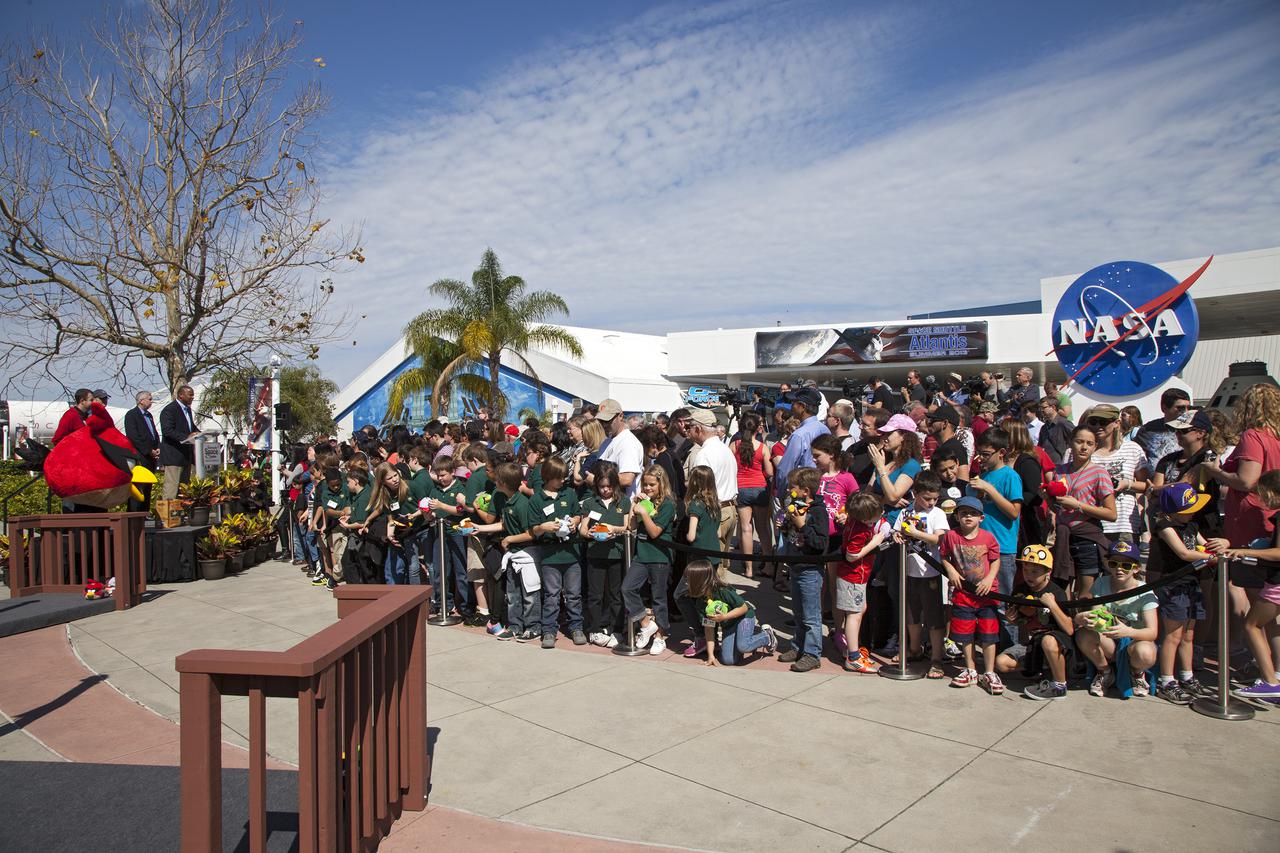
CAPE CANAVERAL, Fla. -- At NASA’s Kennedy Space Center Visitor Complex in Florida, Kelvin Manning, associate deputy director of Kennedy Space Center, speaks to visitors during the grand opening of the new Angry Birds Space Encounter. To Manning’s left is Red Bird, one of the Angry Bird Space characters. Finland-based Rovio Entertainment, the creator of the Angry Birds Space game, partnered with Kennedy Space Center to bring the beloved characters to life. It is the first Angry Birds interactive exhibit in the United States designed for people of all ages. The 4,485-square-foot facility hosts the space adventures of the Angry Birds as they travel into an intergalactic wormhole, come face-to-face with Space Pigs and discover heroic superpowers. Six interactive stations are designed to encourage children in science, technology, engineering and mathematics fields of study. Photo credit: NASA_Kim Shiflett
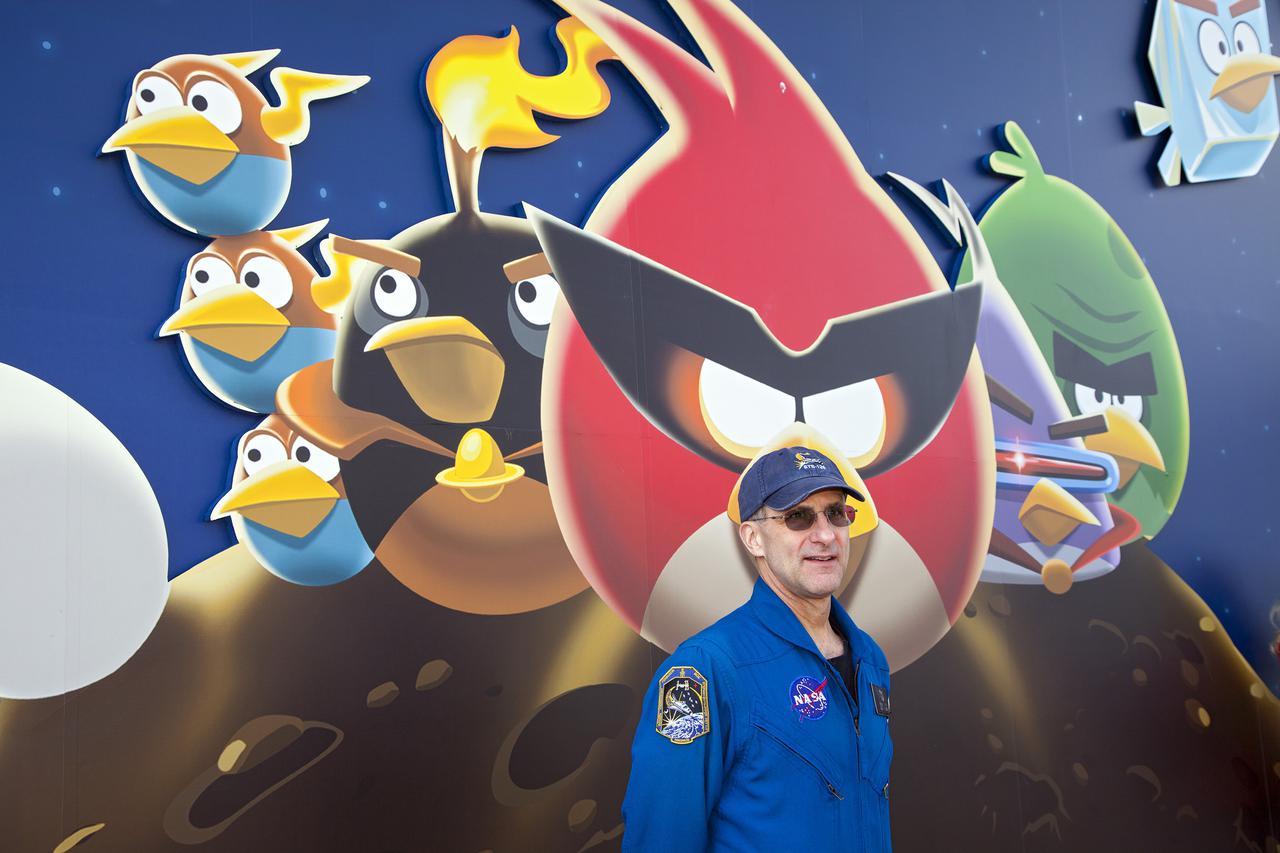
CAPE CANAVERAL, Fla. -- At NASA’s Kennedy Space Center Visitor Complex in Florida, NASA astronaut Don Pettit stands near the entrance to the new Angry Birds Space Encounter during the grand opening ceremony. Pettit spent a total of 12 months during two separate missions aboard the International Space Station and introduced Angry Birds Space while floating in zero gravity. Finland-based Rovio Entertainment, the creator of the Angry Birds Space game, partnered with Kennedy Space Center to bring the beloved characters to life. It is the first Angry Birds interactive exhibit in the United States designed for people of all ages. The 4,485-square-foot facility hosts the space adventures of the Angry Birds as they travel into an intergalactic wormhole, come face-to-face with Space Pigs and discover heroic superpowers. Six interactive stations are designed to encourage children in science, technology, engineering and mathematics fields of study. Photo credit: NASA_Kim Shiflett
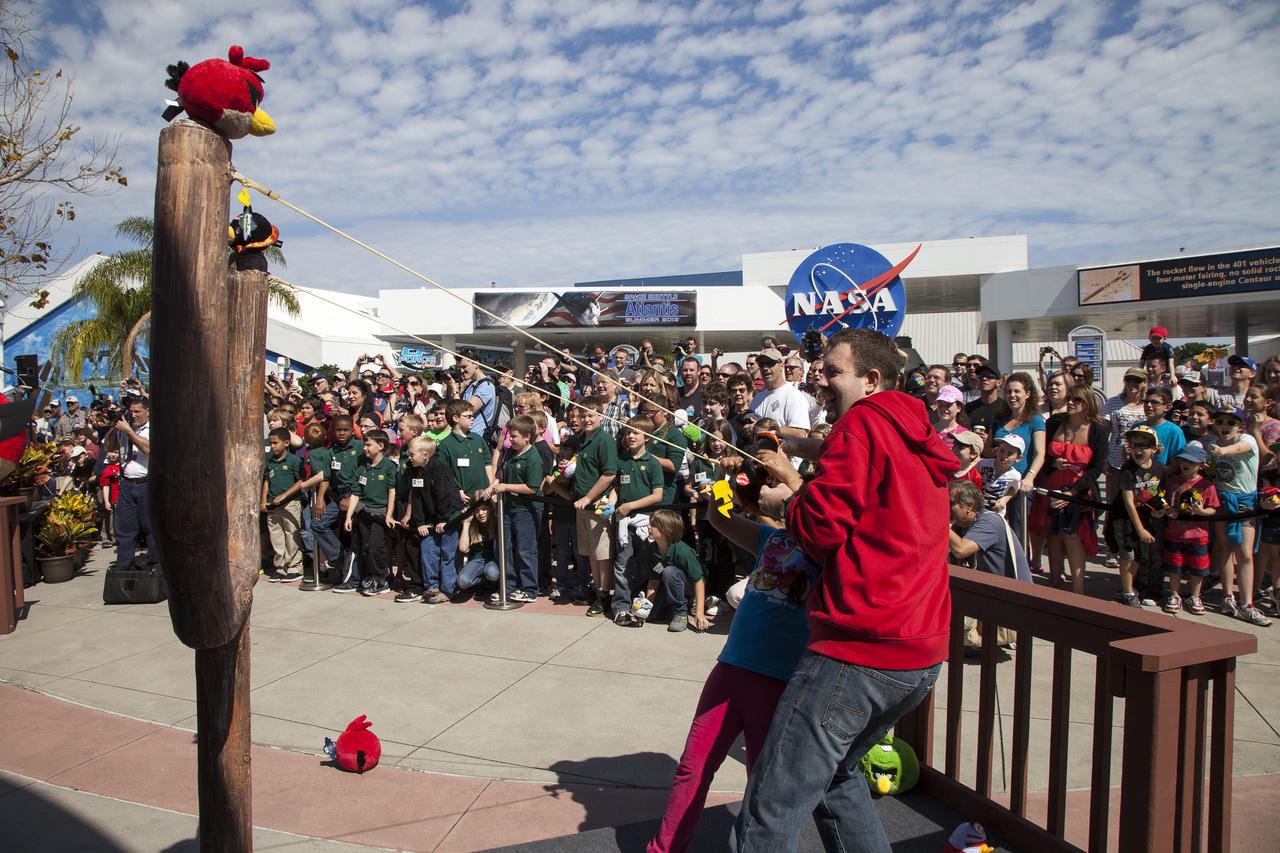
CAPE CANAVERAL, Fla. -- At NASA’s Kennedy Space Center Visitor Complex in Florida, Dan Mitchell, director of location-based entertainment for Rovio Entertainment, helps a child use a giant slingshot to launch a plush Angry Bird character during the grand opening of the new Angry Birds Space Encounter. Finland-based Rovio Entertainment, the creator of the Angry Birds Space game, partnered with Kennedy Space Center to bring the beloved characters to life. It is the first Angry Birds interactive exhibit in the United States designed for people of all ages. The 4,485-square-foot facility hosts the space adventures of the Angry Birds as they travel into an intergalactic wormhole, come face-to-face with Space Pigs and discover heroic superpowers. Six interactive stations are designed to encourage children in science, technology, engineering and mathematics fields of study. Photo credit: NASA_Kim Shiflett
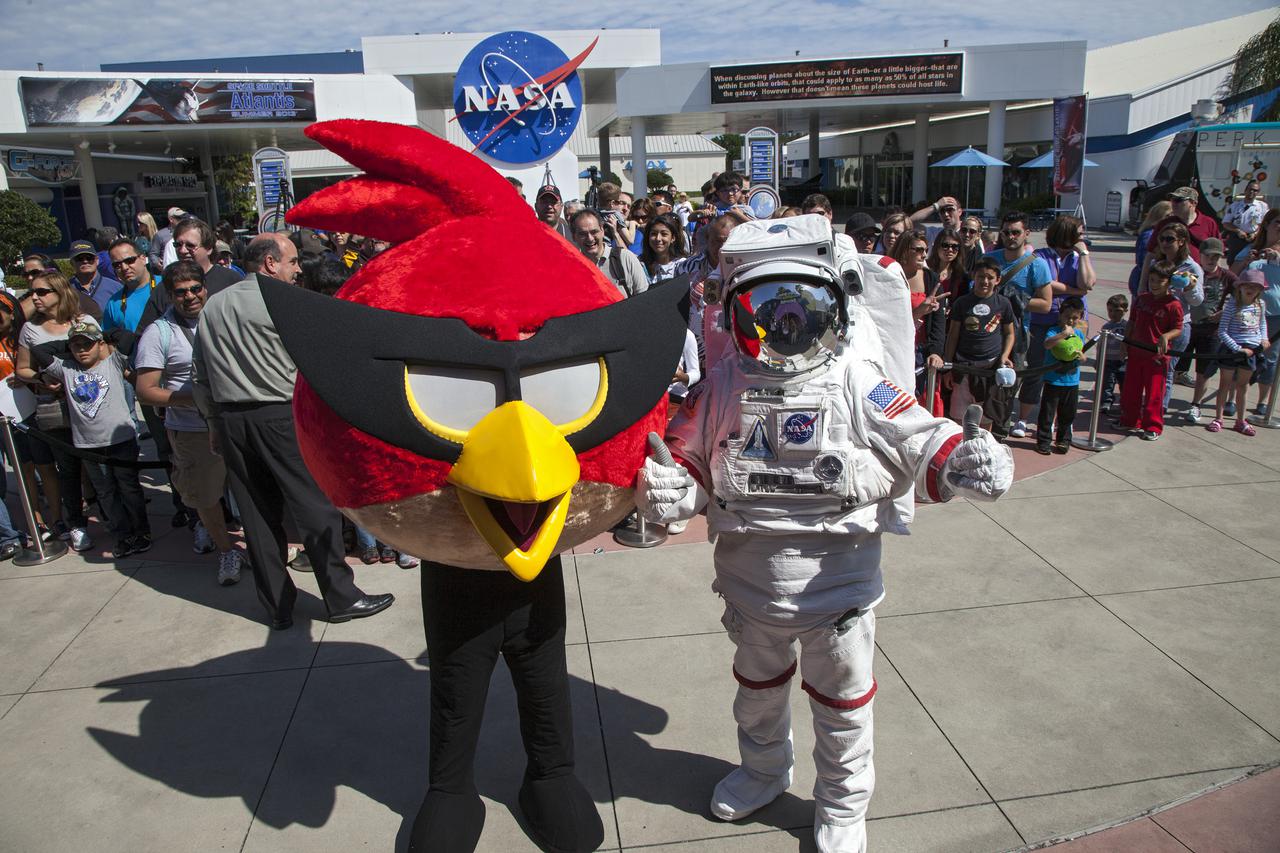
CAPE CANAVERAL, Fla. -- At NASA’s Kennedy Space Center Visitor Complex in Florida, the Spaceperson and Red Bird, one of the Angry Bird characters, welcome visitor to the Angry Birds Space Encounter grand opening ceremony. Finland-based Rovio Entertainment, the creator of the Angry Birds Space game, partnered with Kennedy Space Center to bring the beloved characters to life. It is the first Angry Birds interactive exhibit in the United States designed for people of all ages. The 4,485-square-foot facility hosts the space adventures of the Angry Birds as they travel into an intergalactic wormhole, come face-to-face with Space Pigs and discover heroic superpowers. Six interactive stations are designed to encourage children in science, technology, engineering and mathematics fields of study. Photo credit: NASA_Kim Shiflett
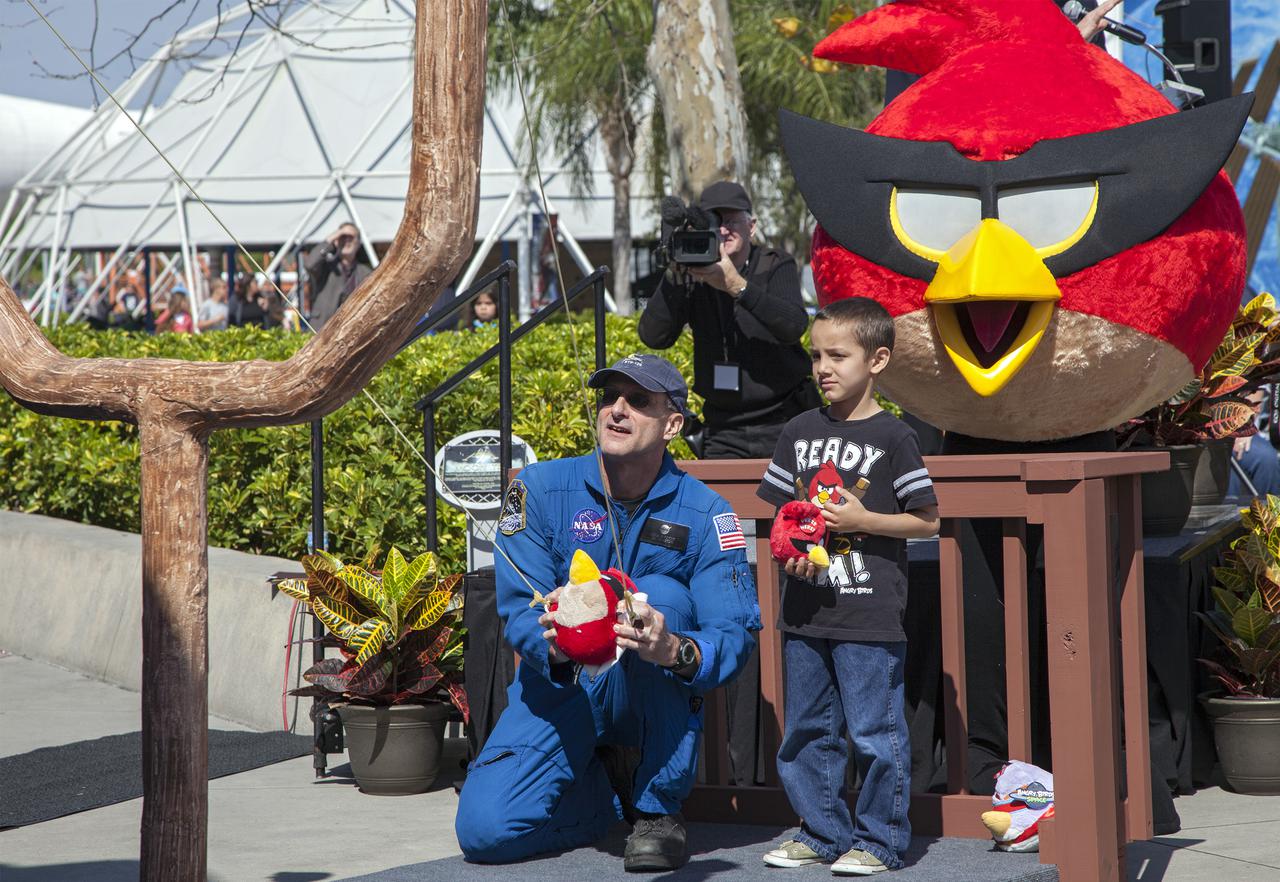
CAPE CANAVERAL, Fla. -- At NASA’s Kennedy Space Center Visitor Complex in Florida, NASA astronaut Don Pettit uses a giant slingshot to launch a plush Angry Bird character during the grand opening of the new Angry Birds Space Encounter. Standing behind Pettit is Red Bird, one of the Angry Bird characters. Finland-based Rovio Entertainment, the creator of the Angry Birds Space game, partnered with Kennedy Space Center to bring the beloved characters to life. It is the first Angry Birds interactive exhibit in the United States designed for people of all ages. The 4,485-square-foot facility hosts the space adventures of the Angry Birds as they travel into an intergalactic wormhole, come face-to-face with Space Pigs and discover heroic superpowers. Six interactive stations are designed to encourage children in science, technology, engineering and mathematics fields of study. Photo credit: NASA_Kim Shiflett
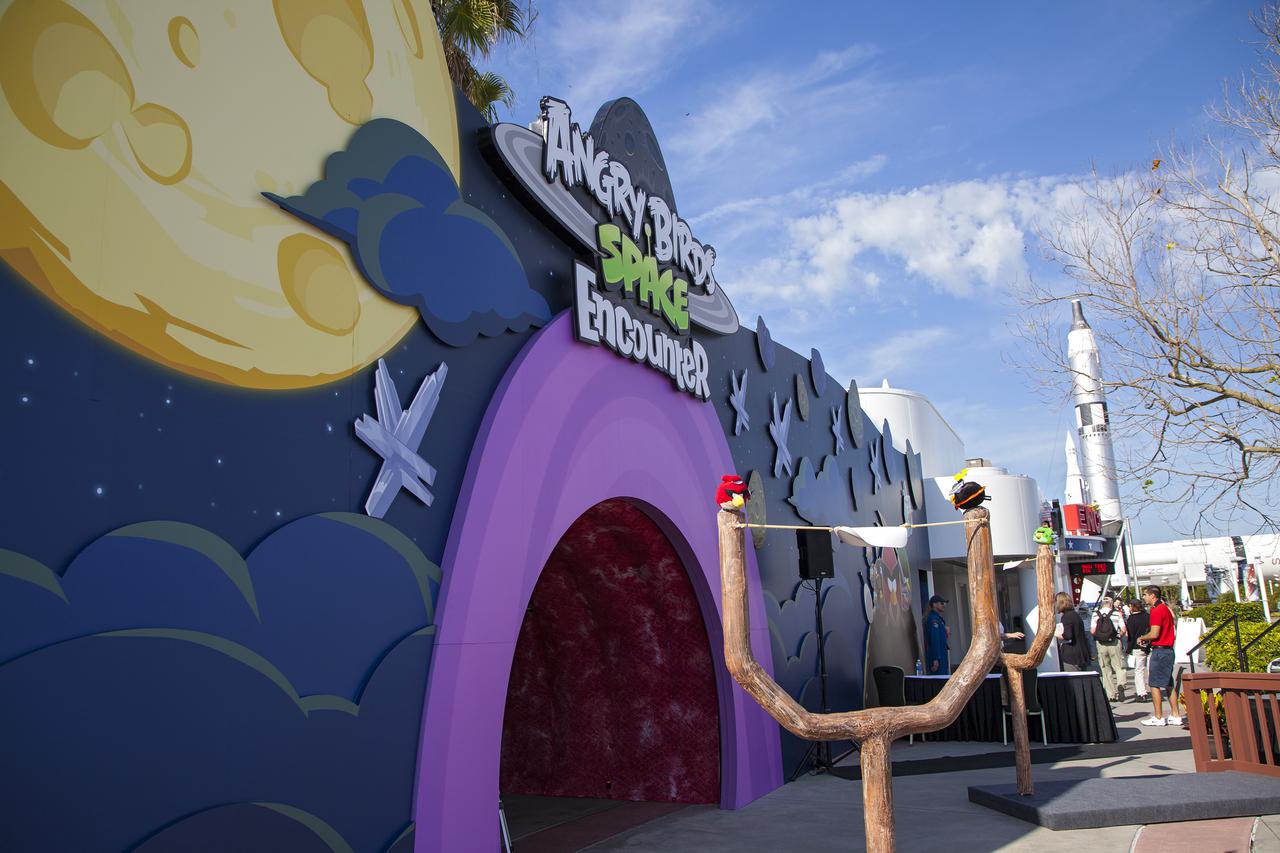
CAPE CANAVERAL, Fla. -- At NASA’s Kennedy Space Center Visitor Complex in Florida, the entrance to the new Angry Birds Space Encounter is seen before the grand opening celebration begins. Finland-based Rovio Entertainment, the creator of the Angry Birds Space game, partnered with Kennedy Space Center to bring the beloved characters to life. It is the first Angry Birds interactive exhibit in the United States designed for people of all ages. The 4,485-square-foot facility hosts the space adventures of the Angry Birds as they travel into an intergalactic wormhole, come face-to-face with Space Pigs and discover heroic superpowers. Six interactive stations are designed to encourage children in science, technology, engineering and mathematics fields of study. Photo credit: NASA_Kim Shiflett
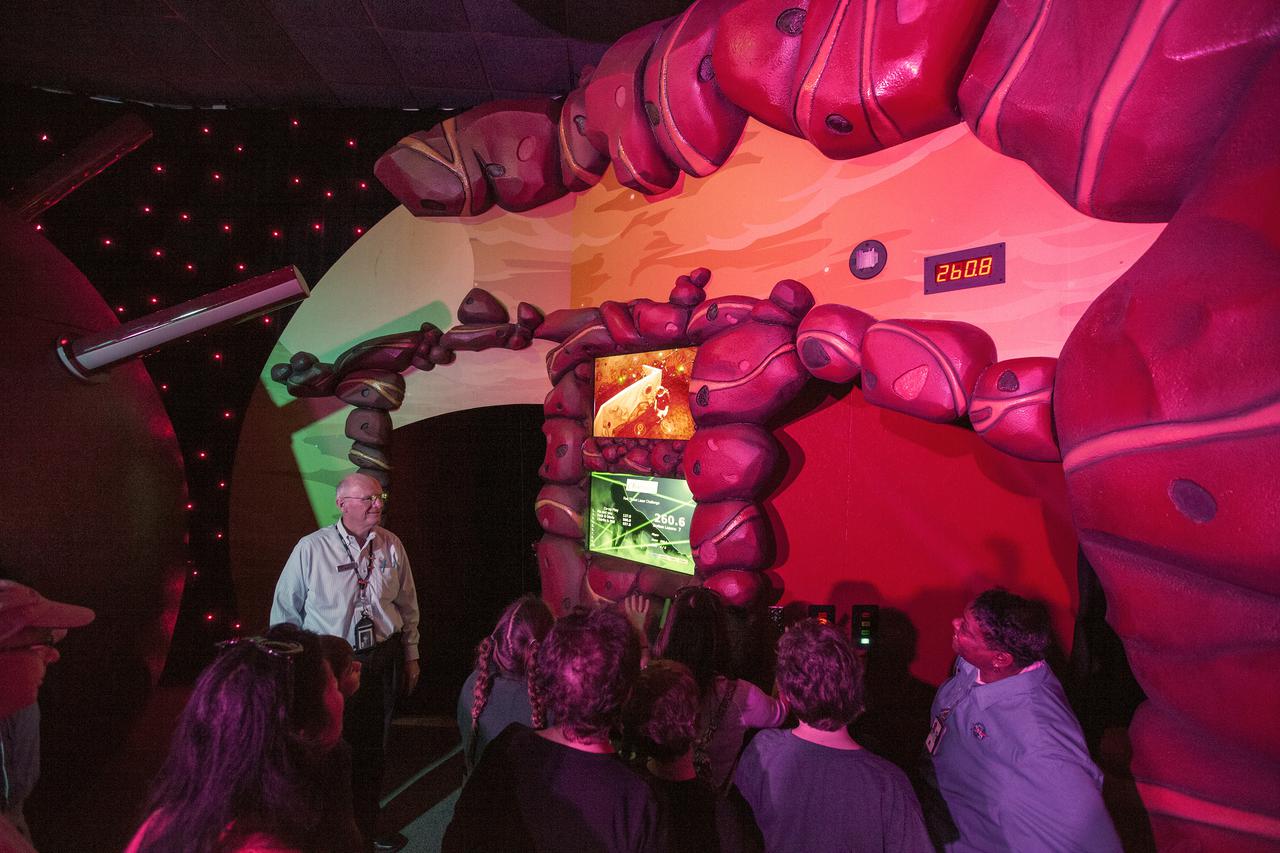
CAPE CANAVERAL, Fla. -- At NASA’s Kennedy Space Center Visitor Complex in Florida, children try out some of the interactive exhibits inside the new Angry Birds Space Encounter after the grand opening ceremony for the new attraction. Finland-based Rovio Entertainment, the creator of the Angry Birds Space game, partnered with Kennedy Space Center to bring the beloved characters to life. It is the first Angry Birds interactive exhibit in the United States designed for people of all ages. The 4,485-square-foot facility hosts the space adventures of the Angry Birds as they travel into an intergalactic wormhole, come face-to-face with Space Pigs and discover heroic superpowers. Six interactive stations are designed to encourage children in science, technology, engineering and mathematics fields of study. Photo credit: NASA_Kim Shiflett
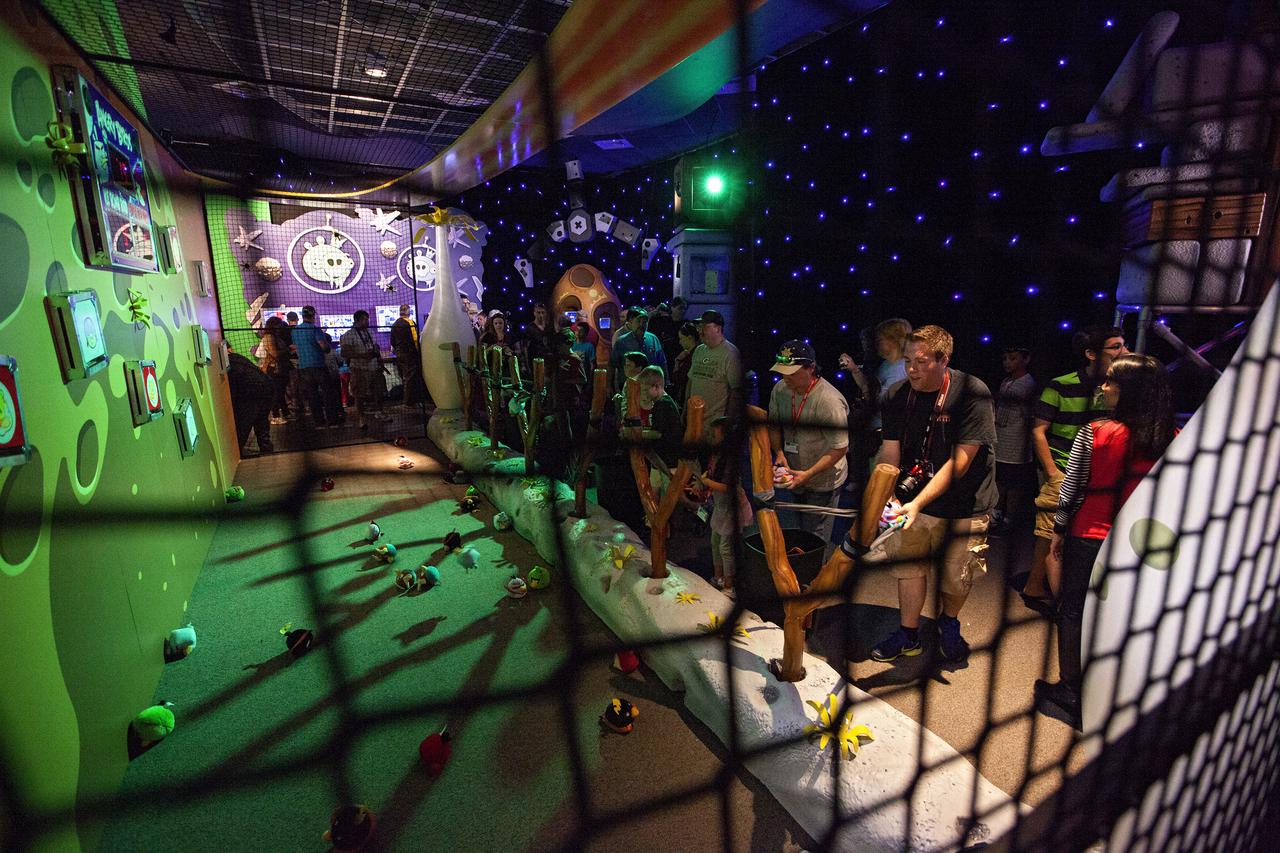
CAPE CANAVERAL, Fla. -- At NASA’s Kennedy Space Center Visitor Complex in Florida, visitors try out some of the interactive exhibits inside the Angry Birds Space Encounter after the grand opening ceremony for the new attraction. Finland-based Rovio Entertainment, the creator of the Angry Birds Space game, partnered with Kennedy Space Center to bring the beloved characters to life. It is the first Angry Birds interactive exhibit in the United States designed for people of all ages. The 4,485-square-foot facility hosts the space adventures of the Angry Birds as they travel into an intergalactic wormhole, come face-to-face with Space Pigs and discover heroic superpowers. Six interactive stations are designed to encourage children in science, technology, engineering and mathematics fields of study. Photo credit: NASA_Kim Shiflett
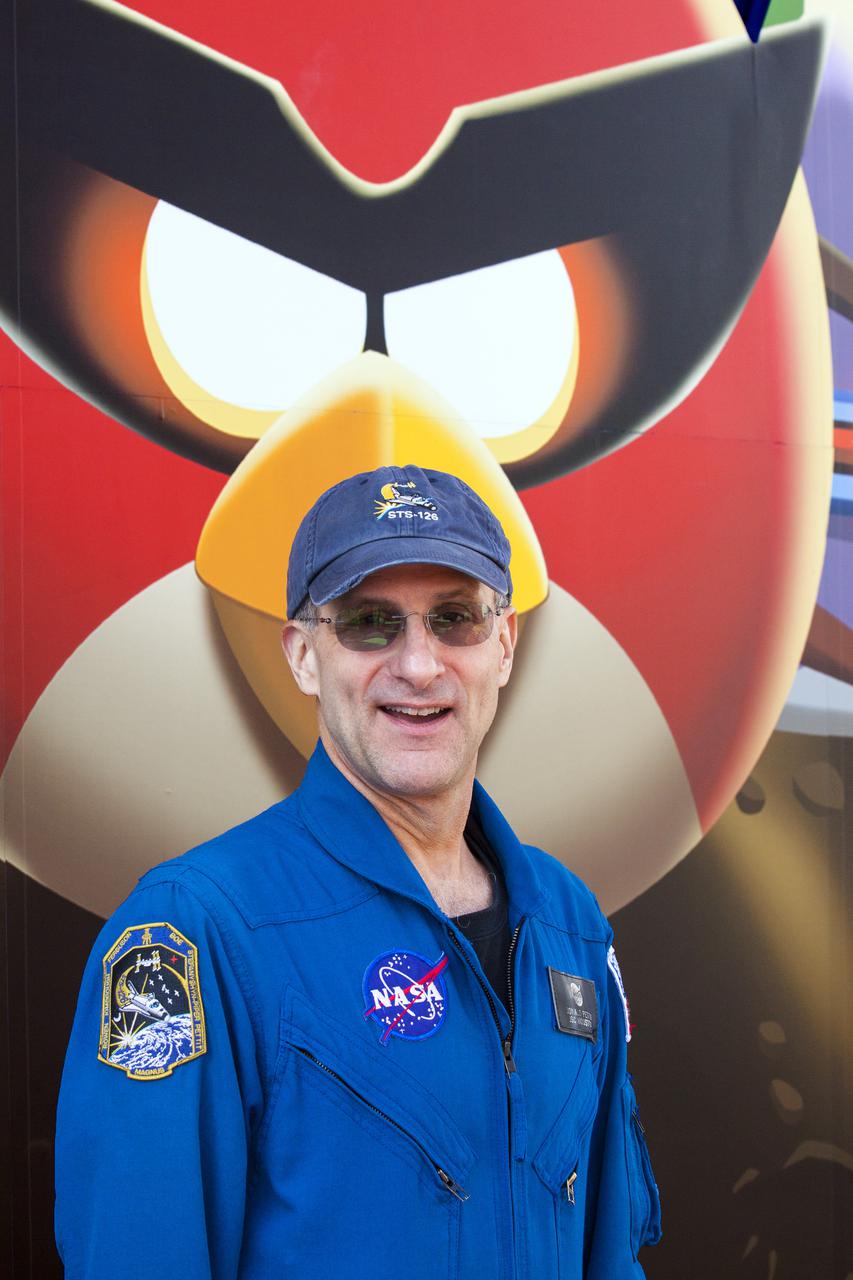
CAPE CANAVERAL, Fla. -- At NASA’s Kennedy Space Center Visitor Complex in Florida, NASA astronaut Don Pettit stands near the entrance to the new Angry Birds Space Encounter during the grand opening ceremony. Pettit spent a total of 12 months during two separate missions aboard the International Space Station and introduced Angry Birds Space while floating in zero gravity. Finland-based Rovio Entertainment, the creator of the Angry Birds Space game, partnered with Kennedy Space Center to bring the beloved characters to life. It is the first Angry Birds interactive exhibit in the United States designed for people of all ages. The 4,485-square-foot facility hosts the space adventures of the Angry Birds as they travel into an intergalactic wormhole, come face-to-face with Space Pigs and discover heroic superpowers. Six interactive stations are designed to encourage children in science, technology, engineering and mathematics fields of study. Photo credit: NASA_Kim Shiflett
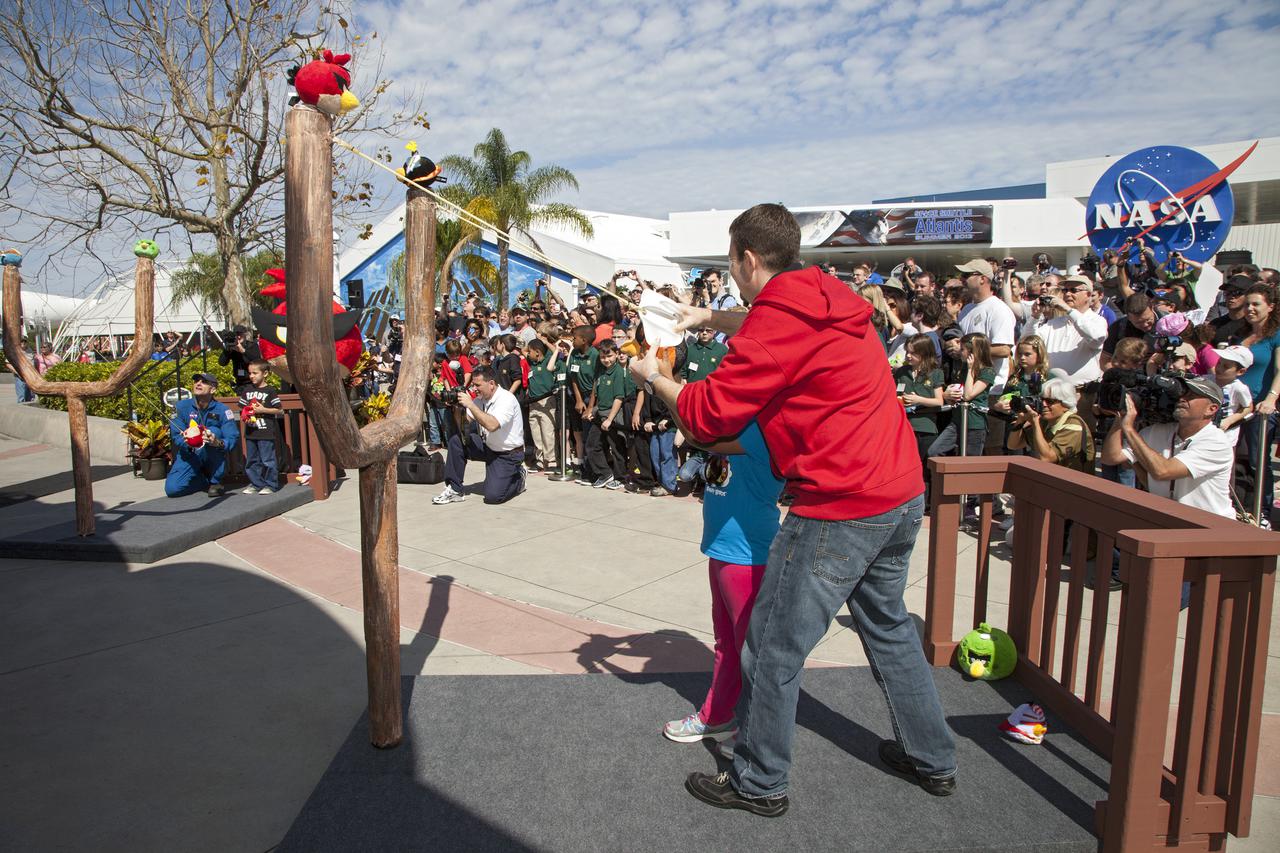
CAPE CANAVERAL, Fla. -- At NASA’s Kennedy Space Center Visitor Complex in Florida, Dan Mitchell, director of location-based entertainment for Rovio Entertainment, uses a giant slingshot to launch a plush Angry Bird character during the grand opening of the new Angry Birds Space Encounter. To Mitchell’s left is NASA astronaut Don Pettit. Finland-based Rovio Entertainment, the creator of the Angry Birds Space game, partnered with Kennedy Space Center to bring the beloved characters to life. It is the first Angry Birds interactive exhibit in the United States designed for people of all ages. The 4,485-square-foot facility hosts the space adventures of the Angry Birds as they travel into an intergalactic wormhole, come face-to-face with Space Pigs and discover heroic superpowers. Six interactive stations are designed to encourage children in science, technology, engineering and mathematics fields of study. Photo credit: NASA_Kim Shiflett
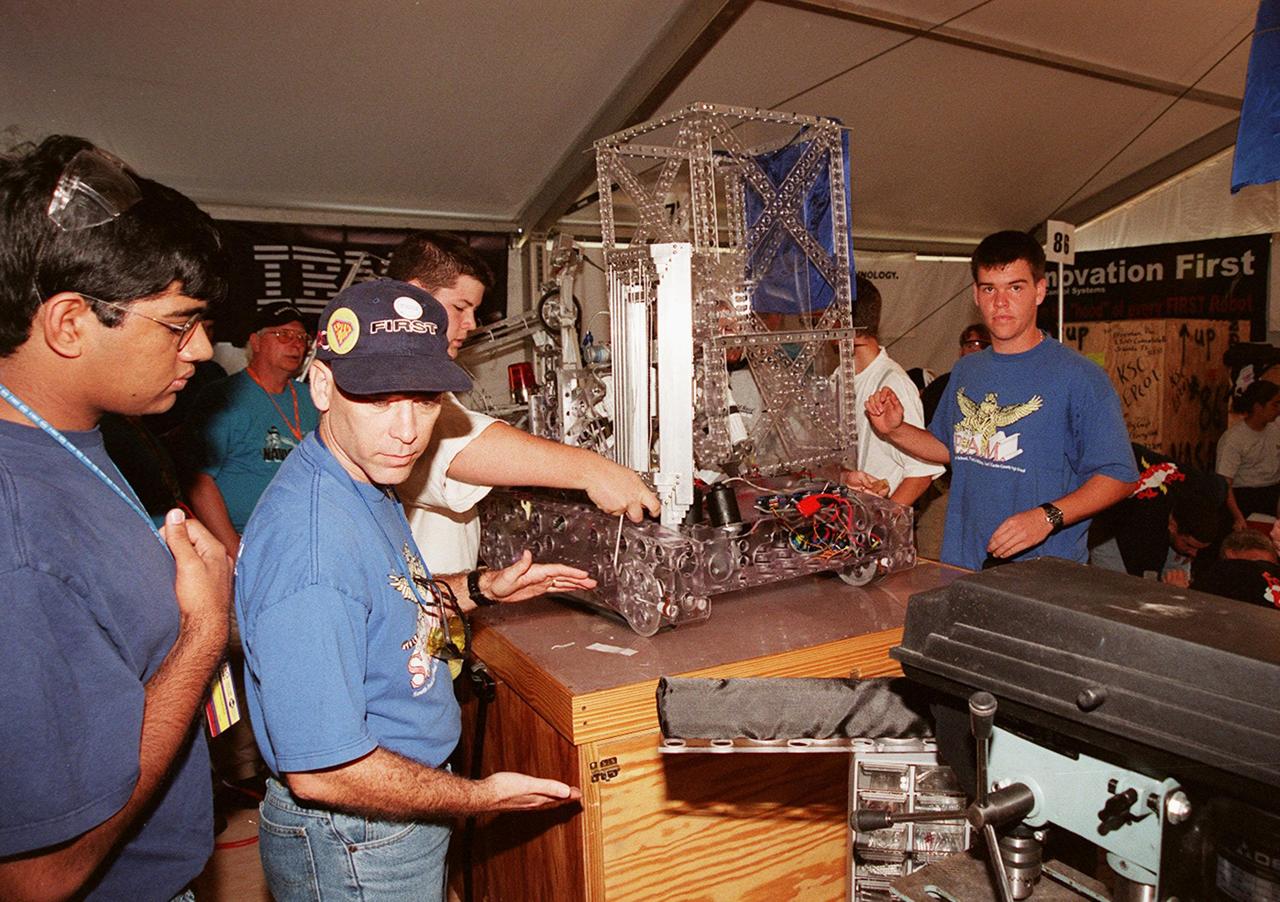
Students from high schools around the United States busily prepare their robots for the FIRST (For Inspiration and Recognition of Science and Technology) Southeast Regional competition March 9-11 at the KSC Visitor Complex. Teams of high school students are testing the limits of their imagination using robots they have designed, with the support of business and engineering professionals and corporate sponsors, to compete in a technological battle against other schools' robots. Of the 30 high school teams competing at KSC, 16 are Florida teams co-sponsored by NASA and KSC contractors. Local high schools participating are Astronaut, Bayside, Cocoa Beach, Eau Gallie, Melbourne, Melbourne Central Catholic, Palm Bay, Rockledge, Satellite, and Titusville
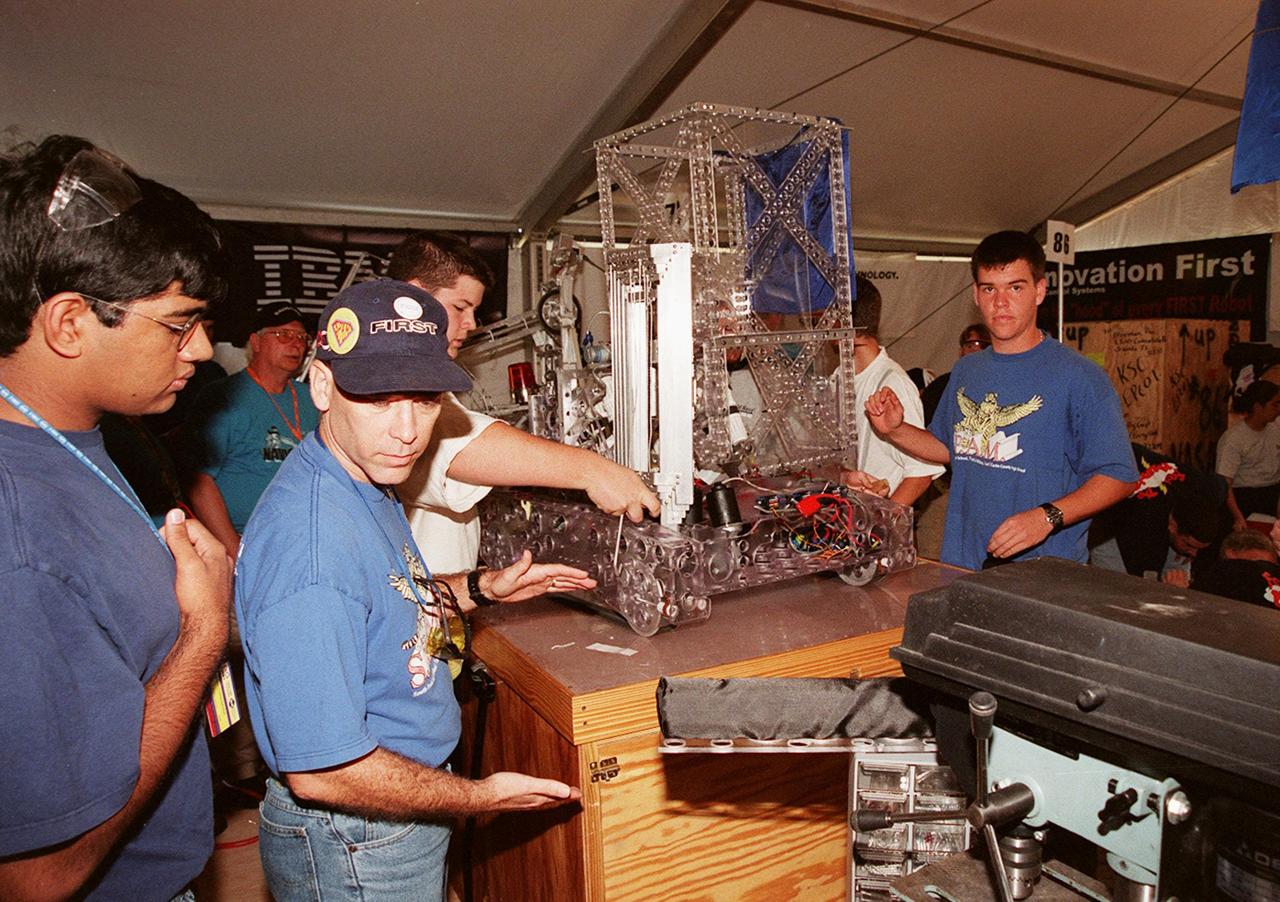
Students from high schools around the United States busily prepare their robots for the FIRST (For Inspiration and Recognition of Science and Technology) Southeast Regional competition March 9-11 at the KSC Visitor Complex. Teams of high school students are testing the limits of their imagination using robots they have designed, with the support of business and engineering professionals and corporate sponsors, to compete in a technological battle against other schools' robots. Of the 30 high school teams competing at KSC, 16 are Florida teams co-sponsored by NASA and KSC contractors. Local high schools participating are Astronaut, Bayside, Cocoa Beach, Eau Gallie, Melbourne, Melbourne Central Catholic, Palm Bay, Rockledge, Satellite, and Titusville
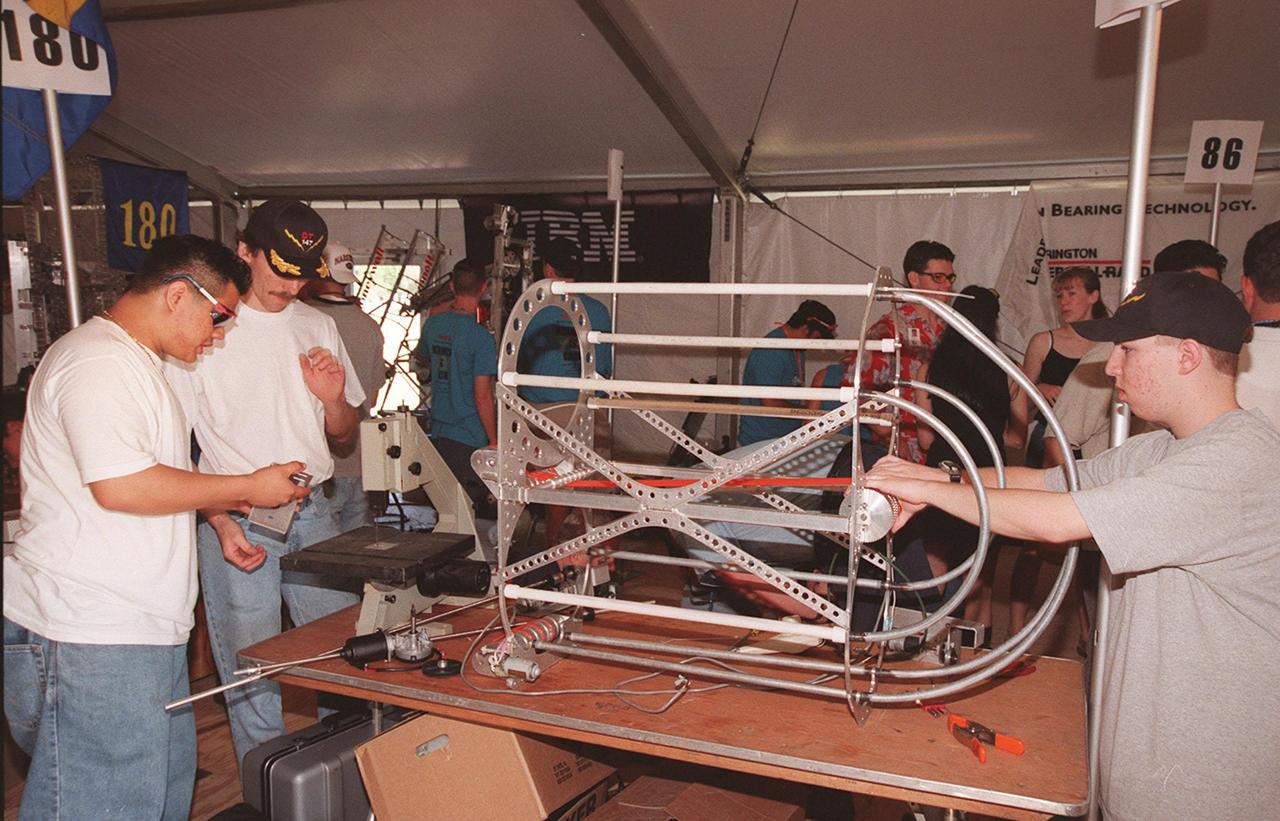
Students from high schools around the United States busily prepare their robots for the FIRST (For Inspiration and Recognition of Science and Technology) Southeast Regional competition March 9-11 at the KSC Visitor Complex. Teams of high school students are testing the limits of their imagination using robots they have designed, with the support of business and engineering professionals and corporate sponsors, to compete in a technological battle against other schools' robots. Of the 30 high school teams competing at KSC, 16 are Florida teams co-sponsored by NASA and KSC contractors. Local high schools participating are Astronaut, Bayside, Cocoa Beach, Eau Gallie, Melbourne, Melbourne Central Catholic, Palm Bay, Rockledge, Satellite, and Titusville
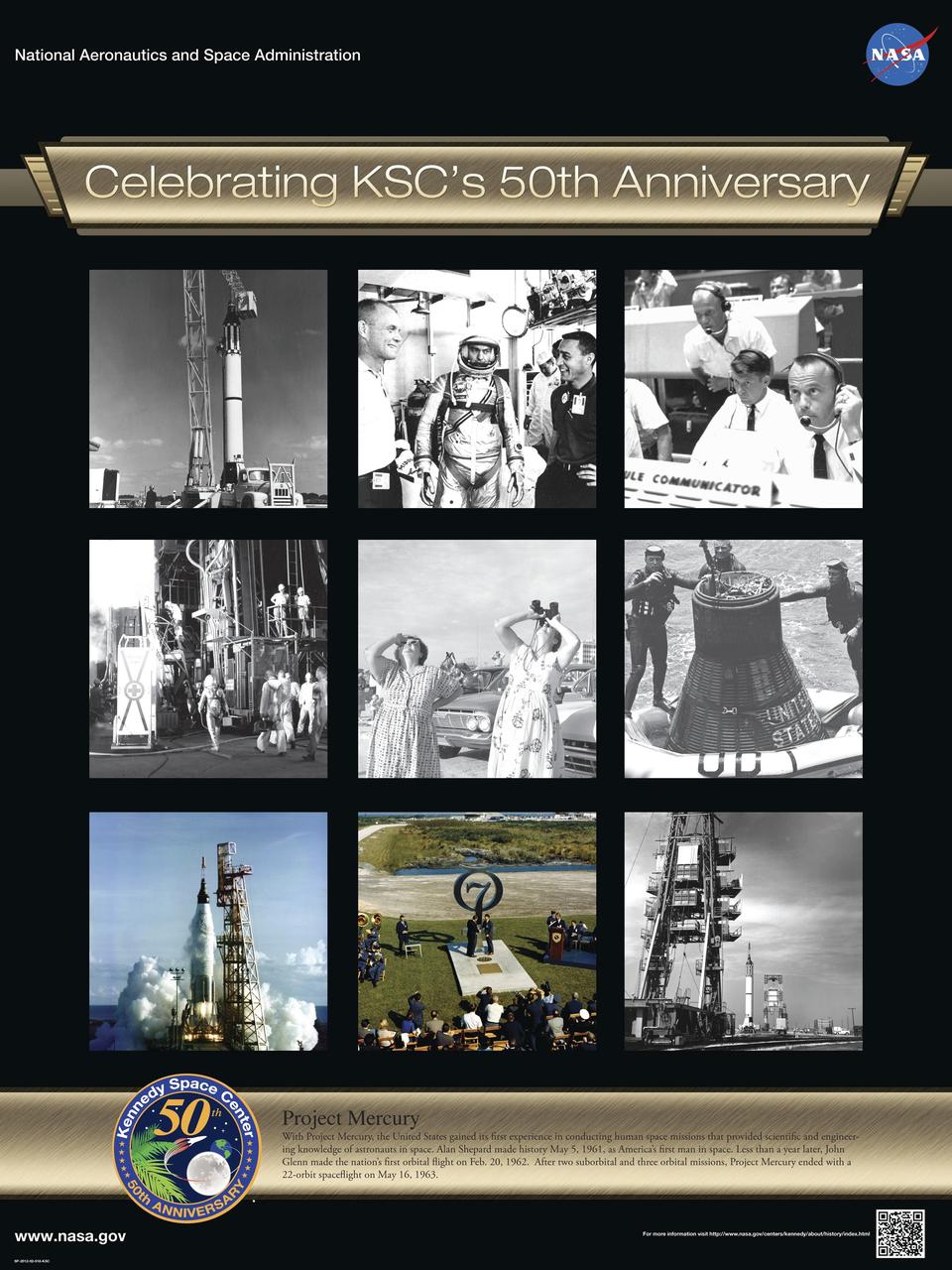
Project Mercury: With Project Mercury, the United States gained its first experience in conducting human space missions that provided scientific and engineering knowledge of astronauts in space. Alan Shepard made history May 5, 1961, as America's first man in space. Less than a year later, John Glenn made the nation’s first orbital flight on Feb. 20, 1962. After two suborbital and three orbital missions, Project Mercury ended with a 22-orbit spaceflight on May 16, 1963. Poster designed by Kennedy Space Center Graphics Department/Greg Lee. Credit: NASA
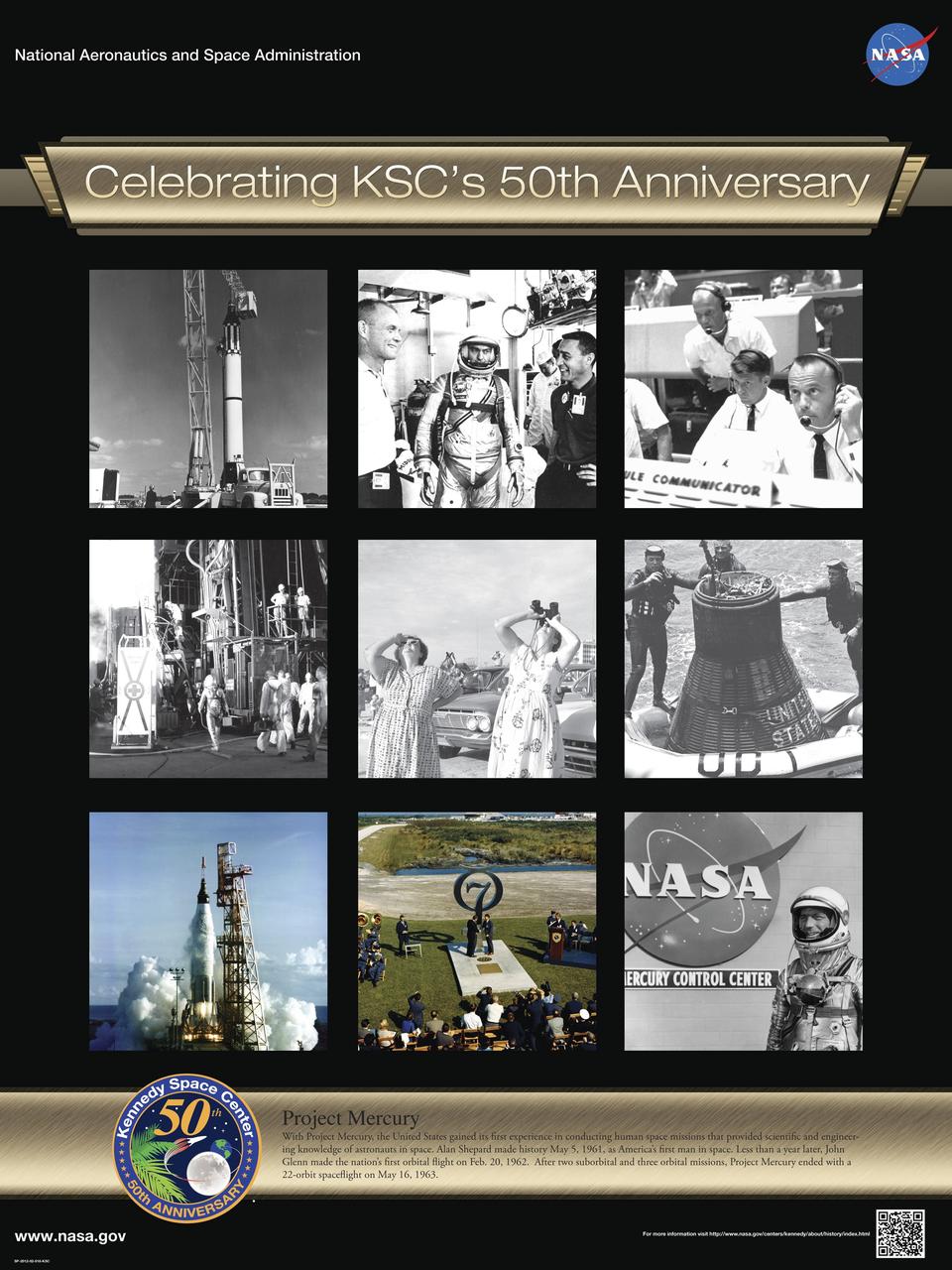
Project Mercury: With Project Mercury, the United States gained its first experience in conducting human space missions that provided scientific and engineering knowledge of astronauts in space. Alan Shepard made history May 5, 1961, as America's first man in space. Less than a year later, John Glenn made the nation’s first orbital flight on Feb. 20, 1962. After two suborbital and three orbital missions, Project Mercury ended with a 22-orbit spaceflight on May 16, 1963. Poster designed by Kennedy Space Center Graphics Department/Greg Lee. Credit: NASA
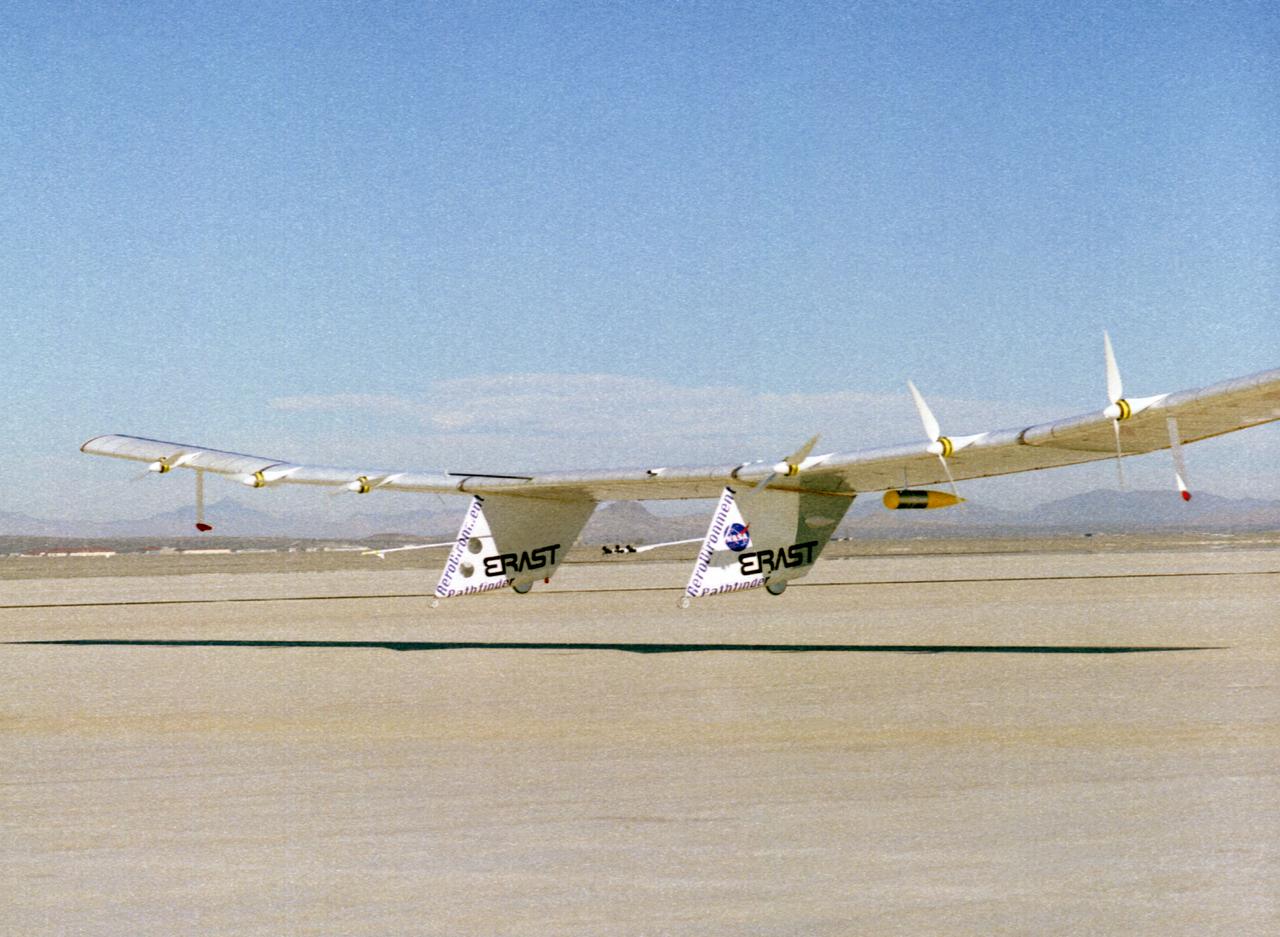
The Pathfinder solar-powered research aircraft settles in for landing on the bed of Rogers Dry Lake at the Dryden Flight Research Center, Edwards, California, after a successful test flight Nov. 19, 1996. The ultra-light craft flew a racetrack pattern at low altitudes over the flight test area for two hours while project engineers checked out various systems and sensors on the uninhabited aircraft. The Pathfinder was controlled by two pilots, one in a mobile control unit which followed the craft, the other in a stationary control station. Pathfinder, developed by AeroVironment, Inc., is one of several designs being evaluated under NASA's Environmental Research Aircraft and Sensor Technology (ERAST) program.
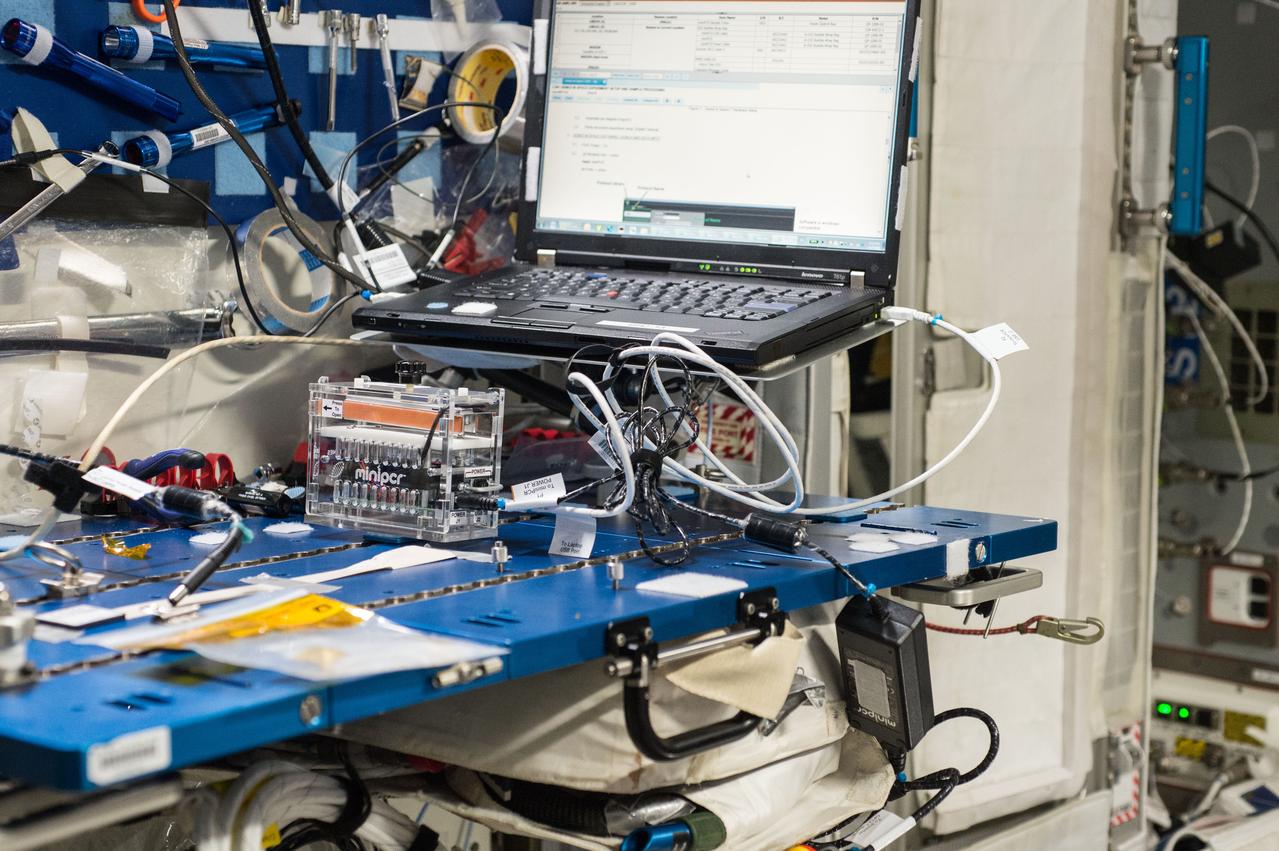
iss047e083547 (4/27/2016) --- Photographic documentation during the Genes in Space experiment showing the polymerase chain reaction (PCR) and miniPCR system as a way to amplify deoxyribonucleic acid (DNA) in space and make it possible to measure and monitor telomere changes during spaceflight. Genes in Space is an innovation challenge including students and teachers across the United States from grades 7 through 12. Students design a pioneering DNA-related experiment to fly on the ISS, providing real-world training in science, technology, engineering and math (STEM) fields and connecting students to the space program.

CAPE CANAVERAL, Fla. -- Smoke and steam billow from the main engine of the United Launch Alliance Atlas V rocket as it launches with NASA's Mars Science Laboratory (MSL) spacecraft. MSL lifted off from Space Launch Complex-41 at Cape Canaveral Air Force Station in Florida at 10:02 a.m. EST Nov. 26. MSL's components include a car-sized rover, Curiosity, which has 10 science instruments designed to search for signs of life, including methane, and help determine if the gas is from a biological or geological source. For more information, visit http://www.nasa.gov/msl. Photo credit: NASA/Tony Gray and Rick Wetherington
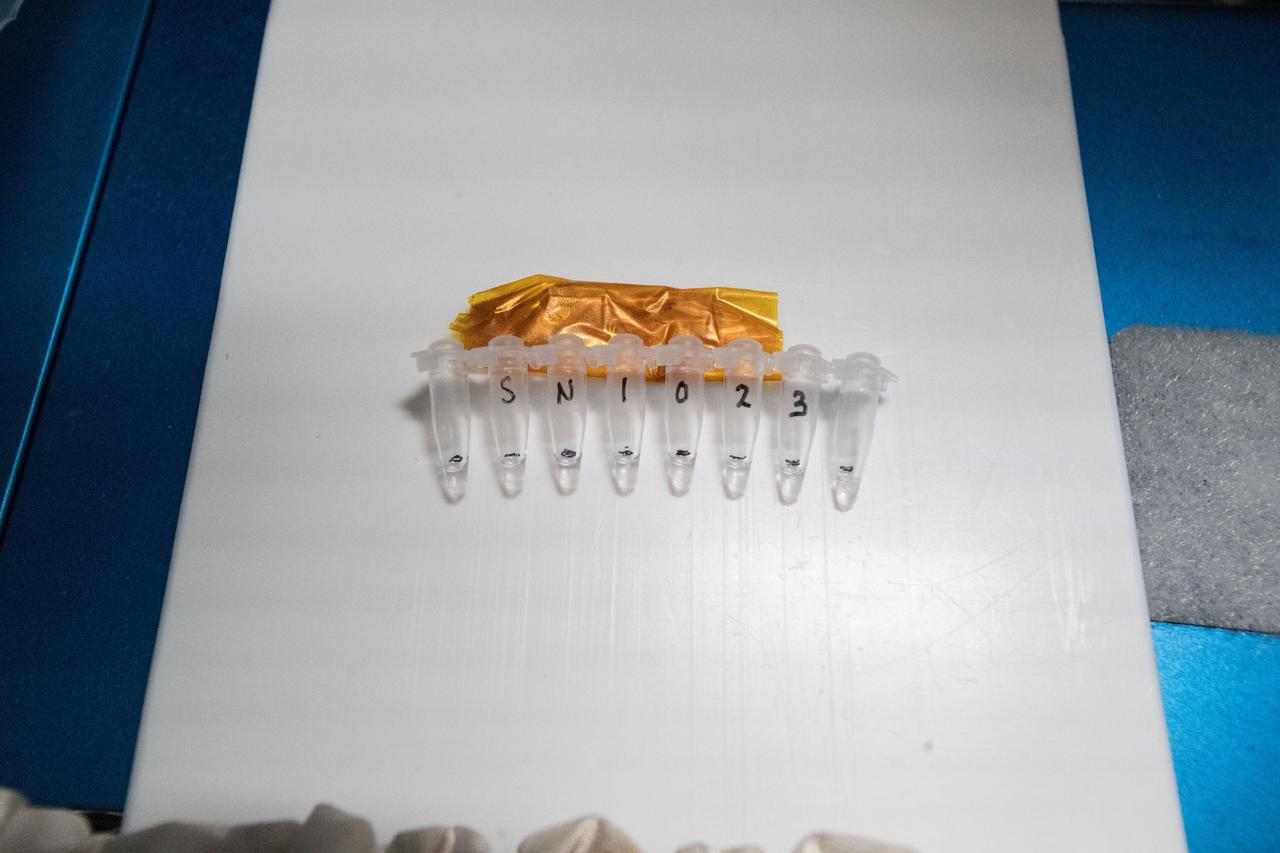
iss055e020316 (4/13/2018) --- Photographic documentation taken during processing of samples in the Miniature Polymerase Chain Reaction (miniPCR) for the Genes In Space-5 experiment onboard the International Space Station (ISS). The genetic research is helping scientists understand the relationship between DNA alterations and weakened immune systems possibly caused by living in space. Genes in Space is an innovation challenge including students and teachers across the United States from grades 7 through 12. Students design a pioneering DNA-related experiment to fly on the ISS, providing real-world training in science, technology, engineering and math (STEM) fields and connecting students to the space program.
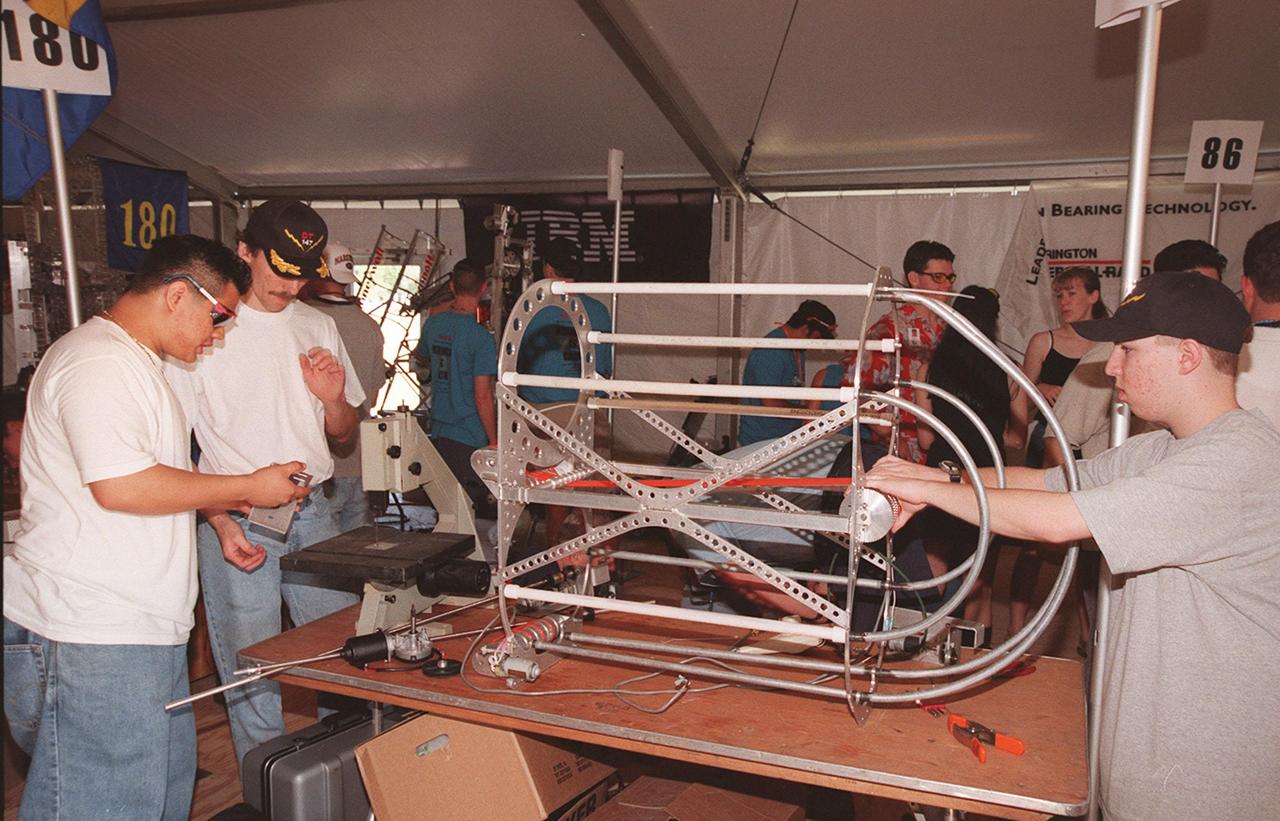
Students from high schools around the United States busily prepare their robots for the FIRST (For Inspiration and Recognition of Science and Technology) Southeast Regional competition March 9-11 at the KSC Visitor Complex. Teams of high school students are testing the limits of their imagination using robots they have designed, with the support of business and engineering professionals and corporate sponsors, to compete in a technological battle against other schools' robots. Of the 30 high school teams competing at KSC, 16 are Florida teams co-sponsored by NASA and KSC contractors. Local high schools participating are Astronaut, Bayside, Cocoa Beach, Eau Gallie, Melbourne, Melbourne Central Catholic, Palm Bay, Rockledge, Satellite, and Titusville
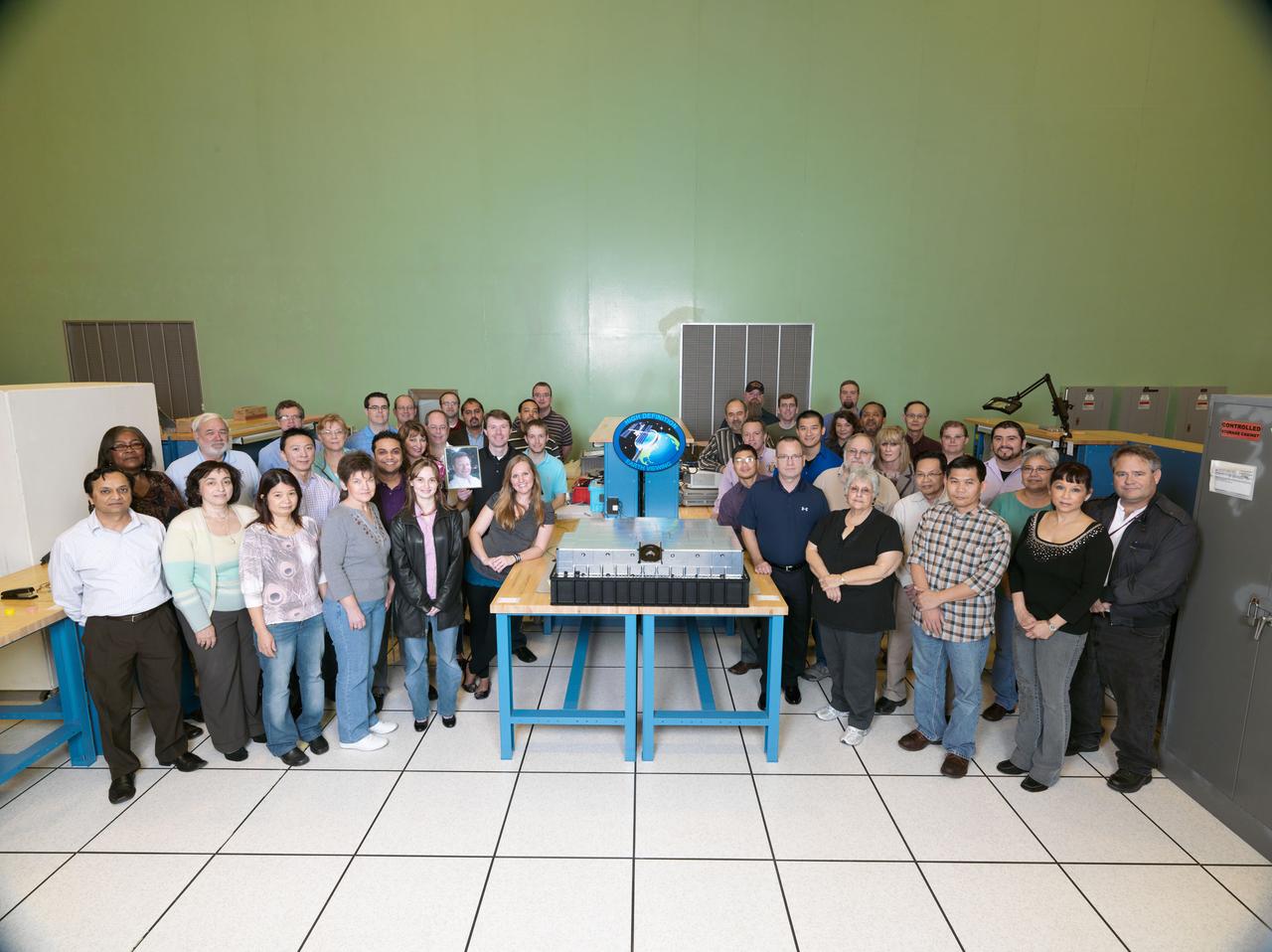
jsc2012e030007 (2-23-2012) --- The High Definition Earth Viewing (HDEV) development team. The HDEV experiment places four commercially available HD cameras on the exterior of the space station and uses them to stream live video of Earth for viewing online. The cameras are enclosed in a temperature specific housing and are exposed to the harsh radiation of space. Analysis of the effect of space on the video quality, over the time HDEV is operational, may help engineers decide which cameras are the best types to use on future missions. High school students helped design some of the cameras' components, through the High Schools United with NASA to Create Hardware (HUNCH) program, and student teams operate the experiment.
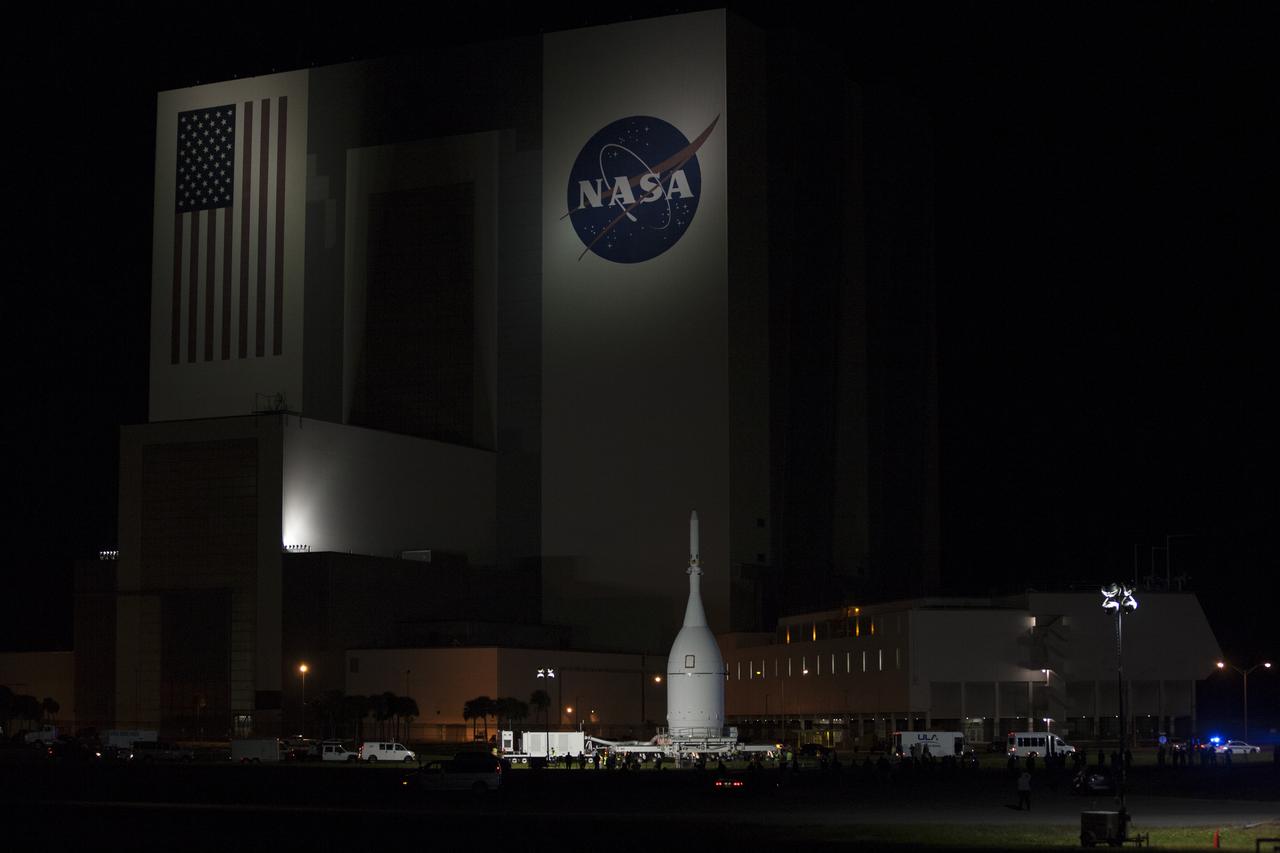
At NASA's Kennedy Space Center in Florida, the agency's Orion spacecraft passes the spaceport's iconic Vehicle Assembly Building as it is transported to Launch Complex 37 at Cape Canaveral Air Force Station. After arrival at the launch pad, United Launch Alliance engineers and technicians will lift Orion and mount it atop its Delta IV Heavy rocket. Orion is the exploration spacecraft designed to carry astronauts to destinations not yet explored by humans, including an asteroid and Mars. It will have emergency abort capability, sustain the crew during space travel and provide safe re-entry from deep space return velocities. The first unpiloted flight test of Orion is scheduled to launch Dec. 4, 2014 atop a United Launch Alliance Delta IV Heavy rocket, and in 2018 on NASA’s Space Launch System rocket.
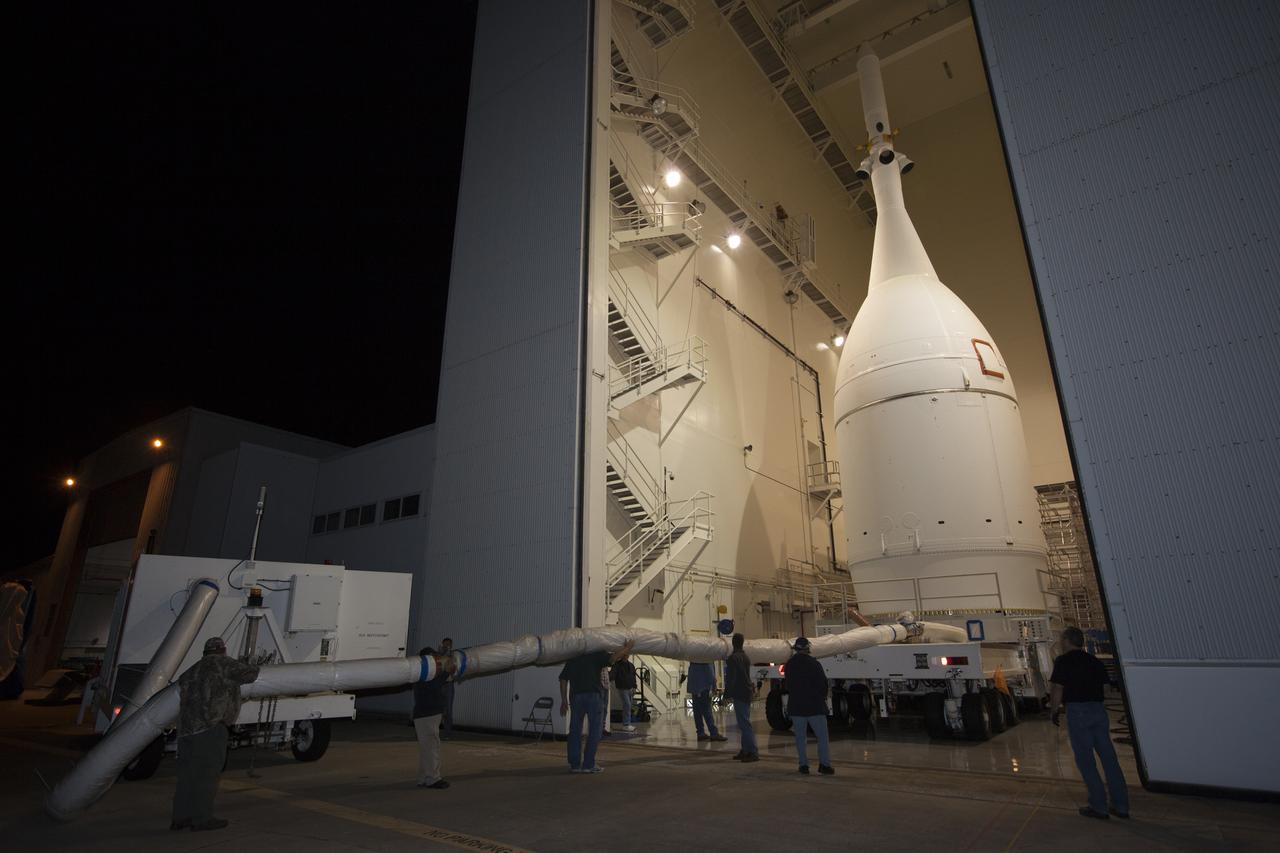
At NASA's Kennedy Space Center in Florida, the agency's completed Orion spacecraft begins its trip from the Launch Abort System Facility to Launch Complex 37 at Cape Canaveral Air Force Station. After arrival at the launch pad, United Launch Alliance engineers and technicians will lift Orion and mount it atop its Delta IV Heavy rocket. Orion is the exploration spacecraft designed to carry astronauts to destinations not yet explored by humans, including an asteroid and Mars. It will have emergency abort capability, sustain the crew during space travel and provide safe re-entry from deep space return velocities. The first unpiloted flight test of Orion is scheduled to launch Dec. 4, 2014 atop a United Launch Alliance Delta IV Heavy rocket, and in 2018 on NASA’s Space Launch System rocket.

CAPE CANAVERAL, Fla. – At NASA's Kennedy Space Center in Florida, the agency's Orion spacecraft passes the spaceport's iconic Vehicle Assembly Building as it is transported to Launch Complex 37 at Cape Canaveral Air Force Station. After arrival at the launch pad, United Launch Alliance engineers and technicians will lift Orion and mount it atop its Delta IV Heavy rocket. Orion is the exploration spacecraft designed to carry astronauts to destinations not yet explored by humans, including an asteroid and Mars. It will have emergency abort capability, sustain the crew during space travel and provide safe re-entry from deep space return velocities. The first unpiloted flight test of Orion is scheduled to launch Dec. 4, 2014 atop a United Launch Alliance Delta IV Heavy rocket, and in 2018 on NASA’s Space Launch System rocket. For more information, visit www.nasa.gov/orion Photo credit: NASA/Frankie Martin
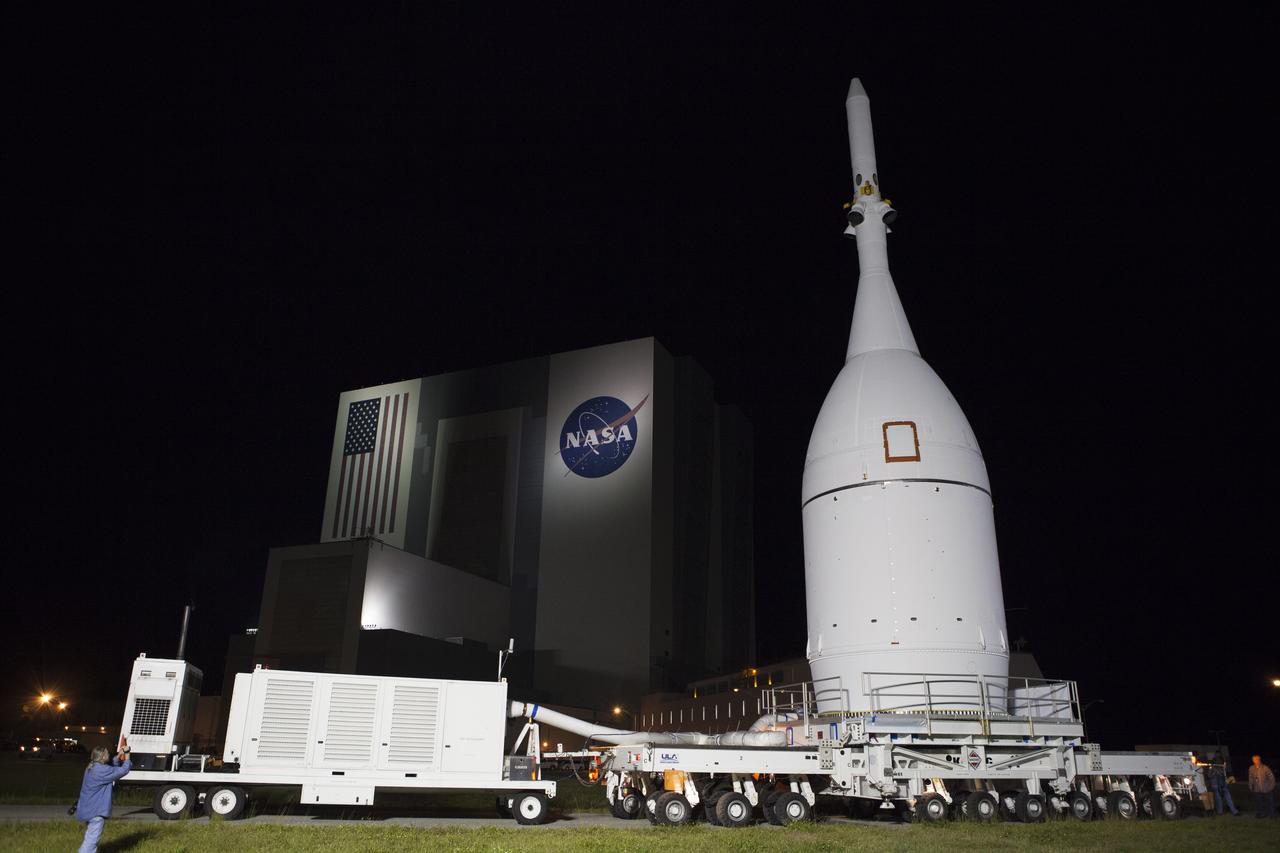
At NASA's Kennedy Space Center in Florida, the agency's Orion spacecraft passes the spaceport's iconic Vehicle Assembly Building as it is transported to Launch Complex 37 at Cape Canaveral Air Force Station. After arrival at the launch pad, United Launch Alliance engineers and technicians will lift Orion and mount it atop its Delta IV Heavy rocket. Orion is the exploration spacecraft designed to carry astronauts to destinations not yet explored by humans, including an asteroid and Mars. It will have emergency abort capability, sustain the crew during space travel and provide safe re-entry from deep space return velocities. The first unpiloted flight test of Orion is scheduled to launch Dec. 4, 2014 atop a United Launch Alliance Delta IV Heavy rocket, and in 2018 on NASA’s Space Launch System rocket.
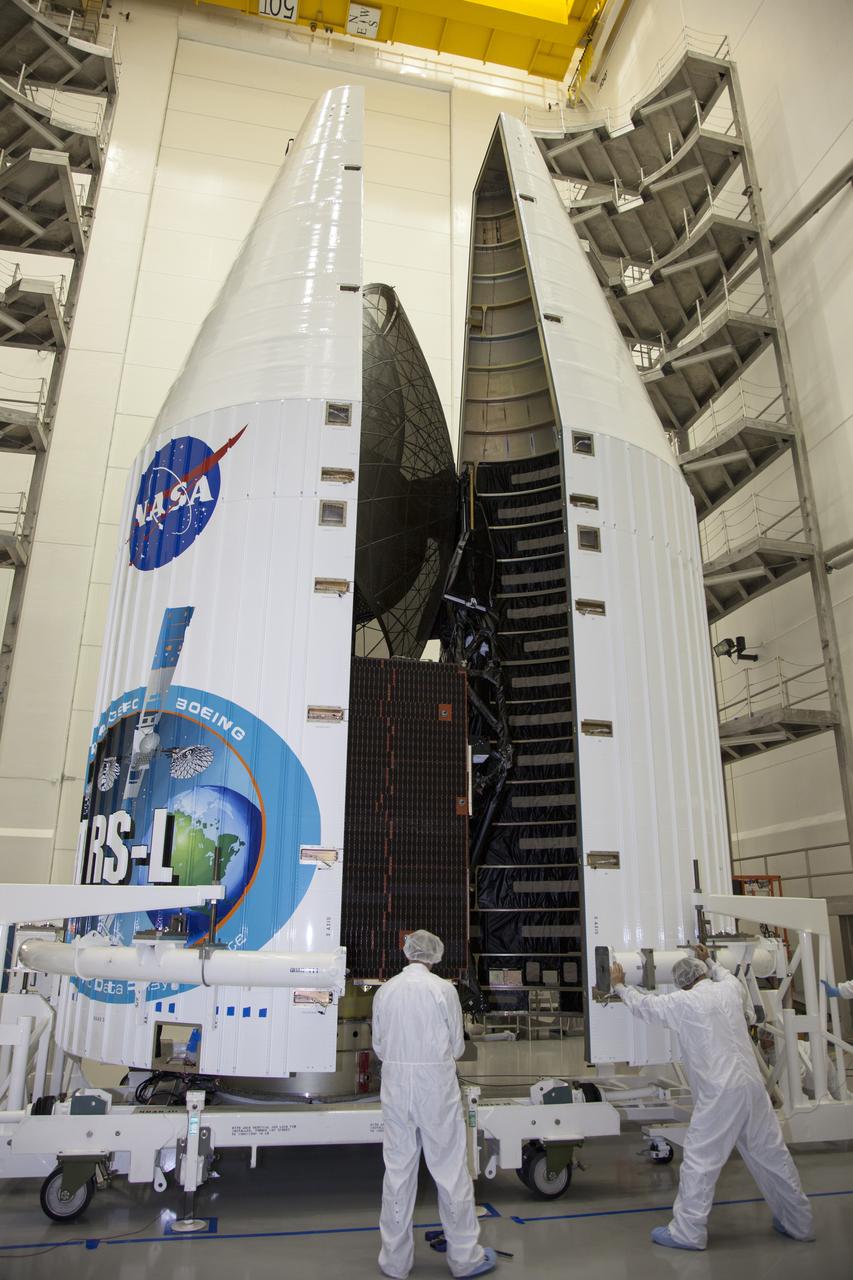
TITUSVILLE, Fla. – Inside the Astrotech payload processing facility in Titusville, United Launch Alliance engineers and technicians encapsulate the Tracking and Data Relay Satellite, or TDRS-L, spacecraft in its payload fairing. TDRS-L will then be transported to Launch Complex 41 at Cape Canaveral Air Force Station. The TDRS-L satellite will be a part of the second of three next-generation spacecraft designed to ensure vital operational continuity for the NASA Space Network. It is scheduled to launch from Cape Canaveral's Space Launch Complex 41 atop a United Launch Alliance Atlas V rocket on January 23, 2014. The current Tracking and Data Relay Satellite system consists of eight in-orbit satellites distributed to provide near continuous information relay contact with orbiting spacecraft ranging from the International Space Station and Hubble Space Telescope to the array of scientific observatories. For more information, visit: http://www.nasa.gov/mission_pages/tdrs/home/index.html
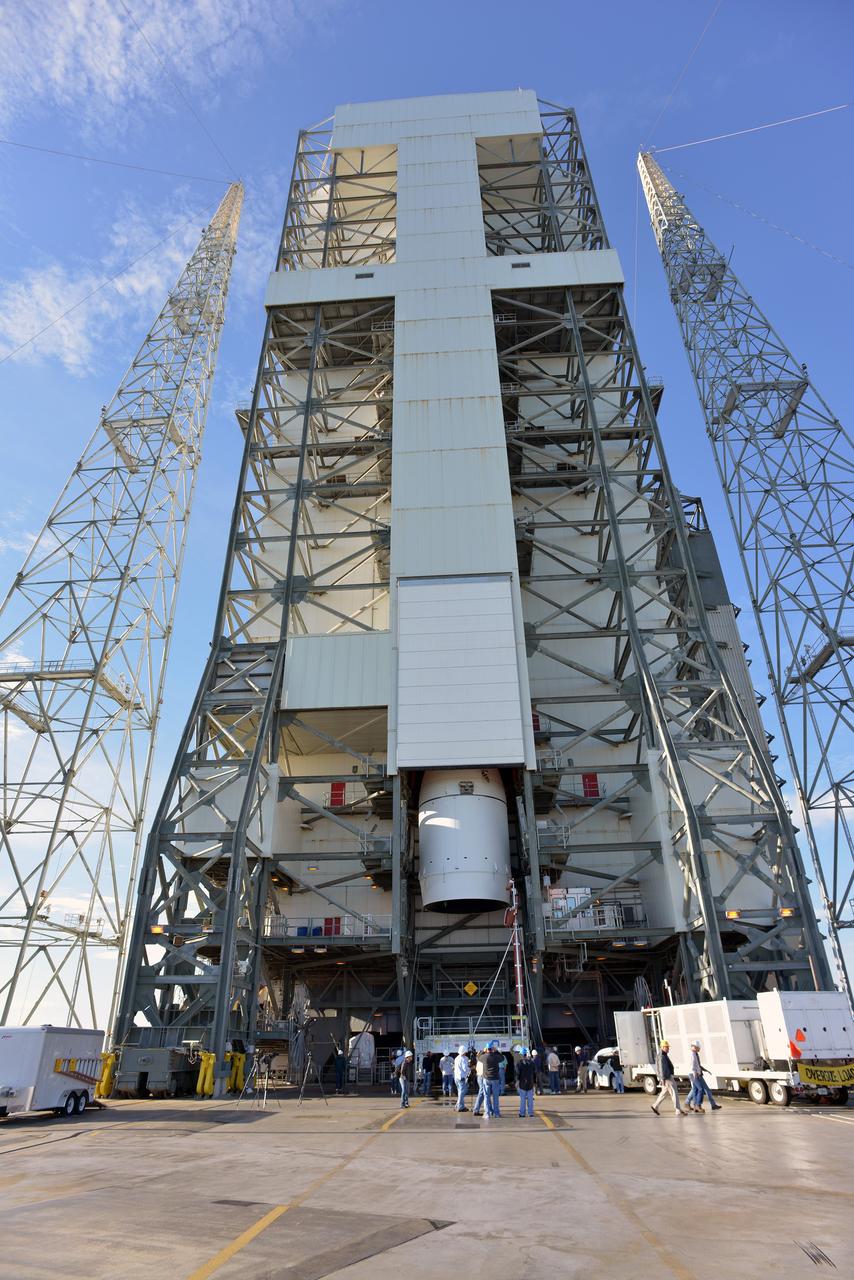
CAPE CANAVERAL, Fla. – At Cape Canaveral Air Force Station's Launch Complex 37, United Launch Alliance engineers and technicians begin lifting the agency's Orion spacecraft for mounting atop its Delta IV Heavy rocket. Orion is the exploration spacecraft designed to carry astronauts to destinations not yet explored by humans, including an asteroid and Mars. It will have emergency abort capability, sustain the crew during space travel and provide safe re-entry from deep space return velocities. The first unpiloted flight test of Orion is scheduled to launch Dec. 4, 2014 atop a United Launch Alliance Delta IV Heavy rocket, and in 2018 on NASA’s Space Launch System rocket. For more information, visit www.nasa.gov/orion Photo credit: NASA/Radislav Sinyak