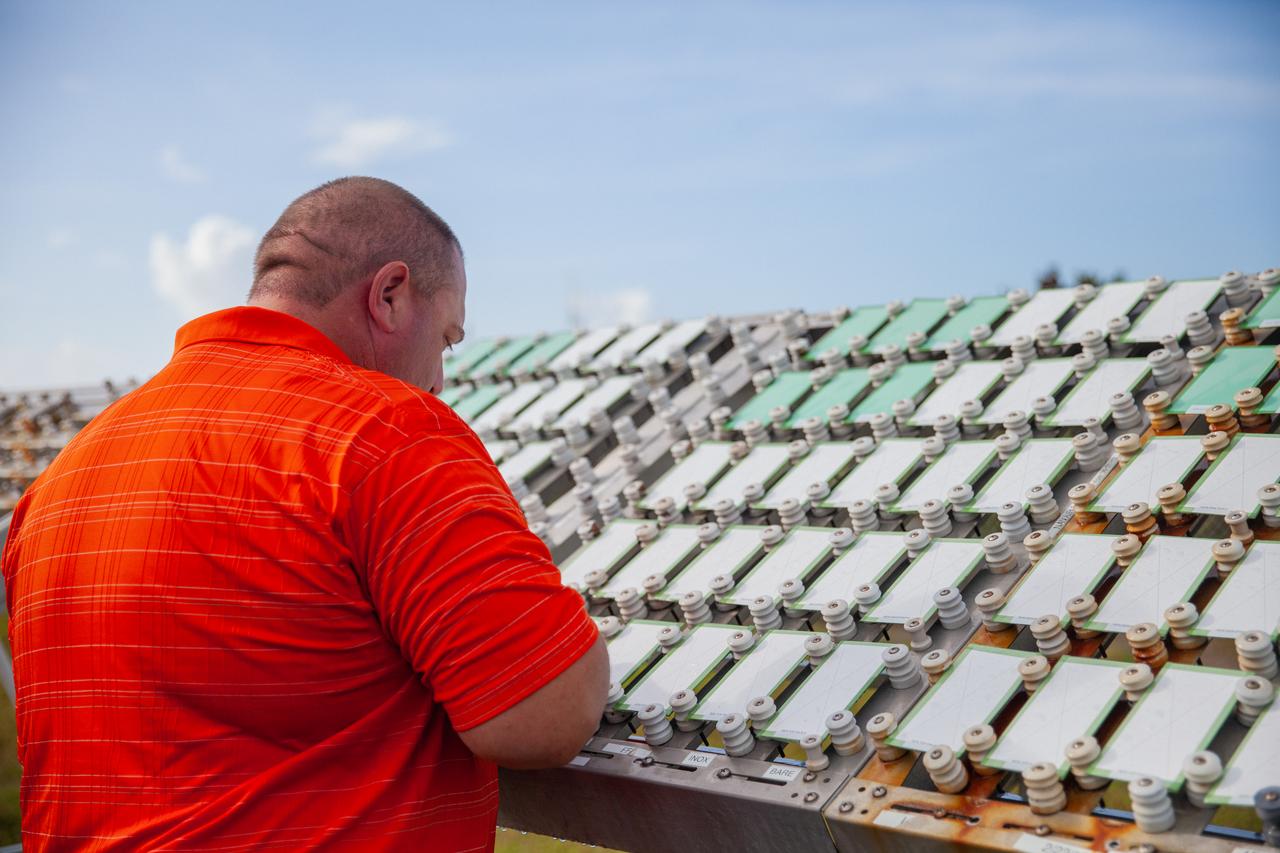
A Mechanical and Environmental Testing Lab engineer examines samples at the corrosion engineering test site at NASA’s Kennedy Space Center in Florida on Oct. 6, 2020. The corrosion lab is a network of people, equipment, and facilities that provides engineering services and technical innovations in all areas of corrosion for NASA and external customers.
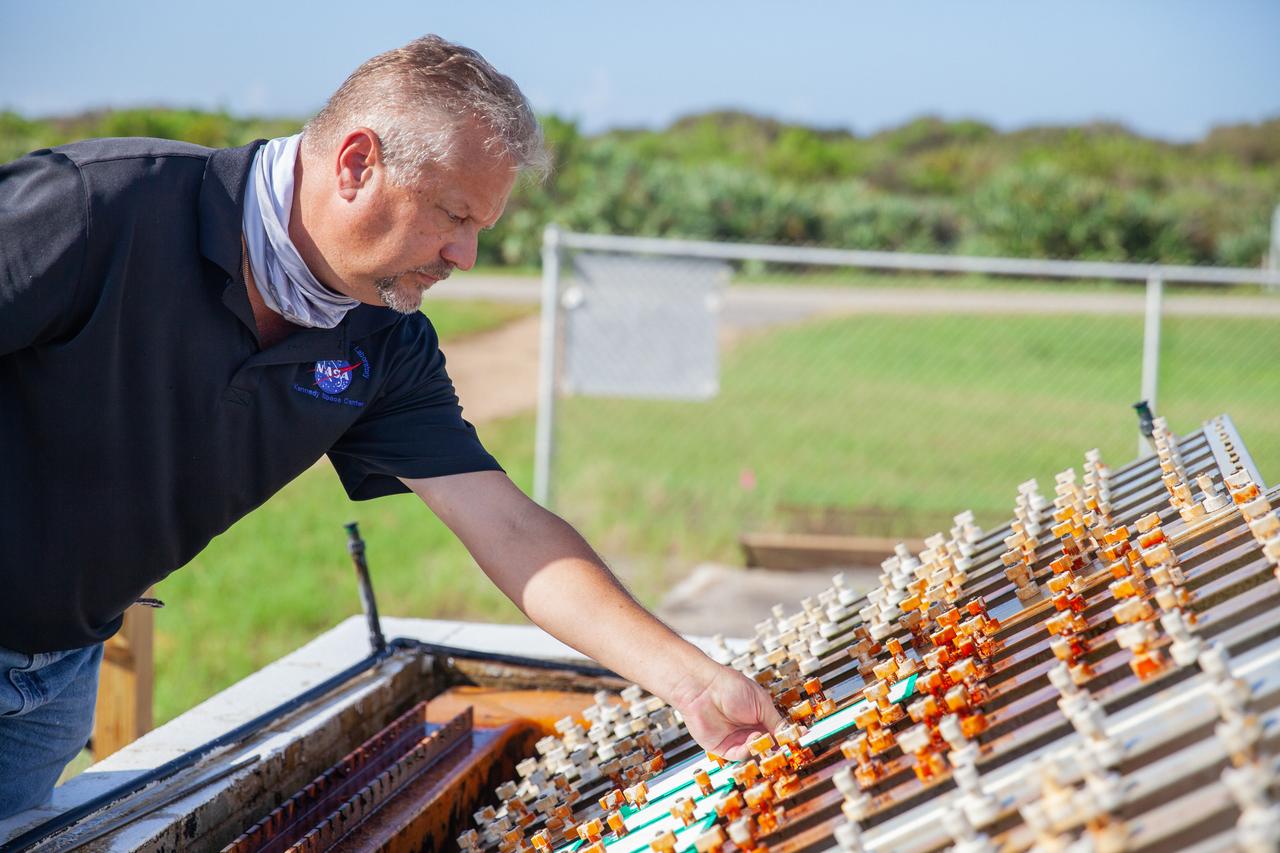
A Mechanical and Environmental Testing Lab engineer examines samples at the corrosion engineering test site on Oct. 6, 2020, at NASA’s Kennedy Space Center in Florida. The corrosion lab is a network of people, equipment, and facilities that provides engineering services and technical innovations in all areas of corrosion for NASA and external customers.
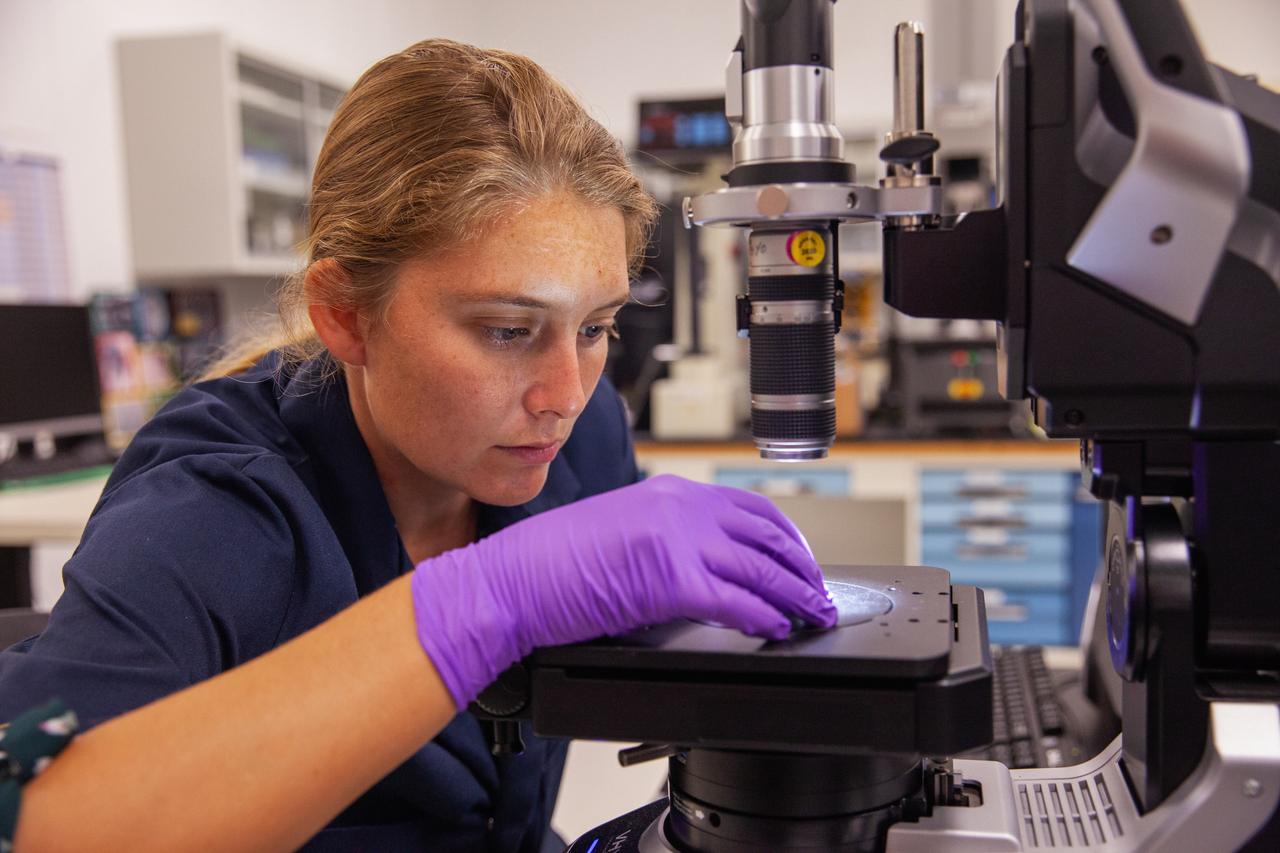
Liz Tomsik, an engineer in the Materials Analysis Lab, examines a sample placed on a digital microscope inside the Neil Armstrong Operations and Checkout Building at NASA’s Kennedy Space Center in Florida on Oct. 6, 2020.
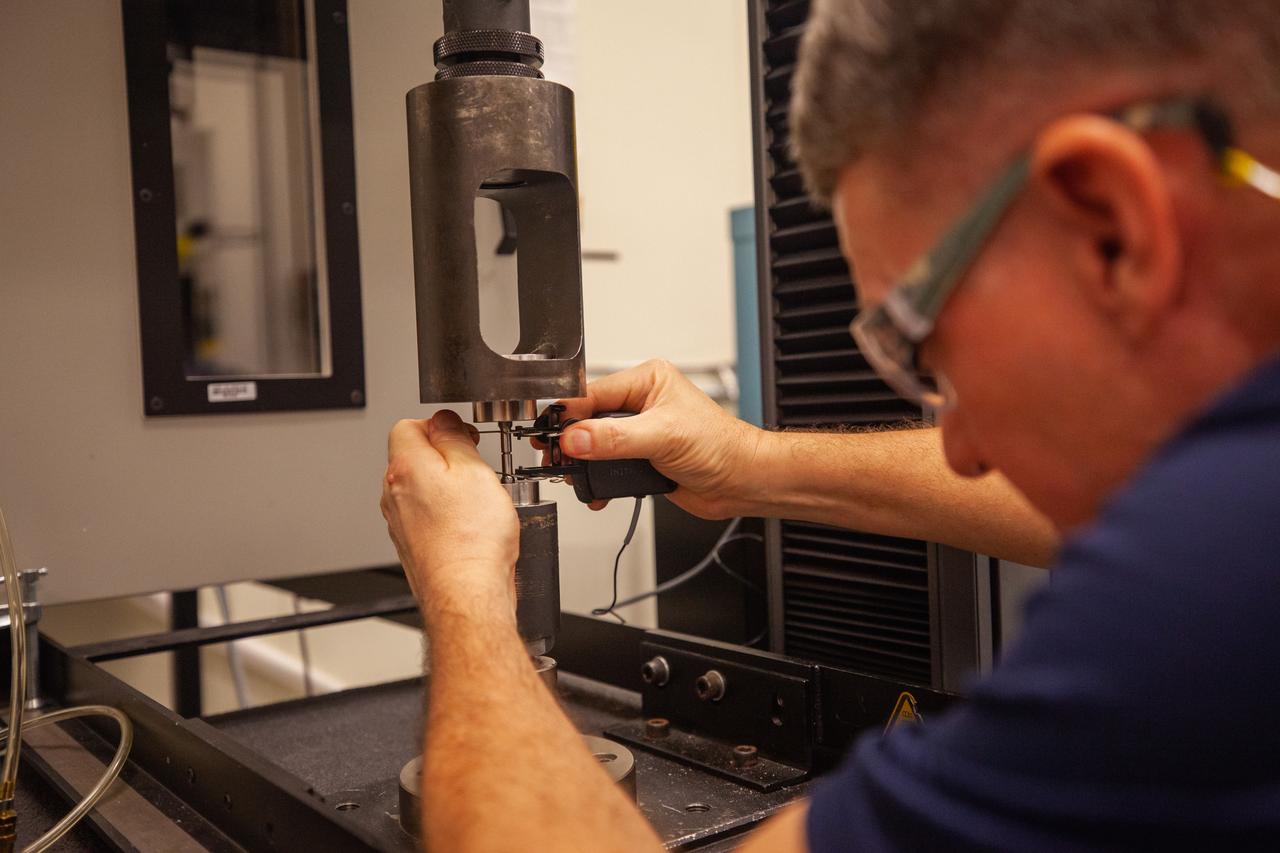
Brian Cheshire, an engineer in the Mechanical and Environmental Testing Lab at NASA’s Kennedy Space Center, works in front of an Instron inside a lab at the Florida spaceport’s Operations and Checkout Building on Oct. 6, 2020.
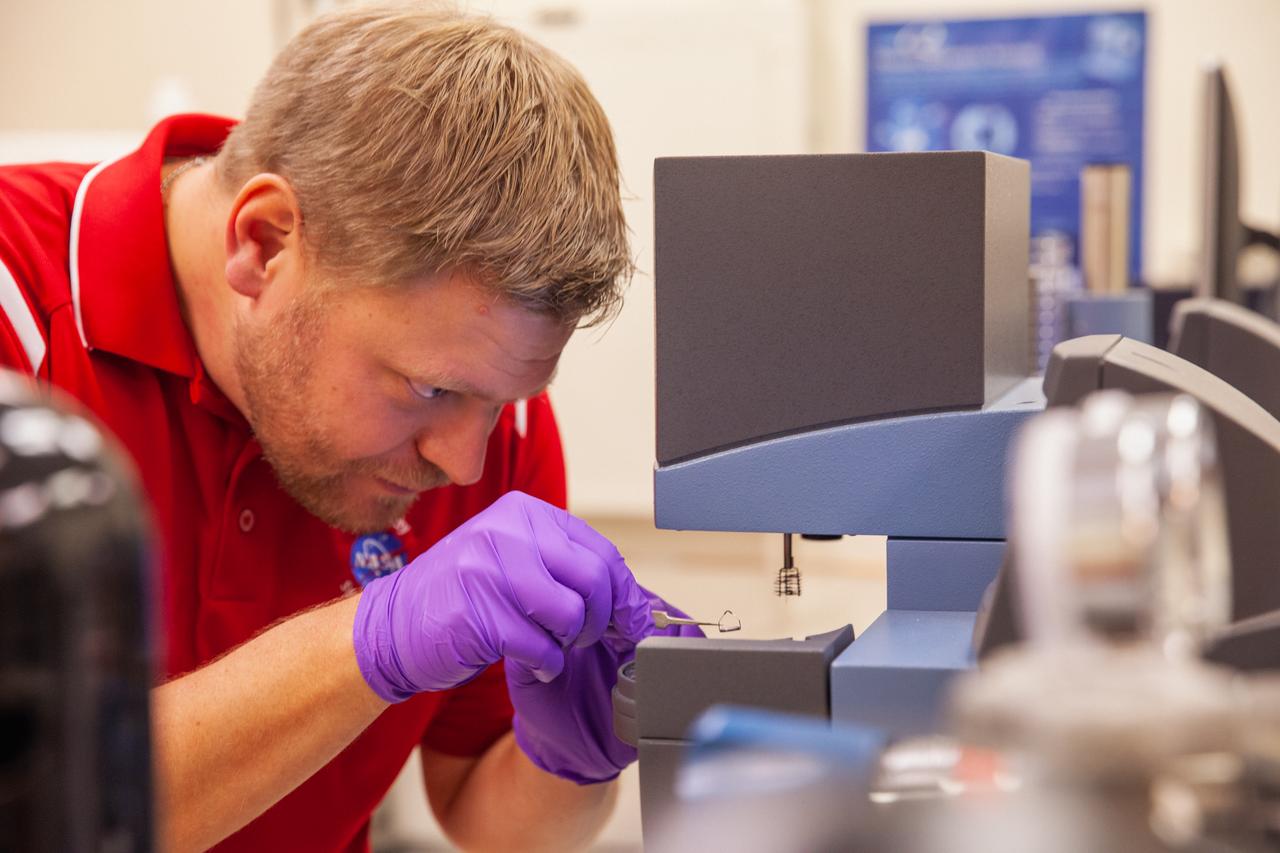
Jerry Buhrow, an engineer in the Materials Analysis Lab, places a sample on a thermal testing unit inside a lab at NASA Kennedy Space Center’s Neil Armstrong Operations and Checkout Building on Oct. 6, 2020.

These photos and videos show how technicians at NASA’s Michoud Assembly Facility in New Orleans installed the third and fourth RS-25 engines onto the core stage for the agency’s SLS (Space Launch System) rocket that will help power NASA’s first crewed Artemis mission to the Moon. Technicians added the first engine to the SLS core stage Sept. 11. The second engine was installed onto the stage Sept. 15 with the third and fourth engines following Sept. 19 and Sept. 20. Engineers consider the engines to be “soft” mated to the rocket stage. Technicians with NASA, Aerojet Rocketdyne, an L3Harris Technologies company and the RS-25 engines lead contractor, along with Boeing, the core stage lead contractor, will now focus efforts on the complex tax of fully securing the engines to the stage and integrating the propulsion and electrical systems within the structure. NASA is working to land the first woman and first person of color on the Moon under Artemis. SLS is part of NASA’s backbone for deep space exploration, along with Orion and the Gateway in orbit around the Moon. SLS is the only rocket that can send Orion, astronauts, and supplies to the Moon in a single mission.
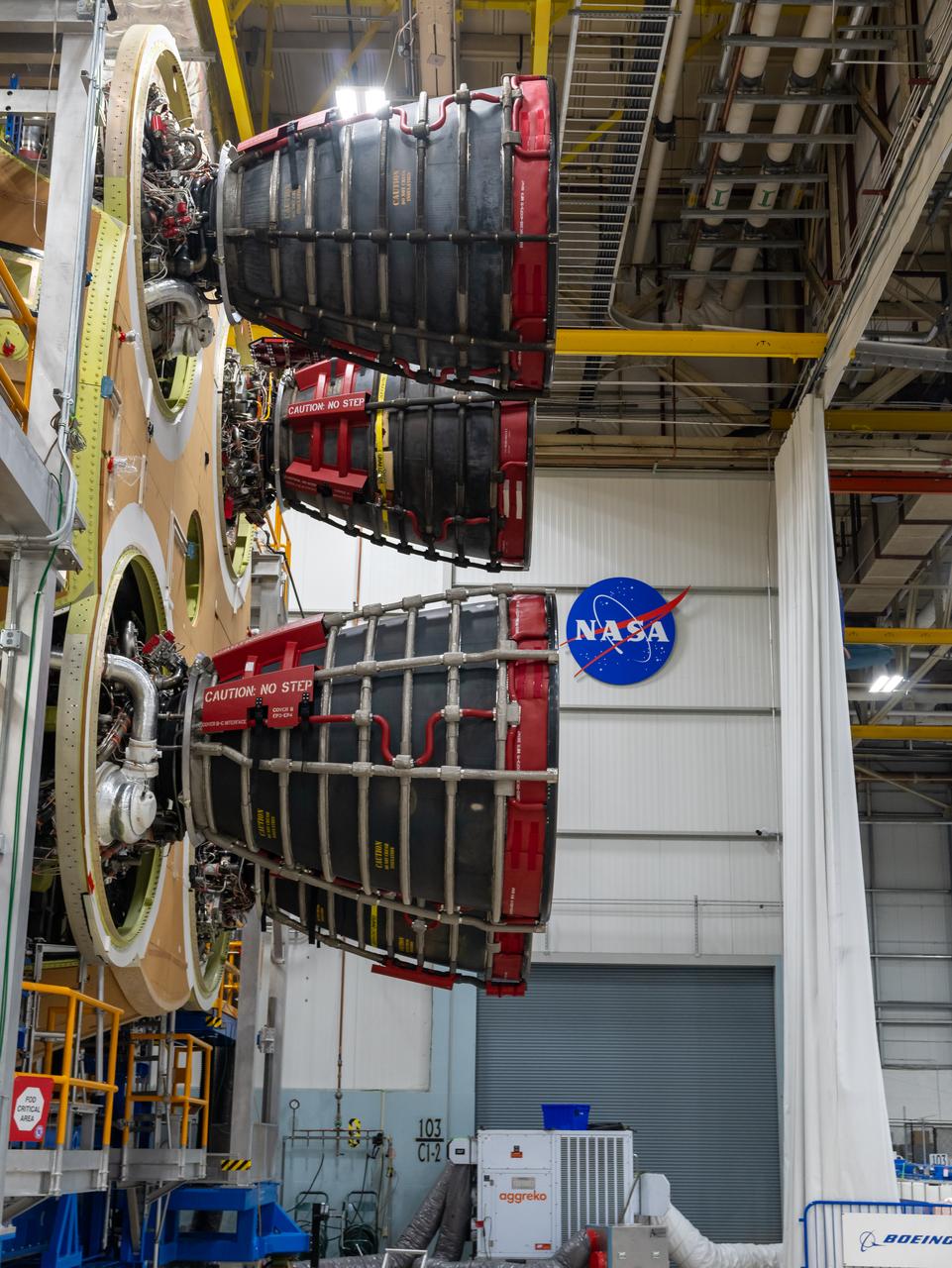
These photos and videos show how technicians at NASA’s Michoud Assembly Facility in New Orleans installed the third and fourth RS-25 engines onto the core stage for the agency’s SLS (Space Launch System) rocket that will help power NASA’s first crewed Artemis mission to the Moon. Technicians added the first engine to the SLS core stage Sept. 11. The second engine was installed onto the stage Sept. 15 with the third and fourth engines following Sept. 19 and Sept. 20. Engineers consider the engines to be “soft” mated to the rocket stage. Technicians with NASA, Aerojet Rocketdyne, an L3Harris Technologies company and the RS-25 engines lead contractor, along with Boeing, the core stage lead contractor, will now focus efforts on the complex tax of fully securing the engines to the stage and integrating the propulsion and electrical systems within the structure. NASA is working to land the first woman and first person of color on the Moon under Artemis. SLS is part of NASA’s backbone for deep space exploration, along with Orion and the Gateway in orbit around the Moon. SLS is the only rocket that can send Orion, astronauts, and supplies to the Moon in a single mission.
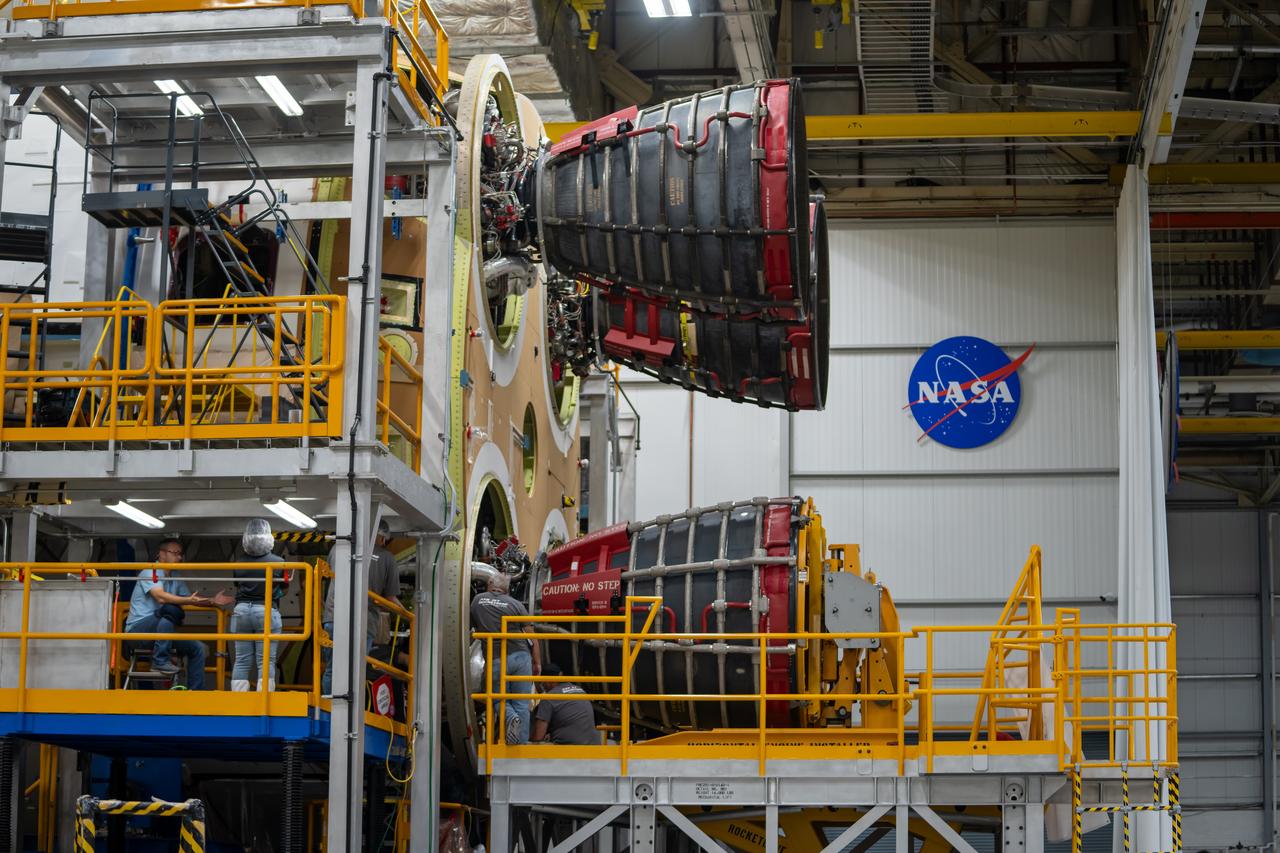
These photos and videos show how technicians at NASA’s Michoud Assembly Facility in New Orleans installed the third and fourth RS-25 engines onto the core stage for the agency’s SLS (Space Launch System) rocket that will help power NASA’s first crewed Artemis mission to the Moon. Technicians added the first engine to the SLS core stage Sept. 11. The second engine was installed onto the stage Sept. 15 with the third and fourth engines following Sept. 19 and Sept. 20. Engineers consider the engines to be “soft” mated to the rocket stage. Technicians with NASA, Aerojet Rocketdyne, an L3Harris Technologies company and the RS-25 engines lead contractor, along with Boeing, the core stage lead contractor, will now focus efforts on the complex tax of fully securing the engines to the stage and integrating the propulsion and electrical systems within the structure. NASA is working to land the first woman and first person of color on the Moon under Artemis. SLS is part of NASA’s backbone for deep space exploration, along with Orion and the Gateway in orbit around the Moon. SLS is the only rocket that can send Orion, astronauts, and supplies to the Moon in a single mission.
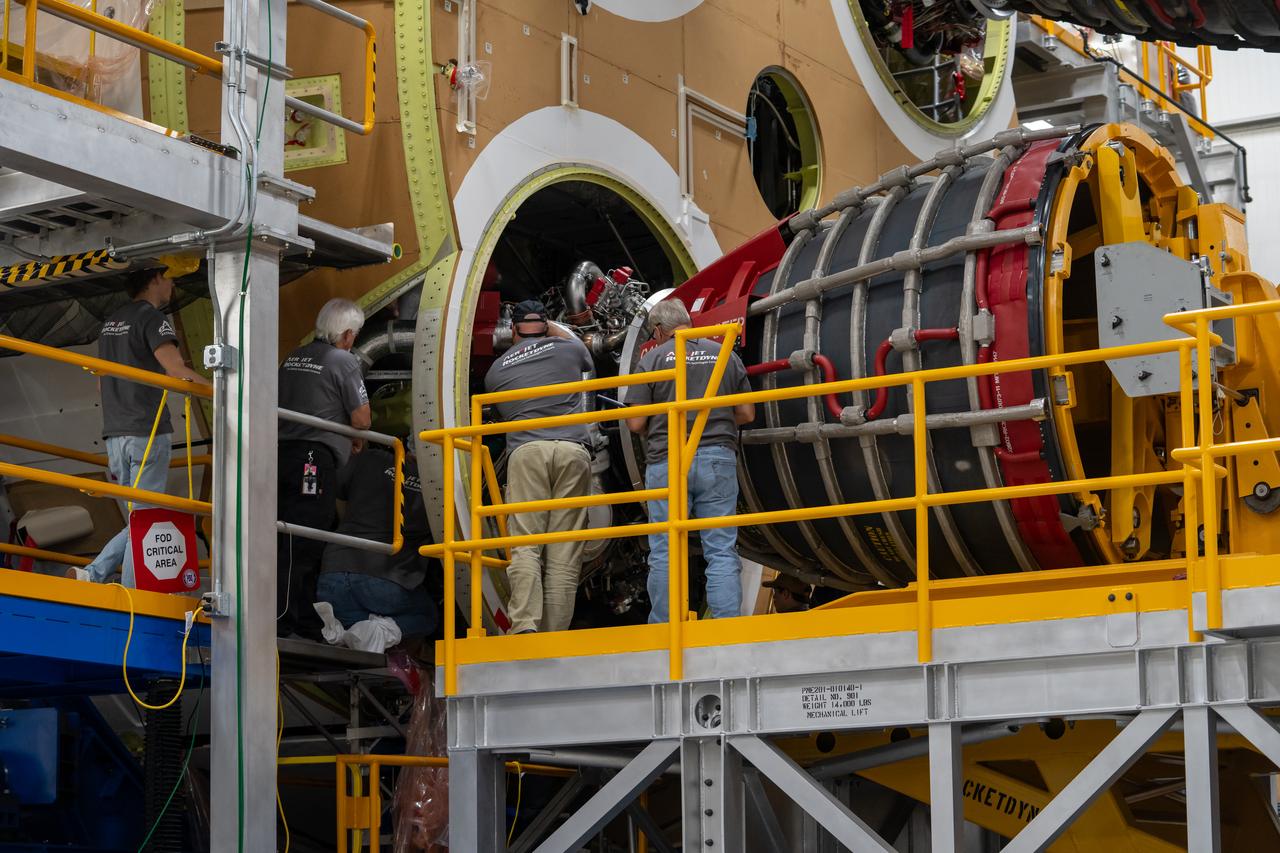
These photos and videos show how technicians at NASA’s Michoud Assembly Facility in New Orleans installed the third and fourth RS-25 engines onto the core stage for the agency’s SLS (Space Launch System) rocket that will help power NASA’s first crewed Artemis mission to the Moon. Technicians added the first engine to the SLS core stage Sept. 11. The second engine was installed onto the stage Sept. 15 with the third and fourth engines following Sept. 19 and Sept. 20. Engineers consider the engines to be “soft” mated to the rocket stage. Technicians with NASA, Aerojet Rocketdyne, an L3Harris Technologies company and the RS-25 engines lead contractor, along with Boeing, the core stage lead contractor, will now focus efforts on the complex tax of fully securing the engines to the stage and integrating the propulsion and electrical systems within the structure. NASA is working to land the first woman and first person of color on the Moon under Artemis. SLS is part of NASA’s backbone for deep space exploration, along with Orion and the Gateway in orbit around the Moon. SLS is the only rocket that can send Orion, astronauts, and supplies to the Moon in a single mission.

Portrait of Orion Service Module Spacecraft Adapter Jettisonable (SAJ) Hardware Lead Engineer Lizalyn Smith. Ms. Smith participated in various 'Hidden Figures to Modern Figures' events sponsored by NASA Glenn Research Center to encourage students to pursue STEM-based careers.
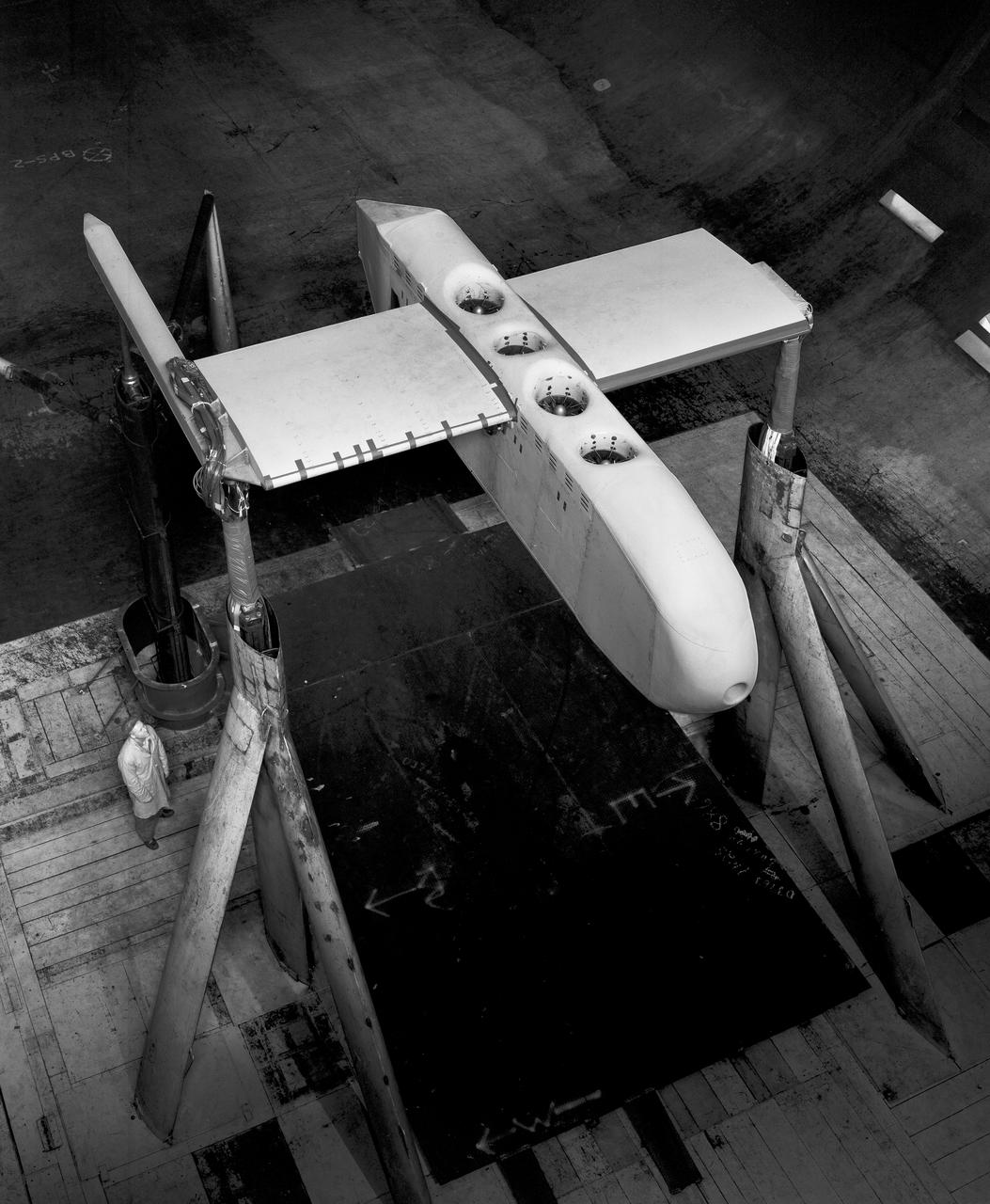
3/4 front, top view of Noriar Lift Engine Pod installation in Ames 40x80 foot wind tunnel
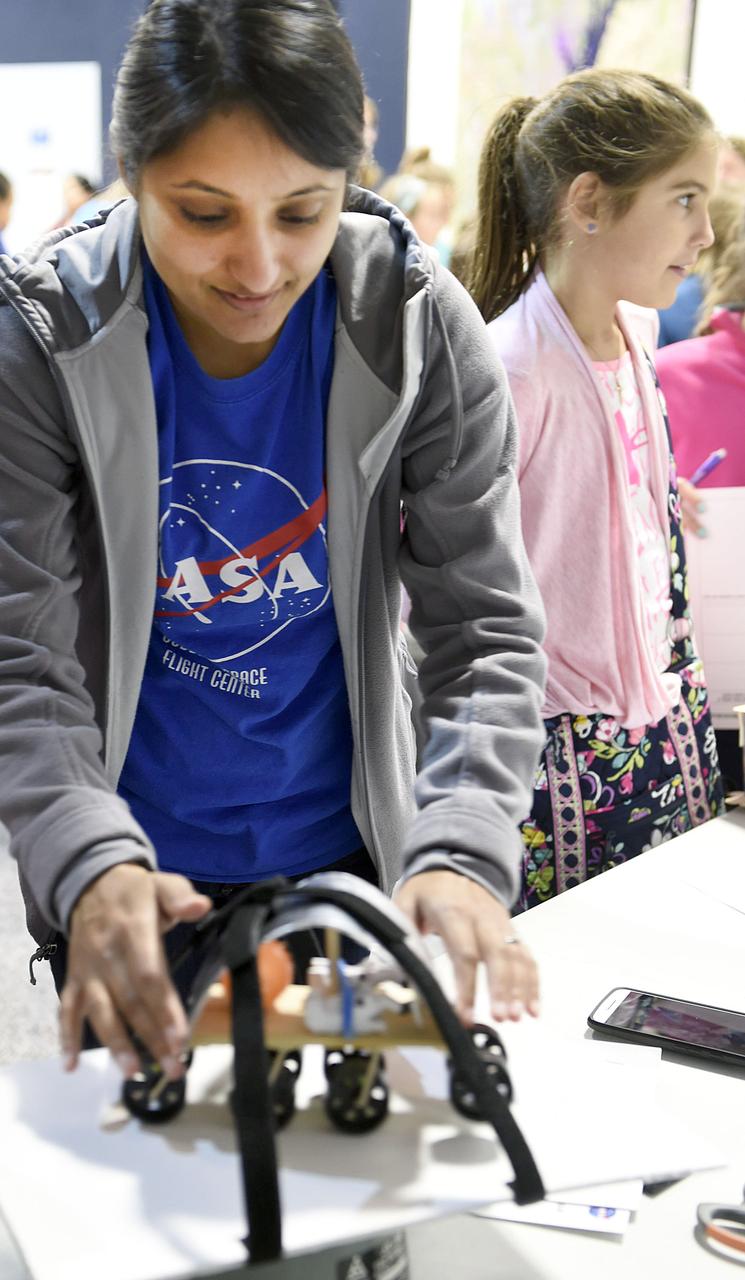
Junior Girl Scouts from two locals conceils, Girl Scouts of Central Maryland and Girl Scouts of Nations Capital, participated in She's an Engineer! Girl Scout program on November 3, 2016. They met with female NASA engineers and tested rover models in simulated I&T stations to explore the Engineering Design process.
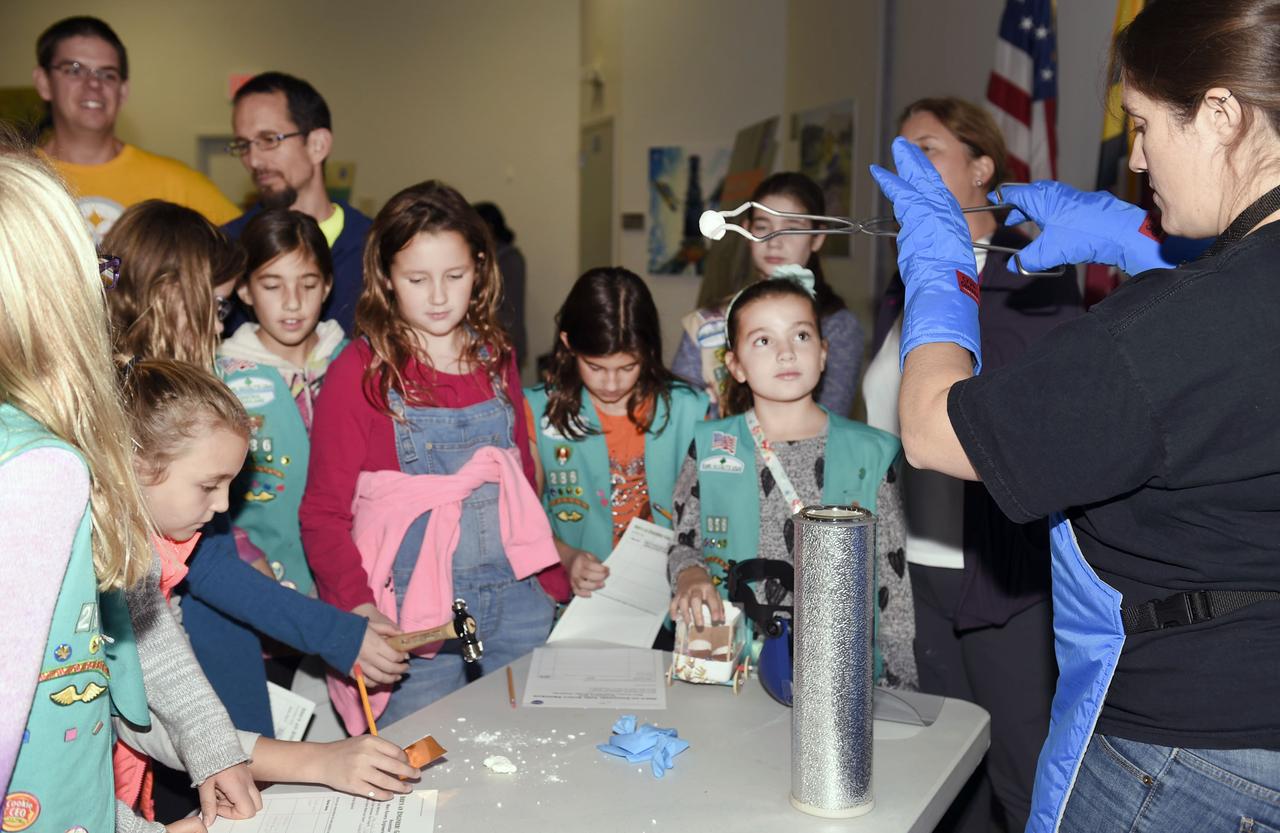
Junior Girl Scouts from two locals conceils, Girl Scouts of Central Maryland and Girl Scouts of Nations Capital, participated in She's an Engineer! Girl Scout program on November 3, 2016. They met with female NASA engineers and tested rover models in simulated I&T stations to explore the Engineering Design process.
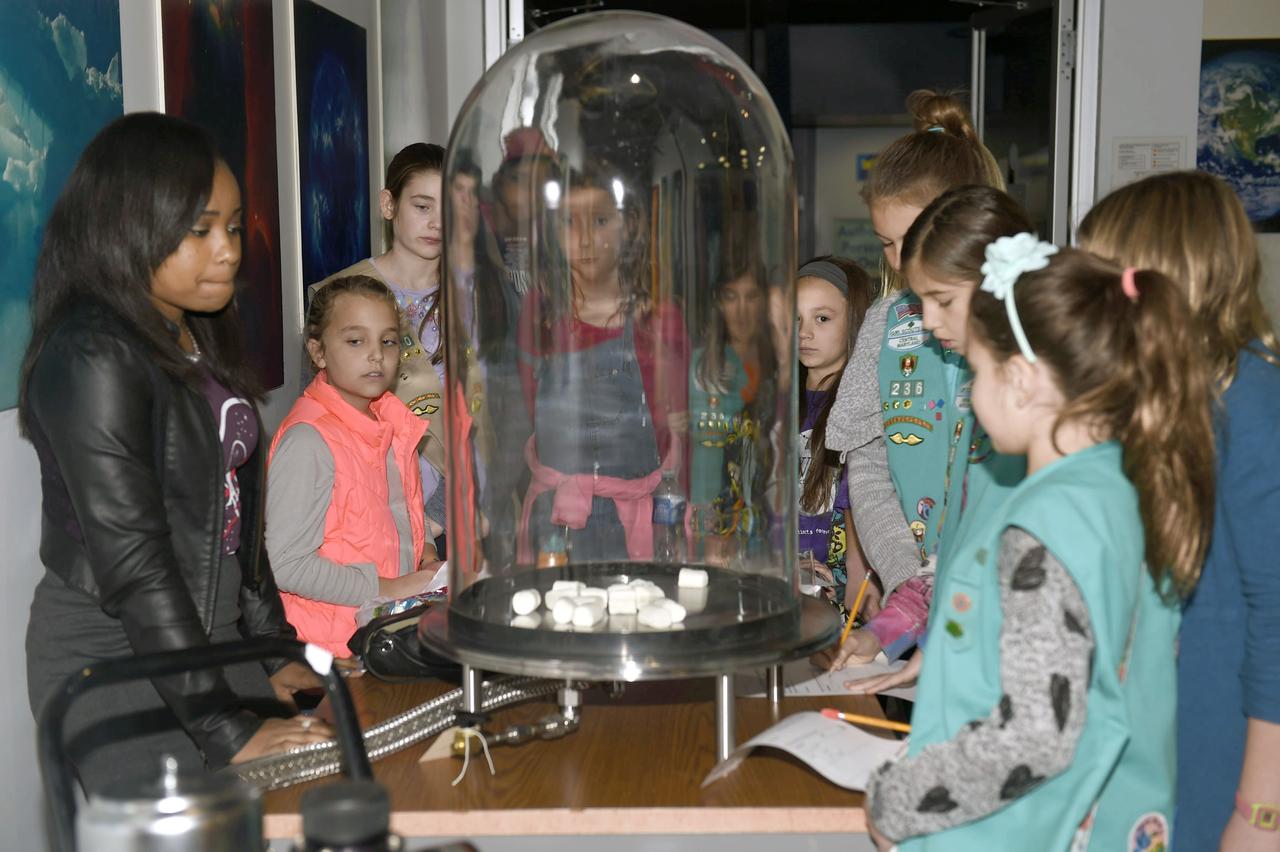
Junior Girl Scouts from two locals conceils, Girl Scouts of Central Maryland and Girl Scouts of Nations Capital, participated in She's an Engineer! Girl Scout program on November 3, 2016. They met with female NASA engineers and tested rover models in simulated I&T stations to explore the Engineering Design process.
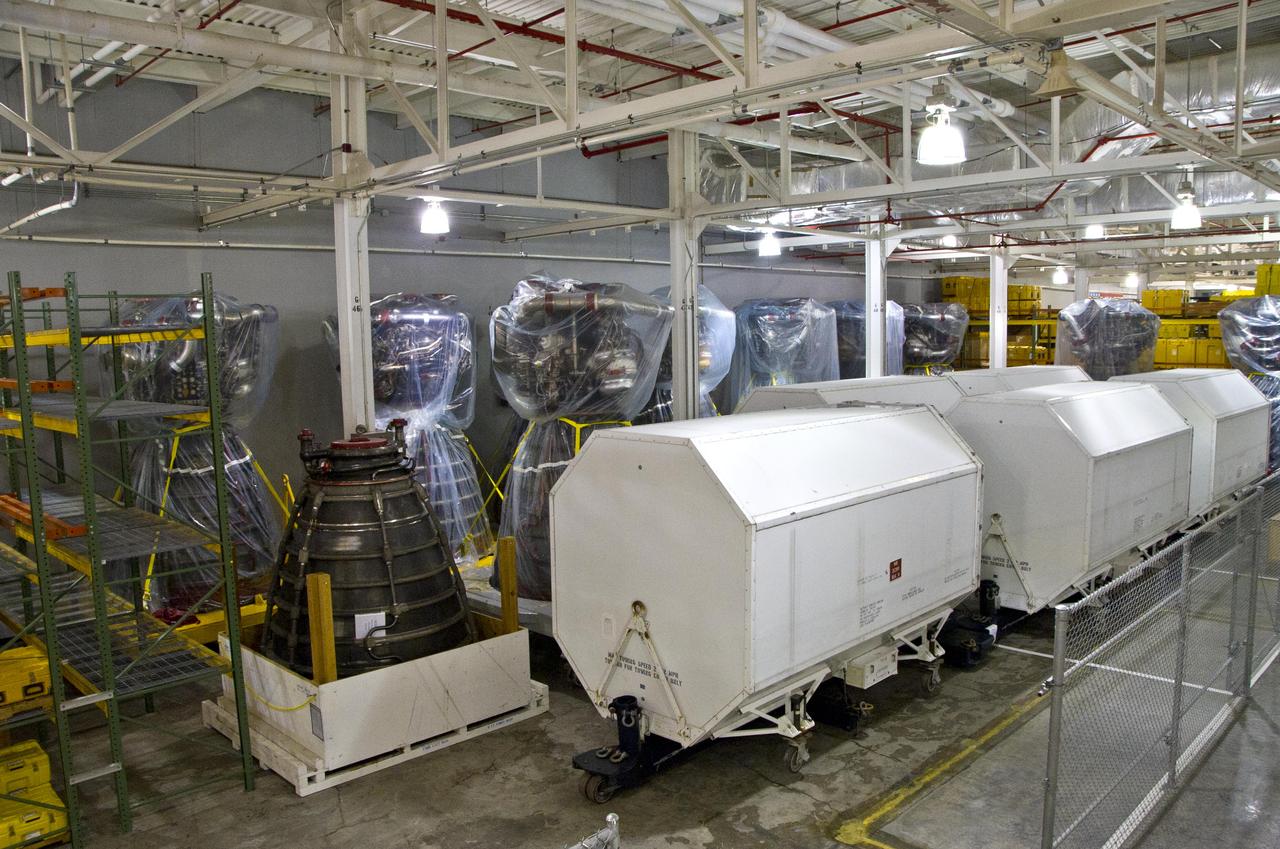
The last of 15 RS-25 rocket engines arrived at Stennis Space Center from Kennedy Space Center in Flordia , on April 10, 2012. The engines will be stored at Stennis until testing begins for the engines to be used on NASA's new Space Launch System.
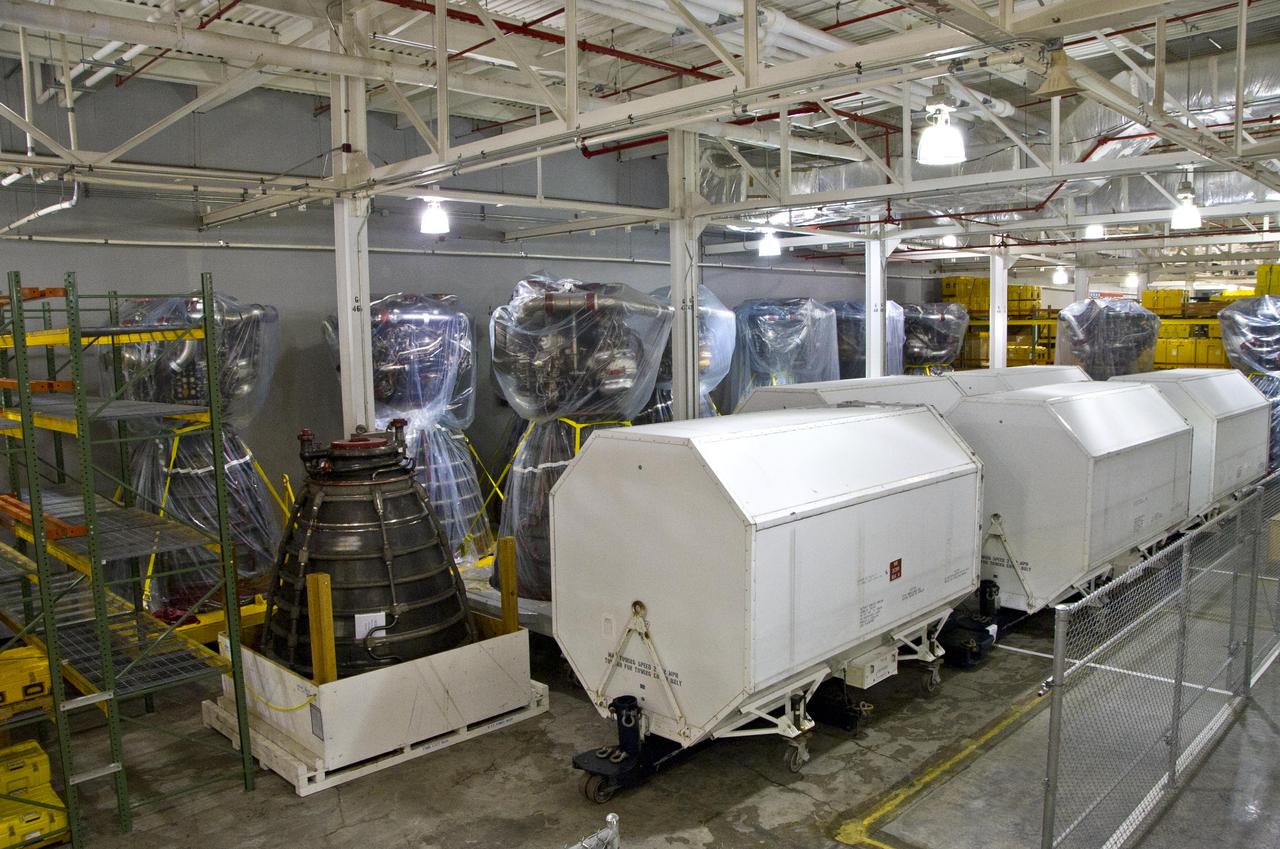
The last of 15 RS-25 rocket engines arrived at Stennis Space Center from Kennedy Space Center in Flordia , on April 10, 2012. The engines will be stored at Stennis until testing begins for the engines to be used on NASA's new Space Launch System.

The first RS-25 flight engine, engine No. 2059, is lifted onto the A-1 Test Stand at Stennis Space Center on Nov. 4, 2015. The engine was tested in early 2016 to certify it for use on NASA’s new Space Launch System (SLS). The SLS core stage will be powered by four RS-25 engines, all tested at Stennis Space Center. NASA is developing the SLS to carry humans deeper into space than ever before, including on a journey to Mars.
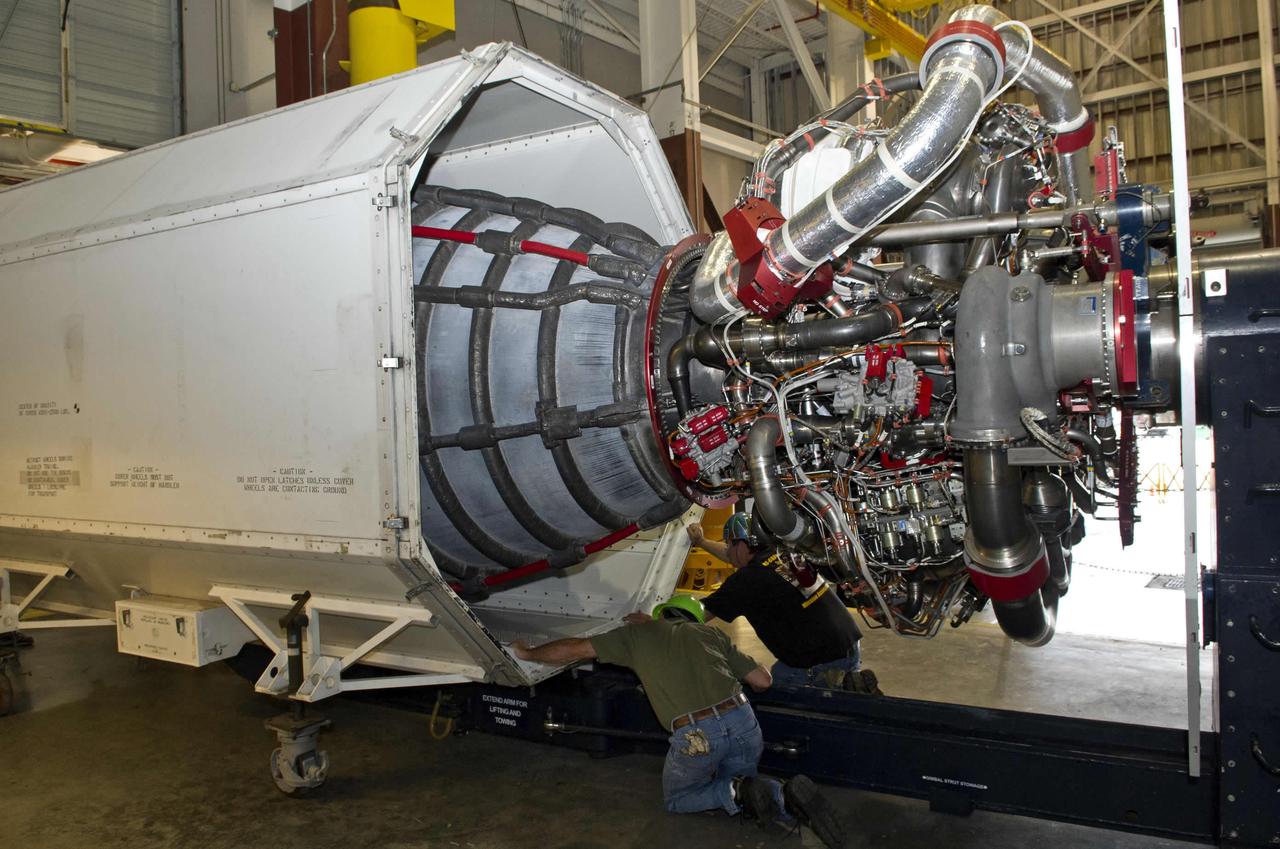
Employees unload a RS25D rocket engine at NASA's John C. Stennis Space Center on Jan. 17. The engine - and 14 others - will be stored at the facility for future testing and use on NASA's new Space Launch System (SLS). The SLS is a new heavy-lift launch vehicle that will expand human presence beyond low-Earth orbit and enable new missions of exploration across the solar system. NASA's Marshall Space Flight Center in Huntsville, Ala., is leading the design and development of the Space Launch System for NASA, including the engine testing program. Delivery of the 15 RS-25 engines will continue throughout the next few months
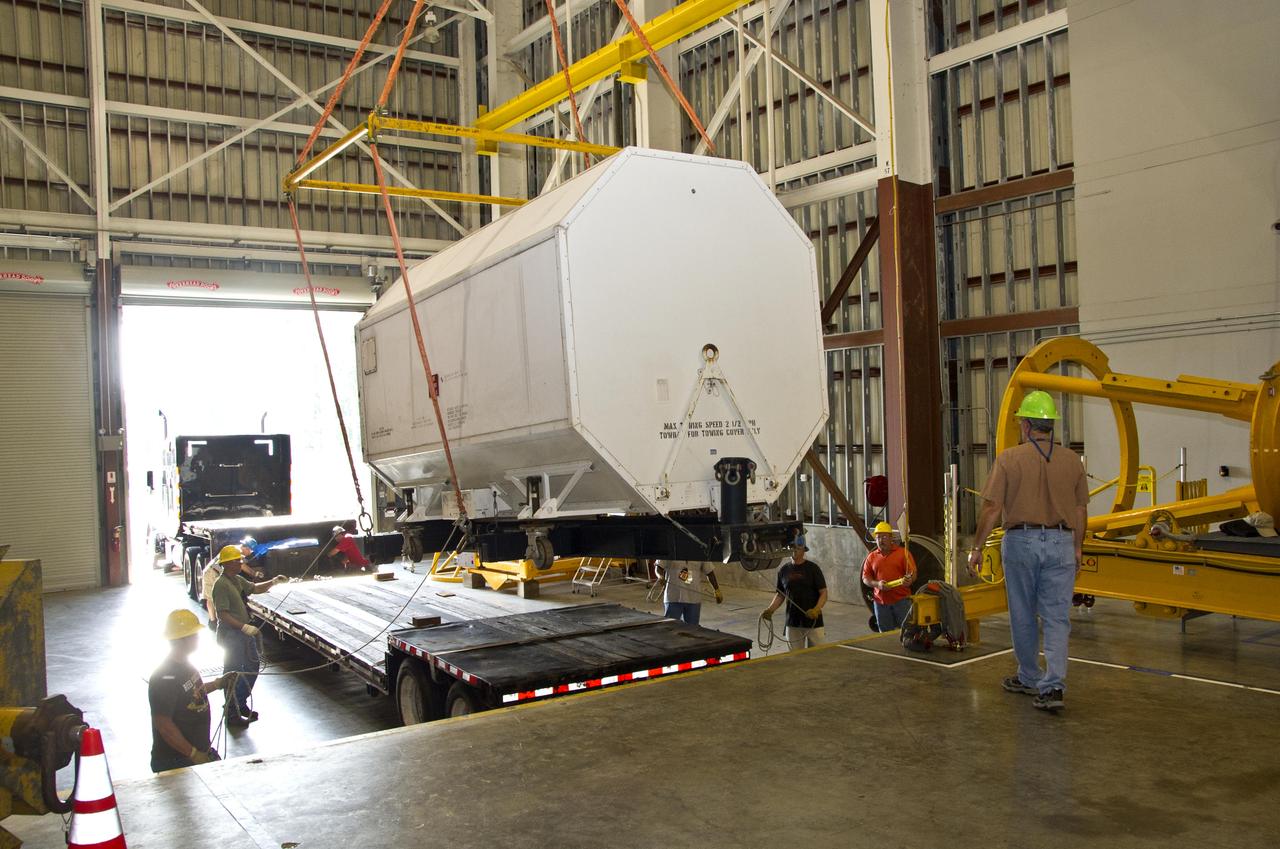
RS-25 series rocket engine No. 2059 is unloaded and positioned at Stennis Space Center on April 10, 2012, for future testing and use on NASA's new Space Launch System. The engine was the last of 15 RS-25 engines to be delivered from NASA's Kennedy Space Center in Florida to Stennis, where all will be stored until testing begins.
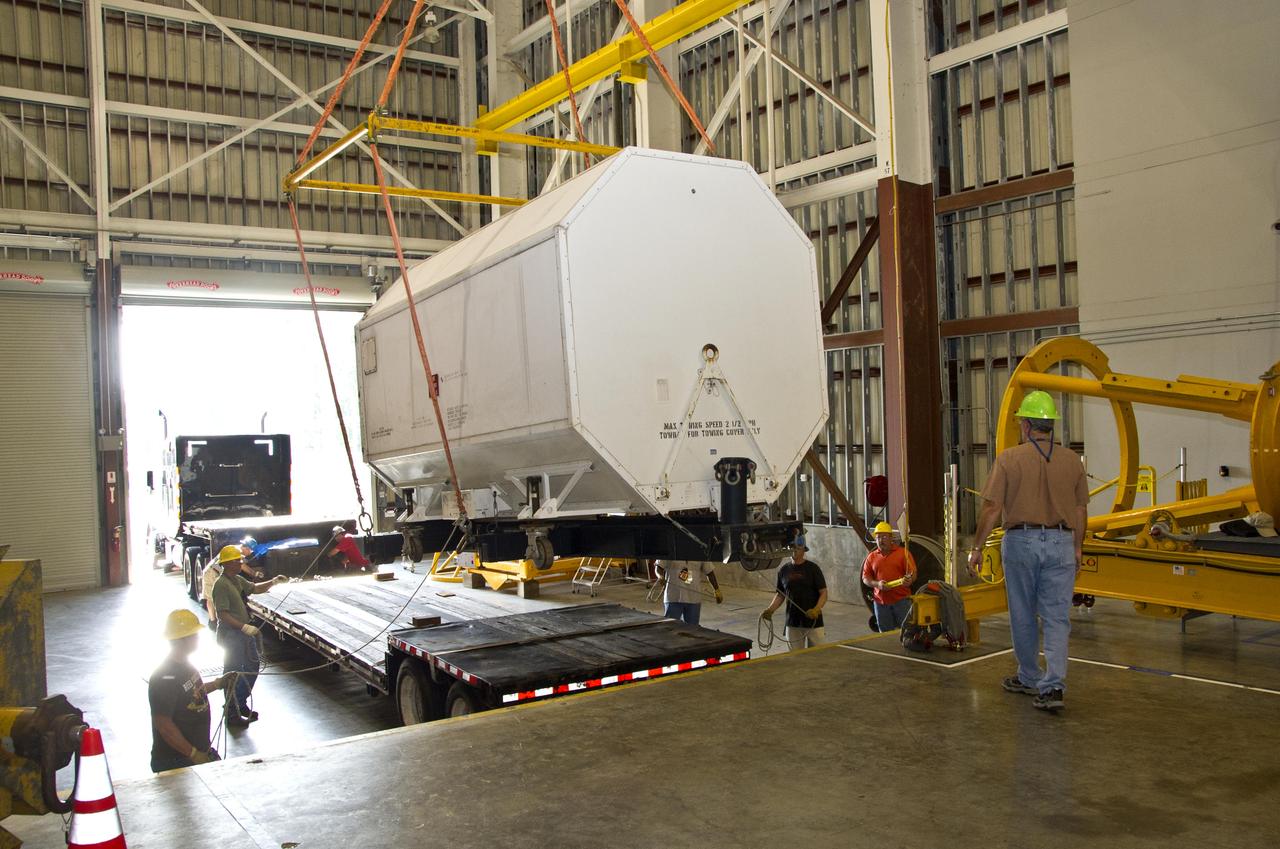
RS-25 series rocket engine No. 2059 is unloaded and positioned at Stennis Space Center on April 10, 2012, for future testing and use on NASA's new Space Launch System. The engine was the last of 15 RS-25 engines to be delivered from NASA's Kennedy Space Center in Florida to Stennis, where all will be stored until testing begins.
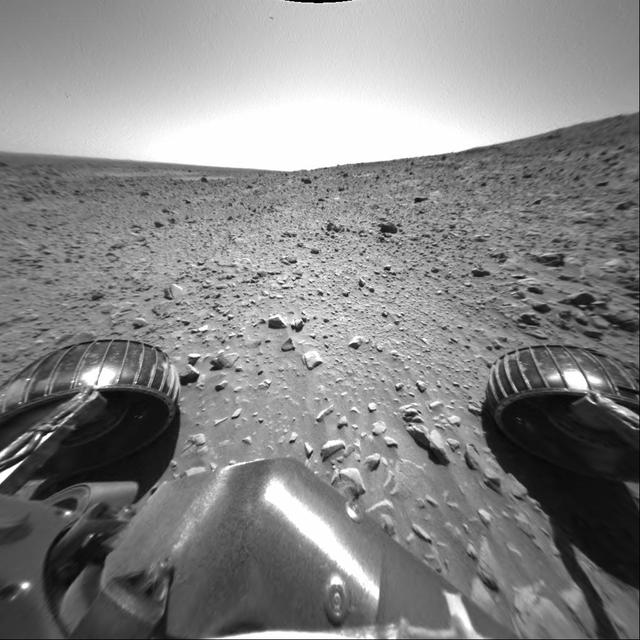
Engineering Flats
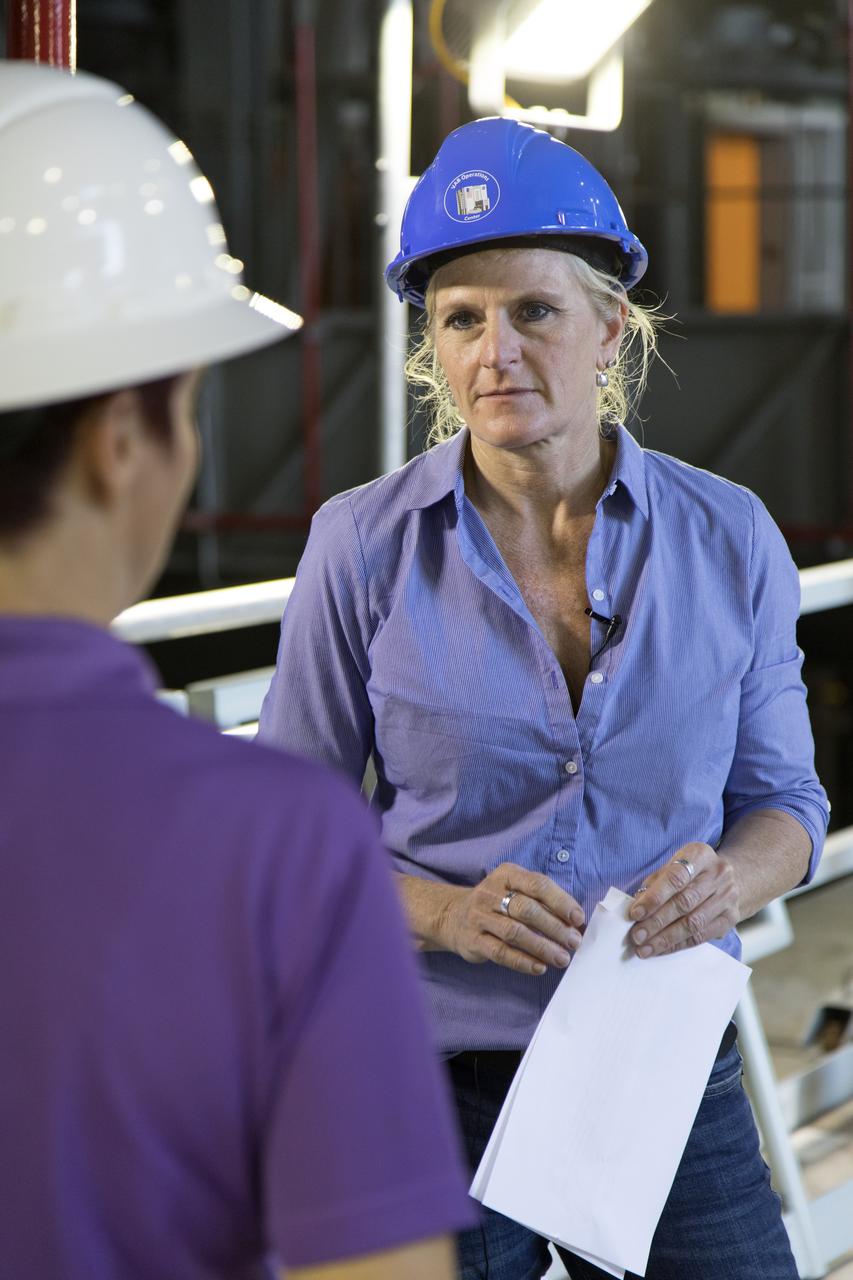
NASA engineer Krista Shaffer, right, is interviewed by Rachel Power of NASA’s Digital Expansion to Engage the Public (DEEP) Network inside Kennedy Space Center’s Vehicle Assembly Building during Introduce a Girl to Engineering Day. Held in conjunction with National Engineers Week and Girl Day, the event allowed students from throughout the nation to speak with female NASA scientists and technical experts.
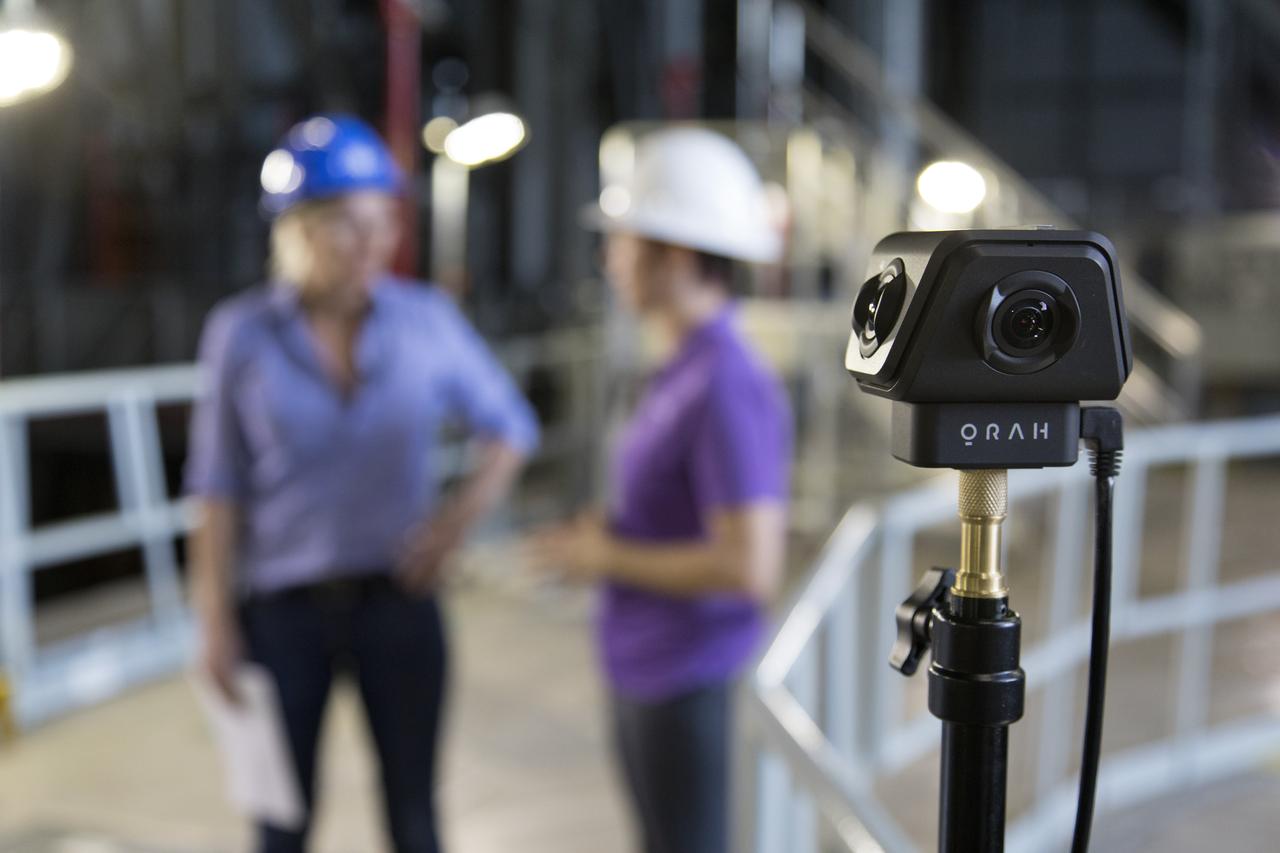
The camera in the foreground is recording NASA engineer Krista Shaffer, left, and Rachel Power of NASA’s Digital Expansion to Engage the Public (DEEP) Network inside Kennedy Space Center’s Vehicle Assembly Building during Introduce a Girl to Engineering Day. Held in conjunction with National Engineers Week and Girl Day, the event allowed students from throughout the nation to speak with female NASA scientists and technical experts.
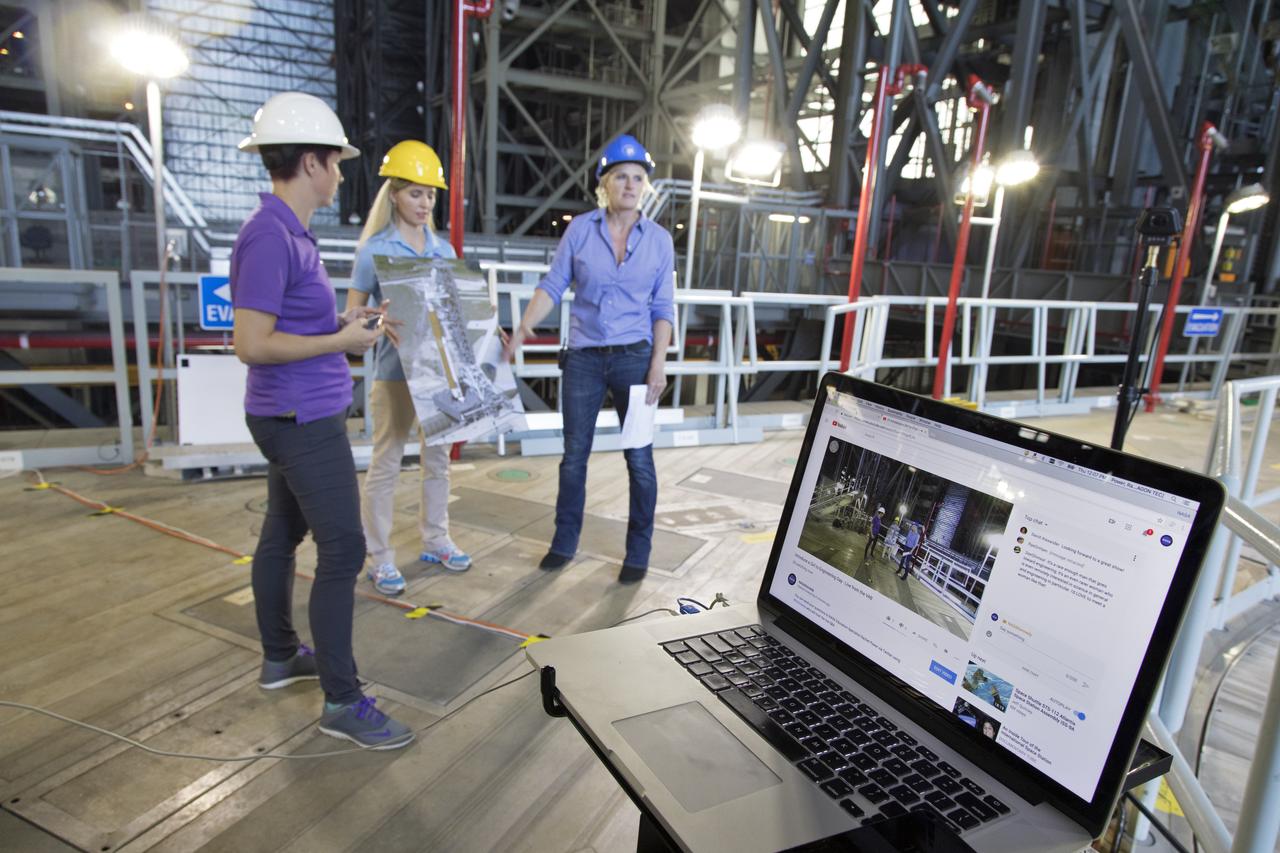
The laptop computer in the foreground displays Rachel Power, left, of NASA’s Digital Expansion to Engage the Public (DEEP) Network; Bethanne’ Hull, center, of NASA Outreach; and NASA engineer Krista Shaffer inside Kennedy Space Center’s Vehicle Assembly Building during Introduce a Girl to Engineering Day. Held in conjunction with National Engineers Week and Girl Day, the event allowed students from throughout the nation to speak with female NASA scientists and technical experts.
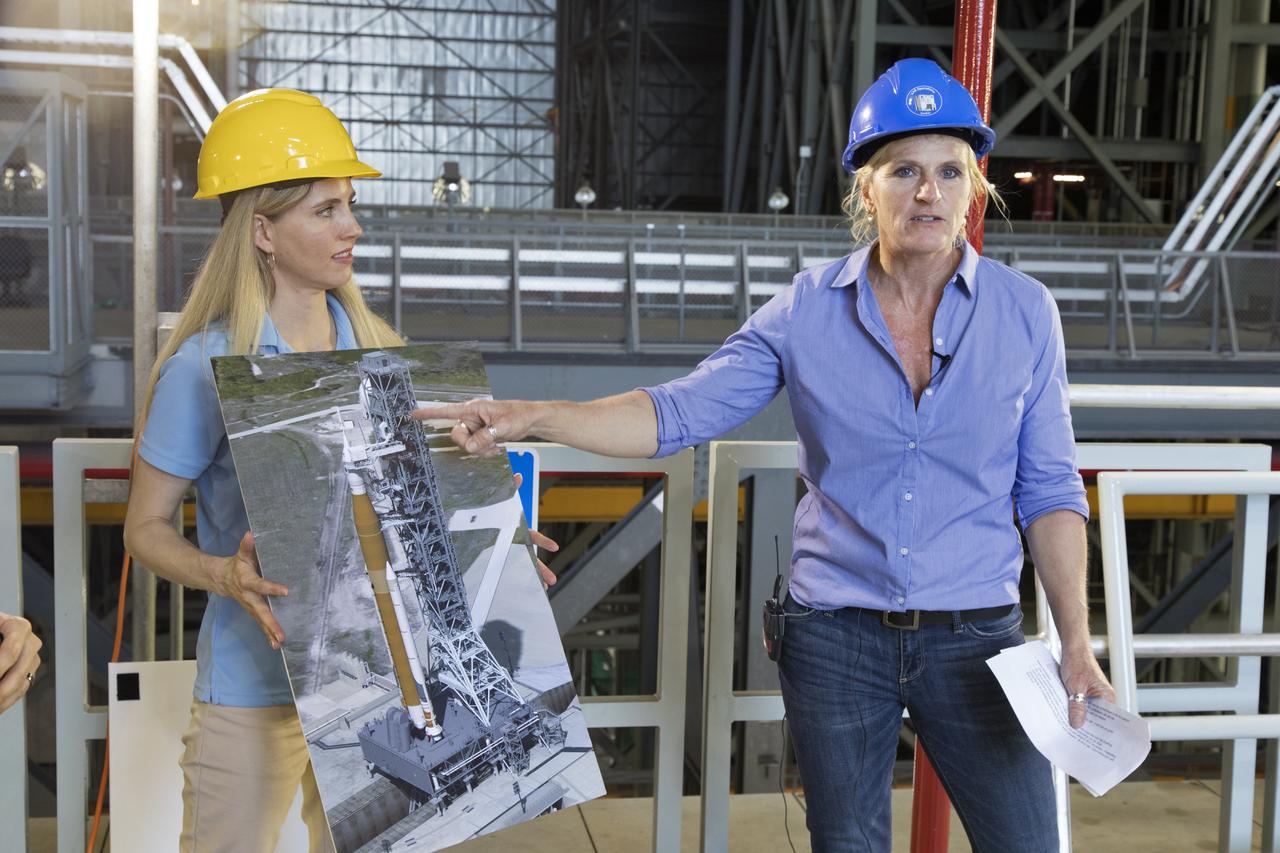
Inside Kennedy Space Center’s Vehicle Assembly Building, Bethanne’ Hull, left, of NASA Outreach, and engineer Krista Shaffer, right, participate in Introduce a Girl to Engineering Day on NASA’s Digital Expansion to Engage the Public (DEEP) Network. Held in conjunction with National Engineers Week and Girl Day, the event allowed students from throughout the nation to speak with female NASA scientists and technical experts.
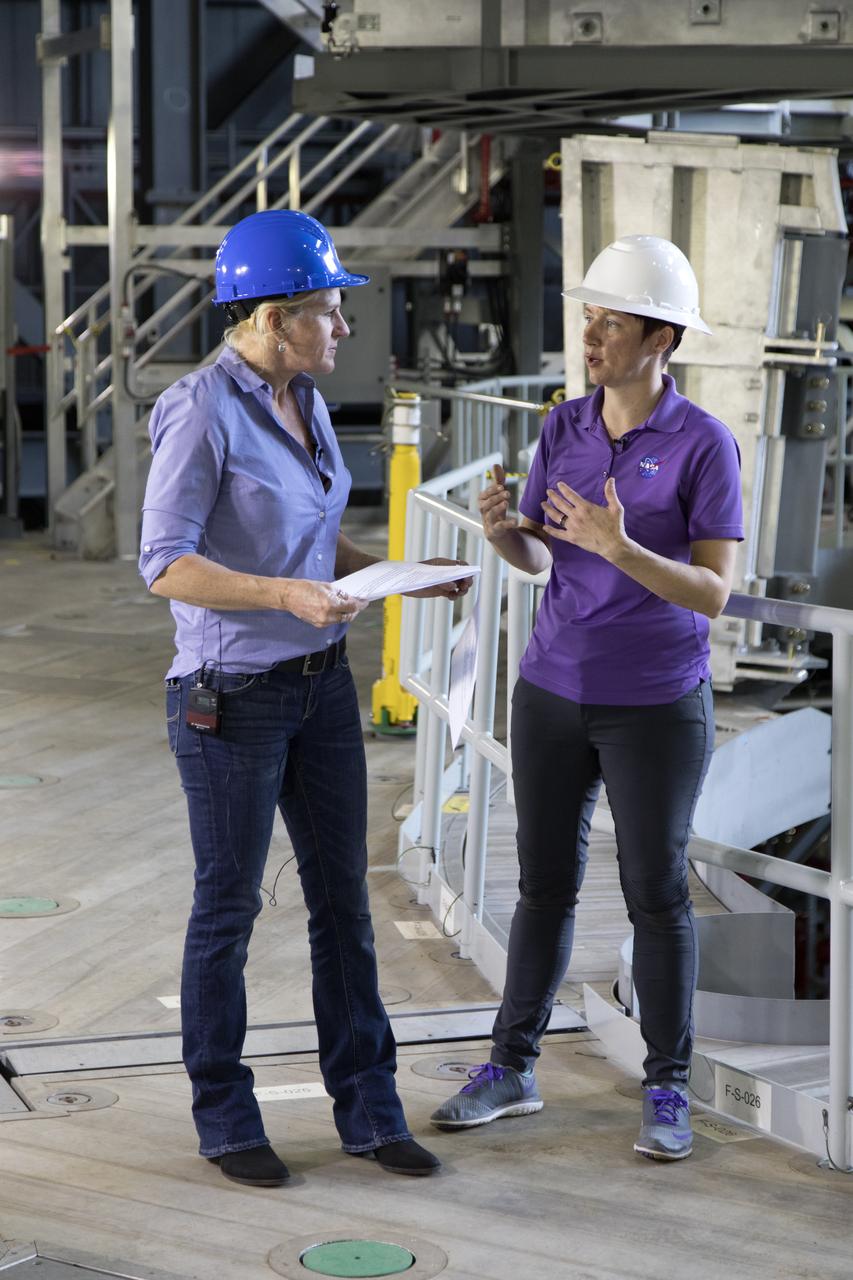
NASA engineer Krista Shaffer, left, speaks to Rachel Power of NASA’s Digital Expansion to Engage the Public (DEEP) Network inside Kennedy Space Center’s Vehicle Assembly Building during Introduce a Girl to Engineering Day. Held in conjunction with National Engineers Week and Girl Day, the event allowed students from throughout the nation to speak with female NASA scientists and technical experts.
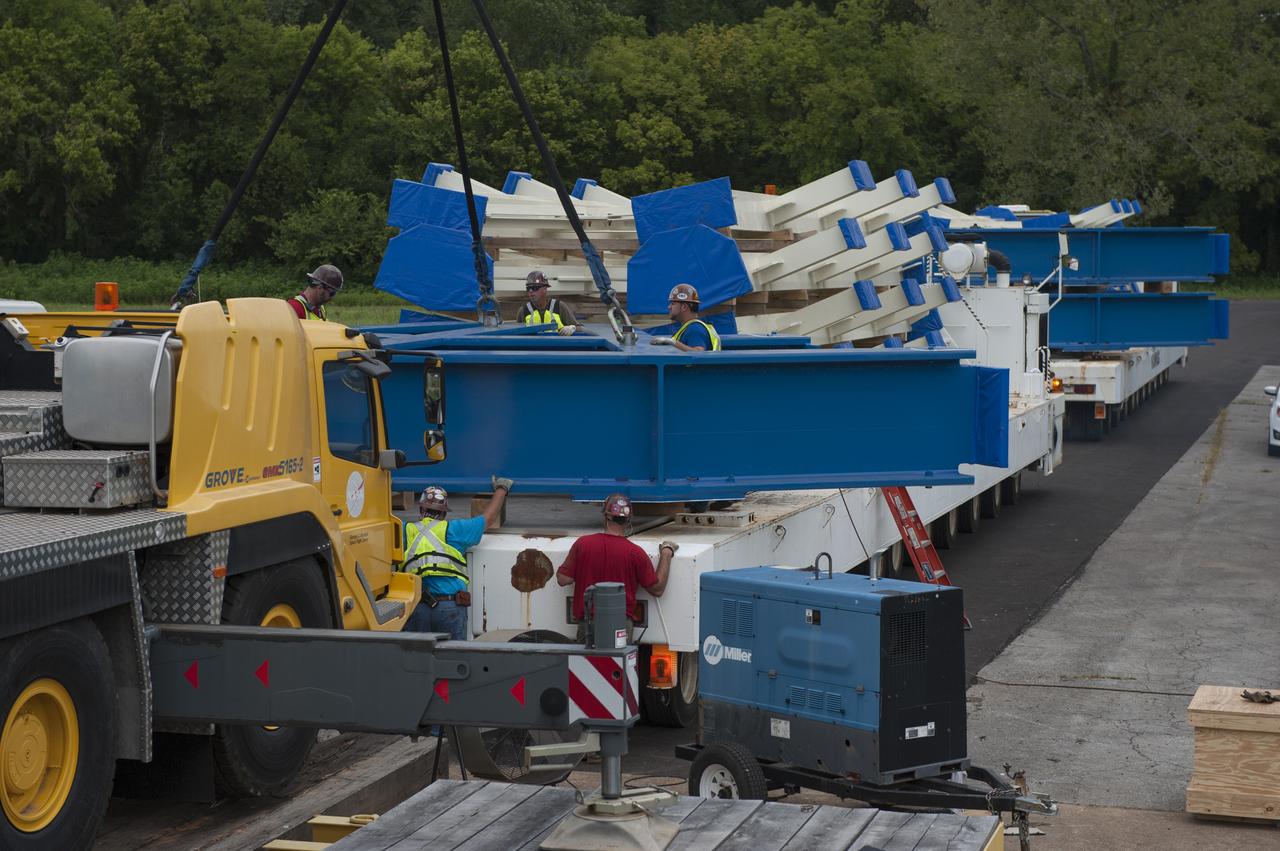
SLS ENGINE SECTION PEDESTALS AND THE ENGINE SECTION SPIDER QUADRANTS ARRIVAL AND UNLOADING AT NASA DOCK ON THE TENNESSEE RIVER.
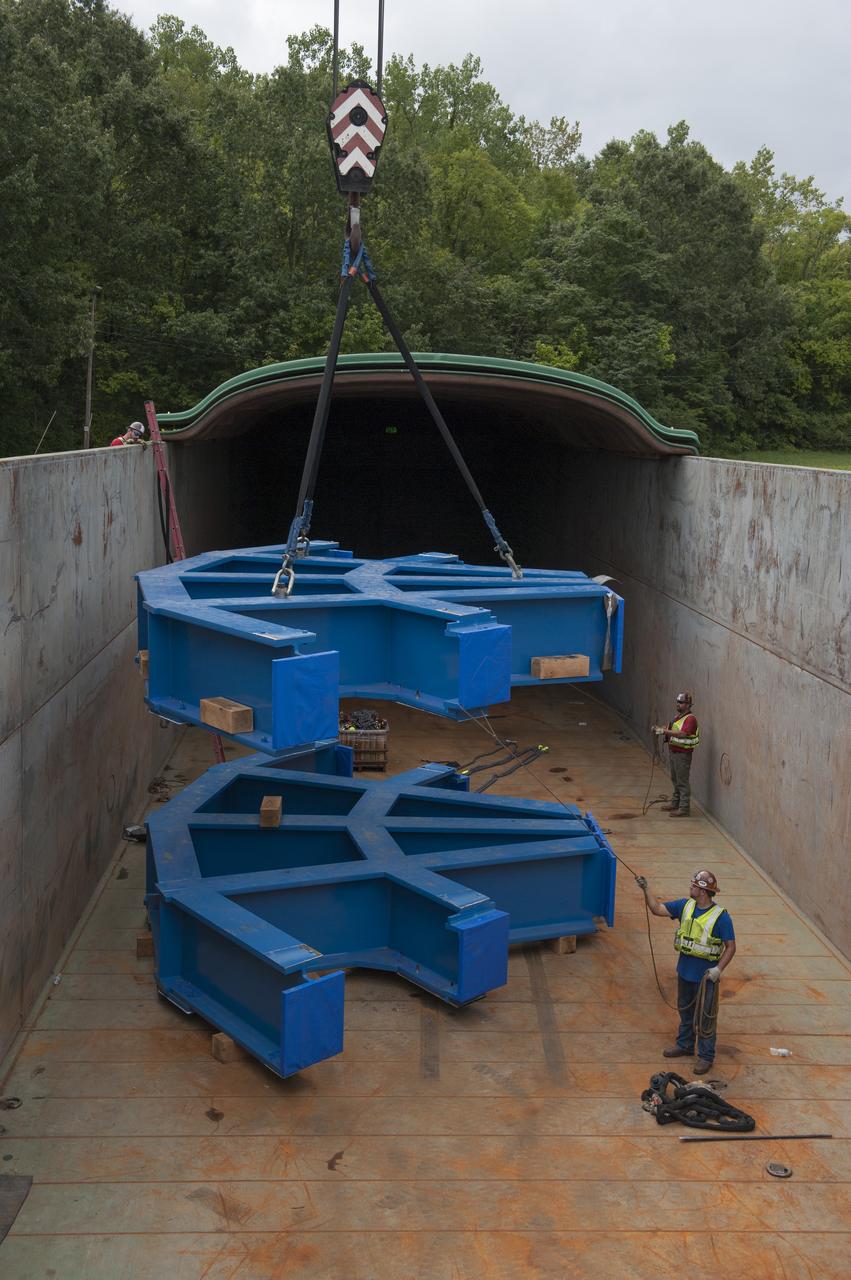
SLS ENGINE SECTION PEDESTALS AND THE ENGINE SECTION SPIDER QUADRANTS ARRIVAL AND UNLOADING AT NASA DOCK ON THE TENNESSEE RIVER.
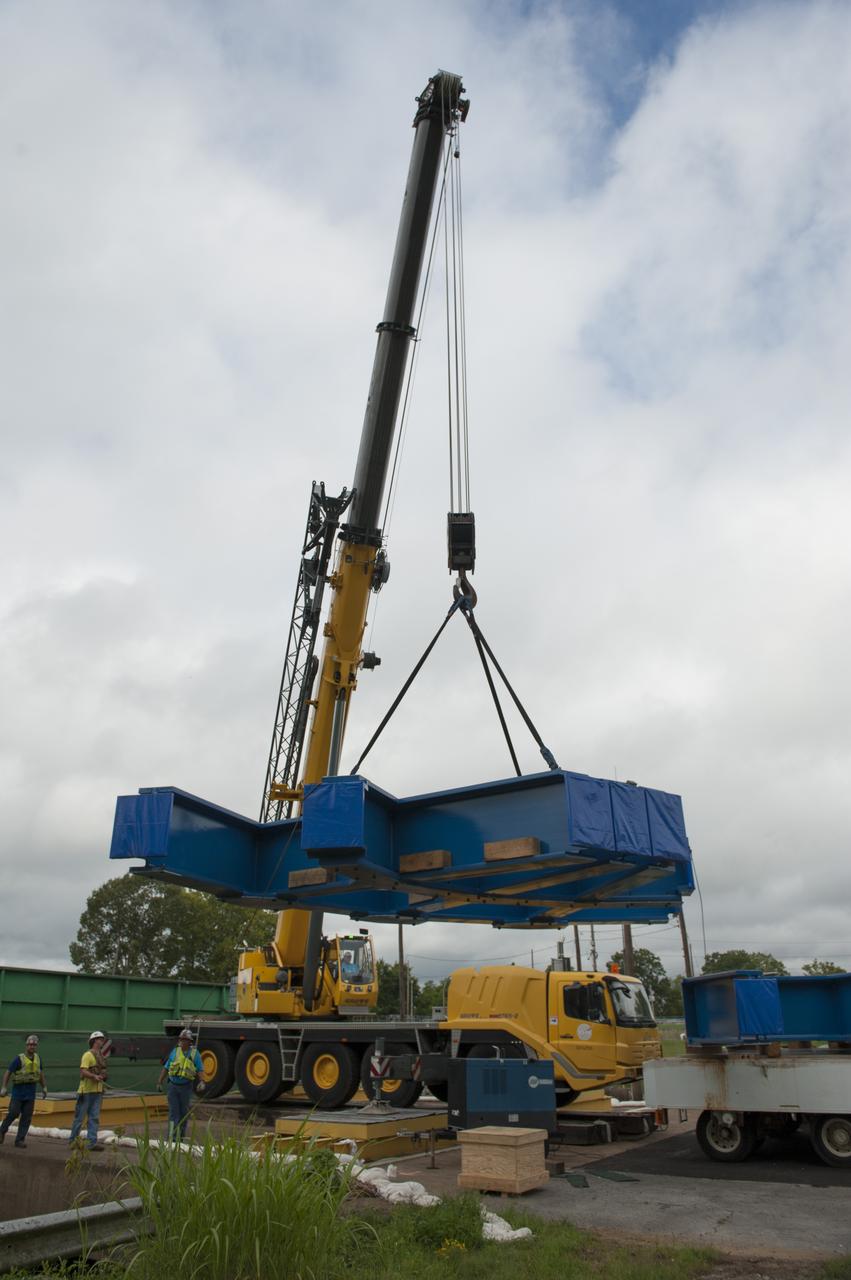
SLS ENGINE SECTION PEDESTALS AND THE ENGINE SECTION SPIDER QUADRANTS ARRIVAL AND UNLOADING AT NASA DOCK ON THE TENNESSEE RIVER.
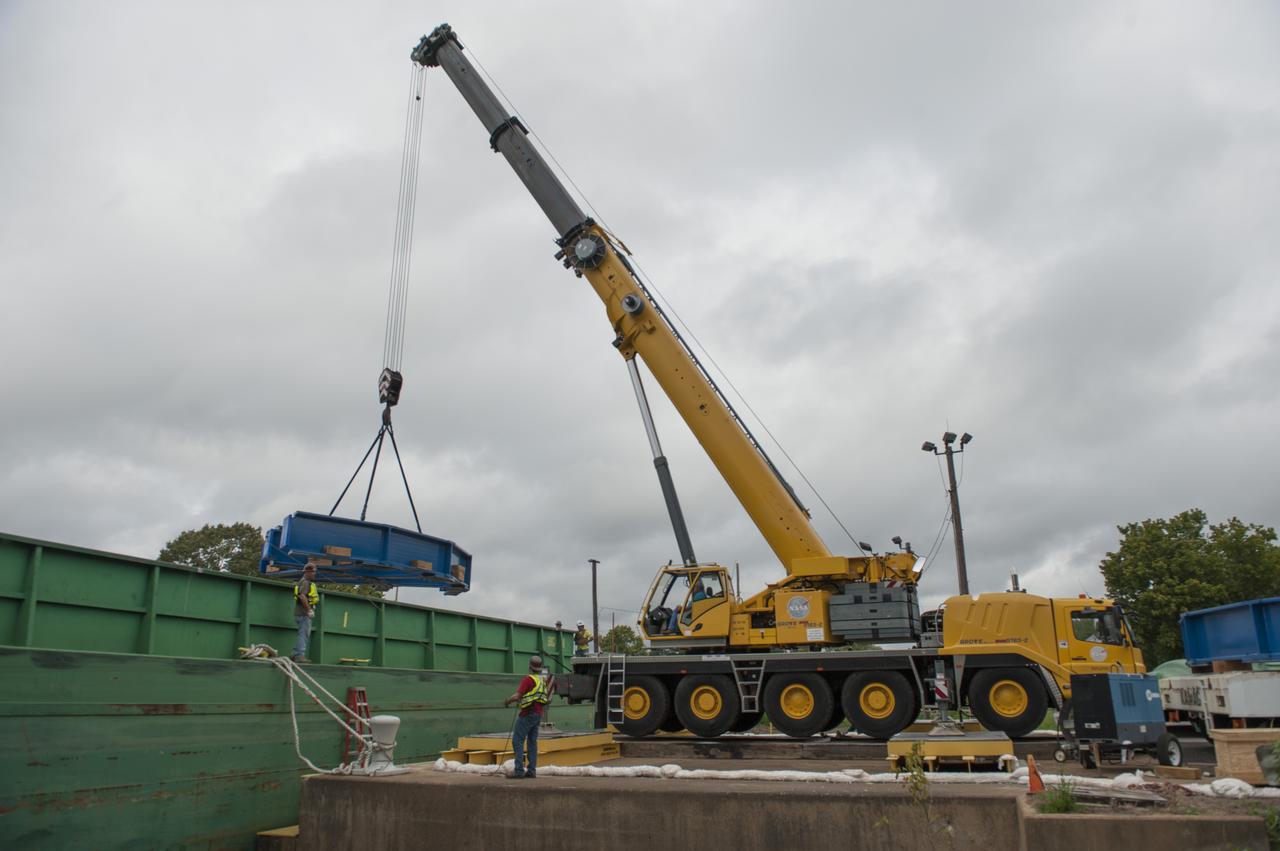
SLS ENGINE SECTION PEDESTALS AND THE ENGINE SECTION SPIDER QUADRANTS ARRIVAL AND UNLOADING AT NASA DOCK ON THE TENNESSEE RIVER.
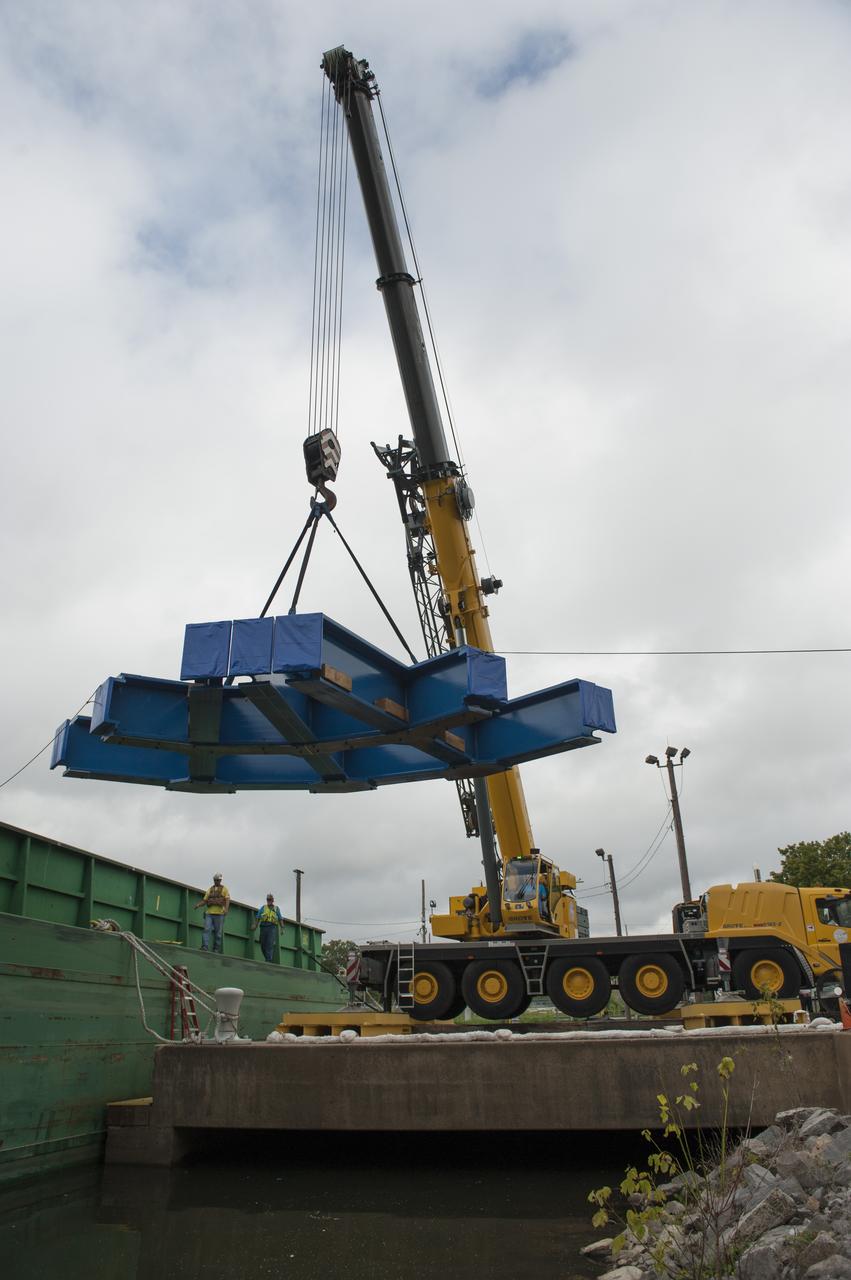
SLS ENGINE SECTION PEDESTALS AND THE ENGINE SECTION SPIDER QUADRANTS ARRIVAL AND UNLOADING AT NASA DOCK ON THE TENNESSEE RIVER.
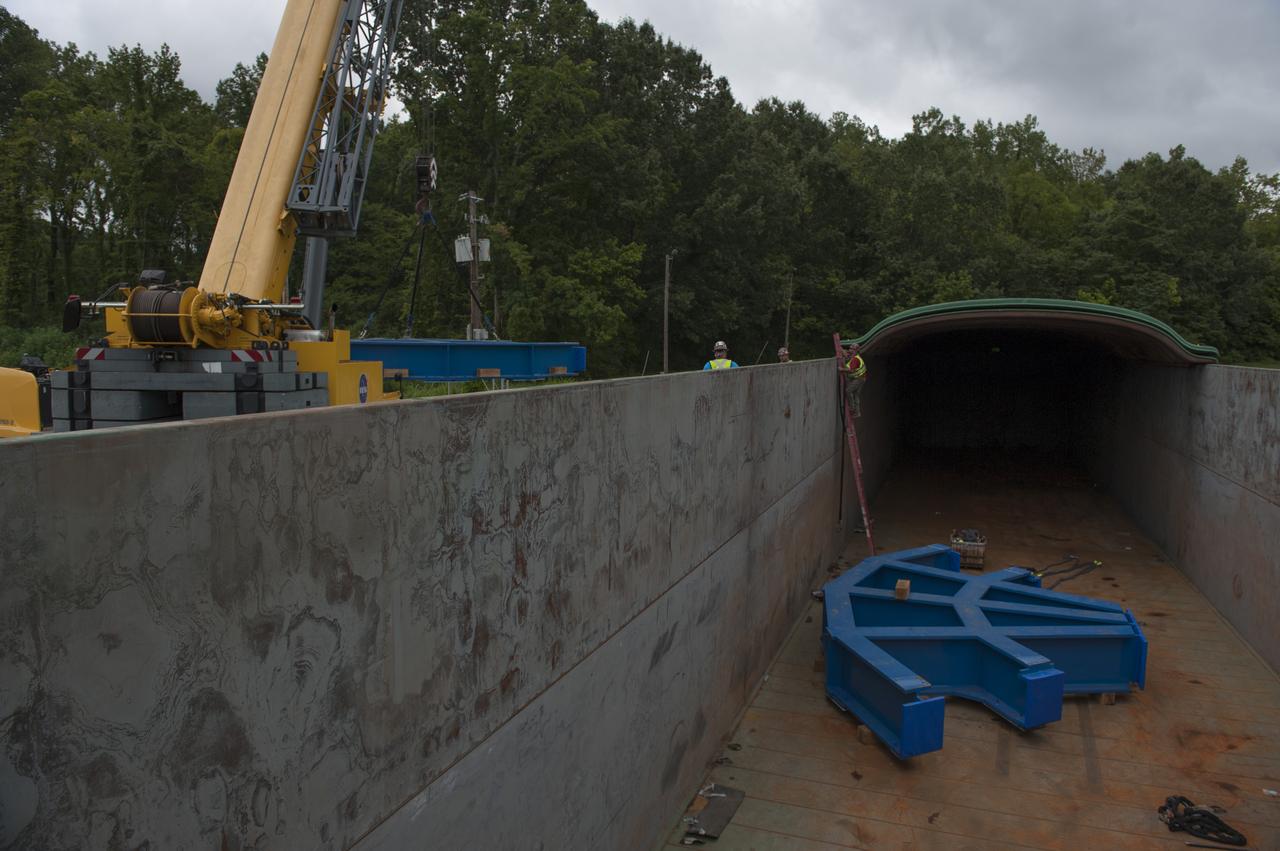
SLS ENGINE SECTION PEDESTALS AND THE ENGINE SECTION SPIDER QUADRANTS ARRIVAL AND UNLOADING AT NASA DOCK ON THE TENNESSEE RIVER.
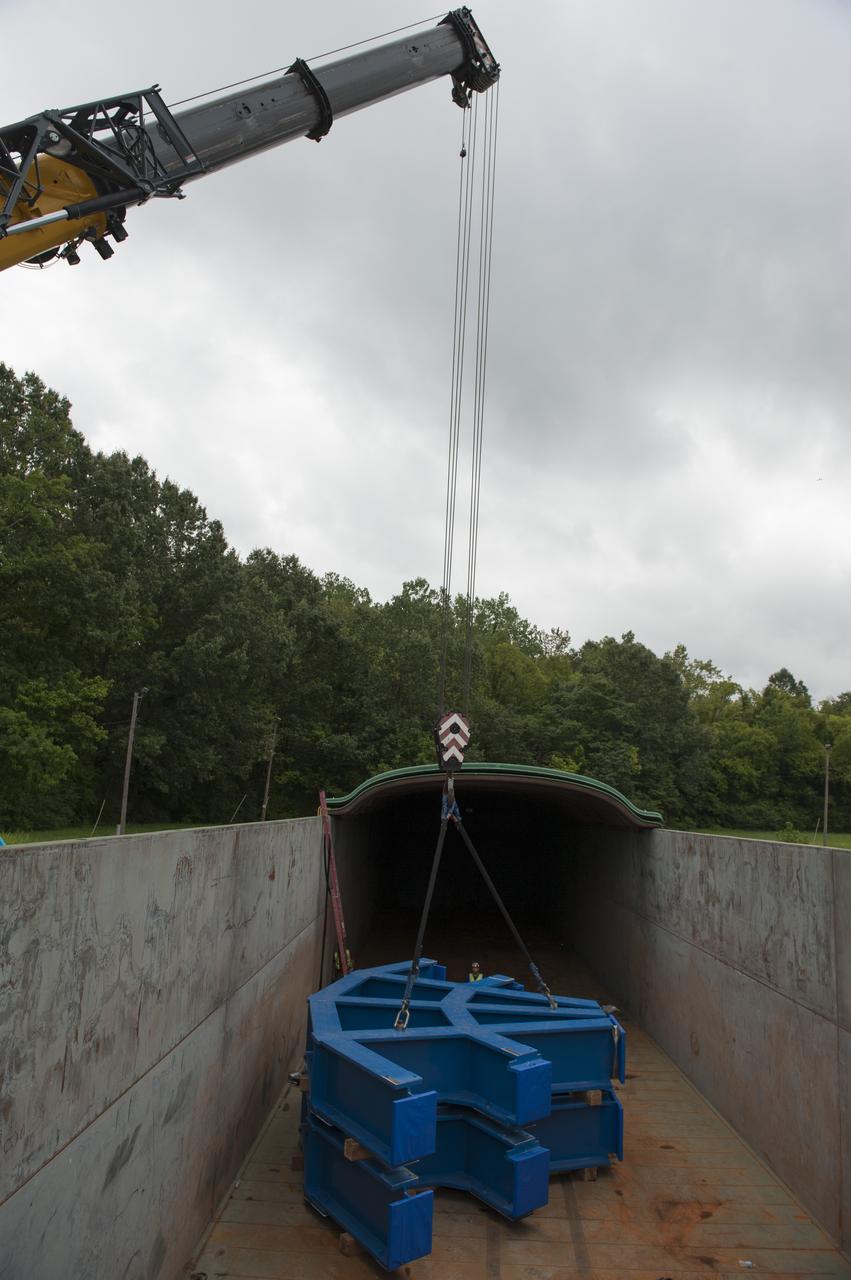
SLS ENGINE SECTION PEDESTALS AND THE ENGINE SECTION SPIDER QUADRANTS ARRIVAL AND UNLOADING AT NASA DOCK ON THE TENNESSEE RIVER.
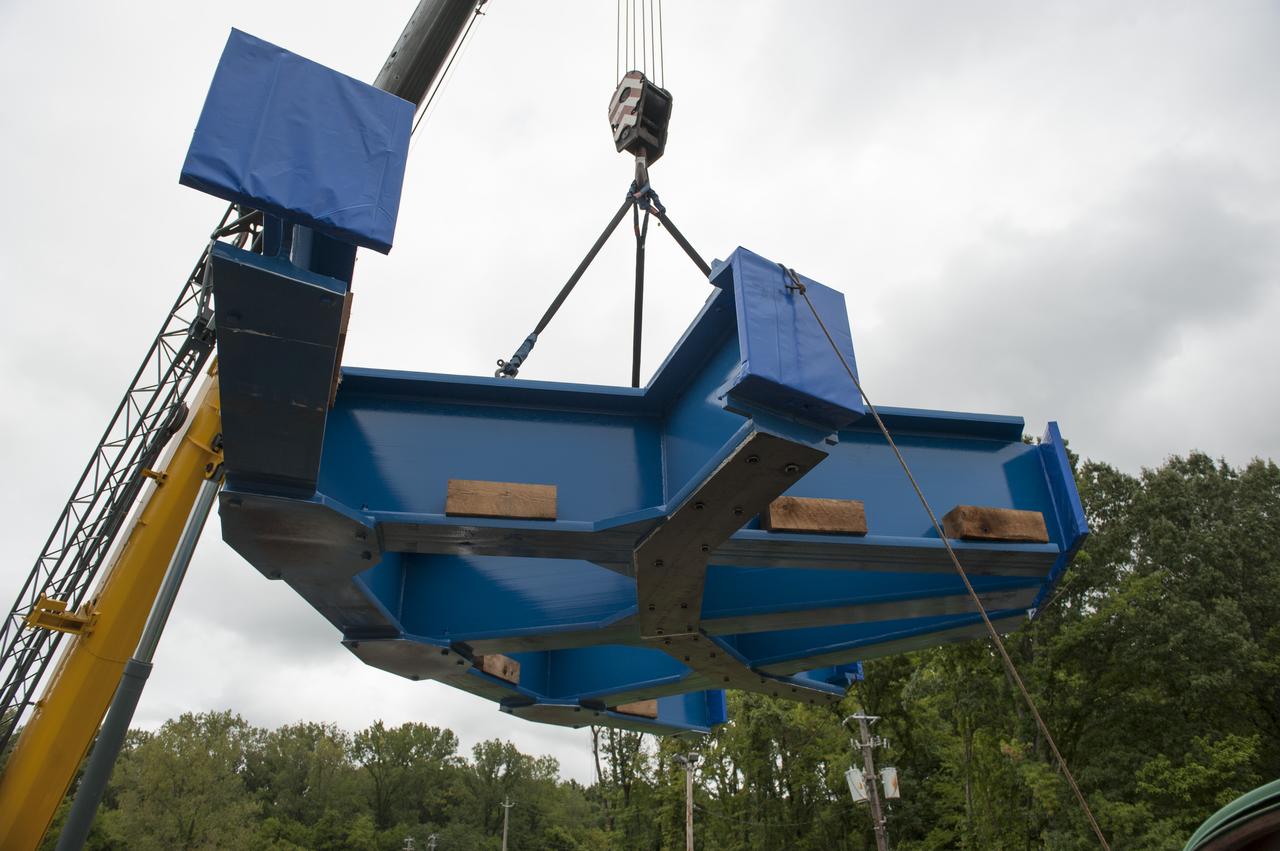
SLS ENGINE SECTION PEDESTALS AND THE ENGINE SECTION SPIDER QUADRANTS ARRIVAL AND UNLOADING AT NASA DOCK ON THE TENNESSEE RIVER.
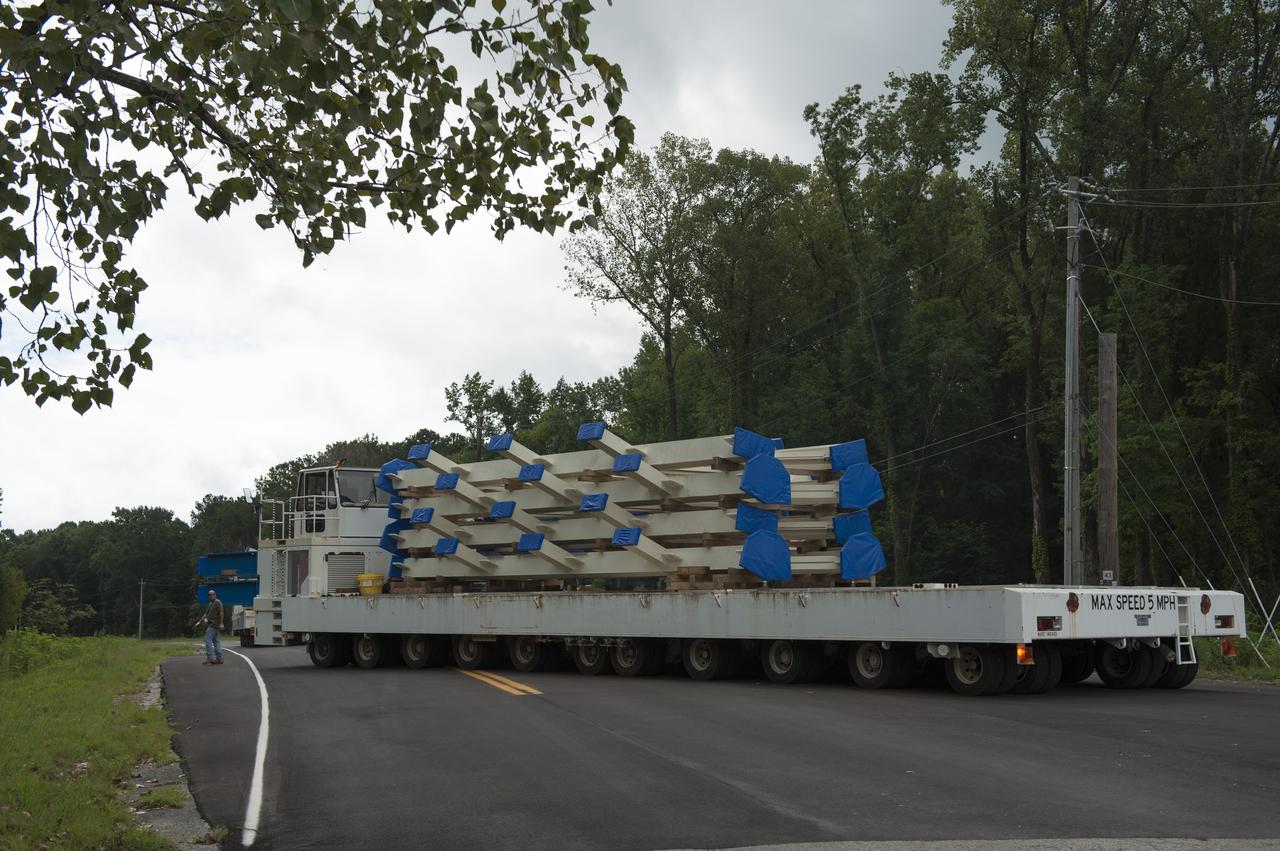
SLS ENGINE SECTION PEDESTALS AND THE ENGINE SECTION SPIDER QUADRANTS ARRIVAL AND UNLOADING AT NASA DOCK ON THE TENNESSEE RIVER.
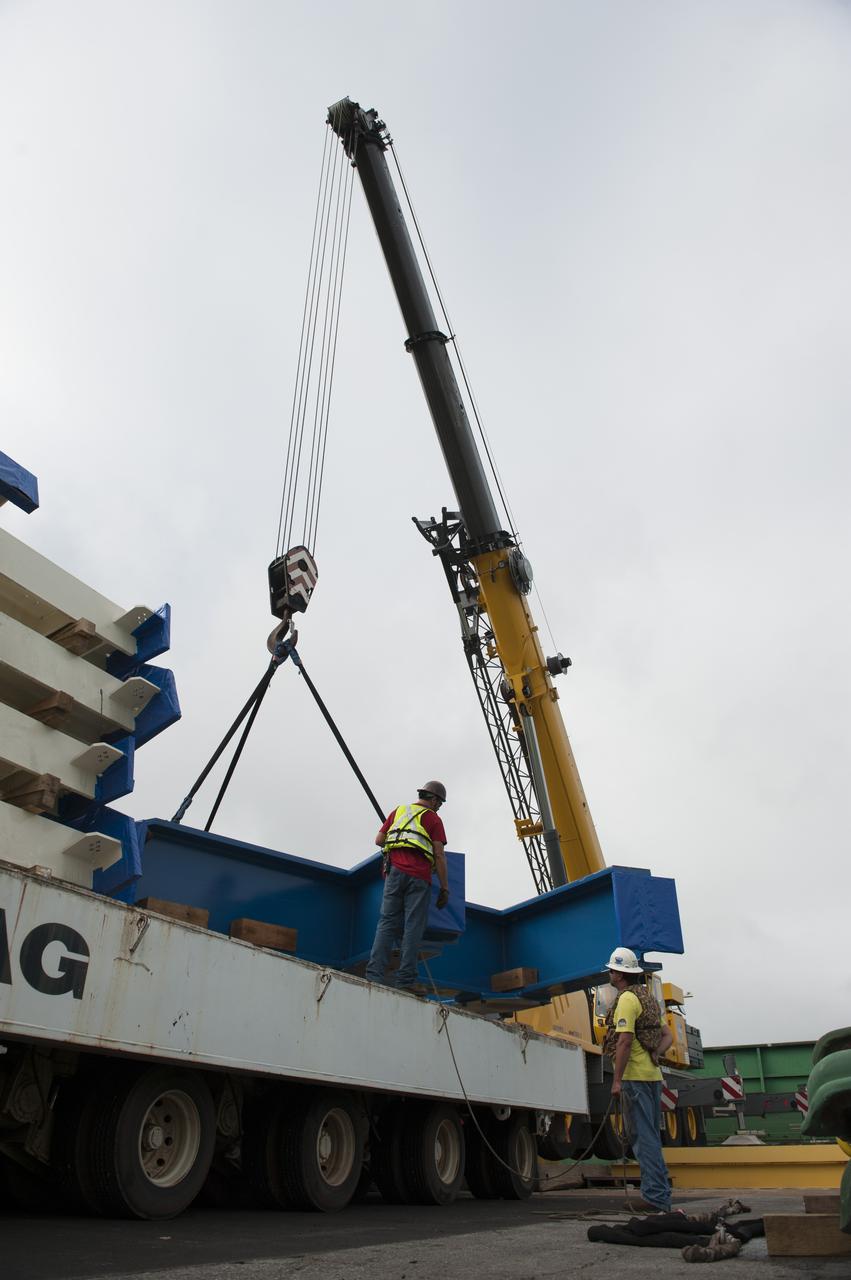
SLS ENGINE SECTION PEDESTALS AND THE ENGINE SECTION SPIDER QUADRANTS ARRIVAL AND UNLOADING AT NASA DOCK ON THE TENNESSEE RIVER.
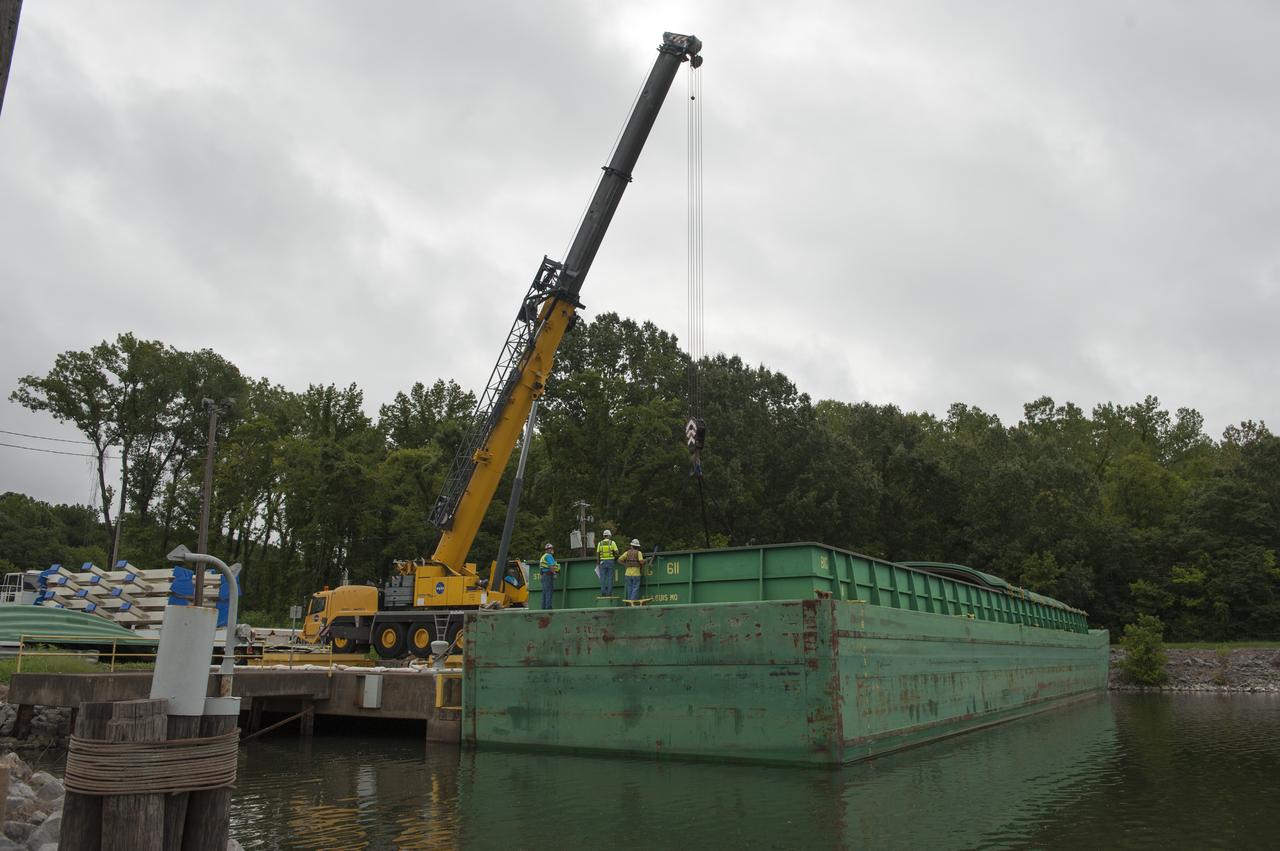
SLS ENGINE SECTION PEDESTALS AND THE ENGINE SECTION SPIDER QUADRANTS ARRIVAL AND UNLOADING AT NASA DOCK ON THE TENNESSEE RIVER.

SLS ENGINE SECTION PEDESTALS AND THE ENGINE SECTION SPIDER QUADRANTS ARRIVAL AND UNLOADING AT NASA DOCK ON THE TENNESSEE RIVER.
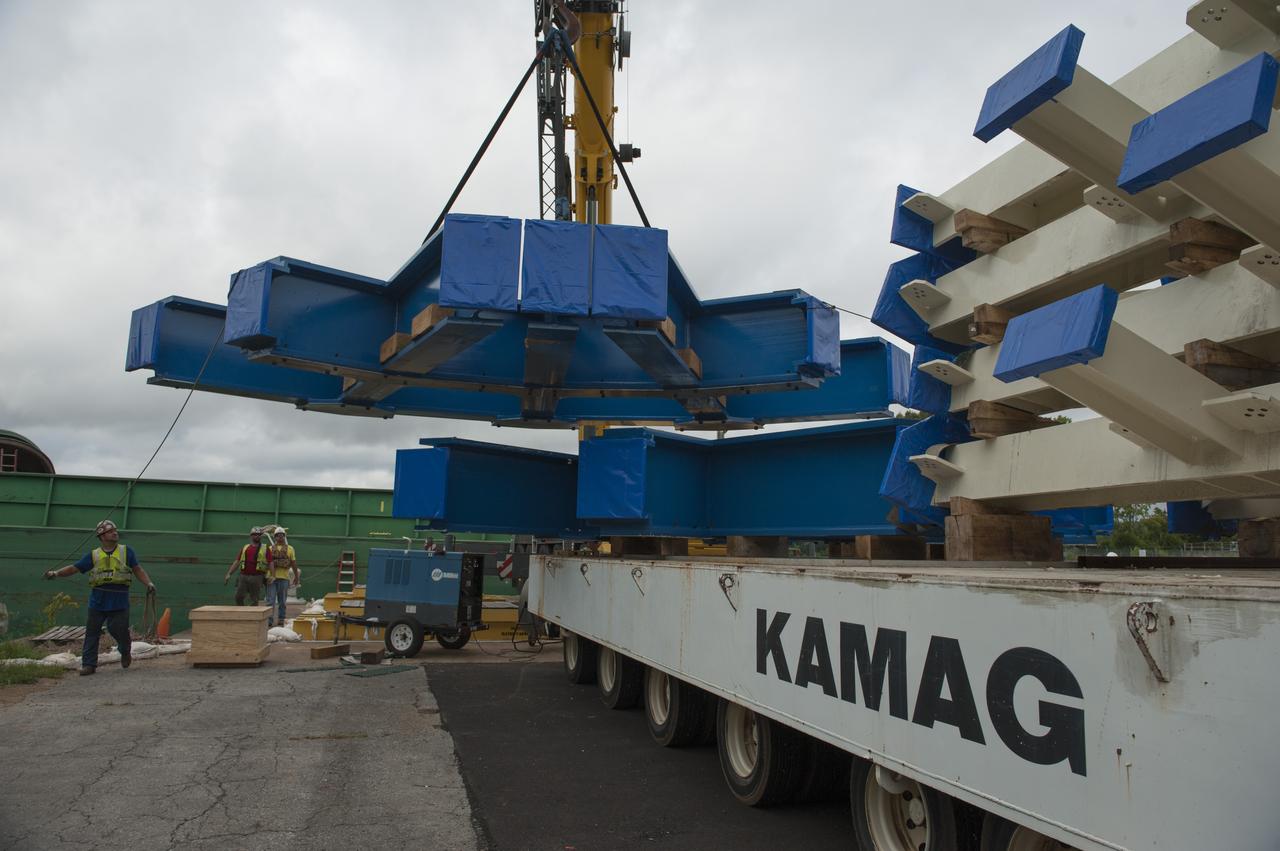
SLS ENGINE SECTION PEDESTALS AND THE ENGINE SECTION SPIDER QUADRANTS ARRIVAL AND UNLOADING AT NASA DOCK ON THE TENNESSEE RIVER.
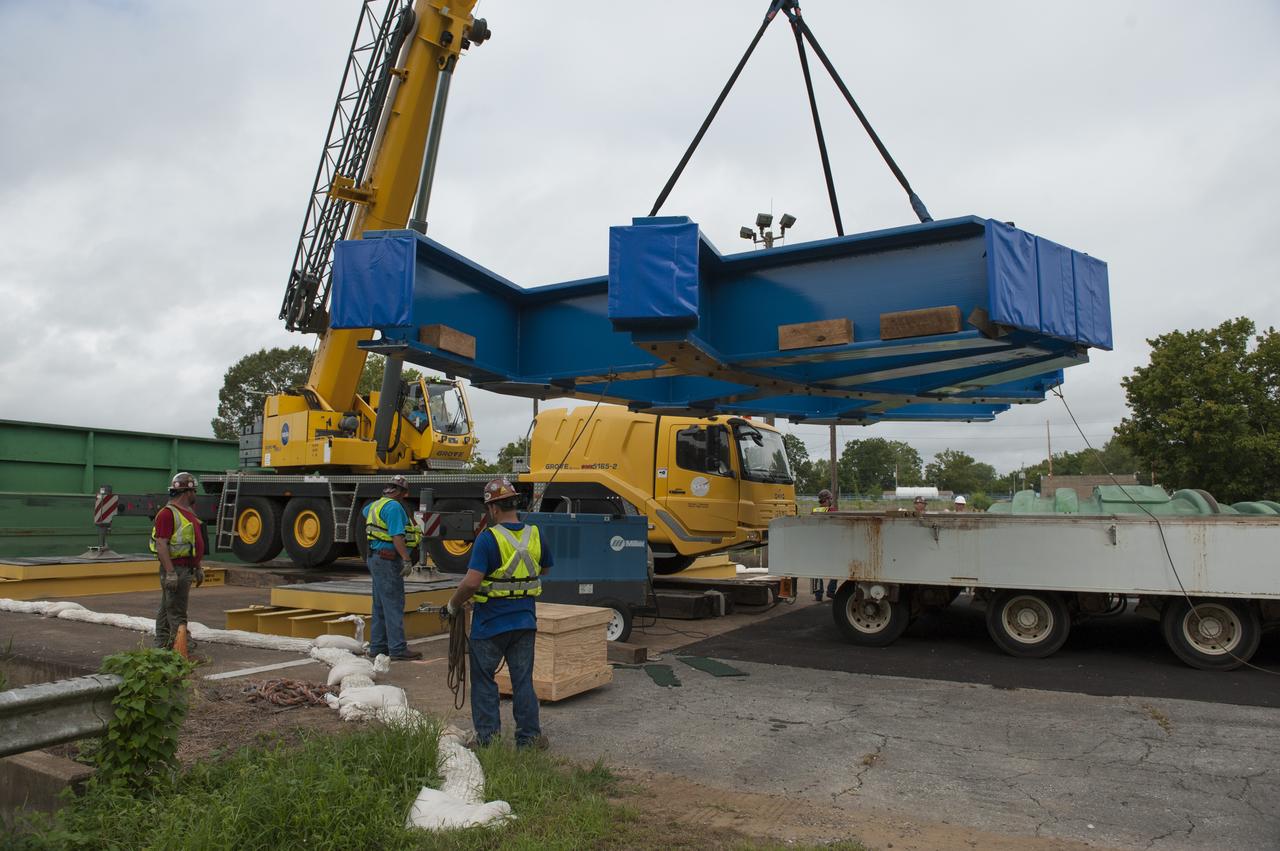
SLS ENGINE SECTION PEDESTALS AND THE ENGINE SECTION SPIDER QUADRANTS ARRIVAL AND UNLOADING AT NASA DOCK ON THE TENNESSEE RIVER.
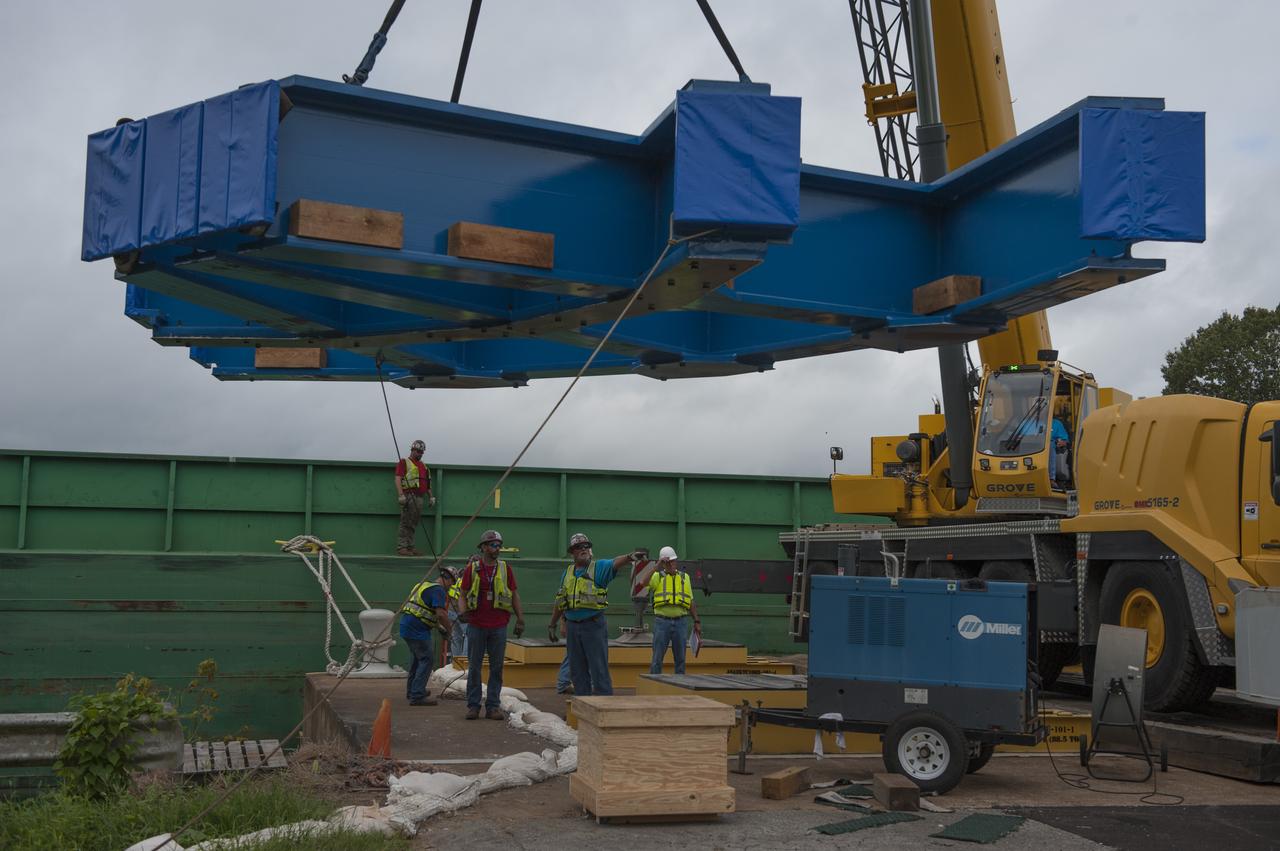
SLS ENGINE SECTION PEDESTALS AND THE ENGINE SECTION SPIDER QUADRANTS ARRIVAL AND UNLOADING AT NASA DOCK ON THE TENNESSEE RIVER.
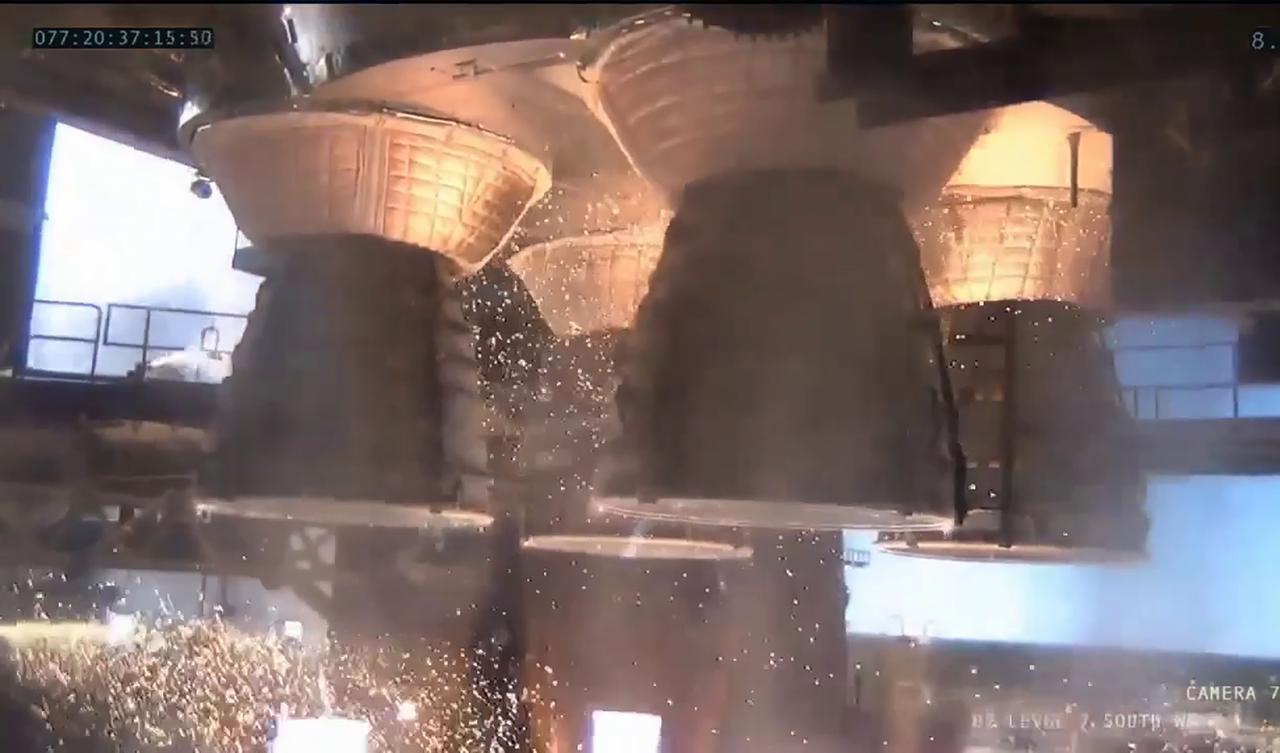
A on-stand camera offers a close-up view as NASA conducts a hot fire test March 18, 2021, of the core stage for the agency’s Space Launch System rocket on the B-2 Test Stand at Stennis Space Center near Bay St. Louis, Mississippi. The hot fire test of the stage’s four RS-25 engines shown in the photo generated a combined 1.6 million pounds of thrust, just as will occur during an actual launch. The hot fire is the final test of the Green Run test series, which represents a comprehensive assessment of the core stage and its integrated systems prior to its launch on the Artemis I mission to the Moon.
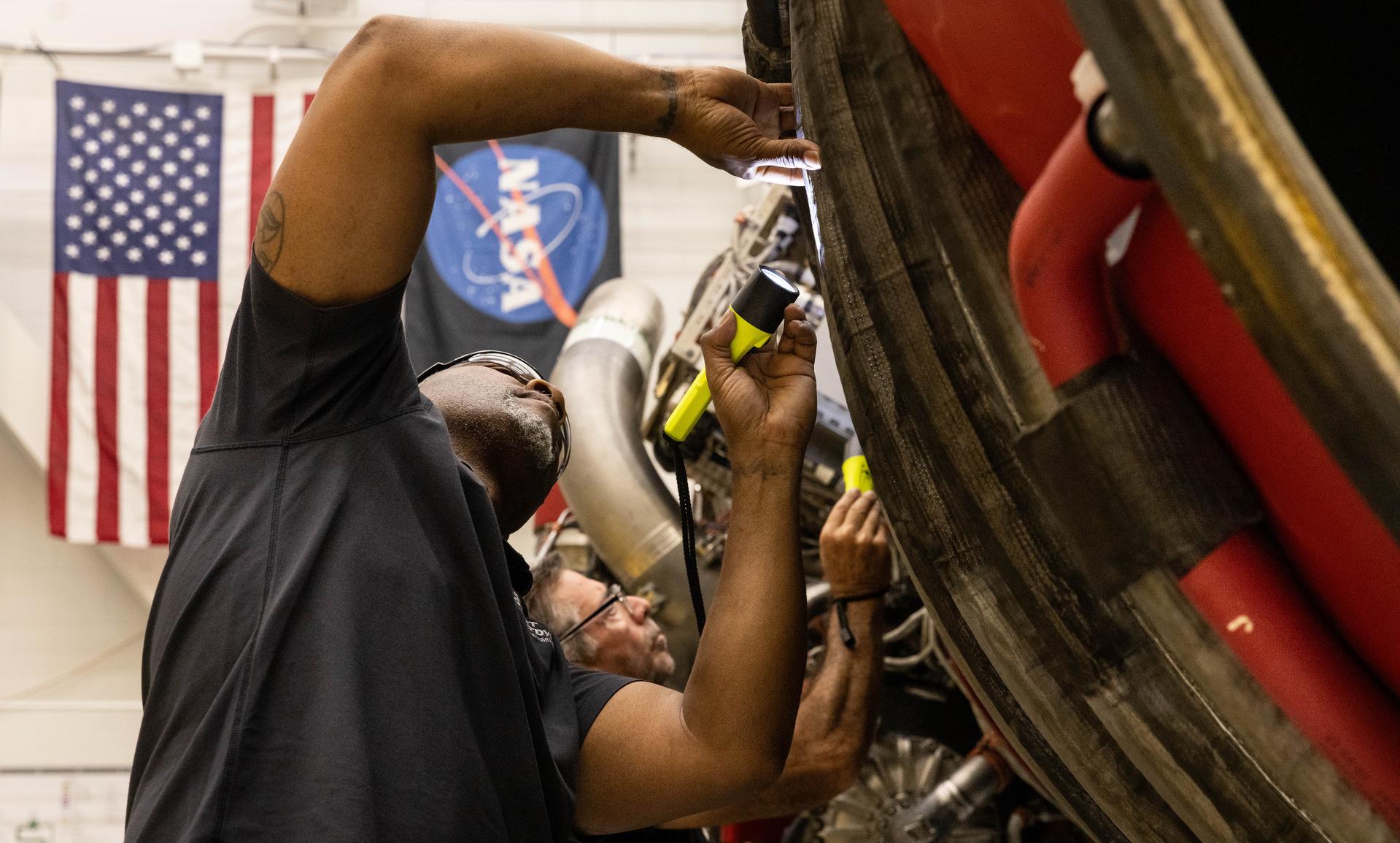
Teams at NASA’s Kennedy Space Center in Florida offload the second of four RS-25 SLS (Space Launch System) rocket engines built by L3 Harris Technologies for the agency's Artemis III mission on Tuesday, June 23, 2026, inside the spaceport’s Vehicle Assembly Building. The SLS rocket will use four RS-25 engines in the core stage to propel the Orion spacecraft into orbit providing over two million pounds of thrust at liftoff. As part of the Golden Age of innovation and exploration, NASA will send Artemis astronauts on increasingly difficult missions to explore more of the Moon for scientific discovery and economic benefits, establish an enduring human presence on the lunar surface, and build on our foundation for the first crewed missions to Mars.
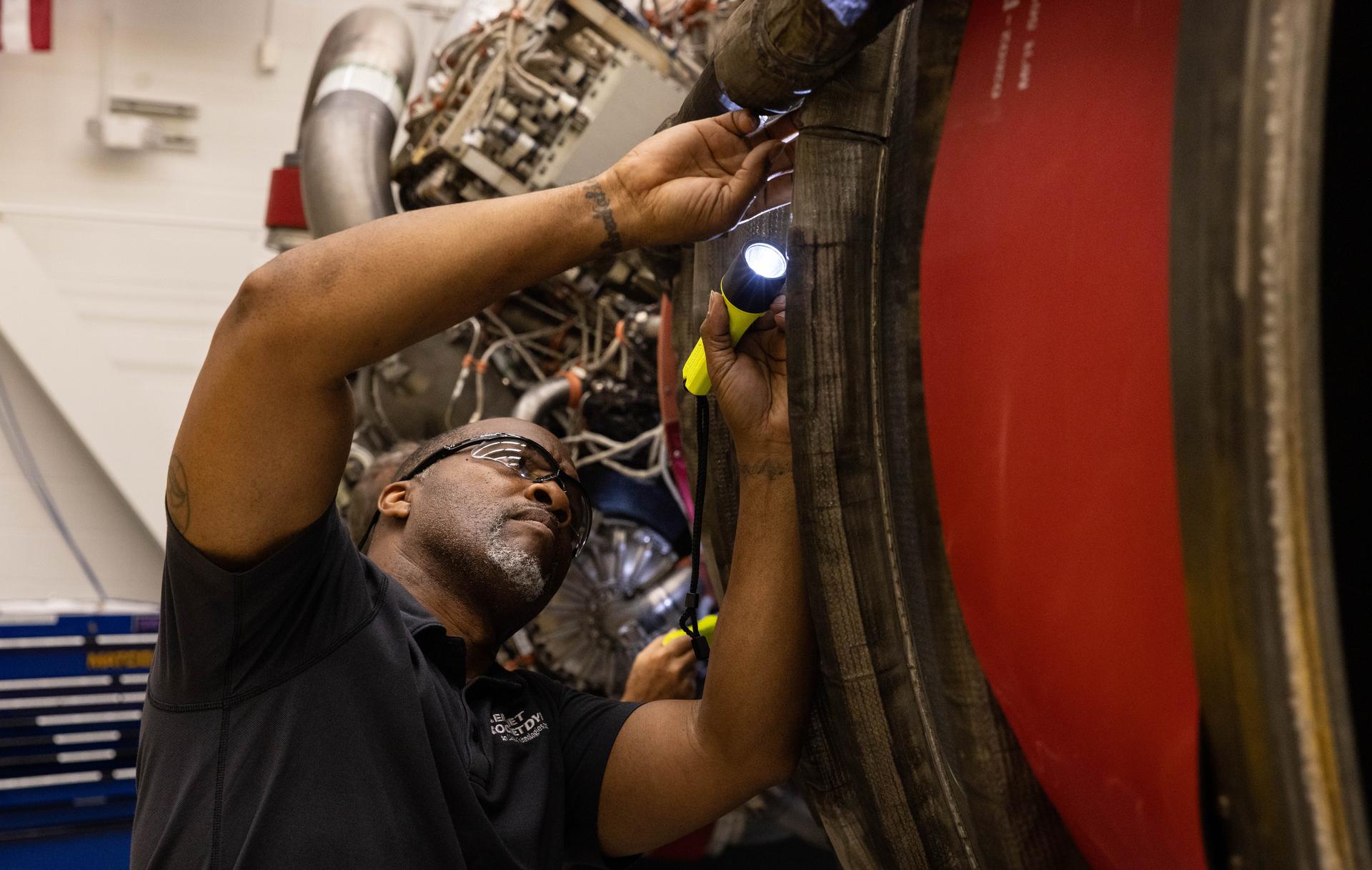
Teams at NASA’s Kennedy Space Center in Florida offload the second of four RS-25 SLS (Space Launch System) rocket engines built by L3 Harris Technologies for the agency's Artemis III mission on Tuesday, June 23, 2026, inside the spaceport’s Vehicle Assembly Building. The SLS rocket will use four RS-25 engines in the core stage to propel the Orion spacecraft into orbit providing over two million pounds of thrust at liftoff. As part of the Golden Age of innovation and exploration, NASA will send Artemis astronauts on increasingly difficult missions to explore more of the Moon for scientific discovery and economic benefits, establish an enduring human presence on the lunar surface, and build on our foundation for the first crewed missions to Mars.
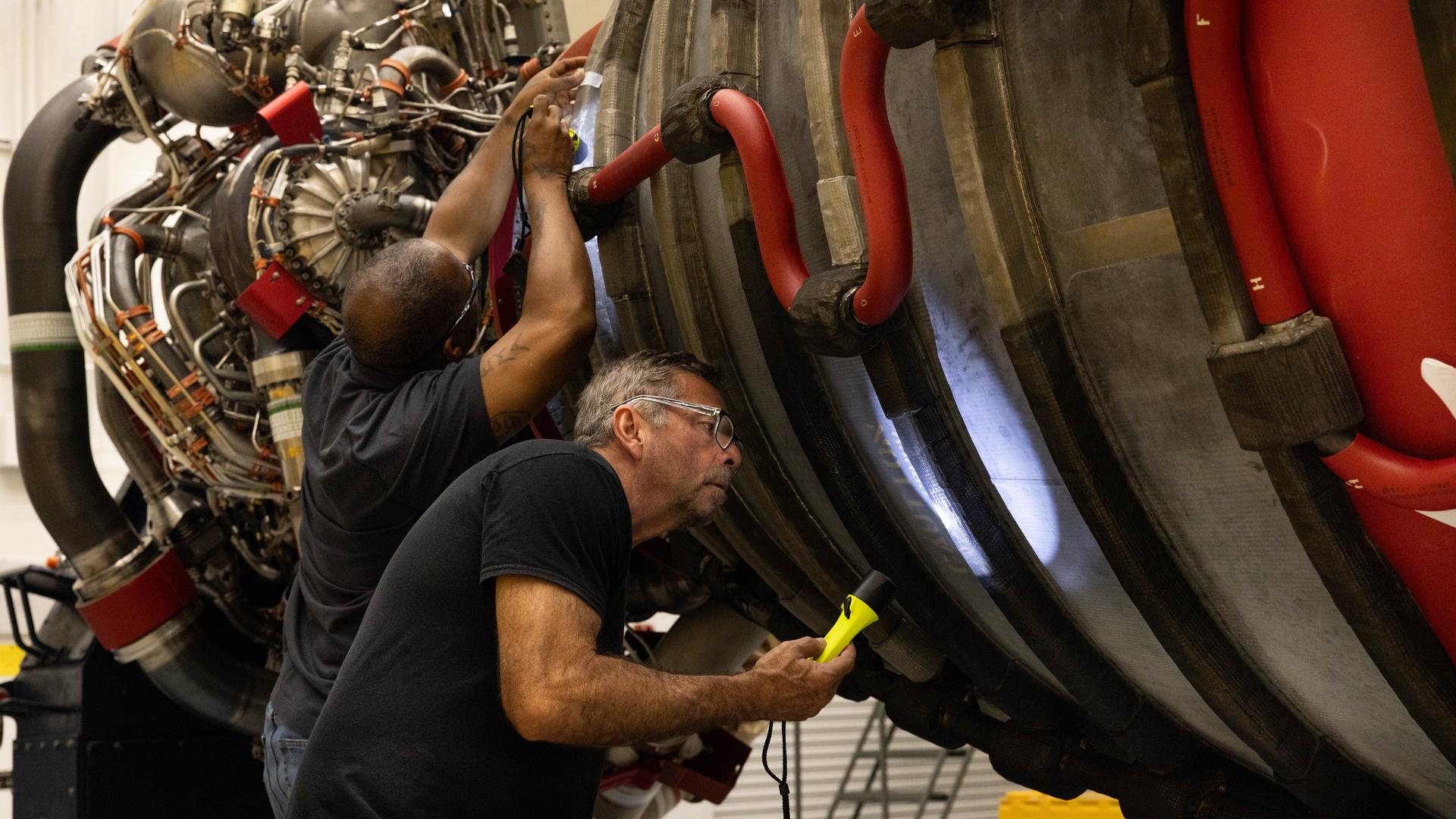
Teams at NASA’s Kennedy Space Center in Florida offload the second of four RS-25 SLS (Space Launch System) rocket engines built by L3 Harris Technologies for the agency's Artemis III mission on Tuesday, June 23, 2026, inside the spaceport’s Vehicle Assembly Building. The SLS rocket will use four RS-25 engines in the core stage to propel the Orion spacecraft into orbit providing over two million pounds of thrust at liftoff. As part of the Golden Age of innovation and exploration, NASA will send Artemis astronauts on increasingly difficult missions to explore more of the Moon for scientific discovery and economic benefits, establish an enduring human presence on the lunar surface, and build on our foundation for the first crewed missions to Mars.
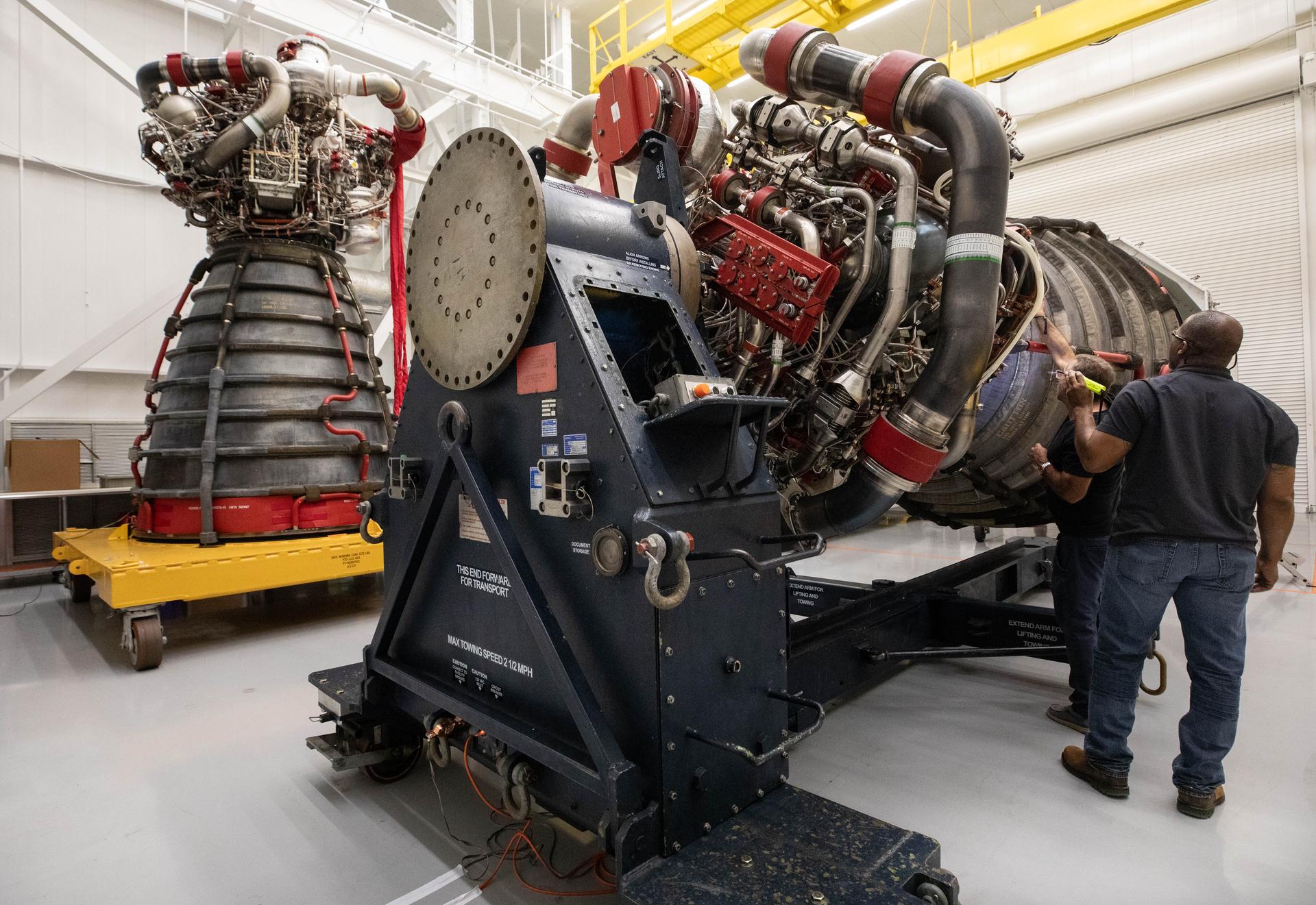
Teams at NASA’s Kennedy Space Center in Florida offload the second of four RS-25 SLS (Space Launch System) rocket engines built by L3 Harris Technologies for the agency's Artemis III mission on Tuesday, June 23, 2026, inside the spaceport’s Vehicle Assembly Building. The SLS rocket will use four RS-25 engines in the core stage to propel the Orion spacecraft into orbit providing over two million pounds of thrust at liftoff. As part of the Golden Age of innovation and exploration, NASA will send Artemis astronauts on increasingly difficult missions to explore more of the Moon for scientific discovery and economic benefits, establish an enduring human presence on the lunar surface, and build on our foundation for the first crewed missions to Mars.
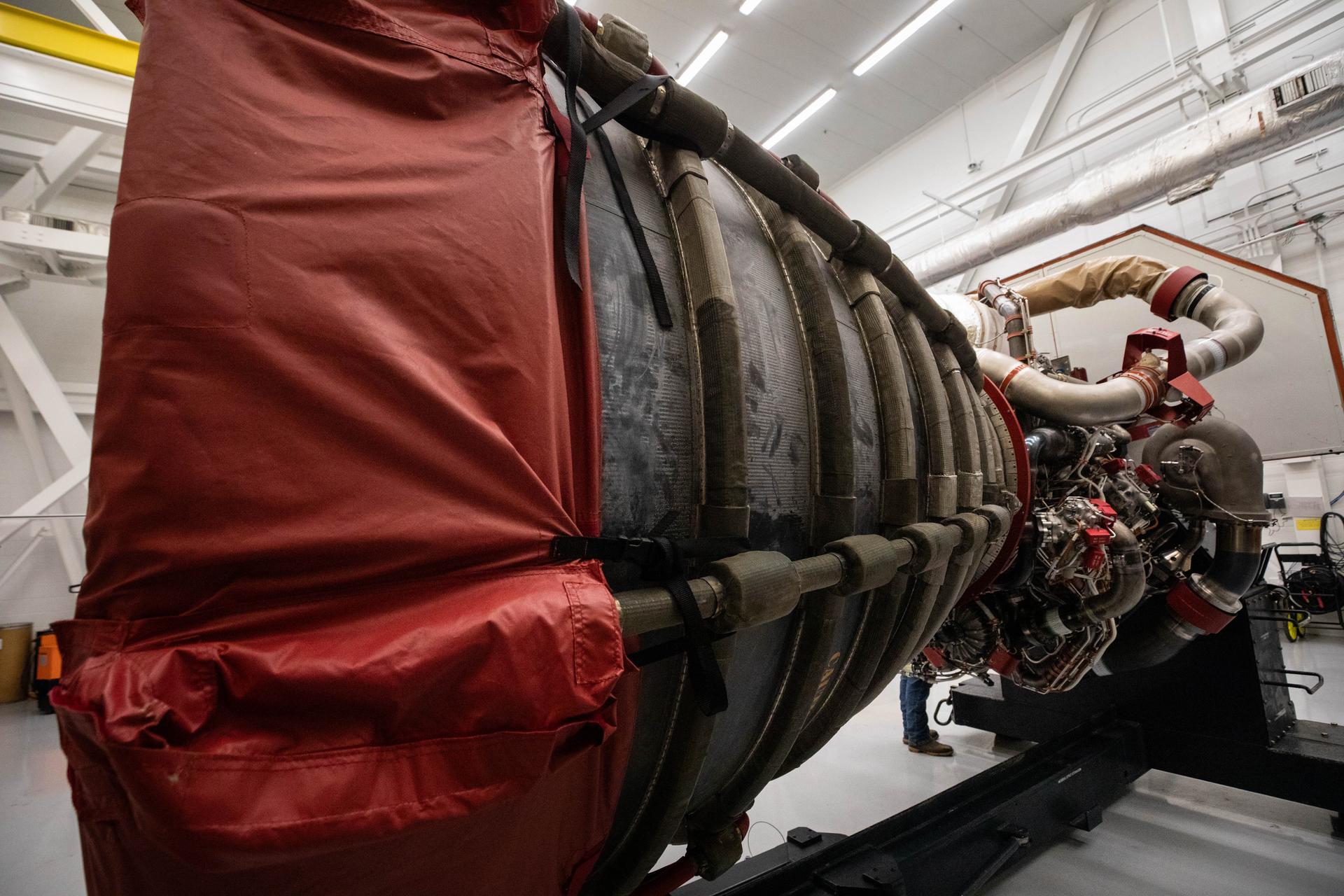
Teams at NASA’s Kennedy Space Center in Florida offload the third of four RS-25 SLS (Space Launch System) rocket engines built by L3 Harris Technologies for the agency's Artemis III mission on Tuesday, July 14, 2026, inside the spaceport’s Vehicle Assembly Building. The SLS rocket will use four RS-25 engines in the core stage to propel the Orion spacecraft into orbit providing over two million pounds of thrust at liftoff. As part of the Golden Age of innovation and exploration, NASA will send Artemis astronauts on increasingly difficult missions to explore more of the Moon for scientific discovery and economic benefits, establish an enduring human presence on the lunar surface, and build on our foundation for the first crewed missions to Mars.
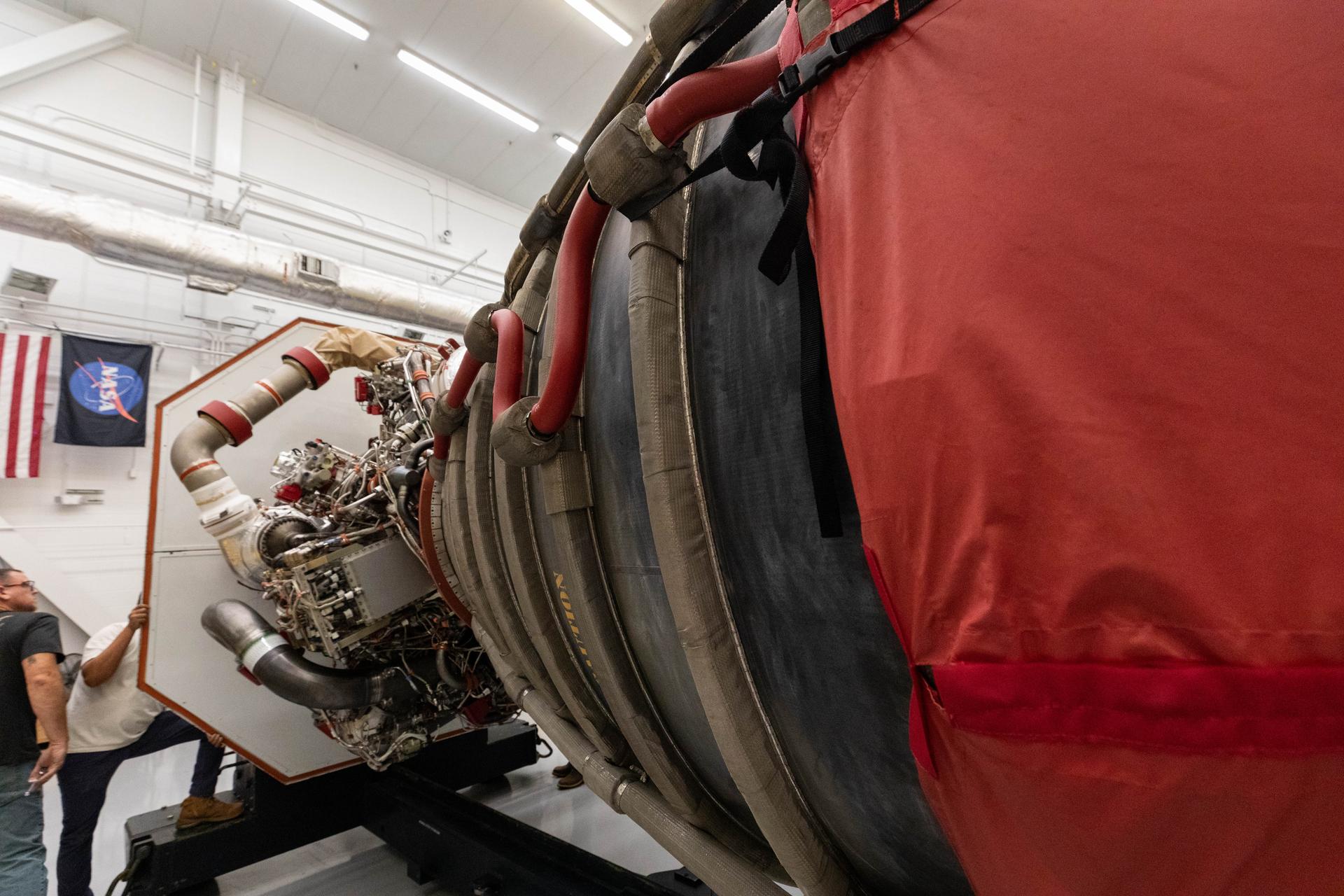
Teams at NASA’s Kennedy Space Center in Florida offload the third of four RS-25 SLS (Space Launch System) rocket engines built by L3 Harris Technologies for the agency's Artemis III mission on Tuesday, July 14, 2026, inside the spaceport’s Vehicle Assembly Building. The SLS rocket will use four RS-25 engines in the core stage to propel the Orion spacecraft into orbit providing over two million pounds of thrust at liftoff. As part of the Golden Age of innovation and exploration, NASA will send Artemis astronauts on increasingly difficult missions to explore more of the Moon for scientific discovery and economic benefits, establish an enduring human presence on the lunar surface, and build on our foundation for the first crewed missions to Mars.
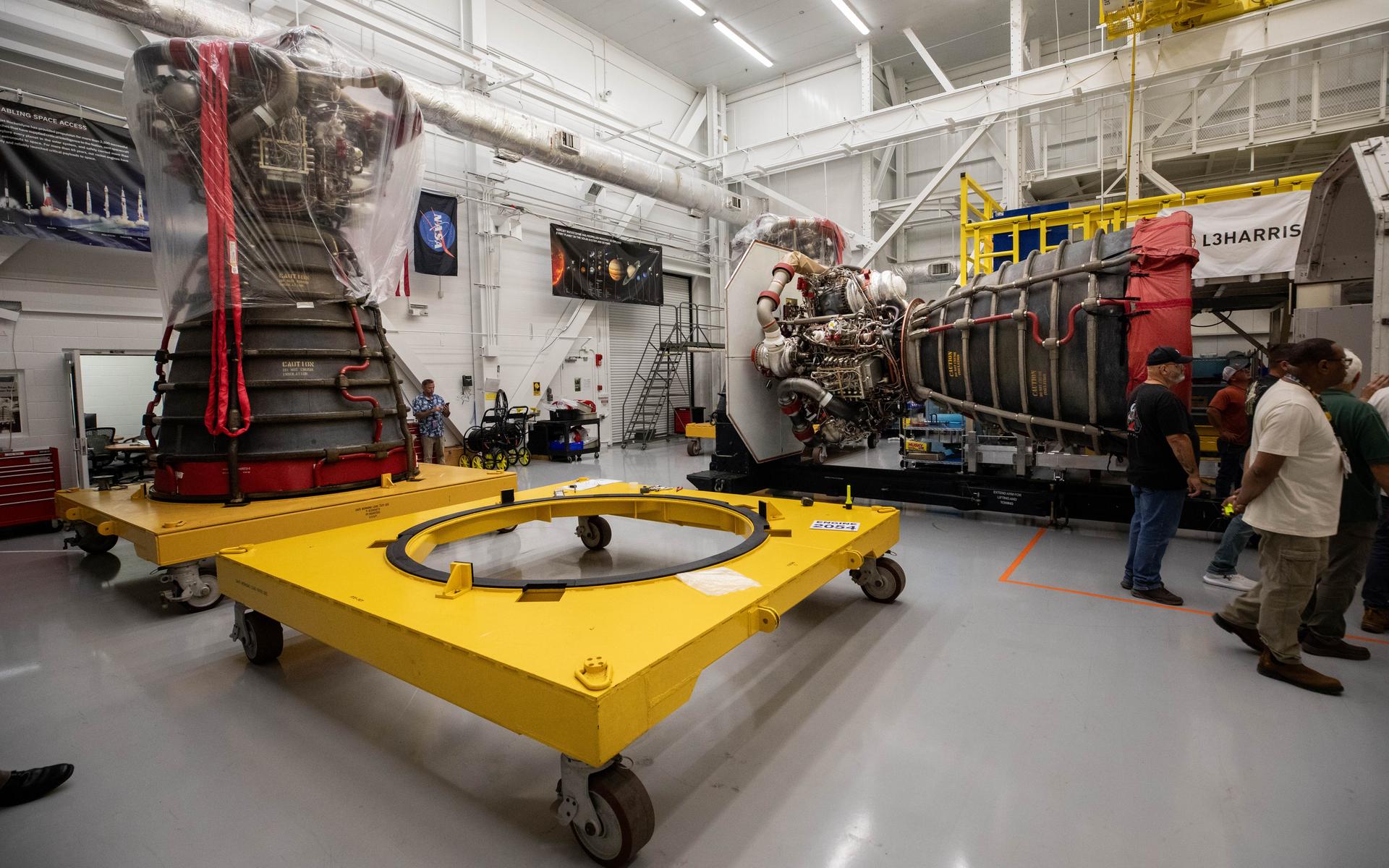
Teams at NASA’s Kennedy Space Center in Florida offload the third of four RS-25 SLS (Space Launch System) rocket engines built by L3 Harris Technologies for the agency's Artemis III mission on Tuesday, July 14, 2026, inside the spaceport’s Vehicle Assembly Building. The SLS rocket will use four RS-25 engines in the core stage to propel the Orion spacecraft into orbit providing over two million pounds of thrust at liftoff. As part of the Golden Age of innovation and exploration, NASA will send Artemis astronauts on increasingly difficult missions to explore more of the Moon for scientific discovery and economic benefits, establish an enduring human presence on the lunar surface, and build on our foundation for the first crewed missions to Mars.
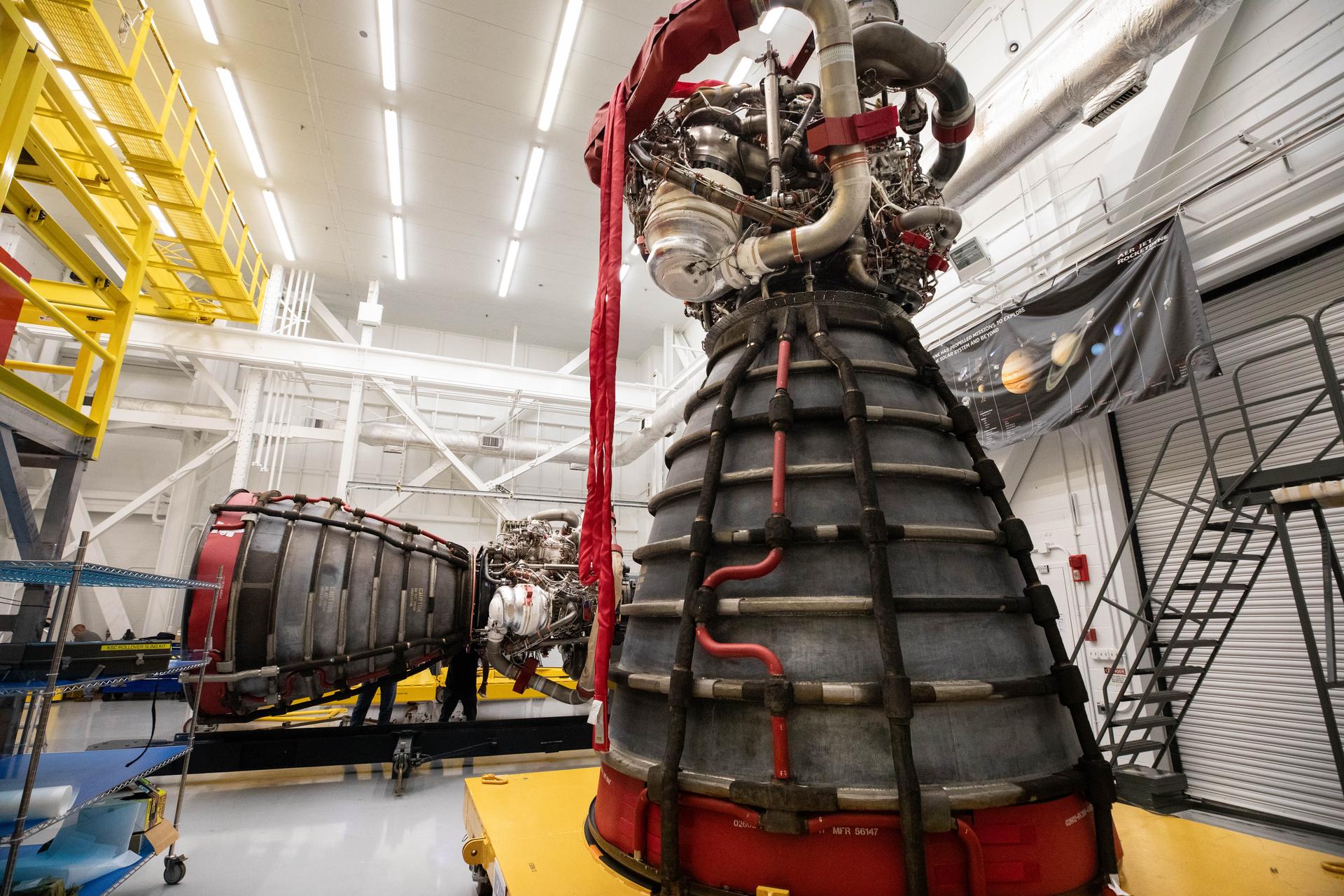
Teams at NASA’s Kennedy Space Center in Florida offload the second of four RS-25 SLS (Space Launch System) rocket engines built by L3 Harris Technologies for the agency's Artemis III mission on Tuesday, June 23, 2026, inside the spaceport’s Vehicle Assembly Building. The SLS rocket will use four RS-25 engines in the core stage to propel the Orion spacecraft into orbit providing over two million pounds of thrust at liftoff. As part of the Golden Age of innovation and exploration, NASA will send Artemis astronauts on increasingly difficult missions to explore more of the Moon for scientific discovery and economic benefits, establish an enduring human presence on the lunar surface, and build on our foundation for the first crewed missions to Mars.
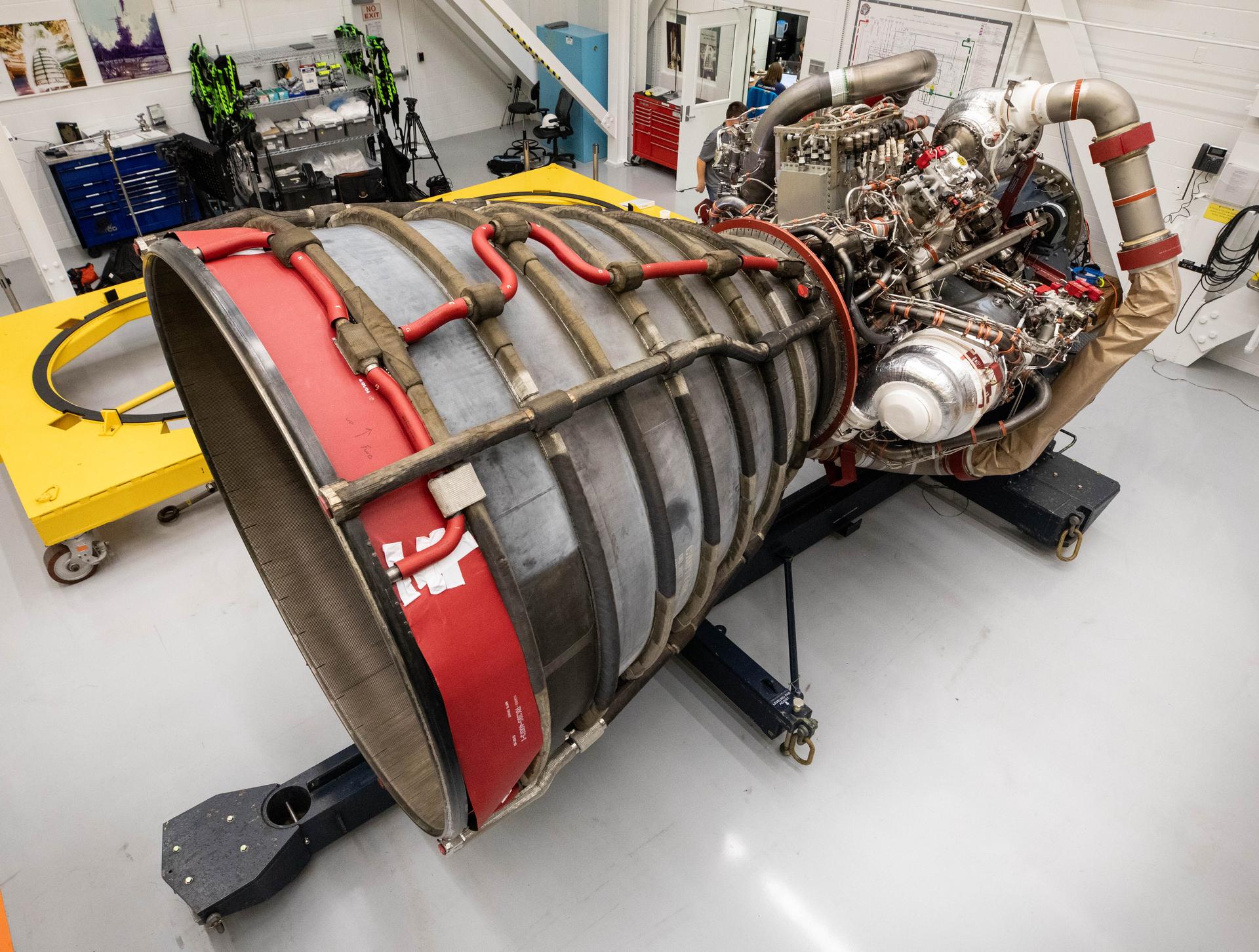
Teams at NASA’s Kennedy Space Center in Florida offload the second of four RS-25 SLS (Space Launch System) rocket engines built by L3 Harris Technologies for the agency's Artemis III mission on Tuesday, June 23, 2026, inside the spaceport’s Vehicle Assembly Building. The SLS rocket will use four RS-25 engines in the core stage to propel the Orion spacecraft into orbit providing over two million pounds of thrust at liftoff. As part of the Golden Age of innovation and exploration, NASA will send Artemis astronauts on increasingly difficult missions to explore more of the Moon for scientific discovery and economic benefits, establish an enduring human presence on the lunar surface, and build on our foundation for the first crewed missions to Mars.
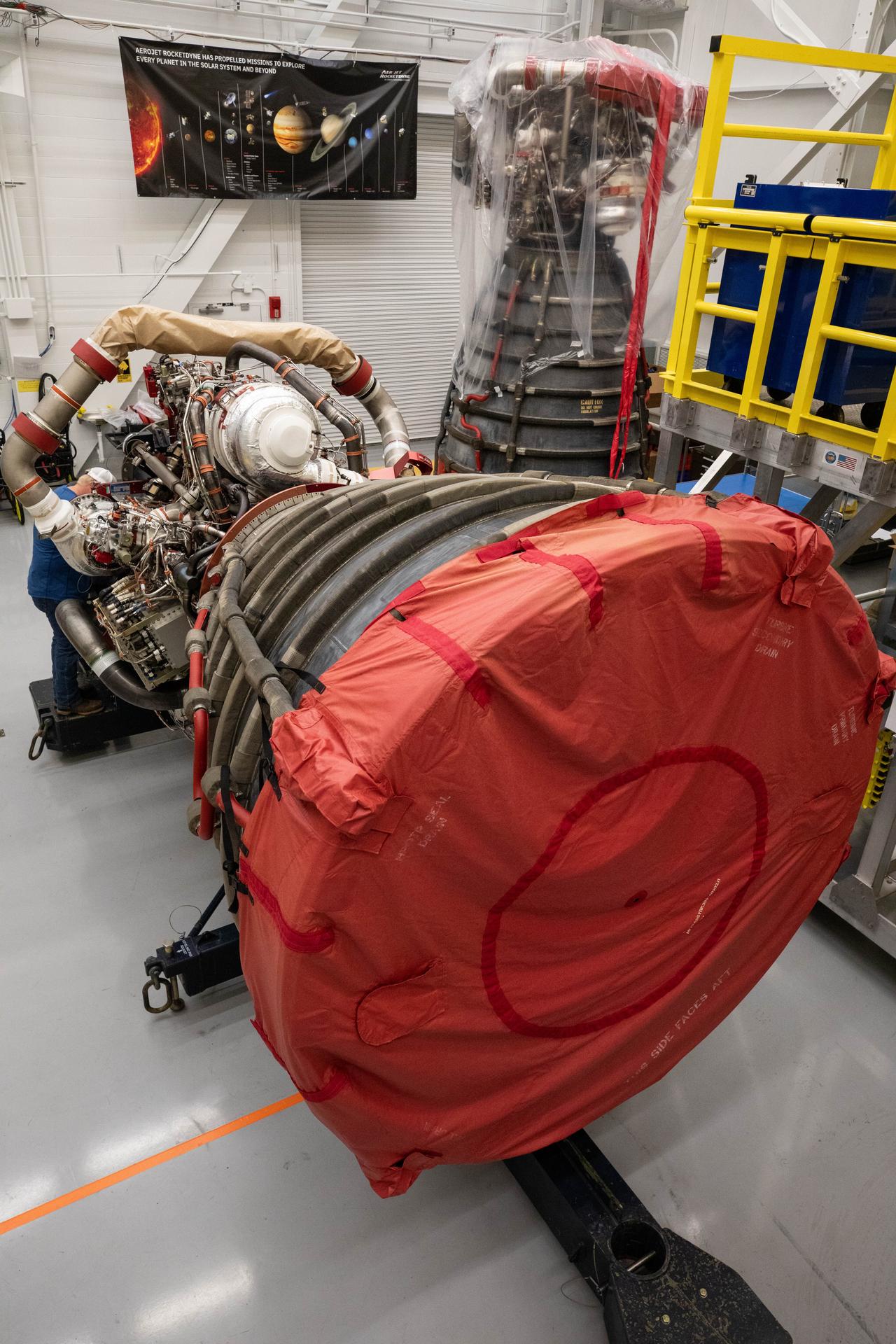
Teams at NASA’s Kennedy Space Center in Florida offload the third of four RS-25 SLS (Space Launch System) rocket engines built by L3 Harris Technologies for the agency's Artemis III mission on Tuesday, July 14, 2026, inside the spaceport’s Vehicle Assembly Building. The SLS rocket will use four RS-25 engines in the core stage to propel the Orion spacecraft into orbit providing over two million pounds of thrust at liftoff. As part of the Golden Age of innovation and exploration, NASA will send Artemis astronauts on increasingly difficult missions to explore more of the Moon for scientific discovery and economic benefits, establish an enduring human presence on the lunar surface, and build on our foundation for the first crewed missions to Mars.
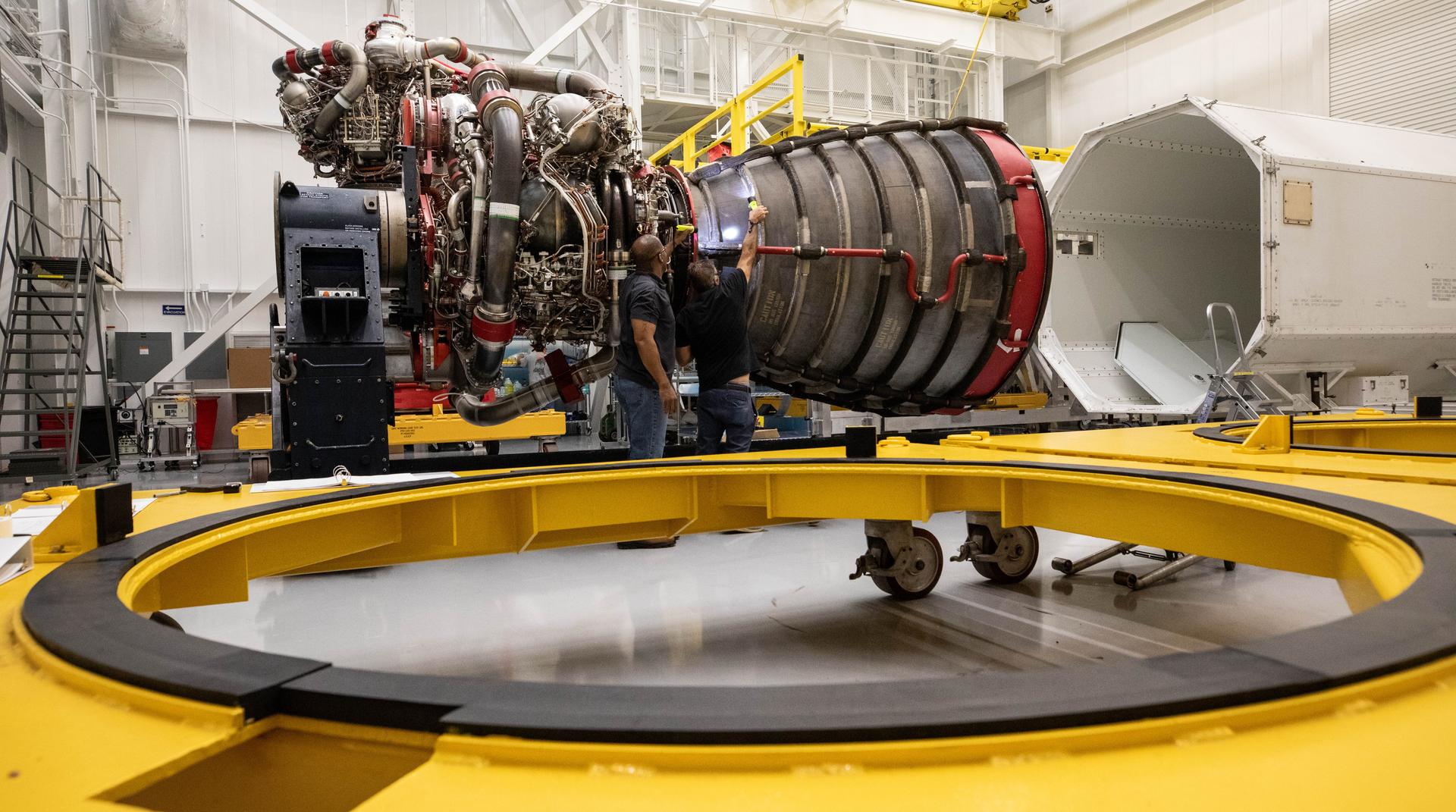
Teams at NASA’s Kennedy Space Center in Florida offload the second of four RS-25 SLS (Space Launch System) rocket engines built by L3 Harris Technologies for the agency's Artemis III mission on Tuesday, June 23, 2026, inside the spaceport’s Vehicle Assembly Building. The SLS rocket will use four RS-25 engines in the core stage to propel the Orion spacecraft into orbit providing over two million pounds of thrust at liftoff. As part of the Golden Age of innovation and exploration, NASA will send Artemis astronauts on increasingly difficult missions to explore more of the Moon for scientific discovery and economic benefits, establish an enduring human presence on the lunar surface, and build on our foundation for the first crewed missions to Mars.
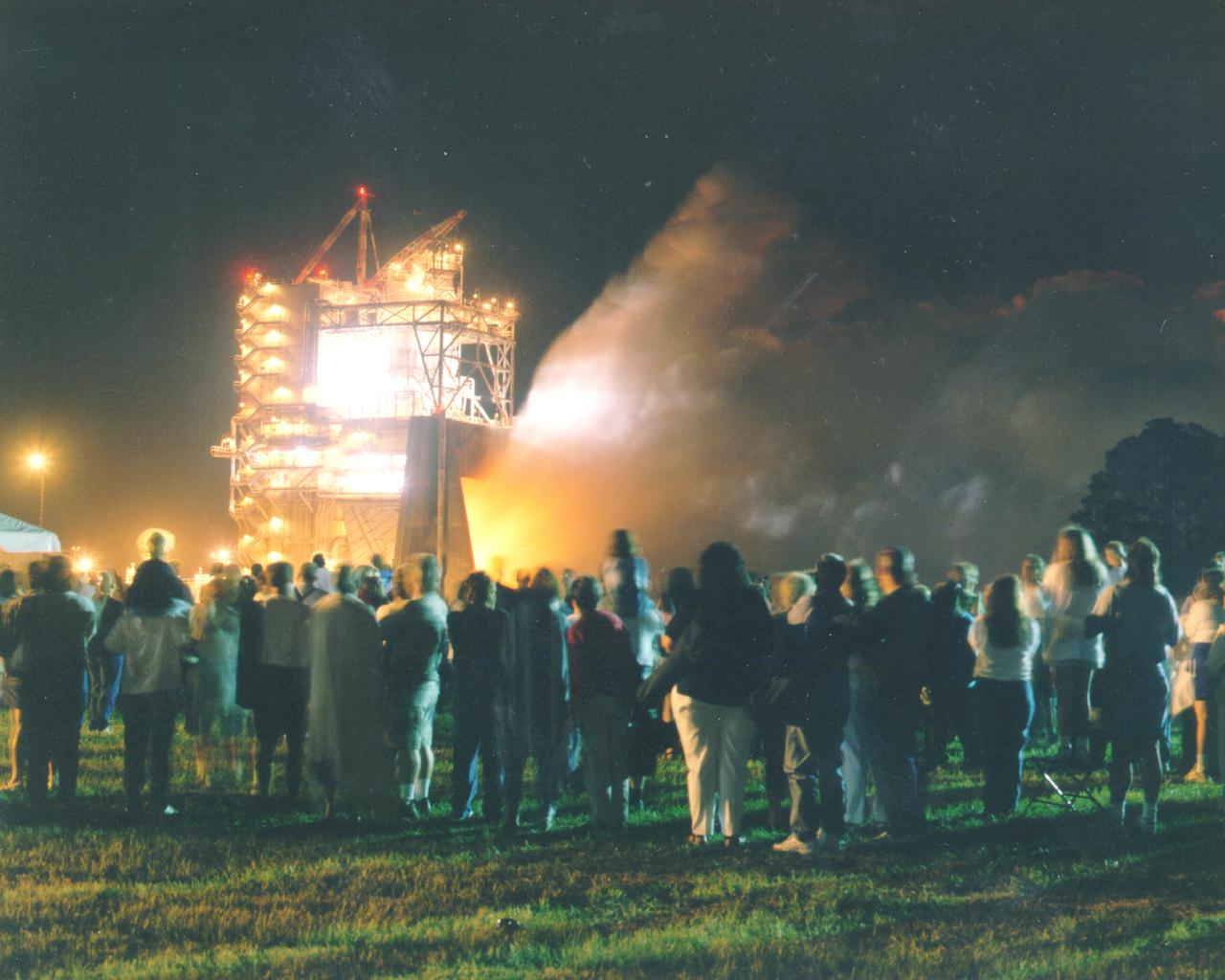
Thousands of people watch the first-ever evening public engine test of a Space Shuttle Main Engine at NASA's John C. Stennis Space Center. The spectacular test marked Stennis Space Center's 20th anniversary celebration of the first Space Shuttle mission.
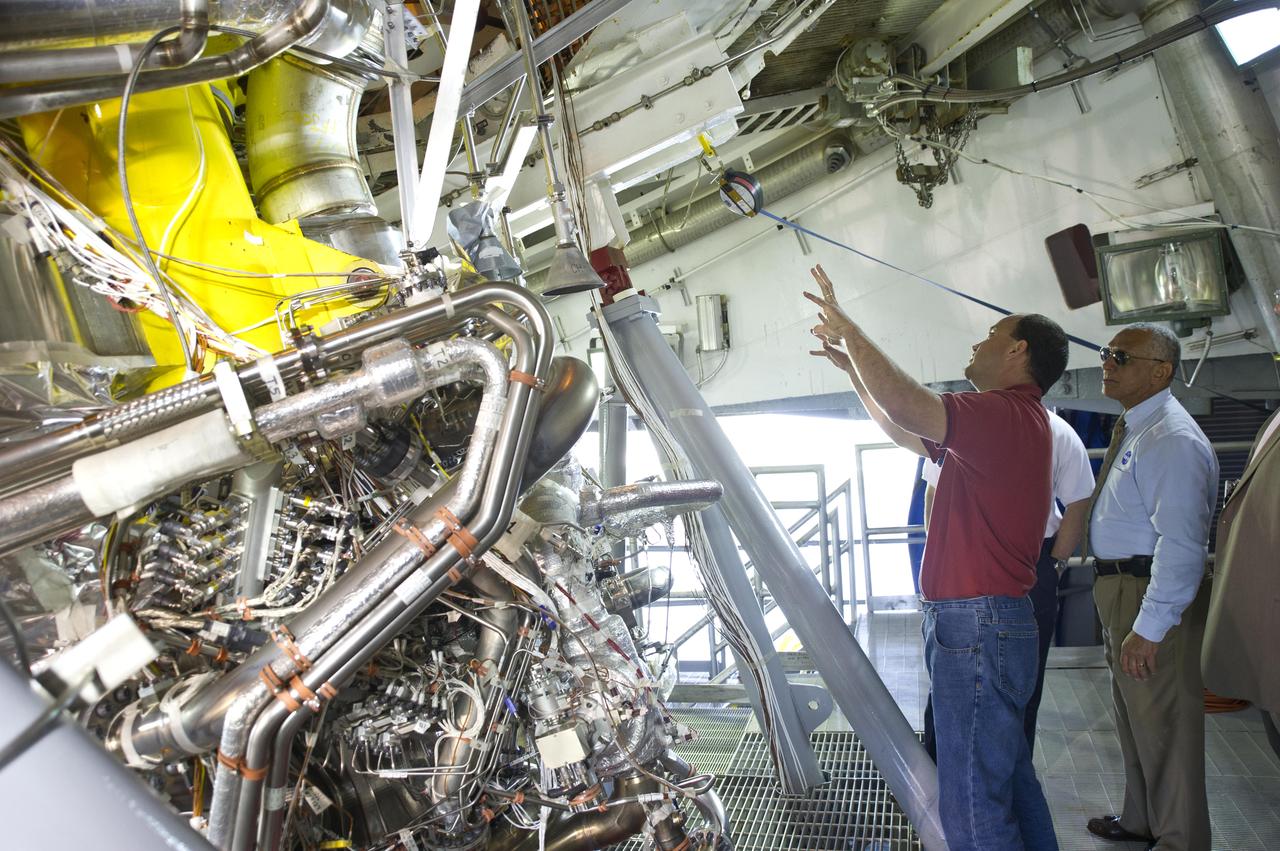
NASA Administrator Charles Bolden (r) takes an up-close look at the first development J-2X rocket engine on the A-2 Test Stand at Stennis Space Center during an April 20, 2012, visit. Pictured with Bolden is A-2 Test Stand Director Skip Roberts. The J-2X engine i s being developed for NASA by Pratt & Whitney Rocketdyne.
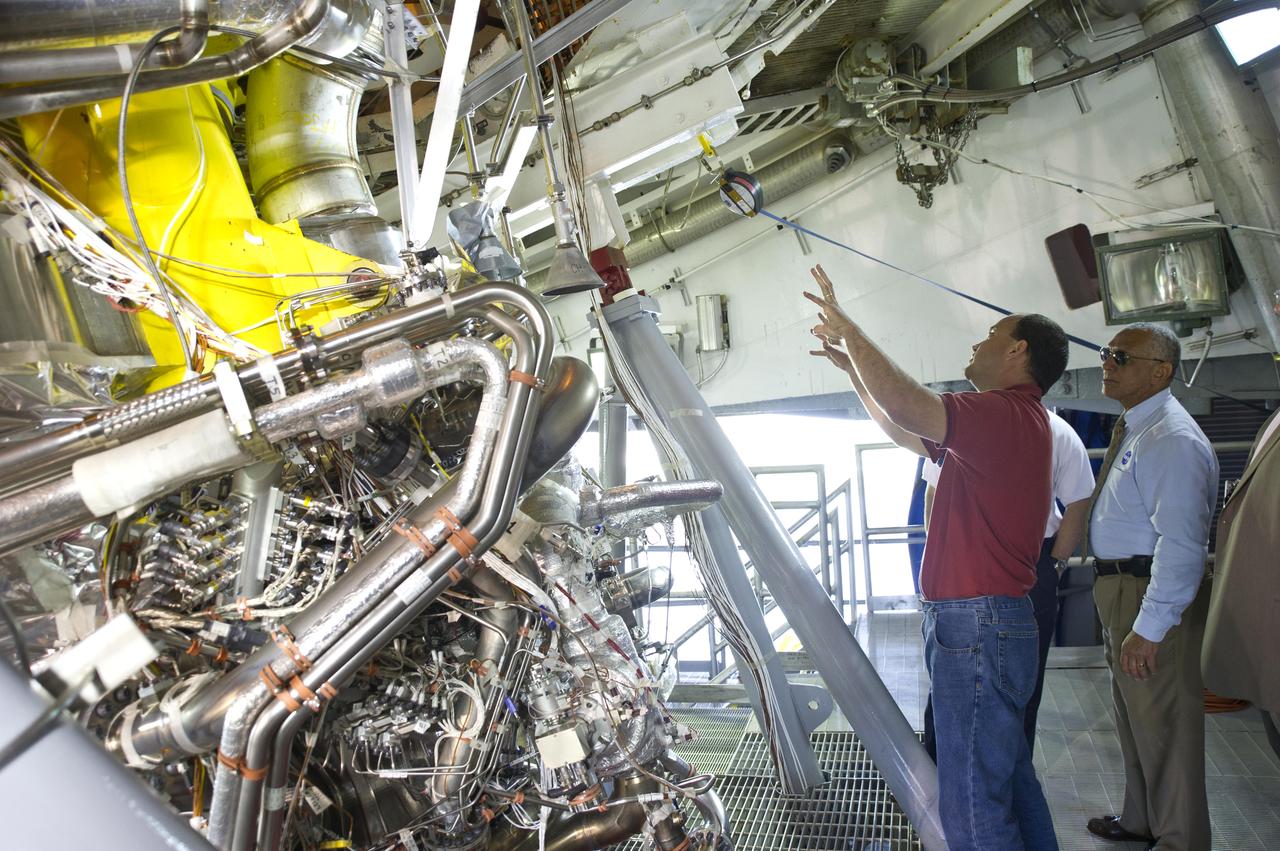
NASA Administrator Charles Bolden (r) takes an up-close look at the first development J-2X rocket engine on the A-2 Test Stand at Stennis Space Center during an April 20, 2012, visit. Pictured with Bolden is A-2 Test Stand Director Skip Roberts. The J-2X engine is being developed for NASA by Pratt & Whitney Rocketdyne.
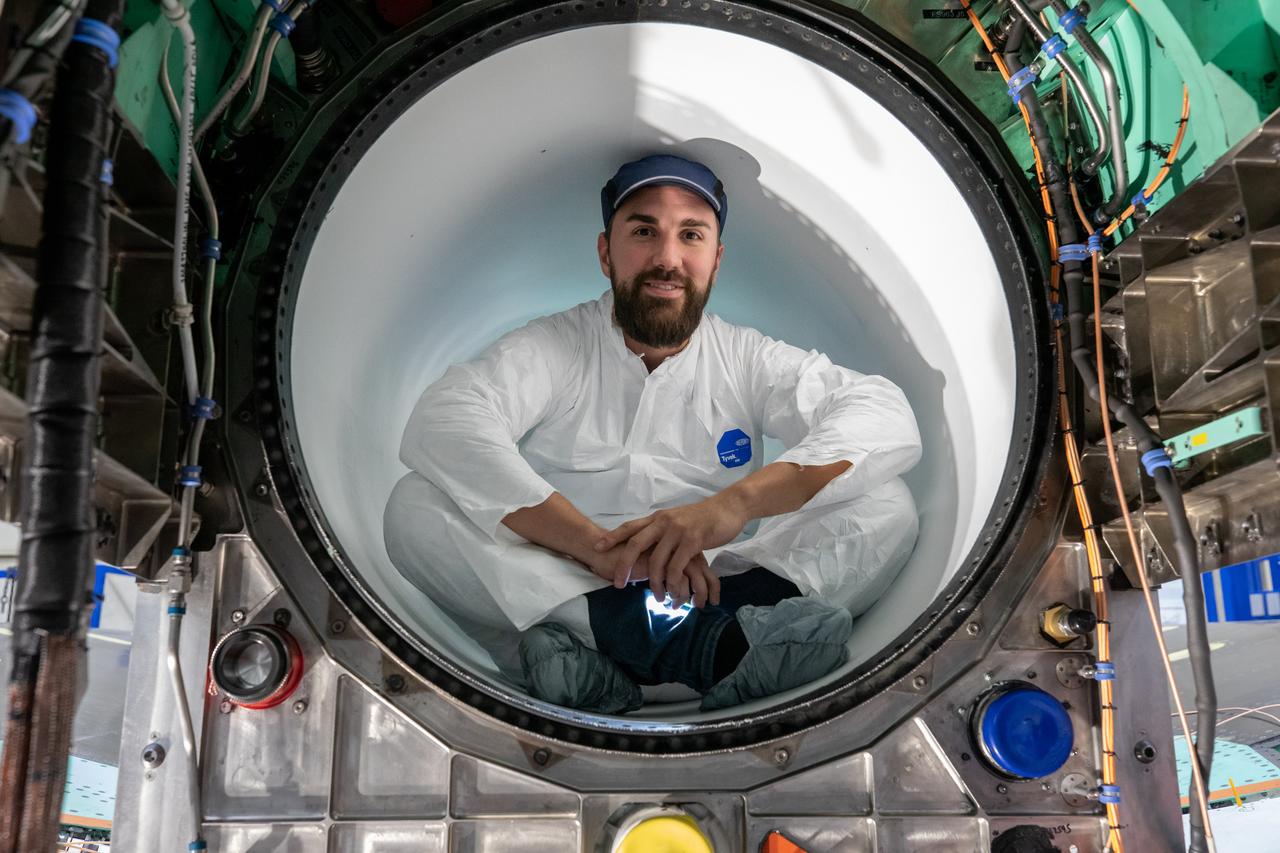
A Lockheed Martin Skunk Works technician takes a break for a photo. Note that the technician is wearing protective clean gear while sitting inside the X-59 engine inlet. Wearing this gear reduces the chance of any foreign objects from damaging the engine inlet.
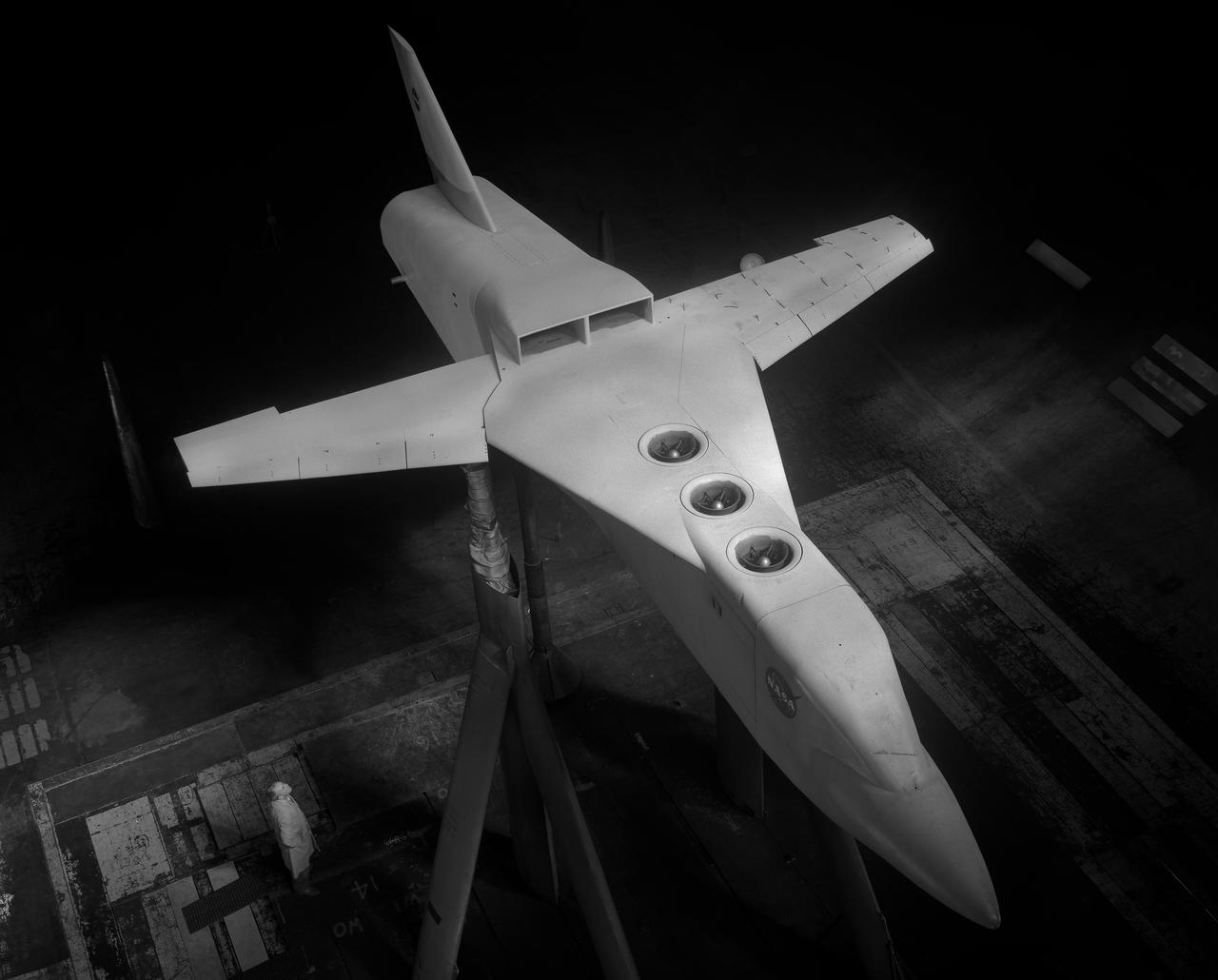
A-38524. Lift engine VSTOL fighter model, 3/4 top front view with jet engines. Edward Varerre, in picture.
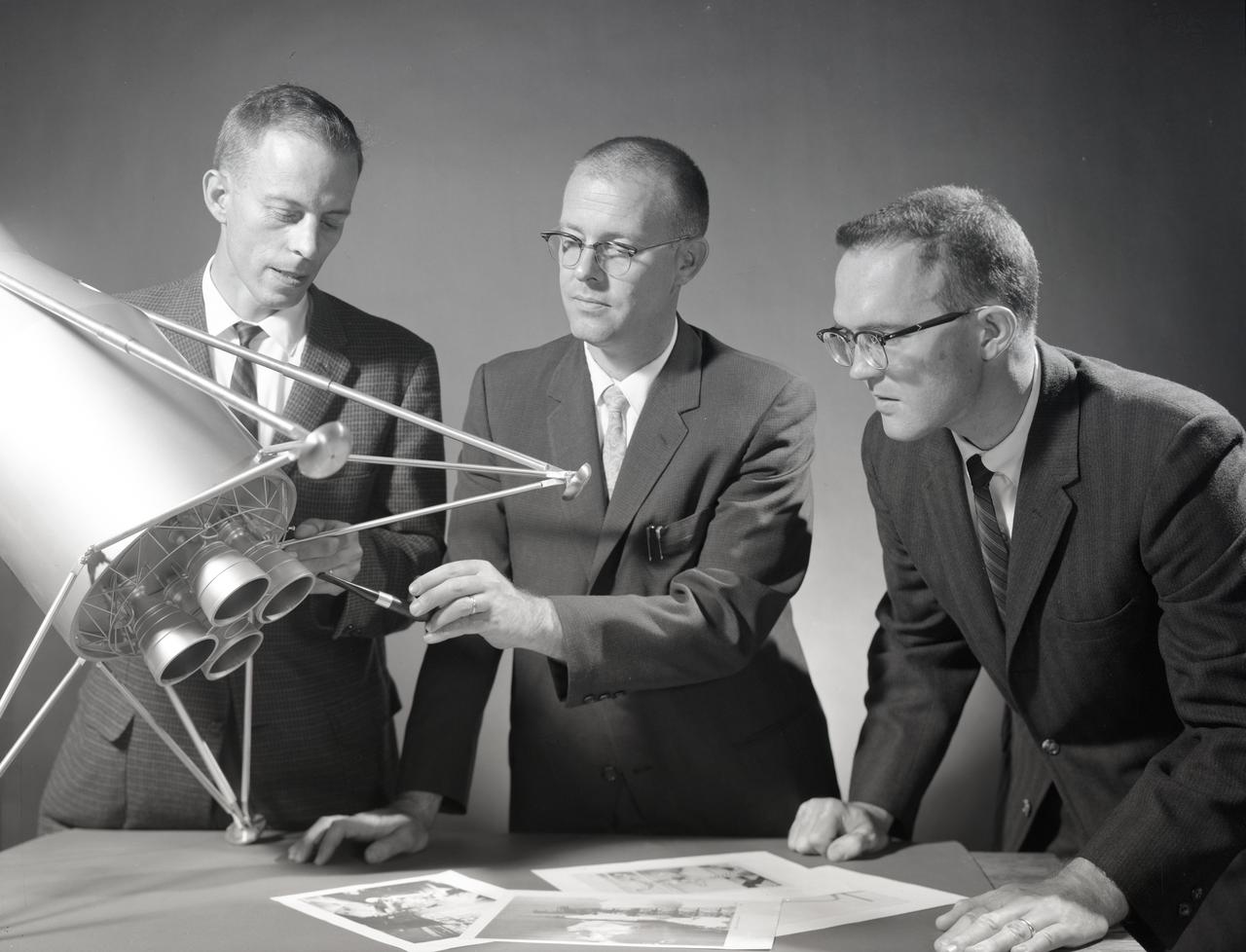
NASA ENGINEERS DISCUSSING APOLLO PROJECT

This photo shows the second RS-25 engine attached to the core stage for NASA’s Space Launch System rocket for the agency’s Artemis I mission to the Moon. Engineers and technicians at NASA’s Michoud Assembly Facility in New Orleans structurally mated the second of four engines to the stage on Oct. 30 and are currently integrating the propulsion and electrical systems within the structure to complete the installation. Integration of the RS-25 engines to the recently completed core stage structure is a collaborative, multistep process for NASA and its partners Boeing, the core stage lead contractor, and Aerojet Rocketdyne, the RS-25 engines lead contractor. The four RS-25 engines for Artemis I are modified heritage flight hardware from the Space Shuttle Program, ensuring high performance and reliability to power NASA’s next generation lunar missions. Each engine also has a special identification number, and NASA keeps a history of which engines are used on each mission. The second engine, Engine 2045, has flown on several shuttle missions, including the mission that returned NASA astronaut John Glenn to space in 1998 as well as the first and only shuttle launch to occur on Independence Day in 2006. Offering more payload mass, volume capability and energy to speed missions through space, the SLS rocket, along with NASA’s Gateway in lunar orbit and Orion, is part of NASA’s backbone for deep space exploration and the Artemis lunar program. No other rocket is capable of carrying astronauts in Orion around the Moon in a single mission.

This photo shows the second RS-25 engine attached to the core stage for NASA’s Space Launch System rocket for the agency’s Artemis I mission to the Moon. Engineers and technicians at NASA’s Michoud Assembly Facility in New Orleans structurally mated the second of four engines to the stage on Oct. 30 and are currently integrating the propulsion and electrical systems within the structure to complete the installation. Integration of the RS-25 engines to the recently completed core stage structure is a collaborative, multistep process for NASA and its partners Boeing, the core stage lead contractor, and Aerojet Rocketdyne, the RS-25 engines lead contractor. The four RS-25 engines for Artemis I are modified heritage flight hardware from the Space Shuttle Program, ensuring high performance and reliability to power NASA’s next generation lunar missions. Each engine also has a special identification number, and NASA keeps a history of which engines are used on each mission. The second engine, Engine 2045, has flown on several shuttle missions, including the mission that returned NASA astronaut John Glenn to space in 1998 as well as the first and only shuttle launch to occur on Independence Day in 2006. Offering more payload mass, volume capability and energy to speed missions through space, the SLS rocket, along with NASA’s Gateway in lunar orbit and Orion, is part of NASA’s backbone for deep space exploration and the Artemis lunar program. No other rocket is capable of carrying astronauts in Orion around the Moon in a single mission.
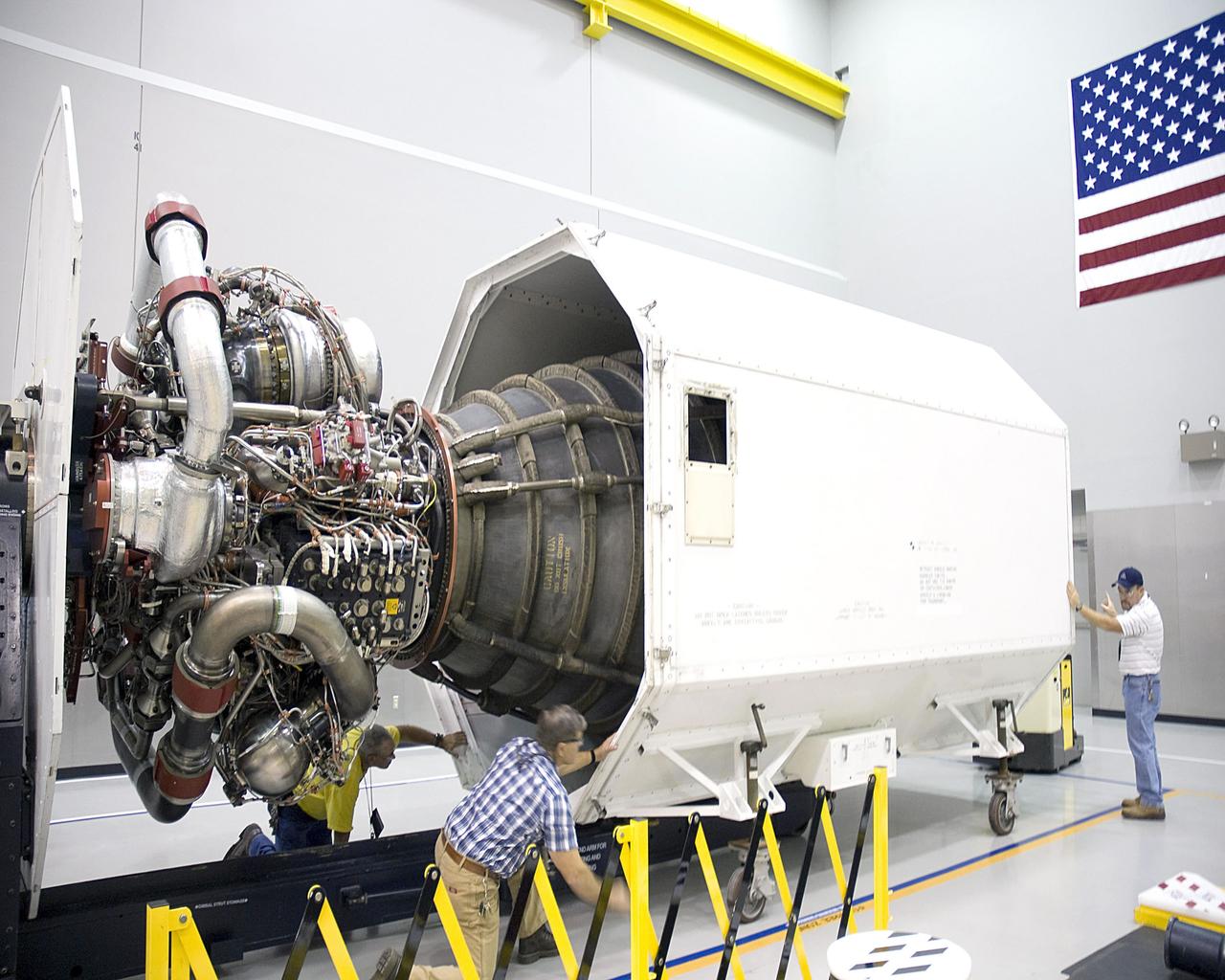
Workers at Stennis Space Center examine space shuttle main engine 2061 upon its arrival Oct. 1. The engine was to be the last shuttle flight engine to be scheduled for testing at Stennis.
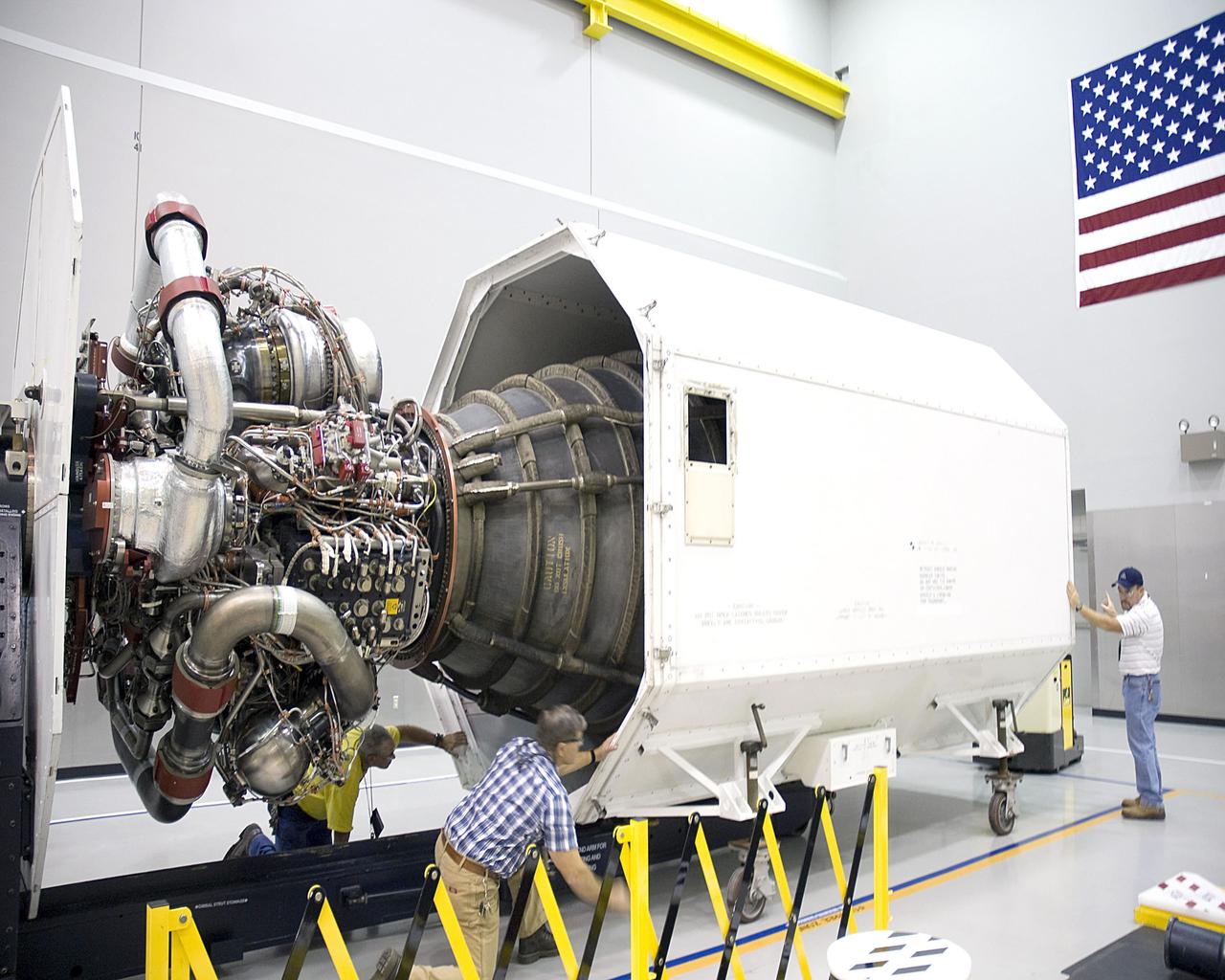
Workers at Stennis Space Center examine space shuttle main engine 2061 upon its arrival Oct. 1. The engine was to be the last shuttle flight engine to be scheduled for testing at Stennis.
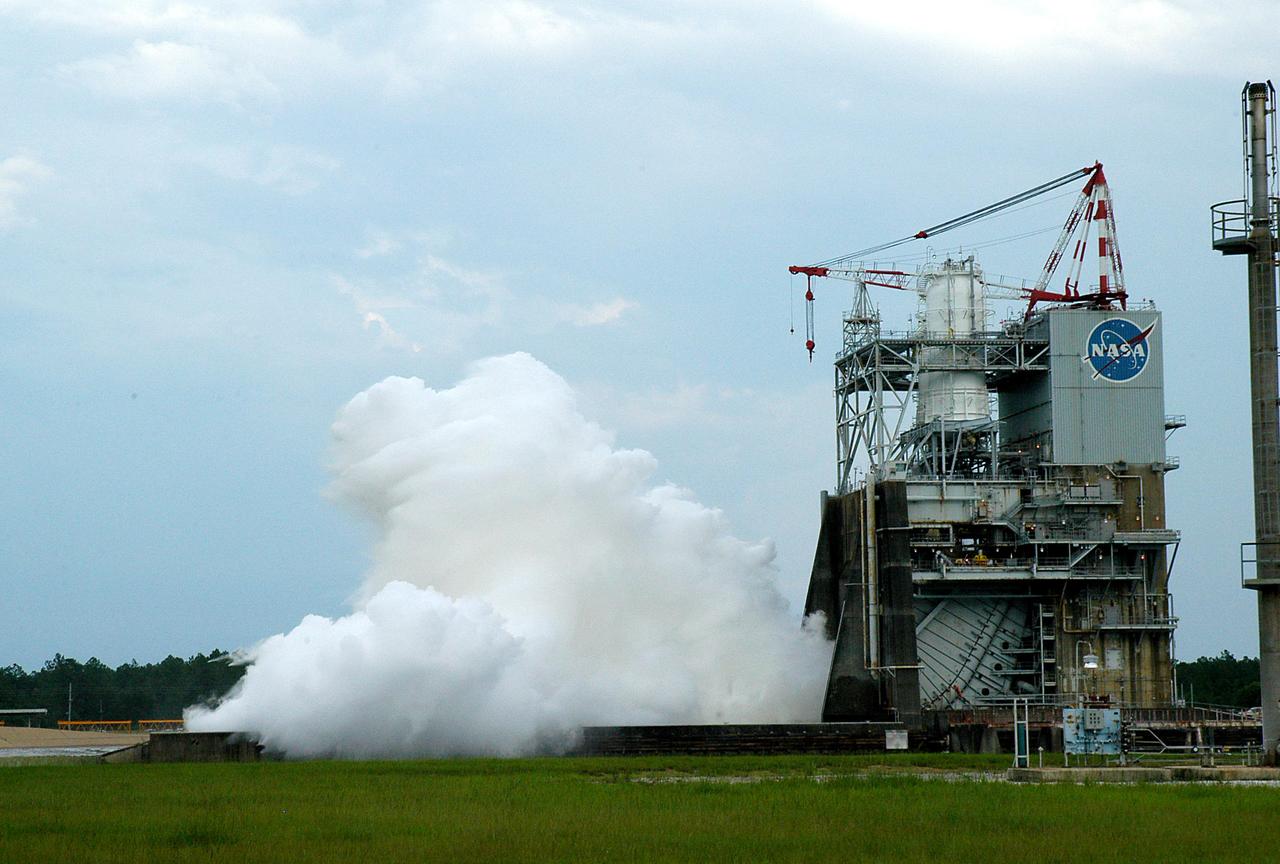
A plume of steam signals a successful engine start of the J-2X rocket engine on the A-3 Test Stand at Stennis Space Center on July 26. The 3.7-second test was the second on the next-generation engine, which is being developed for NASA by Pratt & Whitney Rocketdyne.
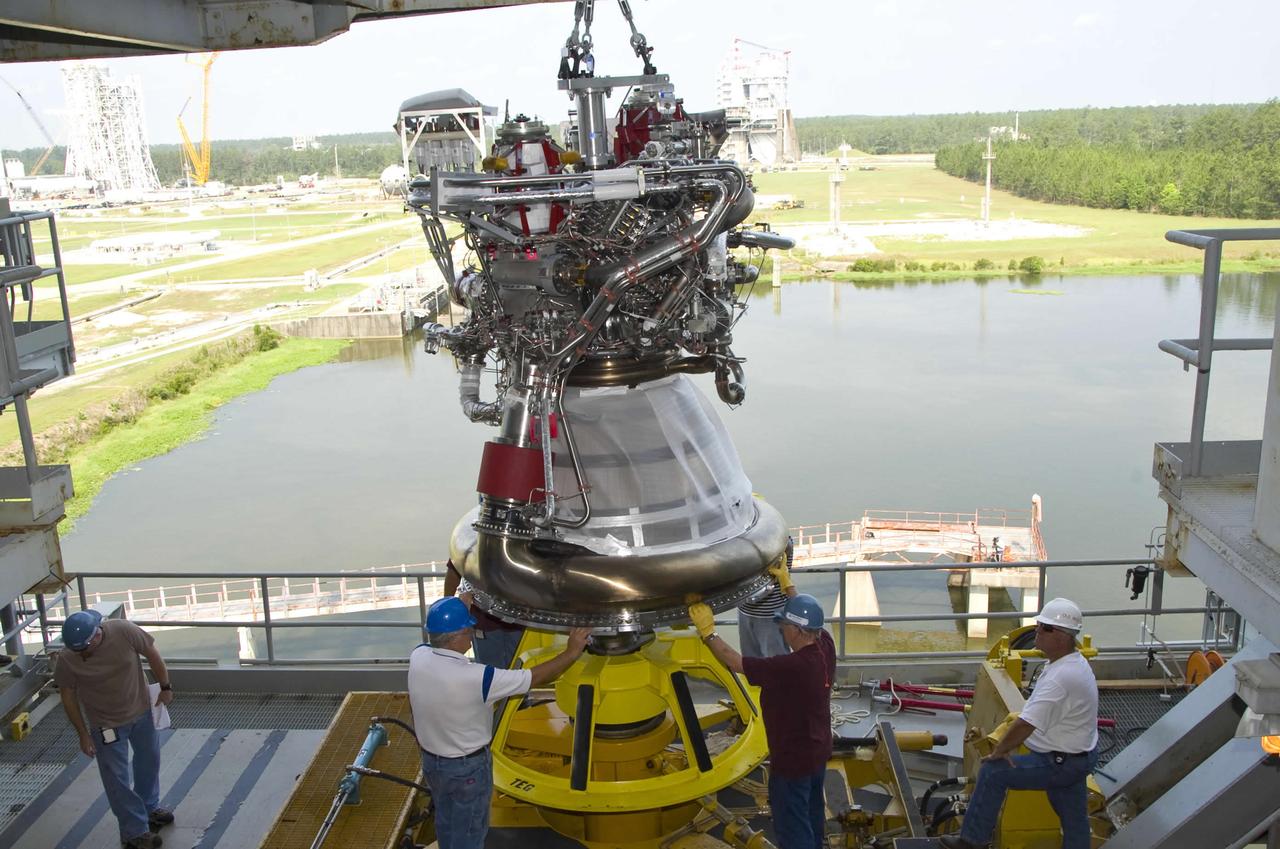
A J-2X next-generation rocket engine is lifted onto the A-2 Test Stand at Stennis Space Center. Testing of the engine began the following month. The engine is being developed for NASA by Pratt & Whitney Rocketdyne and could help carry humans beyond low-Earth orbit into deep space once more.
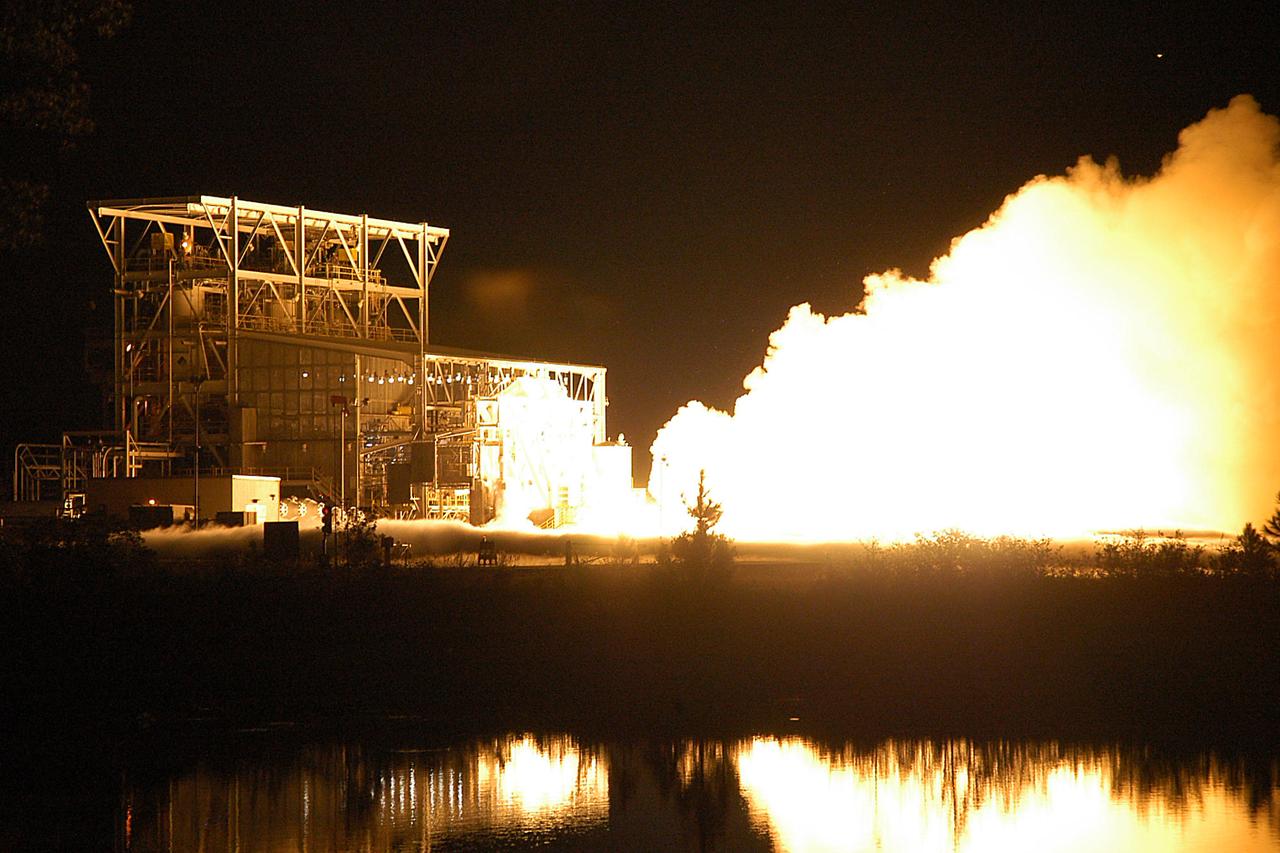
A team of engineers at Stennis Space Center conducted a test firing of an Aerojet AJ26 flight engine Nov. 17, providing continued support to Orbital Sciences Corporation as it prepares to launch commercial cargo missions to the International Space Station. AJ26 engines will power Orbital's Taurus II rocket on the missions.
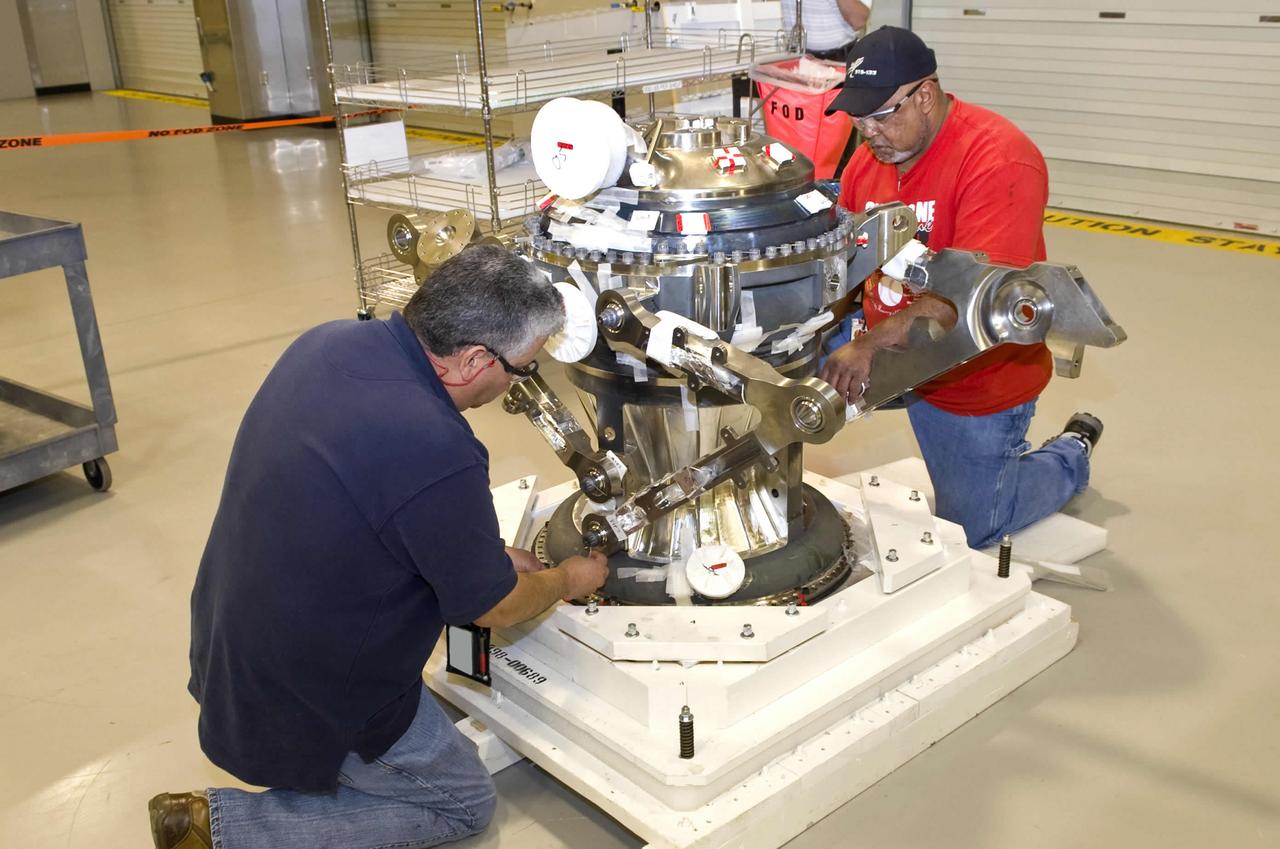
Pratt & Whitney Rocketdyne employees Carlos Alfaro (l) and Oliver Swanier work on the main combustion element of the J-2X rocket engine at their John C. Stennis Space Center facility. Assembly of the J-2X rocket engine to be tested at the site is under way, with completion and delivery to the A-2 Test Stand set for June. The J-2X is being developed as a next-generation engine that can carry humans into deep space. Stennis Space Center is preparing a trio of stands to test the new engine.
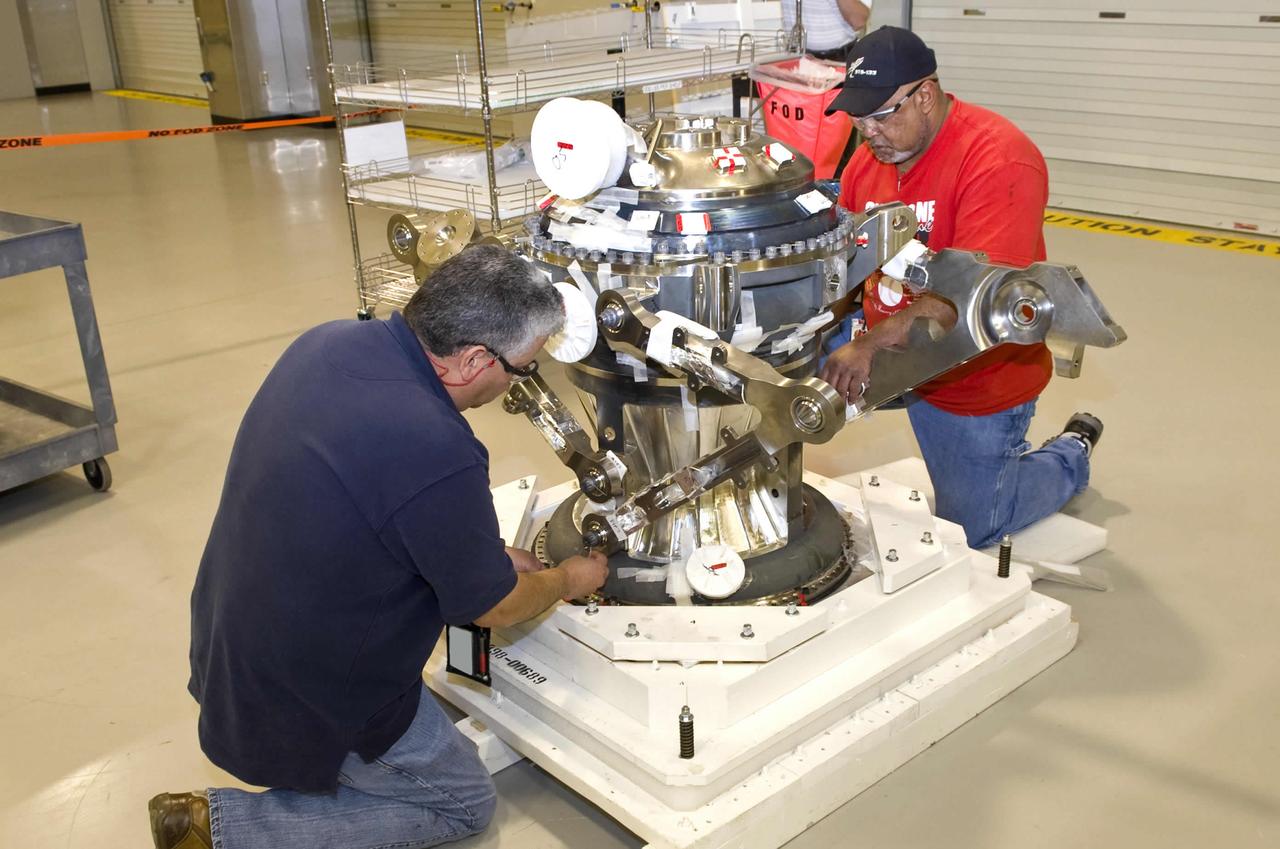
Pratt & Whitney Rocketdyne employees Carlos Alfaro (l) and Oliver Swanier work on the main combustion element of the J-2X rocket engine at their John C. Stennis Space Center facility. Assembly of the J-2X rocket engine to be tested at the site is under way, with completion and delivery to the A-2 Test Stand set for June. The J-2X is being developed as a next-generation engine that can carry humans into deep space. Stennis Space Center is preparing a trio of stands to test the new engine.
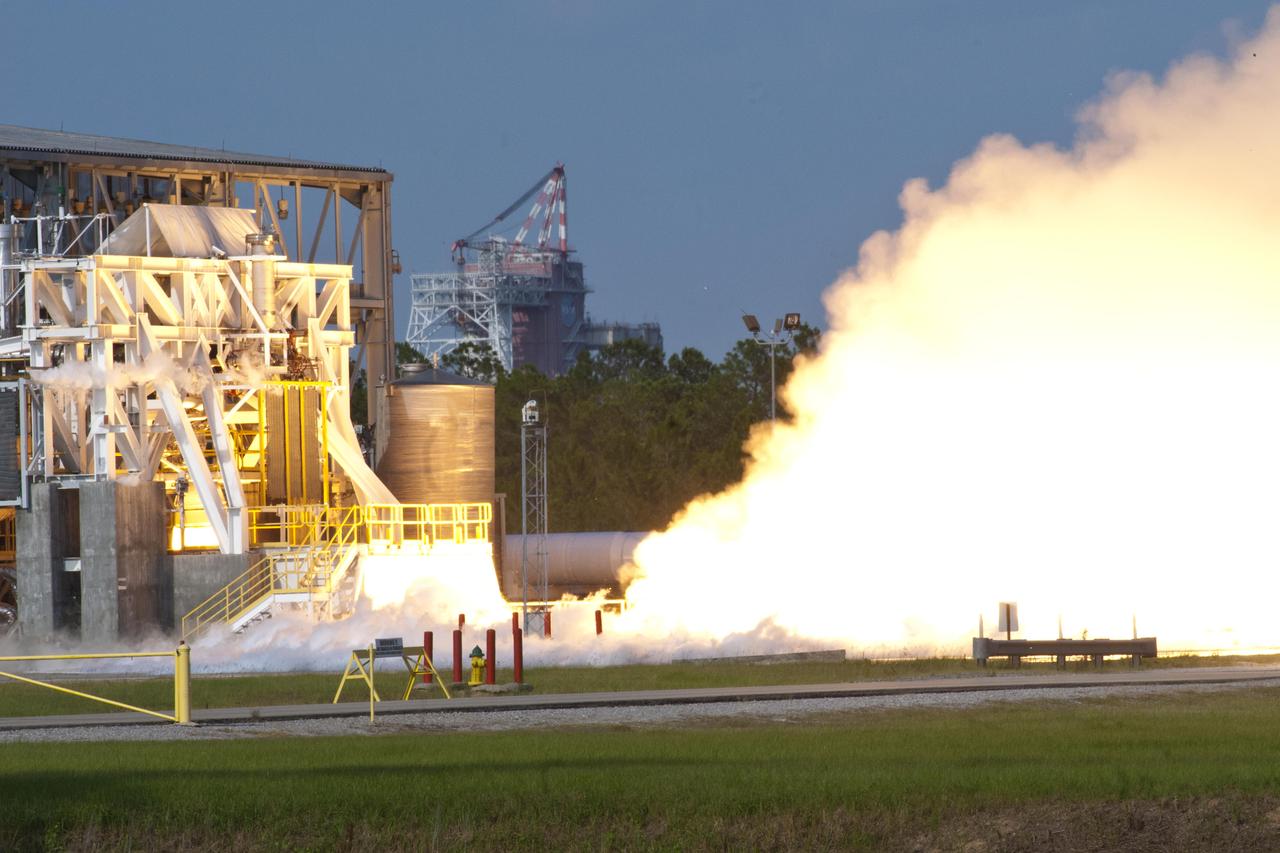
NASA engineers tested an Aerojet AJ26 rocket engine on the E-1 Test Stand at Stennis Space Center on June 25, 2012, against the backdrop of the B-1/B-2 Test Stand. The engine will be used by Orbital Sciences Corporation to power commercial cargo flights to the International Space Station.
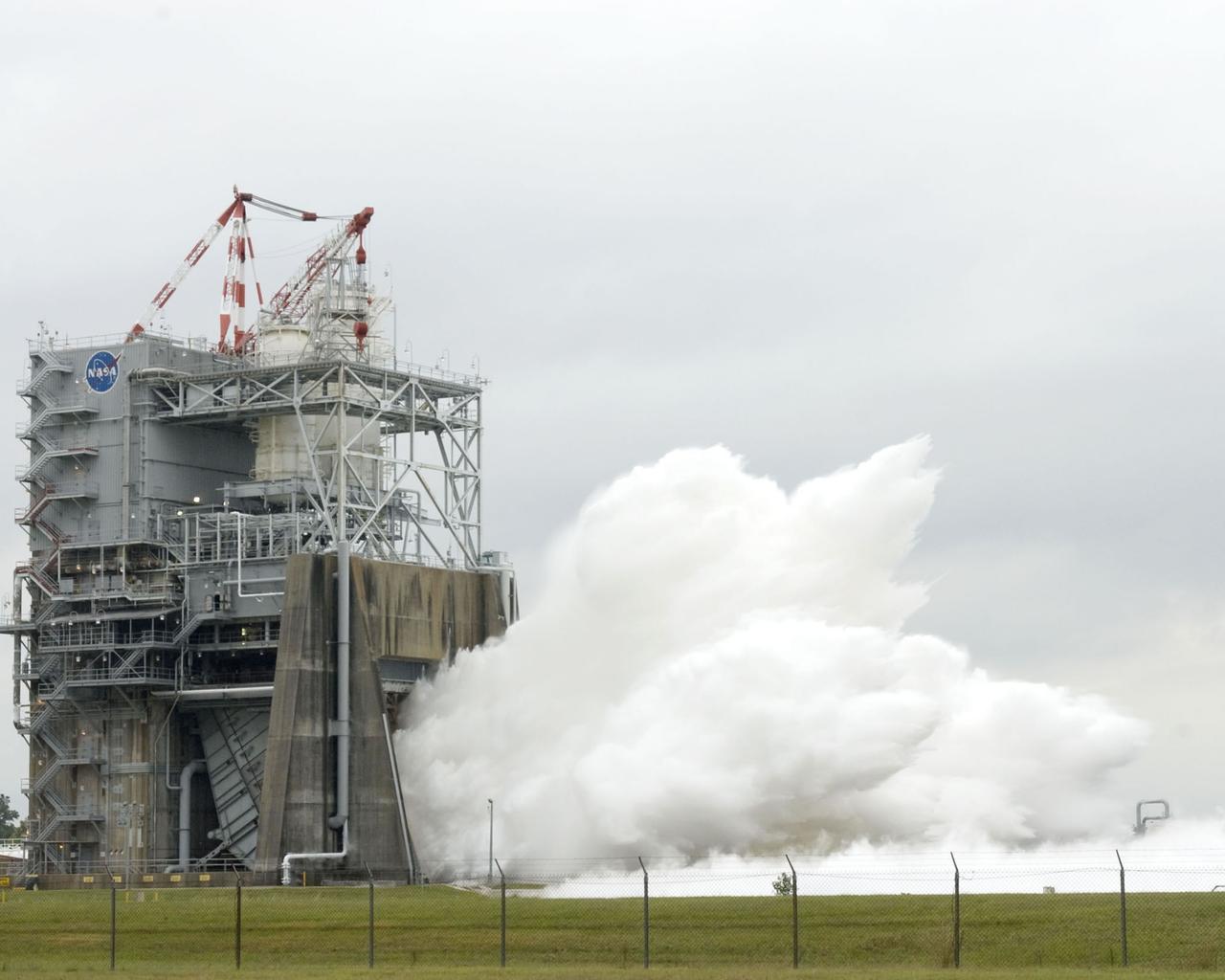
Steam blasts out of the A-2 Test Stand at Stennis Space Center on Oct. 22 as engineers begin a certification test on engine 2061, the last space shuttle main flight engine scheduled to be built. Since 1975, Stennis has tested every space shuttle main engine used in the program - about 50 engines in all. Those engines have powered more than 120 shuttle missions - and no mission has failed as a result of engine malfunction. For the remainder of 2008 and throughout 2009, Stennis will continue testing of various space shuttle main engine components.
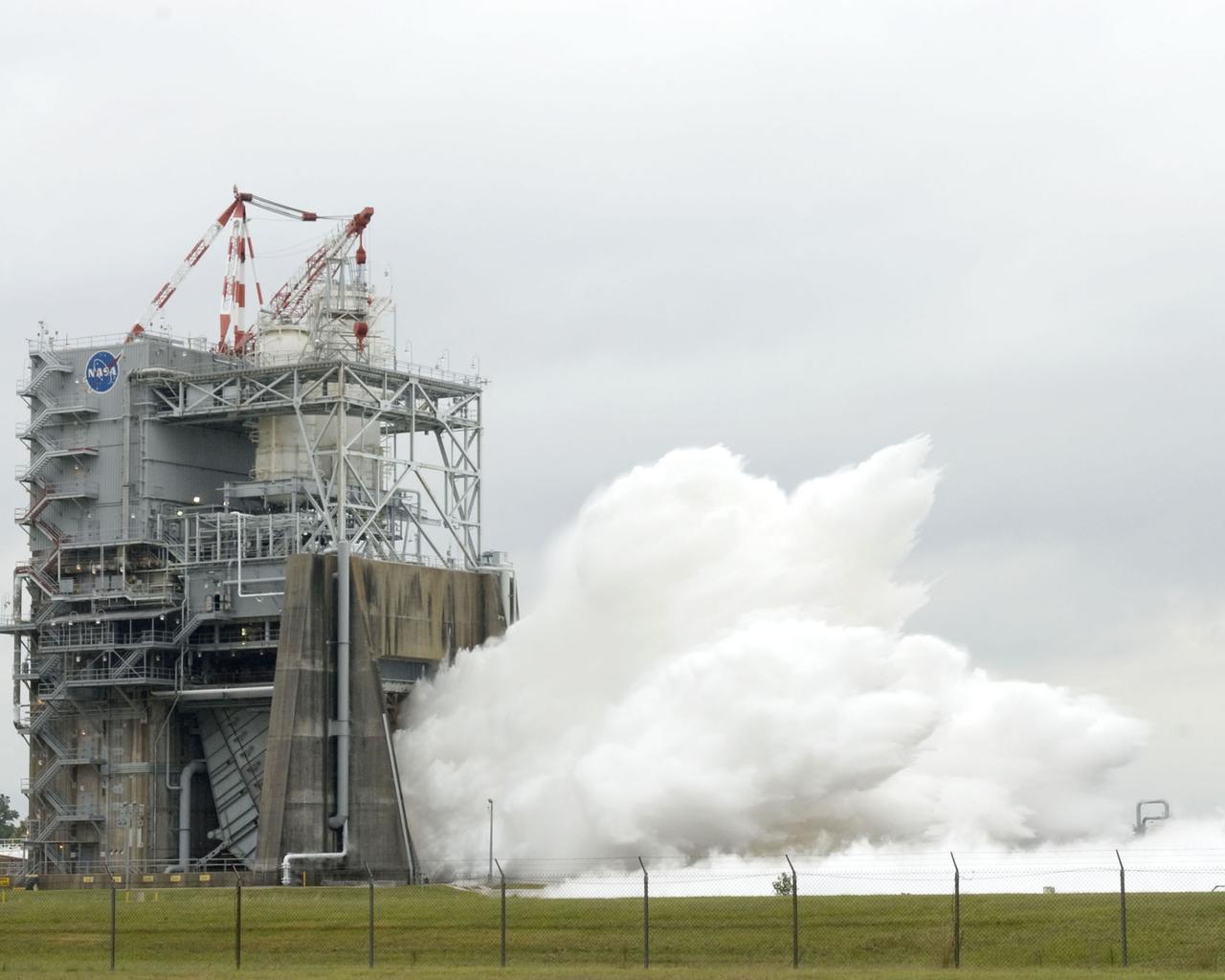
Steam blasts out of the A-2 Test Stand at Stennis Space Center on Oct. 22 as engineers begin a certification test on engine 2061, the last space shuttle main flight engine scheduled to be built. Since 1975, Stennis has tested every space shuttle main engine used in the program - about 50 engines in all. Those engines have powered more than 120 shuttle missions - and no mission has failed as a result of engine malfunction. For the remainder of 2008 and throughout 2009, Stennis will continue testing of various space shuttle main engine components.

A team of engineers from NASA's John C. Stennis Space Center, Orbital Sciences Corporation and Aerojet conduct a successful test of an Aerojet AJ26 rocket engine on March 19. Stennis is testing AJ26 engines for Orbital Sciences to power commercial cargo missions to the International Space Station. Orbital has partnered with NASA through the Commercial Orbital Transportation Services initiative to carry out eight cargo missions to the space station by 2015, using Taurus II rockets.
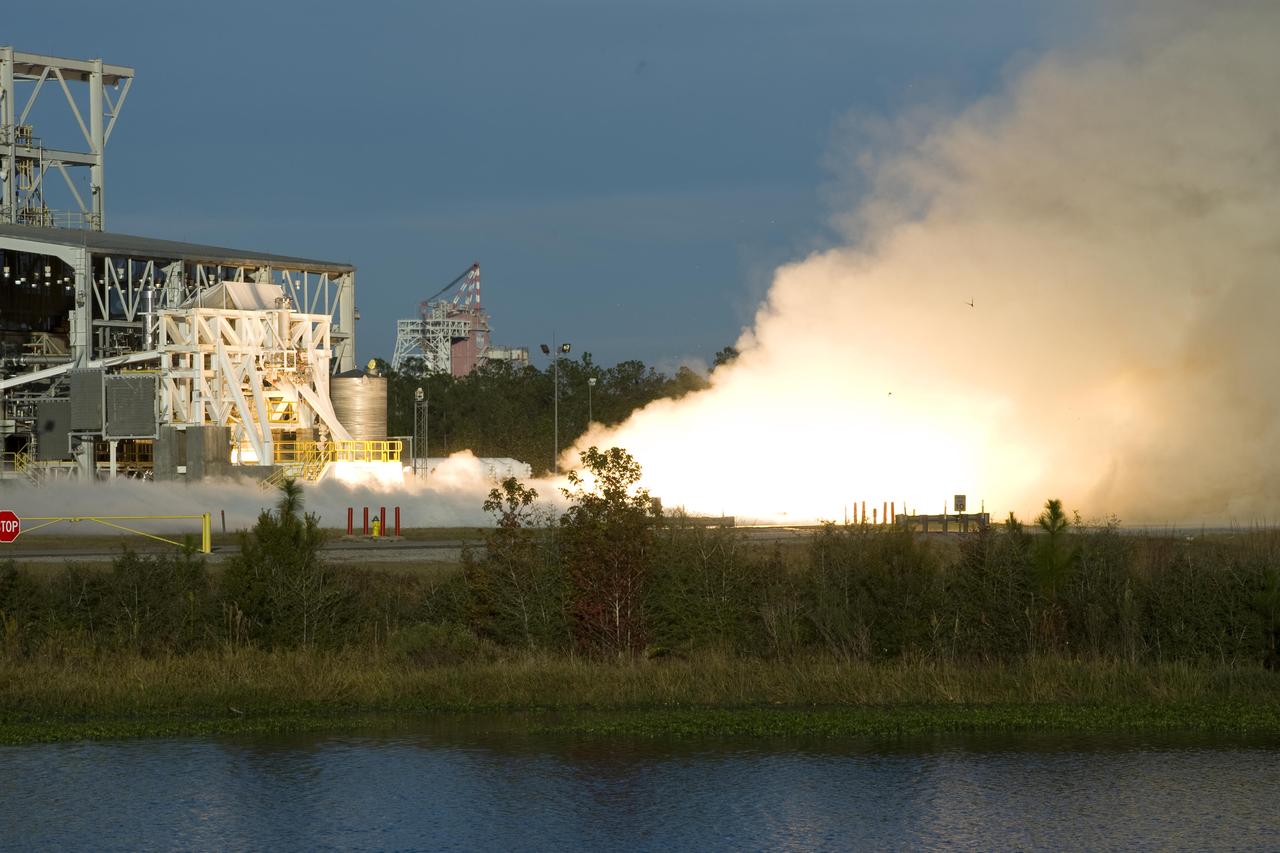
Fire and steam signal a successful test firing of Orbital Sciences Corporation's Aerojet AJ26 rocket engine at John C. Stennis Space Center. AJ26 engines will be used to power Orbital's Taurus II space vehicle on commercial cargo flights to the International Space Station. On Nov. 10, operators at Stennis' E-1 Test Stand conducted a 10-second test fire of the engine, the first of a series of three verification tests. Orbital has partnered with NASA to provide eight missions to the ISS by 2015.
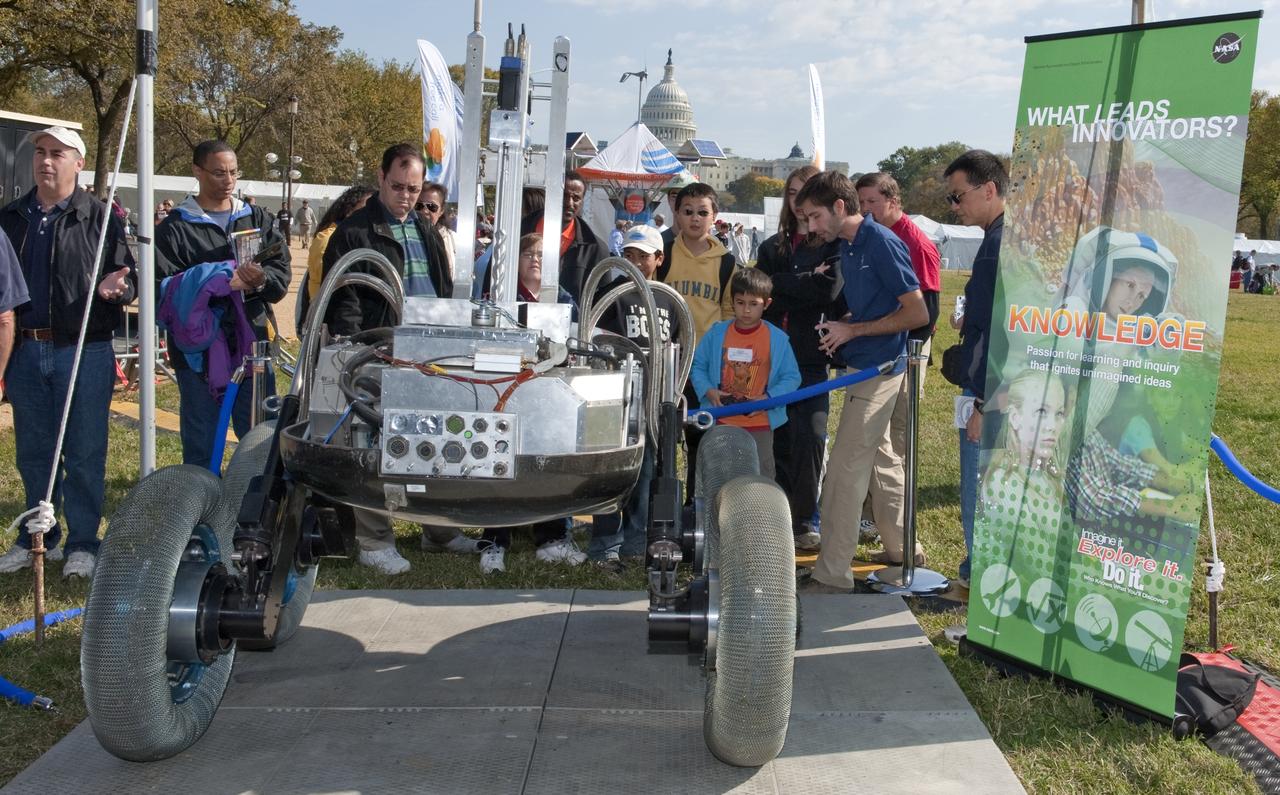
Visitors to the USA Science and Engineering Festival look on at one of the many exhibits, Saturday, Oct. 23, 2010, on the National Mall in Washington. NASA, joined with more than 500 science organizations this weekend to inspire the next generation of scientists and engineers during the first national science and engineering festival held in the nation's capital. Photo Credit: (NASA/Paul E. Alers)
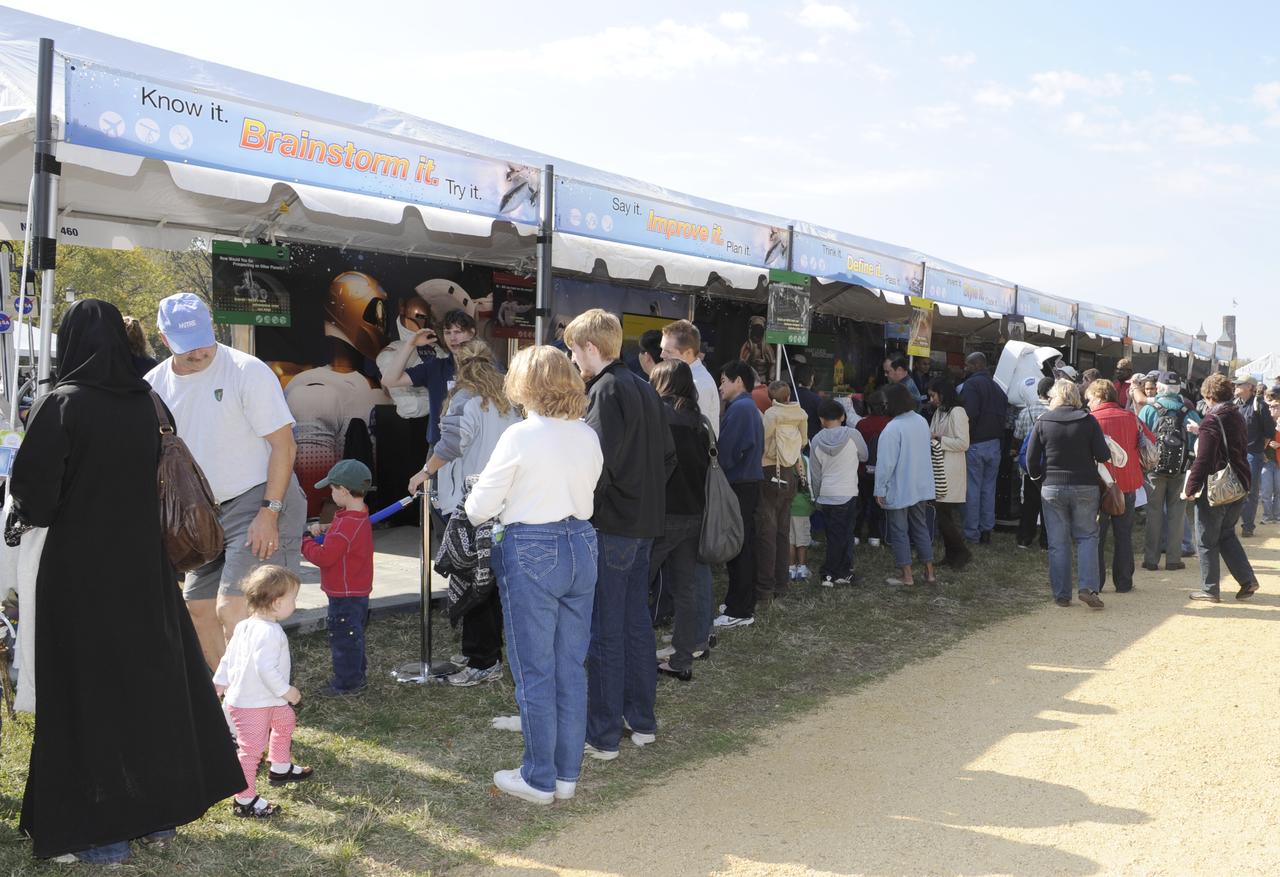
Visitors crowd the NASA exhibits during the USA Science and Engineering Festival, Saturday, Oct. 23, 2010, on the National Mall in Washington. NASA, joined with more than 500 science organizations this weekend to inspire the next generation of scientists and engineers during the first national science and engineering festival held in the nation's capital. Photo Credit: (NASA/Paul E. Alers)
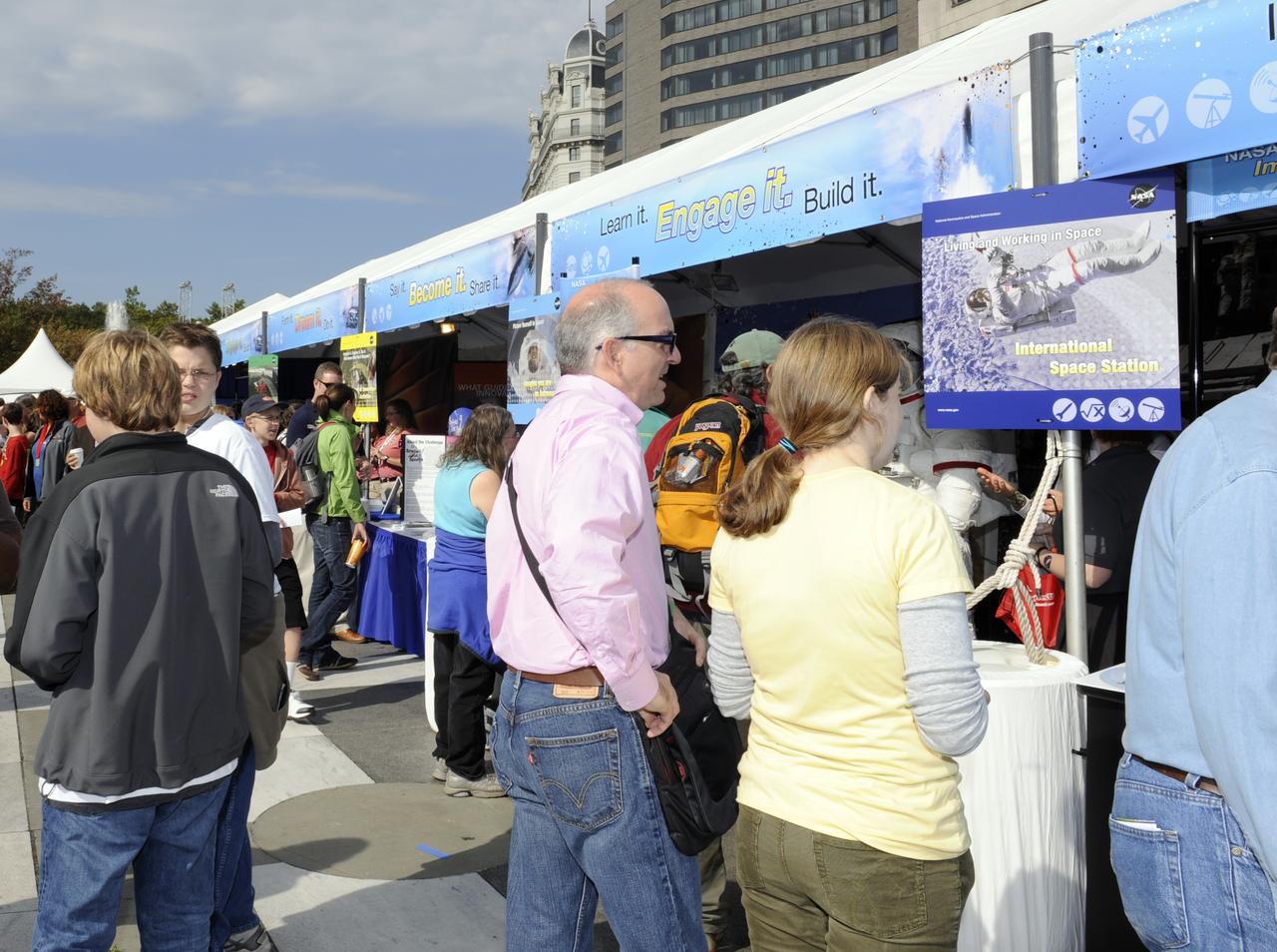
Visitors to the USA Science and Engineering Festival look over the many exhibits, Saturday, Oct. 23, 2010, at Freedom Plaza in Washington. NASA, joined with more than 500 science organizations this weekend to inspire the next generation of scientists and engineers during the first national science and engineering festival held in the nation's capital. Photo Credit: (NASA/Paul E. Alers)
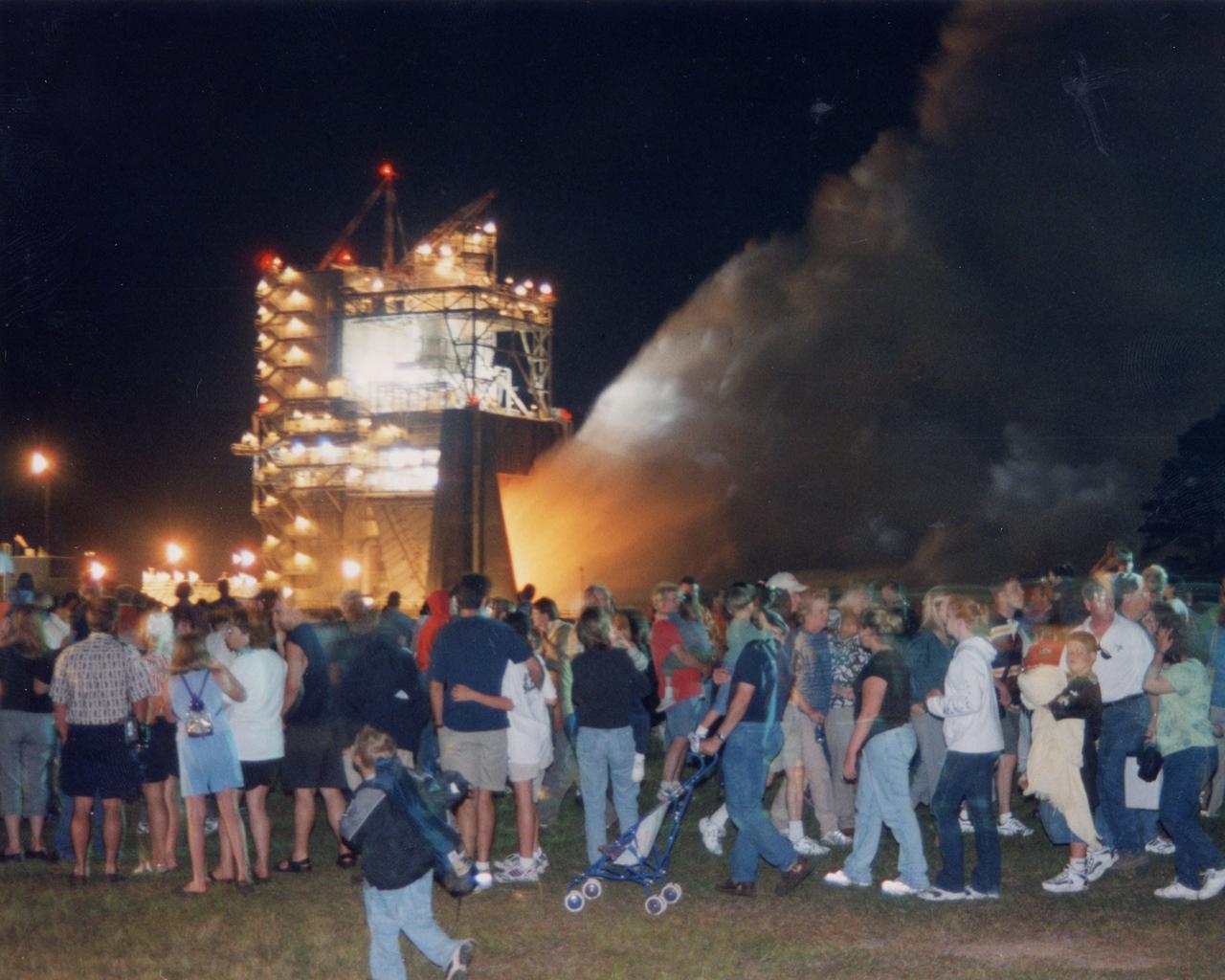
Over the past year, more than 20,000 people came to Stennis Space Center to witness the 'shake, rattle and roar' of one of the world's most sophisticated engines. Stennis Space Center in south Mississippi is NASA's lead center for rocket propulsion testing. StenniSphere, the visitor center for Stennis Space Center, hosted more than 250,000 visitors in its first year of operation. Of those visitors, 26.4 percent were from Louisiana.
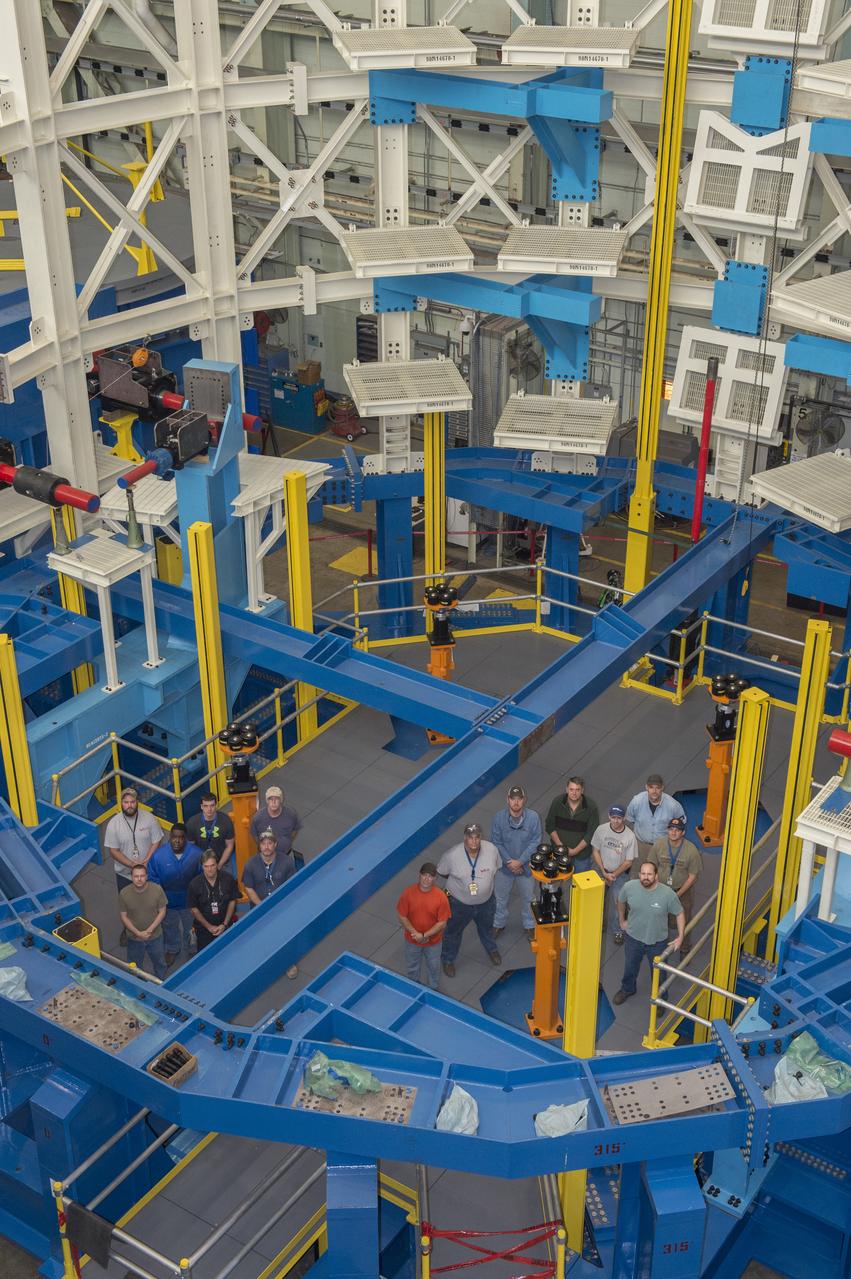
SLS ENGINE SECTION TEST STAND WITH CONSTRUCTION CREW
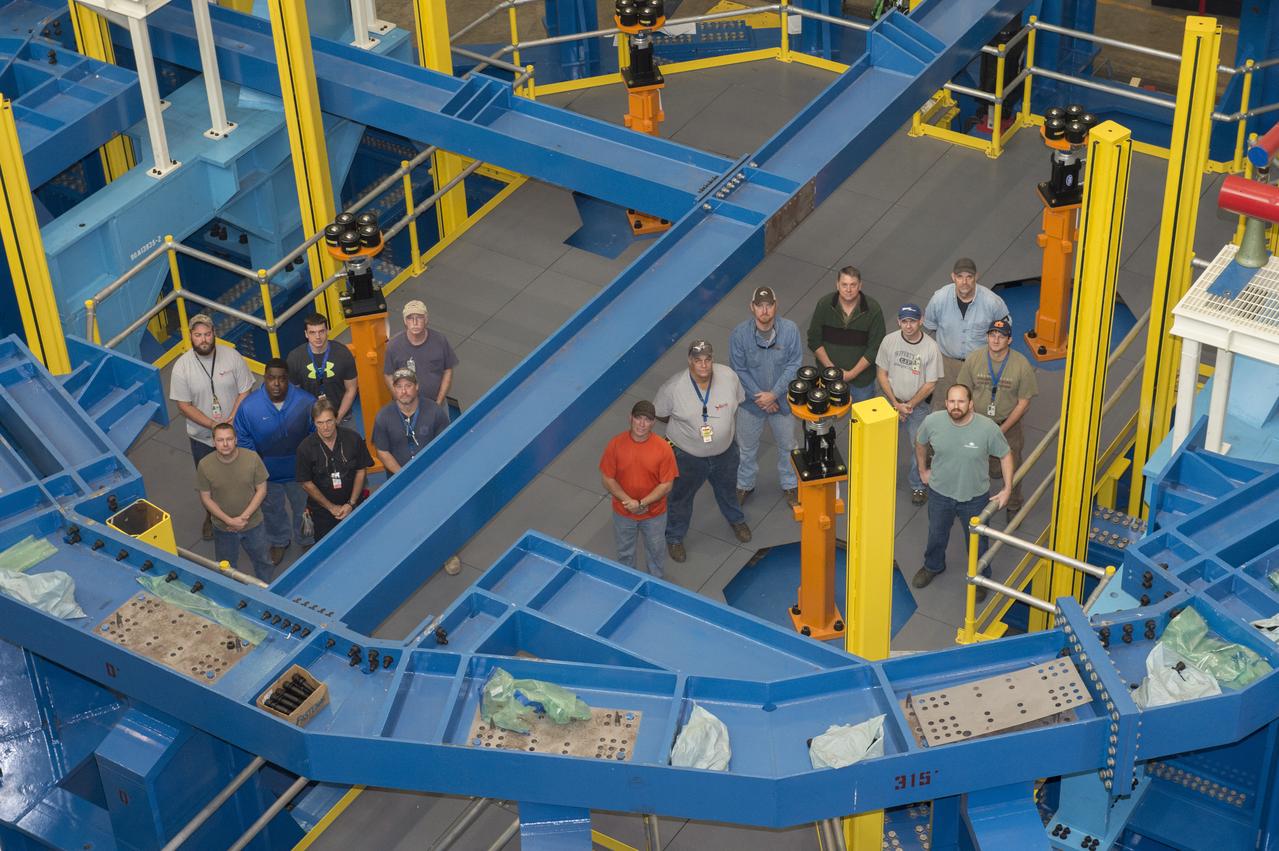
SLS ENGINE SECTION TEST STAND WITH CONSTRUCTION CREW
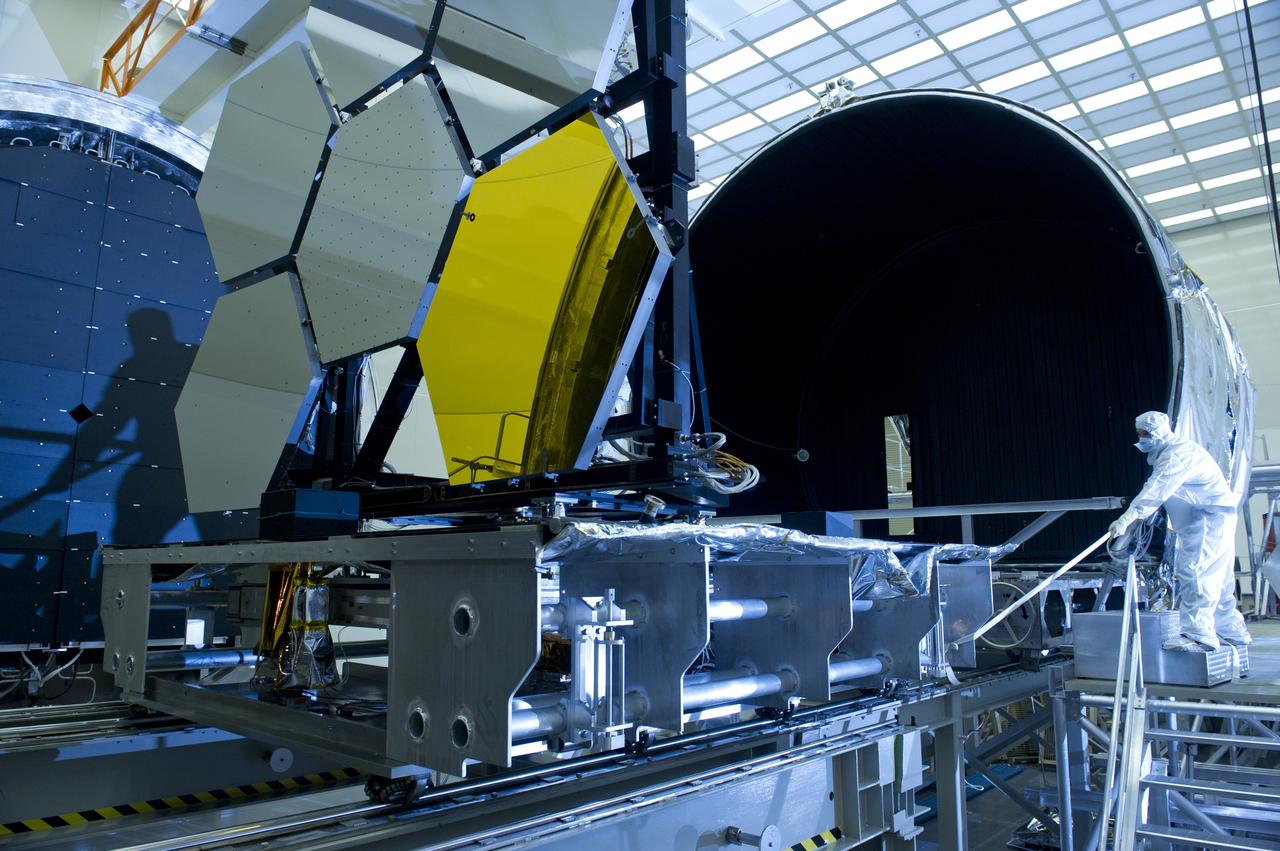
MARSHALL TEST ENGINEER HARLAN HAIGHT HELPS PULL JWST MIRROR ARRAY FROM CRYOGENICS CHAMBER.
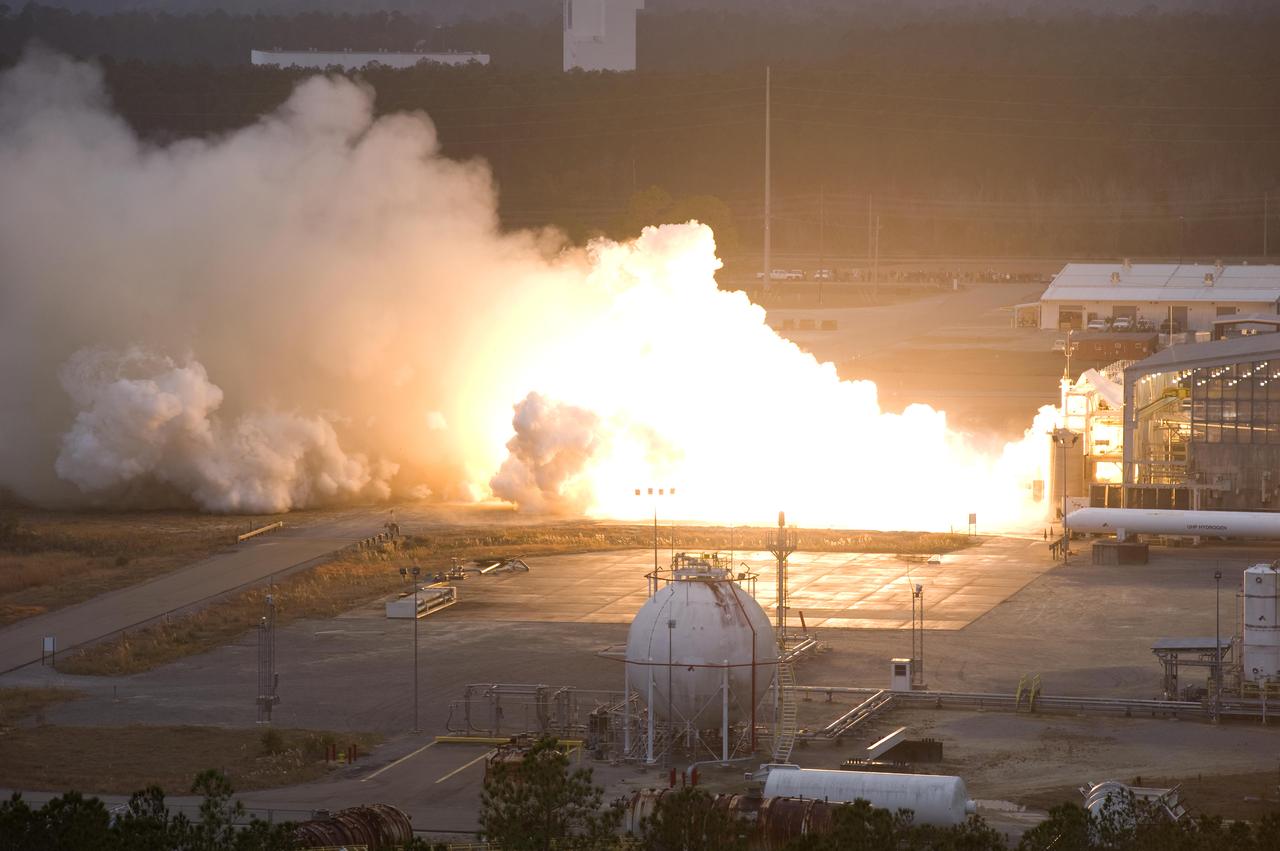
John C. Stennis Space Center engineers conduct a 55-second test fire of Aerojet's liquid-fuel AJ26 rocket engine that will power the first stage of Orbital Sciences Corporation's Taurus II space launch vehicle. The Dec. 17, 2010 test was conducted on the E-1 Test Stand at Stennis in support of NASA's Commercial Transportation Services partnerships to enable commercial cargo flights to the International Space Station. Orbital is under contract with NASA to provide eight cargo missions to the space station through 2015.
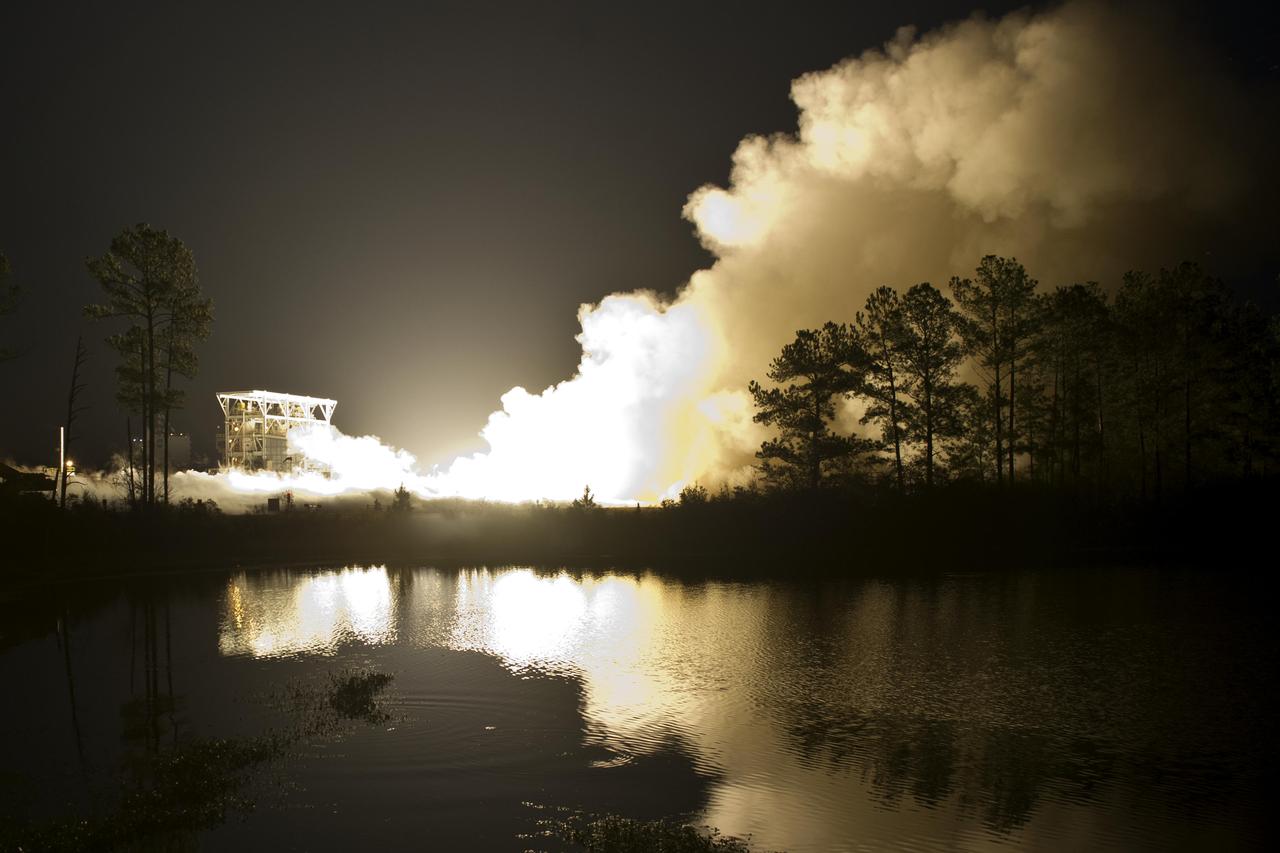
Stennis Space Center test-fired Aerojet AJ26 flight engine No. 8 on Dec. 15, continuing a commercial partnership with Orbital Services Corporation. Orbital has partnered with NASA to provide commercial cargo flights to the International Space Station. The AJ26 engines tested at Stennis will power the company's Taurus II space launch vehicle on the flights.
John C. Stennis Space Center engineers conduct a 55-second test fire of Aerojet's liquid-fuel AJ26 rocket engine that will power the first stage of Orbital Sciences Corporation's Taurus II space launch vehicle. The Dec. 17, 2010 test was conducted on the E-1 Test Stand at Stennis in support of NASA's Commercial Transportation Services partnerships to enable commercial cargo flights to the International Space Station. Orbital is under contract with NASA to provide eight cargo missions to the space station through 2015.
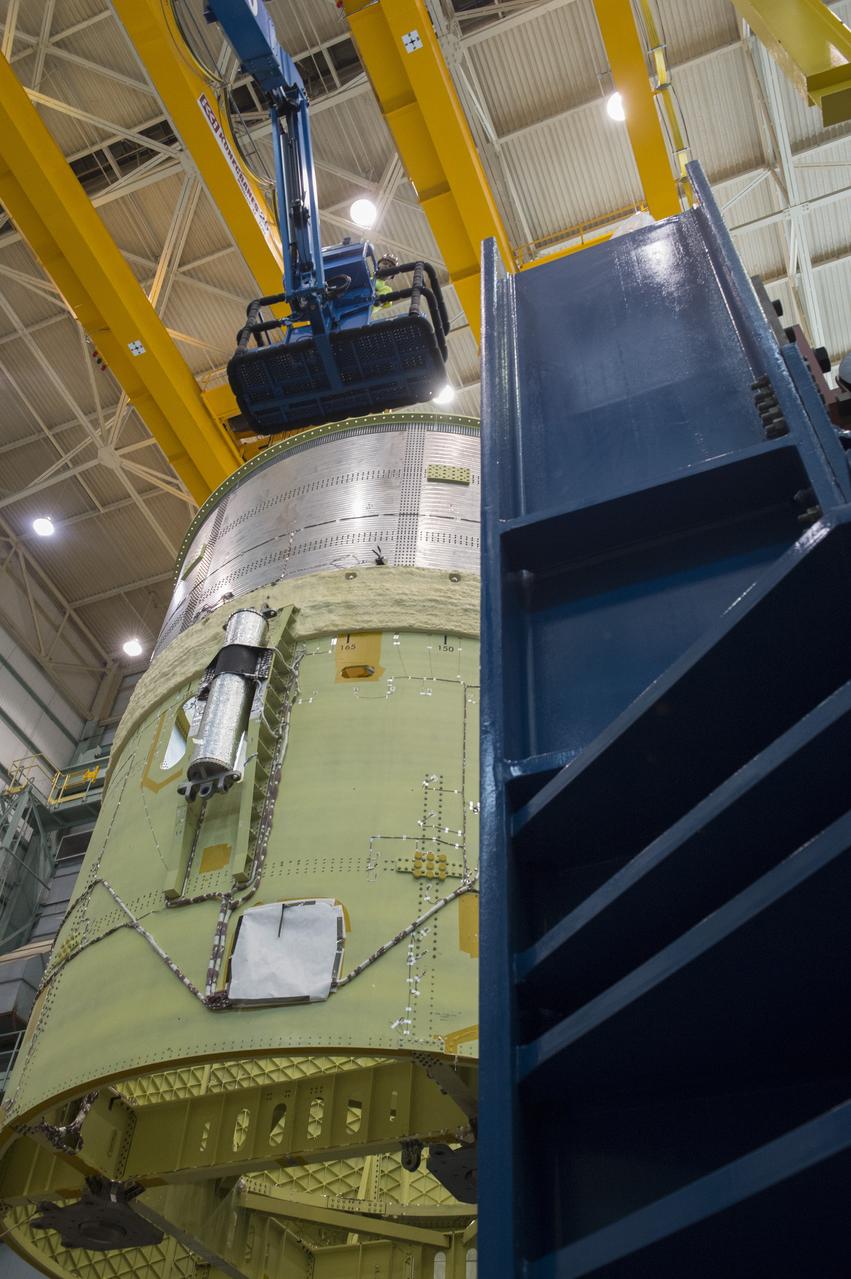
NASA engineers install test hardware for the agency's new heavy lift rocket, the Space Launch System, into a newly constructed 50-foot structural test stand at NASA's Marshall Space Flight Center. In the stand, hydraulic cylinders will be electronically controlled to push, pull, twist and bend the test article with millions of pounds of force. Engineers will record and analyze over 3,000 channels of data for each test case to verify the capabilities of the engine section and validate that the design and analysis models accurately predict the amount of loads the core stage can withstand during launch and ascent. The engine section, recently delivered via NASA's barge Pegasus from NASA's Michoud Assembly Facility, is the first of four core stage structural test articles scheduled to be delivered to Marshall for testing. The engine section, located at the bottom of SLS's massive core stage, will house the rocket's four RS-25 engines and be an attachment point for the two solid rocket boosters.
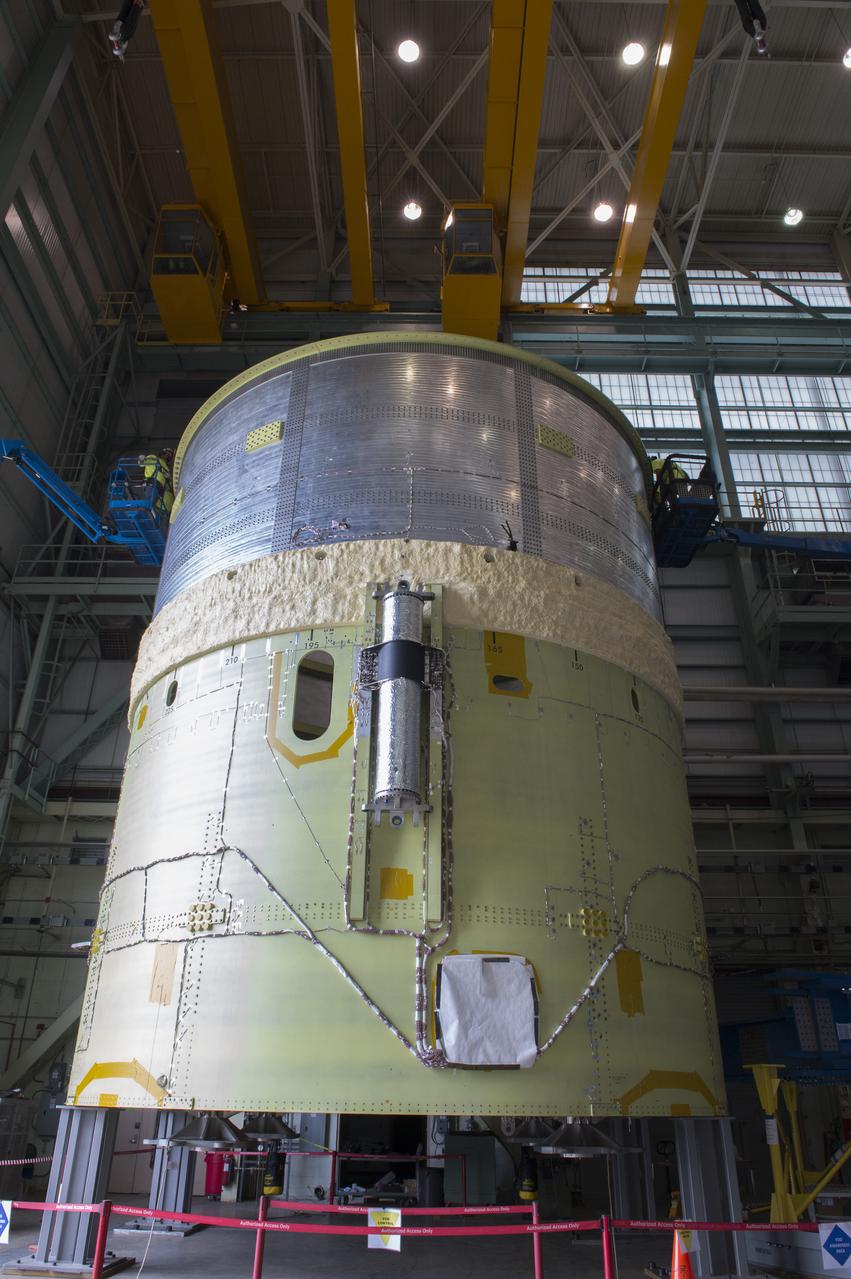
NASA engineers install test hardware for the agency's new heavy lift rocket, the Space Launch System, into a newly constructed 50-foot structural test stand at NASA's Marshall Space Flight Center. In the stand, hydraulic cylinders will be electronically controlled to push, pull, twist and bend the test article with millions of pounds of force. Engineers will record and analyze over 3,000 channels of data for each test case to verify the capabilities of the engine section and validate that the design and analysis models accurately predict the amount of loads the core stage can withstand during launch and ascent. The engine section, recently delivered via NASA's barge Pegasus from NASA's Michoud Assembly Facility, is the first of four core stage structural test articles scheduled to be delivered to Marshall for testing. The engine section, located at the bottom of SLS's massive core stage, will house the rocket's four RS-25 engines and be an attachment point for the two solid rocket boosters.
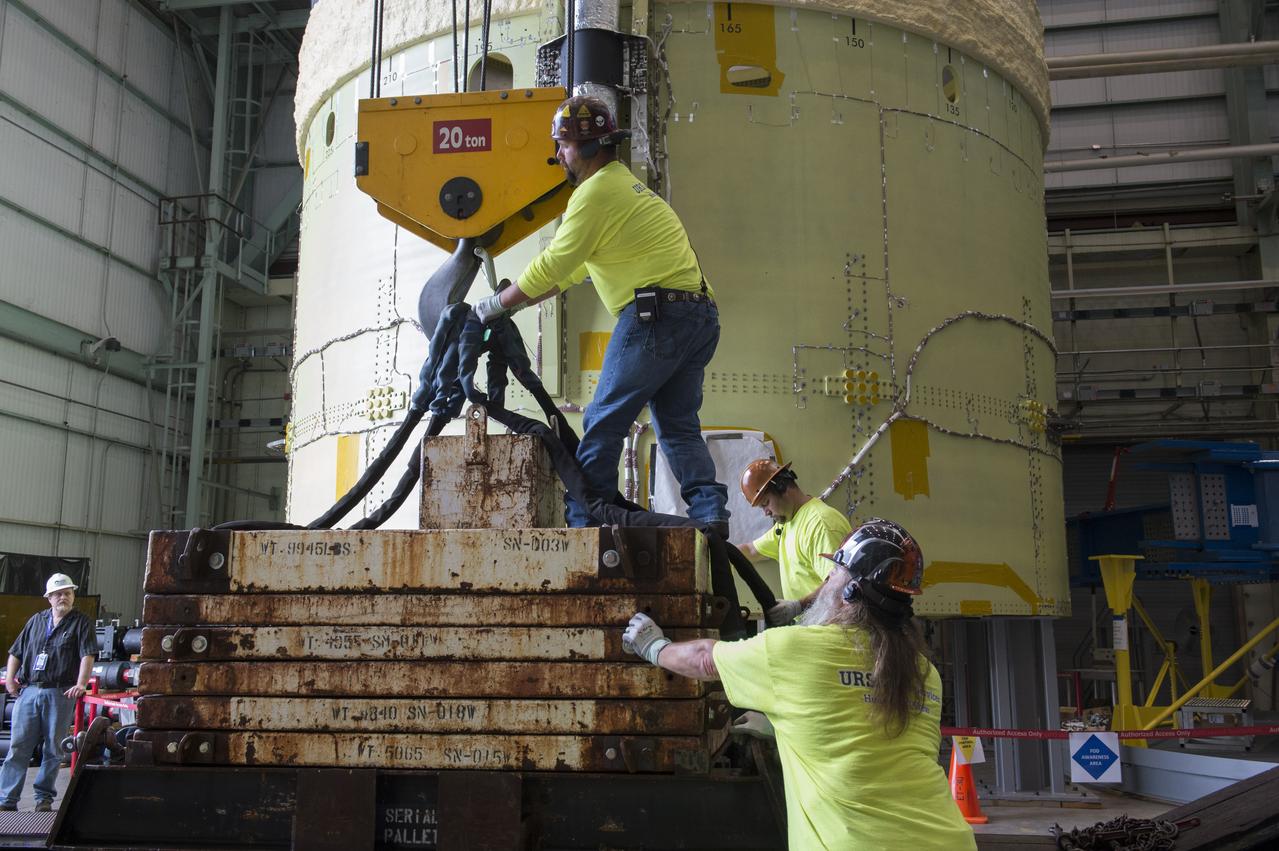
NASA engineers install test hardware for the agency's new heavy lift rocket, the Space Launch System, into a newly constructed 50-foot structural test stand at NASA's Marshall Space Flight Center. In the stand, hydraulic cylinders will be electronically controlled to push, pull, twist and bend the test article with millions of pounds of force. Engineers will record and analyze over 3,000 channels of data for each test case to verify the capabilities of the engine section and validate that the design and analysis models accurately predict the amount of loads the core stage can withstand during launch and ascent. The engine section, recently delivered via NASA's barge Pegasus from NASA's Michoud Assembly Facility, is the first of four core stage structural test articles scheduled to be delivered to Marshall for testing. The engine section, located at the bottom of SLS's massive core stage, will house the rocket's four RS-25 engines and be an attachment point for the two solid rocket boosters.
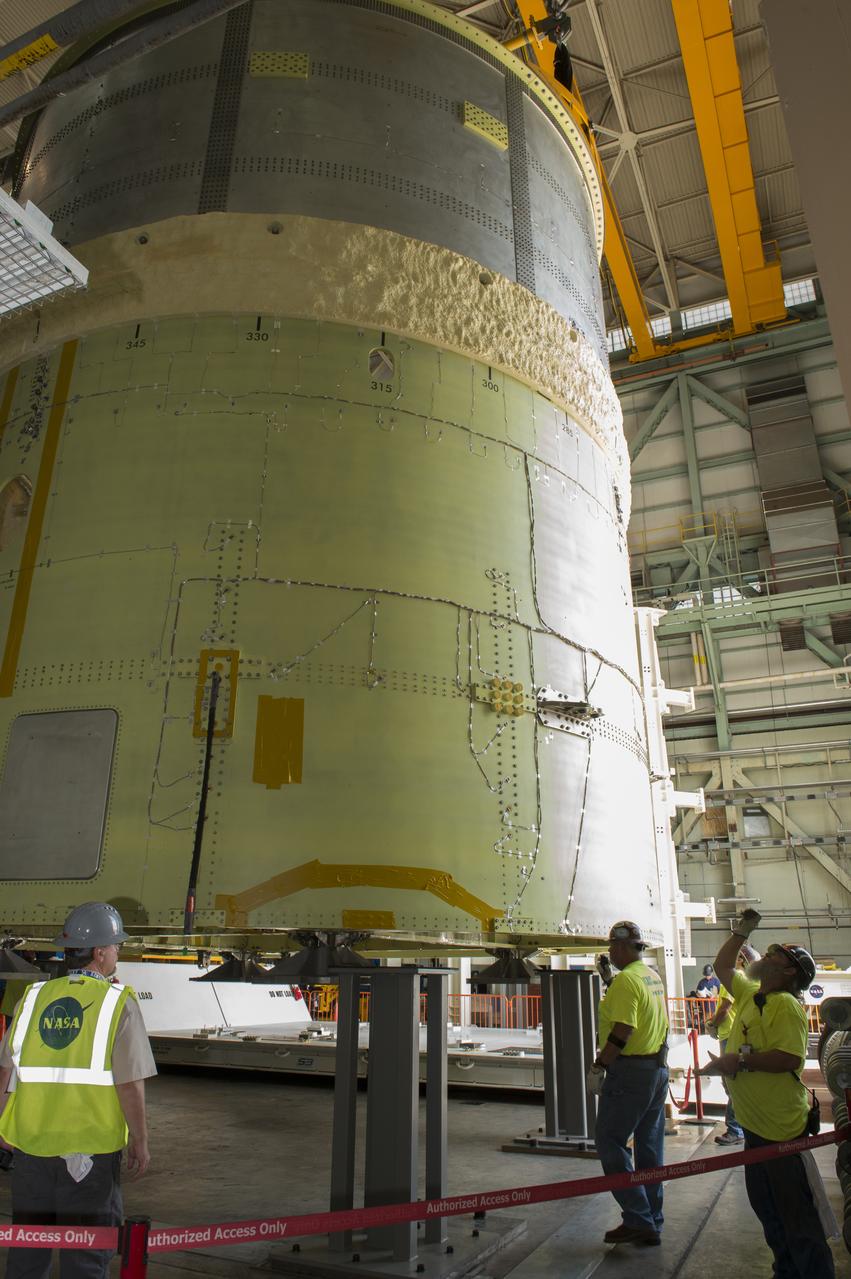
NASA engineers install test hardware for the agency's new heavy lift rocket, the Space Launch System, into a newly constructed 50-foot structural test stand at NASA's Marshall Space Flight Center. In the stand, hydraulic cylinders will be electronically controlled to push, pull, twist and bend the test article with millions of pounds of force. Engineers will record and analyze over 3,000 channels of data for each test case to verify the capabilities of the engine section and validate that the design and analysis models accurately predict the amount of loads the core stage can withstand during launch and ascent. The engine section, recently delivered via NASA's barge Pegasus from NASA's Michoud Assembly Facility, is the first of four core stage structural test articles scheduled to be delivered to Marshall for testing. The engine section, located at the bottom of SLS's massive core stage, will house the rocket's four RS-25 engines and be an attachment point for the two solid rocket boosters.
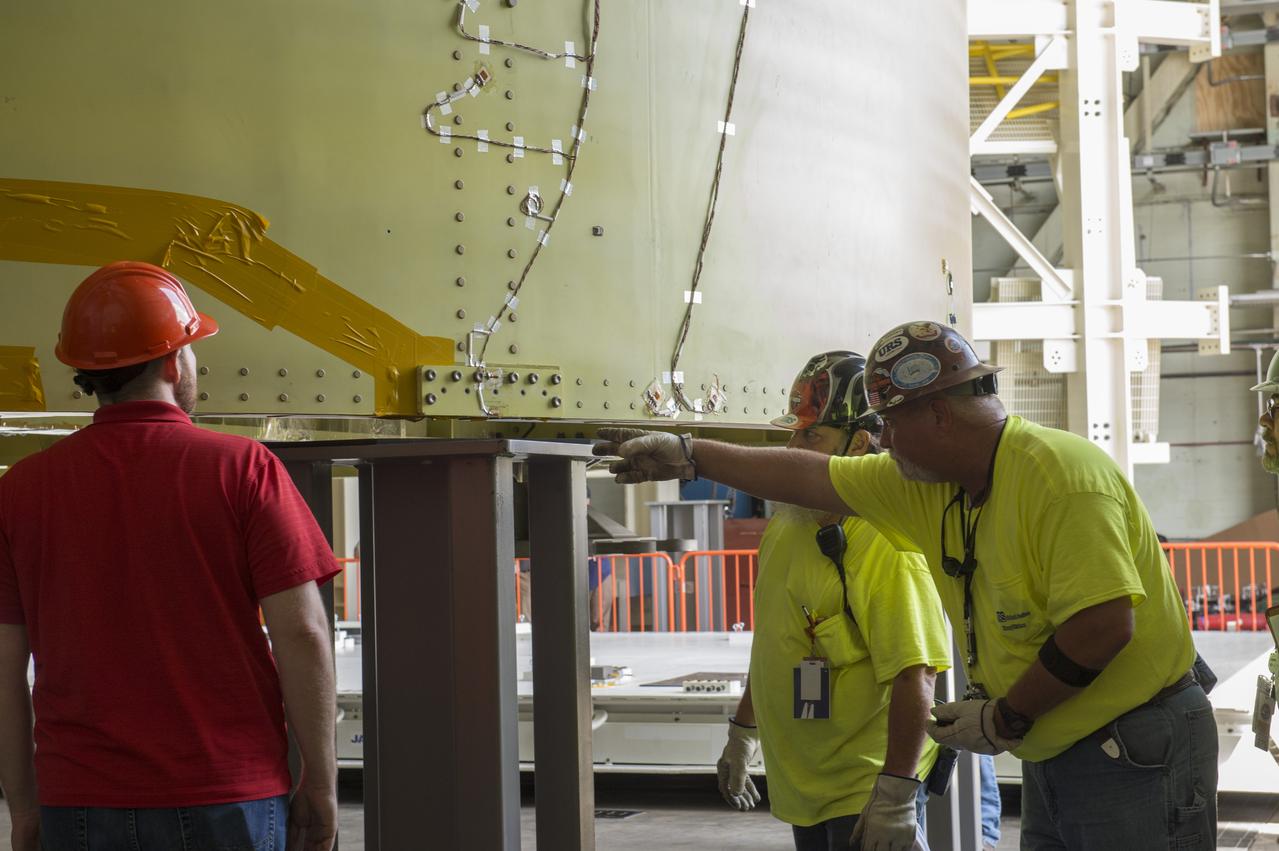
NASA engineers install test hardware for the agency's new heavy lift rocket, the Space Launch System, into a newly constructed 50-foot structural test stand at NASA's Marshall Space Flight Center. In the stand, hydraulic cylinders will be electronically controlled to push, pull, twist and bend the test article with millions of pounds of force. Engineers will record and analyze over 3,000 channels of data for each test case to verify the capabilities of the engine section and validate that the design and analysis models accurately predict the amount of loads the core stage can withstand during launch and ascent. The engine section, recently delivered via NASA's barge Pegasus from NASA's Michoud Assembly Facility, is the first of four core stage structural test articles scheduled to be delivered to Marshall for testing. The engine section, located at the bottom of SLS's massive core stage, will house the rocket's four RS-25 engines and be an attachment point for the two solid rocket boosters.
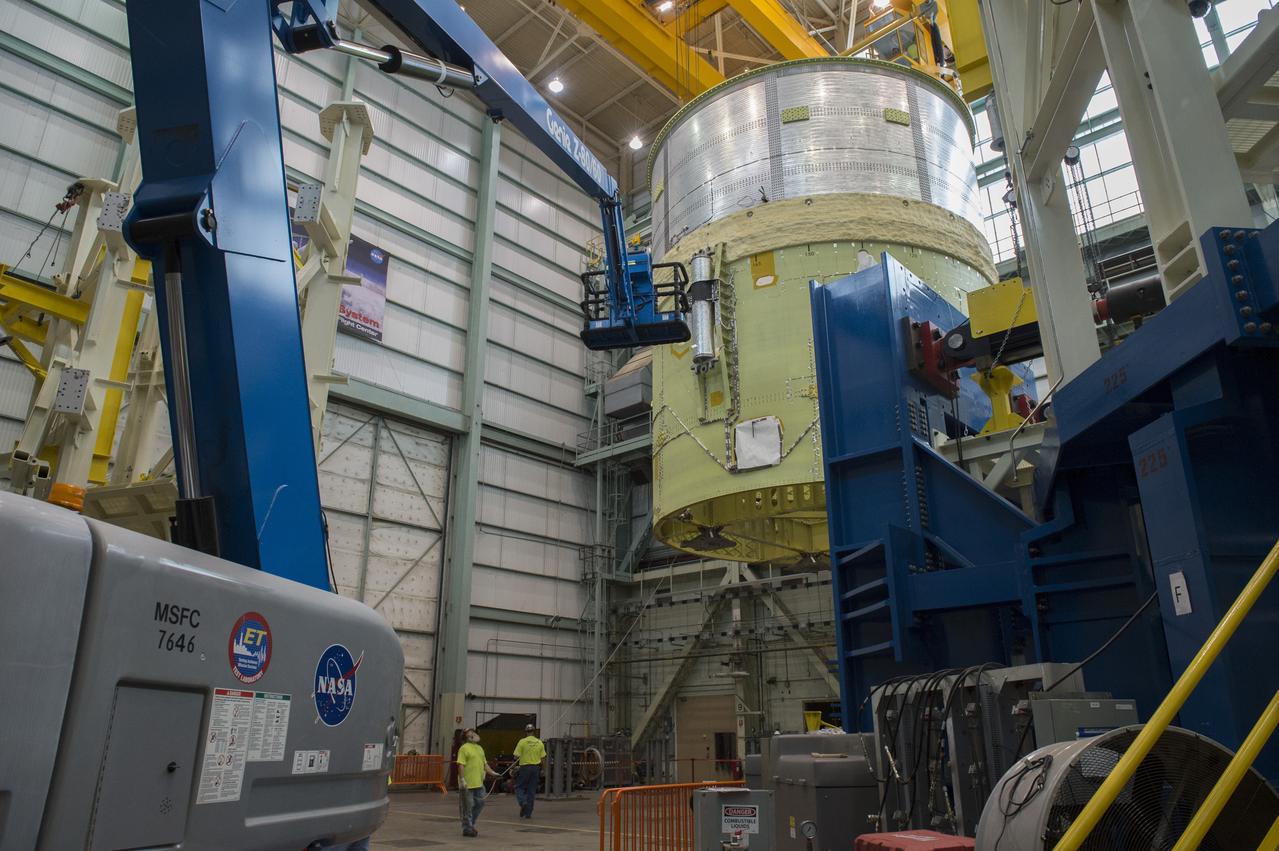
NASA engineers install test hardware for the agency's new heavy lift rocket, the Space Launch System, into a newly constructed 50-foot structural test stand at NASA's Marshall Space Flight Center. In the stand, hydraulic cylinders will be electronically controlled to push, pull, twist and bend the test article with millions of pounds of force. Engineers will record and analyze over 3,000 channels of data for each test case to verify the capabilities of the engine section and validate that the design and analysis models accurately predict the amount of loads the core stage can withstand during launch and ascent. The engine section, recently delivered via NASA's barge Pegasus from NASA's Michoud Assembly Facility, is the first of four core stage structural test articles scheduled to be delivered to Marshall for testing. The engine section, located at the bottom of SLS's massive core stage, will house the rocket's four RS-25 engines and be an attachment point for the two solid rocket boosters.

NASA engineers install test hardware for the agency's new heavy lift rocket, the Space Launch System, into a newly constructed 50-foot structural test stand at NASA's Marshall Space Flight Center. In the stand, hydraulic cylinders will be electronically controlled to push, pull, twist and bend the test article with millions of pounds of force. Engineers will record and analyze over 3,000 channels of data for each test case to verify the capabilities of the engine section and validate that the design and analysis models accurately predict the amount of loads the core stage can withstand during launch and ascent. The engine section, recently delivered via NASA's barge Pegasus from NASA's Michoud Assembly Facility, is the first of four core stage structural test articles scheduled to be delivered to Marshall for testing. The engine section, located at the bottom of SLS's massive core stage, will house the rocket's four RS-25 engines and be an attachment point for the two solid rocket boosters.
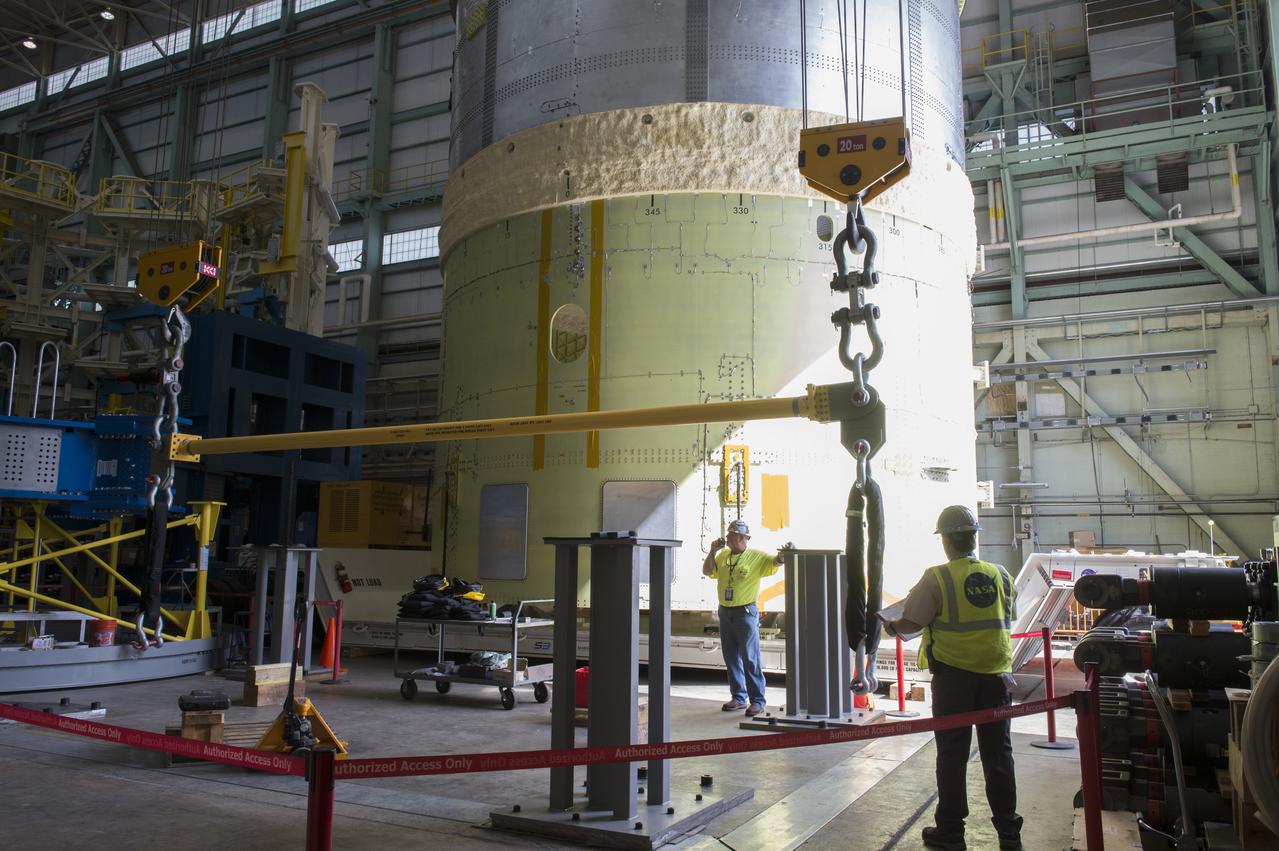
NASA engineers install test hardware for the agency's new heavy lift rocket, the Space Launch System, into a newly constructed 50-foot structural test stand at NASA's Marshall Space Flight Center. In the stand, hydraulic cylinders will be electronically controlled to push, pull, twist and bend the test article with millions of pounds of force. Engineers will record and analyze over 3,000 channels of data for each test case to verify the capabilities of the engine section and validate that the design and analysis models accurately predict the amount of loads the core stage can withstand during launch and ascent. The engine section, recently delivered via NASA's barge Pegasus from NASA's Michoud Assembly Facility, is the first of four core stage structural test articles scheduled to be delivered to Marshall for testing. The engine section, located at the bottom of SLS's massive core stage, will house the rocket's four RS-25 engines and be an attachment point for the two solid rocket boosters.
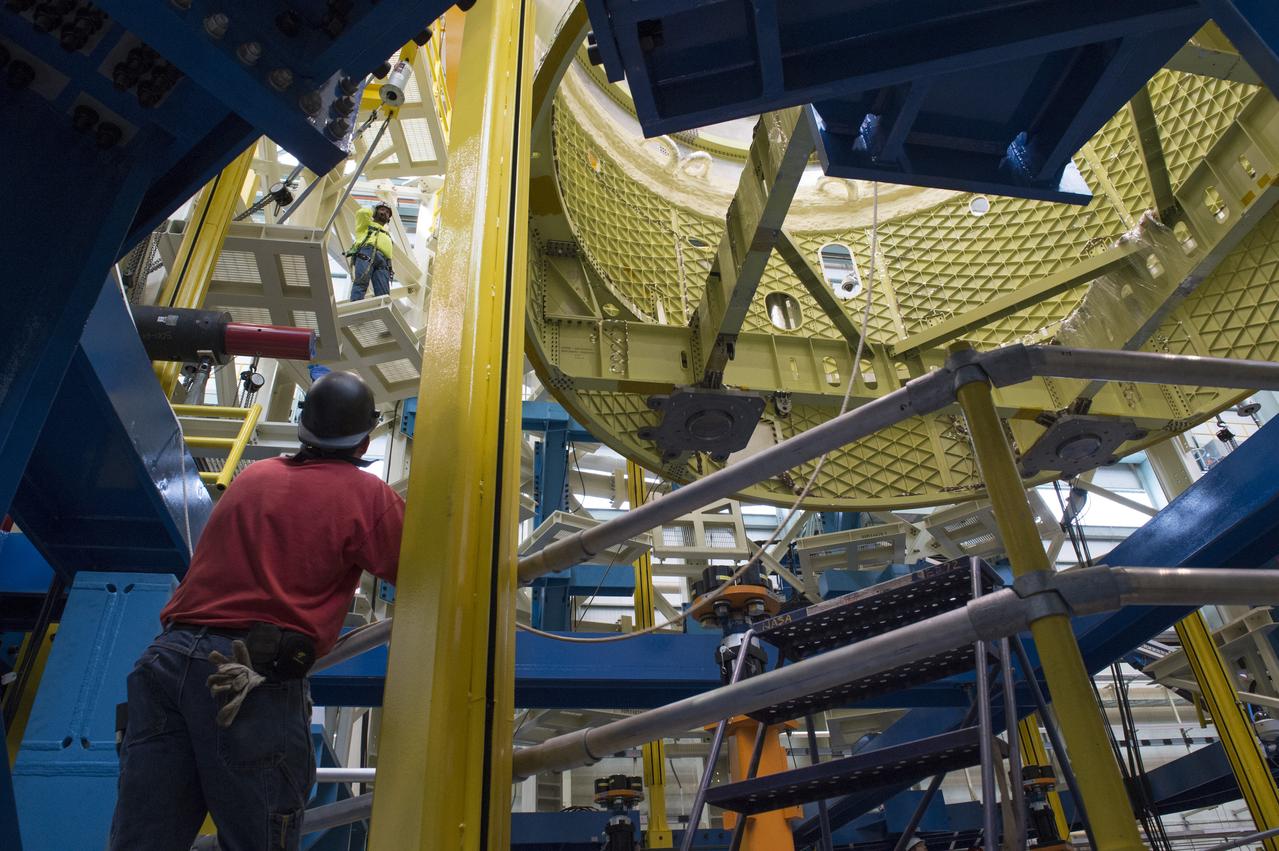
NASA engineers install test hardware for the agency's new heavy lift rocket, the Space Launch System, into a newly constructed 50-foot structural test stand at NASA's Marshall Space Flight Center. In the stand, hydraulic cylinders will be electronically controlled to push, pull, twist and bend the test article with millions of pounds of force. Engineers will record and analyze over 3,000 channels of data for each test case to verify the capabilities of the engine section and validate that the design and analysis models accurately predict the amount of loads the core stage can withstand during launch and ascent. The engine section, recently delivered via NASA's barge Pegasus from NASA's Michoud Assembly Facility, is the first of four core stage structural test articles scheduled to be delivered to Marshall for testing. The engine section, located at the bottom of SLS's massive core stage, will house the rocket's four RS-25 engines and be an attachment point for the two solid rocket boosters.
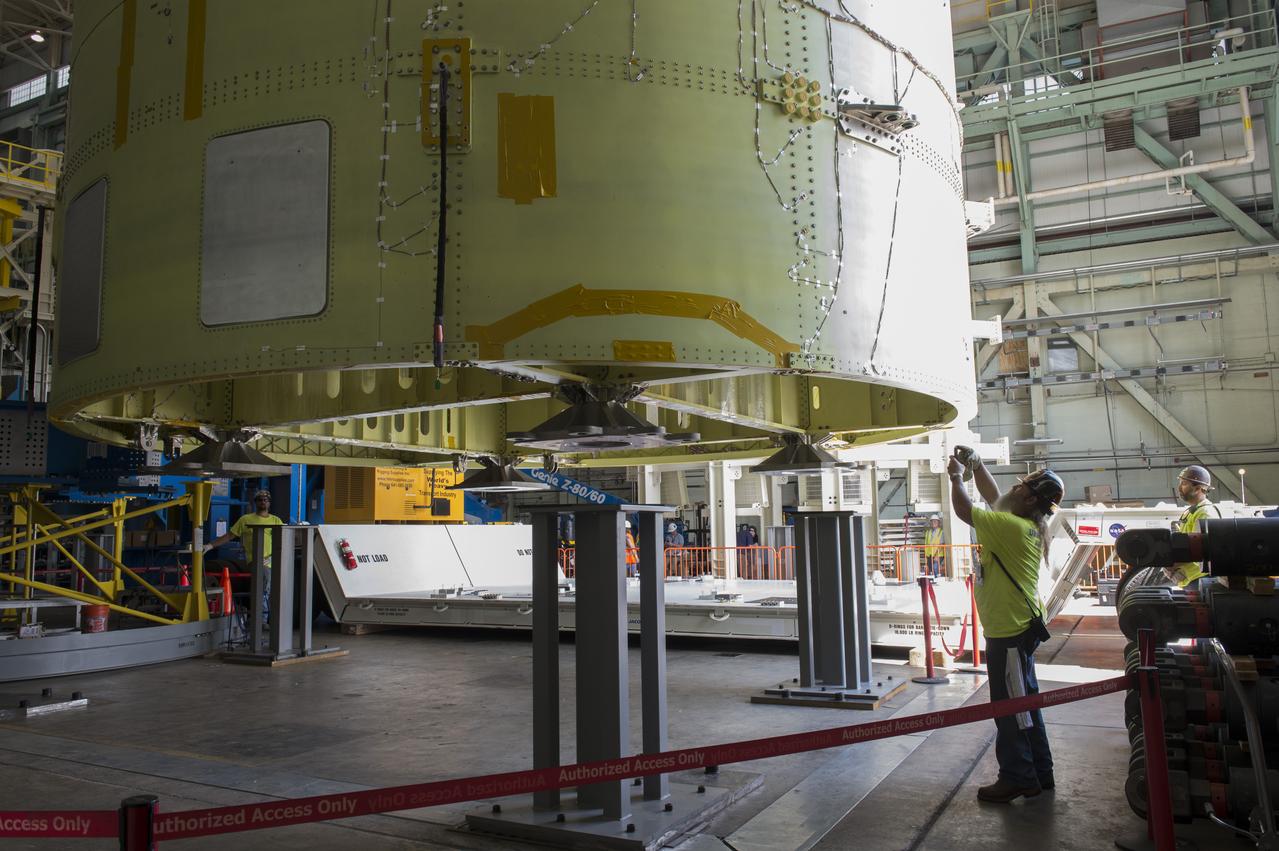
NASA engineers install test hardware for the agency's new heavy lift rocket, the Space Launch System, into a newly constructed 50-foot structural test stand at NASA's Marshall Space Flight Center. In the stand, hydraulic cylinders will be electronically controlled to push, pull, twist and bend the test article with millions of pounds of force. Engineers will record and analyze over 3,000 channels of data for each test case to verify the capabilities of the engine section and validate that the design and analysis models accurately predict the amount of loads the core stage can withstand during launch and ascent. The engine section, recently delivered via NASA's barge Pegasus from NASA's Michoud Assembly Facility, is the first of four core stage structural test articles scheduled to be delivered to Marshall for testing. The engine section, located at the bottom of SLS's massive core stage, will house the rocket's four RS-25 engines and be an attachment point for the two solid rocket boosters.
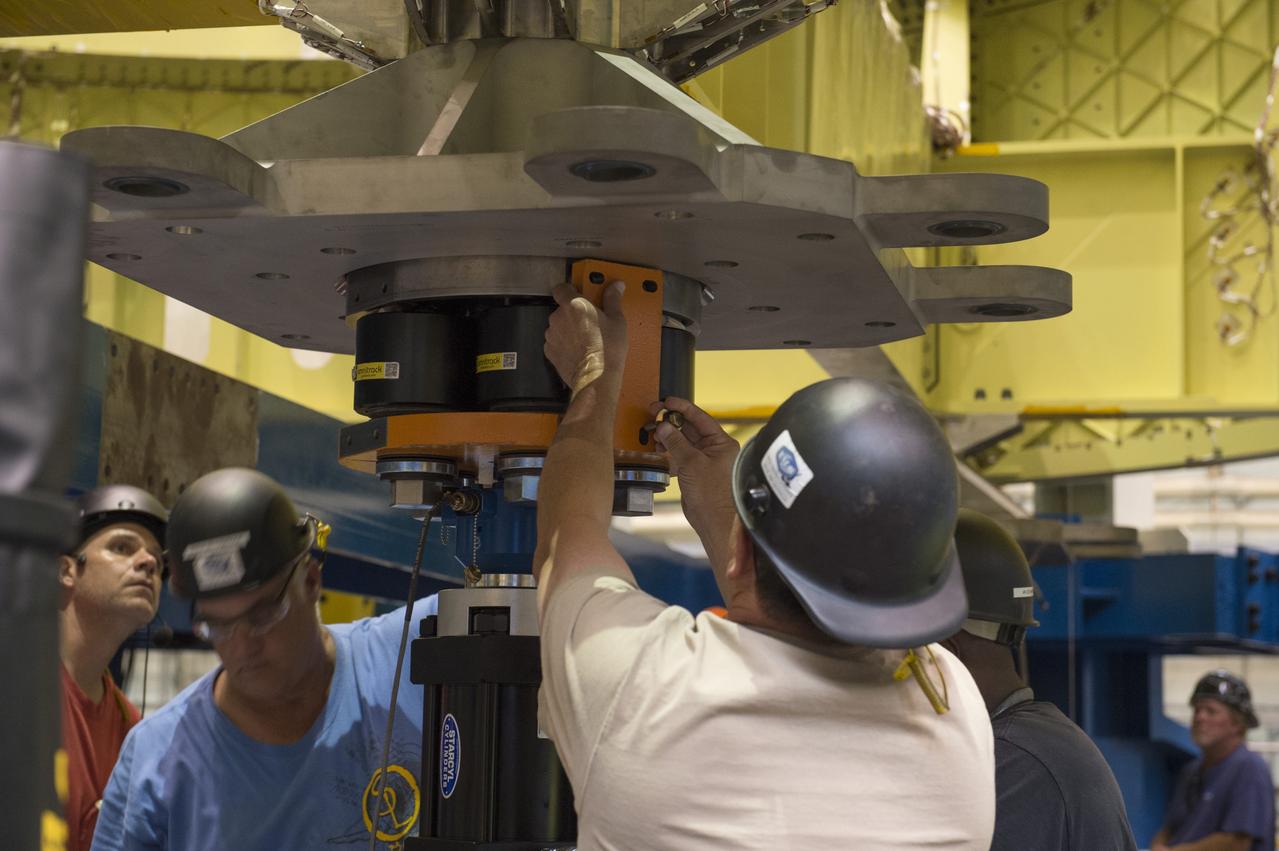
NASA engineers install test hardware for the agency's new heavy lift rocket, the Space Launch System, into a newly constructed 50-foot structural test stand at NASA's Marshall Space Flight Center. In the stand, hydraulic cylinders will be electronically controlled to push, pull, twist and bend the test article with millions of pounds of force. Engineers will record and analyze over 3,000 channels of data for each test case to verify the capabilities of the engine section and validate that the design and analysis models accurately predict the amount of loads the core stage can withstand during launch and ascent. The engine section, recently delivered via NASA's barge Pegasus from NASA's Michoud Assembly Facility, is the first of four core stage structural test articles scheduled to be delivered to Marshall for testing. The engine section, located at the bottom of SLS's massive core stage, will house the rocket's four RS-25 engines and be an attachment point for the two solid rocket boosters.
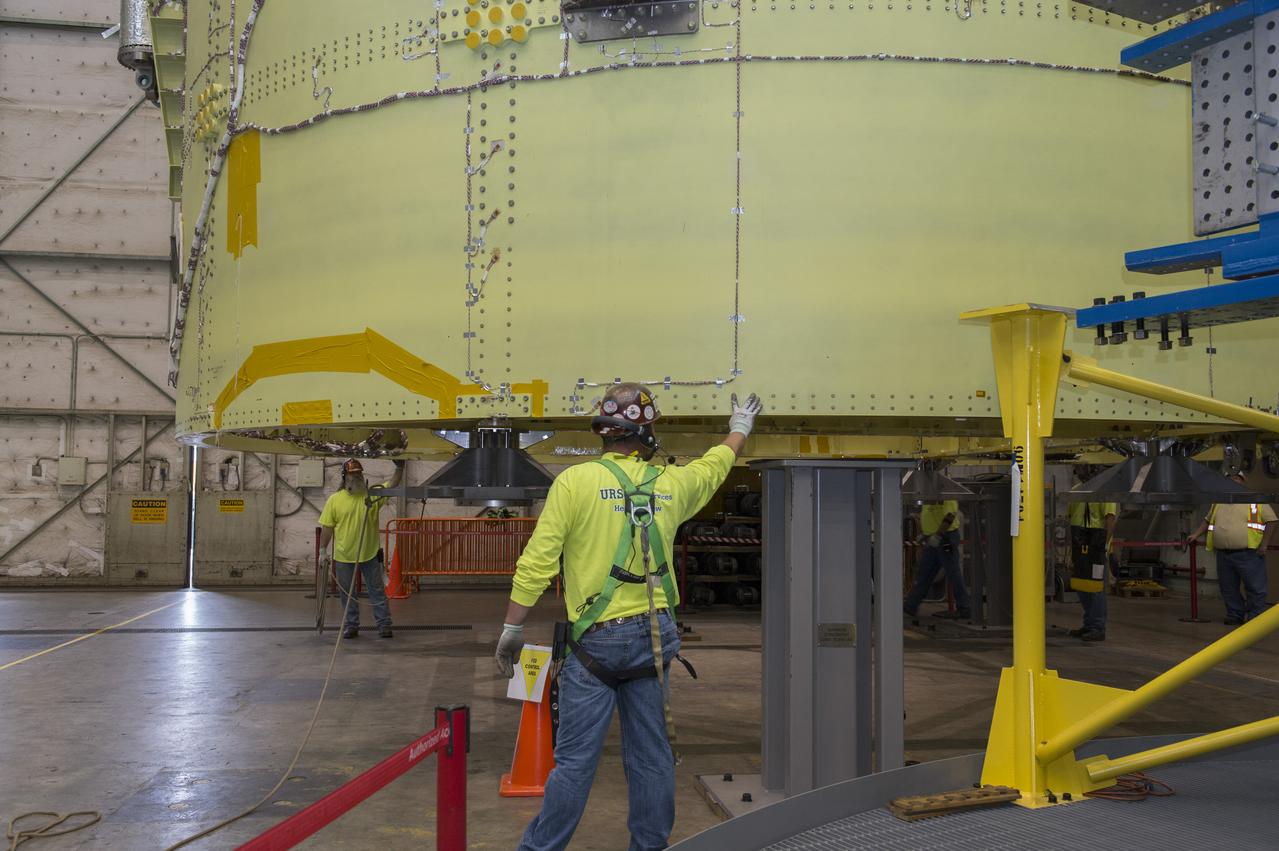
NASA engineers install test hardware for the agency's new heavy lift rocket, the Space Launch System, into a newly constructed 50-foot structural test stand at NASA's Marshall Space Flight Center. In the stand, hydraulic cylinders will be electronically controlled to push, pull, twist and bend the test article with millions of pounds of force. Engineers will record and analyze over 3,000 channels of data for each test case to verify the capabilities of the engine section and validate that the design and analysis models accurately predict the amount of loads the core stage can withstand during launch and ascent. The engine section, recently delivered via NASA's barge Pegasus from NASA's Michoud Assembly Facility, is the first of four core stage structural test articles scheduled to be delivered to Marshall for testing. The engine section, located at the bottom of SLS's massive core stage, will house the rocket's four RS-25 engines and be an attachment point for the two solid rocket boosters.
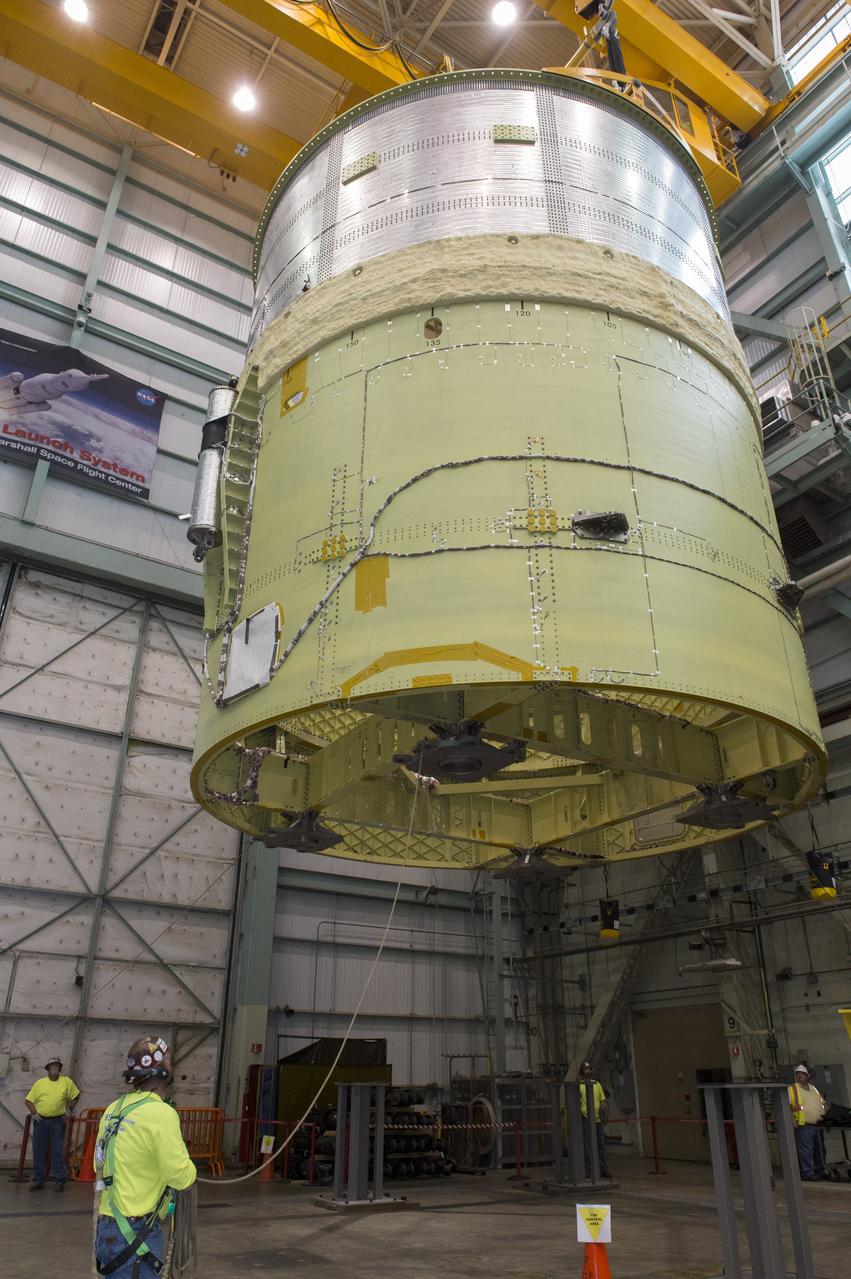
NASA engineers install test hardware for the agency's new heavy lift rocket, the Space Launch System, into a newly constructed 50-foot structural test stand at NASA's Marshall Space Flight Center. In the stand, hydraulic cylinders will be electronically controlled to push, pull, twist and bend the test article with millions of pounds of force. Engineers will record and analyze over 3,000 channels of data for each test case to verify the capabilities of the engine section and validate that the design and analysis models accurately predict the amount of loads the core stage can withstand during launch and ascent. The engine section, recently delivered via NASA's barge Pegasus from NASA's Michoud Assembly Facility, is the first of four core stage structural test articles scheduled to be delivered to Marshall for testing. The engine section, located at the bottom of SLS's massive core stage, will house the rocket's four RS-25 engines and be an attachment point for the two solid rocket boosters.
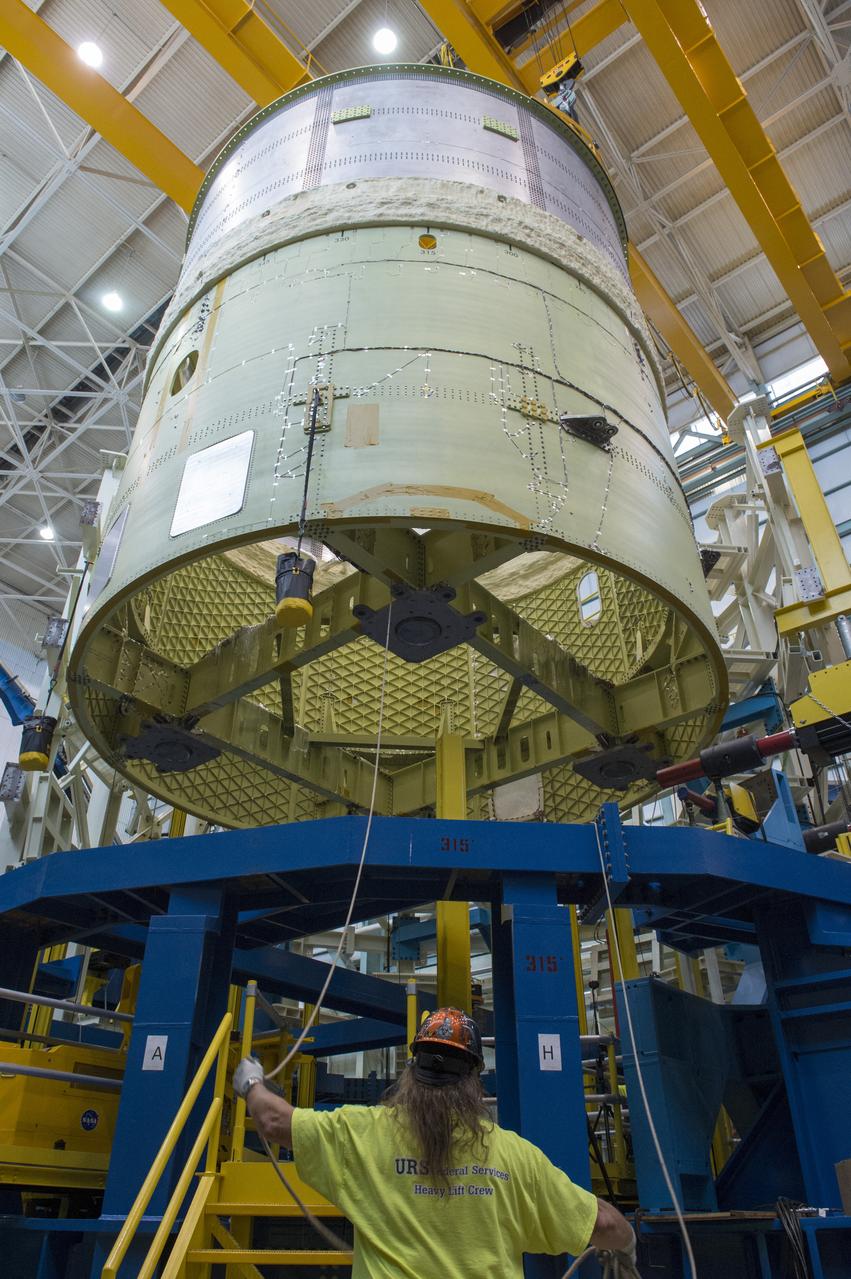
NASA engineers install test hardware for the agency's new heavy lift rocket, the Space Launch System, into a newly constructed 50-foot structural test stand at NASA's Marshall Space Flight Center. In the stand, hydraulic cylinders will be electronically controlled to push, pull, twist and bend the test article with millions of pounds of force. Engineers will record and analyze over 3,000 channels of data for each test case to verify the capabilities of the engine section and validate that the design and analysis models accurately predict the amount of loads the core stage can withstand during launch and ascent. The engine section, recently delivered via NASA's barge Pegasus from NASA's Michoud Assembly Facility, is the first of four core stage structural test articles scheduled to be delivered to Marshall for testing. The engine section, located at the bottom of SLS's massive core stage, will house the rocket's four RS-25 engines and be an attachment point for the two solid rocket boosters.
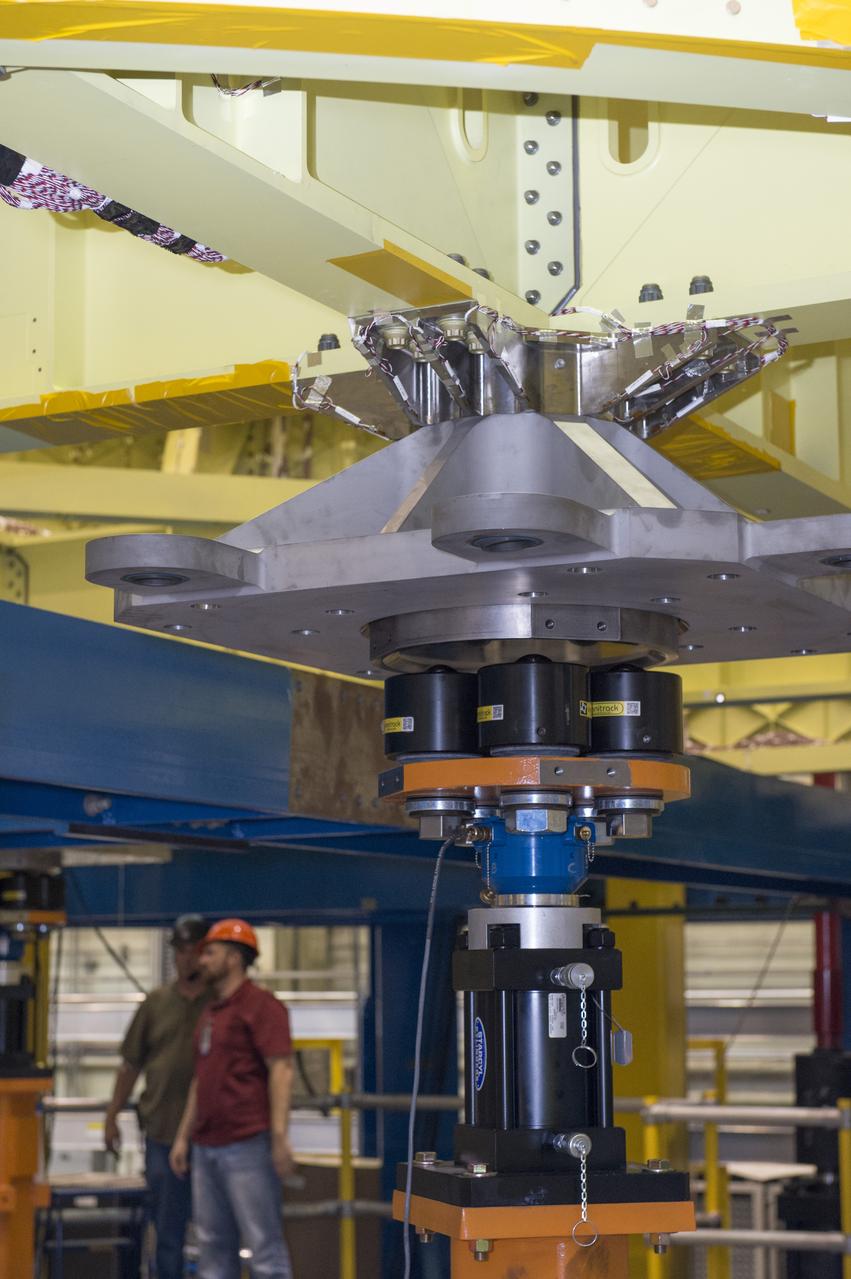
NASA engineers install test hardware for the agency's new heavy lift rocket, the Space Launch System, into a newly constructed 50-foot structural test stand at NASA's Marshall Space Flight Center. In the stand, hydraulic cylinders will be electronically controlled to push, pull, twist and bend the test article with millions of pounds of force. Engineers will record and analyze over 3,000 channels of data for each test case to verify the capabilities of the engine section and validate that the design and analysis models accurately predict the amount of loads the core stage can withstand during launch and ascent. The engine section, recently delivered via NASA's barge Pegasus from NASA's Michoud Assembly Facility, is the first of four core stage structural test articles scheduled to be delivered to Marshall for testing. The engine section, located at the bottom of SLS's massive core stage, will house the rocket's four RS-25 engines and be an attachment point for the two solid rocket boosters.
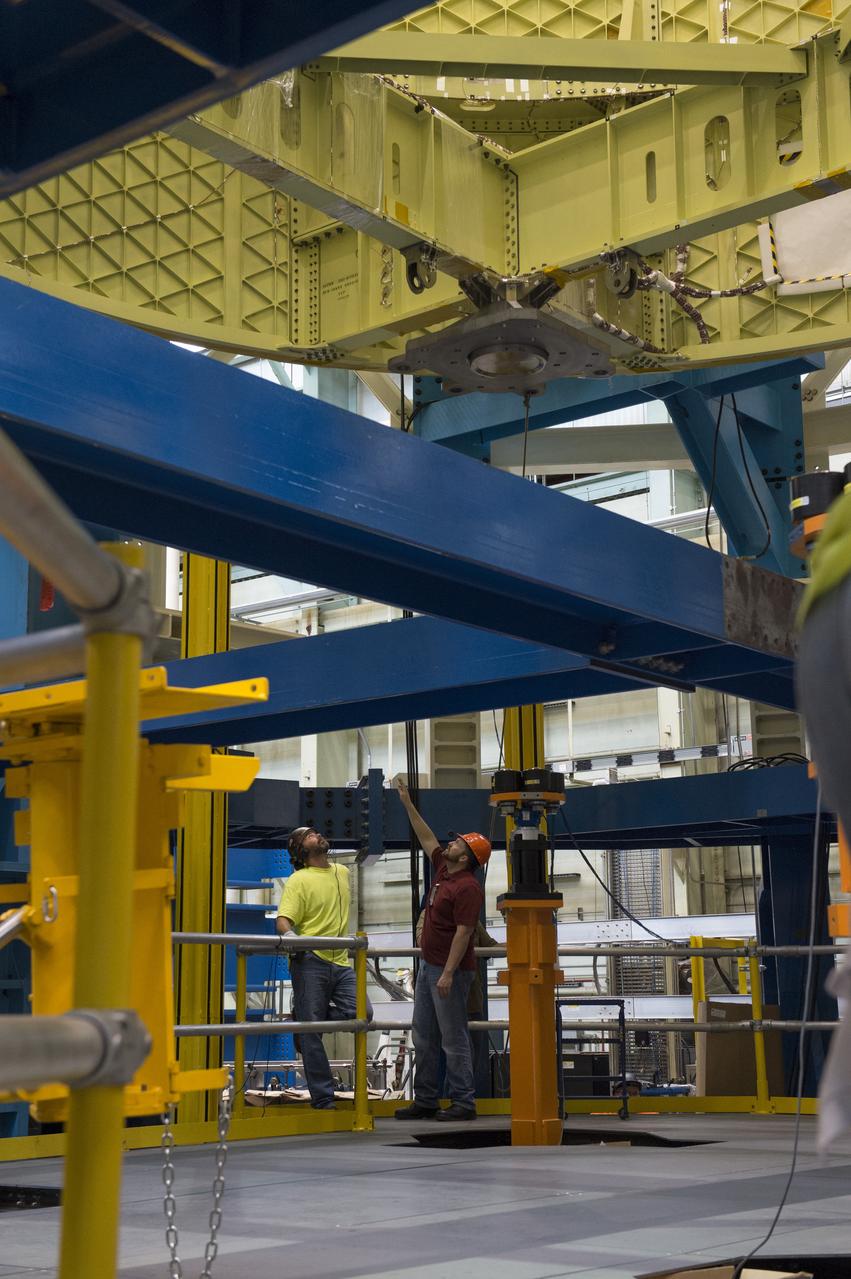
NASA engineers install test hardware for the agency's new heavy lift rocket, the Space Launch System, into a newly constructed 50-foot structural test stand at NASA's Marshall Space Flight Center. In the stand, hydraulic cylinders will be electronically controlled to push, pull, twist and bend the test article with millions of pounds of force. Engineers will record and analyze over 3,000 channels of data for each test case to verify the capabilities of the engine section and validate that the design and analysis models accurately predict the amount of loads the core stage can withstand during launch and ascent. The engine section, recently delivered via NASA's barge Pegasus from NASA's Michoud Assembly Facility, is the first of four core stage structural test articles scheduled to be delivered to Marshall for testing. The engine section, located at the bottom of SLS's massive core stage, will house the rocket's four RS-25 engines and be an attachment point for the two solid rocket boosters.
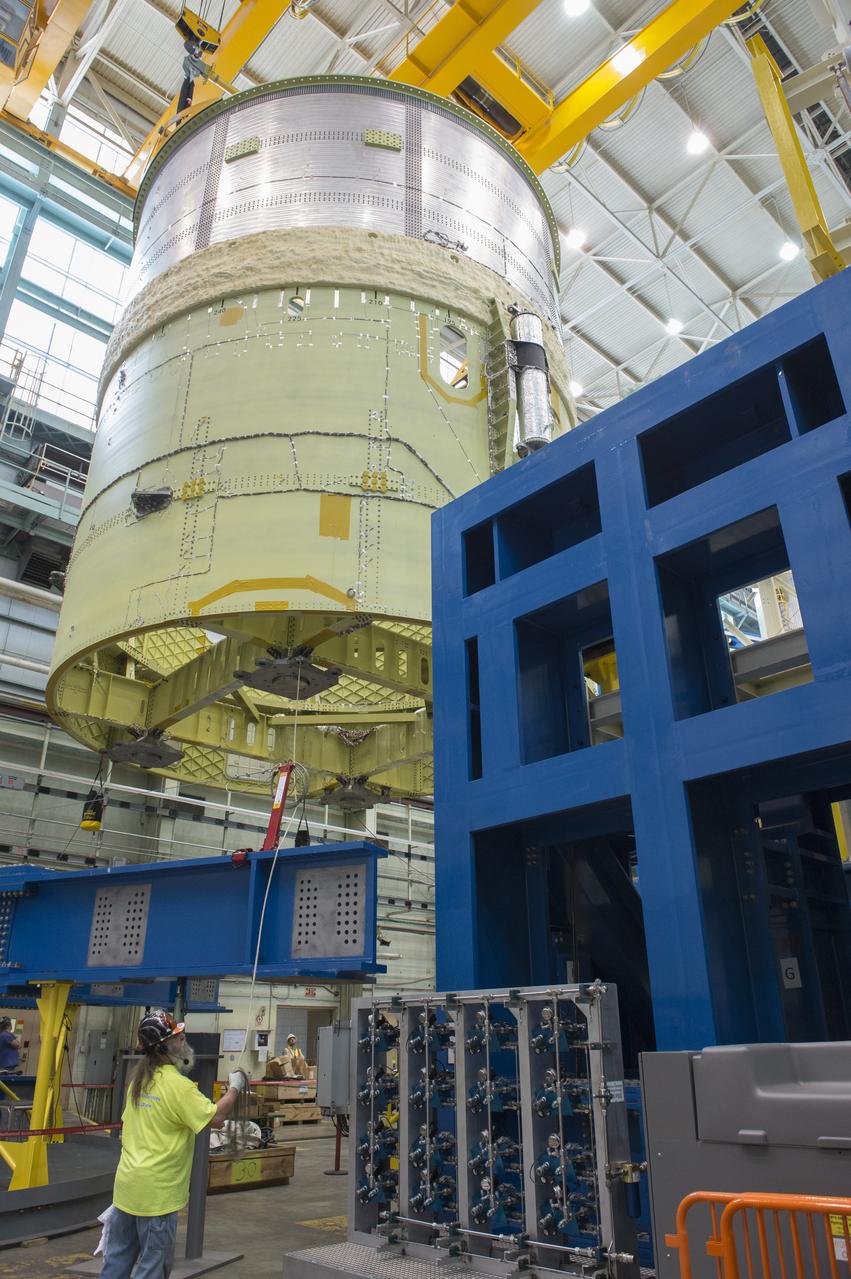
NASA engineers install test hardware for the agency's new heavy lift rocket, the Space Launch System, into a newly constructed 50-foot structural test stand at NASA's Marshall Space Flight Center. In the stand, hydraulic cylinders will be electronically controlled to push, pull, twist and bend the test article with millions of pounds of force. Engineers will record and analyze over 3,000 channels of data for each test case to verify the capabilities of the engine section and validate that the design and analysis models accurately predict the amount of loads the core stage can withstand during launch and ascent. The engine section, recently delivered via NASA's barge Pegasus from NASA's Michoud Assembly Facility, is the first of four core stage structural test articles scheduled to be delivered to Marshall for testing. The engine section, located at the bottom of SLS's massive core stage, will house the rocket's four RS-25 engines and be an attachment point for the two solid rocket boosters.