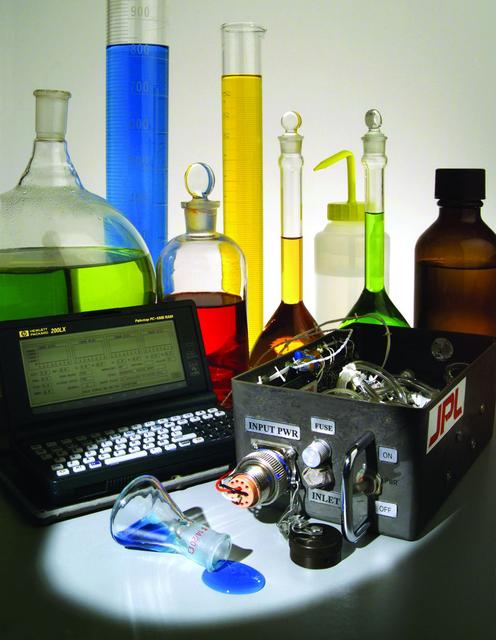
The Jet Propulsion Laboratory has designed and built an electronic nose system -- ENose -- to take on the duty of staying alert for smells that could indicate hazardous conditions in a closed spacecraft environment. Its sensors are tailored so they conduct electricity differently when an air stream carries a particular chemical across them. JPL has designed and built a 3-pound flight version (shown with palm-size control and data computer). The active parts are 32 sensors, each with a different mix of polymers saturated with carbon. When certain chemicals latch onto a sensor, they change how the sensor conducts electricity. This signal tells how much of a compound is in the air. The electronic nose flown aboard STS-95 in 1998 was capable of successfully detecting 10 toxic compounds.
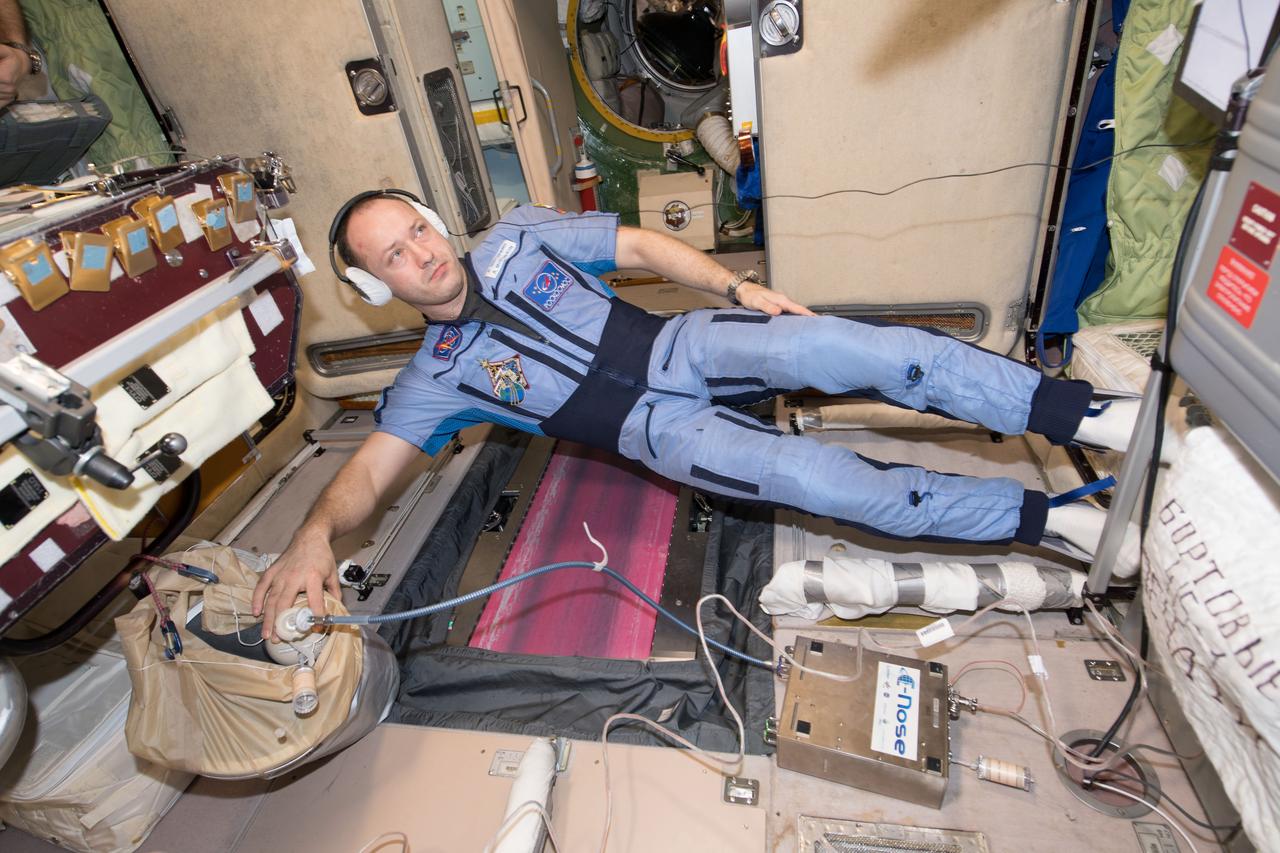
iss053e238931 (Nov. 22, 2017) --- Flight Engineer Alexander Misurkin from Roscosmos works with the JPL Electronic Nose (ENose) experiment in the Zvezda service module. ENose is a full-time, continuously operating event monitor designed to detect air contamination from spills and leaks in the crew habitat of the International Space Station. It fills the long-standing gap between onboard alarms and complex analytical instruments. ENose provides rapid, early identification and quantification of atmospheric changes caused by chemical species to which it has been trained. ENose can also be used to monitor cleanup processes after a leak or a spill.
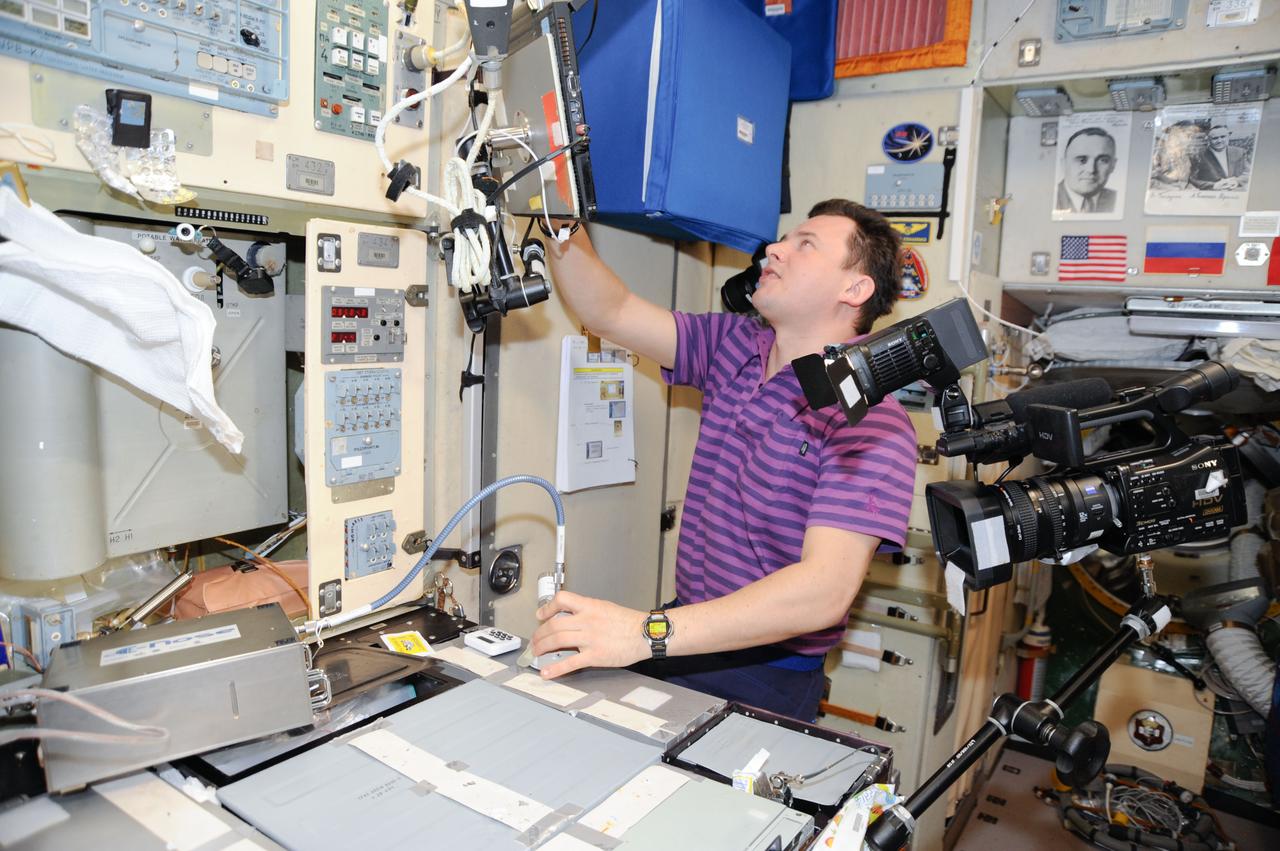
ISS034-E-051551 (21 Feb. 2013) --- Cosmonaut Roman Romanenko, Expedition 34 flight engineer, works with the Electronic Nose hardware in the Zvezda service module aboard the International Space Station in Earth orbit. This hardware is used to measure contamination in the environment should there be hard to detect chemical leaks or spills.