
Phoenix Makes a Grand Entrance
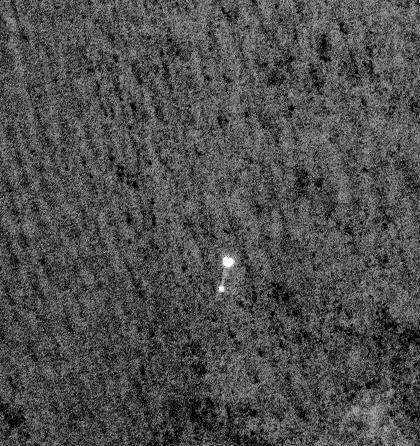
Phoenix Makes a Grand Entrance
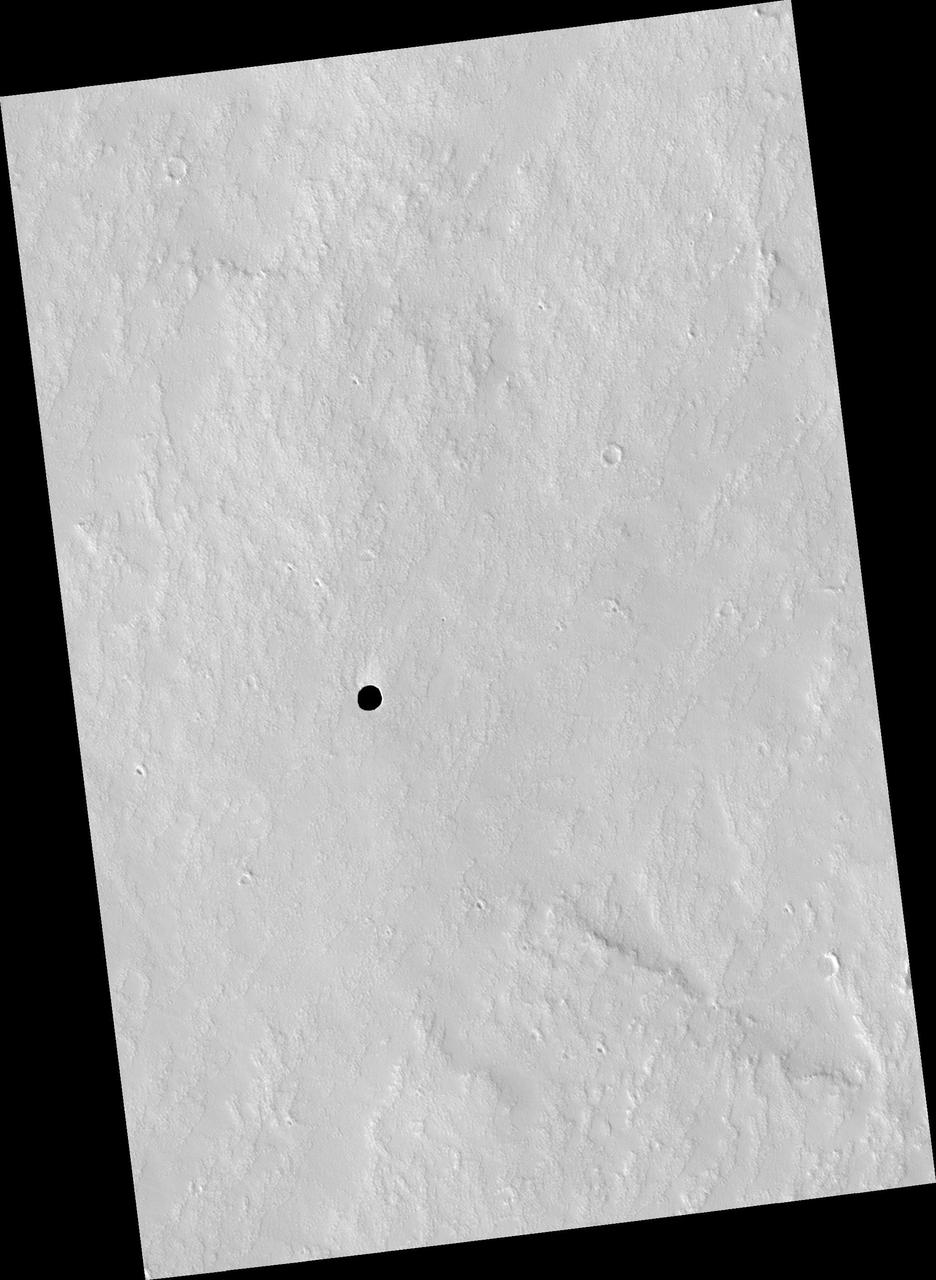
Candidate Cavern Entrance Northeast of Arsia Mons

This archival image was released as part of a gallery comparing JPL's past and present, commemorating the 80th anniversary of NASA's Jet Propulsion Laboratory on Oct. 31, 2016. This photograph from 1949 shows the main entrance gate to the Jet Propulsion Laboratory in Pasadena, California, after a snowstorm. To the left is JPL's administration building at the time (Building 67). Building 67 is the Materials Research Building today. The Space Flight Operations Facility (Building 230), which houses JPL's Mission Control, now stands over the parking area on the right. As the lab expanded, the main entrance gate moved farther south. http://photojournal.jpl.nasa.gov/catalog/PIA21118
![In Andy Weir's "The Martian," stranded astronaut Mark Watney drives from the Ares 3 landing site in Acidalia Planitia towards the Ares 4 landing site in Schiaparelli Crater via Mawrth Vallis. This image covers the entrance to Mawrth Vallis. As you can tell, driving over this terrain will be much more difficult than it was depicted in the novel or the movie. The map is projected here at a scale of 50 centimeters (19.7 inches) per pixel. [The original image scale is 58.5 centimeters (19.1 inches) per pixel (with 2 x 2 binning); objects on the order of 176 centimeters (69.2 inches) across are resolved.] North is up. http://photojournal.jpl.nasa.gov/catalog/PIA21555](https://images-assets.nasa.gov/image/PIA21555/PIA21555~medium.jpg)
In Andy Weir's "The Martian," stranded astronaut Mark Watney drives from the Ares 3 landing site in Acidalia Planitia towards the Ares 4 landing site in Schiaparelli Crater via Mawrth Vallis. This image covers the entrance to Mawrth Vallis. As you can tell, driving over this terrain will be much more difficult than it was depicted in the novel or the movie. The map is projected here at a scale of 50 centimeters (19.7 inches) per pixel. [The original image scale is 58.5 centimeters (19.1 inches) per pixel (with 2 x 2 binning); objects on the order of 176 centimeters (69.2 inches) across are resolved.] North is up. http://photojournal.jpl.nasa.gov/catalog/PIA21555
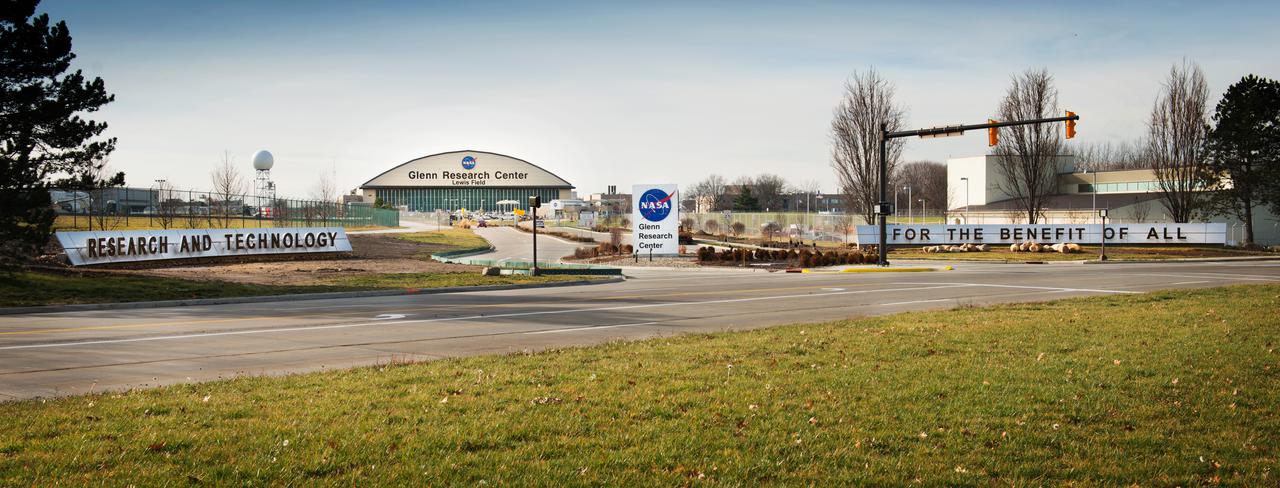
Main Entrance of NASA Glenn Research Center at Brookpark Road and NASA Parkway. The signs read: Research and Technology For The Benefit Of All.
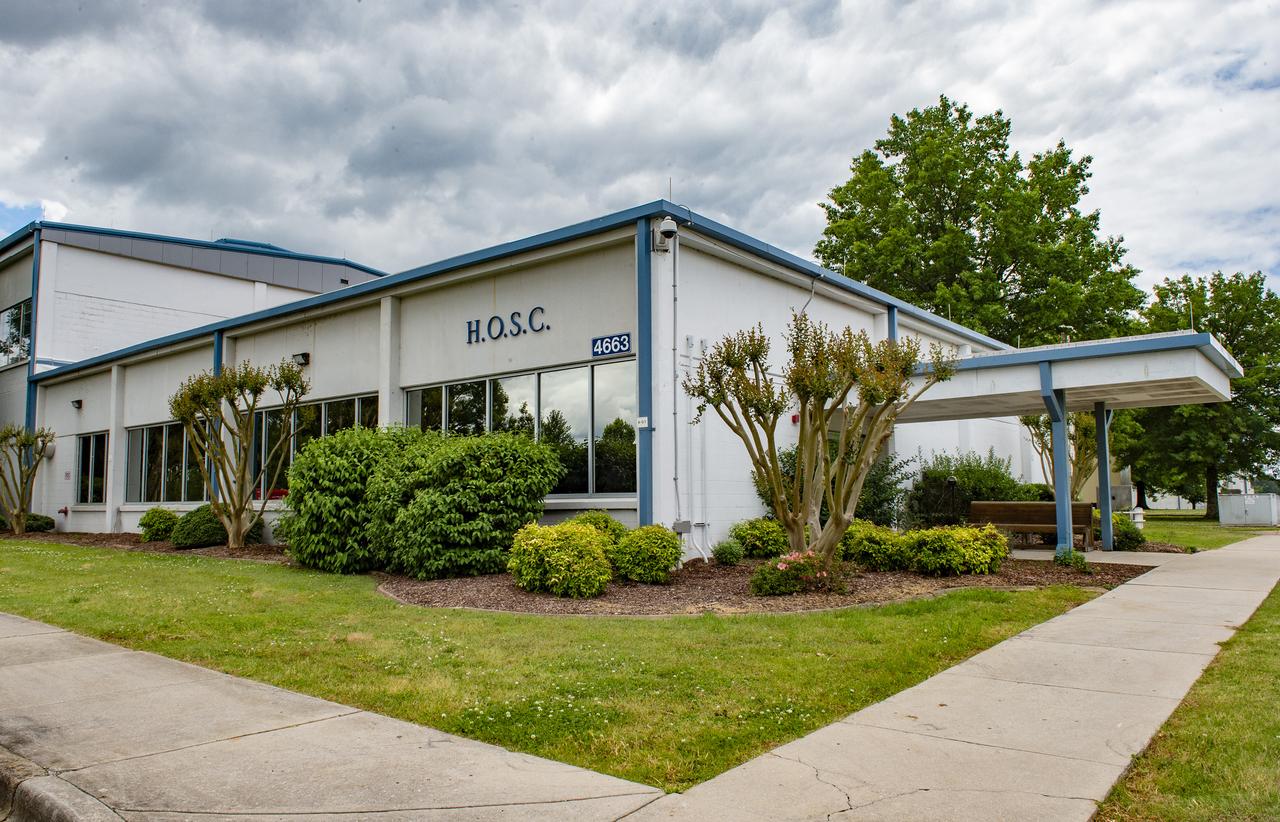
MSFC Building 4663, NW corner view showing entrance to Huntsville Operations Support Center (HOSC). The HOSC is home to the Payload Operations Integration Center (POIC) which supports the mission and scientific experiments aboard the International Space Station (ISS).

The sign near the entrance of the National Advisory Committee for Aeronautics (NACA) Flight Propulsion Research Laboratory. The name was changed several weeks later to the Lewis Flight Propulsion Laboratory in honor of the NACA’s former Director of Aeronautical Research, George W. Lewis. The research laboratory has had five different names since its inception in 1941. The Cleveland laboratory was originally known as the NACA Aircraft Engine Research Laboratory. In 1947 it was renamed the NACA Flight Propulsion Research Laboratory to reflect the expansion of the research activities beyond just engines. Following the death of George Lewis, the name was changed to the NACA Lewis Flight Propulsion Laboratory in September 1948. On October 1, 1958, the lab was incorporated into the new NASA space agency, and it was renamed the NASA Lewis Research Center. Following John Glenn’s flight on the space shuttle, the name was changed again to the NASA Glenn Research Center on March 1, 1999. From his office in Washington DC, George Lewis managed the aeronautical research conducted at the NACA for over 20 years. His most important accomplishment, however, may have been an investigative tour of German research facilities in the fall of 1936. The visit resulted in the broadening of the scope of the NACA’s research and the physical expansion that included the new engine laboratory in Cleveland.

The X-1E research aircraft provides a striking view at the entrance of NASA's Dryden Flight Research Center, Edwards, California. The X-1E, one of the three original X-1 aircraft modified with a raised cockpit canopy and an ejection seat, was flown at the facility between 1953 and 1958 to investigate speeds at twice that of sound, and also to evaluate a thin wing designed for high-speed flight. The Dryden complex was originally established in 1946 as a small high-speed flight station to support the X-1 program. The X-1 was the first aircraft to fly at supersonic speeds. The main administrative building is to the rear of the X-1E and is the center of a research installation that has grown to more than 450 government employees and nearly 400 civilian contractors. Located on the northwest "shore" of Rogers Dry Lake, the Dryden Center was built around the original administrative-hangar building constructed in 1954 at a cost of $3.8 million. Since then many additional support and operational facilities have been built including a number of unique test facilities such as the Thermalstructures Research Facility, Flow Visualization Facility, and the newest addition, the Integrated Test Facility.
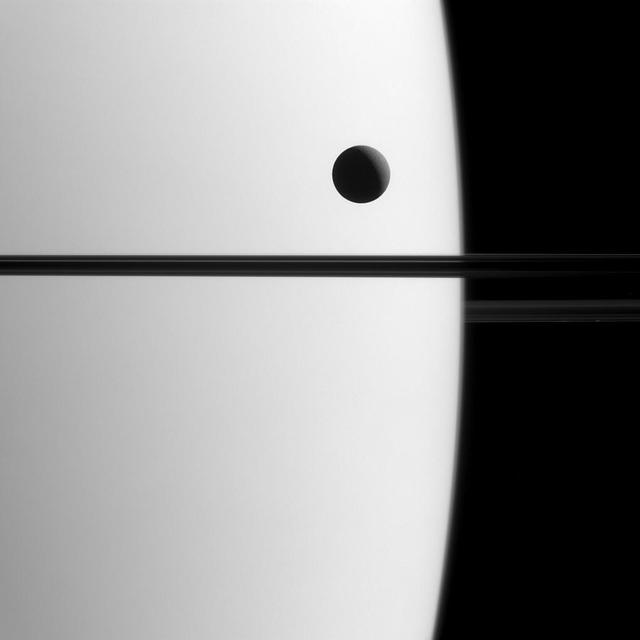
Saturn's moon Dione crosses the face of the giant planet in this view, a phenomenon astronomers call a transit. Transits play an important role in astronomy and can be used to study the orbits of planets and their atmospheres, both in our solar system and in others. By carefully timing and observing transits in the Saturn system, like that of Dione (698 miles or 1123 kilometers across), scientists can more precisely determine the orbital parameters of Saturn's moons. This view looks toward the unilluminated side of the rings from about 0.3 degrees below the ring plane. The image was taken in visible green light with the Cassini spacecraft narrow-angle camera on May 21, 2015. The view was acquired at a distance of approximately 1.4 million miles (2.3 million kilometers) from Saturn and at a Sun-Saturn-spacecraft, or phase, angle of 119 degrees. Image scale is 9 miles (14 kilometers) per pixel. http://photojournal.jpl.nasa.gov/catalog/PIA18330
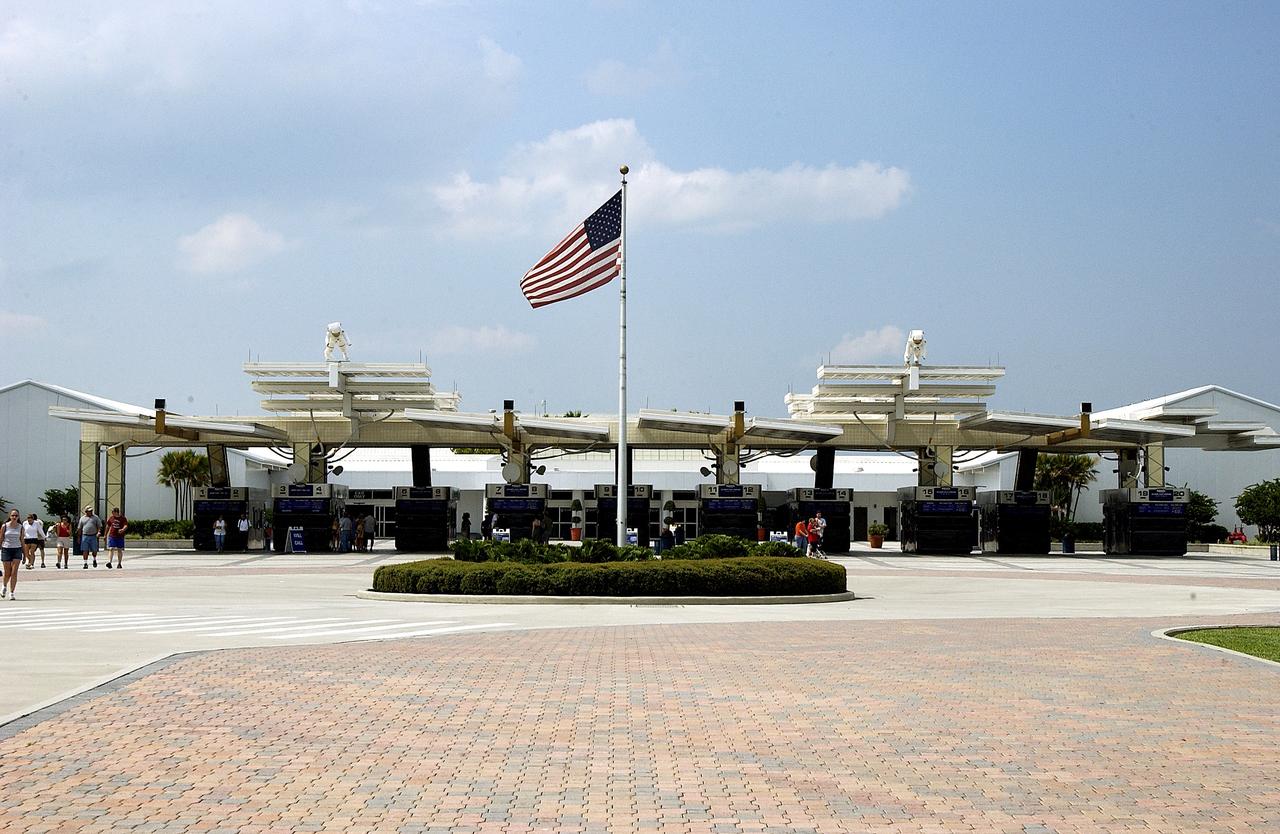
KENNEDY SPACE CENTER, FLA. - The ticket plaza provides entrance into the KSC Visitor Complex. An orientation center inside provides a multilingual guest service staff to greet guests.
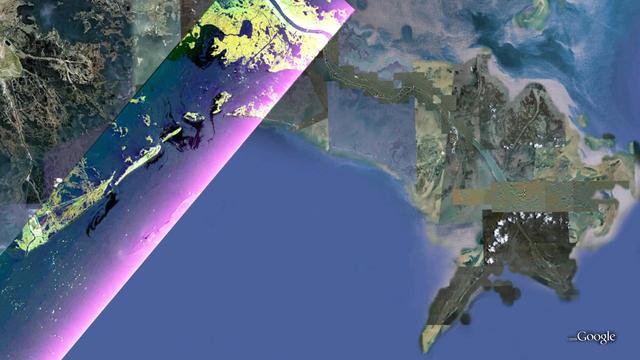
This false-color composite image from NASA UAVSAR taken on June 23, 2010, shows the southern Louisiana coastline, covering the area around Grande Isle and the entrance to Barataria Bay.
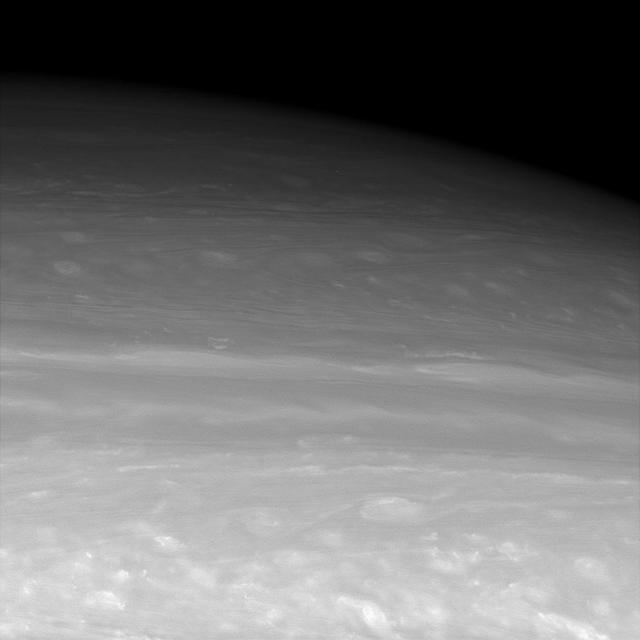
This infrared view looks toward middle to high northern latitudes on Saturn, revealing entrancing meanders in the clouds. The cloud patterns transition from puffier looking in the south -- possibly a region of shear -- to smoother oval shapes in the north
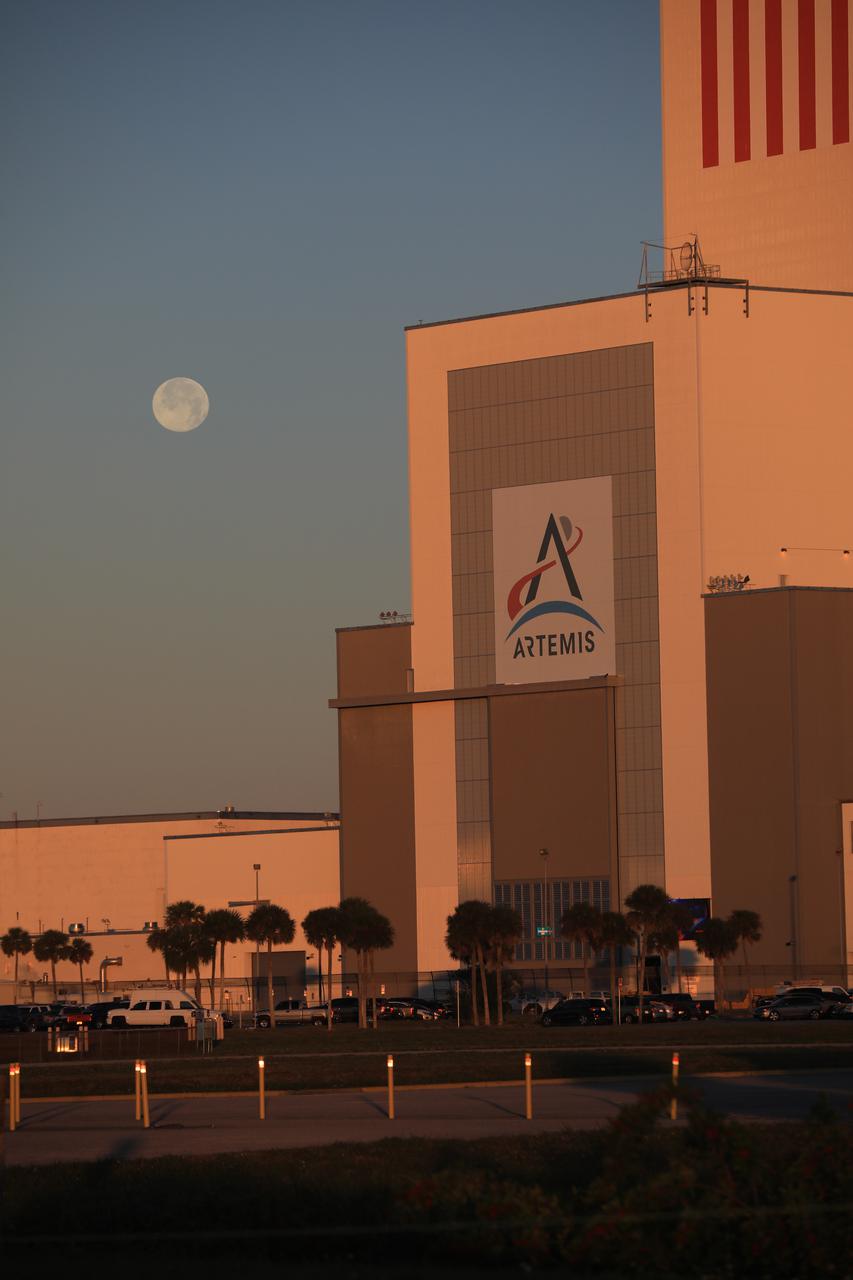
A brilliant Moon serves as the backdrop in this view of the low bay entrance to the Vehicle Assembly Building at NASA’s Kennedy Space Center in Florida on Jan. 18, 2020. An Artemis banner is positioned over the entrance.

KENNEDY SPACE CENTER, FLA. - Several exhibit entrances within the KSC Visitor Complex are seen: The Universe Theatre, which shows the film “Quest for Life”; Mad Mission to Mars 2025, a live-action stage show; and, in the background, the Rocket Garden, featuring eight authentic rockets from the past.
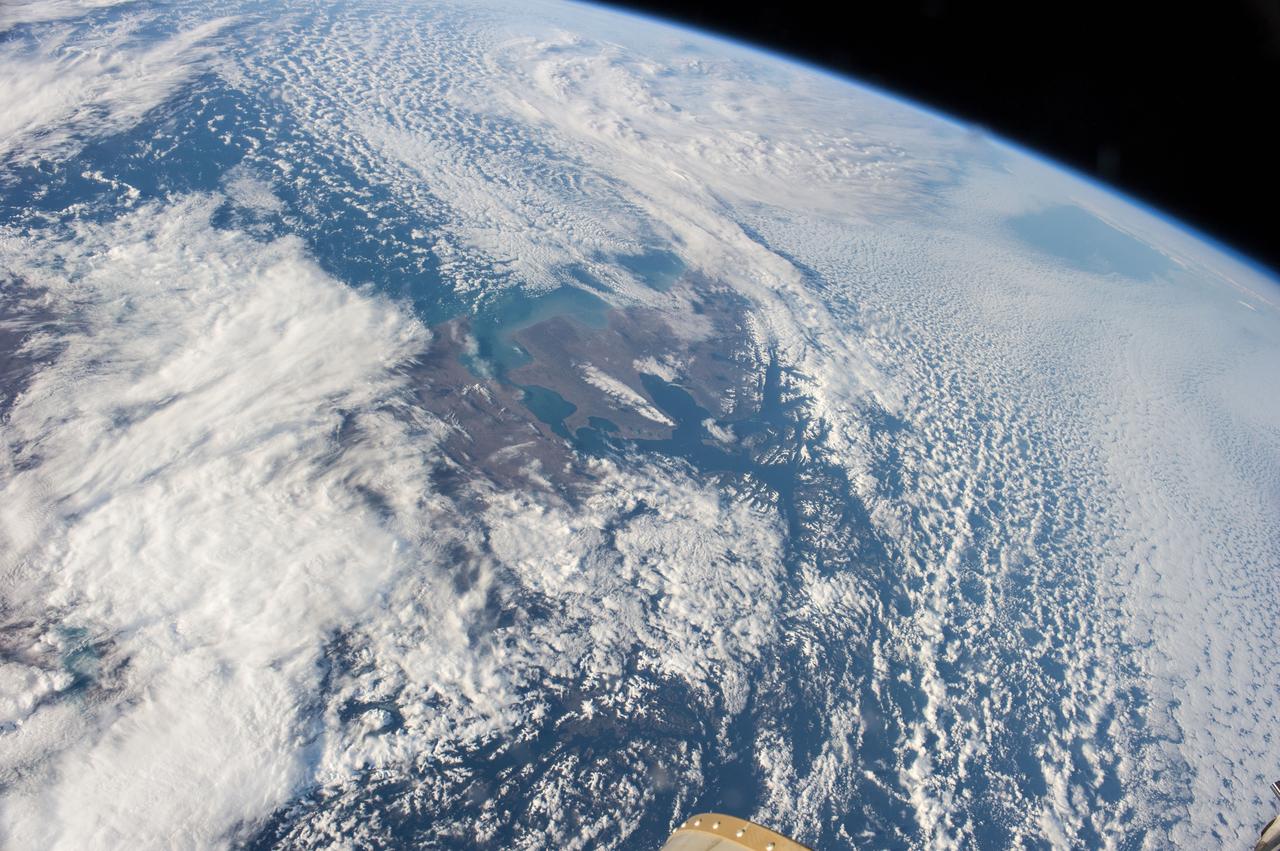
Earth Observation taken during a day pass by the Expedition 40 crew aboard the International Space Station (ISS). Folder lists this as:Straights of Magellan - Atlantic entrance - Clearish skies. Also sent down as Twitter message: Atlantic entrance to the Straits of Magellan. Prettiest place I've ever been.
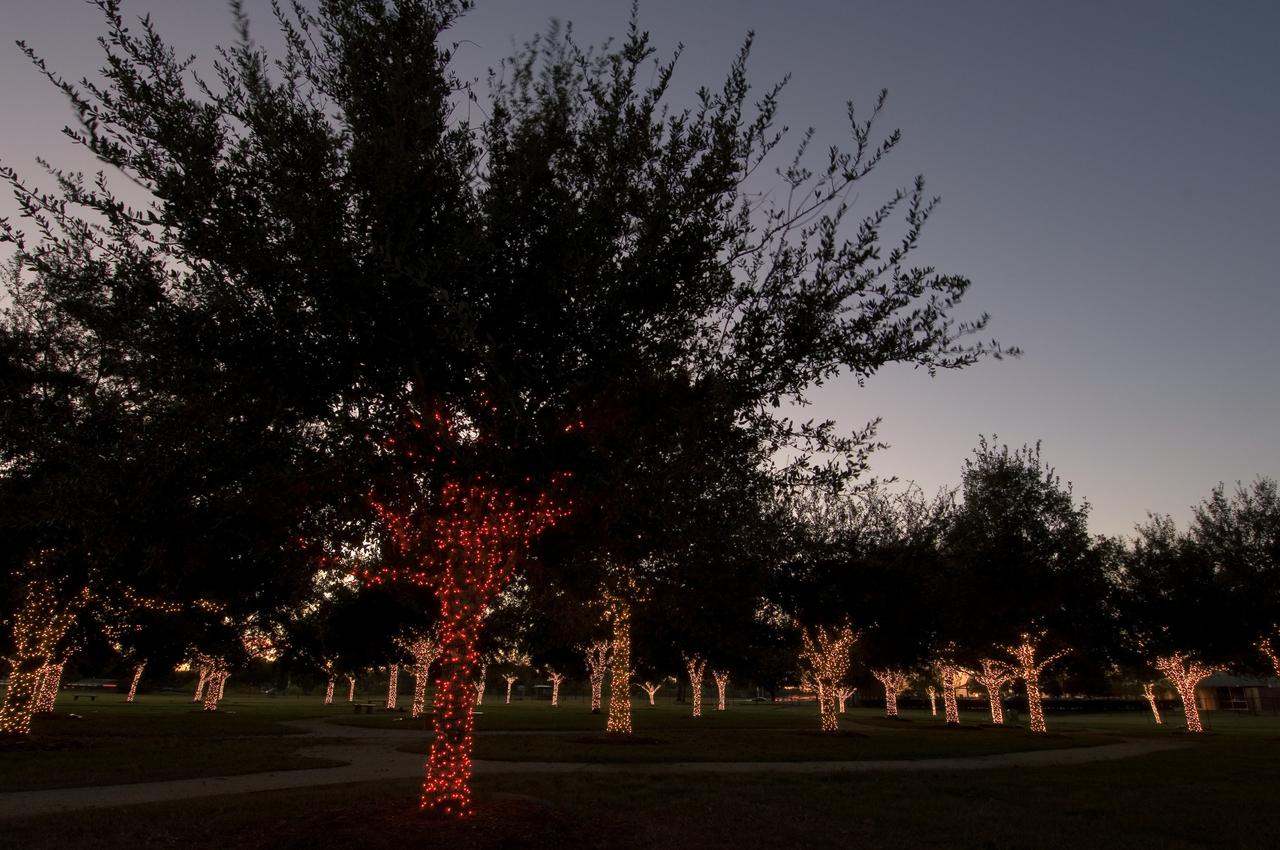
View of Christmas Lights on Memorial Tree Grove at dusk at entrance to JSC.
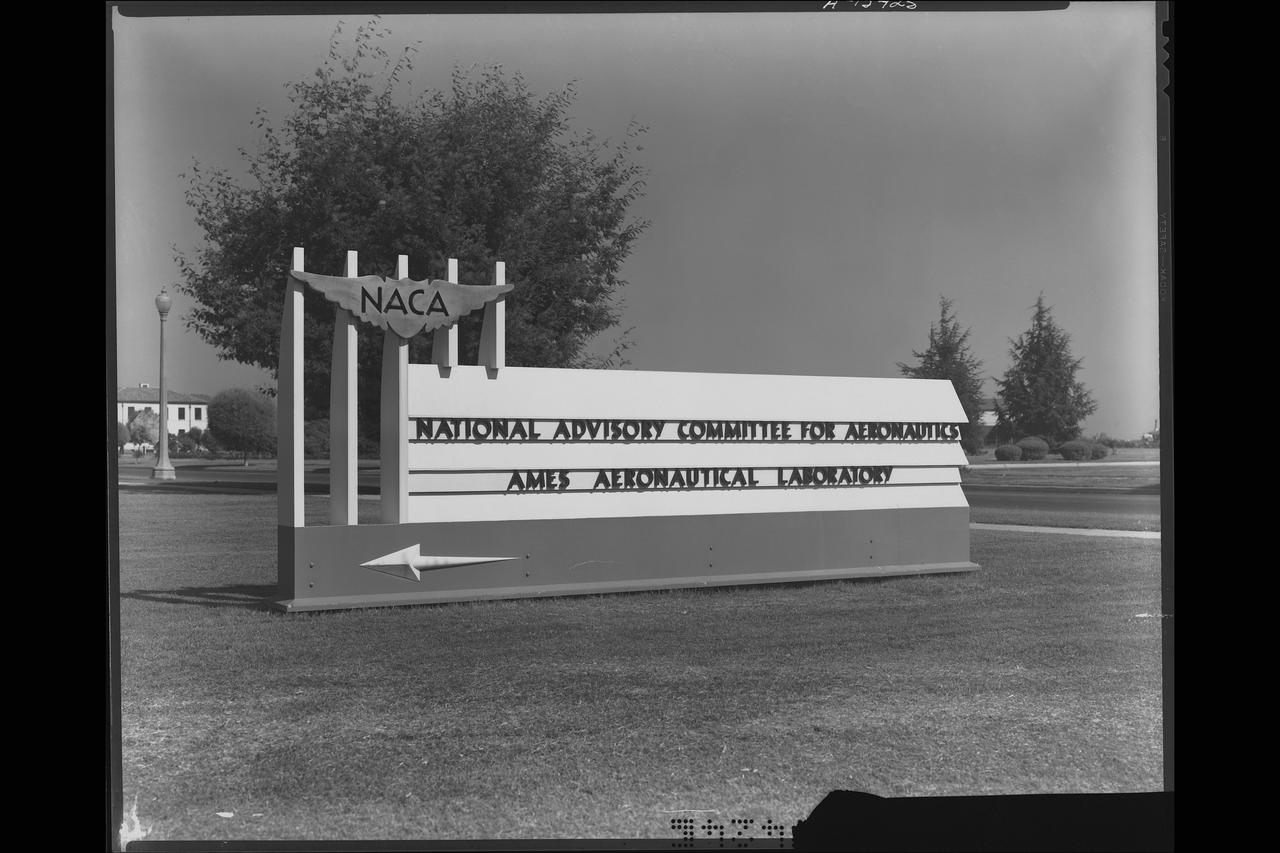
NACA (National Advisory Committee for Aeronautics) sign at entrance to Ames Laboratory

The main gate (Gate 7) of the Michoud Assembly Facility has been demolished and replaced following the tornado that struck the area in February 2017. The project included moving the gate to a position of 300 feet off the property line (away from Old Gentilly Blvd). The configuration included expanding the entrance to the gate from 2 lanes to 3 while maintaining 2 exit lanes. This layout provides for a guard post shelter rain canopy over two of the entrance lanes. Assessments and repairs continue on various structures and facilities across the facility.

The main gate (Gate 7) of the Michoud Assembly Facility has been demolished and replaced following the tornado that struck the area in February 2017. The project included moving the gate to a position of 300 feet off the property line (away from Old Gentilly Blvd). The configuration included expanding the entrance to the gate from 2 lanes to 3 while maintaining 2 exit lanes. This layout provides for a guard post shelter rain canopy over two of the entrance lanes. Assessments and repairs continue on various structures and facilities across the facility.
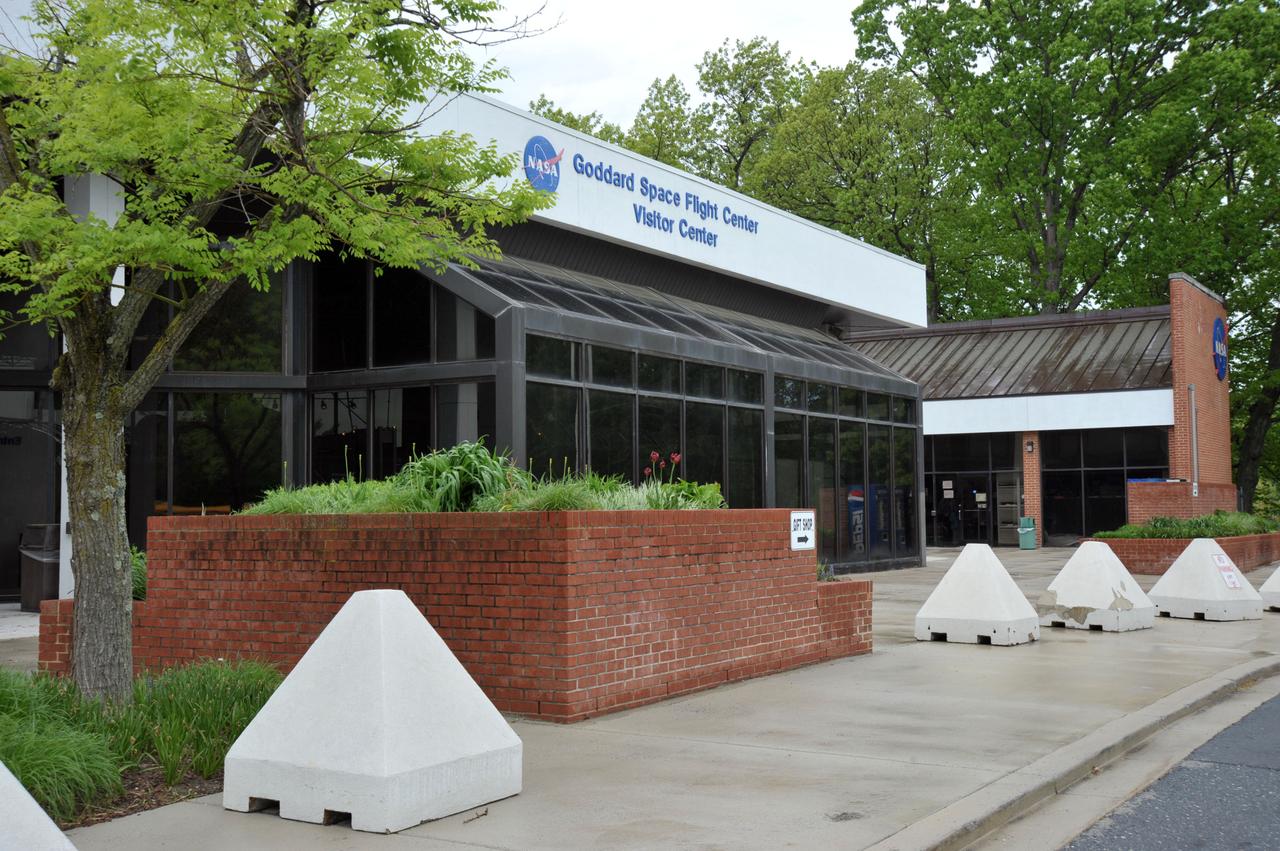
The front entrance of the Visitor Center at NASA's Goddard Space Flight Center in Greenbelt, Md.
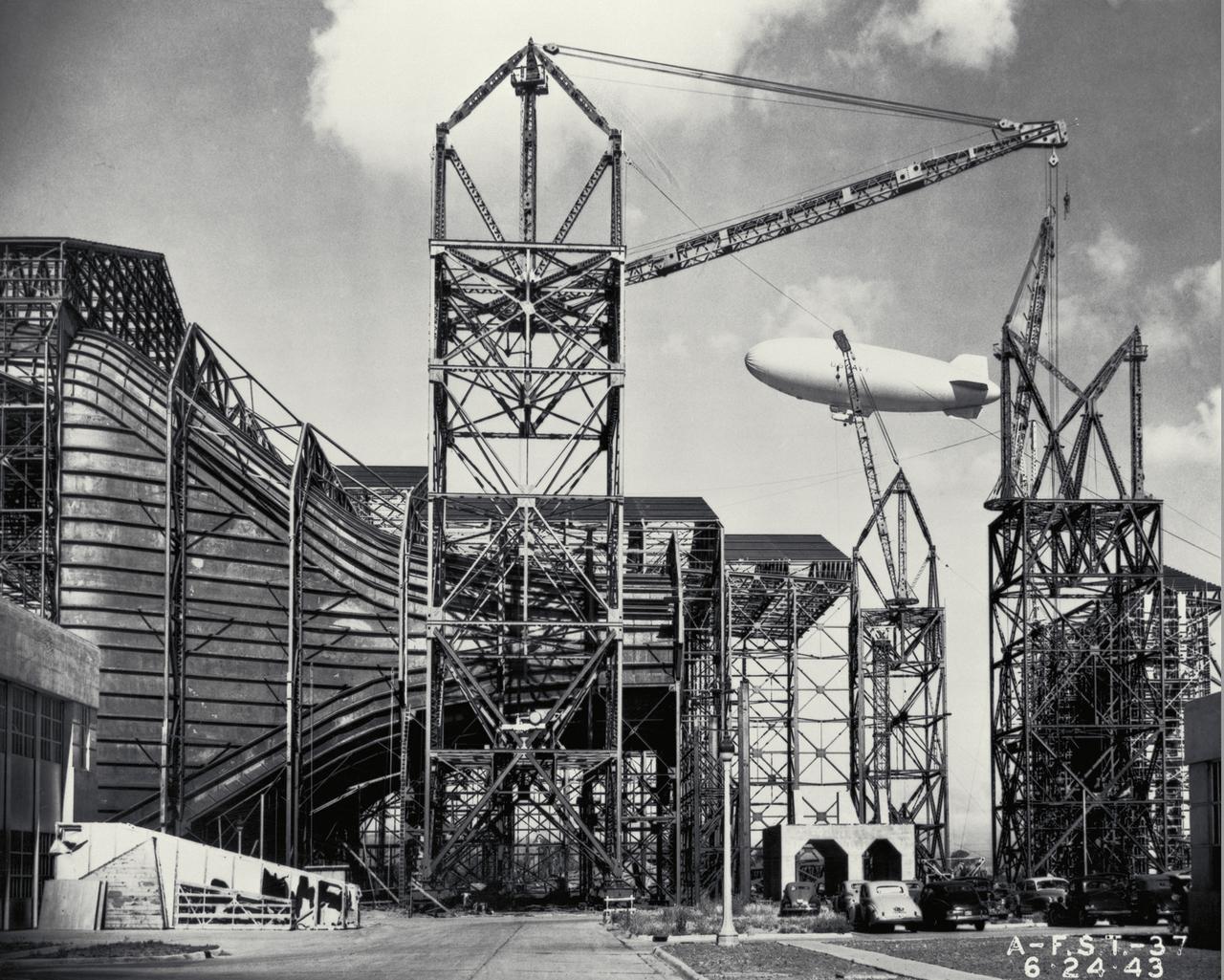
Construction of the Ames Full-Scale 40x80ft Wind tunnel. - side view of entrance cone, blimp in background
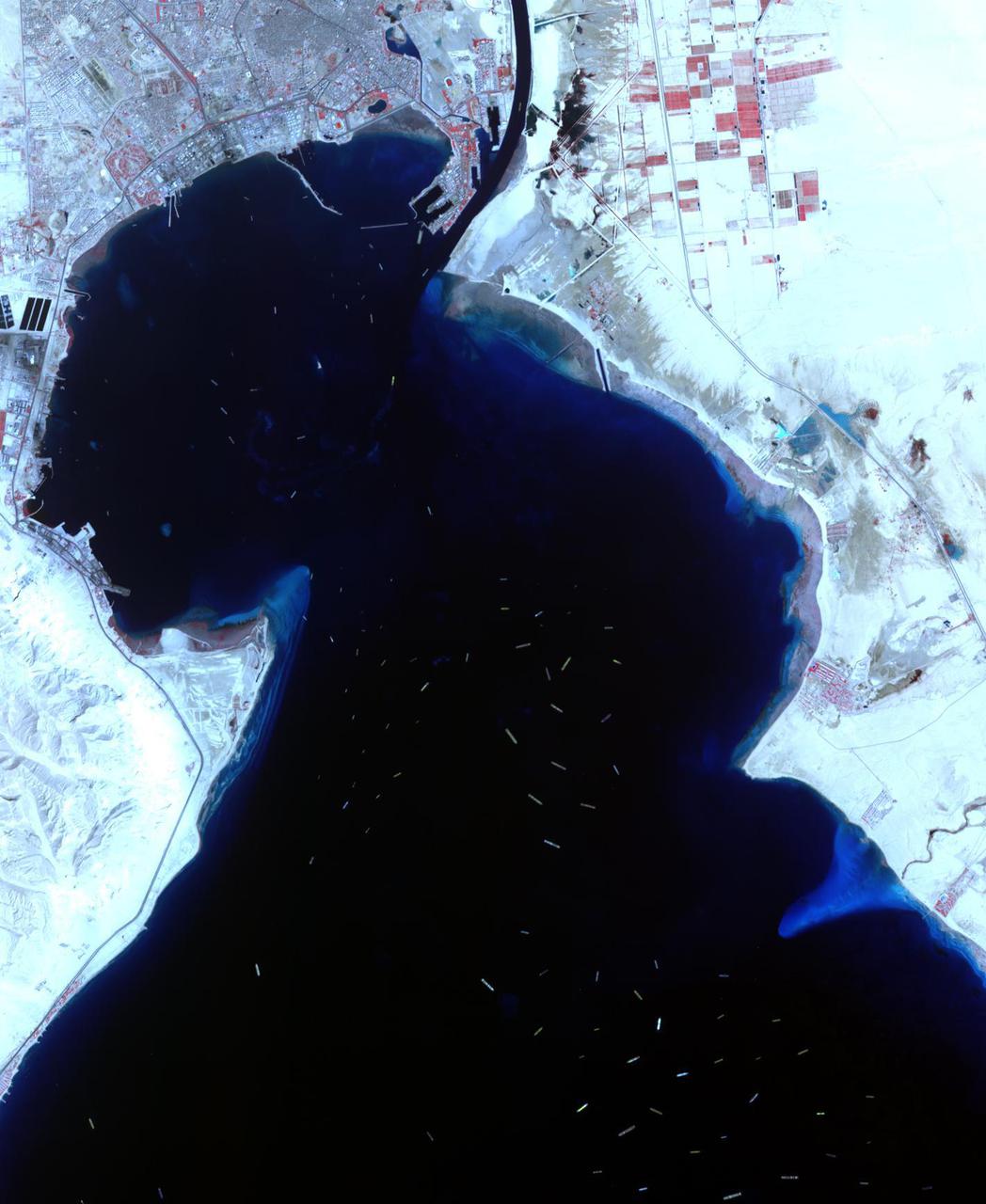
Even after the mega-freighter Ever Given was freed from its grounding in the Suez Canal on March 29, 5 days later shipping traffic still had not recovered from the crisis. At the southern entrance to the Canal, in the Gulf of Suez, over 100 freighters waited their turn to enter the Canal and proceed to the Mediterranean Sea. The image was acquired April 4, covers an area of 21.3 by 34.5 km, and is located 29.7 degrees north, 32.6 degrees east. https://photojournal.jpl.nasa.gov/catalog/PIA24553
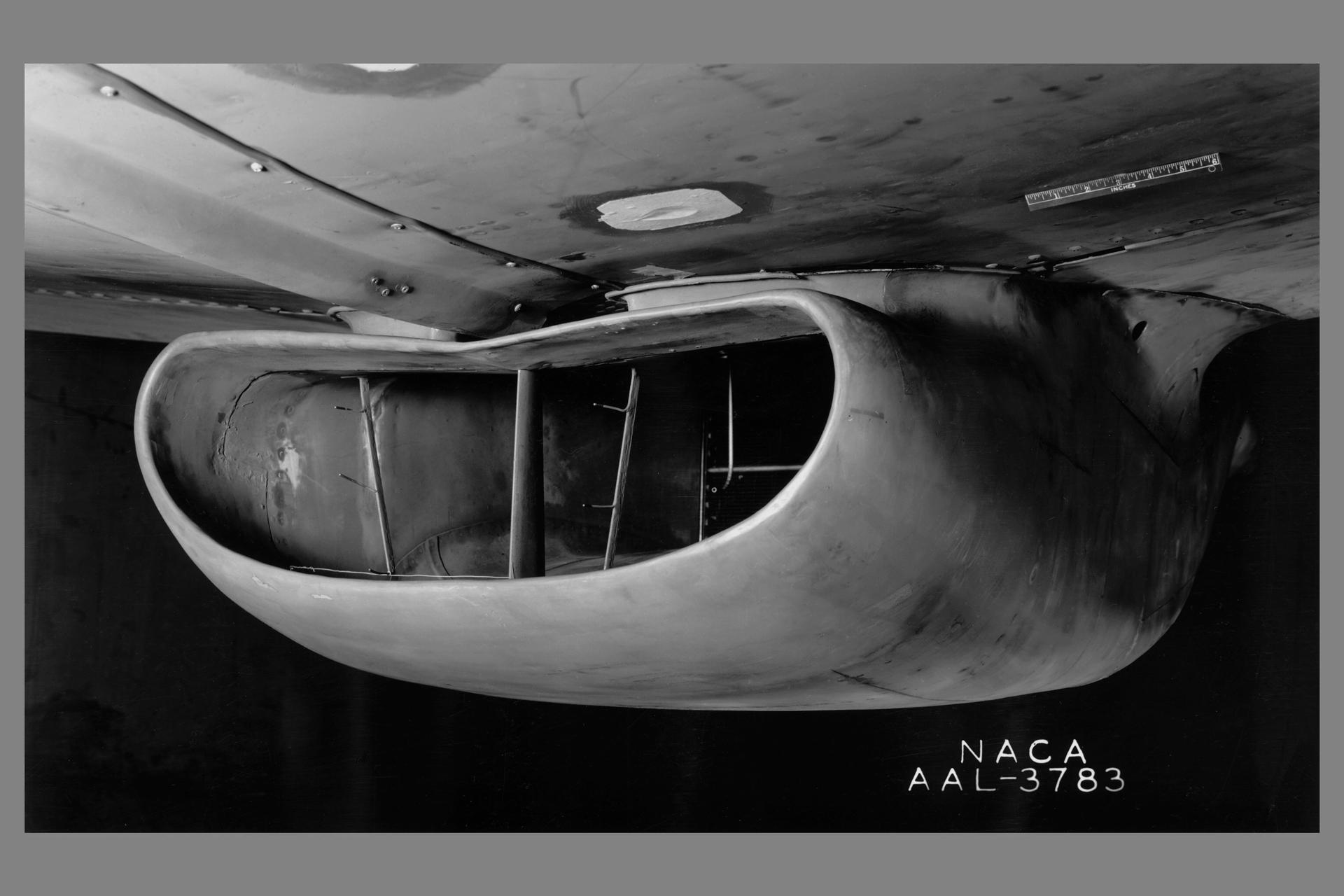
A portion of the North American P-51B airplane was tested in the 16-foot wind tunnel to devise a means of eliminating a rumble which occurred in the radiator duct system. The actual fuselage and center portion of the airplane was installed in the tunnel for this purpose as is shown. A change in the form of the duct was made and tested, which eliminated the rumble. The entrance to the original radiator duct is indicated in this photograph, and the revised form of the duct entrance in photographer AAL-3926.
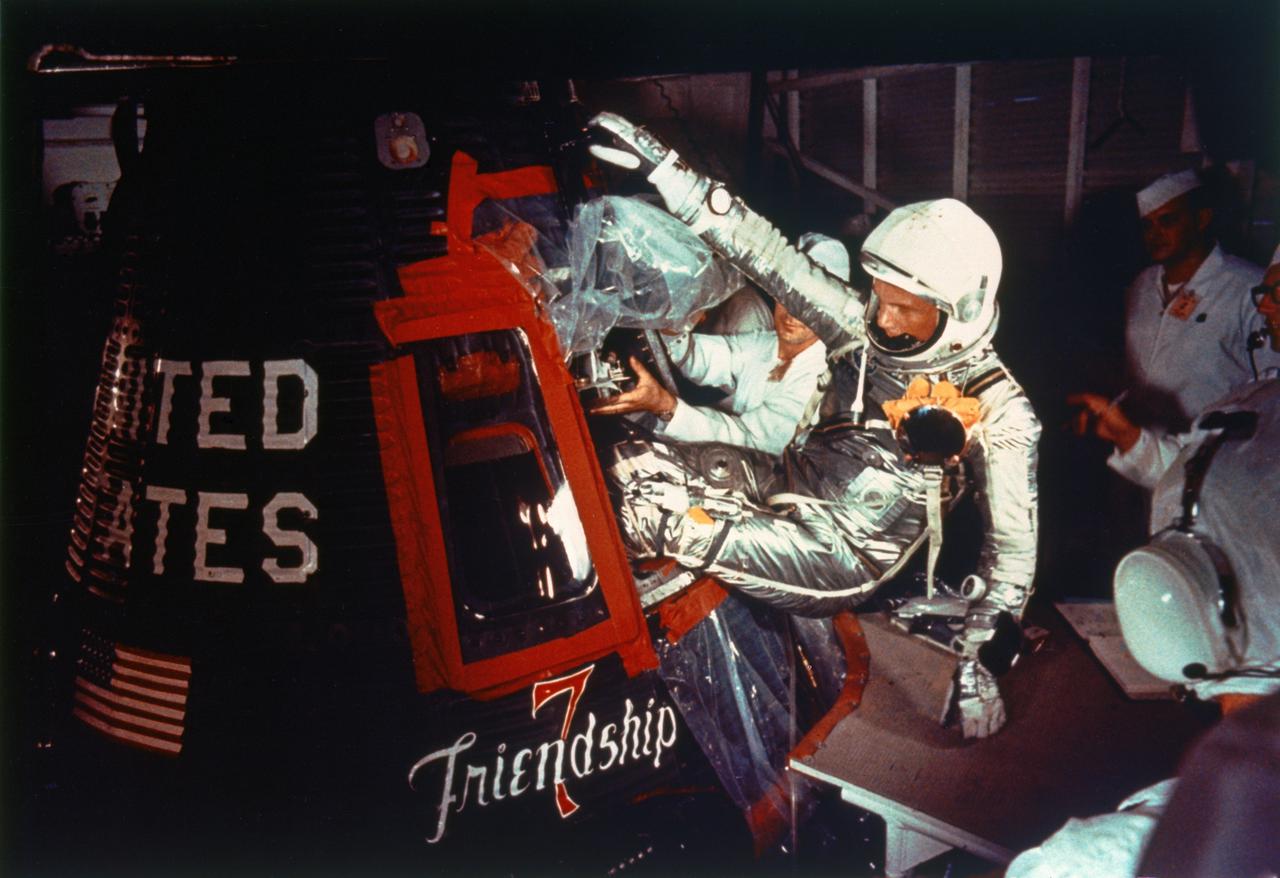
CAPE CANAVERAL, Fla. -- Overall view of astronaut John H. Glenn Jr. as he commences entrance into spacecraft Friendship 7 prior to MA-6 launch operations. Photo credit: NASA
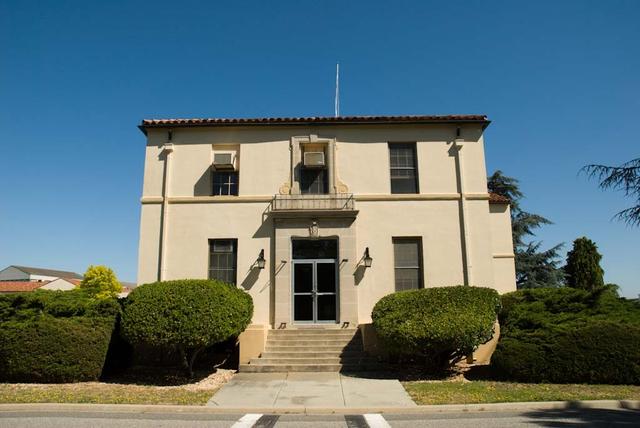
NASA Research Park (NRP) shenandoah Plaza Historic Buildings at Moffett Federal Airfield, CA B-17 Lunar Science Institute east entrance taken by Photo summer student Shashank
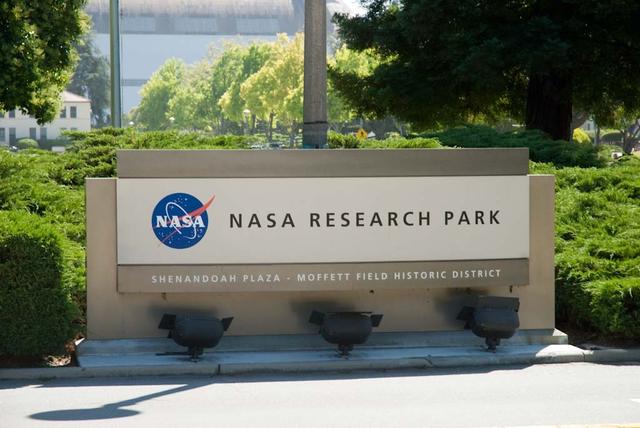
NASA Research Park (NRP) shenandoah Plaza Historic Buildings at Moffett Federal Airfield, CA NRP sign at the Shenandoah Plaza entrance taken by Photo summer student Shashank
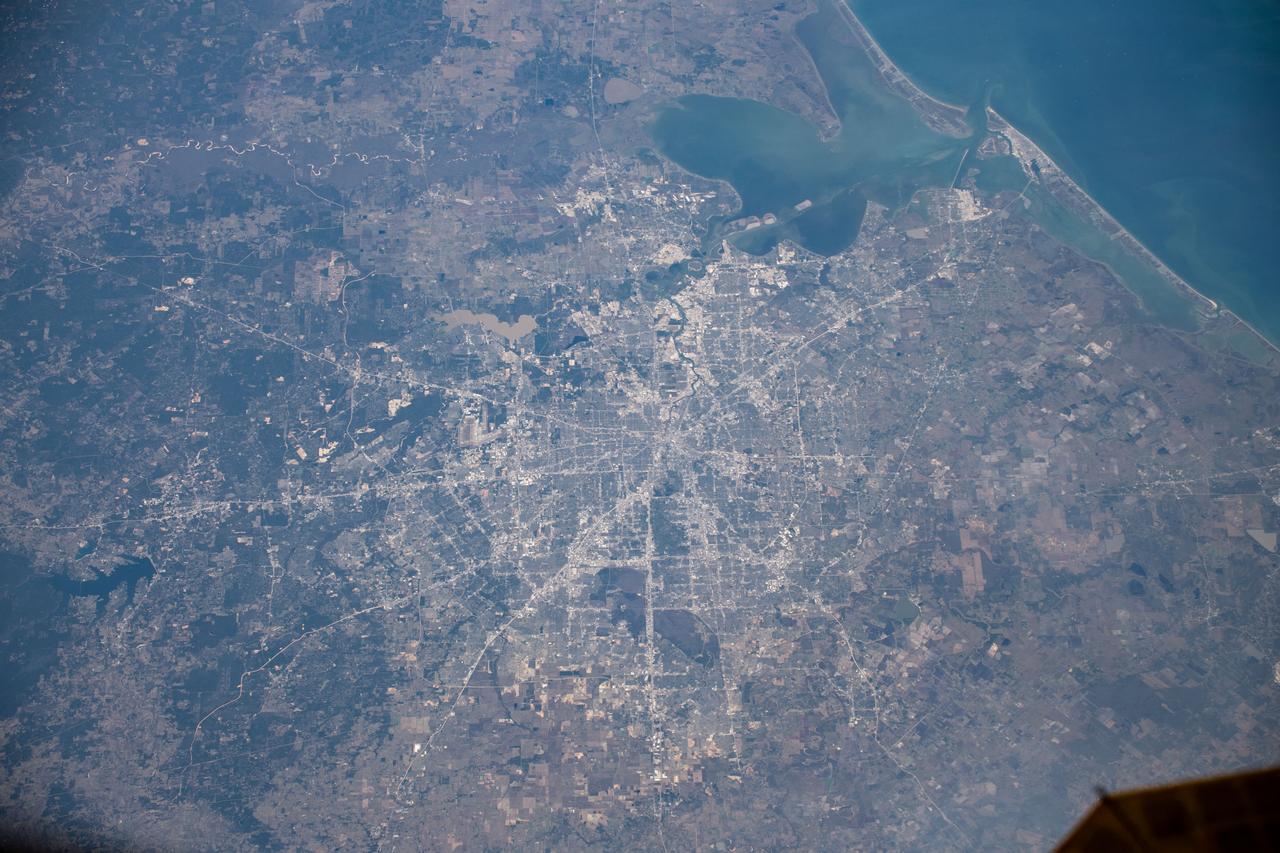
iss061e066680 (Dec. 3, 2019) --- Houston, Texas and its surrounding suburbs, including the island city of Galveston at the entrance of Galveston Bay at top right, is pictured from the International Space Station at an altitude of 257 miles.
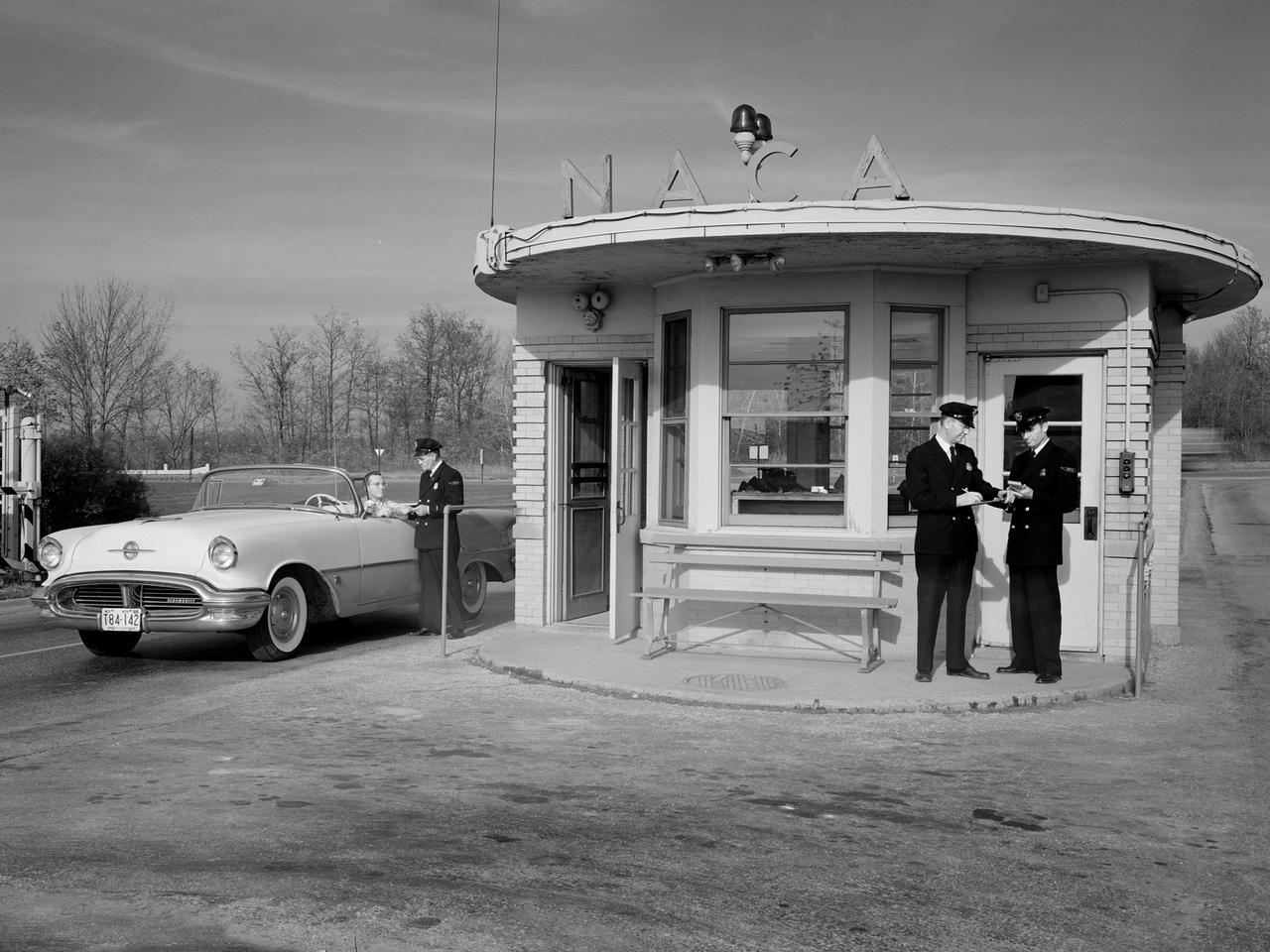
A vehicle leaves the National Advisory Committee for Aeronautics (NACA) Lewis Flight Propulsion Laboratory in Cleveland, Ohio. The guard house was on the main entrance to the laboratory from Brookpark Road. The original building was fairly small and easily crowded. In the early 1960s a new security facility was built several hundred feet beyond the original guard house. The original structure remained in place for several years, but was not utilized. The structure seen in this photograph was replaced in 2011 by a new building and entrance configuration. In September 1955, approximately a year before this photo was taken, the security staff was given new navy blue uniforms, seen here.
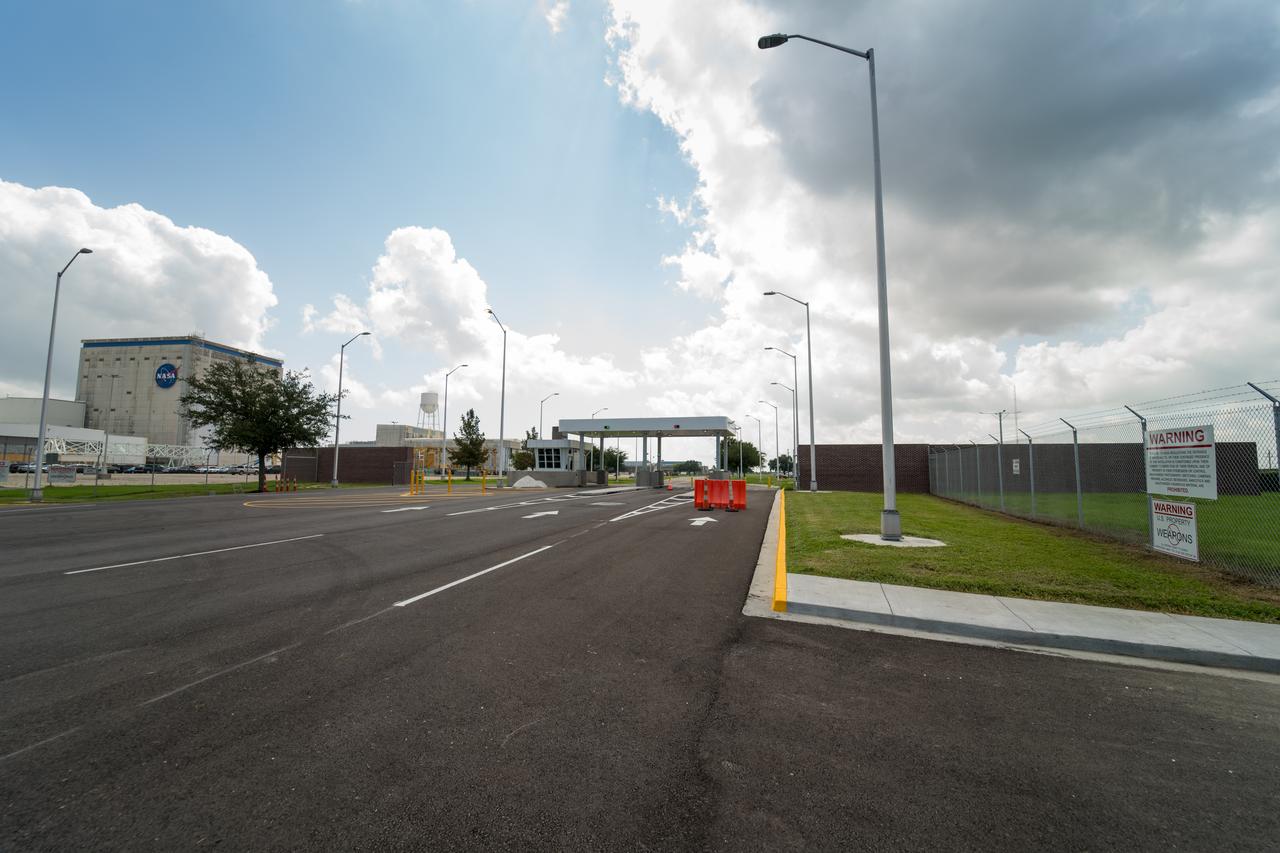
The main gate (Gate 7) of the Michoud Assembly Facility has been demolished and replaced following the tornado that struck the area in February 2017. The project included moving the gate to a position of 300 feet off the property line (away from Old Gentilly Blvd). The configuration included expanding the entrance to the gate from 2 lanes to 3 while maintaining 2 exit lanes. This layout provides for a guard post shelter rain canopy over two of the entrance lanes. Assessments and repairs continue on various structures and facilities across the facility.
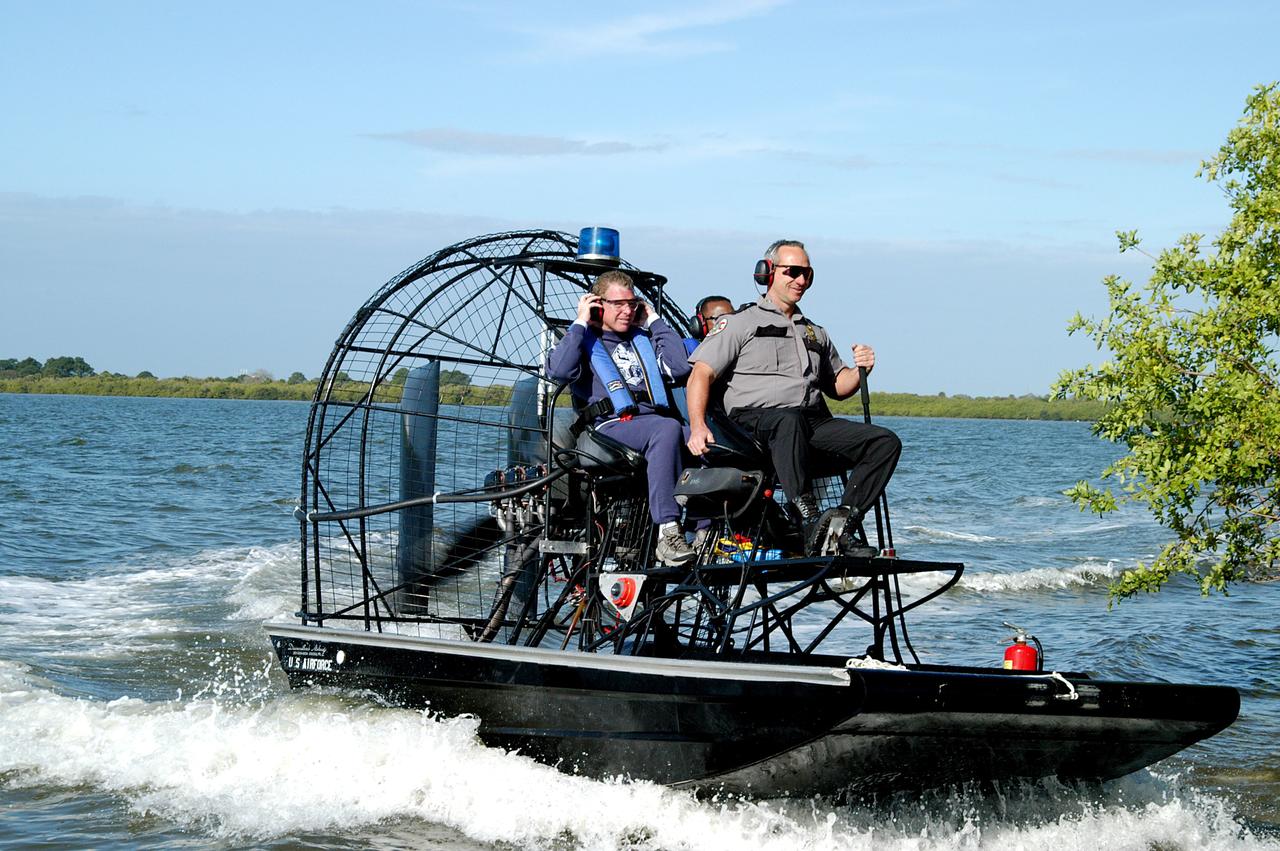
KENNEDY SPACE CENTER, FLA. - Congressman Tom Feeney (left) and Deputy Director Woodrow Whitlow Jr. take an air boat ride around Kennedy Space Center. During January and February, Congressman Feeney traveled the entire coastline of Florida’s 24th District, and concluded his walks March 1 in Brevard County. On his walks, he met with constituents and community leaders to discuss legislative issues that will be addressed by the 108th Congress. Feeney ended his beach walk at the KSC Visitor Complex main entrance.
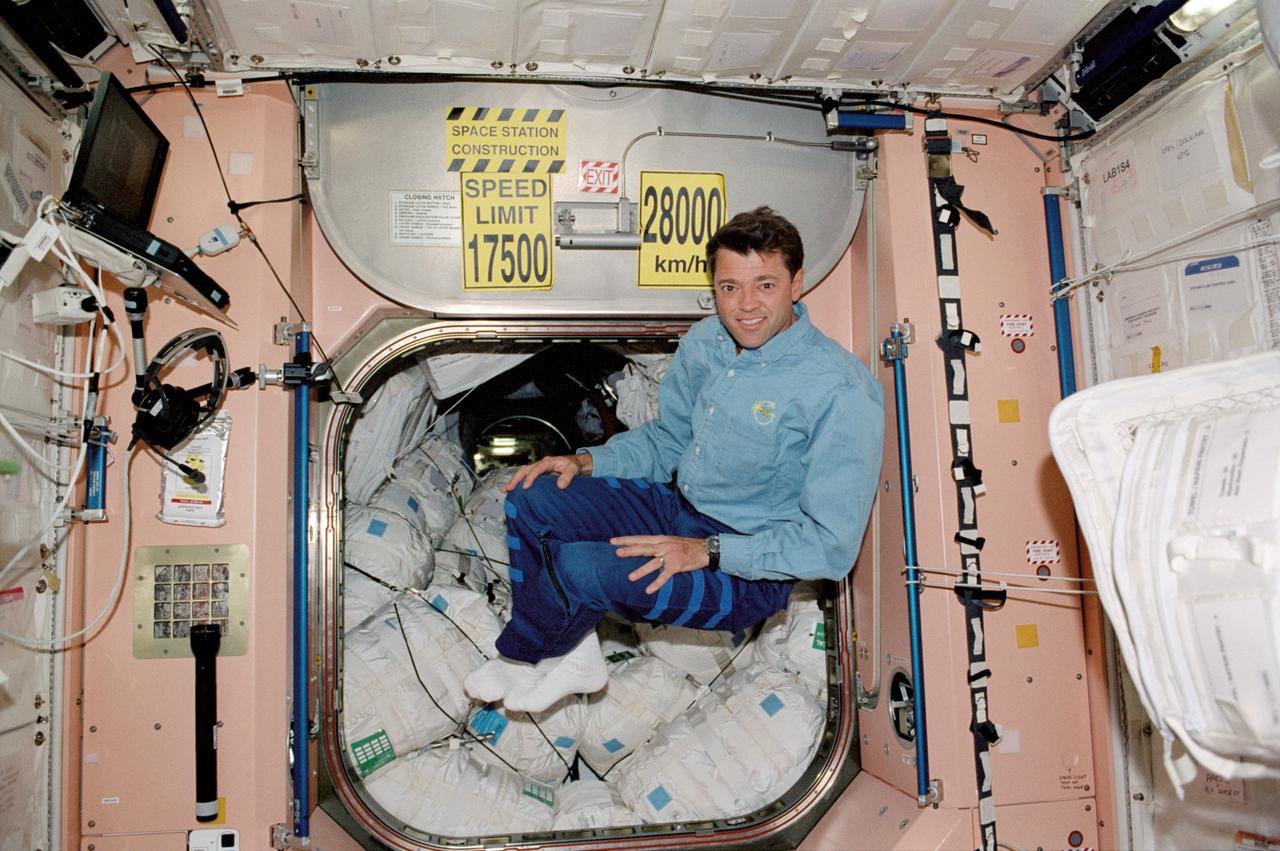
STS112-316-008 (7-18 October 2002) --- Astronaut Jeffrey S. Ashby, STS-112 mission commander, floats in the Unity node on the International Space Station (ISS).
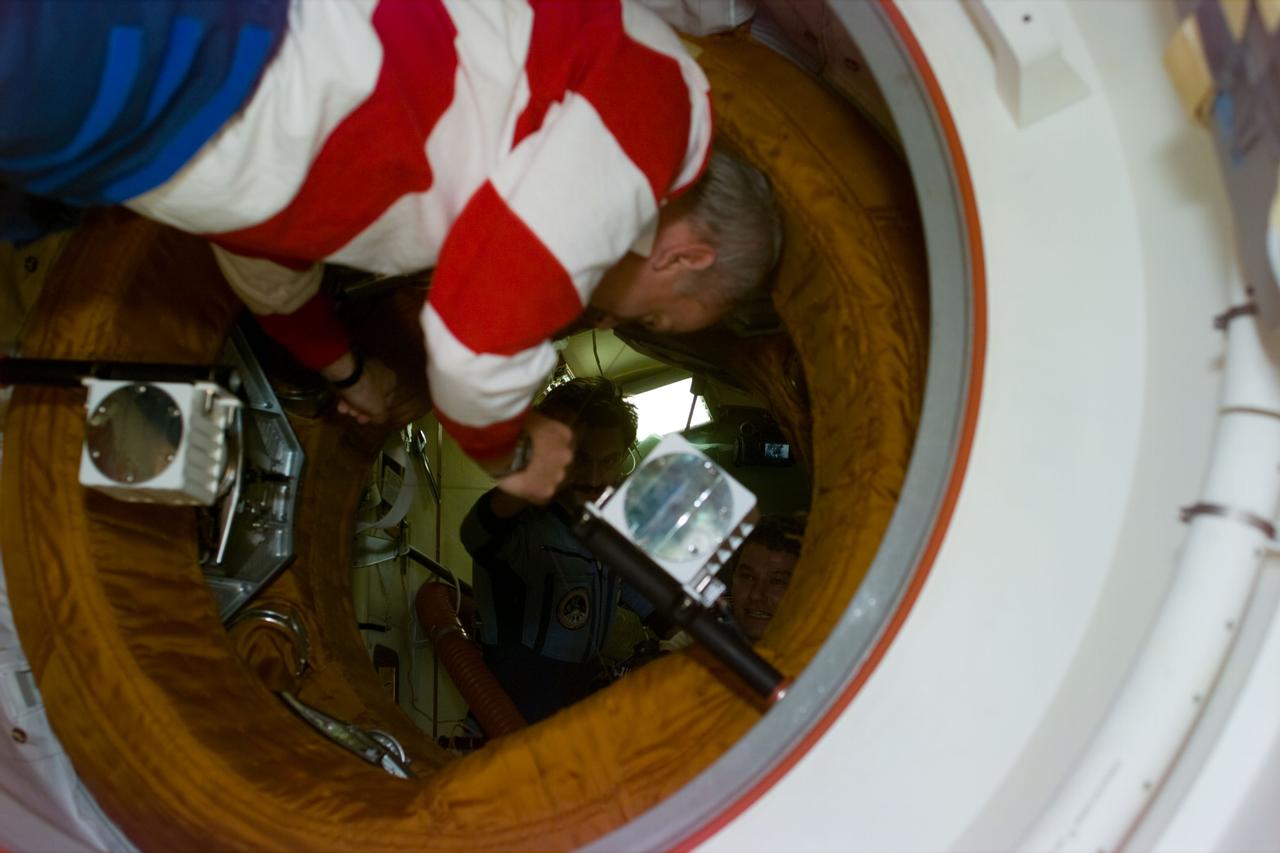
STS79-E-5300 (23 September 1996) --- Astronaut William F. Readdy (foreground), STS-79 commander, bids farewell to Russian cosmonauts Aleksandr Y. Kaleri (left in background), Mir-22 flight engineer, and Valeri G. Korzun, Mir-22 commander, just prior to hatch closing, during Flight Day 8. The Americans and Russians will undock the Space Shuttle Atlantis and the Russia's Mir Space Station later today.
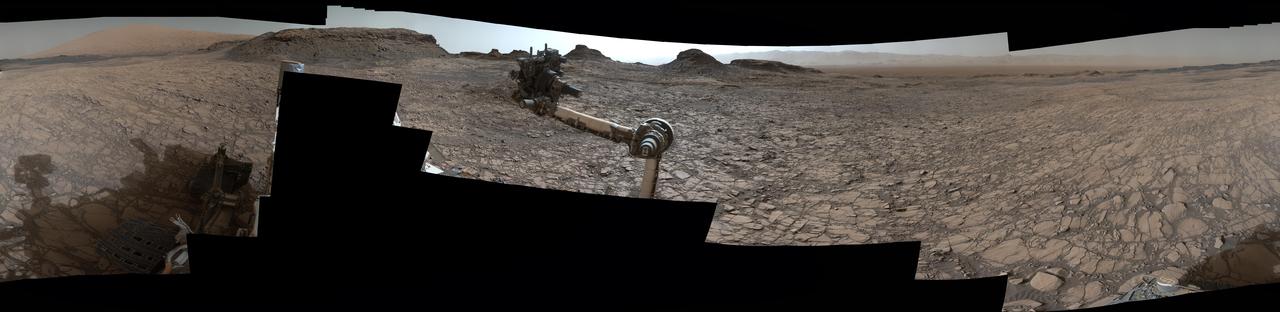
This 360-degree panorama was acquired by the Mast Camera (Mastcam) on NASA's Curiosity Mars rover as the rover neared features called "Murray Buttes" on lower Mount Sharp. The view combines more than 130 images taken on Aug. 5, 2016, during the afternoon of the mission's 1,421st sol, or Martian day, by Mastcam's left-eye camera. This date also was the fourth anniversary of Curiosity's landing. The dark, flat-topped mesa seen to the left of Curiosity's robotic arm is about 300 feet (about 90 meters) from the rover's position. It stands about 50 feet (about 15 meters) high. The horizontal ledge near the top of the mesa is about 200 feet (about 60 meters) across. An upper portion of Mount Sharp appears on the distant horizon to the left of this mesa. The relatively flat foreground is part of a geological layer called the Murray formation, which formed from lakebed mud deposits. The buttes and mesas rising above this surface are eroded remnants of ancient sandstone that originated when winds deposited sand after lower Mount Sharp had formed. Curiosity closely examined that layer -- the Stimson formation -- during the first half of 2016 while crossing a feature called "Naukluft Plateau" between two exposures of the Murray formation. The buttes and mesas of Murray Buttes are capped by material that is relatively resistant to erosion, just as is the case with many similarly shaped buttes and mesas on Earth. The informal naming honors Bruce Murray (1931-2013), a Caltech planetary scientist and director of NASA's Jet Propulsion Laboratory, Pasadena, California. The scene is presented with a color adjustment that approximates white balancing, to resemble how the rocks and sand would appear under daytime lighting conditions on Earth. http://photojournal.jpl.nasa.gov/catalog/PIA20765
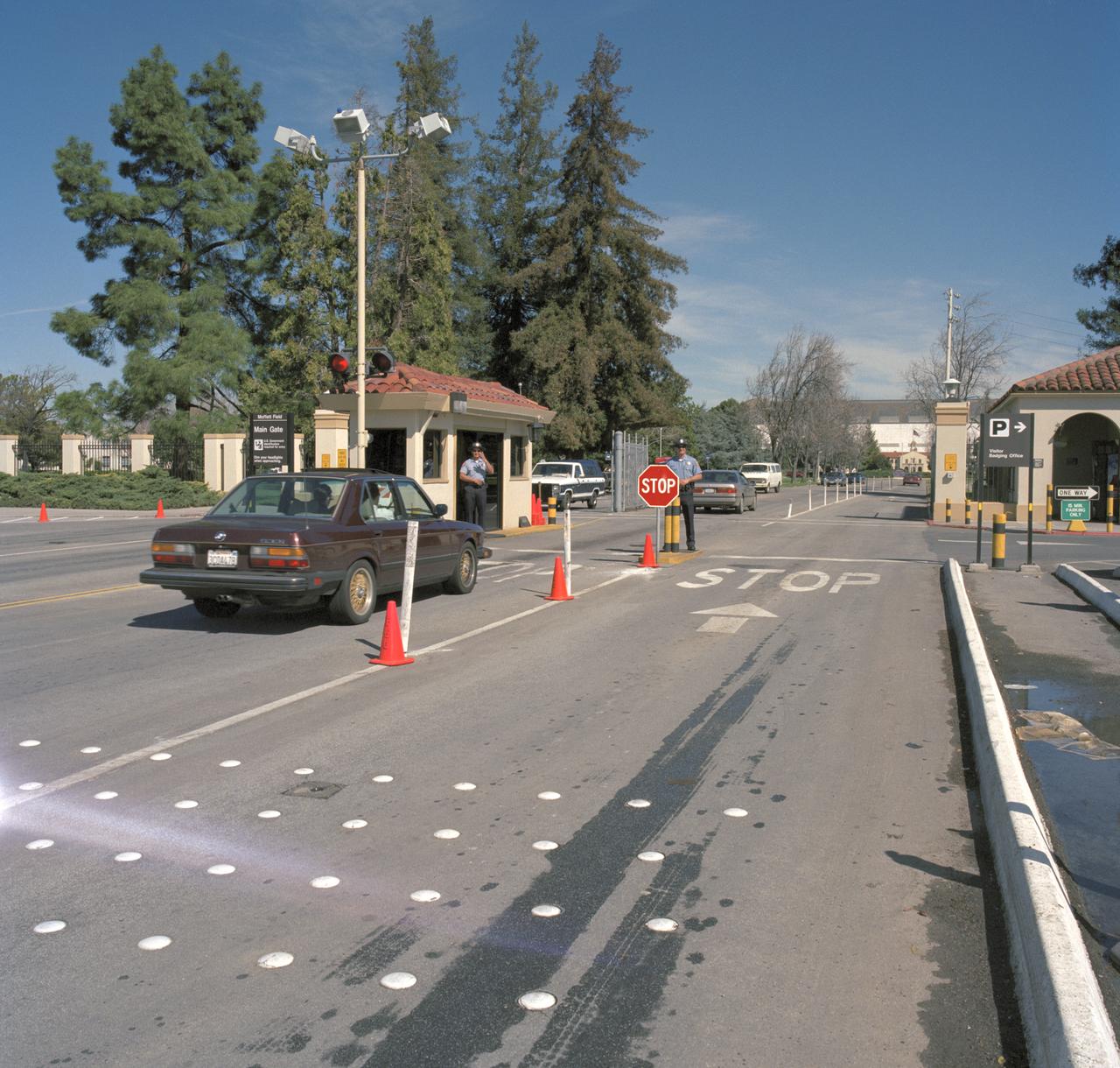
Protective Services Office (Code JP) Personnel On Duty. Main Gate Guards Rubin Cablgas and Robert Burja
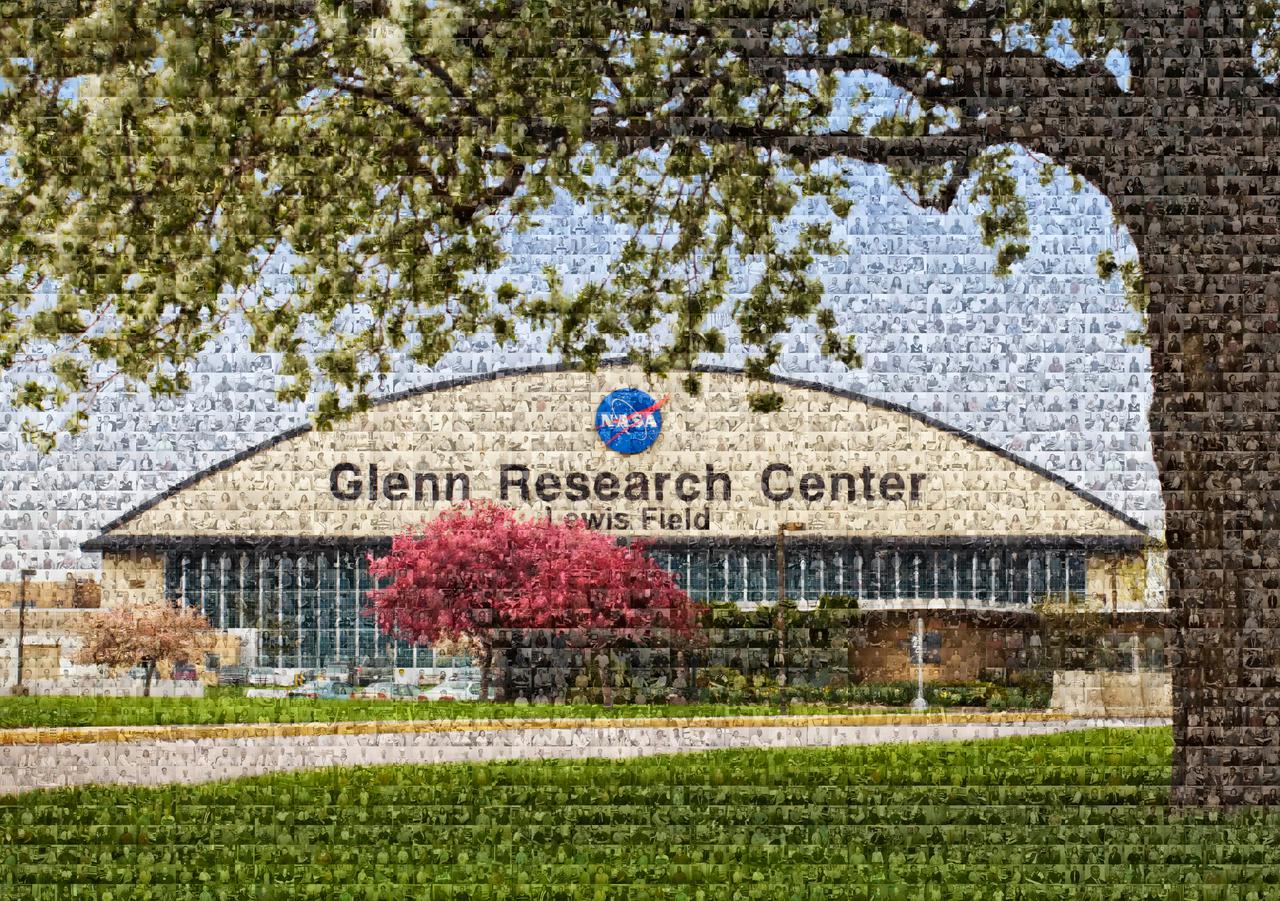
Over 2900 image tiles were used to assemble this mosaic image. Photographers photographed employees in their work areas, on the street and in public areas of every building on the Center to capture as many employees as possible. The final image was printed on a poster to commemorate NASA's 50th Anniversary on October 1, 2008.
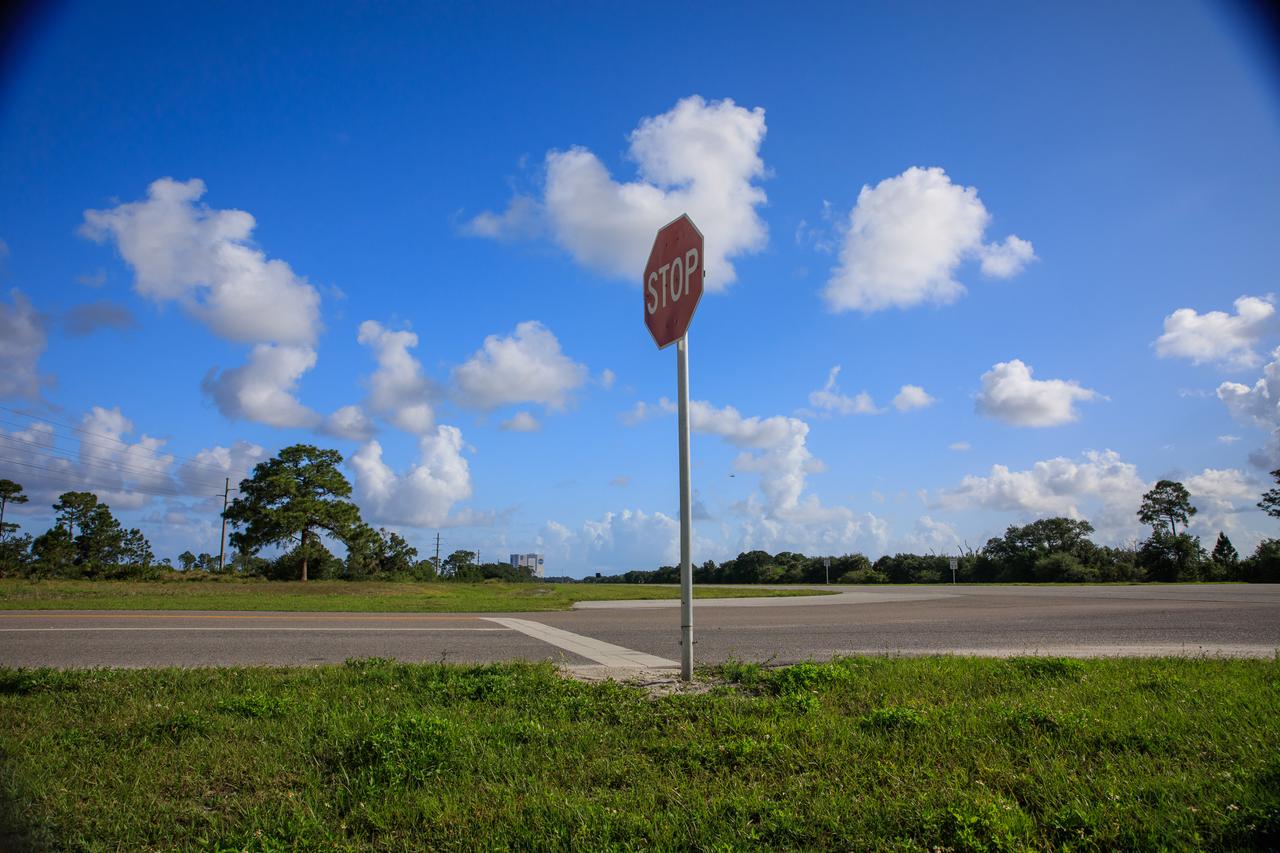
A view of the entrance to SpaceX’s Roberts Road off of State Road 3 at NASA’s Kennedy Space Center in Florida on April 21, 2023. The company wishes to extend the road to allow for expansion of its current facilities. An environmental impact study is underway to investigate the feasibility of the campus expansion.
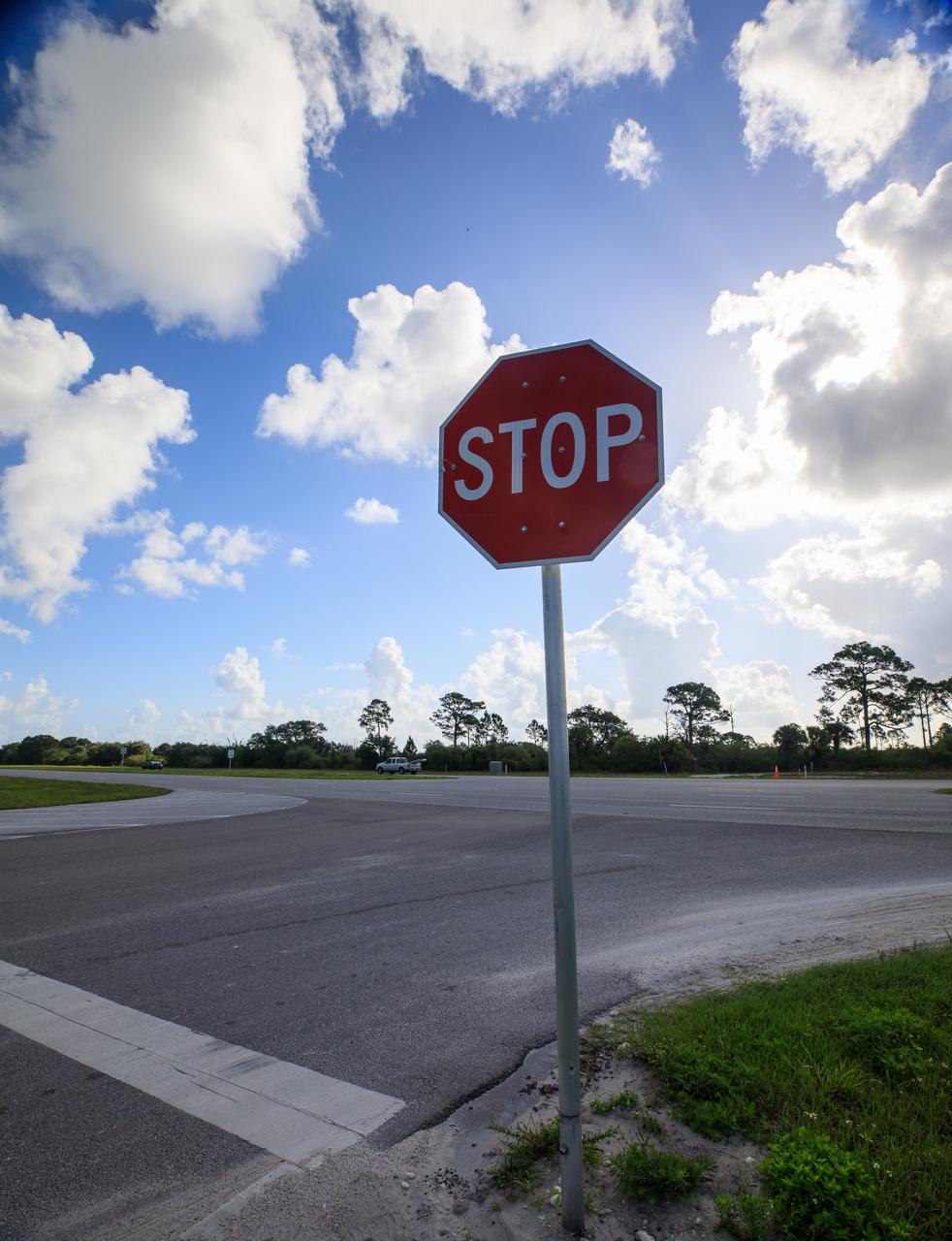
A view of the entrance to SpaceX’s Roberts Road off of State Road 3 at NASA’s Kennedy Space Center in Florida on April 21, 2023. The company wishes to extend the road to allow for expansion of its current facilities. An environmental impact study is underway to investigate the feasibility of the campus expansion.
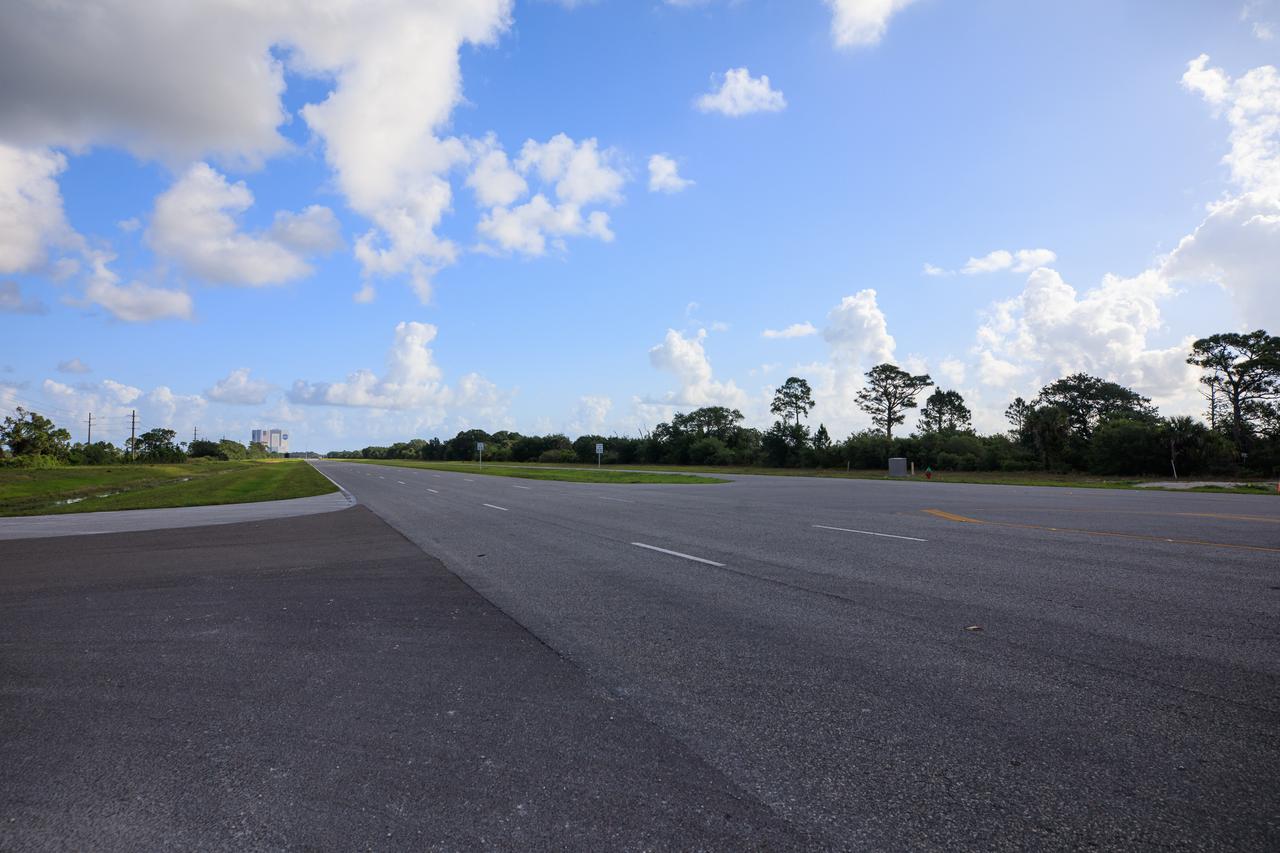
A view of the entrance to SpaceX’s Roberts Road off of State Road 3 at NASA’s Kennedy Space Center in Florida on April 21, 2023. The company wishes to extend the road to allow for expansion of its current facilities. An environmental impact study is underway to investigate the feasibility of the campus expansion.
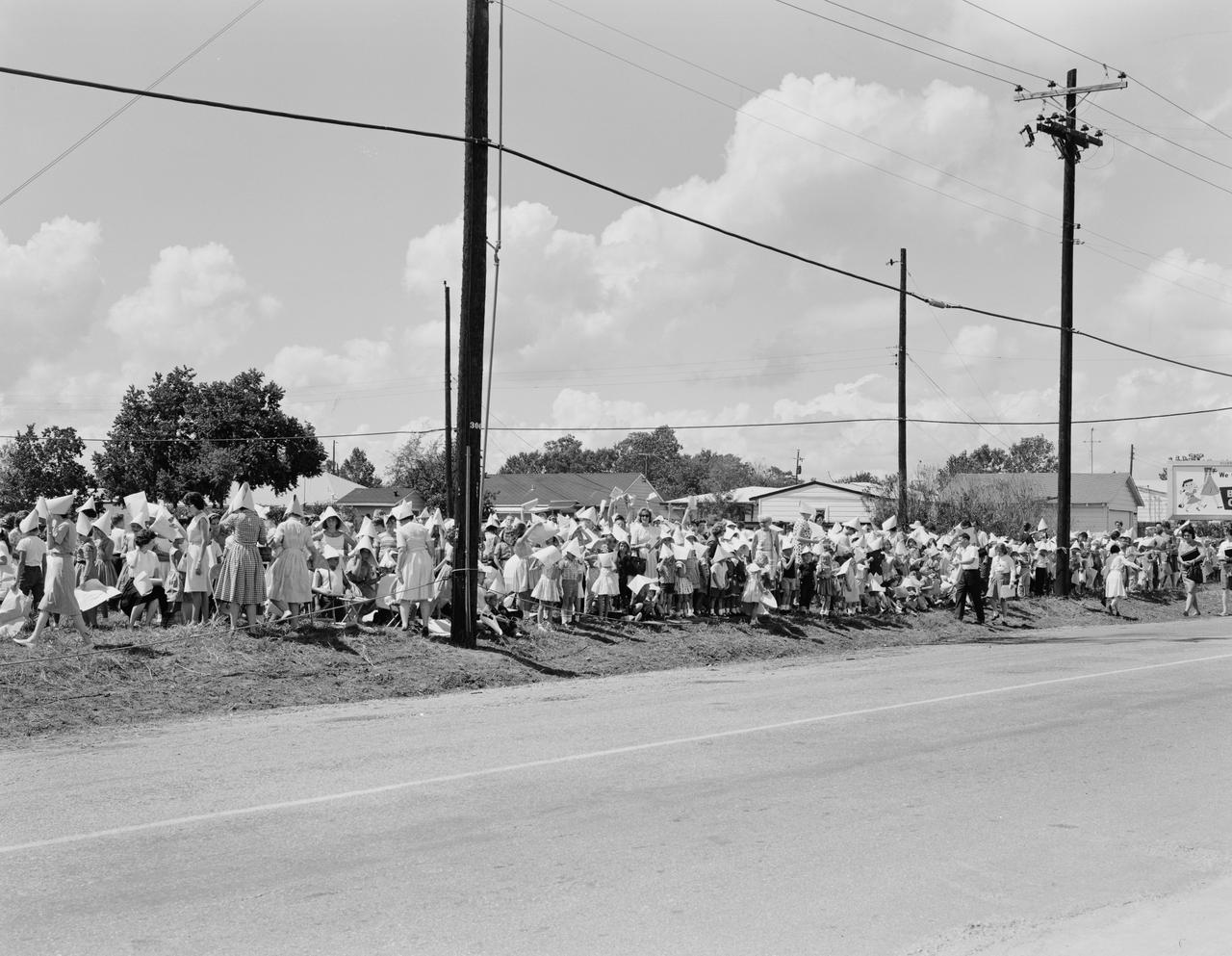
S62-03991 (11 September 1962) --- Just before the arrival of President John F. Kennedy at the J. P. Cornelius grade school, on Westover, turned out for a look at the Chief Executive in person. Wearing sun hats they made themselves, 700 children lined the roadway opposite the side entrance to the Rich Building.
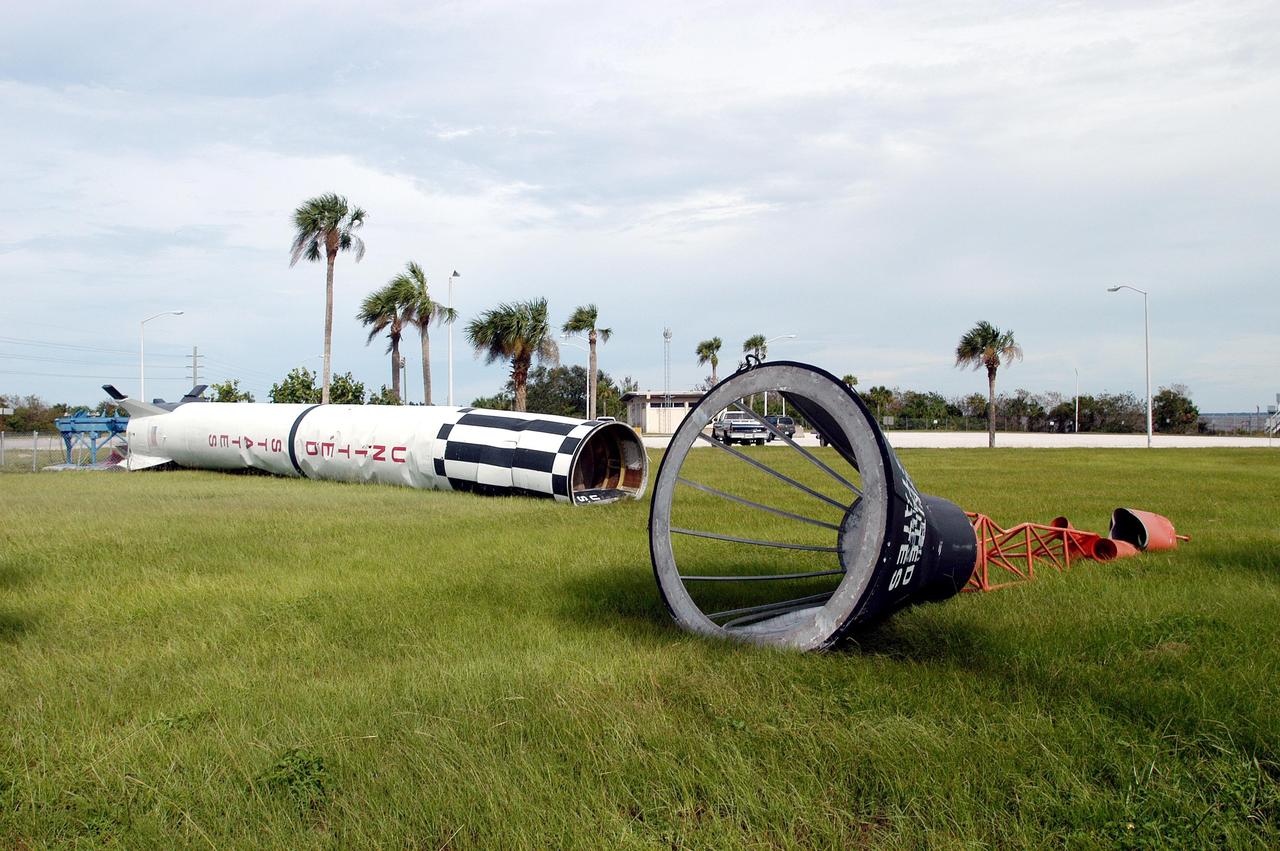
KENNEDY SPACE CENTER, FLA. - A Mercury/Redstone rocket on display at the Pass and Identification Building at the entrance to Kennedy Space lies on its side following Hurricane Frances. The storm's path over Florida took it through Cape Canaveral and KSC property during Labor Day weekend.
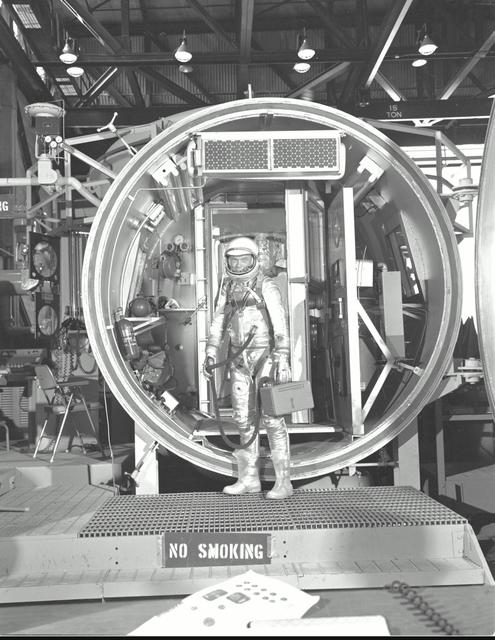
M61-00150 (1961) --- Astronaut John H. Glenn Jr., suited with hose to suit ventilation unit attached, during altitude chamber test. He is standing in the entrance to the test chamber with his helmet visor down. Photo credit: NASA
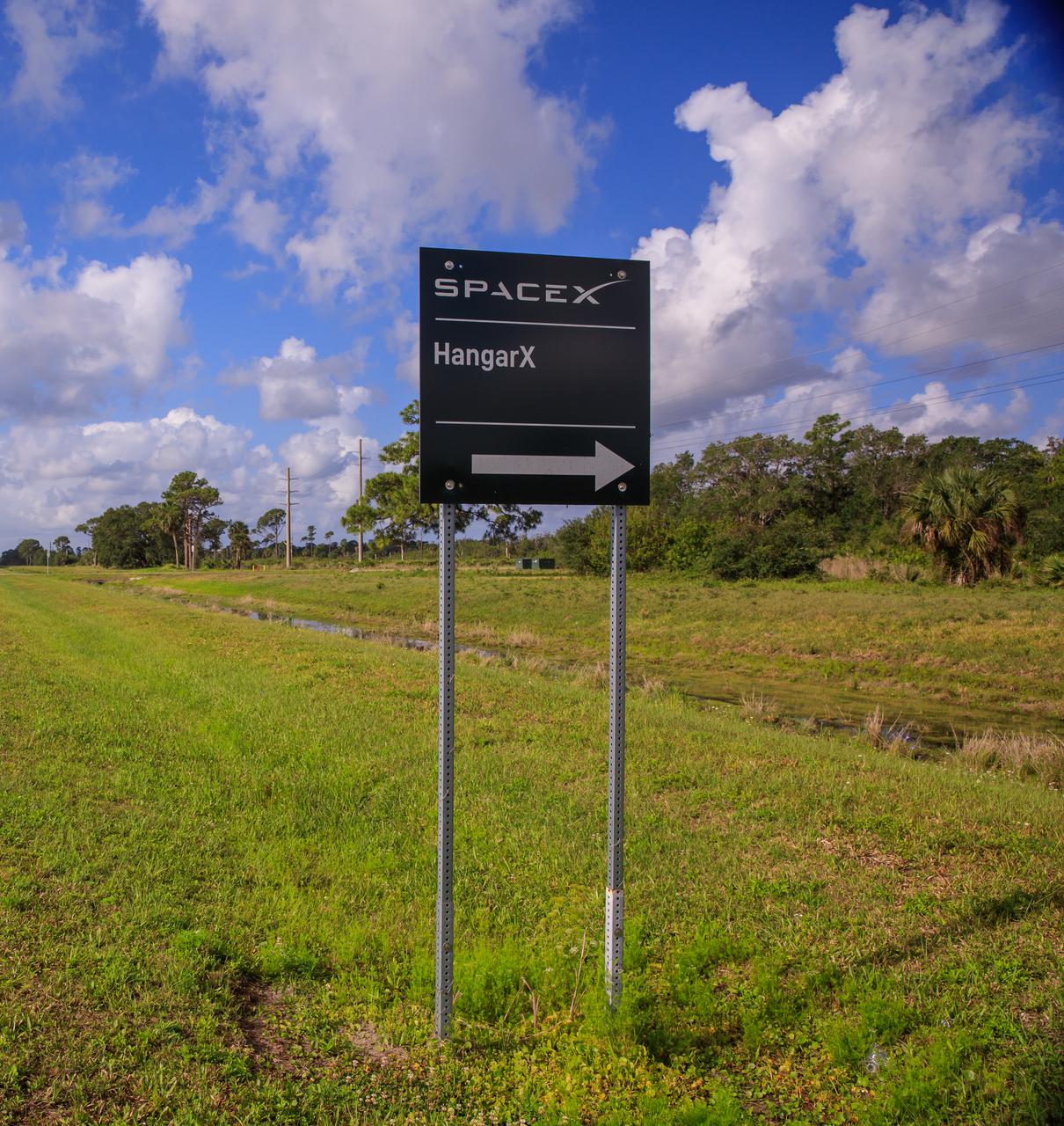
A sign marks the entrance to SpaceX’s Roberts Road off of State Road 3 at NASA’s Kennedy Space Center in Florida on April 21, 2023. The company wishes to extend the road to allow for expansion of its current facilities. An environmental impact study is underway to investigate the feasibility of the campus expansion.
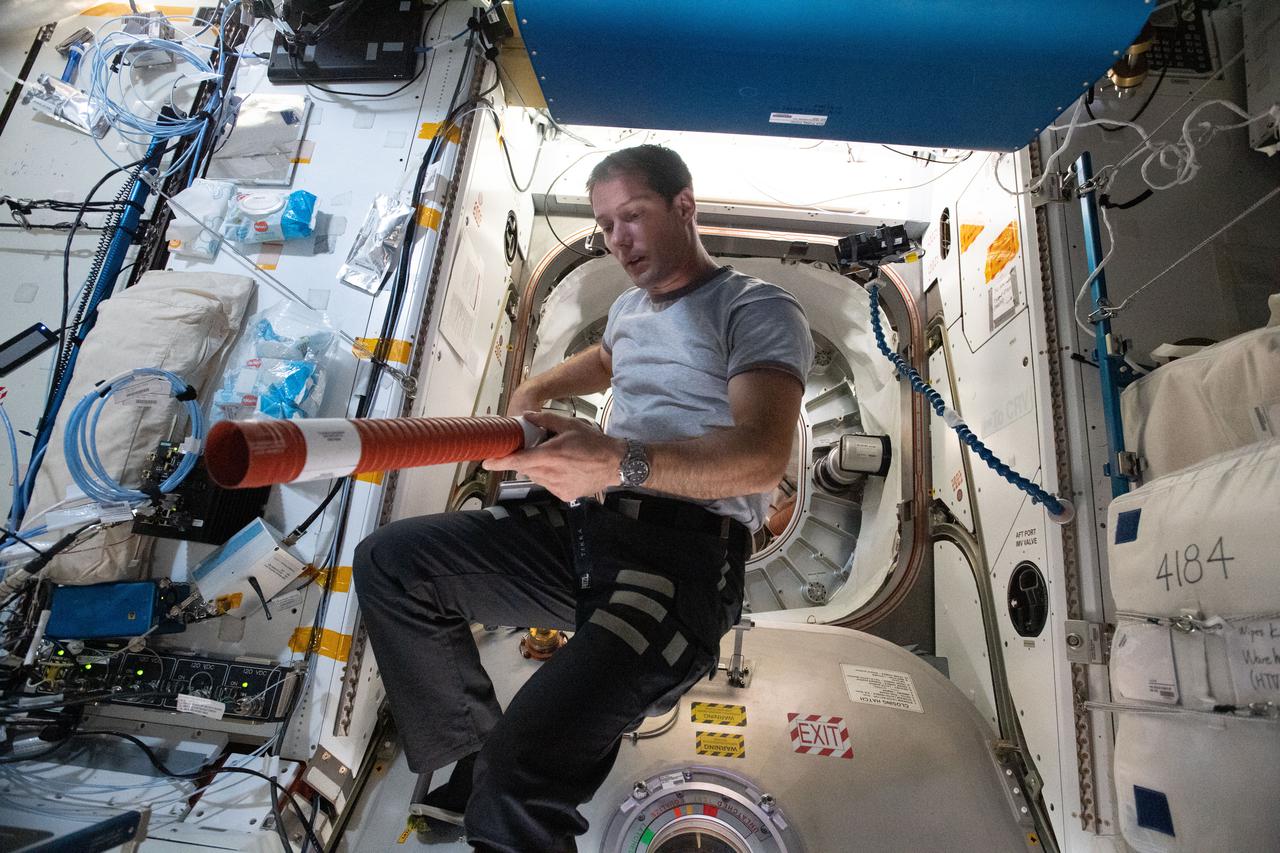
iss065e045918 (May 17, 2021) --- Expedition 65 Flight Engineer Thomas Pesquet of ESA (European Space Agency) is pictured inside the International Space Station's Tranquility module during maintenance work in front of the entrance to BEAM, the Bigelow Expandable Activity Module.
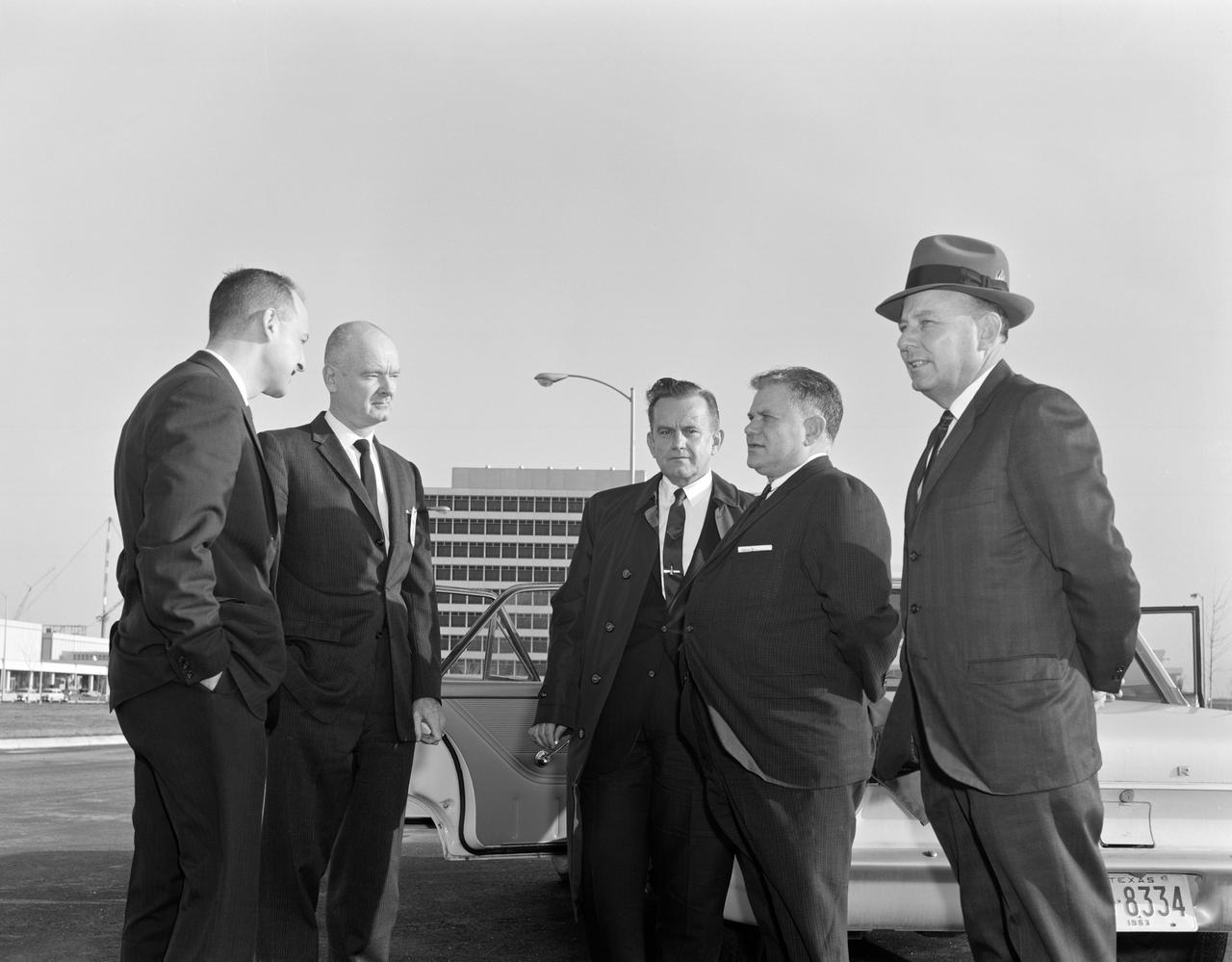
George Low, Joseph Piland, Philip Hamburger, Congressman Olin Teague from Texas; and, Congressman Joe D. Waggoner from Louisiana at the entrance to Site 1, Clear Lake, prior to briefing for the House Subcommittee on Manned Spaceflight. MSC, Houston, TX
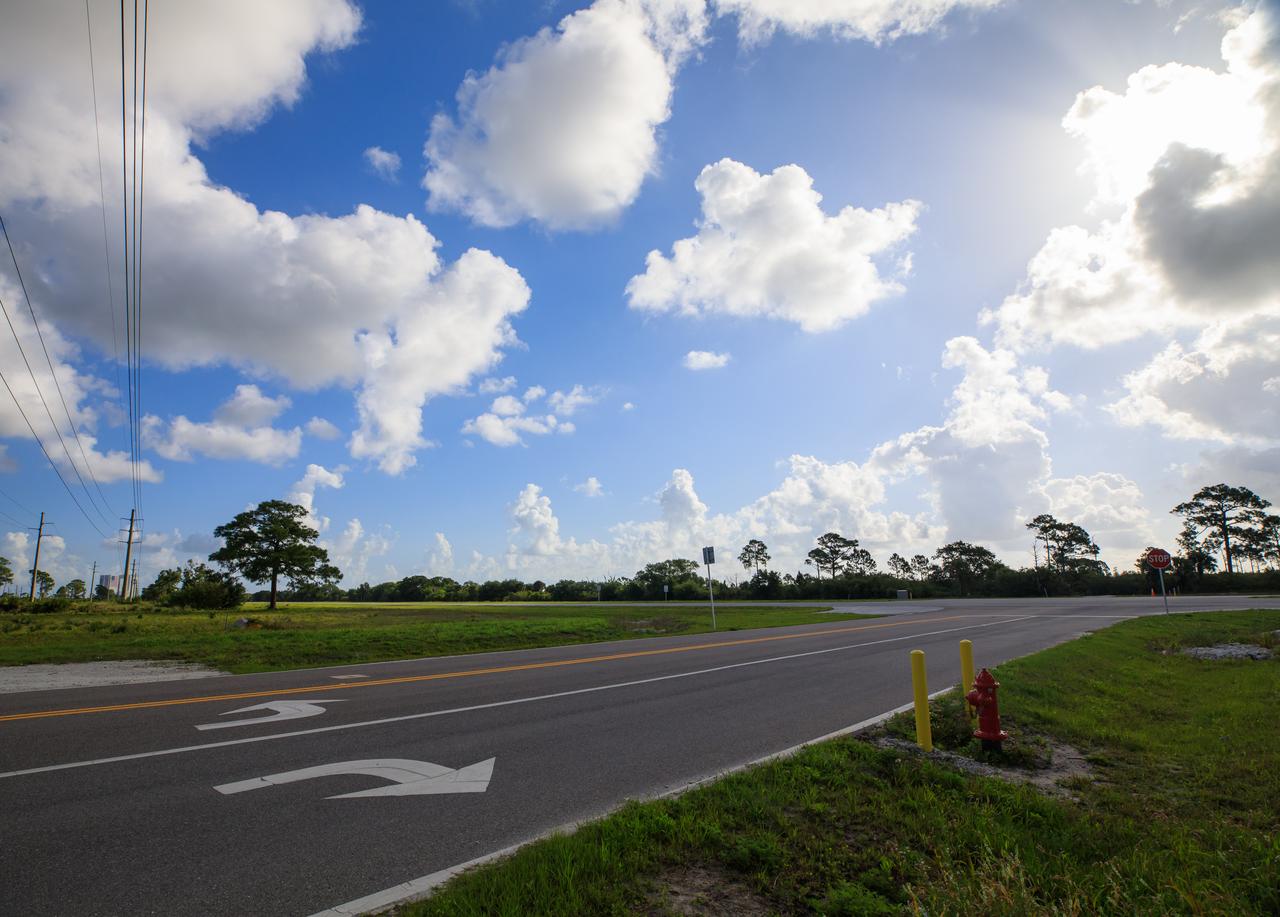
A view of the entrance to SpaceX’s Roberts Road off of State Road 3 at NASA’s Kennedy Space Center in Florida on April 21, 2023. The company wishes to extend the road to allow for expansion of its current facilities. An environmental impact study is underway to investigate the feasibility of the campus expansion.
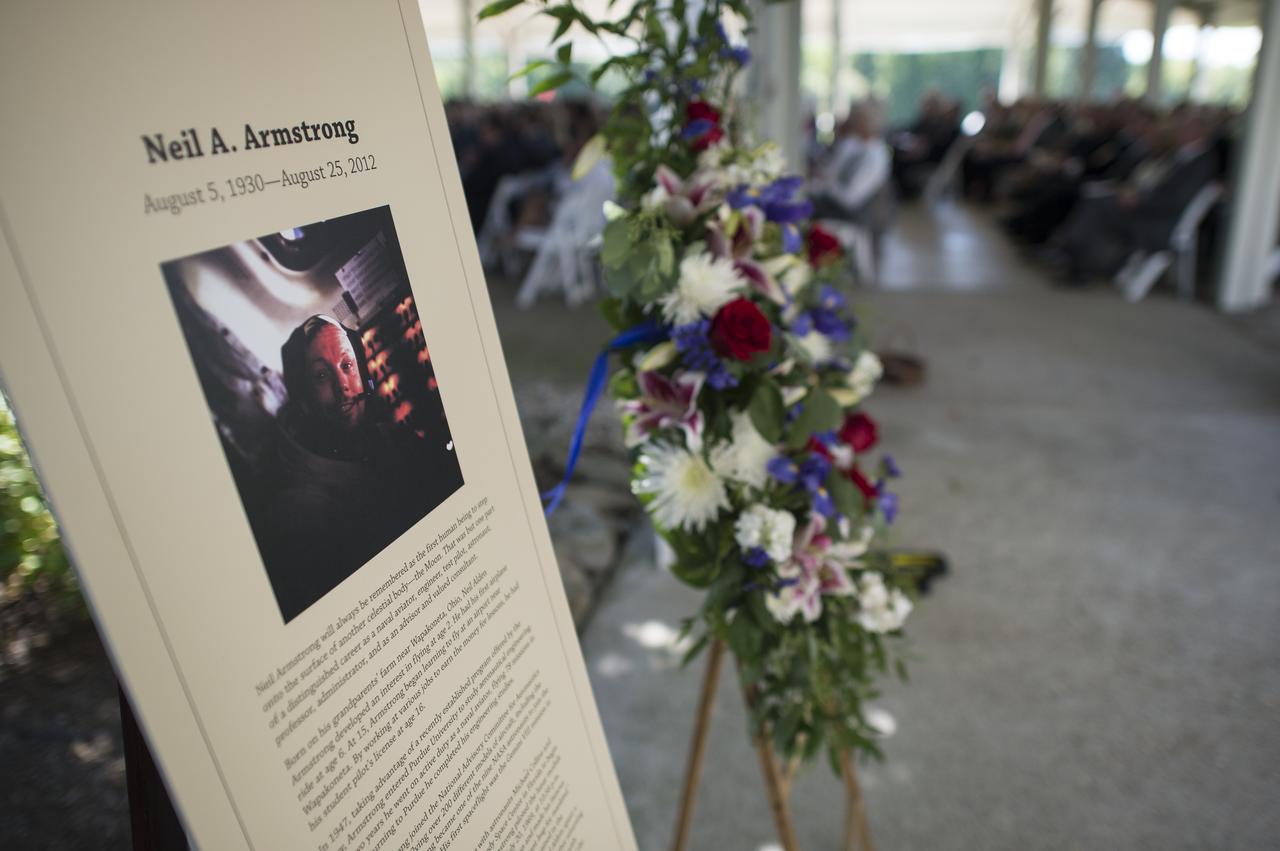
A memorial tribute from the Smithsonian is seen at the entrance of a private memorial service celebrating the life of Neil Armstrong, Aug. 31, 2012, at the Camargo Club in Cincinnati. Armstrong, the first man to walk on the moon during the 1969 Apollo 11 mission, died Saturday, Aug. 25. He was 82. Photo Credit: (NASA/Bill Ingalls)
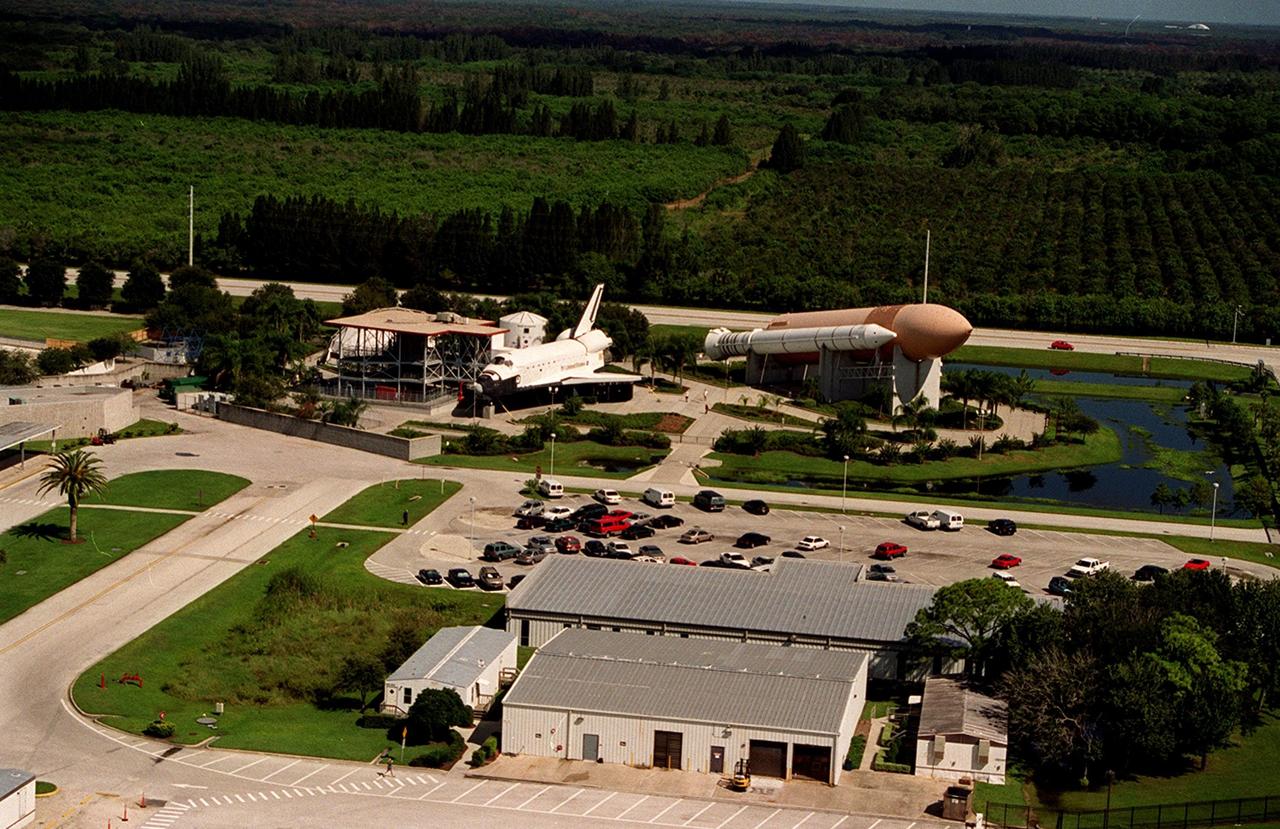
KENNEDY SPACE CENTER, Fla. -- An aerial view of the KSC Visitor Complex shows the mockup of a Space Shuttle on the left and a solid rocket booster and external tank on the right. Behind them is SR. 405, which intersects the entrance to the Visitor Complex
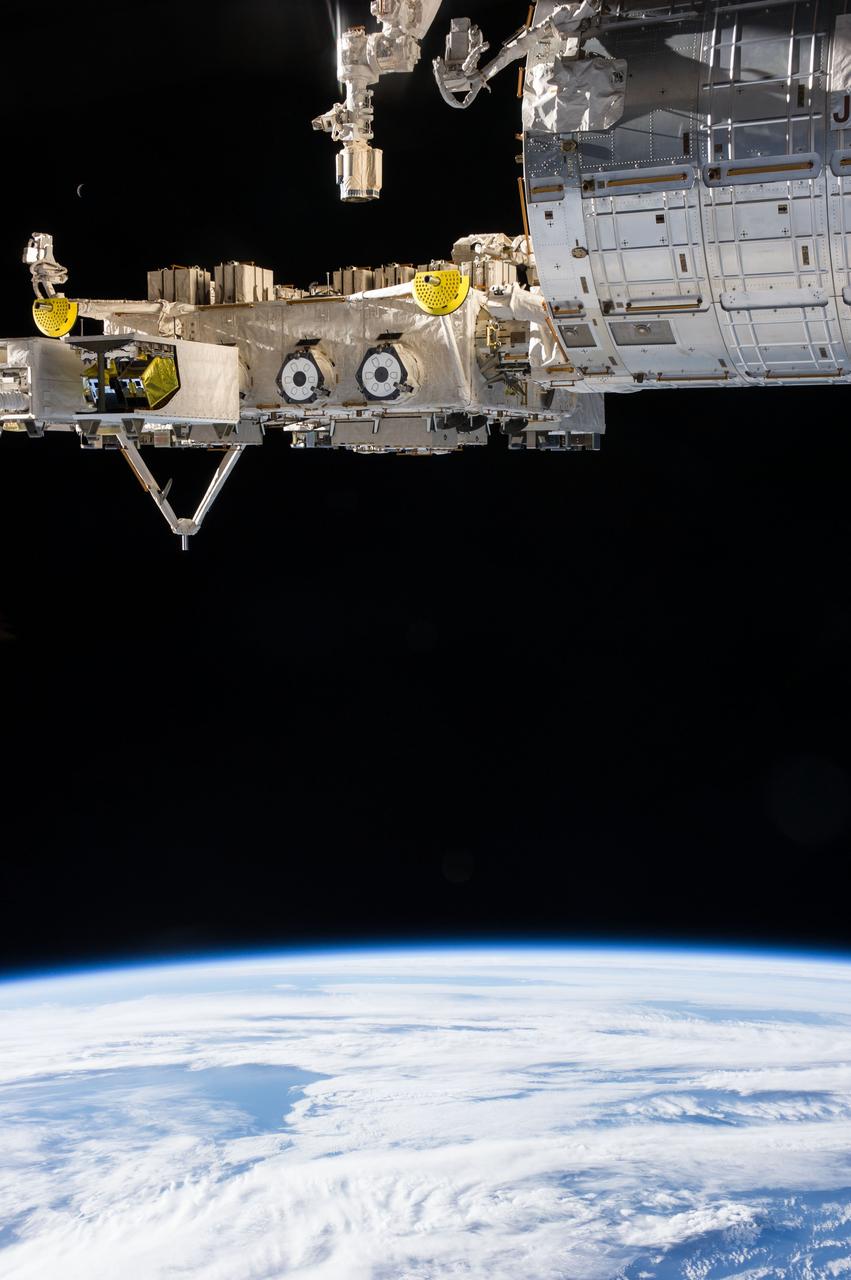
Earth Observation taken during a day pass by the Expedition 40 crew aboard the International Space Station (ISS). Folder lists this as:Straights of Magellan - Atlantic entrance - Clearish skies. Part of the ISS JEM module External Platform is visible.
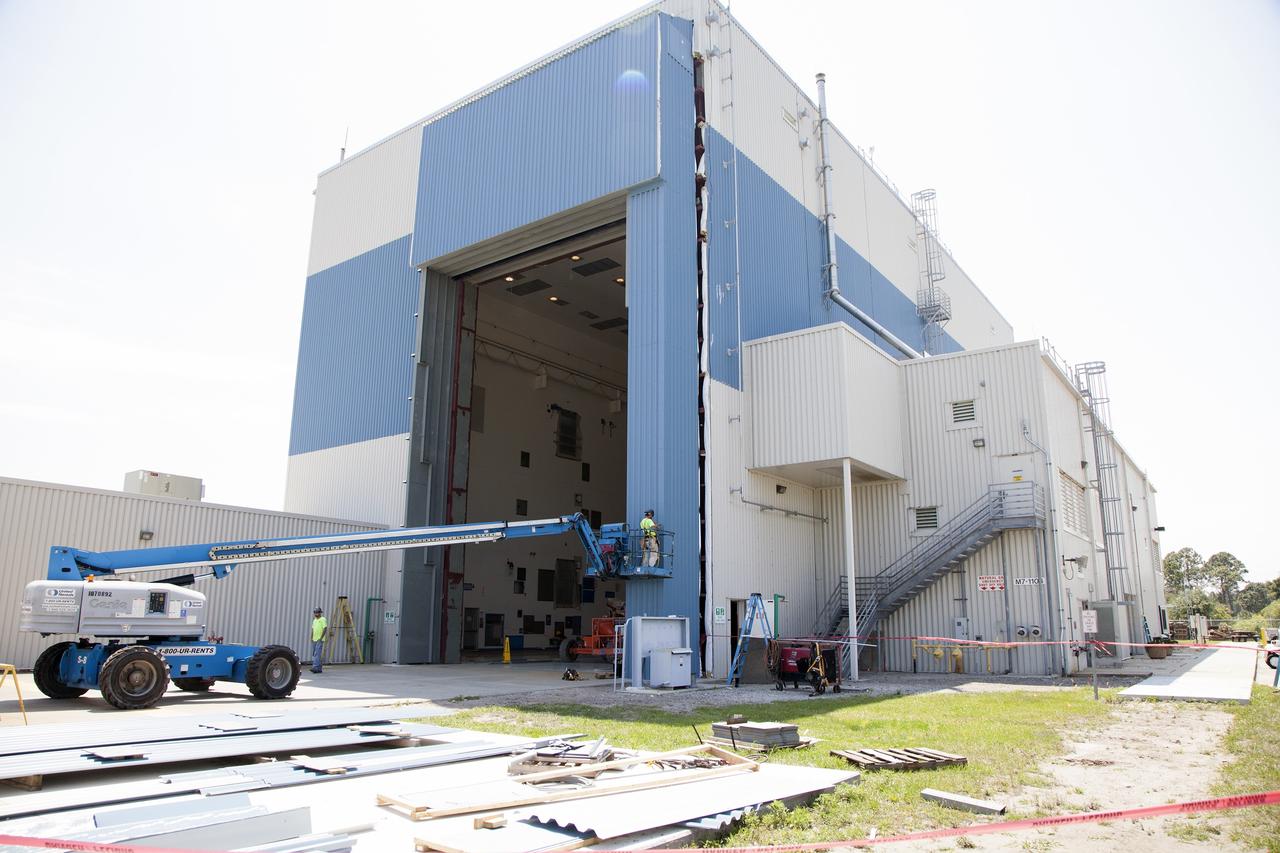
CAPE CANAVERAL, Fla. – Modifications continue on the Multi-Payload Processing Facility, or MPPF, at NASA's Kennedy Space Center in Florida. The high bay entrance was recently enlarged and a new door installed. Construction workers are installing new siding around the entrance. Kennedy's Center Operations Directorate is overseeing upgrades to the MPPF for the Ground Systems Development and Operations Program. The extensive upgrades and modernizations will support processing of Orion spacecraft for NASA's exploration missions. The 19,647-square-foot building, originally constructed in 1995, primarily will be used for Orion hypergolic fueling, ammonia servicing and high-pressure gas servicing and checkout before being transported to the Vehicle Assembly Building for integration with the Space Launch System. Photo credit: NASA/Daniel Casper
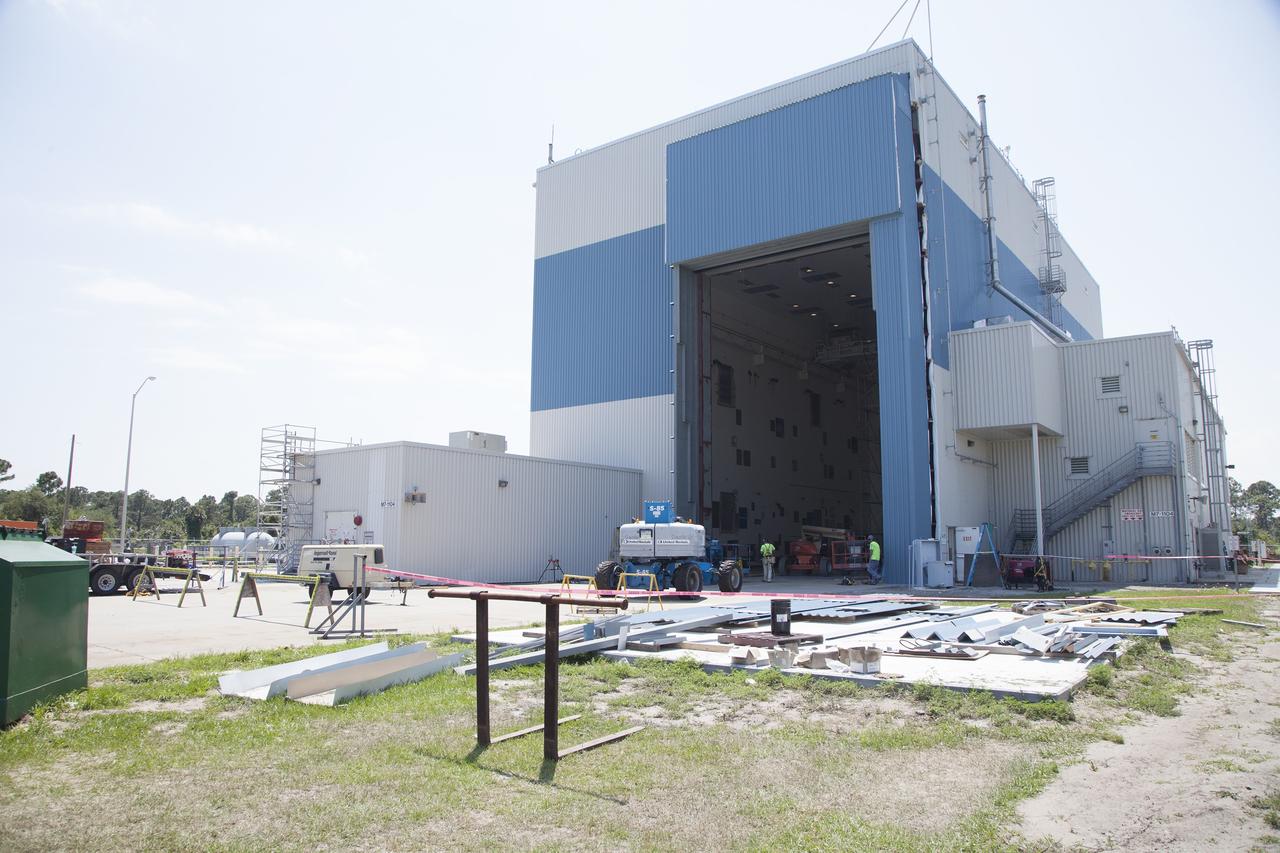
CAPE CANAVERAL, Fla. – Modifications continue on the Multi-Payload Processing Facility, or MPPF, at NASA's Kennedy Space Center in Florida. The high bay entrance was recently enlarged and a new door installed. New siding is being installed around the entrance. Kennedy's Center Operations Directorate is overseeing upgrades to the MPPF for the Ground Systems Development and Operations Program. The extensive upgrades and modernizations will support processing of Orion spacecraft for NASA's exploration missions. The 19,647-square-foot building, originally constructed in 1995, primarily will be used for Orion hypergolic fueling, ammonia servicing and high-pressure gas servicing and checkout before being transported to the Vehicle Assembly Building for integration with the Space Launch System. Photo credit: NASA/Daniel Casper
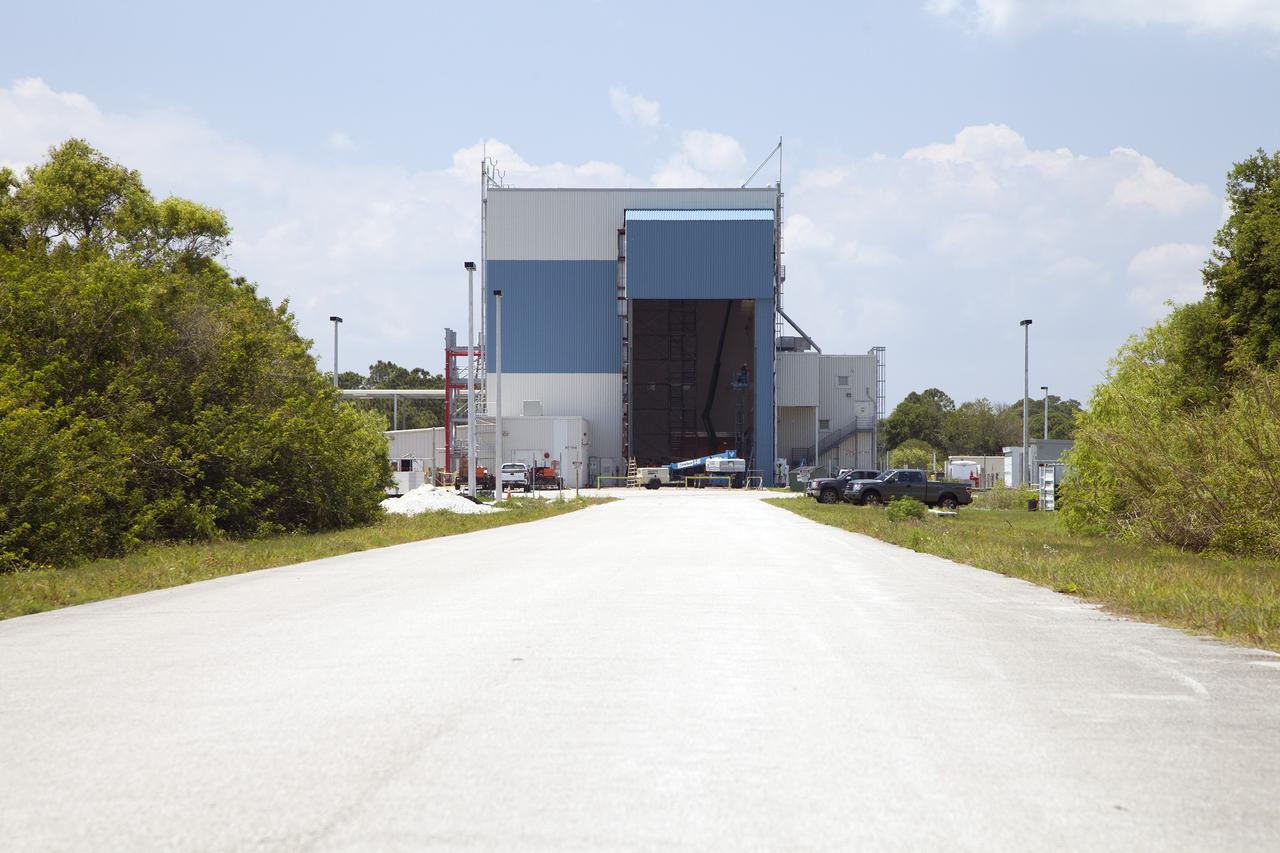
CAPE CANAVERAL, Fla. – Modifications continue on the Multi-Payload Processing Facility, or MPPF, at NASA's Kennedy Space Center in Florida. The high bay entrance was recently enlarged and a new door installed. New siding is being installed around the entrance. Kennedy's Center Operations Directorate is overseeing upgrades to the MPPF for the Ground Systems Development and Operations Program. The extensive upgrades and modernizations will support processing of Orion spacecraft for NASA's exploration missions. The 19,647-square-foot building, originally constructed in 1995, primarily will be used for Orion hypergolic fueling, ammonia servicing and high-pressure gas servicing and checkout before being transported to the Vehicle Assembly Building for integration with the Space Launch System. Photo credit: NASA/Daniel Casper
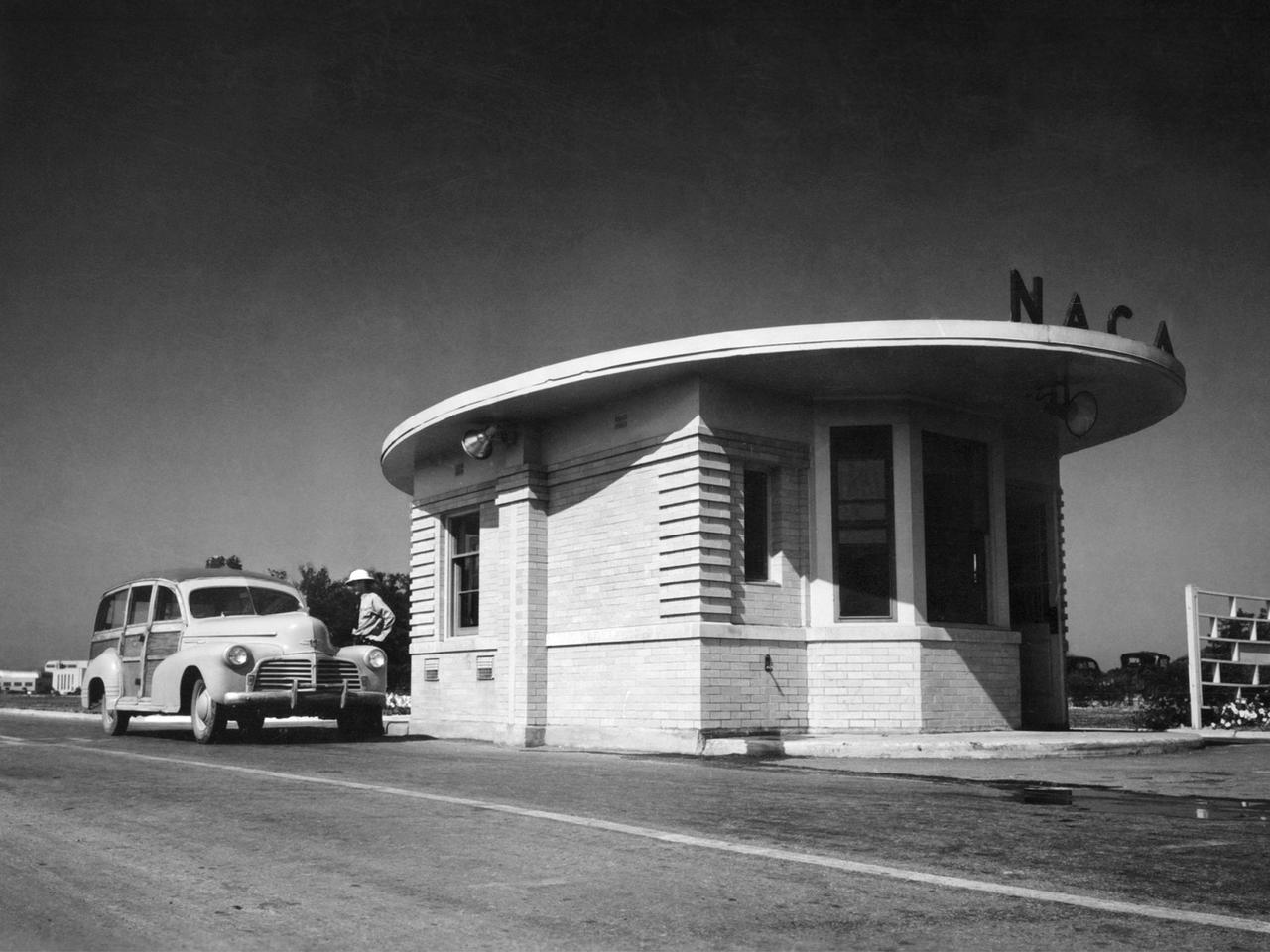
A vehicle leaves the National Advisory Committee for Aeronautics (NACA) Aircraft Engine Research Laboratory on August 14, 1945. At 7 p.m. that evening President Truman announced that Japan had accepted terms for surrender and World War II was over. The end of the war brought significant changes for the laboratory. The NACA would cease its troubleshooting of military aircraft and return to research. Researchers would increase their efforts to address the new technologies that emerged during the war. The entire laboratory was reorganized in October to better investigate turbojets, ramjets, and rockets. The guard house sat on the main entrance to the laboratory off of Brookpark Road. The building was fairly small and easily crowded. In the early 1960s a new security facility was built several hundred feet beyond the original guard house. The original structure remained in place for several years but was not utilized. The subsequent structure was replaced in 2011 by a new building and entrance configuration.
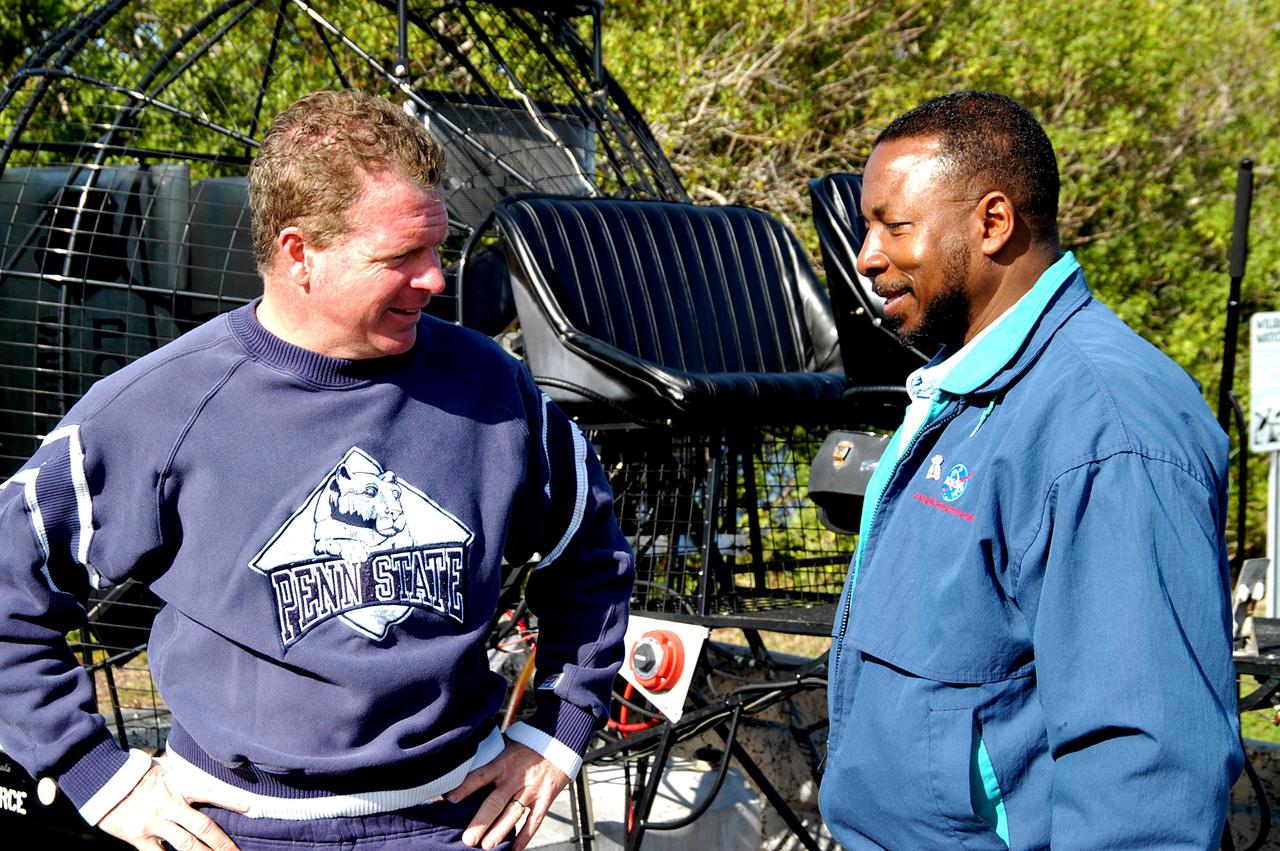
KENNEDY SPACE CENTER, FLA. - Congressman Tom Feeney (left) and Deputy Director Woodrow Whitlow Jr. talk on the ground after completing an air boat ride around Kennedy Space Center. During January and February, Congressman Feeney traveled the entire coastline of Florida’s 24th District, and concluded his walks March 1 in Brevard County. On his walks, he met with constituents and community leaders to discuss legislative issues that will be addressed by the 108th Congress. Feeney ended his beach walk at the KSC Visitor Complex main entrance.
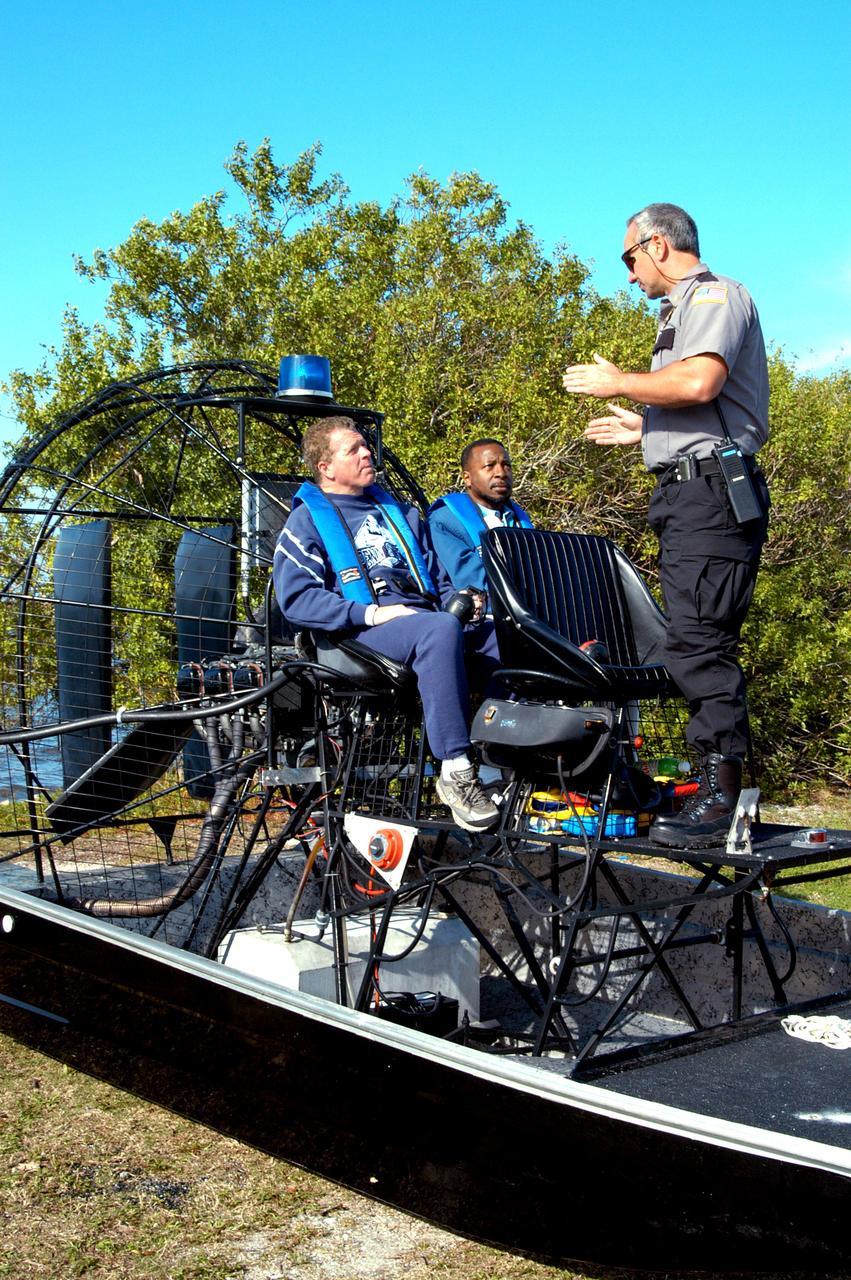
KENNEDY SPACE CENTER, FLA. - Before going on an air boat ride around Kennedy Space Center, Congressman Tom Feeney and Deputy Director Woodrow Whitlow Jr. are briefed about the trip. During January and February, Congressman Feeney traveled the entire coastline of Florida’s 24th District, and concluded his walks March 1 in Brevard County. On his walks, he met with constituents and community leaders to discuss legislative issues that will be addressed by the 108th Congress. Feeney ended his beach walk at the KSC Visitor Complex main entrance.
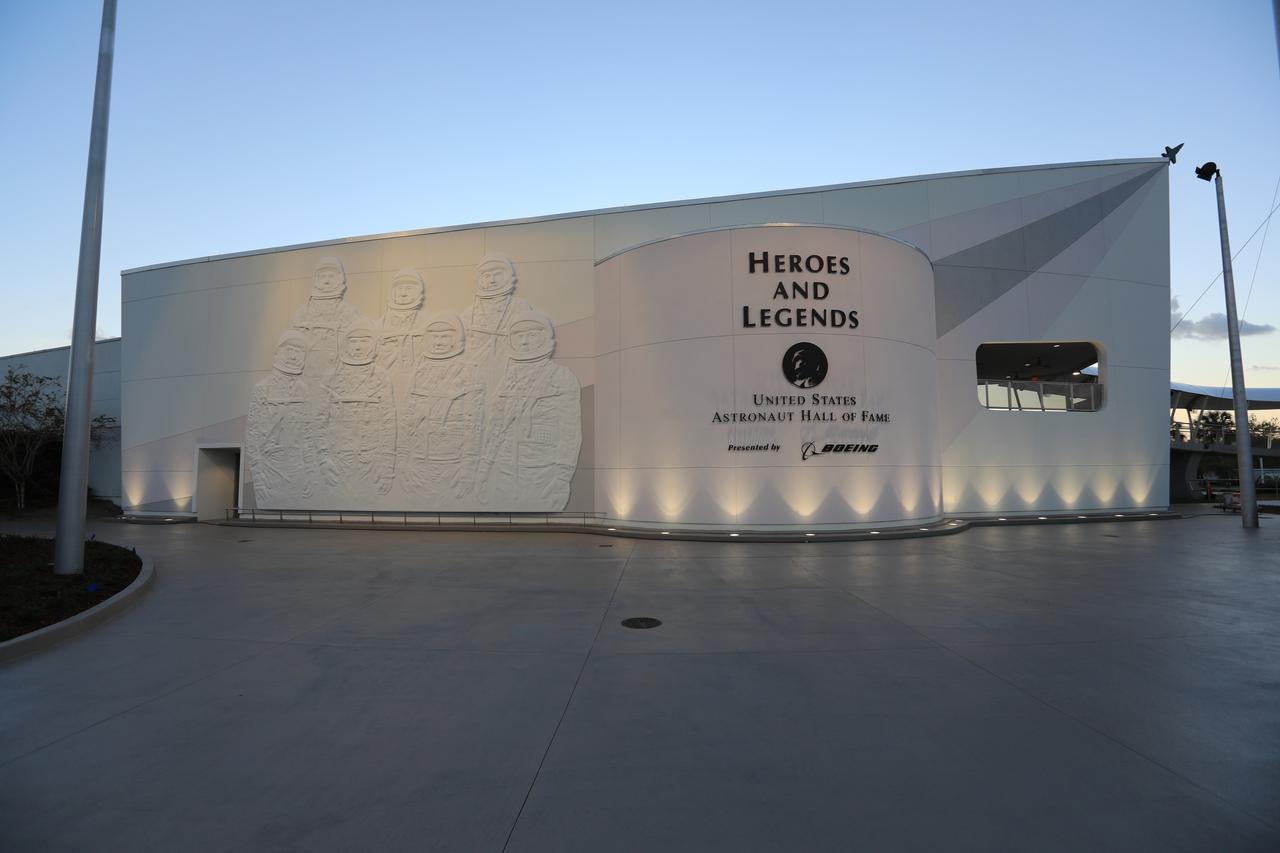
The Heroes and Legends attraction at the Kennedy Space Center Visitor Complex is just inside the entrance to set the stage as guests arrive. In addition to displays honoring the Americans currently enshrined in the U. S. Astronaut Hall of Fame. The new facility looks back to the pioneering efforts of Mercury, Gemini and Apollo. It sets the stage by providing the background and context for space exploration and the legendary men and women who pioneered the nation's journey into space.
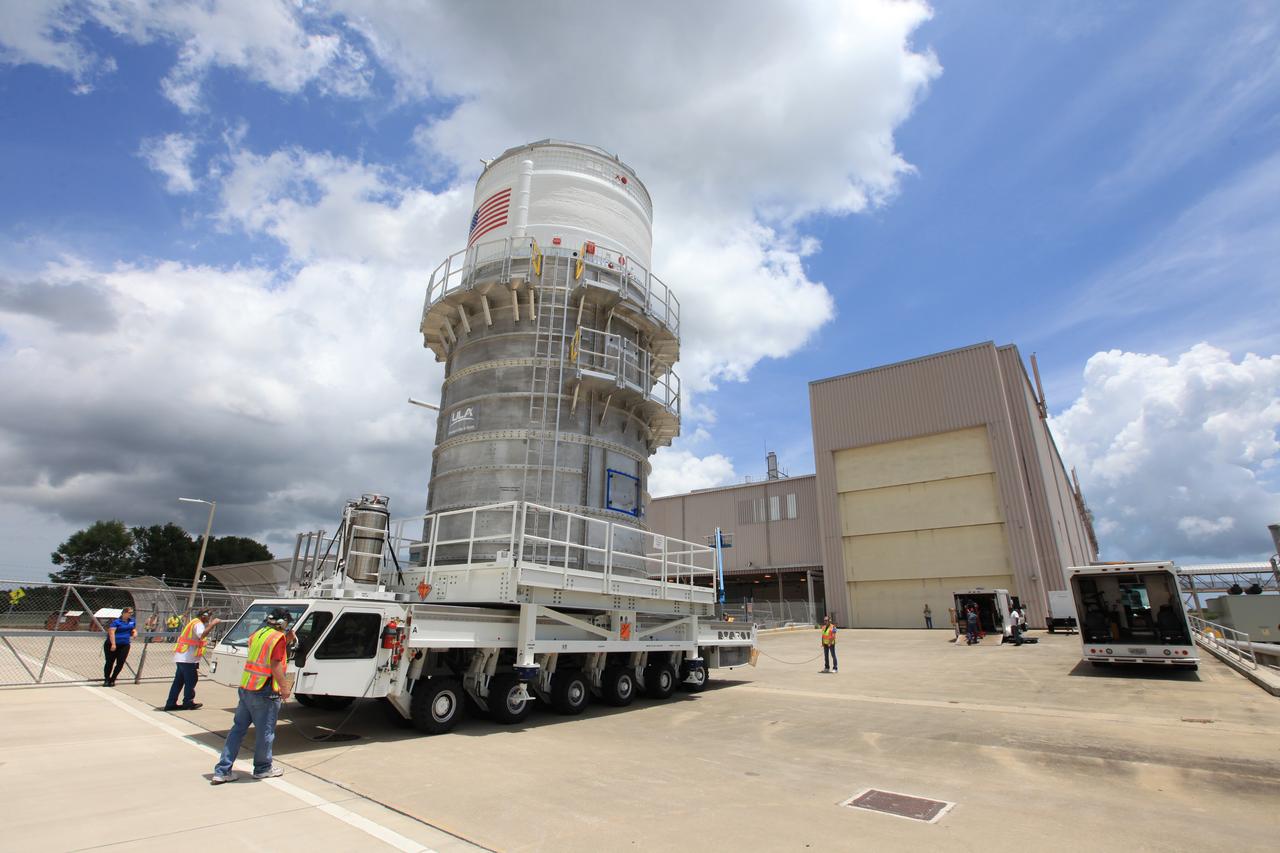
Packed inside its canister, the Interim Cryogenic Propulsion Stage (ICPS) for NASA's Space Launch System (SLS) rocket arrives at the low bay entrance of the Space Station Processing Facility at NASA's Kennedy Space Center in Florida. The ICPS is the first integrated piece of flight hardware to arrive for the SLS. It is the in-space stage that is located toward the top of the rocket, between the Launch Vehicle Stage Adapter and the Orion Spacecraft Adapter. It will provide some of the in-space propulsion during Orion's first flight test atop the SLS on Exploration Mission-1.
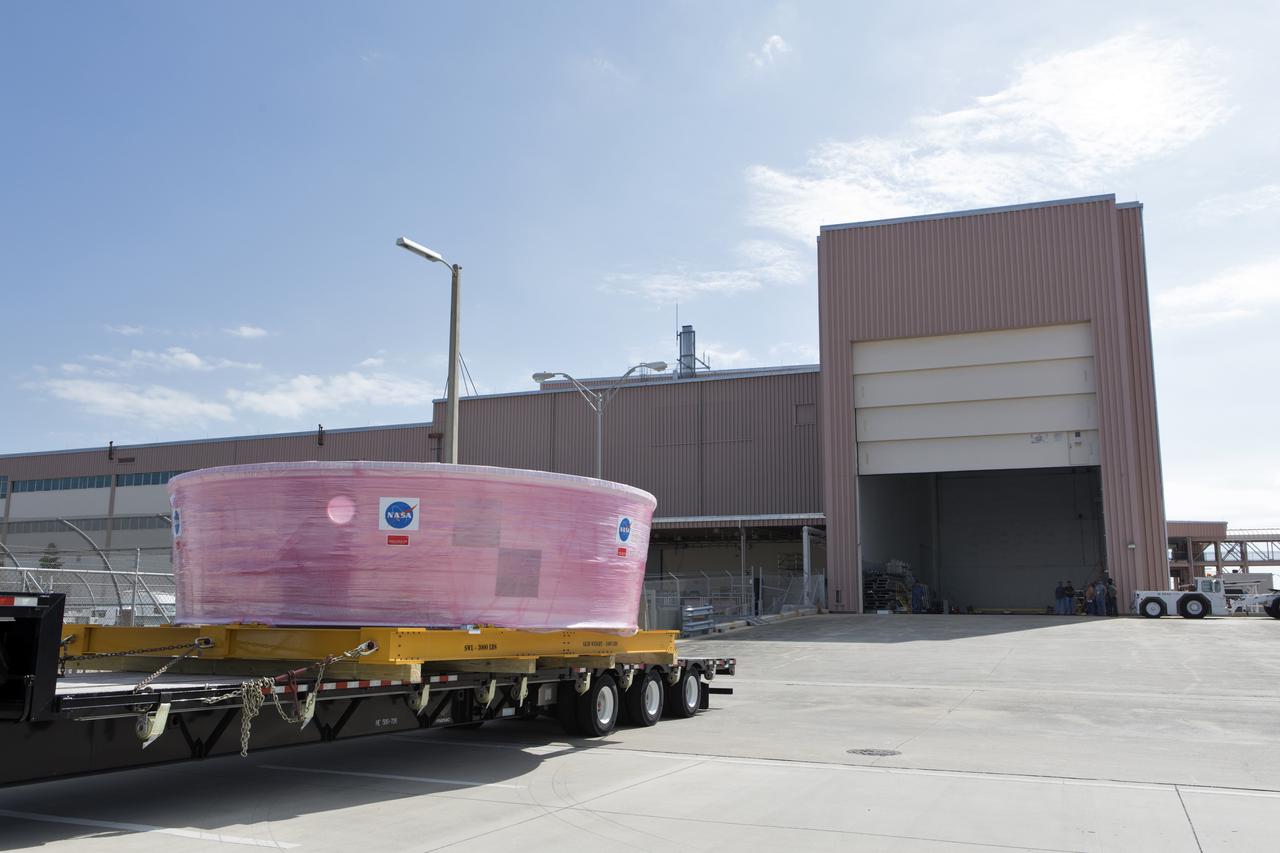
The Orion Stage Adapter (OSA), secured on flatbed transporter, arrives at the entrance to the airlock at the Space Station Processing Facility (SSPF) at NASA's Kennedy Space Center in Florida. The OSA is the second flight-hardware section of the agency's Space Launch System (SLS) rocket to arrive at Kennedy. The OSA will connect the Orion spacecraft to the upper part of the SLS, the interim cryogenic propulsion stage (ICPS). Both the OSA and ICPS are being stored for processing in the SSPF in preparation for Exploration Mission-1, the first uncrewed, integrated launch of the SLS rocket and Orion spacecraft.
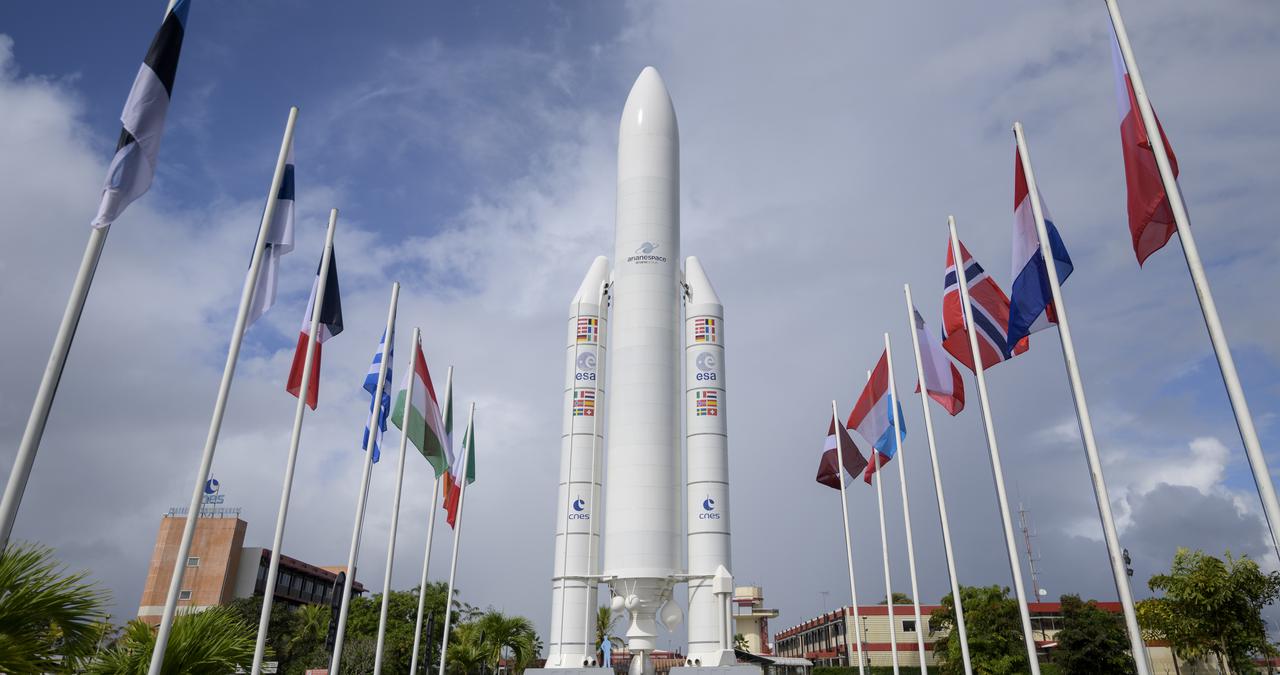
A mockup of Arianespace's Ariane 5 rocket is seen at the entrance to the Guiana Space Center in Kourou, French Guiana, Tuesday, Dec. 21, 2021. The James Webb Space Telescope (sometimes called JWST or Webb) is a large infrared telescope with a 21.3 foot (6.5 meter) primary mirror. The observatory is scheduled to launch later in the week and will study every phase of cosmic history—from within our solar system to the most distant observable galaxies in the early universe. Photo Credit: (NASA/Bill Ingalls)
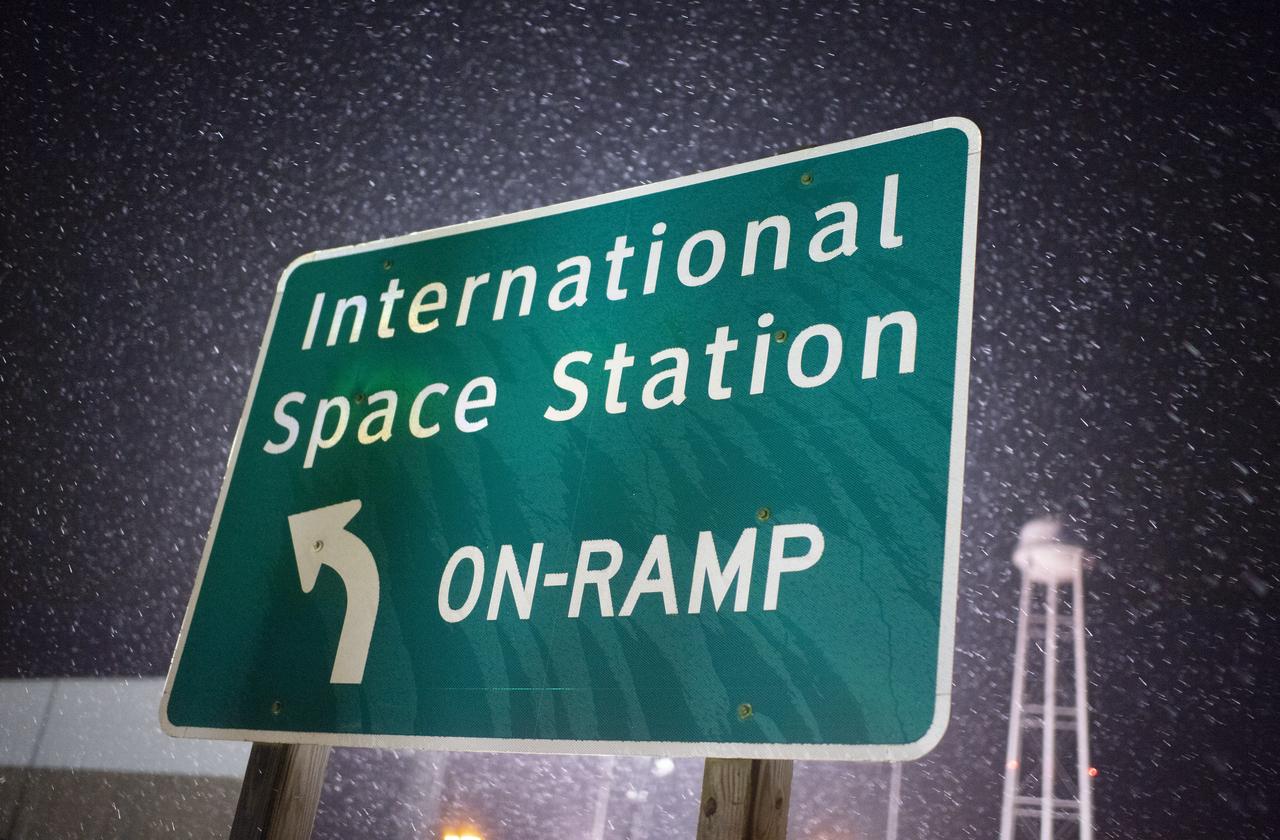
A sign at the entrance to Pad-0A is seen as the Northrop Grumman Antares rocket is rolled from the Horizontal Integration Facility (HIF) to Pad-0A, Monday, Nov. 12, 2018 at NASA's Wallops Flight Facility in Virginia. Northrop Grumman's 10th contracted cargo resupply mission for NASA to the International Space Station will deliver about 7,500 pounds of science and research, crew supplies and vehicle hardware to the orbital laboratory and its crew. Launch is scheduled for Nov. 15 at 4:49 a.m. EST. Photo Credit: (NASA/Joel Kowsky)
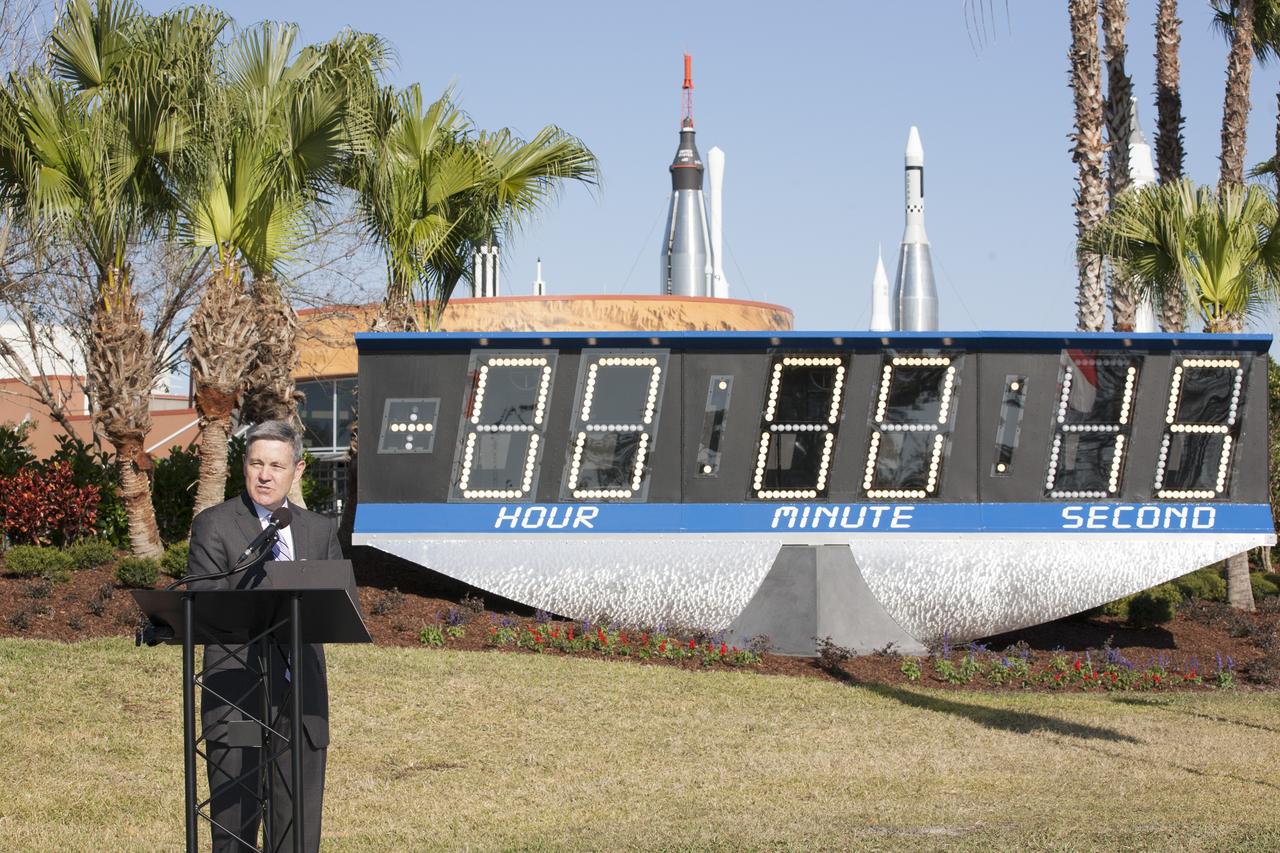
Kennedy Space Center Director Bob Cabana speaks at the dedication of the newest display at the entrance to the center's visitor complex. The historic countdown clock was originally set up at the space center's Press Site and was used from the launch of Apollo 12 on Nov. 14, 1969 to the final space shuttle mission, STS-135, launched on July 8, 2011. The old countdown clock was replaced in 2014 with a modern light emitting diode, or LED, display.

S90-27594 (November 1989) --- Manley L. "Sonny" Carter Jr., STS-33 mission specialist, wearing a Launch and Entry Suit (LES), poses in front of the space shuttle Discovery, Orbiter Vehicle (OV) 103 at the Kennedy Space Center (KSC) Launch Complex Pad 39B, at the 195 feet level elevator entrance at Pad 39B. Visible in the background is the catwalk to OV-103's side hatch and the Atlantic Ocean. Note: Carter died April 5, 1991 at age 43, in a civil aviation accident.
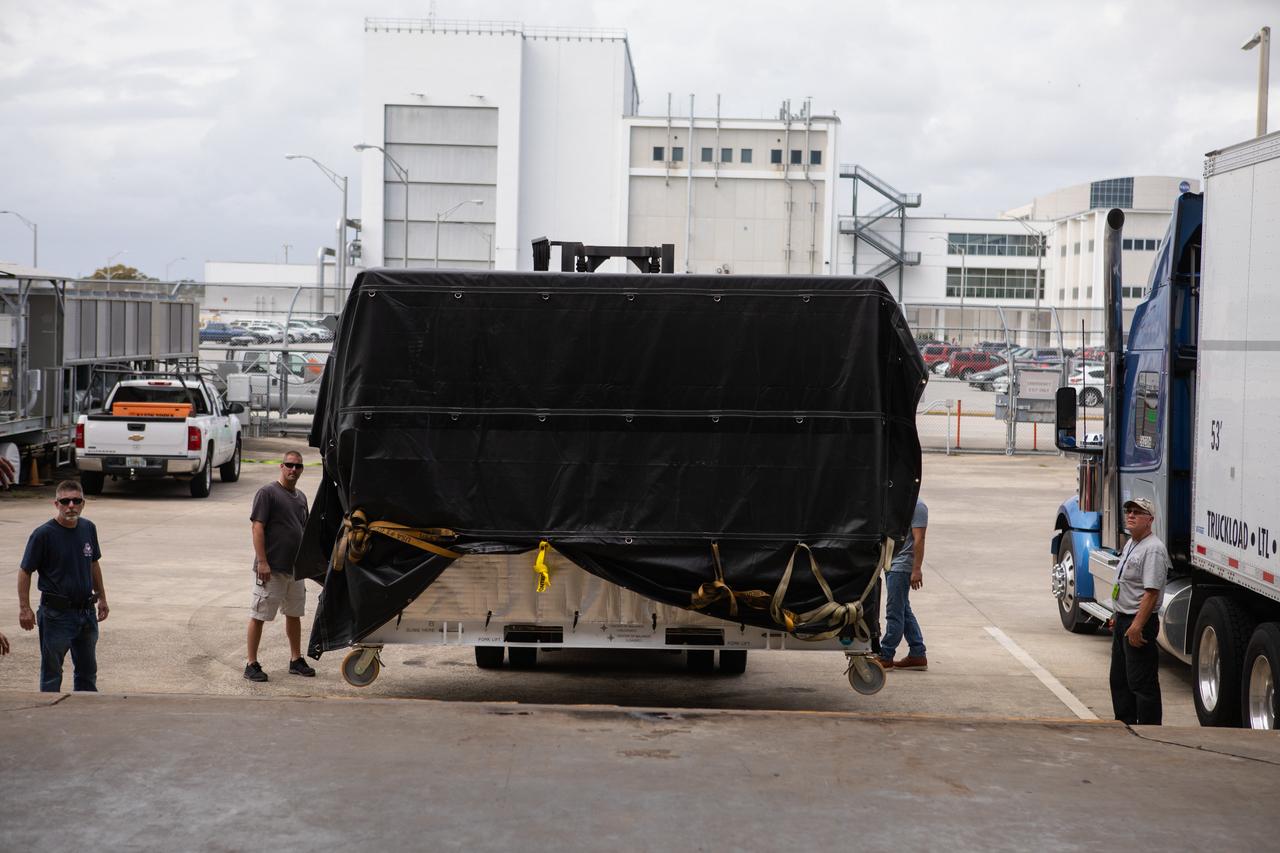
The Hyperspectral Imager Suite (HISUI), a Japan Aerospace Exploration Agency (JAXA) payload, arrives in its shipping container at the entrance to the Space Station Processing Facility at NASA’s Kennedy Space Center in Florida on Oct. 25, 2019. The payload will be packed inside the external trunk of the SpaceX Dragon cargo module at Launch Complex 39A. HISUI will be delivered to the International Space Station on SpaceX’s 19th Commercial Resupply Services mission for NASA in December 2019. HISUI is a spaceborne hyperspectral Earth Imaging System with a reflective telescope and two grating spectrometers.
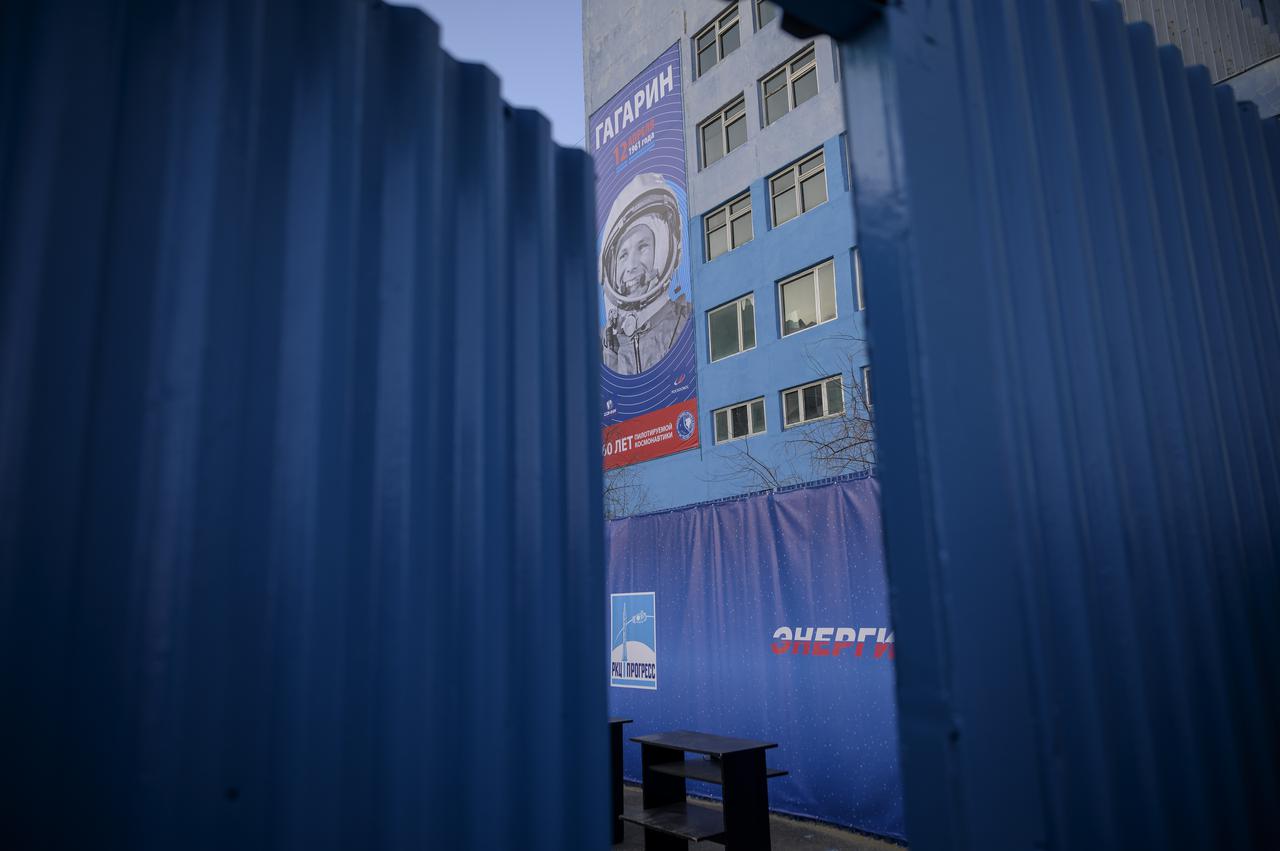
A banner celebrating the 60th anniversary of the launch of Yuri Gagarin is seen just past the security entrance to building 254 of the Baikonur Cosmodrome, Friday, April 9, 2021 in Baikonur, Kazakhstan. Launch of the Soyuz rocket sent Expedition 65 NASA astronaut Mark Vande Hei, Russian cosmonauts Oleg Novitskiy and Pyotr Dubrov on a mission to the International Space Station. Photo Credit: (NASA/Bill Ingalls)
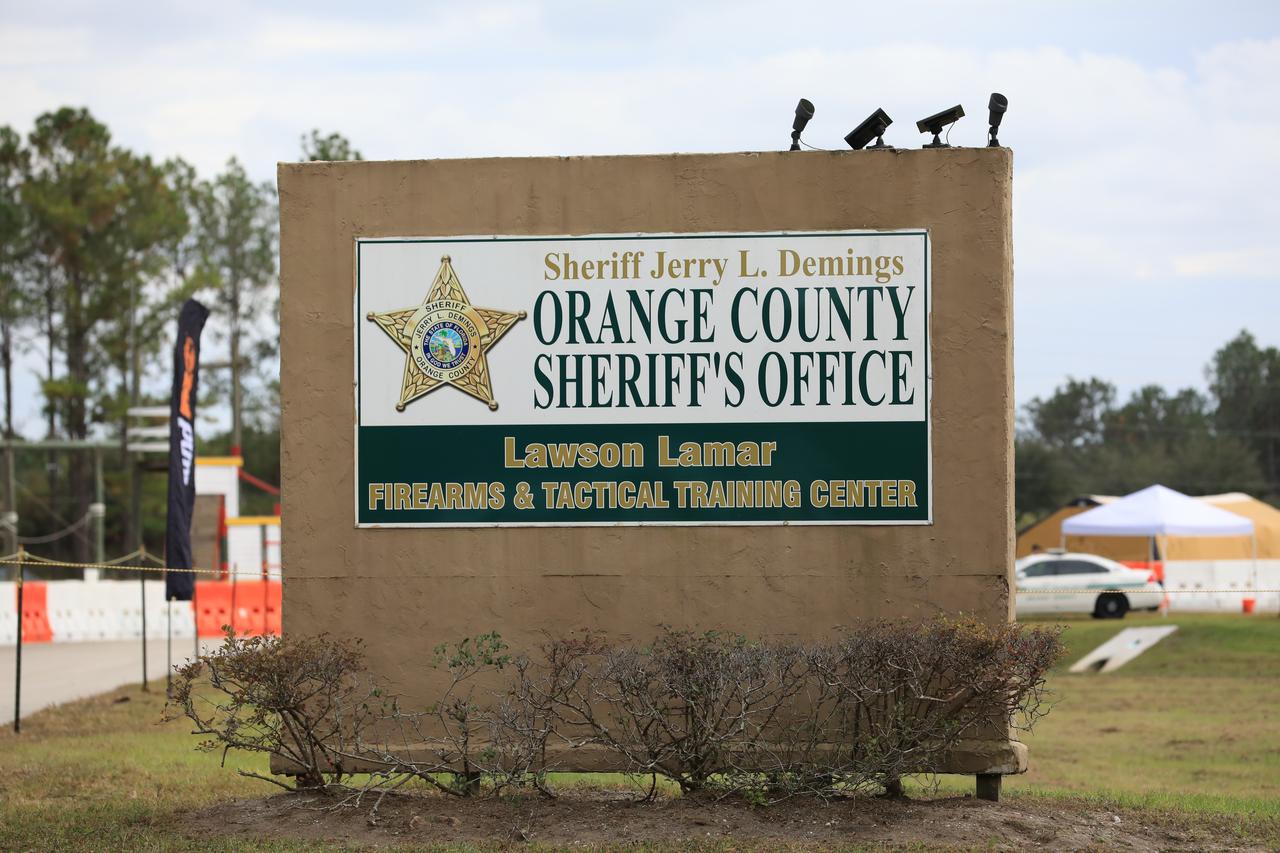
The entrance to the Lawson Lamar Firearms and Tactical Training Center in Orlando, Florida. NASA Kennedy Space Center's Emergency Response Team members will compete in the 34th Annual SWAT Round-up International from Nov. 15 to 18. The event features five different competition categories. Kennedy's ERT members exchanged best practices and competed with 60 teams from the U.S. and around the world.
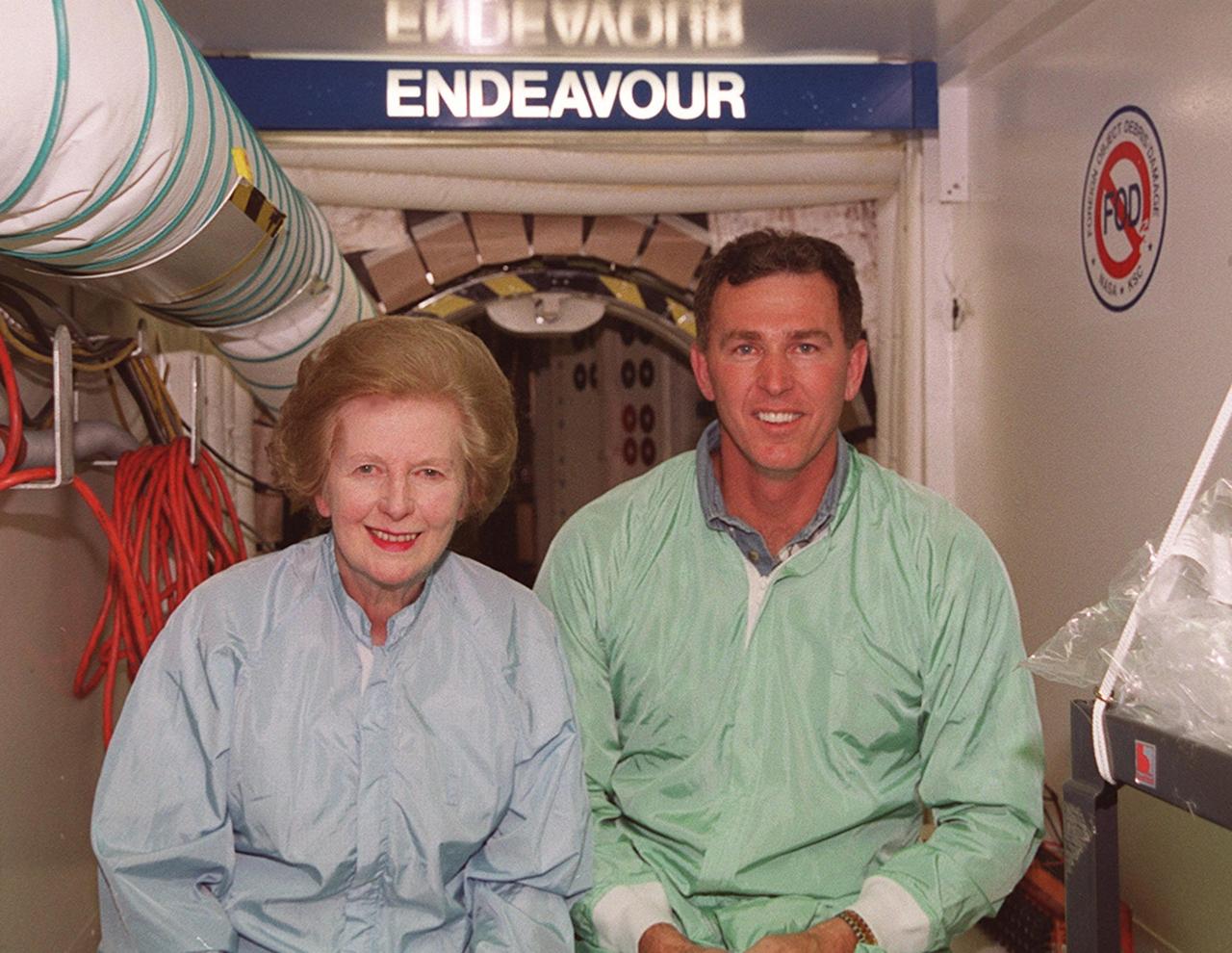
At the entrance to orbiter Endeavour, Lady Margaret Thatcher (left), former Prime Minister of Britain, poses with United Space Alliance technician Mike Parrish (right) who was her guide through the vehicle. The orbiter, which is in the Orbiter Processing Facility bay 2, is flying on mission STS-100, the ninth construction flight to the International Space Station

KENNEDY SPACE CENTER, FLA. -- Members of the STS-118 crew take part in a hardware review of the SPACEHAB module, part of the payload on their mission. Seen here is Mission Specialist Barbara Morgan, facing forward at the entrance of the module. The mission payload also includes the third starboard truss segment (ITS S5), a control moment gyro and the external stowage platform 3 (ESP3). STS-118 is targeted to launch June 28 from Launch Pad 39A. Photo credit: NASA/Kim Shiflett
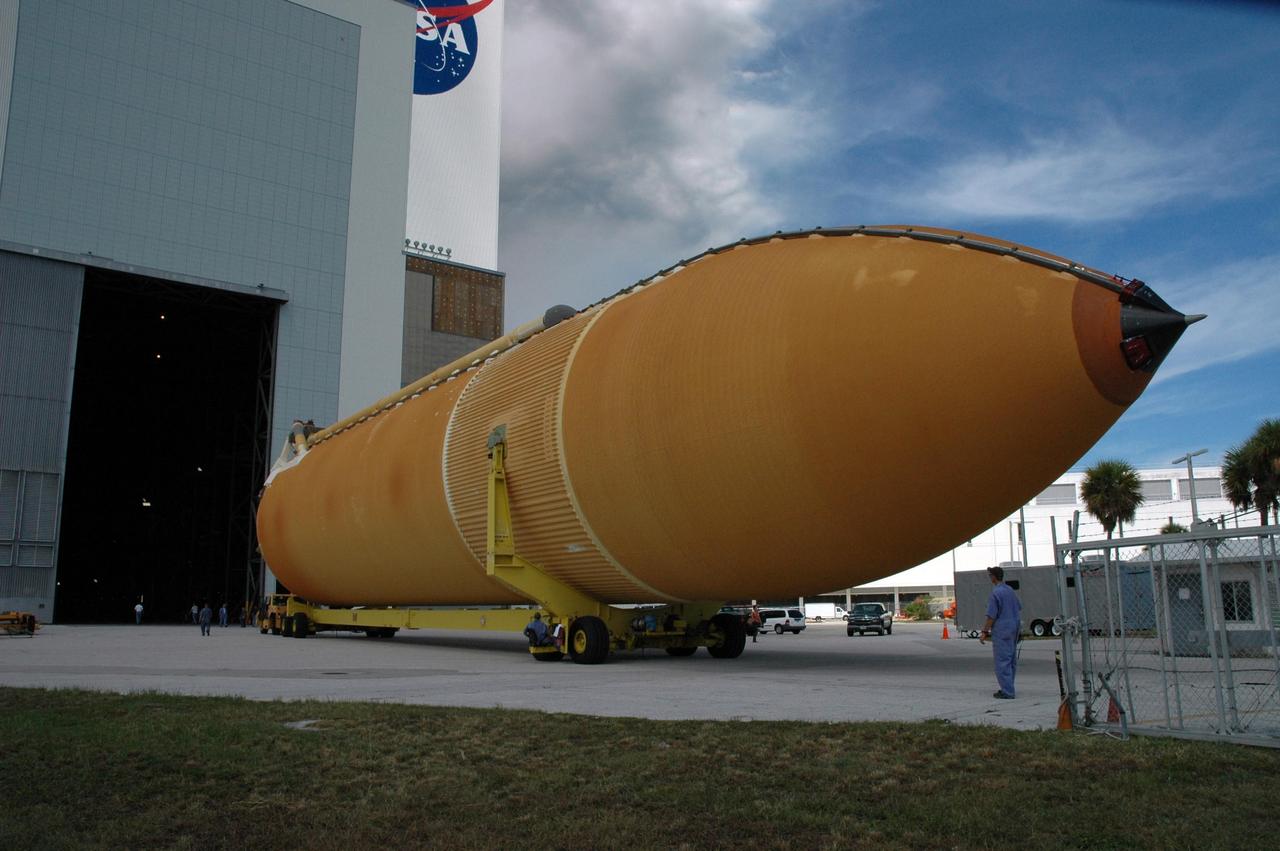
KENNEDY SPACE CENTER, FLA. -- On its transporter, external tank No. 125 moves toward the entrance in the Vehicle Assembly Building. The tank arrived at the Launch Complex 39 Area turn basin on the Pegasus barge from the Michoud Assembly Facility near New Orleans. The external tank will be used on space shuttle Atlantis for mission STS-122 targeted for launch on Dec. 6. Photo credit: NASA/Troy Cryder
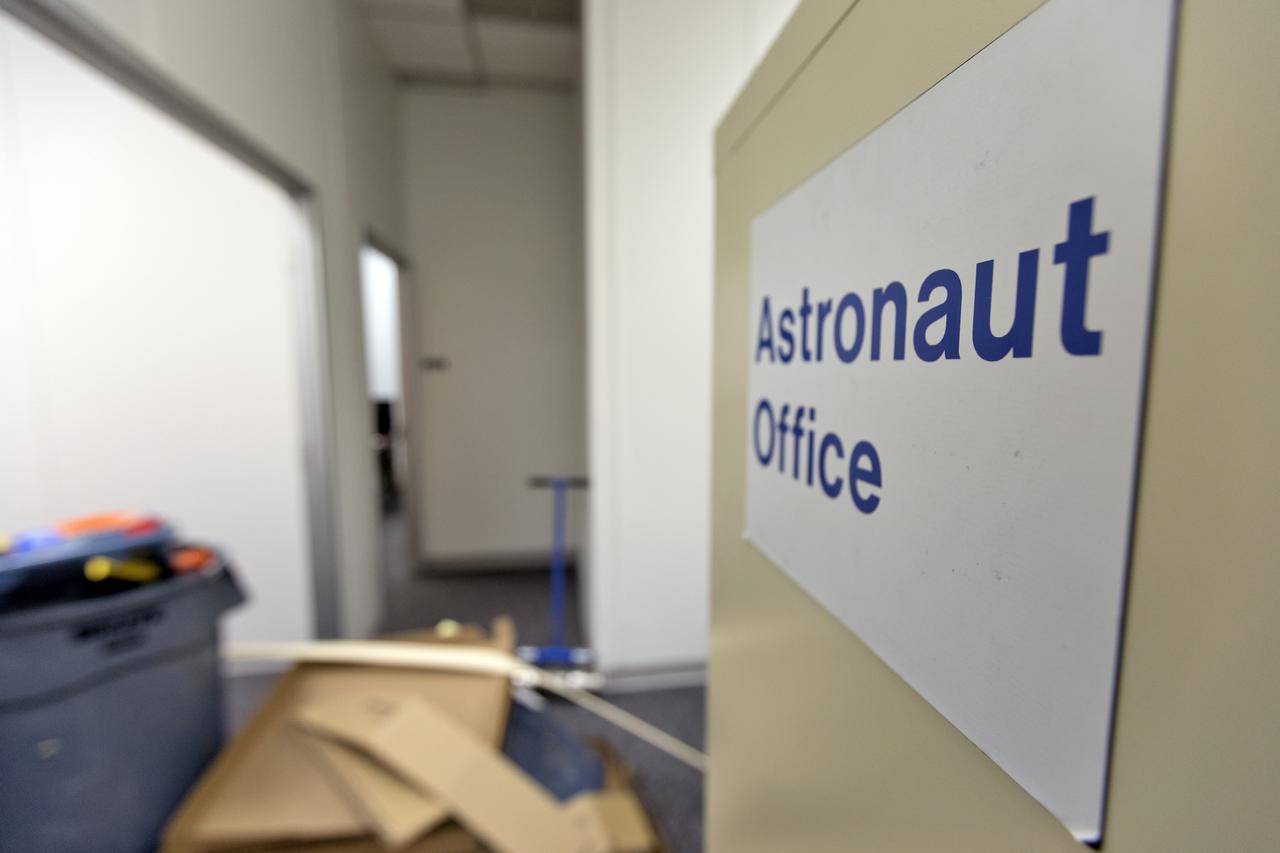
A sign marks the entrance to the Astronaut Office inside the Astronaut Crew Quarters in the Neil Armstrong Operations and Checkout Building at NASA's Kennedy Space Center in Florida. The crew quarters are being prepared for the next generation of space explorers. The walls are receiving fresh coats of paint and new flooring is being installed. The historic facility housed Apollo and space shuttle astronauts before and after their missions into space.
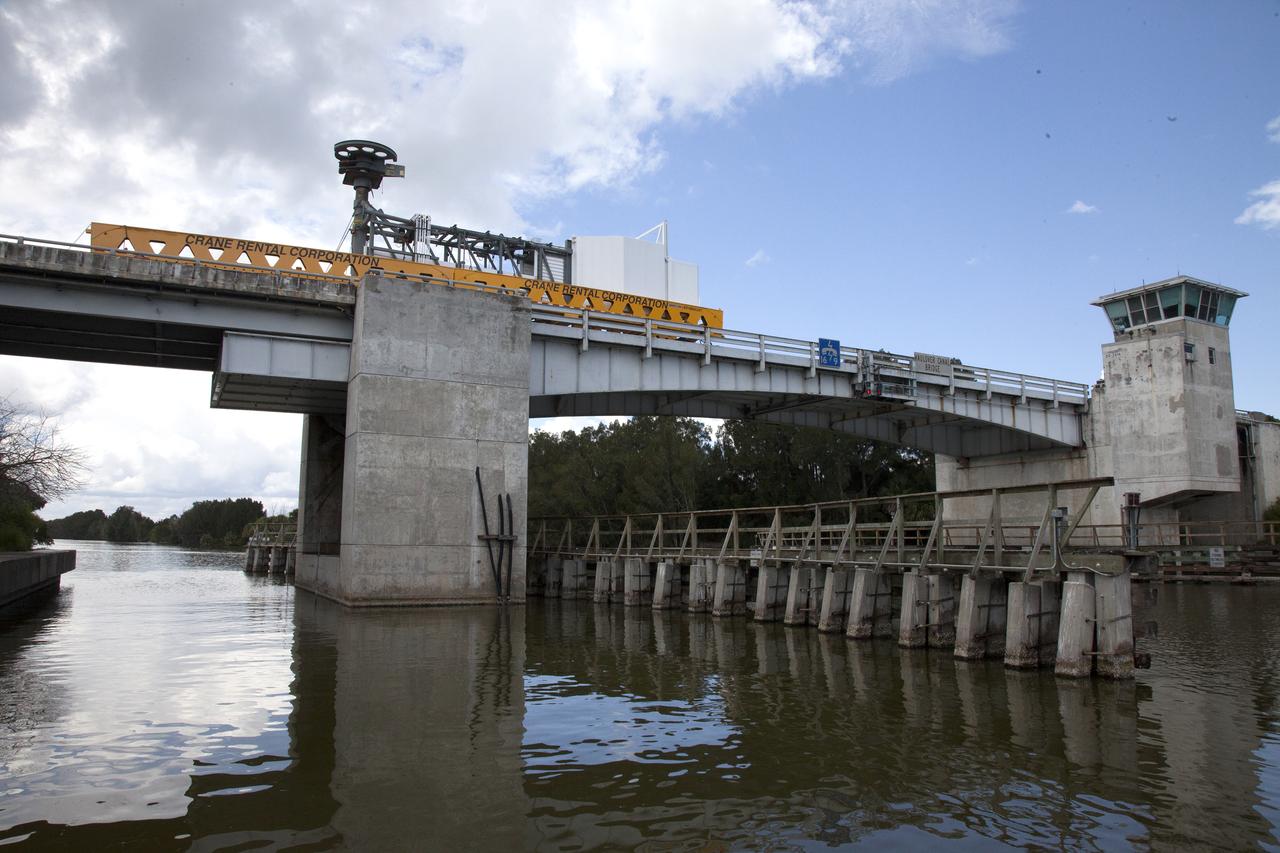
A heavy-lift transport truck, carrying the Crew Access Arm for Space Launch Complex 41, crosses the Haulover Canal Bridge on its way to the entrance of NASA’s Kennedy Space Center in Florida. The arm will be installed on the Complex 41 Crew Access Tower at Cape Canaveral Air Force Station. It will be used as a bridge by astronauts to board Boeing's CST-100 Starliner spacecraft as it stands on the launch pad atop a United Launch Alliance Atlas V rocket.
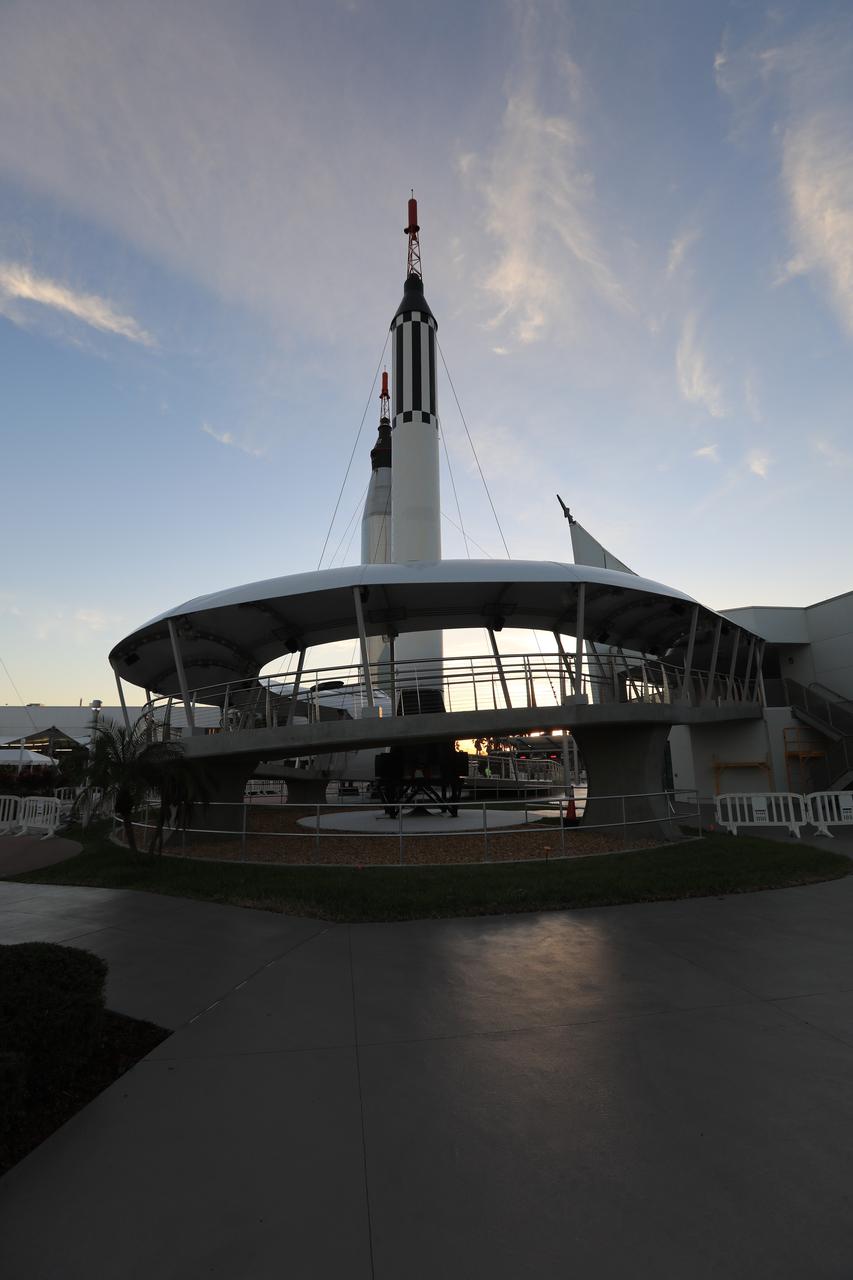
Entrance to the Heroes and Legends attraction at the Kennedy Space Center Visitor Complex is by way of a sweeping ramp designed to simulate a journey to the stars by way of the "Rocket Garden." The new facility includes the U.S. Astronaut Hall of Fame and looks back to the pioneering efforts of Mercury, Gemini and Apollo. It sets the stage by providing the background and context for space exploration and the legendary men and women who pioneered the nation's journey into space.
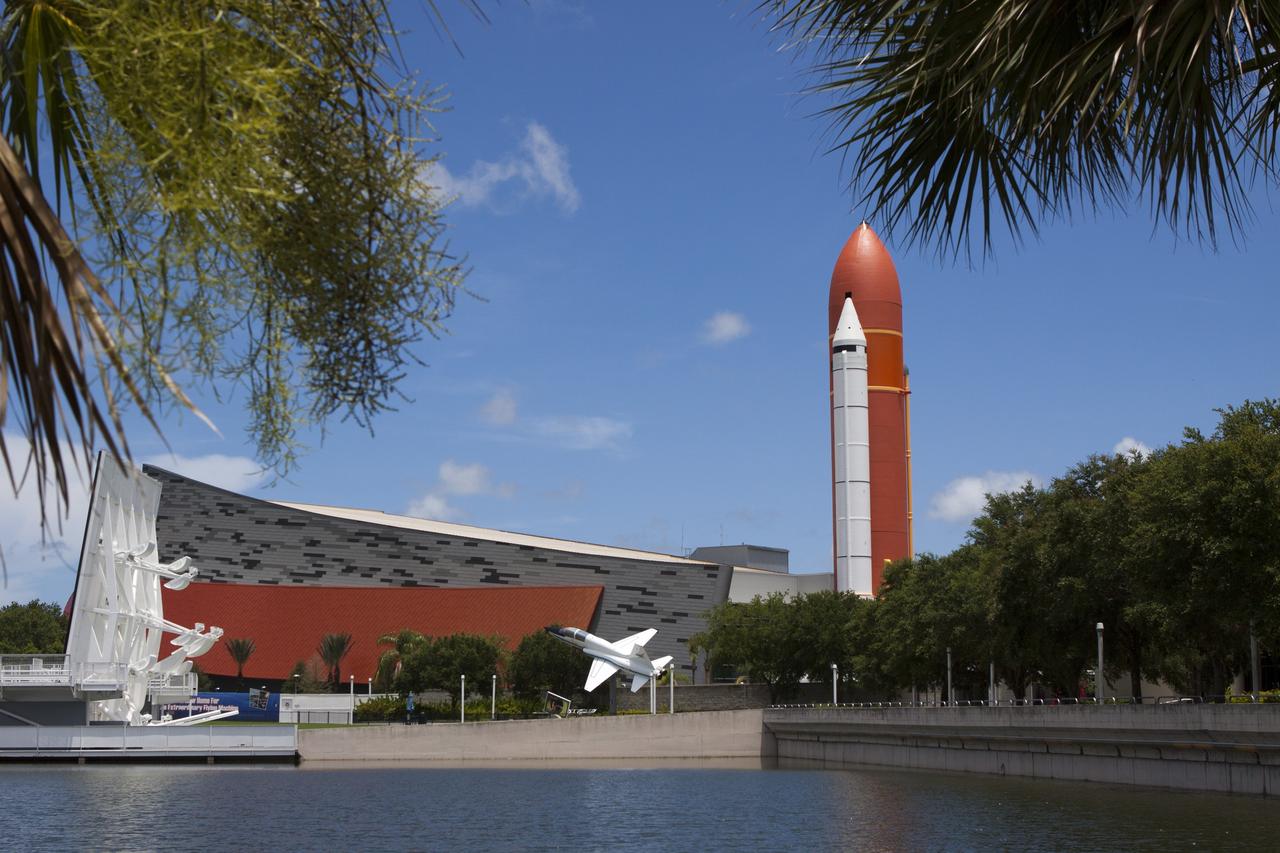
CAPE CANAVERAL, Fla. – At Kennedy Space Center Visitor Complex in Florida, replica external fuel tank and solid rocket boosters mark the entrance to the new Space Shuttle Atlantis exhibit. The new $100 million facility includes interactive exhibits that tell the story of the 30-year Space Shuttle Program and highlight the future of space exploration. Visitors to the exhibit will get an up close look at Atlantis with its payload bay doors open, similar to how it looked in space. Photo credit: NASA/Jim Grossmann
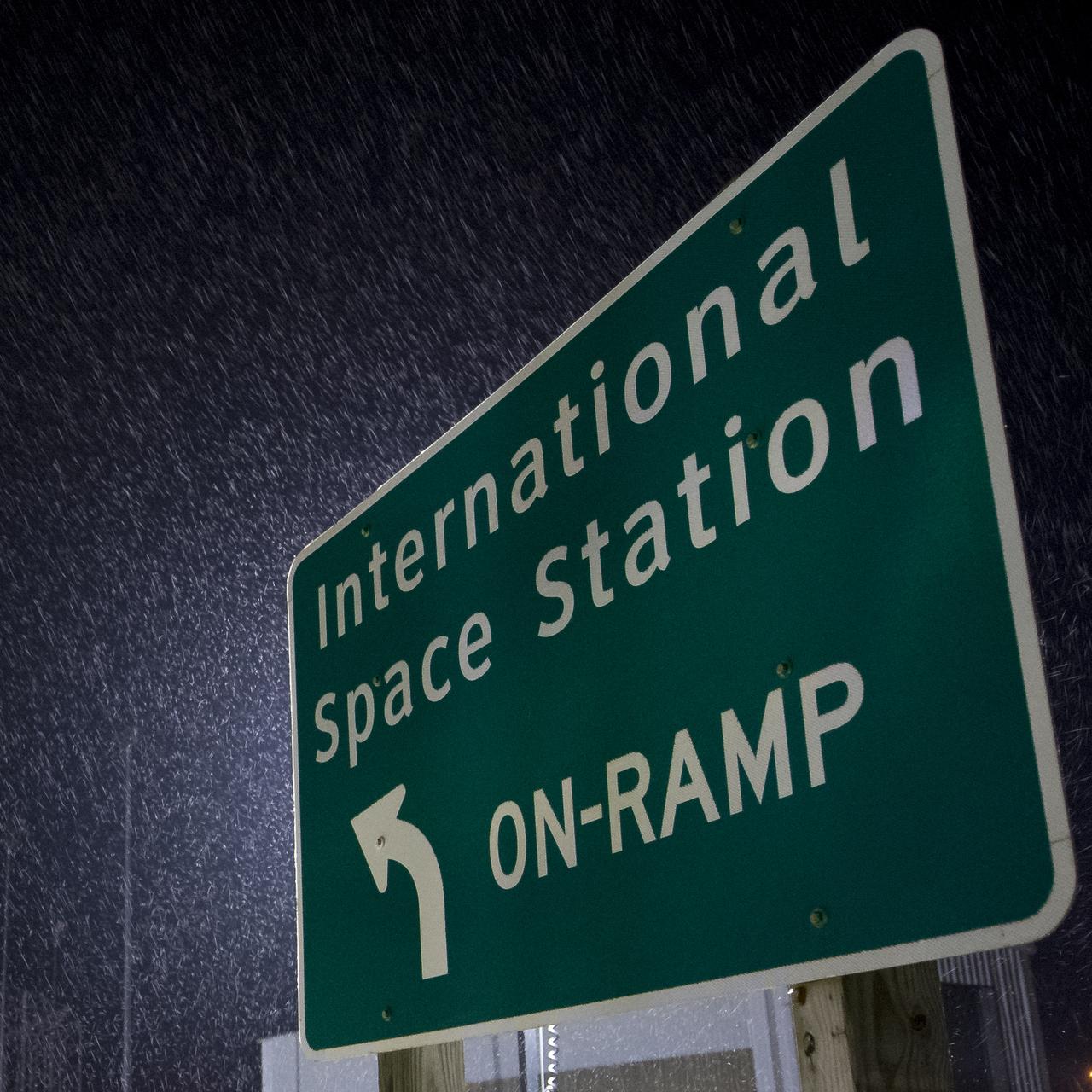
A sign at the entrance launch Pad-0A is seen as the Orbital ATK Antares rocket is rolled from the Horizontal Integration Facility (HIF) to the pad, Thursday, Nov. 9, 2017 at NASA's Wallops Flight Facility in Virginia. Orbital ATK’s eighth contracted cargo resupply mission with NASA to the International Space Station will deliver over 7,400 pounds of science and research, crew supplies and vehicle hardware to the orbital laboratory and its crew. Photo Credit: (NASA/Bill Ingalls)
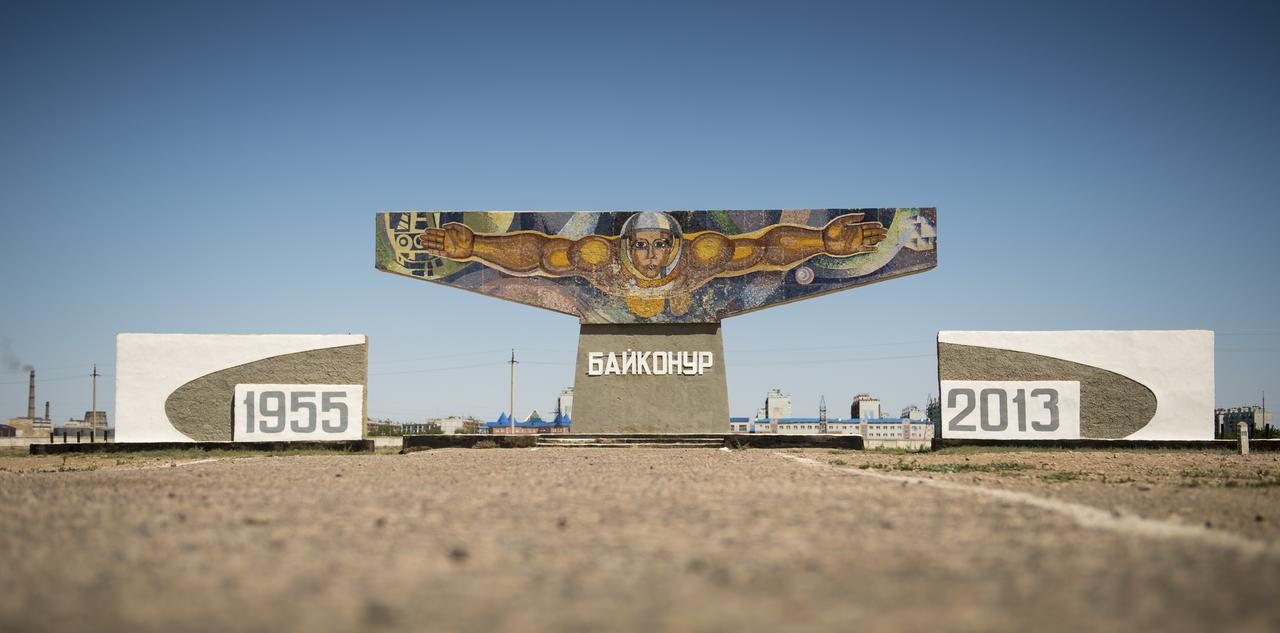
A space themed mural made of tile is seen at the entrance to the town of Baikonur, Kazakhstan on Saturday, May 25, 2013. Launch of a Soyuz rocket to the International Space Station (ISS) with Expedition 36/37 Soyuz Commander Fyodor Yurchikhin of the Russian Federal Space Agency (Roscosmos), Flight Engineers; Luca Parmitano of the European Space Agency, and Karen Nyberg of NASA, is scheduled for Wednesday May 29, Kazakh time. Yurchikhin, Nyberg, and, Parmitano, will remain aboard the station until mid-November. Photo Credit: (NASA/Bill Ingalls)
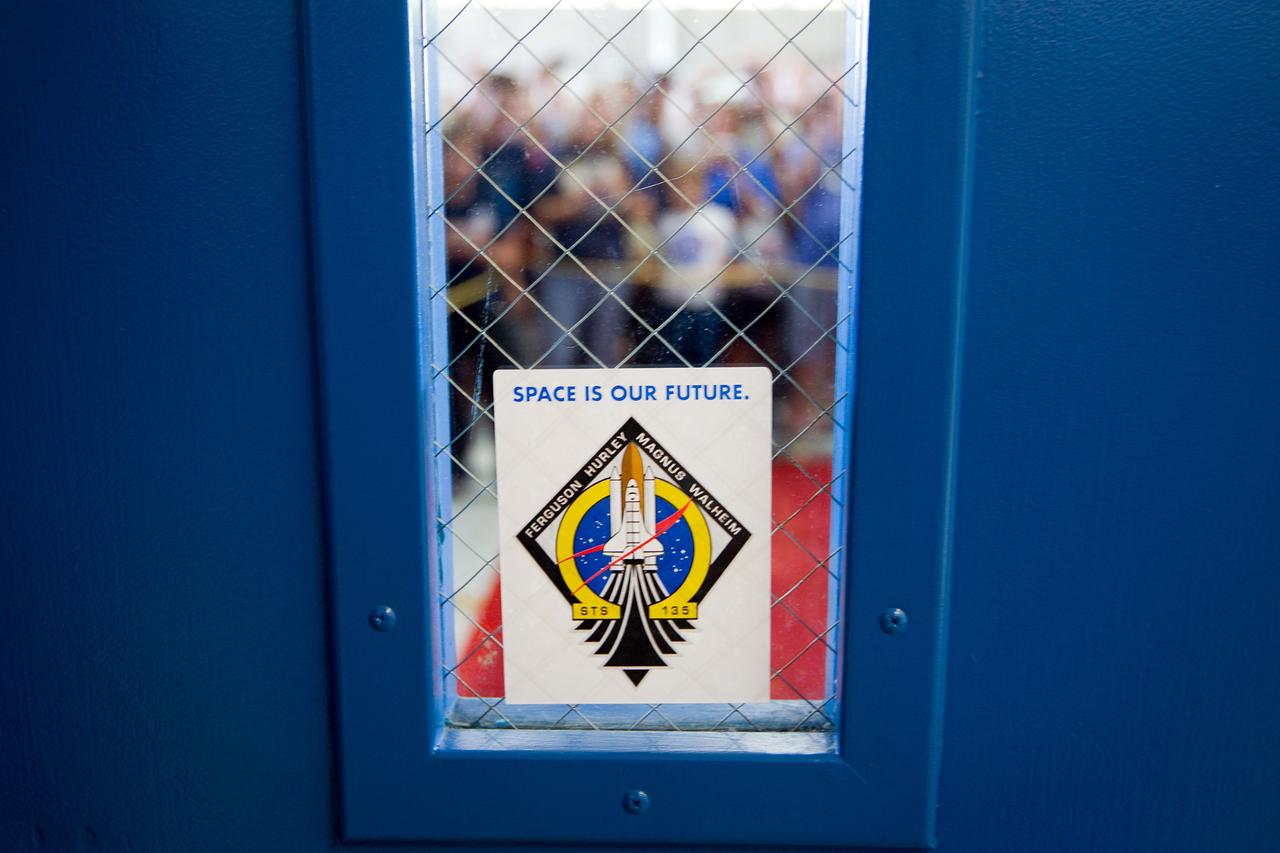
JSC2011-E-068761 (22 July 2011) --- A small portion of a large Ellington Field crowd is seen on July 22, 2011 through a door bearing a STS-135 sticker on its window. A short while later the crew of the space shuttle Atlantis' mission used this door for its entrance during a welcome home ceremony. STS-135 is the final mission of the NASA Space Shuttle Program. Photo credit: NASA Photo/Houston Chronicle, Smiley N. Pool
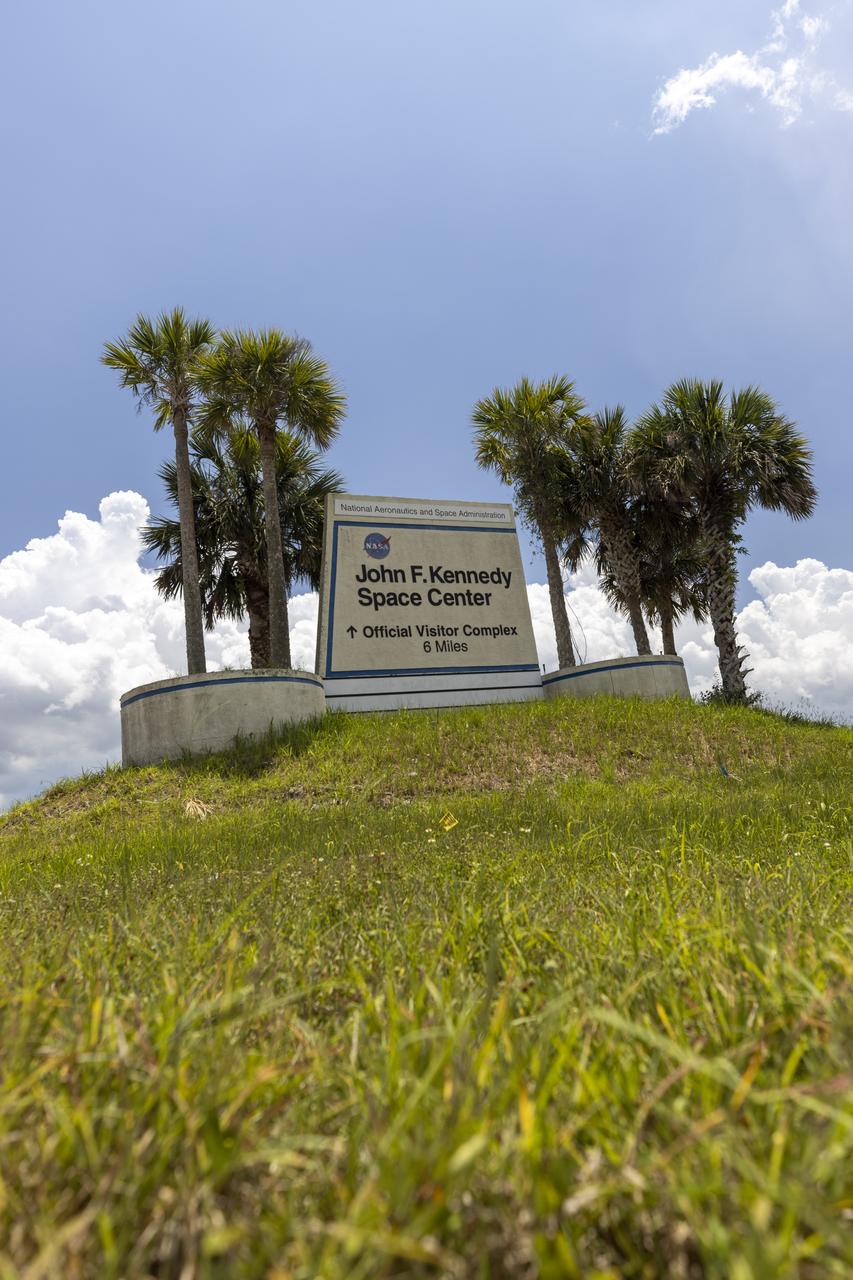
Wildflowers and palm trees are in view near a sign marking the entrance to NASA’s John F. Kennedy Space Center in Florida on May 19, 2023. The center shares a border with the Merritt Island National Wildlife Refuge. More than 330 native and migratory bird species, along with 65 amphibian and reptile species, call Kennedy and the wildlife refuge home.
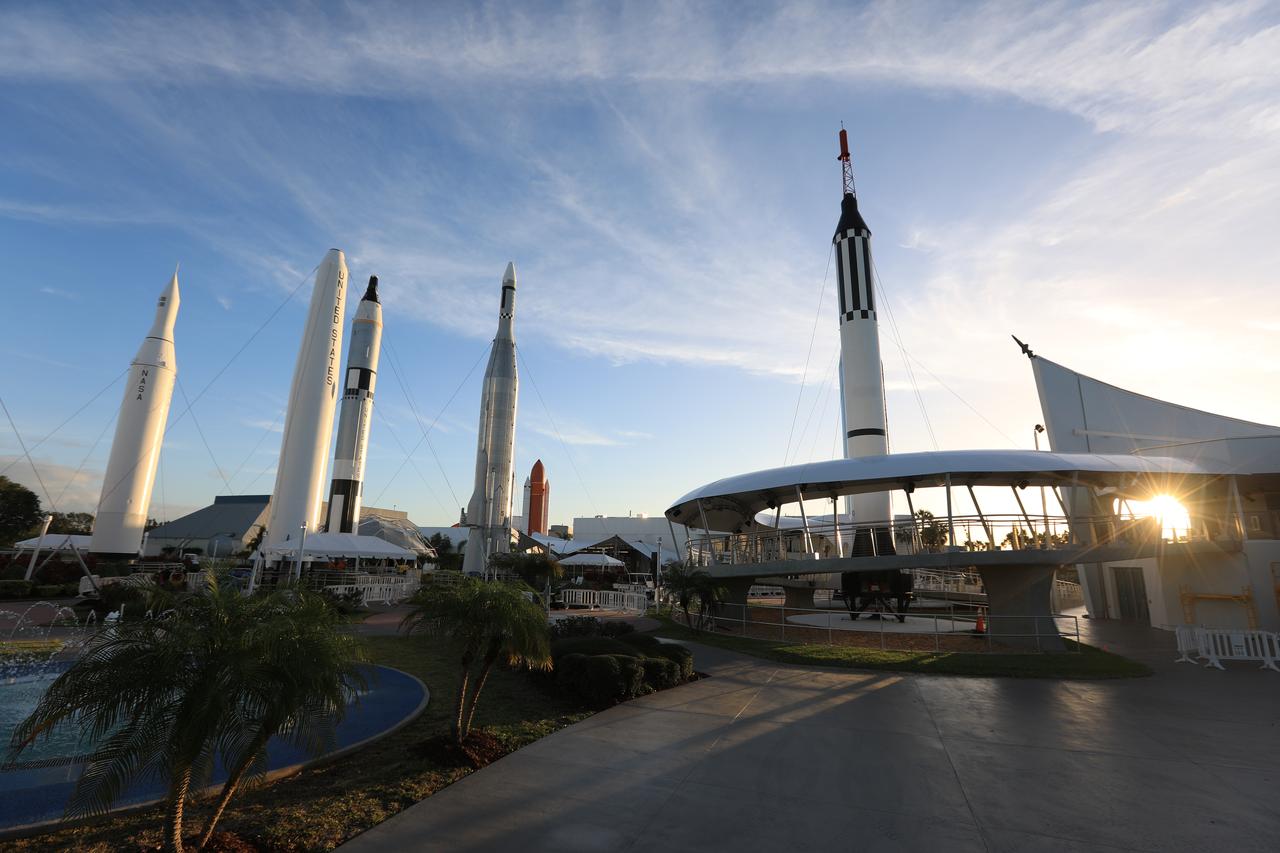
Entrance to the Heroes and Legends attraction at the Kennedy Space Center Visitor Complex is by way of a sweeping ramp designed to simulate a journey to the stars by way of the "Rocket Garden." The new facility includes the U.S. Astronaut Hall of Fame and looks back to the pioneering efforts of Mercury, Gemini and Apollo. It sets the stage by providing the background and context for space exploration and the legendary men and women who pioneered the nation's journey into space.
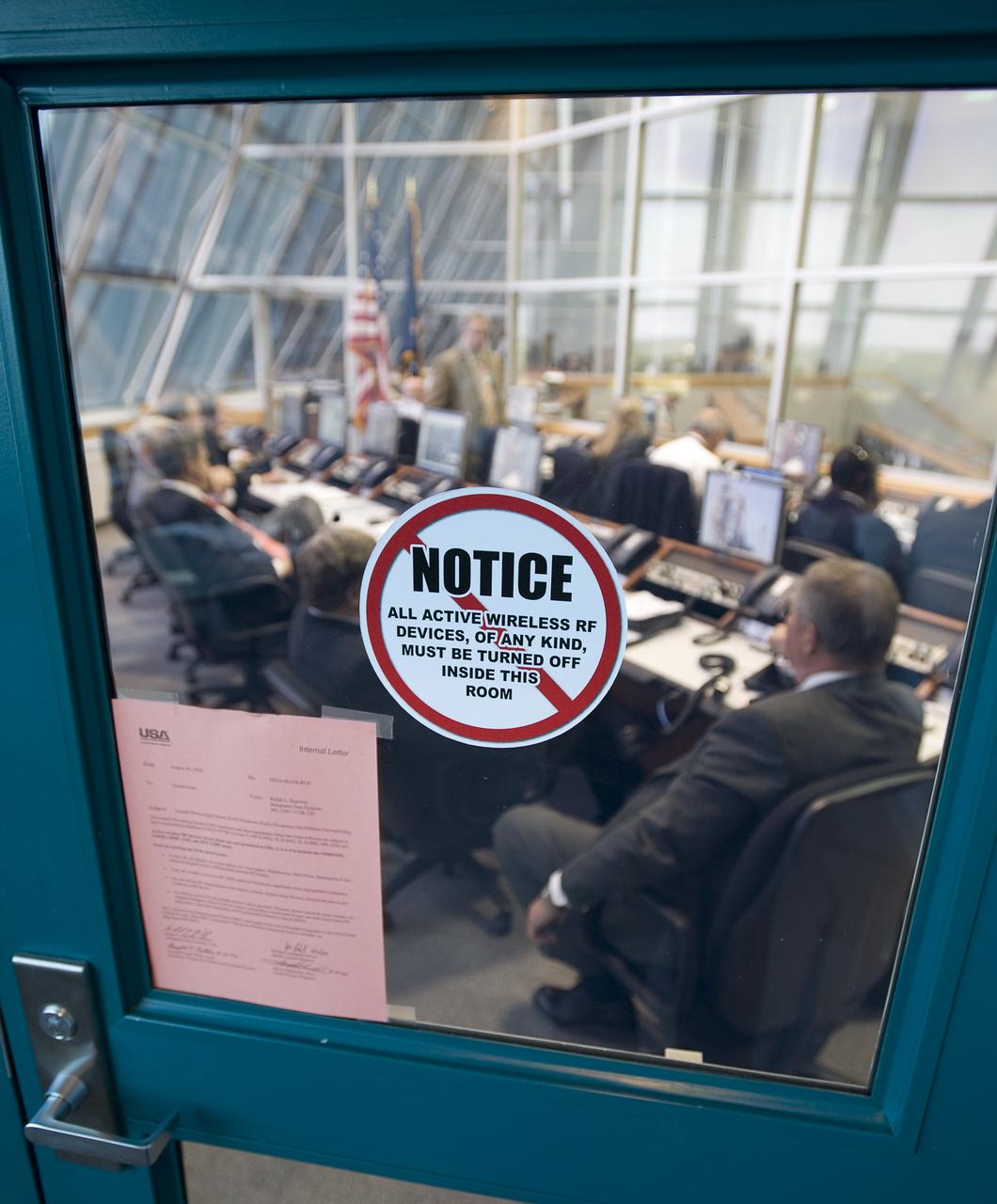
A warning sign is seen on the entrance to Firing Room Four of the Launch Control Center at NASA's Kennedy Space Center in Cape Canaveral, Florida, Sunday, July 12, 2009. The space shuttle Endeavour is set to launch at 7:13p.m. EDT with the crew of STS-127 and start a 16-day mission that will feature five spacewalks and complete construction of the Japan Aerospace Exploration Agency's Kibo laboratory. Photo Credit: (NASA/Bill Ingalls)
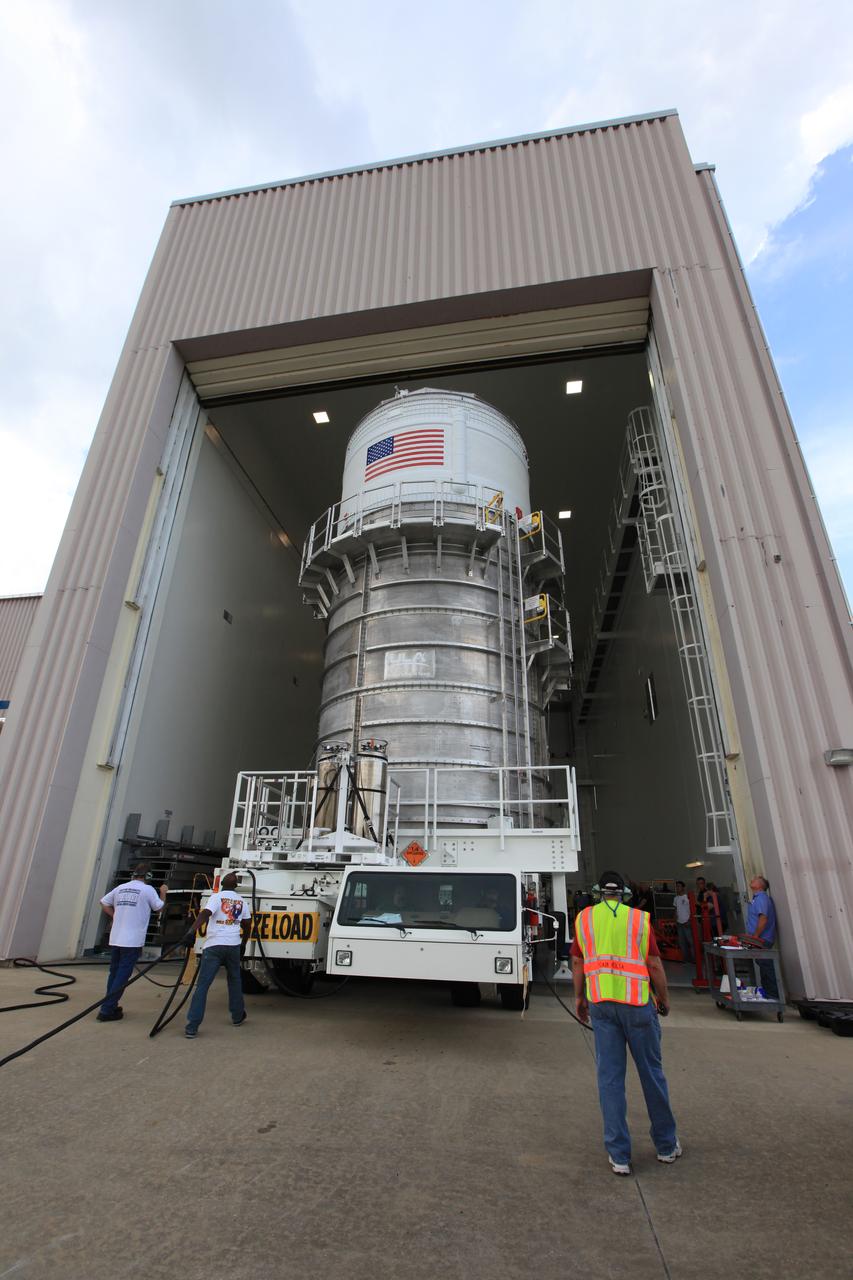
Packed inside its canister, the Interim Cryogenic Propulsion Stage (ICPS) for NASA's Space Launch System (SLS) rocket is moved into the low bay entrance of the Space Station Processing Facility at NASA's Kennedy Space Center in Florida. The ICPS is the first integrated piece of flight hardware to arrive for the SLS. It is the in-space stage that is located toward the top of the rocket, between the Launch Vehicle Stage Adapter and the Orion Spacecraft Adapter. It will provide some of the in-space propulsion during Orion's first flight test atop the SLS on Exploration Mission-1.
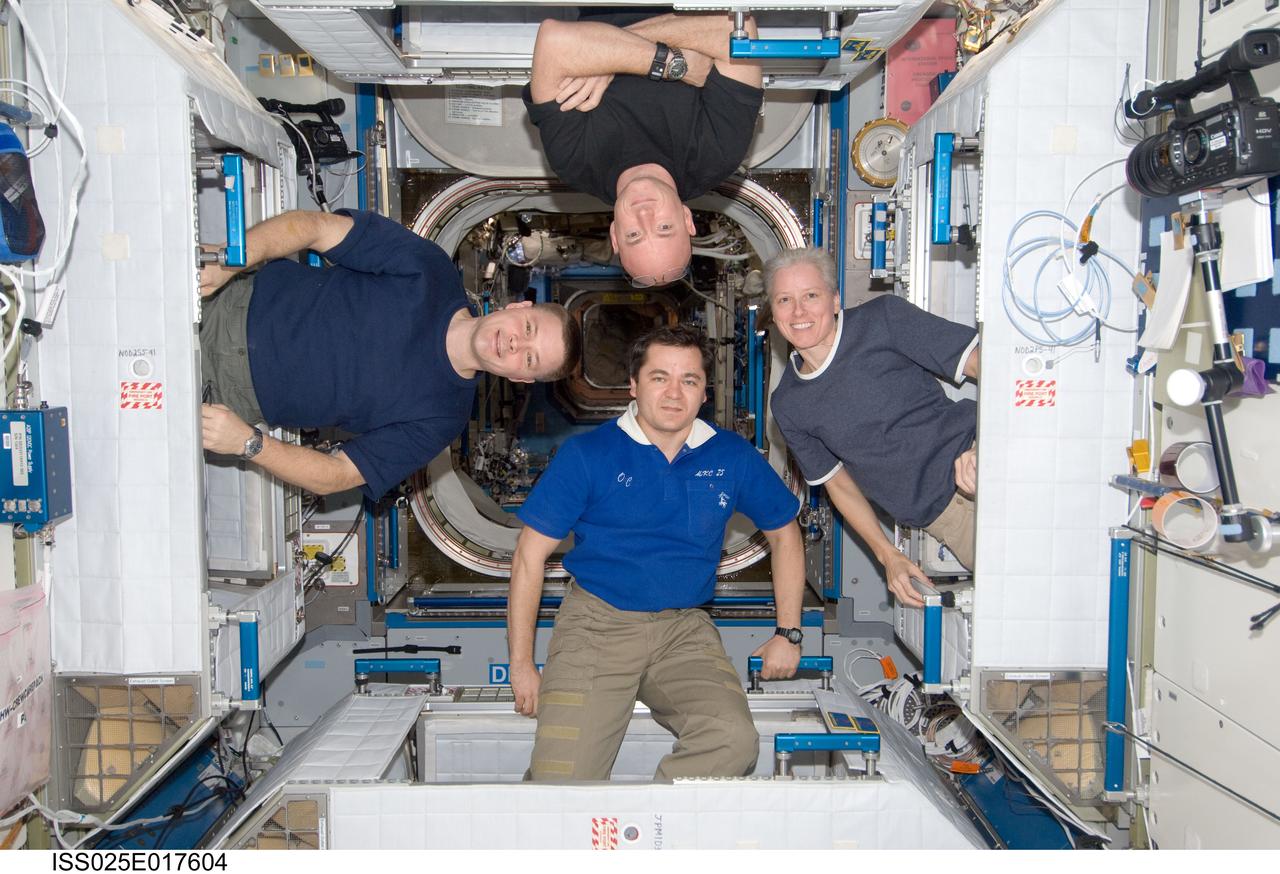
ISS025-E-017604 (25 Nov. 2010) --- Expedition 25 crew members pose for a photo, each one floating in the entrance to their crew quarters in Node 2. Starting at the top is NASA astronaut Scott Kelly, Expedition 25 flight engineer. On the right is NASA astronaut Shannon Walker,Expedition 24/25 flight engineer. At the bottom is Russian cosmonaut Oleg Skripochka, Expedition 25/26 flight engineer, and on the left is NASA astronaut Douglas H. Wheelock, Expedition 25 commander.
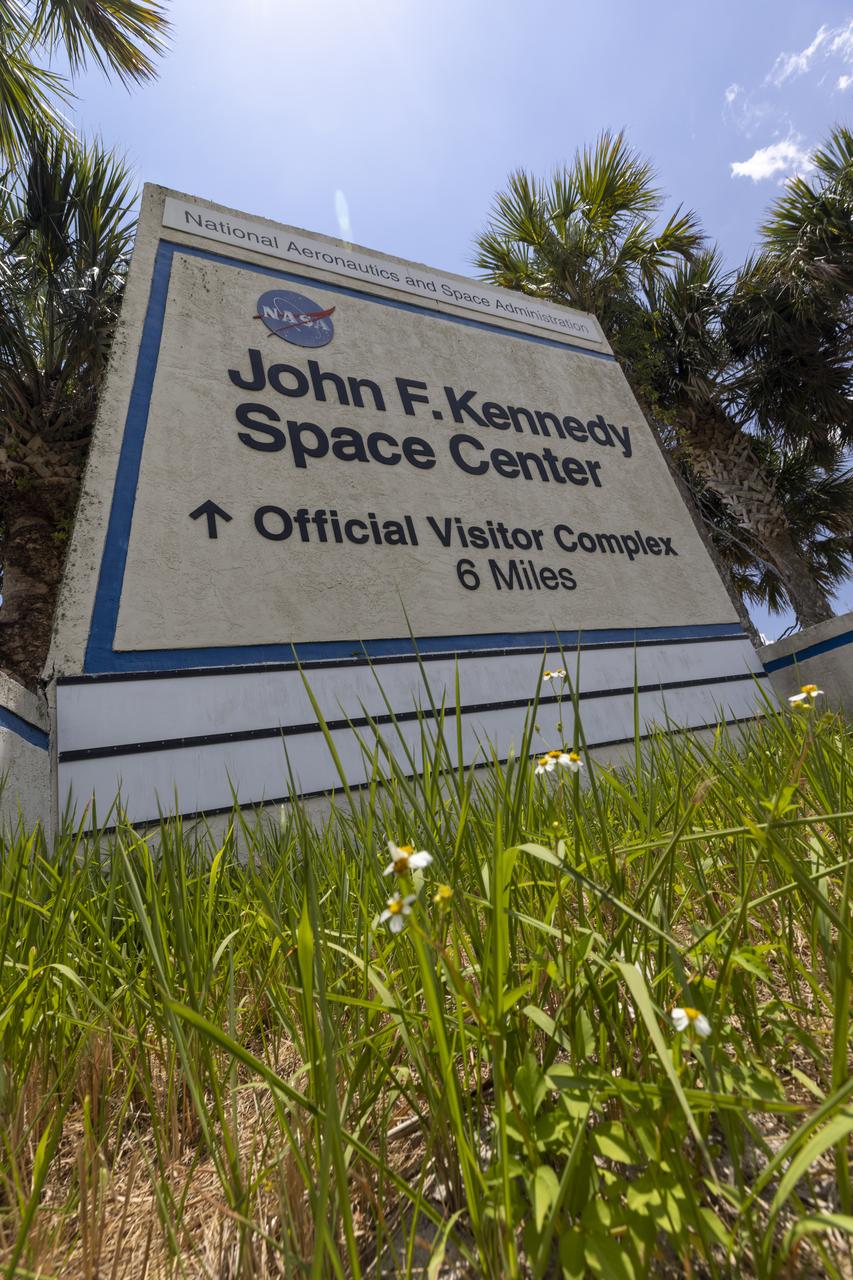
Wildflowers and palm trees are in view near a sign marking the entrance to NASA’s John F. Kennedy Space Center in Florida on May 19, 2023. The center shares a border with the Merritt Island National Wildlife Refuge. More than 330 native and migratory bird species, along with 65 amphibian and reptile species, call Kennedy and the wildlife refuge home.
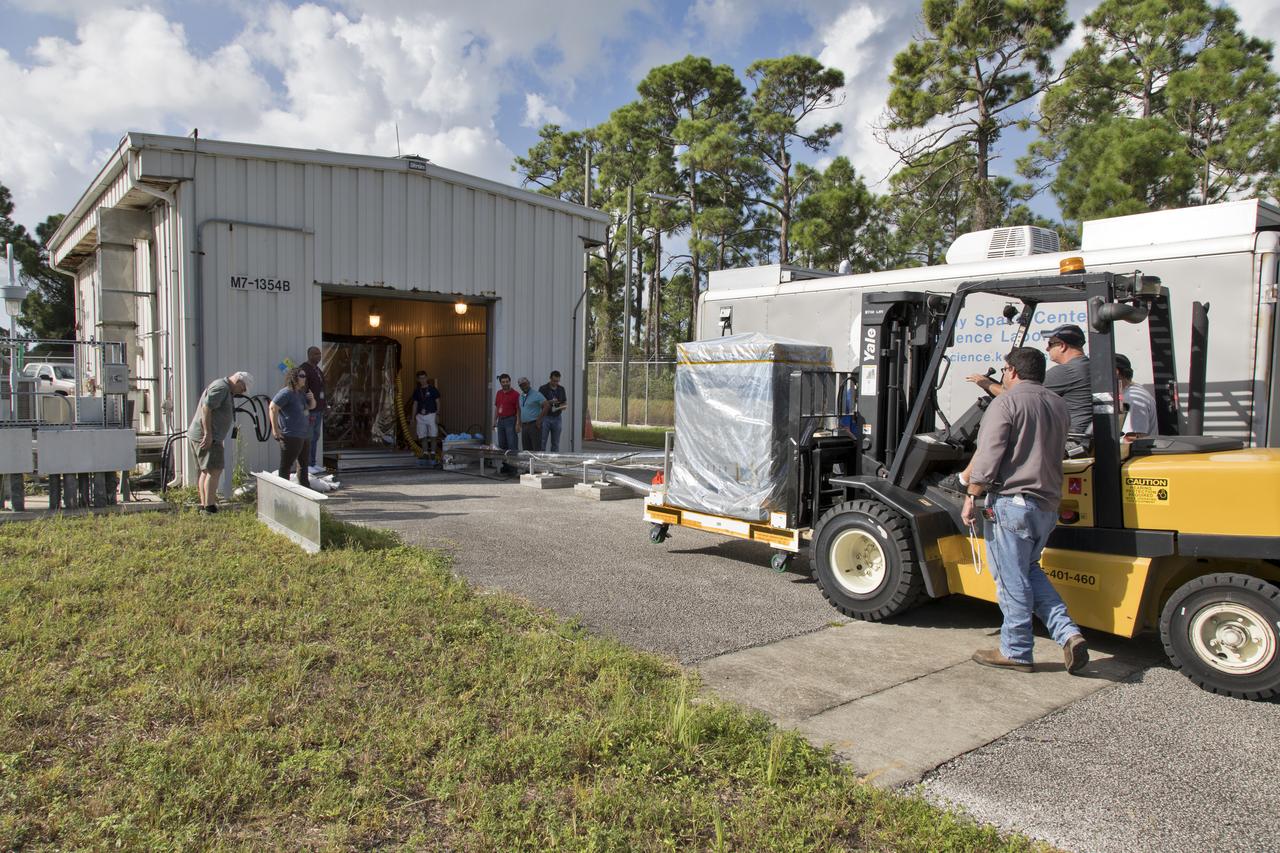
A worker uses a forklift to carry the Robotic Refueling Mission-3 (RRM3) payload to the entrance of the Payload Hazardous Servicing Facility on Oct. 3, 2018, at NASA's Kennedy Space Center in Florida. The payload will be carried to the International Space Station on SpaceX's 16th Commercial Resupply Services mission. RRM3 demonstrates the transfer of xenon gas and liquid methane in microgravity, and advances technologies for storing and manipulating these cryogenic fuels robotically. RRM3 also supports development of technology for the Restore-L mission, a robotic spacecraft equipped to service satellites in-orbit.
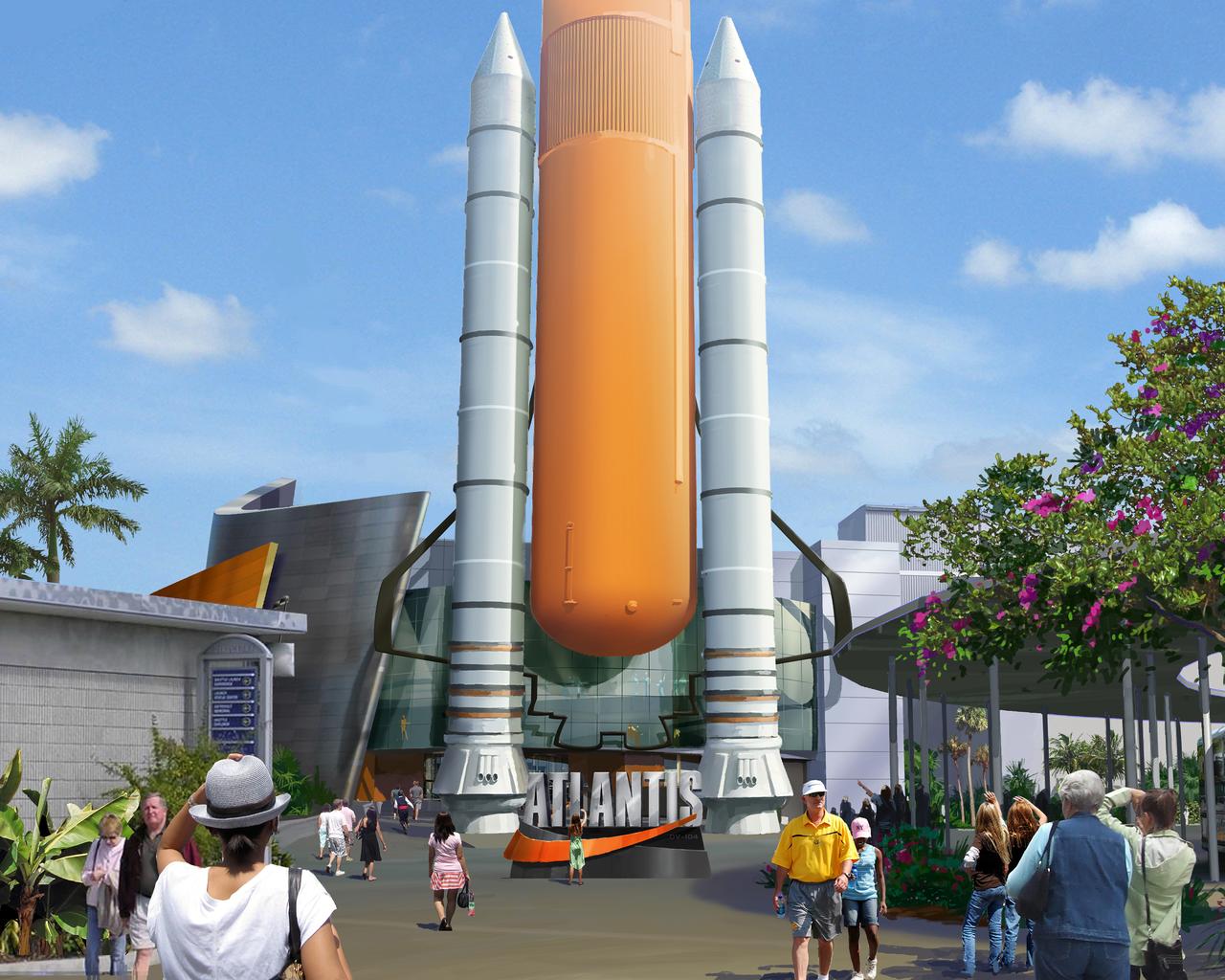
CAPE CANAVERAL, Fla. -- A full scale external tank and twin solid rocket booster replicas will stand at the Atlantis exhibit entrance at the Kennedy Space Center Visitor Complex, preparing to launch guests deep into the 30-year history of the Space Shuttle Program. A groundbreaking ceremony for the future home of Atlantis was held Jan. 18. For more information on this and other exhibits at the visitor complex, go to http://www.kennedyspacecenter.com. Artist rendering courtesy of PGAV Destinations for Delaware North Parks & Resorts
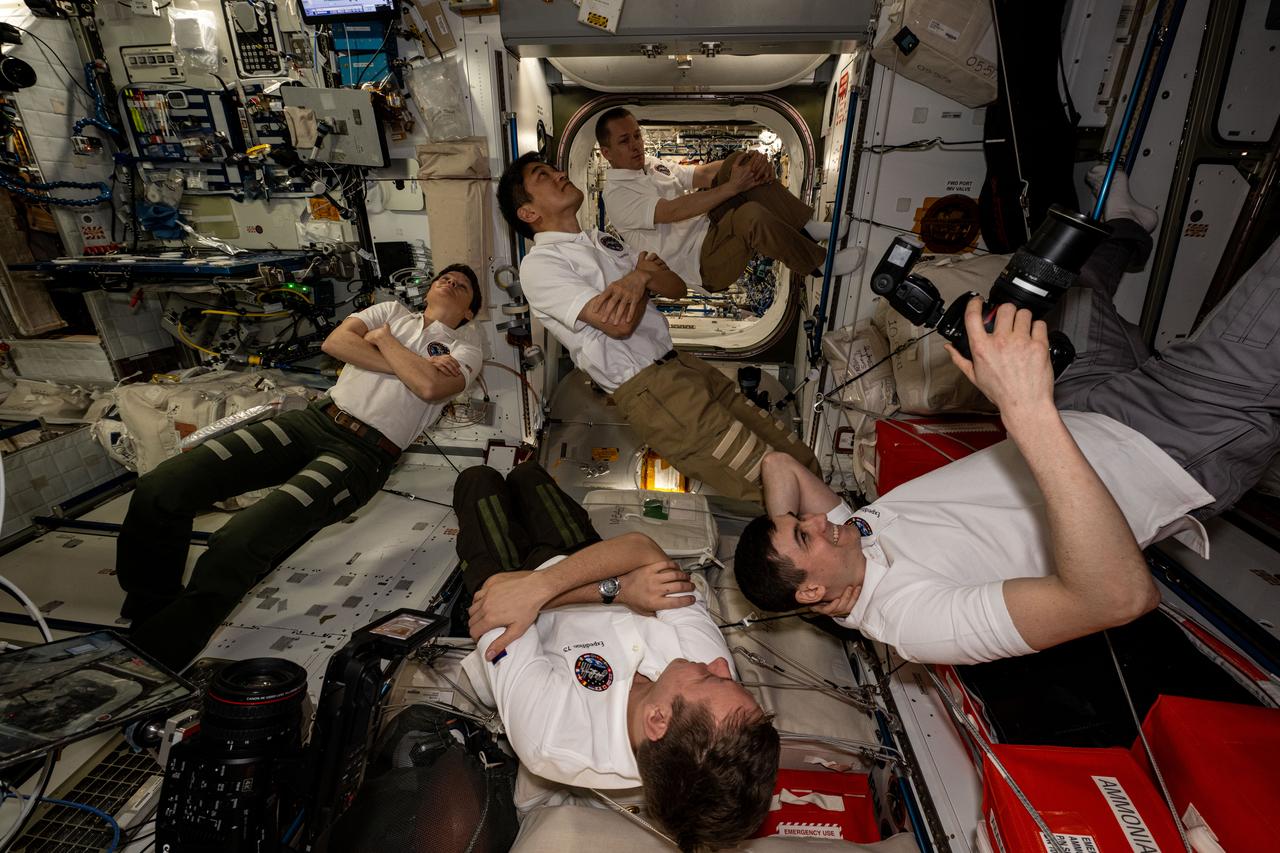
iss073e0251292 (June 26, 2025) --- Expedition 73 crew members patiently await the entrance of the Axiom Mission 4 crew from the SpaceX Dragon spacecraft into the International Space Station's Harmony module. Clockwise from left are, NASA Flight Engineer Anne McClain, JAXA (Japan Aerospace Exploration Agency) Commander Takuya Onishi, and Roscosmos Flight Engineers Sergey Ryzhikov, Alexander Zubritsky, and Kirill Peskov. Out of frame are, NASA Flight Engineers Nichole Ayers and Jonny Kim.
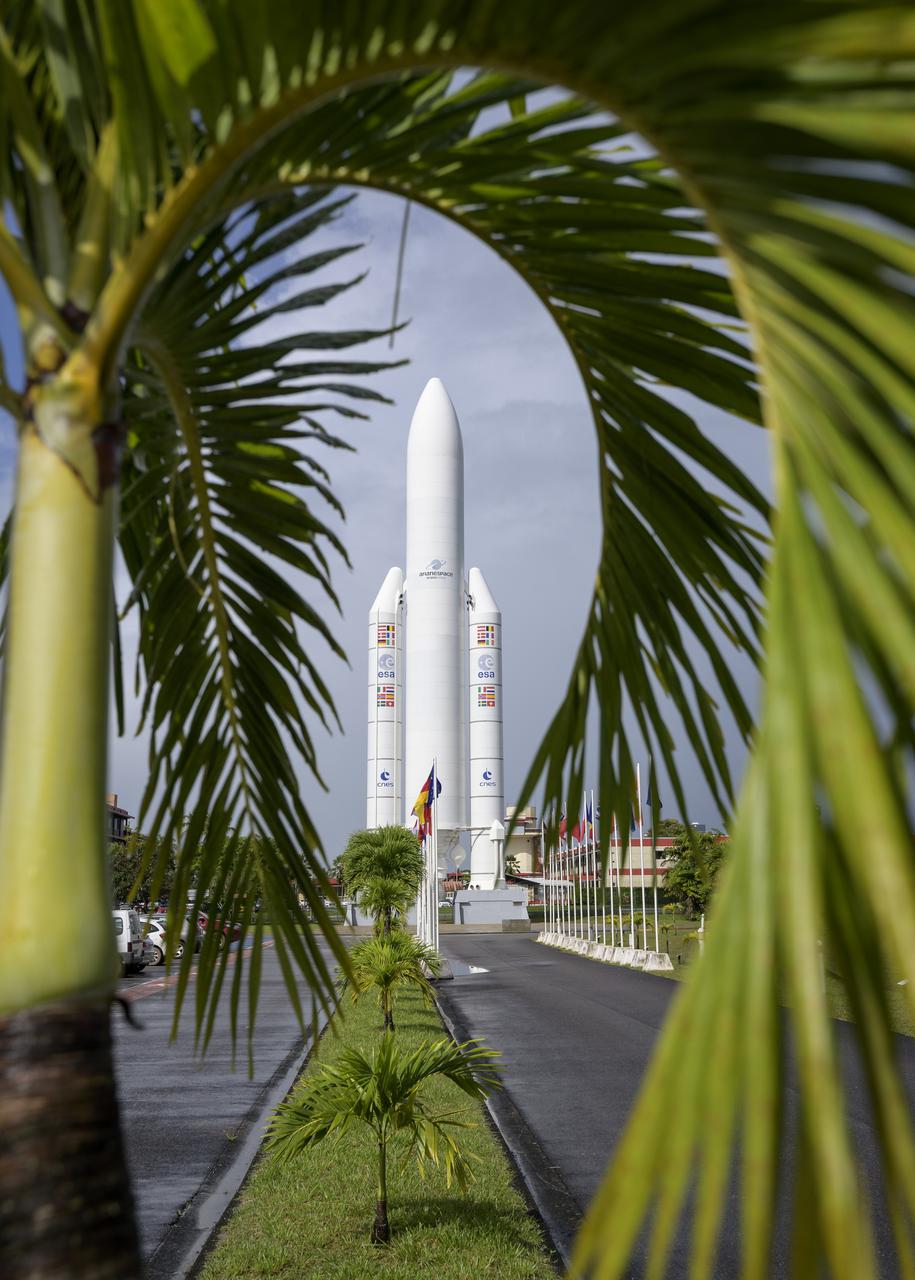
A mockup of Arianespace's Ariane 5 rocket is seen at the entrance to the Guiana Space Center in Kourou, French Guiana, Tuesday, Dec. 21, 2021. The James Webb Space Telescope (sometimes called JWST or Webb) is a large infrared telescope with a 21.3 foot (6.5 meter) primary mirror. The observatory is scheduled to launch later in the week and will study every phase of cosmic history—from within our solar system to the most distant observable galaxies in the early universe. Photo Credit: (NASA/Bill Ingalls)
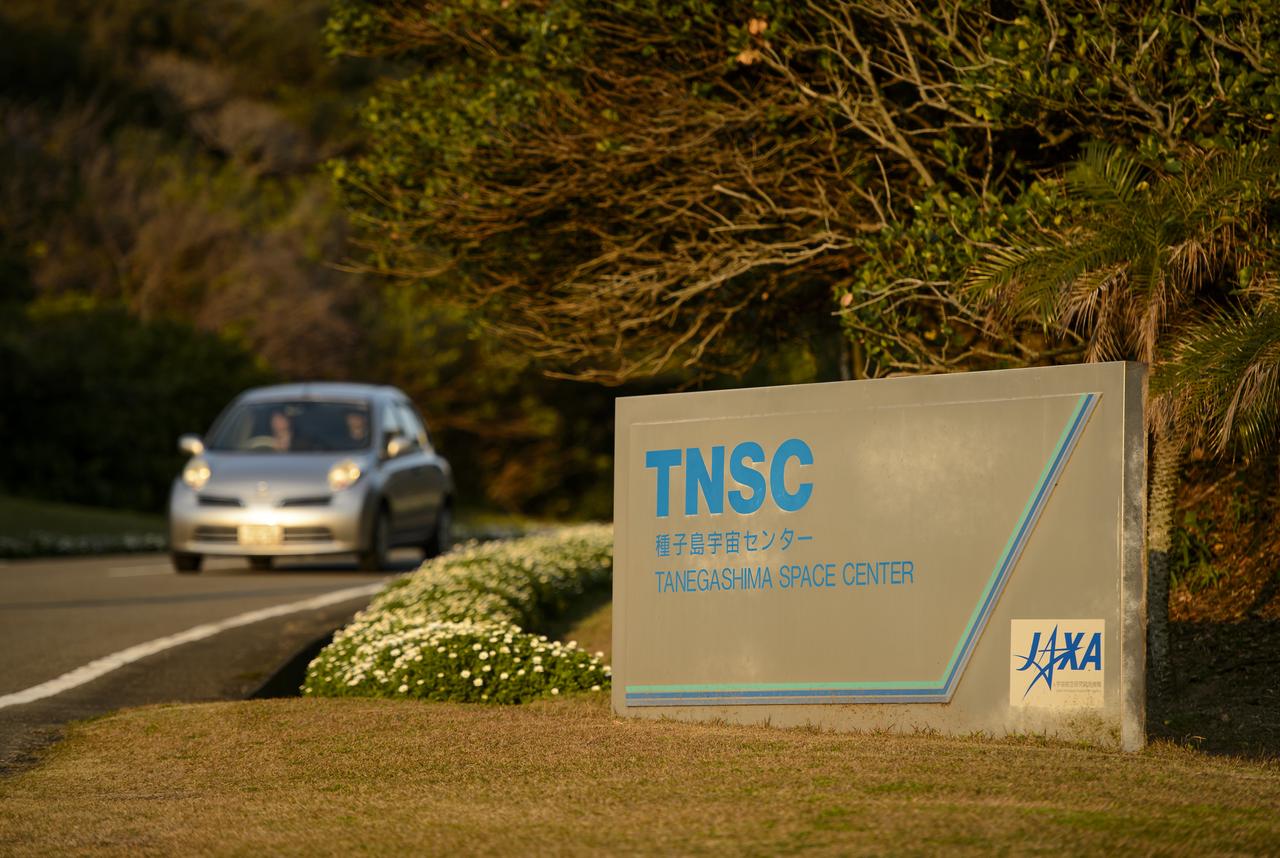
The entrance sign to the Japan Aerospace Exploration Agency’s (JAXA) Tanegashima Space Center (TNSC) is seen a week ahead of the planned launch of an H-IIA rocket carrying the Global Precipitation Measurement (GPM) Core Observatory, Friday, Feb. 21, 2014, Tanegashima Island, Japan. The NASA-JAXA GPM spacecraft will collect information that unifies data from an international network of existing and future satellites to map global rainfall and snowfall every three hours. Photo Credit: (NASA/Bill Ingalls)
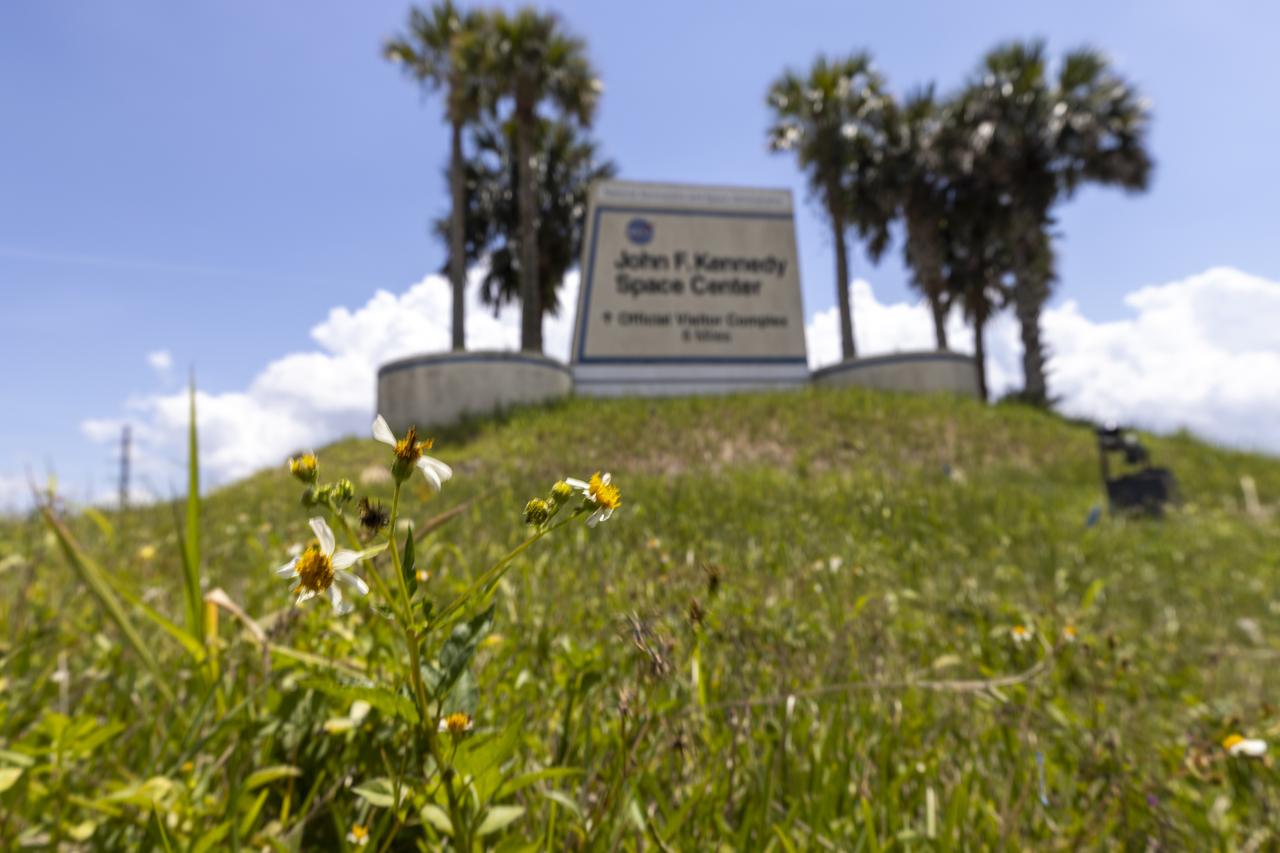
Wildflowers and palm trees are in view near a sign marking the entrance to NASA’s John F. Kennedy Space Center in Florida on May 19, 2023. The center shares a border with the Merritt Island National Wildlife Refuge. More than 330 native and migratory bird species, along with 65 amphibian and reptile species, call Kennedy and the wildlife refuge home.

The refurbished sign from the original Headquarters building at NASA’s Kennedy Space Center in Florida is installed by the main entrance of the new Central Campus Headquarters, Feb. 18, 2021. The sign, which reads “National Aeronautics and Space Administration – Kennedy Space Center Headquarters,” was placed on the center’s first Headquarters building when the facility was completed in 1965. Kennedy’s modern Central Campus Headquarters, a seven-story building with several sustainable features, opened in May 2019 and provides space for 500 NASA and contractor employees.
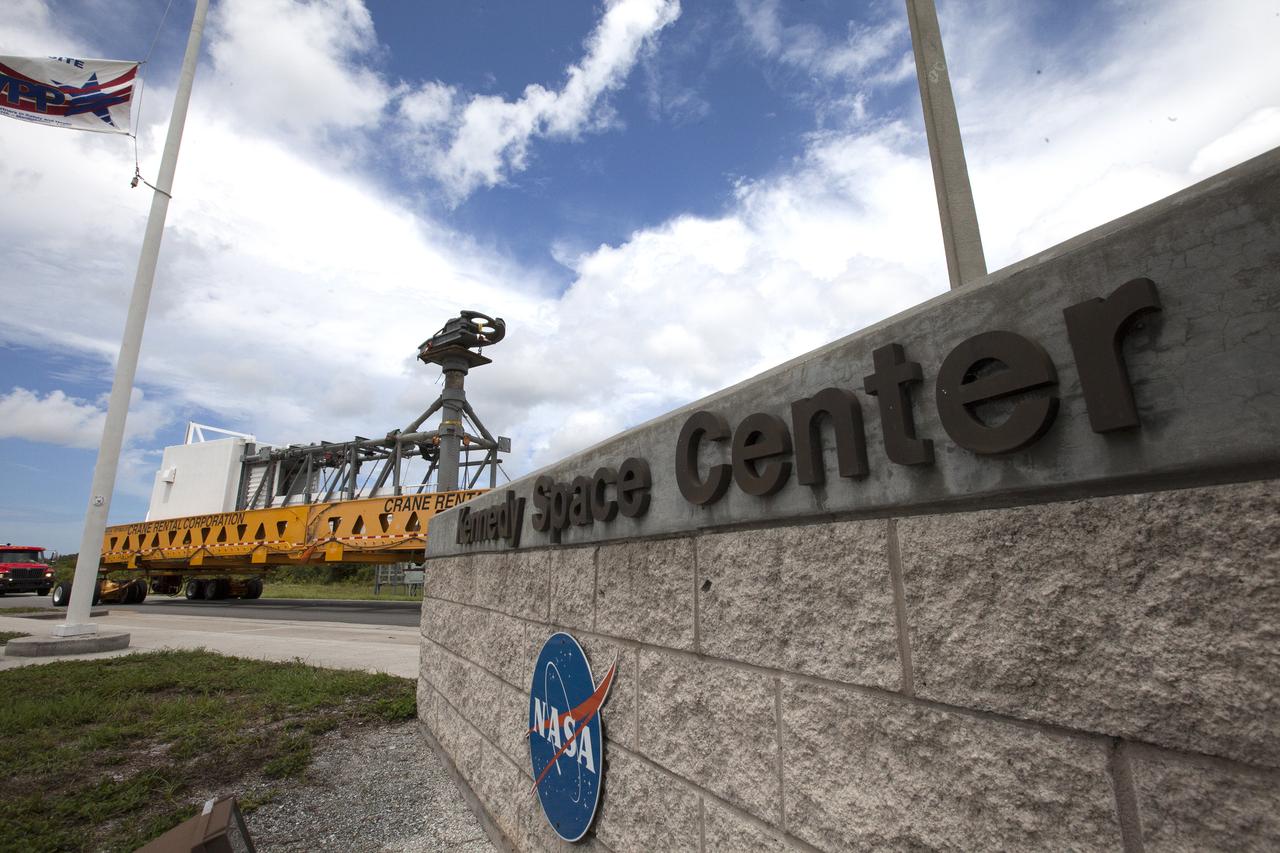
A heavy-lift transport truck, carrying the Crew Access Arm for Space Launch Complex 41, passes through the entrance to NASA’s Kennedy Space Center in Florida. The arm will be installed on the Complex 41 Crew Access Tower at Cape Canaveral Air Force Station. It will be used as a bridge by astronauts to board Boeing's CST-100 Starliner spacecraft as it stands on the launch pad atop a United Launch Alliance Atlas V rocket.
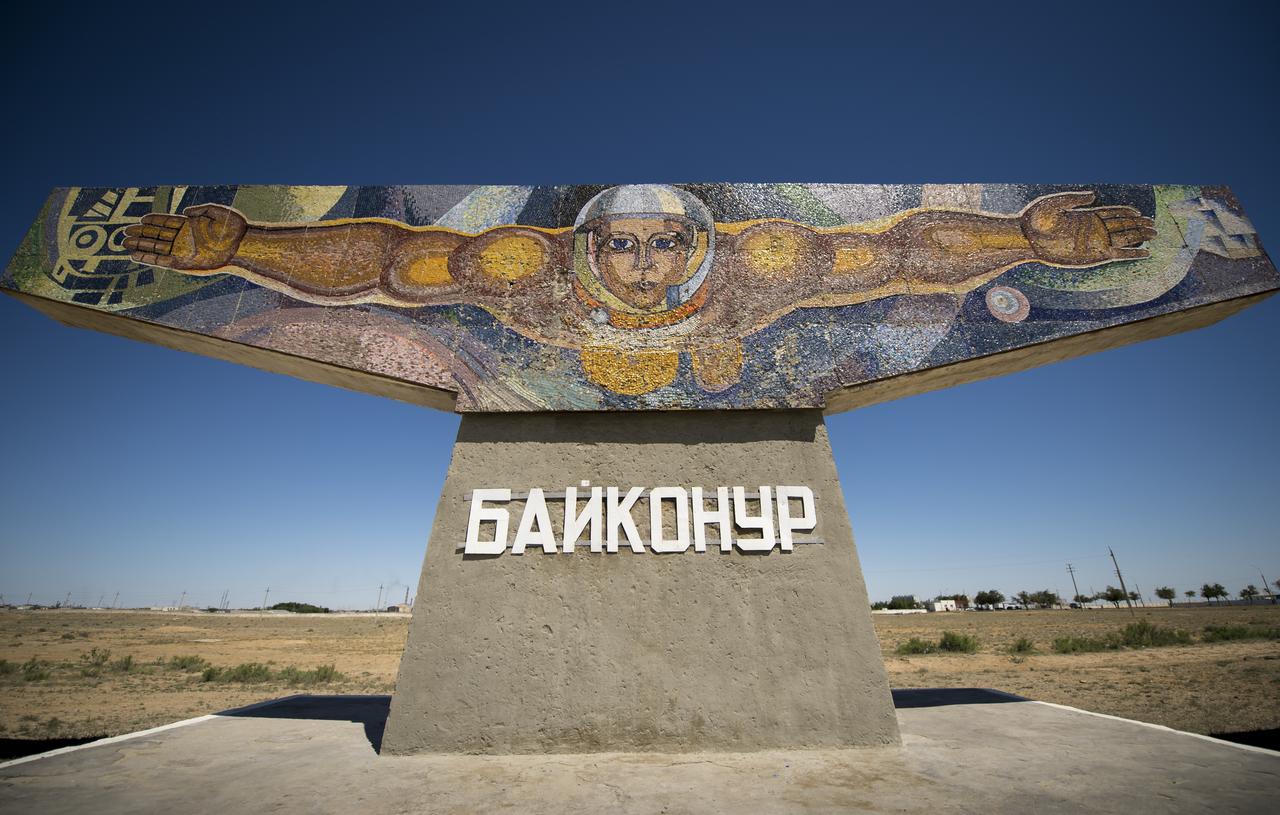
A space themed mural made of tile is seen at the entrance to the town of Baikonur, Kazakhstan on Saturday, May 25, 2013. Launch of a Soyuz rocket to the International Space Station (ISS) with Expedition 36/37 Soyuz Commander Fyodor Yurchikhin of the Russian Federal Space Agency (Roscosmos), Flight Engineers; Luca Parmitano of the European Space Agency, and Karen Nyberg of NASA, is scheduled for Wednesday May 29, Kazakh time. Yurchikhin, Nyberg, and, Parmitano, will remain aboard the station until mid-November. Photo Credit: (NASA/Bill Ingalls)
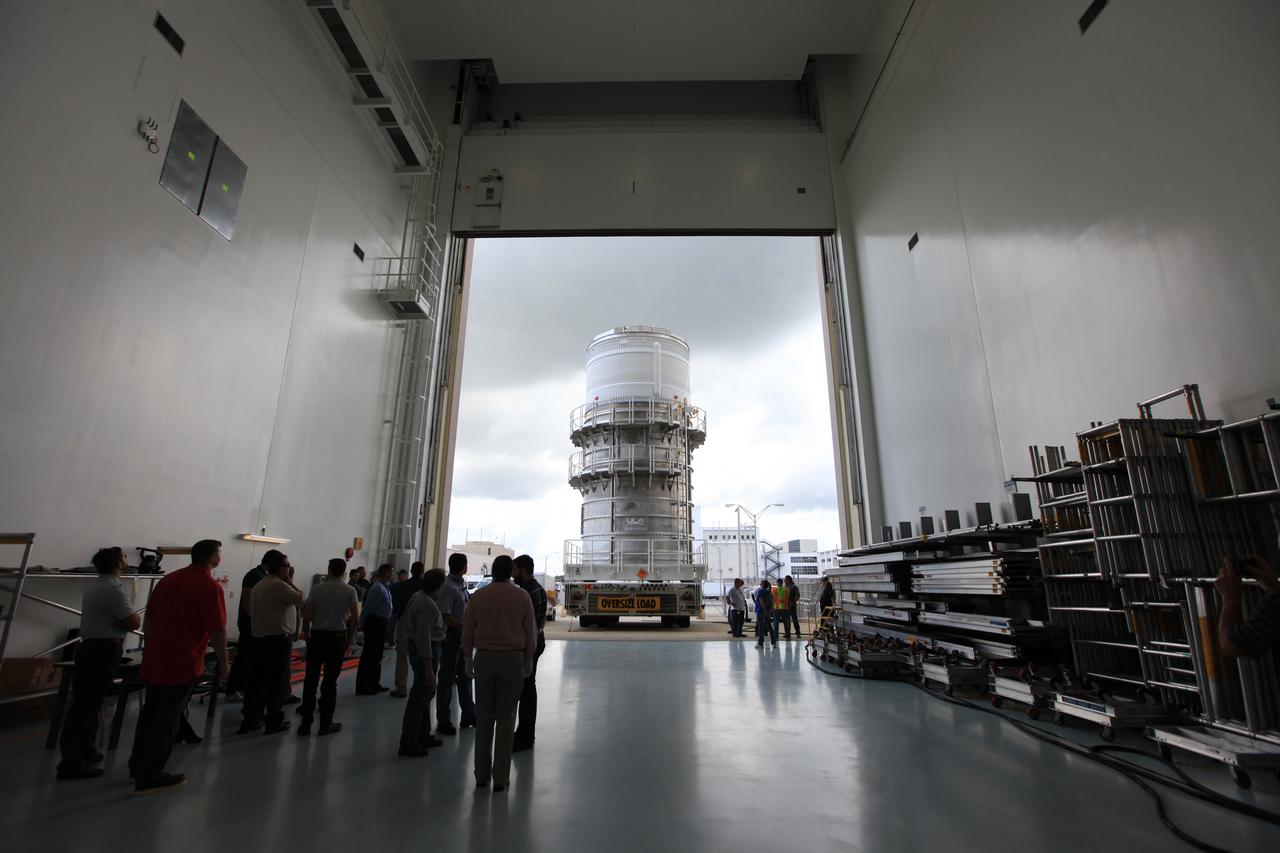
Packed inside its canister, the Interim Cryogenic Propulsion Stage (ICPS) for NASA's Space Launch System (SLS) rocket arrives at the low bay entrance of the Space Station Processing Facility at NASA's Kennedy Space Center in Florida. The ICPS is the first integrated piece of flight hardware to arrive for the SLS. It is the in-space stage that is located toward the top of the rocket, between the Launch Vehicle Stage Adapter and the Orion Spacecraft Adapter. It will provide some of the in-space propulsion during Orion's first flight test atop the SLS on Exploration Mission-1.
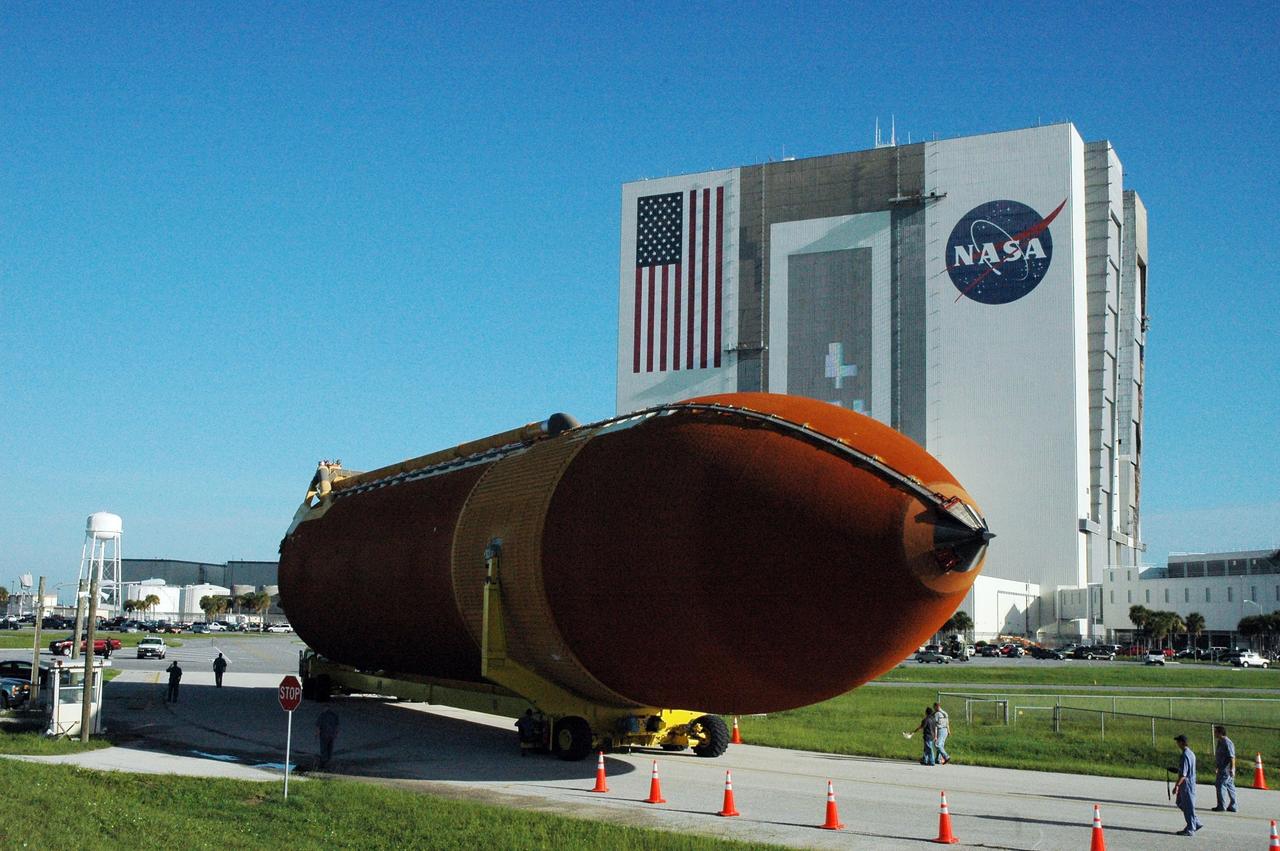
KENNEDY SPACE CENTER, FLA. -- Aboard a transporter, external tank No. 120 moves past the NASA News Center parking lot entrance in the Launch Complex 39 Area to the Vehicle Assembly Building, seen behind it. There it will be lifted into a checkout cell. The tank arrived from the Michoud Assembly Facility near New Orleans, making the journey around the Florida peninsula in tow by the JA Bisso II tugboat. ET-120 will be used for launching Space Shuttle Discovery on mission STS-120 in October. NASA/Amanda Diller
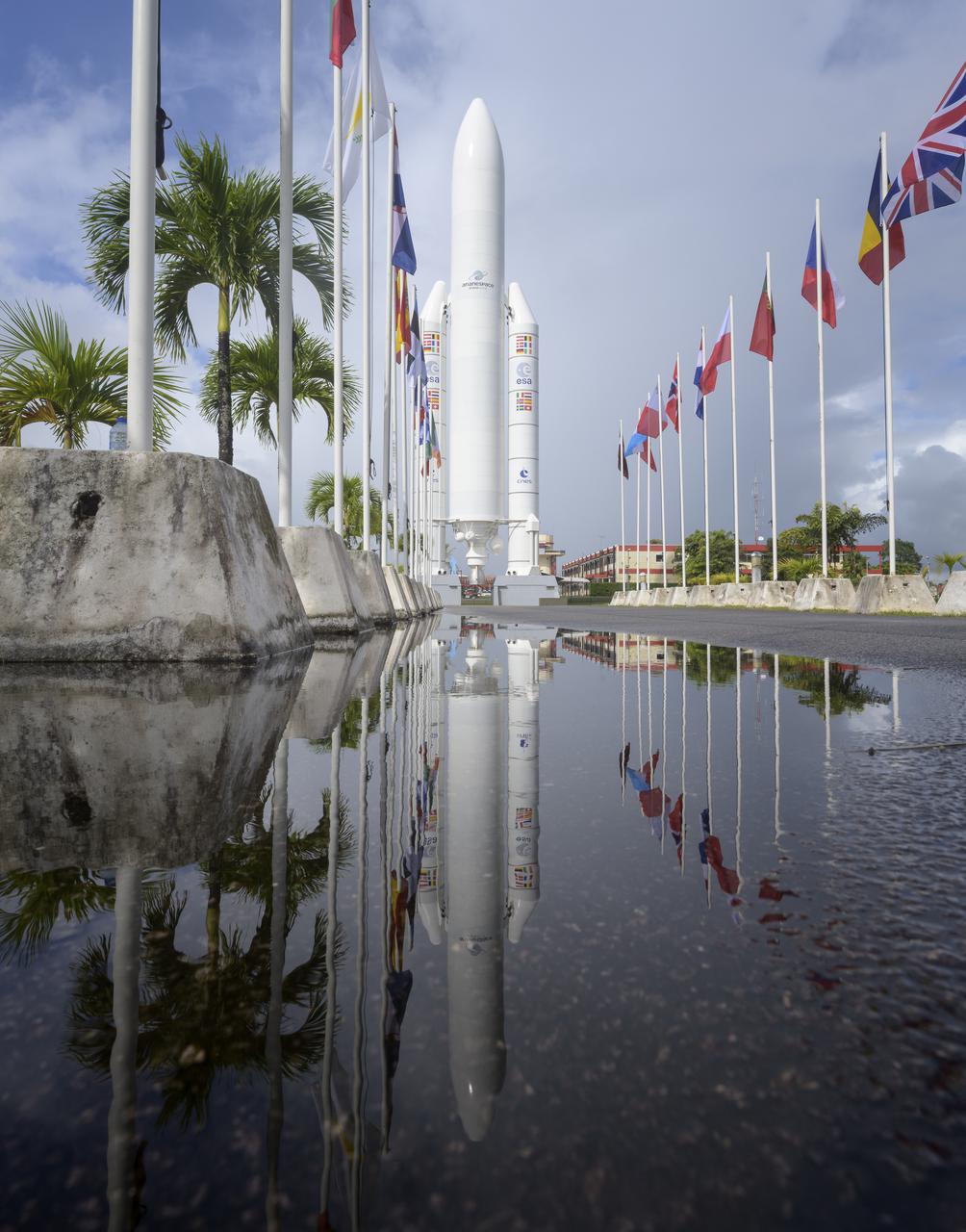
A mockup of Arianespace's Ariane 5 rocket is seen at the entrance to the Guiana Space Center in Kourou, French Guiana, Tuesday, Dec. 21, 2021. The James Webb Space Telescope (sometimes called JWST or Webb) is a large infrared telescope with a 21.3 foot (6.5 meter) primary mirror. The observatory is scheduled to launch later in the week and will study every phase of cosmic history—from within our solar system to the most distant observable galaxies in the early universe. Photo Credit: (NASA/Bill Ingalls)
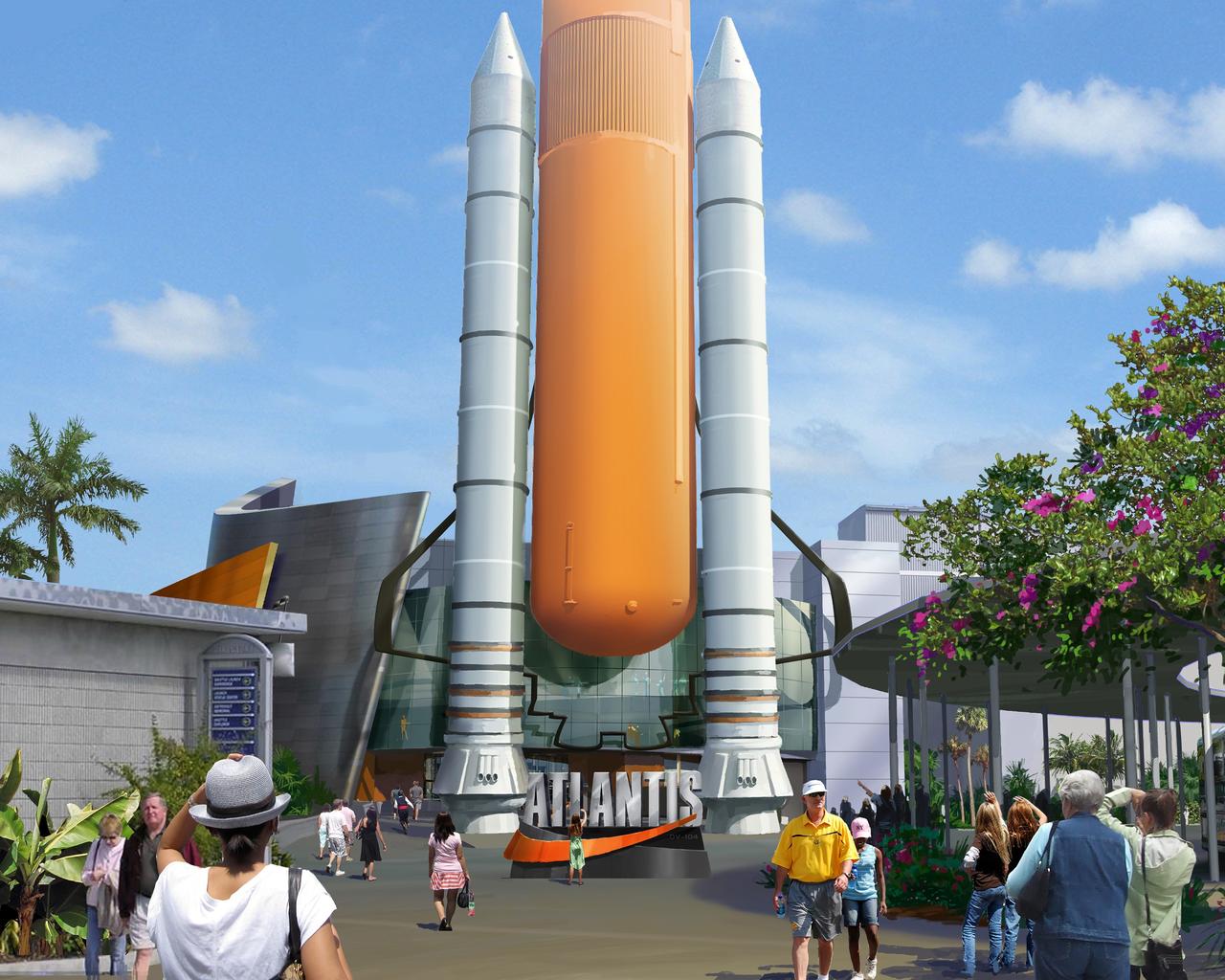
CAPE CANAVERAL, Fla. -- A full scale external tank and twin solid rocket booster replicas will stand at the Atlantis exhibit entrance at the Kennedy Space Center Visitor Complex, preparing to launch guests deep into the 30-year history of the Space Shuttle Program. A groundbreaking ceremony for the future home of Atlantis was held Jan. 18. For more information on this and other exhibits at the visitor complex, go to http://www.kennedyspacecenter.com. Artist rendering courtesy of PGAV Destinations for Delaware North Parks & Resorts
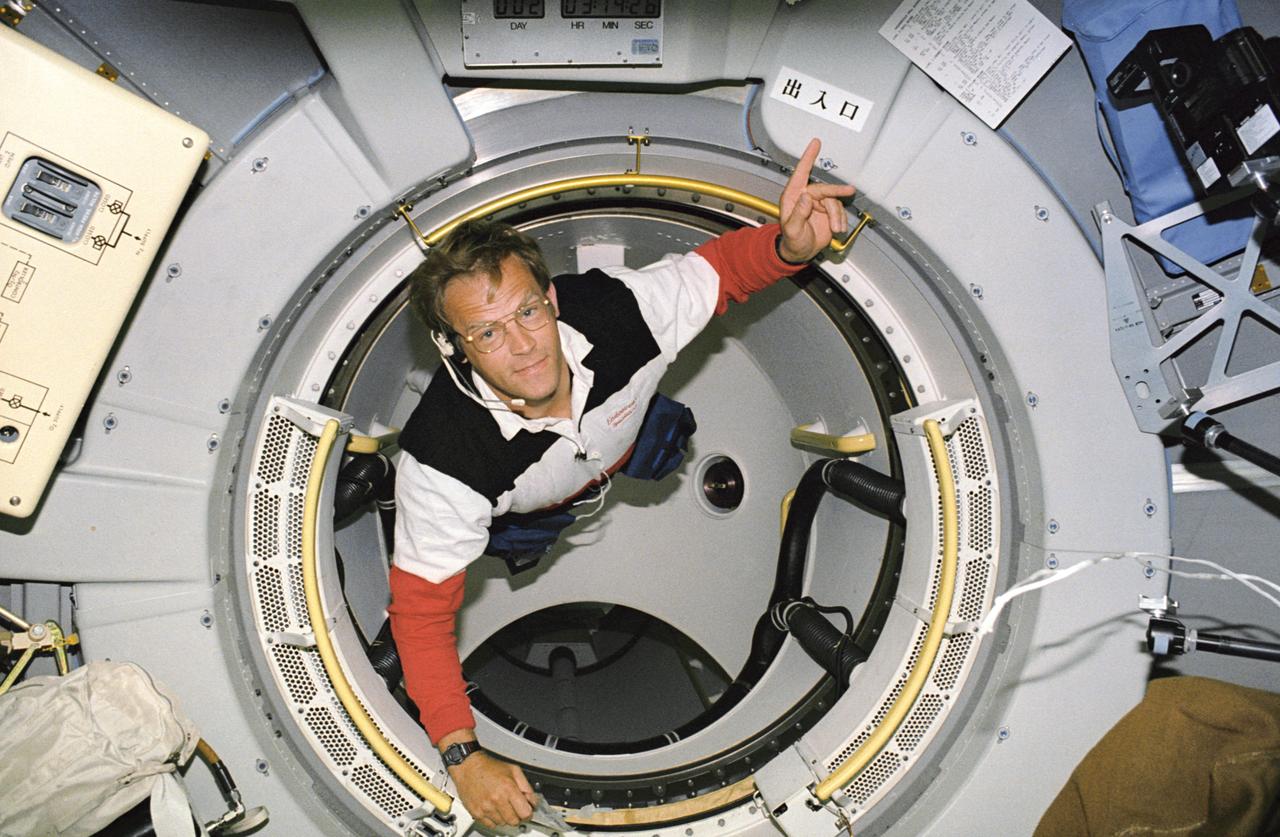
STS047-07-032 (12-20 Sept 1992) --- Astronaut Mark C. Lee, payload commander, floats through the tunnel that connects Spacelab-J's Science Module to the Space Shuttle Endeavour's cabin. Lee was in the midst of a televised "tour" of the shuttle and its primary payload when he pointed to the Japanese sign overhead, which translates to, "EXIT-ENTRANCE". Lee was joined by five NASA astronauts and a Japanese payload specialist for eight-days of research in support of the Spacelab-J project.

The Heroes and Legends attraction at the Kennedy Space Center Visitor Complex is just inside the entrance to set the stage as guests arrive. In addition to displays honoring the Americans currently enshrined in the U. S. Astronaut Hall of Fame. The new facility looks back to the pioneering efforts of Mercury, Gemini and Apollo. It sets the stage by providing the background and context for space exploration and the legendary men and women who pioneered the nation's journey into space.

A mockup of Arianespace's Ariane 5 rocket is seen at the entrance to the Guiana Space Center in Kourou, French Guiana, Tuesday, Dec. 21, 2021. The James Webb Space Telescope (sometimes called JWST or Webb) is a large infrared telescope with a 21.3 foot (6.5 meter) primary mirror. The observatory is scheduled to launch later in the week and will study every phase of cosmic history—from within our solar system to the most distant observable galaxies in the early universe. Photo Credit: (NASA/Bill Ingalls)
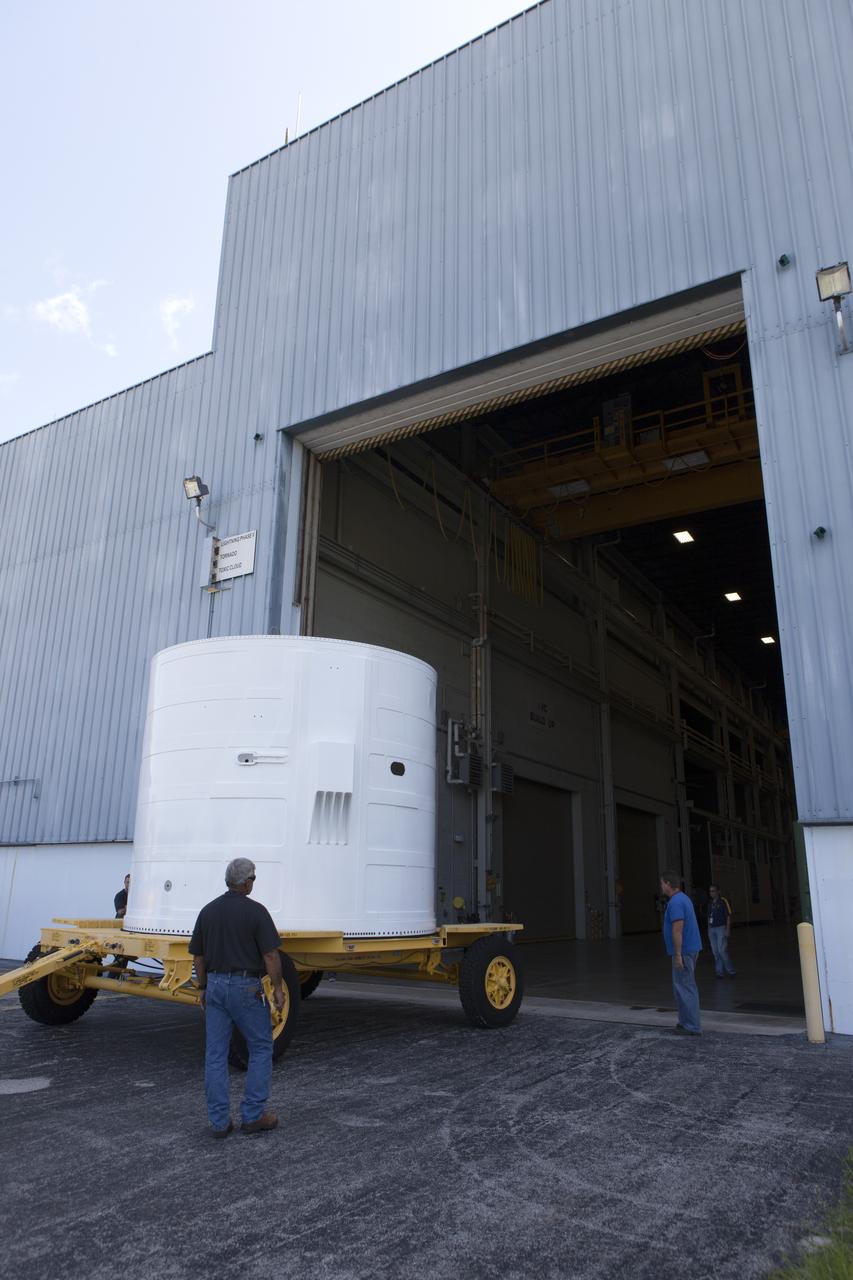
The Exploration Mission-1 (EM-1) left-hand forward skirt for NASA's Space Launch System (SLS) solid rocket boosters arrives at the entrance to the high bay at the Booster Fabrication Facility (BFF) at NASA's Kennedy Space Center in Florida. In the BFF, the forward skirt will be inspected and prepared for use on the left-hand solid rocket booster for EM-1. NASA's Orion spacecraft will fly atop the SLS rocket on its first uncrewed flight test.
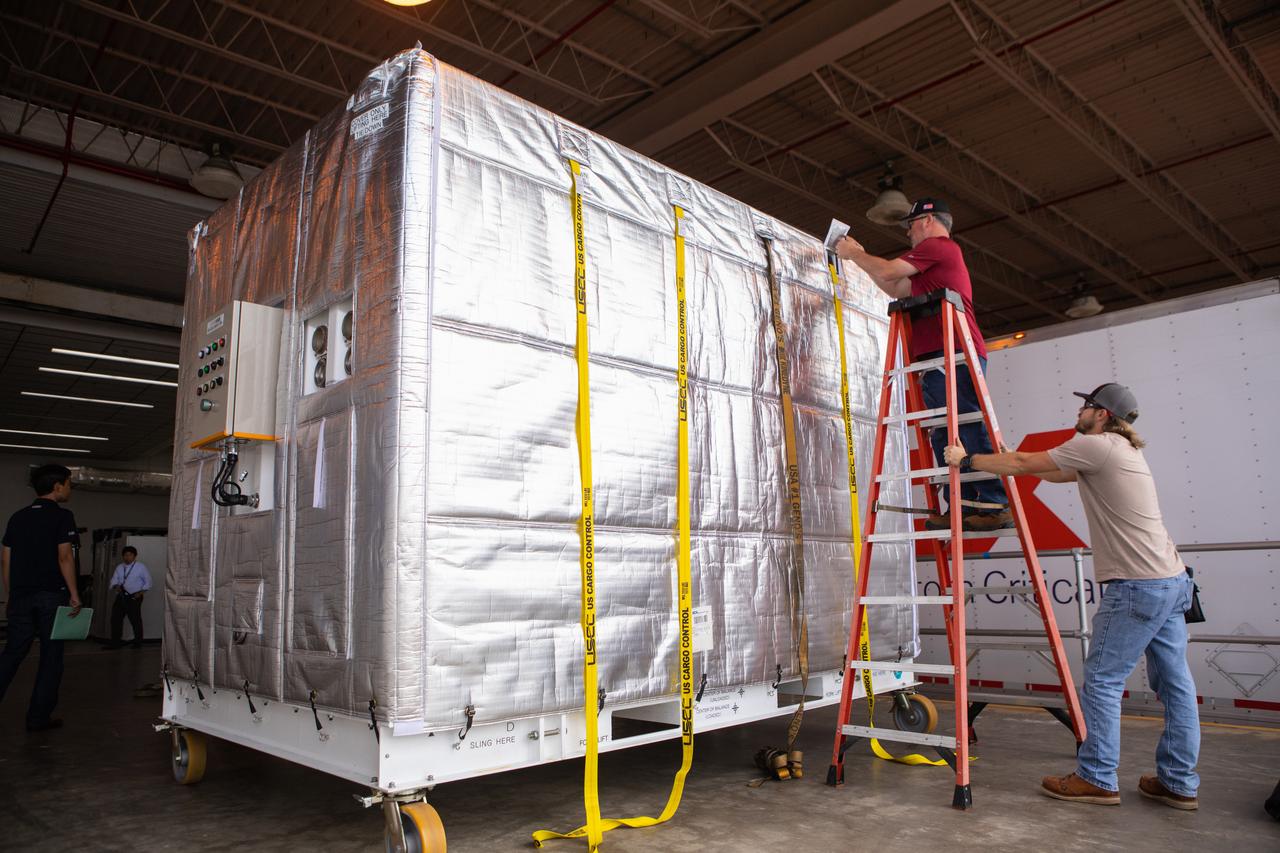
The Hyperspectral Imager Suite (HISUI), a Japan Aerospace Exploration Agency (JAXA) payload, arrives in its shipping container at the entrance to the Space Station Processing Facility at NASA’s Kennedy Space Center in Florida on Oct. 25, 2019. The payload will packed inside the external trunk of the SpaceX Dragon cargo module at Launch Complex 39A. HISUI will be delivered to the International Space Station on SpaceX’s 19th Commercial Resupply Services mission for NASA in December 2019. HISUI is a spaceborne hyperspectral Earth Imaging System with a reflective telescope and two grating spectrometers.
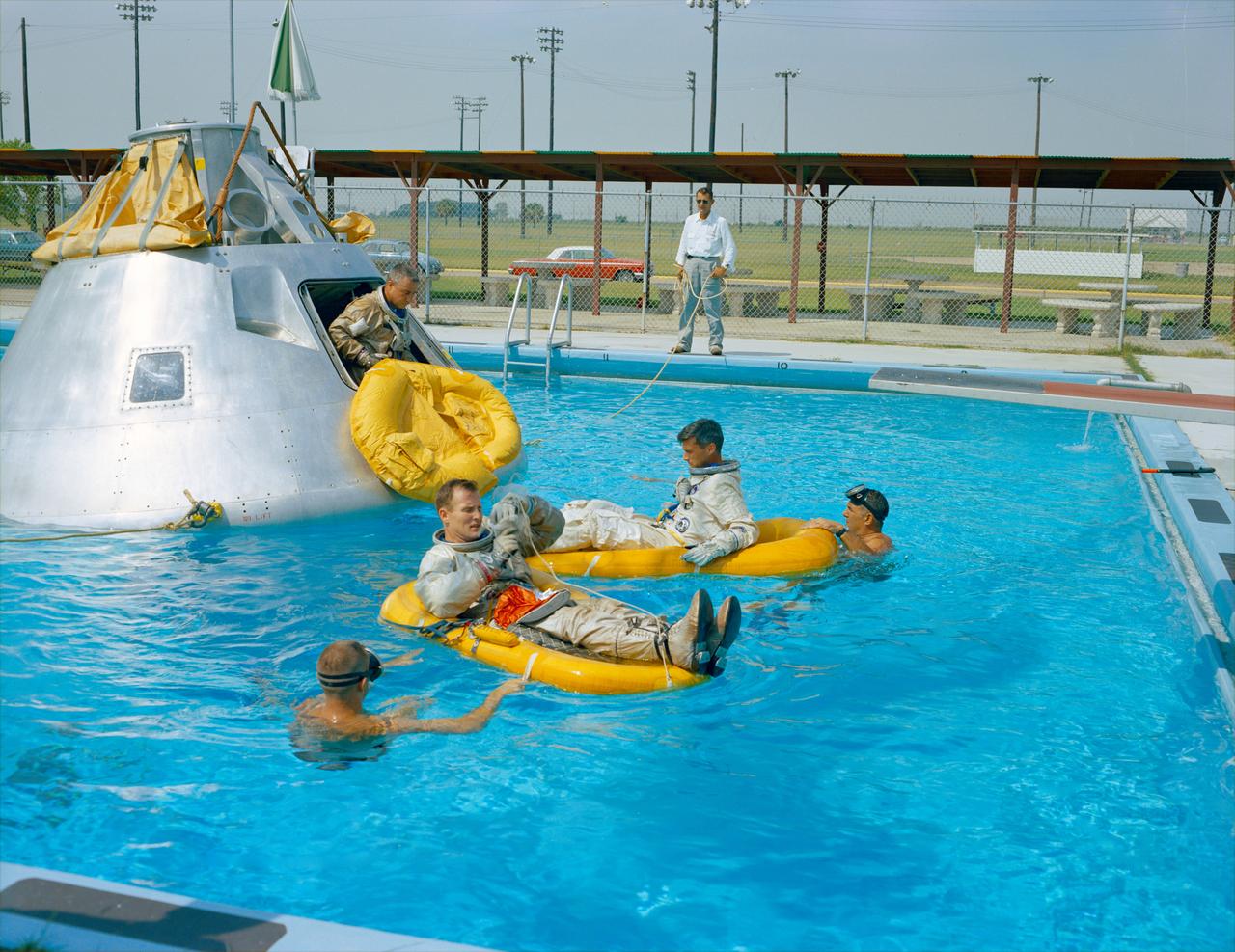
Boilerplate (B/P) model of the Apollo Spacecraft resting nose down in the swimming pool at EAFB during a training session with the first (1st) crew named by NASA. NASA swimmers are in the water to assist during the practice session. Inside the spacecraft are Astronauts Roger B. Chaffee, and Edward H. White II, members of the crew. Astronaut Virgial I. Grissom is visible in the entrance to the craft.