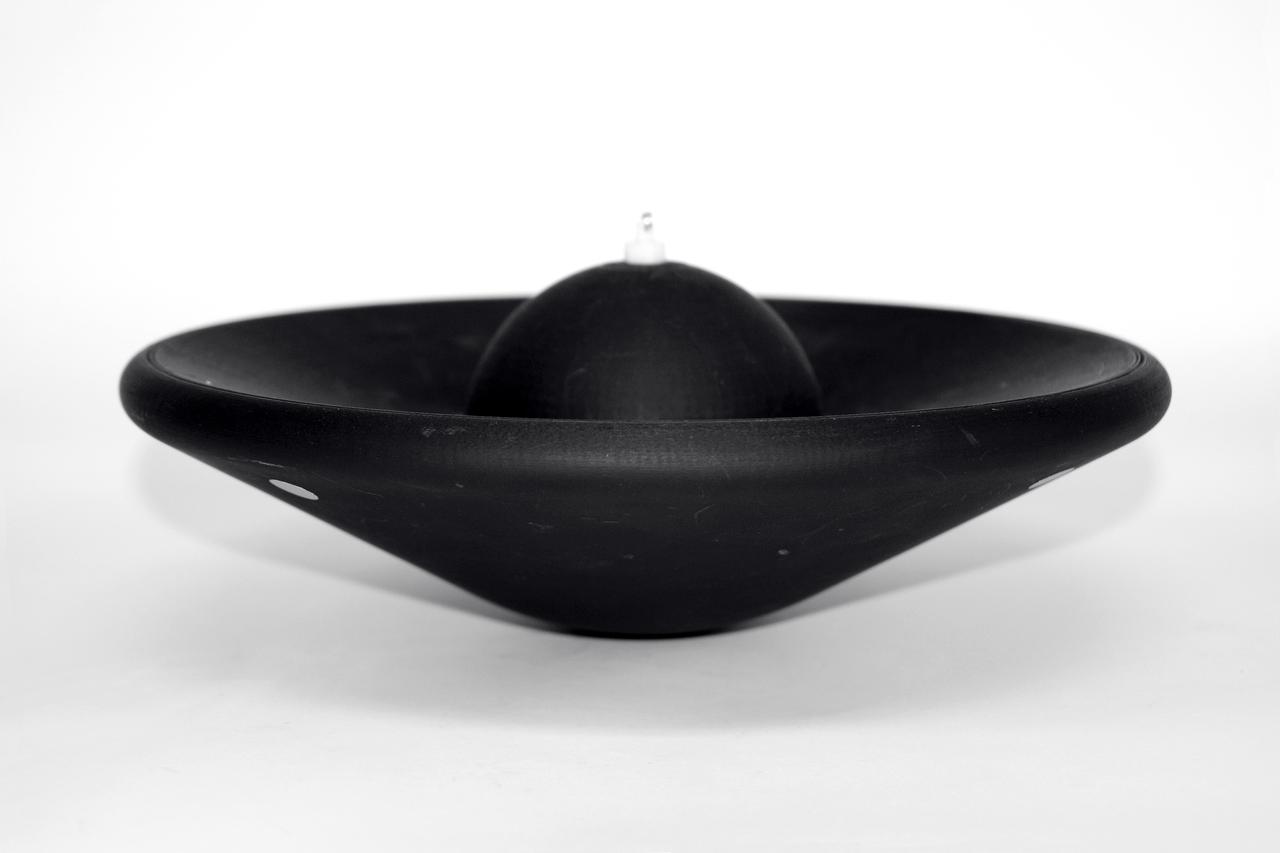
1.2 meter Multi-Mission Earth Entry Vehicle (MMEEV): Tethered and free flying test in 20 foot Vertical Spin Tunnel
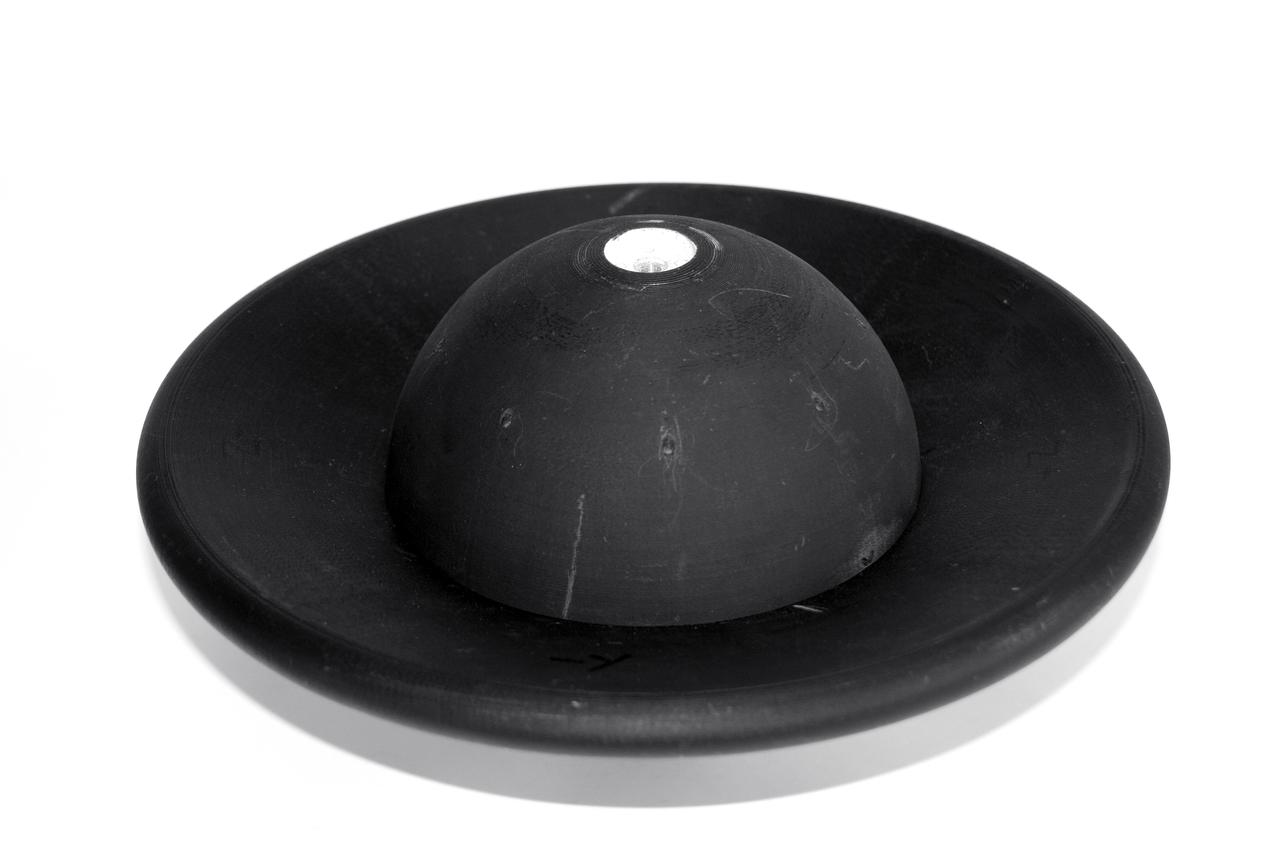
1.2 meter Multi-Mission Earth Entry Vehicle (MMEEV): Tethered and free flying test in 20 foot Vertical Spin Tunnel
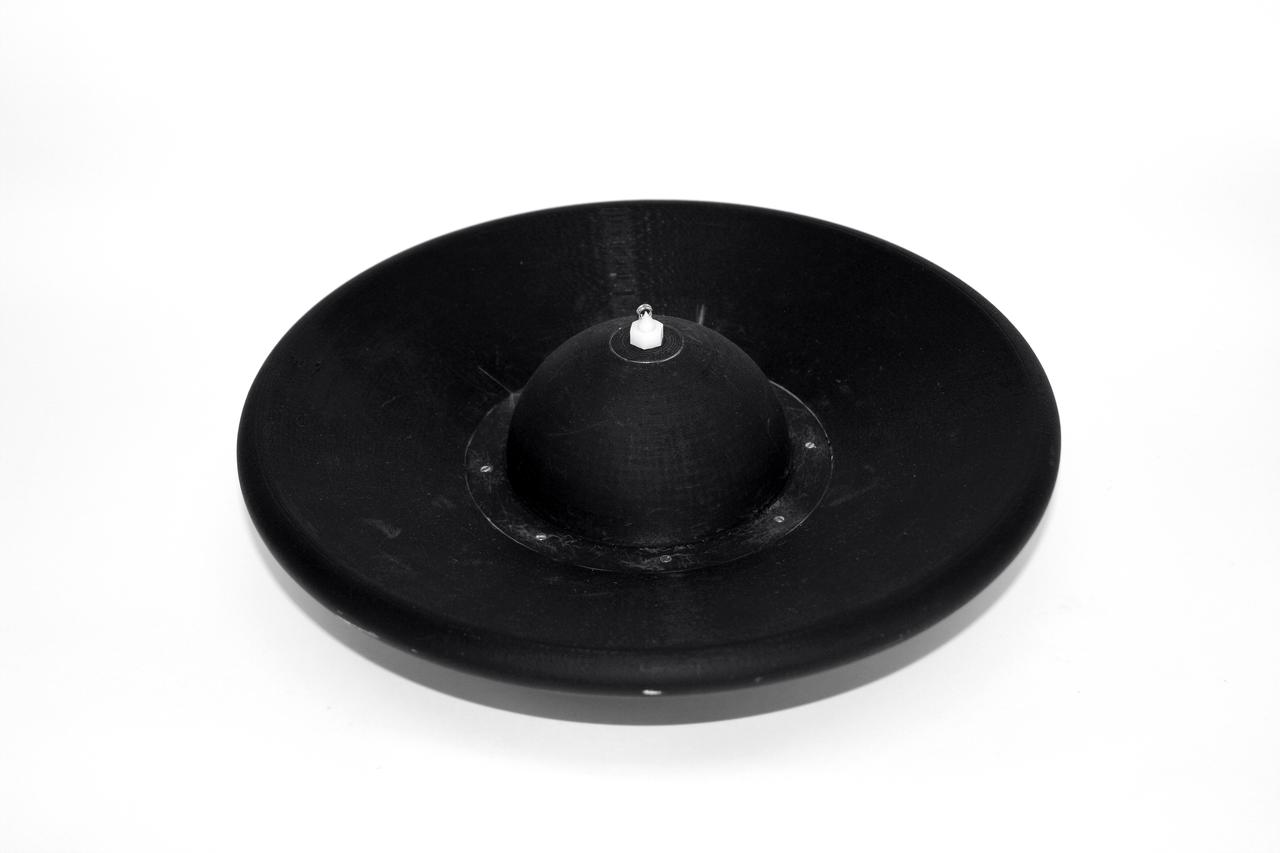
1.2 meter Multi-Mission Earth Entry Vehicle (MMEEV): Tethered and free flying test in 20 foot Vertical Spin Tunnel
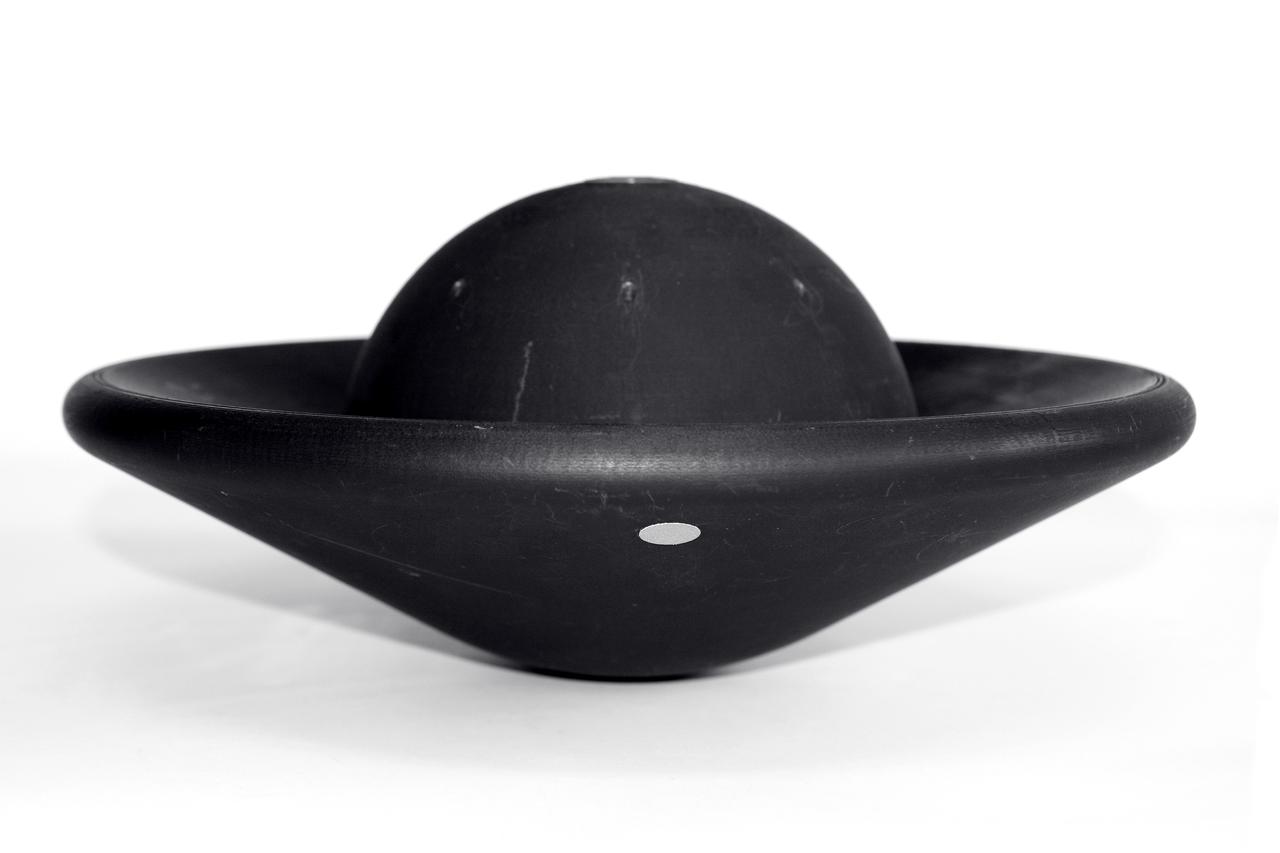
1.2 meter Multi-Mission Earth Entry Vehicle (MMEEV): Tethered and free flying test in 20 foot Vertical Spin Tunnel
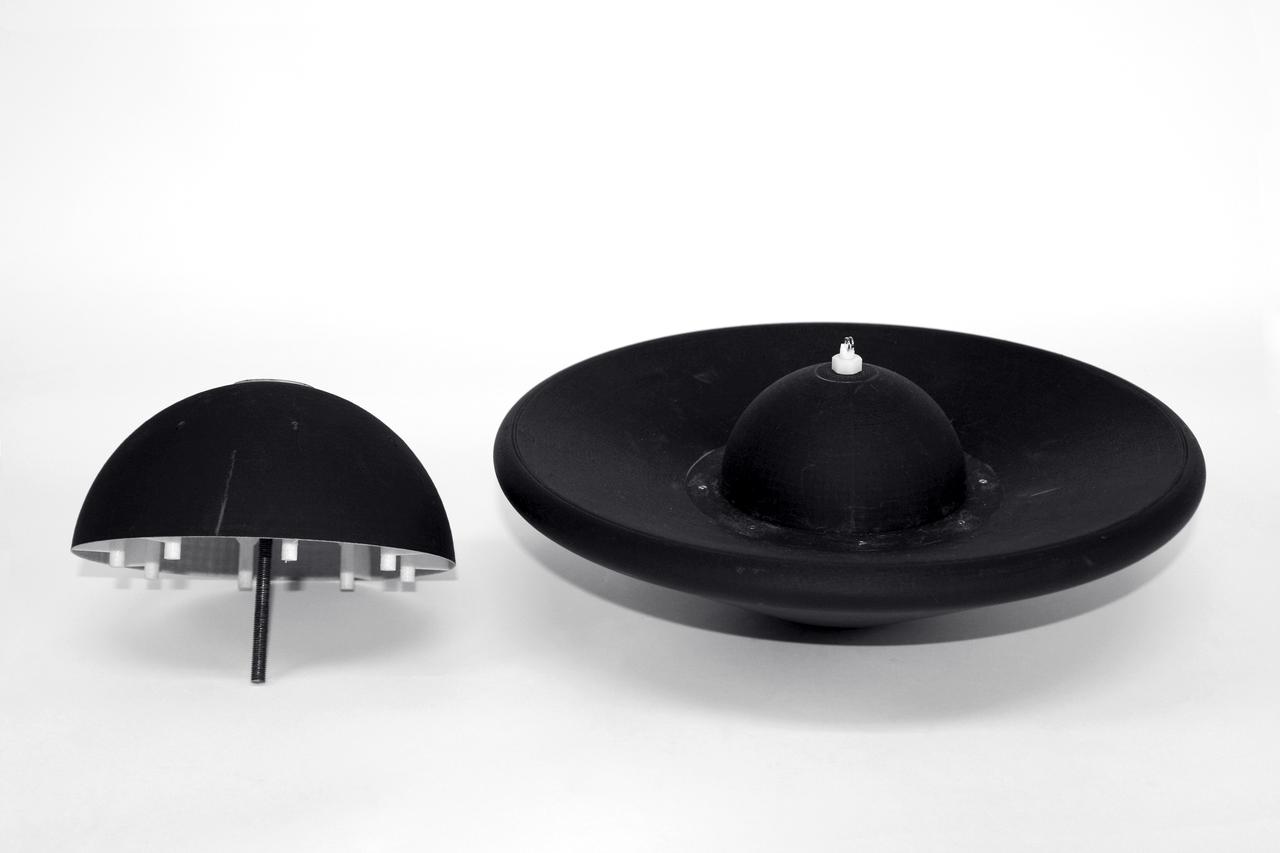
1.2 meter Multi-Mission Earth Entry Vehicle (MMEEV): Tethered and free flying test in 20 foot Vertical Spin Tunnel
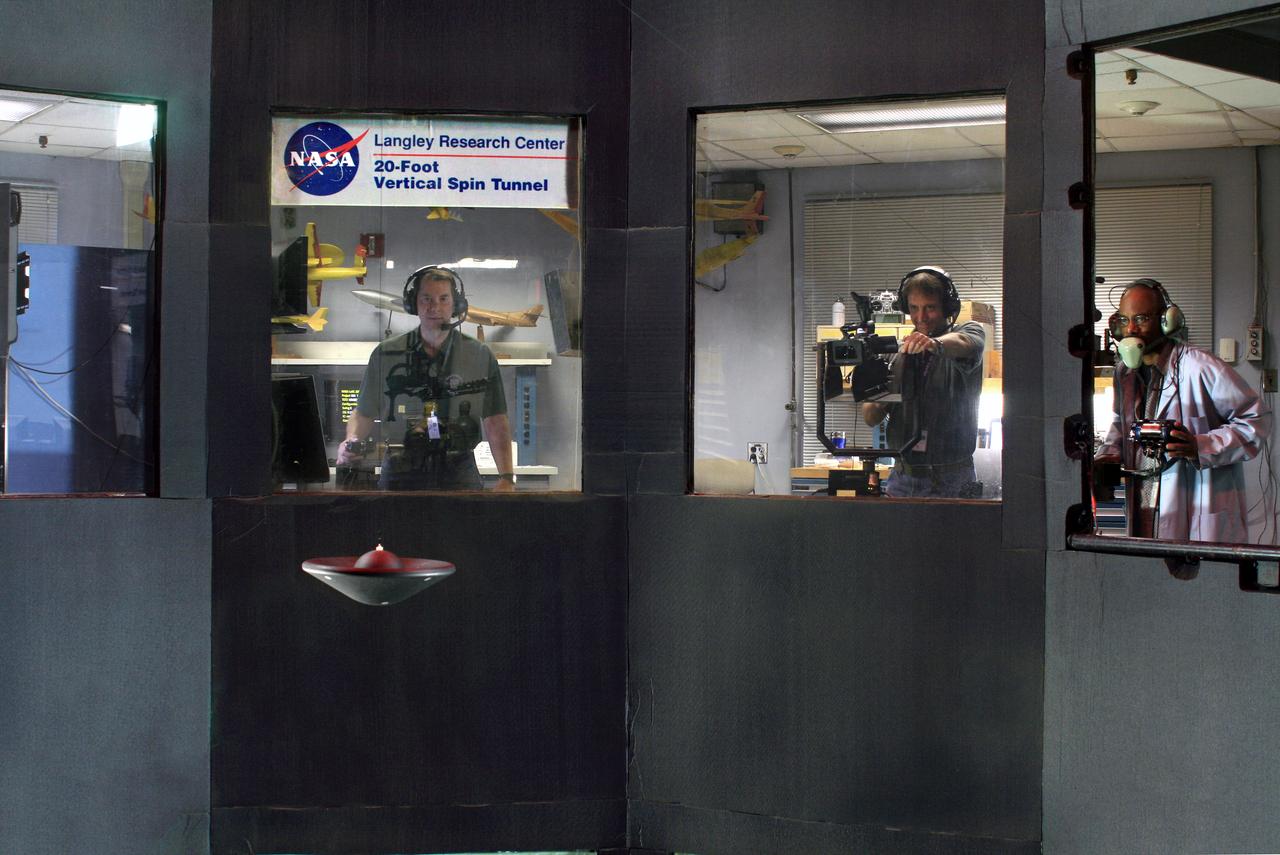
1.2 meter Multi-Mission Earth Entry Vehicle (MMEEV): Tethered and free flying test in 20 foot Vertical Spin Tunnel
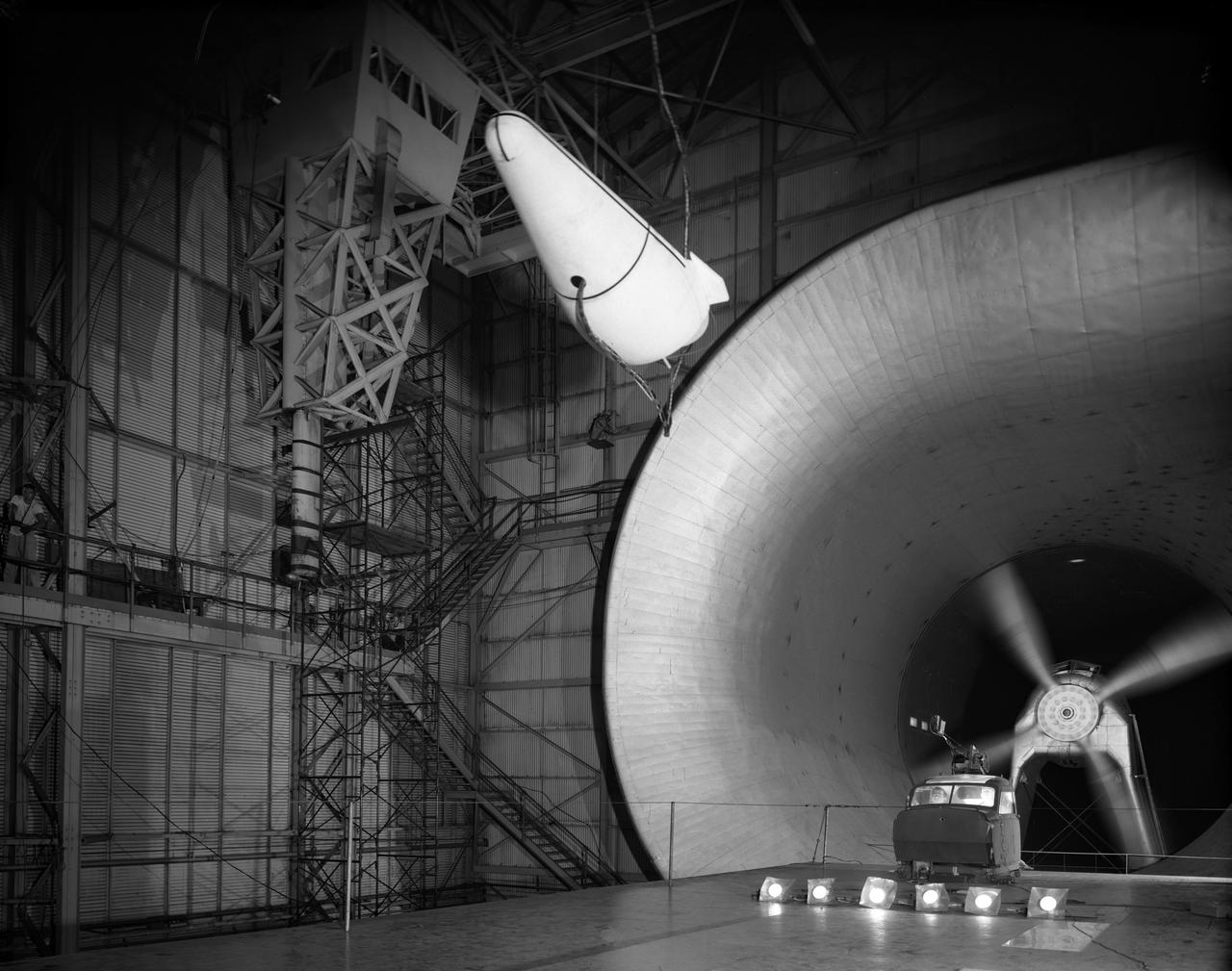
Re-entry vehicle on Full Scale Tunnel (FST)
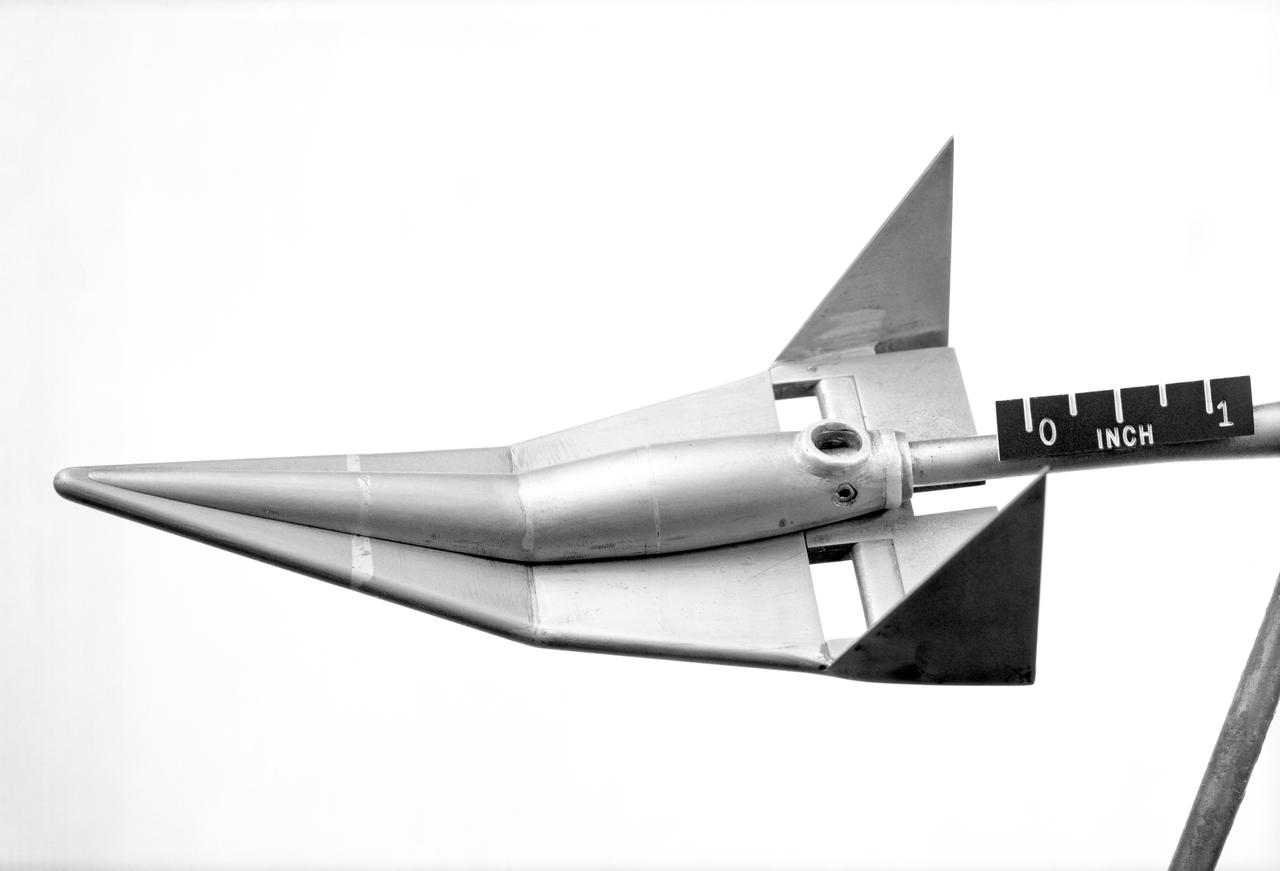
Lifting Type Re-Entry Vehicle
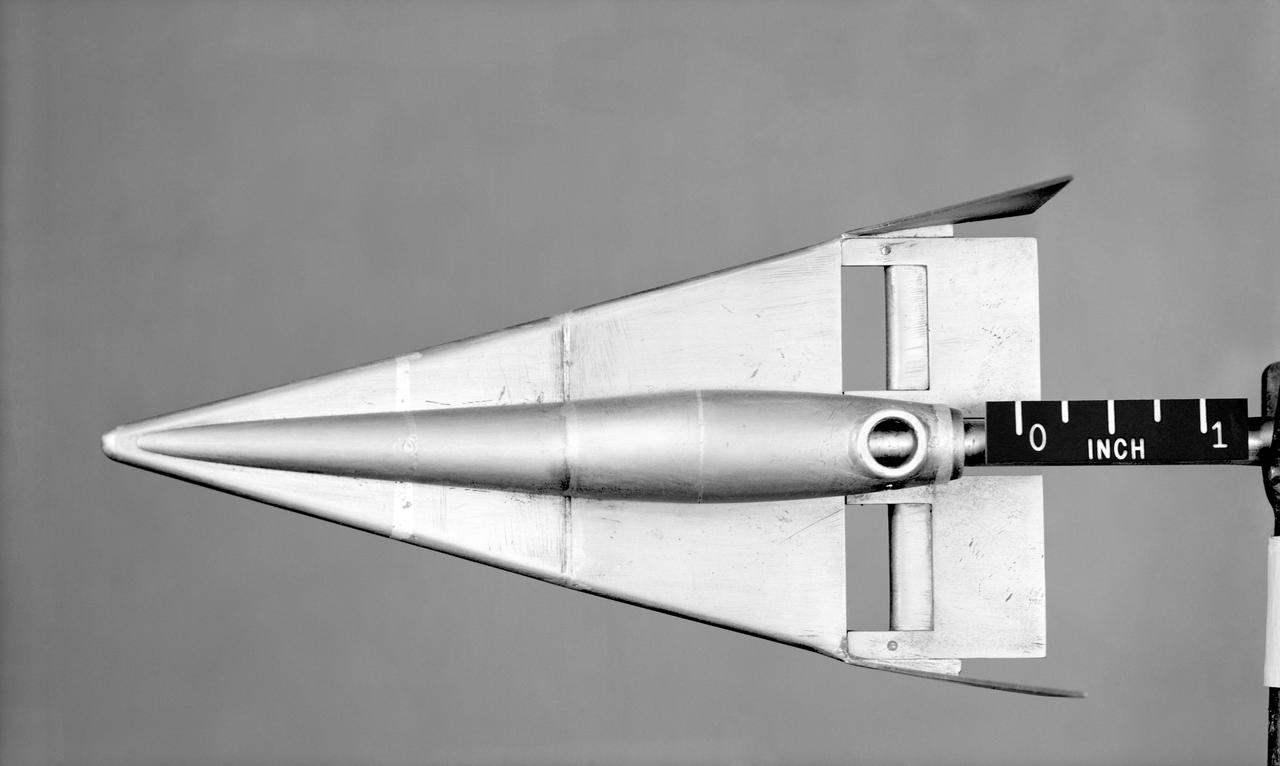
Lifting Type Re-Entry Vehicle
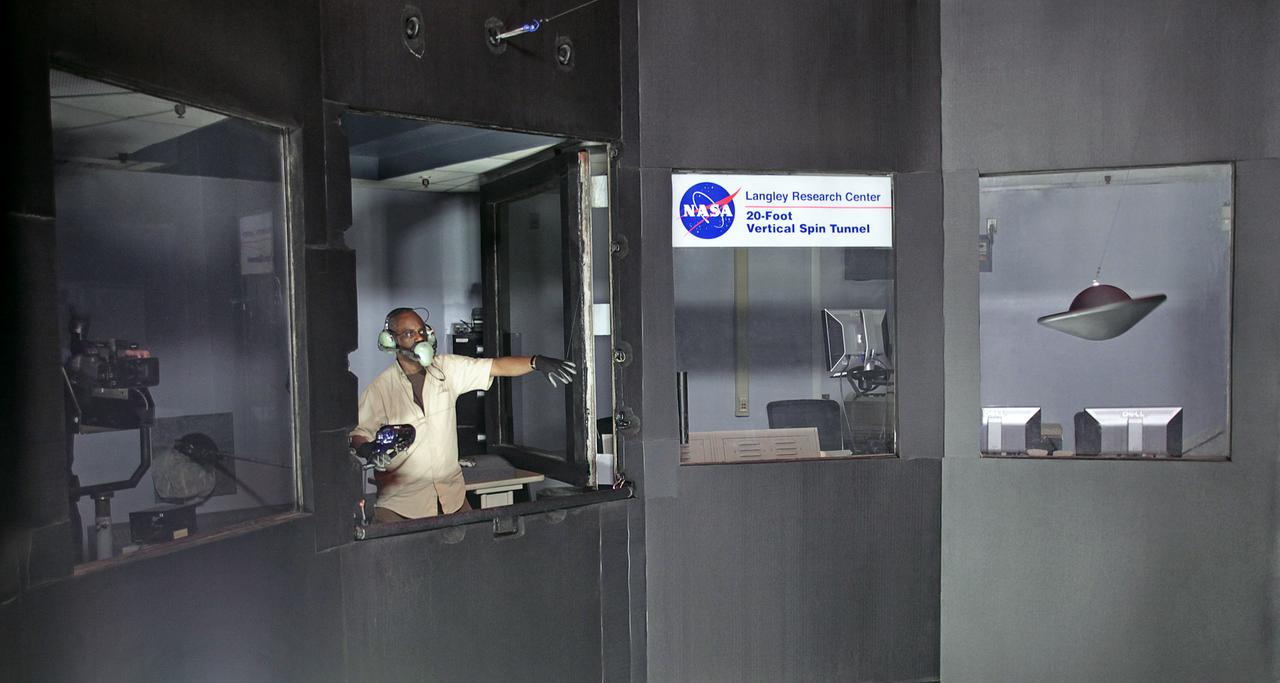
NASA Langley engineer, Clinton Duncan maintains controls of the tethered Multi Mission Earth Entry Vehicle model while being tested in the Vertical Spin Tunnel.
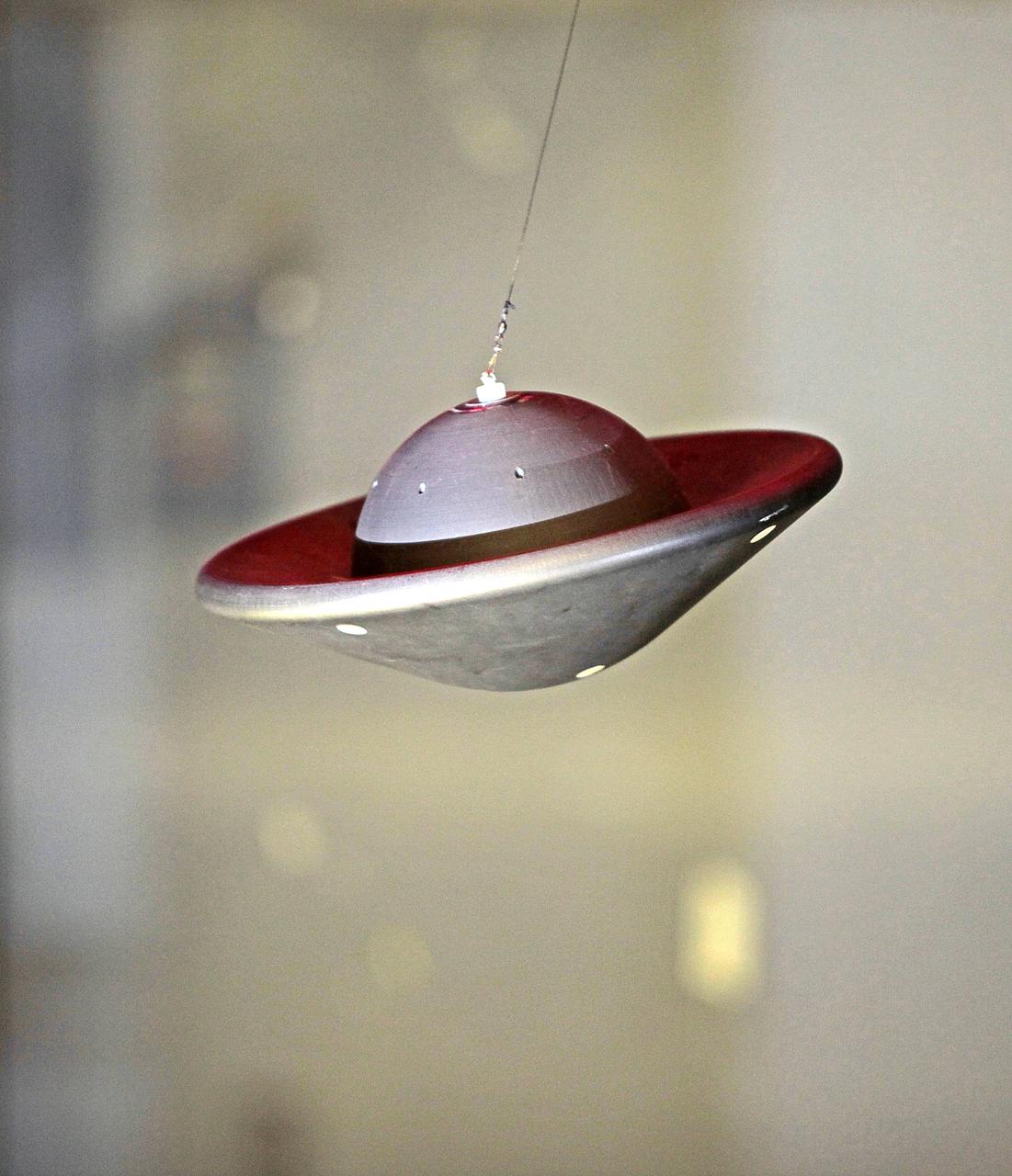
The tethered Multi Mission Earth Entry Vehicle model while being tested in the Vertical Spin Tunnel at NASA Langely Research Center, Hampton VA.
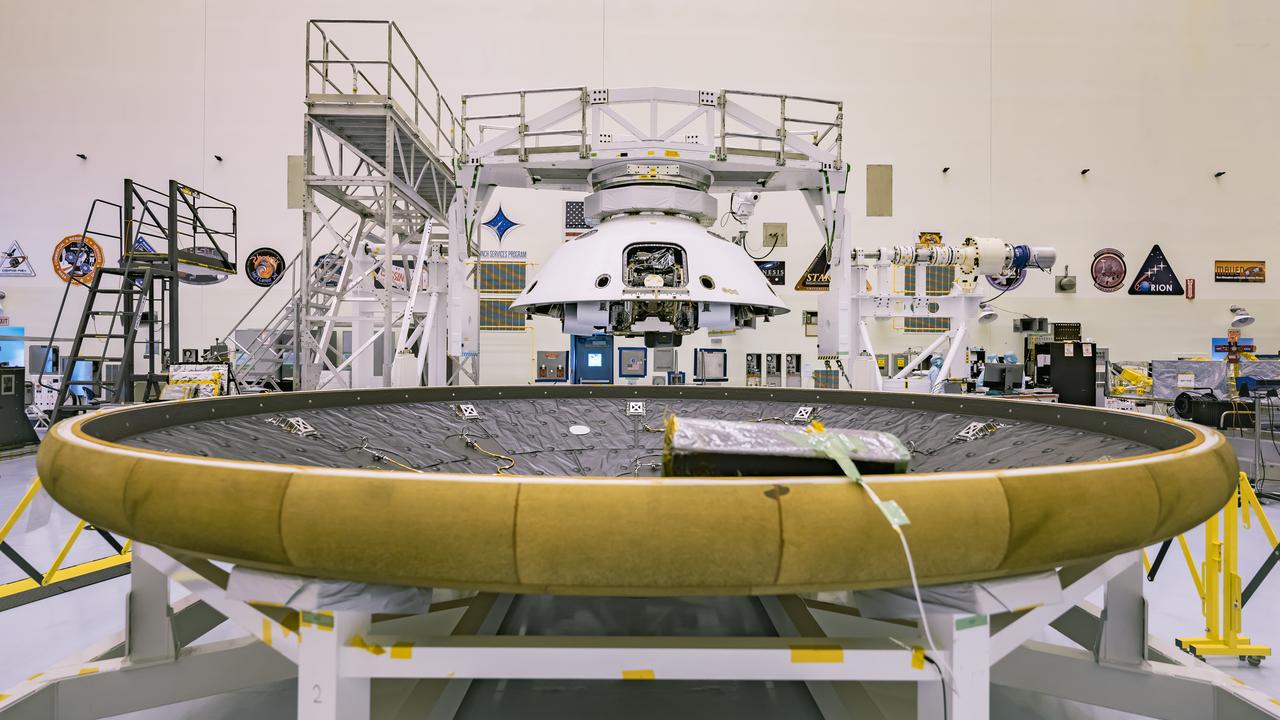
Inside the Payload Hazardous Servicing Facility at NASA’s Kennedy Space Center in Florida, the Backshell-Powered Descent Vehicle and Entry Vehicle assemblies are being prepared to be attached to the Mars Perseverance rover on May 5, 2020. The cone-shaped backshell contains the parachute, and along with the mission’s heat shield, provides protection for the rover and descent stage during Martian atmospheric entry. The Mars Perseverance rover is scheduled to launch in mid-July atop a United Launch Alliance Atlas V 541 rocket from Pad 41 at nearby Cape Canaveral Air Force Station. The rover is part of NASA’s Mars Exploration Program, a long-term effort of robotic exploration of the Red Planet. The rover will search for habitable conditions in the ancient past and signs of past microbial life on Mars. The Launch Services Program at Kennedy is responsible for launch management.
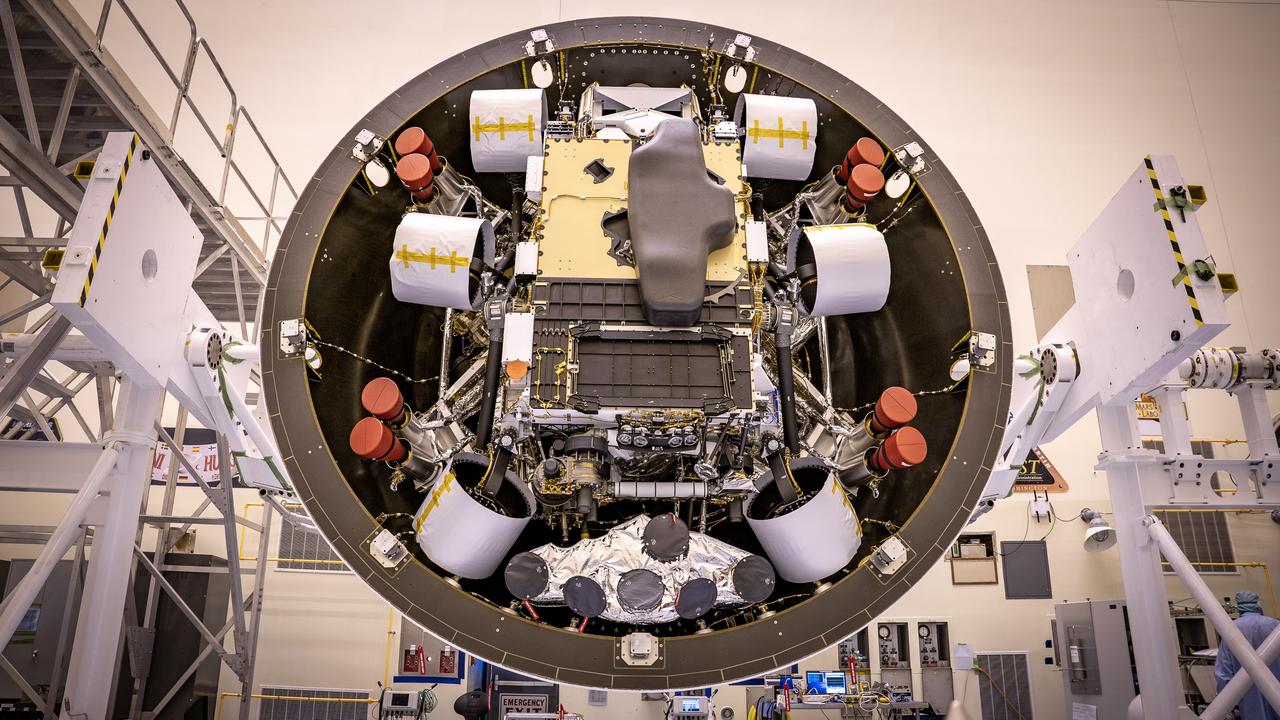
Inside the Payload Hazardous Servicing Facility at NASA’s Kennedy Space Center in Florida, the Backshell-Powered Descent Vehicle and Entry Vehicle assemblies are being prepared to be attached to the Mars Perseverance rover on May 4, 2020. The cone-shaped backshell contains the parachute, and along with the mission’s heat shield, provides protection for the rover and descent stage during Martian atmospheric entry. The Mars Perseverance rover is scheduled to launch in mid-July atop a United Launch Alliance Atlas V 541 rocket from Pad 41 at nearby Cape Canaveral Air Force Station. The rover is part of NASA’s Mars Exploration Program, a long-term effort of robotic exploration of the Red Planet. The rover will search for habitable conditions in the ancient past and signs of past microbial life on Mars. The Launch Services Program at Kennedy is responsible for launch management.
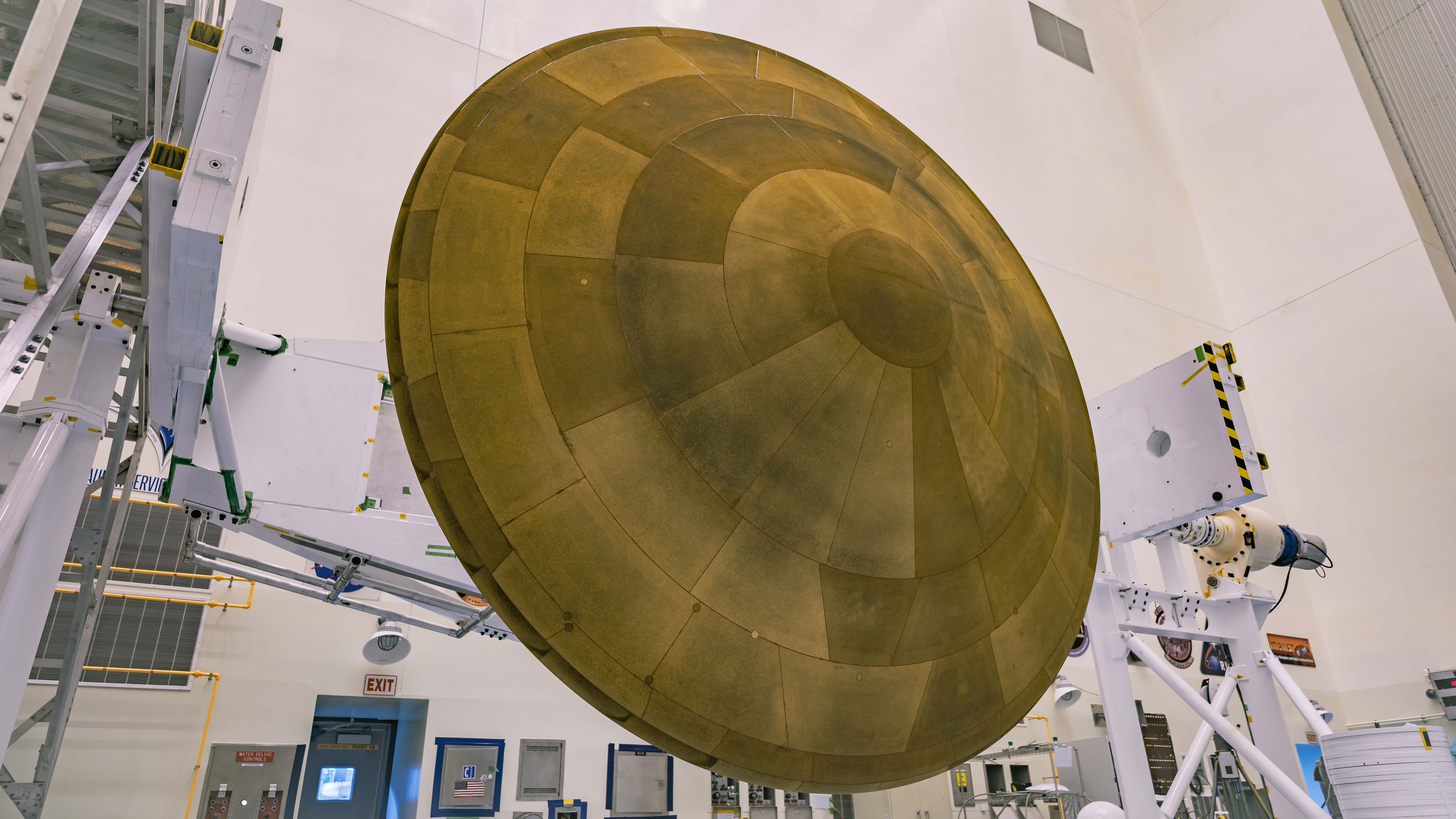
Inside the Payload Hazardous Servicing Facility at NASA’s Kennedy Space Center in Florida, the Backshell-Powered Descent Vehicle and Entry Vehicle assemblies are attached to the Mars Perseverance rover on May 6, 2020. The cone-shaped backshell contains the parachute, and along with the mission’s heat shield, provides protection for the rover and descent stage during Martian atmospheric entry. The Mars Perseverance rover is scheduled to launch in mid-July atop a United Launch Alliance Atlas V 541 rocket from Pad 41 at nearby Cape Canaveral Air Force Station. The rover is part of NASA’s Mars Exploration Program, a long-term effort of robotic exploration of the Red Planet. The rover will search for habitable conditions in the ancient past and signs of past microbial life on Mars. The Launch Services Program at Kennedy is responsible for launch management.
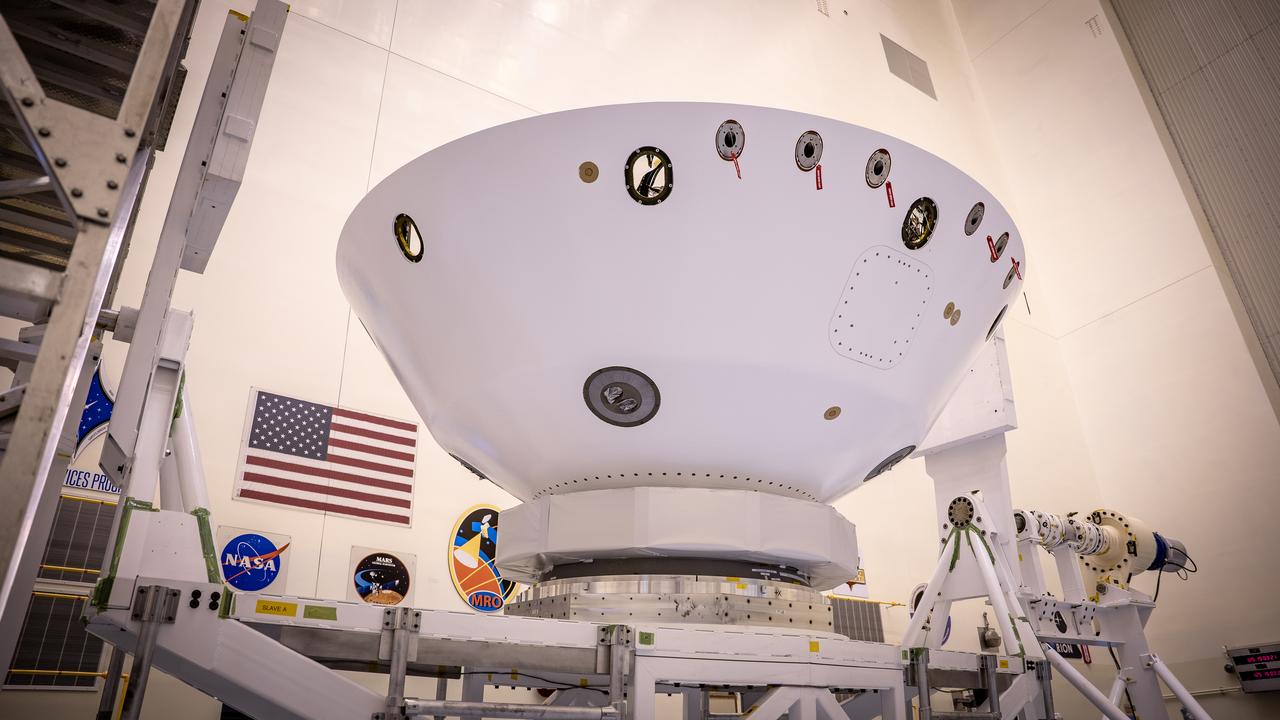
Inside the Payload Hazardous Servicing Facility at NASA’s Kennedy Space Center in Florida, the Mars Perseverance rover is rotated to prepare for the Backshell-Powered Descent Vehicle and Entry Vehicle assemblies to be attached on May 4, 2020. The cone-shaped backshell contains the parachute, and along with the mission’s heat shield, provides protection for the rover and descent stage during Martian atmospheric entry. The Mars Perseverance rover is scheduled to launch in mid-July atop a United Launch Alliance Atlas V 541 rocket from Pad 41 at nearby Cape Canaveral Air Force Station. The rover is part of NASA’s Mars Exploration Program, a long-term effort of robotic exploration of the Red Planet. The rover will search for habitable conditions in the ancient past and signs of past microbial life on Mars. The Launch Services Program at Kennedy is responsible for launch management.
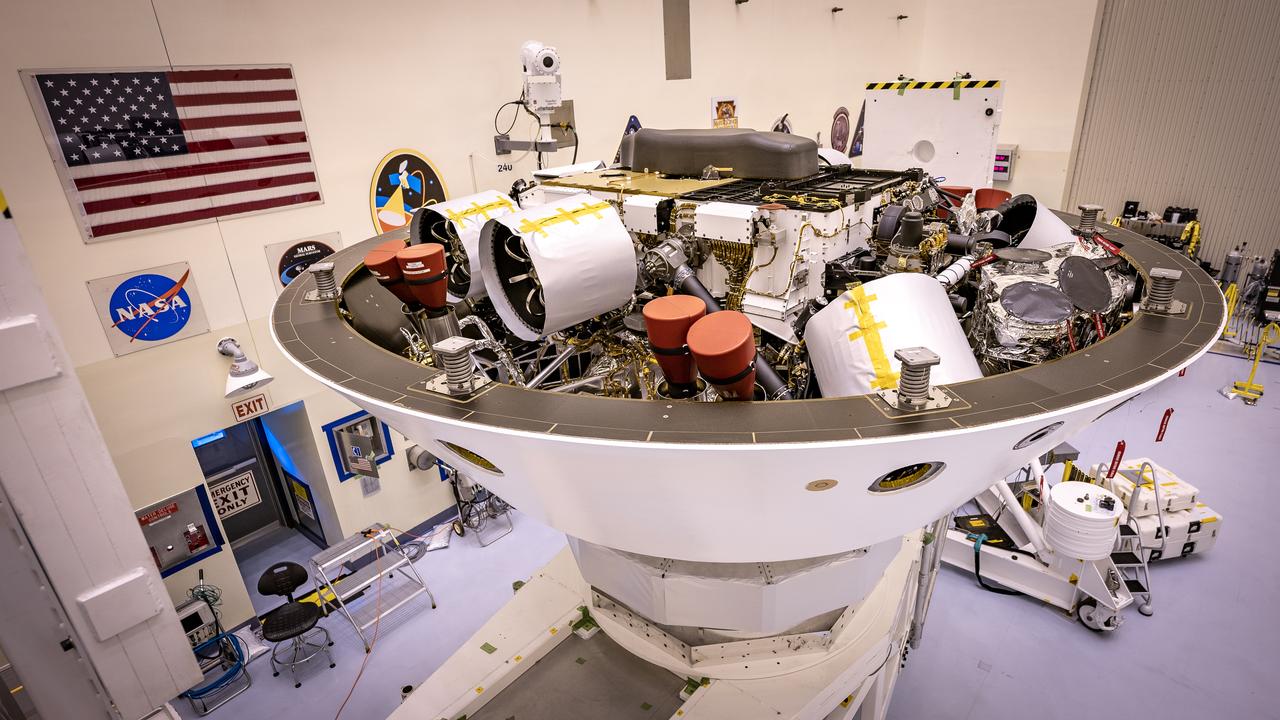
Inside the Payload Hazardous Servicing Facility at NASA’s Kennedy Space Center in Florida, the Mars Perseverance rover is rotated to prepare for the Backshell-Powered Descent Vehicle and Entry Vehicle assemblies to be attached on May 4, 2020. The cone-shaped backshell contains the parachute, and along with the mission’s heat shield, provides protection for the rover and descent stage during Martian atmospheric entry. The Mars Perseverance rover is scheduled to launch in mid-July atop a United Launch Alliance Atlas V 541 rocket from Pad 41 at nearby Cape Canaveral Air Force Station. The rover is part of NASA’s Mars Exploration Program, a long-term effort of robotic exploration of the Red Planet. The rover will search for habitable conditions in the ancient past and signs of past microbial life on Mars. The Launch Services Program at Kennedy is responsible for launch management.
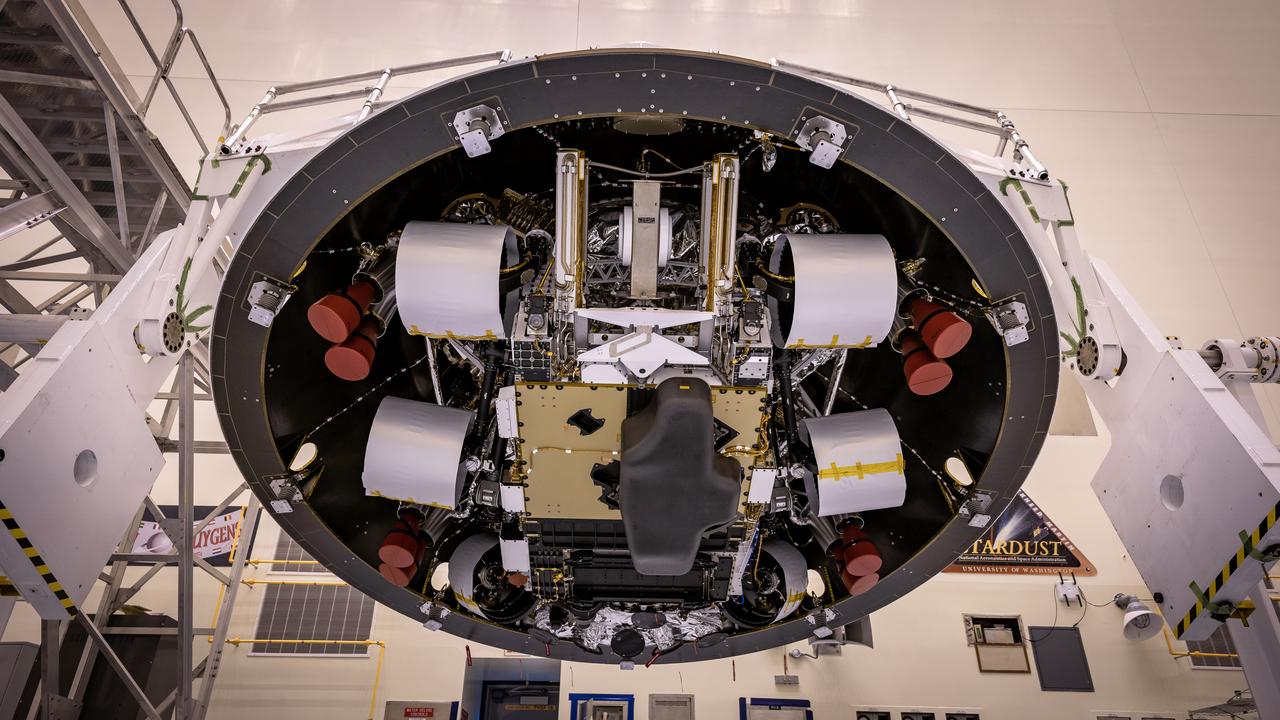
Inside the Payload Hazardous Servicing Facility at NASA’s Kennedy Space Center in Florida, the Backshell-Powered Descent Vehicle and Entry Vehicle assemblies are being prepared to be attached to the Mars Perseverance rover on May 4, 2020. The cone-shaped backshell contains the parachute, and along with the mission’s heat shield, provides protection for the rover and descent stage during Martian atmospheric entry. The Mars Perseverance rover is scheduled to launch in mid-July atop a United Launch Alliance Atlas V 541 rocket from Pad 41 at nearby Cape Canaveral Air Force Station. The rover is part of NASA’s Mars Exploration Program, a long-term effort of robotic exploration of the Red Planet. The rover will search for habitable conditions in the ancient past and signs of past microbial life on Mars. The Launch Services Program at Kennedy is responsible for launch management.
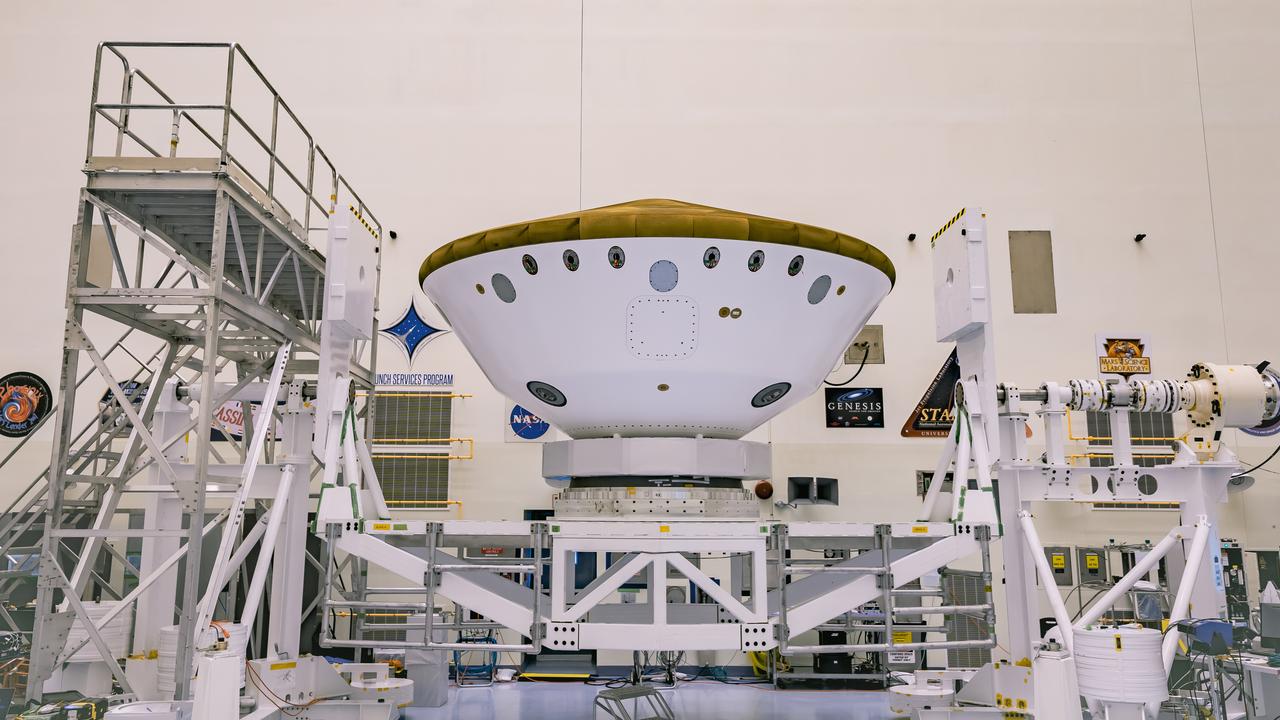
Inside the Payload Hazardous Servicing Facility at NASA’s Kennedy Space Center in Florida, the Backshell-Powered Descent Vehicle and Entry Vehicle assemblies are attached to the Mars Perseverance rover on May 6, 2020. The cone-shaped backshell contains the parachute, and along with the mission’s heat shield, provides protection for the rover and descent stage during Martian atmospheric entry. The Mars Perseverance rover is scheduled to launch in mid-July atop a United Launch Alliance Atlas V 541 rocket from Pad 41 at nearby Cape Canaveral Air Force Station. The rover is part of NASA’s Mars Exploration Program, a long-term effort of robotic exploration of the Red Planet. The rover will search for habitable conditions in the ancient past and signs of past microbial life on Mars. The Launch Services Program at Kennedy is responsible for launch management.
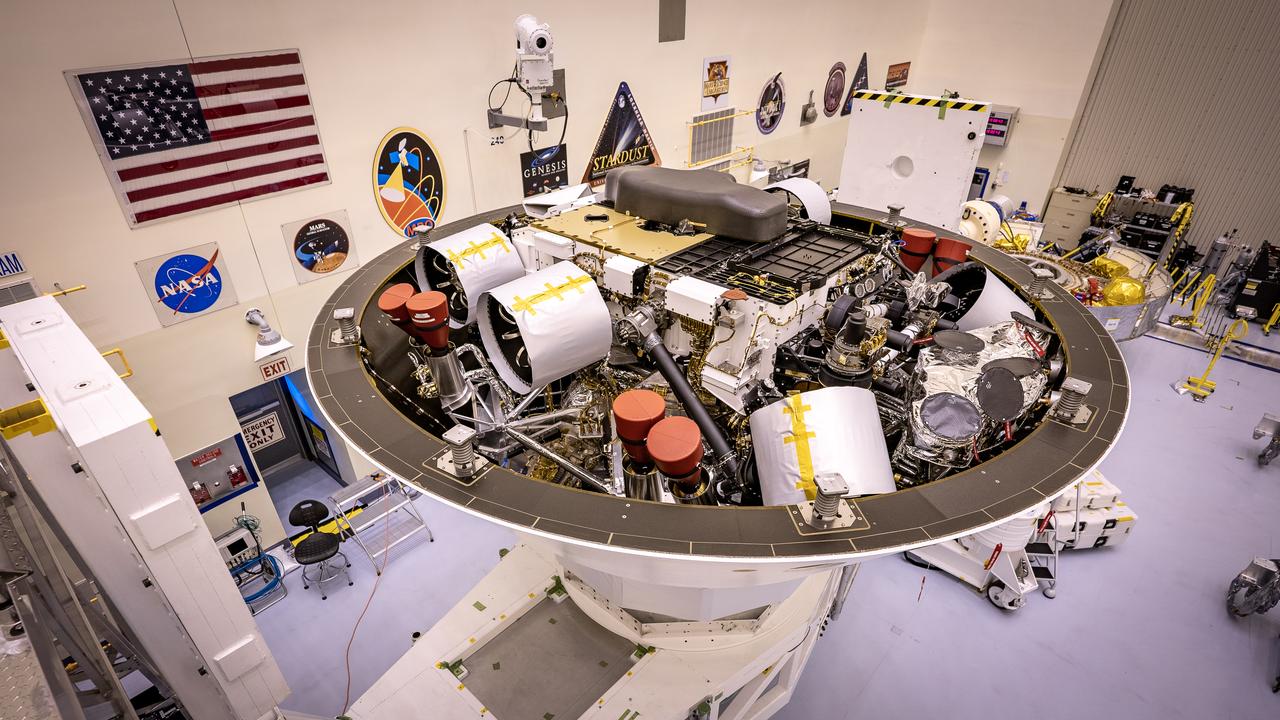
Inside the Payload Hazardous Servicing Facility at NASA’s Kennedy Space Center in Florida, the Mars Perseverance rover is rotated to prepare for the Backshell-Powered Descent Vehicle and Entry Vehicle assemblies to be attached on May 4, 2020. The cone-shaped backshell contains the parachute, and along with the mission’s heat shield, provides protection for the rover and descent stage during Martian atmospheric entry. The Mars Perseverance rover is scheduled to launch in mid-July atop a United Launch Alliance Atlas V 541 rocket from Pad 41 at nearby Cape Canaveral Air Force Station. The rover is part of NASA’s Mars Exploration Program, a long-term effort of robotic exploration of the Red Planet. The rover will search for habitable conditions in the ancient past and signs of past microbial life on Mars. The Launch Services Program at Kennedy is responsible for launch management.
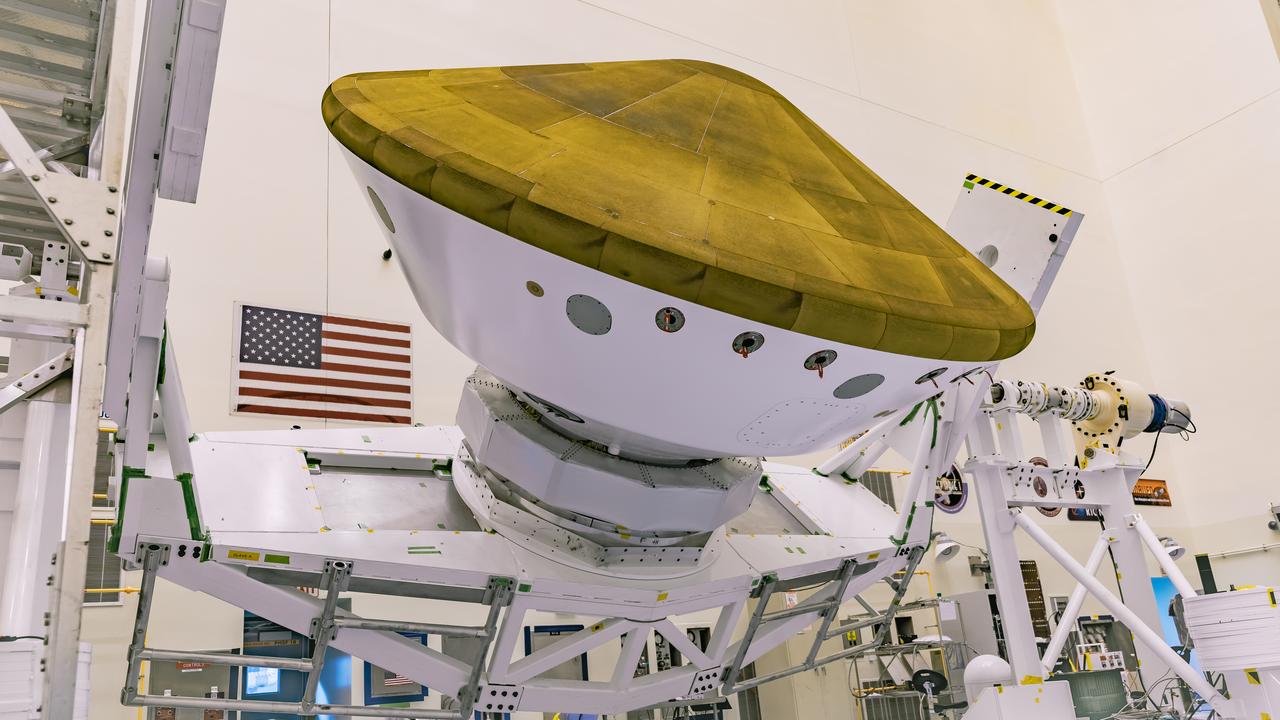
Inside the Payload Hazardous Servicing Facility at NASA’s Kennedy Space Center in Florida, the Backshell-Powered Descent Vehicle and Entry Vehicle assemblies are attached to the Mars Perseverance rover on May 6, 2020. The cone-shaped backshell contains the parachute, and along with the mission’s heat shield, provides protection for the rover and descent stage during Martian atmospheric entry. The Mars Perseverance rover is scheduled to launch in mid-July atop a United Launch Alliance Atlas V 541 rocket from Pad 41 at nearby Cape Canaveral Air Force Station. The rover is part of NASA’s Mars Exploration Program, a long-term effort of robotic exploration of the Red Planet. The rover will search for habitable conditions in the ancient past and signs of past microbial life on Mars. The Launch Services Program at Kennedy is responsible for launch management.
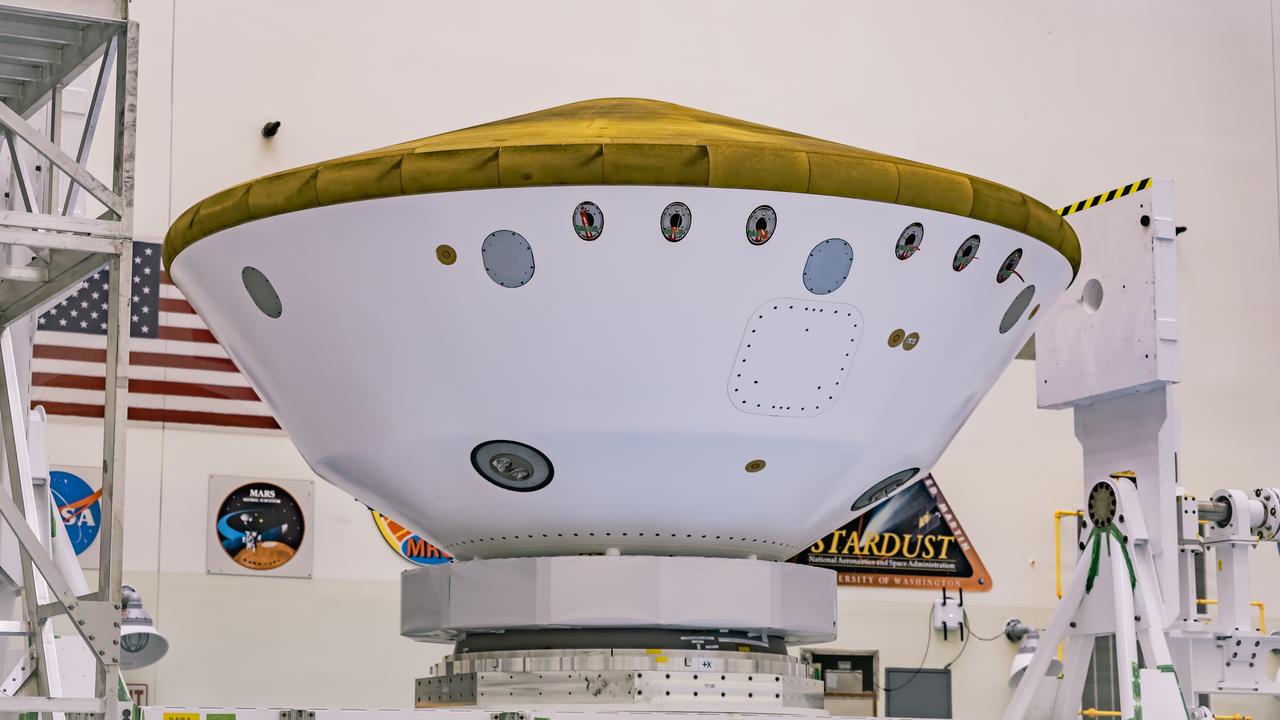
Inside the Payload Hazardous Servicing Facility at NASA’s Kennedy Space Center in Florida, the Backshell-Powered Descent Vehicle and Entry Vehicle assemblies are attached to the Mars Perseverance rover on May 6, 2020. The cone-shaped backshell contains the parachute, and along with the mission’s heat shield, provides protection for the rover and descent stage during Martian atmospheric entry. The Mars Perseverance rover is scheduled to launch in mid-July atop a United Launch Alliance Atlas V 541 rocket from Pad 41 at nearby Cape Canaveral Air Force Station. The rover is part of NASA’s Mars Exploration Program, a long-term effort of robotic exploration of the Red Planet. The rover will search for habitable conditions in the ancient past and signs of past microbial life on Mars. The Launch Services Program at Kennedy is responsible for launch management.
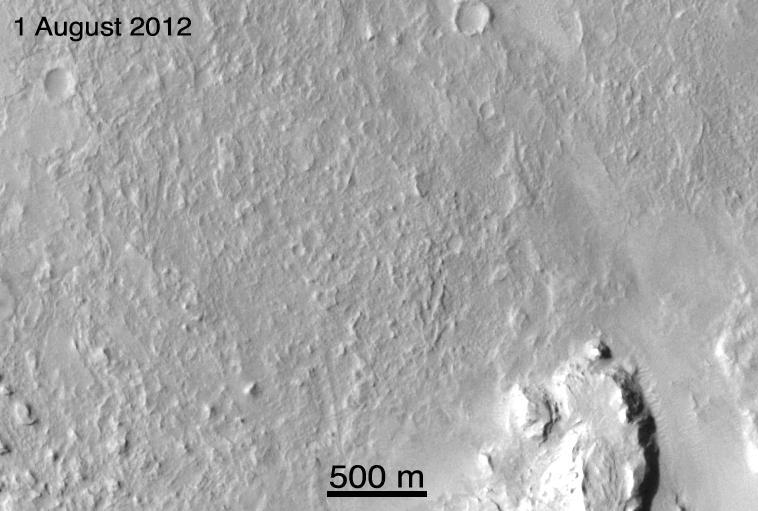
This still image from an animation shows the effects of weights from the entry vehicle of NASA Curiosity rover hitting the surface of Mars.
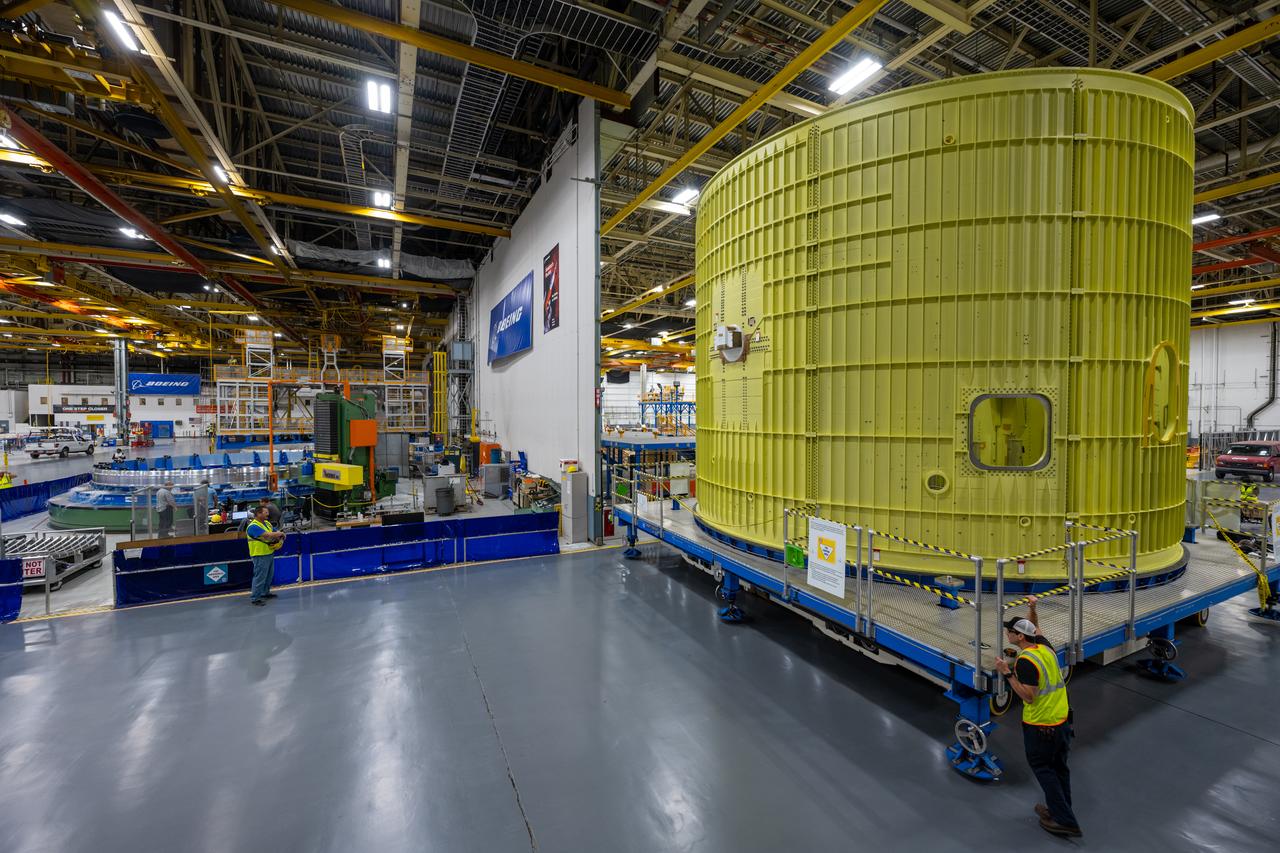
Technicians at NASA’s Michoud Assembly Facility move the intertank of NASA’s Space Launch System rocket for Artemis III to Cell G to await application of the thermal protection system. Thermal protection systems protect space vehicles from aerodynamic heating during entry to planet atmosphere and re-entry to earth atmosphere.
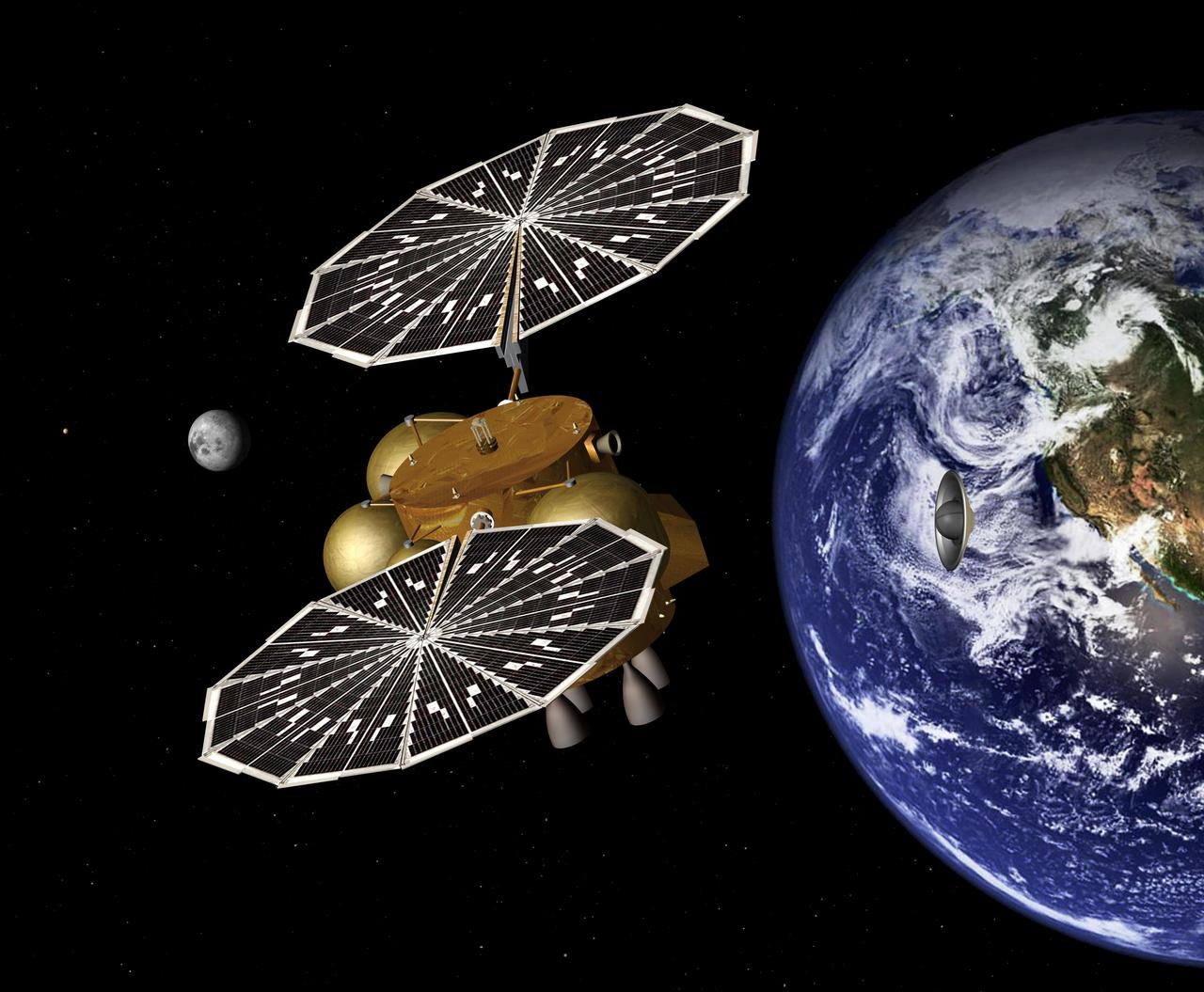
This artist concept of a proposed Mars sample return mission portrays the separation of an Earth entry vehicle, bearing a container of Martian rock samples, from the main spacecraft that would have carried it from Martian orbit nearly to Earth.

This artist's concept shows Mars Sample Return Earth Entry System. The vehicle would bring curated Martian samples collected by NASA's Perseverance Rover on the final leg of their journey from Mars to Earth. The illustration shows the Earth Entry System, a capsule about 4 feet (1.25 meters) in diameter, on its final approach to Earth, after being ejected from the Earth Return Orbiter. Once in Earth's atmosphere, it would take the vehicle about six minutes to land at the U.S. Air Force's Utah Test and Training Range in west-central Utah. Velocity at time of touchdown for the parachute-less capsule is expected to be about 90 mph (40 meters per second). The Earth Entry System is part of the multi-mission Mars Sample Return program being planned by NASA and ESA (European Space Agency). https://photojournal.jpl.nasa.gov/catalog/PIA25986

This illustration depicts the Mars Earth Entry System for the Mars Sample Return campaign. The system would contain the orbiting sample inside a disk-shaped vehicle with a heat shield for safe entry through the Earth's atmosphere. NASA's Mars Sample Return (MSR) will revolutionize our understanding of Mars by returning scientifically-selected samples for study using the most sophisticated instruments around the world. The mission will fulfill a solar system exploration goal as identified by the National Academy of Sciences. This strategic partnership with the European Space Agency (ESA) will be the first mission to return samples from another planet, including the first launch from the surface of another planet. These samples collected by Perseverance during its exploration of an ancient river-delta are thought to be the best opportunity to reveal the early evolution of Mars, including the potential for life. https://photojournal.jpl.nasa.gov/catalog/PIA25336
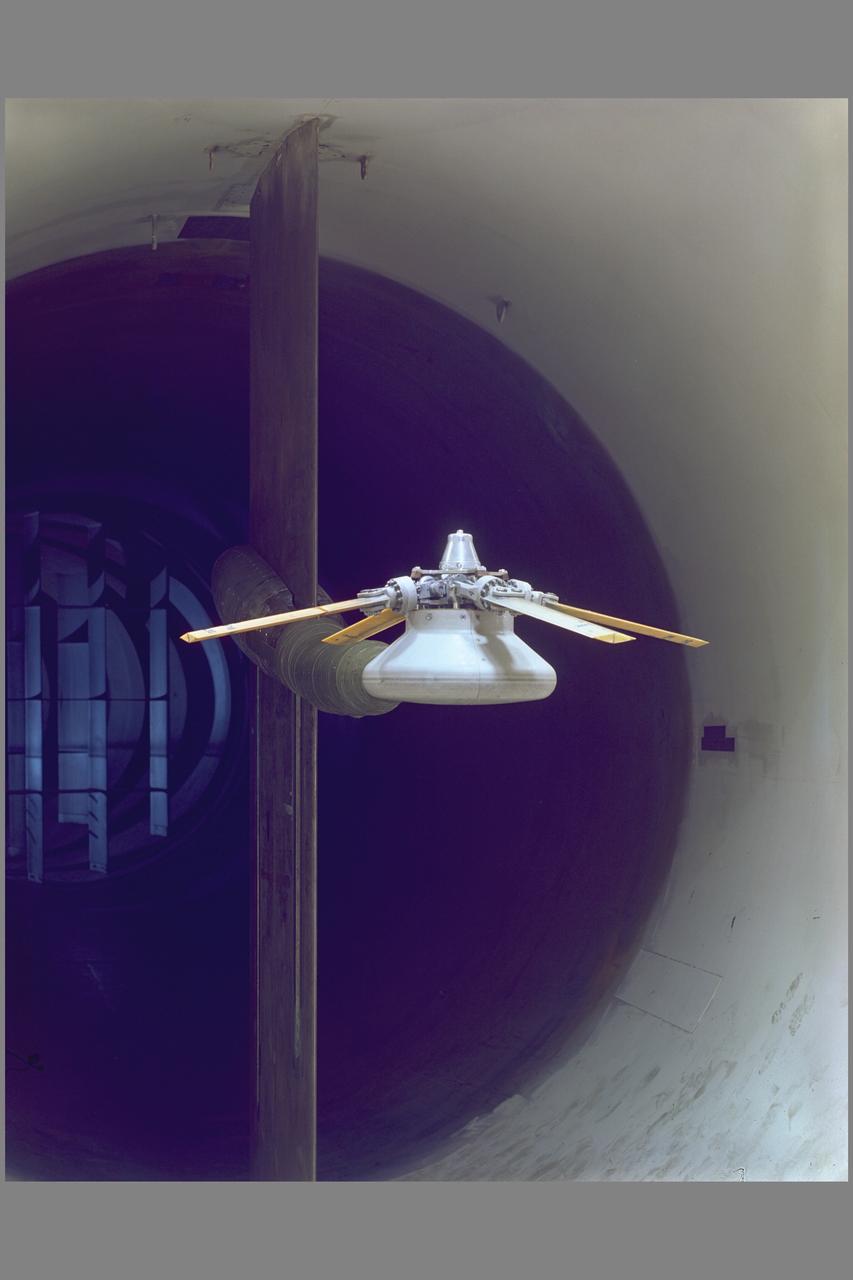
Rotor Entry Vehicle 12ft w.t.
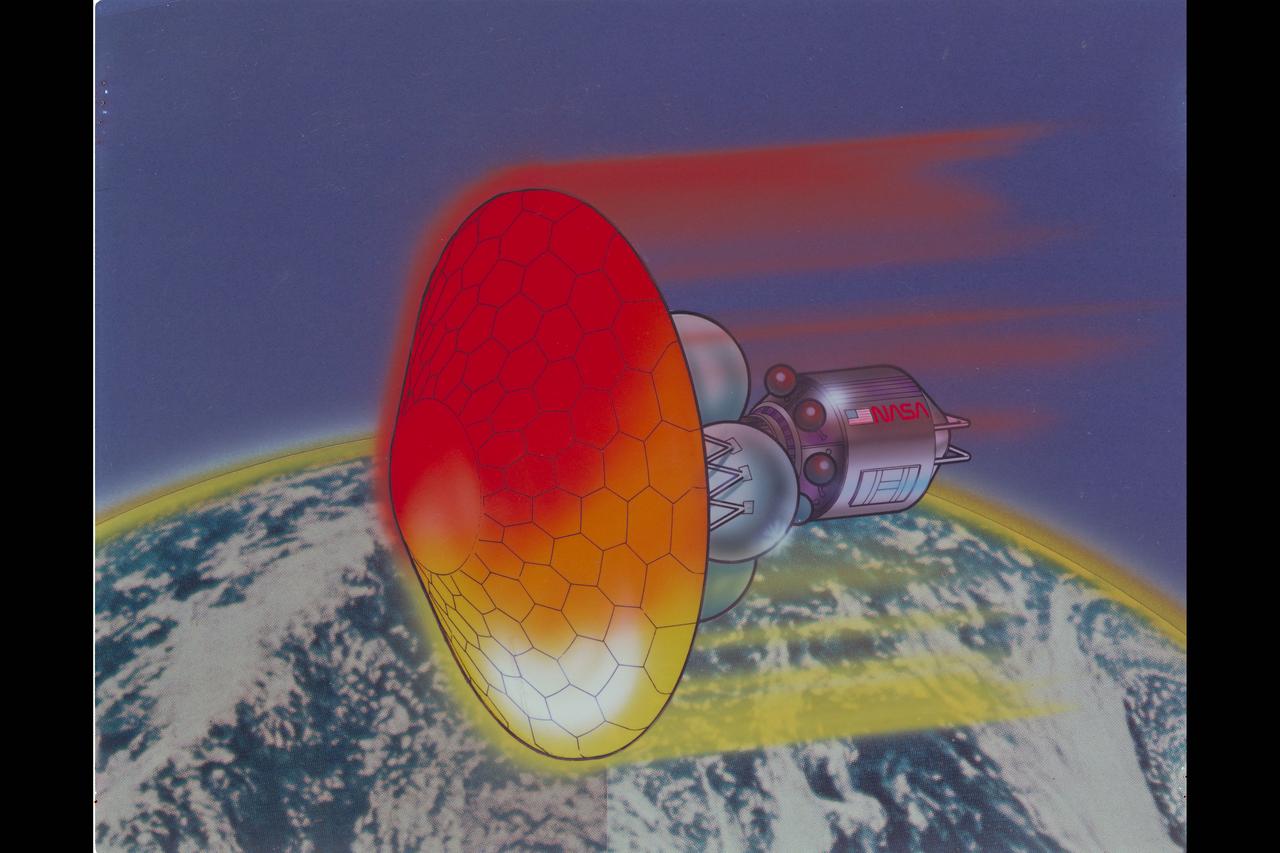
Artwork AOTV Aeroassisted orbital transfer vehicle re-entry
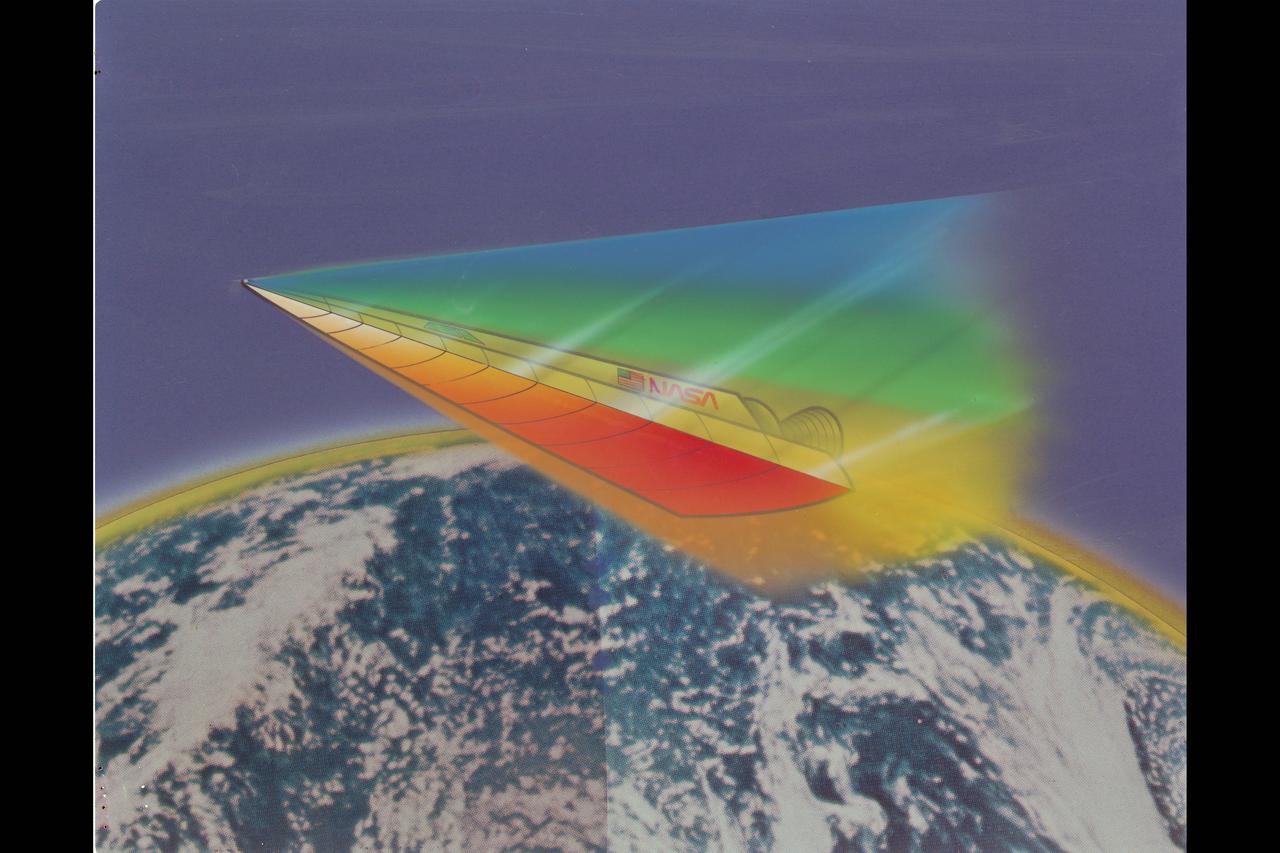
Artwork Artist conception of a hypersonic futuristic space vehicle re-entry
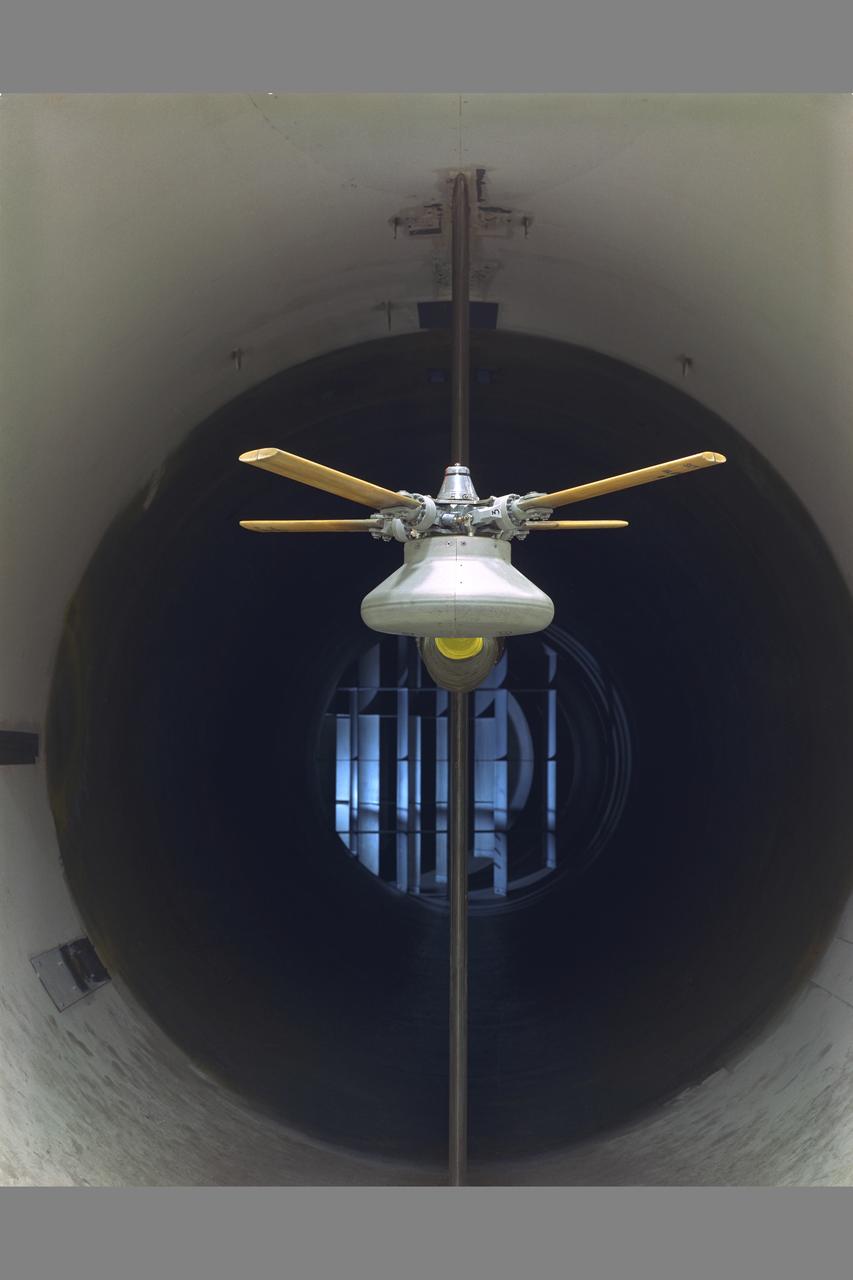
Rotary Entry Vehicle model in NASA Ames Reseach Center 12ft Pressure Wind Tunnel
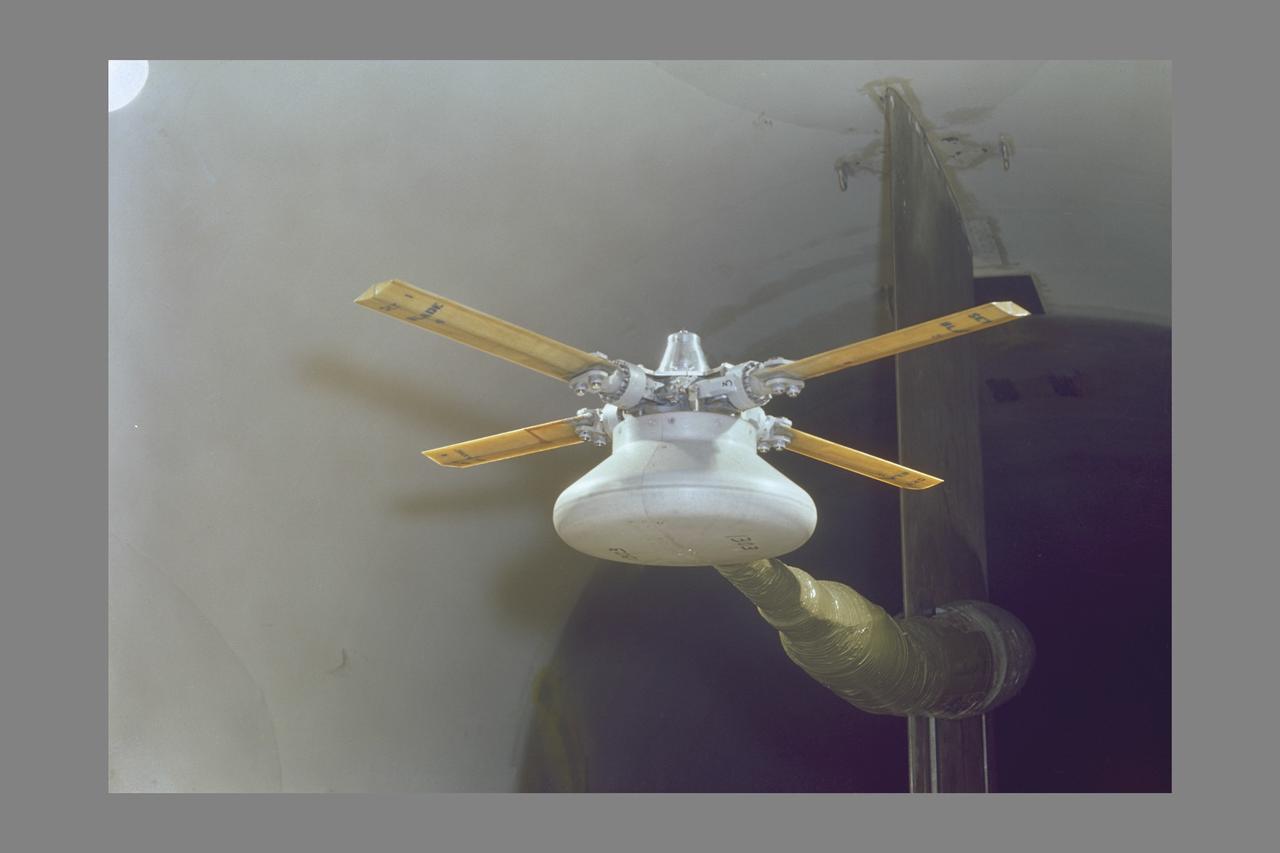
Ames Rotary Entry Vehicle #1 model in REV-1 testing in the Ames Research Center 12ft. Pressure Wind Tunnel
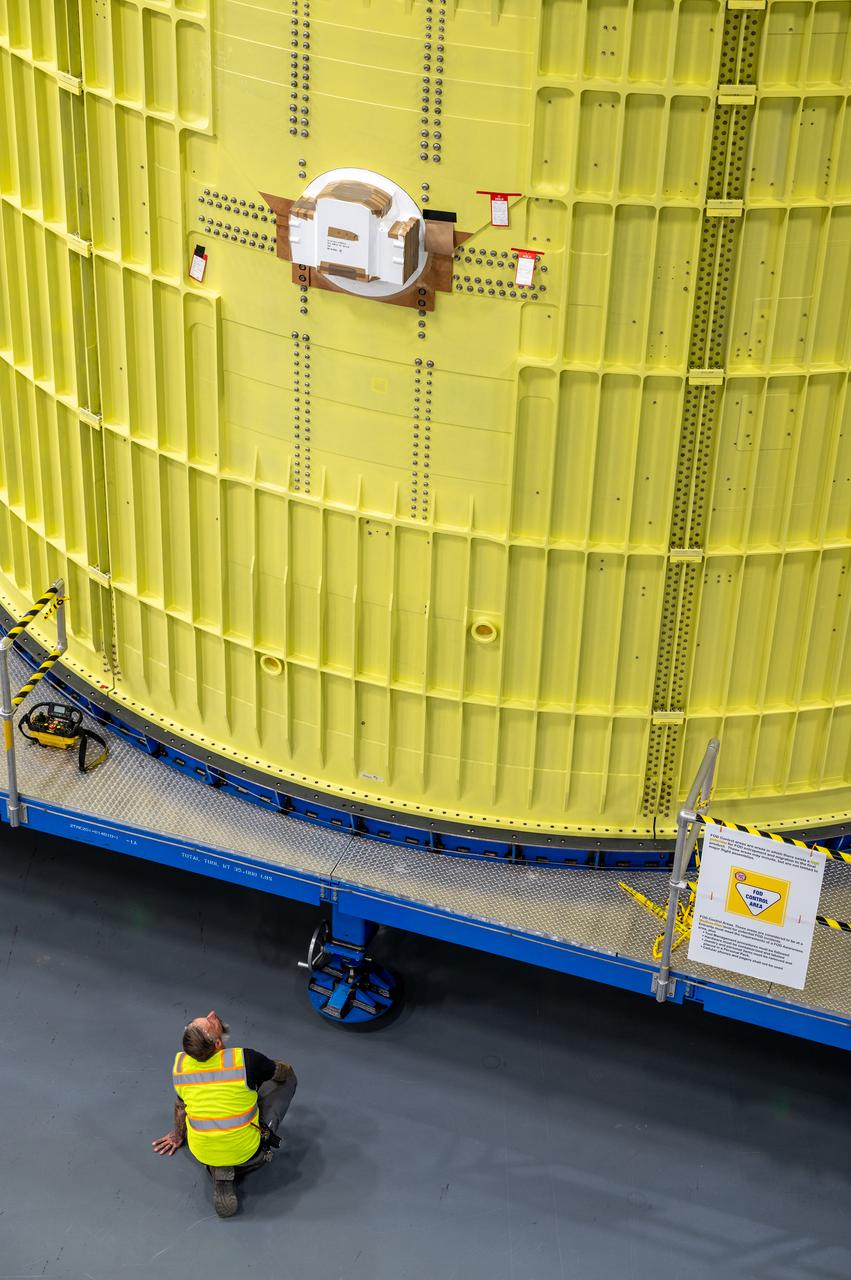
Technicians at NASA’s Michoud Assembly Facility move the intertank of NASA’s Space Launch System rocket for Artemis III to Cell G to await application of the thermal protection system. Thermal protection systems protect space vehicles from aerodynamic heating during entry to planet atmosphere and re-entry to earth atmosphere. The intertank lays between the liquid hydrogen tank and liquid oxygen tank. Together with the engine section and the forward skirt, they comprise the SLS core stage. The liquid hydrogen tank and liquid oxygen tank hold 733,000 gallons of propellant to power the stage’s four RS-25 engines needed for liftoff and Artemis missions to the Moon and future missions to Mars.
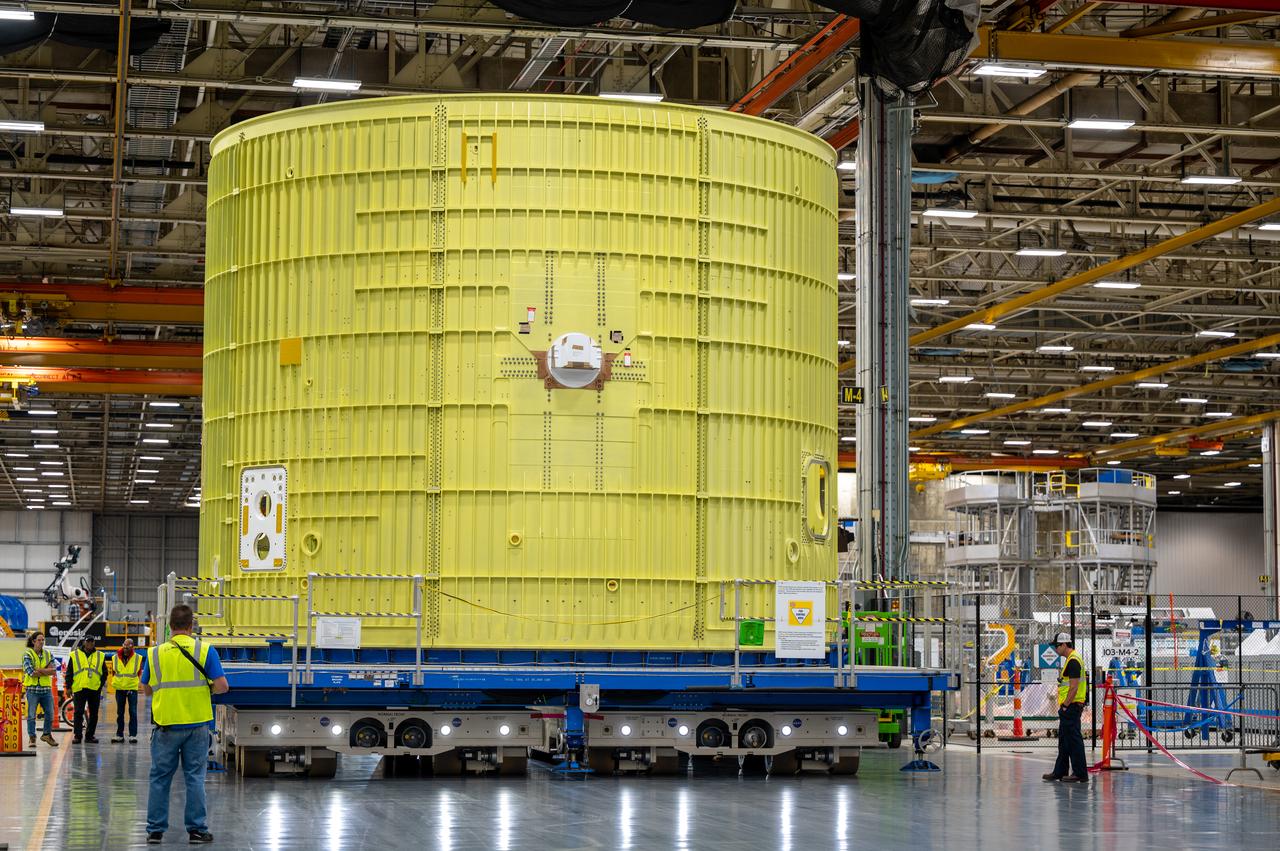
Technicians at NASA’s Michoud Assembly Facility move the intertank of NASA’s Space Launch System rocket for Artemis III to Cell G to await application of the thermal protection system. Thermal protection systems protect space vehicles from aerodynamic heating during entry to planet atmosphere and re-entry to earth atmosphere. The intertank lays between the liquid hydrogen tank and liquid oxygen tank. Together with the engine section and the forward skirt, they comprise the SLS core stage. The liquid hydrogen tank and liquid oxygen tank hold 733,000 gallons of propellant to power the stage’s four RS-25 engines needed for liftoff and Artemis missions to the Moon and future missions to Mars.
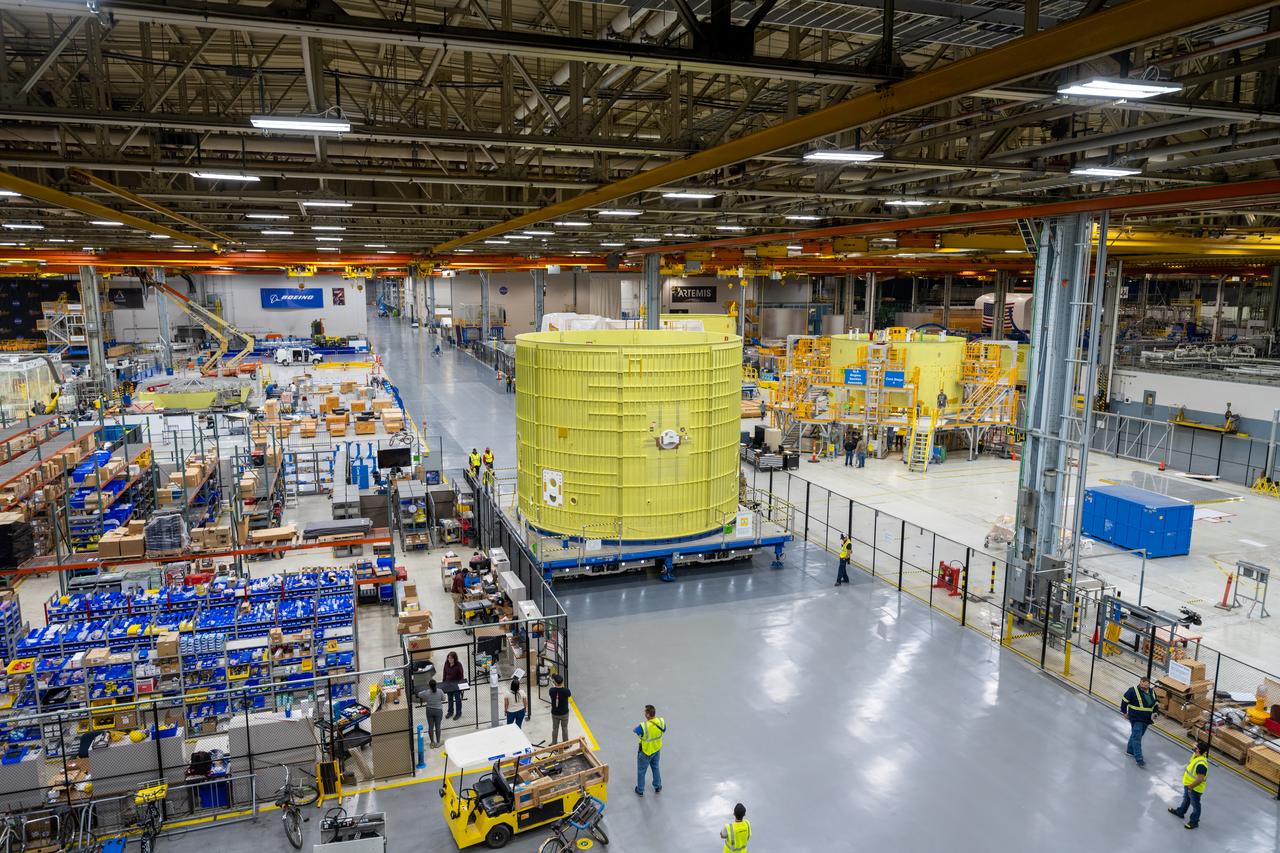
Technicians at NASA’s Michoud Assembly Facility move the intertank of NASA’s Space Launch System rocket for Artemis III to Cell G to await application of the thermal protection system. Thermal protection systems protect space vehicles from aerodynamic heating during entry to planet atmosphere and re-entry to earth atmosphere. The intertank lays between the liquid hydrogen tank and liquid oxygen tank. Together with the engine section and the forward skirt, they comprise the SLS core stage. The liquid hydrogen tank and liquid oxygen tank hold 733,000 gallons of propellant to power the stage’s four RS-25 engines needed for liftoff and Artemis missions to the Moon and future missions to Mars.
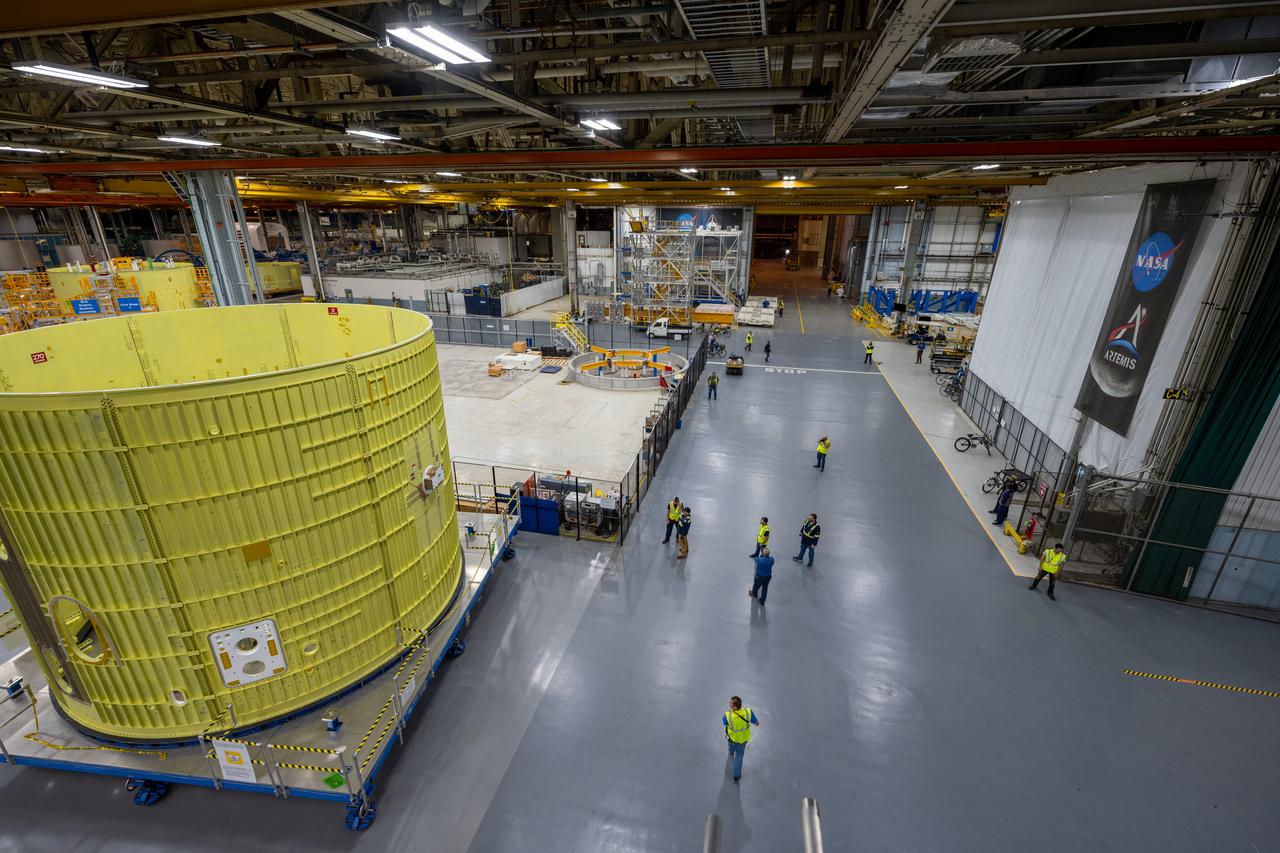
Technicians at NASA’s Michoud Assembly Facility move the intertank of NASA’s Space Launch System rocket for Artemis III to Cell G to await application of the thermal protection system. Thermal protection systems protect space vehicles from aerodynamic heating during entry to planet atmosphere and re-entry to earth atmosphere. The intertank lays between the liquid hydrogen tank and liquid oxygen tank. Together with the engine section and the forward skirt, they comprise the SLS core stage. The liquid hydrogen tank and liquid oxygen tank hold 733,000 gallons of propellant to power the stage’s four RS-25 engines needed for liftoff and Artemis missions to the Moon and future missions to Mars.
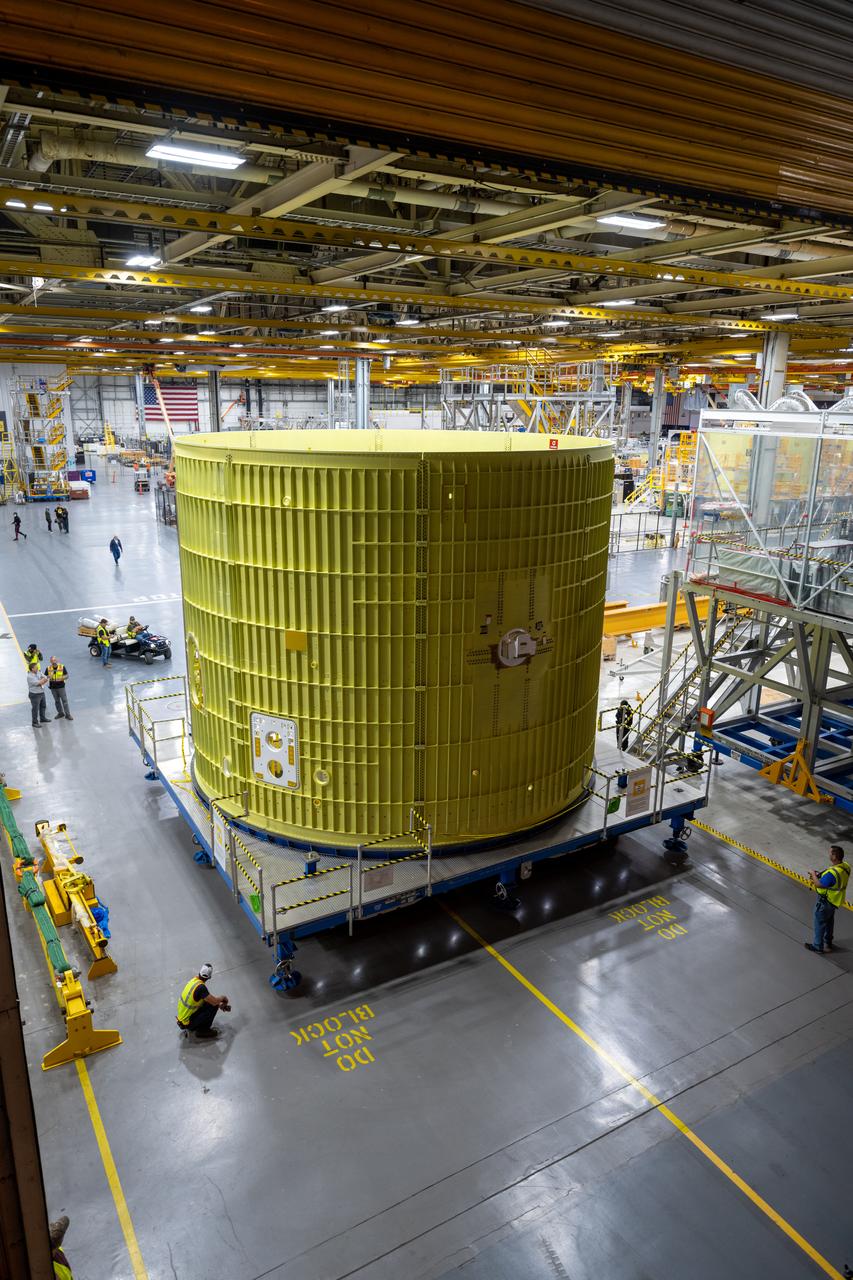
Technicians at NASA’s Michoud Assembly Facility move the intertank of NASA’s Space Launch System rocket for Artemis III to Cell G to await application of the thermal protection system. Thermal protection systems protect space vehicles from aerodynamic heating during entry to planet atmosphere and re-entry to earth atmosphere. The intertank lays between the liquid hydrogen tank and liquid oxygen tank. Together with the engine section and the forward skirt, they comprise the SLS core stage. The liquid hydrogen tank and liquid oxygen tank hold 733,000 gallons of propellant to power the stage’s four RS-25 engines needed for liftoff and Artemis missions to the Moon and future missions to Mars.
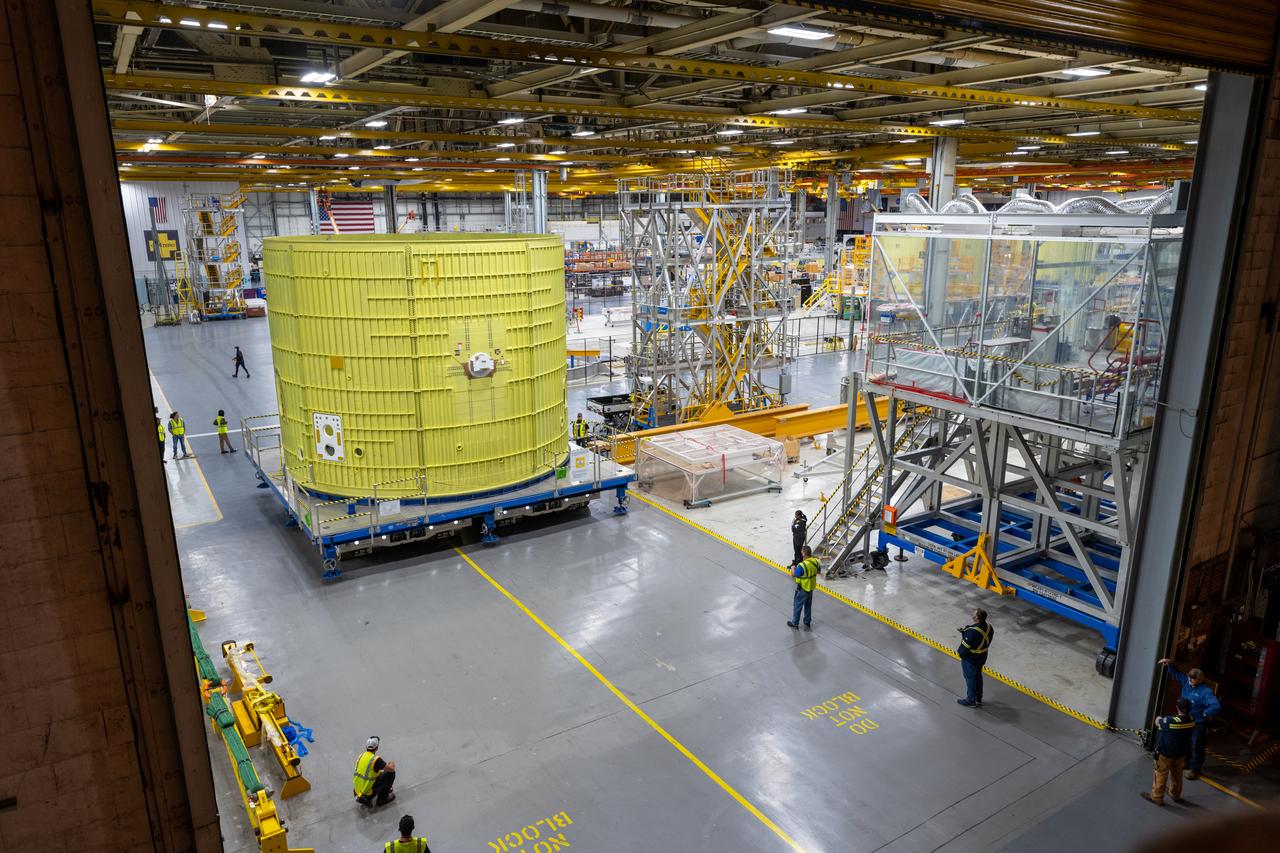
Technicians at NASA’s Michoud Assembly Facility move the intertank of NASA’s Space Launch System rocket for Artemis III to Cell G to await application of the thermal protection system. Thermal protection systems protect space vehicles from aerodynamic heating during entry to planet atmosphere and re-entry to earth atmosphere. The intertank lays between the liquid hydrogen tank and liquid oxygen tank. Together with the engine section and the forward skirt, they comprise the SLS core stage. The liquid hydrogen tank and liquid oxygen tank hold 733,000 gallons of propellant to power the stage’s four RS-25 engines needed for liftoff and Artemis missions to the Moon and future missions to Mars.
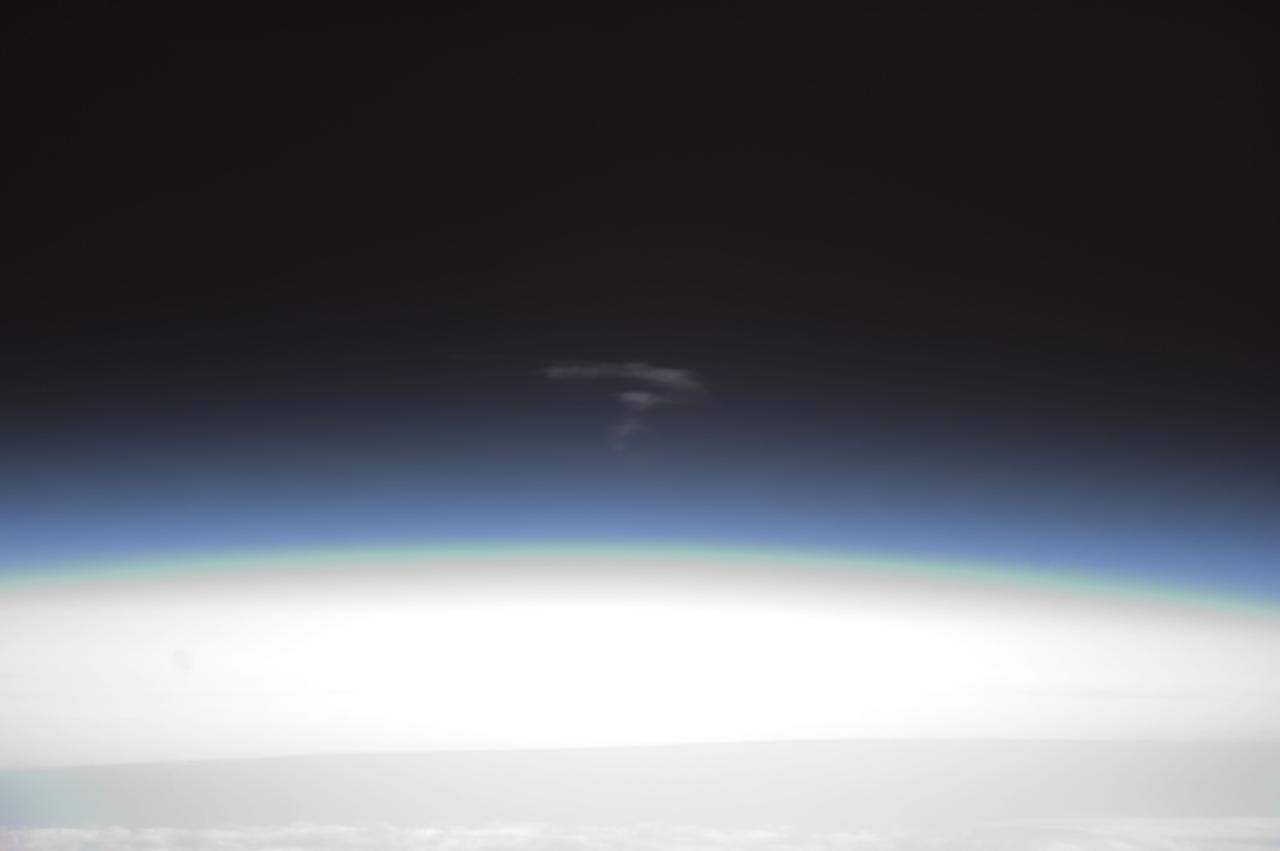
ISS033-E-009232 (3 Oct. 2012) --- This still photo taken by the Expedition 33 crew members aboard the International Space Station shows evidence of the fiery plunge through Earth?s atmosphere and the destructive re-entry of the European Automated Transfer Vehicle-3 (ATV-3) spacecraft, also known as ?Edoardo Amaldi.? The end of the ATV took place over a remote swath of the Pacific Ocean where any surviving debris safely splashed down a short time later, at around 1:30 a.m. (GMT) on Oct. 3, thus concluding the highly successful ATV-3 mission. Aboard the craft during re-entry was the Re Entry Breakup Recorder (REBR), a spacecraft ?black box? designed to gather data on vehicle disintegration during re-entry in order to improve future spacecraft re-entry models.
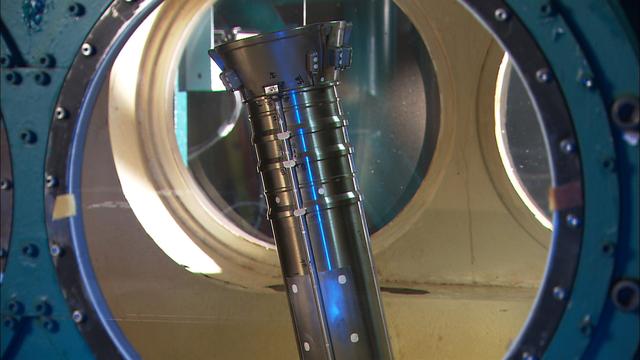
THIS IS A TEST OF THE 1ST STAGE RE-ENTRY VEHICLE. HEAT TESTING OF A 3% MODEL TO SUPPORT THE ARES/ CLV FIRST STAGE RE-ENTRY. THIS TEST OCCURRED AT ARNOLD AIR FORCE BASE, TENNESSEE. THIS TESTING SUPPORTS THE DEVELOPMENT OF THE CONSTELLATION/ARES PROJECT. THIS IMAGE IS EXTRACTED FROM A HIGH DEFINITION VIDEO FILE AND IS THE HIGHEST RESOLUTION AVAILABLE.
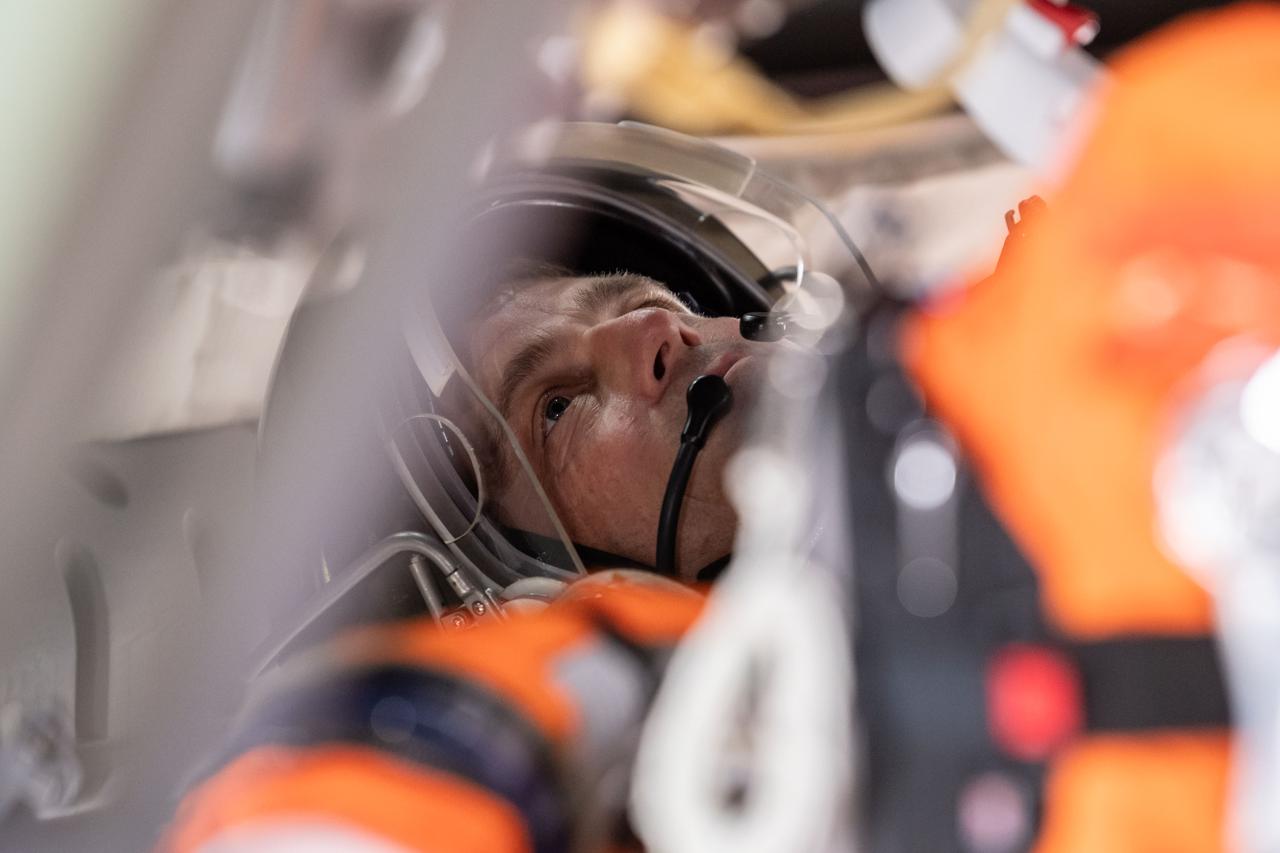
jsc2025e004079 (Jan. 30, 2025) --- NASA astronaut and Artemis II commander Reid Wiseman during Post Insertion and Deorbit Preparation training at the Space Vehicle Mockup Facility in Houston, Texas. The crew practiced getting the Orion spacecraft configured once in orbit, how to make it habitable, and suited up in their entry pressure suits to prepare for their return from the Moon. Credit: NASA/Mark Sowa
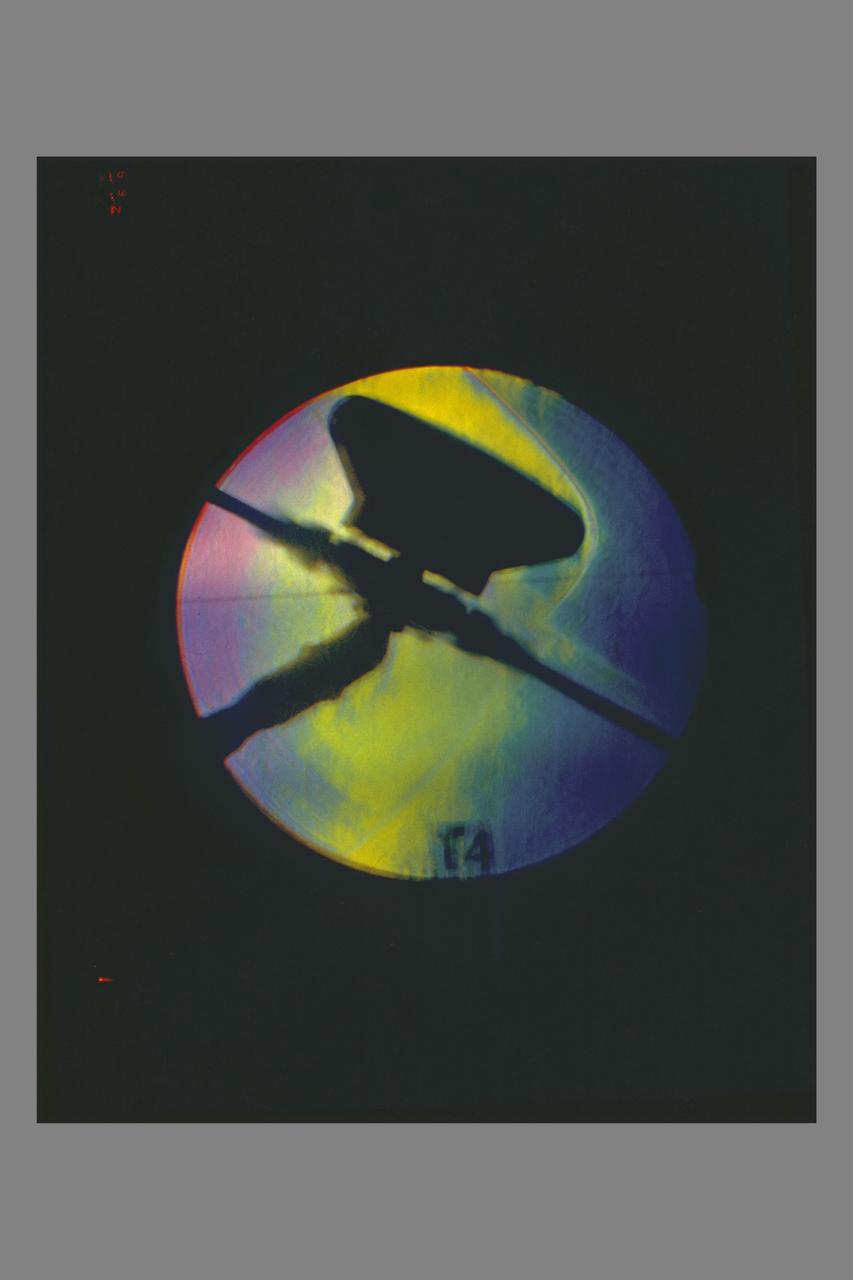
Aerodynamic Characteristics of Rotary Entry Vehicle configuration REV-1 model schlieren Testing being done at the NASA Ames Research Center, California
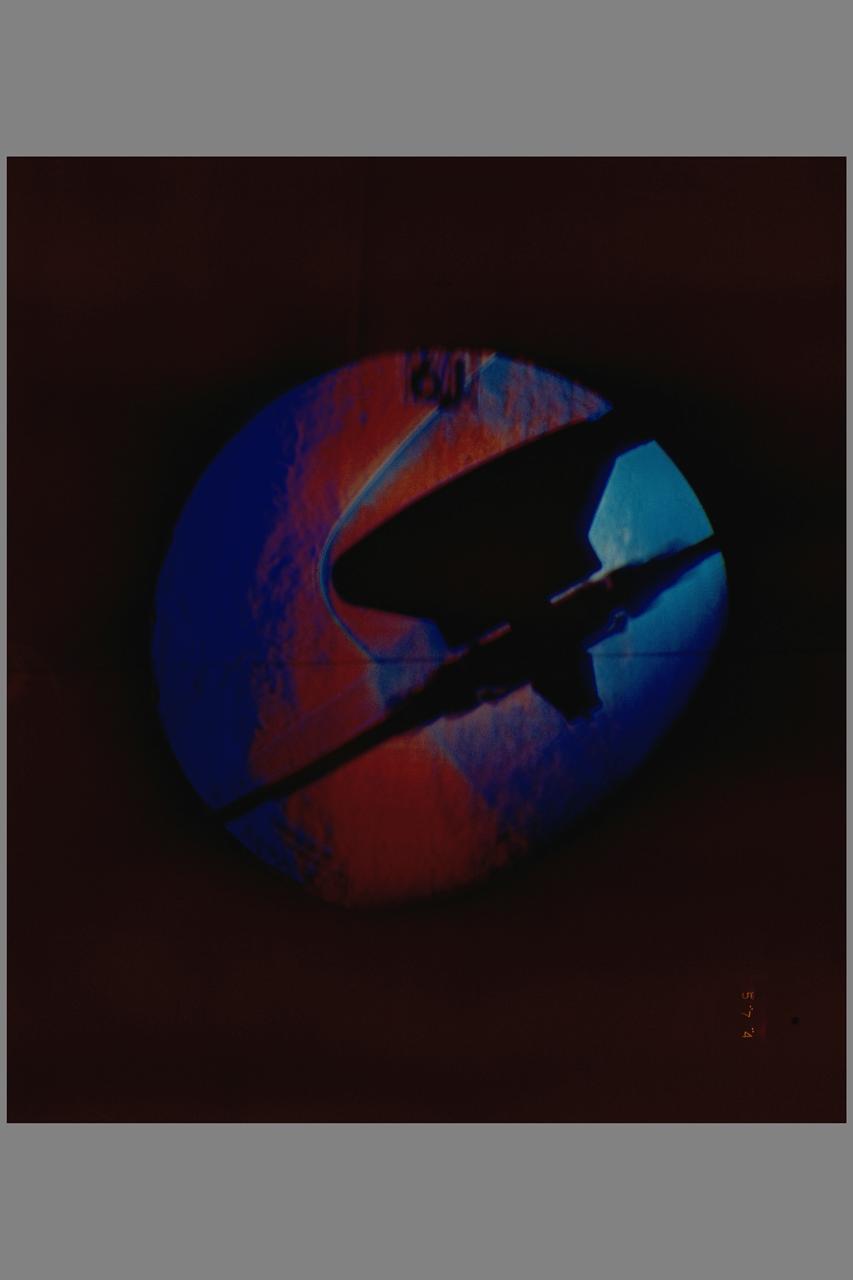
Aerodynamic Characteristics of Rotary Entry Vehicle configuration REV-1 model schlieren. Testing being done at the NASA Ames Research Center, California
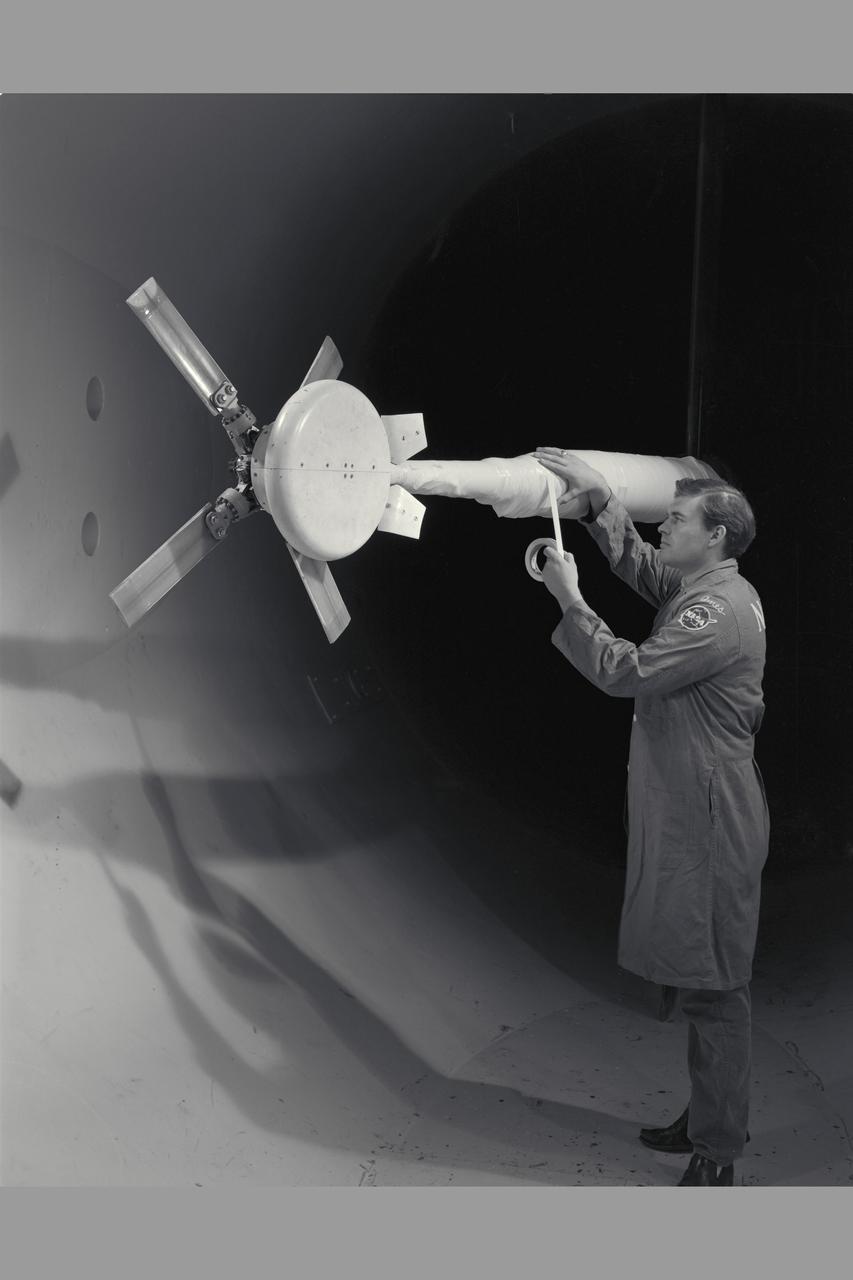
Rotor Entry Vehicle - force test in 12ft w.t. at Ames Research Center, Moffett Field, CA test-12-328 with J.J. Garber (ARO contractor)
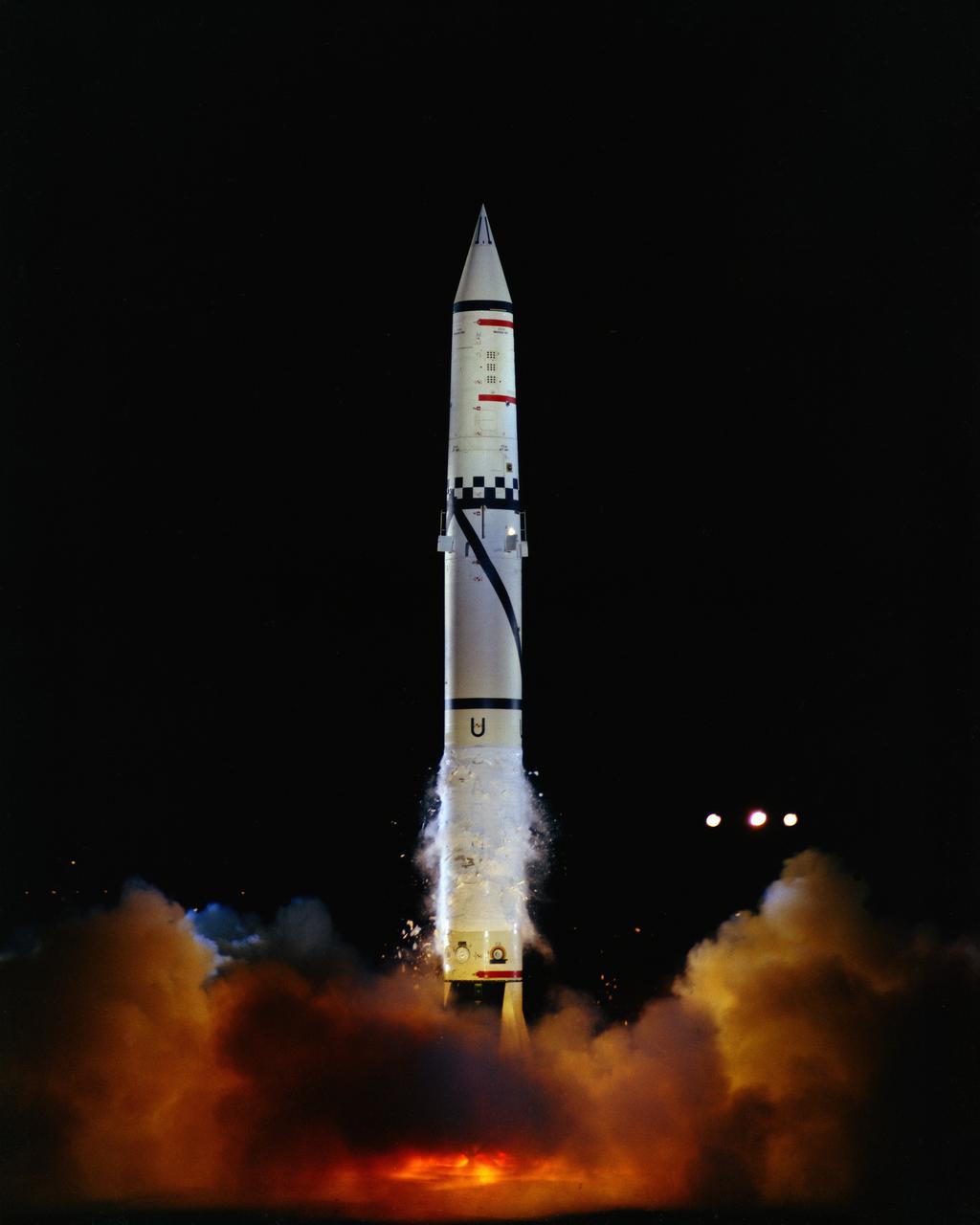
Pad 6. Launch of US Army Redstone (2040) for accuracy and vehicle re-entry observation, at 9: 30 P.M. EST. (Lift-off) Photo by: Bundy.
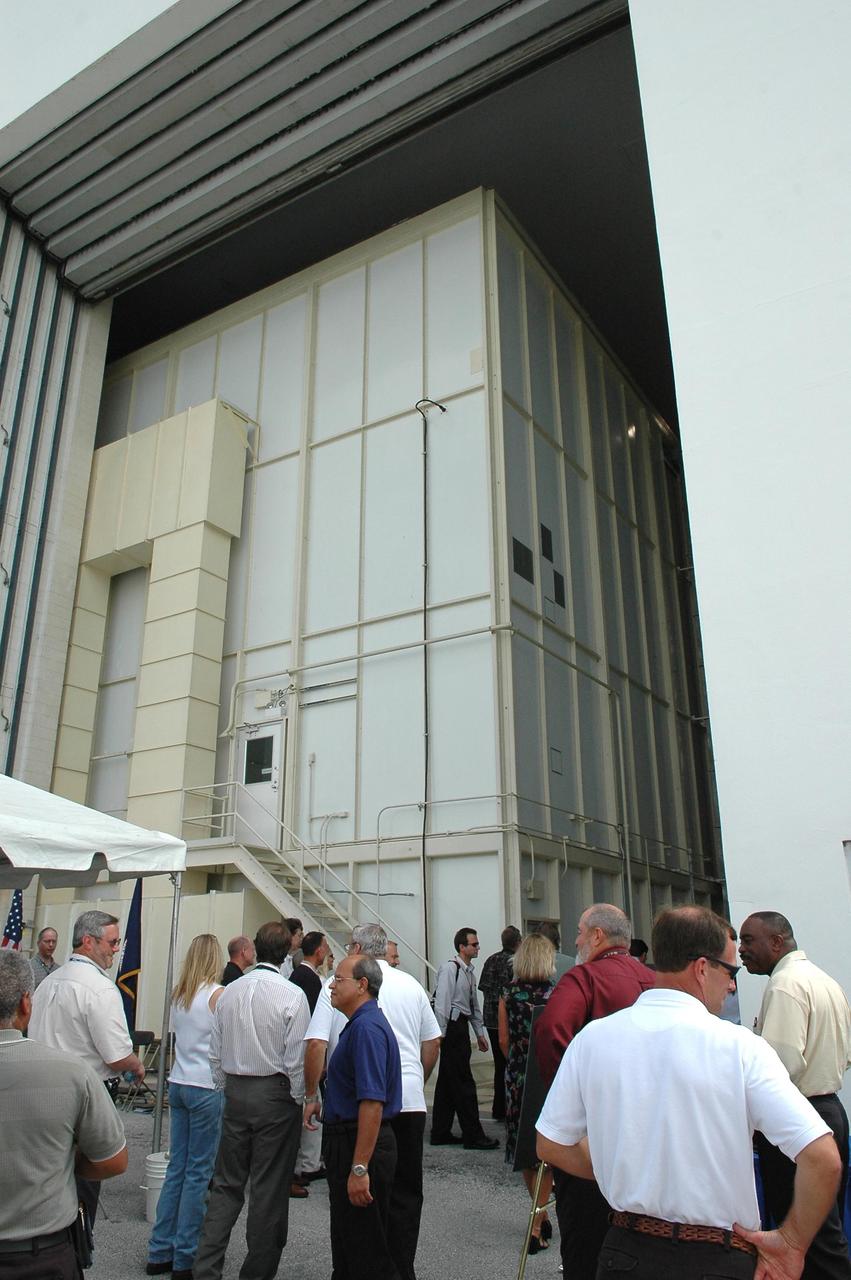
KENNEDY SPACE CENTER, FLA. - Workers mingle around the west door entry to the crew exploration vehicle (CEV) environment in the Operations and Checkout Building. A ribbon-cutting officially reactivated the entry. During the rest of the decade, KSC will transition from launching space shuttles to launching new vehicles in NASA’s Vision For Space Exploration. Photo credit: NASA/Kim Shiflett
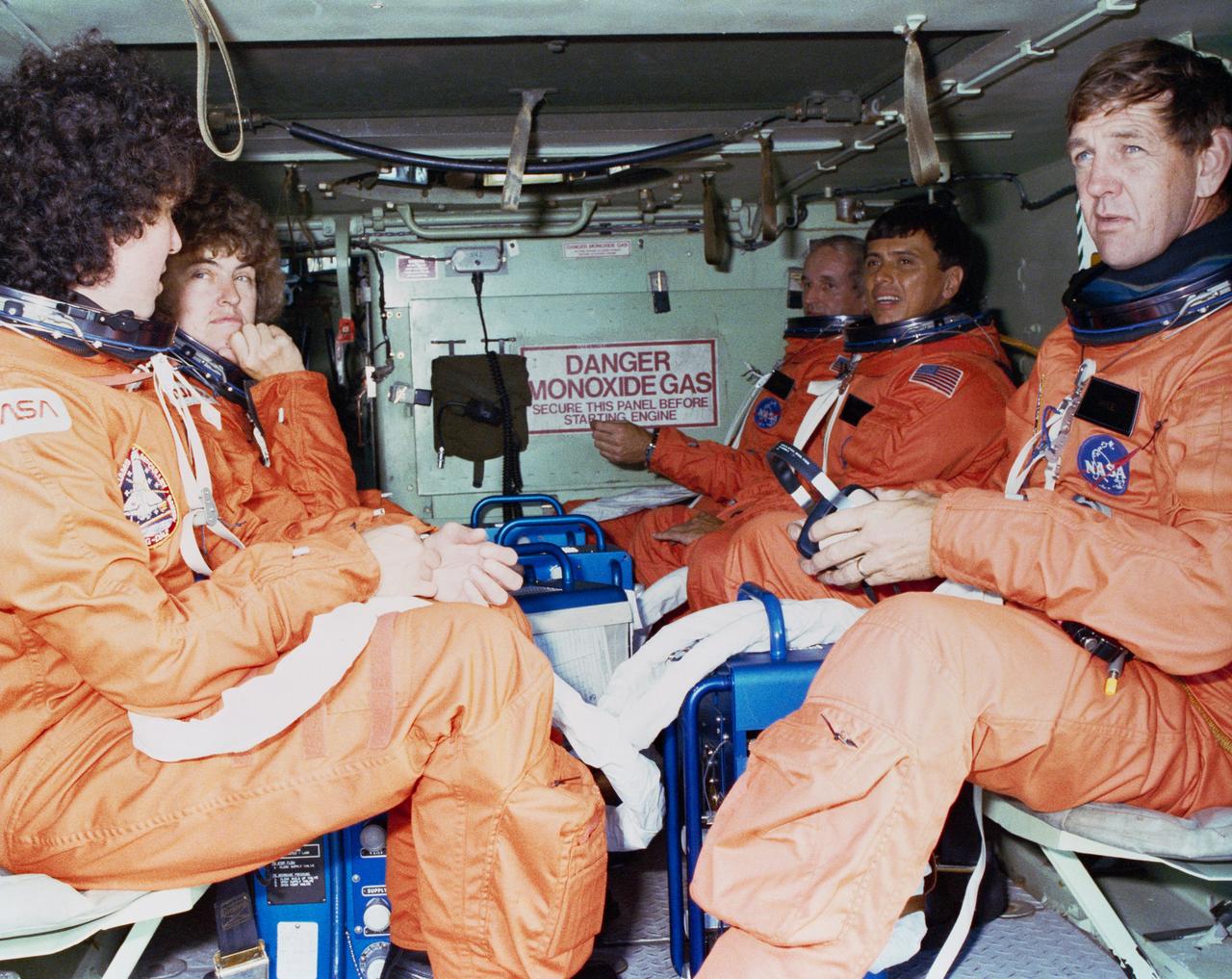
STS-34 crewmembers sit in M1-13 Armored Personnel Carrier (APC) during emergency egress training at KSC's shuttle landing facility (SLF) prior to terminal countdown demonstration test (TCDT) activities. Wearing launch and entry suits (LESs), are (from left) Mission Specialist (MS) Ellen S. Baker, MS Shannon W. Lucid, Commander Donald E. Williams (right side, in back), MS Franklin R. Chang-Diaz, and Pilot Michael J. McCulley (holding headset). View provided by KSC with alternate number KSC-89PC-871.
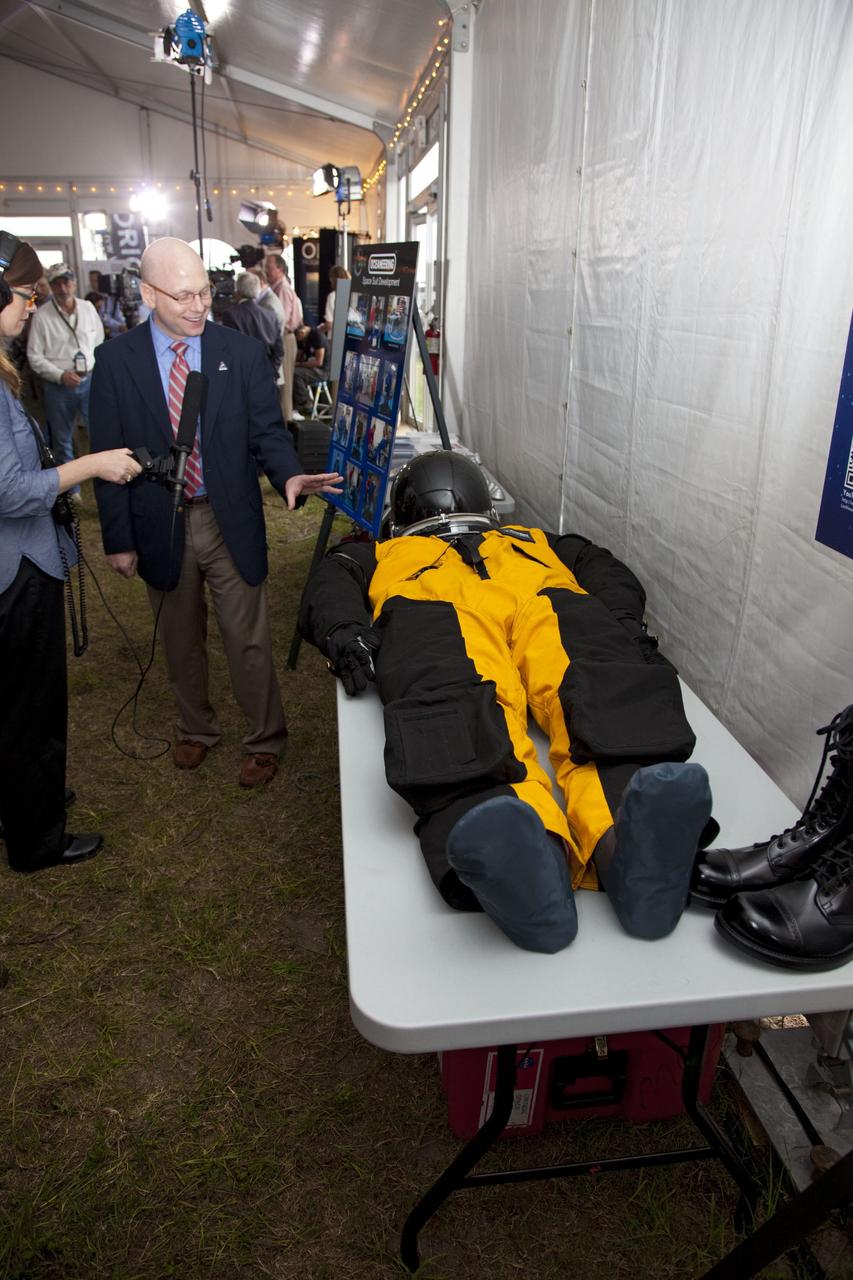
CAPE CANAVERAL, Fla. -- A media event was held on the grounds near the Press Site at NASA's Kennedy Space Center in Florida where a Multi-Purpose Crew Vehicle (MPCV) is on display. The MPCV is based on the Orion design requirements for traveling beyond low Earth orbit and will serve as the exploration vehicle that will carry the crew to space, provide emergency abort capability, sustain the crew during the space travel, and provide safe re-entry from deep space return velocities. Seen here is a sample of the Orion launch-and-entry suit on display. Photo credit: NASA/Frankie Martin
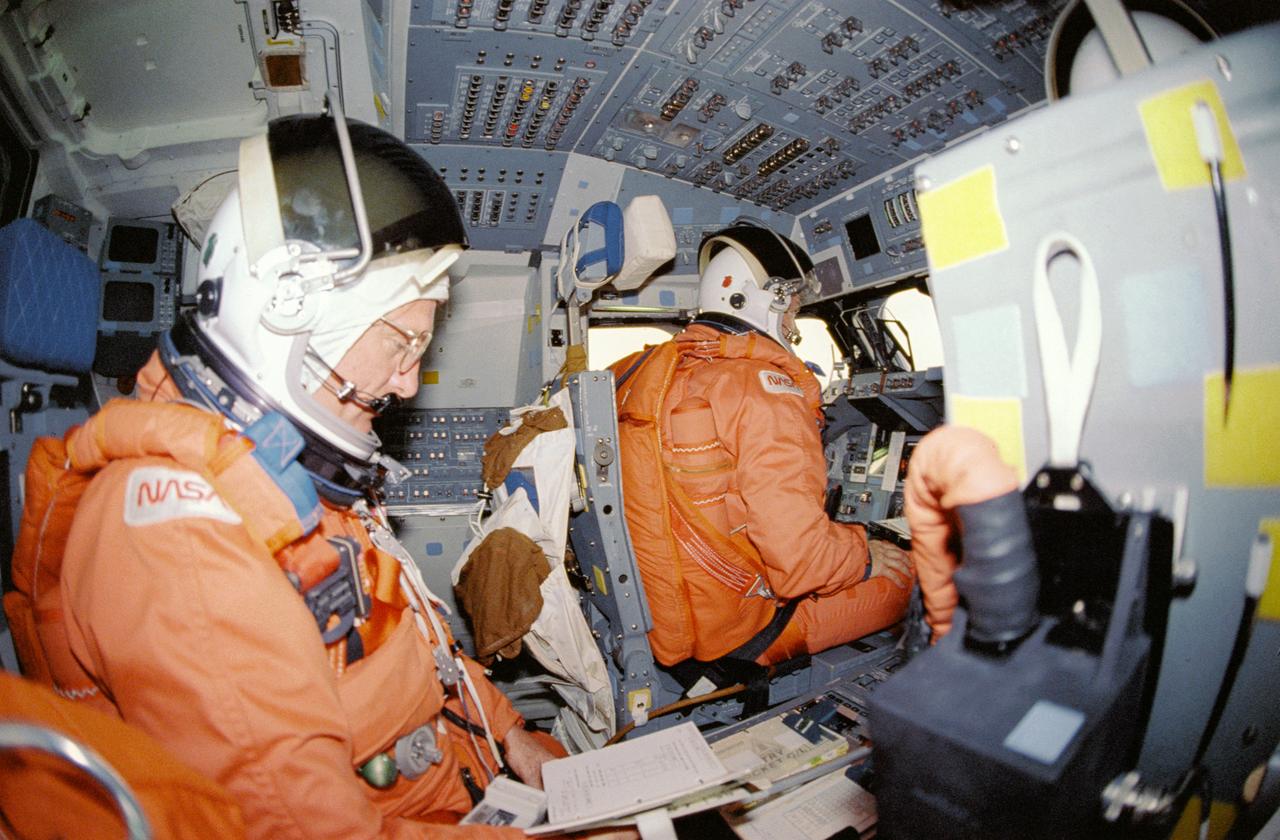
STS029-24-004 (18 March 1989) --- STS-29 crewmembers, wearing launch and entry suits (LESs) and launch and entry helmets (LEHs), review checklists on Discovery, Orbiter Vehicle (OV) 103, flight deck. Commander Michael L. Coats is seated at the forward flight deck commanders station with Mission Specialist (MS) James F. Buchli on aft flight deck strapped in mission specialist seat. OV-103 makes its return after five days in space. Note color in forward windows W1, W2, W3 caused by friction of entry through the Earth's atmosphere. Personal Egress Air Pack (PEAP) is visible on pilots seat back.
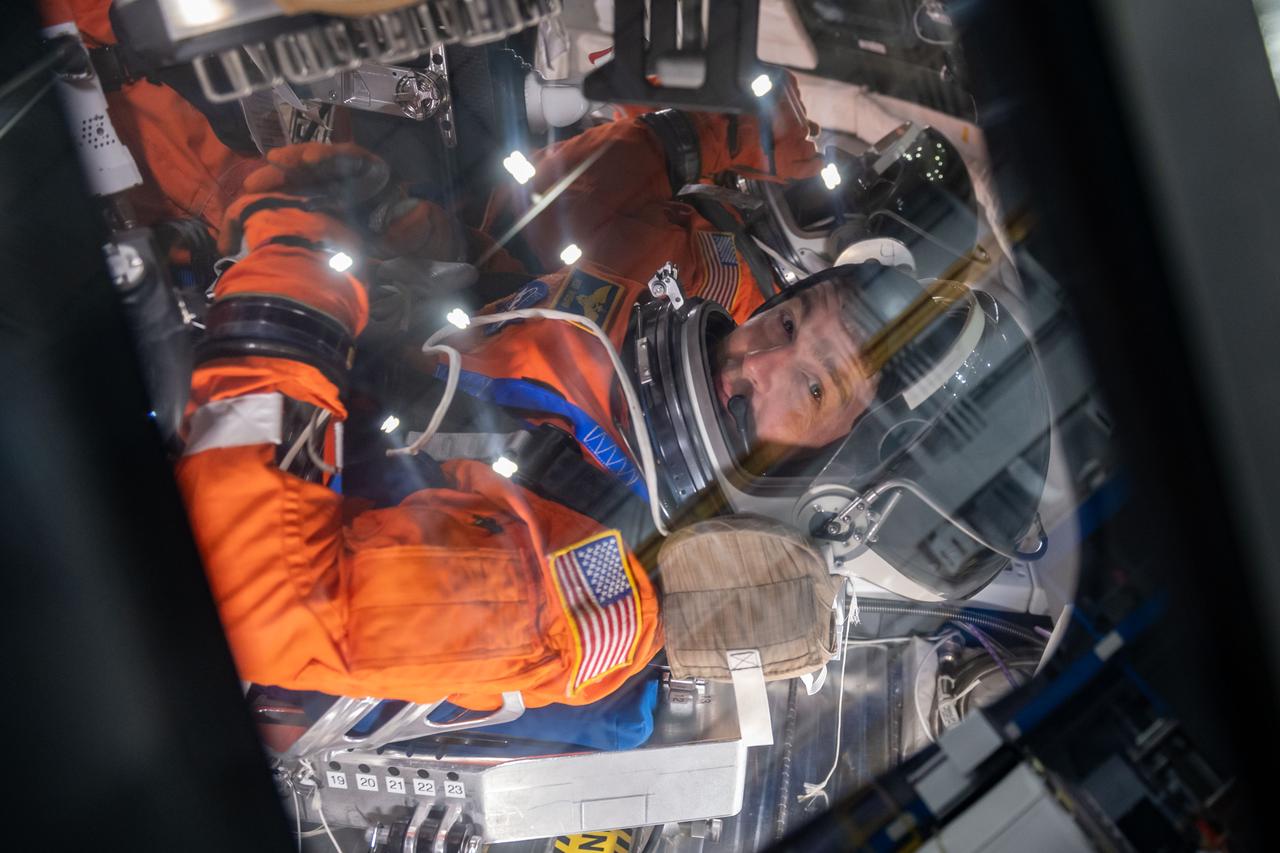
jsc2025e004075 (Jan. 30, 2025) --- NASA astronauts and Artemis II crew members Reid Wiseman and Victor Glover inside of the Orion spacecraft mockup during Post Insertion and Deorbit Preparation training at the Space Vehicle Mockup Facility in Houston, Texas. The crew practiced getting the Orion spacecraft configured once in orbit, how to make it habitable, and suited up in their entry pressure suits to prepare for their return from the Moon. Credit: NASA/Mark Sowa

jsc2025e004089 (Jan. 30, 2025) --- NASA astronaut and Artemis II mission specialist Christina Koch exits the Orion spacecraft mockup during Post Insertion and Deorbit Preparation training at the Space Vehicle Mockup Facility in Houston, Texas. The crew practiced getting the Orion spacecraft configured once in orbit, how to make it habitable, and suited up in their entry pressure suits to prepare for their return from the Moon. Credit: NASA/Mark Sowa
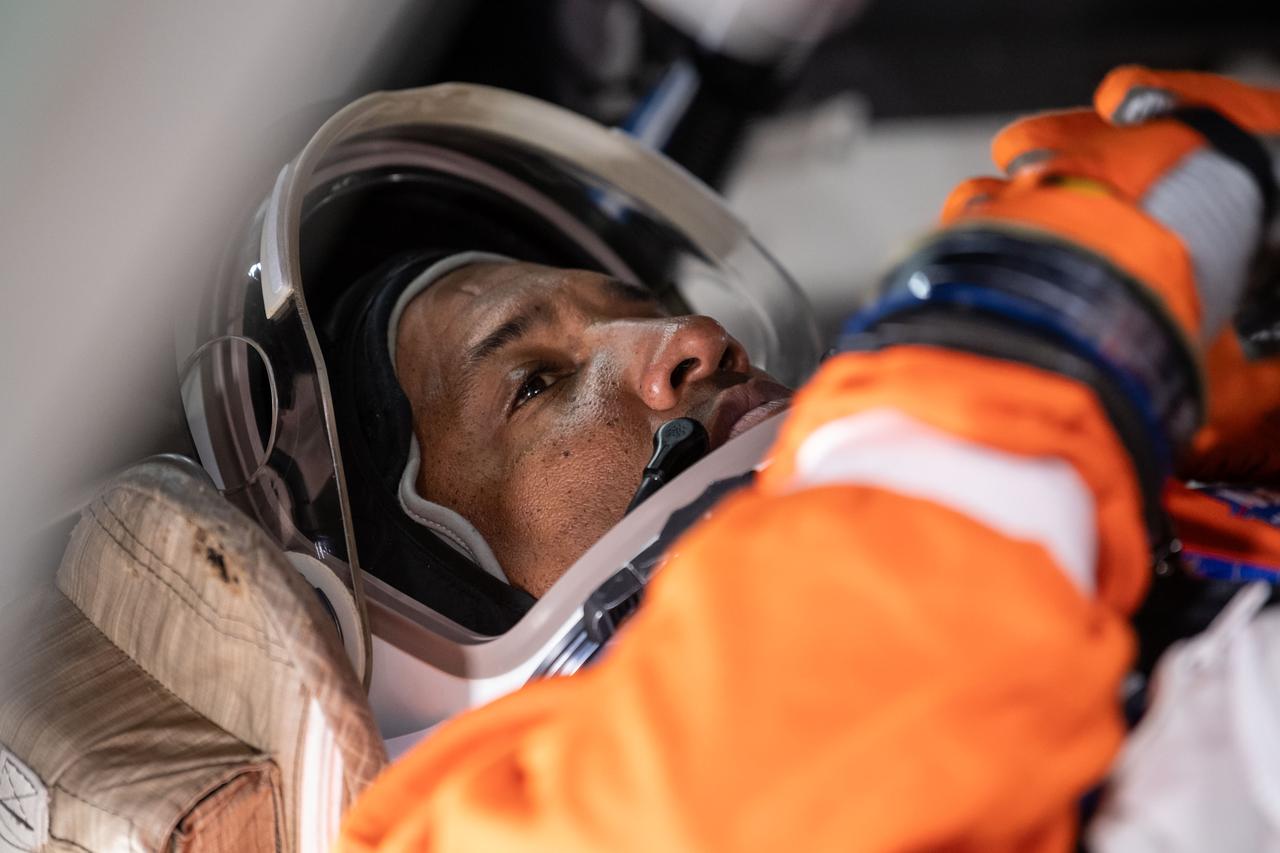
jsc2025e004071 (Jan. 30, 2025) --- NASA astronaut and Artemis II Pilot Victor Glover inside of the Orion spacecraft mockup during Post Insertion and Deorbit Preparation training at the Space Vehicle Mockup Facility in Houston, Texas. The crew practiced getting the Orion spacecraft configured once in orbit, how to make it habitable, and suited up in their entry pressure suits to prepare for their return from the Moon. Credit: NASA/Mark Sowa
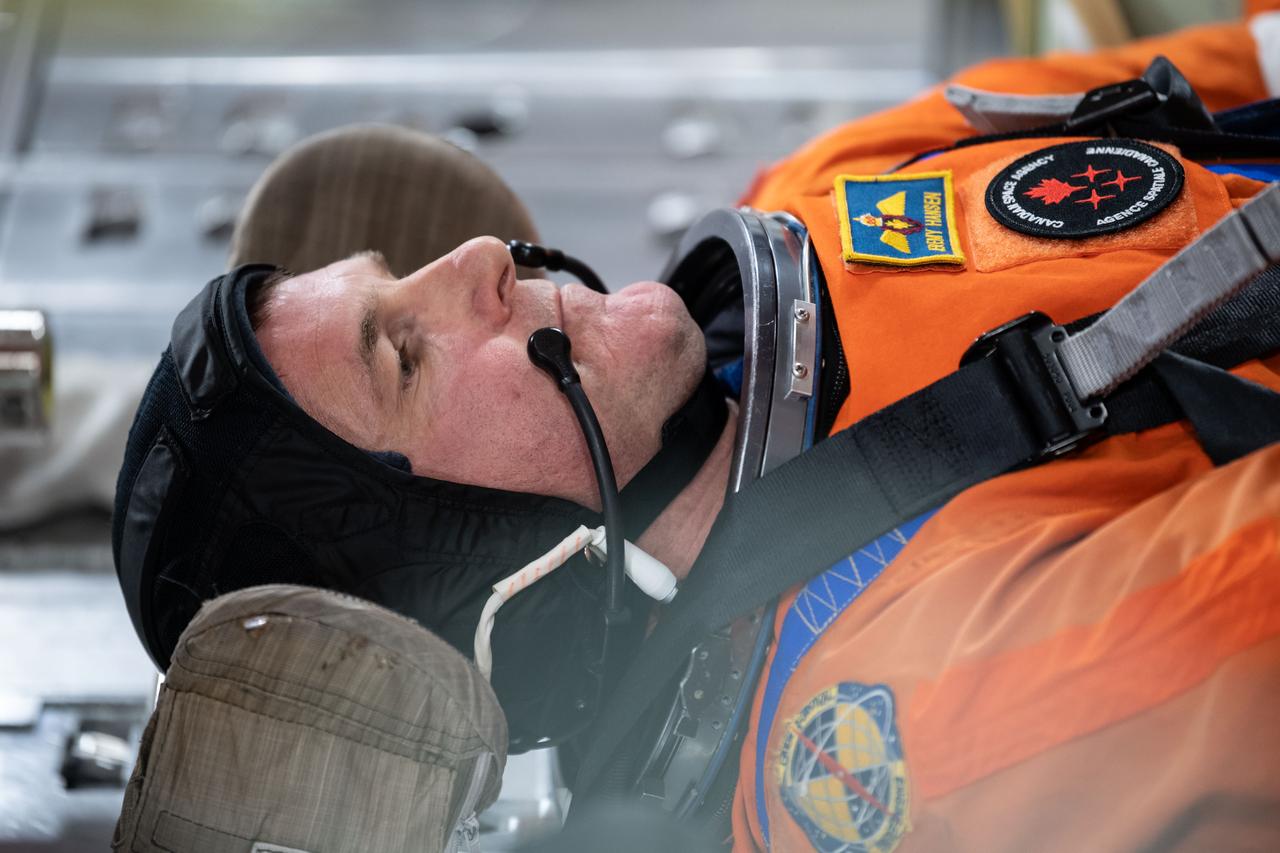
jsc2025e004073 (Jan. 30, 2025) --- Canadian Space Agency astronaut and Artemis II mission specialist Jeremy Hansen inside of the Orion spacecraft mockup during Post Insertion and Deorbit Preparation training at the Space Vehicle Mockup Facility in Houston, Texas. The crew practiced getting the Orion spacecraft configured once in orbit, how to make it habitable, and suited up in their entry pressure suits to prepare for their return from the Moon. Credit: NASA/Mark Sowa
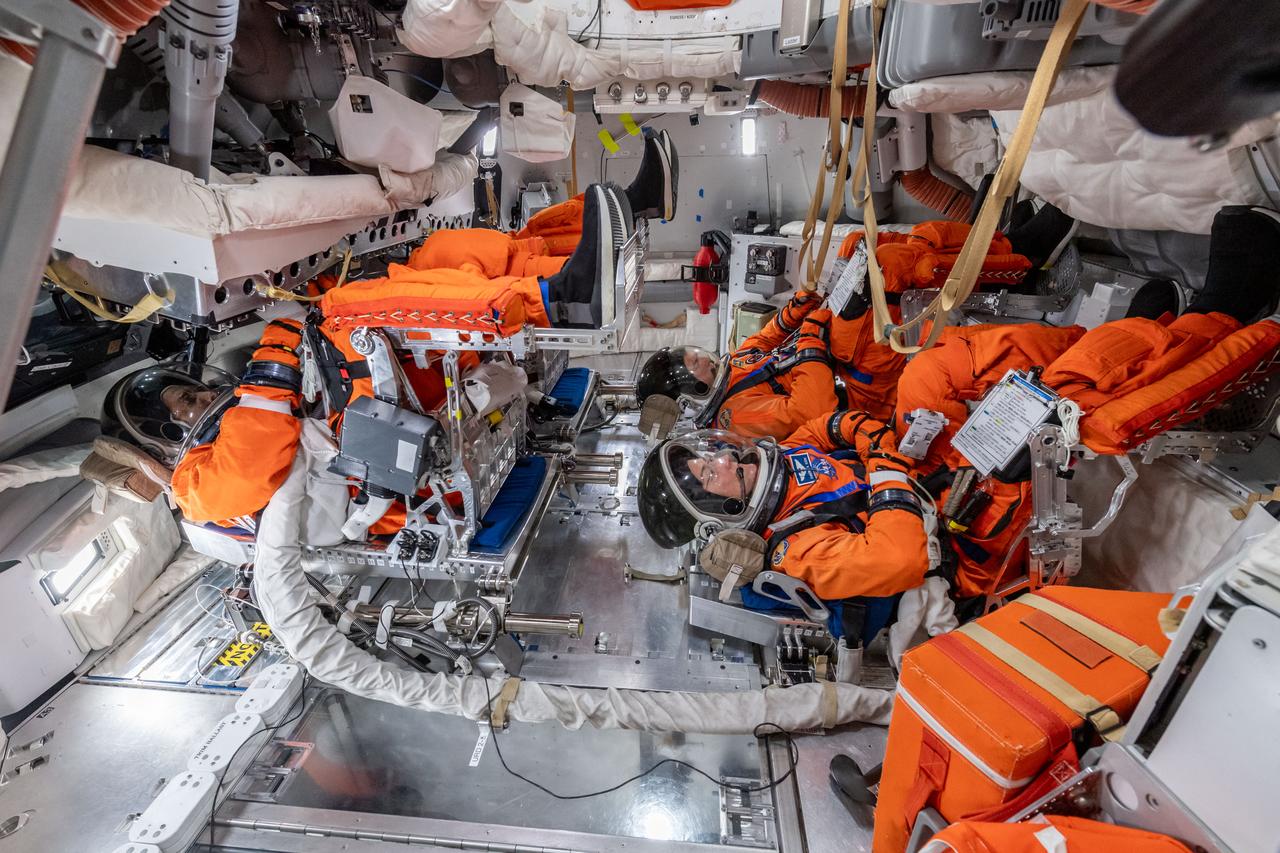
jsc2025e004086 (Jan. 30, 2025) --- The Artemis II crew, NASA astronauts Reid Wiseman, Victor Glover, and Christina Koch, and Canadian Space Agency astronaut Jeremy Hansen, completing Post Insertion and Deorbit Preparation training at the Space Vehicle Mockup Facility in Houston, Texas. The crew practiced getting the Orion spacecraft configured once in orbit, how to make it habitable, and suited up in their entry pressure suits to prepare for their return from the Moon. Credit: NASA/Mark Sowa
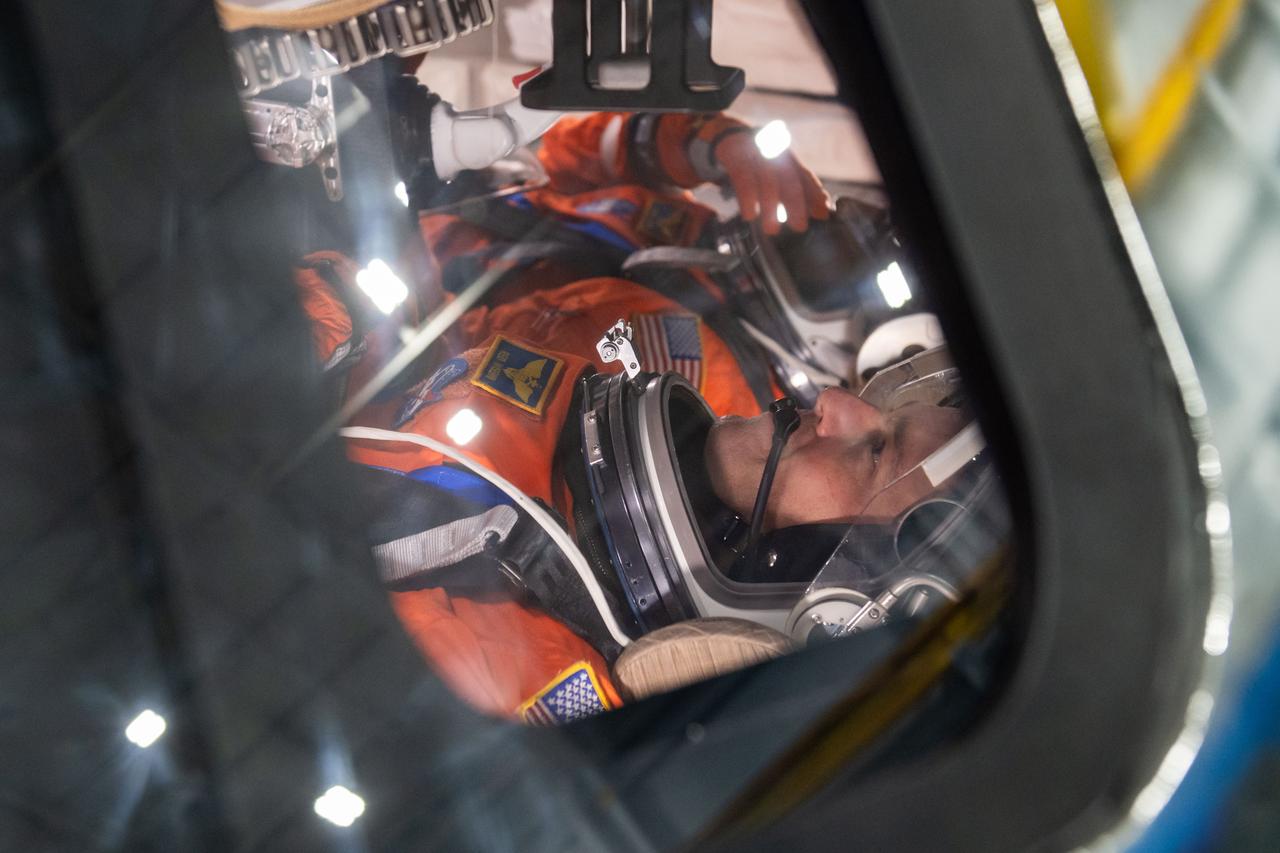
jsc2025e004074 (Jan. 30, 2025) --- NASA astronaut and Artemis II commander Reid Wiseman inside of the Orion spacecraft mockup during Post Insertion and Deorbit Preparation training at the Space Vehicle Mockup Facility in Houston, Texas. The crew practiced getting the Orion spacecraft configured once in orbit, how to make it habitable, and suited up in their entry pressure suits to prepare for their return from the Moon. Credit: NASA/Mark Sowa
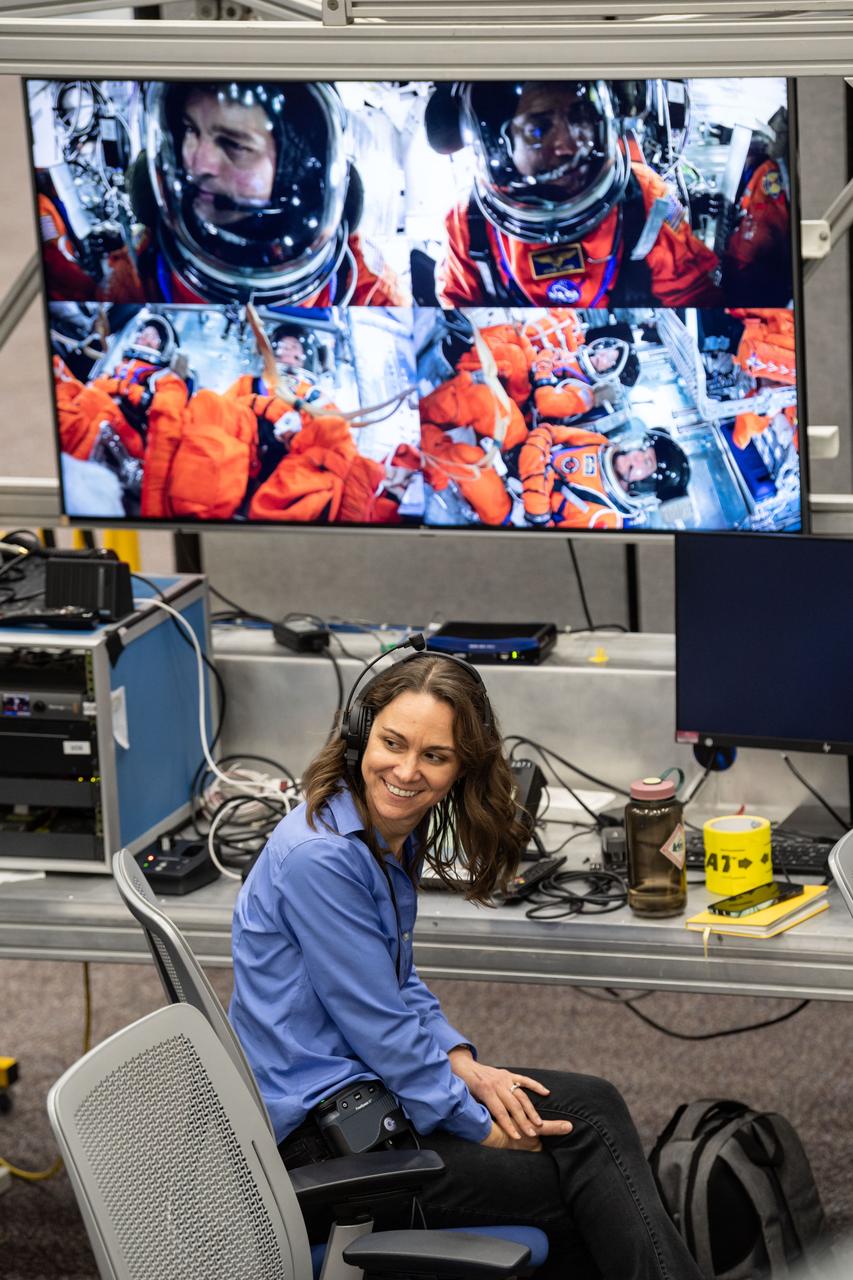
jsc2025e004084 (Jan. 30, 2025) --- The Artemis II crew’s Chief Training Officer Jacki Mahaffey smiles during Post Insertion and Deorbit Preparation training at the Space Vehicle Mockup Facility in Houston, Texas. The crew practiced getting the Orion spacecraft configured once in orbit, how to make it habitable, and suited up in their entry pressure suits to prepare for their return from the Moon. Credit: NASA/Mark Sowa
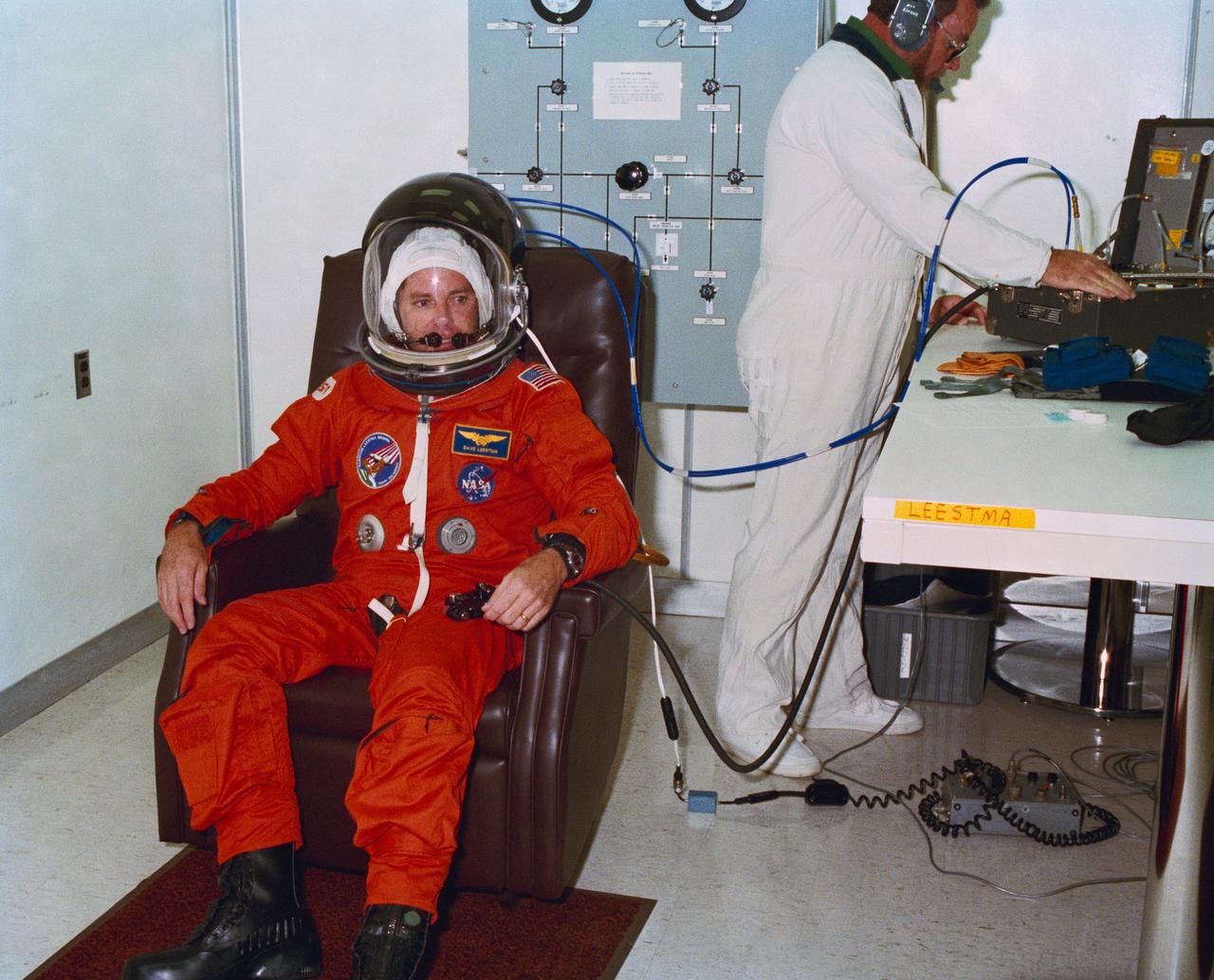
S89-41093 (9 Aug 1989) --- STS-28 Columbia, Orbiter Vehicle (OV) 102, mission specialist David C. Leestma relaxes in chair after donning launch and entry suit (LES) and launch and entry helmet (LEH). Technician in the background monitors LES systems. Leestma, along with fellow crewmembers, is participating in the terminal countdown demonstration test (TCDT) at the Kennedy Space Center (KSC) Operations and Checkout (O&C) Building. View provided by KSC with alternate number KSC-89PC-673.

S89-39471 (17 July 1989) --- STS-28 Columbia, Orbiter Vehicle (OV) 102, Pilot Richard N. Richards, adjusts launch and entry suit (LES) neck ring after donning launch and entry helmet (LEH). Richards prepares for shuttle emergency egress (bailout) procedures in the Johnson Space Center (JSC) Mockup and Integration Laboratory Bldg 9A.
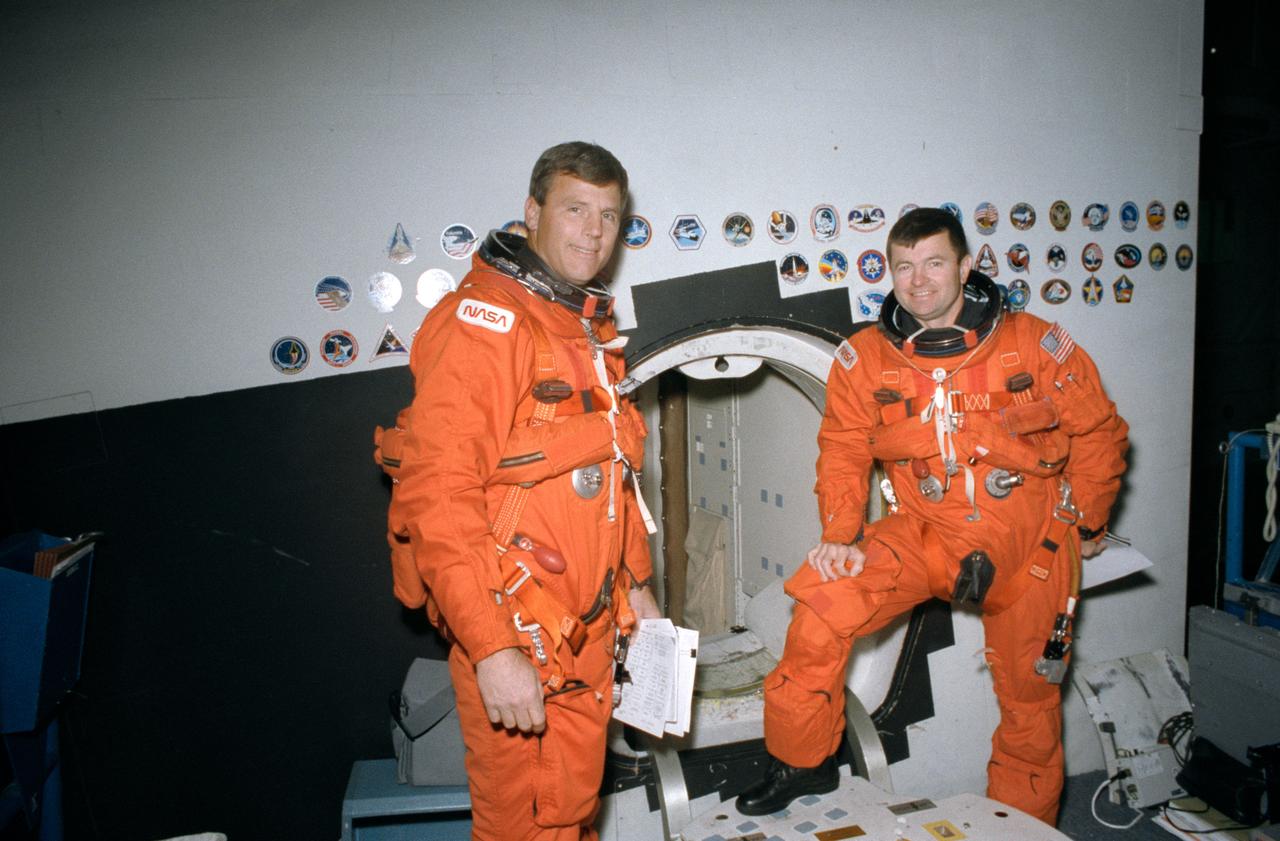
STS-56 Discovery, Orbiter Vehicle (OV) 103, Commander Kenneth Cameron (right) and Pilot Stephen S. Oswald, wearing launch and entry suits (LESs), stand at the side hatch of the crew compartment trainer (CCT), a shuttle mockup, prior to entering the mockup. Once inside the CCT, they will don their launch and entry helmets (LEHs) and participate in emergency egress (bailout) procedures. The CCT is located in JSC's Mockup and Integration Laboratory (MAIL) Bldg 9NE.
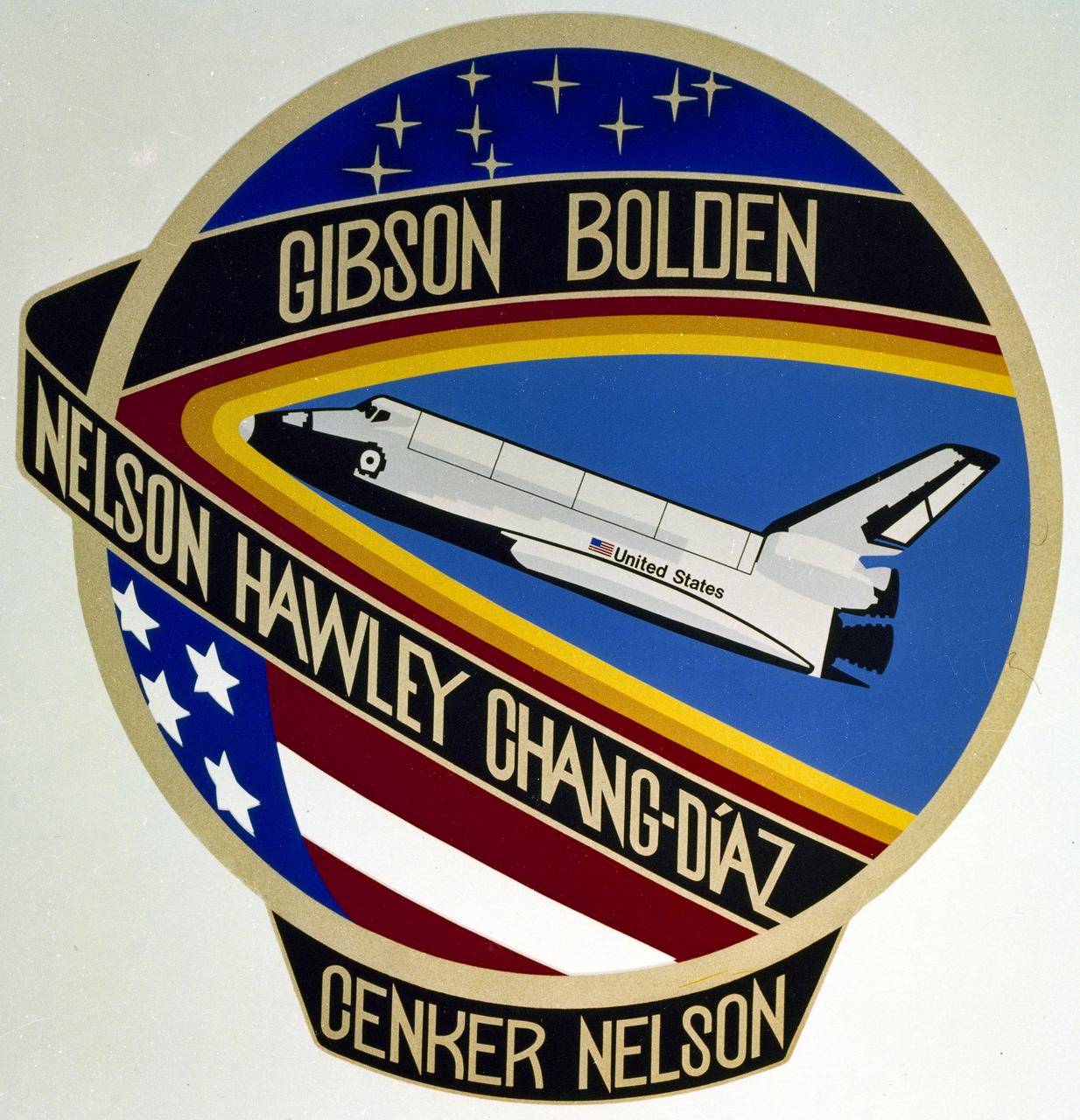
Columbia, which opened the era of the Space Transportation System with four orbital flight tests, is featured in re-entry in the emblem designed by the STS-61C crew representing the seven team members who manned the vehicle for its seventh STS mission. Gold lettering against black background honors the astronaut crewmembers on the delta pattern surrounding colorful re-entry shock waves, and the payload specialists are honored similarly below the sphere
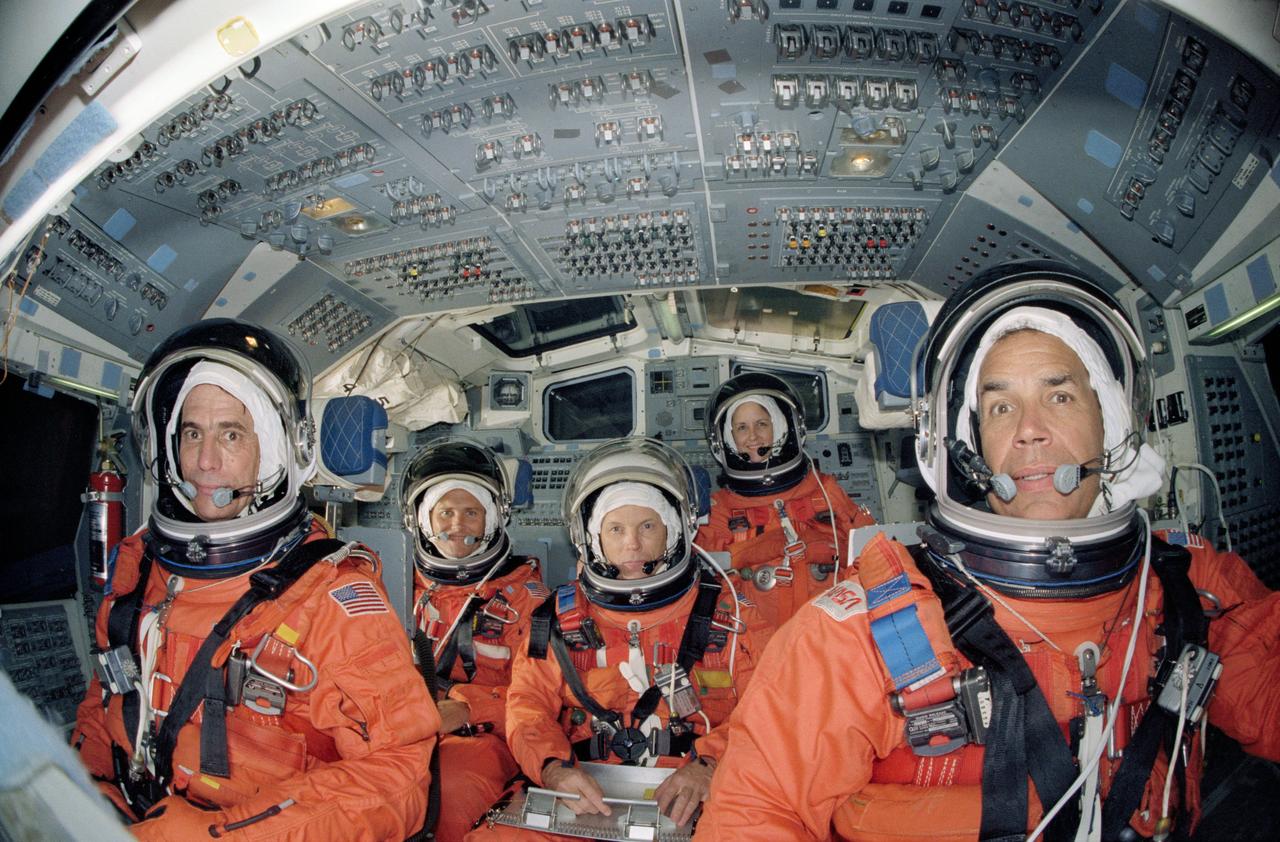
STS-33 Discovery, Orbiter Vehicle (OV) 103, crewmembers, wearing orange launch and entry suits (LESs) and launch and entry helmets (LEHs), are seated in their launch and entry positions on crew compartment trainer (CCT) flight deck during a training exercise in JSC Mockup and Integration Laboratory (MAIL) Bldg 9A. Commander Frederick D. Gregory (far right) is stationed at forward flight deck commanders controls, Pilot John E. Blaha (far left) at the pilots controls and on aft flight deck are mission specialists Manley L. Carter, Jr (left), MS F. Story Musgrave (center, holding clipboard), and MS Kathryn C. Thornton (standing). Overhead forward control panels are visible above the astronauts and aft flight deck onorbit station control panels and windows are visible in the background. Thornton is on the flight deck for this photo but during launch and entry will be seated on the middeck.
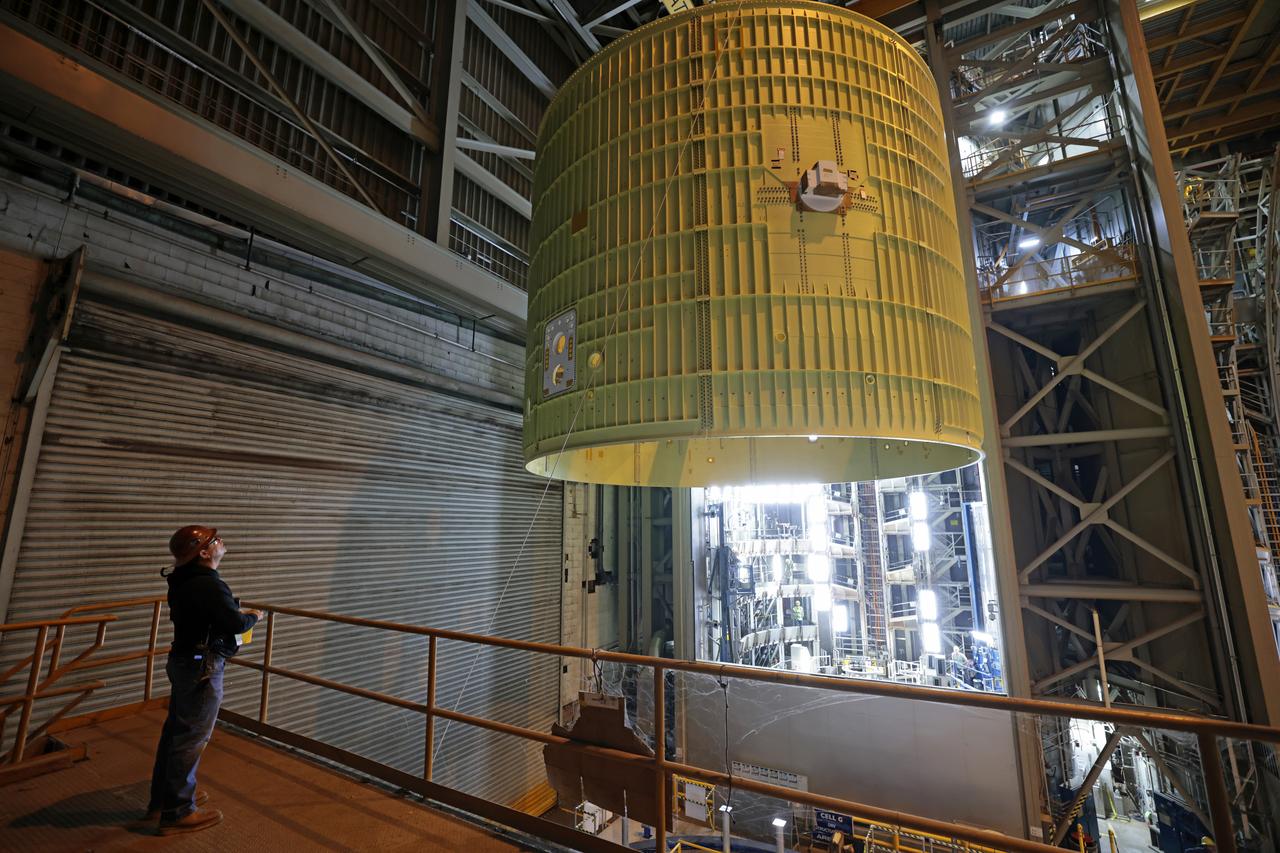
Technicians at NASA’s Michoud Assembly Facility move the intertank of NASA’s Space Launch System rocket for Artemis III to Cell G on October 26, 2022 to await application of the thermal protection system. Thermal protection systems protect space vehicles from aerodynamic heating during entry to planet atmosphere and re-entry to earth atmosphere. The intertank lays between the liquid hydrogen tank and liquid oxygen tank. Together with the engine section and the forward skirt, they comprise the SLS core stage. The liquid hydrogen tank and liquid oxygen tank hold 733,000 gallons of propellant to power the stage’s four RS-25 engines needed for liftoff and Artemis missions to the Moon and future missions to Mars. Image credit: NASA/Michael DeMocker
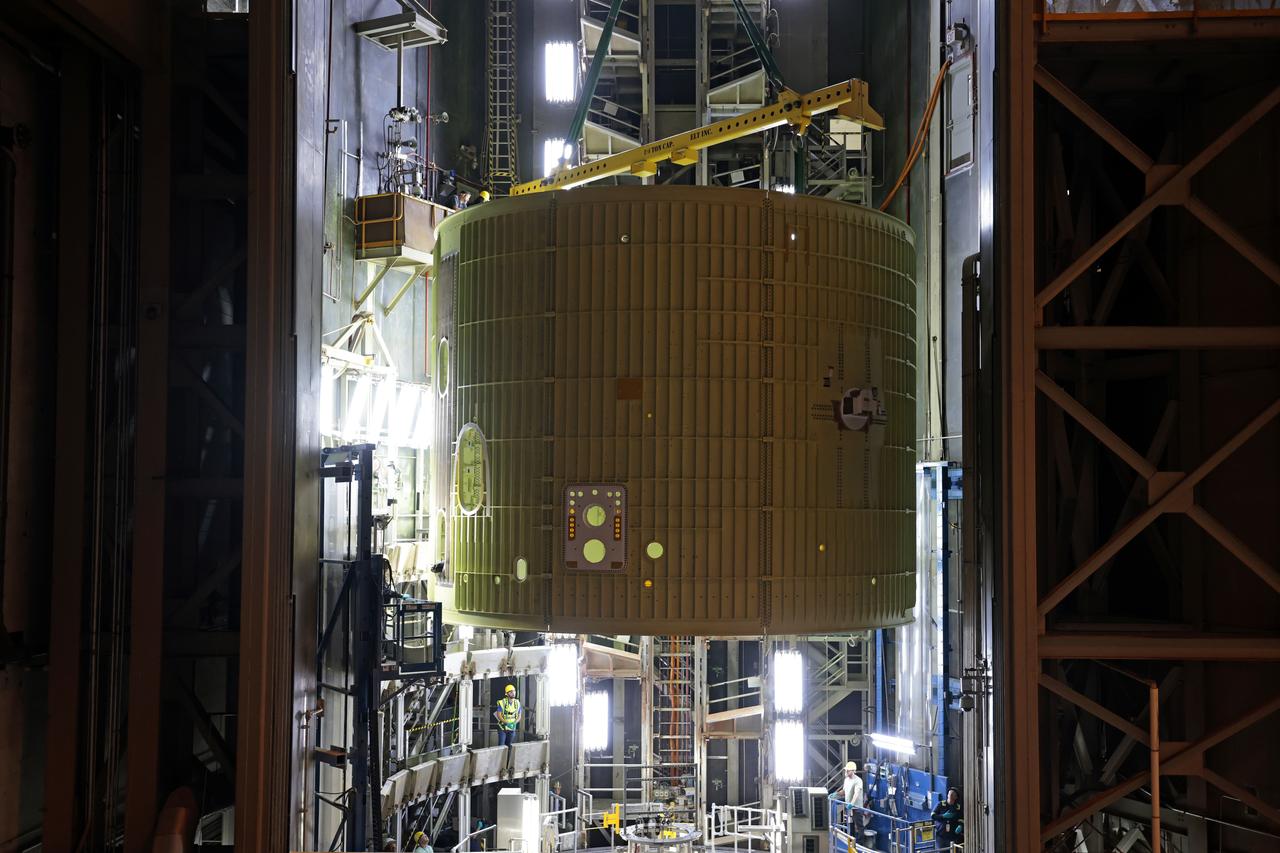
Technicians at NASA’s Michoud Assembly Facility move the intertank of NASA’s Space Launch System rocket for Artemis III to Cell G on October 26, 2022 to await application of the thermal protection system. Thermal protection systems protect space vehicles from aerodynamic heating during entry to planet atmosphere and re-entry to earth atmosphere. The intertank lays between the liquid hydrogen tank and liquid oxygen tank. Together with the engine section and the forward skirt, they comprise the SLS core stage. The liquid hydrogen tank and liquid oxygen tank hold 733,000 gallons of propellant to power the stage’s four RS-25 engines needed for liftoff and Artemis missions to the Moon and future missions to Mars. Image credit: NASA/Michael DeMocker
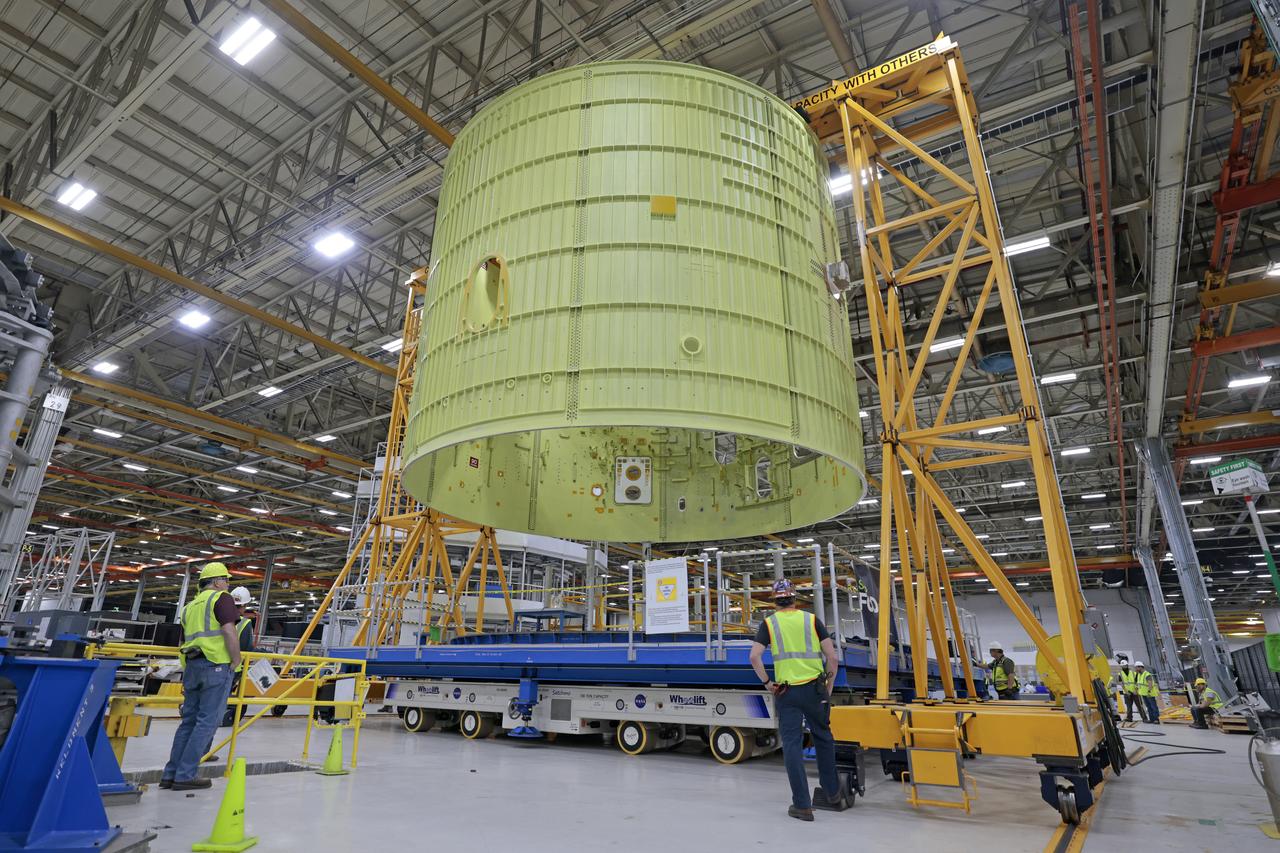
Technicians at NASA’s Michoud Assembly Facility move the intertank of NASA’s Space Launch System rocket for Artemis III to Cell G on October 26, 2022 to await application of the thermal protection system. Thermal protection systems protect space vehicles from aerodynamic heating during entry to planet atmosphere and re-entry to earth atmosphere. The intertank lays between the liquid hydrogen tank and liquid oxygen tank. Together with the engine section and the forward skirt, they comprise the SLS core stage. The liquid hydrogen tank and liquid oxygen tank hold 733,000 gallons of propellant to power the stage’s four RS-25 engines needed for liftoff and Artemis missions to the Moon and future missions to Mars. Image credit: NASA/Michael DeMocker
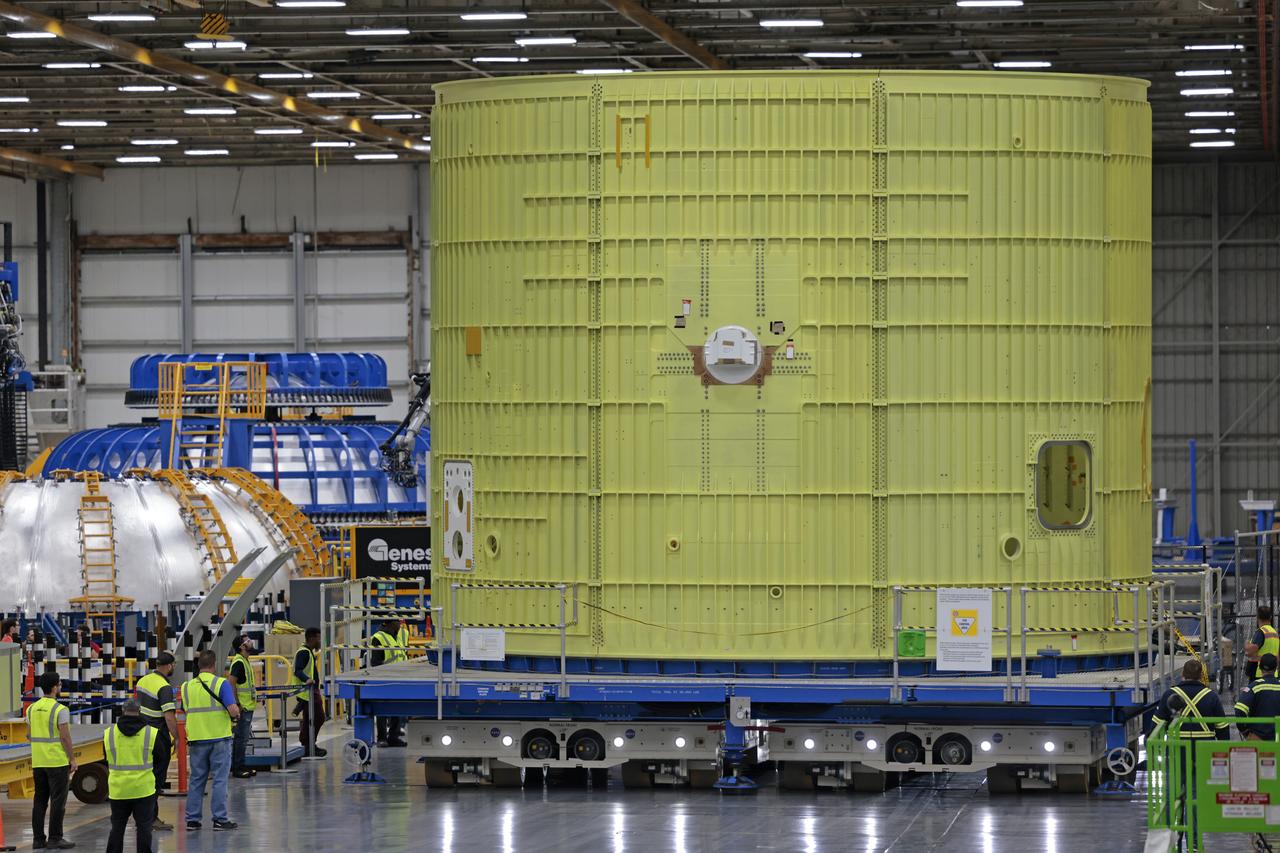
Technicians at NASA’s Michoud Assembly Facility move the intertank of NASA’s Space Launch System rocket for Artemis III to Cell G on October 26, 2022 to await application of the thermal protection system. Thermal protection systems protect space vehicles from aerodynamic heating during entry to planet atmosphere and re-entry to earth atmosphere. The intertank lays between the liquid hydrogen tank and liquid oxygen tank. Together with the engine section and the forward skirt, they comprise the SLS core stage. The liquid hydrogen tank and liquid oxygen tank hold 733,000 gallons of propellant to power the stage’s four RS-25 engines needed for liftoff and Artemis missions to the Moon and future missions to Mars. Image credit: NASA/Michael DeMocker

Technicians at NASA’s Michoud Assembly Facility move the intertank of NASA’s Space Launch System rocket for Artemis III to Cell G on October 26, 2022 to await application of the thermal protection system. Thermal protection systems protect space vehicles from aerodynamic heating during entry to planet atmosphere and re-entry to earth atmosphere. The intertank lays between the liquid hydrogen tank and liquid oxygen tank. Together with the engine section and the forward skirt, they comprise the SLS core stage. The liquid hydrogen tank and liquid oxygen tank hold 733,000 gallons of propellant to power the stage’s four RS-25 engines needed for liftoff and Artemis missions to the Moon and future missions to Mars. Image credit: NASA/Michael DeMocker
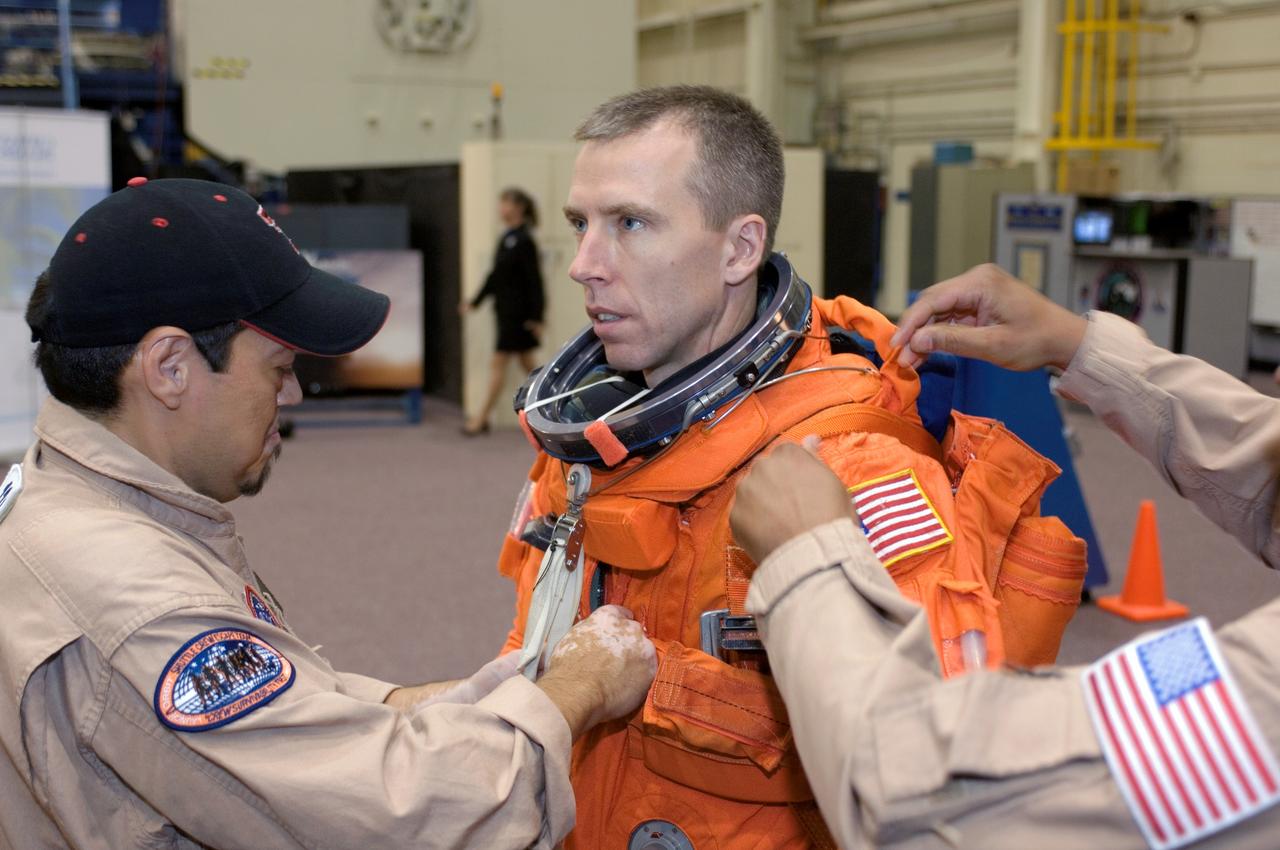
JSC2008-E-047965 (4 June 2008) --- Astronaut Andrew J. Feustel, STS-125 mission specialist, dons a training version of his shuttle launch and entry suit in preparation for a training session in the Space Vehicle Mockup Facility at NASA's Johnson Space Center. United Space Alliance suit technicians assisted Feustel.
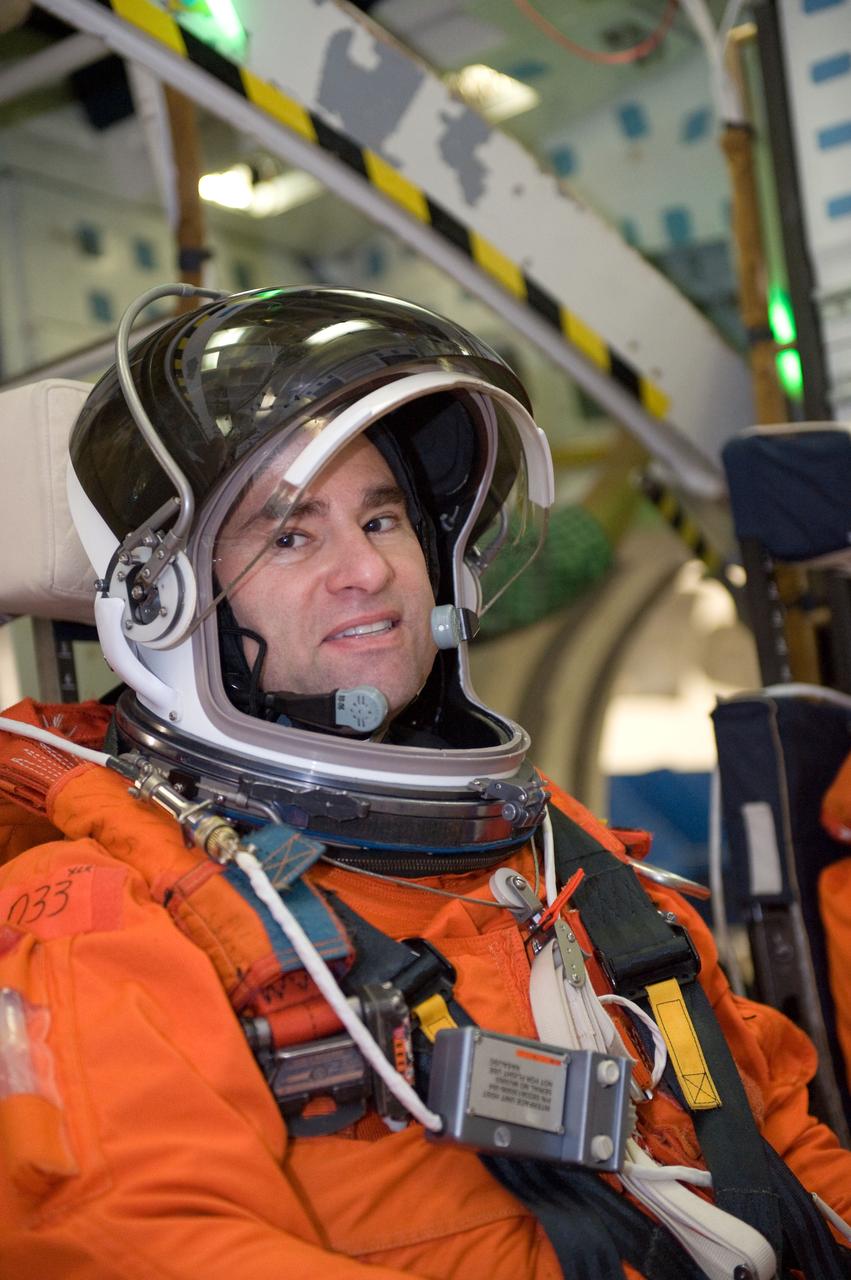
JSC2010-E-024596 (11 Feb. 2010) --- Attired in a training version of his shuttle launch and entry suit, NASA astronaut Greg Chamitoff, STS-134 mission specialist, participates in a training session on the middeck of the crew compartment trainer (CCT-2) in the Space Vehicle Mockup Facility at NASA's Johnson Space Center.
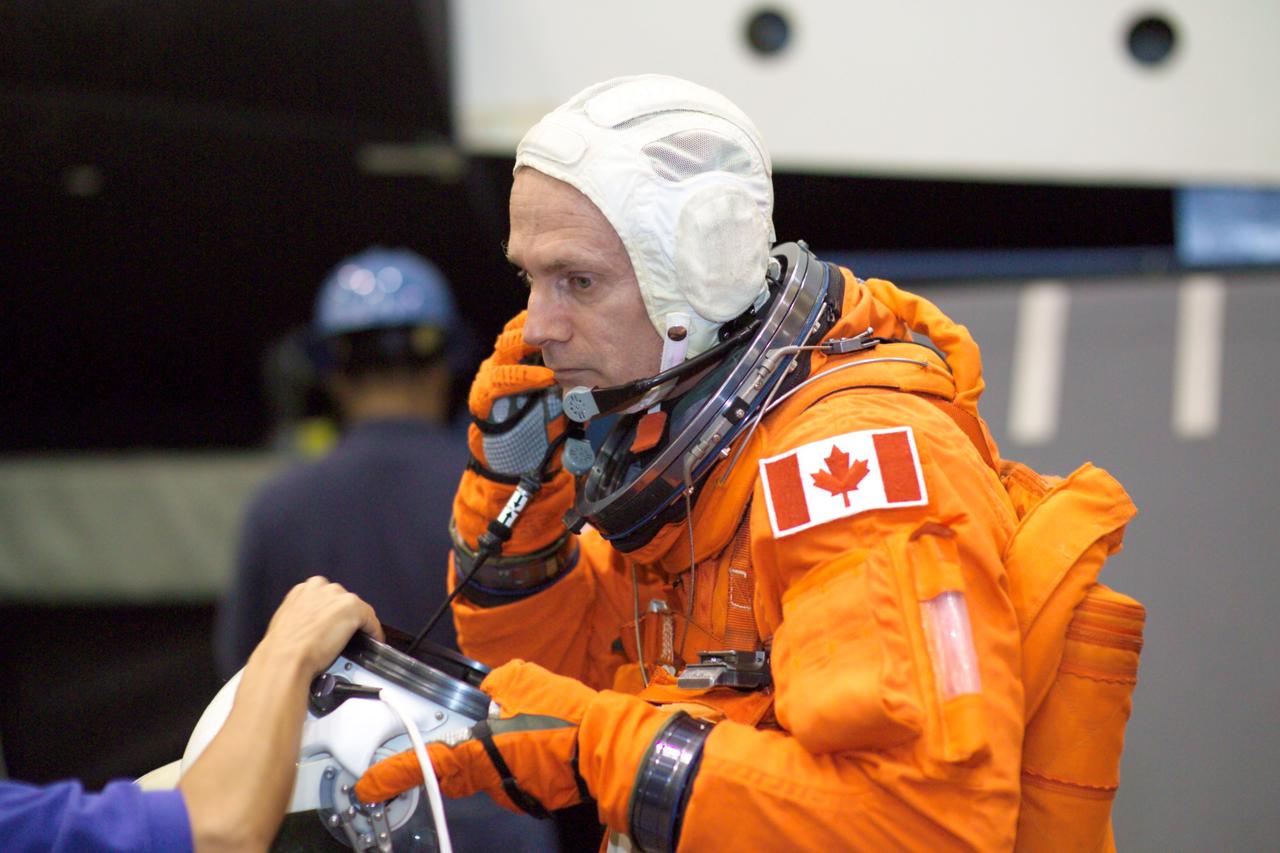
JSC2005-E-13822 (4 April 2005) --- Astronaut Steven G. MacLean, STS-115 mission specialist representing the Canadian Space Agency, dons a training version of the shuttle launch and entry suit prior to the start of an emergency egress training session in the Space Vehicle Mockup Facility at the Johnson Space Center.
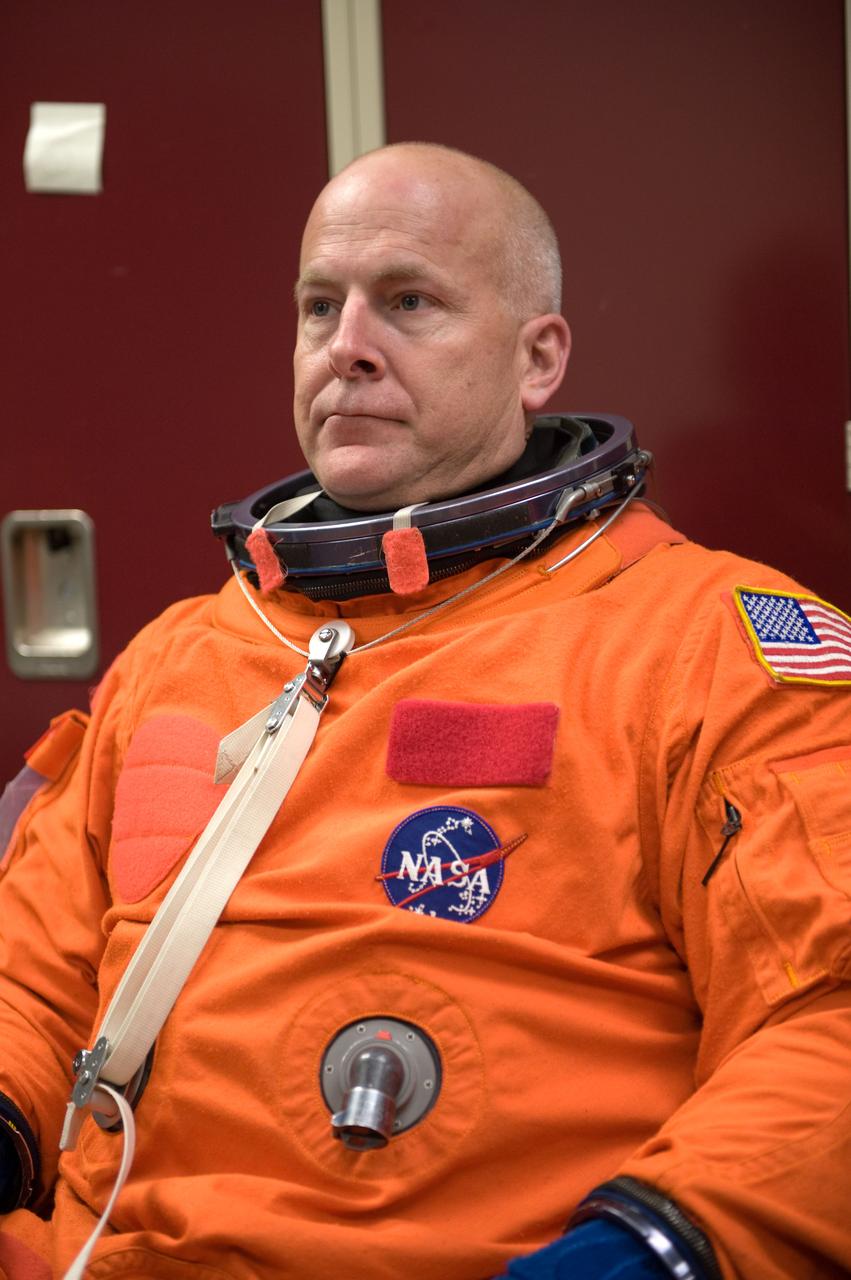
JSC2009-E-208005 (14 Sept. 2009) --- NASA astronaut Alan Poindexter, STS-131 commander, attired in a training version of his shuttle launch and entry suit, awaits the start of a training session in the Space Vehicle Mock-up Facility at NASA's Johnson Space Center.

JSC2010-E-024604 (11 Feb. 2010) --- NASA astronaut Mark Kelly, STS-134 commander, attired in a training version of his shuttle launch and entry suit, awaits the start of a training session in the crew compartment trainer (CCT-2) in the Space Vehicle Mockup Facility at NASA's Johnson Space Center.
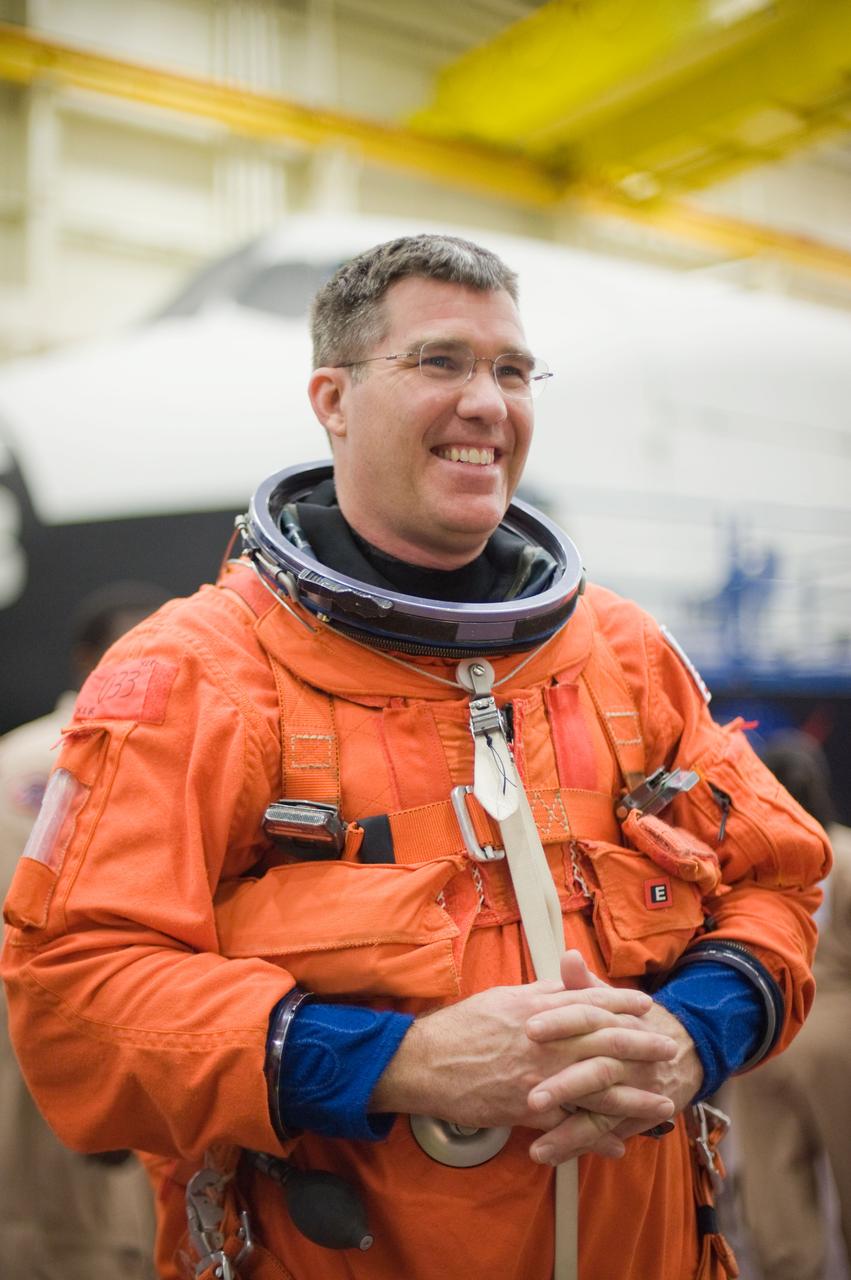
JSC2010-E-051996 (8 April 2010) --- NASA astronaut Steve Bowen, STS-132 mission specialist, attired in a training version of his shuttle launch and entry suit, awaits the start of an ingress/egress training session in the Space Vehicle Mock-up Facility at NASA's Johnson Space Center.

JSC2007-E-21204 (1 May 2007) --- Attired in a training version of his shuttle launch and entry suit, astronaut Leland D. Melvin, STS-122 mission specialist, awaits the start of an emergency egress training session in the Space Vehicle Mockup Facility at Johnson Space Center.
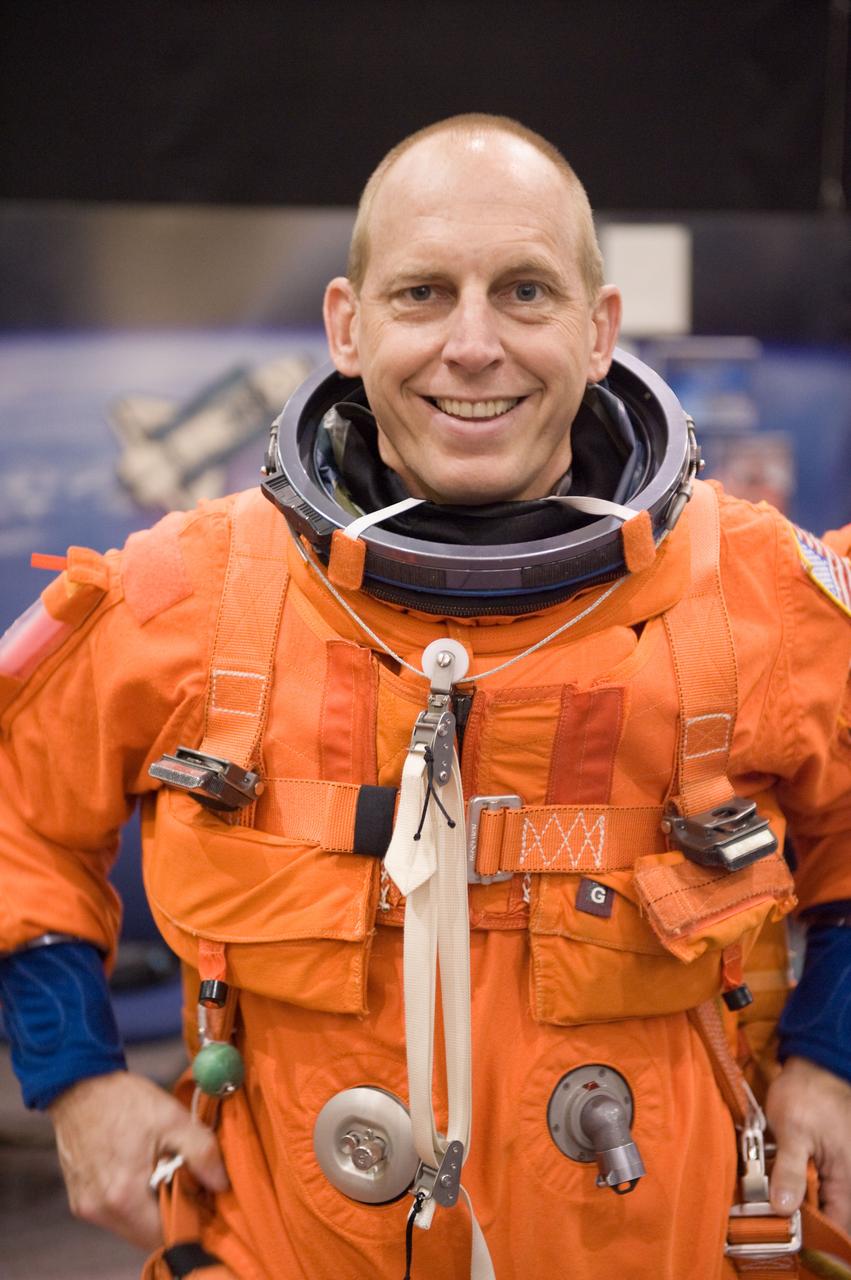
JSC2009-E-208016 (14 Sept. 2009) --- NASA astronaut Clay Anderson, STS-131 mission specialist, dons a training version of his shuttle launch and entry suit in preparation for a training session in the Space Vehicle Mock-up Facility at NASA's Johnson Space Center.
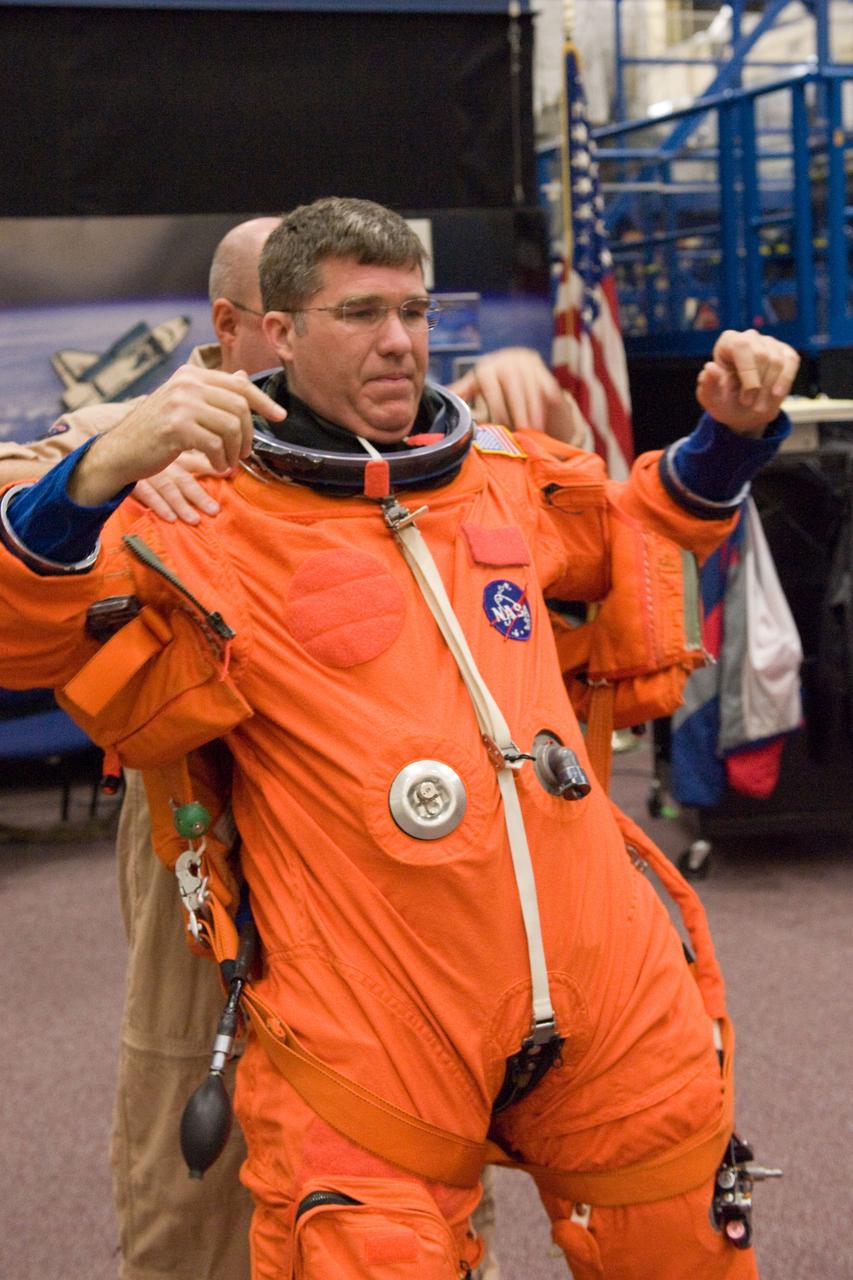
JSC2009-E-258453 (8 Dec. 2009) --- Astronaut Steve Bowen, STS-132 mission specialist, gets help in the donning of a training version of his shuttle launch and entry suit in preparation for a training session in the Space Vehicle Mock-up Facility at NASA's Johnson Space Center.
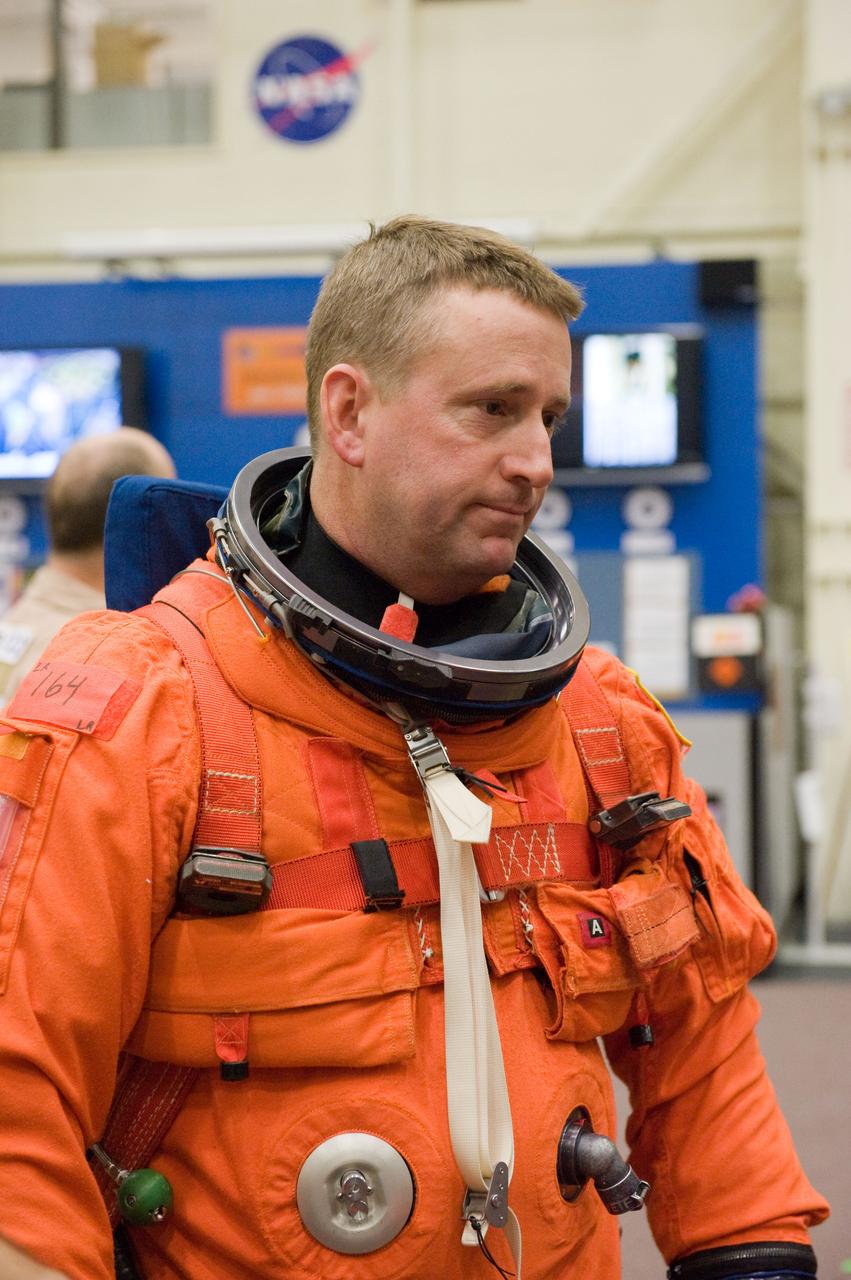
JSC2009-E-258469 (8 Dec. 2009) --- Astronaut Ken Ham, STS-132 commander, attired in a training version of his shuttle launch and entry suit, participates in a training session in the Space Vehicle Mock-up Facility at NASA's Johnson Space Center.
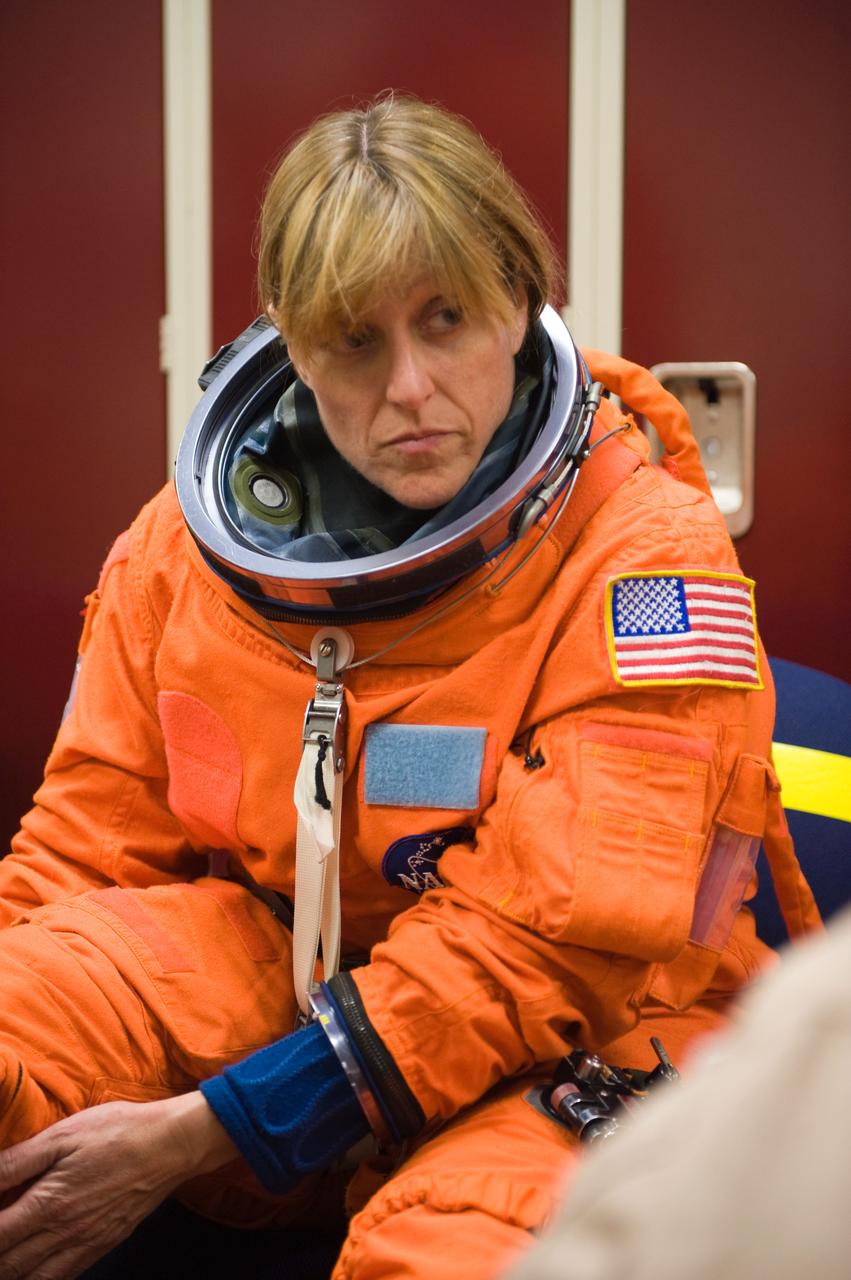
JSC2009-E-125130 (1 June 2009) --- Astronaut Kathryn Hire, STS-130 mission specialist, dons a training version of her shuttle launch and entry suit in preparation for a training session in the Space Vehicle Mock-up Facility at NASA?s Johnson Space Center.
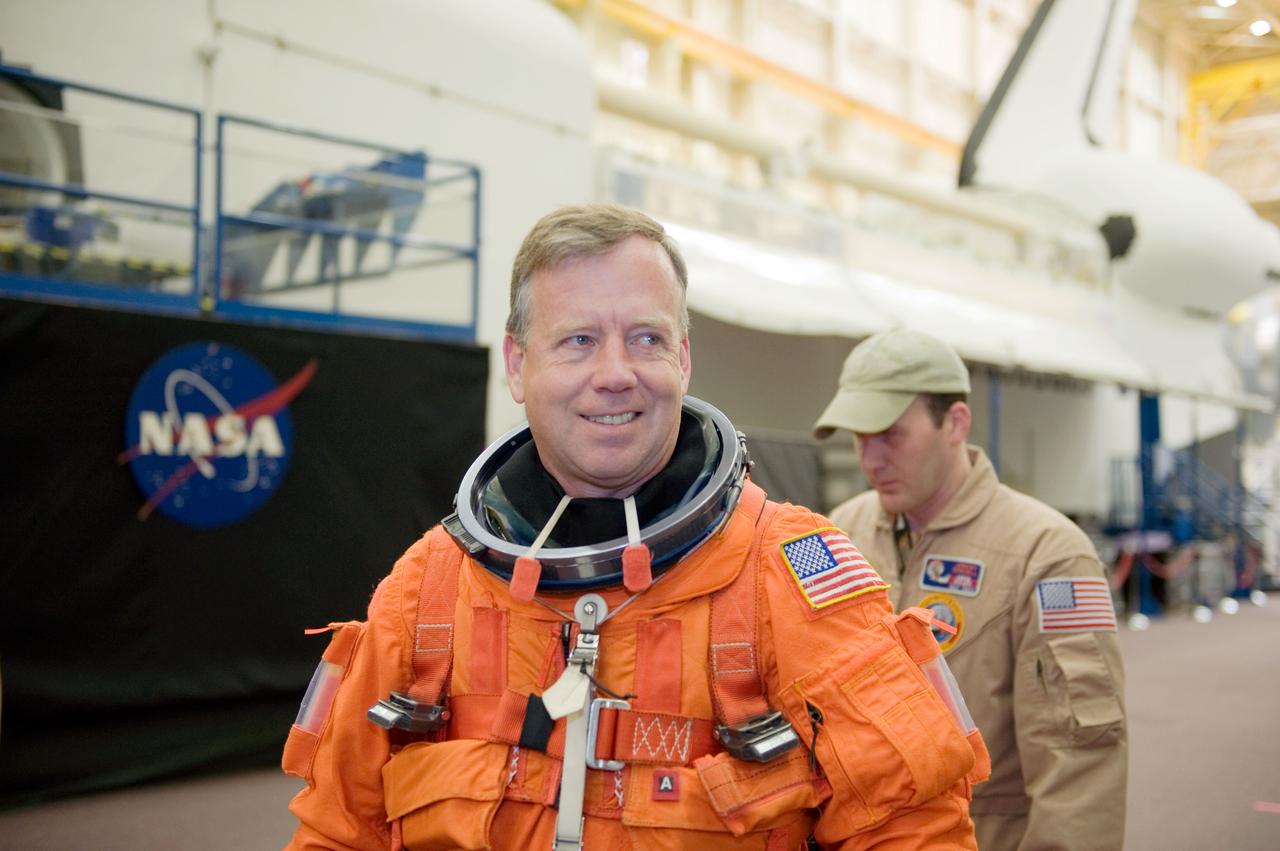
JSC2010-E-043930 (26 March 2010) --- NASA astronaut Steve Lindsey, STS-133 commander, attired in a training version of his shuttle launch and entry suit, is pictured during a training session in the Space Vehicle Mock-up Facility at NASA's Johnson Space Center.
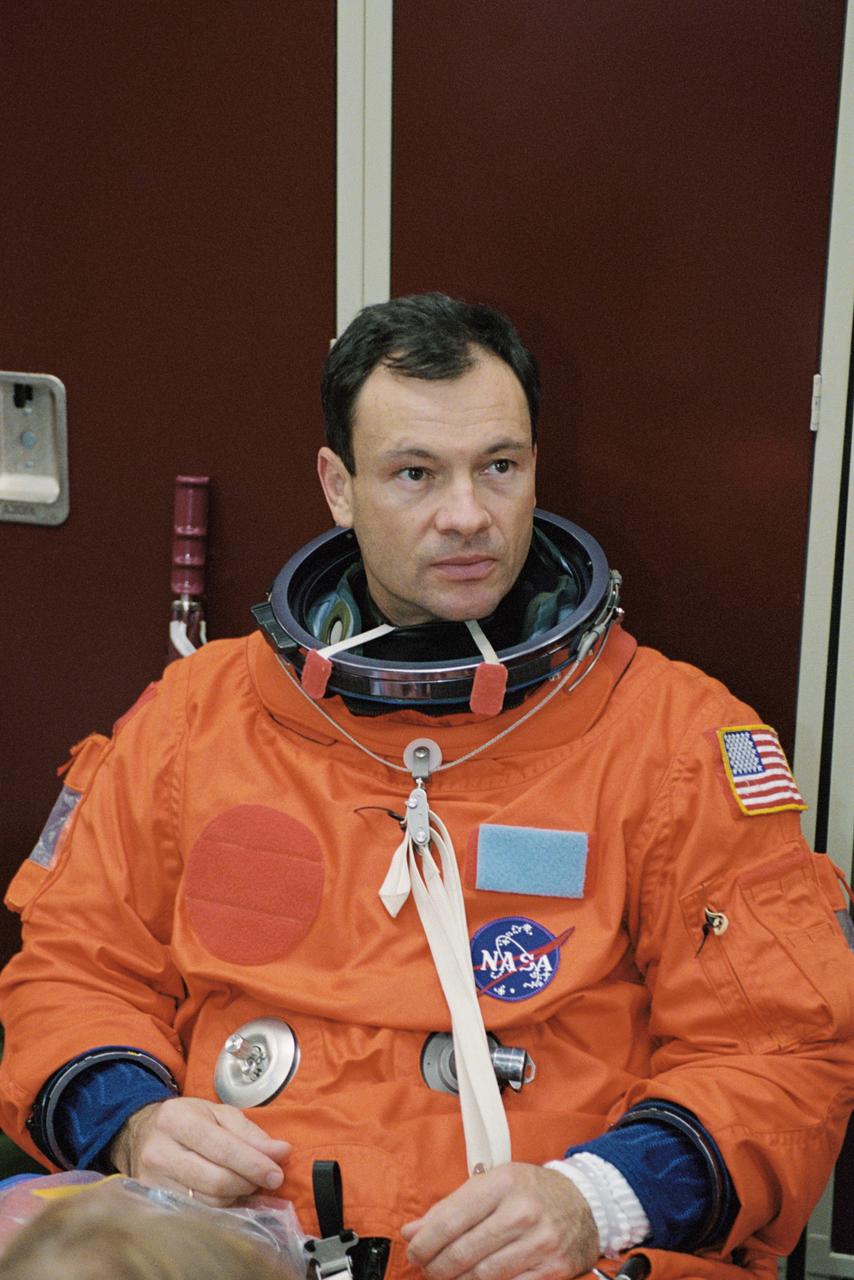
JSC2002-01742 (17 September 2002) --- Astronaut Michael E. Lopez-Alegria, STS-113 mission specialist, awaits the start of a training session in the Space Vehicle Mockup Facility at the Johnson Space Center (JSC). Lopez-Alegria is wearing a training version of the shuttle launch and entry suit.
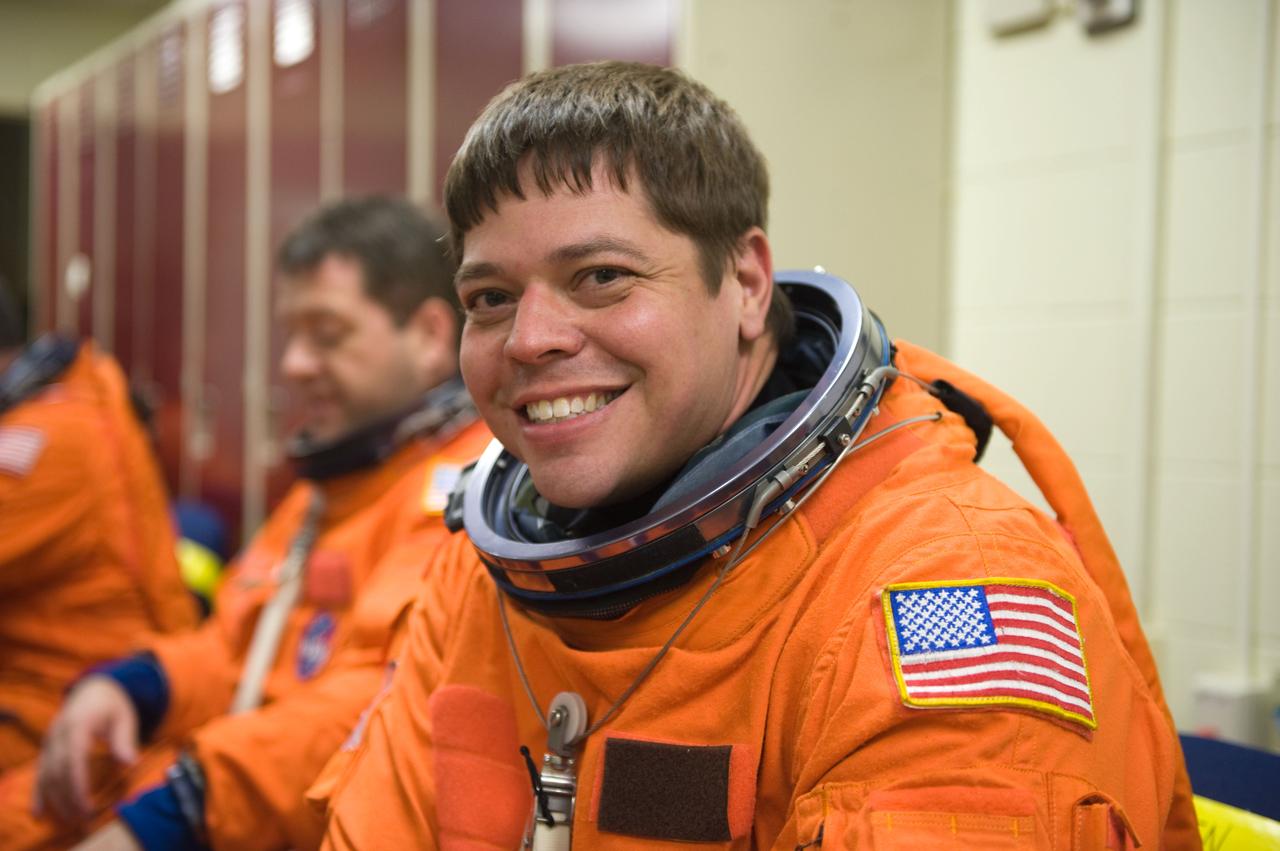
JSC2009-E-125127 (1 June 2009) --- Astronaut Robert Behnken, STS-130 mission specialist, attired in a training version of his shuttle launch and entry suit, awaits the start of a training session in the Space Vehicle Mock-up Facility at NASA?s Johnson Space Center.
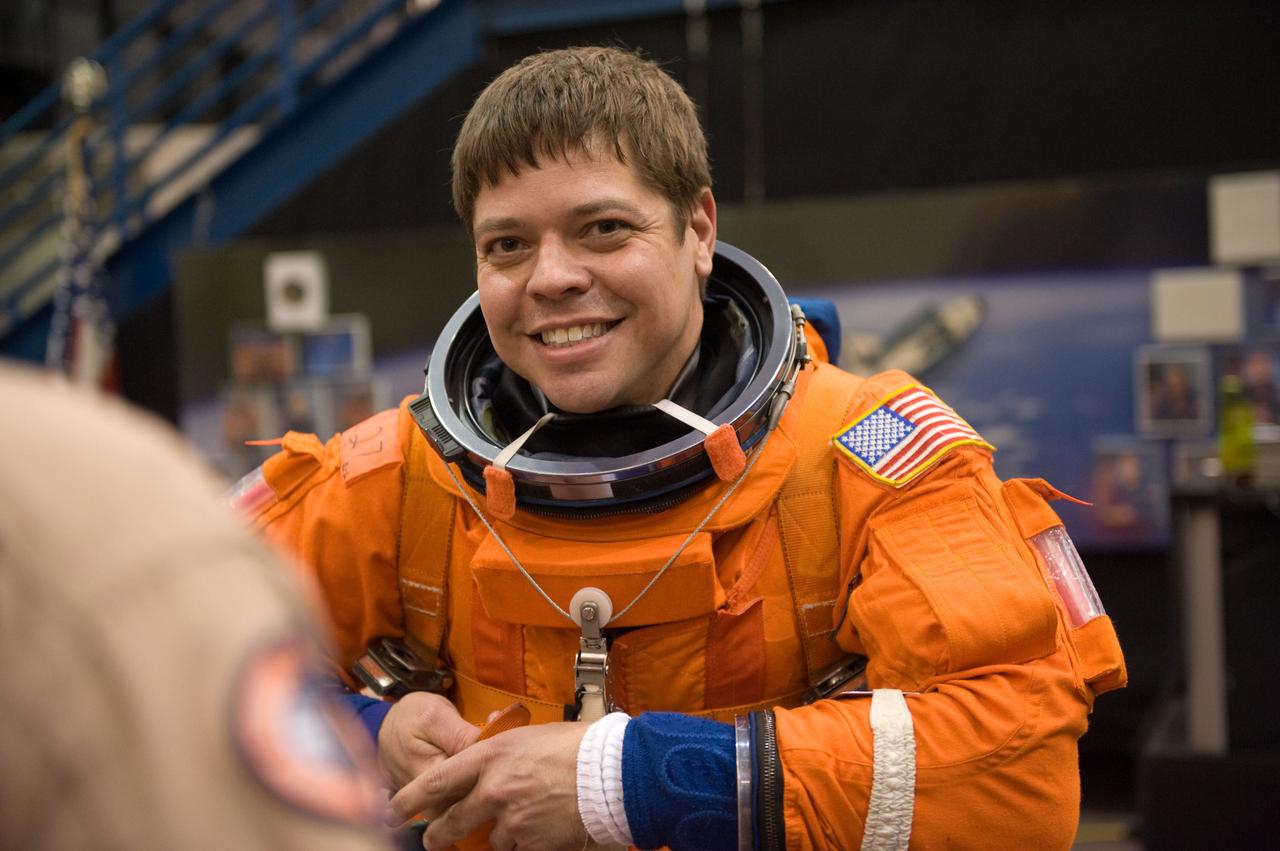
JSC2009-E-125135 (1 June 2009) --- Astronaut Robert Behnken, STS-130 mission specialist, dons a training version of his shuttle launch and entry suit in preparation for a training session in the Space Vehicle Mock-up Facility at NASA?s Johnson Space Center.
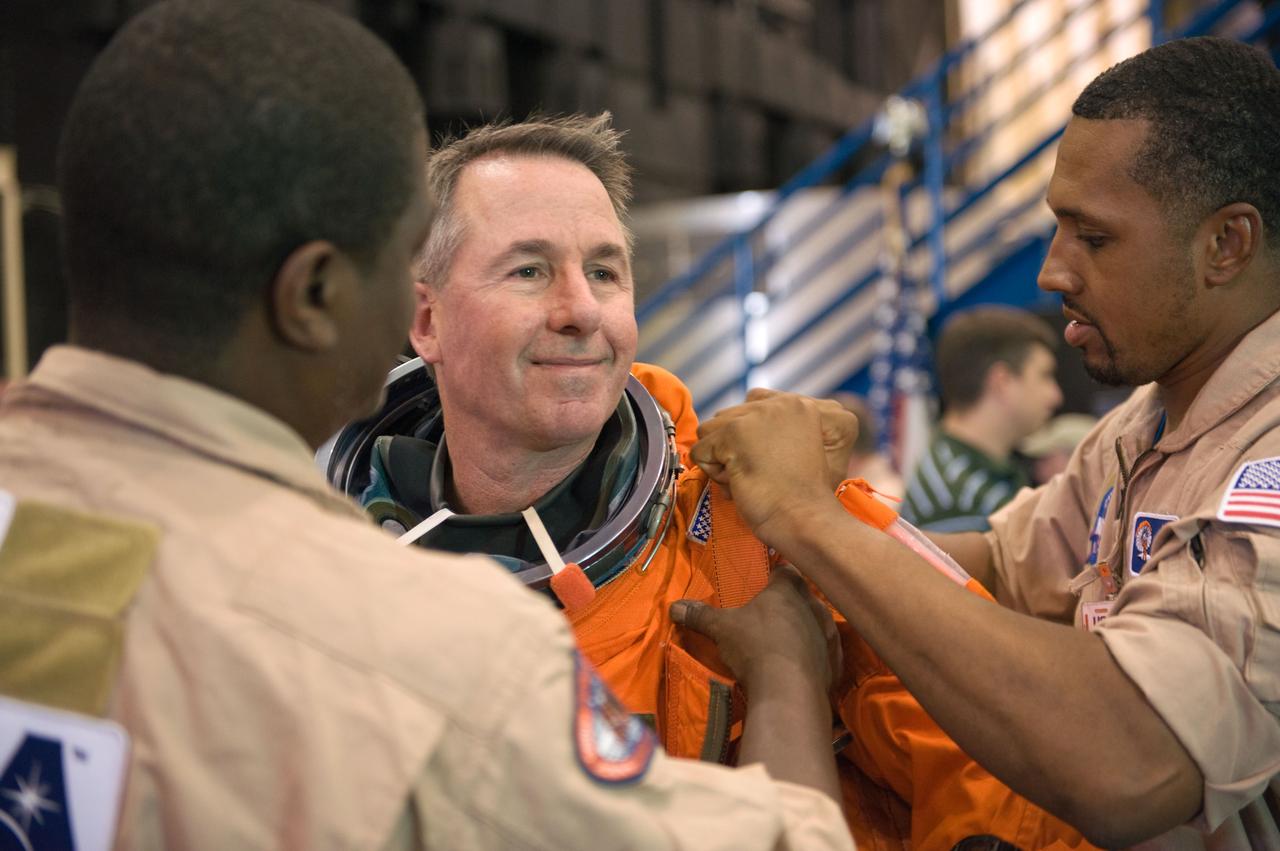
JSC2009-E-125140 (1 June 2009) --- Astronaut Stephen Robinson, STS-130 mission specialist, gets helps with the donning of a training version of his shuttle launch and entry suit in preparation for a training session in the Space Vehicle Mock-up Facility at NASA?s Johnson Space Center.
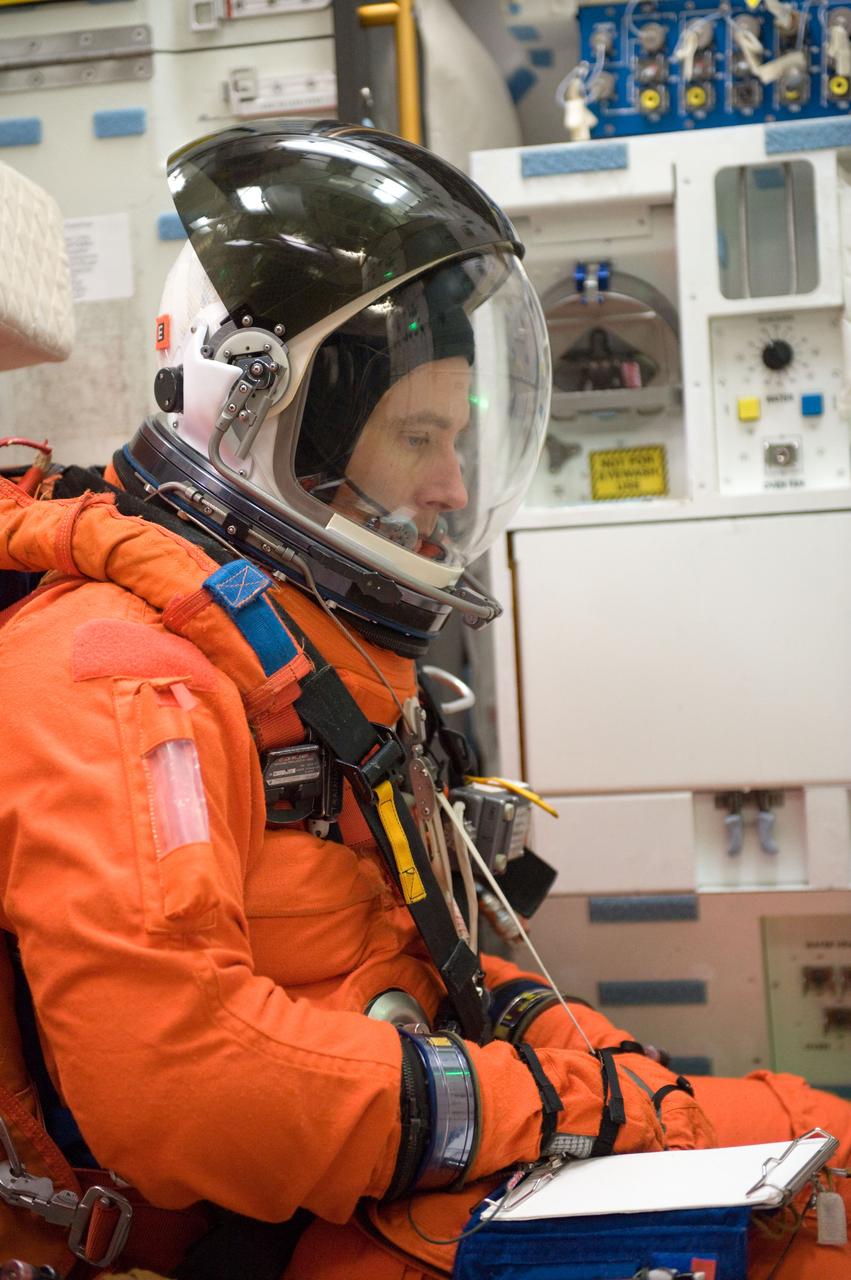
JSC2010-E-024597 (11 Feb. 2010) --- Attired in a training version of his shuttle launch and entry suit, NASA astronaut Andrew Feustel, STS-134 mission specialist, participates in a training session on the middeck of the crew compartment trainer (CCT-2) in the Space Vehicle Mockup Facility at NASA's Johnson Space Center.
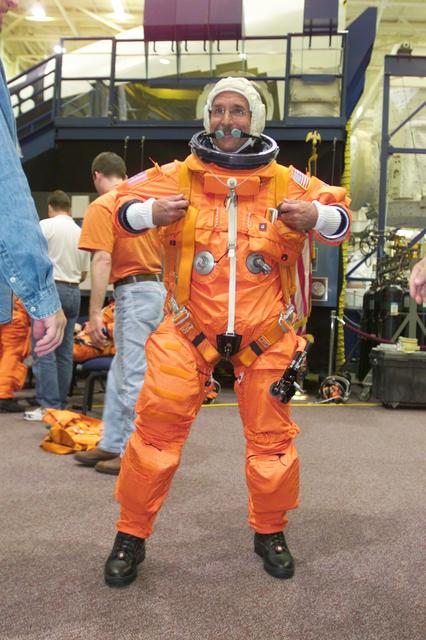
JSC2004-E-42270 (24 September 2004) --- Astronaut Charles J. Camarda, STS-114 mission specialist, dons a training version of the shuttle launch and entry suit, prior to the start of a mission training session in the Space Vehicle Mockup Facility at Johnson Space Center (JSC).
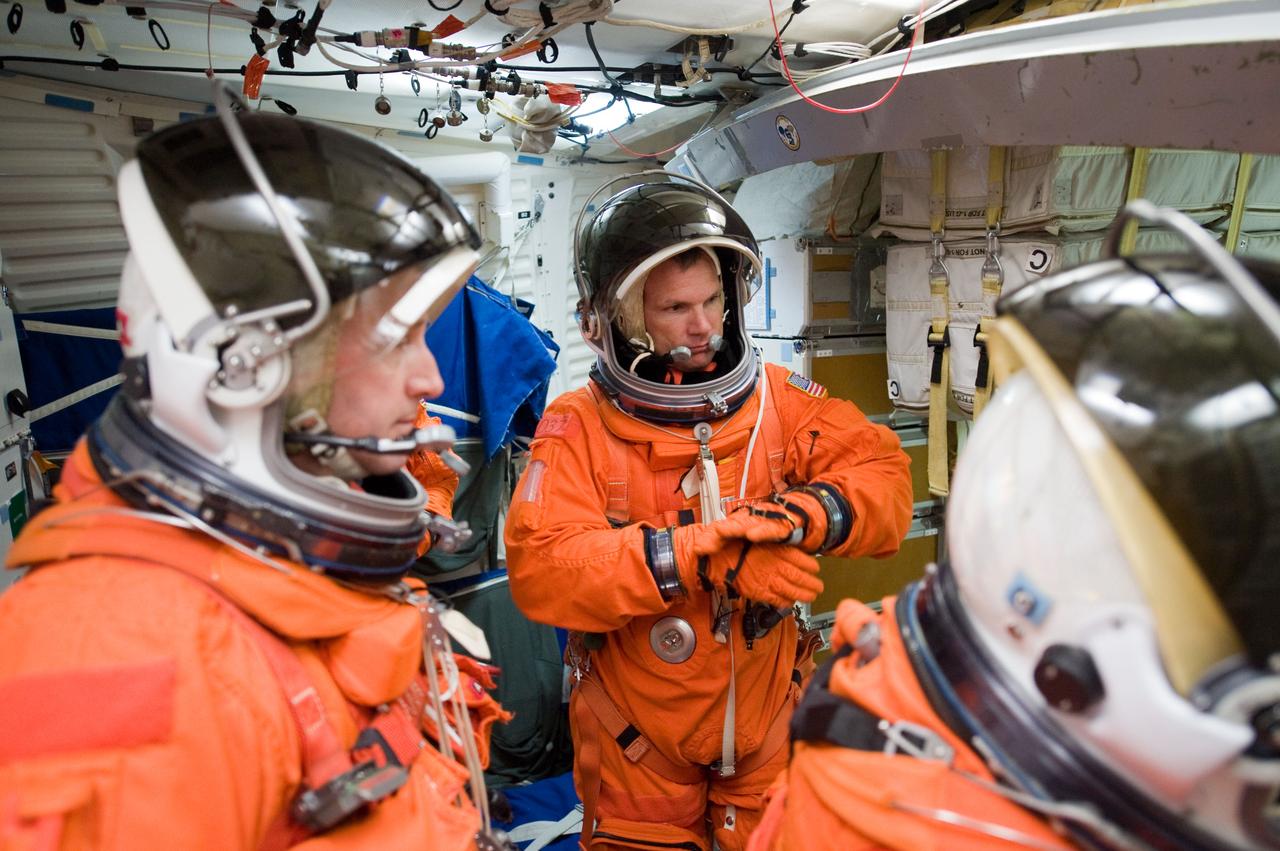
JSC2009-E-224172 (20 Oct. 2009) --- Attired in training versions of their shuttle launch and entry suits, astronauts Ken Ham (left), STS-132 commander; and Tony Antonelli, pilot, are pictured during a training session in one of the full-scale trainers in the Space Vehicle Mock-up Facility at NASA's Johnson Space Center.
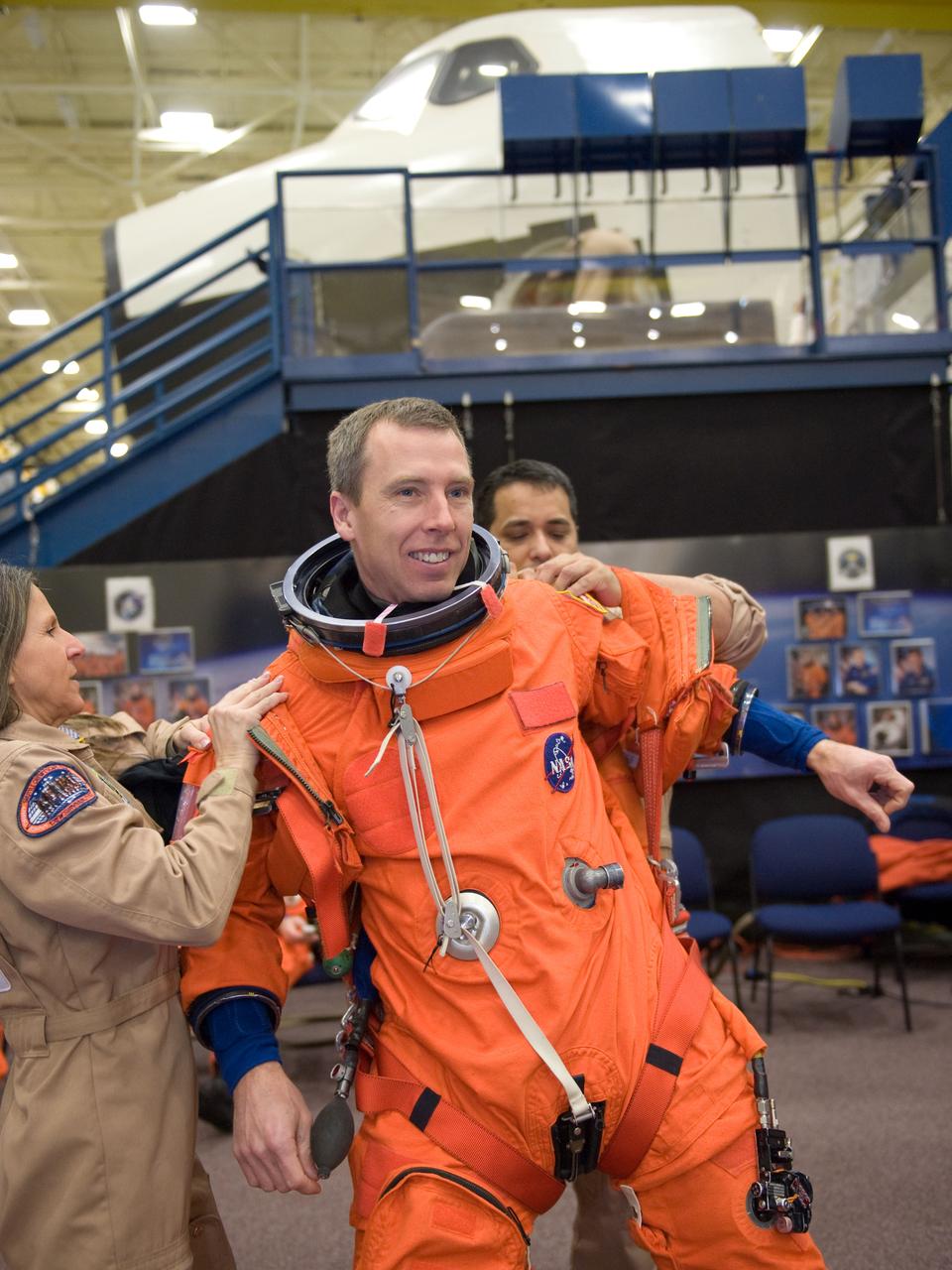
JSC2010-E-024588 (11 Feb. 2010) --- NASA astronaut Andrew Feustel, STS-134 mission specialist, gets help with the donning of a training version of his shuttle launch and entry suit in preparation for a training session in the Space Vehicle Mock-up Facility at NASA?s Johnson Space Center.

JSC2002-00805 (12 April 2002) --- Cosmonaut Fyodor N. Yurchikhin, STS-112 mission specialist representing Rosaviakosmos, attired in a training version of the shuttle launch and entry suit, waits for the start of a photo and training session in the Space Vehicle Mockup Facility at the Johnson Space Center (JSC).
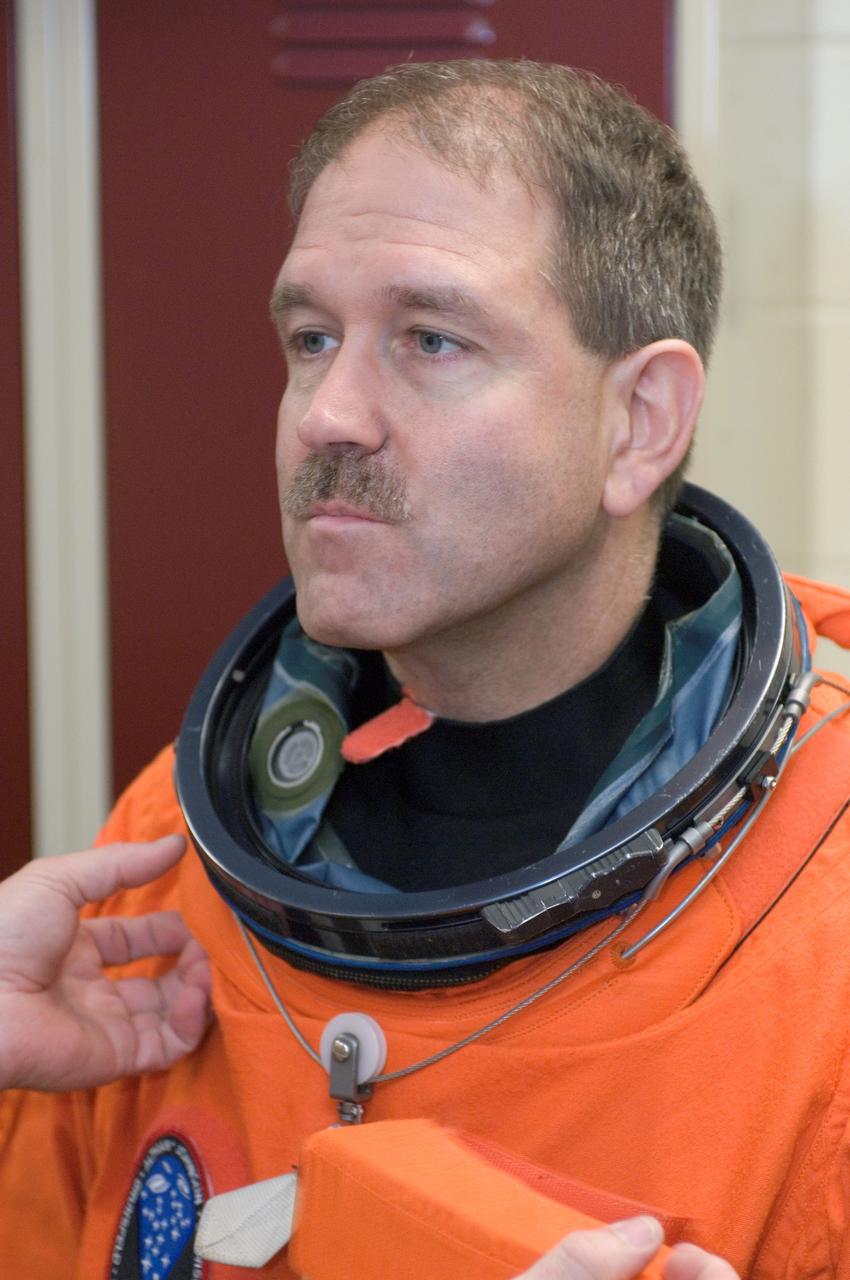
JSC2008-E-047958 (4 June 2008) --- Astronaut John M. Grunsfeld, STS-125 mission specialist, dons a training version of his shuttle launch and entry suit in preparation for a training session in the Space Vehicle Mockup Facility at NASA's Johnson Space Center.
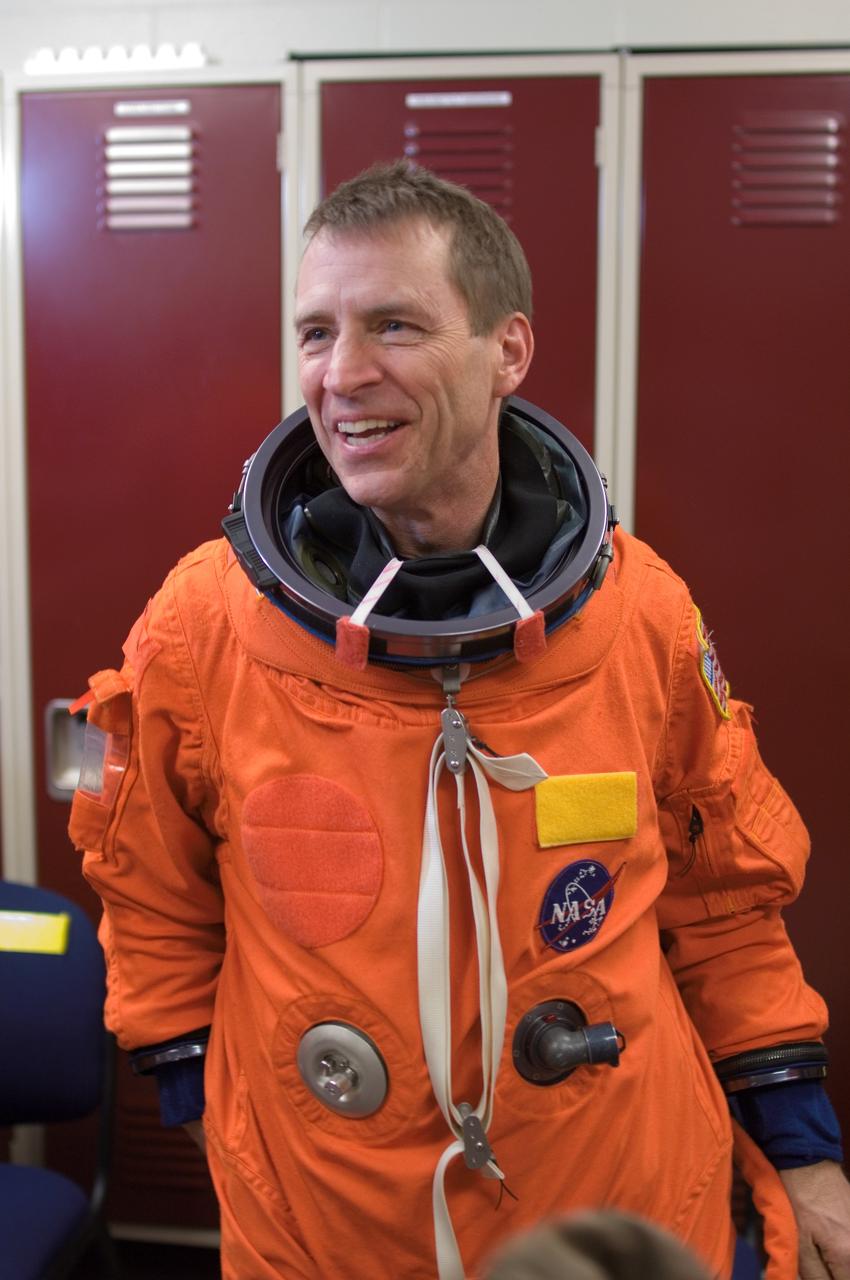
JSC2008-E-008429 (29 Jan. 2008) --- Attired in a training version of his shuttle launch and entry suit, astronaut Gregory C. Johnson, STS-125 pilot, awaits the start of a training session in the Space Vehicle Mockup Facility at Johnson Space Center.
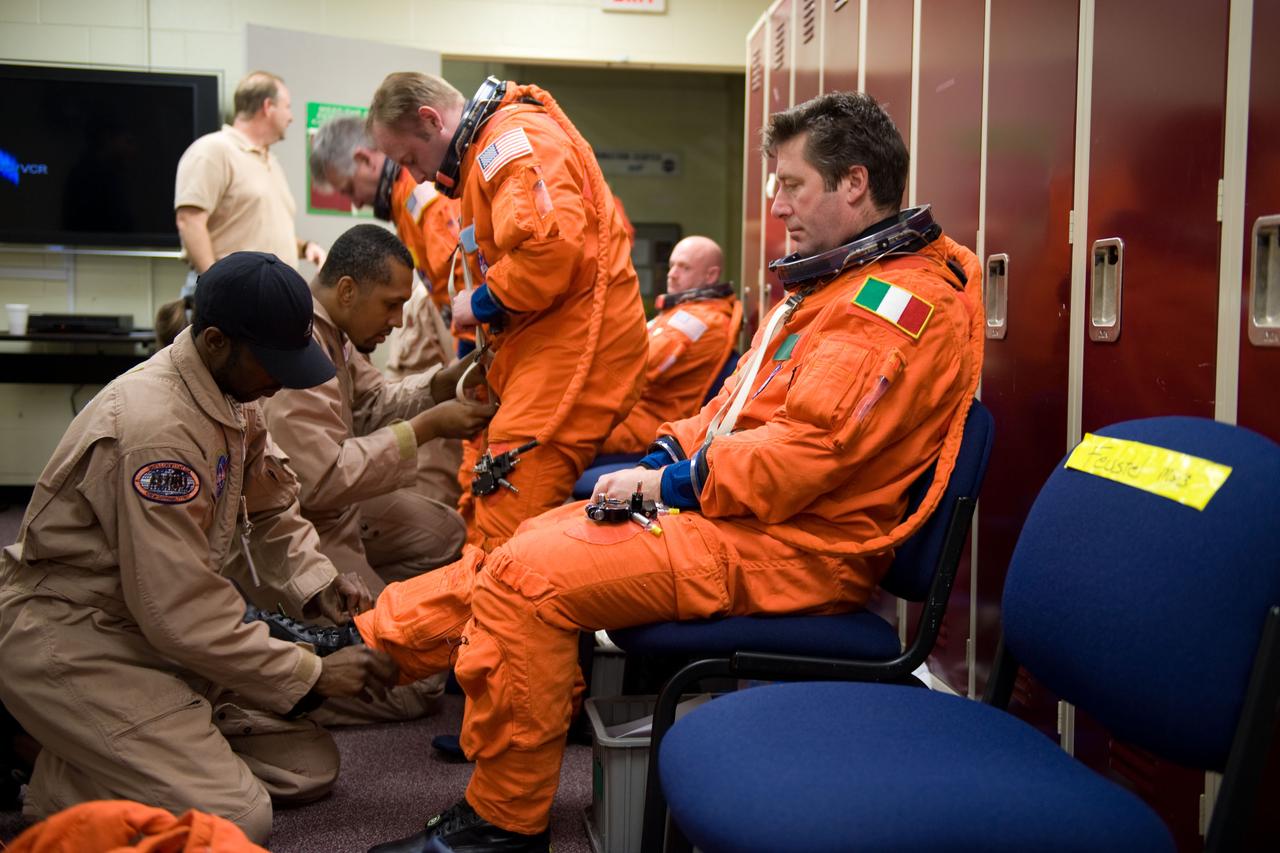
JSC2010-E-018871 (3 Feb. 2010) --- European Space Agency astronaut Roberto Vittori, STS-134 mission specialist, gets help with the donning of a training version of his shuttle launch and entry suit in preparation for a training session in the Space Vehicle Mock-up Facility at NASA?s Johnson Space Center.
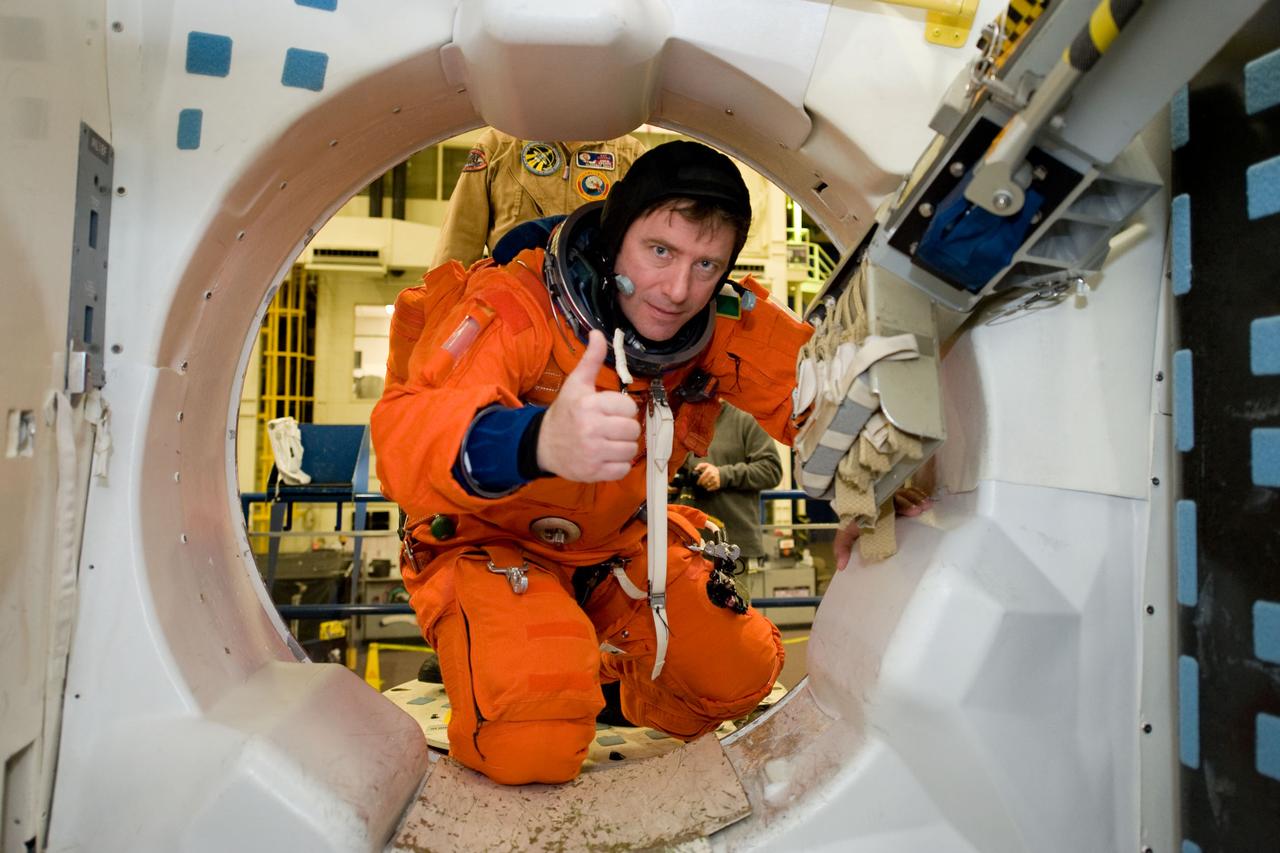
JSC2010-E-018893 (3 Feb. 2010) --- European Space Agency astronaut Roberto Vittori, STS-134 mission specialist, attired in a training version of his shuttle launch and entry suit, participates in a training session in the Space Vehicle Mock-up Facility at NASA's Johnson Space Center.
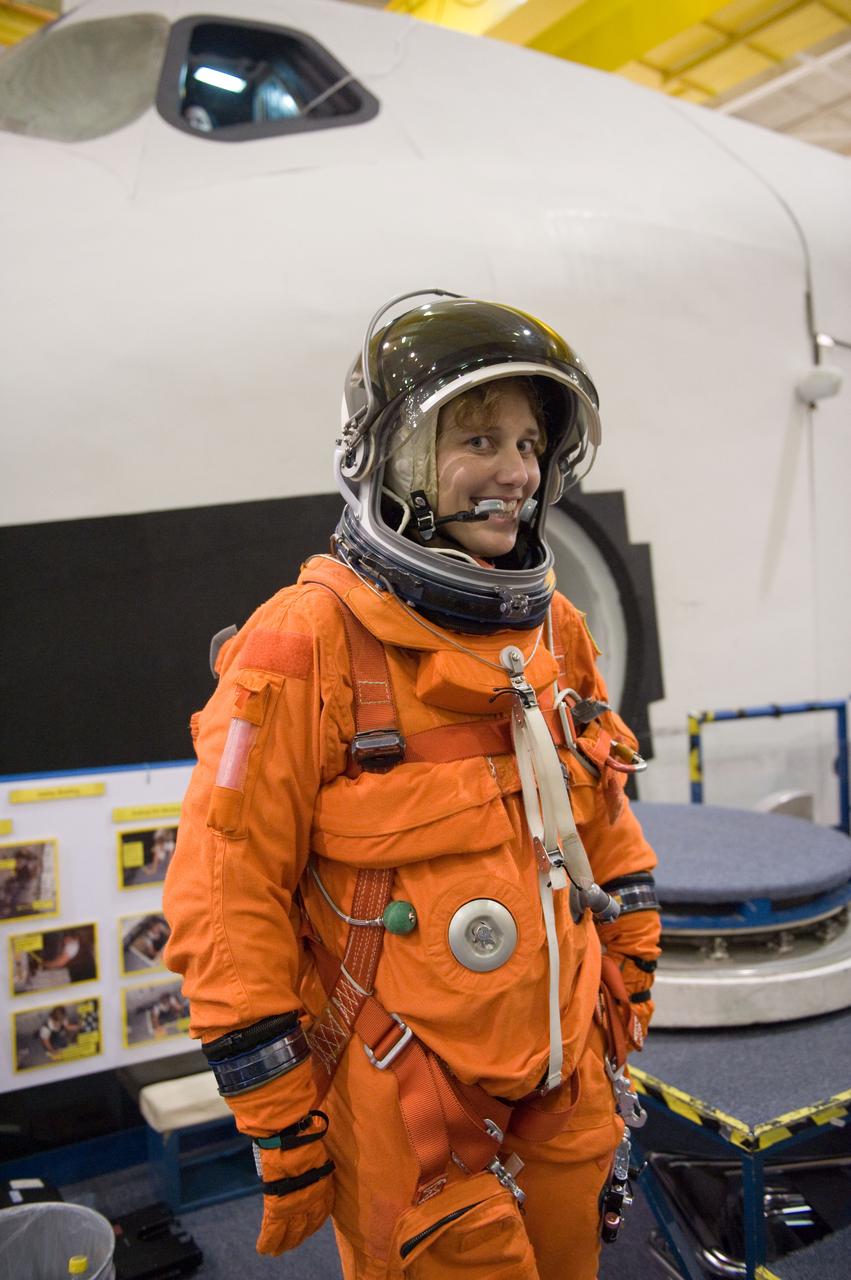
JSC2009-E-207960 (14 Sept. 2009) --- NASA astronaut Dorothy Metcalf-Lindenburger, STS-131 mission specialist, attired in a training version of her shuttle launch and entry suit, participates in a training session in the Space Vehicle Mock-up Facility at NASA's Johnson Space Center.
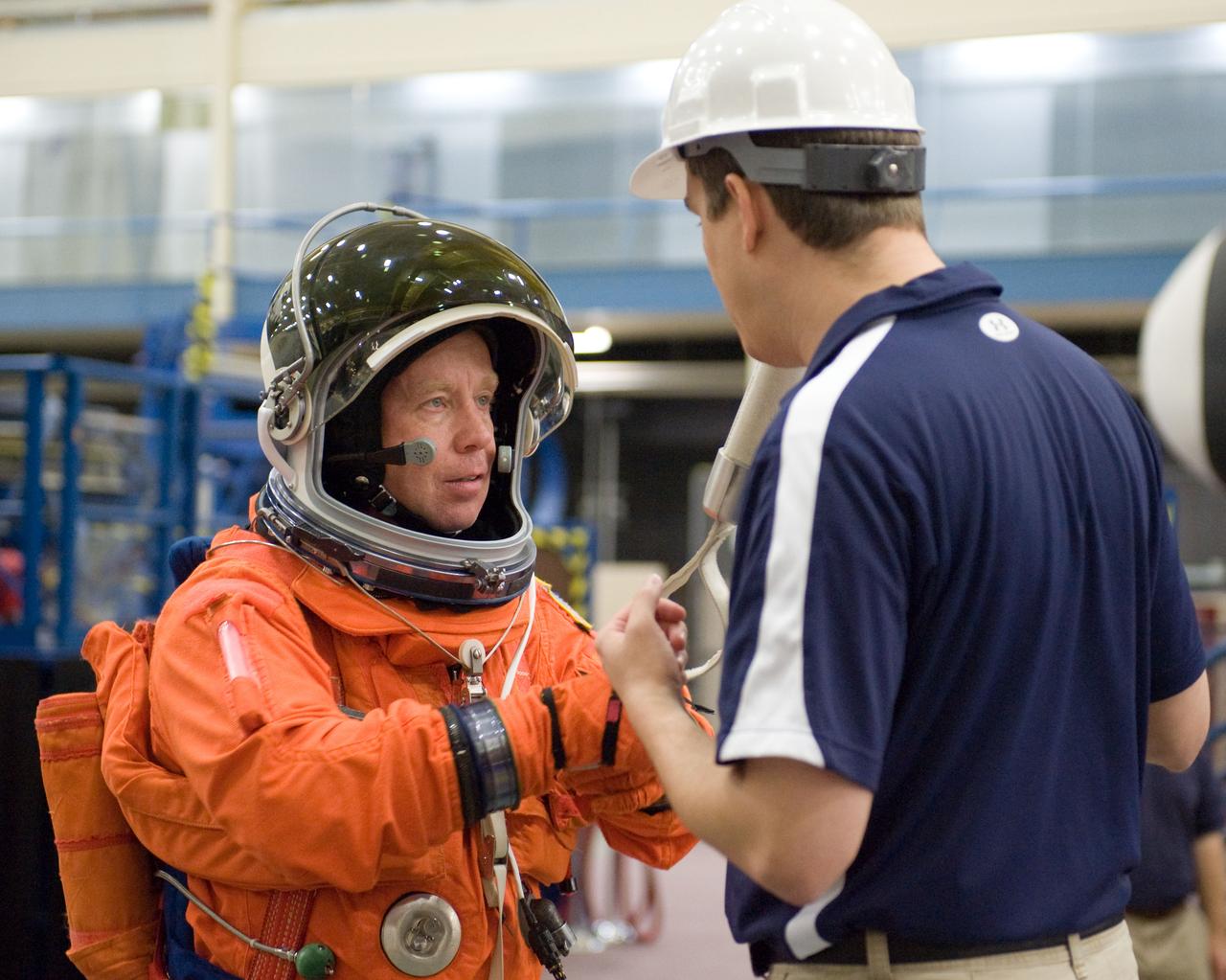
JSC2010-E-046409 (31 March 2010) --- Attired in a training version of his shuttle launch and entry suit, NASA astronaut Steve Lindsey, STS-133 commander, participates in a Full Fuselage Trainer (FFT) mock-up training session in the Space Vehicle Mockup Facility at NASA's Johnson Space Center.
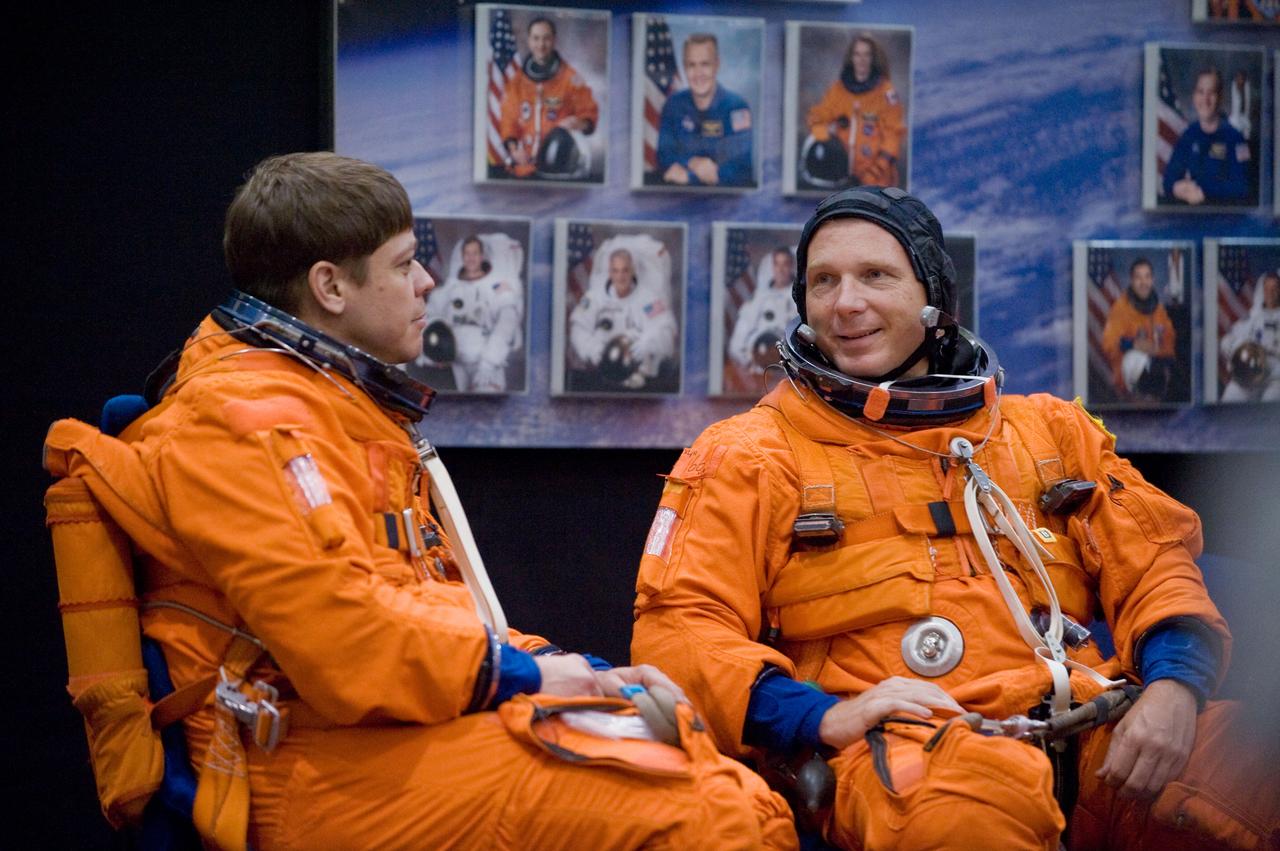
JSC2009-E-146839 (21 July 2009) --- Astronauts Robert Behnken (left), STS-130 mission specialist; and Terry Virts Jr., pilot, attired in training versions of their shuttle launch and entry suits, await the start of a training session in the Space Vehicle Mock-up Facility at NASA?s Johnson Space Center.
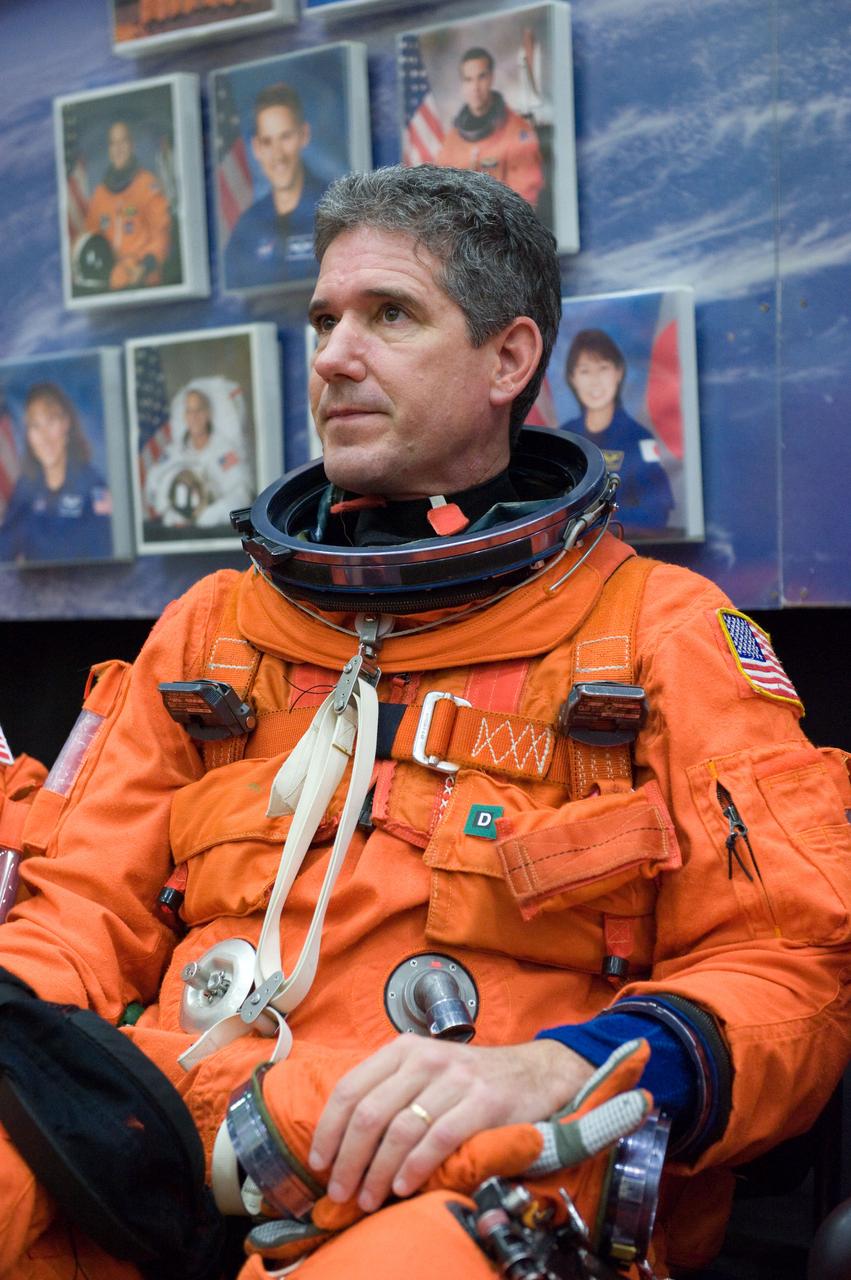
JSC2009-E-258473 (8 Dec. 2009) --- Attired in a training version of his shuttle launch and entry suit, astronaut Mike Good, STS-132 mission specialist, awaits the start of a training session in the Space Vehicle Mock-up Facility at NASA's Johnson Space Center.
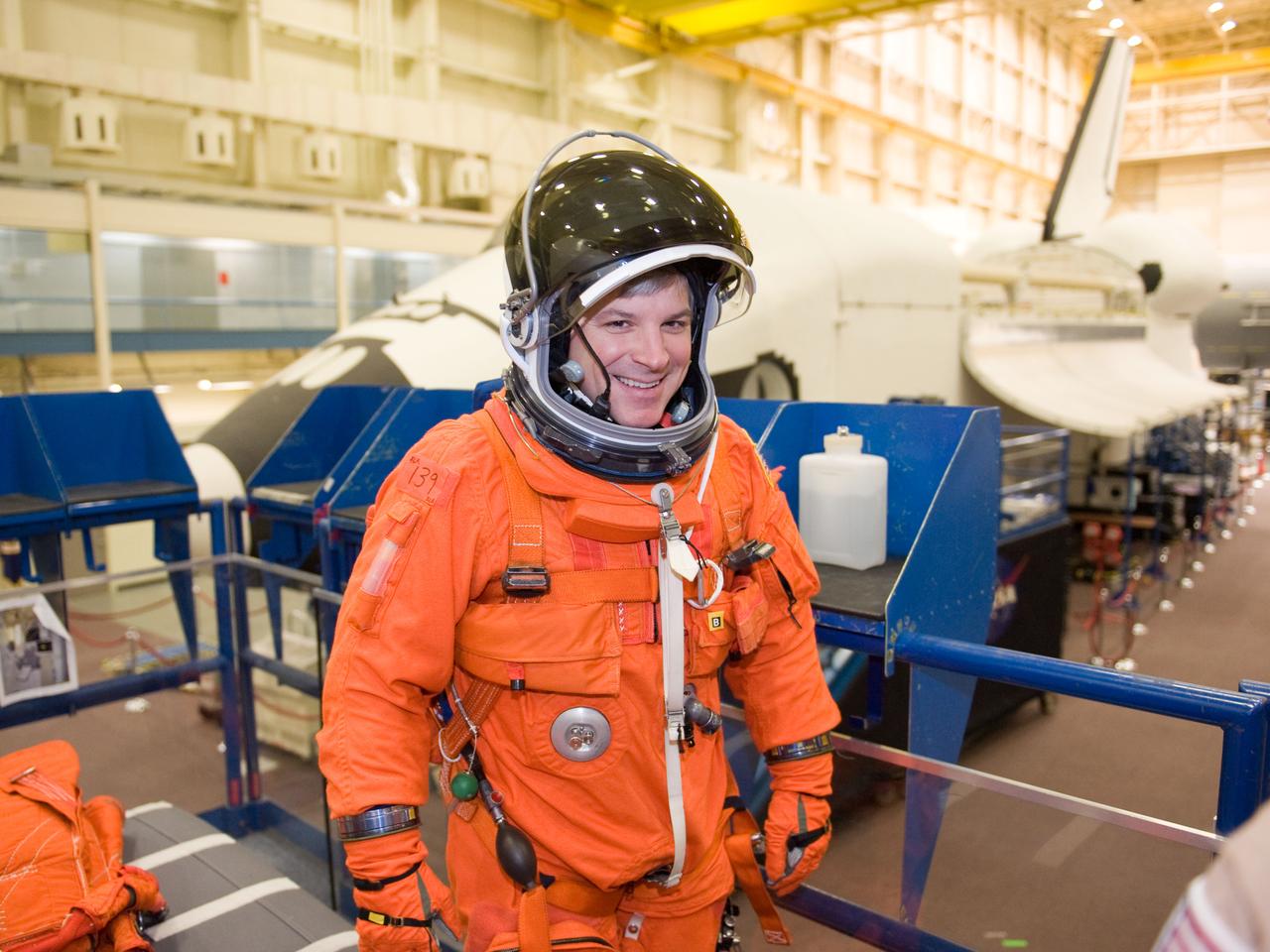
JSC2010-E-024601 (11 Feb. 2010) --- NASA astronaut Gregory H. Johnson, STS-134 pilot, attired in a training version of his shuttle launch and entry suit, is pictured during a training session in the Space Vehicle Mockup Facility at NASA's Johnson Space Center.
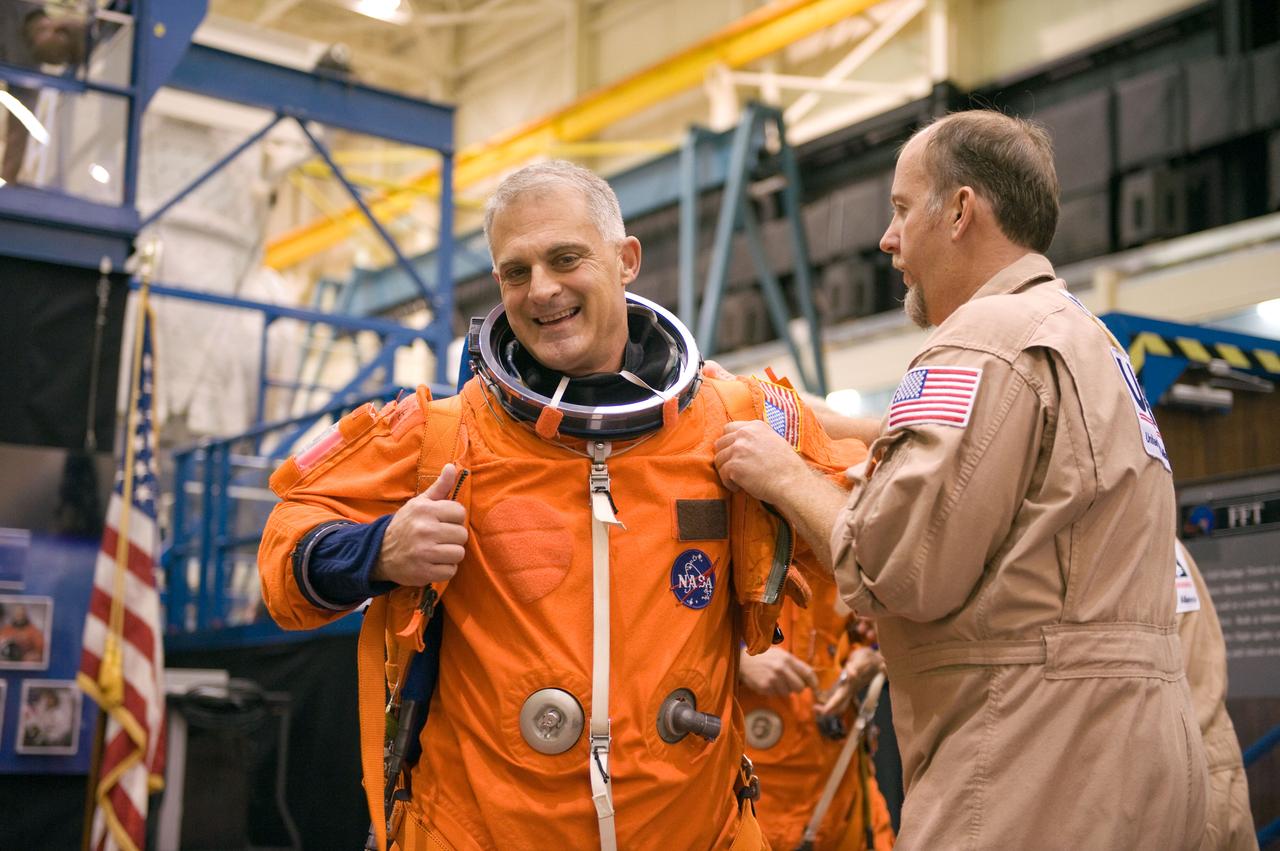
JSC2008-E-122419 (7 Oct. 2008) --- Astronaut Dave Wolf, STS-127 mission specialist, gets help in the donning of a training version of his shuttle launch and entry suit in preparation for a training session in the Space Vehicle Mock-up Facility at NASA's Johnson Space Center.

JSC2001-01896 (10 July 2001) --- Astronaut Peggy A. Whitson, Expedition Five flight engineer, attired in a training version of the shuttle launch and entry suit, is about to begin a mission training session in the Space Vehicle Mockup Facility at the Johnson Space Center (JSC).
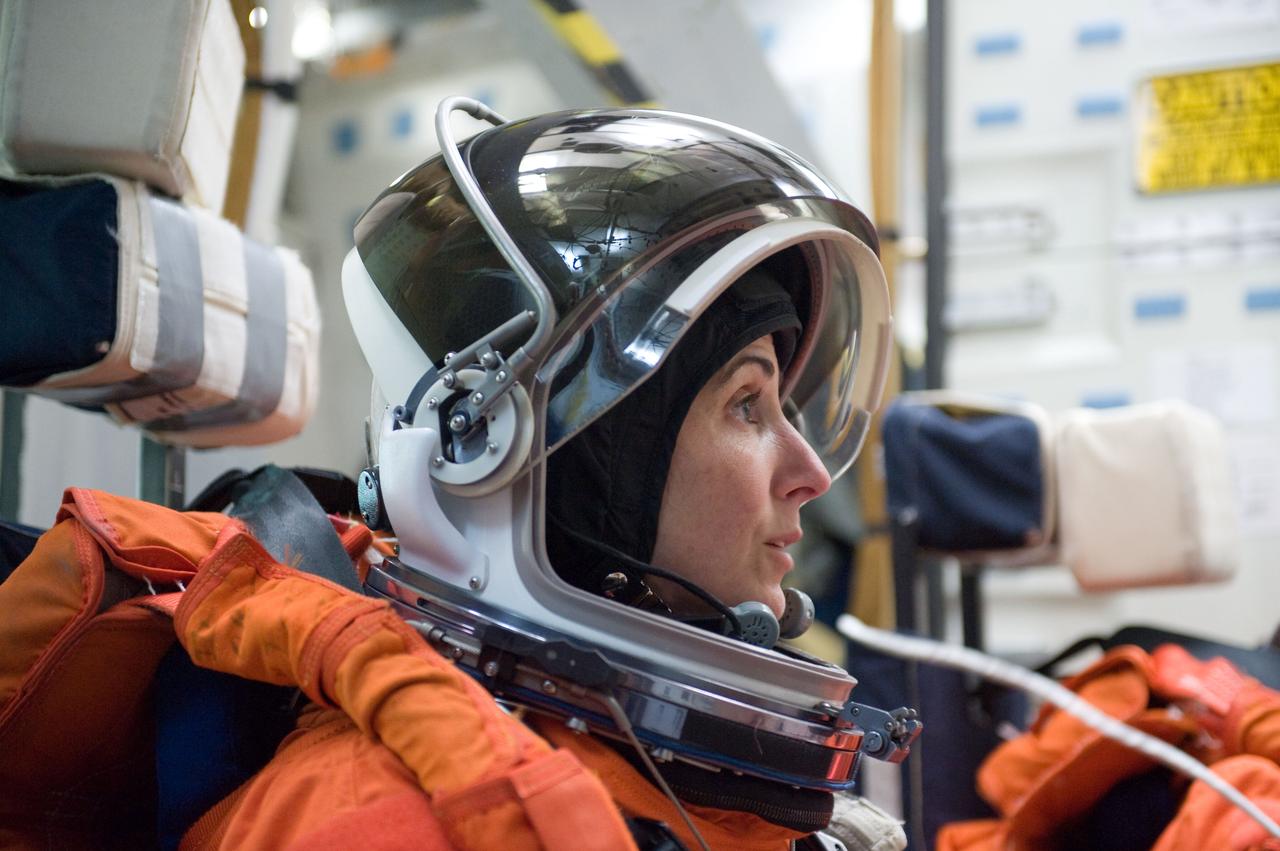
JSC2010-E-046401 (31 March 2010) --- Attired in a training version of her shuttle launch and entry suit, NASA astronaut Nicole Stott, STS-133 mission specialist, participates in a Full Fuselage Trainer (FFT) mock-up training session in the Space Vehicle Mockup Facility at NASA's Johnson Space Center.
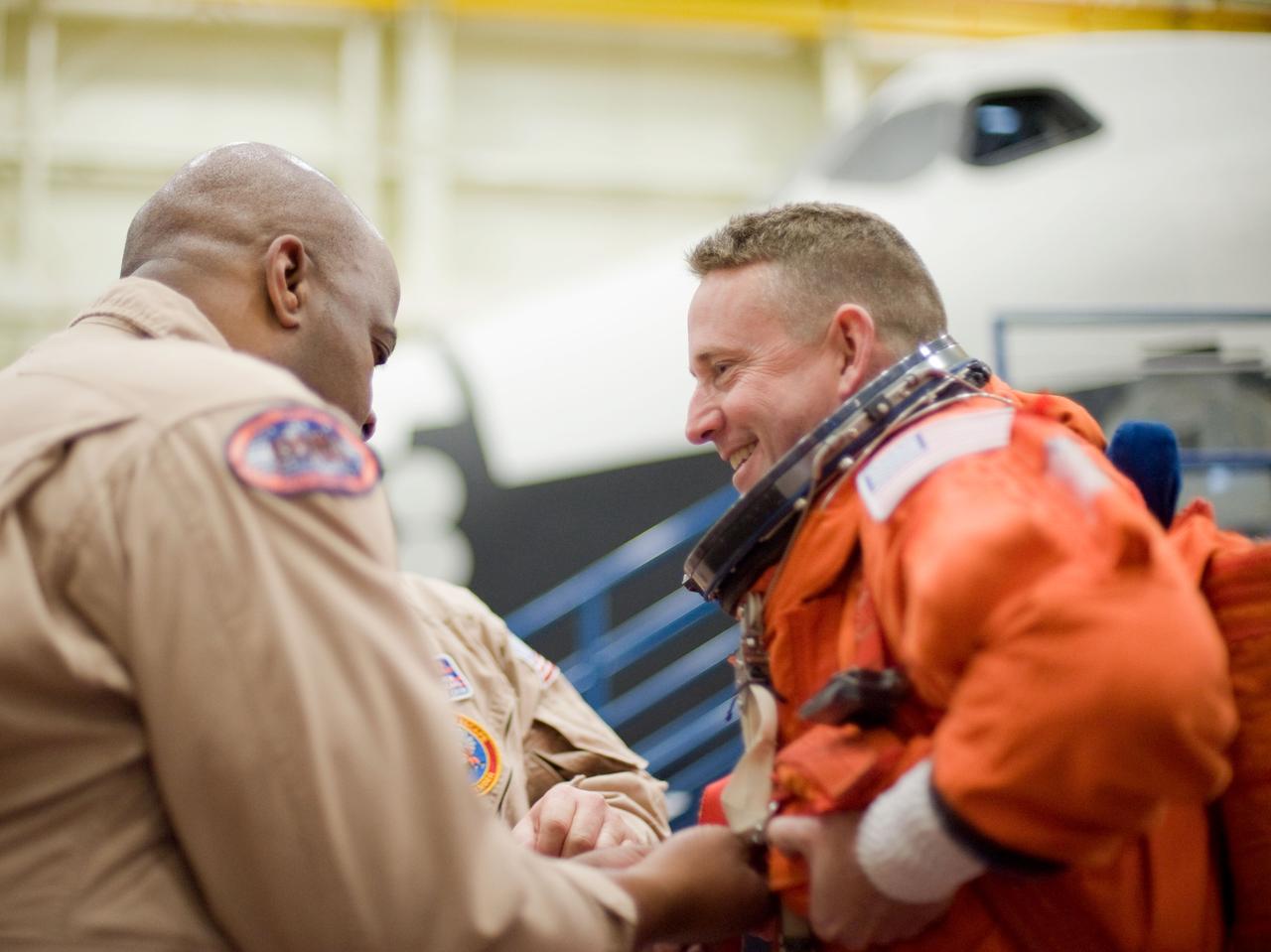
JSC2010-E-051994 (8 April 2010) --- NASA astronaut Ken Ham, STS-132 commander, gets help with the donning of a training version of his shuttle launch and entry suit in preparation for an ingress/egress training session in the Space Vehicle Mock-up Facility at NASA's Johnson Space Center.
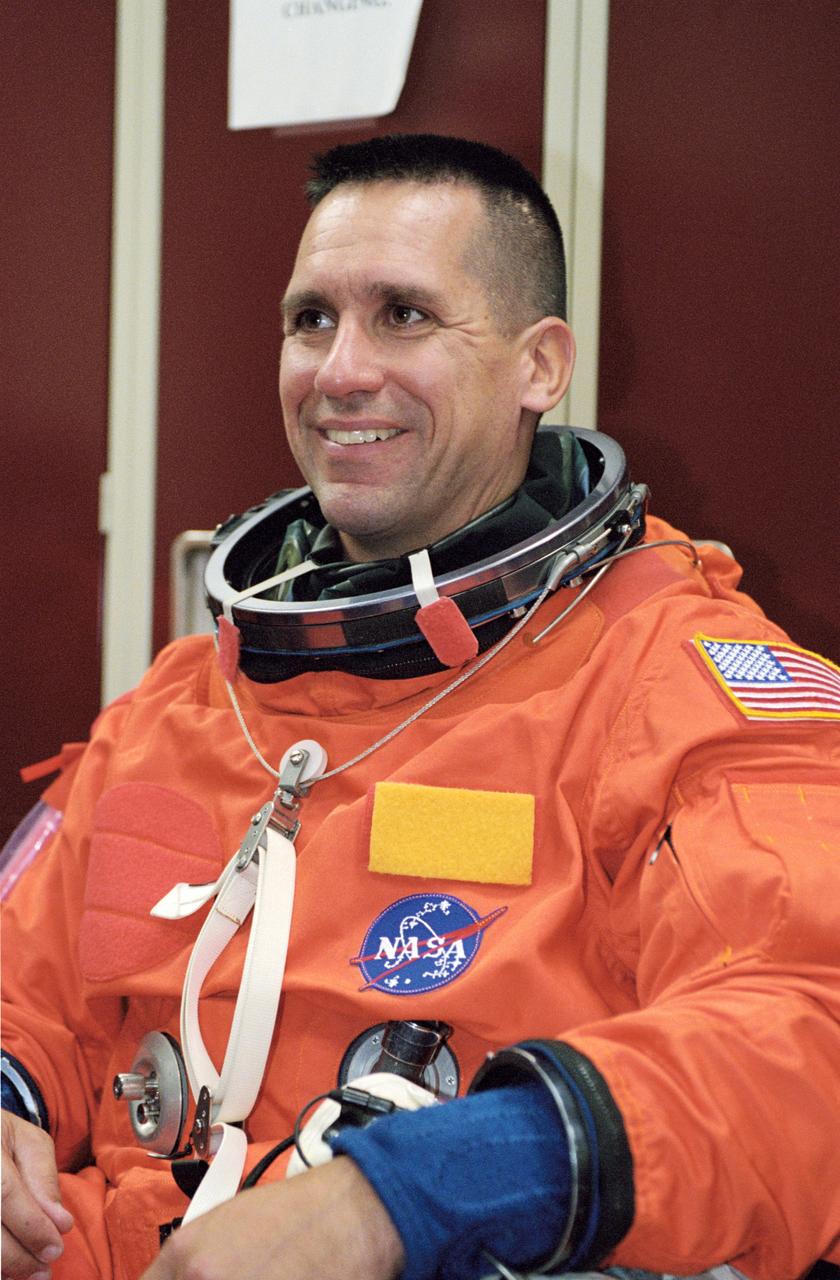
JSC2002-01527 (8 August 2002) --- Astronaut William A. Oefelein, STS-116 pilot, wearing a training version of the full-pressure launch and entry suit, waits for a training session to begin in the Space Vehicle Mockup Facility at the Johnson Space Center (JSC).