
“I am a Black woman in STEM. And when I was growing up, I cannot say that I saw a lot of faces that looked like mine in STEM careers. I had some limited exposure to some notables, like Dr. Mae Jemison. But the names were few and far between of the great scientists or engineers that were Black — let alone Black females. So for me, if anybody sees my picture and says ‘yes, I see someone who looks like me working in STEM’ — that right there is very fulfilling. Just to be seen and to be visible makes a difference. "I also must provide words of encouragement because being in STEM can be difficult as is, let alone having to face the challenges of being a female in a male-dominated field. Or even being a double minority in the workplace. "It’s a matter of being really self-assured that you can do it, despite the fact that you’re going to have failures, that you’re going to have setbacks, and that you’re going have people who may not believe in you, for whatever reason. You have to be self-assured that this is what you want to do and that it can be done. This 4’11” Black woman achieved this, not knowing that STEM was going to be my path or that I was going to end up at NASA — I did it, and I believe that you can do it too — but you have to believe it for yourself.” — Mary Lobo, Director of Office of Technology Incubation and Innovation, Glenn Research Center The Facility Manager for the Space Simulation Facilities at Glenn Research Center, poses inside Vacuum Facility 16 (VF-16) for an Environmental Portrait. The lighting used in this portrait depicts the chamber as having an almost white interior when the chamber is actually almost black in color.
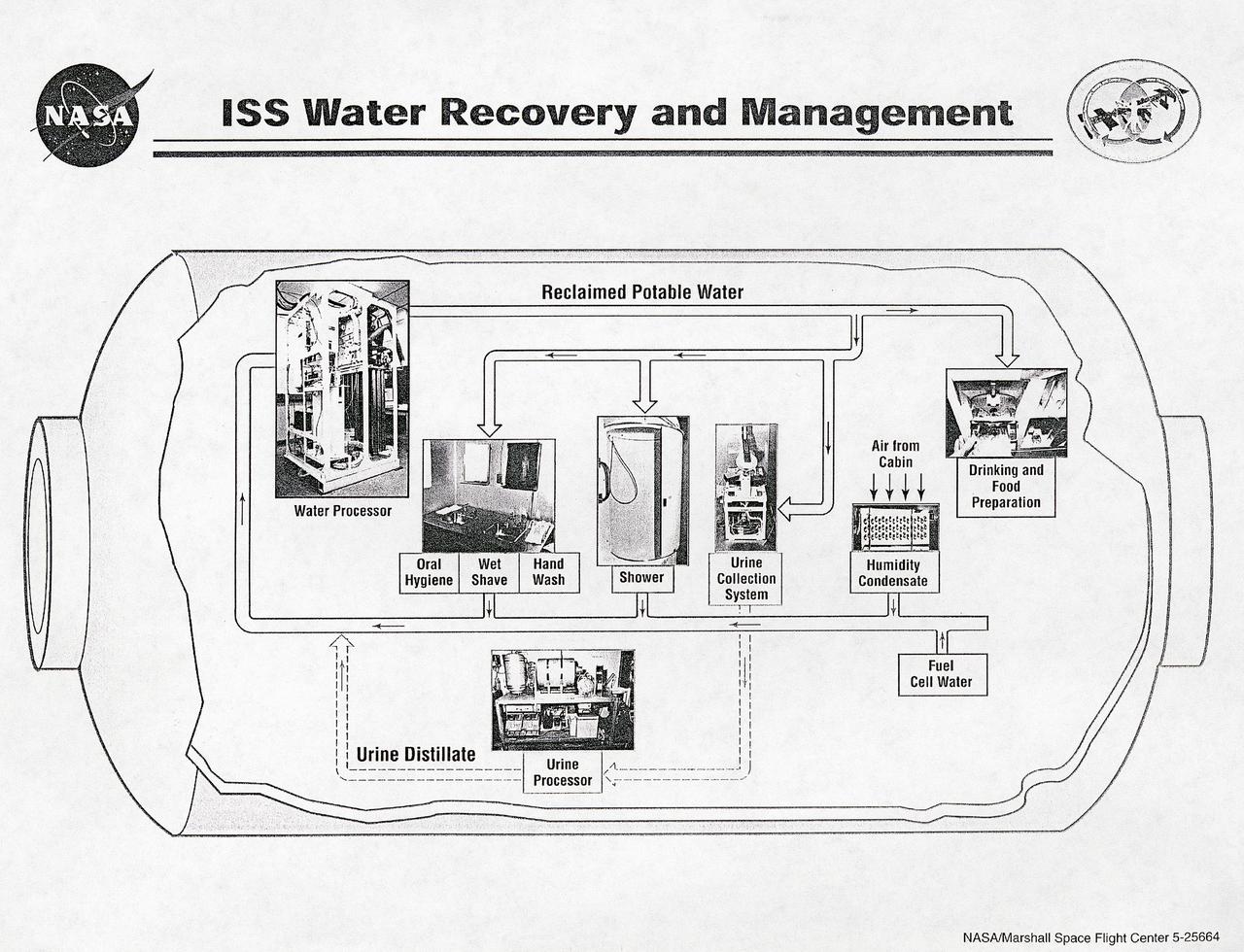
This diagram shows the flow of water recovery and management in the International Space Station (ISS). The Environmental Control and Life Support System (ECLSS) Group of the Flight Projects Directorate at the Marshall Space Flight Center is responsible for the regenerative ECLSS hardware, as well as providing technical support for the rest of the system. The regenerative ECLSS, whose main components are the Water Recovery System (WRS), and the Oxygen Generation System (OGS), reclaims and recycles water oxygen. The ECLSS maintains a pressurized habitation environment, provides water recovery and storage, maintains and provides fire detection/ suppression, and provides breathable air and a comfortable atmosphere in which to live and work within the ISS. The ECLSS hardware will be located in the Node 3 module of the ISS.
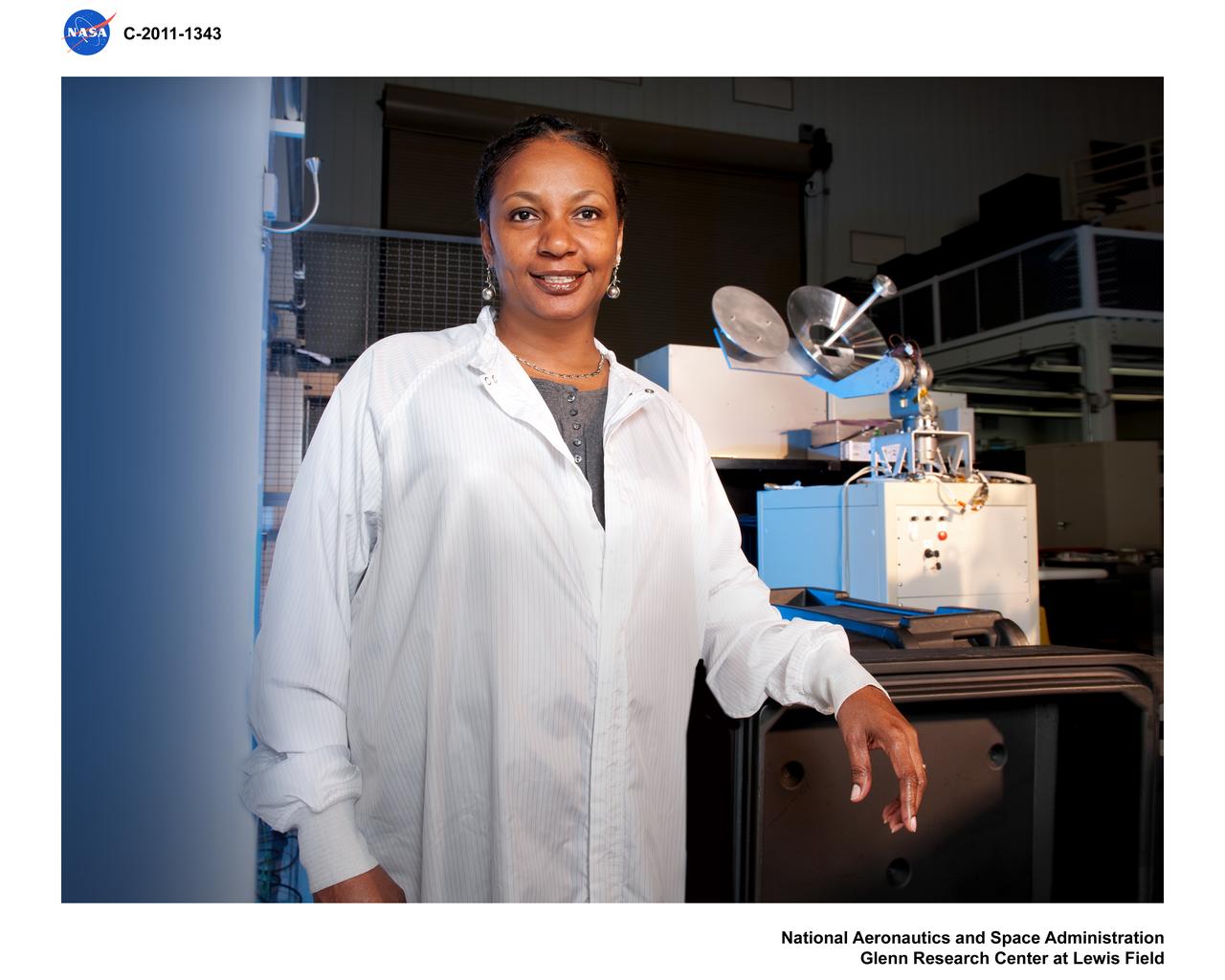
Environmental Portrait of Project Management Branch Employee
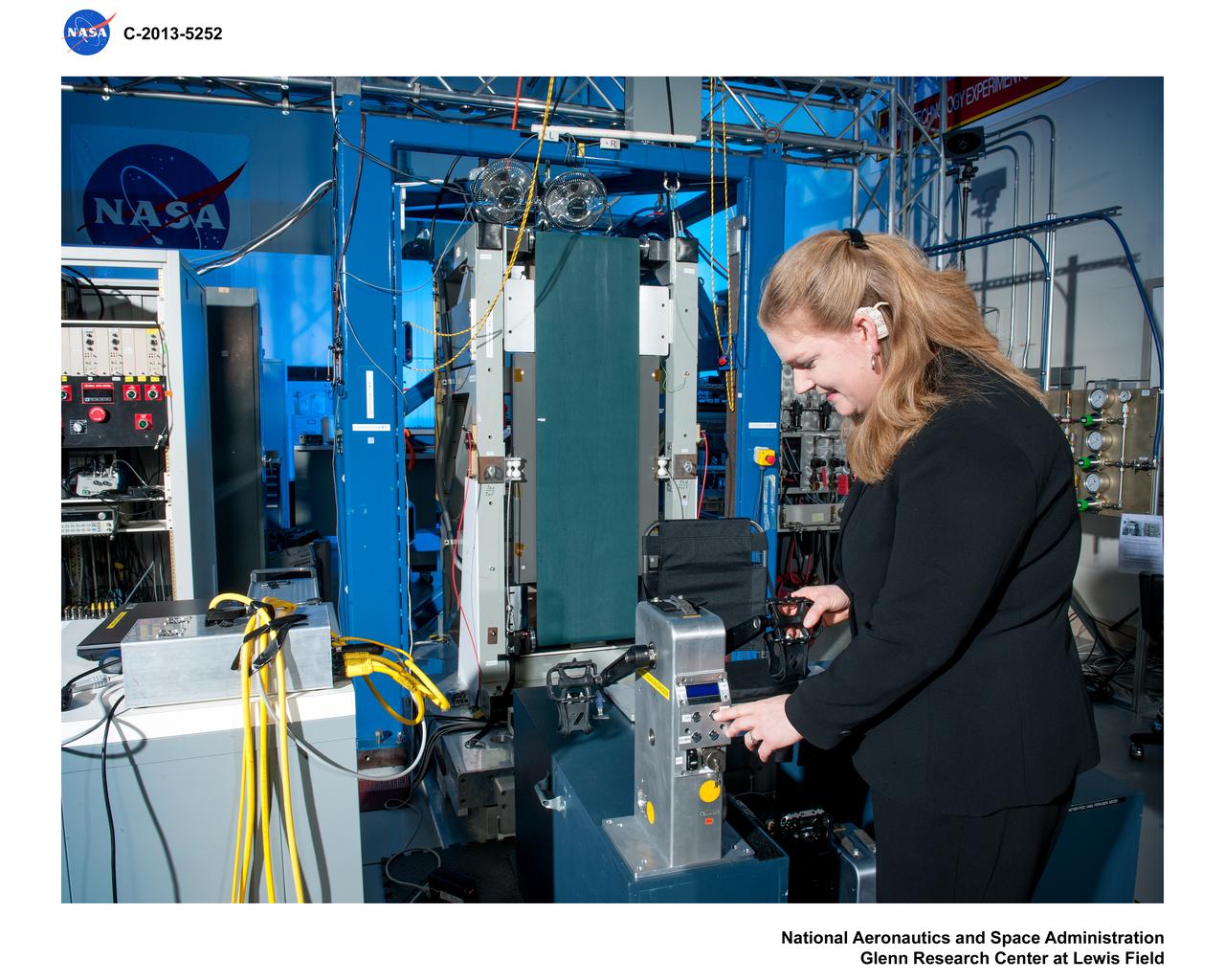
Environmental Portrait of a Structural Systems Dynamics Branch Manager
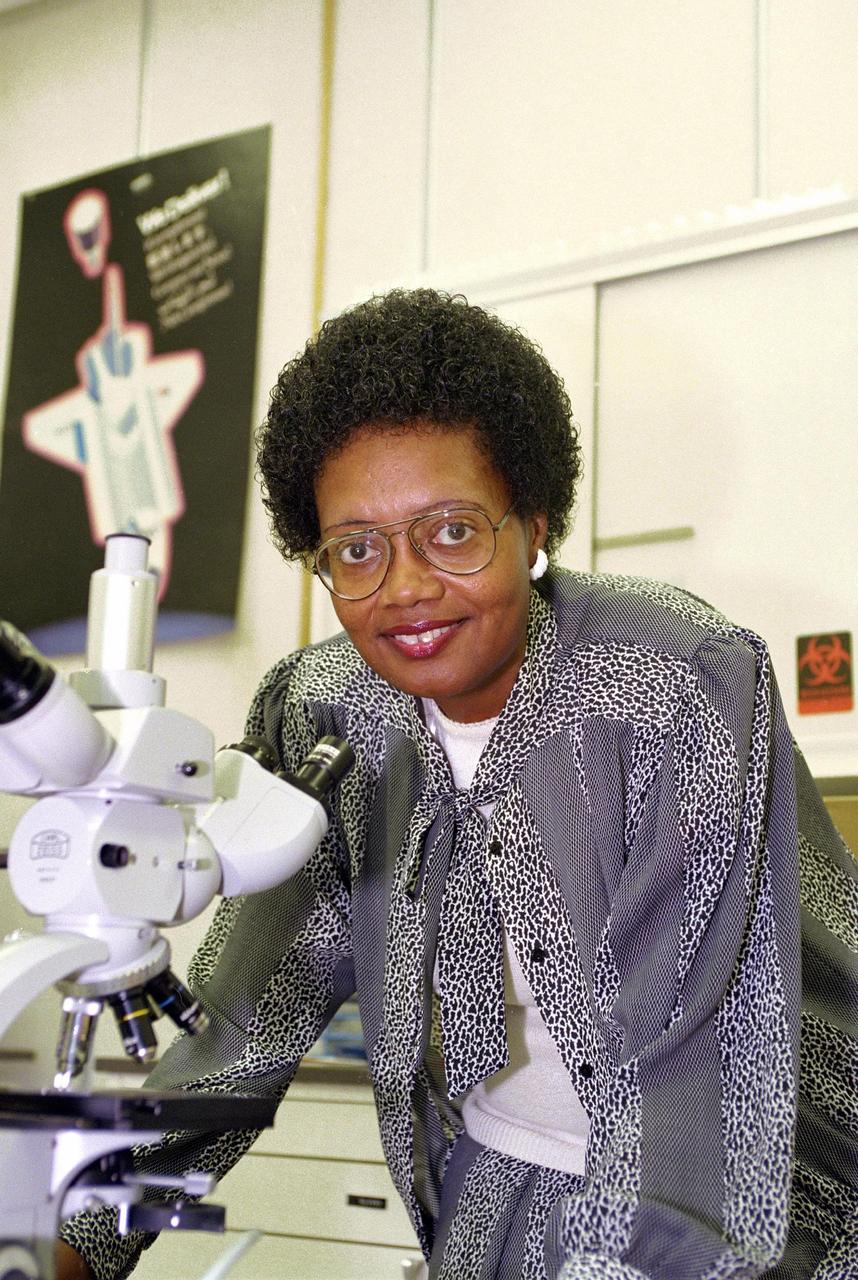
KENNEDY SPACE CENTER, FLA. -- Dr. Irene Duhart Long is the director, Biomedical Operations and Research Office, at the Kennedy Space Center effective July 24, 1994. She is responsible for the program management of the center's aerospace and occupational medicine, life sciences research, environmental health programs and the operations management of the life sciences support facilities. Dr. Long also is responsible for providing the coordinating medical, environmental monitoring and environmental health support to launch and landing activities and day-to-day institutional functions.
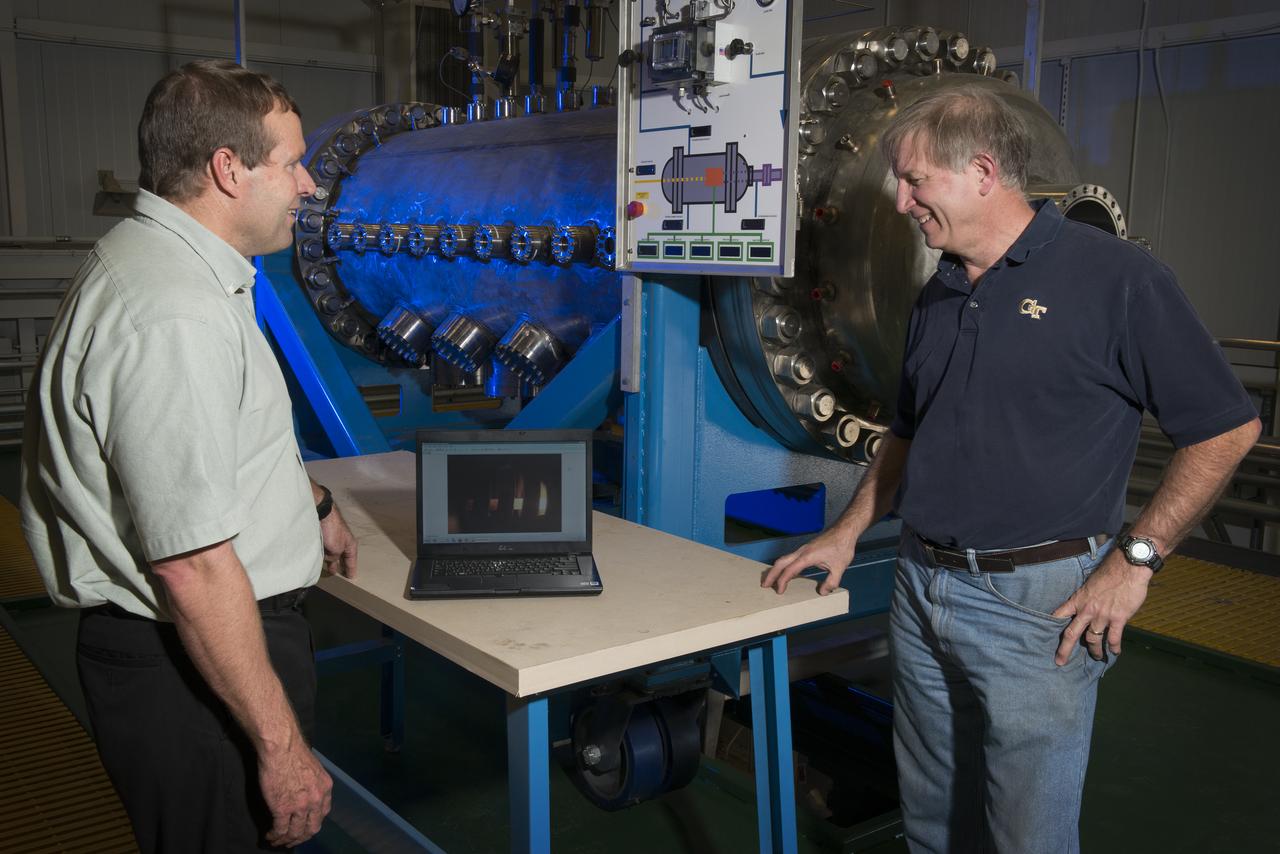
MIKE HOUTS AND BILL EMRICH DISCUSSING NUCLEAR THERMAL ROCKET ELEMENT ENVIRONMENTAL SIMULATOR (NTREES) IN BUILDING 4205. MIKE HOUTS IS THE PROJECT MANAGER.
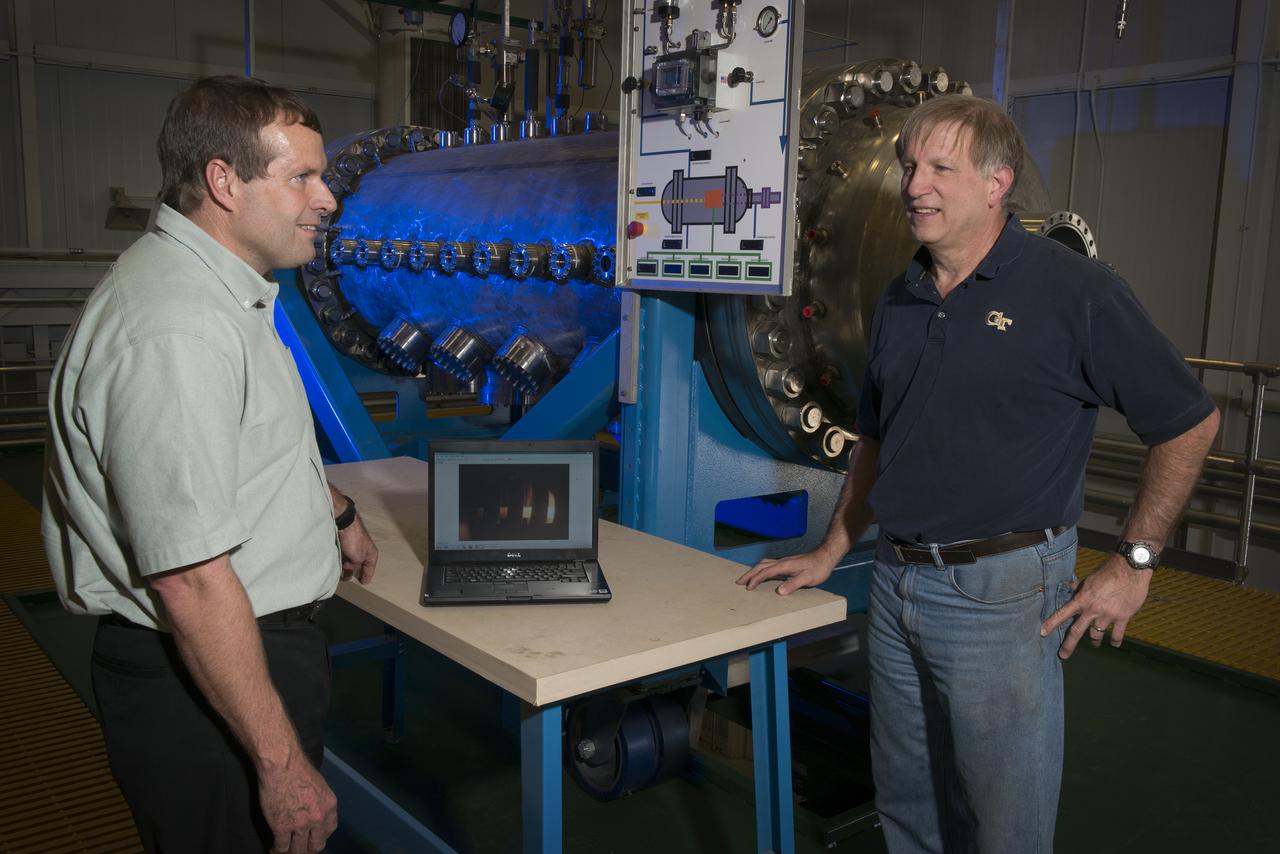
MIKE HOUTS AND BILL EMRICH DISCUSSING NUCLEAR THERMAL ROCKET ELEMENT ENVIRONMENTAL SIMULATOR (NTREES) IN BUILDING 4205. MIKE HOUTS IS THE PROJECT MANAGER.
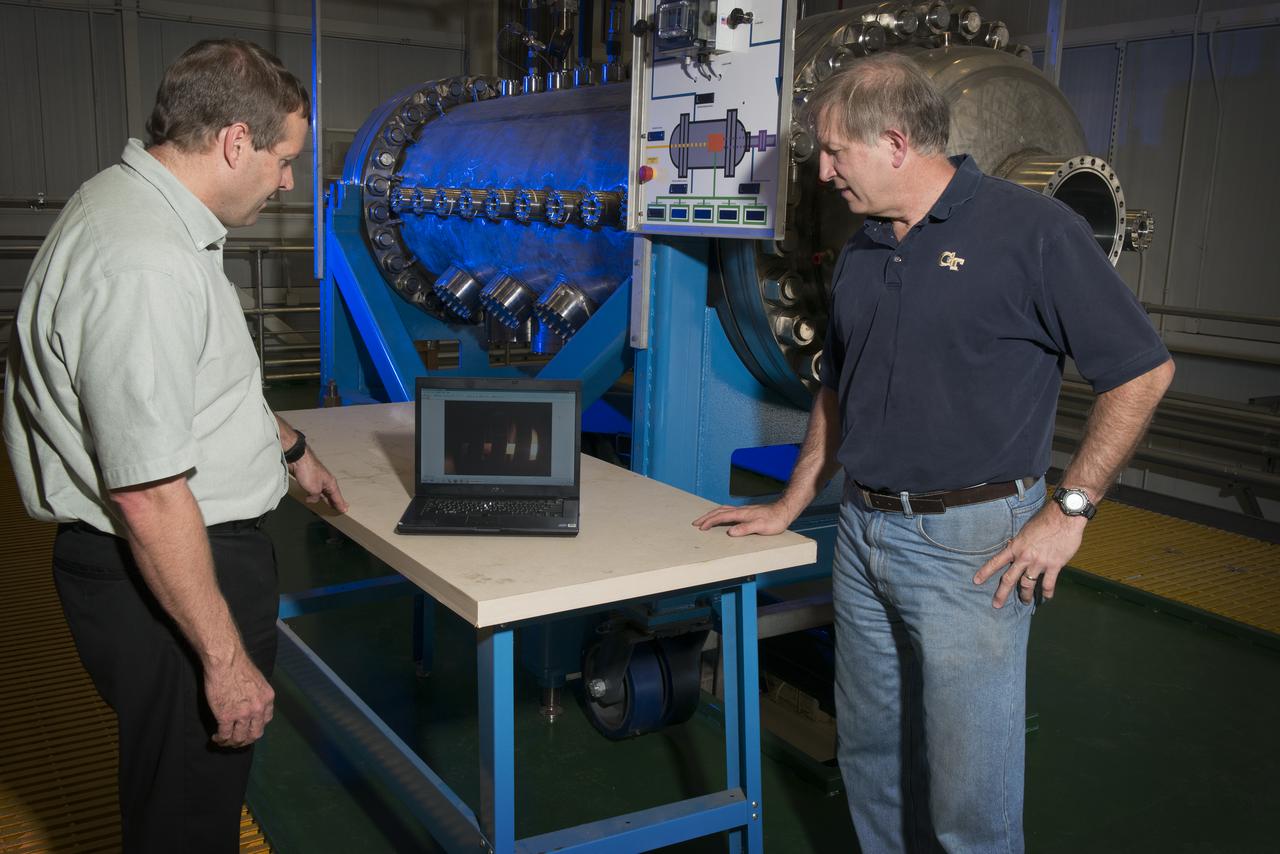
MIKE HOUTS AND BILL EMRICH DISCUSSING NUCLEAR THERMAL ROCKET ELEMENT ENVIRONMENTAL SIMULATOR (NTREES) IN BUILDING 4205. MIKE HOUTS IS THE PROJECT MANAGER.
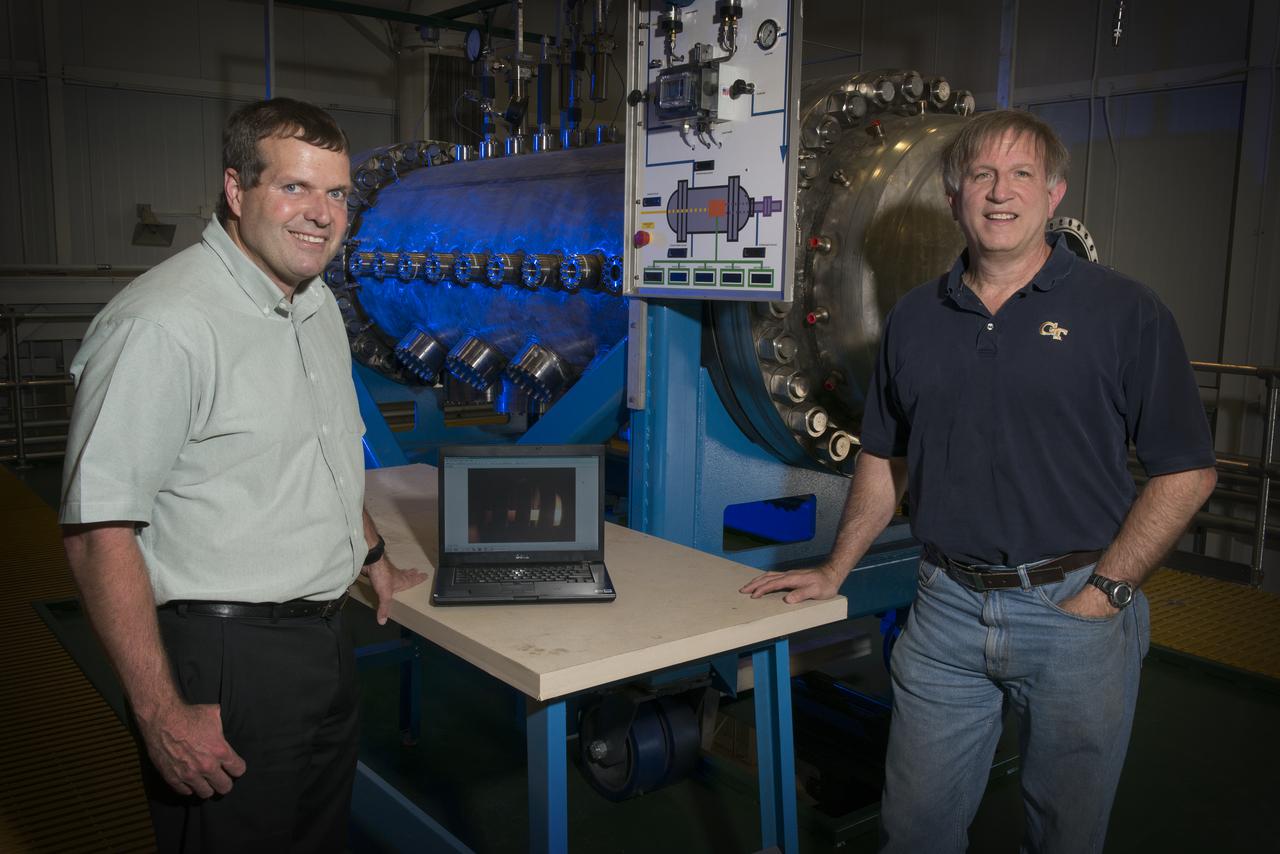
MIKE HOUTS AND BILL EMRICH DISCUSSING NUCLEAR THERMAL ROCKET ELEMENT ENVIRONMENTAL SIMULATOR (NTREES) IN BUILDING 4205. MIKE HOUTS IS THE PROJECT MANAGER.
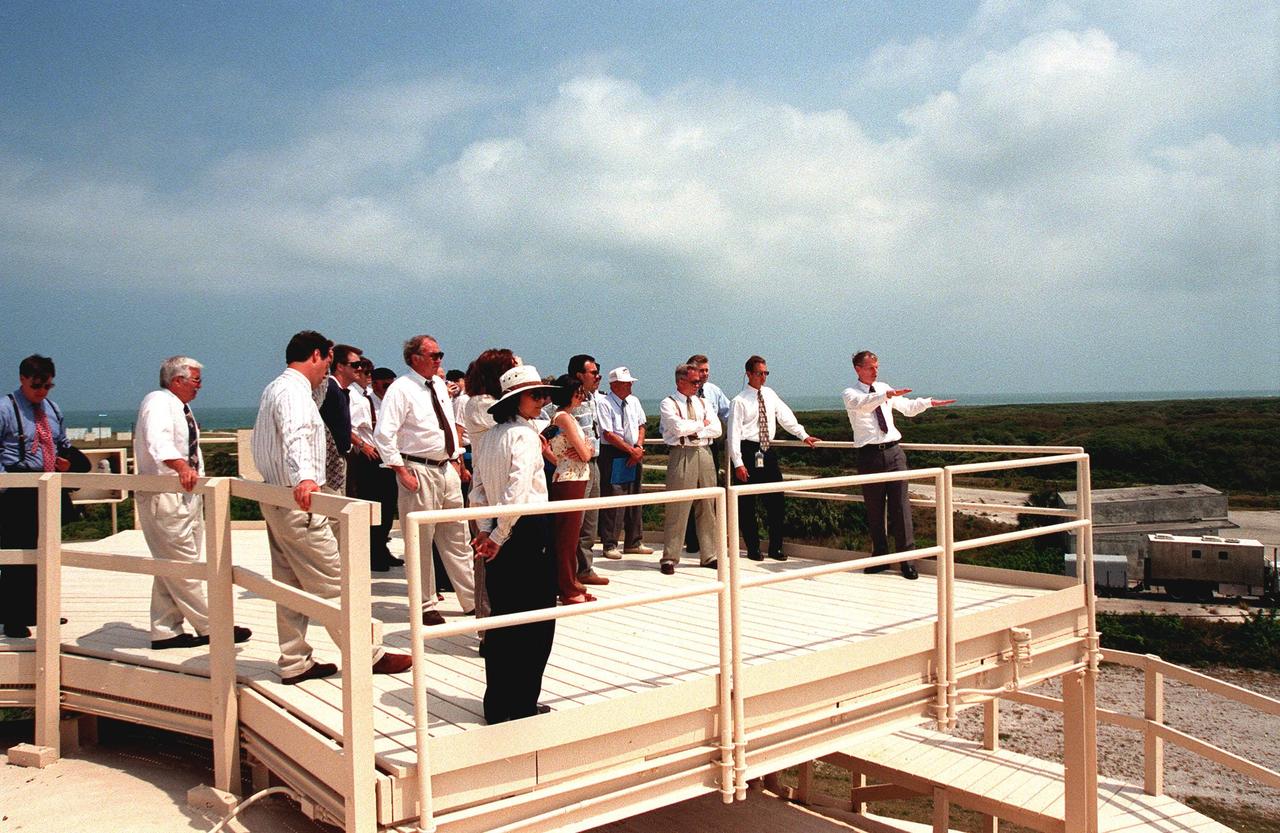
Key participants in the signing of a Memorandum of Agreement, formalizing cooperative efforts of NASA, the U.S. Air Force, and federal agencies in ground-water cleanup initiatives, gather on top of the block house at Launch Complex 34. Motioning at right is Skip Chamberlain, program manager, Office of Science and Technology, U.S. Department of Energy. Others on the tour include Timothy Oppelt, director, National Risk Management Research Laboratory, U.S. Environmental Protection Agency; Tom Heenan, assistant manager of environmental management, Savannah River Site, U.S. Department of Energy; Col. James Heald, Vice Commander, Air Force Research Laboratory, U.S. Air Force; Gerald Boyd, acting deputy assistant secretary, Office of Science and Technology, U.S. Department of Energy; James Fiore, acting deputy assistant secretary, Office of Environmental Restoration, Department of Energy; Brig. Gen. Randall R. Starbuck, Commander 45th Space Wing, U.S. Air Force; Roy Bridges Jr., director of John F. Kennedy Space Center; Walter Kovalick Jr., Ph.D., director, Technology Innovation Office, U.S. Environmental Protection Agency. NASA, the U.S. Air Force and the agencies have formed a consortium and are participating in a comparative study of three innovative techniques to be used in cleaning a contaminated area of Launch Complex 34. The study will be used to help improve groundwater cleanup processes nationally
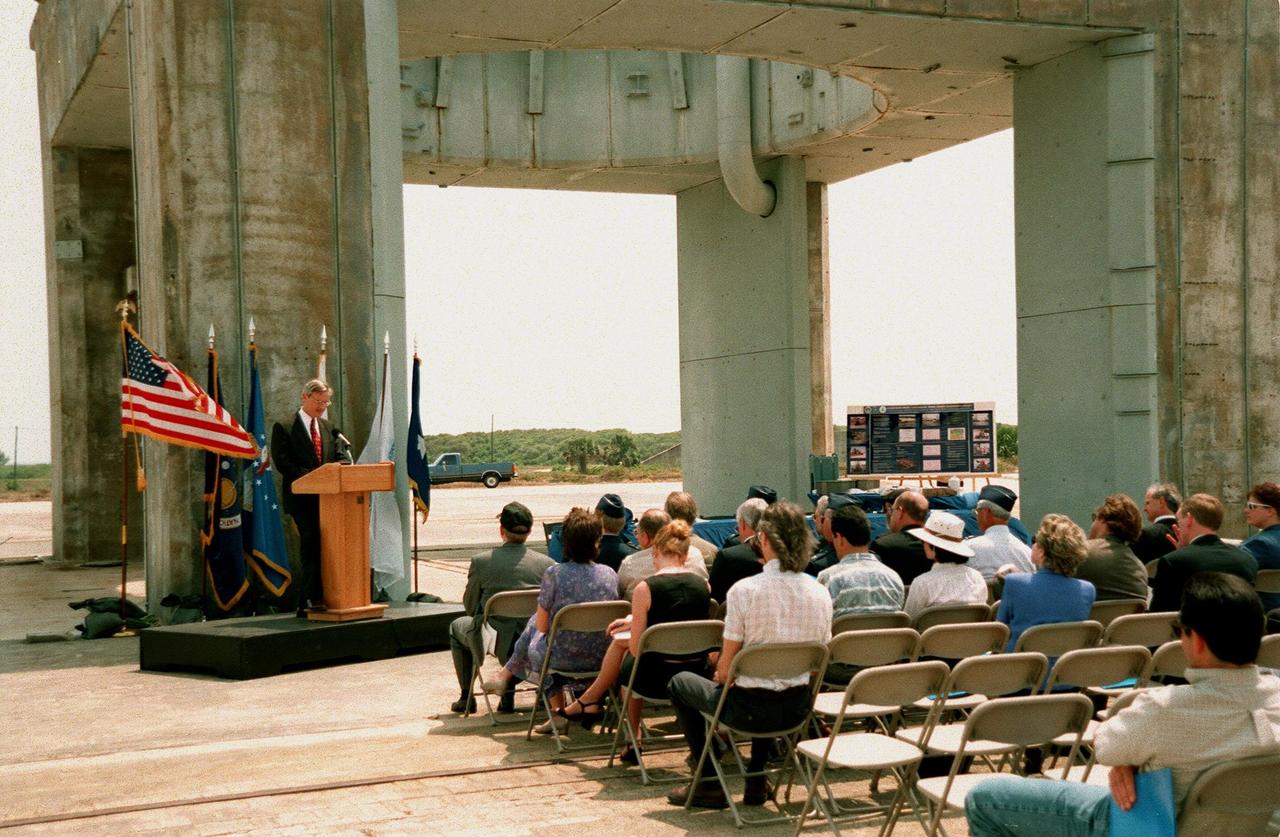
Walter W. Kovalick Jr., Ph.D., director of Technology Innovation Office for the U.S. Environmental Protection Agency, addresses representatives from Kennedy Space Center, the 45th Space Wing, and various federal environmental agencies gathered to attend a Memorandum of Agreement (MOA) signing, taking place at the site of Launch Complex 34. The MOA formalizes the cooperative efforts of the federal agencies in ground-water cleanup initiatives. NASA, the U.S. Air Force and the agencies have formed a consortium and are participating in a comparative study of three innovative techniques to be used in cleaning a contaminated area of Launch Complex 34. The study will be used to help improve groundwater cleanup processes nationally. Other attendees included Timothy Oppelt, director, National Risk Management Research Laboratory, U.S. Environmental Protection Agency; Tom Heenan, assistant manager of environmental management, Savannah River Site, U.S. Department of Energy; Col. James Heald, Vice Commander, Air Force Research Laboratory, U.S. Air Force; Gerald Boyd, acting deputy assistant secretary, Office of Science and Technology, U.S. Department of Energy; James Fiore, acting deputy assistant secretary, Office of Environmental Restoration, Department of Energy; Brig. Gen. Randall R. Starbuck, Commander 45th Space Wing, U.S. Air Force; and Roy Bridges Jr., director of John F. Kennedy Space Center
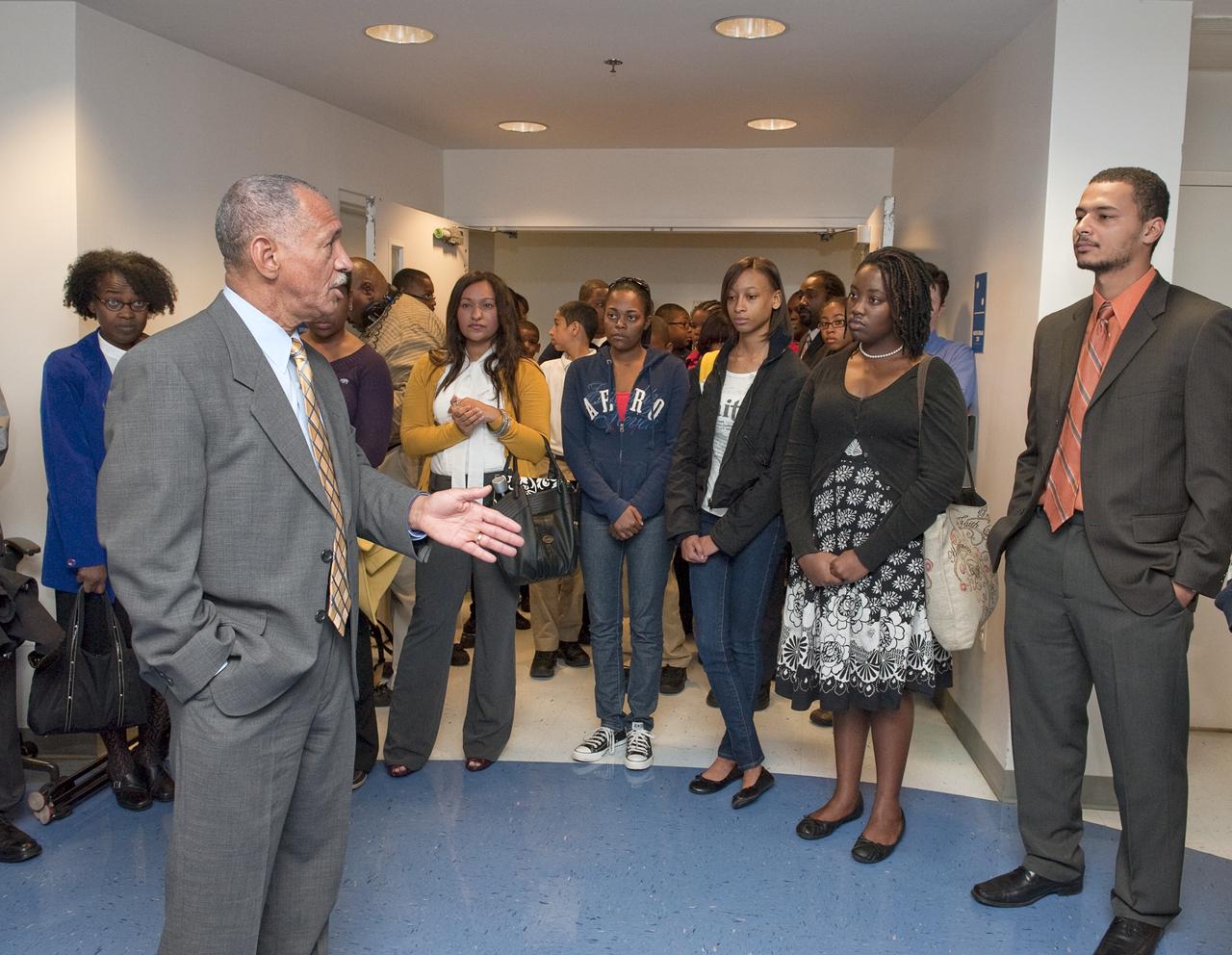
NASA Administrator Charles Bolden, foreground, speaks with Howard University students after he and and U.S. Environmental Protection Agency (EPA) Administrator Lisa P. Jackson, right, signed a Memorandum of Agreement (MOA) to promote collaboration between the two agencies for cooperation in environmental and Earth sciences and environmental management applications at the Howard University Middle School of Mathematics and Science, Monday, April 26, 2010, in Washington. Photo Credit: (NASA/Paul E. Alers)
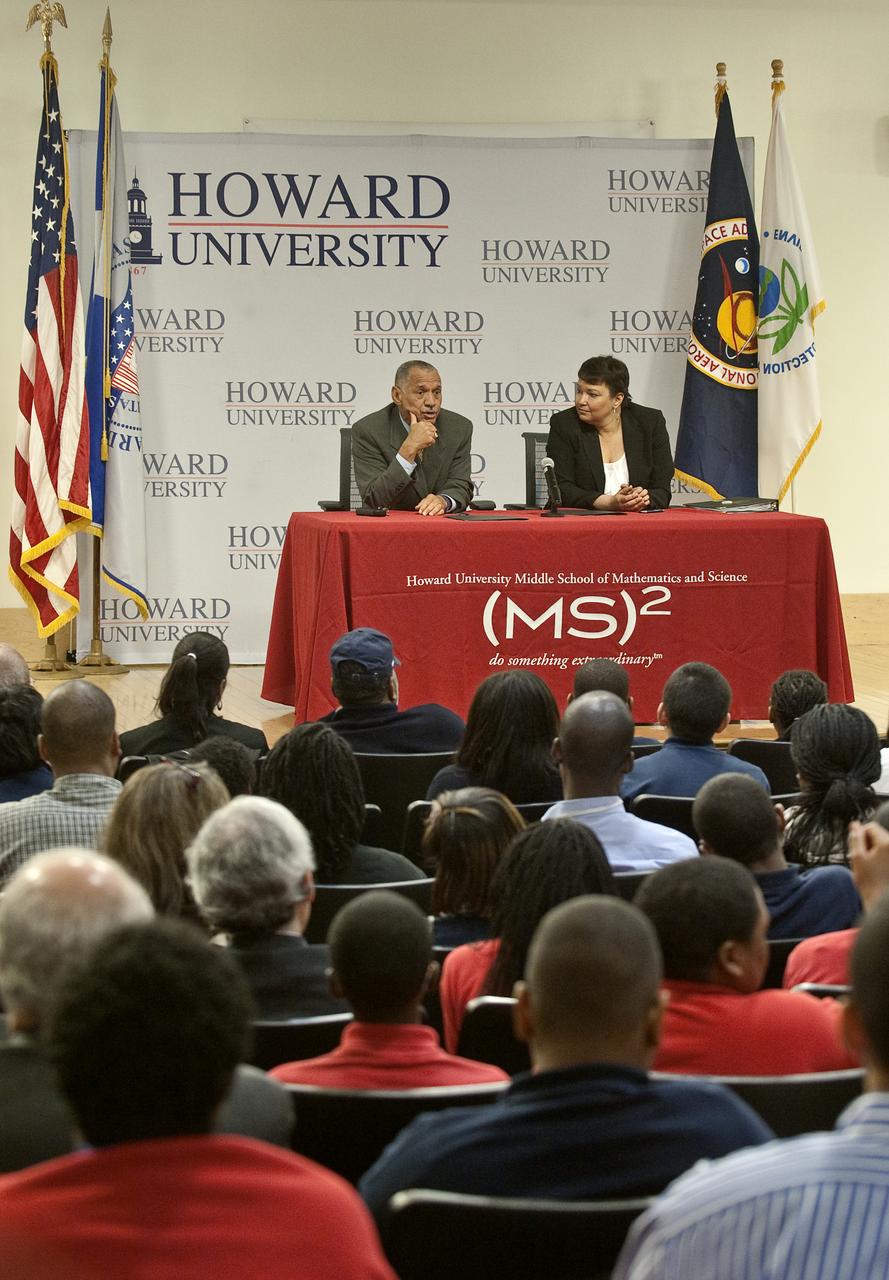
NASA Administrator Charles Bolden, left, and U.S. Environmental Protection Agency (EPA) Administrator Lisa P. Jackson, right, answer questions from students and faculty from the Howard University Middle School of Mathematics and Science after signing a Memorandum of Agreement (MOA) to promote collaboration between the two agencies for cooperation in environmental and Earth sciences and environmental management applications, Monday, April 26, 2010, at the school in Washington. Photo Credit: (NASA/Paul E. Alers)
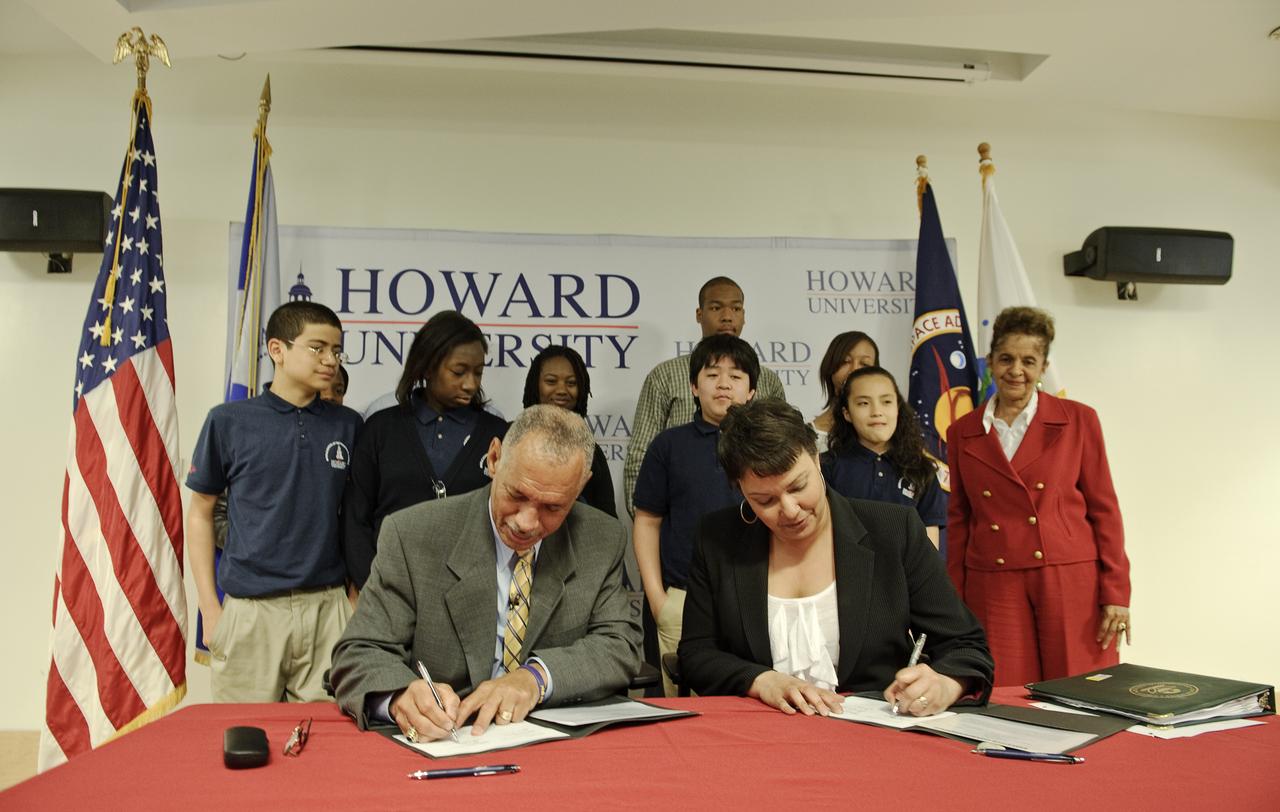
NASA Administrator Charles Bolden, left, and U.S. Environmental Protection Agency (EPA) Administrator Lisa P. Jackson, right, sign a Memorandum of Agreement (MOA) to promote collaboration between the two agencies for cooperation in environmental and Earth sciences and environmental management applications as students from the Howard University Middle School of Mathematics and Science look on, Monday, April 26, 2010, at the school in Washington. Photo Credit: (NASA/Paul E. Alers)
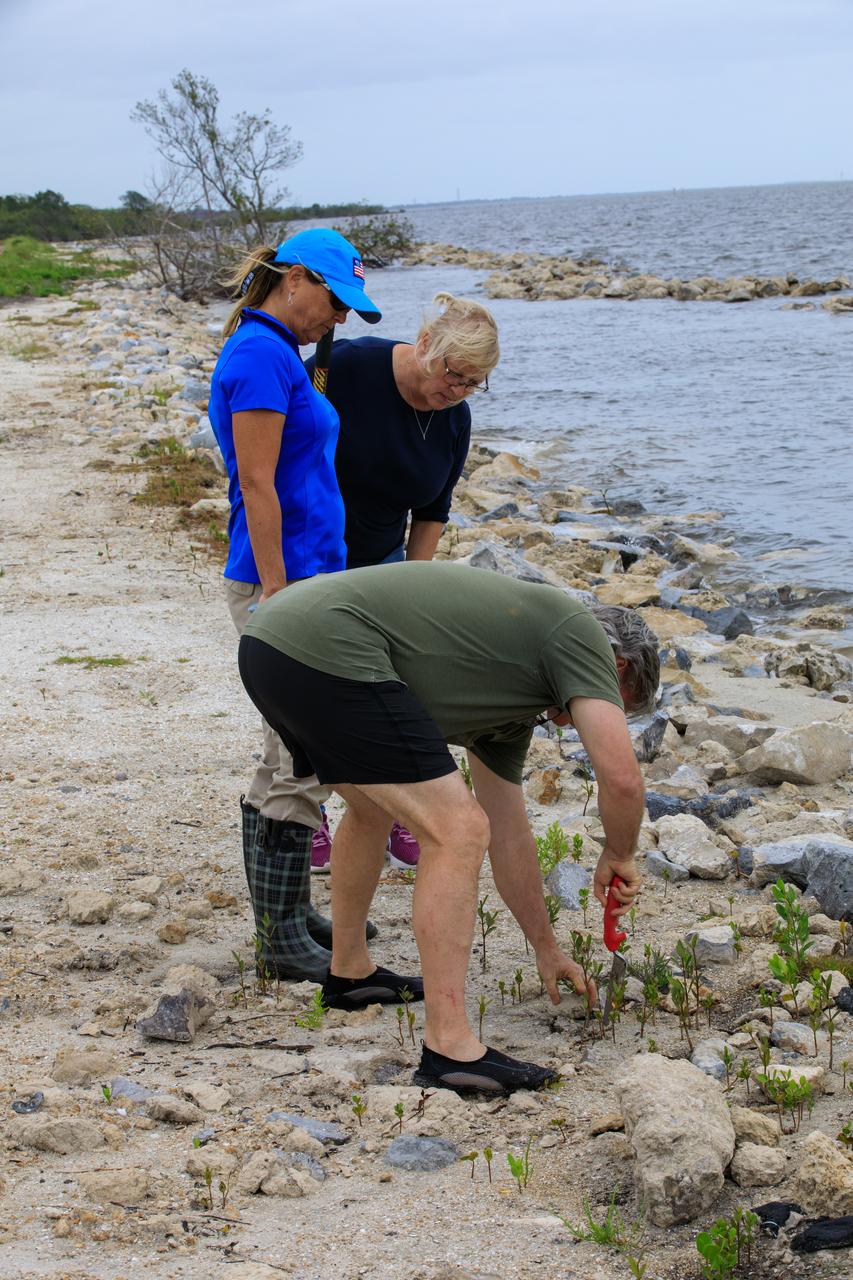
A team from Kennedy’s Environmental Management Branch works to remove a mangrove seedling on the shoreline of Kennedy Athletic, Recreation, and Social (KARS) Park at Kennedy Space Center in Florida on April 12, 2023. Employees from Kennedy’s Environmental Management Branch removed over 100 mangrove seedlings from the shoreline and repotted them for protection during the final stages of a shoreline restoration project inside KARS Park. The mangrove seedlings will be replanted upon completion of the project to create a living shoreline better able to counter the effects of erosion caused by storm waves and rising sea levels.
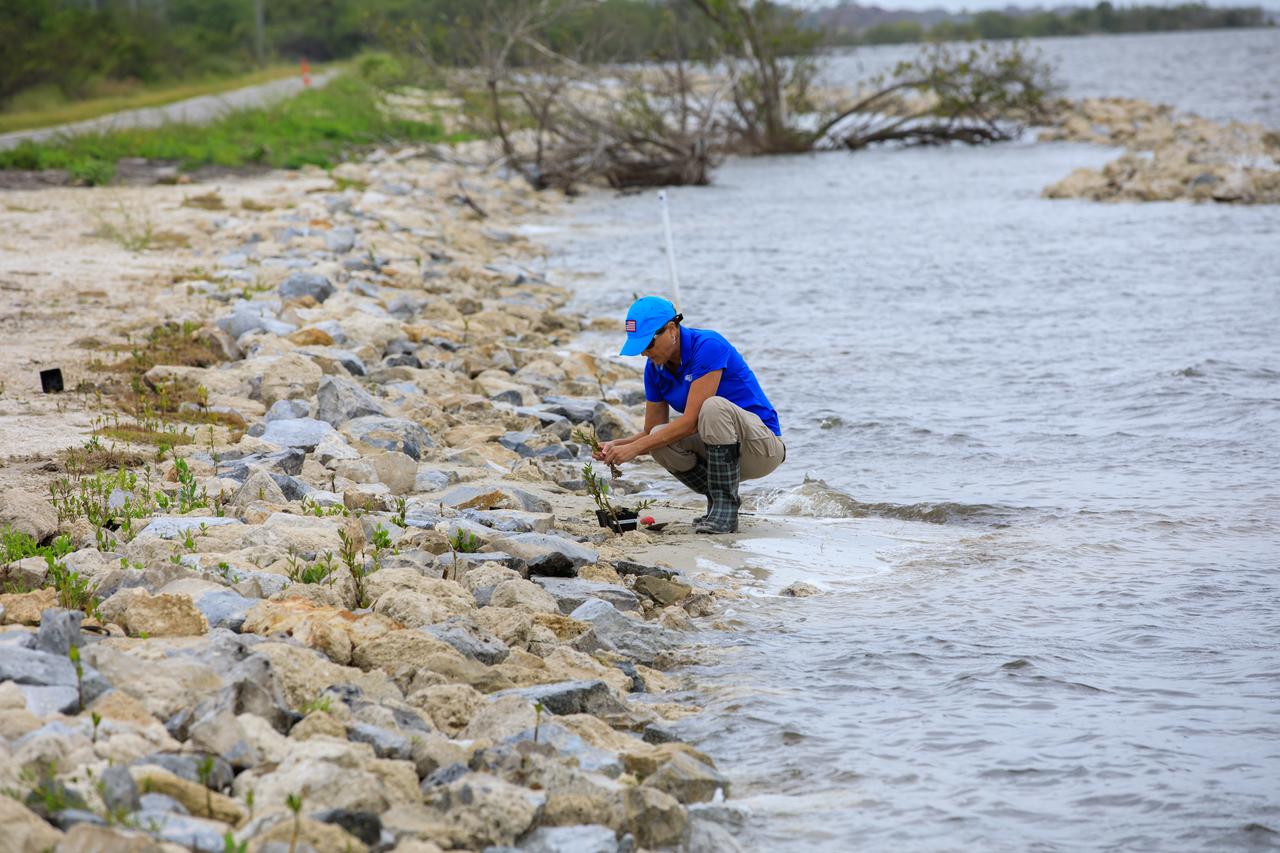
A team member from Kennedy’s Environmental Management Branch works to remove a mangrove seedling on the shoreline of Kennedy Athletic, Recreation, and Social (KARS) Park at Kennedy Space Center in Florida on April 12, 2023. Employees from Kennedy’s Environmental Management Branch removed over 100 mangrove seedlings from the shoreline and repotted them for protection during the final stages of a shoreline restoration project inside KARS Park. The mangrove seedlings will be replanted upon completion of the project to create a living shoreline better able to counter the effects of erosion caused by storm waves and rising sea levels.
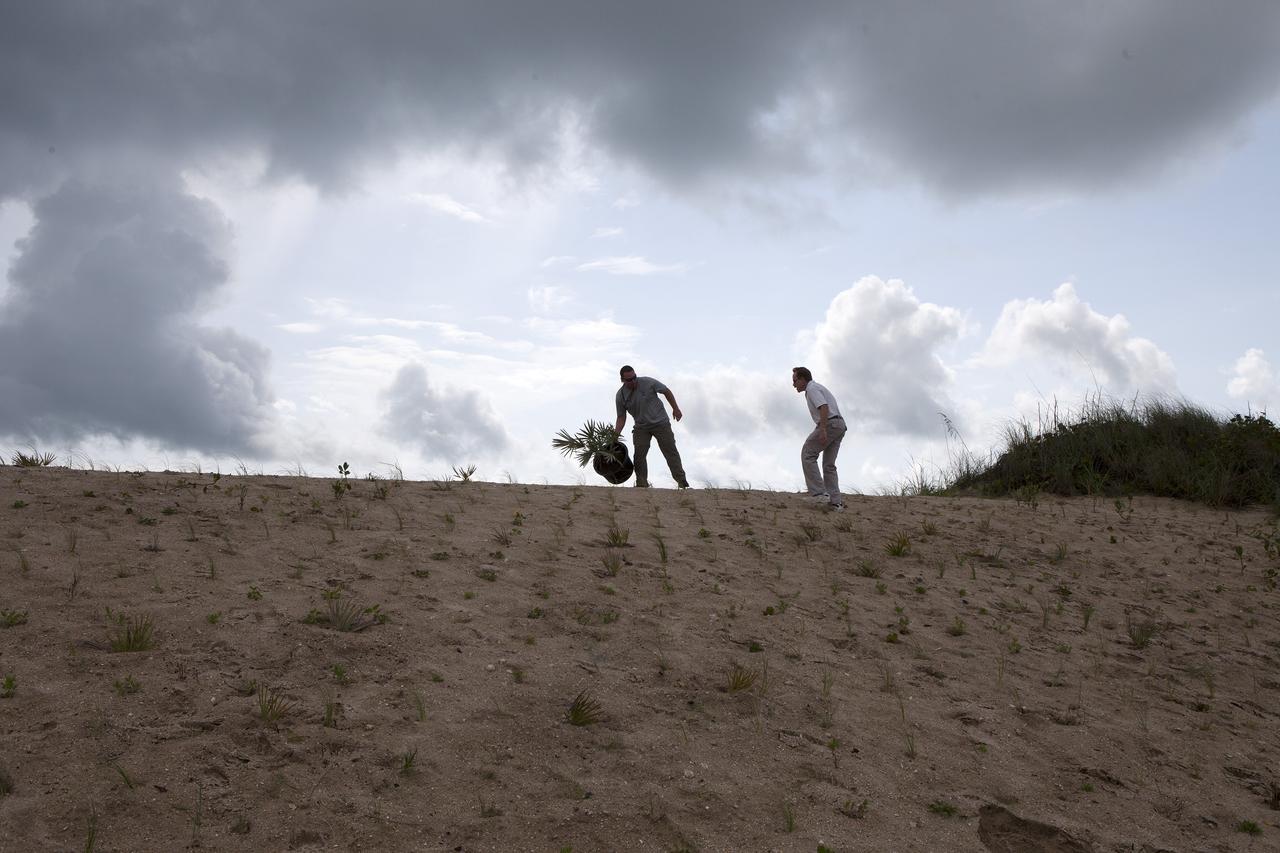
CAPE CANAVERAL, Fla. -- At the Kennedy Space Center in Florida, Don Dankert, a biological scientist in the NASA Environmental Management Branch of Center Operations, left, and Glenn Semmel, chief of the Environmental Management Branch of Center Operations retrieve the final shrub that is among 180,000 planted on a new 1.2-mile stretch of shoreline near Launch Pads 39A and B. Constant pounding from tropical storms, such as Hurricane Sandy in October of 2012, other weather systems and higher than usual tides, destroyed sand dunes protecting infrastructure at the spaceport. Photo credit: NASA/Dan Casper
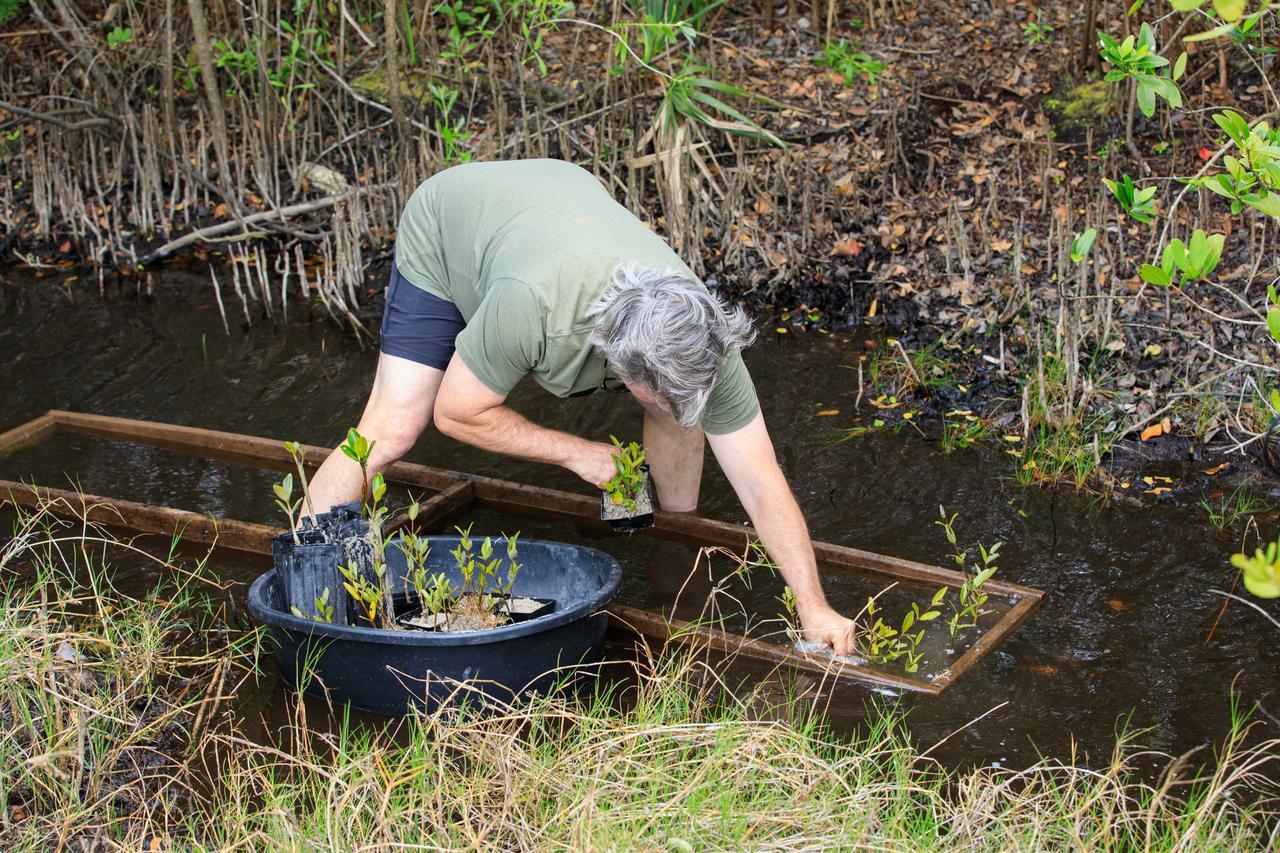
A team member from Kennedy’s Environmental Management Branch deposits repotted mangrove seedlings into a marshy channel near the shoreline of Kennedy Athletic, Recreation, and Social (KARS) Park at Kennedy Space Center in Florida on April 12, 2023. Employees from Kennedy’s Environmental Management Branch removed over 100 mangrove seedlings from the shoreline and repotted them for protection during the final stages of a shoreline restoration project inside KARS Park. The mangrove seedlings will be replanted upon completion of the project to create a living shoreline better able to counter the effects of erosion caused by storm waves and rising sea levels.
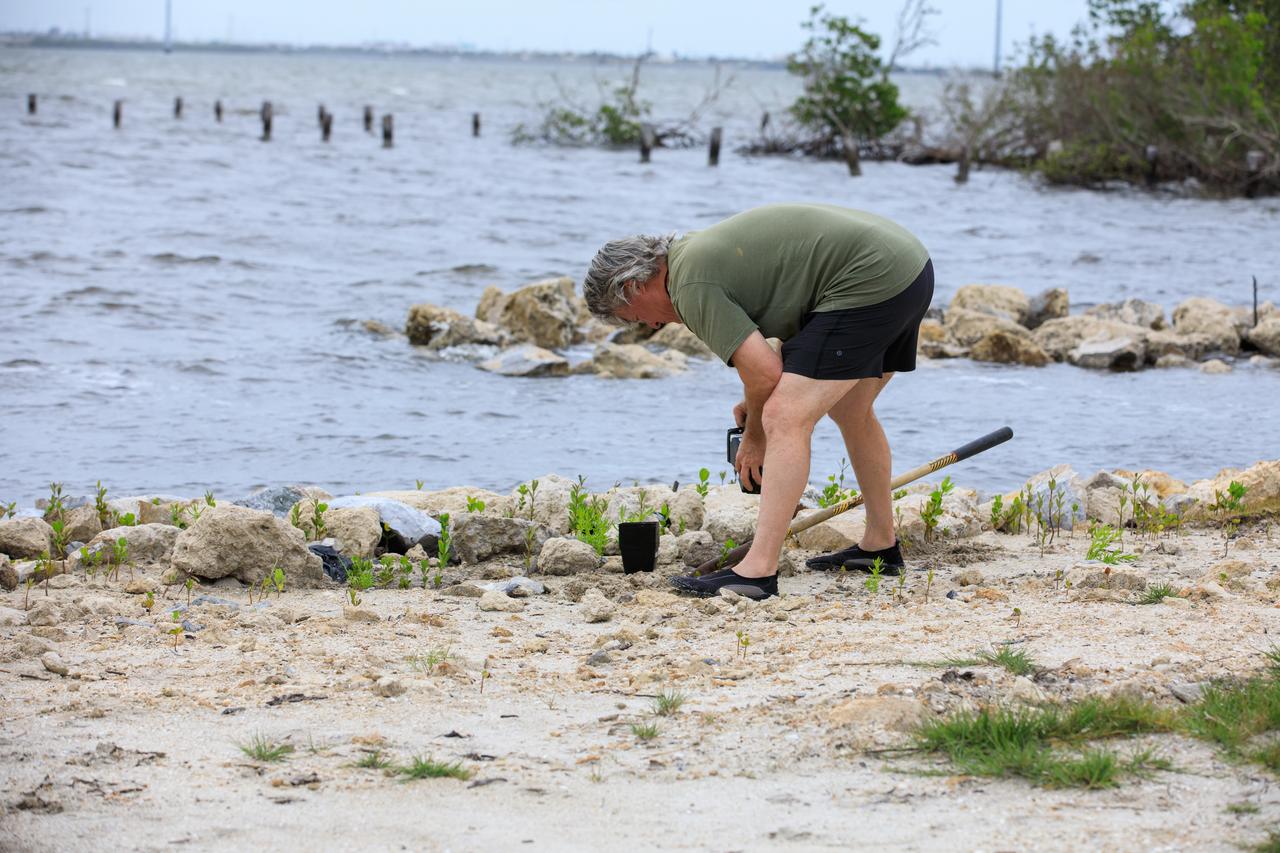
A team member from Kennedy’s Environmental Management Branch works to remove a mangrove seedling on the shoreline of Kennedy Athletic, Recreation, and Social (KARS) Park at Kennedy Space Center in Florida on April 12, 2023. Employees from Kennedy’s Environmental Management Branch removed over 100 mangrove seedlings from the shoreline and repotted them for protection during the final stages of a shoreline restoration project inside KARS Park. The mangrove seedlings will be replanted upon completion of the project to create a living shoreline better able to counter the effects of erosion caused by storm waves and rising sea levels.
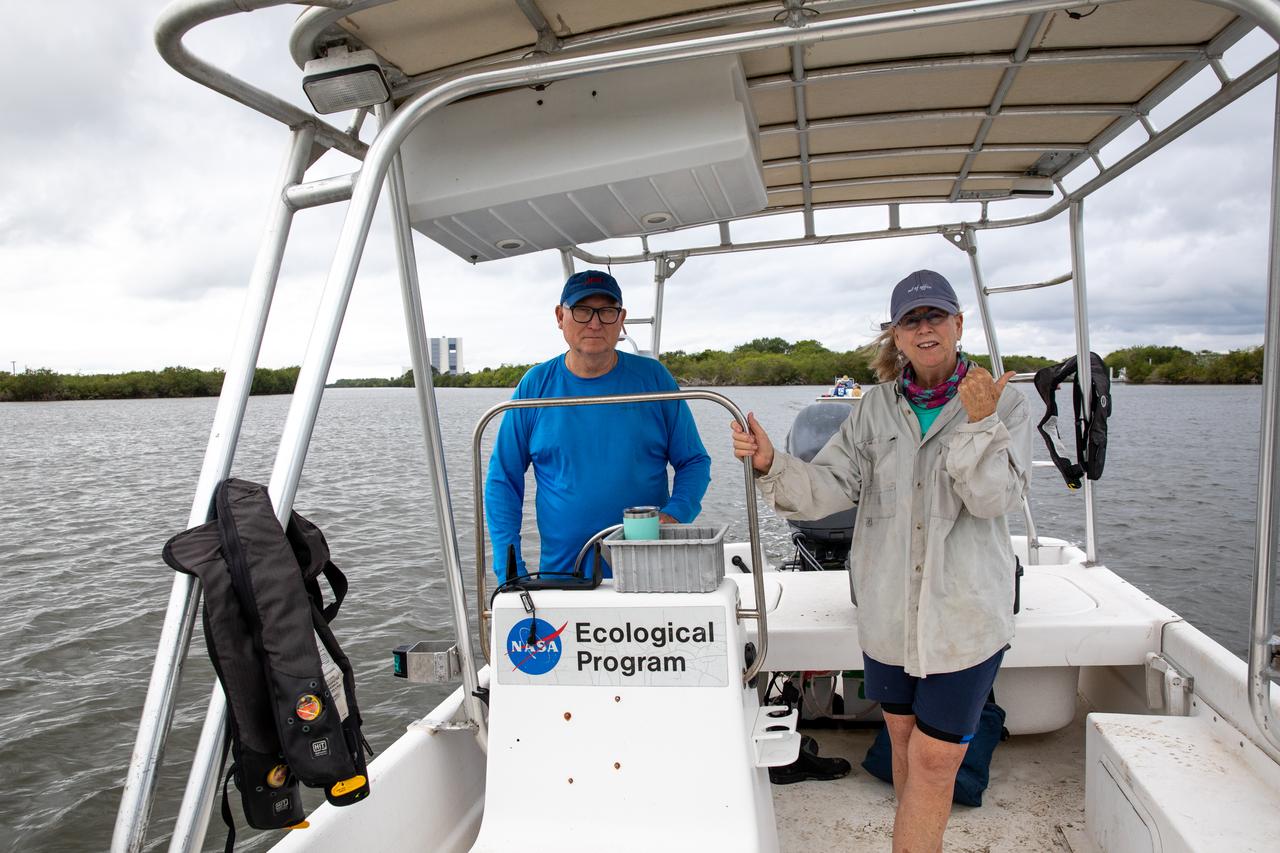
Kennedy Space Center’s Doug Scheidt (left), an ecologist working on NASA’s Environmental and Medical Contract (NEMCON), and Jane Provancha, manager of the ecological group for NEMCON, oversee seagrass restoration efforts at the Florida spaceport on March 29, 2023. Kennedy’s Environmental Management Branch is working to plant a minimum of 28,000 shoots of seagrass divided into 18 sites across three areas at the Florida spaceport as part of a pilot project for seagrass restoration efforts. The project will look at the feasibility of replanting seagrass in Kennedy waters and, if successful, could lead to the spaceport becoming a donor site where shoots of grass can be broken off and relocated to other areas within Kennedy or along the Indian River Lagoon to promote growth.
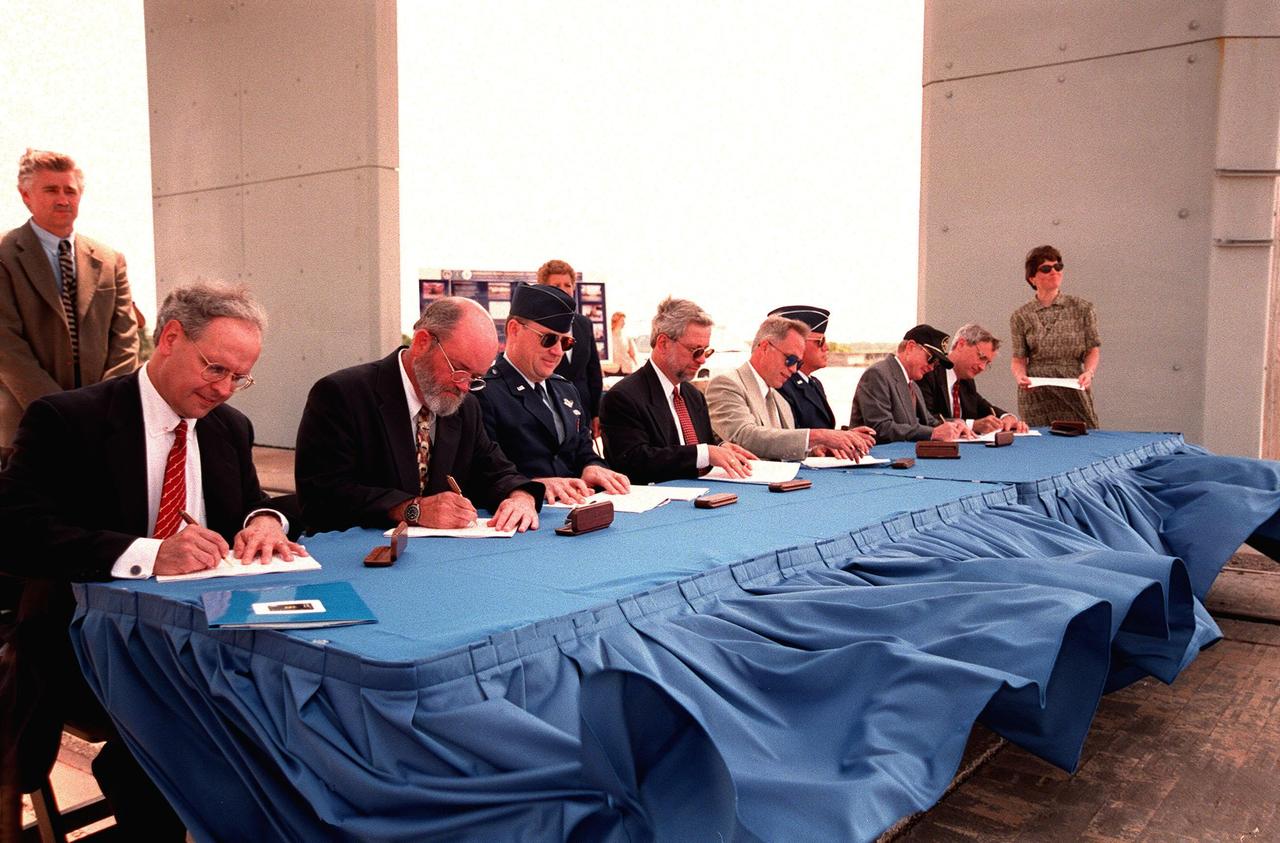
On the site of Launch Complex 34, key participants sign a Memorandum of Agreement, formalizing cooperative efforts of NASA, the U.S. Air Force, and federal agencies in ground-water cleanup initiatives. Seated from left to right are Timothy Oppelt, director, National Risk Management Research Laboratory, U.S. Environmental Protection Agency; Tom Heenan, assistant manager of environmental management, Savannah River Site, U.S. Department of Energy; Col. James Heald, Vice Commander, Air Force Research Laboratory, U.S. Air Force; Gerald Boyd, acting deputy assistant secretary, Office of Science and Technology, U.S. Department of Energy; James Fiore, acting deputy assistant secretary, Office of Environmental Restoration, Department of Energy; Brig. Gen. Randall R. Starbuck, Commander 45th Space Wing, U.S. Air Force; Roy Bridges Jr., director of John F. Kennedy Space Center; Walter Kovalick Jr., Ph.D., director, Technology Innovation Office, U.S. Environmental Protection Agency. NASA, the U.S. Air Force and the agencies have formed a consortium and are participating in a comparative study of three innovative techniques to be used in cleaning a contaminated area of Launch Complex 34. The study will be used to help improve groundwater cleanup processes nationally
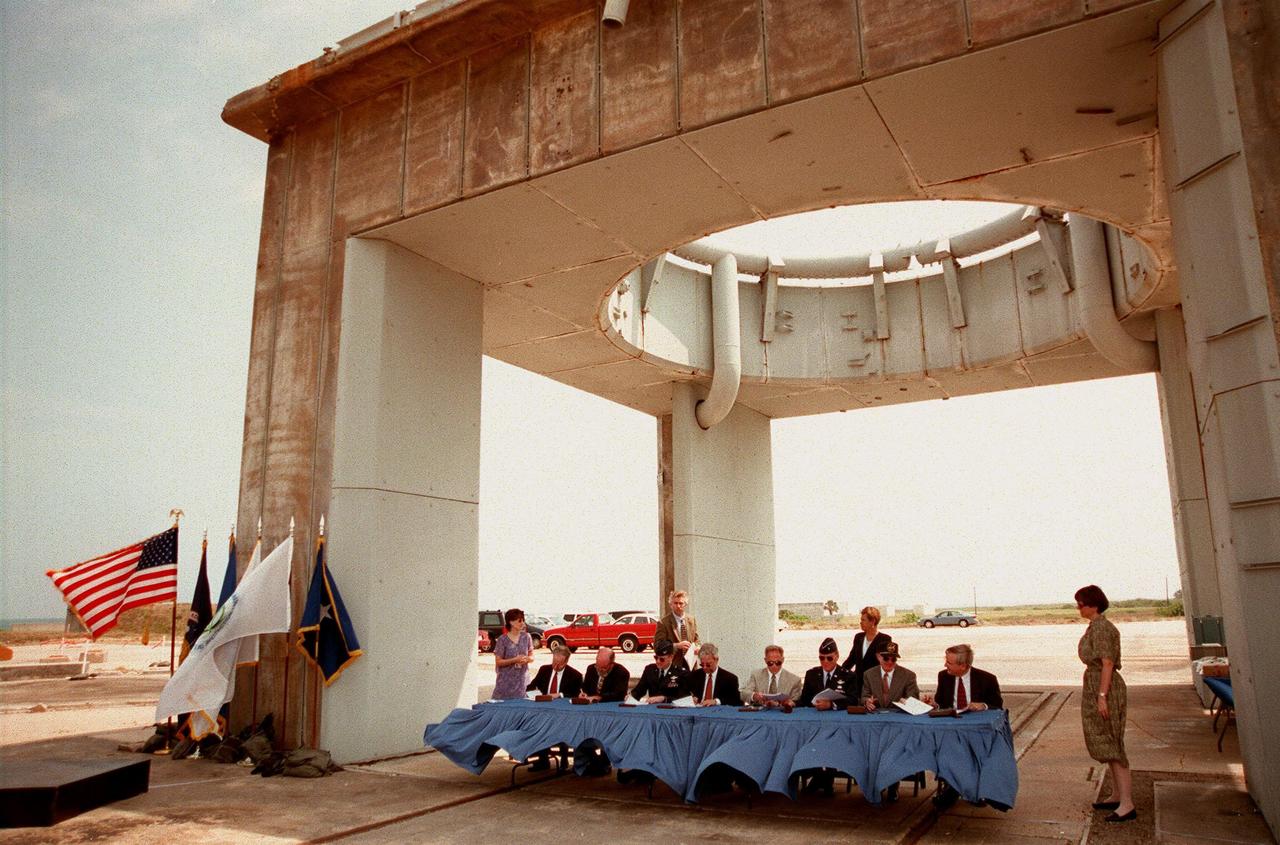
On the site of Launch Complex 34, key participants sign a Memorandum of Agreement, formalizing cooperative efforts of NASA, the U.S. Air Force, and federal agencies in ground-water cleanup initiatives. Seated at the table, from left to right, are Timothy Oppelt, director, National Risk Management Research Laboratory, U.S. Environmental Protection Agency; Tom Heenan, assistant manager of environmental management, Savannah River Site, U.S. Department of Energy; Col. James Heald, Vice Commander, Air Force Research Laboratory, U.S. Air Force; Gerald Boyd, acting deputy assistant secretary, Office of Science and Technology, U.S. Department of Energy; James Fiore, acting deputy assistant secretary, Office of Environmental Restoration, Department of Energy; Brig. Gen. Randall R. Starbuck, Commander 45th Space Wing, U.S. Air Force; Roy Bridges Jr., director of John F. Kennedy Space Center; Walter Kovalick Jr., Ph.D., director, Technology Innovation Office, U.S. Environmental Protection Agency. NASA, the U.S. Air Force and the agencies have formed a consortium and are participating in a comparative study of three innovative techniques to be used in cleaning a contaminated area of Launch Complex 34. The study will be used to help improve groundwater cleanup processes nationally
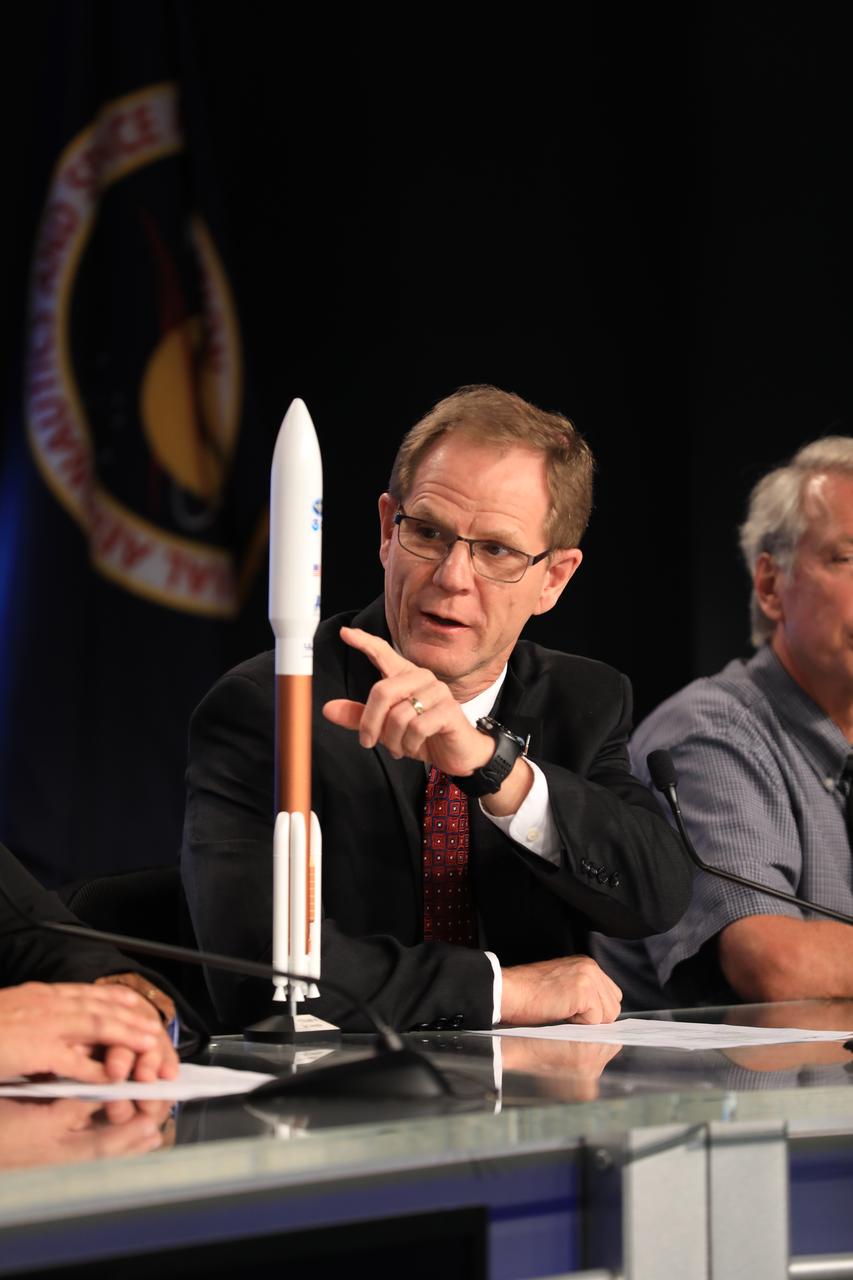
Scott Messer, program manager, NASA Missions, United Launch Alliance, speak to members of the news media during a Geostationary Operational Environmental Satellite (GOES-R) prelaunch news conference in the Kennedy Space Center's Press Site auditorium in Florida.
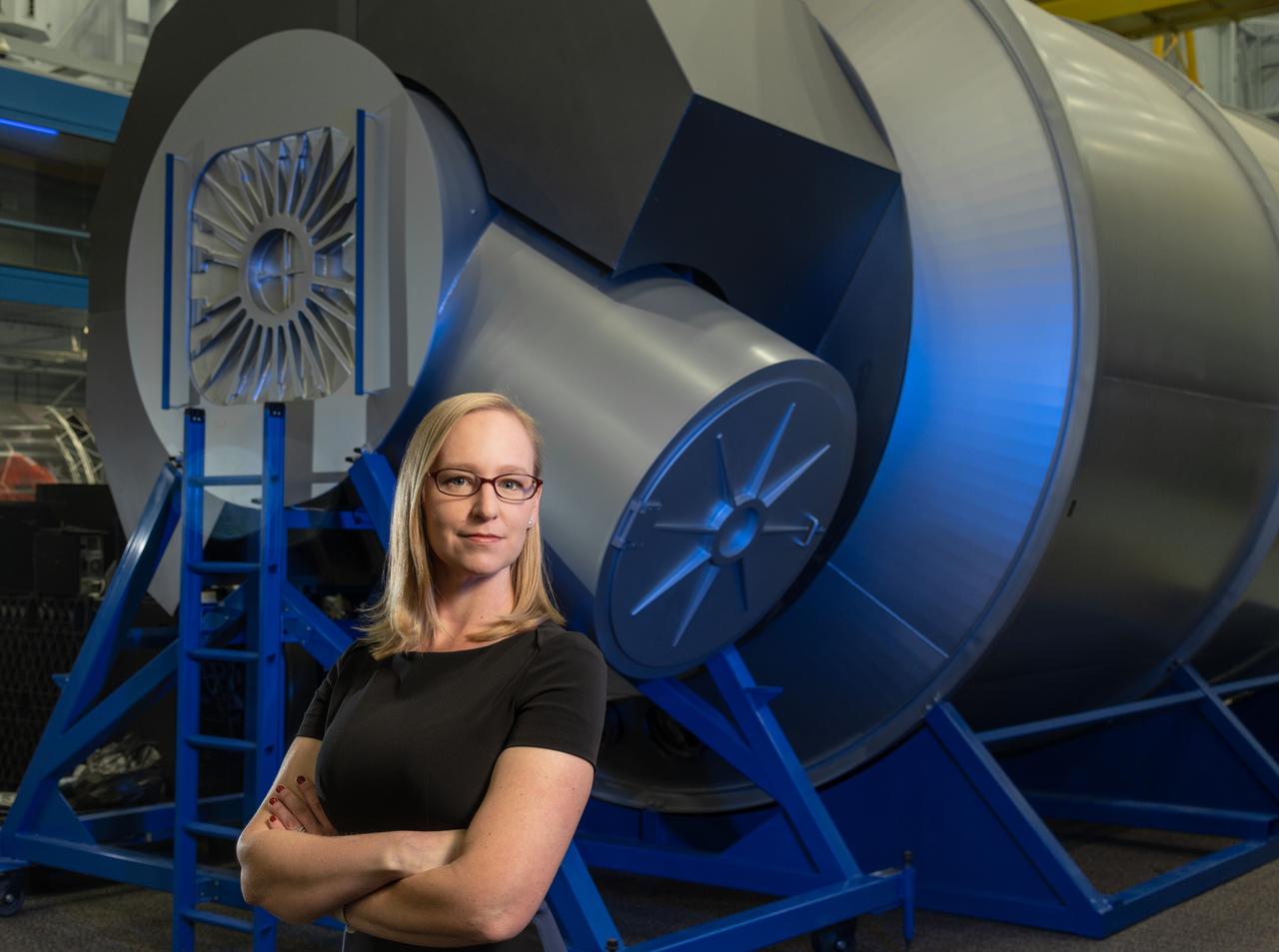
Environmental Portrait of Emma Lehnhardt, Manager of Gateway's Program Planning and Control Office (PP&C) office for Faces of NASA Project. Photo Date: March 23, 2022. Location: Building 9, SVMF - Gateway Mockup. Photographer: Robert Markowitz
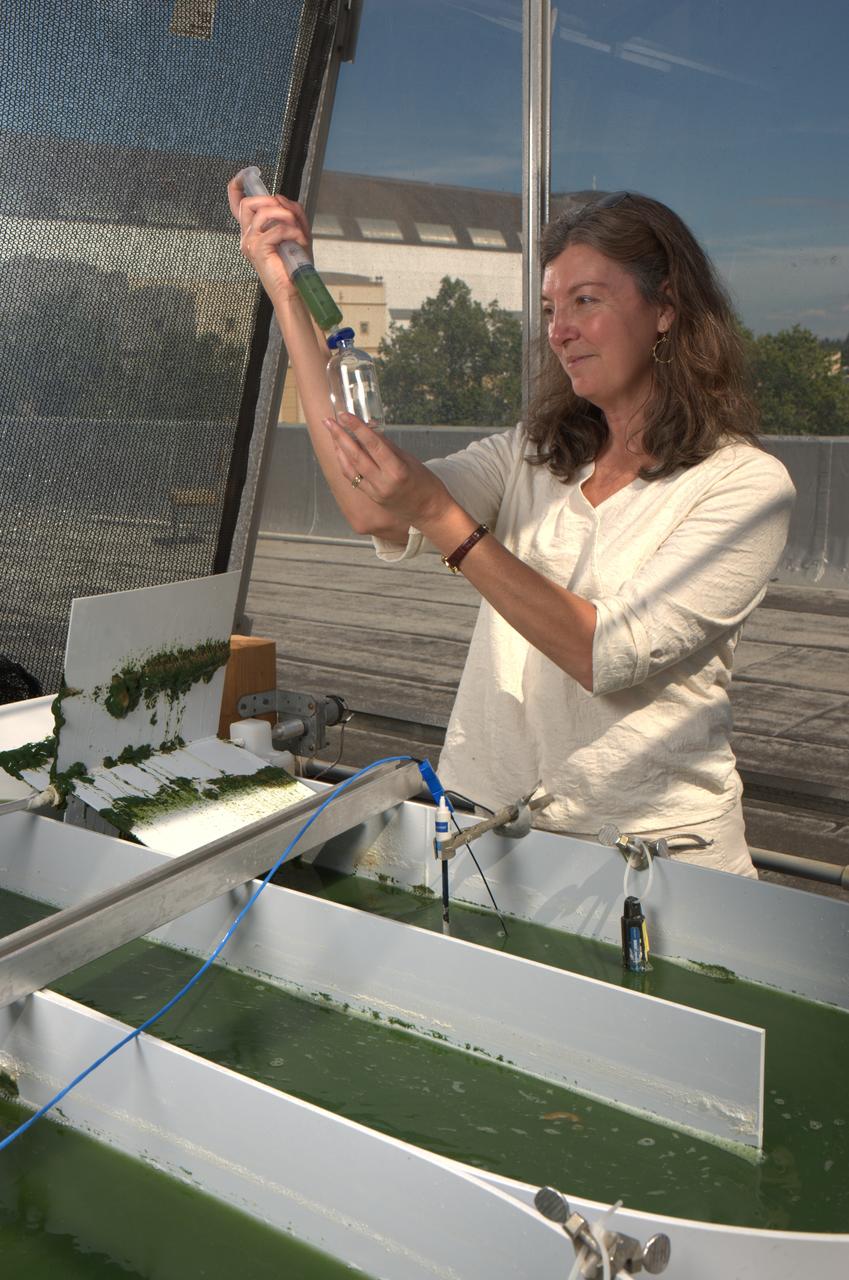
NASA Headquarter's Office of Infrastructure and Administration, Environmental Management Division presents the annual Blue Marble Award to Ames Scientist Leslie Prufert-Bebout receives . Leslie Prufert-Bebout is a microbial ecologist who studies many different species of algea in natural biological communities.

NASA Headquarter's Office of Infrastructure and Administration, Environmental Management Division presents the annual Blue Marble Award to Ames Scientist Leslie Prufert-Bebout receives . Leslie Prufert-Bebout is a microbial ecologist who studies many different species of algea in natural biological communities.
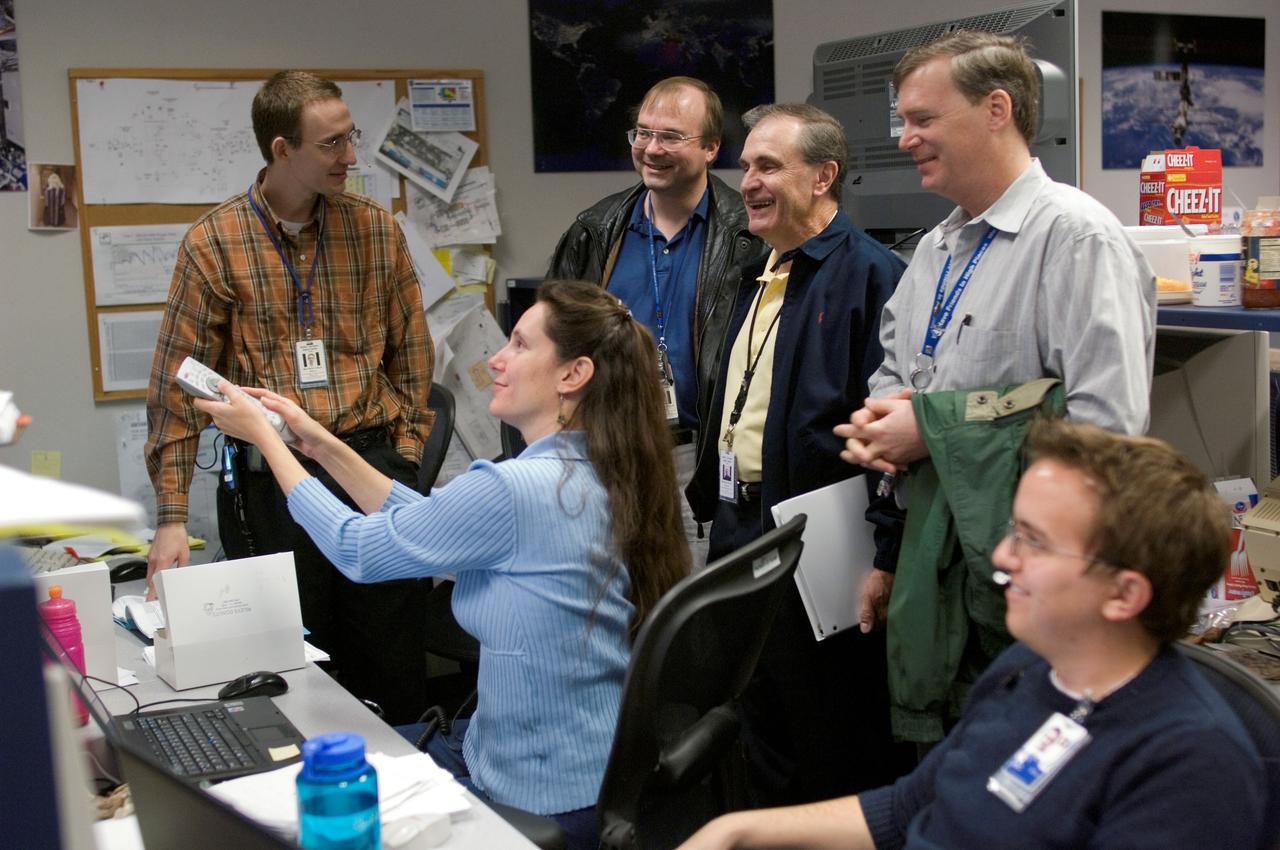
JSC2006-E-54262 ( ) --- MERLIN console operators review the Environmental Control and Life Support (ECLS) system status with ECLS management in preparation for the IMMT. Standing, from the left, are Brandon Dick , Matthew Davis, Richard Reysa and Greg Gentry. Seated are Karen Meyers (left) and Chris Matty.
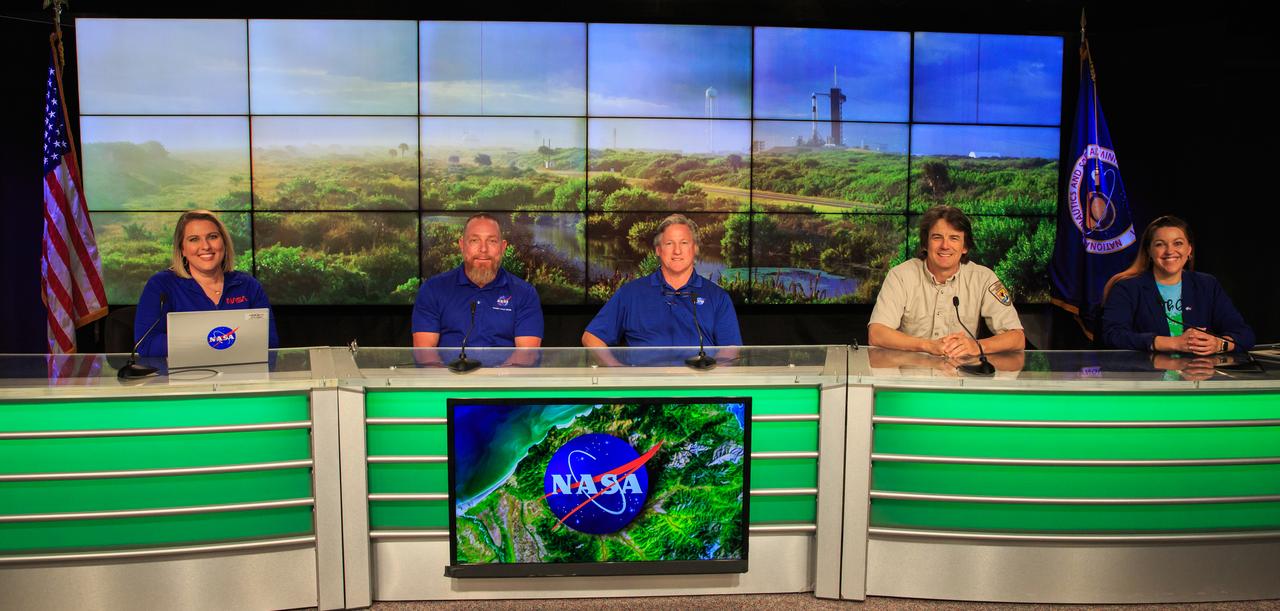
From left, NASA Communications’ Leah Martin; Environmental Planning Group Lead in Kennedy Space Center's Environmental Management Branch Don Dankert; Kennedy Environmental Protection Specialist Jeff Collins; Florida Fish and Wildlife Conservation Commission Officer Stanley Howater; and Stennis Space Center's Kelly McCarthy participate in an environmentally focused Earth Day briefing inside the News Auditorium at the Florida spaceport on April 20, 2023. As part of NASA’s NextGen STEM project, students from Florida’s Montverde Academy, Storm Grove Middle School, and Whispering Pines School, as well as a homeschool collective from Georgia, participated in person during the briefing, while middle- and high-school students across the country had the opportunity to ask questions of the panel via phone to discuss how technology and science coexist with nature at Kennedy.
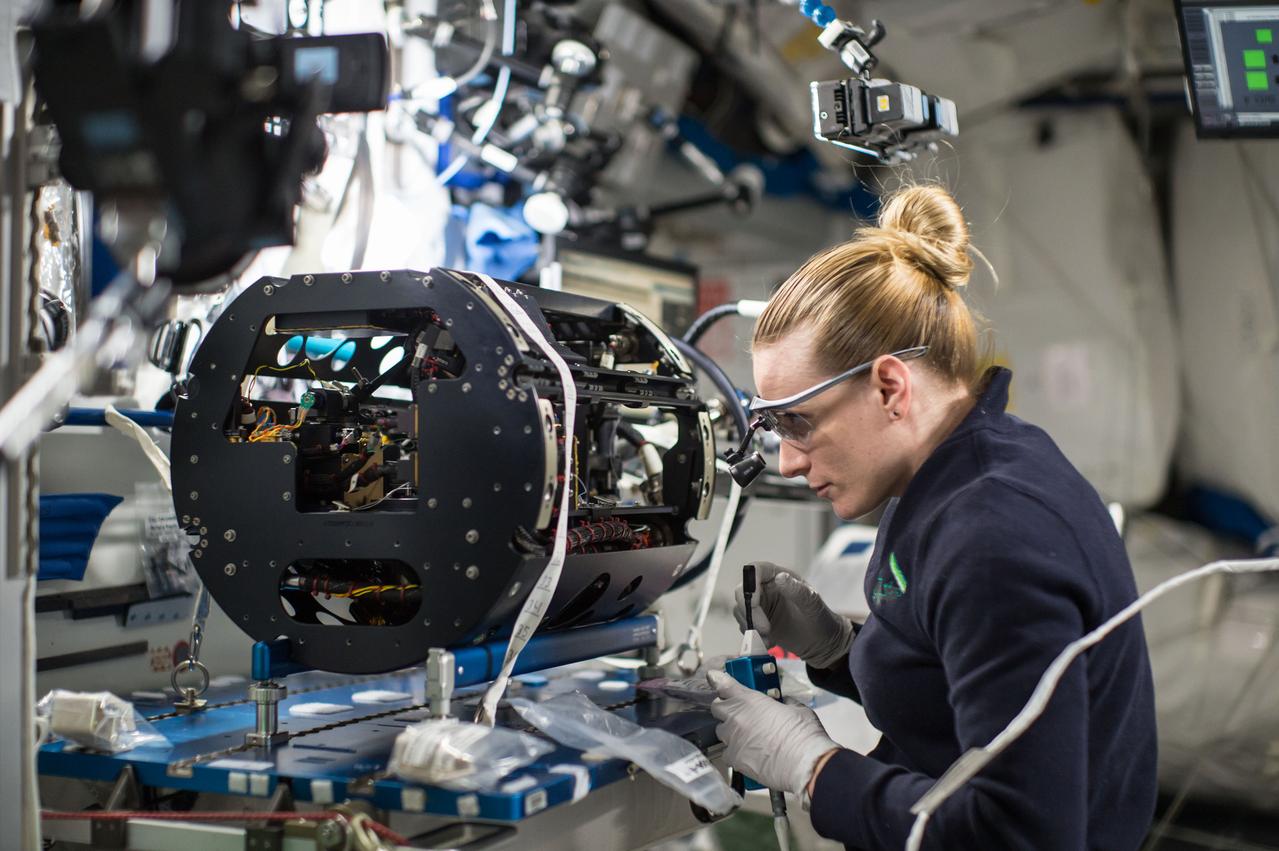
iss049e003808 (9/15/2016) --- NASA astronaut Kate Rubins is photographed replacing two Multi-user Droplet Combustion Apparatus (MDCA) Igniter Tips as part of the Combustion Integration Rack (CIR) Igniter Replacement operations. The CIR is used to perform combustion experiments in microgravity. The CIR can be reconfigured easily on orbit to accommodate a variety of combustion experiments. It consists of an optics bench, a combustion chamber, a fuel and oxidizer management system, environmental management systems, and interfaces for science diagnostics and experiment specific equipment.
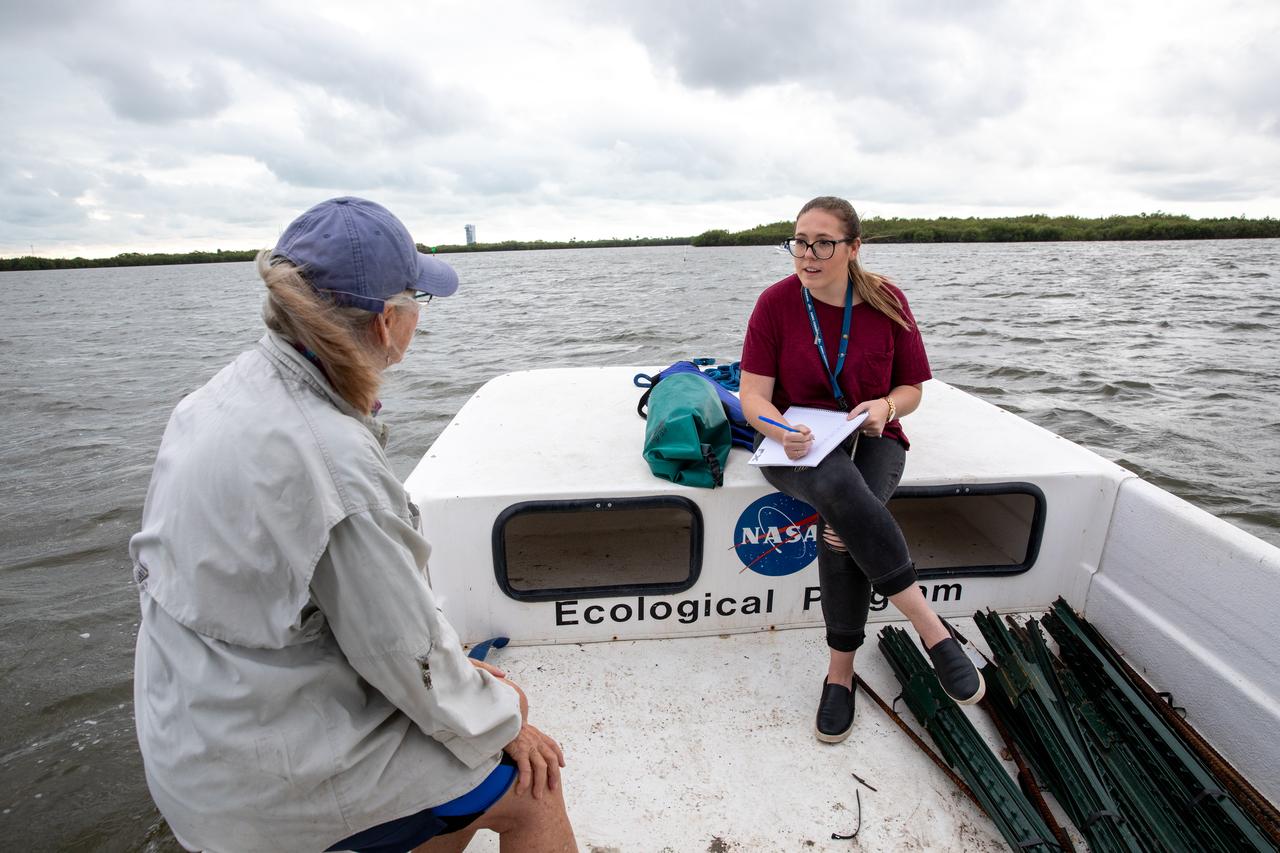
Kennedy Space Center Public Affairs Writer Danielle Sempsrott (right) interviews Jane Provancha, manager of the ecological group for NASA’s Environmental and Medical Contract (NEMCON) at Kennedy, for a web feature highlighting seagrass restoration efforts taking place at the Florida spaceport on March 29, 2023. Kennedy’s Environmental Management Branch is working to plant a minimum of 28,000 shoots of seagrass divided into 18 sites across three areas at the Florida spaceport as part of a pilot project for seagrass restoration efforts. The project will look at the feasibility of replanting seagrass in Kennedy waters and, if successful, could lead to the spaceport becoming a donor site where shoots of grass can be broken off and relocated to other areas within Kennedy or along the Indian River Lagoon to promote growth.
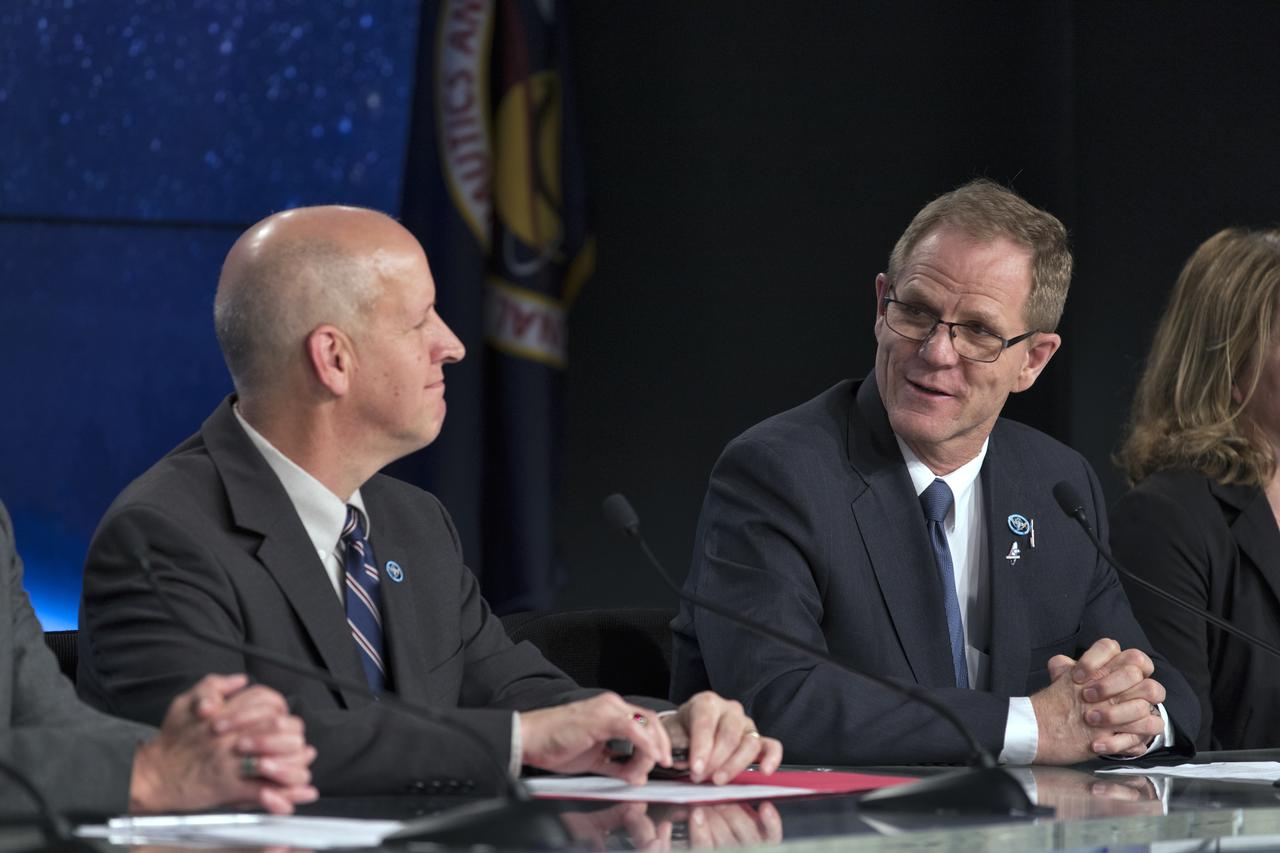
In the Kennedy Space Center's Press Site auditorium, Tim Dunn, NASA launch director at Kennedy, left, and Scott Messer, manager of NASA Programs for United launch Alliance, speak to members of the media at a prelaunch news conference about National Oceanic and Atmospheric Administration's, or NOAA's, Geostationary Operational Environmental Satellite, or GOES-S. The GOES series of satellites will significantly improve the detection and observation of environmental phenomena that directly affect public safety, protection of property and the nation's economic health and prosperity. GOES-S is slated to lift off at 5:02 p.m. EST on March 1, 2018 aboard a United Launch Alliance Atlas V rocket.

A bobcat resting leisurely on a retaining wall among the flowering bushes at Armstrong Flight Research Center in Edwards, California. The facility is home to a number of wild animals including the bobcats which are free to roam the more than 300,000 acres of Mojave Desert.
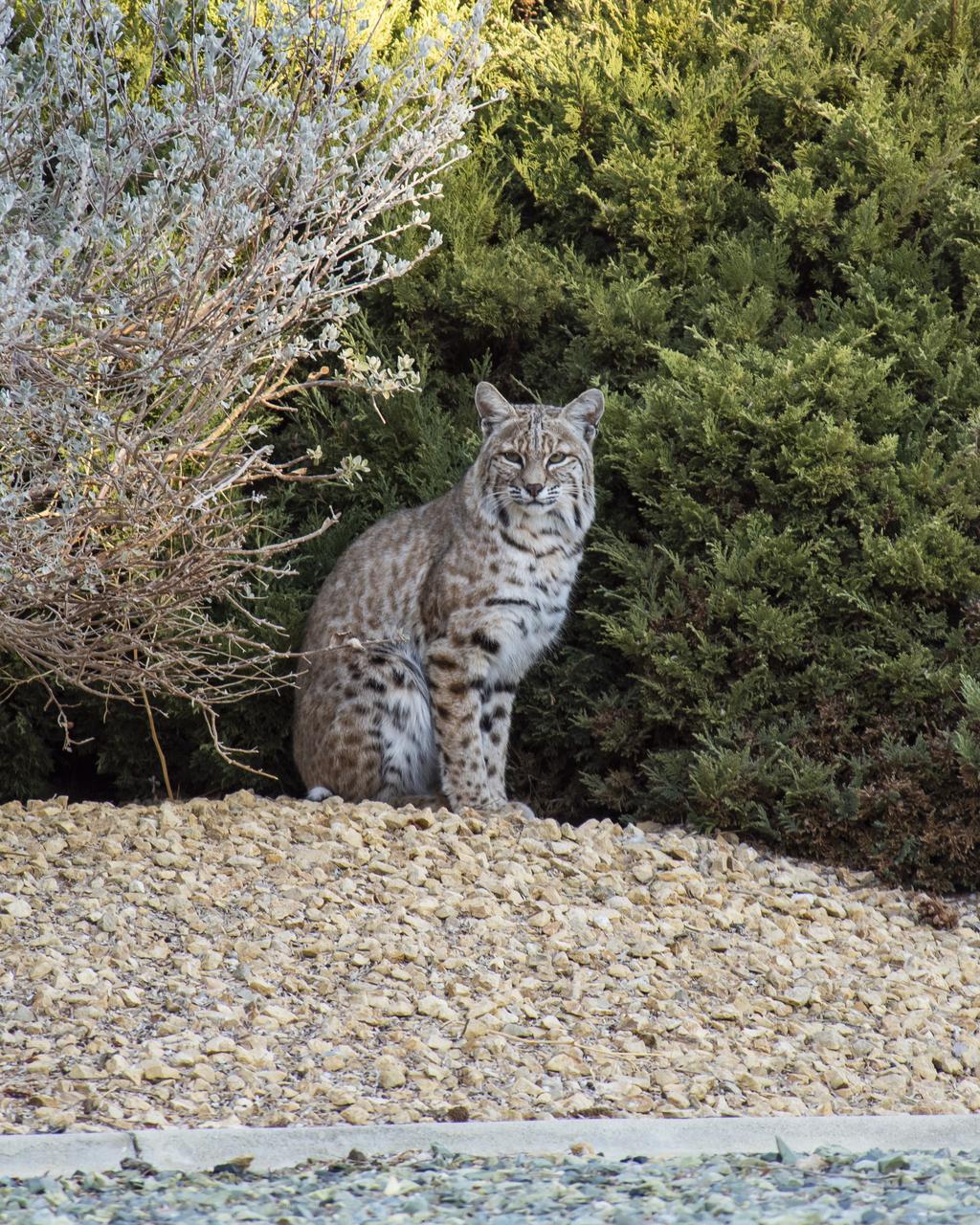
A bobcat surveying the landscape in between bushes at Armstrong Flight Research Center in Edwards, California. The spotted feline makes its home on the more than 300,000 acres of Mojave Desert surrounding the NASA facility housed at Edwards Air Force Base.
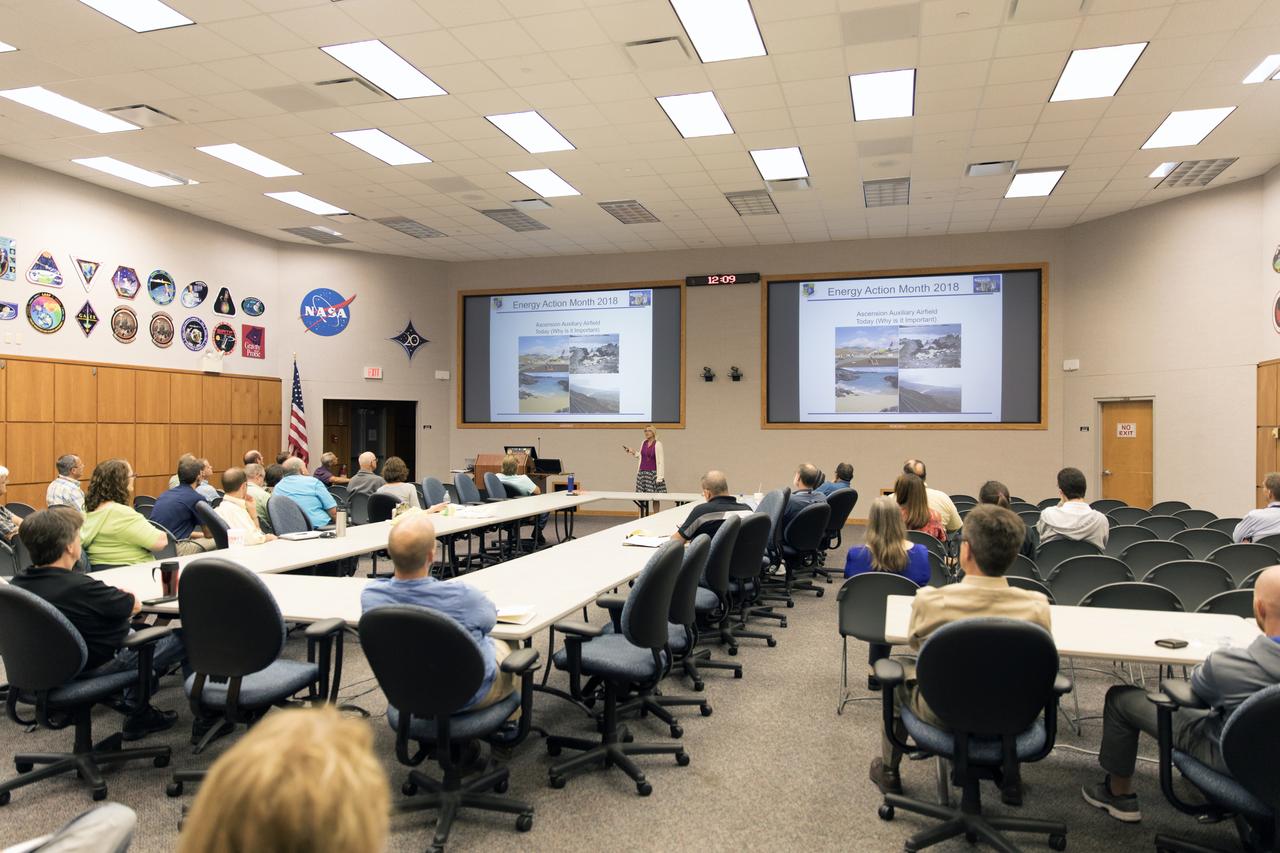
Guest speaker Robin Thomas shares a presentation focusing on energy resilience and the Ascension Island wind turbine generator project during a “lunch and learn” held Tuesday, Oct. 23, 2018, for employees at NASA’s Kennedy Space Center in Florida. Thomas is a resource efficiency manager working with the U.S. Air Force 45th Space Wing’s Civil Engineering Squadron based at Patrick Air Force Base. The event was one of two held during October in conjunction with Energy Awareness Month, which aims to recognize the importance of energy management for our national prosperity, security and environmental sustainability.
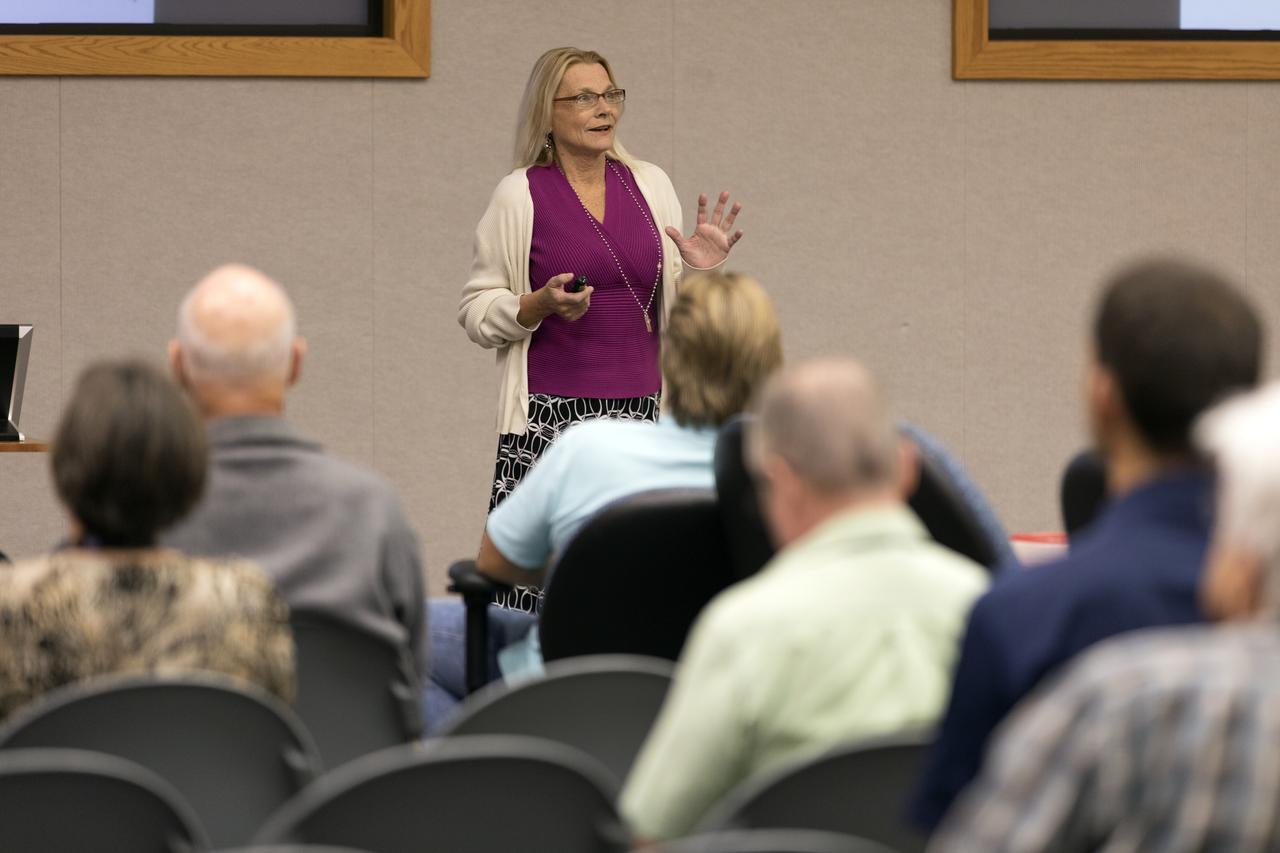
Guest speaker Robin Thomas discusses energy resilience and the Ascension Island wind turbine generator project during a “lunch and learn” held Tuesday, Oct. 23, 2018, for employees at NASA’s Kennedy Space Center in Florida. Thomas is a resource efficiency manager working with the U.S. Air Force 45th Space Wing’s Civil Engineering Squadron based at Patrick Air Force Base. The event was one of two held during October in conjunction with Energy Awareness Month, which aims to recognize the importance of energy management for our national prosperity, security and environmental sustainability.
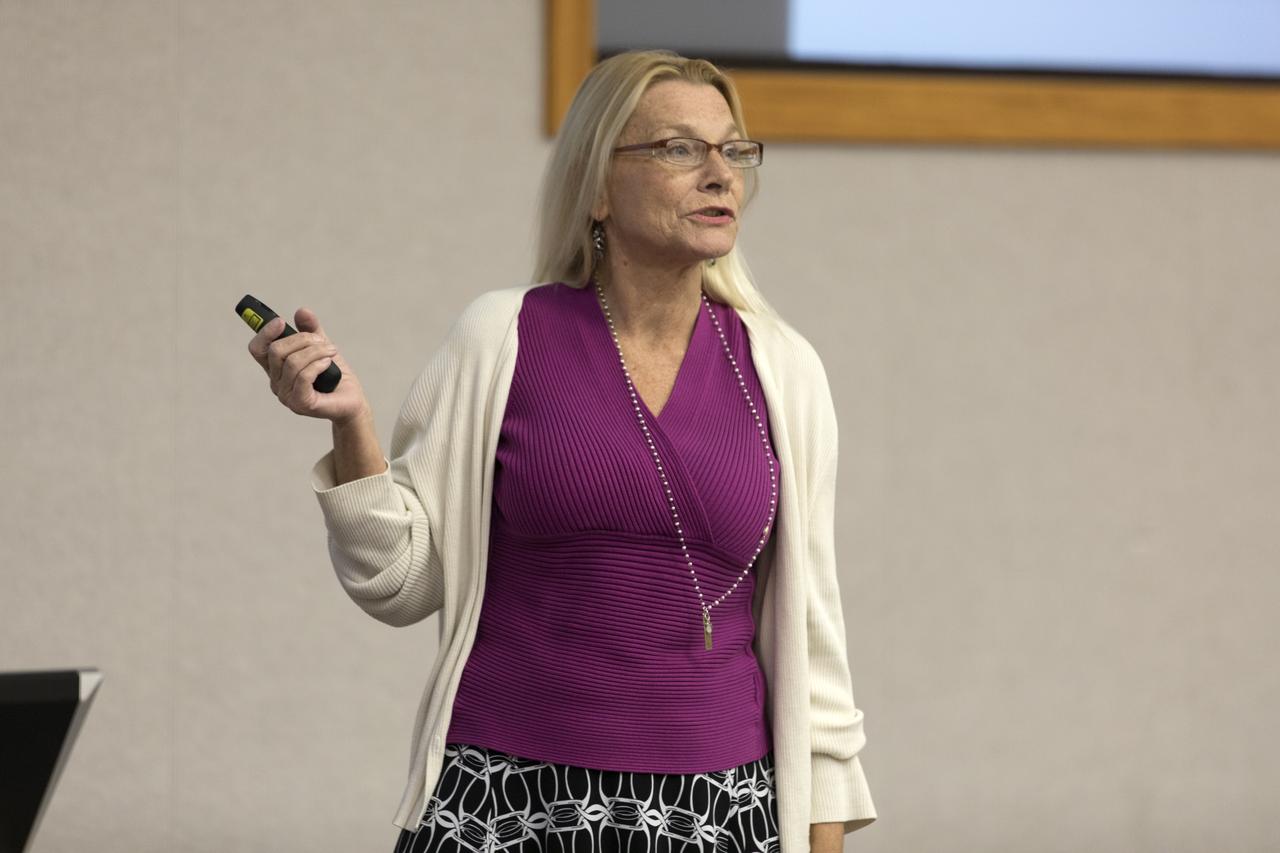
Guest speaker Robin Thomas discusses energy resilience and the Ascension Island wind turbine generator project during a “lunch and learn” held Tuesday, Oct. 23, 2018, for employees at NASA’s Kennedy Space Center in Florida. Thomas is a resource efficiency manager working with the U.S. Air Force 45th Space Wing’s Civil Engineering Squadron based at Patrick Air Force Base. The event was one of two held during October in conjunction with Energy Awareness Month, which aims to recognize the importance of energy management for our national prosperity, security and environmental sustainability.
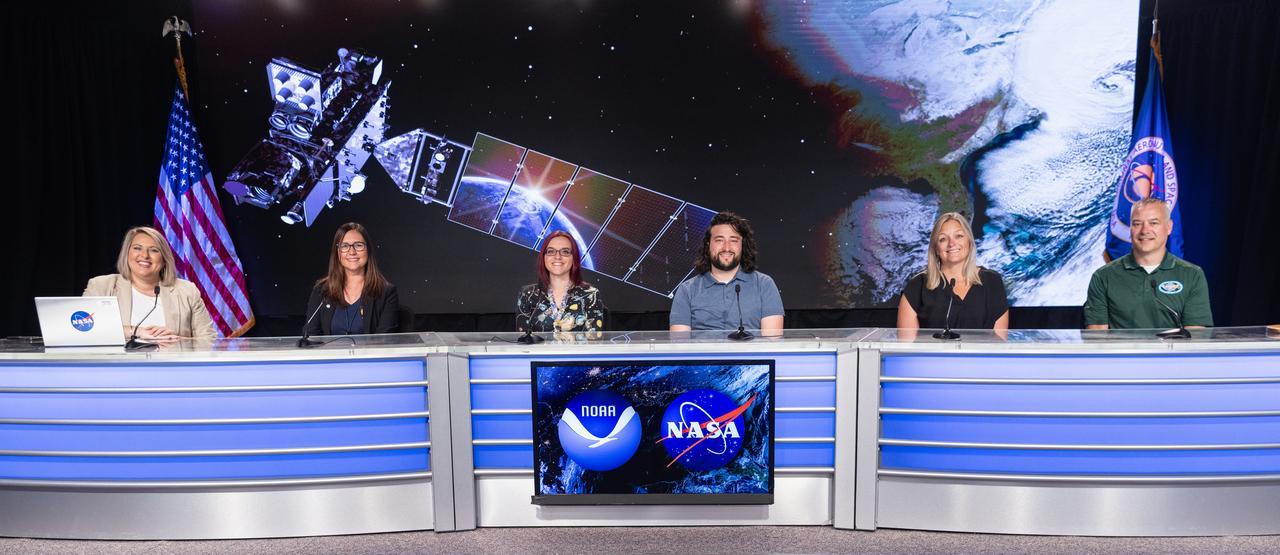
Officials from NASA, National Oceanic and Atmospheric Administration (NOAA), and other mission managers participate in a social panel on Monday, June 24, 2024, at NASA’s Kennedy Space Center in Florida for the launch of GOES-U (Geostationary Operational Environmental Satellite U) mission. From left to right, Leah Martin, NASA Communications; Ellen Ramirez, deputy division chief, Mission Operations Division, National Environmental Satellite, Data, and Information Service Office of Satellite and Product Operations, NOAA; Jade Zsiros, telemetry engineer, NASA’s Launch Services Program; Dakota Smith, satellite analyst and communicator, NOAA’s Cooperative Institute for Research in the Atmosphere; Allana Nepomuceno, senior manager, GOES-U Assembly, Test, and Launch Operations, Lockheed Martin; Chris Reith, program manager, Advanced Baseline Imager, L3Harris Technologies. The two-hour launch window opens at 5:16 p.m. EDT Tuesday, June 25, for the satellite’s launch on a SpaceX Falcon Heavy rocket from Launch Complex 39A at NASA’s Kennedy Space Center in Florida.
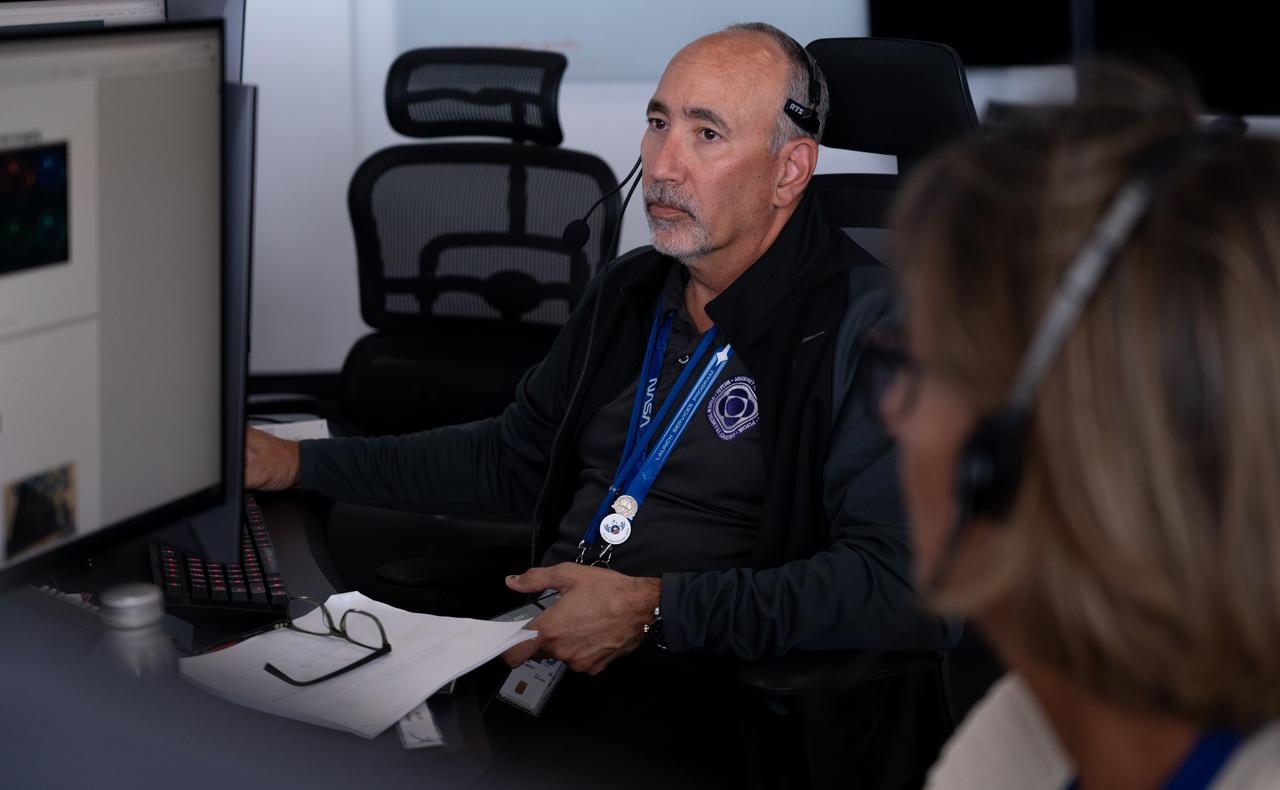
Albert Sierra, program manager for NASA’s Launch Services Program, participates in rehearsal launch operations for the National Oceanic and Atmospheric Administration (NOAA) GOES-U (Geostationary Operational Environmental Satellite U) mission inside Hangar X at NASA’s Kennedy Space Center in Florida on Monday, June 17, 2024. The GOES-U satellite, the final addition to GOES-R series, serves a critical role in providing continuous coverage of the Western Hemisphere, including monitoring tropical systems in the eastern Pacific and Atlantic oceans.
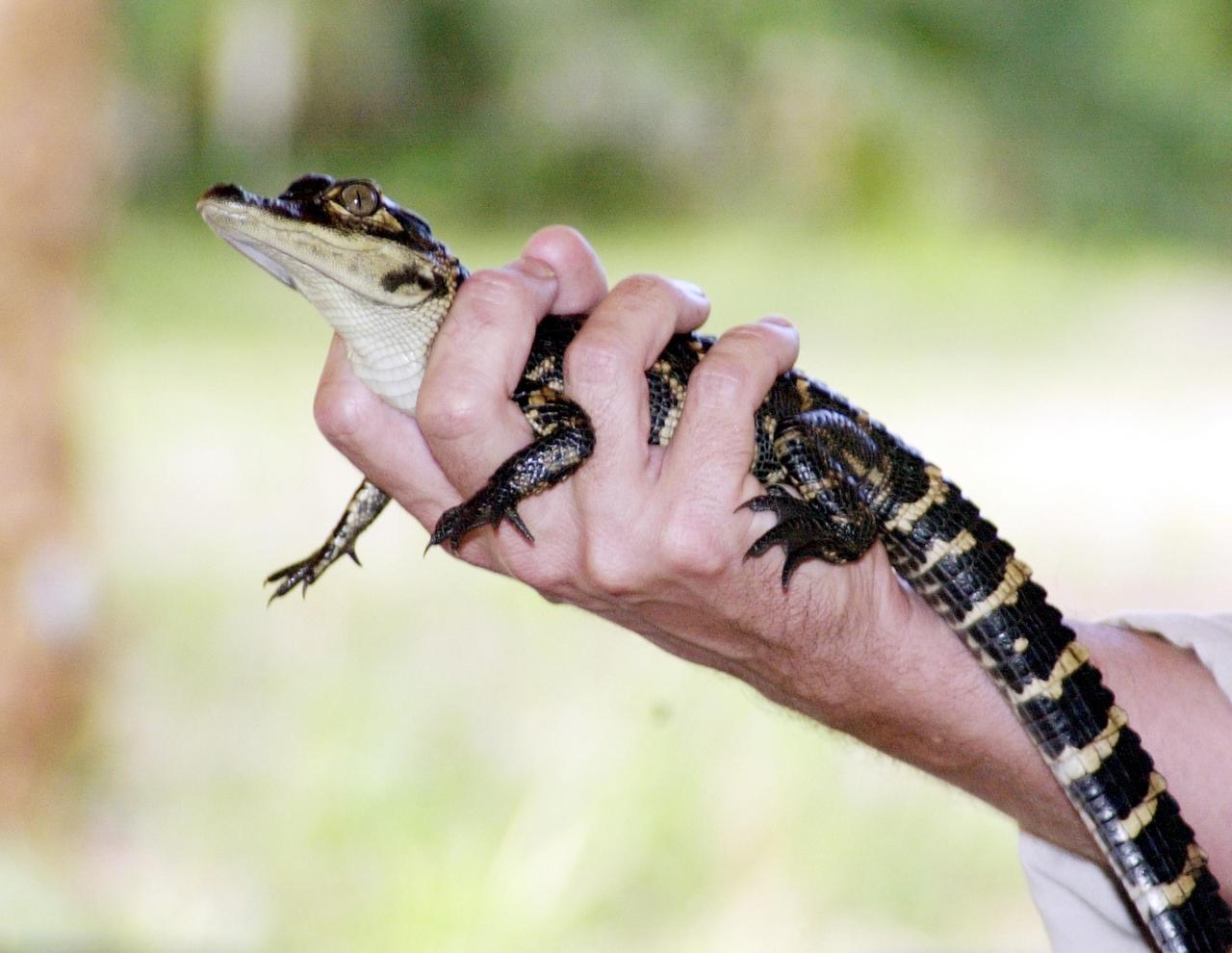
KENNEDY SPACE CENTER, FLA. - A baby alligator is displayed during the dedication of the Sendler Education Outpost, located at Dummit Cove on the Merritt Island National Wildlife Refuge (MINWR). The outpost is a resource for environmental educational students in the Central Florida area. It is named for Karl Sendler, a space pioneer and manager under Dr. Kurt Debus, KSC's first center director. Funding for the facility was provided by the Merritt Island Wildlife Association with assistance from MINWR and Kennedy Space Center.
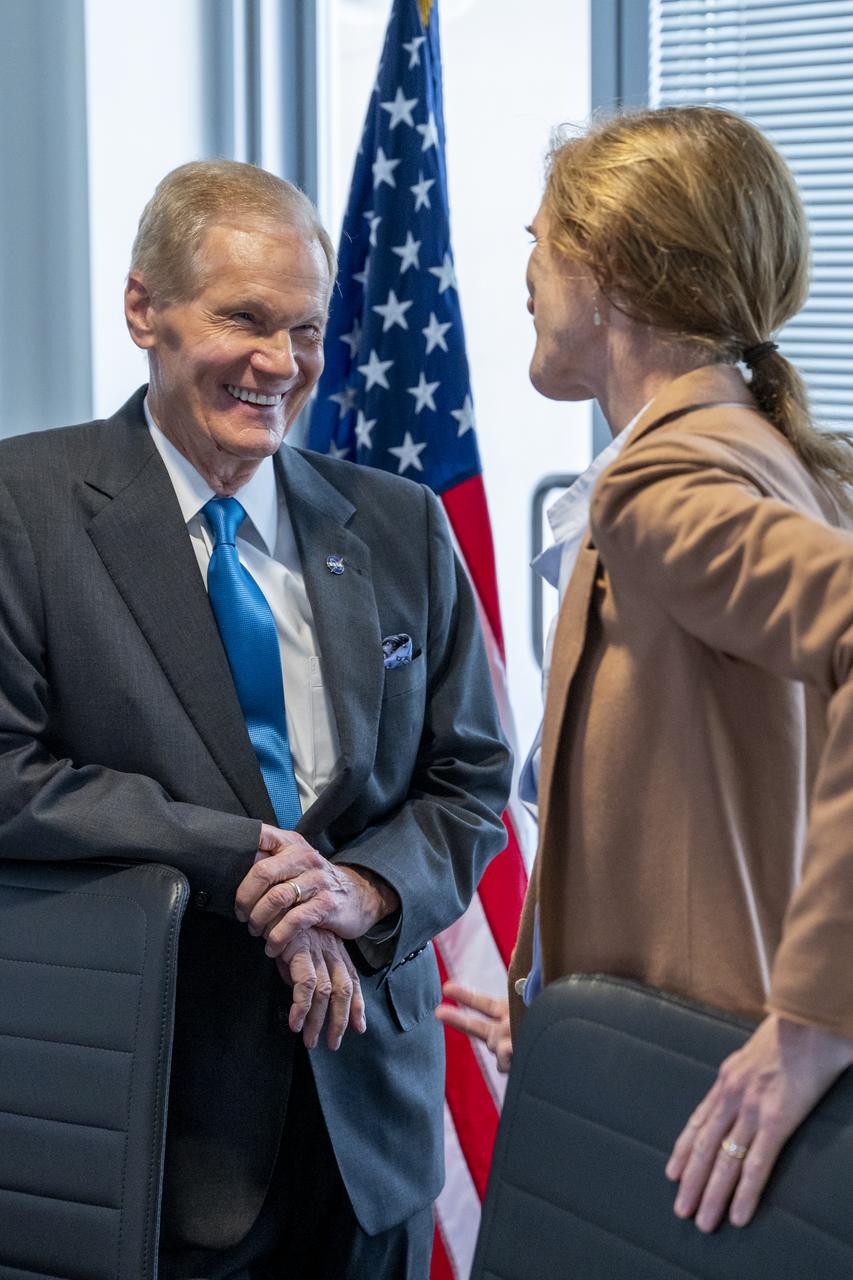
NASA Administrator Bill Nelson meets with USAID Administrator Samantha Power and staff prior to signing a NASA-USAID Memorandum of Understanding (MoU) Friday, Nov. 4, 2022, at the Mary W. Jackson NASA Headquarters building in Washington. The MoU will enhance and expand the Agencies’ longstanding partnership that promotes science and technology solutions to address international development challenges in areas such as global health, climate change, food security, disaster mitigation and response, biodiversity conservation, and environmental management for sustainable development. Photo Credit: (NASA/Keegan Barber)
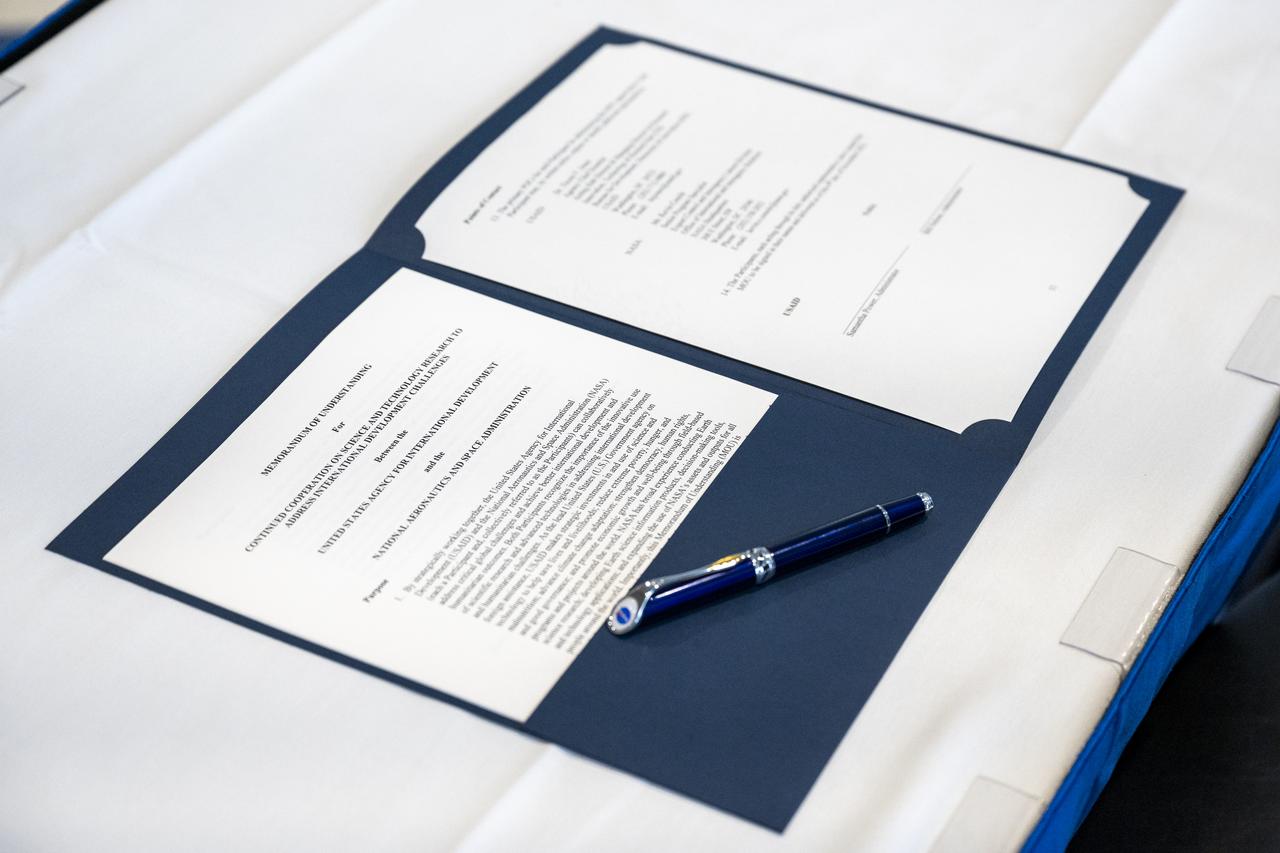
NASA Administrator Bill Nelson meets with USAID Administrator Samantha Power and staff prior to signing a NASA-USAID Memorandum of Understanding (MoU) Friday, Nov. 4, 2022, at the Mary W. Jackson NASA Headquarters building in Washington. The MoU will enhance and expand the Agencies’ longstanding partnership that promotes science and technology solutions to address international development challenges in areas such as global health, climate change, food security, disaster mitigation and response, biodiversity conservation, and environmental management for sustainable development. Photo Credit: (NASA/Keegan Barber)
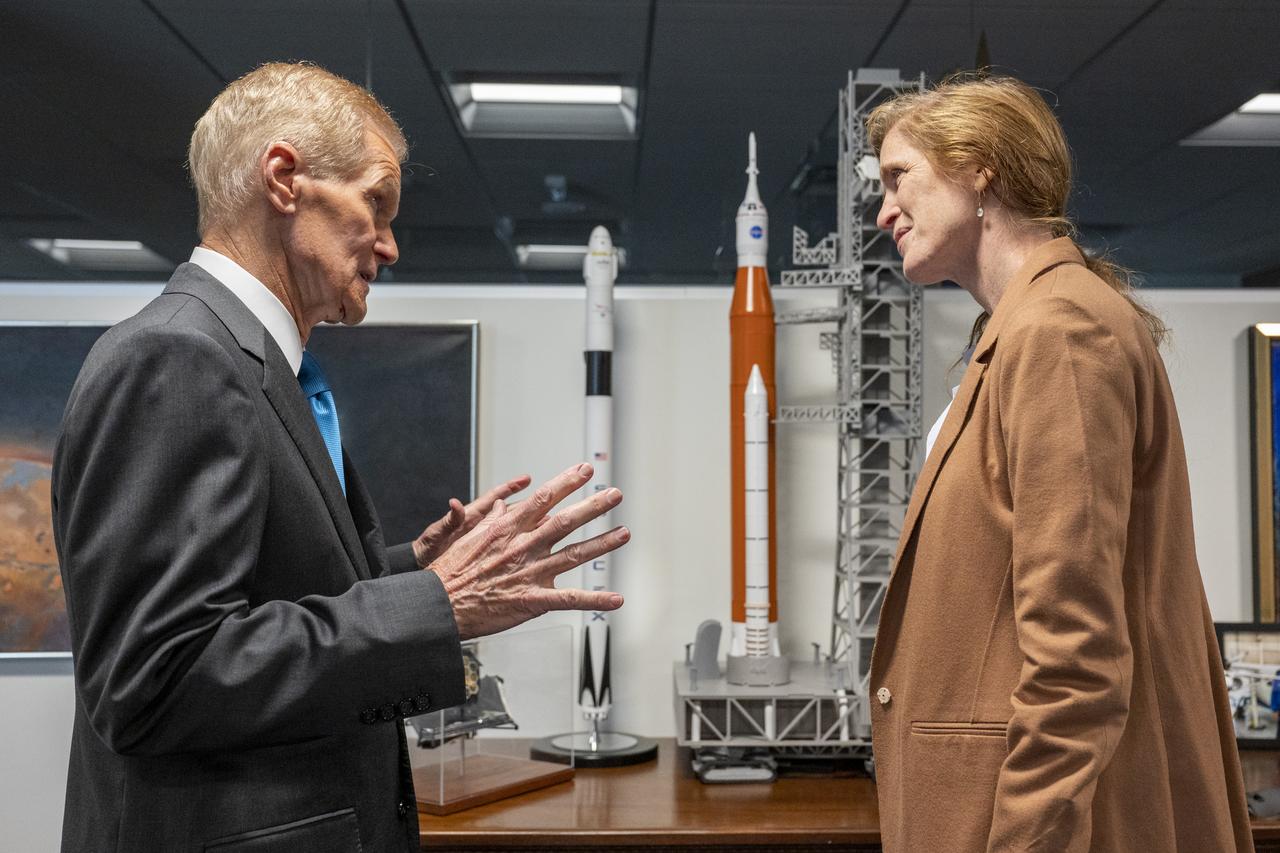
NASA Administrator Bill Nelson meets with USAID Administrator Samantha Power and staff prior to signing a NASA-USAID Memorandum of Understanding (MoU) Friday, Nov. 4, 2022, at the Mary W. Jackson NASA Headquarters building in Washington. The MoU will enhance and expand the Agencies’ longstanding partnership that promotes science and technology solutions to address international development challenges in areas such as global health, climate change, food security, disaster mitigation and response, biodiversity conservation, and environmental management for sustainable development. Photo Credit: (NASA/Keegan Barber)
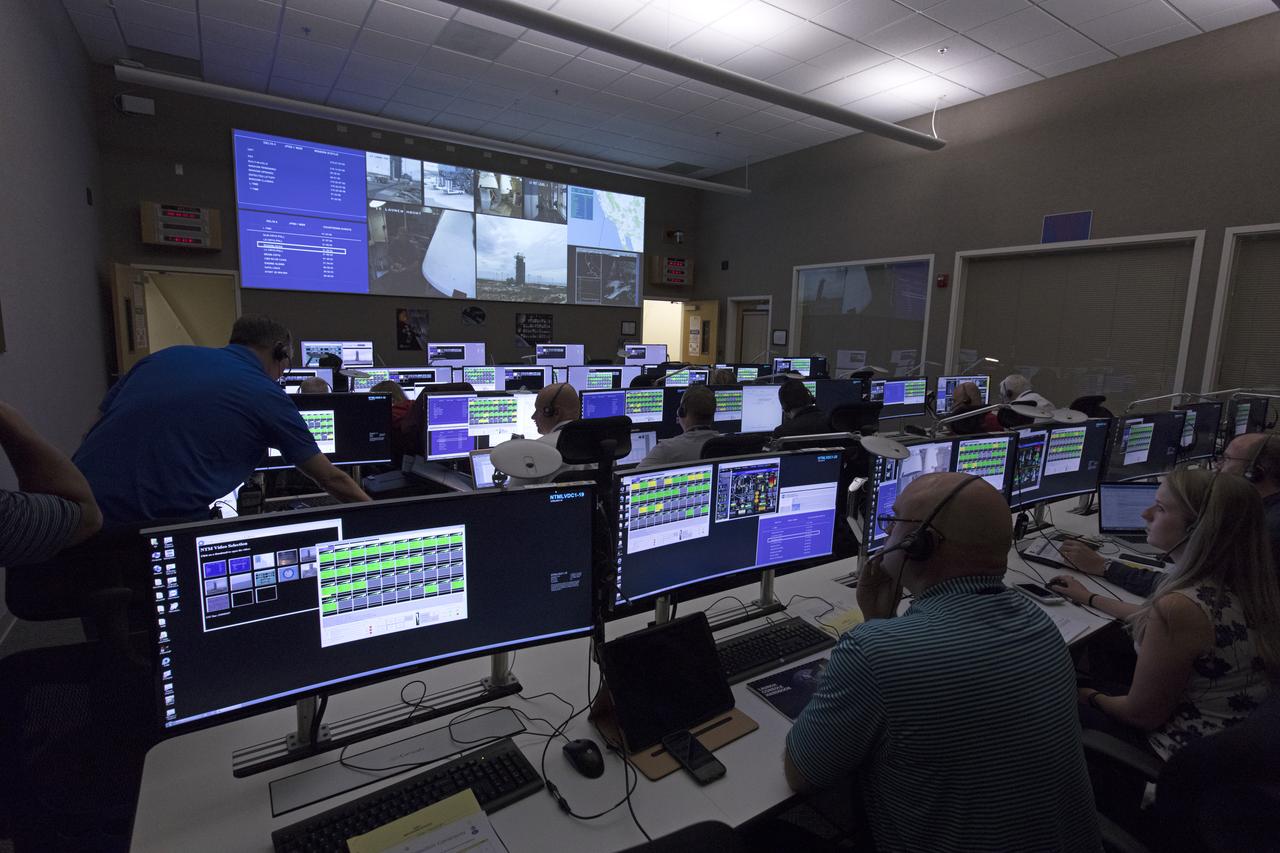
In the Mission Director's Center at Vandenberg Air Force Base in California, NASA and contractor managers and engineers monitor progress during a countdown rehearsal for the launch of a United Launch Alliance Delta II rocket with the Joint Polar Satellite System-1, or JPSS-1, spacecraft. Built by Ball Aerospace and Technologies Corp. of Boulder, Colorado, JPSS is the first in a series four next-generation environmental satellites in a collaborative program between the NOAA and NASA. Liftoff is scheduled to take place from Vandenberg's Space Launch Complex 2.

From left, Sandra Smalley, director, Joint Agency Satellite Division, NASA Headquarters; Omar Baez, launch director, NASA Kennedy; and Scott Messer, program manager, NASA Missions, United Launch Alliance, speak to members of the news media during a Geostationary Operational Environmental Satellite (GOES-R) prelaunch news conference in the Kennedy Space Center's Press Site auditorium in Florida.
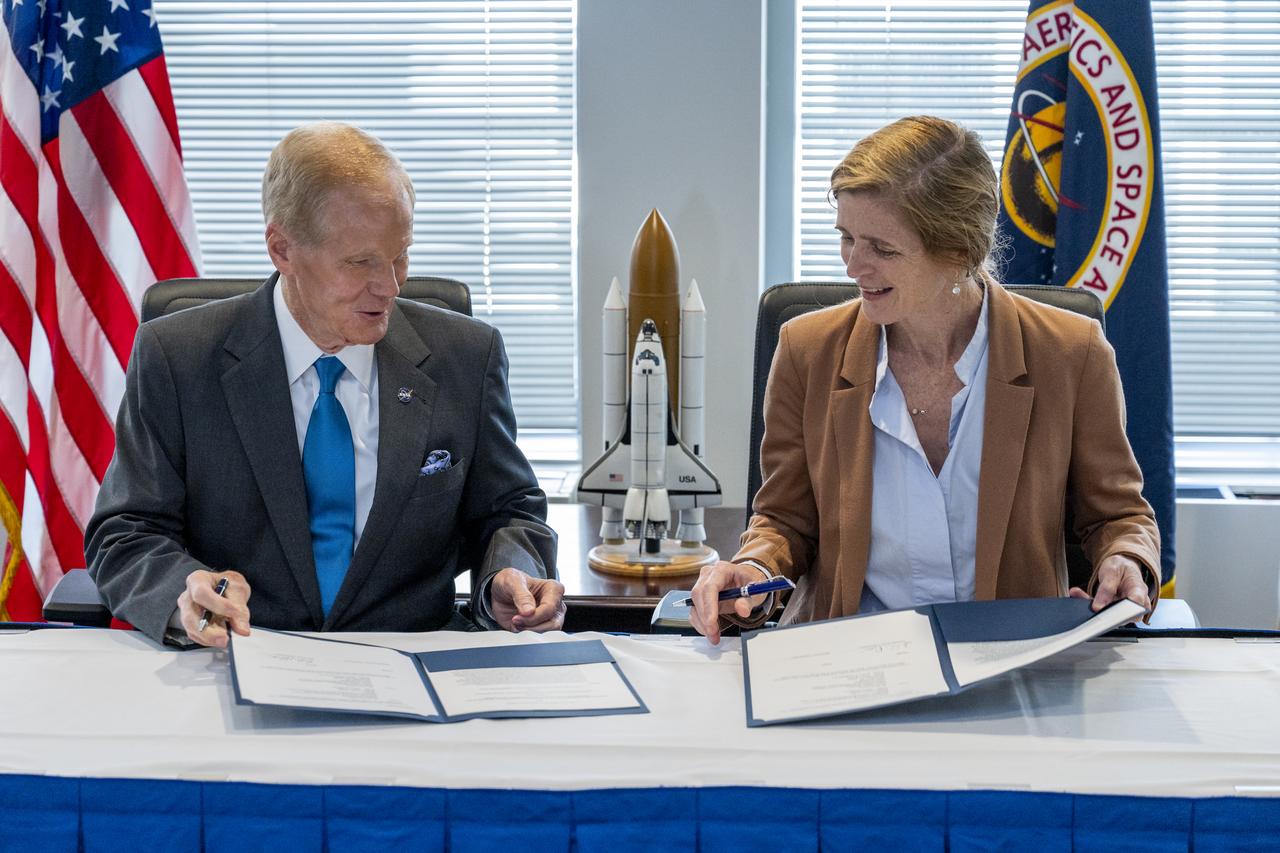
NASA Administrator Bill Nelson and USAID Administrator Samantha Power participate in a NASA-USAID Memorandum of Understanding (MoU) signing ceremony Friday, Nov. 4, 2022, at the Mary W. Jackson NASA Headquarters building in Washington. The MoU will enhance and expand the Agencies’ longstanding partnership that promotes science and technology solutions to address international development challenges in areas such as global health, climate change, food security, disaster mitigation and response, biodiversity conservation, and environmental management for sustainable development. Photo Credit: (NASA/Keegan Barber)
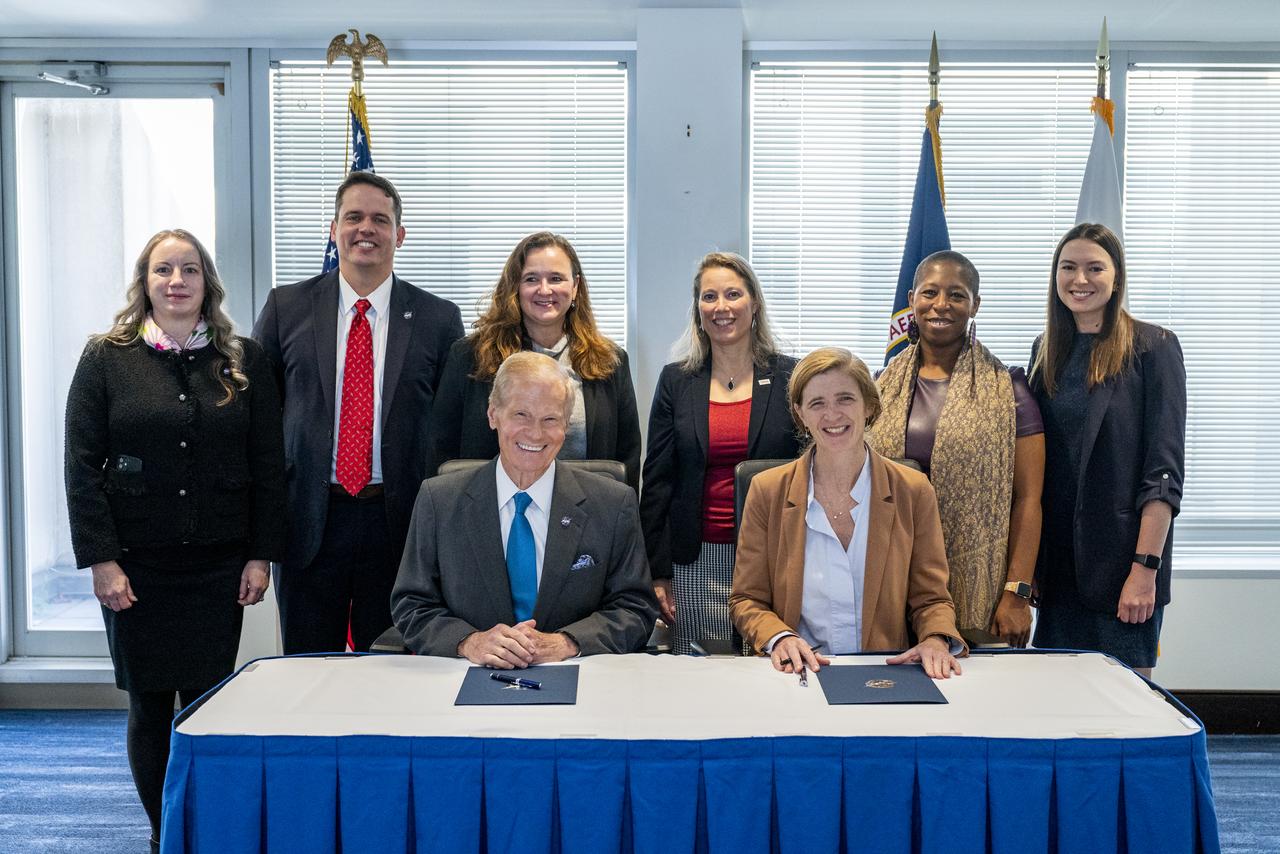
NASA Administrator Bill Nelson and USAID Administrator Samantha Power participate in a NASA-USAID Memorandum of Understanding (MoU) signing ceremony Friday, Nov. 4, 2022, at the Mary W. Jackson NASA Headquarters building in Washington. The MoU will enhance and expand the Agencies’ longstanding partnership that promotes science and technology solutions to address international development challenges in areas such as global health, climate change, food security, disaster mitigation and response, biodiversity conservation, and environmental management for sustainable development. Photo Credit: (NASA/Keegan Barber)
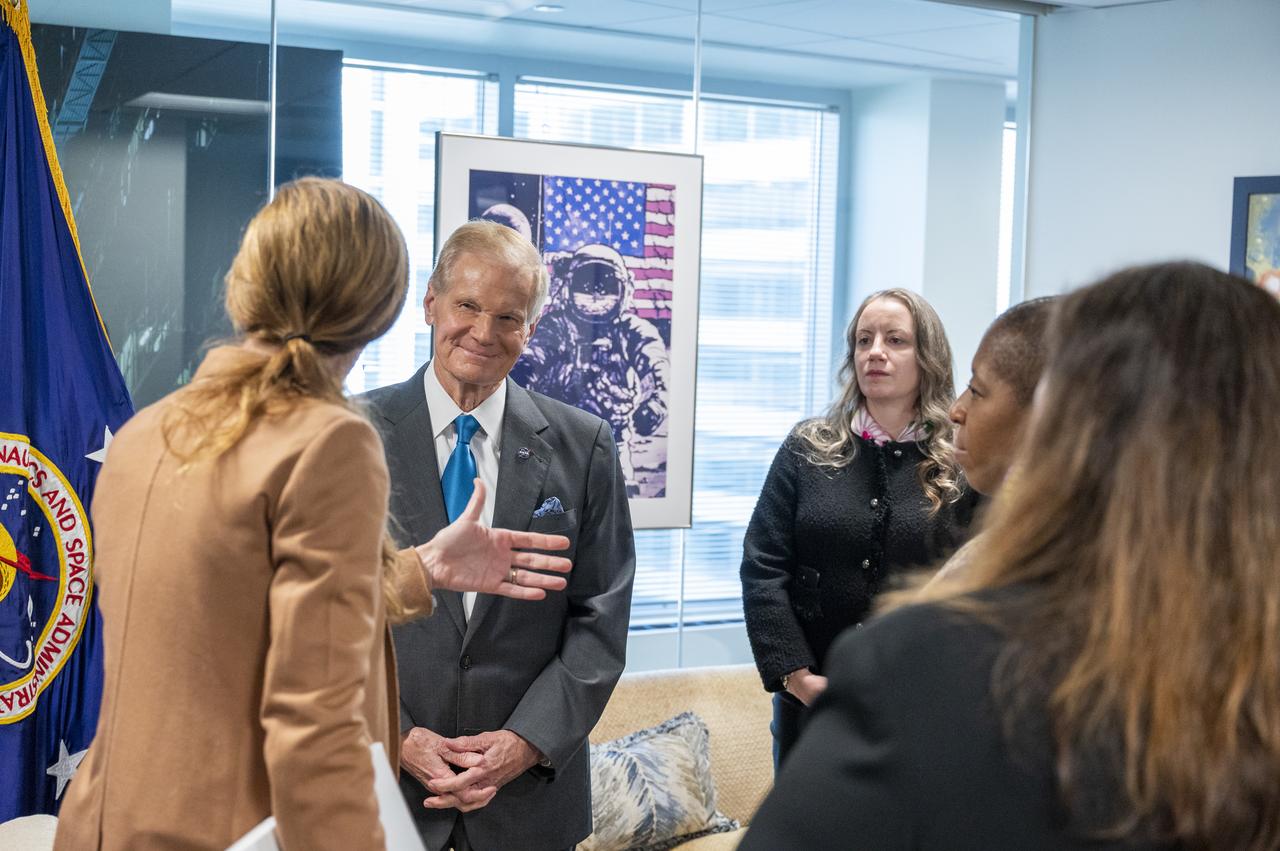
NASA Administrator Bill Nelson meets with USAID Administrator Samantha Power and staff prior to signing a NASA-USAID Memorandum of Understanding (MoU) Friday, Nov. 4, 2022, at the Mary W. Jackson NASA Headquarters building in Washington. The MoU will enhance and expand the Agencies’ longstanding partnership that promotes science and technology solutions to address international development challenges in areas such as global health, climate change, food security, disaster mitigation and response, biodiversity conservation, and environmental management for sustainable development. Photo Credit: (NASA/Keegan Barber)
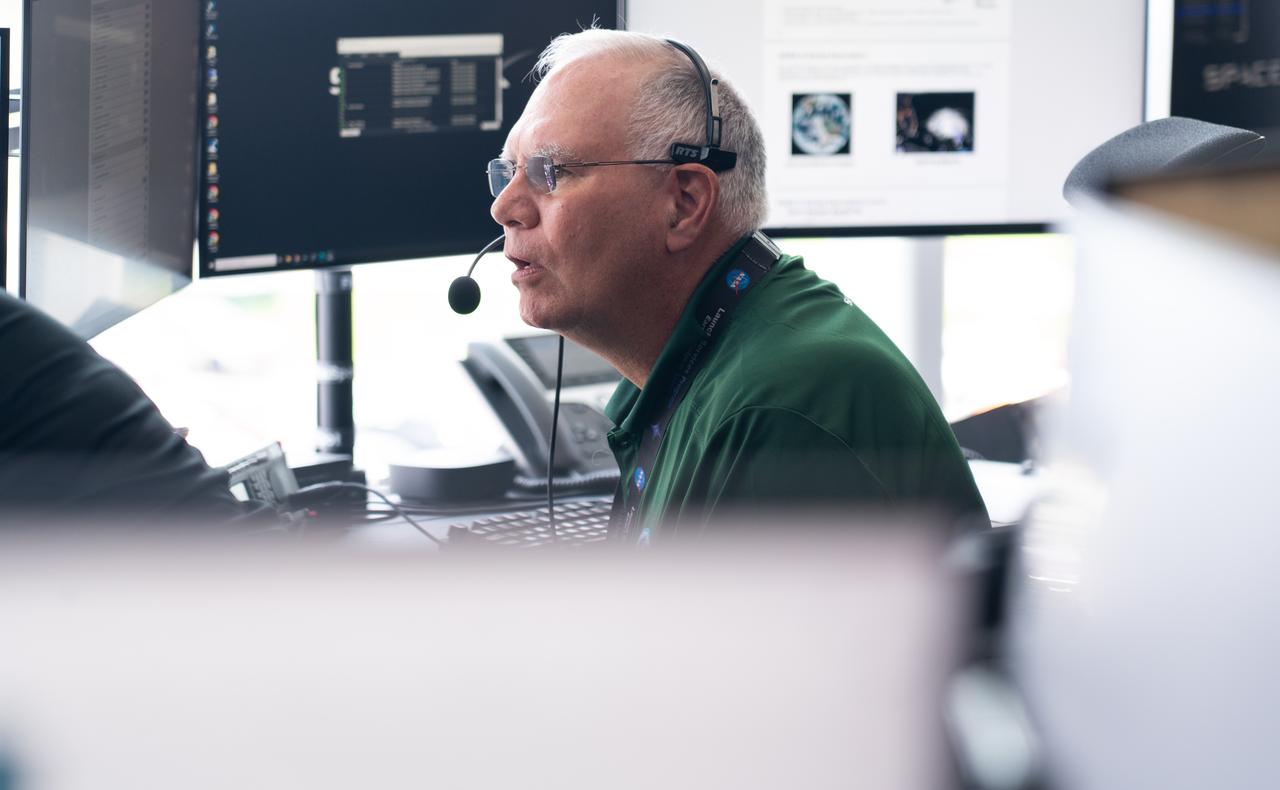
Rex Engelhardt, mission manager for NASA’s Launch Services Program, participates in rehearsal launch operations for the National Oceanic and Atmospheric Administration (NOAA) GOES-U (Geostationary Operational Environmental Satellite U) mission inside Hangar X at NASA’s Kennedy Space Center in Florida on Monday, June 17, 2024. The GOES-U satellite, the final addition to GOES-R series, serves a critical role in providing continuous coverage of the Western Hemisphere, including monitoring tropical systems in the eastern Pacific and Atlantic oceans.

Jenny Lyons, deputy program manager for NASA’s Launch Services Program, participates in rehearsal launch operations for the National Oceanic and Atmospheric Administration (NOAA) GOES-U (Geostationary Operational Environmental Satellite U) mission inside Hangar X at NASA’s Kennedy Space Center in Florida on Monday, June 17, 2024. The GOES-U satellite, the final addition to GOES-R series, serves a critical role in providing continuous coverage of the Western Hemisphere, including monitoring tropical systems in the eastern Pacific and Atlantic oceans.
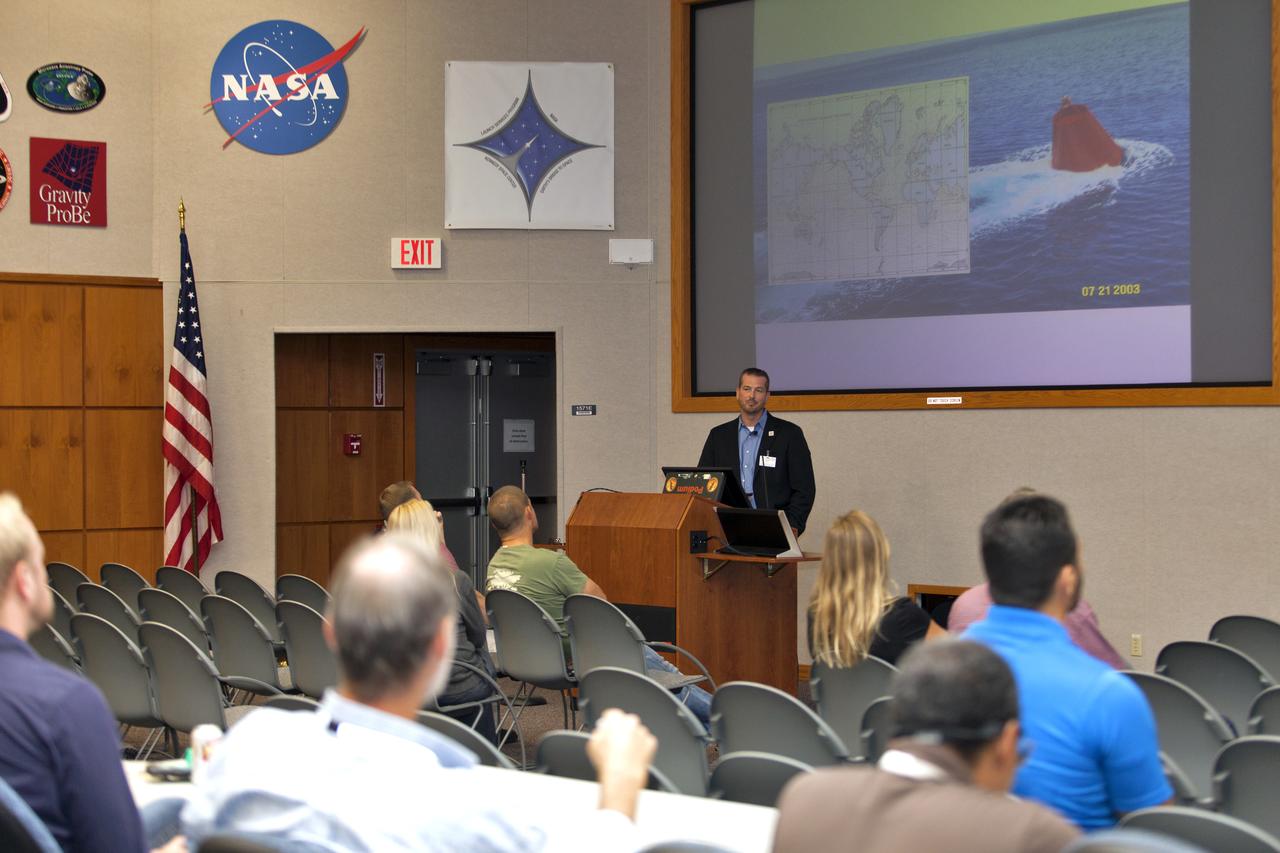
Guest speaker Gabriel Alsenas discusses ocean renewable energy sources with NASA Kennedy Space Center employees in the spaceport’s Mission Briefing Room on Thursday, Oct. 11, 2018. Alsenas is director of the Southeast National Marine Renewable Energy Center at Florida Atlantic University in Boca Raton. The “lunch and learn” event is one of two scheduled during October in conjunction with Energy Awareness Month, which aims to recognize the importance of energy management for our national prosperity, security and environmental sustainability.
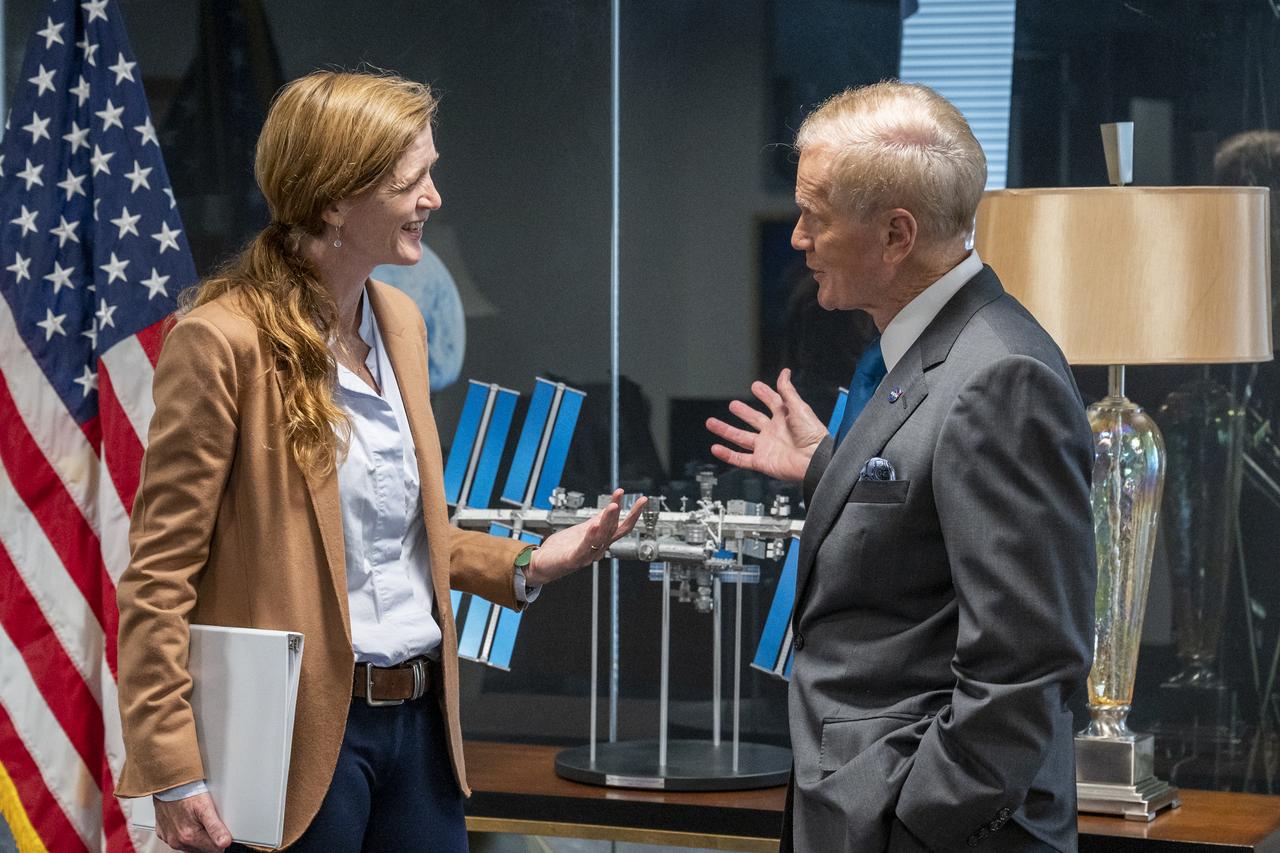
NASA Administrator Bill Nelson meets with USAID Administrator Samantha Power and staff prior to signing a NASA-USAID Memorandum of Understanding (MoU) Friday, Nov. 4, 2022, at the Mary W. Jackson NASA Headquarters building in Washington. The MoU will enhance and expand the Agencies’ longstanding partnership that promotes science and technology solutions to address international development challenges in areas such as global health, climate change, food security, disaster mitigation and response, biodiversity conservation, and environmental management for sustainable development. Photo Credit: (NASA/Keegan Barber)
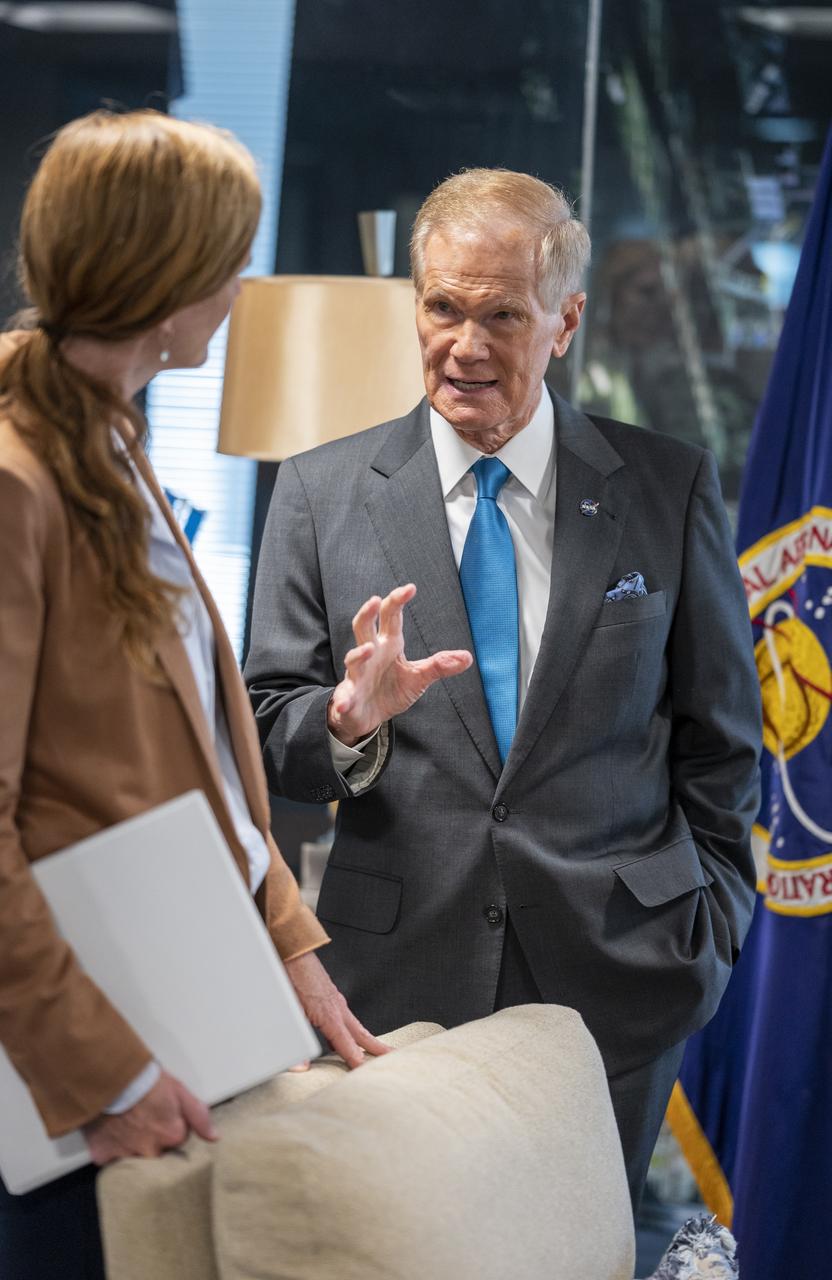
NASA Administrator Bill Nelson meets with USAID Administrator Samantha Power and staff prior to signing a NASA-USAID Memorandum of Understanding (MoU) Friday, Nov. 4, 2022, at the Mary W. Jackson NASA Headquarters building in Washington. The MoU will enhance and expand the Agencies’ longstanding partnership that promotes science and technology solutions to address international development challenges in areas such as global health, climate change, food security, disaster mitigation and response, biodiversity conservation, and environmental management for sustainable development. Photo Credit: (NASA/Keegan Barber)
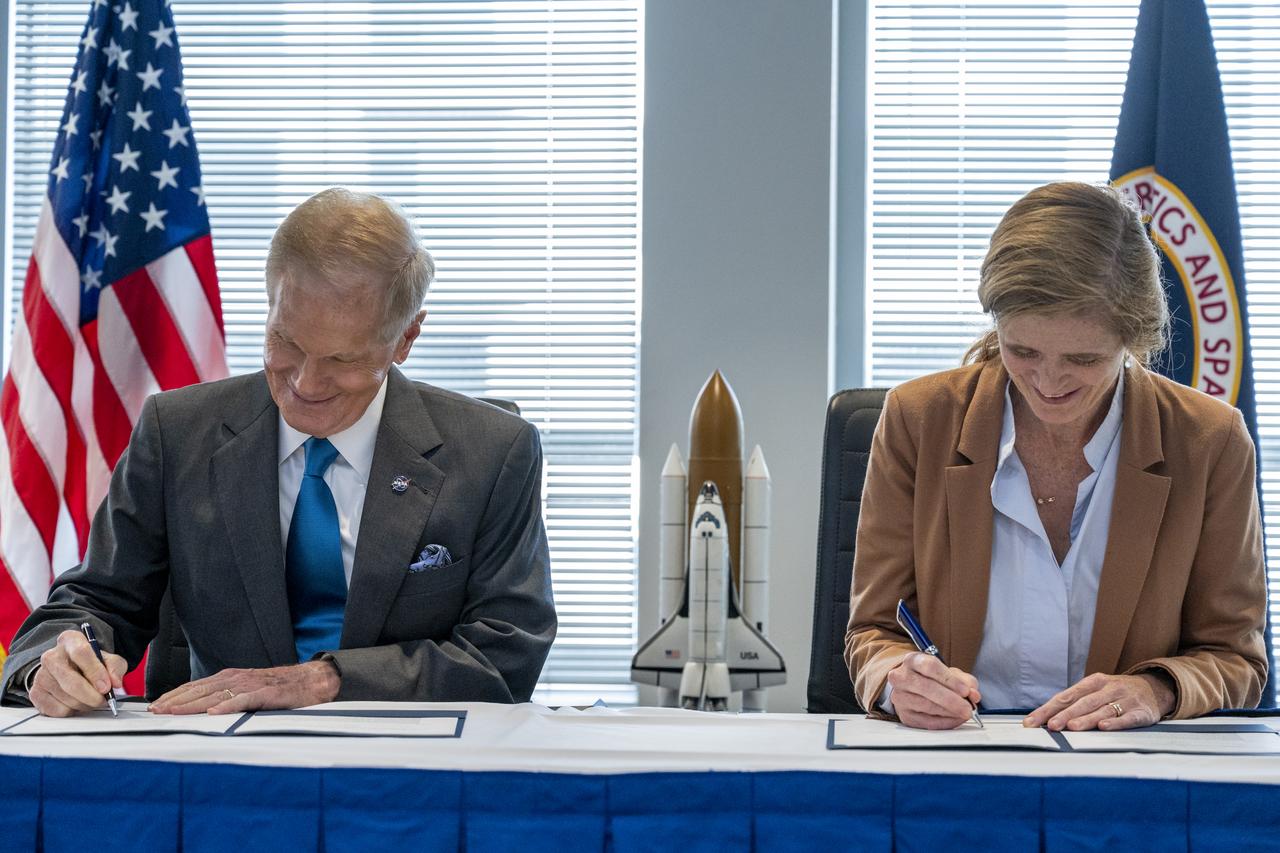
NASA Administrator Bill Nelson and USAID Administrator Samantha Power participate in a NASA-USAID Memorandum of Understanding (MoU) signing ceremony Friday, Nov. 4, 2022, at the Mary W. Jackson NASA Headquarters building in Washington. The MoU will enhance and expand the Agencies’ longstanding partnership that promotes science and technology solutions to address international development challenges in areas such as global health, climate change, food security, disaster mitigation and response, biodiversity conservation, and environmental management for sustainable development. Photo Credit: (NASA/Keegan Barber)

In the Kennedy Space Center's Press Site auditorium, Damon Penn, assistant administrator for response at the Federal Emergency Management Agency, speaks to the media during a mission briefing on the Geostationary Operational Environmental Satellite (GOES-R). GOES-R is the first satellite in a series of next-generation GOES satellites for NOAA, the National Oceanographic and Atmospheric Administration. It will launch to a geostationary orbit over the western hemisphere to provide images of storms and help meteorologists predict severe weather conditionals and develop long-range forecasts.
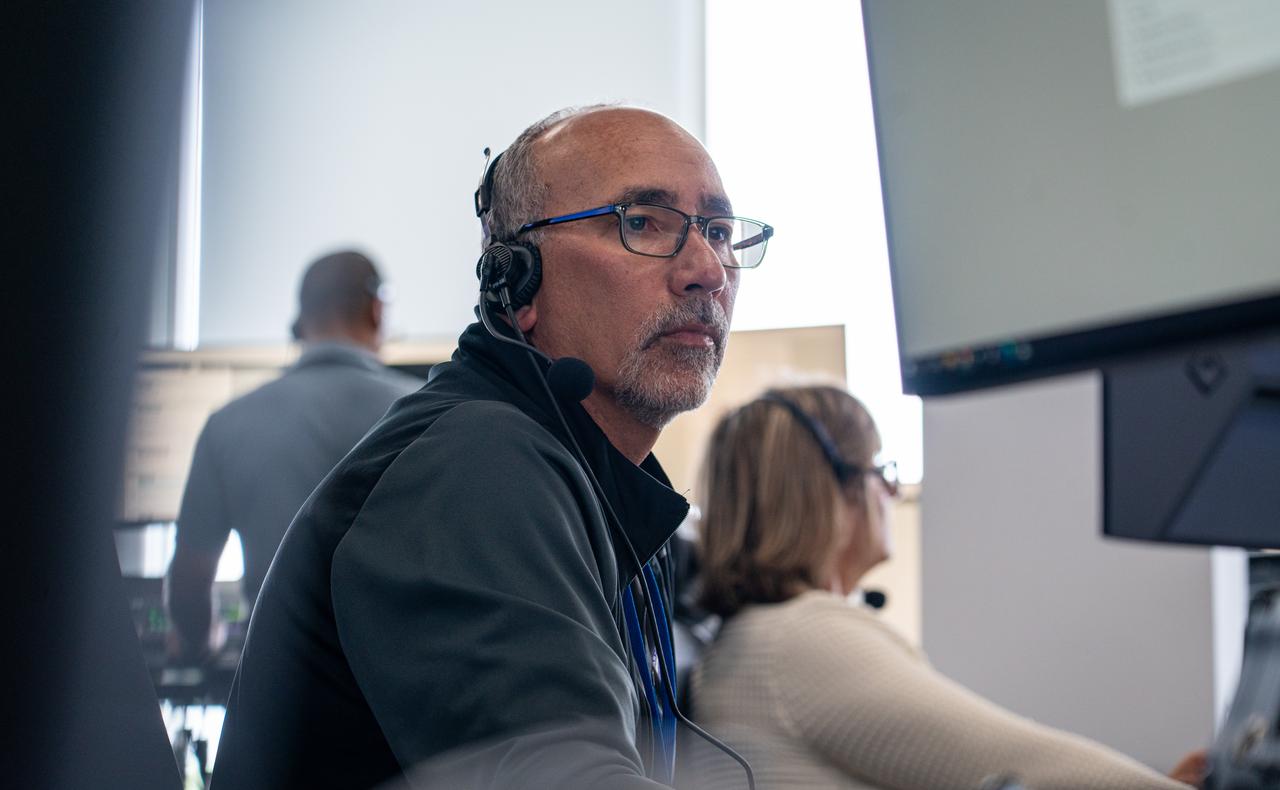
Albert Sierra, program manager for NASA’s Launch Services Program, participates in rehearsal launch operations for the National Oceanic and Atmospheric Administration (NOAA) GOES-U (Geostationary Operational Environmental Satellite U) mission inside Hangar X at NASA’s Kennedy Space Center in Florida on Monday, June 17, 2024. The GOES-U satellite, the final addition to GOES-R series, serves a critical role in providing continuous coverage of the Western Hemisphere, including monitoring tropical systems in the eastern Pacific and Atlantic oceans.
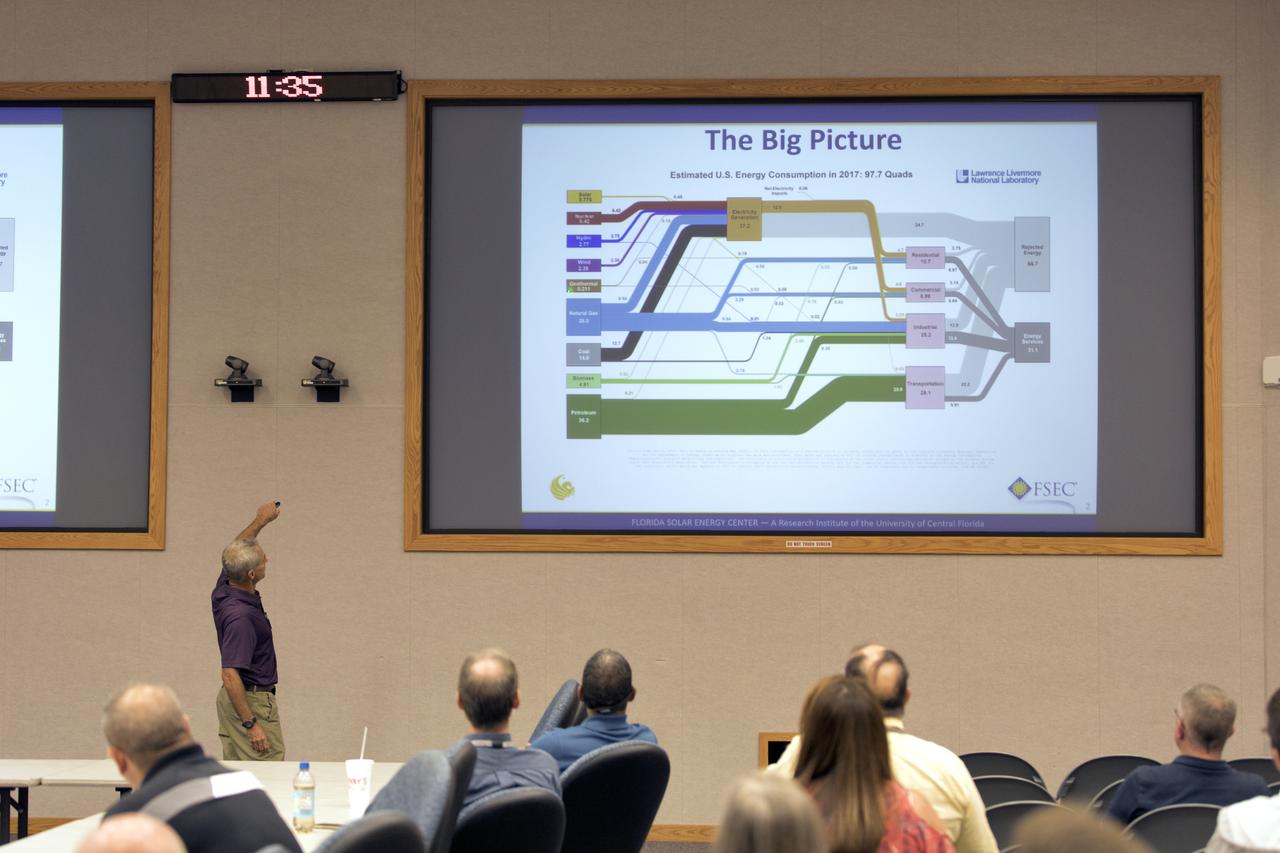
Guest speaker John Sherwin shares a presentation featuring residential solar and home energy-saving methods during a “lunch and learn” held Tuesday, Oct. 23, 2018, for employees at NASA’s Kennedy Space Center in Florida. Sherwin is the director of the Photovoltaic System Certification and Testing Program at the Florida Solar Energy Center in Cocoa. The event was one of two held during October in conjunction with Energy Awareness Month, which aims to recognize the importance of energy management for our national prosperity, security and environmental sustainability.
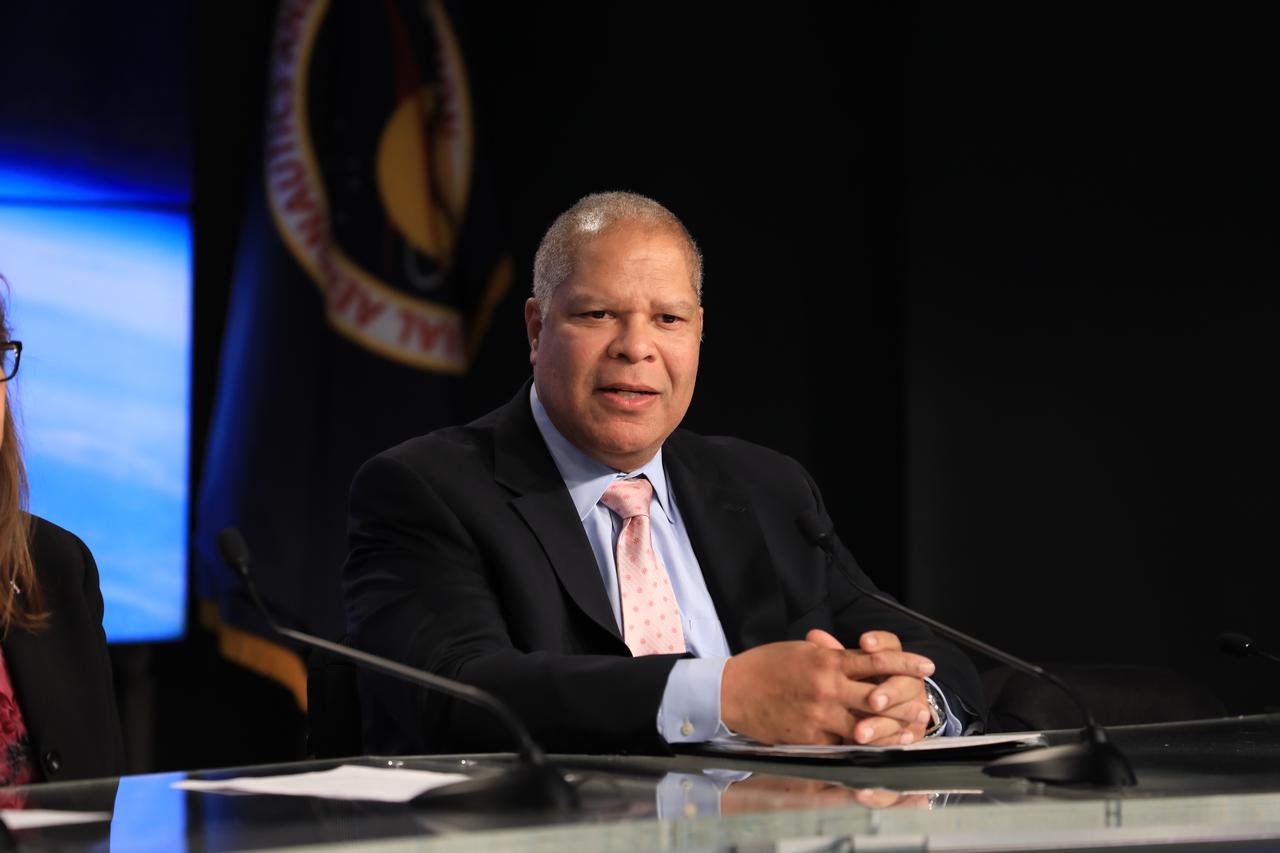
In the Kennedy Space Center's Press Site auditorium, Damon Penn, assistant administrator for response at the Federal Emergency Management Agency, speaks to the media during a mission briefing on the Geostationary Operational Environmental Satellite (GOES-R). GOES-R is the first satellite in a series of next-generation GOES satellites for NOAA, the National Oceanographic and Atmospheric Administration. It will launch to a geostationary orbit over the western hemisphere to provide images of storms and help meteorologists predict severe weather conditionals and develop long-range forecasts.
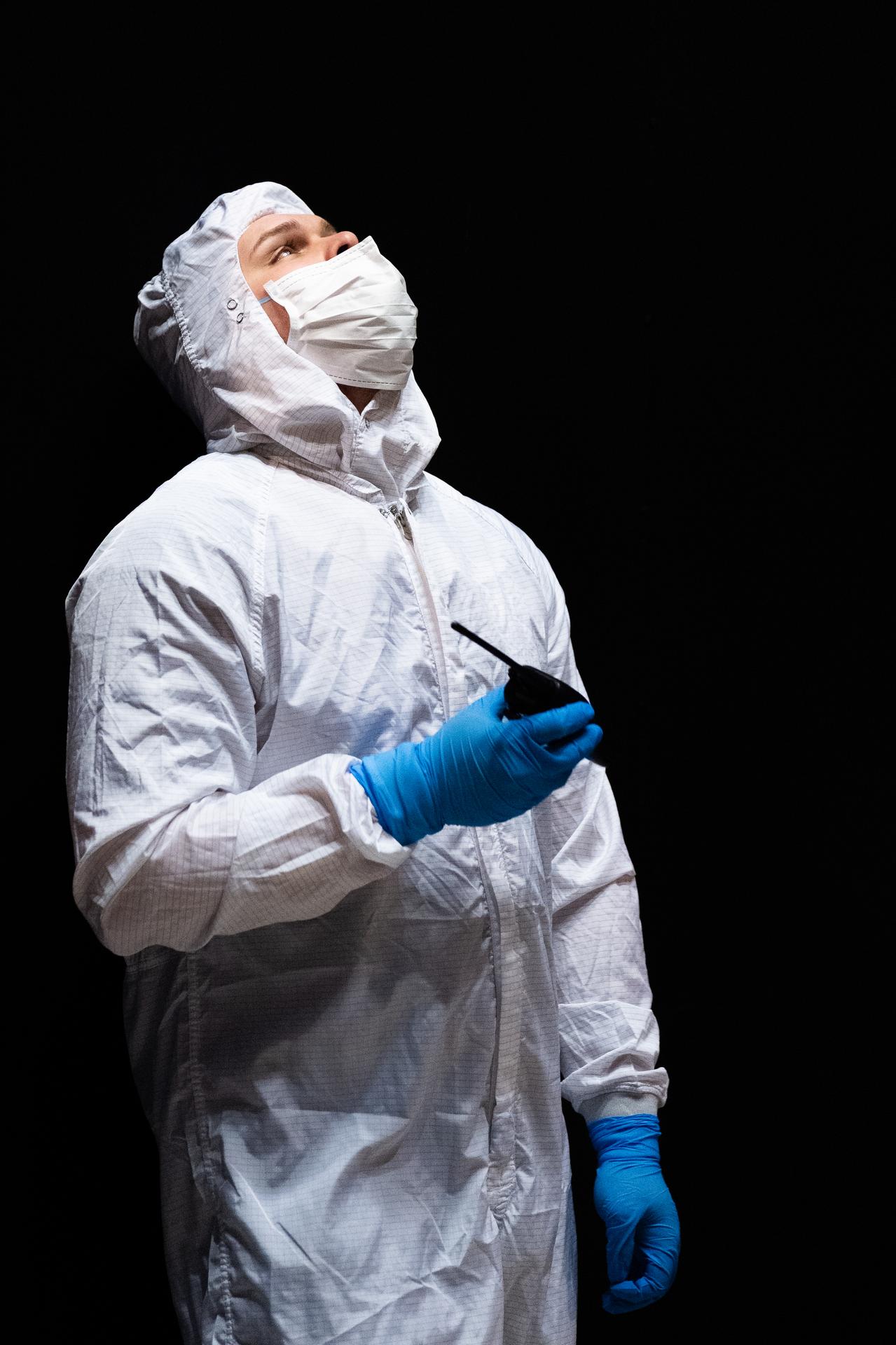
Mechanical engineering and integration technician, Lucas Keim, directs the crane operator from inside the thermal vacuum chamber in support of OSAM-1 environmental testing operations at Goddard Space Flight Center, Greenbelt Md., Nov 30, 2023. This photo has been reviewed by OSAM1 project management and the Export Control Office and is released for public view. NASA/Mike Guinto

A mangrove seedling grows amidst the rocks on the shoreline of Kennedy Athletic, Recreation, and Social (KARS) Park at Kennedy Space Center in Florida on April 12, 2023. Employees from Kennedy’s Environmental Management Branch removed over 100 mangrove seedlings from the shoreline and repotted them for protection during the final stages of a shoreline restoration project inside KARS Park. The mangrove seedlings will be replanted upon completion of the project to create a living shoreline better able to counter the effects of erosion caused by storm waves and rising sea levels.

NASA Administrator Bill Nelson meets with USAID Administrator Samantha Power and staff prior to signing a NASA-USAID Memorandum of Understanding (MoU) Friday, Nov. 4, 2022, at the Mary W. Jackson NASA Headquarters building in Washington. The MoU will enhance and expand the Agencies’ longstanding partnership that promotes science and technology solutions to address international development challenges in areas such as global health, climate change, food security, disaster mitigation and response, biodiversity conservation, and environmental management for sustainable development. Photo Credit: (NASA/Keegan Barber)
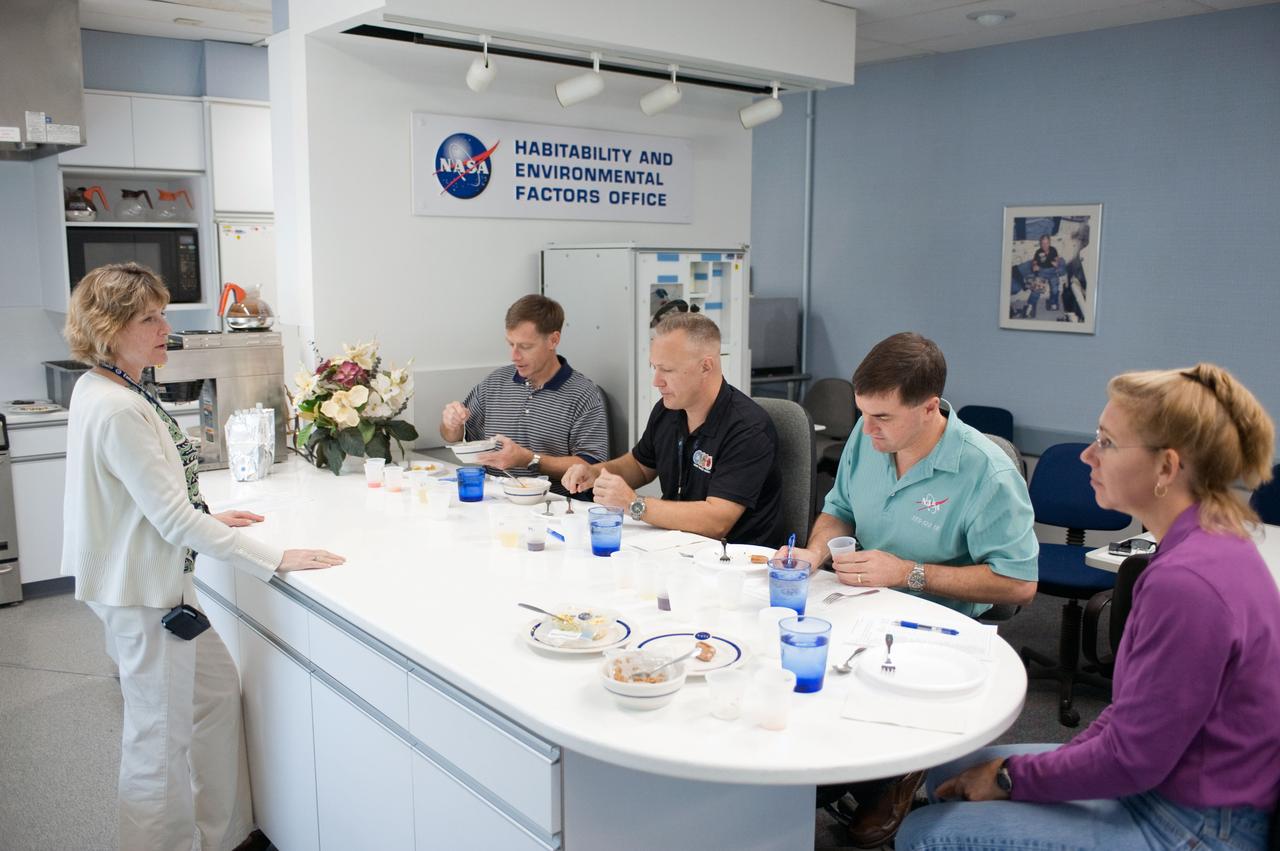
JSC2010-E-185482 (10 Nov. 2010) --- STS-135 crew members participate in a food tasting session in the Habitability and Environmental Factors Office at NASA's Johnson Space Center. Pictured from the left are NASA astronauts Chris Ferguson, commander; Doug Hurley, pilot; Rex Walheim and Sandy Magnus, both mission specialists. Michele Perchonok, manager, Shuttle Food System, assisted the crew members. STS-135 is planned to be the final mission of the space shuttle program. Photo credit: NASA or National Aeronautics and Space Administration
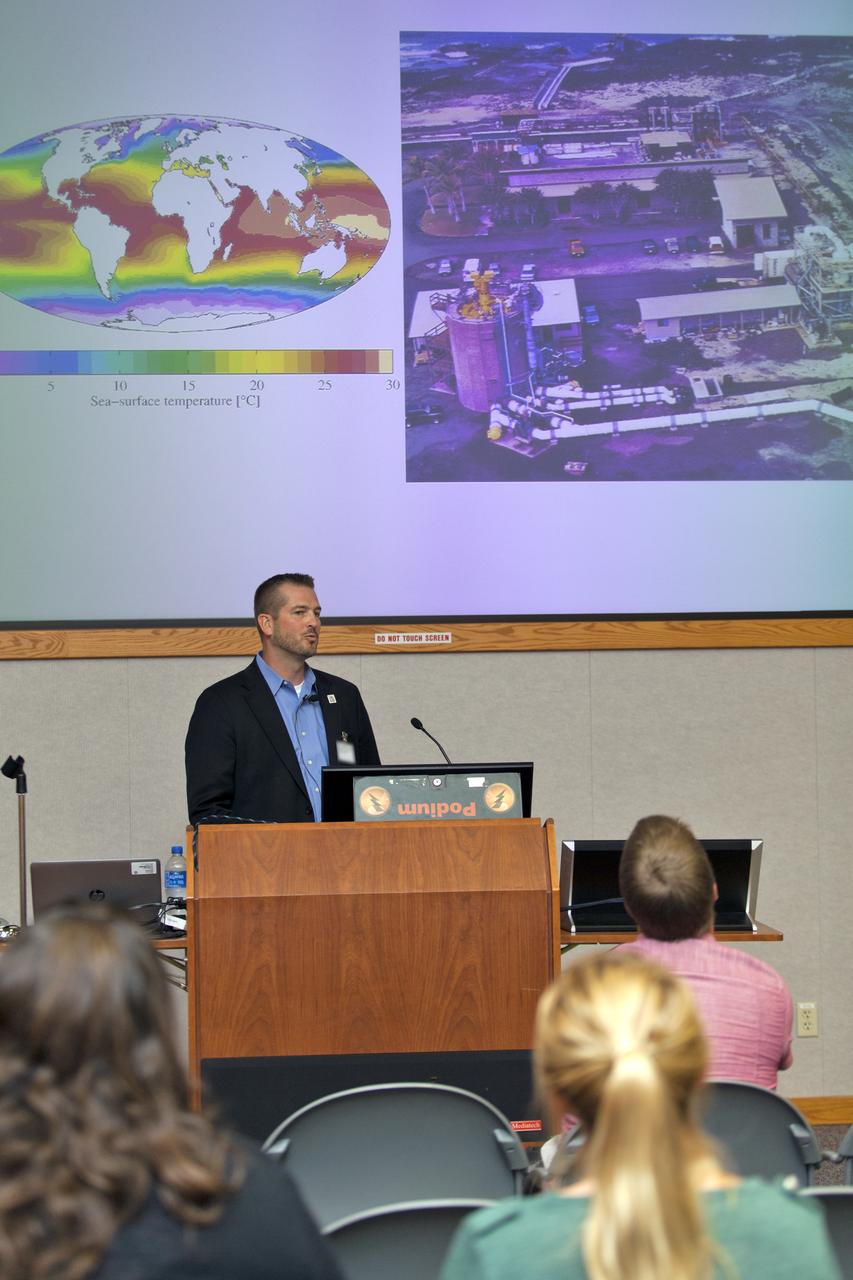
Guest speaker Gabriel Alsenas discusses ocean renewable energy sources with NASA Kennedy Space Center employees in the spaceport’s Mission Briefing Room on Thursday, Oct. 11, 2018. Alsenas is director of the Southeast National Marine Renewable Energy Center at Florida Atlantic University in Boca Raton. The “lunch and learn” event is one of two scheduled during October in conjunction with Energy Awareness Month, which aims to recognize the importance of energy management for our national prosperity, security and environmental sustainability.
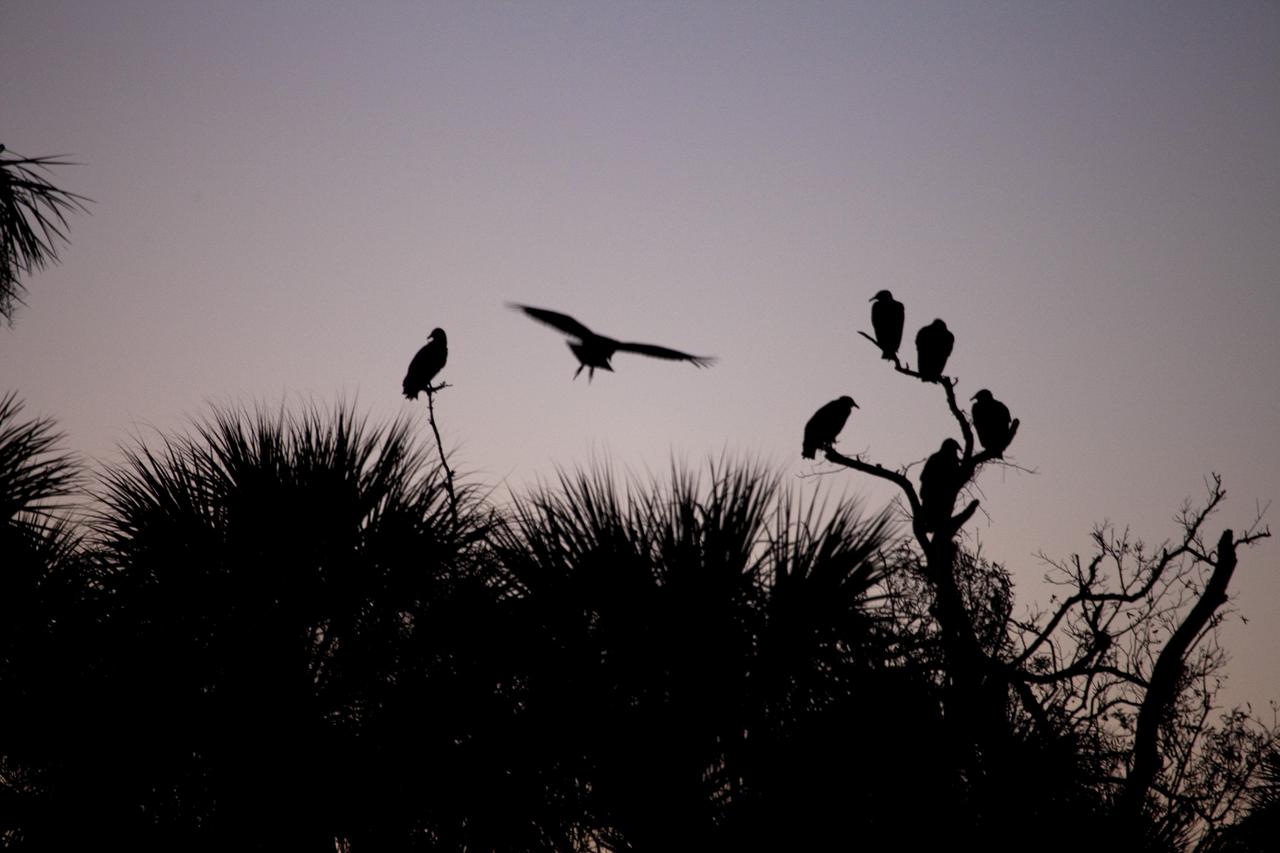
CAPE CANAVERAL, Fla. -- Black vultures gather at dawn at NASA's Kennedy Space Center in Florida. NASA's Environmental Management Branch monitors the movement and activity of about 250 black and turkey vultures using satellite trackers and radio transmitters. Kennedy coexists with the Merritt Island National Wildlife Refuge, habitat to more than 310 species of birds, 25 mammals, 117 fish and 65 amphibians and reptiles. Photo credit: NASA/Frank Michaux
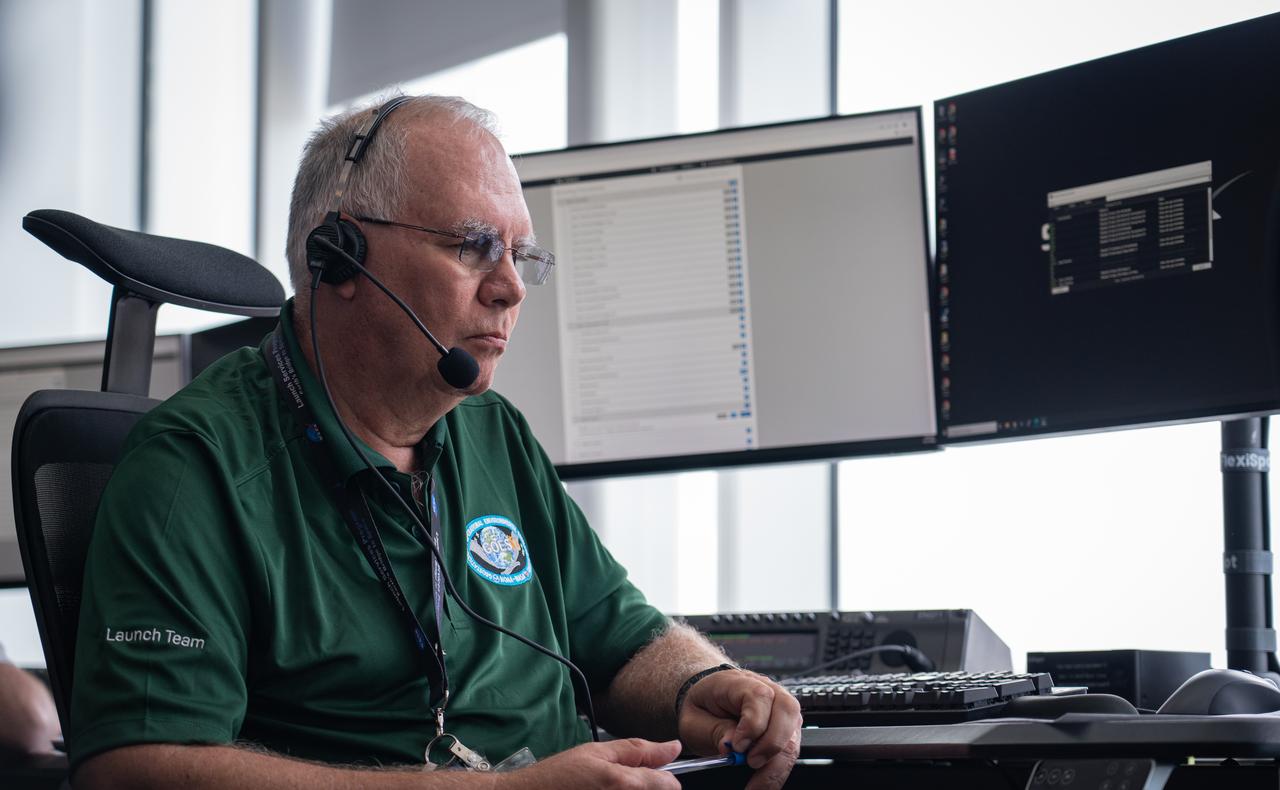
Rex Engelhardt, mission manager for NASA’s Launch Services Program, participates in rehearsal launch operations for the National Oceanic and Atmospheric Administration (NOAA) GOES-U (Geostationary Operational Environmental Satellite U) mission inside Hangar X at NASA’s Kennedy Space Center in Florida on Monday, June 17, 2024. The GOES-U satellite, the final addition to GOES-R series, serves a critical role in providing continuous coverage of the Western Hemisphere, including monitoring tropical systems in the eastern Pacific and Atlantic oceans.

Guest speaker Gabriel Alsenas discusses ocean renewable energy sources with NASA Kennedy Space Center employees in the spaceport’s Mission Briefing Room on Thursday, Oct. 11, 2018. Alsenas is director of the Southeast National Marine Renewable Energy Center at Florida Atlantic University in Boca Raton. The “lunch and learn” event is one of two scheduled during October in conjunction with Energy Awareness Month, which aims to recognize the importance of energy management for our national prosperity, security and environmental sustainability.
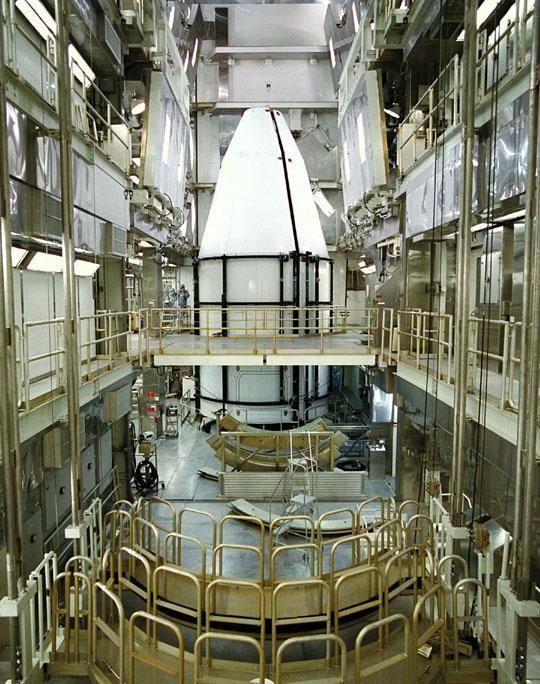
The Cassini spacecraft, protected by an environmentally controlled protective fairing, is sitting at Pad 40 at Cape Canaveral Air Station, awaiting its launch scheduled for mid-October atop a Titan IV/Centaur launch vehicle. A four-year, close-up study of the Saturnian system, the Cassini mission will take seven years for the spacecraft to reach Saturn. Scientific instruments carried aboard the spacecraft will study Saturn’s atmosphere, magnetic field, rings, and several moons. NASA’s Jet Propulsion Laboratory is managing the Cassini project
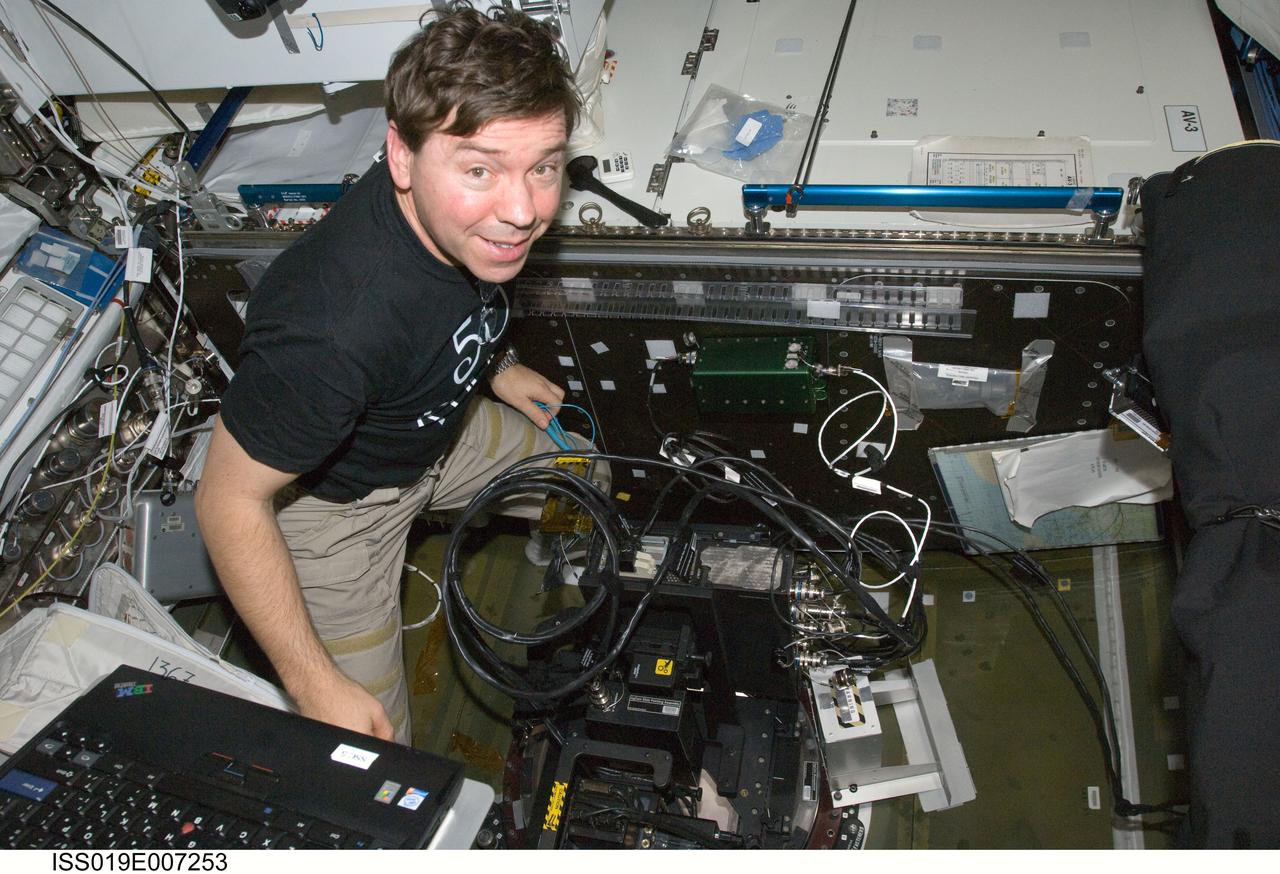
ISS019-E-007253 (16 April 2009) --- Astronaut Michael Barratt, Expedition 19/20 flight engineer, performs Agricultural Camera (AgCam) setup and activation in the Destiny laboratory of the International Space Station. AgCam takes frequent images, in visible and infrared light, of vegetated areas on Earth, such as farmland, rangeland, grasslands, forests and wetlands in the northern Great Plains and Rocky Mountain regions of the United States. Images will be delivered directly to requesting farmers, ranchers, foresters, natural resource managers and tribal officials to help improve environmental stewardship.
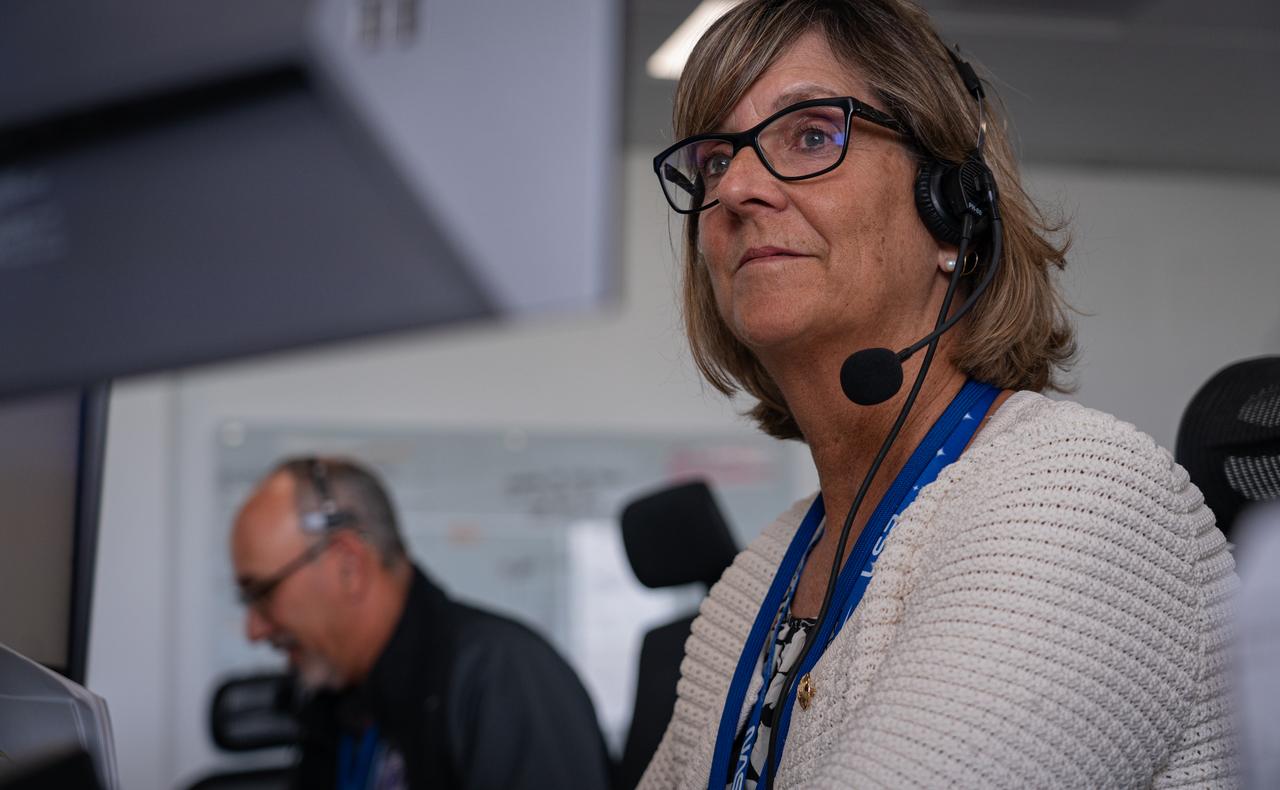
Jenny Lyons, deputy program manager for NASA’s Launch Services Program, participates in rehearsal launch operations for the National Oceanic and Atmospheric Administration (NOAA) GOES-U (Geostationary Operational Environmental Satellite U) mission inside Hangar X at NASA’s Kennedy Space Center in Florida on Monday, June 17, 2024. The GOES-U satellite, the final addition to GOES-R series, serves a critical role in providing continuous coverage of the Western Hemisphere, including monitoring tropical systems in the eastern Pacific and Atlantic oceans.
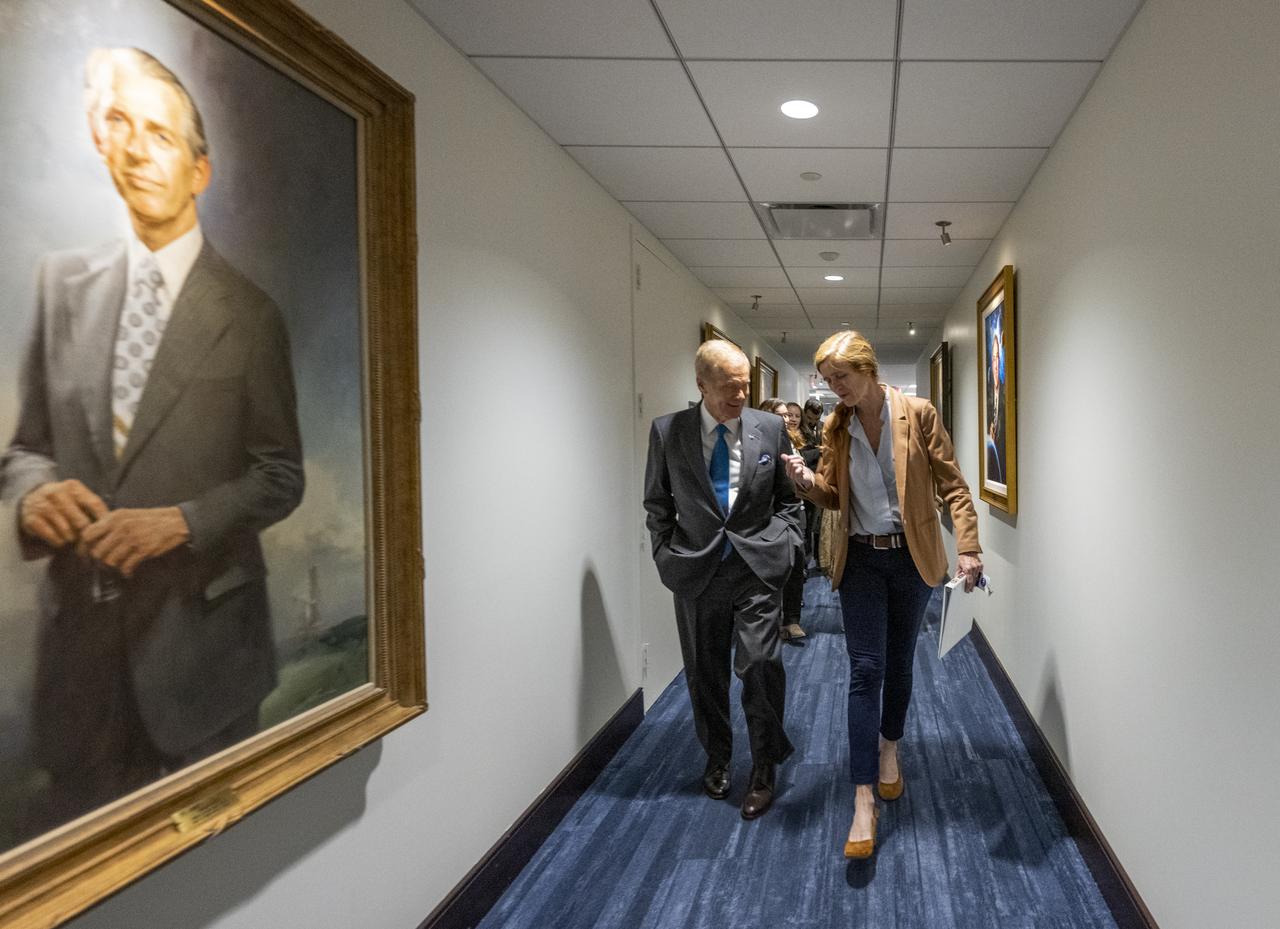
NASA Administrator Bill Nelson meets with USAID Administrator Samantha Power and staff prior to signing a NASA-USAID Memorandum of Understanding (MoU) Friday, Nov. 4, 2022, at the Mary W. Jackson NASA Headquarters building in Washington. The MoU will enhance and expand the Agencies’ longstanding partnership that promotes science and technology solutions to address international development challenges in areas such as global health, climate change, food security, disaster mitigation and response, biodiversity conservation, and environmental management for sustainable development. Photo Credit: (NASA/Keegan Barber)
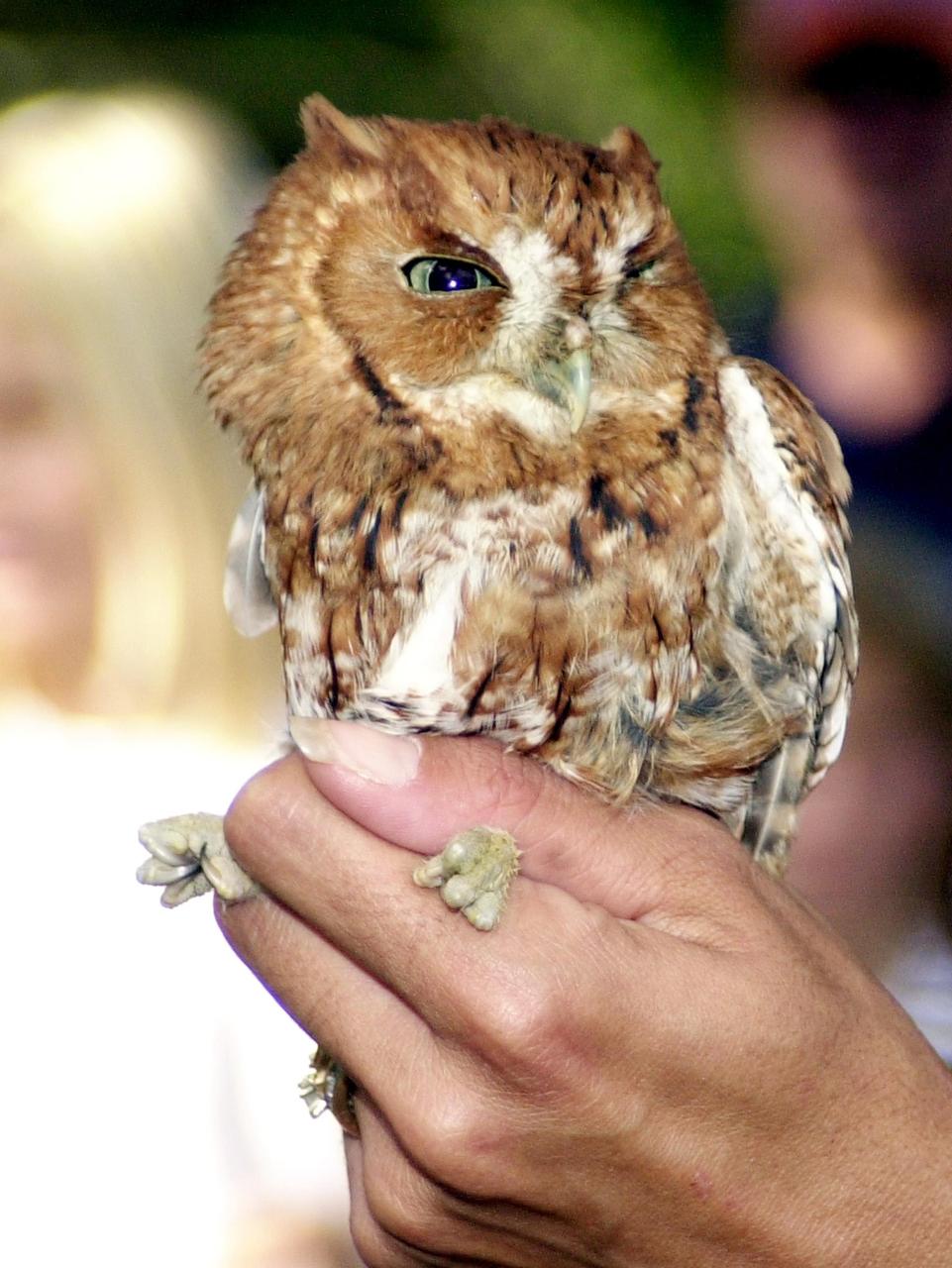
KENNEDY SPACE CENTER, FLA. -- An owl is held just before its release during the dedication of the Sendler Education Outpost, located at Dummit Cove on the Merritt Island National Wildlife Refuge (MINWR). The outpost is a resource for environmental educational students in the Central Florida area. It is named for Karl Sendler, a space pioneer and manager under Dr. Kurt Debus, KSC's first center director. Funding for the facility was provided by the Merritt Island Wildlife Association with assistance from MINWR and Kennedy Space Center.
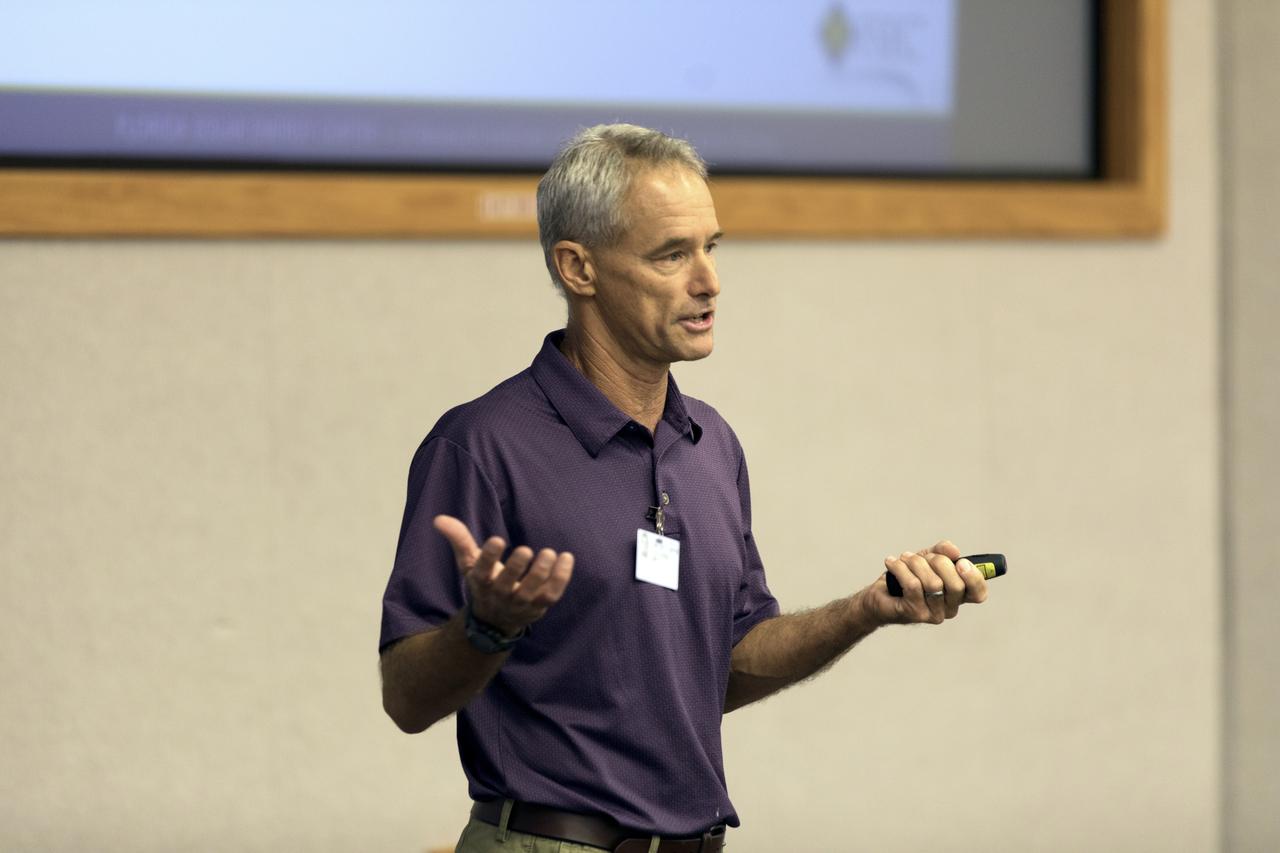
Guest speaker John Sherwin explains residential solar and home energy-saving methods during a “lunch and learn” held Tuesday, Oct. 23, 2018, for employees at NASA’s Kennedy Space Center in Florida. Sherwin is the director of the Photovoltaic System Certification and Testing Program at the Florida Solar Energy Center in Cocoa. The event was one of two held during October in conjunction with Energy Awareness Month, which aims to recognize the importance of energy management for our national prosperity, security and environmental sustainability.
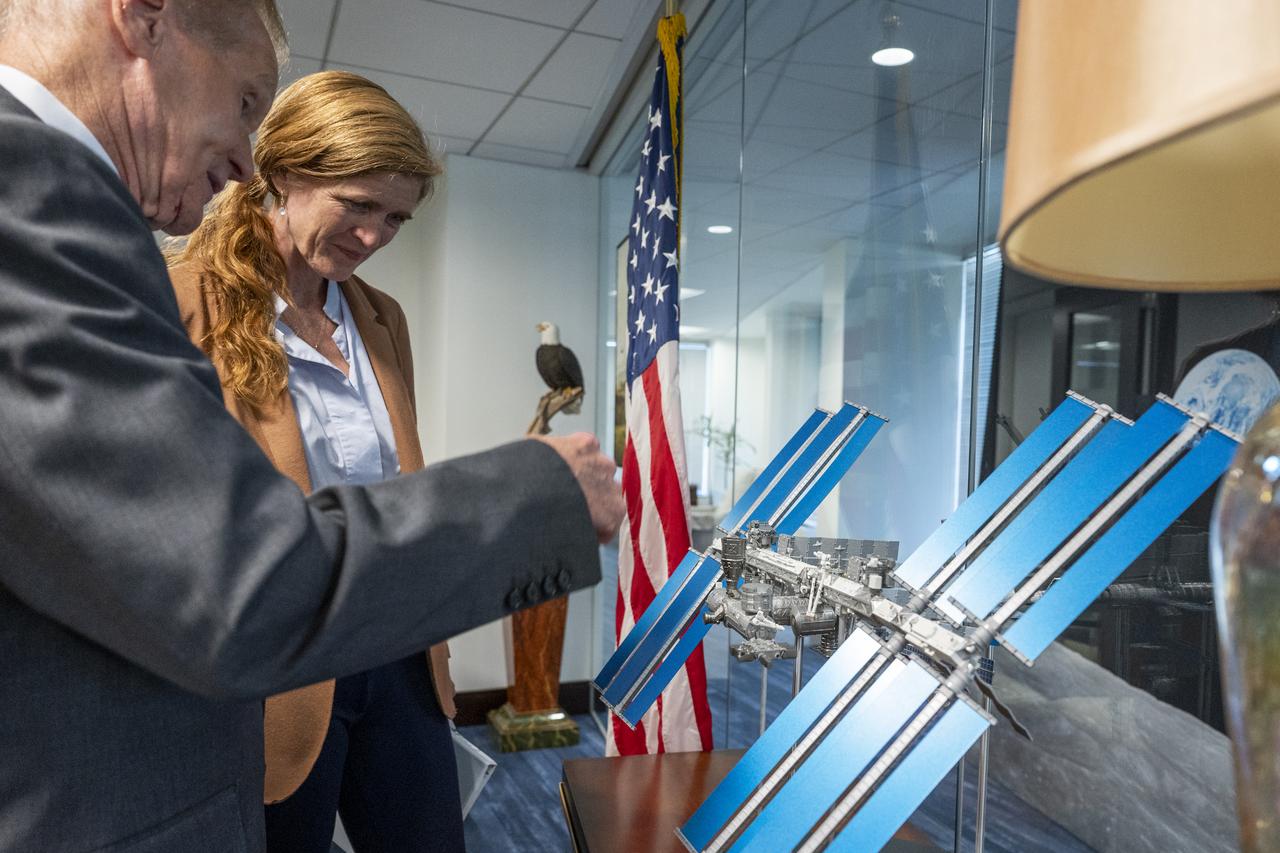
NASA Administrator Bill Nelson meets with USAID Administrator Samantha Power and staff prior to signing a NASA-USAID Memorandum of Understanding (MoU) Friday, Nov. 4, 2022, at the Mary W. Jackson NASA Headquarters building in Washington. The MoU will enhance and expand the Agencies’ longstanding partnership that promotes science and technology solutions to address international development challenges in areas such as global health, climate change, food security, disaster mitigation and response, biodiversity conservation, and environmental management for sustainable development. Photo Credit: (NASA/Keegan Barber)
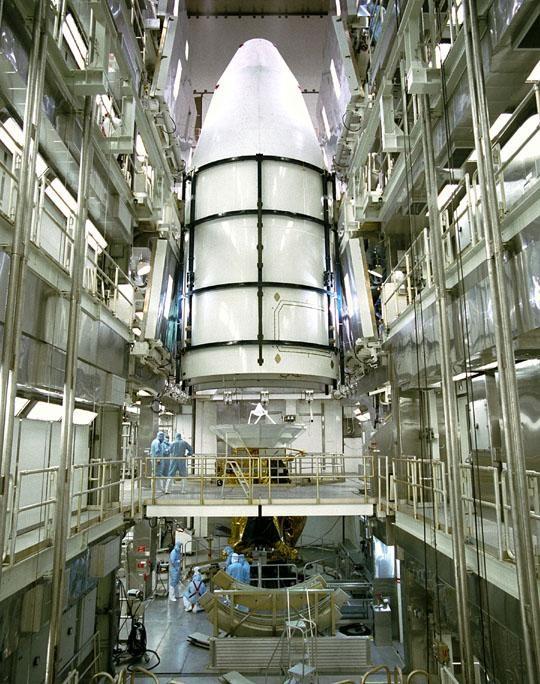
The Cassini spacecraft, protected by an environmentally controlled protective fairing, is sitting at Pad 40 at Cape Canaveral Air Station, awaiting its launch scheduled for mid-October atop a Titan IV/Centaur launch vehicle. A fouryear, close-up study of the Saturnian system, the Cassini mission will take seven years for the spacecraft to reach Saturn. Scientific instruments carried aboard the spacecraft will study Saturn’s atmosphere, magnetic field, rings, and several moons. NASA’s Jet Propulsion Laboratory is managing the Cassini project
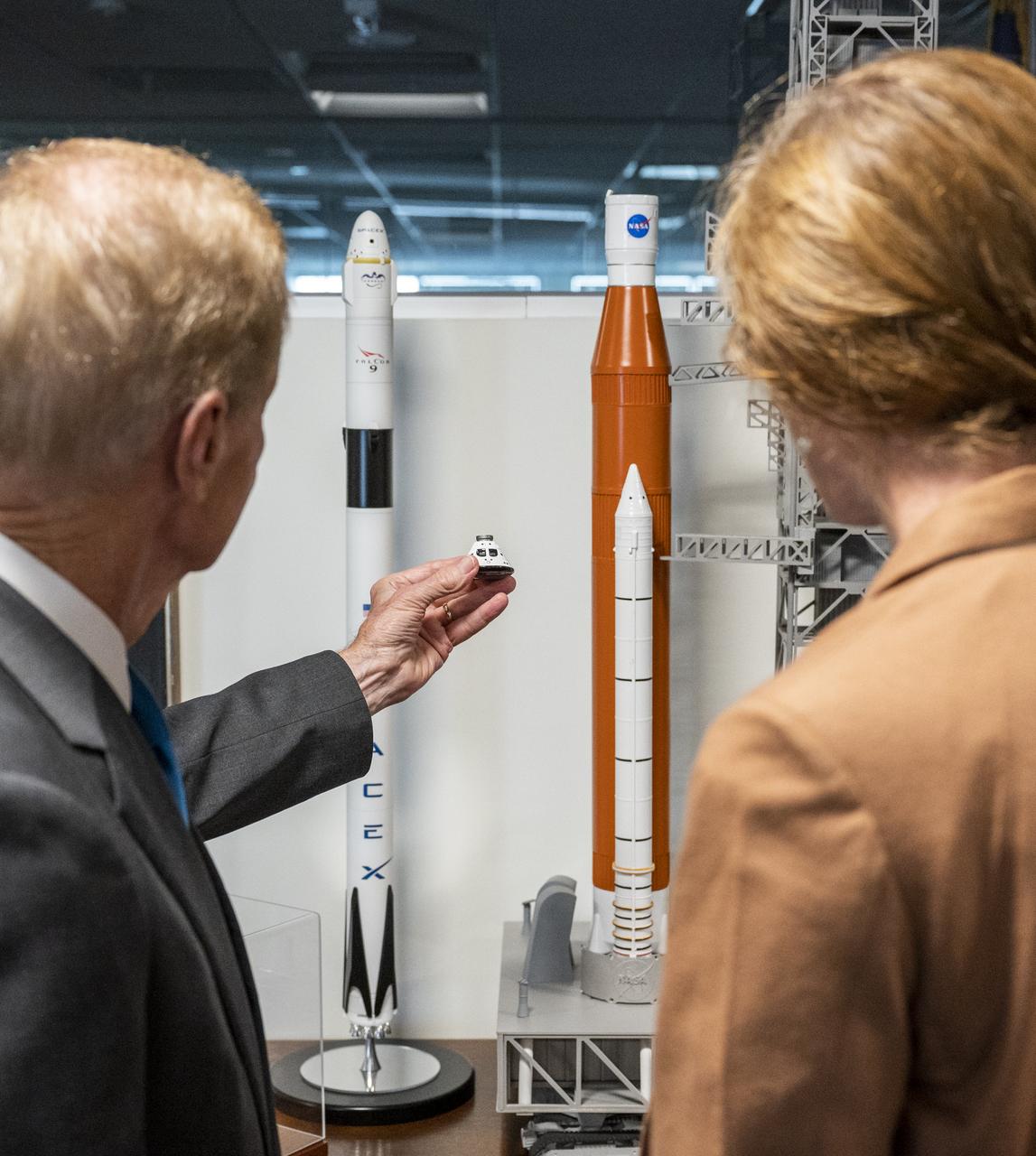
NASA Administrator Bill Nelson meets with USAID Administrator Samantha Power and staff prior to signing a NASA-USAID Memorandum of Understanding (MoU) Friday, Nov. 4, 2022, at the Mary W. Jackson NASA Headquarters building in Washington. The MoU will enhance and expand the Agencies’ longstanding partnership that promotes science and technology solutions to address international development challenges in areas such as global health, climate change, food security, disaster mitigation and response, biodiversity conservation, and environmental management for sustainable development. Photo Credit: (NASA/Keegan Barber)
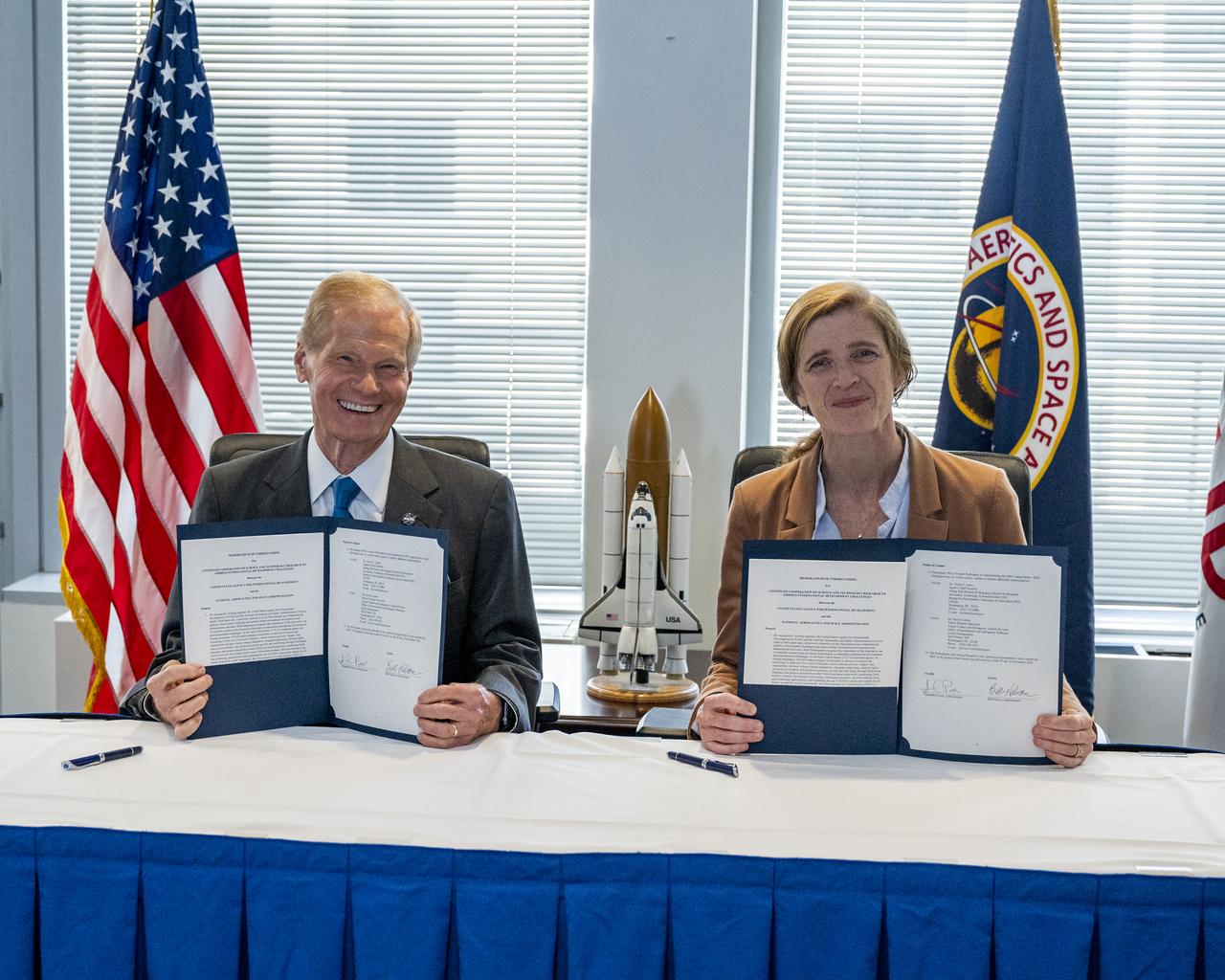
NASA Administrator Bill Nelson and USAID Administrator Samantha Power participate in a NASA-USAID Memorandum of Understanding (MoU) signing ceremony Friday, Nov. 4, 2022, at the Mary W. Jackson NASA Headquarters building in Washington. The MoU will enhance and expand the Agencies’ longstanding partnership that promotes science and technology solutions to address international development challenges in areas such as global health, climate change, food security, disaster mitigation and response, biodiversity conservation, and environmental management for sustainable development. Photo Credit: (NASA/Keegan Barber)
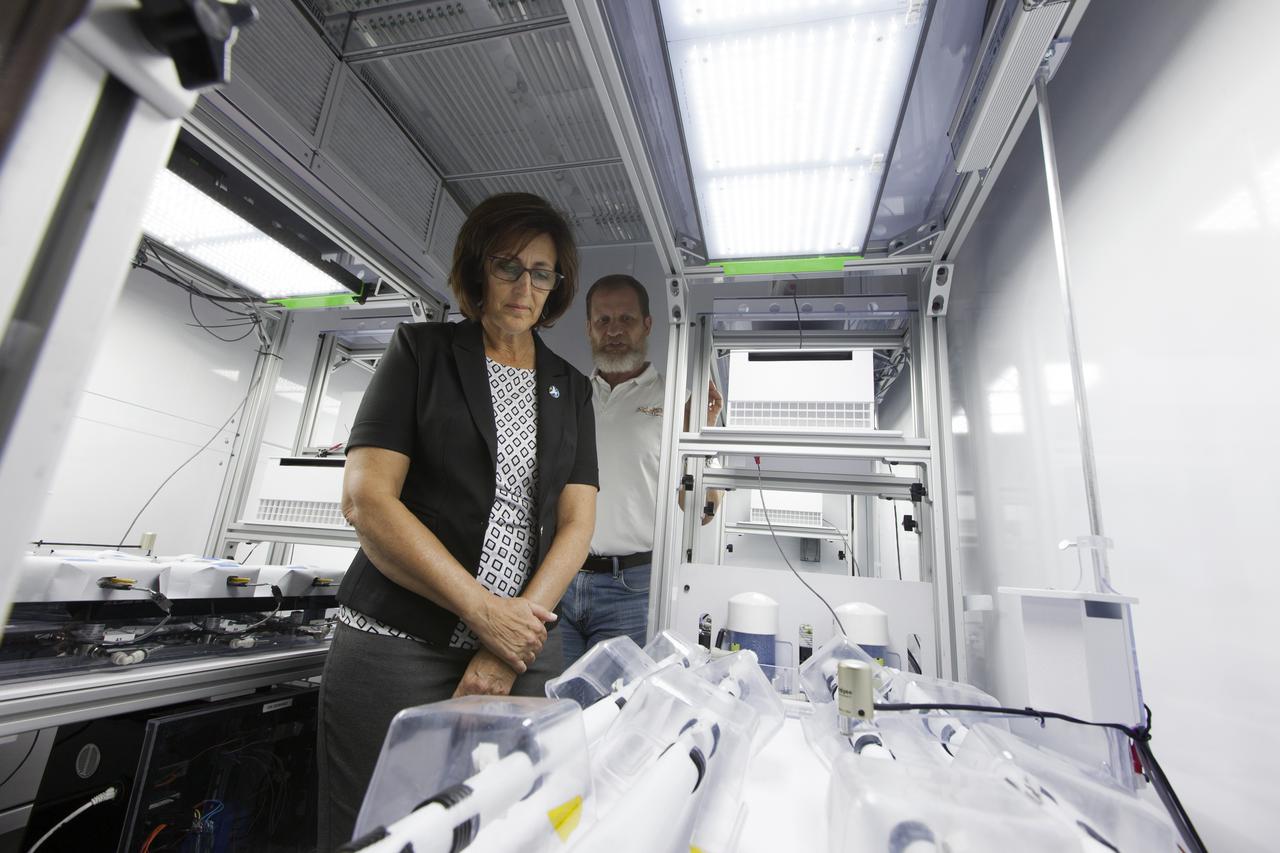
Robyn Gatens, left, deputy director, ISS Division and system capability leader for Environmental Control and Life Support Systems (ECLSS) at NASA Headquarters in Washington, tours laboratories in the Space Station Processing Facility at the agency's Kennedy Space Center in Florida, on June 13, 2018. Standing behind her is Ralph Fritsche, long-duration food production project manager at Kennedy. Gatens is viewing plant growth chambers and seeing firsthand some of the capabilities in the center's Exploration Research and Technology Programs.
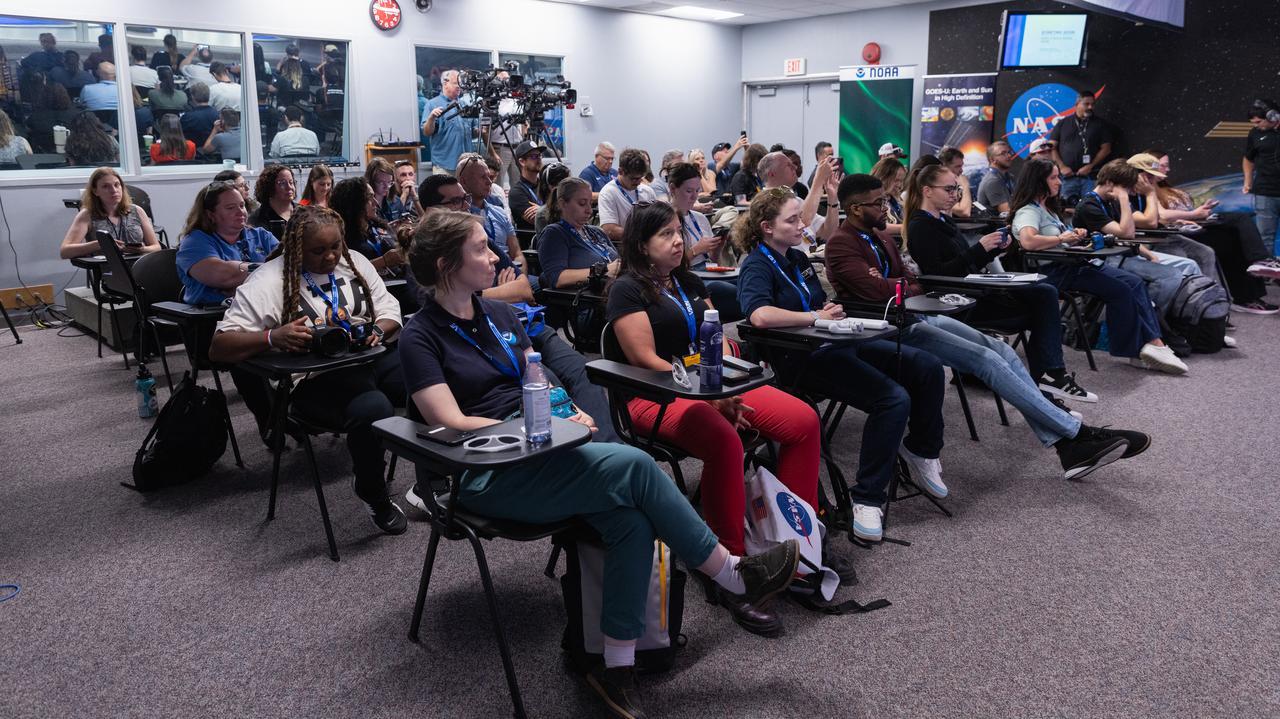
Officials from NASA, National Oceanic and Atmospheric Administration (NOAA), and other mission managers participate in a social panel on Monday, June 24, 2024, at NASA’s Kennedy Space Center in Florida for the launch of GOES-U (Geostationary Operational Environmental Satellite U) mission. The two-hour launch window opens at 5:16 p.m. EDT Tuesday, June 25, for the satellite’s launch on a SpaceX Falcon Heavy rocket from Launch Complex 39A at NASA’s Kennedy Space Center in Florida.
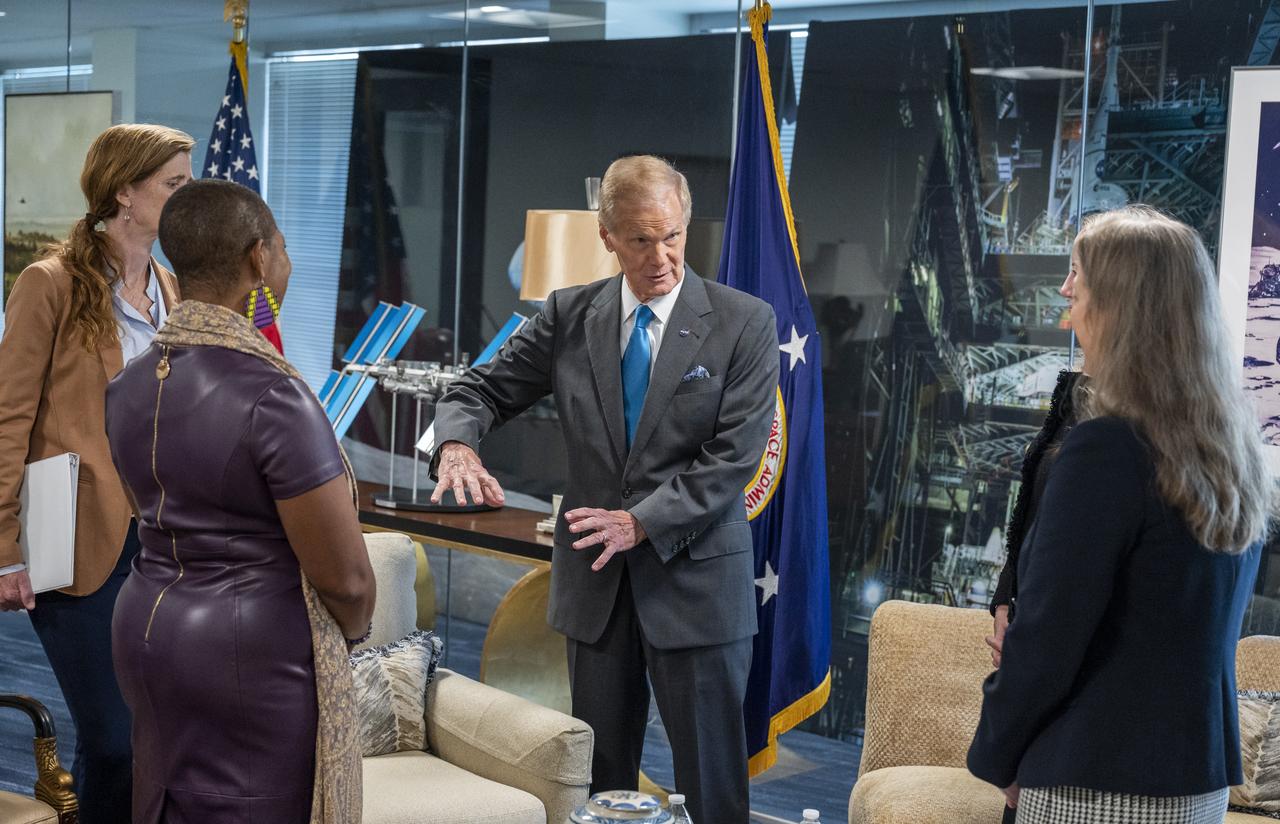
NASA Administrator Bill Nelson meets with USAID Administrator Samantha Power and staff prior to signing a NASA-USAID Memorandum of Understanding (MoU) Friday, Nov. 4, 2022, at the Mary W. Jackson NASA Headquarters building in Washington. The MoU will enhance and expand the Agencies’ longstanding partnership that promotes science and technology solutions to address international development challenges in areas such as global health, climate change, food security, disaster mitigation and response, biodiversity conservation, and environmental management for sustainable development. Photo Credit: (NASA/Keegan Barber)
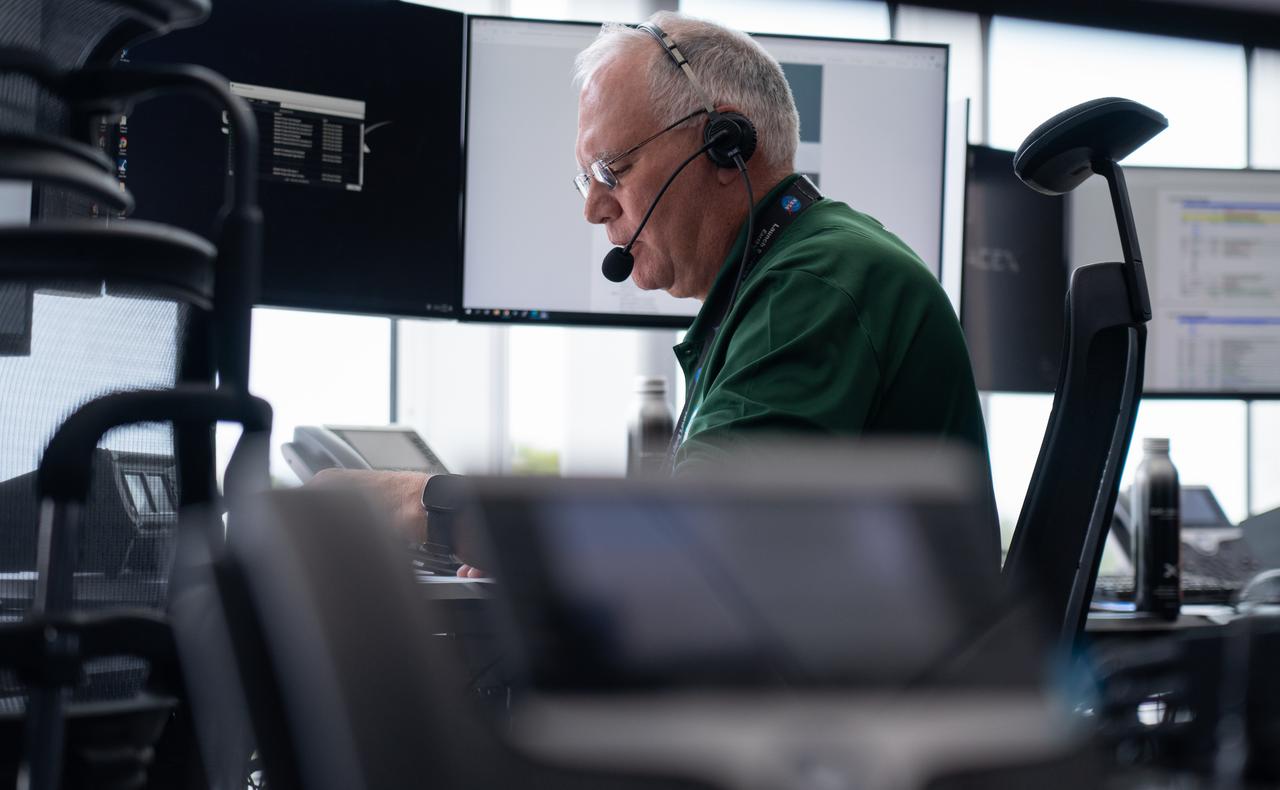
Rex Engelhardt, mission manager for NASA’s Launch Services Program, participates in rehearsal launch operations for the National Oceanic and Atmospheric Administration (NOAA) GOES-U (Geostationary Operational Environmental Satellite U) mission inside Hangar X at NASA’s Kennedy Space Center in Florida on Monday, June 17, 2024. The GOES-U satellite, the final addition to GOES-R series, serves a critical role in providing continuous coverage of the Western Hemisphere, including monitoring tropical systems in the eastern Pacific and Atlantic oceans.
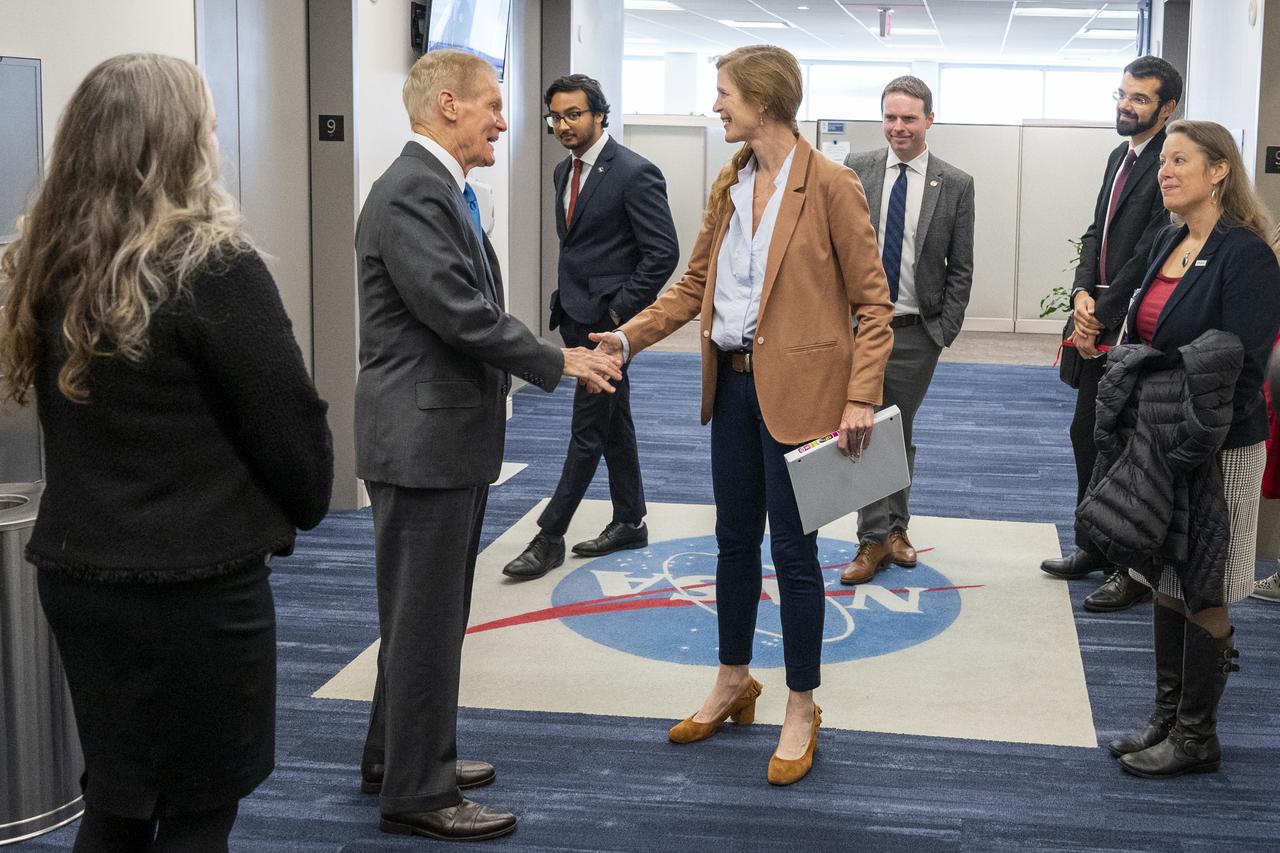
NASA Administrator Bill Nelson meets with USAID Administrator Samantha Power and staff prior to signing a NASA-USAID Memorandum of Understanding (MoU) Friday, Nov. 4, 2022, at the Mary W. Jackson NASA Headquarters building in Washington. The MoU will enhance and expand the Agencies’ longstanding partnership that promotes science and technology solutions to address international development challenges in areas such as global health, climate change, food security, disaster mitigation and response, biodiversity conservation, and environmental management for sustainable development. Photo Credit: (NASA/Keegan Barber)
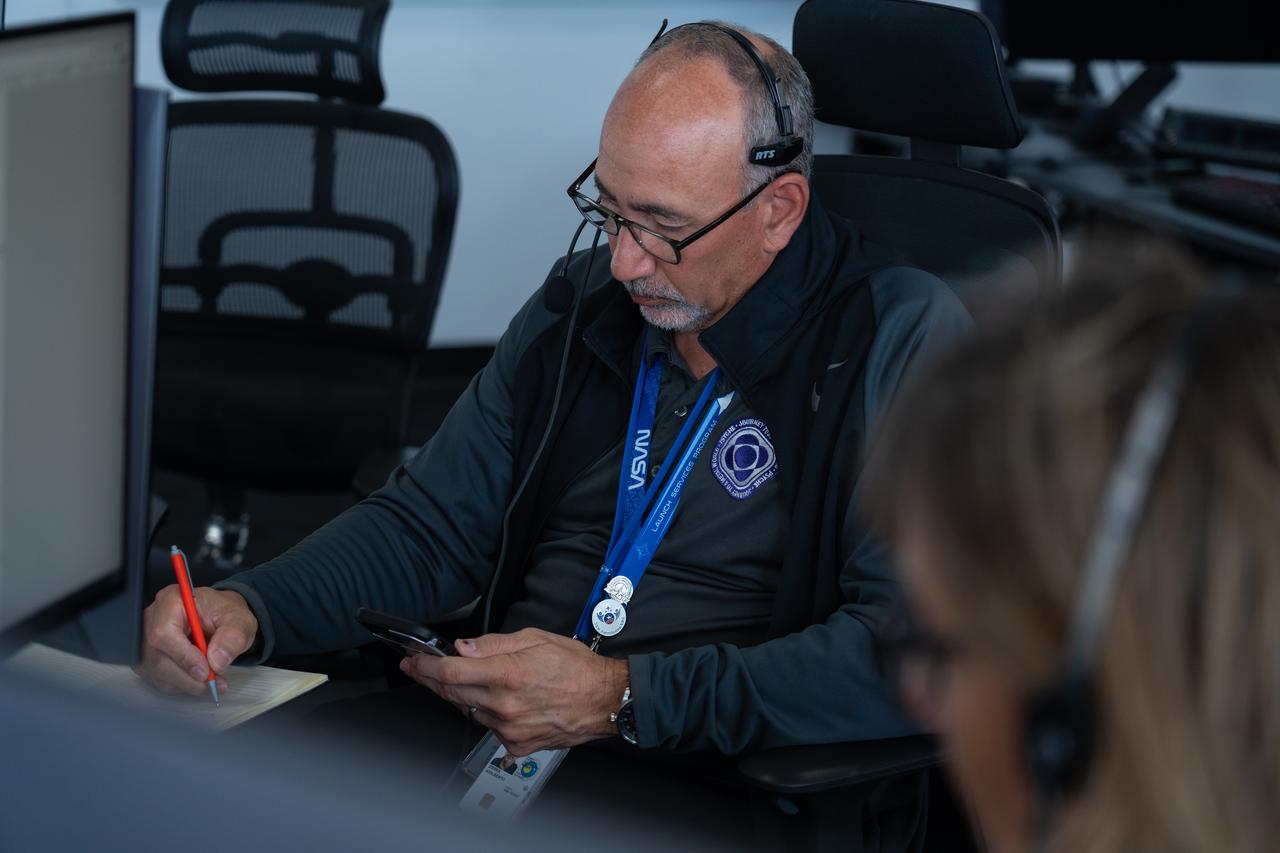
Albert Sierra, program manager for NASA’s Launch Services Program, participates in rehearsal launch operations for the National Oceanic and Atmospheric Administration (NOAA) GOES-U (Geostationary Operational Environmental Satellite U) mission inside Hangar X at NASA’s Kennedy Space Center in Florida on Monday, June 17, 2024. The GOES-U satellite, the final addition to GOES-R series, serves a critical role in providing continuous coverage of the Western Hemisphere, including monitoring tropical systems in the eastern Pacific and Atlantic oceans.
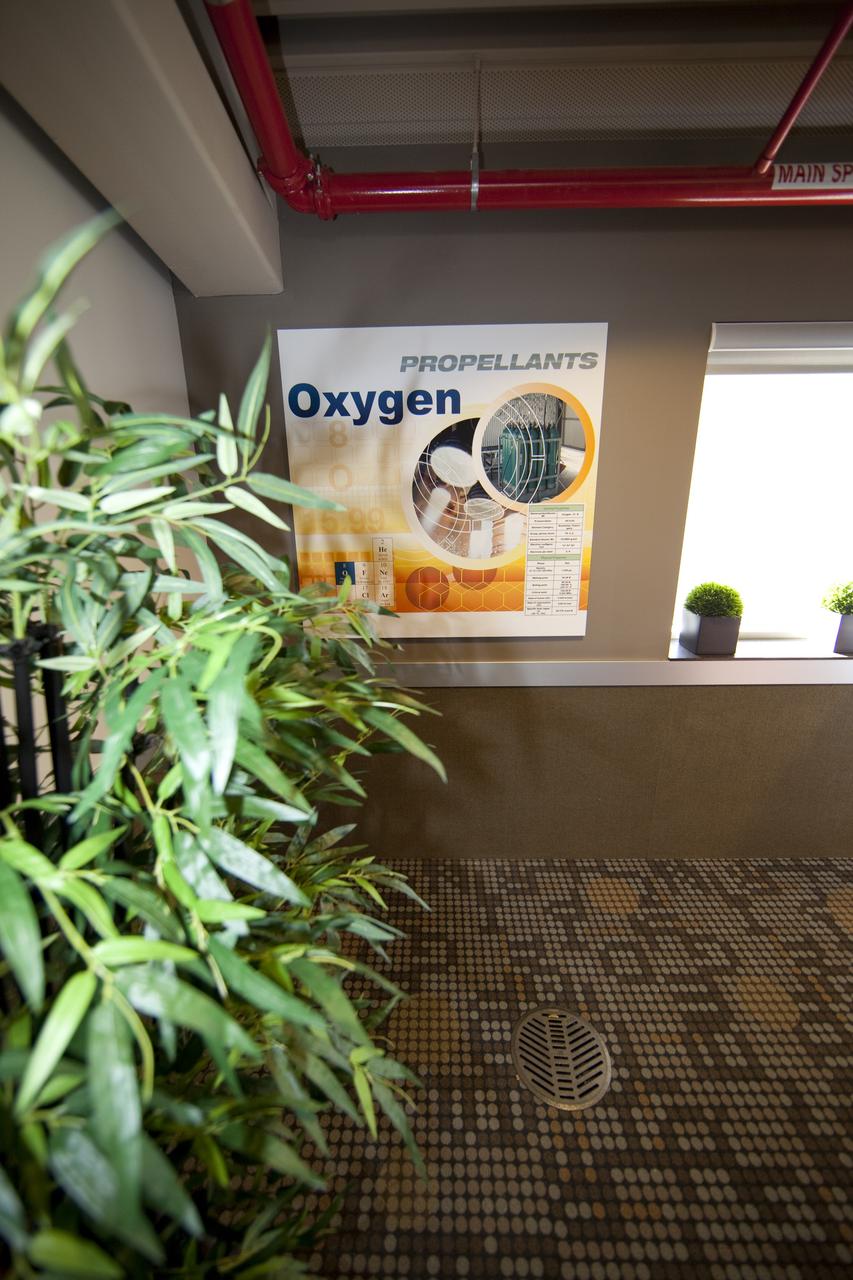
CAPE CANAVERAL, Fla. -- Finishing touches adorn the second-floor conference room of the Propellants North Administrative and Maintenance Facility at NASA's Kennedy Space Center in Florida. Artwork for the conference room was produced by Greg Lee, a graphics specialist with Abacus Technology Corp., with input from the facility's future occupants. The environmentally friendly facility is slated to be NASA's second Platinum-rated by the U.S. Green Building Council's (USGBC) Leadership in Environmental and Energy Design (LEED) certification system. It will be the space agency's first net-zero facility, which means it will produce enough energy onsite from renewable sources to offset what it requires to operate. The facility consists of a two-story administrative building to house managers, mechanics and technicians who fuel spacecraft at Kennedy, and a single-story shop to store cryogenic fuel transfer equipment. Photo credit: NASA/Frankie Martin
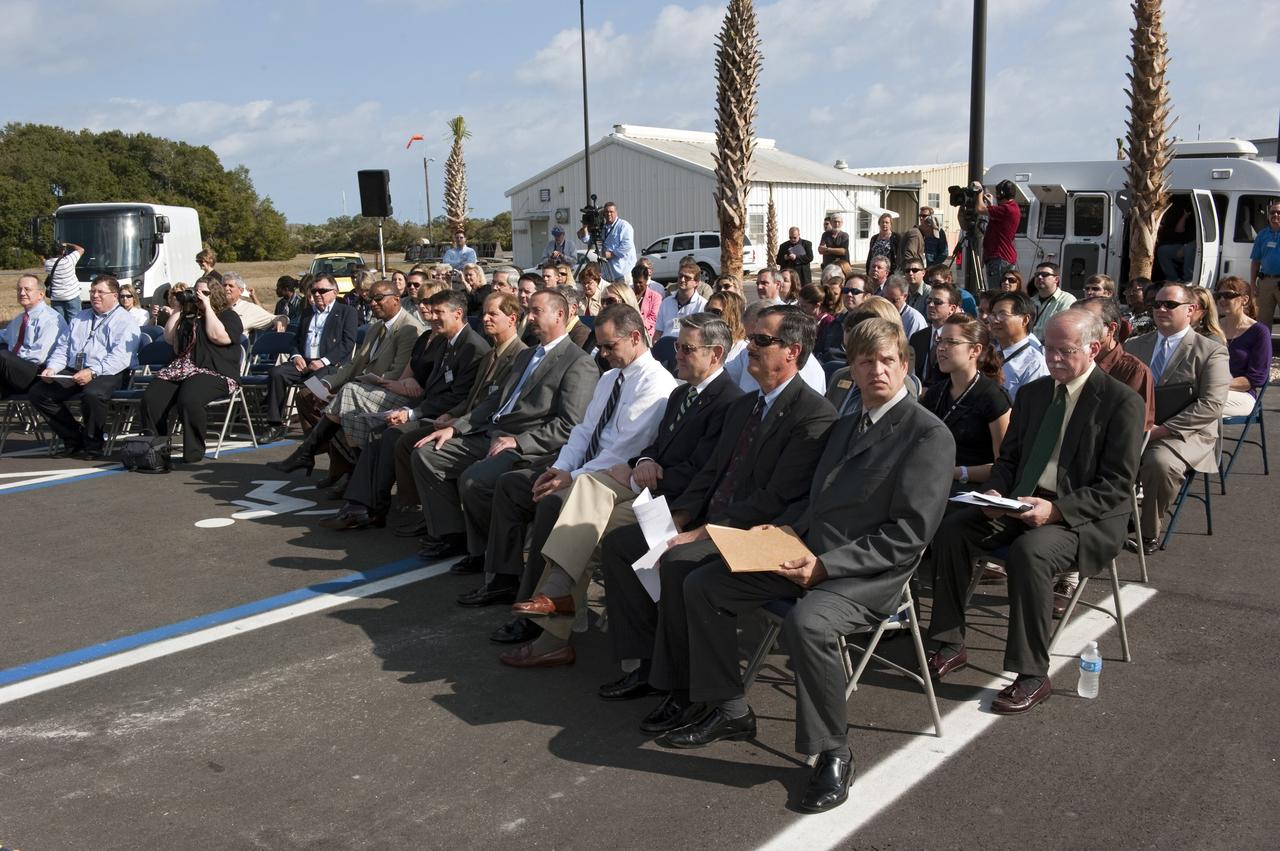
CAPE CANAVERAL, Fla. -- At NASA's Kennedy Space Center in Florida, an audience at the ribbon-cutting ceremony for the new environmentally friendly Propellants North Administration and Maintenance Facility listens to opening remarks made by Frank Kline, a NASA Construction of Facilities project manager. Propellants North consists of two buildings, one to store cryogenic fuel transfer equipment and one to house personnel who support fueling spacecraft. The recently rebuilt buildings will be NASA's first carbon neutral facility, which means it will produce enough energy on site from renewable sources to offset what it requires to operate. The facility also will reach for the U.S. Green Building Council's Leadership in Environmental and Energy Design (LEED) Platinum status, which is the highest LEED rating. Photo credit: NASA/Kim Shiflett
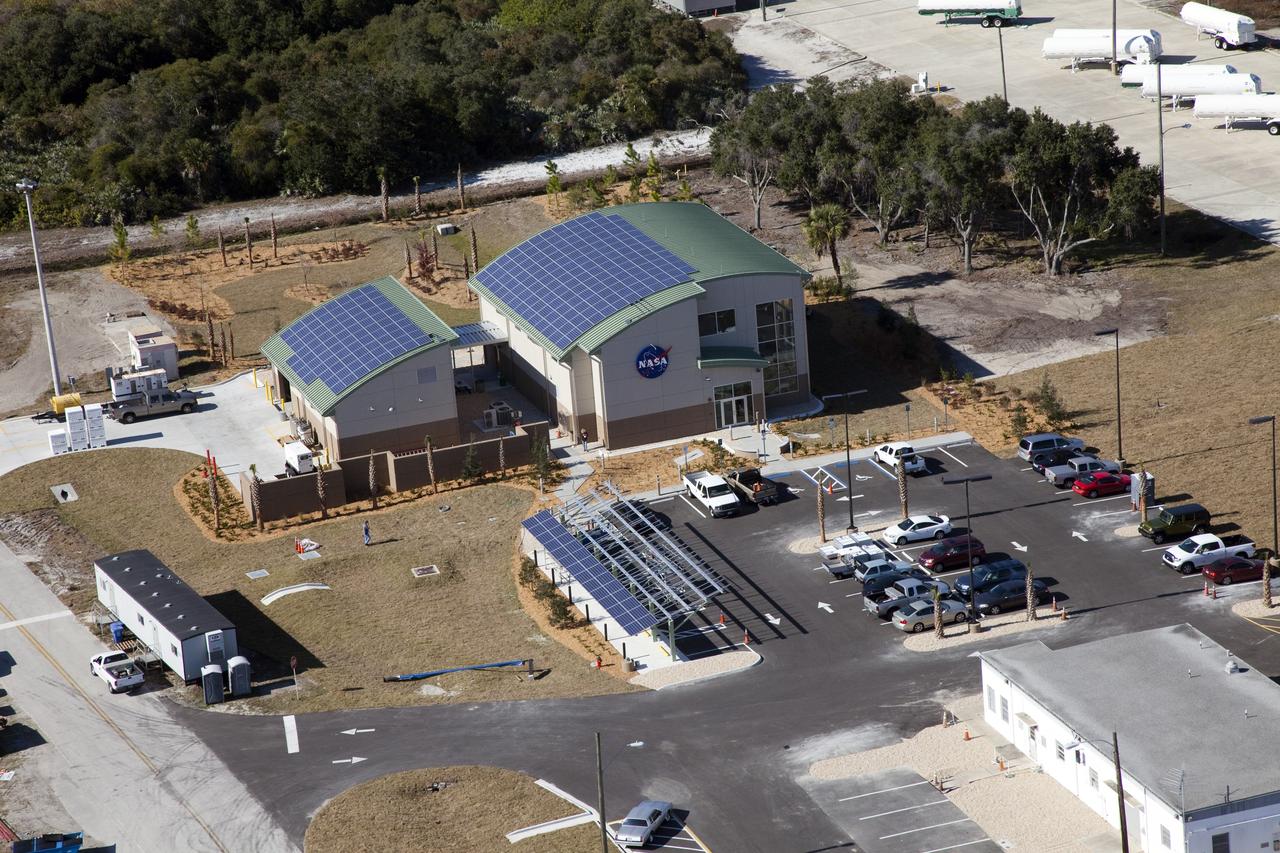
CAPE CANAVERAL, Fla. -- The Propellants North Administrative and Maintenance Facility in the Launch Complex 39 area of NASA's Kennedy Space Center in Florida is ready for business. The environmentally friendly facility is slated to be NASA's second Platinum-rated by the U.S. Green Building Council's (USGBC) Leadership in Environmental and Energy Design (LEED) certification system. It will be the space agency's first carbon-neutral facility, which means it will produce enough energy onsite from renewable sources to offset what it requires to operate. On the right is the facility's two-story administrative building, which will house managers, mechanics and technicians who fuel spacecraft at Kennedy. On the left is a single-story shop that will be used to store cryogenic fuel transfer equipment. In the parking lot is a solar-powered parking station for alternative fuel vehicles. Photo credit: NASA/Frank Michaux
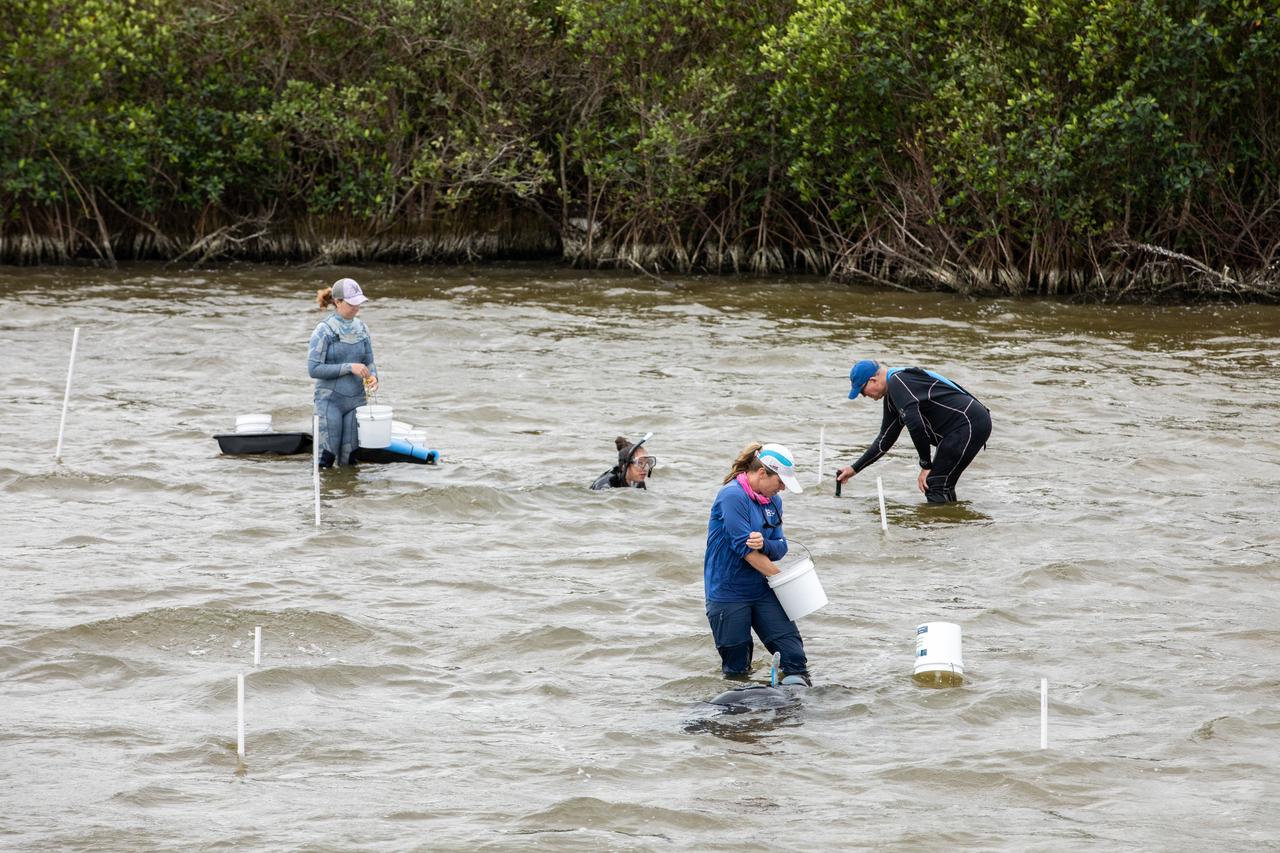
Members of the Florida Oceanographic Society begin planting seagrass in the Banana River – one of three bodies of water that make up the Indian River Lagoon (IRL) – at NASA’s Kennedy Space Center in Florida on March 29, 2023. At the top right is Doug Scheidt, an ecologist working on NASA’s Environmental and Medical Contract at Kennedy. Kennedy’s Environmental Management Branch is working to plant a minimum of 28,000 shoots of seagrass divided into 18 sites across three areas at the Florida spaceport as part of a pilot project for seagrass restoration efforts. The project will look at the feasibility of replanting seagrass in Kennedy waters and, if successful, could lead to the spaceport becoming a donor site where shoots of grass can be broken off and relocated to other areas within Kennedy or along the IRL to promote growth.
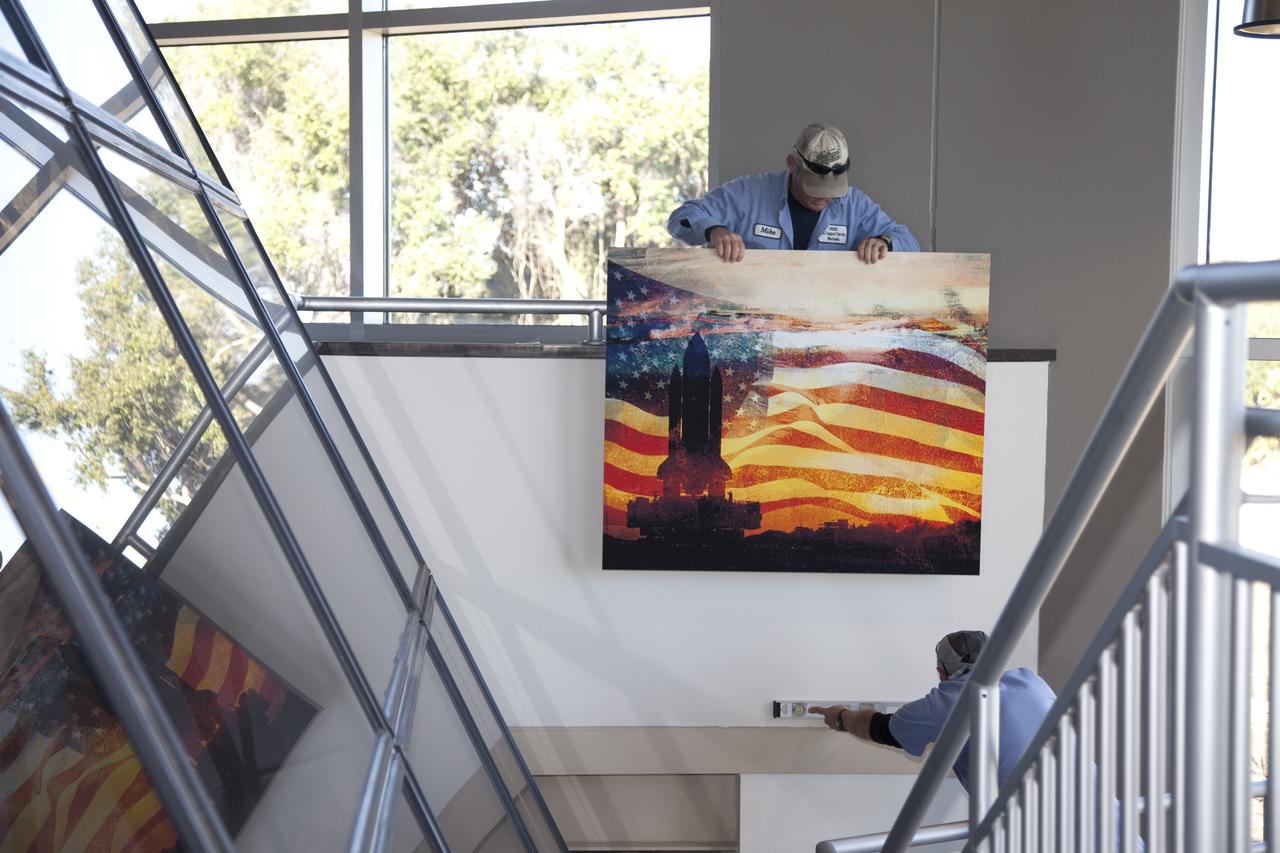
CAPE CANAVERAL, Fla. -- Workers hang artwork in the second-floor lobby of the Propellants North Administrative and Maintenance Facility at NASA's Kennedy Space Center in Florida. The artwork was produced by Greg Lee, a graphics specialist with Abacus Technology Corp., and features a silhouette of a shuttle, one of the most recognizable American icons, rolling out to Launch Complex 39. The environmentally friendly facility is slated to be NASA's second Platinum-rated by the U.S. Green Building Council's (USGBC) Leadership in Environmental and Energy Design (LEED) certification system. It will be the space agency's first net-zero facility, which means it will produce enough energy onsite from renewable sources to offset what it requires to operate. The facility consists of a two-story administrative building to house managers, mechanics and technicians who fuel spacecraft at Kennedy, and a single-story shop to store cryogenic fuel transfer equipment. Photo credit: NASA/Frankie Martin
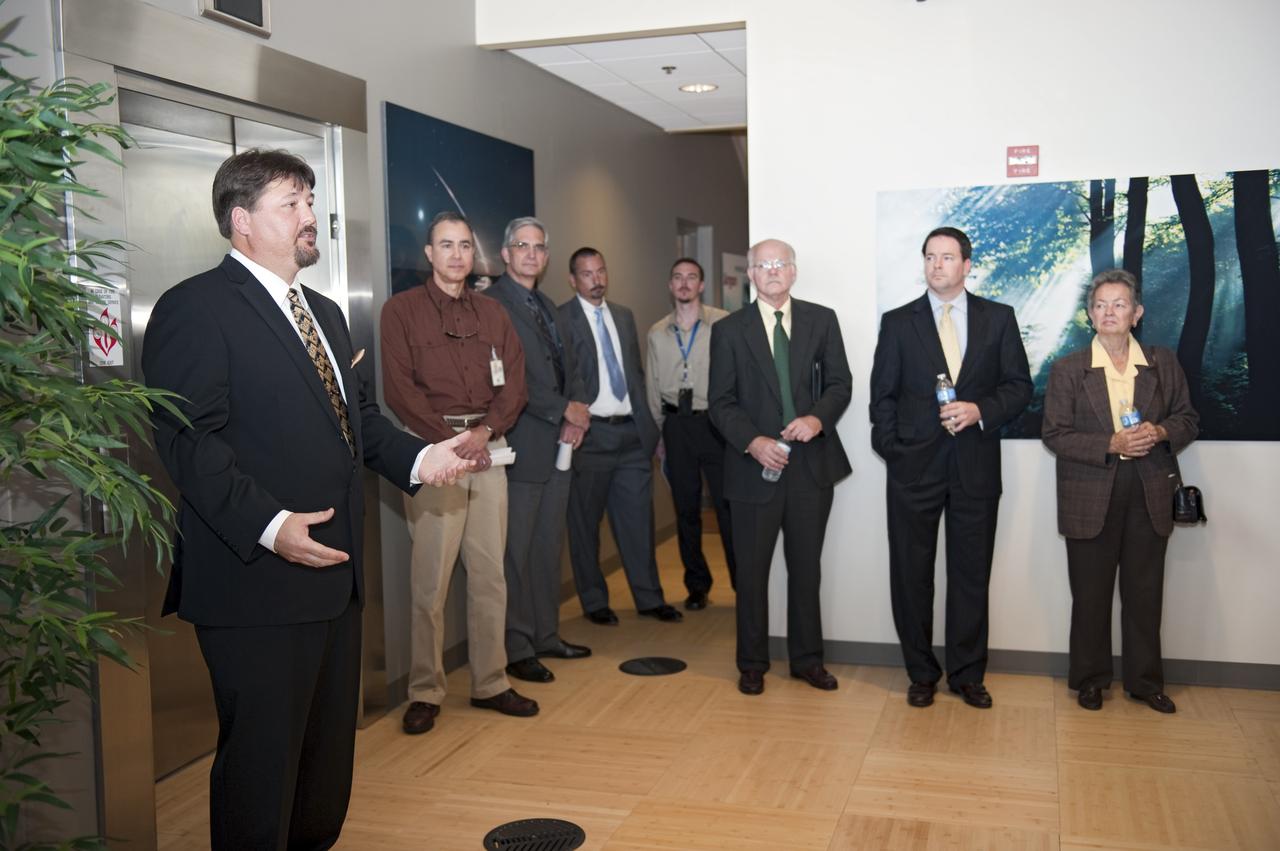
CAPE CANAVERAL, Fla. -- Frank Kline, Construction of Facilities project manager at NASA's Kennedy Space Center in Florida, far left, shows off the environmentally friendly features of the new Propellants North Administration and Maintenance Facility. Propellants North consists of two buildings, one to store cryogenic fuel transfer equipment and one to house personnel who support fueling spacecraft. The recently rebuilt buildings will be NASA's first carbon neutral facility, which means it will produce enough energy on site from renewable sources to offset what it requires to operate. The facility also will reach for the U.S. Green Building Council's Leadership in Environmental and Energy Design (LEED) Platinum status, which is the highest LEED rating. Photo credit: NASA/Kim Shiflett

CAPE CANAVERAL, Fla. -- The Vehicle Assembly Building towers over the new Propellants North Administrative and Maintenance Facility in the Launch Complex 39 area of NASA's Kennedy Space Center in Florida. The environmentally friendly facility is slated to be NASA's second Platinum-rated by the U.S. Green Building Council's (USGBC) Leadership in Environmental and Energy Design (LEED) certification system. It will be the space agency's first carbon-neutral facility, which means it will produce enough energy onsite from renewable sources to offset what it requires to operate. On the right is the facility's two-story administrative building, which will house managers, mechanics and technicians who fuel spacecraft at Kennedy. On the left is a single-story shop that will be used to store cryogenic fuel transfer equipment. In the parking lot is a solar-powered parking station for alternative fuel vehicles. Photo credit: NASA/Frank Michaux
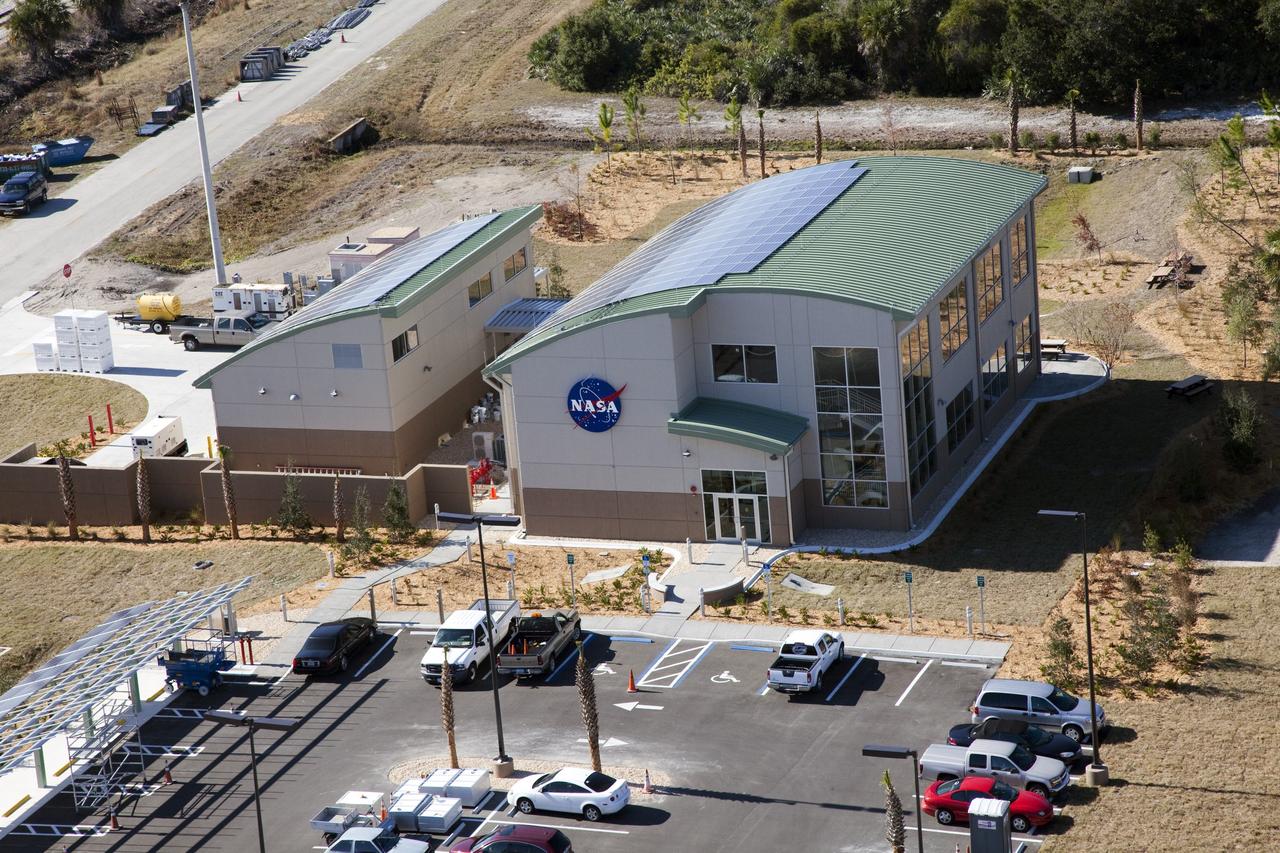
CAPE CANAVERAL, Fla. -- The Propellants North Administrative and Maintenance Facility in the Launch Complex 39 area of NASA's Kennedy Space Center in Florida is ready for business. The environmentally friendly facility is slated to be NASA's second Platinum-rated by the U.S. Green Building Council's (USGBC) Leadership in Environmental and Energy Design (LEED) certification system. It will be the space agency's first carbon-neutral facility, which means it will produce enough energy onsite from renewable sources to offset what it requires to operate. On the right is the facility's two-story administrative building, which will house managers, mechanics and technicians who fuel spacecraft at Kennedy. On the left is a single-story shop that will be used to store cryogenic fuel transfer equipment. In the parking lot is a solar-powered parking station for alternative fuel vehicles. Photo credit: NASA/Frank Michaux
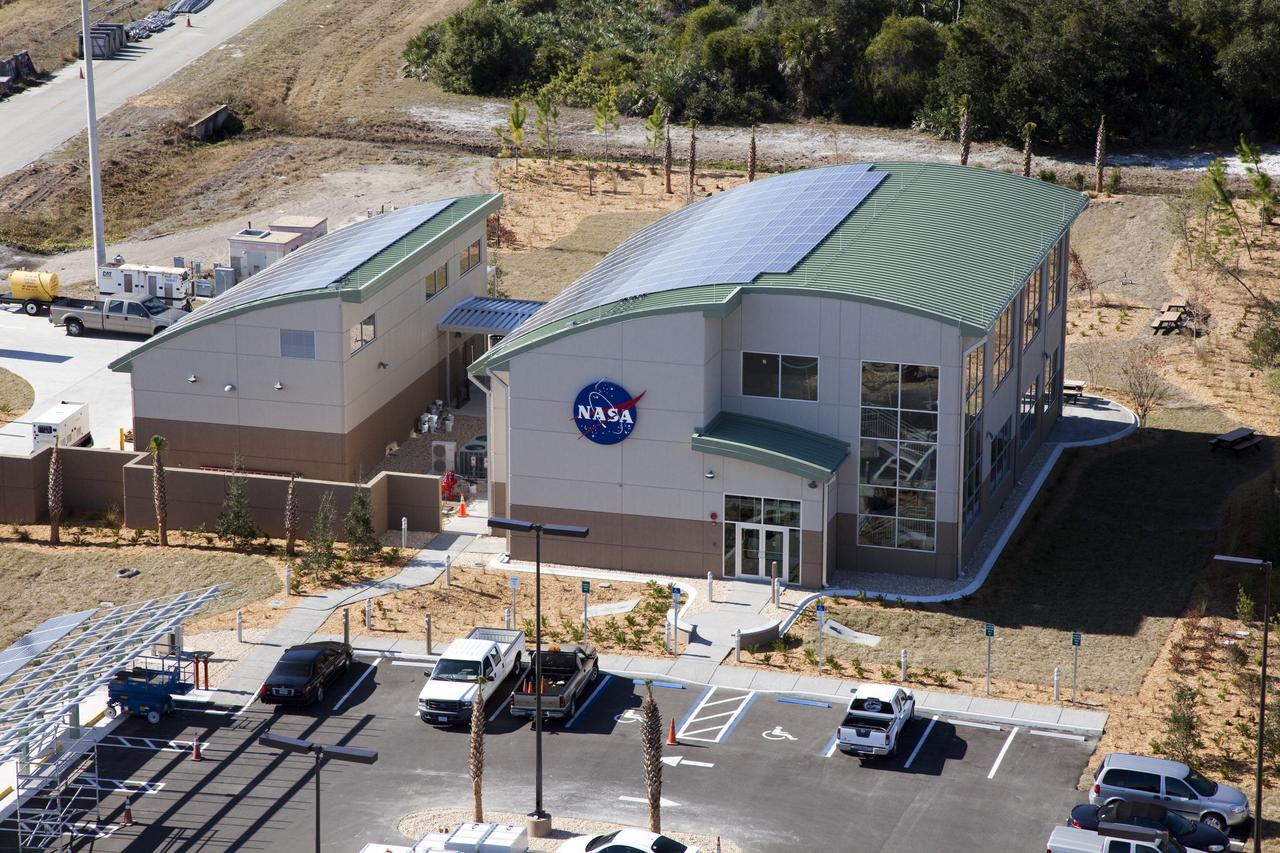
CAPE CANAVERAL, Fla. -- The Propellants North Administrative and Maintenance Facility in the Launch Complex 39 area of NASA's Kennedy Space Center in Florida is ready for business. The environmentally friendly facility is slated to be NASA's second Platinum-rated by the U.S. Green Building Council's (USGBC) Leadership in Environmental and Energy Design (LEED) certification system. It will be the space agency's first carbon-neutral facility, which means it will produce enough energy onsite from renewable sources to offset what it requires to operate. On the right is the facility's two-story administrative building, which will house managers, mechanics and technicians who fuel spacecraft at Kennedy. On the left is a single-story shop that will be used to store cryogenic fuel transfer equipment. In the parking lot is a solar-powered parking station for alternative fuel vehicles. Photo credit: NASA/Frank Michaux
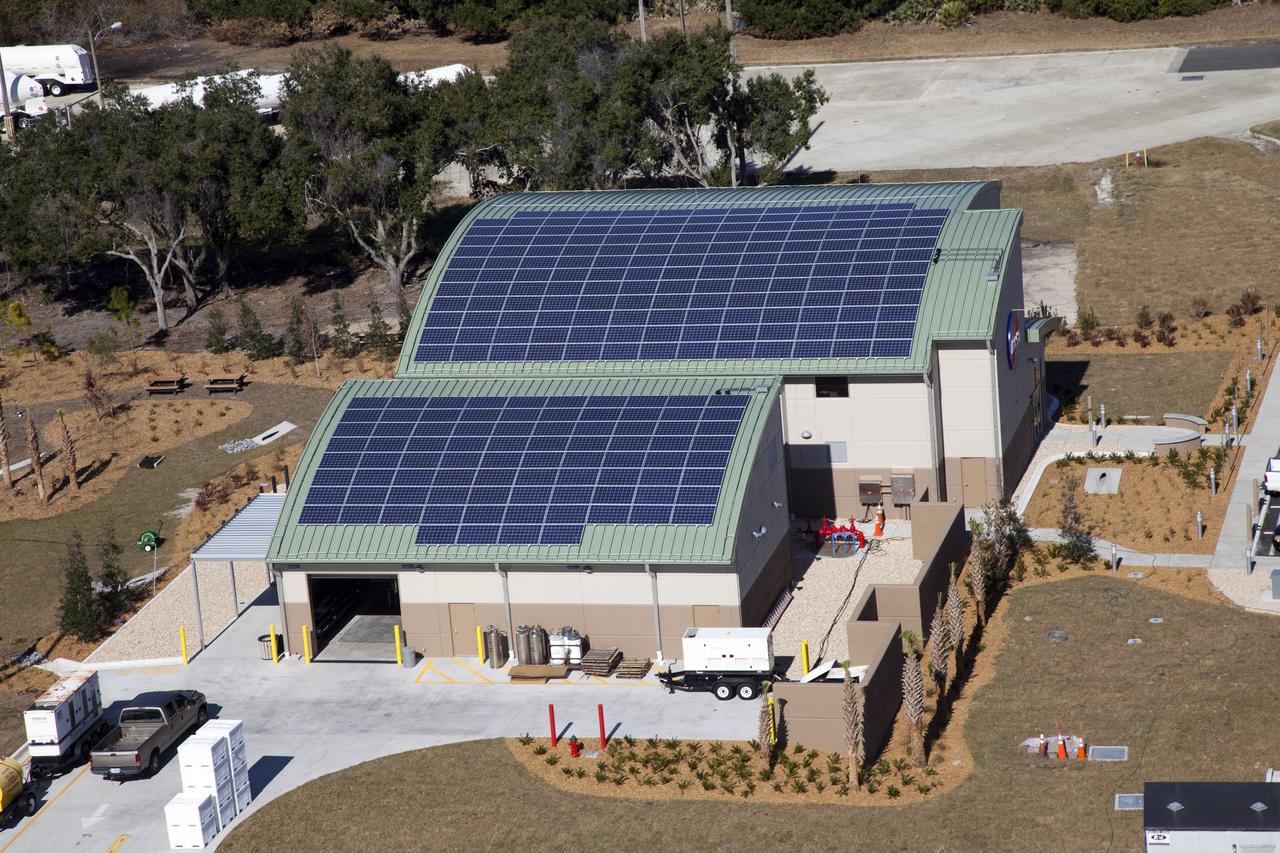
CAPE CANAVERAL, Fla. -- The Propellants North Administrative and Maintenance Facility in the Launch Complex 39 area of NASA's Kennedy Space Center in Florida is ready for business. The environmentally friendly facility is slated to be NASA's second Platinum-rated by the U.S. Green Building Council's (USGBC) Leadership in Environmental and Energy Design (LEED) certification system. It will be the space agency's first carbon-neutral facility, which means it will produce enough energy onsite from renewable sources to offset what it requires to operate. The facility consists of a two-story administrative building, which will house managers, mechanics and technicians who fuel spacecraft at Kennedy, and a single-story shop that will be used to store cryogenic fuel transfer equipment. Photo credit: NASA/Frank Michaux
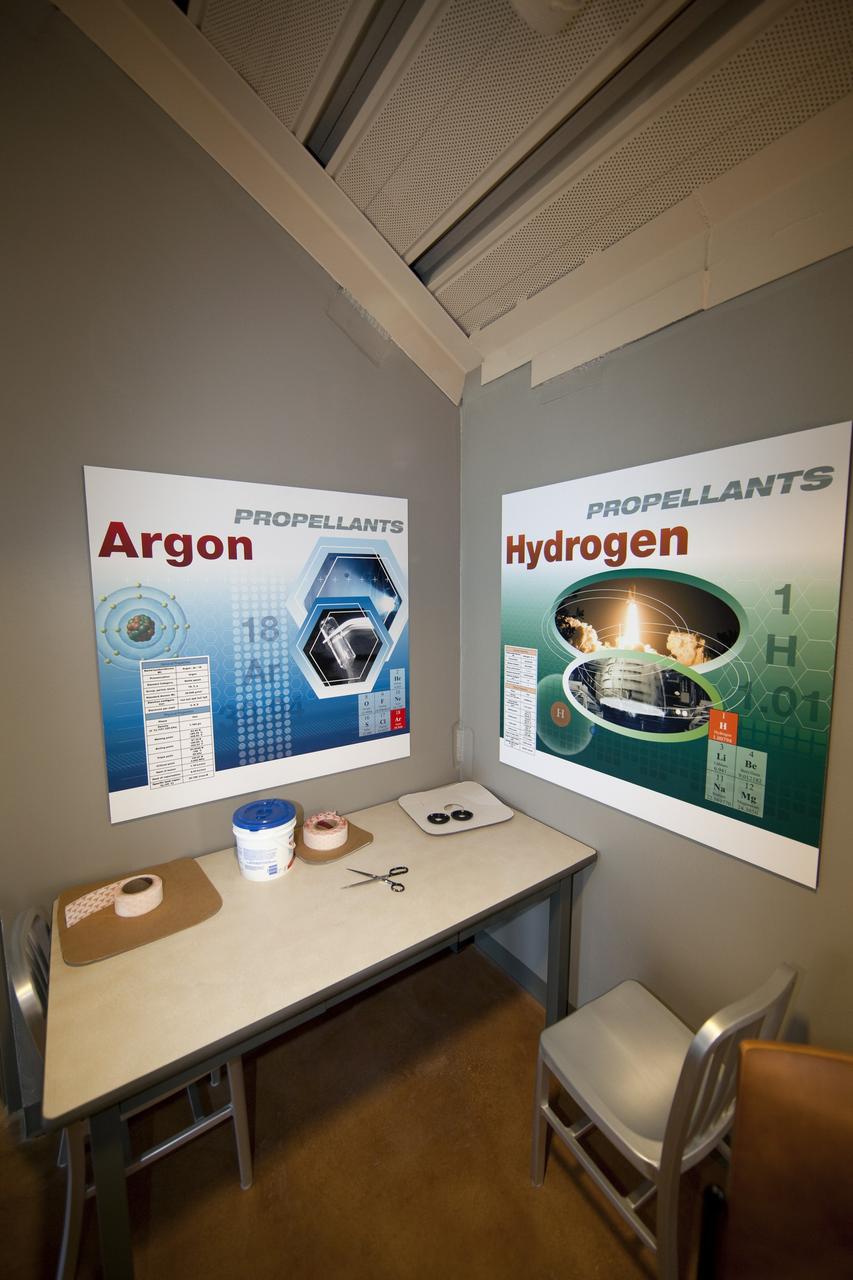
CAPE CANAVERAL, Fla. -- Finishing touches adorn the Propellants North Administrative and Maintenance Facility at NASA's Kennedy Space Center in Florida. Artwork for the facility was produced by Greg Lee, a graphics specialist with Abacus Technology Corp., with input from the facility's future occupants. The environmentally friendly facility is slated to be NASA's second Platinum-rated by the U.S. Green Building Council's (USGBC) Leadership in Environmental and Energy Design (LEED) certification system. It will be the space agency's first net-zero facility, which means it will produce enough energy onsite from renewable sources to offset what it requires to operate. The facility consists of a two-story administrative building to house managers, mechanics and technicians who fuel spacecraft at Kennedy, and a single-story shop to store cryogenic fuel transfer equipment. Photo credit: NASA/Frankie Martin
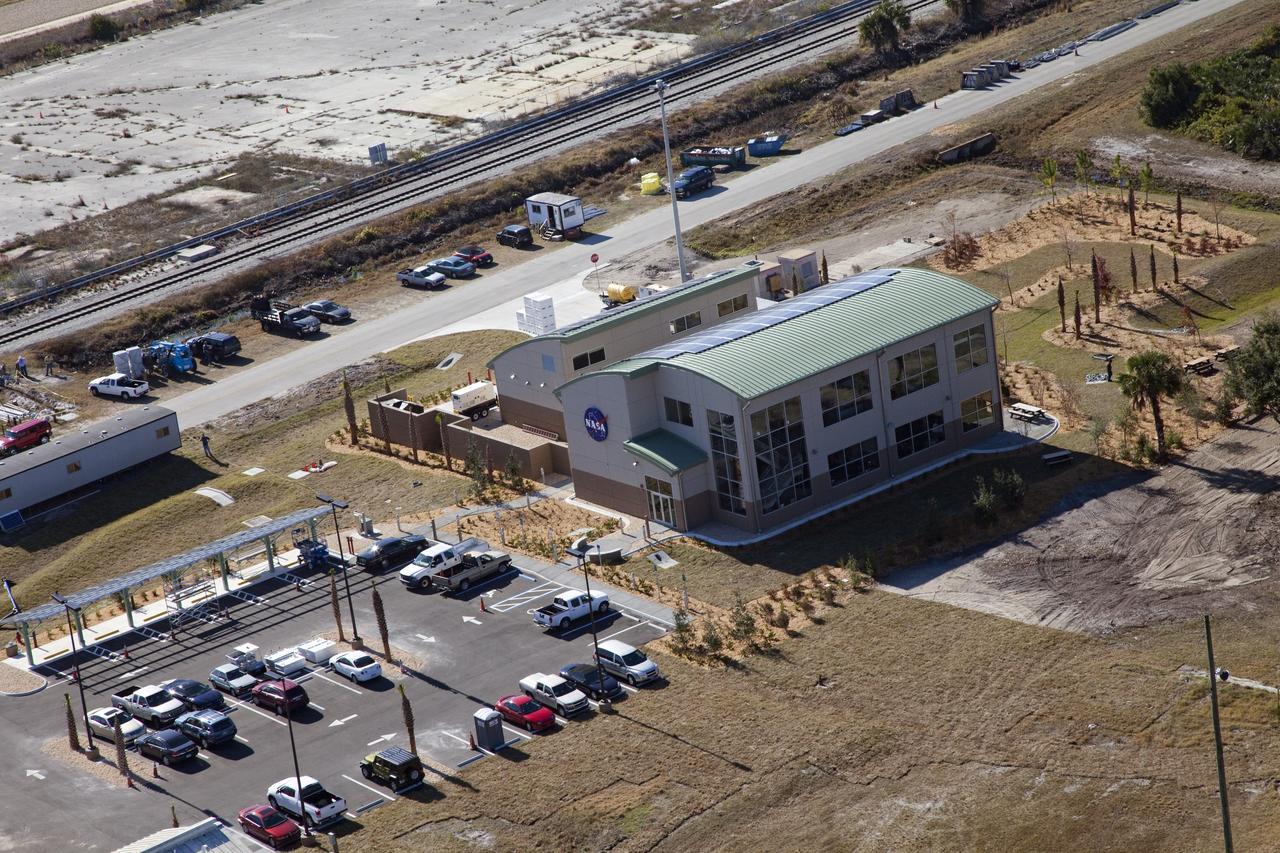
CAPE CANAVERAL, Fla. -- The Propellants North Administrative and Maintenance Facility in the Launch Complex 39 area of NASA's Kennedy Space Center in Florida is ready for business. The environmentally friendly facility is slated to be NASA's second Platinum-rated by the U.S. Green Building Council's (USGBC) Leadership in Environmental and Energy Design (LEED) certification system. It will be the space agency's first carbon-neutral facility, which means it will produce enough energy onsite from renewable sources to offset what it requires to operate. On the right is the facility's two-story administrative building, which will house managers, mechanics and technicians who fuel spacecraft at Kennedy. On the left is a single-story shop that will be used to store cryogenic fuel transfer equipment. In the parking lot is a solar-powered parking station for alternative fuel vehicles. Photo credit: NASA/Frank Michaux
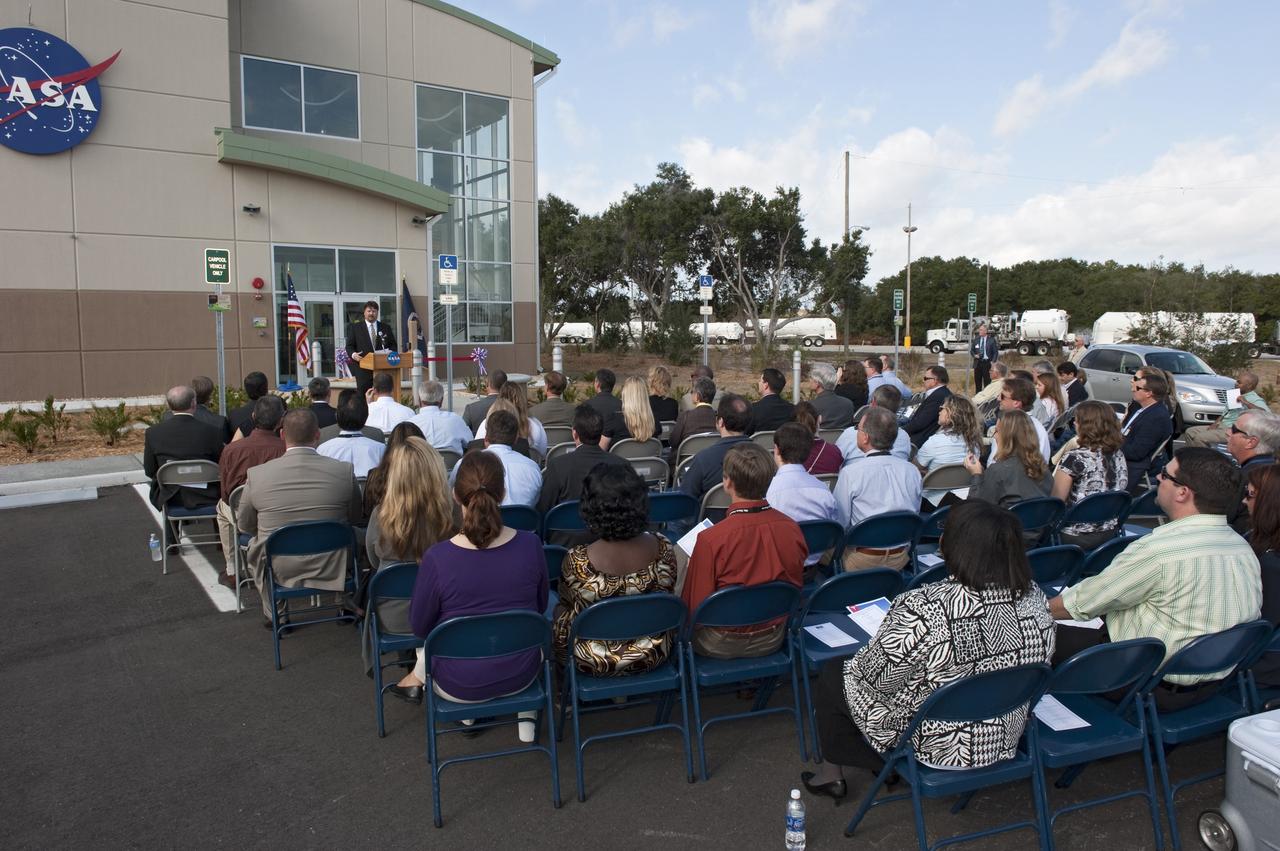
CAPE CANAVERAL, Fla. -- Frank Kline, Construction of Facilities project manager at NASA's Kennedy Space Center in Florida, addresses an audience at the ribbon-cutting ceremony for the new environmentally friendly Propellants North Administration and Maintenance Facility. Propellants North consists of two buildings, one to store cryogenic fuel transfer equipment and one to house personnel who support fueling spacecraft. The recently rebuilt buildings will be NASA's first carbon neutral facility, which means it will produce enough energy on site from renewable sources to offset what it requires to operate. The facility also will reach for the U.S. Green Building Council's Leadership in Environmental and Energy Design (LEED) Platinum status, which is the highest LEED rating. Photo credit: NASA/Kim Shiflett
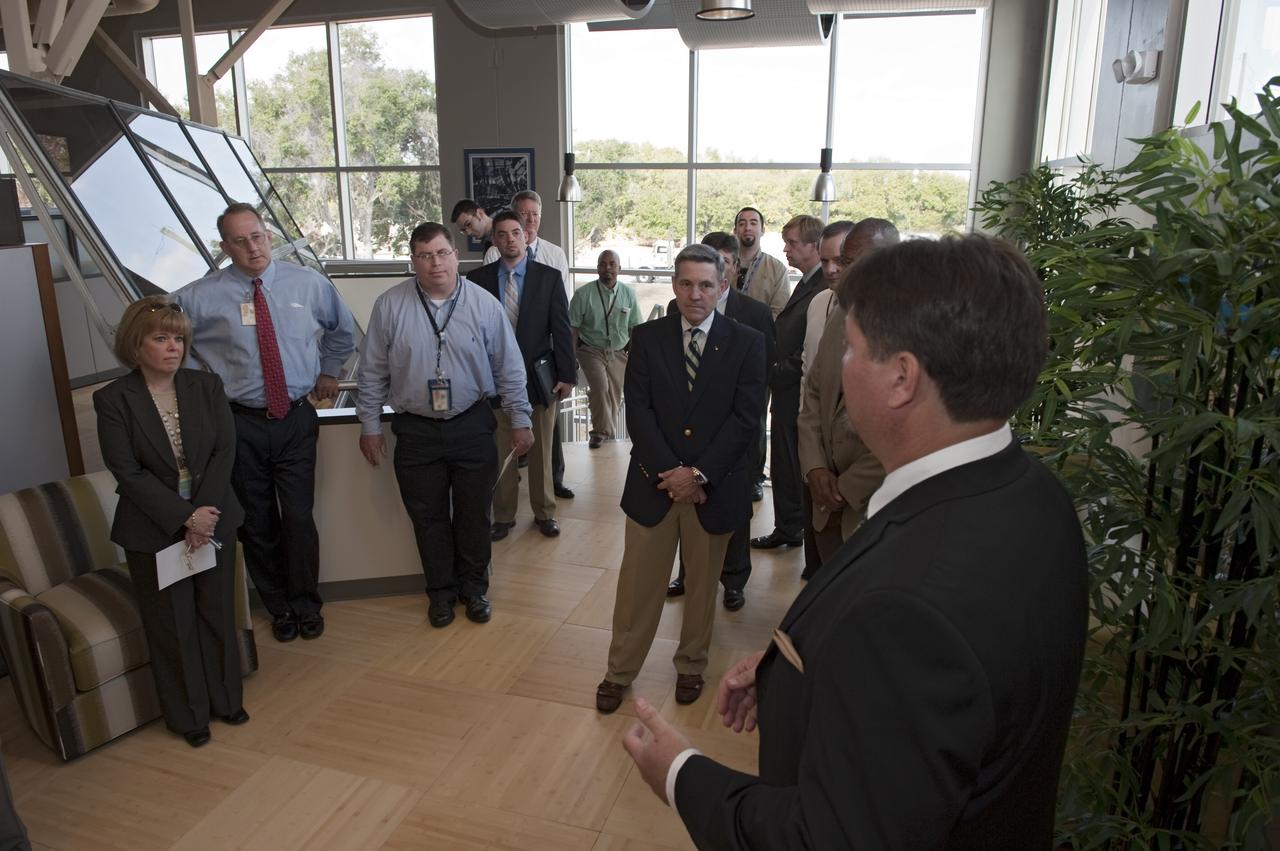
CAPE CANAVERAL, Fla. -- Frank Kline, Construction of Facilities project manager at NASA's Kennedy Space Center in Florida, far right, shows off the environmentally friendly features of the new Propellants North Administration and Maintenance Facility. Propellants North consists of two buildings, one to store cryogenic fuel transfer equipment and one to house personnel who support fueling spacecraft. The recently rebuilt buildings will be NASA's first carbon neutral facility, which means it will produce enough energy on site from renewable sources to offset what it requires to operate. The facility also will reach for the U.S. Green Building Council's Leadership in Environmental and Energy Design (LEED) Platinum status, which is the highest LEED rating. Photo credit: NASA/Kim Shiflett

CAPE CANAVERAL, Fla. -- This is the back view of the new Propellants North Administrative and Maintenance Facility in the Launch Complex 39 area of NASA's Kennedy Space Center in Florida. The environmentally friendly facility is slated to be NASA's second Platinum-rated by the U.S. Green Building Council's (USGBC) Leadership in Environmental and Energy Design (LEED) certification system. It will be the space agency's first carbon-neutral facility, which means it will produce enough energy onsite from renewable sources to offset what it requires to operate. On the right is the facility's single-story shop that will be used to store cryogenic fuel transfer equipment. On the left is a two-story administrative building, which will house managers, mechanics and technicians who fuel spacecraft at Kennedy. In the parking lot is a solar-powered parking station for alternative fuel vehicles. Photo credit: NASA/Frank Michaux
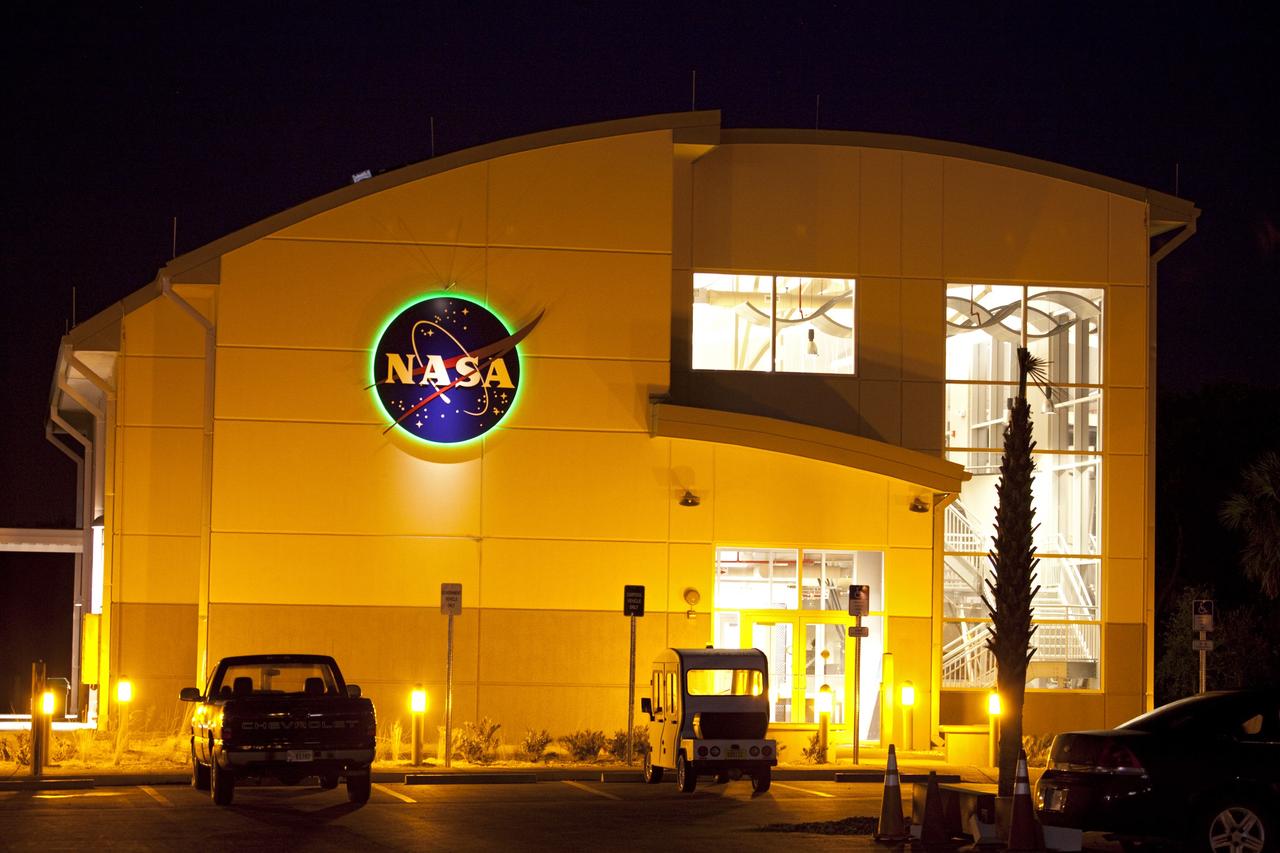
CAPE CANAVERAL, Fla. -- Kennedy Space Center's Propellants North Administrative and Maintenance Facility with the NASA insignia glistens a shade of green in the Launch Complex 39 area. The environmentally friendly facility is slated to be NASA's second Platinum-rated by the U.S. Green Building Council's (USGBC) Leadership in Environmental and Energy Design (LEED) certification system. It will be the space agency's first carbon-neutral facility, which means it will produce enough energy onsite from renewable sources to offset what it requires to operate. Shown here is the facility's two-story administrative building, which will house managers, mechanics and technicians who fuel spacecraft at Kennedy. Next door is a single-story shop that will be used to store cryogenic fuel transfer equipment. Photo credit: NASA/Frank Michaux
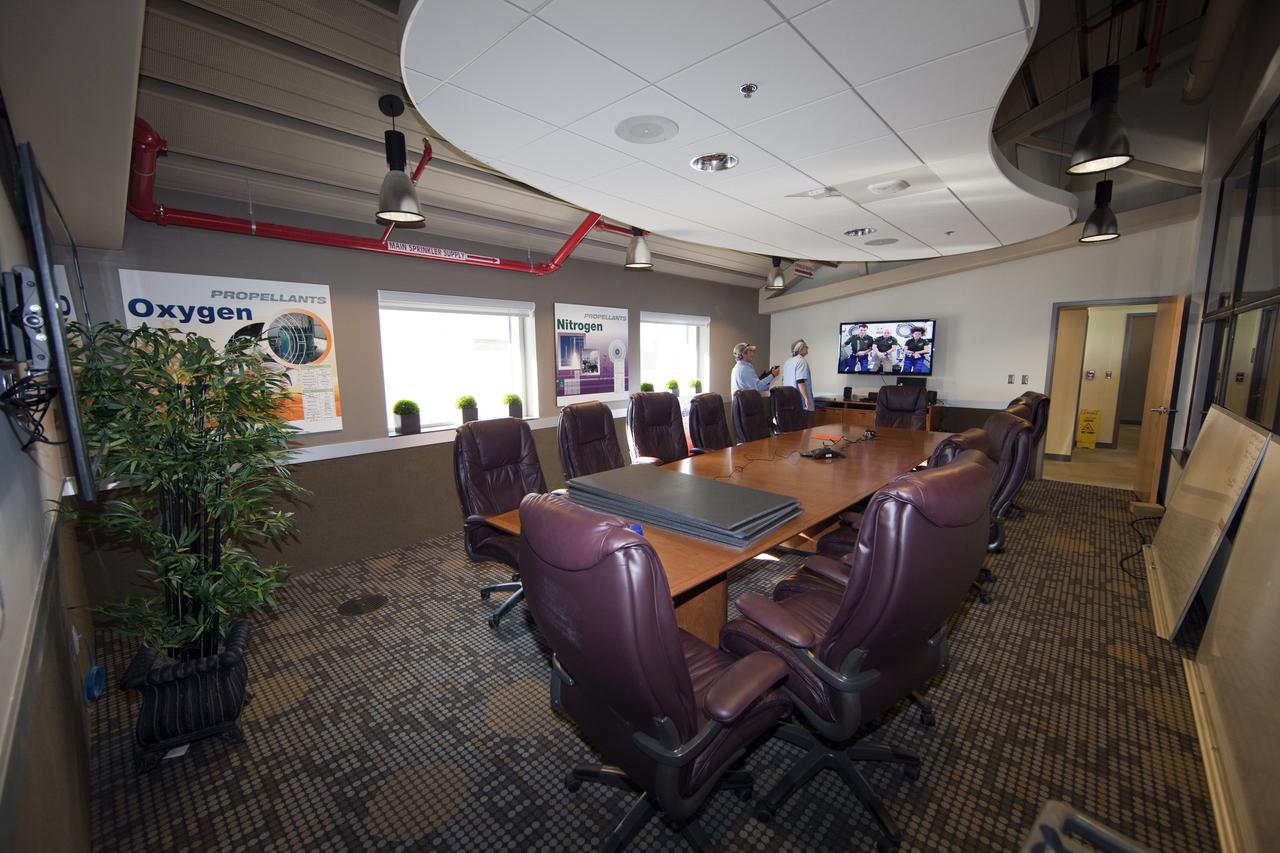
CAPE CANAVERAL, Fla. -- Finishing touches adorn the second-floor conference room of the Propellants North Administrative and Maintenance Facility at NASA's Kennedy Space Center in Florida. The environmentally friendly facility is slated to be NASA's second Platinum-rated by the U.S. Green Building Council's (USGBC) Leadership in Environmental and Energy Design (LEED) certification system. It will be the space agency's first net-zero facility, which means it will produce enough energy onsite from renewable sources to offset what it requires to operate. The facility consists of a two-story administrative building to house managers, mechanics and technicians who fuel spacecraft at Kennedy, and a single-story shop to store cryogenic fuel transfer equipment. Photo credit: NASA/Frankie Martin
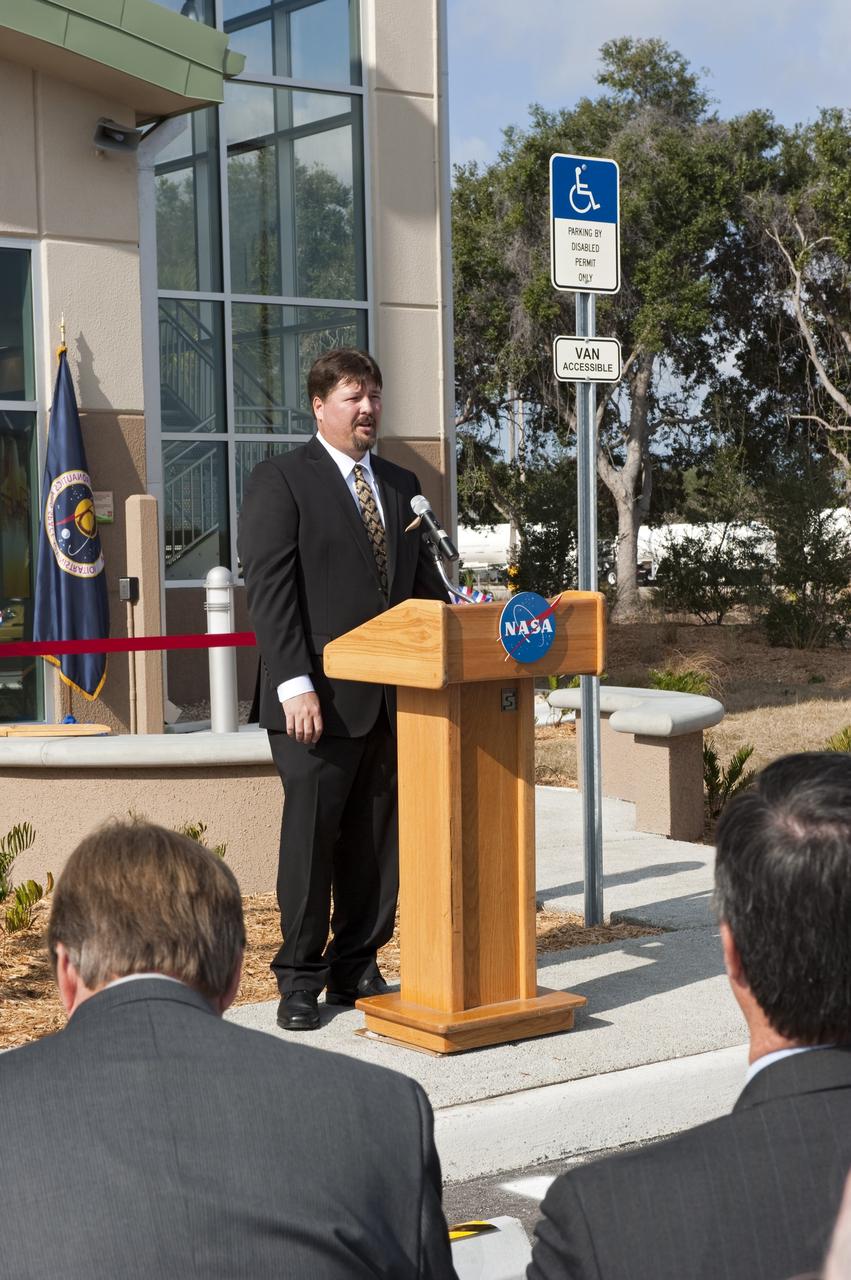
CAPE CANAVERAL, Fla. -- Frank Kline, Construction of Facilities project manager at NASA's Kennedy Space Center in Florida, addresses an audience at the ribbon-cutting ceremony for the new environmentally friendly Propellants North Administration and Maintenance Facility. Propellants North consists of two buildings, one to store cryogenic fuel transfer equipment and one to house personnel who support fueling spacecraft. The recently rebuilt buildings will be NASA's first carbon neutral facility, which means it will produce enough energy on site from renewable sources to offset what it requires to operate. The facility also will reach for the U.S. Green Building Council's Leadership in Environmental and Energy Design (LEED) Platinum status, which is the highest LEED rating. Photo credit: NASA/Kim Shiflett
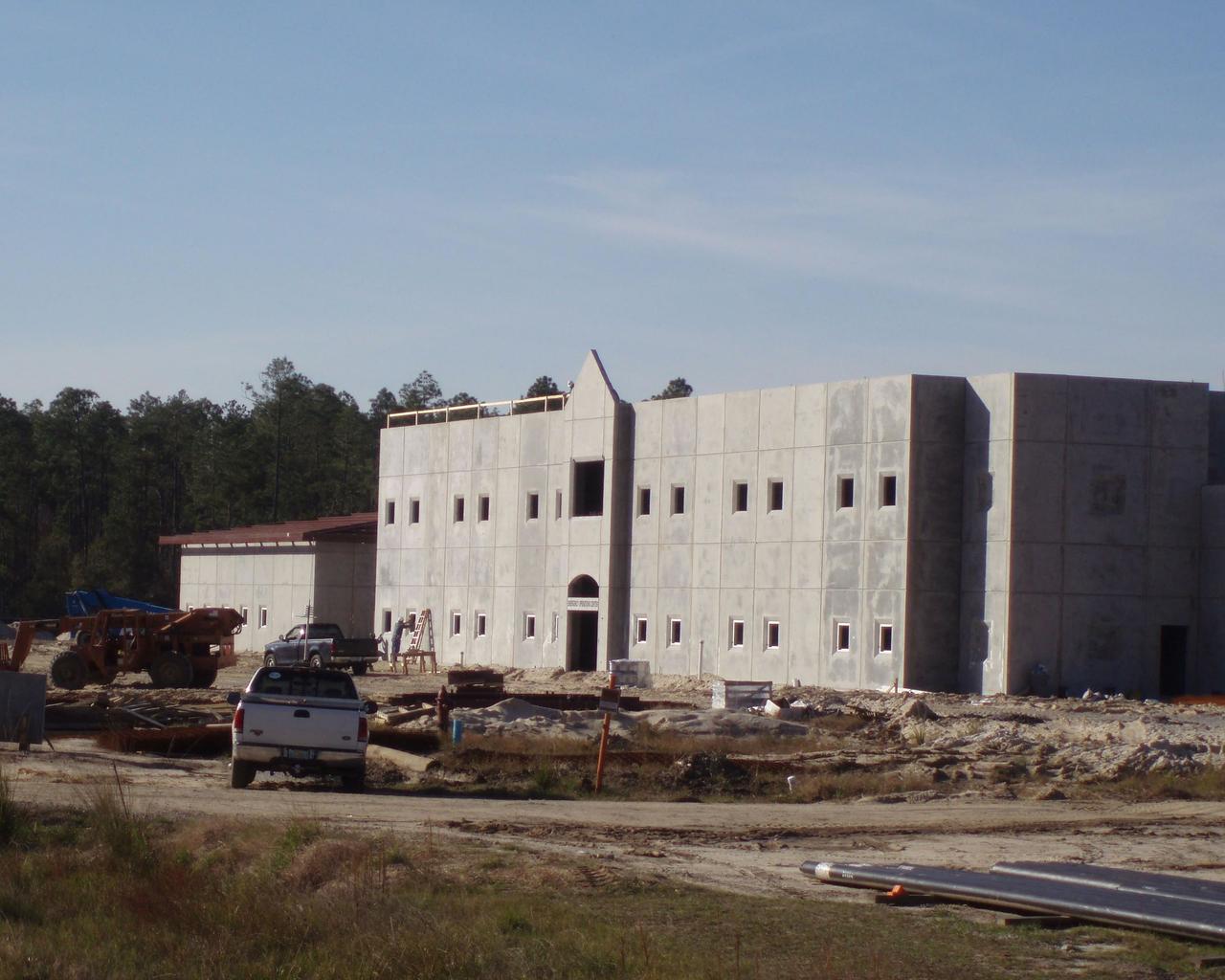
Work on Stennis Space Center's new Emergency Operations Center is progressing on schedule, according to Robert Perkins, construction manager with Jacobs Technology. At the turn of the New Year, construction contractors had completed the pervious paving for the north and west parking lots. Part of the facility's `green' design, pervious paving allows water to pass through and be absorbed directly into the ground below, preventing erosion from runoff. Through January, workers concentrated on installing the roof, sprinkler piping and overhead cable trays for electrical and communication lines. The next step will be interior work, erecting wallboard and installing electrical equipment. Perkins said NASA seeks to earn a Silver LEED (Leadership in Energy and Environmental Design) Rating for the project's environmentally-friendly and sustainable design, construction and operation. The facility has a projected completion date of February 2009.