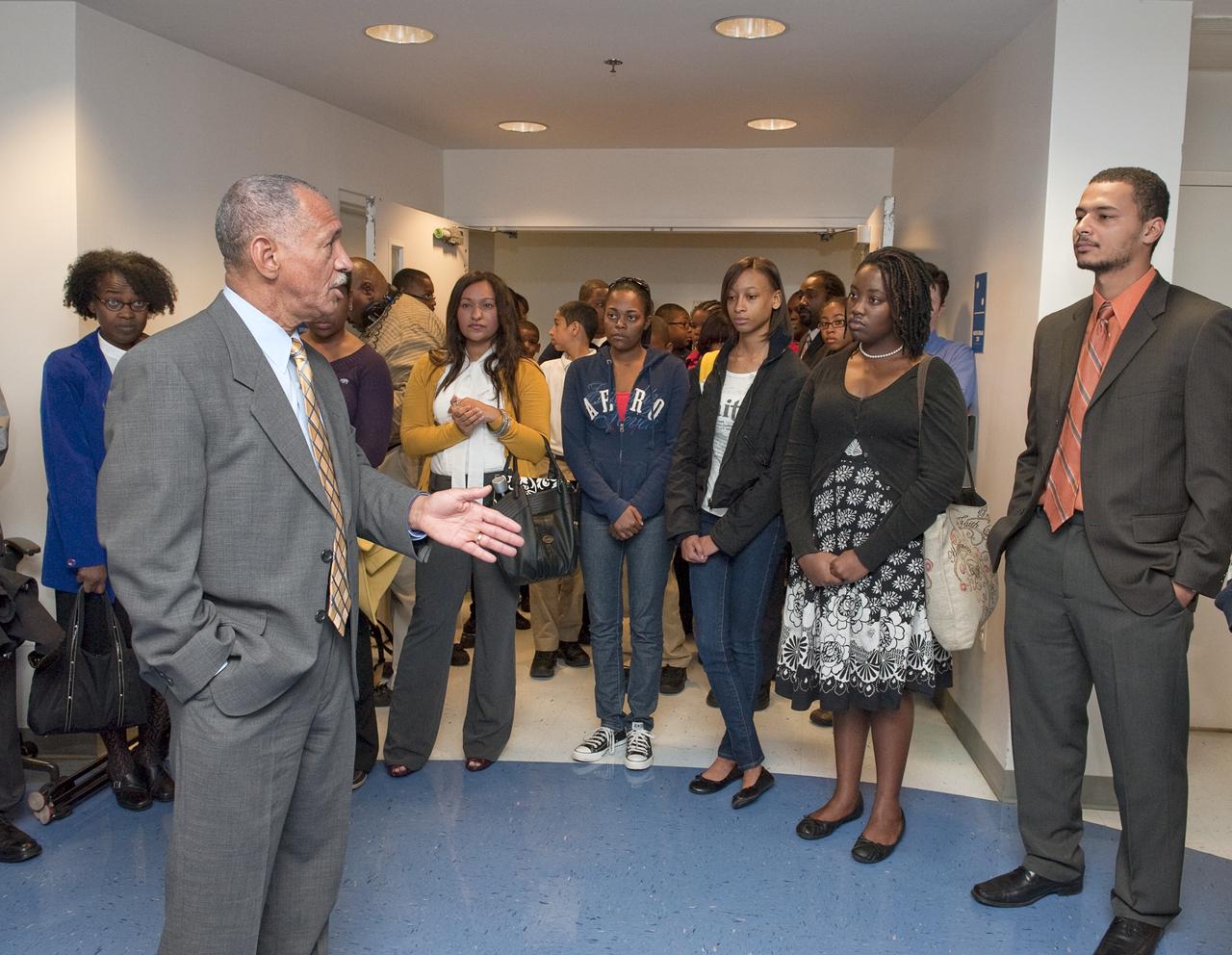
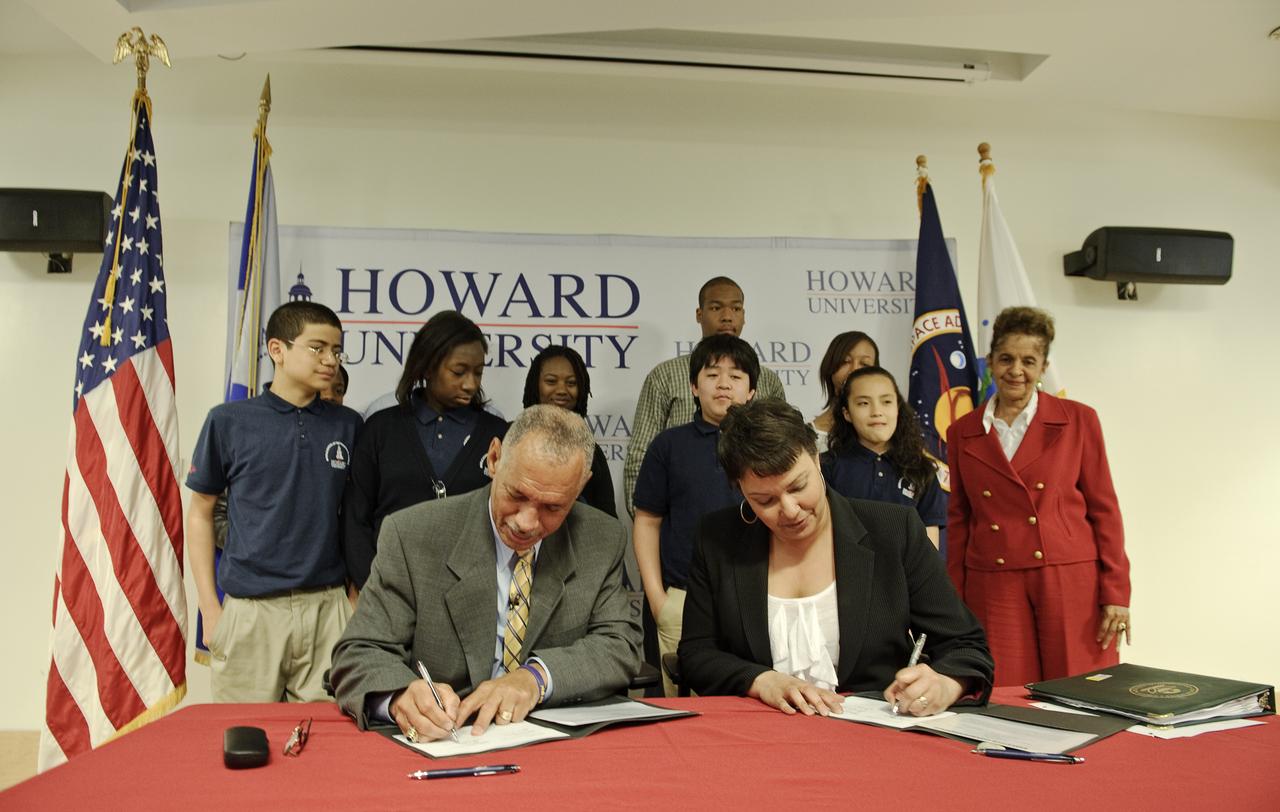
NASA Administrator Charles Bolden, foreground, speaks with Howard University students after he and and U.S. Environmental Protection Agency (EPA) Administrator Lisa P.  Jackson, right, signed a Memorandum of Agreement (MOA) to promote collaboration between the two agencies for cooperation in environmental and Earth sciences and environmental management applications at the Howard University Middle School of Mathematics and Science, Monday, April 26, 2010, in Washington. Photo Credit: (NASA/Paul E. Alers)
NASA EPA MOA Signing
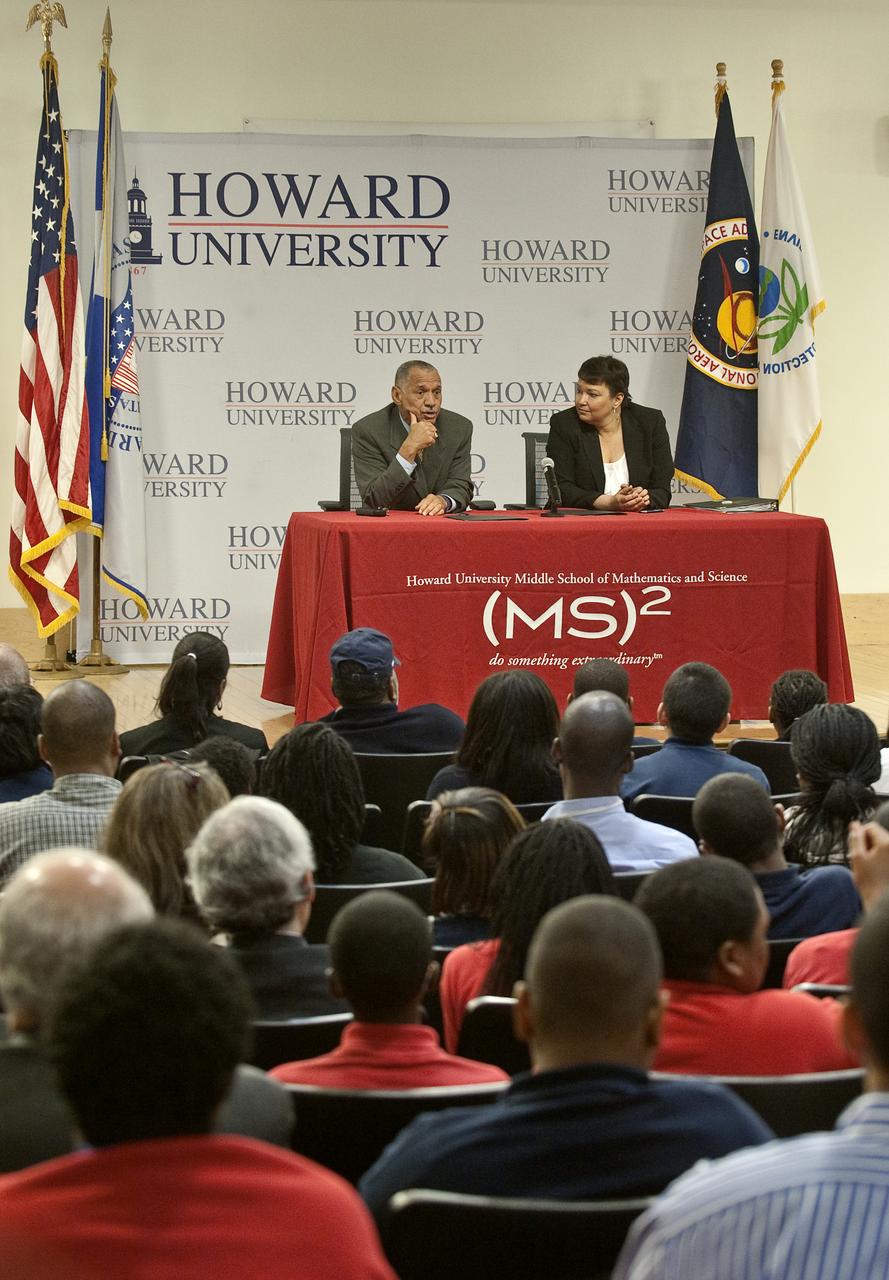
NASA Administrator Charles Bolden, left, and U.S. Environmental Protection Agency (EPA) Administrator Lisa P.  Jackson, right, sign a Memorandum of Agreement (MOA) to promote collaboration between the two agencies for cooperation in environmental and Earth sciences and environmental management applications as students from the Howard University Middle School of Mathematics and Science look on, Monday, April 26, 2010, at the school in Washington. Photo Credit: (NASA/Paul E. Alers)
NASA EPA MOA Signing
NASA Administrator Charles Bolden, left, and U.S. Environmental Protection Agency (EPA) Administrator Lisa P.  Jackson, right, answer questions from students and faculty from the Howard University Middle School of Mathematics and Science after signing a Memorandum of Agreement (MOA) to promote collaboration between the two agencies for cooperation in environmental and Earth sciences and environmental management applications, Monday, April 26, 2010, at the school in Washington. Photo Credit: (NASA/Paul E. Alers)
NASA EPA MOA Signing
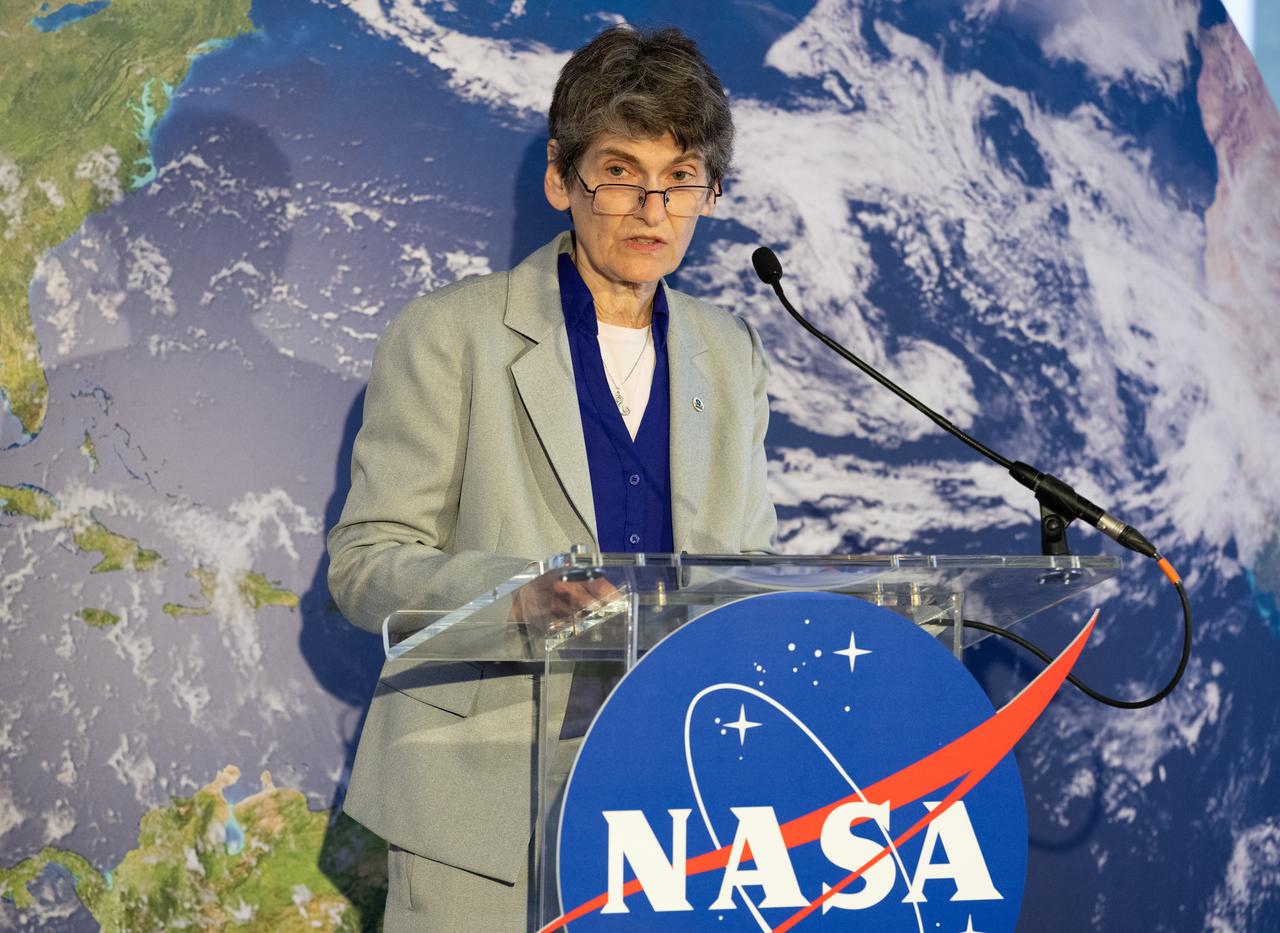
Janet McCabe, Deputy Administrator of the Environmental Protection Agency (EPA), speaks before the ribbon cutting ceremony to open NASA’s Earth Information Center, Wednesday, June 21, 2023, at the Mary W. Jackson NASA Headquarters building in Washington. The Earth Information Center is new immersive experience that combines live data sets with cutting-edge data visualization and storytelling to allow visitors to see how our planet is changing.  Photo Credit: (NASA/Joel Kowsky)
NASA’s Earth Information Center Ribbon Cutting
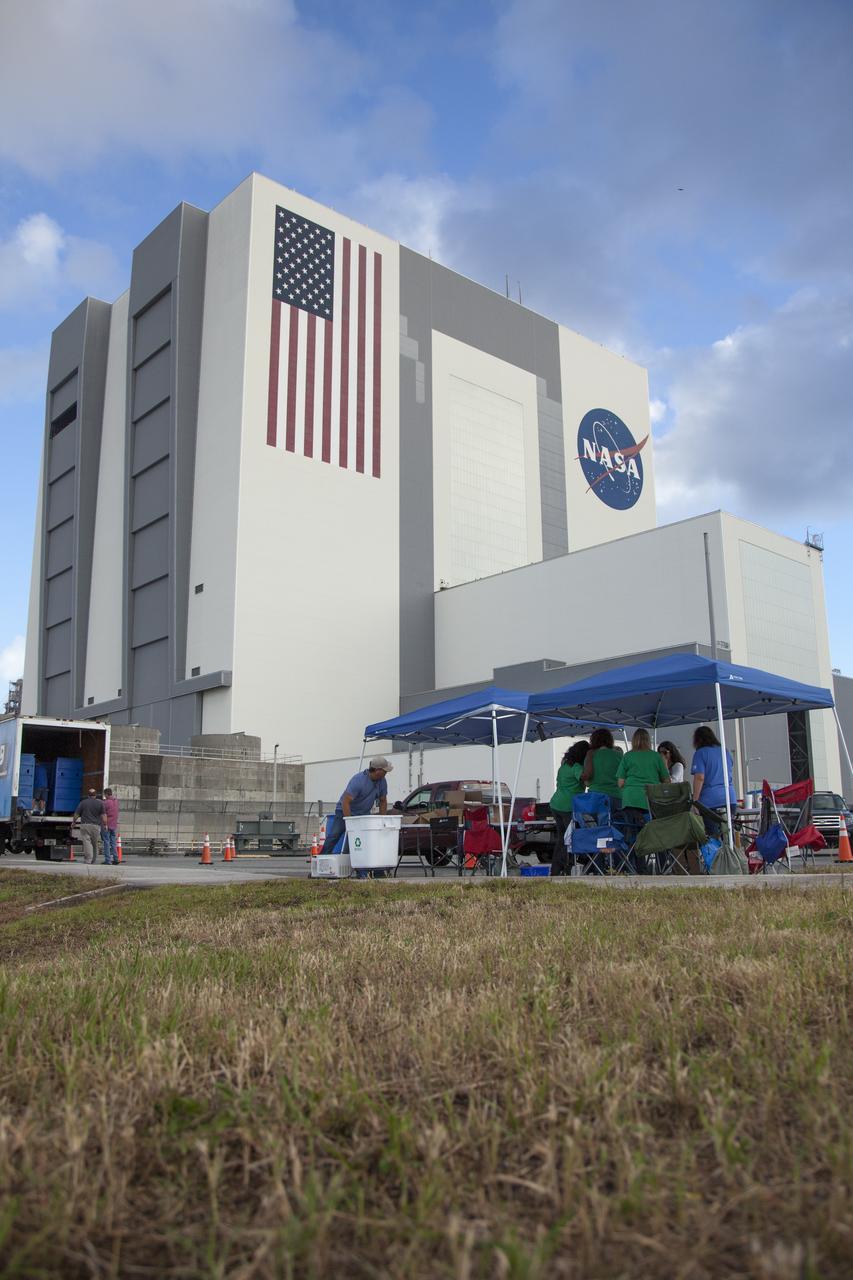
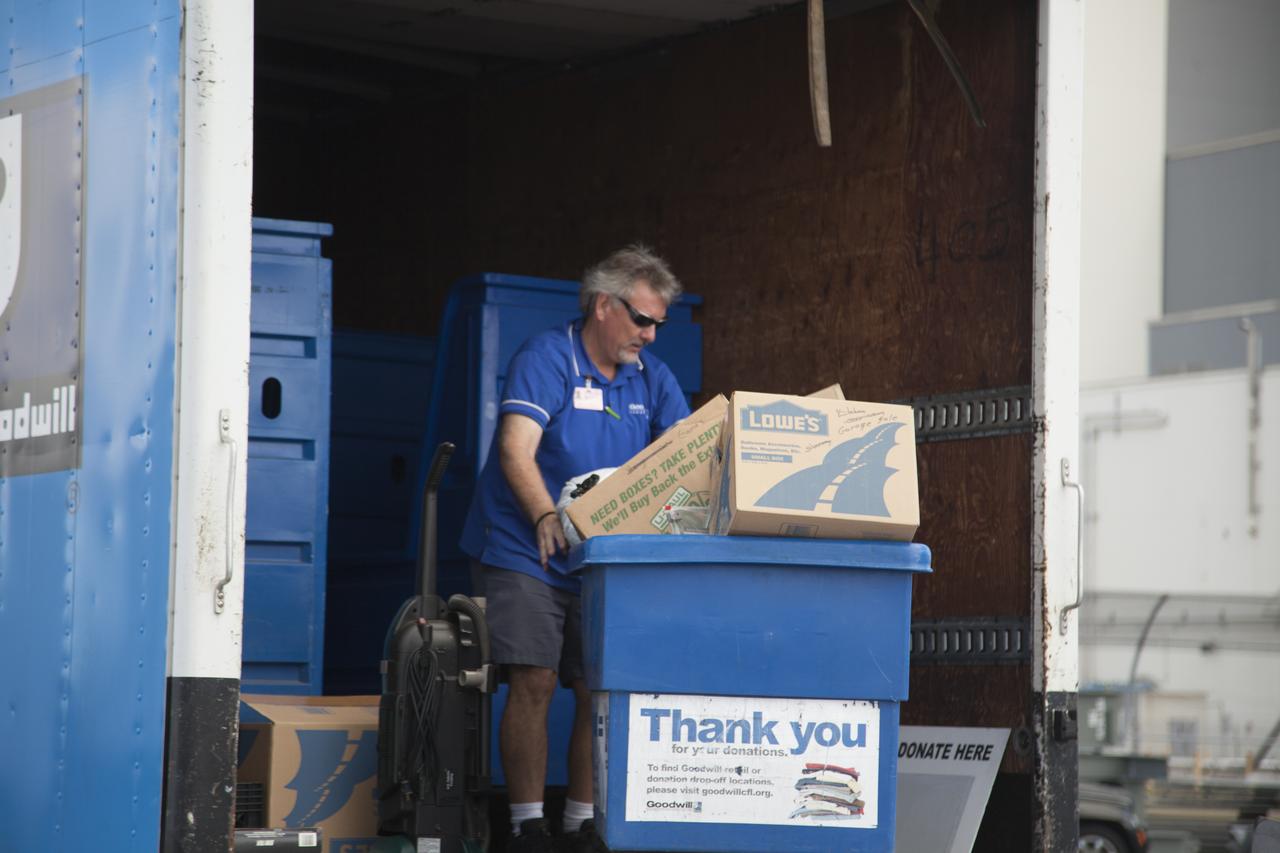
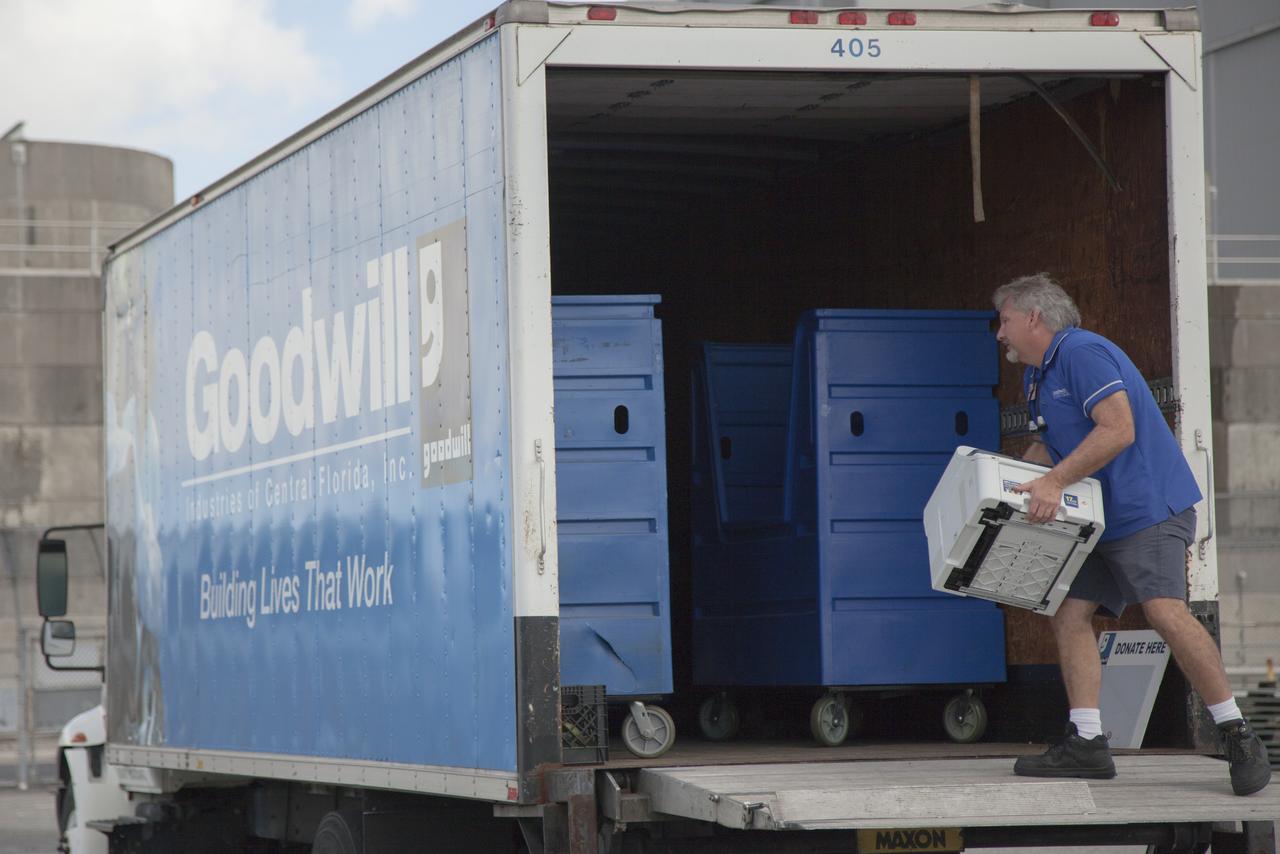
In the parking lot of the Vehicle Assembly Building at NASA's Kennedy Space Center in Florida, a member of Goodwill Industries loads used household material for recycling. During the two-day event, employees dropped off items as part of America Recycles Day. The center partnered with Goodwill Industries and several other local organizations to collect items for reprocessing. The annual event is a program of Keep America Beautiful, dedicated to promoting and celebrating recycling.
America Recycles Day
In the parking lot of the Vehicle Assembly Building at NASA's Kennedy Space Center in Florida, a member of Goodwill Industries loads used household material for recycling. During the two-day event, employees dropped off items as part of America Recycles Day. The center partnered with Goodwill Industries and several other local organizations to collect items for reprocessing. The annual event is a program of Keep America Beautiful, dedicated to promoting and celebrating recycling.
America Recycles Day
In the parking lot of the Vehicle Assembly Building at NASA's Kennedy Space Center in Florida, employees drop off used household items, such as this television, as part of America Recycles Day. The center recently partnered with Goodwill Industries and several other local organizations to collect items for reprocessing. The annual event is a program of Keep America Beautiful, dedicated to promoting and celebrating recycling.
America Recycles Day
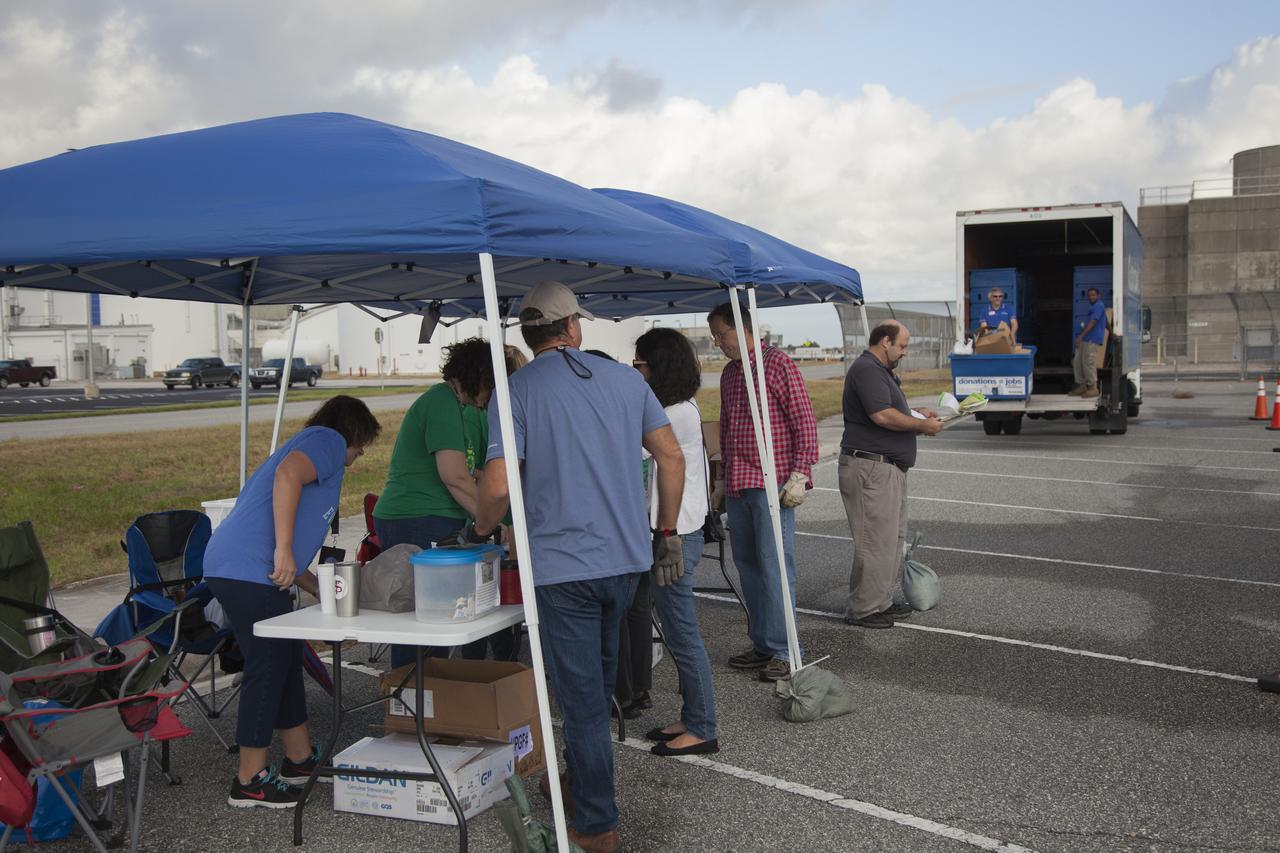
In the parking lot of the Vehicle Assembly Building at NASA's Kennedy Space Center in Florida, employees drop off used household items as part of America Recycles Day. The center recently partnered with Goodwill Industries and several other local organizations to collect items for reprocessing. The annual event is a program of Keep America Beautiful, dedicated to promoting and celebrating recycling.
America Recycles Day
In the parking lot of the Vehicle Assembly Building at NASA's Kennedy Space Center in Florida, employees drop off used household items as part of America Recycles Day. The center recently partnered with Goodwill Industries and several other local organizations to collect items for reprocessing. The annual event is a program of Keep America Beautiful, dedicated to promoting and celebrating recycling.
America Recycles Day
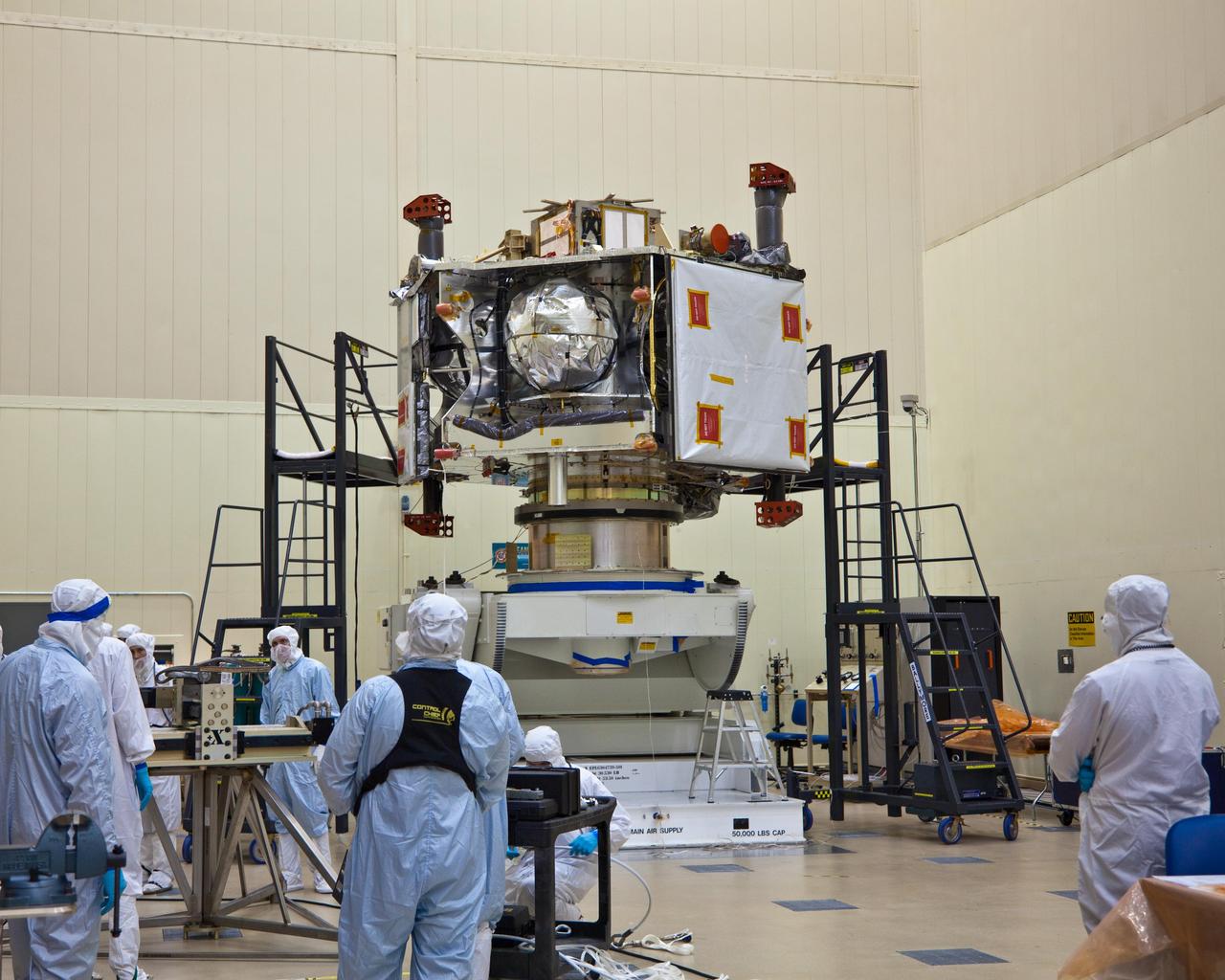
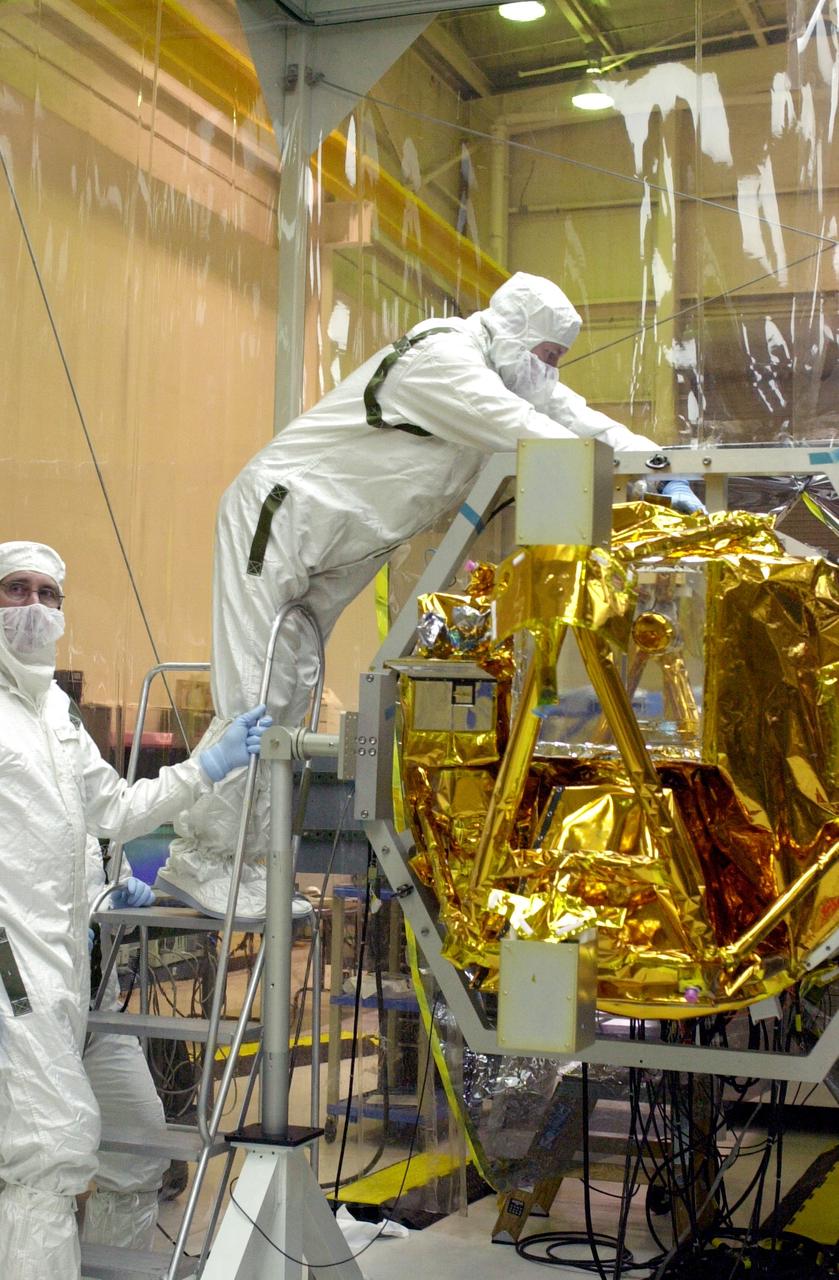
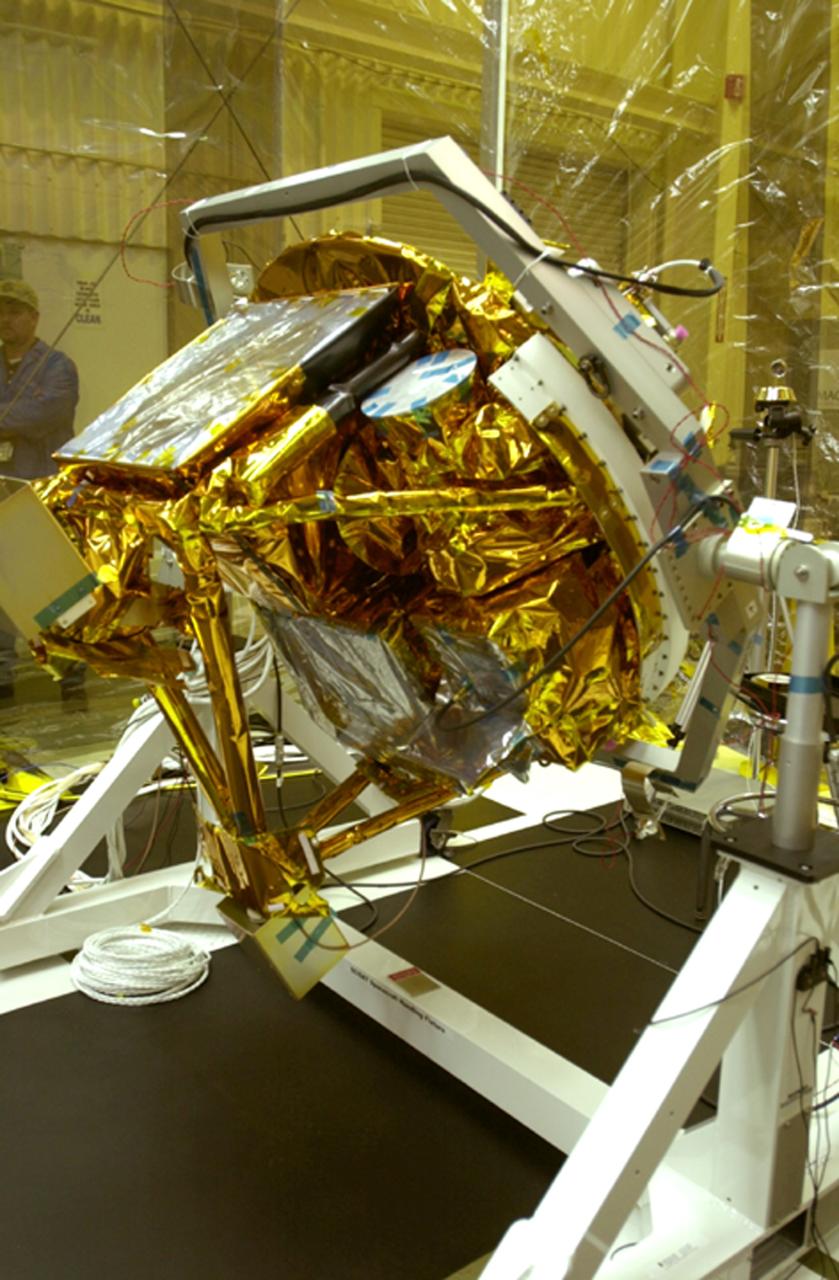
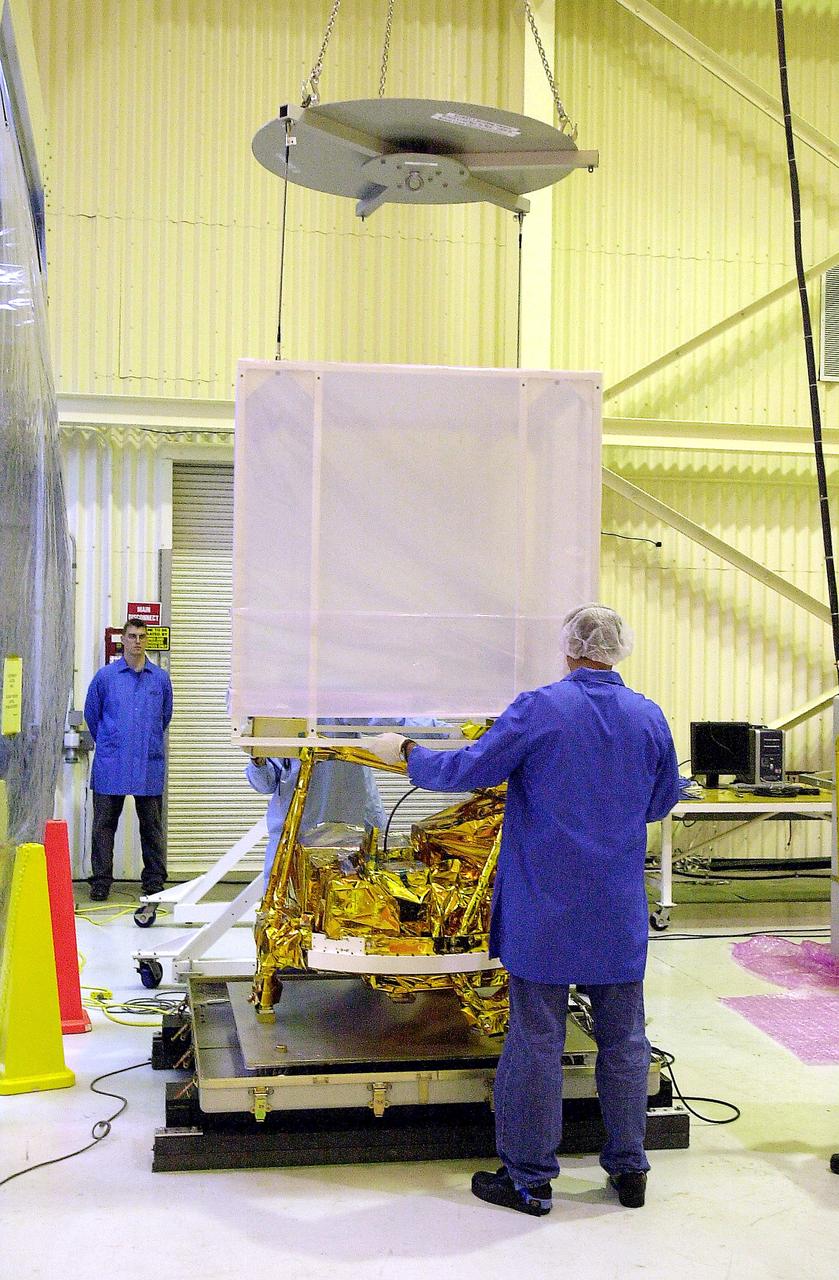
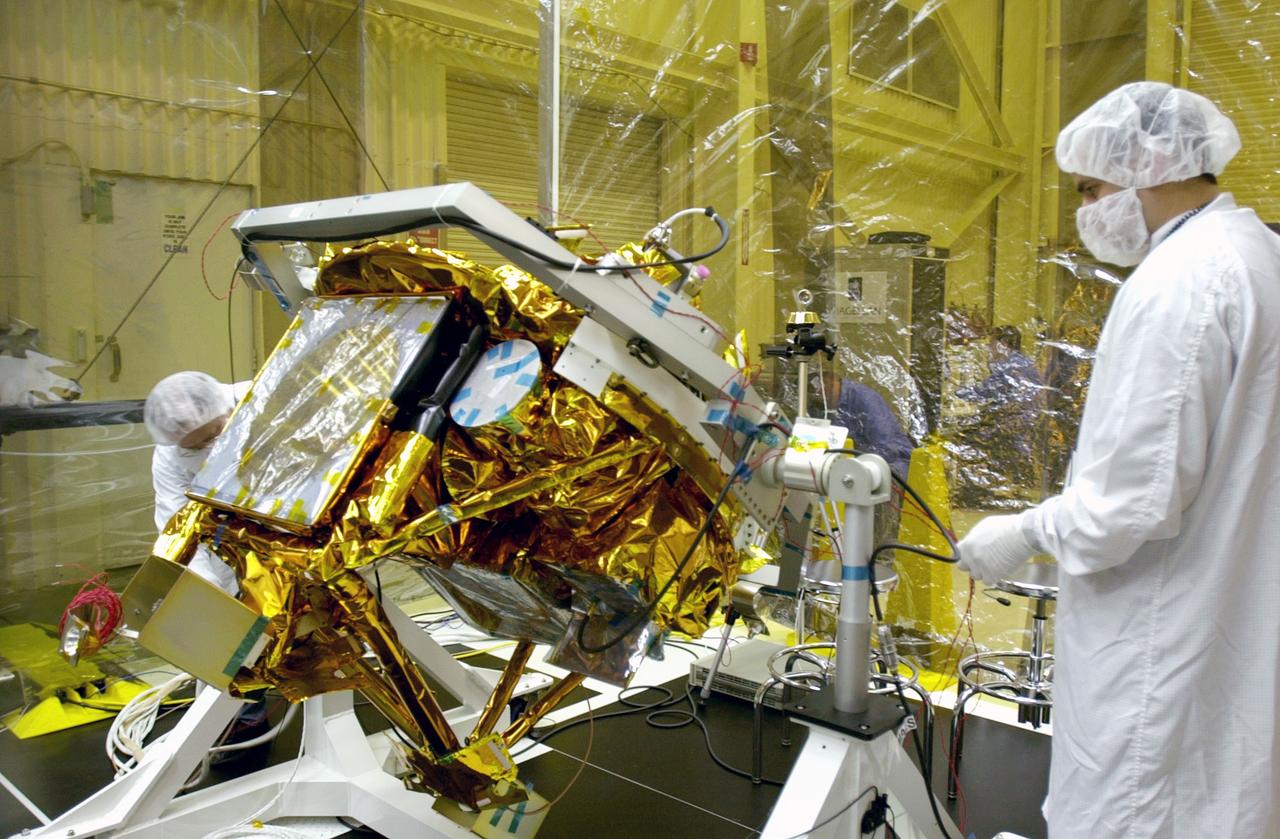
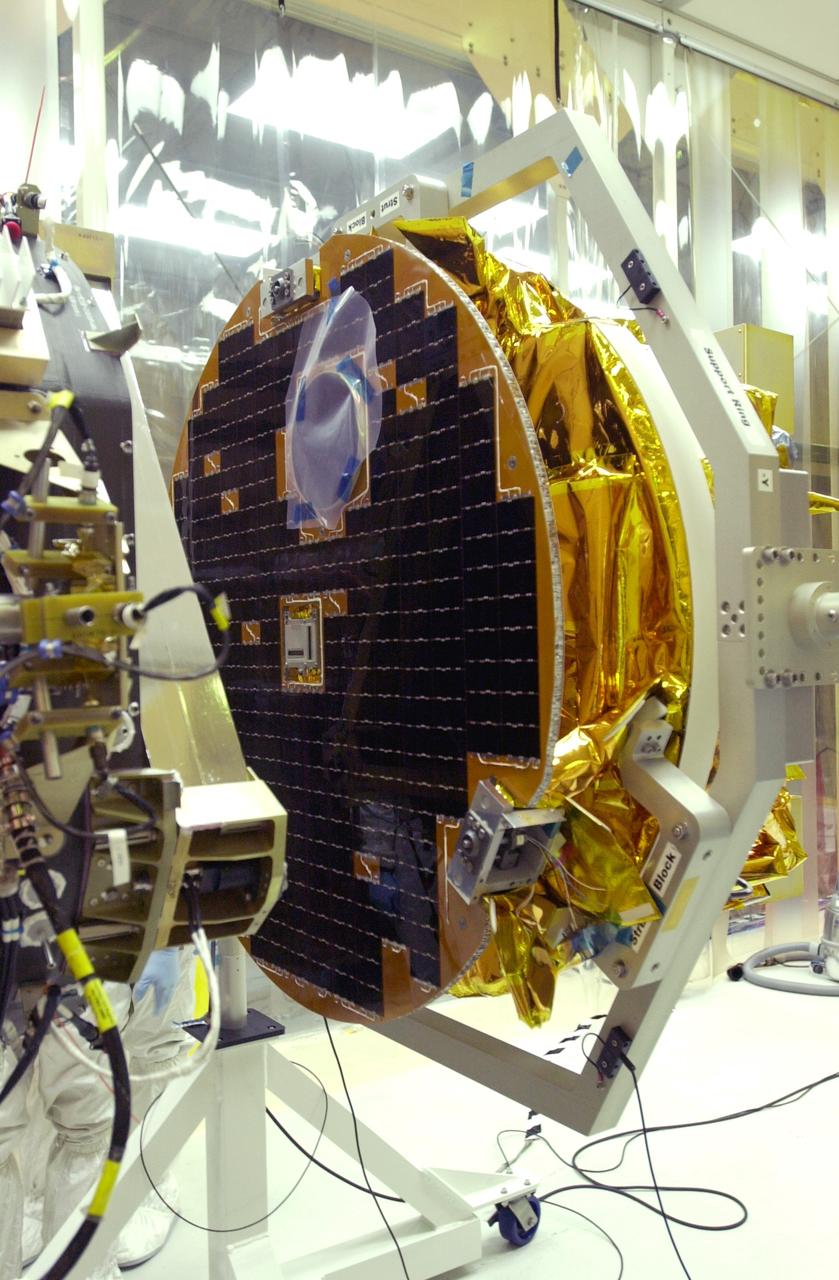
NASA Juno spacecraft rests atop its rotation fixture awaiting transfer to a shipping crate prior to environmental testing; the large white square on the spacecraft right is largest of six microwave radiometer antennas, masked by protective covering.
Preparing Juno for Environmental Testing
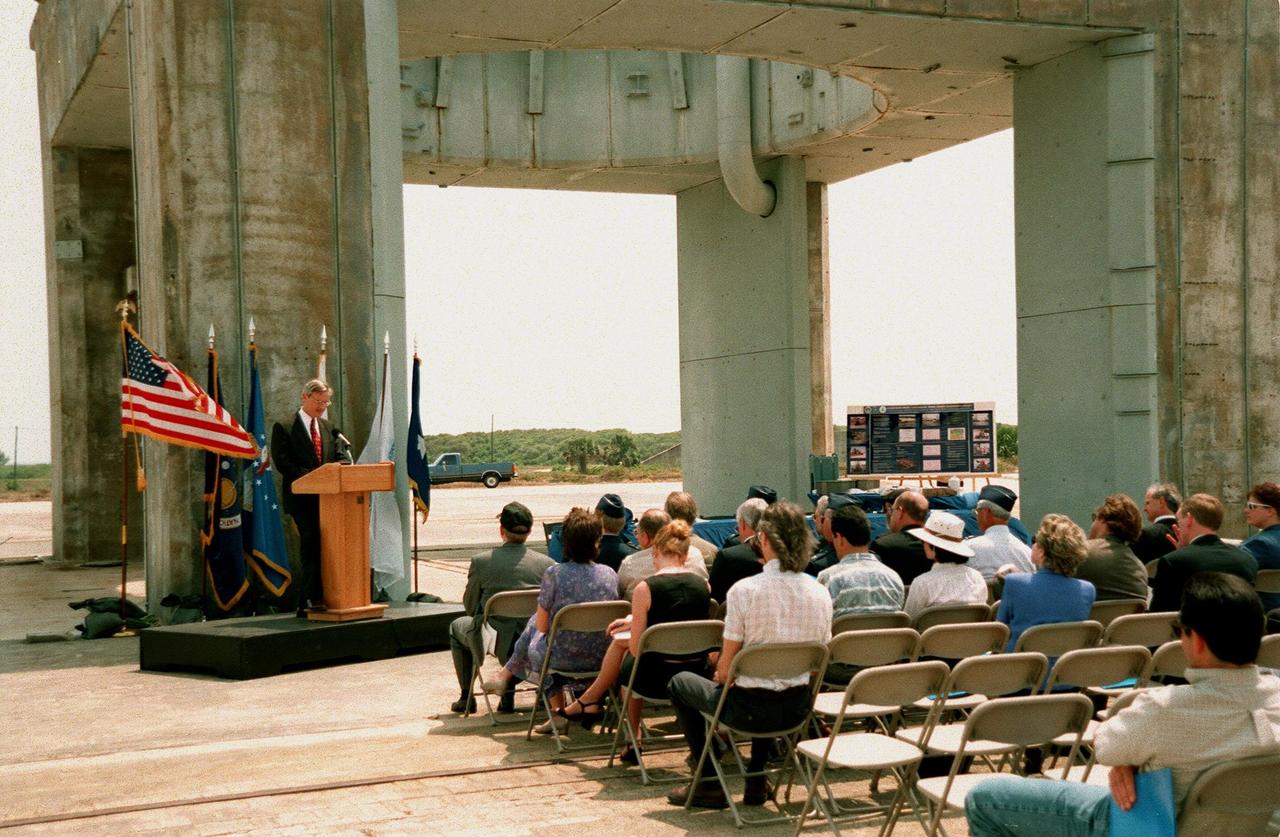
Walter W. Kovalick Jr., Ph.D., director of Technology Innovation Office for the U.S. Environmental Protection Agency, addresses representatives from Kennedy Space Center, the 45th Space Wing, and various federal environmental agencies gathered to attend a Memorandum of Agreement (MOA) signing, taking place at the site of Launch Complex 34. The MOA formalizes the cooperative efforts of the federal agencies in ground-water cleanup initiatives. NASA, the U.S. Air Force and the agencies have formed a consortium and are participating in a comparative study of three innovative techniques to be used in cleaning a contaminated area of Launch Complex 34. The study will be used to help improve groundwater cleanup processes nationally. Other attendees included Timothy Oppelt, director, National Risk Management Research Laboratory, U.S. Environmental Protection Agency; Tom Heenan, assistant manager of environmental management, Savannah River Site, U.S. Department of Energy; Col. James Heald, Vice Commander, Air Force Research Laboratory, U.S. Air Force; Gerald Boyd, acting deputy assistant secretary, Office of Science and Technology, U.S. Department of Energy; James Fiore, acting deputy assistant secretary, Office of Environmental Restoration, Department of Energy; Brig. Gen. Randall R. Starbuck, Commander 45th Space Wing, U.S. Air Force; and Roy Bridges Jr., director of John F. Kennedy Space Center
KSC-99pp0389
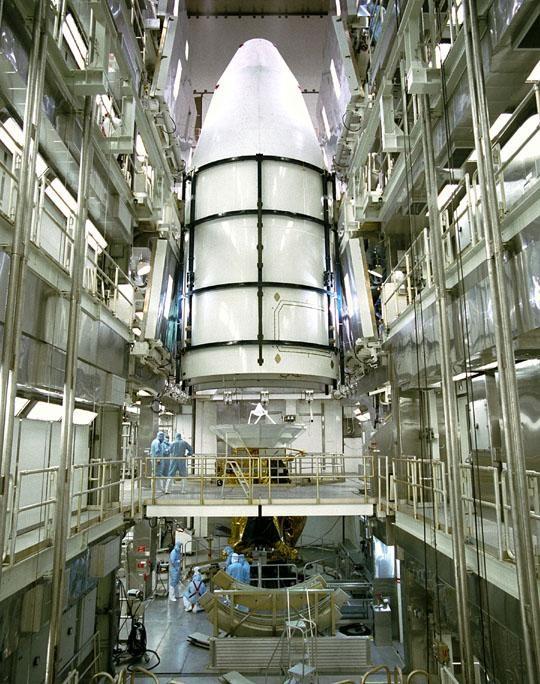
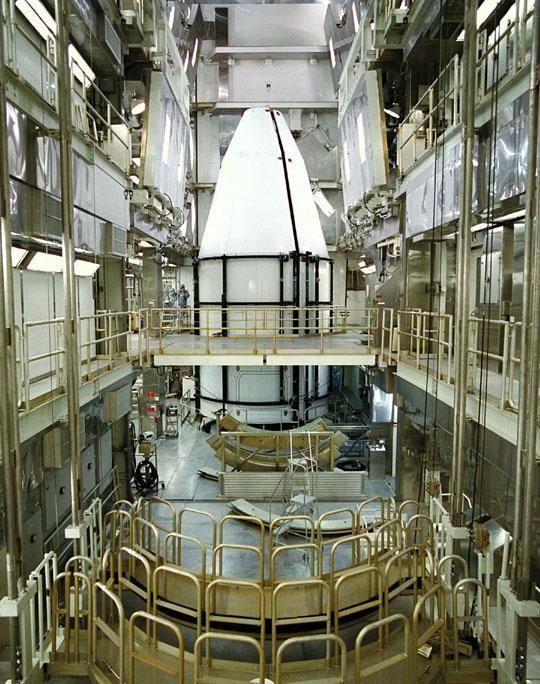
The Cassini spacecraft, protected by an environmentally controlled protective fairing, is sitting at Pad 40 at Cape Canaveral Air Station, awaiting its launch scheduled for mid-October atop a Titan IV/Centaur launch vehicle. A four-year, close-up study of the Saturnian system, the Cassini mission will take seven years for the spacecraft to reach Saturn. Scientific instruments carried aboard the spacecraft will study Saturn’s atmosphere, magnetic field, rings, and several moons. NASA’s Jet Propulsion Laboratory is managing the Cassini project
KSC-11416f04
The Cassini spacecraft, protected by an environmentally controlled protective fairing, is sitting at Pad 40 at Cape Canaveral Air Station, awaiting its launch scheduled for mid-October atop a Titan IV/Centaur launch vehicle. A fouryear, close-up study of the Saturnian system, the Cassini mission will take seven years for the spacecraft to reach Saturn. Scientific instruments carried aboard the spacecraft will study Saturn’s atmosphere, magnetic field, rings, and several moons. NASA’s Jet Propulsion Laboratory is managing the Cassini project
KSC-11415f10
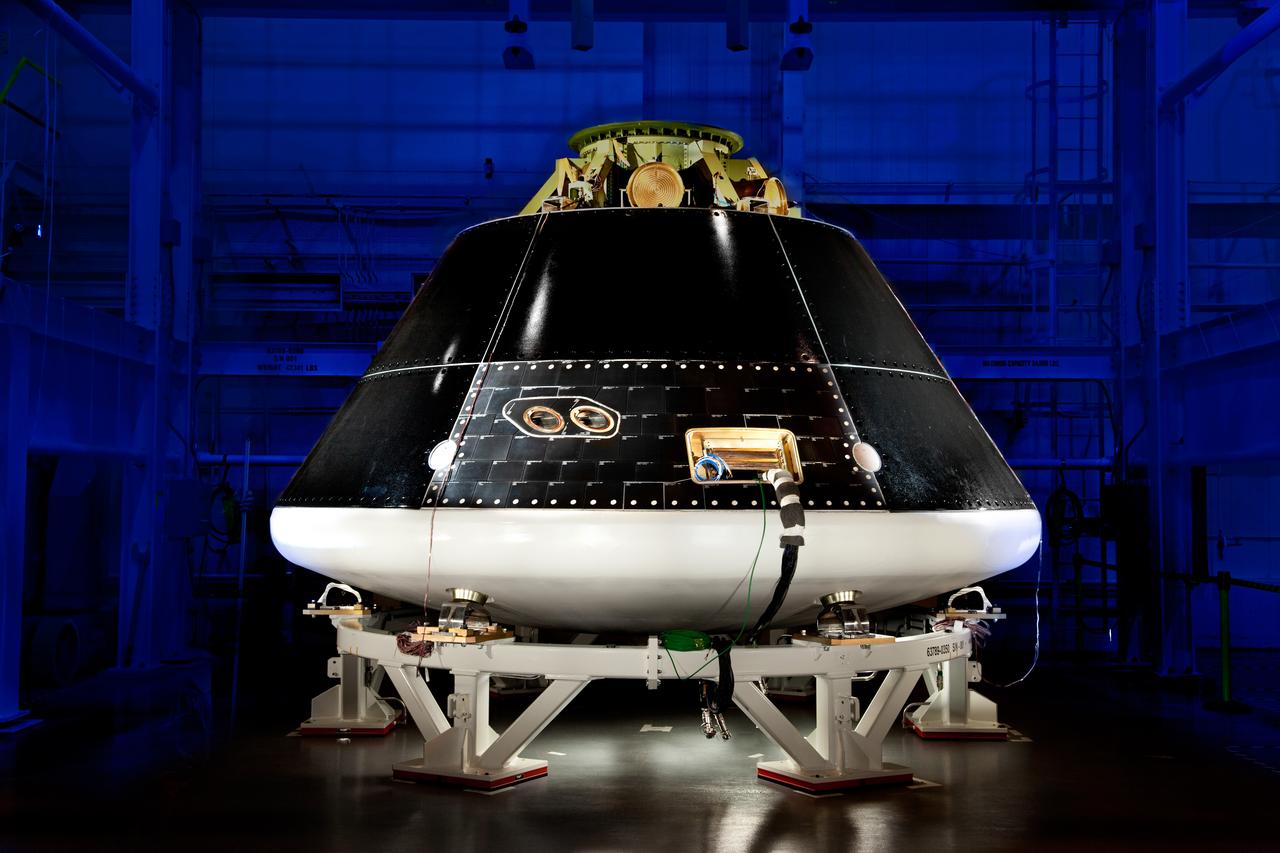
The Orion crew module ground test article sits in the Lockheed Martin Vertical Test Facility in Colorado on June 6, 2011. Work on the heat shield and thermal protection backshell of the test article was completed in preparation for environmental testing. Part of Batch image transfer from Flickr.
First Orion MPCV Spacecraft
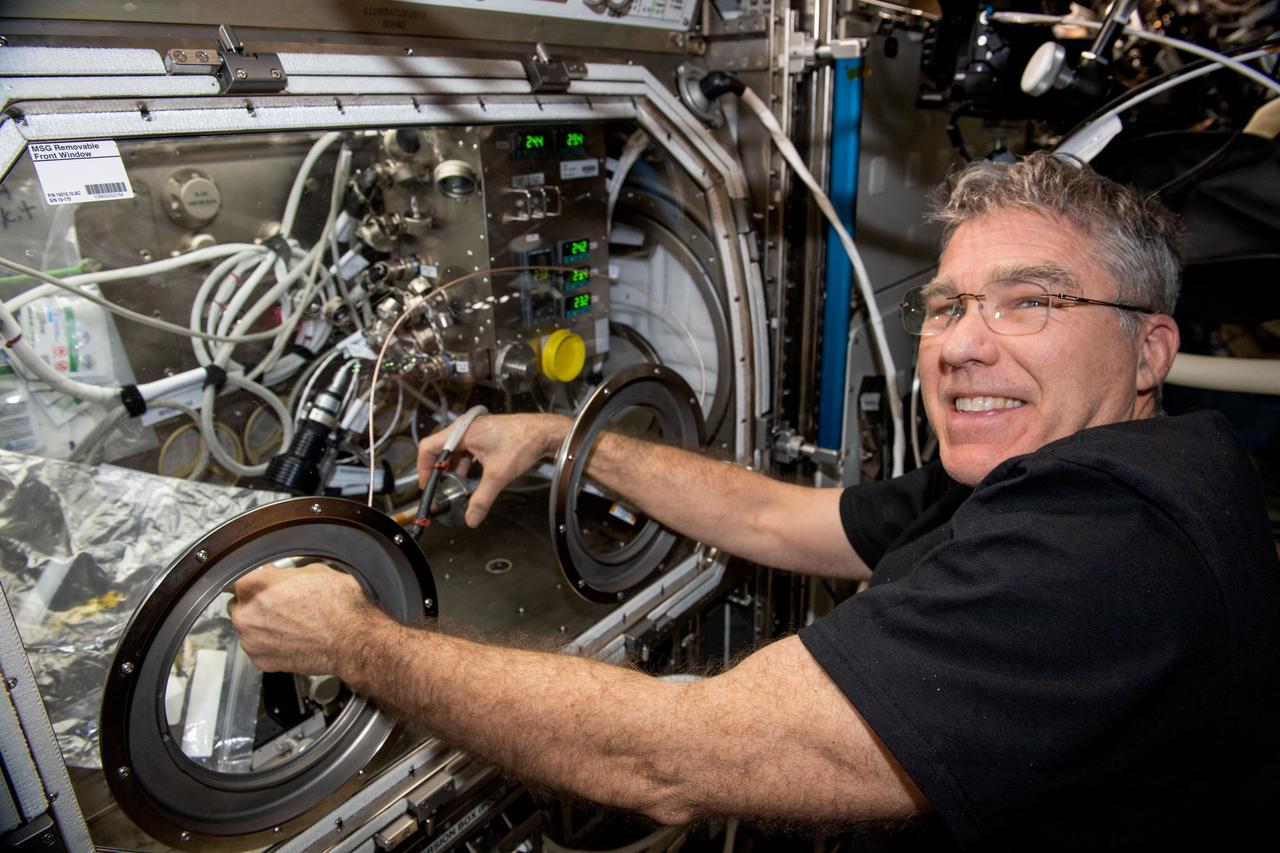
iss069e061597 (Aug. 17, 2023) --- NASA astronaut and Expedition 69 Flight Engineer Stephen Bowen works in the Microgravity Science Glovebox swapping graphene aerogel samples for a space manufacturing study. The physics investigation seeks to produce a superior, uniform material structure benefitting power storage, environmental protection, and chemical sensing.
iss069e061597
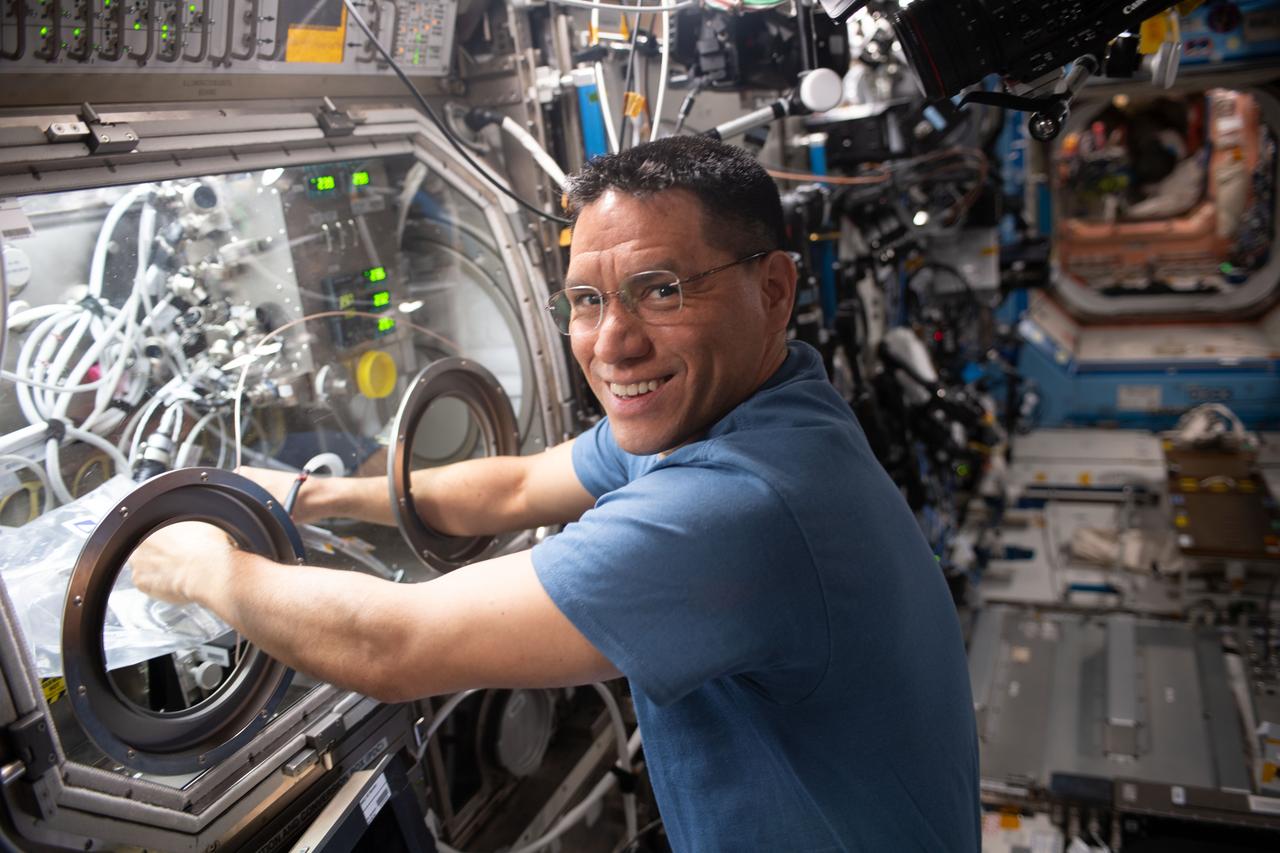
iss069e070724 (Aug. 21, 2023) --- NASA astronaut and Expedition 69 Flight Engineer Frank Rubio works in the Microgravity Science Glovebox swapping graphene aerogel samples for a space manufacturing study. The physics investigation seeks to produce a superior, uniform material structure benefitting power storage, environmental protection, and chemical sensing.
iss069e070724
Dr. Luz M. Calle, a principal investigator for corrosion research at NASA’s Kennedy Space Center, examines microcapsules under a microscope Dec. 12, 2018. Microencapsulation is a way to create smart coatings or paint capable of indicating, resisting, and repairing corrosion. Smart coatings are being developed as alternatives to corrosion protection technologies that are not environmentally friendly.
Corrosion Research Laboratory
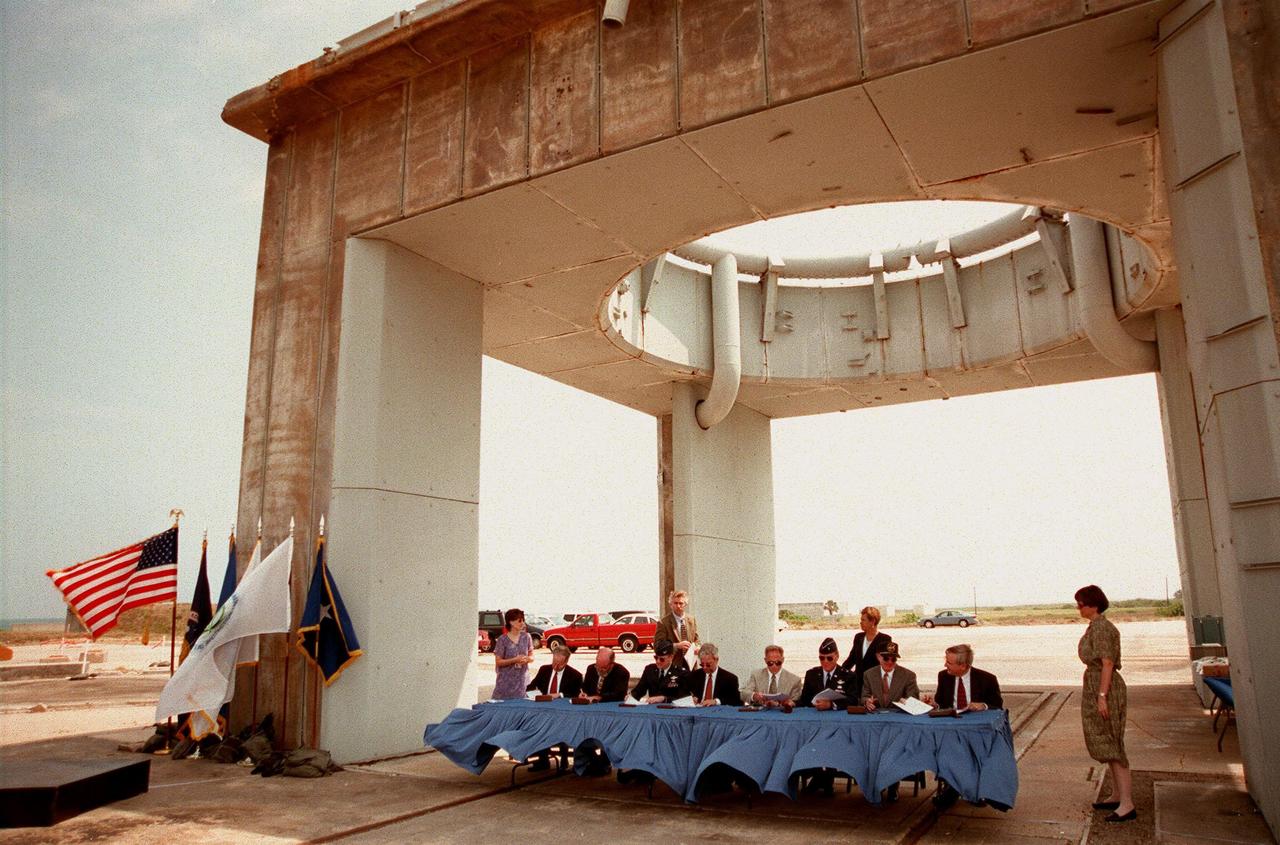
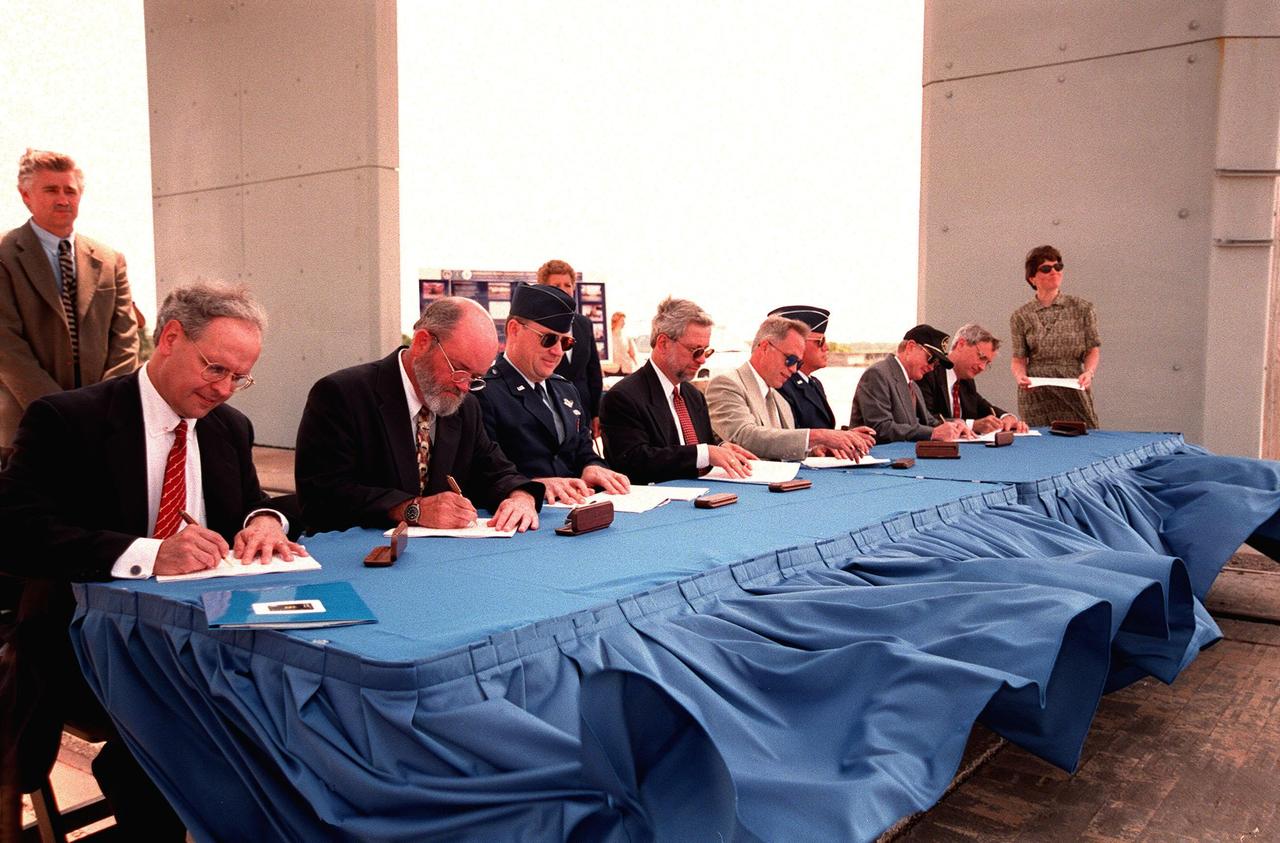
On the site of Launch Complex 34, key participants sign a Memorandum of Agreement, formalizing cooperative efforts of NASA, the U.S. Air Force, and federal agencies in ground-water cleanup initiatives. Seated at the table, from left to right, are Timothy Oppelt, director, National Risk Management Research Laboratory, U.S. Environmental Protection Agency; Tom Heenan, assistant manager of environmental management, Savannah River Site, U.S. Department of Energy; Col. James Heald, Vice Commander, Air Force Research Laboratory, U.S. Air Force; Gerald Boyd, acting deputy assistant secretary, Office of Science and Technology, U.S. Department of Energy; James Fiore, acting deputy assistant secretary, Office of Environmental Restoration, Department of Energy; Brig. Gen. Randall R. Starbuck, Commander 45th Space Wing, U.S. Air Force; Roy Bridges Jr., director of John F. Kennedy Space Center; Walter Kovalick Jr., Ph.D., director, Technology Innovation Office, U.S. Environmental Protection Agency. NASA, the U.S. Air Force and the agencies have formed a consortium and are participating in a comparative study of three innovative techniques to be used in cleaning a contaminated area of Launch Complex 34. The study will be used to help improve groundwater cleanup processes nationally
KSC-99pp0391
On the site of Launch Complex 34, key participants sign a Memorandum of Agreement, formalizing cooperative efforts of NASA, the U.S. Air Force, and federal agencies in ground-water cleanup initiatives. Seated from left to right are Timothy Oppelt, director, National Risk Management Research Laboratory, U.S. Environmental Protection Agency; Tom Heenan, assistant manager of environmental management, Savannah River Site, U.S. Department of Energy; Col. James Heald, Vice Commander, Air Force Research Laboratory, U.S. Air Force; Gerald Boyd, acting deputy assistant secretary, Office of Science and Technology, U.S. Department of Energy; James Fiore, acting deputy assistant secretary, Office of Environmental Restoration, Department of Energy; Brig. Gen. Randall R. Starbuck, Commander 45th Space Wing, U.S. Air Force; Roy Bridges Jr., director of John F. Kennedy Space Center; Walter Kovalick Jr., Ph.D., director, Technology Innovation Office, U.S. Environmental Protection Agency. NASA, the U.S. Air Force and the agencies have formed a consortium and are participating in a comparative study of three innovative techniques to be used in cleaning a contaminated area of Launch Complex 34. The study will be used to help improve groundwater cleanup processes nationally
KSC-99pp0390
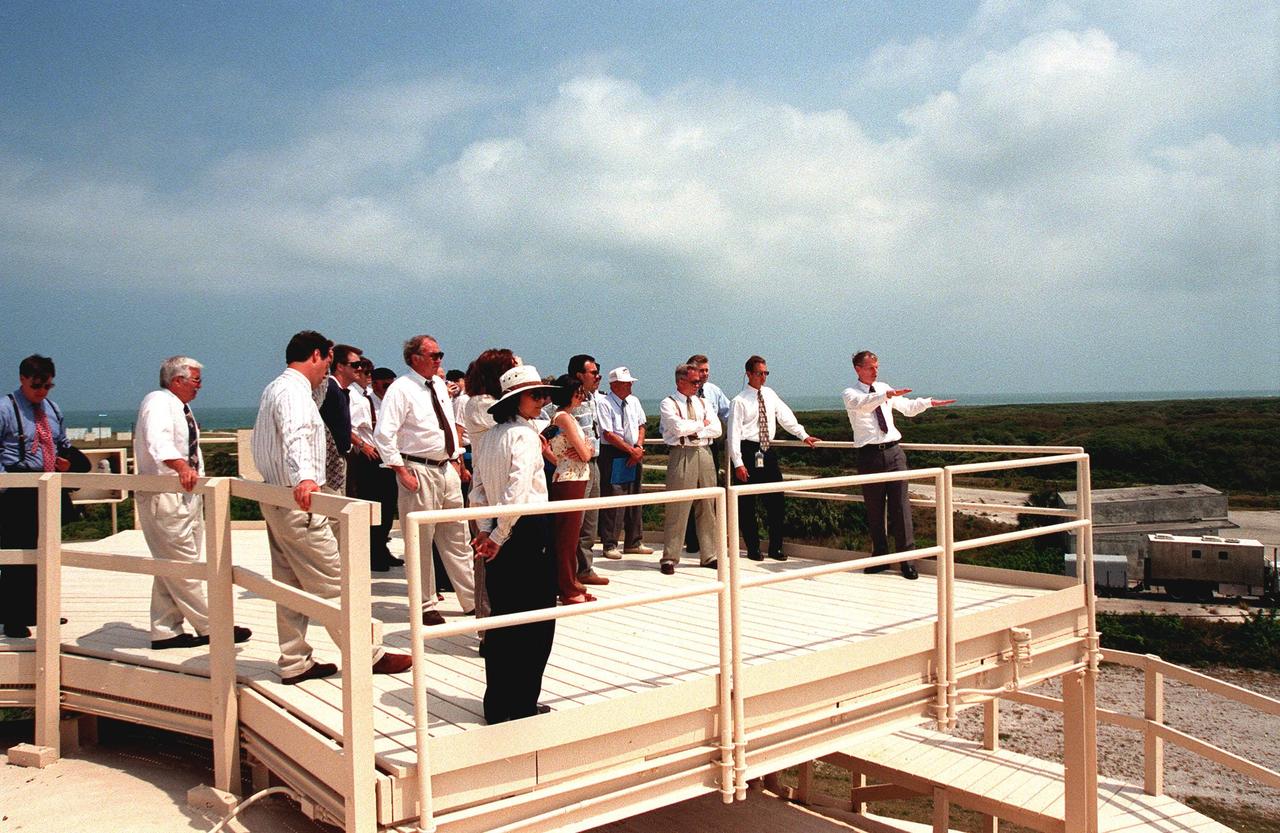
Key participants in the signing of a Memorandum of Agreement, formalizing cooperative efforts of NASA, the U.S. Air Force, and federal agencies in ground-water cleanup initiatives, gather on top of the block house at Launch Complex 34. Motioning at right is Skip Chamberlain, program manager, Office of Science and Technology, U.S. Department of Energy. Others on the tour include Timothy Oppelt, director, National Risk Management Research Laboratory, U.S. Environmental Protection Agency; Tom Heenan, assistant manager of environmental management, Savannah River Site, U.S. Department of Energy; Col. James Heald, Vice Commander, Air Force Research Laboratory, U.S. Air Force; Gerald Boyd, acting deputy assistant secretary, Office of Science and Technology, U.S. Department of Energy; James Fiore, acting deputy assistant secretary, Office of Environmental Restoration, Department of Energy; Brig. Gen. Randall R. Starbuck, Commander 45th Space Wing, U.S. Air Force; Roy Bridges Jr., director of John F. Kennedy Space Center; Walter Kovalick Jr., Ph.D., director, Technology Innovation Office, U.S. Environmental Protection Agency. NASA, the U.S. Air Force and the agencies have formed a consortium and are participating in a comparative study of three innovative techniques to be used in cleaning a contaminated area of Launch Complex 34. The study will be used to help improve groundwater cleanup processes nationally
KSC-99pp0392
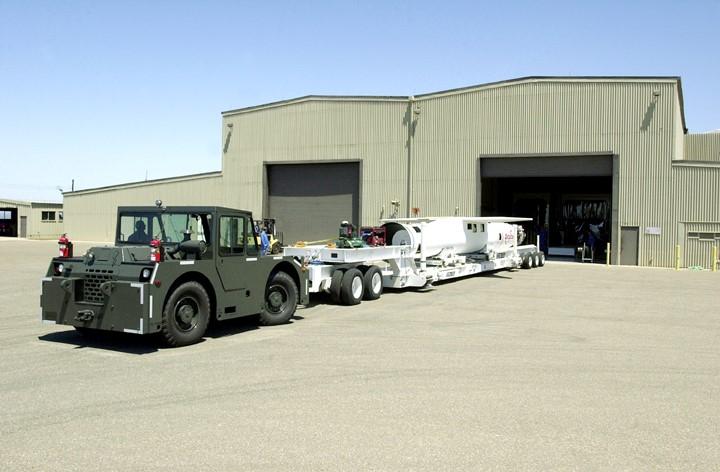
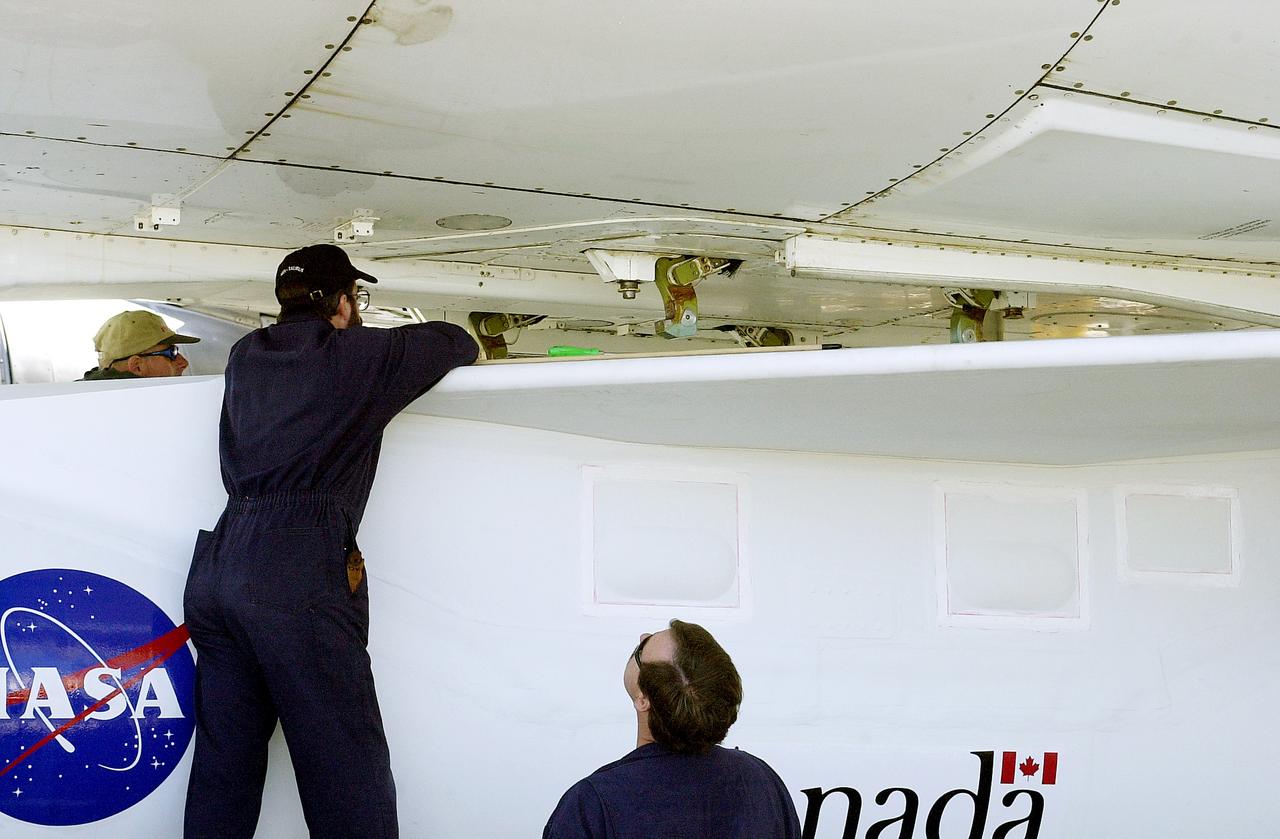
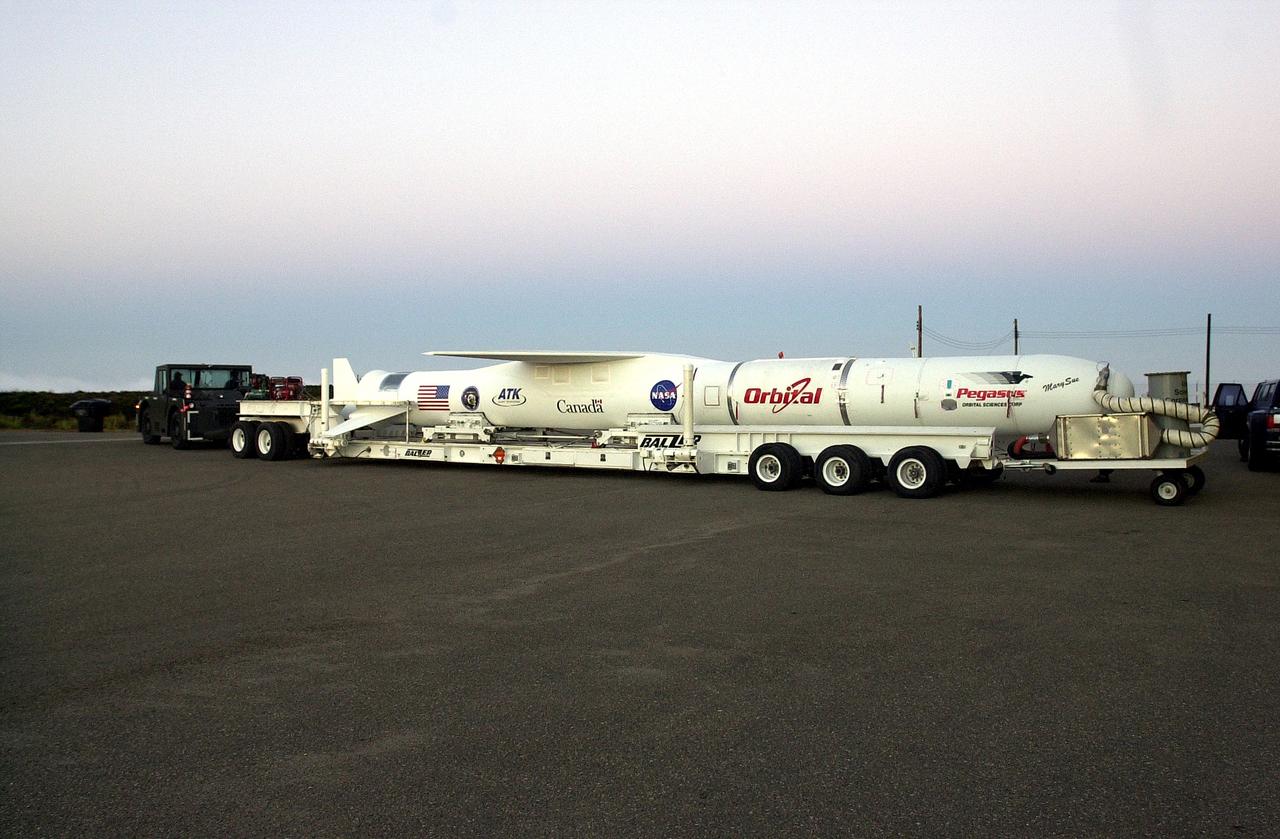
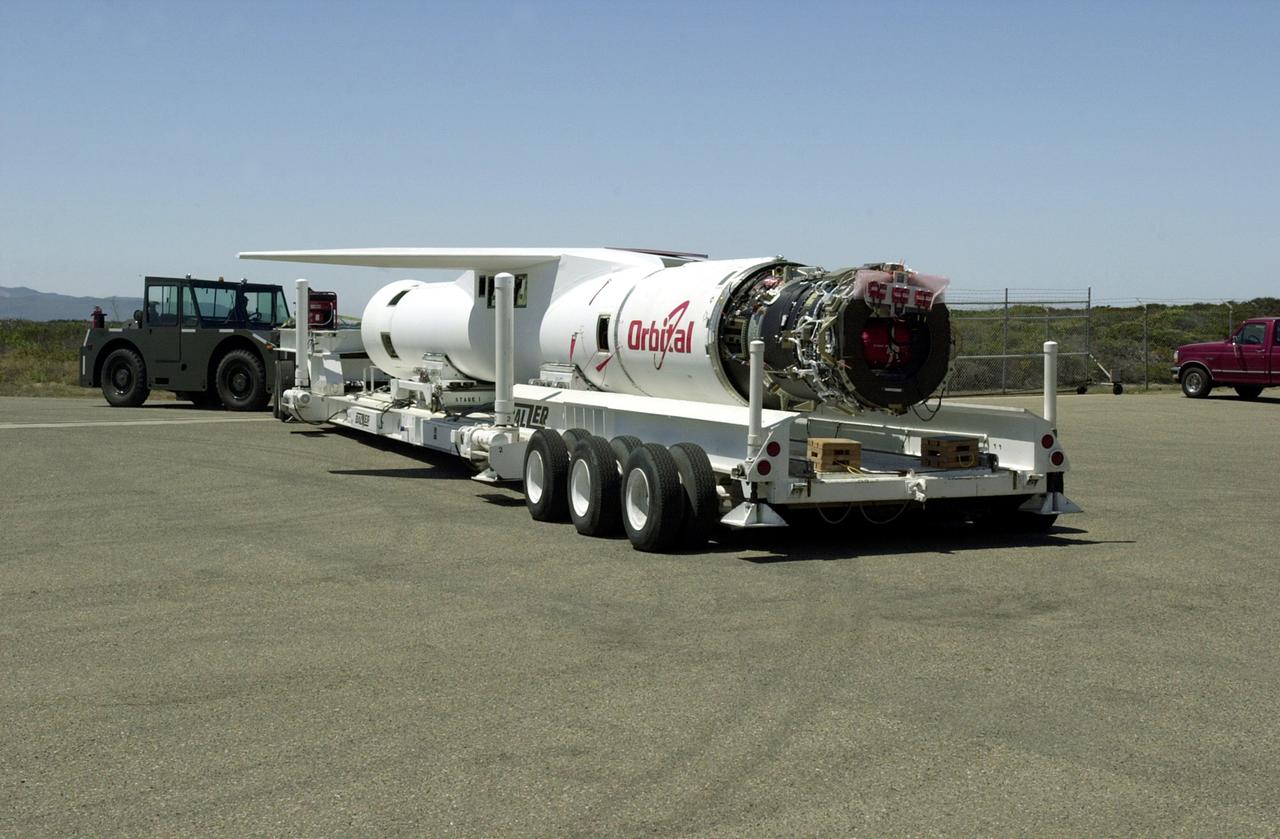
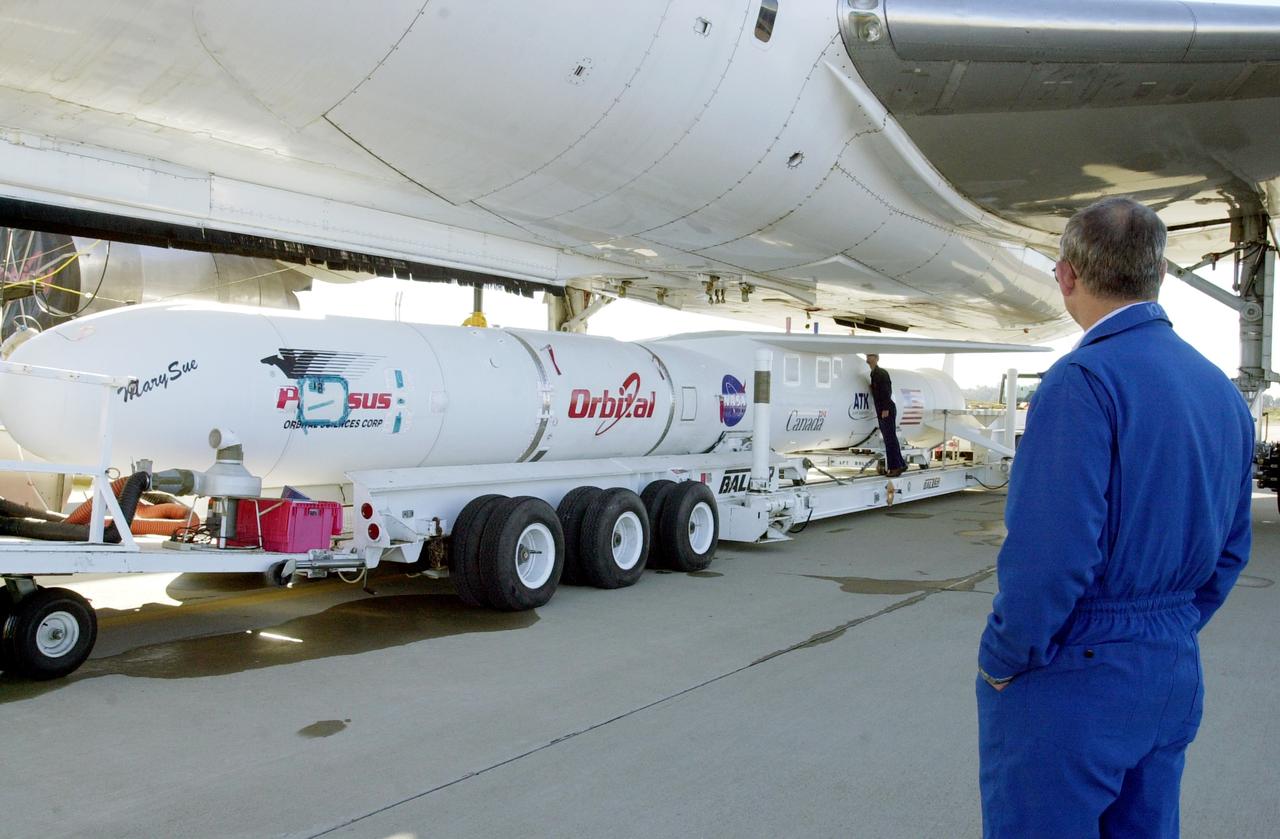
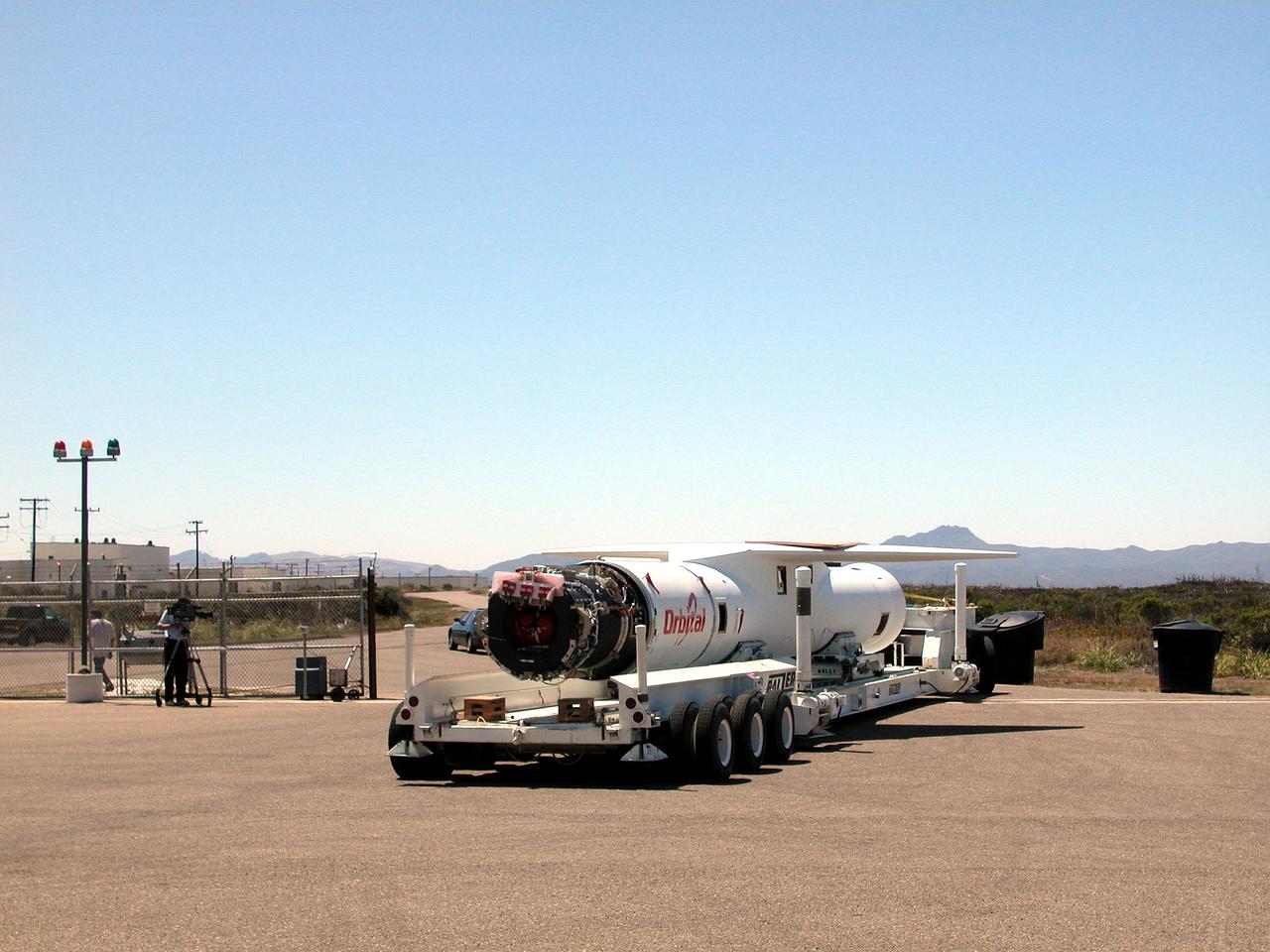
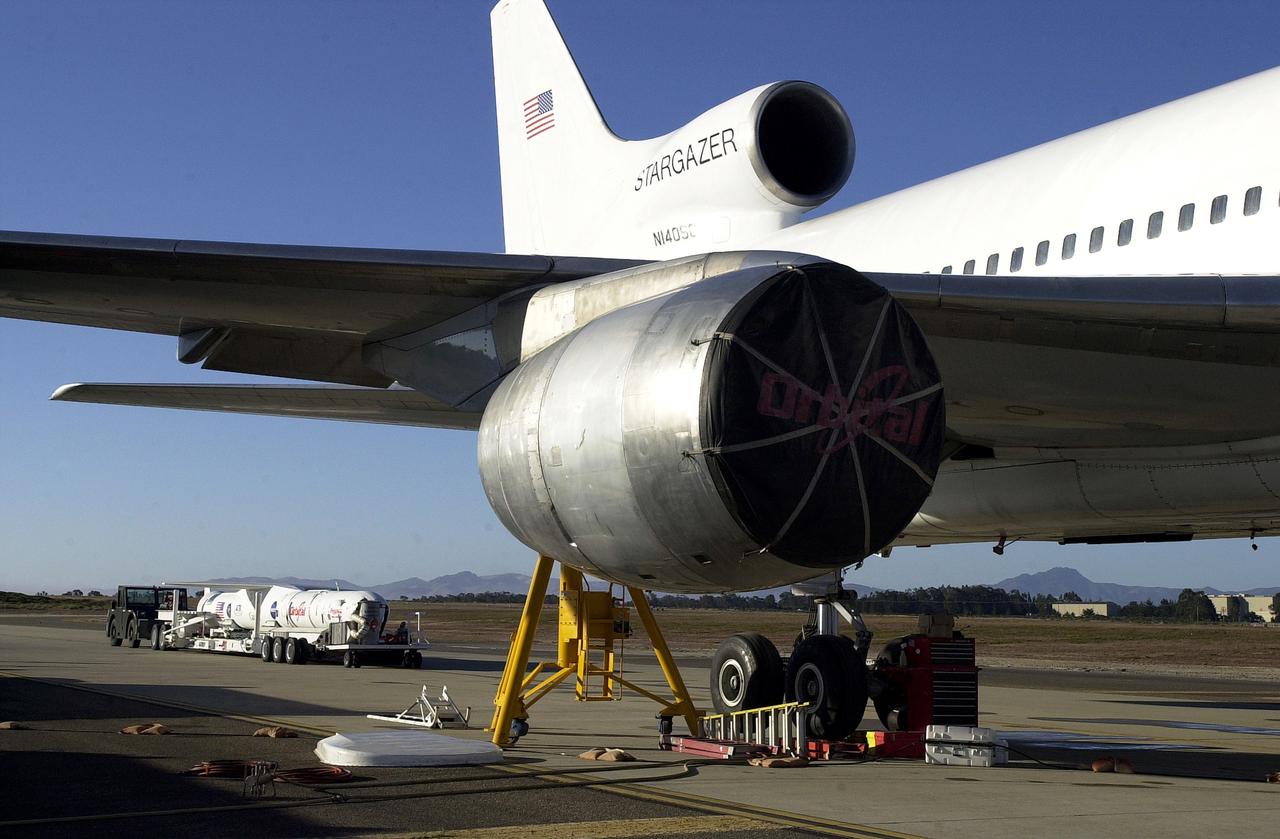
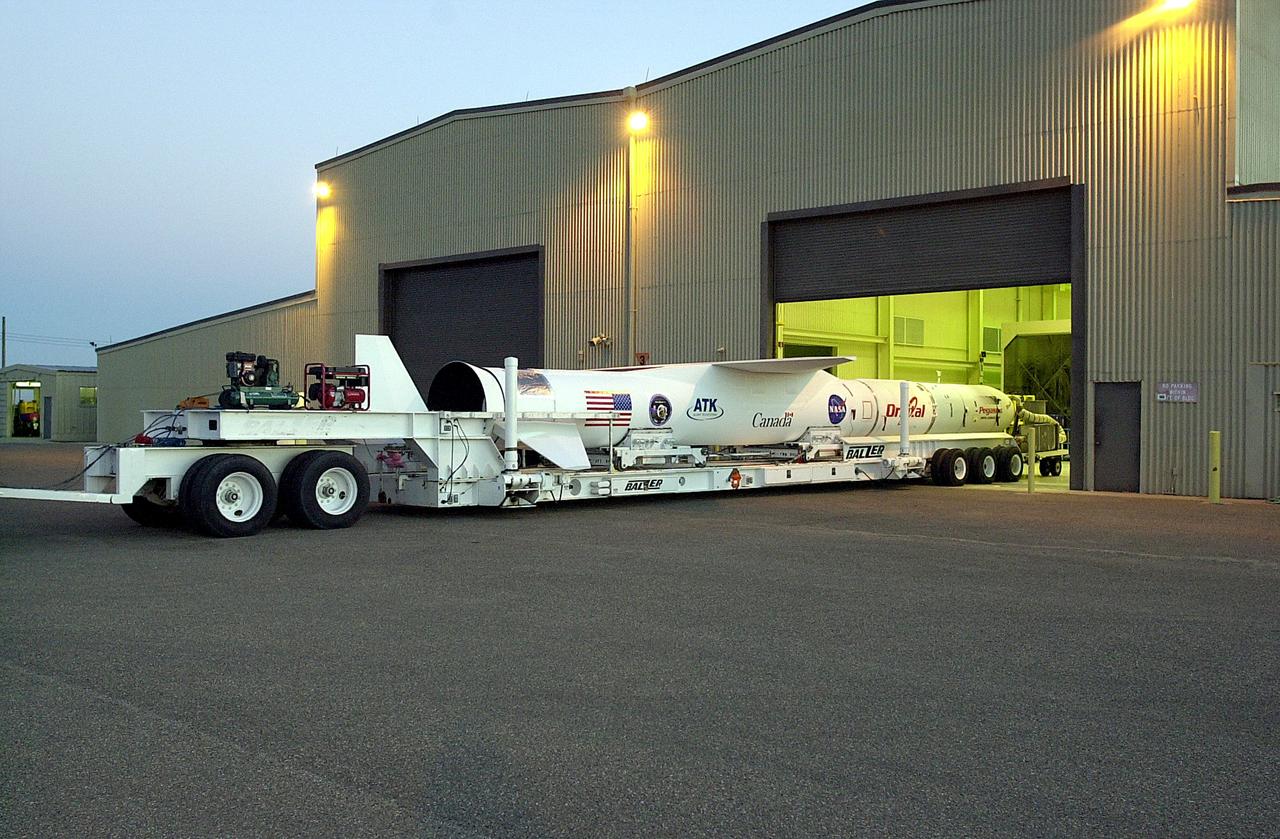
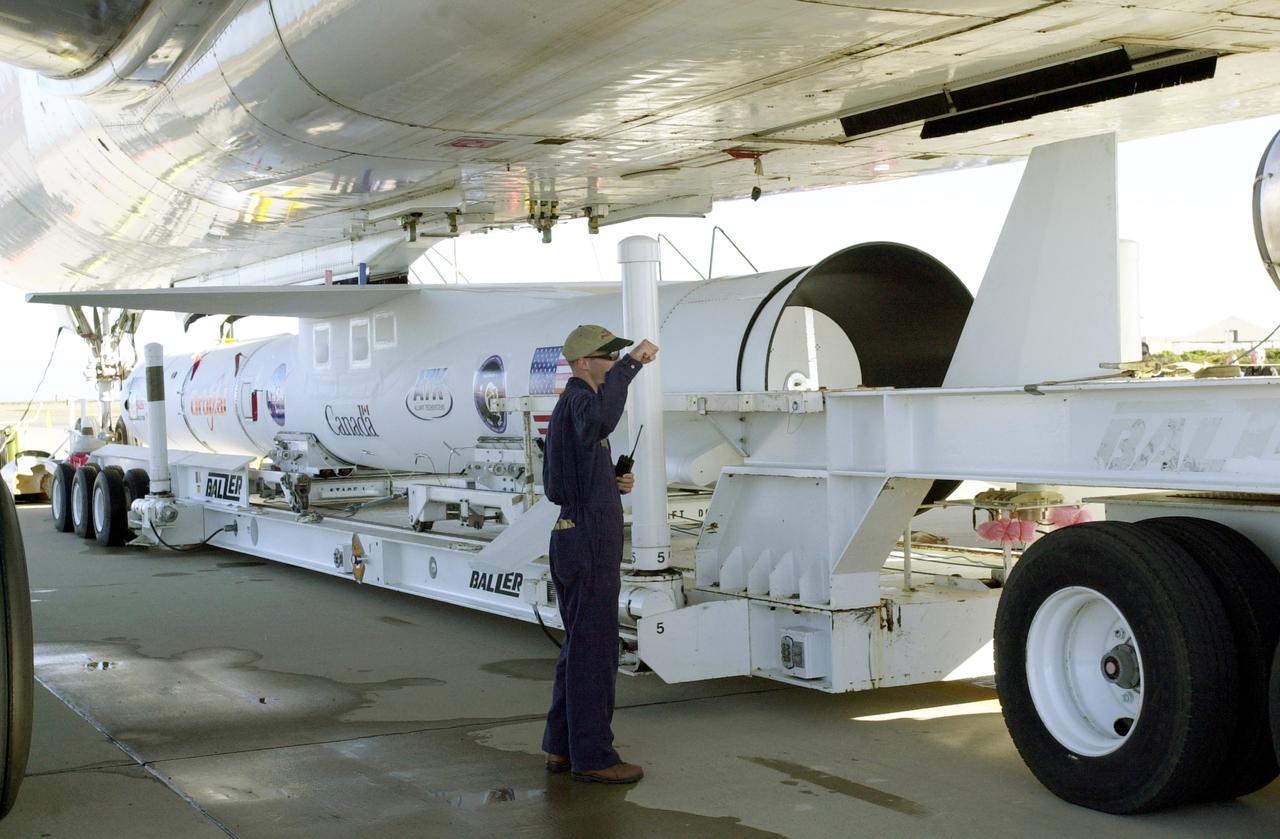
VANDENBERG AIR FORCE BASE, CALIF. - At Vandenberg Air Force Base, Calif., the Pegasus launch vehicle is moved toward its hangar. The Pegasus will carry the SciSat-1 spacecraft in a 400-mile-high polar orbit to investigate processes that control the distribution of ozone in the upper atmosphere. The data from the satellite will provide Canadian and international scientists with improved measurements relating to global ozone processes and help policymakers assess existing environmental policy and develop protective measures for improving the health of our atmosphere, preventing further ozone depletion. The mission is designed to last two years.
VANDENBERG AIR FORCE BASE, CALIF. -  The SciSat-1 payload and Pegasus launch vehicle are lifted and mated to the L-1011 carrier aircraft.  The SciSat-1 weighs approximately 330 pounds and after launch will be placed in a 400-mile-high polar orbit to investigate processes that control the distribution of ozone in the upper atmosphere. The data from the satellite will provide Canadian and international scientists with improved measurements relating to global ozone processes and help policymakers assess existing environmental policy and develop protective measures for improving the health of our atmosphere, preventing further ozone depletion. The mission is designed to last two years.
VANDENBERG AIR FORCE BASE, CALIF. - The SciSat-1 payload and Pegasus launch vehicle are lifted and mated to the L-1011 carrier aircraft. The SciSat-1 weighs approximately 330 pounds and after launch will be placed in a 400-mile-high polar orbit to investigate processes that control the distribution of ozone in the upper atmosphere. The data from the satellite will provide Canadian and international scientists with improved measurements relating to global ozone processes and help policymakers assess existing environmental policy and develop protective measures for improving the health of our atmosphere, preventing further ozone depletion. The mission is designed to last two years.
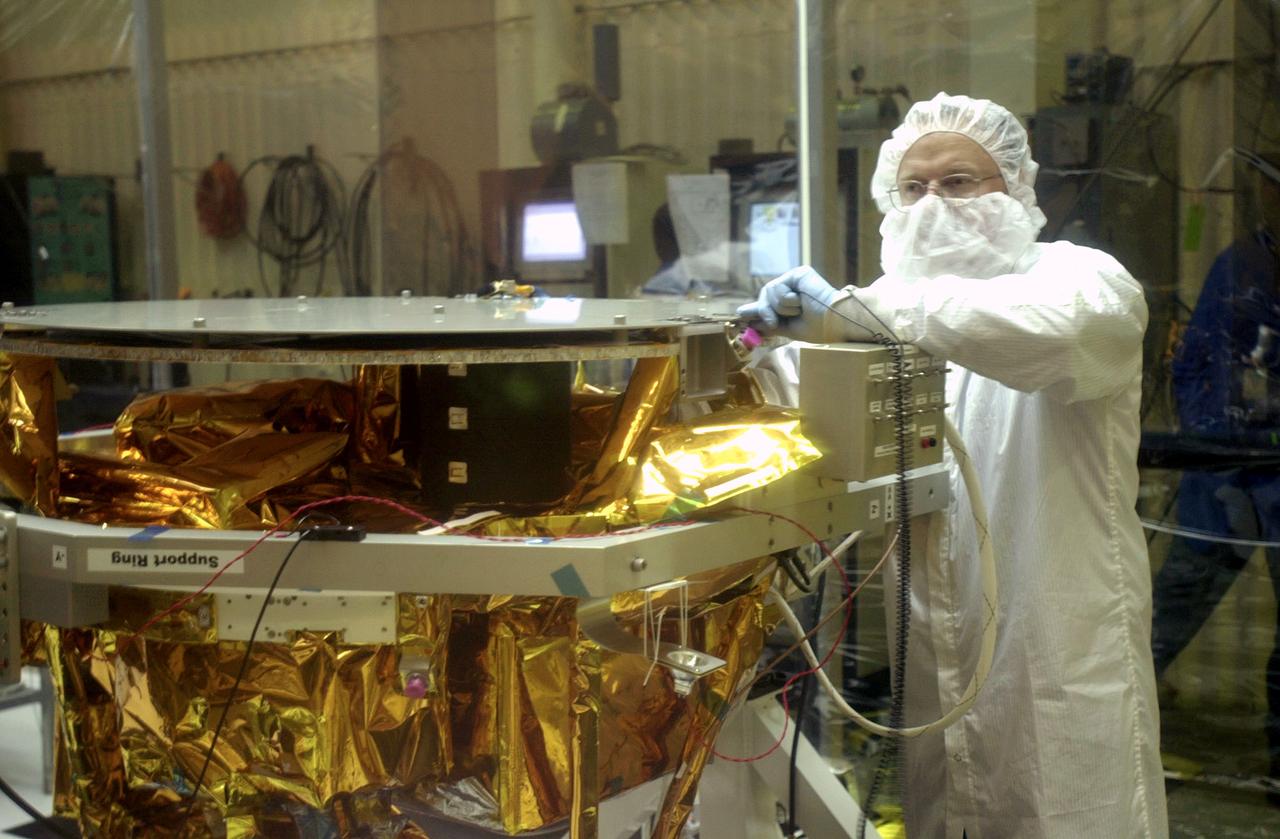
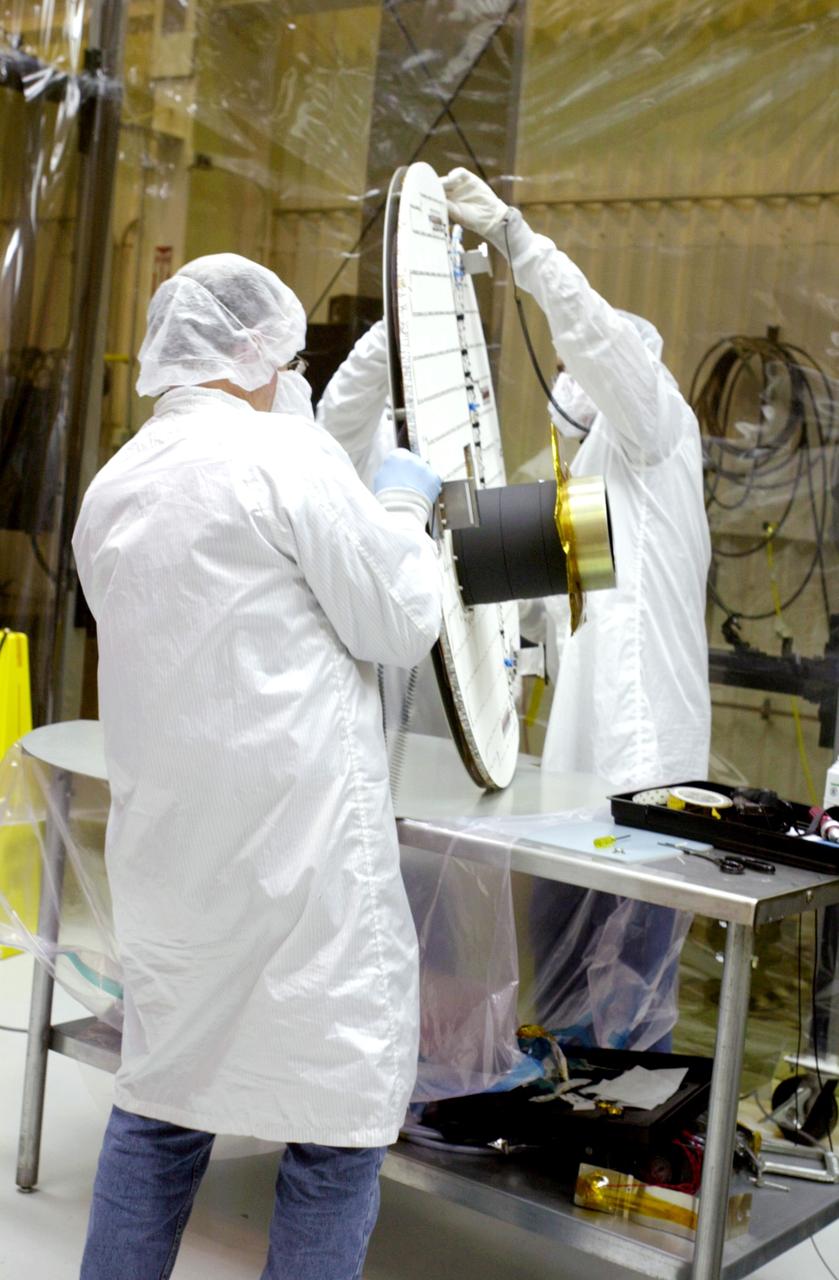
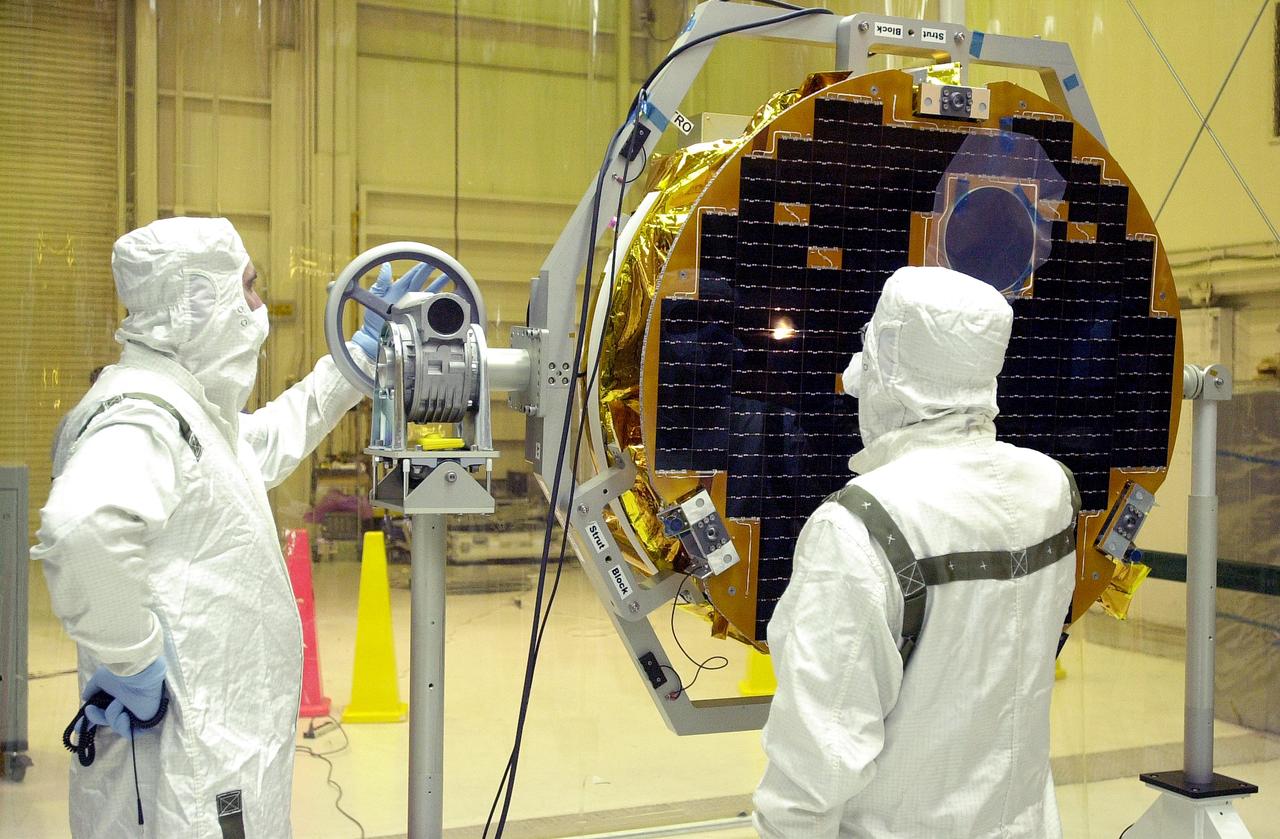
VANDENBERG AIR FORCE BASE, CALIF.- At Vandenberg Air Force Base, Calif., spacecraft functional testing is underway on the SciSat-1. The solar arrays are being attached and the communications systems are also being checked out.   The SciSat-1 weighs approximately 330 pounds and after launch will be placed in a 400-mile-high polar orbit to investigate processes that control the distribution of ozone in the upper atmosphere. The data from the satellite will provide Canadian and international scientists with improved measurements relating to global ozone processes and help policymakers assess existing environmental policy and develop protective measures for improving the health of our atmosphere, preventing further ozone depletion. The mission is designed to last two years.
VANDENBERG AIR FORCE BASE, CALIF.- At Vandenberg Air Force Base, Calif., spacecraft functional testing is underway on the SciSat-1. The solar arrays are being attached and the communications systems are also being checked out. The SciSat-1 weighs approximately 330 pounds and after launch will be placed in a 400-mile-high polar orbit to investigate processes that control the distribution of ozone in the upper atmosphere. The data from the satellite will provide Canadian and international scientists with improved measurements relating to global ozone processes and help policymakers assess existing environmental policy and develop protective measures for improving the health of our atmosphere, preventing further ozone depletion. The mission is designed to last two years.
KENNEDY SPACE CENTER, FLA. - At Vandenberg Air Force Base, Calif., the Pegasus launch vehicle is moved into its hangar.  The Pegasus will carry the SciSat-1 spacecraft in a 400-mile-high polar orbit to investigate processes that control the distribution of ozone in the upper atmosphere.  The scientific mission of SciSat-1 is to measure and understand the chemical processes that control the distribution of ozone in the Earth’s atmosphere, particularly at high altitudes.  The data from the satellite will provide Canadian and international scientists with improved measurements relating to global ozone processes and help policymakers assess existing environmental policy and develop protective measures for improving the health of our atmosphere, preventing further ozone depletion.  The mission is designed to last two years.
KENNEDY SPACE CENTER, FLA. - At Vandenberg Air Force Base, Calif., the Pegasus launch vehicle is moved into its hangar. The Pegasus will carry the SciSat-1 spacecraft in a 400-mile-high polar orbit to investigate processes that control the distribution of ozone in the upper atmosphere. The scientific mission of SciSat-1 is to measure and understand the chemical processes that control the distribution of ozone in the Earth’s atmosphere, particularly at high altitudes. The data from the satellite will provide Canadian and international scientists with improved measurements relating to global ozone processes and help policymakers assess existing environmental policy and develop protective measures for improving the health of our atmosphere, preventing further ozone depletion. The mission is designed to last two years.
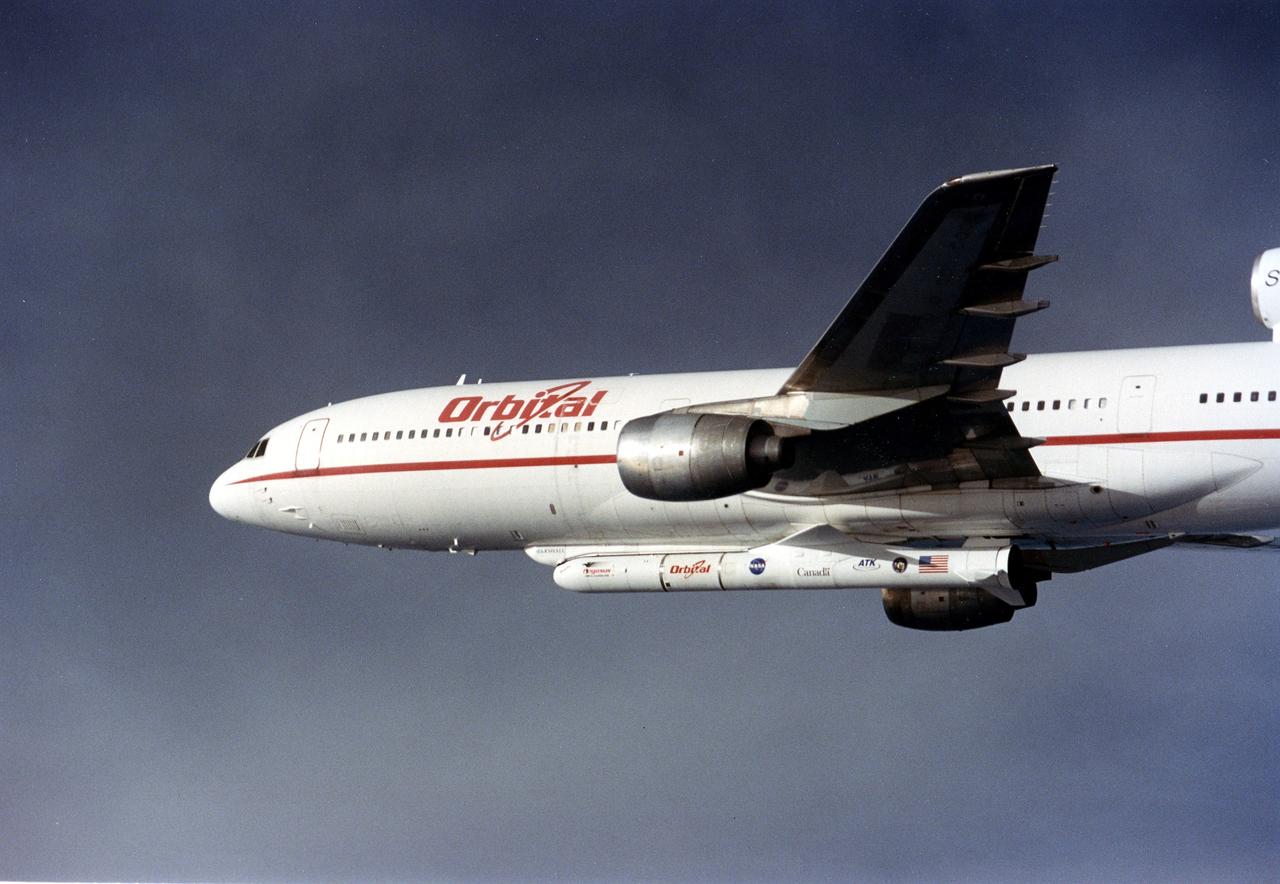
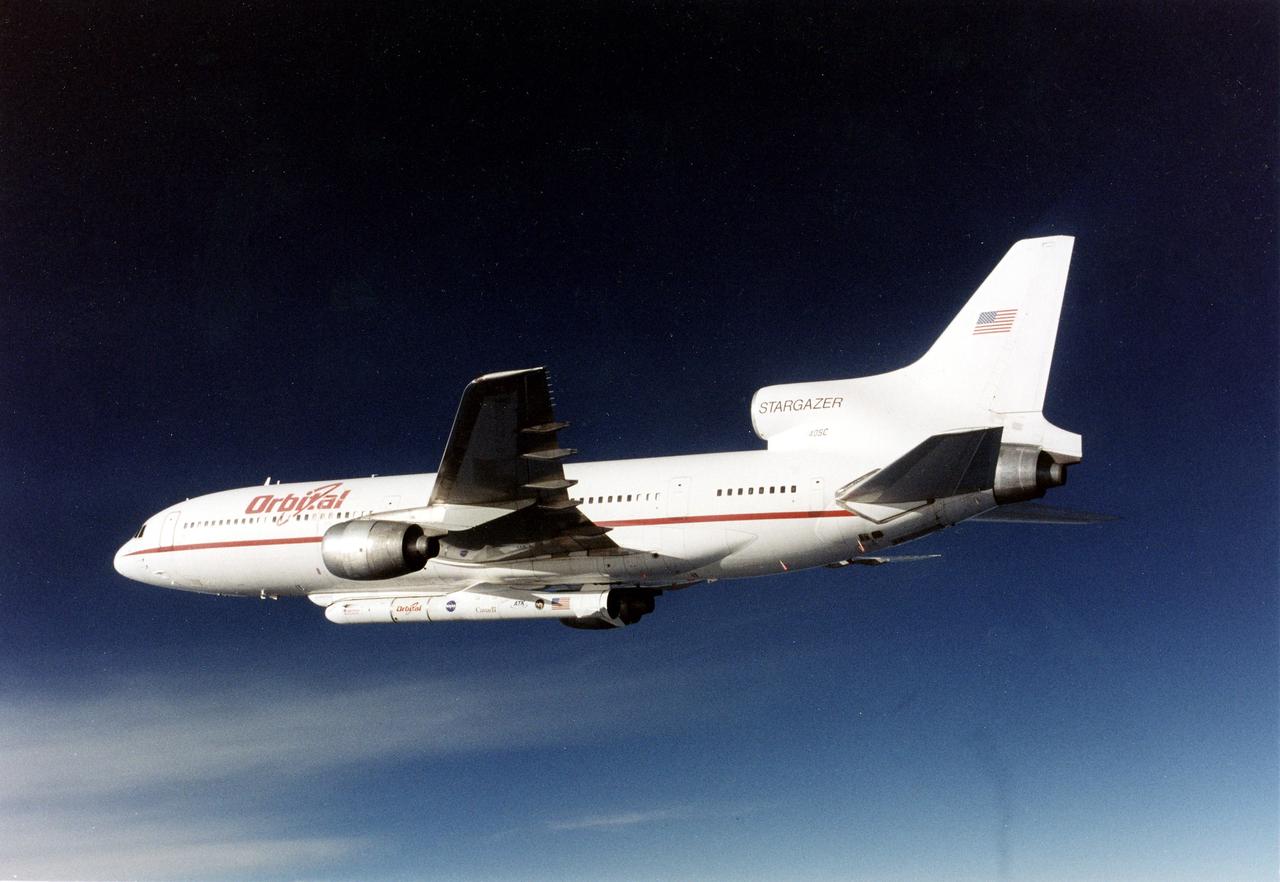
VANDENBERG AIR FORCE BASE, CALIF. -  The L-1011 carrier aircraft is in flight with its cargo of the Pegasus launch vehicle and SciSat-1 spacecraft underneath. The SciSat-1 weighs approximately 330 pounds and after launch will be placed in a 400-mile-high polar orbit to investigate processes that control the distribution of ozone in the upper atmosphere. The data from the satellite will provide Canadian and international scientists with improved measurements relating to global ozone processes and help policymakers assess existing environmental policy and develop protective measures for improving the health of our atmosphere, preventing further ozone depletion. The mission is designed to last two years.
VANDENBERG AIR FORCE BASE, CALIF. - The L-1011 carrier aircraft is in flight with its cargo of the Pegasus launch vehicle and SciSat-1 spacecraft underneath. The SciSat-1 weighs approximately 330 pounds and after launch will be placed in a 400-mile-high polar orbit to investigate processes that control the distribution of ozone in the upper atmosphere. The data from the satellite will provide Canadian and international scientists with improved measurements relating to global ozone processes and help policymakers assess existing environmental policy and develop protective measures for improving the health of our atmosphere, preventing further ozone depletion. The mission is designed to last two years.
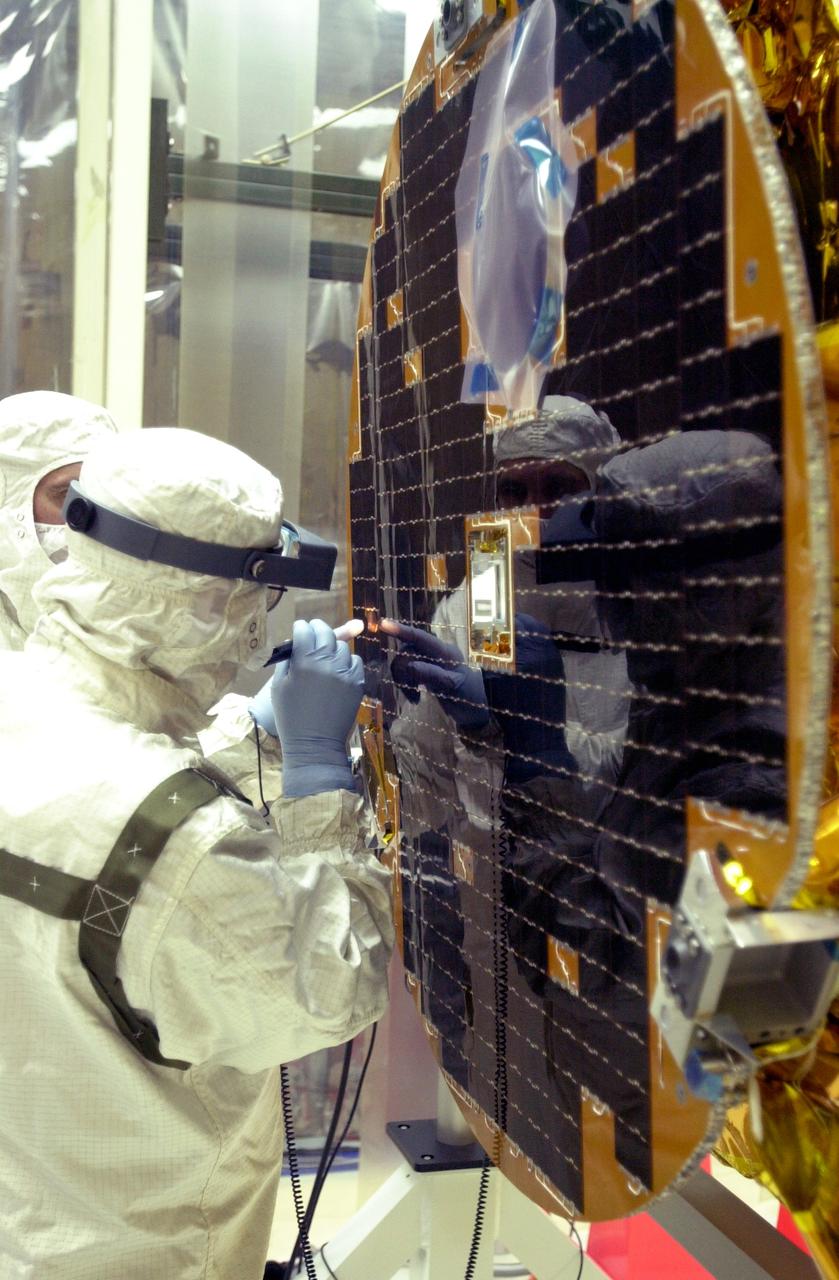
VANDENBERG AIR FORCE BASE, CALIF. -  At Vandenberg AFB, Calif., a solar array is installed on the SciSat-1 spacecraft.  The SciSat-1 weighs approximately 330 pounds and after launch will be placed in a 400-mile-high polar orbit to investigate processes that control the distribution of ozone in the upper atmosphere. The data from the satellite will provide Canadian and international scientists with improved measurements relating to global ozone processes and help policymakers assess existing environmental policy and develop protective measures for improving the health of our atmosphere, preventing further ozone depletion. The mission is designed to last two years.
VANDENBERG AIR FORCE BASE, CALIF. - At Vandenberg AFB, Calif., a solar array is installed on the SciSat-1 spacecraft. The SciSat-1 weighs approximately 330 pounds and after launch will be placed in a 400-mile-high polar orbit to investigate processes that control the distribution of ozone in the upper atmosphere. The data from the satellite will provide Canadian and international scientists with improved measurements relating to global ozone processes and help policymakers assess existing environmental policy and develop protective measures for improving the health of our atmosphere, preventing further ozone depletion. The mission is designed to last two years.
VANDENBERG AIR FORCE BASE, CALIF. -  The L-1011 carrier aircraft is in flight with its cargo of the Pegasus launch vehicle and SciSat-1 spacecraft underneath.  The SciSat-1 weighs approximately 330 pounds and after launch will be placed in a 400-mile-high polar orbit to investigate processes that control the distribution of ozone in the upper atmosphere. The data from the satellite will provide Canadian and international scientists with improved measurements relating to global ozone processes and help policymakers assess existing environmental policy and develop protective measures for improving the health of our atmosphere, preventing further ozone depletion. The mission is designed to last two years.
VANDENBERG AIR FORCE BASE, CALIF. - The L-1011 carrier aircraft is in flight with its cargo of the Pegasus launch vehicle and SciSat-1 spacecraft underneath. The SciSat-1 weighs approximately 330 pounds and after launch will be placed in a 400-mile-high polar orbit to investigate processes that control the distribution of ozone in the upper atmosphere. The data from the satellite will provide Canadian and international scientists with improved measurements relating to global ozone processes and help policymakers assess existing environmental policy and develop protective measures for improving the health of our atmosphere, preventing further ozone depletion. The mission is designed to last two years.
VANDENBERG AIR FORCE BASE, CALIF. -  At Vandenberg AFB, Calif., a solar array is tested before installing on the SciSat-1 spacecraft.  The SciSat-1 weighs approximately 330 pounds and after launch will be placed in a 400-mile-high polar orbit to investigate processes that control the distribution of ozone in the upper atmosphere. The data from the satellite will provide Canadian and international scientists with improved measurements relating to global ozone processes and help policymakers assess existing environmental policy and develop protective measures for improving the health of our atmosphere, preventing further ozone depletion. The mission is designed to last two years.
VANDENBERG AIR FORCE BASE, CALIF. - At Vandenberg AFB, Calif., a solar array is tested before installing on the SciSat-1 spacecraft. The SciSat-1 weighs approximately 330 pounds and after launch will be placed in a 400-mile-high polar orbit to investigate processes that control the distribution of ozone in the upper atmosphere. The data from the satellite will provide Canadian and international scientists with improved measurements relating to global ozone processes and help policymakers assess existing environmental policy and develop protective measures for improving the health of our atmosphere, preventing further ozone depletion. The mission is designed to last two years.
VANDENBERG AIR FORCE BASE, CALIF. -  At Vandenberg AFB, Calif., a solar array is tested before installing on the SciSat-1 spacecraft.  The SciSat-1 weighs approximately 330 pounds and after launch will be placed in a 400-mile-high polar orbit to investigate processes that control the distribution of ozone in the upper atmosphere. The data from the satellite will provide Canadian and international scientists with improved measurements relating to global ozone processes and help policymakers assess existing environmental policy and develop protective measures for improving the health of our atmosphere, preventing further ozone depletion. The mission is designed to last two years.
VANDENBERG AIR FORCE BASE, CALIF. - At Vandenberg AFB, Calif., a solar array is tested before installing on the SciSat-1 spacecraft. The SciSat-1 weighs approximately 330 pounds and after launch will be placed in a 400-mile-high polar orbit to investigate processes that control the distribution of ozone in the upper atmosphere. The data from the satellite will provide Canadian and international scientists with improved measurements relating to global ozone processes and help policymakers assess existing environmental policy and develop protective measures for improving the health of our atmosphere, preventing further ozone depletion. The mission is designed to last two years.
VANDENBERG AIR FORCE BASE, CALIF. -  The SciSat-1 payload and Pegasus launch vehicle are lifted and mated to the L-1011 carrier aircraft.  The SciSat-1 weighs approximately 330 pounds and after launch will be placed in a 400-mile-high polar orbit to investigate processes that control the distribution of ozone in the upper atmosphere. The data from the satellite will provide Canadian and international scientists with improved measurements relating to global ozone processes and help policymakers assess existing environmental policy and develop protective measures for improving the health of our atmosphere, preventing further ozone depletion. The mission is designed to last two years.
VANDENBERG AIR FORCE BASE, CALIF. - The SciSat-1 payload and Pegasus launch vehicle are lifted and mated to the L-1011 carrier aircraft. The SciSat-1 weighs approximately 330 pounds and after launch will be placed in a 400-mile-high polar orbit to investigate processes that control the distribution of ozone in the upper atmosphere. The data from the satellite will provide Canadian and international scientists with improved measurements relating to global ozone processes and help policymakers assess existing environmental policy and develop protective measures for improving the health of our atmosphere, preventing further ozone depletion. The mission is designed to last two years.
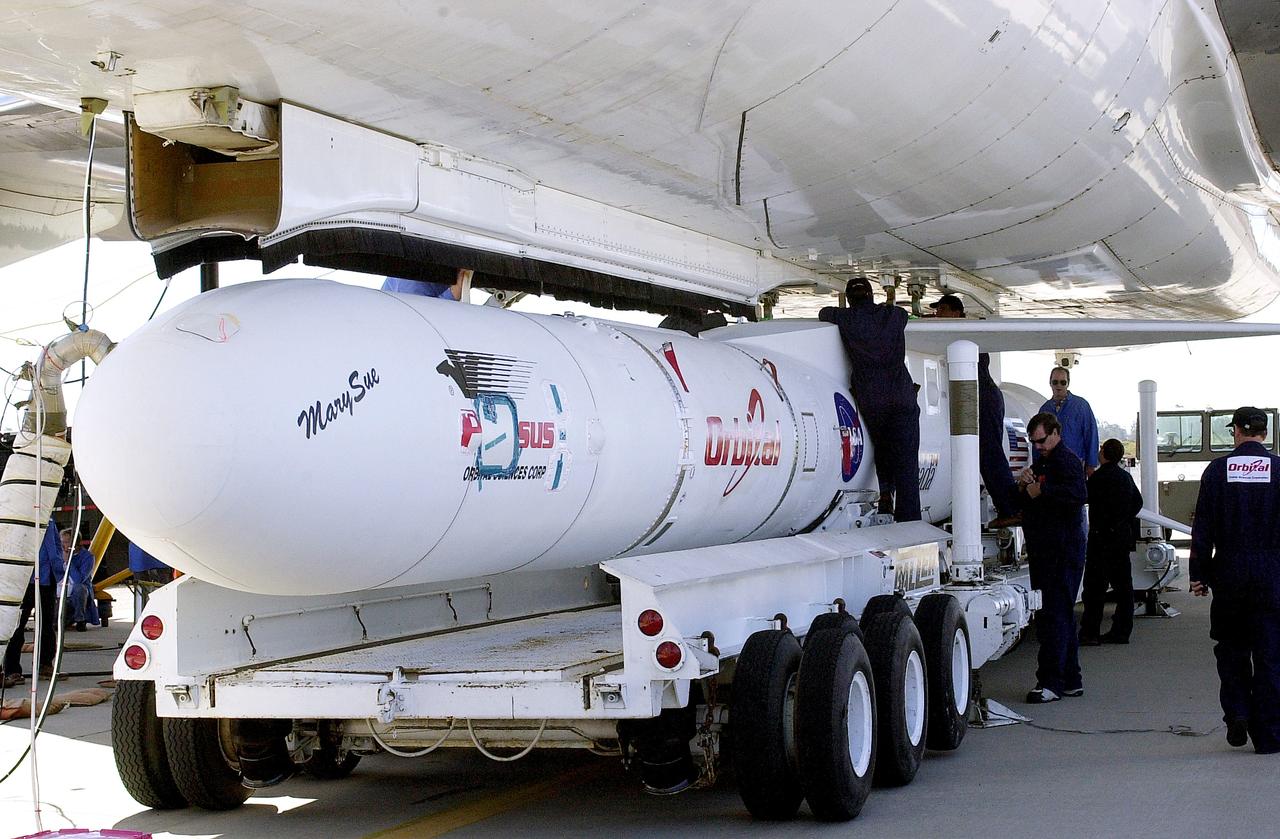
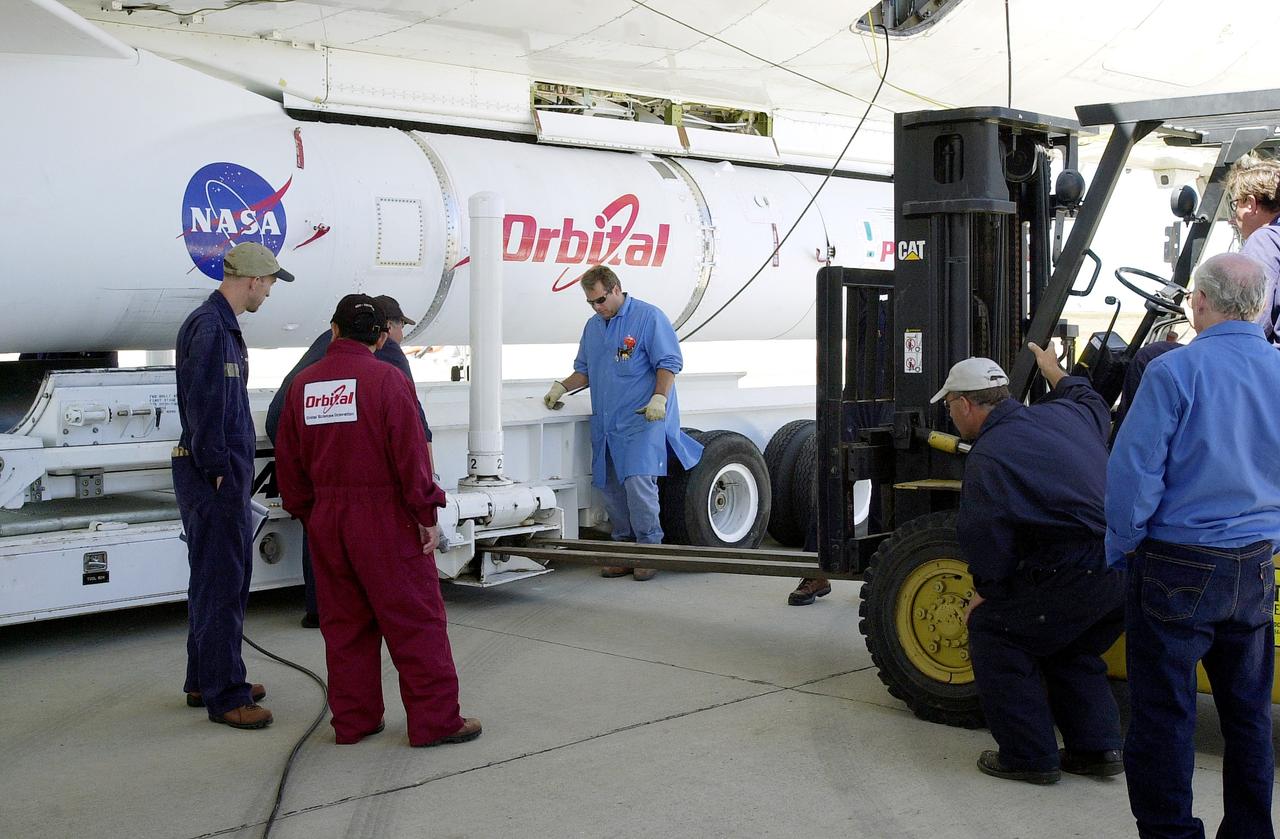
VANDENBERG AIR FORCE BASE, CALIF. -    Workers mate the Pegasus , with its cargo of the SciSat-1 payload to the L-1011 carrier aircraft.  The SciSat-1 weighs approximately 330 pounds and after launch will be placed in a 400-mile-high polar orbit to investigate processes that control the distribution of ozone in the upper atmosphere. The data from the satellite will provide Canadian and international scientists with improved measurements relating to global ozone processes and help policymakers assess existing environmental policy and develop protective measures for improving the health of our atmosphere, preventing further ozone depletion. The mission is designed to last two years.
VANDENBERG AIR FORCE BASE, CALIF. - Workers mate the Pegasus , with its cargo of the SciSat-1 payload to the L-1011 carrier aircraft. The SciSat-1 weighs approximately 330 pounds and after launch will be placed in a 400-mile-high polar orbit to investigate processes that control the distribution of ozone in the upper atmosphere. The data from the satellite will provide Canadian and international scientists with improved measurements relating to global ozone processes and help policymakers assess existing environmental policy and develop protective measures for improving the health of our atmosphere, preventing further ozone depletion. The mission is designed to last two years.
VANDENBERG AIR FORCE BASE, CALIF. - At Vandenberg Air Force Base, Calif., the Pegasus launch vehicle is moved toward its hangar. The Pegasus will carry the SciSat-1 spacecraft in a 400-mile-high polar orbit to investigate processes that control the distribution of ozone in the upper atmosphere. The data from the satellite will provide Canadian and international scientists with improved measurements relating to global ozone processes and help policymakers assess existing environmental policy and develop protective measures for improving the health of our atmosphere, preventing further ozone depletion. The mission is designed to last two years.
VANDENBERG AIR FORCE BASE, CALIF.- At Vandenberg Air Force Base, Calif., spacecraft functional testing is underway on the SciSat-1. The solar arrays are being attached and the communications systems are also being checked out.   The SciSat-1 weighs approximately 330 pounds and after launch will be placed in a 400-mile-high polar orbit to investigate processes that control the distribution of ozone in the upper atmosphere. The data from the satellite will provide Canadian and international scientists with improved measurements relating to global ozone processes and help policymakers assess existing environmental policy and develop protective measures for improving the health of our atmosphere, preventing further ozone depletion. The mission is designed to last two years.
VANDENBERG AIR FORCE BASE, CALIF.- At Vandenberg Air Force Base, Calif., spacecraft functional testing is underway on the SciSat-1. The solar arrays are being attached and the communications systems are also being checked out. The SciSat-1 weighs approximately 330 pounds and after launch will be placed in a 400-mile-high polar orbit to investigate processes that control the distribution of ozone in the upper atmosphere. The data from the satellite will provide Canadian and international scientists with improved measurements relating to global ozone processes and help policymakers assess existing environmental policy and develop protective measures for improving the health of our atmosphere, preventing further ozone depletion. The mission is designed to last two years.
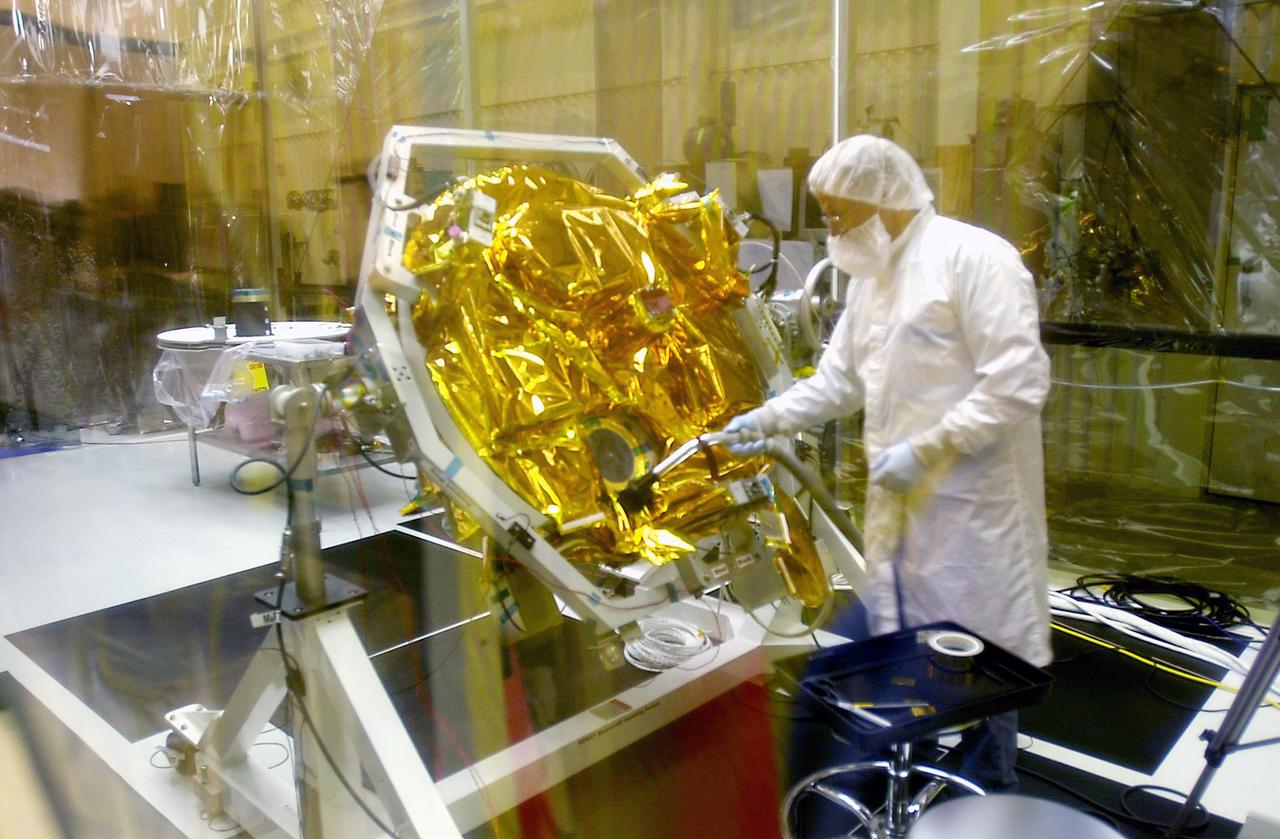
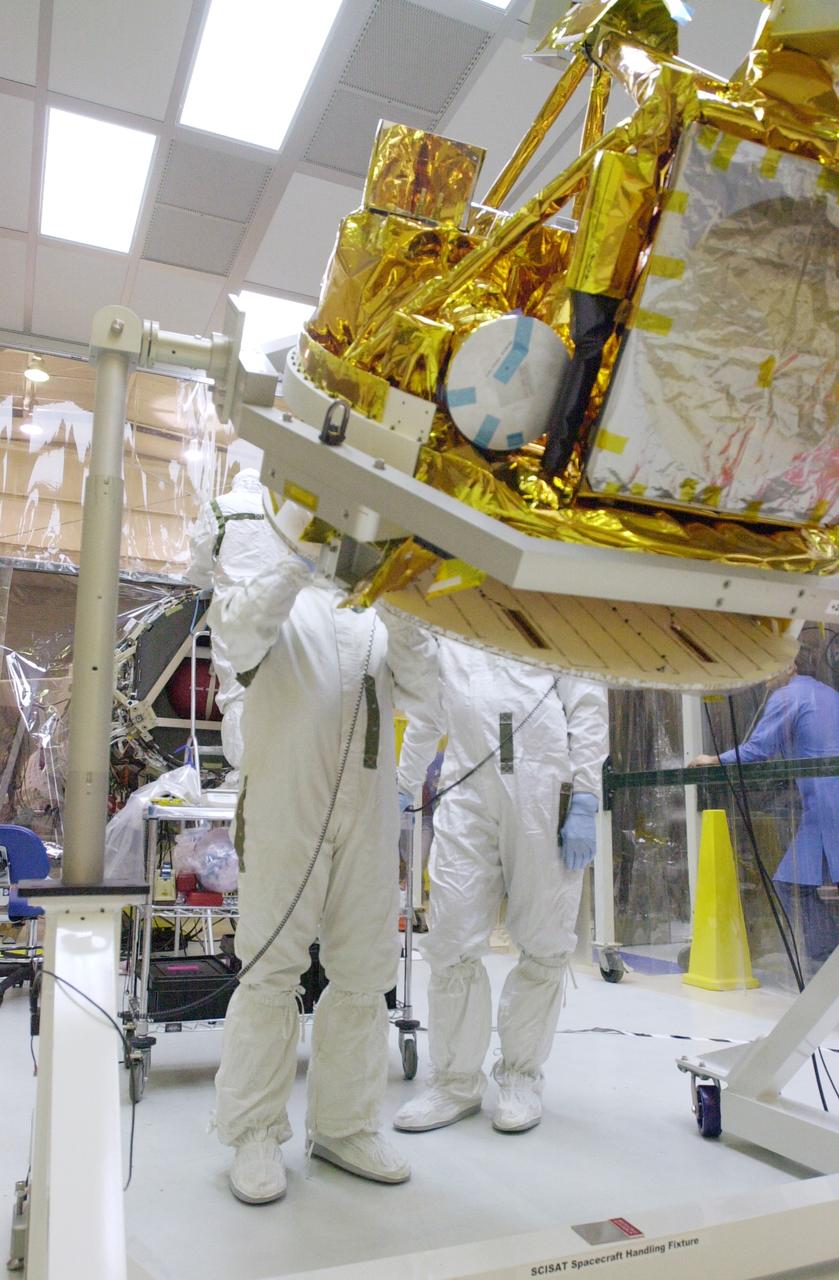
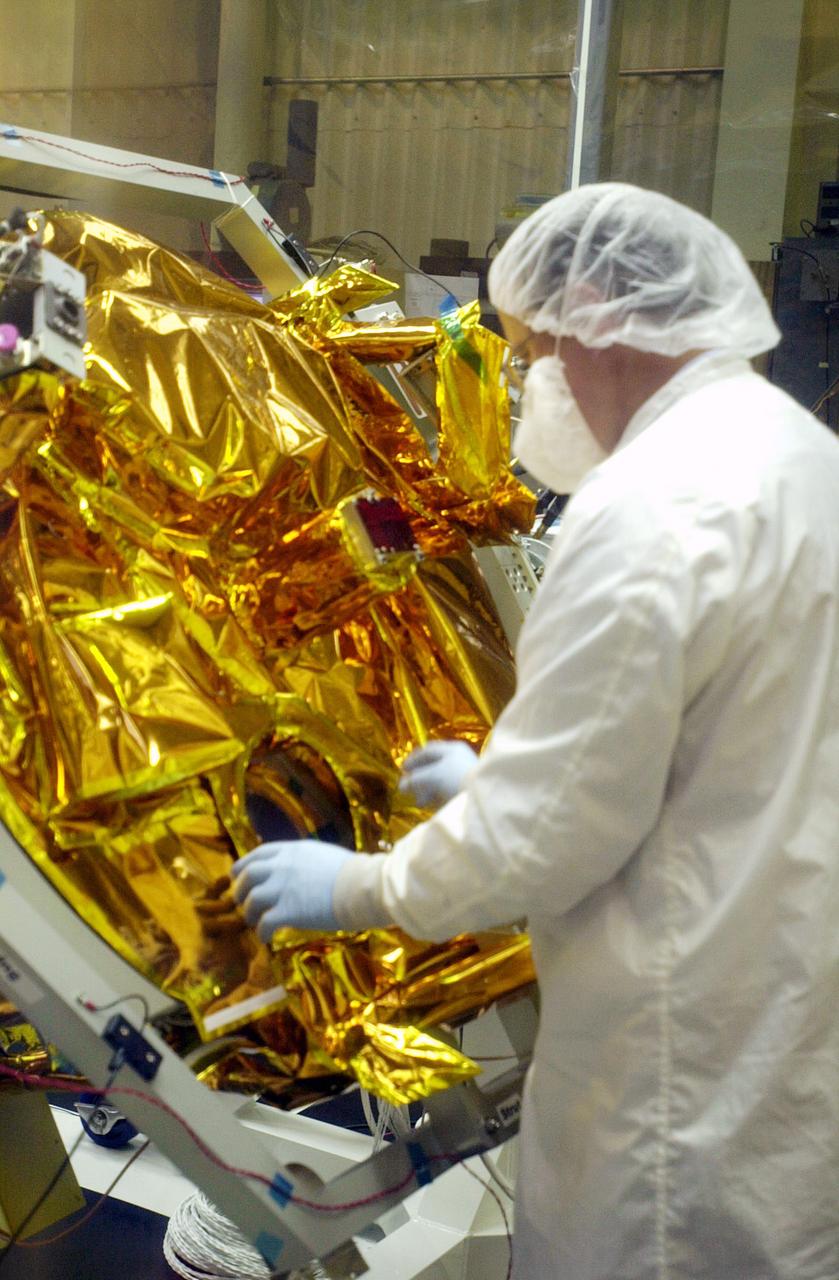
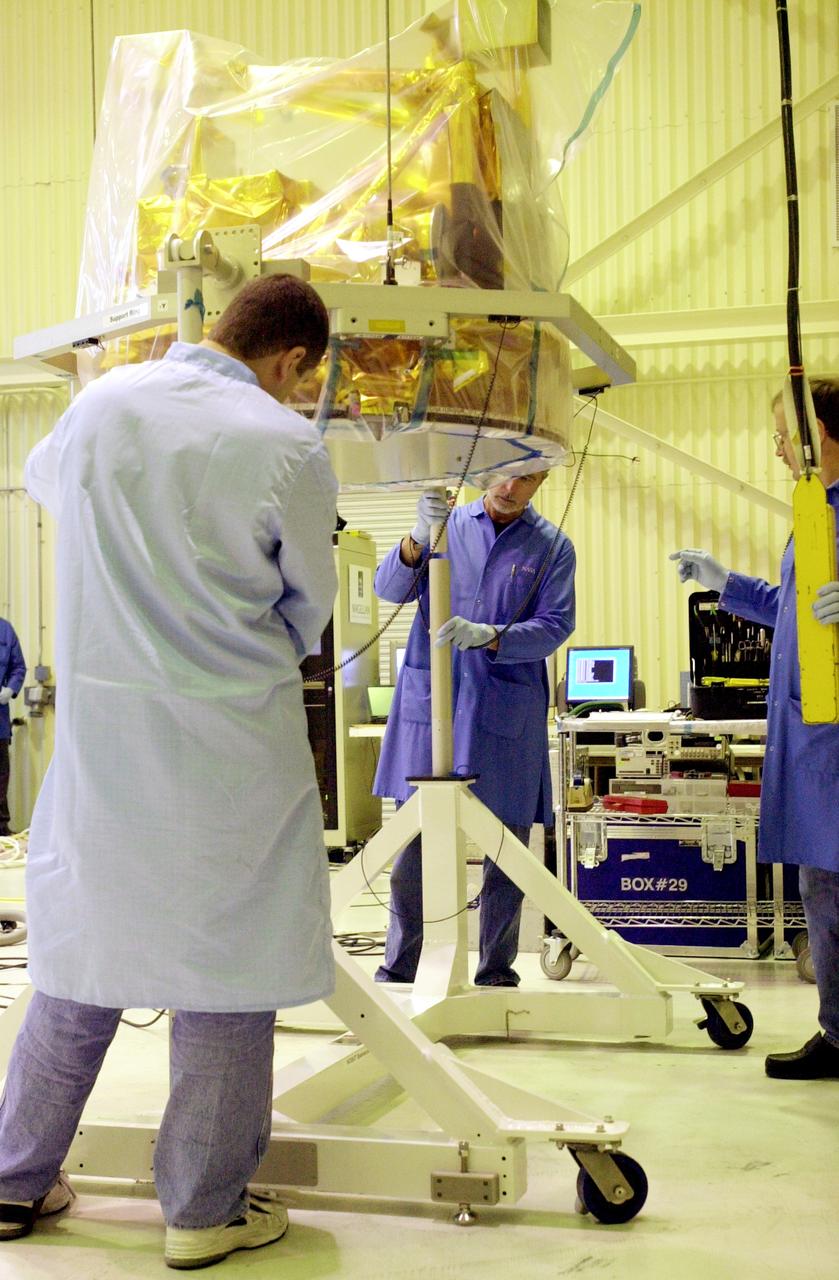
VANDENBERG AIR FORCE BASE, CALIF. -  With its cover removed, the SciSat-1 spacecraft is rotated.  The solar arrays will be attached and the communications systems checked out.   The SciSat-1 weighs approximately 330 pounds and after launch will be placed in a 400-mile-high polar orbit to investigate processes that control the distribution of ozone in the upper atmosphere. The data from the satellite will provide Canadian and international scientists with improved measurements relating to global ozone processes and help policymakers assess existing environmental policy and develop protective measures for improving the health of our atmosphere, preventing further ozone depletion. The mission is designed to last two years.
VANDENBERG AIR FORCE BASE, CALIF. - With its cover removed, the SciSat-1 spacecraft is rotated. The solar arrays will be attached and the communications systems checked out. The SciSat-1 weighs approximately 330 pounds and after launch will be placed in a 400-mile-high polar orbit to investigate processes that control the distribution of ozone in the upper atmosphere. The data from the satellite will provide Canadian and international scientists with improved measurements relating to global ozone processes and help policymakers assess existing environmental policy and develop protective measures for improving the health of our atmosphere, preventing further ozone depletion. The mission is designed to last two years.
VANDENBERG AIR FORCE BASE, CALIF.- At Vandenberg Air Force Base, Calif., spacecraft functional testing is underway on the SciSat-1. The solar arrays are being attached and the communications systems are also being checked out.   The SciSat-1 weighs approximately 330 pounds and after launch will be placed in a 400-mile-high polar orbit to investigate processes that control the distribution of ozone in the upper atmosphere. The data from the satellite will provide Canadian and international scientists with improved measurements relating to global ozone processes and help policymakers assess existing environmental policy and develop protective measures for improving the health of our atmosphere, preventing further ozone depletion. The mission is designed to last two years.
VANDENBERG AIR FORCE BASE, CALIF.- At Vandenberg Air Force Base, Calif., spacecraft functional testing is underway on the SciSat-1. The solar arrays are being attached and the communications systems are also being checked out. The SciSat-1 weighs approximately 330 pounds and after launch will be placed in a 400-mile-high polar orbit to investigate processes that control the distribution of ozone in the upper atmosphere. The data from the satellite will provide Canadian and international scientists with improved measurements relating to global ozone processes and help policymakers assess existing environmental policy and develop protective measures for improving the health of our atmosphere, preventing further ozone depletion. The mission is designed to last two years.
VANDENBERG AIR FORCE BASE, CALIF.- At Vandenberg Air Force Base, Calif., spacecraft functional testing is underway on the SciSat-1. The solar arrays are being attached and the communications systems are also being checked out.   The SciSat-1 weighs approximately 330 pounds and after launch will be placed in a 400-mile-high polar orbit to investigate processes that control the distribution of ozone in the upper atmosphere. The data from the satellite will provide Canadian and international scientists with improved measurements relating to global ozone processes and help policymakers assess existing environmental policy and develop protective measures for improving the health of our atmosphere, preventing further ozone depletion. The mission is designed to last two years.
VANDENBERG AIR FORCE BASE, CALIF.- At Vandenberg Air Force Base, Calif., spacecraft functional testing is underway on the SciSat-1. The solar arrays are being attached and the communications systems are also being checked out. The SciSat-1 weighs approximately 330 pounds and after launch will be placed in a 400-mile-high polar orbit to investigate processes that control the distribution of ozone in the upper atmosphere. The data from the satellite will provide Canadian and international scientists with improved measurements relating to global ozone processes and help policymakers assess existing environmental policy and develop protective measures for improving the health of our atmosphere, preventing further ozone depletion. The mission is designed to last two years.
VANDENBERG AIR FORCE BASE, CALIF. -  The SciSat-1 payload, with fairing installed and attached to its Pegasus launch vehicle, begins rollout to the hot pad and mating to the L-1011 carrier aircraft.  The SciSat-1 weighs approximately 330 pounds and after launch will be placed in a 400-mile-high polar orbit to investigate processes that control the distribution of ozone in the upper atmosphere. The data from the satellite will provide Canadian and international scientists with improved measurements relating to global ozone processes and help policymakers assess existing environmental policy and develop protective measures for improving the health of our atmosphere, preventing further ozone depletion. The mission is designed to last two years.
VANDENBERG AIR FORCE BASE, CALIF. - The SciSat-1 payload, with fairing installed and attached to its Pegasus launch vehicle, begins rollout to the hot pad and mating to the L-1011 carrier aircraft. The SciSat-1 weighs approximately 330 pounds and after launch will be placed in a 400-mile-high polar orbit to investigate processes that control the distribution of ozone in the upper atmosphere. The data from the satellite will provide Canadian and international scientists with improved measurements relating to global ozone processes and help policymakers assess existing environmental policy and develop protective measures for improving the health of our atmosphere, preventing further ozone depletion. The mission is designed to last two years.
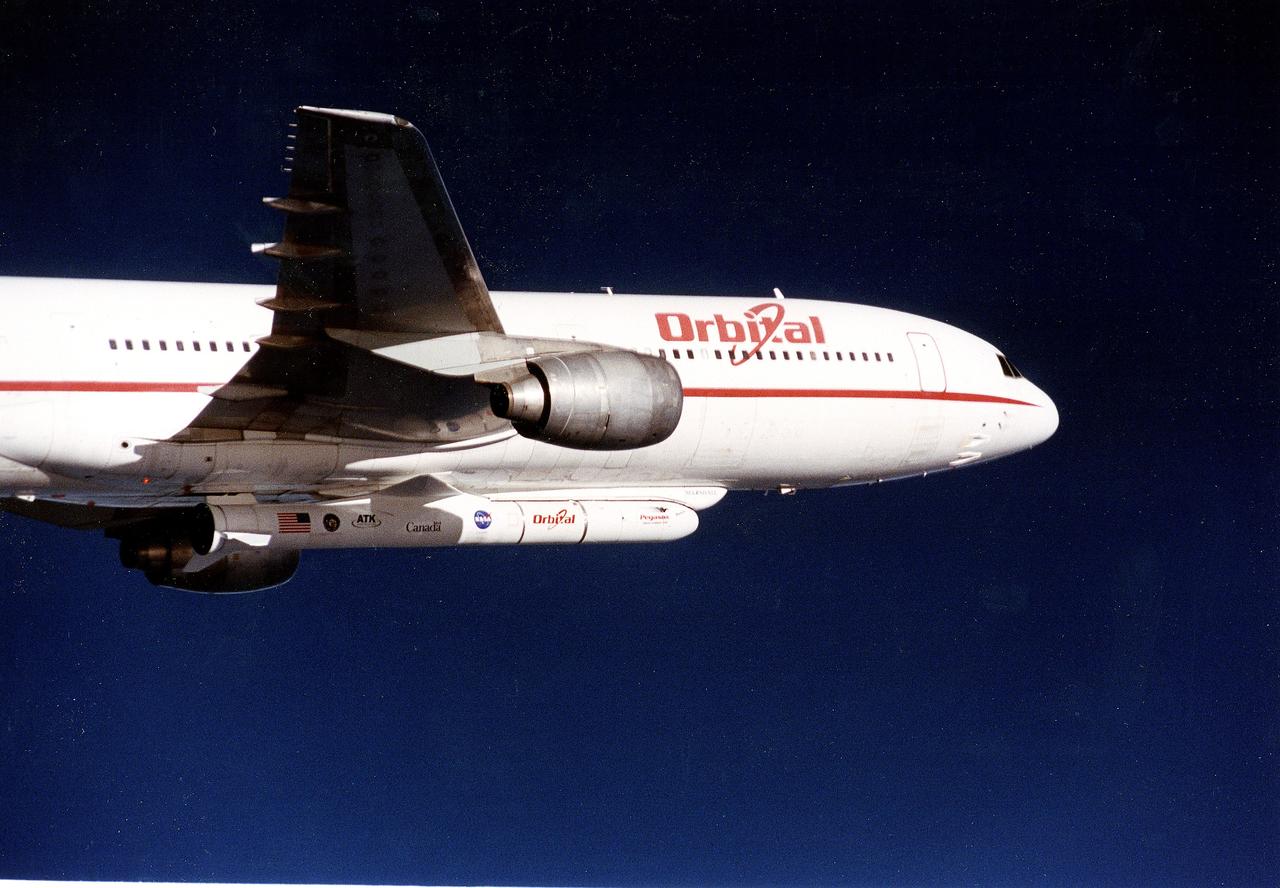
VANDENBERG AIR FORCE BASE, CALIF. -  The L-1011 carrier aircraft is in flight with its cargo underneath of the Pegasus launch vehicle and SciSat-1 spacecraft.  The SciSat-1 weighs approximately 330 pounds and after launch will be placed in a 400-mile-high polar orbit to investigate processes that control the distribution of ozone in the upper atmosphere. The data from the satellite will provide Canadian and international scientists with improved measurements relating to global ozone processes and help policymakers assess existing environmental policy and develop protective measures for improving the health of our atmosphere, preventing further ozone depletion. The mission is designed to last two years.
VANDENBERG AIR FORCE BASE, CALIF. - The L-1011 carrier aircraft is in flight with its cargo underneath of the Pegasus launch vehicle and SciSat-1 spacecraft. The SciSat-1 weighs approximately 330 pounds and after launch will be placed in a 400-mile-high polar orbit to investigate processes that control the distribution of ozone in the upper atmosphere. The data from the satellite will provide Canadian and international scientists with improved measurements relating to global ozone processes and help policymakers assess existing environmental policy and develop protective measures for improving the health of our atmosphere, preventing further ozone depletion. The mission is designed to last two years.
VANDENBERG AIR FORCE BASE, CALIF. -   The SciSat-1 payload, with fairing installed and attached to its Pegasus launch vehicle, begins rollout to the hot pad and mating to the L-1011 carrier aircraft.  The SciSat-1 weighs approximately 330 pounds and after launch will be placed in a 400-mile-high polar orbit to investigate processes that control the distribution of ozone in the upper atmosphere. The data from the satellite will provide Canadian and international scientists with improved measurements relating to global ozone processes and help policymakers assess existing environmental policy and develop protective measures for improving the health of our atmosphere, preventing further ozone depletion. The mission is designed to last two years.
VANDENBERG AIR FORCE BASE, CALIF. - The SciSat-1 payload, with fairing installed and attached to its Pegasus launch vehicle, begins rollout to the hot pad and mating to the L-1011 carrier aircraft. The SciSat-1 weighs approximately 330 pounds and after launch will be placed in a 400-mile-high polar orbit to investigate processes that control the distribution of ozone in the upper atmosphere. The data from the satellite will provide Canadian and international scientists with improved measurements relating to global ozone processes and help policymakers assess existing environmental policy and develop protective measures for improving the health of our atmosphere, preventing further ozone depletion. The mission is designed to last two years.
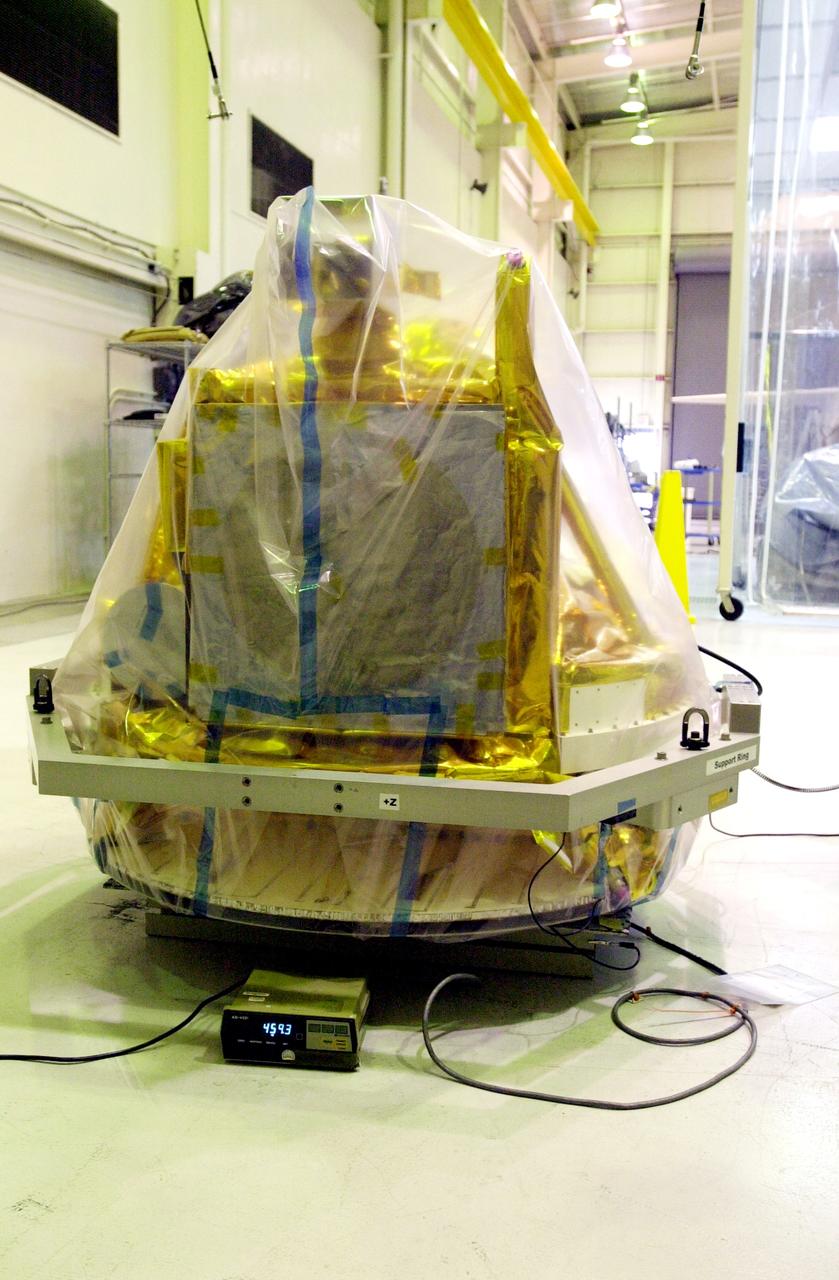
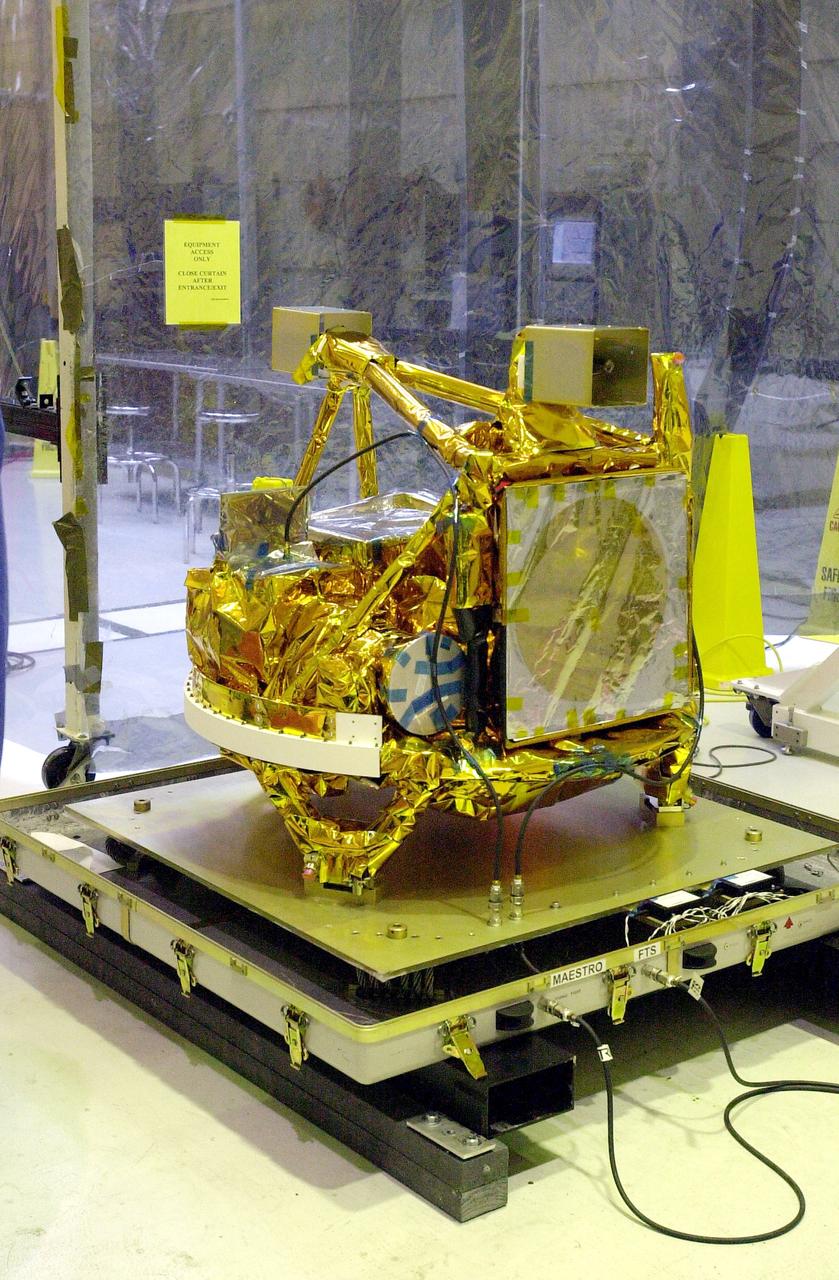
VANDENBERG AIR FORCE BASE, CALIF.-  A covered SciSat-1 spacecraft sits on a test stand at Vandenberg Air Force Base, Calif.  The solar arrays will be attached and the communications systems checked out.   The SciSat-1 weighs approximately 330 pounds and after launch will be placed in a 400-mile-high polar orbit to investigate processes that control the distribution of ozone in the upper atmosphere. The data from the satellite will provide Canadian and international scientists with improved measurements relating to global ozone processes and help policymakers assess existing environmental policy and develop protective measures for improving the health of our atmosphere, preventing further ozone depletion. The mission is designed to last two years.
VANDENBERG AIR FORCE BASE, CALIF.- A covered SciSat-1 spacecraft sits on a test stand at Vandenberg Air Force Base, Calif. The solar arrays will be attached and the communications systems checked out. The SciSat-1 weighs approximately 330 pounds and after launch will be placed in a 400-mile-high polar orbit to investigate processes that control the distribution of ozone in the upper atmosphere. The data from the satellite will provide Canadian and international scientists with improved measurements relating to global ozone processes and help policymakers assess existing environmental policy and develop protective measures for improving the health of our atmosphere, preventing further ozone depletion. The mission is designed to last two years.
VANDENBERG AIR FORCE BASE, CALIF. -  At Vandenberg AFB, Calif., a solar array is tested before installing on the SciSat-1 spacecraft.  The SciSat-1 weighs approximately 330 pounds and after launch will be placed in a 400-mile-high polar orbit to investigate processes that control the distribution of ozone in the upper atmosphere. The data from the satellite will provide Canadian and international scientists with improved measurements relating to global ozone processes and help policymakers assess existing environmental policy and develop protective measures for improving the health of our atmosphere, preventing further ozone depletion. The mission is designed to last two years.
VANDENBERG AIR FORCE BASE, CALIF. - At Vandenberg AFB, Calif., a solar array is tested before installing on the SciSat-1 spacecraft. The SciSat-1 weighs approximately 330 pounds and after launch will be placed in a 400-mile-high polar orbit to investigate processes that control the distribution of ozone in the upper atmosphere. The data from the satellite will provide Canadian and international scientists with improved measurements relating to global ozone processes and help policymakers assess existing environmental policy and develop protective measures for improving the health of our atmosphere, preventing further ozone depletion. The mission is designed to last two years.
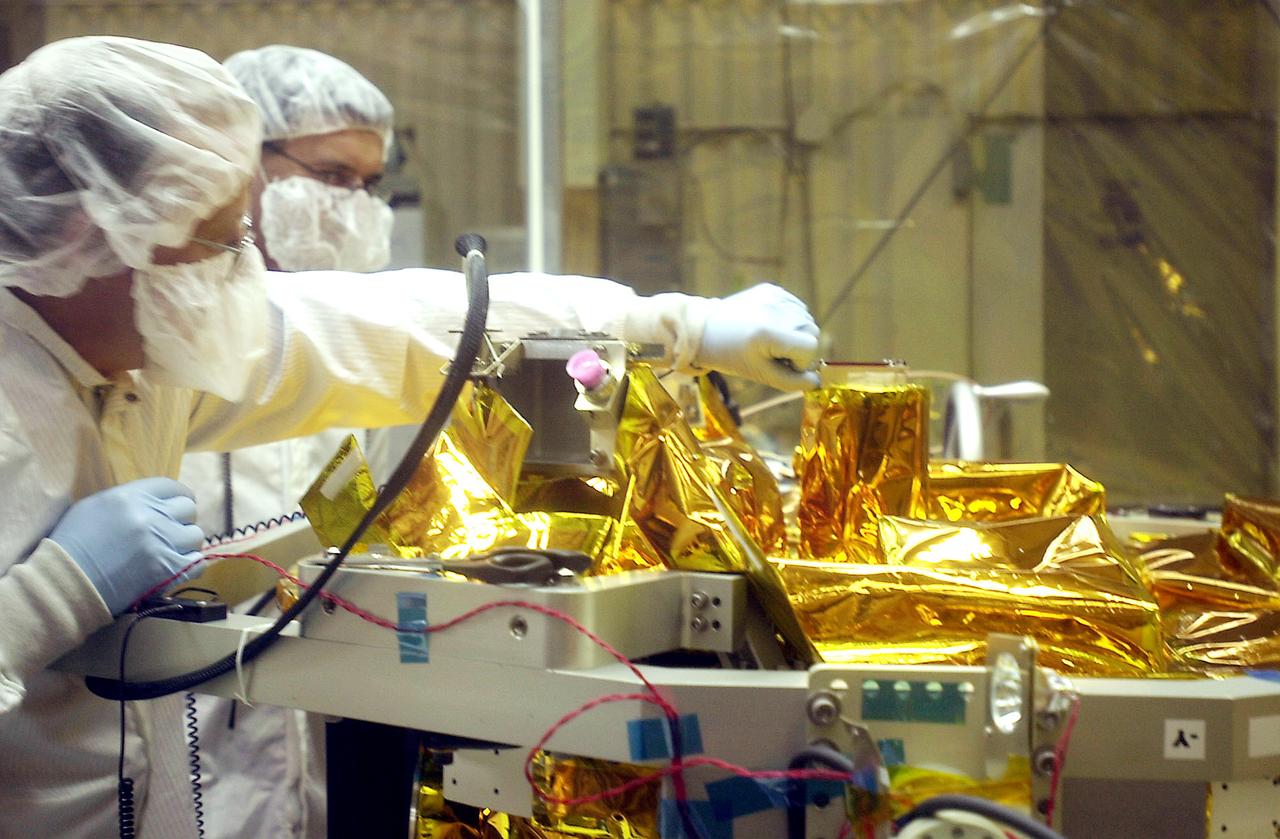
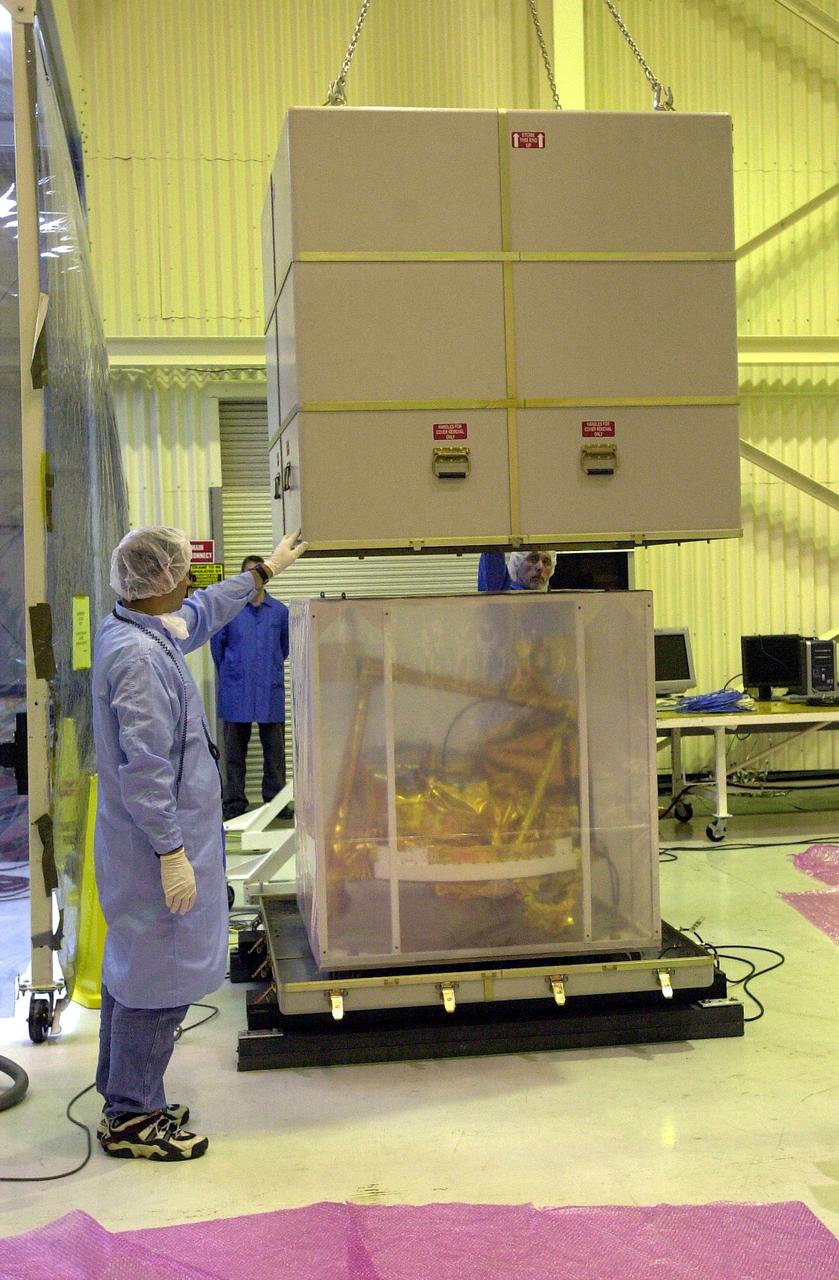
VANDENBERG AIR FORCE BASE, CALIF.- The cover is being lifted off SciSat-1 spacecraft at Vandenberg Air Force Base, Calif.   Sci-Sat, which will undergo instrument checkout and spacecraft functional testing, weighs approximately 330 pounds and after launch will be placed in a 400-mile-high polar orbit to investigate processes that control the distribution of ozone in the upper atmosphere. The data from the satellite will provide Canadian and international scientists with improved measurements relating to global ozone processes and help policymakers assess existing environmental policy and develop protective measures for improving the health of our atmosphere, preventing further ozone depletion. The mission is designed to last two years.
VANDENBERG AIR FORCE BASE, CALIF.- The cover is being lifted off SciSat-1 spacecraft at Vandenberg Air Force Base, Calif. Sci-Sat, which will undergo instrument checkout and spacecraft functional testing, weighs approximately 330 pounds and after launch will be placed in a 400-mile-high polar orbit to investigate processes that control the distribution of ozone in the upper atmosphere. The data from the satellite will provide Canadian and international scientists with improved measurements relating to global ozone processes and help policymakers assess existing environmental policy and develop protective measures for improving the health of our atmosphere, preventing further ozone depletion. The mission is designed to last two years.
VANDENBERG AIR FORCE BASE, CALIF.-  The covered SciSat-1 spacecraft is lowered onto a test stand at Vandenberg Air Force Base, Calif., for functional testing.  The solar arrays will be attached and the communications systems checked out.   The SciSat-1 weighs approximately 330 pounds and after launch will be placed in a 400-mile-high polar orbit to investigate processes that control the distribution of ozone in the upper atmosphere. The data from the satellite will provide Canadian and international scientists with improved measurements relating to global ozone processes and help policymakers assess existing environmental policy and develop protective measures for improving the health of our atmosphere, preventing further ozone depletion. The mission is designed to last two years.
VANDENBERG AIR FORCE BASE, CALIF.- The covered SciSat-1 spacecraft is lowered onto a test stand at Vandenberg Air Force Base, Calif., for functional testing. The solar arrays will be attached and the communications systems checked out. The SciSat-1 weighs approximately 330 pounds and after launch will be placed in a 400-mile-high polar orbit to investigate processes that control the distribution of ozone in the upper atmosphere. The data from the satellite will provide Canadian and international scientists with improved measurements relating to global ozone processes and help policymakers assess existing environmental policy and develop protective measures for improving the health of our atmosphere, preventing further ozone depletion. The mission is designed to last two years.
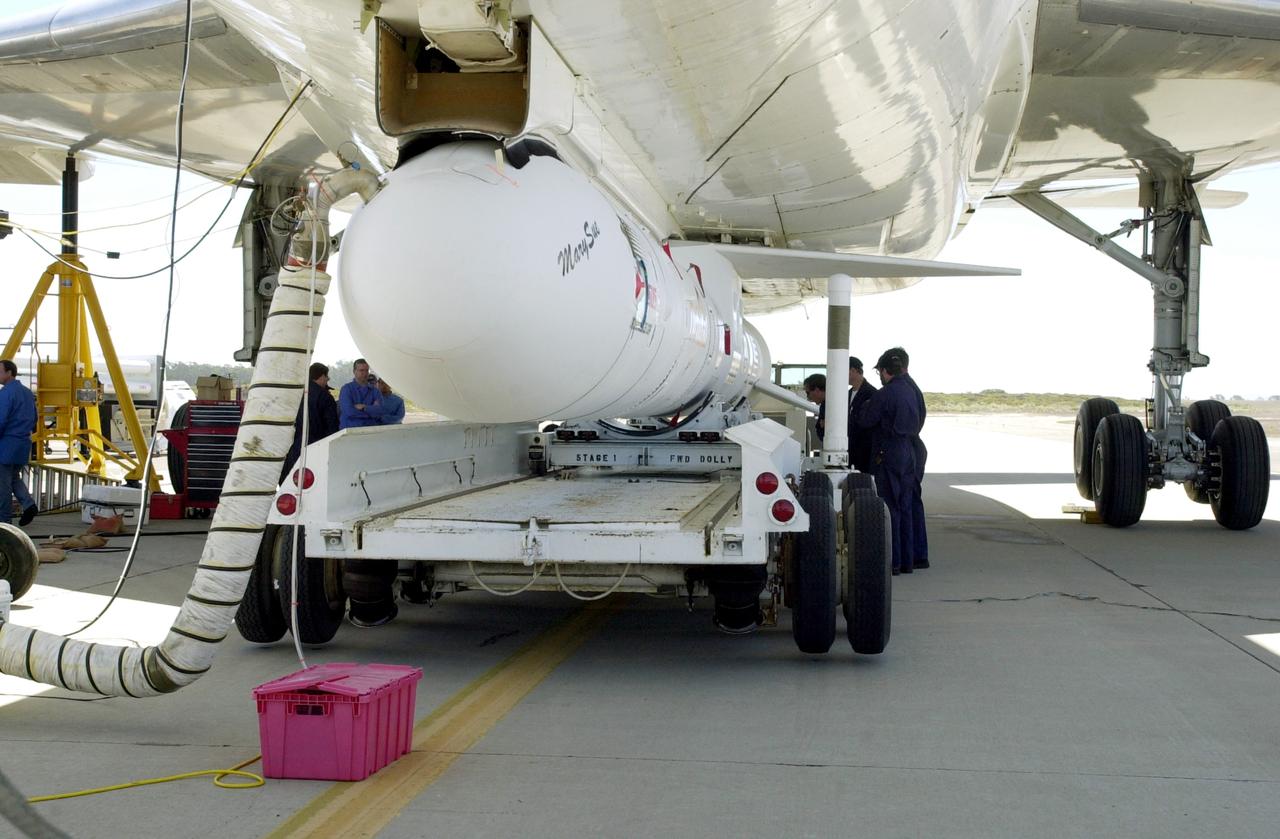
VANDENBERG AIR FORCE BASE, CALIF. -  The Pegasus transporter, with its cargo of  the SciSat-1 payload and Pegasus launch vehicle, moves under the L-1011 carrier aircraft for matting.  The SciSat-1 weighs approximately 330 pounds and after launch will be placed in a 400-mile-high polar orbit to investigate processes that control the distribution of ozone in the upper atmosphere. The data from the satellite will provide Canadian and international scientists with improved measurements relating to global ozone processes and help policymakers assess existing environmental policy and develop protective measures for improving the health of our atmosphere, preventing further ozone depletion. The mission is designed to last two years.
VANDENBERG AIR FORCE BASE, CALIF. - The Pegasus transporter, with its cargo of the SciSat-1 payload and Pegasus launch vehicle, moves under the L-1011 carrier aircraft for matting. The SciSat-1 weighs approximately 330 pounds and after launch will be placed in a 400-mile-high polar orbit to investigate processes that control the distribution of ozone in the upper atmosphere. The data from the satellite will provide Canadian and international scientists with improved measurements relating to global ozone processes and help policymakers assess existing environmental policy and develop protective measures for improving the health of our atmosphere, preventing further ozone depletion. The mission is designed to last two years.
VANDENBERG AIR FORCE BASE, CALIF.- At Vandenberg Air Force Base, Calif., spacecraft functional testing is underway on the SciSat-1. The solar arrays are being attached and the communications systems are also being checked out.   The SciSat-1 weighs approximately 330 pounds and after launch will be placed in a 400-mile-high polar orbit to investigate processes that control the distribution of ozone in the upper atmosphere. The data from the satellite will provide Canadian and international scientists with improved measurements relating to global ozone processes and help policymakers assess existing environmental policy and develop protective measures for improving the health of our atmosphere, preventing further ozone depletion. The mission is designed to last two years.
VANDENBERG AIR FORCE BASE, CALIF.- At Vandenberg Air Force Base, Calif., spacecraft functional testing is underway on the SciSat-1. The solar arrays are being attached and the communications systems are also being checked out. The SciSat-1 weighs approximately 330 pounds and after launch will be placed in a 400-mile-high polar orbit to investigate processes that control the distribution of ozone in the upper atmosphere. The data from the satellite will provide Canadian and international scientists with improved measurements relating to global ozone processes and help policymakers assess existing environmental policy and develop protective measures for improving the health of our atmosphere, preventing further ozone depletion. The mission is designed to last two years.
VANDENBERG AIR FORCE BASE, CALIF. - The SciSat-1 spacecraft is revealed at Vandenberg Air Force Base, Calif.   Sci-Sat, which will undergo instrument checkout and spacecraft functional testing, weighs approximately 330 pounds and after launch will be placed in a 400-mile-high polar orbit to investigate processes that control the distribution of ozone in the upper atmosphere. The data from the satellite will provide Canadian and international scientists with improved measurements relating to global ozone processes and help policymakers assess existing environmental policy and develop protective measures for improving the health of our atmosphere, preventing further ozone depletion. The mission is designed to last two years.
VANDENBERG AIR FORCE BASE, CALIF. - The SciSat-1 spacecraft is revealed at Vandenberg Air Force Base, Calif. Sci-Sat, which will undergo instrument checkout and spacecraft functional testing, weighs approximately 330 pounds and after launch will be placed in a 400-mile-high polar orbit to investigate processes that control the distribution of ozone in the upper atmosphere. The data from the satellite will provide Canadian and international scientists with improved measurements relating to global ozone processes and help policymakers assess existing environmental policy and develop protective measures for improving the health of our atmosphere, preventing further ozone depletion. The mission is designed to last two years.
KENNEDY SPACE CENTER, FLA. -  The SciSat-1 spacecraft is uncrated at Vandenberg Air Force Base, Calif.  SciSat-1 weighs approximately 330 pounds and will be placed in a 400-mile-high polar orbit to investigate processes that control the distribution of ozone in the upper atmosphere.  The scientific mission of SciSat-1 is to measure and understand the chemical processes that control the distribution of ozone in the Earth’s atmosphere, particularly at high altitudes.  The data from the satellite will provide Canadian and international scientists with improved measurements relating to global ozone processes and help policymakers assess existing environmental policy and develop protective measures for improving the health of our atmosphere, preventing further ozone depletion.  The mission is designed to last two years.
KENNEDY SPACE CENTER, FLA. - The SciSat-1 spacecraft is uncrated at Vandenberg Air Force Base, Calif. SciSat-1 weighs approximately 330 pounds and will be placed in a 400-mile-high polar orbit to investigate processes that control the distribution of ozone in the upper atmosphere. The scientific mission of SciSat-1 is to measure and understand the chemical processes that control the distribution of ozone in the Earth’s atmosphere, particularly at high altitudes. The data from the satellite will provide Canadian and international scientists with improved measurements relating to global ozone processes and help policymakers assess existing environmental policy and develop protective measures for improving the health of our atmosphere, preventing further ozone depletion. The mission is designed to last two years.
VANDENBERG AIR FORCE BASE, CALIF.- At Vandenberg Air Force Base, Calif., spacecraft functional testing is underway on the SciSat-1. The solar arrays are being attached and the communications systems are also being checked out.   The SciSat-1 weighs approximately 330 pounds and after launch will be placed in a 400-mile-high polar orbit to investigate processes that control the distribution of ozone in the upper atmosphere. The data from the satellite will provide Canadian and international scientists with improved measurements relating to global ozone processes and help policymakers assess existing environmental policy and develop protective measures for improving the health of our atmosphere, preventing further ozone depletion. The mission is designed to last two years.
VANDENBERG AIR FORCE BASE, CALIF.- At Vandenberg Air Force Base, Calif., spacecraft functional testing is underway on the SciSat-1. The solar arrays are being attached and the communications systems are also being checked out. The SciSat-1 weighs approximately 330 pounds and after launch will be placed in a 400-mile-high polar orbit to investigate processes that control the distribution of ozone in the upper atmosphere. The data from the satellite will provide Canadian and international scientists with improved measurements relating to global ozone processes and help policymakers assess existing environmental policy and develop protective measures for improving the health of our atmosphere, preventing further ozone depletion. The mission is designed to last two years.
VANDENBERG AIR FORCE BASE, CALIF. - The SciSat-1 payload, with fairing installed and attached to its Pegasus launch vehicle, arrives at the pad for mating to the L-1011 carrier aircraft.  The SciSat-1 weighs approximately 330 pounds and after launch will be placed in a 400-mile-high polar orbit to investigate processes that control the distribution of ozone in the upper atmosphere. The data from the satellite will provide Canadian and international scientists with improved measurements relating to global ozone processes and help policymakers assess existing environmental policy and develop protective measures for improving the health of our atmosphere, preventing further ozone depletion. The mission is designed to last two years.
VANDENBERG AIR FORCE BASE, CALIF. - The SciSat-1 payload, with fairing installed and attached to its Pegasus launch vehicle, arrives at the pad for mating to the L-1011 carrier aircraft. The SciSat-1 weighs approximately 330 pounds and after launch will be placed in a 400-mile-high polar orbit to investigate processes that control the distribution of ozone in the upper atmosphere. The data from the satellite will provide Canadian and international scientists with improved measurements relating to global ozone processes and help policymakers assess existing environmental policy and develop protective measures for improving the health of our atmosphere, preventing further ozone depletion. The mission is designed to last two years.
VANDENBERG AIR FORCE BASE, CALIF. -    Workers mate the Pegasus , with its cargo of the SciSat-1 payload to the L-1011 carrier aircraft.  The SciSat-1 weighs approximately 330 pounds and after launch will be placed in a 400-mile-high polar orbit to investigate processes that control the distribution of ozone in the upper atmosphere. The data from the satellite will provide Canadian and international scientists with improved measurements relating to global ozone processes and help policymakers assess existing environmental policy and develop protective measures for improving the health of our atmosphere, preventing further ozone depletion. The mission is designed to last two years.
VANDENBERG AIR FORCE BASE, CALIF. - Workers mate the Pegasus , with its cargo of the SciSat-1 payload to the L-1011 carrier aircraft. The SciSat-1 weighs approximately 330 pounds and after launch will be placed in a 400-mile-high polar orbit to investigate processes that control the distribution of ozone in the upper atmosphere. The data from the satellite will provide Canadian and international scientists with improved measurements relating to global ozone processes and help policymakers assess existing environmental policy and develop protective measures for improving the health of our atmosphere, preventing further ozone depletion. The mission is designed to last two years.
VANDENBERG AIR FORCE BASE, CALIF. - The Pegasus transporter, with its cargo of  the SciSat-1 payload and Pegasus launch vehicle, moves under the L-1011 carrier aircraft for matting.  The SciSat-1 weighs approximately 330 pounds and after launch will be placed in a 400-mile-high polar orbit to investigate processes that control the distribution of ozone in the upper atmosphere. The data from the satellite will provide Canadian and international scientists with improved measurements relating to global ozone processes and help policymakers assess existing environmental policy and develop protective measures for improving the health of our atmosphere, preventing further ozone depletion. The mission is designed to last two years.
VANDENBERG AIR FORCE BASE, CALIF. - The Pegasus transporter, with its cargo of the SciSat-1 payload and Pegasus launch vehicle, moves under the L-1011 carrier aircraft for matting. The SciSat-1 weighs approximately 330 pounds and after launch will be placed in a 400-mile-high polar orbit to investigate processes that control the distribution of ozone in the upper atmosphere. The data from the satellite will provide Canadian and international scientists with improved measurements relating to global ozone processes and help policymakers assess existing environmental policy and develop protective measures for improving the health of our atmosphere, preventing further ozone depletion. The mission is designed to last two years.
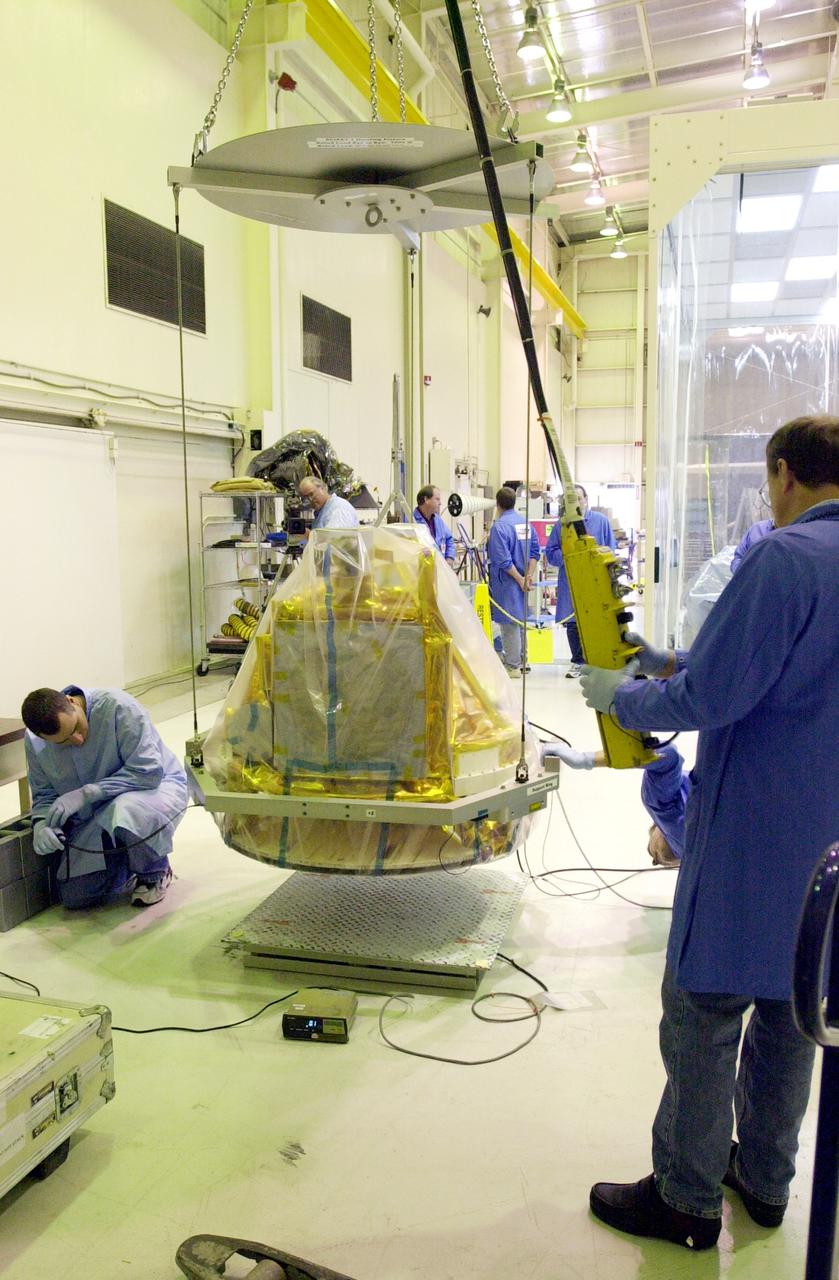
VANDENBERG AIR FORCE BASE, CALIF. -  At Vandenberg Air Force Base, Calif. a covered SciSat-1 spacecraft is lifted onto a rotation stand.   The solar arrays will be attached and the communications systems checked out.   The SciSat-1 weighs approximately 330 pounds and after launch will be placed in a 400-mile-high polar orbit to investigate processes that control the distribution of ozone in the upper atmosphere. The data from the satellite will provide Canadian and international scientists with improved measurements relating to global ozone processes and help policymakers assess existing environmental policy and develop protective measures for improving the health of our atmosphere, preventing further ozone depletion. The mission is designed to last two years.
VANDENBERG AIR FORCE BASE, CALIF. - At Vandenberg Air Force Base, Calif. a covered SciSat-1 spacecraft is lifted onto a rotation stand. The solar arrays will be attached and the communications systems checked out. The SciSat-1 weighs approximately 330 pounds and after launch will be placed in a 400-mile-high polar orbit to investigate processes that control the distribution of ozone in the upper atmosphere. The data from the satellite will provide Canadian and international scientists with improved measurements relating to global ozone processes and help policymakers assess existing environmental policy and develop protective measures for improving the health of our atmosphere, preventing further ozone depletion. The mission is designed to last two years.
VANDENBERG AIR FORCE BASE, CALIF.- At Vandenberg Air Force Base, Calif., spacecraft functional testing is underway on the SciSat-1. The solar arrays are being attached and the communications systems are also being checked out.   The SciSat-1 weighs approximately 330 pounds and after launch will be placed in a 400-mile-high polar orbit to investigate processes that control the distribution of ozone in the upper atmosphere. The data from the satellite will provide Canadian and international scientists with improved measurements relating to global ozone processes and help policymakers assess existing environmental policy and develop protective measures for improving the health of our atmosphere, preventing further ozone depletion. The mission is designed to last two years.
VANDENBERG AIR FORCE BASE, CALIF.- At Vandenberg Air Force Base, Calif., spacecraft functional testing is underway on the SciSat-1. The solar arrays are being attached and the communications systems are also being checked out. The SciSat-1 weighs approximately 330 pounds and after launch will be placed in a 400-mile-high polar orbit to investigate processes that control the distribution of ozone in the upper atmosphere. The data from the satellite will provide Canadian and international scientists with improved measurements relating to global ozone processes and help policymakers assess existing environmental policy and develop protective measures for improving the health of our atmosphere, preventing further ozone depletion. The mission is designed to last two years.
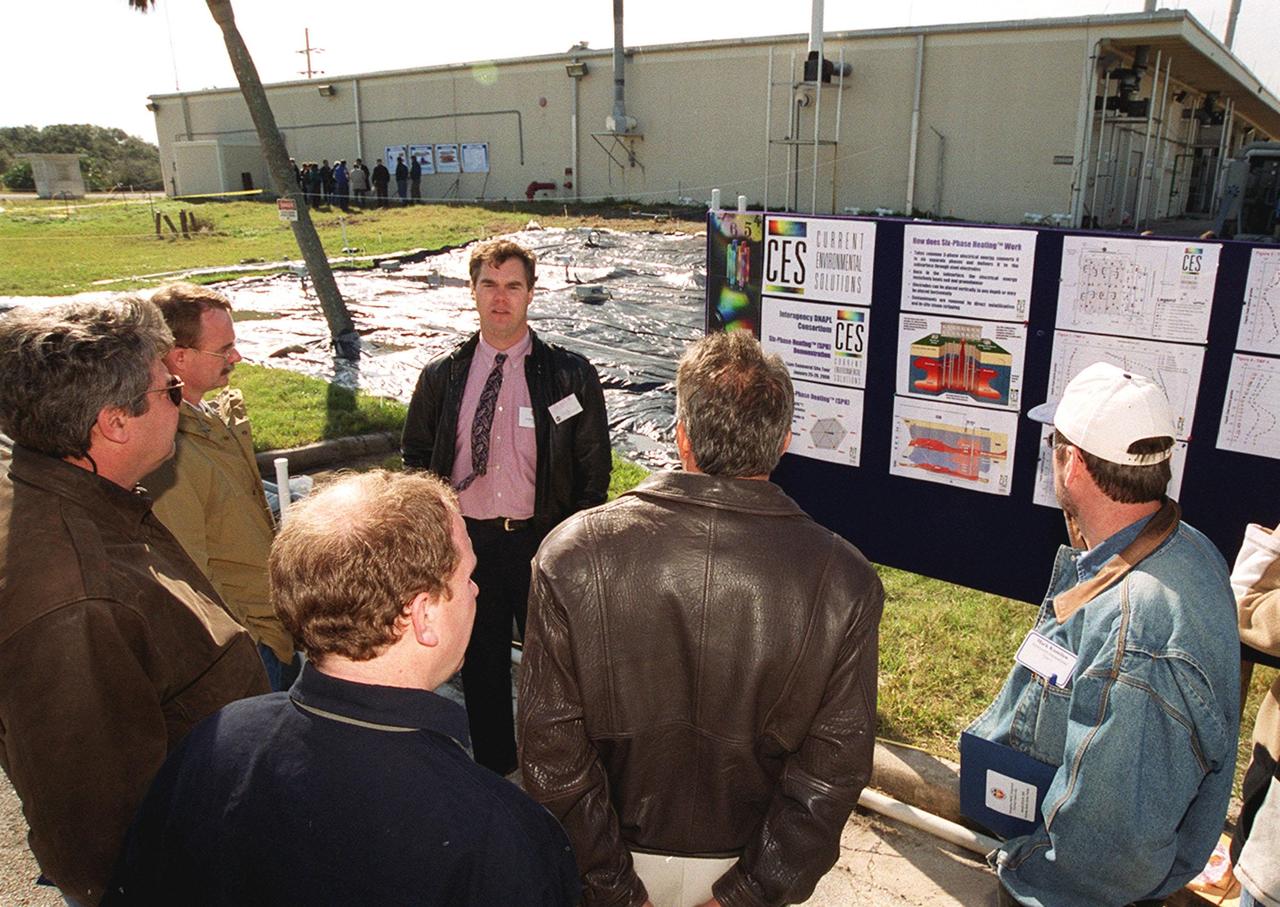
At Launch Complex 34, Greg Beyke, with Current Environmental Solutions, talks to representatives from environmental and federal agencies about the environmental research project that involves the Department of Defense, Environmental Protection Agency, Department of Energy and NASA in a groundwater cleanup effort. Concentrations of trichloroethylene solvent have been identified in the soil at the complex as a result of cleaning methods for rocket parts during the Apollo Program, which used the complex, in the 60s. The group formed the Interagency NDAPL Consortium (IDC) to study three contamination cleanup technologies: Six Phase Soil Heating, Steam Injection and In Situ Oxidation with Potassium Permanganate. All three methods may offer a way to remove the contaminants in months instead of decades. KSC hosted a two-day conference that presented information and demonstrations of the three technologies being tested at the site
KSC-00pp0101
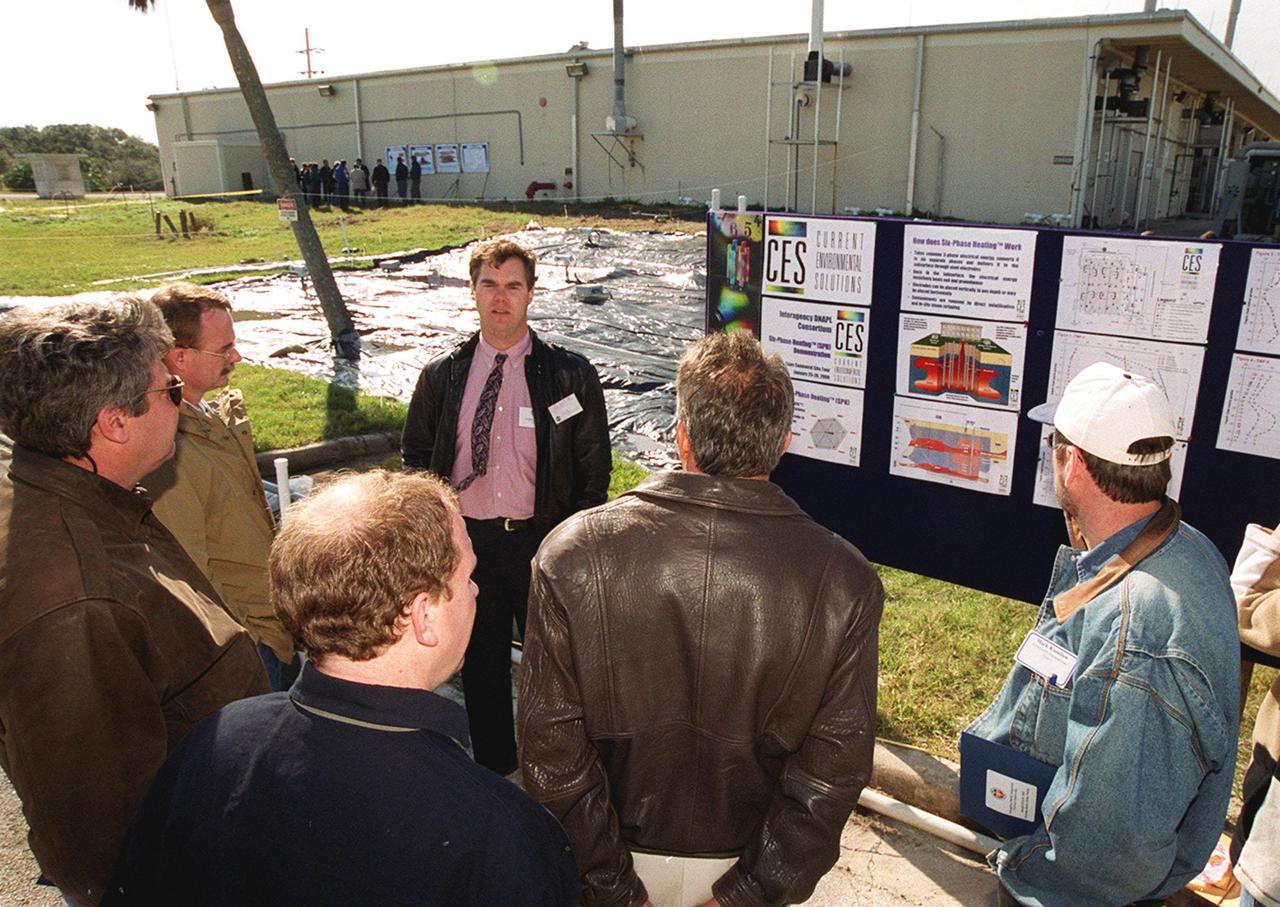
At Launch Complex 34, Greg Beyke, with Current Environmental Solutions, talks to representatives from environmental and federal agencies about the environmental research project that involves the Department of Defense, Environmental Protection Agency, Department of Energy and NASA in a groundwater cleanup effort. Concentrations of trichloroethylene solvent have been identified in the soil at the complex as a result of cleaning methods for rocket parts during the Apollo Program, which used the complex, in the 60s. The group formed the Interagency NDAPL Consortium (IDC) to study three contamination cleanup technologies: Six Phase Soil Heating, Steam Injection and In Situ Oxidation with Potassium Permanganate. All three methods may offer a way to remove the contaminants in months instead of decades. KSC hosted a two-day conference that presented information and demonstrations of the three technologies being tested at the site
KSC00pp0101
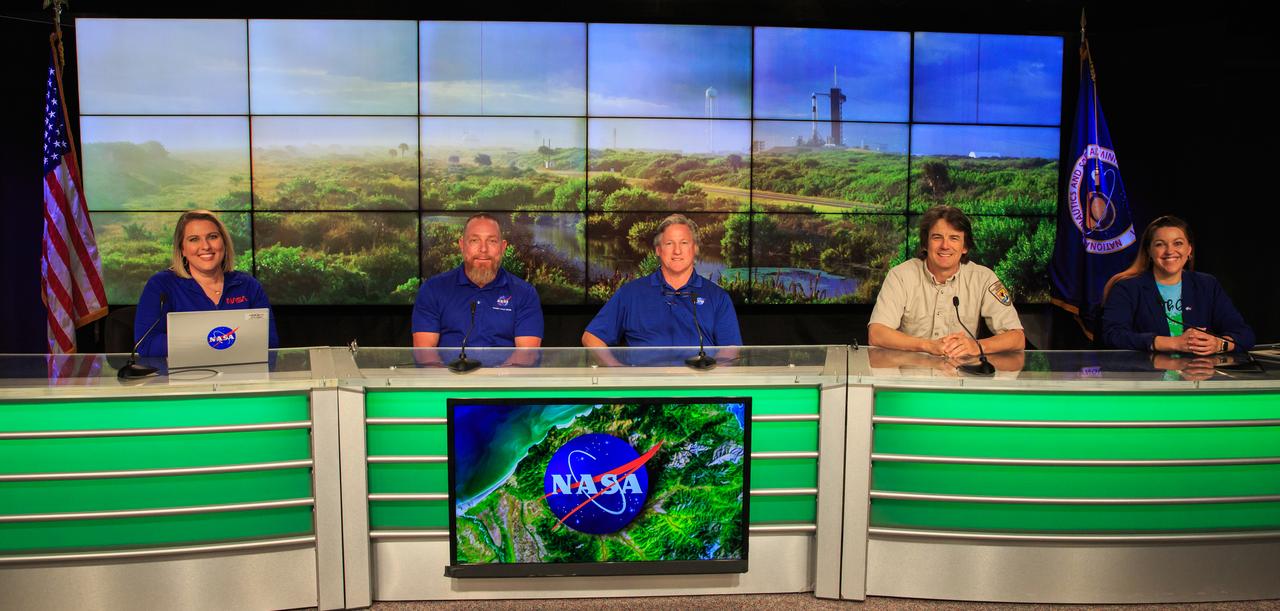
From left, NASA Communications’ Leah Martin; Environmental Planning Group Lead in Kennedy Space Center's Environmental Management Branch Don Dankert; Kennedy Environmental Protection Specialist Jeff Collins; Florida Fish and Wildlife Conservation Commission Officer Stanley Howater; and Stennis Space Center's Kelly McCarthy participate in an environmentally focused Earth Day briefing inside the News Auditorium at the Florida spaceport on April 20, 2023. As part of NASA’s NextGen STEM project, students from Florida’s Montverde Academy, Storm Grove Middle School, and Whispering Pines School, as well as a homeschool collective from Georgia, participated in person during the briefing, while middle- and high-school students across the country had the opportunity to ask questions of the panel via phone to discuss how technology and science coexist with nature at Kennedy.
Earth Day 2023 Student Briefing
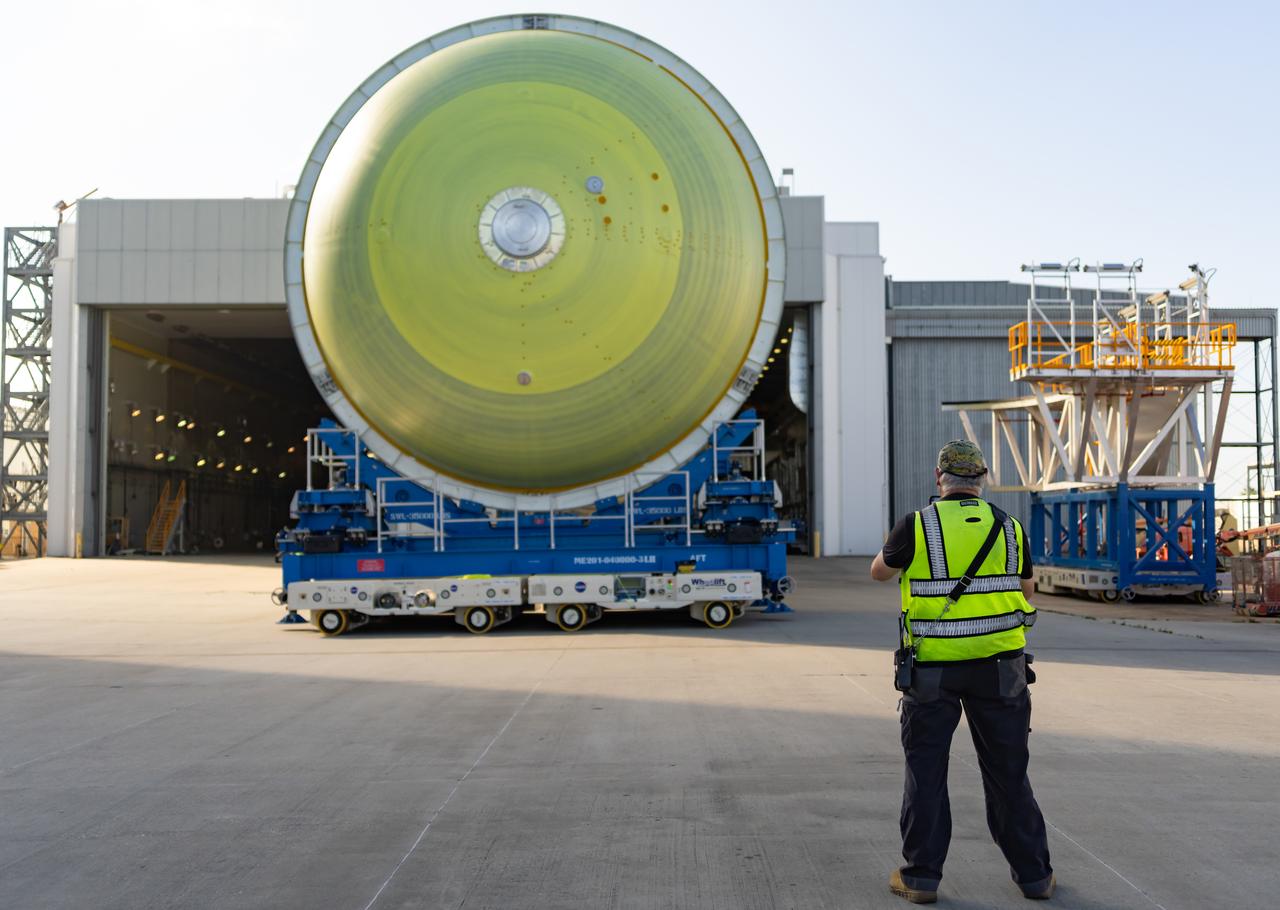
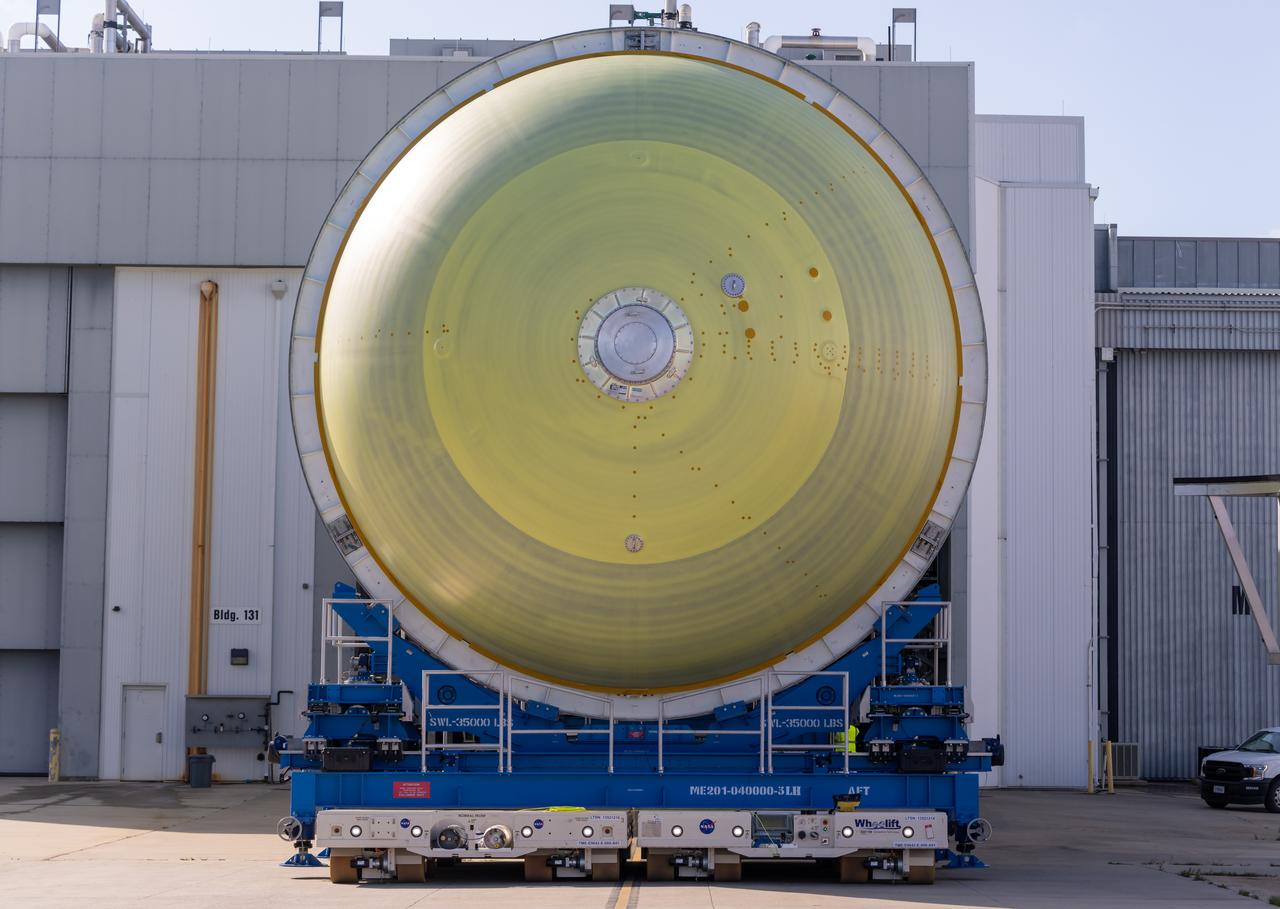
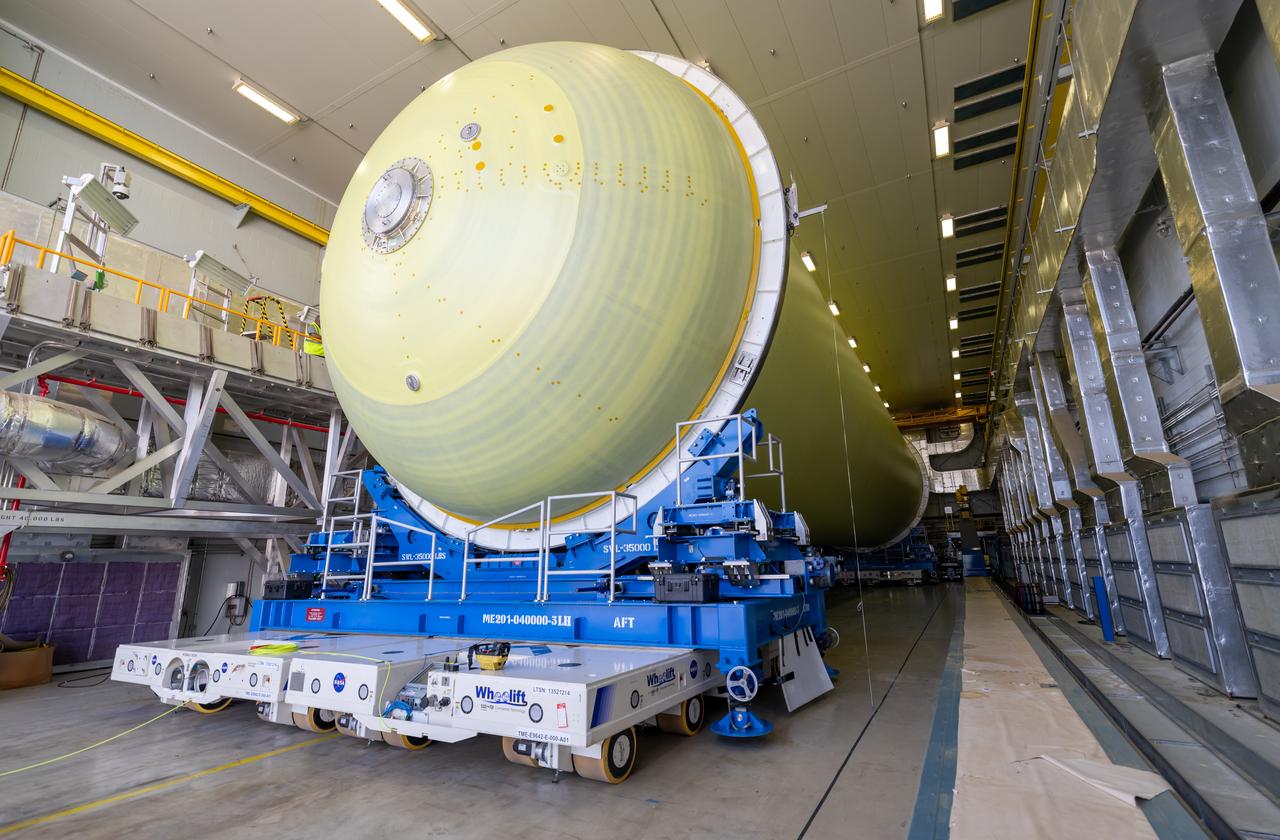
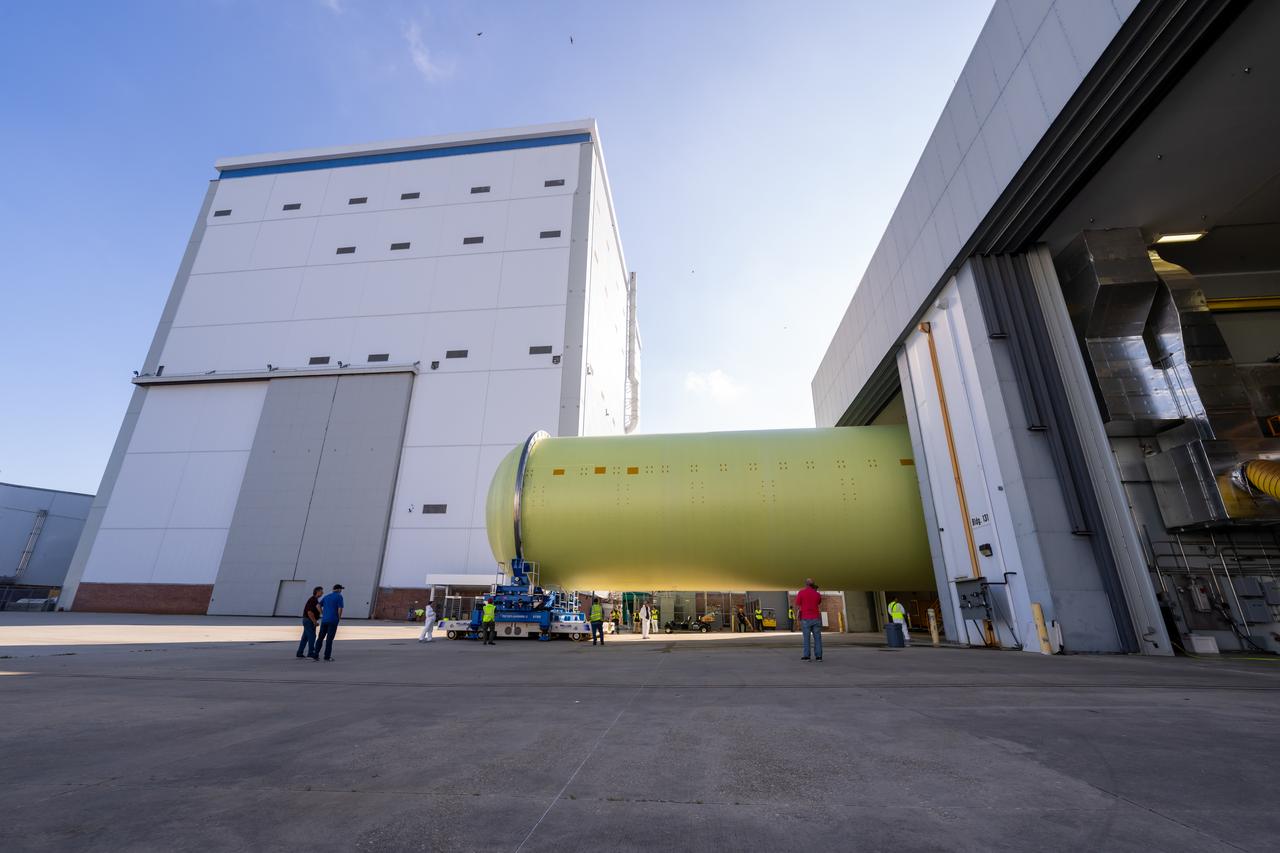
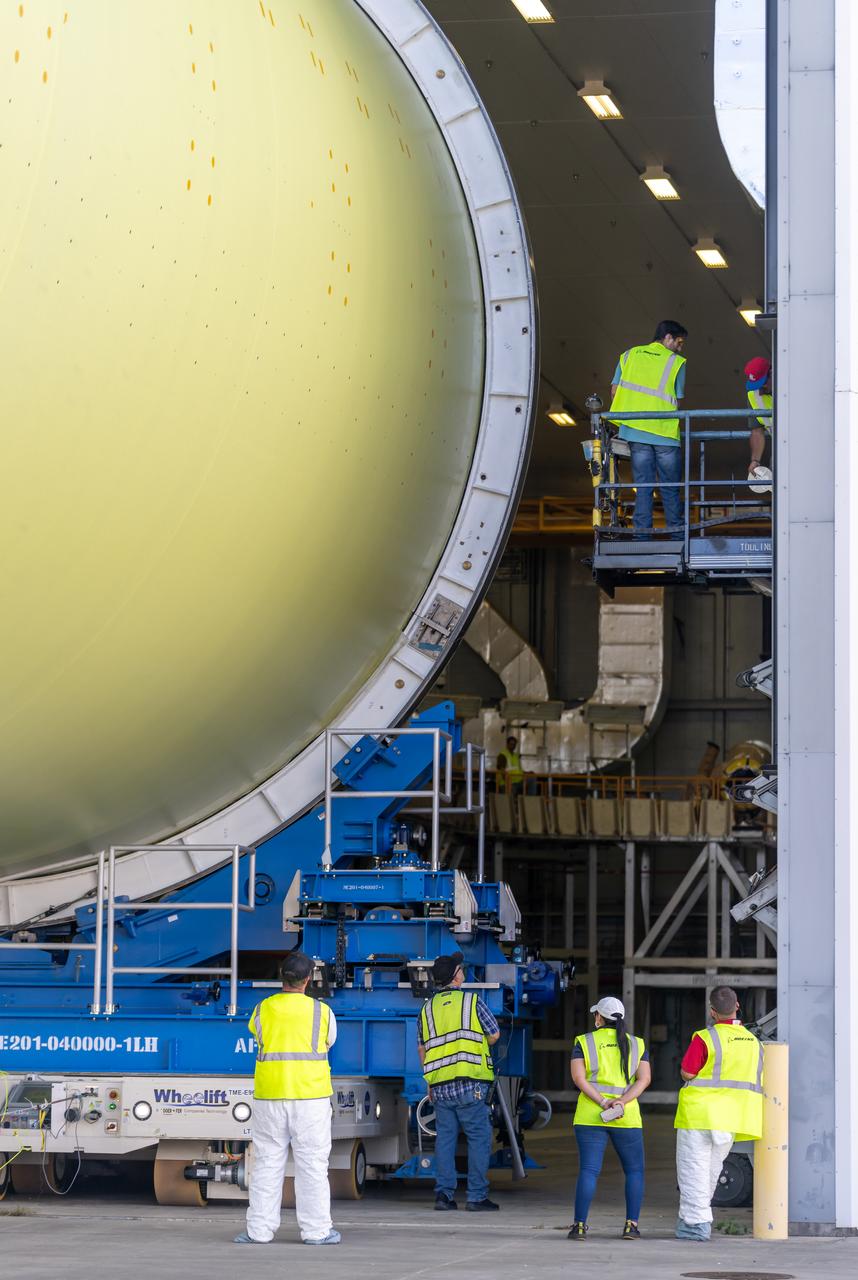
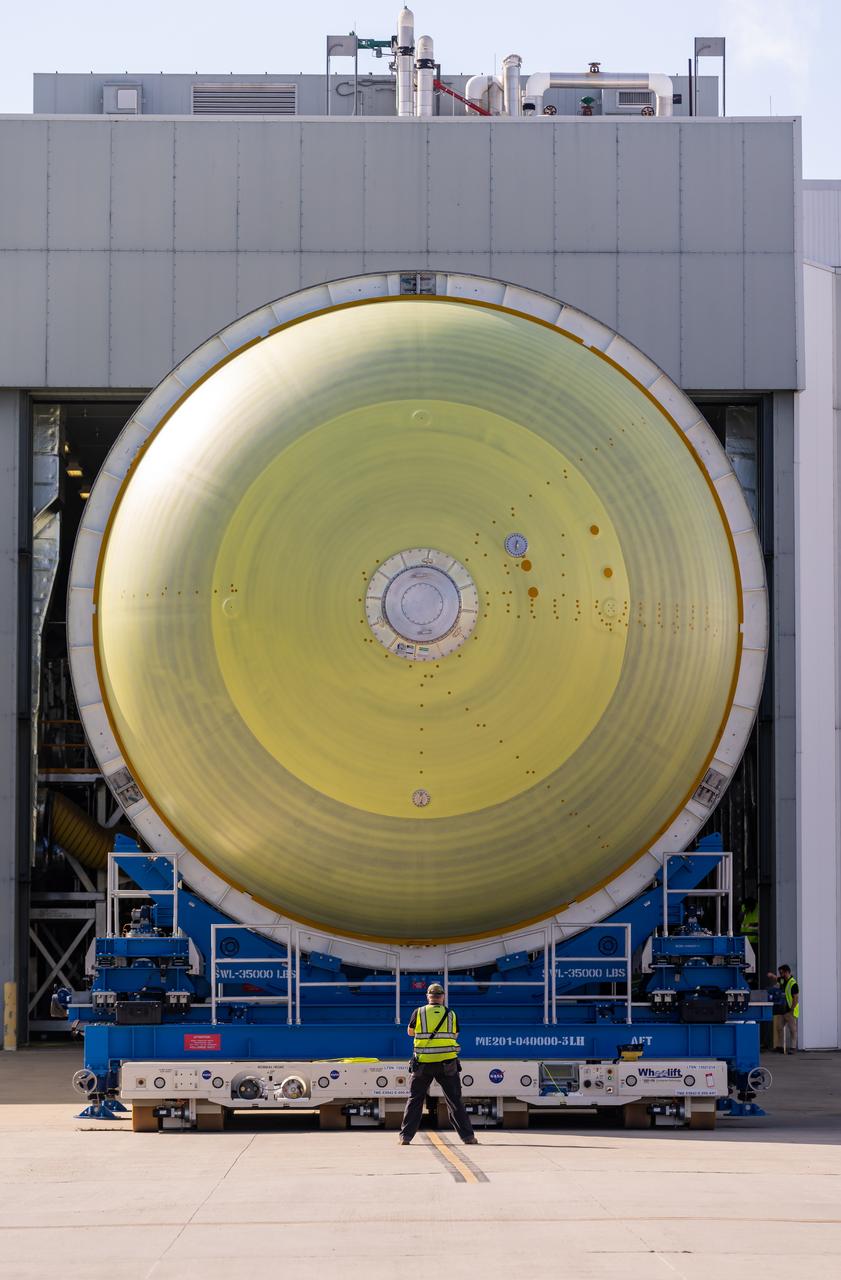
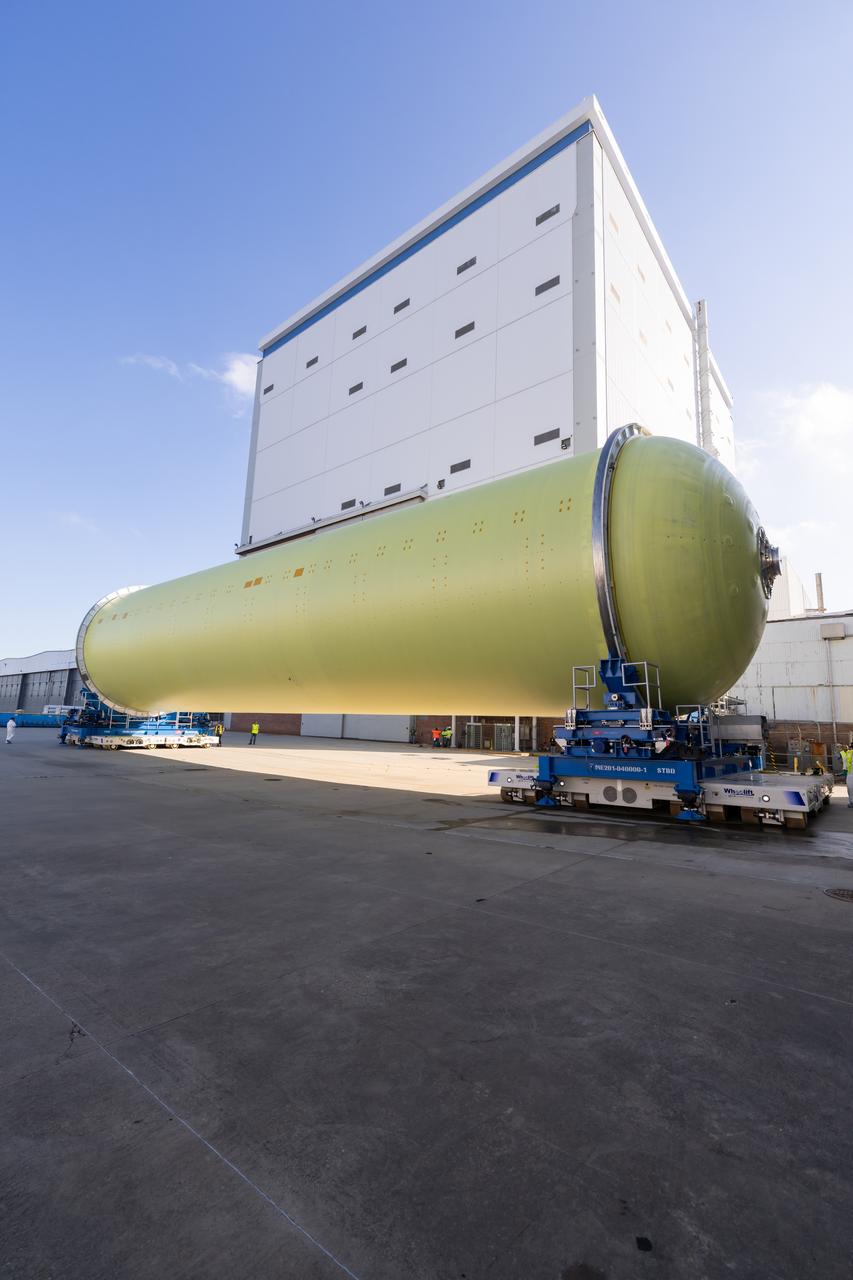
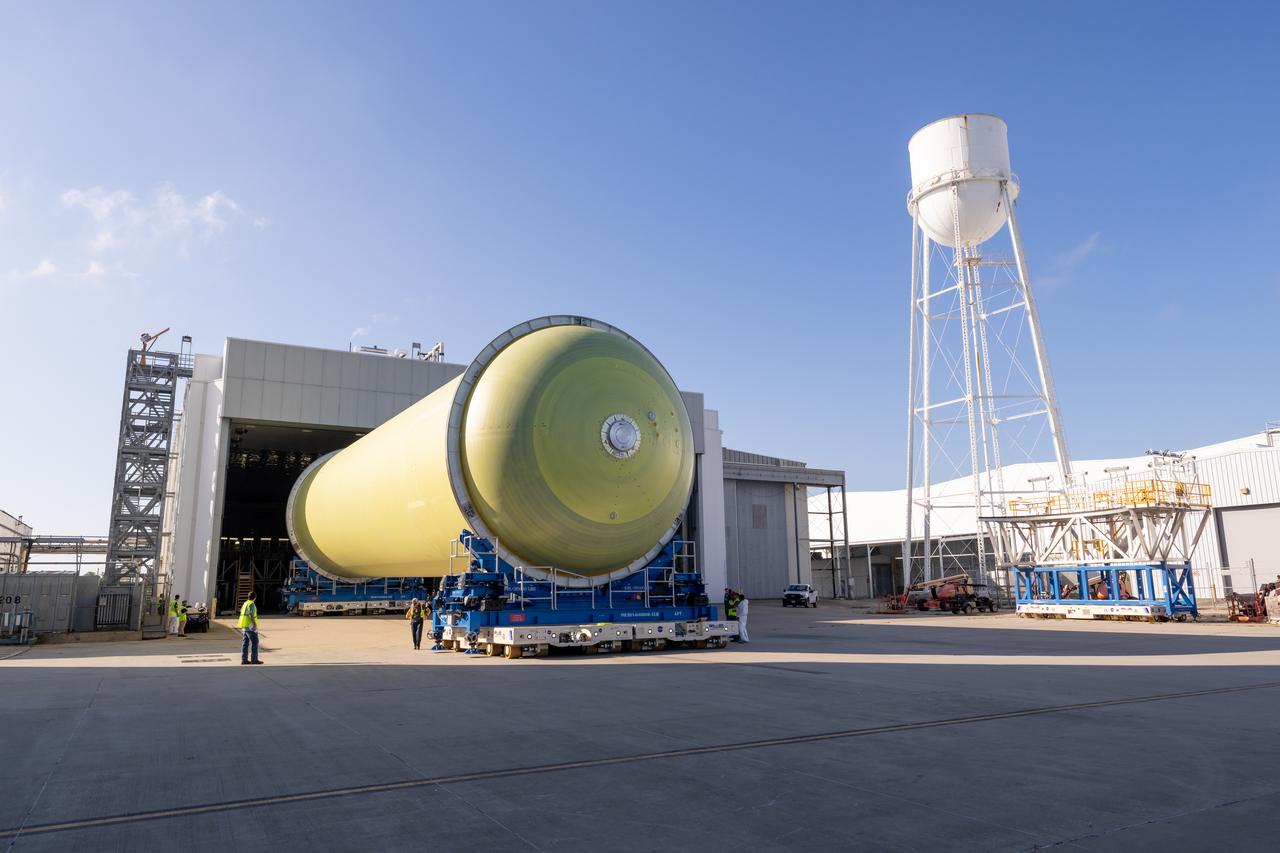
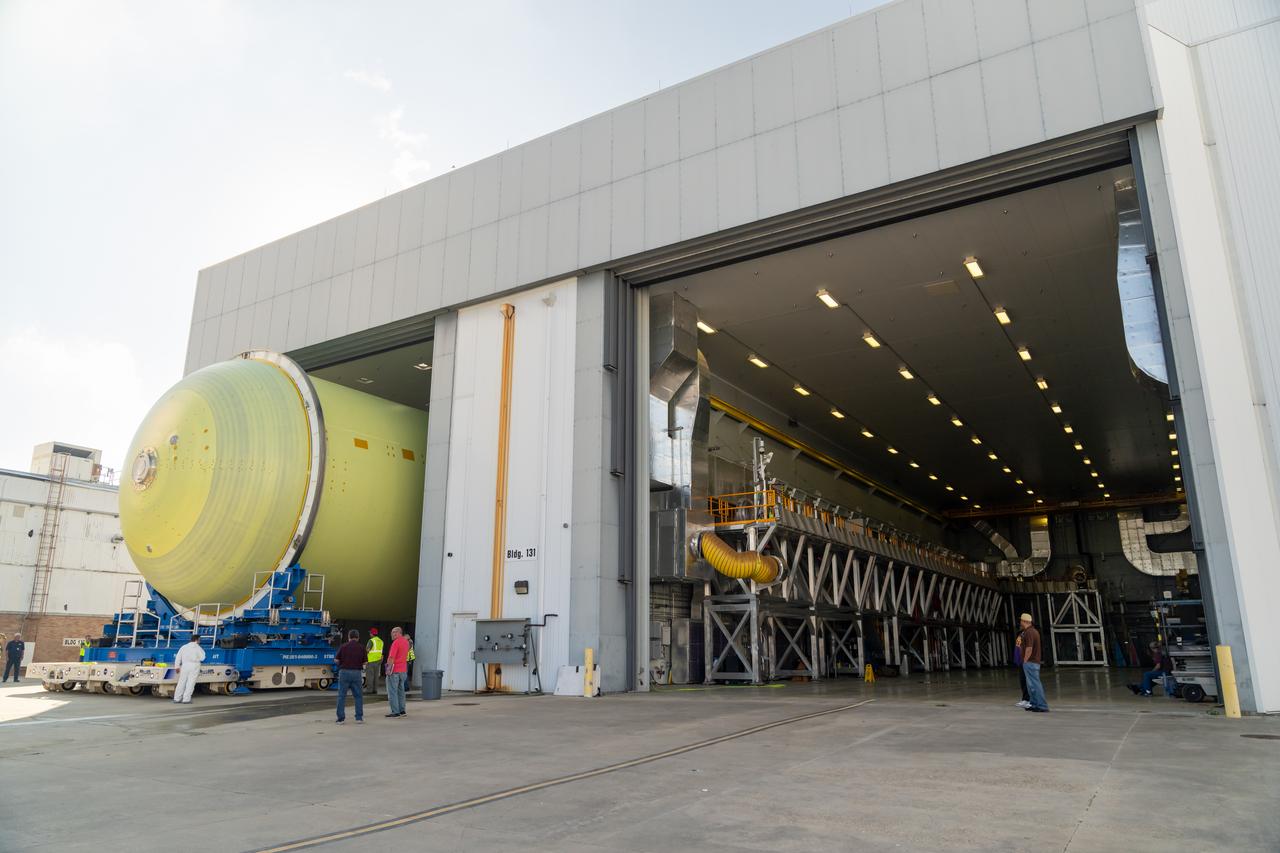
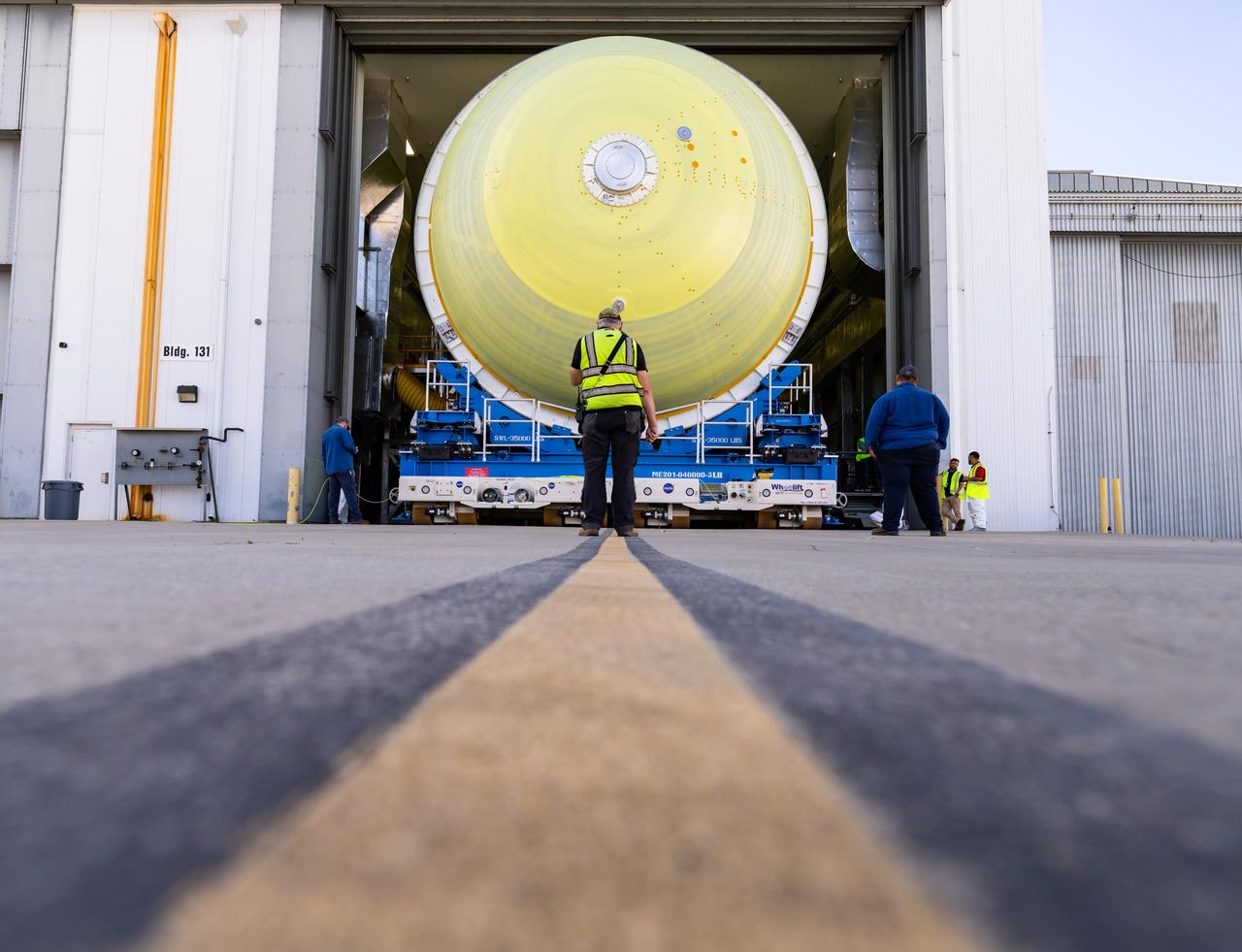
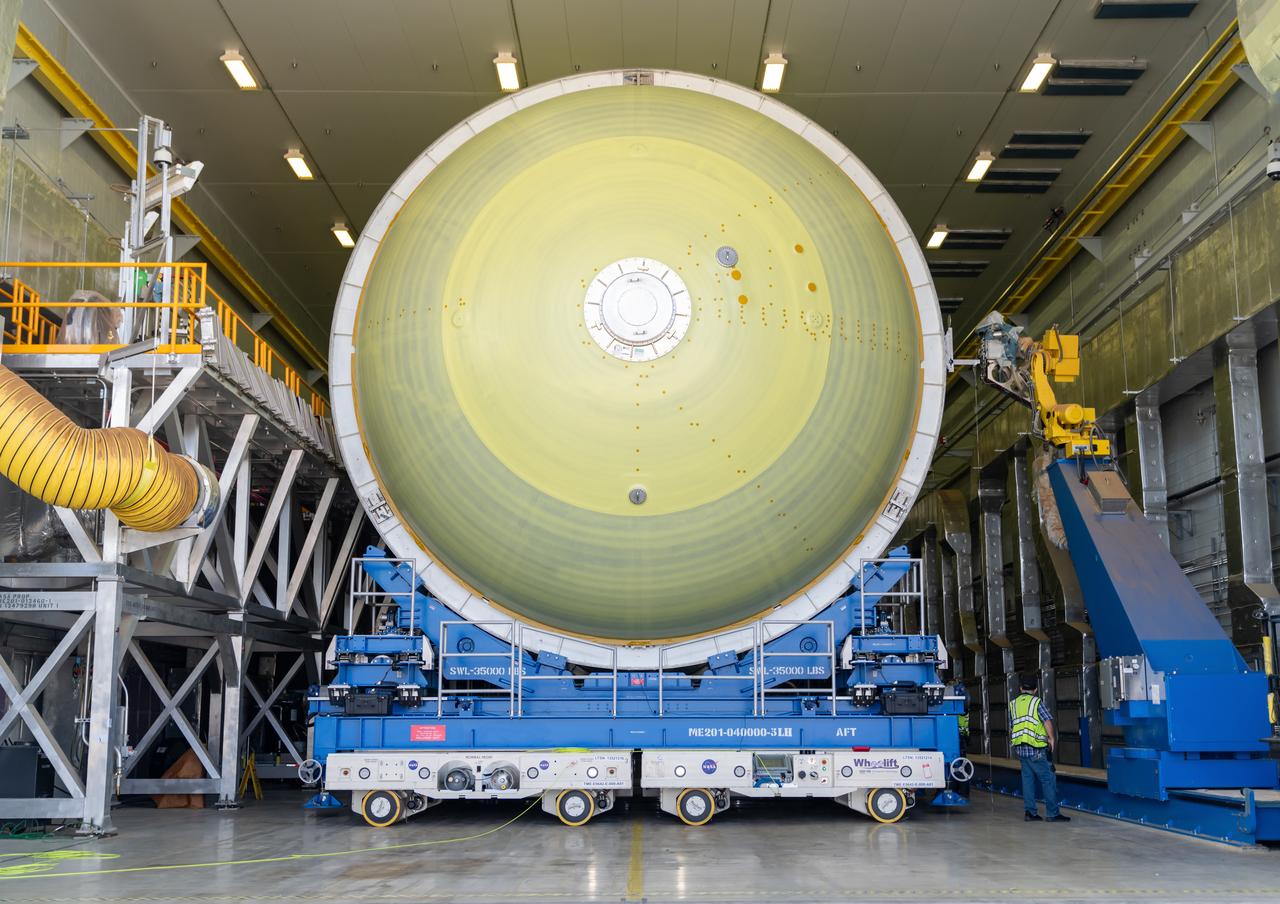
Teams move a liquid hydrogen tank for NASA’s SLS (Space Launch System) rocket out of a priming cell and into an adjacent cell on May 20 at the agency’s Michoud Assembly Facility in New Orleans. Inside the cell, the tank, which will be used on the core stage of NASA’s Artemis III mission, will receive its thermal protection system.  The thermal protection system, or spray-on foam insulation, provides protection to the core stage during launch. It is flexible enough to move with the rocket yet can withstand the aerodynamic pressures as the SLS accelerates from 0 to 17,500 mph and soars to more than 100 miles above the Earth. This third-generation insulation is more environmentally friendly and keeps the cryogenic propellant, which powers the rocket’s four RS-25 engines, extremely cold (the liquid hydrogen must remain at minus 423 degrees Fahrenheit/253 degrees Celsius) to remain in its liquid state. When applied the thermal protection system is a light-yellow color, which “tans” once exposed to the Sun’s ultraviolet rays, giving the SLS core stage its signature orange color.
Artemis III Liquid Hydrogen Tank Prepares for Thermal Protection System Application
Teams move a liquid hydrogen tank for NASA’s SLS (Space Launch System) rocket out of a priming cell and into an adjacent cell on May 20 at the agency’s Michoud Assembly Facility in New Orleans. Inside the cell, the tank, which will be used on the core stage of NASA’s Artemis III mission, will receive its thermal protection system.  The thermal protection system, or spray-on foam insulation, provides protection to the core stage during launch. It is flexible enough to move with the rocket yet can withstand the aerodynamic pressures as the SLS accelerates from 0 to 17,500 mph and soars to more than 100 miles above the Earth. This third-generation insulation is more environmentally friendly and keeps the cryogenic propellant, which powers the rocket’s four RS-25 engines, extremely cold (the liquid hydrogen must remain at minus 423 degrees Fahrenheit/253 degrees Celsius) to remain in its liquid state. When applied the thermal protection system is a light-yellow color, which “tans” once exposed to the Sun’s ultraviolet rays, giving the SLS core stage its signature orange color.
Artemis III Liquid Hydrogen Tank Prepares for Thermal Protection System Application
Teams move a liquid hydrogen tank for NASA’s SLS (Space Launch System) rocket out of a priming cell and into an adjacent cell on May 20 at the agency’s Michoud Assembly Facility in New Orleans. Inside the cell, the tank, which will be used on the core stage of NASA’s Artemis III mission, will receive its thermal protection system.  The thermal protection system, or spray-on foam insulation, provides protection to the core stage during launch. It is flexible enough to move with the rocket yet can withstand the aerodynamic pressures as the SLS accelerates from 0 to 17,500 mph and soars to more than 100 miles above the Earth. This third-generation insulation is more environmentally friendly and keeps the cryogenic propellant, which powers the rocket’s four RS-25 engines, extremely cold (the liquid hydrogen must remain at minus 423 degrees Fahrenheit/253 degrees Celsius) to remain in its liquid state. When applied the thermal protection system is a light-yellow color, which “tans” once exposed to the Sun’s ultraviolet rays, giving the SLS core stage its signature orange color.
Artemis III Liquid Hydrogen Tank Prepares for Thermal Protection System Application
Teams move a liquid hydrogen tank for NASA’s SLS (Space Launch System) rocket out of a priming cell and into an adjacent cell on May 20 at the agency’s Michoud Assembly Facility in New Orleans. Inside the cell, the tank, which will be used on the core stage of NASA’s Artemis III mission, will receive its thermal protection system.  The thermal protection system, or spray-on foam insulation, provides protection to the core stage during launch. It is flexible enough to move with the rocket yet can withstand the aerodynamic pressures as the SLS accelerates from 0 to 17,500 mph and soars to more than 100 miles above the Earth. This third-generation insulation is more environmentally friendly and keeps the cryogenic propellant, which powers the rocket’s four RS-25 engines, extremely cold (the liquid hydrogen must remain at minus 423 degrees Fahrenheit/253 degrees Celsius) to remain in its liquid state. When applied the thermal protection system is a light-yellow color, which “tans” once exposed to the Sun’s ultraviolet rays, giving the SLS core stage its signature orange color.
Artemis III Liquid Hydrogen Tank Prepares for Thermal Protection System Application
Teams move a liquid hydrogen tank for NASA’s SLS (Space Launch System) rocket out of a priming cell and into an adjacent cell on May 20 at the agency’s Michoud Assembly Facility in New Orleans. Inside the cell, the tank, which will be used on the core stage of NASA’s Artemis III mission, will receive its thermal protection system.  The thermal protection system, or spray-on foam insulation, provides protection to the core stage during launch. It is flexible enough to move with the rocket yet can withstand the aerodynamic pressures as the SLS accelerates from 0 to 17,500 mph and soars to more than 100 miles above the Earth. This third-generation insulation is more environmentally friendly and keeps the cryogenic propellant, which powers the rocket’s four RS-25 engines, extremely cold (the liquid hydrogen must remain at minus 423 degrees Fahrenheit/253 degrees Celsius) to remain in its liquid state. When applied the thermal protection system is a light-yellow color, which “tans” once exposed to the Sun’s ultraviolet rays, giving the SLS core stage its signature orange color.
Artemis III Liquid Hydrogen Tank Prepares for Thermal Protection System Application
Teams move a liquid hydrogen tank for NASA’s SLS (Space Launch System) rocket out of a priming cell and into an adjacent cell on May 20 at the agency’s Michoud Assembly Facility in New Orleans. Inside the cell, the tank, which will be used on the core stage of NASA’s Artemis III mission, will receive its thermal protection system.  The thermal protection system, or spray-on foam insulation, provides protection to the core stage during launch. It is flexible enough to move with the rocket yet can withstand the aerodynamic pressures as the SLS accelerates from 0 to 17,500 mph and soars to more than 100 miles above the Earth. This third-generation insulation is more environmentally friendly and keeps the cryogenic propellant, which powers the rocket’s four RS-25 engines, extremely cold (the liquid hydrogen must remain at minus 423 degrees Fahrenheit/253 degrees Celsius) to remain in its liquid state. When applied the thermal protection system is a light-yellow color, which “tans” once exposed to the Sun’s ultraviolet rays, giving the SLS core stage its signature orange color.
Artemis III Liquid Hydrogen Tank Prepares for Thermal Protection System Application
Teams move a liquid hydrogen tank for NASA’s SLS (Space Launch System) rocket out of a priming cell and into an adjacent cell on May 20 at the agency’s Michoud Assembly Facility in New Orleans. Inside the cell, the tank, which will be used on the core stage of NASA’s Artemis III mission, will receive its thermal protection system.  The thermal protection system, or spray-on foam insulation, provides protection to the core stage during launch. It is flexible enough to move with the rocket yet can withstand the aerodynamic pressures as the SLS accelerates from 0 to 17,500 mph and soars to more than 100 miles above the Earth. This third-generation insulation is more environmentally friendly and keeps the cryogenic propellant, which powers the rocket’s four RS-25 engines, extremely cold (the liquid hydrogen must remain at minus 423 degrees Fahrenheit/253 degrees Celsius) to remain in its liquid state. When applied the thermal protection system is a light-yellow color, which “tans” once exposed to the Sun’s ultraviolet rays, giving the SLS core stage its signature orange color.
Artemis III Liquid Hydrogen Tank Prepares for Thermal Protection System Application
Teams move a liquid hydrogen tank for NASA’s SLS (Space Launch System) rocket out of a priming cell and into an adjacent cell on May 20 at the agency’s Michoud Assembly Facility in New Orleans. Inside the cell, the tank, which will be used on the core stage of NASA’s Artemis III mission, will receive its thermal protection system.  The thermal protection system, or spray-on foam insulation, provides protection to the core stage during launch. It is flexible enough to move with the rocket yet can withstand the aerodynamic pressures as the SLS accelerates from 0 to 17,500 mph and soars to more than 100 miles above the Earth. This third-generation insulation is more environmentally friendly and keeps the cryogenic propellant, which powers the rocket’s four RS-25 engines, extremely cold (the liquid hydrogen must remain at minus 423 degrees Fahrenheit/253 degrees Celsius) to remain in its liquid state. When applied the thermal protection system is a light-yellow color, which “tans” once exposed to the Sun’s ultraviolet rays, giving the SLS core stage its signature orange color.
Artemis III Liquid Hydrogen Tank Prepares for Thermal Protection System Application
Teams move a liquid hydrogen tank for NASA’s SLS (Space Launch System) rocket out of a priming cell and into an adjacent cell on May 20 at the agency’s Michoud Assembly Facility in New Orleans. Inside the cell, the tank, which will be used on the core stage of NASA’s Artemis III mission, will receive its thermal protection system.  The thermal protection system, or spray-on foam insulation, provides protection to the core stage during launch. It is flexible enough to move with the rocket yet can withstand the aerodynamic pressures as the SLS accelerates from 0 to 17,500 mph and soars to more than 100 miles above the Earth. This third-generation insulation is more environmentally friendly and keeps the cryogenic propellant, which powers the rocket’s four RS-25 engines, extremely cold (the liquid hydrogen must remain at minus 423 degrees Fahrenheit/253 degrees Celsius) to remain in its liquid state. When applied the thermal protection system is a light-yellow color, which “tans” once exposed to the Sun’s ultraviolet rays, giving the SLS core stage its signature orange color.
Artemis III Liquid Hydrogen Tank Prepares for Thermal Protection System Application
Teams move a liquid hydrogen tank for NASA’s SLS (Space Launch System) rocket out of a priming cell and into an adjacent cell on May 20 at the agency’s Michoud Assembly Facility in New Orleans. Inside the cell, the tank, which will be used on the core stage of NASA’s Artemis III mission, will receive its thermal protection system.  The thermal protection system, or spray-on foam insulation, provides protection to the core stage during launch. It is flexible enough to move with the rocket yet can withstand the aerodynamic pressures as the SLS accelerates from 0 to 17,500 mph and soars to more than 100 miles above the Earth. This third-generation insulation is more environmentally friendly and keeps the cryogenic propellant, which powers the rocket’s four RS-25 engines, extremely cold (the liquid hydrogen must remain at minus 423 degrees Fahrenheit/253 degrees Celsius) to remain in its liquid state. When applied the thermal protection system is a light-yellow color, which “tans” once exposed to the Sun’s ultraviolet rays, giving the SLS core stage its signature orange color.
Artemis III Liquid Hydrogen Tank Prepares for Thermal Protection System Application
Teams move a liquid hydrogen tank for NASA’s SLS (Space Launch System) rocket out of a priming cell and into an adjacent cell on May 20 at the agency’s Michoud Assembly Facility in New Orleans. Inside the cell, the tank, which will be used on the core stage of NASA’s Artemis III mission, will receive its thermal protection system.  The thermal protection system, or spray-on foam insulation, provides protection to the core stage during launch. It is flexible enough to move with the rocket yet can withstand the aerodynamic pressures as the SLS accelerates from 0 to 17,500 mph and soars to more than 100 miles above the Earth. This third-generation insulation is more environmentally friendly and keeps the cryogenic propellant, which powers the rocket’s four RS-25 engines, extremely cold (the liquid hydrogen must remain at minus 423 degrees Fahrenheit/253 degrees Celsius) to remain in its liquid state. When applied the thermal protection system is a light-yellow color, which “tans” once exposed to the Sun’s ultraviolet rays, giving the SLS core stage its signature orange color.
Artemis III Liquid Hydrogen Tank Prepares for Thermal Protection System Application
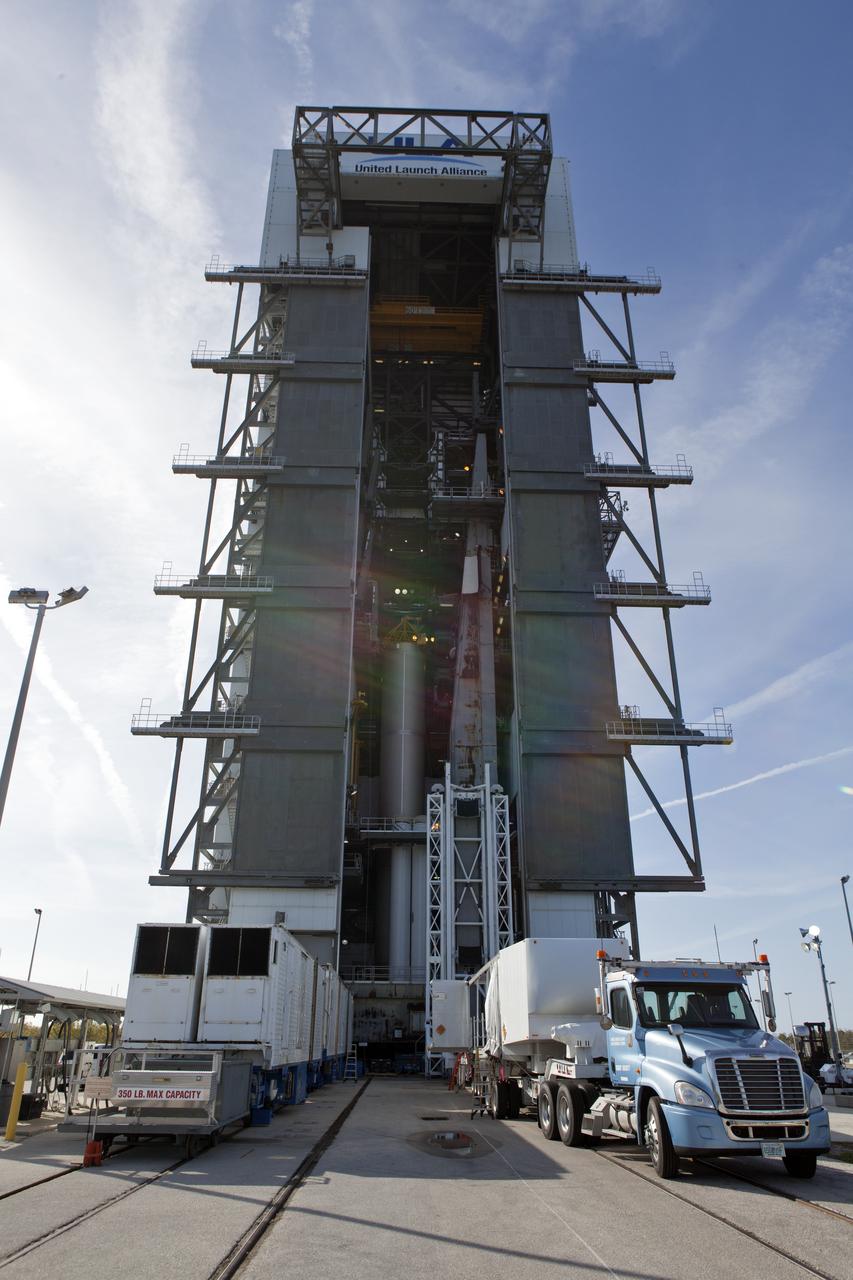
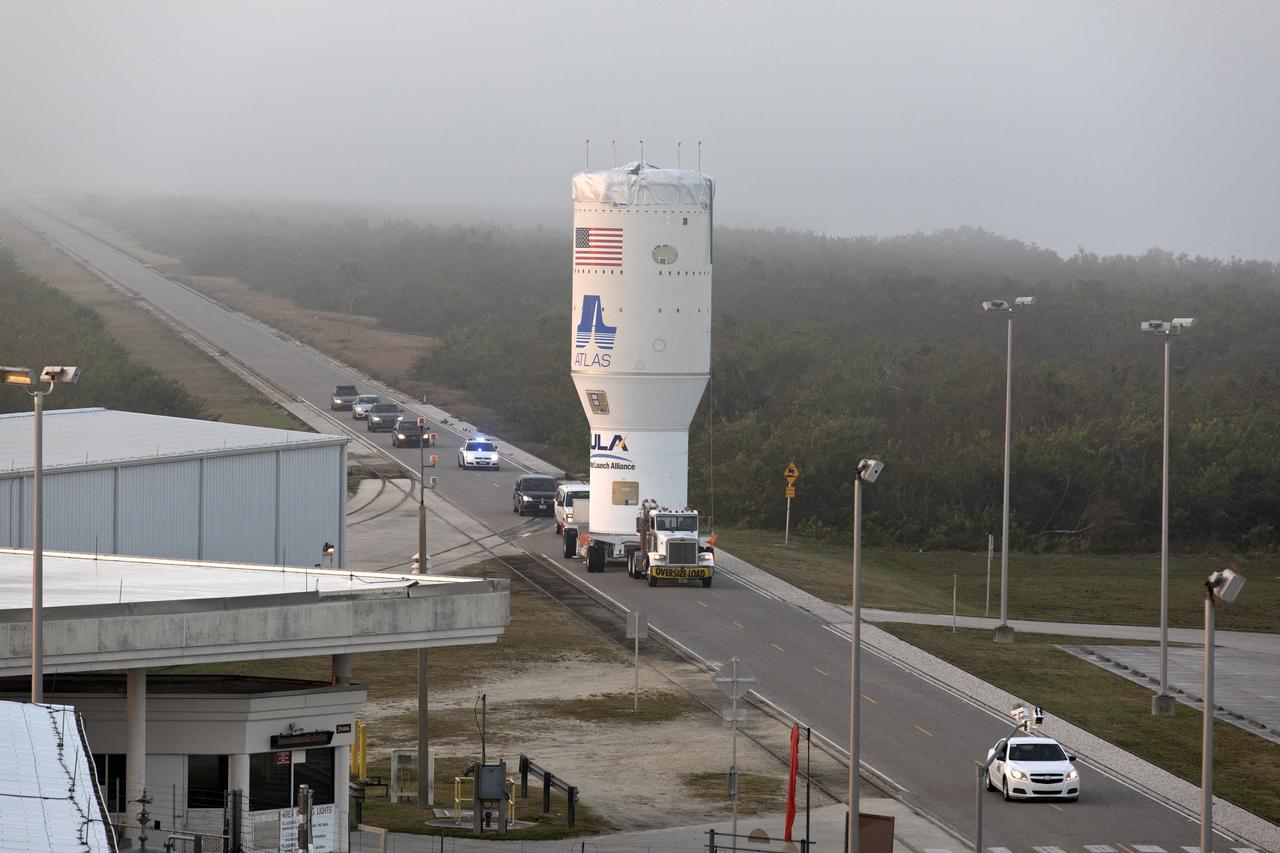
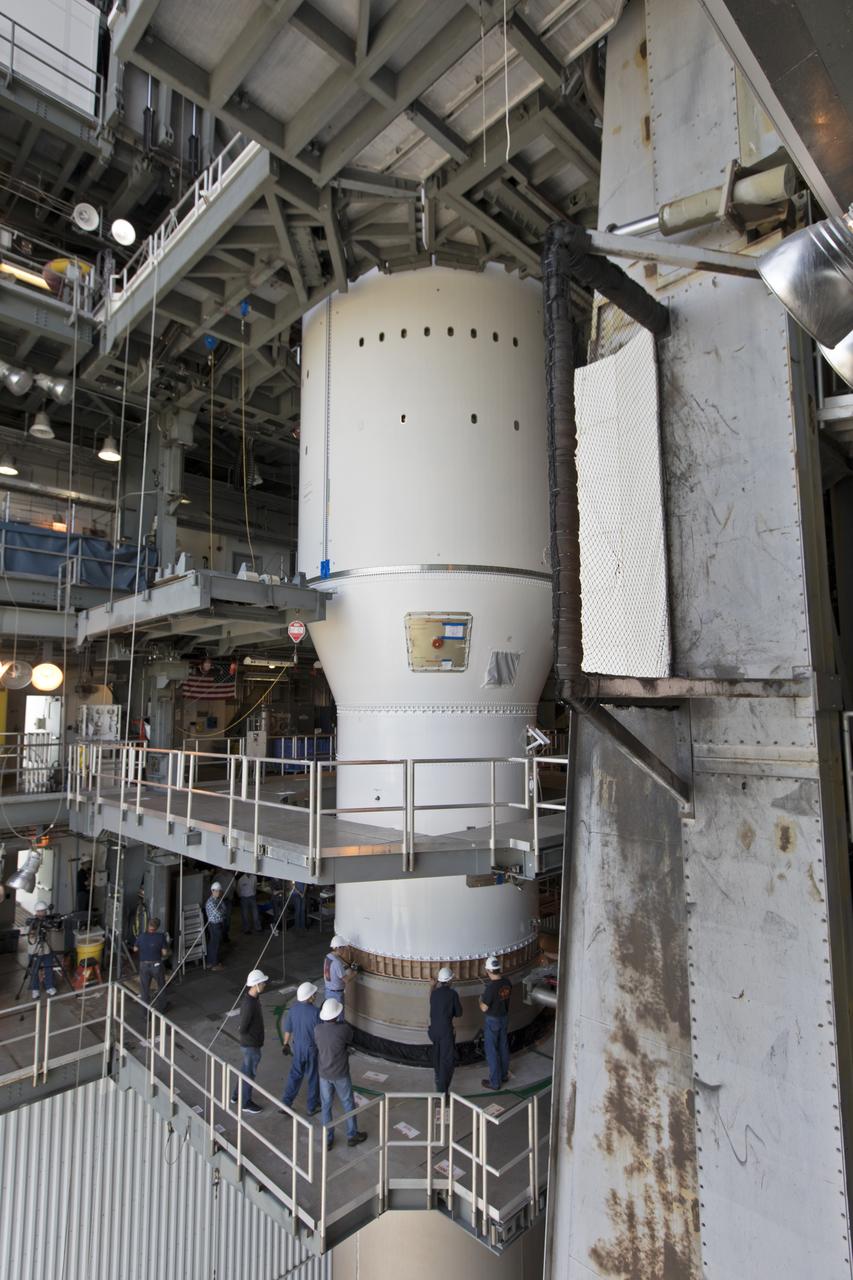
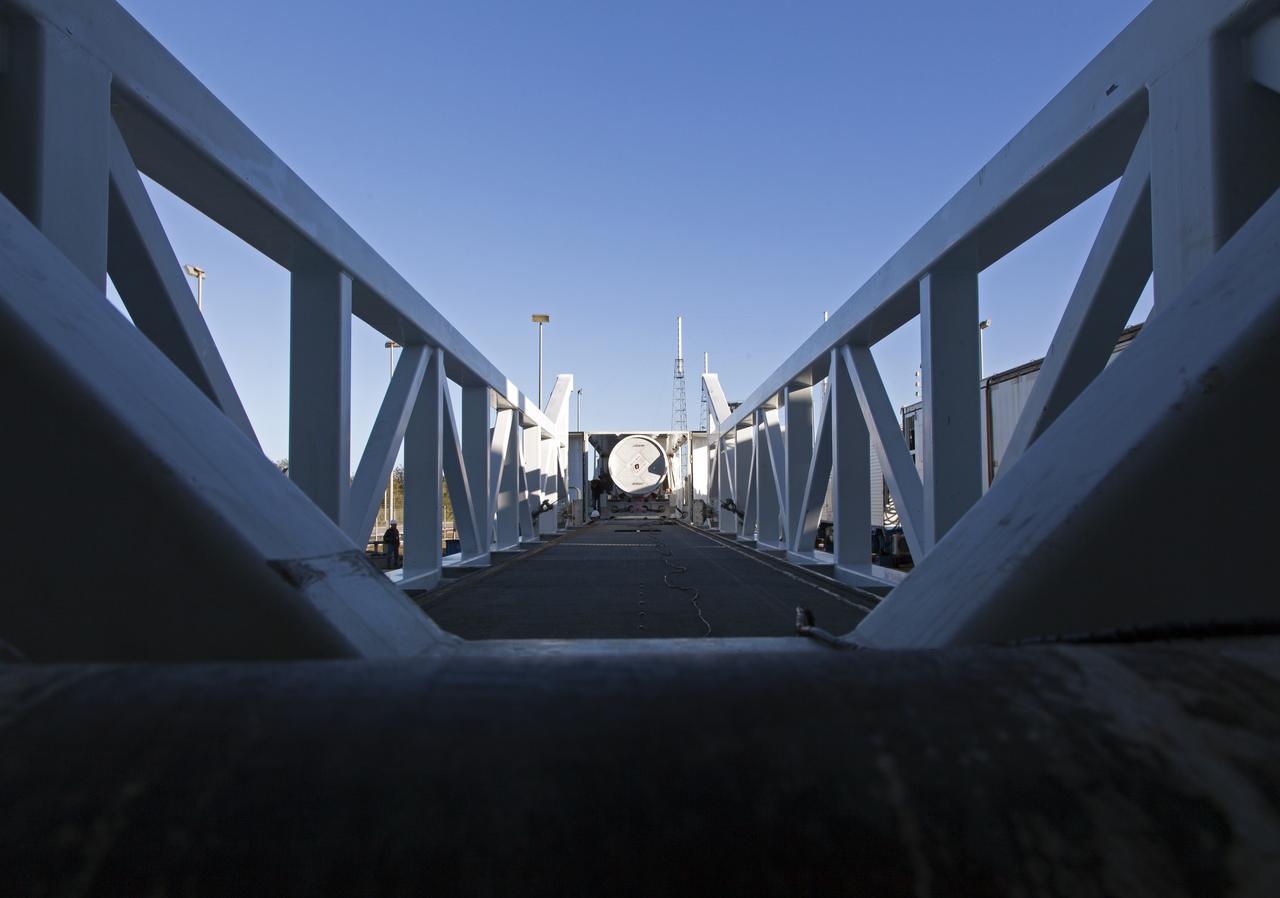
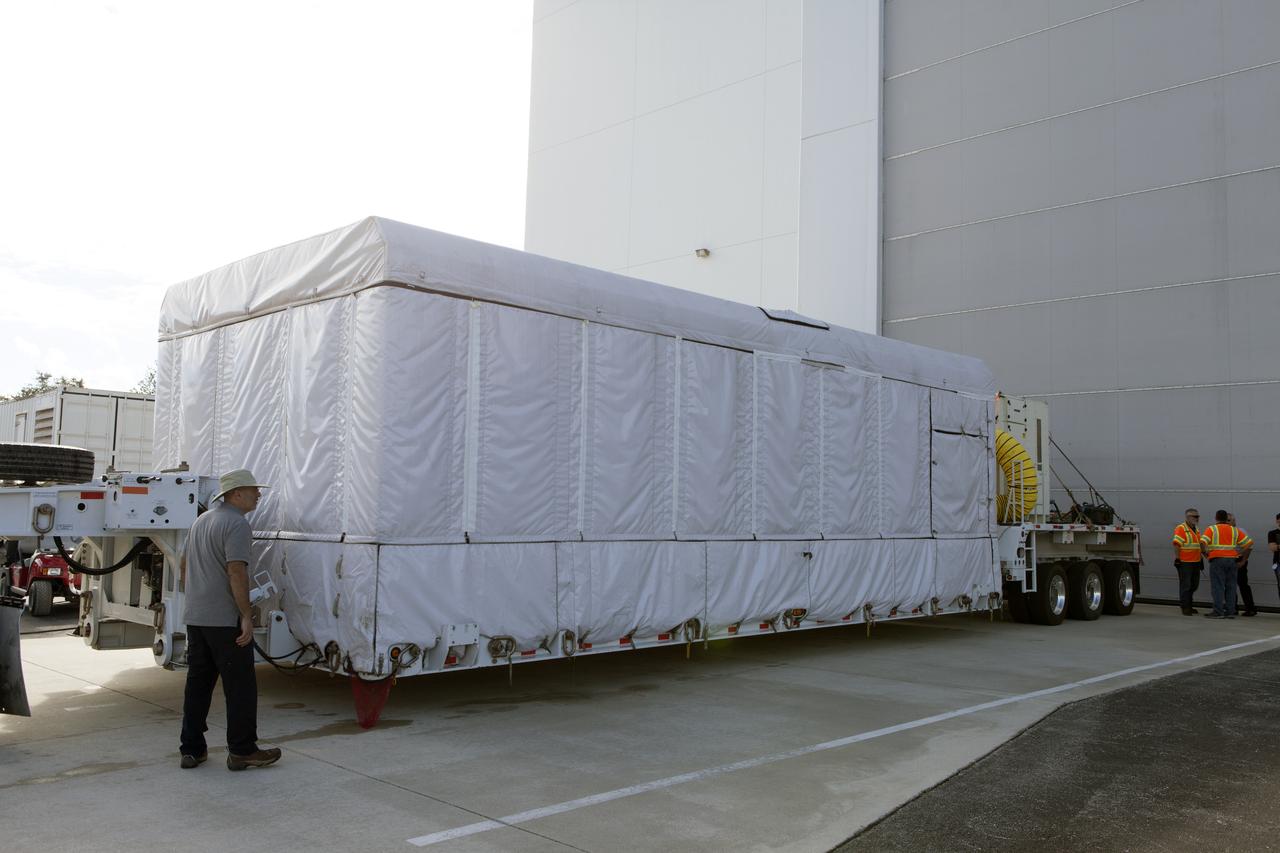
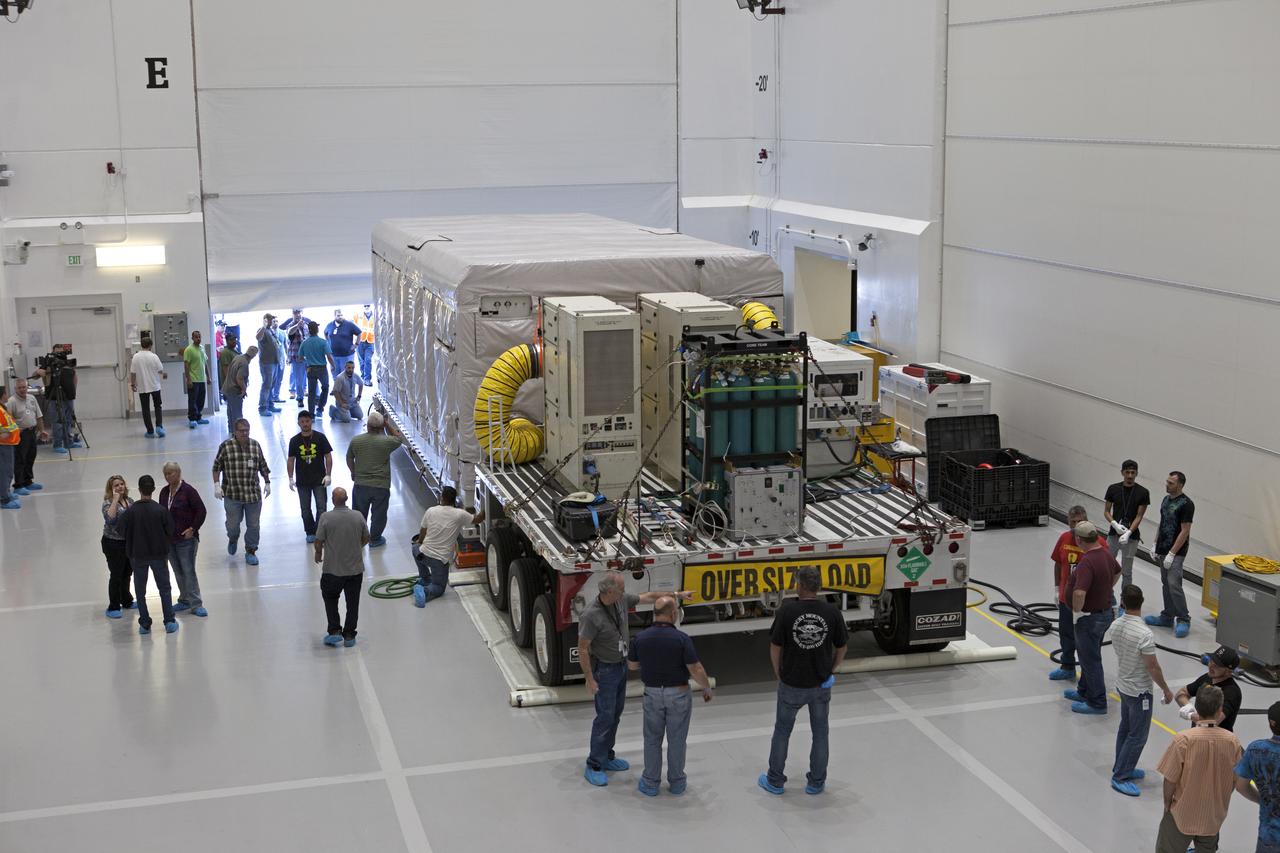
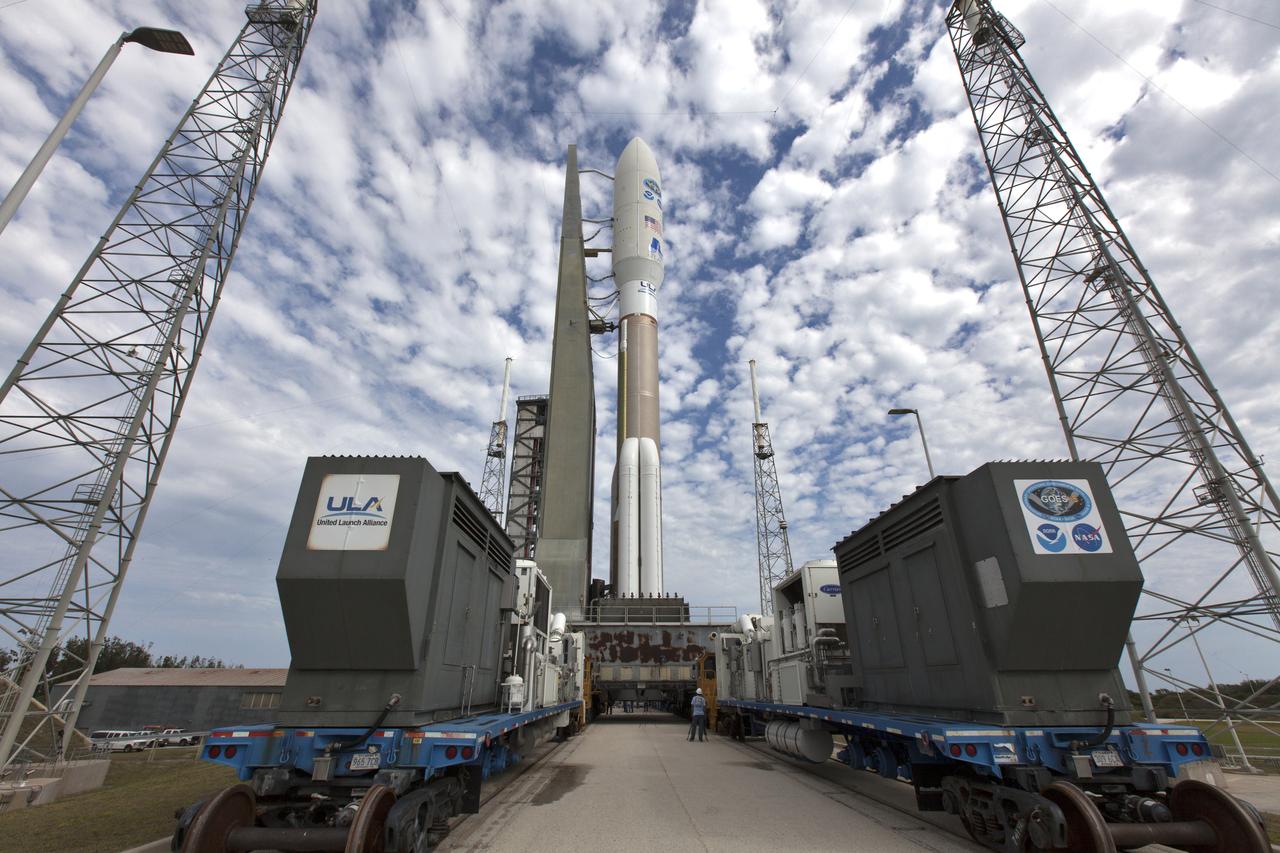
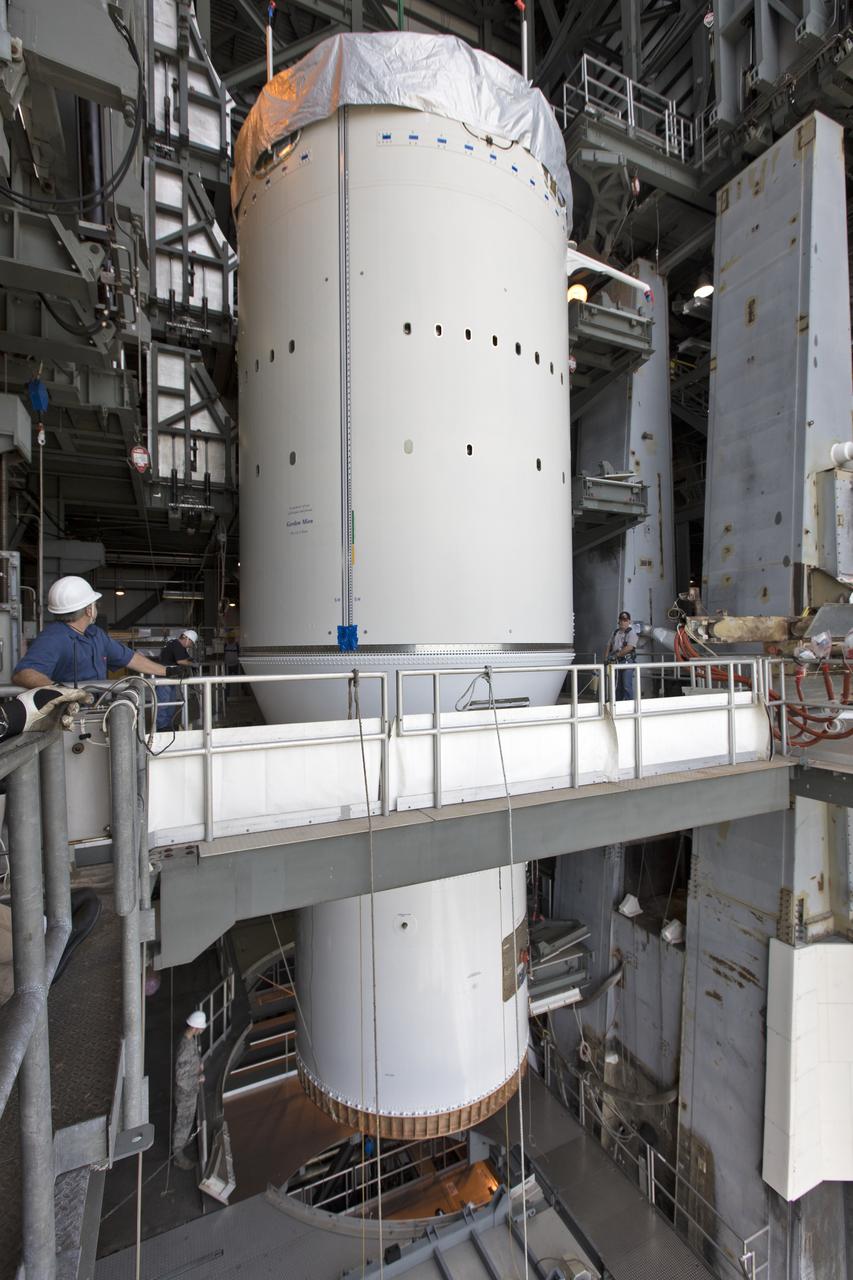
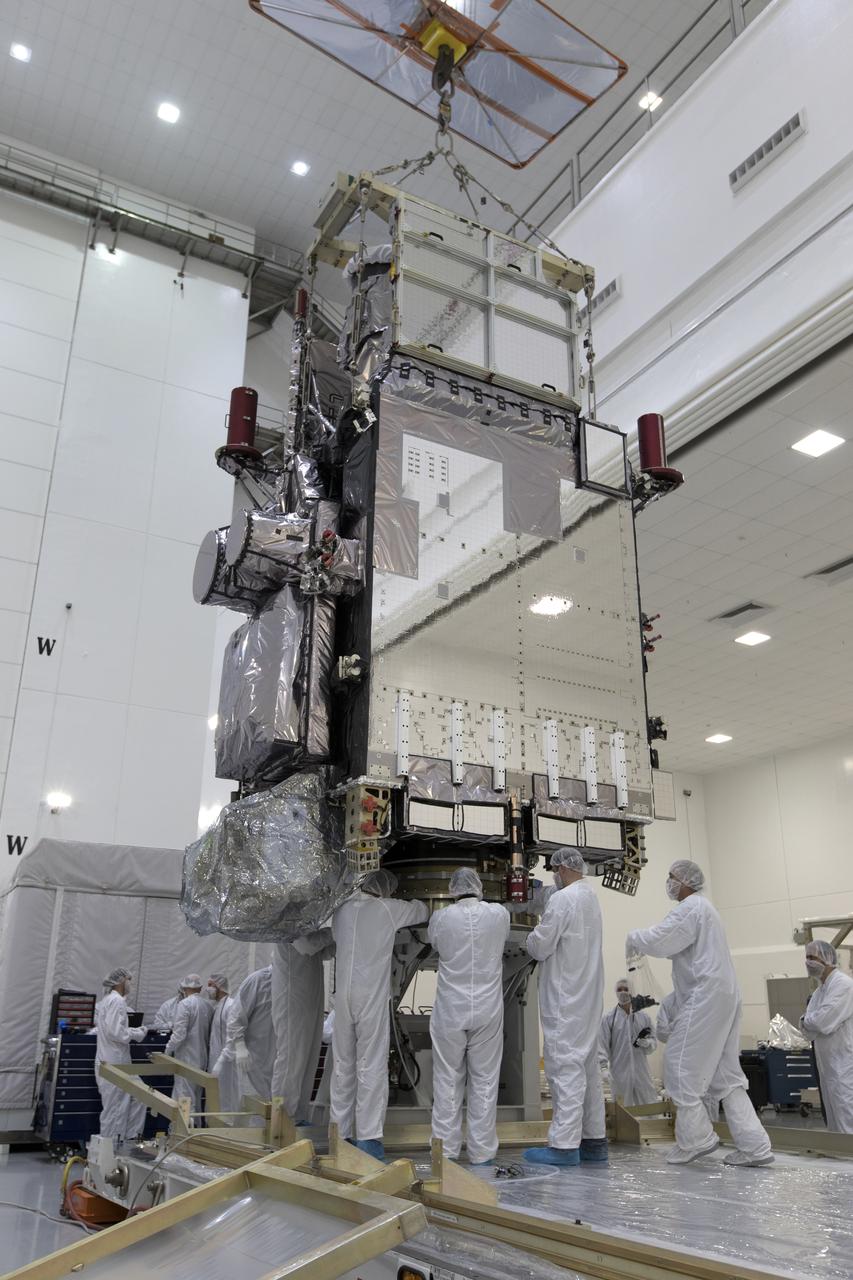
Under the watchful eyes of technicians and engineers, the Centaur upper stage that will help launch NOAA's Geostationary Operational Environmental Satellite-S, or GOES-S, arrives inside the Delta Operations Center at Cape Canaveral Air Force Station for further processing. GOES-S is the second in a series of four advanced geostationary weather satellites. The GOES-R series - consisting of the GOES-R, GOES-S, GOES-T and GOES-U spacecraft - will significantly improve the detection and observation of environmental phenomena that directly affect public safety, protection of property and the nation's economic health and prosperity. GOES-S is slated to launch March 1, 2018 aboard a United Launch Alliance Atlas V rocket.
GOES-S Atlas V Centaur Stage Transport from ASOC to DOC
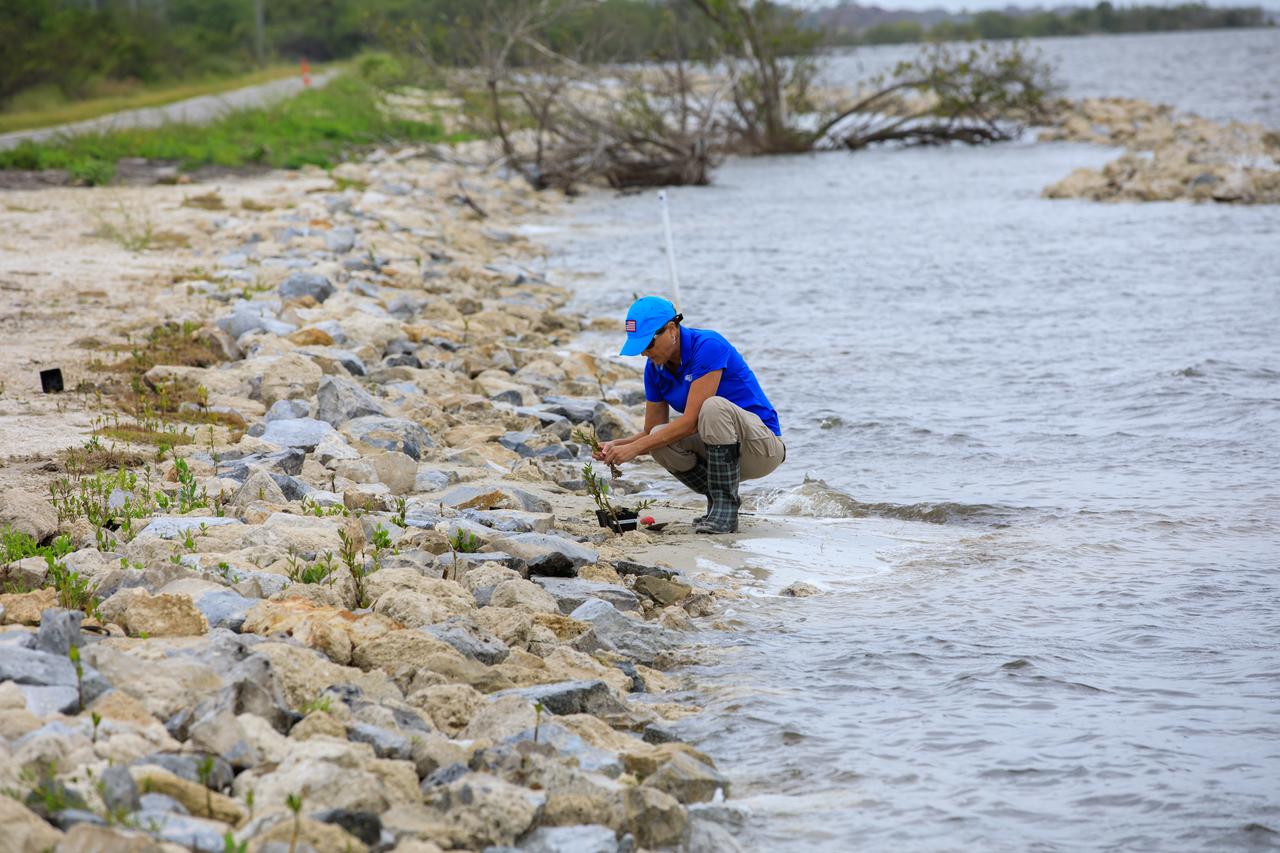
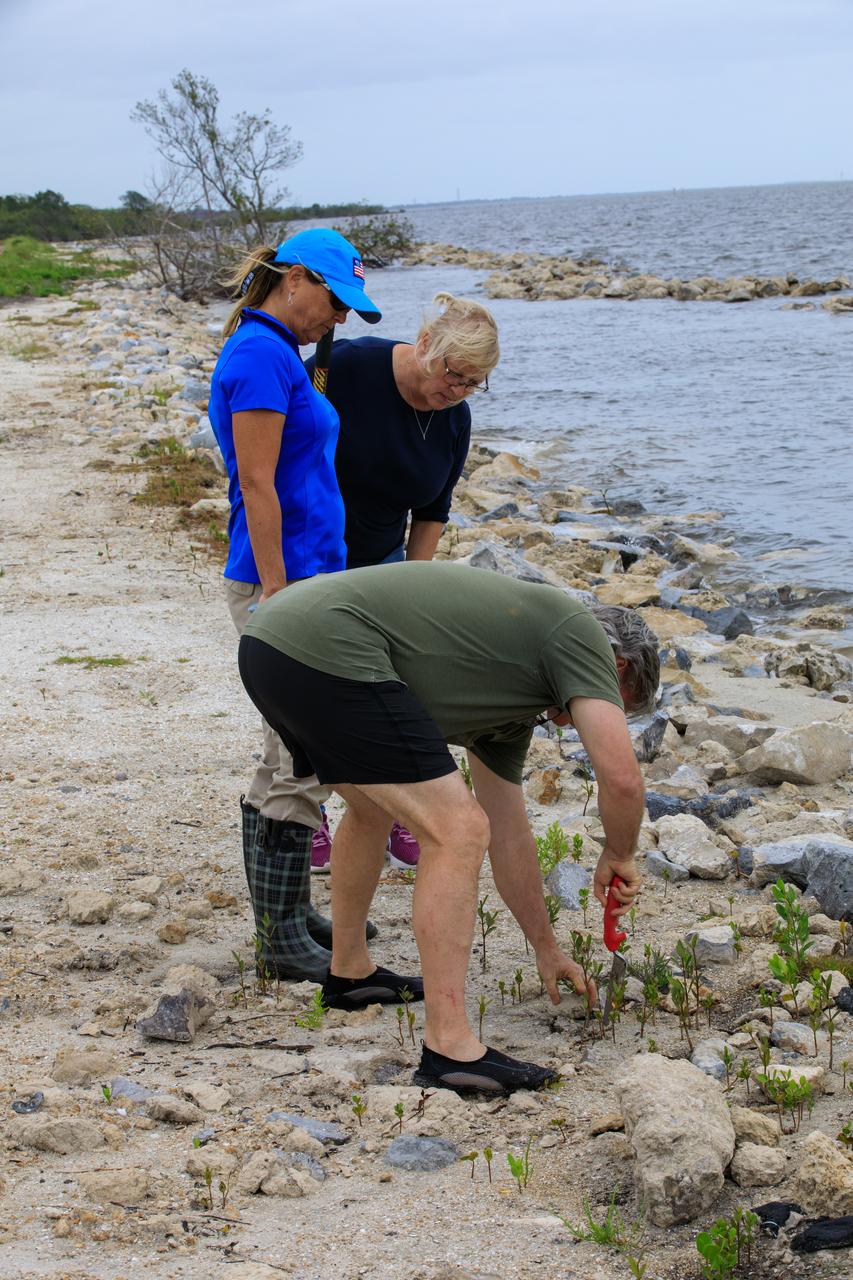
A team from Kennedy’s Environmental Management Branch works to remove a mangrove seedling on the shoreline of Kennedy Athletic, Recreation, and Social (KARS) Park at Kennedy Space Center in Florida on April 12, 2023. Employees from Kennedy’s Environmental Management Branch removed over 100 mangrove seedlings from the shoreline and repotted them for protection during the final stages of a shoreline restoration project inside KARS Park. The mangrove seedlings will be replanted upon completion of the project to create a living shoreline better able to counter the effects of erosion caused by storm waves and rising sea levels.
Mangrove Rescue/Restoration Project
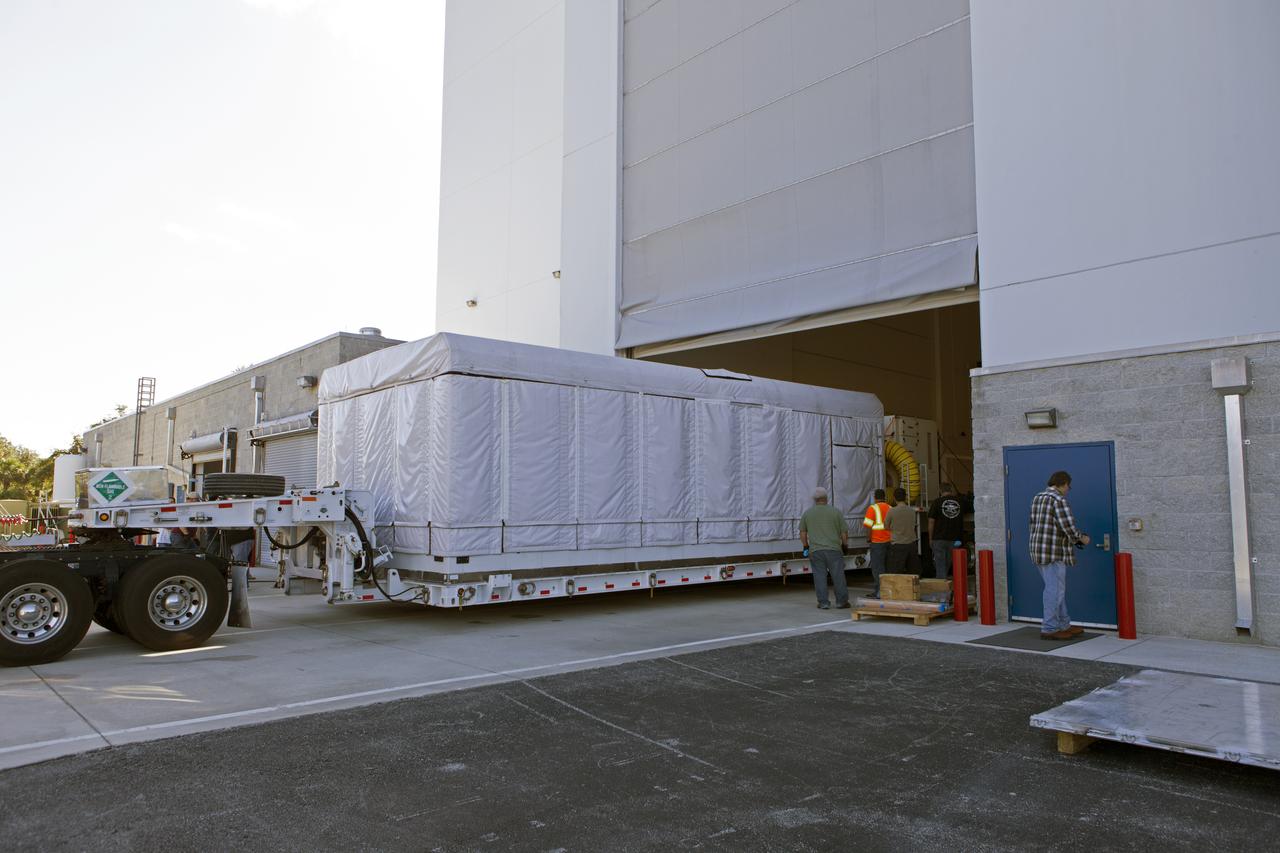
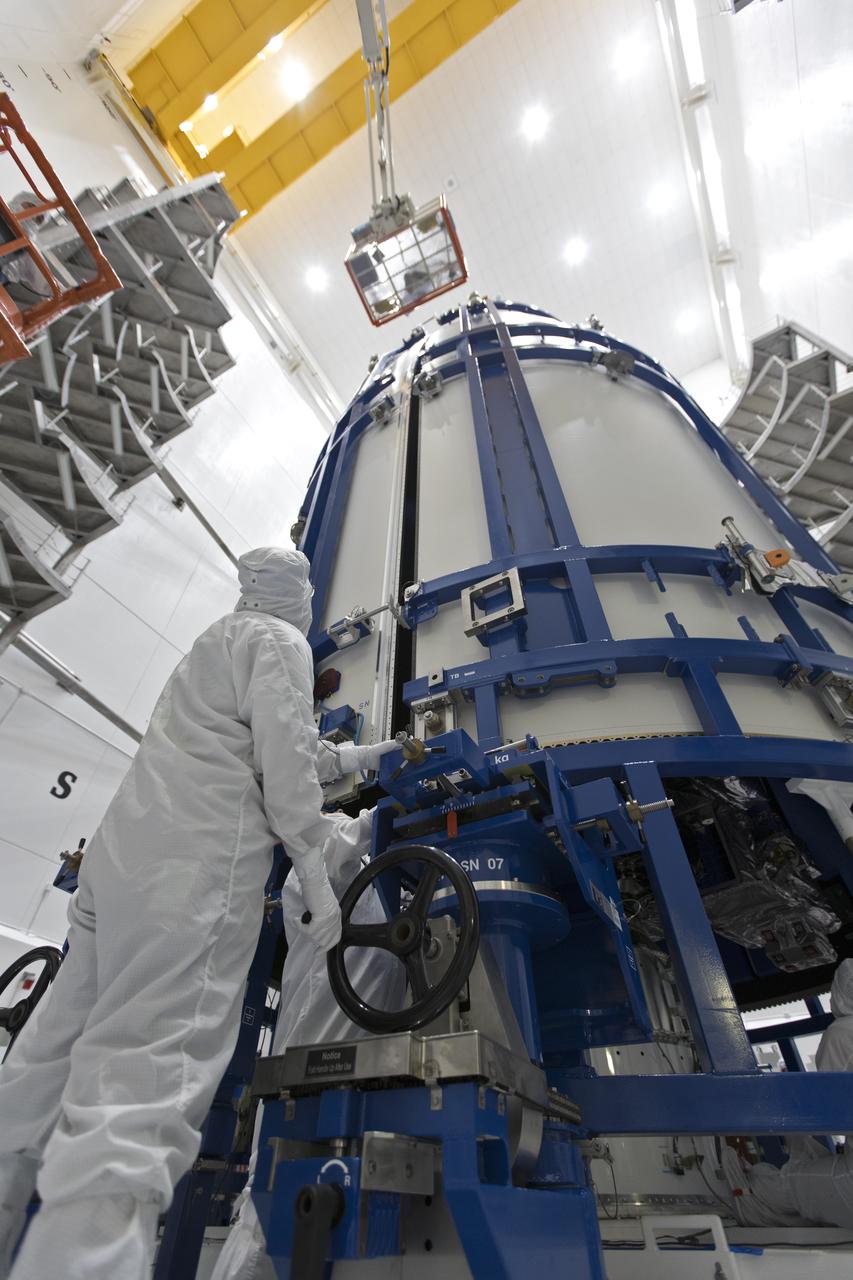
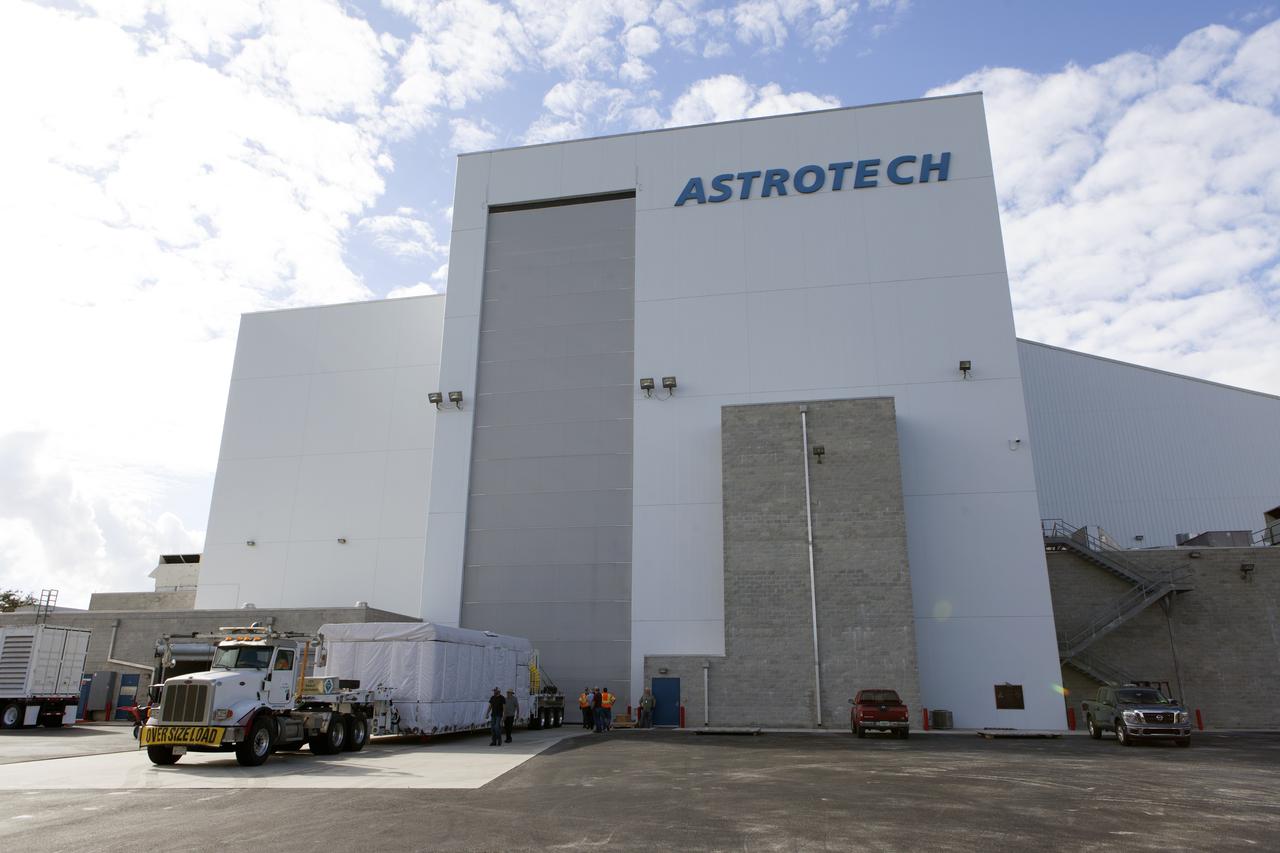
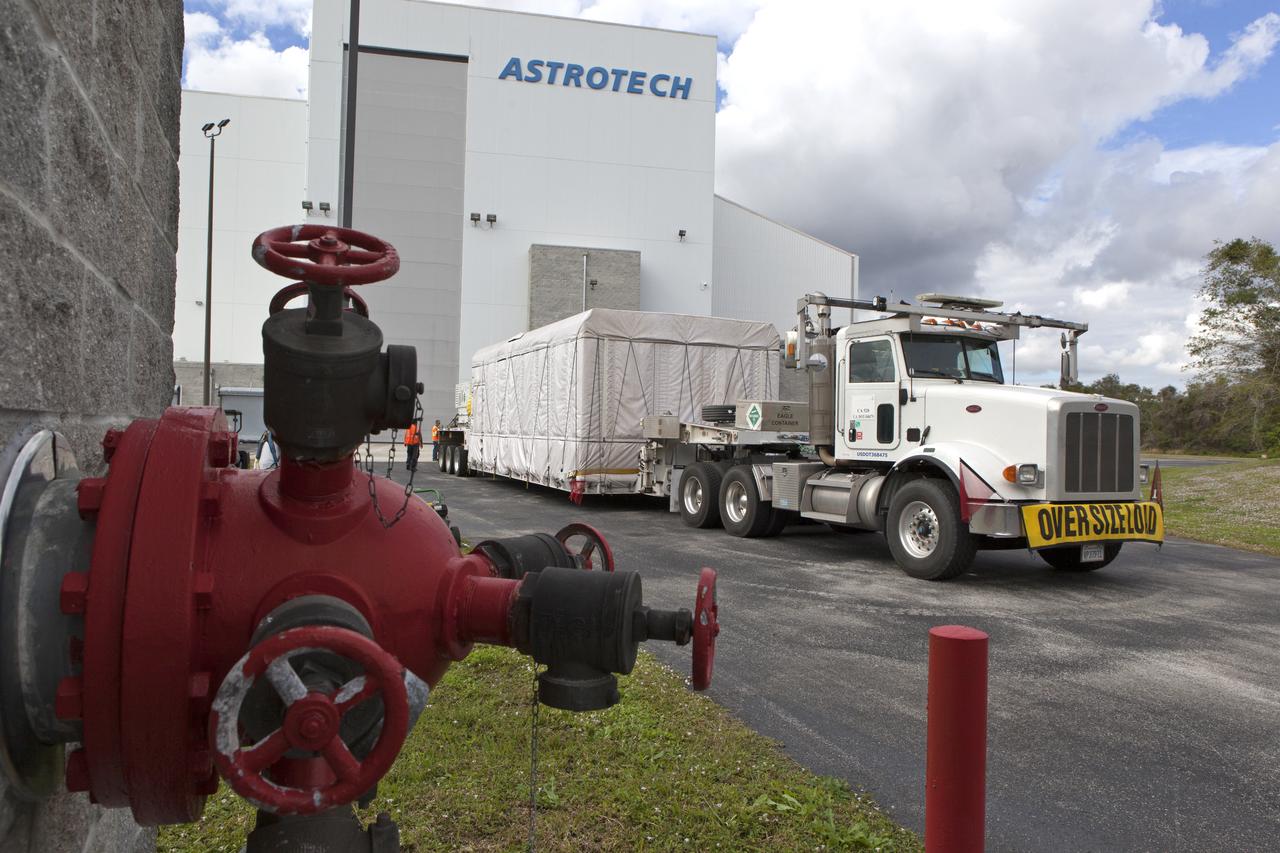
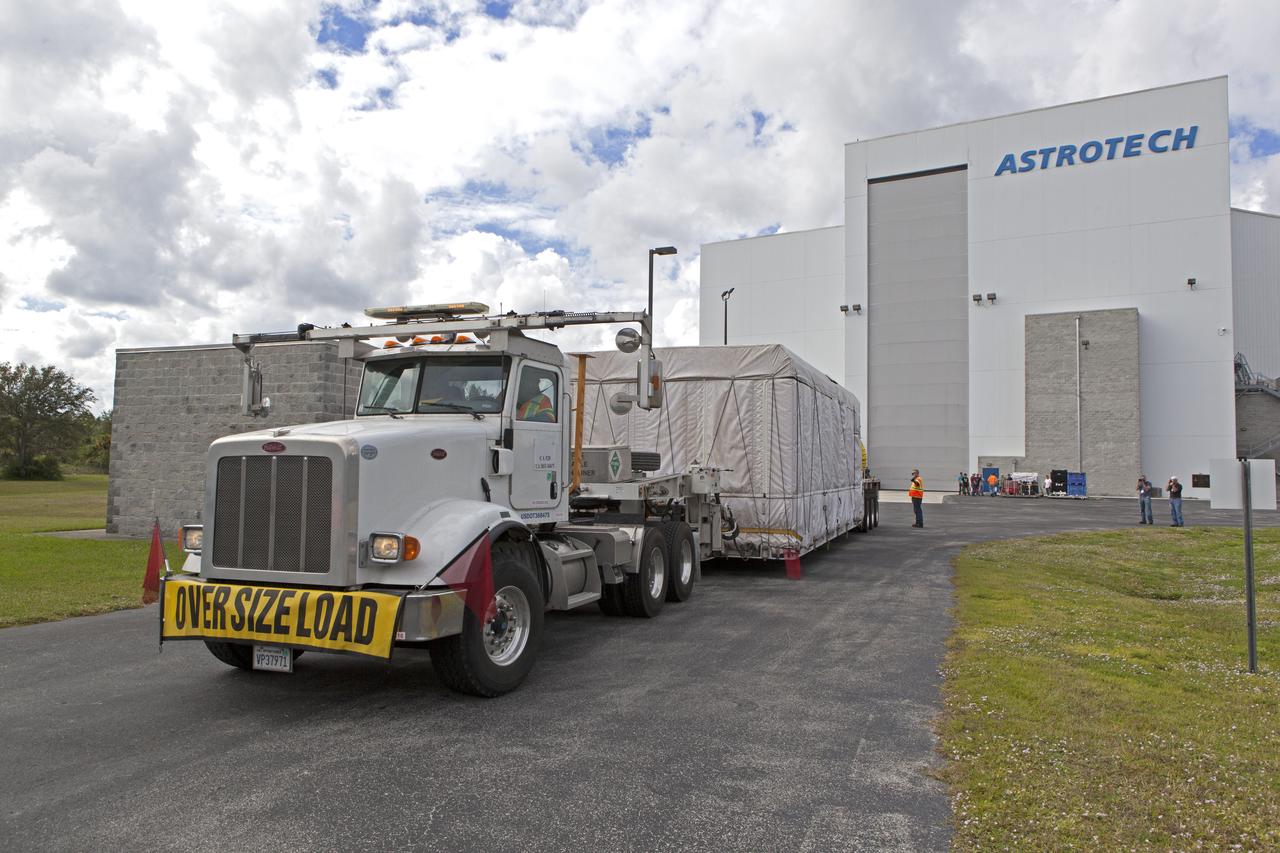
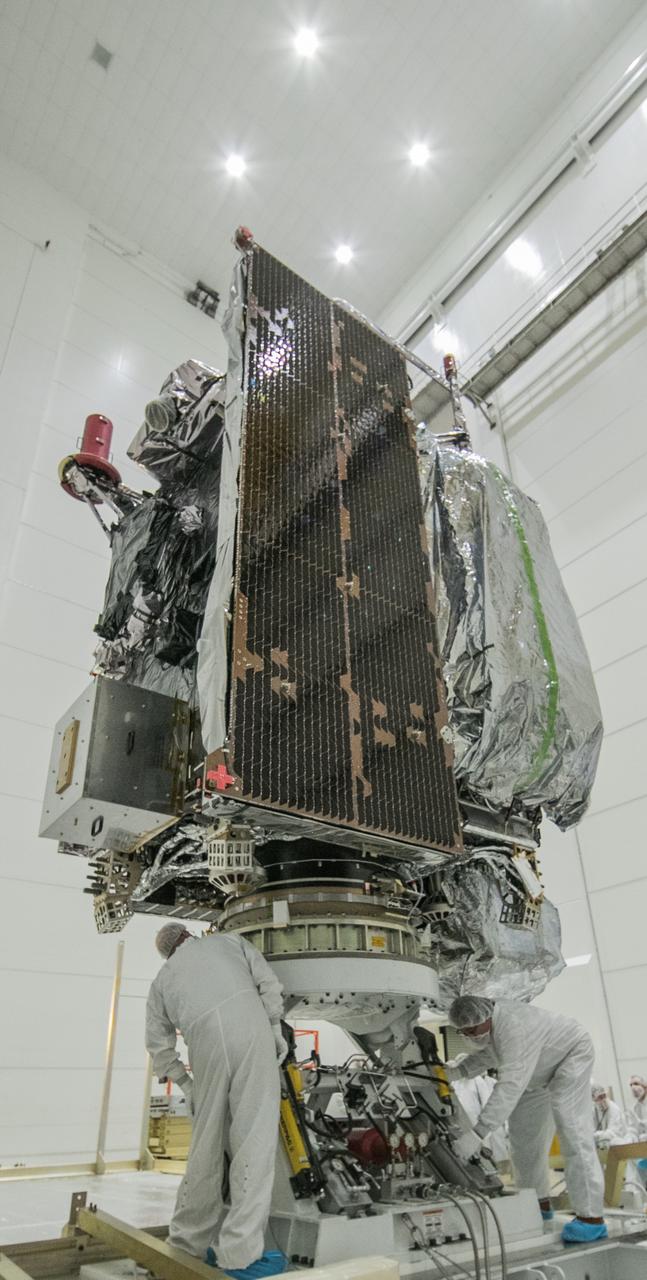
NOAA's Geostationary Operation Environmental Satellite-S (GOES-S) arrives at Astrotech Space Operations in Titusville, Florida, to prepare it for launch. The facility is located near NASA's Kennedy Space Center. GOES-S is the second in a series of four advanced geostationary weather satellites. The GOES-R series - consisting of the GOES-R, GOES-S, GOES-T and GOES-U spacecraft - will significantly improve the detection and observation of environmental phenomena that directly affect public safety, protection of property and the nation's economic health and prosperity. GOES-S is slated to launch March 1, 2018 aboard a United Launch Alliance Atlas V rocket from Cape Canaveral Air Force Station in Florida.
GOES-S Arrival at Astrotech Space Operations
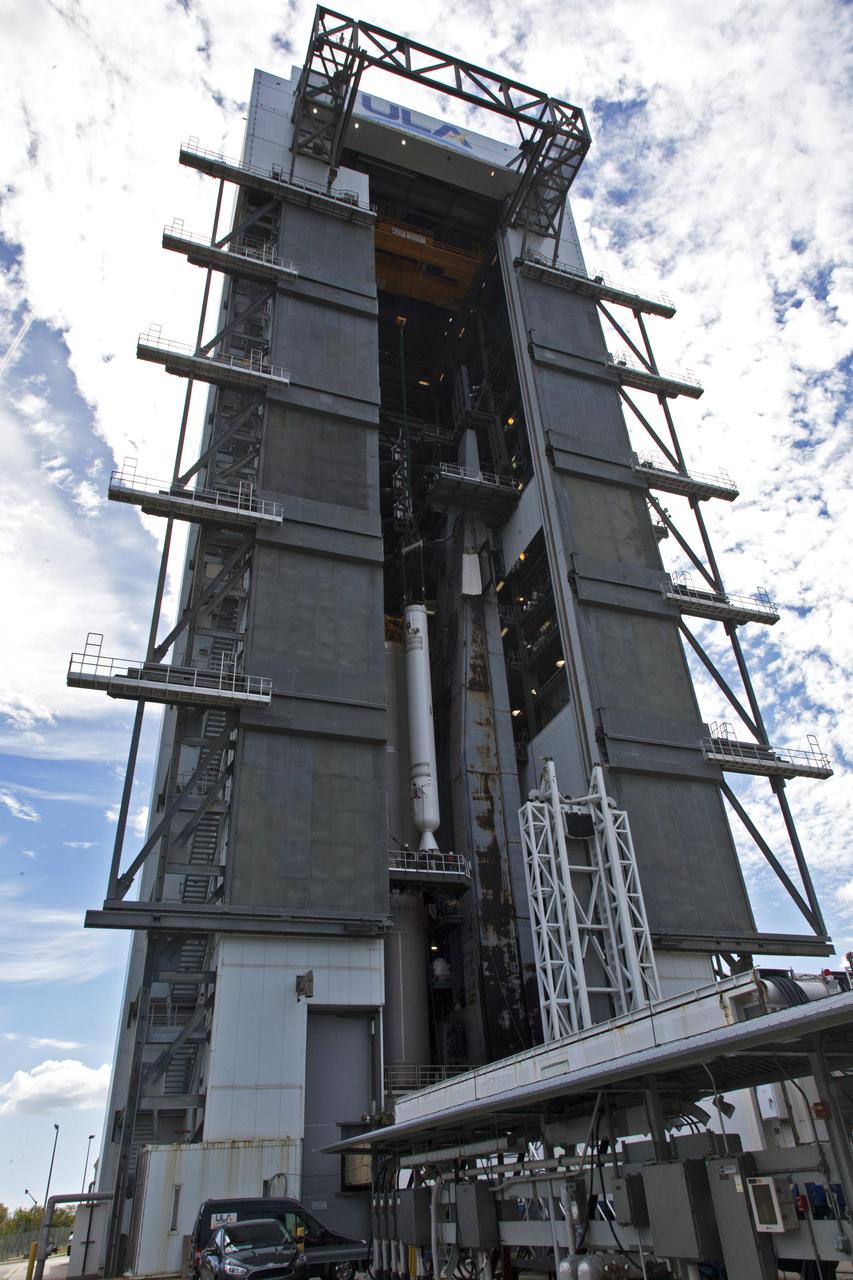
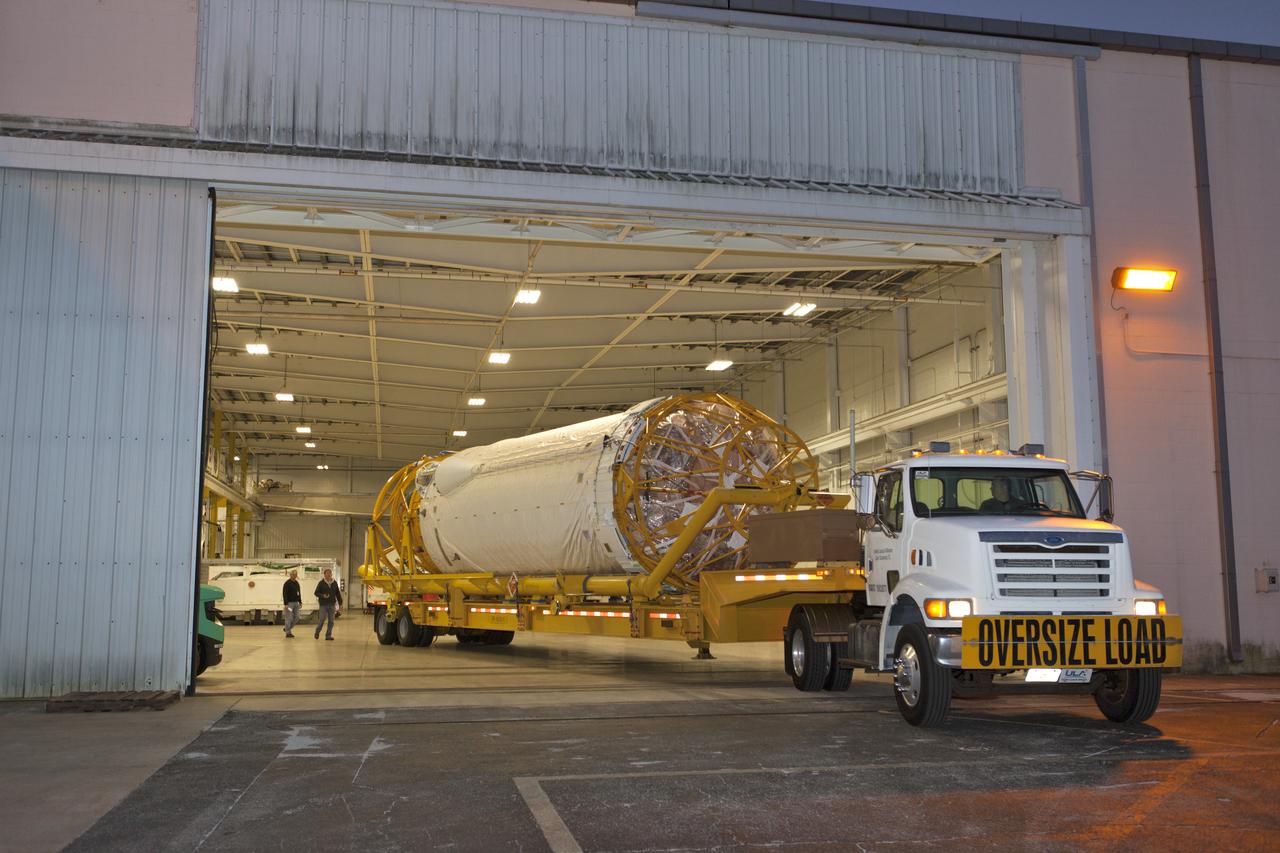
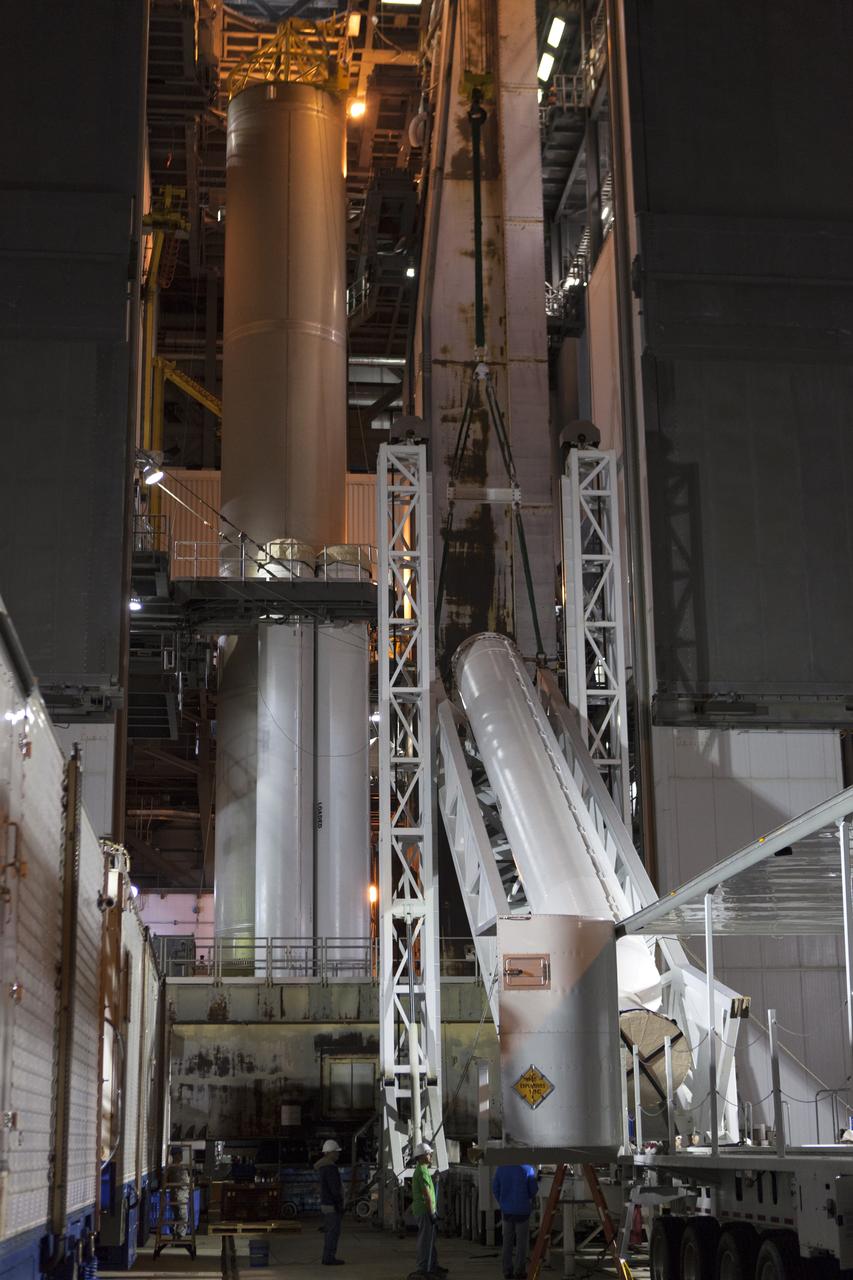
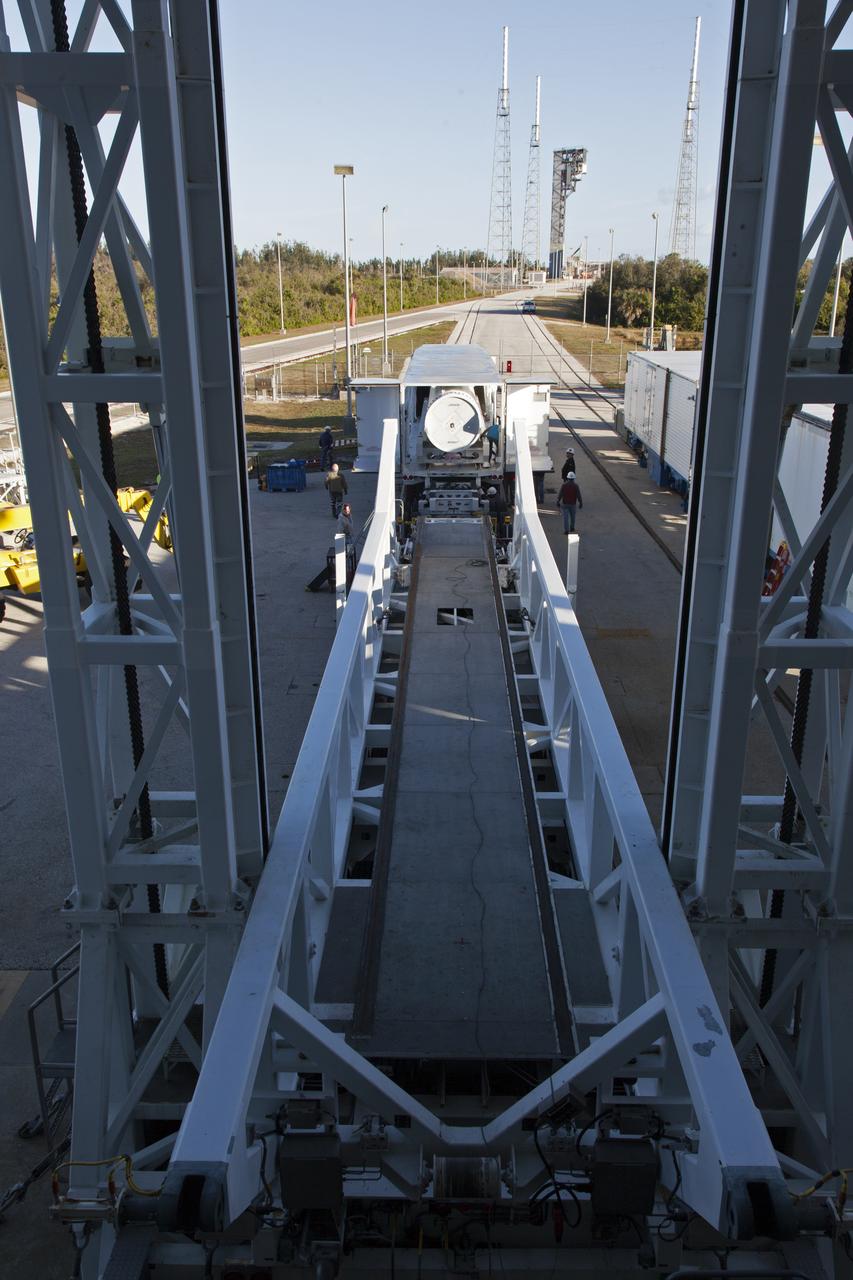
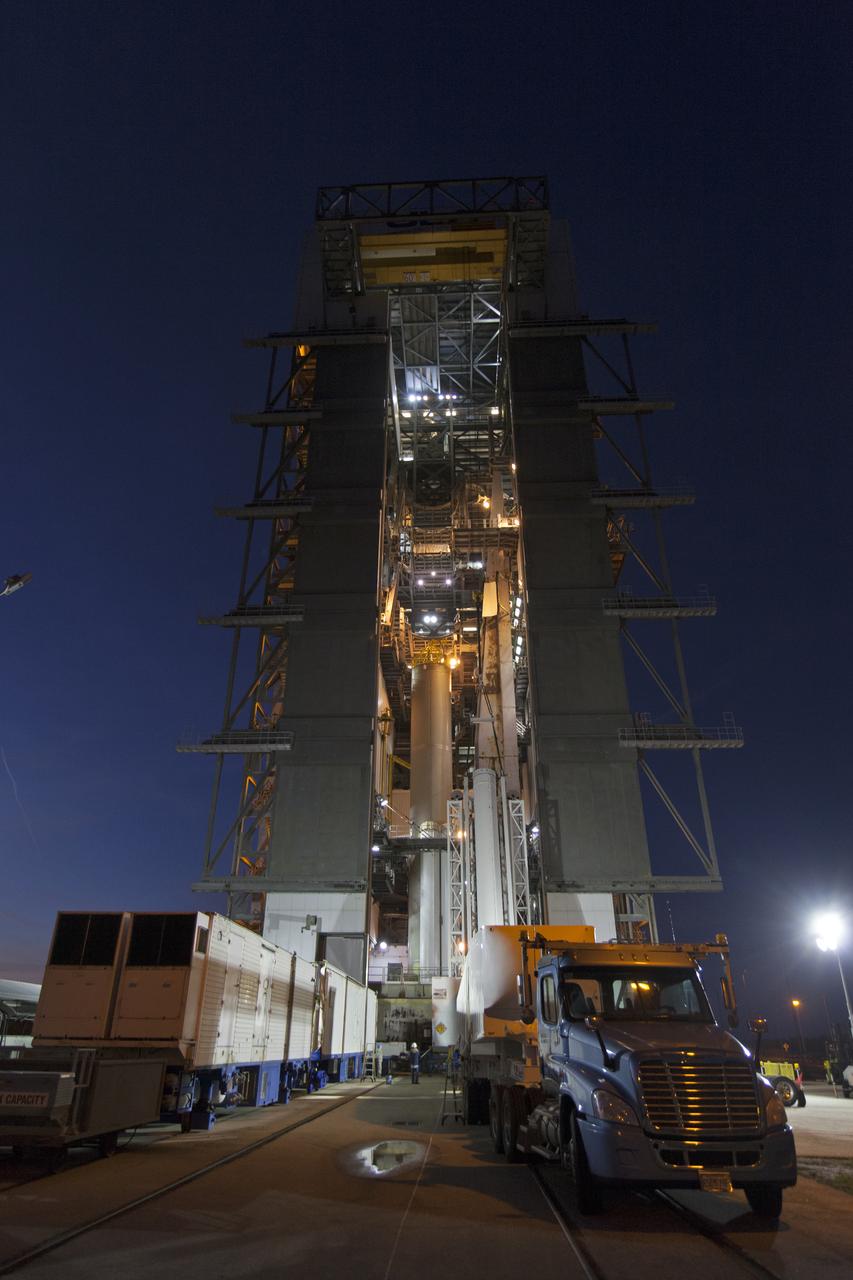
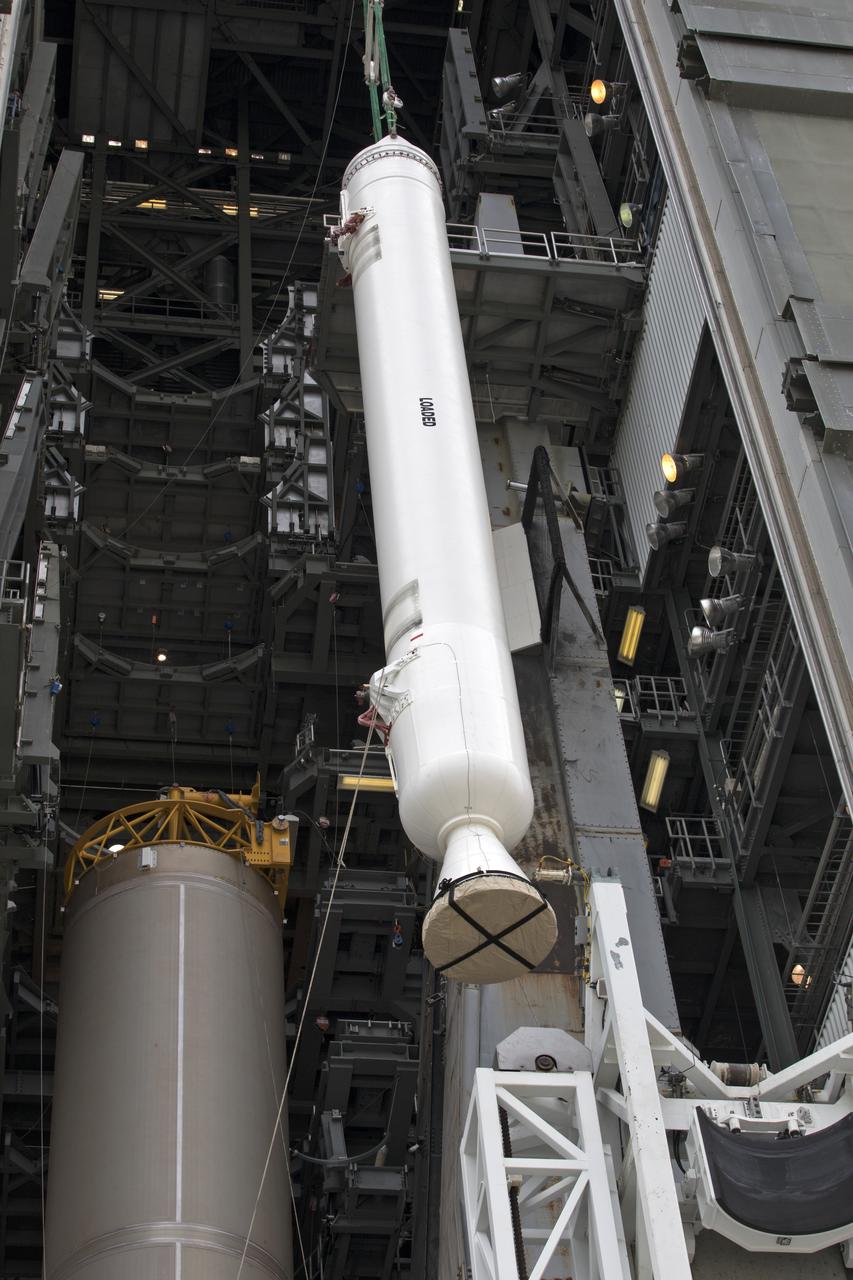
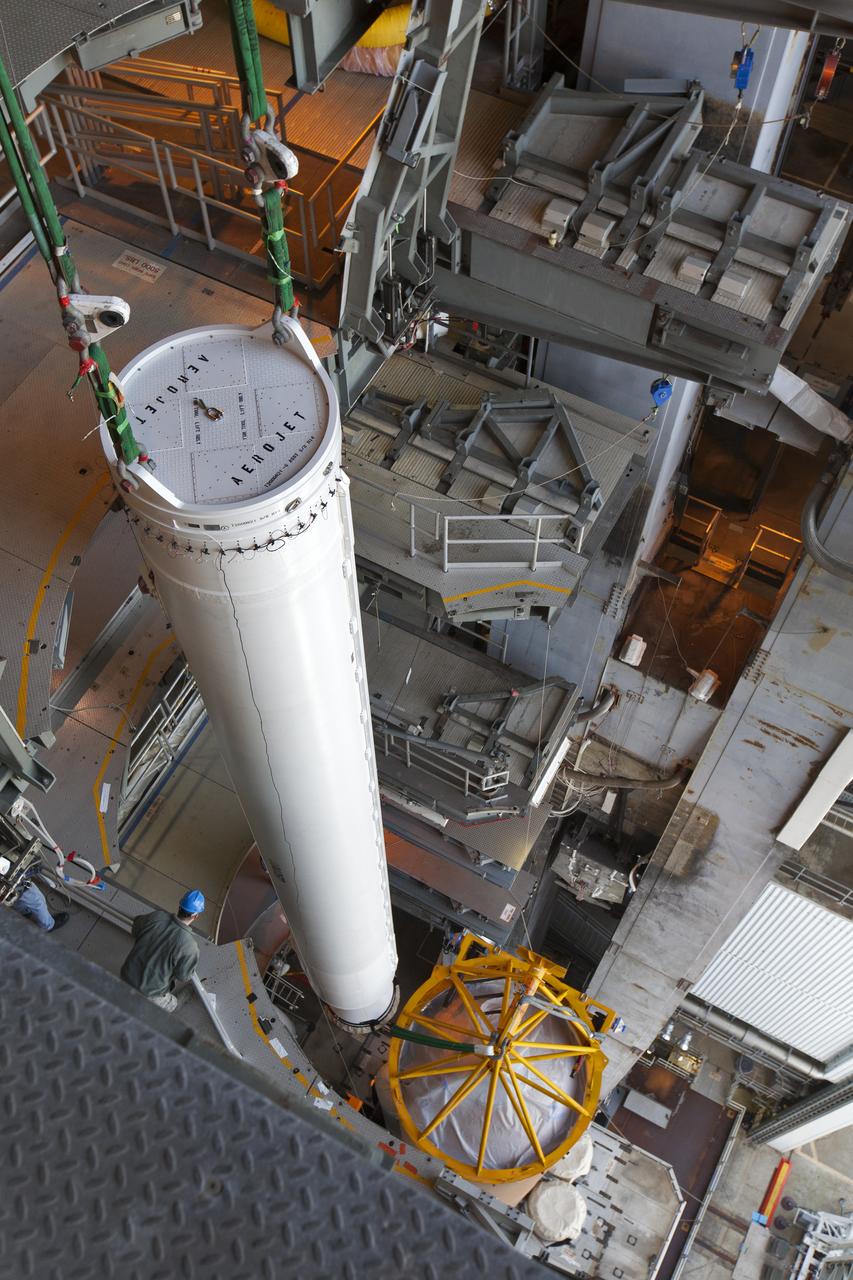
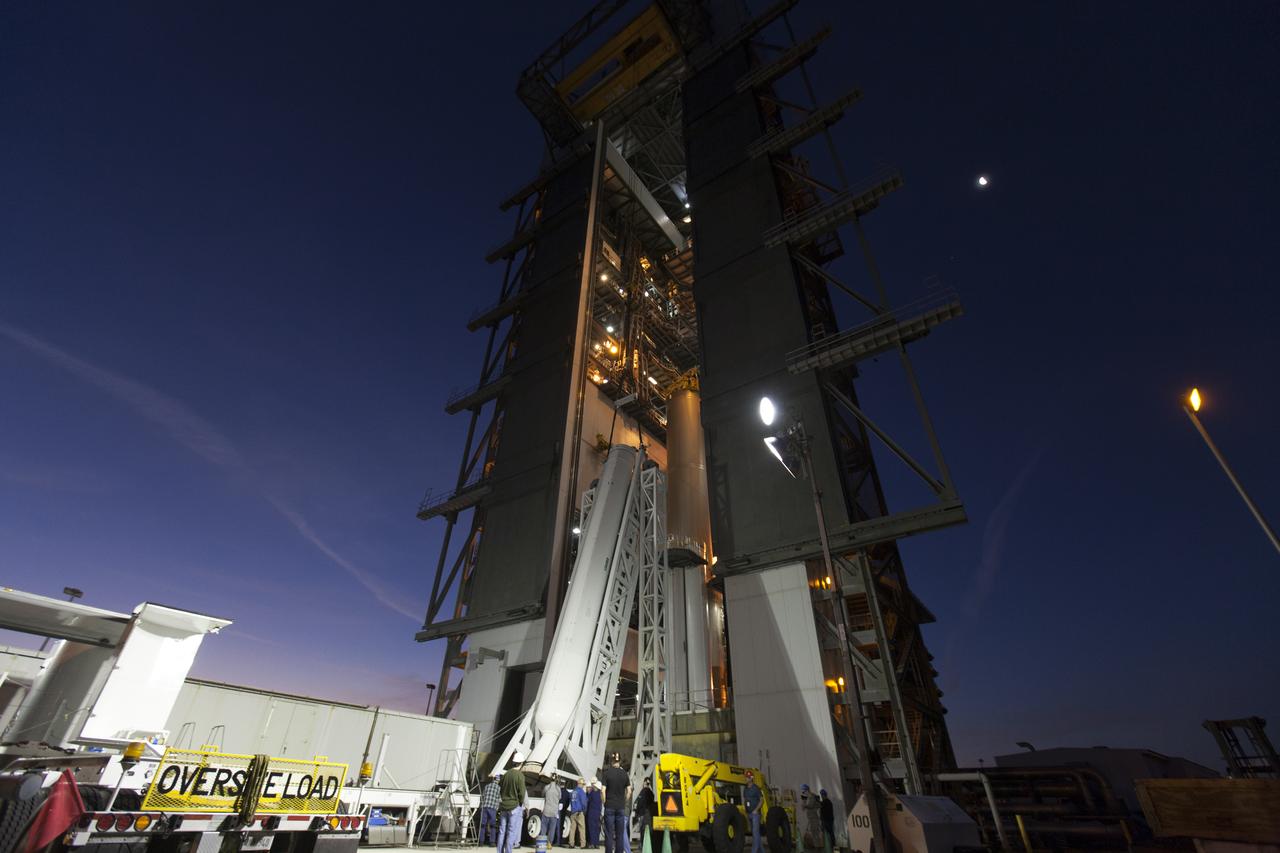
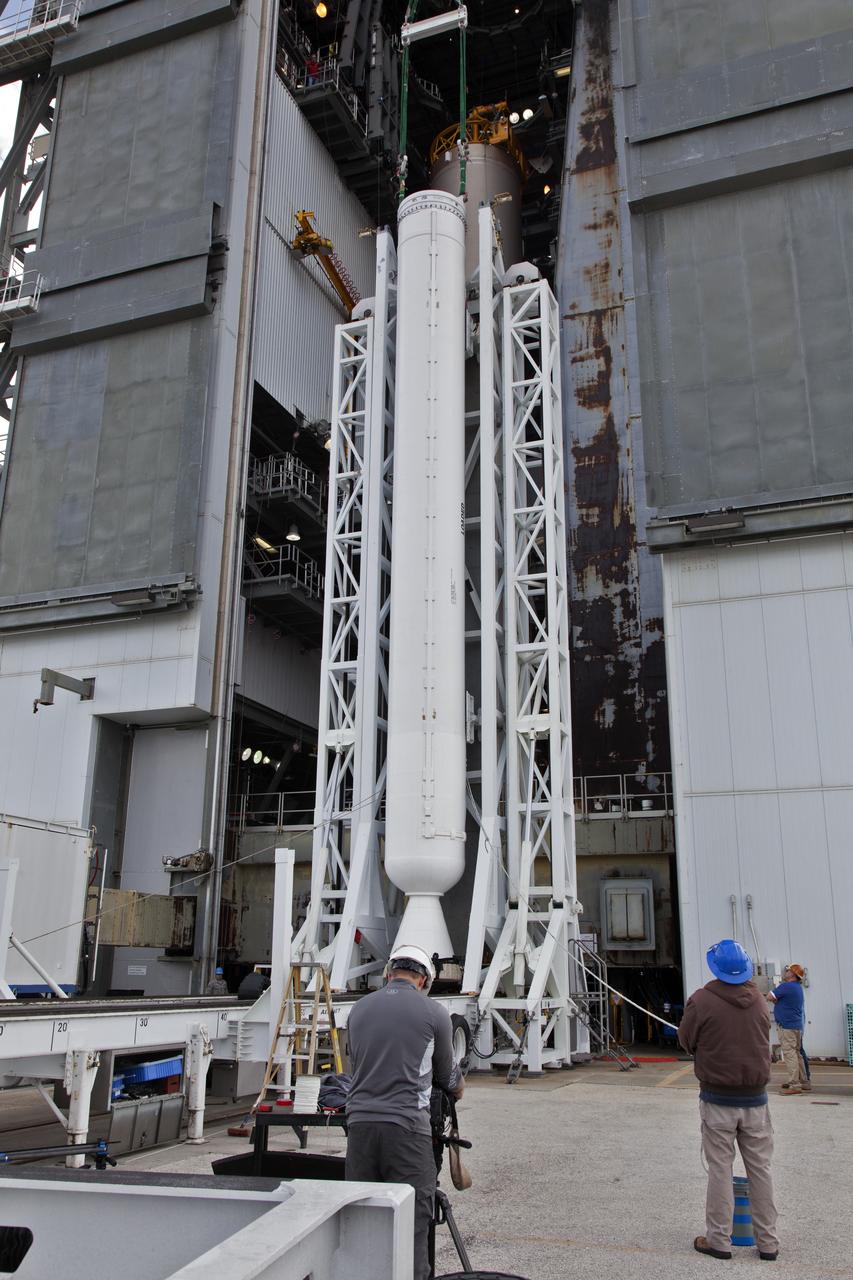
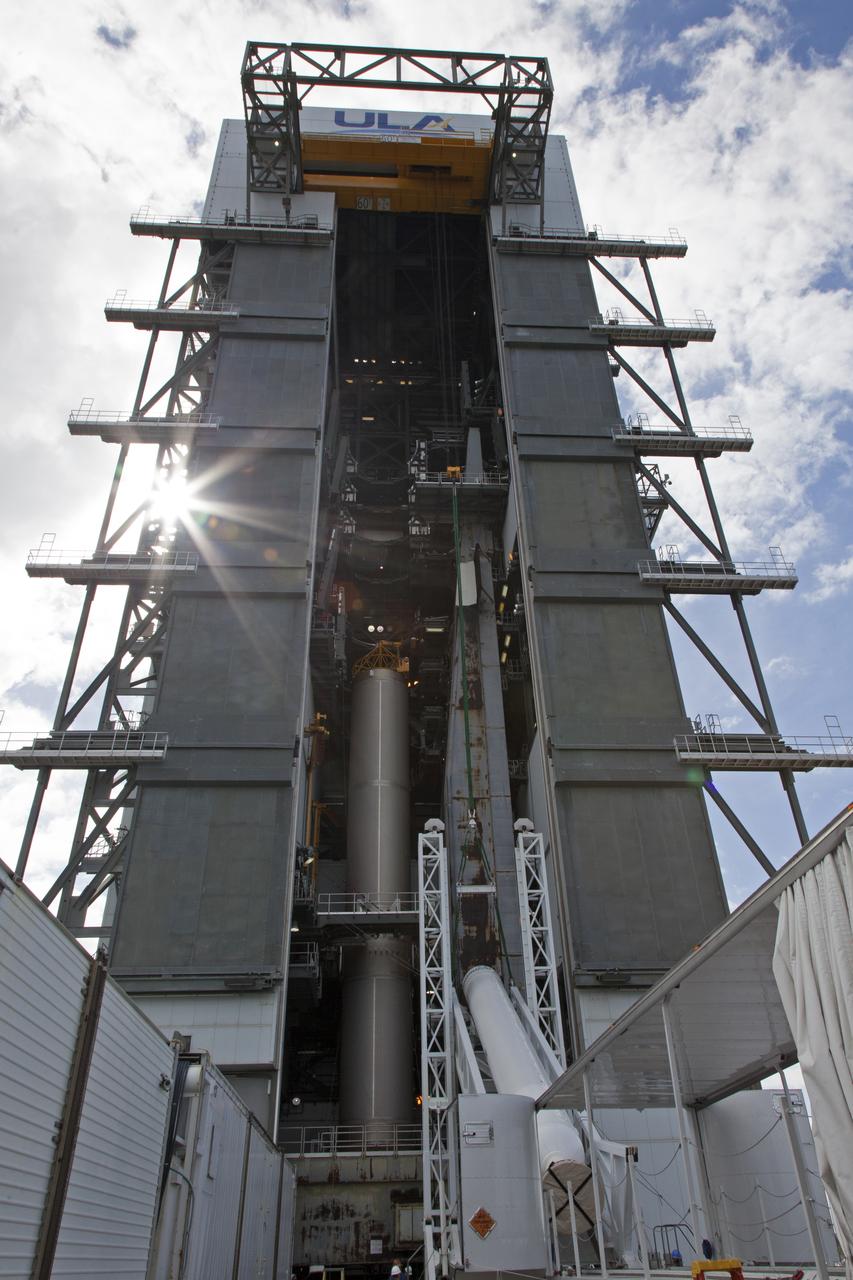
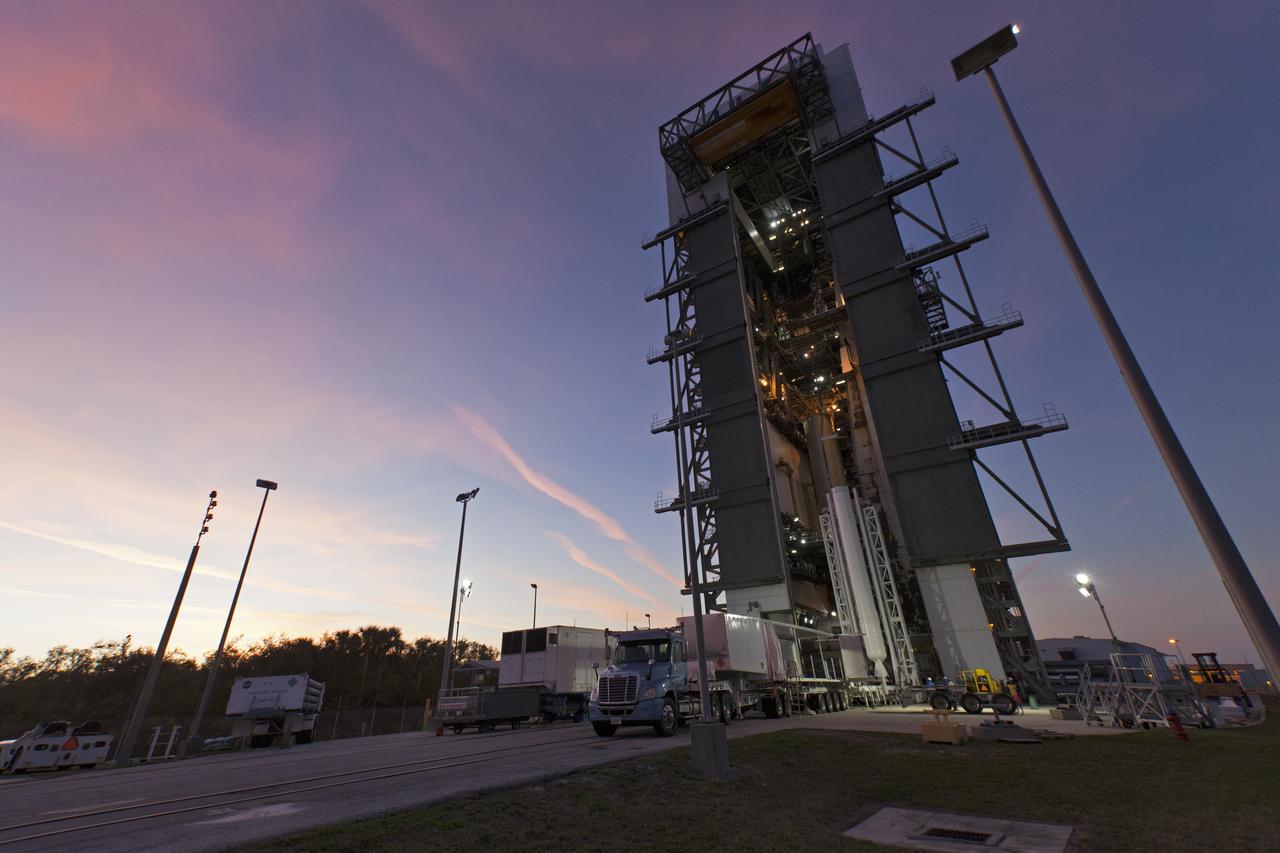
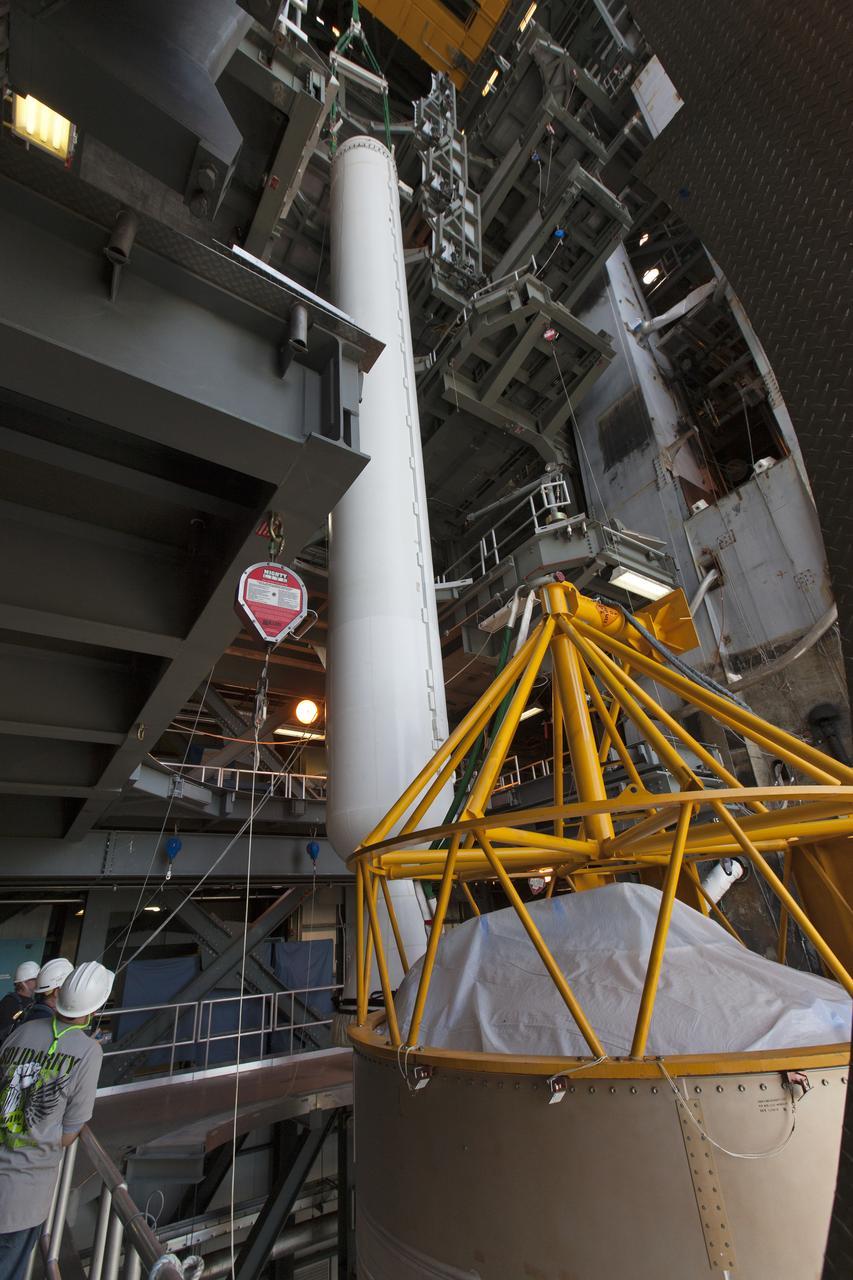
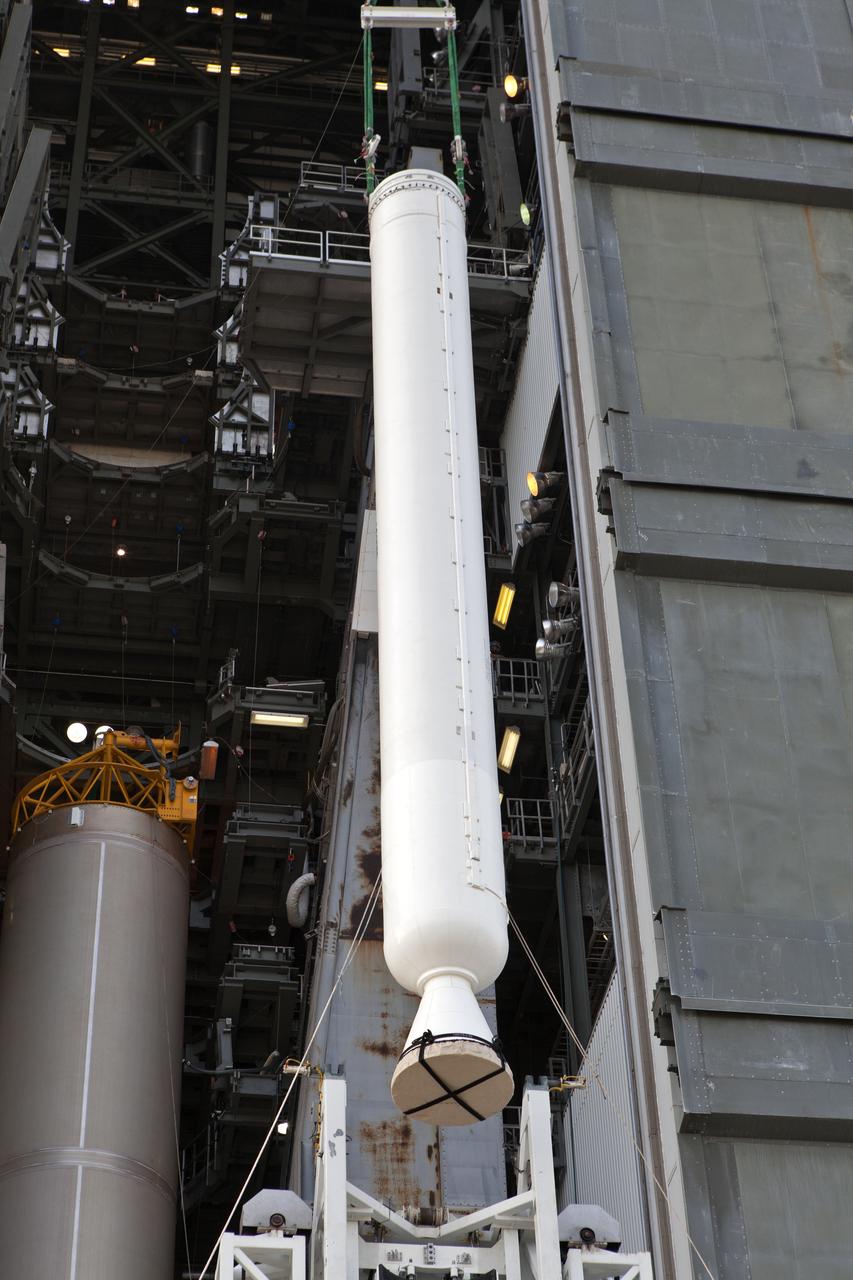
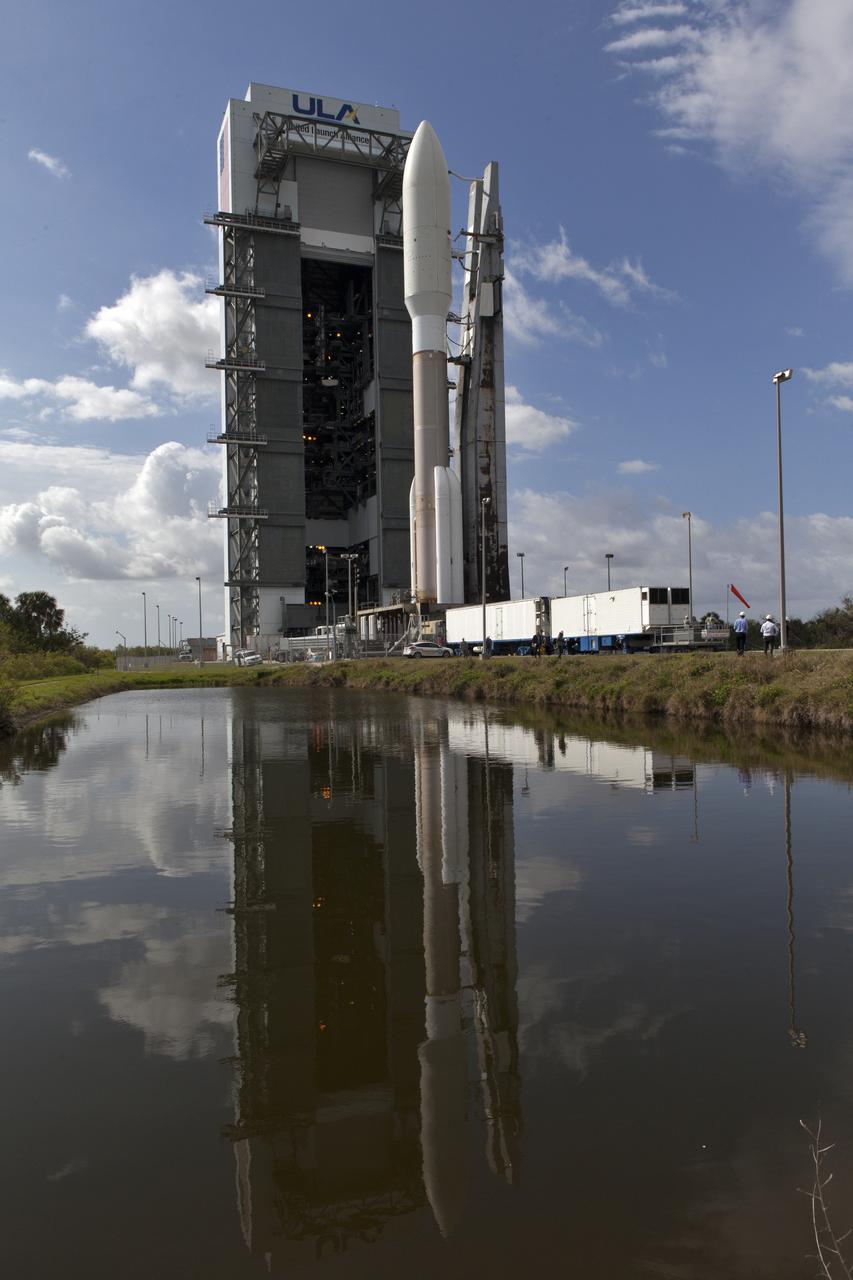
At the Vertical Integration Facility at Space Launch Complex 41 at Cape Canaveral Air Force Station in Florida, a solid rocket booster (SRB) is mated to a United Launch Alliance Atlas V first stage. The SRB will help boost NOAA's Geostationary Operational Environmental Satellite, or GOES-S, to orbit. GOES-S is the second in a series of four advanced geostationary weather satellites that will significantly improve the detection and observation of environmental phenomena that directly affect public safety, protection of property and the nation's economic health and prosperity. GOES-S is slated to launch March 1, 2018.
GOES-S Atlas V Last SRB Lift to Booster
At Astrotech Space Operations in Titusville, Florida, technicians and engineers prepare to remove NOAA's Geostationary Operation Environmental Satellite-S (GOES-S) from its shipping container. GOES-S is the second in a series of four advanced geostationary weather satellites. The GOES-R series - consisting of the GOES-R, GOES-S, GOES-T and GOES-U spacecraft - will significantly improve the detection and observation of environmental phenomena that directly affect public safety, protection of property and the nation's economic health and prosperity. GOES-S is slated to launch March 1, 2018 aboard a United Launch Alliance Atlas V rocket from Cape Canaveral Air Force Station in Florida.
GOES-S Arrival at Astrotech Space Operations
A United Launch Alliance Atlas V rocket is rolled to Space Launch Complex 41 at Cape Canaveral Air Force Station. The launch vehicle will send the National Oceanic and Atmospheric Administration's, or NOAA's, Geostationary Operational Environmental Satellite, or GOES-S, into orbit. The GOES series is designed to significantly improve the detection and observation of environmental phenomena that directly affect public safety, protection of property and the nation's economic health and prosperity. GOES-S is slated to lift off at 5:02 p.m. EST on March 1, 2018 aboard a United Launch Alliance Atlas V rocket.
GOES-S Rollout to Pad
In a clean room at Astrotech Space Operations in Titusville, Florida, technicians and engineers monitor progress as NOAA's Geostationary Operational Environmental Satellite-S, or GOES-S, is mated to its payload attach fitting. It soon will be moved to Space Launch Complex 41 at Cape Canaveral Air Force Station for mounting atop the Atlas V rocket that will boost the satellite to orbit. GOES-S is the second in a series of four advanced geostationary weather satellites that will significantly improve the detection and observation of environmental phenomena that directly affect public safety, protection of property and the nation's economic health and prosperity. GOES-S is slated to launch March 1, 2018 aboard a United Launch Alliance Atlas V rocket.
GOES-S Spacecraft Mate to PLA
At the Vertical Integration Facility at Space Launch Complex 41 at Cape Canaveral Air Force Station in Florida, a solid rocket booster (SRB) is lifted by a crane for mating to a United Launch Alliance Atlas V first stage. The SRB will help boost NOAA's Geostationary Operational Environmental Satellite, or GOES-S, to orbit. GOES-S is the second in a series of four advanced geostationary weather satellites that will significantly improve the detection and observation of environmental phenomena that directly affect public safety, protection of property and the nation's economic health and prosperity. GOES-S is slated to launch March 1, 2018.
GOES-S Atlas V Last SRB Lift to Booster
At Astrotech Space Operations in Titusville, Florida, technicians and engineers remove NOAA's Geostationary Operation Environmental Satellite-S (GOES-S) from its shipping container. GOES-S is the second in a series of four advanced geostationary weather satellites. The GOES-R series - consisting of the GOES-R, GOES-S, GOES-T and GOES-U spacecraft - will significantly improve the detection and observation of environmental phenomena that directly affect public safety, protection of property and the nation's economic health and prosperity. GOES-S is slated to launch March 1, 2018 aboard a United Launch Alliance Atlas V rocket from Cape Canaveral Air Force Station in Florida.
GOES-S Uncrating
At the Vertical Integration Facility at Space Launch Complex 41 at Cape Canaveral Air Force Station in Florida, a solid rocket booster (SRB) is lifted by a crane for mating to a United Launch Alliance Atlas V first stage. The SRB will help boost NOAA's Geostationary Operational Environmental Satellite, or GOES-S, to orbit. GOES-S is the second in a series of four advanced geostationary weather satellites that will significantly improve the detection and observation of environmental phenomena that directly affect public safety, protection of property and the nation's economic health and prosperity. GOES-S is slated to launch March 1, 2018.
GOES-S Atlas V Last SRB Lift to Booster
At the Vertical Integration Facility at Space Launch Complex 41 at Cape Canaveral Air Force Station in Florida, a solid rocket booster (SRB) is prepared for mating to a United Launch Alliance Atlas V first stage. The SRB will help boost NOAA's Geostationary Operational Environmental Satellite, or GOES-S, to orbit. GOES-S is the second in a series of four advanced geostationary weather satellites that will significantly improve the detection and observation of environmental phenomena that directly affect public safety, protection of property and the nation's economic health and prosperity. GOES-S is slated to launch March 1, 2018.
GOES-S Atlas V Last SRB Lift to Booster
In a clean room at Astrotech Space Operations in Titusville, Florida, technicians and engineers monitor progress as NOAA's Geostationary Operational Environmental Satellite-S, or GOES-S, is encapsulated in its payload fairing. It soon will be moved to Space Launch Complex 41 at Cape Canaveral Air Force Station for mounting atop the Atlas V rocket that will boost the satellite to orbit. GOES-S is the second in a series of four advanced geostationary weather satellites that will significantly improve the detection and observation of environmental phenomena that directly affect public safety, protection of property and the nation's economic health and prosperity. GOES-S is slated to launch March 1, 2018 aboard a United Launch Alliance Atlas V rocket.
GOES-S Encapsulation
A technician monitors activity as a solid rocket booster (SRB) is prepared for mating to a United Launch Alliance Atlas V first stage At the Vertical Integration Facility at Space Launch Complex 41 at Cape Canaveral Air Force Station in Florida. The SRB will help boost NOAA's Geostationary Operational Environmental Satellite, or GOES-S, to orbit. GOES-S is the second in a series of four advanced geostationary weather satellites that will significantly improve the detection and observation of environmental phenomena that directly affect public safety, protection of property and the nation's economic health and prosperity. GOES-S is slated to launch March 1, 2018.
GOES-S Atlas V Last SRB Lift to Booster
The Centaur upper stage that will help launch NOAA's Geostationary Operational Environmental Satellite-S, or GOES-S, arrives at the Vertical Integration Facility at Space Launch Complex 41 at Cape Canaveral Air Force Station in Florida. The Centaur will be mated to a United Launch Alliance Atlas V booster. GOES-S is the second in a series of four advanced geostationary weather satellites that will significantly improve the detection and observation of environmental phenomena that directly affect public safety, protection of property and the nation's economic health and prosperity. GOES-S is slated to launch March 1, 2018.
GOES-S Atlas V Centaur Stage Transport to VIF
A solid rocket booster (SRB) is offloaded from a transport vehicle at the Vertical Integration Facility at Space Launch Complex 41 at Cape Canaveral Air Force Station in Florida. The SRB will be mated to a United Launch Alliance Atlas V first stage to help boost NOAA's Geostationary Operational Environmental Satellite, or GOES-S, to orbit. GOES-S is the second in a series of four advanced geostationary weather satellites that will significantly improve the detection and observation of environmental phenomena that directly affect public safety, protection of property and the nation's economic health and prosperity. GOES-S is slated to launch March 1, 2018.
GOES-S Atlas V First SRB Mate to Booster
At the Vertical Integration Facility at Space Launch Complex 41 at Cape Canaveral Air Force Station in Florida, a solid rocket booster (SRB) is lifted by a crane for mating to a United Launch Alliance Atlas V first stage. The SRB will help boost NOAA's Geostationary Operational Environmental Satellite, or GOES-S, to orbit. GOES-S is the second in a series of four advanced geostationary weather satellites that will significantly improve the detection and observation of environmental phenomena that directly affect public safety, protection of property and the nation's economic health and prosperity. GOES-S is slated to launch March 1, 2018.
GOES-S Atlas V Last SRB Lift to Booster
NOAA's Geostationary Operation Environmental Satellite-S (GOES-S) arrives at Astrotech Space Operations in Titusville, Florida, to prepare it for launch. The facility is located near NASA's Kennedy Space Center. GOES-S is the second in a series of four advanced geostationary weather satellites. The GOES-R series - consisting of the GOES-R, GOES-S, GOES-T and GOES-U spacecraft - will significantly improve the detection and observation of environmental phenomena that directly affect public safety, protection of property and the nation's economic health and prosperity. GOES-S is slated to launch March 1, 2018 aboard a United Launch Alliance Atlas V rocket from Cape Canaveral Air Force Station in Florida.
GOES-S Arrival to Astrotech
Technicians and engineers assist as a crane lifts a solid rocket booster (SRB) for mating to a United Launch Alliance Atlas V first stage in the Vertical Integration Facility at Space Launch Complex 41 at Cape Canaveral Air Force Station in Florida. The SRB will be help boost NOAA's Geostationary Operational Environmental Satellite, or GOES-S, to orbit. GOES-S is the second in a series of four advanced geostationary weather satellites that will significantly improve the detection and observation of environmental phenomena that directly affect public safety, protection of property and the nation's economic health and prosperity. GOES-S is slated to launch March 1, 2018.
GOES-S Atlas V First SRB Mate to Booster
A solid rocket booster (SRB) is offloaded from a transport vehicle at the Vertical Integration Facility at Space Launch Complex 41 at Cape Canaveral Air Force Station in Florida. The SRB will be mated to a United Launch Alliance Atlas V first stage to help boost NOAA's Geostationary Operational Environmental Satellite, or GOES-S, to orbit. GOES-S is the second in a series of four advanced geostationary weather satellites that will significantly improve the detection and observation of environmental phenomena that directly affect public safety, protection of property and the nation's economic health and prosperity. GOES-S is slated to launch March 1, 2018.
GOES-S Atlas V First SRB Mate to Booster
At Astrotech Space Operations in Titusville, Florida, a technician inspects NOAA's Geostationary Operational Environmental Satellite-S (GOES-S). The facility is located near NASA's Kennedy Space Center. GOES-S is the second in a series of four advanced geostationary weather satellites. The GOES-R series - consisting of the GOES-R, GOES-S, GOES-T and GOES-U spacecraft - will significantly improve the detection and observation of environmental phenomena that directly affect public safety, protection of property and the nation's economic health and prosperity. GOES-S is slated to launch March 1, 2018 aboard a United Launch Alliance Atlas V rocket from Cape Canaveral Air Force Station in Florida.
GOES-S Move to Workstand; Transition into Highbay
The Centaur upper stage that will help launch NOAA's Geostationary Operational Environmental Satellite-S, or GOES-S, arrives inside the Delta Operations Center at Cape Canaveral Air Force Station for further processing. GOES-S is the second in a series of four advanced geostationary weather satellites. The GOES-R series - consisting of the GOES-R, GOES-S, GOES-T and GOES-U spacecraft - will significantly improve the detection and observation of environmental phenomena that directly affect public safety, protection of property and the nation's economic health and prosperity. GOES-S is slated to launch March 1, 2018 aboard a United Launch Alliance Atlas V rocket.
GOES-S Atlas V Centaur Stage Transport from ASOC to DOC
Technicians and engineers offload a solid rocket booster (SRB) that just arrived at the Vertical Integration Facility at Space Launch Complex 41 at Cape Canaveral Air Force Station in Florida. The SRB will be mated to a United Launch Alliance Atlas V first stage to help boost NOAA's Geostationary Operational Environmental Satellite, or GOES-S, to orbit. GOES-S is the second in a series of four advanced geostationary weather satellites that will significantly improve the detection and observation of environmental phenomena that directly affect public safety, protection of property and the nation's economic health and prosperity. GOES-S is slated to launch March 1, 2018.
GOES-S Atlas V First SRB Mate to Booster
At Astrotech Space Operations in Titusville, Florida, technicians and engineers inspect NOAA's Geostationary Operation Environmental Satellite-S (GOES-S) after removal from its shipping container. GOES-S is the second in a series of four advanced geostationary weather satellites. The GOES-R series - consisting of the GOES-R, GOES-S, GOES-T and GOES-U spacecraft - will significantly improve the detection and observation of environmental phenomena that directly affect public safety, protection of property and the nation's economic health and prosperity. GOES-S is slated to launch March 1, 2018 aboard a United Launch Alliance Atlas V rocket from Cape Canaveral Air Force Station in Florida.
GOES-S Uncrating
A United Launch Alliance Atlas V rocket is rolled to Space Launch Complex 41 at Cape Canaveral Air Force Station. The launch vehicle will send the National Oceanic and Atmospheric Administration's, or NOAA's, Geostationary Operational Environmental Satellite, or GOES-S, into orbit. The GOES series is designed to significantly improve the detection and observation of environmental phenomena that directly affect public safety, protection of property and the nation's economic health and prosperity. GOES-S is slated to lift off at 5:02 p.m. EST on March 1, 2018 aboard a United Launch Alliance Atlas V rocket.
GOES-S Rollout to Pad
At Astrotech Space Operations in Titusville, Florida, technicians and engineers inspect NOAA's Geostationary Operational Environmental Satellite-S (GOES-S). The facility is located near NASA's Kennedy Space Center. GOES-S is the second in a series of four advanced geostationary weather satellites. The GOES-R series - consisting of the GOES-R, GOES-S, GOES-T and GOES-U spacecraft - will significantly improve the detection and observation of environmental phenomena that directly affect public safety, protection of property and the nation's economic health and prosperity. GOES-S is slated to launch March 1, 2018 aboard a United Launch Alliance Atlas V rocket from Cape Canaveral Air Force Station in Florida.
GOES-S Move to Workstand; Transition into Highbay
In the Kennedy Space Center's Press Site auditorium, Sandra Smalley, director of the Joint Agency Satellite Division at NASA Headquarters in Washington D.C., speaks to members of the media at a prelaunch news conference about National Oceanic and Atmospheric Administration's, or NOAA's, Geostationary Operational Environmental Satellite, or GOES-S. The GOES series of satellites will significantly improve the detection and observation of environmental phenomena that directly affect public safety, protection of property and the nation's economic health and prosperity. GOES-S is slated to lift off at 5:02 p.m. EST on March 1, 2018 aboard a United Launch Alliance Atlas V rocket.
GOES-S Prelaunch News Conference
A technician prepares to offload a solid rocket booster (SRB) that just arrived at the Vertical Integration Facility at Space Launch Complex 41 at Cape Canaveral Air Force Station in Florida. The SRB will be mated to a United Launch Alliance Atlas V first stage to help boost NOAA's Geostationary Operational Environmental Satellite, or GOES-S, to orbit. GOES-S is the second in a series of four advanced geostationary weather satellites that will significantly improve the detection and observation of environmental phenomena that directly affect public safety, protection of property and the nation's economic health and prosperity. GOES-S is slated to launch March 1, 2018.
GOES-S Atlas V First SRB Mate to Booster
At Astrotech Space Operations in Titusville, Florida, technicians and engineers remove NOAA's Geostationary Operation Environmental Satellite-S (GOES-S) from its shipping container. GOES-S is the second in a series of four advanced geostationary weather satellites. The GOES-R series - consisting of the GOES-R, GOES-S, GOES-T and GOES-U spacecraft - will significantly improve the detection and observation of environmental phenomena that directly affect public safety, protection of property and the nation's economic health and prosperity. GOES-S is slated to launch March 1, 2018 aboard a United Launch Alliance Atlas V rocket from Cape Canaveral Air Force Station in Florida.
GOES-S Uncrating
In the Kennedy Space Center's Press Site auditorium, Tim Walsh, acting GOES-R System Program director for NOAA, speaks to members of the media at a prelaunch news conference about National Oceanic and Atmospheric Administration's, or NOAA's, Geostationary Operational Environmental Satellite, or GOES-S. The GOES series of satellites will significantly improve the detection and observation of environmental phenomena that directly affect public safety, protection of property and the nation's economic health and prosperity. GOES-S is slated to lift off at 5:02 p.m. EST on March 1, 2018 aboard a United Launch Alliance Atlas V rocket.
GOES-S Prelaunch News Conference
A crane lifts a solid rocket booster (SRB) for mating to a United Launch Alliance Atlas V first stage in the Vertical Integration Facility at Space Launch Complex 41 at Cape Canaveral Air Force Station in Florida. The SRB will be help boost NOAA's Geostationary Operational Environmental Satellite, or GOES-S, to orbit. GOES-S is the second in a series of four advanced geostationary weather satellites that will significantly improve the detection and observation of environmental phenomena that directly affect public safety, protection of property and the nation's economic health and prosperity. GOES-S is slated to launch March 1, 2018.
GOES-S Atlas V First SRB Mate to Booster
A solid rocket booster (SRB) is mated to a United Launch Alliance Atlas V first stage in the Vertical Integration Facility at Space Launch Complex 41 at Cape Canaveral Air Force Station in Florida. The SRB will be help boost NOAA's Geostationary Operational Environmental Satellite, or GOES-S, to orbit. GOES-S is the second in a series of four advanced geostationary weather satellites that will significantly improve the detection and observation of environmental phenomena that directly affect public safety, protection of property and the nation's economic health and prosperity. GOES-S is slated to launch March 1, 2018.
GOES-S Atlas V First SRB Mate to Booster
In the Vertical Integration Facility at Space Launch Complex 41 at Cape Canaveral Air Force Station in Florida, a solid rocket booster (SRB) is lifted by a crane for mating to a United Launch Alliance Atlas V first stage. The SRB will help boost NOAA's Geostationary Operational Environmental Satellite, or GOES-S, to orbit. GOES-S is the second in a series of four advanced geostationary weather satellites that will significantly improve the detection and observation of environmental phenomena that directly affect public safety, protection of property and the nation's economic health and prosperity. GOES-S is slated to launch March 1, 2018.
GOES-S Atlas V Last SRB Lift to Booster
At Astrotech Space Operations in Titusville, Florida, technicians and engineers inspect NOAA's Geostationary Operational Environmental Satellite-S (GOES-S). The facility is located near NASA's Kennedy Space Center. GOES-S is the second in a series of four advanced geostationary weather satellites. The GOES-R series - consisting of the GOES-R, GOES-S, GOES-T and GOES-U spacecraft - will significantly improve the detection and observation of environmental phenomena that directly affect public safety, protection of property and the nation's economic health and prosperity. GOES-S is slated to launch March 1, 2018 aboard a United Launch Alliance Atlas V rocket from Cape Canaveral Air Force Station in Florida.
GOES-S Move to Workstand; Transition into Highbay