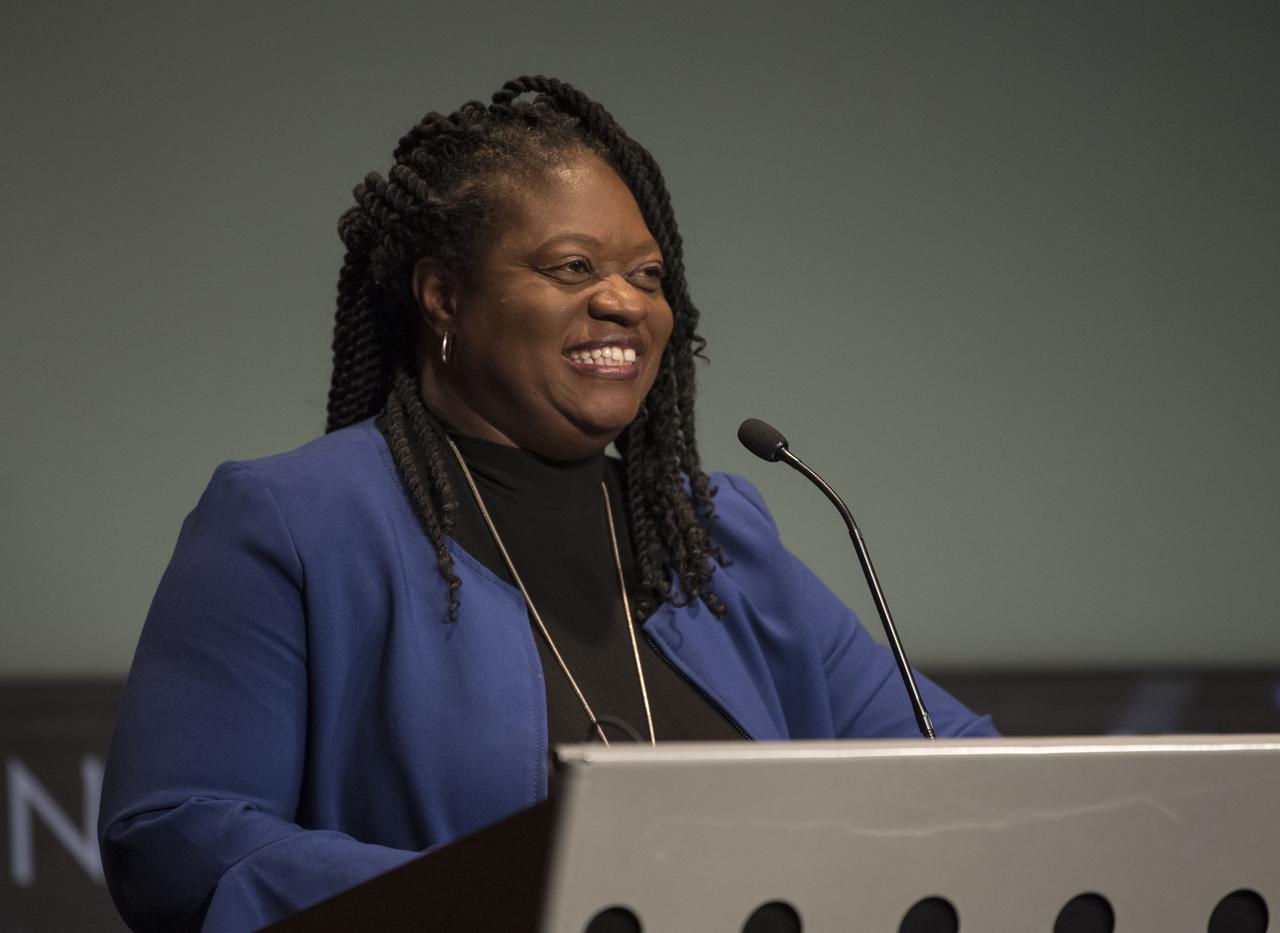
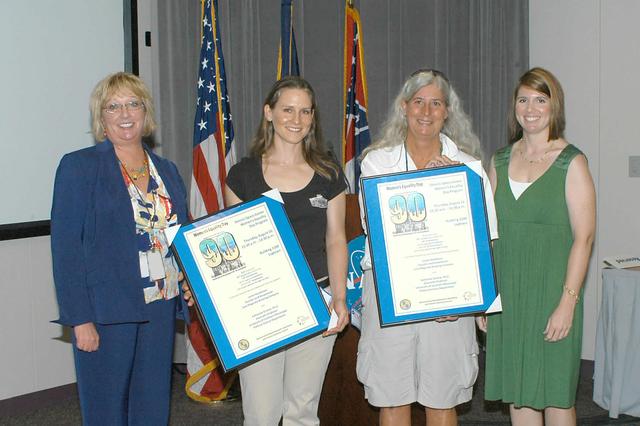
NASA's John C. Stennis Space Center celebrated Women's Equality Day with a program featuring presentations from a pair of area women - Leslie Henderson, founder and brewmaster of Lazy Magnolia Brewing Co. in Kiln, Miss., and Kathanne Greene, associate professor of political science at the University of Southern Mississippi in Hattiesburg. Shown are (l to r): Jo Ann Larson, Stennis Equal Opportunity officer; Henderson; Greene; and Shannon Breland, public affairs officer for the Naval Research Laboratory at Stennis and a member of the Stennis Diversity Council.
Stennis observes Women's Equality Day
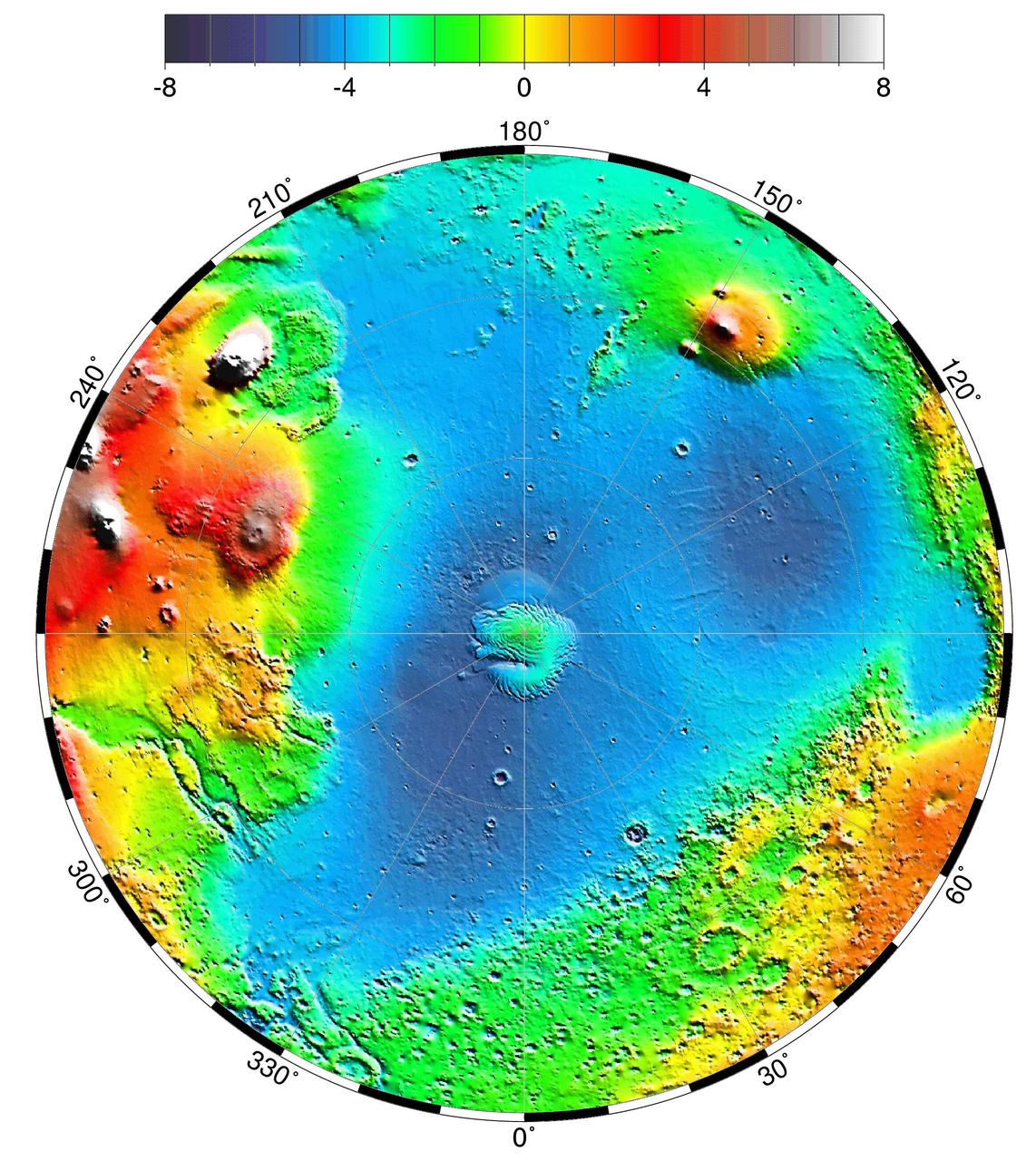
Lambert Equal-Area Projection of Pole-to-Equator
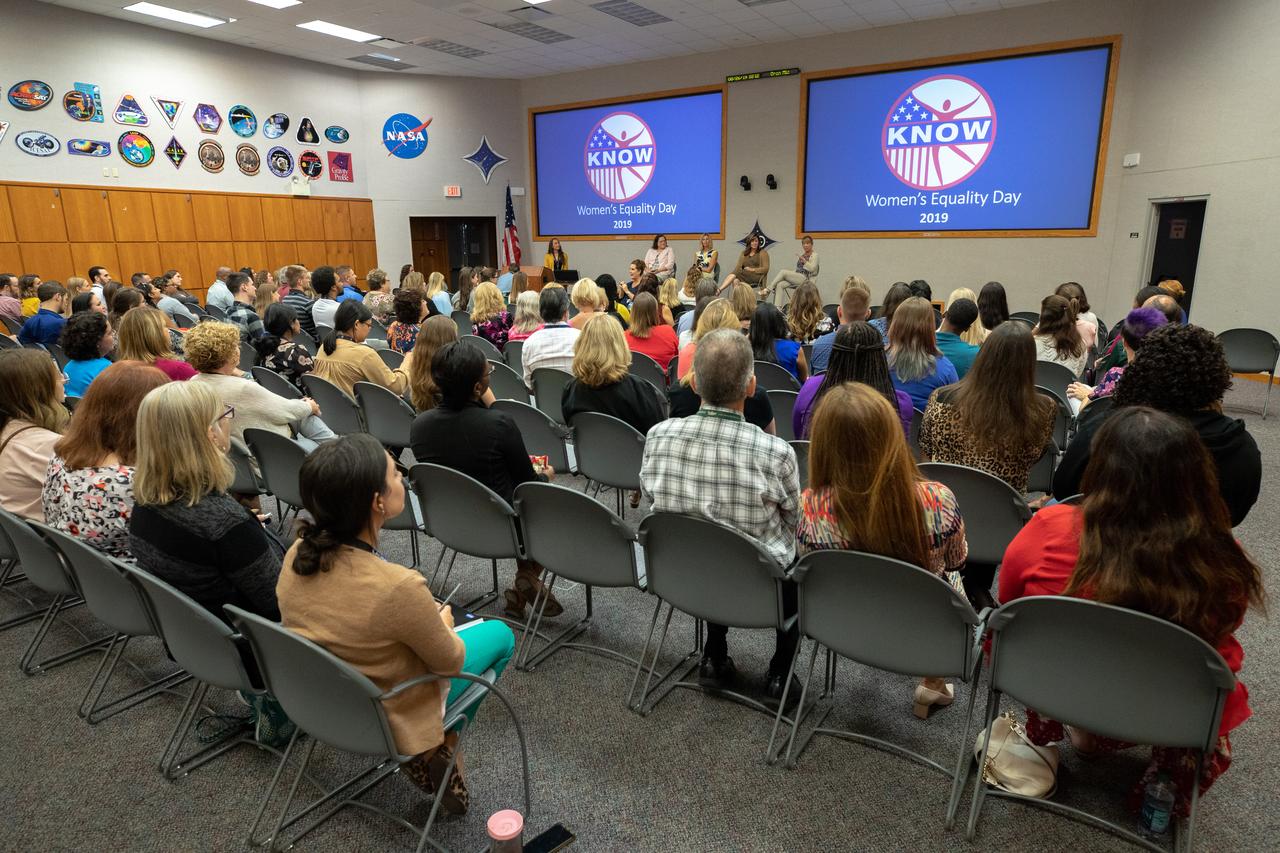
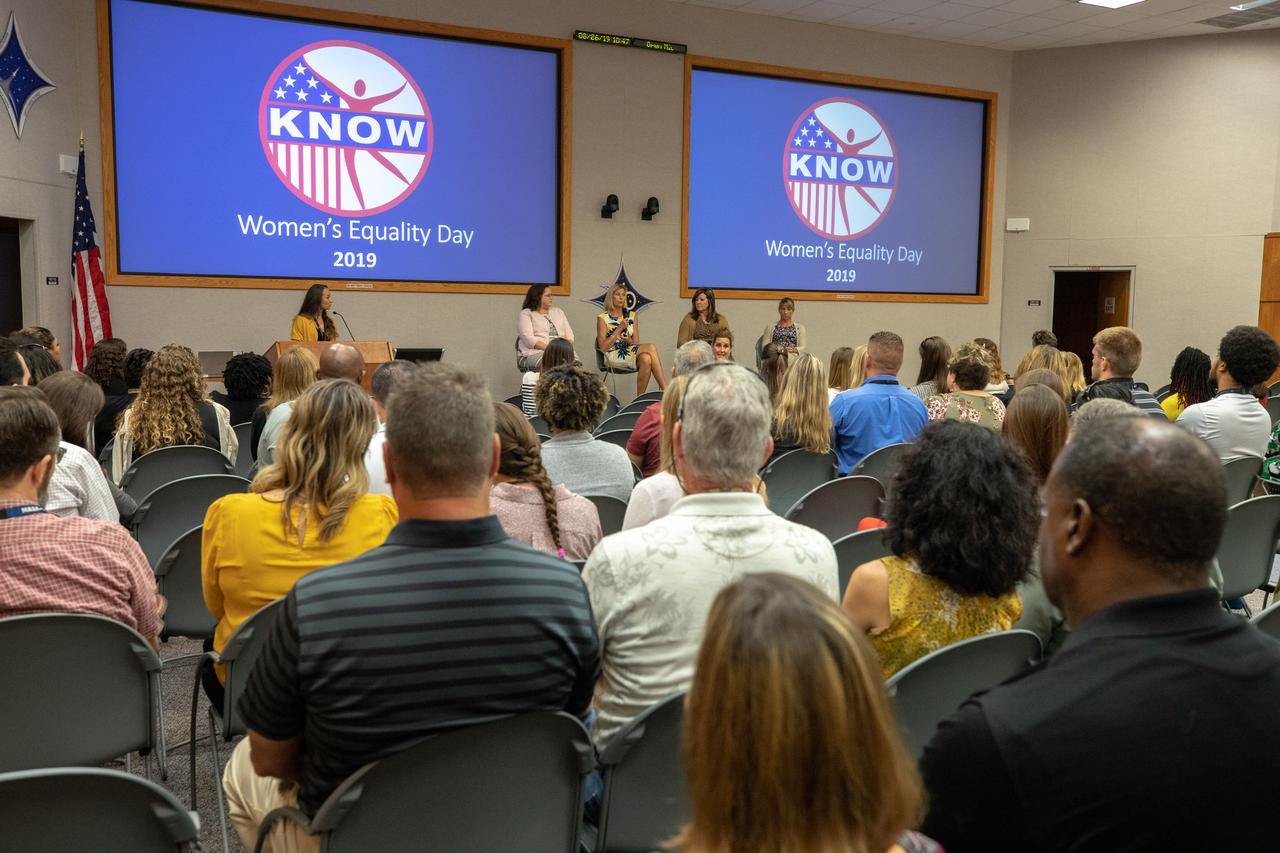
A panel discussion, featuring women in leadership roles at NASA’s Kennedy Space Center in Florida, is held on Aug. 26, 2019, to celebrate Women’s Equality Day. The event, sponsored by the Kennedy Networking Opportunities for Women (KNOW) employee resource group, honored the 100th anniversary of the passing of the 19th amendment guaranteeing all American women the right to vote. Nancy Bray, director of Spaceport Integration and Services, answers a question. At left is Digna Carballosa, director of the Human Resources Office. The purpose of KNOW is to provide focus on issues such as employment, retention, promotion, training, career and personal development, education, and identify and eliminate barriers that hinder the advancement of women in the workforce.
Women's Equality Day
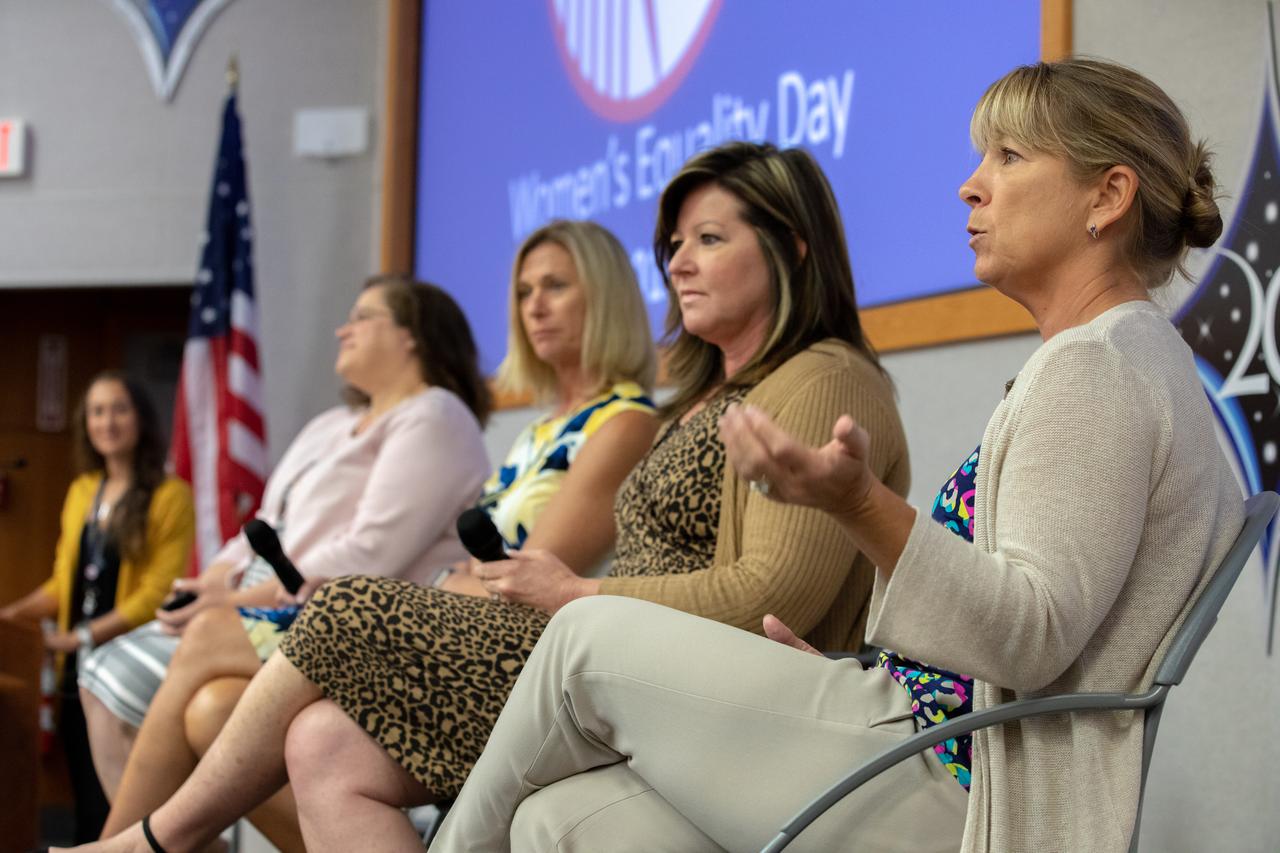
A panel discussion, featuring women in leadership roles at NASA’s Kennedy Space Center in Florida, is held on Aug. 26, 2019, to celebrate Women’s Equality Day. The event, sponsored by the Kennedy Networking Opportunities for Women (KNOW) employee resource group, honored the 100th anniversary of the passing of the 19th amendment guaranteeing all American women the right to vote. Seated in front from left, are Digna Carballosa, director of the Human Resources Office; Nancy Bray, director of Spaceport Integration and Services; Jennifer Kunz, director of Safety and Mission Assurance; and Amanda Mitskevich, Launch Services Program manager. At far left, is Ashley Nelsen, Launch Service Program information manager and panel discussion moderator. The purpose of KNOW is to provide focus on issues such as employment, retention, promotion, training, career and personal development, education, and identify and eliminate barriers that hinder the advancement of women in the workforce.
Women's Equality Day
A panel discussion, featuring women in leadership roles at NASA’s Kennedy Space Center in Florida, is held on Aug. 26, 2019, to celebrate Women’s Equality Day. The event, sponsored by the Kennedy Networking Opportunities for Women (KNOW) employee resource group, honored the 100th anniversary of the passing of the 19th amendment guaranteeing all American women the right to vote. Seated in front from left, are Digna Carballosa, director of the Human Resources Office; Nancy Bray, director of Spaceport Integration and Services; Jennifer Kunz, director of Safety and Mission Assurance; and Amanda Mitskevich, Launch Services Program manager. At far left is Ashley Nelsen, Launch Service Program information manager and panel discussion moderator. The purpose of KNOW is to provide focus on issues such as employment, retention, promotion, training, career and personal development, education, and identify and eliminate barriers that hinder the advancement of women in the workforce.
Women's Equality Day
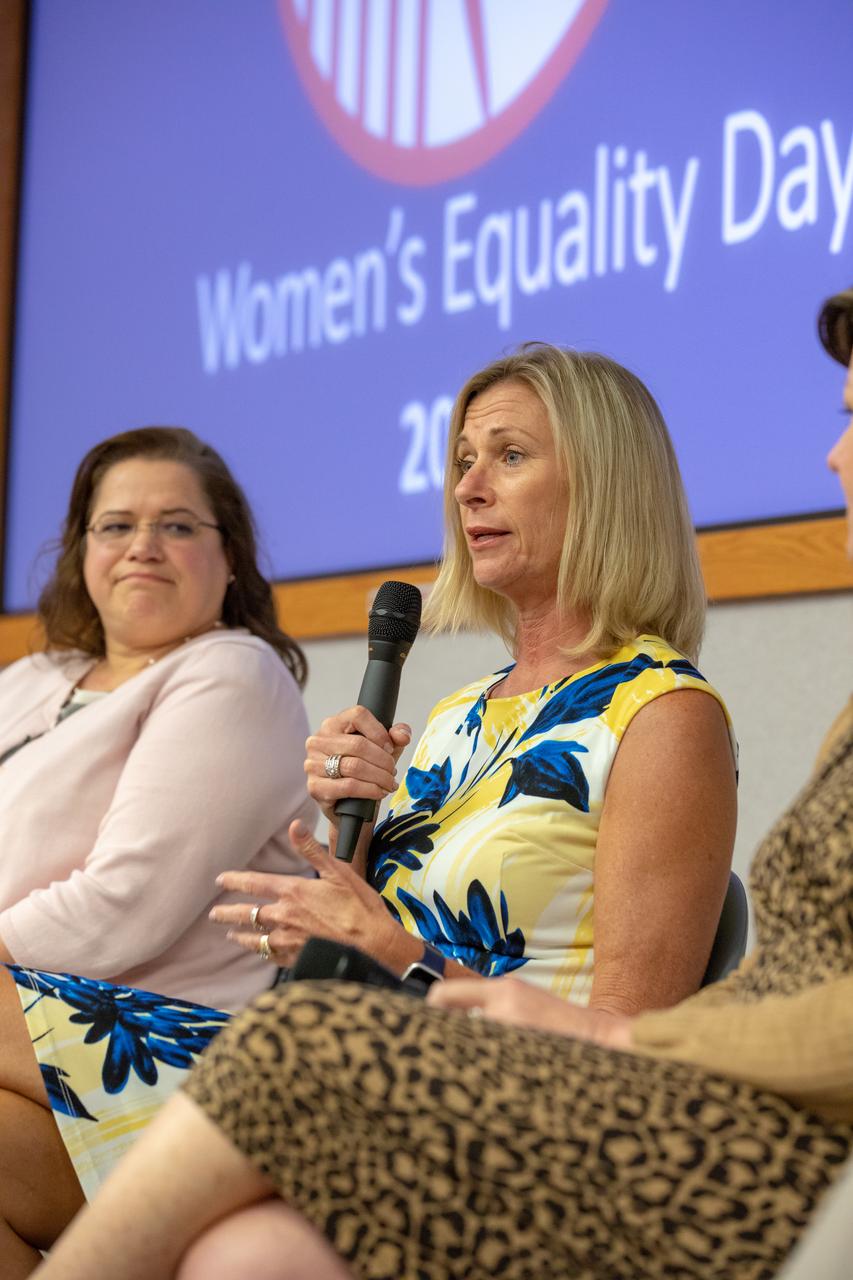
A panel discussion, featuring women in leadership roles at NASA’s Kennedy Space Center in Florida, is held on Aug. 26, 2019, to celebrate Women’s Equality Day. The event, sponsored by the Kennedy Networking Opportunities for Women (KNOW) employee resource group, honored the 100th anniversary of the passing of the 19th amendment guaranteeing all American women the right to vote. Jennifer Kunz, director of Safety and Mission Assurance, answers a question. Seated at left is Digna Carballosa, director of the Human Resources Office. At far left is Ashley Nelsen, Launch Service Program information manager and panel discussion moderator. The purpose of KNOW is to provide focus on issues such as employment, retention, promotion, training, career and personal development, education, and identify and eliminate barriers that hinder the advancement of women in the workforce.
Women's Equality Day
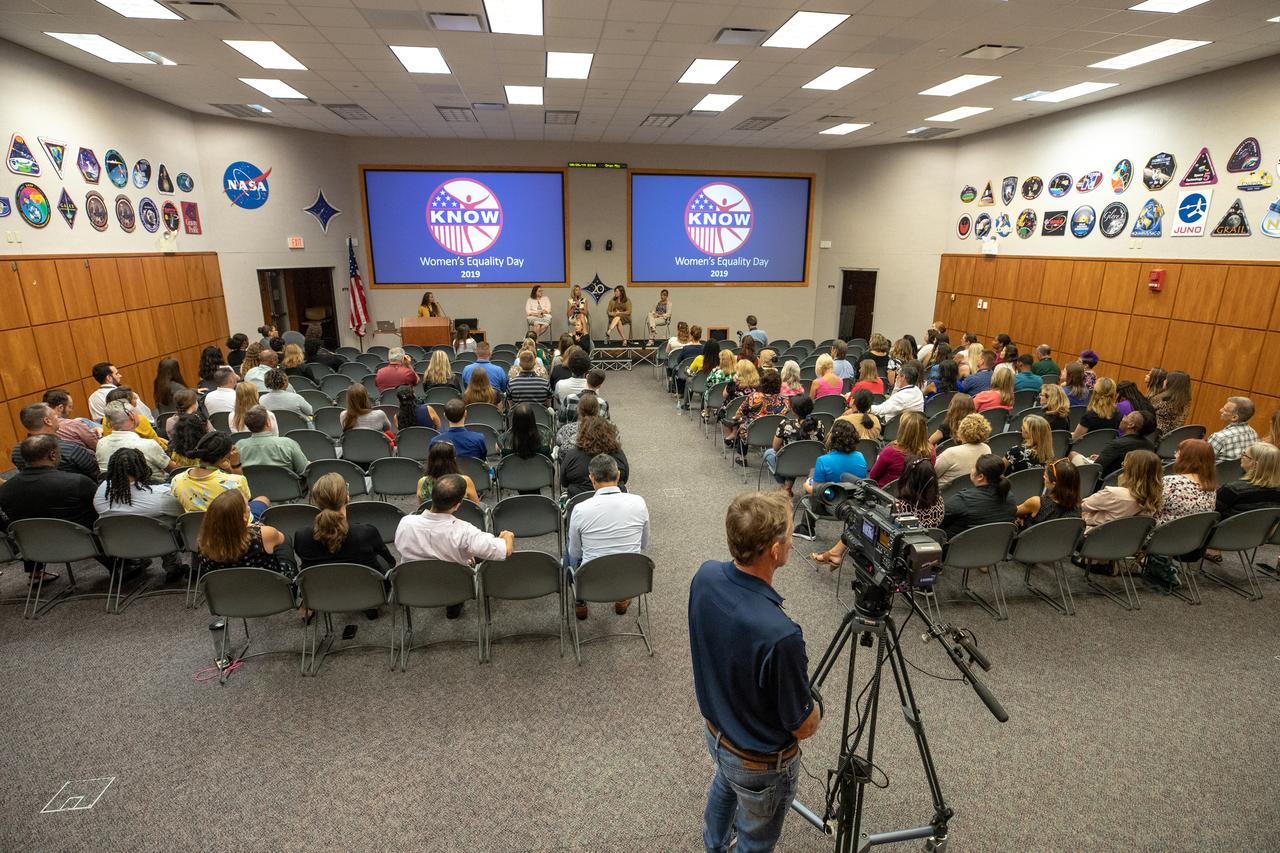
A panel discussion, featuring women in leadership roles at NASA’s Kennedy Space Center in Florida, is held on Aug. 26, 2019, to celebrate Women’s Equality Day. The event, sponsored by the Kennedy Networking Opportunities for Women (KNOW) employee resource group, honored the 100th anniversary of the passing of the 19th amendment guaranteeing all American women the right to vote. Seated from left, are Digna Carballosa, director of the Human Resources Office; Nancy Bray, director of Spaceport Integration and Services; Jennifer Kunz, director of Safety and Mission Assurance; and Amanda Mitskevich, Launch Services Program manager. The purpose of KNOW is to provide focus on issues such as employment, retention, promotion, training, career and personal development, education, and identify and eliminate barriers that hinder the advancement of women in the workforce.
Women's Equality Day
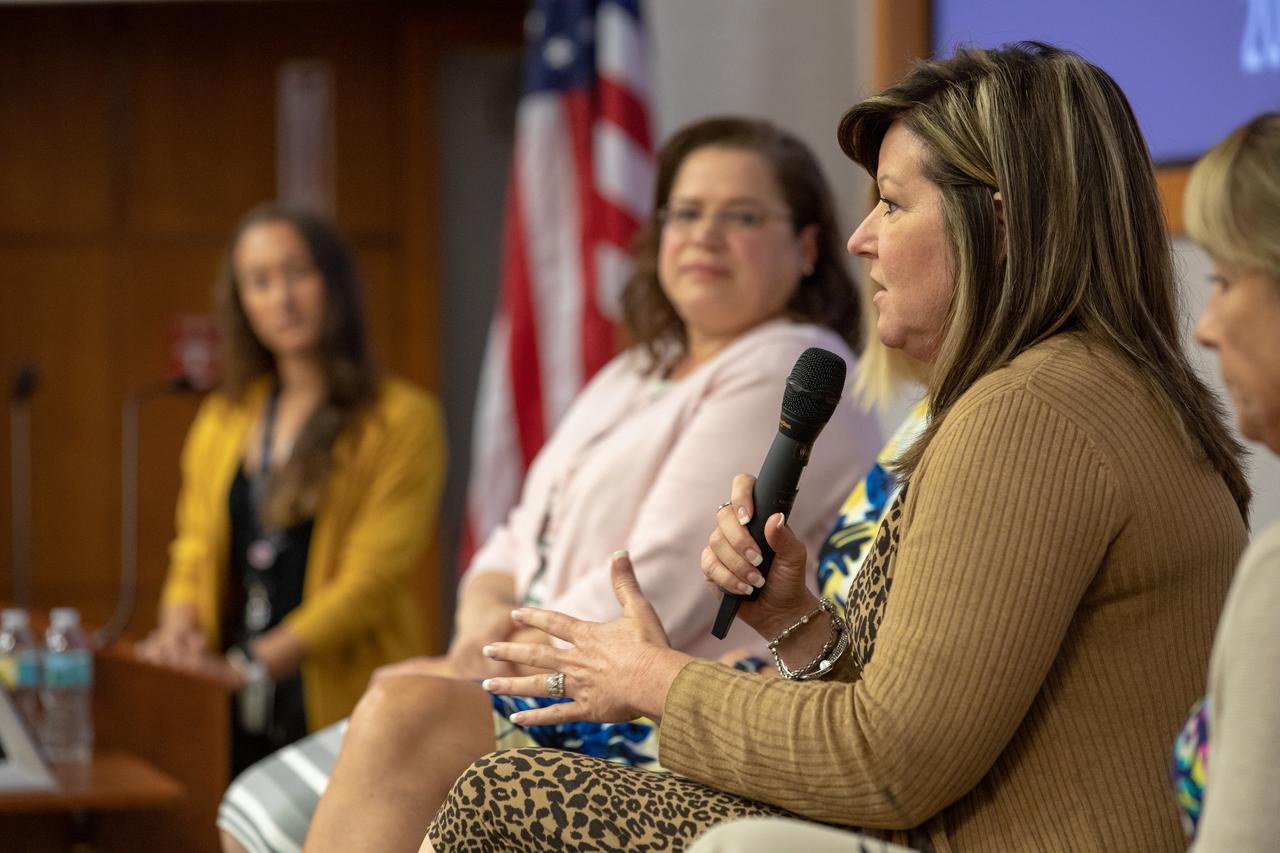
A panel discussion, featuring women in leadership roles at NASA’s Kennedy Space Center in Florida, is held on Aug. 26, 2019, to celebrate Women’s Equality Day. The event, sponsored by the Kennedy Networking Opportunities for Women (KNOW) employee resource group, honored the 100th anniversary of the passing of the 19th amendment guaranteeing all American women the right to vote. Seated in front from left, are Digna Carballosa, director of the Human Resources Office; Nancy Bray, director of Spaceport Integration and Services; Jennifer Kunz, director of Safety and Mission Assurance; and Amanda Mitskevich, Launch Services Program manager. At far left is Ashley Nelsen, Launch Service Program information manager and panel discussion moderator. The purpose of KNOW is to provide focus on issues such as employment, retention, promotion, training, career and personal development, education, and identify and eliminate barriers that hinder the advancement of women in the workforce.
Women's Equality Day
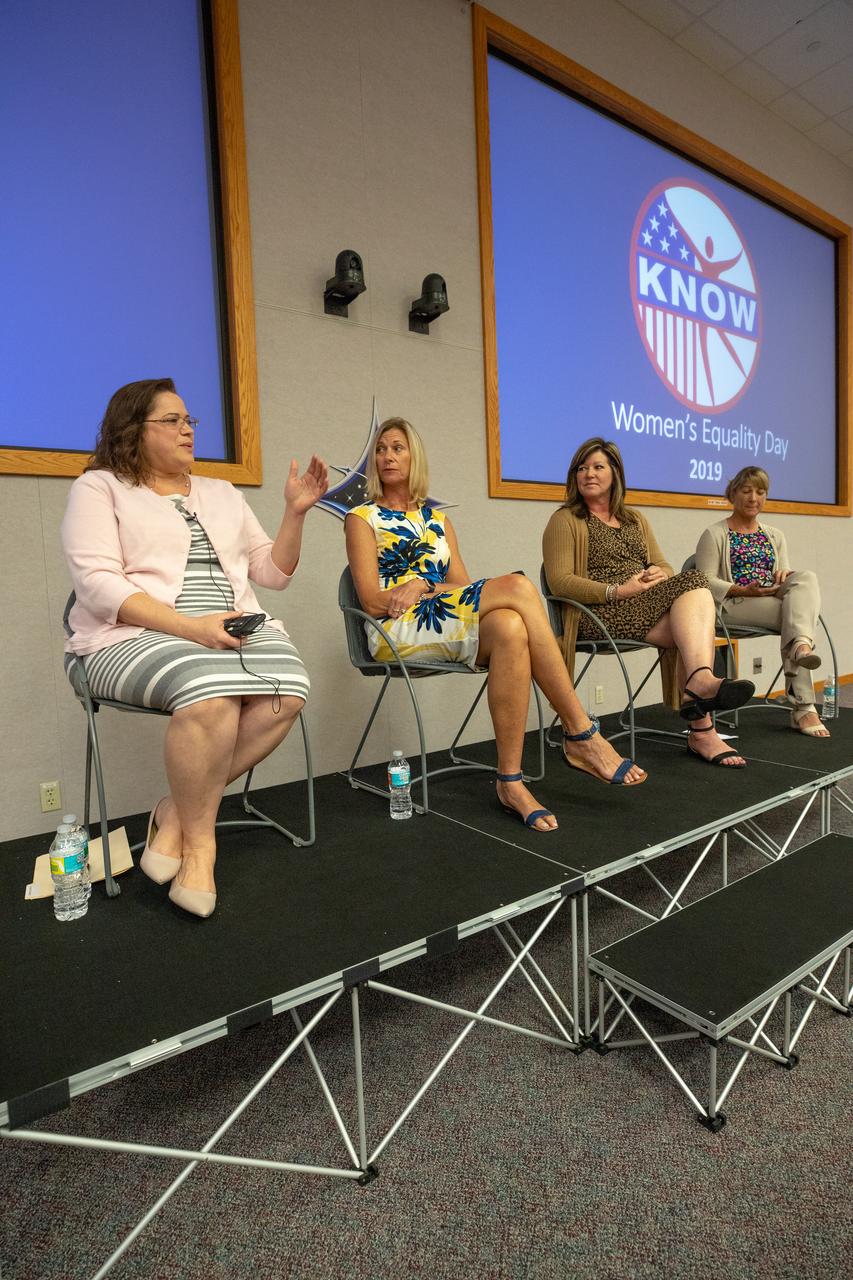
A panel discussion, featuring women in leadership roles at NASA’s Kennedy Space Center in Florida, is held on Aug. 26, 2019, to celebrate Women’s Equality Day. The event, sponsored by the Kennedy Networking Opportunities for Women (KNOW) employee resource group, honored the 100th anniversary of the passing of the 19th amendment guaranteeing all American women the right to vote. Seated in front from left, are Digna Carballosa, director of the Human Resources Office; Nancy Bray, director of Spaceport Integration and Services; Jennifer Kunz, director of Safety and Mission Assurance; and Amanda Mitskevich, Launch Services Program manager. At far left is Ashley Nelsen, Launch Service Program information manager and panel discussion moderator. The purpose of KNOW is to provide focus on issues such as employment, retention, promotion, training, career and personal development, education, and identify and eliminate barriers that hinder the advancement of women in the workforce.
Women's Equality Day
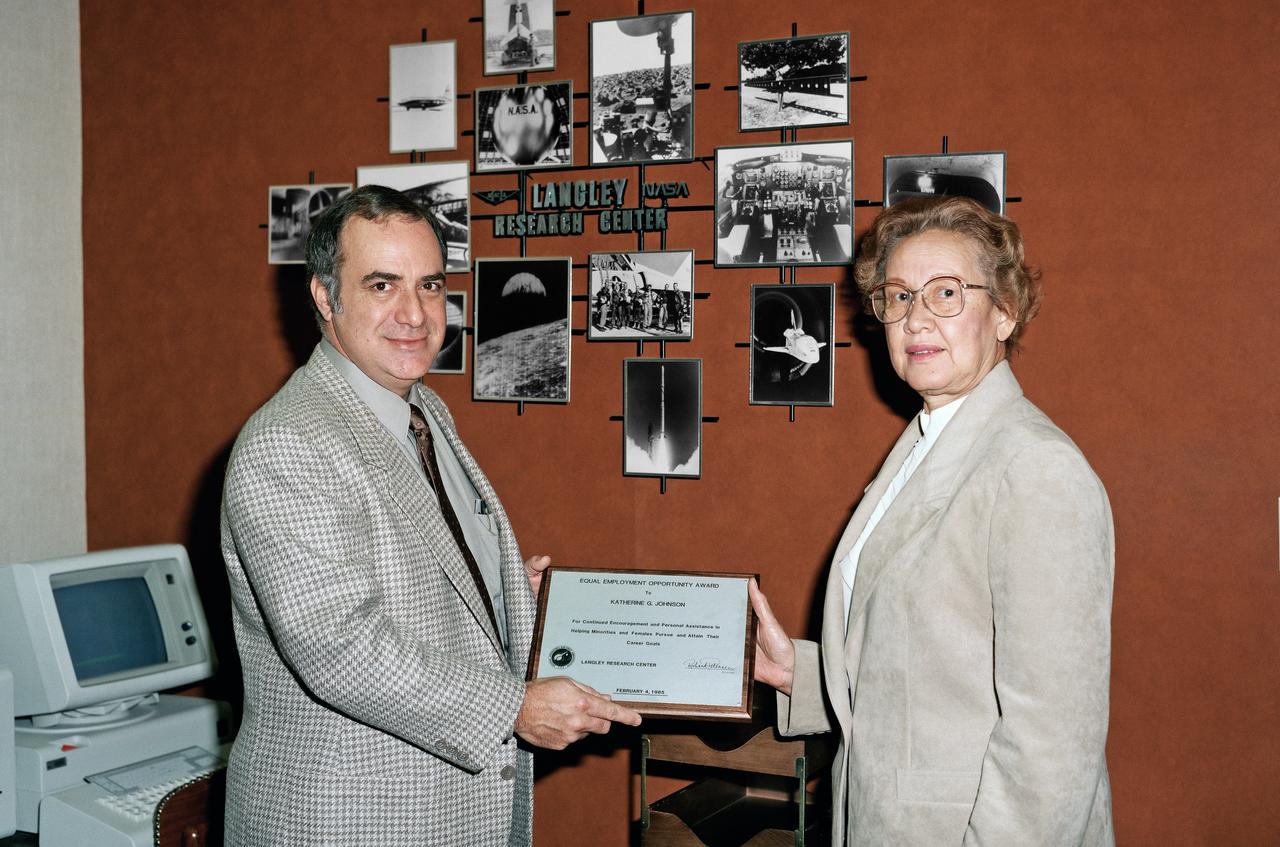
Katherine G.Johnson Equal Opportunity Award with Paul F. Holloway center Deputy Director.
Katherine G.Johnson Equal Opportunity Award
NASA's Voyager 1 computer color mosaics, shown in approximately natural color and in Lambertian equal-area projections, show the Eastern (left) and Western (right) hemispheres of Io. This innermost of Jupiter's 4 major satellites is the most volcanically active object in the solar system. Io is 2263 mi (3640 km) in diameter, making it a little bigger than Earth's moon. Almost all the features visible here have volcanic origins, including several calderas and eruption plumes that were active at the time of the Voyager 1 encounter.   http://photojournal.jpl.nasa.gov/catalog/PIA00318
Io Shown in Lambertian Equal Area Projection and in Approximately Natural Color
Dr. Shanique Brown, an assistant professor of industrial-organizational psychology at Wayne State University in Detroit, Michigan, delivers the Black History Month keynote address to team members at NASA's Marshall Space Flight Center Feb. 28. Participants mingled with Brown and Marshall leaders after the speech and a panel discussion on diversity and inclusion, and sampled a variety of ethnic foods. The 2019 commemoration, themed "Migrations From Here to There," was organized by Marshall's Office of Diversity and Equal Opportunity
2019 Black History Month Program
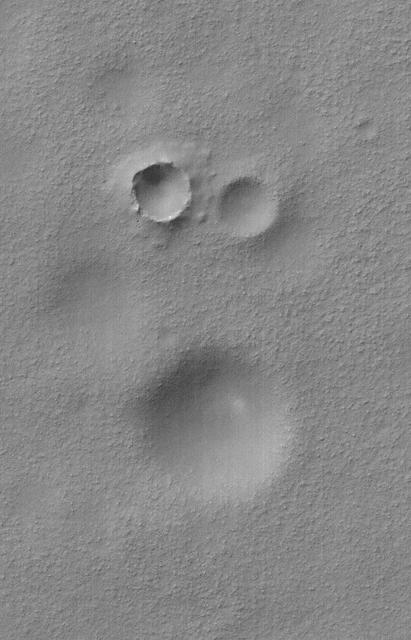
This MOC image shows a group of impact craters in Aonia Planum, Mars. Remarkably, two of the craters are approximately equal in size, however, they clearly differ in age
Age Relationship
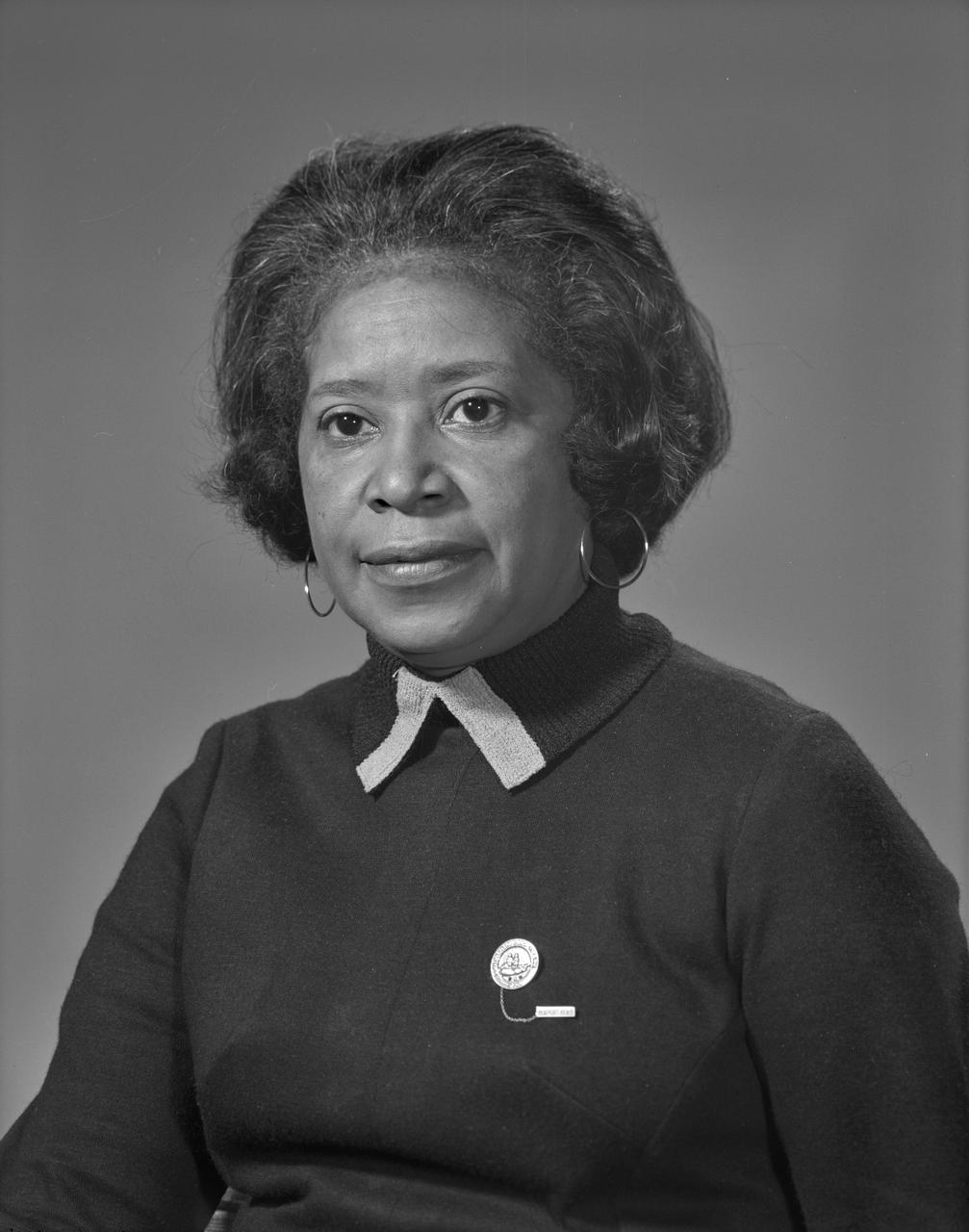
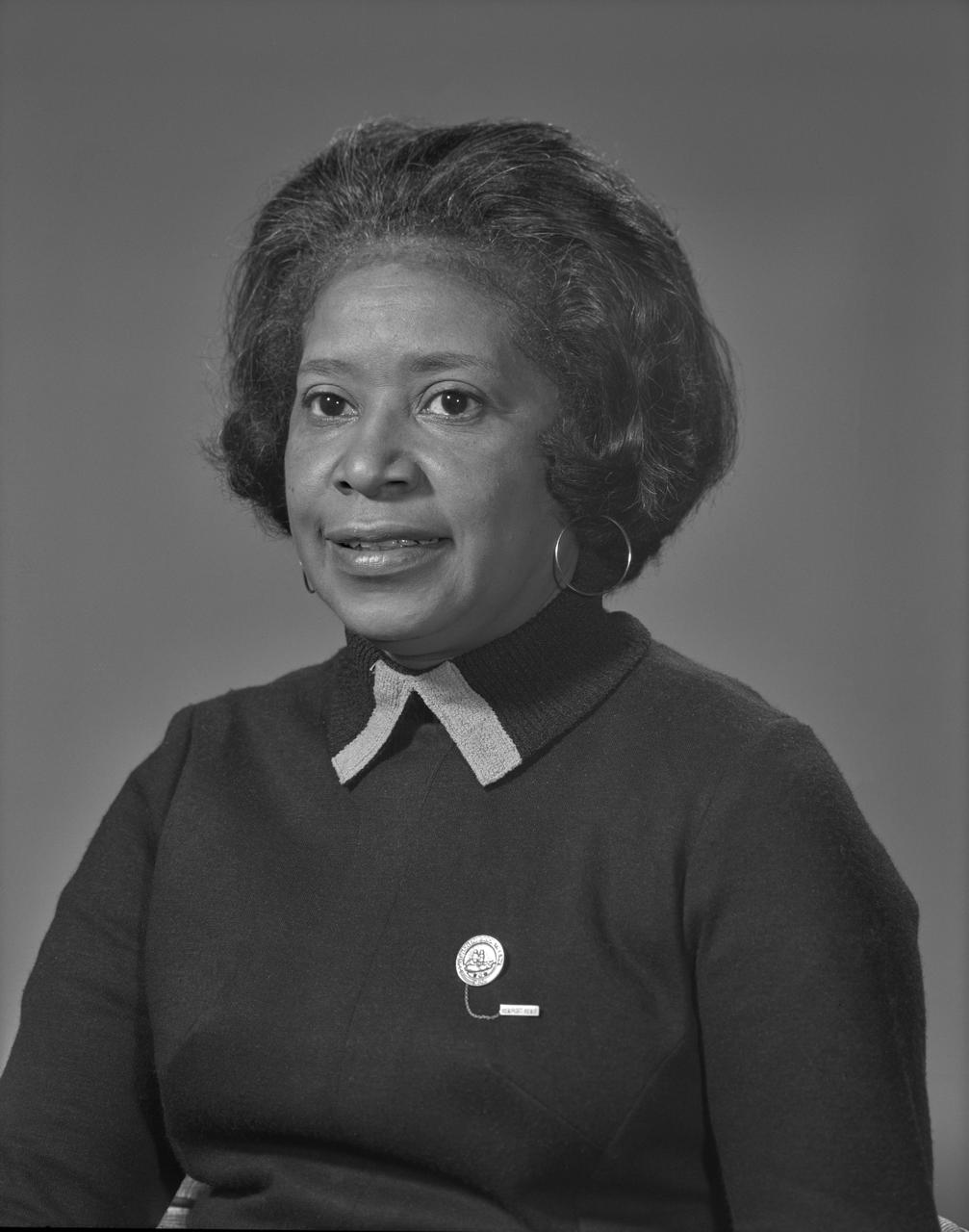
Portrait of Mary Jackson. At the time this photo was taken on October 9, 1971, Mrs. Jackson was working as a Equal Employment Opportunity (EEO) Counselor Mary Jackson, was  NASA’s first black female engineer.
Portrait of Mary Jackson, NASA's First Female African-American Engineer
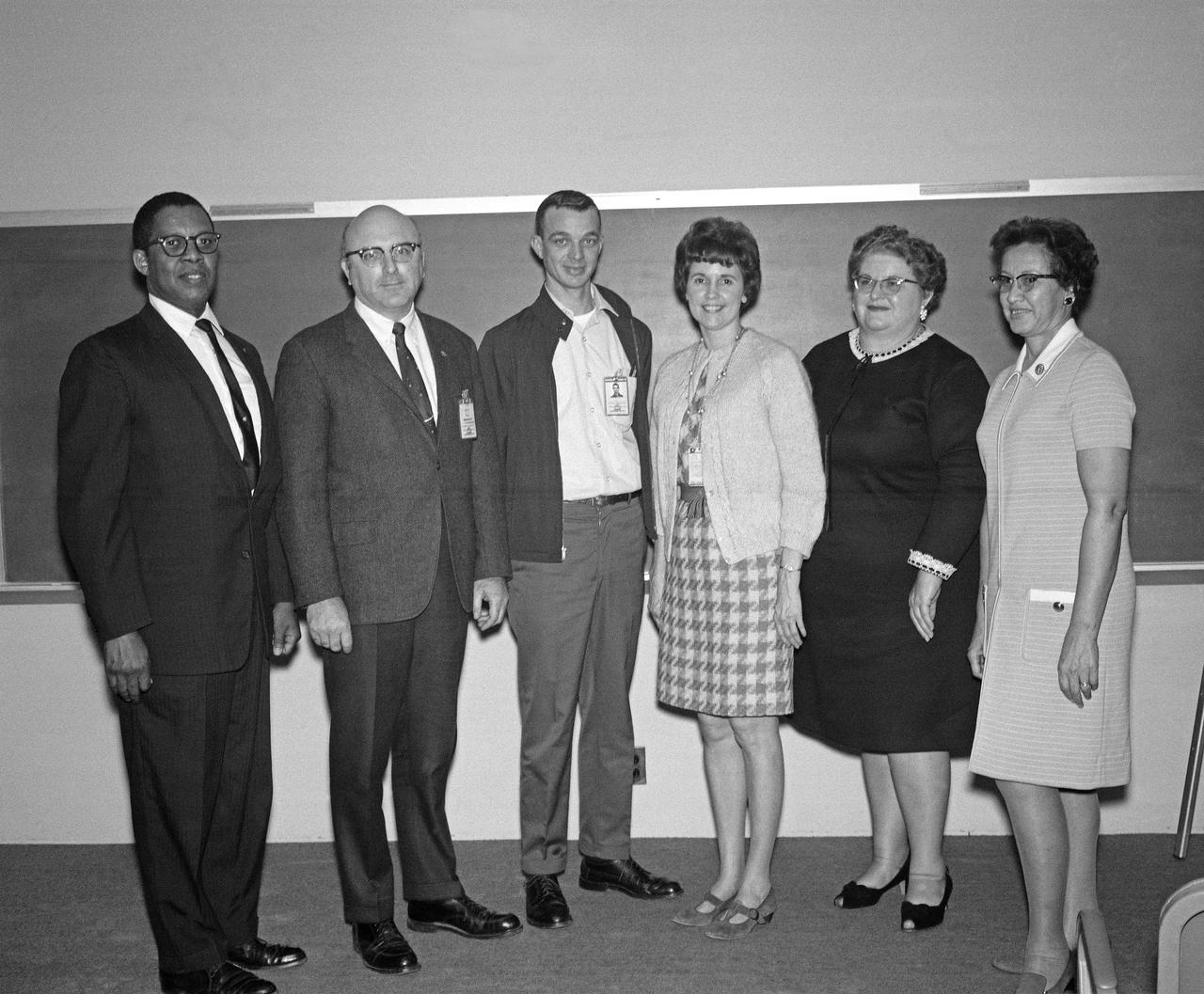
Trainees Honored: Langley Researcher, March 6, 1970 page 6. Six staff members instructed the trainees in various subjects Horace Bellamy, Fred Eichenbrenner,Thomas Hall, Evelyn Myers, Eloise McGehee, and Katherine Johnson.
Office of Equal Opertunity Program Staff Trainers
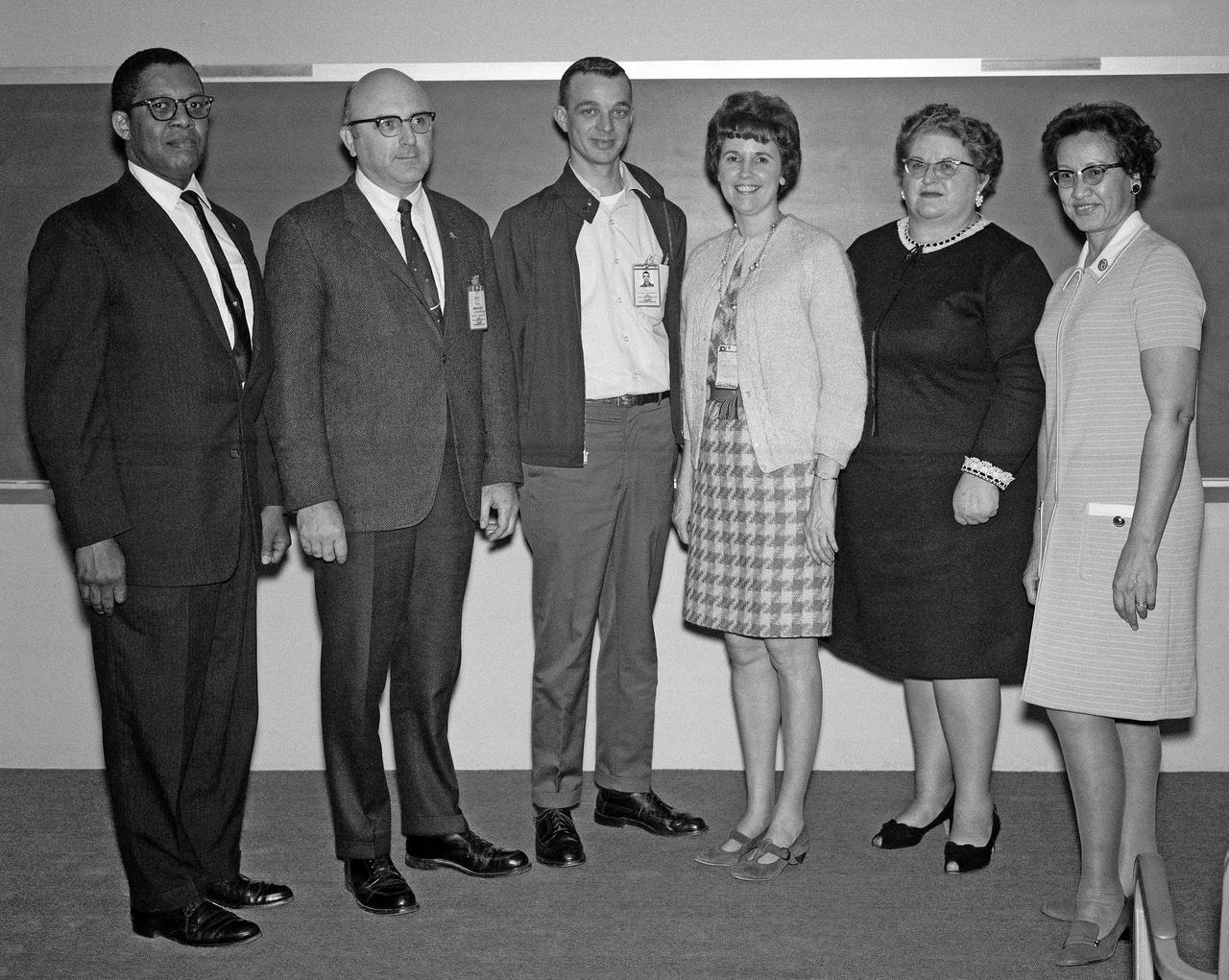
Trainees Honored: Langley Researcher, March 6, 1970 page 6. Six staff members instructed the trainees in various subjects Horace Bellamy, Fred Eichenbrenner,Thomas Hall, Evelyn Myers, Eloise McGehee, and Katherine Johnson.
Office of Equal Opertunity Program Staff Trainers
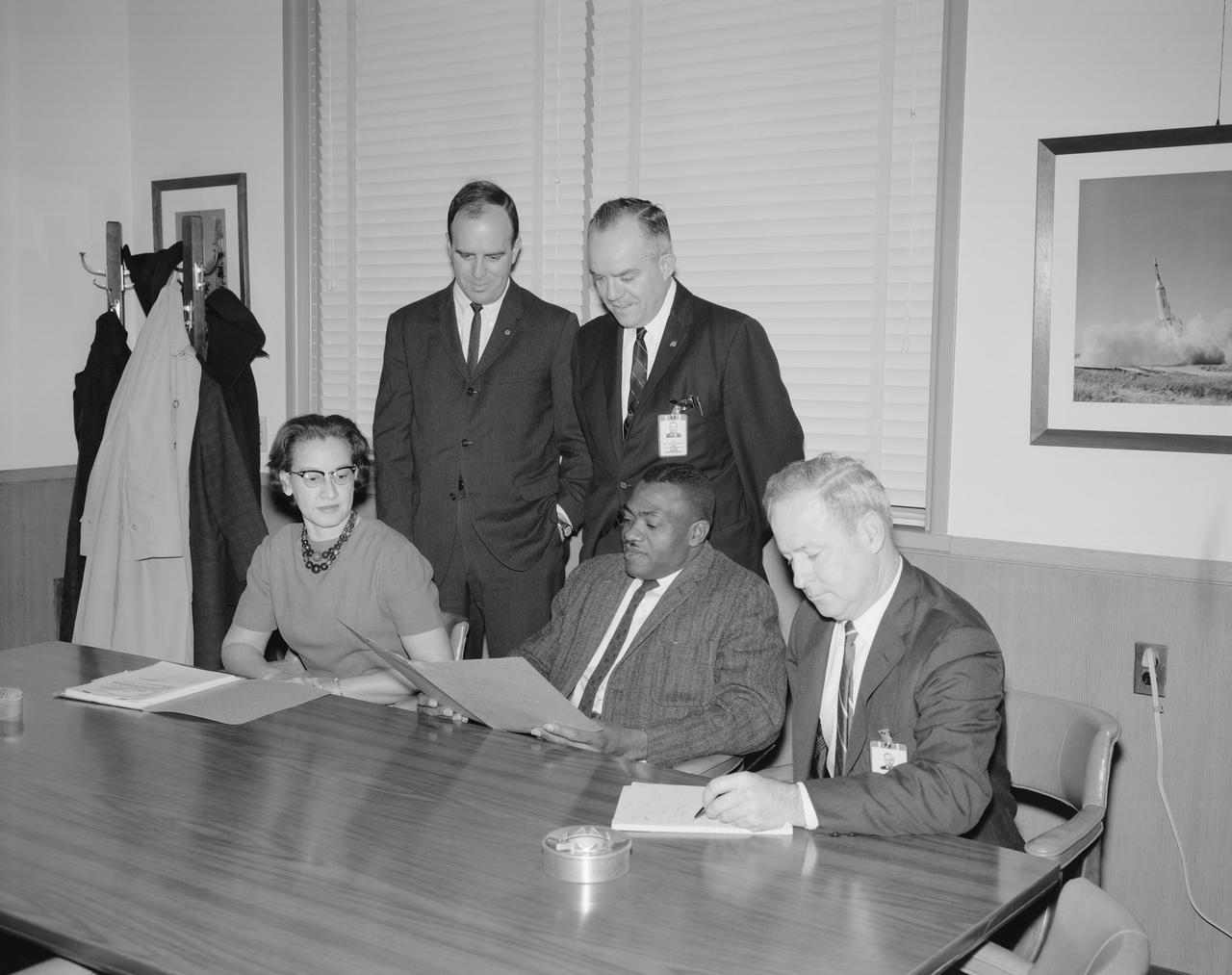
Seated from From Left: Katherine G Johnson, Lawrence W Brown, and J Norwood Evans, Employment Officer. Standing from Left: John J Cox, secretary; and Edward T Maher, chairman. Absent when picture was taken: Vernon S Courtney. Members are shown as they review the Center's Affirmative Action Program. The committee serves in an advisory capacity to the Personnel Division and Center management officials and seeks to explore realistic approaches to accomplishment of the objectives of the Affirmative Action program.
Meeting of Equal Employment Opportunity Committee
Portrait of Mary Jackson. At the time this photo was taken on October 9, 1971, Mrs. Jackson was working as a Equal Employment Opportunity (EEO) Counselor Mary Jackson, was  NASA’s first black female engineer, R-LRC-1971-OCIO_P-08767,
Portrait of Mary Jackson, NASA's First Female African-American Engineer
Portrait of Mary Jackson. At the time this photo was taken on October 9, 1971, Mrs. Jackson was working as a Equal Employment Opportunity (EEO) Counselor Mary Jackson, was  NASA’s first black female engineer,R-LRC-1971-OCIO_P-08767
Portrait of Mary Jackson, NASA's First Female African-American Engineer
Portrait of Mary Jackson. At the time this photo was taken on October 9, 1971, Mrs. Jackson was working as a Equal Employment Opportunity (EEO) Counselor Mary Jackson, was  NASA’s first black female engineer,R-LRC-1971-OCIO_P_F003-08767
Portrait of Mary Jackson, NASA's First Female African-American Engineer
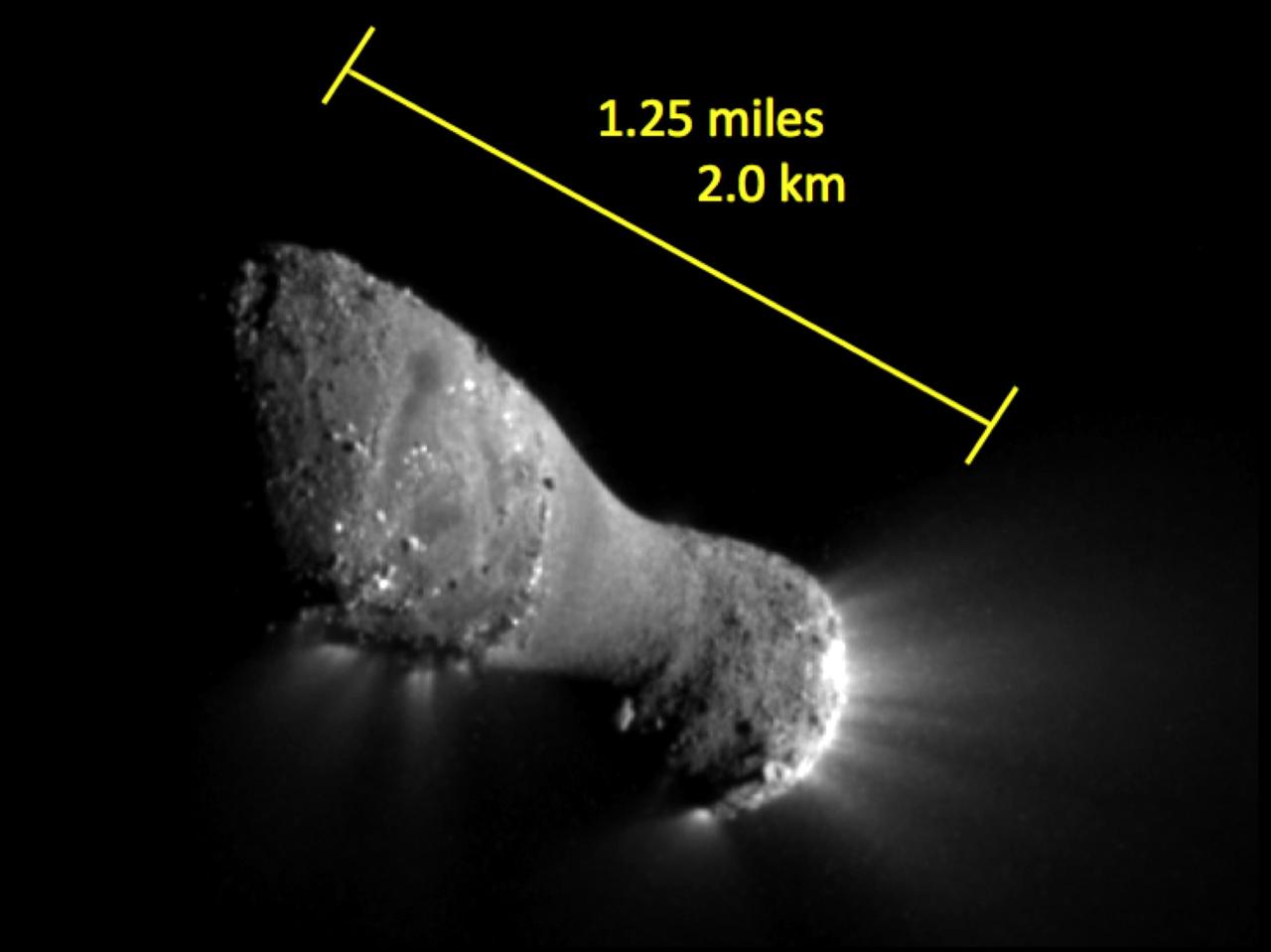
This image, one of the closest taken of comet Hartley 2 by NASA EPOXI mission, shows many features across the comet surface. The length of the comet is equal to the distance between the Capitol building and the Washington Monument in Washington.
Up Close and Personal with Hartley 2
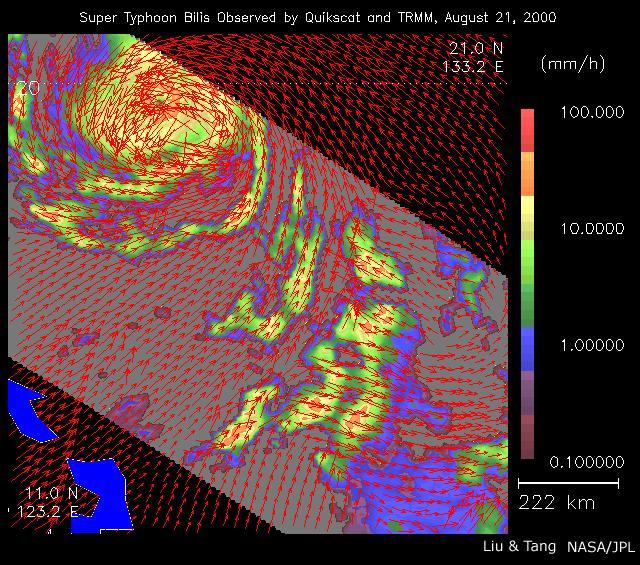
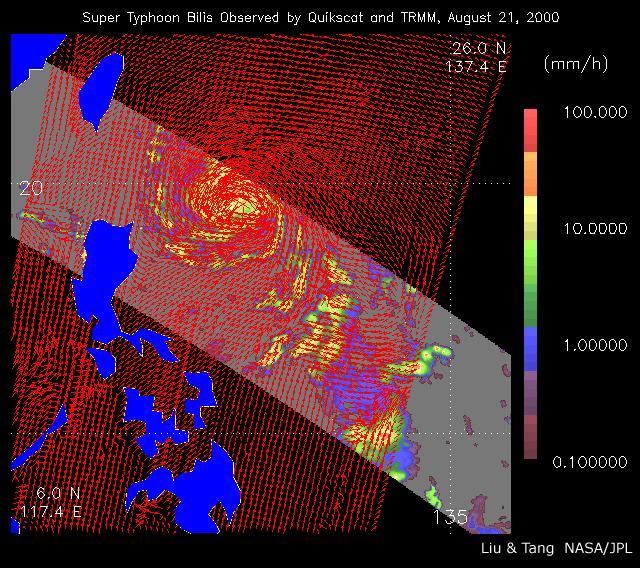
As super Typhoon Bilis, equal in strength to a category 5 hurricane, bore down on Taiwan, these images from August 21, 2000, show the massive storm most devastating components: rain and wind.
Typhoon Bilis
Although the largest volcanoes on Mars and in the solar system are located in the geologically young Tharsis region, there are many Martian volcanoes that display equally interesting features, such as Hadriaca Patera in this NASA Mars Odyssey image.
Hadriaca Patera
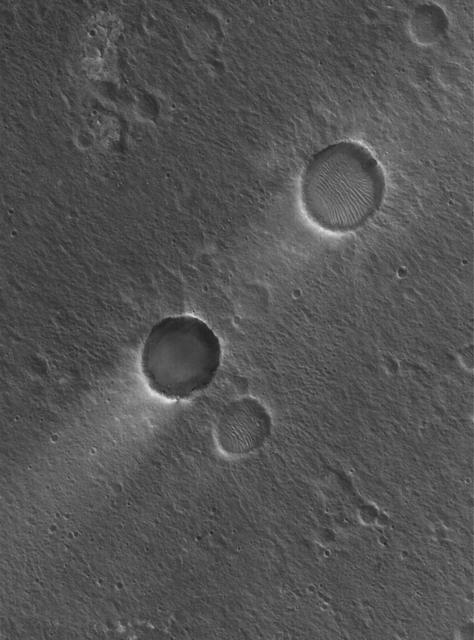
This Mars Global Surveyor MGS Mars Orbiter Camera MOC image shows  two impact craters of nearly equal size, plus their associated wind  streaks. These occur in far eastern Chryse Planitia
Craters and Streaks
As super Typhoon Bilis, equal in strength to a category 5 hurricane, bore down on Taiwan, these images from August 21, 2000, show the massive storm most devastating components: rain and wind.
Typhoon Bilis
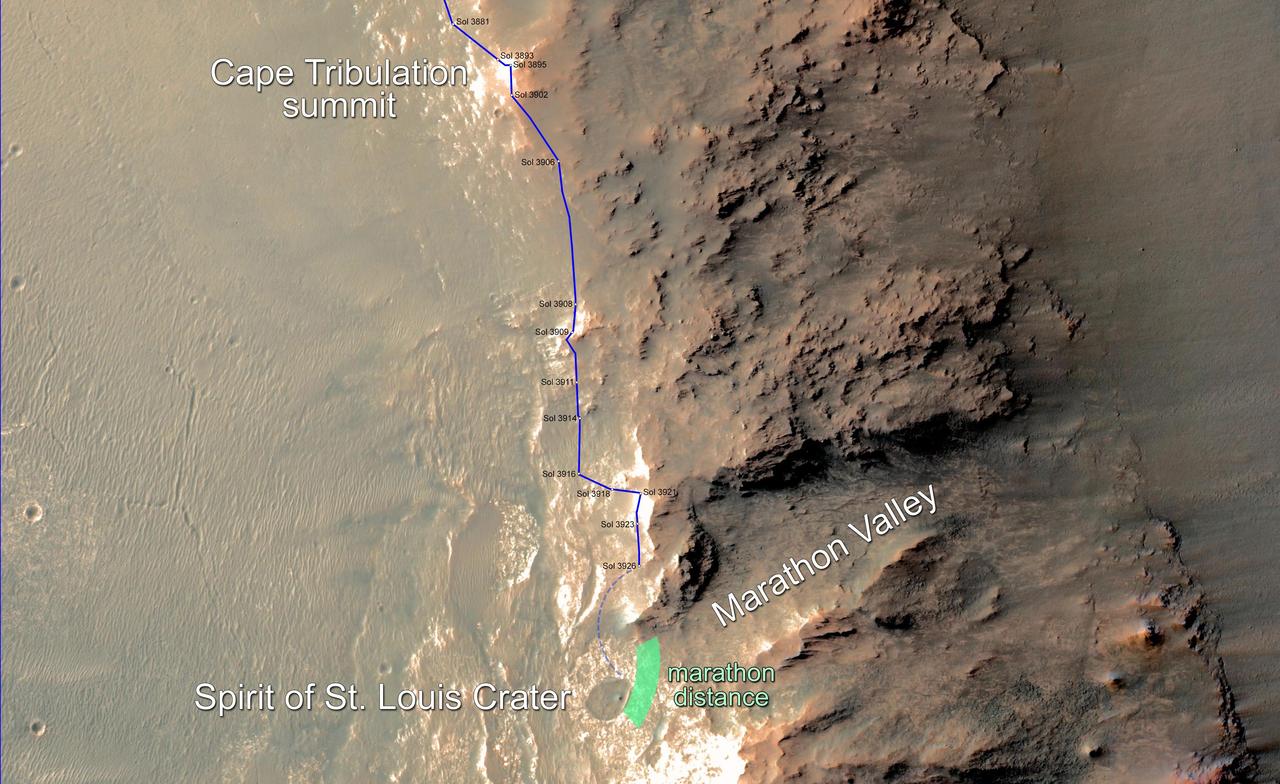
In February 2015, NASA Mars Exploration Rover Opportunity is approaching a cumulative driving distance on Mars equal to the length of a marathon race. This map shows the rover position relative to where it could surpass that distance.
Opportunity Rover Nears Mars Marathon Feat
Portrait:  Adriana Cardenas, Equal Opportunity Officer NASA Ames Research Center 2008
ARC-2008-ACD08-0202-007
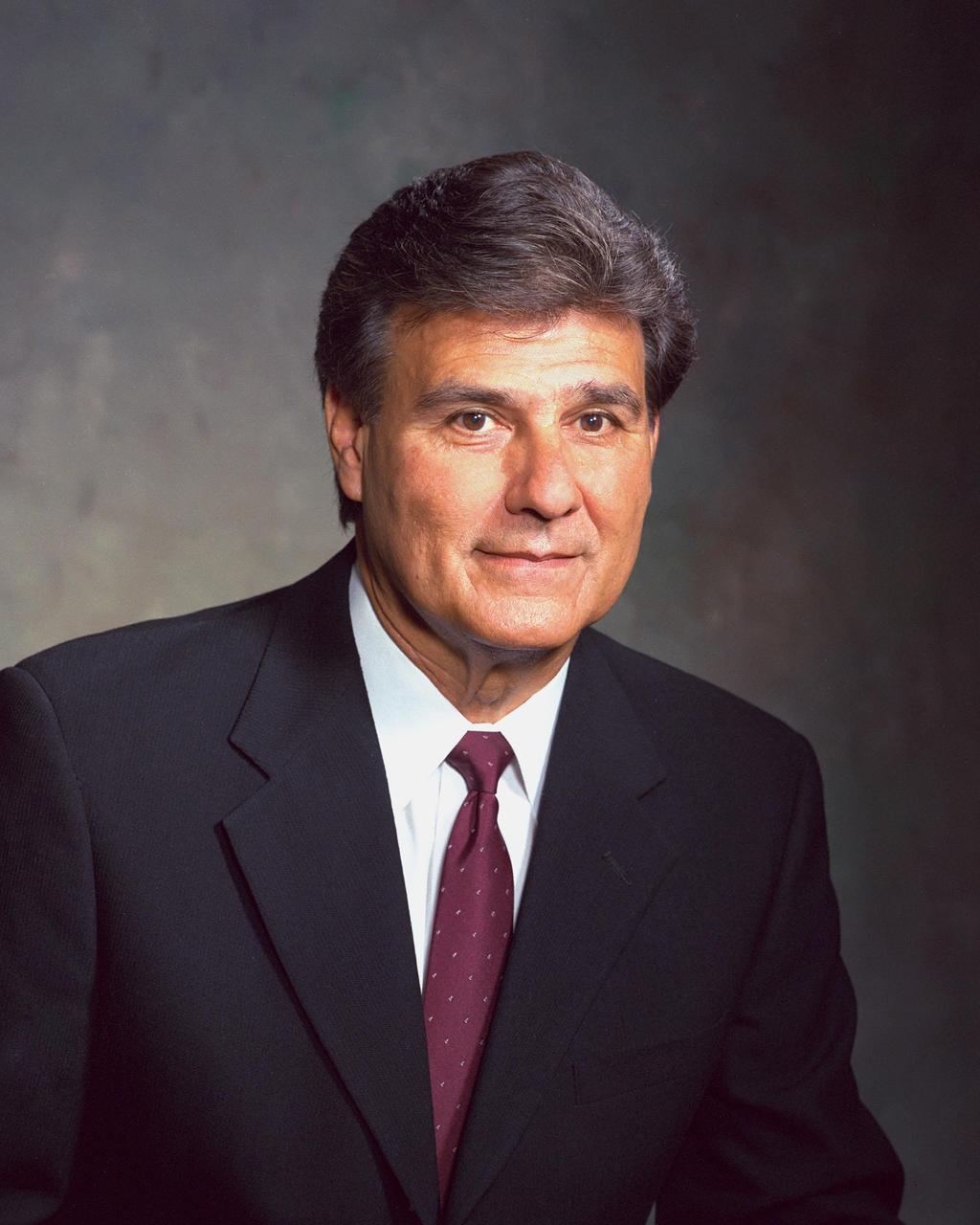
KENNEDY SPACE CENTER, FLA. -- Official portrait of Kenny E. Aguilar, director, Equal Opportunity Program Office.
KSC-98pc0004
Crystal Moten, NASA Headquarters Office of Diversity and Equal Opportunity, speaks at the MLK Day of Service, Tuesday, January 21, 2020 at NASA Headquarters in Washington. Photo Credit: (NASA/Aubrey Gemignani)
MLK Day of Service
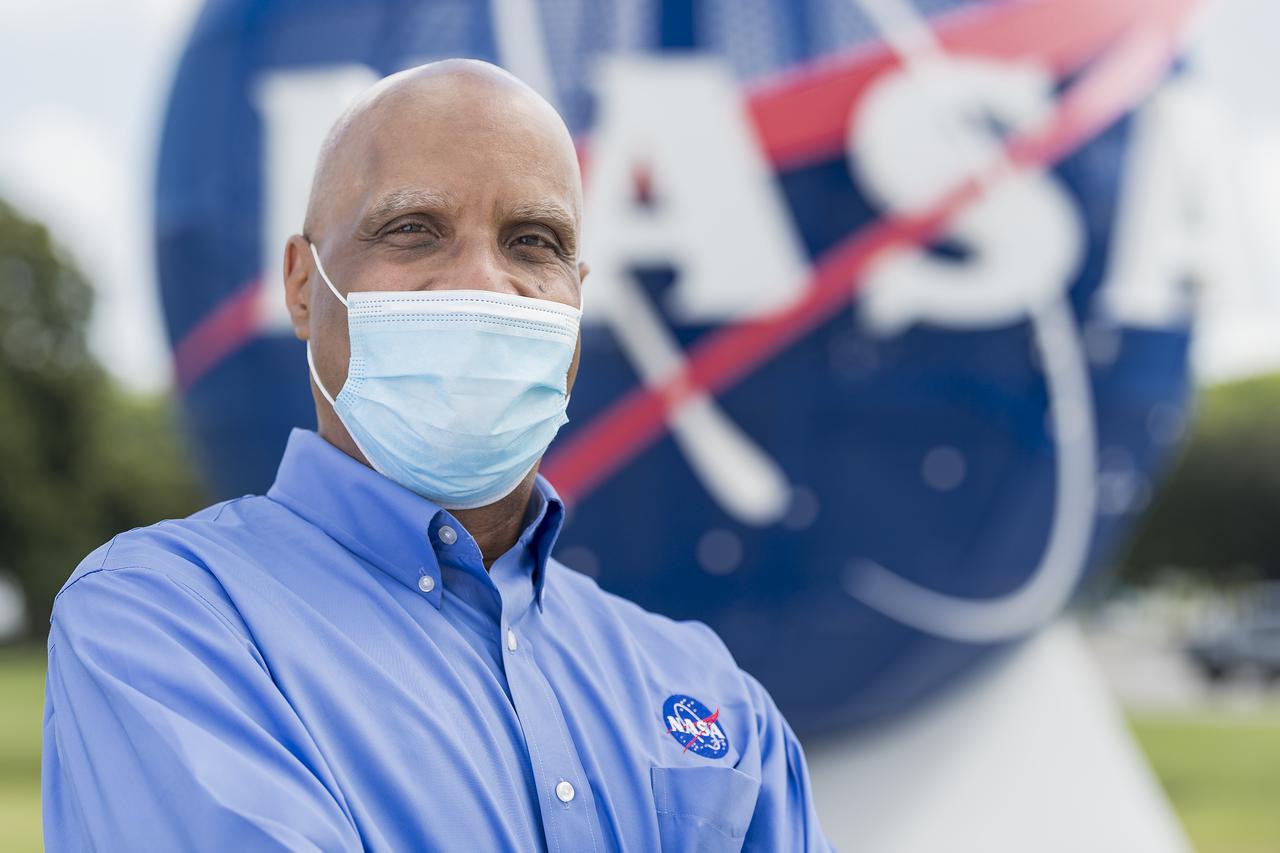
Portrait of Robin "Rob" Lee of the Office of Diversity & Equal Opp. Branch, in front of NASA Langley's "Meatball." The portrait was done for Thalia Patrinos at NASA Headquarters as part of "Faces of NASA" project.   Due to the COVID-19 pandemic, masks were mandated by Governor Northam in Virginia in public settings.  "Well, little did I know, even at a young age, he instilled in me the  importance of seeing people for people. And being able to help people  and being able to meet them in their time of need. And that carried me  throughout my entire life. Even still today.”  — Robin Lee, Director of  Office of Diversity and Equal Opportunity, Langley Research Center
Portrait of Robin "Rob" Lee
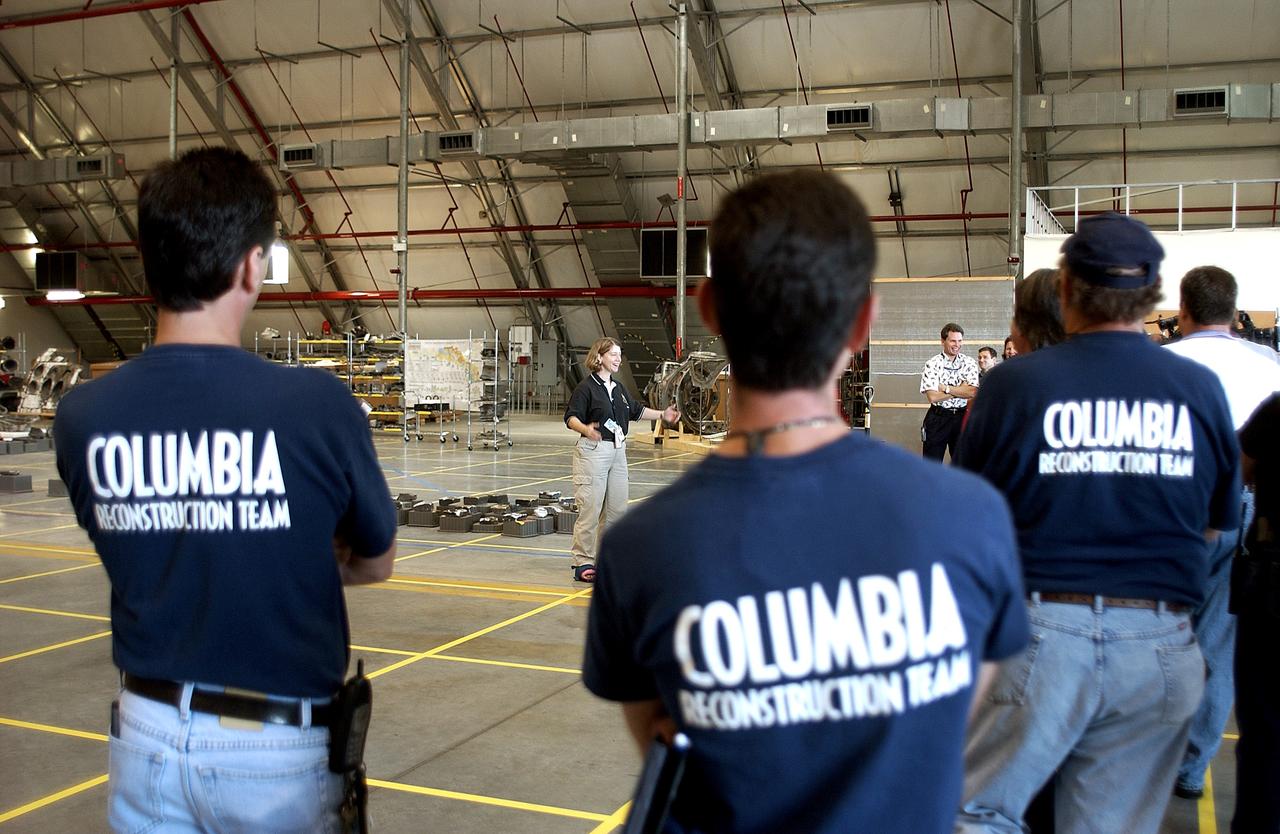
KENNEDY SPACE CENTER, FLA. -  Astronaut Pam Melroy speaks to members of the Columbia Reconstruction Team during transfer of debris from the Columbia Debris Hangar to its permanent storage site in the Vehicle Assembly Building.  More than 83,000 pieces of debris were shipped to KSC during search and recovery efforts in East Texas. That represents about 38 percent of the dry weight of Columbia, equaling almost 85,000 pounds.
KENNEDY SPACE CENTER, FLA. - Astronaut Pam Melroy speaks to members of the Columbia Reconstruction Team during transfer of debris from the Columbia Debris Hangar to its permanent storage site in the Vehicle Assembly Building. More than 83,000 pieces of debris were shipped to KSC during search and recovery efforts in East Texas. That represents about 38 percent of the dry weight of Columbia, equaling almost 85,000 pounds.
KENNEDY SPACE CENTER, FLA.  -  Astronaut Pam Melroy speaks to members of the Columbia Reconstruction Team during transfer of debris from the Columbia Debris Hangar to  its permanent storage site in the Vehicle Assembly Building.  More than 83,000  pieces of debris were shipped to KSC during search and recovery efforts in East Texas. That represents about 38 percent of the dry weight of Columbia, equaling almost 85,000 pounds.
KENNEDY SPACE CENTER, FLA. - Astronaut Pam Melroy speaks to members of the Columbia Reconstruction Team during transfer of debris from the Columbia Debris Hangar to its permanent storage site in the Vehicle Assembly Building. More than 83,000 pieces of debris were shipped to KSC during search and recovery efforts in East Texas. That represents about 38 percent of the dry weight of Columbia, equaling almost 85,000 pounds.
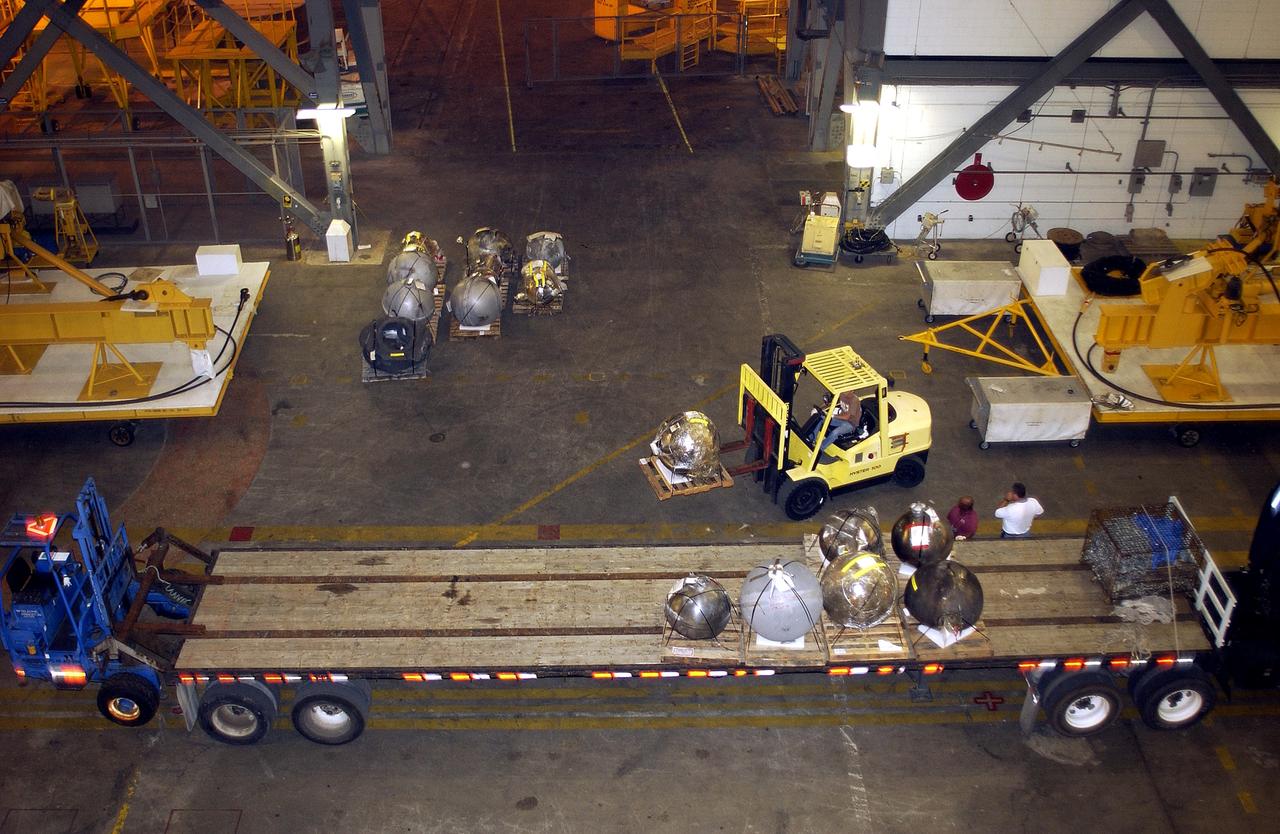
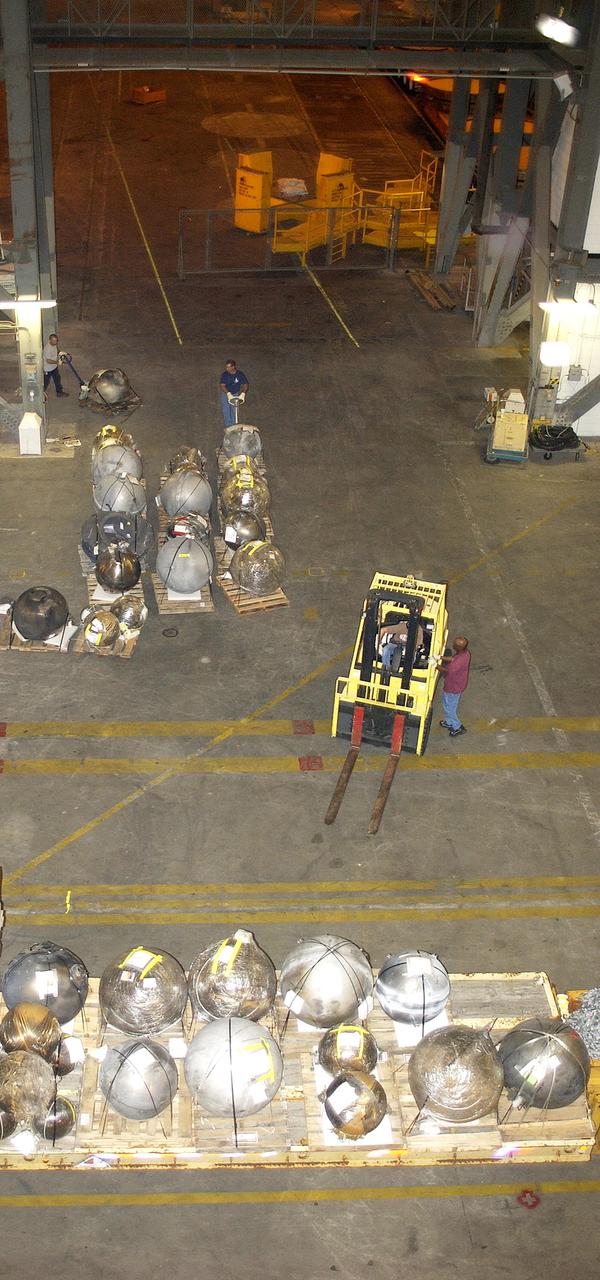
KENNEDY SPACE CENTER, FLA.  -  A flatbed truck carrying pieces of Columbia debris  arrives in the transfer aisle of the Vehicle Assembly Building.  The debris is being transferred to the VAB for permanent storage.  More than 83,000  pieces of debris were shipped to KSC during search and recovery efforts in East Texas. That represents about 38 percent of the dry weight of Columbia, equaling almost 85,000 pounds.
KENNEDY SPACE CENTER, FLA. - A flatbed truck carrying pieces of Columbia debris arrives in the transfer aisle of the Vehicle Assembly Building. The debris is being transferred to the VAB for permanent storage. More than 83,000 pieces of debris were shipped to KSC during search and recovery efforts in East Texas. That represents about 38 percent of the dry weight of Columbia, equaling almost 85,000 pounds.
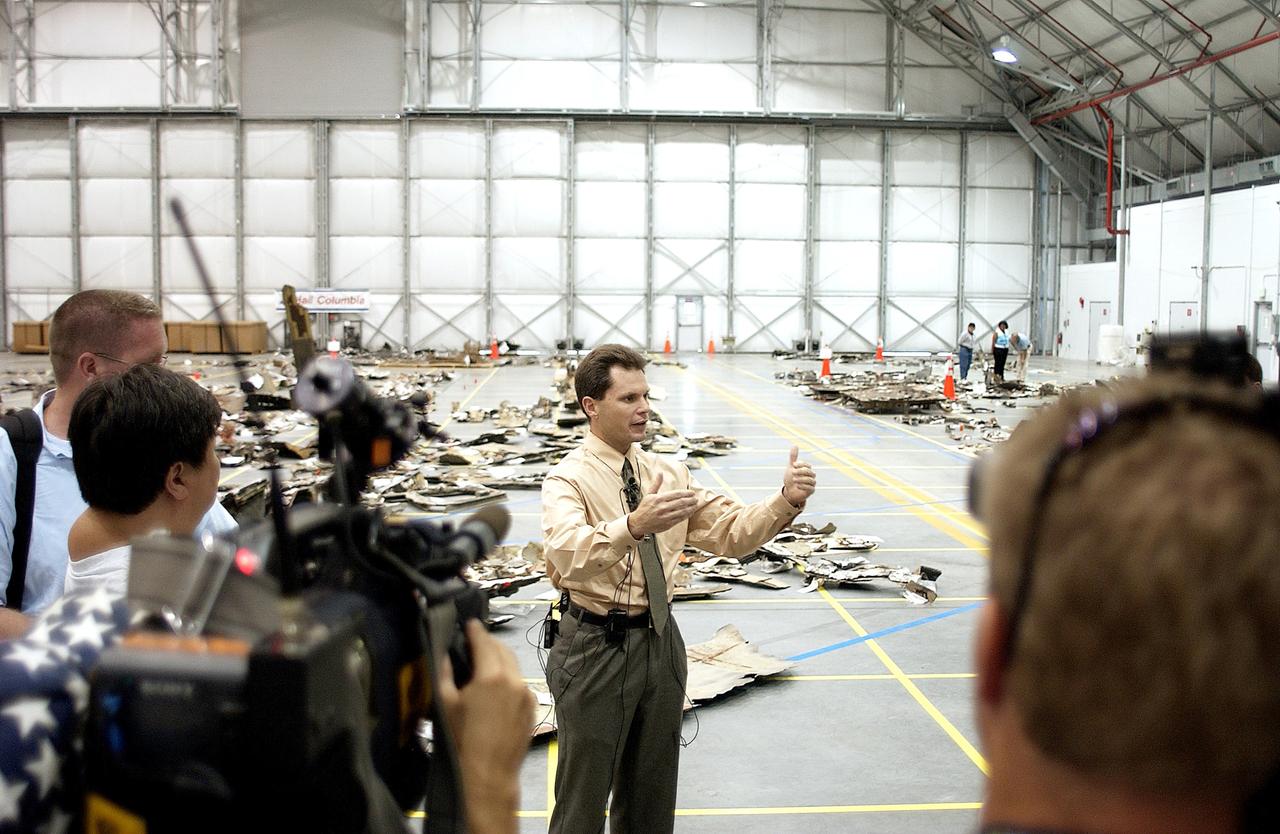
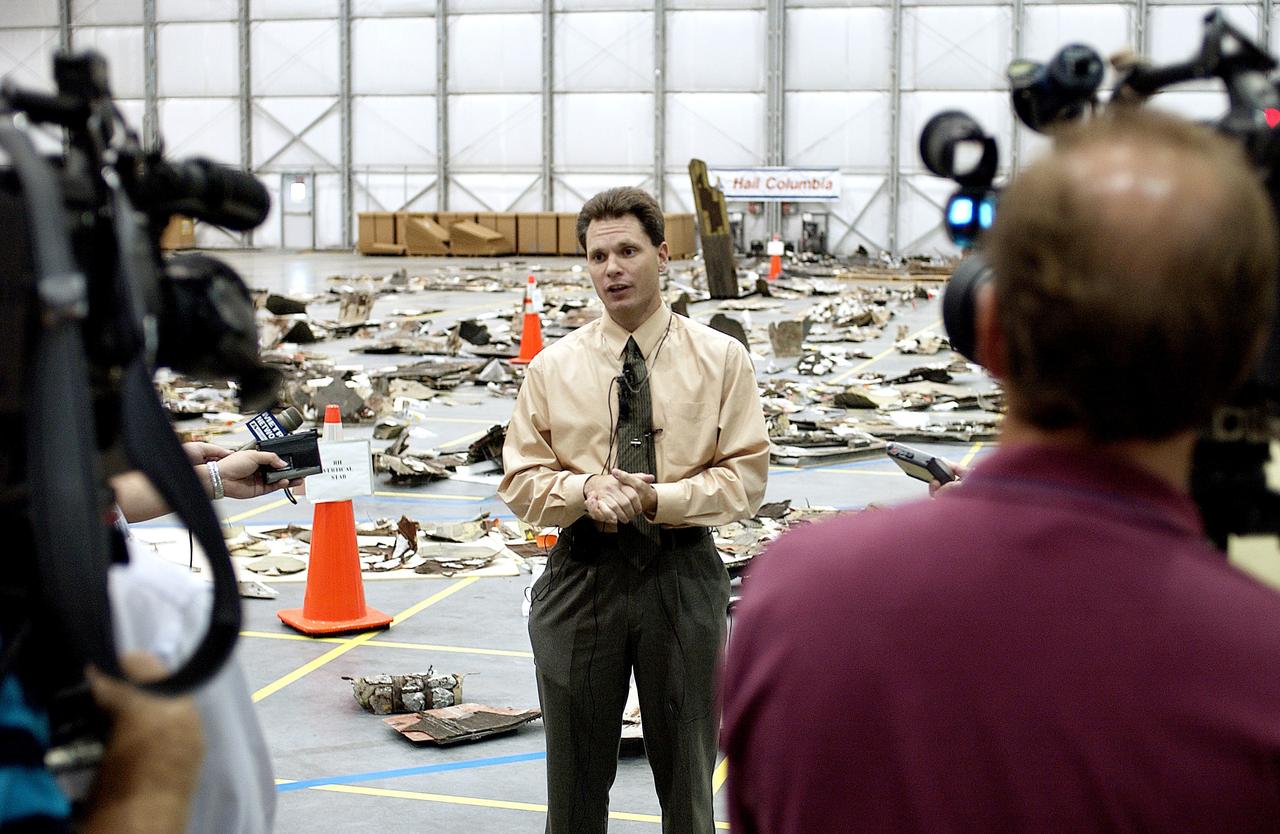
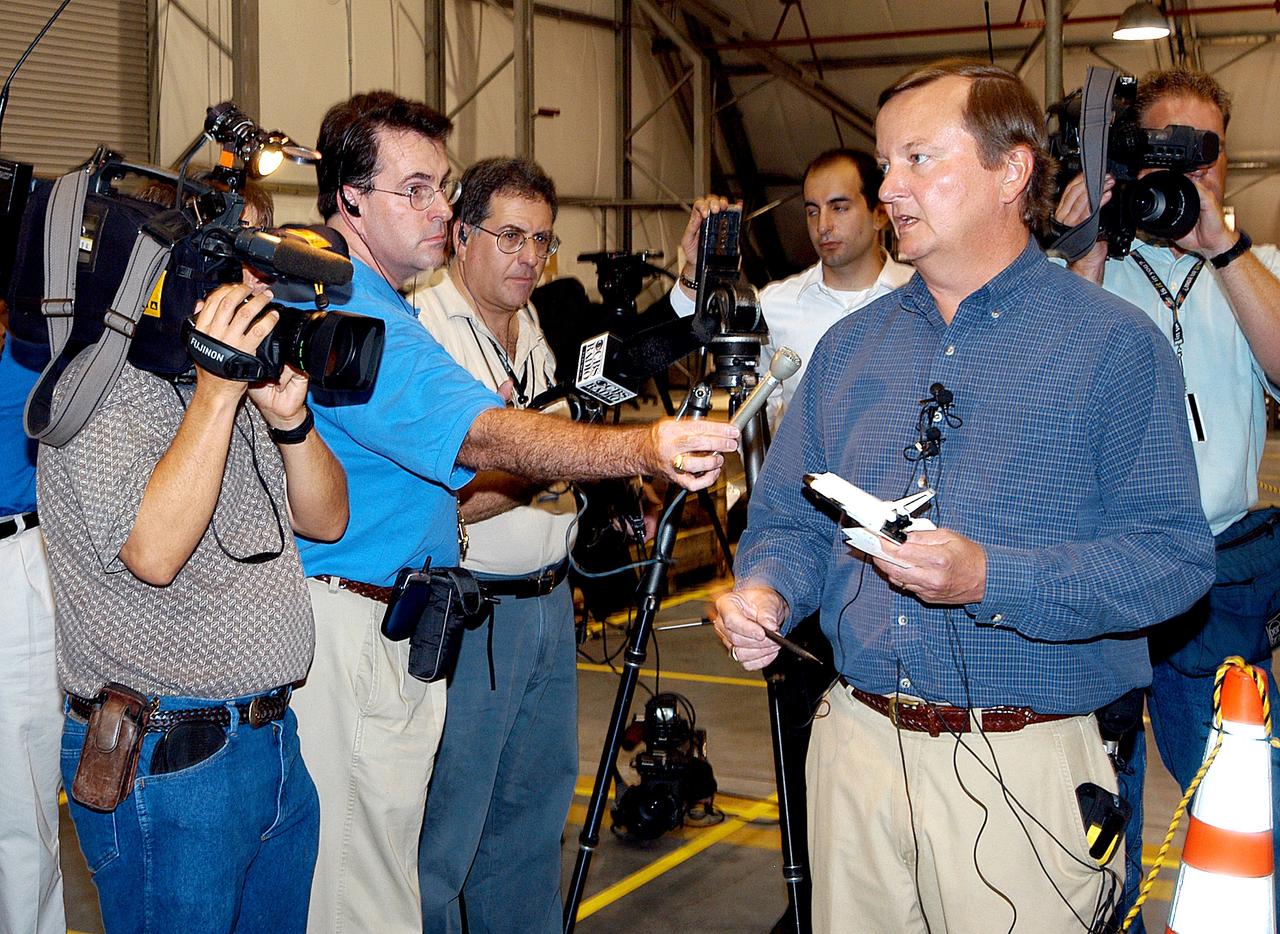
KENNEDY SPACE CENTER, FLA. -  In the Columbia Debris Hangar,  Shuttle Launch Director Mike Leinbach  (left) talks to the media about activities that have taken place since the Columbia accident on Feb. 1, 2003.  Behind him is a model of the left wing of the orbiter.  STS-107 debris recovery and reconstruction operations are winding down.  To date, nearly 84,000 pieces of debris have been recovered and sent to KSC. That represents about 38 percent of the dry weight of Columbia, equaling almost 85,000 pounds.
KENNEDY SPACE CENTER, FLA. - In the Columbia Debris Hangar, Shuttle Launch Director Mike Leinbach (left) talks to the media about activities that have taken place since the Columbia accident on Feb. 1, 2003. Behind him is a model of the left wing of the orbiter. STS-107 debris recovery and reconstruction operations are winding down. To date, nearly 84,000 pieces of debris have been recovered and sent to KSC. That represents about 38 percent of the dry weight of Columbia, equaling almost 85,000 pounds.
KENNEDY SPACE CENTER, FLA. - The media get a guided tour of the Columbia Debris Hangar.  Shuttle Launch Director Mike Leinbach discussed activities that have taken place since the Columbia accident on Feb. 1, 2003.  STS-107 debris recovery and reconstruction operations are winding down.  To date, nearly 84,000 pieces of debris have been recovered and sent to KSC. That represents about 38 percent of the dry weight of Columbia, equaling almost 85,000 pounds.
KENNEDY SPACE CENTER, FLA. - The media get a guided tour of the Columbia Debris Hangar. Shuttle Launch Director Mike Leinbach discussed activities that have taken place since the Columbia accident on Feb. 1, 2003. STS-107 debris recovery and reconstruction operations are winding down. To date, nearly 84,000 pieces of debris have been recovered and sent to KSC. That represents about 38 percent of the dry weight of Columbia, equaling almost 85,000 pounds.
KENNEDY SPACE CENTER, FLA. -  In the Columbia Debris Hangar,  Shuttle Launch Director Mike Leinbach  (right) talks to the media about activities that have taken place since the Columbia accident on Feb. 1, 2003.  STS-107 debris recovery and reconstruction operations are winding down.  To date, nearly 84,000 pieces of debris have been recovered and sent to KSC. That represents about 38 percent of the dry weight of Columbia, equaling almost 85,000 pounds.
KENNEDY SPACE CENTER, FLA. - In the Columbia Debris Hangar, Shuttle Launch Director Mike Leinbach (right) talks to the media about activities that have taken place since the Columbia accident on Feb. 1, 2003. STS-107 debris recovery and reconstruction operations are winding down. To date, nearly 84,000 pieces of debris have been recovered and sent to KSC. That represents about 38 percent of the dry weight of Columbia, equaling almost 85,000 pounds.
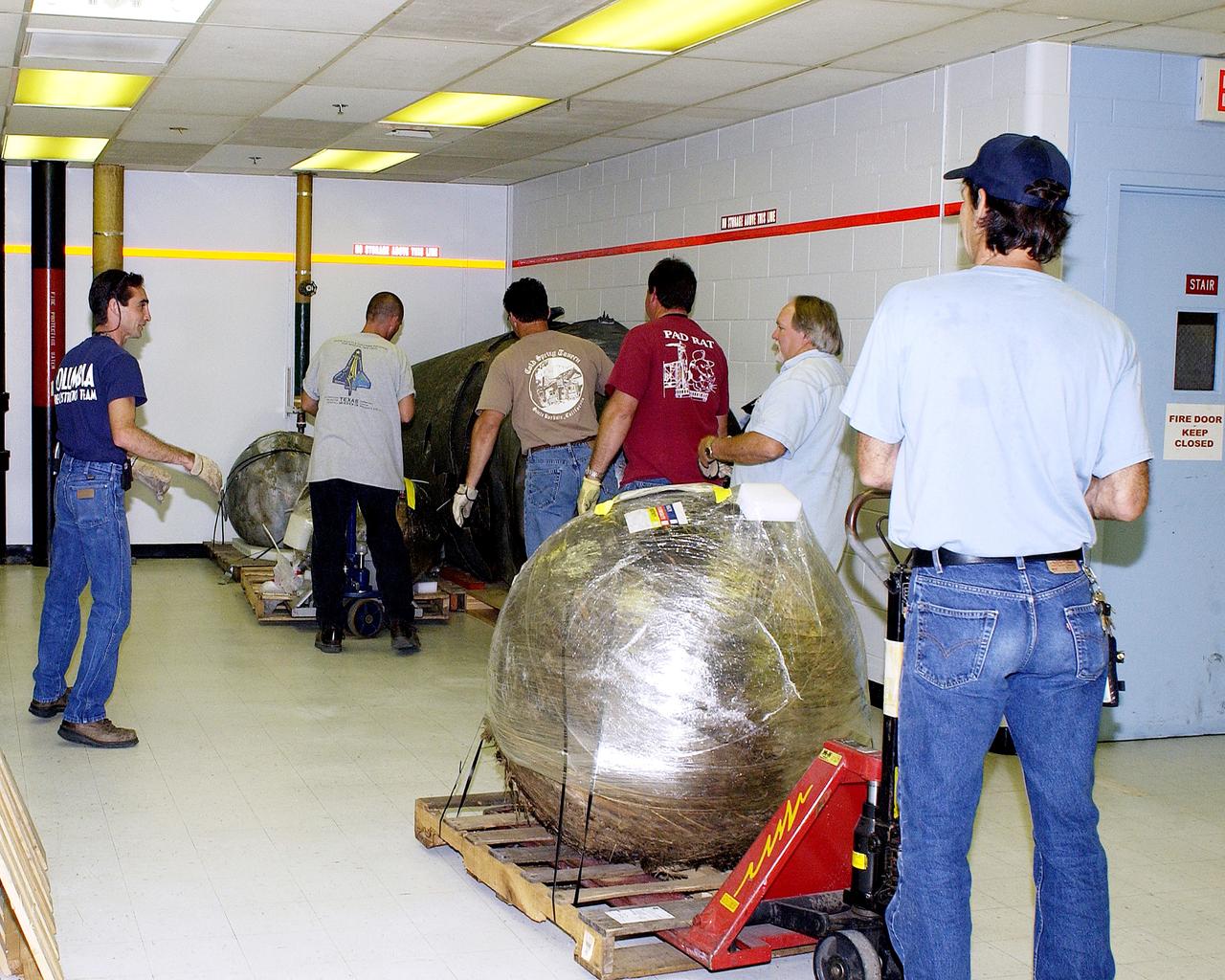
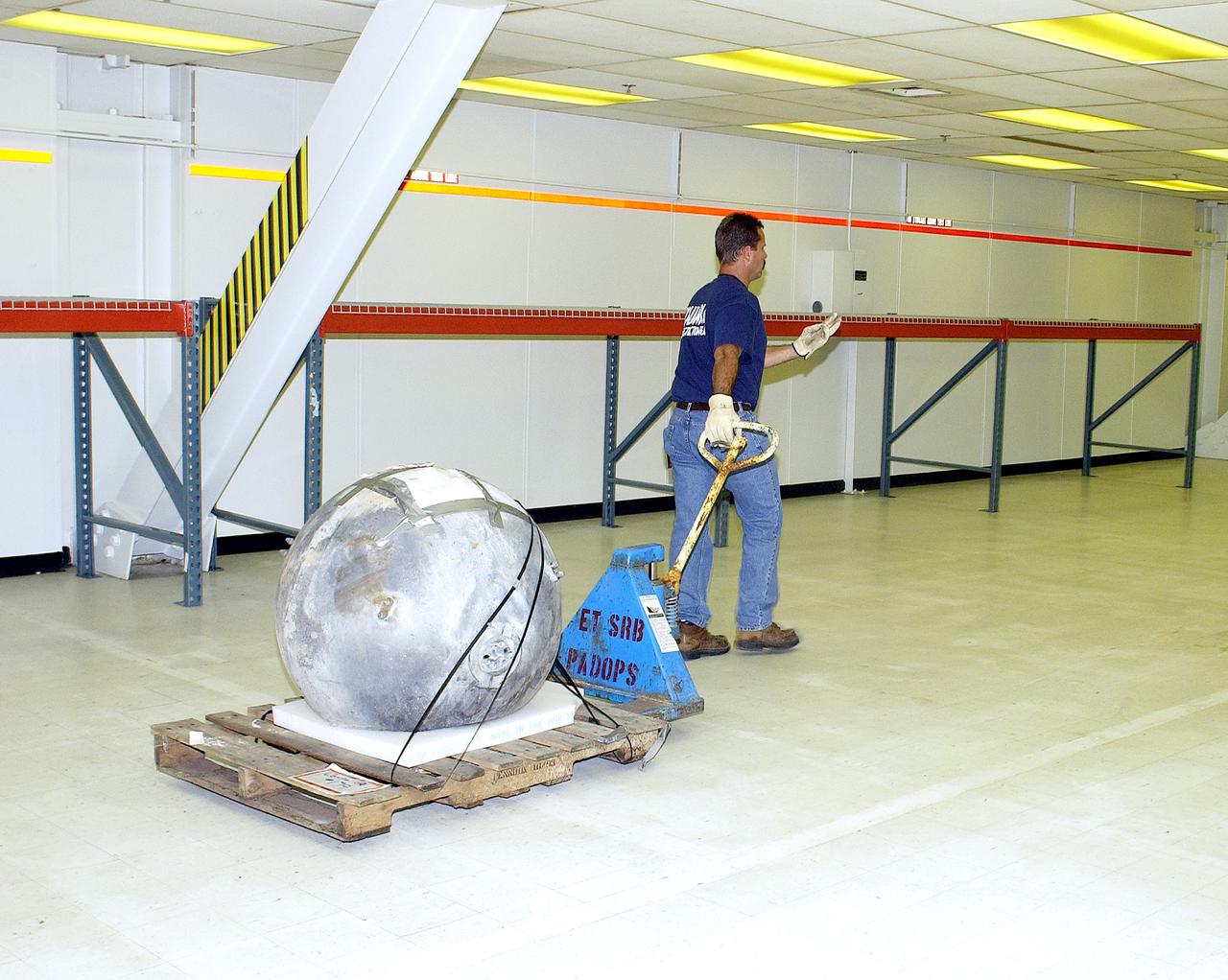
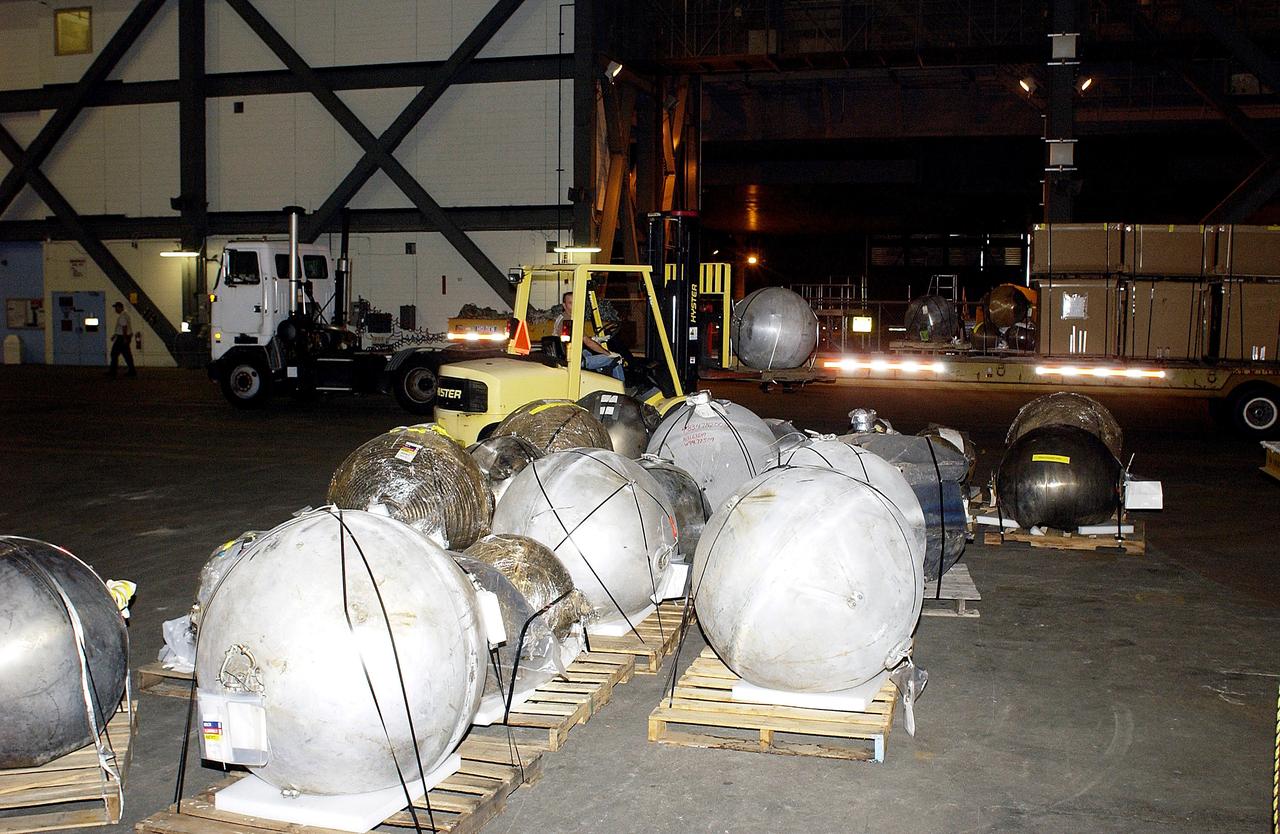
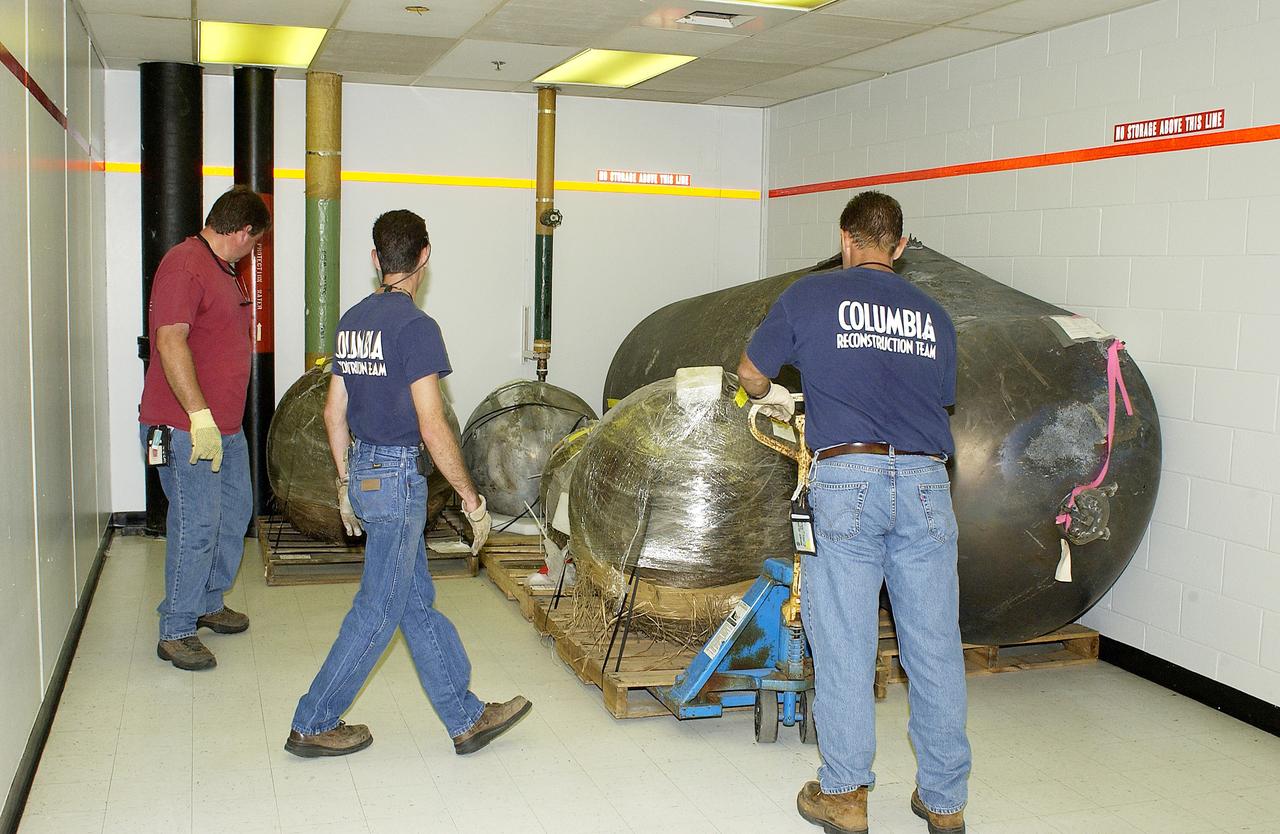
KENNEDY SPACE CENTER, FLA. -  A worker moves some of the Columbia debris to its storage site in the Vehicle Assembly Building (VAB). The debris is being transferred from the Columbia Debris Hangar to the VAB for permanent storage.  More than 83,000 pieces of debris were shipped to KSC during search and recovery efforts in East Texas. That represents about 38 percent of the dry weight of Columbia, equaling almost 85,000 pounds.
KENNEDY SPACE CENTER, FLA. - A worker moves some of the Columbia debris to its storage site in the Vehicle Assembly Building (VAB). The debris is being transferred from the Columbia Debris Hangar to the VAB for permanent storage. More than 83,000 pieces of debris were shipped to KSC during search and recovery efforts in East Texas. That represents about 38 percent of the dry weight of Columbia, equaling almost 85,000 pounds.
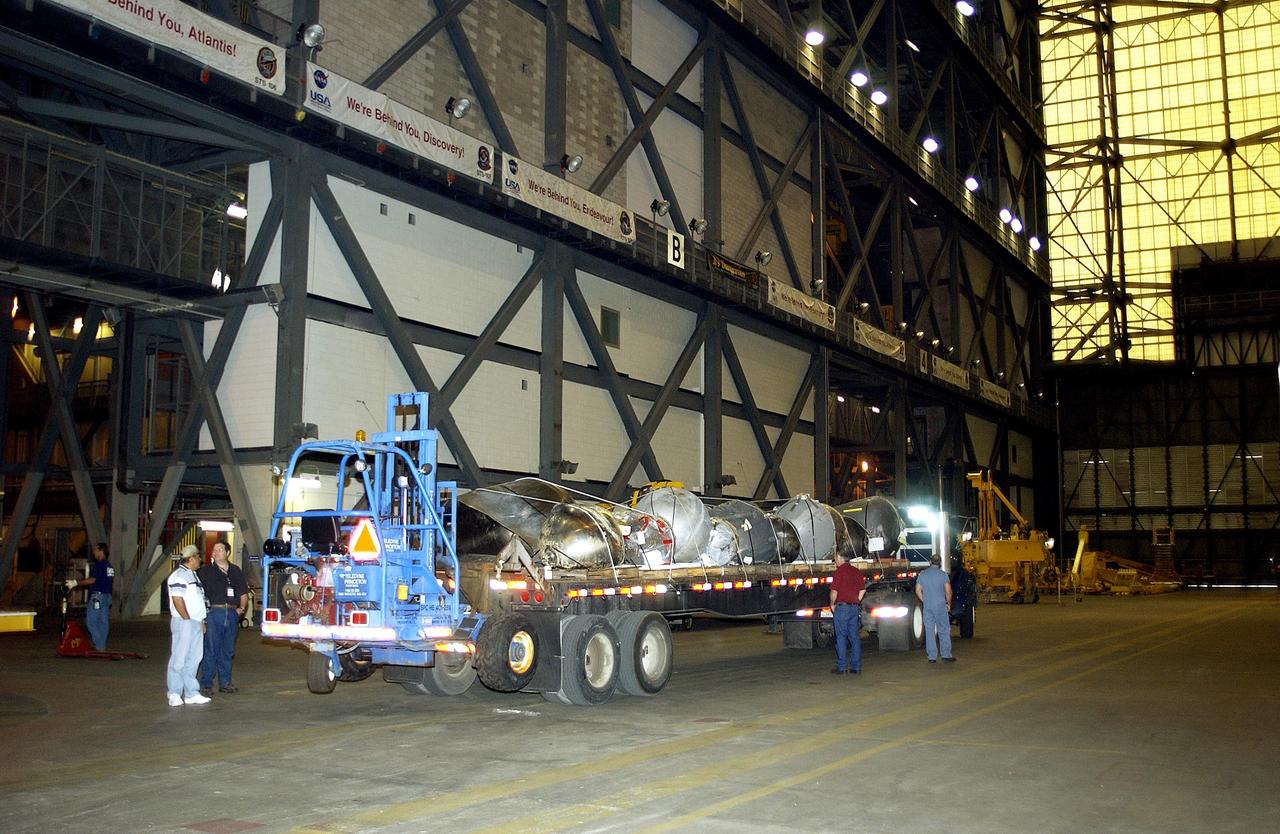
KENNEDY SPACE CENTER, FLA. -  Pieces of debris of Space Shuttle Columbia are offloaded from a flatbed truck in the transfer aisle of the Vehicle Assembly Building (VAB).  The debris is being moved from the Columbia Debris Hangar to the VAB for permanent storage.  More than 83,000 pieces of debris were shipped to KSC during search and recovery efforts in East Texas. That represents about 38 percent of the dry weight of Columbia, equaling almost 85,000 pounds.
KENNEDY SPACE CENTER, FLA. - Pieces of debris of Space Shuttle Columbia are offloaded from a flatbed truck in the transfer aisle of the Vehicle Assembly Building (VAB). The debris is being moved from the Columbia Debris Hangar to the VAB for permanent storage. More than 83,000 pieces of debris were shipped to KSC during search and recovery efforts in East Texas. That represents about 38 percent of the dry weight of Columbia, equaling almost 85,000 pounds.
KENNEDY SPACE CENTER, FLA. -  Pieces of Columbia debris are offloaded from a flatbed truck in the transfer aisle of the Vehicle Assembly Building (VAB).  The debris is being moved from the Columbia Debris Hangar to the VAB for permanent storage.  More than 83,000 pieces of debris were shipped to KSC during search and recovery efforts in East Texas. That represents about 38 percent of the dry weight of Columbia, equaling almost 85,000 pounds.
KENNEDY SPACE CENTER, FLA. - Pieces of Columbia debris are offloaded from a flatbed truck in the transfer aisle of the Vehicle Assembly Building (VAB). The debris is being moved from the Columbia Debris Hangar to the VAB for permanent storage. More than 83,000 pieces of debris were shipped to KSC during search and recovery efforts in East Texas. That represents about 38 percent of the dry weight of Columbia, equaling almost 85,000 pounds.
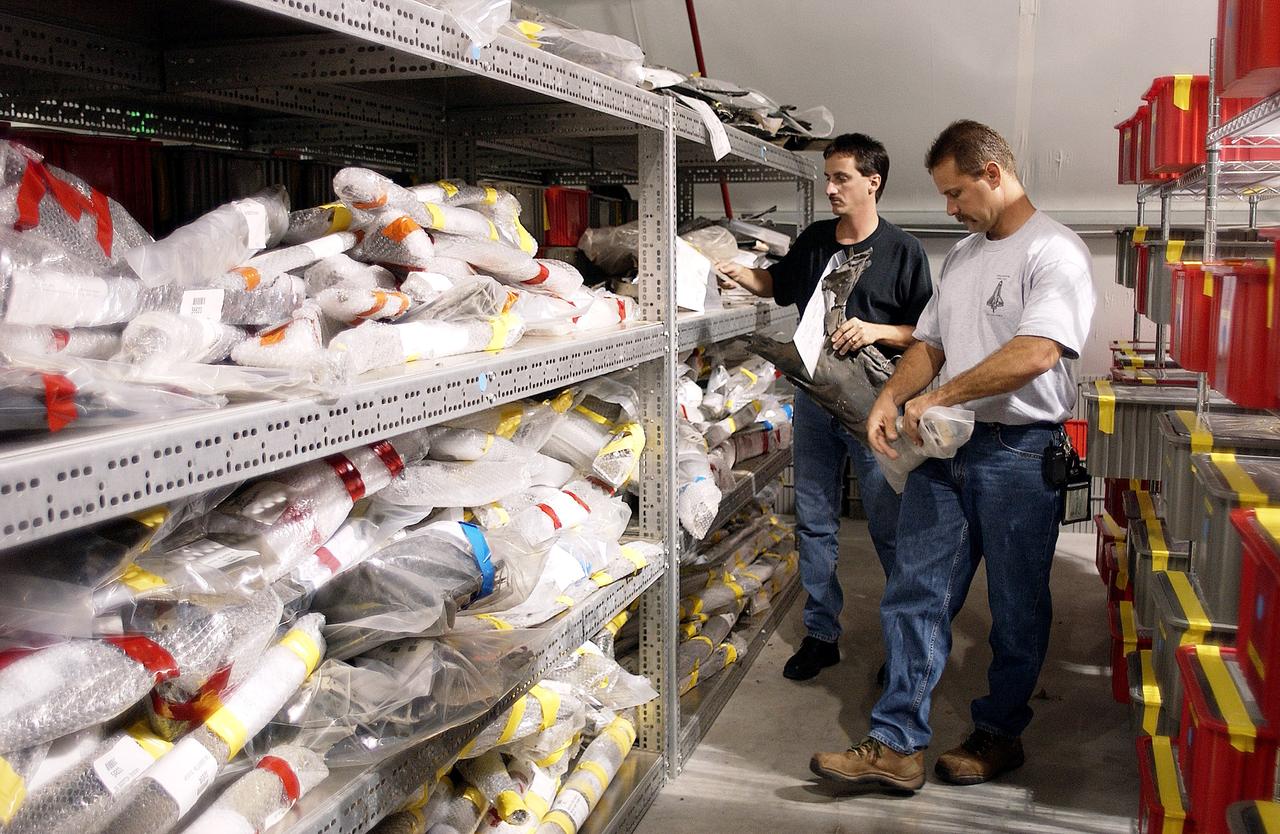
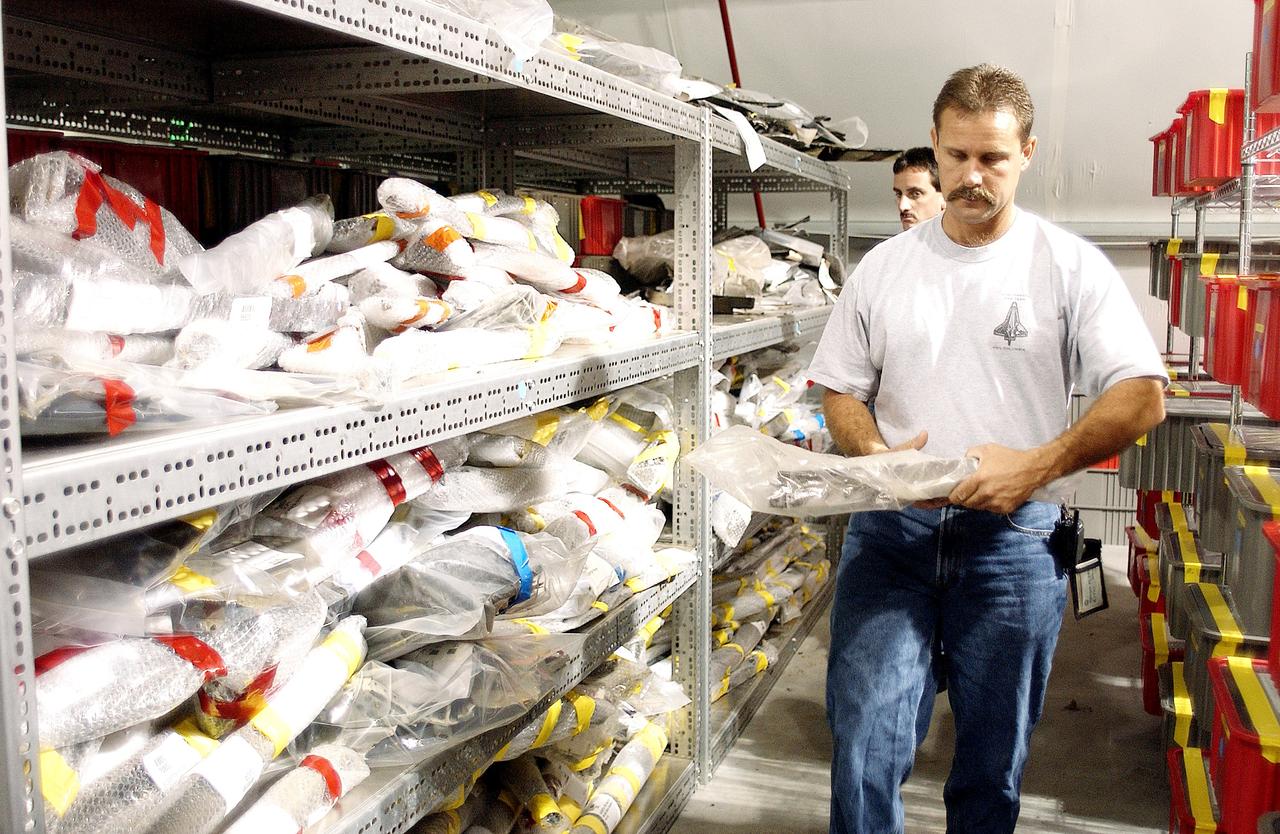
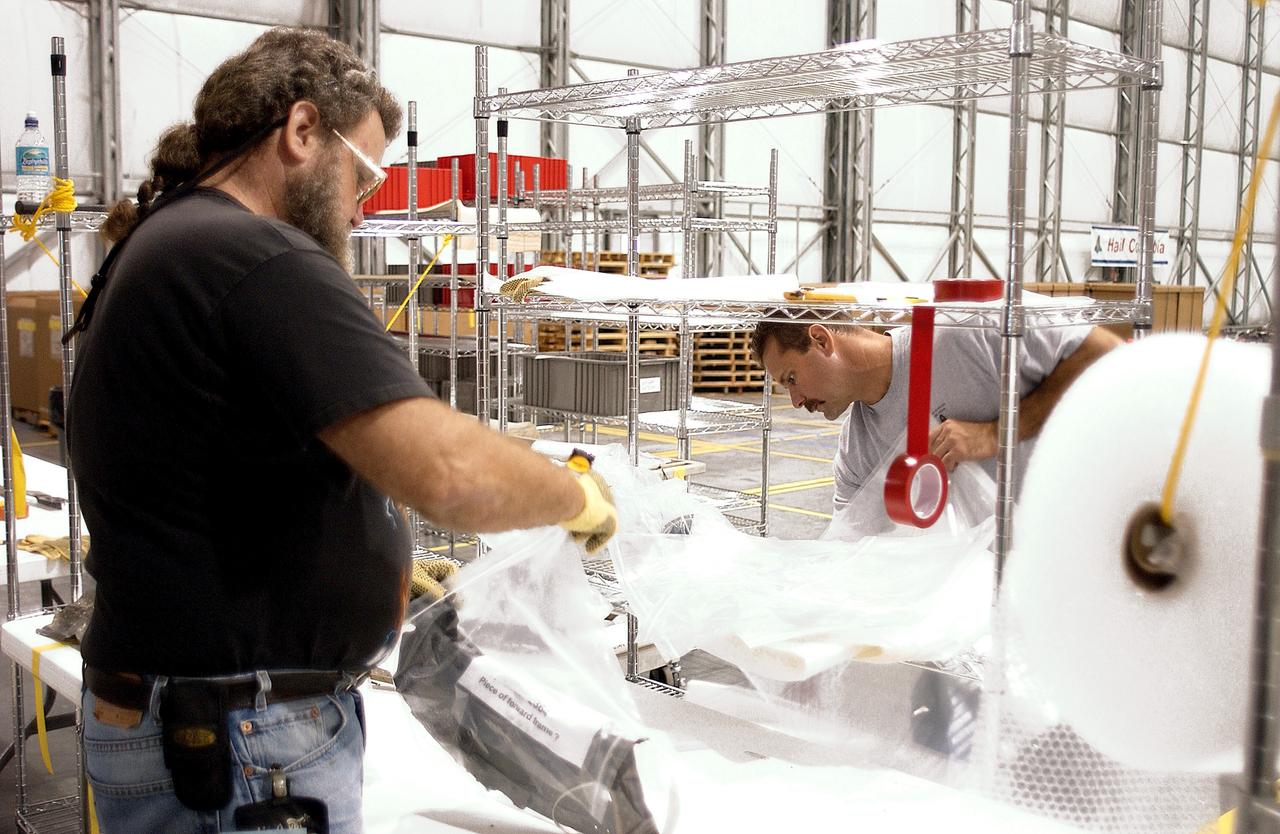
KENNEDY SPACE CENTER, FLA. - In the Columbia Debris Hangar,  Jim Delie (left) and Don Eitel select from the shelves wrapped pieces of debris to be packed into storage boxes.  About 83,000 pieces of debris were shipped to KSC during search and recovery efforts in East Texas. That represents about 38 percent of the dry weight of Columbia, equaling almost 85,000 pounds.  An area of the Vehicle Assembly Building is being prepared to store the debris.
KENNEDY SPACE CENTER, FLA. - In the Columbia Debris Hangar, Jim Delie (left) and Don Eitel select from the shelves wrapped pieces of debris to be packed into storage boxes. About 83,000 pieces of debris were shipped to KSC during search and recovery efforts in East Texas. That represents about 38 percent of the dry weight of Columbia, equaling almost 85,000 pounds. An area of the Vehicle Assembly Building is being prepared to store the debris.
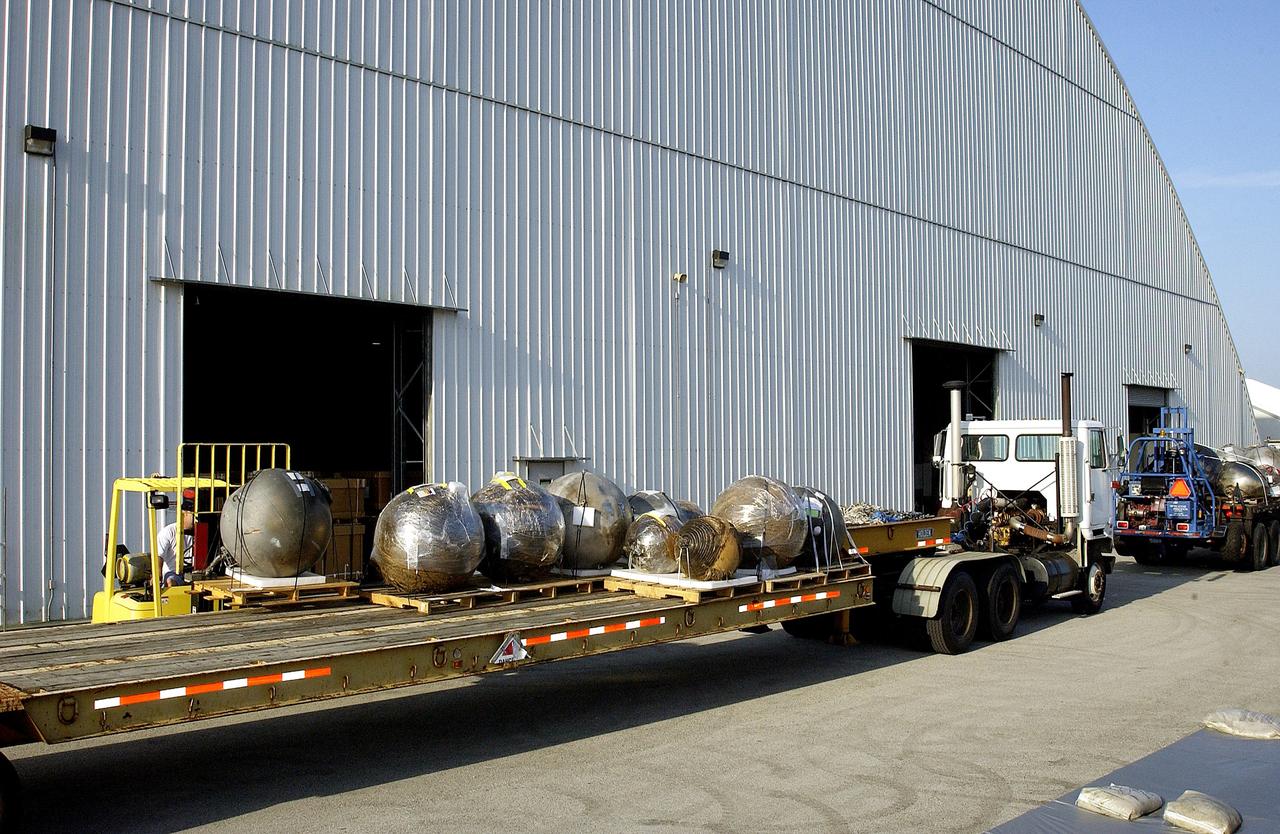
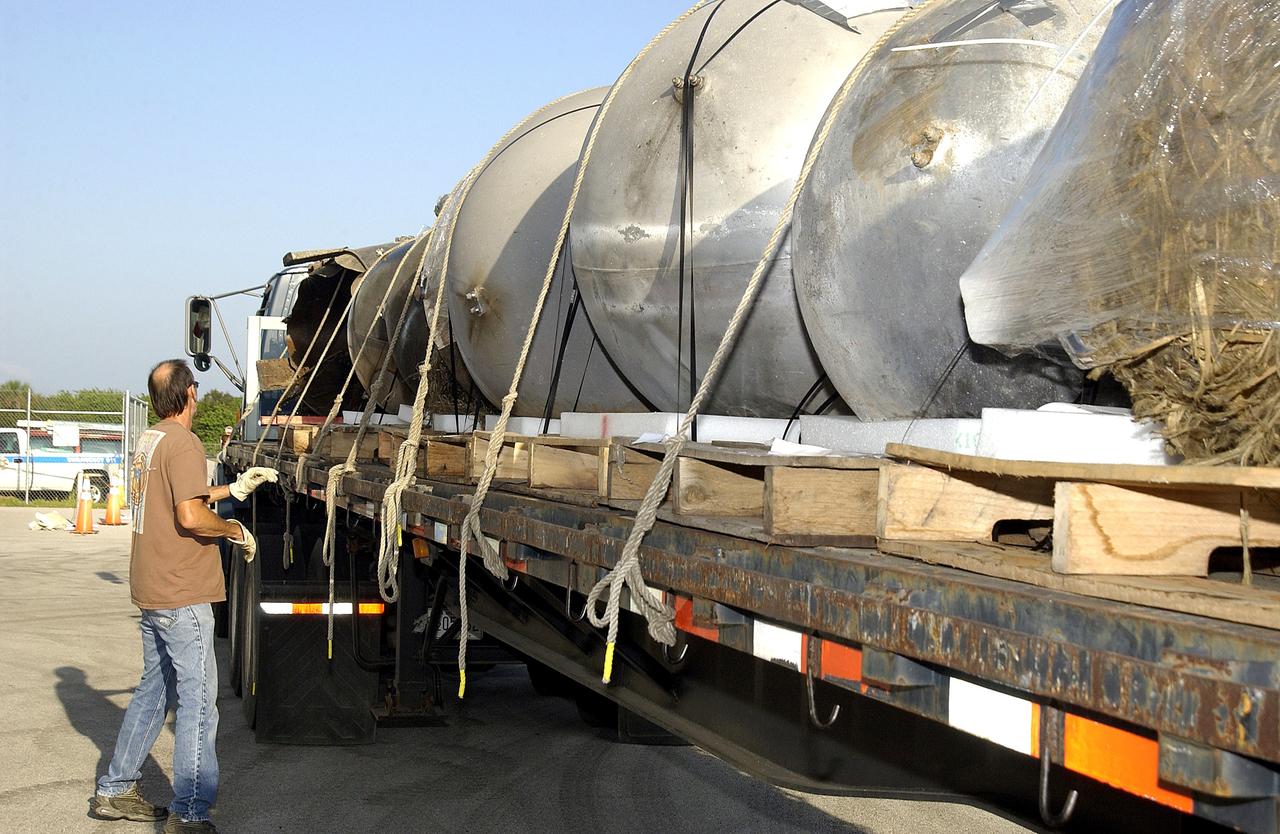
KENNEDY SPACE CENTER, FLA. -   Some of the Columbia debris is loaded onto a flatbed truck outside the Columbia Debris Hangar.  The debris is being transferred to the Vehicle Assembly Building for permanent storage.  More than 83,000  pieces of debris were shipped to KSC during search and recovery efforts in East Texas. That represents about 38 percent of the dry weight of Columbia, equaling almost 85,000 pounds.
KENNEDY SPACE CENTER, FLA. - Some of the Columbia debris is loaded onto a flatbed truck outside the Columbia Debris Hangar. The debris is being transferred to the Vehicle Assembly Building for permanent storage. More than 83,000 pieces of debris were shipped to KSC during search and recovery efforts in East Texas. That represents about 38 percent of the dry weight of Columbia, equaling almost 85,000 pounds.
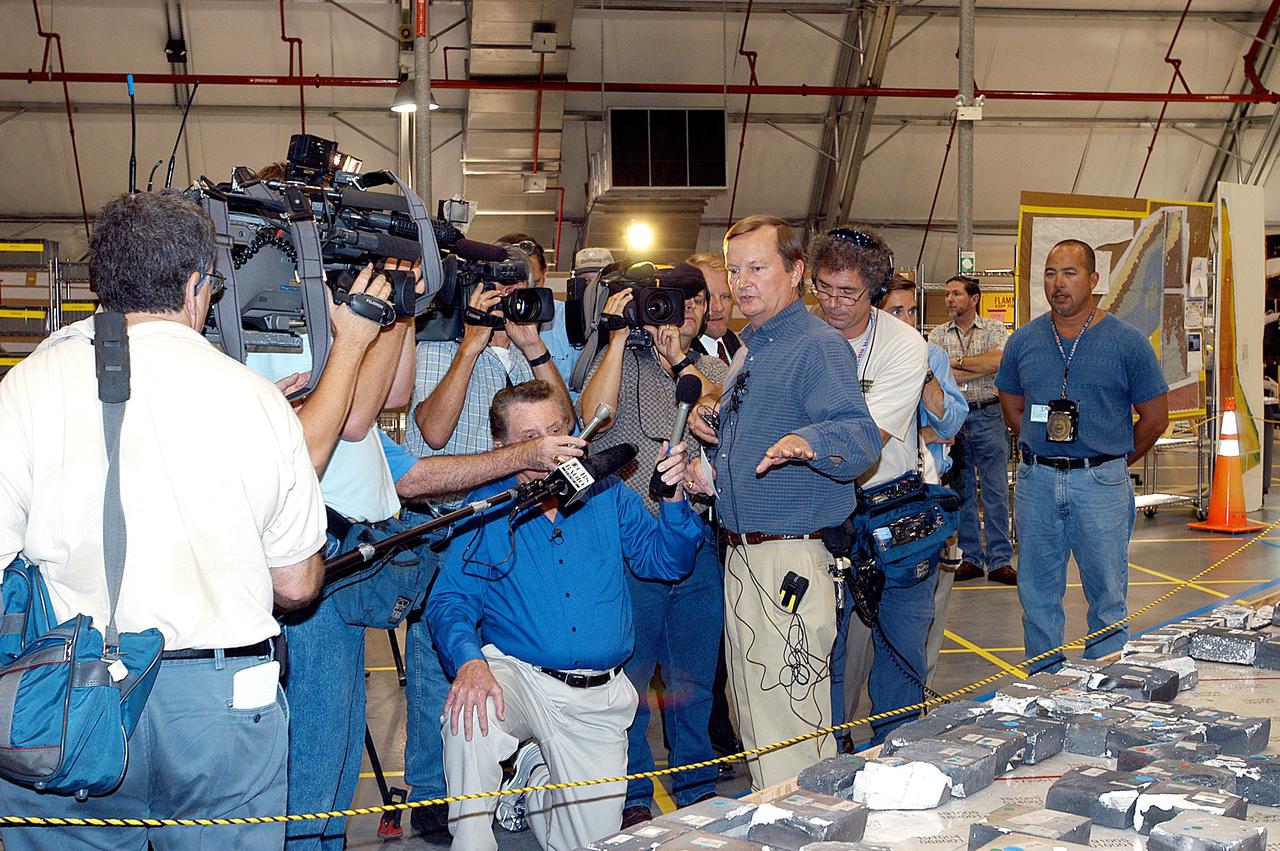
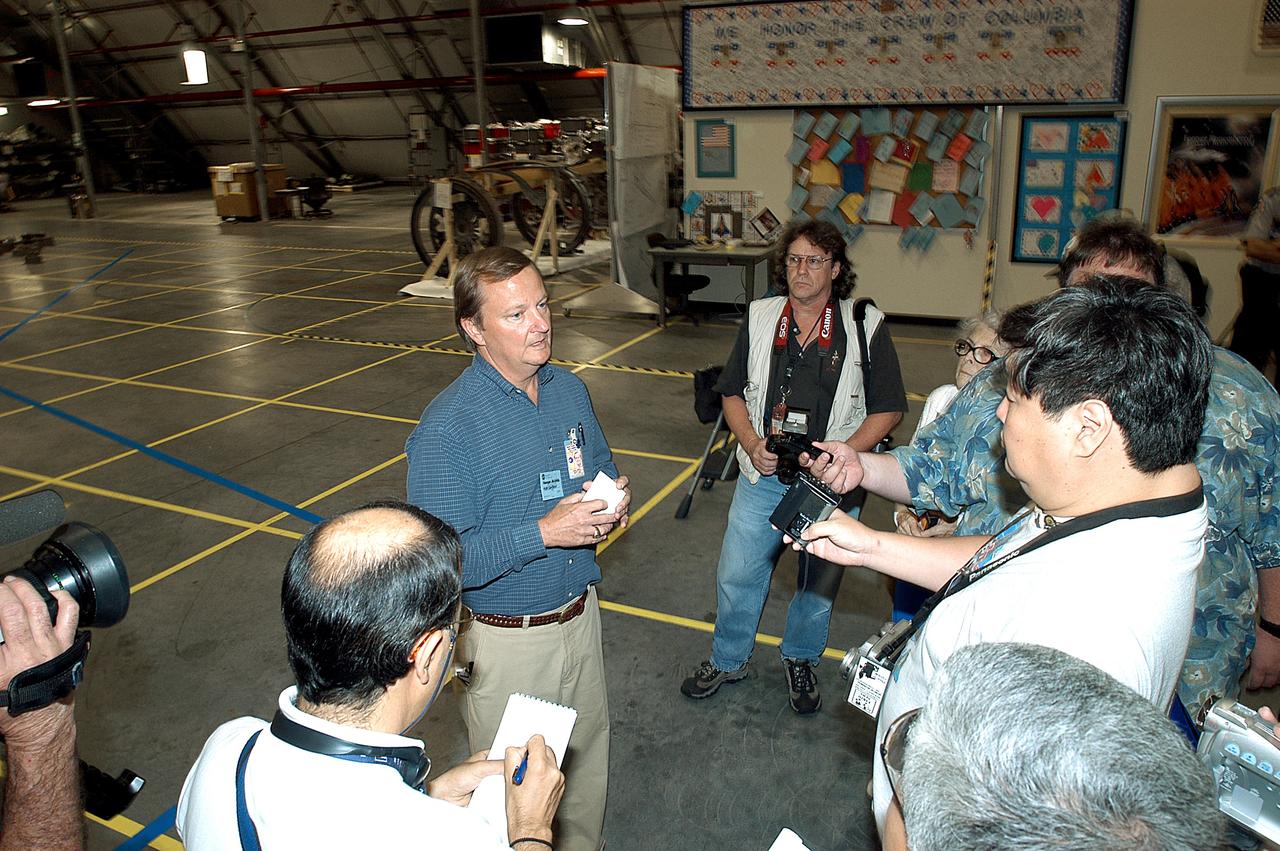
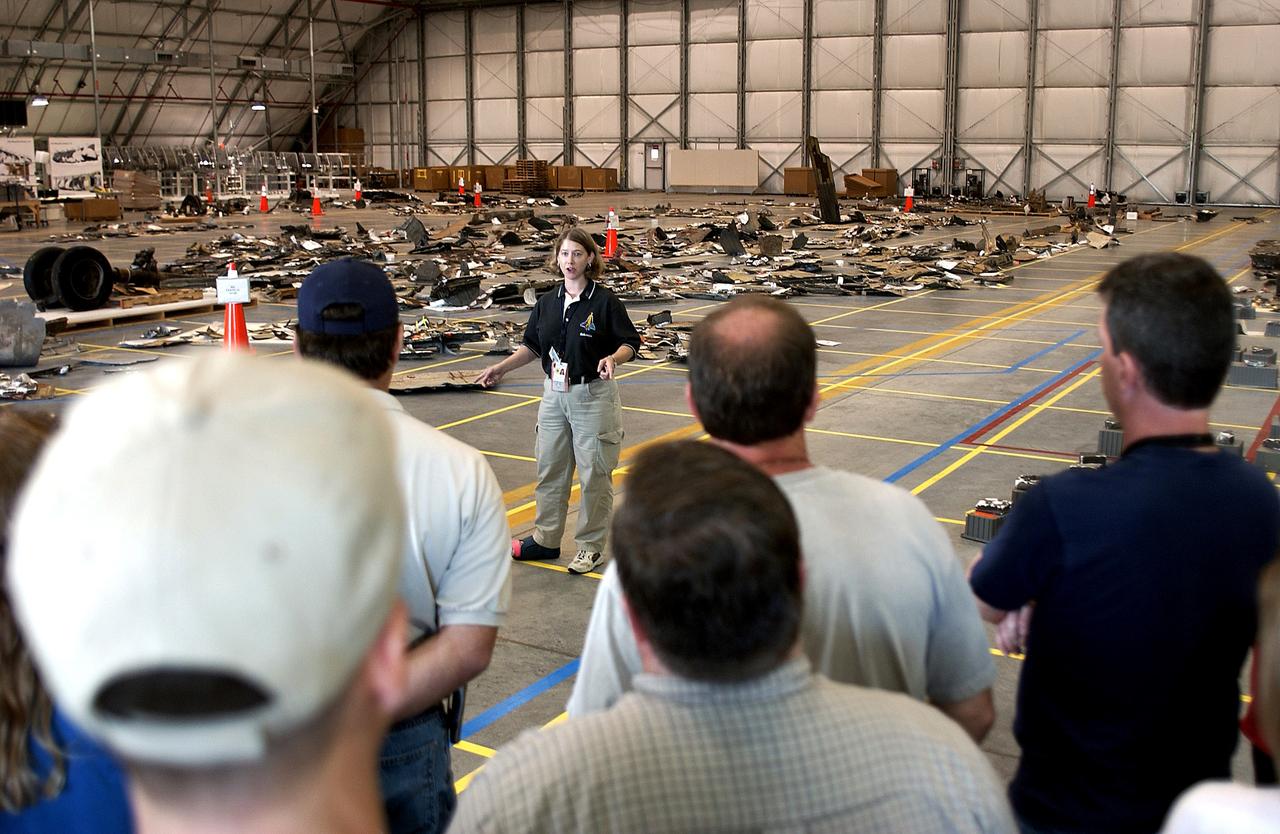
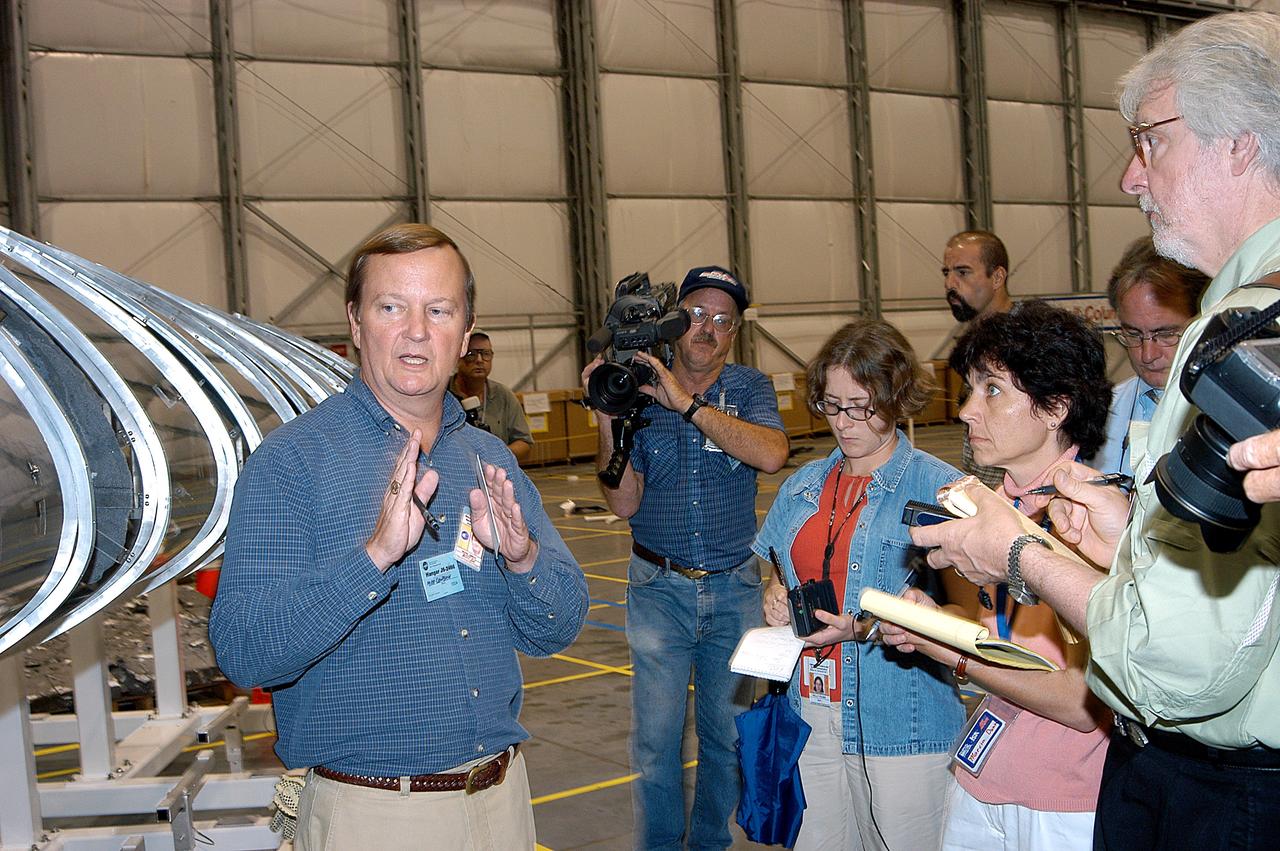
KENNEDY SPACE CENTER, FLA. - The media listen to Scott Thurston, NASA vehicle flow manager, talk about efforts to pack the debris stored in the Columbia Debris Hangar.  More than 83,000  pieces of debris were shipped to KSC during search and recovery efforts in East Texas. That represents about 38 percent of the dry weight of Columbia, equaling almost 85,000 pounds. An area of the Vehicle Assembly Building is being prepared to store the debris permanently.
KENNEDY SPACE CENTER, FLA. - The media listen to Scott Thurston, NASA vehicle flow manager, talk about efforts to pack the debris stored in the Columbia Debris Hangar. More than 83,000 pieces of debris were shipped to KSC during search and recovery efforts in East Texas. That represents about 38 percent of the dry weight of Columbia, equaling almost 85,000 pounds. An area of the Vehicle Assembly Building is being prepared to store the debris permanently.
KENNEDY SPACE CENTER, FLA. - In the Columbia Debris Hangar, Jack Nowling transfers bags with debris pieces into a storage box.  About 83,000 pieces of debris were shipped to KSC during search and recovery efforts in East Texas. That represents about 38 percent of the dry weight of Columbia, equaling almost 85,000 pounds.  An area of the Vehicle Assembly Building is being prepared to store the debris.
KENNEDY SPACE CENTER, FLA. - In the Columbia Debris Hangar, Jack Nowling transfers bags with debris pieces into a storage box. About 83,000 pieces of debris were shipped to KSC during search and recovery efforts in East Texas. That represents about 38 percent of the dry weight of Columbia, equaling almost 85,000 pounds. An area of the Vehicle Assembly Building is being prepared to store the debris.
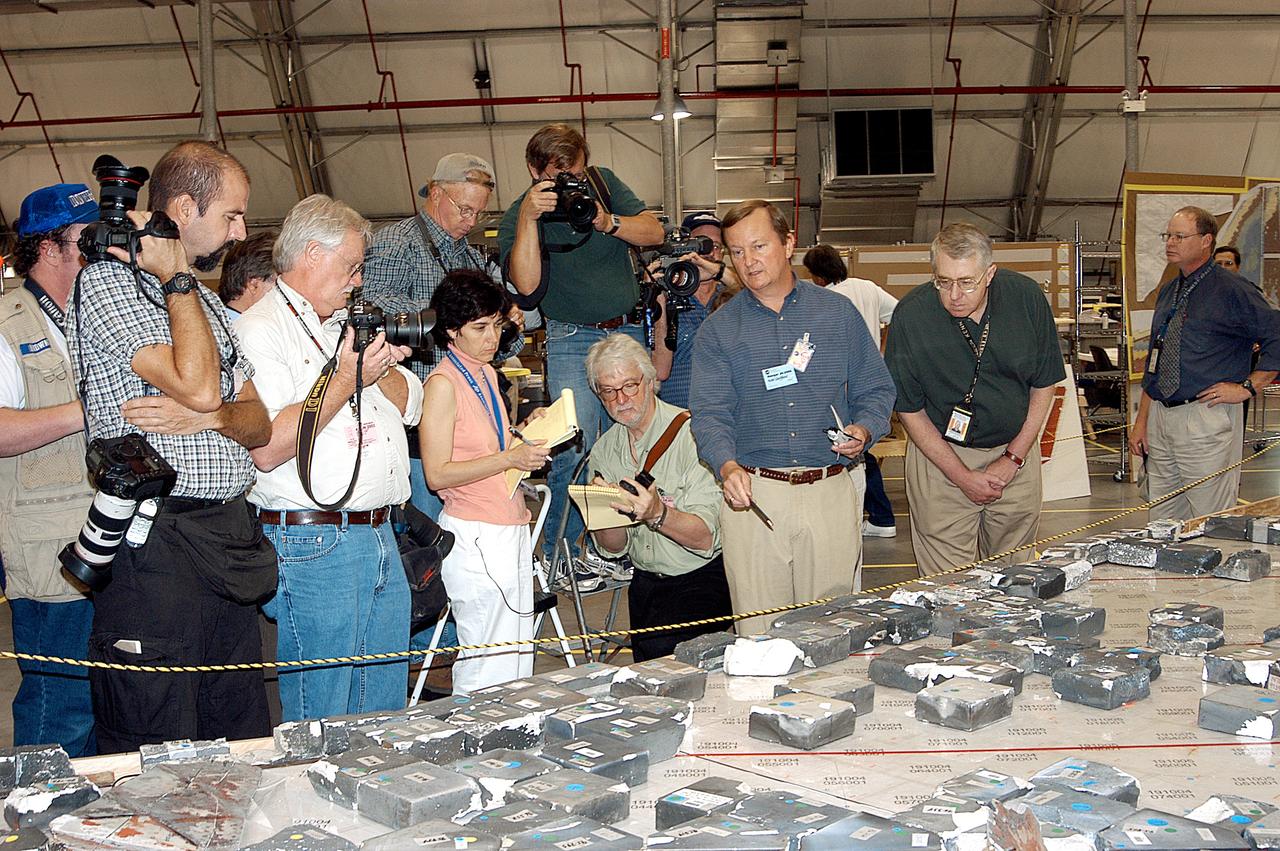
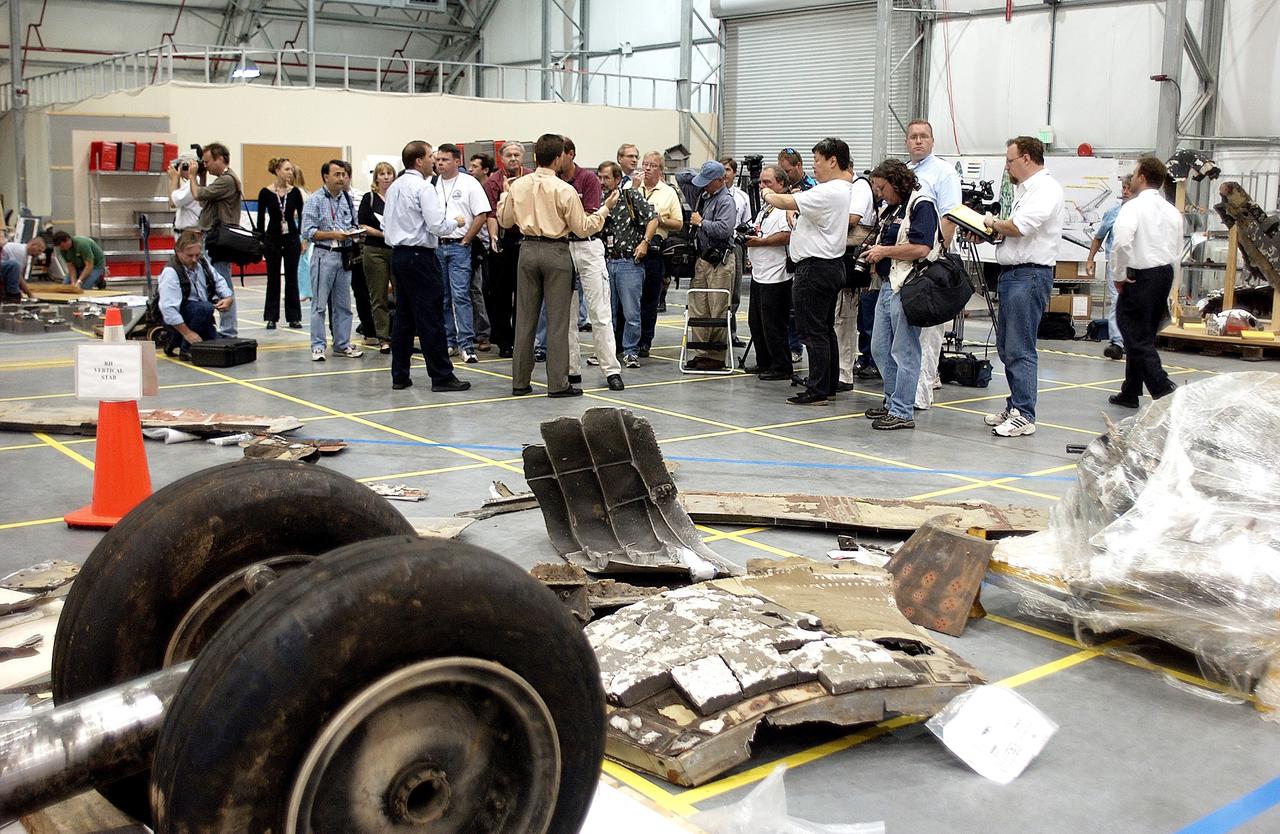
KENNEDY SPACE CENTER, FLA. - In the Columbia Debris Hangar,  Shuttle Launch Director Mike Leinbach  points to some of the tiles recovered from the orbiter as he explains to the media about activities that have taken place since the Columbia accident on Feb. 1, 2003.  STS-107 debris recovery and reconstruction operations are winding down.  To date, nearly 84,000 pieces of debris have been recovered and sent to KSC. That represents about 38 percent of the dry weight of Columbia, equaling almost 85,000 pounds.
KENNEDY SPACE CENTER, FLA. - In the Columbia Debris Hangar, Shuttle Launch Director Mike Leinbach points to some of the tiles recovered from the orbiter as he explains to the media about activities that have taken place since the Columbia accident on Feb. 1, 2003. STS-107 debris recovery and reconstruction operations are winding down. To date, nearly 84,000 pieces of debris have been recovered and sent to KSC. That represents about 38 percent of the dry weight of Columbia, equaling almost 85,000 pounds.
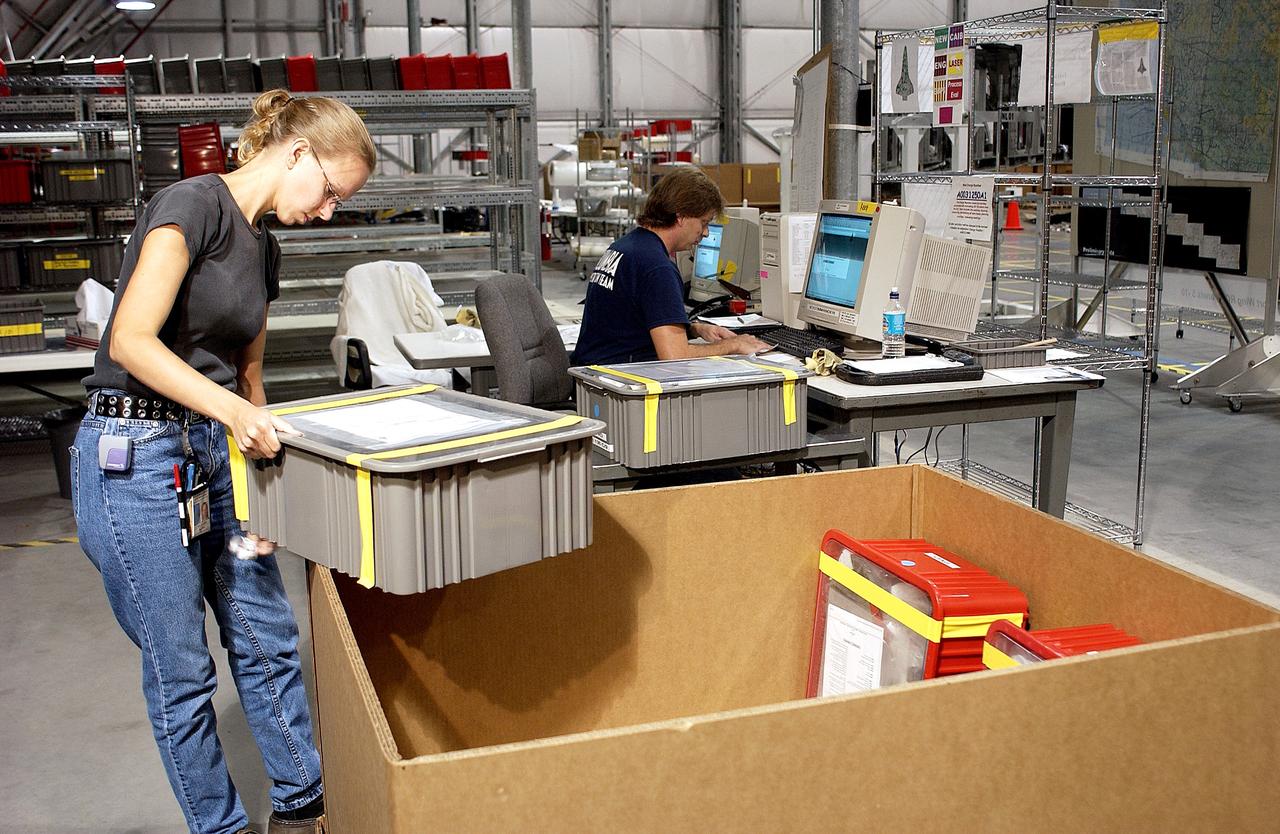
KENNEDY SPACE CENTER, FLA. -  Amy Norris (left) packs some of the debris stored in the Columbia Debris Hangar.  Jack Nowling works on the computer.  About 83,000 pieces of debris were shipped to KSC during search and recovery efforts in East Texas. That represents about 38 percent of the dry weight of Columbia, equaling almost 85,000 pounds.  An area of the Vehicle Assembly Building is being prepared to store the debris.
KENNEDY SPACE CENTER, FLA. - Amy Norris (left) packs some of the debris stored in the Columbia Debris Hangar. Jack Nowling works on the computer. About 83,000 pieces of debris were shipped to KSC during search and recovery efforts in East Texas. That represents about 38 percent of the dry weight of Columbia, equaling almost 85,000 pounds. An area of the Vehicle Assembly Building is being prepared to store the debris.
KENNEDY SPACE CENTER, FLA. -  At the Columbia Debris Hangar, some of the debris of Space Shuttle Columbia is moved onto a flatbed truck for transfer to the Vehicle Assembly Building for permanent storage.  More than 83,000 pieces of debris were shipped to KSC during search and recovery efforts in East Texas. That represents about 38 percent of the dry weight of Columbia, equaling almost 85,000 pounds.
KENNEDY SPACE CENTER, FLA. - At the Columbia Debris Hangar, some of the debris of Space Shuttle Columbia is moved onto a flatbed truck for transfer to the Vehicle Assembly Building for permanent storage. More than 83,000 pieces of debris were shipped to KSC during search and recovery efforts in East Texas. That represents about 38 percent of the dry weight of Columbia, equaling almost 85,000 pounds.
KENNEDY SPACE CENTER, FLA. - In the Columbia Debris Hangar,  Shuttle Launch Director Mike Leinbach  points to some of the debris as he explains to the media about activities that have taken place since the Columbia accident on Feb. 1, 2003.  STS-107 debris recovery and reconstruction operations are winding down.  To date, nearly 84,000 pieces of debris have been recovered and sent to KSC. That represents about 38 percent of the dry weight of Columbia, equaling almost 85,000 pounds.
KENNEDY SPACE CENTER, FLA. - In the Columbia Debris Hangar, Shuttle Launch Director Mike Leinbach points to some of the debris as he explains to the media about activities that have taken place since the Columbia accident on Feb. 1, 2003. STS-107 debris recovery and reconstruction operations are winding down. To date, nearly 84,000 pieces of debris have been recovered and sent to KSC. That represents about 38 percent of the dry weight of Columbia, equaling almost 85,000 pounds.
KENNEDY SPACE CENTER, FLA. -  In the Columbia Debris Hangar,  Shuttle Launch Director Mike Leinbach  (center) points to some of the tiles recovered from the orbiter as he explains to the media about activities that have taken place since the Columbia accident on Feb. 1, 2003.  STS-107 debris recovery and reconstruction operations are winding down.  To date, nearly 84,000 pieces of debris have been recovered and sent to KSC. That represents about 38 percent of the dry weight of Columbia, equaling almost 85,000 pounds.
KENNEDY SPACE CENTER, FLA. - In the Columbia Debris Hangar, Shuttle Launch Director Mike Leinbach (center) points to some of the tiles recovered from the orbiter as he explains to the media about activities that have taken place since the Columbia accident on Feb. 1, 2003. STS-107 debris recovery and reconstruction operations are winding down. To date, nearly 84,000 pieces of debris have been recovered and sent to KSC. That represents about 38 percent of the dry weight of Columbia, equaling almost 85,000 pounds.
KENNEDY SPACE CENTER, FLA. -  In the Columbia Debris Hangar,  Shuttle Launch Director Mike Leinbach  talks to the media about activities that have taken place since the Columbia accident on Feb. 1, 2003.  Behind him is a model of the left wing of the orbiter.  STS-107 debris recovery and reconstruction operations are winding down.  To date, nearly 84,000 pieces of debris have been recovered and sent to KSC. That represents about 38 percent of the dry weight of Columbia, equaling almost 85,000 pounds.
KENNEDY SPACE CENTER, FLA. - In the Columbia Debris Hangar, Shuttle Launch Director Mike Leinbach talks to the media about activities that have taken place since the Columbia accident on Feb. 1, 2003. Behind him is a model of the left wing of the orbiter. STS-107 debris recovery and reconstruction operations are winding down. To date, nearly 84,000 pieces of debris have been recovered and sent to KSC. That represents about 38 percent of the dry weight of Columbia, equaling almost 85,000 pounds.
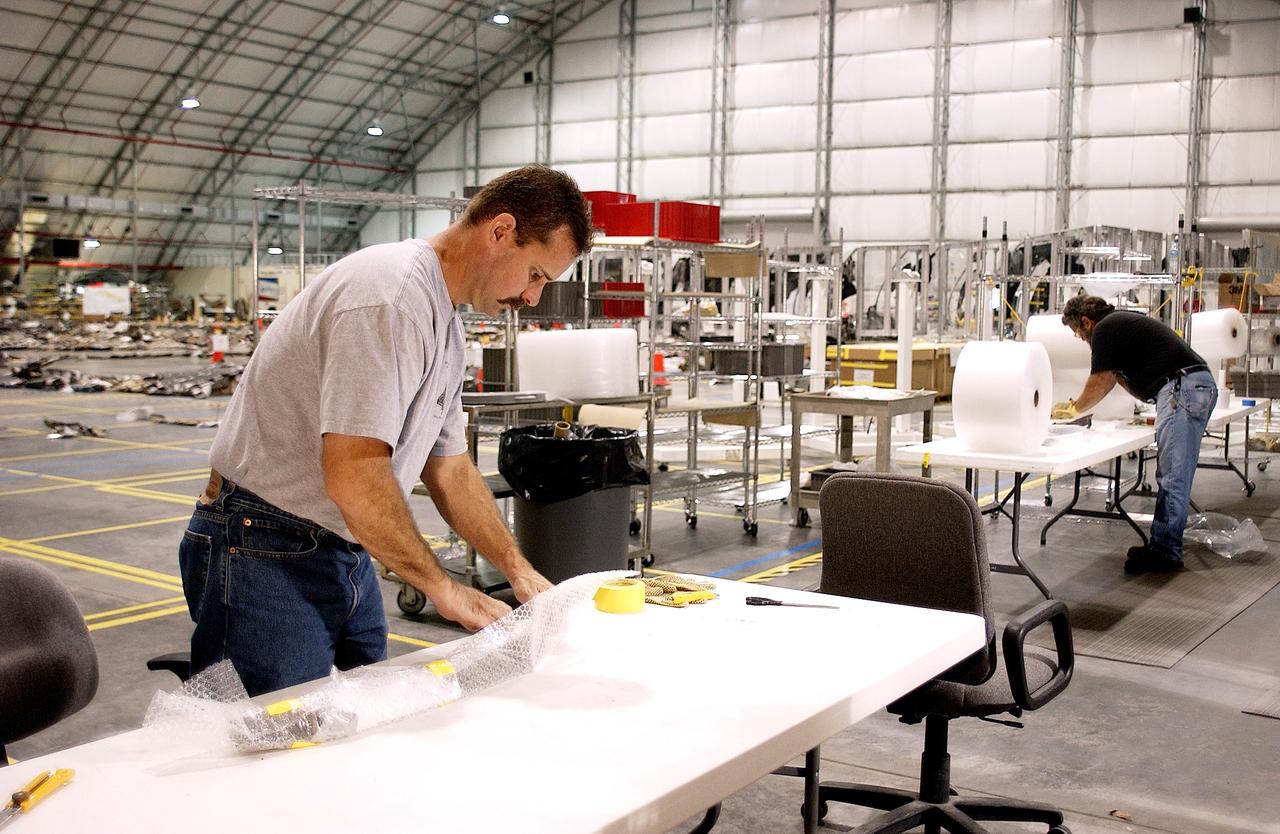
KENNEDY SPACE CENTER, FLA. -  In the Columbia Debris Hangar, Larry Tarver (left) and Don Eitel bag and wrap pieces of debris to be packed into storage boxes.  About 83,000 pieces of debris were shipped to KSC during search and recovery efforts in East Texas. That represents about 38 percent of the dry weight of Columbia, equaling almost 85,000 pounds.  An area of the Vehicle Assembly Building is being prepared to store the debris.
KENNEDY SPACE CENTER, FLA. - In the Columbia Debris Hangar, Larry Tarver (left) and Don Eitel bag and wrap pieces of debris to be packed into storage boxes. About 83,000 pieces of debris were shipped to KSC during search and recovery efforts in East Texas. That represents about 38 percent of the dry weight of Columbia, equaling almost 85,000 pounds. An area of the Vehicle Assembly Building is being prepared to store the debris.
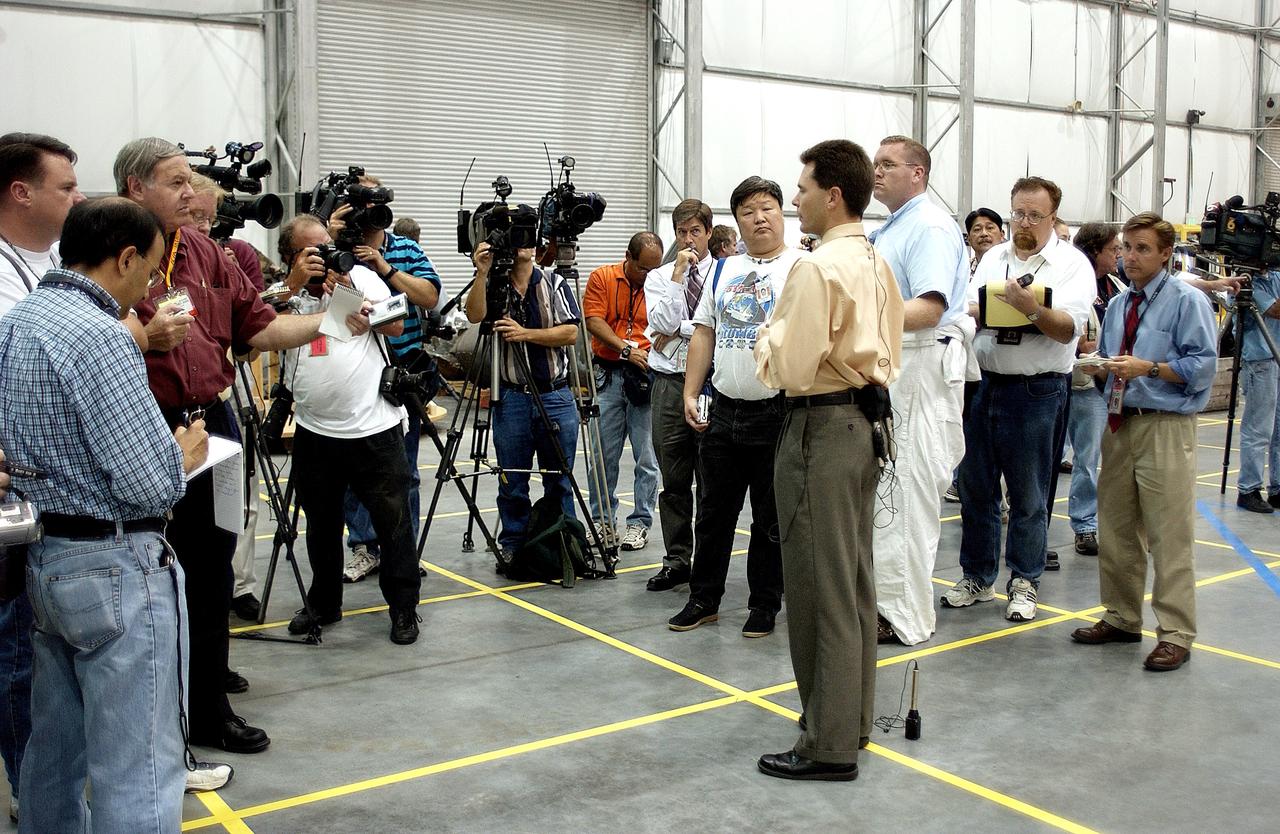
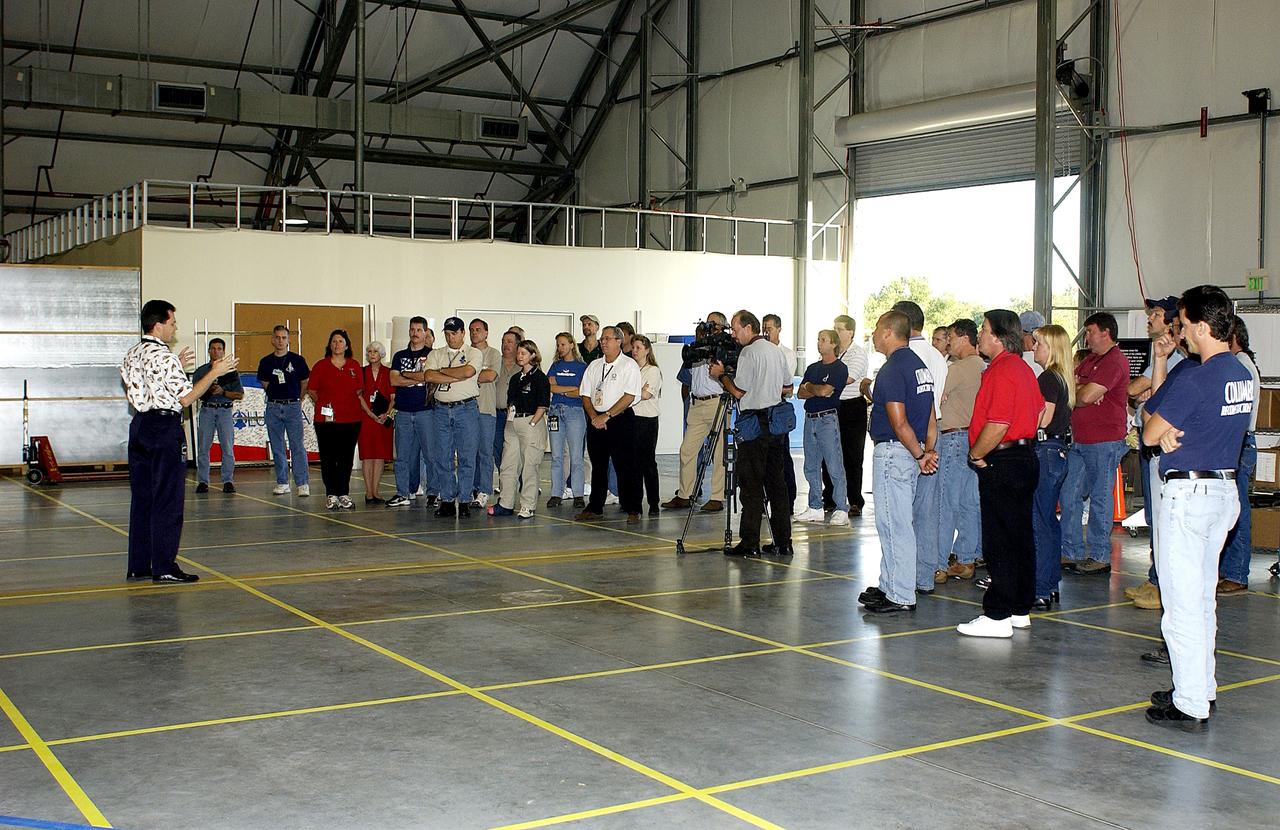
KENNEDY SPACE CENTER, FLA. - In the Columbia Debris Hangar, Scott Thurston, NASA vehicle flow manager, addresses the media about efforts to pack the debris stored in the Columbia Debris Hangar.  More than 83,000  pieces of debris were shipped to KSC during search and recovery efforts in East Texas. That represents about 38 percent of the dry weight of Columbia, equaling almost 85,000 pounds. An area of the Vehicle Assembly Building is being prepared to store the debris permanently.
KENNEDY SPACE CENTER, FLA. - In the Columbia Debris Hangar, Scott Thurston, NASA vehicle flow manager, addresses the media about efforts to pack the debris stored in the Columbia Debris Hangar. More than 83,000 pieces of debris were shipped to KSC during search and recovery efforts in East Texas. That represents about 38 percent of the dry weight of Columbia, equaling almost 85,000 pounds. An area of the Vehicle Assembly Building is being prepared to store the debris permanently.
KENNEDY SPACE CENTER, FLA. -  In the Columbia Debris Hangar,  Shuttle Launch Director Mike Leinbach  points to some of the tiles recovered from the orbiter as he explains to the media about activities that have taken place since the Columbia accident on Feb. 1, 2003.  STS-107 debris recovery and reconstruction operations are winding down.  To date, nearly 84,000 pieces of debris have been recovered and sent to KSC. That represents about 38 percent of the dry weight of Columbia, equaling almost 85,000 pounds.
KENNEDY SPACE CENTER, FLA. - In the Columbia Debris Hangar, Shuttle Launch Director Mike Leinbach points to some of the tiles recovered from the orbiter as he explains to the media about activities that have taken place since the Columbia accident on Feb. 1, 2003. STS-107 debris recovery and reconstruction operations are winding down. To date, nearly 84,000 pieces of debris have been recovered and sent to KSC. That represents about 38 percent of the dry weight of Columbia, equaling almost 85,000 pounds.
KENNEDY SPACE CENTER, FLA. -In the Columbia Debris Hangar, Don Eitel (left) wraps pieces of Columbia debris for storage.  About 83,000 pieces of debris were shipped to KSC during search and recovery efforts in East Texas. That represents about 38 percent of the dry weight of Columbia, equaling almost 85,000 pounds.  An area of the Vehicle Assembly Building is being prepared to store the debris.
KENNEDY SPACE CENTER, FLA. -In the Columbia Debris Hangar, Don Eitel (left) wraps pieces of Columbia debris for storage. About 83,000 pieces of debris were shipped to KSC during search and recovery efforts in East Texas. That represents about 38 percent of the dry weight of Columbia, equaling almost 85,000 pounds. An area of the Vehicle Assembly Building is being prepared to store the debris.
KENNEDY SPACE CENTER, FLA. - In the Columbia Debris Hangar,  Shuttle Launch Director Mike Leinbach  (right) talks to the media about activities that have taken place since the Columbia accident on Feb. 1, 2003.  STS-107 debris recovery and reconstruction operations are winding down.  To date, nearly 84,000 pieces of debris have been recovered and sent to KSC. That represents about 38 percent of the dry weight of Columbia, equaling almost 85,000 pounds.
KENNEDY SPACE CENTER, FLA. - In the Columbia Debris Hangar, Shuttle Launch Director Mike Leinbach (right) talks to the media about activities that have taken place since the Columbia accident on Feb. 1, 2003. STS-107 debris recovery and reconstruction operations are winding down. To date, nearly 84,000 pieces of debris have been recovered and sent to KSC. That represents about 38 percent of the dry weight of Columbia, equaling almost 85,000 pounds.
KENNEDY SPACE CENTER, FLA. -  A worker moves some of the Columbia debris to its storage site in the Vehicle Assembly Building (VAB). The debris is being transferred from the Columbia Debris Hangar to the VAB for permanent storage.  More than 83,000 pieces of debris were shipped to KSC during search and recovery efforts in East Texas. That represents about 38 percent of the dry weight of Columbia, equaling almost 85,000 pounds.
KENNEDY SPACE CENTER, FLA. - A worker moves some of the Columbia debris to its storage site in the Vehicle Assembly Building (VAB). The debris is being transferred from the Columbia Debris Hangar to the VAB for permanent storage. More than 83,000 pieces of debris were shipped to KSC during search and recovery efforts in East Texas. That represents about 38 percent of the dry weight of Columbia, equaling almost 85,000 pounds.
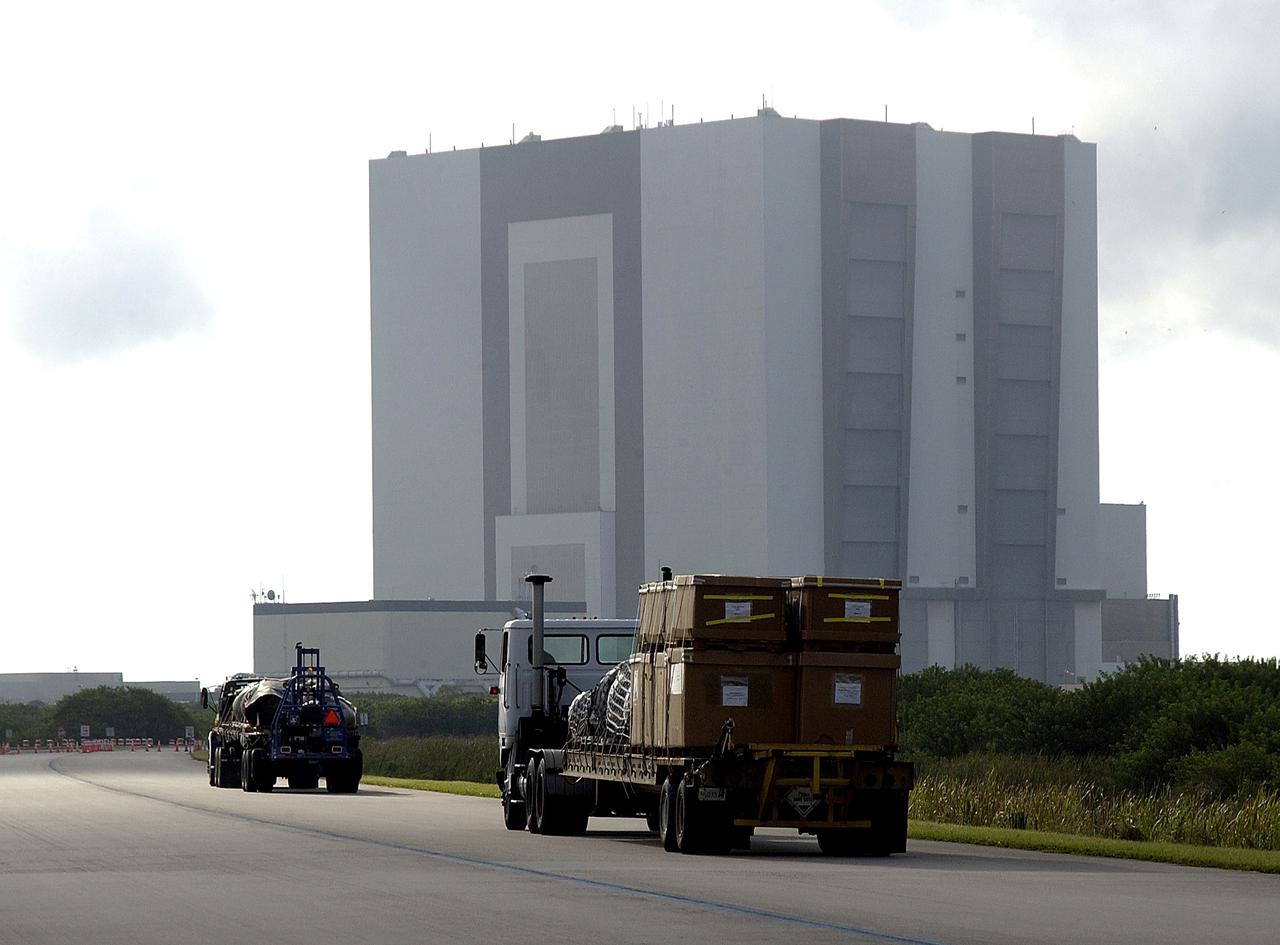
KENNEDY SPACE CENTER, FLA. -  Flatbed trucks carrying some of the debris of Space Shuttle Columbia approach the Vehicle Assembly Building (VAB).  The debris is being transferred from the Columbia Debris Hangar to the VAB for permanent storage.  More than 83,000 pieces of debris were shipped to KSC during search and recovery efforts in East Texas. That represents about 38 percent of the dry weight of Columbia, equaling almost 85,000 pounds.
KENNEDY SPACE CENTER, FLA. - Flatbed trucks carrying some of the debris of Space Shuttle Columbia approach the Vehicle Assembly Building (VAB). The debris is being transferred from the Columbia Debris Hangar to the VAB for permanent storage. More than 83,000 pieces of debris were shipped to KSC during search and recovery efforts in East Texas. That represents about 38 percent of the dry weight of Columbia, equaling almost 85,000 pounds.
KENNEDY SPACE CENTER, FLA. - In the Columbia Debris Hangar,  Shuttle Launch Director Mike Leinbach  points to some of the debris as he explains to the media about activities that have taken place since the Columbia accident on Feb. 1, 2003.  STS-107 debris recovery and reconstruction operations are winding down.  To date, nearly 84,000 pieces of debris have been recovered and sent to KSC. That represents about 38 percent of the dry weight of Columbia, equaling almost 85,000 pounds.
KENNEDY SPACE CENTER, FLA. - In the Columbia Debris Hangar, Shuttle Launch Director Mike Leinbach points to some of the debris as he explains to the media about activities that have taken place since the Columbia accident on Feb. 1, 2003. STS-107 debris recovery and reconstruction operations are winding down. To date, nearly 84,000 pieces of debris have been recovered and sent to KSC. That represents about 38 percent of the dry weight of Columbia, equaling almost 85,000 pounds.
KENNEDY SPACE CENTER, FLA. -  In the Columbia Debris Hangar,  Don Eitel (in front) and Jim Delie carry pieces of debris to be packed into storage boxes.  About 83,000 pieces of debris were shipped to KSC during search and recovery efforts in East Texas. That represents about 38 percent of the dry weight of Columbia, equaling almost 85,000 pounds.  An area of the Vehicle Assembly Building is being prepared to store the debris.
KENNEDY SPACE CENTER, FLA. - In the Columbia Debris Hangar, Don Eitel (in front) and Jim Delie carry pieces of debris to be packed into storage boxes. About 83,000 pieces of debris were shipped to KSC during search and recovery efforts in East Texas. That represents about 38 percent of the dry weight of Columbia, equaling almost 85,000 pounds. An area of the Vehicle Assembly Building is being prepared to store the debris.
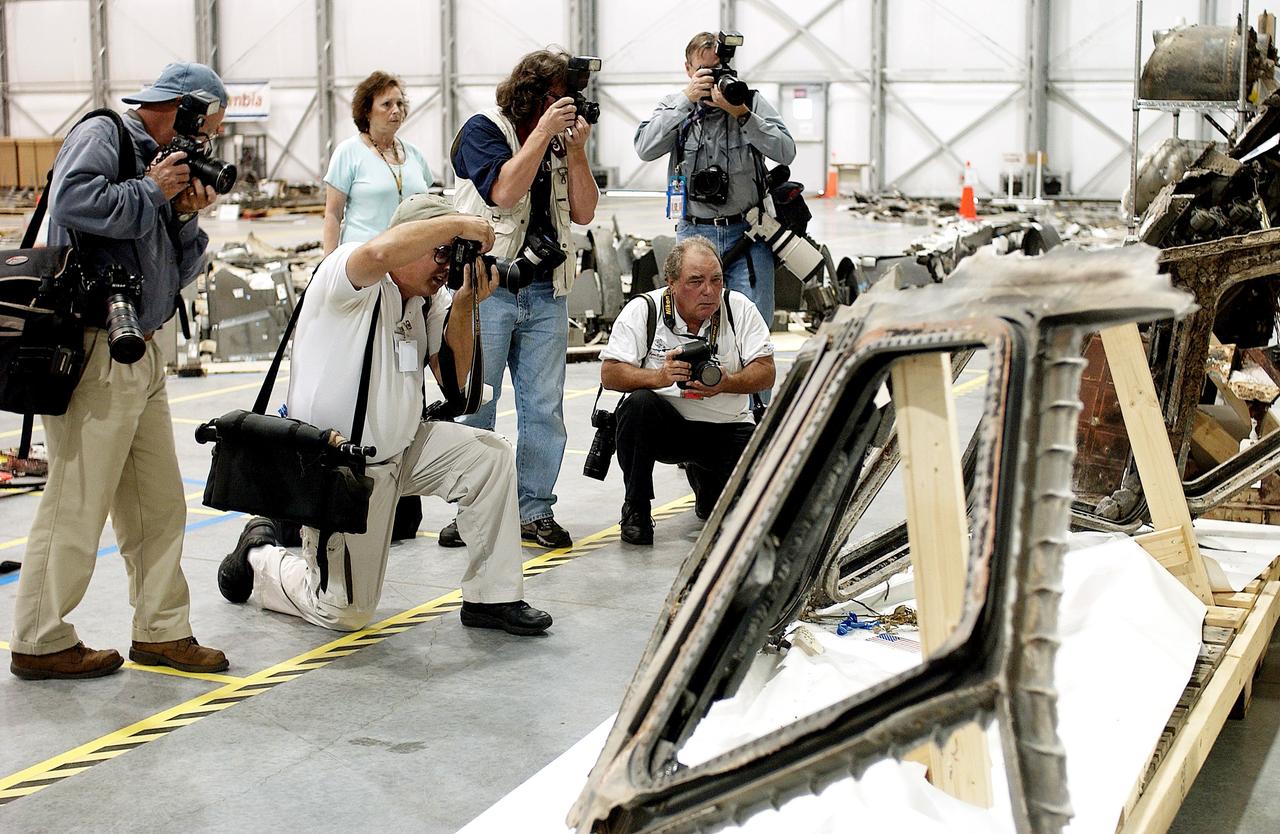
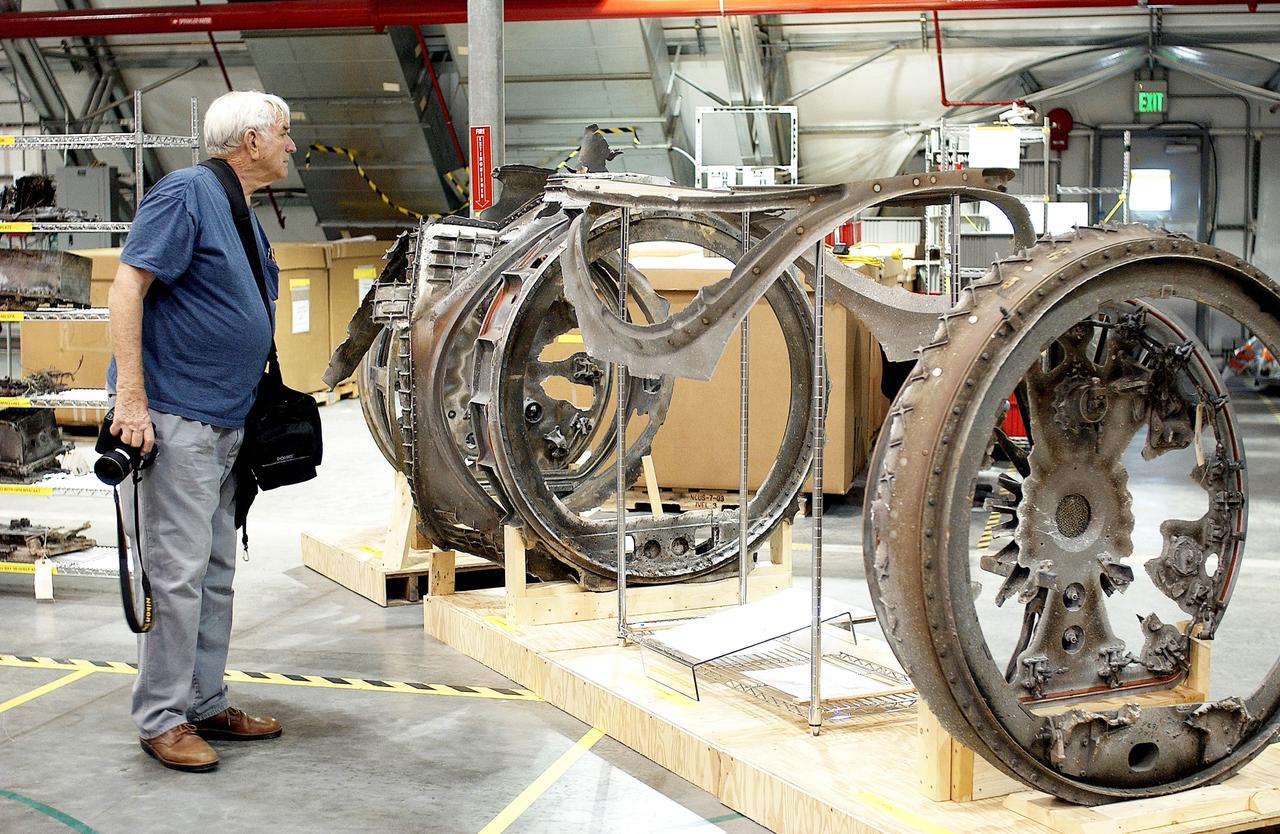
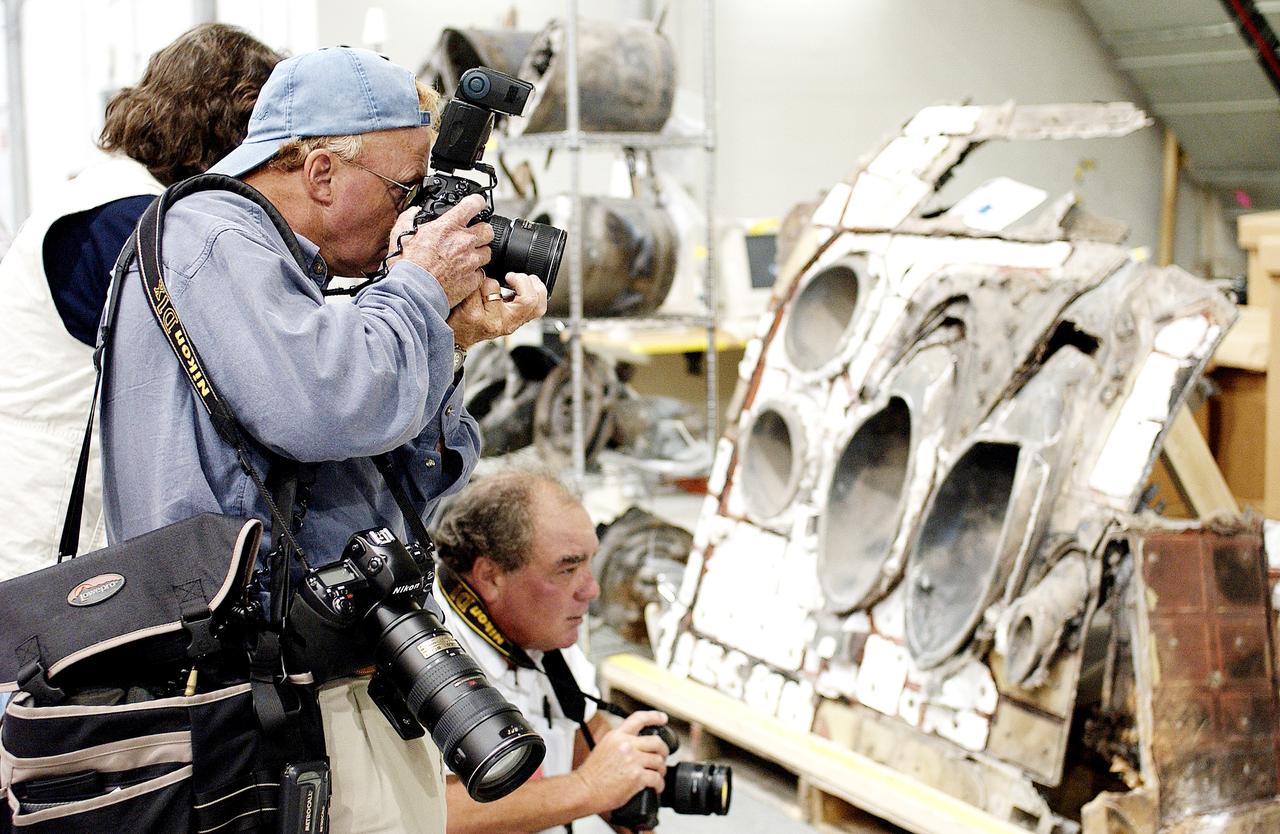
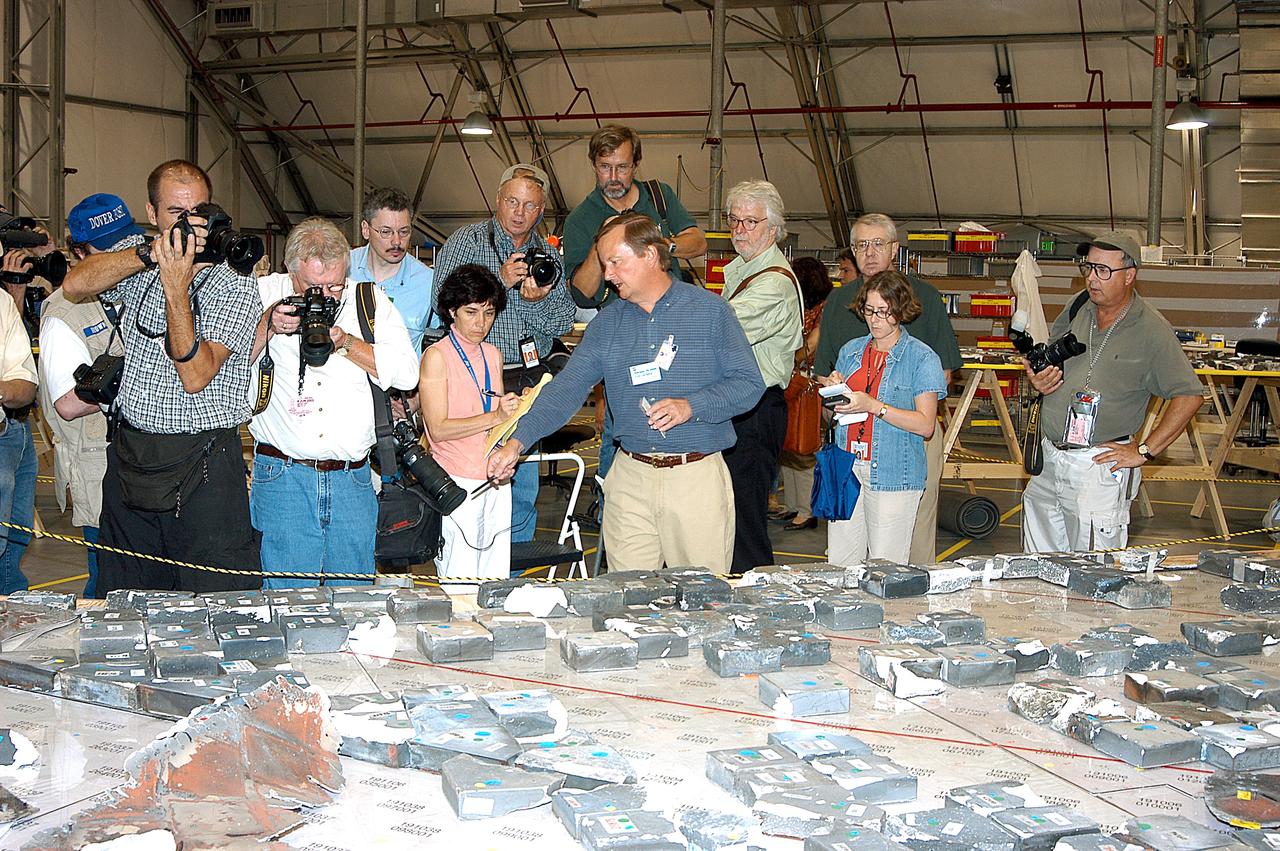
KENNEDY SPACE CENTER, FLA. - During a media tour of the Columbia Debris Hangar, photographers focus on a piece of the debris collected from search and recovery efforts in East Texas. About 83,000 pieces of debris from Columbia were shipped to KSC, which represents about 38 percent of the dry weight of Columbia, equaling almost 85,000 pounds.  The debris is being packaged for storage in an area of the Vehicle Assembly Building.
KENNEDY SPACE CENTER, FLA. - During a media tour of the Columbia Debris Hangar, photographers focus on a piece of the debris collected from search and recovery efforts in East Texas. About 83,000 pieces of debris from Columbia were shipped to KSC, which represents about 38 percent of the dry weight of Columbia, equaling almost 85,000 pounds. The debris is being packaged for storage in an area of the Vehicle Assembly Building.
KENNEDY SPACE CENTER, FLA. - In the Columbia Debris Hangar,  Shuttle Launch Director Mike Leinbach  (right) talks to the media about activities that have taken place since the Columbia accident on Feb. 1, 2003.  STS-107 debris recovery and reconstruction operations are winding down.  To date, nearly 84,000 pieces of debris have been recovered and sent to KSC. That represents about 38 percent of the dry weight of Columbia, equaling almost 85,000 pounds.
KENNEDY SPACE CENTER, FLA. - In the Columbia Debris Hangar, Shuttle Launch Director Mike Leinbach (right) talks to the media about activities that have taken place since the Columbia accident on Feb. 1, 2003. STS-107 debris recovery and reconstruction operations are winding down. To date, nearly 84,000 pieces of debris have been recovered and sent to KSC. That represents about 38 percent of the dry weight of Columbia, equaling almost 85,000 pounds.
KENNEDY SPACE CENTER, FLA. -  Workers move some of the Columbia debris to its storage site in the Vehicle Assembly Building (VAB). The debris is being transferred from the Columbia Debris Hangar to the VAB for permanent storage.  More than 83,000 pieces of debris were shipped to KSC during search and recovery efforts in East Texas. That represents about 38 percent of the dry weight of Columbia, equaling almost 85,000 pounds.
KENNEDY SPACE CENTER, FLA. - Workers move some of the Columbia debris to its storage site in the Vehicle Assembly Building (VAB). The debris is being transferred from the Columbia Debris Hangar to the VAB for permanent storage. More than 83,000 pieces of debris were shipped to KSC during search and recovery efforts in East Texas. That represents about 38 percent of the dry weight of Columbia, equaling almost 85,000 pounds.
KENNEDY SPACE CENTER, FLA. - During a media tour of the Columbia Debris Hangar, a photographer examines some of the debris collected from search and recovery efforts in East Texas. About 83,000 pieces of debris from Columbia were shipped to KSC, which represents about 38 percent of the dry weight of Columbia, equaling almost 85,000 pounds.  The debris is being packaged for storage in an area of the Vehicle Assembly Building.
KENNEDY SPACE CENTER, FLA. - During a media tour of the Columbia Debris Hangar, a photographer examines some of the debris collected from search and recovery efforts in East Texas. About 83,000 pieces of debris from Columbia were shipped to KSC, which represents about 38 percent of the dry weight of Columbia, equaling almost 85,000 pounds. The debris is being packaged for storage in an area of the Vehicle Assembly Building.
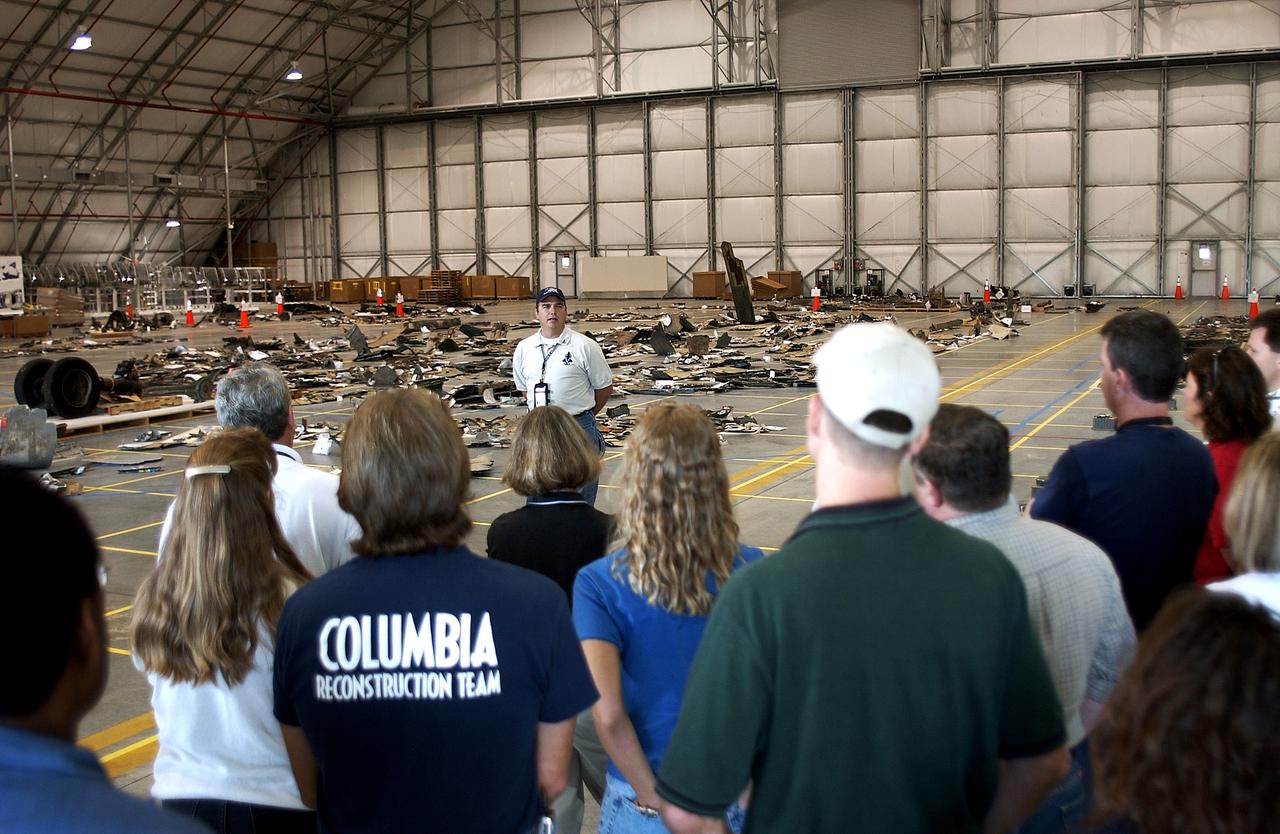
KENNEDY SPACE CENTER, FLA. -  Jim Comer, United Space Alliance project leader for Columbia reconstruction, speaks to members of the Columbia Reconstruction Team during transfer of debris from the Columbia Debris Hangar to its permanent storage site in the Vehicle Assembly Building.  More than 83,000 pieces of debris were shipped to KSC during search and recovery efforts in East Texas. That represents about 38 percent of the dry weight of Columbia, equaling almost 85,000 pounds.
KENNEDY SPACE CENTER, FLA. - Jim Comer, United Space Alliance project leader for Columbia reconstruction, speaks to members of the Columbia Reconstruction Team during transfer of debris from the Columbia Debris Hangar to its permanent storage site in the Vehicle Assembly Building. More than 83,000 pieces of debris were shipped to KSC during search and recovery efforts in East Texas. That represents about 38 percent of the dry weight of Columbia, equaling almost 85,000 pounds.
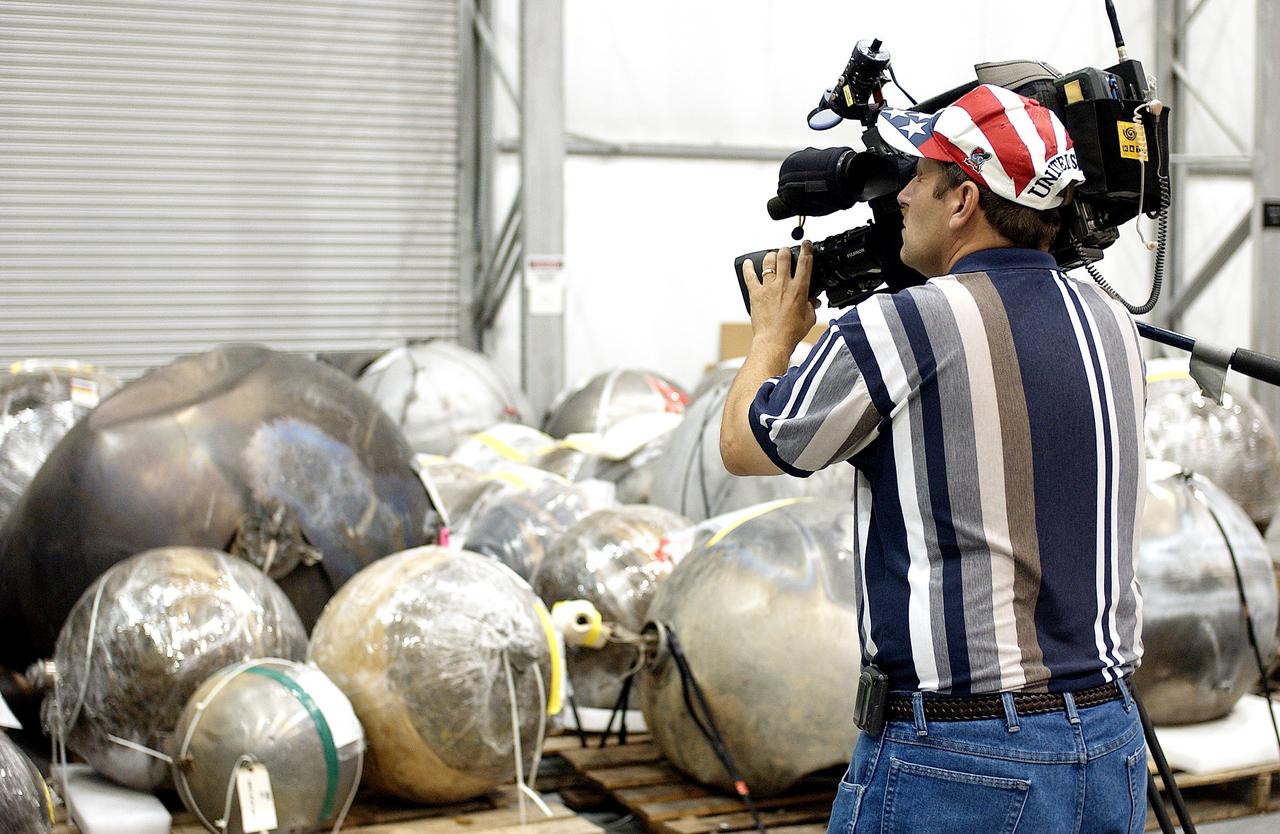
KENNEDY SPACE CENTER, FLA. - During a media tour of the Columbia Debris Hangar, a video cameraman records some of the debris collected from search and recovery efforts in East Texas. About 83,000 pieces of debris from Columbia were shipped to KSC, which represents about 38 percent of the dry weight of Columbia, equaling almost 85,000 pounds.  The debris is being packaged for storage in an area of the Vehicle Assembly Building.
KENNEDY SPACE CENTER, FLA. - During a media tour of the Columbia Debris Hangar, a video cameraman records some of the debris collected from search and recovery efforts in East Texas. About 83,000 pieces of debris from Columbia were shipped to KSC, which represents about 38 percent of the dry weight of Columbia, equaling almost 85,000 pounds. The debris is being packaged for storage in an area of the Vehicle Assembly Building.
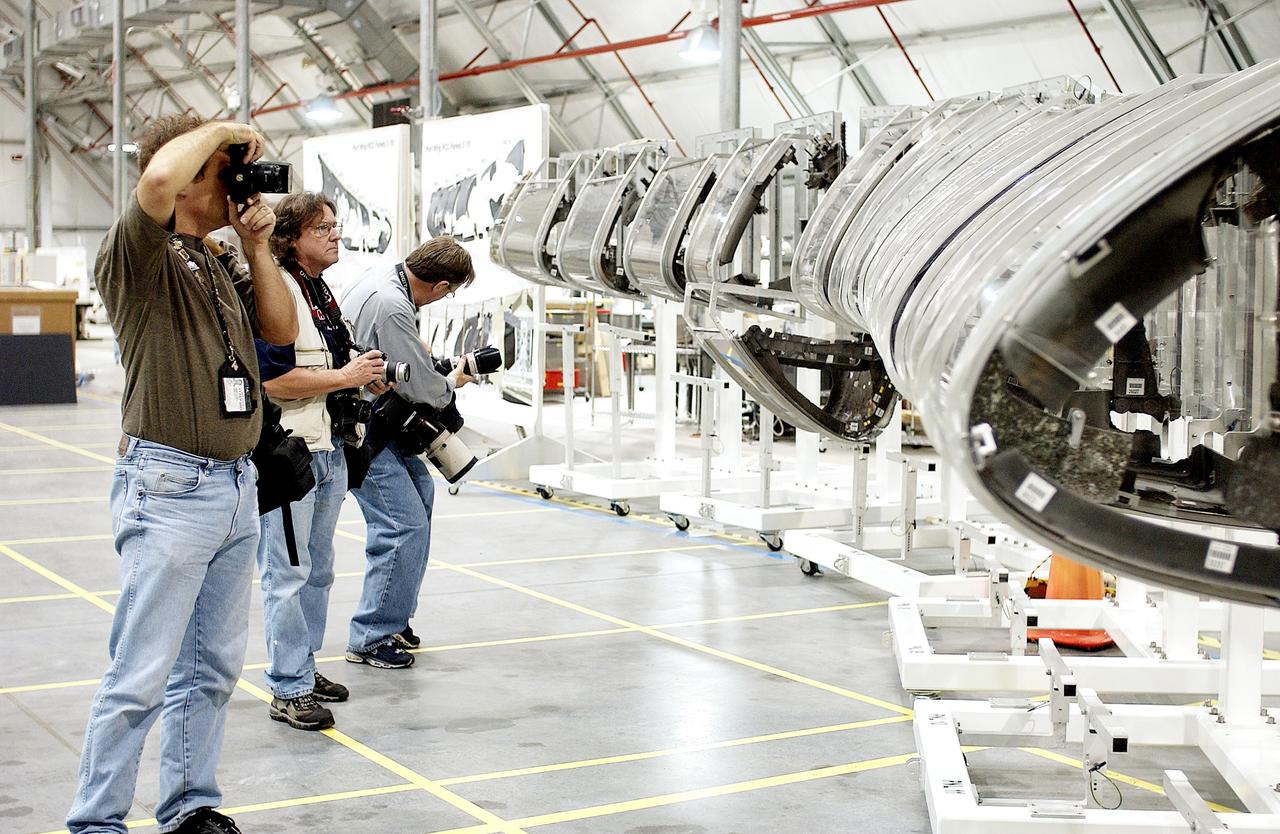
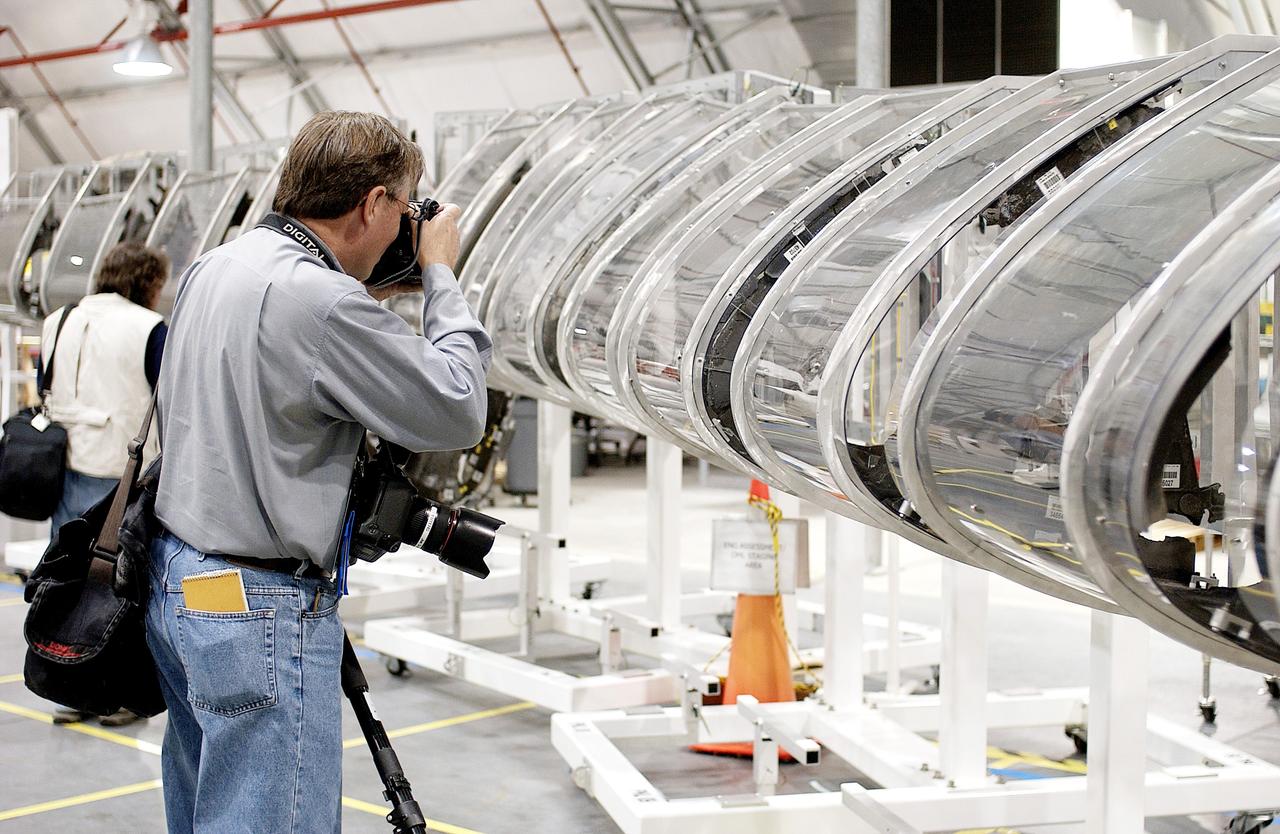
KENNEDY SPACE CENTER, FLA. - During a media tour of the Columbia Debris Hangar, a photographer gets a close-up of the mockup of the leading edge of Columbia’s left wing.  About 83,000 pieces of debris were shipped to KSC from search and recovery efforts in East Texas.  About 83,000 pieces of debris from Columbia were shipped to KSC, which represents about 38 percent of the dry weight of Columbia, equaling almost 85,000 pounds.  The debris is being packaged for storage in an area of the Vehicle Assembly Building.
KENNEDY SPACE CENTER, FLA. - During a media tour of the Columbia Debris Hangar, a photographer gets a close-up of the mockup of the leading edge of Columbia’s left wing. About 83,000 pieces of debris were shipped to KSC from search and recovery efforts in East Texas. About 83,000 pieces of debris from Columbia were shipped to KSC, which represents about 38 percent of the dry weight of Columbia, equaling almost 85,000 pounds. The debris is being packaged for storage in an area of the Vehicle Assembly Building.
KENNEDY SPACE CENTER, FLA. -  Scott Thurston, NASA vehicle flow manager, speaks to members of the Columbia Reconstruction Team during transfer of debris from the Columbia Debris Hangar to its permanent storage site in the Vehicle Assembly Building.  More than 83,000 pieces of debris were shipped to KSC during search and recovery efforts in East Texas. That represents about 38 percent of the dry weight of Columbia, equaling almost 85,000 pounds.
KENNEDY SPACE CENTER, FLA. - Scott Thurston, NASA vehicle flow manager, speaks to members of the Columbia Reconstruction Team during transfer of debris from the Columbia Debris Hangar to its permanent storage site in the Vehicle Assembly Building. More than 83,000 pieces of debris were shipped to KSC during search and recovery efforts in East Texas. That represents about 38 percent of the dry weight of Columbia, equaling almost 85,000 pounds.
KENNEDY SPACE CENTER, FLA. - During a media tour of the Columbia Debris Hangar, photographers pause at the mockup of the leading edge of Columbia’s left wing.  About 83,000 pieces of debris from Columbia were shipped to KSC from search and recovery efforts in East Texas.  About 83,000 pieces of debris were shipped to KSC, which represents about 38 percent of the dry weight of Columbia, equaling almost 85,000 pounds.  The debris is being packaged for storage in an area of the Vehicle Assembly Building.
KENNEDY SPACE CENTER, FLA. - During a media tour of the Columbia Debris Hangar, photographers pause at the mockup of the leading edge of Columbia’s left wing. About 83,000 pieces of debris from Columbia were shipped to KSC from search and recovery efforts in East Texas. About 83,000 pieces of debris were shipped to KSC, which represents about 38 percent of the dry weight of Columbia, equaling almost 85,000 pounds. The debris is being packaged for storage in an area of the Vehicle Assembly Building.
KENNEDY SPACE CENTER, FLA. - In the Columbia Debris Hangar, Scott Thurston, NASA vehicle flow manager, addresses the media about efforts to pack the debris stored in the Columbia Debris Hangar.  More than 83,000  pieces of debris were shipped to KSC during search and recovery efforts in East Texas. That represents about 38 percent of the dry weight of Columbia, equaling almost 85,000 pounds. An area of the Vehicle Assembly Building is being prepared to store the debris permanently.
KENNEDY SPACE CENTER, FLA. - In the Columbia Debris Hangar, Scott Thurston, NASA vehicle flow manager, addresses the media about efforts to pack the debris stored in the Columbia Debris Hangar. More than 83,000 pieces of debris were shipped to KSC during search and recovery efforts in East Texas. That represents about 38 percent of the dry weight of Columbia, equaling almost 85,000 pounds. An area of the Vehicle Assembly Building is being prepared to store the debris permanently.
KENNEDY SPACE CENTER, FLA. -  Pieces of debris of Space Shuttle Columbia are offloaded from a flatbed truck in the transfer aisle of the Vehicle Assembly Building (VAB).  The debris is being moved from the Columbia Debris Hangar to the VAB for permanent storage.  More than 83,000 pieces of debris were shipped to KSC during search and recovery efforts in East Texas. That represents about 38 percent of the dry weight of Columbia, equaling almost 85,000 pounds.
KENNEDY SPACE CENTER, FLA. - Pieces of debris of Space Shuttle Columbia are offloaded from a flatbed truck in the transfer aisle of the Vehicle Assembly Building (VAB). The debris is being moved from the Columbia Debris Hangar to the VAB for permanent storage. More than 83,000 pieces of debris were shipped to KSC during search and recovery efforts in East Texas. That represents about 38 percent of the dry weight of Columbia, equaling almost 85,000 pounds.
KENNEDY SPACE CENTER, FLA. - During a media tour of the Columbia Debris Hangar, photographers focus on part of the cockpit collected from search and recovery efforts in East Texas. About 83,000 pieces of debris from Columbia were shipped to KSC, which represents about 38 percent of the dry weight of Columbia, equaling almost 85,000 pounds.  The debris is being packaged for storage in an area of the Vehicle Assembly Building.
KENNEDY SPACE CENTER, FLA. - During a media tour of the Columbia Debris Hangar, photographers focus on part of the cockpit collected from search and recovery efforts in East Texas. About 83,000 pieces of debris from Columbia were shipped to KSC, which represents about 38 percent of the dry weight of Columbia, equaling almost 85,000 pounds. The debris is being packaged for storage in an area of the Vehicle Assembly Building.
KENNEDY SPACE CENTER, FLA. - In the Columbia Debris Hangar, Scott Thurston, NASA vehicle flow manager, addresses the media about efforts to pack the debris stored in the Columbia Debris Hangar.  More than 83,000  pieces of debris were shipped to KSC during search and recovery efforts in East Texas. That represents about 38 percent of the dry weight of Columbia, equaling almost 85,000 pounds. An area of the Vehicle Assembly Building is being prepared to store the debris permanently.
KENNEDY SPACE CENTER, FLA. - In the Columbia Debris Hangar, Scott Thurston, NASA vehicle flow manager, addresses the media about efforts to pack the debris stored in the Columbia Debris Hangar. More than 83,000 pieces of debris were shipped to KSC during search and recovery efforts in East Texas. That represents about 38 percent of the dry weight of Columbia, equaling almost 85,000 pounds. An area of the Vehicle Assembly Building is being prepared to store the debris permanently.
KENNEDY SPACE CENTER, FLA. -  At the Columbia Debris Hangar, some of the debris of Space Shuttle Columbia is secured onto a flatbed truck for transfer to the Vehicle Assembly Building for permanent storage.  More than 83,000  pieces of debris were shipped to KSC during search and recovery efforts in East Texas. That represents about 38 percent of the dry weight of Columbia, equaling almost 85,000 pounds.
KENNEDY SPACE CENTER, FLA. - At the Columbia Debris Hangar, some of the debris of Space Shuttle Columbia is secured onto a flatbed truck for transfer to the Vehicle Assembly Building for permanent storage. More than 83,000 pieces of debris were shipped to KSC during search and recovery efforts in East Texas. That represents about 38 percent of the dry weight of Columbia, equaling almost 85,000 pounds.
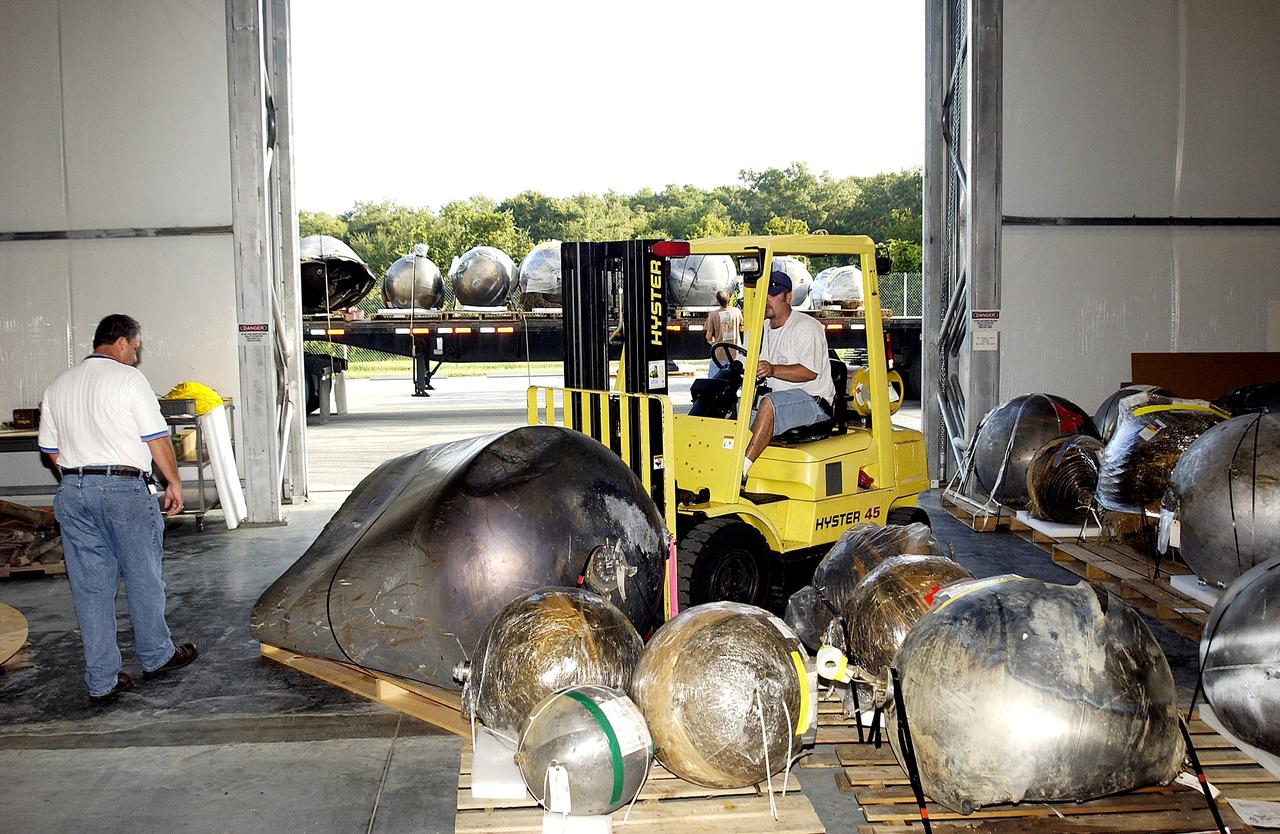
KENNEDY SPACE CENTER, FLA. -    Some of the Columbia debris inside the Columbia Debris Hangar is being moved out and placed on a flatbed truck (seen in the background) for transfer to the Vehicle Assembly Building for permanent storage.  More than 83,000  pieces of debris were shipped to KSC during search and recovery efforts in East Texas. That represents about 38 percent of the dry weight of Columbia, equaling almost 85,000 pounds.
KENNEDY SPACE CENTER, FLA. - Some of the Columbia debris inside the Columbia Debris Hangar is being moved out and placed on a flatbed truck (seen in the background) for transfer to the Vehicle Assembly Building for permanent storage. More than 83,000 pieces of debris were shipped to KSC during search and recovery efforts in East Texas. That represents about 38 percent of the dry weight of Columbia, equaling almost 85,000 pounds.
KENNEDY SPACE CENTER, FLA. - In the Columbia Debris Hangar, Scott Thurston, NASA vehicle flow manager, addresses the media about efforts to pack the debris stored in the Columbia Debris Hangar.  More than 83,000  pieces of debris were shipped to KSC during search and recovery efforts in East Texas. That represents about 38 percent of the dry weight of Columbia, equaling almost 85,000 pounds. An area of the Vehicle Assembly Building is being prepared to store the debris permanently.
KENNEDY SPACE CENTER, FLA. - In the Columbia Debris Hangar, Scott Thurston, NASA vehicle flow manager, addresses the media about efforts to pack the debris stored in the Columbia Debris Hangar. More than 83,000 pieces of debris were shipped to KSC during search and recovery efforts in East Texas. That represents about 38 percent of the dry weight of Columbia, equaling almost 85,000 pounds. An area of the Vehicle Assembly Building is being prepared to store the debris permanently.
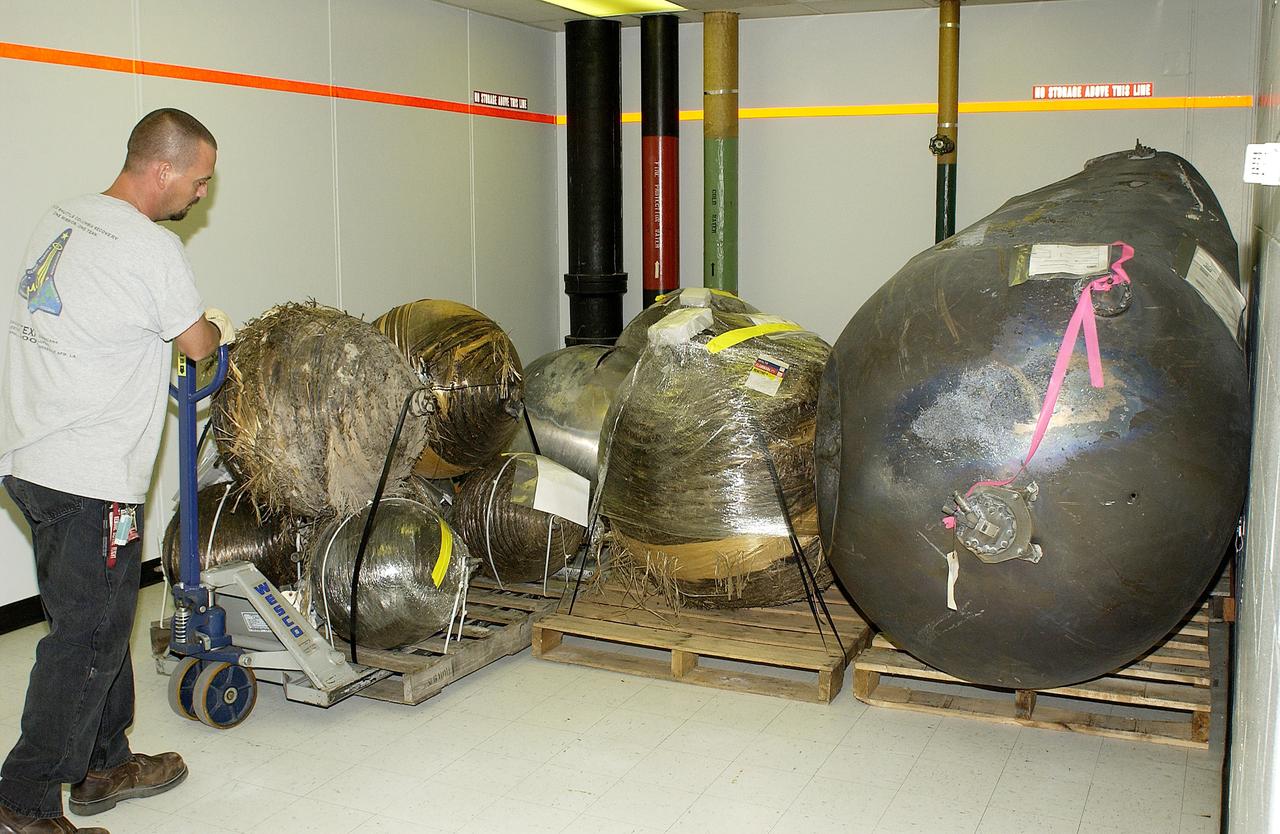
KENNEDY SPACE CENTER, FLA.  -   Workers place some of the Columbia debris moved from the Columbia Debris Hangar in its permanent storage site in the Vehicle Assembly Building.  More than 83,000  pieces of debris were shipped to KSC during search and recovery efforts in East Texas. That represents about 38 percent of the dry weight of Columbia, equaling almost 85,000 pounds.
KENNEDY SPACE CENTER, FLA. - Workers place some of the Columbia debris moved from the Columbia Debris Hangar in its permanent storage site in the Vehicle Assembly Building. More than 83,000 pieces of debris were shipped to KSC during search and recovery efforts in East Texas. That represents about 38 percent of the dry weight of Columbia, equaling almost 85,000 pounds.
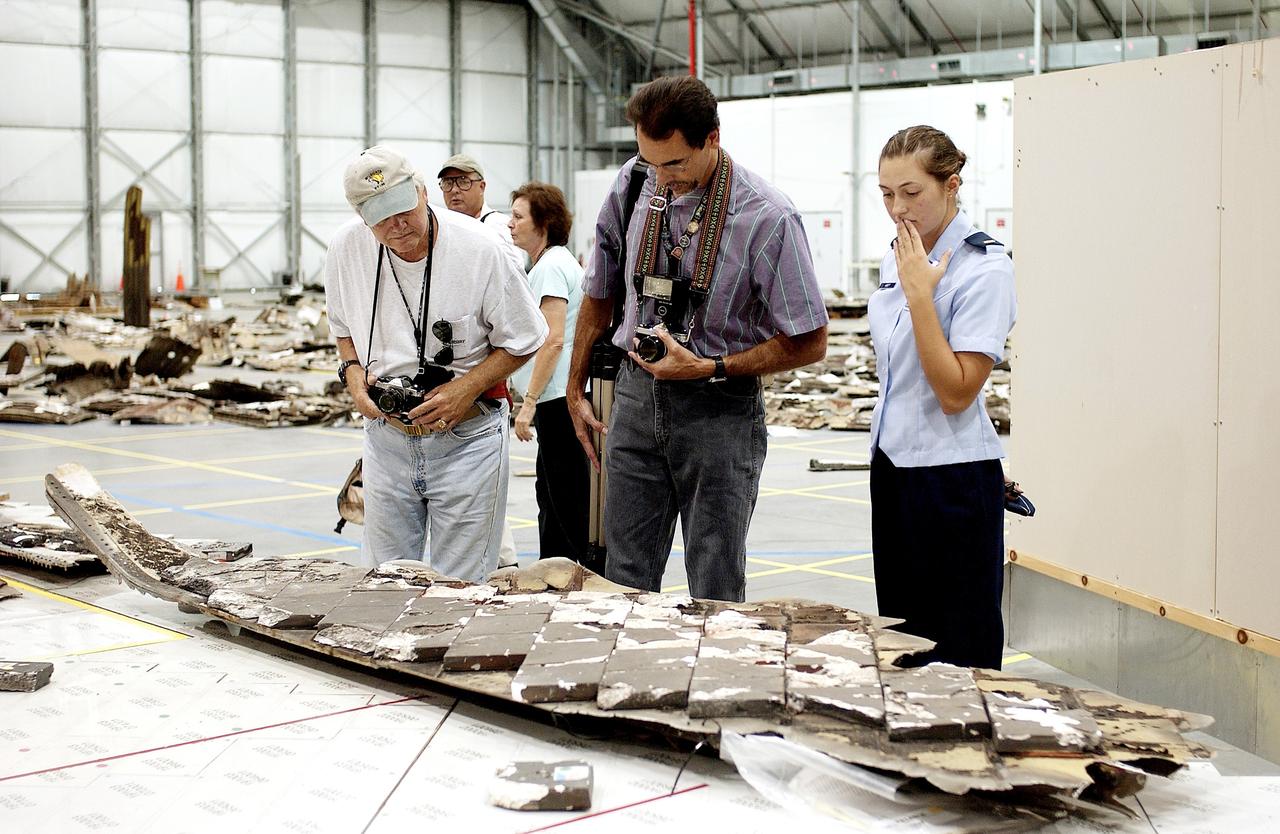
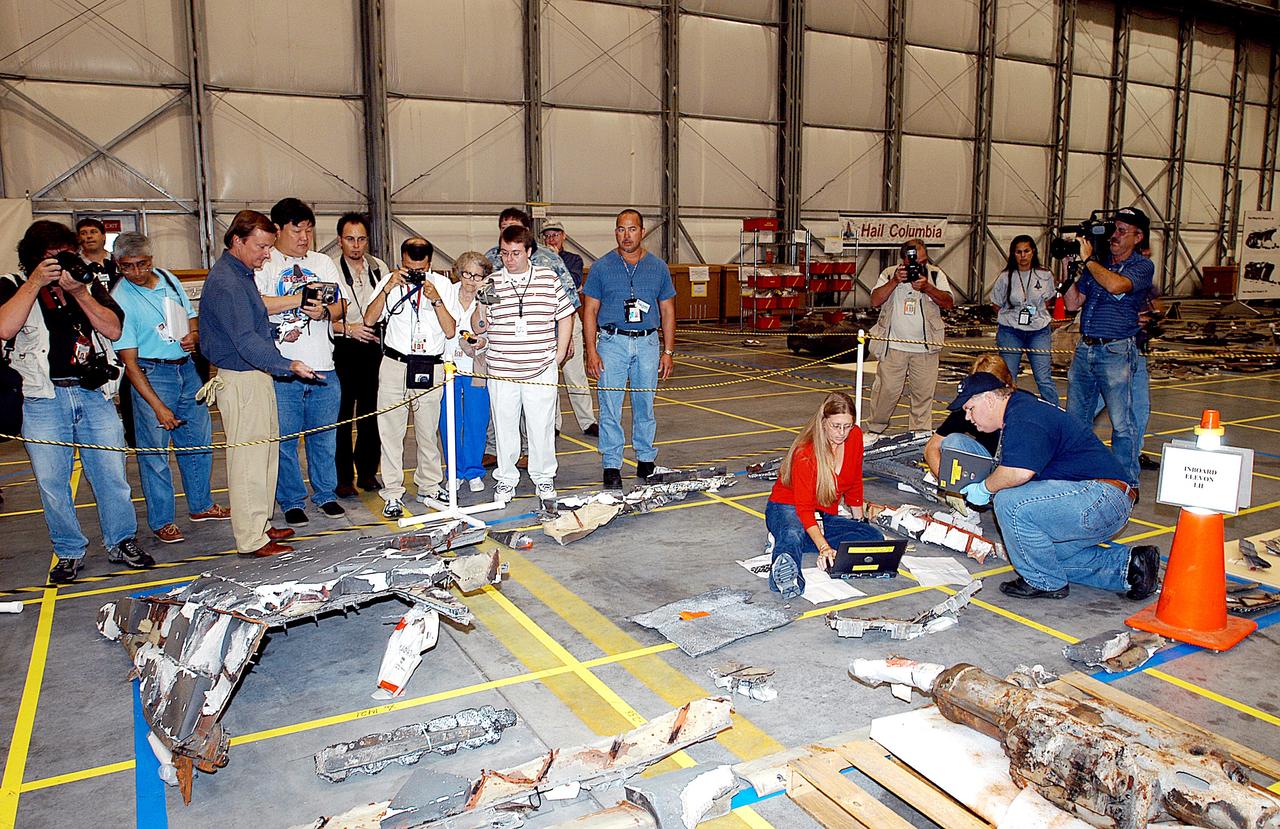
KENNEDY SPACE CENTER, FLA. - During a media tour of the Columbia Debris Hangar, photographers look at pieces of tile collected during search and recovery efforts in East Texas.  About 83,000 pieces of debris from Columbia were shipped to KSC, which represents about 38 percent of the dry weight of Columbia, equaling almost 85,000 pounds.  The debris is being packaged for storage in an area of the Vehicle Assembly Building.
KENNEDY SPACE CENTER, FLA. - During a media tour of the Columbia Debris Hangar, photographers look at pieces of tile collected during search and recovery efforts in East Texas. About 83,000 pieces of debris from Columbia were shipped to KSC, which represents about 38 percent of the dry weight of Columbia, equaling almost 85,000 pounds. The debris is being packaged for storage in an area of the Vehicle Assembly Building.
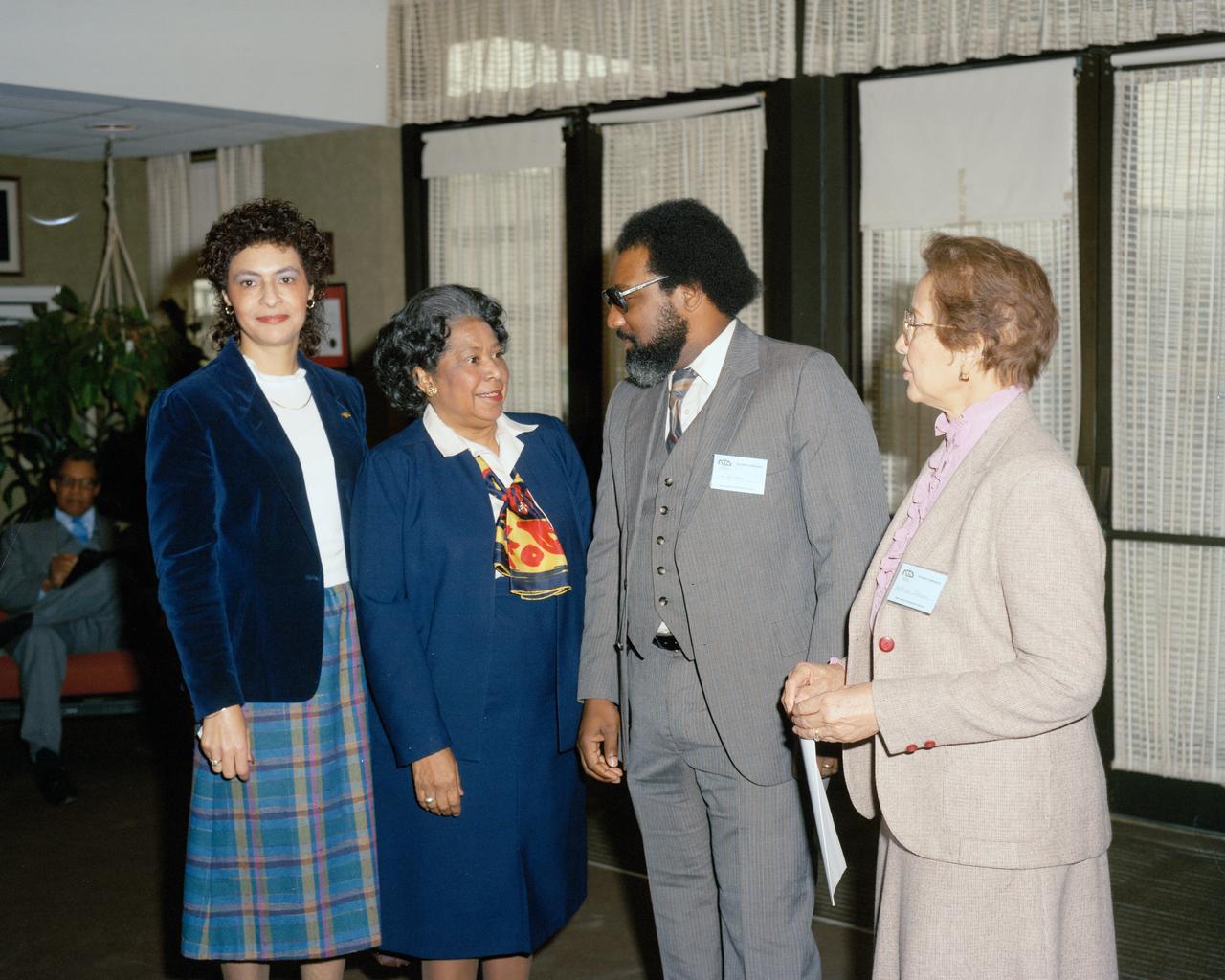
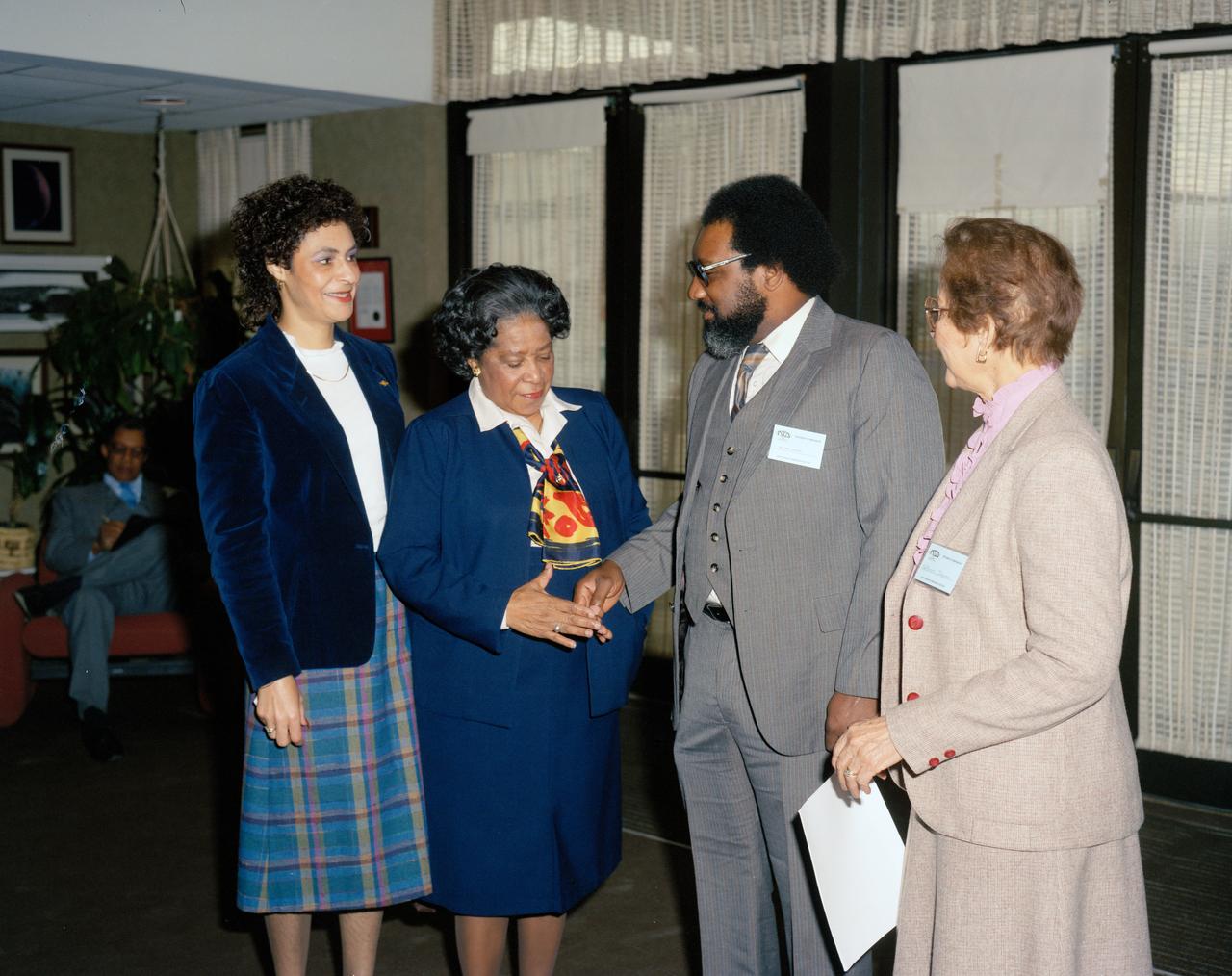
Photograph taken November 8,1984. Student Symposium Meeting Left to right Vivian Merritt, Office of Equal Opportunity Programs, Mary Jackson, Manger, Federal Woman’s Program, guest speaker Mr. James Jennings, and Katherine Johnson, Flight Dynamics and Control Division. Jennings’ career has included management and analyst positions at the Marshall Space Flight Center and NASA Headquarters. He is known for his ability to work with people and get things done. Jennings is a member of numerous professional and community organizations. He has served as Chairman of the KSC Combined Federal Campaign and Savings Bond Drive. Jennings has received numerous awards during his NASA career including an Equal Employment Opportunity Award in 1975, an Exceptional Service Medal in 1988, the Equal Employment Opportunity Medal in 1989, and an Outstanding Leadership Medal in 1994. Jennings also received the Distinguished Service Award in 1989 and the President's Award in 1999 from the Space Coast Chapter of the Federally Employed Women. He was conferred the rank of Meritorious Executive in 1997, and received the 1999 Presidential Distinguished Rank Award.
Studend Symposium Meeeting
Photograph taken November 8,1984.  Student Symposium Meeting Left to right Vivian Merritt, Office of Equal Opportunity Programs, Mary Jackson, Manger, Federal Woman’s Program, guest speaker Mr. James Jennings, and Katherine Johnson, Flight Dynamics and Control Division.   Jennings’ career has included management and analyst positions at the Marshall Space Flight Center and NASA Headquarters. He is known for his ability to work with people and get things done. Jennings is a member of numerous professional and community organizations. He has served as Chairman of the KSC Combined Federal Campaign and Savings Bond Drive. Jennings has received numerous awards during his NASA career including an Equal Employment Opportunity Award in 1975, an Exceptional Service Medal in 1988, the Equal Employment Opportunity Medal in 1989, and an Outstanding Leadership Medal in 1994. Jennings also received the Distinguished Service Award in 1989 and the President's Award in 1999 from the Space Coast Chapter of the Federally Employed Women. He was conferred the rank of Meritorious Executive in 1997, and received the 1999 Presidential Distinguished Rank Award.
Student Symposium Meeting
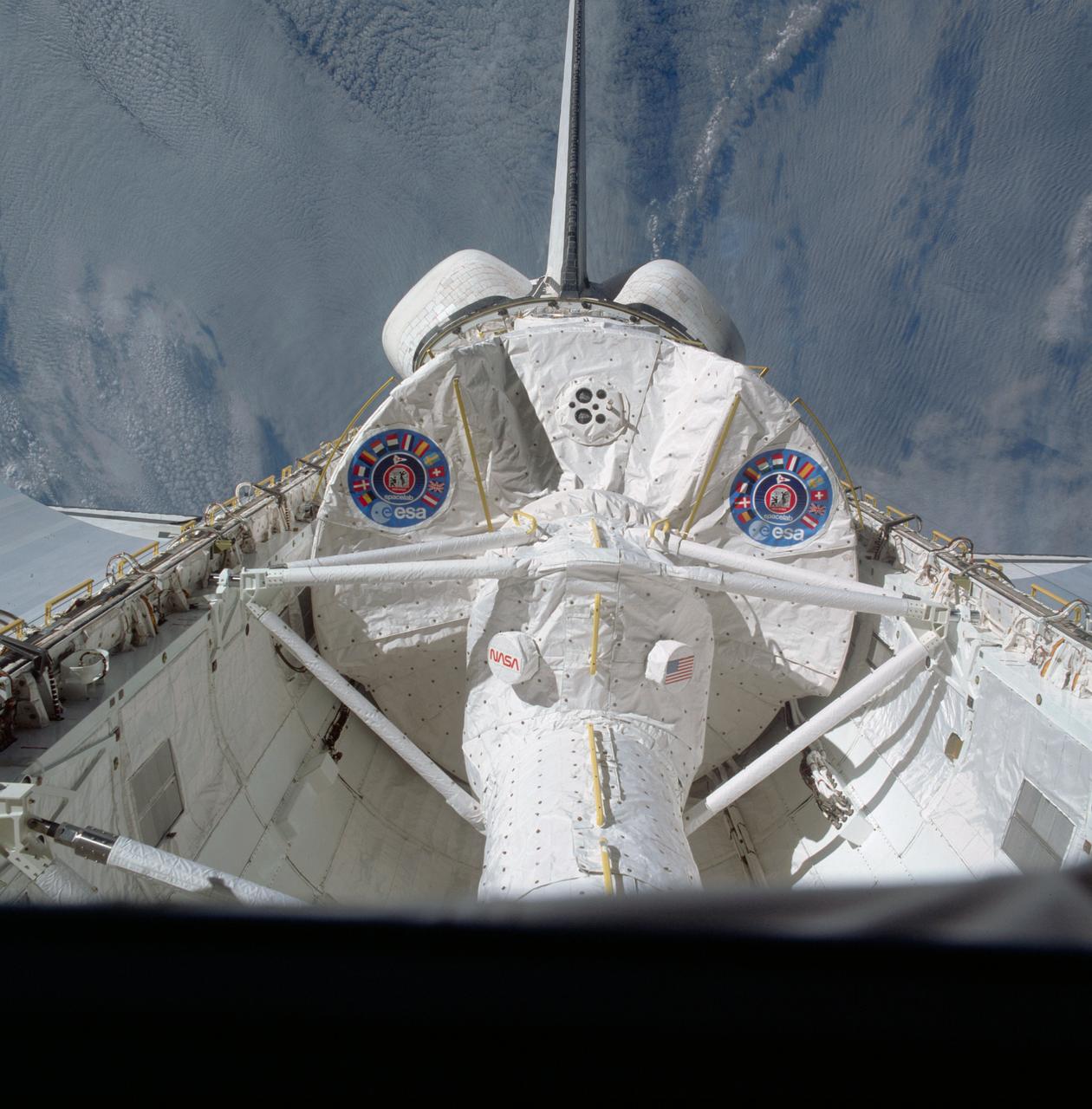
STS009-32-1112 (28 Nov-8 Dec 1983) --- A handheld Hasselblad camera was aimed through the aft windows on the flight deck of Columbia for this initially released scene of the active Spacelab module in the cargo bay.  The docking tunnel, leading from the shirt-sleeve environment of the orbiter to the equally comfortable environment of Spacelab, is in the foreground.
View of the Spacelab module in the payload bay of the Columbia during STS-9
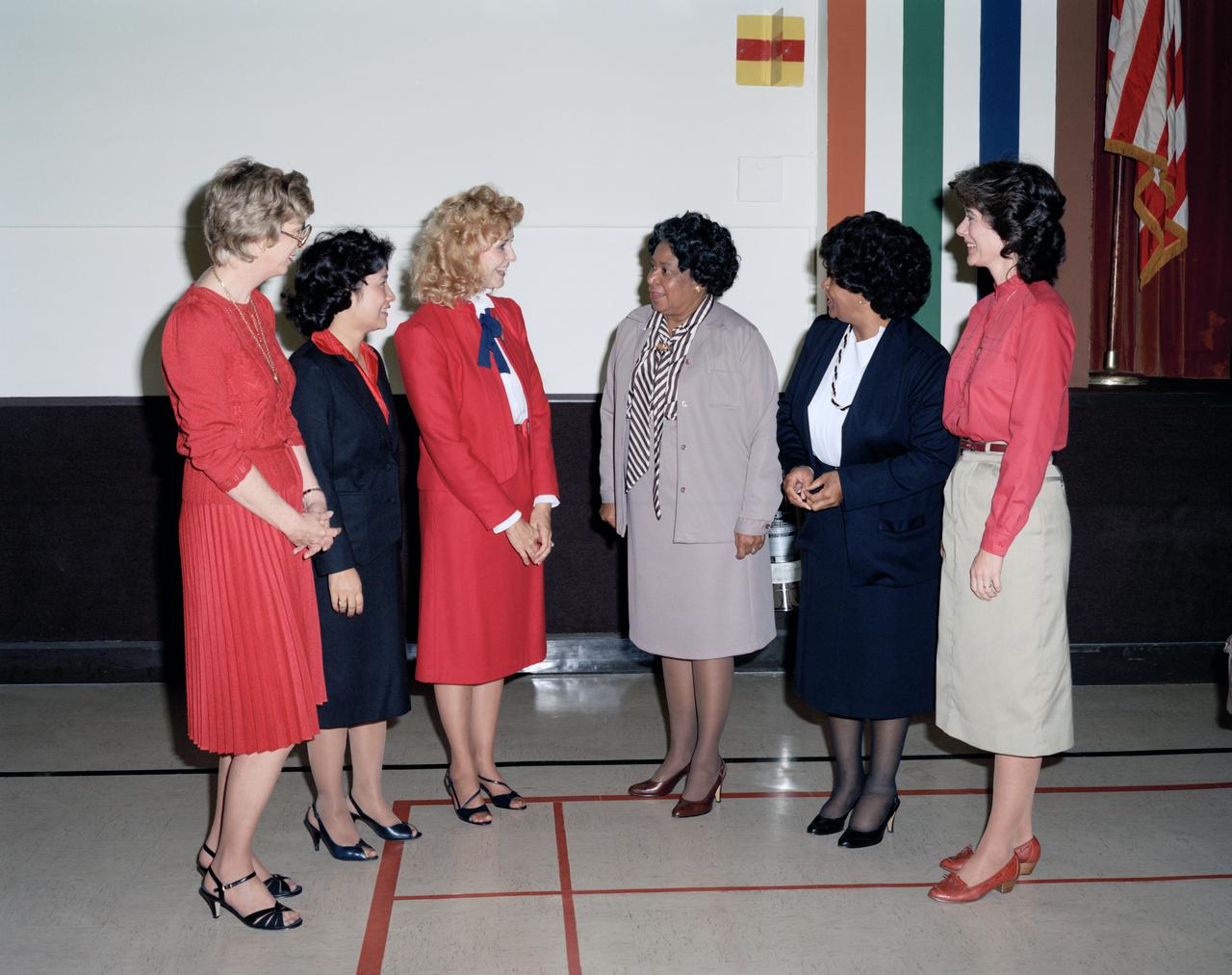
Members of the Langley Federal Women's Program surround  Mary Jackson in the brown suit, of the Office of Equal Opportunity Programs. Mary Jackson NASA's first African-American female engineer, and subsequent career supporting the hiring and promotion of other deserving female and minority employees.
Federal Women's Program
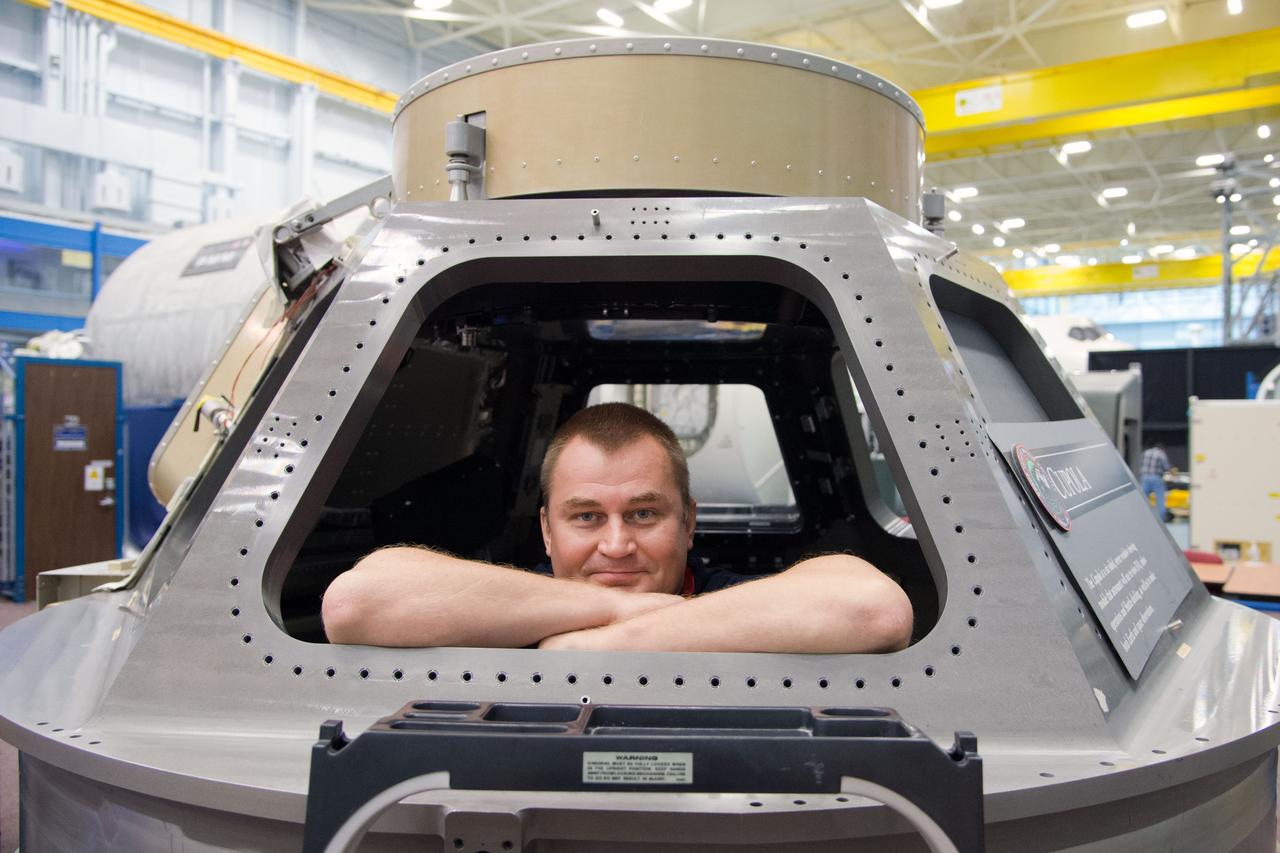
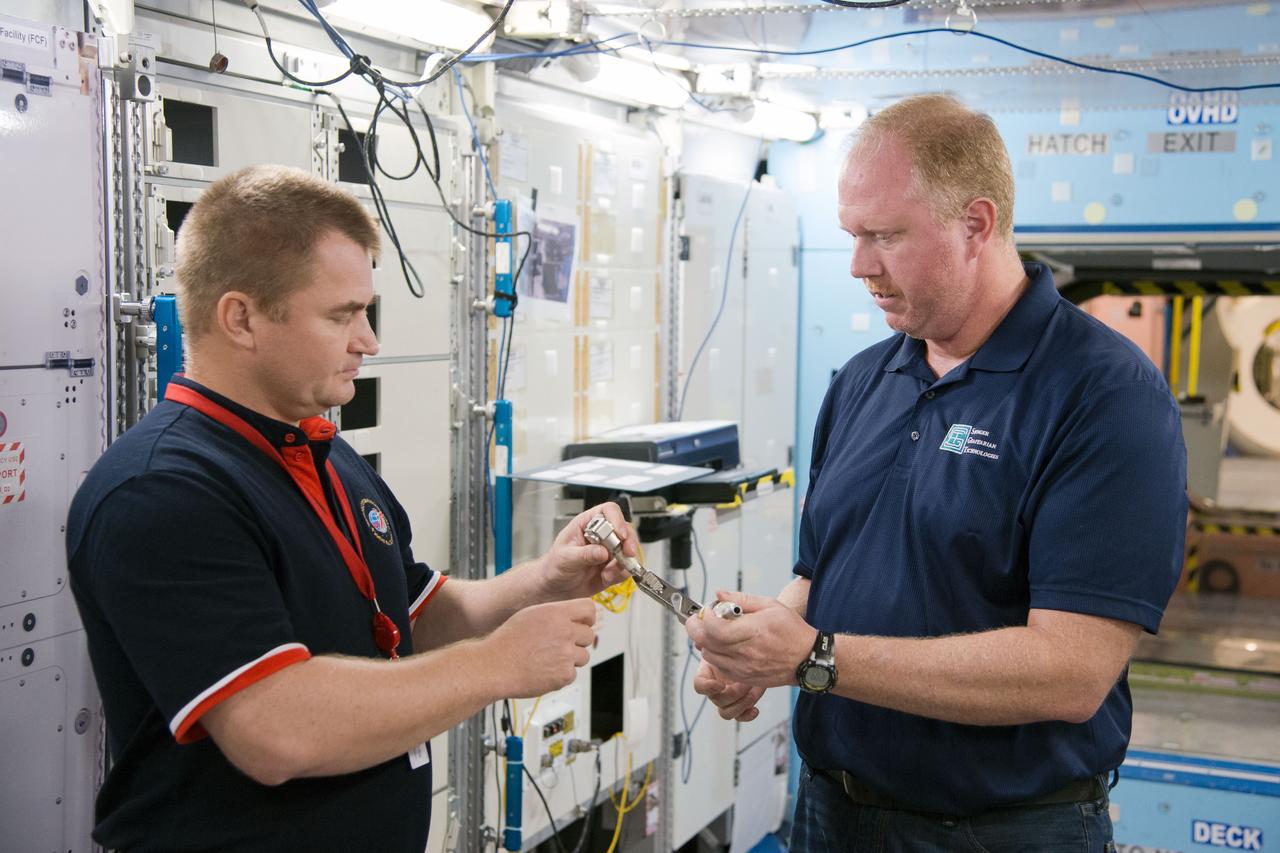
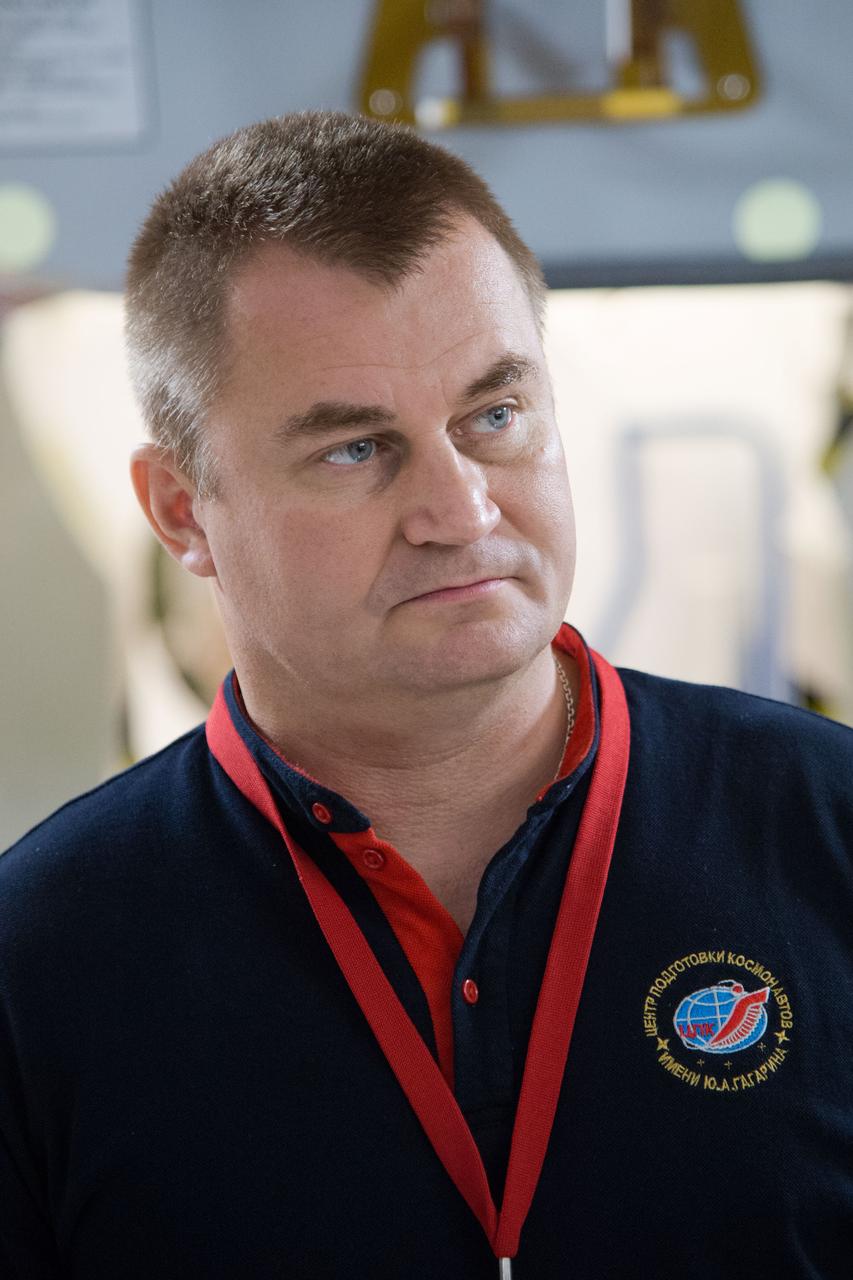
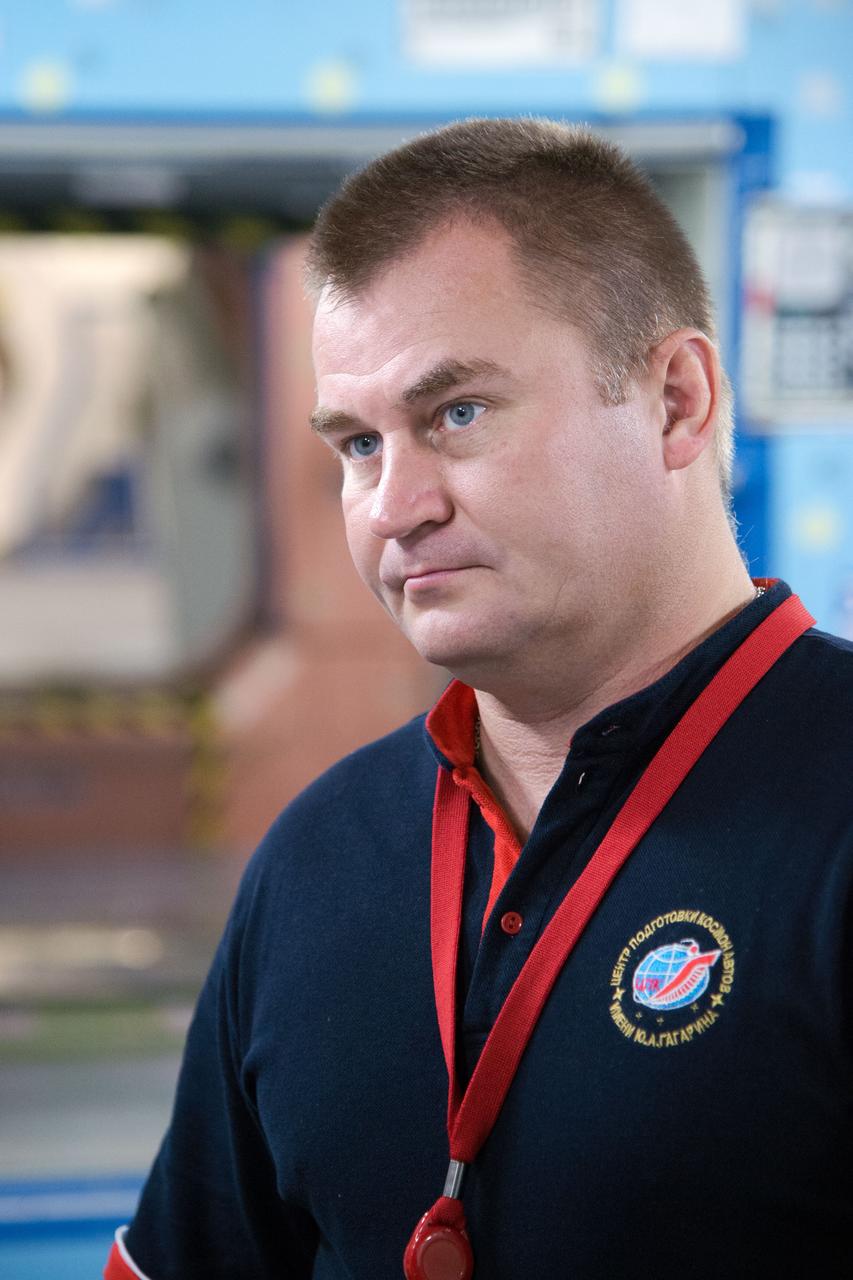
Date: 09-25-14 Location: Bldg 4NW, ISS Mockup Subject: Expedition 48 crew member and cosmonaut (Soyuz 46) Aleksey Ovchinin during ISS Habitat Equalization & Process 22105 training with instructor Scott Weinstein Photographer: James Blair
jsc2014e084155
Date: 09-25-14 Location: Bldg 4NW, ISS Mockup Subject: Expedition 48 crew member and cosmonaut (Soyuz 46) Aleksey Ovchinin during ISS Habitat Equalization & Process 22105 training with instructor Scott Weinstein Photographer: James Blair
jsc2014e084151
Date: 09-25-14 Location: Bldg 4NW, ISS Mockup Subject: Expedition 48 crew member and cosmonaut (Soyuz 46) Aleksey Ovchinin during ISS Habitat Equalization & Process 22105 training with instructor Scott Weinstein Photographer: James Blair
jsc2014e084148
Date: 09-25-14 Location: Bldg 4NW, ISS Mockup Subject: Expedition 48 crew member and cosmonaut (Soyuz 46) Aleksey Ovchinin during ISS Habitat Equalization & Process 22105 training with instructor Scott Weinstein Photographer: James Blair
jsc2014e084149
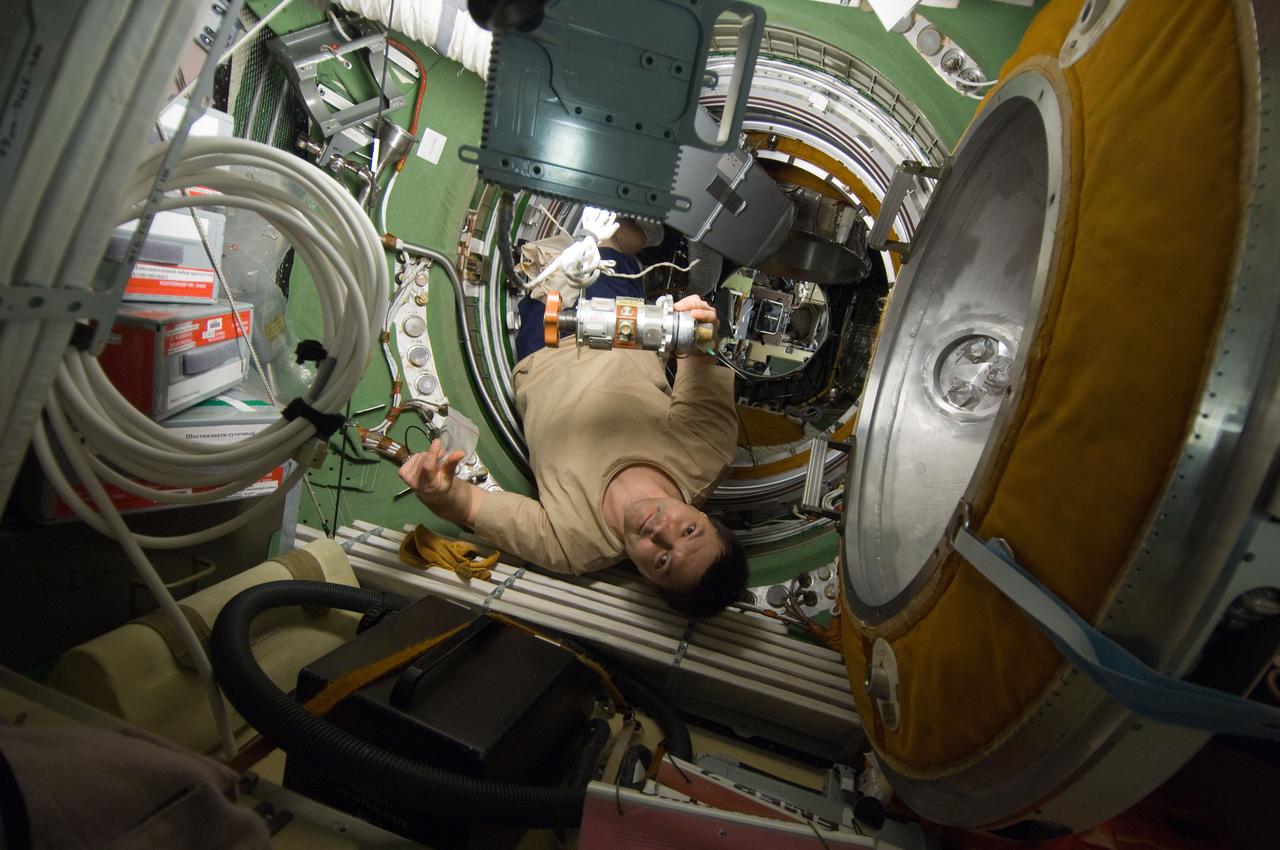
ISS030-E-177117 (12 March 2012) --- Russian cosmonaut Oleg Kononenko, Expedition 30 flight engineer, performs removal and replacement of the KVD Pressure Equalization Valve (PEV) in the transfer compartment between the Zarya Functional Cargo Block (FGB) and the Zvezda Service Module of the International Space Station.
Kononenko removes and replaces the KVD PEV
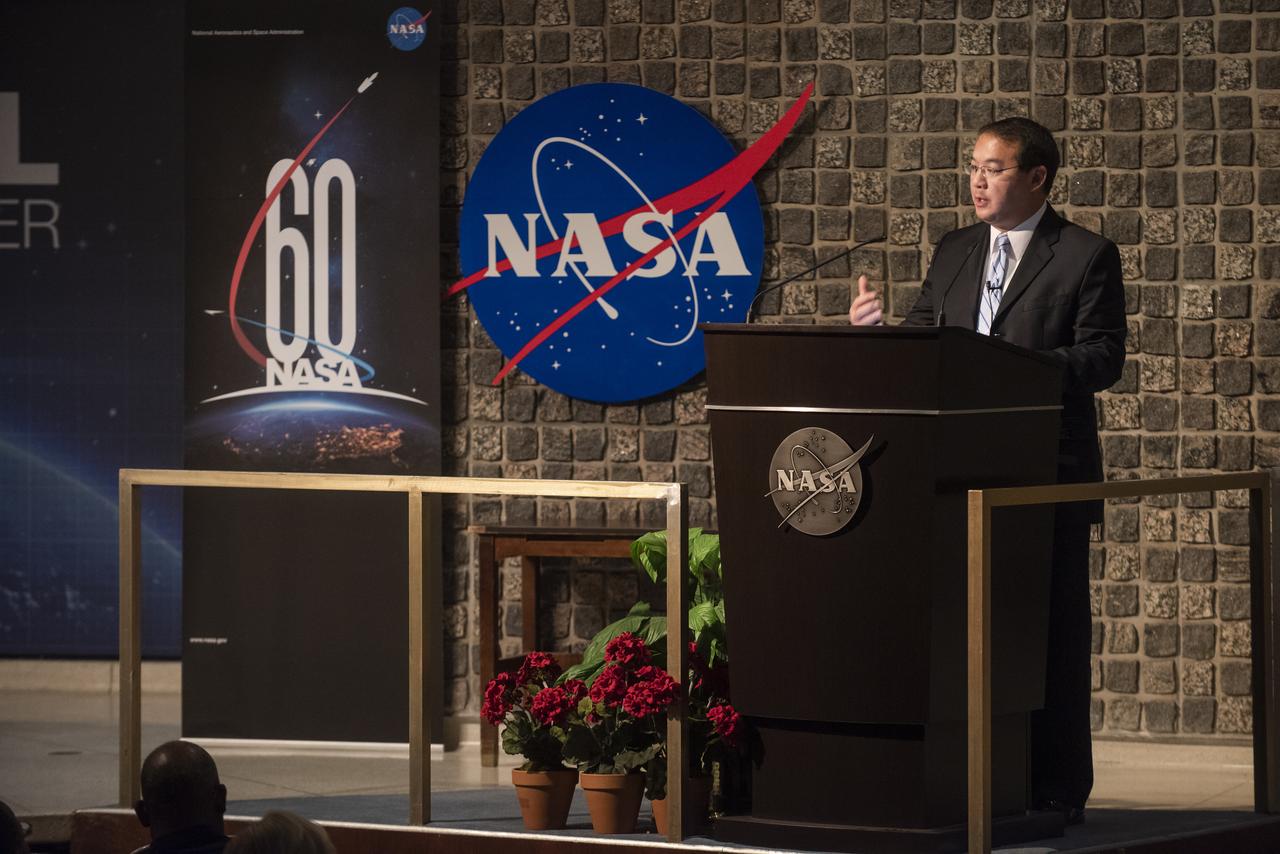
Steve Shih, NASA associate administrator for Diversity & Equal Opportunity, addresses NASA team members during a Nov. 6 mentoring event at the agency's Marshall Space Flight Center. Shih discussed ways for team members on both sides of the mentoring equation to get the most out of the experience.
Steve Shih, NASA Associate Administrator Addresses MSFC Team Mem
Samuel J. Scott, Administrative Operations Specialist, Acquisition Division; Mary W. Jackson, Federal Women's Program Manager, Office of Equal Opportunity Programs; Fabiola C. Martin, Contract Specialist, Acquisition Division; and Gilbert A. Haynes, Head of the Experimental Avionics Section, Flight Electronics Division, represented Langley recently at the annual National Football League Players' Association Youth Camp in Culpepper, Va. The camp offered four two-week sessions with approximately 60 youngsters attending each session. Serving as role models to minority youth from the Washington, D.C. area, the Langley employees each attended a session for one day discussing their careers and providing information on opportunities at Langley, as part of the community outreach effort of the Office of Equal Opportunity Programs. This was the first year that Langley participated in the camp's activities. Published in the Langley Researcher, August, 28, 1981 page 2.
Volunteers for the National Football Leagues Player's Association
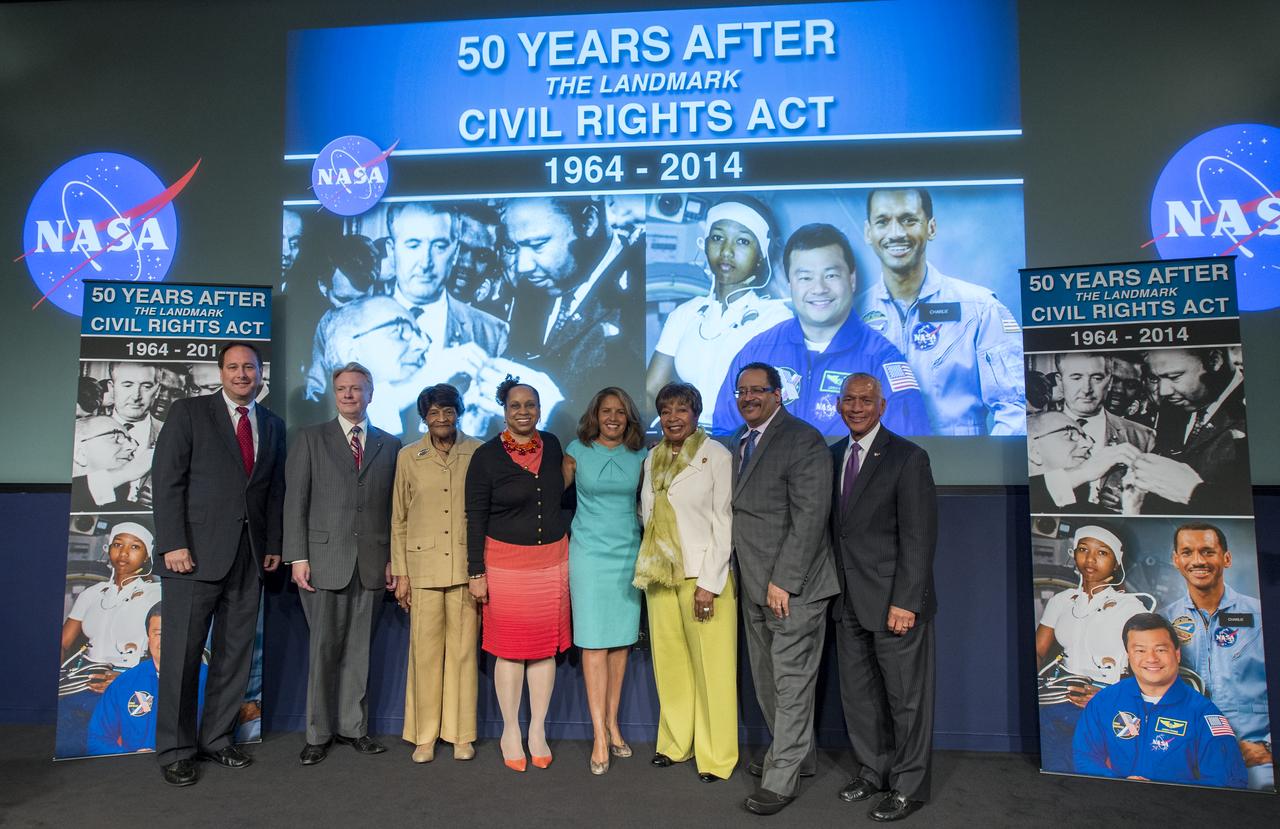
From left: Robert Lightroot. NASA Associate Administrator; Dr. Roger Launius, Associate Director of Collections and Curatorial Affairs at the Smithsonian National Air and Space Museum; Dr. Harriett Jenkins, Former Assistant Administrator for Equal Opportunity Programs at NASA; Brenda Manuel, Associate Administrator for Diversity and Equal Opportunity at NASA; Suzanne Malveaux, CNN Correspondent and panel moderator; U.S. Representative Eddie Bernice Johnson, of Texas; Dr. Michael Eric Dyson, professor of sociology at Georgetown University; and Charles Bolden, NASA Administrator; pose for a picture following an event celebrating the 50th Anniversary of the Civil Rights Act of 1964 on Monday, June 23, 2014 in the James E. Webb Auditorium at NASA Headquarters in Washington, DC.  The event highlighted the influence of the Civil Rights Act on NASA. Photo Credit: (NASA/Joel Kowsky)
50th Anniversary of the Civil Rights Act of 1964
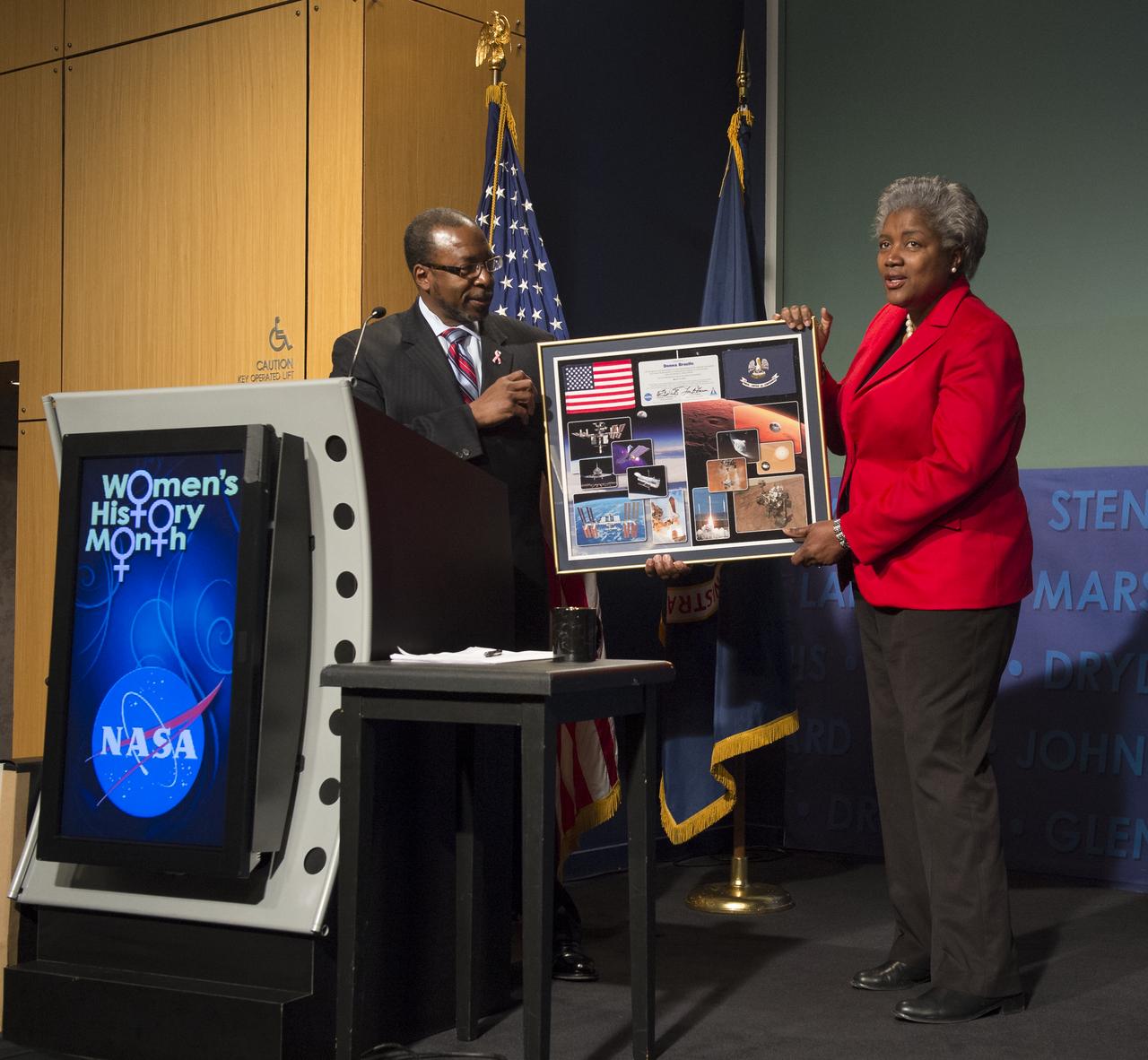
Dr. Woodrow Whitlow, Jr. (left), Associate Administrator for Mission Support Directorate at NASA Headquarters presents Donna Brazile, keynote speaker at a program celebrating National Women's History Month, with a framed NASA montage, Thursday, March 14, 2013 in Washington.  The theme of theprogram was "Women Inspiring Innovation Through Imagination," and was sponsored by the HQ Equal Opportunity and Diversity Management Division at NASA Headquarters.  The event also commemorates the 100th Anniversary of the Women's Suffrage March on Washington.  Photo Credit:  (NASA/Carla Cioffi)
Celebrating National Women's History Month
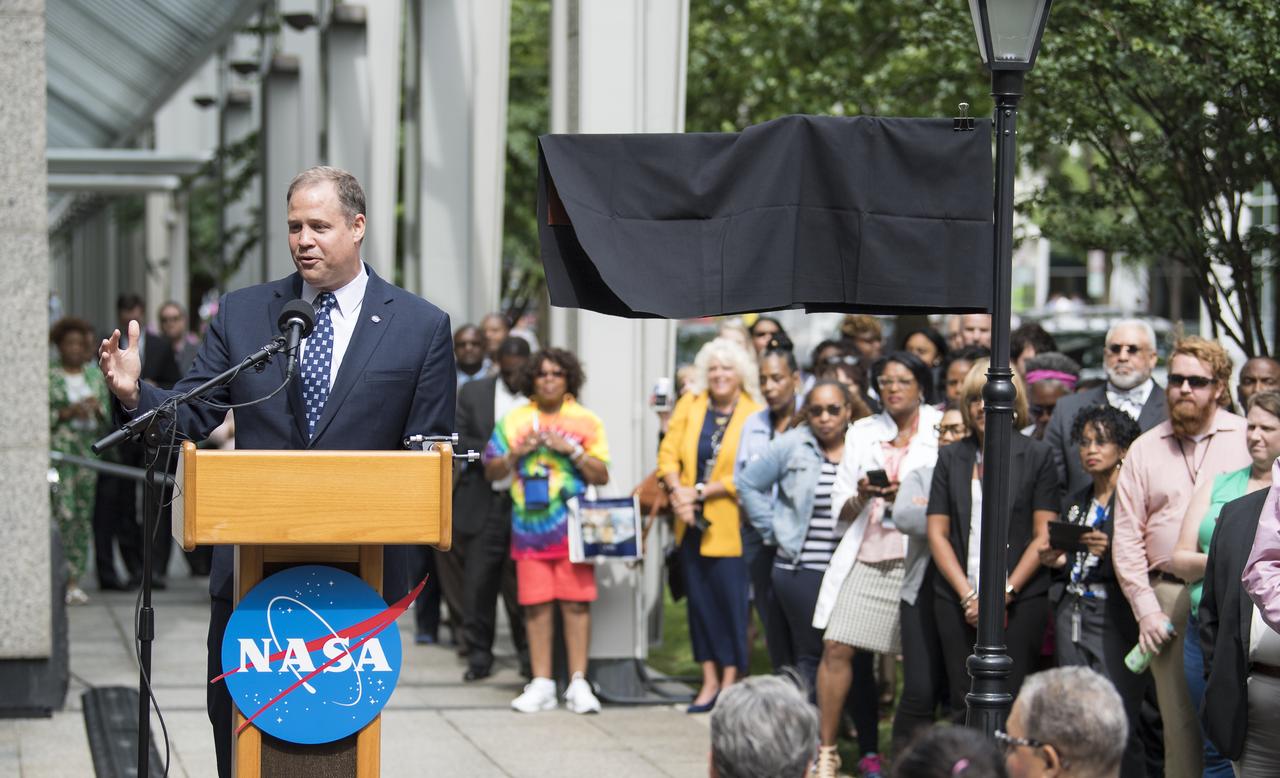
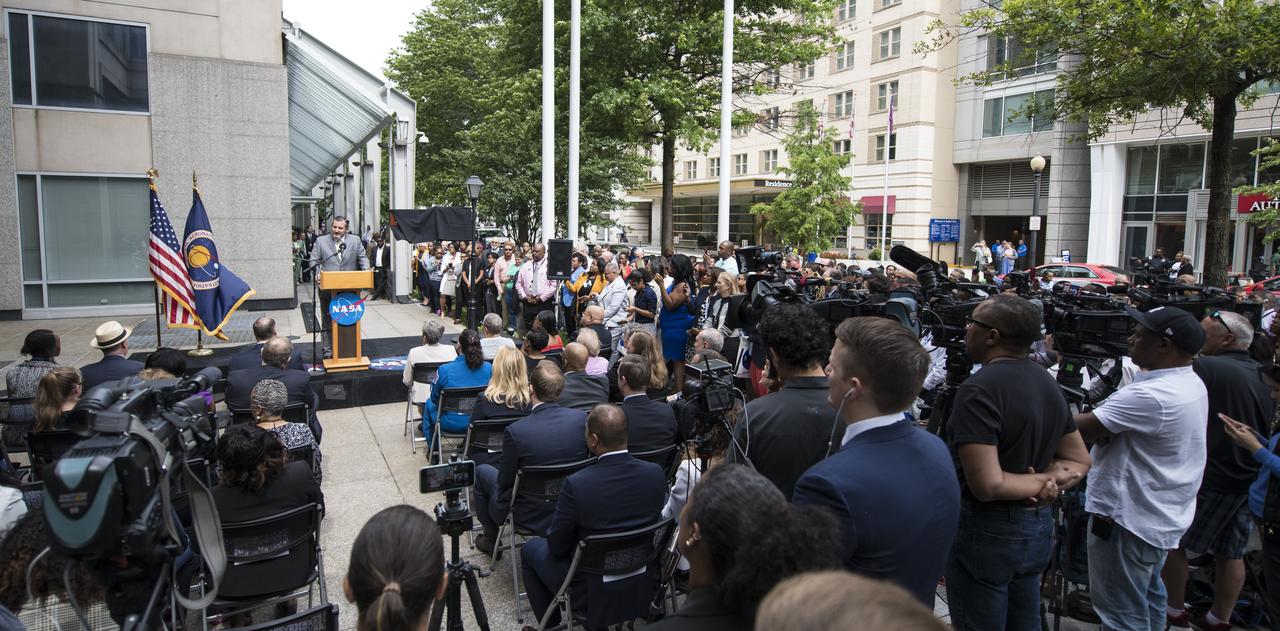
NASA Administrator Jim Bridenstine delivers remarks during the dedication ceremony for "Hidden Figures Way," Wednesday, June 12, 2019 at NASA Headquarters in Washington, DC. The 300 block of E Street SW in front of the NASA Headquarters building was designated as "Hidden Figures Way" to honor Katherine Johnson, Dorthy Vaughan, Mary Jackson and all women who have dedicated their lives to honorably serving their country, advancing equality, and contributing to the space program of the United States. Photo Credit: (NASA/Joel Kowsky)4
"Hidden Figures Way" Dedication
Dr. Harriet Jenkins, Former Assistant Administrator for Equal Opportunity Programs at NASA, center; speaks as part of a panel discussion at an event celebrating the 50th Anniversary of the Civil Rights Act of 1964 on Monday, June 23, 2014 in the James E. Webb Auditorium at NASA Headquarters in Washington, DC.  The event highlighted the influence of the Civil Rights Act on NASA. Photo Credit: (NASA/Joel Kowsky)
50th Anniversary of the Civil Rights Act of 1964
S72-01713 (July 1972) --- A vertical view of the Apollo 17 landing site in the Taurus-Littrow area of the lunar nearside, with an overlay showing the Lunar Roving Vehicle traverse proposed for the second extravehicular activity. The scale at the bottom is measured in kilometers. One kilometer equals 0.6214 statute miles. The coordinates of the Apollo 17 touchdown point are 30 degrees 44 minutes 58 seconds east longitude and 20 degrees 9 minutes 50 seconds north latitude. This photograph was taken from lunar orbit on an earlier Apollo mission.
S72-01713
NASA Administrator Jim Bridenstine delivers remarks during the dedication ceremony for "Hidden Figures Way," Wednesday, June 12, 2019 at NASA Headquarters in Washington, DC. The 300 block of E Street SW in front of the NASA Headquarters building was designated as "Hidden Figures Way" to honor Katherine Johnson, Dorothy Vaughan, Mary Jackson and all women who have dedicated their lives to honorably serving their country, advancing equality, and contributing to the space program of the United States. Photo Credit: (NASA/Joel Kowsky)
"Hidden Figures Way" Dedication
Donna Brazile, adjunct professor at Georgetown University, syndicated newspaper columnist and vice chair of voter registration and participation at the Democratic National Committee (DNC), gives the keynote speech at a program celebrating National Women's History Month at NASA Headquarters, Thursday, March 14, 2013 in Washington.  The theme of this year's program was "Women Inspiring Innovation Through Imagination."   The program was sponsored by the HQ Equal Opportunity and Diversity Management Division at NASA Headquarters and commemorates the 100th Anniversary of the Women's Suffrage March on Washington.  Photo Credit:  (NASA/Carla Cioffi)
Celebrating National Women's History Month
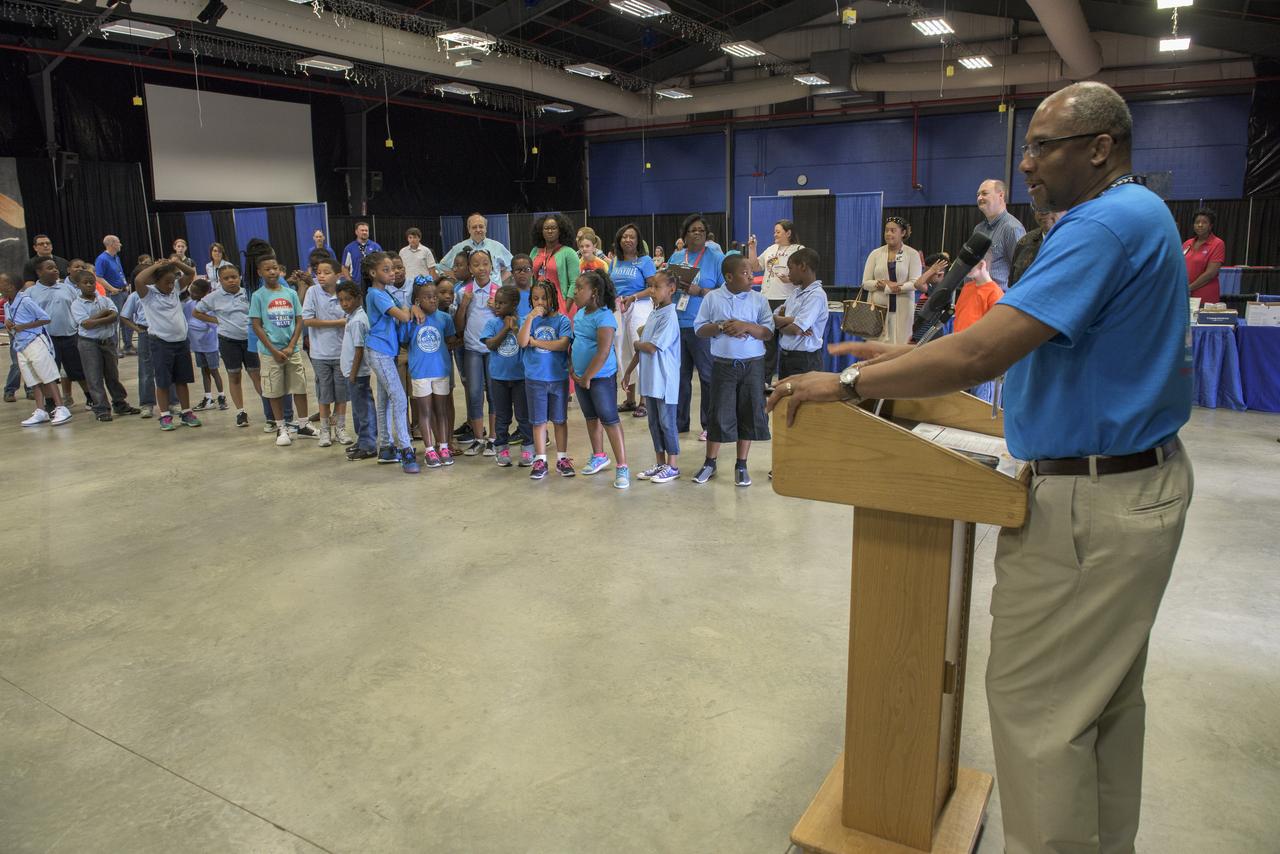
NASA Stennis Director John Bailey hosts a Java with John session on Dec. 10 with employees representing the Office of the Chief Financial Officer, Office of STEM Engagement, Office of Diversity and Equal Opportunity, Office of the Chief Human Capital Officer, and the center’s Autonomous Systems Laboratory team. Java with John is an employee-led discussion in a casual environment aimed at fostering a culture in which employees are welcome to share what matters most to them at work.
NASA Stennis Director Hosts Java with John
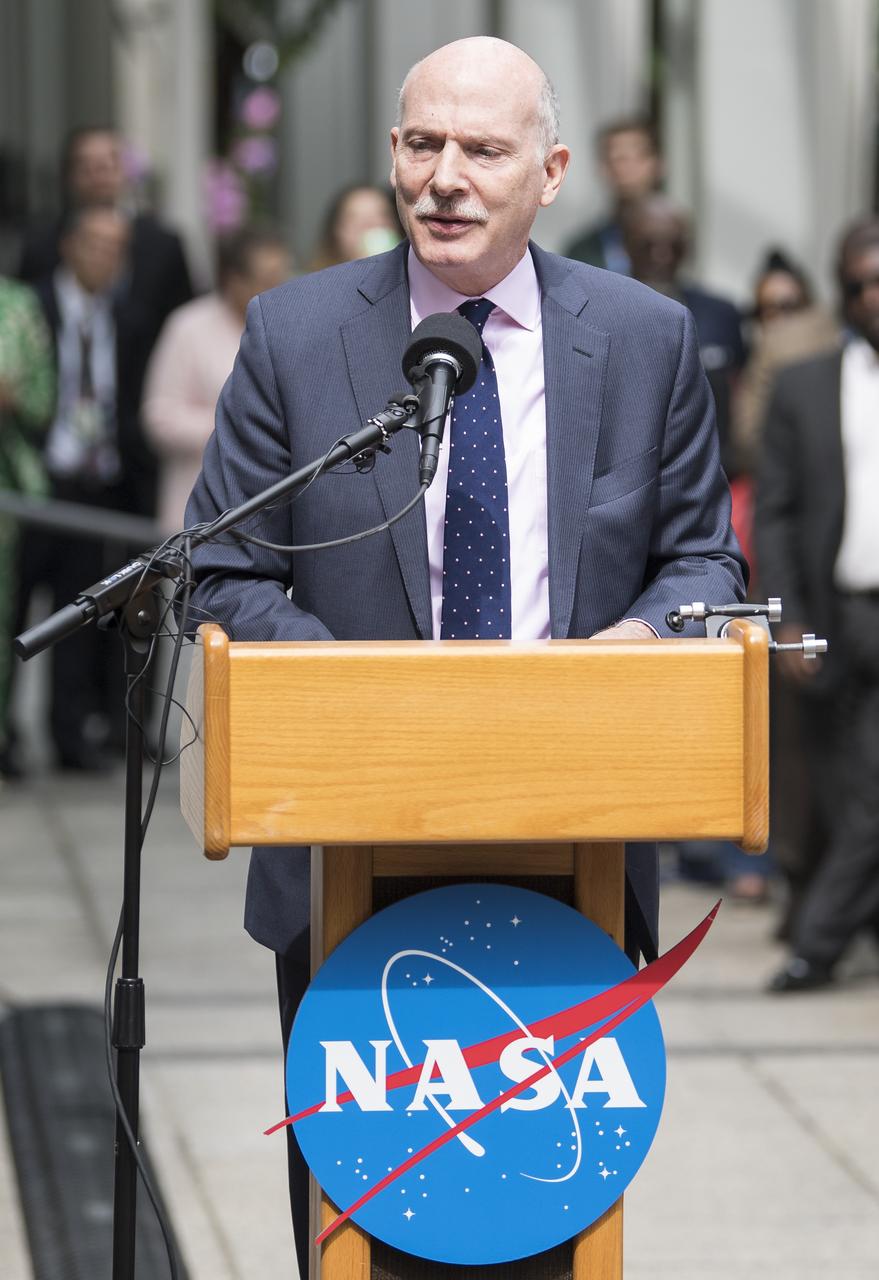
D.C. Council Chairman Phil Mendelson delivers remarks during the dedication ceremony for "Hidden Figures Way," Wednesday, June 12, 2019 at NASA Headquarters in Washington, DC. The 300 block of E Street SW in front of the NASA Headquarters building was designated as "Hidden Figures Way" to honor Katherine Johnson, Dorothy Vaughan, Mary Jackson and all women who have dedicated their lives to honorably serving their country, advancing equality, and contributing to the space program of the United States. Photo Credit: (NASA/Joel Kowsky)
"Hidden Figures Way" Dedication
Donna Brazile, adjunct professor at Georgetown University, syndicated newspaper columnist and vice chair of voter registration and participation at the Democratic National Committee (DNC), gives the keynote speech at a program celebrating National Women's History Month at NASA Headquarters, Thursday, March 14, 2013 in Washington.  The theme of this year's program was "Women Inspiring Innovation Through Imagination."   The program was sponsored by the HQ Equal Opportunity and Diversity Management Division at NASA Headquarters and commemorates the 100th Anniversary of the Women's Suffrage March on Washington.  Photo Credit:  (NASA/Carla Cioffi)
Celebrating National Women's History Month
STS080-312-004 (19 Nov.-7 Dec. 1996) --- Astronaut Kenneth D. Cockrell, STS-80 mission commander, washes his hair on the middeck of the Earth-orbiting space shuttle Columbia. Displaying a sense of humor, the commander asked astronaut Story Musgrave, who is bald, to address this visual during a briefing with Johnson Space Center (JSC) employees on Jan. 14, 1997. Equal to the task, Musgrave cracked a number of bald jokes and remarked that it was much easier to polish a head in zero gravity than to wash one.
Cockrell washs hair and face
Donna Brazile, adjunct professor at Georgetown University, syndicated newspaper columnist and vice chair of voter registration and participation at the Democratic National Committee (DNC), gives the keynote speech at a program celebrating National Women's History Month at NASA Headquarters, Thursday, March 14, 2013 in Washington.  The theme of this year's program was "Women Inspiring Innovation Through Imagination."   The program was sponsored by the HQ Equal Opportunity and Diversity Management Division at NASA Headquarters and commemorates the 100th Anniversary of the Women's Suffrage March on Washington.  Photo Credit:  (NASA/Carla Cioffi)
Celebrating National Women's History Month
KENNEDY SPACE CENTER, FLA. - In the Columbia Debris Hangar, Scott Thurston, NASA vehicle flow manager, addresses the media about efforts to pack the debris stored in the Columbia Debris Hangar.  More than 83,000  pieces of debris were shipped to KSC during search and recovery efforts in East Texas. That represents about 38 percent of the dry weight of Columbia, equaling almost 85,000 pounds. An area of the Vehicle Assembly Building is being prepared to store the debris permanently.
KSC-03pd2571