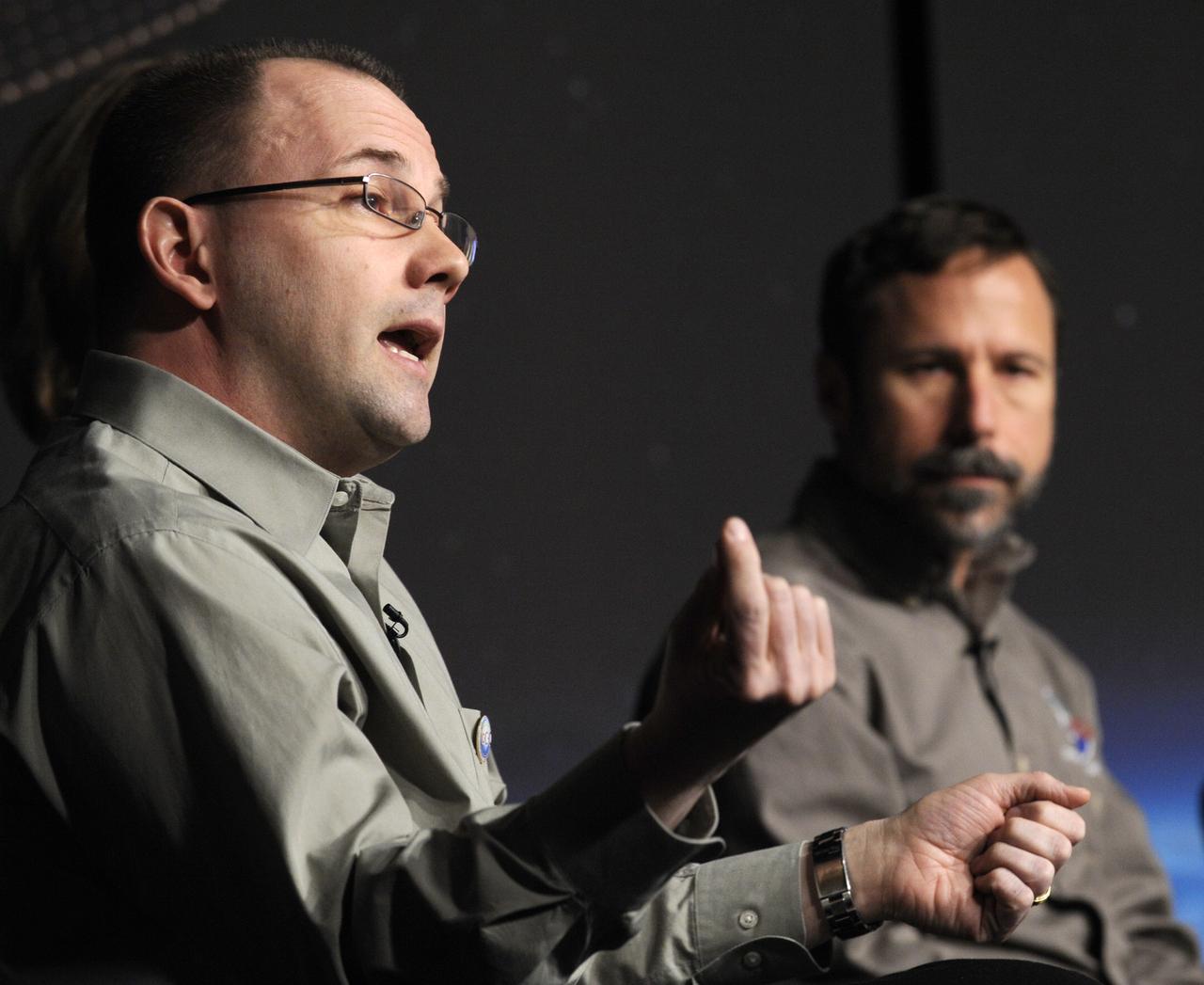
Eric Ianson speaks during a media briefing to discuss the upcoming Orbiting Carbon Observatory mission, the first NASA spacecraft dedicated to studying carbon dioxide, Thursday, Jan. 29, 2009, at NASA Headquarters in Washington. Photo Credit: (NASA/Paul E. Alers)
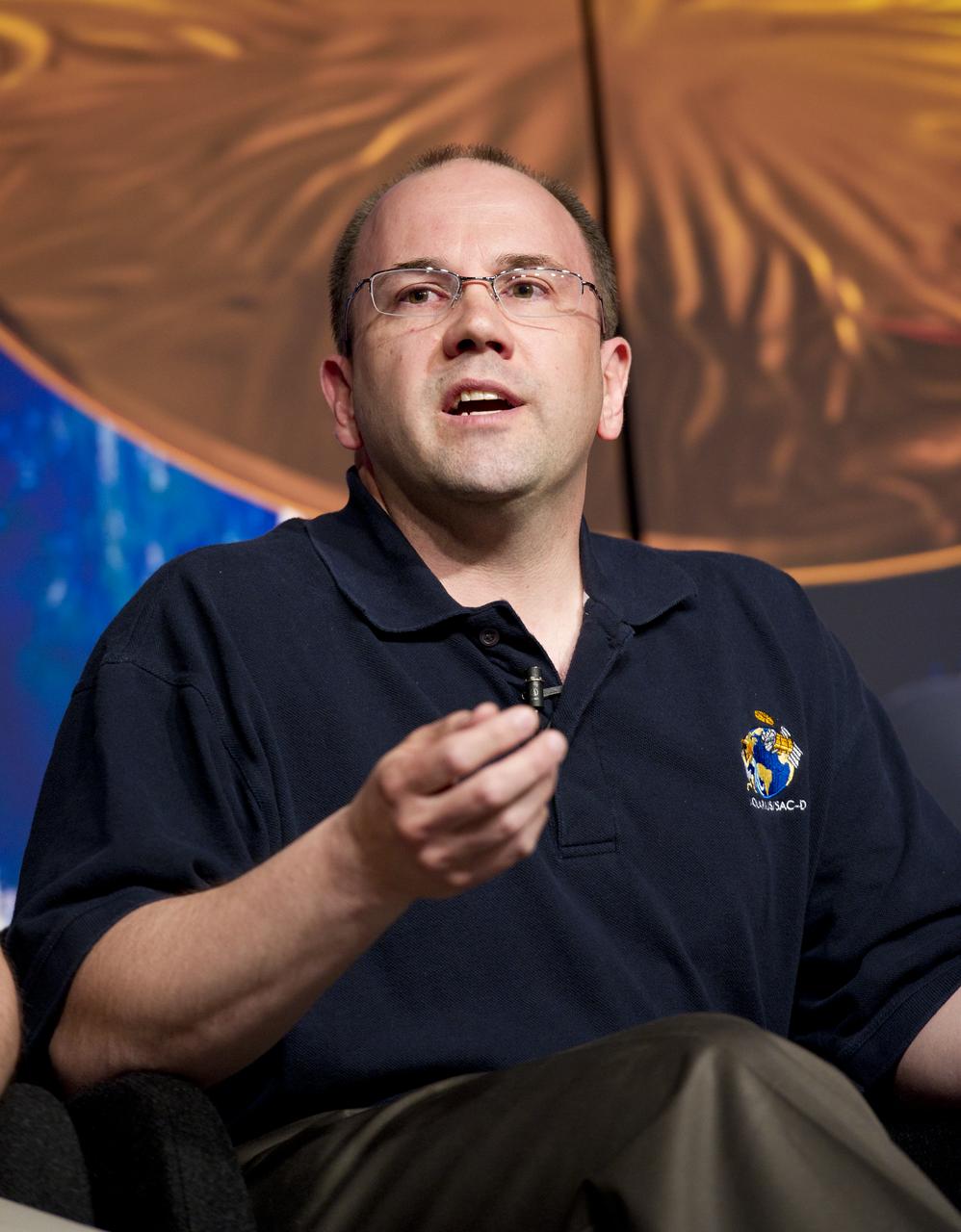
Eric Ianson, Aquarius Program Executive, NASA Headquarters, talks about NASA's Aquarius/SAC-D mission to study the salinity of Earth's oceans from space on Tuesday, May 17, 2011 at NASA Headquarters in Washington. The mission is a collaboration between NASA and Argentina's space agency Comision Nacional de Actividades Especiales (CONAE), with participation from Brazil, Canada, France and Italy. The Aquarius/SAC-D observatory will launch June 9, 2011 from Vandenberg Air Force Base in California. Photo Credit: (NASA/Carla Cioffi)
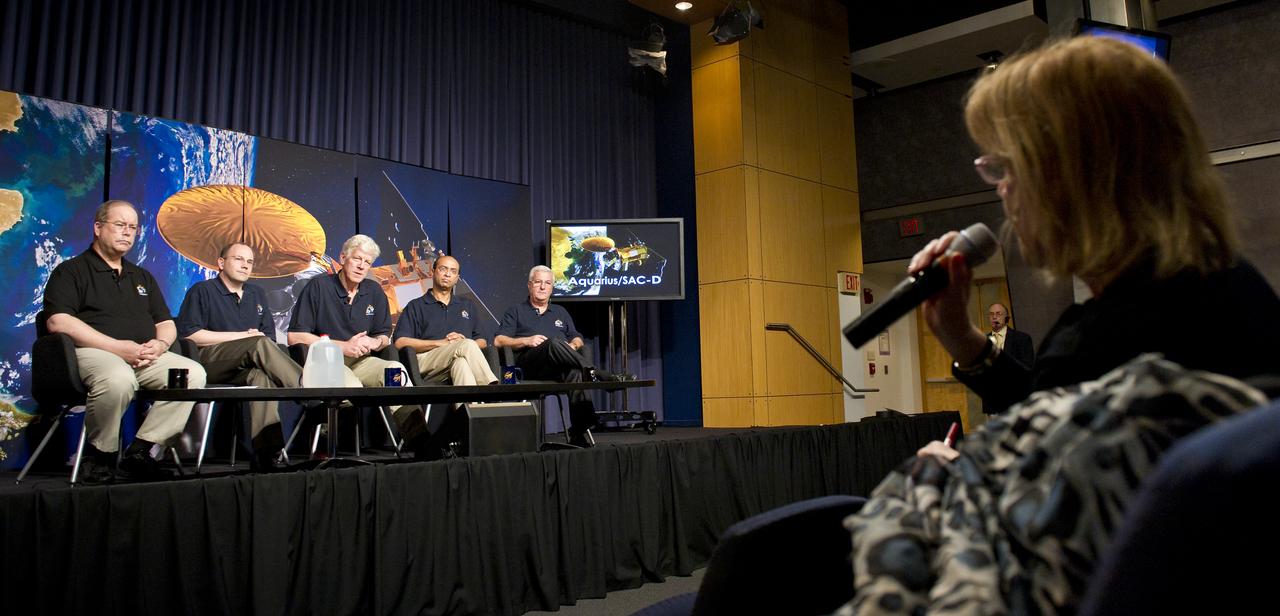
A reporter asks a question to the panel of scientists assembled at the Aquarius/SAC-D press conference on Tuesday, May 17, 2011 at NASA Headquarters in Washington. Seated from left are Eric Lindstrom, Aquarius Program Scientist, NASA Headquarters; Eric Ianson, Aquarius Program Executive, NASA Headquarters; Gary Lagerloef, Aquarius Principal Investigator, Earth & Space Research, Seattle; Amit Sen, Aquarius Project Manager, NASA Jet Propulsion Laboratory and Daniel Caruso, SAC-D Project Manager, CONAE, Argentina. The mission will study the salinity of the Earth's oceans from space. Aquarius/SAC-D is a collaboration between NASA and Argentina's space agency Comision Nacional de Actividades Especiales (CONAE), with participation from Brazil, Canada, France and Italy. The Aquarius/SAC-D observatory will launch June 9, 2011 from Vandenberg Air Force Base in California. Photo Credit: (NASA/Carla Cioffi)
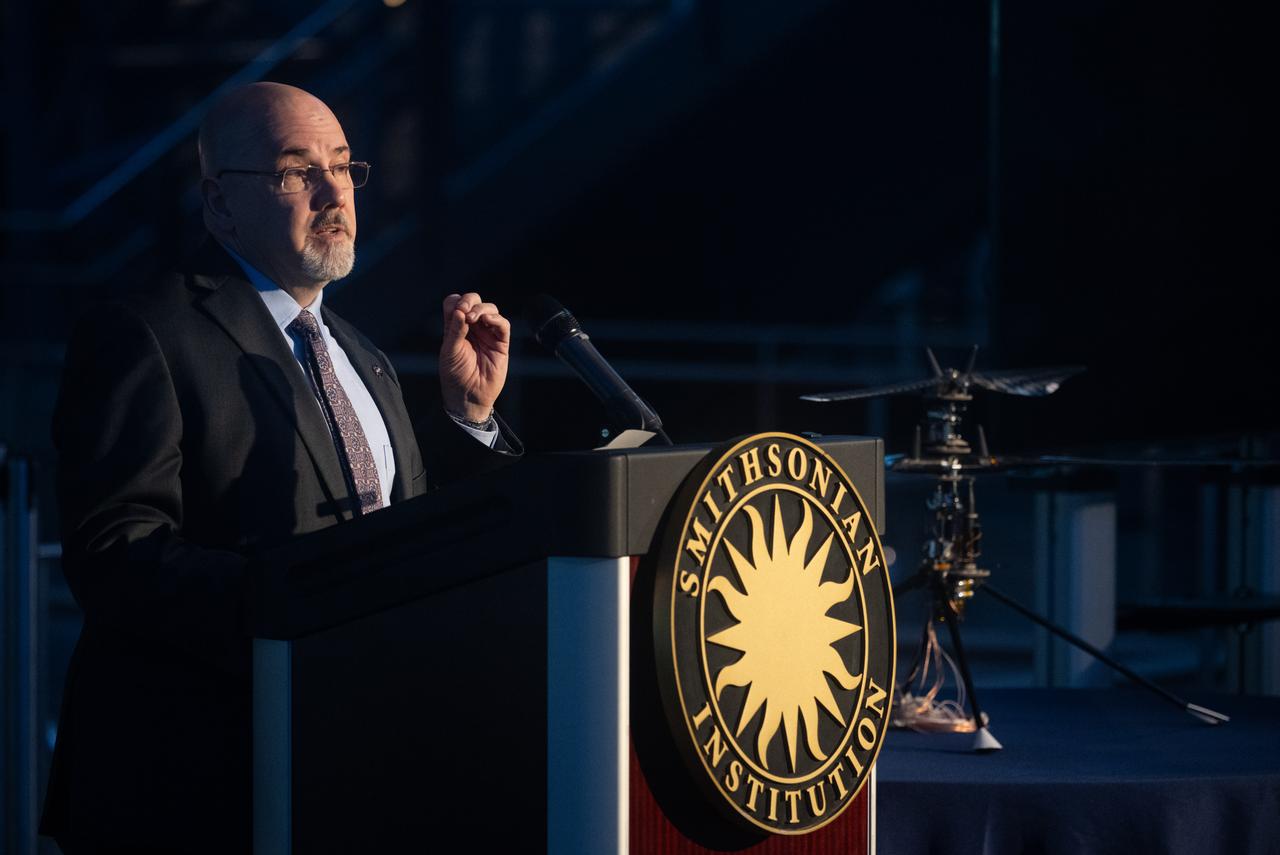
Eric Ianson, deputy director of the Planetary Science Division and director of the Mars Exploration Program and Radioisotope Power Systems Program at NASA speaks at an event marking NASA’s donation of the aerial prototype of the Ingenuity Mars Helicopter, Friday, Dec. 15, 2023, at the Smithsonian National Air and Space Museum’s Steve F. Udvar-Hazy Center in Chantilly, Va. The aerial prototype of the Ingenuity Mars Helicopter, which was the first to demonstrate it was possible to fly in a simulated Mars environment at NASA’s Jet Propulsion Laboratory (JPL), was donated to the museum on Friday. Photo Credit: (NASA/Joel Kowsky)
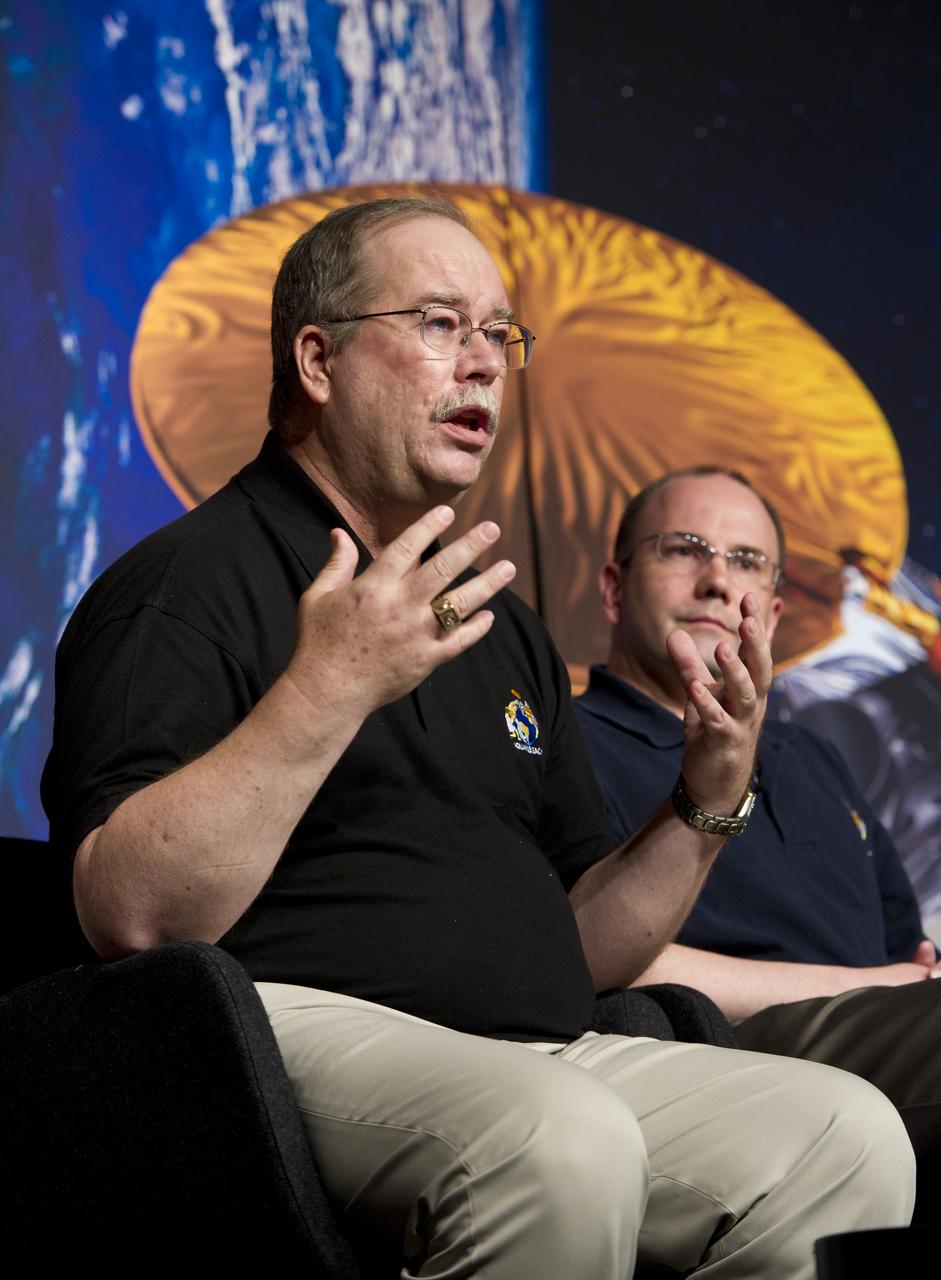
Eric Lindstrom, left, Aquarius Program Scientist, NASA Headquarters, talks about NASA's Aquarius/SAC-D mission to study the salinity of Earth's oceans from space on Tuesday, May 17, 2011 at NASA Headquarters in Washington. The mission is a collaboration between NASA and Argentina's space agency Comision Nacional de Actividades Especiales (CONAE), with participation from Brazil, Canada, France and Italy. The Aquarius/SAC-D observatory will launch June 9, 2011 from Vandenberg Air Force Base in California. Photo Credit: (NASA/Carla Cioffi)
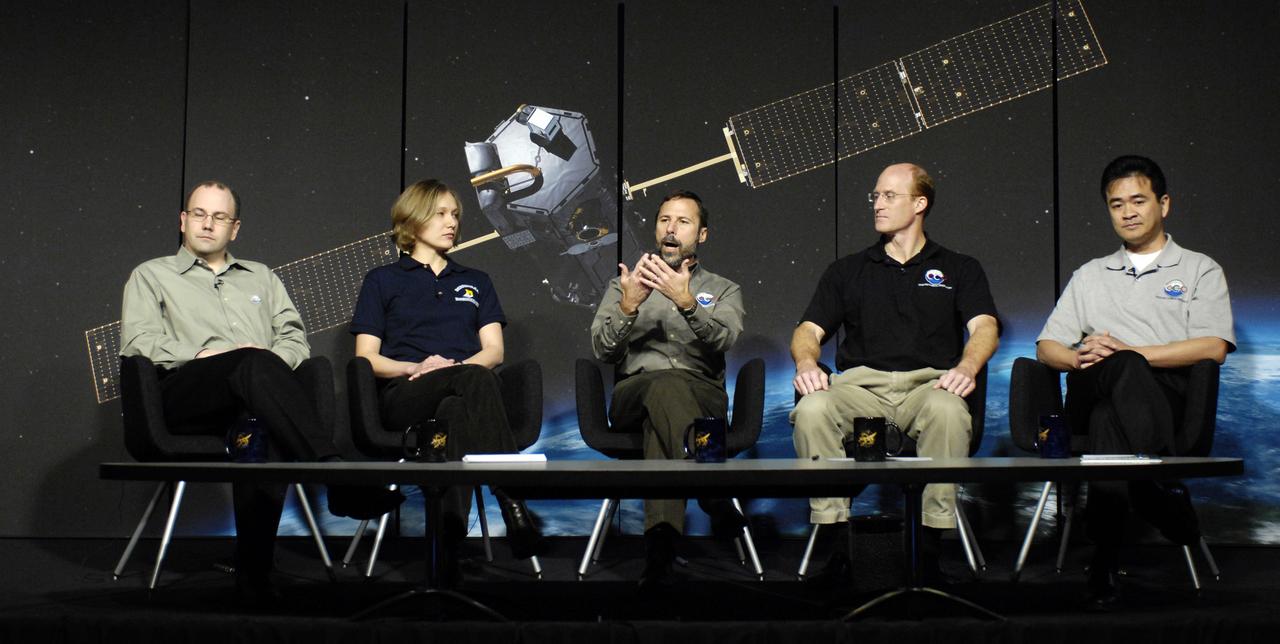
Panelists are seen during a media briefing to discuss the upcoming Orbiting Carbon Observatory mission, the first NASA spacecraft dedicated to studying carbon dioxide, Thursday, Jan. 29, 2009, at NASA Headquarters in Washington. Photo Credit: (NASA/Paul E. Alers)
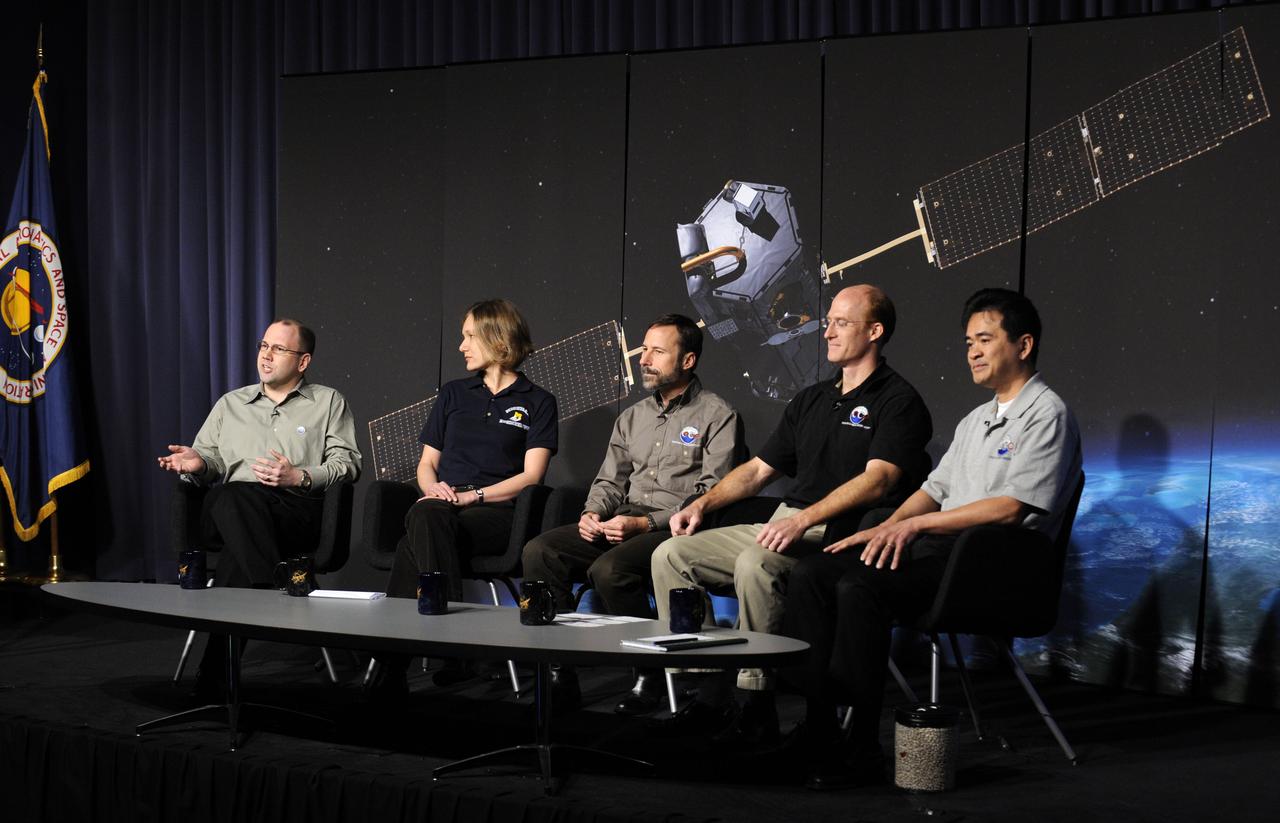
Panelists are seen during a media briefing to discuss the upcoming Orbiting Carbon Observatory mission, the first NASA spacecraft dedicated to studying carbon dioxide, Thursday, Jan. 29, 2009, at NASA Headquarters in Washington. Photo Credit: (NASA/Paul E. Alers)
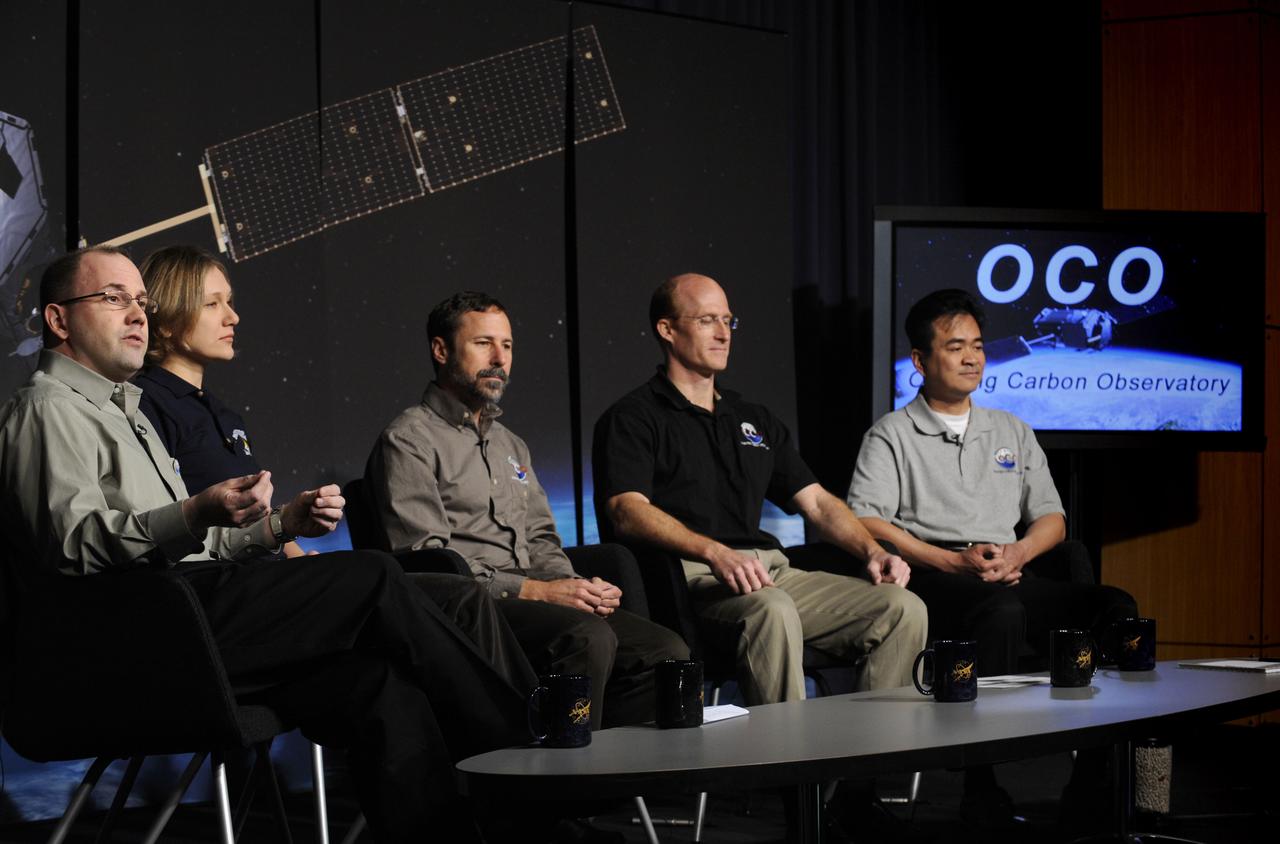
Panelists are seen during a media briefing to discuss the upcoming Orbiting Carbon Observatory mission, the first NASA spacecraft dedicated to studying carbon dioxide, Thursday, Jan. 29, 2009, at NASA Headquarters in Washington. Photo Credit: (NASA/Paul E. Alers)
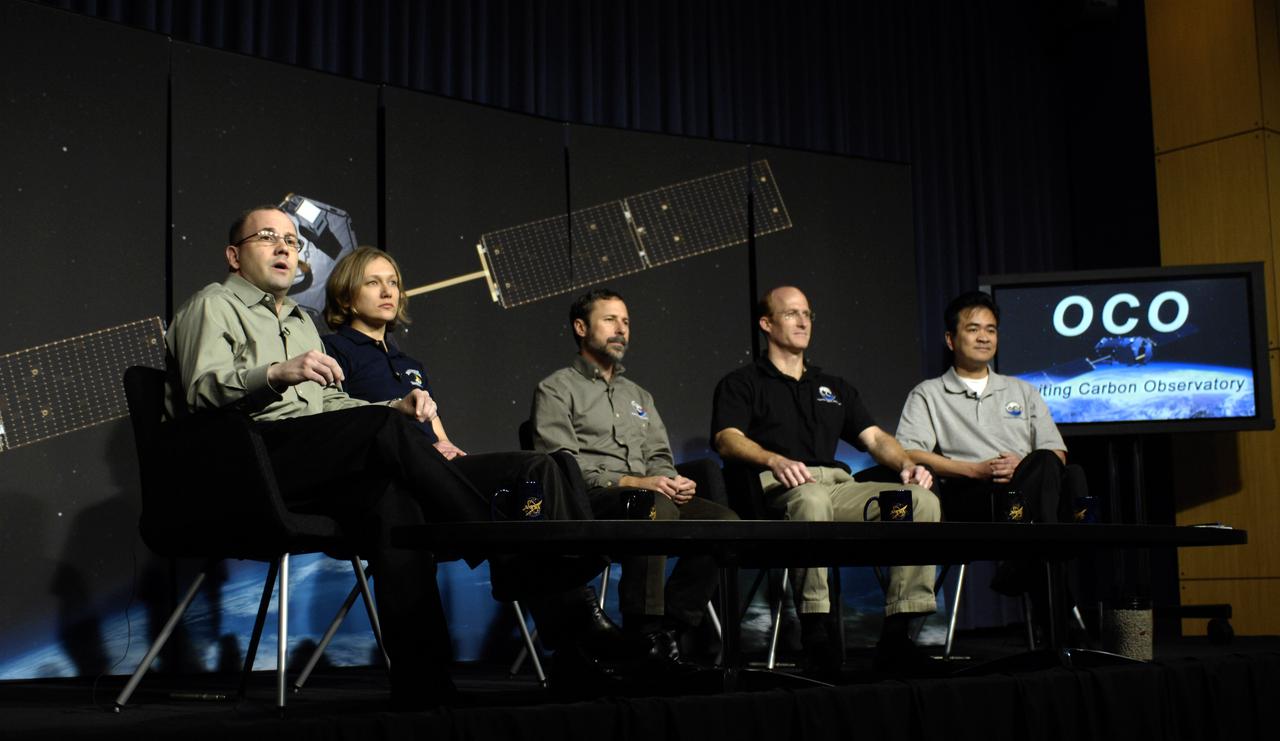
Panelists are seen during a media briefing to discuss the upcoming Orbiting Carbon Observatory mission, the first NASA spacecraft dedicated to studying carbon dioxide, Thursday, Jan. 29, 2009, at NASA Headquarters in Washington. Photo Credit: (NASA/Paul E. Alers)
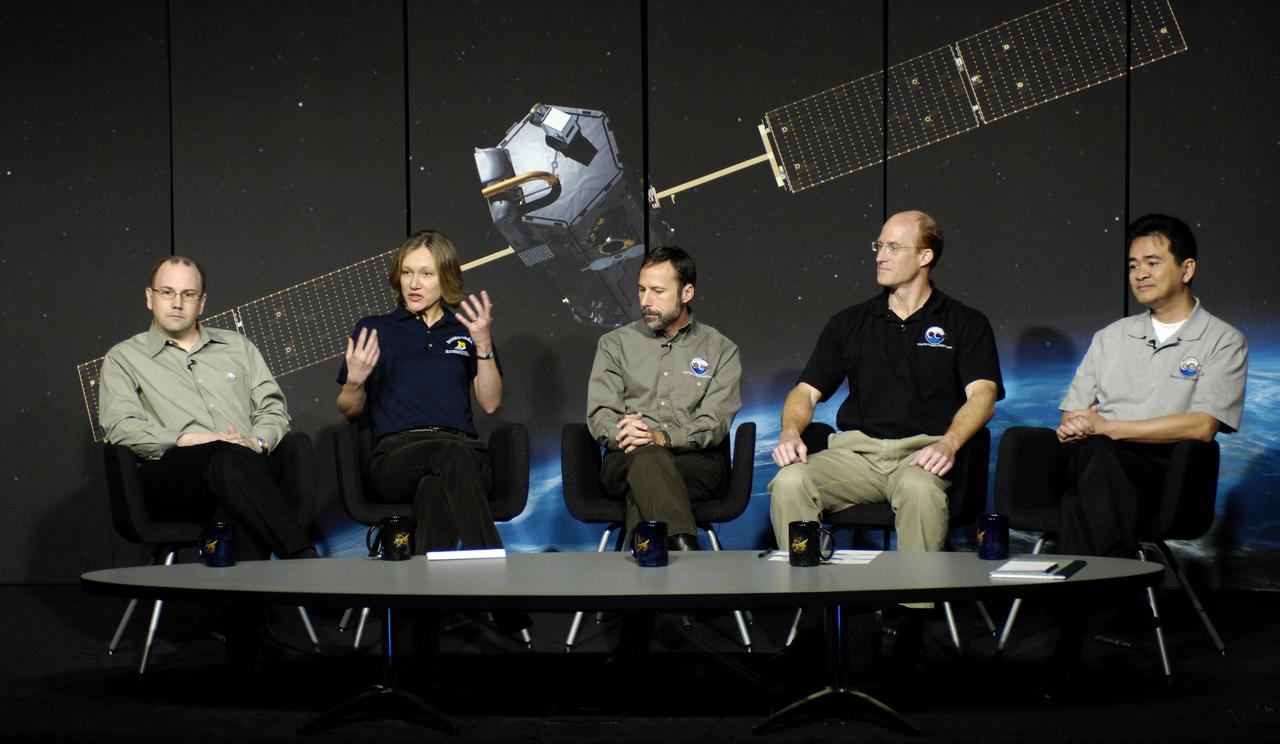
Panelists are seen during a media briefing to discuss the upcoming Orbiting Carbon Observatory mission, the first NASA spacecraft dedicated to studying carbon dioxide, Thursday, Jan. 29, 2009, at NASA Headquarters in Washington. Photo Credit: (NASA/Paul E. Alers)
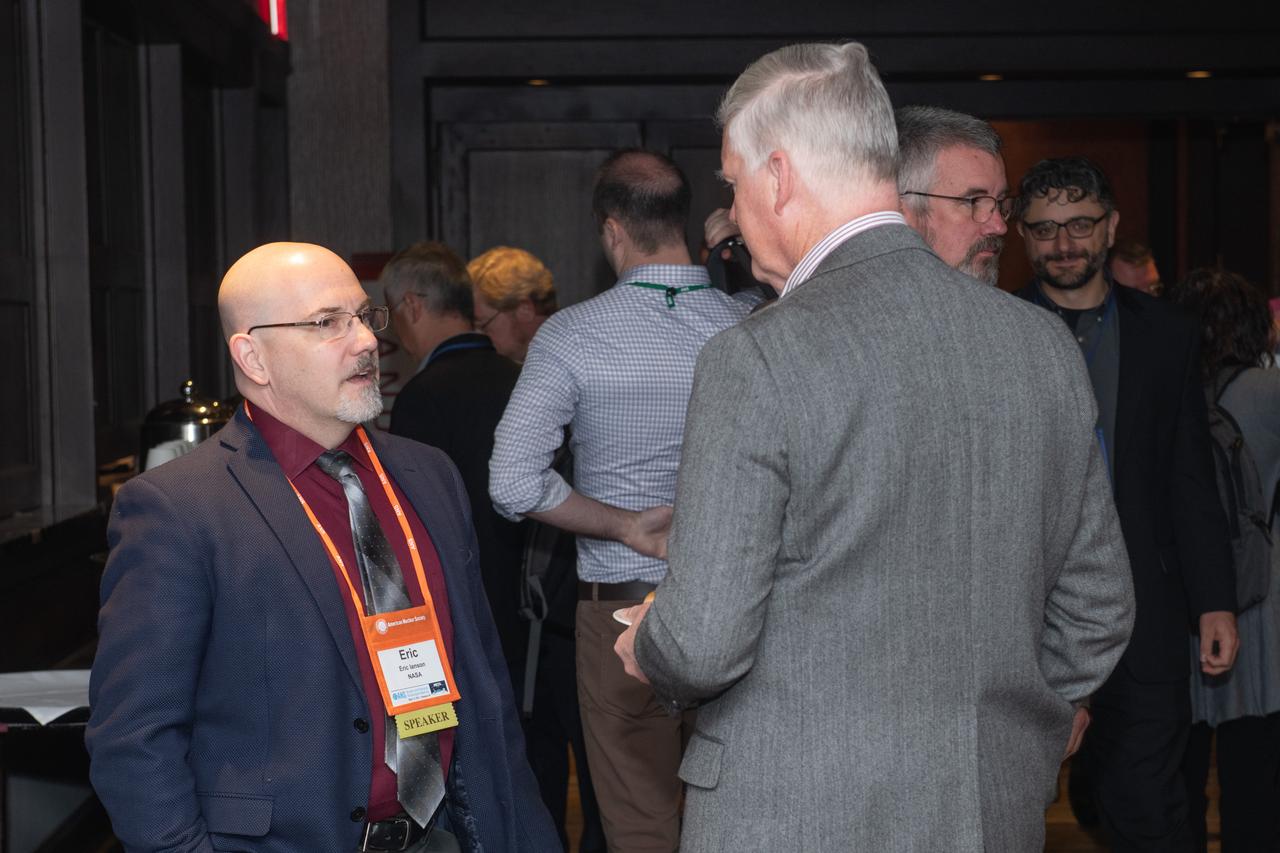
Nuclear Emerging Technologies for Space, NETS 2022 Conference
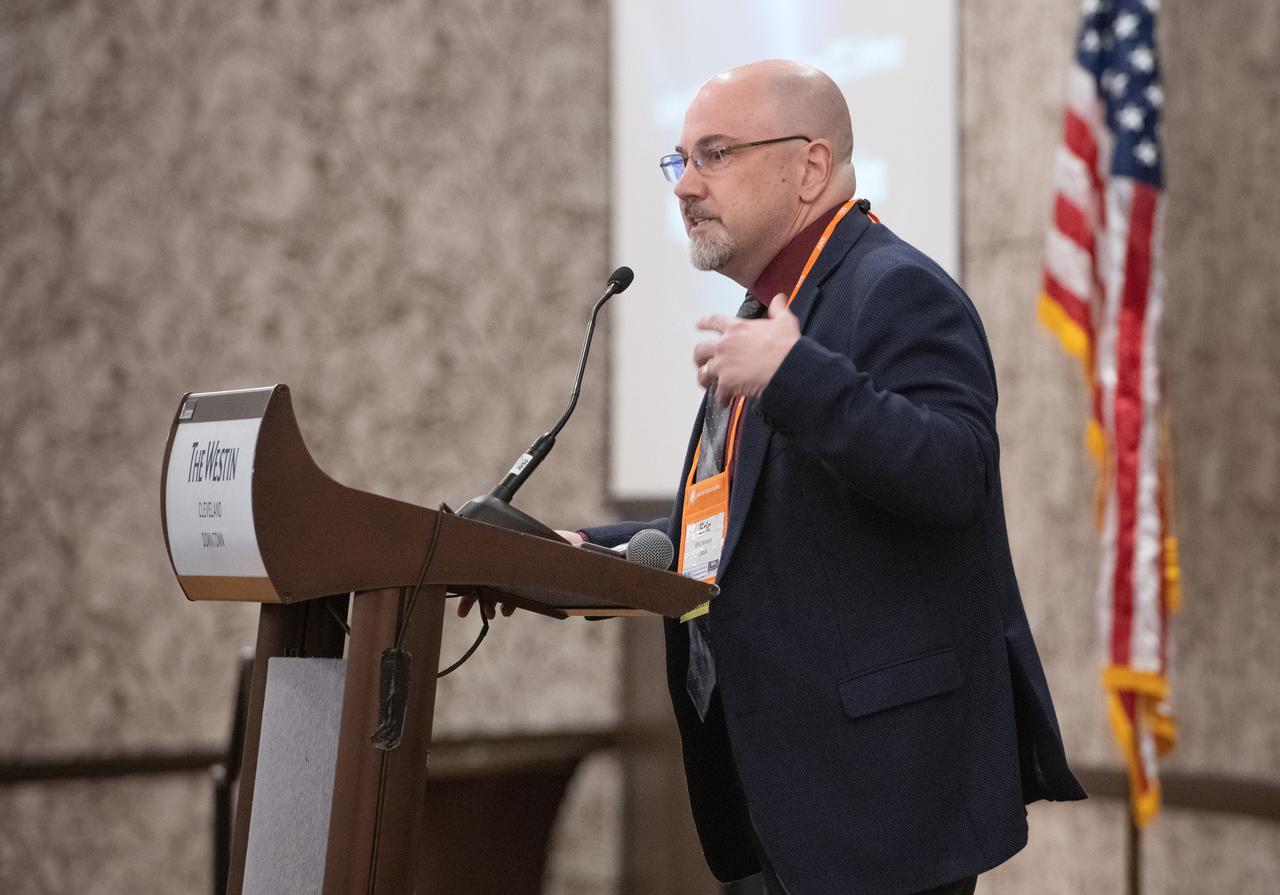
Nuclear Emerging Technologies for Space, NETS 2022 Conference
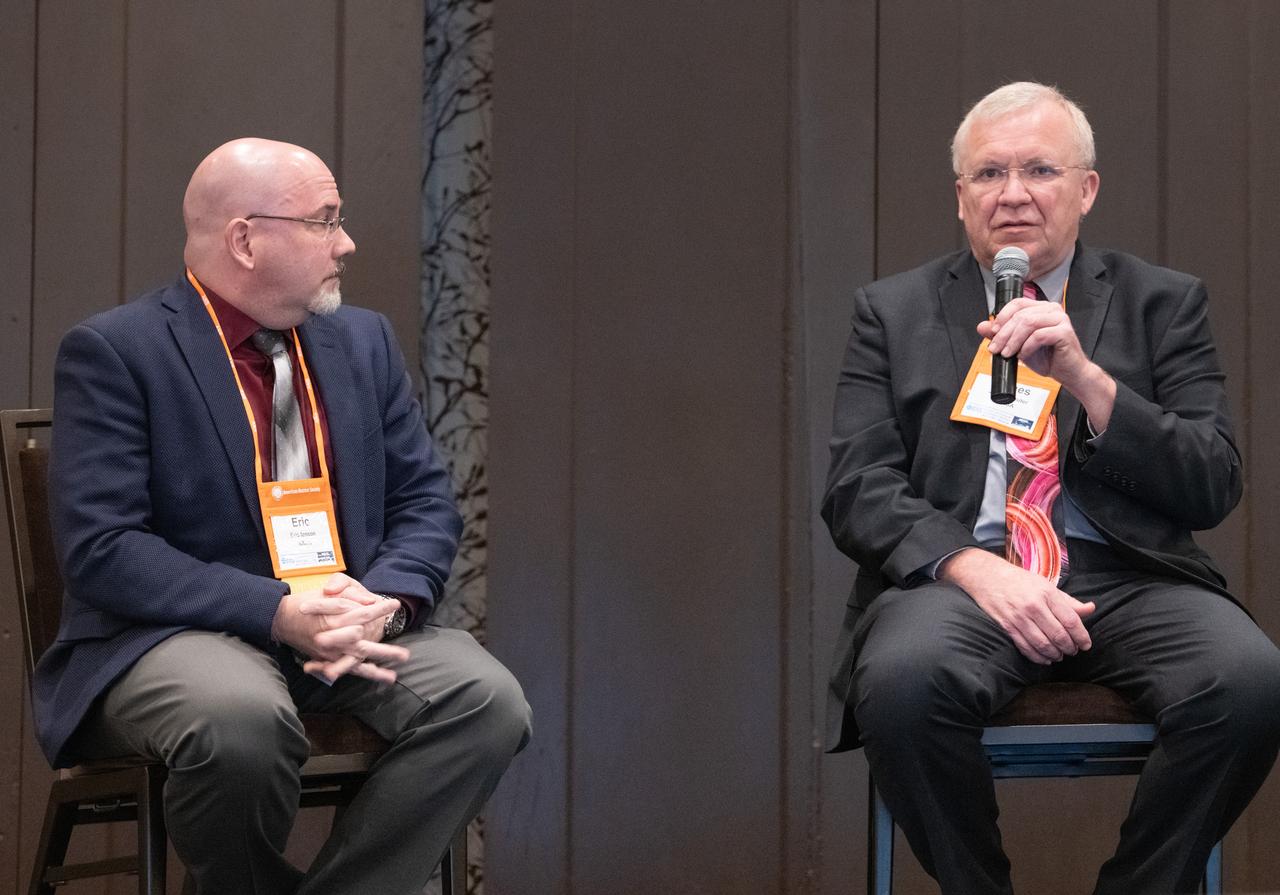
Nuclear Emerging Technologies for Space, NETS 2022 Conference
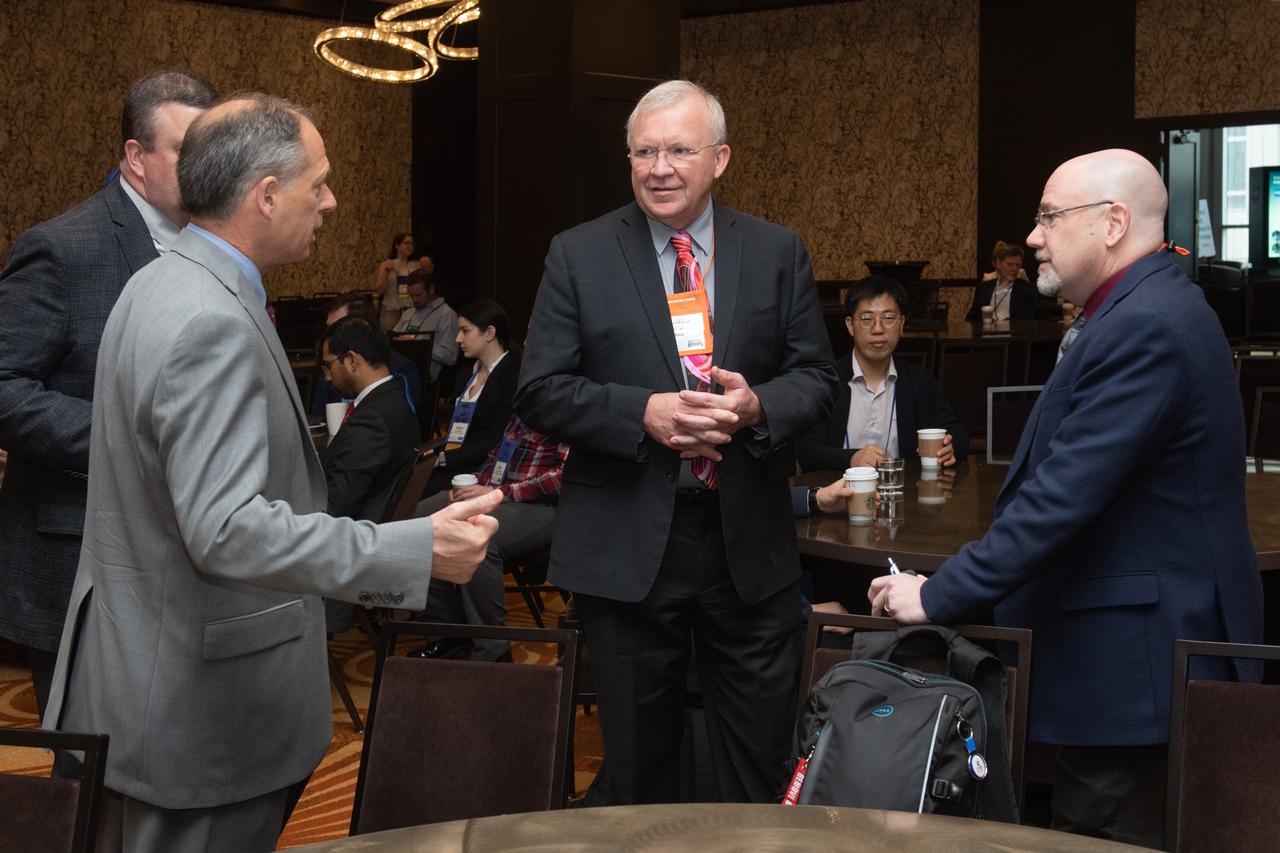
Nuclear Emerging Technologies for Space, NETS 2022 Conference
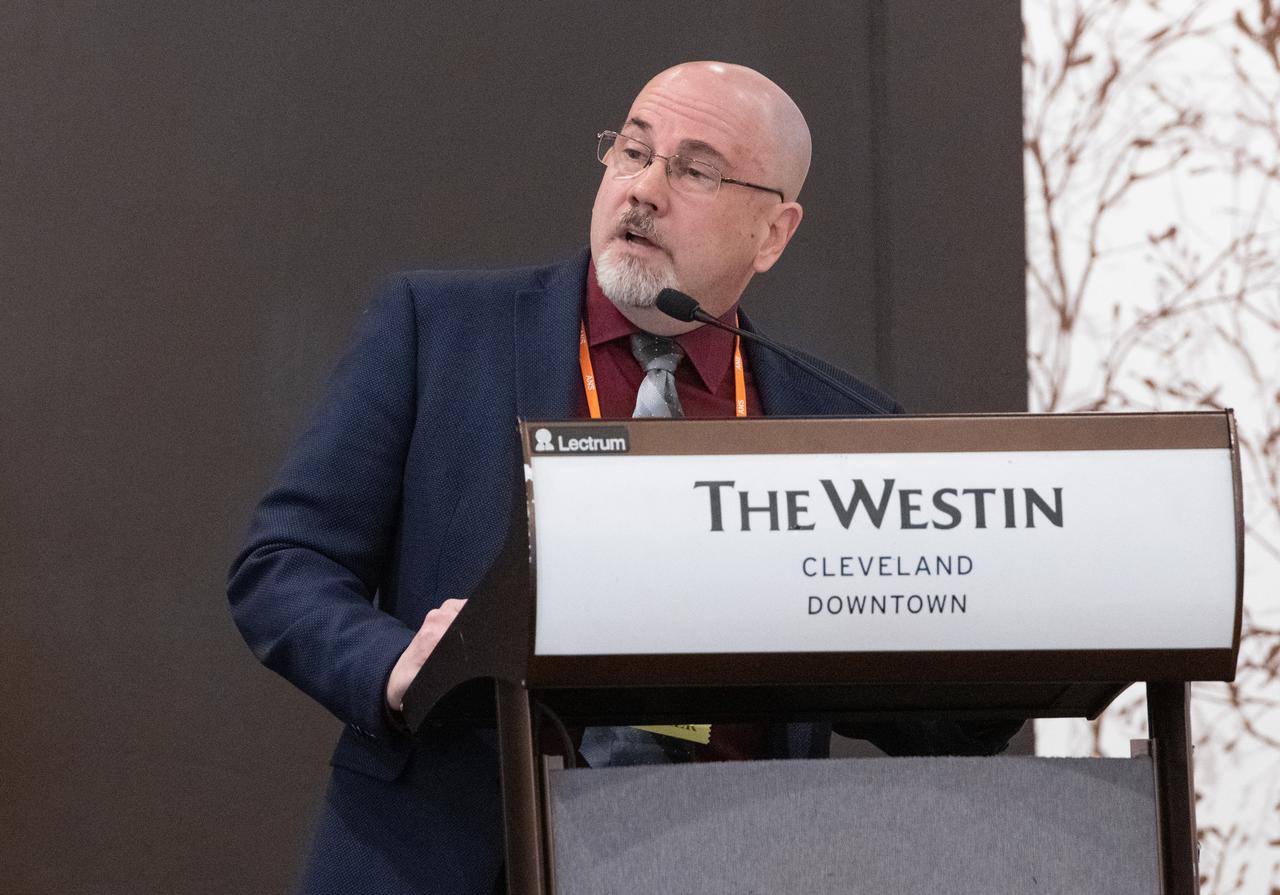
Nuclear Emerging Technologies for Space, NETS 2022 Conference
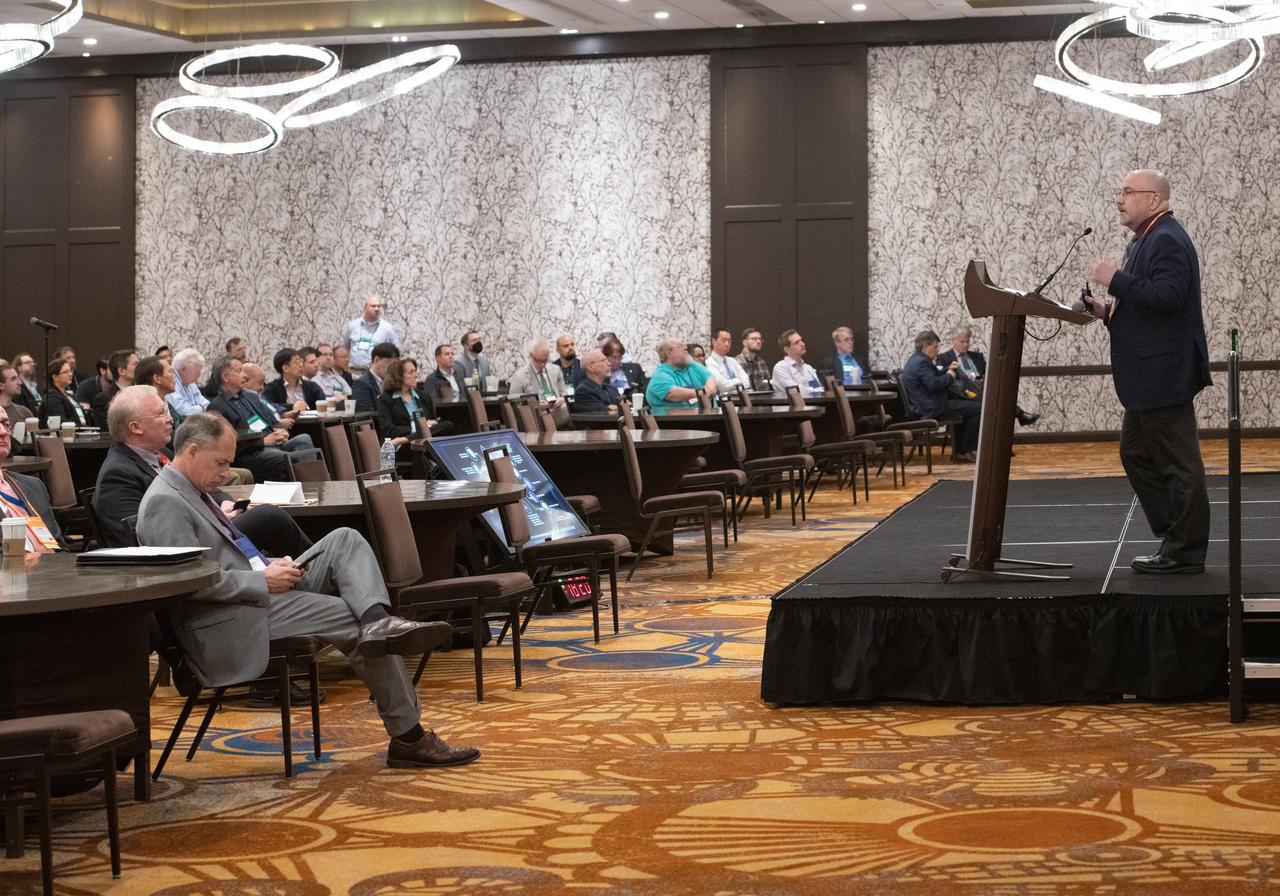
Nuclear Emerging Technologies for Space, NETS 2022 Conference
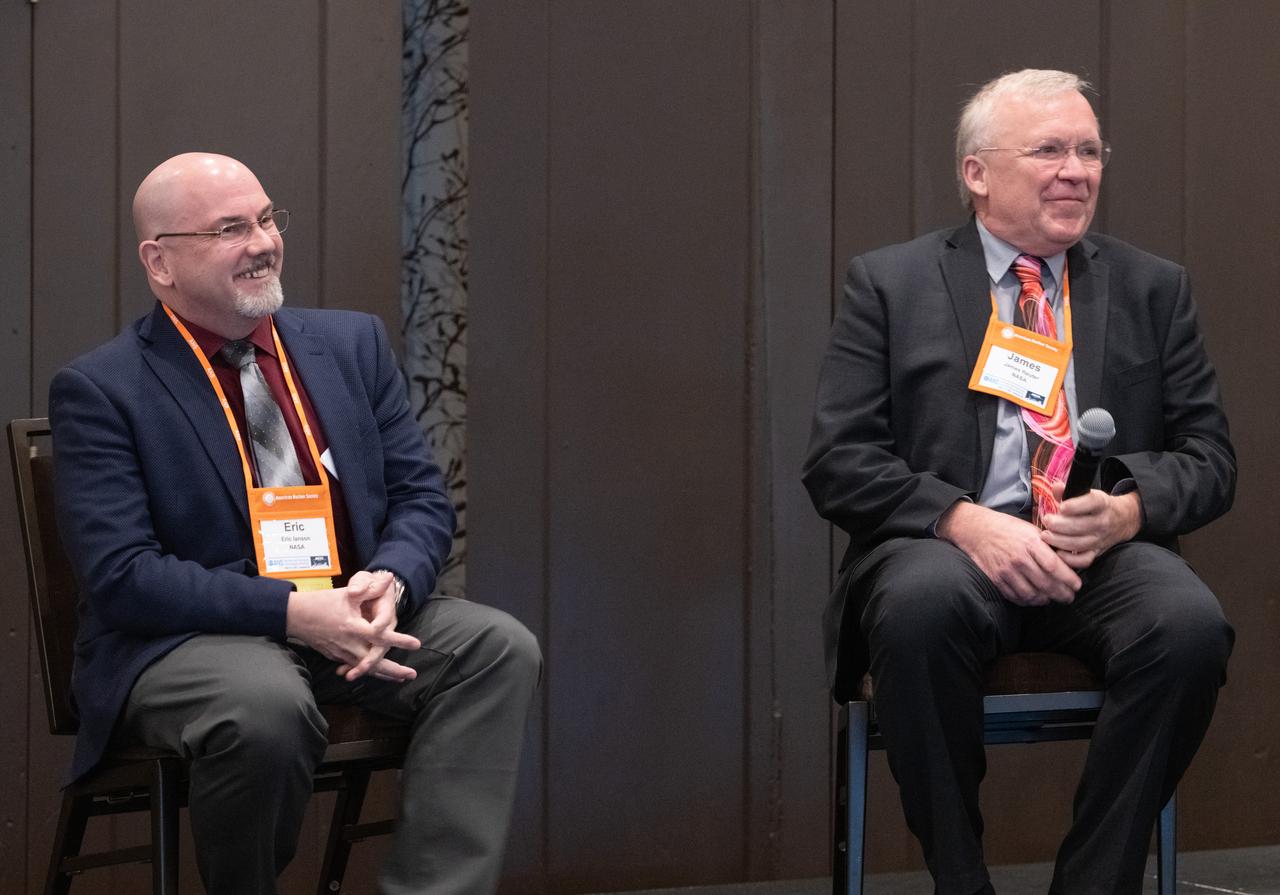
Nuclear Emerging Technologies for Space, NETS 2022 Conference
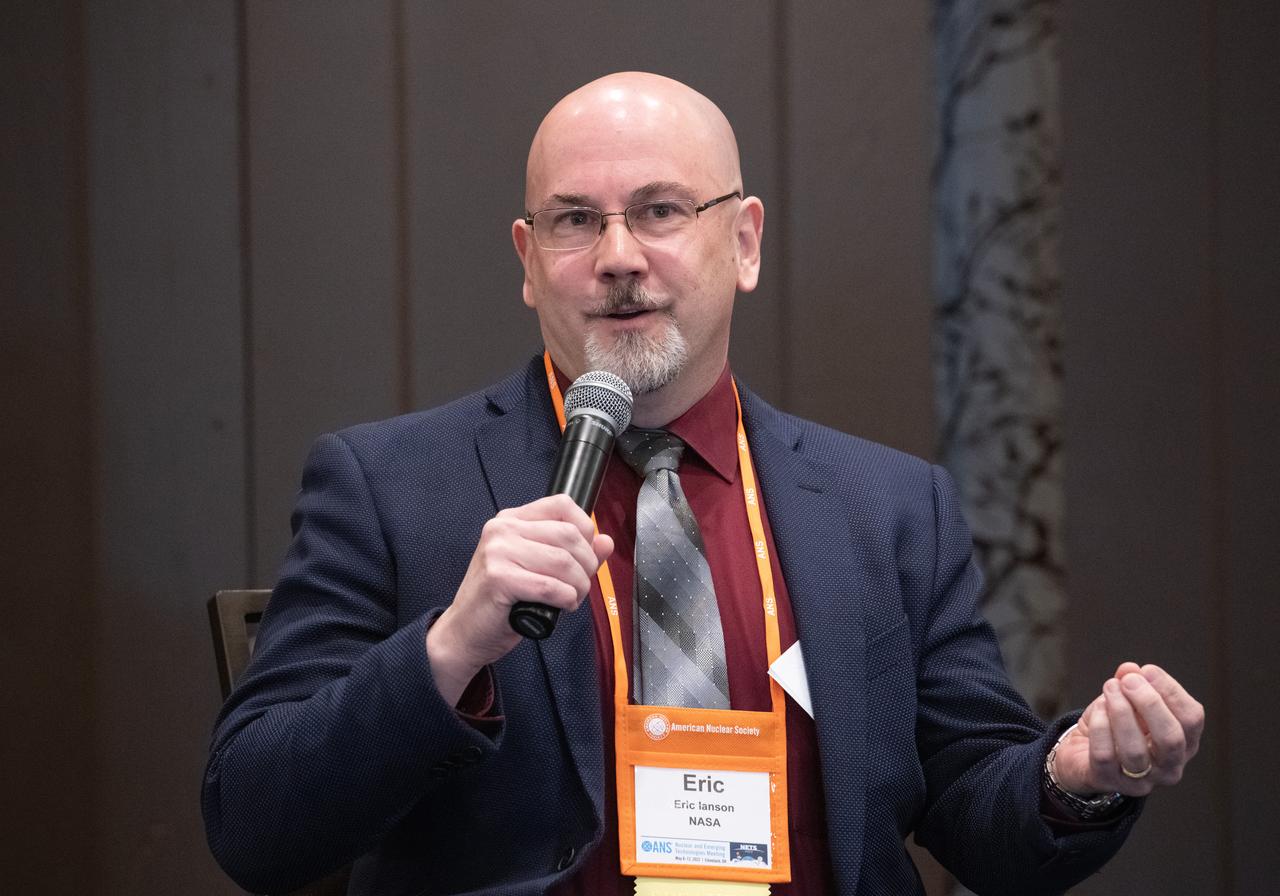
Nuclear Emerging Technologies for Space, NETS 2022 Conference
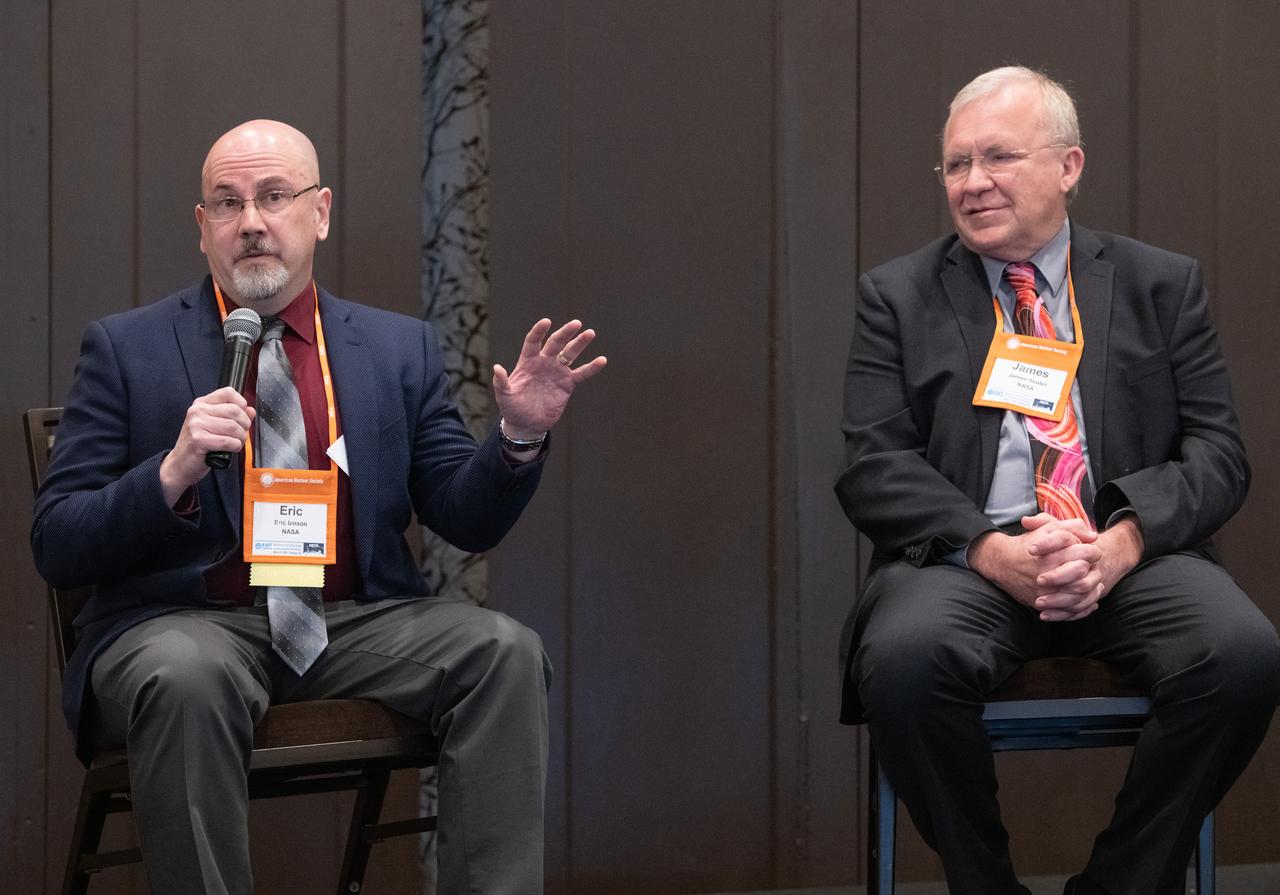
Nuclear Emerging Technologies for Space, NETS 2022 Conference