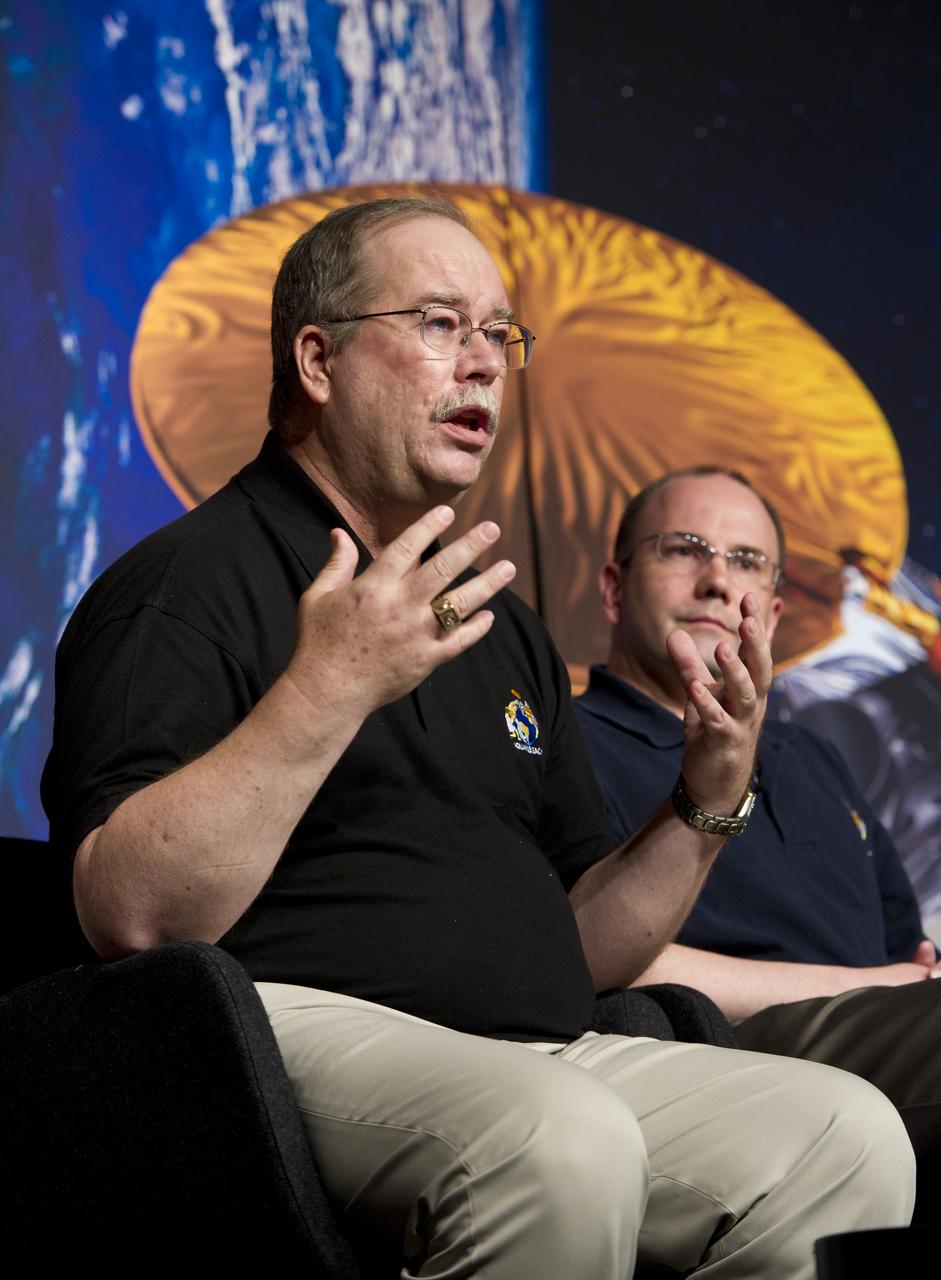
Eric Lindstrom, left, Aquarius Program Scientist, NASA Headquarters, talks about NASA's Aquarius/SAC-D mission to study the salinity of Earth's oceans from space on Tuesday, May 17, 2011 at NASA Headquarters in Washington. The mission is a collaboration between NASA and Argentina's space agency Comision Nacional de Actividades Especiales (CONAE), with participation from Brazil, Canada, France and Italy. The Aquarius/SAC-D observatory will launch June 9, 2011 from Vandenberg Air Force Base in California. Photo Credit: (NASA/Carla Cioffi)
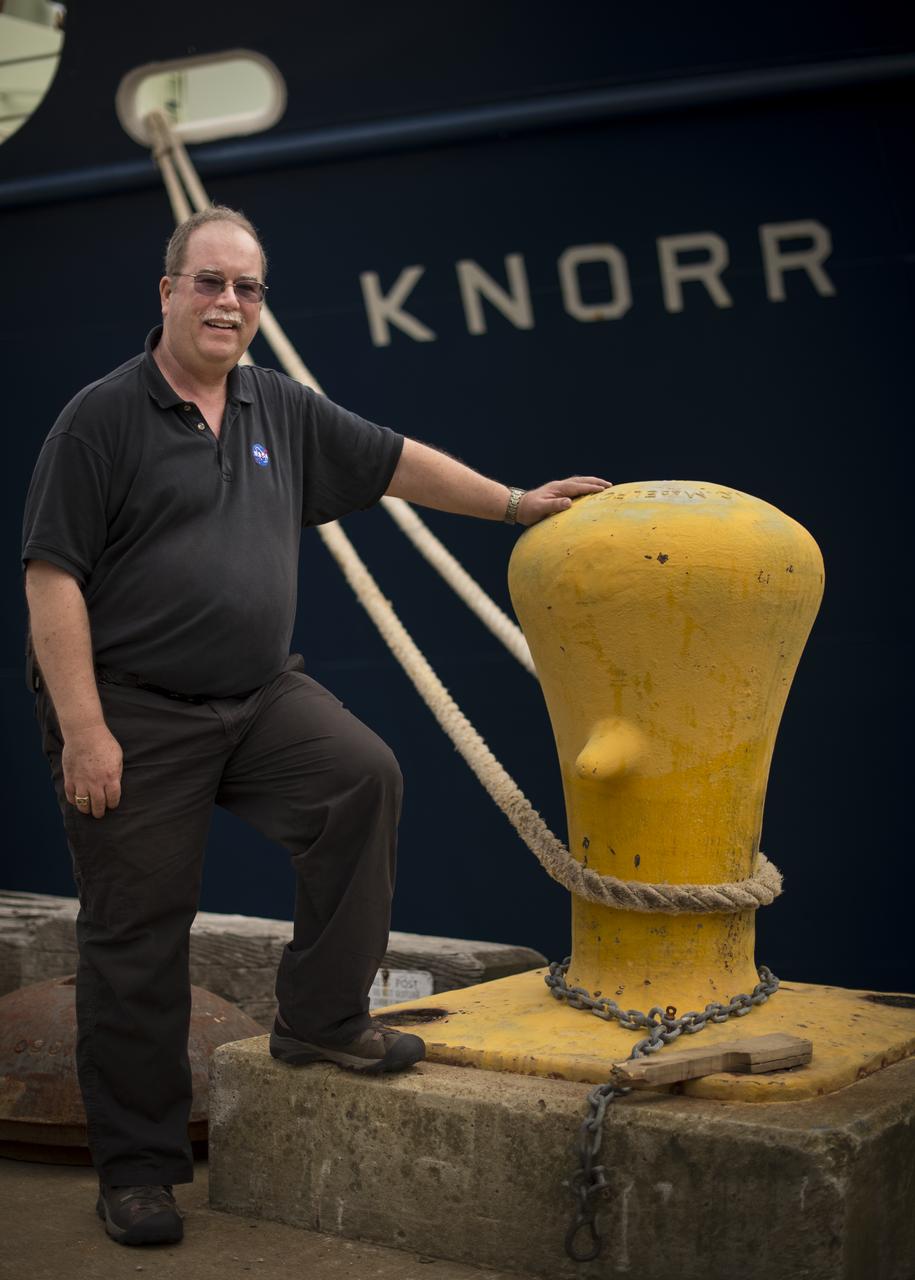
NASA Physical Oceanography Program Scientist Eric Lindstrom poses for a photograph next to the Woods Hole Oceanographic Institution research vessel Knorr on Tuesday, Sept. 4, 2012, in Woods Hole, Mass. Lindstrom will depart on Knorr Sept. 6 to take part in the Salinity Processes in the Upper Ocean Regional Study (SPURS). The NASA-sponsored expedition will sail to the North Atlantic's saltiest spot to get a detailed, 3-D picture of how salt content fluctuates in the ocean's upper layers and how these variations are related to shifts in rainfall patterns around the planet. Photo Credit: (NASA/Bill Ingalls)

NASA Physical Oceanography Program Scientist Eric Lindstrom poses for a photograph next to the Woods Hole Oceanographic Institution research vessel Knorr on Tuesday, Sept. 4, 2012, in Woods Hole, Mass. Lindstrom will depart on Knorr Sept. 6 to take part in the Salinity Processes in the Upper Ocean Regional Study (SPURS). The NASA-sponsored expedition will sail to the North Atlantic's saltiest spot to get a detailed, 3-D picture of how salt content fluctuates in the ocean's upper layers and how these variations are related to shifts in rainfall patterns around the planet. Photo Credit: (NASA/Bill Ingalls)
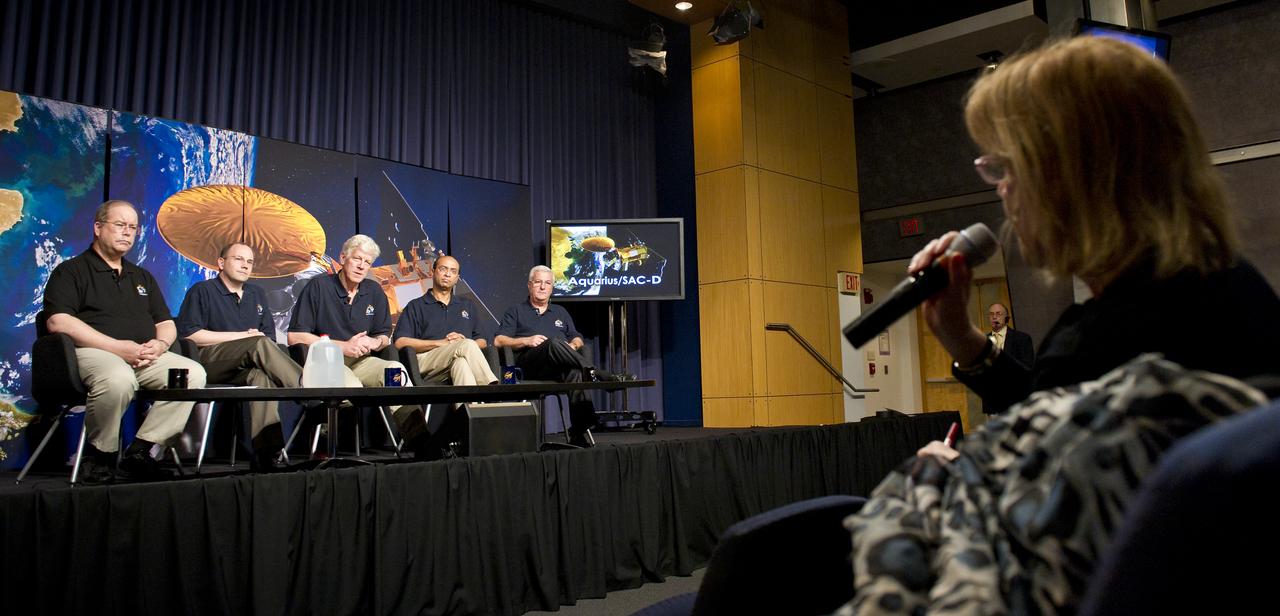
A reporter asks a question to the panel of scientists assembled at the Aquarius/SAC-D press conference on Tuesday, May 17, 2011 at NASA Headquarters in Washington. Seated from left are Eric Lindstrom, Aquarius Program Scientist, NASA Headquarters; Eric Ianson, Aquarius Program Executive, NASA Headquarters; Gary Lagerloef, Aquarius Principal Investigator, Earth & Space Research, Seattle; Amit Sen, Aquarius Project Manager, NASA Jet Propulsion Laboratory and Daniel Caruso, SAC-D Project Manager, CONAE, Argentina. The mission will study the salinity of the Earth's oceans from space. Aquarius/SAC-D is a collaboration between NASA and Argentina's space agency Comision Nacional de Actividades Especiales (CONAE), with participation from Brazil, Canada, France and Italy. The Aquarius/SAC-D observatory will launch June 9, 2011 from Vandenberg Air Force Base in California. Photo Credit: (NASA/Carla Cioffi)
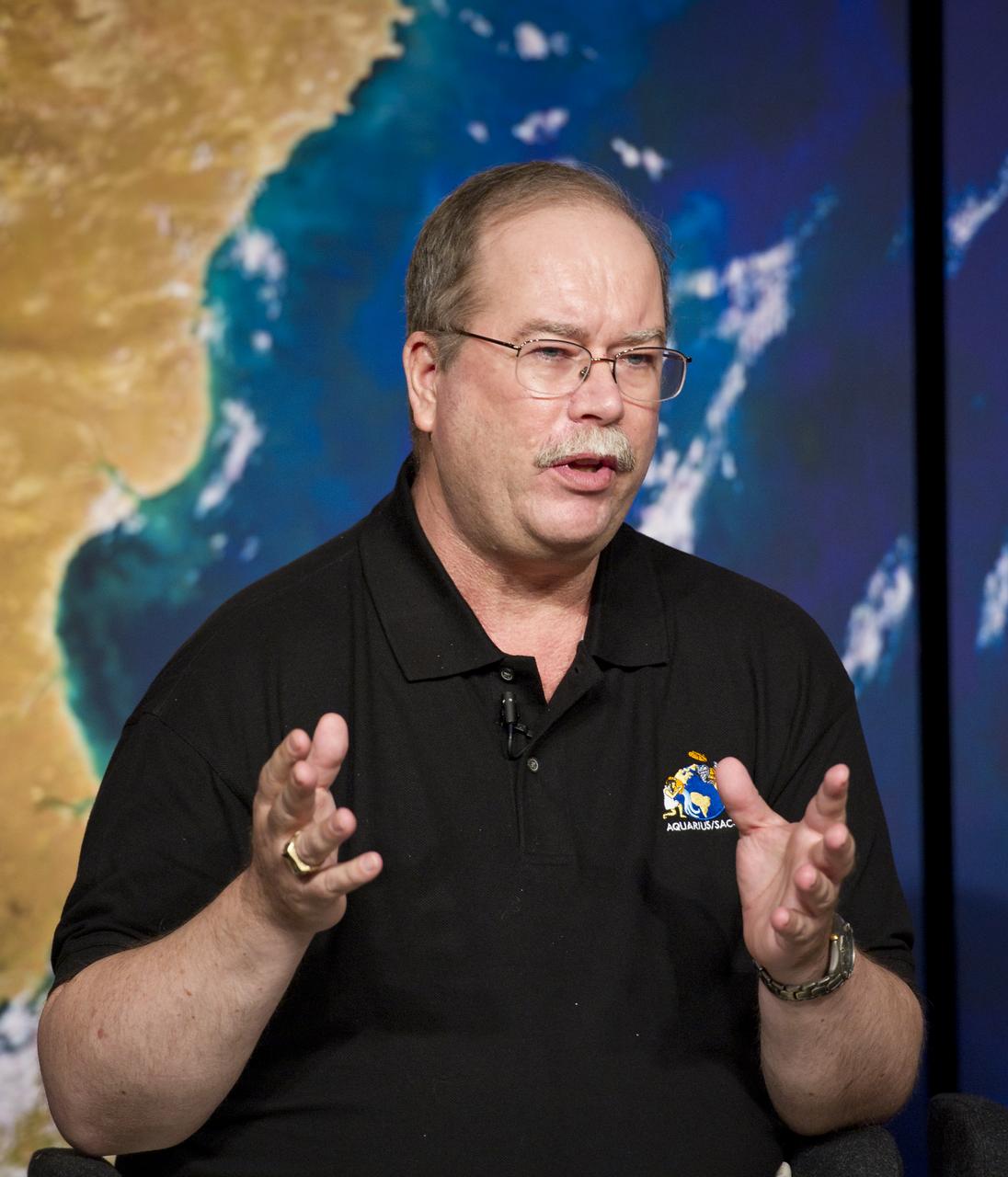
Eric Lindstrom, left, Aquarius Program Scientist, NASA Headquarters, talks about NASA's Aquarius/SAC-D mission to study the salinity of Earth's oceans from space on Tuesday, May 17, 2011 at NASA Headquarters in Washington. The mission is a collaboration between NASA and Argentina's space agency Comision Nacional de Actividades Especiales (CONAE), with participation from Brazil, Canada, France and Italy. The Aquarius/SAC-D observatory will launch June 9, 2011 from Vandenberg Air Force Base in California. Photo Credit: (NASA/Carla Cioffi)
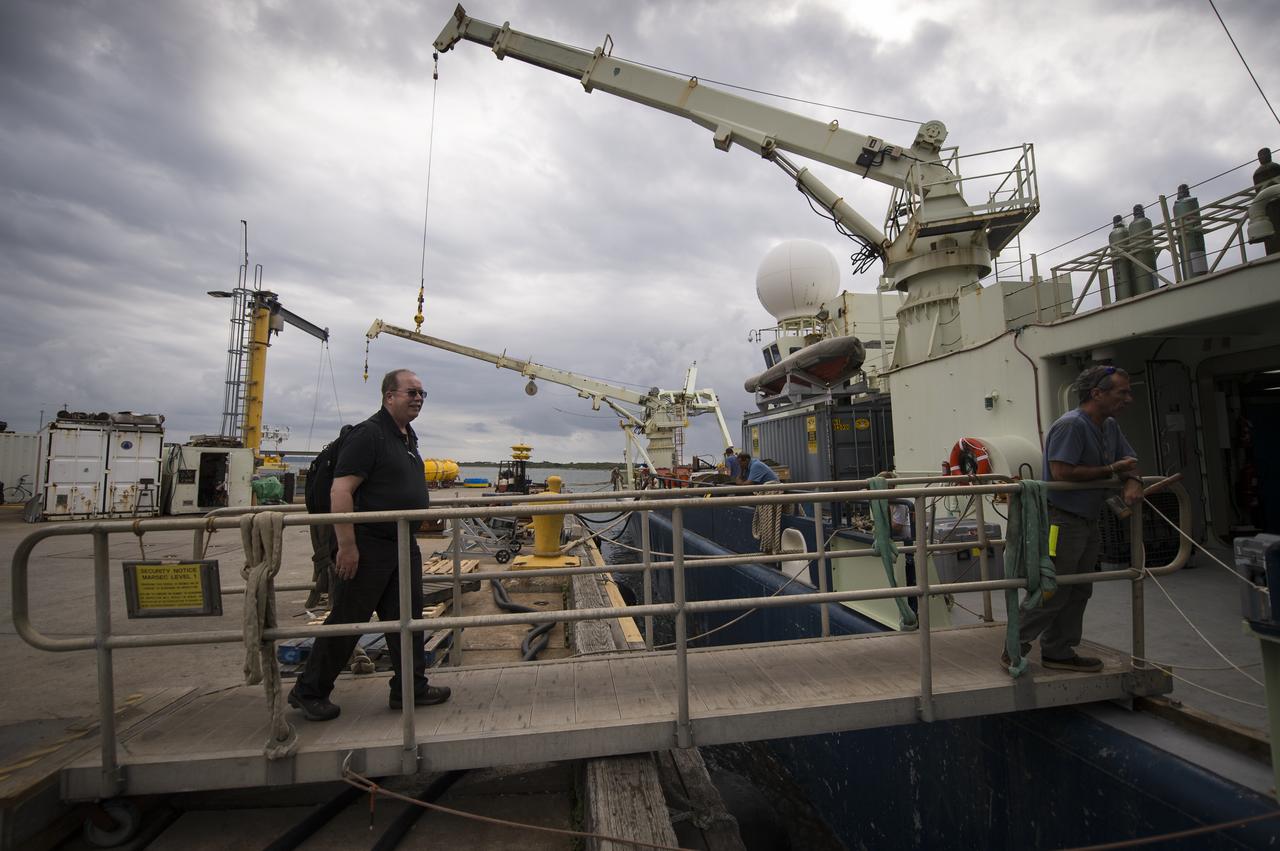
NASA Physical Oceanography Program Scientist Eric Lindstrom boards the Woods Hole Oceanographic Institution's research vessel Knorr on Tuesday, Sept. 4, 2012, in Woods Hole, Mass. Lindstrom will depart on Knorr Sept. 6 to take part in the Salinity Processes in the Upper Ocean Regional Study (SPURS). The NASA-sponsored expedition will sail to the North Atlantic's saltiest spot to get a detailed, 3-D picture of how salt content fluctuates in the ocean's upper layers and how these variations are related to shifts in rainfall patterns around the planet. Photo Credit: (NASA/Bill Ingalls)
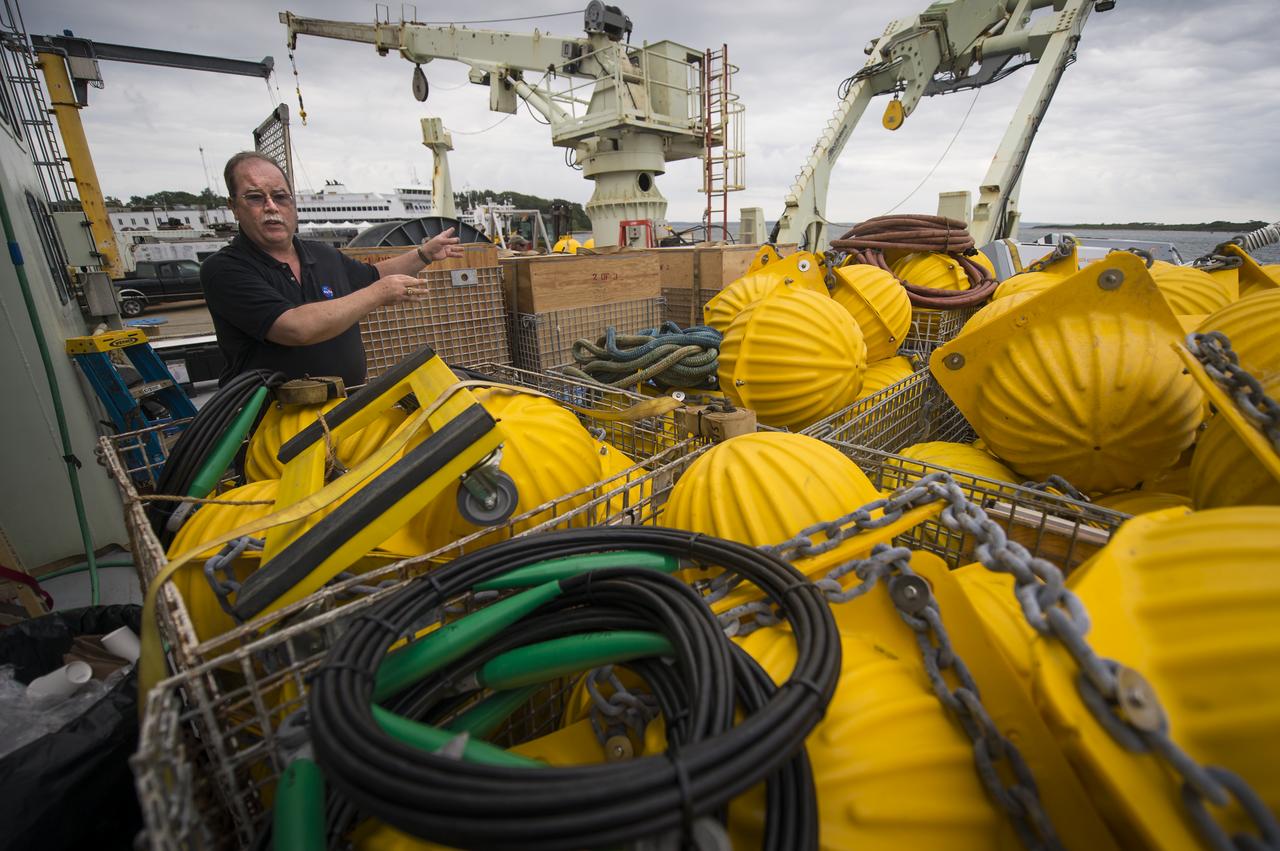
NASA Physical Oceanography Program Scientist Eric Lindstrom talks about the instruments onboard the Woods Hole Oceanographic Institution research vessel Knorr on Tuesday, Sept. 4, 2012, in Woods Hole, Mass. Various scientific instruments will be deployed in the Atlantic Ocean as part of the Salinity Processes in the Upper Ocean Regional Study (SPURS) which is set to sail on Sept. 6. The NASA-sponsored expedition will sail to the North Atlantic's saltiest spot to get a detailed, 3-D picture of how salt content fluctuates in the ocean's upper layers and how these variations are related to shifts in rainfall patterns around the planet. Photo Credit: (NASA/Bill Ingalls)

NASA Physical Oceanography Program Scientist Eric Lindstrom inspects an autonomous wave glider onboard the Woods Hole Oceanographic Institution research vessel Knorr on Tuesday, Sept. 4, 2012, in Woods Hole, Mass. The autonomous gliders will be deployed in the Atlantic Ocean as part of the Salinity Processes in the Upper Ocean Regional Study (SPURS) which is set to sail on Sept. 6. The NASA-sponsored expedition will sail to the North Atlantic's saltiest spot to get a detailed, 3-D picture of how salt content fluctuates in the ocean's upper layers and how these variations are related to shifts in rainfall patterns around the planet. Photo Credit: (NASA/Bill Ingalls)
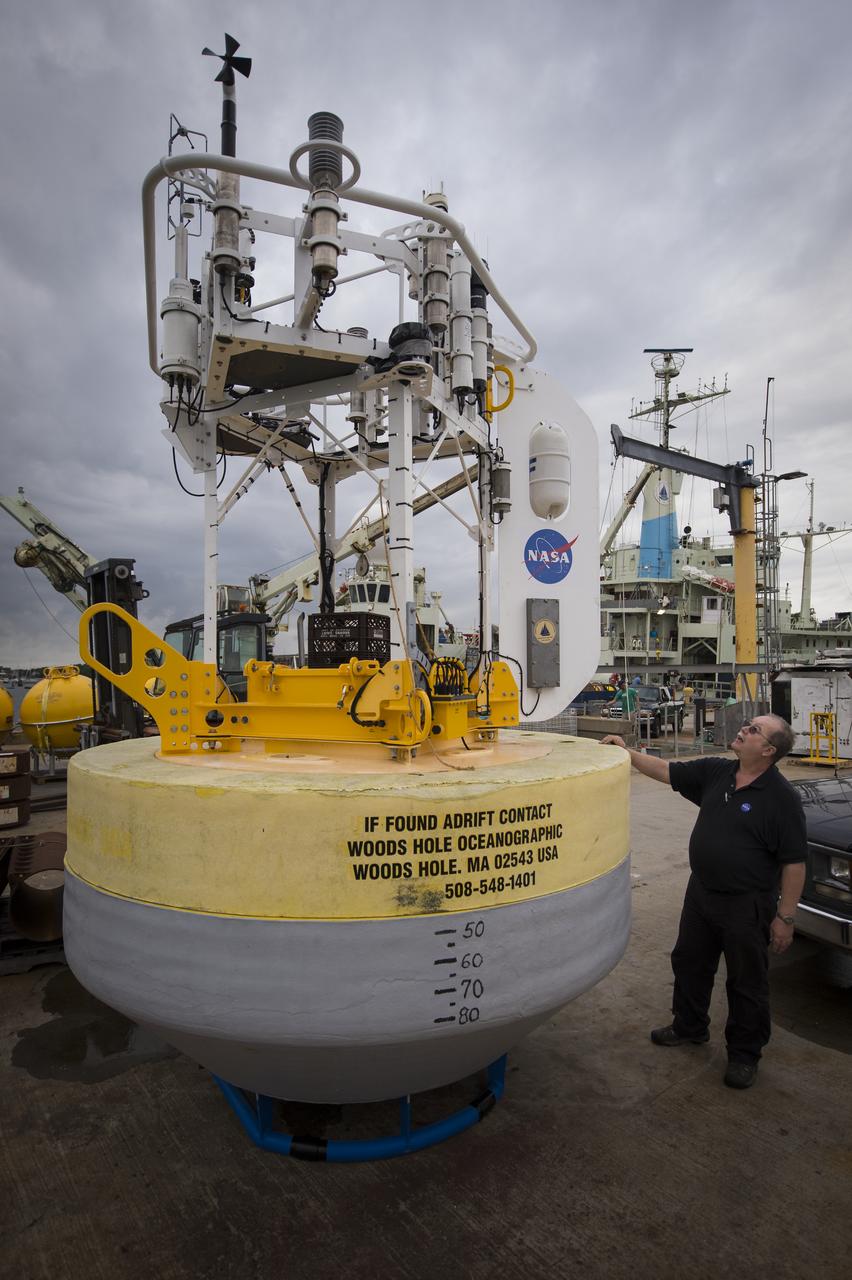
NASA Physical Oceanography Program Scientist Eric Lindstrom inspects a sensor-laden buoy prior to it being loaded onboard the Woods Hole Oceanographic Institution's vessel Knorr on Tuesday, Sept. 4, 2012, in Woods Hole, Mass. The buoy will be deployed in the Atlantic Ocean as part of the Salinity Processes in the Upper Ocean Regional Study (SPURS) which is set to sail on Sept. 6. The NASA-sponsored expedition will sail to the North Atlantic's saltiest spot to get a detailed, 3-D picture of how salt content fluctuates in the ocean's upper layers and how these variations are related to shifts in rainfall patterns around the planet. Photo Credit: (NASA/Bill Ingalls)

NASA Physical Oceanography Program Scientist Eric Lindstrom inspects an autonomous wave glider onboard the Woods Hole Oceanographic Institution research vessel Knorr on Tuesday, Sept. 4, 2012, in Woods Hole, Mass. The autonomous gliders will be deployed in the Atlantic Ocean as part of the Salinity Processes in the Upper Ocean Regional Study (SPURS) which is set to sail on Sept. 6. The NASA-sponsored expedition will sail to the North Atlantic's saltiest spot to get a detailed, 3-D picture of how salt content fluctuates in the ocean's upper layers and how these variations are related to shifts in rainfall patterns around the planet. Photo Credit: (NASA/Bill Ingalls)
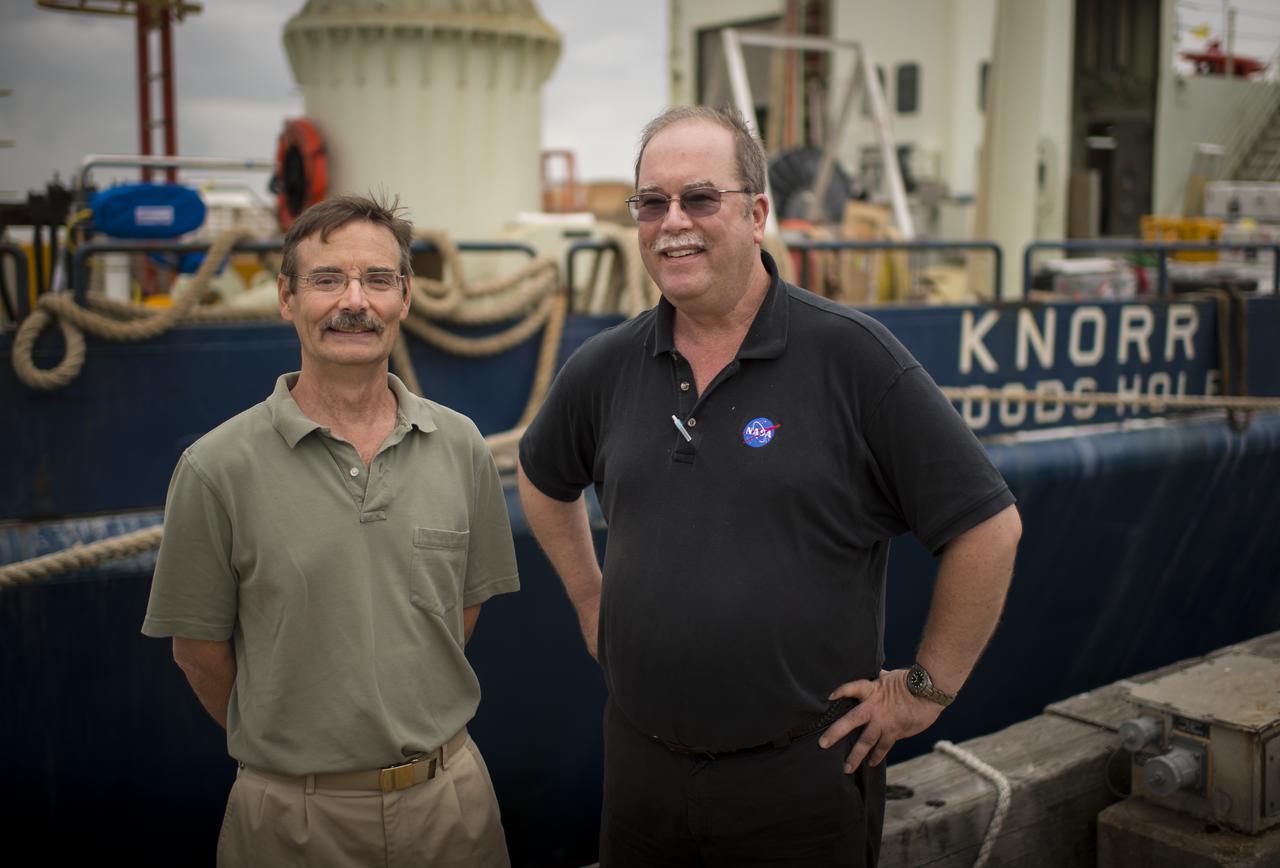
Woods Hole Oceanographic Institution Senior Scientist Ray Schmitt, left, and NASA Physical Oceanography Program Scientist Eric Lindstrom pose for a photograph in front of the Institution's research vessel Knorr on Tuesday, Sept. 4, 2012, in Woods Hole, Mass. Knorr is scheduled to depart on Sept. 6 to take part in the Salinity Processes in the Upper Ocean Regional Study (SPURS). The NASA-sponsored expedition will sail to the North Atlantic's saltiest spot to get a detailed, 3-D picture of how salt content fluctuates in the ocean's upper layers and how these variations are related to shifts in rainfall patterns around the planet. Photo Credit: (NASA/Bill Ingalls)