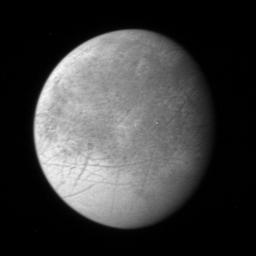
Europa
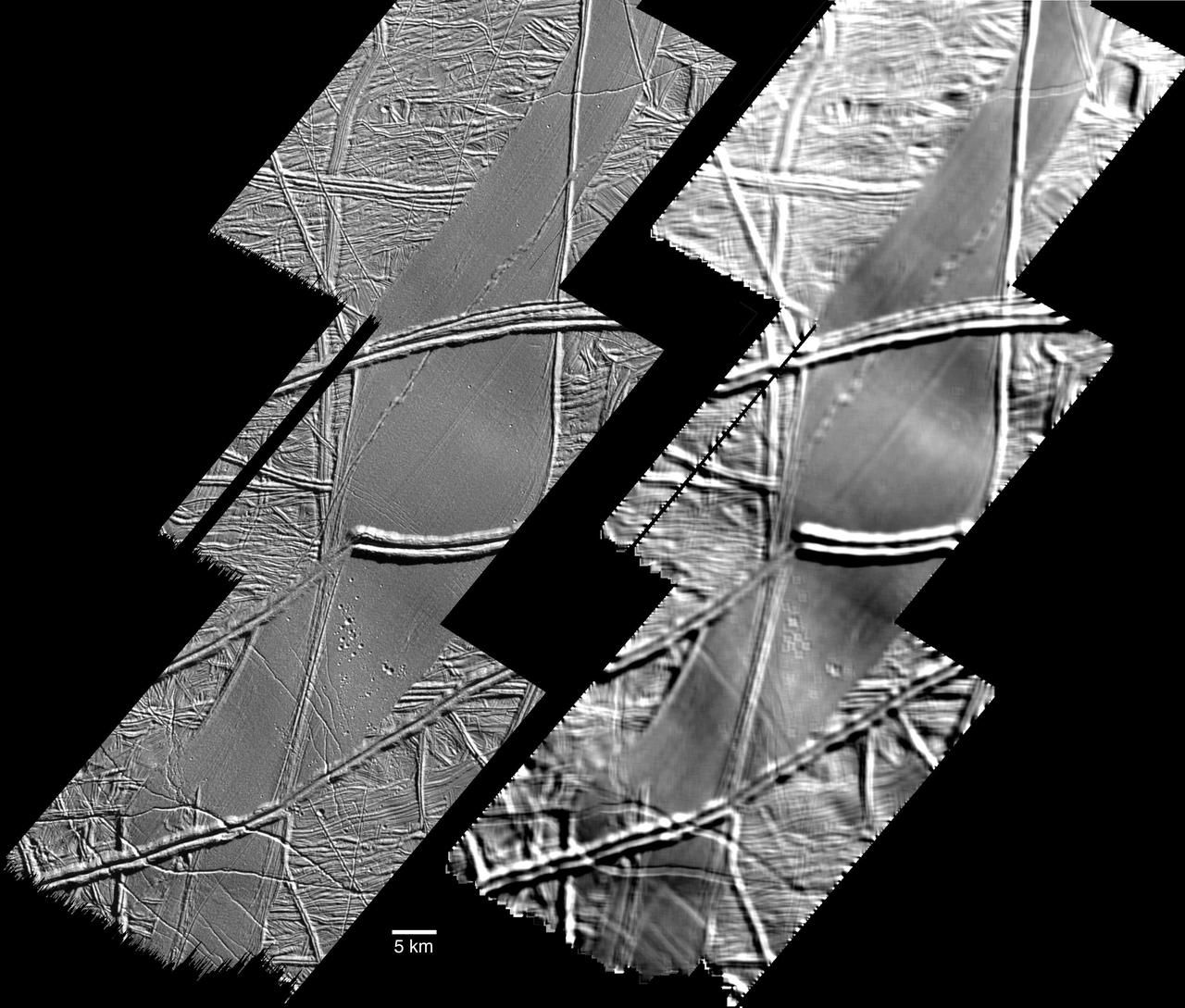
Folds on Europa
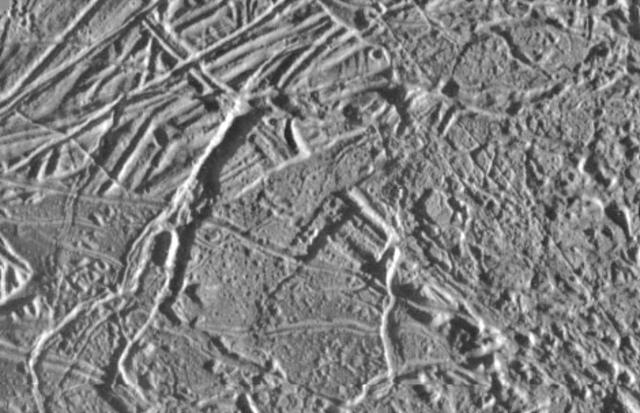
Ridges on Europa

Flows on Europa
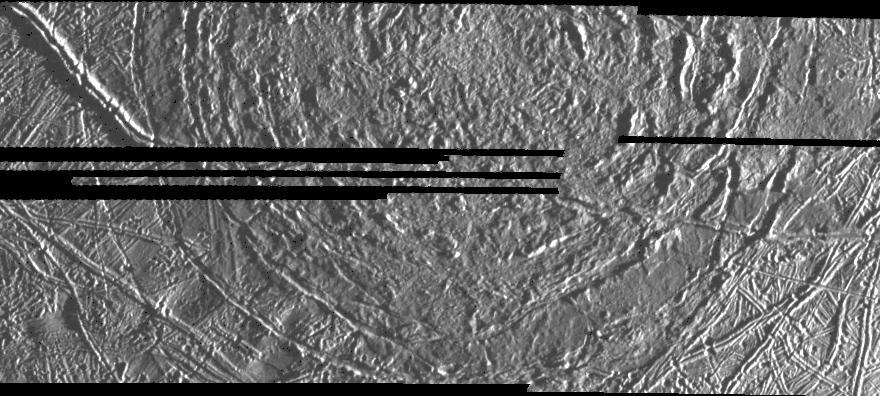
Macula on Europa
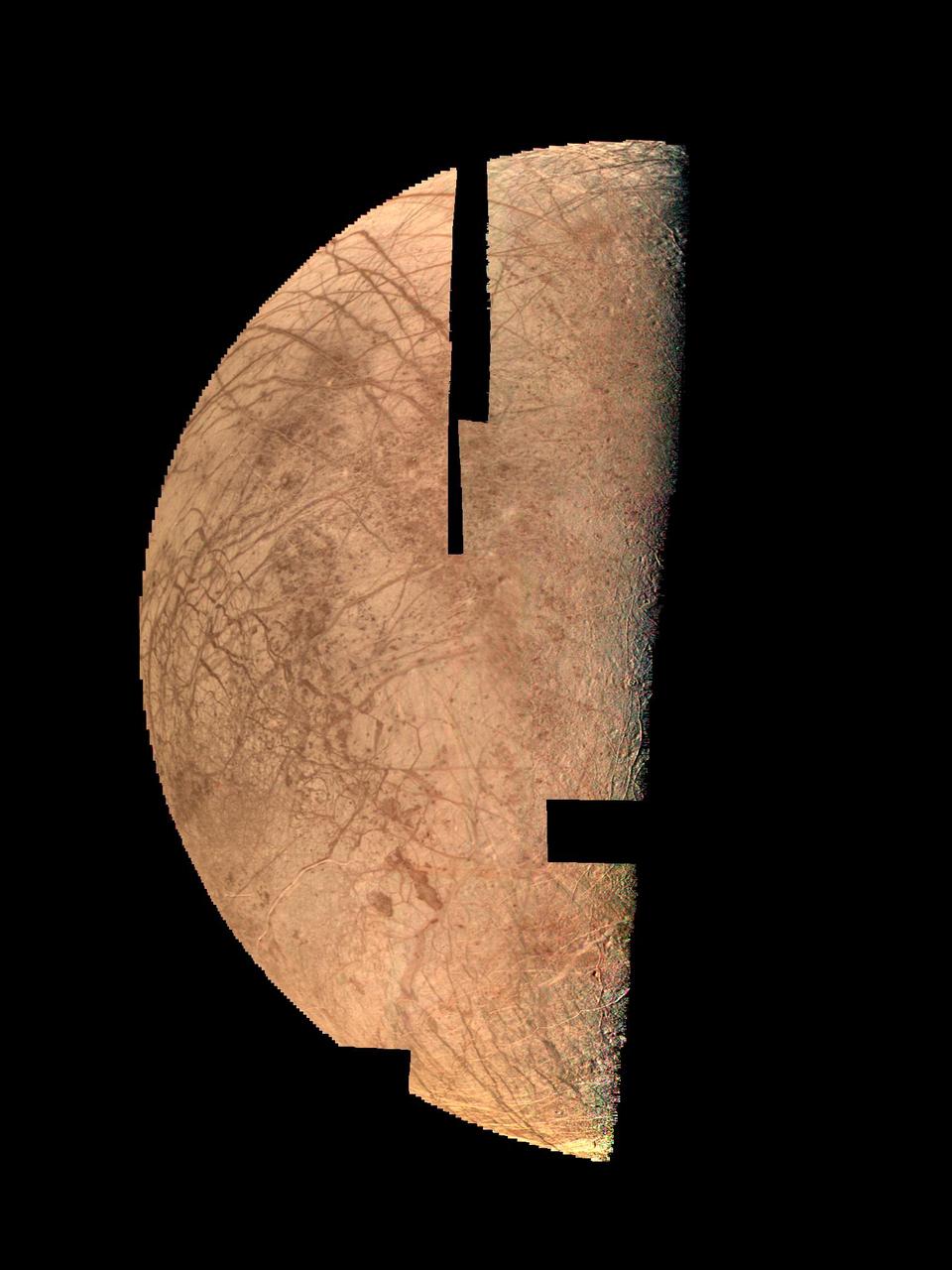
Europa - Mosaic http://photojournal.jpl.nasa.gov/catalog/PIA00366

This artist's concept depicts NASA's Europa Clipper spacecraft silhouetted against Jupiter as it passes over the gas giant's icy moon Europa (bottom center). Scheduled to orbit Jupiter beginning in April 2030, the mission will be the first to specifically target Europa for detailed science investigation. Europa Clipper's three main science objectives are to determine the thickness of the moon's icy shell and its interactions with the ocean below, to investigate its composition, and to characterize its geology. The mission's detailed exploration of Europa will help scientists better understand the astrobiological potential for habitable worlds beyond our planet. https://photojournal.jpl.nasa.gov/catalog/PIA26442
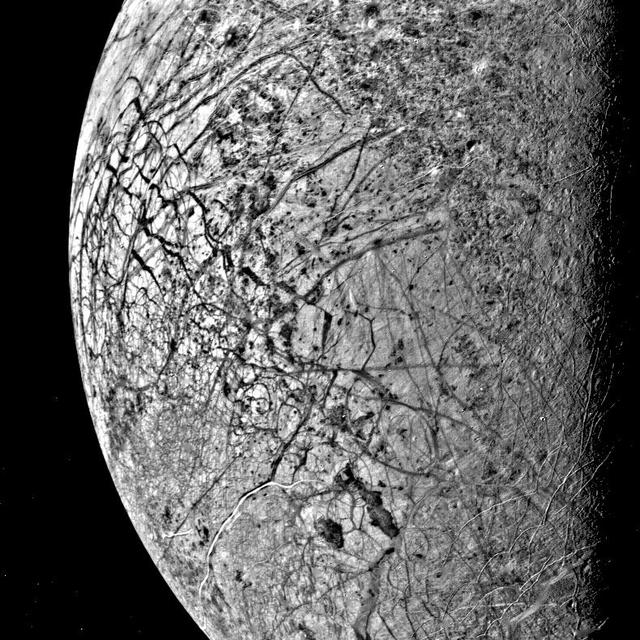
Europa Fractured Surface
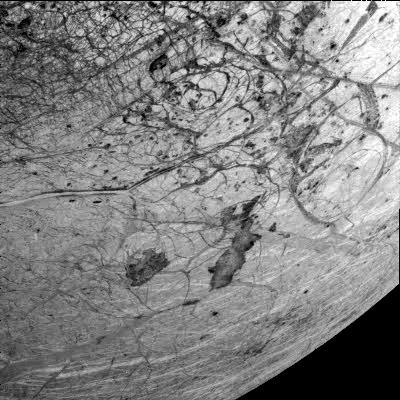
Thera and Thrace Macula on Europa
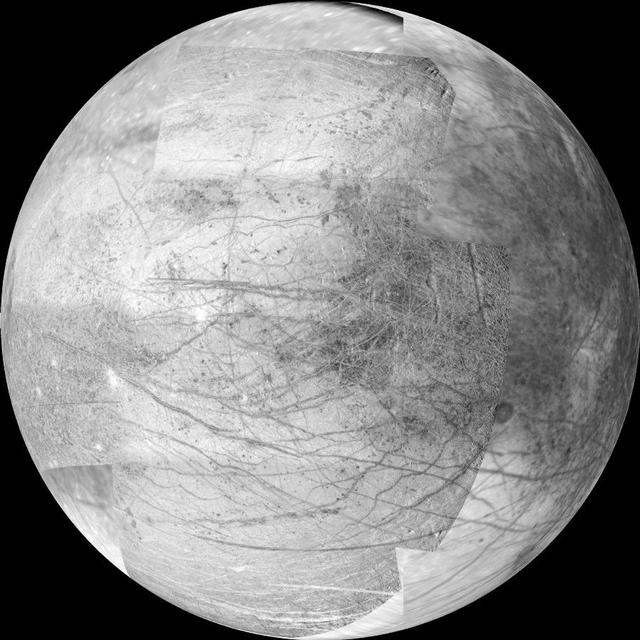
Europa Jupiter-Facing Hemisphere
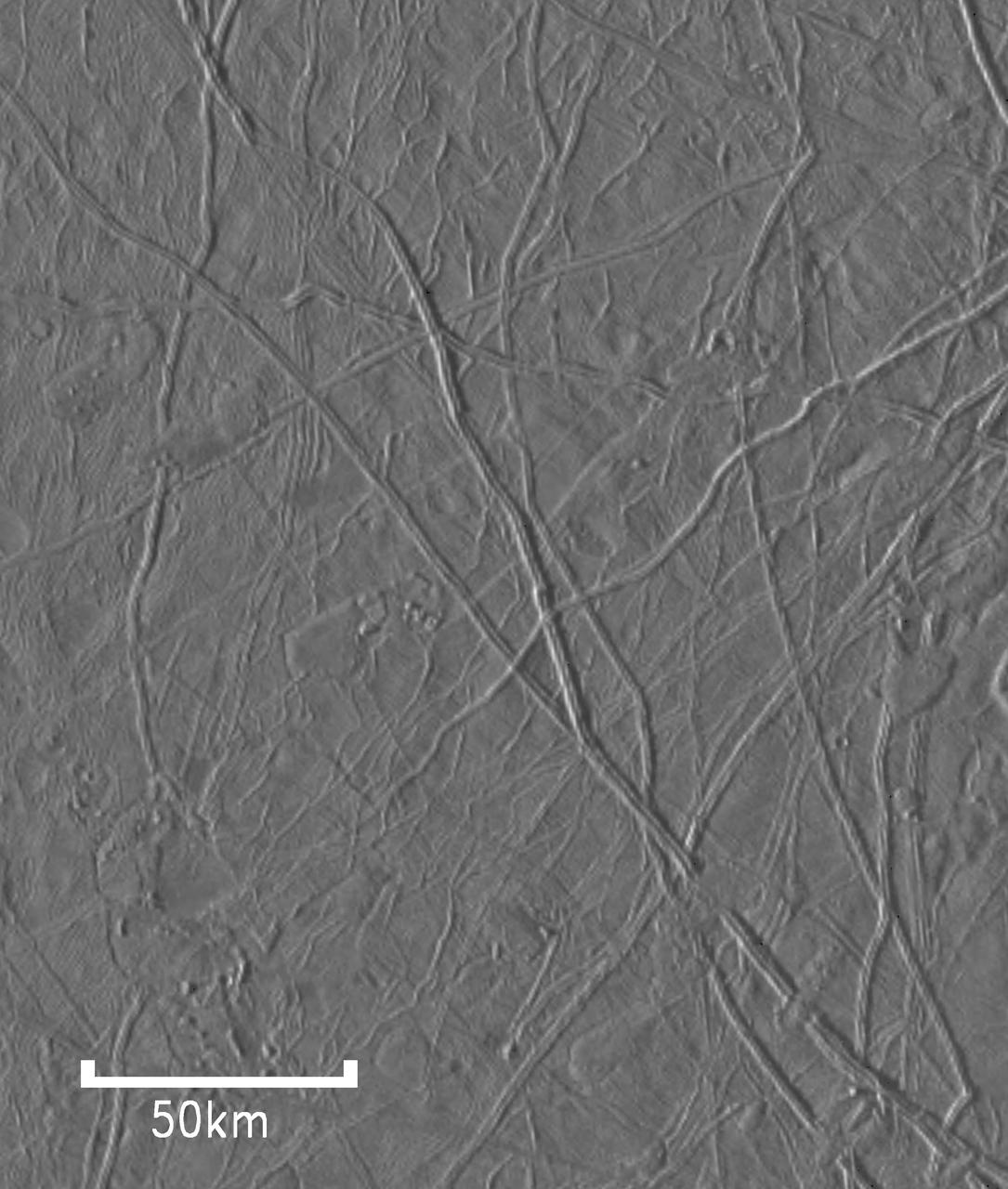
Flow-like Features On Europa
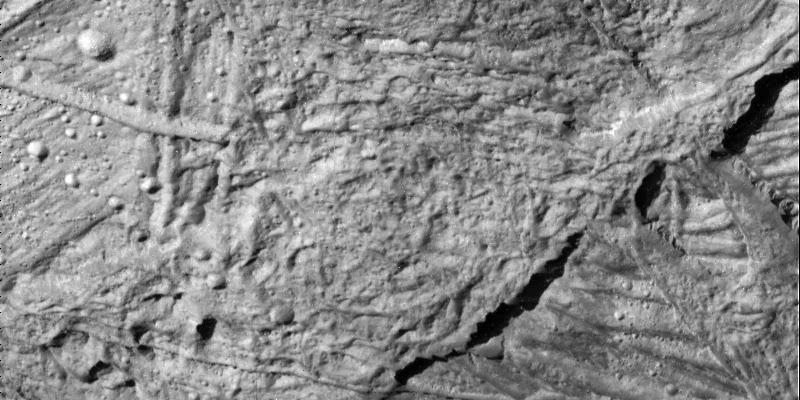
Small Craters on Europa
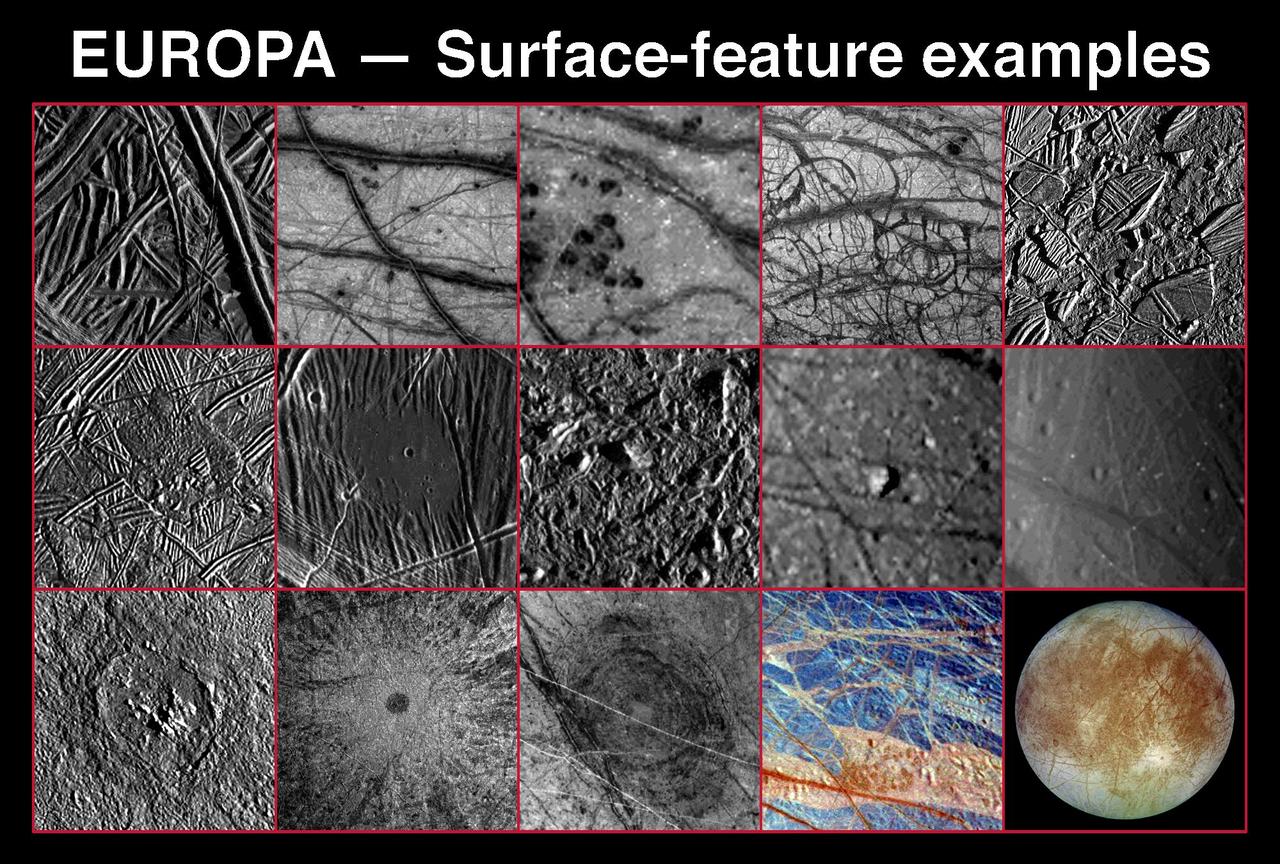
Various Landscapes and Features on Europa

Agenor Linea on Europa
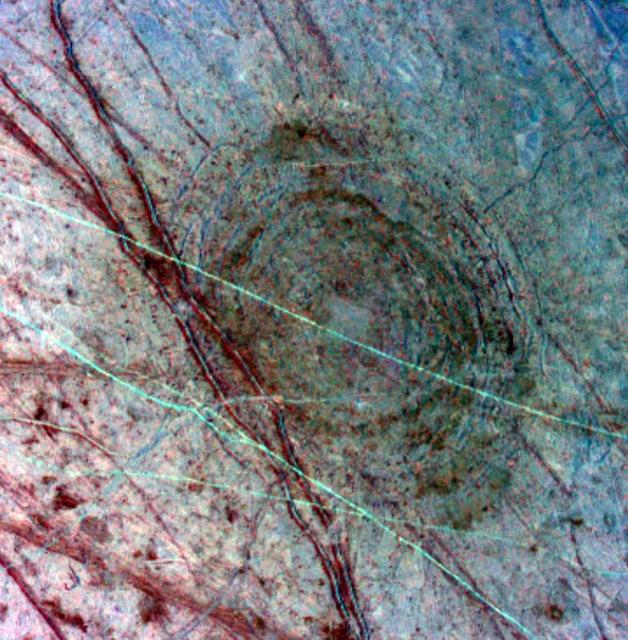
Ancient Impact Basin on Europa
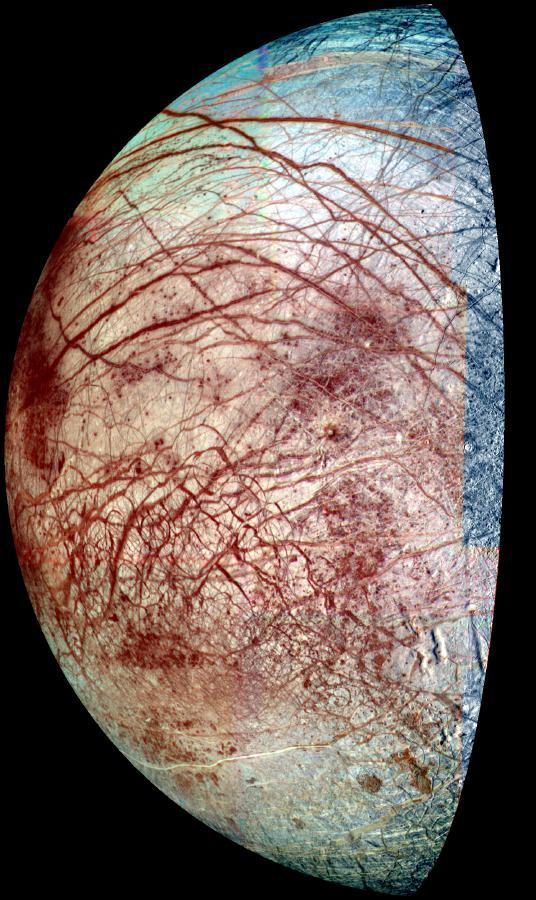
Europa Frozen Surface
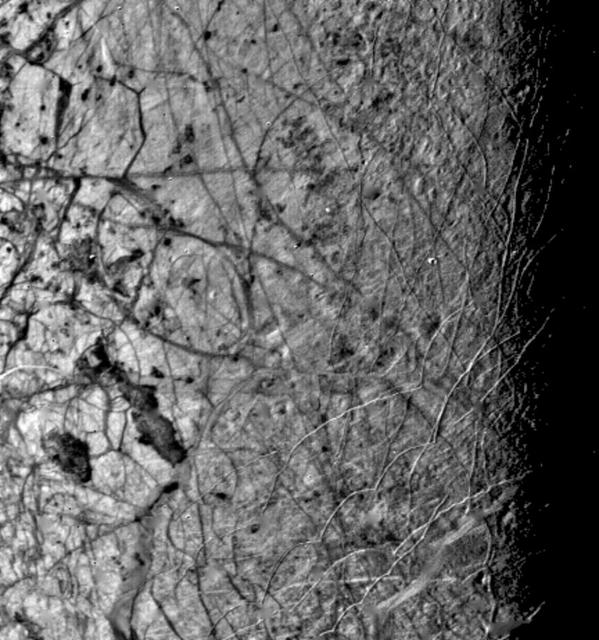
Europa Evening Terminator
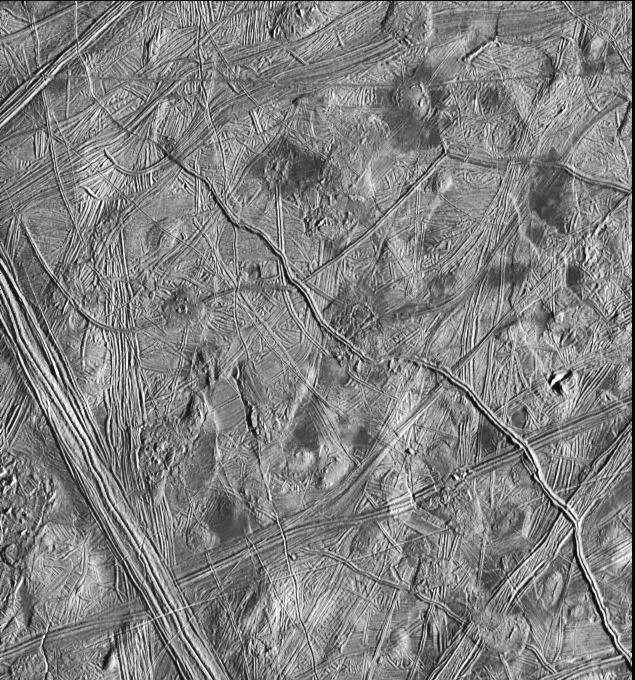
Europa Ridges, Hills and Domes
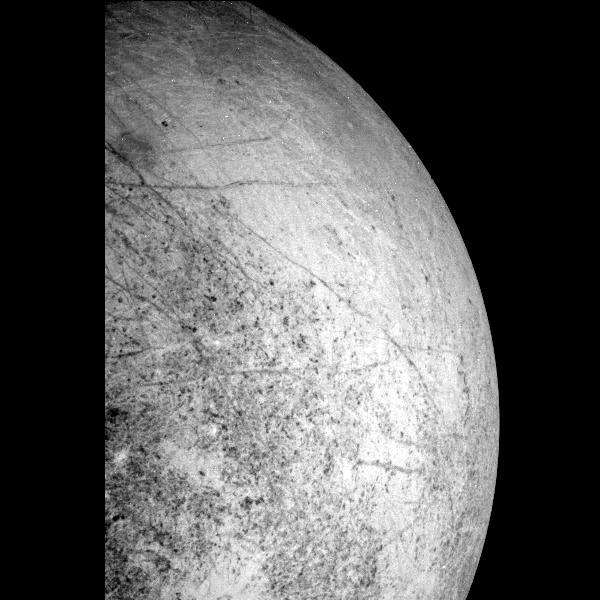
Europa Leading Hemisphere
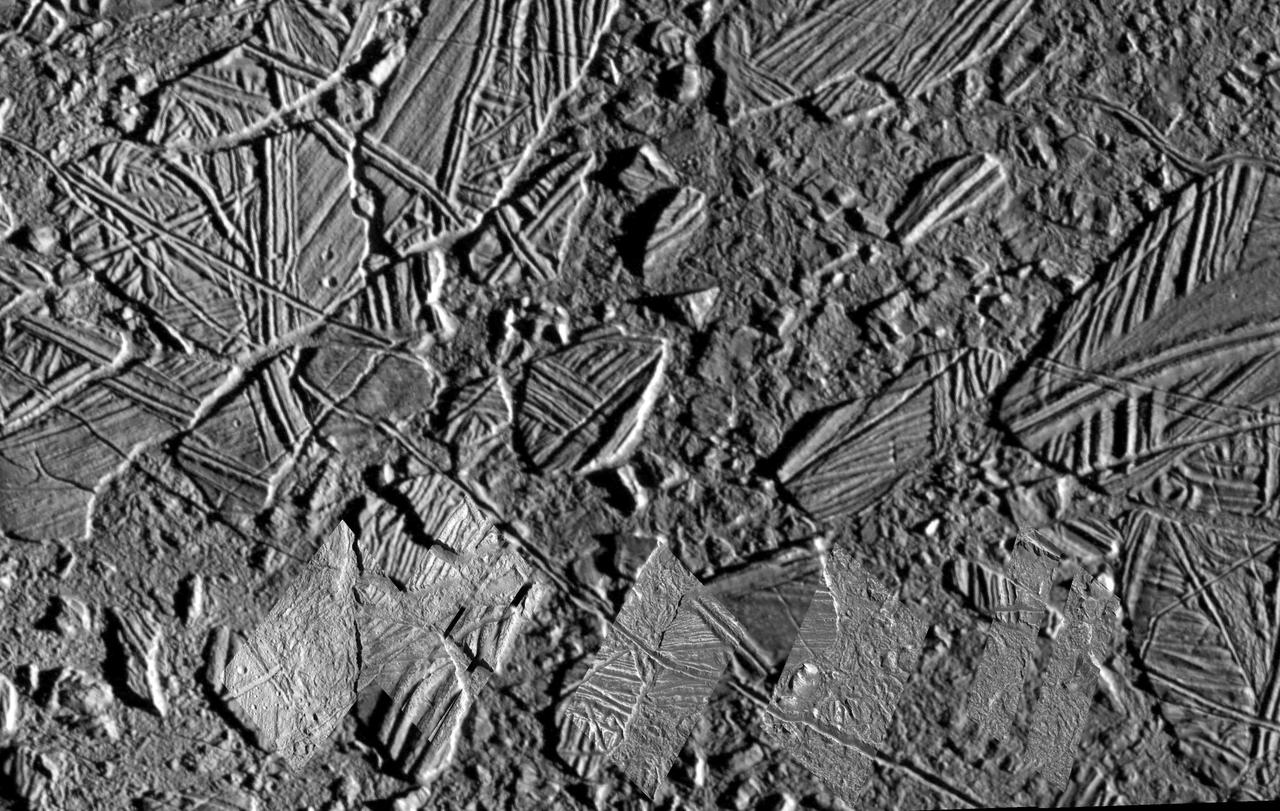
A Closer Look at Chaos on Europa
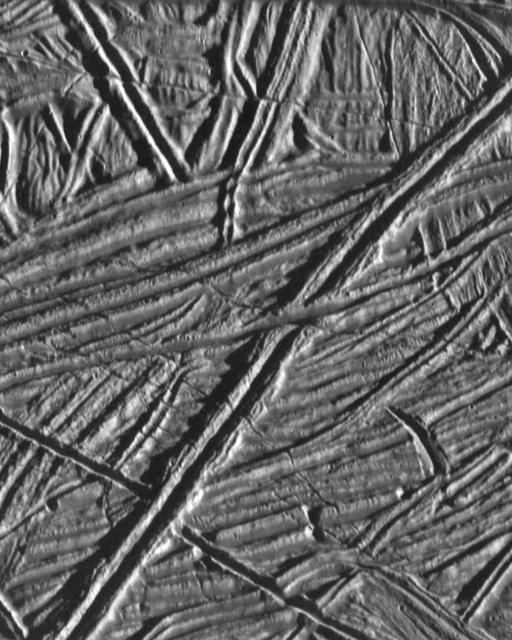
Europa Under Stress
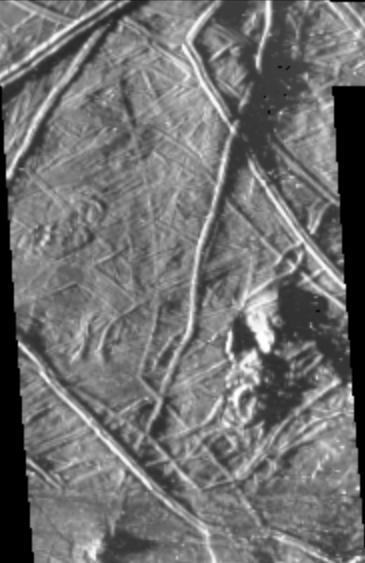
Topography on Europa....the Shadow Knows
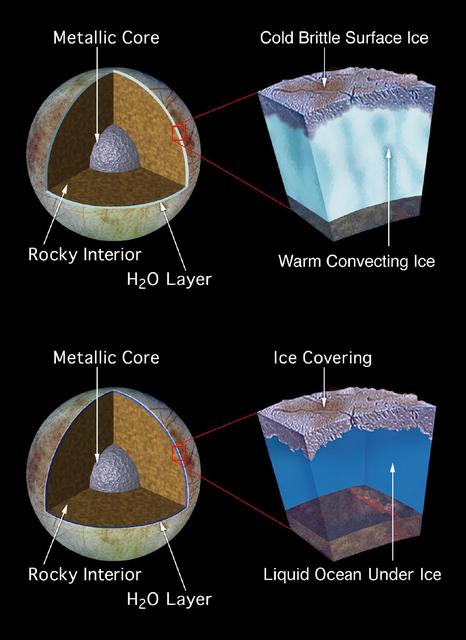
Model of Europa Subsurface Structure

Europa Ice Floes
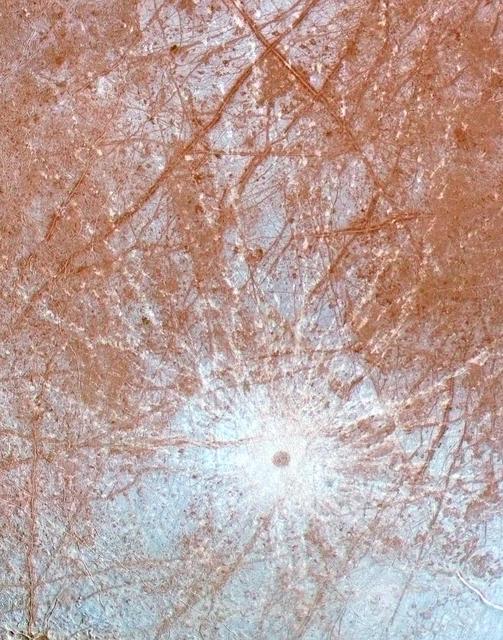
Pwyll Crater on Europa
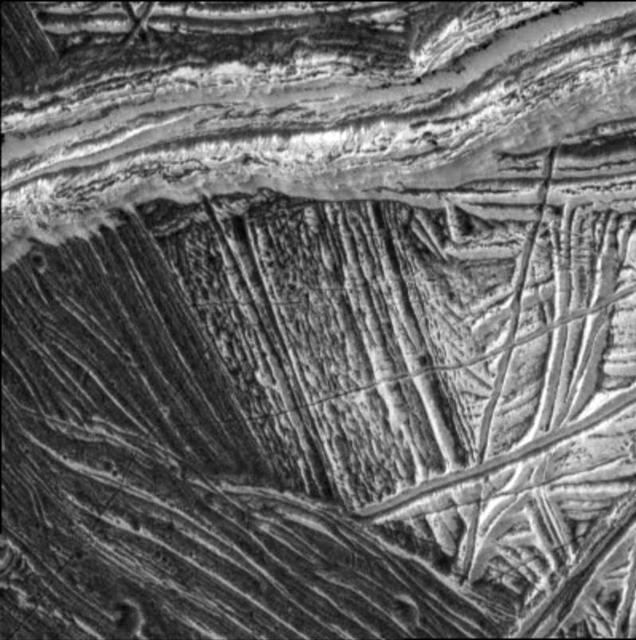
Europa Wedge Region
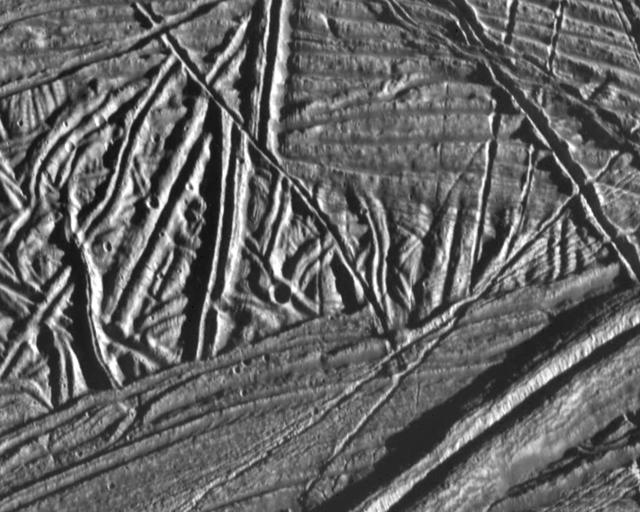
Ridges and Fractures on Europa
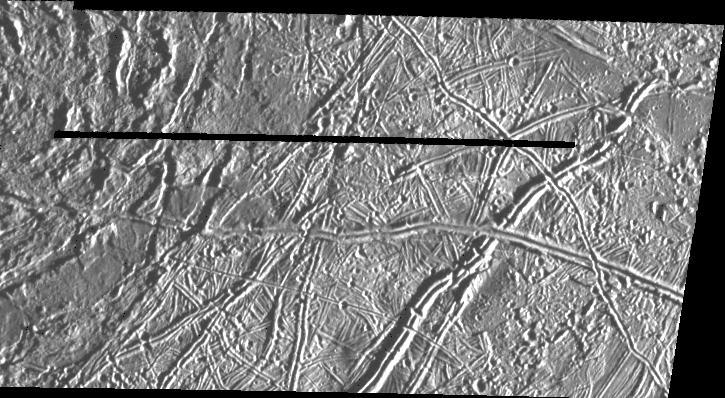
Prominent Doublet Ridges on Europa
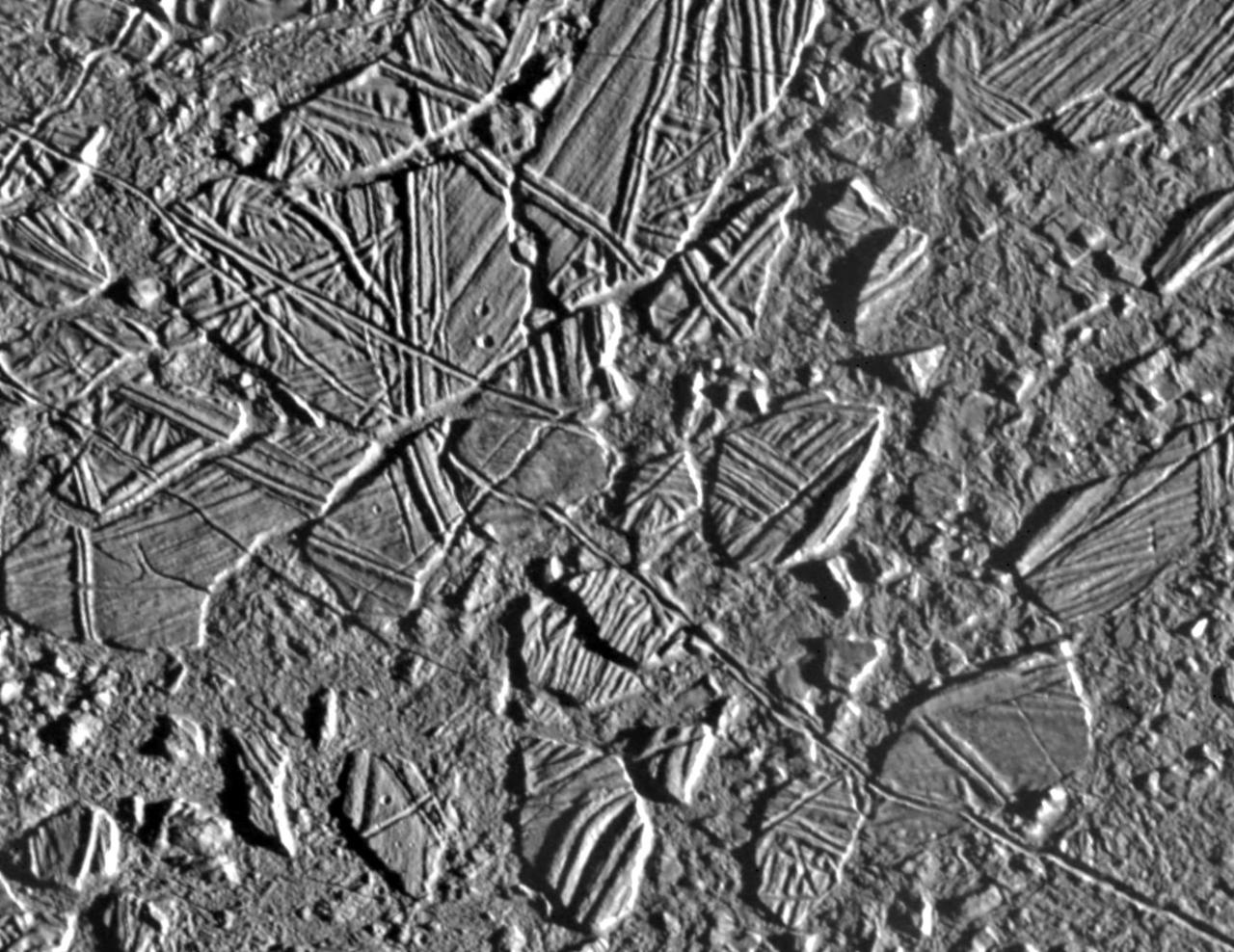
Europa Ice Rafts
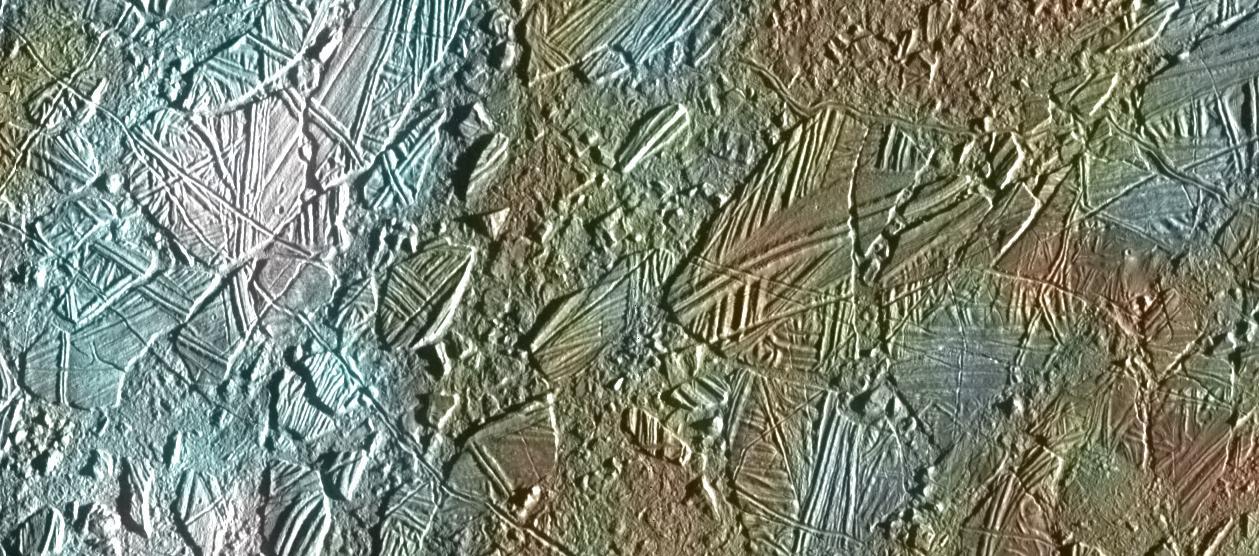
Europa - Ice Rafting View
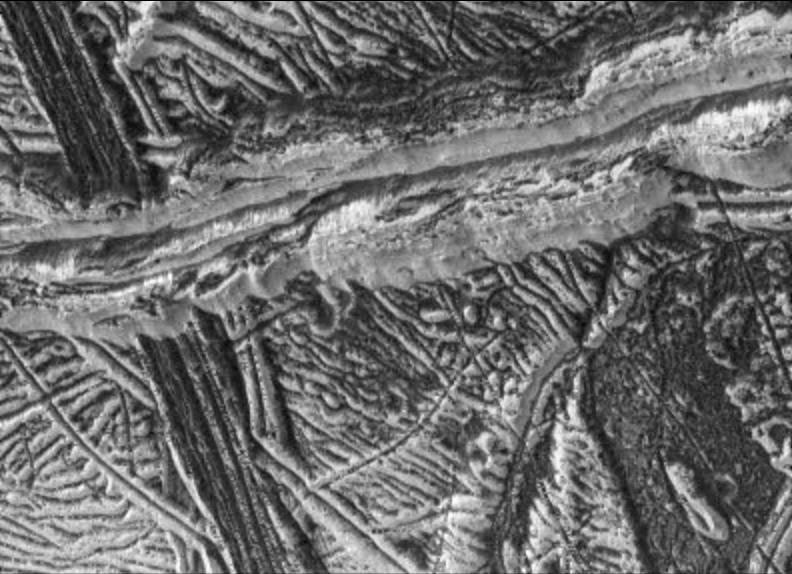
Dark and Bright Ridges on Europa
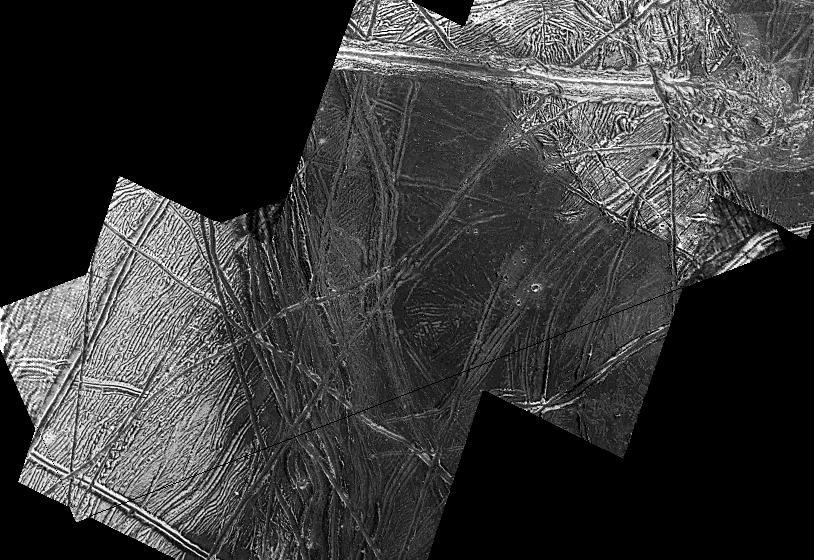
A Dark Spot on Europa
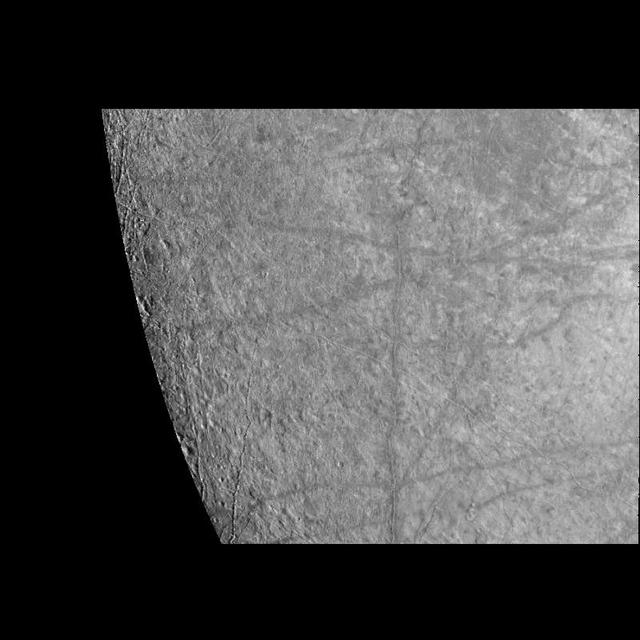
Near-Terminator Image of Europa
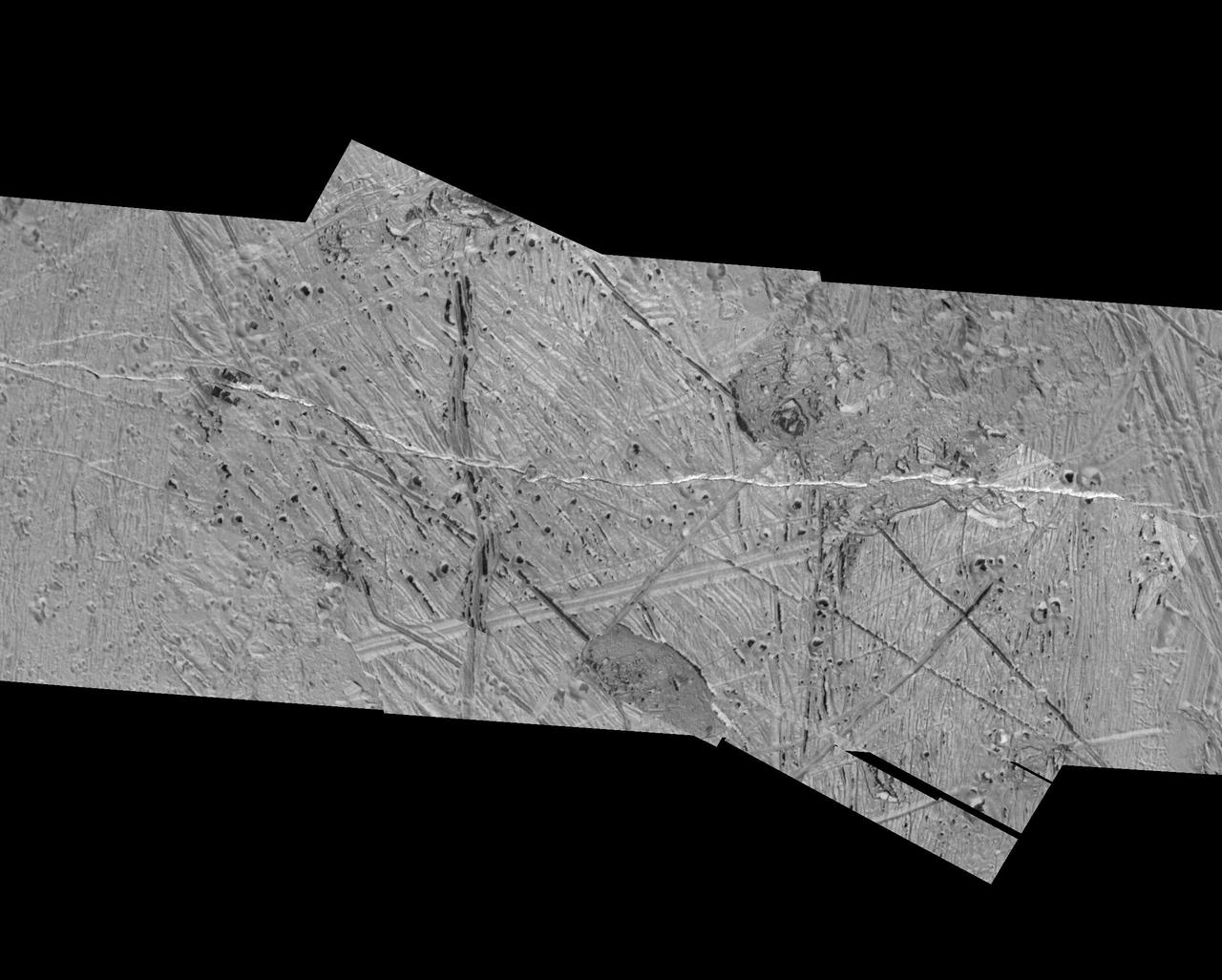
Rugged Terrain on Europa
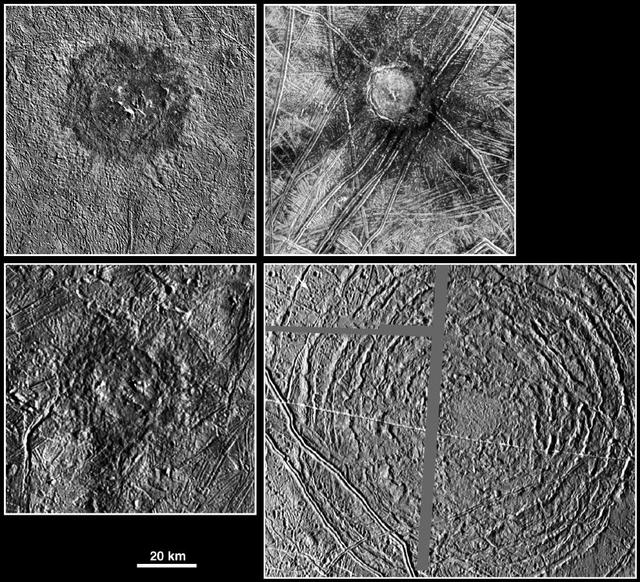
Large Impact Structures on Europa
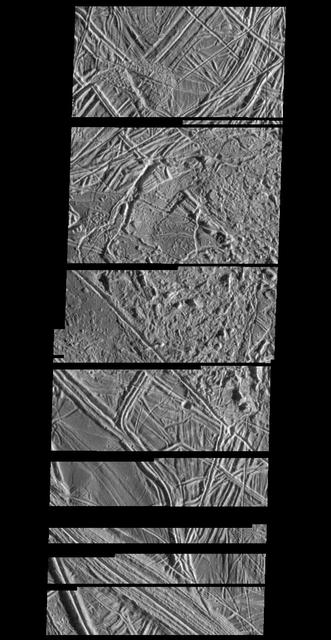
Structurally Complex Surface of Europa

Highest Resolution Image of Europa
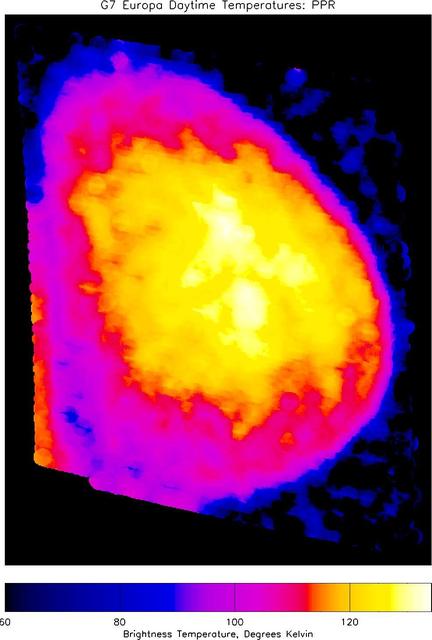
Daytime Temperatures on Europa
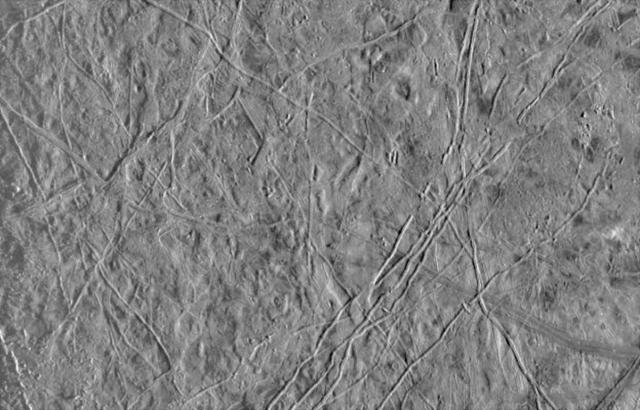
Jupiter Icy Satellite Europa
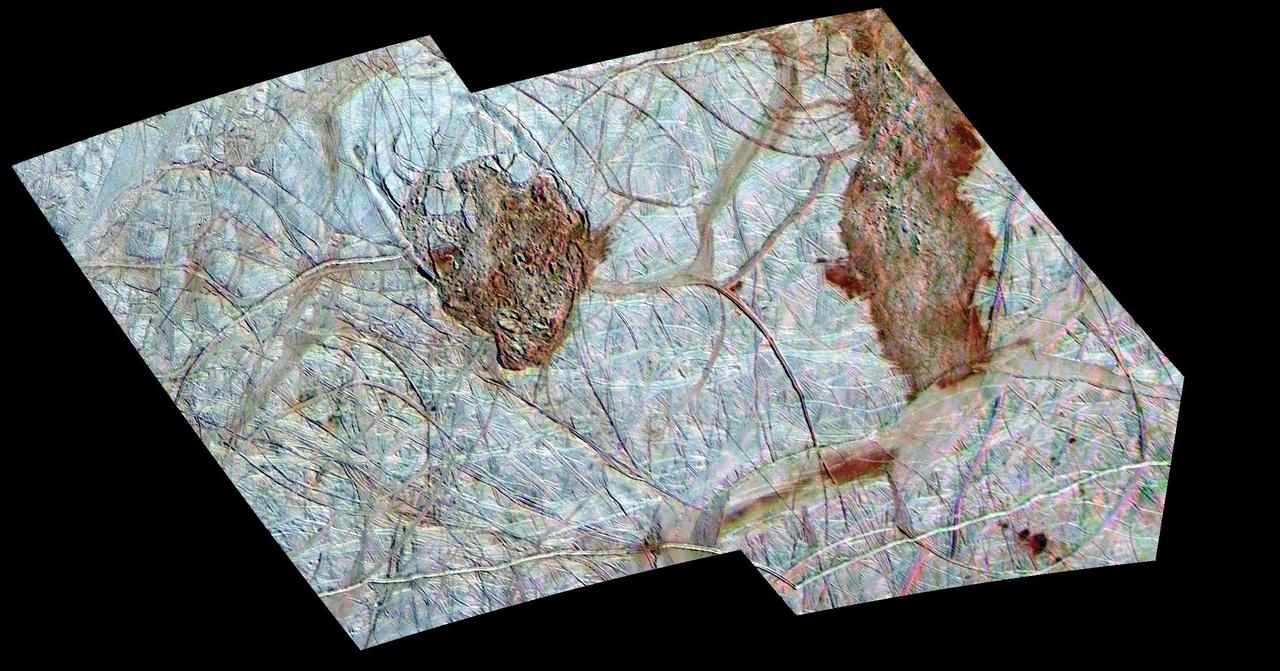
Thera and Thrace on Europa
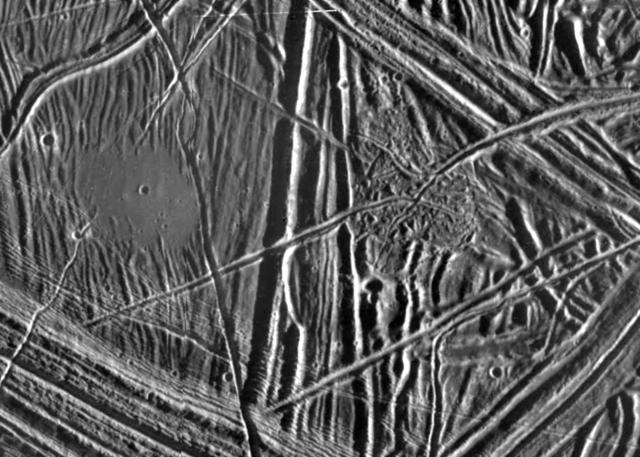
Close-up of Europa Surface
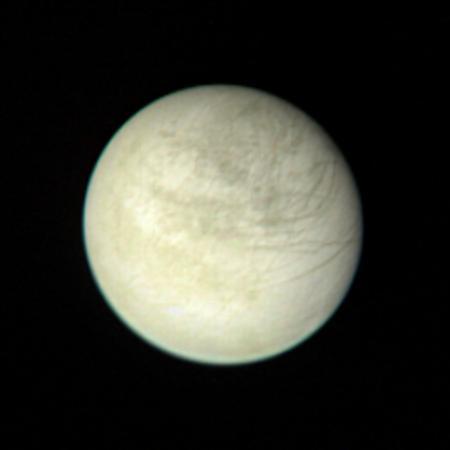
Europa from 2,869,252 Kilometers
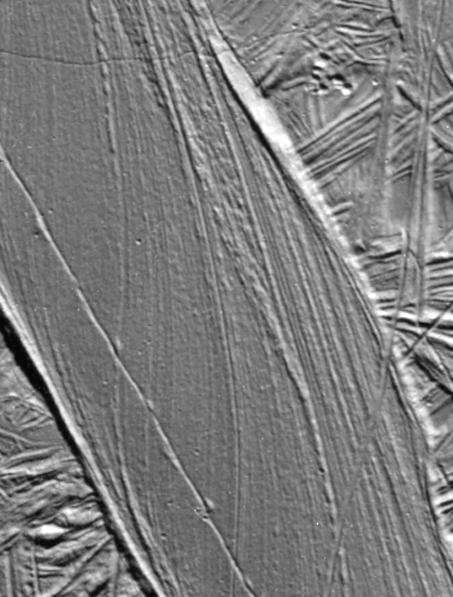
A Record of Crustal Movement on Europa
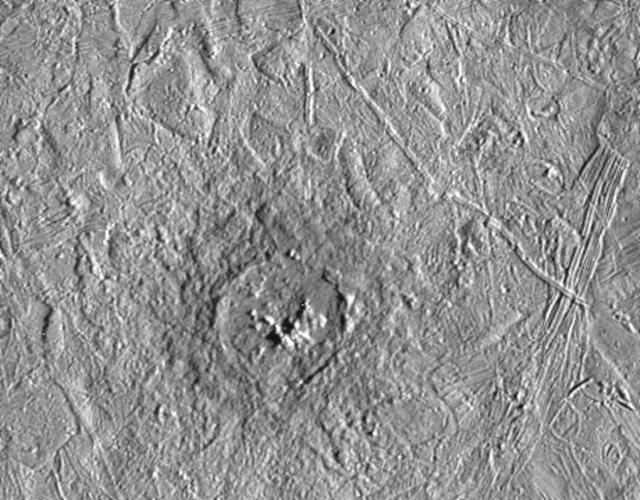
Pwyll Crater on Europa
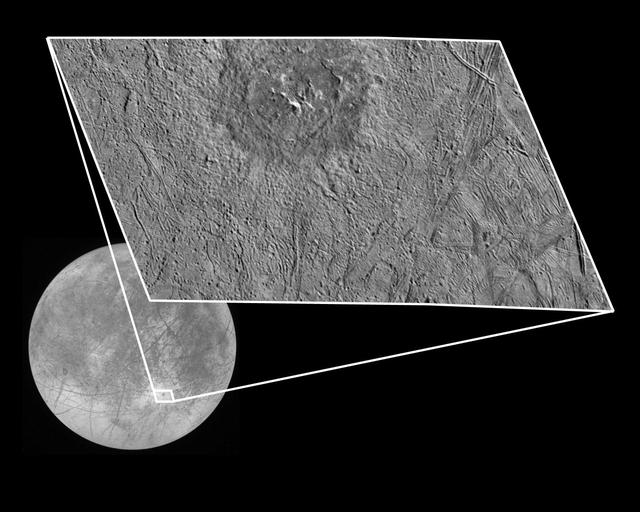
Europa Pwyll Crater

NASA's Europa Clipper is tasked with up-close study of Jupiter's enigmatic moon Europa, which orbits the gas giant within a band of powerful radiation generated by the planet's strong magnetic field. The relative intensity of Jupiter's radiation bands is illustrated in this diagram, along with the orbits of Jupiter's three other largest moons: Io, Ganymede, and Callisto. To limit the damaging effects of radiation on the spacecraft, Europa Clipper will orbit Jupiter elliptically, dipping in for dozens of close flybys of Europa. Between each pass, the spacecraft will retreat to a safer distance from which it can safely transmit the science data it collects back to Earth. Europa Clipper's three main science objectives are to determine the thickness of the moon's icy shell and its interactions with the ocean below, to investigate its composition, and to characterize its geology. The mission's detailed exploration of Europa will help scientists better understand the astrobiological potential for habitable worlds beyond our planet. https://photojournal.jpl.nasa.gov/catalog/PIA26436

The main body of NASA's Europa Clipper spacecraft has been delivered to the agency's Jet Propulsion Laboratory in Southern California, where, over the next two years, engineers and technicians will finish assembling the craft by hand before testing it to make sure it can withstand the journey to Jupiter's icy moon Europa. Here it is visible in a main clean room at JPL, as engineers and technicians inspect it just after delivery in early June 2022. The Johns Hopkins Applied Physics Laboratory (APL) in Laurel, Maryland, designed and built the spacecraft body in collaboration with JPL and NASA's Goddard Space Flight Center in Greenbelt, Maryland. Set to launch in October 2024, Europa Clipper will conduct nearly 50 flybys of Europa, which scientists are confident harbors an internal ocean containing twice as much water as Earth's oceans combined. And the moon may currently have conditions suitable for supporting life. The spacecraft's nine science instruments will gather data on the moon's atmosphere, surface, and interior – information that scientists will use to gauge the depth and salinity of the ocean, the thickness of the ice crust, and potential plumes that may be venting subsurface water into space. https://photojournal.jpl.nasa.gov/catalog/PIA25236

A mechanical engineer in a clean room at the Johns Hopkins Applied Physics Laboratory (APL) in Laurel, Maryland, installs the detector electronics for the engineering model of the Wide Angle Camera (WAC), one of two cameras that make up the Europa Imaging System (EIS). EIS is one of the science instruments that will fly aboard NASA's Europa Clipper. EIS data will offer fresh insights into Europa's geological structure and processes and will be used to search for evidence of recent or current geologic activity, including potential erupting plumes. With an internal global ocean twice the size of Earth's oceans combined, Europa may have the potential to harbor life. NASA's Europa Clipper spacecraft will swoop around Jupiter on an elliptical path, dipping close to the moon on each flyby to collect data. Understanding Europa's habitability will help scientists better understand how life developed on Earth and the potential for finding life beyond our planet. Europa Clipper is aiming for a launch readiness date of 2024. https://photojournal.jpl.nasa.gov/catalog/PIA24325

Europa Hemispherical Globes
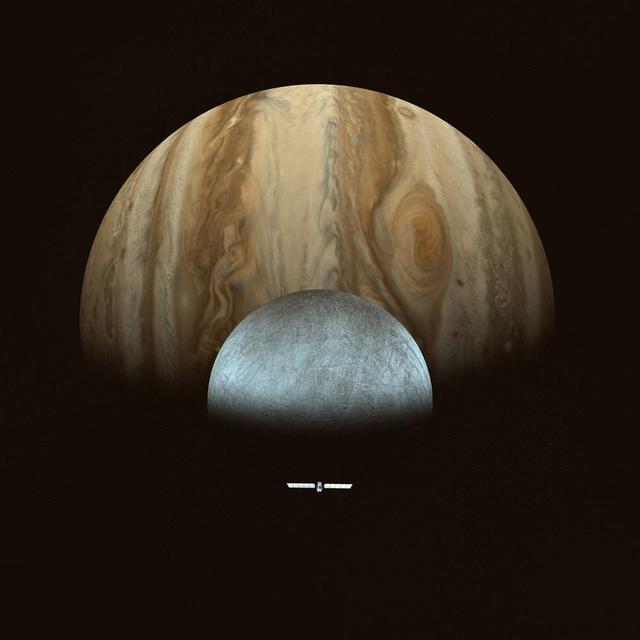
This artist's concept depicts NASA's Europa Clipper spacecraft approaching Jupiter and its icy moon Europa. Scheduled to arrive at Jupiter in April 2030, Europa Clipper will orbit the gas giant, and will be the first mission to specifically target Europa for detailed science investigation. Europa Clipper's three main science objectives are to determine the thickness of the moon's icy shell and its interactions with the ocean below, to investigate its composition, and to characterize its geology. The mission's detailed exploration of Europa will help scientists better understand the astrobiological potential for habitable worlds beyond our planet. https://photojournal.jpl.nasa.gov/catalog/PIA26445

This graphic illustrates the main science objectives of NASA's Europa Clipper mission to Jupiter's moon Europa: to understand the nature of Europa's icy shell and confirm the existence of a subsurface ocean, investigate Europa's composition, characterize its geology, and determine the level of activity, such as possible water plumes. Clockwise from top left: an artist's concept of Europa's interior, which likely contains a global ocean beneath the icy surface, with possible hydrothermal activity on the ocean floor; water signatures at Europa's Manannán Crater made visible by mapping colors onto infrared data from NASA's Galileo mission to Jupiter; ultraviolet observations by the Hubble Space Telescope showing evidence of a possible plume at Europa and indicating possible activity at the moon; and a color view of Europa's Conamara Chaos region based on an image from NASA's Galileo mission. Europa Clipper's three main science objectives are to determine the thickness of the moon's icy shell and its interactions with the ocean below, to investigate its composition, and to characterize its geology. The mission's detailed exploration of Europa will help scientists better understand the astrobiological potential for habitable worlds beyond our planet. https://photojournal.jpl.nasa.gov/catalog/PIA26461

This artist's concept depicts NASA's Europa Clipper spacecraft in orbit around Jupiter. Scientists believe Jupiter's icy moon Europa harbors a vast internal ocean that may have conditions suitable for supporting life. While orbiting Jupiter, the spacecraft will fly by the moon about 50 times, allowing its science instruments to gather data on Europa's atmosphere, surface, and interior – information that will help scientists learn more about the ocean, the ice crust, and potential plumes that may be venting subsurface water into space. Europa Clipper's three main science objectives are to determine the thickness of the moon's icy shell and its interactions with the ocean below, to investigate its composition, and to characterize its geology. The mission's detailed exploration of Europa will help scientists better understand the astrobiological potential for habitable worlds beyond our planet. https://photojournal.jpl.nasa.gov/catalog/PIA26068

This artist's concept depicts NASA's Europa Clipper spacecraft in orbit at Jupiter as it passes over the gas giant's icy moon Europa (lower right). Scheduled to arrive at Jupiter in April 2030, the mission will be the first to specifically target Europa for detailed science investigation. Europa Clipper's three main science objectives are to determine the thickness of the moon's icy shell and its interactions with the ocean below, to investigate its composition, and to characterize its geology. The mission's detailed exploration of Europa will help scientists better understand the astrobiological potential for habitable worlds beyond our planet. https://photojournal.jpl.nasa.gov/catalog/PIA26431
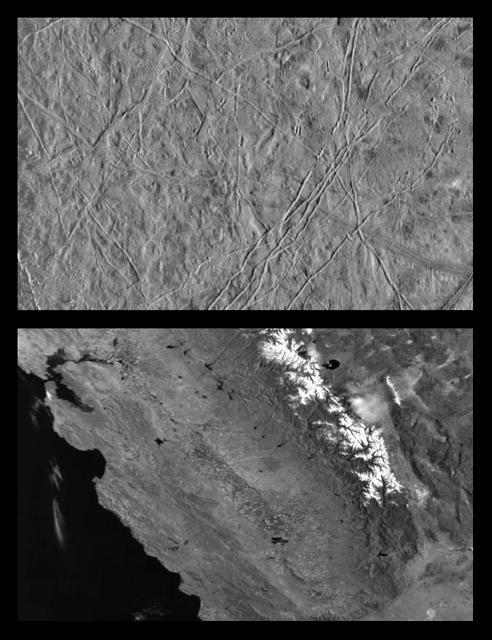
Icy Europa and similar scales on Earth
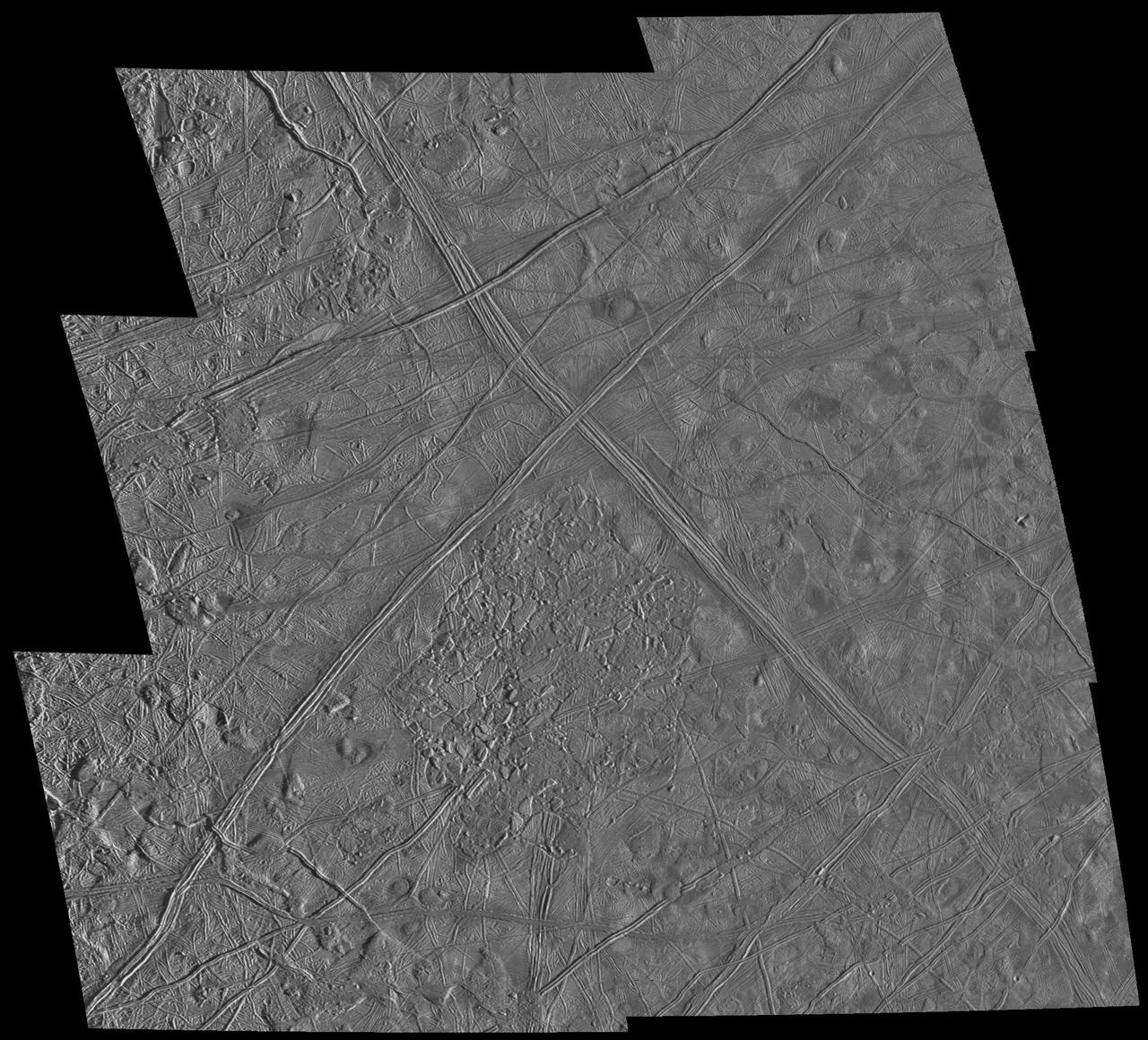
Geologic Evidence of Internal Activity on Europa
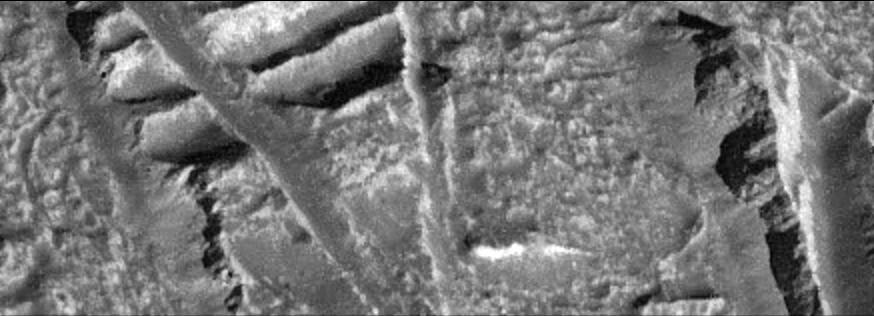
Europa Ice Cliffs-High Resolution
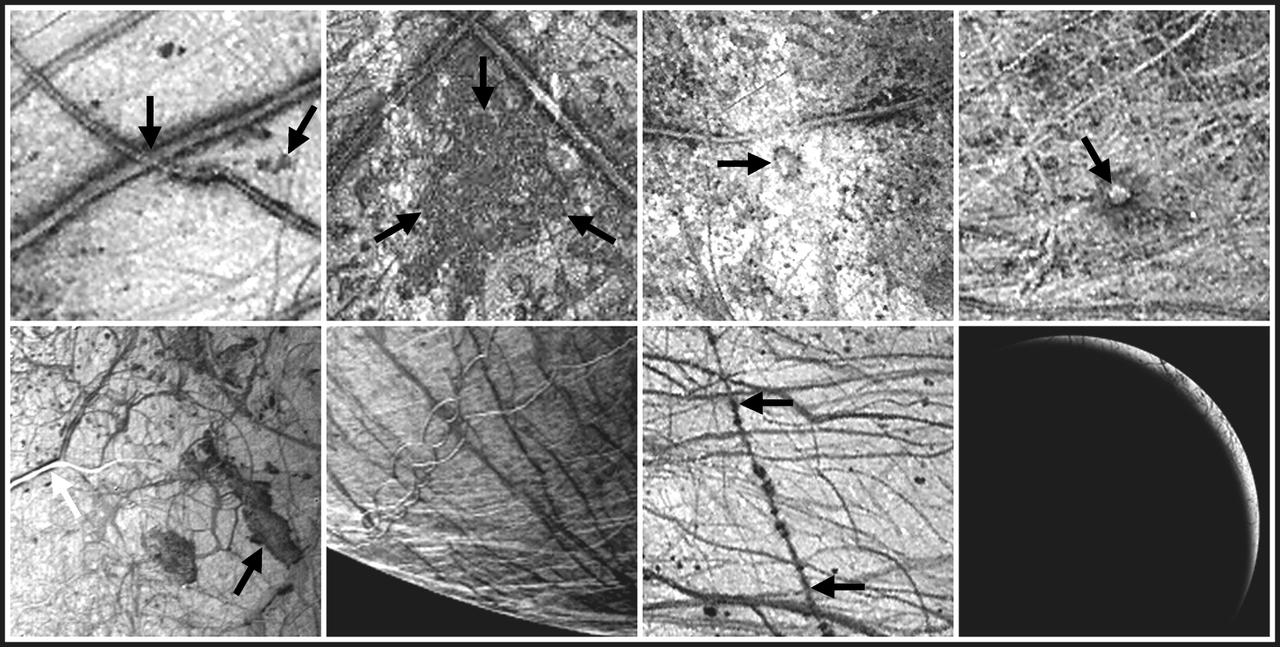
Europa Imaging Highlights During GEM
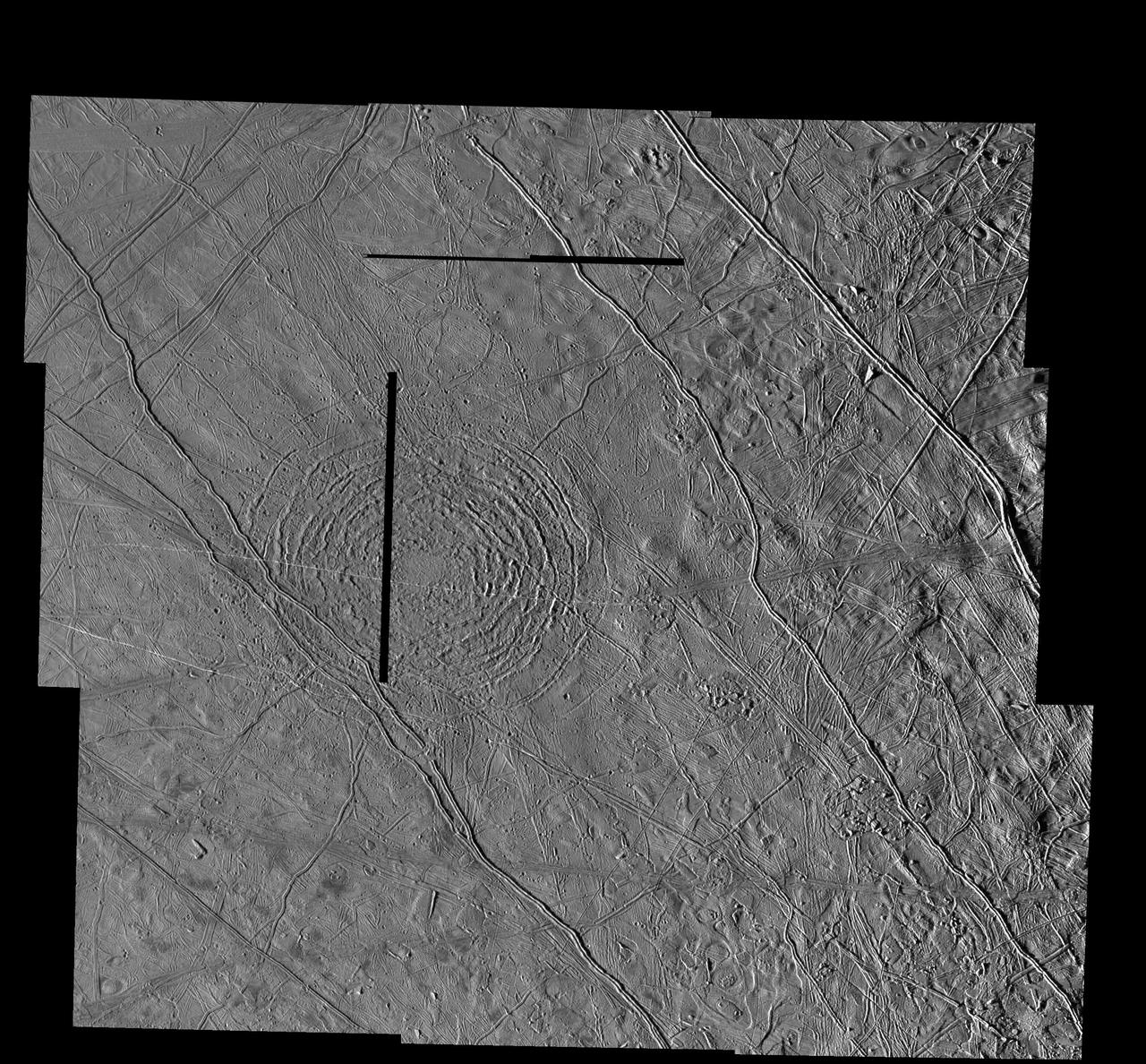
The Tyre multi-ring Structure on Europa
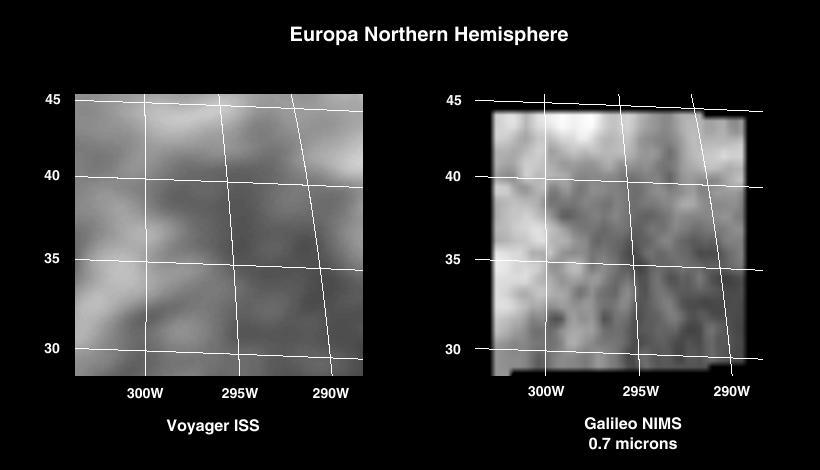
Infrared Observations of Europa Trailing Side

Topography Around Europa Cilix Crater
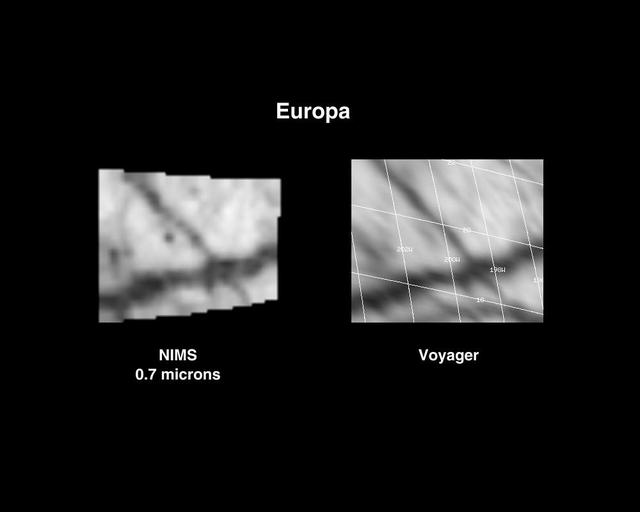
Europa 6th Orbit NIMS Data
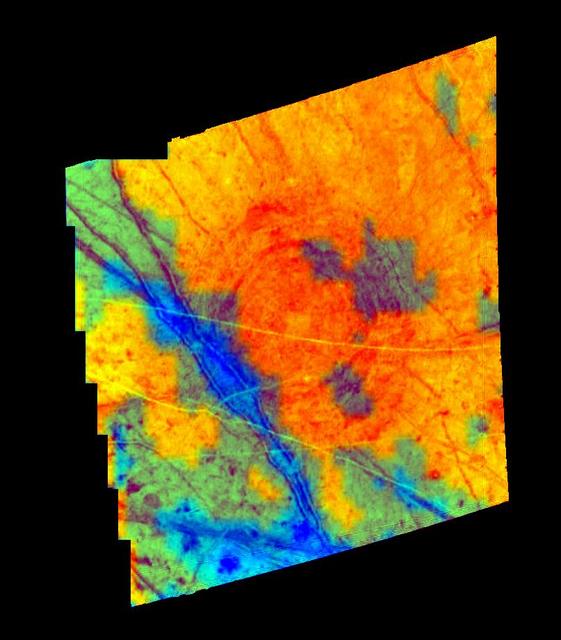
A Compositional Map of the Tyre Region of Europa
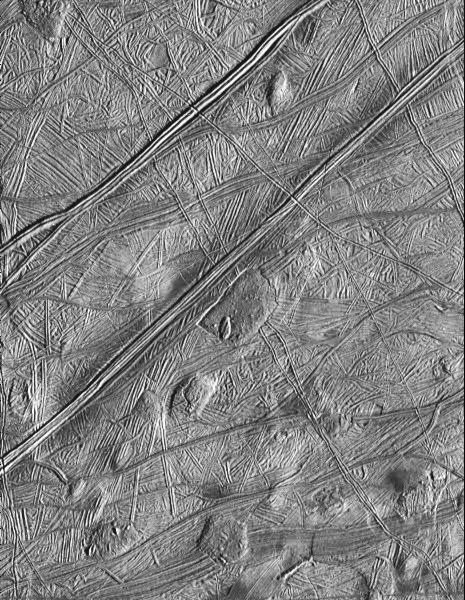
Dome Shaped Features on Europa Surface
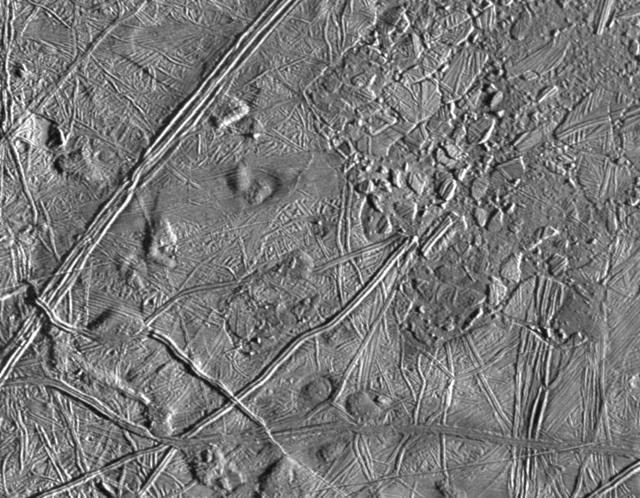
Close-up of Europa Trailing Hemisphere
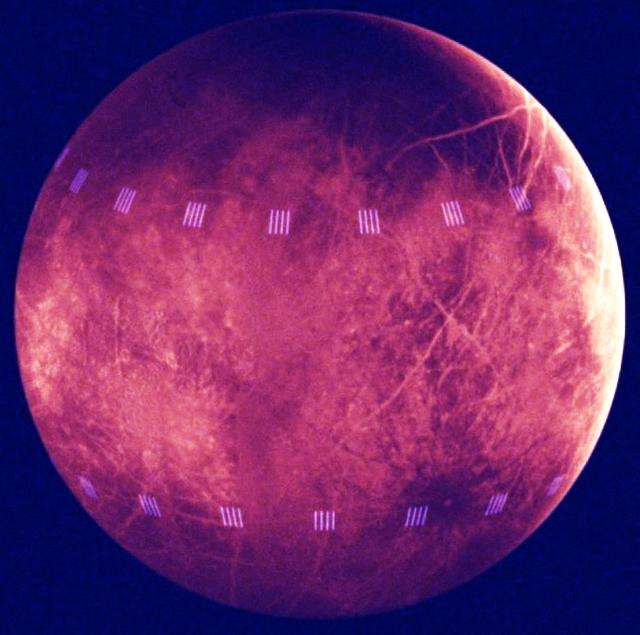
This image is a simulation of how NASA's Europa Clipper will understand which areas of the Jovian moon Europa are warm and active by studying the moon's thermal emissions. Scientists based this image on a model of data from NASA's Galileo mission and data from an instrument on NASA's Cassini mission that studied warm regions of Saturn's moon Enceladus where jets of water ice and organic chemicals spray out from vents in the icy surface. Europa Clipper's Europa Thermal Emission Imaging System, or E-THEMIS, will take both daytime and nighttime observations of Europa. The light pink vertical stripes simulate the warm vents seen on the surface of Enceladus, if they were viewed on Europa in the night. If Europa has warm spots like Enceladus, E-THEMIS is expected to detect such areas on Europa, even from a distance. Europa Clipper will get as close as 16 miles (25 kilometers) from the moon's surface, resulting in observations at much higher resolution. Europa Clipper's three main science objectives are to determine the thickness of the moon's icy shell and its interactions with the ocean below, to investigate its composition, and to characterize its geology. The mission's detailed exploration of Europa will help scientists better understand the astrobiological potential for habitable worlds beyond our planet. https://photojournal.jpl.nasa.gov/catalog/PIA26105

This artist's concept depicts NASA's Europa Clipper spacecraft performing a close flyby of Jupiter's icy moon Europa. Scheduled to arrive at Jupiter in April 2030, Europa Clipper will orbit the gas giant and be the first mission to specifically target Europa for detailed science investigation. Europa Clipper's three main science objectives are to determine the thickness of the moon's icy shell and its interactions with the ocean below, to investigate its composition, and to characterize its geology. The mission's detailed exploration of Europa will help scientists better understand the astrobiological potential for habitable worlds beyond our planet. https://photojournal.jpl.nasa.gov/catalog/PIA26443
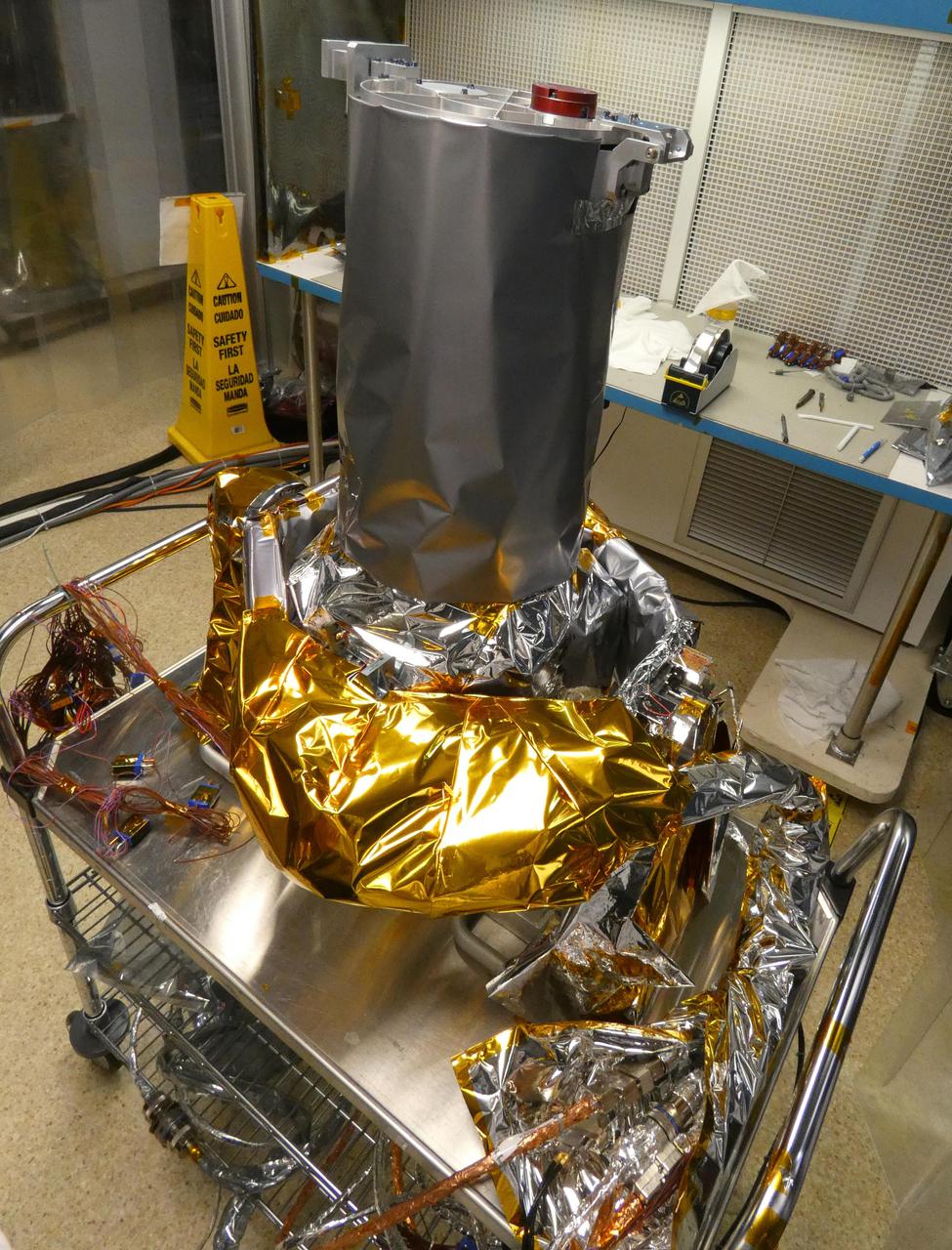
Included in the payload of science instruments for NASA's Europa Clipper is the Europa Imaging System (EIS) Narrow Angle Camera (NAC). Shown here at the Johns Hopkins Applied Physics Laboratory (APL) in Laurel, Maryland, the engineering model, which is used to test the instrument, is mounted on the two-axis gimbal mechanism that allows the NAC telescope to be pointed independently. The model consists of the NAC telescope, electronics, gimbal, and cables, covered in thermal blankets. EIS will allow groundbreaking measurements and map most of Europa, an icy moon of Jupiter with an ocean under its crust, at resolutions previous missions could only achieve in small areas. EIS data will offer fresh insights into Europa's geological structure and processes and will be used to search for evidence of recent or current geologic activity, including potential erupting plumes. With an internal global ocean twice the size of Earth's oceans combined, Europa may have the potential to harbor life. NASA's Europa Clipper spacecraft will swoop around Jupiter on an elliptical path, dipping close to the moon on each flyby to collect data. Understanding Europa's habitability will help scientists better understand how life developed on Earth and the potential for finding life beyond our planet. https://photojournal.jpl.nasa.gov/catalog/PIA24328
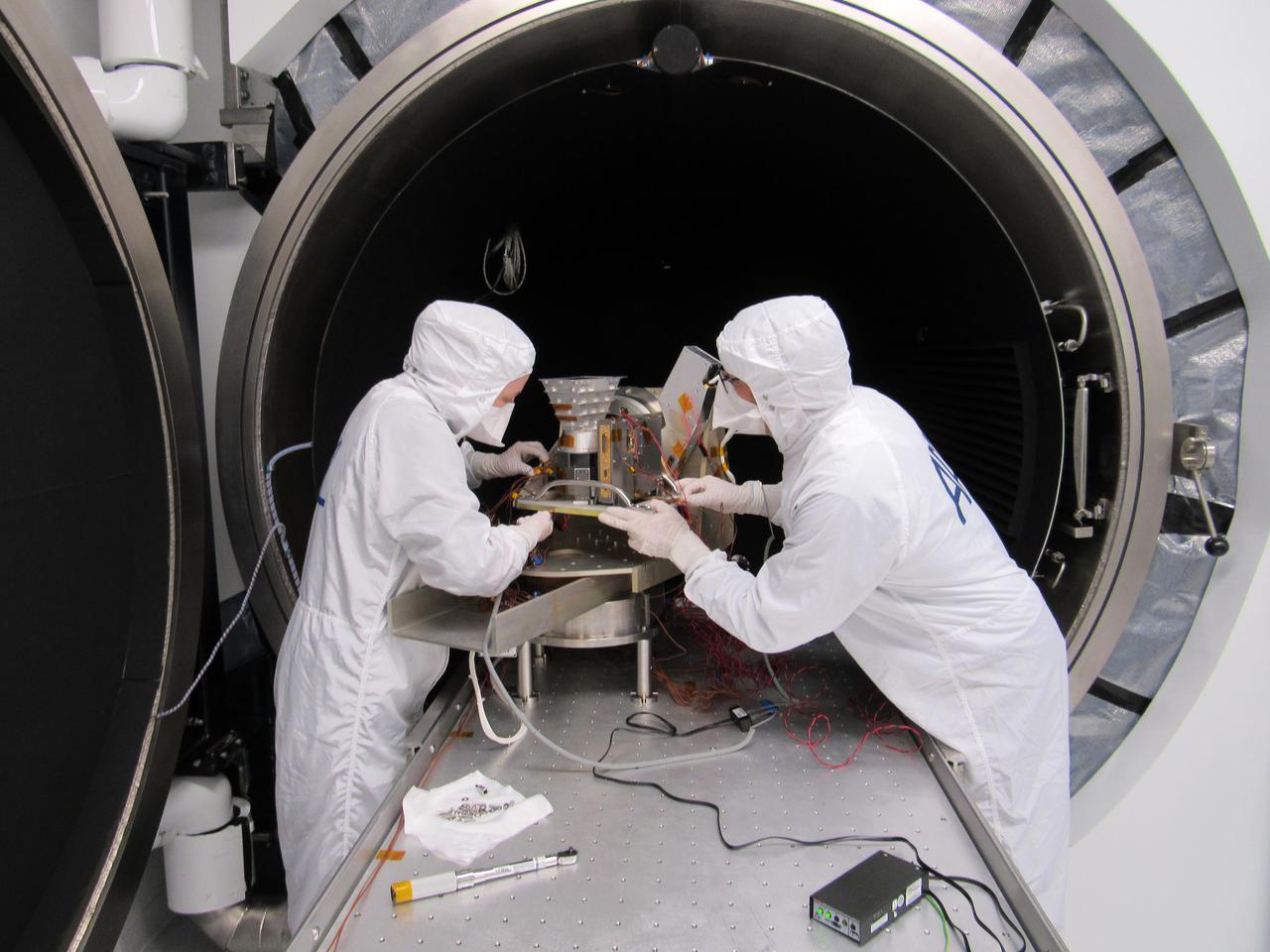
Included in the payload of science instruments for NASA's Europa Clipper is the Europa Imaging System (EIS) Wide Angle Camera (WAC). Here, mechanical engineers at the Johns Hopkins Applied Physics Laboratory (APL) in Laurel, Maryland, set up the engineering model of the WAC telescope and electronics in a thermal-vacuum chamber for environmental testing. EIS will allow groundbreaking measurements and map most of Europa, an icy moon of Jupiter with an ocean under its crust, at resolutions previous missions could only achieve in small areas. EIS data will offer fresh insights into Europa's geological structure and processes and will be used to search for evidence of recent or current geologic activity, including potential erupting plumes. With an internal global ocean twice the size of Earth's oceans combined, Europa may have the potential to harbor life. NASA's Europa Clipper spacecraft will swoop around Jupiter on an elliptical path, dipping close to the moon on each flyby to collect data. Understanding Europa's habitability will help scientists better understand how life developed on Earth and the potential for finding life beyond our planet. https://photojournal.jpl.nasa.gov/catalog/PIA24329
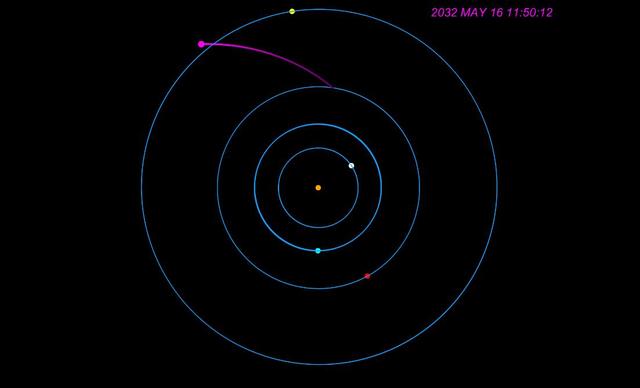
This animation shows how NASA's Europa Clipper spacecraft will orbit Jupiter and perform 49 flybys of Europa during its prime mission. The center orange dot represents Jupiter, with the simplified circular orbits of four of the planet's moons shown: Io (gray), Europa (blue), Ganymede (red), and Callisto (yellow). The Europa Clipper spacecraft is represented by the magenta dot looping in and out. At top right is a timestamp indicating when the flybys shown would occur; those depicted take place from April to July 2032. Europa Clipper's three main science objectives are to determine the thickness of the moon's icy shell and its interactions with the ocean below, to investigate its composition, and to characterize its geology. The mission's detailed exploration of Europa will help scientists better understand the astrobiological potential for habitable worlds beyond our planet. Animation available at https://photojournal.jpl.nasa.gov/catalog/PIA26463
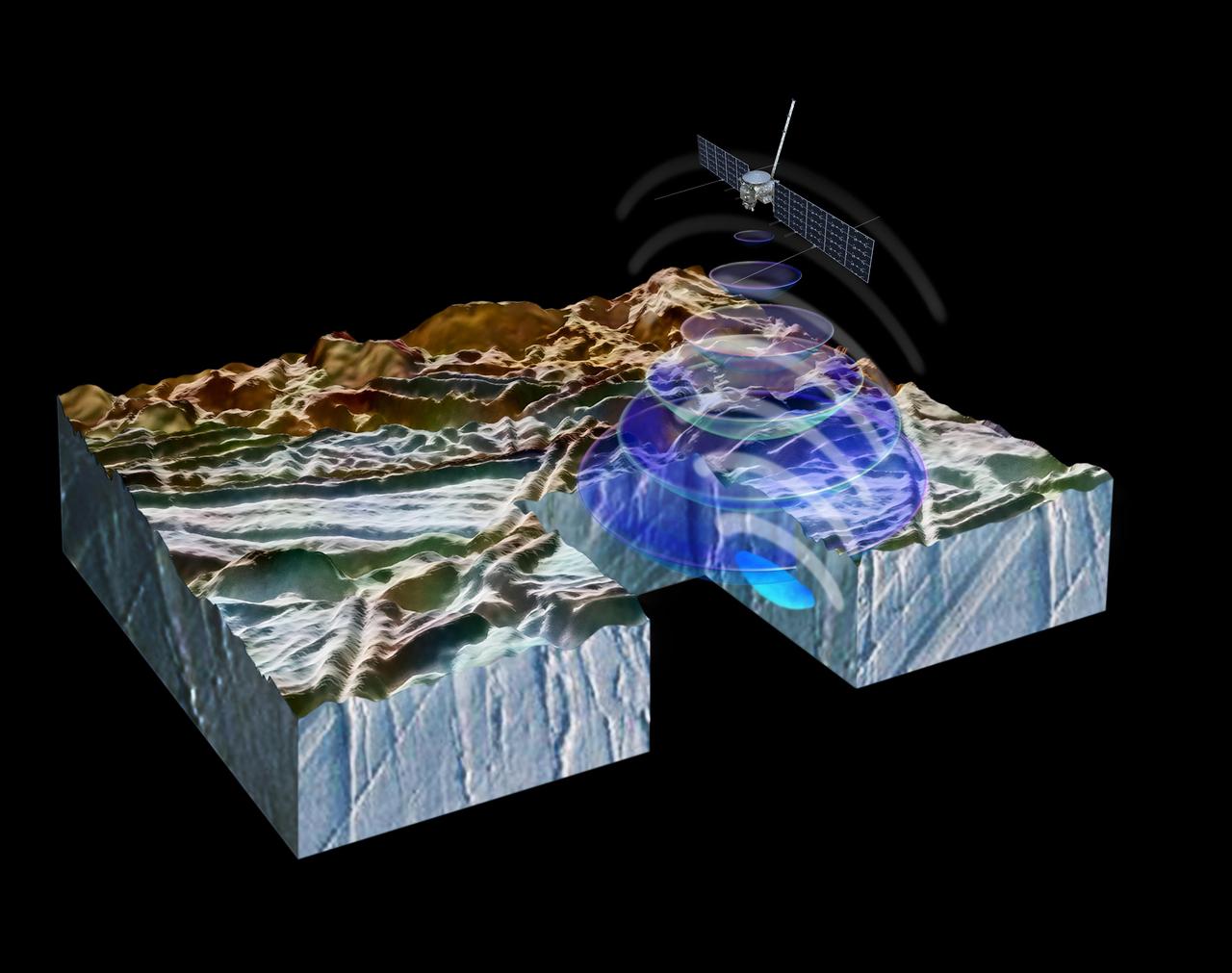
This artist's concept illustrates how NASA's Europa Clipper spacecraft will use radar to peer beneath Europa's ice crust to reveal the structure underneath. Europa Clipper will carry an instrument called the Radar for Europa Assessment and Sounding: Ocean to Near-surface (REASON) that can penetrate beneath the Jovian moon's surface layer, revealing potential pockets of water, cracks, or other features not visible from the outside. Europa Clipper's three main science objectives are to determine the thickness of the moon's icy shell and its interactions with the ocean below, to investigate its composition, and to characterize its geology. The mission's detailed exploration of Europa will help scientists better understand the astrobiological potential for habitable worlds beyond our planet. https://photojournal.jpl.nasa.gov/catalog/PIA26106

Engineers in a clean room at NASA's Jet Propulsion Laboratory in Southern California build the nadir deck for NASA's Europa Clipper spacecraft. The deck will stabilize the spacecraft's sensors and help the mission team ensure its instruments are oriented correctly. With an internal global ocean under a thick layer of ice, Jupiter's moon Europa may have the potential to harbor existing life. Europa Clipper will swoop around Jupiter on an elliptical path, dipping close to the moon on each flyby. Understanding Europa's habitability will help scientists better understand how life developed on Earth and the potential for finding life beyond our planet. Europa Clipper is set to launch in 2024. https://photojournal.jpl.nasa.gov/catalog/PIA24480
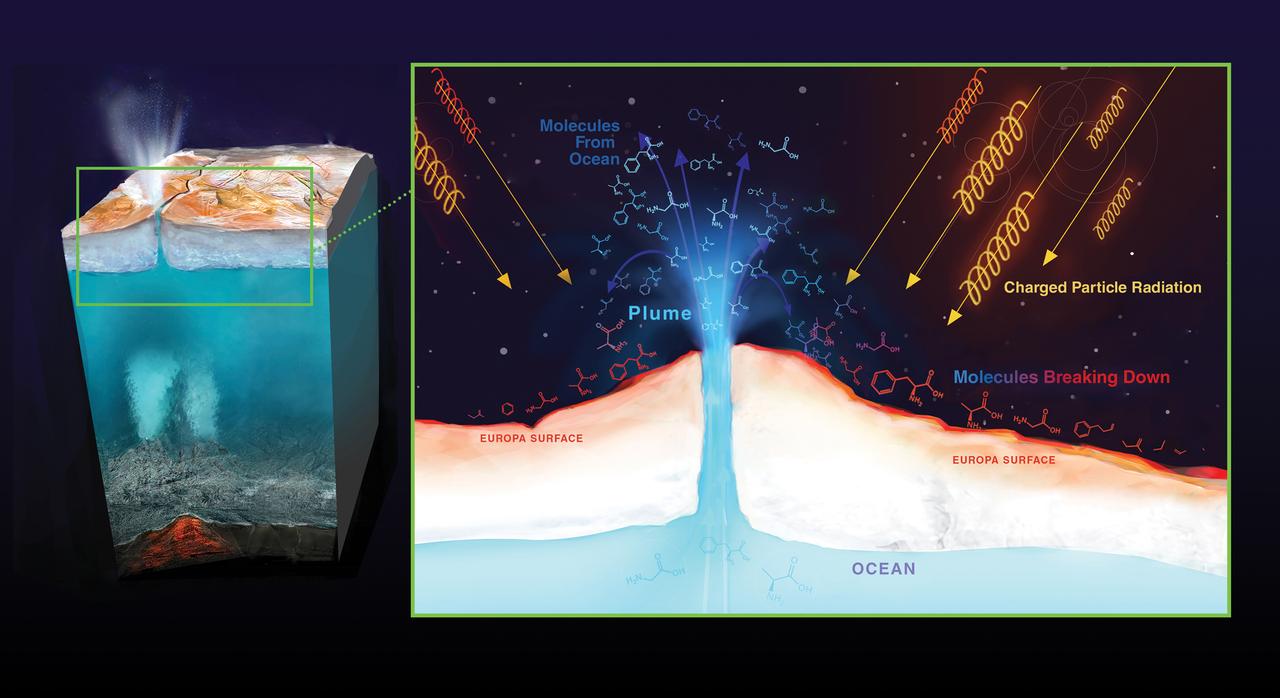
Radiation from Jupiter can destroy molecules on Europa's surface. Material from Europa's ocean that ends up on the surface of Europa will be bombarded by radiation. The radiation breaks apart molecules and changes the chemical composition of the material, possibly destroying any biosignatures, or chemical signs that could imply the presence of life. To interpret what future space missions find on the surface of Europa we must first understand how material has been modified by radiation. https://photojournal.jpl.nasa.gov/catalog/PIA22479

This illustration, updated in December 2020, depicts NASA's Europa Clipper spacecraft. With an internal global ocean twice the size of Earth's oceans combined, Jupiter's moon Europa may have the potential to harbor life. The Europa Clipper orbiter will swoop around Jupiter on an elliptical path, dipping close to the moon on each flyby to collect data. The mission will gather measurements of the internal ocean, map the surface geology and composition, and hunt for plumes of water vapor that may be venting from the icy crust. Understanding Europa's habitability will help scientists better understand how life developed on Earth and the potential for finding life beyond our planet. Europa Clipper is aiming for a launch readiness date of 2024. https://photojournal.jpl.nasa.gov/catalog/PIA24321
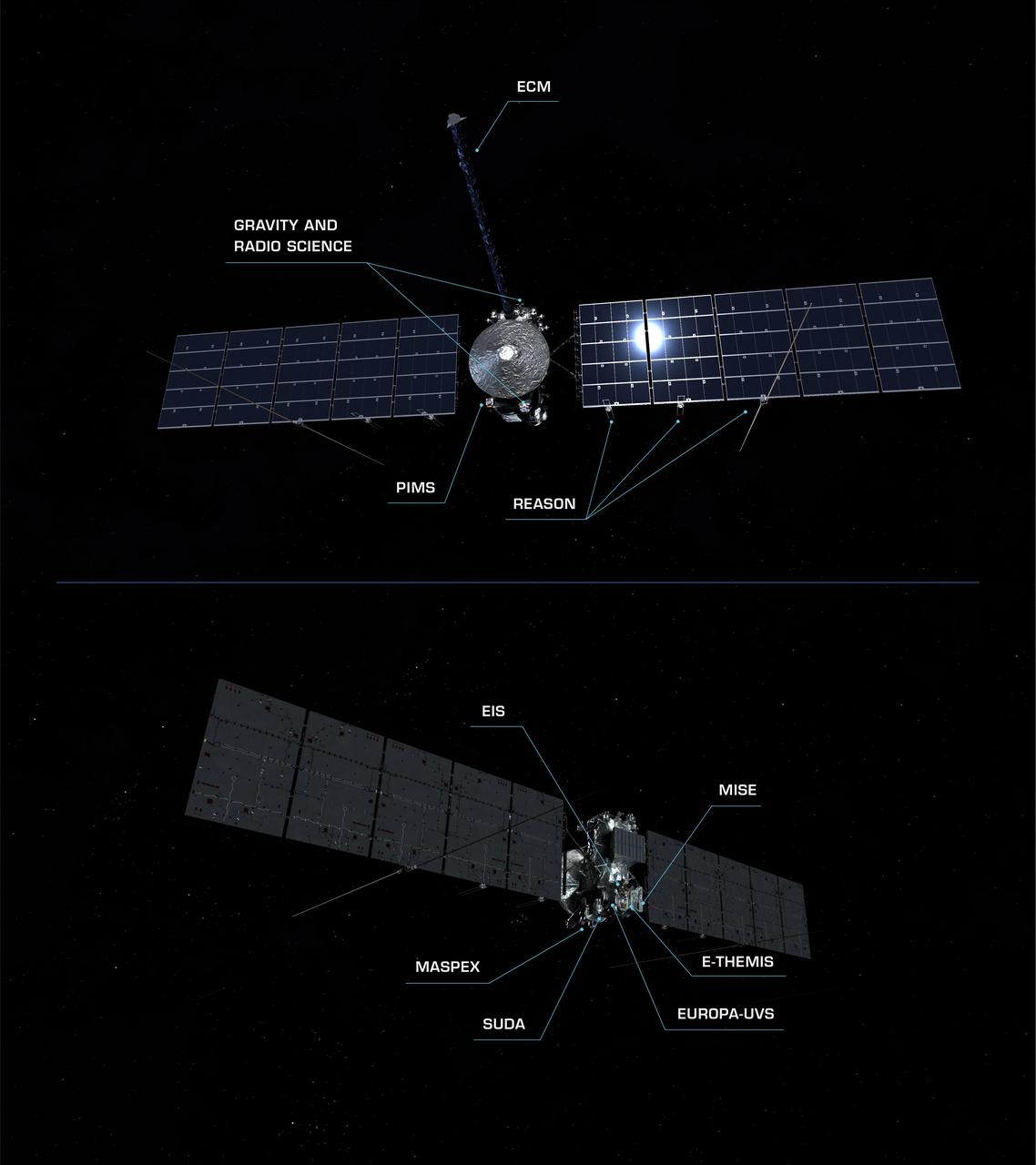
To conduct its detailed investigations of Jupiter's icy moon Europa, NASA's Europa Clipper spacecraft carries a suite of nine science instruments and a gravity experiment that uses its telecommunications system. These components are depicted in this pair of artist's concepts showing each side of the spacecraft, and include: Europa Imaging System (EIS) Europa Thermal Emission Imaging System (E-THEMIS) Europa Ultraviolet Spectrograph (Europa-UVS) Mapping Imaging Spectrometer for Europa (MISE) Europa Clipper Magnetometer (ECM) Plasma Instrument for Magnetic Sounding (PIMS) Radar for Europa Assessment and Sounding: Ocean to Near-surface (REASON) MAss Spectrometer for Planetary EXploration/Europa (MASPEX) Surface Dust Analyzer (SUDA) Gravity and Radio Science Experiment (G/RS) Europa Clipper's three main science objectives are to determine the thickness of the moon's icy shell and its interactions with the ocean below, to investigate its composition, and to characterize its geology. The mission's detailed exploration of Europa will help scientists better understand the astrobiological potential for habitable worlds beyond our planet. https://photojournal.jpl.nasa.gov/catalog/PIA26439
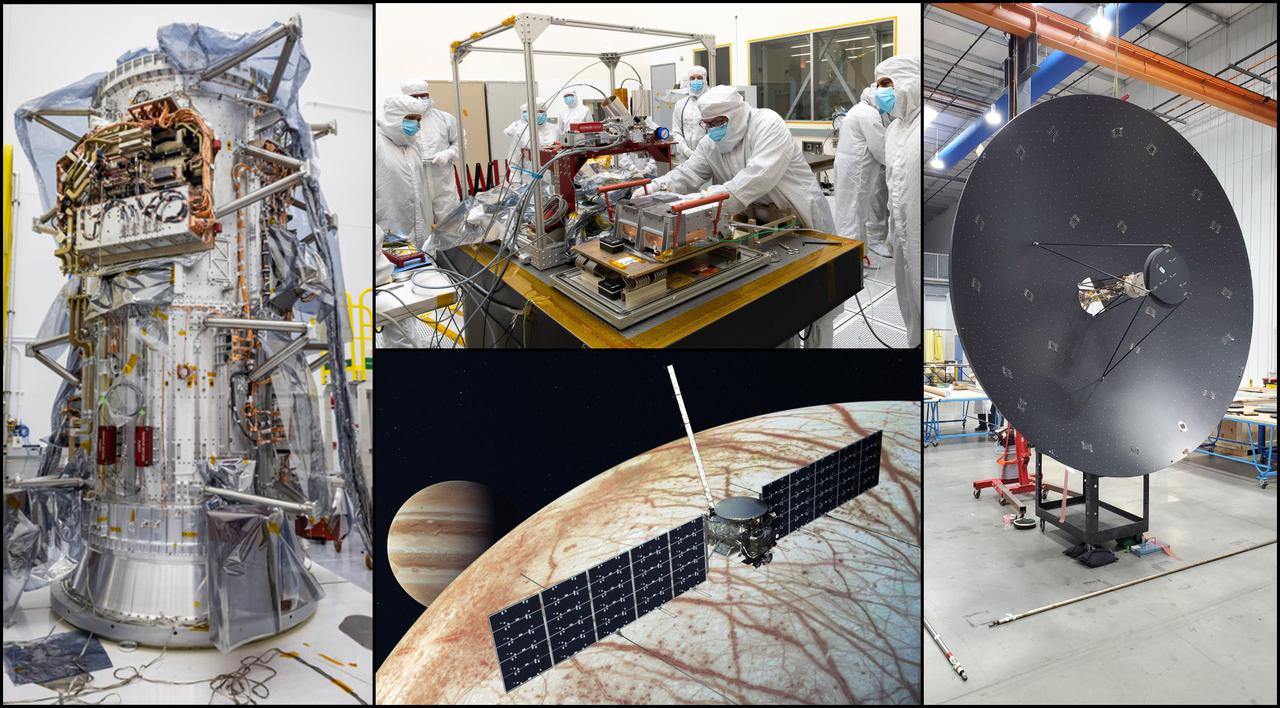
Science instruments and other hardware for NASA's Europa Clipper spacecraft will come together in the mission's final phase before launching to Jupiter's icy moon Europa in 2024. https://photojournal.jpl.nasa.gov/catalog/PIA25125
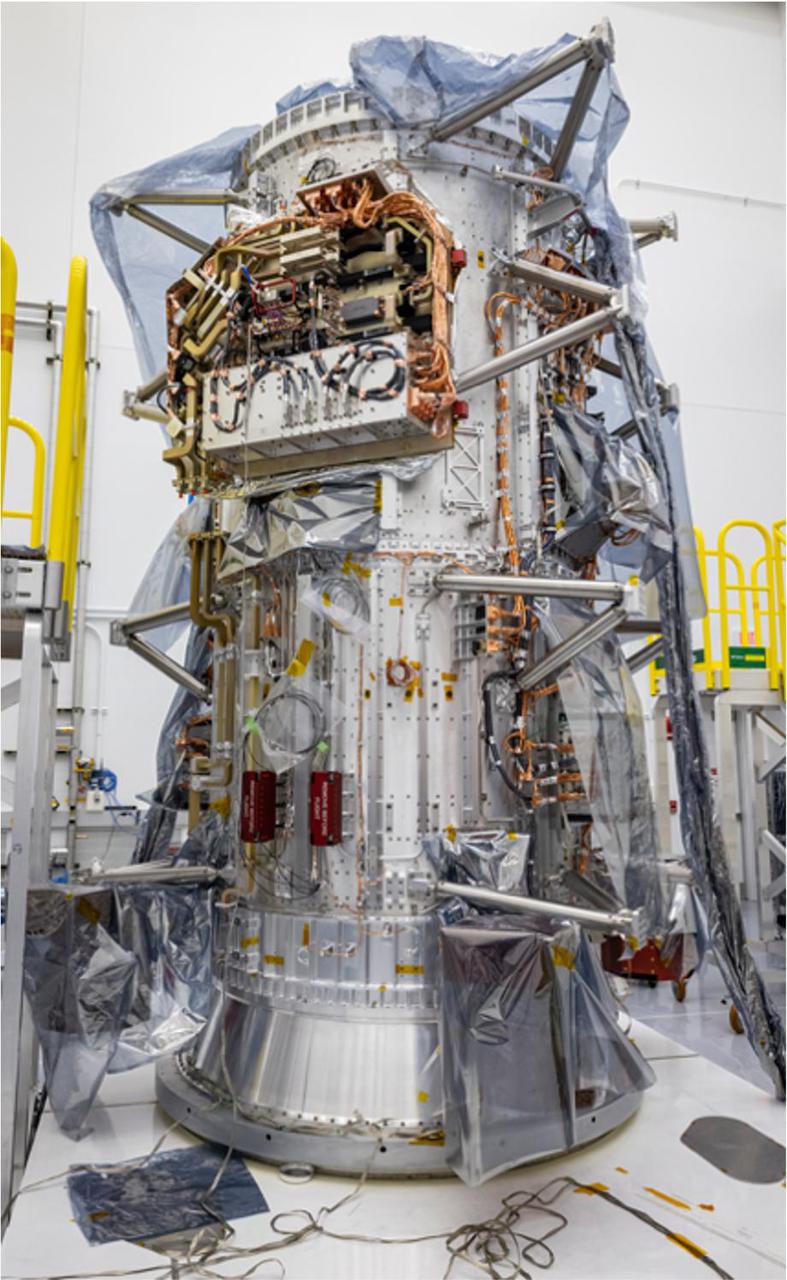
The propulsion module for NASA's Europa Clipper, the main body of the spacecraft, is nearing completion at Johns Hopkins Applied Physics Laboratory (APL) in Laurel, Maryland. The module consists of two stacked cylinders that stand almost 10 feet (3 meters) high and hold the propulsion tanks and rocket engines that will adjust and change Europa Clipper's trajectory once it leaves Earth's atmosphere on its path toward Jupiter's icy moon Europa. The propulsion module will be shipped to NASA's Jet Propulsion Laboratory in Southern California this spring. With an internal global ocean under a thick layer of ice, Jupiter's moon Europa may have the potential to harbor existing life. Europa Clipper will swoop around Jupiter in an elliptical orbit, dipping close to the moon on each flyby to collect data. Understanding Europa's habitability will help scientists better understand how life developed on Earth and the potential for finding life beyond our planet. Europa Clipper is set to launch in 2024. https://photojournal.jpl.nasa.gov/catalog/PIA24900
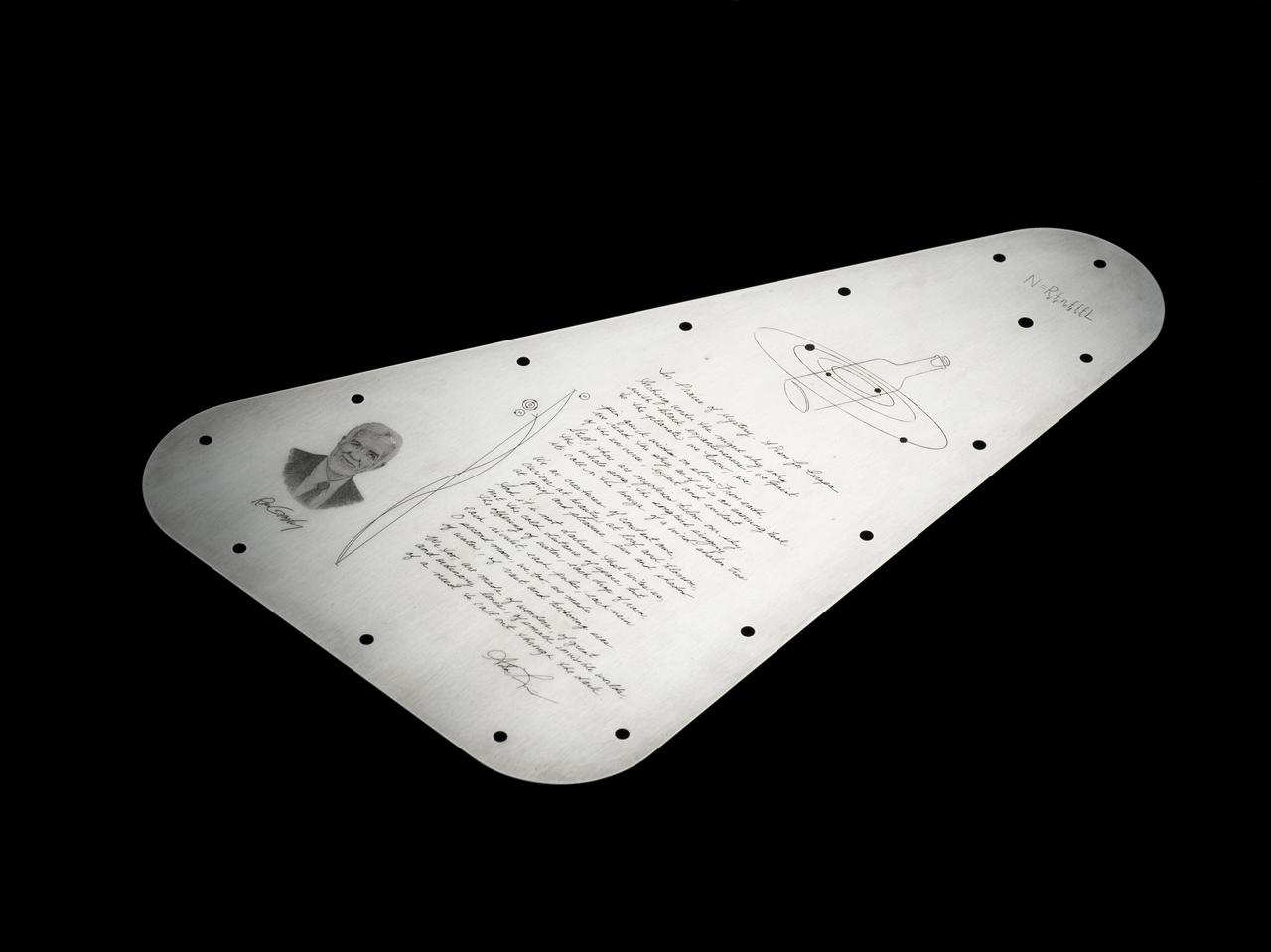
NASA's Europa Clipper spacecraft will carry a special message when it launches in October 2024 and heads toward Jupiter's moon Europa. The moon shows strong evidence of an ocean under its icy crust, with more than twice the amount of water of all of Earth's oceans combined. A triangular metal plate, seen here, will honor that connection to Earth. The plate is made of tantalum metal and is about 7 by 11 inches (18 by 28 centimeters). Engraved on both sides, it seals an opening in the electronics vault, which houses the spacecraft's sensitive electronics. The side shown here features U.S. Poet Laureate Ada Limón's handwritten "In Praise of Mystery: A Poem for Europa," and will be affixed with a silicon microchip stenciled with more than 2.6 million names submitted by the public. The microchip will be placed at the center of the illustration of a bottle amid the Jovian system – a reference to NASA's "Message in a Bottle" campaign, which invited the public to send their names with the spacecraft. The artwork includes the Drake Equation, which was formulated by astronomer Frank Drake in 1961 to estimate the possibility of finding advanced civilizations beyond Earth. Also featured is a reference to the radio frequencies considered plausible for interstellar communication, symbolizing how humanity uses this radio band to listen for messages from the cosmos. These particular frequencies match the radio waves emitted in space by the components of water and are known by astronomers as the "water hole." On the plate, they are depicted as radio emission lines. The plate includes a portrait of one of the founders of planetary science, Ron Greeley, whose early efforts to develop a Europa mission two decades ago laid the foundation for Europa Clipper. In the spirit of the Voyager spacecraft's Golden Record, which carries sounds and images to convey the richness and diversity of life on Earth, the layered message on Europa Clipper aims to spark the imagination and offer a unifying vision. Europa Clipper, set to launch from Kennedy Space Center in Florida, will arrive at the Jupiter system in 2030 and conduct about 50 flybys of the moon Europa. The mission's main science goal is to determine whether there are places below Europa, that could support life. The mission's three main science objectives are to determine the thickness of the moon's icy shell and its surface interactions with the ocean below, to investigate its composition, and to characterize its geology. The mission's detailed exploration of Europa will help scientists better understand the astrobiological potential for habitable worlds beyond our planet. https://photojournal.jpl.nasa.gov/catalog/PIA26062
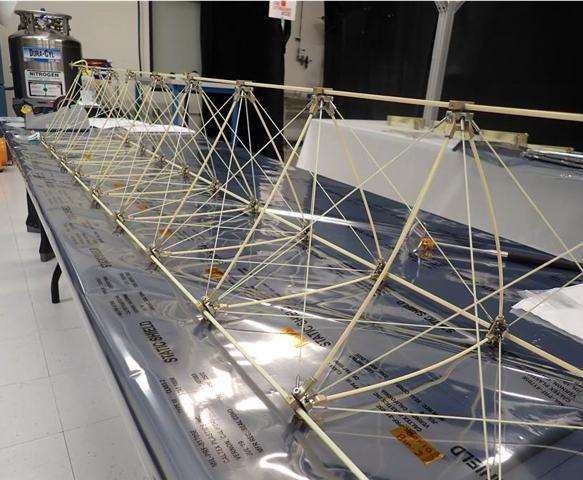
A test model of the boom that will be used for the magnetometer aboard NASA's Europa Clipper spacecraft is readied in NASA's Jet Propulsion Laboratory in Southern California. Called a dynamic test model, it is an exact duplicate of the Europa Clipper Magnetometer (ECM) boom that will fly on Europa Clipper. To fit aboard the rocket, the boom will be stowed in a canister and will deploy to its full length of 25 feet (8.5 meters) in the days after launch. The ECM will allow scientists to measure Europa's magnetic field and to measure the salinity and depth of Europa's internal global ocean. NASA scientists believe Jupiter's moon Europa may have the potential to harbor existing life, because of the internal ocean. Europa Clipper will swoop around Jupiter on an elliptical path, dipping close to the moon on each flyby. Understanding Europa's habitability will help scientists better understand how life developed on Earth and the potential for finding life beyond our planet. Europa Clipper is set to launch in 2024. https://photojournal.jpl.nasa.gov/catalog/PIA24786
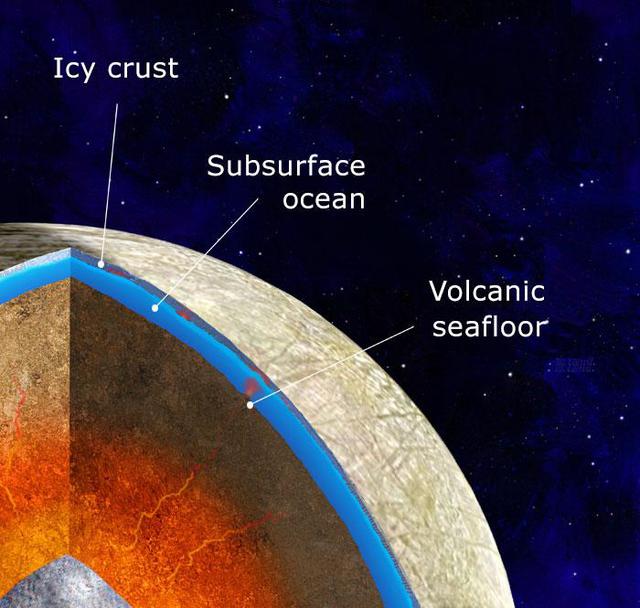
This illustration depicts scientists' findings about what the interior of Jupiter's moon Europa may look like: an iron core, surrounded by a rocky mantle believed to be in direct contact with a vast, internal ocean. New research and computer modeling show that volcanic activity may have occurred on the seafloor of Jupiter's moon Europa in the recent past – and may still be happening. The new work shows how internal heat produced by tides—warping of Europa's shape as it changes distance from Jupiter during its orbit—could partially melt its rocky layer, a process that could feed volcanoes on the ocean floor. The recent modeling of how this internal heat is produced and transferred is the most detailed and thorough examination of the effect this heating has on the moon. NASA scientists will have the opportunity to put the new predictions to the test when the agency's Europa Clipper spacecraft (aiming for a 2024 launch) reaches its target. Europa Clipper will orbit Jupiter and perform dozens of close flybys of Europa to map the moon and investigate its composition. The mission's goal is to explore whether the moon's global ocean has conditions suitable for life. https://photojournal.jpl.nasa.gov/catalog/PIA24477
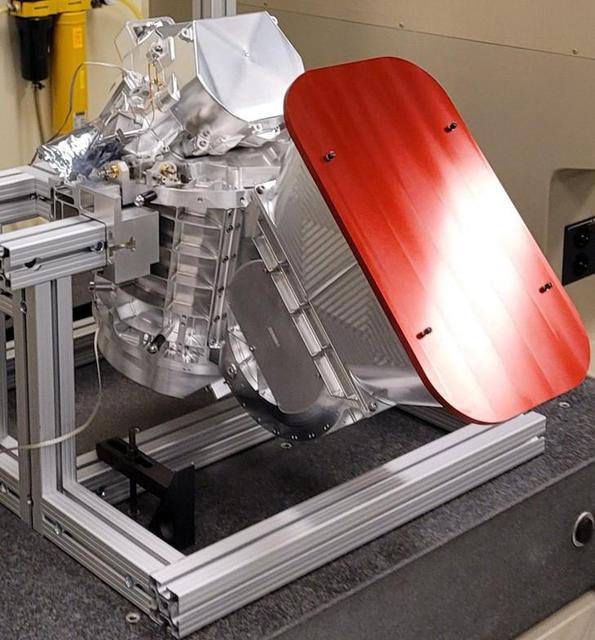
NASA's Jet Propulsion Laboratory in Southern California is building the spectrometer for the agency's Europa Clipper mission. Called the Mapping Imaging Spectrometer for Europa (MISE), it is seen in the midst of assembly in a clean room at JPL. Pronounced "mize," the instrument will analyze infrared light reflected from Jupiter's moon Europa and will map the distribution of organics and salts on the surface to help scientists understand if the moon's global ocean – which lies beneath a thick layer of ice – is habitable. Because of its internal ocean, scientists believe Jupiter's moon Europa may have the potential to harbor existing life. Europa Clipper will swoop around Jupiter on an elliptical path, dipping close to the moon on each flyby. Understanding Europa's habitability will help scientists better understand how life developed on Earth and the potential for finding life beyond our planet. Europa Clipper is set to launch in 2024. https://photojournal.jpl.nasa.gov/catalog/PIA24781

Engineers at the Johns Hopkins Applied Physics Laboratory (APL) in Laurel, Maryland, inspect the propulsion module of NASA's Europa Clipper spacecraft. In 2022, this major piece of hardware, designed and built at APL, will ship to NASA's Jet Propulsion Laboratory in Southern California for assembly, test, and launch operations (ATLO). With an internal global ocean under a thick layer of ice, Jupiter's moon Europa may have the potential to harbor existing life. The Europa Clipper spacecraft will swoop around Jupiter on an elliptical path, dipping close to the moon on each flyby to collect data. Understanding Europa's habitability will help scientists better understand how life developed on Earth and the potential for finding life beyond our planet. Europa Clipper is set to launch in 2024. https://photojournal.jpl.nasa.gov/catalog/PIA24783
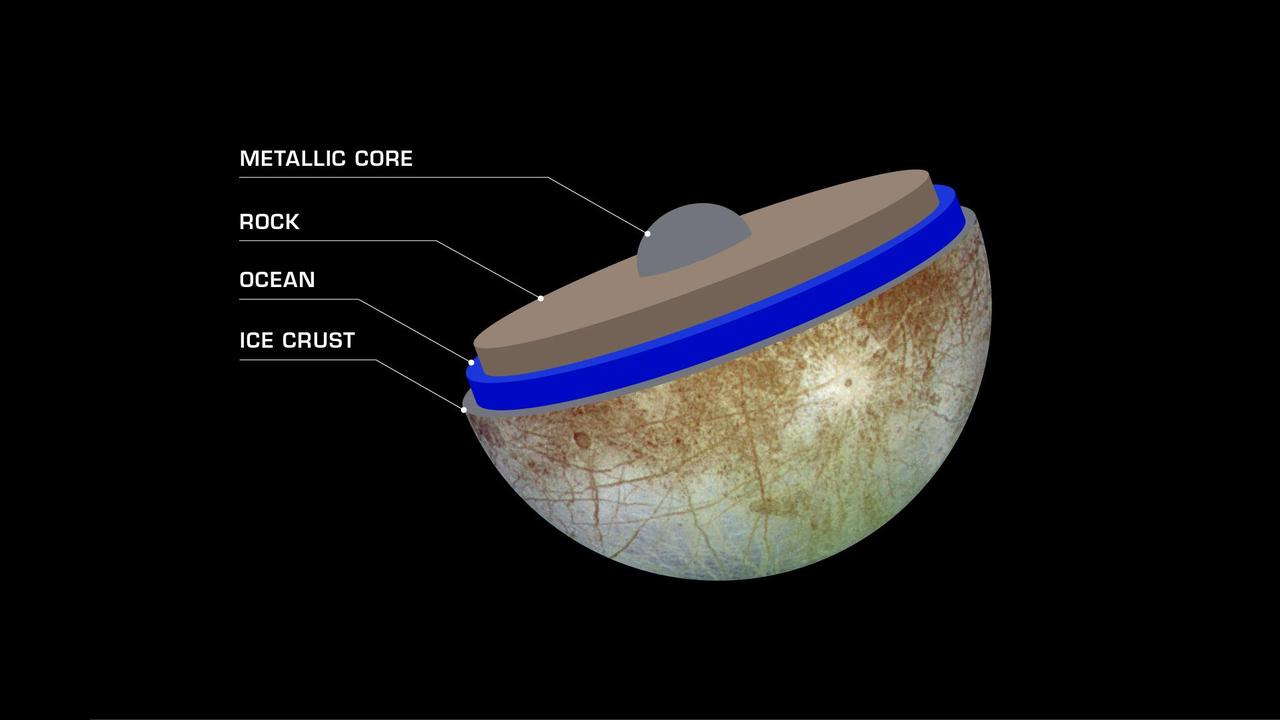
Jupiter's moon Europa is smaller than Earth's moon yet may contain more than twice as much liquid water as all of Earth's oceans combined. Scientists believe that under its icy surface, Europa features a global saltwater ocean, perhaps 40 to 100 miles (60 to 150 kilometers) deep. Further inward, a rocky mantle and metallic core are likely. Europa's interior structure will be studied in detail by NASA's Europa Clipper spacecraft, which will orbit Jupiter and perform dozens of flybys of the moon. Europa Clipper's three main science objectives are to determine the thickness of the moon's icy shell and its interactions with the ocean below, to investigate its composition, and to characterize its geology. The mission's detailed exploration of Europa will help scientists better understand the astrobiological potential for habitable worlds beyond our planet. https://photojournal.jpl.nasa.gov/catalog/PIA26434
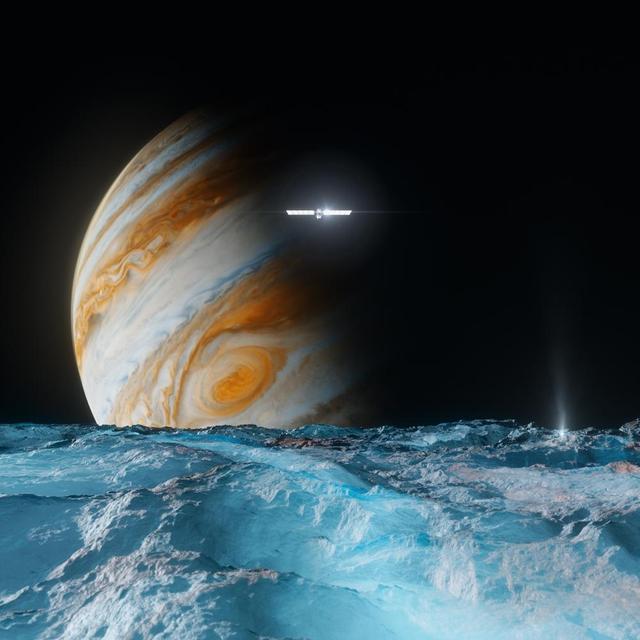
This artist's concept depicts NASA's Europa Clipper spacecraft as it orbits Jupiter and passes over the gas giant's ice-covered moon Europa. Scheduled to arrive at Jupiter in April 2030, the mission will be the first to specifically target Europa for detailed science investigation. Europa Clipper's three main science objectives are to determine the thickness of the moon's icy shell and its interactions with the ocean below, to investigate its composition, and to characterize its geology. The mission's detailed exploration of Europa will help scientists better understand the astrobiological potential for habitable worlds beyond our planet. https://photojournal.jpl.nasa.gov/catalog/PIA26444

Seen here in a clean room at NASA's Jet Propulsion Laboratory in Southern California is the nadir deck for NASA's Europa Clipper spacecraft. The deck stabilizes the spacecraft's sensors and helps the mission team ensure its instruments are oriented correctly. With an internal global ocean under a thick layer of ice, Jupiter's moon Europa may have the potential to harbor existing life. Europa Clipper will swoop around Jupiter on an elliptical path, dipping close to the moon on each flyby. Understanding Europa's habitability will help scientists better understand how life developed on Earth and the potential for finding life beyond our planet. Europa Clipper is set to launch in 2024. https://photojournal.jpl.nasa.gov/catalog/PIA24784
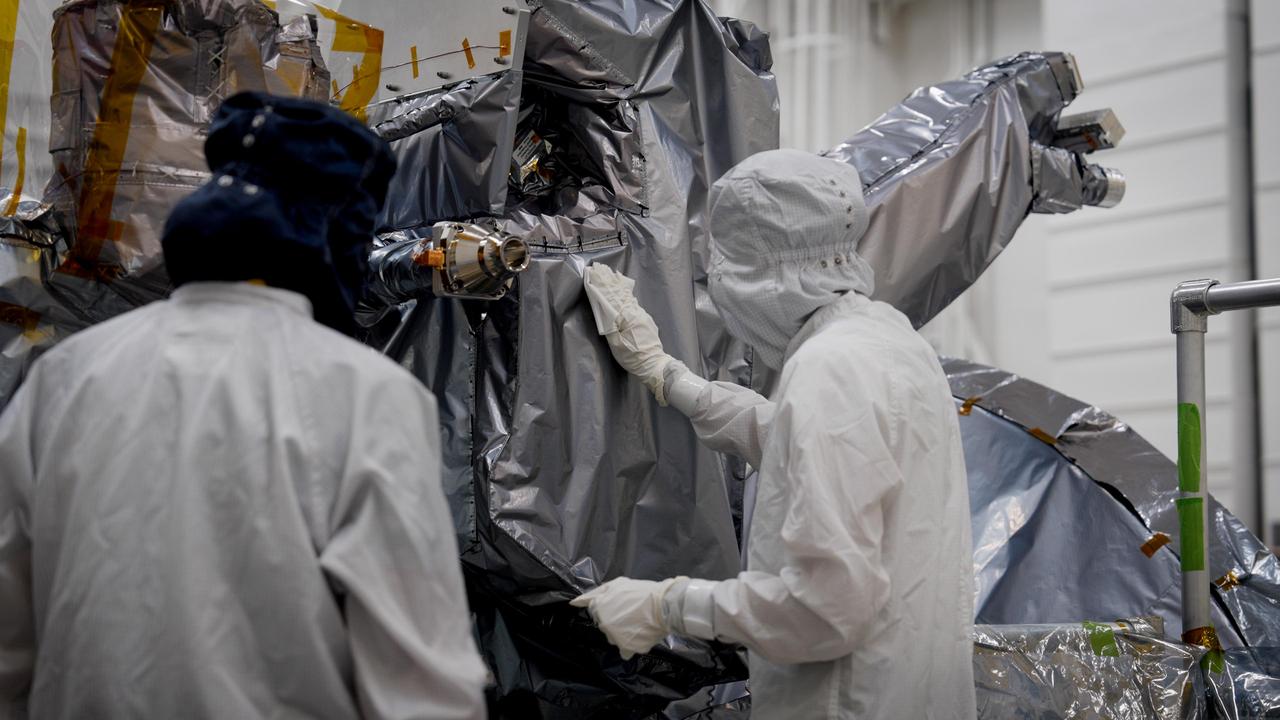
A planetary protection engineer in full-body protective gear carefully collects samples from NASA's Europa Clipper spacecraft to verify its biological cleanliness in a clean room at NASA's Jet Propulsion Laboratory on March 20, 2024. Maintaining and verifying the cleanliness of the spacecraft helps minimize the chance that microbes brought from Earth could compromise future scientific investigations at its destination, Jupiter's moon Europa. This work, referred to as planetary protection, is conducted in keeping with the international 1967 Outer Space Treaty to explore space in a responsible manner that avoids the harmful contamination of celestial bodies. This photo was taken while Europa Clipper was being built in JPL's Spacecraft Assembly Facility. Europa Clipper's three main science objectives are to determine the thickness of the moon's icy shell and its interactions with the ocean below, to investigate its composition, and to characterize its geology. The mission's detailed exploration of Europa will help scientists better understand the astrobiological potential for habitable worlds beyond our planet. https://photojournal.jpl.nasa.gov/catalog/PIA26440
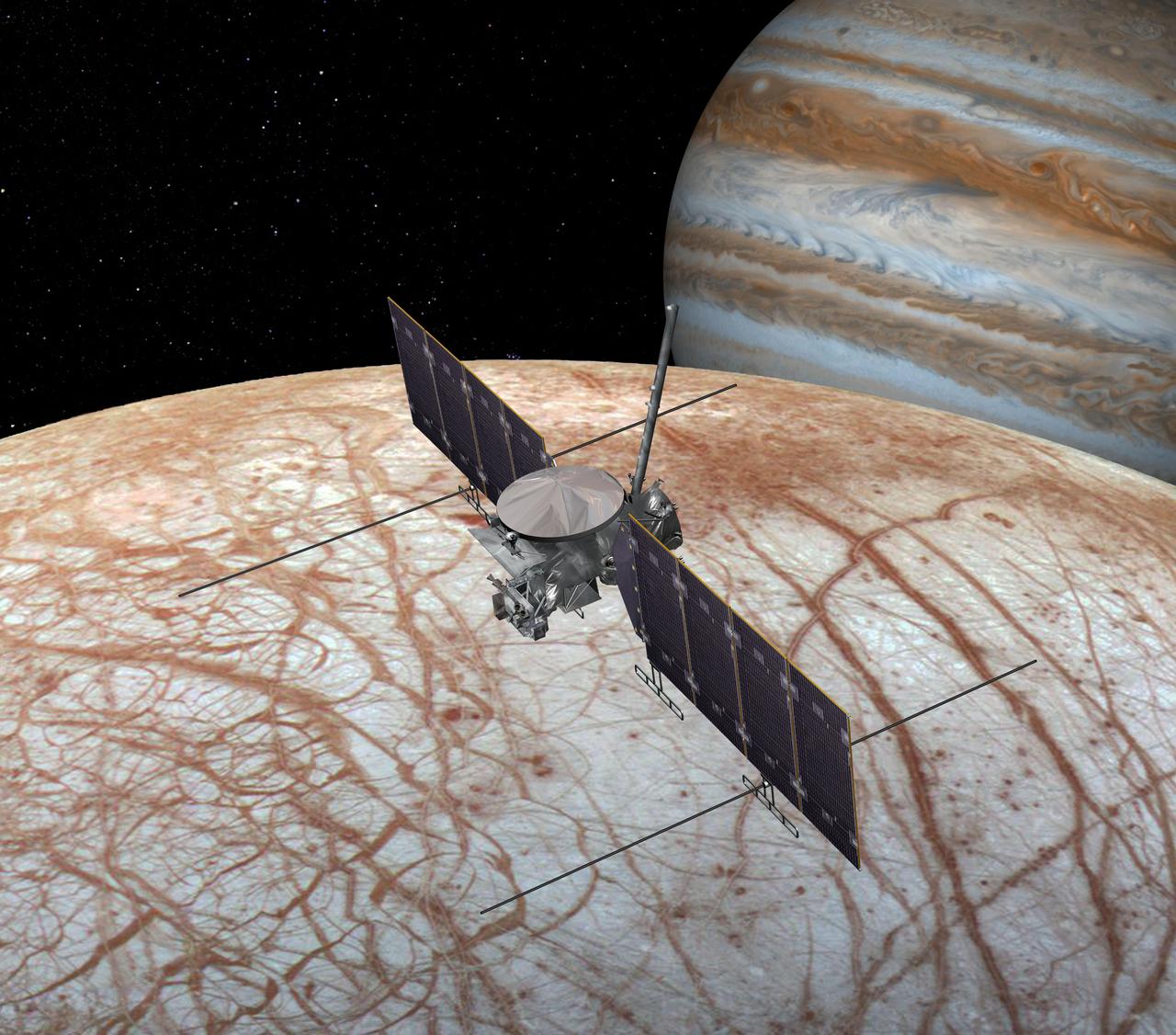
This artist rendering shows NASA Europa mission spacecraft, which is being developed for a launch sometime in the 2020s.
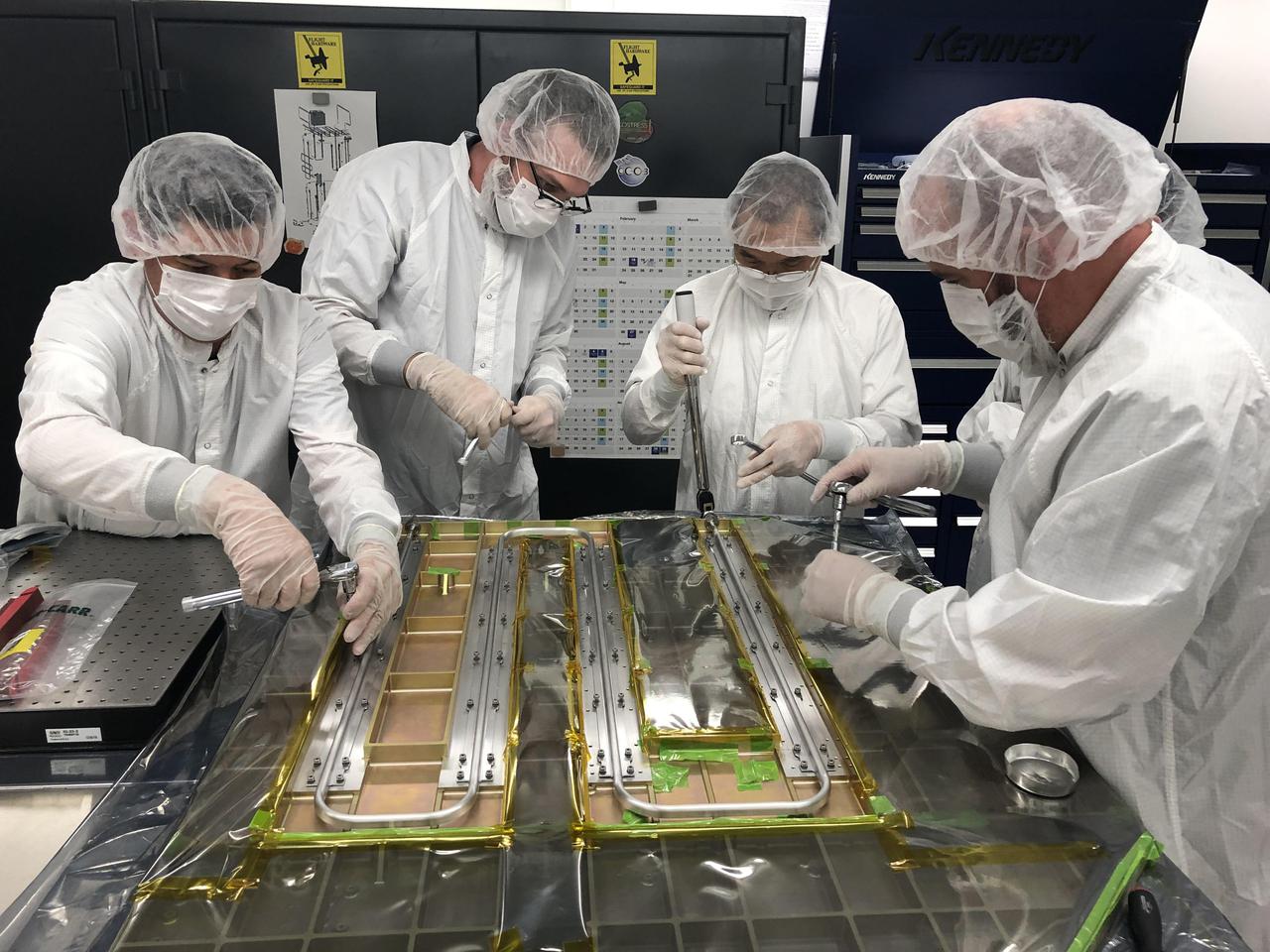
Europa Clipper technicians and engineers at NASA's Jet Propulsion Laboratory in Southern California work together in a cleanroom on Sept. 12, 2019. They bond thermal tubing to the spacecraft's Radio Frequency (RF) panel, which was built by Johns Hopkins University Applied Physics Laboratory (APL) in Laurel, Maryland. The tubing is part of a Heat Redistribution System (HRS) that pumps coolant all around the spacecraft and helps control its temperature as it travels through space. With an internal global ocean twice the size of Earth's oceans combined, Europa may have the potential to harbor life. NASA's Europa Clipper spacecraft will swoop around Jupiter on an elliptical path, dipping close to the moon on each flyby to collect data. Understanding Europa's habitability will help scientists better understand how life developed on Earth and the potential for finding life beyond our planet. Europa Clipper is aiming for a launch readiness date of 2024. https://photojournal.jpl.nasa.gov/catalog/PIA24324
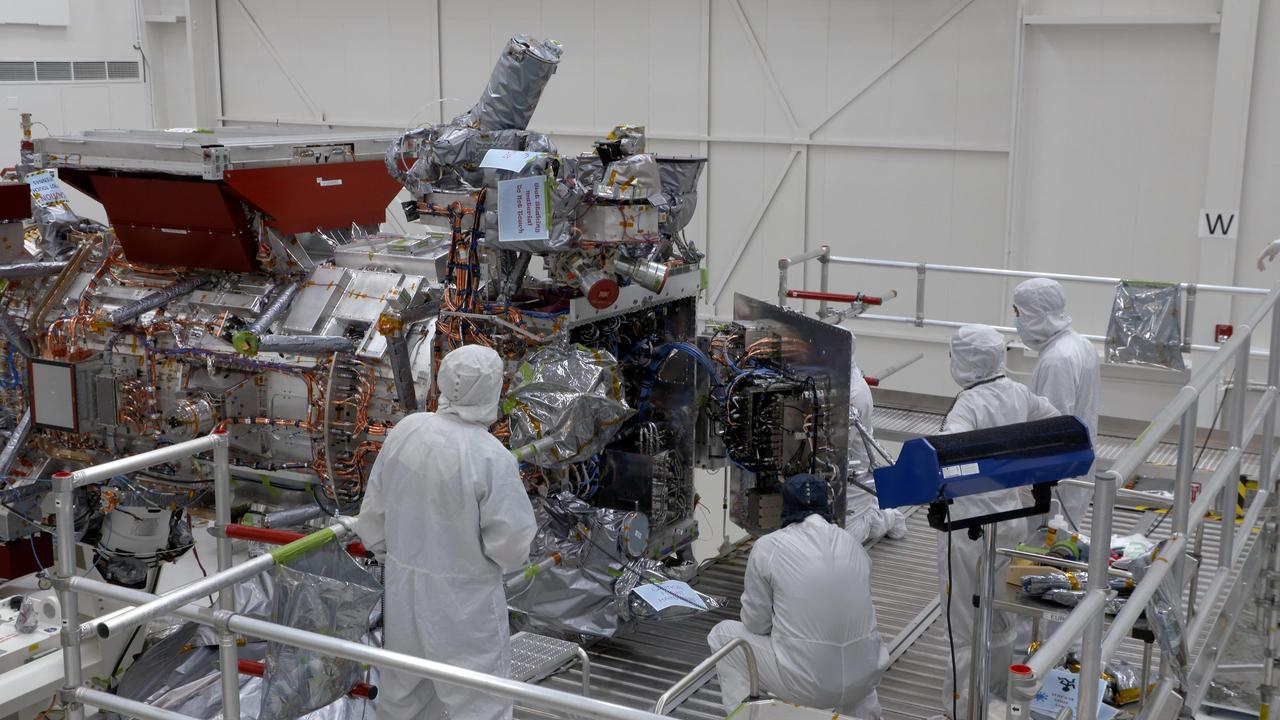
Engineers and technicians are seen closing the vault of NASA's Europa Clipper in the main clean room of the Spacecraft Assembly Facility at the agency's Jet Propulsion Laboratory in Southern California on Oct. 7, 2023. The vault will protect the sophisticated electronics of the spacecraft as it orbits Jupiter and endures one of the most punishing radiation environments in our solar system. The mission is targeting October 2024 for the launch of its spacecraft, which will fly by Europa about 50 times. Europa Clipper's main science goal is to determine whether there are places below Jupiter's icy moon, Europa, that could support life. The mission's three main science objectives are to determine the thickness of the moon's icy shell and its surface interactions with the ocean below, to investigate its composition, and to characterize its geology. The mission's detailed exploration of Europa will help scientists better understand the astrobiological potential for habitable worlds beyond our planet. https://photojournal.jpl.nasa.gov/catalog/PIA25959
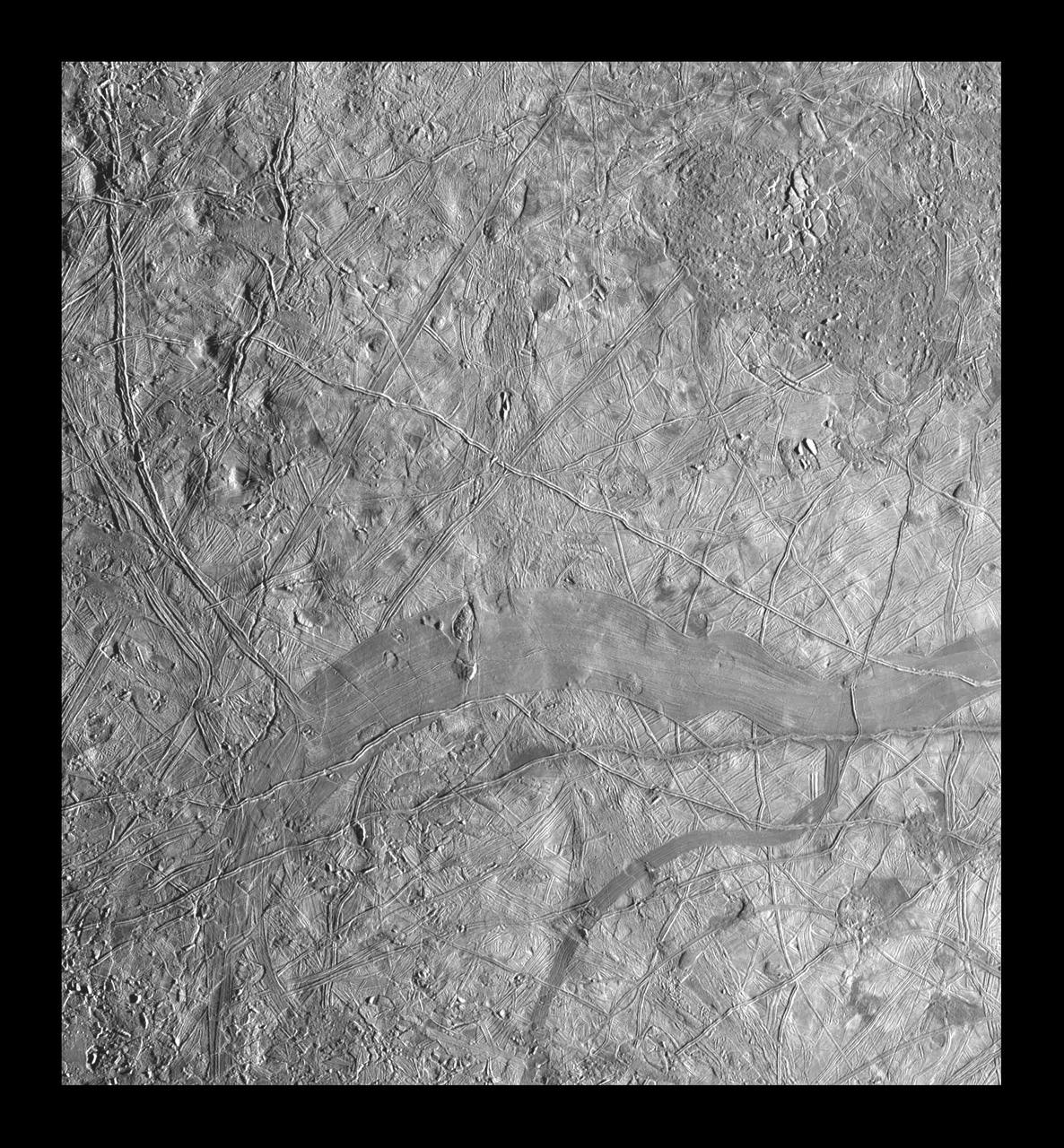
Regional Mosaic of Chaos and Gray Band on Europa

Structurally Complex Surface of Europa and similar scales on Earth

High-Resolution Image of Europa Ridged Plains
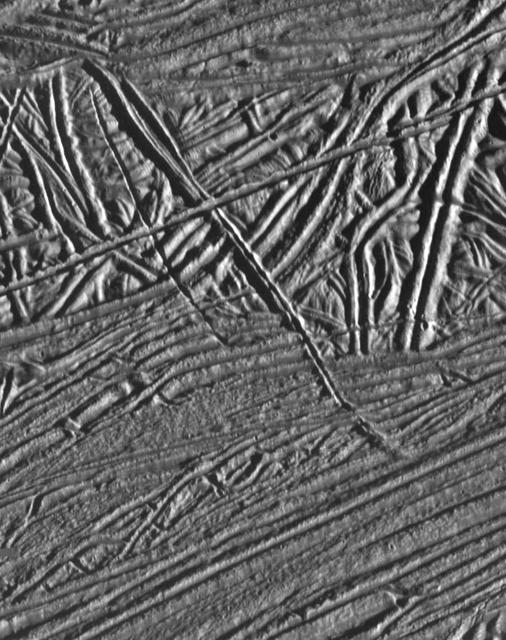
Cross-cutting Relationships of Surface Features on Europa
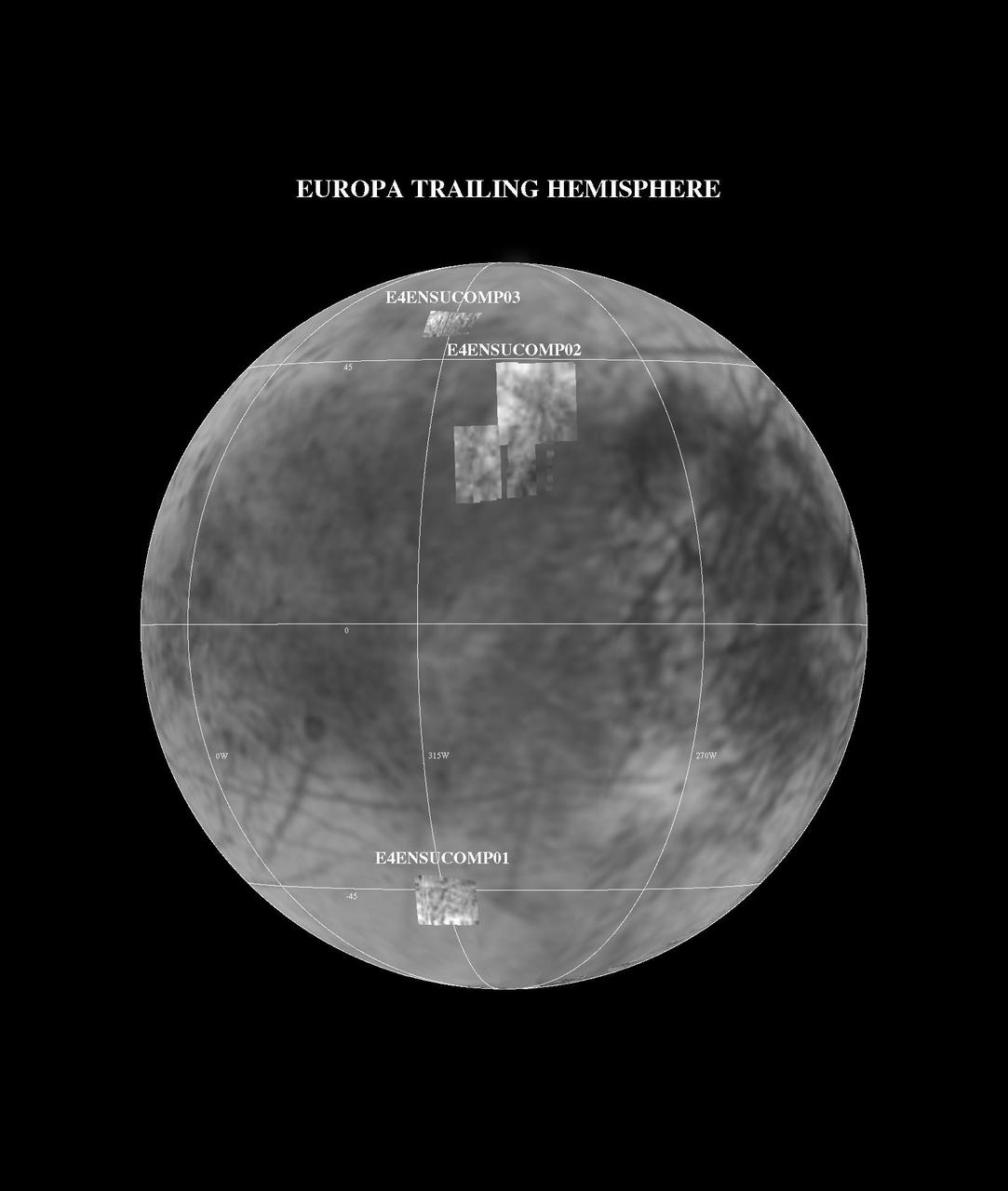
NIMS E4 Observations of Europa Trailing Hemisphere

Europa Ice Rafts and similar scales on Earth
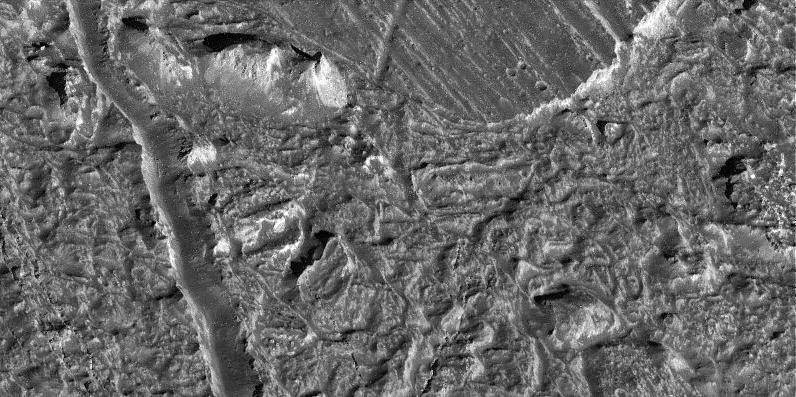
Chaotic Terrain on Europa in Very High Resolution
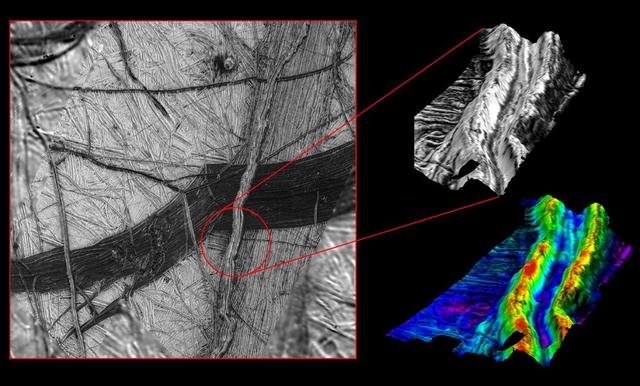
Three Dimensional View of Double Ridges on Europa

Very High Resolution Image of Icy Cliffs on Europa

Close-up of Europa Surface and similar scales on Earth
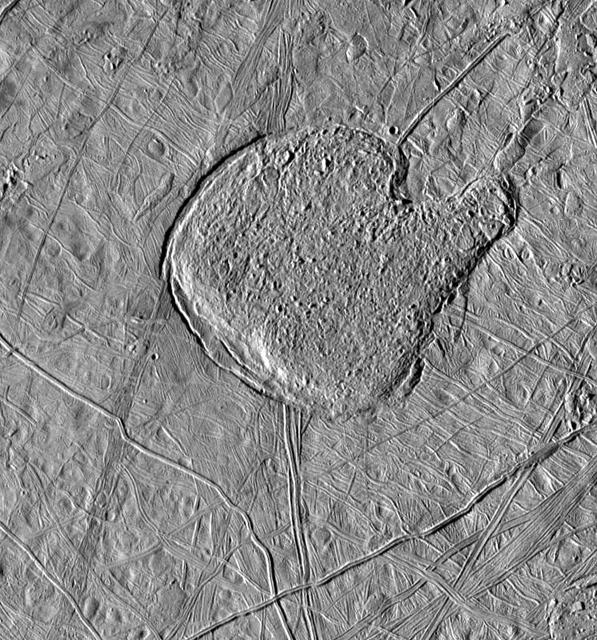
Mitten shaped region of Chaotic Terrain on Europa
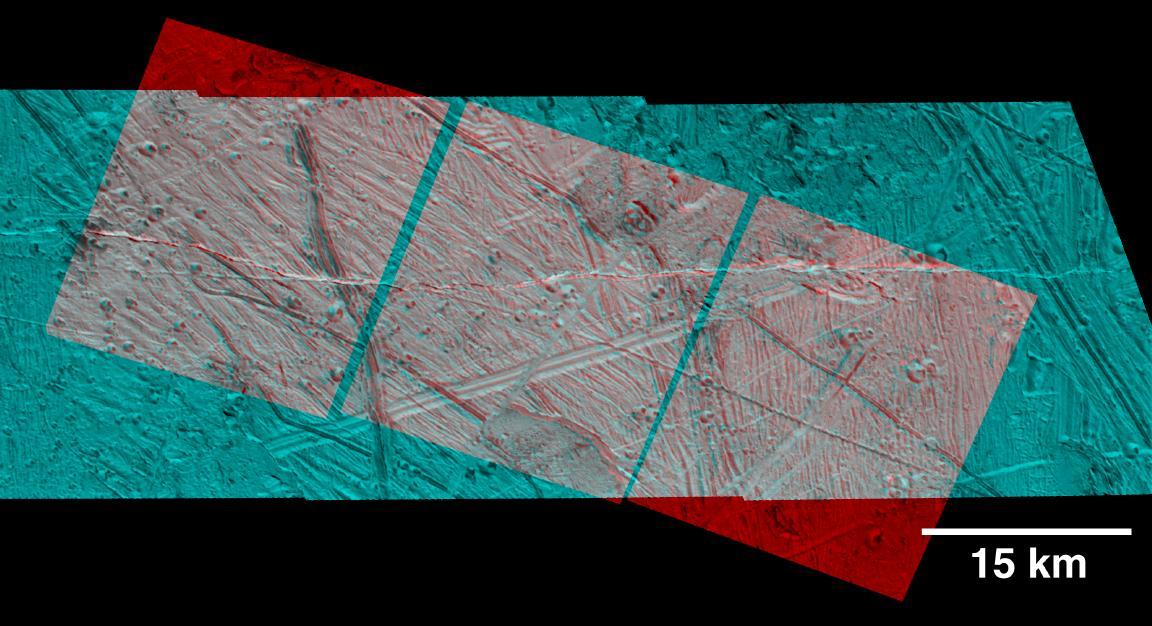
Rugged Terrain on Europa in 3-D Stereo