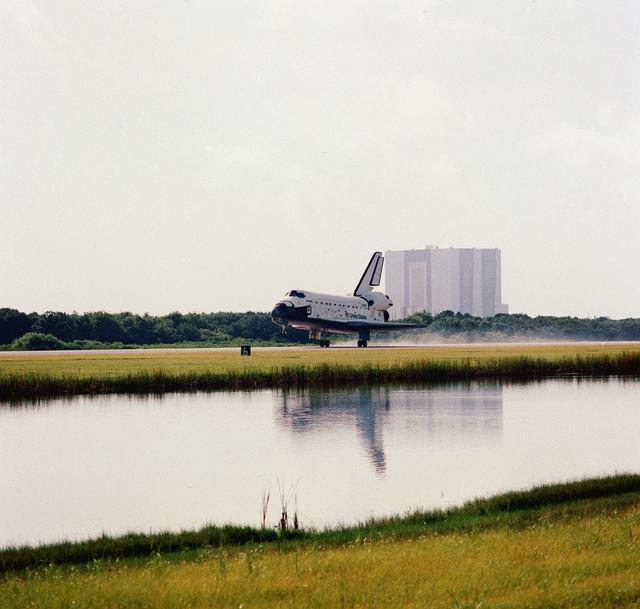
The Space Shuttle Orbiter Atlantis (STS-46) touched down at Kennedy Space Center's (KSC) Shuttle Landing Facility completing an eight day mission of five NASA astronauts and two Europeans. The vehicle assembly building (VAB) can be seen in the background. The STS-46 mission carried and deployed the European Retrievable Carrier (Eureca), and the NASA/ISA Tethered Satellite System (TSS-1), allowing for a new capability for probing the space environment.
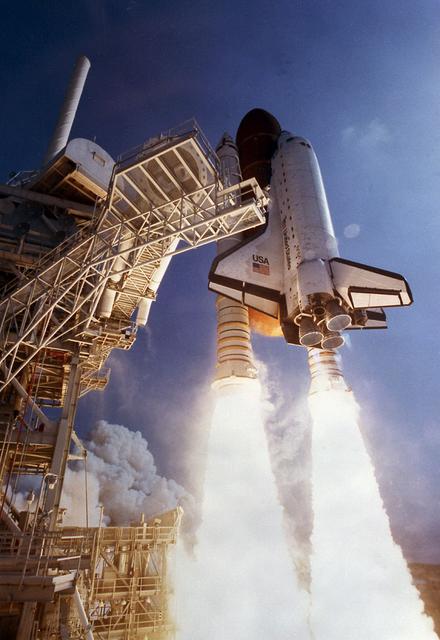
The Space Shuttle Orbiter Atlantis (STS-46) breaks free of all earthly constraints and hurdles past the Fixed Service Structure (FSS) and beanie cap which only moments before had been in place above the external tank. The Shuttle Atlantis carried and deployed the European Retrievable Carrier (Eureca). The NASA/ISA Tethered Satellite System (TSS-1) was also deployed for the first time, allowing for a new capability for probing the space environment.
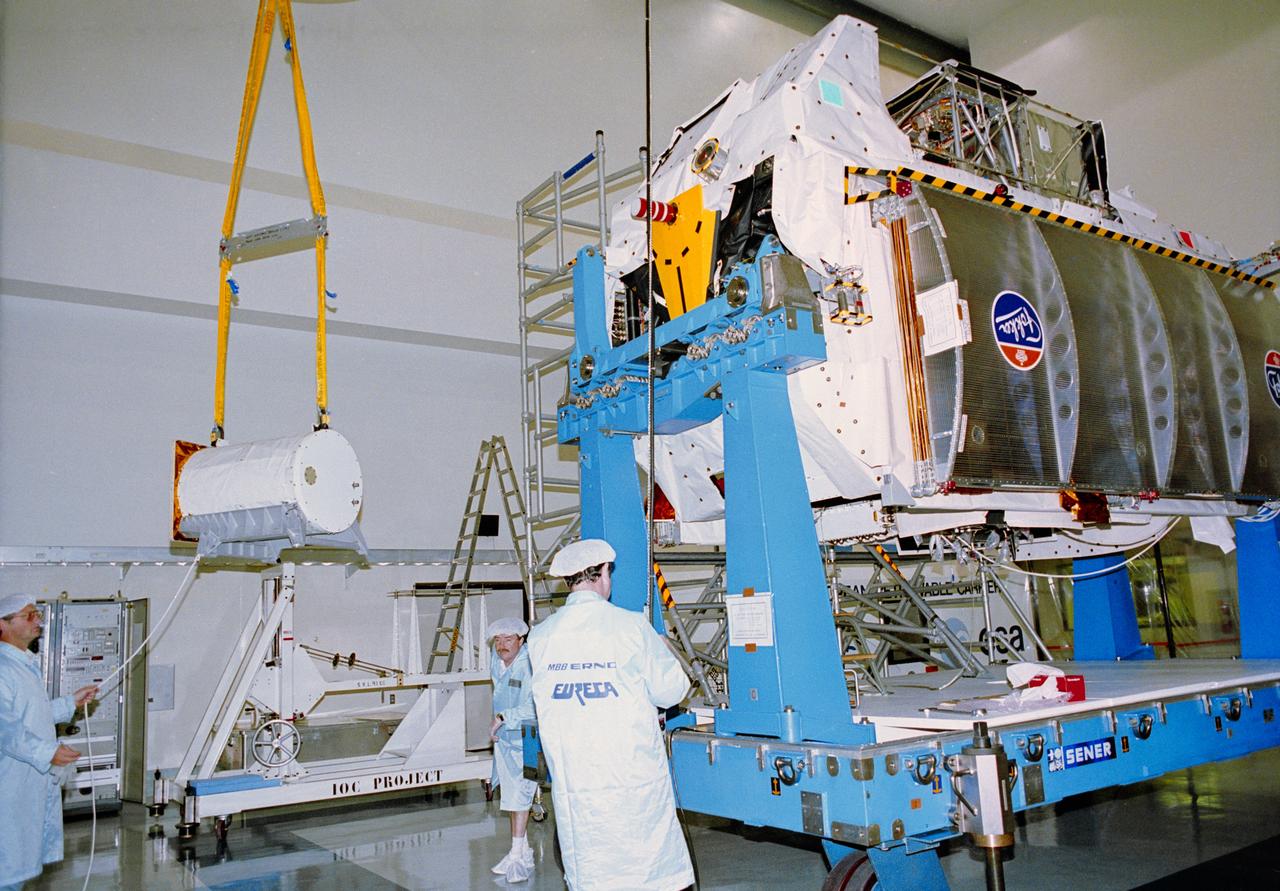
S92-41442 (3 Dec 1991) --- At the Astrotech Space Operations spacecraft processing facility in Titusville, German aerospace workers check out the European Retrievable Carrier (EURECA) after removing it from the shipping container. The approximately 10,000-pound spacecraft is scheduled to return to KSC next April to undergo final preparations for launch on the STS-46 mission. Sponsored by the European Space Agency, EURECA is a free-flying reusable research platform that will be deployed during the flight and retrieved at a later date by another Shuttle crew.

The European Retrievable Carrier 1L (EURECA-1L) spacecraft, with solar array panels extended, drifts above the Earth after deployment from the payload bay of Atlantis, Orbiter Vehicle (OV) 104, during STS-46. EURECA's onboard propulsion unit will boost it to an operational altitude of 270 nautical miles.
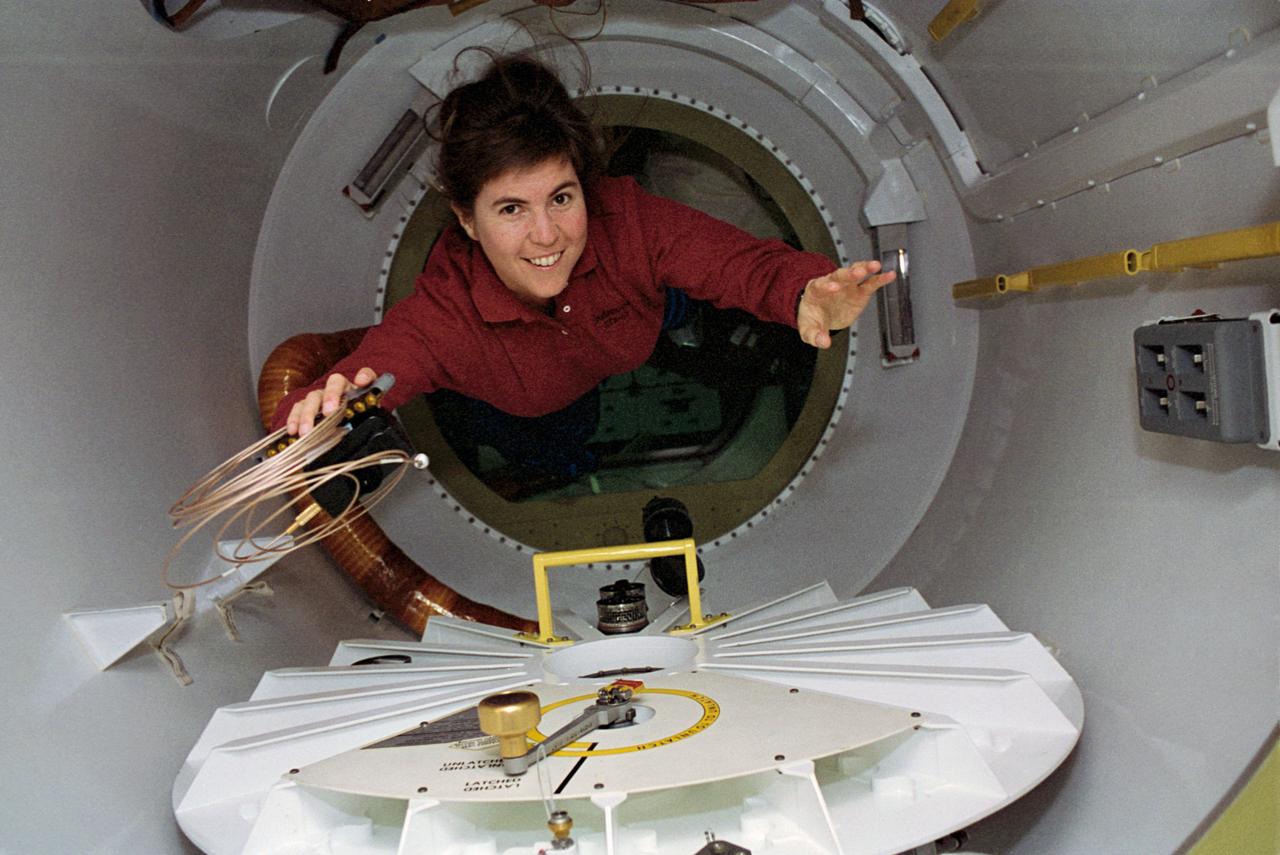
STS057-28-013 (21 June - 1 July 1993) --- With a camera and cable in hand, astronaut Janice E. Voss, mission specialist, floats through a special tunnel into the SpaceHab module. Voss and five other NASA astronauts spent almost ten days aboard the Space Shuttle Endeavour in Earth-orbit supporting the SpaceHab mission, retrieving the European Retrievable Carrier (EURECA) and conducting various experiments.
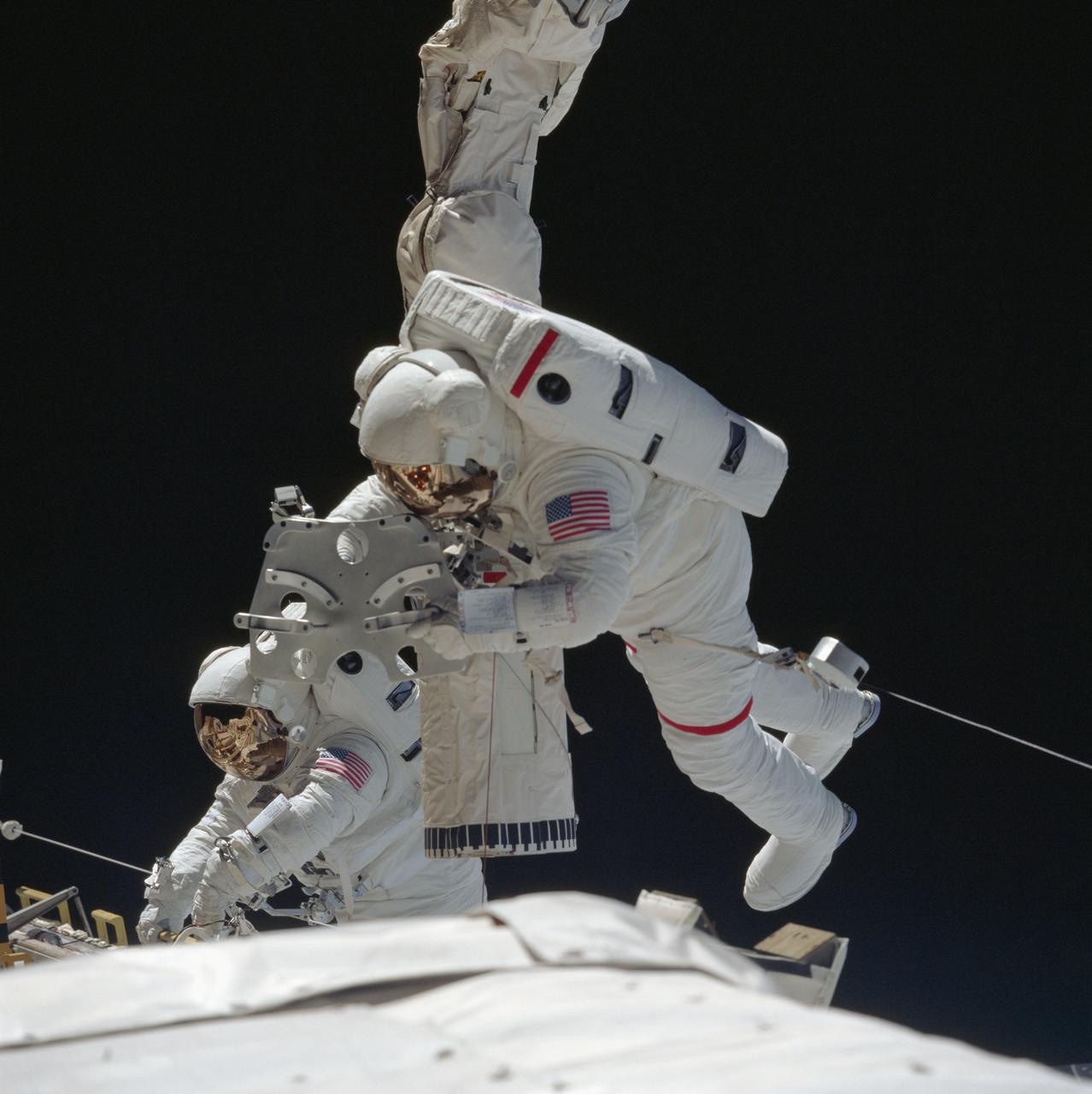
STS057-97-056 (25 June 1993) --- Astronaut G. David Low (foreground) adjusts the mobile foot restraint on the end of the Space Shuttle Endeavour's Remote Manipulator System (RMS) while astronaut Peter J. K. (Jeff) Wisoff busies himself at the stowed European Retrievable Carrier (EURECA) during June 25, 1993, extravehicular activity (EVA).
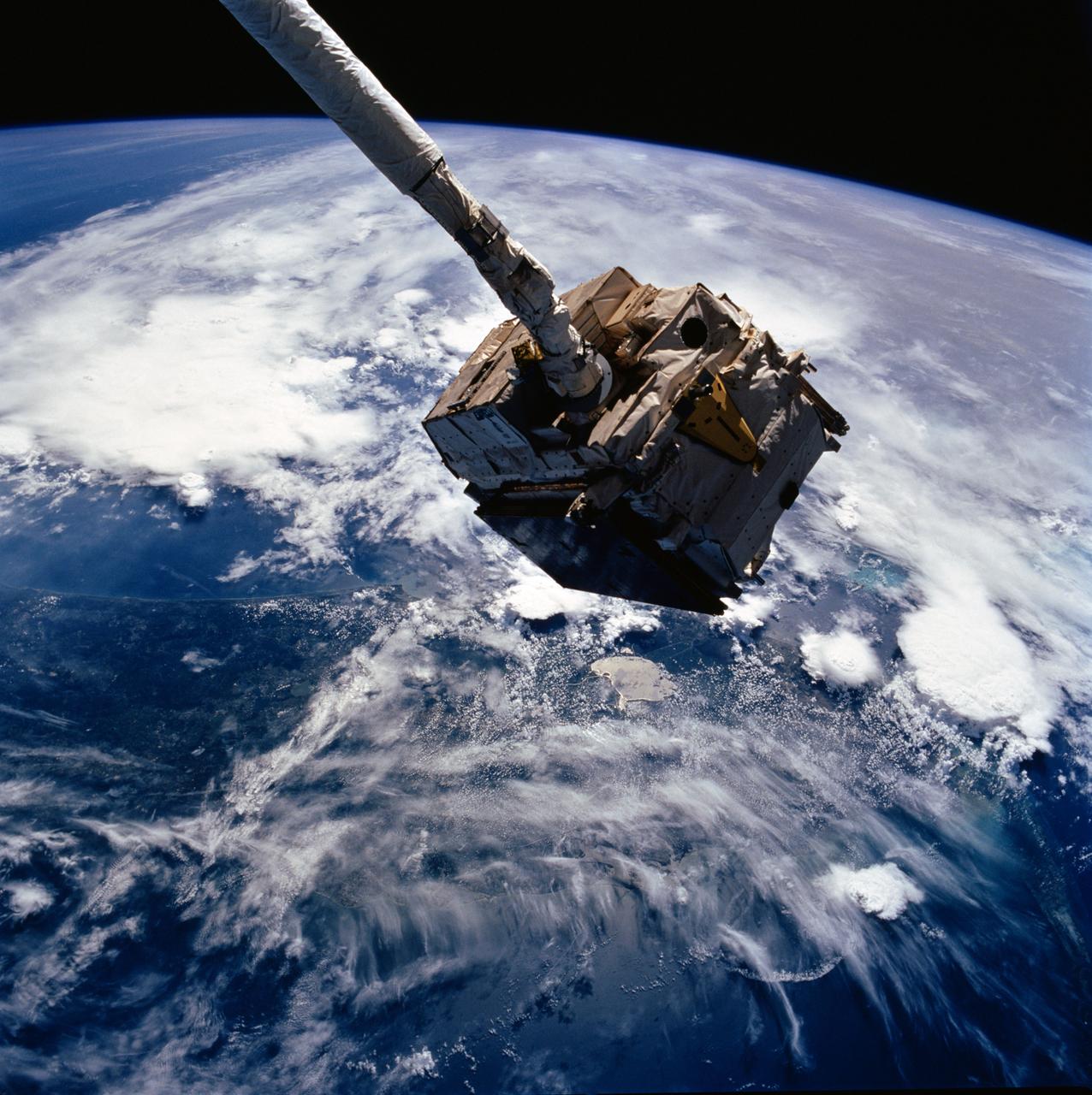
STS057-93-052 (24 June 1993) --- The European Retrievable Carrier (EURECA) is held in the grasp of the Space Shuttle Endeavour's Remote Manipulator System (RMS). The photo was taken after EURECA's "capture" from Earth-orbit but prior to its berthing in the Shuttle's cargo bay. The southern two-thirds of the state of Florida, part of the Gulf of Mexico and clouds over the Atlantic form the backdrop for the 70mm image.
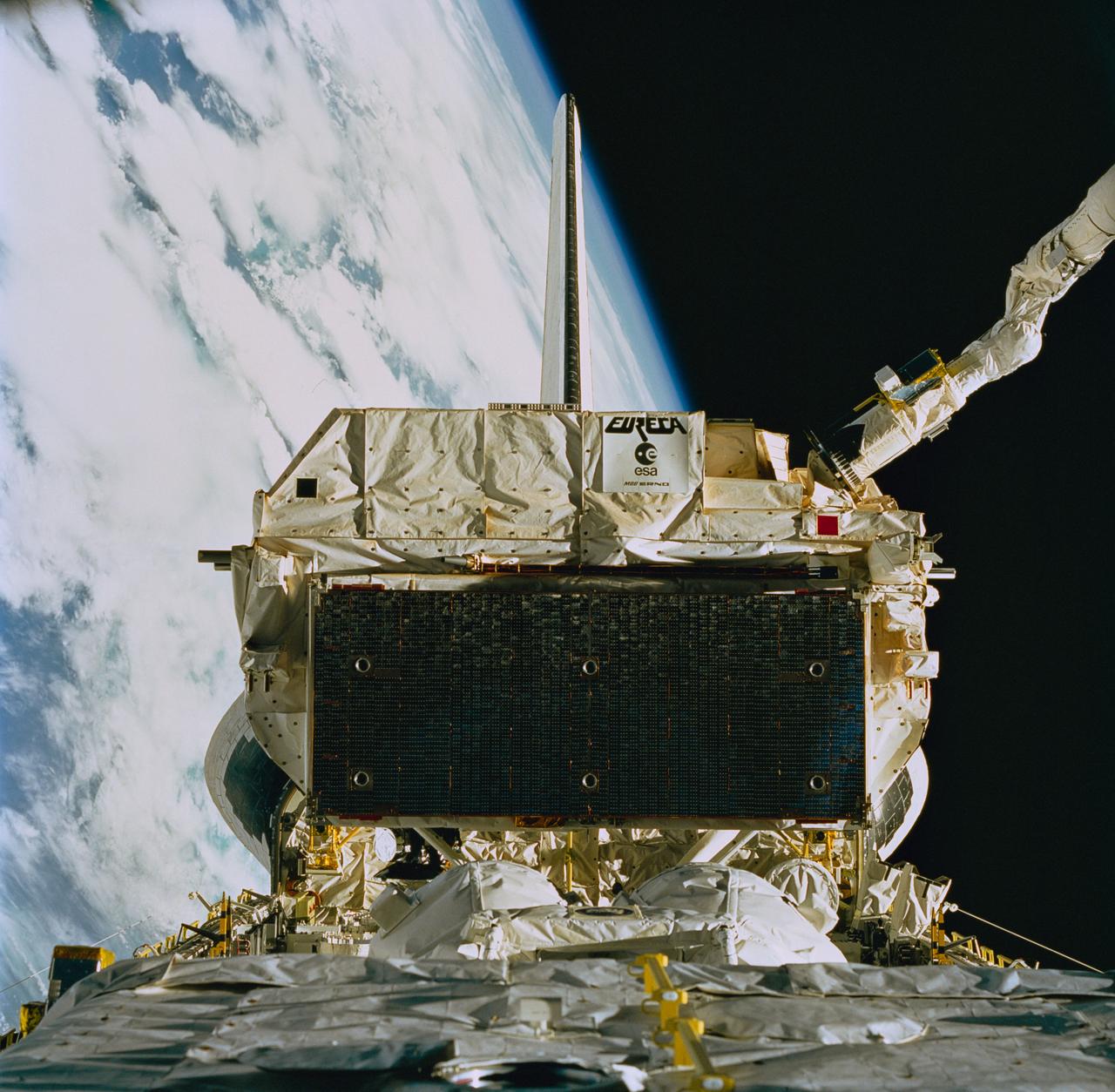
STS057-84-000AD (24 June 1993) --- The recently "captured" European Retrievable Carrier (EURECA) was recorded on 70mm film as it was berthed in the Space Shuttle Endeavour's aft cargo bay, assisted by the Canadian-built Remote Manipulator System (RMS), partially visible in upper right. Moments later the RMS eased EURECA into its stowage area between Endeavour's aft cargo bay firewall and the SpaceHab module (partially visible in foreground).
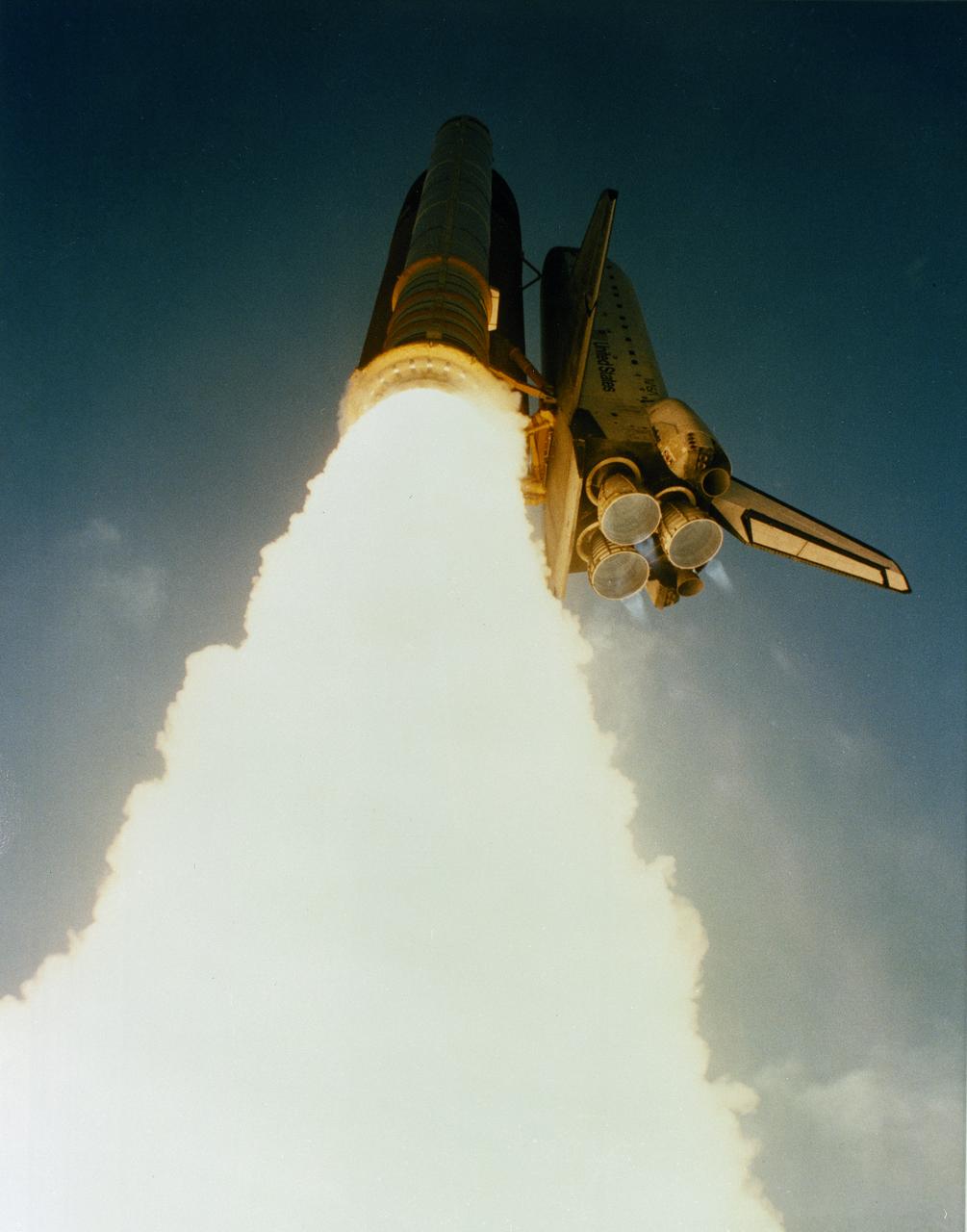
Launched aboard the Space Shuttle Atlantis on July 31, 1992 at 9:56:48 am (EDT), the STS-46 mission’s primary objectives included the deployment of the European Space Agency’s European Retrievable Carrier (EURECA) and operation of the joint NASA/Italian Space Agency Tethered Satellite System (TSS). The STS-46 crew of seven included: Loren J. Shriver, commander; Andrew M. Allen, pilot; Jeffrey A. Hoffman, mission specialist 1; Franklin R. Chang-Diaz, mission specialist 2; Claude Nicollier, mission specialist 3; Marsha S. Ivins, mission specialist 4; and Franco Malerba, payload specialist 1.

STS057-30-021 (21 June-1 July 1993) --- Astronaut Brian Duffy, pilot, handles a soldering tool onboard the Earth-orbiting Space Shuttle Endeavour. The Soldering Experiment (SE) called for a crew member to solder on a printed circuit board containing 45 connection points, then de-solder 35 points on a similar board. The SE was part of a larger project called the Tools and Diagnostic Systems (TDS), sponsored by the Space and Life Sciences Directorate at Johnson Space Center (JSC). TDS represents a group of equipment selected from the tools and diagnostic hardware to be supported by the International Space Station program. TDS was designed to demonstrate the maintenance of experiment hardware on-orbit and to evaluate the adequacy of its design and the crew interface. Duffy and five other NASA astronauts spent almost ten days aboard the Space Shuttle Endeavour in Earth-orbit supporting the SpaceHab mission, retrieving the European Retrievable Carrier (EURECA) and conducting various experiments.
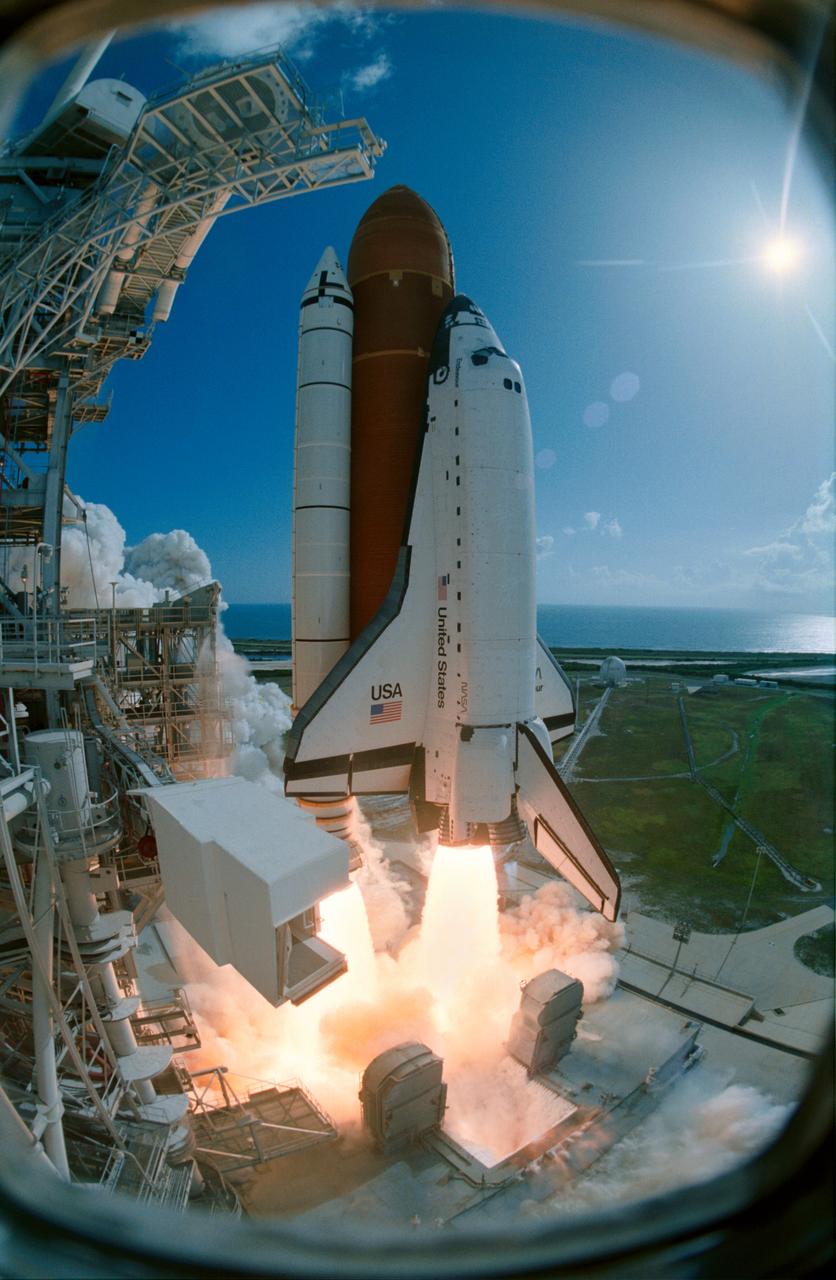
STS057-S-053 (21 June 1993) --- The Space Shuttle Endeavour lifts off Launch Pad 39B as captured on film by an audio-activated camera positioned at the 270-feet level on the Rotating Service Structure (RSS) at Launch Pad 39B. STS-57 launch occurred at 9:07:22 a.m. (EDT), June 21, 1993. The mission represents the first flight of the commercially developed SpaceHab laboratory module and also will feature a retrieval of the European Retrievable Carrier (EURECA). Onboard for Endeavour's fourth flight are a crew of six NASA astronauts; Ronald J. Grabe, mission commander; Brian Duffy, pilot; G. David Low, payload commander; and Nancy J. Sherlock, Peter J. K. (Jeff) Wisoff and Janice E. Voss, all mission specialists. An earlier launch attempt was scrubbed due to unacceptable weather conditions both at the Kennedy Space Center (KSC) and the overseas contingency landing sites.
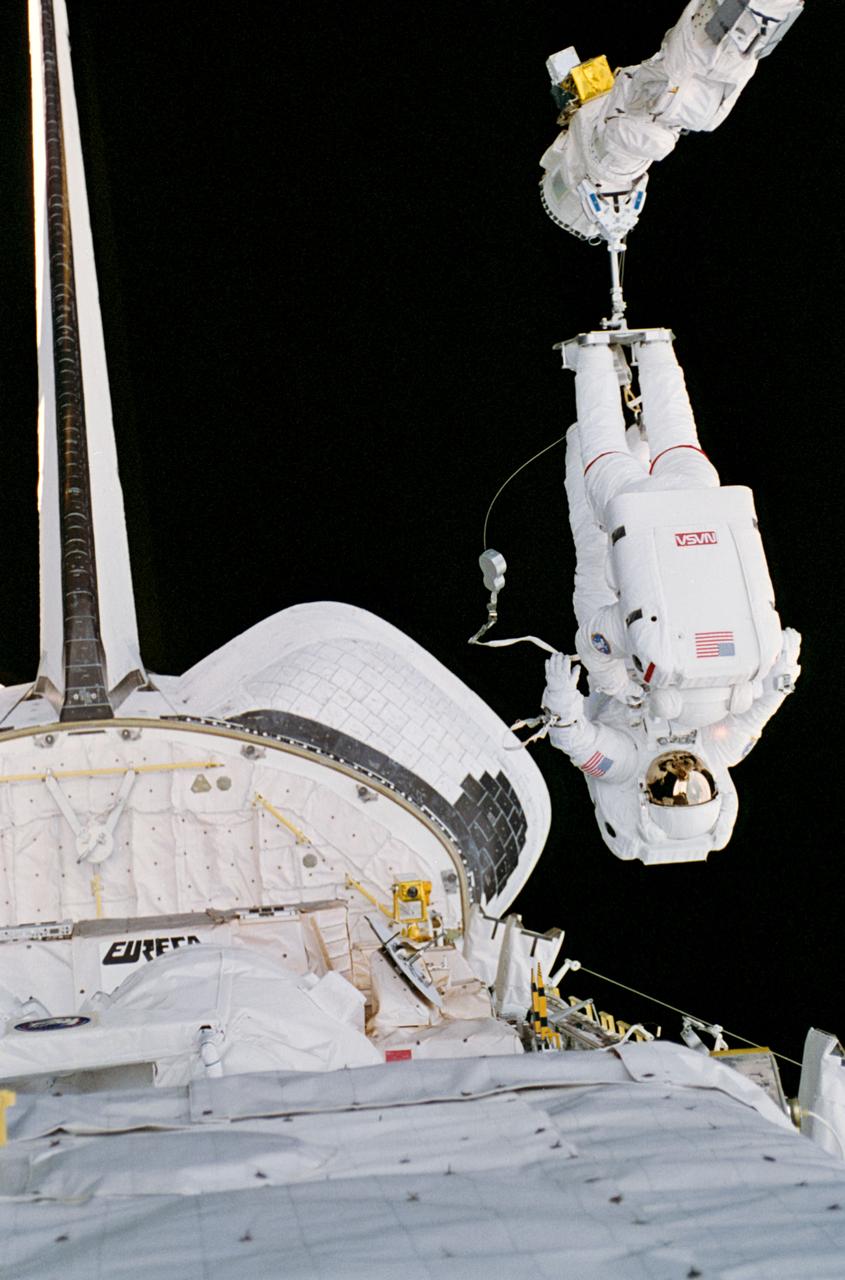
STS057-32-008 (25 June 1993) --- Astronaut G. David Low (nearer camera), his feet anchored to Endeavour's Remote Manipulator System (RMS), lifts fellow astronaut Peter J. K. (Jeff) Wisoff during a special phase of the lengthy June 25, 1993, extravehicular activity (EVA). This phase of the EVA dealt with the simulation of handling large components in space. This particular task was rehearsed with eyes toward the servicing of the Hubble Space Telescope (HST) in the near future or the assembly and maintenance of the International Space Station later. The two mission specialists and four other NASA astronauts spent almost ten days aboard the Space Shuttle Endeavour in Earth-orbit supporting the SPACEHAB mission, retrieving the European Retrievable Carrier (EURECA) and conducting various experiments.
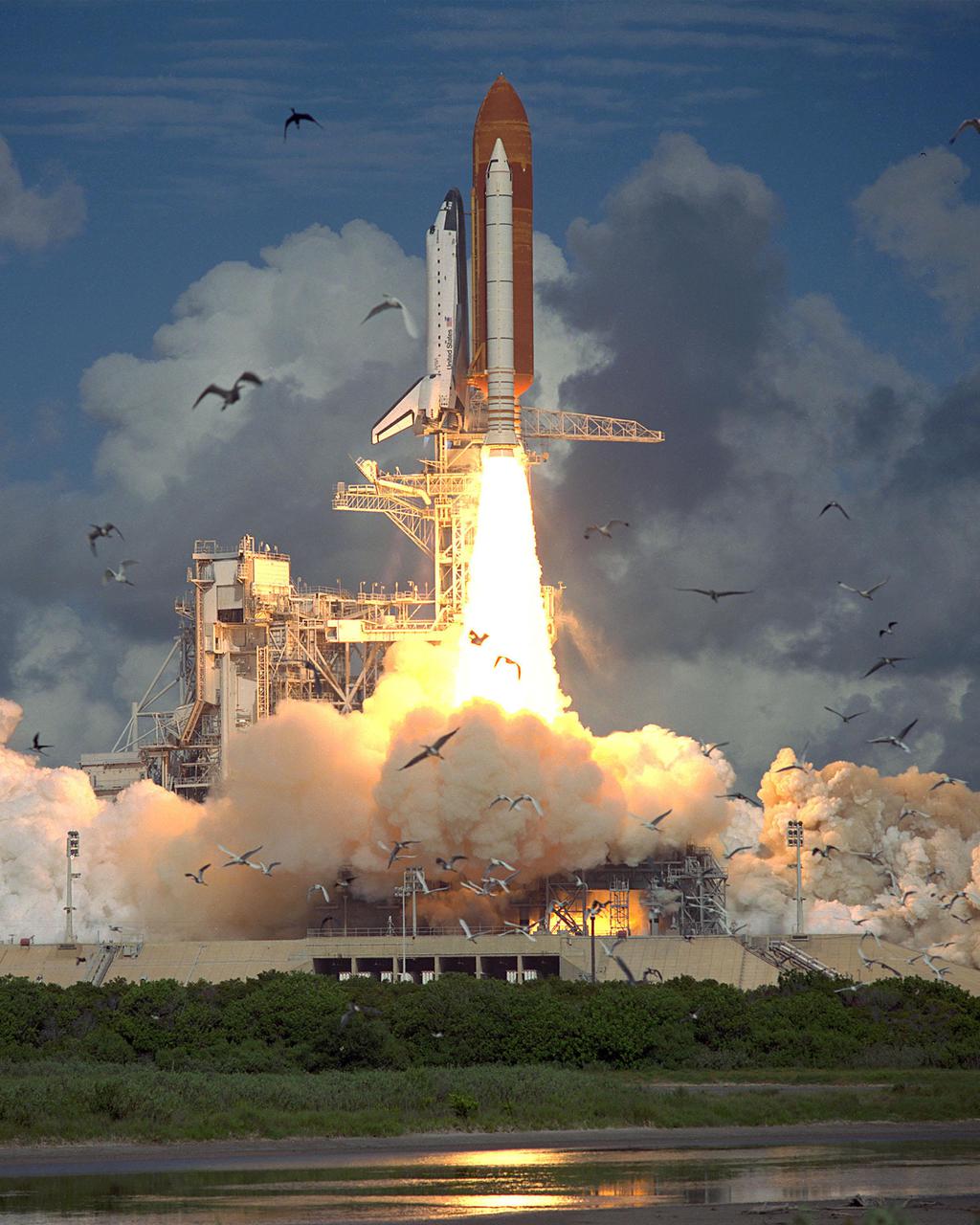
KENNEDY SPACE CENTER, FLA. -- The first flight of the commercially developed SPACEHAB laboratory module begins with the flawless liftoff of the Space Shuttle Endeavour from Launch Pad 39B at 9:07:22 a.m. EDT, June 21. Also planned for the eight-day flight of Mission STS-57 is the retrieval of the European Retrievable Carrier (EURECA). Onboard for the fourth flight of Endeavour are a crew of six: Mission Commander Ronald J. Grabe, Pilot Brian Duffy, Payload Commander G. David Low, and Mission Specialists Nancy Jane Sherlock, Peter J.K. 'Jeff' Wisoff, and Janice E. Voss. A first launch attempt on June 20 was scrubbed due to unacceptable weather conditions both at KSC and the overseas contingency landing sites.
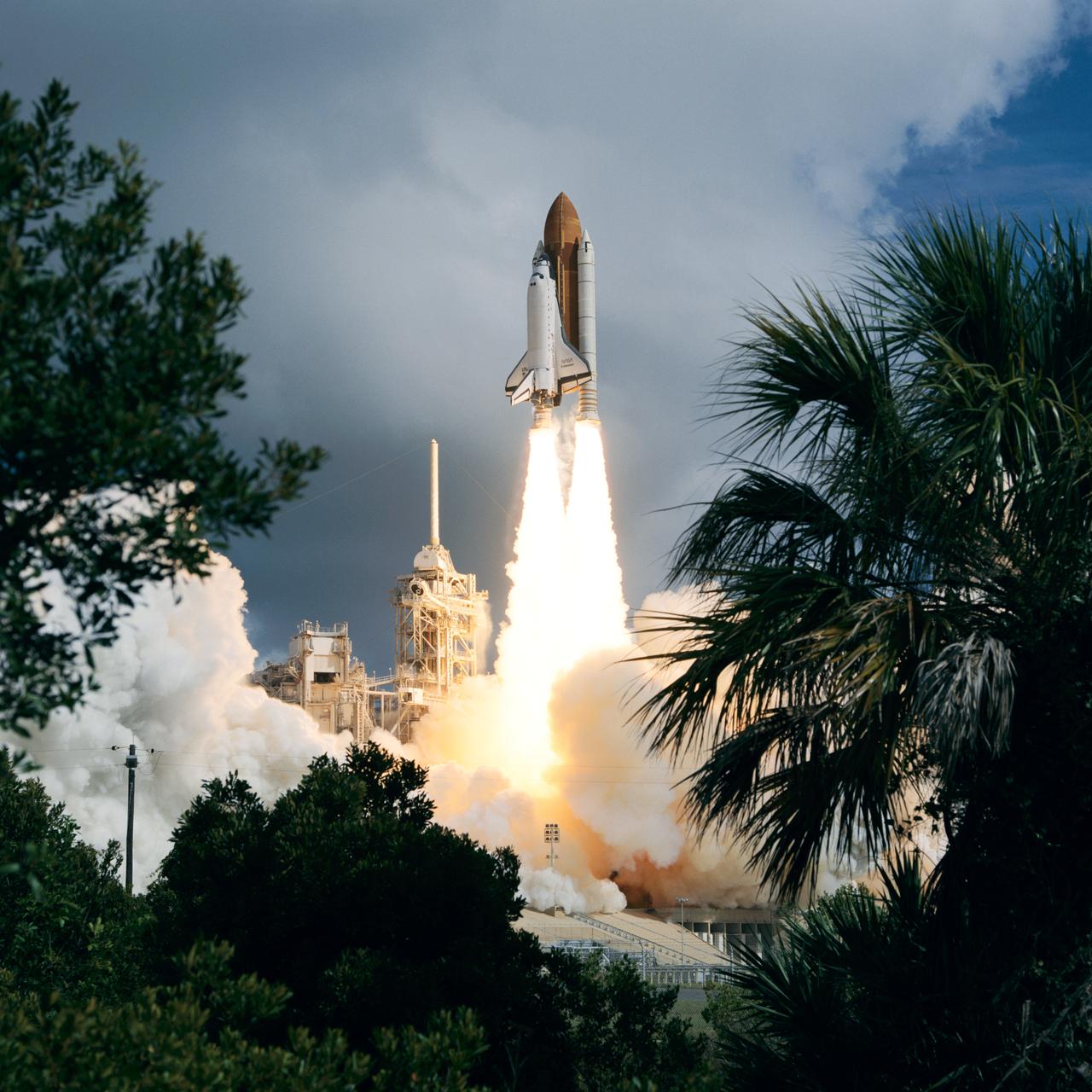
STS057-S-055 (21 June 1993) --- Framed by a variety of flora types, the Space Shuttle Endeavour lifts off Launch Pad 39B to begin the STS-57 mission. Launch occurred at 9:07:22 a.m. (EDT), June 21, 1993. The mission represents the first flight of the commercially developed SPACEHAB laboratory module and also will feature a retrieval of the European Retrievable Carrier (EURECA). Onboard for Endeavour's fourth flight are a crew of six - Ronald J. Grabe, mission commander; Brian Duffy, pilot; G. David Low, payload commander; and Nancy J. Sherlock, Peter J.K. (Jeff) Wisoff and Janice E. Voss, all mission specialists. An earlier launch attempt was scrubbed due to unacceptable weather conditions both at KSC and the overseas contingency landing sites.
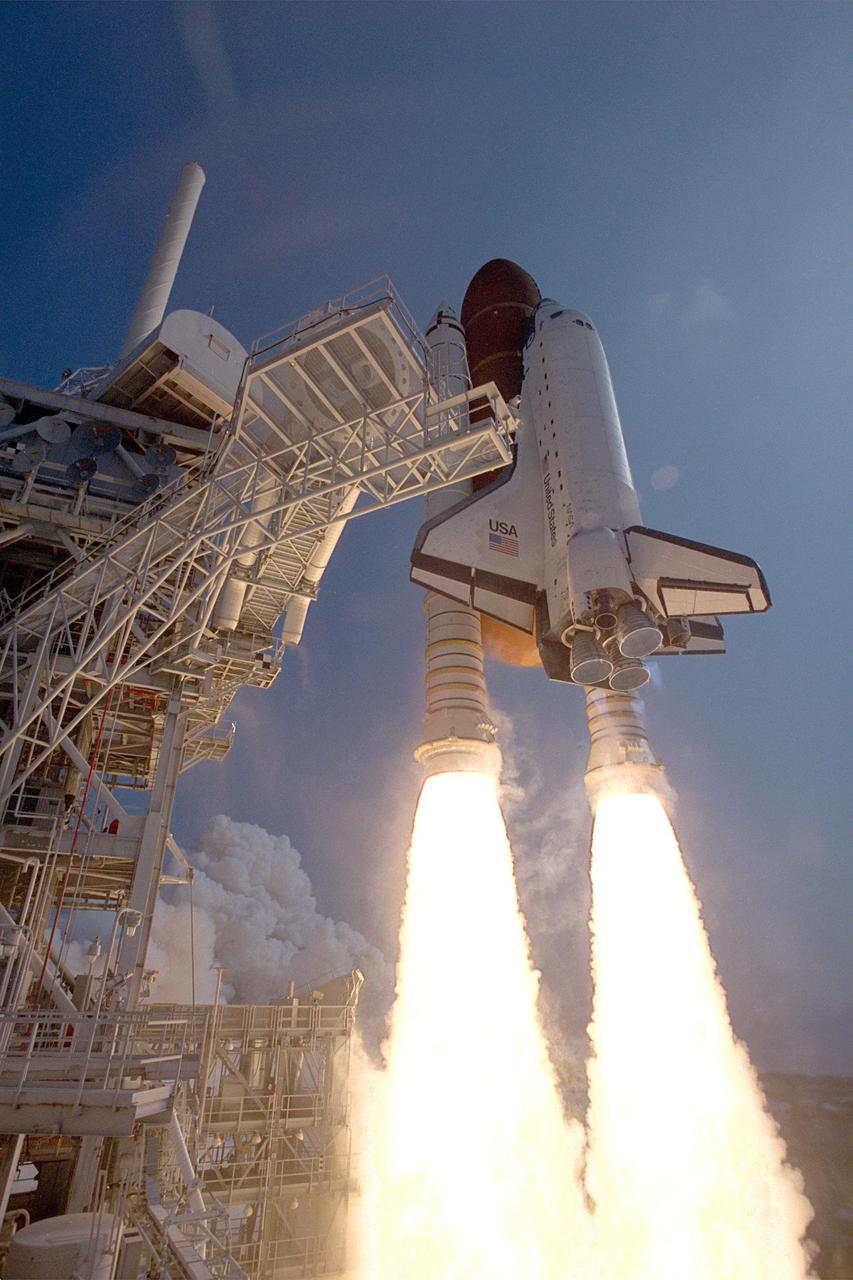
KENNEDY SPACE CENTER, FLA. -- The Space Shuttle Atlantis breaks free of all earthly constraints and hurtles past the Fixed Service Structure and 'beanie cap,' which only moments before had been in place above the external tank. STS-46 lifted off at 9:56:48 a.m. EDT, July 31. The Shuttle Atlantis carries Eureca, the European Retrievable Carrier, which is to be put into orbit during this mission. The NASA_Italian Space Agency Tethered Satellite System (TSS-1) will also be deployed for the first time during the STS-46 flight allowing a new capability for probing the space environment.
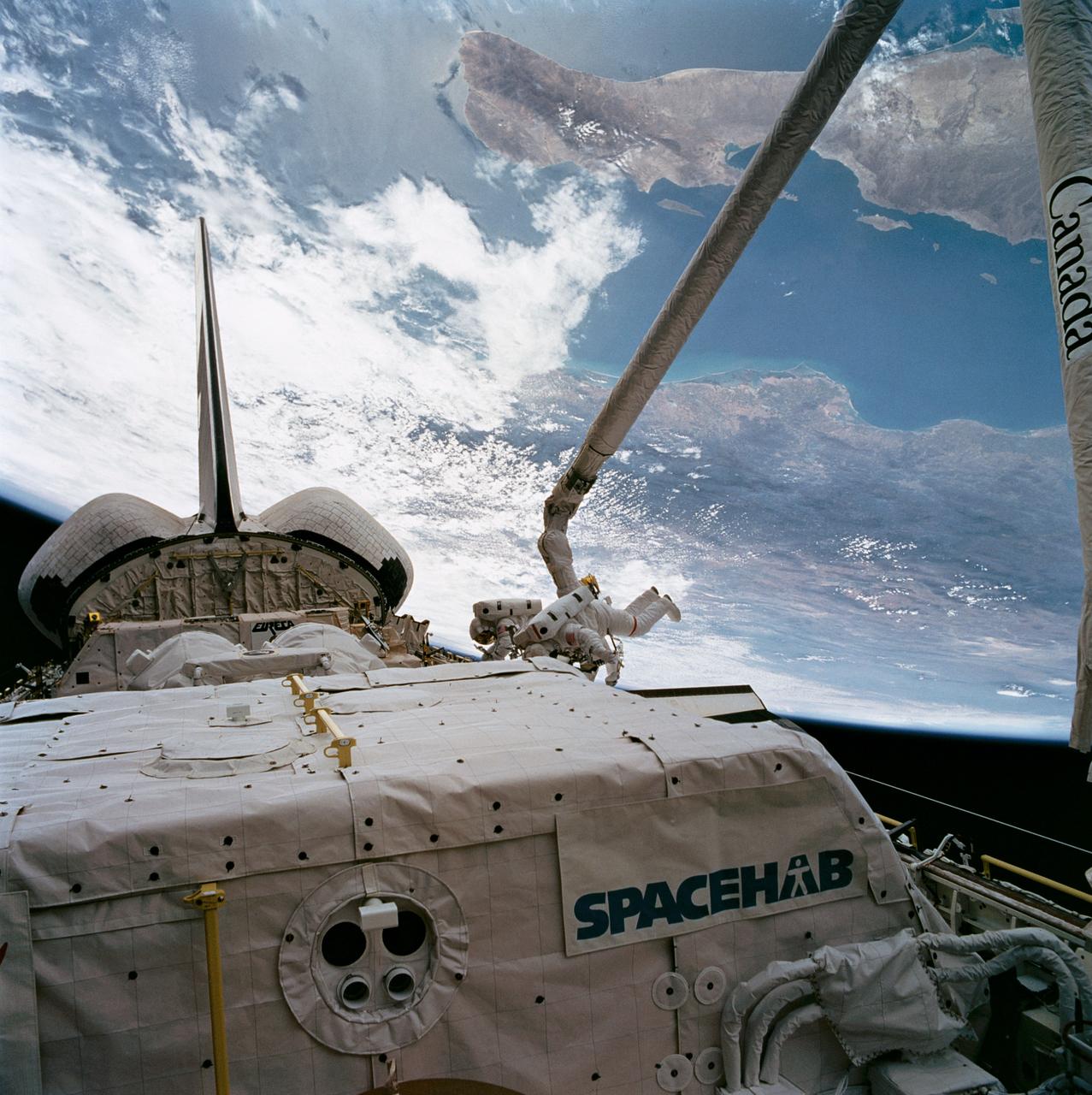
STS057-89-042 (24 June 1993) --- Baja California forms the backdrop for this extravehicular activity (EVA) scene captured on 70mm film by one of the STS-57 crew members in the Space Shuttle Endeavour's crew cabin. Working near the recently "captured" European Retrievable Carrier (EURECA) at frame center are astronauts G. David Low (nearest camera) and Peter J. K. (Jeff) Wisoff. Low is attached to a mobile foot restraint to the end of the Canadian-built Remote Manipulator System (RMS) arm. The SPACEHAB module is seen in the foreground and EURECA is partially visible near Endeavour's aft firewall.
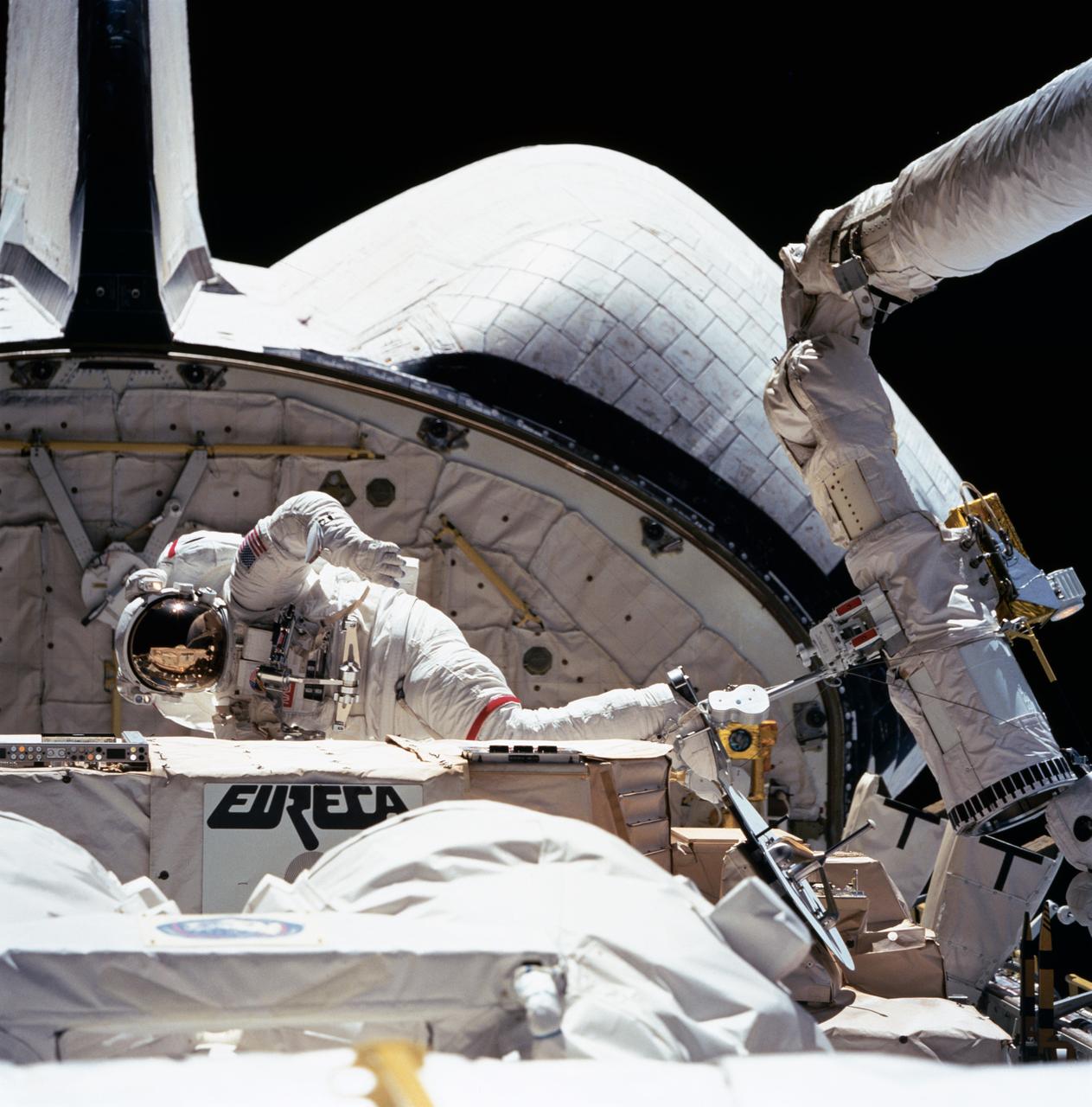
The darkness of space forms the backdrop for this extravehicular activity (EVA) scene captured by one of the STS-57 crewmembers in Endeavour's, Orbiter Vehicle (OV) 105's, crew cabin. Pictured near the recently "captured" European Retrievable Carrier (EURECA) at frame center is Mission Specialist (MS) and Payload Commander (PLC) G. David Low. Suited in an extravehicular mobility unit (EMU), Low, anchored to the remote manipulator system (RMS) via a portable foot restraint (PFR) (manipulator foot restraint (MFR)), is conducting Detailed Test Objective (DTO) 1210 procedures. Specifically, this activity will assist in refining several procedures being developed to service the Hubble Space Telescope (HST) on mission STS-61 in December 1993. The PFR is attached to the RMS end effector via a PFR attachment device (PAD). Partially visible in the foreground is the Superfluid Helium Onorbit Transfer (SHOOT) payload.
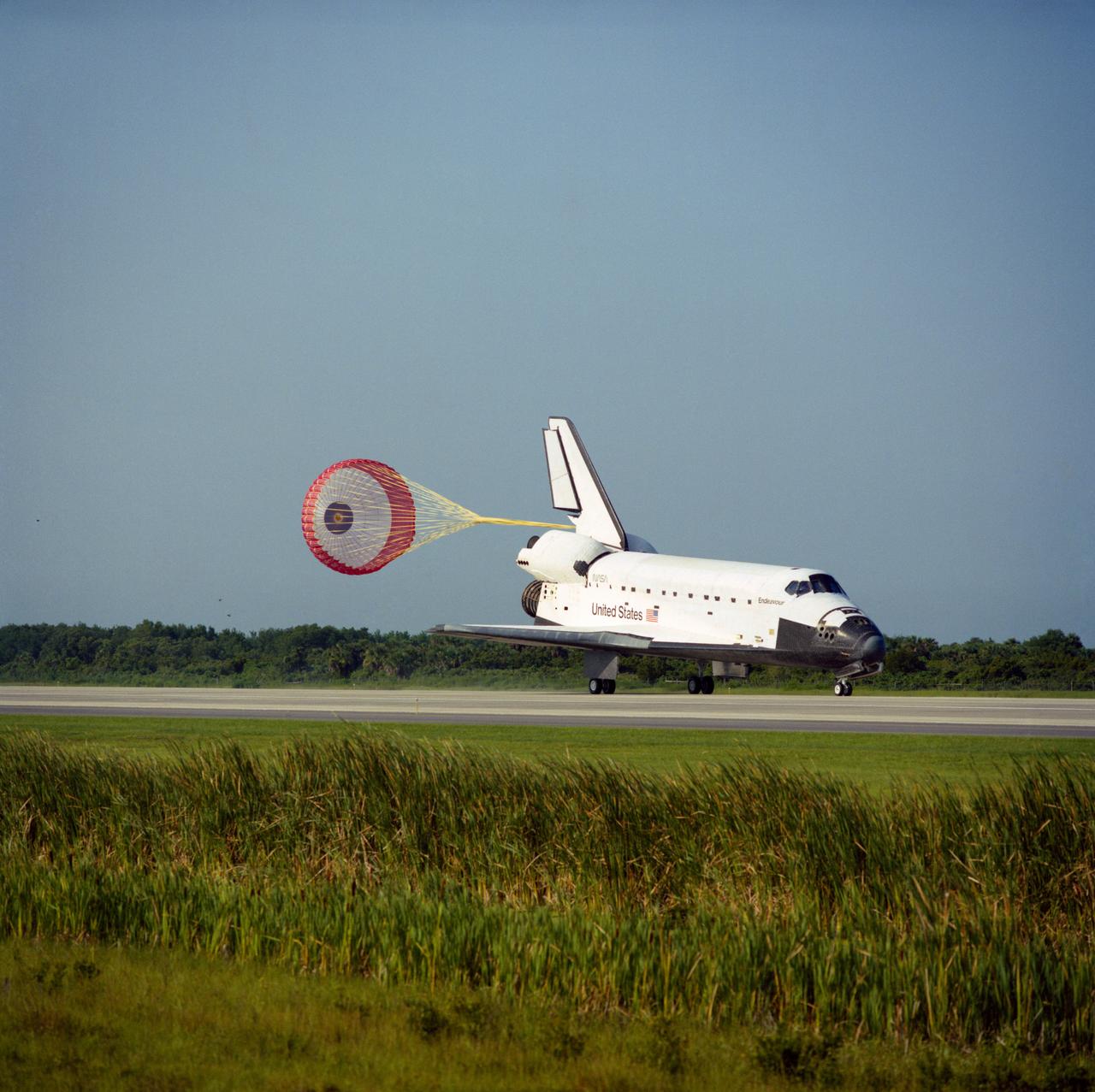
STS057-S-082 (1 July 1993) --- The drag chute on the Space Shuttle Endeavour is fully deployed in this scene on Runway 33 (KSC's Shuttle Landing Facility) as the spacecraft successfully completes a ten-day mission in Earth orbit. Official mission duration was nine days, twenty-three hours, forty-four minutes and fifty-five seconds. Main gear touchdown occurred at 8:52:16 (EDT), July 1, 1993. Onboard Endeavour for the landing were six NASA astronauts and the European Retrievable Carrier (EURECA) spacecraft. Crewmembers were astronauts Ronald J. Grabe, Brian Duffy, G. David Low, Nancy J. Sherlock, Peter J. K. (Jeff) Wisoff and Janice E. Voss.
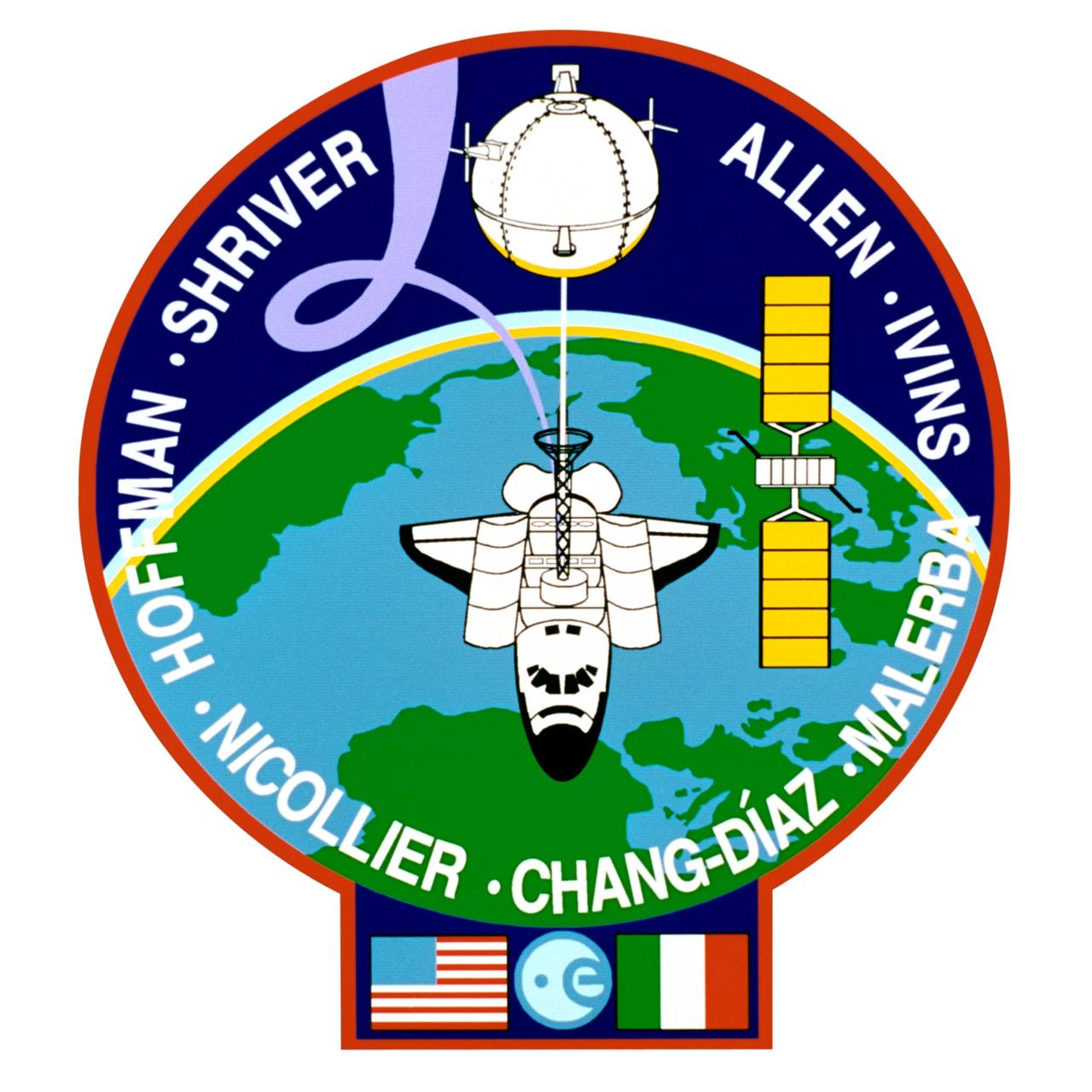
STS046-S-001 (May 1992) --- Designed by the crew members assigned to the flight, the crew patch depicts the space shuttle Atlantis in orbit around Earth, accompanied by major payloads: the European Retrievable Carrier (EURECA) and the Tethered Satellite System (TSS-1). In the depiction, EURECA has been activated and released, its antennae and solar arrays deployed, and it is about to start its ten-month scientific mission. The tethered satellite is linked to the orbiter by a 20-kilometer tether. The purple beam emanating from an electron generator in the payload bay spirals around Earth's magnetic field. The TSS mission will study the dynamics and electrodynamics of tethered systems in space and the physics of Earth's ionosphere. Visible on Earth's surface are the United States of America and the thirteen-member countries of the European Space Agency (ESA), in particular, Italy - partner with the United States in the TSS program. The American and Italian flags, as well as the ESA logo, further serve to illustrate the international character of STS-46. The NASA insignia design for space shuttle flights is reserved for use by the astronauts and for other official use as the NASA Administrator may authorize. Public availability has been approved only in the forms of illustrations by the various news media. When and if there is any change in this policy, which is not anticipated, the change will be publicly announced. Photo credit: NASA