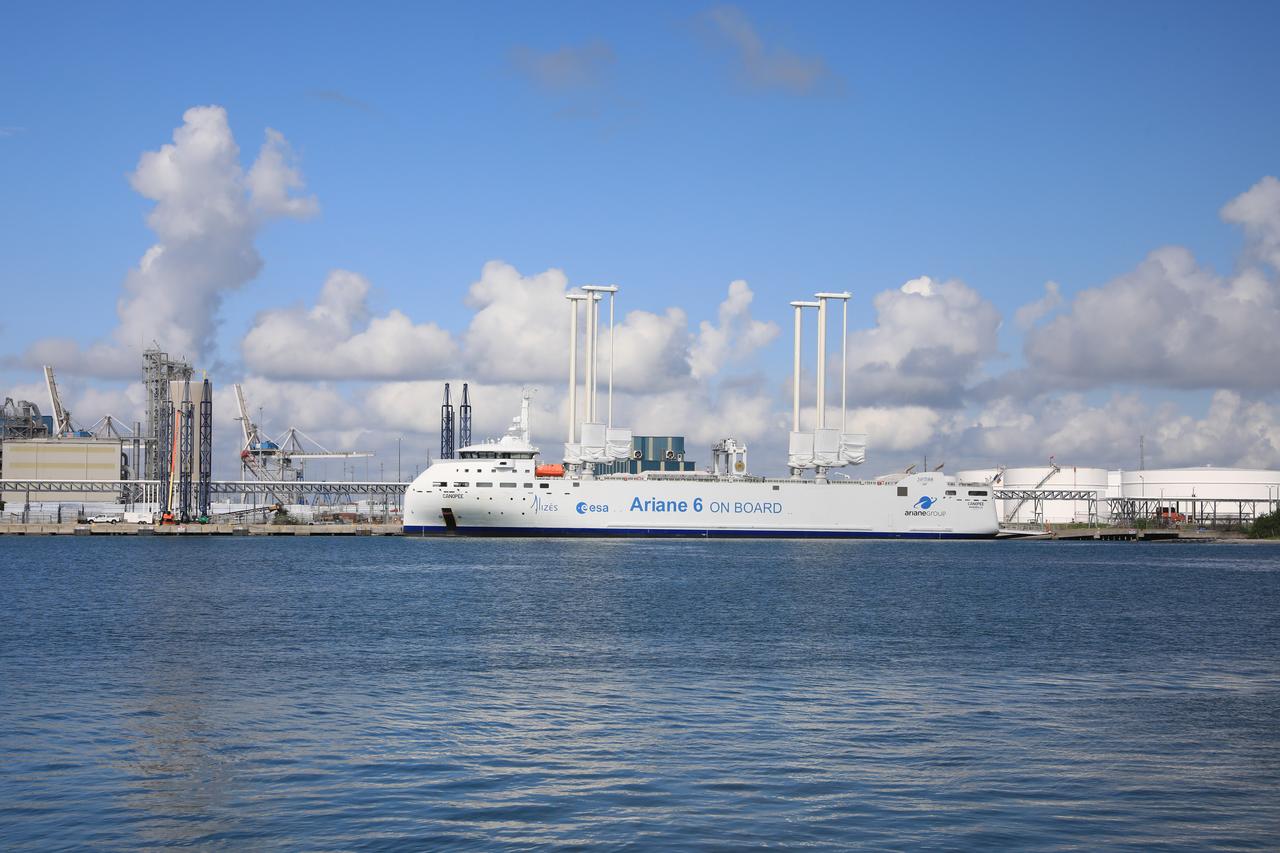
The European Service Module 3 for NASA’s Artemis III mission arrives at Port Canaveral on Tuesday, Sept. 3, 2024, awaiting transportation to NASA’s Kennedy Space Center in Florida. The European Service Module 3, which is assembled by Airbus in Bremen, Germany, traveled across the Atlantic Ocean by the ESA (European Space Agency) aboard the Canopee ship. The European Service Module 3 provides the spacecraft’s propulsion, thermal control, electrical power, and life support systems. Artemis III will send four astronauts to the lunar orbit where two crew members will spend a week near the South Pole of the Moon conducting new science.
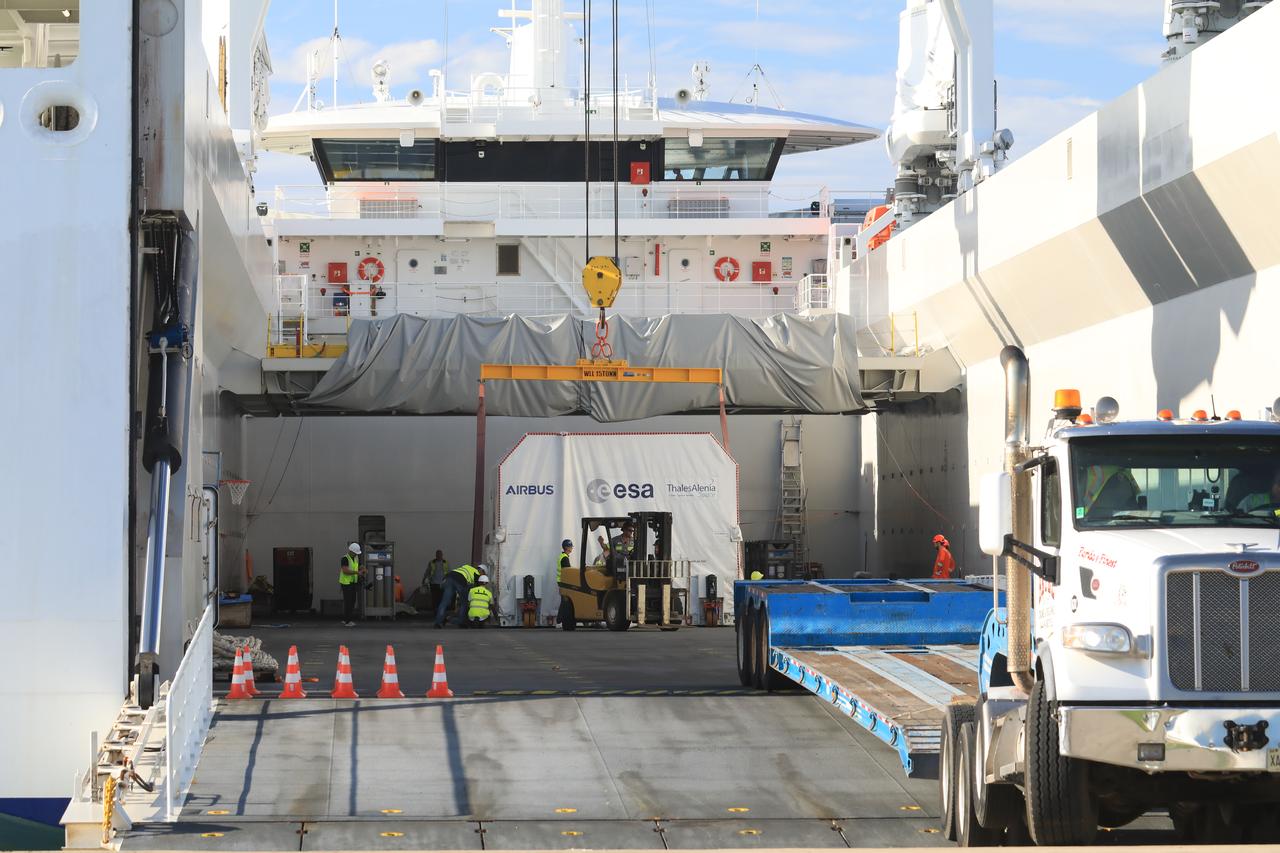
The transport carrier containing the European Service Module 3 for NASA’s Artemis III mission arrives at Port Canaveral on Tuesday, Sept. 3, 2024, awaiting transportation to NASA’s Kennedy Space Center in Florida. The European Service Module 3, which is assembled by Airbus in Bremen, Germany, traveled 10 days across the Atlantic Ocean via the Canopee ship. The European Service Module 3 provides the spacecraft’s propulsion, thermal control, electrical power, and life support systems. Artemis III will send four astronauts to the lunar orbit where two crew members will spend a week near the South Pole of the Moon conducting new science.
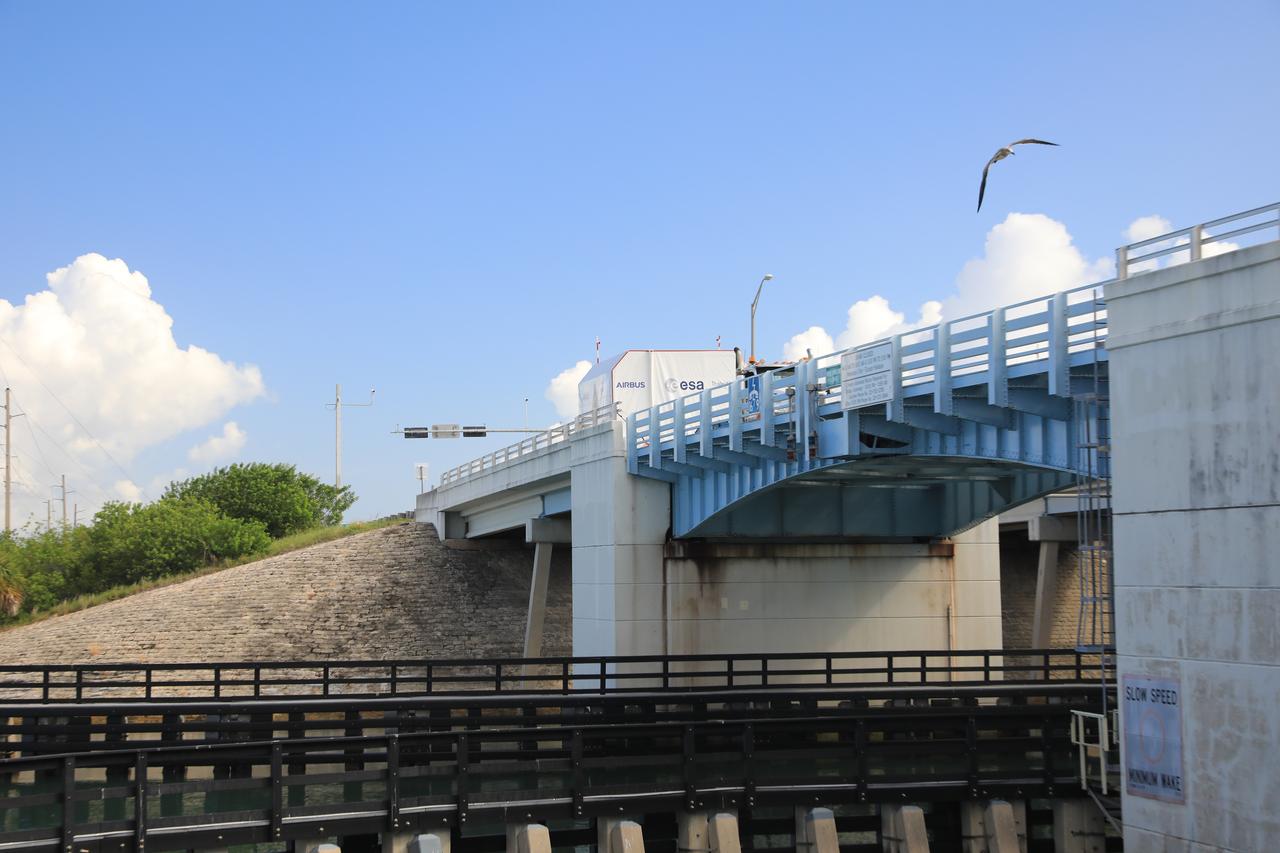
The transport carrier containing the European Service Module 3 for NASA’s Artemis III mission arrives at Port Canaveral on Tuesday, Sept. 3, 2024, awaiting transportation to NASA’s Kennedy Space Center in Florida. The European Service Module 3, which is assembled by Airbus in Bremen, Germany, traveled 10 days across the Atlantic Ocean via the Canopee ship. The European Service Module 3 provides the spacecraft’s propulsion, thermal control, electrical power, and life support systems. Artemis III will send four astronauts to the lunar orbit where two crew members will spend a week near the South Pole of the Moon conducting new science.
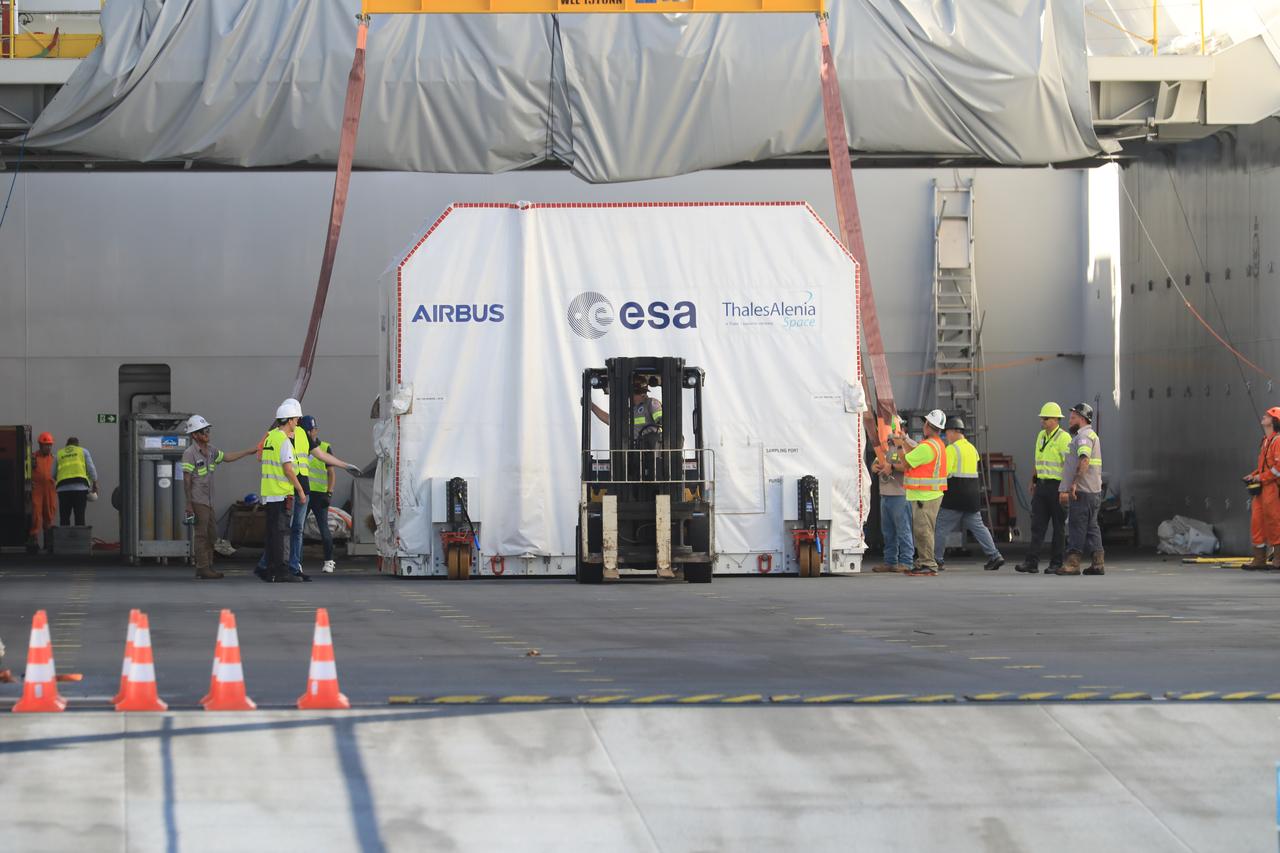
The transport carrier containing the European Service Module 3 for NASA’s Artemis III mission arrives at Port Canaveral on Tuesday, Sept. 3, 2024, awaiting transportation to NASA’s Kennedy Space Center in Florida. The European Service Module 3, which is assembled by Airbus in Bremen, Germany, traveled 10 days across the Atlantic Ocean via the Canopee ship. The European Service Module 3 provides the spacecraft’s propulsion, thermal control, electrical power, and life support systems. Artemis III will send four astronauts to the lunar orbit where two crew members will spend a week near the South Pole of the Moon conducting new science.
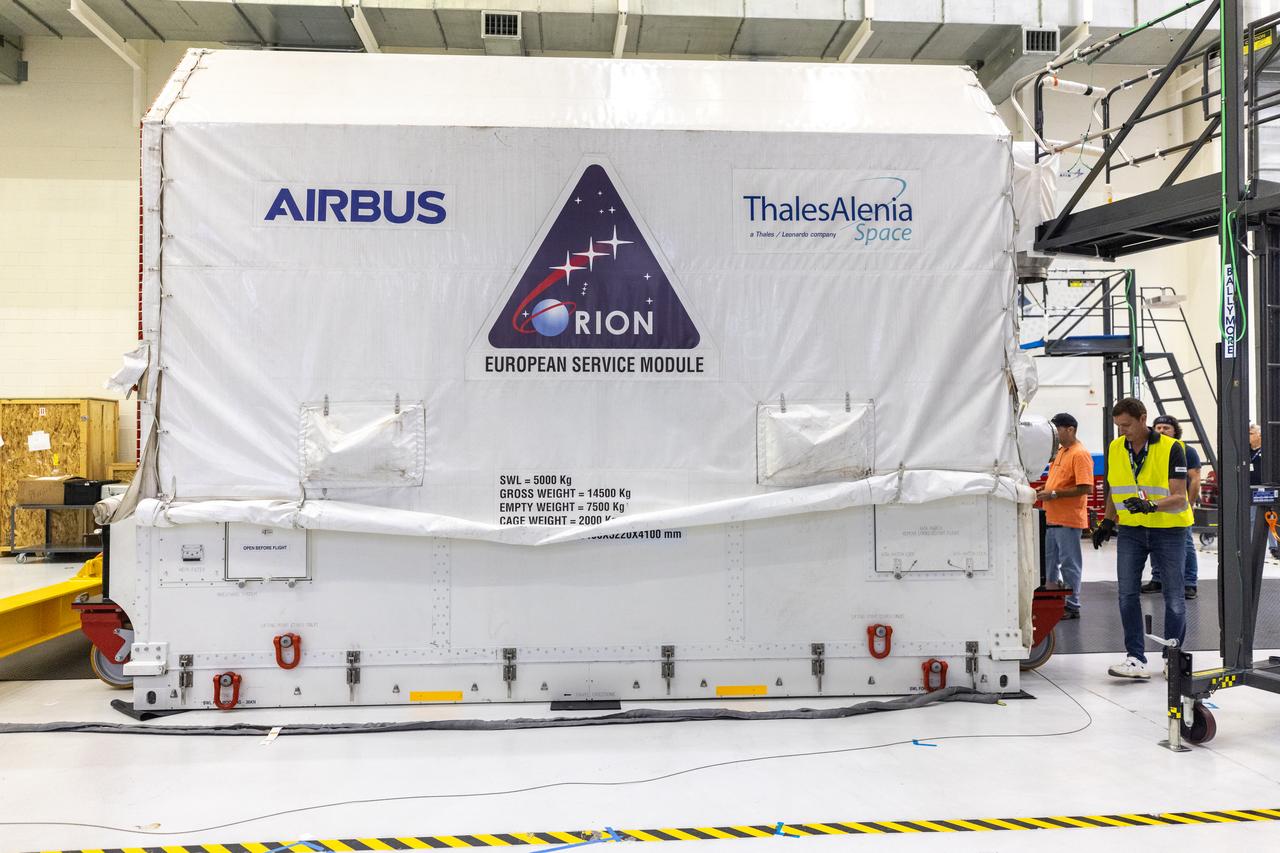
The transport carrier containing the European Service Module for NASA’s Artemis III mission arrives at the Neil A. Armstrong Operations and Checkout Building at NASA’s Kennedy Space Center in Florida on Tuesday, Sept. 3, 2024. The European Service Module, which is assembled by Airbus in Bremen, Germany, from parts made in 10 European countries and the United States, acts as the driving force behind Orion for deep space exploration, providing essential propulsion, thermal control, and electrical power.
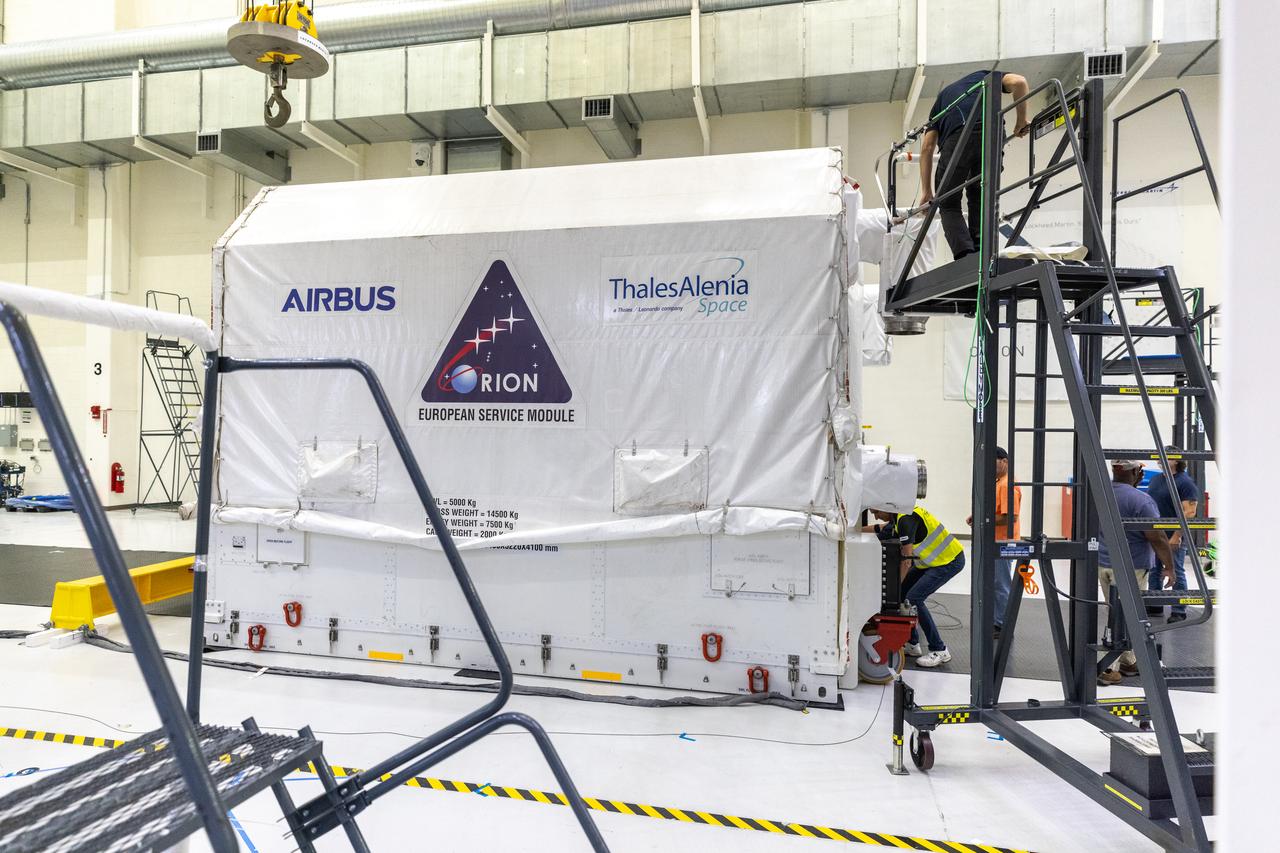
The transport carrier containing the European Service Module for NASA’s Artemis III mission arrives at the Neil A. Armstrong Operations and Checkout Building at NASA’s Kennedy Space Center in Florida on Tuesday, Sept. 3, 2024. The European Service Module, which is assembled by Airbus in Bremen, Germany, from parts made in 10 European countries and the United States, acts as the driving force behind Orion for deep space exploration, providing essential propulsion, thermal control, and electrical power.
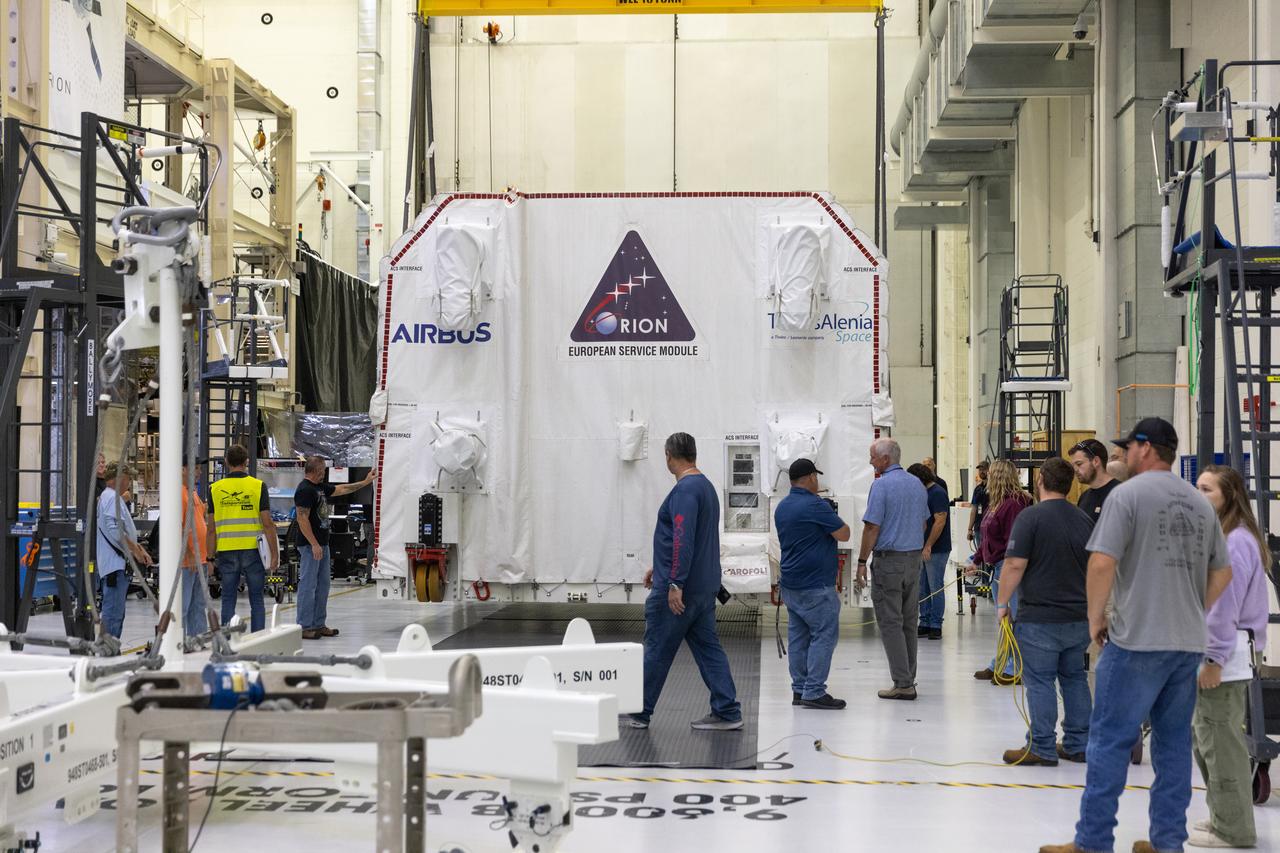
The transport carrier containing the European Service Module for NASA’s Artemis III mission arrives at the Neil A. Armstrong Operations and Checkout Building at NASA’s Kennedy Space Center in Florida on Tuesday, Sept. 3, 2024. The European Service Module, which is assembled by Airbus in Bremen, Germany, from parts made in 10 European countries and the United States, acts as the driving force behind Orion for deep space exploration, providing essential propulsion, thermal control, and electrical power.

The transport carrier containing the European Service Module for NASA’s Artemis III mission arrives at the Neil A. Armstrong Operations and Checkout Building at NASA’s Kennedy Space Center in Florida on Tuesday, Sept. 3, 2024. The European Service Module, which is assembled by Airbus in Bremen, Germany, from parts made in 10 European countries and the United States, acts as the driving force behind Orion for deep space exploration, providing essential propulsion, thermal control, and electrical power.
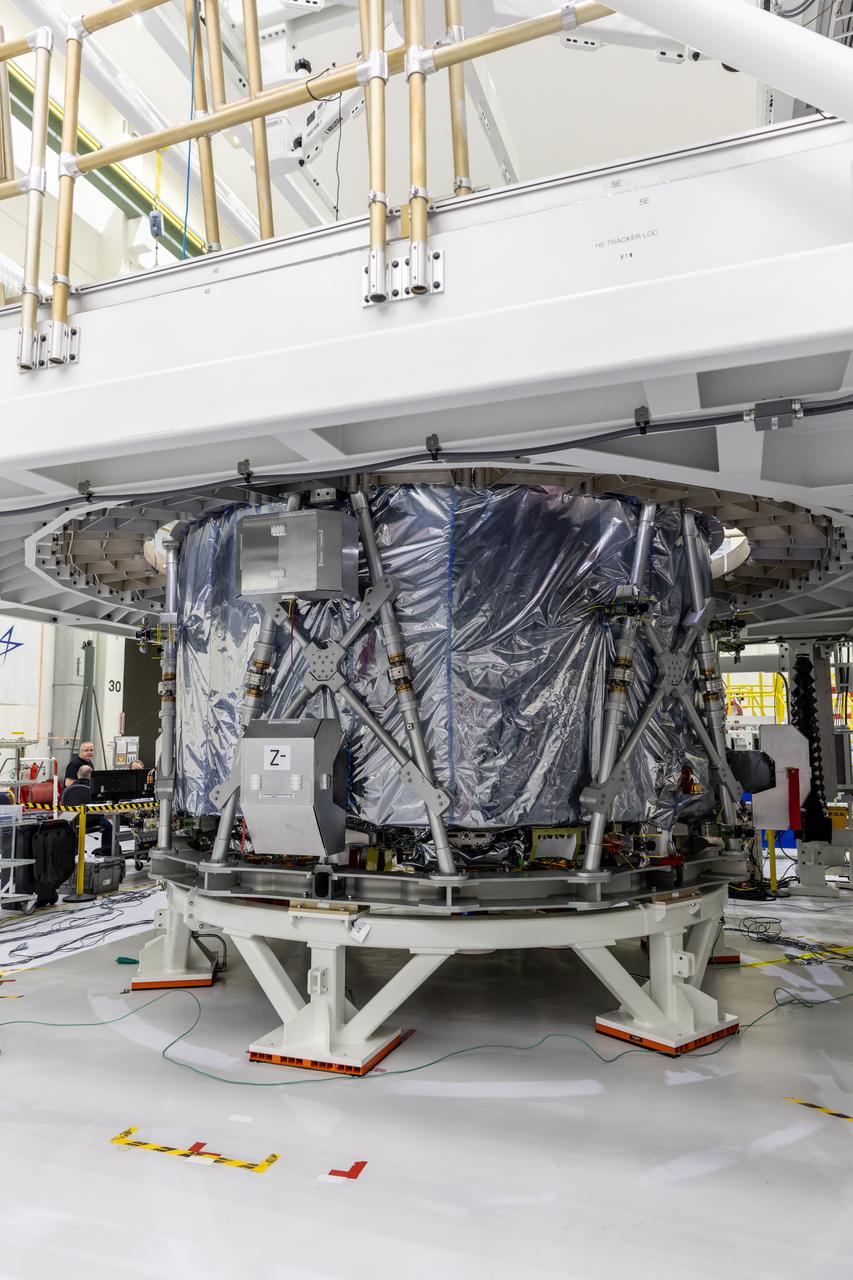
The transport carrier containing the European Service Module for NASA’s Artemis III mission arrives at the Neil A. Armstrong Operations and Checkout Building at NASA’s Kennedy Space Center in Florida on Tuesday, Sept. 3, 2024. The European Service Module, which is assembled by Airbus in Bremen, Germany, from parts made in 10 European countries and the United States, acts as the driving force behind Orion for deep space exploration, providing essential propulsion, thermal control, and electrical power.
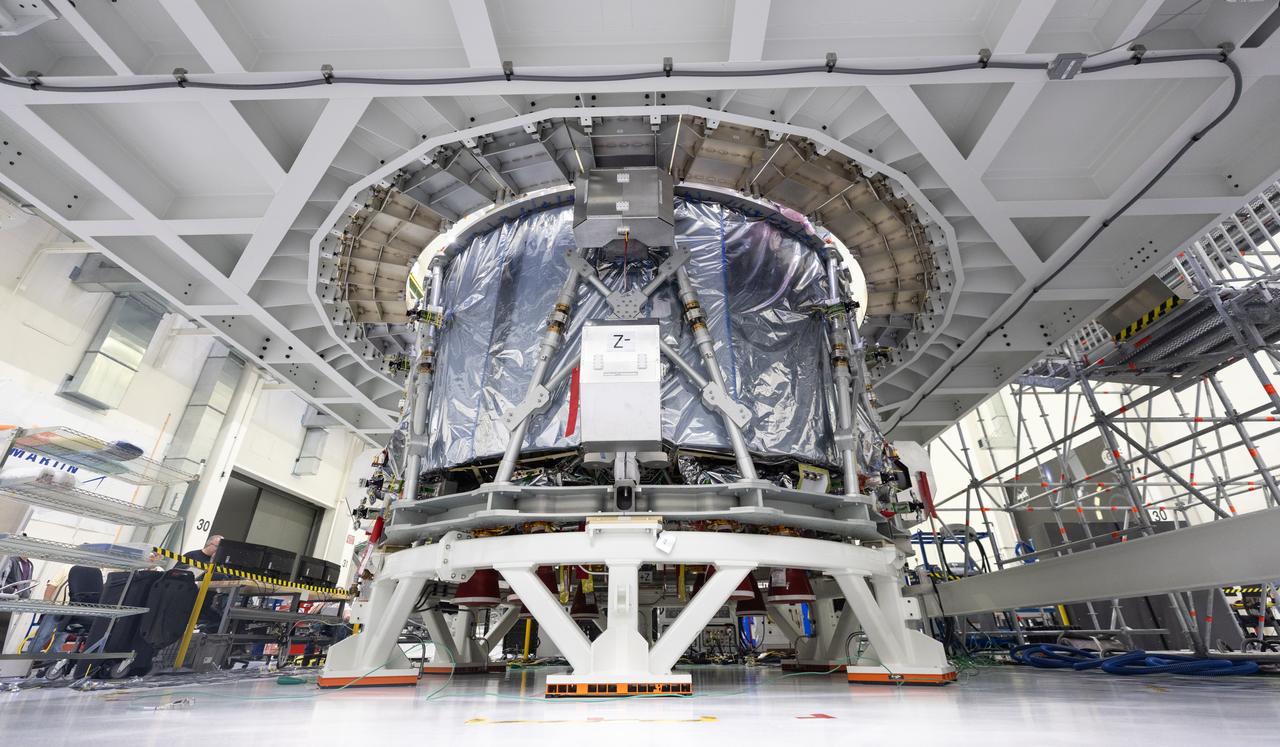
The transport carrier containing the European Service Module for NASA’s Artemis III mission arrives at the Neil A. Armstrong Operations and Checkout Building at NASA’s Kennedy Space Center in Florida on Tuesday, Sept. 3, 2024. The European Service Module, which is assembled by Airbus in Bremen, Germany, from parts made in 10 European countries and the United States, acts as the driving force behind Orion for deep space exploration, providing essential propulsion, thermal control, and electrical power.
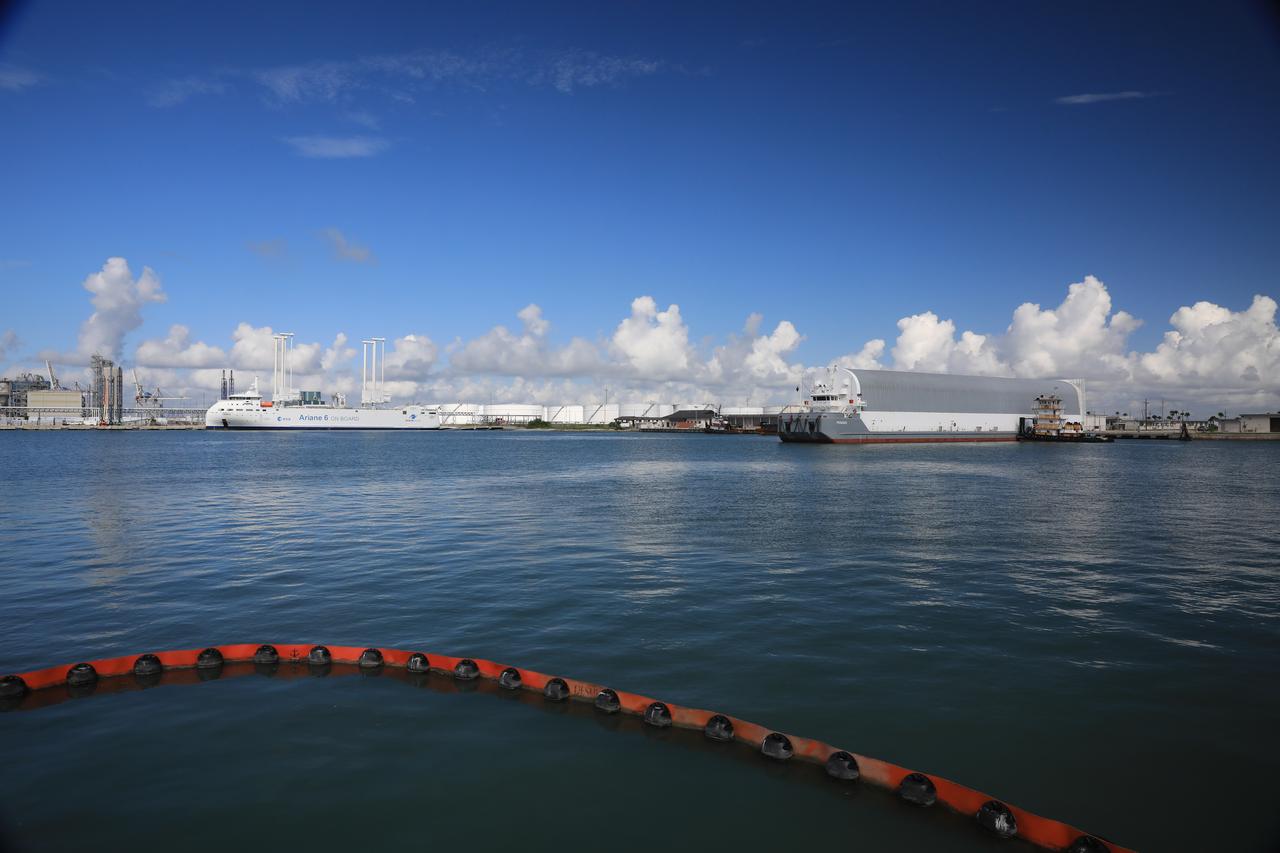
NASA’s Pegasus barge, carrying several pieces of the Artemis campaign hardware, along with the ESA (European Space Agency) ship carrying European Service Module 3 for NASA’s Artemis III mission arrives at Port Canaveral on Tuesday, Sept. 3, 2024, awaiting transportation to NASA’s Kennedy Space Center in Florida. Through the Artemis campaign, we are exploring the Moon for scientific discovery, technology advancement, and to learn how to live and work on another world.

The Orion crew module adapter for NASA’s Artemis III campaign undergoes wiring installs inside the Neil A. Armstrong Operations and Checkout Building at NASA’s Kennedy Space Center on Wednesday, Sept. 4, 2024. In Orion’s final configuration before launch, the crew module adapter connects the capsule to the European Service Module 3. The crew module adapter houses electronic equipment for communications, power, and control, and includes an umbilical connector that bridges the electrical, data, and fluid systems between the main modules.
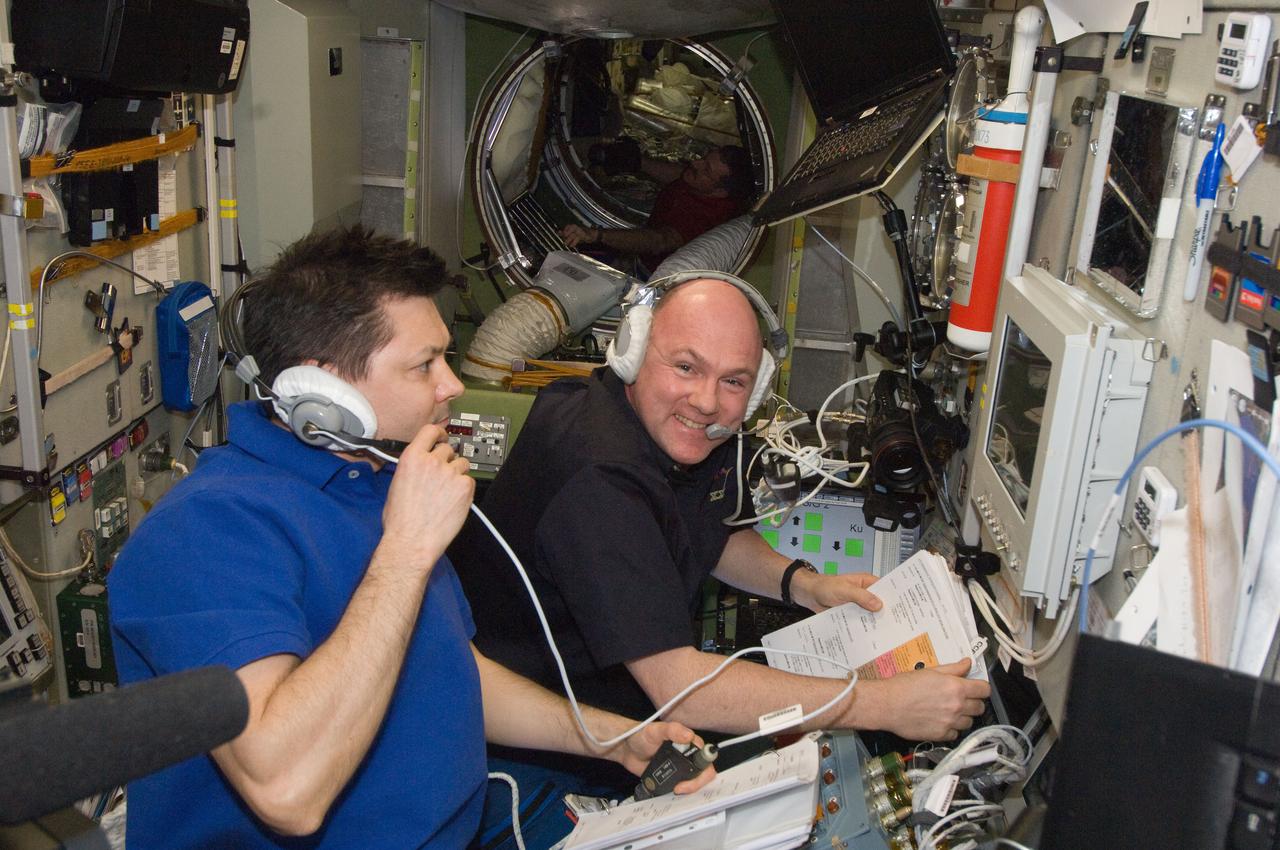
ISS030-E-177363 (28 March 2012) --- European Space Agency astronaut Andre Kuipers and Russian cosmonaut Oleg Kononenko (foreground), both Expedition 30 flight engineers, monitor the approach and docking of ESA’s “Edoardo Amaldi” Automated Transfer Vehicle-3 (ATV-3) in the Zvezda Service Module of the International Space Station.
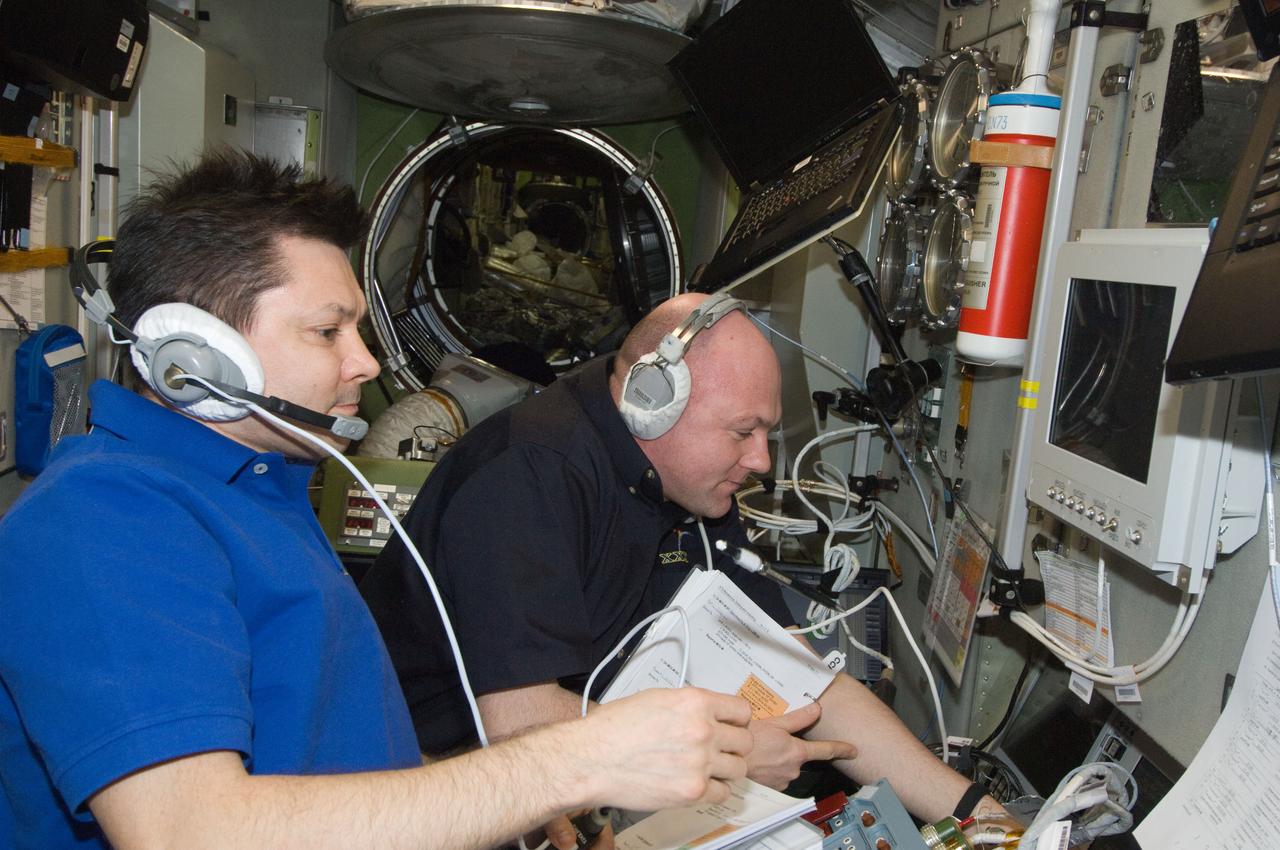
ISS030-E-177317 (28 March 2012) --- European Space Agency astronaut Andre Kuipers and Russian cosmonaut Oleg Kononenko (foreground), both Expedition 30 flight engineers, monitor the approach and docking of ESA’s “Edoardo Amaldi” Automated Transfer Vehicle-3 (ATV-3) in the Zvezda Service Module of the International Space Station.
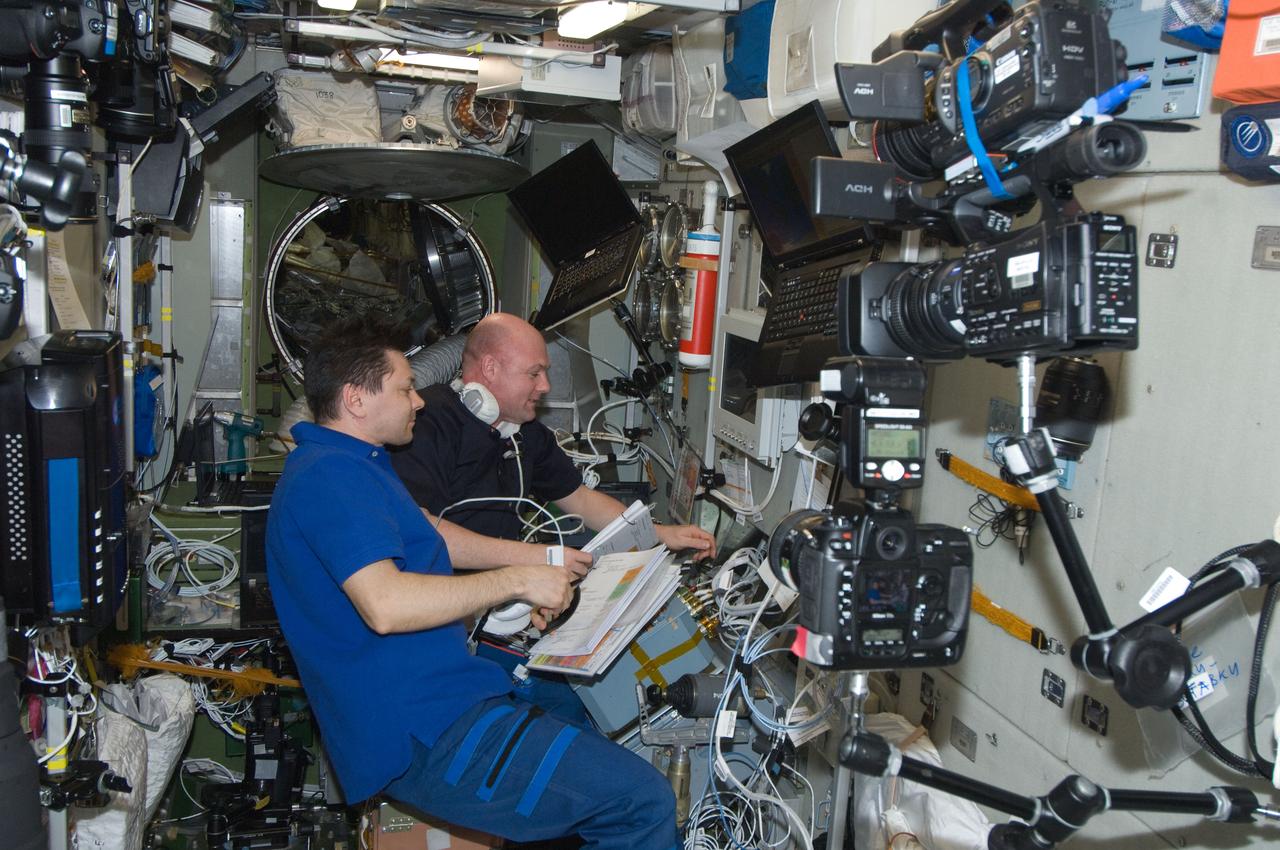
ISS030-E-177327 (28 March 2012) --- European Space Agency astronaut Andre Kuipers and Russian cosmonaut Oleg Kononenko (foreground), both Expedition 30 flight engineers, monitor the approach and docking of ESA’s “Edoardo Amaldi” Automated Transfer Vehicle-3 (ATV-3) in the Zvezda Service Module of the International Space Station.
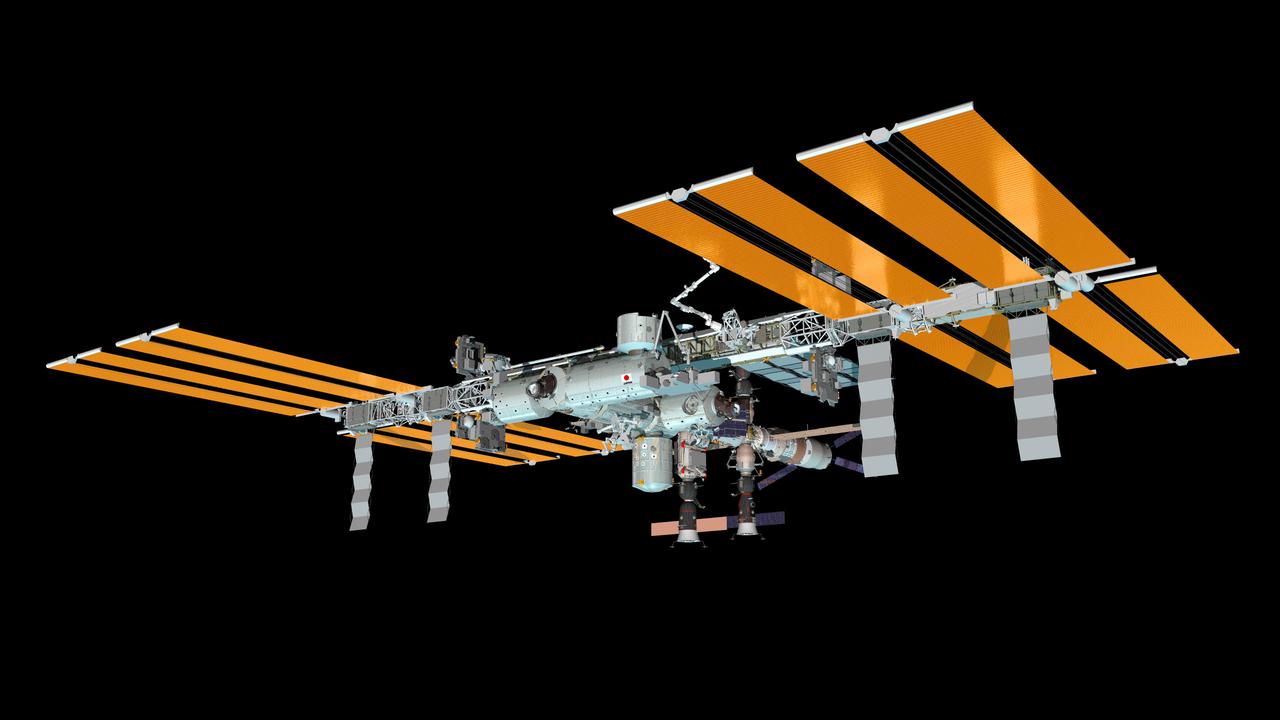
JSC2012-E-036590 (March 2012) --- Computer-generated artist?s rendering of the International Space Station as of March 28, 2012. European Space Agency?s Automated Transfer Vehicle-3 (ATV-3) ?Edoardo Amaldi? docks to the Zvezda Service Module. Progress 46 is linked to the Pirs Docking Compartment. Soyuz 29 (TMA-03M) is attached to the Rassvet Mini-Research Module 1 (MRM1) and Soyuz 28 (TMA-22) is docked to the Poisk Mini-Research Module 2 (MRM2). Photo credit: NASA
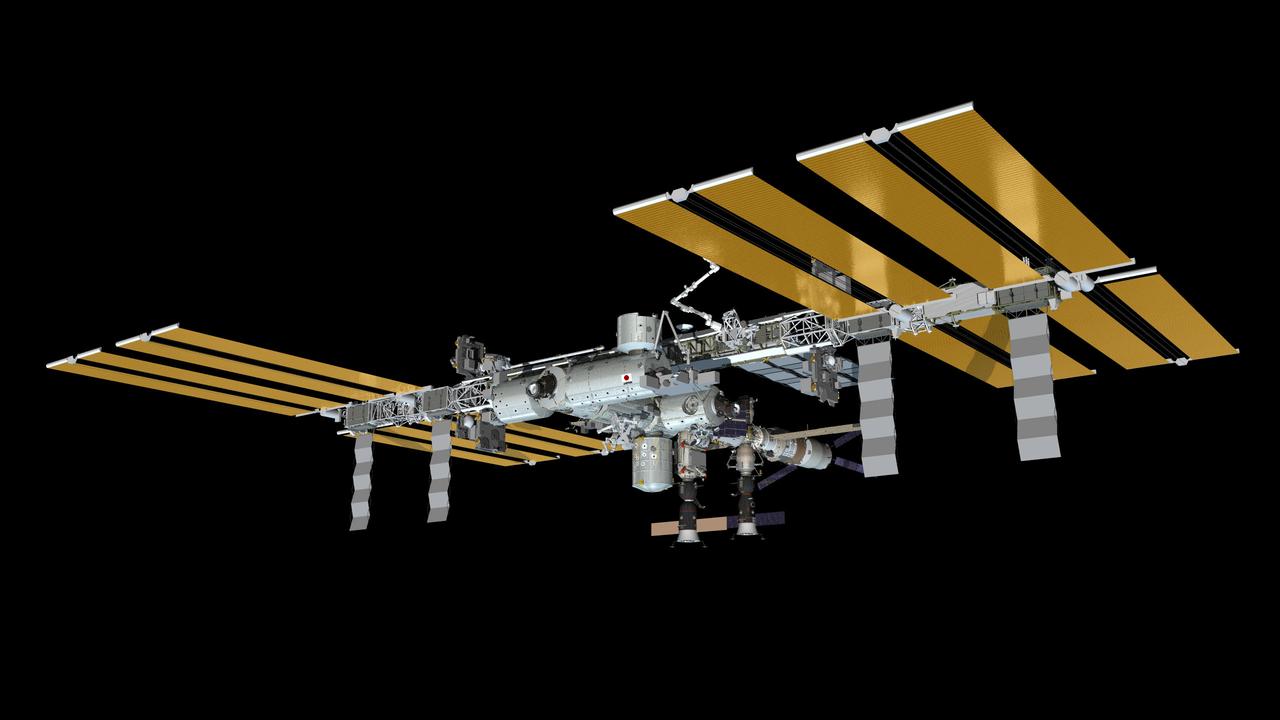
JSC2012-E-042223 (April 2012) --- Computer-generated artist?s rendering of the International Space Station as of April 27, 2012. Soyuz 28 (TMA-22) undocks from the Poisk Mini-Research Module 2 (MRM2). Progress 47 is docked to the Pirs Docking Compartment. European Space Agency?s Automated Transfer Vehicle-3 (ATV-3) ?Edoardo Amaldi? is attached to the Zvezda Service Module. Soyuz 29 (TMA-03M) is attached to the Rassvet Mini-Research Module 1 (MRM1). Photo credit: NASA
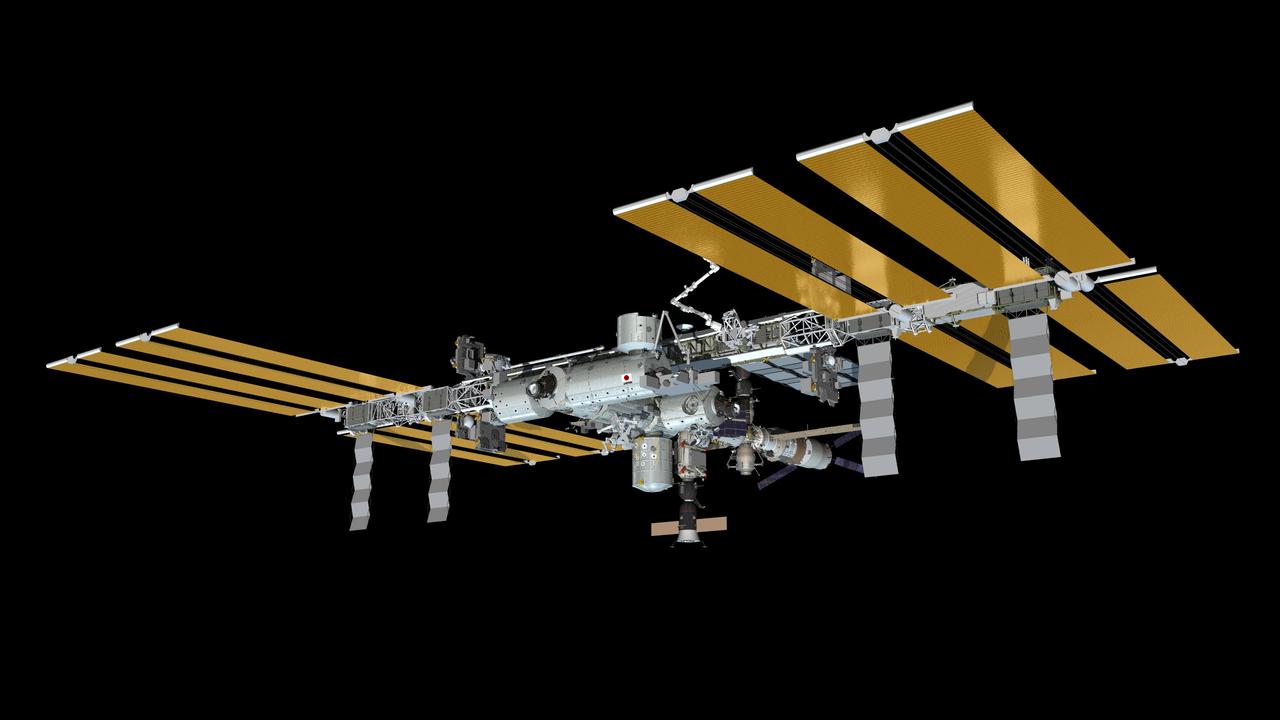
JSC2012-E-042221 (April 2012) --- Computer-generated artist?s rendering of the International Space Station as of April 19, 2012. Progress 46 undocks from the Pirs Docking Compartment. European Space Agency?s Automated Transfer Vehicle-3 (ATV-3) ?Edoardo Amaldi? is docked to the Zvezda Service Module. Soyuz 29 (TMA-03M) is attached to the Rassvet Mini-Research Module 1 (MRM1) and Soyuz 28 (TMA-22) is linked to the Poisk Mini-Research Module 2 (MRM2). Photo credit: NASA
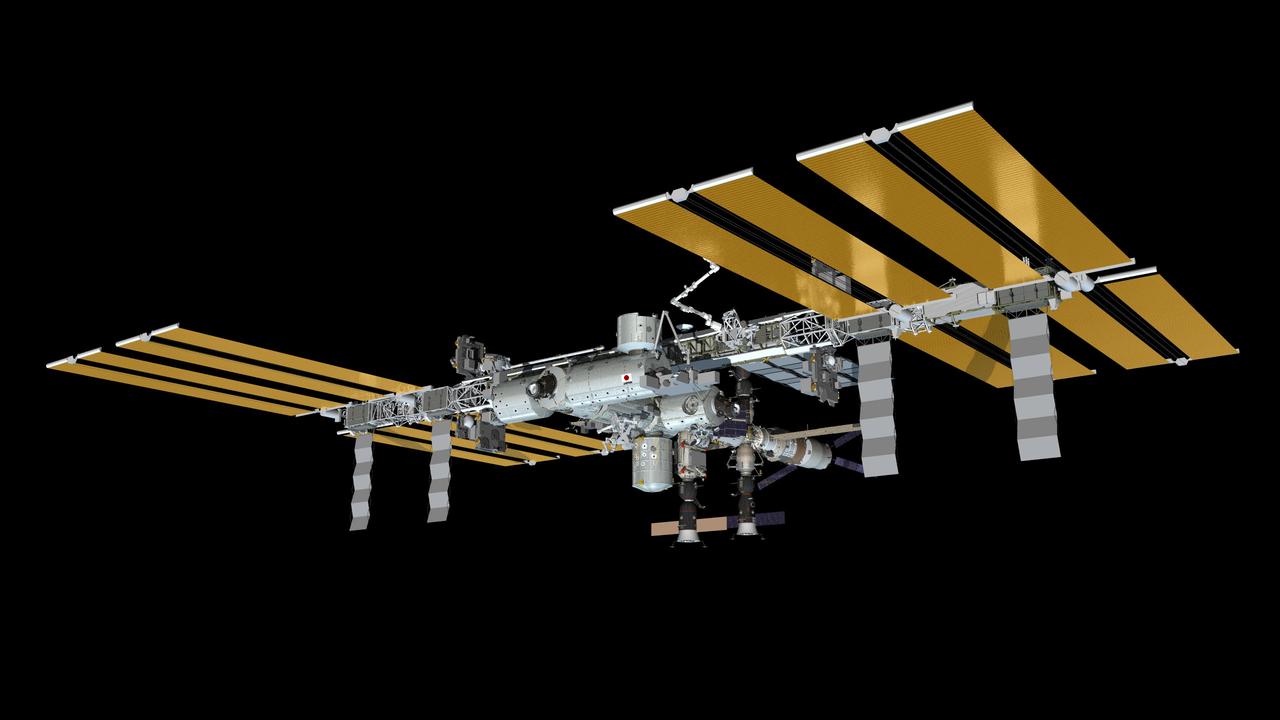
JSC2012-E-042222 (April 2012) --- Computer-generated artist?s rendering of the International Space Station as of April 22, 2012. Progress 47 docks to the Pirs Docking Compartment. European Space Agency?s Automated Transfer Vehicle-3 (ATV-3) ?Edoardo Amaldi? is docked to the Zvezda Service Module. Soyuz 29 (TMA-03M) is attached to the Rassvet Mini-Research Module 1 (MRM1) and Soyuz 28 (TMA-22) is linked to the Poisk Mini-Research Module 2 (MRM2). Photo credit: NASA
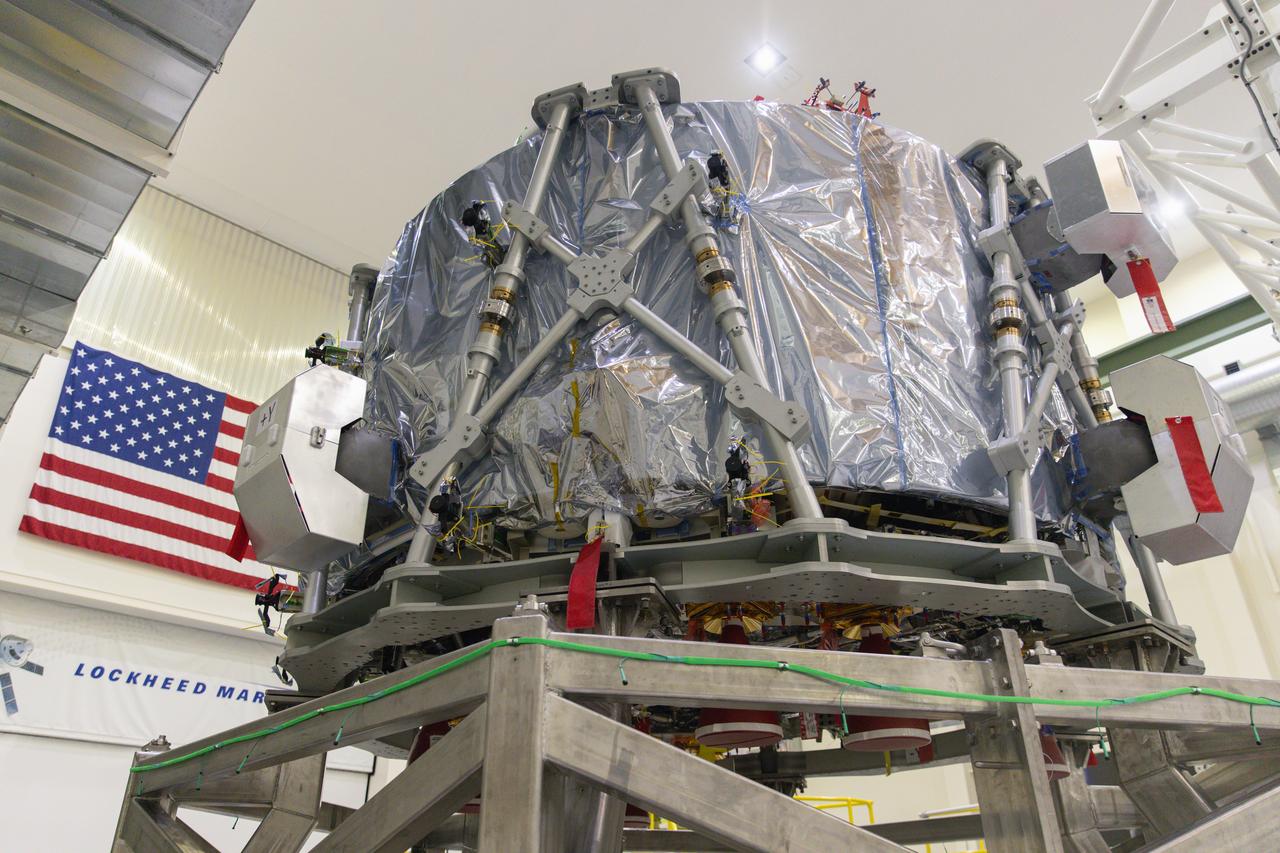
Teams from NASA, ESA (European Space Agency), and Airbus prepare to integrate European Service Module 3 to the crew module adapter on Tuesday, Sept. 17, 2024, inside the Neil A. Armstrong Operations and Checkout Building at NASA’s Kennedy Space Center in Florida. The integrated hardware provides propulsion, electrical power, and other important elements for the Orion spacecraft’s Artemis III campaign to the lunar South Pole region of the Moon.
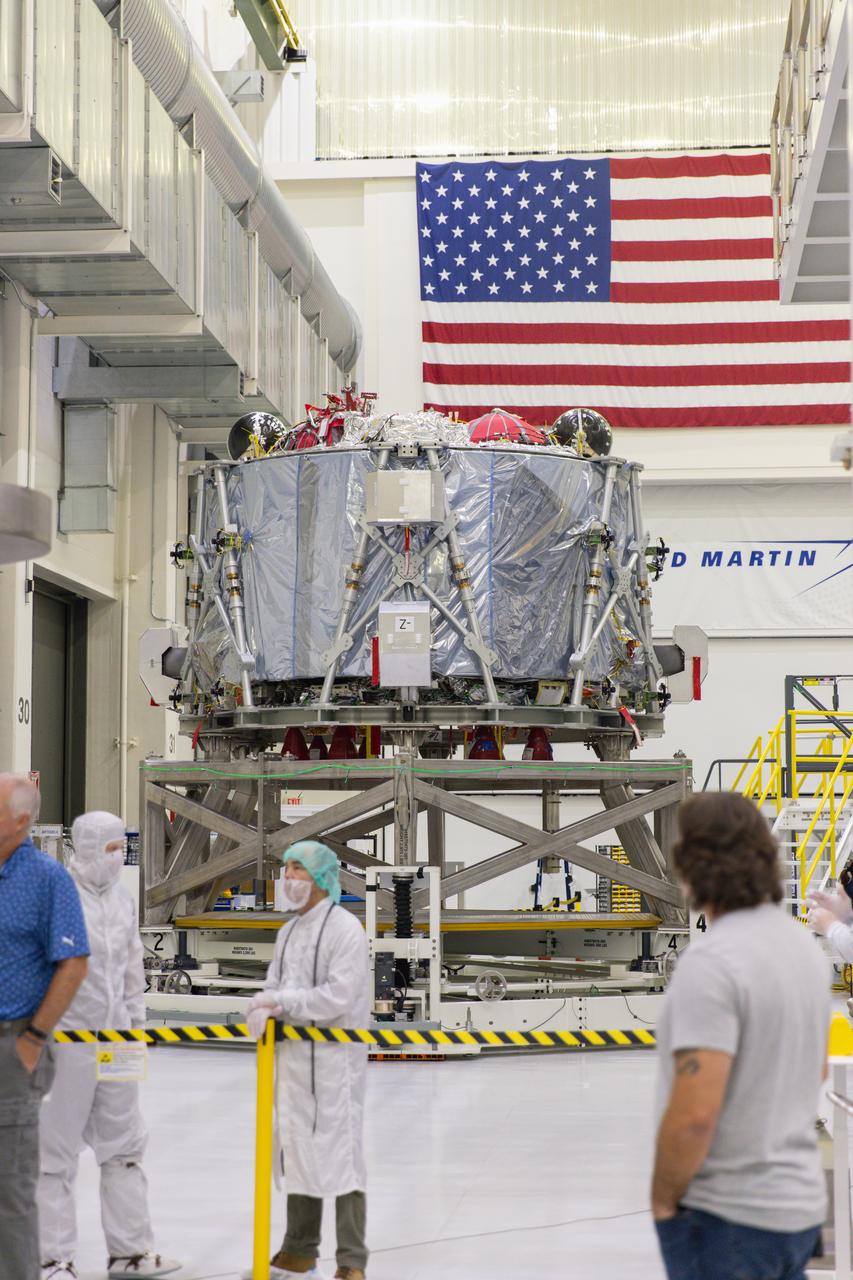
Teams from NASA, ESA (European Space Agency), and Airbus prepare to integrate European Service Module 3 to the crew module adapter on Tuesday, Sept. 17, 2024, inside the Neil A. Armstrong Operations and Checkout Building at NASA’s Kennedy Space Center in Florida. The integrated hardware provides propulsion, electrical power, and other important elements for the Orion spacecraft’s Artemis III campaign to the lunar South Pole region of the Moon.
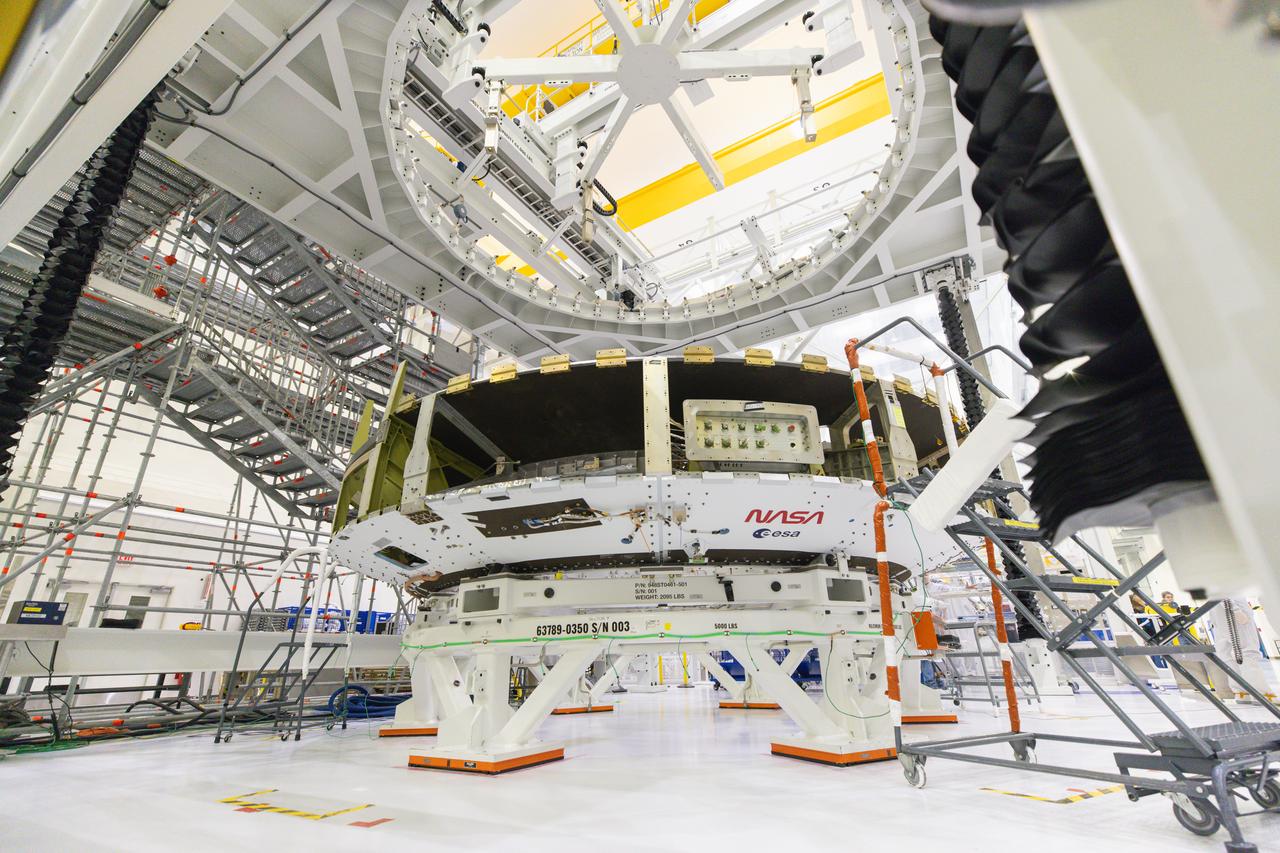
Teams from NASA, ESA (European Space Agency), and Airbus prepare to integrate European Service Module 3 to the crew module adapter on Tuesday, Sept. 17, 2024, inside the Neil A. Armstrong Operations and Checkout Building at NASA’s Kennedy Space Center in Florida. The integrated hardware provides propulsion, electrical power, and other important elements for the Orion spacecraft’s Artemis III campaign to the lunar South Pole region of the Moon.
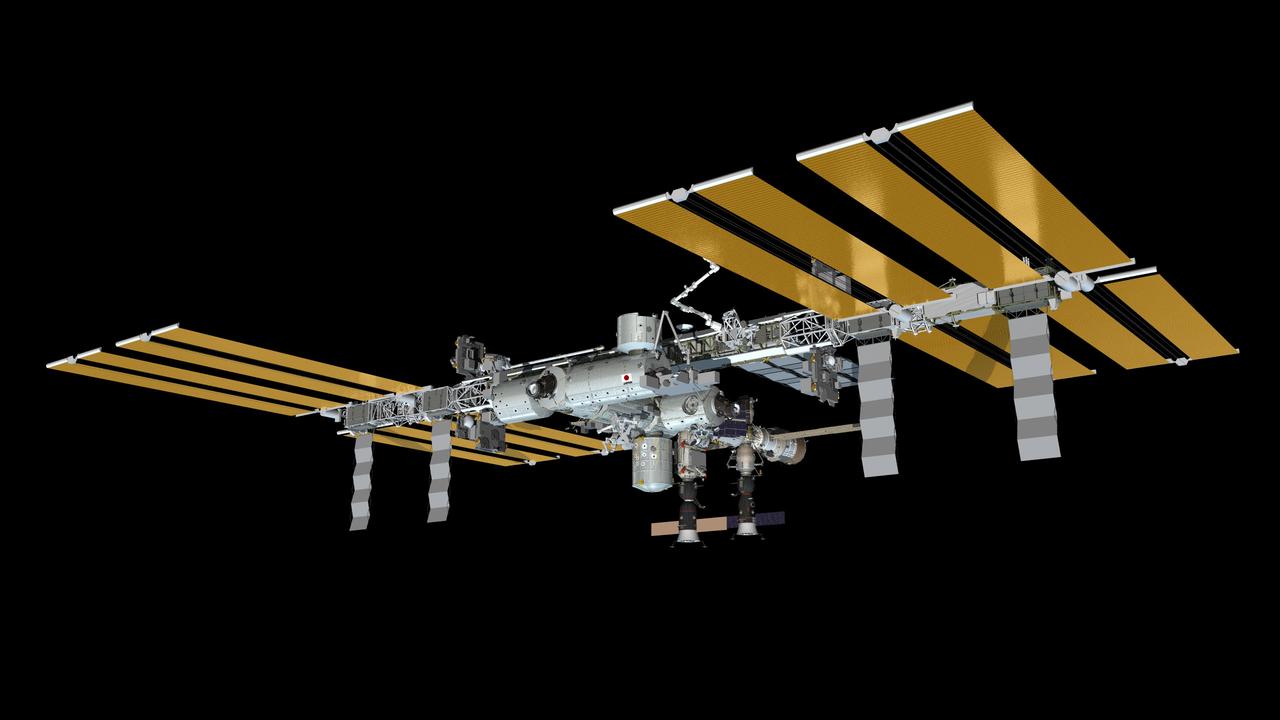
JSC2012-E-216827 (September 2012) --- Computer-generated artist?s rendering of the International Space Station as of Sept. 28, 2012. European Space Agency?s Automated Transfer Vehicle-3 (ATV-3) ?Edoardo Amaldi? undocks from the Zvezda Service Module. Progress 48 is docked to the Pirs Docking Compartment. Soyuz 31 (TMA-05M) is attached to the Rassvet Mini-Research Module 1 (MRM1). Photo credit: NASA
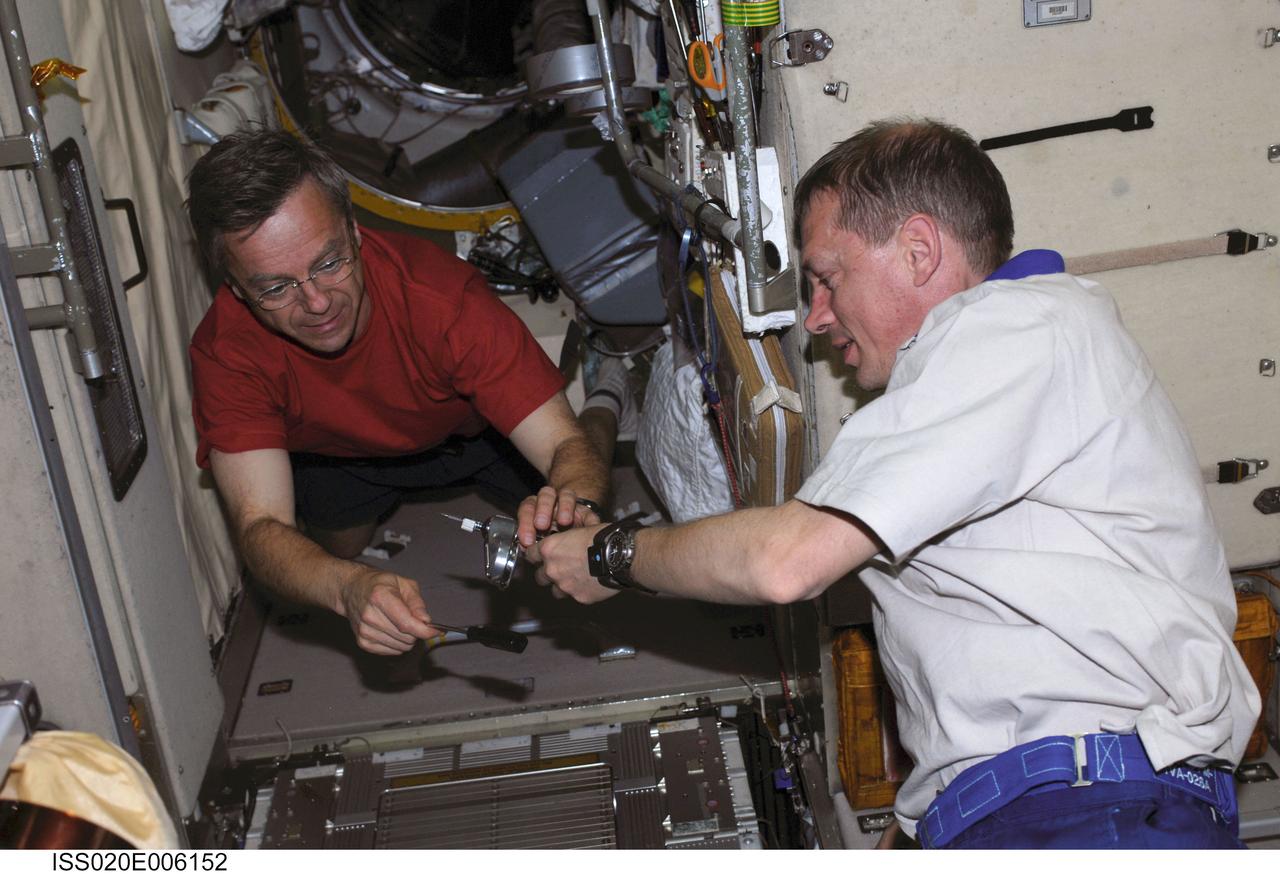
ISS020-E-006152 (3 June 2009) --- Canadian Space Agency astronaut Robert Thirsk (left) and European Space Agency astronaut Frank De Winne, both Expedition 20 flight engineers, perform in-flight maintenance on the Treadmill Vibration Isolation System (TVIS) in the Zvezda Service Module of the International Space Station.
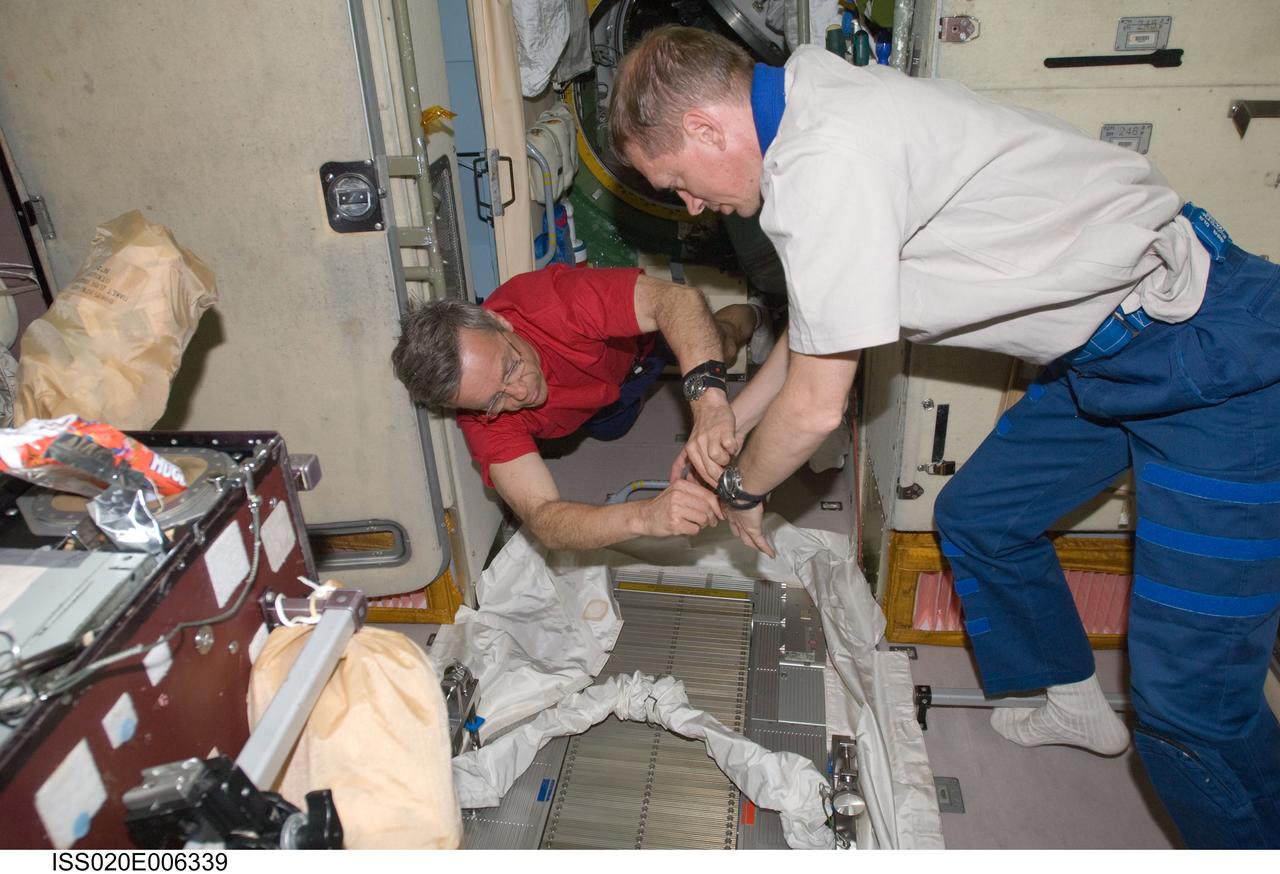
ISS020-E-006339 (3 June 2009) --- Canadian Space Agency astronaut Robert Thirsk (left) and European Space Agency astronaut Frank De Winne, both Expedition 20 flight engineers, perform in-flight maintenance on the Treadmill Vibration Isolation System (TVIS) in the Zvezda Service Module of the International Space Station.
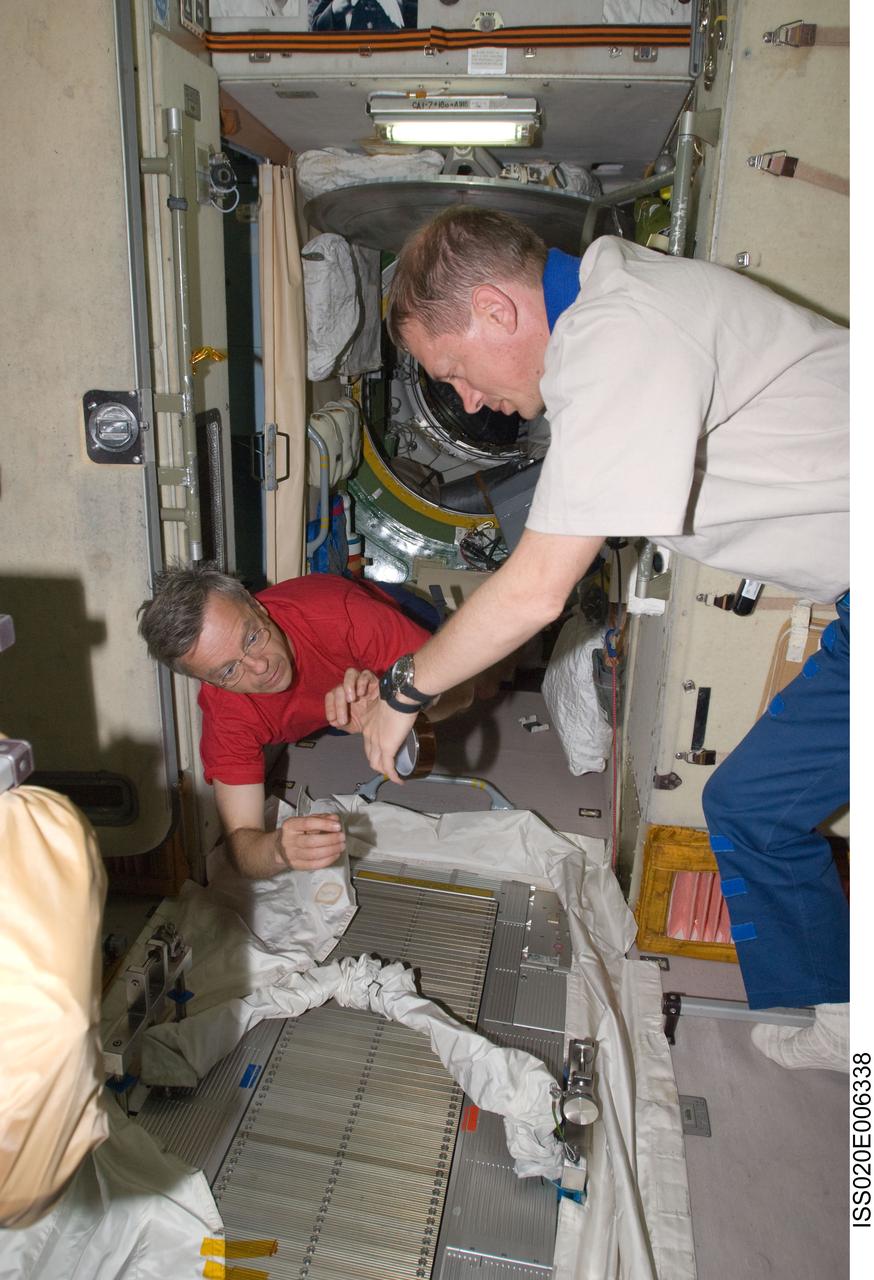
ISS020-E-006338 (3 June 2009) --- Canadian Space Agency astronaut Robert Thirsk (left) and European Space Agency astronaut Frank De Winne, both Expedition 20 flight engineers, perform in-flight maintenance on the Treadmill Vibration Isolation System (TVIS) in the Zvezda Service Module of the International Space Station.
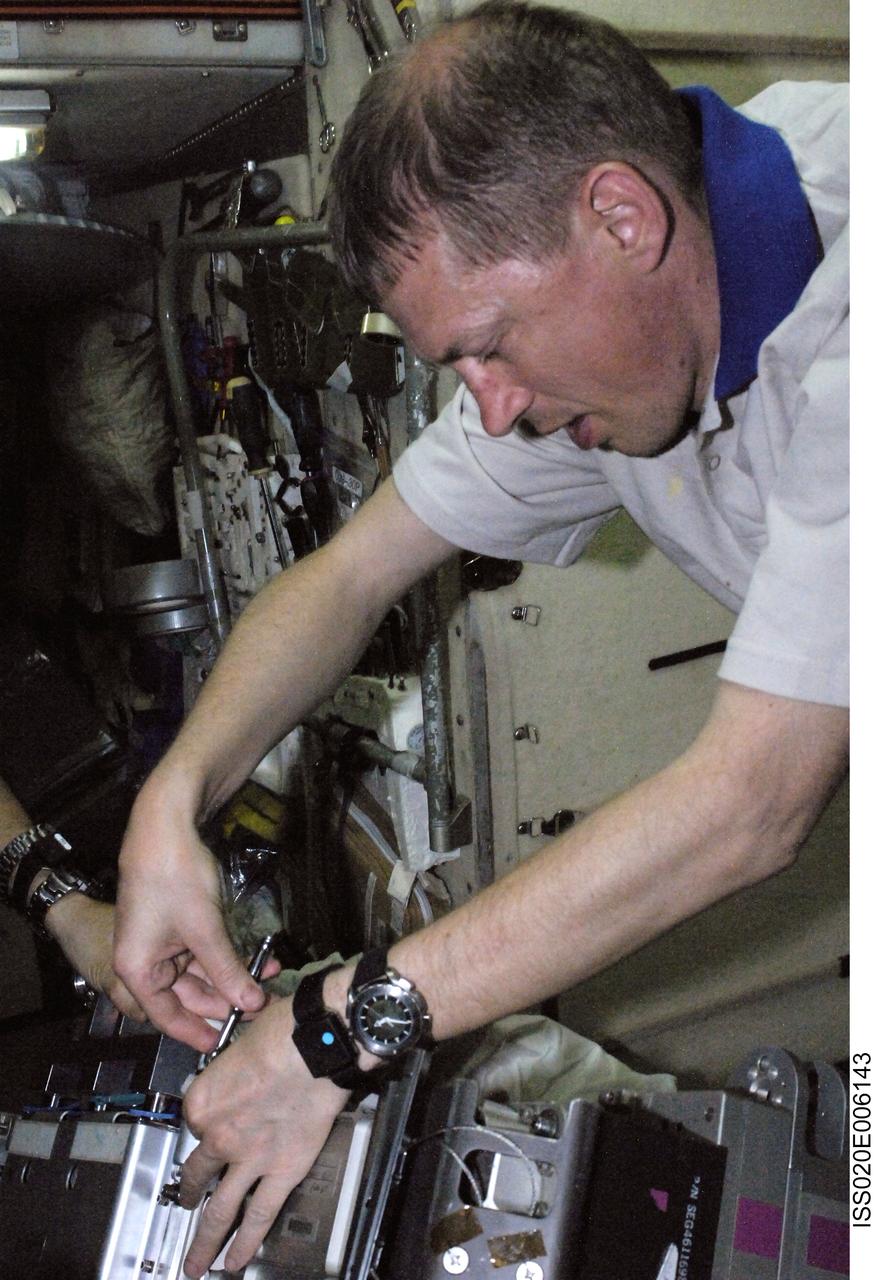
ISS020-E-006143 (3 June 2009) --- European Space Agency astronaut Frank De Winne, Expedition 20 flight engineer, performs in-flight maintenance on the Treadmill Vibration Isolation System (TVIS) in the Zvezda Service Module of the International Space Station.
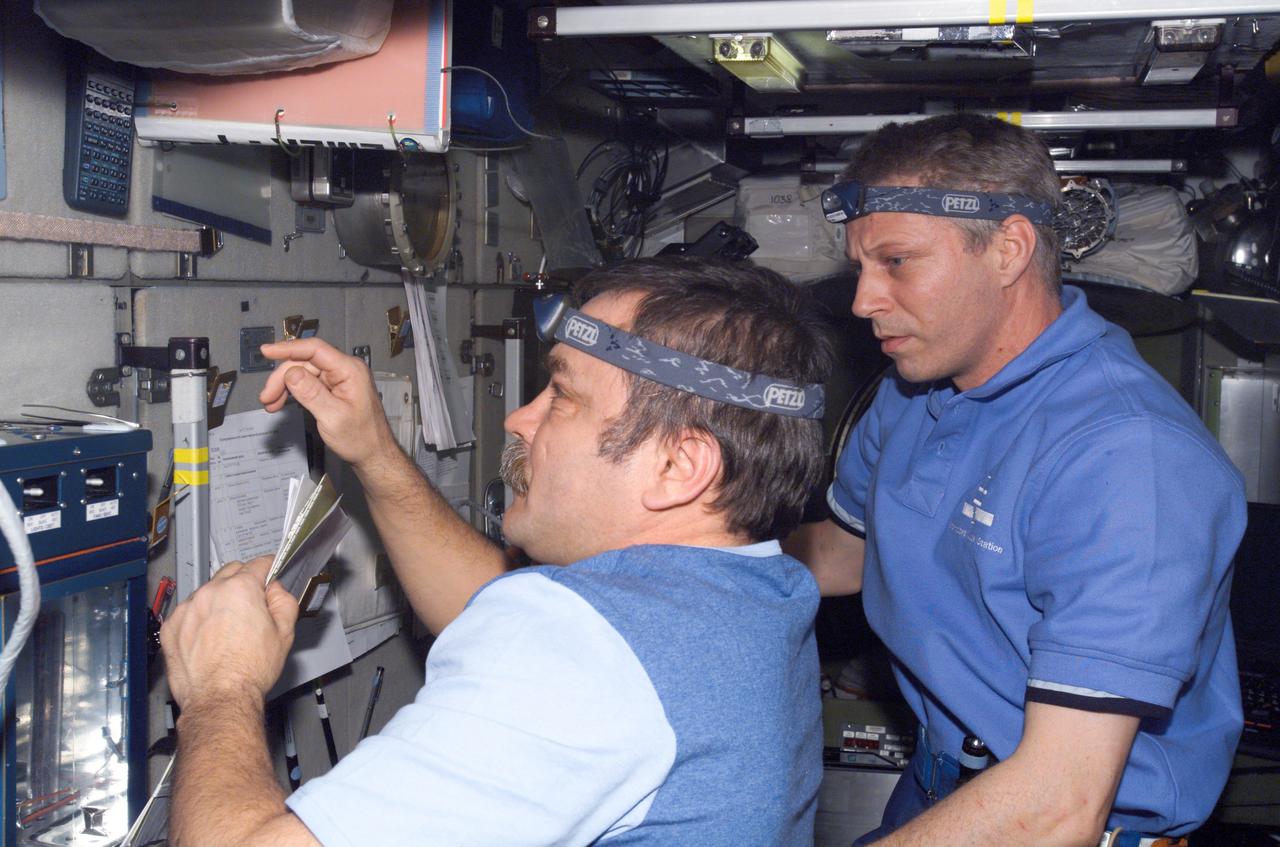
ISS014-E-07142 (3 Nov. 2006) --- Cosmonaut Mikhail Tyurin (foreground) representing Russia's Federal Space Agency, and European Space Agency (ESA) astronaut Thomas Reiter, both Expedition 14 flight engineers, install and connect onboard equipment control system cables in the Zvezda Service Module of the International Space Station.
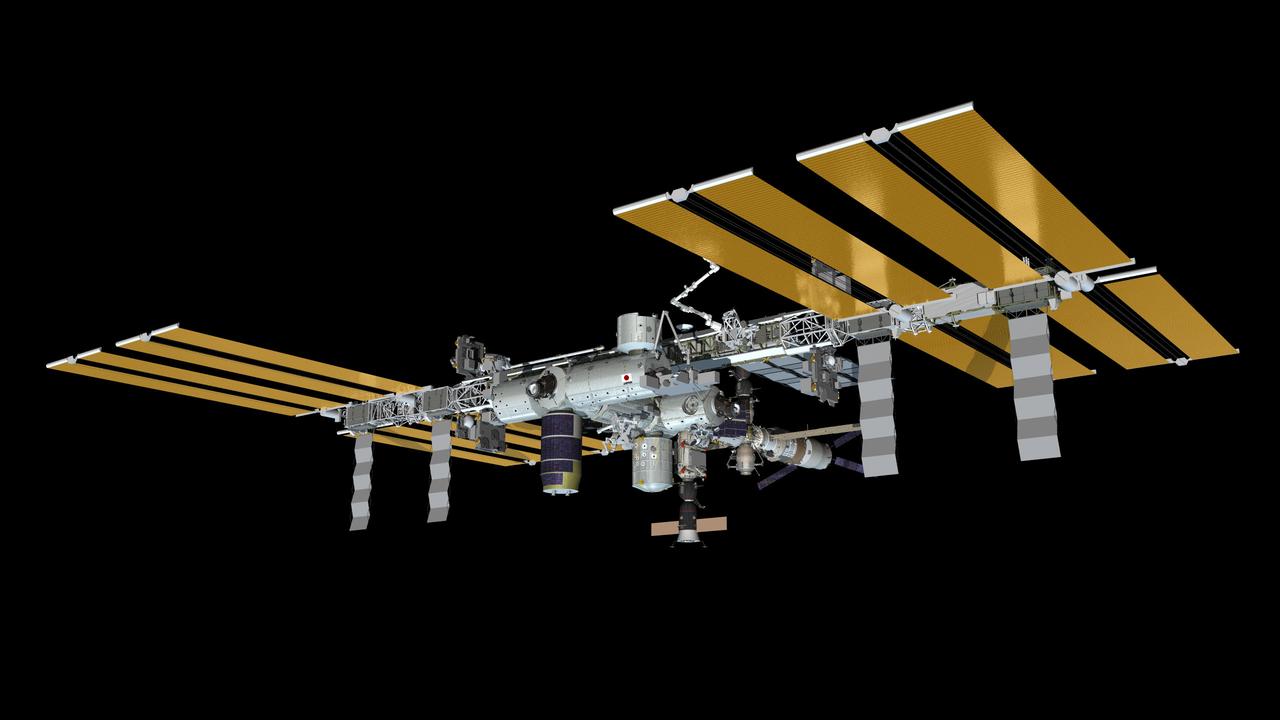
JSC2012-E-107187 (July 2012) --- Computer-generated artist?s rendering of the International Space Station as of July 27, 2012. Japan Aerospace Exploration Agency (JAXA) H-II Transfer Vehicle (HTV-3) is berthed to the Harmony nadir port. Soyuz 31 (TMA-05M) is docked to the Rassvet Mini-Research Module 1 (MRM1). European Space Agency?s Automated Transfer Vehicle-3 (ATV-3) ?Edoardo Amaldi? is attached to the Zvezda Service Module and Soyuz 30 (TMA-04M) is linked to the Poisk Mini-Research Module 2 (MRM2). Photo credit: NASA
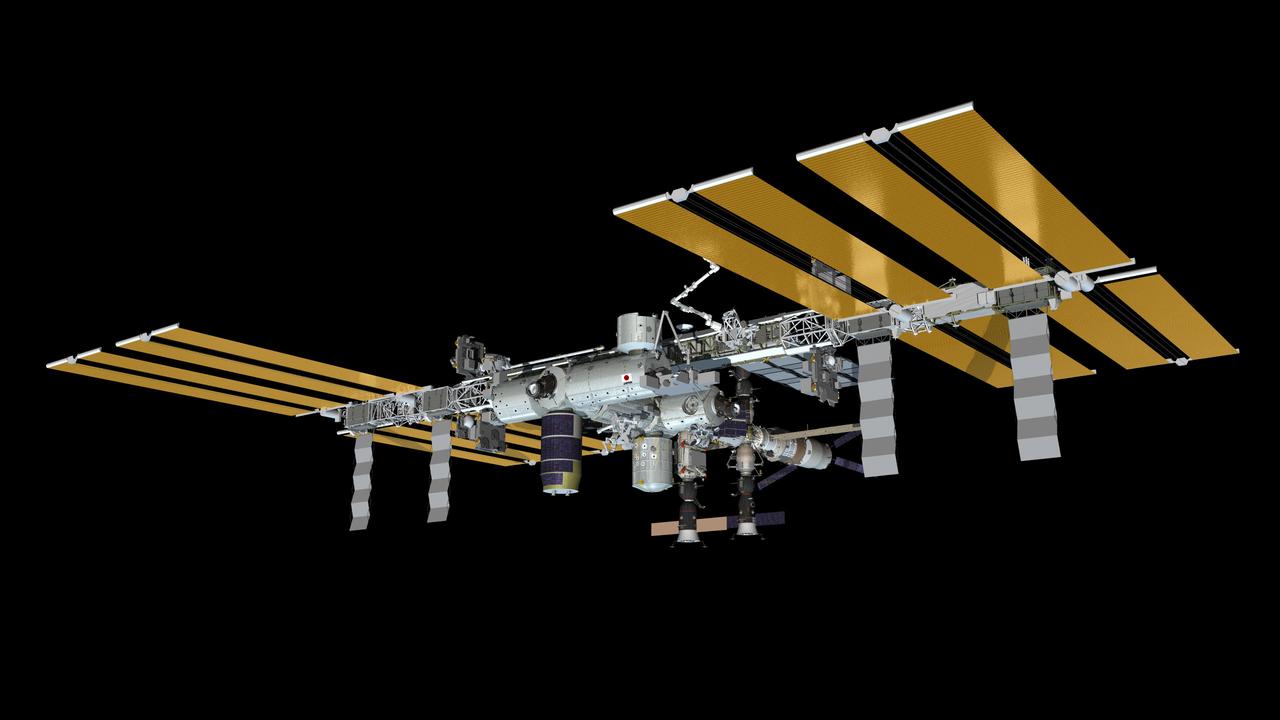
JSC2012-E-107190 (August 2012) --- Computer-generated artist?s rendering of the International Space Station as of August 2, 2012. Progress 48 docks to the Pirs Docking Compartment. Japan Aerospace Exploration Agency (JAXA) H-II Transfer Vehicle (HTV-3) is connected to the Harmony nadir port. Soyuz 31 (TMA-05M) is docked to the Rassvet Mini-Research Module 1 (MRM1). European Space Agency?s Automated Transfer Vehicle-3 (ATV-3) ?Edoardo Amaldi? is attached to the Zvezda Service Module and Soyuz 30 (TMA-04M) is linked to the Poisk Mini-Research Module 2 (MRM2). Photo credit: NASA
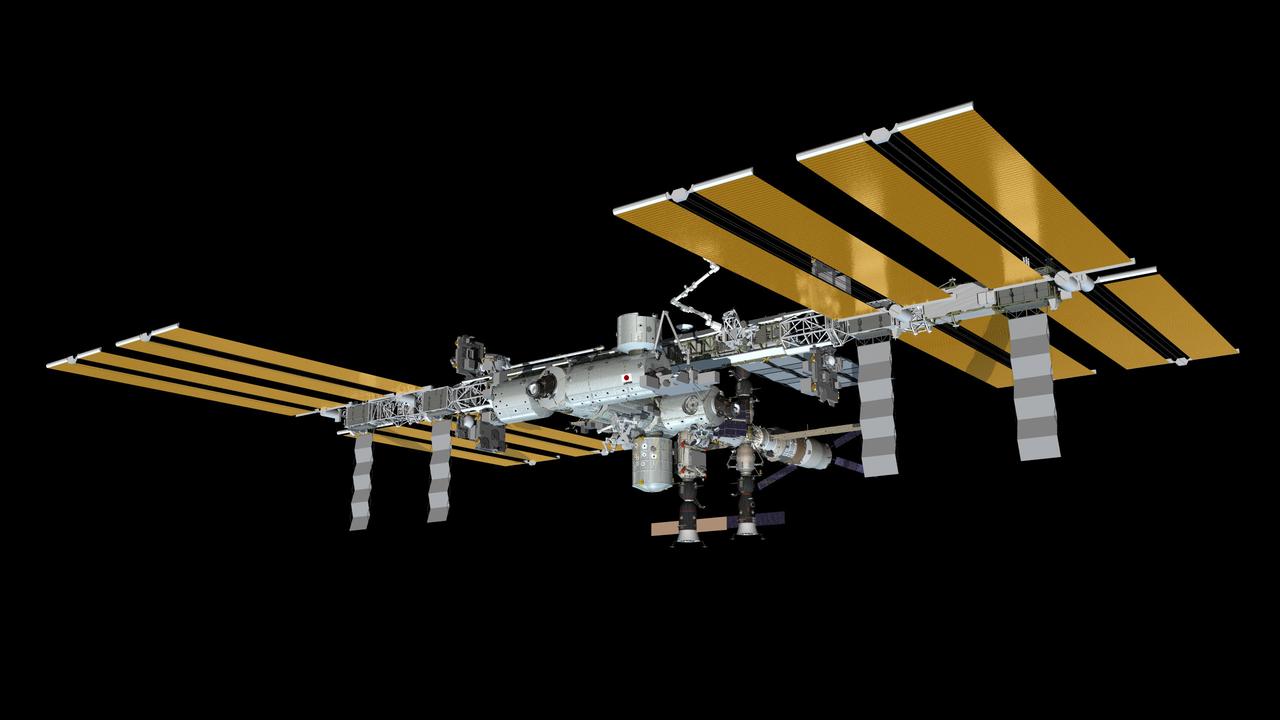
JSC2012-E-214799 (September 2012) --- Computer-generated artist?s rendering of the International Space Station as of Sept. 12, 2012. Japan Aerospace Exploration Agency (JAXA) H-II Transfer Vehicle (HTV-3) is unberthed from the Harmony nadir port. Progress 48 is docked to the Pirs Docking Compartment. Soyuz 31 (TMA-05M) is attached to the Rassvet Mini-Research Module 1 (MRM1). European Space Agency?s Automated Transfer Vehicle-3 (ATV-3) ?Edoardo Amaldi? is docked to the Zvezda Service Module and Soyuz 30 (TMA-04M) is linked to the Poisk Mini-Research Module 2 (MRM2). Photo credit: NASA
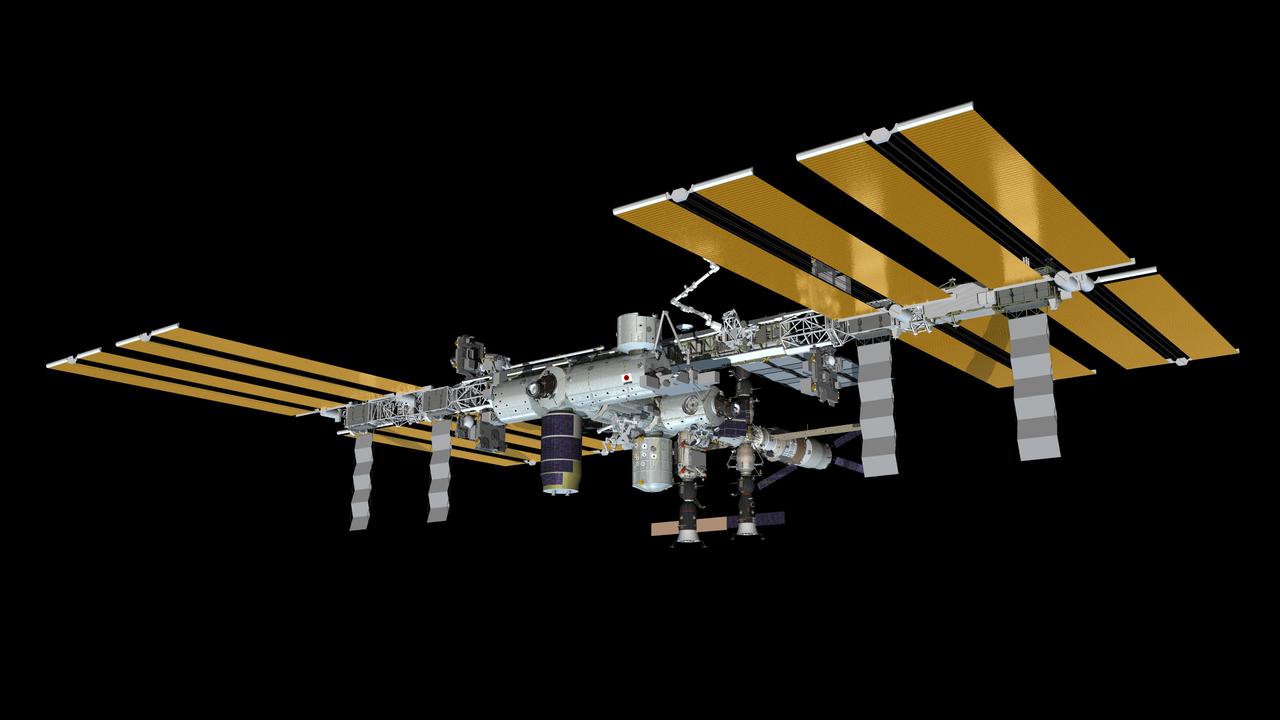
JSC2012-E-107188 (July 2012) --- Computer-generated artist?s rendering of the International Space Station as of July 28, 2012. Progress 47 redocks to the Pirs Docking Compartment. Japan Aerospace Exploration Agency (JAXA) H-II Transfer Vehicle (HTV-3) is connected to the Harmony nadir port. Soyuz 31 (TMA-05M) is docked to the Rassvet Mini-Research Module 1 (MRM1). European Space Agency?s Automated Transfer Vehicle-3 (ATV-3) ?Edoardo Amaldi? is attached to the Zvezda Service Module and Soyuz 30 (TMA-04M) is linked to the Poisk Mini-Research Module 2 (MRM2). Photo credit: NASA
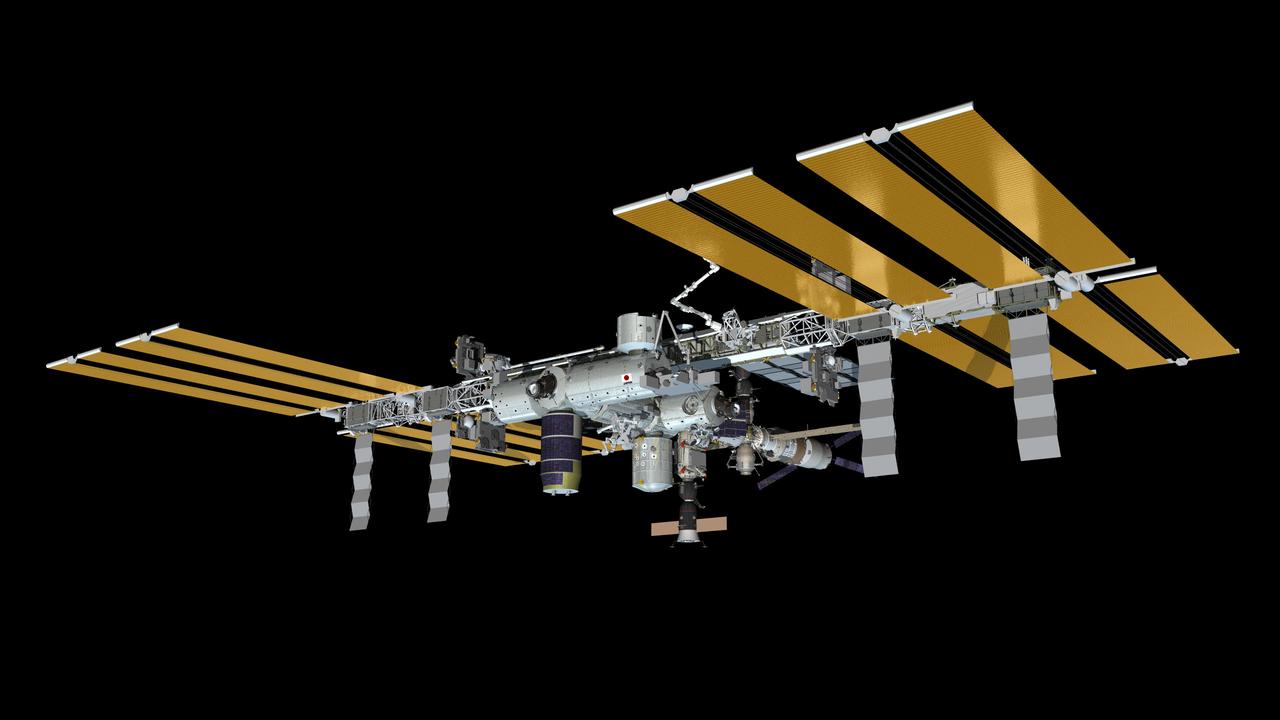
JSC2012-E-107189 (July 2012) --- Computer-generated artist?s rendering of the International Space Station as of July 30, 2012. Progress 47 completes final undocking from the Pirs Docking Compartment. Japan Aerospace Exploration Agency (JAXA) H-II Transfer Vehicle (HTV-3) is connected to the Harmony nadir port. Soyuz 31 (TMA-05M) is docked to the Rassvet Mini-Research Module 1 (MRM1). European Space Agency?s Automated Transfer Vehicle-3 (ATV-3) ?Edoardo Amaldi? is attached to the Zvezda Service Module and Soyuz 30 (TMA-04M) is linked to the Poisk Mini-Research Module 2 (MRM2). Photo credit: NASA
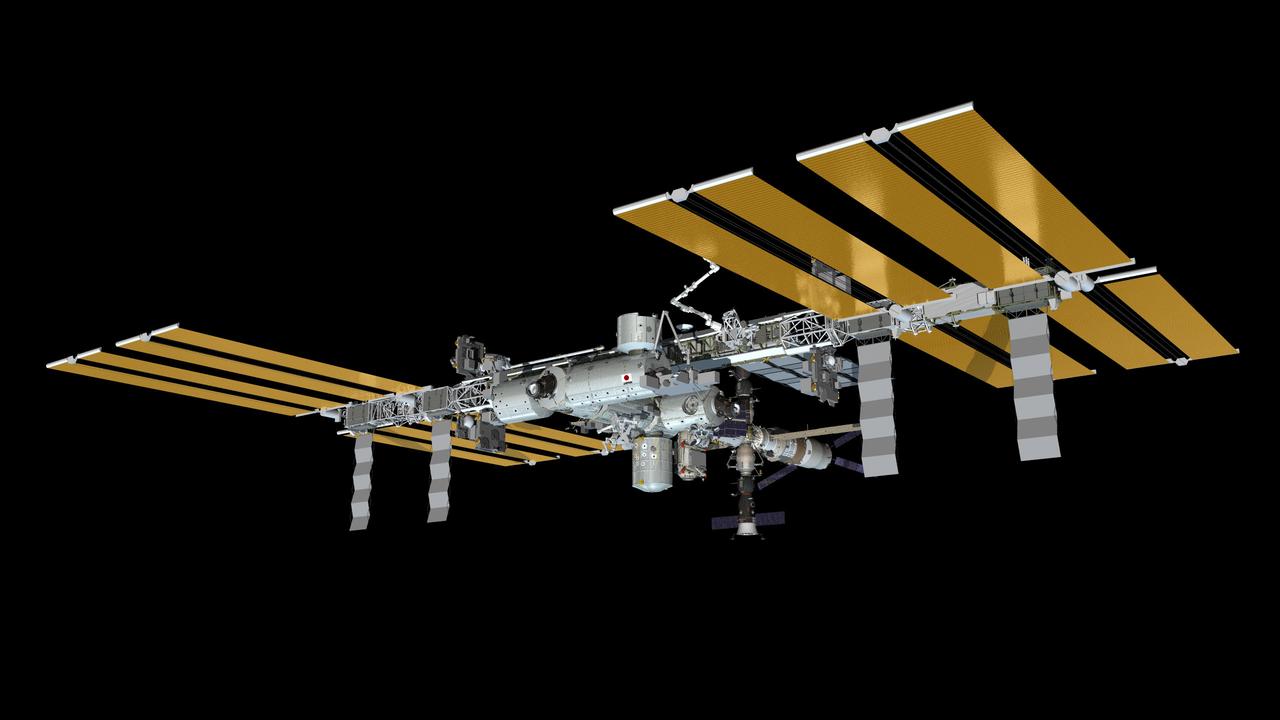
JSC2012-E-096603 (July 2012) --- Computer-generated artist?s rendering of the International Space Station as of July 1, 2012. Soyuz 29 (TMA-03M) undocks from the Rassvet Mini-Research Module 1 (MRM1), returning Expedition 31 crew members (Kononenko, Pettit and Kuipers) to Earth. Progress 47 is linked to the Pirs Docking Compartment. European Space Agency?s Automated Transfer Vehicle-3 (ATV-3) ?Edoardo Amaldi? is attached to the Zvezda Service Module and Soyuz 30 (TMA-04M) is docked to the Poisk Mini-Research Module 2 (MRM2). Photo credit: NASA
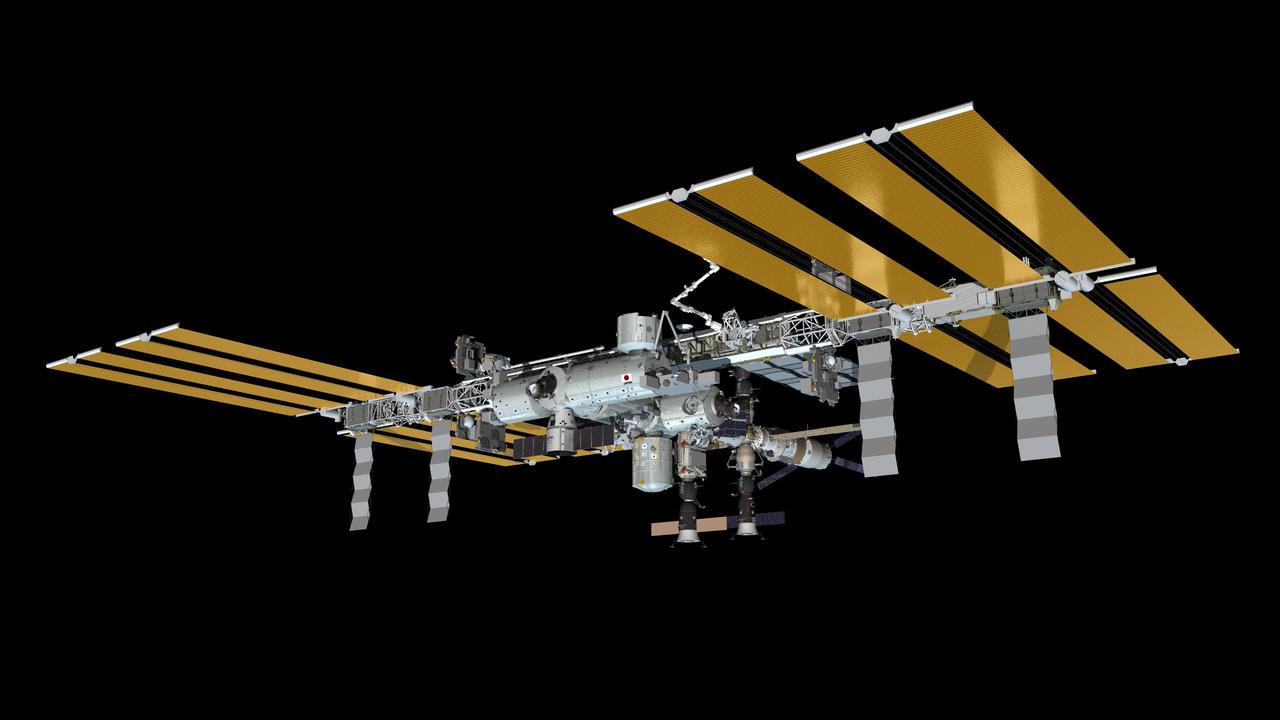
JSC2012-E-064352 (May 2012) --- Computer-generated artist?s rendering of the International Space Station as of May 25, 2012. The SpaceX Dragon commercial cargo craft is berthed to the Harmony node. Soyuz 30 (TMA-04M) is docked to the Poisk Mini-Research Module 2 (MRM2). Progress 47 is linked to the Pirs Docking Compartment. European Space Agency?s Automated Transfer Vehicle-3 (ATV-3) ?Edoardo Amaldi? is attached to the Zvezda Service Module. Soyuz 29 (TMA-03M) is docked to the Rassvet Mini-Research Module 1 (MRM1). Photo credit: NASA
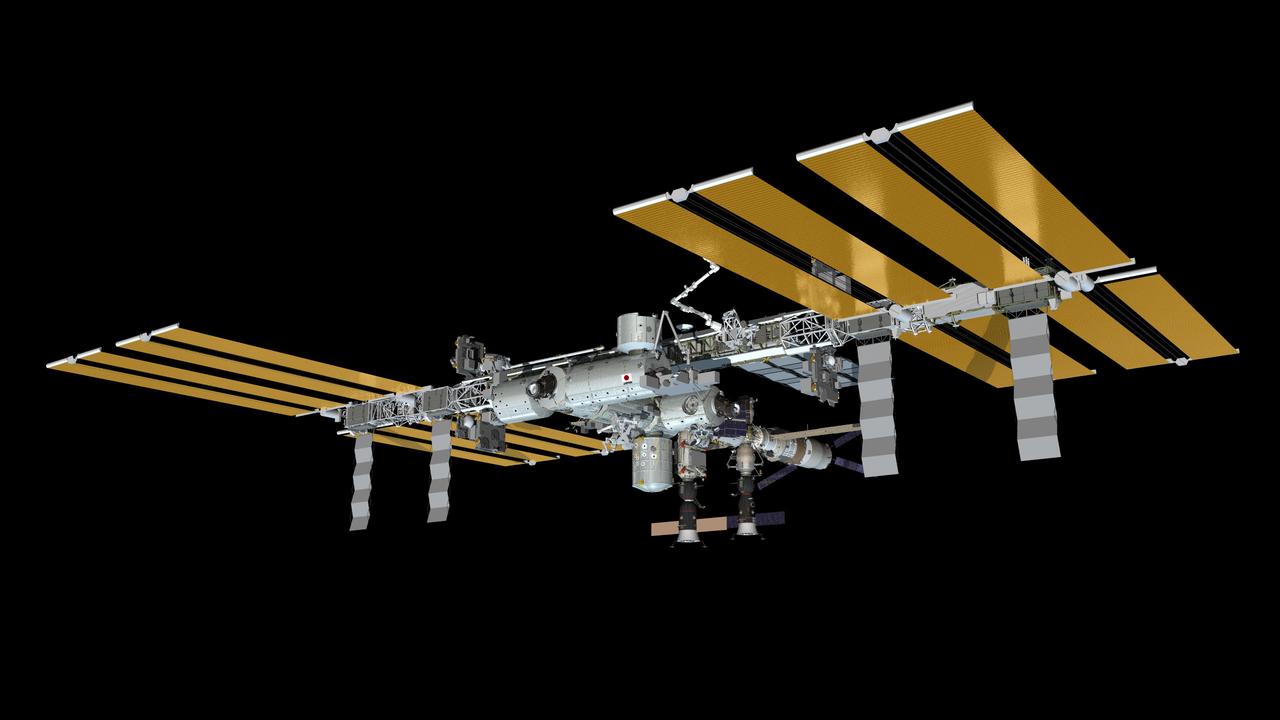
JSC2012-E-214800 (September 2012) --- Computer-generated artist?s rendering of the International Space Station as of Sept. 16, 2012. Soyuz 30 (TMA-04M) undocks from the Poisk Mini-Research Module 2 (MRM2), returning Expedition 32 crew members (Padalka, Acaba, Revin) to Earth. Progress 48 is docked to the Pirs Docking Compartment. Soyuz 31 (TMA-05M) is attached to the Rassvet Mini-Research Module 1 (MRM1). European Space Agency?s Automated Transfer Vehicle-3 (ATV-3) ?Edoardo Amaldi? is linked to the Zvezda Service Module. Photo credit: NASA
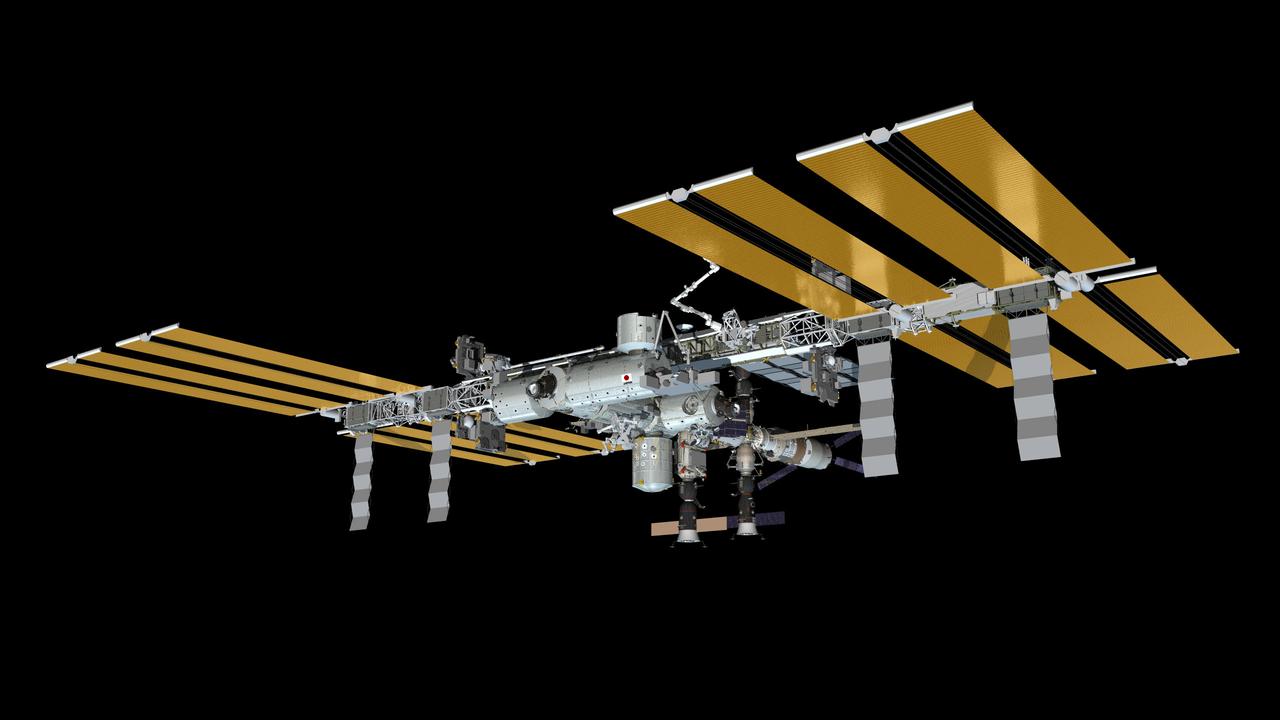
JSC2012-E-064353 (May 2012) --- Computer-generated artist?s rendering of the International Space Station as of May 31, 2012. The SpaceX Dragon commercial cargo craft is unberthed from the Harmony node for splashdown in the Pacific Ocean. Soyuz 30 (TMA-04M) is docked to the Poisk Mini-Research Module 2 (MRM2). Progress 47 is linked to the Pirs Docking Compartment. European Space Agency?s Automated Transfer Vehicle-3 (ATV-3) ?Edoardo Amaldi? is attached to the Zvezda Service Module. Soyuz 29 (TMA-03M) is docked to the Rassvet Mini-Research Module 1 (MRM1). Photo credit: NASA
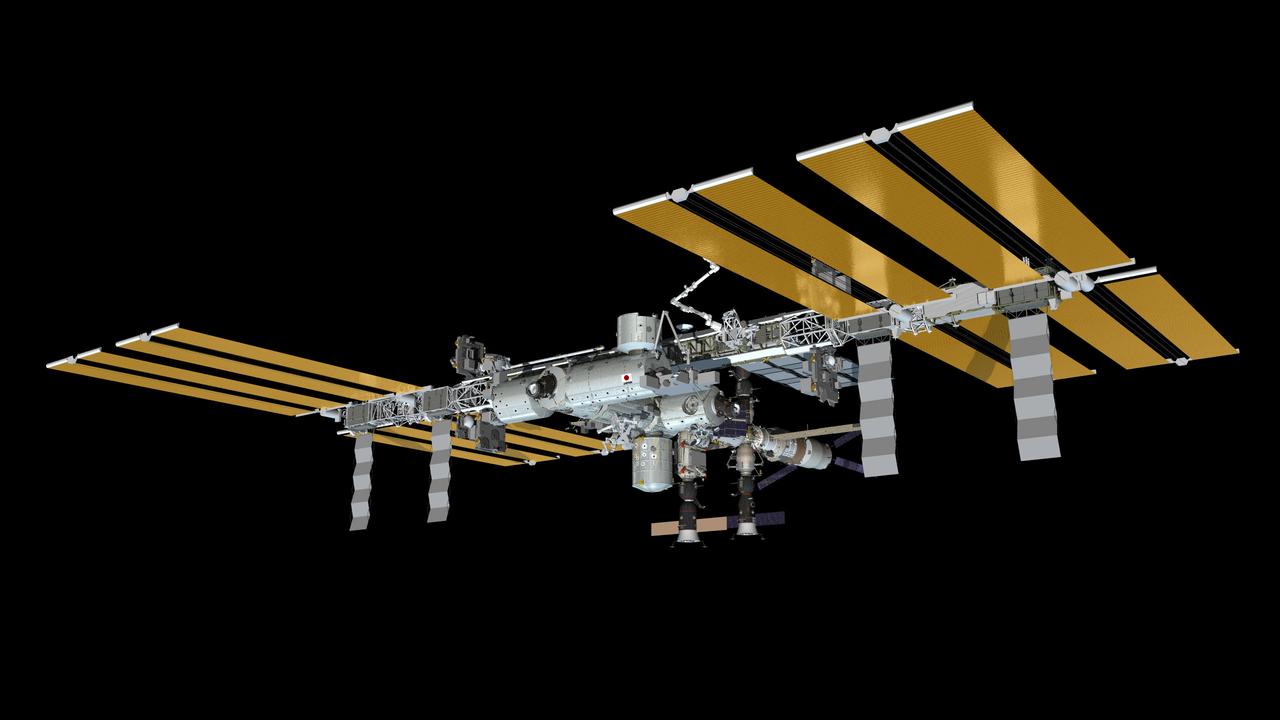
JSC2012-E-064351 (May 2012) --- Computer-generated artist?s rendering of the International Space Station as of May 16, 2012. Soyuz 30 (TMA-04M) docks to the Poisk Mini-Research Module 2 (MRM2), bringing Expedition 31/32 crew members (Padalka, Revin, Acaba) to the space station. Progress 47 is docked to the Pirs Docking Compartment. European Space Agency?s Automated Transfer Vehicle-3 (ATV-3) ?Edoardo Amaldi? is attached to the Zvezda Service Module. Soyuz 29 (TMA-03M) is linked to the Rassvet Mini-Research Module 1 (MRM1). Photo credit: NASA
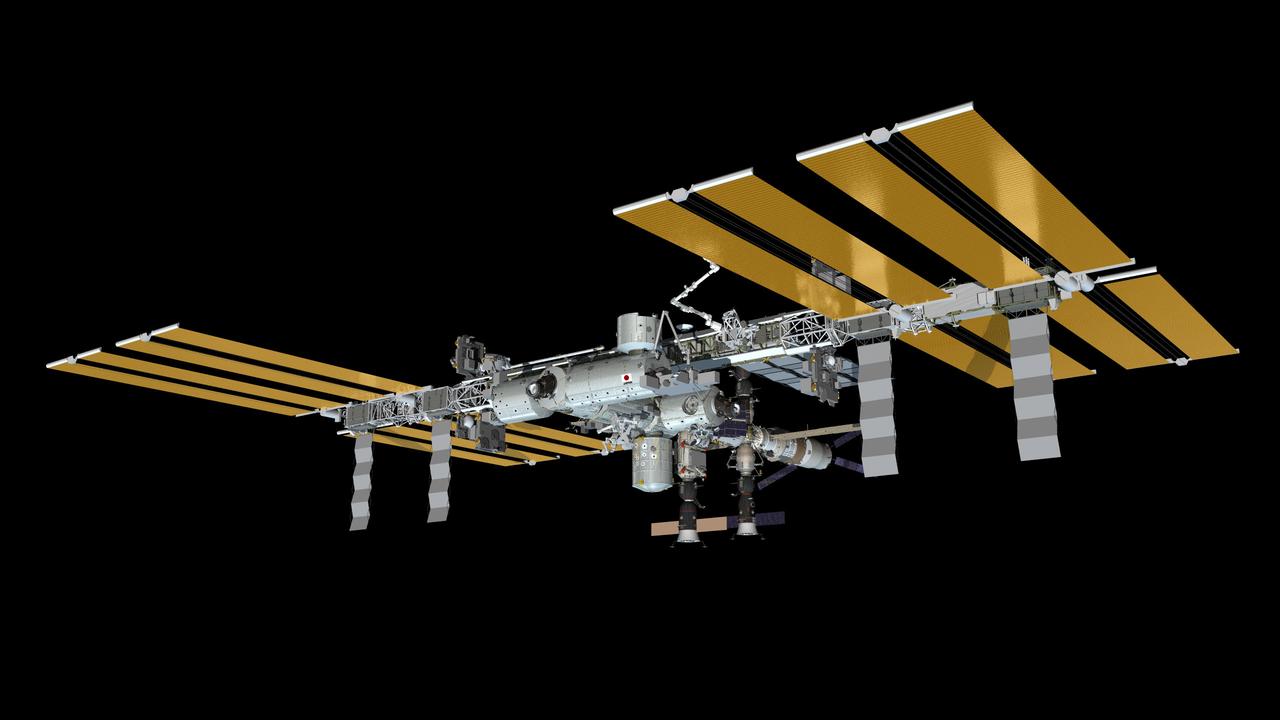
JSC2012-E-103017 (July 2012) --- Computer-generated artist?s rendering of the International Space Station as of July 17, 2012. Soyuz 31 (TMA-05M) docks to the Rassvet Mini-Research Module 1 (MRM1), bringing Expedition 32 crew members (Sunita Williams, Yuri Malenchenko, Aki Hoshide) to the space station. Progress 47 is linked to the Pirs Docking Compartment. European Space Agency?s Automated Transfer Vehicle-3 (ATV-3) ?Edoardo Amaldi? is attached to the Zvezda Service Module and Soyuz 30 (TMA-04M) is docked to the Poisk Mini-Research Module 2 (MRM2). Photo credit: NASA
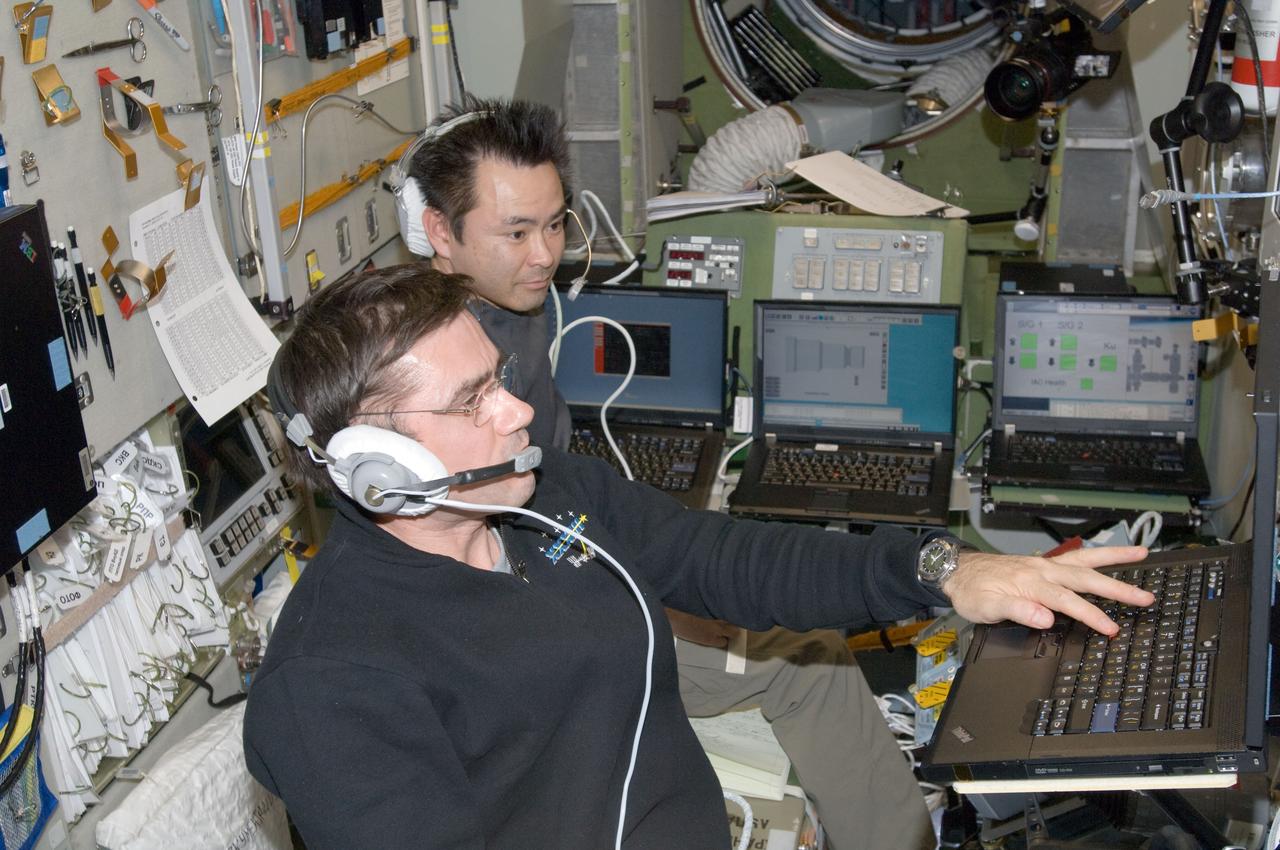
ISS033-E-008178 (28 Sept. 2012) --- In the Zvezda Service Module, Russian cosmonaut Yuri Malenchenko (foreground) and Japan Aerospace Exploration Agency astronaut Aki Hoshide, both Expedition 33 flight engineers, monitor the undocking of the European Space Agency's "Edoardo Amaldi" Automated Transfer Vehicle-3 (ATV-3) from the International Space Station.
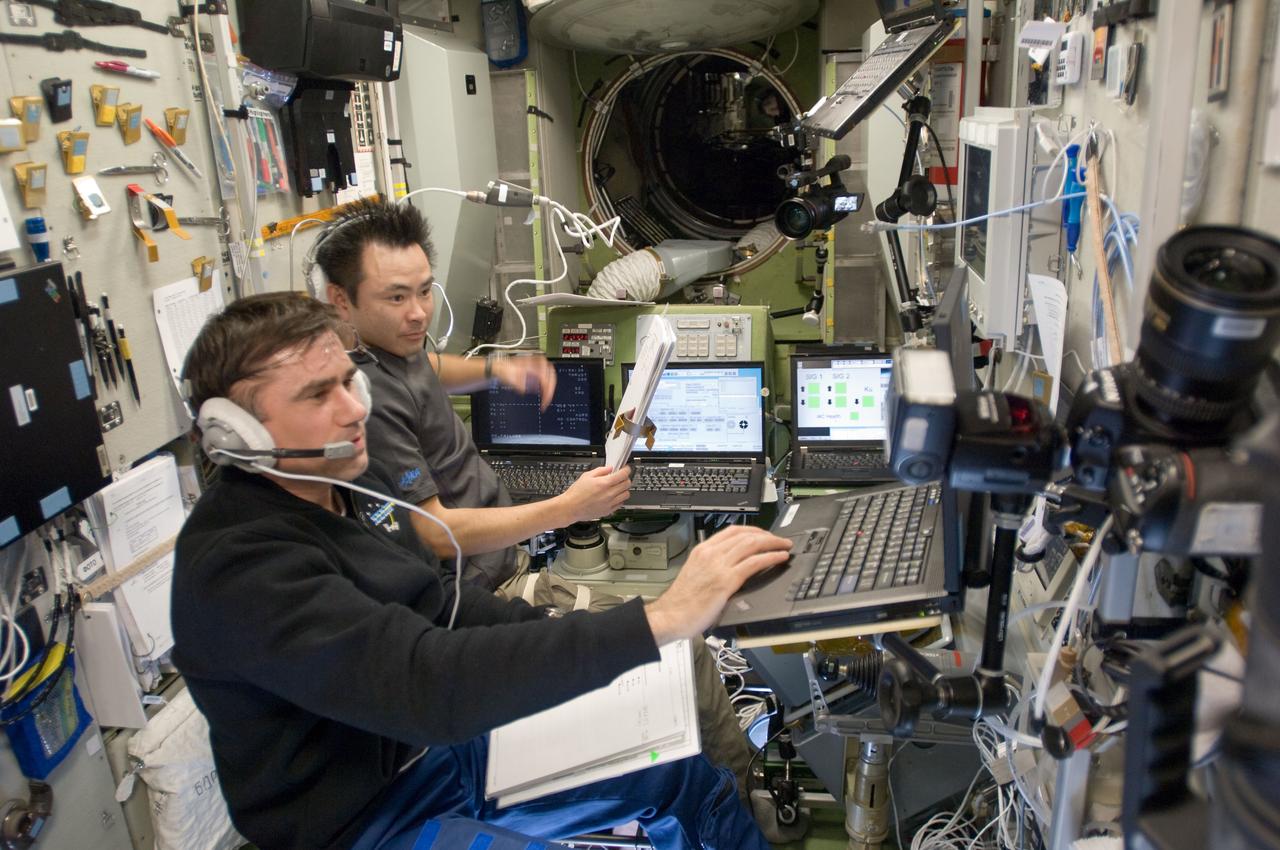
ISS033-E-008169 (28 Sept. 2012) --- In the Zvezda Service Module, Russian cosmonaut Yuri Malenchenko (foreground) and Japan Aerospace Exploration Agency astronaut Aki Hoshide, both Expedition 33 flight engineers, monitor the undocking of the European Space Agency's "Edoardo Amaldi" Automated Transfer Vehicle-3 (ATV-3) from the International Space Station.
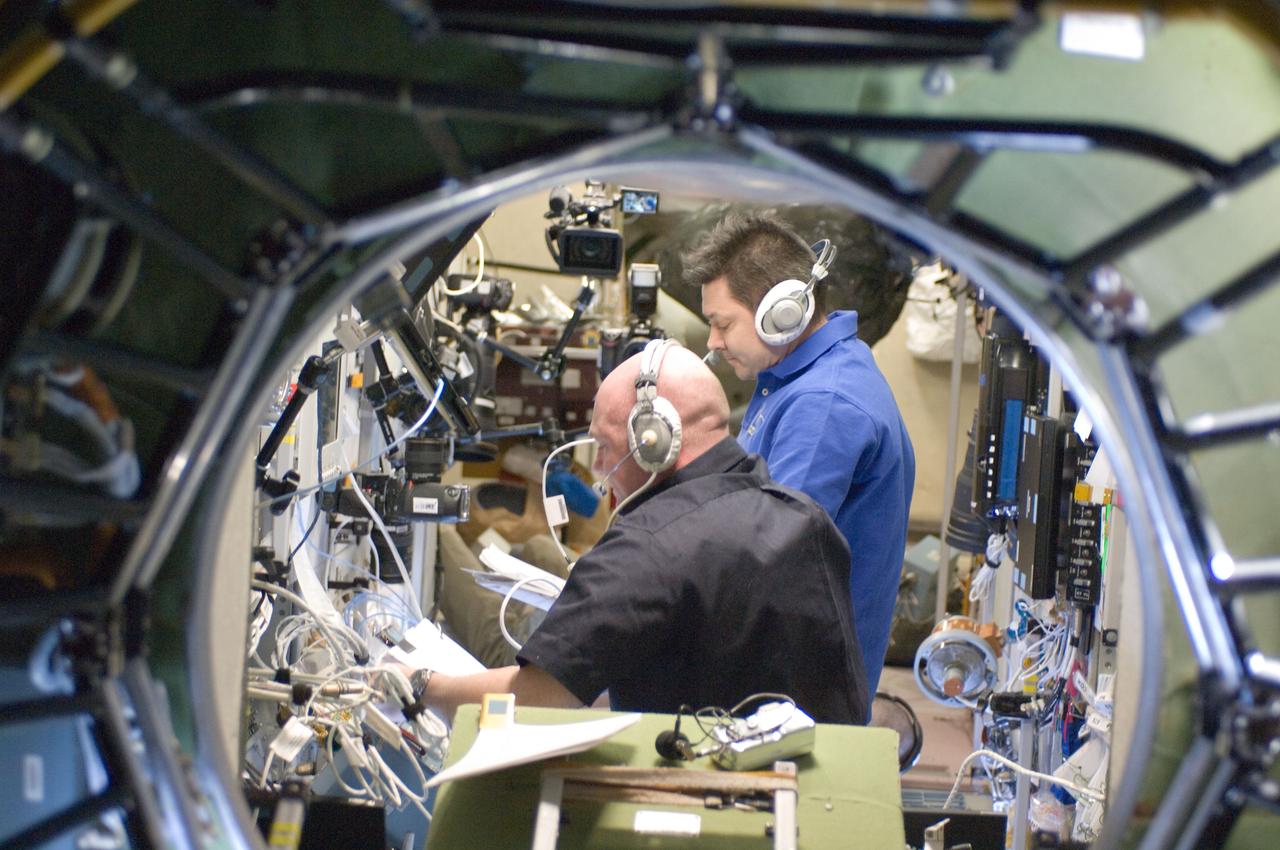
ISS030-E-175600 (28 March 2012) --- European Space Agency astronaut Andre Kuipers (foreground) and Russian cosmonaut Oleg Kononenko, both Expedition 30 flight engineers, monitor the approach and docking of ESA?s ?Edoardo Amaldi? Automated Transfer Vehicle-3 (ATV-3) in the Zvezda Service Module of the International Space Station.
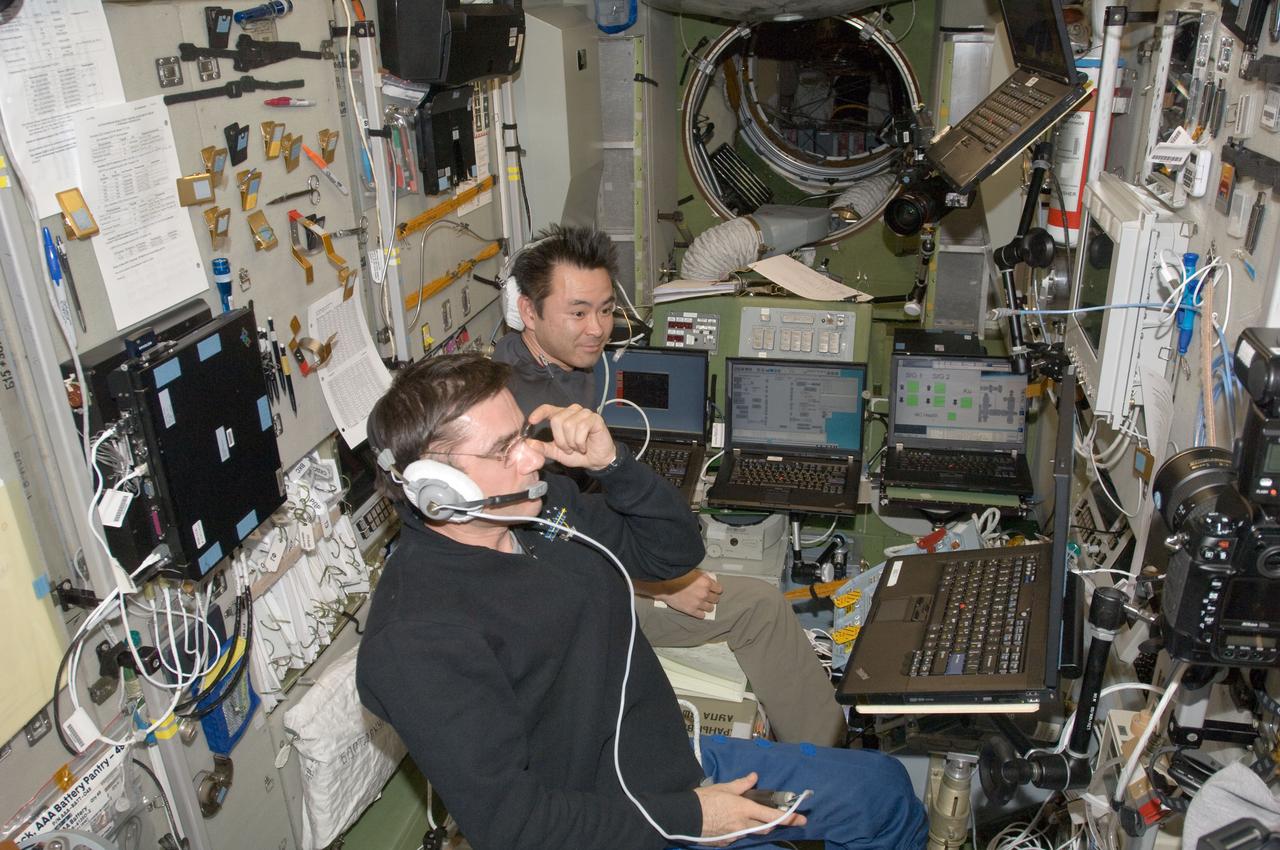
ISS033-E-008176 (28 Sept. 2012) --- In the Zvezda Service Module, Russian cosmonaut Yuri Malenchenko (foreground) and Japan Aerospace Exploration Agency astronaut Aki Hoshide, both Expedition 33 flight engineers, monitor the undocking of the European Space Agency's "Edoardo Amaldi" Automated Transfer Vehicle-3 (ATV-3) from the International Space Station.

ISS030-E-177313 (28 March 2012) --- European Space Agency astronaut Andre Kuipers and Russian cosmonaut Oleg Kononenko (foreground), both Expedition 30 flight engineers, monitor the approach and docking of ESA’s “Edoardo Amaldi” Automated Transfer Vehicle-3 (ATV-3) in the Zvezda Service Module of the International Space Station. Russian cosmonaut Anton Shkaplerov, flight engineer, is visible in the background.
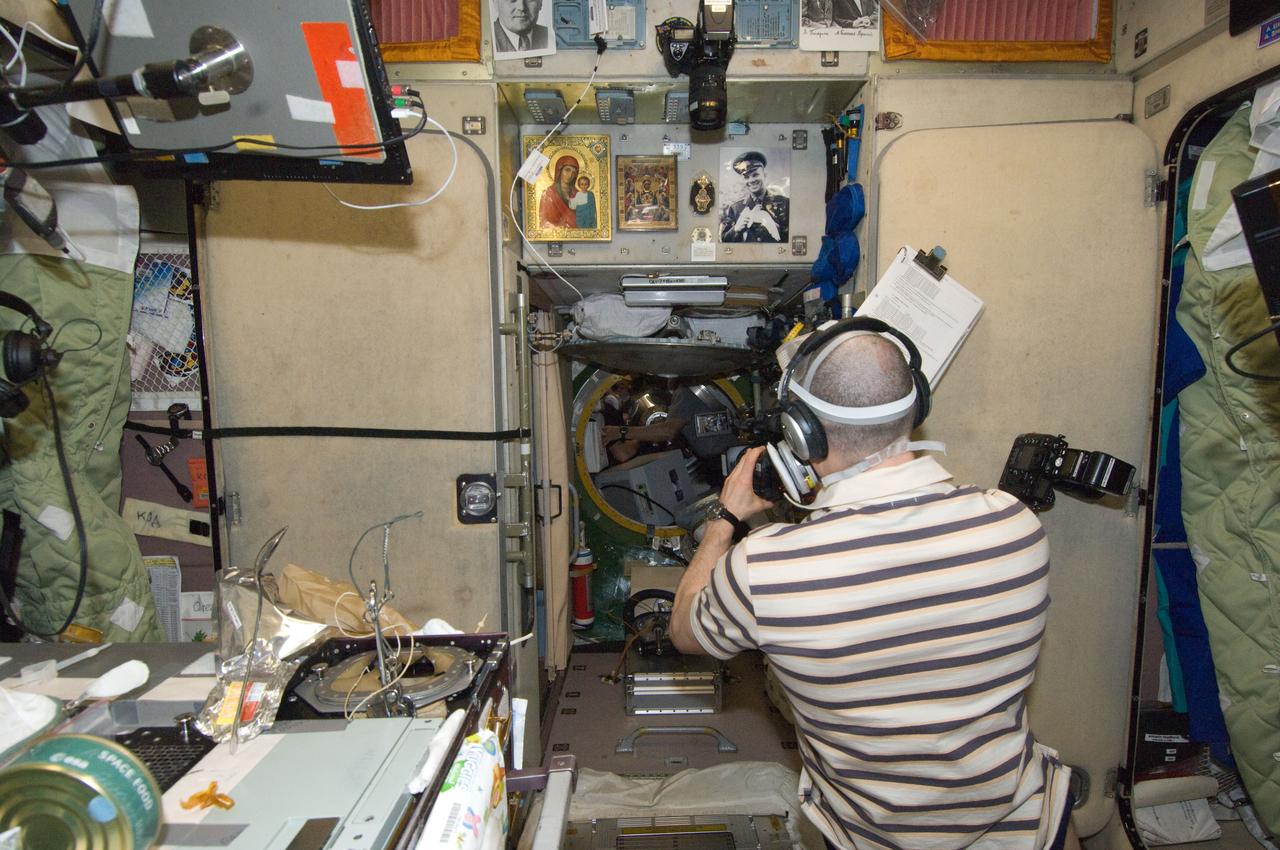
ISS030-E-177715 (29 March 2012) --- In the International Space Station?s Zvezda Service Module, Russian cosmonaut Anatoly Ivanishin, Expedition 30 flight engineer, uses a video camera as his crewmates prepare to open the hatch to European Space Agency?s ?Edoardo Amaldi? Automated Transfer Vehicle-3 (ATV-3). The ATV docked with the space station on March 28, 2012.

Teams began connecting the European Service Module 3 to the crew module adapter on Tuesday, Sept. 24, 2024, inside the Neil A. Armstrong Operations and Checkout Building at NASA’s Kennedy Space Center in Florida. The integrated hardware will provide propulsion, thermal control, and electrical power for NASA’s Orion spacecraft set to carry four NASA astronauts to the lunar South Pole region of the Moon for the agency’s Artemis III campaign.
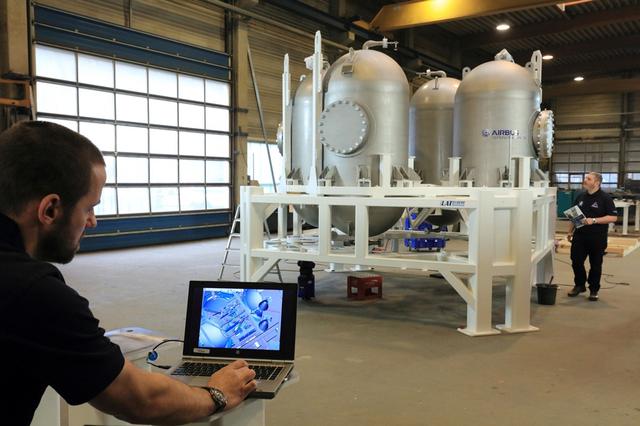
Airbus Defence and Space engineers deliver the European Service Module Propulsion Qualification Module to Sweden on Feb. 3, 2016. The PQM will undergo final integration in Stockholm before being sent to NASA in the summer. Hot fire tests will be conducted at White Sands missile range in New Mexico in September 2016. Part of Batch image transfer from Flickr.
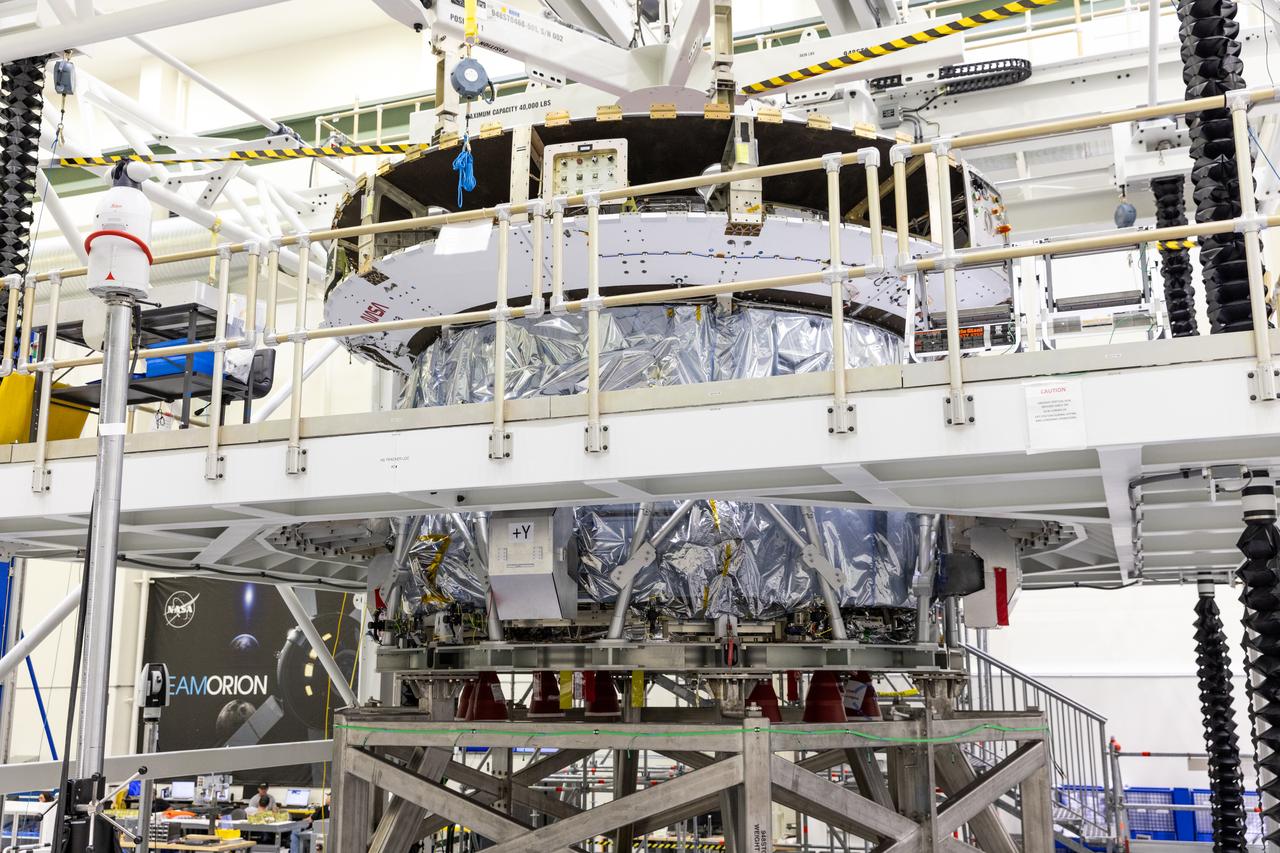
Teams began connecting the European Service Module 3 to the crew module adapter on Tuesday, Sept. 24, 2024, inside the Neil A. Armstrong Operations and Checkout Building at NASA’s Kennedy Space Center in Florida. The integrated hardware will provide propulsion, thermal control, and electrical power for NASA’s Orion spacecraft set to carry four NASA astronauts to the lunar South Pole region of the Moon for the agency’s Artemis III campaign.
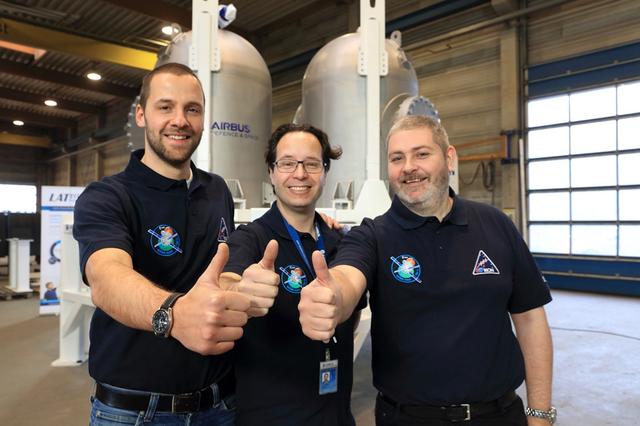
Airbus Defence and Space engineers deliver the European Service Module Propulsion Qualification Module to Sweden on Feb. 3, 2016. The PQM will undergo final integration in Stockholm before being sent to NASA in the summer. Hot fire tests will be conducted at White Sands missile range in New Mexico in September 2016. Part of Batch image transfer from Flickr.
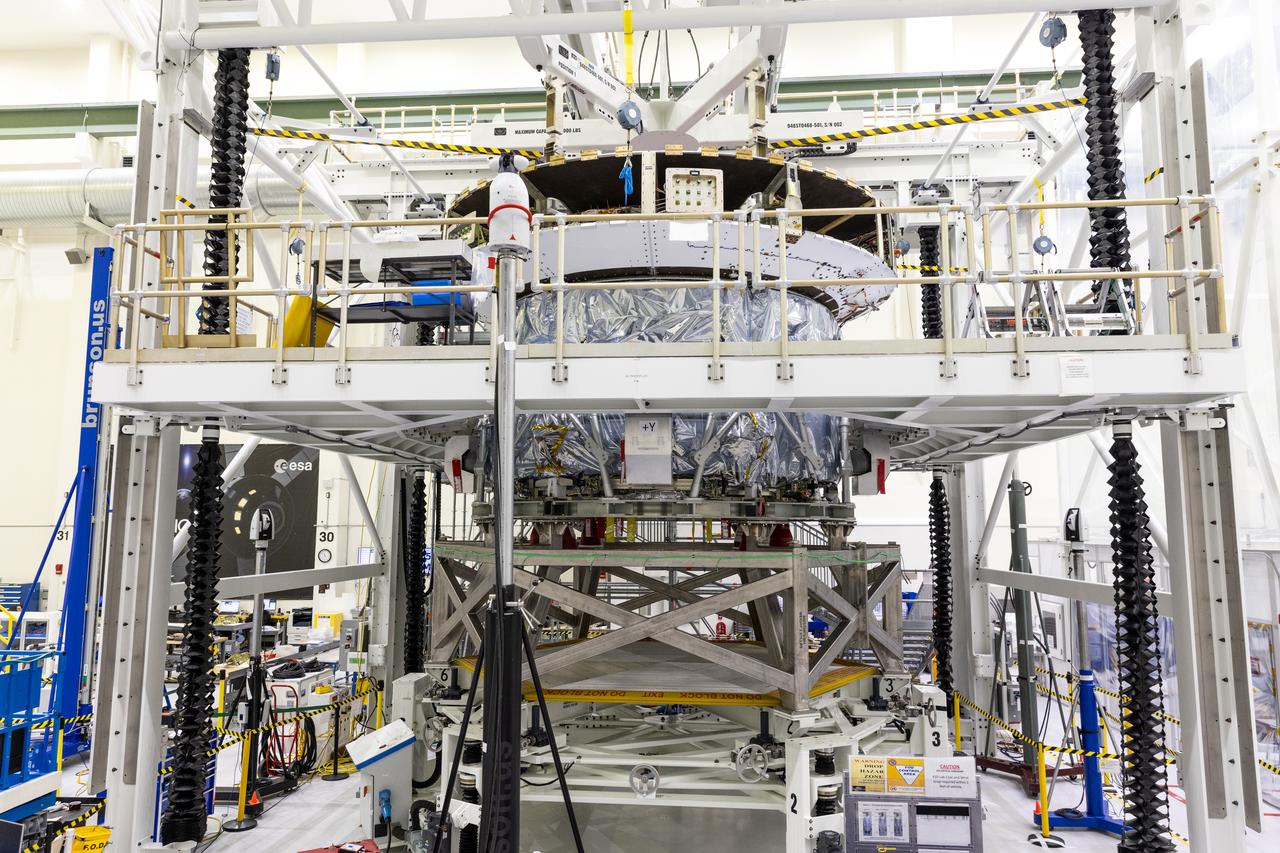
Teams began connecting European Service Module 3 to the crew module adapter on Tuesday, Sept. 24, 2024, inside the Neil A. Armstrong Operations and Checkout Building at NASA’s Kennedy Space Center in Florida. The integrated hardware will provide propulsion, thermal control, and electrical power for NASA’s Orion spacecraft set to carry four NASA astronauts to the lunar South Pole region of the Moon for the agency’s Artemis III campaign.
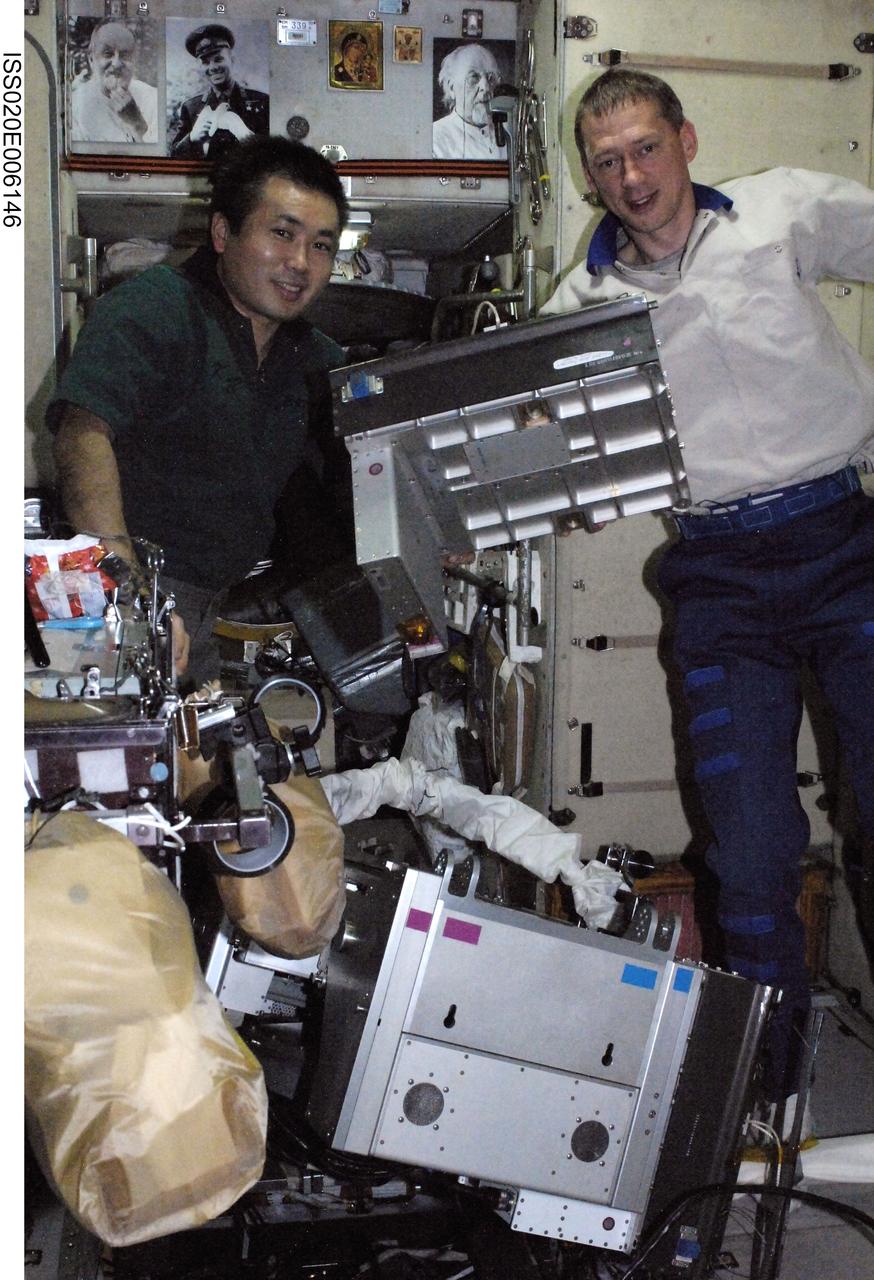
ISS020-E-006146 (3 June 2009) --- Japan Aerospace Exploration Agency (JAXA) astronaut Koichi Wakata (left) and European Space Agency astronaut Frank De Winne, both Expedition 20 flight engineers, perform in-flight maintenance on the Treadmill Vibration Isolation System (TVIS) in the Zvezda Service Module of the International Space Station.

This structure. shown on Sept. 3, 2020, is the frame and base for the European Service Module, part of NASA’s Orion spacecraft that will return humans to the Moon...Built in Turin, Italy, at Thales Alenia Space, this is the third such structure to roll out of production. However, this one is extra special, as it will fly the first woman and next man to land on the Moon and return on the Artemis III mission.
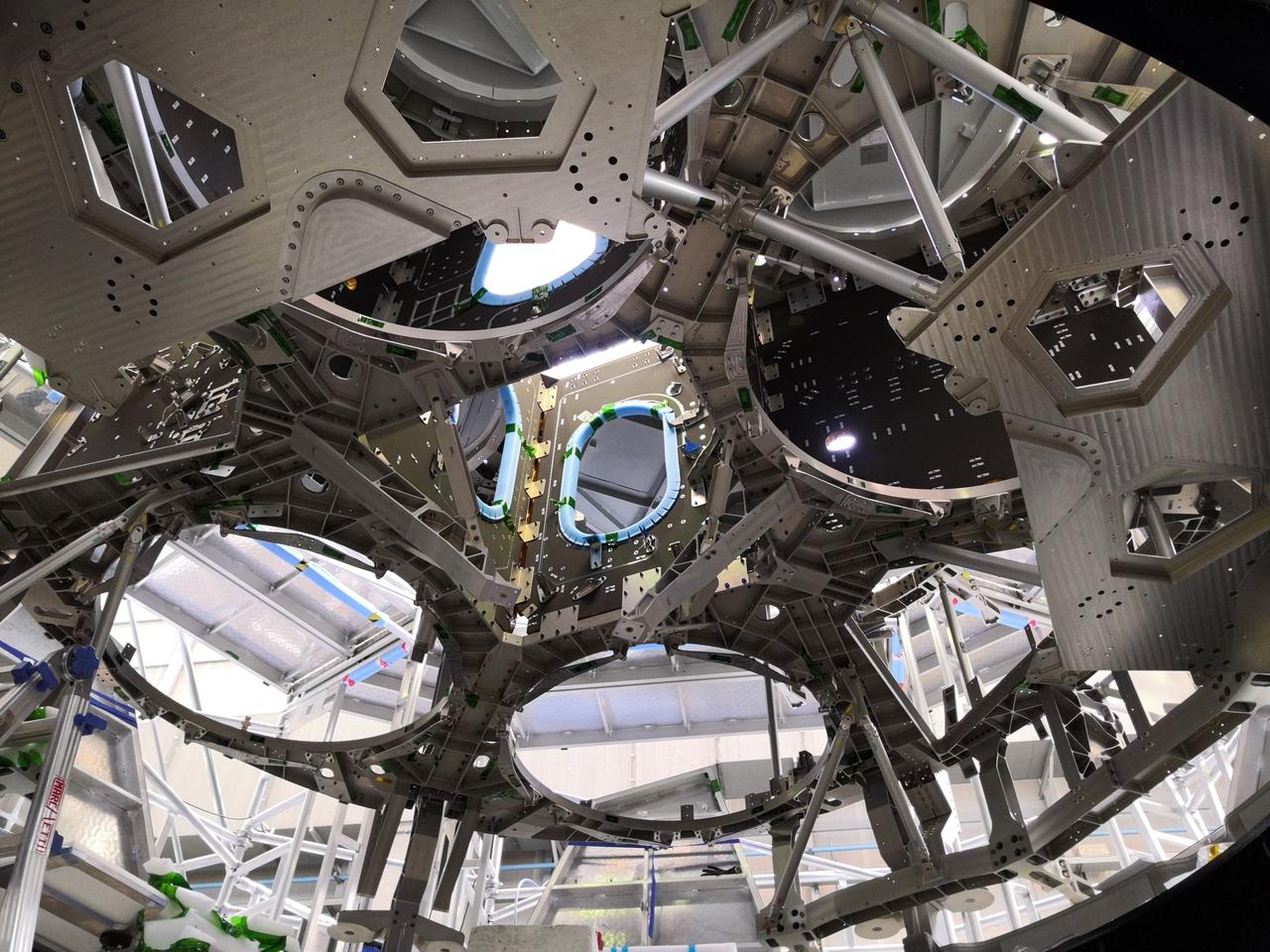
This structure. shown on Sept. 3, 2020, is the frame and base for the European Service Module, part of NASA’s Orion spacecraft that will return humans to the Moon...Built in Turin, Italy, at Thales Alenia Space, this is the third such structure to roll out of production. However, this one is extra special, as it will fly the first woman and next man to land on the Moon and return on the Artemis III mission.
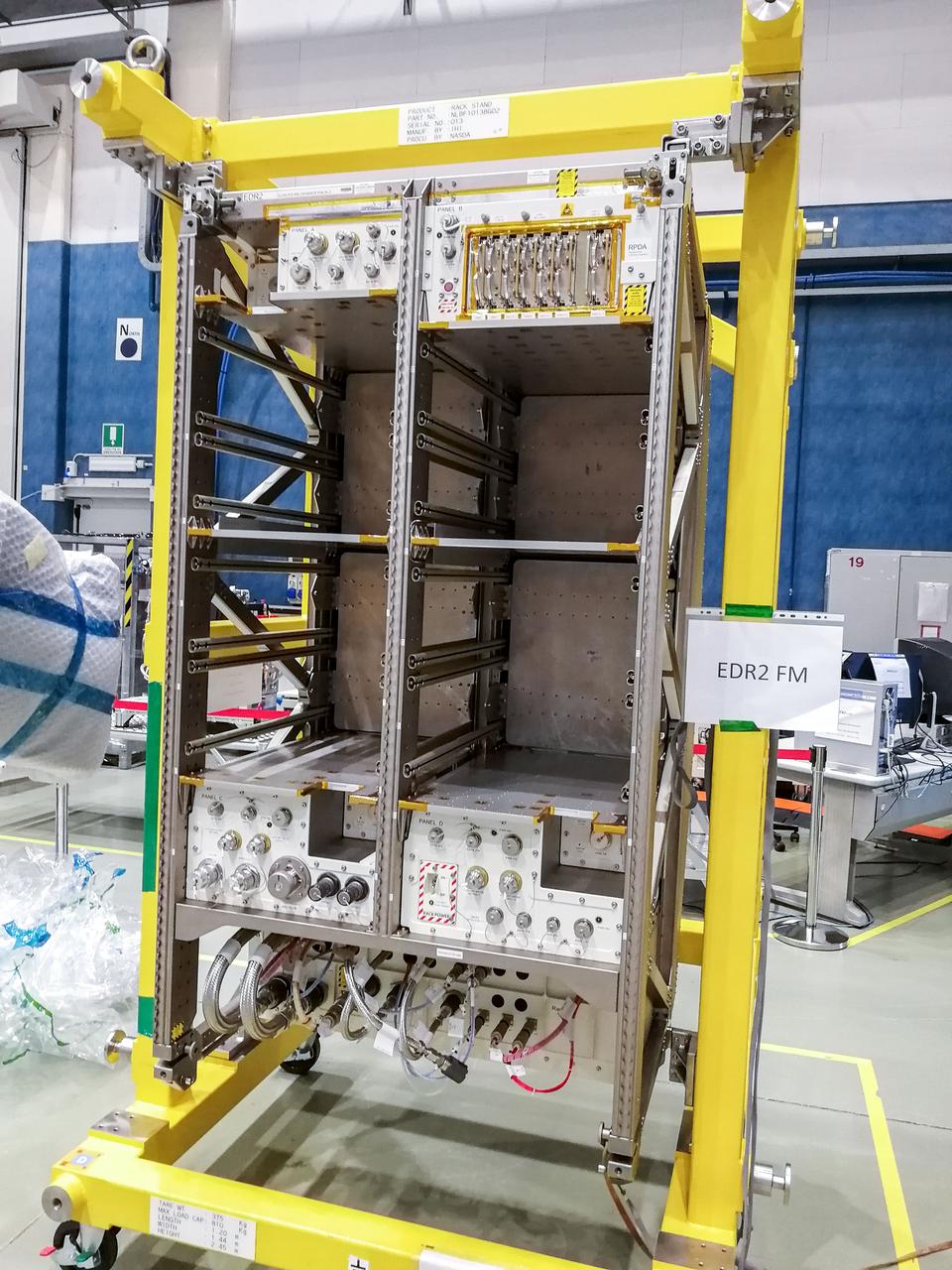
jsc2019e048243 (3/28/2019) — Preflight imagery of the EDR-2 Flight Model in its rack integration stand. The European Drawer Rack-2 (EDR-2) is an experiment support facility accommodated in the Columbus module. The rack provides general services to experiments, including power, data communication, water cooling, vacuum and venting/waste gas, nitrogen supply and structural interfaces.
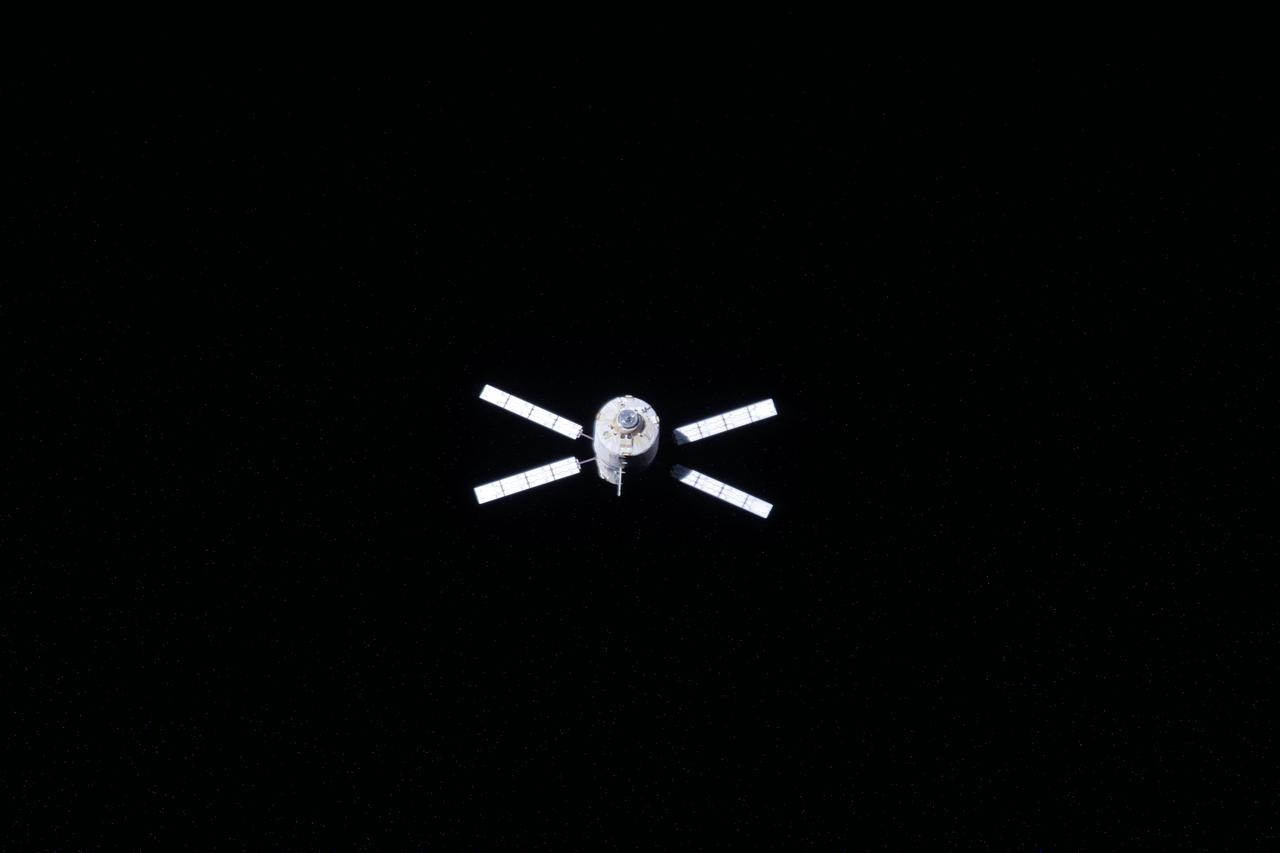
ISS033-E-008016 (28 Sept. 2012) --- European Space Agency's "Edoardo Amaldi" Automated Transfer Vehicle-3 (ATV-3) begins its relative separation from the International Space Station during the Expedition 33 mission. The ATV-3 undocked from the aft port of the Zvezda Service Module at 5:44 p.m. (EDT) on Sept. 28, 2012. The ATV-3 is scheduled to deorbit on Oct. 2 for a fiery re-entry over the Pacific Ocean that will destroy the trash-filled spacecraft. Inside the ATV-3 is the Re-Entry Breakup Recorder that will record various data such as temperature, pressure and speed as the resupply craft burns up during its return to Earth. Experts will use that data to design safer and more predictable destructive re-entry techniques.
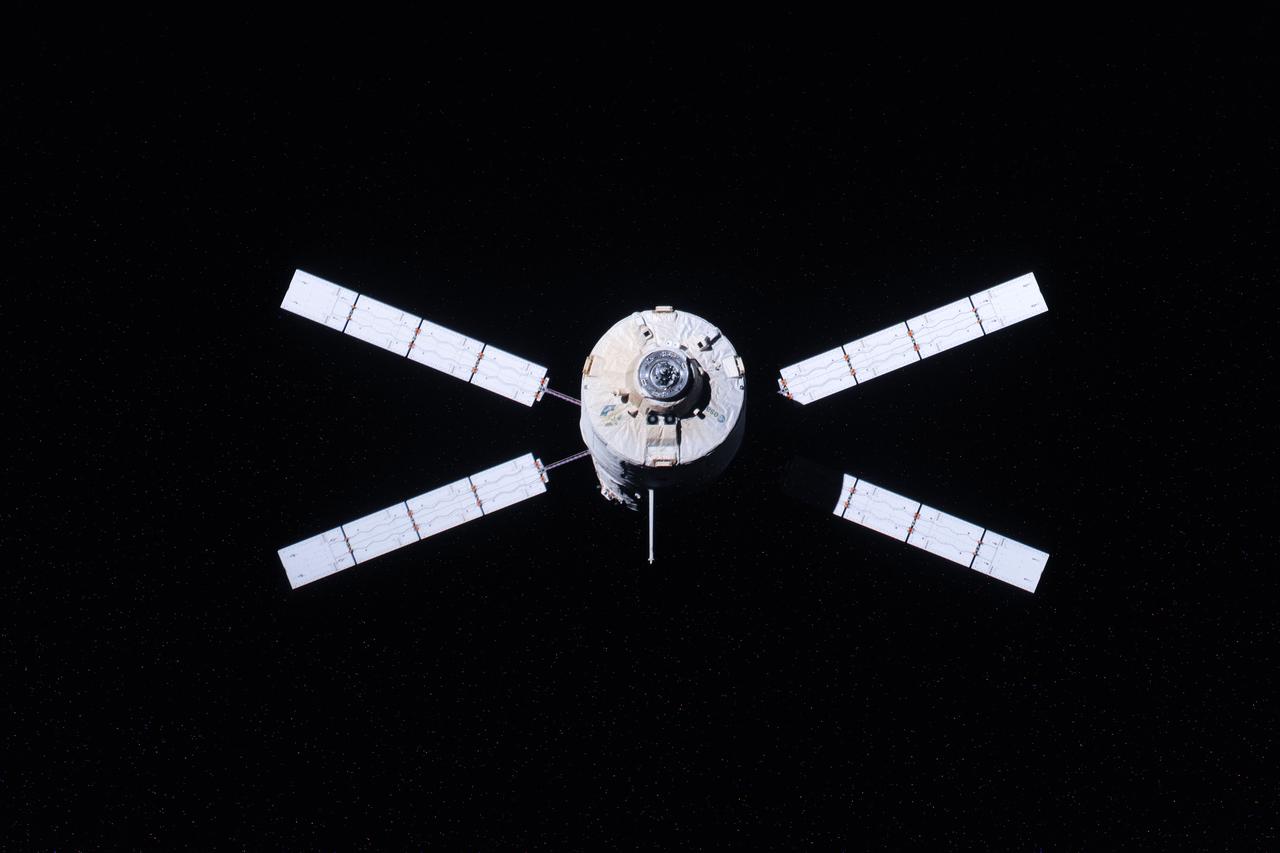
ISS033-E-007940 (28 Sept. 2012) --- European Space Agency's "Edoardo Amaldi" Automated Transfer Vehicle-3 (ATV-3) begins its relative separation from the International Space Station during the Expedition 33 mission. The ATV-3 undocked from the aft port of the Zvezda Service Module at 5:44 p.m. (EDT) on Sept. 28, 2012. The ATV-3 is scheduled to deorbit on Oct. 2 for a fiery re-entry over the Pacific Ocean that will destroy the trash-filled spacecraft. Inside the ATV-3 is the Re-Entry Breakup Recorder that will record various data such as temperature, pressure and speed as the resupply craft burns up during its return to Earth. Experts will use that data to design safer and more predictable destructive re-entry techniques.
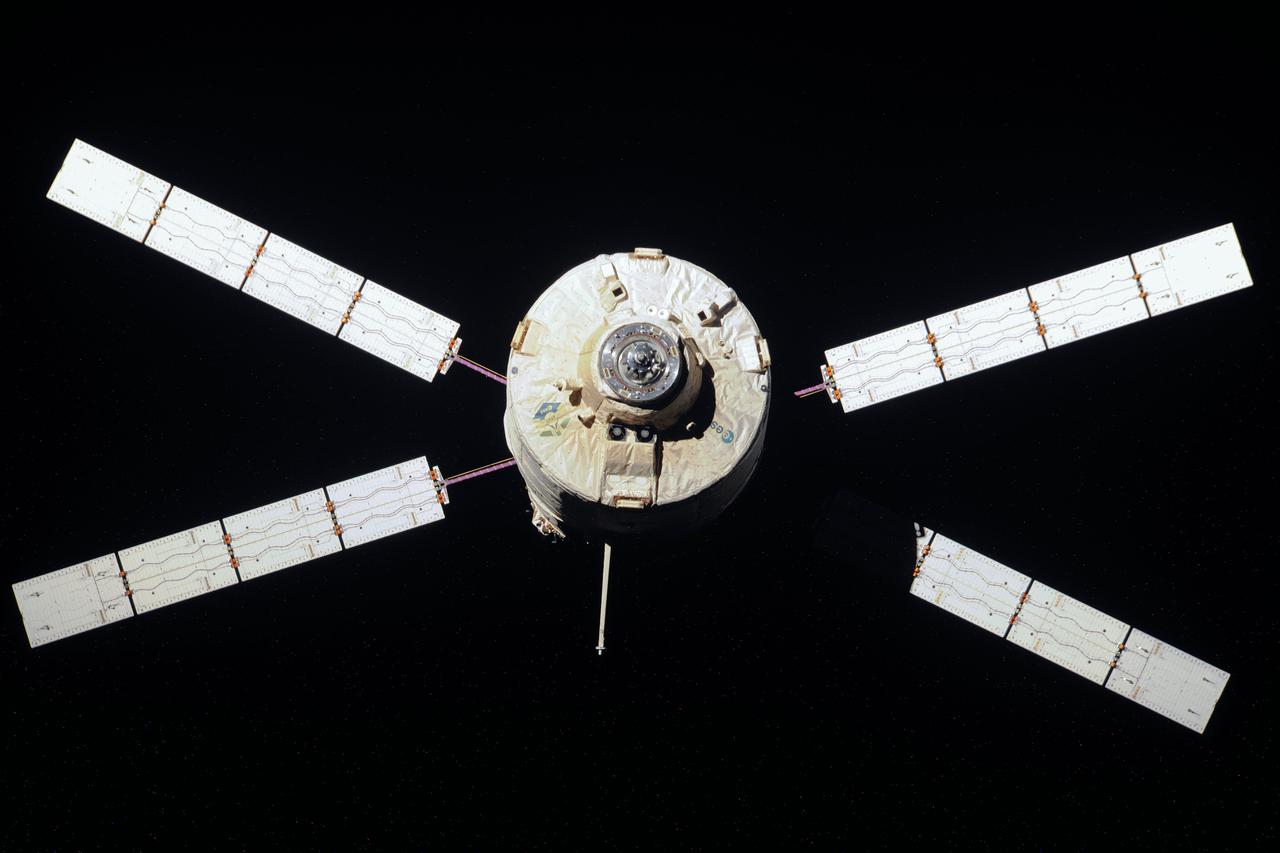
ISS033-E-007915 (28 Sept. 2012) --- European Space Agency's "Edoardo Amaldi" Automated Transfer Vehicle-3 (ATV-3) begins its relative separation from the International Space Station during the Expedition 33 mission. The ATV-3 undocked from the aft port of the Zvezda Service Module at 5:44 p.m. (EDT) on Sept. 28, 2012. The ATV-3 is scheduled to deorbit on Oct. 2 for a fiery re-entry over the Pacific Ocean that will destroy the trash-filled spacecraft. Inside the ATV-3 is the Re-Entry Breakup Recorder that will record various data such as temperature, pressure and speed as the resupply craft burns up during its return to Earth. Experts will use that data to design safer and more predictable destructive re-entry techniques.
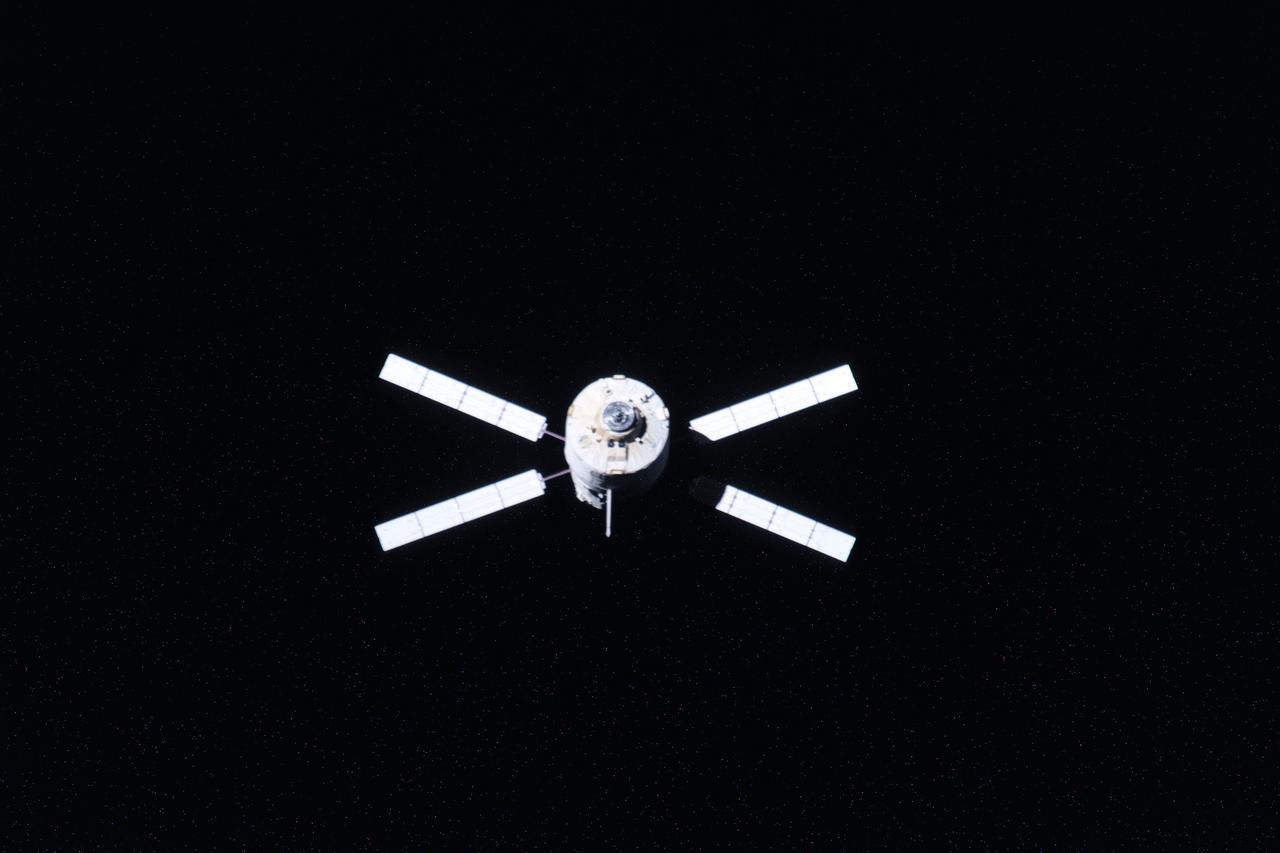
ISS033-E-007980 (28 Sept. 2012) --- European Space Agency's "Edoardo Amaldi" Automated Transfer Vehicle-3 (ATV-3) begins its relative separation from the International Space Station during the Expedition 33 mission. The ATV-3 undocked from the aft port of the Zvezda Service Module at 5:44 p.m. (EDT) on Sept. 28, 2012. The ATV-3 is scheduled to deorbit on Oct. 2 for a fiery re-entry over the Pacific Ocean that will destroy the trash-filled spacecraft. Inside the ATV-3 is the Re-Entry Breakup Recorder that will record various data such as temperature, pressure and speed as the resupply craft burns up during its return to Earth. Experts will use that data to design safer and more predictable destructive re-entry techniques.
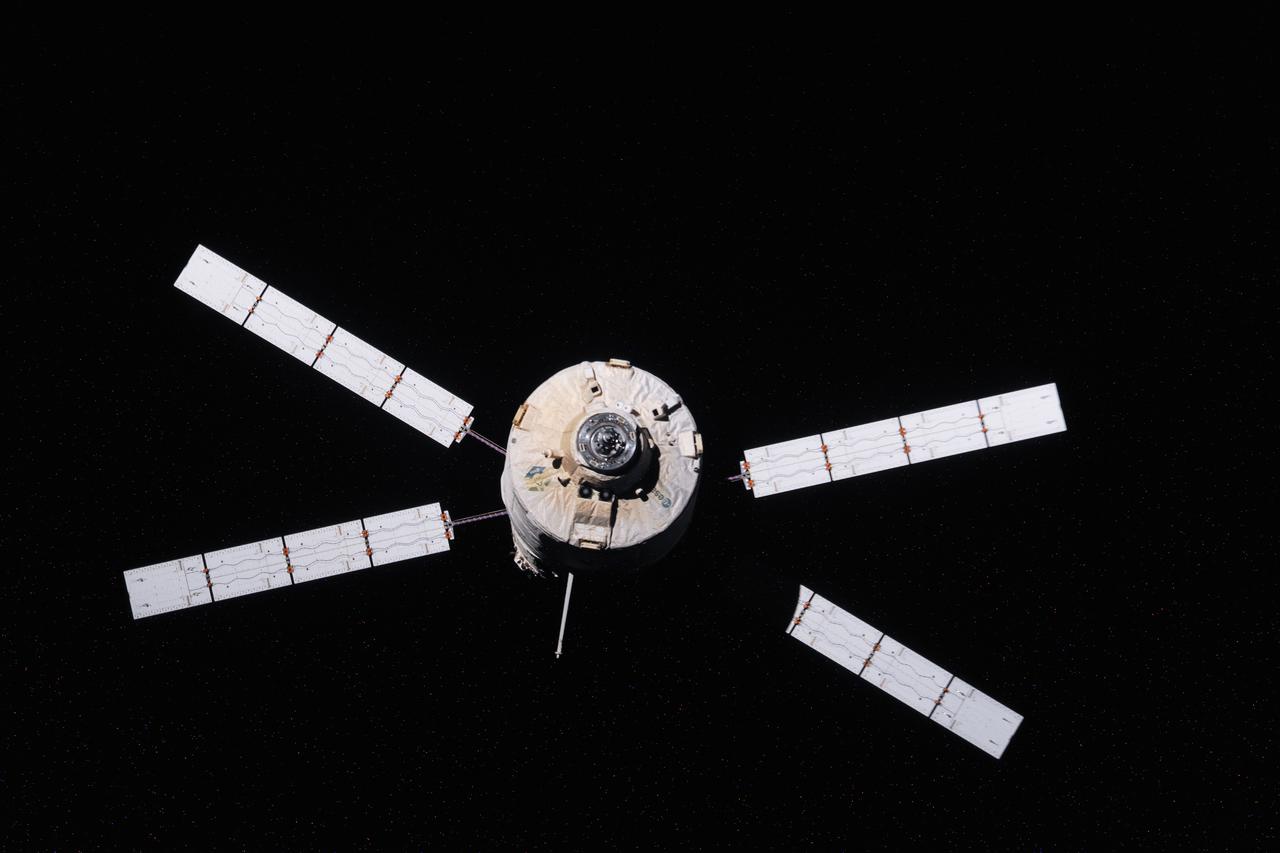
ISS033-E-007920 (28 Sept. 2012) --- European Space Agency's "Edoardo Amaldi" Automated Transfer Vehicle-3 (ATV-3) begins its relative separation from the International Space Station during the Expedition 33 mission. The ATV-3 undocked from the aft port of the Zvezda Service Module at 5:44 p.m. (EDT) on Sept. 28, 2012. The ATV-3 is scheduled to deorbit on Oct. 2 for a fiery re-entry over the Pacific Ocean that will destroy the trash-filled spacecraft. Inside the ATV-3 is the Re-Entry Breakup Recorder that will record various data such as temperature, pressure and speed as the resupply craft burns up during its return to Earth. Experts will use that data to design safer and more predictable destructive re-entry techniques.
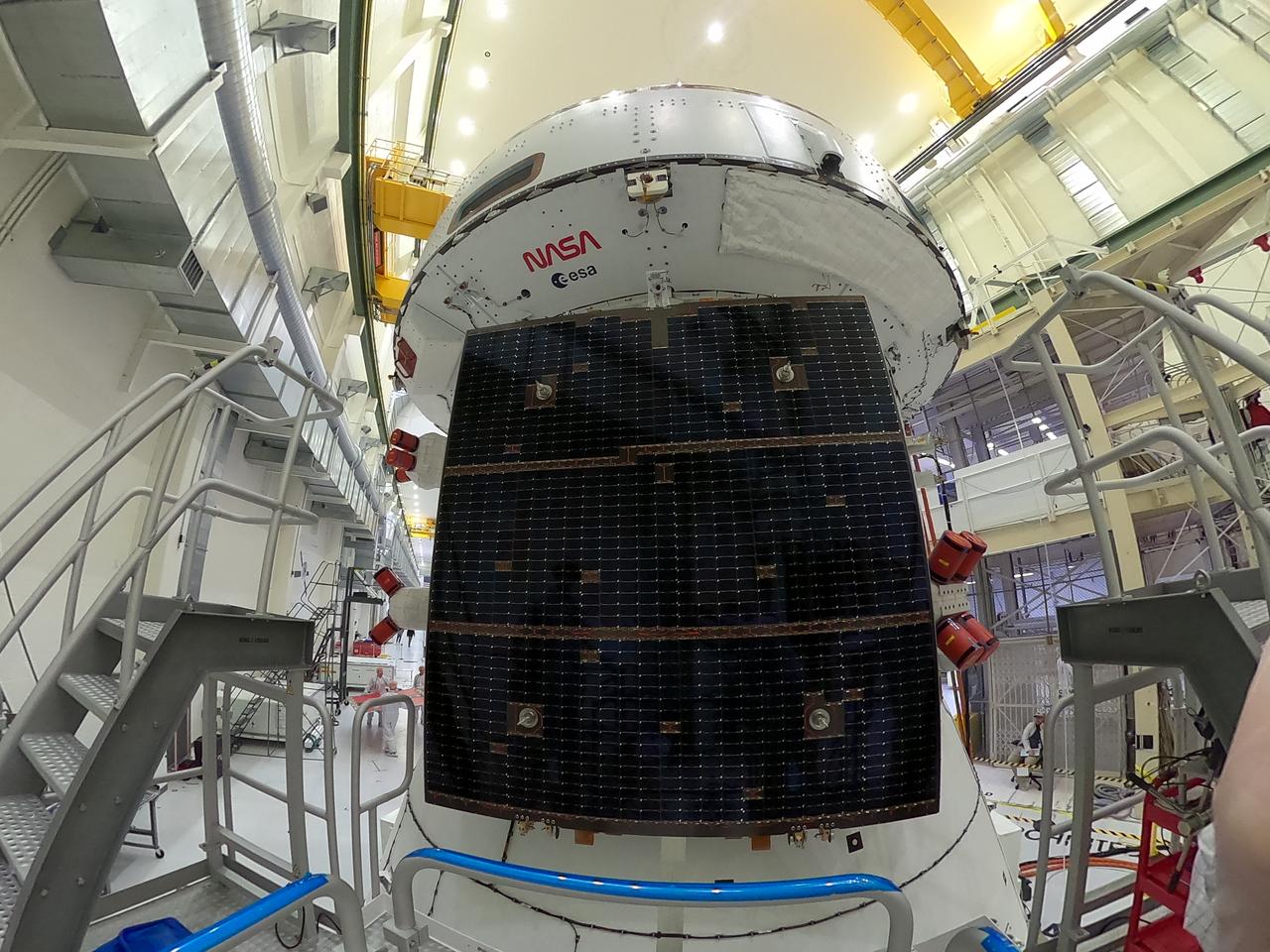
Technicians install four solar array wings on NASA’s Artemis II Orion spacecraft inside the Neil A. Armstrong Operations and Checkout Building at NASA’s Kennedy Space Center in Florida on Monday, March 3, 2025. Each solar array is nearly 23 feet long and can turn on two axes to remain aligned with the Sun for maximum power. Orion’s solar arrays, manufactured and installed by ESA (European Space Agency) and its contractor Airbus, will deliver power to the service module that provides propulsion, thermal control, and electrical power to the spacecraft, as well as air and water for the crew.
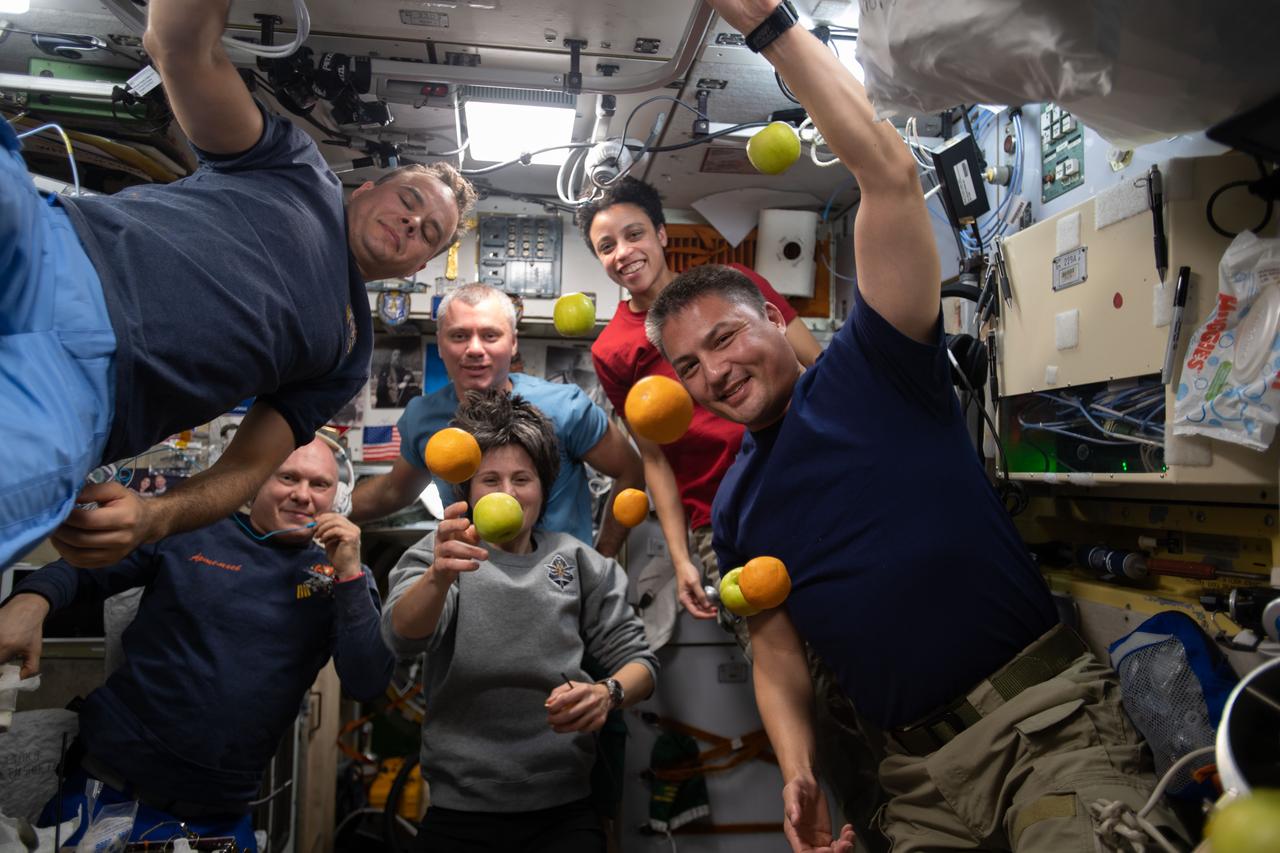
iss067e117737 (June 3, 2022) --- Expedition 67 crew members pose with fresh fruit flying weightlessly in microgravity delivered recently aboard the Progress 81 (81P) cargo craft. The 81P docked to the Zvezda service module's rear port aboard the International Space Station after a three-and-half-hour trip that began with a launch from the Baikonur Cosmodrome in Kazakhstan. Pictured clockwise from left are, Roscosmos Flight Engineers Sergey Korsakov and Denis Matveev; NASA Flight Engineers Jessica Watkins and Kjell Lindgren; ESA (European Space Agency) Flight Engineer Samantha Cristofretti; and Roscosmos Commander Oleg Artemyev.
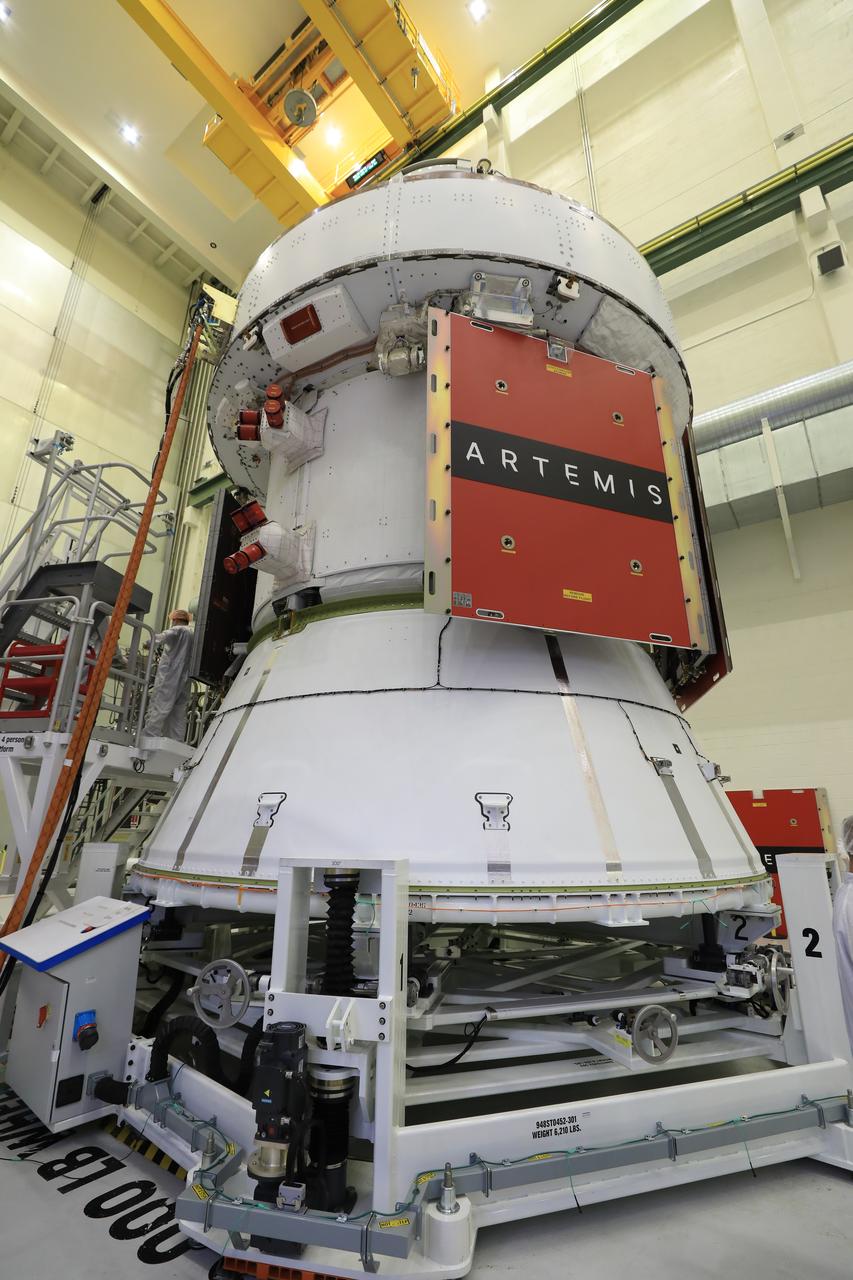
Technicians install four solar array wings on NASA’s Artemis II Orion spacecraft inside the Neil A. Armstrong Operations and Checkout Building at NASA’s Kennedy Space Center in Florida on Monday, March 3, 2025. Each solar array is nearly 23 feet long and can turn on two axes to remain aligned with the Sun for maximum power. Orion’s solar arrays, manufactured and installed by ESA (European Space Agency) and its contractor Airbus, will deliver power to the service module that provides propulsion, thermal control, and electrical power to the spacecraft, as well as air and water for the crew.
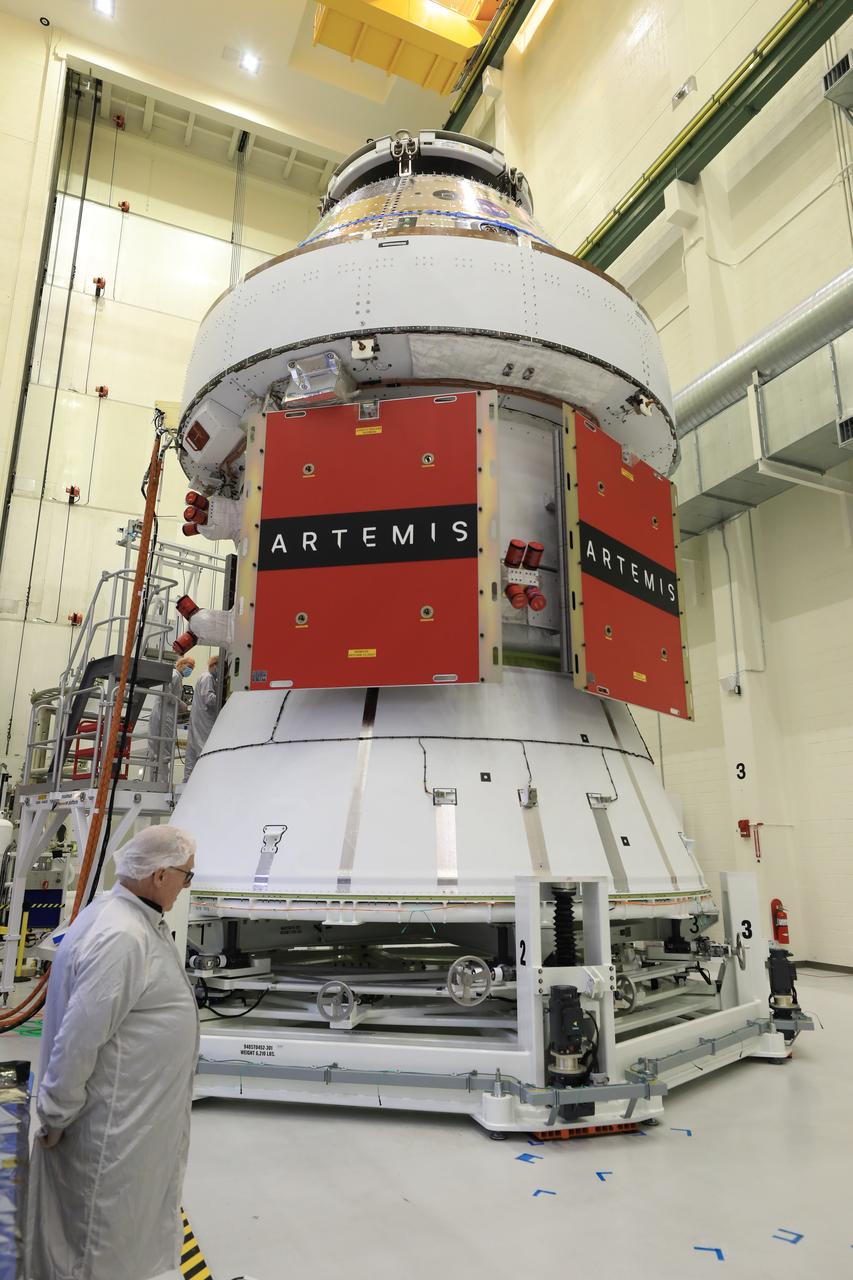
Technicians install four solar array wings on NASA’s Artemis II Orion spacecraft inside the Neil A. Armstrong Operations and Checkout Building at NASA’s Kennedy Space Center in Florida on Monday, March 3, 2025. Each solar array is nearly 23 feet long and can turn on two axes to remain aligned with the Sun for maximum power. Orion’s solar arrays, manufactured and installed by ESA (European Space Agency) and its contractor Airbus, will deliver power to the service module that provides propulsion, thermal control, and electrical power to the spacecraft, as well as air and water for the crew.
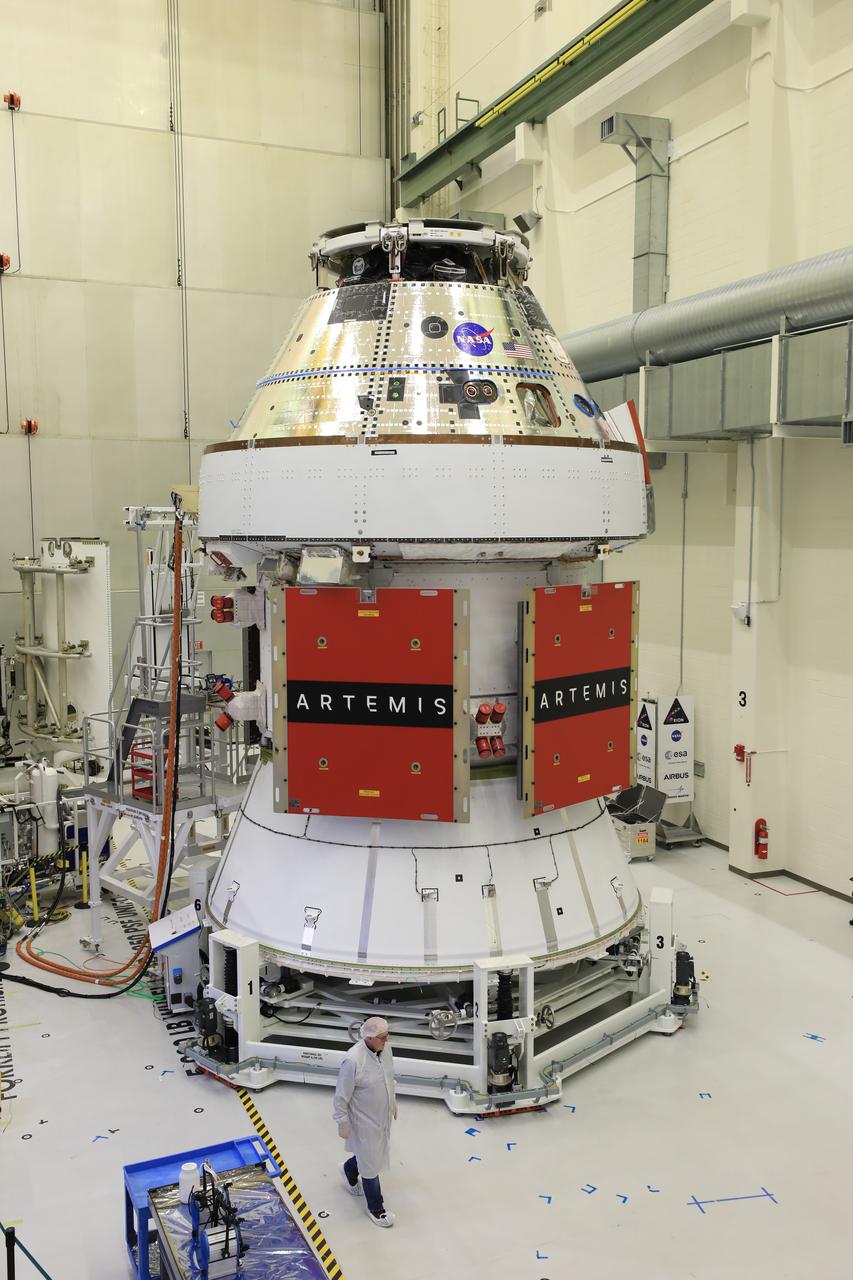
Technicians install four solar array wings on NASA’s Artemis II Orion spacecraft inside the Neil A. Armstrong Operations and Checkout Building at NASA’s Kennedy Space Center in Florida on Monday, March 3, 2025. Each solar array is nearly 23 feet long and can turn on two axes to remain aligned with the Sun for maximum power. Orion’s solar arrays, manufactured and installed by ESA (European Space Agency) and its contractor Airbus, will deliver power to the service module that provides propulsion, thermal control, and electrical power to the spacecraft, as well as air and water for the crew.
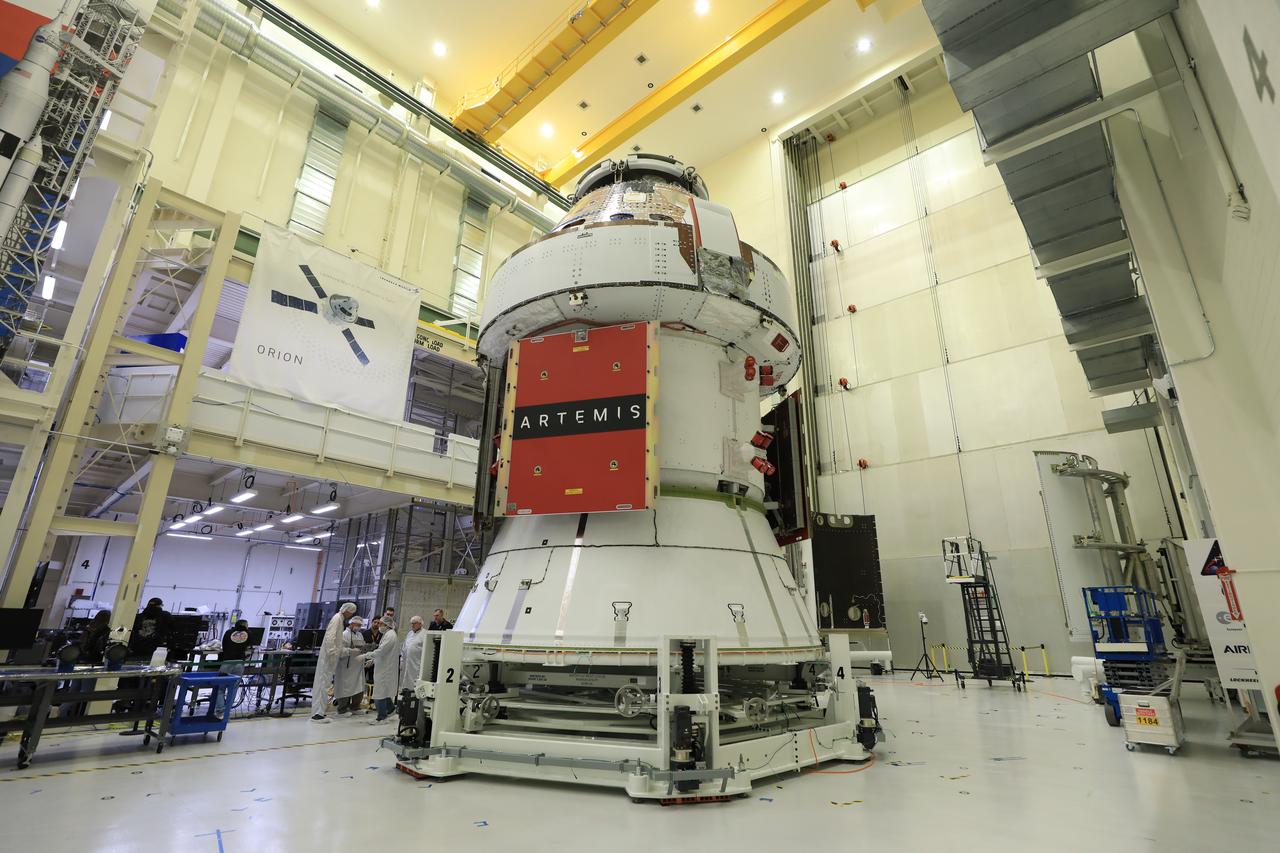
Technicians install four solar array wings on NASA’s Artemis II Orion spacecraft inside the Neil A. Armstrong Operations and Checkout Building at NASA’s Kennedy Space Center in Florida on Monday, March 3, 2025. Each solar array is nearly 23 feet long and can turn on two axes to remain aligned with the Sun for maximum power. Orion’s solar arrays, manufactured and installed by ESA (European Space Agency) and its contractor Airbus, will deliver power to the service module that provides propulsion, thermal control, and electrical power to the spacecraft, as well as air and water for the crew.
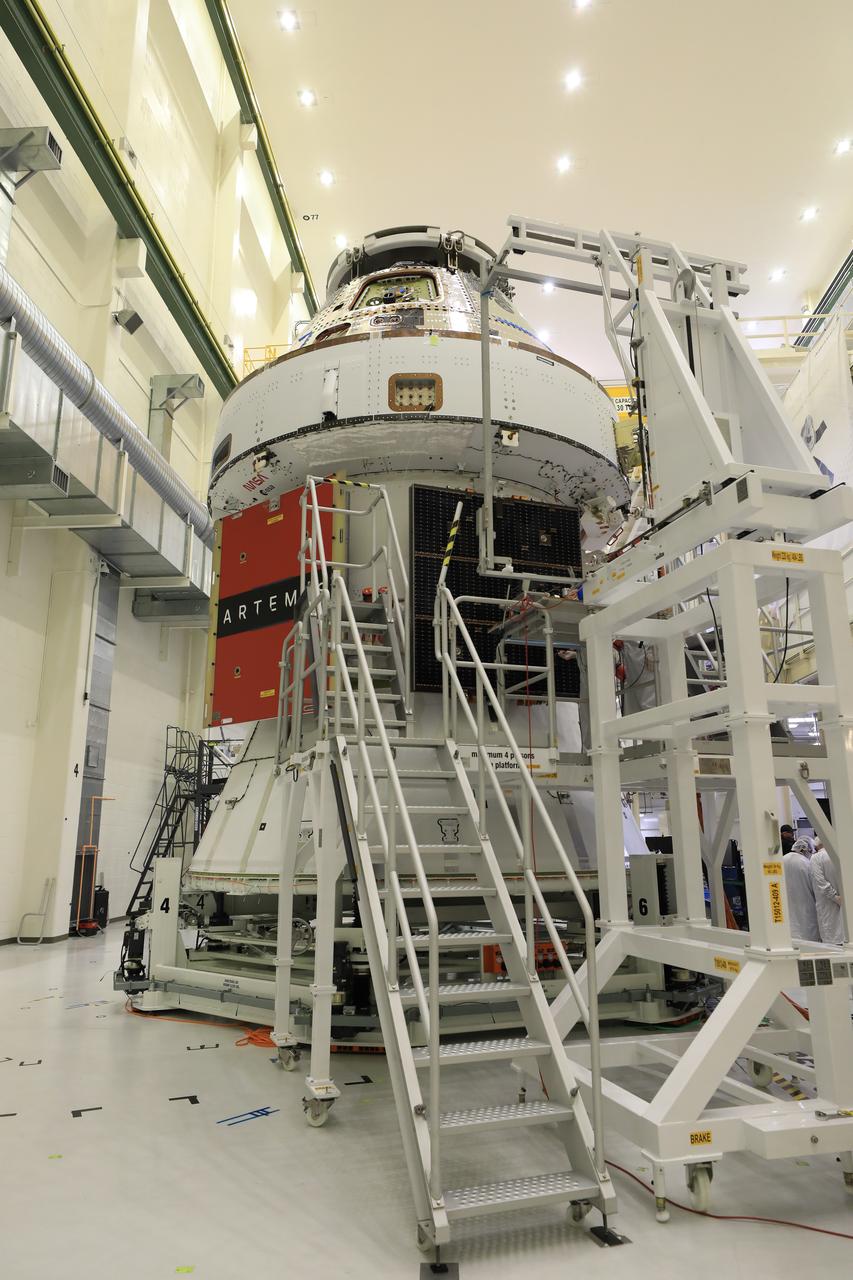
Technicians install four solar array wings on NASA’s Artemis II Orion spacecraft inside the Neil A. Armstrong Operations and Checkout Building at NASA’s Kennedy Space Center in Florida on Monday, March 3, 2025. Each solar array is nearly 23 feet long and can turn on two axes to remain aligned with the Sun for maximum power. Orion’s solar arrays, manufactured and installed by ESA (European Space Agency) and its contractor Airbus, will deliver power to the service module that provides propulsion, thermal control, and electrical power to the spacecraft, as well as air and water for the crew.
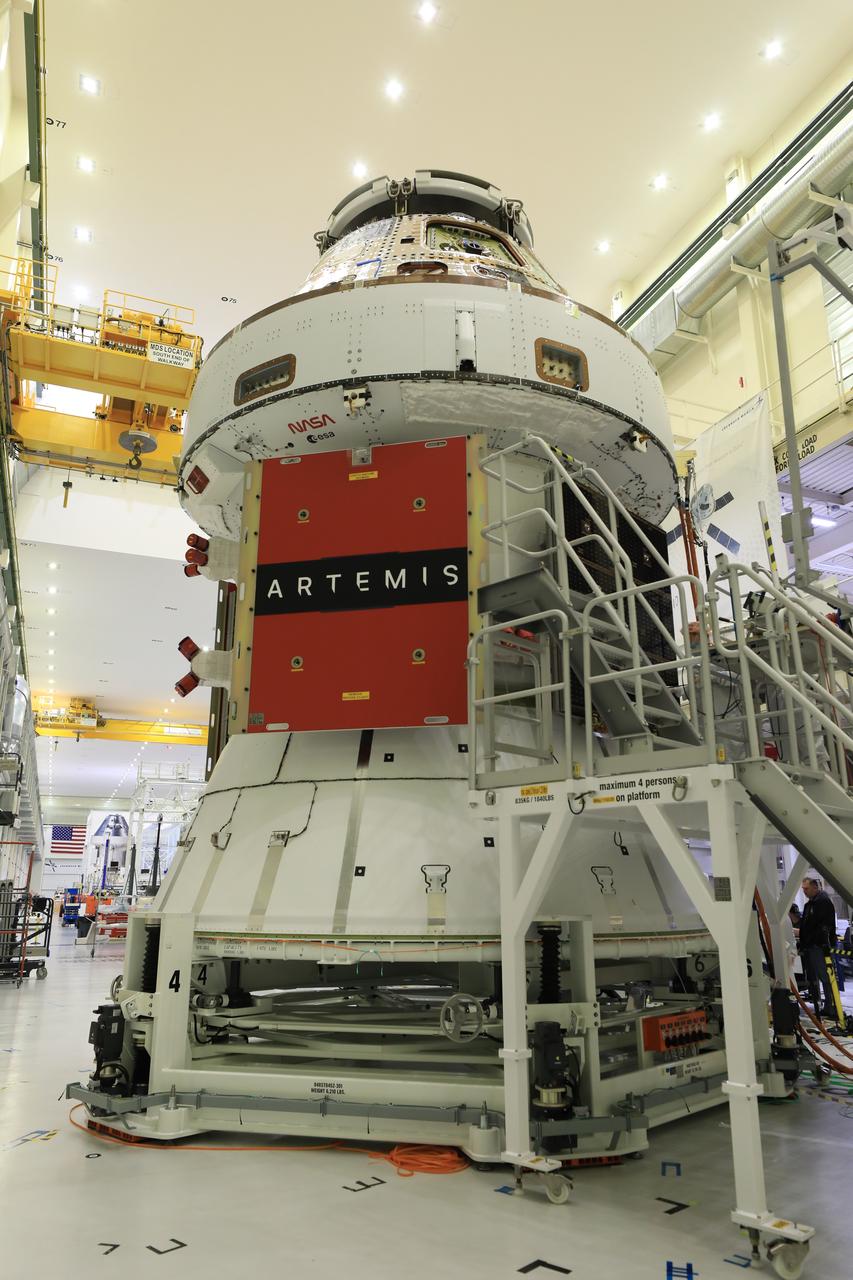
Technicians install four solar array wings on NASA’s Artemis II Orion spacecraft inside the Neil A. Armstrong Operations and Checkout Building at NASA’s Kennedy Space Center in Florida on Monday, March 3, 2025. Each solar array is nearly 23 feet long and can turn on two axes to remain aligned with the Sun for maximum power. Orion’s solar arrays, manufactured and installed by ESA (European Space Agency) and its contractor Airbus, will deliver power to the service module that provides propulsion, thermal control, and electrical power to the spacecraft, as well as air and water for the crew.
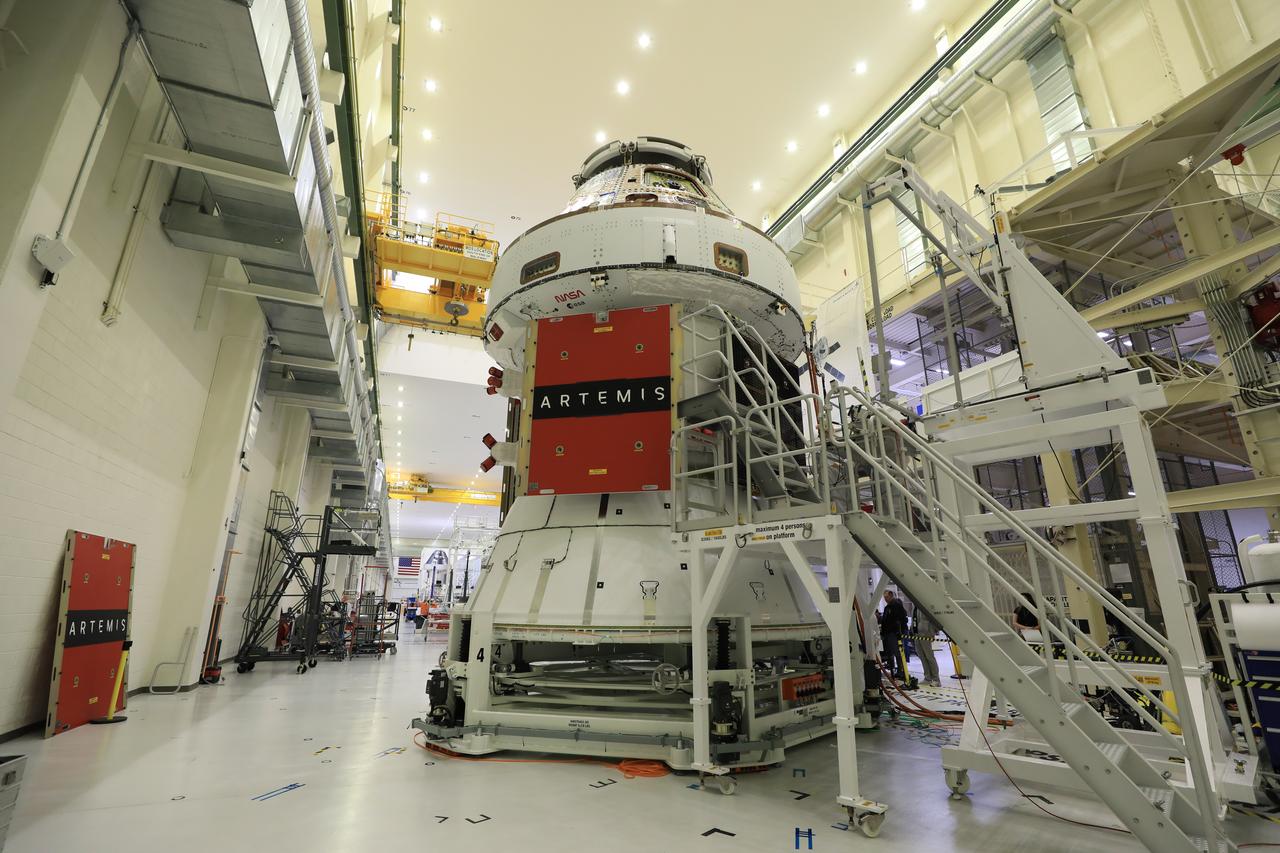
Technicians install four solar array wings on NASA’s Artemis II Orion spacecraft inside the Neil A. Armstrong Operations and Checkout Building at NASA’s Kennedy Space Center in Florida on Monday, March 3, 2025. Each solar array is nearly 23 feet long and can turn on two axes to remain aligned with the Sun for maximum power. Orion’s solar arrays, manufactured and installed by ESA (European Space Agency) and its contractor Airbus, will deliver power to the service module that provides propulsion, thermal control, and electrical power to the spacecraft, as well as air and water for the crew.
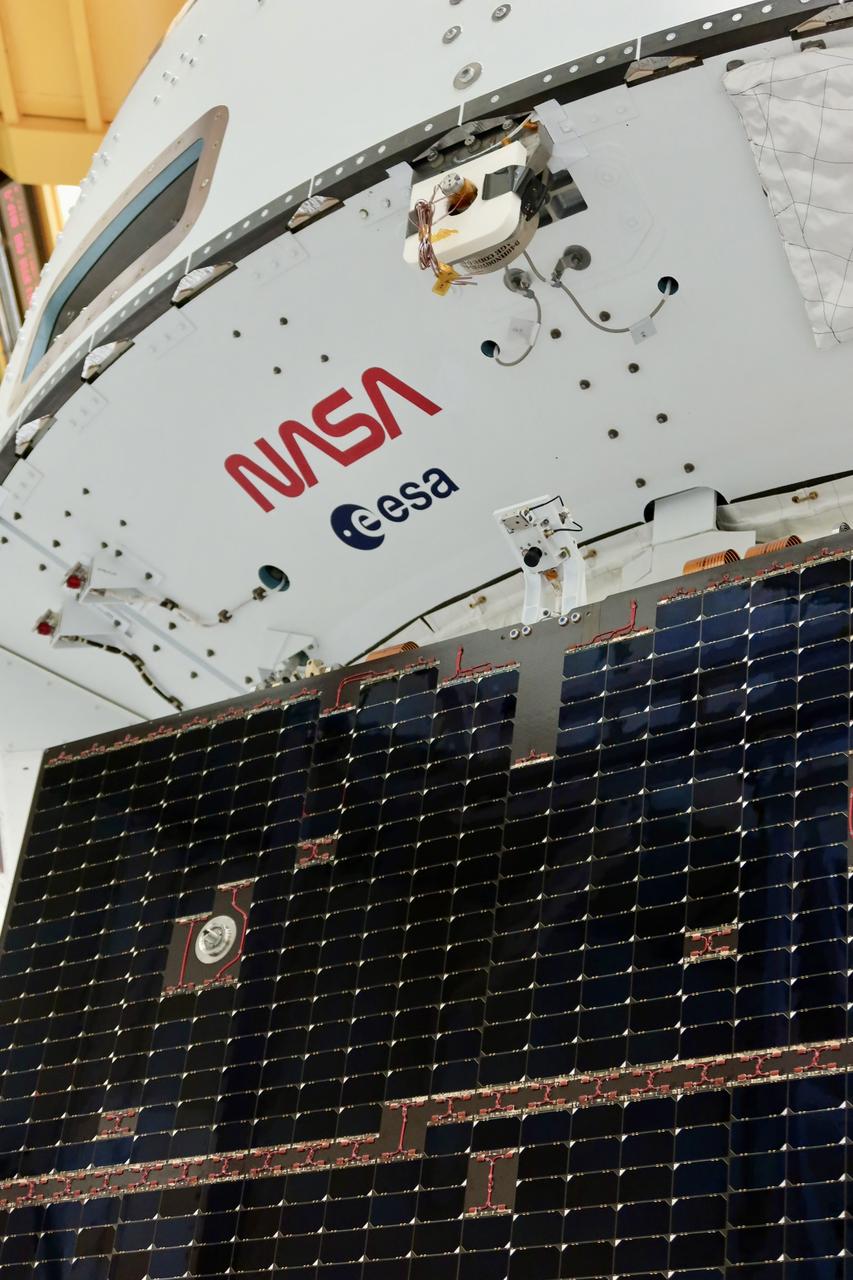
Technicians install four solar array wings on NASA’s Artemis II Orion spacecraft inside the Neil A. Armstrong Operations and Checkout Building at NASA’s Kennedy Space Center in Florida on Monday, March 3, 2025. Each solar array is nearly 23 feet long and can turn on two axes to remain aligned with the Sun for maximum power. Orion’s solar arrays, manufactured and installed by ESA (European Space Agency) and its contractor Airbus, will deliver power to the service module that provides propulsion, thermal control, and electrical power to the spacecraft, as well as air and water for the crew.
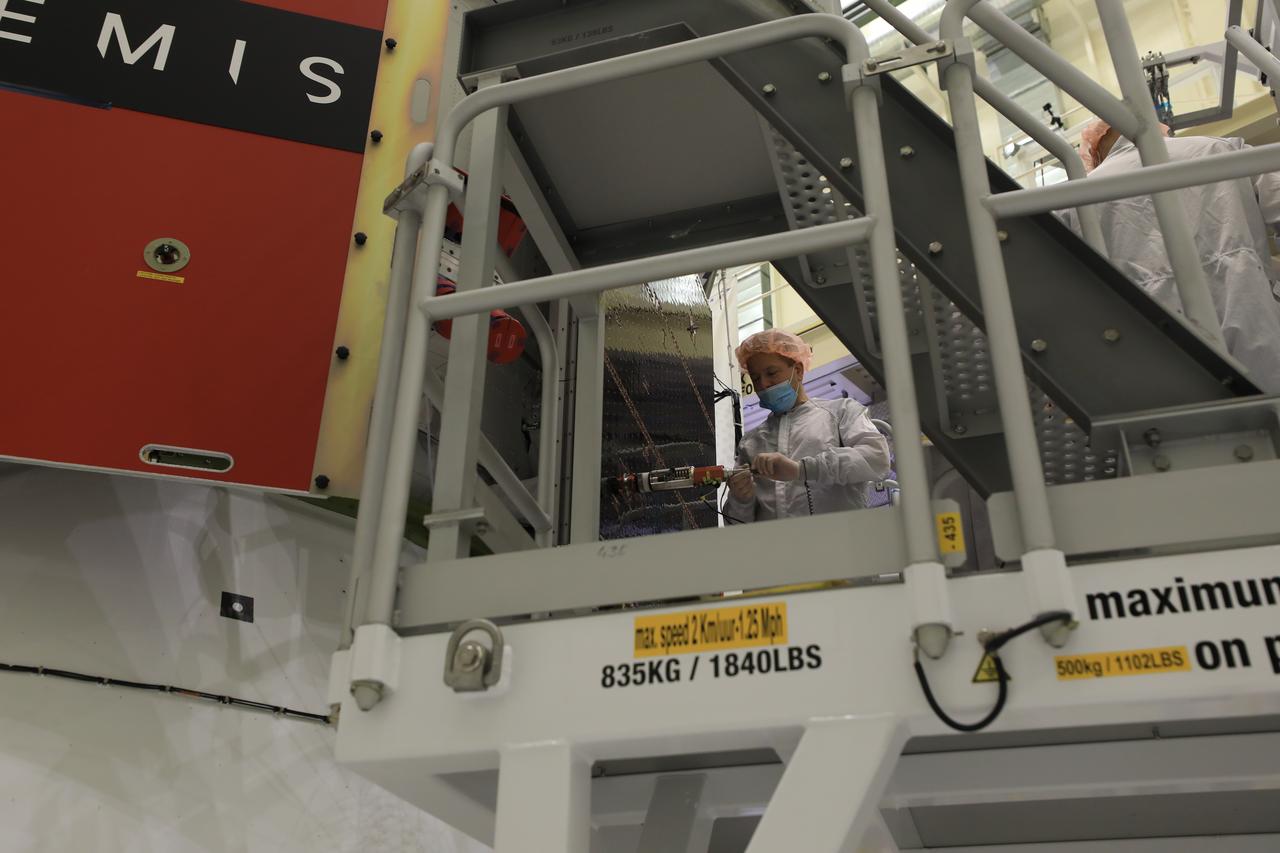
Technicians install four solar array wings on NASA’s Artemis II Orion spacecraft inside the Neil A. Armstrong Operations and Checkout Building at NASA’s Kennedy Space Center in Florida on Monday, March 3, 2025. Each solar array is nearly 23 feet long and can turn on two axes to remain aligned with the Sun for maximum power. Orion’s solar arrays, manufactured and installed by ESA (European Space Agency) and its contractor Airbus, will deliver power to the service module that provides propulsion, thermal control, and electrical power to the spacecraft, as well as air and water for the crew.
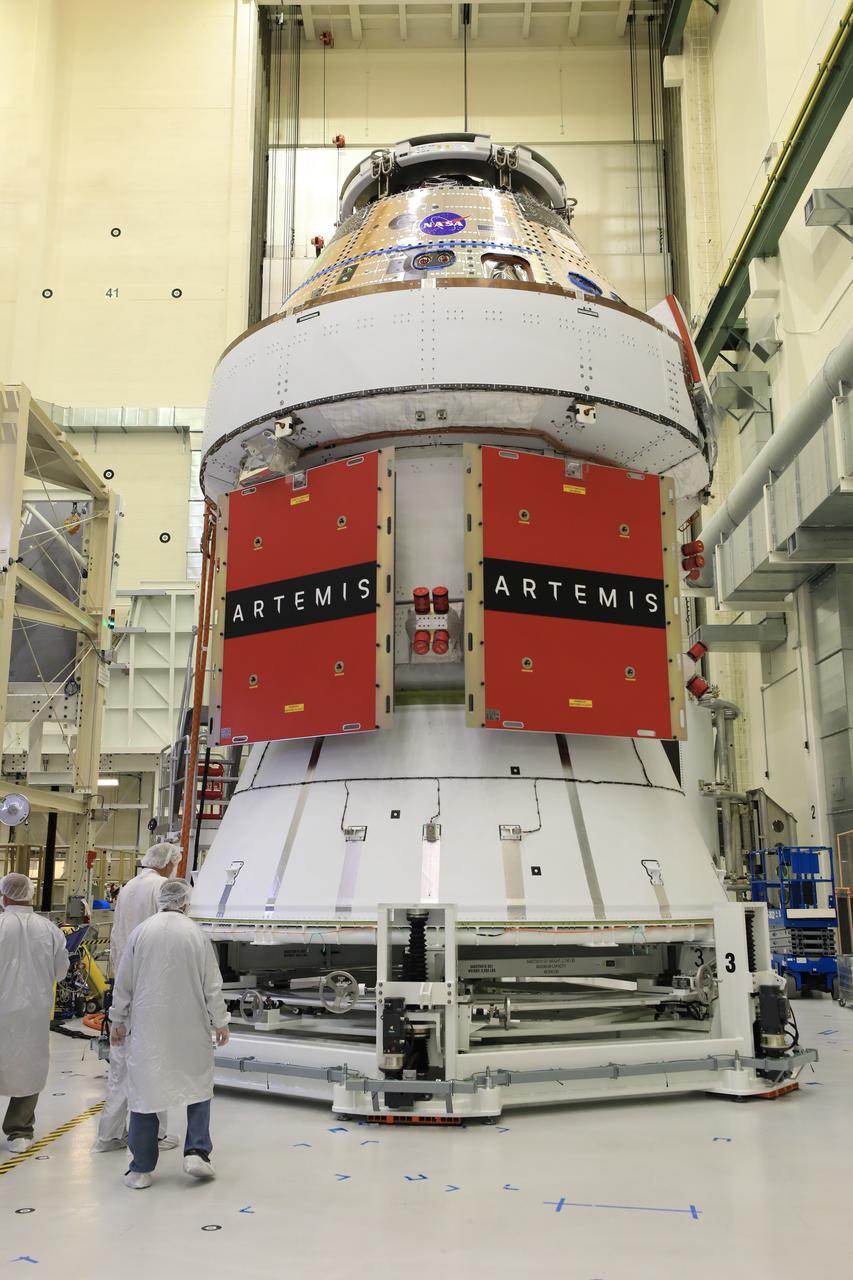
Technicians install four solar array wings on NASA’s Artemis II Orion spacecraft inside the Neil A. Armstrong Operations and Checkout Building at NASA’s Kennedy Space Center in Florida on Monday, March 3, 2025. Each solar array is nearly 23 feet long and can turn on two axes to remain aligned with the Sun for maximum power. Orion’s solar arrays, manufactured and installed by ESA (European Space Agency) and its contractor Airbus, will deliver power to the service module that provides propulsion, thermal control, and electrical power to the spacecraft, as well as air and water for the crew.
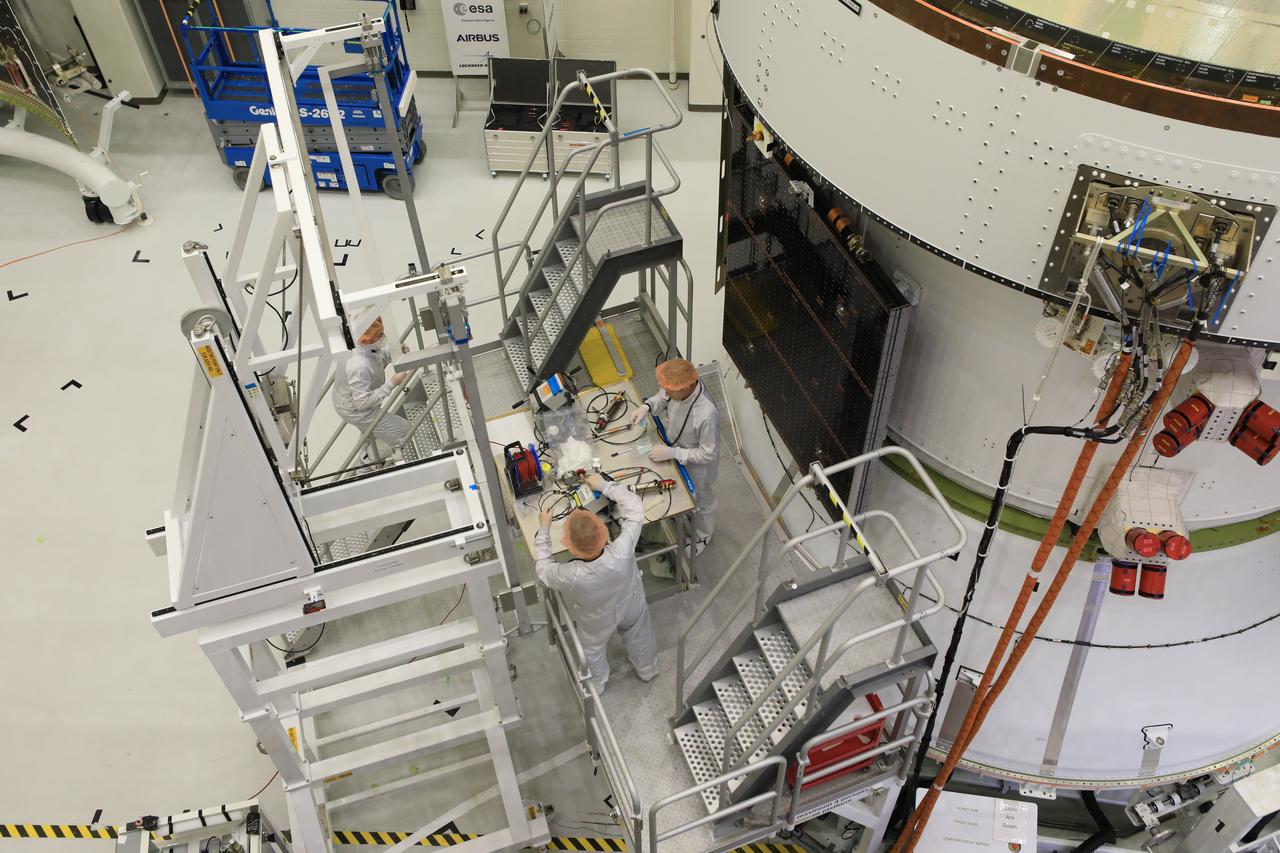
Technicians install four solar array wings on NASA’s Artemis II Orion spacecraft inside the Neil A. Armstrong Operations and Checkout Building at NASA’s Kennedy Space Center in Florida on Monday, March 3, 2025. Each solar array is nearly 23 feet long and can turn on two axes to remain aligned with the Sun for maximum power. Orion’s solar arrays, manufactured and installed by ESA (European Space Agency) and its contractor Airbus, will deliver power to the service module that provides propulsion, thermal control, and electrical power to the spacecraft, as well as air and water for the crew.
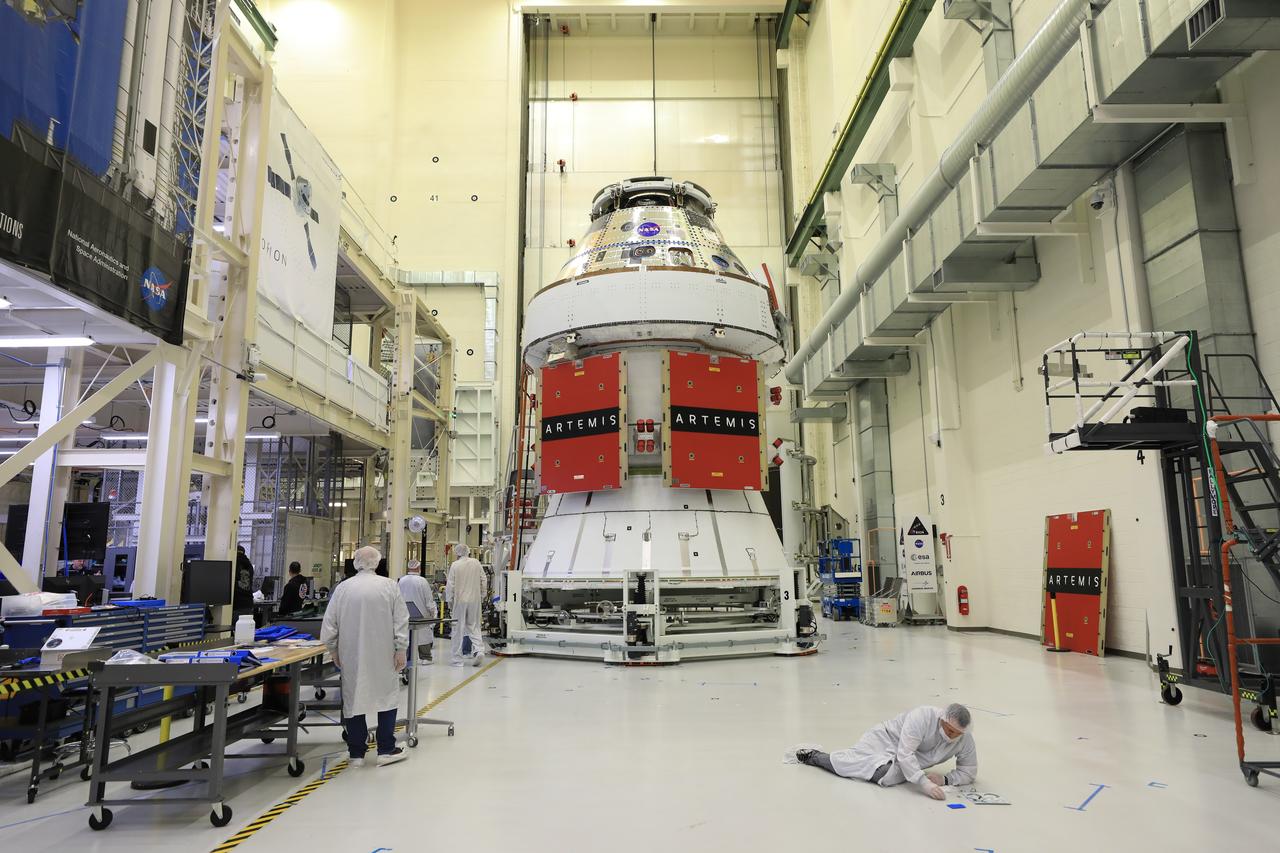
Technicians install four solar array wings on NASA’s Artemis II Orion spacecraft inside the Neil A. Armstrong Operations and Checkout Building at NASA’s Kennedy Space Center in Florida on Monday, March 3, 2025. Each solar array is nearly 23 feet long and can turn on two axes to remain aligned with the Sun for maximum power. Orion’s solar arrays, manufactured and installed by ESA (European Space Agency) and its contractor Airbus, will deliver power to the service module that provides propulsion, thermal control, and electrical power to the spacecraft, as well as air and water for the crew.
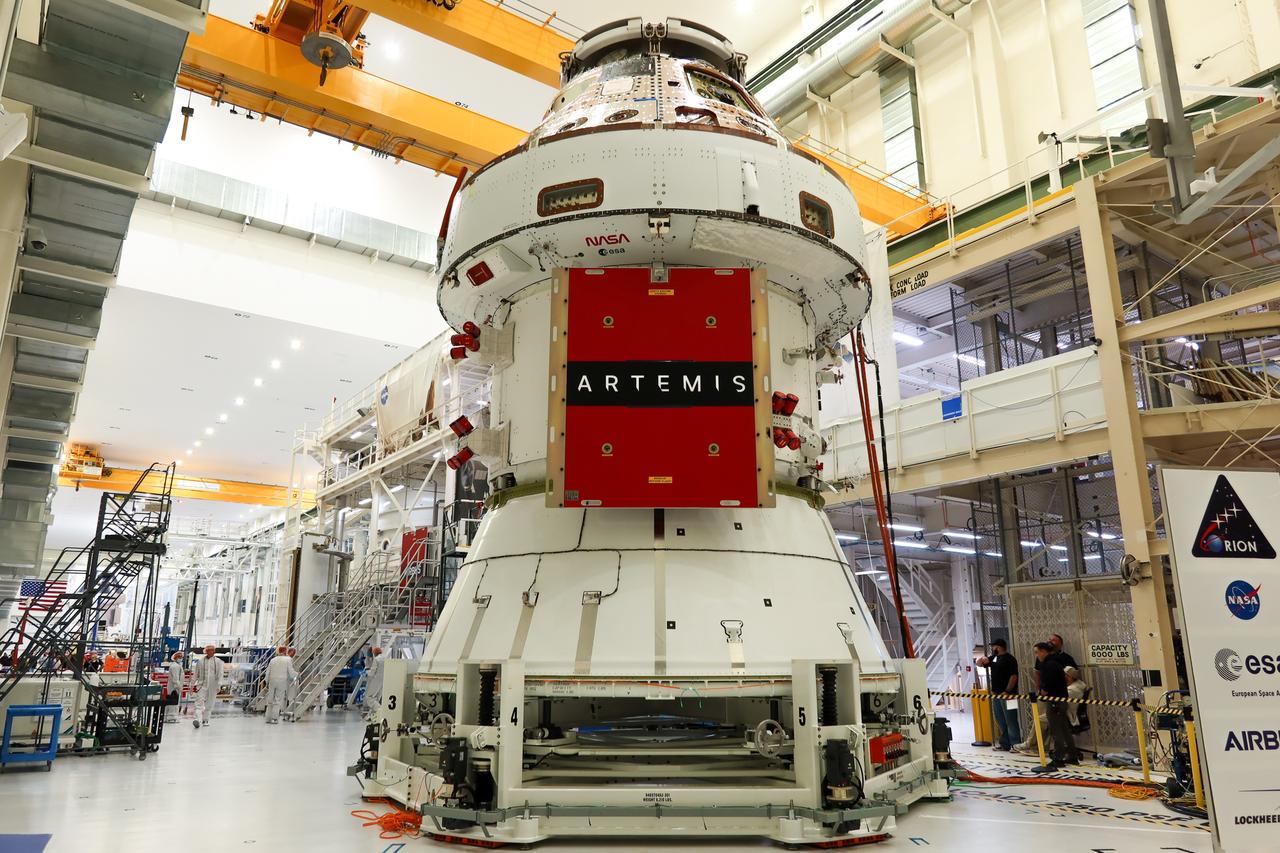
Technicians install four solar array wings on NASA’s Artemis II Orion spacecraft inside the Neil A. Armstrong Operations and Checkout Building at NASA’s Kennedy Space Center in Florida on Monday, March 3, 2025. Each solar array is nearly 23 feet long and can turn on two axes to remain aligned with the Sun for maximum power. Orion’s solar arrays, manufactured and installed by ESA (European Space Agency) and its contractor Airbus, will deliver power to the service module that provides propulsion, thermal control, and electrical power to the spacecraft, as well as air and water for the crew.
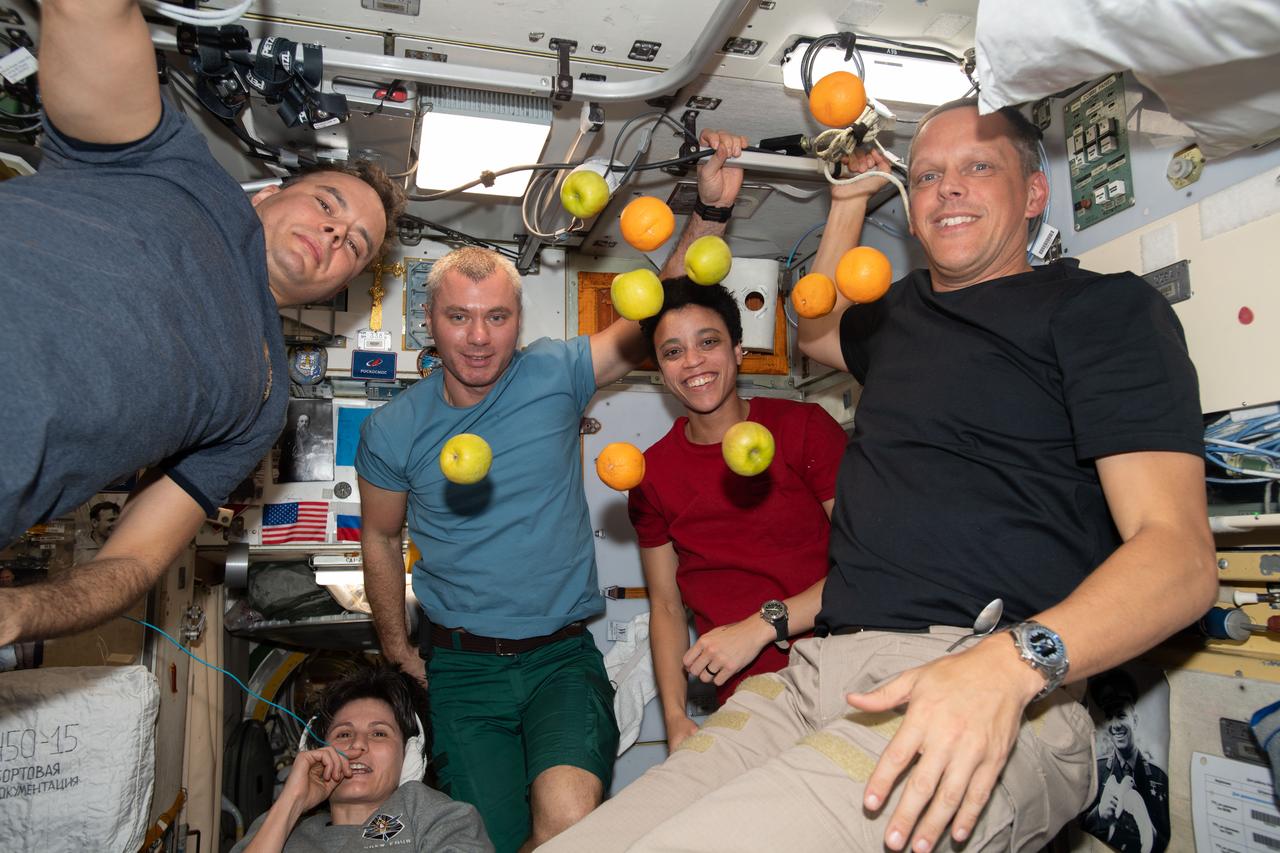
iss067e117728 (June 3, 2022) --- Expedition 67 crew members pose with fresh fruit flying weightlessly in microgravity delivered recently aboard the Progress 81 (81P) cargo craft. The 81P docked to the Zvezda service module's rear port aboard the International Space Station after a three-and-half-hour trip that began with a launch from the Baikonur Cosmodrome in Kazakhstan. Pictured from left are, Roscosmos Flight Engineer Sergey Korsakov; ESA (European Space Agency) Flight Engineer Samantha Cristofretti; Roscosmos Flight Engineer Denis Matveev; and NASA Flight Engineers Jessica Watkins and Bob Hines.
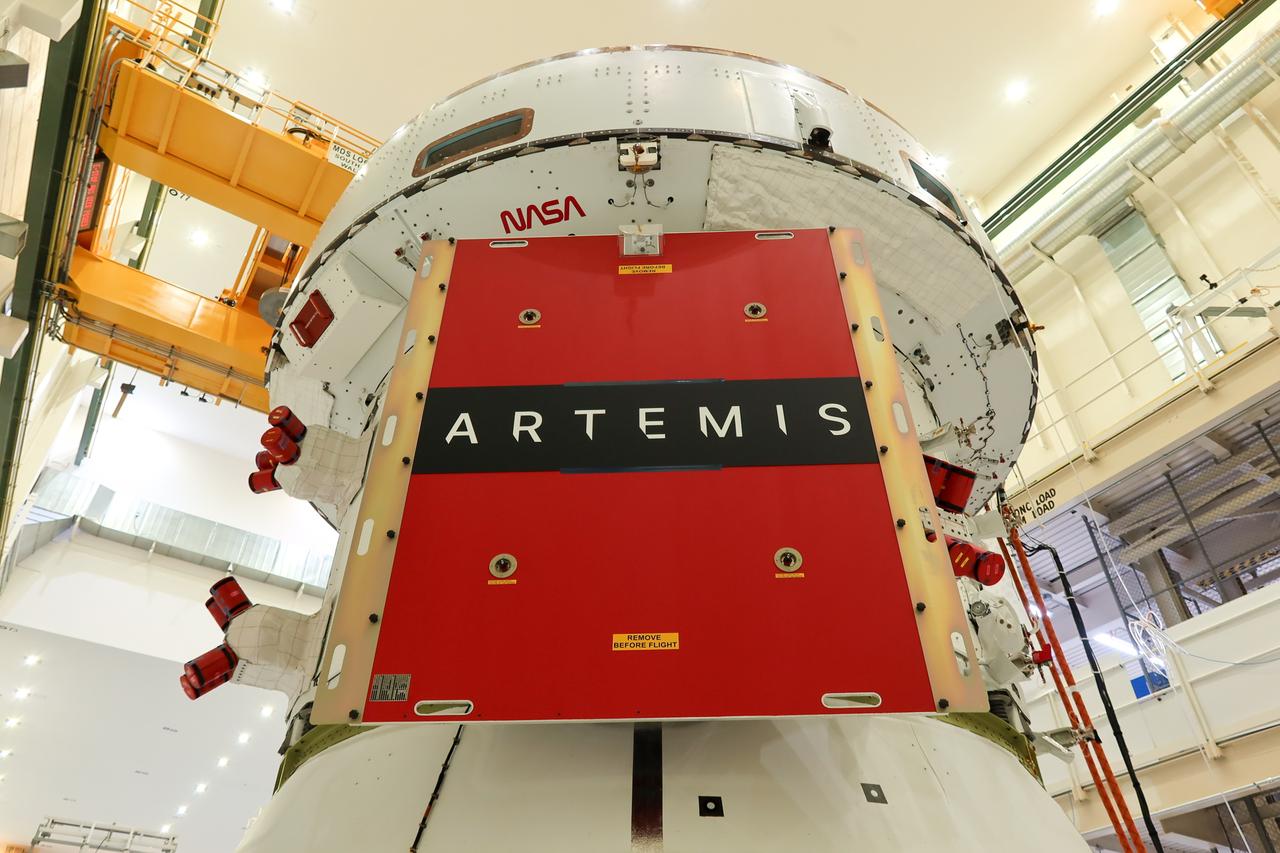
Technicians install four solar array wings on NASA’s Artemis II Orion spacecraft inside the Neil A. Armstrong Operations and Checkout Building at NASA’s Kennedy Space Center in Florida on Monday, March 3, 2025. Each solar array is nearly 23 feet long and can turn on two axes to remain aligned with the Sun for maximum power. Orion’s solar arrays, manufactured and installed by ESA (European Space Agency) and its contractor Airbus, will deliver power to the service module that provides propulsion, thermal control, and electrical power to the spacecraft, as well as air and water for the crew.
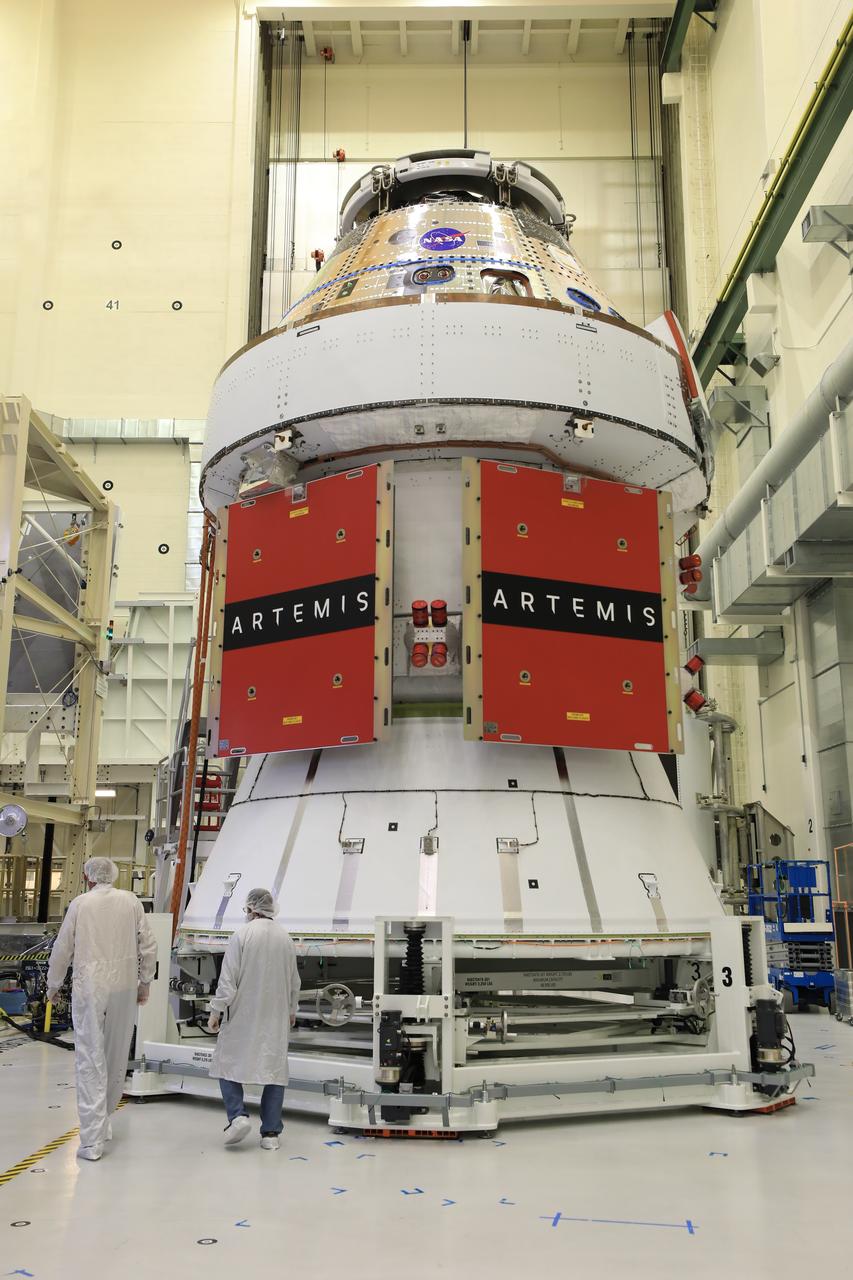
Technicians install four solar array wings on NASA’s Artemis II Orion spacecraft inside the Neil A. Armstrong Operations and Checkout Building at NASA’s Kennedy Space Center in Florida on Monday, March 3, 2025. Each solar array is nearly 23 feet long and can turn on two axes to remain aligned with the Sun for maximum power. Orion’s solar arrays, manufactured and installed by ESA (European Space Agency) and its contractor Airbus, will deliver power to the service module that provides propulsion, thermal control, and electrical power to the spacecraft, as well as air and water for the crew.
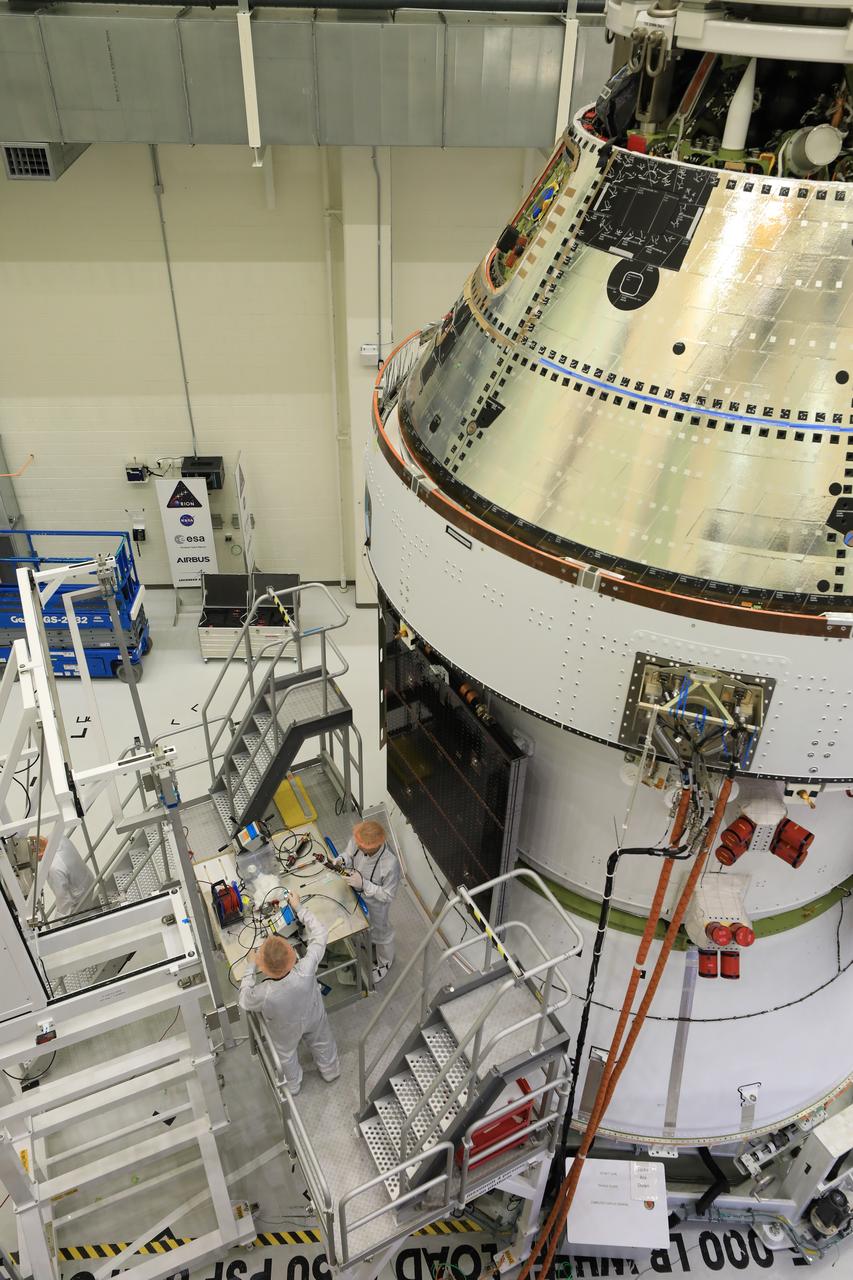
Technicians install four solar array wings on NASA’s Artemis II Orion spacecraft inside the Neil A. Armstrong Operations and Checkout Building at NASA’s Kennedy Space Center in Florida on Monday, March 3, 2025. Each solar array is nearly 23 feet long and can turn on two axes to remain aligned with the Sun for maximum power. Orion’s solar arrays, manufactured and installed by ESA (European Space Agency) and its contractor Airbus, will deliver power to the service module that provides propulsion, thermal control, and electrical power to the spacecraft, as well as air and water for the crew.
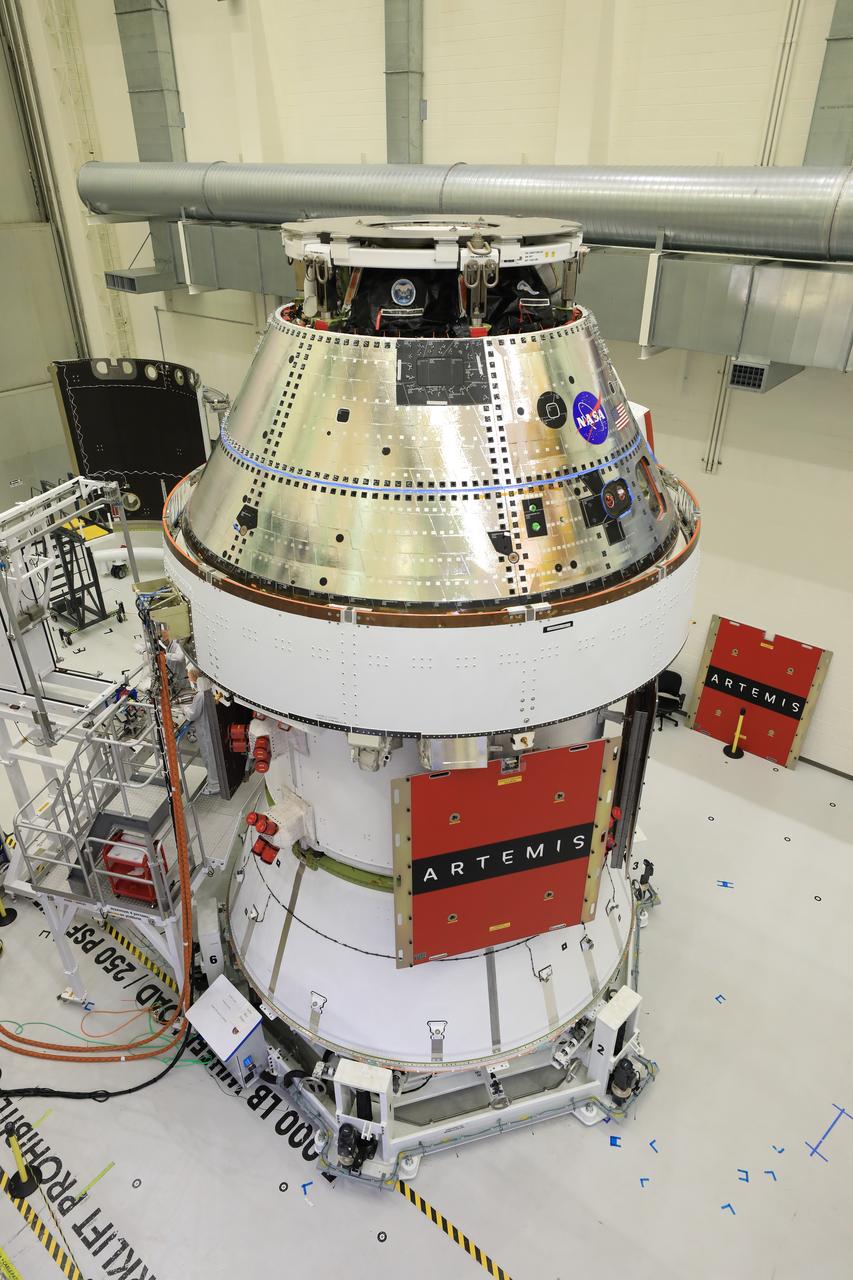
Technicians install four solar array wings on NASA’s Artemis II Orion spacecraft inside the Neil A. Armstrong Operations and Checkout Building at NASA’s Kennedy Space Center in Florida on Monday, March 3, 2025. Each solar array is nearly 23 feet long and can turn on two axes to remain aligned with the Sun for maximum power. Orion’s solar arrays, manufactured and installed by ESA (European Space Agency) and its contractor Airbus, will deliver power to the service module that provides propulsion, thermal control, and electrical power to the spacecraft, as well as air and water for the crew.
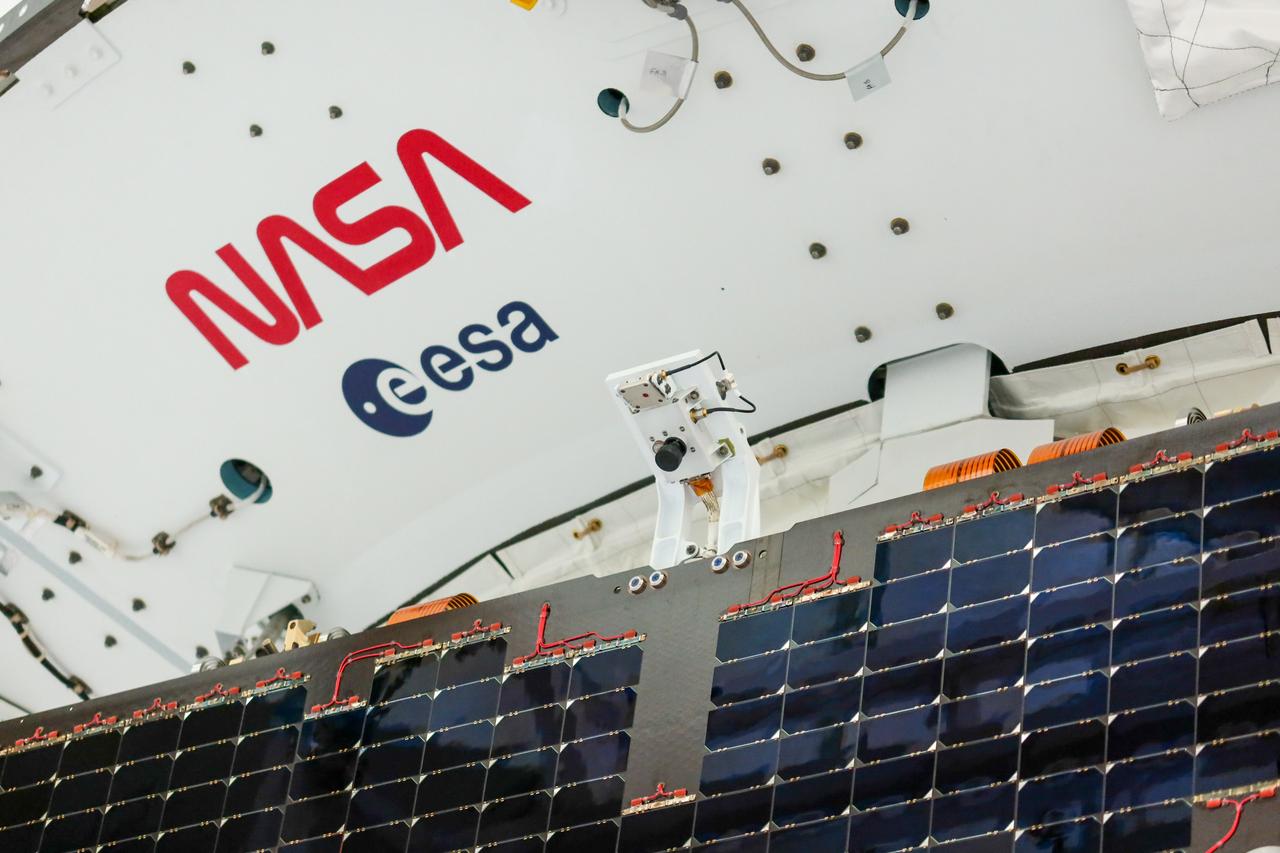
Technicians install four solar array wings on NASA’s Artemis II Orion spacecraft inside the Neil A. Armstrong Operations and Checkout Building at NASA’s Kennedy Space Center in Florida on Monday, March 3, 2025. Each solar array is nearly 23 feet long and can turn on two axes to remain aligned with the Sun for maximum power. Orion’s solar arrays, manufactured and installed by ESA (European Space Agency) and its contractor Airbus, will deliver power to the service module that provides propulsion, thermal control, and electrical power to the spacecraft, as well as air and water for the crew.
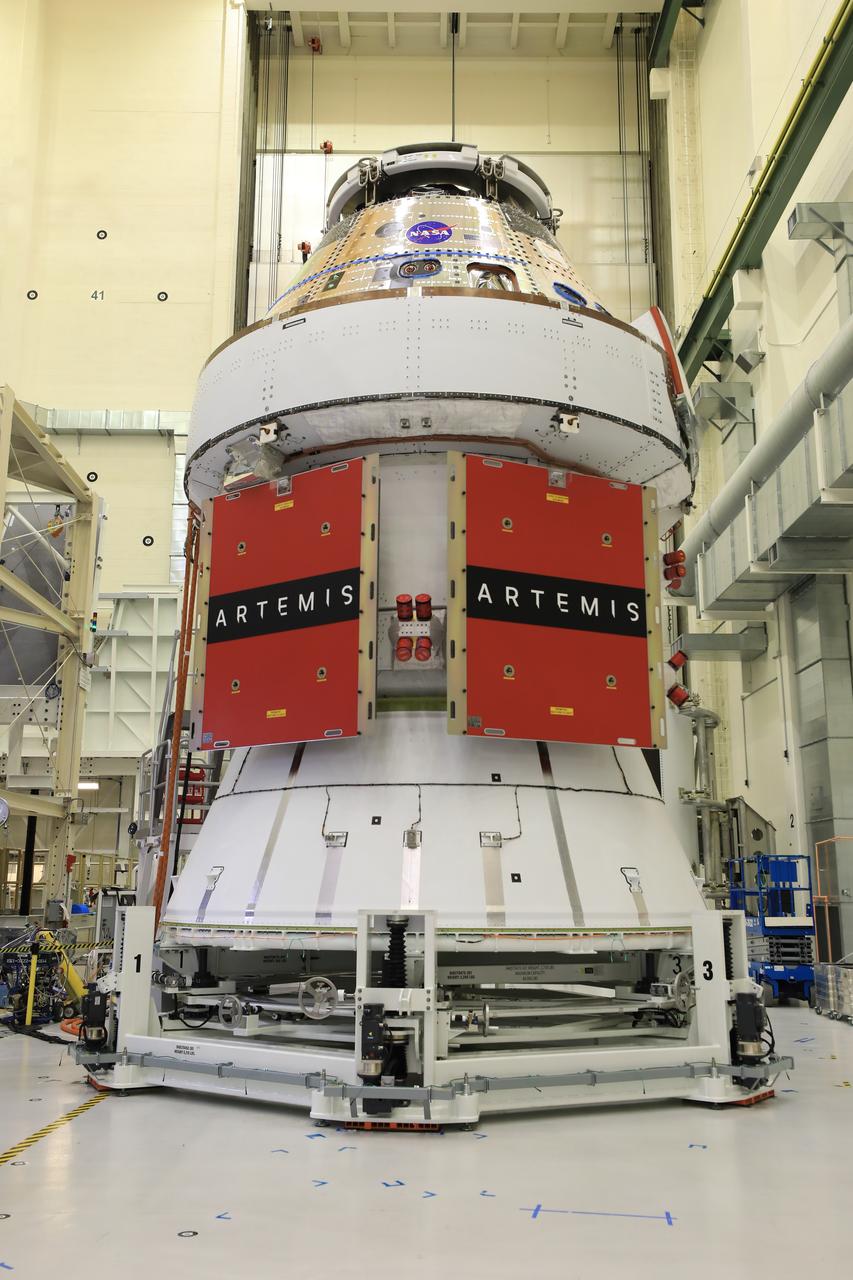
Technicians install four solar array wings on NASA’s Artemis II Orion spacecraft inside the Neil A. Armstrong Operations and Checkout Building at NASA’s Kennedy Space Center in Florida on Monday, March 3, 2025. Each solar array is nearly 23 feet long and can turn on two axes to remain aligned with the Sun for maximum power. Orion’s solar arrays, manufactured and installed by ESA (European Space Agency) and its contractor Airbus, will deliver power to the service module that provides propulsion, thermal control, and electrical power to the spacecraft, as well as air and water for the crew.
CAPE CANAVERAL, Fla. – At NASA's Kennedy Space Center in Florida, the payload transportation canister containing the International Space Station's Node 3, named Tranquility, is lifted toward the payload changeout room in the fixed service structure on Launch Pad 39A. Operations are under way to install Tranquility in space shuttle Endeavour's payload bay. The primary payload for Endeavour's STS-130 mission, Tranquility is a pressurized module that will provide room for many of the International Space Station's life support systems. Attached to one end of Tranquility is a cupola, a unique work area with six windows on its sides and one on top. The cupola resembles a circular bay window and will provide a vastly improved view of the station's exterior. The multi-directional view will allow the crew to monitor spacewalks and docking operations, as well as provide a spectacular view of Earth and other celestial objects. The module was built in Turin, Italy, by Thales Alenia Space for the European Space Agency. Endeavour's launch is targeted for Feb. 7. For information on the STS-130 mission and crew, visit http://www.nasa.gov/mission_pages/shuttle/shuttlemissions/sts130/index.html. Photo credit: NASA/Jack Pfaller
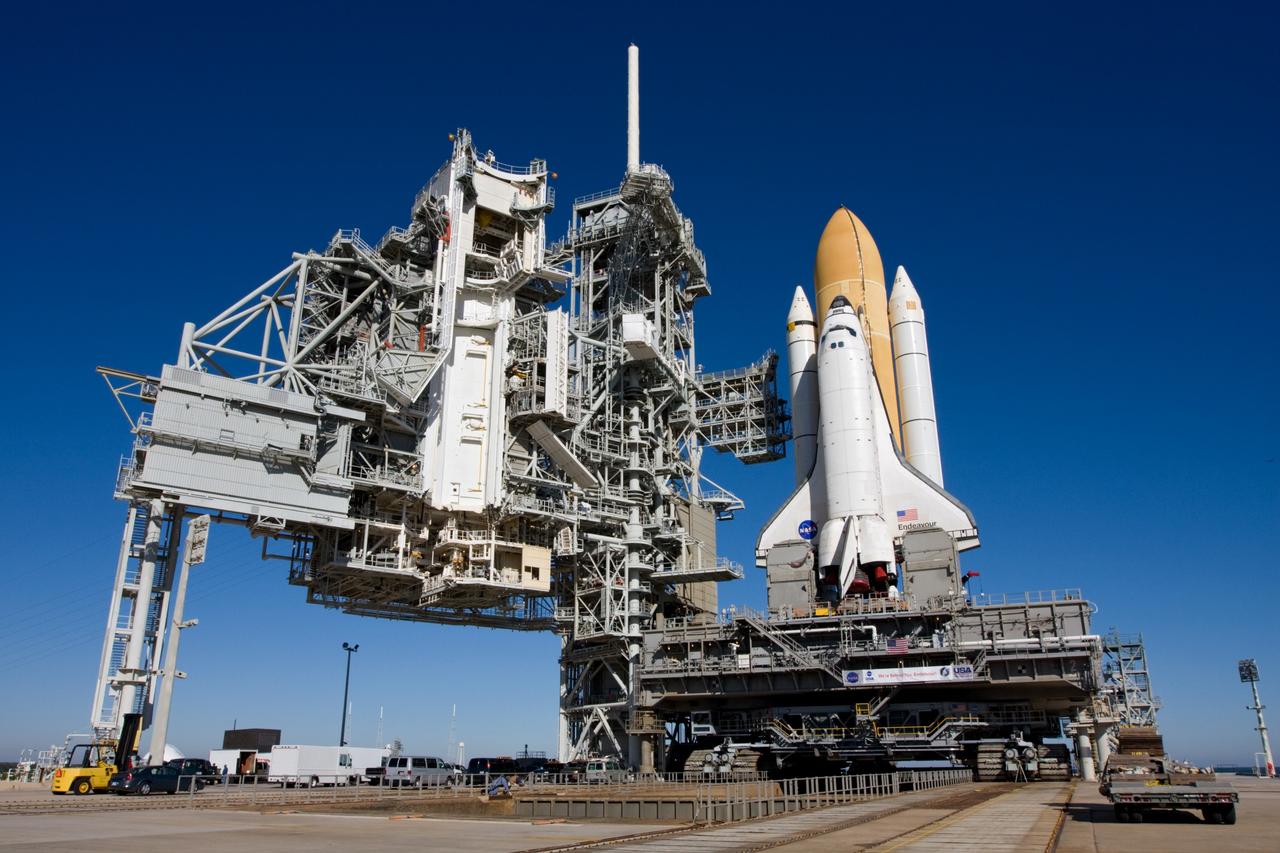
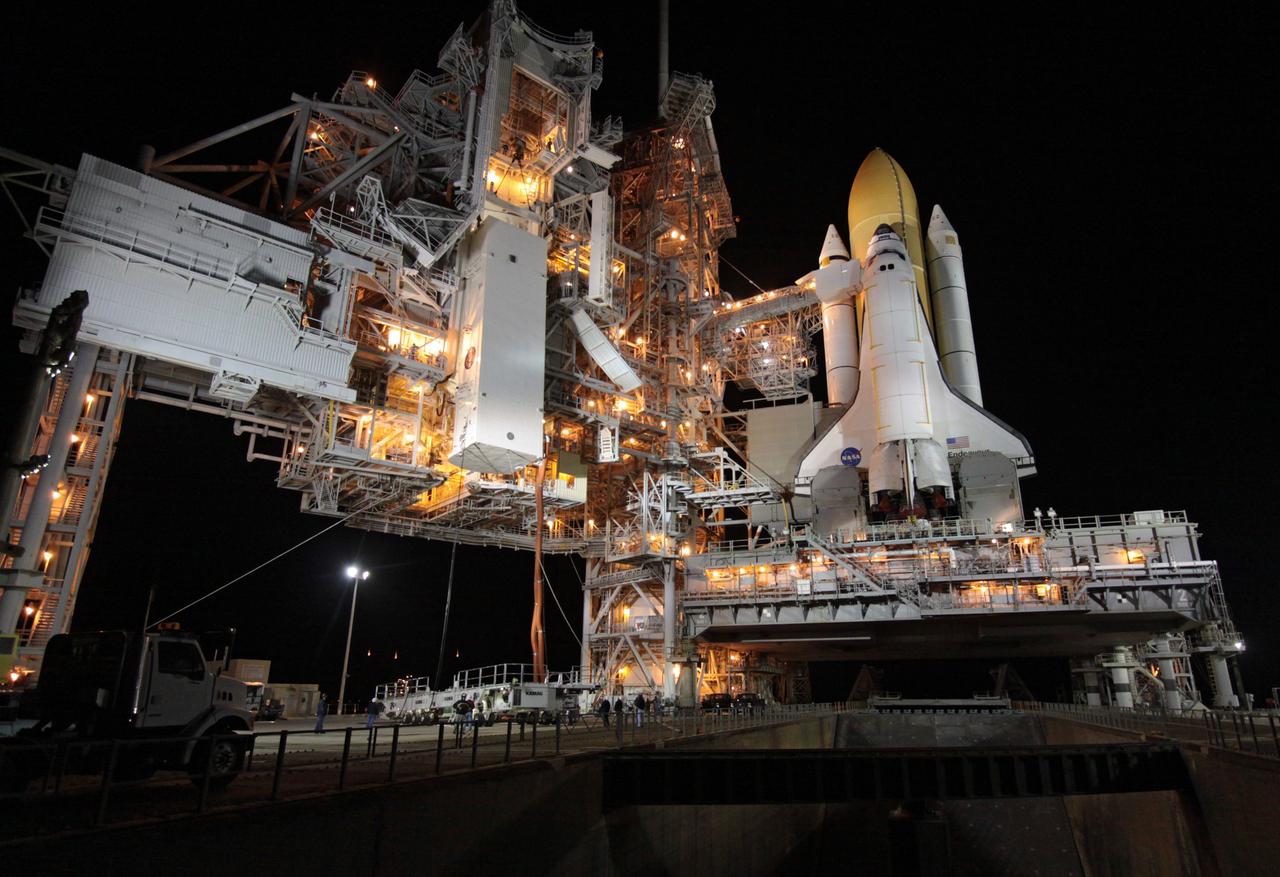
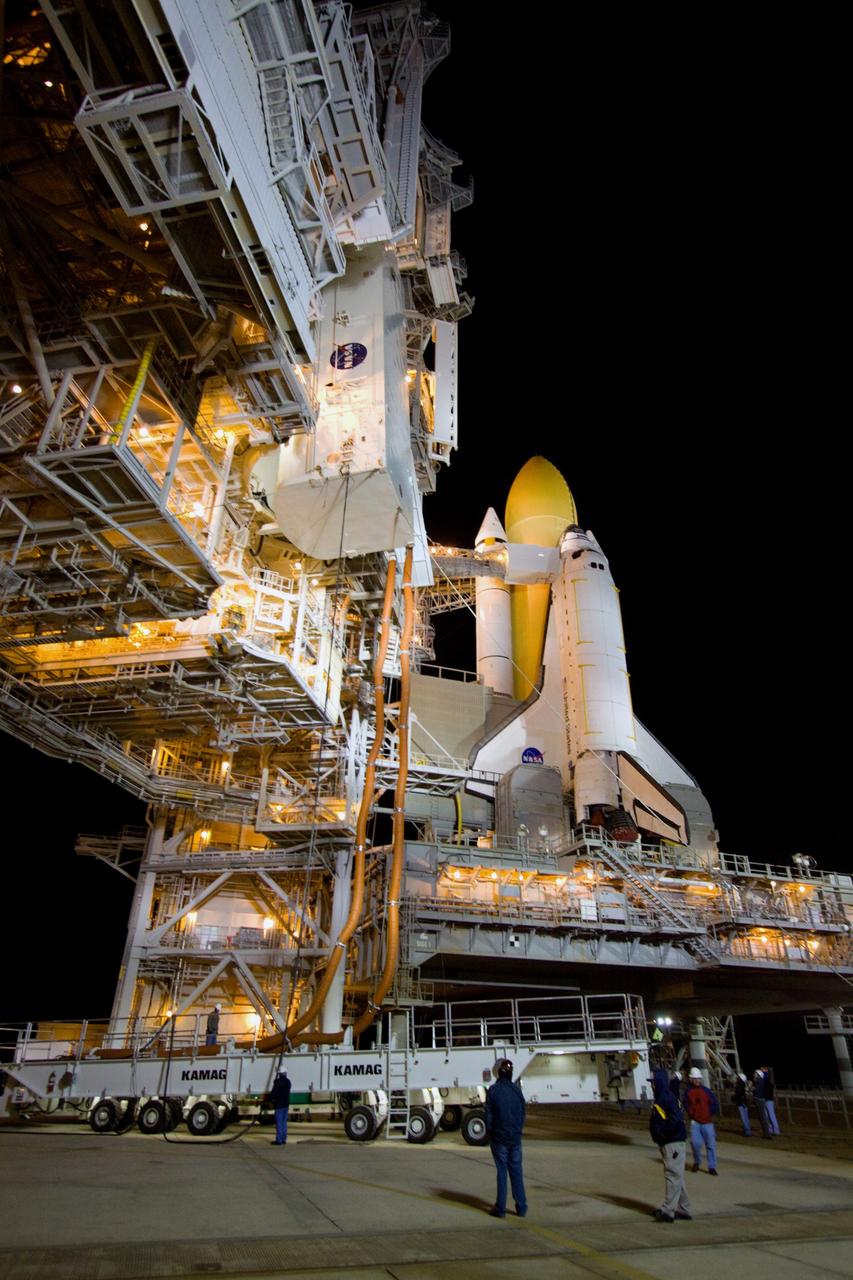
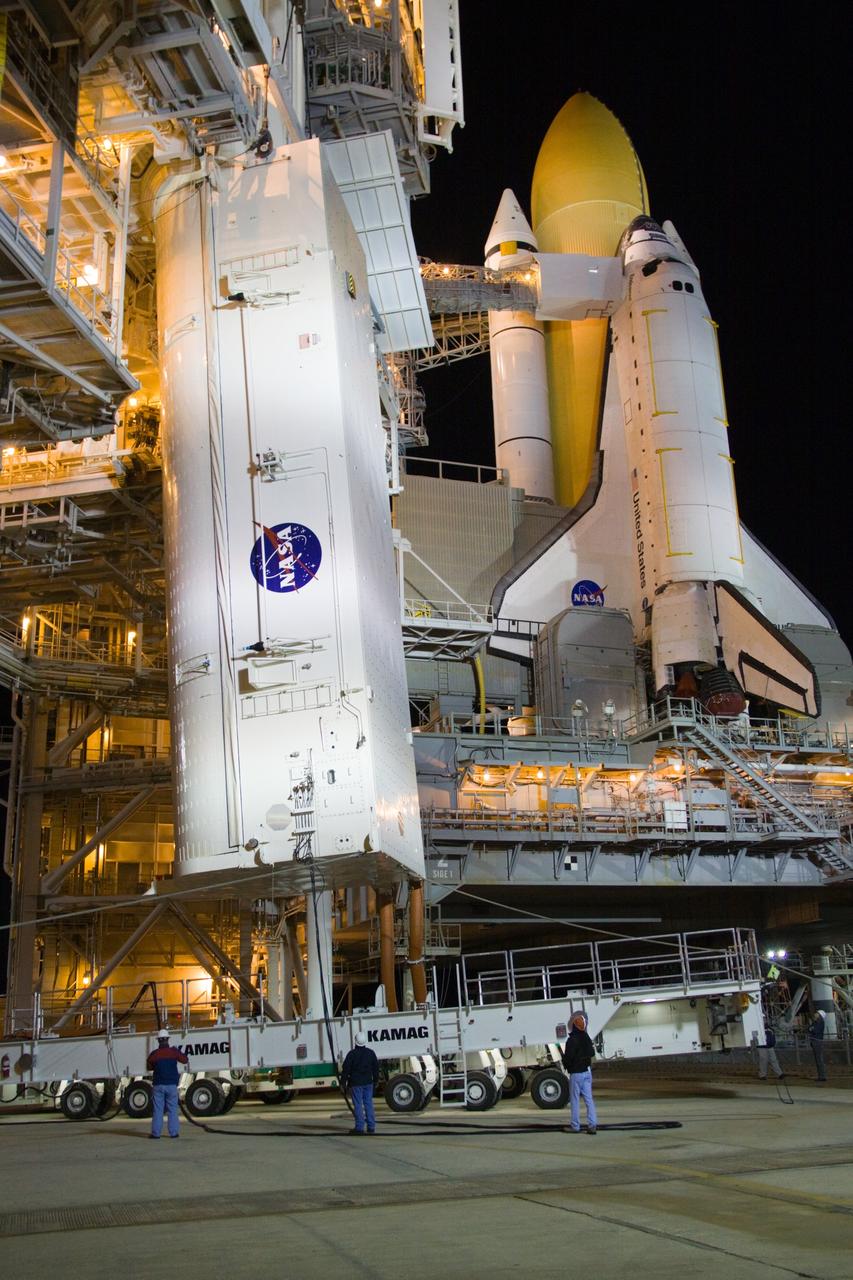
CAPE CANAVERAL, Fla. – At NASA's Kennedy Space Center in Florida, a crawler-transporter safely delivers space shuttle Endeavour into position beside the fixed service structure on Launch Pad 39A. First motion on the 3.4-mile trip from the Vehicle Assembly Building, known as rollout, was at 4:13 a.m. EST Jan. 6. Endeavour was secure or "hard down" on the pad at 10:37 a.m. Rollout is a significant milestone in launch processing activities. The primary payload for the STS-130 mission is the International Space Station's Node 3, Tranquility, a pressurized module that will provide room for many of the station's life support systems. Attached to one end of Tranquility is a cupola, a unique work area with six windows on its sides and one on top. The cupola resembles a circular bay window and will provide a vastly improved view of the station's exterior. The multi-directional view will allow the crew to monitor spacewalks and docking operations, as well as provide a spectacular view of Earth and other celestial objects. The module was built in Turin, Italy, by Thales Alenia Space for the European Space Agency. Endeavour's STS-130 launch is targeted for 4:39 a.m. EST Feb. 7. For information on the STS-130 mission and crew, visit http://www.nasa.gov/mission_pages/shuttle/shuttlemissions/sts130/index.html. Photo credit: NASA/Amanda Diller
CAPE CANAVERAL, Fla. – At NASA's Kennedy Space Center in Florida, the payload transportation canister containing the International Space Station's Node 3, named Tranquility, is lifted into the payload changeout room in the fixed service structure on Launch Pad 39A. Operations are under way to install Tranquility in space shuttle Endeavour's payload bay. The primary payload for Endeavour's STS-130 mission, Tranquility is a pressurized module that will provide room for many of the International Space Station's life support systems. Attached to one end of Tranquility is a cupola, a unique work area with six windows on its sides and one on top. The cupola resembles a circular bay window and will provide a vastly improved view of the station's exterior. The multi-directional view will allow the crew to monitor spacewalks and docking operations, as well as provide a spectacular view of Earth and other celestial objects. The module was built in Turin, Italy, by Thales Alenia Space for the European Space Agency. Endeavour's launch is targeted for Feb. 7. For information on the STS-130 mission and crew, visit http://www.nasa.gov/mission_pages/shuttle/shuttlemissions/sts130/index.html. Photo credit: NASA/Jack Pfaller
CAPE CANAVERAL, Fla. – At NASA's Kennedy Space Center in Florida, workers begin to lift the payload transportation canister containing the International Space Station's Node 3, named Tranquility, from its transporter toward the payload changeout room in the fixed service structure on Launch Pad 39A. Operations are under way to install Tranquility in space shuttle Endeavour's payload bay. The primary payload for Endeavour's STS-130 mission, Tranquility is a pressurized module that will provide room for many of the International Space Station's life support systems. Attached to one end of Tranquility is a cupola, a unique work area with six windows on its sides and one on top. The cupola resembles a circular bay window and will provide a vastly improved view of the station's exterior. The multi-directional view will allow the crew to monitor spacewalks and docking operations, as well as provide a spectacular view of Earth and other celestial objects. The module was built in Turin, Italy, by Thales Alenia Space for the European Space Agency. Endeavour's launch is targeted for Feb. 7. For information on the STS-130 mission and crew, visit http://www.nasa.gov/mission_pages/shuttle/shuttlemissions/sts130/index.html. Photo credit: NASA/Jack Pfaller
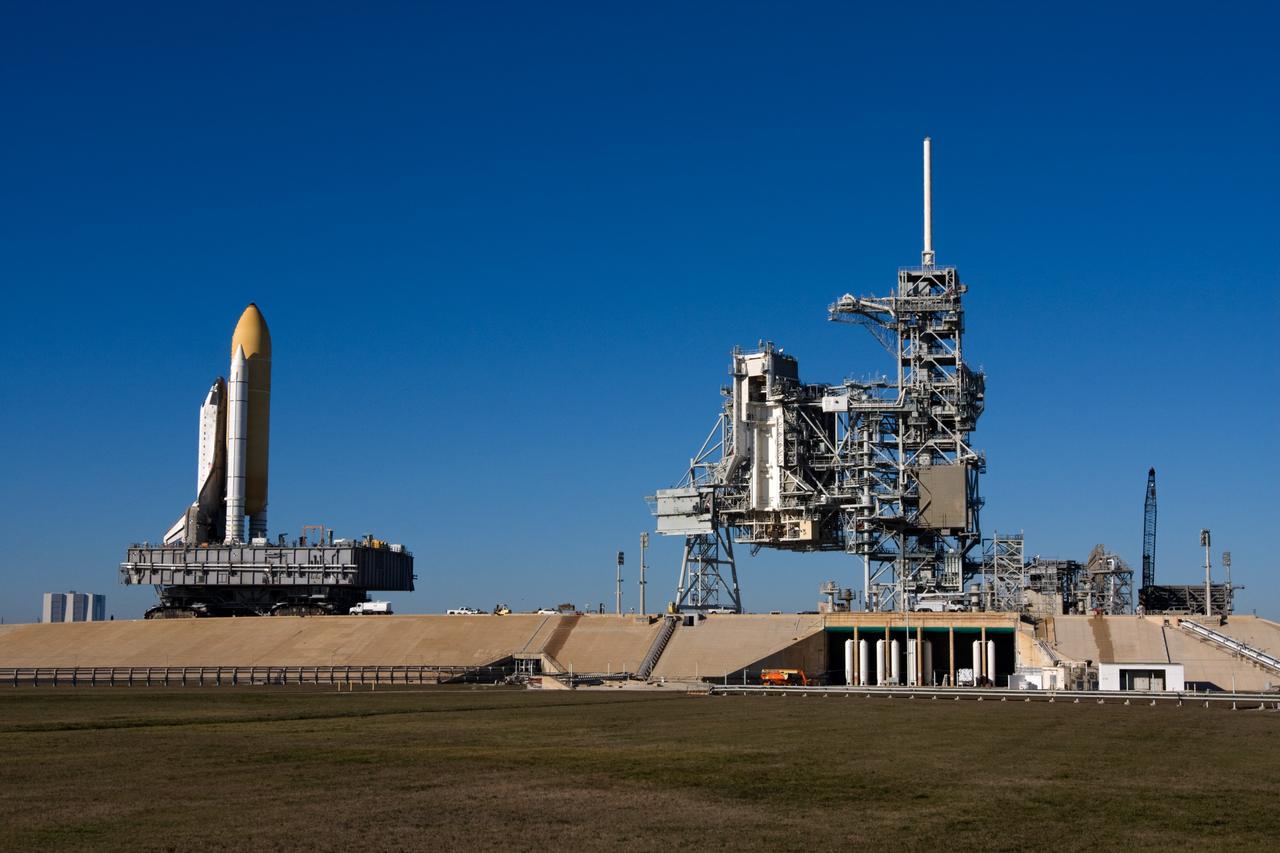
CAPE CANAVERAL, Fla. – At NASA's Kennedy Space Center in Florida, a crawler-transporter keeps space shuttle Endeavour level as it travels up the five percent grade to the fixed service structure on Launch Pad 39A. First motion on the 3.4-mile trip from the Vehicle Assembly Building, known as rollout, was at 4:13 a.m. EST Jan. 6. Endeavour was secure or "hard down" on the pad at 10:37 a.m. Rollout is a significant milestone in launch processing activities. The primary payload for the STS-130 mission is the International Space Station's Node 3, Tranquility, a pressurized module that will provide room for many of the station's life support systems. Attached to one end of Tranquility is a cupola, a unique work area with six windows on its sides and one on top. The cupola resembles a circular bay window and will provide a vastly improved view of the station's exterior. The multi-directional view will allow the crew to monitor spacewalks and docking operations, as well as provide a spectacular view of Earth and other celestial objects. The module was built in Turin, Italy, by Thales Alenia Space for the European Space Agency. Endeavour's STS-130 launch is targeted for 4:39 a.m. EST Feb. 7. For information on the STS-130 mission and crew, visit http://www.nasa.gov/mission_pages/shuttle/shuttlemissions/sts130/index.html. Photo credit: NASA/Amanda Diller
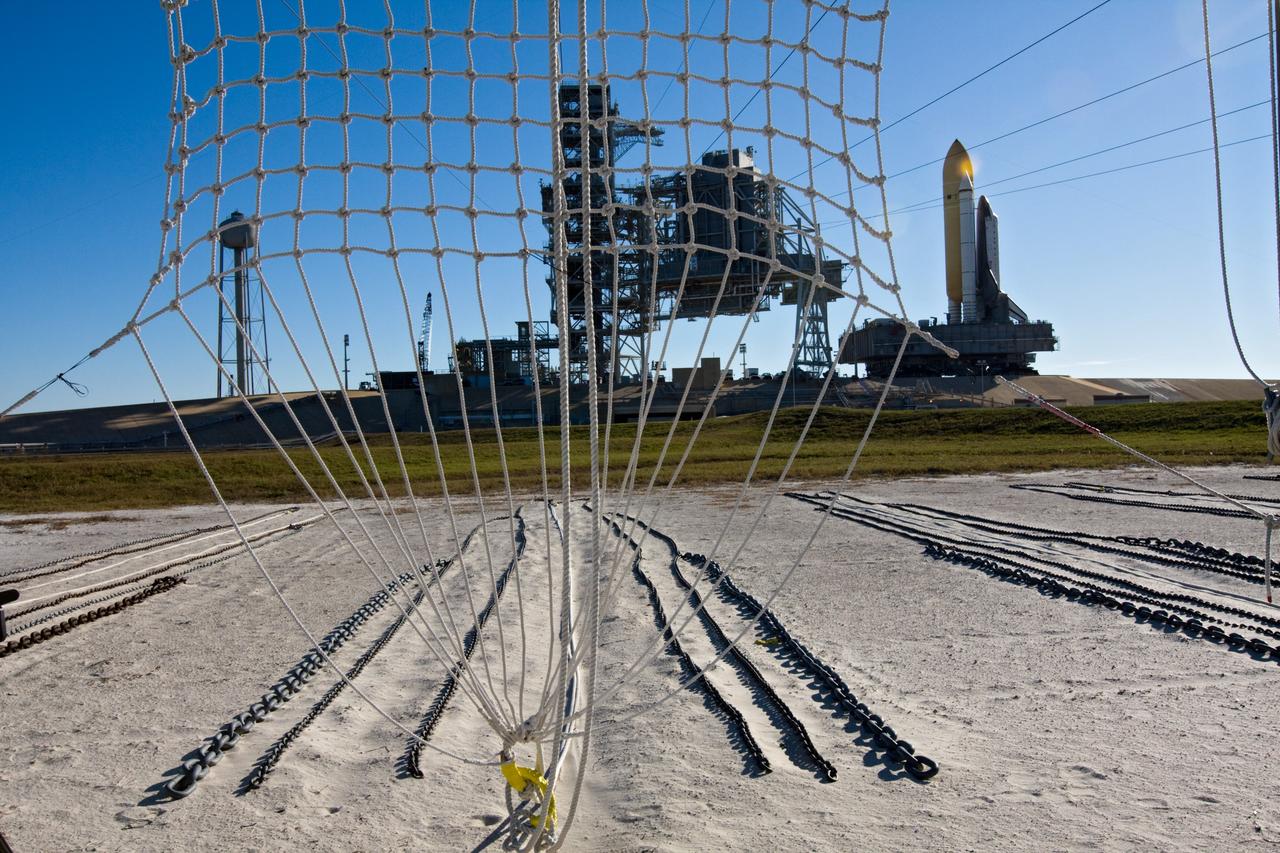
CAPE CANAVERAL, Fla. – At NASA's Kennedy Space Center in Florida, space shuttle Endeavour approaches Launch Pad 39A as seen through a catch net for a slidewire basket, part of the emergency egress system at the pad. The system includes seven baskets suspended from seven slidewires that extend from the fixed service structure to a landing zone 1,200 feet west of the pad. Endeavour's first motion on its 3.4-mile trek from the Vehicle Assembly Building, known as rollout, was at 4:13 a.m. EST Jan. 6. Endeavour was secure or "hard down" on the pad at 10:37 a.m. Rollout is a significant milestone in launch processing activities. The primary payload for the STS-130 mission is the International Space Station's Node 3, Tranquility, a pressurized module that will provide room for many of the station's life support systems. Attached to one end of Tranquility is a cupola, a unique work area with six windows on its sides and one on top. The cupola resembles a circular bay window and will provide a vastly improved view of the station's exterior. The multi-directional view will allow the crew to monitor spacewalks and docking operations, as well as provide a spectacular view of Earth and other celestial objects. The module was built in Turin, Italy, by Thales Alenia Space for the European Space Agency. Endeavour's STS-130 launch is targeted for 4:39 a.m. EST Feb. 7. For information on the STS-130 mission and crew, visit http://www.nasa.gov/mission_pages/shuttle/shuttlemissions/sts130/index.html. Photo credit: NASA/Amanda Diller