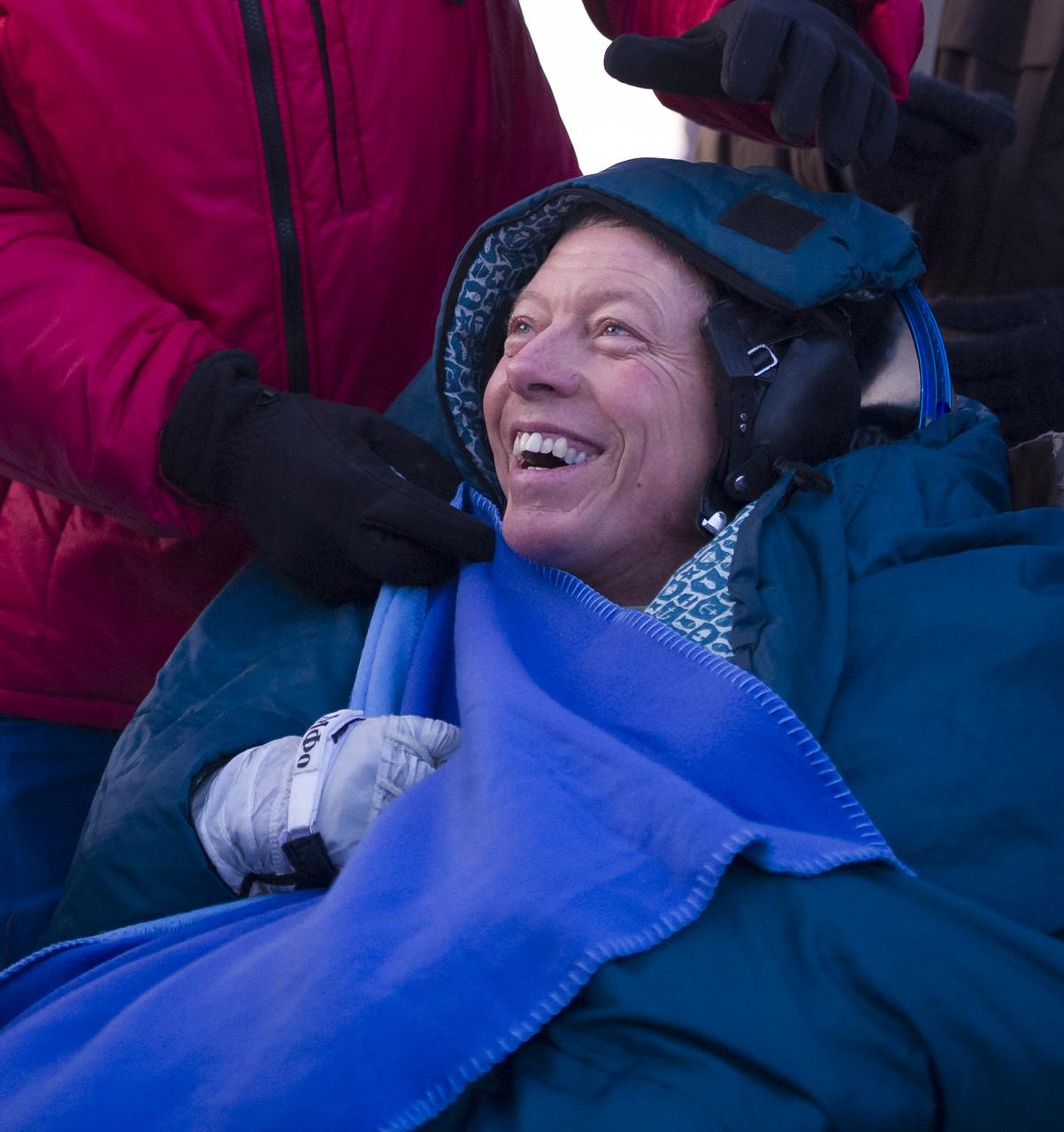
Expedition 29 Commander Mike Fossum smiles as he rest outside the Soyuz TMA-02M Capsule just minutes after he and Expedition 29 Flight Engineers Sergei Volkov and Satoshi Furukawa landed in a remote area outside of the town of Arkalyk, Kazakhstan, on Tuesday, Nov. 22, 2011. NASA Astronaut Fossum, Russian Cosmonaut Volkov and JAXA (Japan Aerospace Exploration Agency) Astronaut Furukawa are returning from more than five months onboard the International Space Station where they served as members of the Expedition 28 and 29 crews. Photo Credit: (NASA/Bill Ingalls)
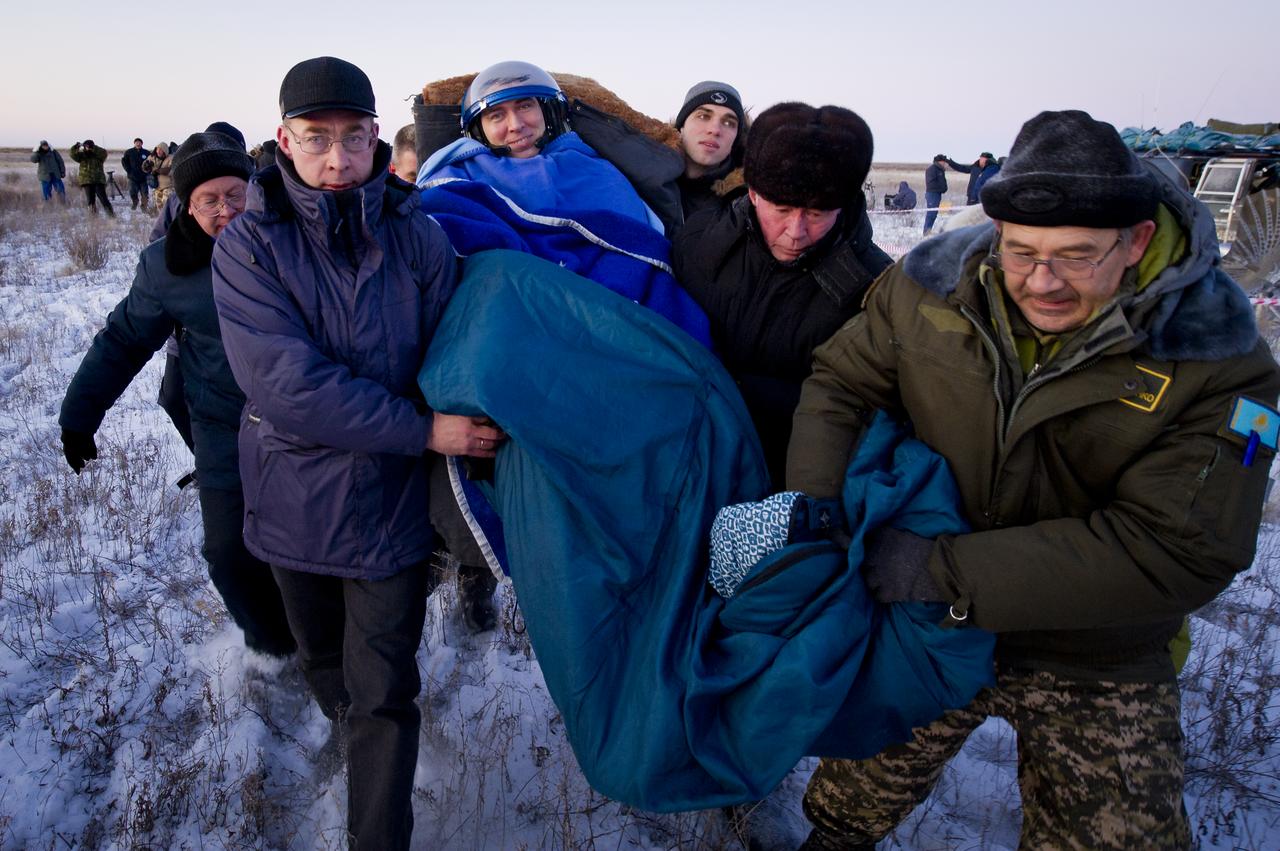
Expedition 29 Flight Engineer Sergei Volkov smiles as he is carried in a chair to the medical tent just minutes after he and Expedition 29 Commander Mike Fossum and Flight Engineer, JAXA (Japan Aerospace Exploration Agency) Astronaut, Satoshi Furukawa landed in a remote area outside of the town of Arkalyk, Kazakhstan, on Tuesday, Nov. 22, 2011. NASA Astronaut Fossum, Russian Cosmonaut Volkov and JAXA (Japan Aerospace Exploration Agency) Astronaut Furukawa are returning from more than five months onboard the International Space Station where they served as members of the Expedition 28 and 29 crews. Photo Credit: (NASA/Bill Ingalls)
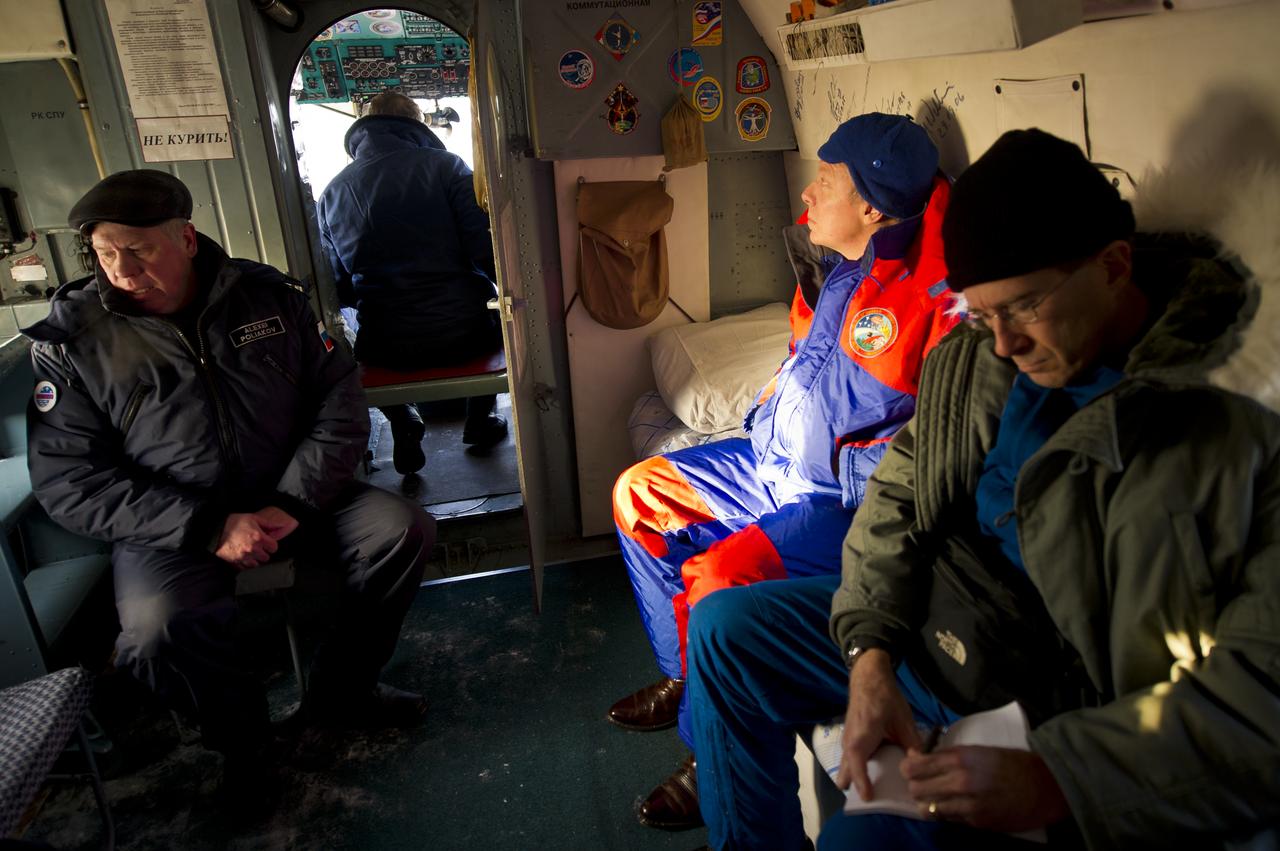
Expedition 29 Commander Mike Fossum, center, looks at the various mission stickers onboard a Russian Search and Rescue helicopter after he and Expedition 29 Flight Engineers Sergei Volkov and Satoshi Furukawa landed in their Soyuz TMA-02M spacecraft in a remote area outside of the town of Arkalyk, Kazakhstan, on Tuesday, Nov. 22, 2011. NASA Astronaut Fossum, Russian Cosmonaut Volkov and JAXA (Japan Aerospace Exploration Agency) Astronaut Furukawa are returning from more than five months onboard the International Space Station where they served as members of the Expedition 28 and 29 crews. Photo Credit: (NASA/Bill Ingalls)
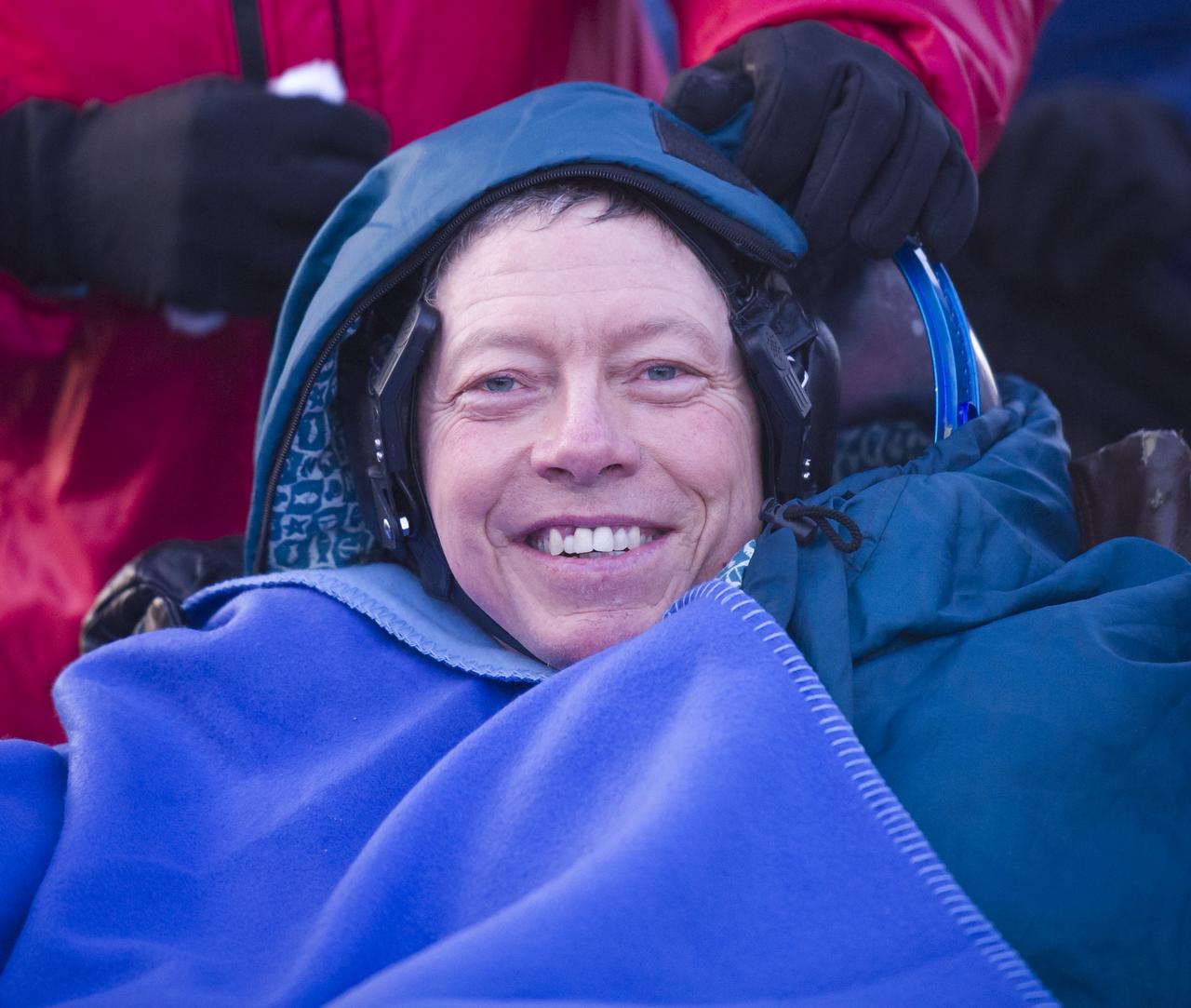
Expedition 29 Commander Mike Fossum smiles as he rest outside the Soyuz TMA-02M Capsule just minutes after he and Expedition 29 Flight Engineers Sergei Volkov and Satoshi Furukawa landed in a remote area outside of the town of Arkalyk, Kazakhstan, on Tuesday, Nov. 22, 2011. NASA Astronaut Fossum, Russian Cosmonaut Volkov and JAXA (Japan Aerospace Exploration Agency) Astronaut Furukawa are returning from more than five months onboard the International Space Station where they served as members of the Expedition 28 and 29 crews. Photo Credit: (NASA/Bill Ingalls)
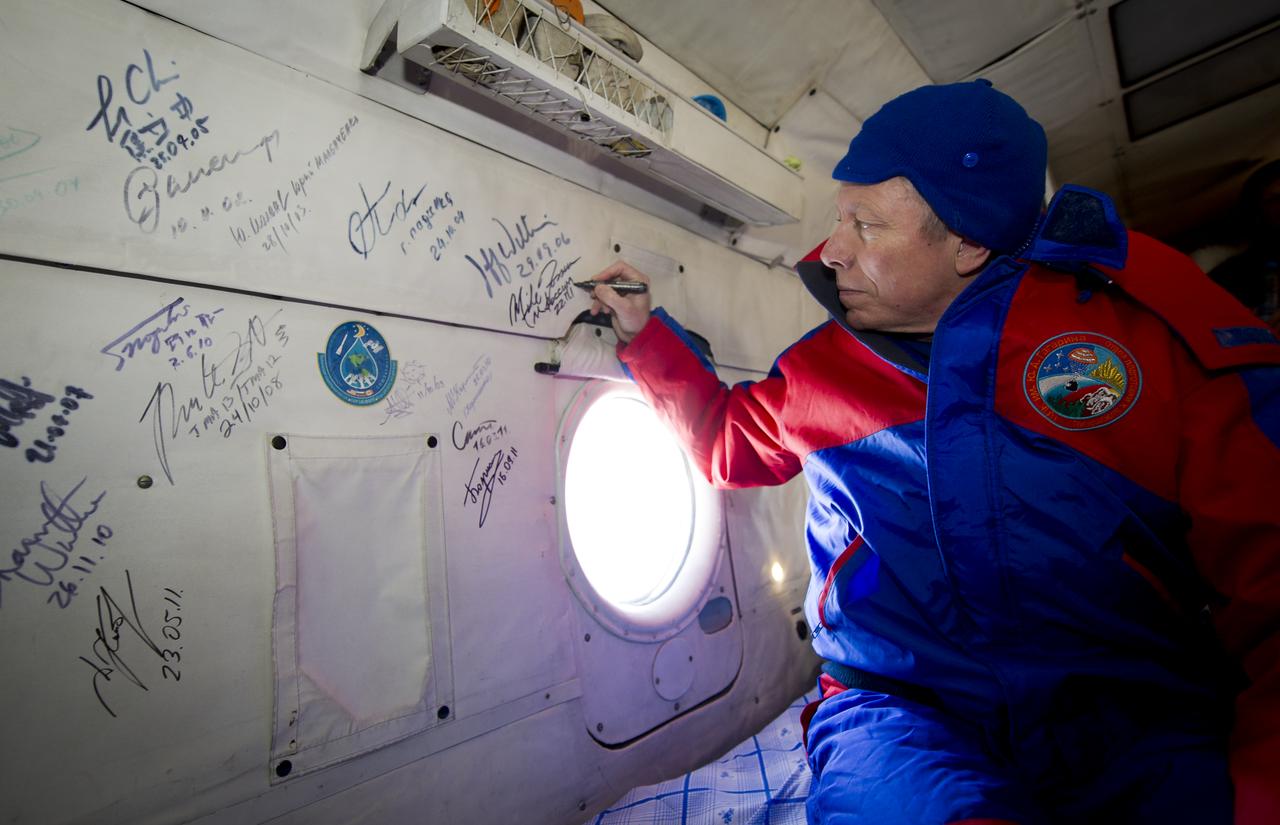
Expedition 29 Commander Mike Fossum performs the traditional signing of the inside the Russian Search and Rescue helicopter after he and Expedition 29 Flight Engineers Sergei Volkov and Satoshi Furukawa landed in their Soyuz TMA-02M spacecraft in a remote area outside of the town of Arkalyk, Kazakhstan, on Tuesday, Nov. 22, 2011. NASA Astronaut Fossum, Russian Cosmonaut Volkov and JAXA (Japan Aerospace Exploration Agency) Astronaut Furukawa are returning from more than five months onboard the International Space Station where they served as members of the Expedition 28 and 29 crews. Photo Credit: (NASA/Bill Ingalls)
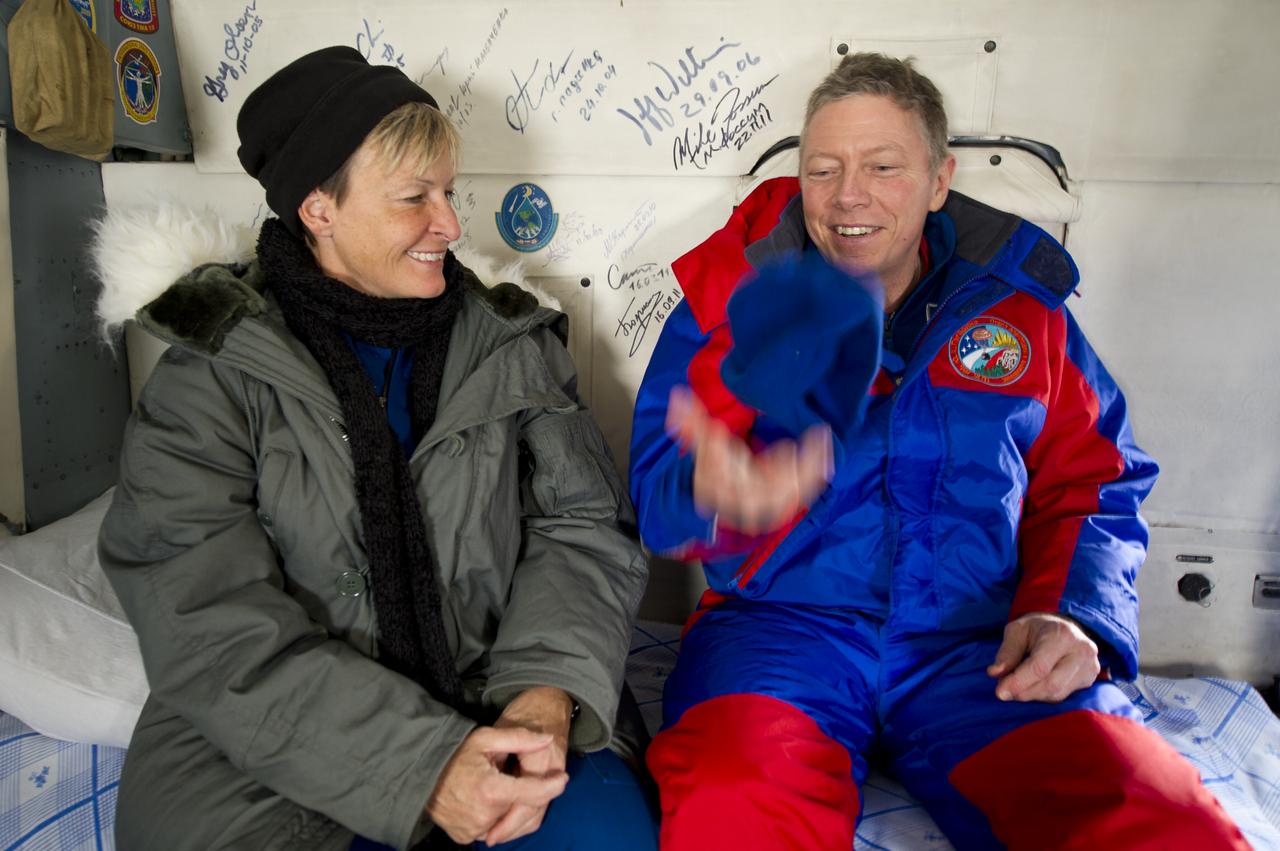
Expedition 29 Commander Mike Fossum, right, tosses his hat into the air and comments to Peggy Whitson, NASA Chief of the Astronaut Office, about how strange the effects of gravity feel as they land in a helicopter in Kustanay, Kazakhstan just a few hours after he and Expedition 29 Flight Engineers Sergei Volkov and Satoshi Furukawa landed in their Soyuz TMA-02M capsule in a remote area outside of the town of Arkalyk, Kazakhstan, on Tuesday, Nov. 22, 2011. NASA Astronaut Fossum, Russian Cosmonaut Volkov and JAXA (Japan Aerospace Exploration Agency) Astronaut Furukawa are returning from more than five months onboard the International Space Station where they served as members of the Expedition 28 and 29 crews. Photo Credit: (NASA/Bill Ingalls)
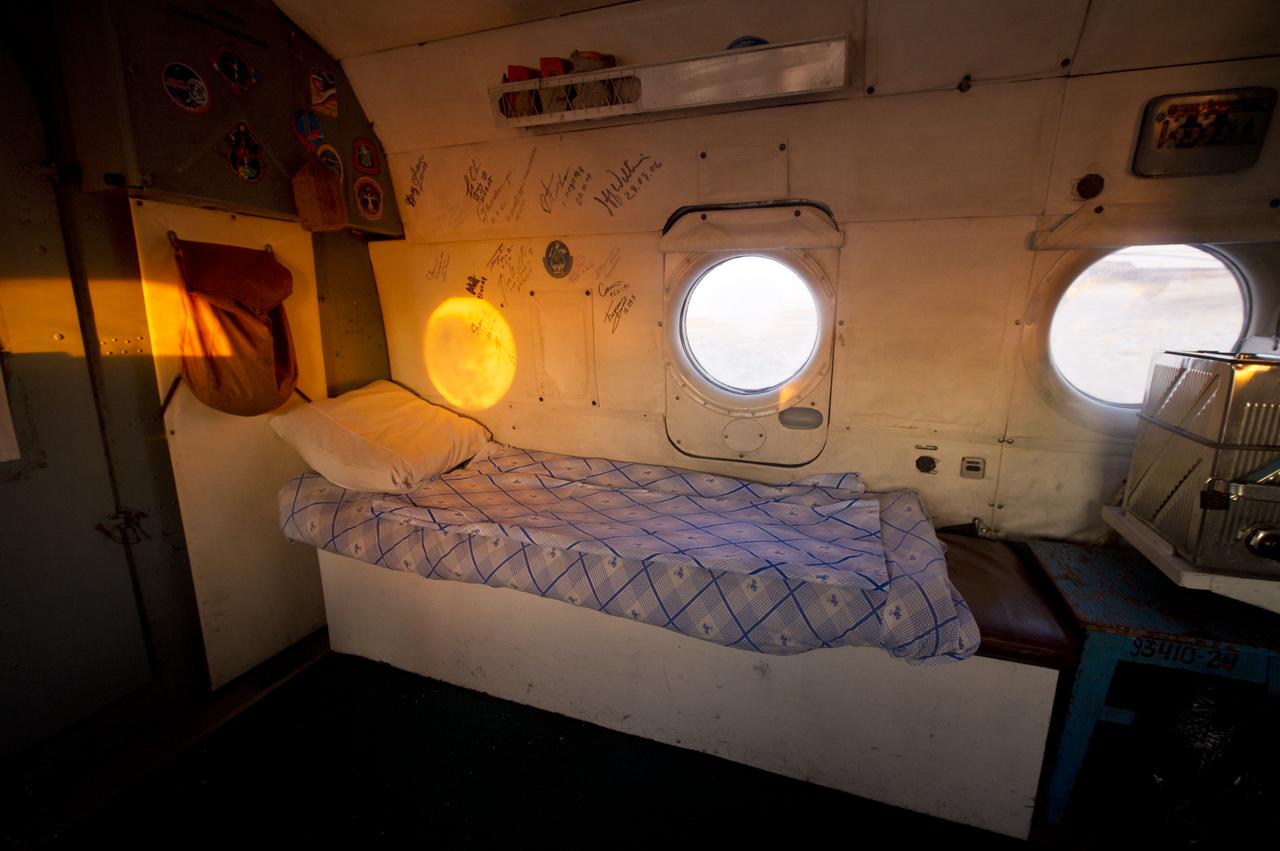
A view inside inside the Russian Search and Rescue helicopter that will carry Expedition 29 Commander Mike Fossum from the Soyuz TMA-02M landing site in a remote area outside Arkalyk, Kazakhstan to Kustanay, Kazakhstan shortly after he and Expedition 29 Flight Engineers Sergei Volkov and Satoshi Furukawa returned from the International Space Station on Tuesday, Nov. 22, 2011. NASA Astronaut Fossum, Russian Cosmonaut Volkov and JAXA (Japan Aerospace Exploration Agency) Astronaut Furukawa returned from more than five months onboard the International Space Station where they served as members of the Expedition 28 and 29 crews. The inside of the helicopter has the signatures of previous Astronauts, Cosmonauts and space tourist that have flown onboard. Photo Credit: (NASA/Bill Ingalls)
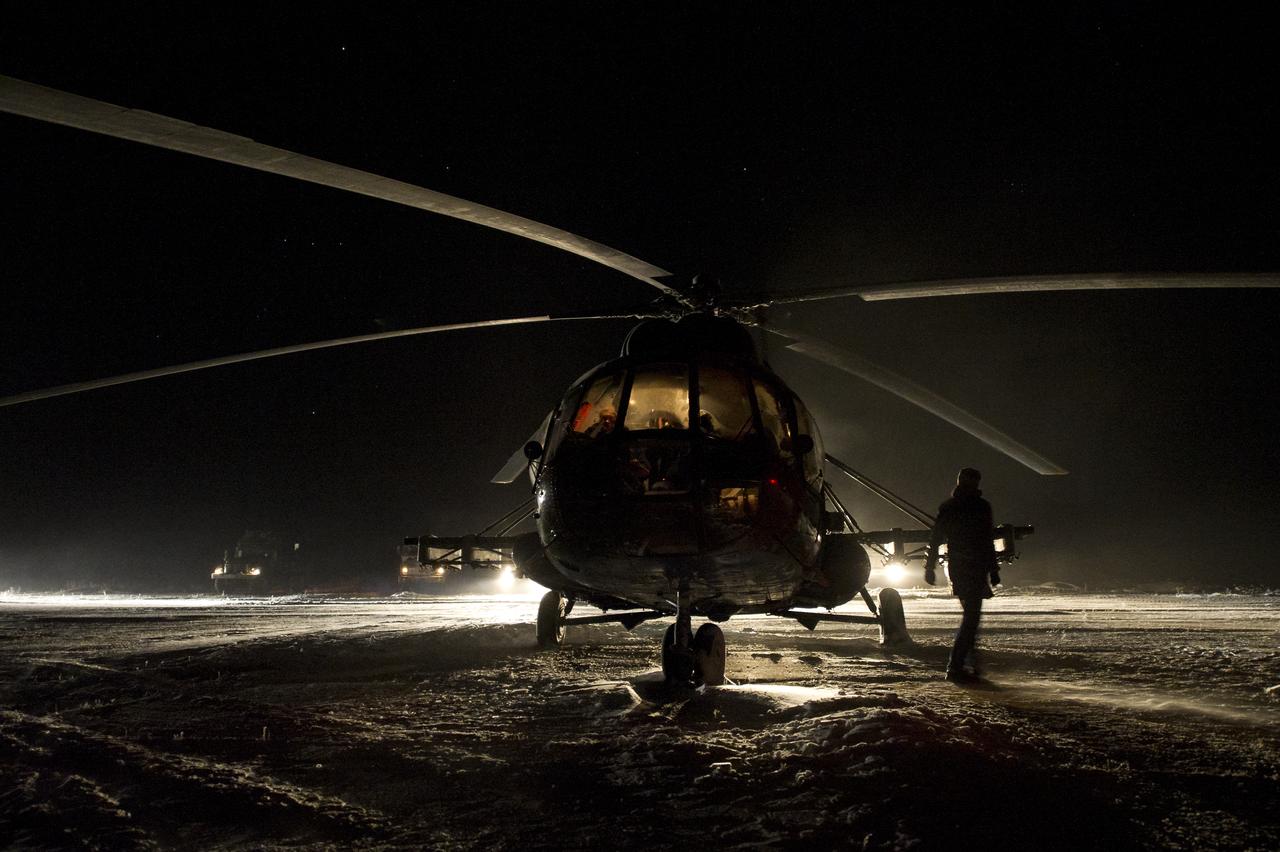
Russian Search and Rescue forces prepare their helicopters for take off in support of the Soyuz TMA-02M spacecraft landing with Expedition 29 Commander Mike Fossum, and Flight Engineers Sergei Volkov and Satoshi Furukawa in Arkalyk, Kazakhstan, on Tuesday, Nov. 22, 2011. NASA Astronaut Fossum, Russian Cosmonaut Volkov and JAXA (Japan Aerospace Exploration Agency) Astronaut Furukawa are returning from more than five months onboard the International Space Station where they served as members of the Expedition 28 and 29 crews. Photo Credit: (NASA/Bill Ingalls)
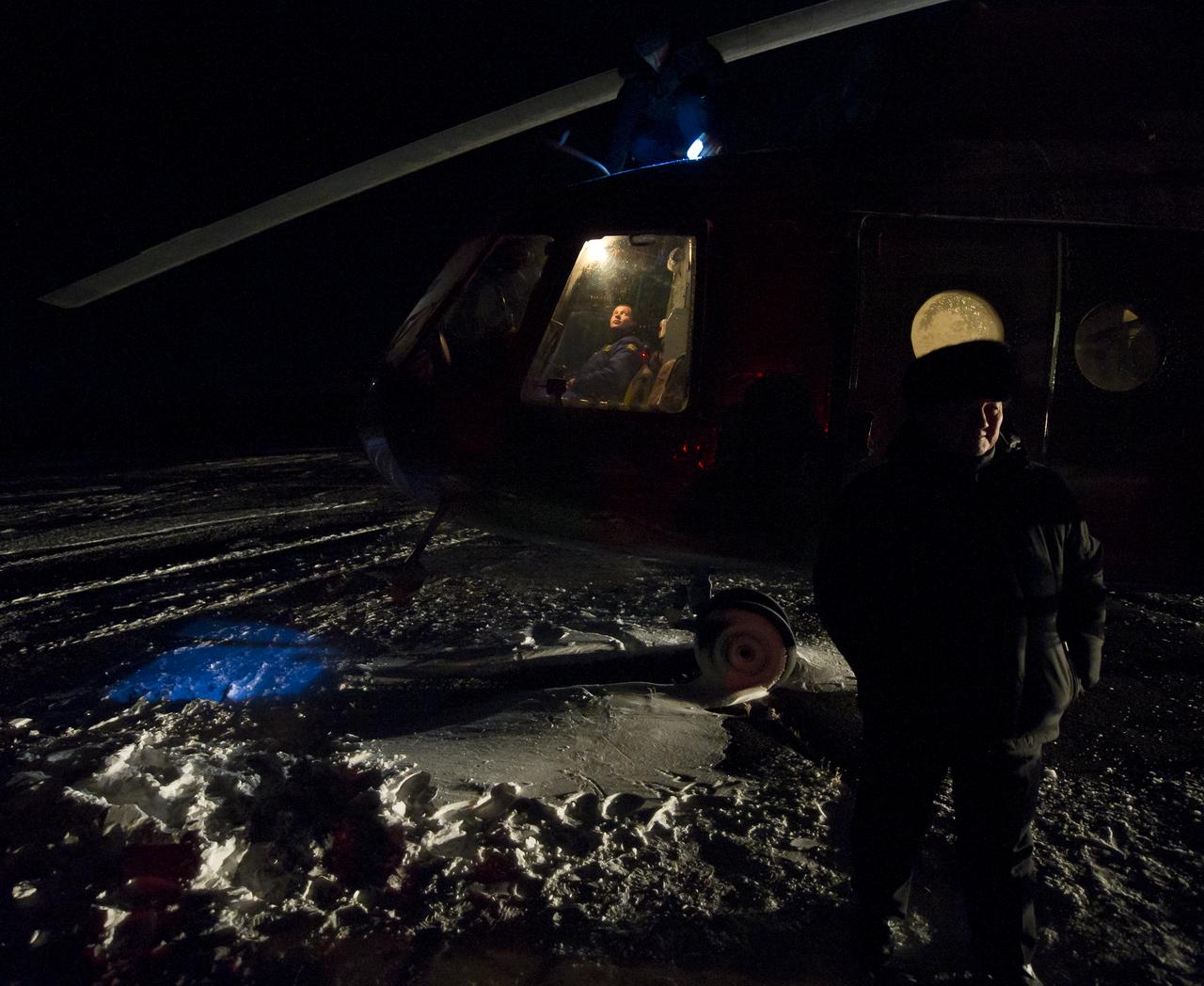
The Mayor of Arkalyk, right, waits to board a Russian Search and Rescue helicopter for take off in support of the Soyuz TMA-02M spacecraft landing with Expedition 29 Commander Mike Fossum, and Flight Engineers Sergei Volkov and Satoshi Furukawa in Arkalyk, Kazakhstan, on Tuesday, Nov. 22, 2011. NASA Astronaut Fossum, Russian Cosmonaut Volkov and JAXA (Japan Aerospace Exploration Agency) Astronaut Furukawa are returning from more than five months onboard the International Space Station where they served as members of the Expedition 28 and 29 crews. Photo Credit: (NASA/Bill Ingalls)
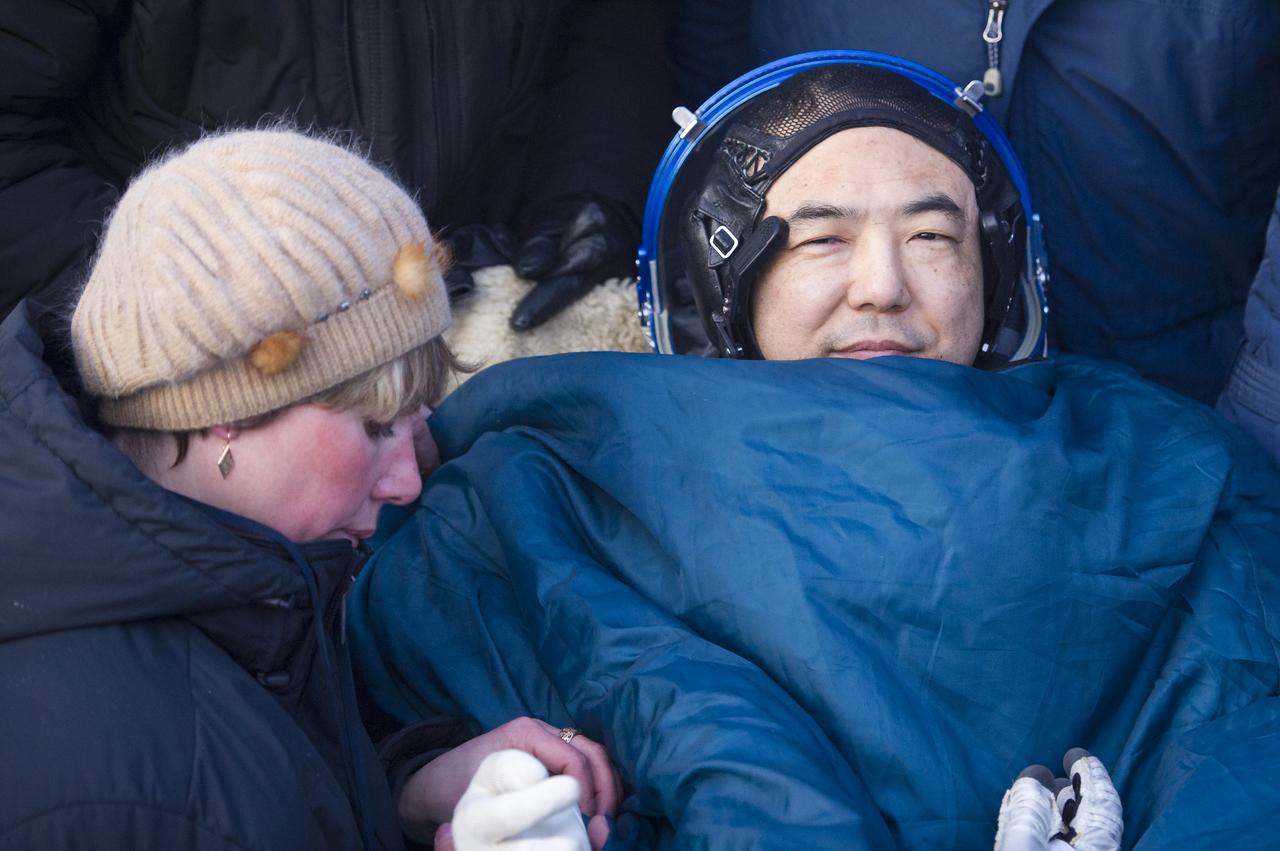
Expedition 29 Flight Engineer, JAXA (Japan Aerospace Exploration Agency) Astronaut, Satoshi Furukawa smiles as he rest in a chair outside the Soyuz TMA-02M Capsule just minutes after he and Expedition 29 Commander Mike Fossum and Flight Engineer Sergei Volkov landed in a remote area outside of the town of Arkalyk, Kazakhstan, on Tuesday, Nov. 22, 2011. NASA Astronaut Fossum, Russian Cosmonaut Volkov and JAXA (Japan Aerospace Exploration Agency) Astronaut Furukawa are returning from more than five months onboard the International Space Station where they served as members of the Expedition 28 and 29 crews. Photo Credit: (NASA/Bill Ingalls)
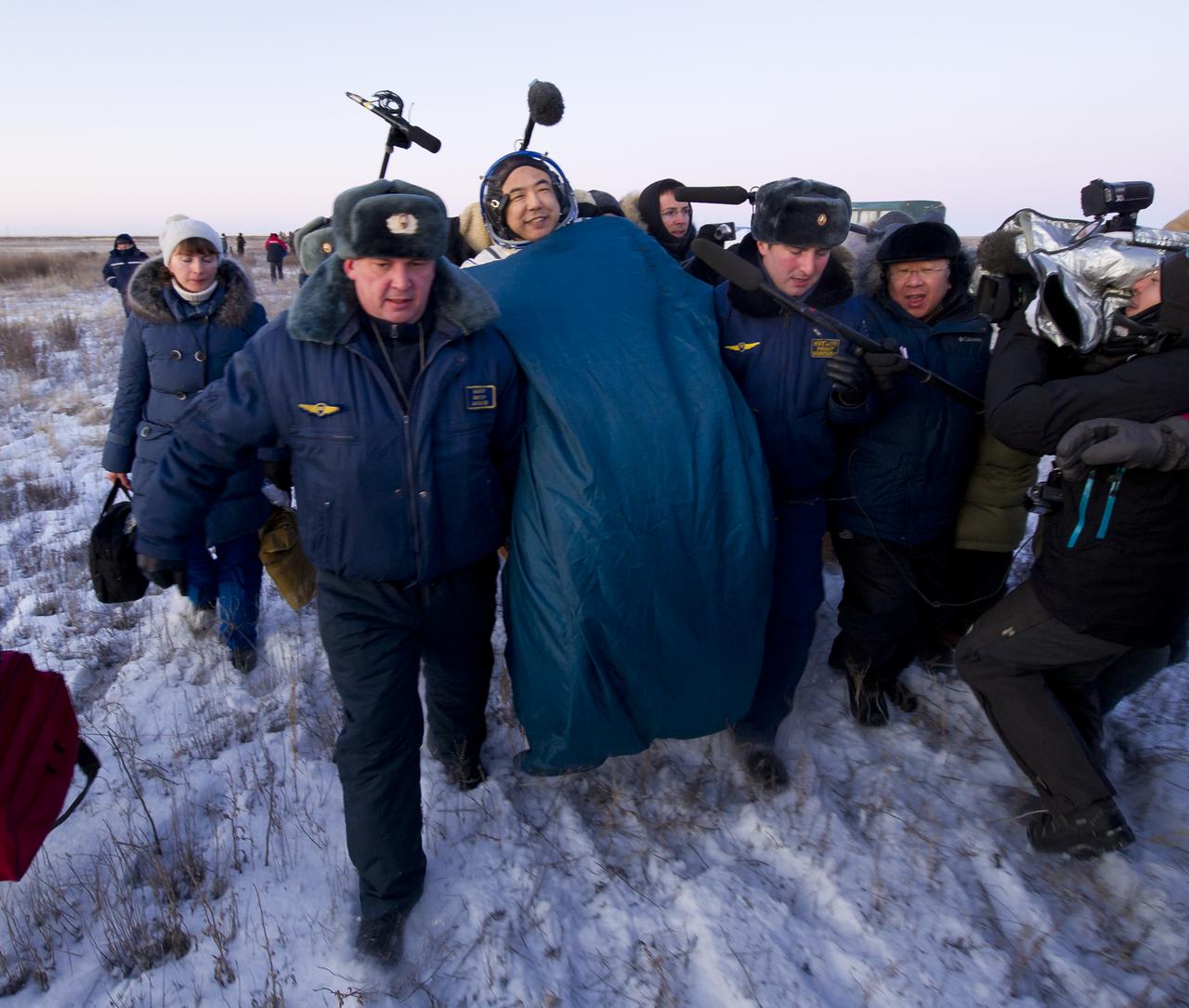
Expedition 29 Flight Engineer, JAXA (Japan Aerospace Exploration Agency) Astronaut, Satoshi Furukawa smiles as he is carried in a chair to the medical tent just minutes after he and Expedition 29 Commander Mike Fossum and Flight Engineer Sergei Volkov landed in a remote area outside of the town of Arkalyk, Kazakhstan, on Tuesday, Nov. 22, 2011. NASA Astronaut Fossum, Russian Cosmonaut Volkov and JAXA (Japan Aerospace Exploration Agency) Astronaut Furukawa are returning from more than five months onboard the International Space Station where they served as members of the Expedition 28 and 29 crews. Photo Credit: (NASA/Bill Ingalls)
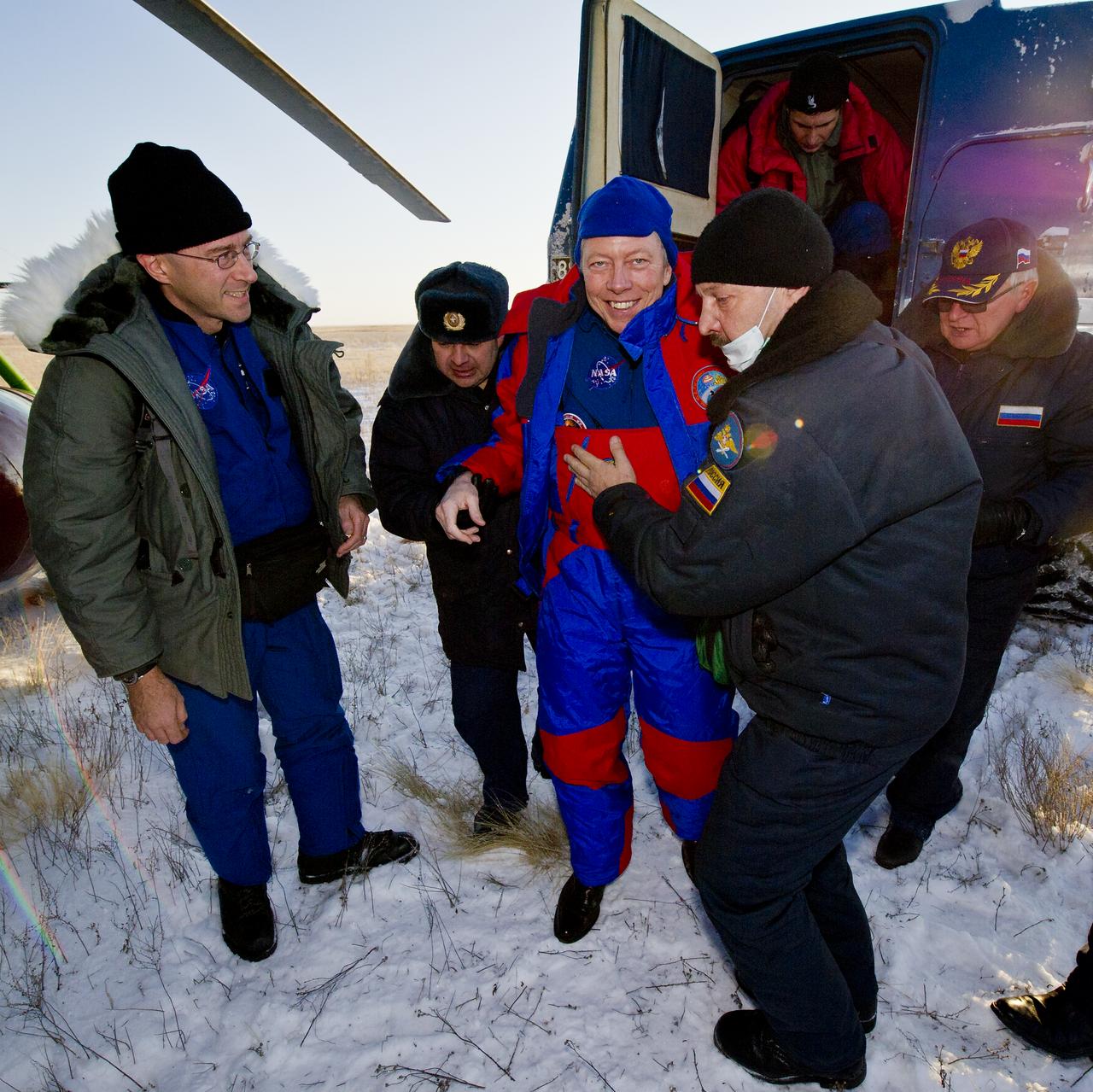
Expedition 29 Commander Mike Fossum smiles as he is helped from a Russian Search and Rescue all terrain vehicle (ATV) to his helicopter after he and Expedition 29 Flight Engineers Sergei Volkov and Satoshi Furukawa landed in their Soyuz TMA-02M spacecraft in a remote area outside of the town of Arkalyk, Kazakhstan, on Tuesday, Nov. 22, 2011. NASA Astronaut Fossum, Russian Cosmonaut Volkov and JAXA (Japan Aerospace Exploration Agency) Astronaut Furukawa are returning from more than five months onboard the International Space Station where they served as members of the Expedition 28 and 29 crews. Photo Credit: (NASA/Bill Ingalls)
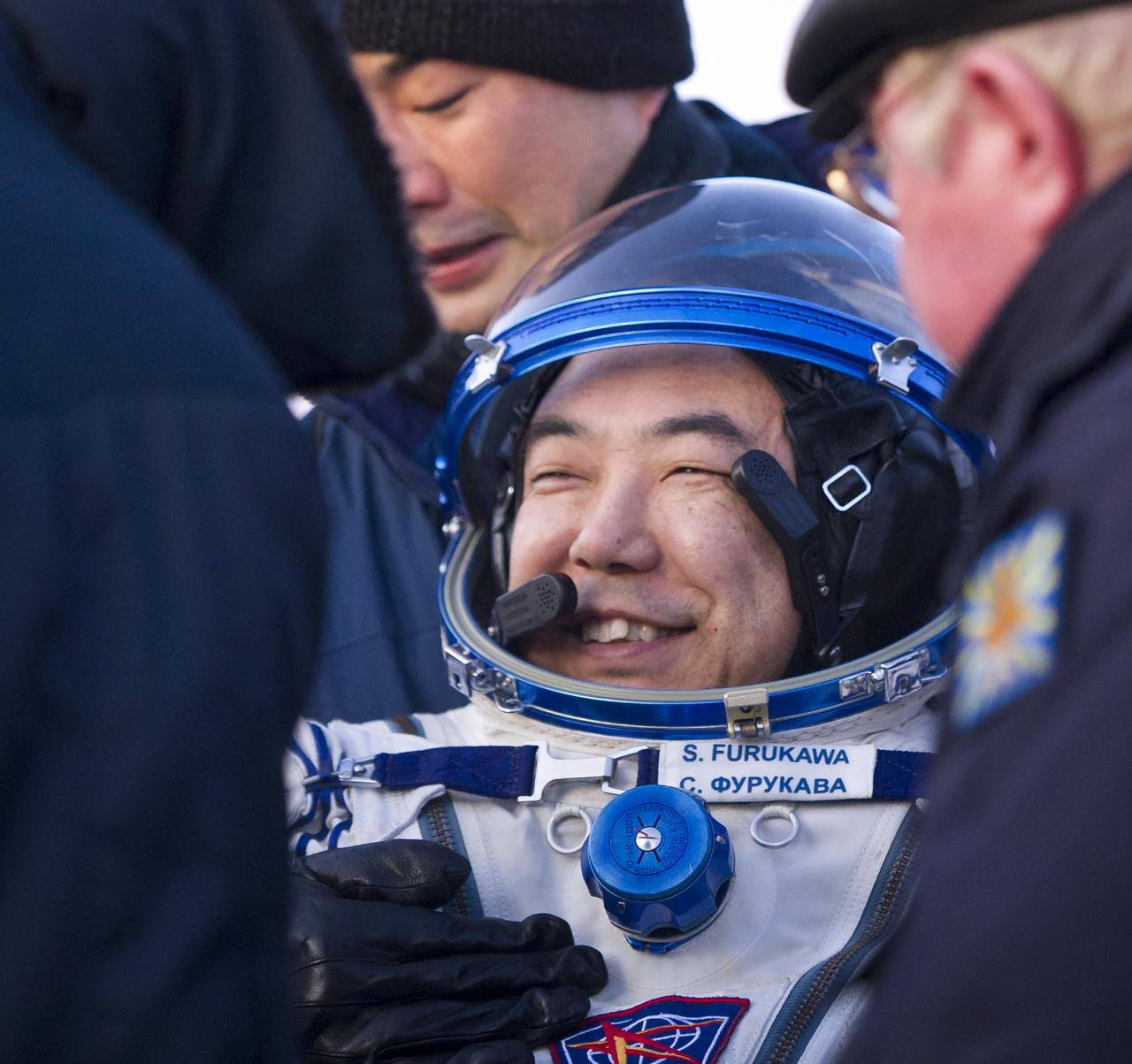
Expedition 29 Flight Engineer, JAXA (Japan Aerospace Exploration Agency) Astronaut, Satoshi Furukawa smiles as he is helped to a chair outside the Soyuz TMA-02M Capsule just minutes after he and Expedition 29 Commander Mike Fossum and Flight Engineer Sergei Volkov landed in a remote area outside of the town of Arkalyk, Kazakhstan, on Tuesday, Nov. 22, 2011. NASA Astronaut Fossum, Russian Cosmonaut Volkov and JAXA (Japan Aerospace Exploration Agency) Astronaut Furukawa are returning from more than five months onboard the International Space Station where they served as members of the Expedition 28 and 29 crews. Photo Credit: (NASA/Bill Ingalls)
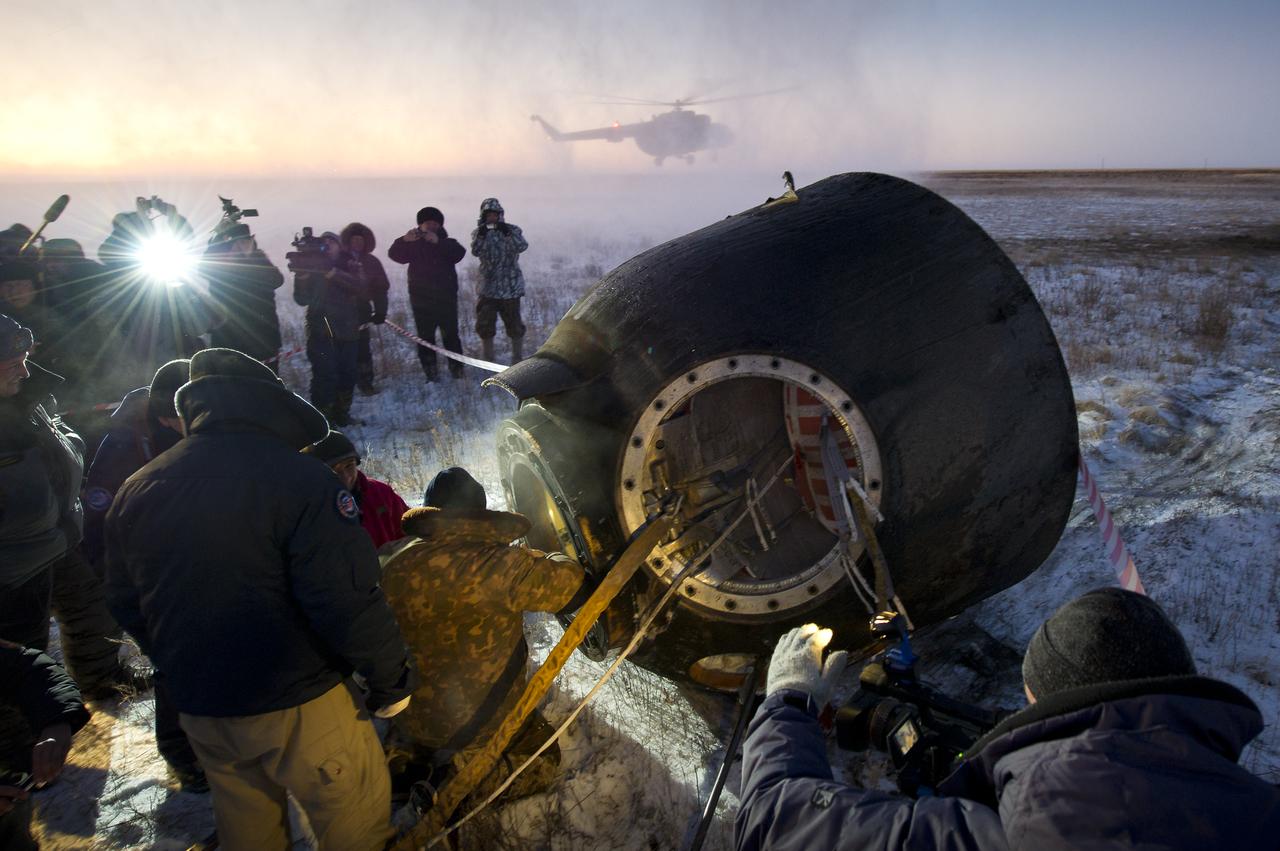
Russian support personnel work to help get Expedition 29 crew members out of the Soyuz TMA-02M spacecraft shortly after the capsule landed with Expedition 29 Commander Mike Fossum, and Flight Engineers Sergei Volkov and Satoshi Furukawa in a remote area outside of the town of Arkalyk, Kazakhstan, on Tuesday, Nov. 22, 2011. NASA Astronaut Fossum, Russian Cosmonaut Volkov and JAXA (Japan Aerospace Exploration Agency) Astronaut Furukawa are returning from more than five months onboard the International Space Station where they served as members of the Expedition 28 and 29 crews. Photo Credit: (NASA/Bill Ingalls)
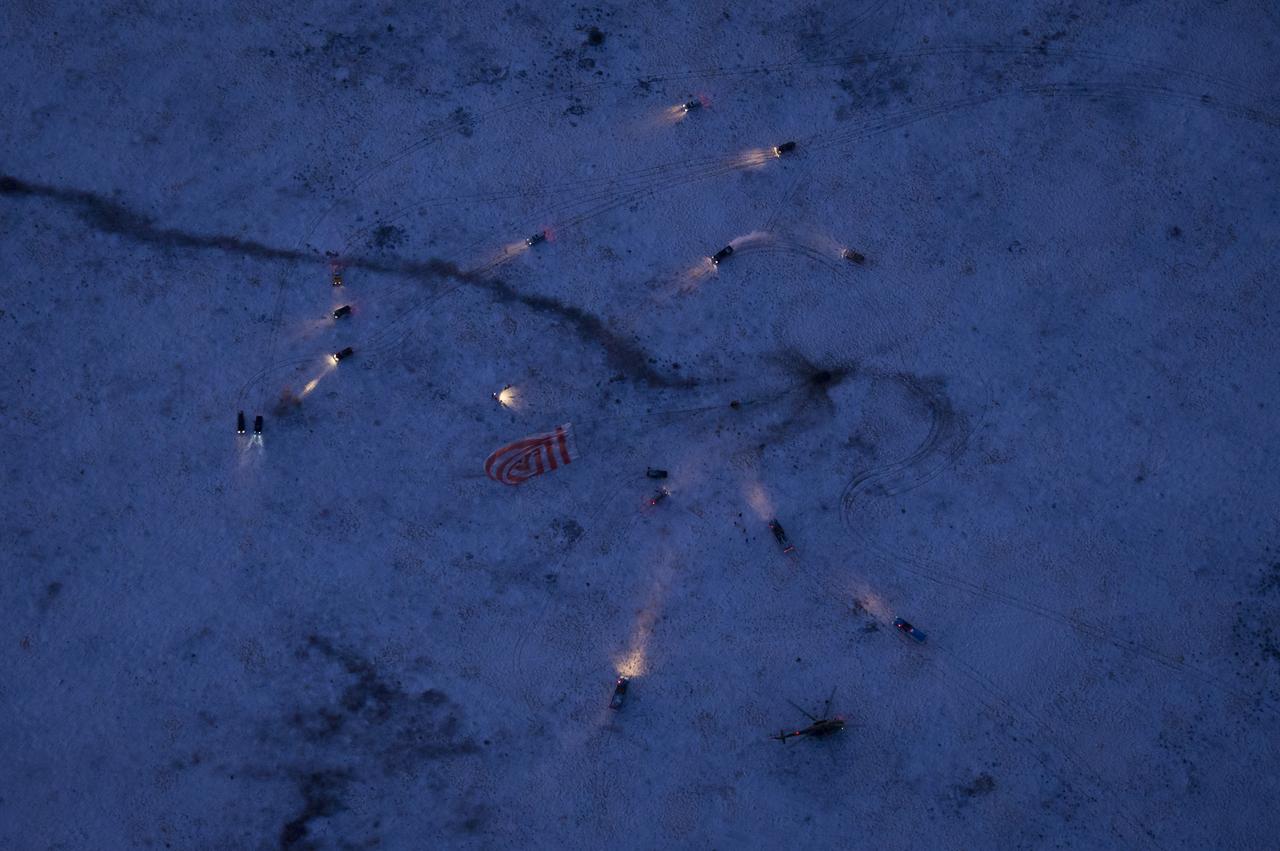
Russian support personnel arrive to help meet the Soyuz TMA-02M spacecraft shortly after the capsule landed with Expedition 29 Commander Mike Fossum, and Flight Engineers Sergei Volkov and Satoshi Furukawa in a remote area outside of the town of Arkalyk, Kazakhstan, on Tuesday, Nov. 22, 2011. NASA Astronaut Fossum, Russian Cosmonaut Volkov and JAXA (Japan Aerospace Exploration Agency) Astronaut Furukawa are returning from more than five months onboard the International Space Station where they served as members of the Expedition 28 and 29 crews. Photo Credit: (NASA/Bill Ingalls)
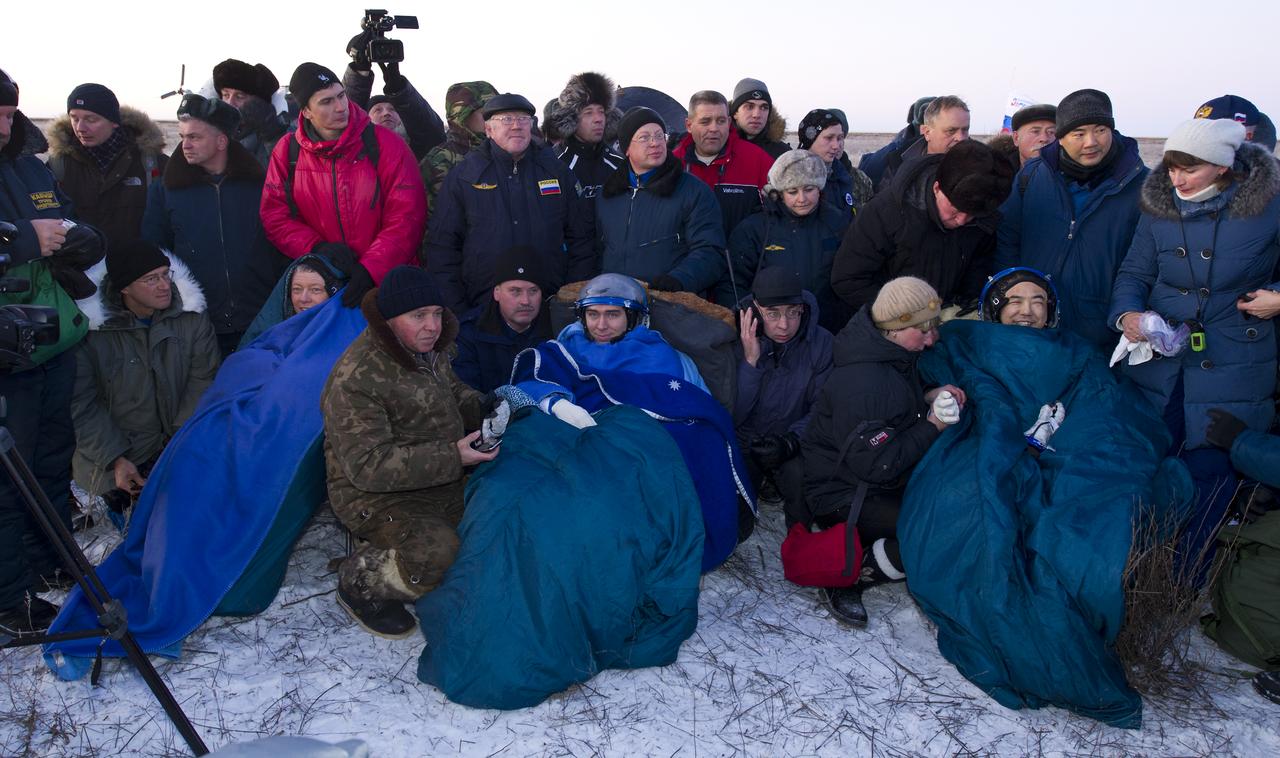
Expedition 29 Commander Mike Fossum, left, Flight Engineers Sergei Volkov, center, and Satoshi Furukawa, sit in chairs outside the Soyuz TMA-02M Capsule just minutes after they landed in a remote area outside the town of Arkalyk, Kazakhstan, on Tuesday, Nov. 22, 2011. NASA Astronaut Fossum, Russian Cosmonaut Volkov and JAXA (Japan Aerospace Exploration Agency) Astronaut Furukawa are returning from more than five months onboard the International Space Station where they served as members of the Expedition 28 and 29 crews. Photo Credit: (NASA/Bill Ingalls)

Expedition 29 Flight Engineer Sergei Volkov is seen in a gift of traditional Kazakhstan dress during a welcome ceremony at the Kustanay Airport in Kazakhstan on Tuesday, Nov. 22, 2011. NASA Astronaut Mike Fossum, Russian Cosmonaut Volkov and JAXA (Japan Aerospace Exploration Agency) Astronaut Satoshi Furukawa returned from more than five months onboard the International Space Station where they served as members of the Expedition 28 and 29 crews. Photo Credit: (NASA/Bill Ingalls)
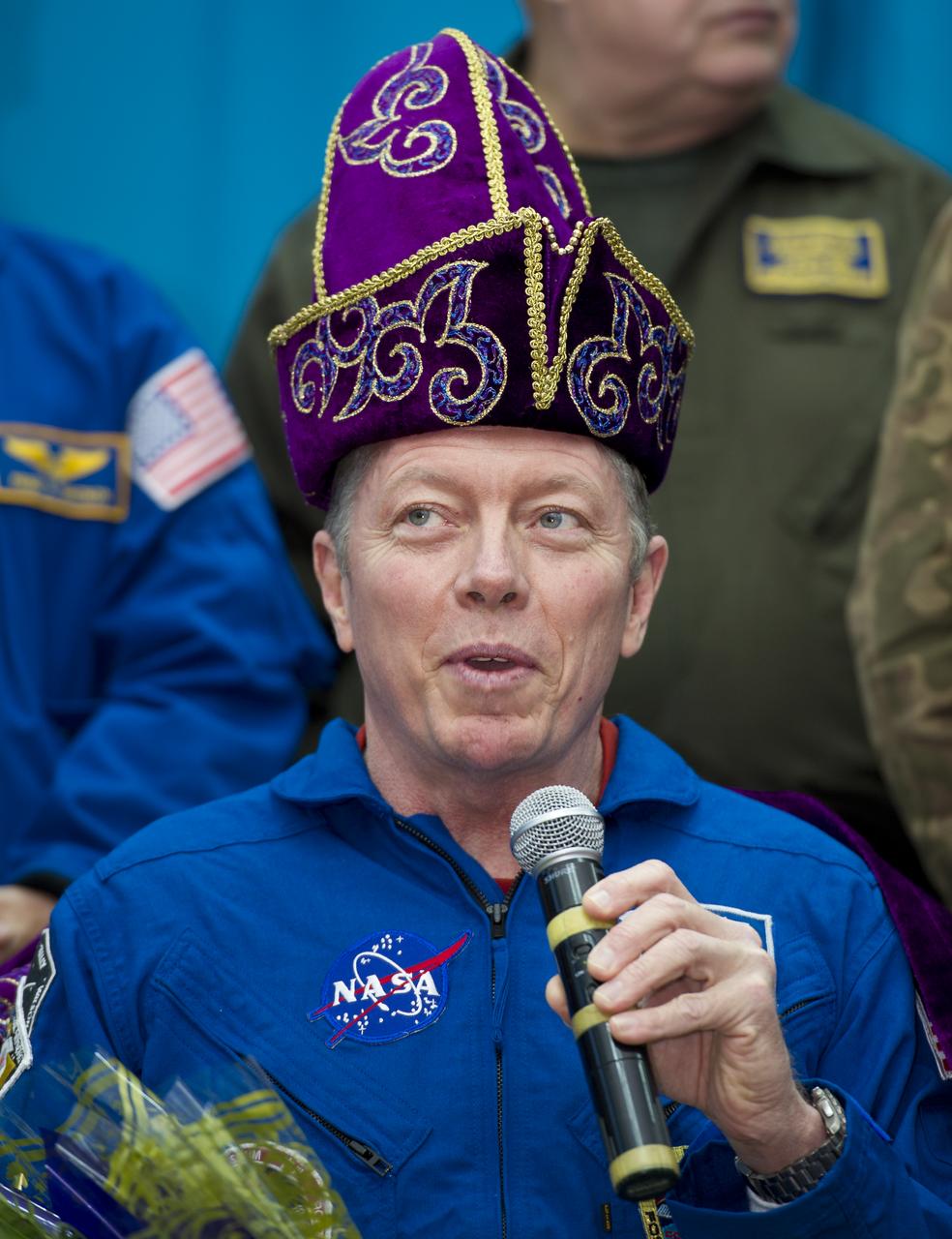
Expedition 29 Commander Mike Fossum is seen in a traditional Kazakhstan hat gifted to him during a welcome ceremony at the Kustanay Airport in Kazakhstan on Tuesday, Nov. 22, 2011. NASA Astronaut Fossum, Russian Cosmonaut Sergei Volkov and JAXA (Japan Aerospace Exploration Agency) Astronaut Satoshi Furukawa returned from more than five months onboard the International Space Station where they served as members of the Expedition 28 and 29 crews. Photo Credit: (NASA/Bill Ingalls)
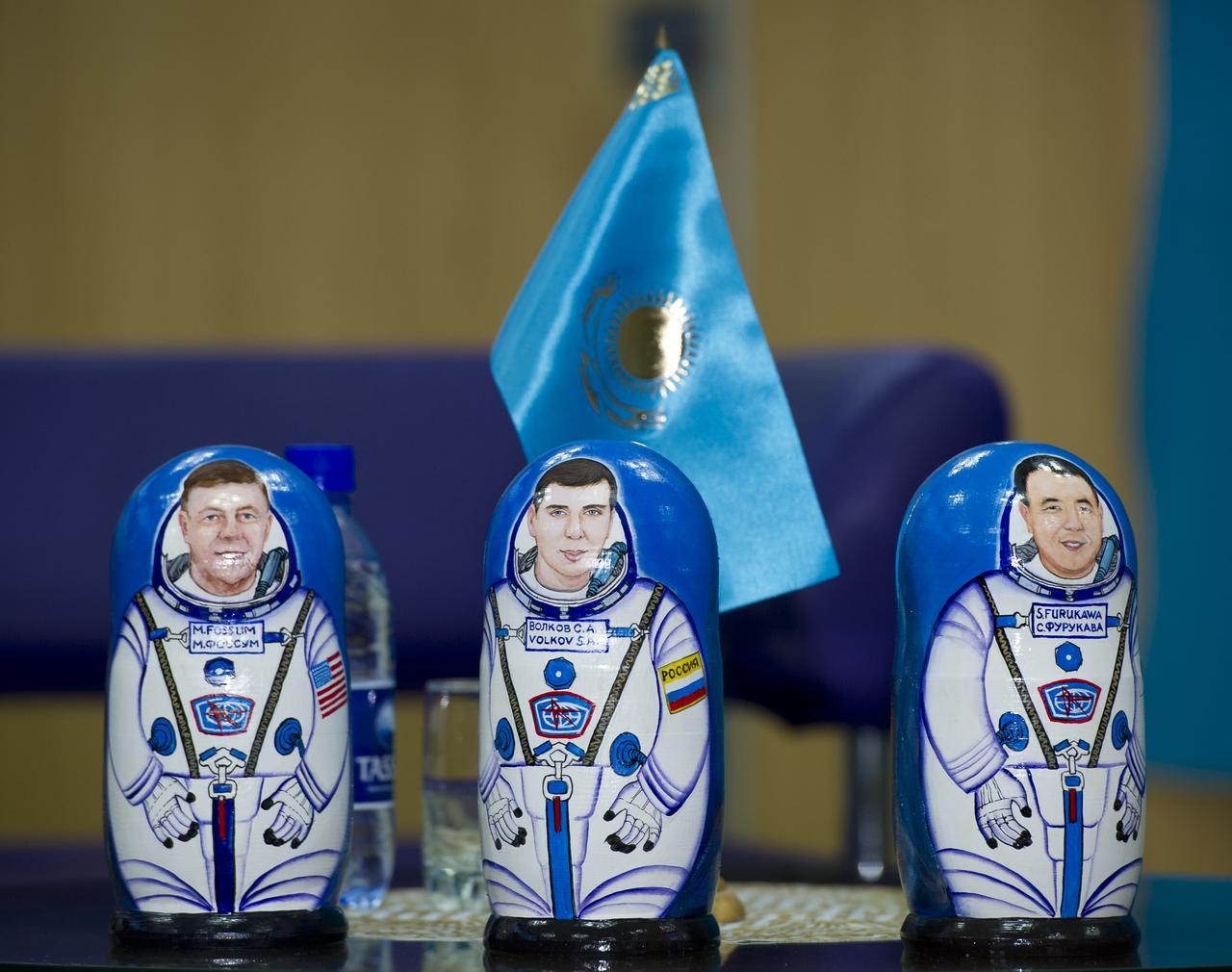
Matryoshka dolls representing Expedition 29 Commander Mike Fossum, and Flight Engineers Sergei Volkov and Satoshi Furukawa are seen at a welcome ceremony at the Kustanay Airport in Kazakhstan on Tuesday, Nov. 22, 2011. NASA Astronaut Fossum, Russian Cosmonaut Volkov and JAXA (Japan Aerospace Exploration Agency) Astronaut Furukawa returned from more than five months onboard the International Space Station where they served as members of the Expedition 28 and 29 crews. Photo Credit: (NASA/Bill Ingalls)
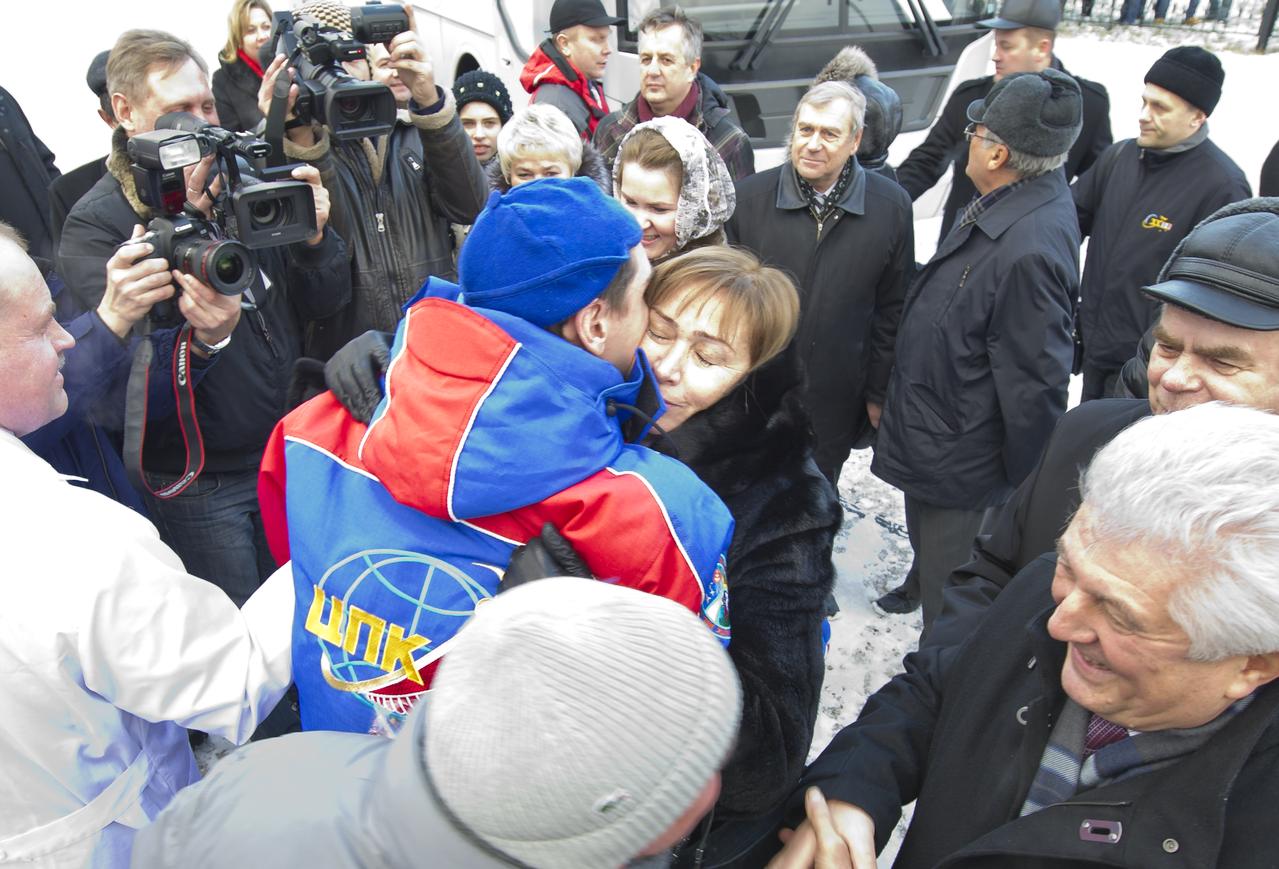
Expedition 29 Flight Engineer Sergei Volkov is welcomed home by colleagues and family in Star City, Russia on Tuesday, Nov. 22, 2011. Russian Cosmonaut Volkov, Expedition 29 Commander Mike Fossum, and JAXA (Japan Aerospace Exploration Agency) Flight Engineer Satoshi Furukawa returned to Arkalyk, Kazakhstan earlier in the day from over five months onboard the International Space Station where they served as members of the Expedtion 28 and 29 crews. Photo Credit: (NASA/Bill Ingalls)
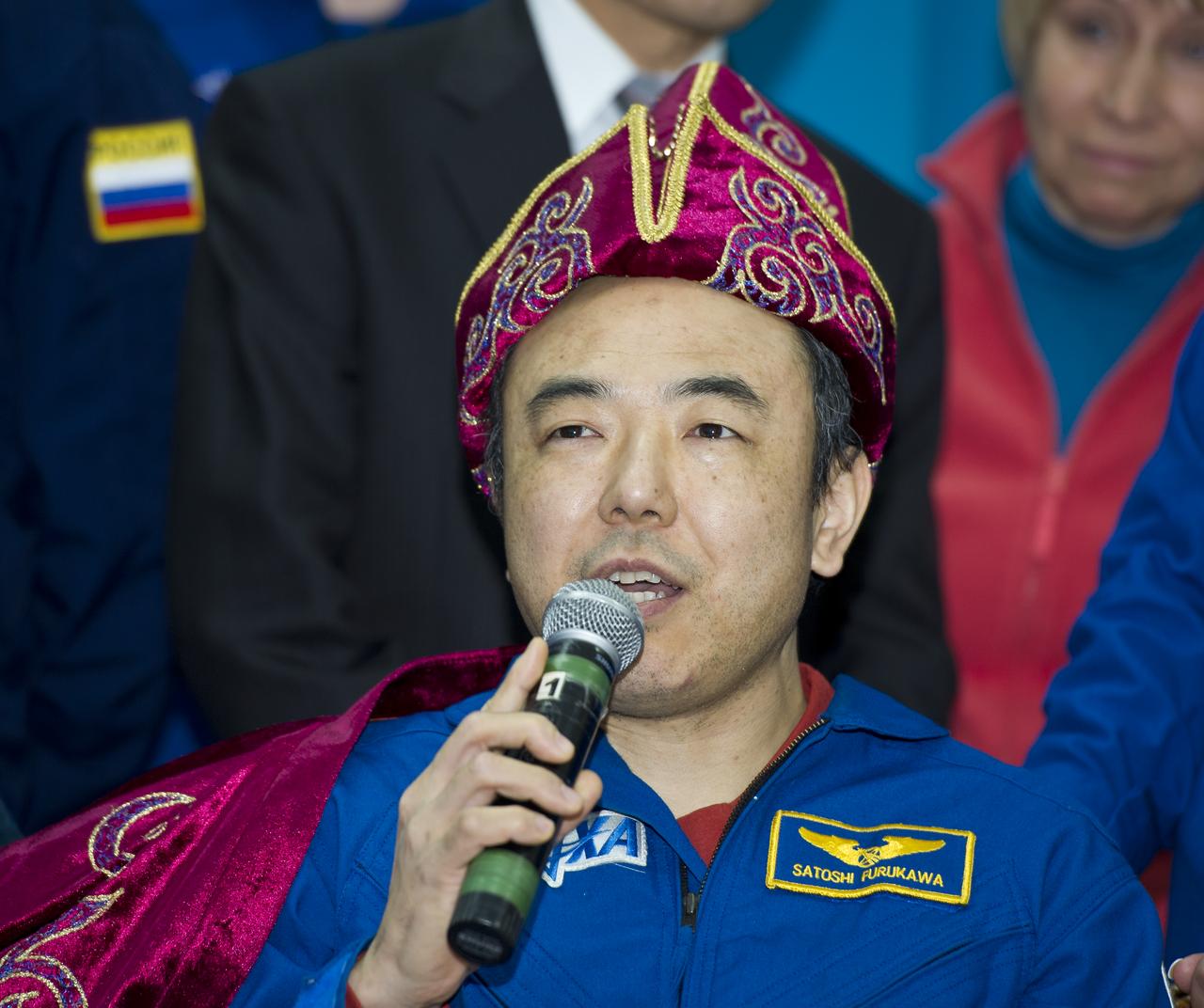
Expedition 29 Flight Engineer, JAXA (Japan Aerospace Exploration Agency) Astronaut, Satoshi Furukawa is seen in a traditional Kazakhstan hat gifted to him during a welcome ceremony at the Kustanay Airport in Kazakhstan on Tuesday, Nov. 22, 2011. NASA Astronaut Mike Fossum, Russian Cosmonaut Sergei Volkov and Furukawa returned from more than five months onboard the International Space Station where they served as members of the Expedition 28 and 29 crews. Photo Credit: (NASA/Bill Ingalls)
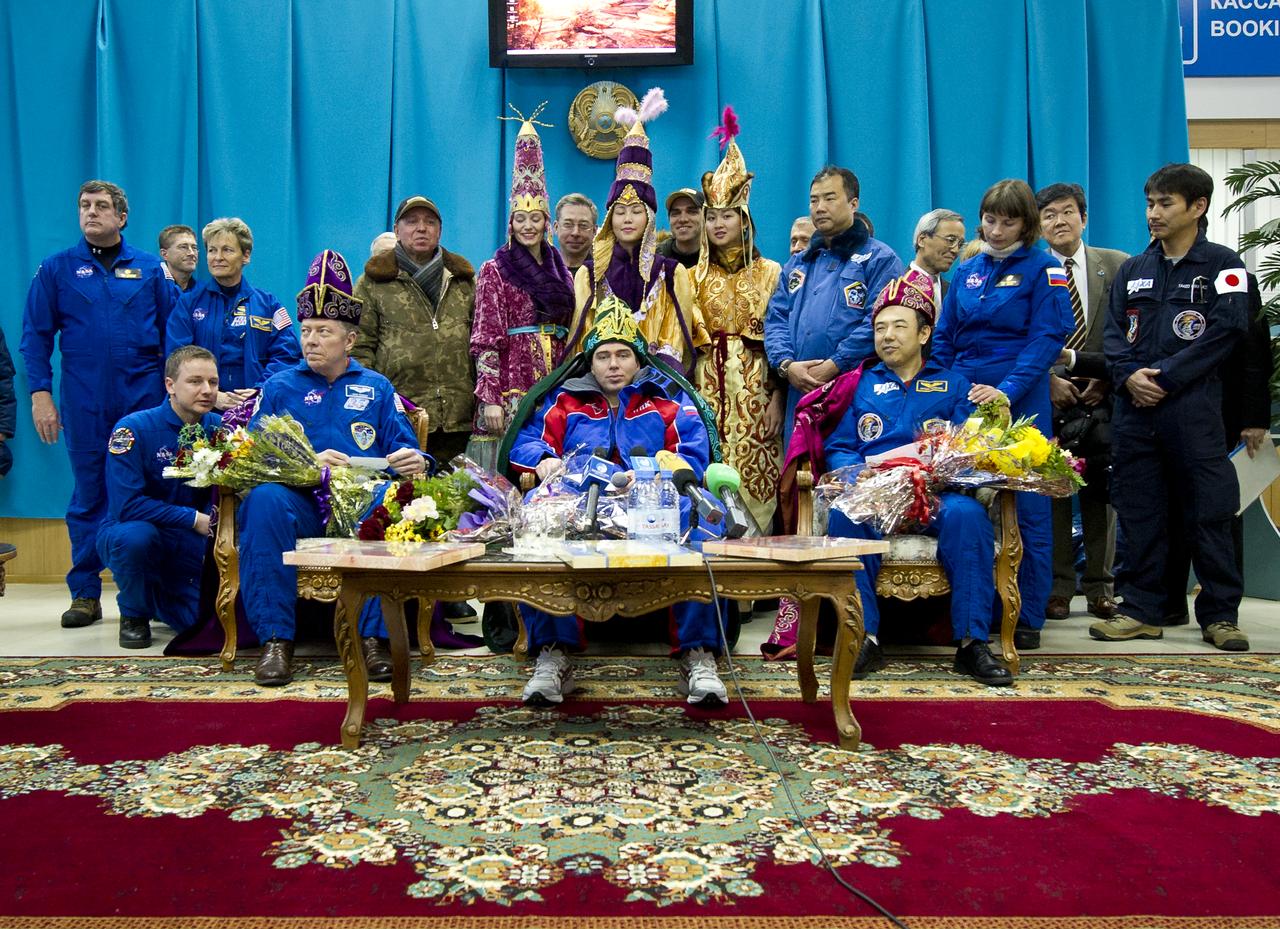
Seated from left, Expedition 29 Commander Mike Fossum, Flight Engineers Sergei Volkov, and Satoshi Furukawa are seen during a welcome ceremony and press conference at the Kustanay Airport in Kazakhstan on Tuesday, Nov. 22, 2011. NASA Astronaut Fossum, Russian Cosmonaut Volkov and JAXA (Japan Aerospace Exploration Agency) Astronaut Furukawa returned from more than five months onboard the International Space Station where they served as members of the Expedition 28 and 29 crews. Photo Credit: (NASA/Bill Ingalls)
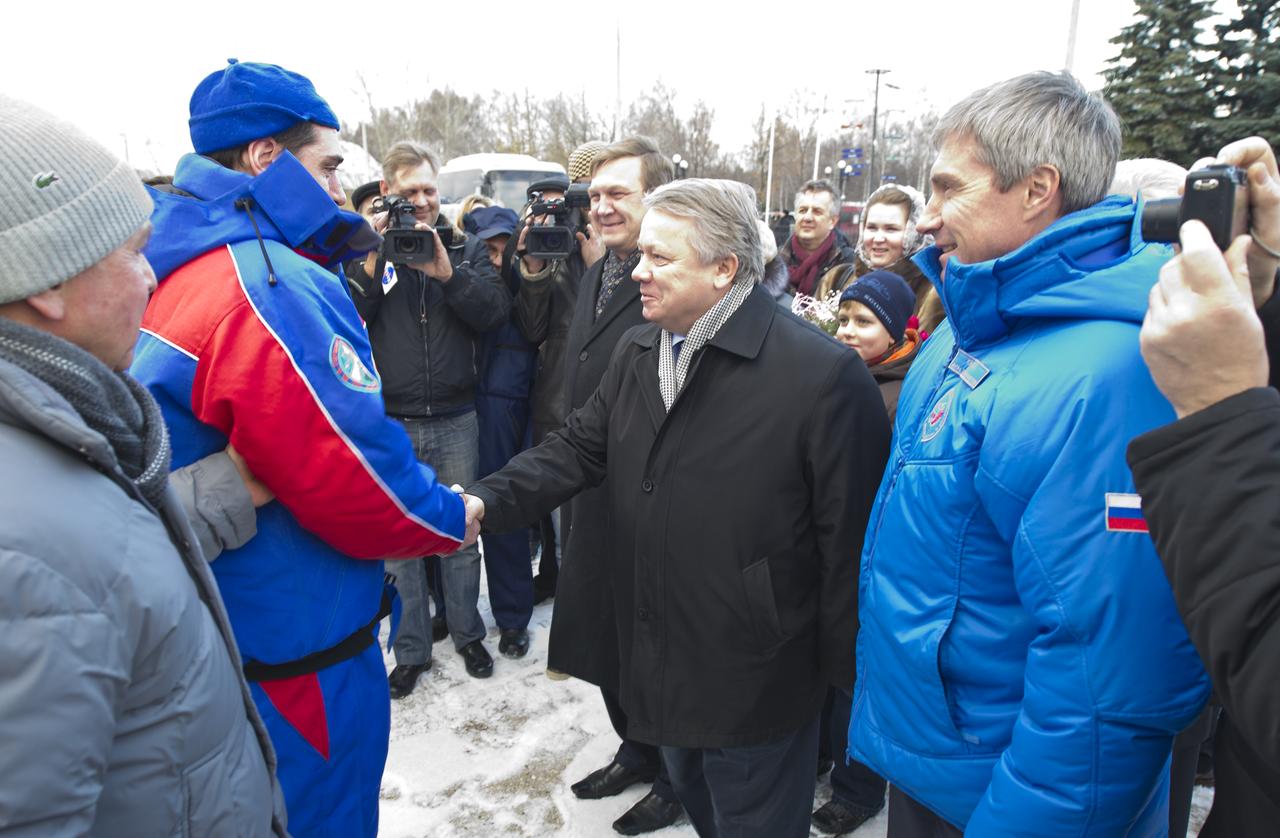
Expedition 29 Flight Engineer Sergei Volkov shakes hands with Federal Space Agency head Vladimir Popovkin as he is welcomed home in Star City, Russia on Tuesday, Nov. 22, 2011. Russian Cosmonaut Volkov, Expedition 29 Commander Mike Fossum, and JAXA (Japan Aerospace Exploration Agency) Flight Engineer Satoshi Furukawa returned to Arkalyk, Kazakhstan earlier in the day from over five months onboard the International Space Station where they served as members of the Expedtion 28 and 29 crews. Photo Credit: (NASA/Bill Ingalls)
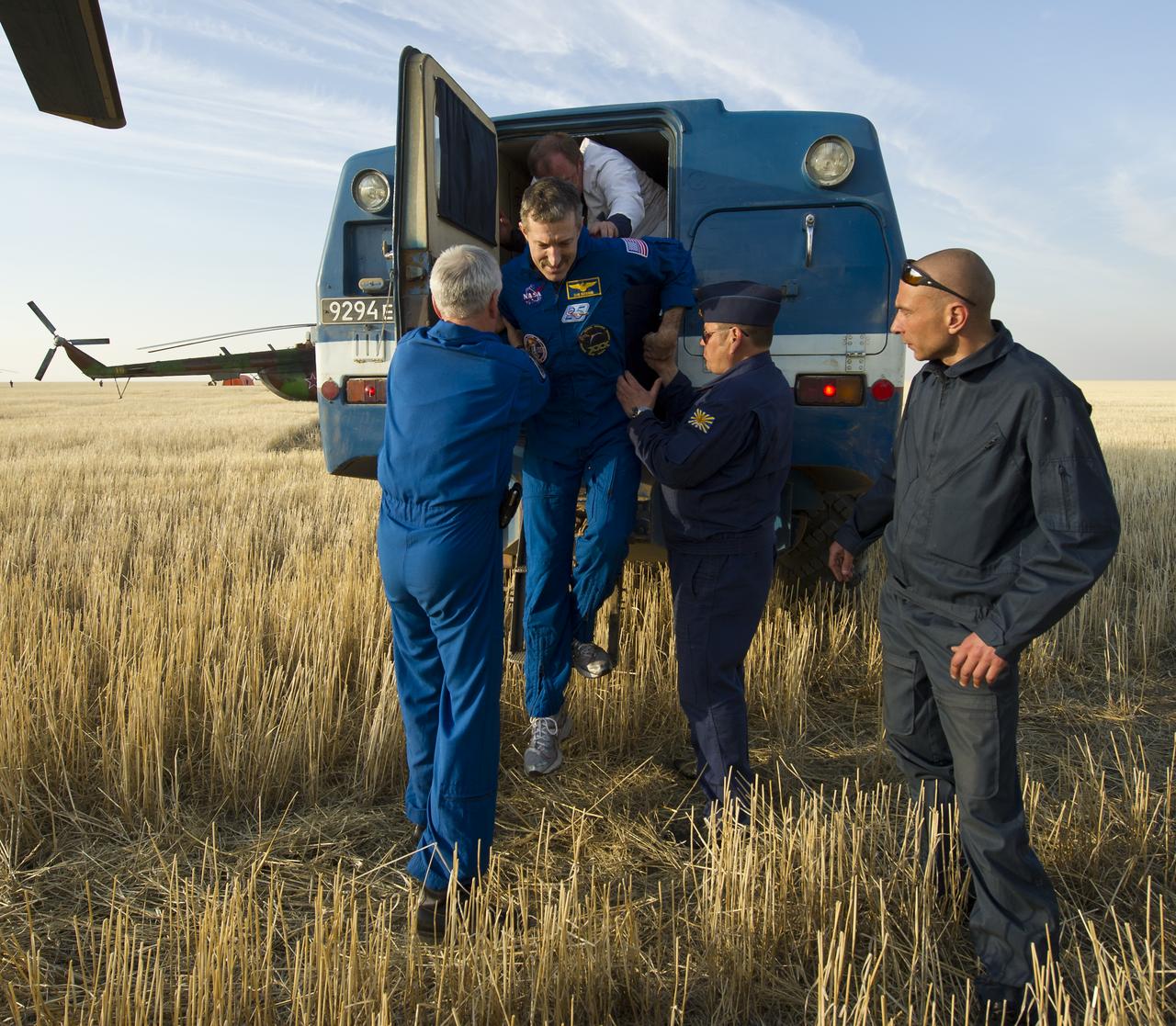
Expedition 30 Commander Dan Burbank is helped out of a Russian All-Terrain vehicle shortly after he and Expedition 30 Flight Engineers Anton Shkaplerov and Anatoly Ivanishin landed in a remote area outside of the town of Arkalyk, Kazakhstan, on Friday, April 27, 2012. NASA Astronaut Burbank, Russian Cosmonauts Shkaplerov and Ivanishin are returning from more than five months onboard the International Space Station where they served as members of the Expedition 29 and 30 crews. Photo Credit: (NASA/Carla Cioffi)
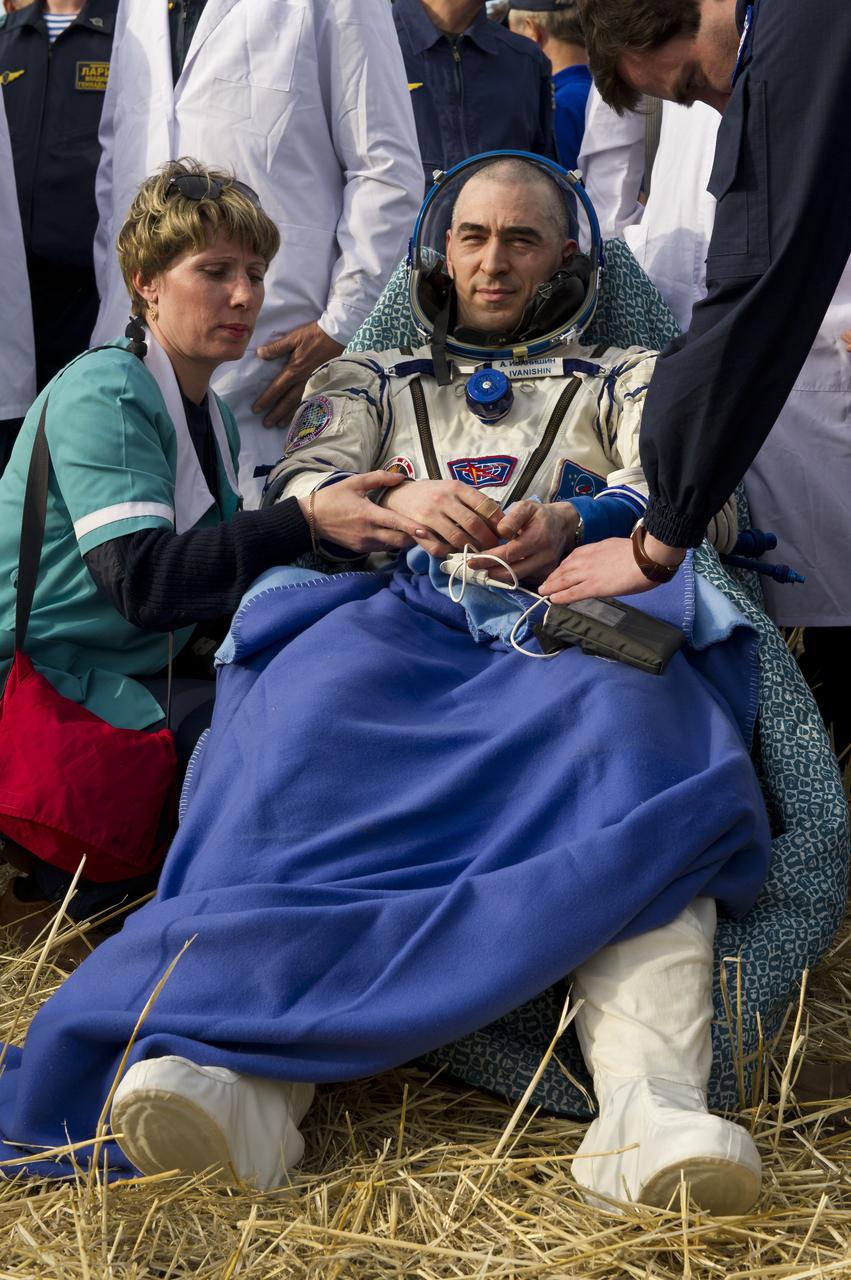
Expedition 30 flight engineer Anatoly Ivanishin rests outside the Soyuz TMA-22 Capsule just minutes after he and Expedition 30 Commander Dan Burbank and flight engineer Anton Shkaplerov landed in a remote area outside of the town of Arkalyk, Kazakhstan, on Friday, April 27, 2012. Ivanishin, Burbank, and Shkaplerov are returning from more than five months onboard the International Space Station where they served as members of the Expedition 29 and 30 crews. Photo Credit: (NASA/Carla Cioffi)
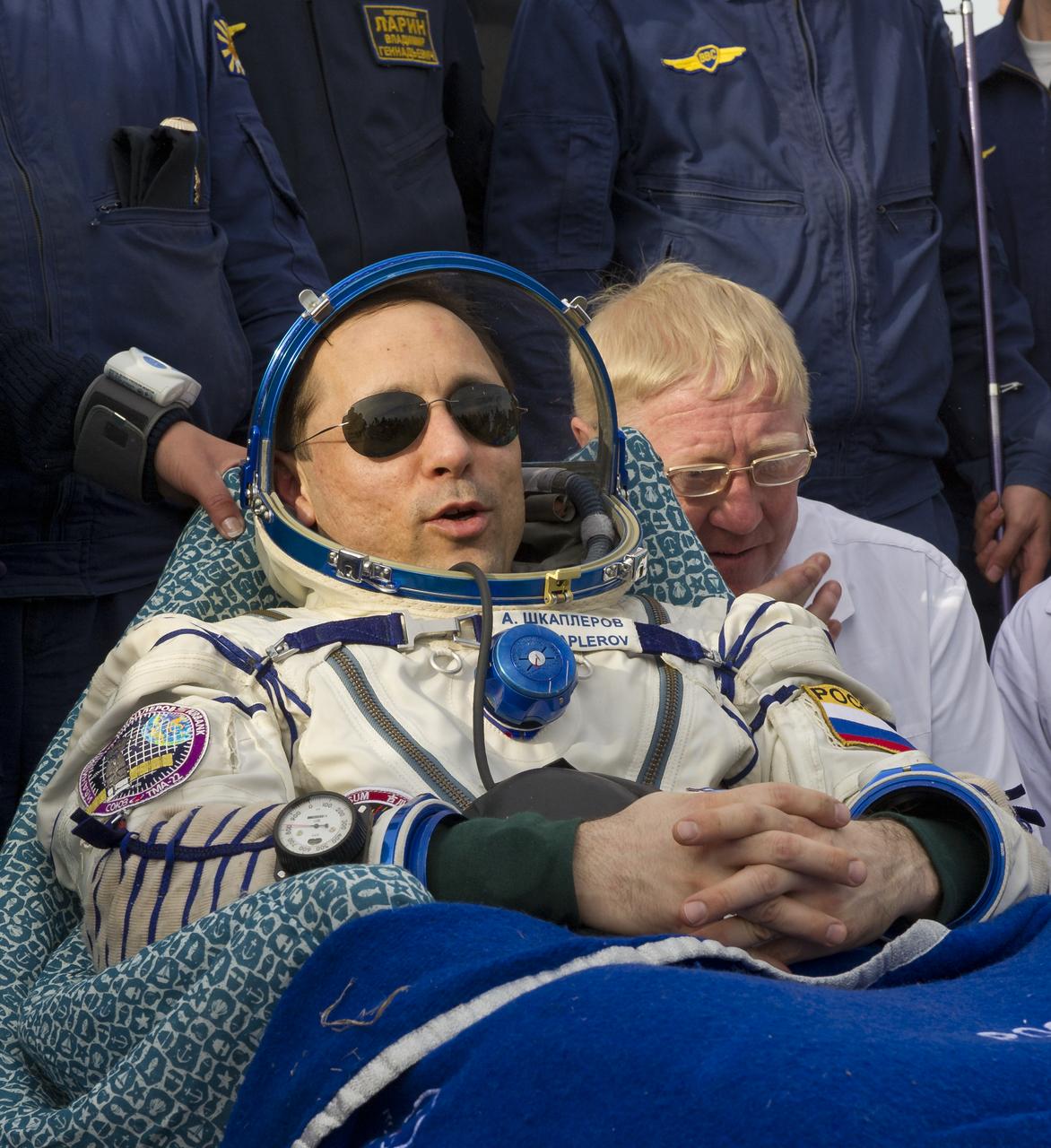
Expedition 30 flight engineer Anton Shkaplerov rests outside the Soyuz TMA-22 Capsule just minutes after he and Expedition 30 Commander Dan Burbank and flight engineer Anatoly Ivanishin landed in a remote area outside of the town of Arkalyk, Kazakhstan, on Friday, April 27, 2012. Shkaplerov, Burbank, and Ivanishin are returning from more than five months onboard the International Space Station where they served as members of the Expedition 29 and 30 crews. Photo Credit: (NASA/Carla Cioffi)
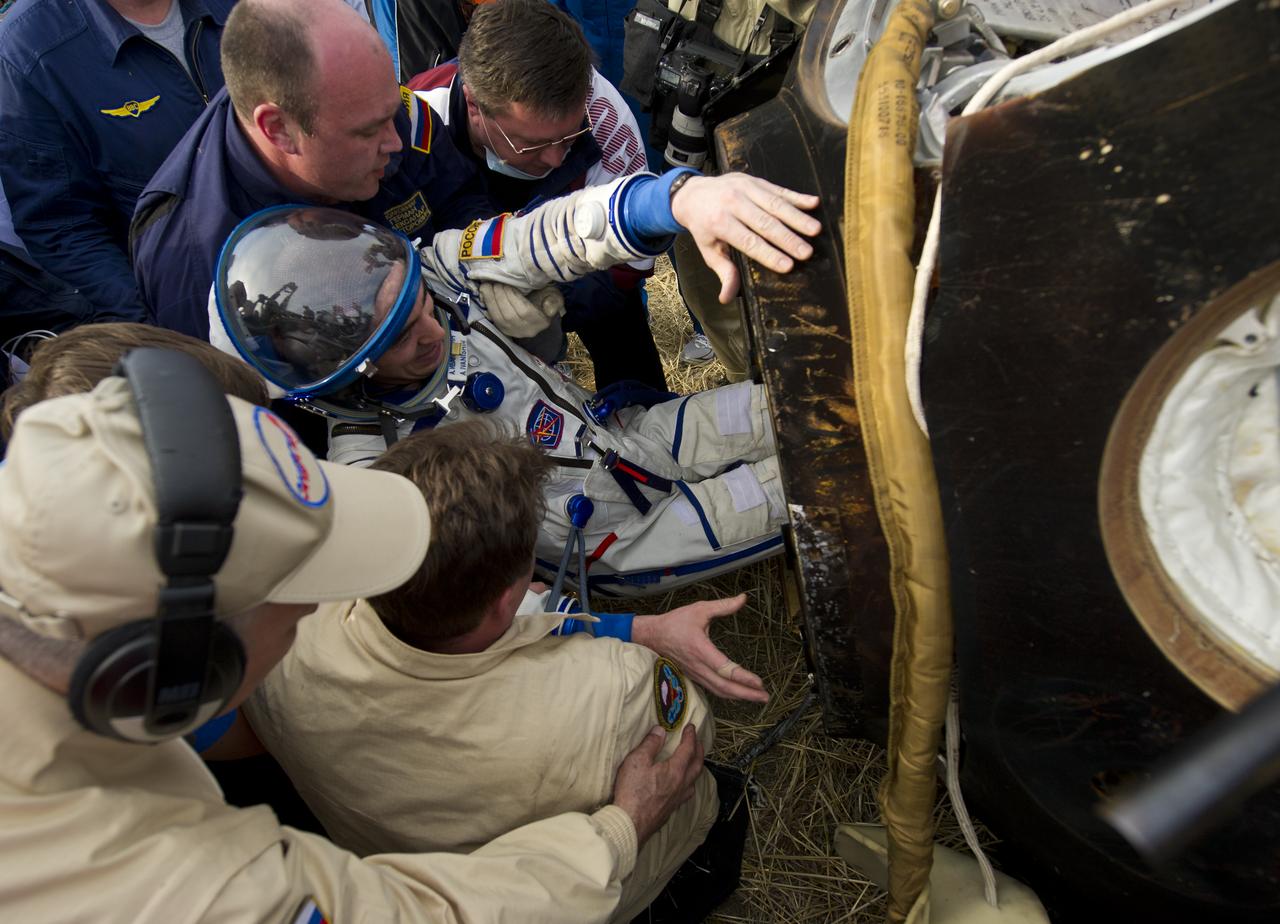
Expedition 30 flight engineer and Russian cosmonaut Anatoly Ivanishin is seen as he is extracted from the Soyuz TMA-22 spacecraft shortly after the capsule landed with Expedition 30 Commander Dan Burbank and flight engineer Anton Shkaplerov in a remote area outside of the town of Arkalyk, Kazakhstan on Friday, April 27, 2012. Ivanishin, Burbank and Shkaplerov are returning from more than five months onboard the International Space Station where they served as members of the Expedition 29 and 30 crews. Photo Credit: (NASA/Carla Cioffi)
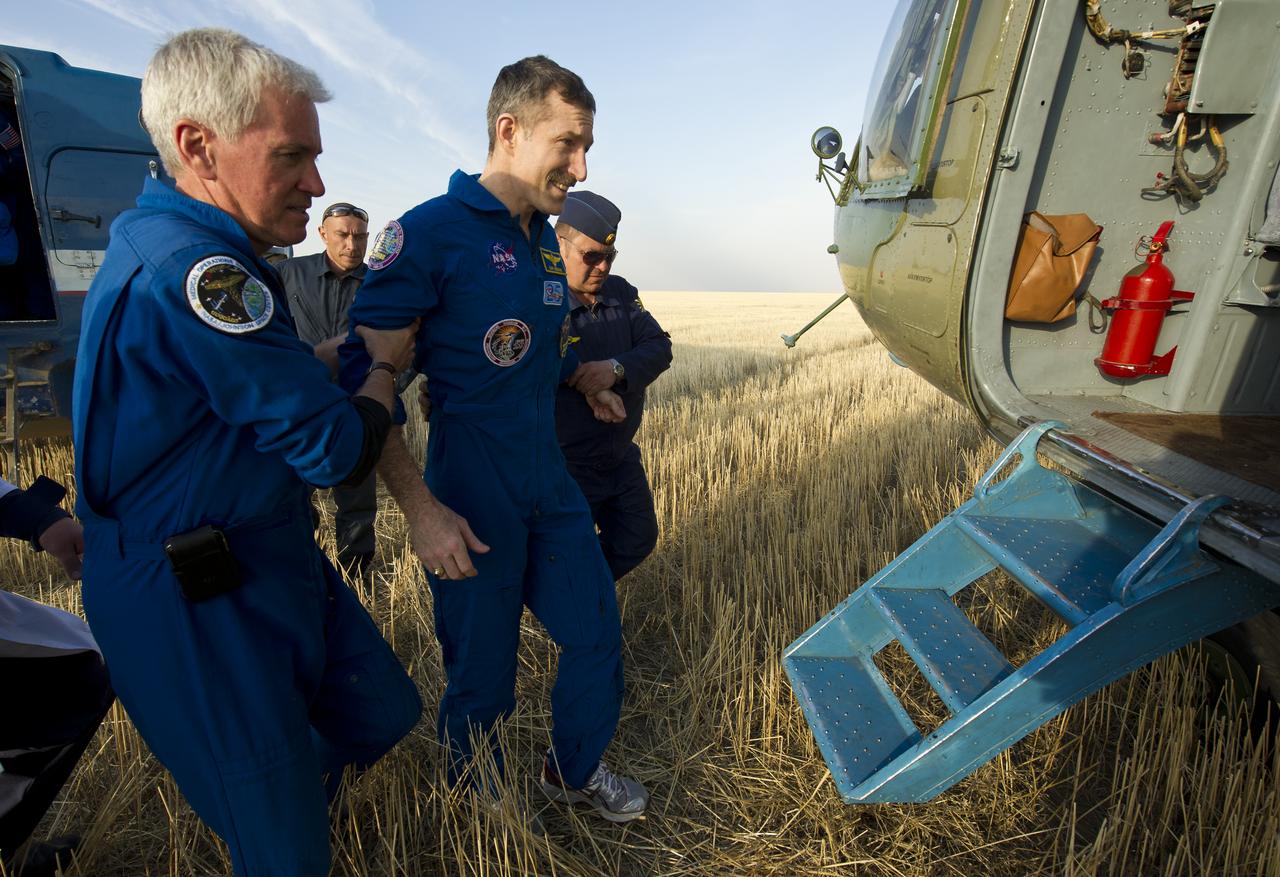
Expedition 30 Commander Dan Burbank is helped into a helicopter shortly after he and Expedition 30 Flight Engineers Anton Shkaplerov and Anatoly Ivanishin landed in a remote area outside of the town of Arkalyk, Kazakhstan, on Friday, April 27, 2012. NASA Astronaut Burbank, Russian Cosmonauts Shkaplerov and Ivanishin are returning from more than five months onboard the International Space Station where they served as members of the Expedition 29 and 30 crews. Photo Credit: (NASA/Carla Cioffi)
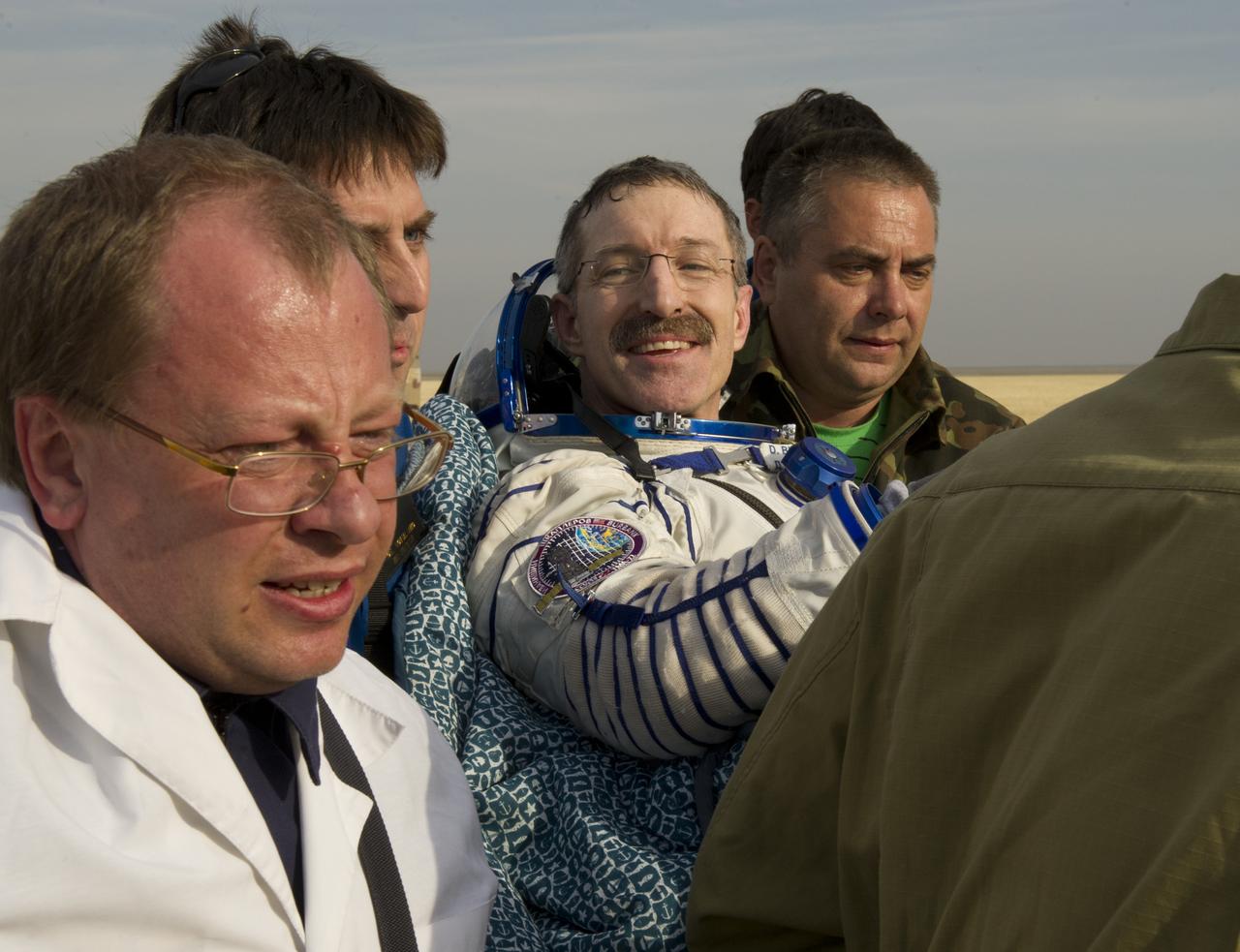
Expedition 30 Commander Dan Burbank is carried in a chair to the medical tent after he and Expedition 30 Flight Engineers Anton Shkaplerov and Anatoly Ivanishin landed in Soyuz TMA-22 capsule in a remote area outside of the town of Arkalyk, Kazakhstan, on Friday, April 27, 2012. NASA Astronaut Burbank, and Russian Cosmonauts Shkaplerov and Ivanishin are returning from more than five months onboard the International Space Station where they served as members of the Expedition 29 and 30 crews. Photo Credit: (NASA/Carla Cioffi)
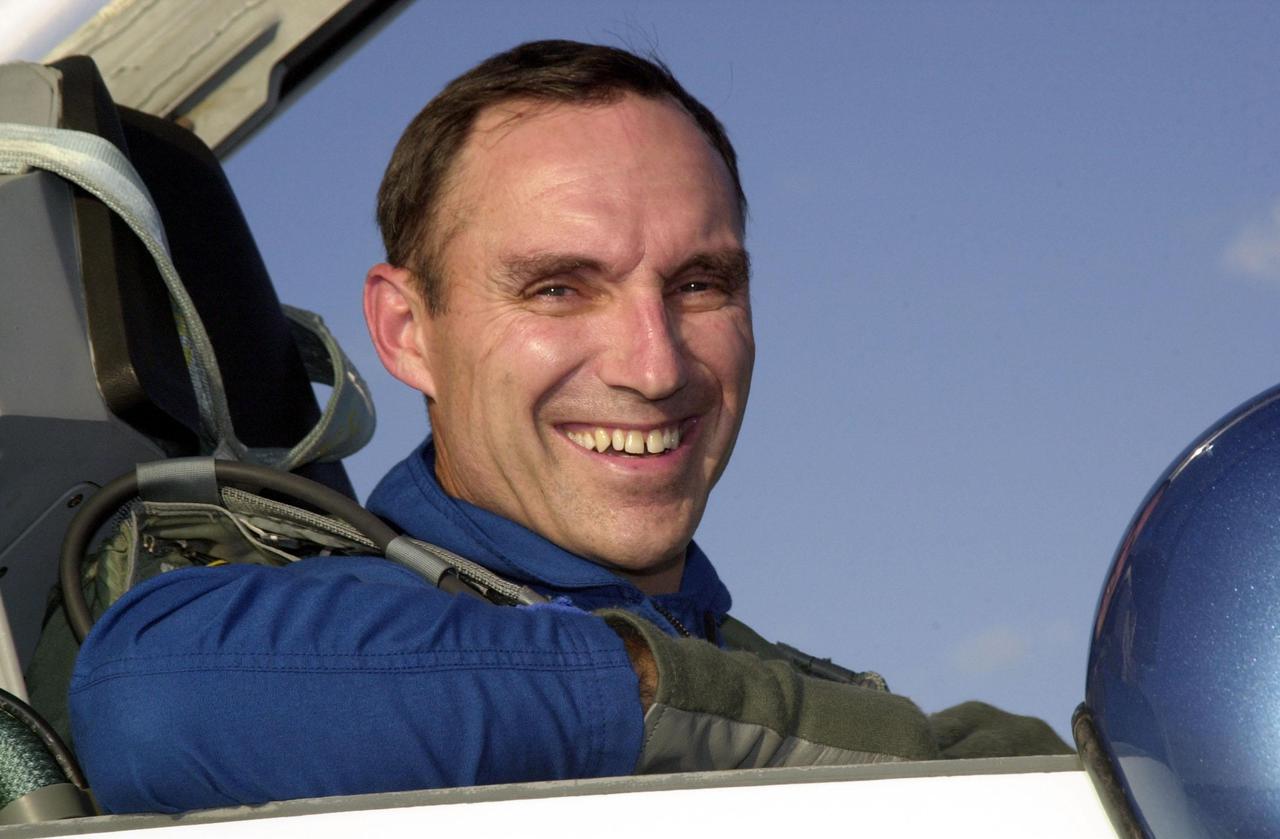
KENNEDY SPACE CENTER, Fla. - Expedition Four crew member Carl E. Walz arrives at the Shuttle Landing Facility aboard a T-38 jet. Walz will be participating in the Terminal Countdown Demonstration Test, a dress rehearsal for his upcoming launch. He will be transported to the International Space Station on mission STS-108, targeted for launch on Nov. 29 on Space Shuttle Endeavour. The Expedition Four crew will spend more than five months living and working on the permanently manned Station and return on mission STS-111 in May 2002
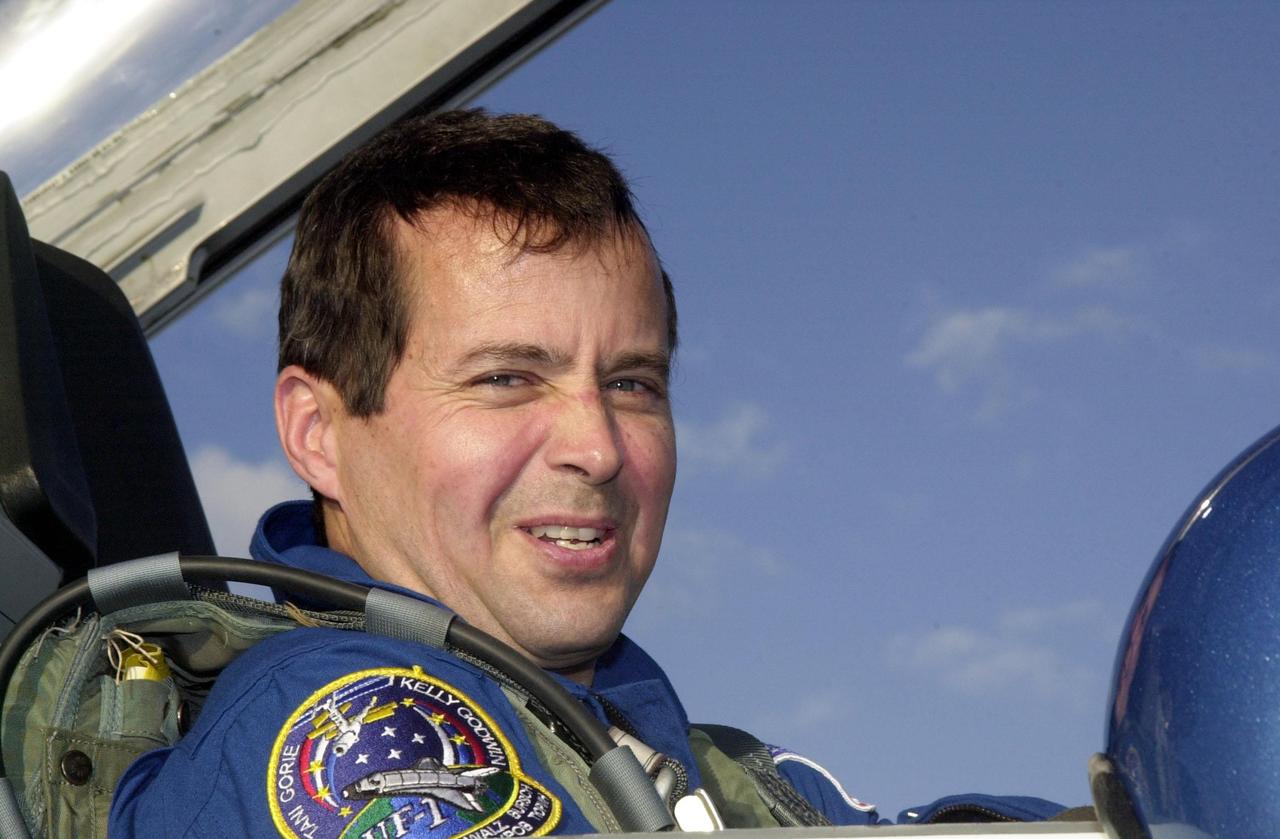
KENNEDY SPACE CENTER, Fla. -- Expedition Four crew member Daniel W. Bursch arrives at the Shuttle Landing Facility aboard a T-38 jet. Bursch will be participating in the Terminal Countdown Demonstration Test, a dress rehearsal for his upcoming launch. He will be transported to the International Space Station on mission STS-108, targeted for launch on Nov. 29 on Space Shuttle Endeavour. The Expedition Four crew will spend more than five months living and working on the permanently manned Station and return on mission STS-111 in May 2002
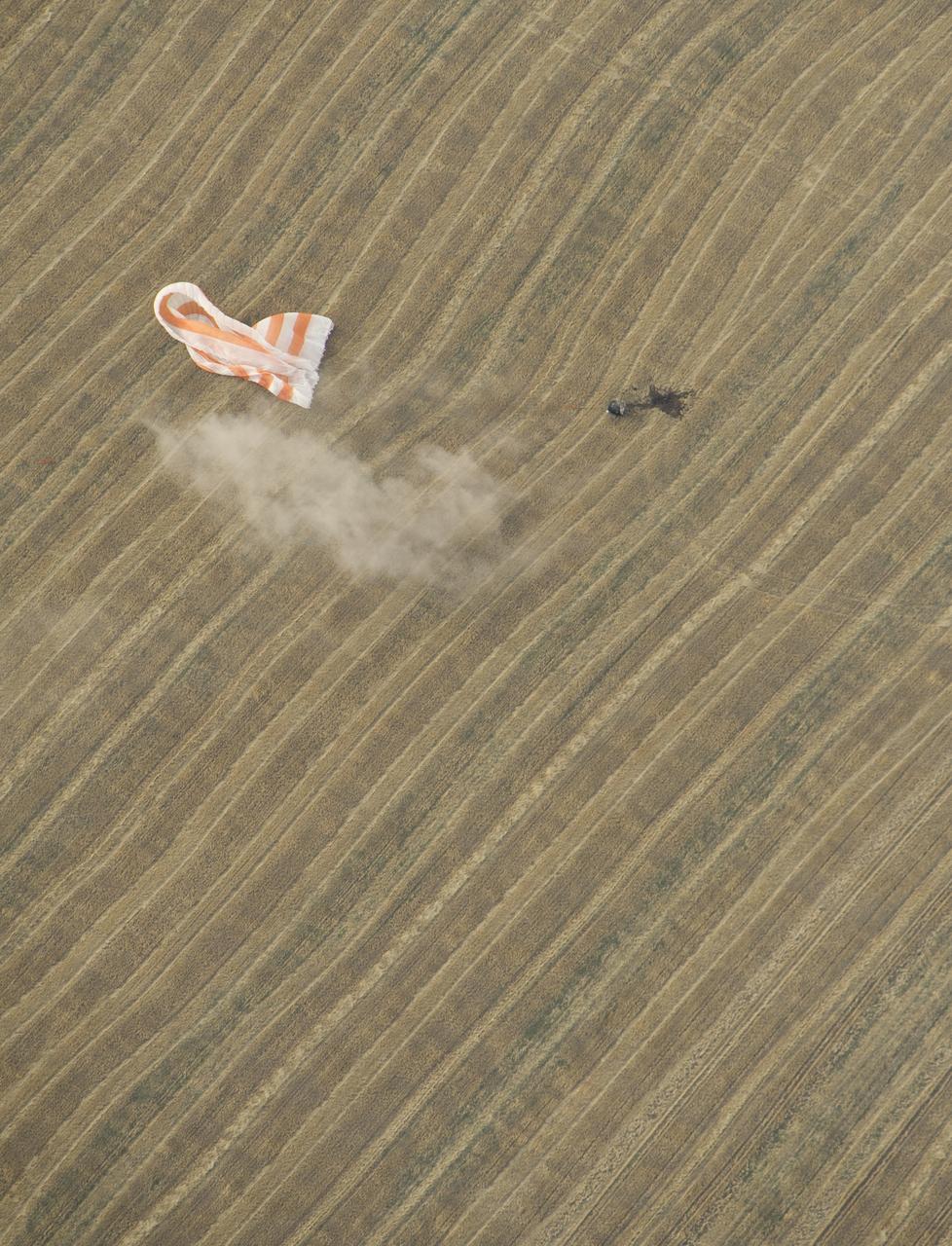
The Soyuz TMA-22 spacecraft is seen as it lands with Expedition 30 Commander Dan Burbank, and Flight Engineers Anton Shkaplerov and Anatoly Ivanishin in a remote area outside of the town of Arkalyk, Kazakhstan, on Friday, April 27, 2012. NASA Astronaut Burbank, Russian Cosmonauts Shkaplerov and Ivanishin are returning from more than five months onboard the International Space Station where they served as members of the Expedition 29 and 30 crews. Photo Credit: (NASA/Carla Cioffi)
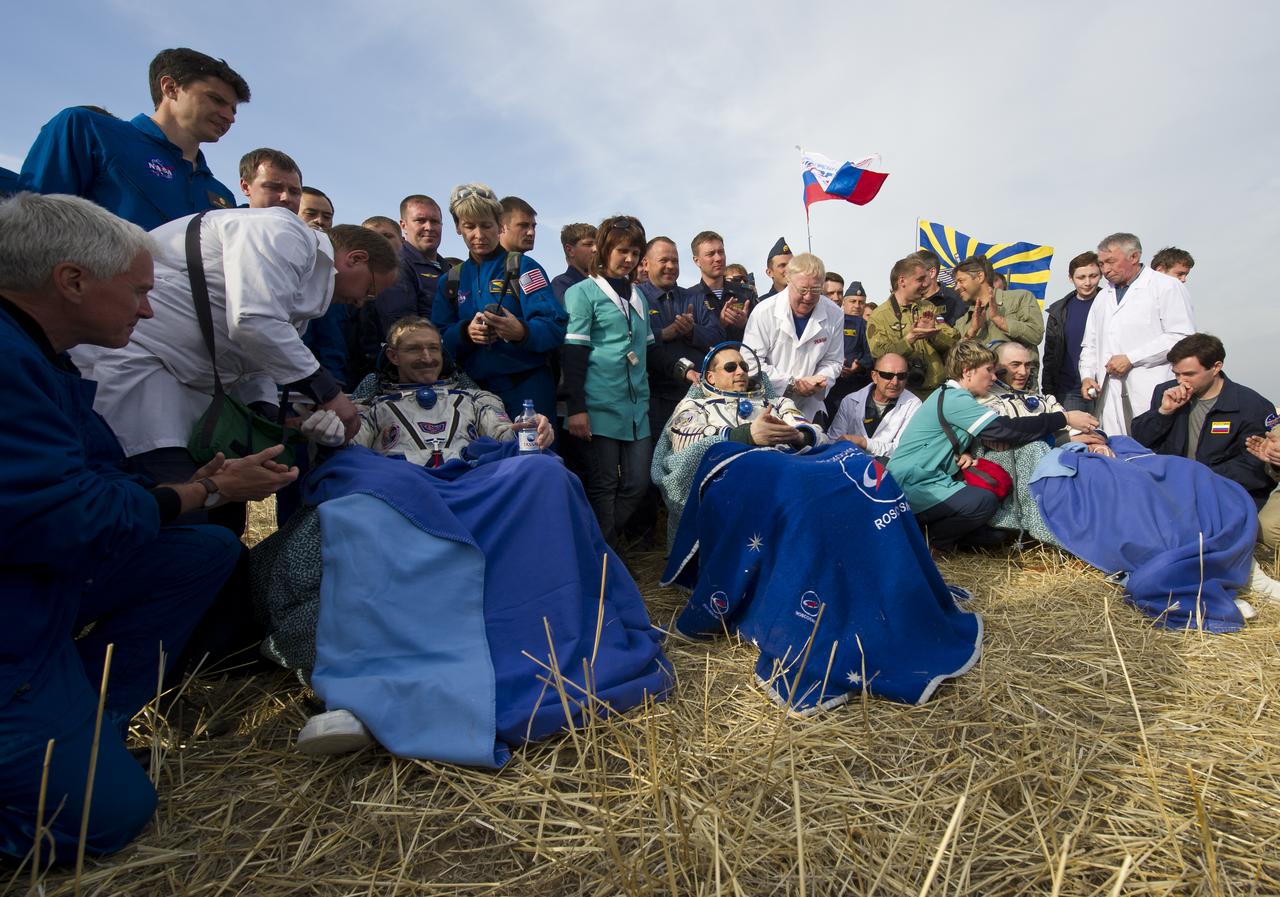
Expedition 30 Commander Dan Burbank, left, Flight Engineers Anton Shkaplerov, center, and Anatoly Ivanishin sit in chairs outside the Soyuz Capsule just minutes after they landed in a remote area outside the town of Arkalyk, Kazakhstan, on Friday, April 27, 2012. NASA Astronaut Burbank, Russian Cosmonauts Shkaplerov and Ivanishin are returning from more than five months onboard the International Space Station where they served as members of the Expedition 29 and 30 crews. Photo Credit: (NASA/Carla Cioffi)
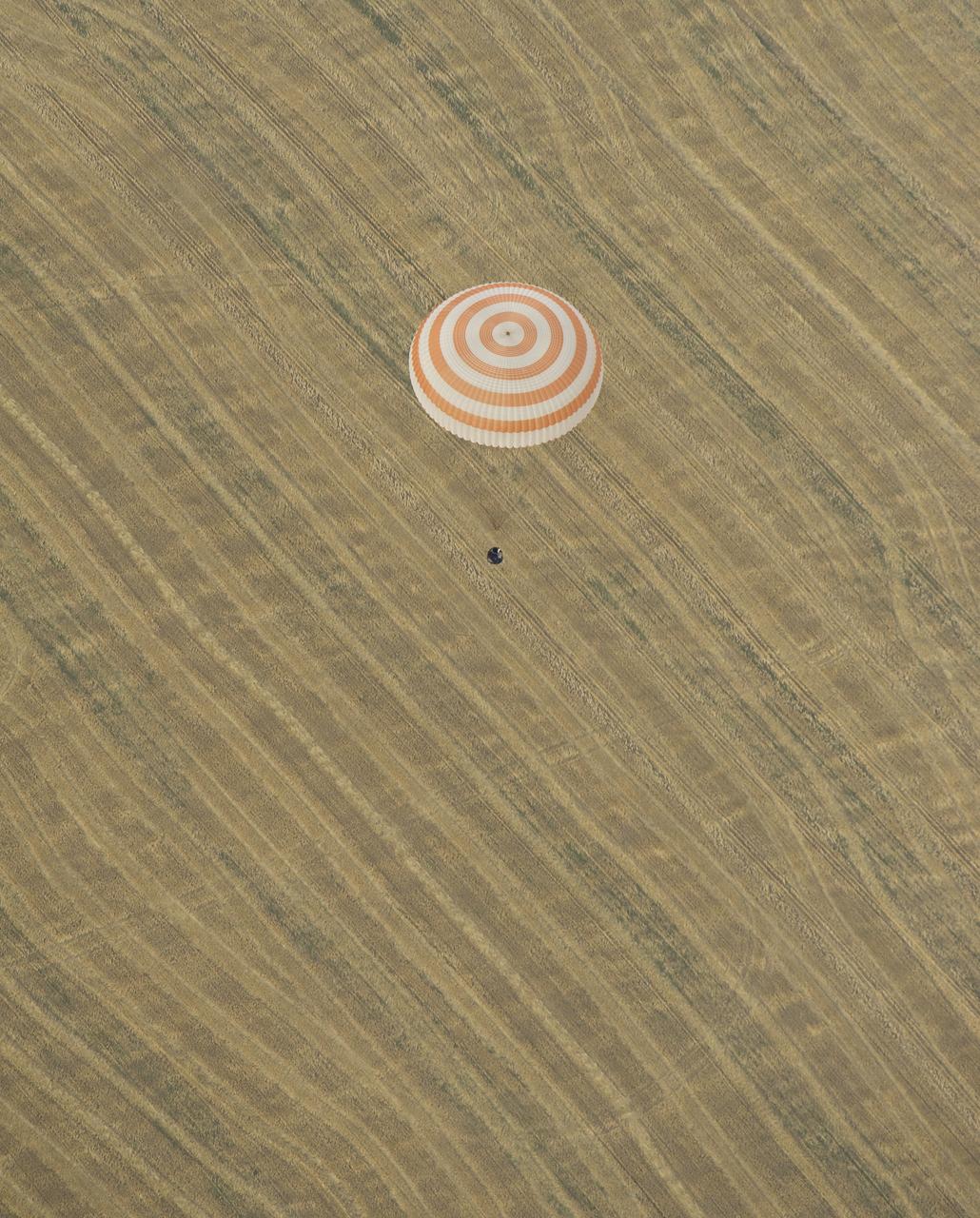
The Soyuz TMA-22 spacecraft is seen as it lands with Expedition 30 Commander Dan Burbank, and Flight Engineers Anton Shkaplerov and Anatoly Ivanishin in a remote area outside of the town of Arkalyk, Kazakhstan, on Friday, April 27, 2012. NASA Astronaut Burbank, Russian Cosmonauts Shkaplerov and Ivanishin are returning from more than five months onboard the International Space Station where they served as members of the Expedition 29 and 30 crews. Photo Credit: (NASA/Carla Cioffi)
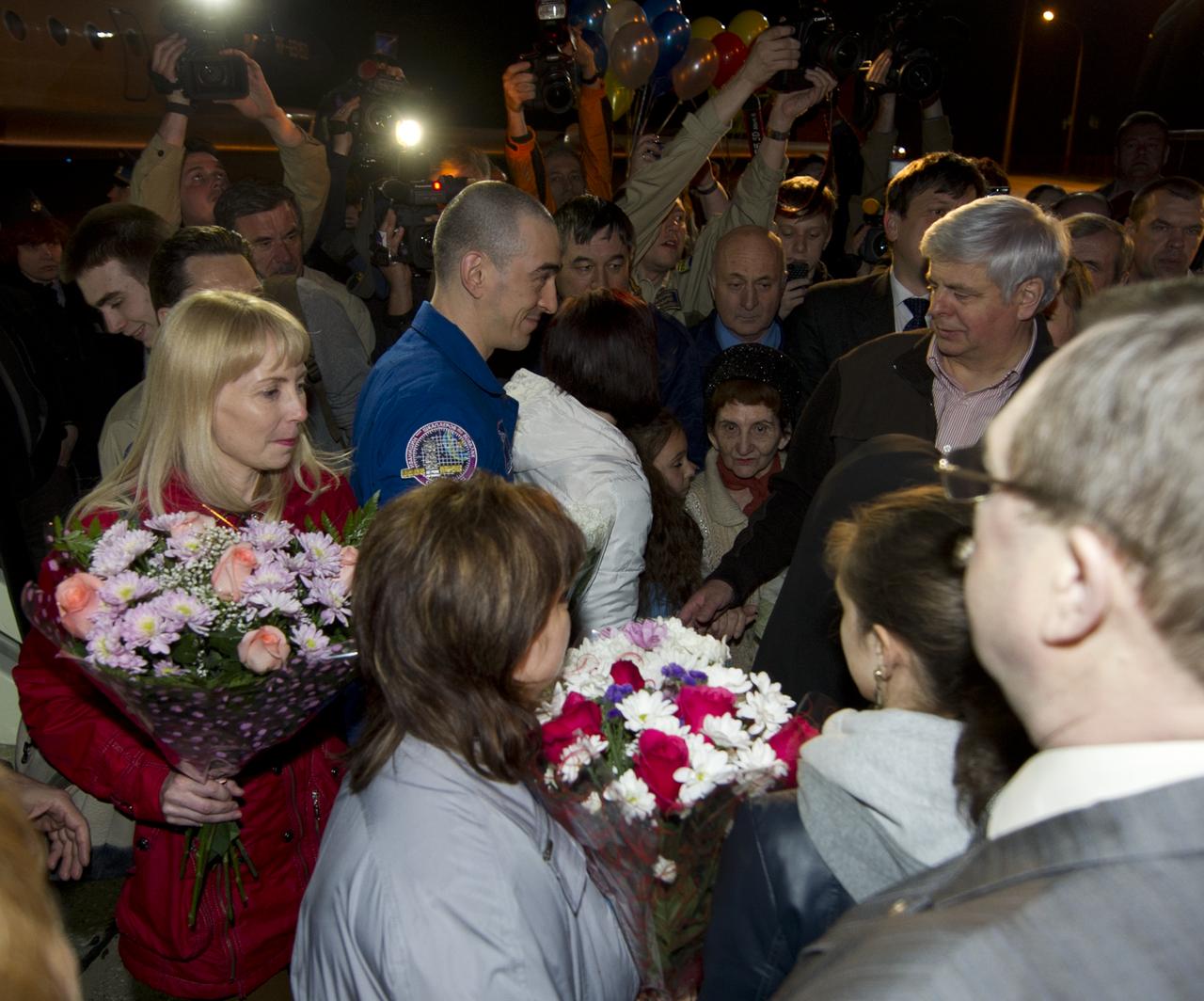
Expedition 30 Flight Engineer Anatoly Ivanishin is welcomed home by colleagues and family in Star City, Russia on Saturday, April 28, 2012. Russian Cosmonaut Ivanishin, Expedition 30 Commander Daniel Burbank, and Russian Cosmonaut Anton Shkaplerov landed outside of Arkalyk, Kazakhstan earlier in the day from over five months onboard the International Space Station where they served as members of the Expedtion 29 and 30 crews. Photo Credit: (NASA/Carla Cioffi)
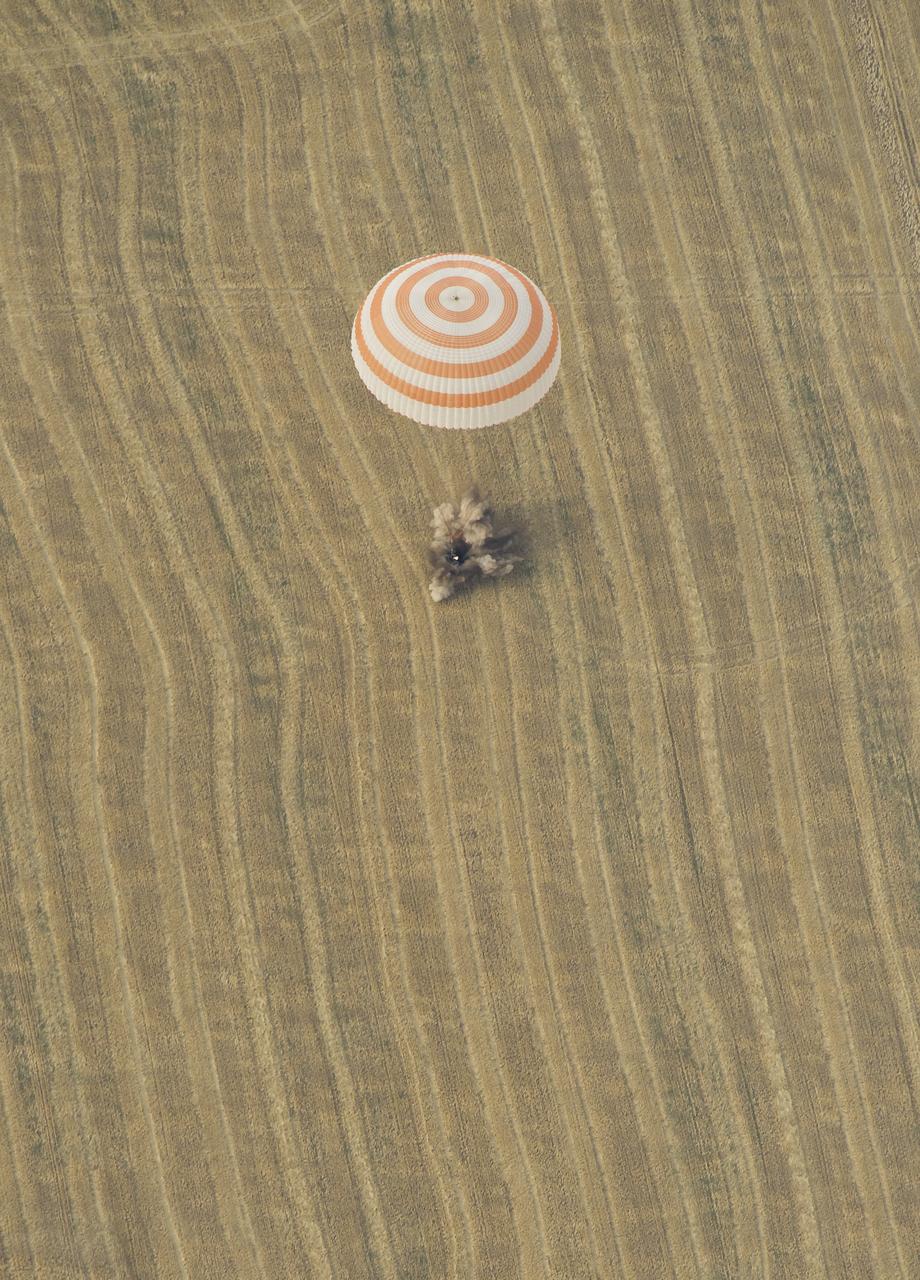
The Soyuz TMA-22 spacecraft is seen as it lands with Expedition 30 Commander Dan Burbank, and Flight Engineers Anton Shkaplerov and Anatoly Ivanishin in a remote area outside of the town of Arkalyk, Kazakhstan, on Friday, April 27, 2012. NASA Astronaut Burbank, Russian Cosmonauts Shkaplerov and Ivanishin are returning from more than five months onboard the International Space Station where they served as members of the Expedition 29 and 30 crews. Photo Credit: (NASA/Carla Cioffi)
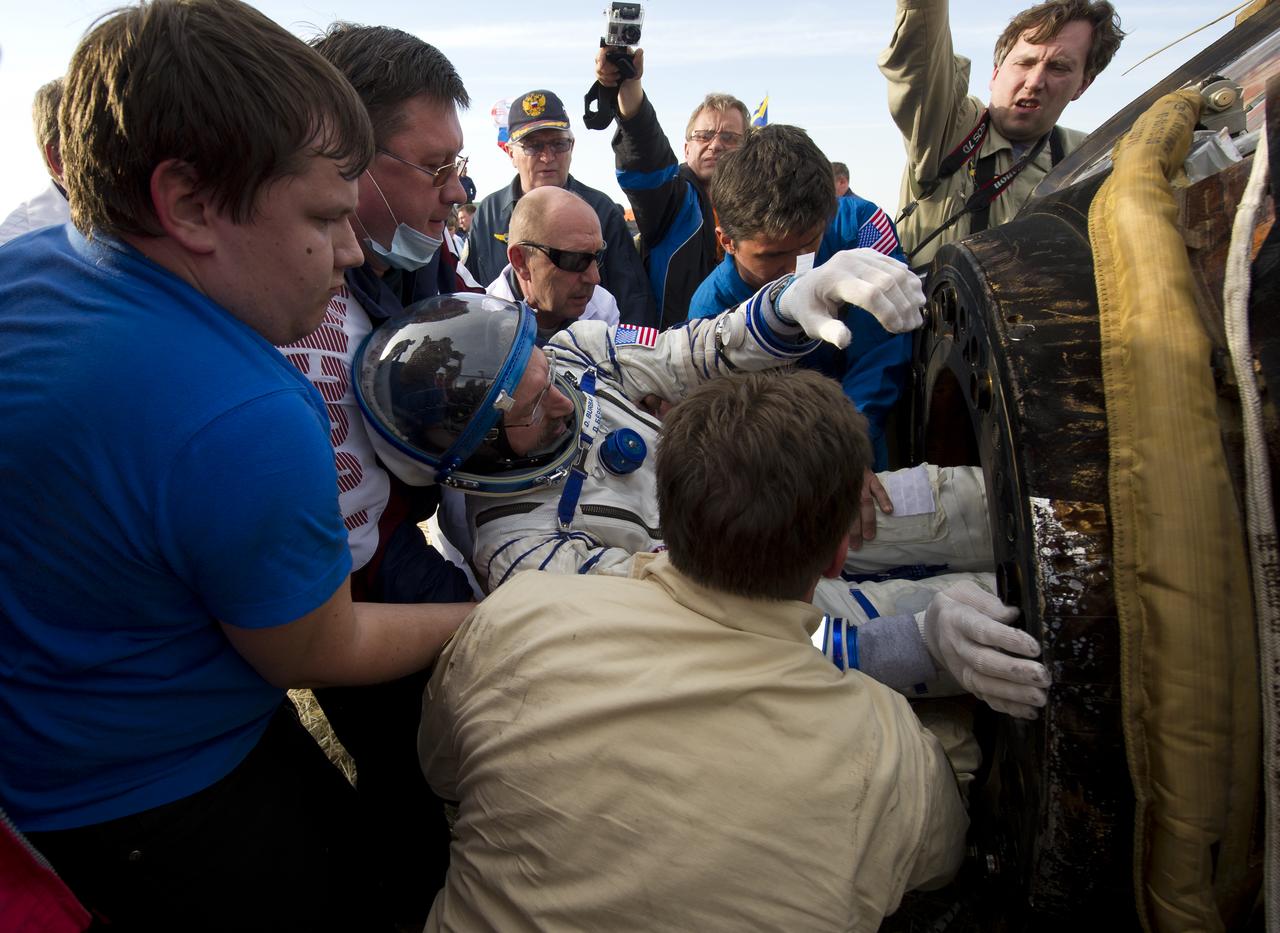
Expedition 30 Commander Dan Burbank is seen as he is extracted from the Soyuz TMA-22 spacecraft shortly after the capsule landed with Russian flight engineers Anton Shkaplerov and Anatoly Ivanishin in a remote area outside of the town of Arkalyk, Kazakhstan on Friday, April 27, 2012. Burbank, Ivanishin, and Shkaplerov are returning from more than five months onboard the International Space Station where they served as members of the Expedition 29 and 30 crews. Photo Credit: (NASA/Carla Cioffi)
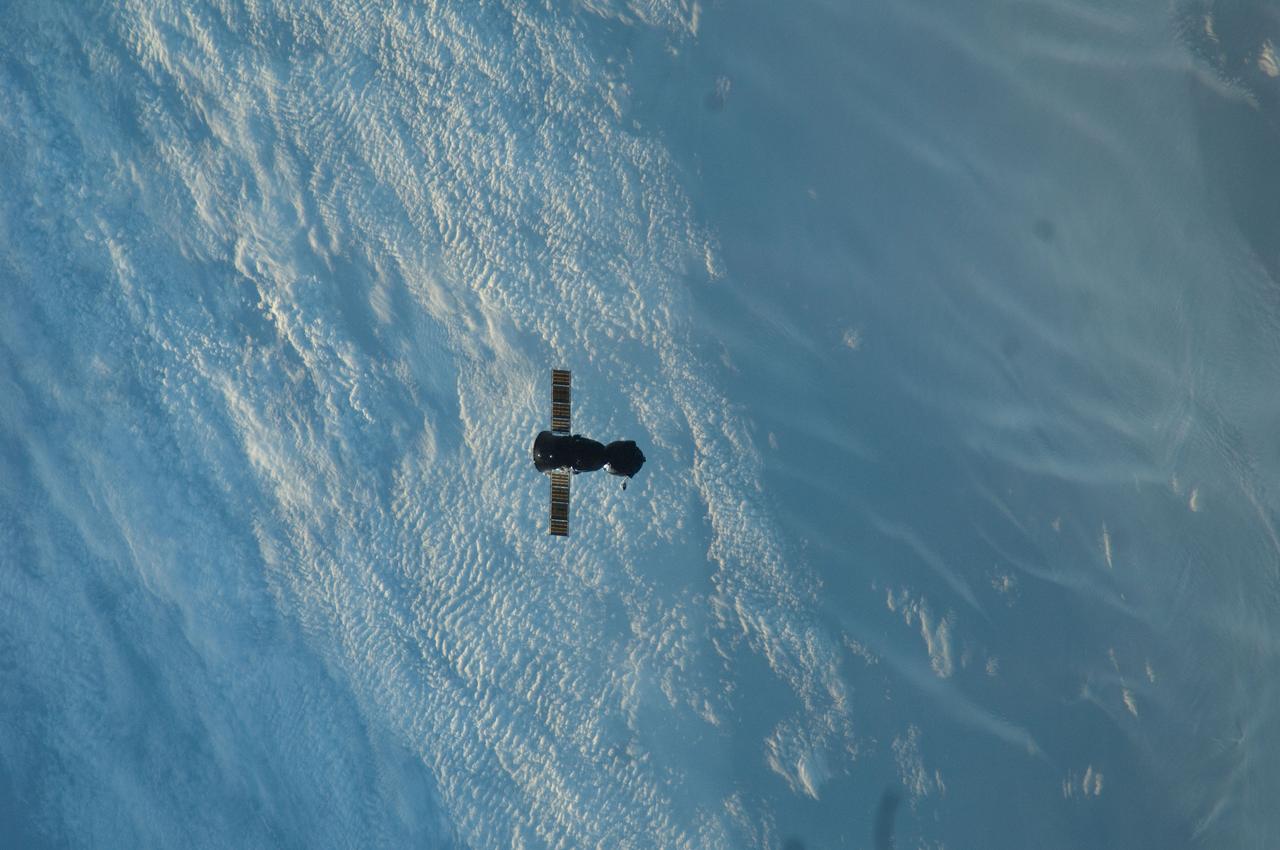
ISS031-E-005014 (27 April 2012) --- The Soyuz TMA-22 spacecraft departs from the International Space Station and heads toward a landing in a remote area outside of the town of Arkalyk, Kazakhstan, on April 27, 2012. NASA astronaut Dan Burbank, Expedition 30 commander; along with Russian cosmonauts Anton Shkaplerov, Soyuz commander, and Anatoly Ivanishin, flight engineer, are returning from more than five months onboard the International Space Station where they served as members of the Expedition 29 and 30 crews.
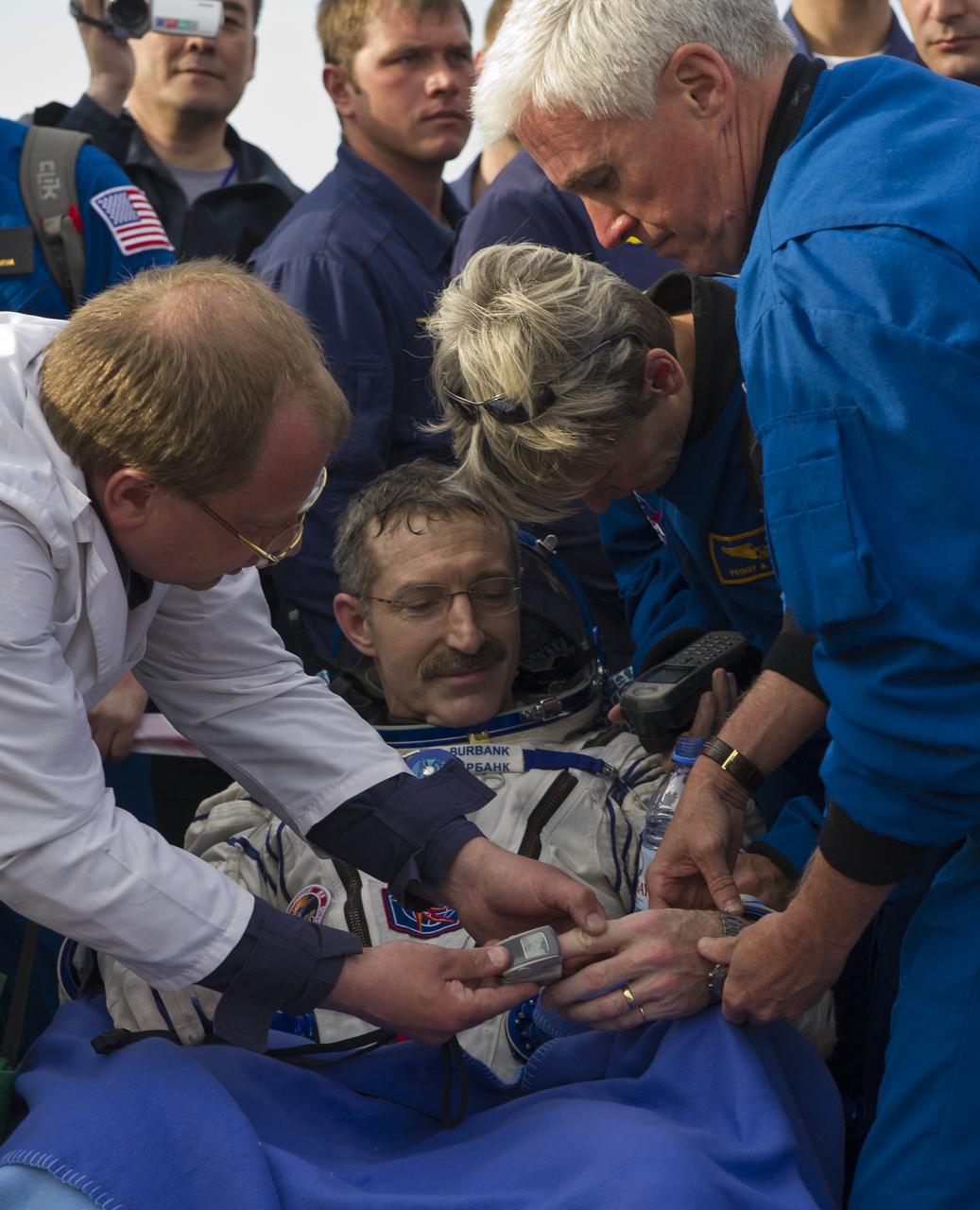
Expedition 30 Commander Dan Burbank, center, is attended to by his doctor and crew support personnel following his landing in the Soyuz-22 spacecraft, Friday, April 27, 2012. NASA Astronaut Burbank, Russian Cosmonauts Shkaplerov and Ivanishin are returning from more than five months onboard the International Space Station where they served as members of the Expedition 29 and 30 crews. Photo Credit: (NASA/Carla Cioffi)
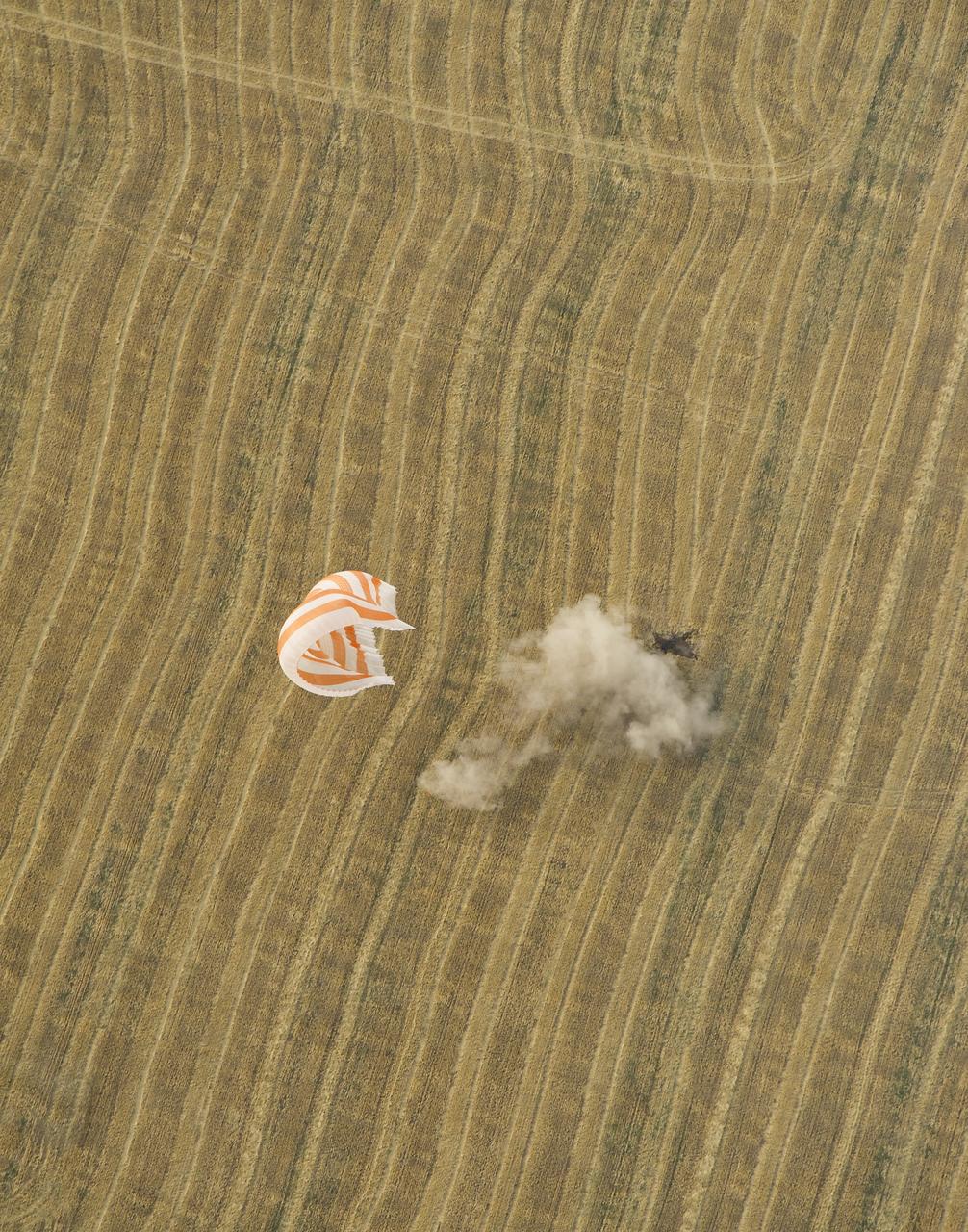
The Soyuz TMA-22 spacecraft is seen as it lands with Expedition 30 Commander Dan Burbank, and Flight Engineers Anton Shkaplerov and Anatoly Ivanishin in a remote area outside of the town of Arkalyk, Kazakhstan, on Friday, April 27, 2012. NASA Astronaut Burbank, Russian Cosmonauts Shkaplerov and Ivanishin are returning from more than five months onboard the International Space Station where they served as members of the Expedition 29 and 30 crews. Photo Credit: (NASA/Carla Cioffi)
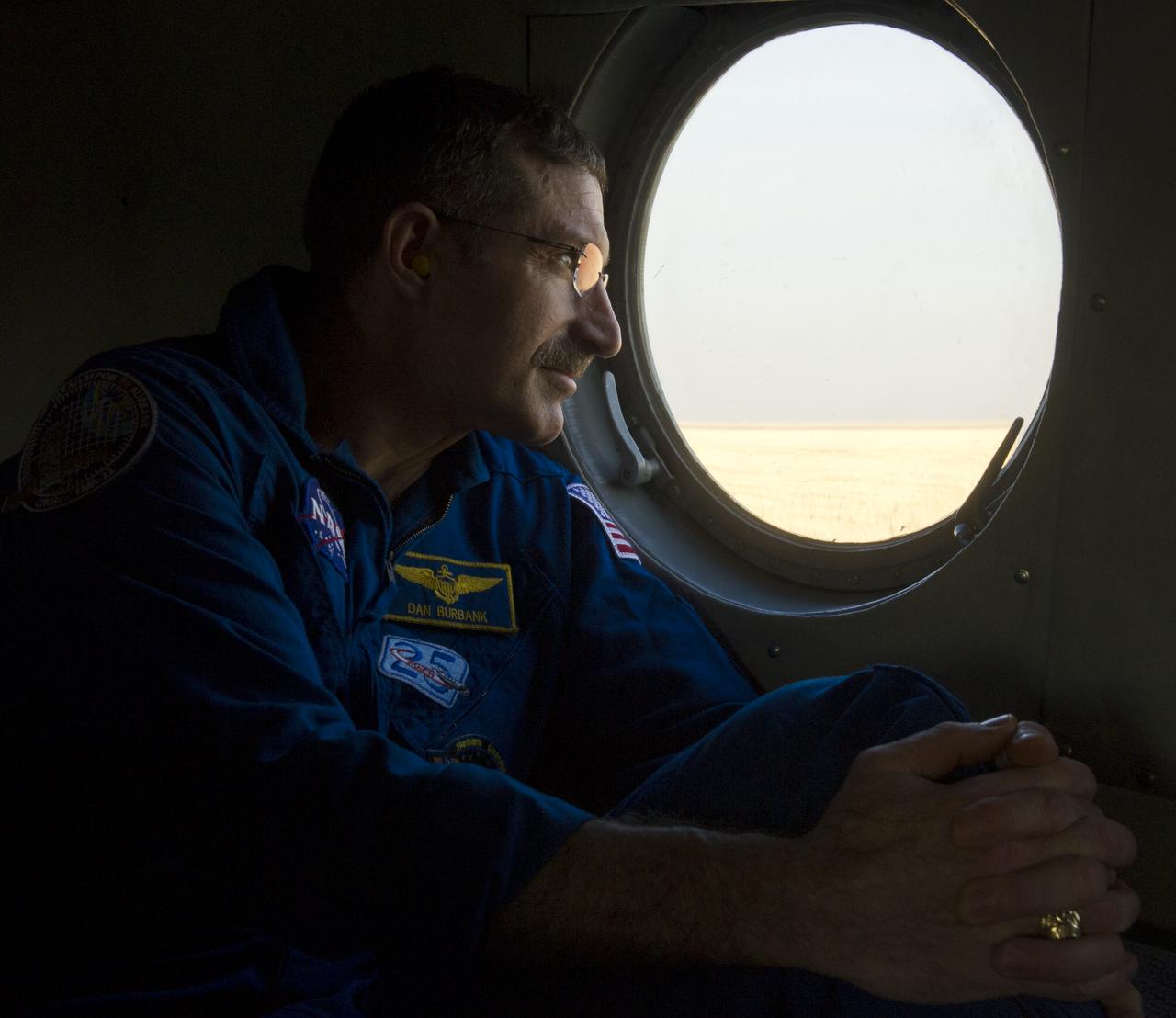
Expedition 30 Commander Dan Burbank looks out the window of his helicopter as it prepares to depart for Kustanai from the Soyuz TMA-22 capsule landing site outside of the town of Arkalyk, Kazakhstan on Friday, April 27, 2012. Astronaut Burbank, Russian Cosmonauts Shkaplerov and Ivanishin are returning from more than five months onboard the International Space Station where they served as members of the Expedition 29 and 30 crews. Photo Credit: (NASA/Carla Cioffi)
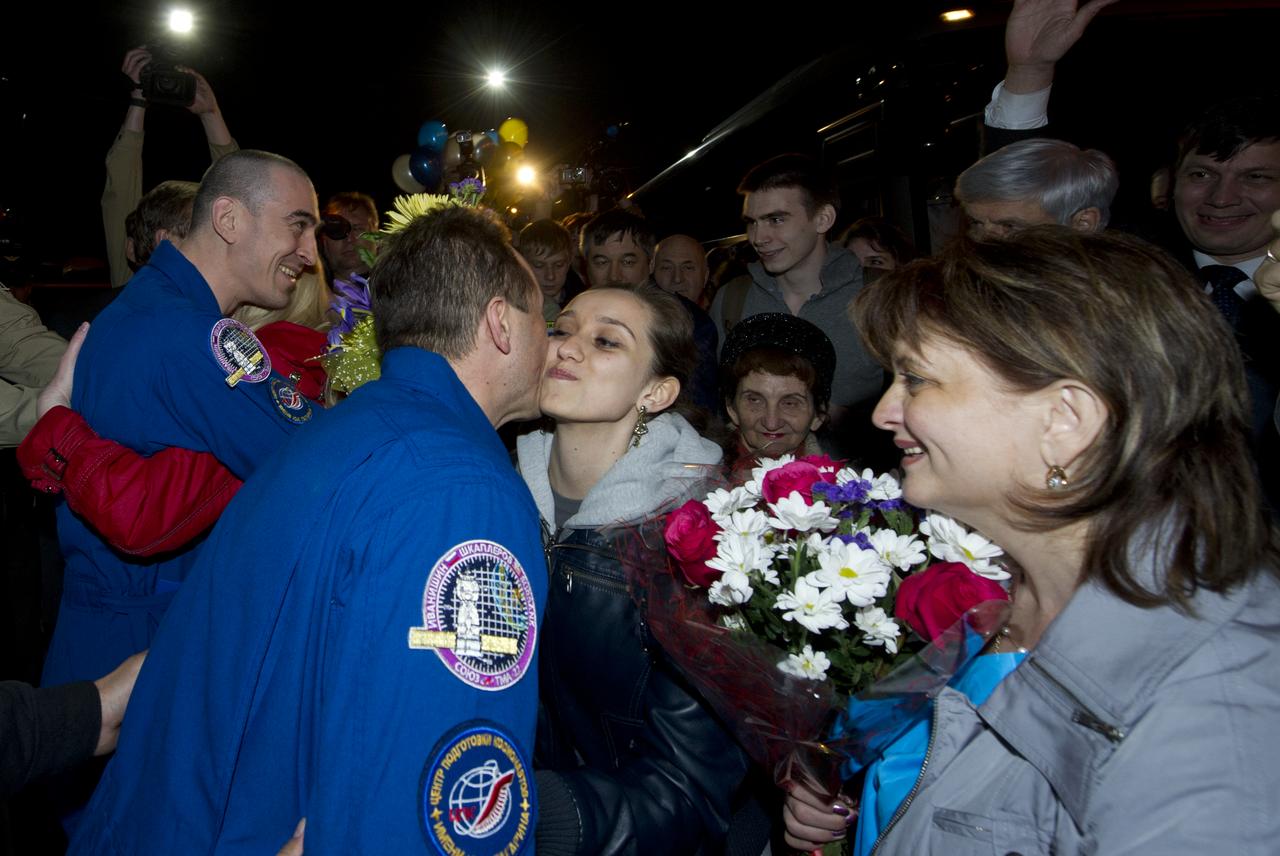
Expedition 30 Flight Engineers Anatoly Ivanishin, far left, and Anton Shkaplerov are welcomed home by colleagues and family in Star City, Russia on Saturday, April 28, 2012. Russian Cosmonauts Ivanishin, Shkaplerov and Expedition 30 Commander Daniel Burbank landed outside of Arkalyk, Kazakhstan earlier in the day from over five months onboard the International Space Station where they served as members of the Expedtion 29 and 30 crews. Photo Credit: (NASA/Carla Cioffi)
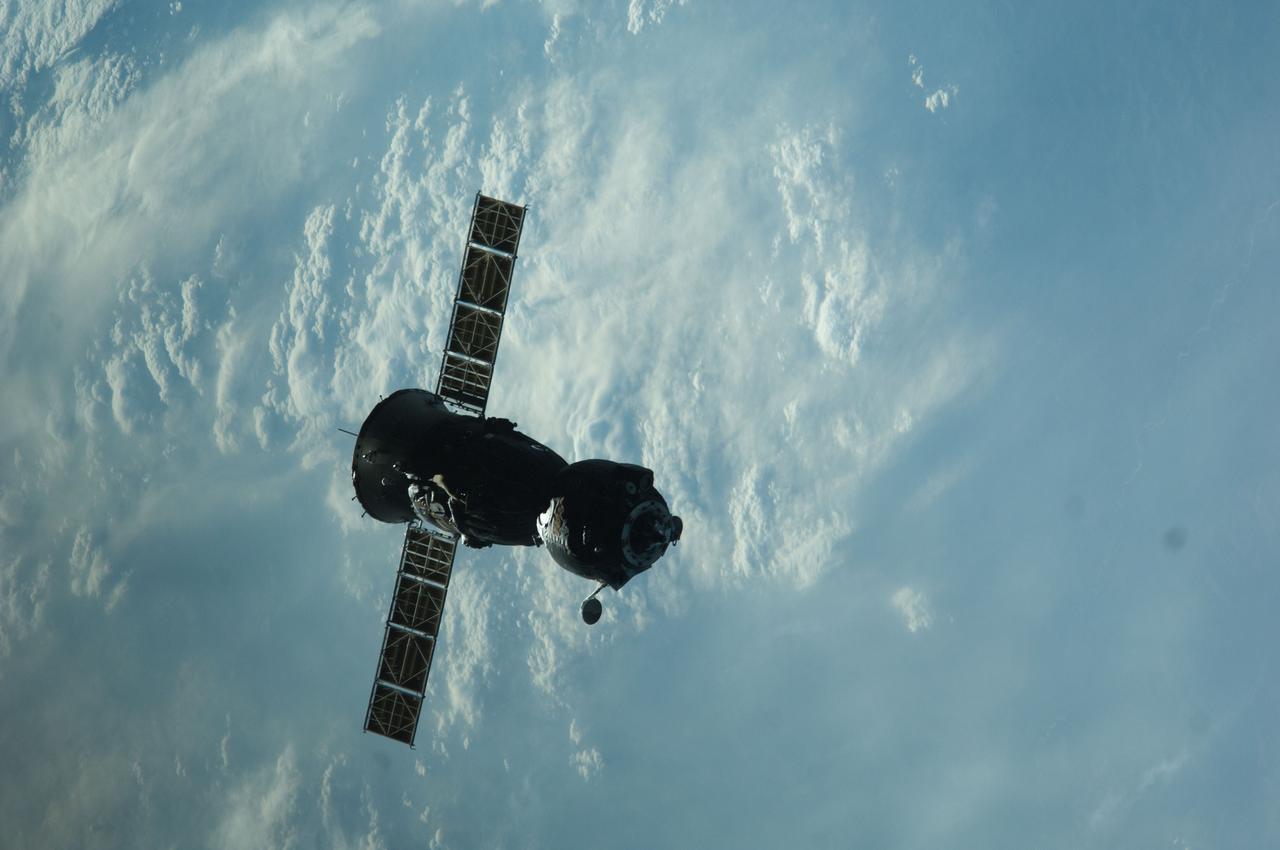
ISS031-E-005051 (27 April 2012) --- The Soyuz TMA-22 spacecraft departs from the International Space Station and heads toward a landing in a remote area outside of the town of Arkalyk, Kazakhstan, on April 27, 2012. NASA astronaut Dan Burbank, Expedition 30 commander; along with Russian cosmonauts Anton Shkaplerov, Soyuz commander, and Anatoly Ivanishin, flight engineer, are returning from more than five months onboard the International Space Station where they served as members of the Expedition 29 and 30 crews.
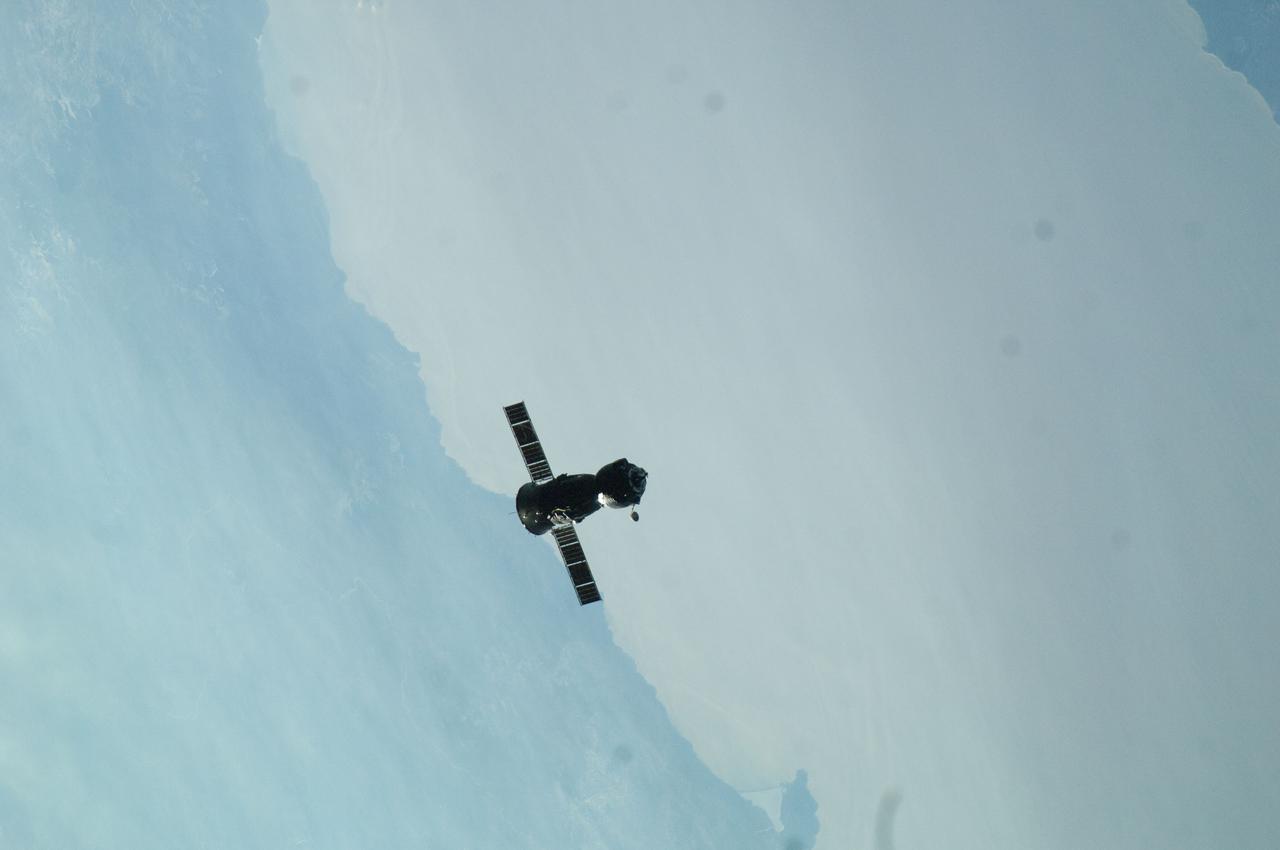
ISS031-E-005007 (27 April 2012) --- The Soyuz TMA-22 spacecraft departs from the International Space Station and heads toward a landing in a remote area outside of the town of Arkalyk, Kazakhstan, on April 27, 2012. NASA astronaut Dan Burbank, Expedition 30 commander; along with Russian cosmonauts Anton Shkaplerov, Soyuz commander, and Anatoly Ivanishin, flight engineer, are returning from more than five months onboard the International Space Station where they served as members of the Expedition 29 and 30 crews.
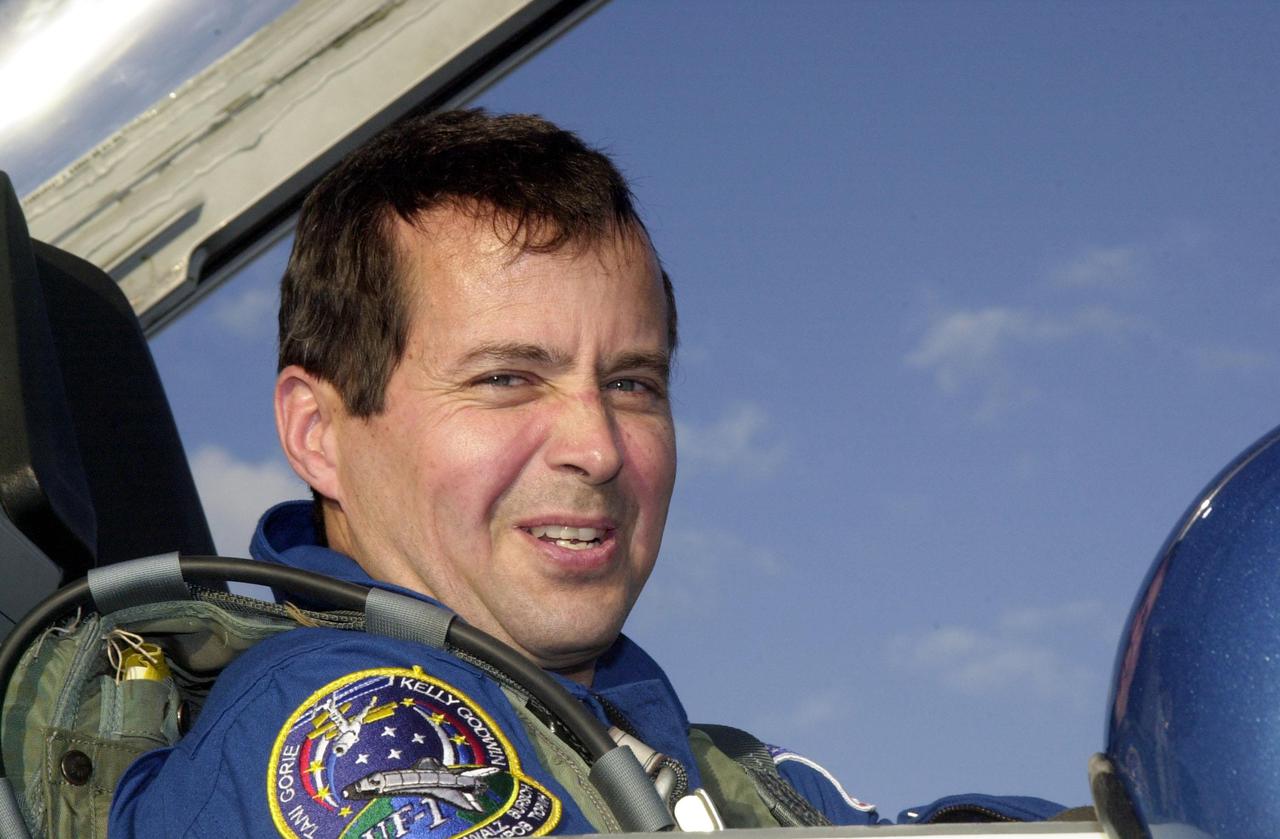
KENNEDY SPACE CENTER, Fla. -- Expedition Four crew member Daniel W. Bursch arrives at the Shuttle Landing Facility aboard a T-38 jet. Bursch will be participating in the Terminal Countdown Demonstration Test, a dress rehearsal for his upcoming launch. He will be transported to the International Space Station on mission STS-108, targeted for launch on Nov. 29 on Space Shuttle Endeavour. The Expedition Four crew will spend more than five months living and working on the permanently manned Station and return on mission STS-111 in May 2002
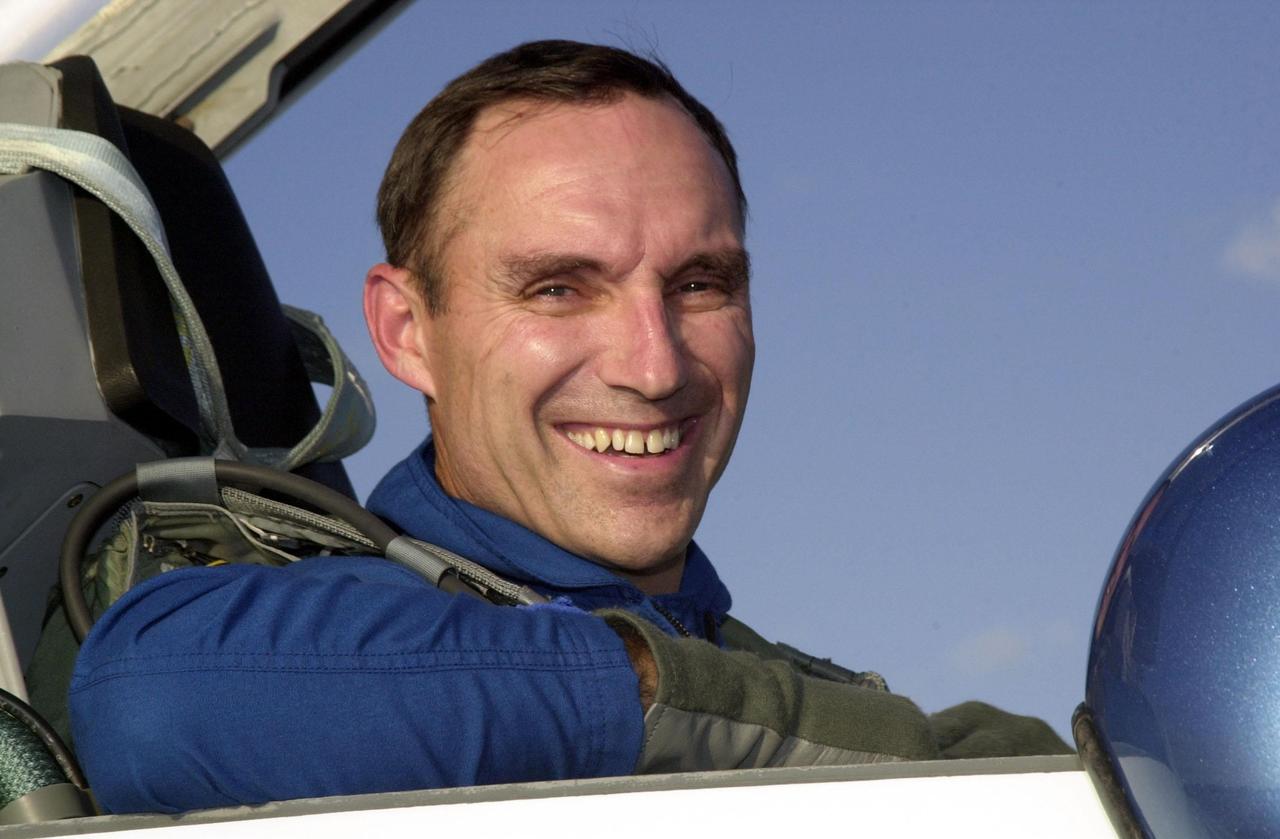
KENNEDY SPACE CENTER, Fla. - Expedition Four crew member Carl E. Walz arrives at the Shuttle Landing Facility aboard a T-38 jet. Walz will be participating in the Terminal Countdown Demonstration Test, a dress rehearsal for his upcoming launch. He will be transported to the International Space Station on mission STS-108, targeted for launch on Nov. 29 on Space Shuttle Endeavour. The Expedition Four crew will spend more than five months living and working on the permanently manned Station and return on mission STS-111 in May 2002
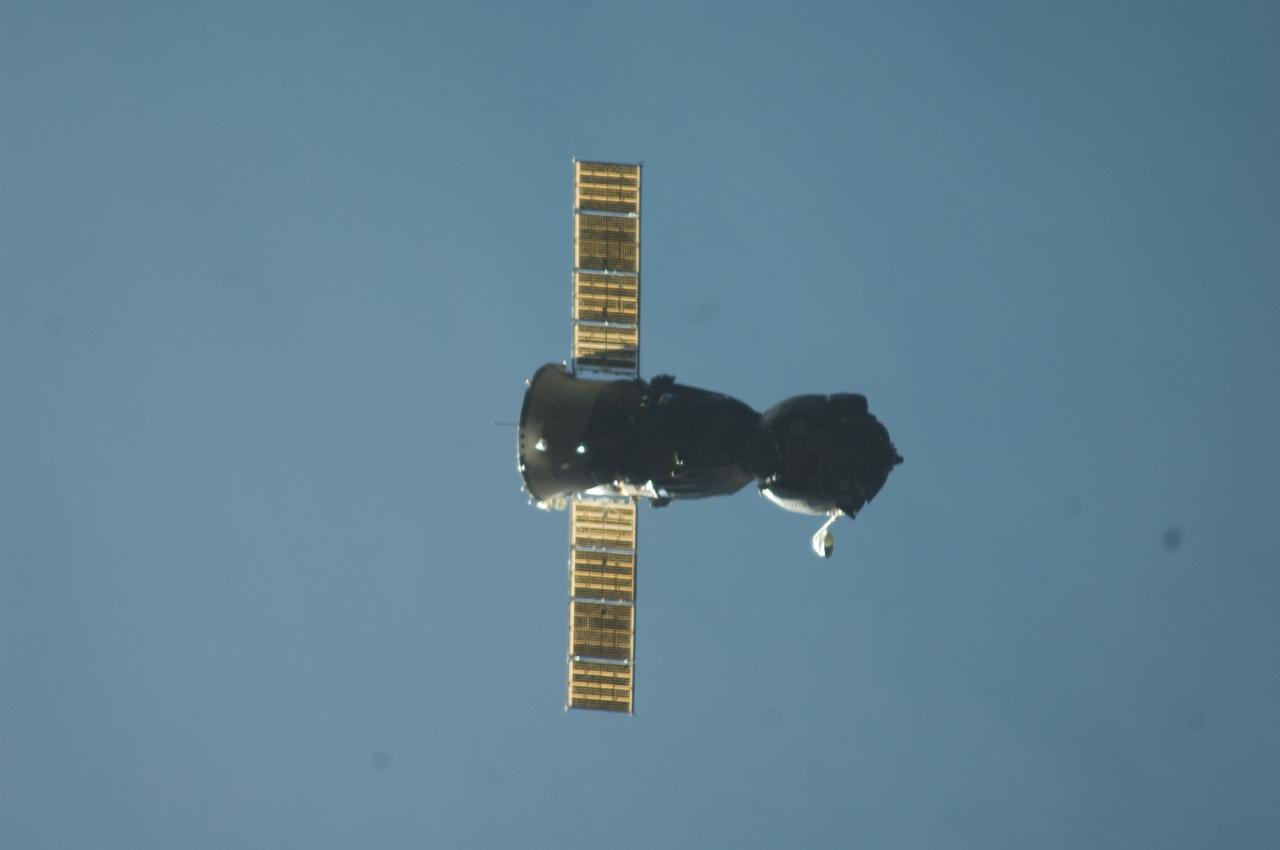
ISS031-E-005074 (27 April 2012) --- The Soyuz TMA-22 spacecraft departs from the International Space Station and heads toward a landing in a remote area outside of the town of Arkalyk, Kazakhstan, on April 27, 2012. NASA astronaut Dan Burbank, Expedition 30 commander; along with Russian cosmonauts Anton Shkaplerov, Soyuz commander, and Anatoly Ivanishin, flight engineer, are returning from more than five months onboard the International Space Station where they served as members of the Expedition 29 and 30 crews.
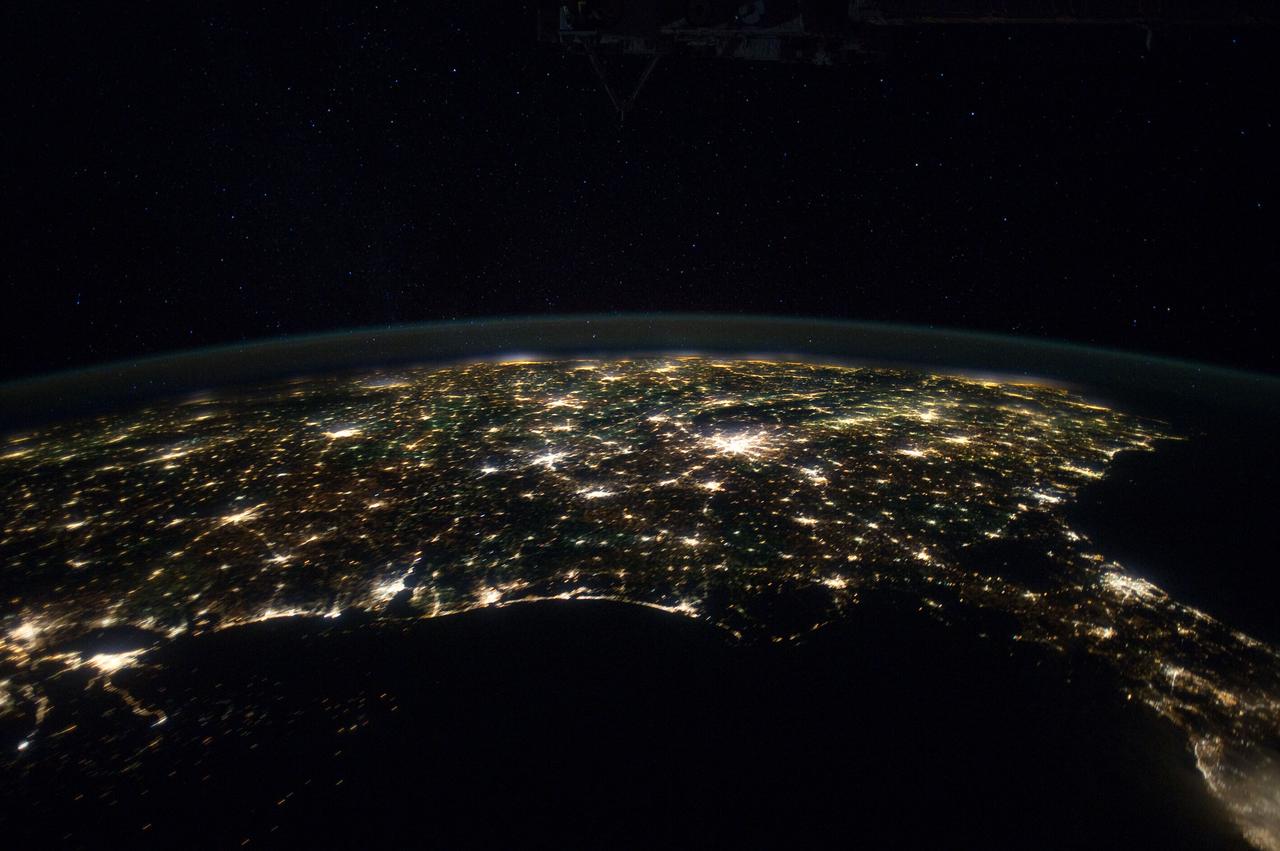
ISS030-E-055547 (29 Jan. 2012) --- This north-looking nighttime panorama of much of the land mass of the eastern two-thirds of the contiguous United States was photographed by one of the Expedition 30 crew members aboard the International Space Station as it was moving over the Gulf of Mexico on Jan. 29, 2012. In this series, the 24-mm images cover the area from the Atlantic Coast (right) to the eastern edge of the southwestern states and the western Gulf of Mexico. In this frame, Houston is near the left edge. Most of the Florida peninsula is easily recognizable at right edge. The lights of dozens of large metropolitan areas are visible.
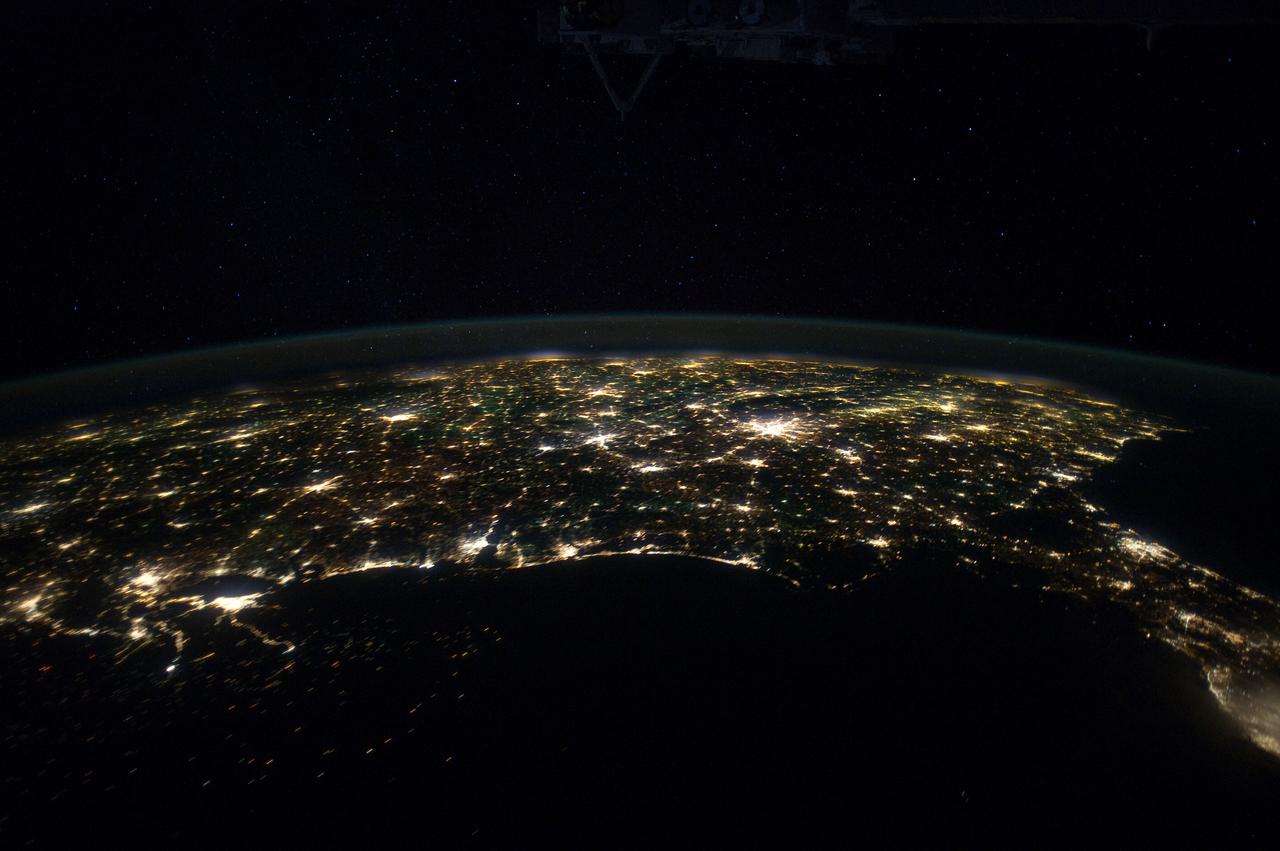
ISS030-E-055533 (29 Jan. 2012) --- This north-looking nighttime panorama of much of the land mass of the eastern two-thirds of the contiguous United States was photographed by one of the Expedition 30 crew members aboard the International Space Station as it was moving over the Gulf of Mexico on Jan. 29, 2012. In this series, the 24-mm images cover the area from the Atlantic Coast (right) to the eastern edge of the southwestern states and the western Gulf of Mexico. In this frame, Houston is near the left edge. Most of the Florida peninsula is easily recognizable at right edge. The lights of dozens of large metropolitan areas are visible.
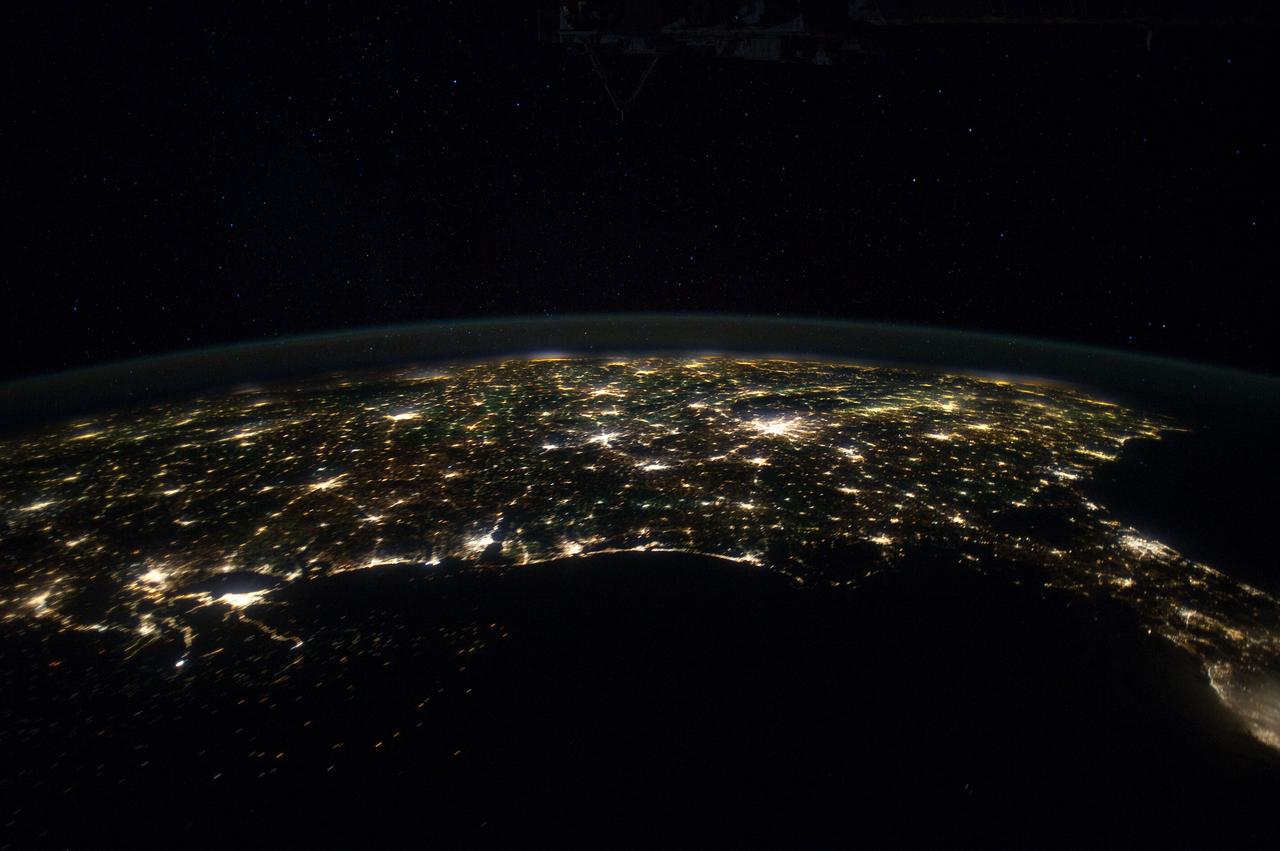
ISS030-E-055532 (29 Jan. 2012) --- This north-looking nighttime panorama of much of the land mass of the eastern two-thirds of the contiguous United States was photographed by one of the Expedition 30 crew members aboard the International Space Station as it was moving over the Gulf of Mexico on Jan. 29, 2012. In this series, the 24-mm images cover the area from the Atlantic Coast (right) to the eastern edge of the southwestern states and the western Gulf of Mexico. In this frame, Houston is near the left edge. Most of the Florida peninsula is easily recognizable at right edge. The lights of dozens of large metropolitan areas are visible.
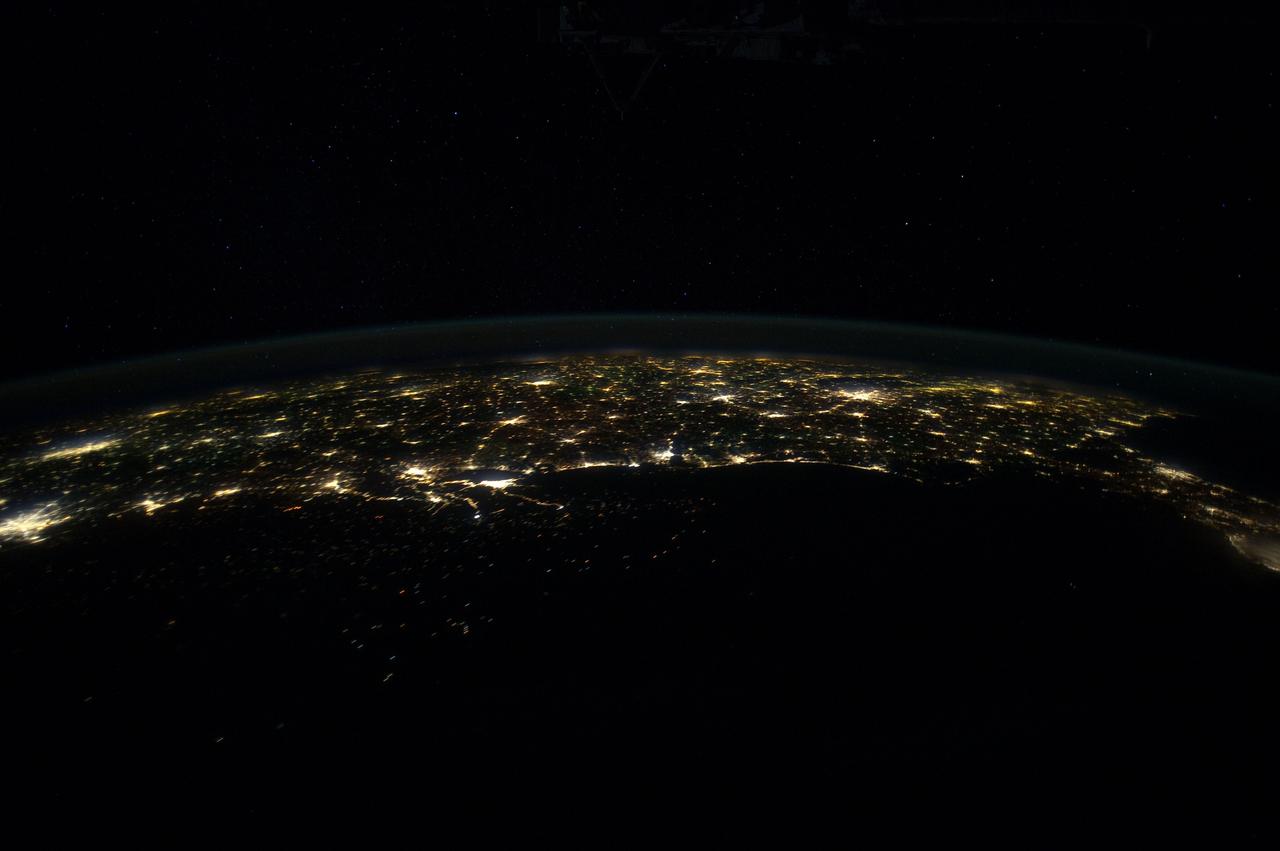
ISS030-E-055489 (29 Jan. 2012) --- This north-looking nighttime panorama of much of the land mass of the eastern two-thirds of the contiguous United States was photographed by one of the Expedition 30 crew members aboard the International Space Station as it was moving over the Gulf of Mexico on Jan. 29, 2012. In this series, the 24-mm images cover the area from the Atlantic Coast (right) to the eastern edge of the southwestern states and the western Gulf of Mexico. In this frame, Houston is near the left edge. Most of the Florida peninsula is easily recognizable at right edge. The lights of dozens of large metropolitan areas are visible.
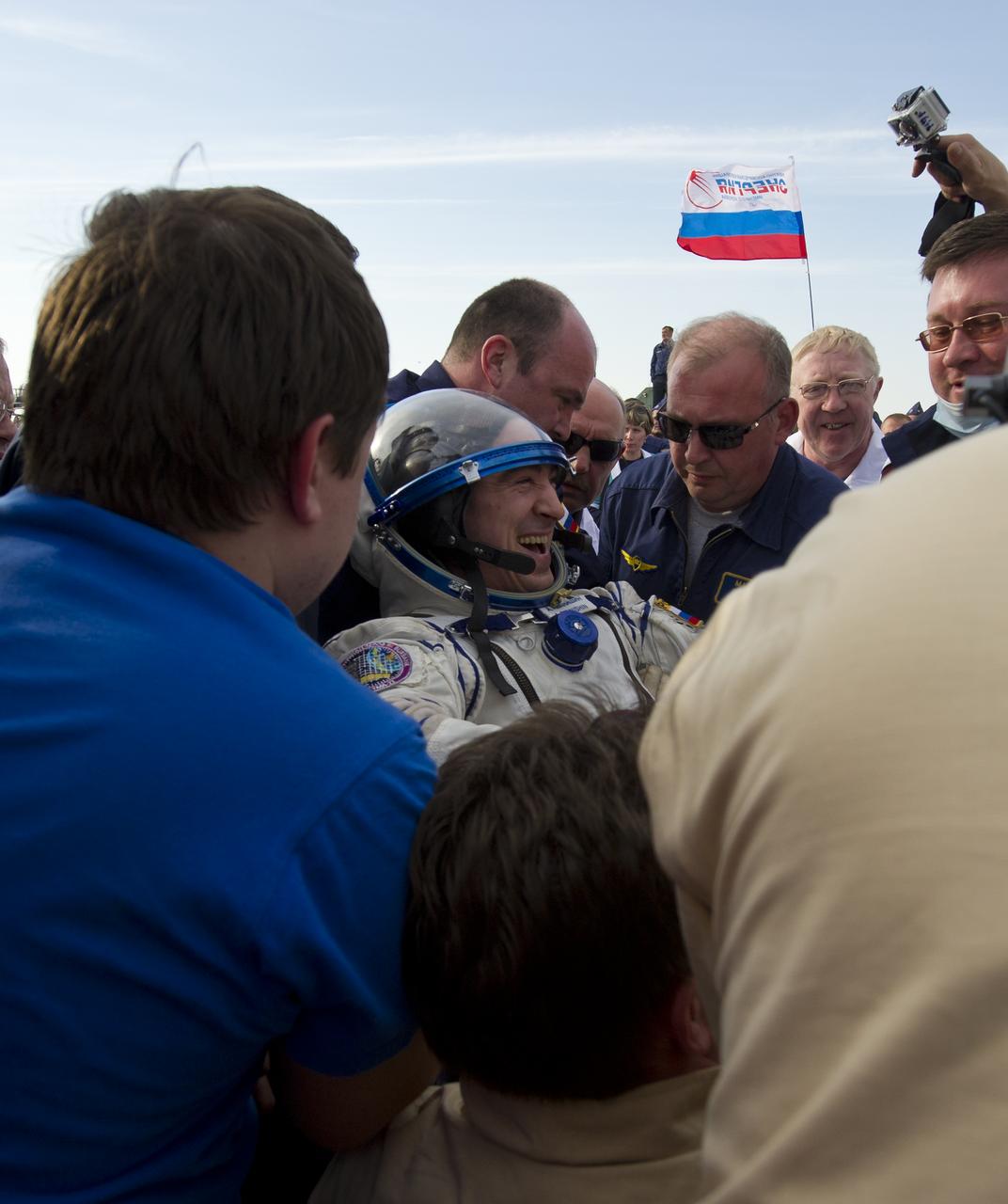
Expedition 30 flight engineer and Russian cosmonaut Anatoly Ivanishin is seen smiling as he is extracted from the Soyuz TMA-22 spacecraft shortly after the capsule landed with Expedition 30 Commander Dan Burbank and flight engineer Anton Shkaplerov in a remote area outside of the town of Arkalyk, Kazakhstan on Friday, April 27, 2012. Ivanishin, Burbank and Shkaplerov are returning from more than five months onboard the International Space Station where they served as members of the Expedition 29 and 30 crews. Photo Credit: (NASA/Carla Cioffi)
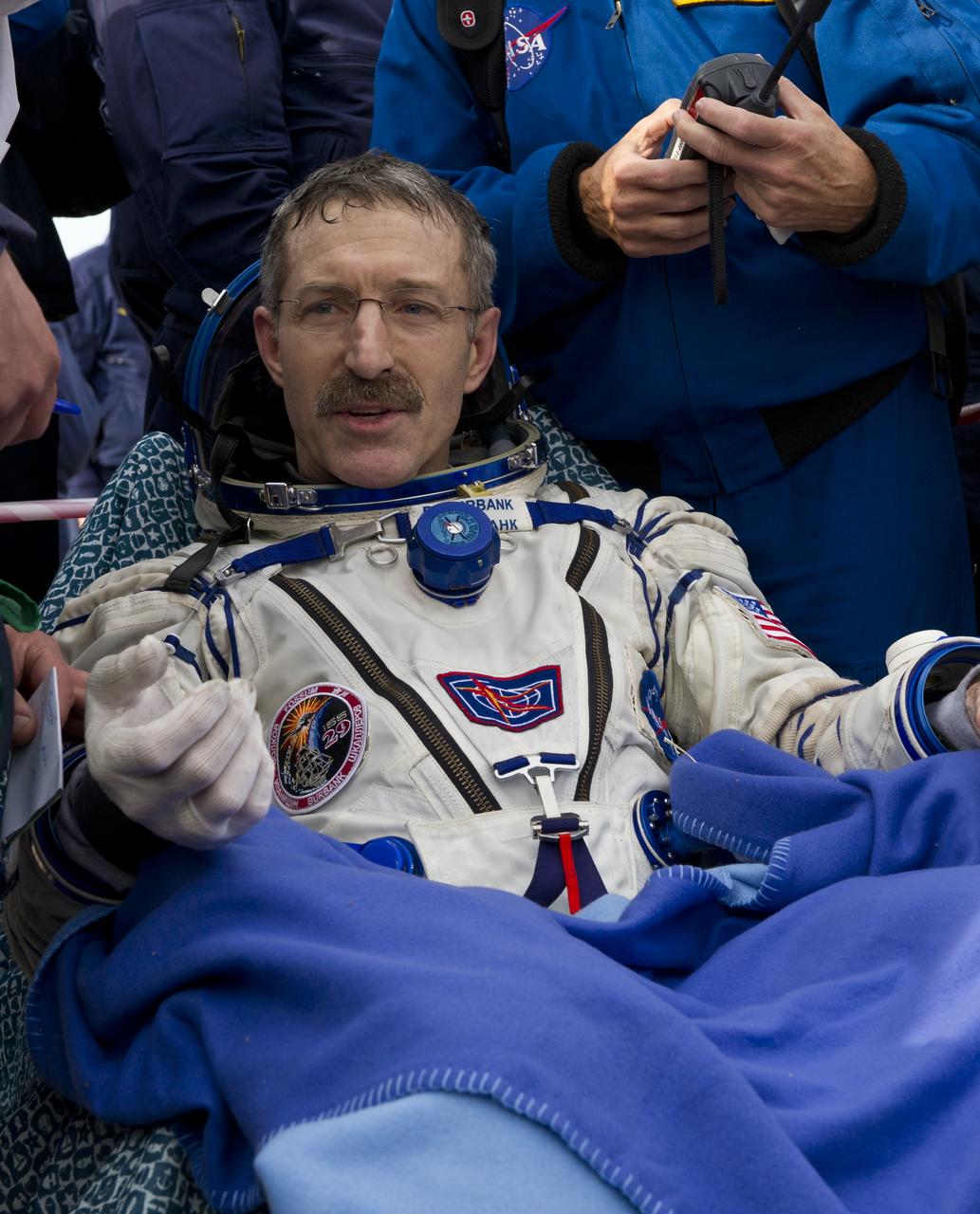
Expedition 30 Commander Dan Burbank is seen as he rests outside the Soyuz TMA-22 Capsule just minutes after he and Expedition 30 Flight Engineers Anton Shkaplerov and Anatoly Ivanishin landed in a remote area outside of the town of Arkalyk, Kazakhstan, on Friday, April 27, 2012. NASA Astronaut Burbank, Russian Cosmonauts Shkaplerov and Ivanishin are returning from more than five months onboard the International Space Station where they served as members of the Expedition 29 and 30 crews. Photo Credit: (NASA/Carla Cioffi)
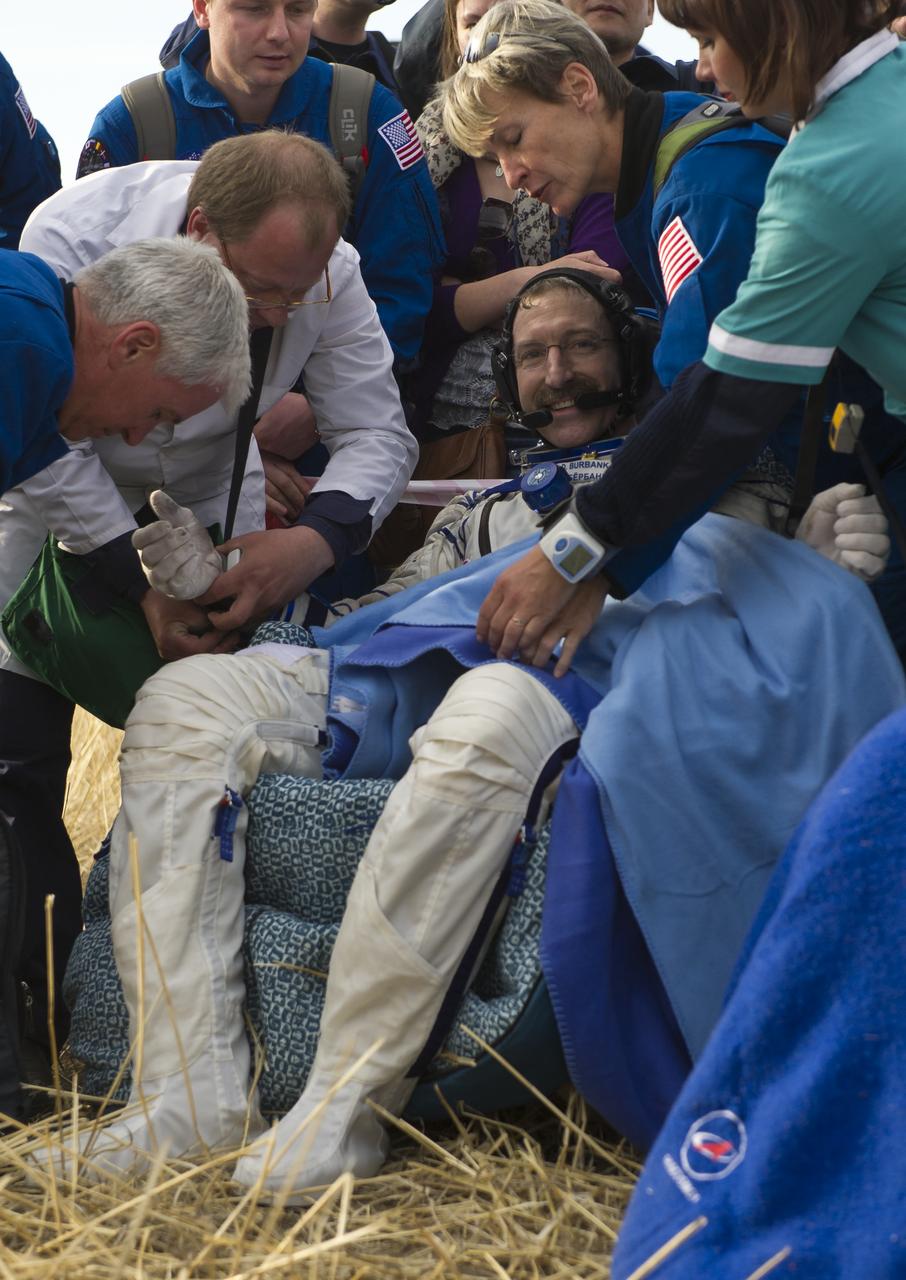
Expedition 30 Commander Dan Burbank smiles as he rests outside the Soyuz TMA-22 Capsule just minutes after he and Expedition 30 Flight Engineers Anton Shkaplerov and Anatoly Ivanishin landed in a remote area outside of the town of Arkalyk, Kazakhstan, on Friday, April 27, 2012. NASA Astronaut Burbank, Russian Cosmonauts Shkaplerov and Ivanishin are returning from more than five months onboard the International Space Station where they served as members of the Expedition 29 and 30 crews. Photo Credit: (NASA/Carla Cioffi)
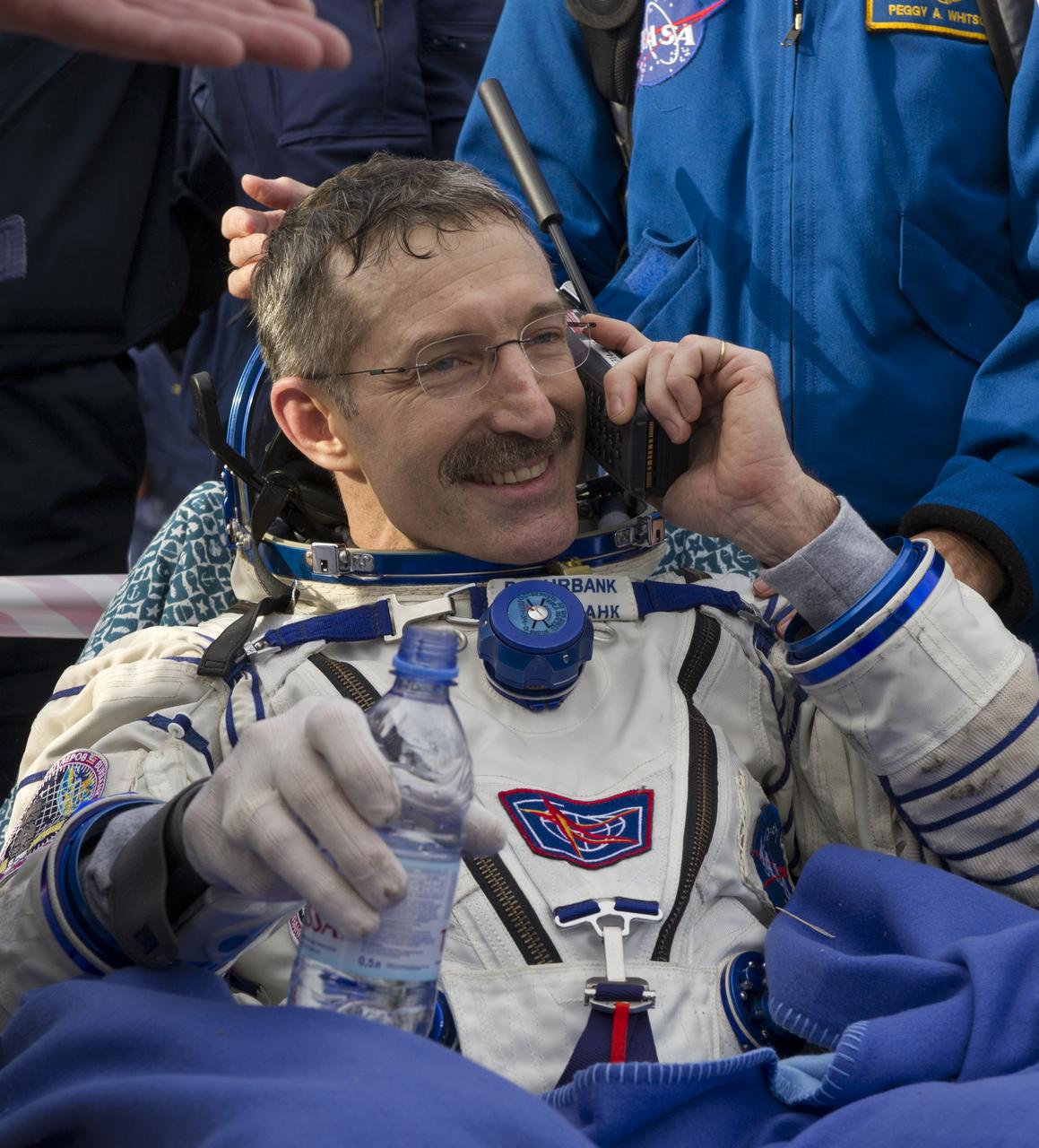
Expedition 30 Commander Dan Burbank speaks with his family via satellite phone outside the Soyuz TMA-22 capsule just minutes after he and Expedition 30 Flight Engineers Anton Shkaplerov and Anatoly Ivanishin landed in a remote area outside of the town of Arkalyk, Kazakhstan, on Friday, April 27, 2012. NASA Astronaut Burbank, Russian Cosmonauts Shkaplerov and Ivanishin are returning from more than five months onboard the International Space Station where they served as members of the Expedition 29 and 30 crews. Photo Credit: (NASA/Carla Cioffi)
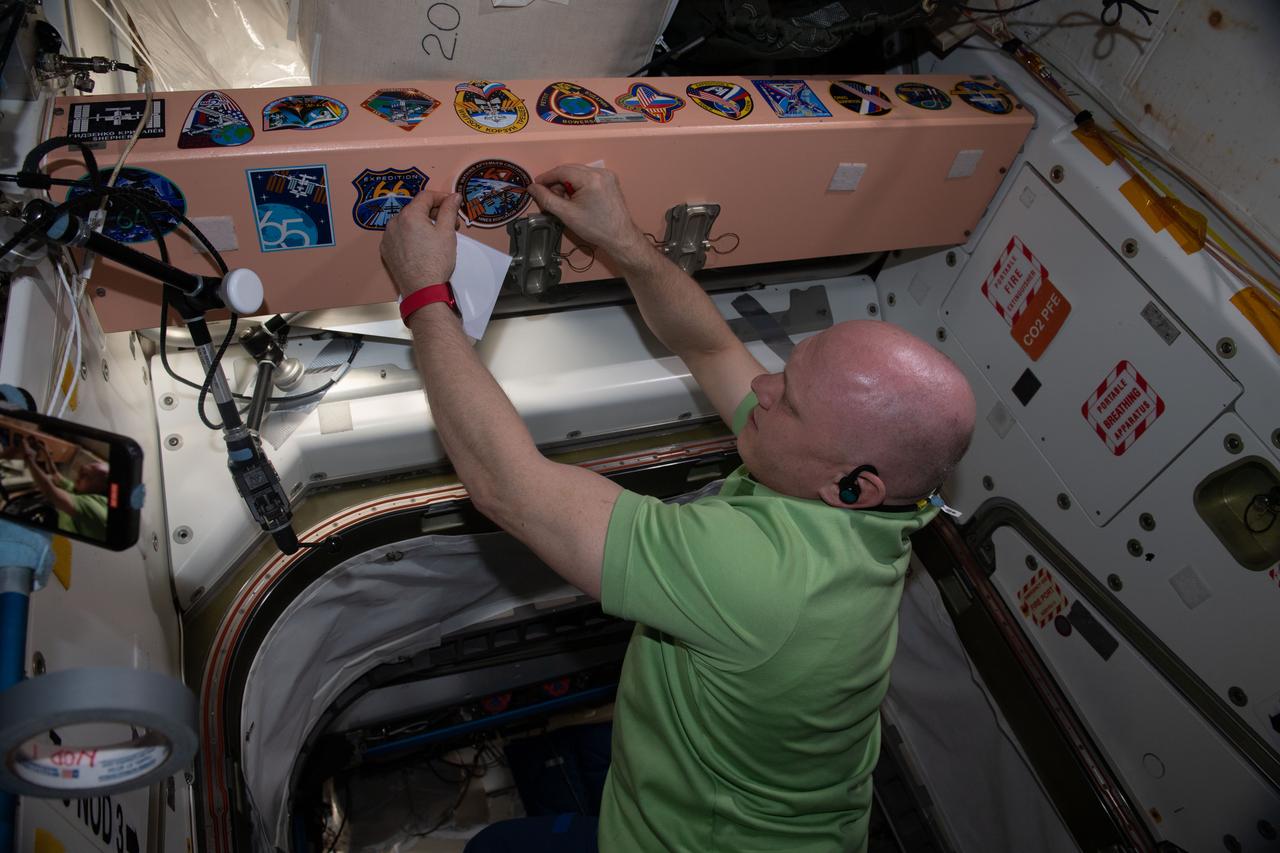
iss067e378813 (Sept. 21, 2022) --- Expedition 67 Commander Oleg Artemyev affixes his mission's insignia sticker to the inside of the International Space Station's Unity module. Artemyev, along with Roscosmos Flight Engineers Denis Matveev and Sergey Korsakov, would depart the orbiting lab on Sept. 29 inside the Soyuz MS-21 crew ship for a parachute-assisted landing in Kazakhstan ending a six-month space research mission.
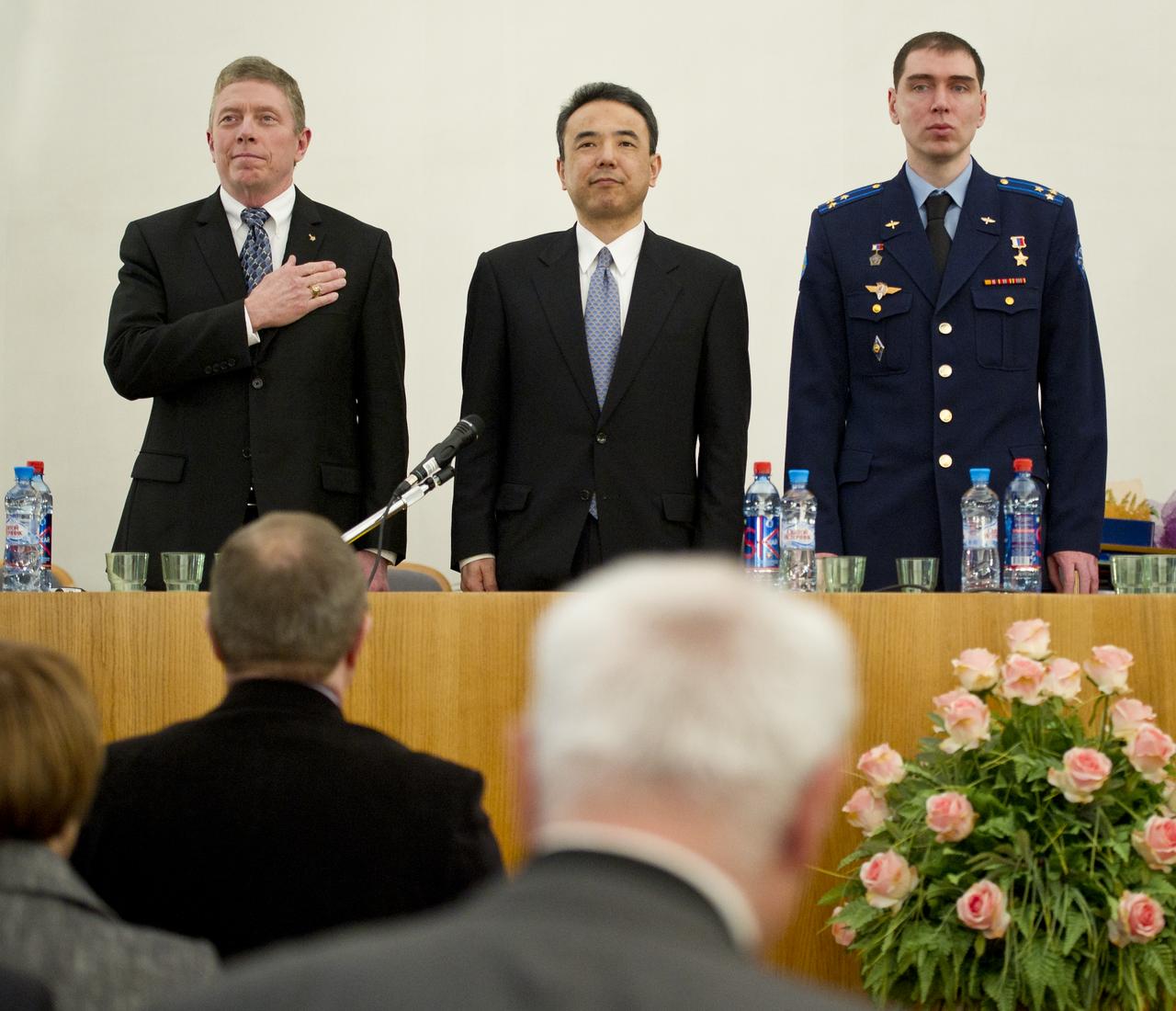
Expedition 29 Commander Mike Fossum, left, Japanese Aerospace Exploration Agency astronaut Satoshi Furukawa, Russian cosmonaut Sergei Volkov, right, are seen during the playing of the national anthem of the United States of America at a traditional welcome home ceremony at the Gagarin Cosmonaut Training Center in Star City, Russia, Thursday, Dec. 15, 2011. The crew landed on the steppes of Kazakhstan on November 22nd after spending five months living and working aboard the International Space Station. Photo Credit: (NASA/Carla Cioffi)
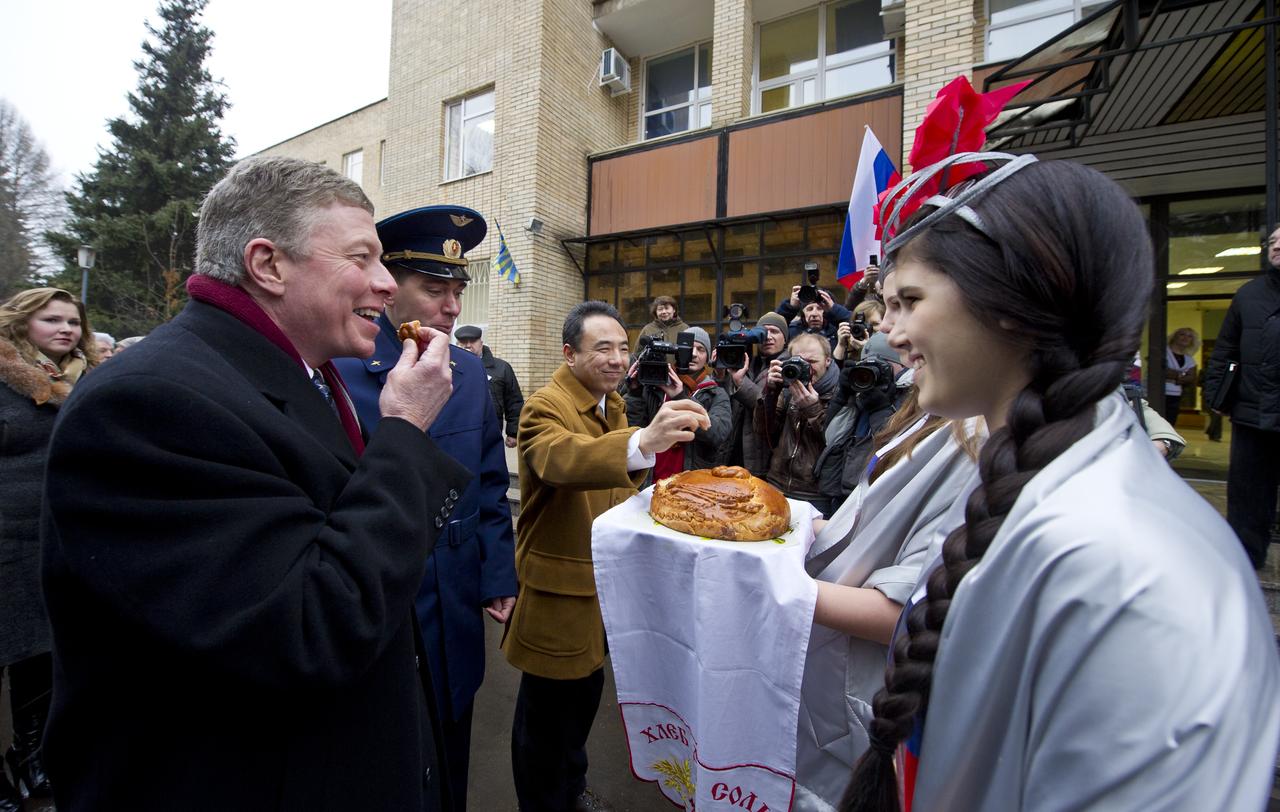
Expedition 29 Commander Mike Fossum, left, Russian cosmonaut Sergei Volkov and Japanese Aerospace Exploration Agency astronaut Satoshi Furukawa, third from left, take part in a traditional welcome home ceremony at the Gagarin Cosmonaut Training Center in Star City, Russia on Thursday, Dec. 15, 2011. The crew landed on the steppes of Kazakhstan on November 22nd after spending five months living and working aboard the International Space Station. Photo Credit: (NASA/Carla Cioffi)
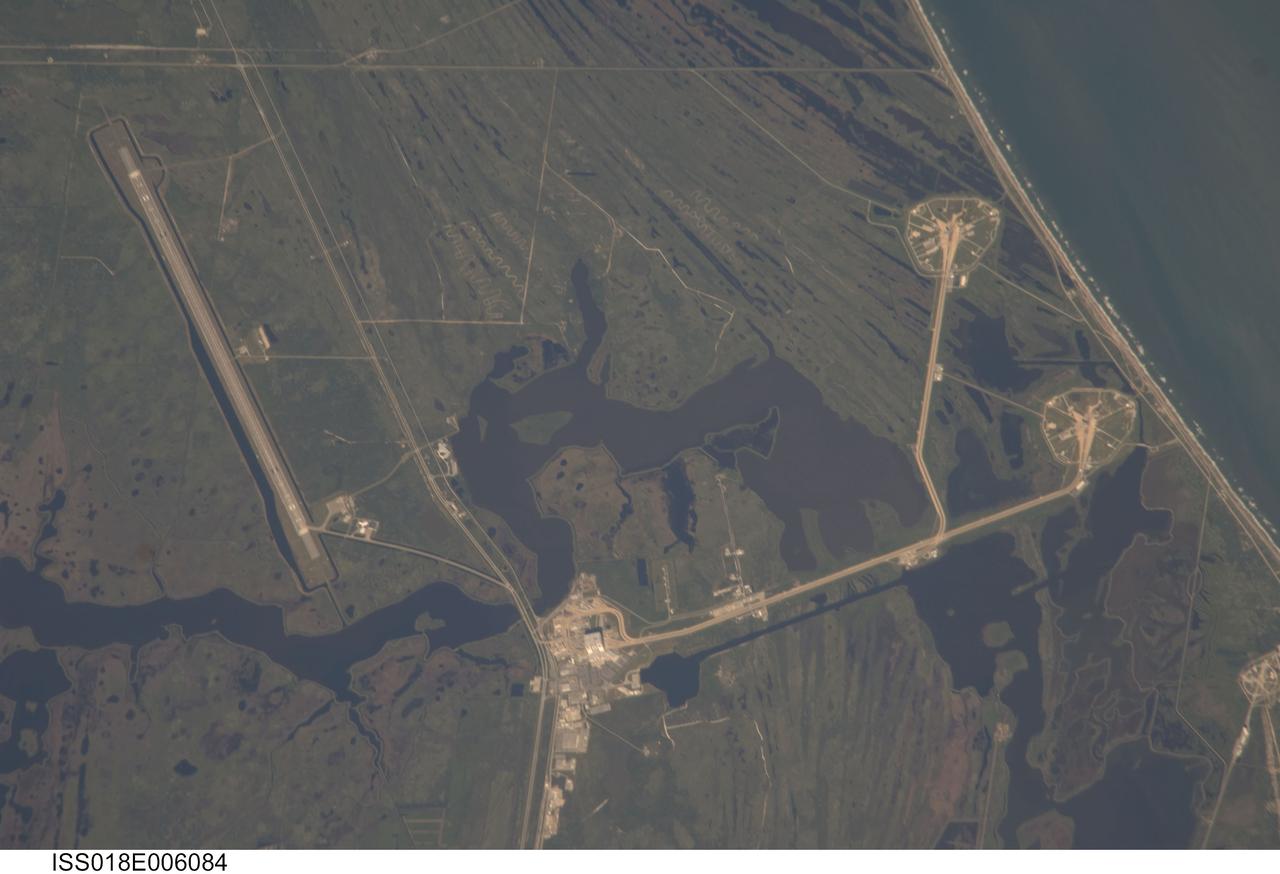
ISS018-E-006084 (29 Oct. 2008) --- Kennedy Space Center and Cape Canaveral, Florida are featured in this image photographed by an Expedition 18 crewmember on the International Space Station. Launch complex 39, with pads A and B, is visible at right. The Vehicle Assembly Building (VAB) is visible at bottom center. The Shuttle Landing Facility appears as a long thin strip at left.
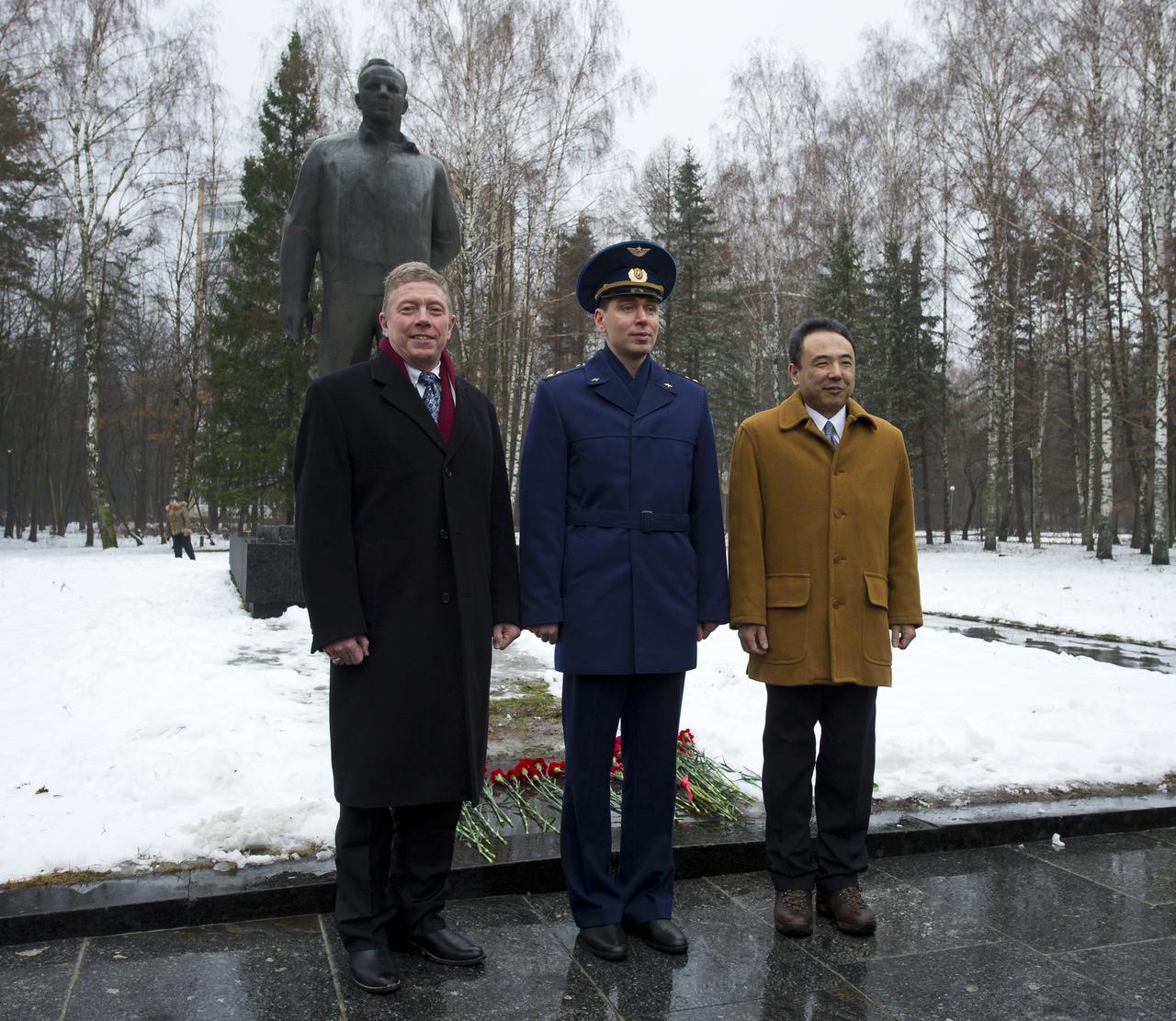
Expedition 29 Commander Mike Fossum, left, Russian cosmonaut Sergei Volkov and Japanese Aerospace Exploration Agency astronaut Satoshi Furukawa, right, are seen in front of a statue of Yuri Gagarin at the Gagarin Cosmonaut Training Center in Star City, Russia as part of a traditional welcome home ceremony on Thursday, Dec. 15, 2011. The crew landed on the steppes of Kazakhstan on November 22nd after spending five months living and working aboard the International Space Station. Photo Credit: (NASA/Carla Cioffi)
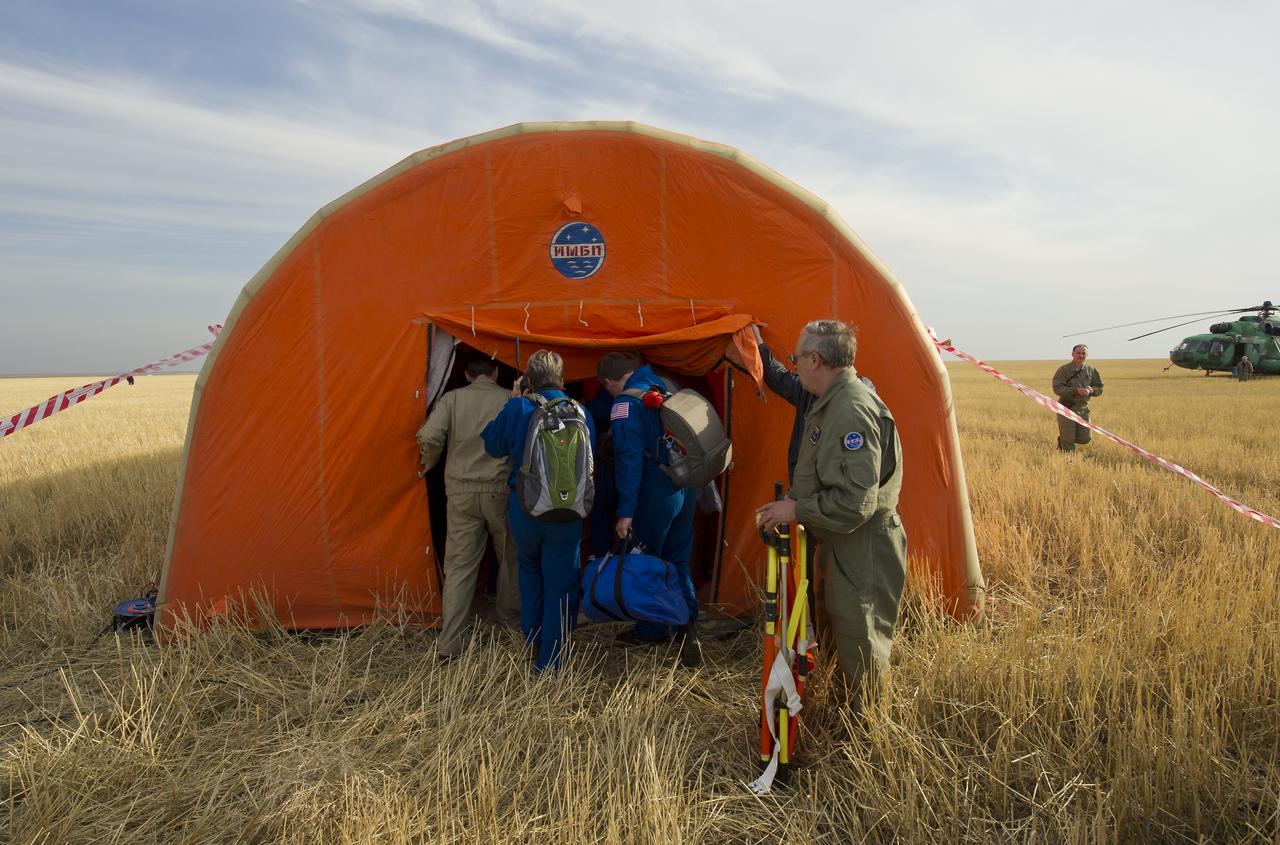
NASA and GCTC (Gagarin Cosmonaut Training Center) crew support personnel enter the inflatable medical tent in which Expedition 30 Commander Dan Burbank, and flight engineers Anton Shkaplerov and Anatoly Ivanishin are being checked out shortly after their Soyuz TMA-22 capsule landed out side the town of Arkalyk, Kazakhstan, Friday, April 27, 2012. Burbank, and Russian Cosmonauts Shkaplerov and Ivanishin are returning from more than five months onboard the International Space Station where they served as members of the Expedition 29 and 30 crews. Photo Credit: (NASA/Carla Cioffi)
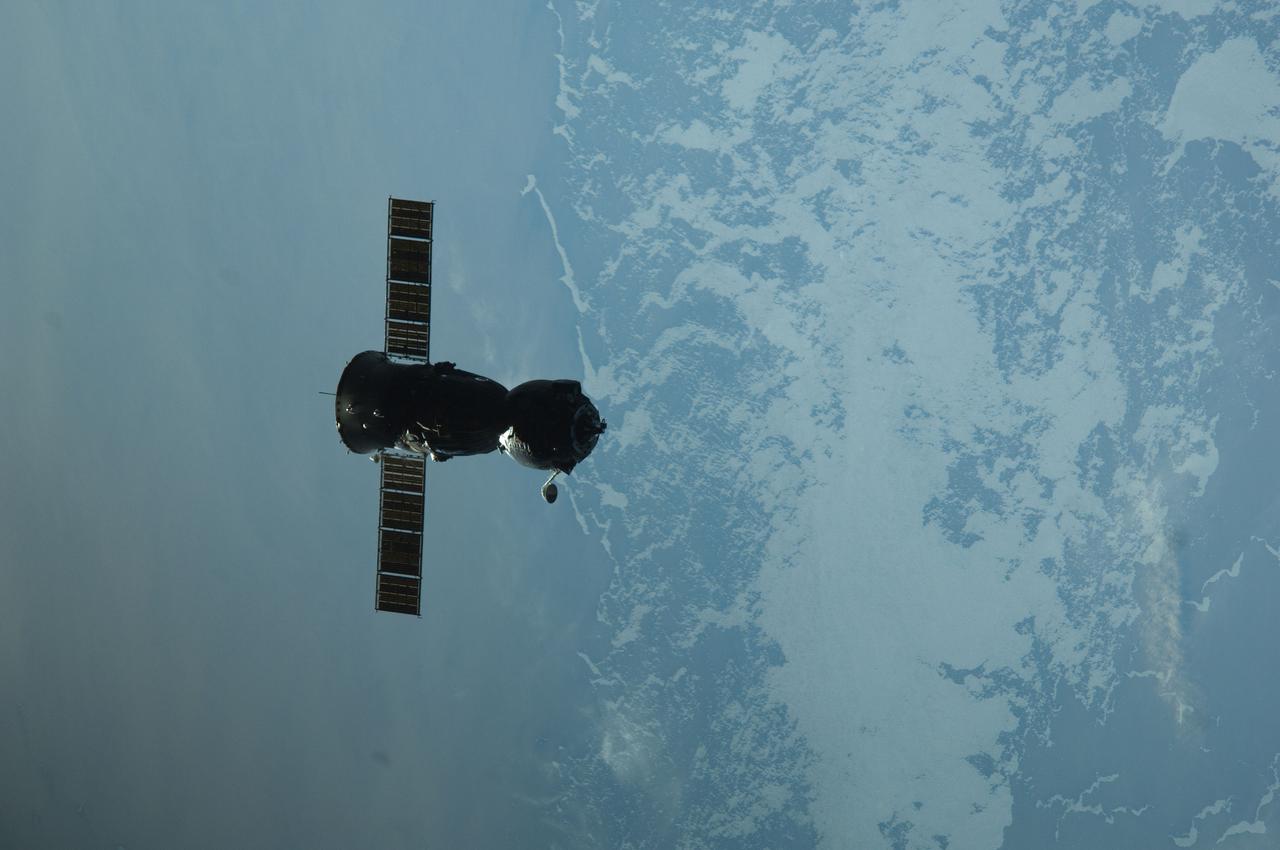
ISS031-E-005056 (27 April 2012) --- The Soyuz TMA-22 spacecraft departs from the International Space Station and heads toward a landing on April 27, 2012. Inside the Soyuz, NASA astronaut Dan Burbank, Expedition 30 commander; along with Russian cosmonauts Anton Shkaplerov, Soyuz commander, and Anatoly Ivanishin, flight engineer, were looking forward to putting their feet on terra firma for the first time in more than five months onboard the station, where they served as members of the Expedition 29 and 30 crews. At the time of this photo the two spacecraft were over the northwestern Pacific Ocean. With the aid of sun glint, ice floes can be seen clearly.
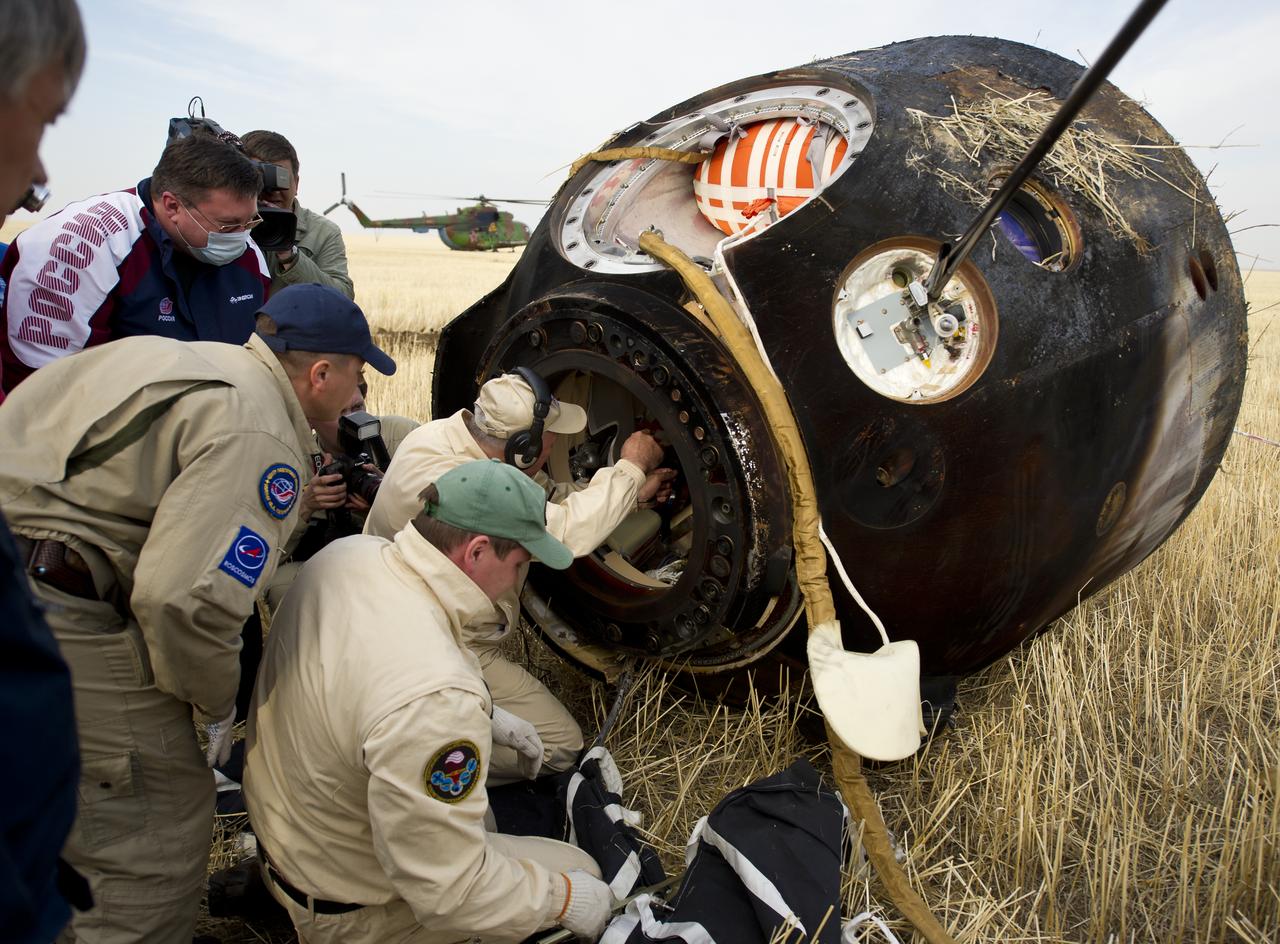
Russian support personnel work to help get crew members out of the Soyuz TMA-22 spacecraft shortly after the capsule landed with Expedition 30 Commander Dan Burbank, and Flight Engineers Anton Skhaplerov and Anatoly Ivanishin in a remote area outside of the town of Arkalyk, Kazakhstan, on Friday, April 27, 2012. NASA Astronaut Burbank, Russian Cosmonauts Shkaplerov and Ivanishin are returning from more than five months onboard the International Space Station where they served as members of the Expedition 29 and 30 crews. Photo Credit: (NASA/Carla Cioffi)
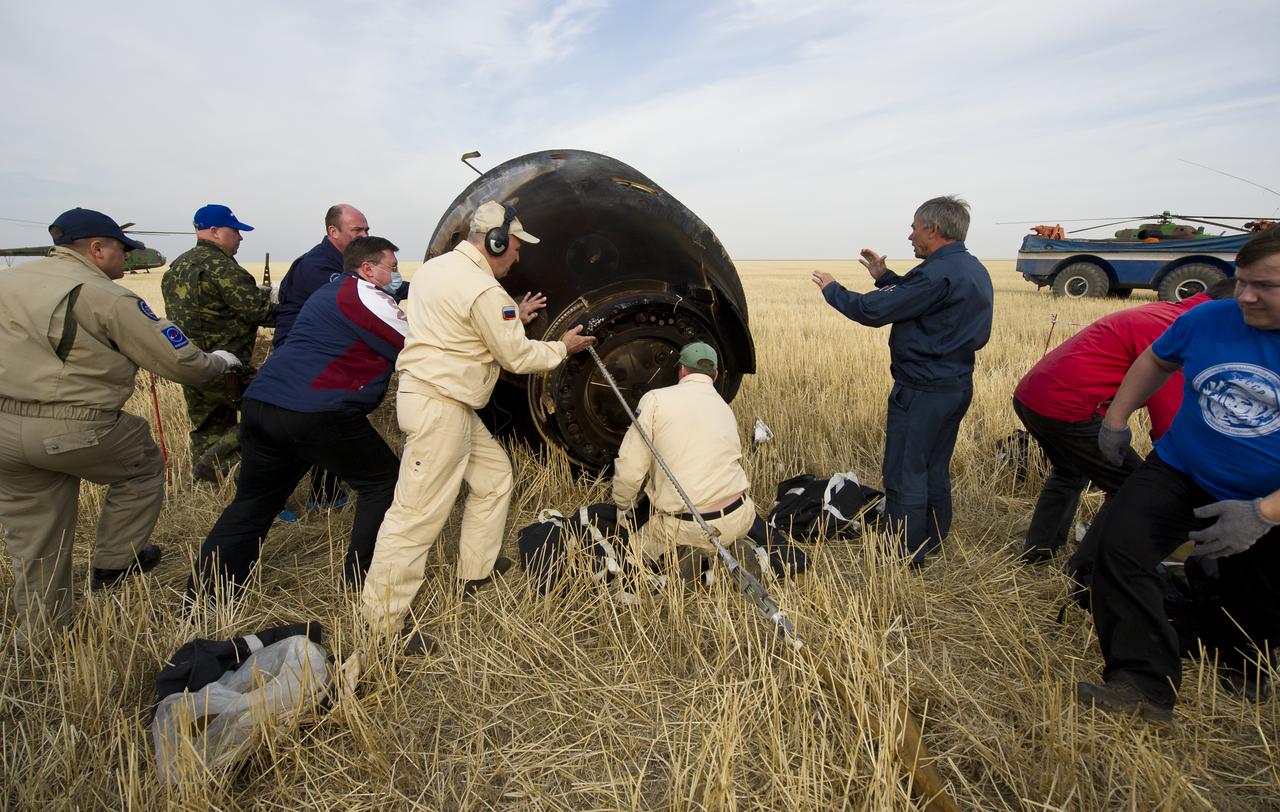
Russian support personnel work to help get crew members out of the Soyuz TMA-22 spacecraft shortly after the capsule landed with Expedition 30 Commander Dan Burbank, and Flight Engineers Anton Skhaplerov and Anatoly Ivanishin in a remote area outside of the town of Arkalyk, Kazakhstan, on Friday, April 27, 2012. NASA Astronaut Burbank, Russian Cosmonauts Shkaplerov and Ivanishin are returning from more than five months onboard the International Space Station where they served as members of the Expedition 29 and 30 crews. Photo Credit: (NASA/Carla Cioffi)
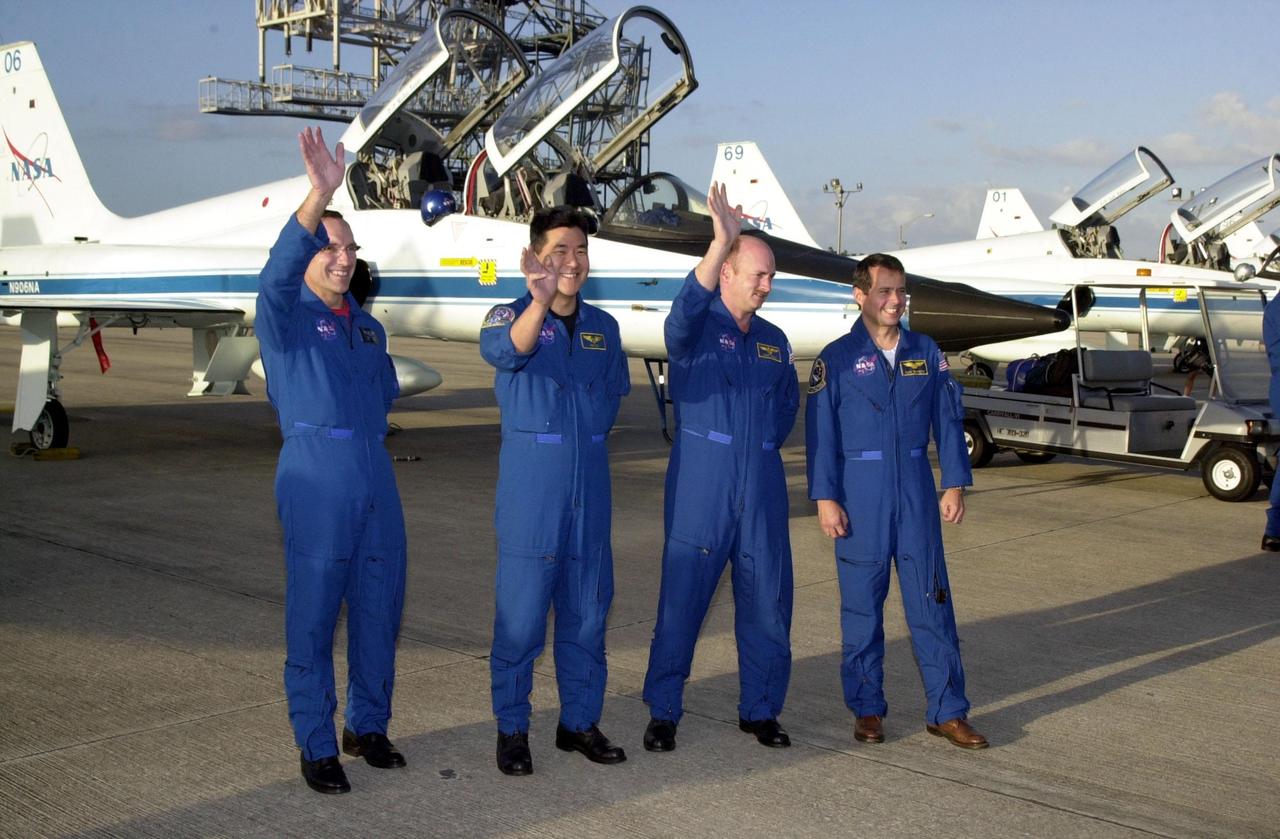
KENNEDY SPACE CENTER, Fla. -- Members of the STS-108 and Expedition Four crews greet representatives of the media at the Shuttle Landing Facility after arriving aboard T-38 jets (in the background). From left, they are Expedition Four crew member Carl E. Walz, STS-108 Mission Specialist Daniel M. Tani, STS-108 Pilot Mark E. Kelly, and Expedition Four crew member Daniel W. Bursch. They will be participating in the Terminal Countdown Demonstration Test, a dress rehearsal for their upcoming launch. The Expedition Four crew will be transported to the International Space Station on mission STS-108, targeted for launch on Nov. 29 on Space Shuttle Endeavour, and return on mission STS-111 in May 2002 after a more than five-month stay on the Station. The Multi-Purpose Logistics Module Raffaello, filled with supplies and equipment, will also be transported to the Station on the 11-day STS-108 mission
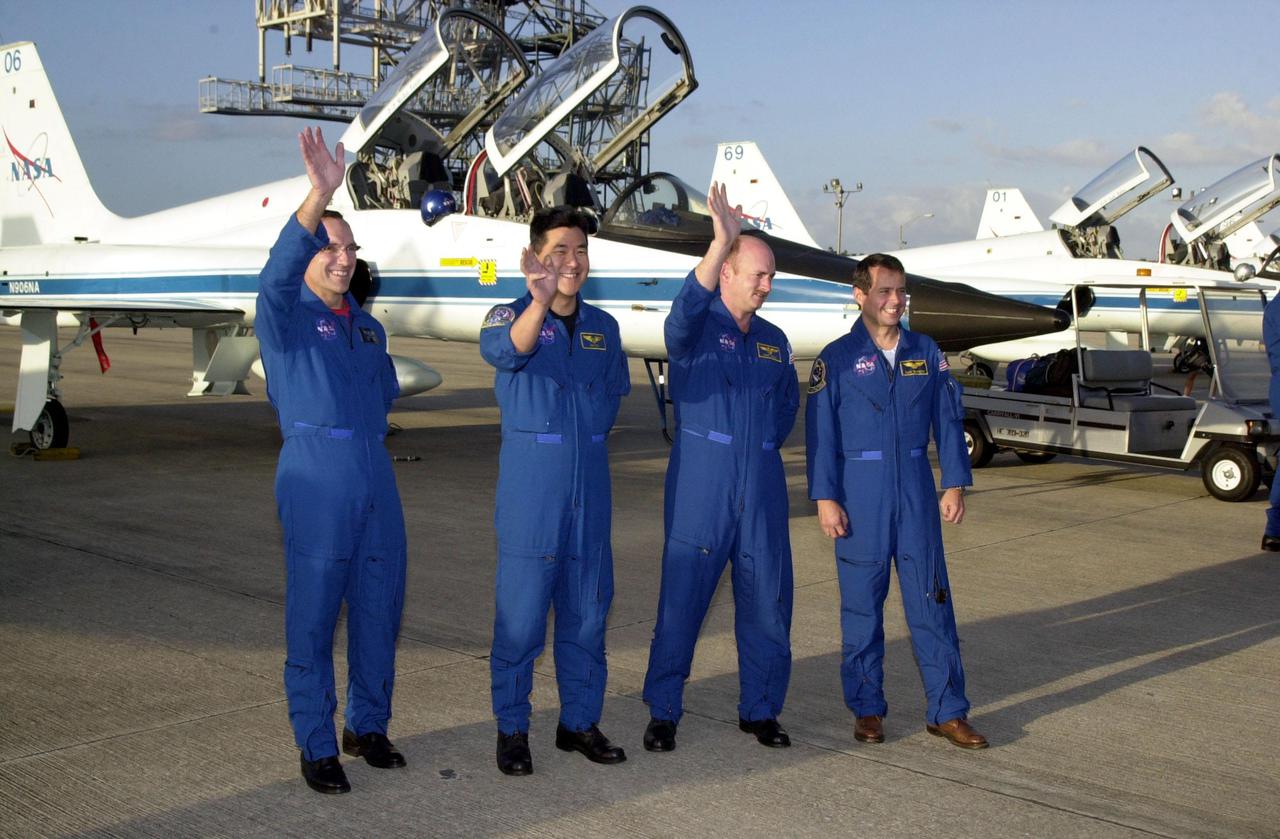
KENNEDY SPACE CENTER, Fla. -- Members of the STS-108 and Expedition Four crews greet representatives of the media at the Shuttle Landing Facility after arriving aboard T-38 jets (in the background). From left, they are Expedition Four crew member Carl E. Walz, STS-108 Mission Specialist Daniel M. Tani, STS-108 Pilot Mark E. Kelly, and Expedition Four crew member Daniel W. Bursch. They will be participating in the Terminal Countdown Demonstration Test, a dress rehearsal for their upcoming launch. The Expedition Four crew will be transported to the International Space Station on mission STS-108, targeted for launch on Nov. 29 on Space Shuttle Endeavour, and return on mission STS-111 in May 2002 after a more than five-month stay on the Station. The Multi-Purpose Logistics Module Raffaello, filled with supplies and equipment, will also be transported to the Station on the 11-day STS-108 mission
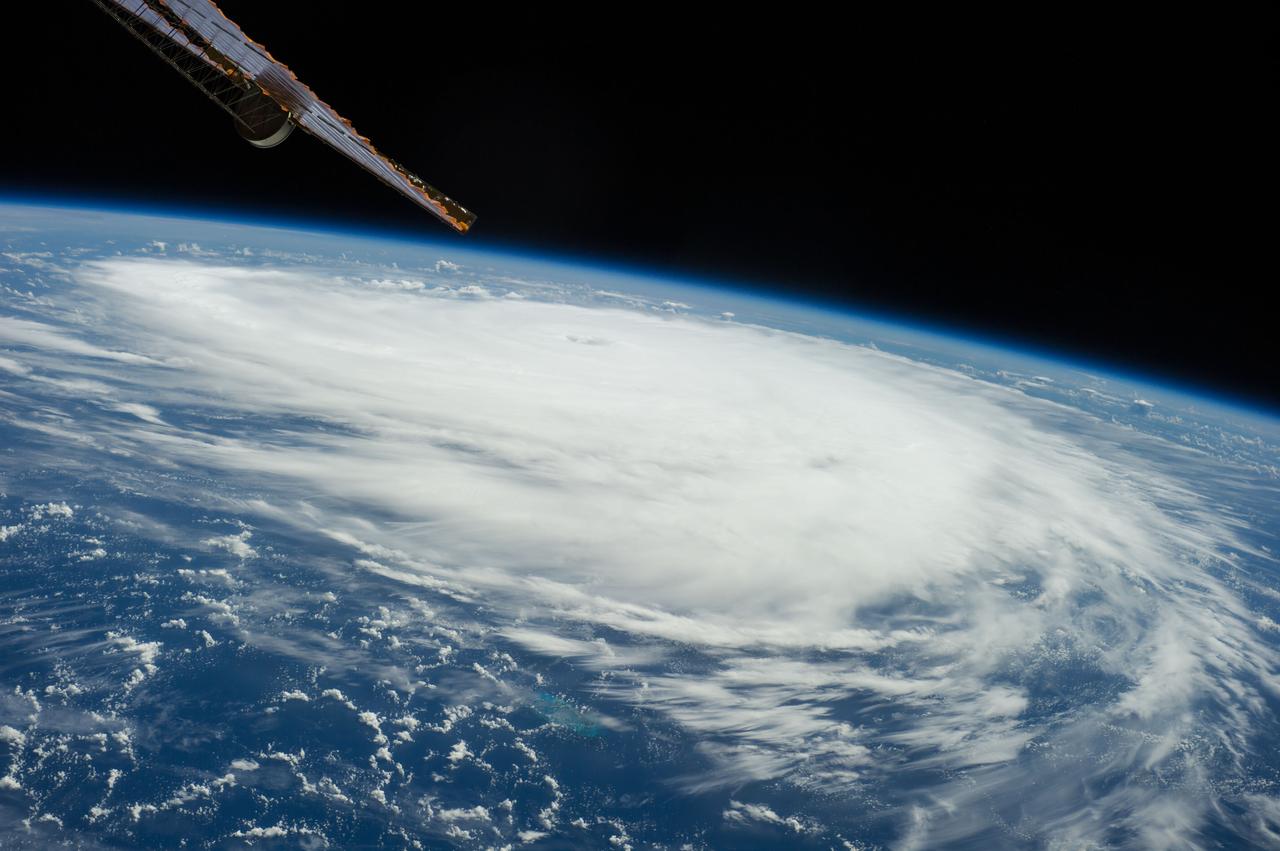
ISS041-E-011814 (16 Sept. 2014) --- Though having been upgraded from a tropical storm to a Category 2 hurricane, the Atlantic-borne Edouard thus far has avoided land interests as it reached maximum sustained winds of 105 miles per hout, churning in ocean waters several hundred miles southeast of Bermuda. The Expedition 41 crew members onboard the International Space Station photographed and distributed a series of images via station-to-ground downlinks and via social media. This photo was taken at 15:29:04 GMT on Sept. 16, 2014. Though it had well-defined eye at this juncture, the eye does not show clearly in this image, as it does in others.
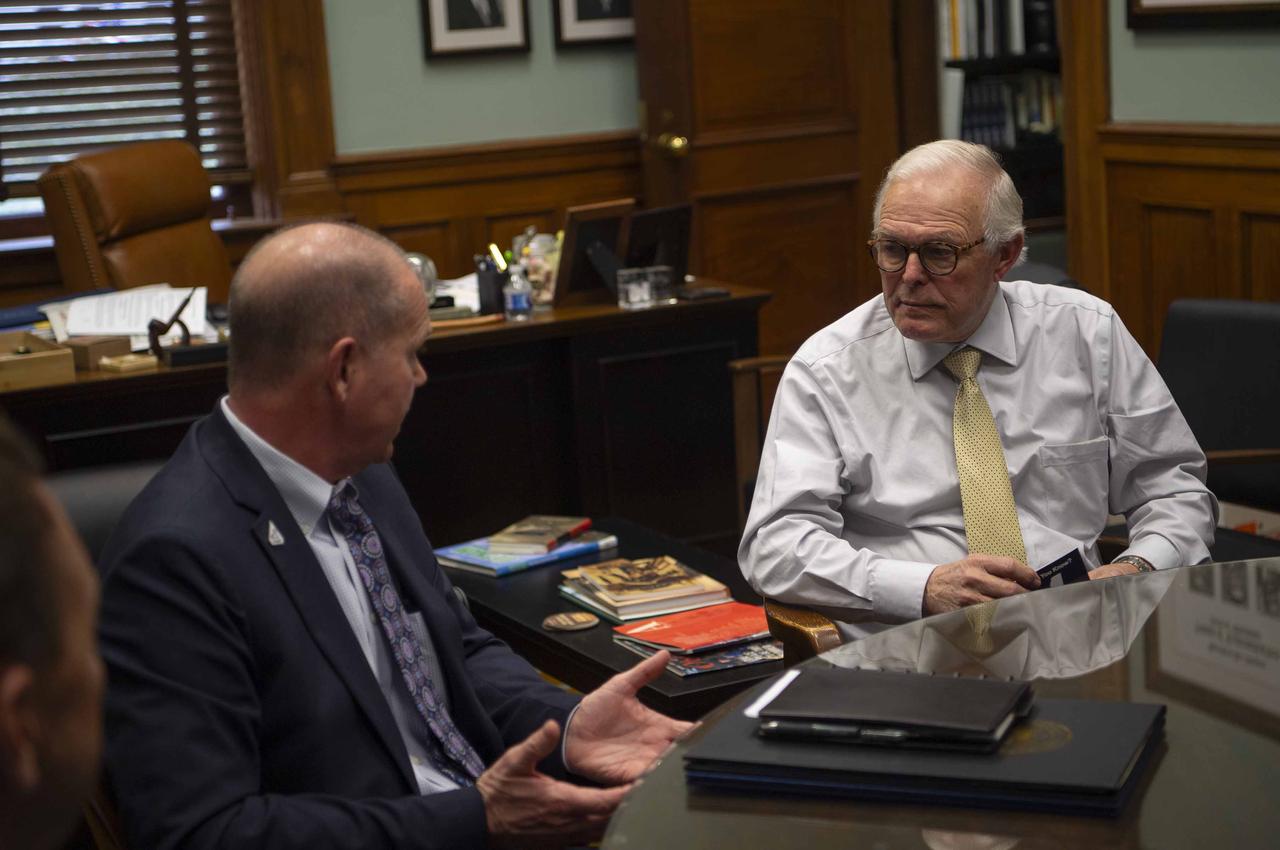
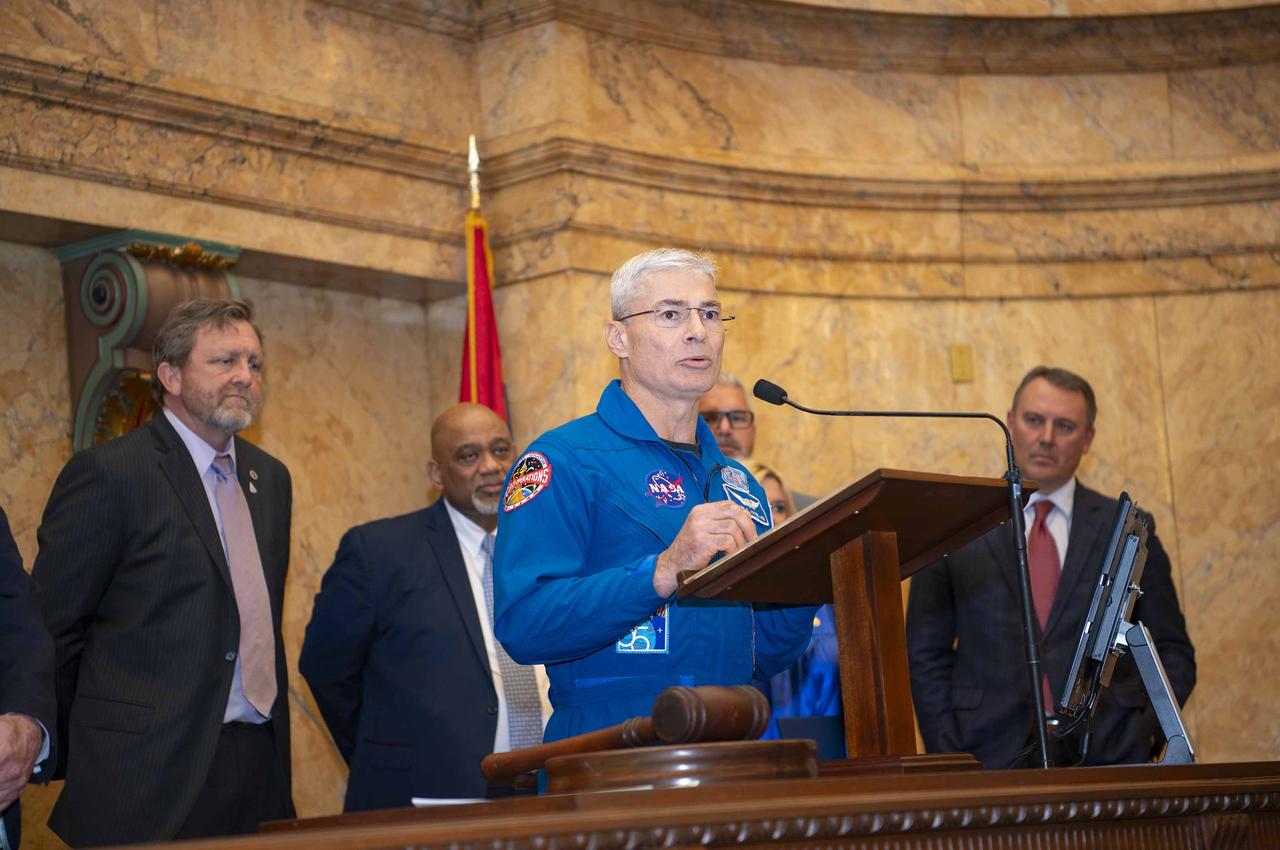
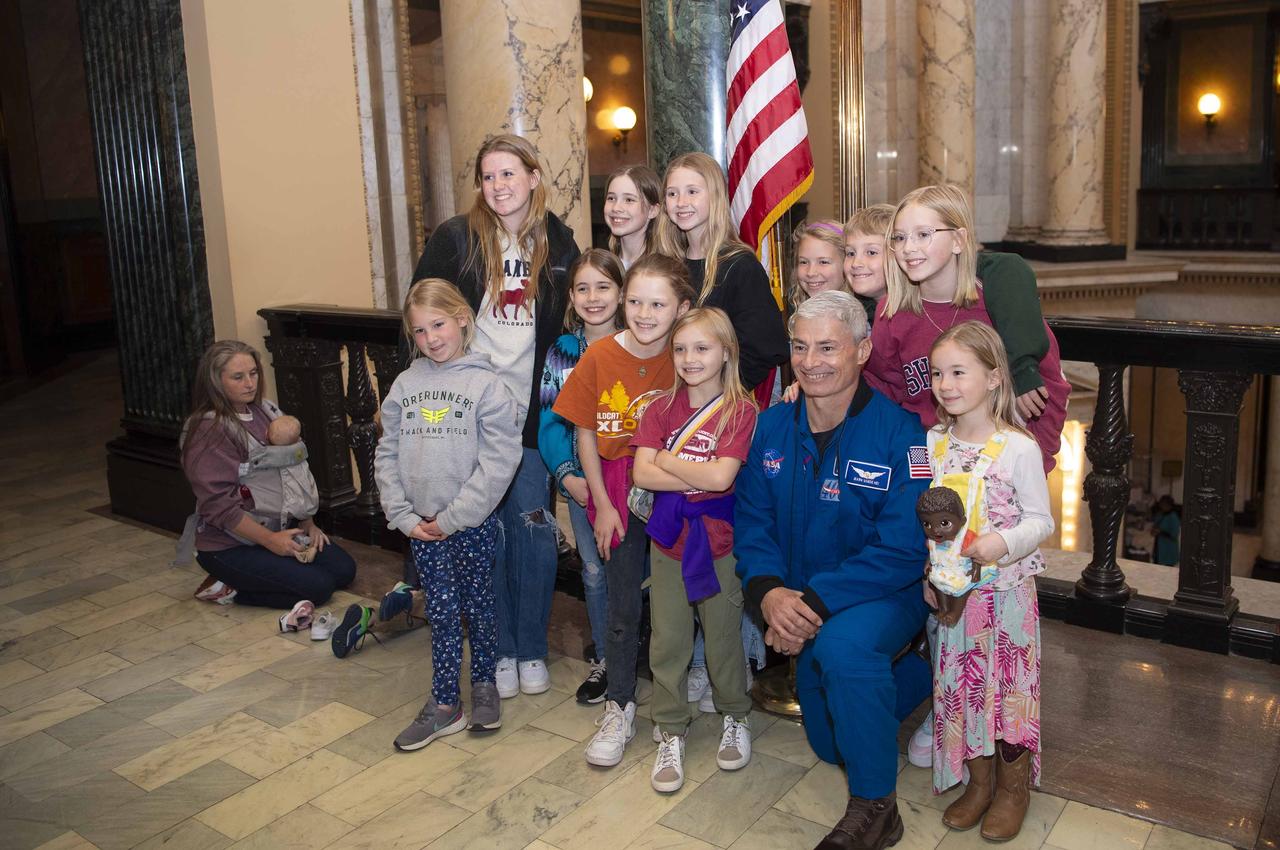
Leaders from NASA’s Stennis Space Center and NASA Shared Services Center visit Jackson, Mississippi, on Feb. 28-29 to share site updates with state leaders during the annual Stennis Day at the Capitol. NASA Stennis is on the front line of the next great era of human space exploration as NASA explores the secrets of the universe for the benefit of all. The south Mississippi center tests propulsion systems and engines helping power Artemis missions on the SLS (Space Launch System) rocket to deep space. Through Artemis, NASA will establish the foundation for long-term scientific exploration at the Moon, land the first woman, first person of color, and first international partner astronaut on the lunar surface, and prepare for human expeditions to Mars. Moving forward, NASA Stennis is working to accelerate the exploration and commercialization of space, innovate to benefit NASA and industry, and leverage assets to stimulate the economy and enhance national security.
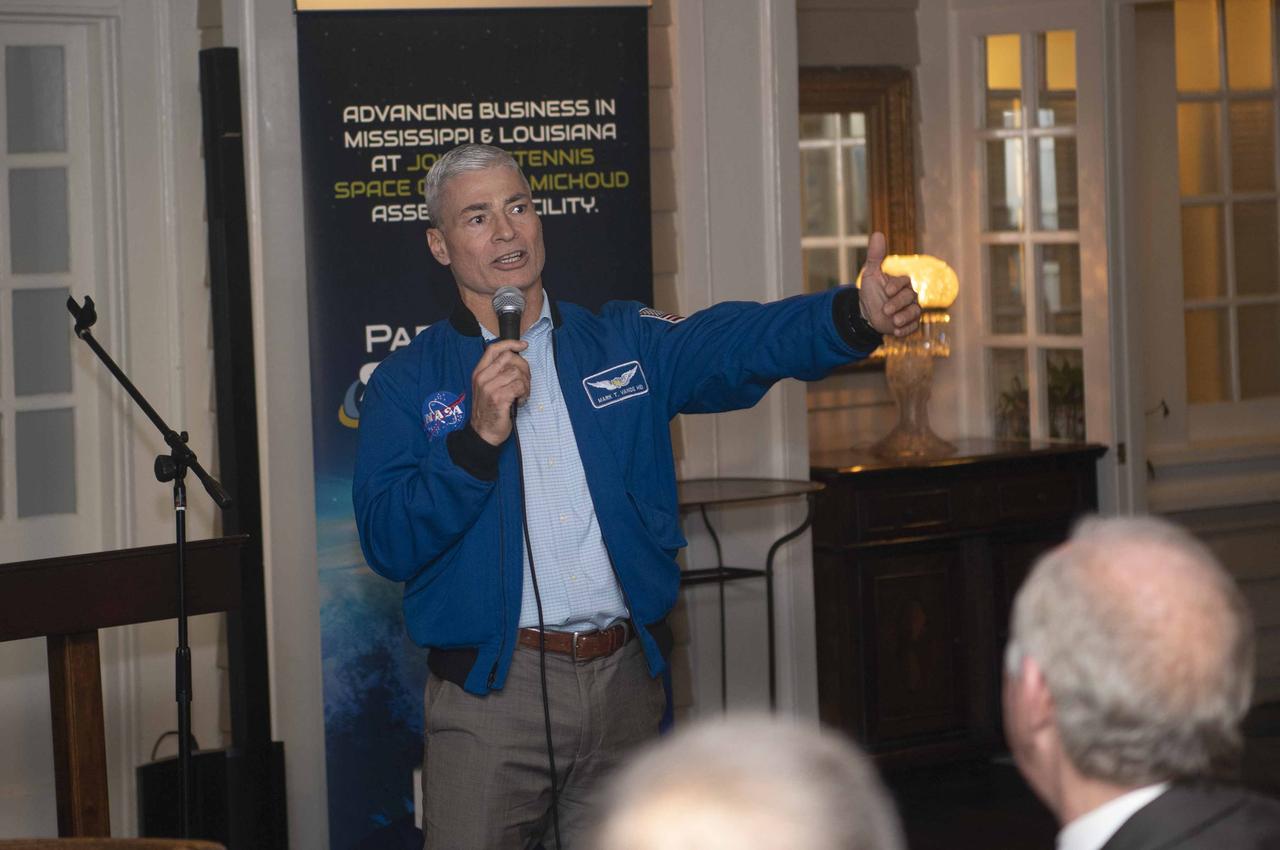
Leaders from NASA’s Stennis Space Center and NASA Shared Services Center visit Jackson, Mississippi, on Feb. 28-29 to share site updates with state leaders during the annual Stennis Day at the Capitol. NASA Stennis is on the front line of the next great era of human space exploration as NASA explores the secrets of the universe for the benefit of all. The south Mississippi center tests propulsion systems and engines helping power Artemis missions on the SLS (Space Launch System) rocket to deep space. Through Artemis, NASA will establish the foundation for long-term scientific exploration at the Moon, land the first woman, first person of color, and first international partner astronaut on the lunar surface, and prepare for human expeditions to Mars. Moving forward, NASA Stennis is working to accelerate the exploration and commercialization of space, innovate to benefit NASA and industry, and leverage assets to stimulate the economy and enhance national security.
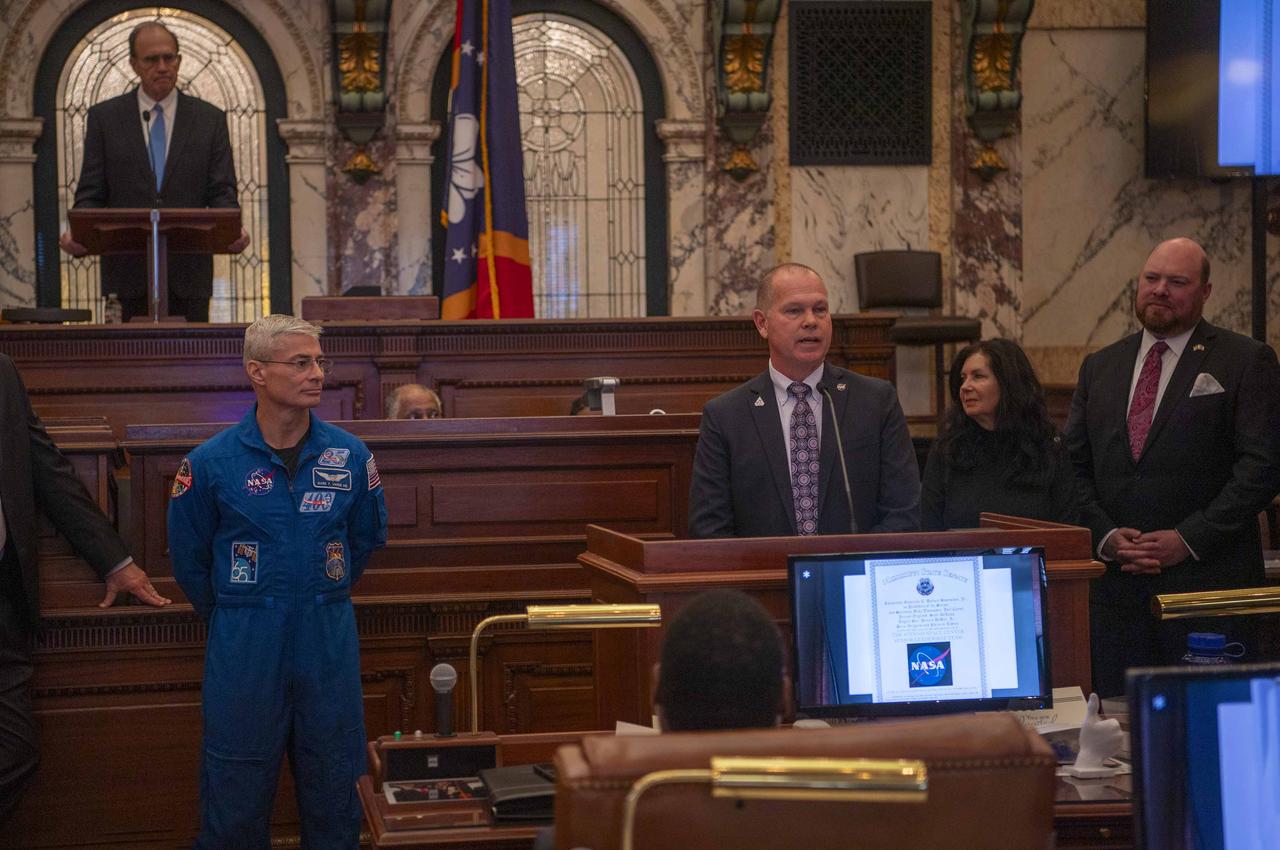
Leaders from NASA’s Stennis Space Center and NASA Shared Services Center visit Jackson, Mississippi, on Feb. 28-29 to share site updates with state leaders during the annual Stennis Day at the Capitol. NASA Stennis is on the front line of the next great era of human space exploration as NASA explores the secrets of the universe for the benefit of all. The south Mississippi center tests propulsion systems and engines helping power Artemis missions on the SLS (Space Launch System) rocket to deep space. Through Artemis, NASA will establish the foundation for long-term scientific exploration at the Moon, land the first woman, first person of color, and first international partner astronaut on the lunar surface, and prepare for human expeditions to Mars. Moving forward, NASA Stennis is working to accelerate the exploration and commercialization of space, innovate to benefit NASA and industry, and leverage assets to stimulate the economy and enhance national security.
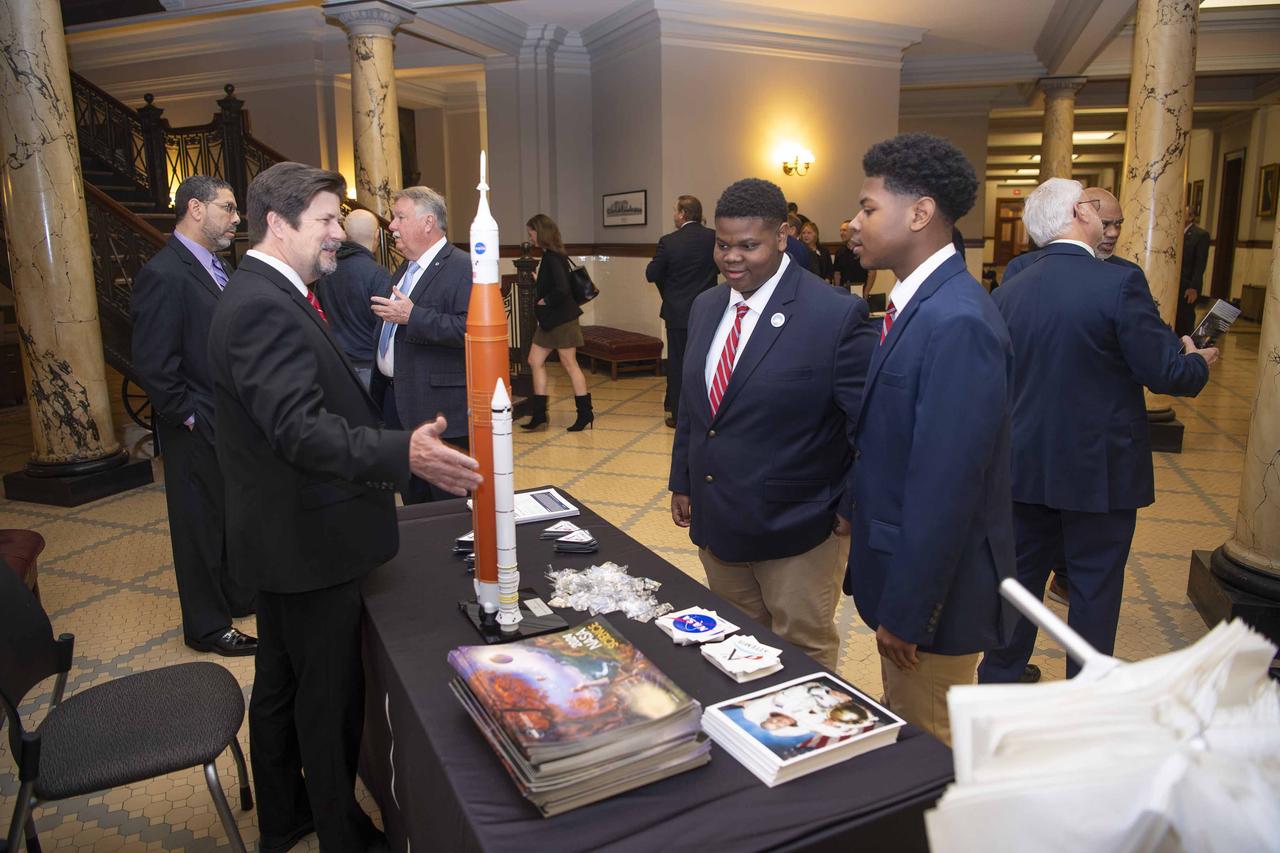
Leaders from NASA’s Stennis Space Center and NASA Shared Services Center visit Jackson, Mississippi, on Feb. 28-29 to share site updates with state leaders during the annual Stennis Day at the Capitol. NASA Stennis is on the front line of the next great era of human space exploration as NASA explores the secrets of the universe for the benefit of all. The south Mississippi center tests propulsion systems and engines helping power Artemis missions on the SLS (Space Launch System) rocket to deep space. Through Artemis, NASA will establish the foundation for long-term scientific exploration at the Moon, land the first woman, first person of color, and first international partner astronaut on the lunar surface, and prepare for human expeditions to Mars. Moving forward, NASA Stennis is working to accelerate the exploration and commercialization of space, innovate to benefit NASA and industry, and leverage assets to stimulate the economy and enhance national security.
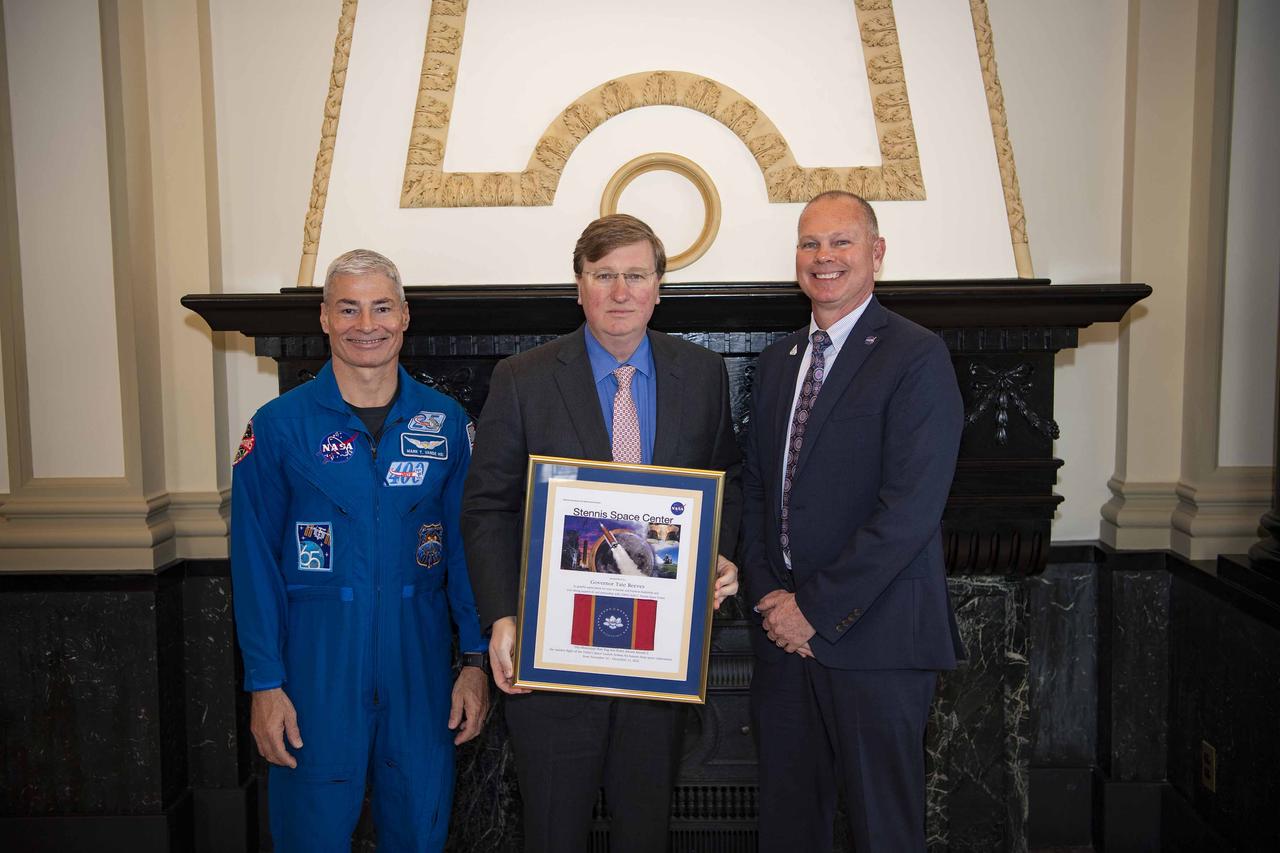
Leaders from NASA’s Stennis Space Center and NASA Shared Services Center visit Jackson, Mississippi, on Feb. 28-29 to share site updates with state leaders during the annual Stennis Day at the Capitol. NASA Stennis is on the front line of the next great era of human space exploration as NASA explores the secrets of the universe for the benefit of all. The south Mississippi center tests propulsion systems and engines helping power Artemis missions on the SLS (Space Launch System) rocket to deep space. Through Artemis, NASA will establish the foundation for long-term scientific exploration at the Moon, land the first woman, first person of color, and first international partner astronaut on the lunar surface, and prepare for human expeditions to Mars. Moving forward, NASA Stennis is working to accelerate the exploration and commercialization of space, innovate to benefit NASA and industry, and leverage assets to stimulate the economy and enhance national security.
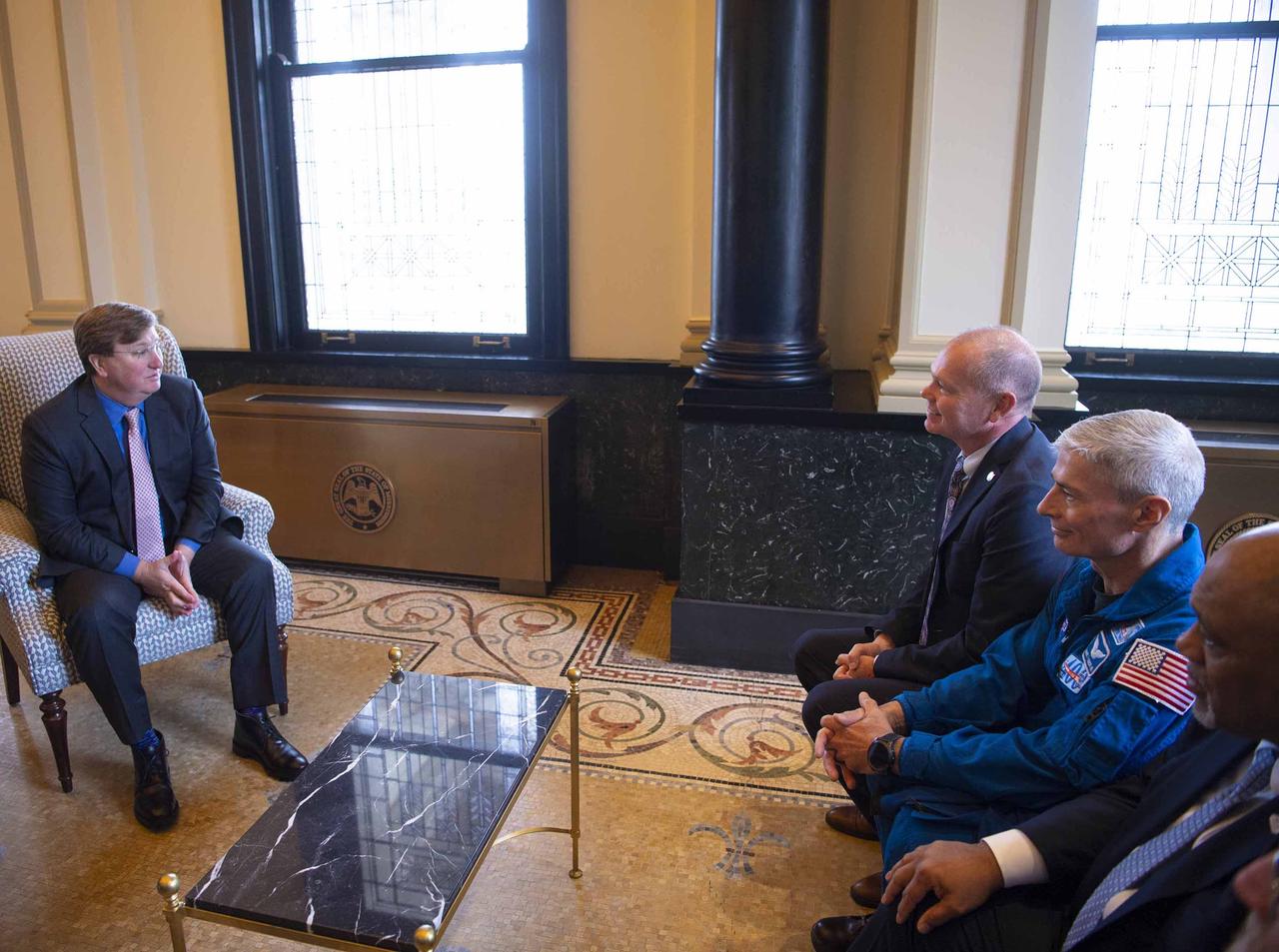
Leaders from NASA’s Stennis Space Center and NASA Shared Services Center visit Jackson, Mississippi, on Feb. 28-29 to share site updates with state leaders during the annual Stennis Day at the Capitol. NASA Stennis is on the front line of the next great era of human space exploration as NASA explores the secrets of the universe for the benefit of all. The south Mississippi center tests propulsion systems and engines helping power Artemis missions on the SLS (Space Launch System) rocket to deep space. Through Artemis, NASA will establish the foundation for long-term scientific exploration at the Moon, land the first woman, first person of color, and first international partner astronaut on the lunar surface, and prepare for human expeditions to Mars. Moving forward, NASA Stennis is working to accelerate the exploration and commercialization of space, innovate to benefit NASA and industry, and leverage assets to stimulate the economy and enhance national security.
Leaders from NASA’s Stennis Space Center and NASA Shared Services Center visit Jackson, Mississippi, on Feb. 28-29 to share site updates with state leaders during the annual Stennis Day at the Capitol. NASA Stennis is on the front line of the next great era of human space exploration as NASA explores the secrets of the universe for the benefit of all. The south Mississippi center tests propulsion systems and engines helping power Artemis missions on the SLS (Space Launch System) rocket to deep space. Through Artemis, NASA will establish the foundation for long-term scientific exploration at the Moon, land the first woman, first person of color, and first international partner astronaut on the lunar surface, and prepare for human expeditions to Mars. Moving forward, NASA Stennis is working to accelerate the exploration and commercialization of space, innovate to benefit NASA and industry, and leverage assets to stimulate the economy and enhance national security.
Leaders from NASA’s Stennis Space Center and NASA Shared Services Center visit Jackson, Mississippi, on Feb. 28-29 to share site updates with state leaders during the annual Stennis Day at the Capitol. NASA Stennis is on the front line of the next great era of human space exploration as NASA explores the secrets of the universe for the benefit of all. The south Mississippi center tests propulsion systems and engines helping power Artemis missions on the SLS (Space Launch System) rocket to deep space. Through Artemis, NASA will establish the foundation for long-term scientific exploration at the Moon, land the first woman, first person of color, and first international partner astronaut on the lunar surface, and prepare for human expeditions to Mars. Moving forward, NASA Stennis is working to accelerate the exploration and commercialization of space, innovate to benefit NASA and industry, and leverage assets to stimulate the economy and enhance national security.
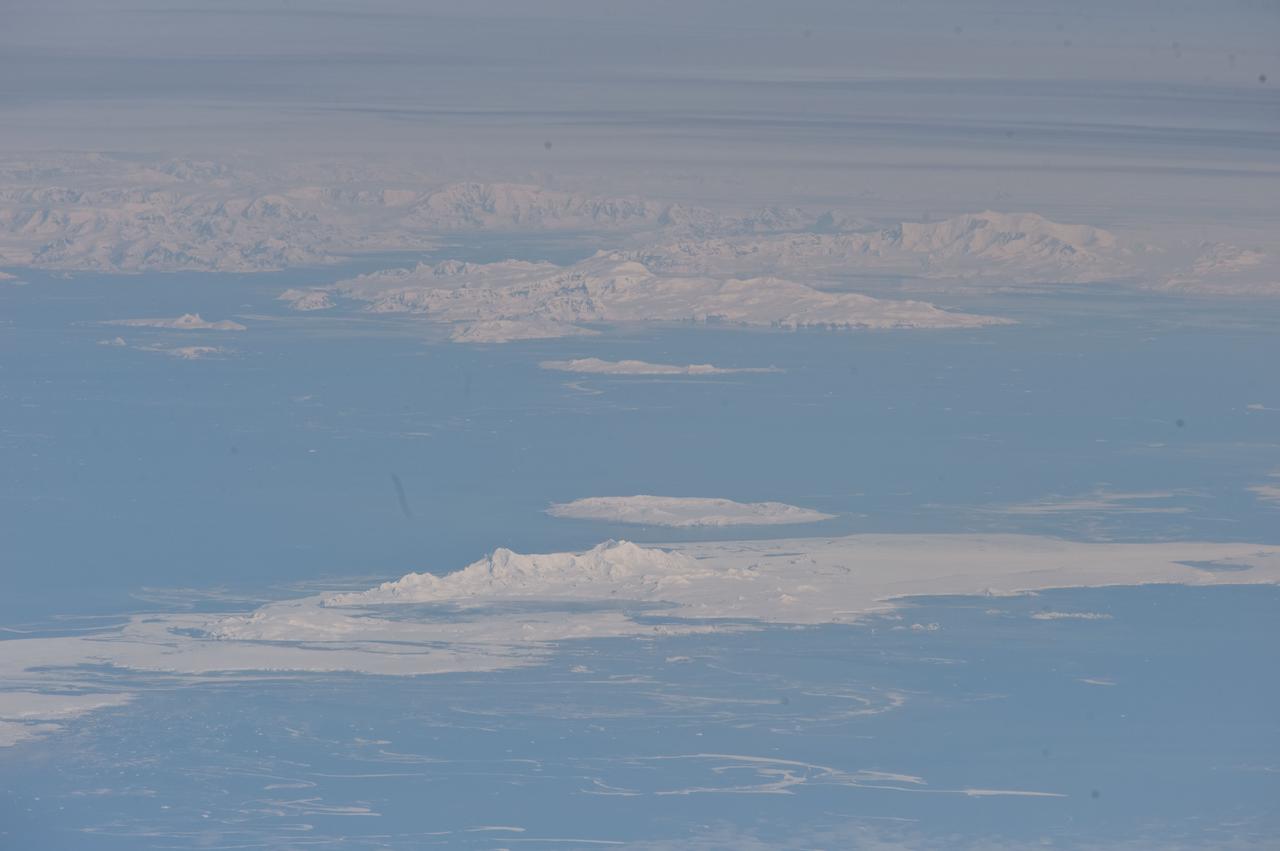
ISS029-E-041836 (4 Oct. 2011) --- South Shetland Islands and Antarctic Peninsula are featured in this image photographed by an Expedition 29 crew member on the International Space Station (ISS). The inclined equatorial orbit of the space station limits nadir Earth views?looking ?straight down? at the surface from the spacecraft?to latitudes between approximately 52 North and 52 South. When viewing conditions are ideal, the crew can obtain detailed oblique imagery?looking outwards at an angle from the space station?of regions at higher latitudes such as Greenland or, in this image, Antarctica. While the bulk of the continent of Antarctica is currently situated over the South Pole, the narrow Antarctic Peninsula extends like a finger towards the southern tip of South America. The northernmost part of the Peninsula is known as Graham Land, a small portion of which (located at approximately 64 South latitude) can be seen at top left in this photograph. Two of the South Shetland Islands that lay off the coast of Graham Land to the north-northwest, Livingston Island and Deception Island, are visible in the image. While both islands have a volcanic origin, active volcanism at Deception Island has been recorded since 1800; the last verified eruptive activity occurred in 1970. Closer to the coastline of Graham Land, Brabant Island (not considered to be part of the South Shetlands) also includes numerous outcrops of volcanic rock attesting to the complex tectonic history of the region. The space station was located over the South Atlantic Ocean, approximately 1,800 kilometers to the northeast in terms of its ground track, when this image was taken. This long viewing distance, combined with the highly oblique viewing angle, accentuates shadowing of the ground surface and provides a sense of the topography similar to the view one gets from an airplane. It also causes foreshortening of features visible in the image, making them appear closer to each other than they actually are ? for example, the actual distance between Livingston and Deception Islands is approximately 20 kilometers.
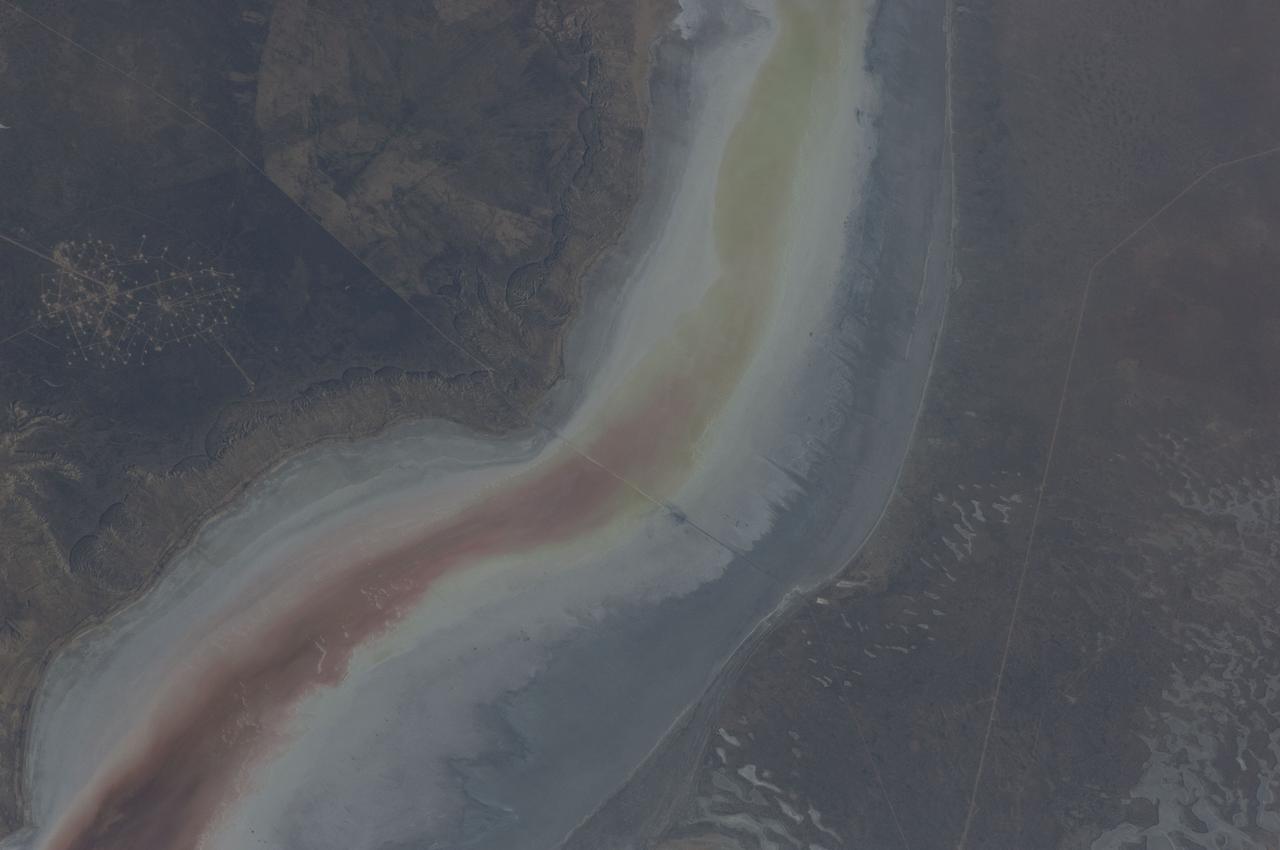
ISS031-E-030896 (11 May 2012) --- The Sor Kaydak near the northeast Caspian Sea in Kazakhstan are featured in this image photographed by an Expedition 31 crew member on the International Space Station. This striking image shows saline water of different colors in the Sor Kaydak, a salt marsh that leads into the northeast bulb of the Caspian Sea. The central 50 kilometers of this 180 kilometer-long depression is shown in this photograph. The Sor Kaydak depression is inundated on occasion by water from the Caspian Sea since it lies at the same elevation?that is, 29 meters below global sea level?though separated from the Sea by a low bar of land that is 1?2 meters high. The different colors of marsh water (brown to pink to light green, northeast to southwest) result from the interplay of water depth and resident organisms such as algae. Algae color varies depending on water temperature and salinity. The irregular gray areas at bottom right are wet zones between low sand dunes. These interdune flats are whitened with salt derived by evaporation of Caspian Sea water (the sea is just outside the image bottom right). The jagged line following the colored water (crossing the center of the image top to bottom) is the limit of the wetting zone (or perimeter), an irregular zone influenced by wind and the depth of water in the marsh. Small cliffs can be seen marking the east margin of the depression that contains Sor Kaydak. Above the cliffs a plateau surface (approximately 200 meters above the salt marsh, approximately 160 meters above global sea level) extends eastward for hundreds of kilometers. Here the plateau is occupied by a dense pattern of well heads which appear as a geometric pattern of tan dots. By contrast, the west margin (right) rises less than 10 meters above the marsh altitude. The straight line visible at center is a pipeline built across the salt marsh which takes oil to a terminal on the Caspian shore 100 kilometers northwest of the area shown here.
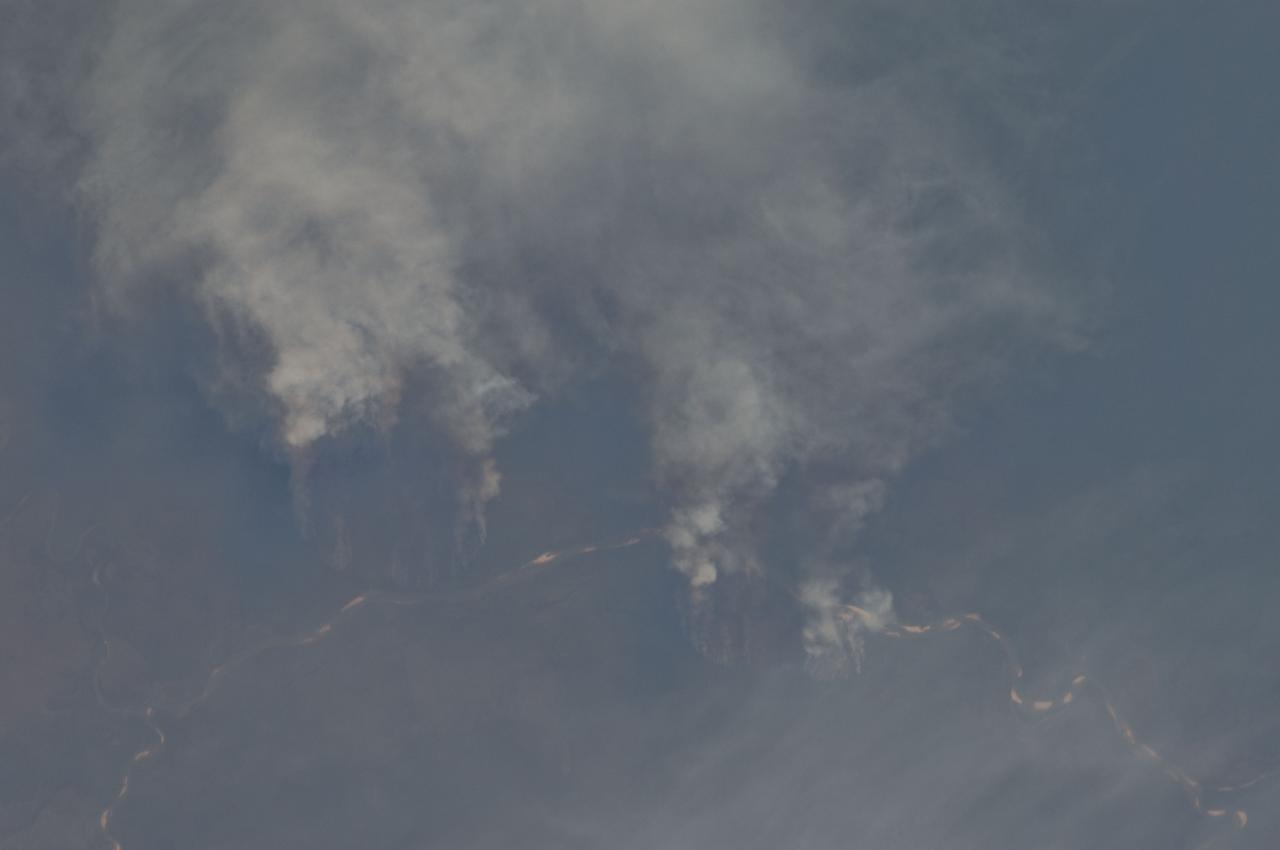
ISS029-E-008032 (17 Sept. 2011) --- Fires along the Rio Xingu, Brazil are featured in this image photographed by an Expedition 29 crew member on the International Space Station. The rain forest of South America, also known as ?Amazonia??the largest such forest on Earth?has been undergoing a continual and accelerated land use conversion process into farmlands (including pasture for livestock) since the early 1960s. This process has typically been achieved by clearing of the forest using fire ? ?slash and burn? ? followed by planting of crops. The generally infertile soils of the region make sustainable farming difficult; this drives more forest conversion into new farmland. The area of clearing can be considerable, and as the deforested regions are easily identifiable and measurable from space the rate of deforestation is likewise easy to track. This detailed photograph illustrates slash-and-burn forest clearing along the Xingu River (Rio) in the northeast of the state of Matto Grasso, Brazil. The perspective of this image allows for a striking visualization of both the horizontal position and extent of the fire lines next to the river, as well as providing a sense of the vertical structure of the smoke plumes due to the viewing angle and shadowing. Light colored areas within the river channel are sand bars, which show that the river is in its annual low-flow/ low water stage. For a sense of scale, the Xingu River channel within the view is approximately 63 kilometers long. Rivers in Amazonia are its natural highways, which may explain why the burning is occurring right next to the Xingu River, one of Amazonia?s largest. In recent years, preservation has gained traction in the region as a result of such considerations as new valuation of the ecosystem services provided by the forest, concerns about the impact of widespread burning on global climate change, and greater sensitivity to the ethnic and biological heritage of Amazonia.