
A Russian Search and Rescue helicopter pilot waits for the arrival of Expedition 31 Flight Engineer Don Pettit and other personnel so they can be flown from the Soyuz landing site outside the town of Zhezkazgan to the Karaganda Airport on Sunday, July 1, 2012 in Kazakhstan. Expedition 31 Commander Oleg Kononenko of Russia and Flight Engineers Don Pettit of NASA and Andre Kuipers of the European Space Agency landed in their Soyuz TMA-03M capsule in a remote area near the town of Zhezkazgan, Kazakhstan. Pettit, Kononenko and Kuipers returned from more than six months onboard the International Space Station where they served as members of the Expedition 30 and 31 crews. Photo Credit: (NASA/Bill Ingalls)
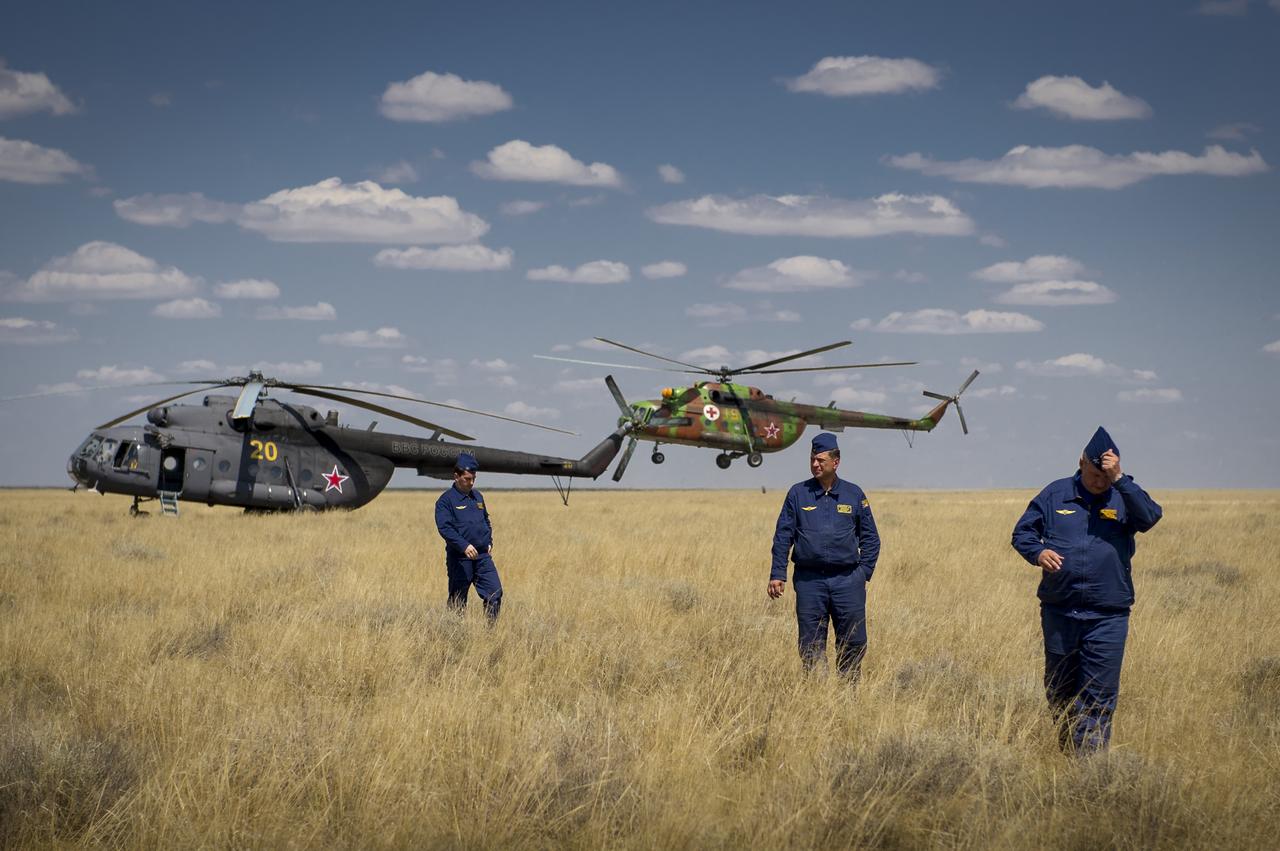
Additional Russian Search and Rescue crews arrive near the Soyuz TMA-03M capsule after it landed with Expedition 31 Commander Oleg Kononenko of Russia and Flight Engineers Don Pettit of NASA and Andre Kuipers of the European Space Agency in a remote area near the town of Zhezkazgan, Kazakhstan, on Sunday, July 1, 2012. Pettit, Kononenko and Kuipers returned from more than six months onboard the International Space Station where they served as members of the Expedition 30 and 31 crews. Photo Credit: (NASA/Bill Ingalls)
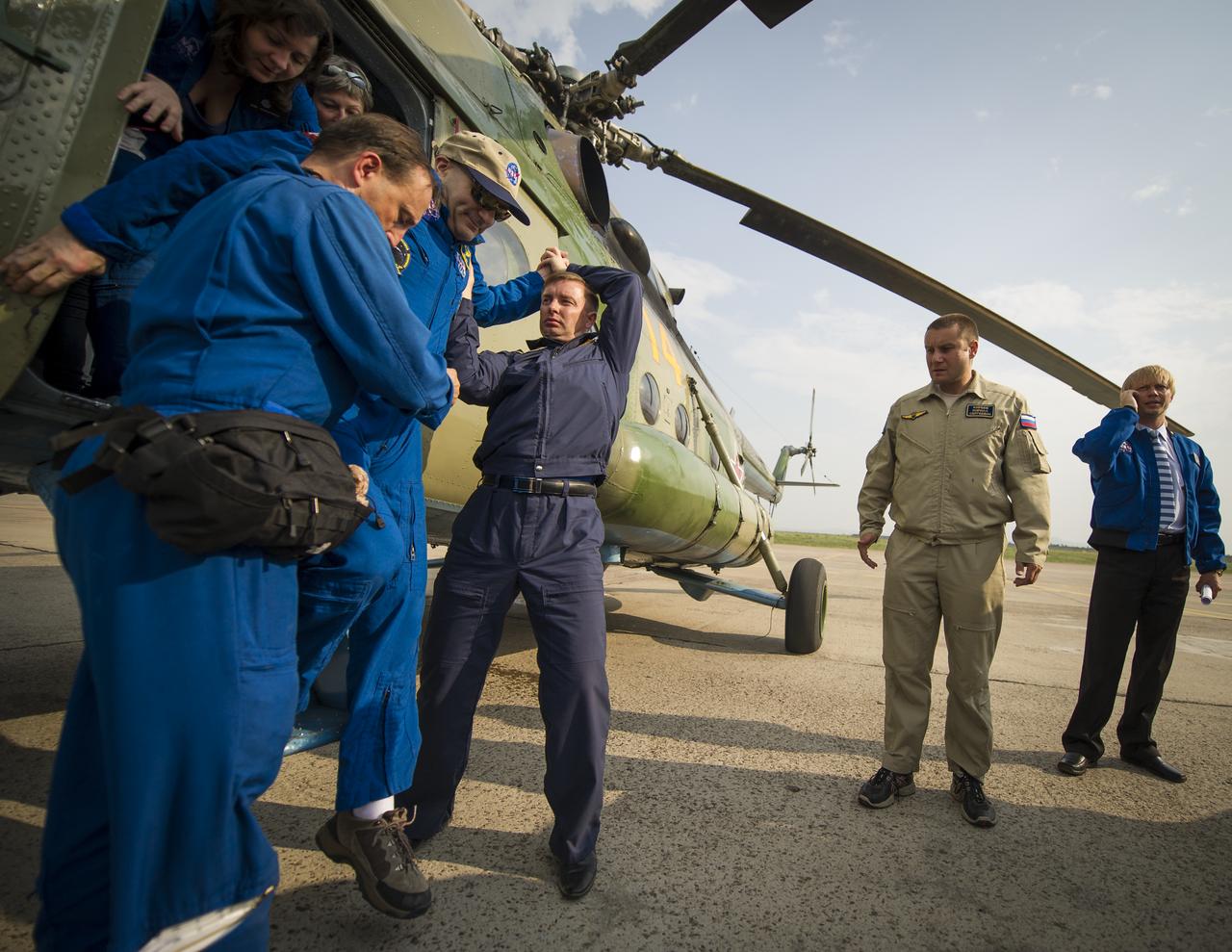
Expedition 31 Flight Engineer Don Pettit of NASA is helped out of a Russian Search and Rescue helicopter after it carried him from the Soyuz TMA-03M capsule landing site in a remote area near the town of Zhezkazgan to Karaganda on Sunday, July 1, 2012 in Kazakhstan. Expedition 31 Commander Oleg Kononenko of Russia and Flight Engineers Pettit and Andre Kuipers of the European Space Agency landed in their Soyuz TMA-03M capsule in a remote area near the town of Zhezkazgan, Kazakhstan after serving more than six months onboard the International Space Station as members of the Expedition 30 and 31 crews. Photo Credit: (NASA/Bill Ingalls)
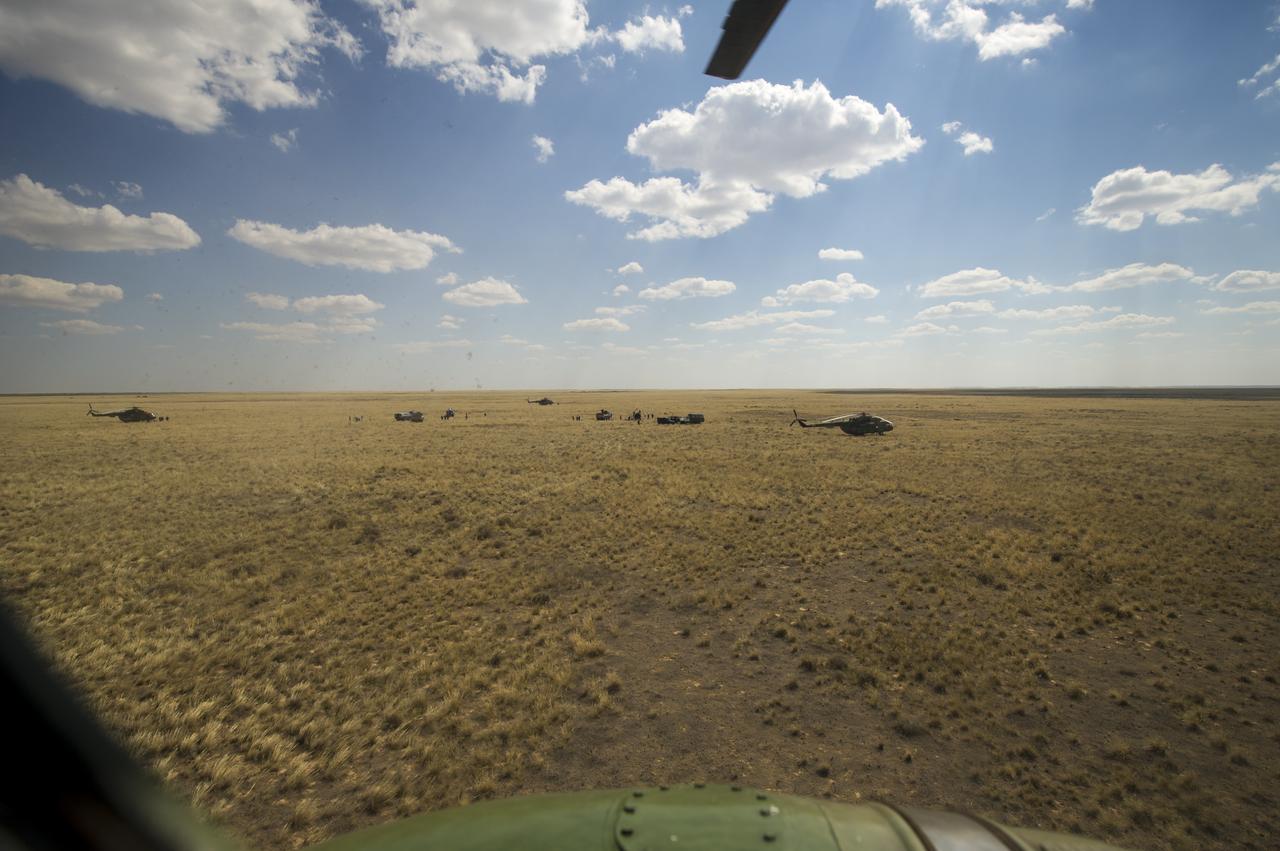
The Expedition 31 Soyuz landing site is seen through the plexiglass window of the helicopter carrying Expedition 31 Flight Engineer Don Pettit to Karaganda less than two hours after he and Commander Oleg Kononenko of Russia, and Flight Engineer Andre Kuipers of the European Space Agency landed in their Soyuz TMA-03M capsule in a remote area near the town of Zhezkazgan, Kazakhstan, on Sunday, July 1, 2012. Pettit, Kononenko and Kuipers returned from more than six months onboard the International Space Station where they served as members of the Expedition 30 and 31 crews. Photo Credit: (NASA/Bill Ingalls)
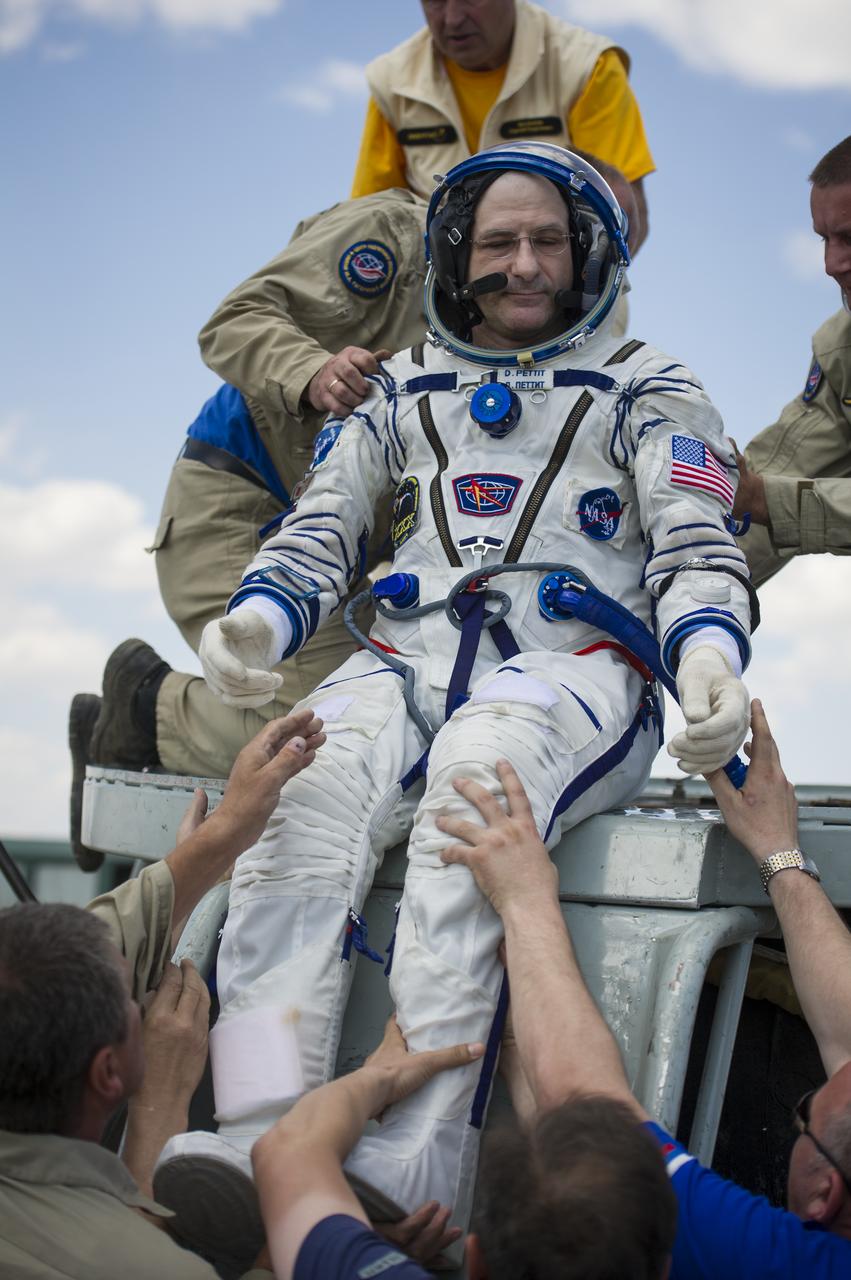
Expedition 31 Flight Engineer Don Pettit of NASA is helped out of the Soyuz TMA-03M capsule after he and Expedition 31 Commander Oleg Kononenko of Russia, and Flight Engineer Andre Kuipers of the European Space Agency landed in a remote area near the town of Zhezkazgan, Kazakhstan, on Sunday, July 1, 2012. Pettit, Kononenko and Kuipers returned from more than six months onboard the International Space Station where they served as members of the Expedition 30 and 31 crews. Photo Credit: (NASA/Bill Ingalls)
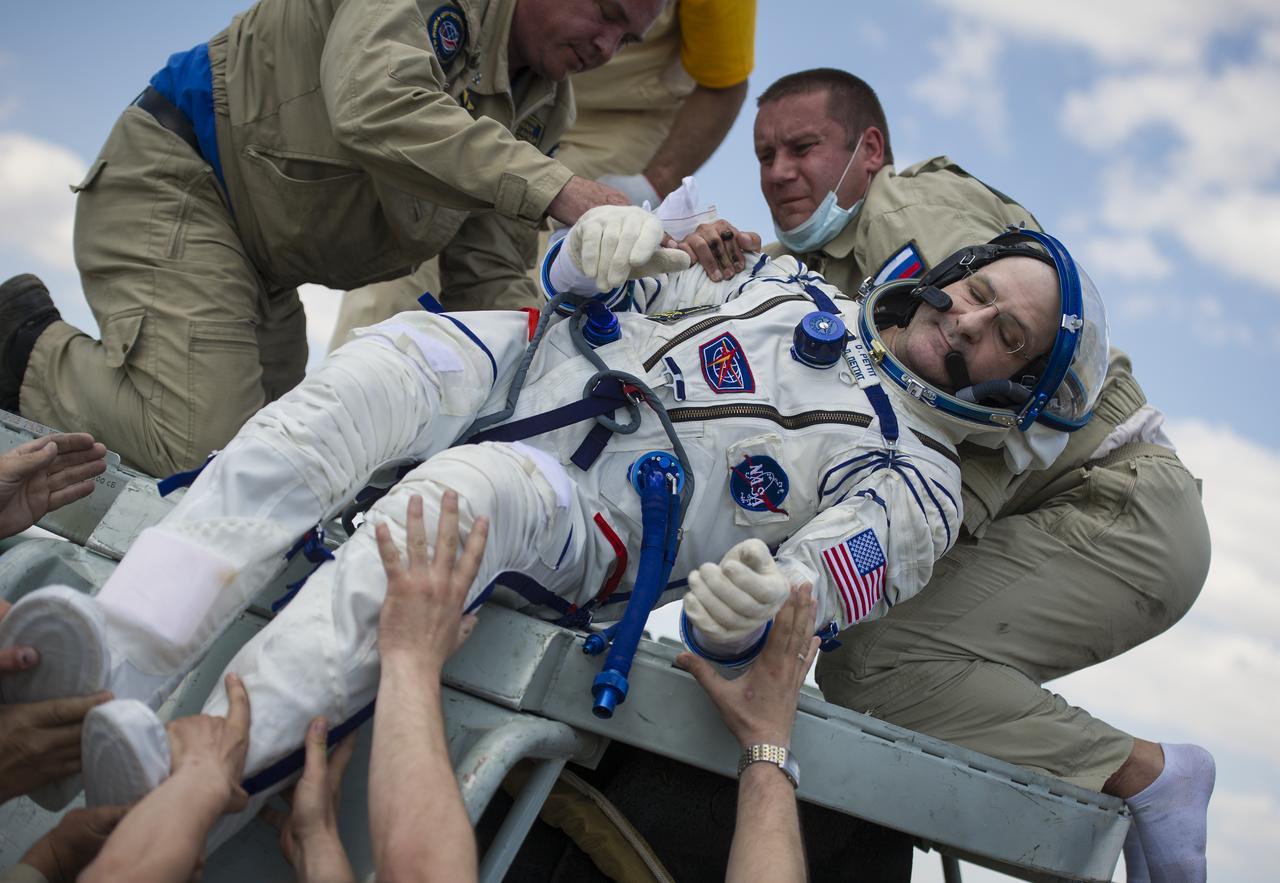
Support and medical personnel assist Expedition 31 Flight Engineer Don Pettit of NASA out of the Soyuz TMA-03M capsule shortly after he and Expedition 31 Commander Oleg Kononenko of Russia, and Flight Engineers Andre Kuipers of the European Space Agency landed in a remote area near the town of Zhezkazgan, Kazakhstan, on Sunday, July 1, 2012. Pettit, Kononenko and Kuipers returned from more than six months onboard the International Space Station where they served as members of the Expedition 30 and 31 crews. Photo Credit: (NASA/Bill Ingalls)
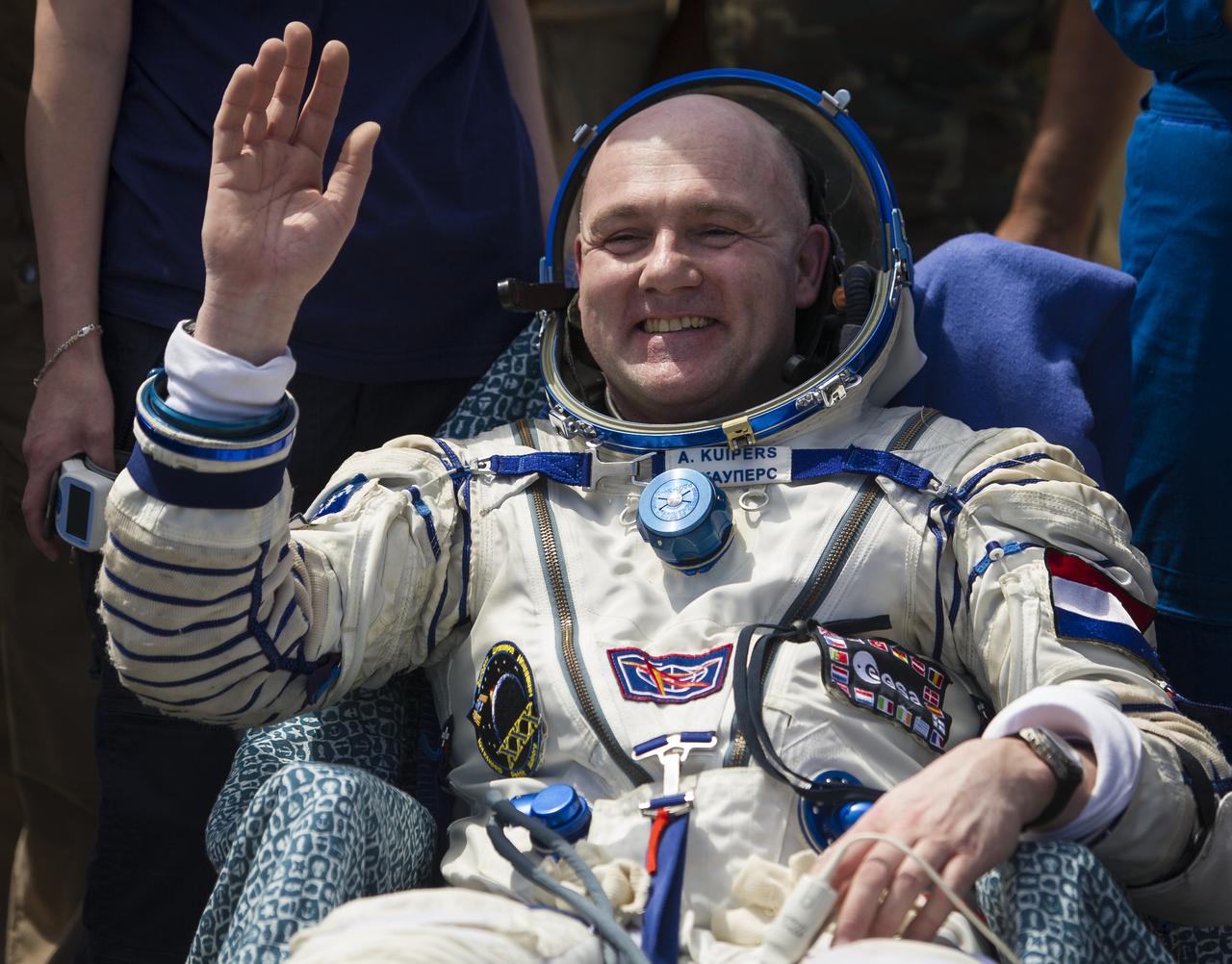
Expedition 31 Flight Engineer Andre Kuipers of the European Space Agency waves while seated in a chair outside the Soyuz TMA-03M capsule shortly after he and Expedition 31 Commander Oleg Kononenko of Russia, and Flight Engineer Don Pettit of NASA landed in a remote area near the town of Zhezkazgan, Kazakhstan, on Sunday, July 1, 2012. Pettit, Kononenko and Kuipers returned from more than six months onboard the International Space Station where they served as members of the Expedition 30 and 31 crews. Photo Credit: (NASA/Bill Ingalls)
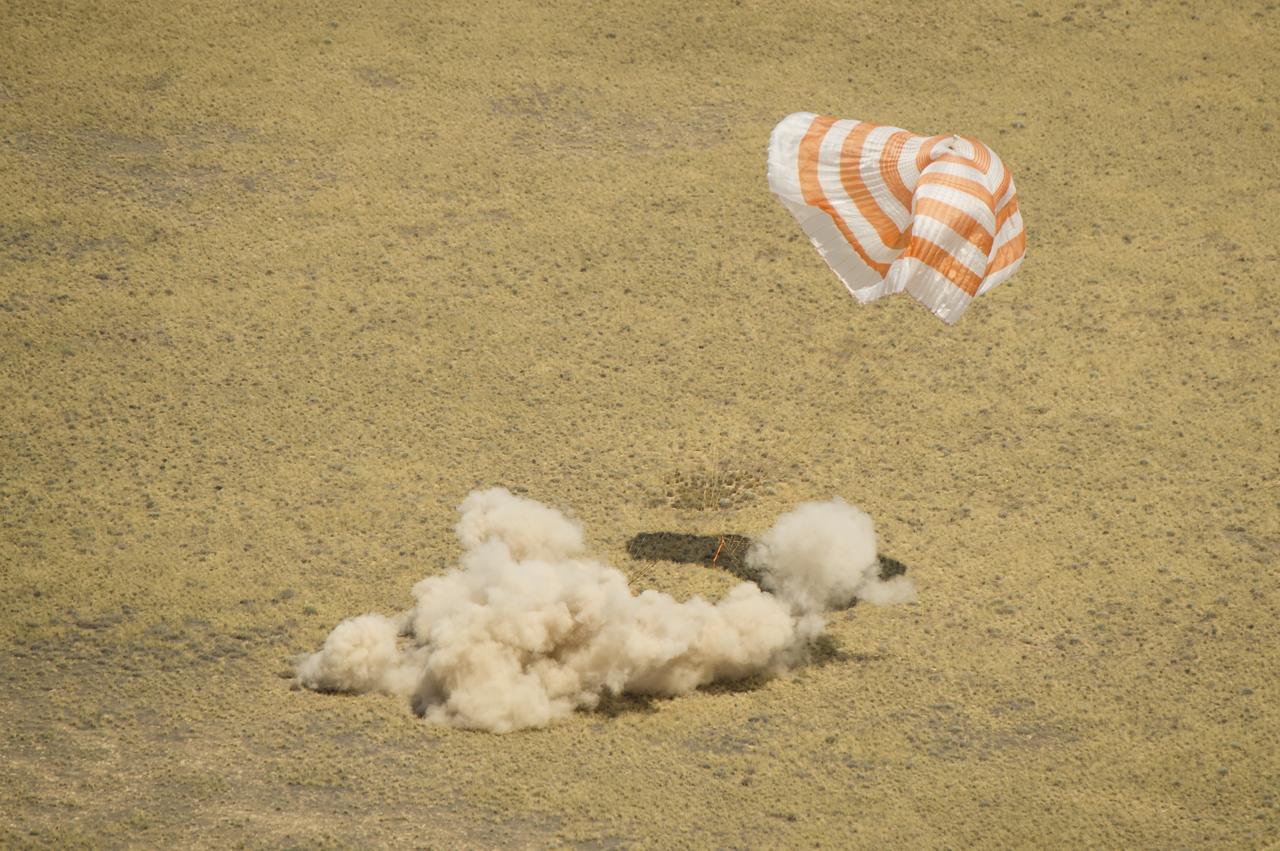
The Soyuz TMA-03M spacecraft is seen as it lands with Expedition 31 Commander Oleg Kononenko of Russia and Flight Engineers Don Pettit of NASA and Andre Kuipers of the European Space Agency in a remote area near the town of Zhezkazgan, Kazakhstan, on Sunday, July 1, 2012. Pettit, Kononenko and Kuipers returned from more than six months onboard the International Space Station where they served as members of the Expedition 30 and 31 crews. Photo Credit: (NASA/Bill Ingalls)
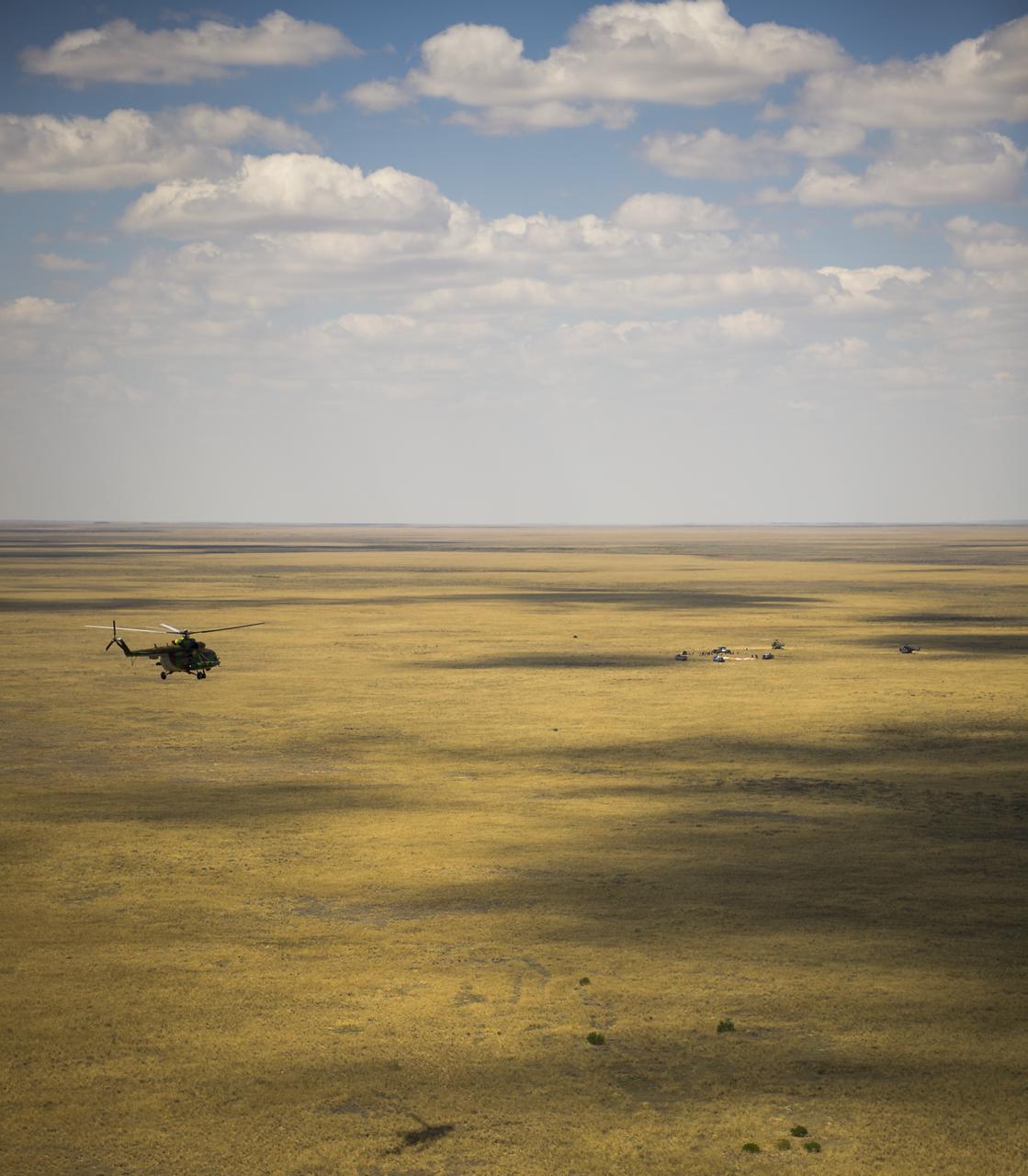
A Russian Search and Rescue helicopter flies to the the Soyuz TMA-03M capsule shortly after it landed with Expedition 31 Commander Oleg Kononenko of Russia and Flight Engineers Don Pettit of NASA and Andre Kuipers of the European Space Agency in a remote area near the town of Zhezkazgan, Kazakhstan, on Sunday, July 1, 2012. Pettit, Kononenko and Kuipers returned from more than six months onboard the International Space Station where they served as members of the Expedition 30 and 31 crews. Photo Credit: (NASA/Bill Ingalls)
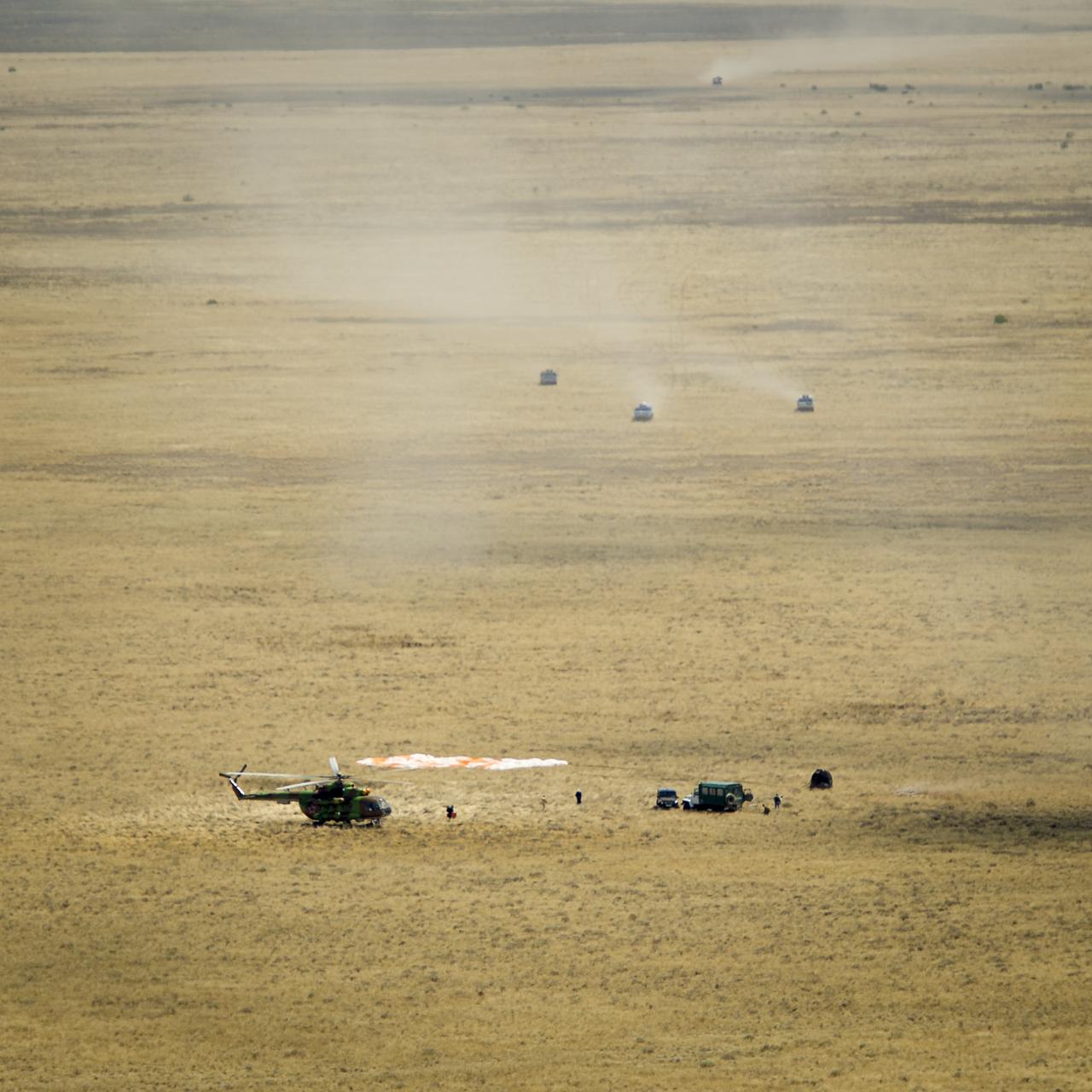
Support personnel rush to the the Soyuz TMA-03M capsule shortly after it landed with Expedition 31 Commander Oleg Kononenko of Russia and Flight Engineers Don Pettit of NASA and Andre Kuipers of the European Space Agency in a remote area near the town of Zhezkazgan, Kazakhstan, on Sunday, July 1, 2012. Pettit, Kononenko and Kuipers returned from more than six months onboard the International Space Station where they served as members of the Expedition 30 and 31 crews. Photo Credit: (NASA/Bill Ingalls)
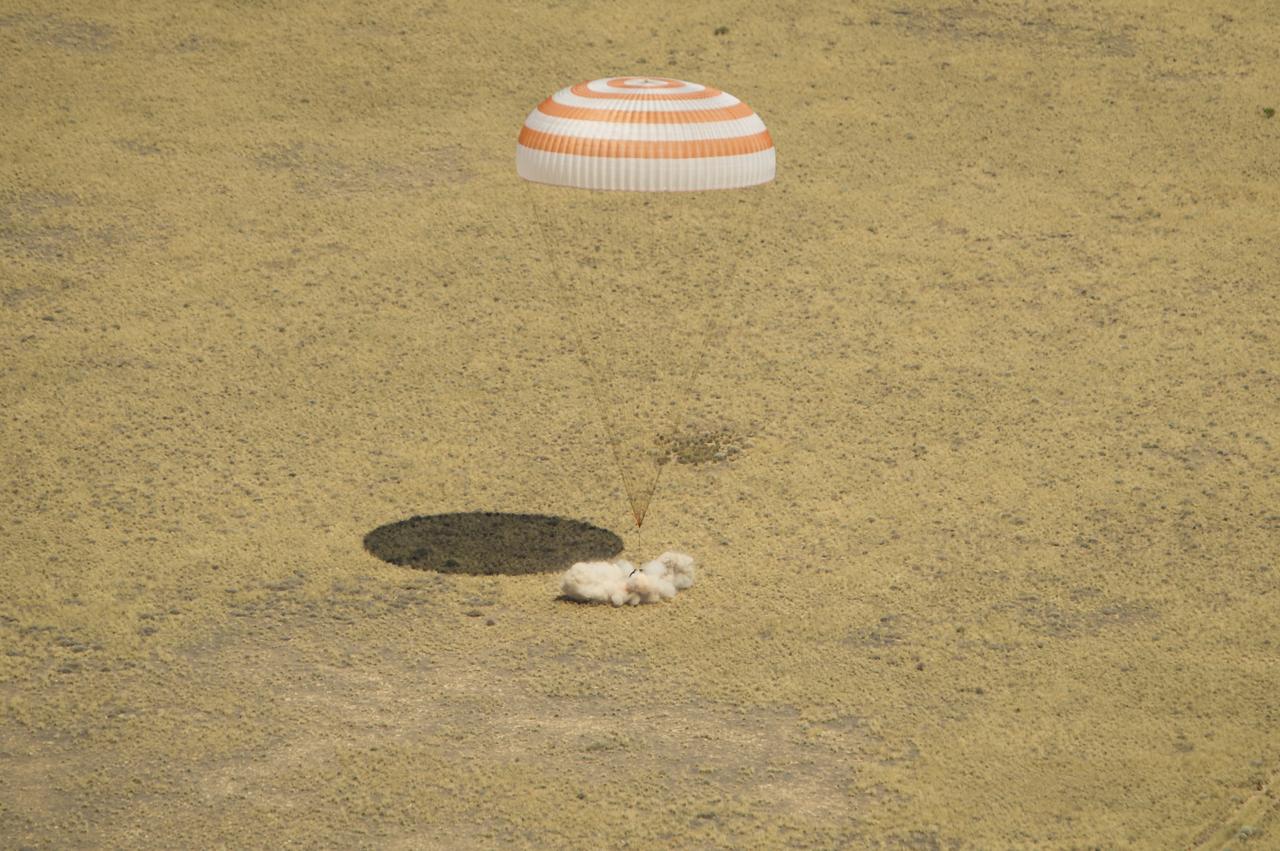
The Soyuz TMA-03M spacecraft is seen as it lands with Expedition 31 Commander Oleg Kononenko of Russia and Flight Engineers Don Pettit of NASA and Andre Kuipers of the European Space Agency in a remote area near the town of Zhezkazgan, Kazakhstan, on Sunday, July 1, 2012. Pettit, Kononenko and Kuipers returned from more than six months onboard the International Space Station where they served as members of the Expedition 30 and 31 crews. Photo Credit: (NASA/Bill Ingalls)
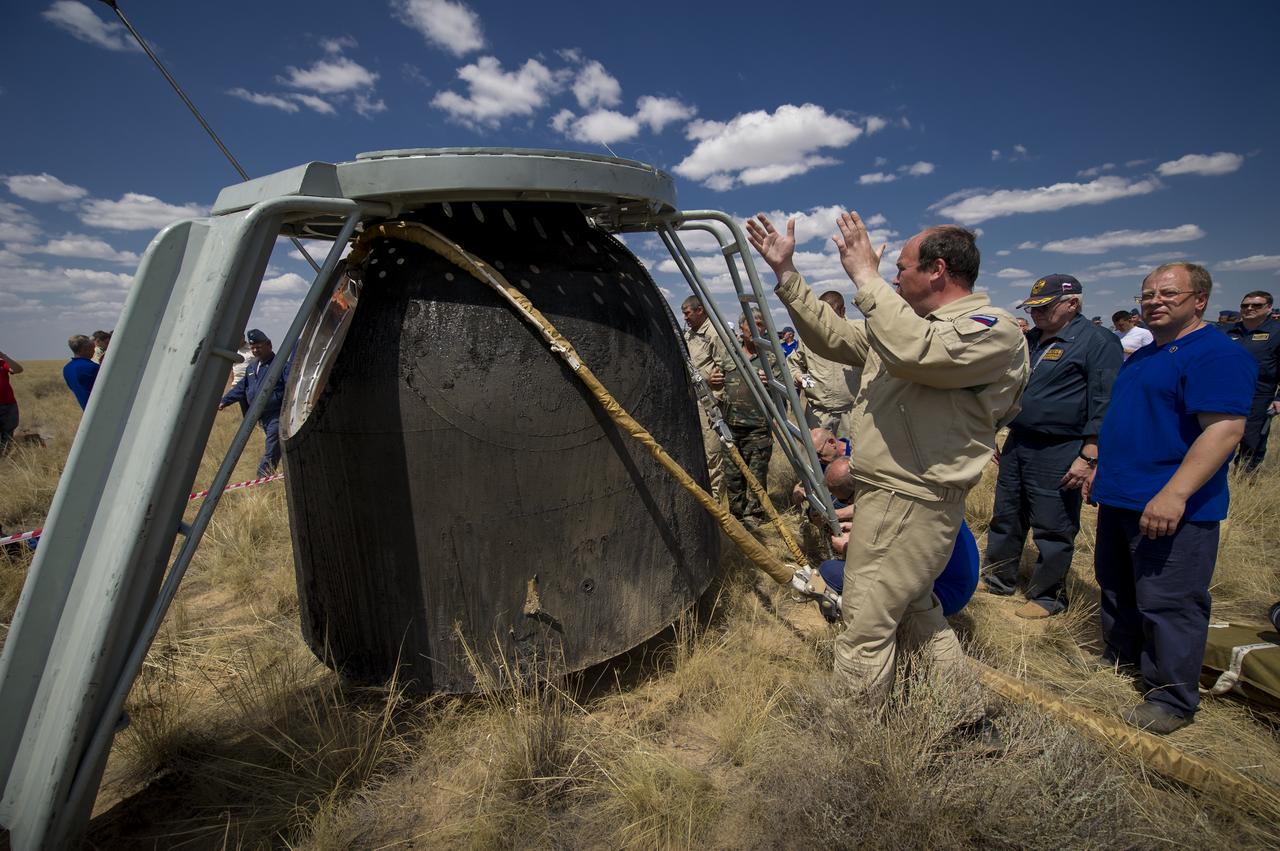
Russian support personnel prepare to access the crew of Soyuz TMA-03M capsule shortly after it landed with Expedition 31 Commander Oleg Kononenko of Russia and Flight Engineers Don Pettit of NASA and Andre Kuipers of the European Space Agency in a remote area near the town of Zhezkazgan, Kazakhstan, on Sunday, July 1, 2012. Pettit, Kononenko and Kuipers returned from more than six months onboard the International Space Station where they served as members of the Expedition 30 and 31 crews. Photo Credit: (NASA/Bill Ingalls)
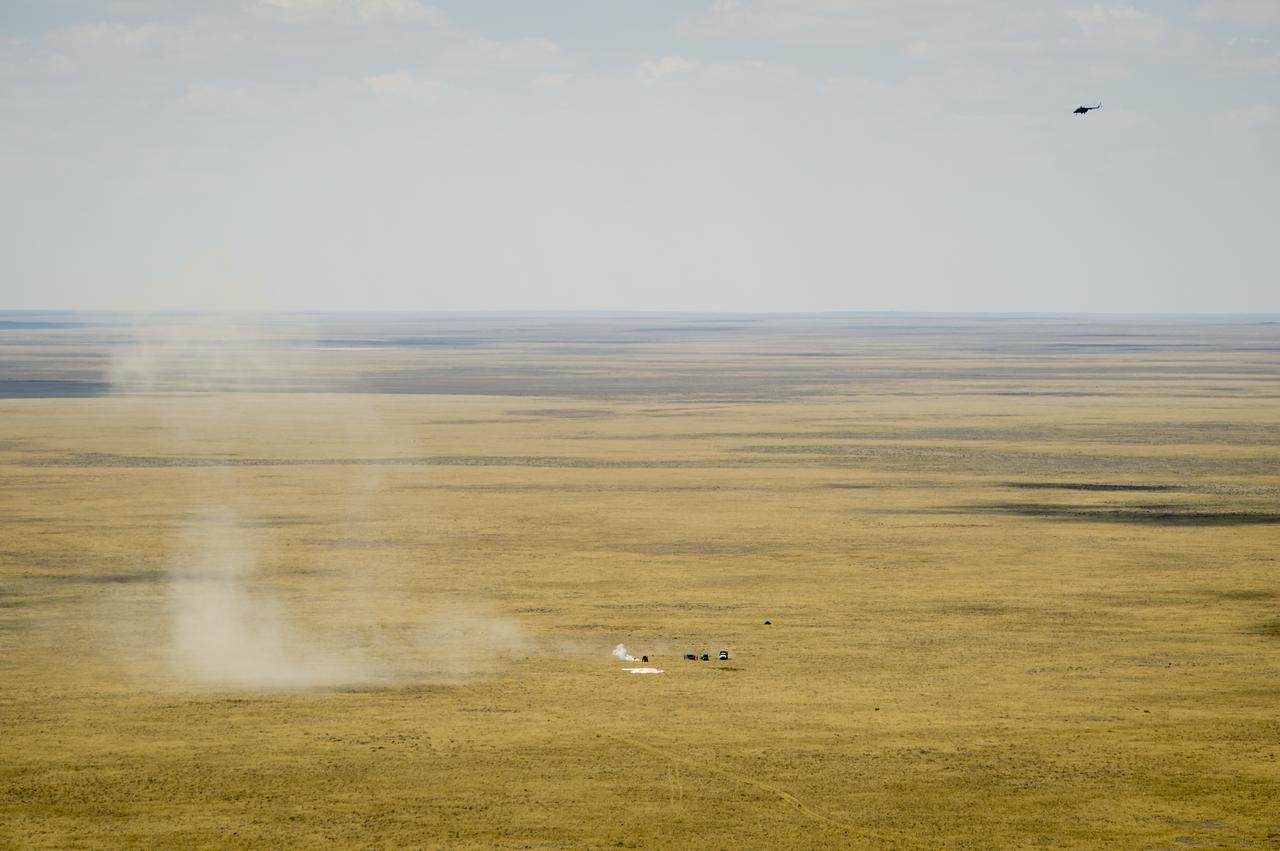
Support personnel rush to the the Soyuz TMA-03M capsule shortly after it landed with Expedition 31 Commander Oleg Kononenko of Russia and Flight Engineers Don Pettit of NASA and Andre Kuipers of the European Space Agency in a remote area near the town of Zhezkazgan, Kazakhstan, on Sunday, July 1, 2012. Pettit, Kononenko and Kuipers returned from more than six months onboard the International Space Station where they served as members of the Expedition 30 and 31 crews. Photo Credit: (NASA/Bill Ingalls)
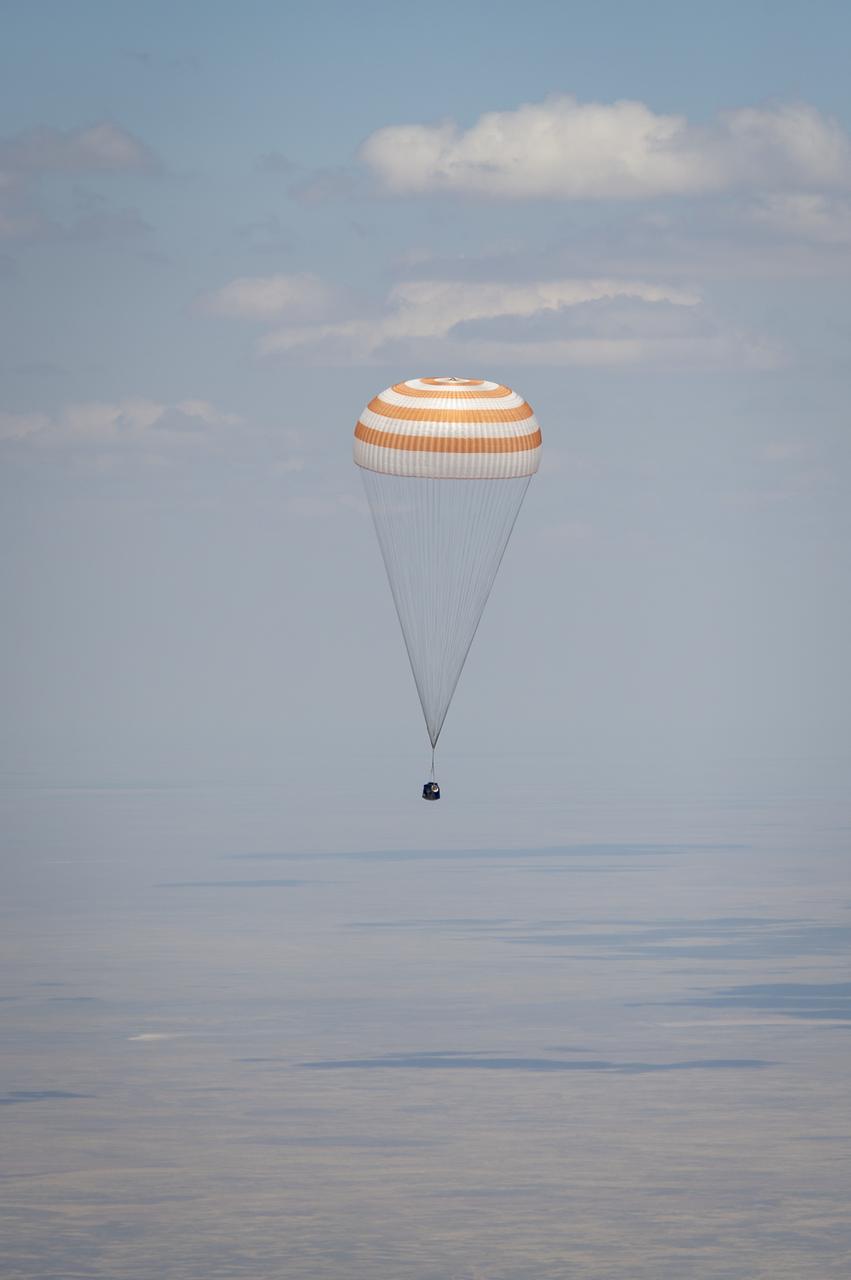
The Soyuz TMA-03M spacecraft is seen as it lands with Expedition 31 Commander Oleg Kononenko of Russia and Flight Engineers Don Pettit of NASA and Andre Kuipers of the European Space Agency in a remote area near the town of Zhezkazgan, Kazakhstan, on Sunday, July 1, 2012. Pettit, Kononenko and Kuipers returned from more than six months onboard the International Space Station where they served as members of the Expedition 30 and 31 crews. Photo Credit: (NASA/Bill Ingalls)
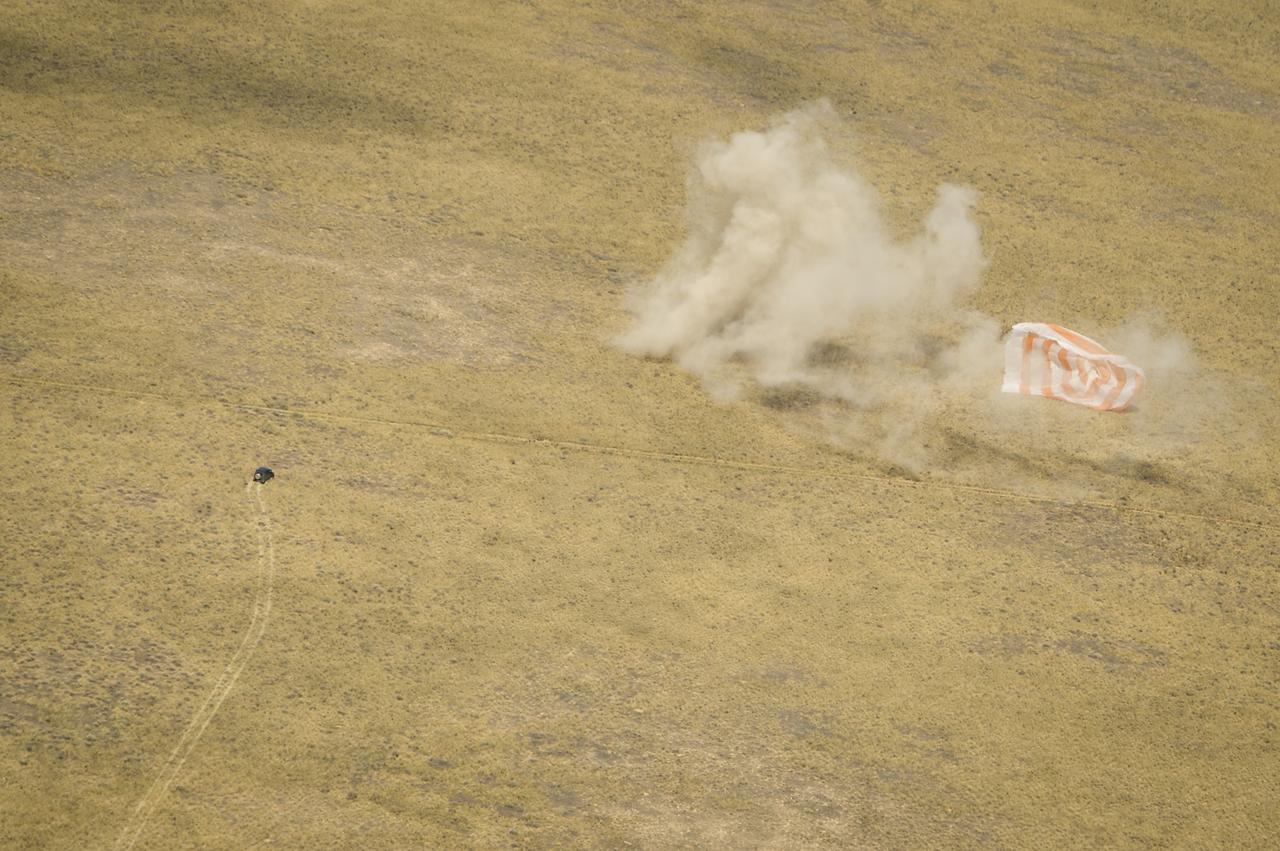
Support personnel rush to the the Soyuz TMA-03M capsule shortly after it landed with Expedition 31 Commander Oleg Kononenko of Russia and Flight Engineers Don Pettit of NASA and Andre Kuipers of the European Space Agency in a remote area near the town of Zhezkazgan, Kazakhstan, on Sunday, July 1, 2012. Pettit, Kononenko and Kuipers returned from more than six months onboard the International Space Station where they served as members of the Expedition 30 and 31 crews. Photo Credit: (NASA/Bill Ingalls)
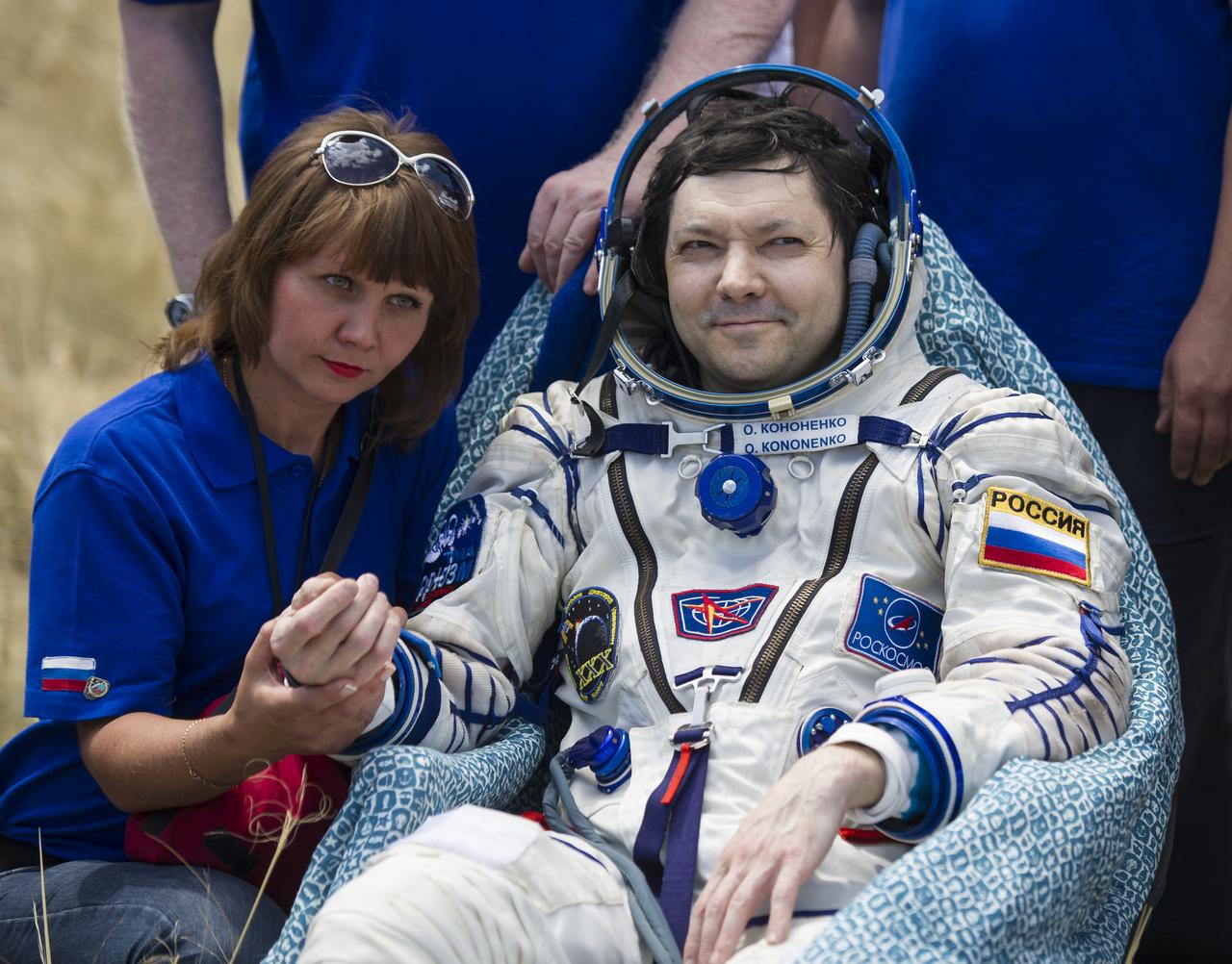
Expedition 31 Commander Oleg Kononenko of Russia is monitored by medical support personal after he and Flight Engineers Don Pettit of NASA and Andre Kuipers of the European Space Agency landed in their Soyuz TMA-03M capsule in a remote area near the town of Zhezkazgan, Kazakhstan, on Sunday, July 1, 2012. Pettit, Kononenko and Kuipers returned from more than six months onboard the International Space Station where they served as members of the Expedition 30 and 31 crews. Photo Credit: (NASA/Bill Ingalls)
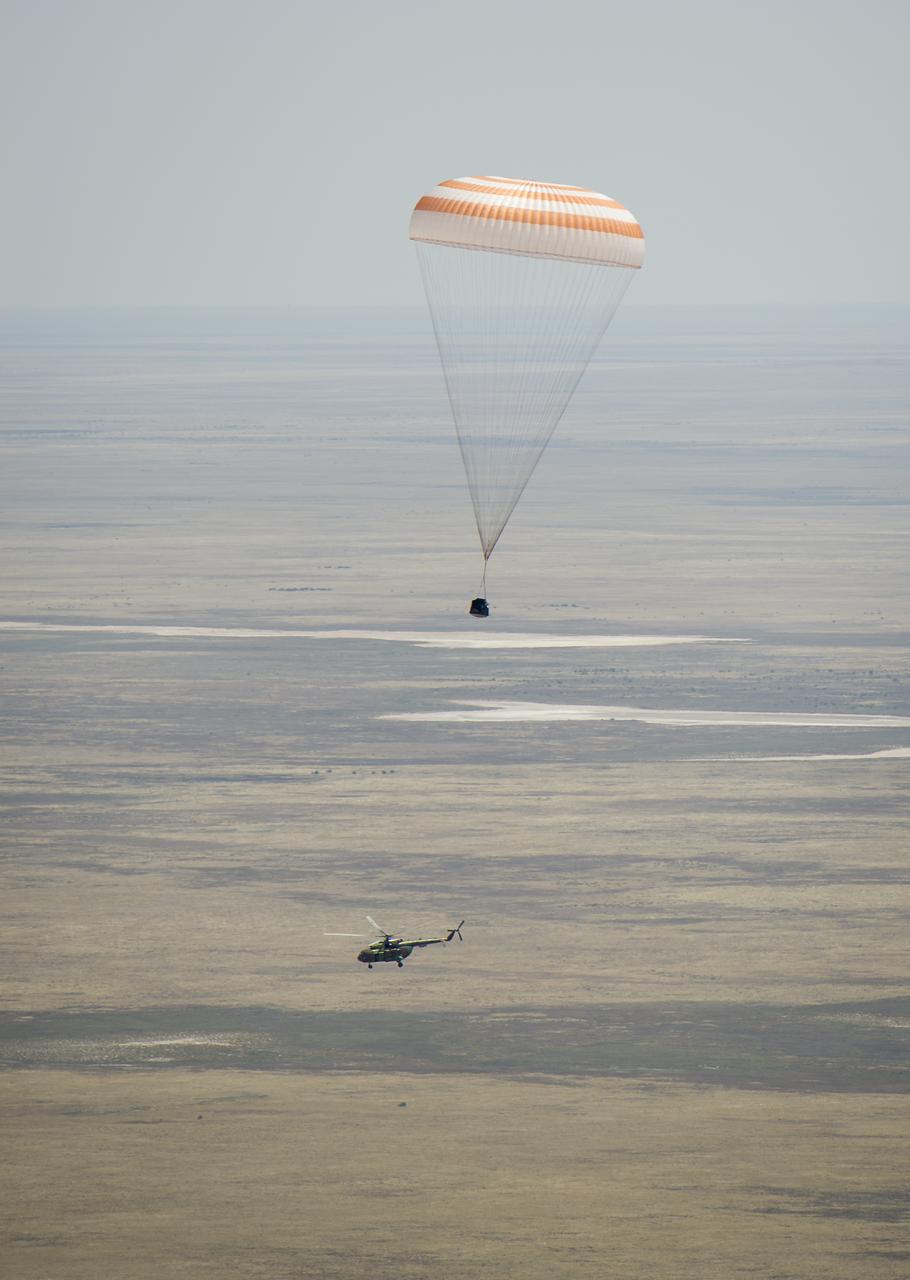
The Soyuz TMA-03M spacecraft is seen as it lands with Expedition 31 Commander Oleg Kononenko of Russia and Flight Engineers Don Pettit of NASA and Andre Kuipers of the European Space Agency in a remote area near the town of Zhezkazgan, Kazakhstan, on Sunday, July 1, 2012. Pettit, Kononenko and Kuipers returned from more than six months onboard the International Space Station where they served as members of the Expedition 30 and 31 crews. Photo Credit: (NASA/Bill Ingalls)
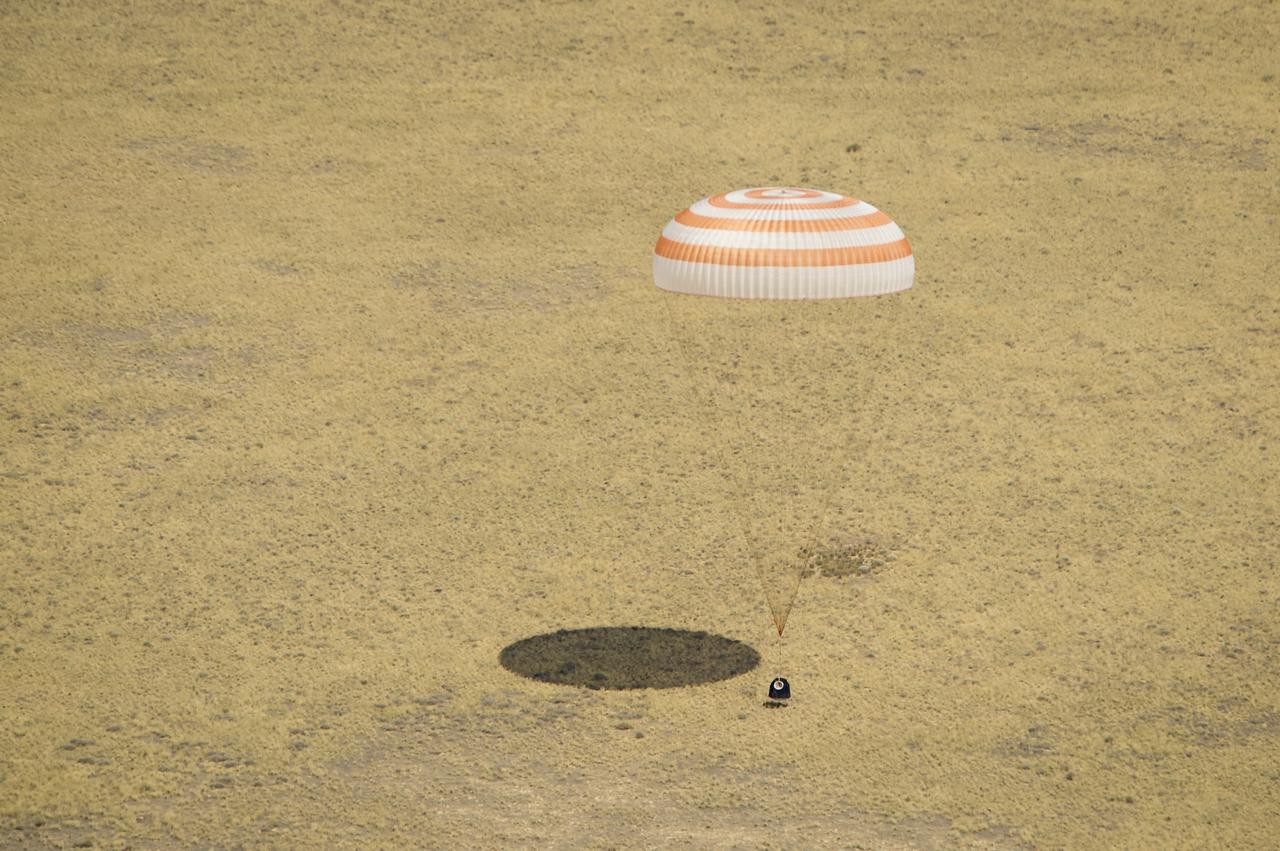
The Soyuz TMA-03M spacecraft is seen as it lands with Expedition 31 Commander Oleg Kononenko of Russia and Flight Engineers Don Pettit of NASA and Andre Kuipers of the European Space Agency in a remote area near the town of Zhezkazgan, Kazakhstan, on Sunday, July 1, 2012. Pettit, Kononenko and Kuipers returned from more than six months onboard the International Space Station where they served as members of the Expedition 30 and 31 crews. Photo Credit: (NASA/Bill Ingalls)
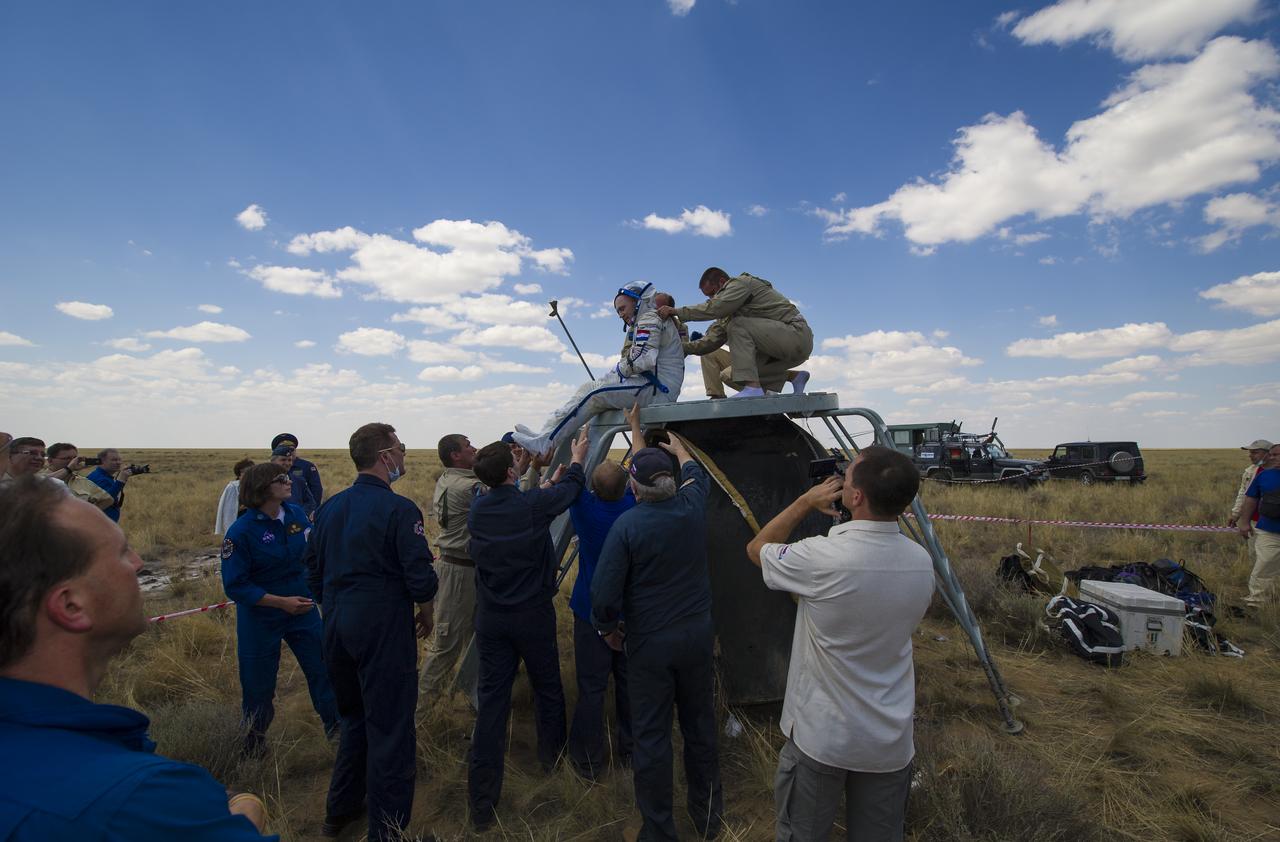
Expedition 31 Flight Engineer Andre Kuipers of the European Space Agency is helped out of the Soyuz TMA-03M capsule after he and Expedition 31 Commander Oleg Kononenko of Russia, and Flight Engineer Don Pettit of NASA landed in a remote area near the town of Zhezkazgan, Kazakhstan, on Sunday, July 1, 2012. Pettit, Kononenko and Kuipers returned from more than six months onboard the International Space Station where they served as members of the Expedition 30 and 31 crews. Photo Credit: (NASA/Bill Ingalls)
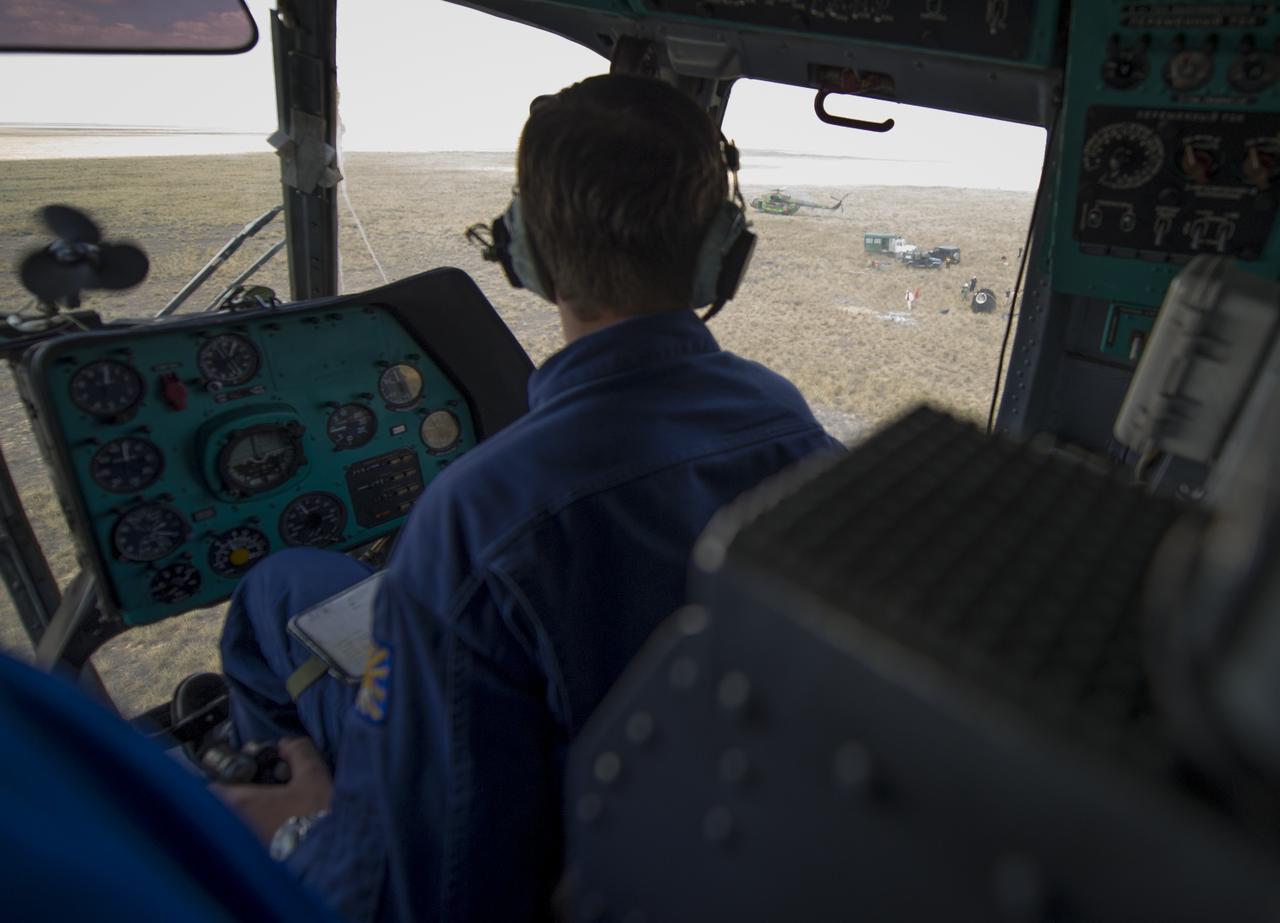
The Soyuz TMA-03M capsule is seen out the right window of a Russian Search and Rescue helicopter as it lands near capsule with Expedition 31 Commander Oleg Kononenko of Russia and Flight Engineers Don Pettit of NASA and Andre Kuipers of the European Space Agency onboard in a remote area near the town of Zhezkazgan, Kazakhstan, on Sunday, July 1, 2012. Pettit, Kononenko and Kuipers returned from more than six months onboard the International Space Station where they served as members of the Expedition 30 and 31 crews. Photo Credit: (NASA/Bill Ingalls)
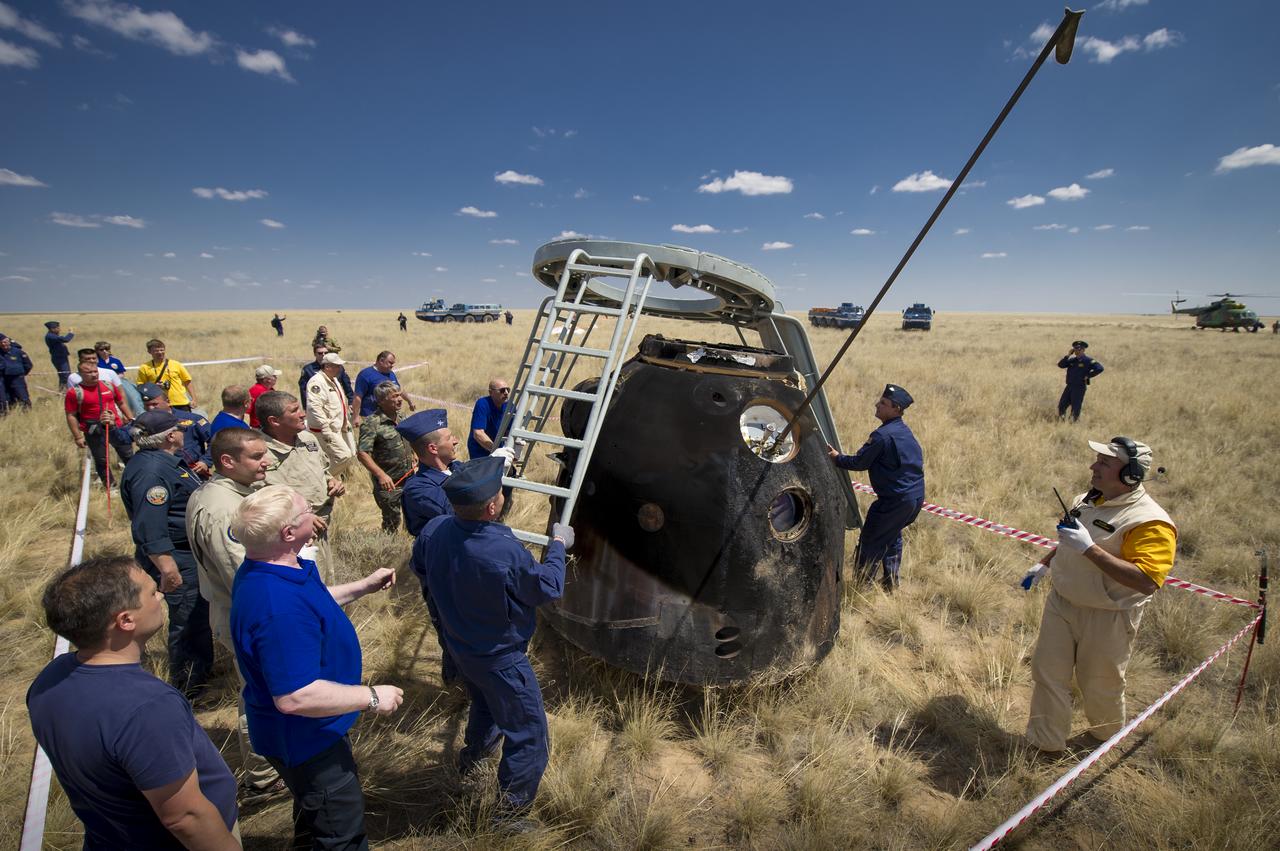
Russian Search and Rescue crews attach ladders and a slide for access to the Soyuz TMA-03M capsule shortly after it landed with Expedition 31 Commander Oleg Kononenko of Russia and Flight Engineers Don Pettit of NASA and Andre Kuipers of the European Space Agency in a remote area near the town of Zhezkazgan, Kazakhstan, on Sunday, July 1, 2012. Pettit, Kononenko and Kuipers returned from more than six months onboard the International Space Station where they served as members of the Expedition 30 and 31 crews. Photo Credit: (NASA/Bill Ingalls)
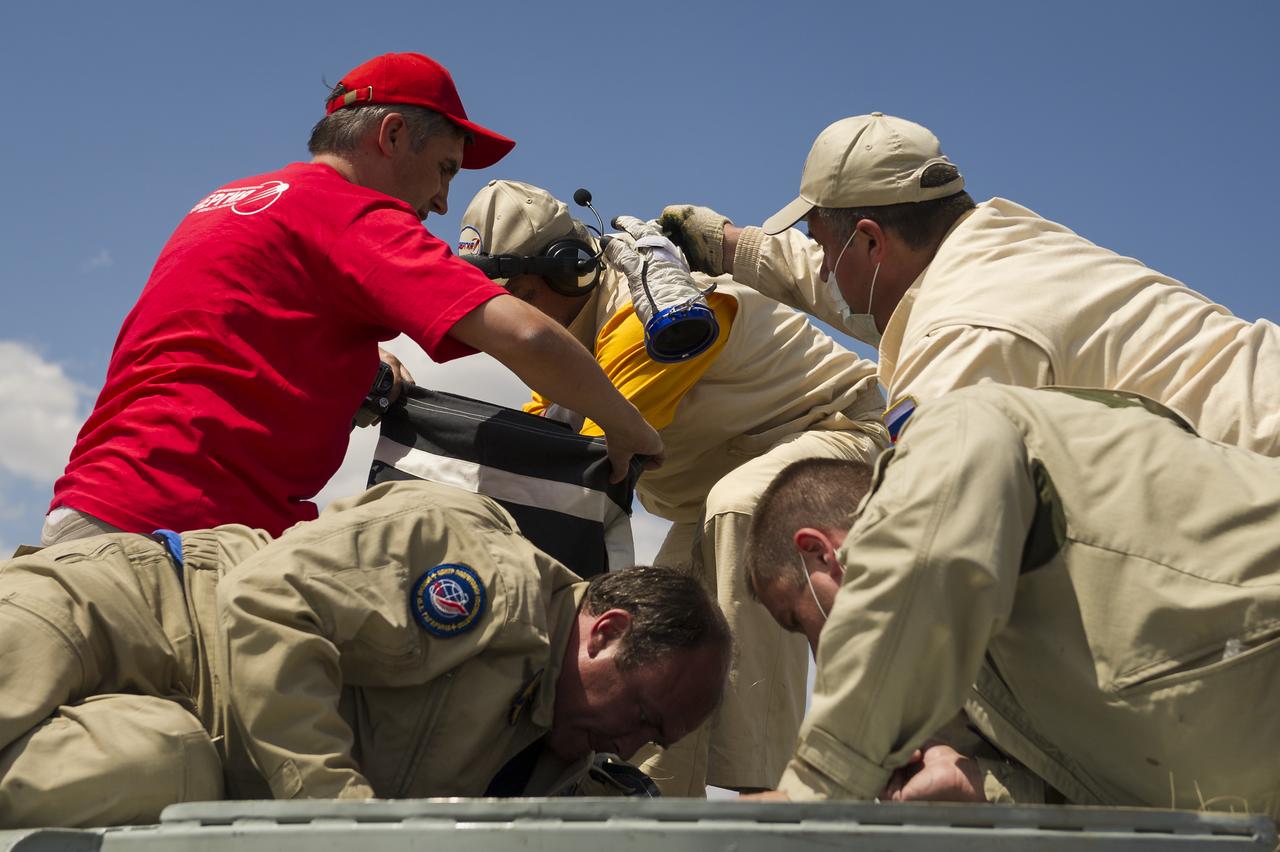
Russian support personnel are handed sokol suit gloves from the crew inside the Soyuz TMA-03M capsule after it landed with Expedition 31 Commander Oleg Kononenko of Russia and Flight Engineers Don Pettit of NASA and Andre Kuipers of the European Space Agency in a remote area near the town of Zhezkazgan, Kazakhstan, on Sunday, July 1, 2012. Pettit, Kononenko and Kuipers returned from more than six months onboard the International Space Station where they served as members of the Expedition 30 and 31 crews. Photo Credit: (NASA/Bill Ingalls)
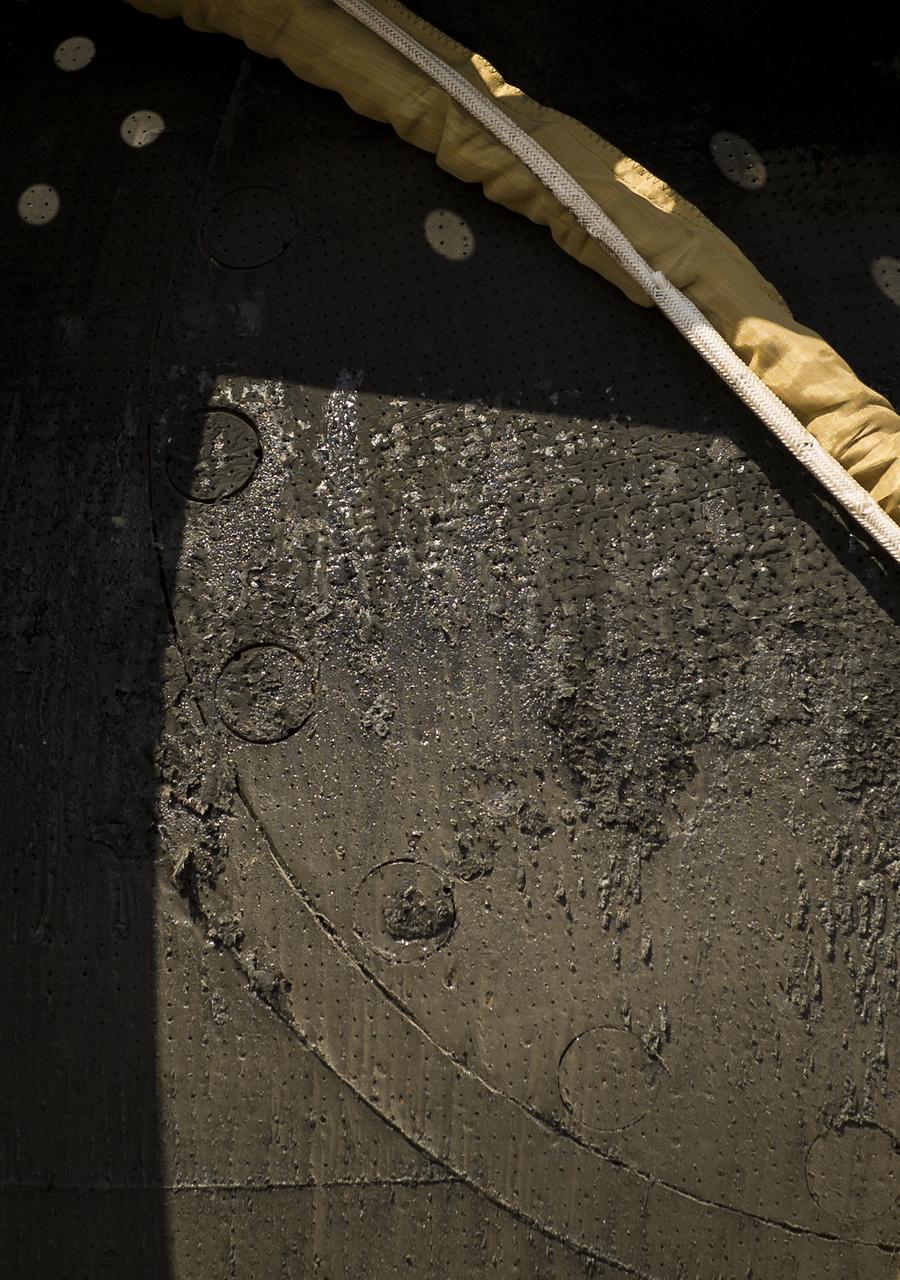
A closely cropped image of the Soyuz capsule shows the charring that took place during reentry of the Soyuz TMA-03M capsule after it landed with Expedition 31 Commander Oleg Kononenko of Russia and Flight Engineers Don Pettit of NASA and Andre Kuipers of the European Space Agency in a remote area near the town of Zhezkazgan, Kazakhstan, on Sunday, July 1, 2012. Pettit, Kononenko and Kuipers returned from more than six months onboard the International Space Station where they served as members of the Expedition 30 and 31 crews. Photo Credit: (NASA/Bill Ingalls)
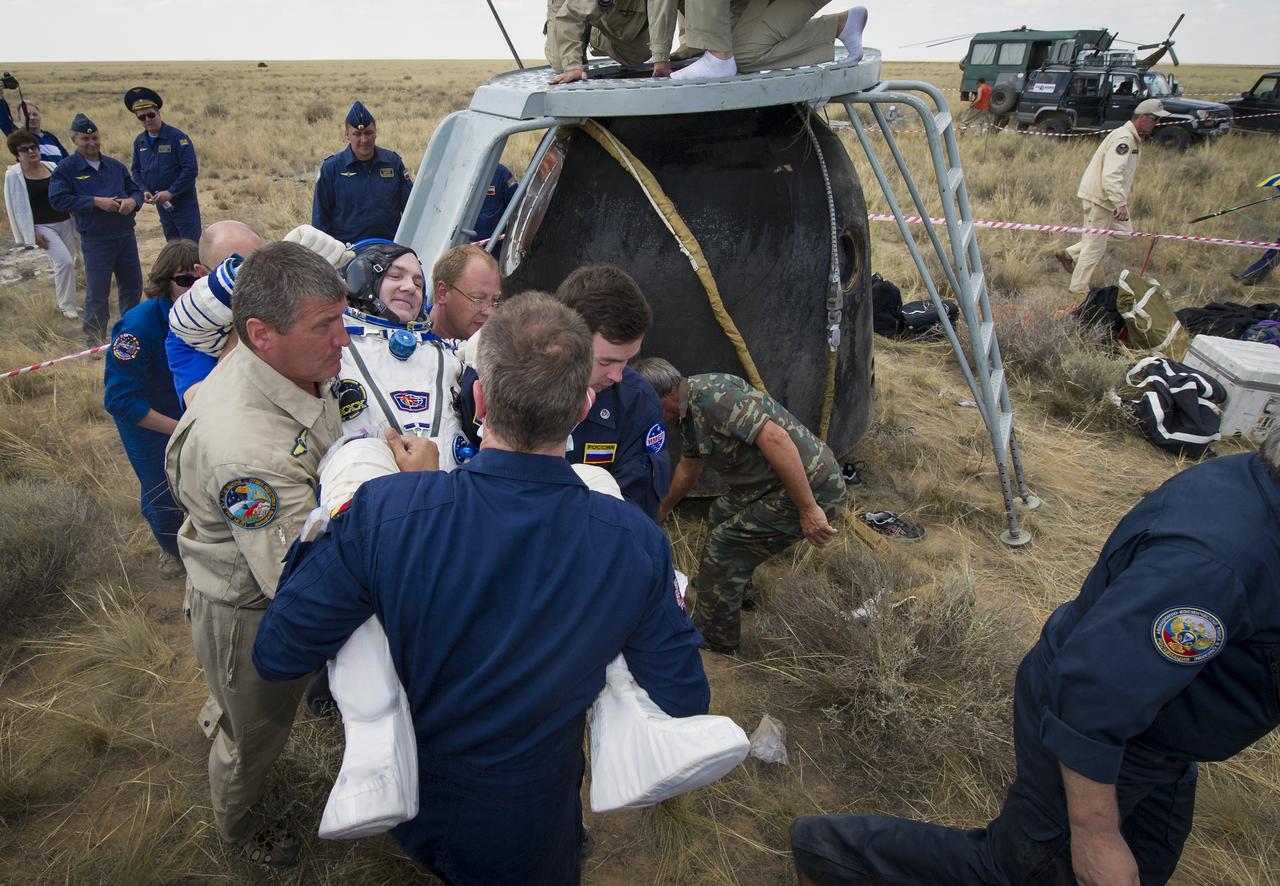
Expedition 31 Flight Engineer Andre Kuipers of the European Space Agency is carried by support personal from the Soyuz TMA-03M capsule to a chair shortly after he and Expedition 31 Commander Oleg Kononenko of Russia, and Flight Engineer Don Pettit of NASA landed in a remote area near the town of Zhezkazgan, Kazakhstan, on Sunday, July 1, 2012. Pettit, Kononenko and Kuipers returned from more than six months onboard the International Space Station where they served as members of the Expedition 30 and 31 crews. Photo Credit: (NASA/Bill Ingalls)
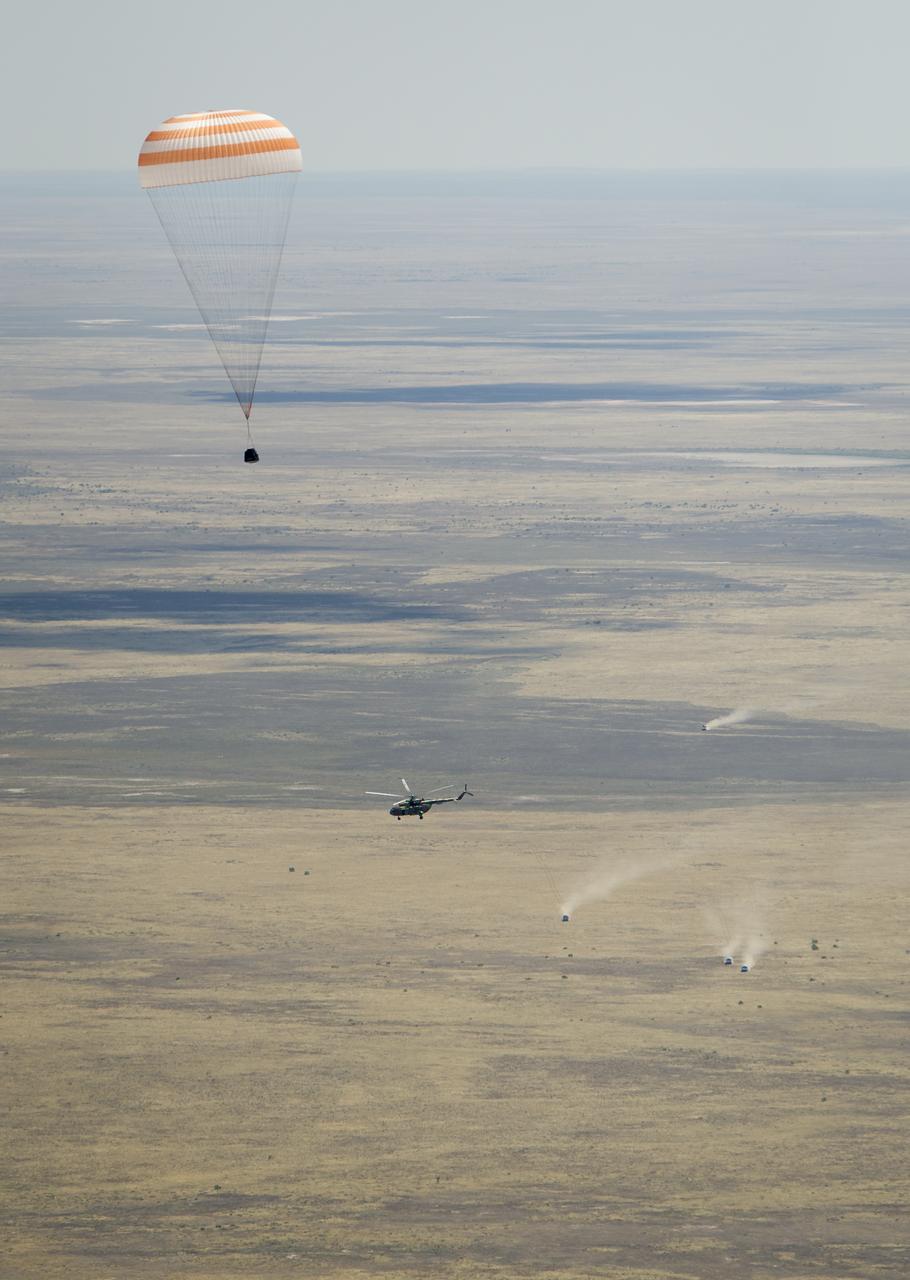
The Soyuz TMA-03M spacecraft is seen as it lands with Expedition 31 Commander Oleg Kononenko of Russia and Flight Engineers Don Pettit of NASA and Andre Kuipers of the European Space Agency in a remote area near the town of Zhezkazgan, Kazakhstan, on Sunday, July 1, 2012. Pettit, Kononenko and Kuipers returned from more than six months onboard the International Space Station where they served as members of the Expedition 30 and 31 crews. Photo Credit: (NASA/Bill Ingalls)
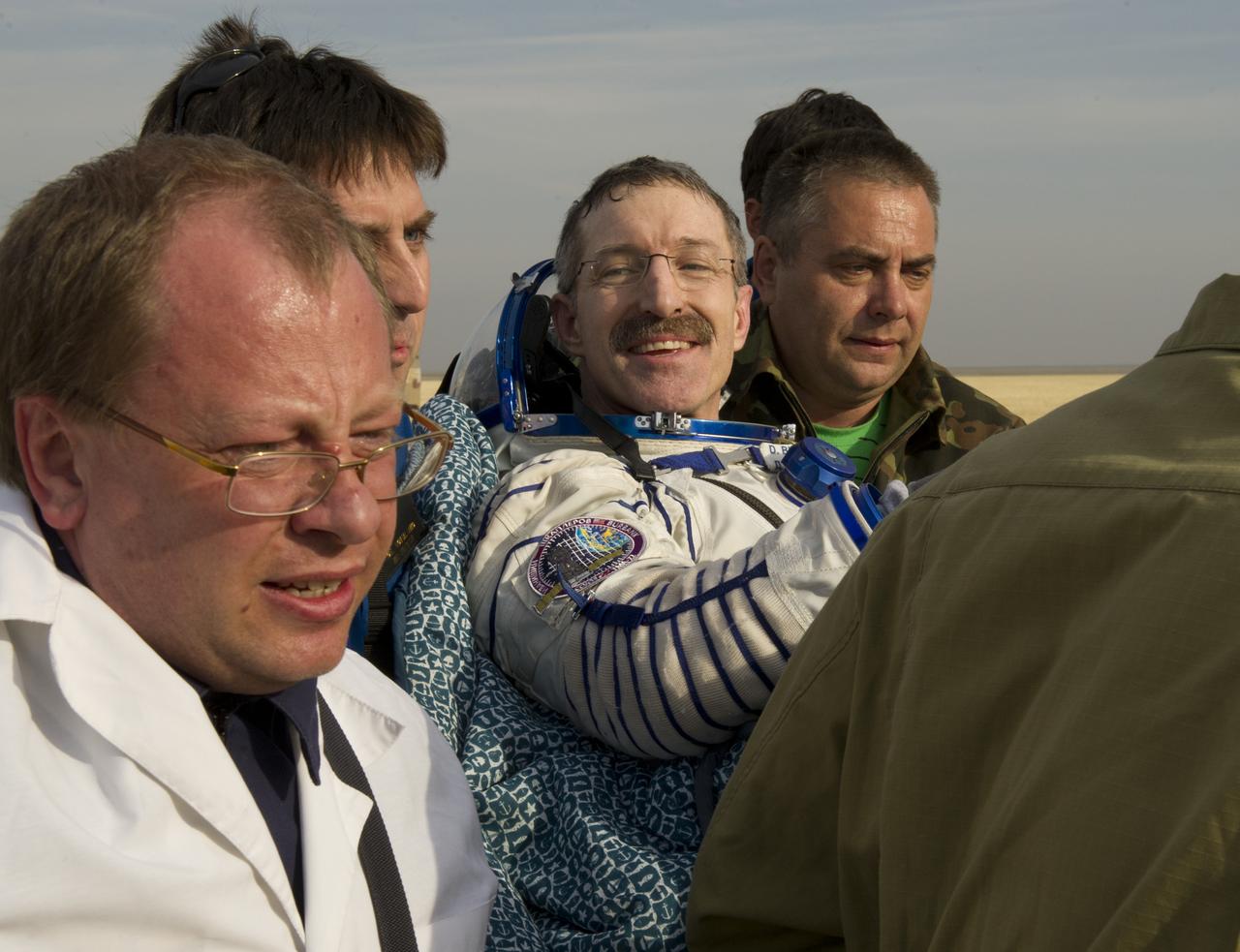
Expedition 30 Commander Dan Burbank is carried in a chair to the medical tent after he and Expedition 30 Flight Engineers Anton Shkaplerov and Anatoly Ivanishin landed in Soyuz TMA-22 capsule in a remote area outside of the town of Arkalyk, Kazakhstan, on Friday, April 27, 2012. NASA Astronaut Burbank, and Russian Cosmonauts Shkaplerov and Ivanishin are returning from more than five months onboard the International Space Station where they served as members of the Expedition 29 and 30 crews. Photo Credit: (NASA/Carla Cioffi)
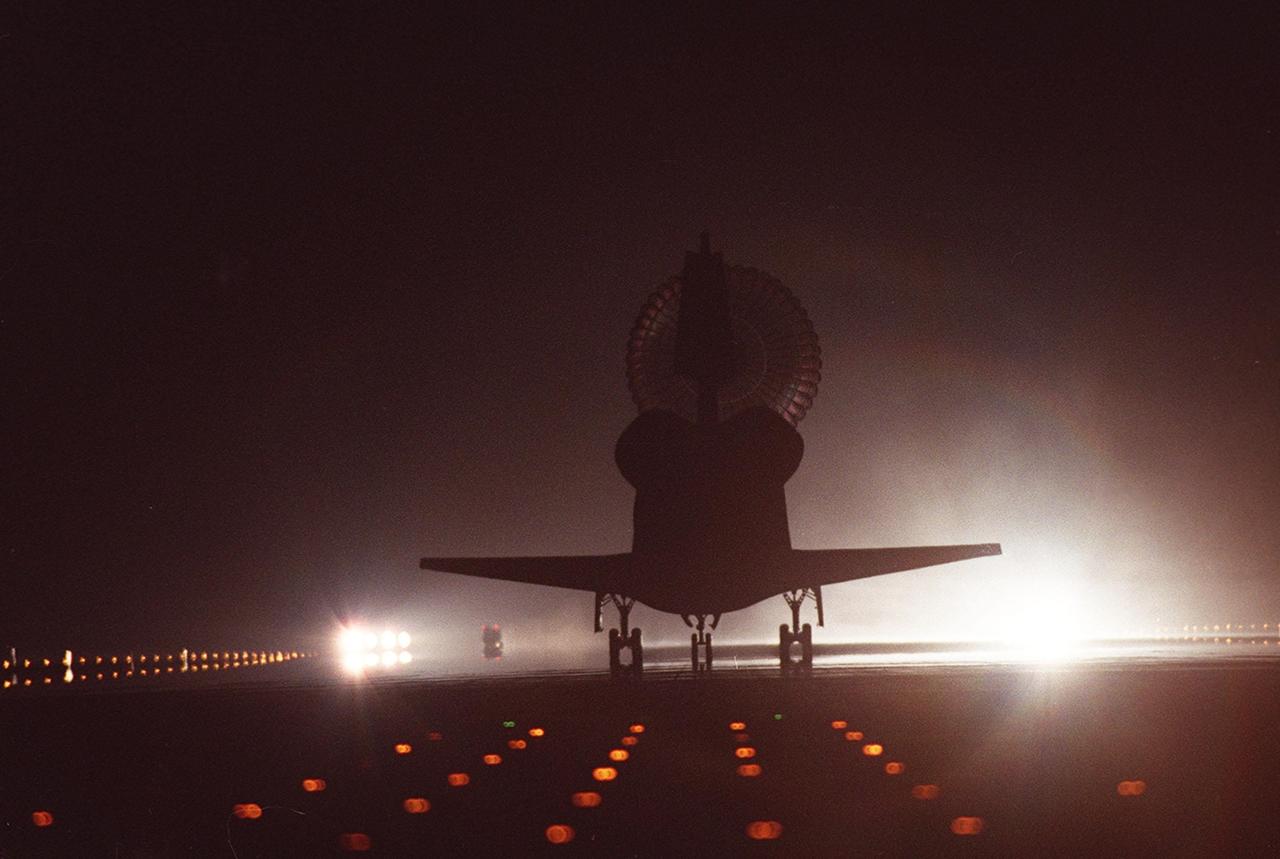
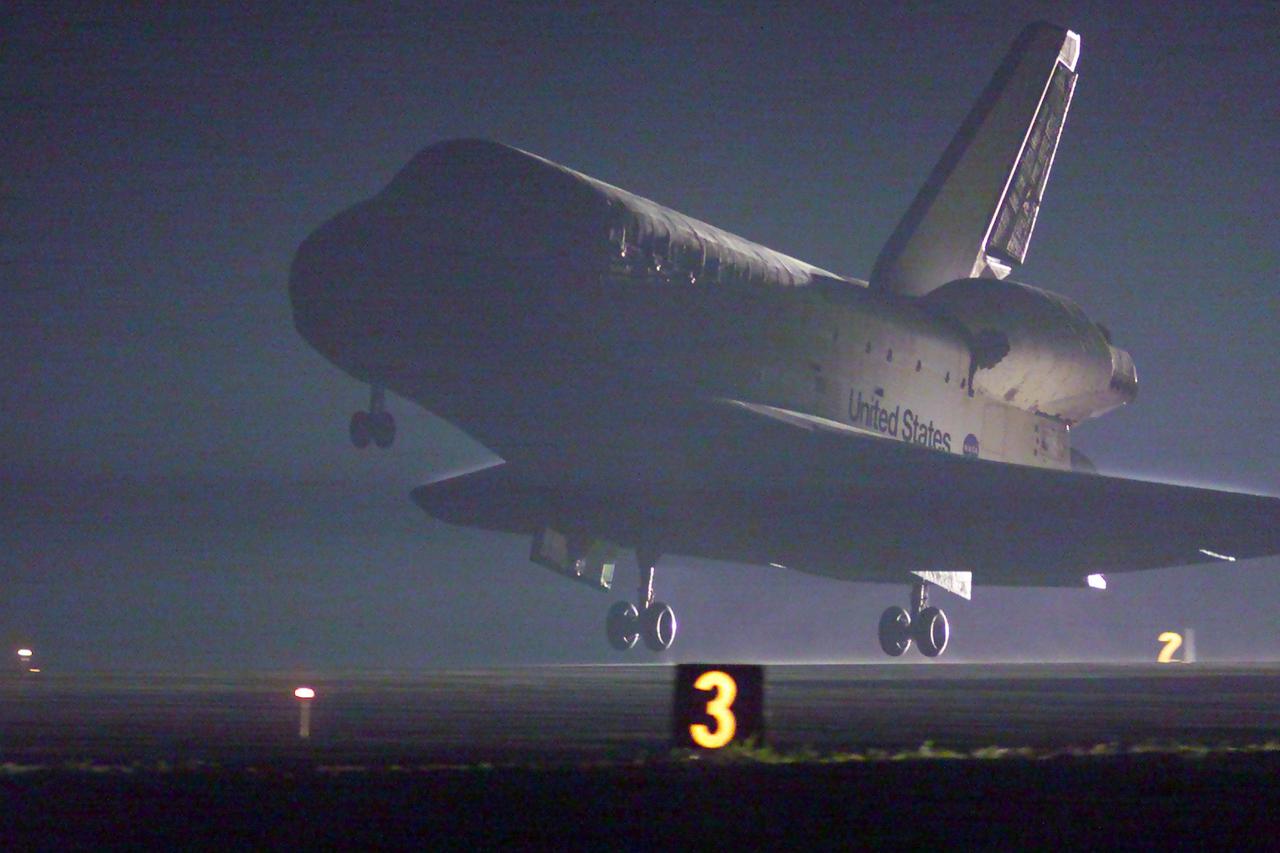
KENNEDY SPACE CENTER, Fla. -- Space Shuttle Discovery is silhouetted by the brilliant runway lights of runway 15 as it lands at the KSC Shuttle Landing Facility. Main gear touchdown occurred at 2:31:42 a.m. EST. Nose wheel touchdown occurred at 2:31:54 a.m., and wheel stop at 2:33:06 a.m. The landing on orbit 201 concluded mission STS-102, the eighth flight to the International Space Station, carrying the first Multi-Purpose Logistics Module, Leonardo, to the ISS and Expedition Two, a replacement crew for the Station. The 12-day, 19-hour, 51-minute mission returned both the Leonardo and the first resident crew of the ISS, Expedition One, to KSC. Discovery logged 5.3 million miles on this mission. The landing marked the 54th at KSC in the history of the program, and the 12th night landing at KSC
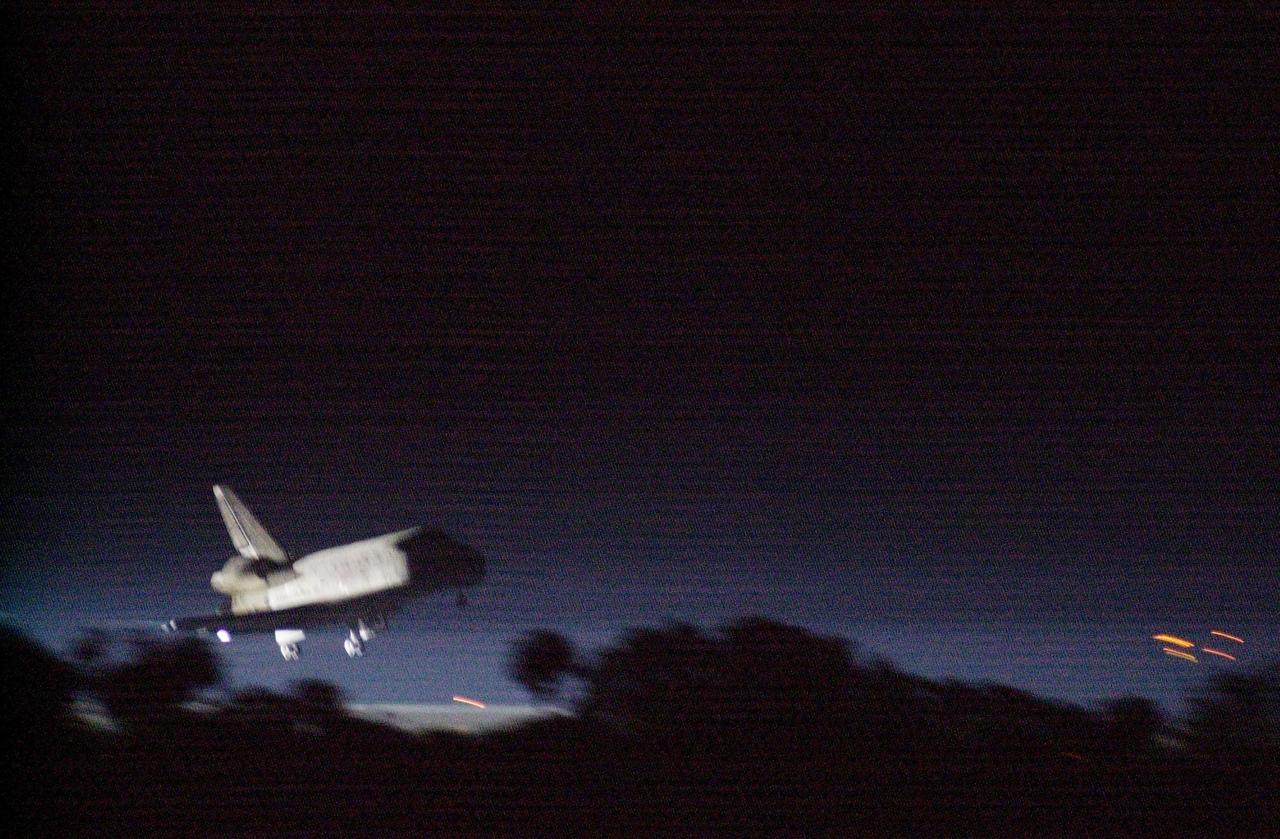
KENNEDY SPACE CENTER, Fla. -- Space Shuttle Discovery prepares to land at the KSC Shuttle Landing Facility on runway 15. Main gear touchdown occurred about 2:31:42 a.m. EST, nose wheel touchdown at 2:31:54 a.m., and wheel stop at 2:33:06 a.m. The landing, on orbit 201, concluded mission STS-102, the eighth flight to the International Space Station, carrying the first Multi-Purpose Logistics Module Leonardo, to the ISS and Expedition Two, a replacement crew for the Station. The 12-day, 19-hour, 51-minute mission returned both the Leonardo and the first resident crew of the ISS, Expedition One, to KSC. Discovery logged 5.3 million miles on this mission. The landing marked the 54th at KSC in the history of the program, and the 12th night landing at KSC
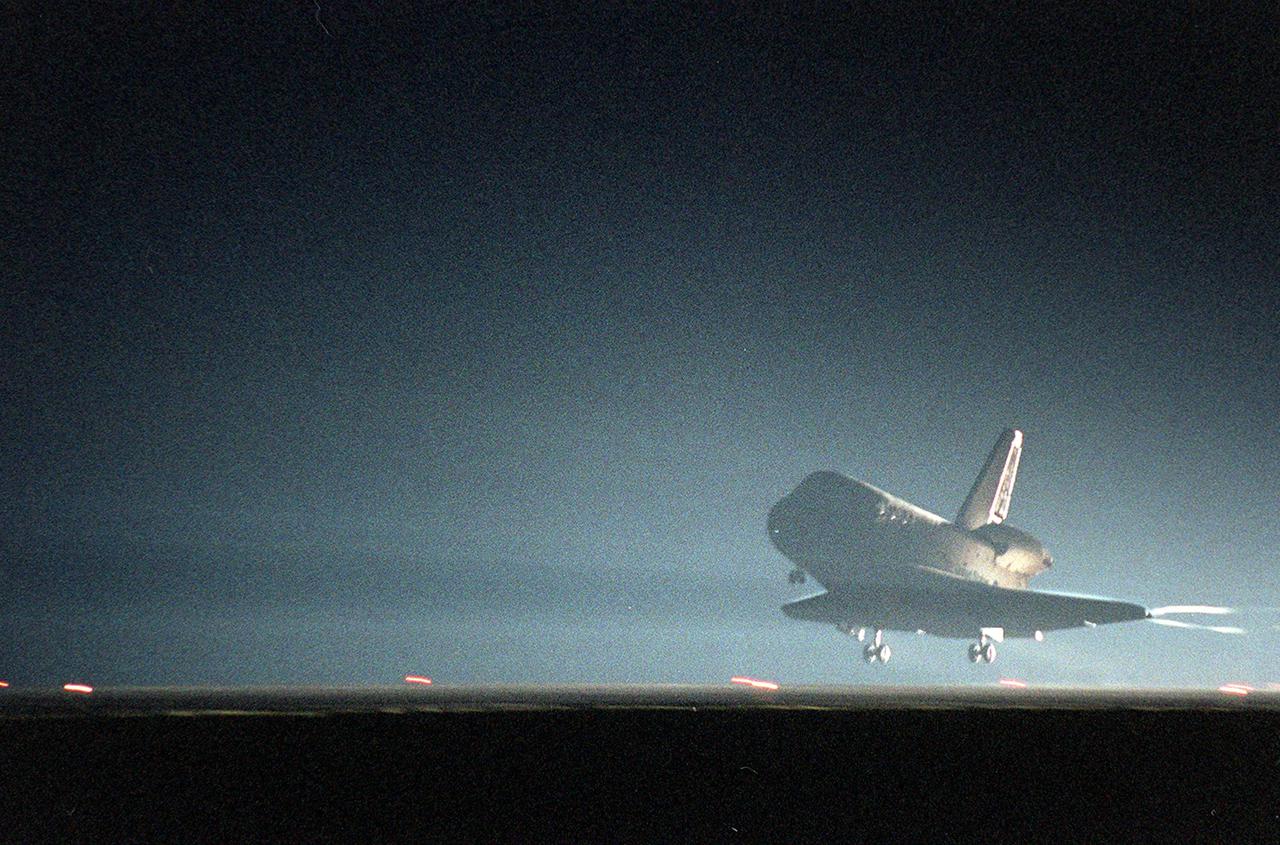
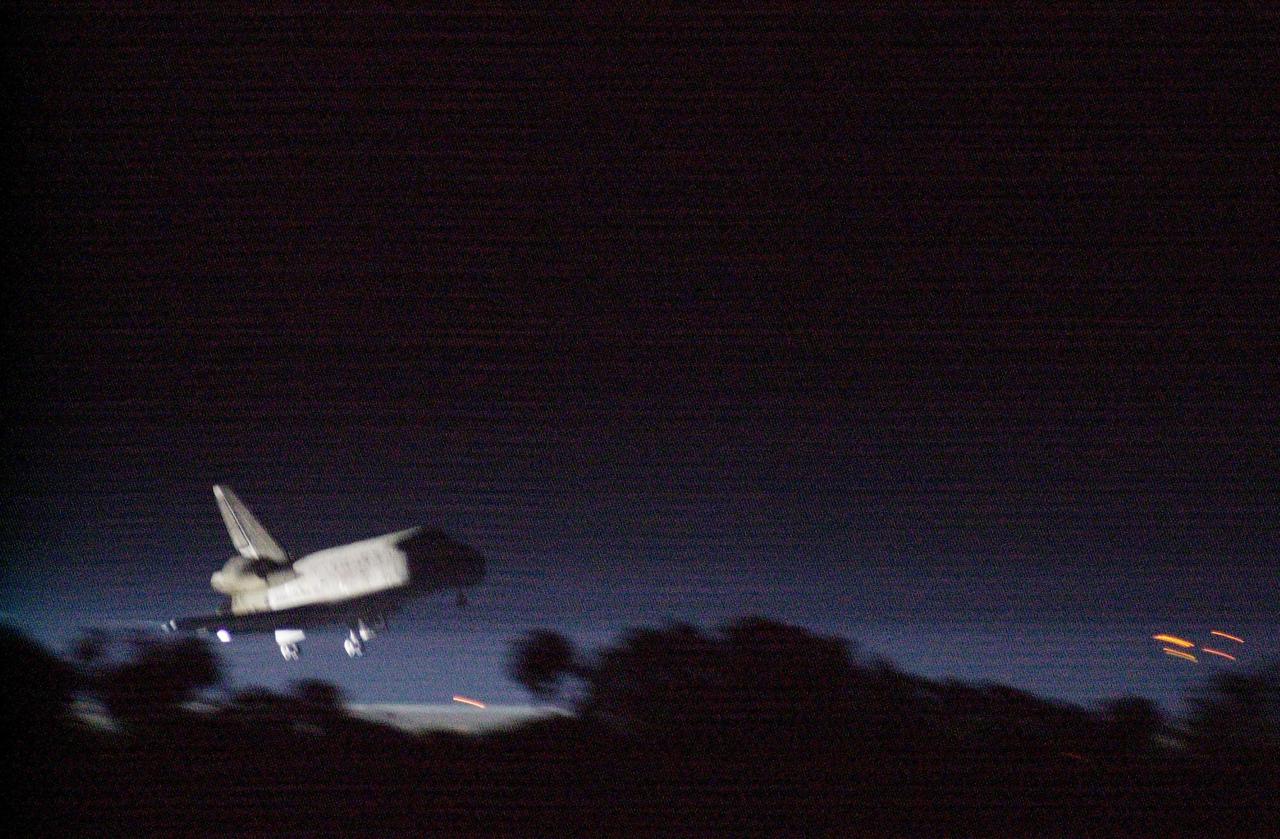
KENNEDY SPACE CENTER, Fla. -- Getting a break in the weather, Space Shuttle Discovery prepares to land at the KSC Shuttle Landing Facility March 21, on runway 15. Main gear touchdown occurred at 2:31:42 a.m. EST, nose wheel touchdown at 2:31:54 a.m., and wheel stop at 2:33:06 a.m. The landing on orbit 201 concluded mission STS-102, the eighth flight to the International Space Station, carrying the first Multi-Purpose Logistics Module Leonardo, to the ISS and Expedition Two, a replacement crew for the Station. The 12-day, 19-hour, 51-minute mission returned both the Leonardo and the first resident crew of the ISS, Expedition One, to KSC. Discovery logged 5.3 million miles on this mission. The landing marked the 54th at KSC in the history of the program, and the 12th night landing at KSC
KENNEDY SPACE CENTER, Fla. -- Space Shuttle Discovery prepares to land at the KSC Shuttle Landing Facility on runway 15. Main gear touchdown occurred at 2:31:42 a.m. EST, nose wheel touchdown at 2:31:54 a.m., and wheel stop at 2:33:06 a.m. The landing on orbit 201 concluded mission STS-102, the eighth flight to the International Space Station, carrying the first Multi-Purpose Logistics Module Leonardo, to the ISS and Expedition Two, a replacement crew for the Station. The 12-day, 19-hour, 51-minute mission returned both the Leonardo and the first resident crew of the ISS, Expedition One, to KSC. Discovery logged 5.3 million miles on this mission. The landing marked the 54th at KSC in the history of the program, and the 12th night landing at KSC
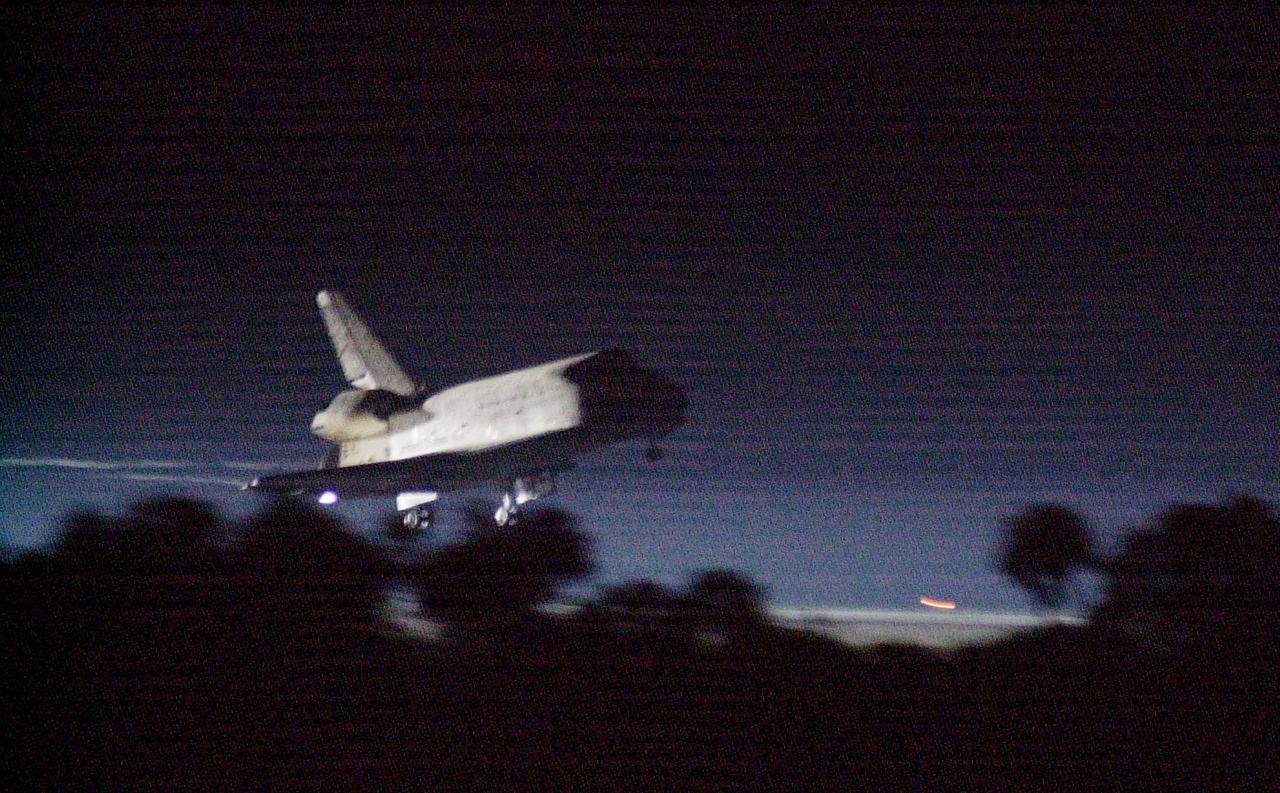
KENNEDY SPACE CENTER, Fla. -- Getting a break in the weather, Space Shuttle Discovery prepares to land at the KSC Shuttle Landing Facility March 21, on runway 15. Main gear touchdown occurred at 2:31:42 a.m. EST, nose wheel touchdown at 2:31:54 a.m., and wheel stop at 2:33:06 a.m. The landing on orbit 201 concluded mission STS-102, the eighth flight to the International Space Station, carrying the first Multi-Purpose Logistics Module Leonardo, to the ISS and Expedition Two, a replacement crew for the Station. The 12-day, 19-hour, 51-minute mission returned both the Leonardo; and the first resident crew of the ISS, Expedition One, to KSC. Discovery logged 5.3 million miles on this mission. The landing marked the 54th at KSC in the history of the program, and the 12th night landing at KSC
KENNEDY SPACE CENTER, Fla. -- Space Shuttle Discovery is silhouetted by the brilliant runway lights of runway 15 as it lands at the KSC Shuttle Landing Facility. Main gear touchdown occurred at 2:31:42 a.m. EST. Nose wheel touchdown occurred at 2:31:54 a.m., and wheel stop at 2:33:06 a.m. The landing on orbit 201 concluded mission STS-102, the eighth flight to the International Space Station, carrying the first Multi-Purpose Logistics Module, Leonardo, to the ISS and Expedition Two, a replacement crew for the Station. The 12-day, 19-hour, 51-minute mission returned both the Leonardo and the first resident crew of the ISS, Expedition One, to KSC. Discovery logged 5.3 million miles on this mission. The landing marked the 54th at KSC in the history of the program, and the 12th night landing at KSC
KENNEDY SPACE CENTER, Fla. -- Getting a break in the weather, Space Shuttle Discovery prepares to land at the KSC Shuttle Landing Facility March 21, on runway 15. Main gear touchdown occurred at 2:31:42 a.m. EST, nose wheel touchdown at 2:31:54 a.m., and wheel stop at 2:33:06 a.m. The landing on orbit 201 concluded mission STS-102, the eighth flight to the International Space Station, carrying the first Multi-Purpose Logistics Module Leonardo, to the ISS and Expedition Two, a replacement crew for the Station. The 12-day, 19-hour, 51-minute mission returned both the Leonardo and the first resident crew of the ISS, Expedition One, to KSC. Discovery logged 5.3 million miles on this mission. The landing marked the 54th at KSC in the history of the program, and the 12th night landing at KSC
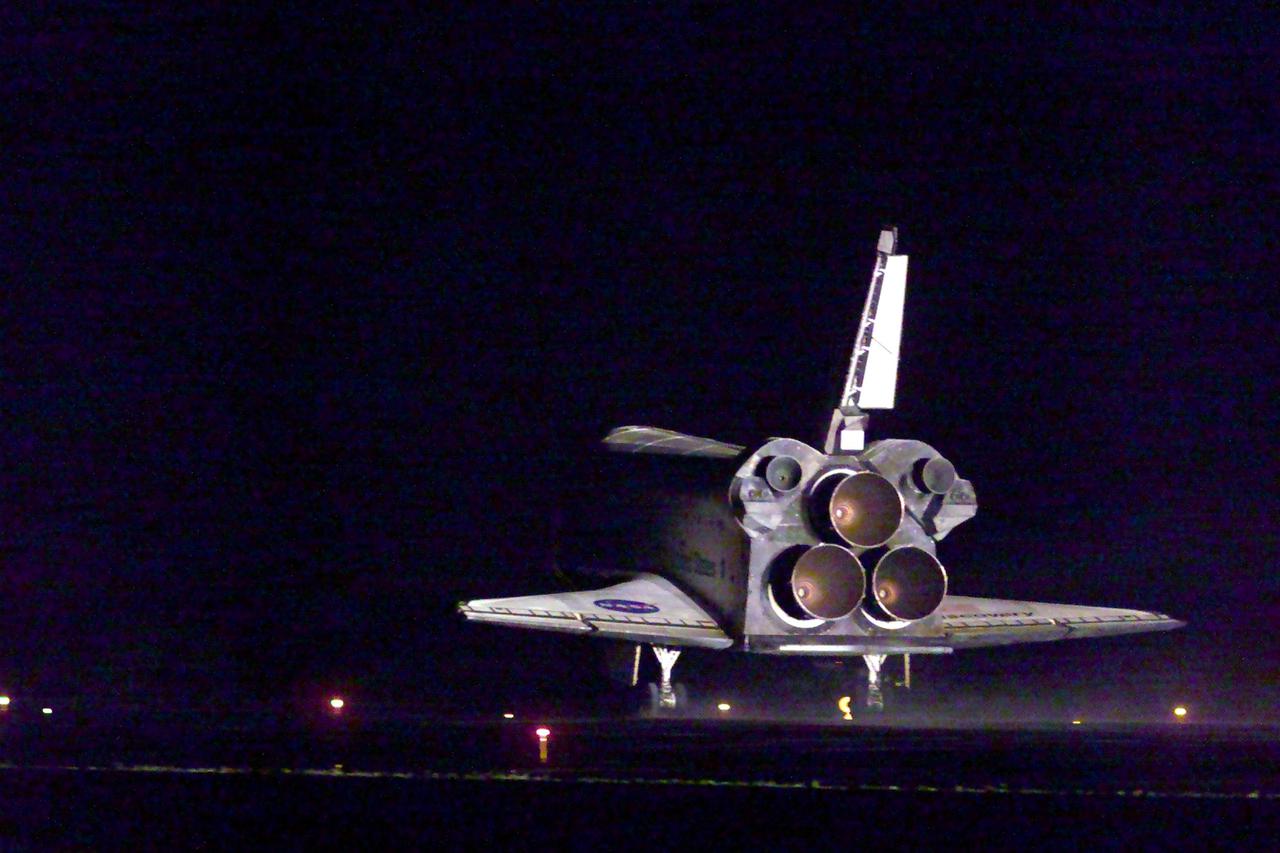
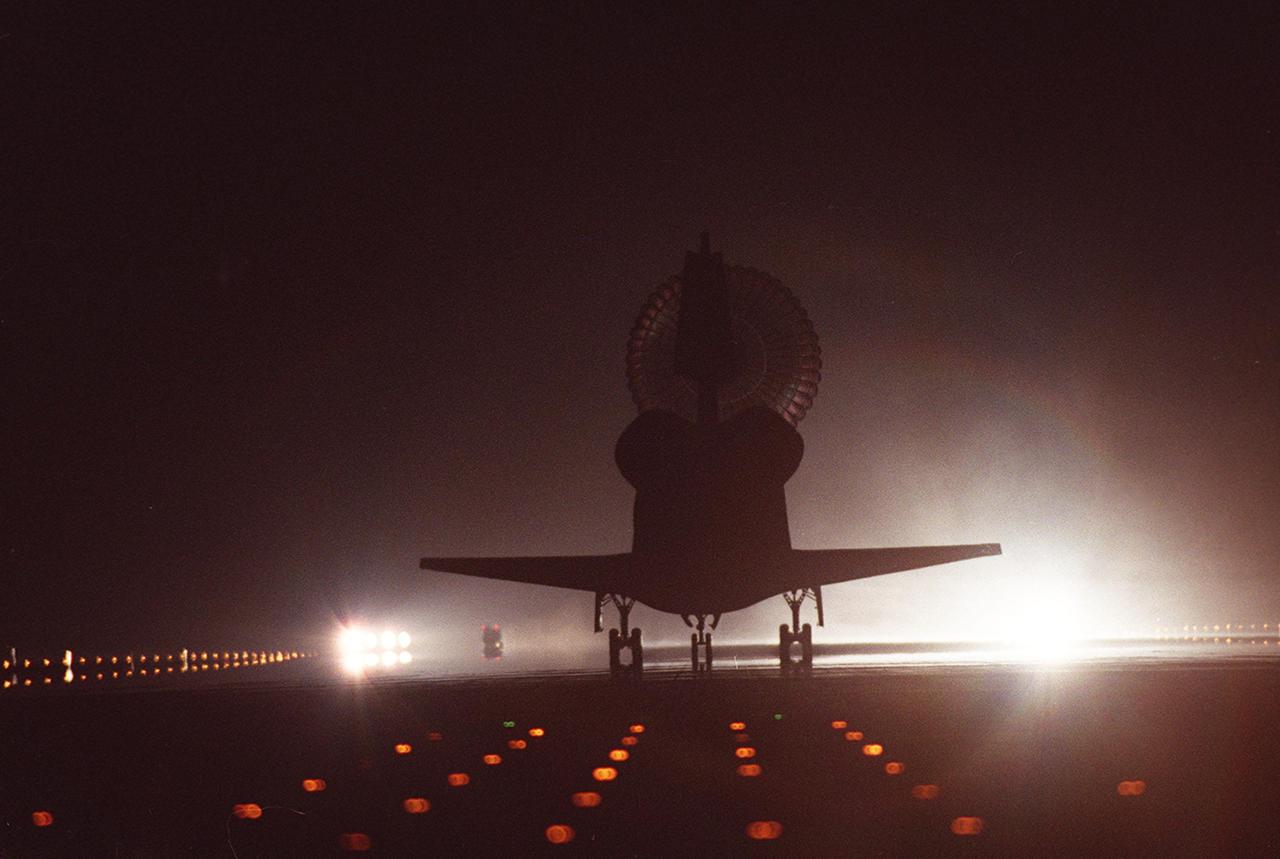
KENNEDY SPACE CENTER, Fla. -- Viewed from behind, Space Shuttle Discovery is seen landing on runway 15 of the KSC Shuttle Landing Facility. Main gear touchdown occurred at 2:31:42 a.m. EST. Nose wheel touchdown occurred at 2:31:54 a.m., and wheel stop at 2:33:06 a.m. The landing on orbit 201 concluded mission STS-102, the eighth flight to the International Space Station, carrying the first Multi-Purpose Logistics Module Leonardo, to the ISS and Expedition Two, a replacement crew for the Station. The 12-day, 19-hour, 51-minute mission returned both the Leonardo and the first resident crew of the ISS, Expedition One, to KSC. Discovery logged 5.3 million miles on this mission. The landing marked the 54th at KSC in the history of the program, and the 12th night landing at KSC
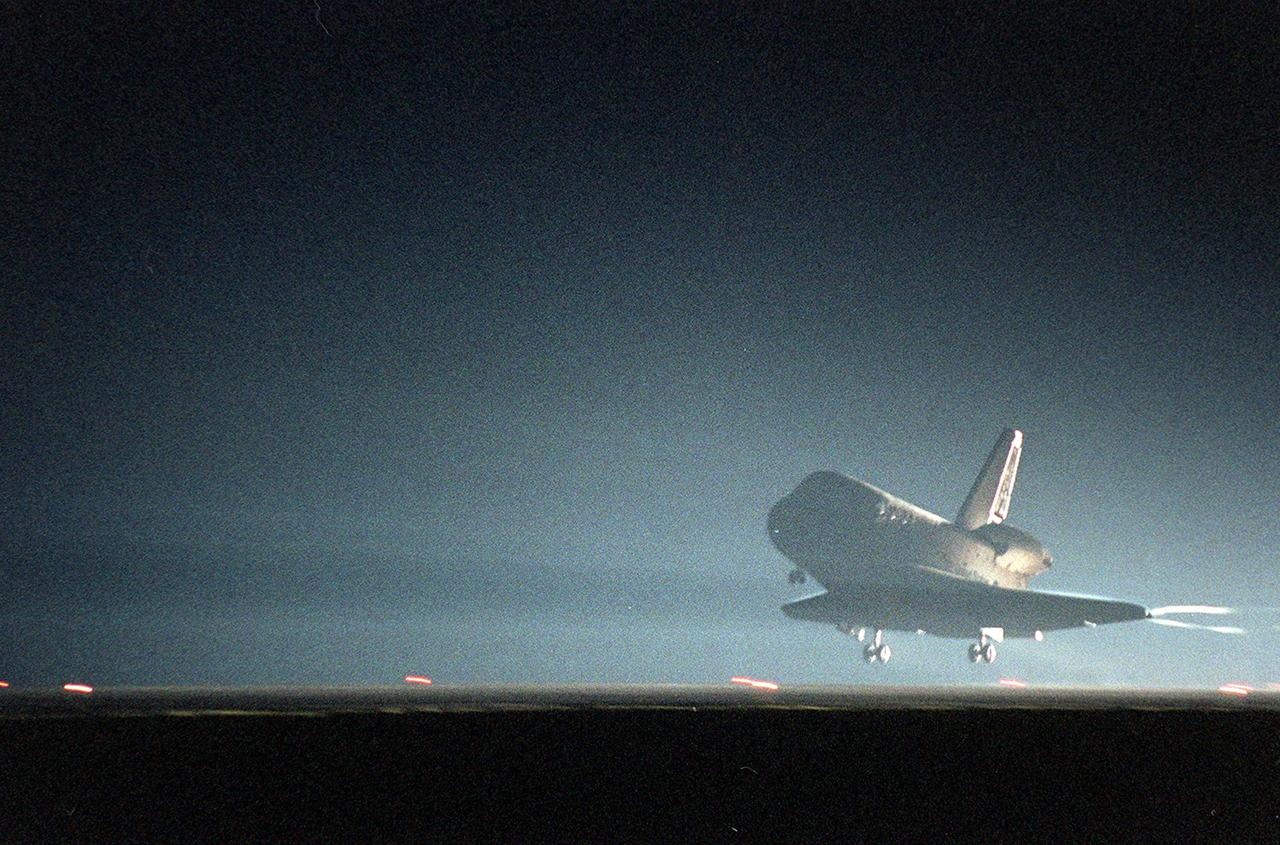
KENNEDY SPACE CENTER, Fla. -- Space Shuttle Discovery prepares to land at the KSC Shuttle Landing Facility on runway 15. Main gear touchdown occurred about 2:31:42 a.m. EST, nose wheel touchdown at 2:31:54 a.m., and wheel stop at 2:33:06 a.m. The landing, on orbit 201, concluded mission STS-102, the eighth flight to the International Space Station, carrying the first Multi-Purpose Logistics Module Leonardo, to the ISS and Expedition Two, a replacement crew for the Station. The 12-day, 19-hour, 51-minute mission returned both the Leonardo and the first resident crew of the ISS, Expedition One, to KSC. Discovery logged 5.3 million miles on this mission. The landing marked the 54th at KSC in the history of the program, and the 12th night landing at KSC
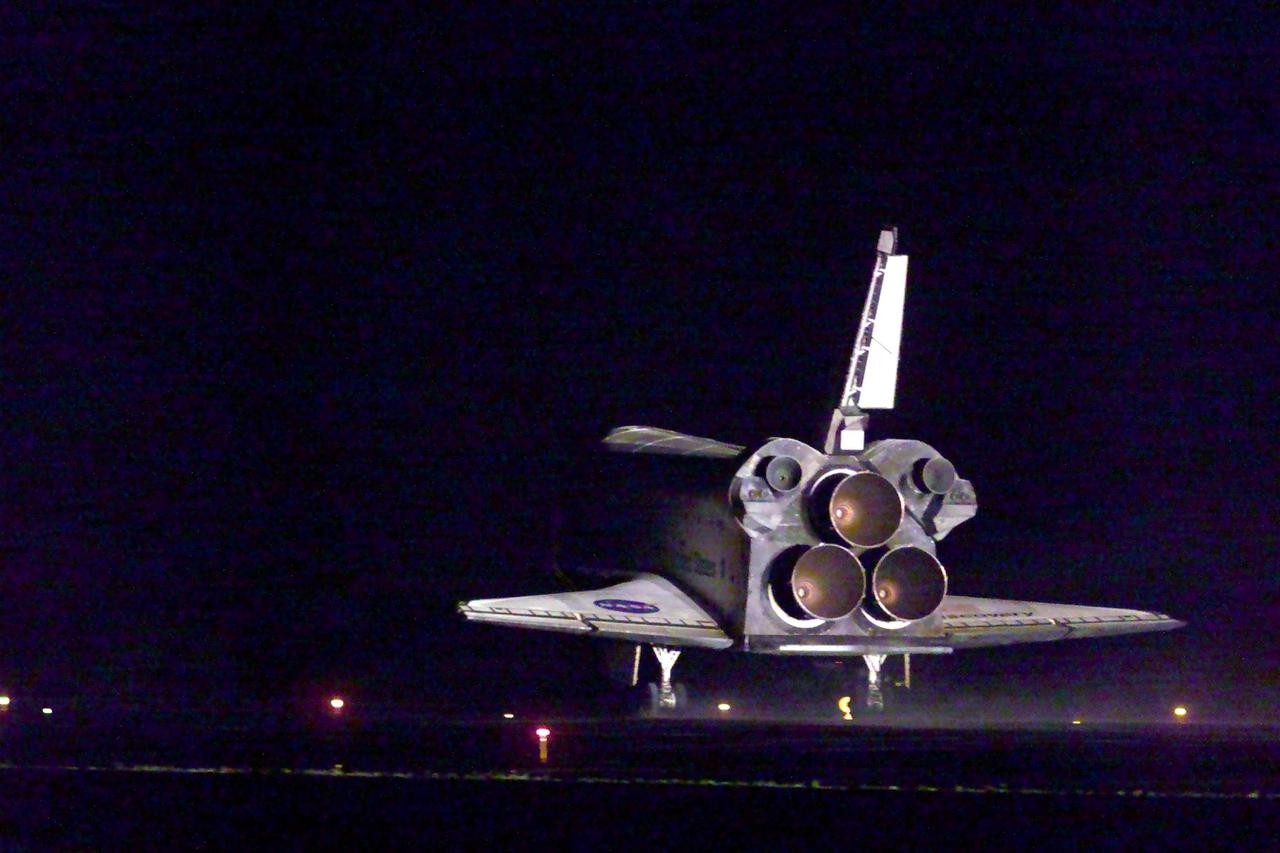
KENNEDY SPACE CENTER, Fla. -- Viewed from behind, Space Shuttle Discovery is seen landing on runway 15 of the KSC Shuttle Landing Facility. Main gear touchdown occurred at 2:31:42 a.m. EST. Nose wheel touchdown occurred at 2:31:54 a.m., and wheel stop at 2:33:06 a.m. The landing on orbit 201 concluded mission STS-102, the eighth flight to the International Space Station, carrying the first Multi-Purpose Logistics Module Leonardo, to the ISS and Expedition Two, a replacement crew for the Station. The 12-day, 19-hour, 51-minute mission returned both the Leonardo and the first resident crew of the ISS, Expedition One, to KSC. Discovery logged 5.3 million miles on this mission. The landing marked the 54th at KSC in the history of the program, and the 12th night landing at KSC
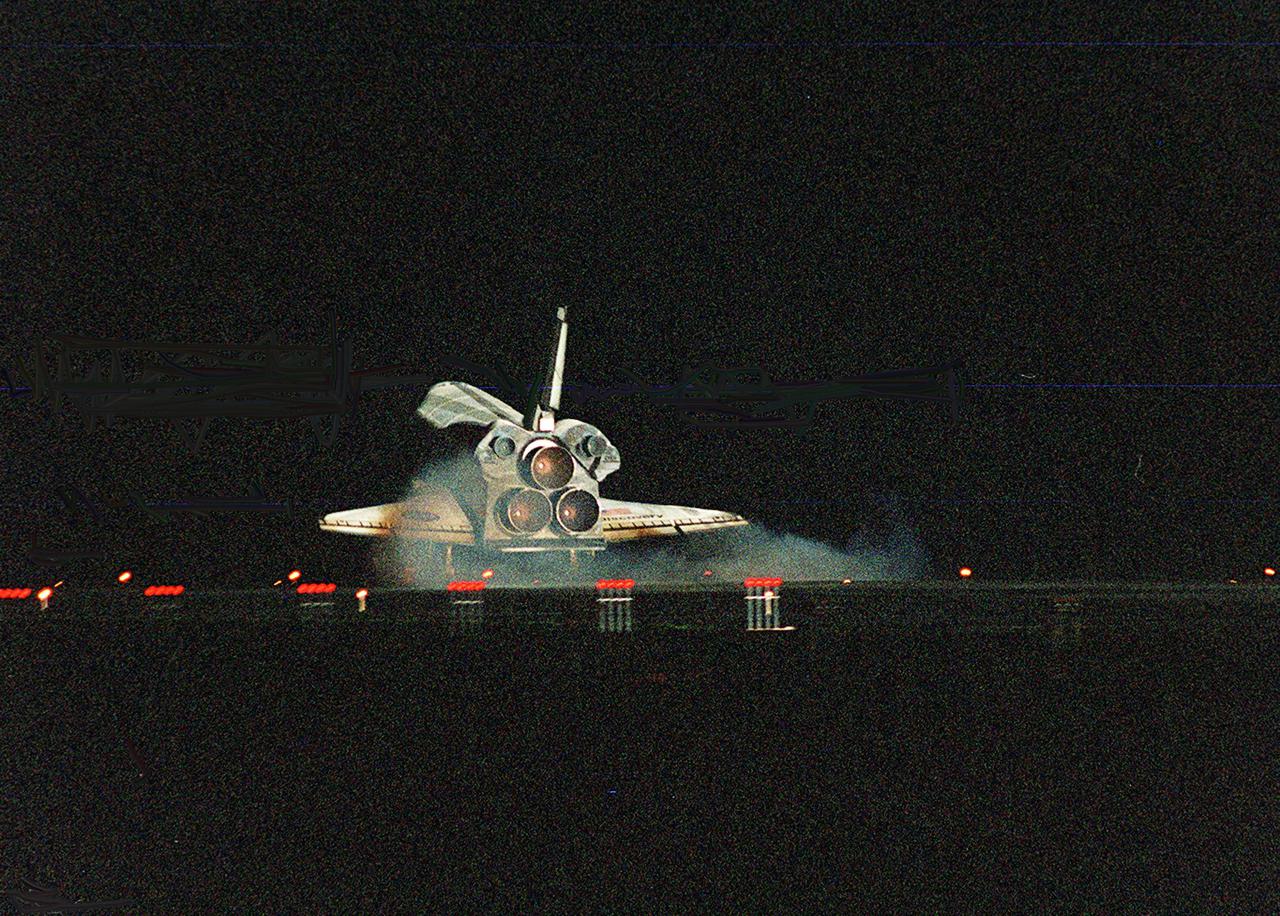
KENNEDY SPACE CENTER, Fla. -- Space Shuttle Discovery kicks up a swirl of dust as it touches down on runway 15 at the KSC Shuttle Landing Facility. Main gear touchdown occurred about 2:31:42 a.m. EST, nose wheel touchdown at 2:31:54 a.m., and wheel stop at 2:33:06 a.m. The landing, on orbit 201, concluded mission STS-102, the eighth flight to the International Space Station, carrying the first Multi-Purpose Logistics Module Leonardo, to the ISS and Expedition Two, a replacement crew for the Station. The 12-day, 19-hour, 51-minute mission returned both the Leonardo and the first resident crew of the ISS, Expedition One, to KSC. Discovery logged 5.3 million miles on this mission. The landing marked the 54th at KSC in the history of the program, and the 12th night landing at KSC
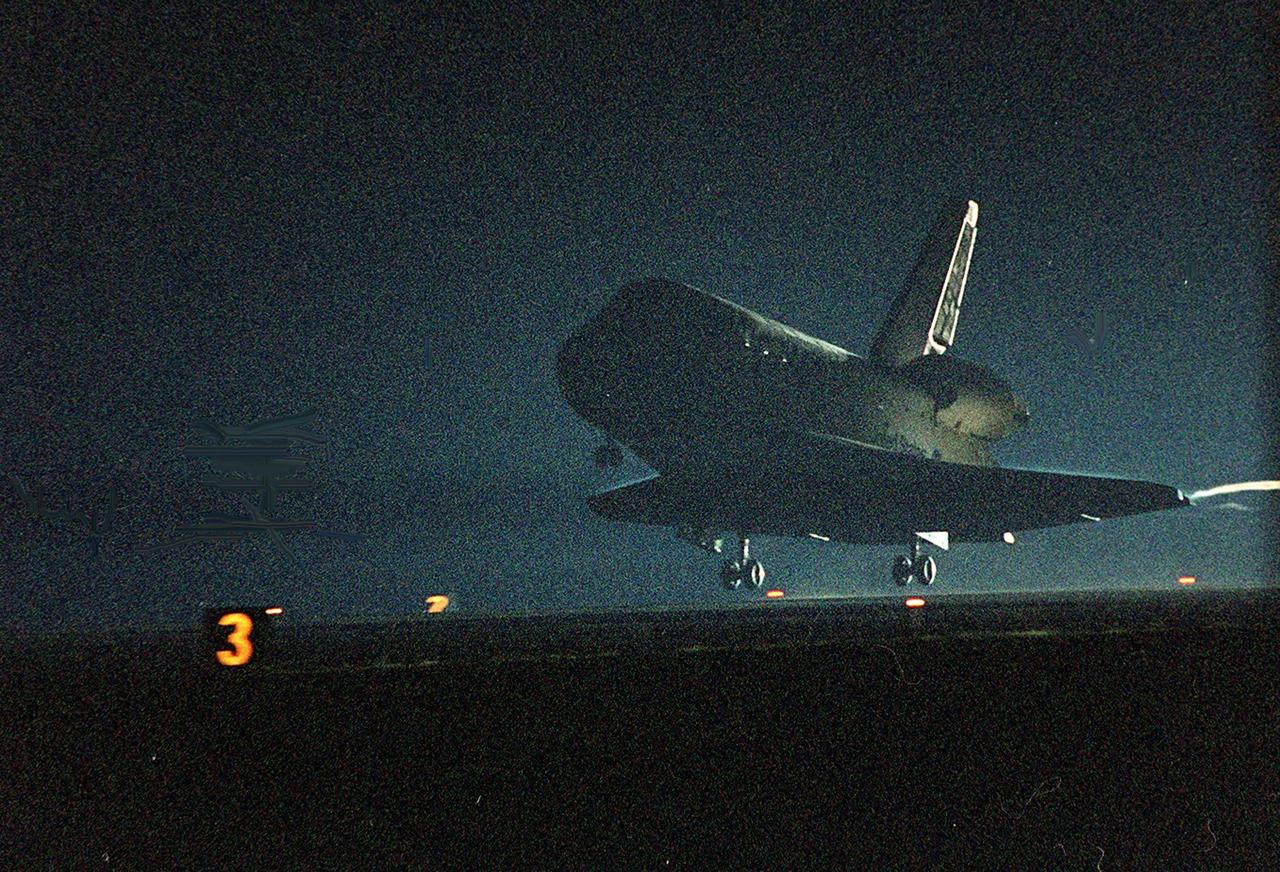
KENNEDY SPACE CENTER, Fla. -- Space Shuttle Discovery approaches touchdown on runway 15 at the KSC Shuttle Landing Facility. Main gear touchdown occurred about 2:31:42 a.m. EST, nose wheel touchdown at 2:31:54 a.m., and wheel stop at 2:33:06 a.m. The landing, on orbit 201, concluded mission STS-102, the eighth flight to the International Space Station, carrying the first Multi-Purpose Logistics Module Leonardo, to the ISS and Expedition Two, a replacement crew for the Station. The 12-day, 19-hour, 51-minute mission returned both the Leonardo and the first resident crew of the ISS, Expedition One, to KSC. Discovery logged 5.3 million miles on this mission. The landing marked the 54th at KSC in the history of the program, and the 12th night landing at KSC
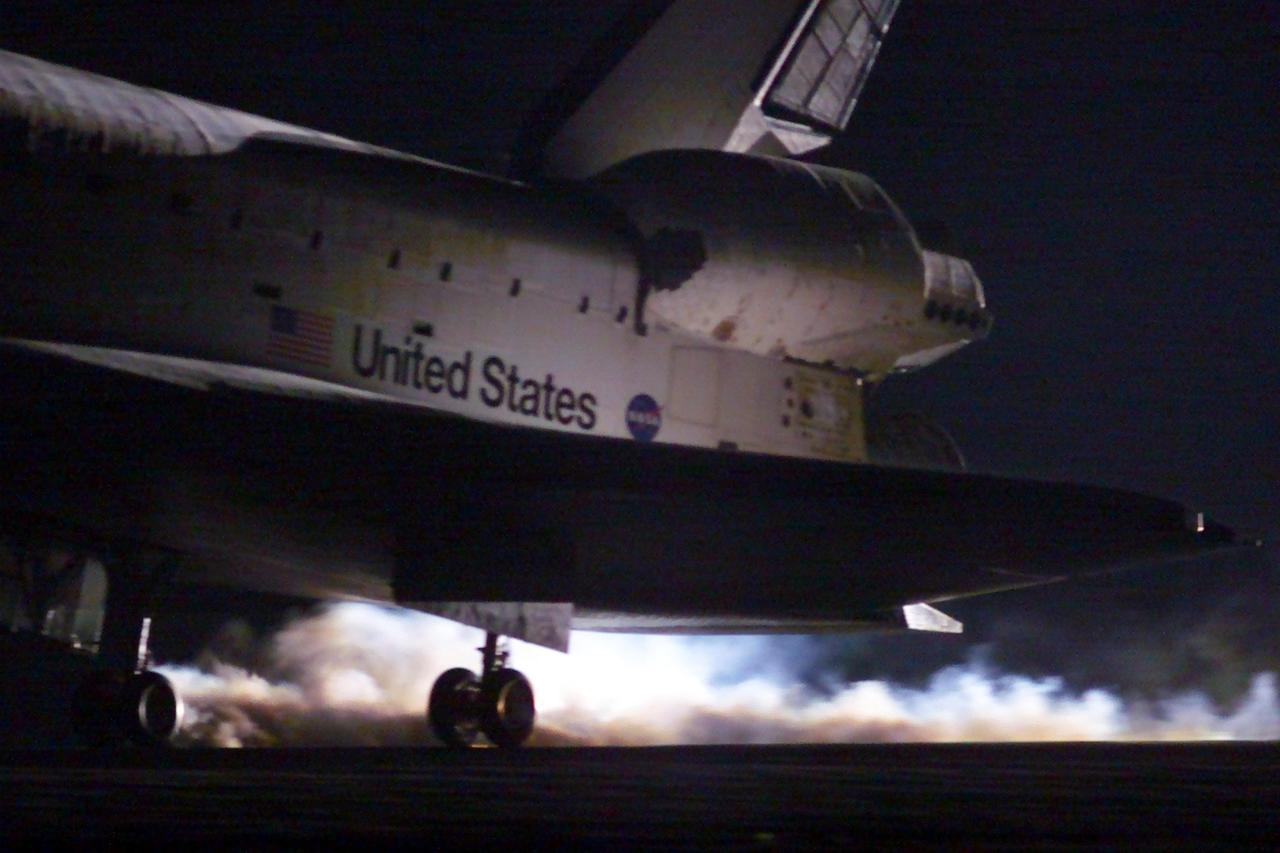
KENNEDY SPACE CENTER, Fla. -- In this view, the rear wheels on Space Shuttle Discovery are seen touching down on runway 15 of the KSC Shuttle Landing Facility. Main gear touchdown occurred at 2:31:42 a.m. EST. Nose wheel touchdown occurred at 2:31:54 a.m., and wheel stop at 2:33:06 a.m. The landing on orbit 201 concluded mission STS-102, the eighth flight to the International Space Station, carrying the first Multi-Purpose Logistics Module Leonardo, to the ISS and Expedition Two, a replacement crew for the Station. The 12-day, 19-hour, 51-minute mission returned both the Leonardo and the first resident crew of the ISS, Expedition One, to KSC. Discovery logged 5.3 million miles on this mission. The landing marked the 54th at KSC in the history of the program, and the 12th night landing at KSC
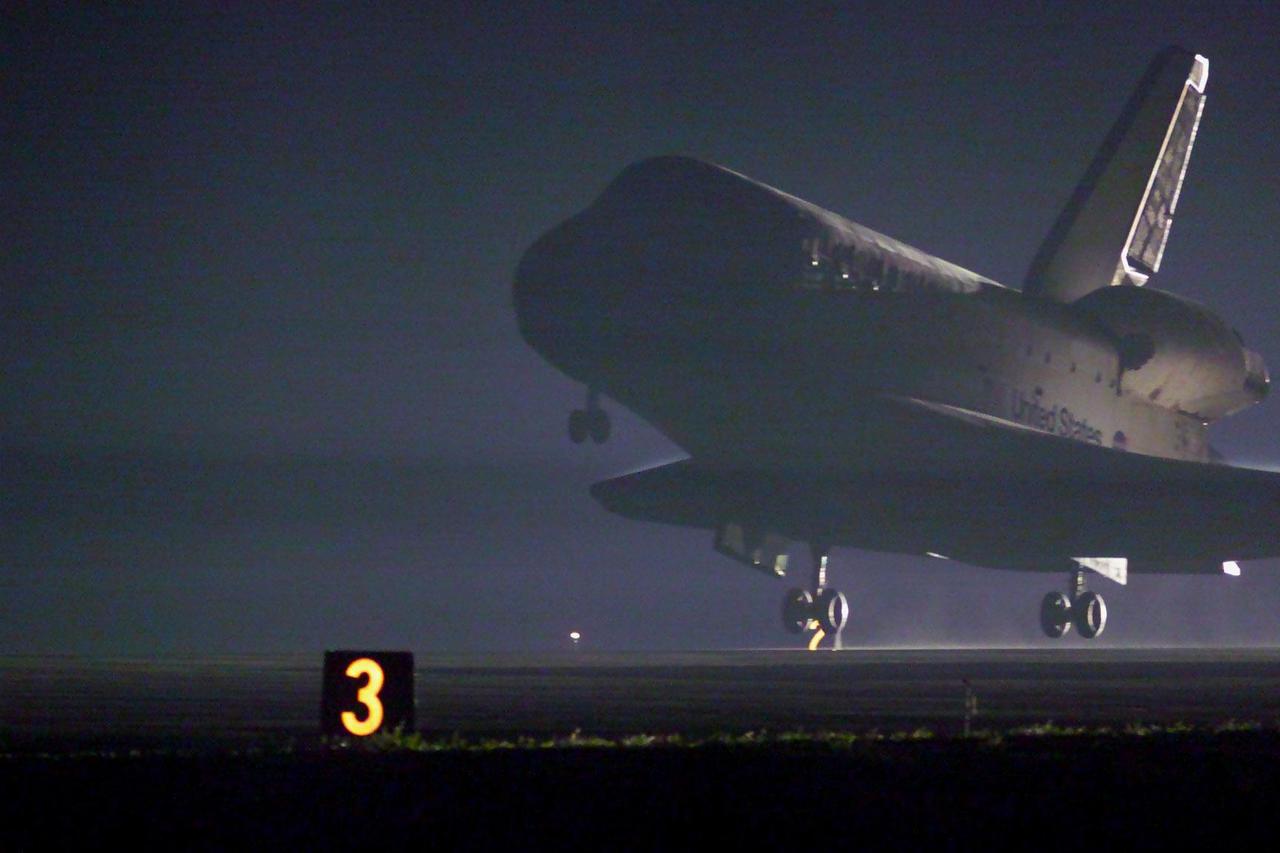
KENNEDY SPACE CENTER, Fla. -- Space Shuttle Discovery approaches touchdown on runway 15 at the KSC Shuttle Landing Facility. Main gear touchdown occurred at 2:31:42 a.m. EST, nose wheel touchdown at 2:31:54 a.m., and wheel stop at 2:33:06 a.m. The landing on orbit 201 concluded mission STS-102, the eighth flight to the International Space Station, carrying the first Multi-Purpose Logistics Module Leonardo, to the ISS and Expedition Two, a replacement crew for the Station. The 12-day, 19-hour, 51-minute mission returned both the Leonardo and the first resident crew of the ISS, Expedition One, to KSC . Discovery logged 5.3 million miles on this mission. The landing marked the 54th at KSC in the history of the program, and the 12th night landing at KSC
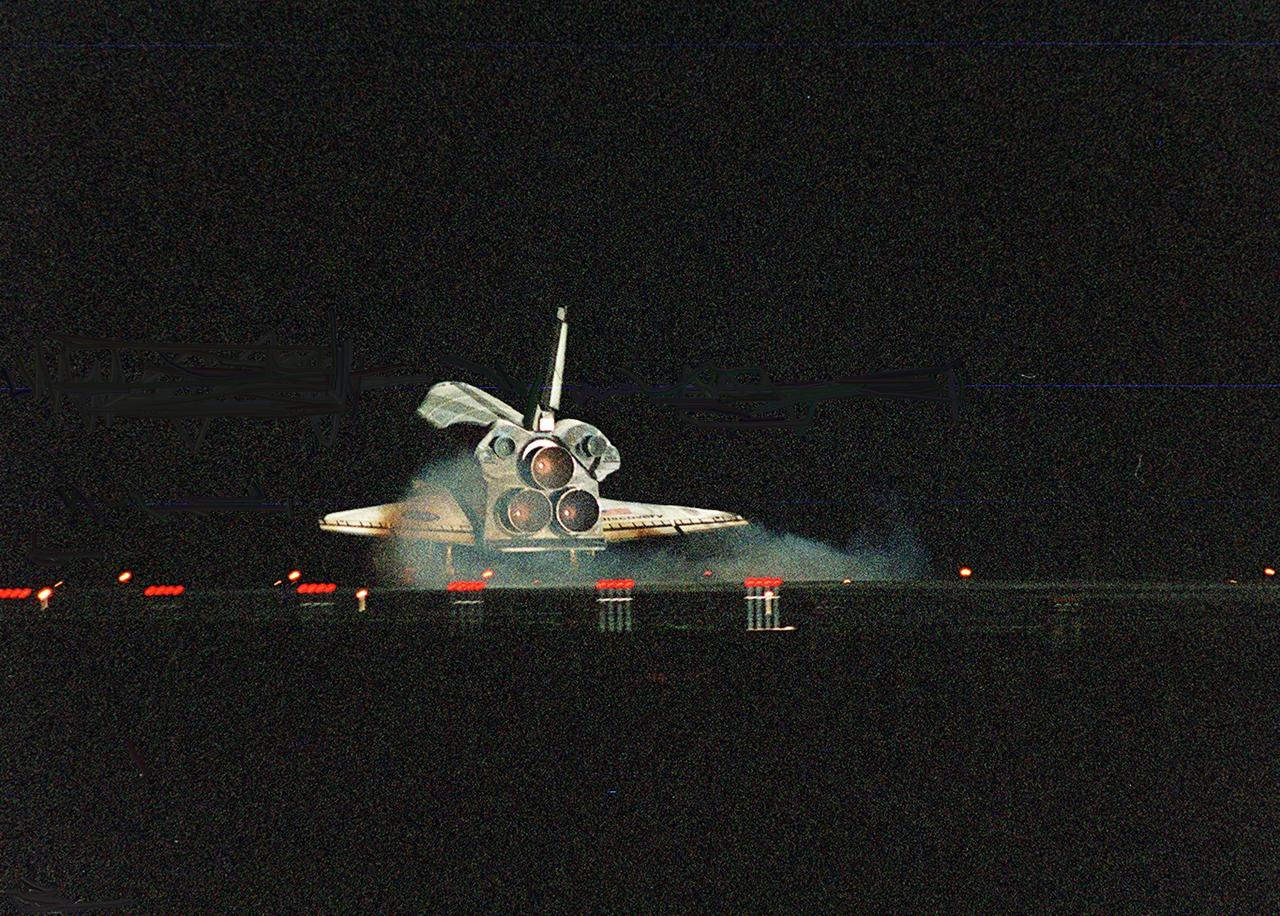
KENNEDY SPACE CENTER, Fla. -- Space Shuttle Discovery kicks up a swirl of dust as it touches down on runway 15 at the KSC Shuttle Landing Facility. Main gear touchdown occurred about 2:31:42 a.m. EST, nose wheel touchdown at 2:31:54 a.m., and wheel stop at 2:33:06 a.m. The landing, on orbit 201, concluded mission STS-102, the eighth flight to the International Space Station, carrying the first Multi-Purpose Logistics Module Leonardo, to the ISS and Expedition Two, a replacement crew for the Station. The 12-day, 19-hour, 51-minute mission returned both the Leonardo and the first resident crew of the ISS, Expedition One, to KSC. Discovery logged 5.3 million miles on this mission. The landing marked the 54th at KSC in the history of the program, and the 12th night landing at KSC
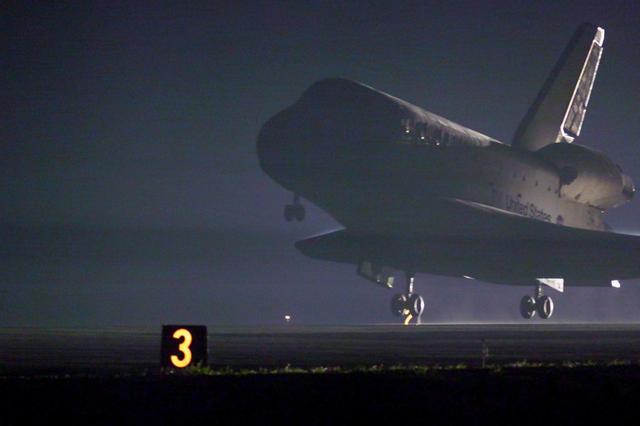
KENNEDY SPACE CENTER, Fla. -- Space Shuttle Discovery approaches touchdown on runway 15 at the KSC Shuttle Landing Facility. Main gear touchdown occurred at 2:31:42 a.m. EST, nose wheel touchdown at 2:31:54 a.m., and wheel stop at 2:33:06 a.m. The landing on orbit 201 concluded mission STS-102, the eighth flight to the International Space Station, carrying the first Multi-Purpose Logistics Module Leonardo, to the ISS and Expedition Two, a replacement crew for the Station. The 12-day, 19-hour, 51-minute mission returned both the Leonardo and the first resident crew of the ISS, Expedition One, to KSC . Discovery logged 5.3 million miles on this mission. The landing marked the 54th at KSC in the history of the program, and the 12th night landing at KSC
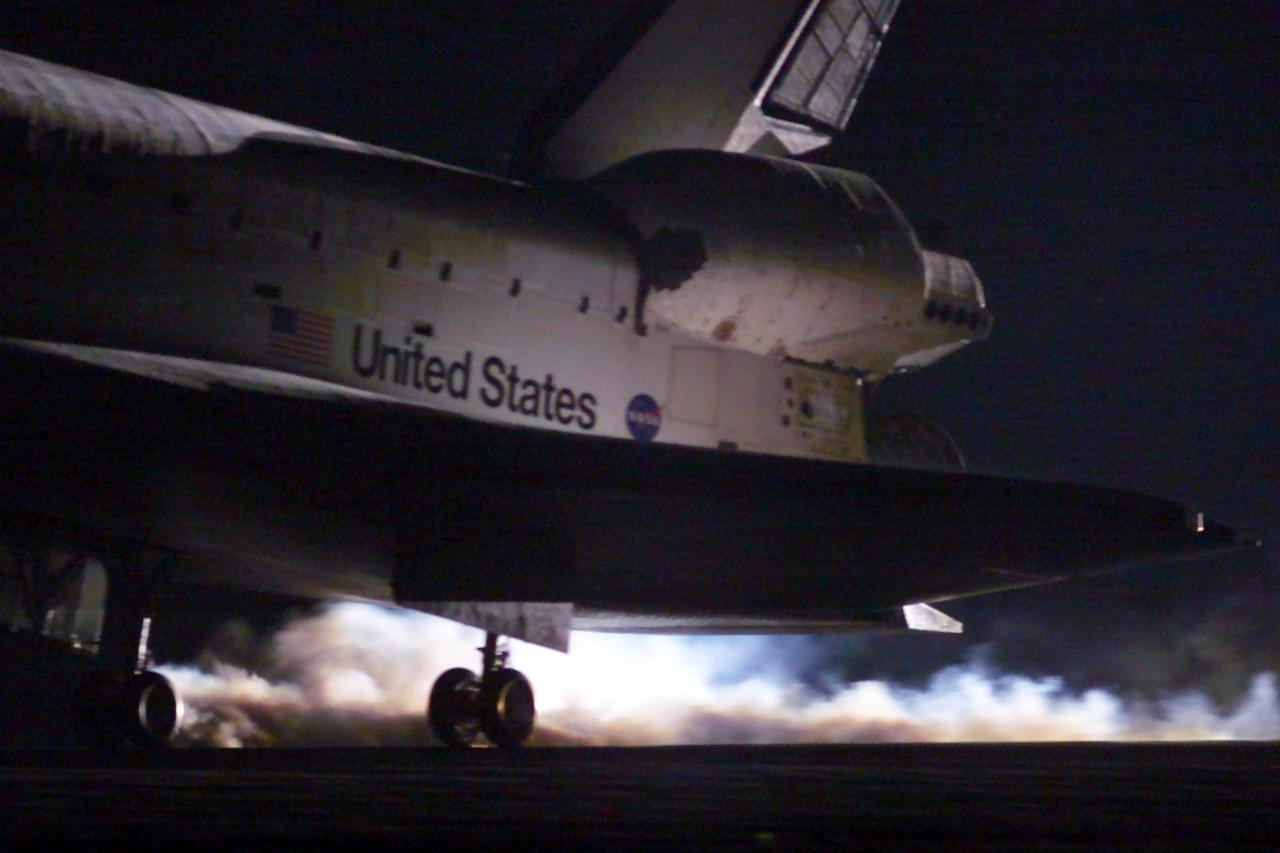
KENNEDY SPACE CENTER, Fla. -- In this view, the rear wheels on Space Shuttle Discovery are seen touching down on runway 15 of the KSC Shuttle Landing Facility. Main gear touchdown occurred at 2:31:42 a.m. EST. Nose wheel touchdown occurred at 2:31:54 a.m., and wheel stop at 2:33:06 a.m. The landing on orbit 201 concluded mission STS-102, the eighth flight to the International Space Station, carrying the first Multi-Purpose Logistics Module Leonardo, to the ISS and Expedition Two, a replacement crew for the Station. The 12-day, 19-hour, 51-minute mission returned both the Leonardo and the first resident crew of the ISS, Expedition One, to KSC. Discovery logged 5.3 million miles on this mission. The landing marked the 54th at KSC in the history of the program, and the 12th night landing at KSC
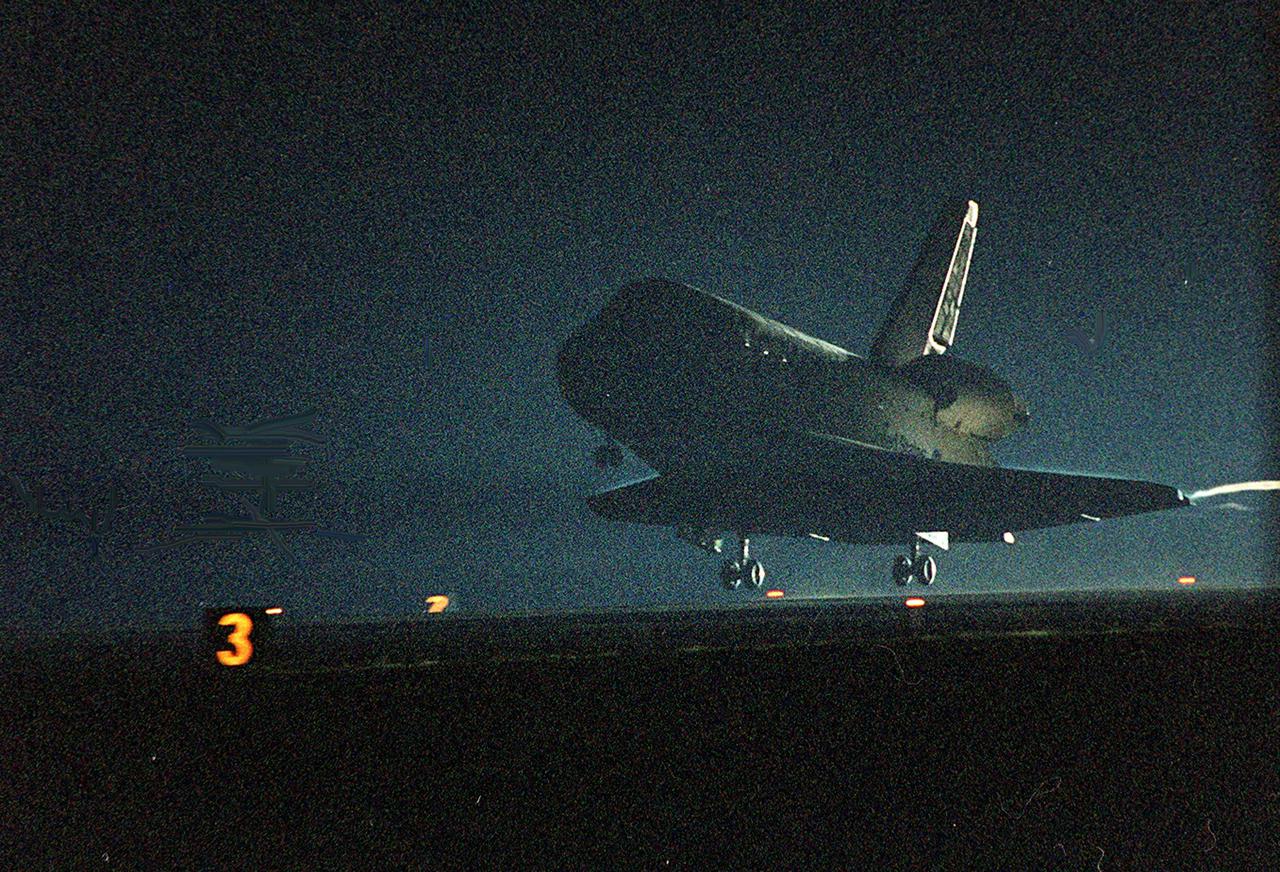
KENNEDY SPACE CENTER, Fla. -- Space Shuttle Discovery approaches touchdown on runway 15 at the KSC Shuttle Landing Facility. Main gear touchdown occurred about 2:31:42 a.m. EST, nose wheel touchdown at 2:31:54 a.m., and wheel stop at 2:33:06 a.m. The landing, on orbit 201, concluded mission STS-102, the eighth flight to the International Space Station, carrying the first Multi-Purpose Logistics Module Leonardo, to the ISS and Expedition Two, a replacement crew for the Station. The 12-day, 19-hour, 51-minute mission returned both the Leonardo and the first resident crew of the ISS, Expedition One, to KSC. Discovery logged 5.3 million miles on this mission. The landing marked the 54th at KSC in the history of the program, and the 12th night landing at KSC
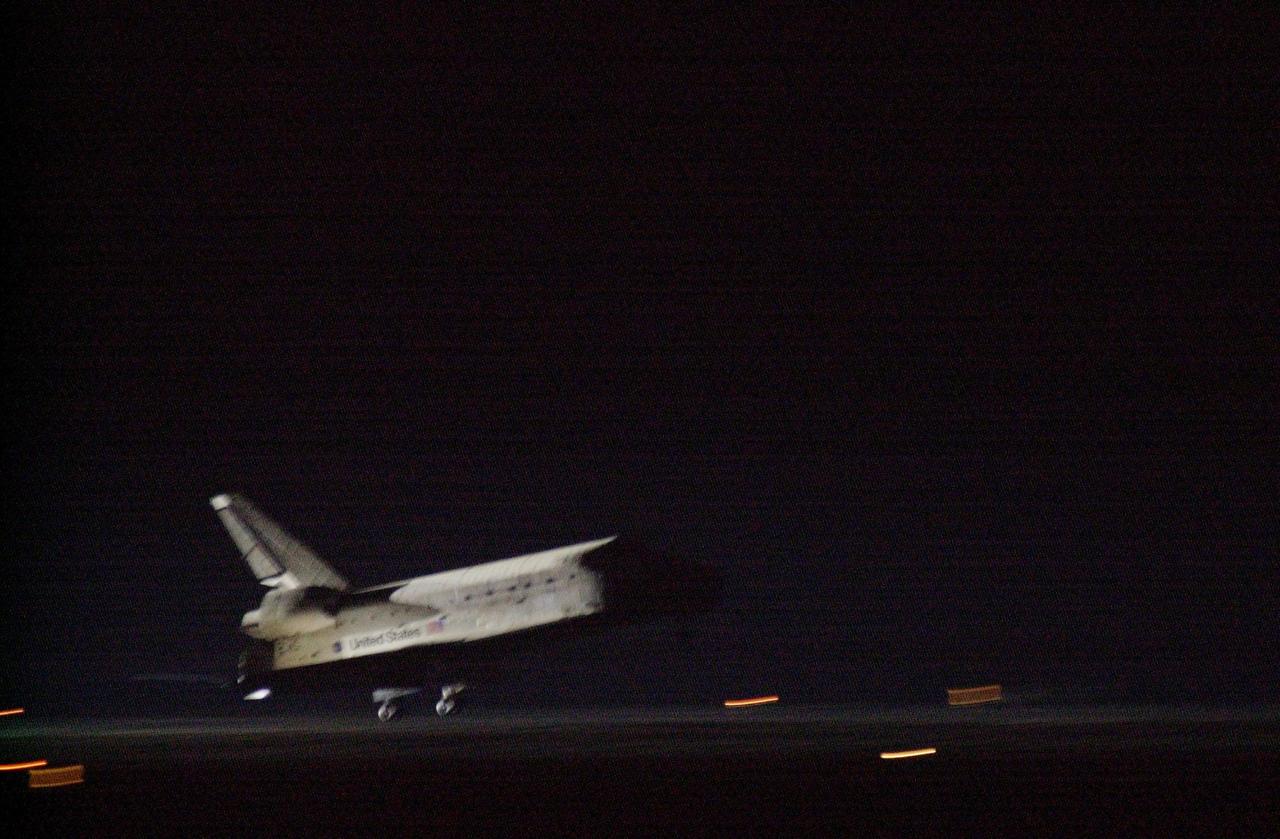
KENNEDY SPACE CENTER, Fla. -- Space Shuttle Discovery approaches runway 15 at the KSC Shuttle Landing Facility March 21. Main gear touchdown occurred at 2:31:42 a.m. EST, nose wheel touchdown at 2:31:54 a.m., and wheel stop at 2:33:06 a.m. The landing on orbit 201 concluded mission STS-102, the eighth flight to the International Space Station, carrying the first Multi-Purpose Logistics Module Leonardo, to the ISS and Expedition Two, a replacement crew for the Station. The 12-day, 19-hour, 51-minute mission returned both the Leonardo and the first resident crew of the ISS, Expedition One, to KSC . Discovery logged 5.3 million miles on this mission. The landing marked the 54th at KSC in the history of the program, and the 12th night landing at KSC
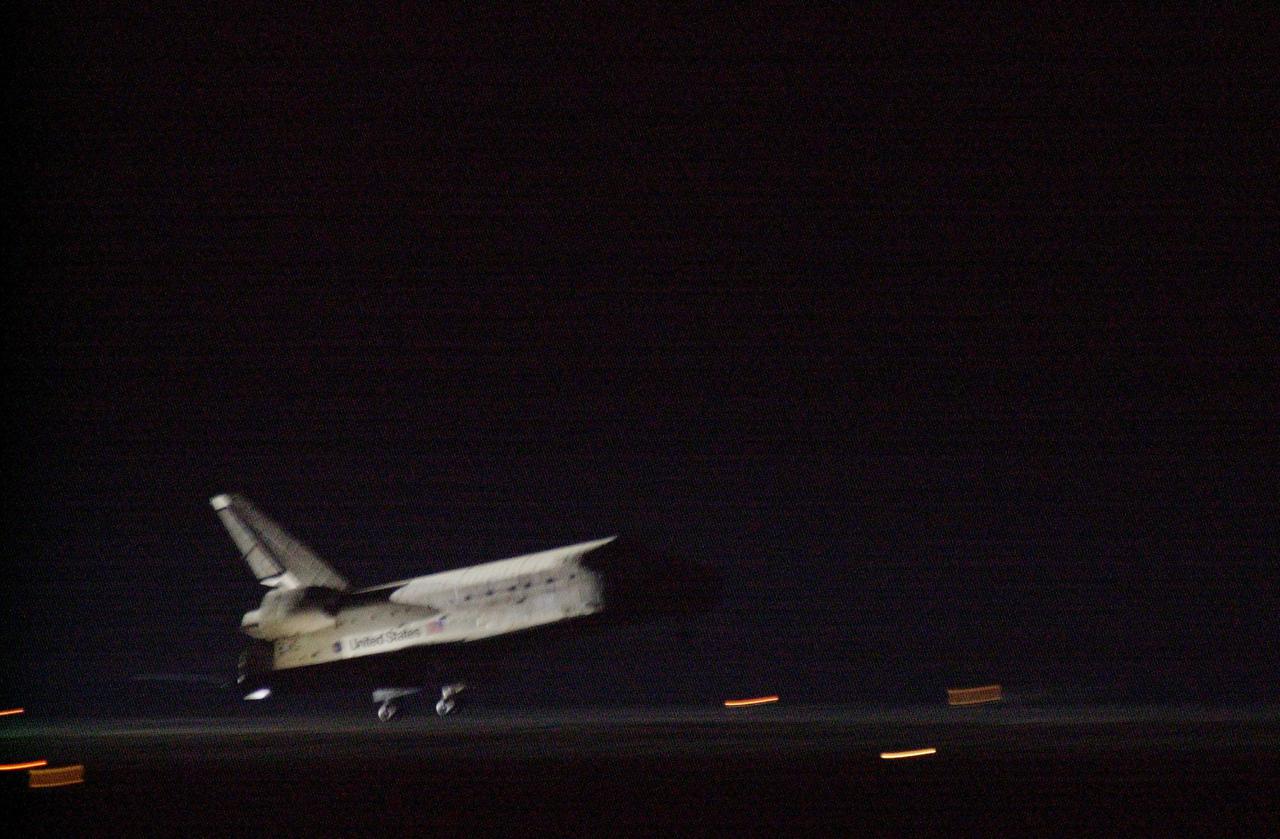
KENNEDY SPACE CENTER, Fla. -- Space Shuttle Discovery approaches runway 15 at the KSC Shuttle Landing Facility March 21. Main gear touchdown occurred at 2:31:42 a.m. EST, nose wheel touchdown at 2:31:54 a.m., and wheel stop at 2:33:06 a.m. The landing on orbit 201 concluded mission STS-102, the eighth flight to the International Space Station, carrying the first Multi-Purpose Logistics Module Leonardo, to the ISS and Expedition Two, a replacement crew for the Station. The 12-day, 19-hour, 51-minute mission returned both the Leonardo and the first resident crew of the ISS, Expedition One, to KSC . Discovery logged 5.3 million miles on this mission. The landing marked the 54th at KSC in the history of the program, and the 12th night landing at KSC
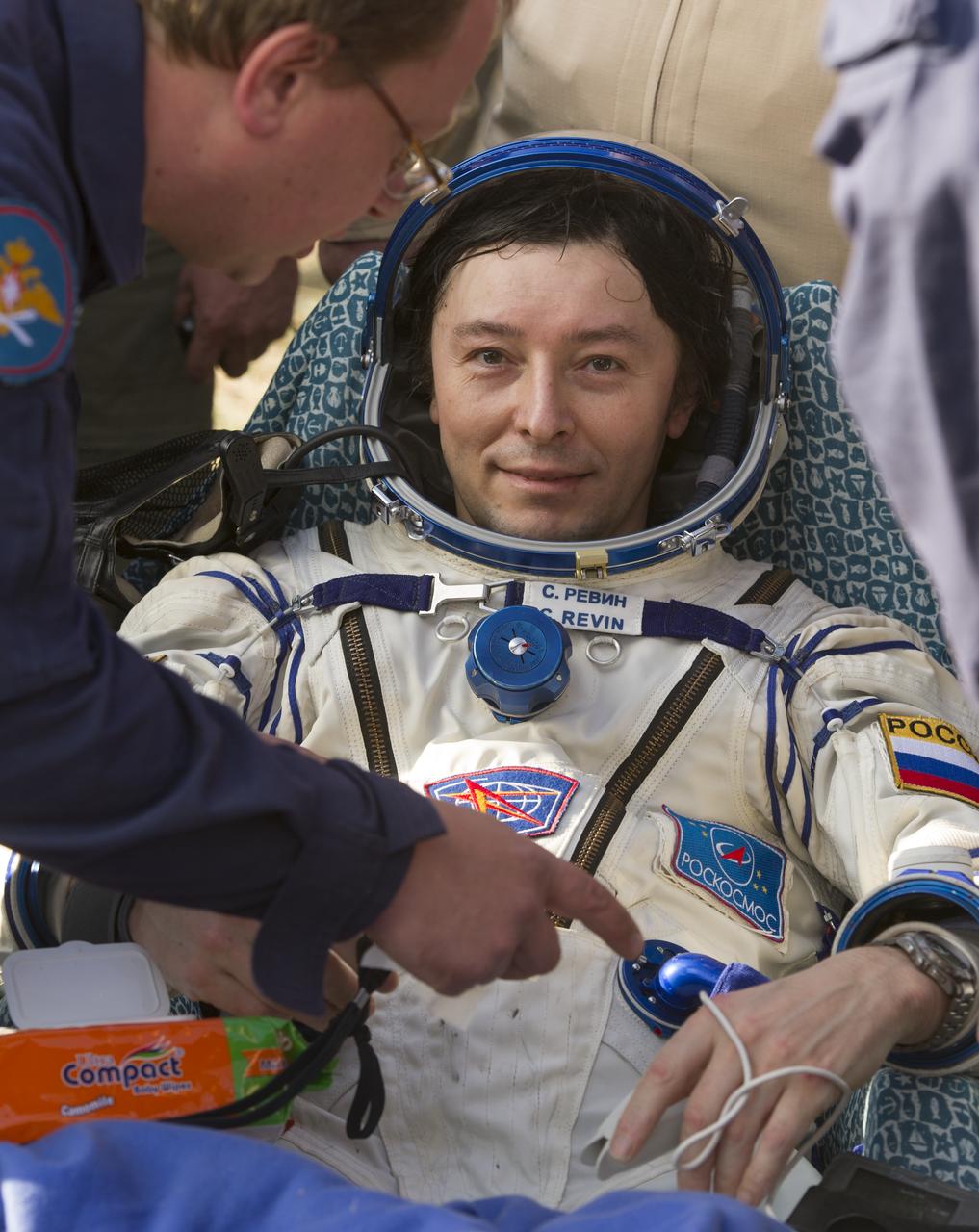
Expedition 32 Russian Flight Engineer Sergei Revin is seen as he rests outside the Soyuz TMA-04M capsule just minutes after he and Expedition 32 Commander Gennady Padalka and NASA Flight Engineer Joe Acaba landed in a remote area outside of the town of Arkalyk, Kazakhstan, on Monday, Sept. 17, 2012. Revin, Padalka and Acaba are returning from five months onboard the International Space Station where they served as members of the Expedition 31 and 32 crews. Photo Credit: (NASA/Carla Cioffi)
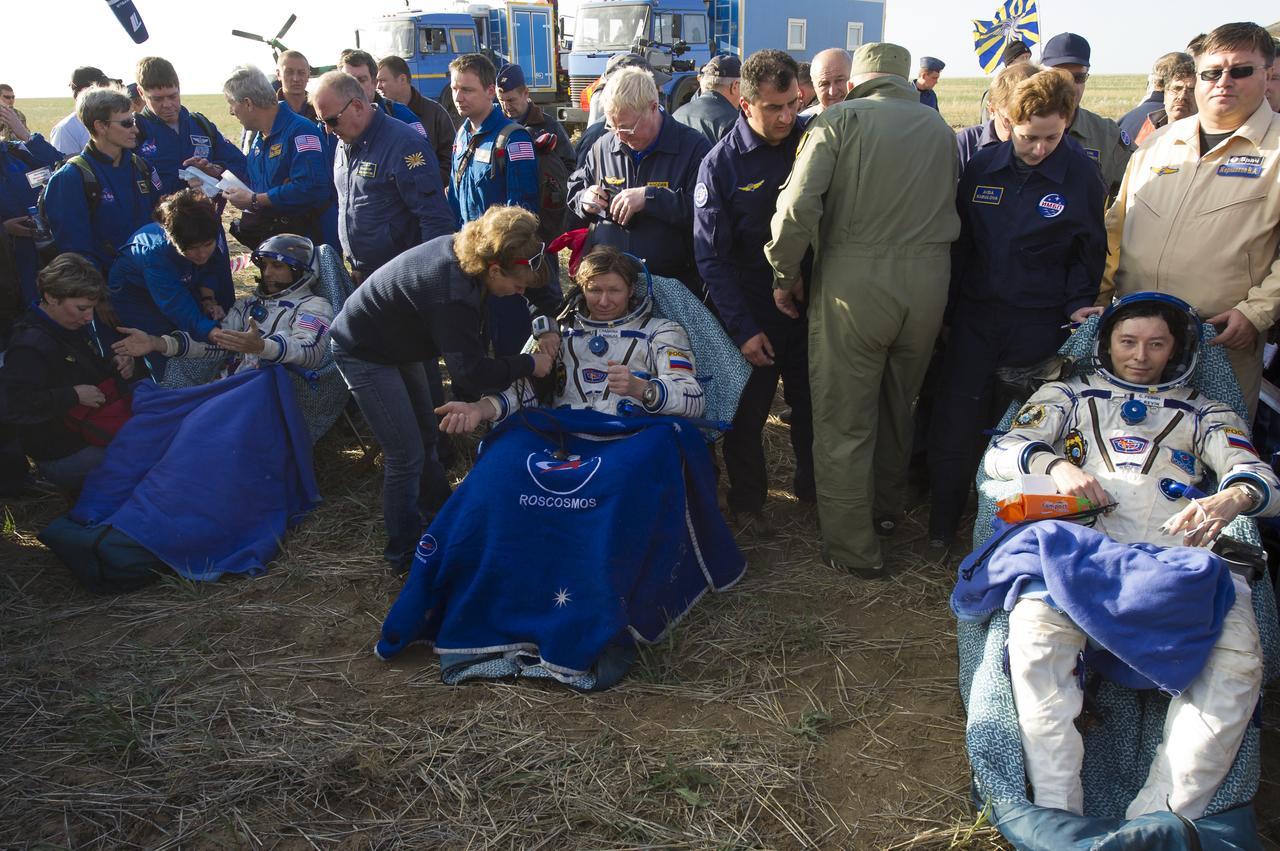
Expedition 32 NASA Flight Engineer Joe Acaba, left, Expedition 32 Commander Gennady Padalka, center, and Flight Engineer Sergei Revin sit in chairs outside the Soyuz Capsule just minutes after they landed in a remote area outside the town of Arkalyk, Kazakhstan, on Monday, Sept. 17, 2012. Acaba, Padalka and Revin are returning from five months onboard the International Space Station where they served as members of the Expedition 31 and 32 crews. Photo Credit: (NASA/Carla Cioffi)
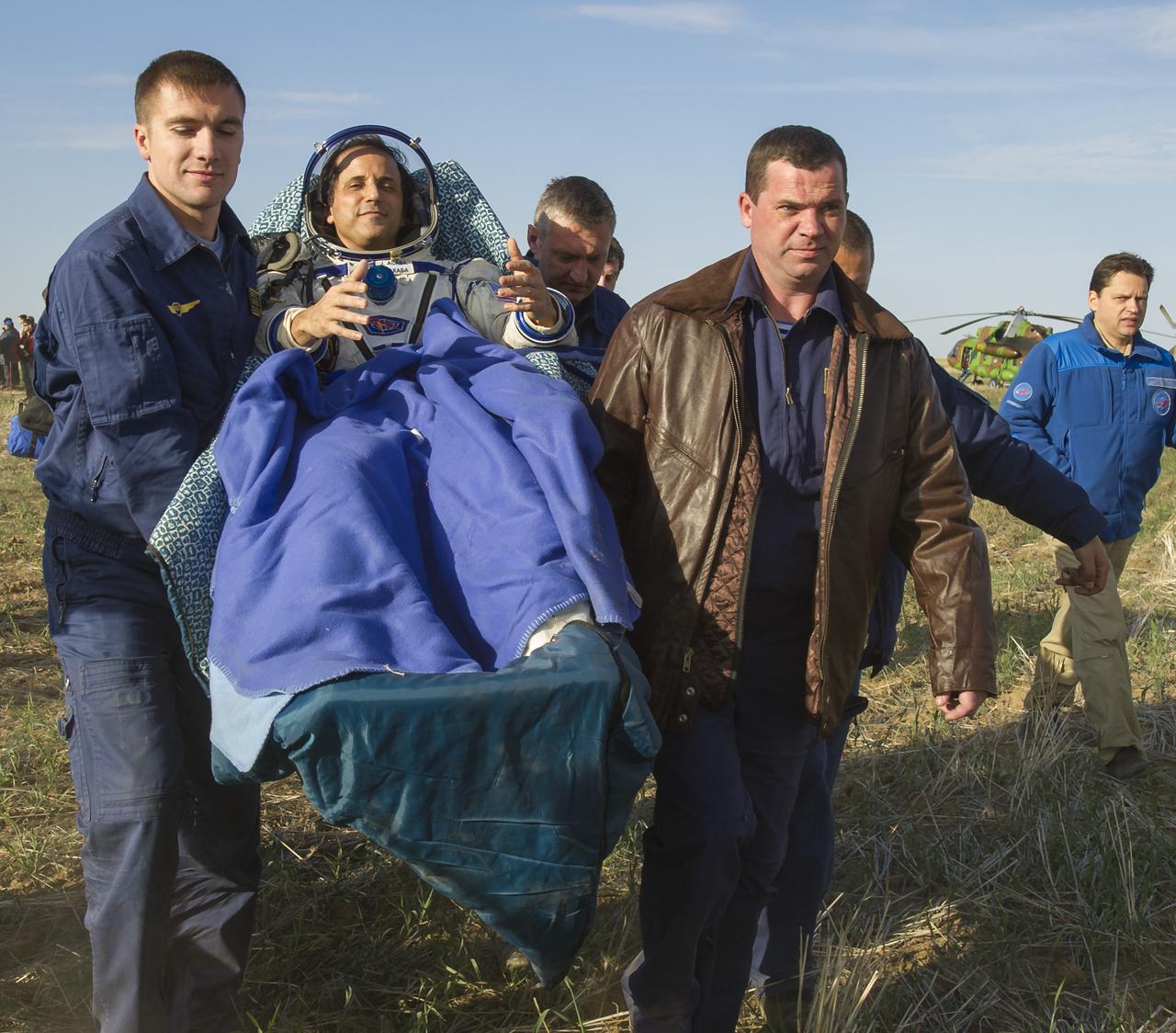
Expedition 32 NASA Flight Engineer Joe Acaba is carried in a chair to the medical tent after he and Expedition 32 Commander Gennady Padalka and Flight Engineer Sergei Revin landed in their Soyuz TMA-04M capsule in a remote area near the town of Arkalyk, Kazakhstan, on Monday, Sept. 17, 2012. Acaba, Padalka and Revin returned from five months onboard the International Space Station where they served as members of the Expedition 31 and 32 crews. Photo Credit: (NASA/Carla Cioffi)
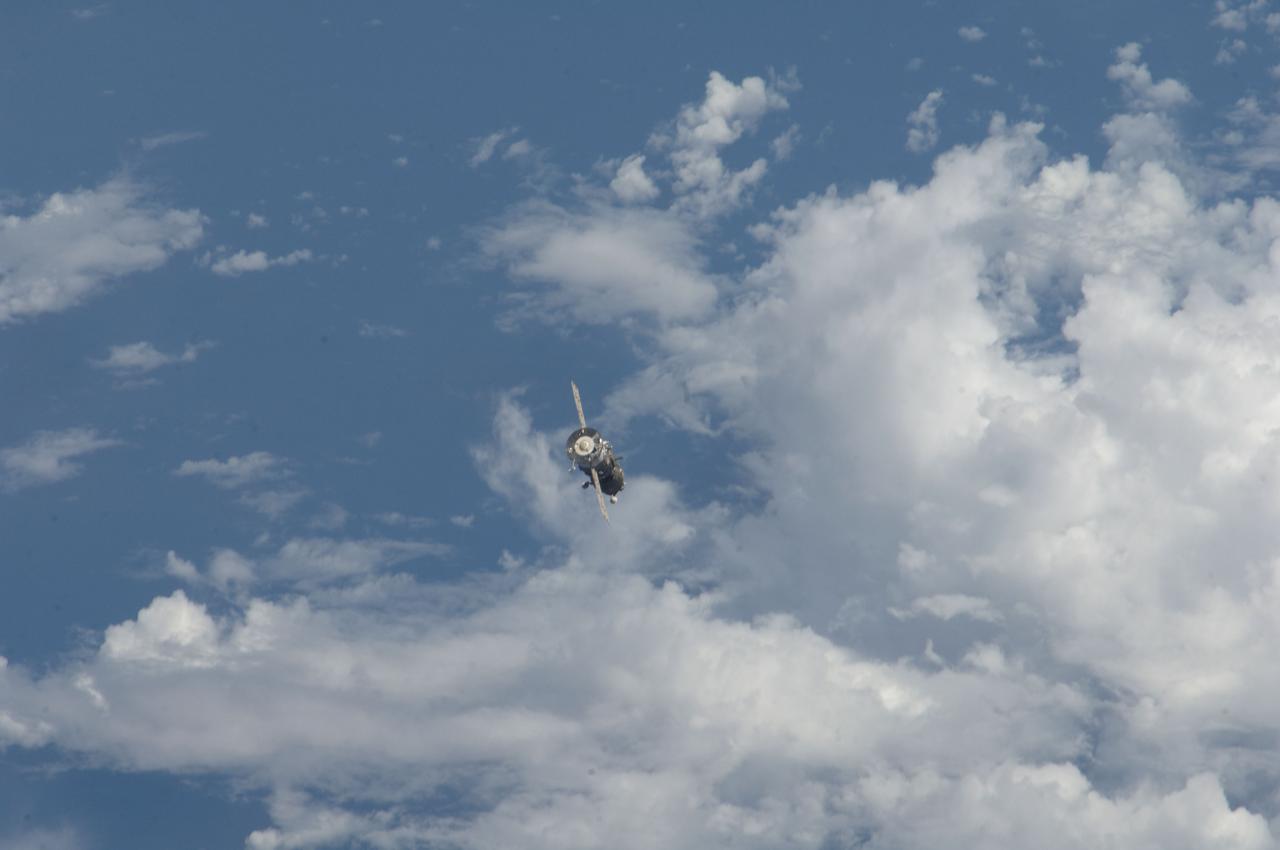
ISS033-E-005187 (16 Sept. 2012) --- The Soyuz TMA-04M spacecraft departs from the International Space Station and heads toward a landing in a remote area outside of the town of Arkalyk, Kazakhstan, on Sept. 17, 2012 (Kazakhstan time). Expedition 32 Commander Gennady Padalka of Russia, NASA Flight Engineer Joe Acaba and Russian Flight Engineer Sergei Revin are returning from five months onboard the International Space Station where they served as members of the Expedition 31 and 32 crews.
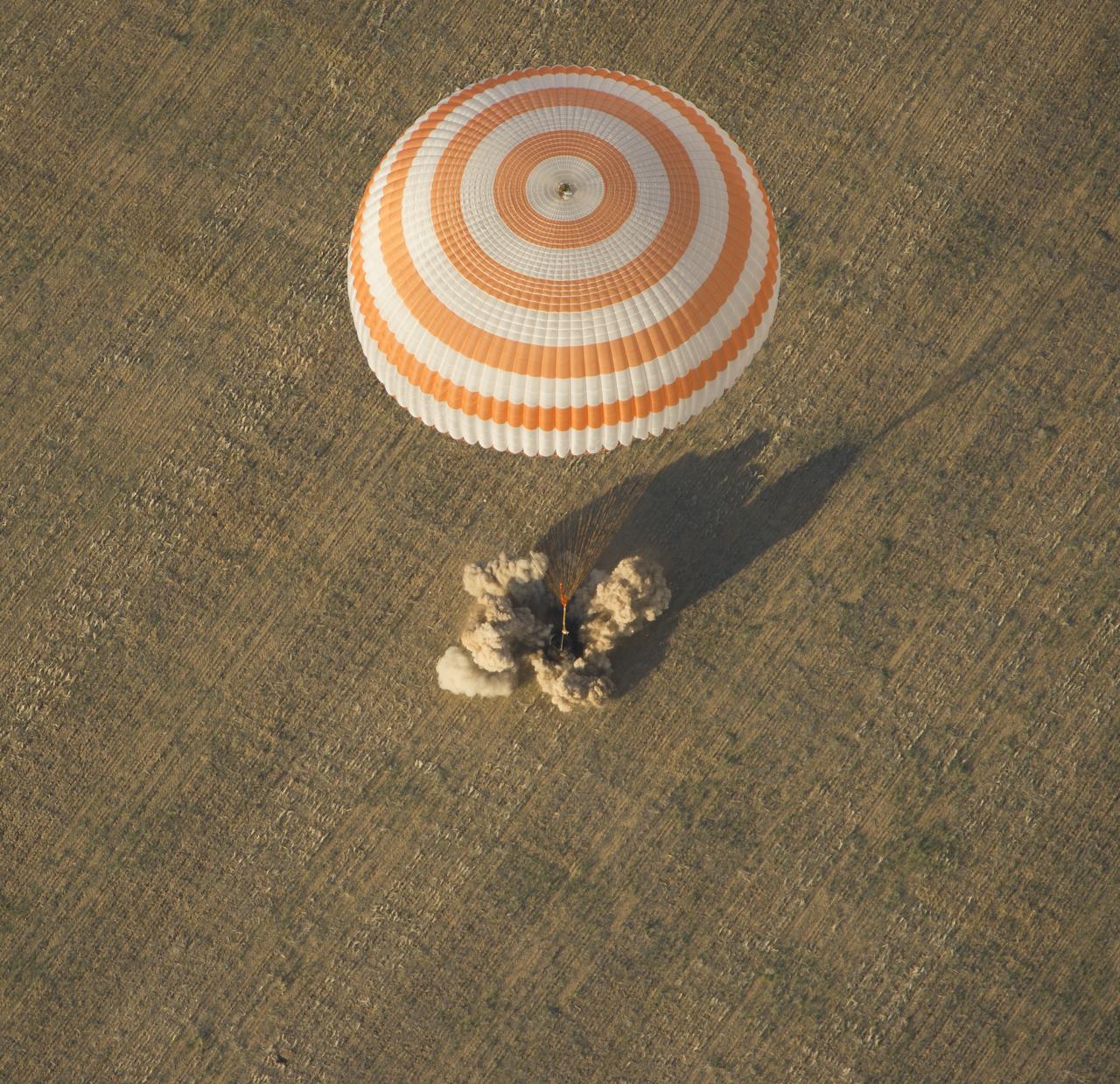
The Soyuz TMA-04M spacecraft is seen as it lands with Expedition 32 Commander Gennady Padalka of Russia, NASA Flight Engineer Joe Acaba and Russian Flight Engineer Sergei Revin in a remote area near the town of Arkalyk, Kazakhstan, on Monday, September 17, 2012. Padalka, Acaba and Revin returned from five months onboard the International Space Station where they served as members of the Expedition 31 and 32 crews. Photo Credit: (NASA/Carla Cioffi)
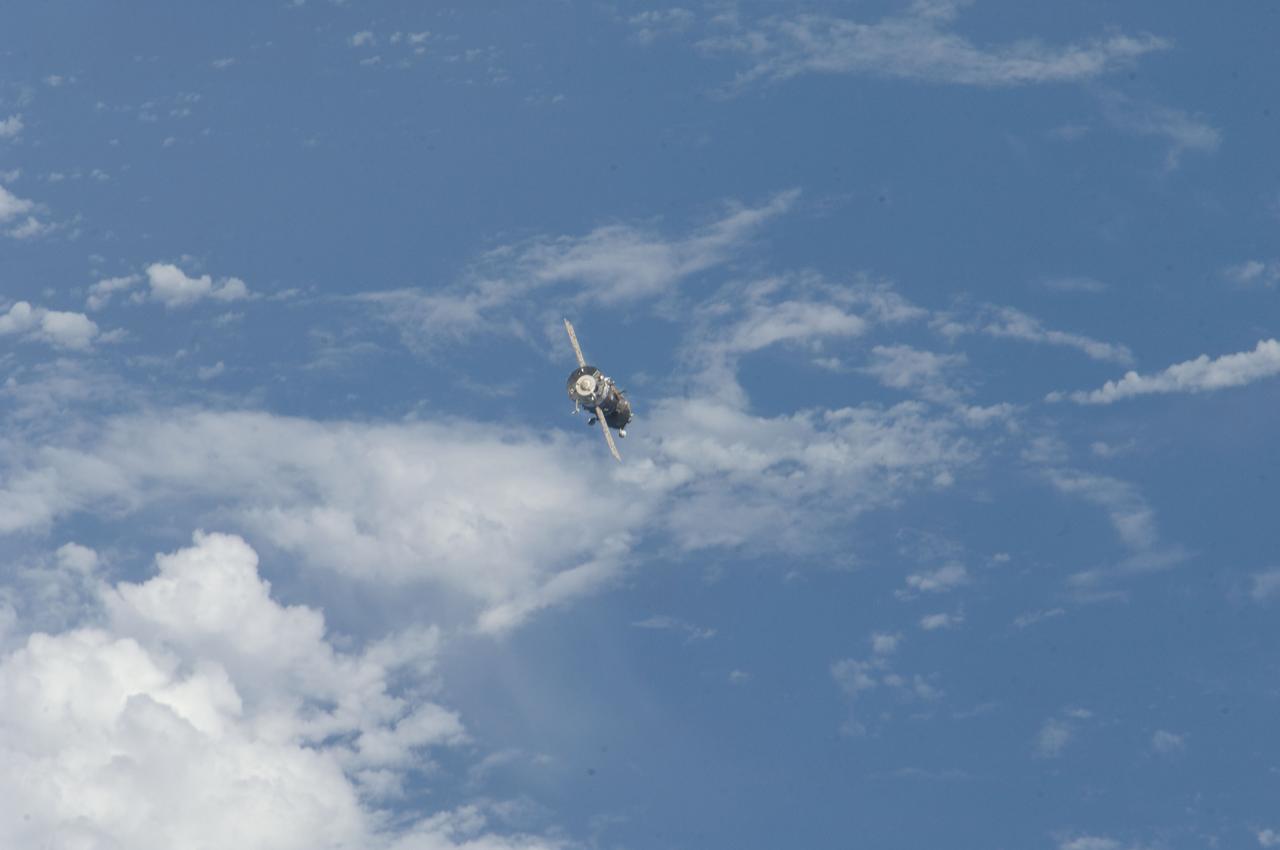
ISS033-E-005180 (16 Sept. 2012) --- The Soyuz TMA-04M spacecraft departs from the International Space Station and heads toward a landing in a remote area outside of the town of Arkalyk, Kazakhstan, on Sept. 17, 2012 (Kazakhstan time). Expedition 32 Commander Gennady Padalka of Russia, NASA Flight Engineer Joe Acaba and Russian Flight Engineer Sergei Revin are returning from five months onboard the International Space Station where they served as members of the Expedition 31 and 32 crews.
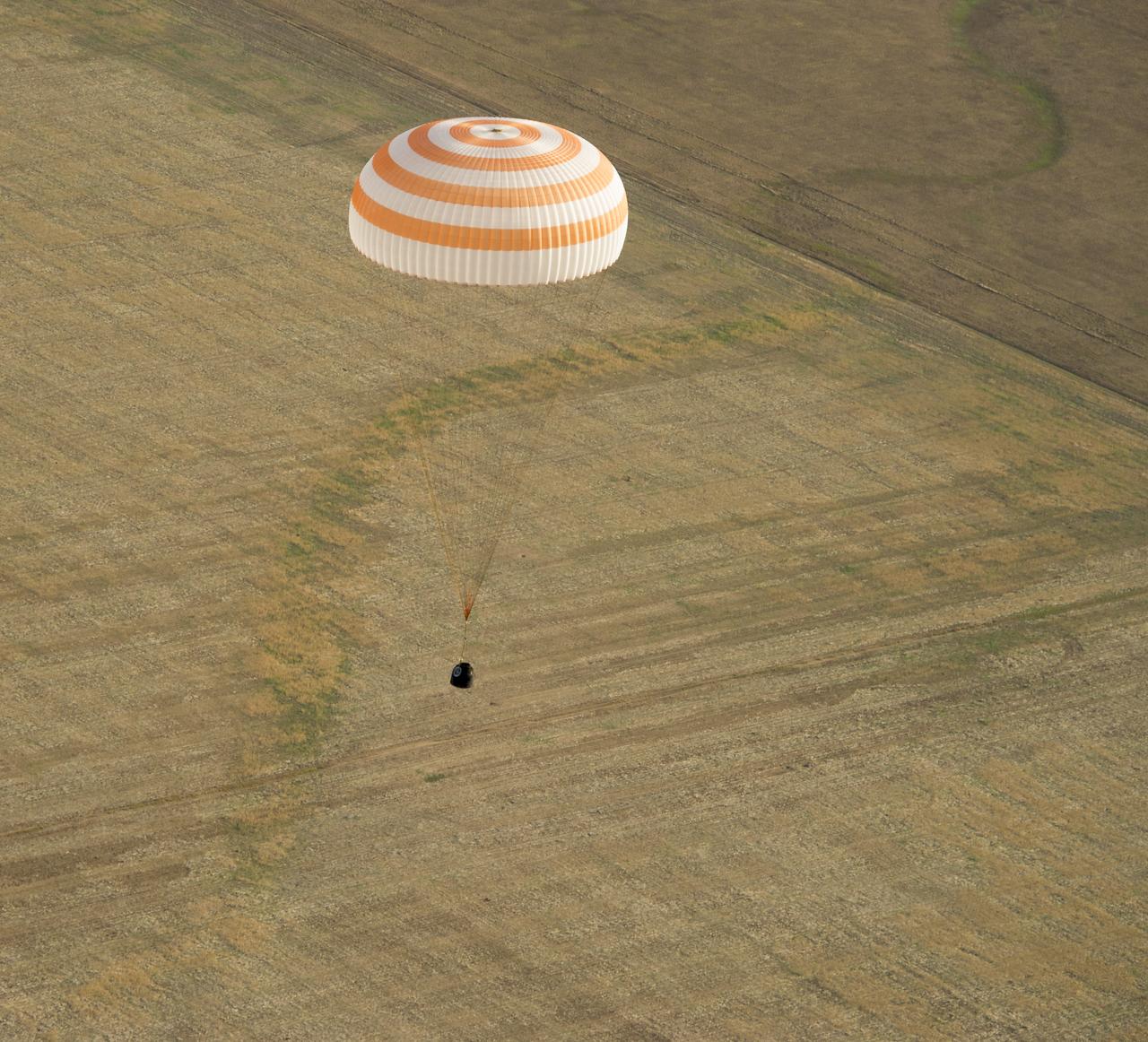
The Soyuz TMA-04M spacecraft is seen as it lands with Expedition 32 Commander Gennady Padalka of Russia, NASA Flight Engineer Joe Acaba and Russian Flight Engineer Sergei Revin in a remote area near the town of Arkalyk, Kazakhstan, on Monday, September 17, 2012. Padalka, Acaba and Revin returned from five months onboard the International Space Station where they served as members of the Expedition 31 and 32 crews. Photo Credit: (NASA/Carla Cioffi)
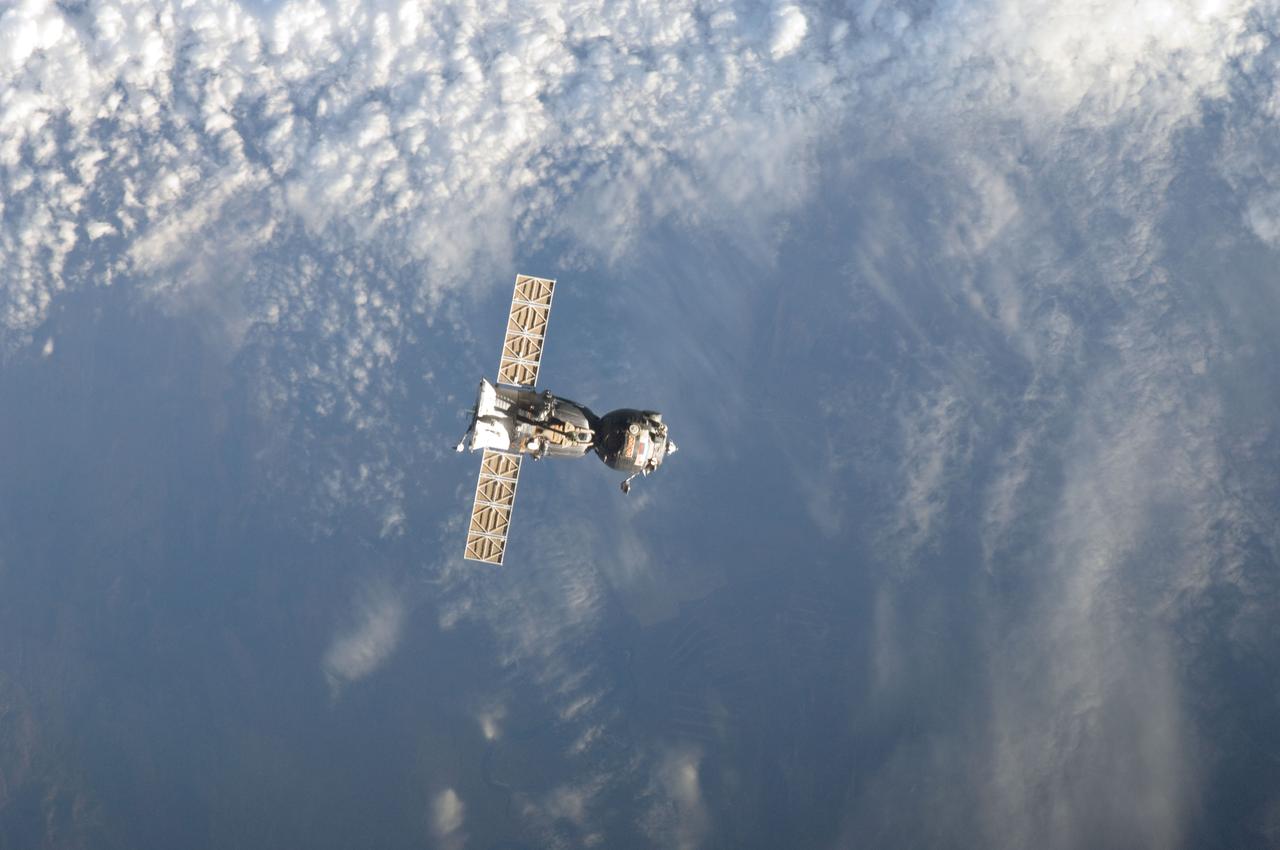
ISS033-E-005112 (16 Sept. 2012) --- The Soyuz TMA-04M spacecraft departs from the International Space Station and heads toward a landing in a remote area outside of the town of Arkalyk, Kazakhstan, on Sept. 17, 2012 (Kazakhstan time). Expedition 32 Commander Gennady Padalka of Russia, NASA Flight Engineer Joe Acaba and Russian Flight Engineer Sergei Revin are returning from five months onboard the International Space Station where they served as members of the Expedition 31 and 32 crews.
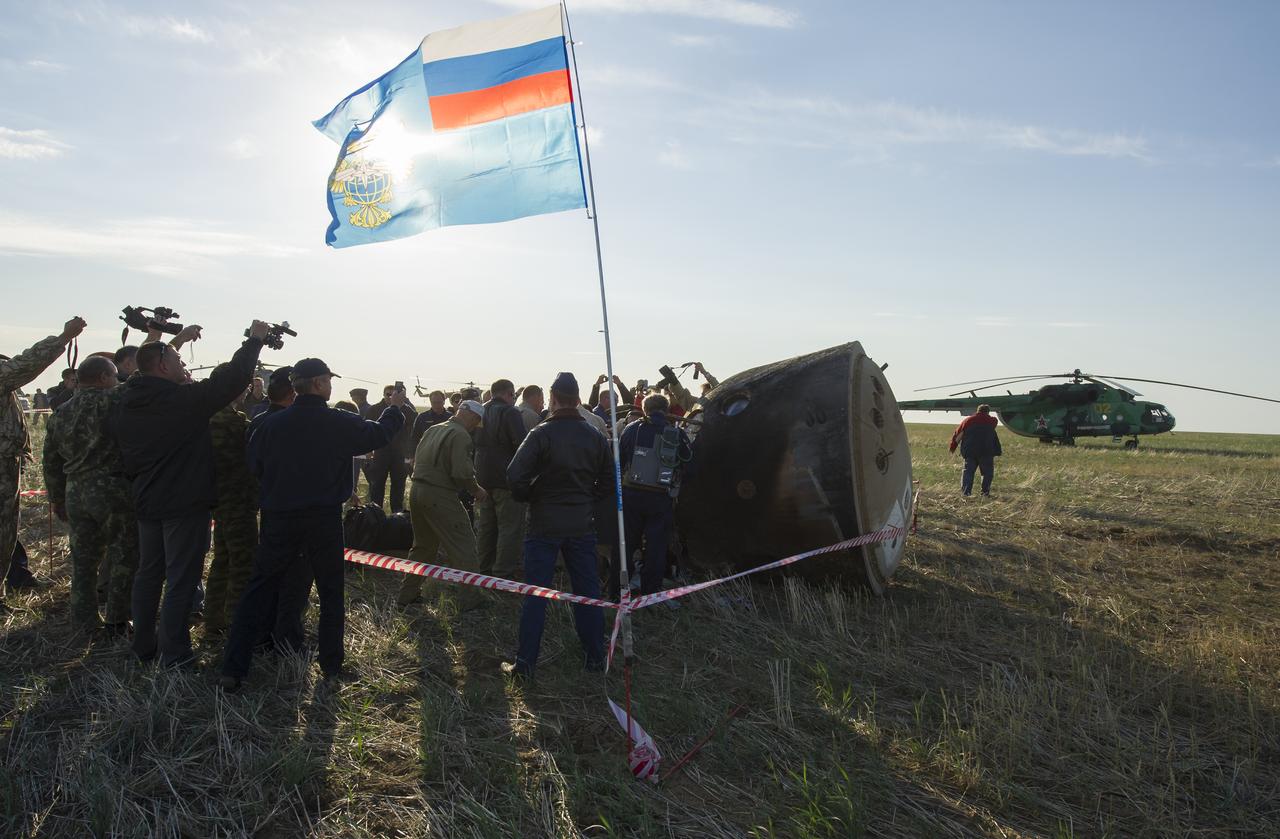
Russian support personnel are seen as they access the crew of the Soyuz TMA-04M capsule shortly after it landed with Expedition 32 Commander Gennady Padalka of Russia and Flight Engineers Joe Acaba of NASA and Sergei Revin of Russia in a remote area near the town of Arkalyk, Kazakhstan, on Monday, Sept. 17, 2012. Padalka, Acaba and Revin returned from five months onboard the International Space Station where they served as members of the Expedition 31 and 32 crews. Photo Credit: (NASA/Carla Cioffi)
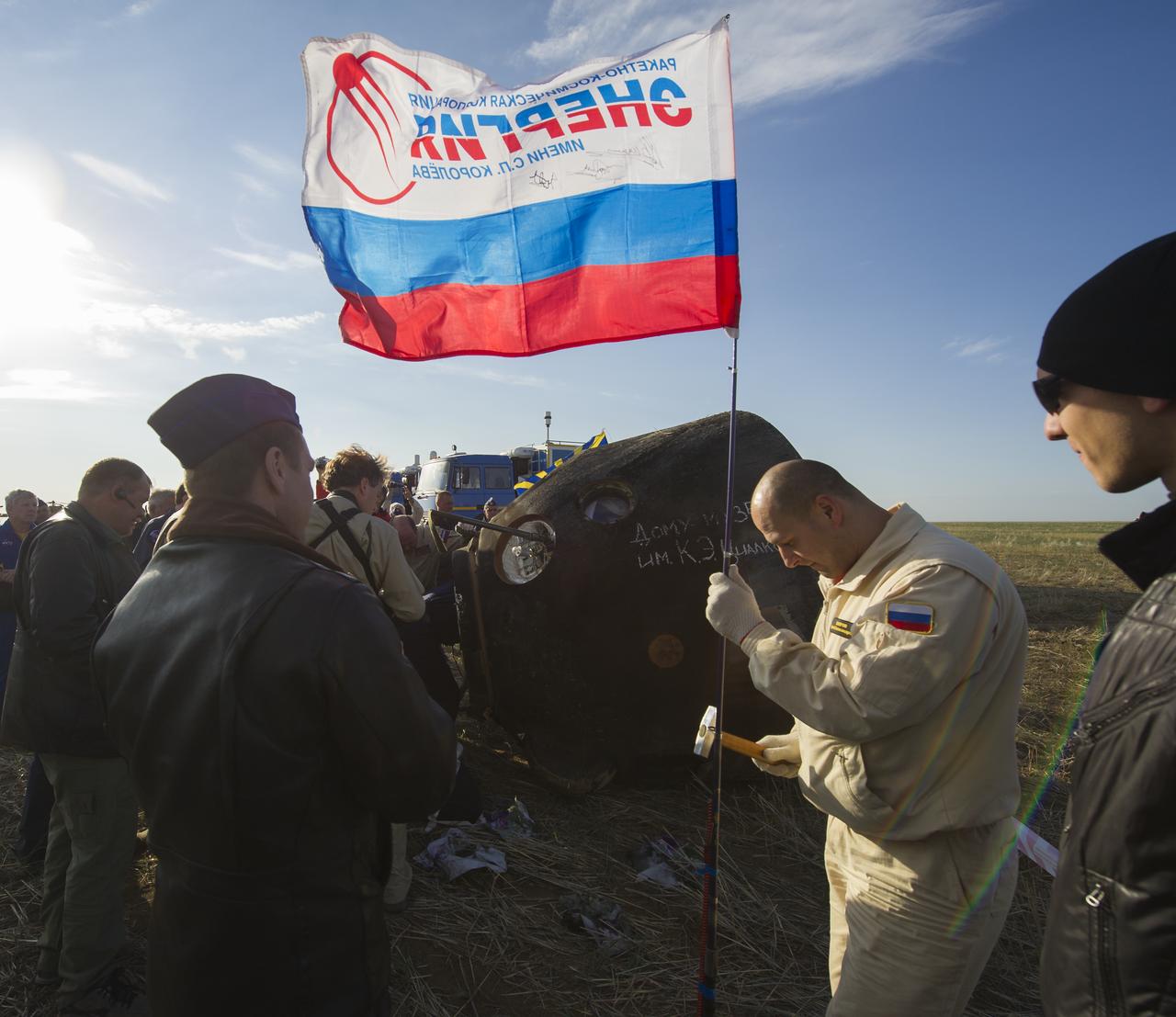
The Soyuz TMA-04M spacecraft is seen following its landing with Expedition 32 Commander Gennady Padalka of Russia, NASA Flight Engineer Joe Acaba and Russian Flight Engineer Sergei Revin in a remote area near the town of Arkalyk, Kazakhstan, on Monday, September 17, 2012. Padalka, Acaba and Revin returned from five months onboard the International Space Station where they served as members of the Expedition 31 and 32 crews. Photo Credit: (NASA/Carla Cioffi)
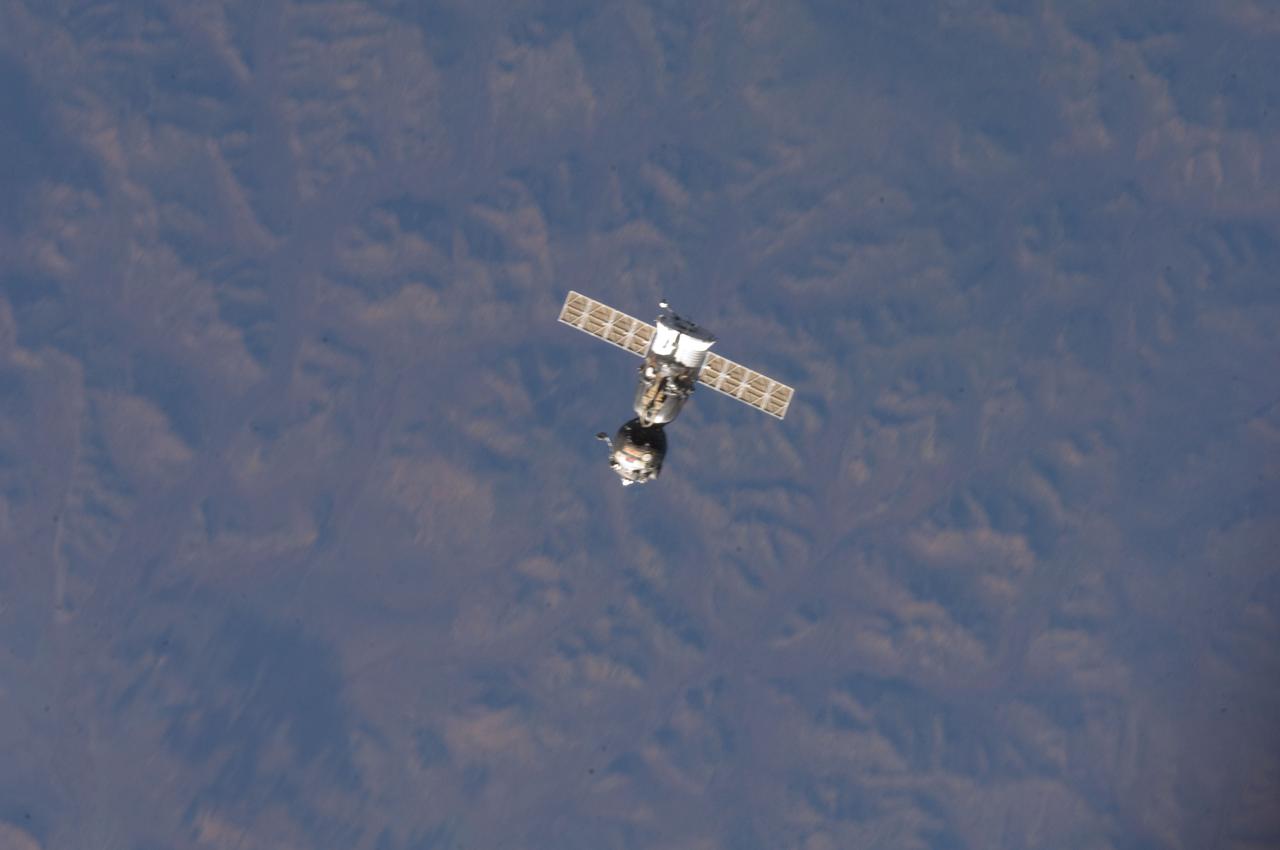
ISS033-E-005123 (16 Sept. 2012) --- The Soyuz TMA-04M spacecraft departs from the International Space Station and heads toward a landing in a remote area outside of the town of Arkalyk, Kazakhstan, on Sept. 17, 2012 (Kazakhstan time). Expedition 32 Commander Gennady Padalka of Russia, NASA Flight Engineer Joe Acaba and Russian Flight Engineer Sergei Revin are returning from five months onboard the International Space Station where they served as members of the Expedition 31 and 32 crews.
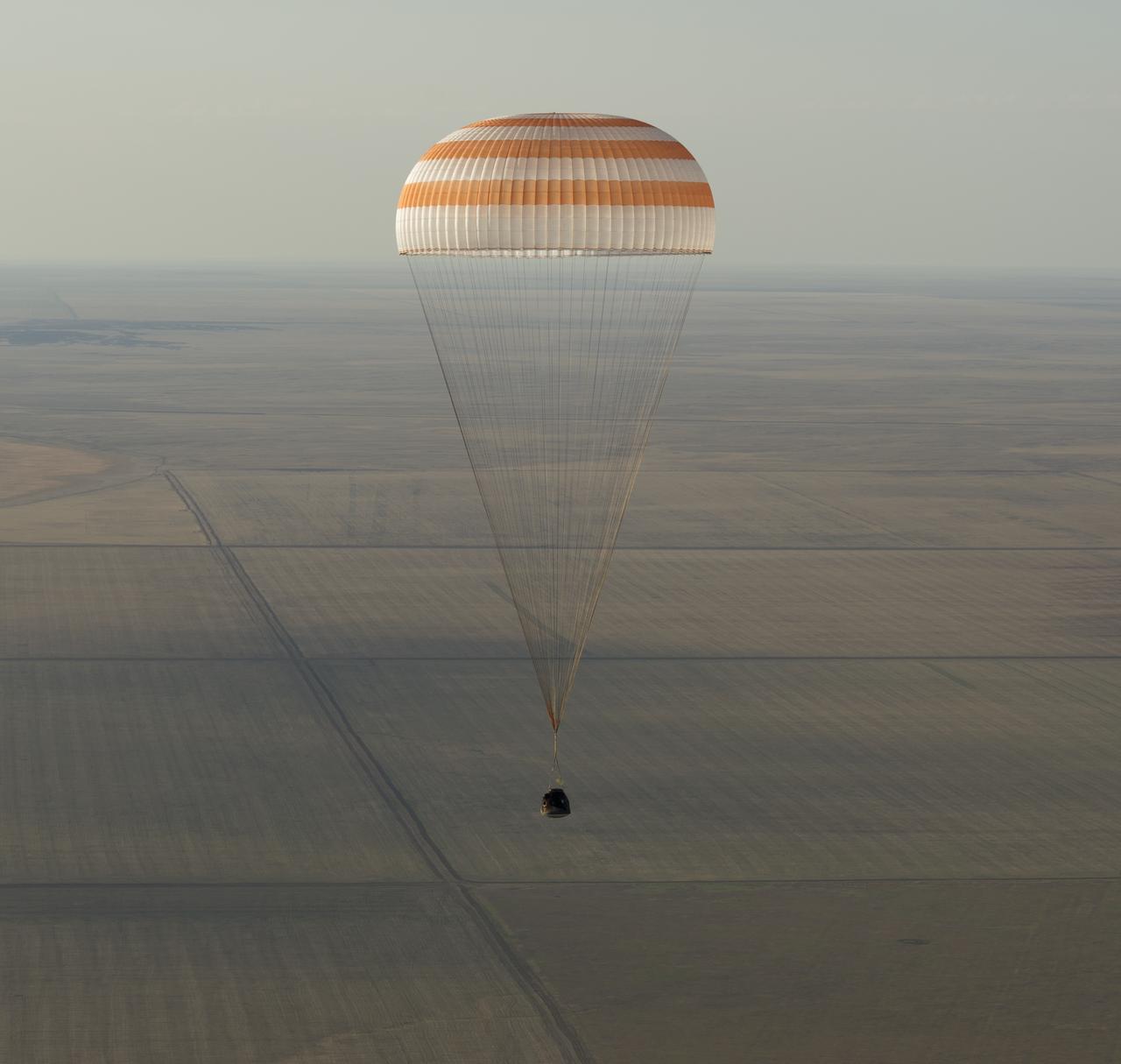
The Soyuz TMA-04M spacecraft is seen as it lands with Expedition 32 Commander Gennady Padalka of Russia, NASA Flight Engineer Joe Acaba and Russian Flight Engineer Sergei Revin in a remote area near the town of Arkalyk, Kazakhstan, on Monday, September 17, 2012. Padalka, Acaba and Revin returned from five months onboard the International Space Station where they served as members of the Expedition 31 and 32 crews. Photo Credit: (NASA/Carla Cioffi)
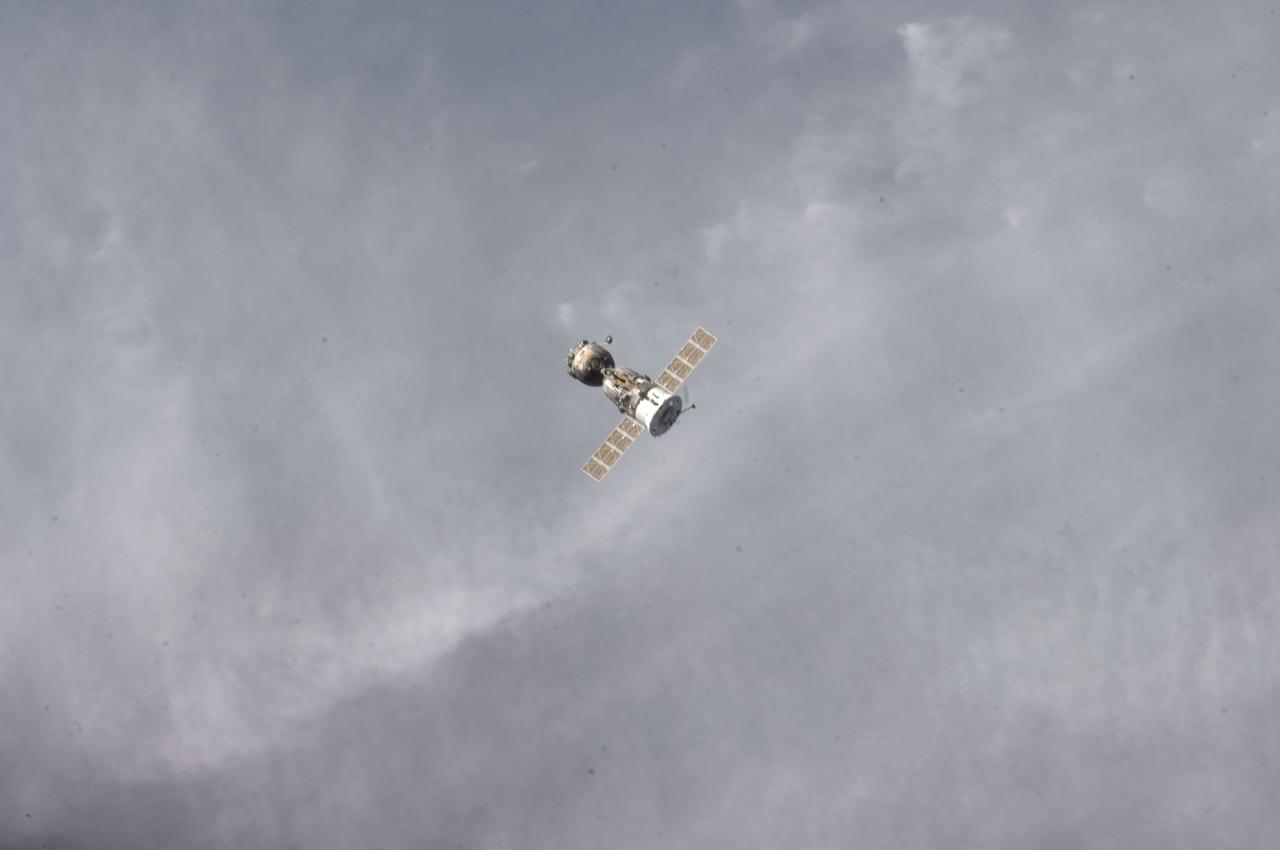
ISS033-E-005138 (16 Sept. 2012) --- The Soyuz TMA-04M spacecraft departs from the International Space Station and heads toward a landing in a remote area outside of the town of Arkalyk, Kazakhstan, on Sept. 17, 2012 (Kazakhstan time). Expedition 32 Commander Gennady Padalka of Russia, NASA Flight Engineer Joe Acaba and Russian Flight Engineer Sergei Revin are returning from five months onboard the International Space Station where they served as members of the Expedition 31 and 32 crews.
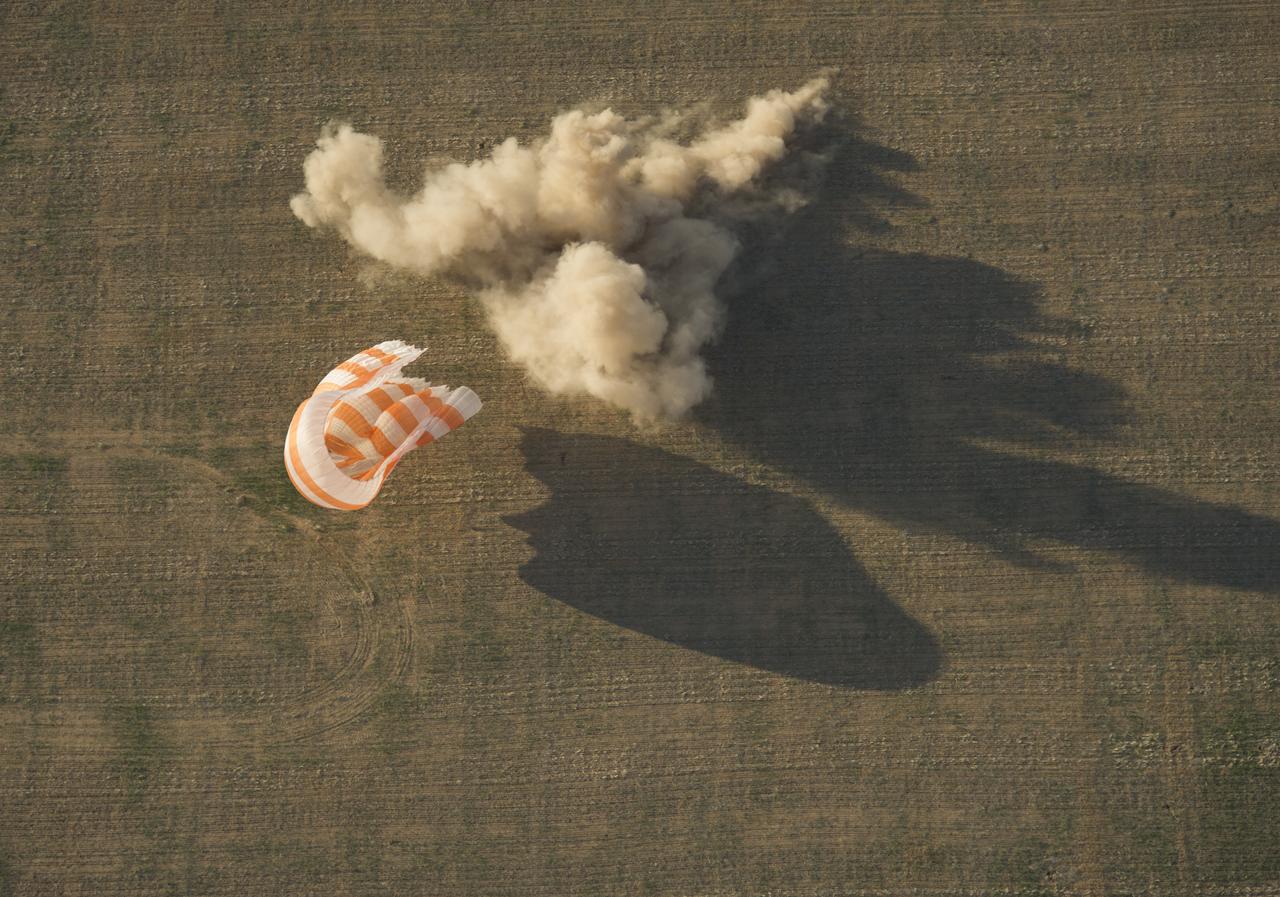
The Soyuz TMA-04M spacecraft is seen as it lands with Expedition 32 Commander Gennady Padalka of Russia, NASA Flight Engineer Joe Acaba and Russian Flight Engineer Sergei Revin in a remote area near the town of Arkalyk, Kazakhstan, on Monday, September 17, 2012. Padalka, Acaba and Revin returned from five months onboard the International Space Station where they served as members of the Expedition 31 and 32 crews. Photo Credit: (NASA/Carla Cioffi)
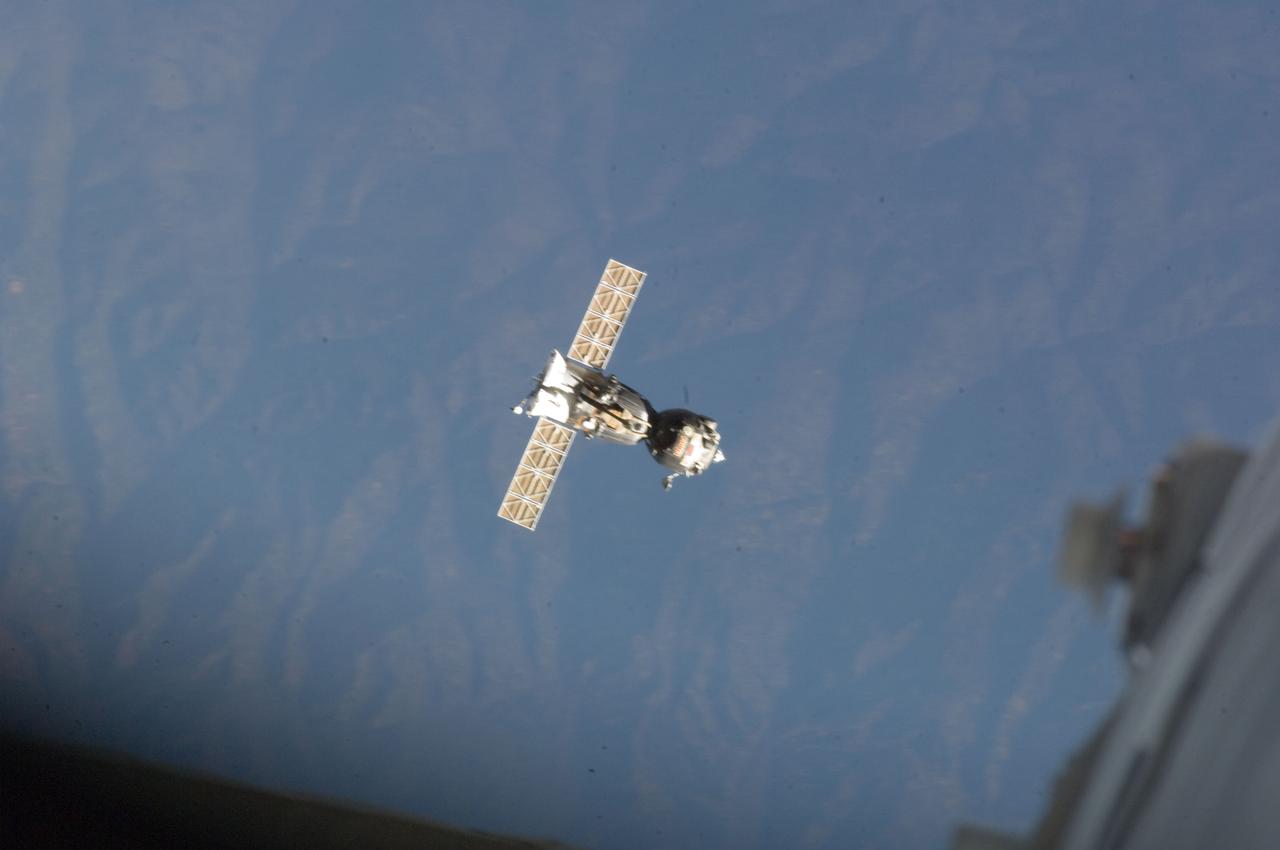
ISS033-E-005115 (16 Sept. 2012) --- The Soyuz TMA-04M spacecraft departs from the International Space Station and heads toward a landing in a remote area outside of the town of Arkalyk, Kazakhstan, on Sept. 17, 2012 (Kazakhstan time). Expedition 32 Commander Gennady Padalka of Russia, NASA Flight Engineer Joe Acaba and Russian Flight Engineer Sergei Revin are returning from five months onboard the International Space Station where they served as members of the Expedition 31 and 32 crews.
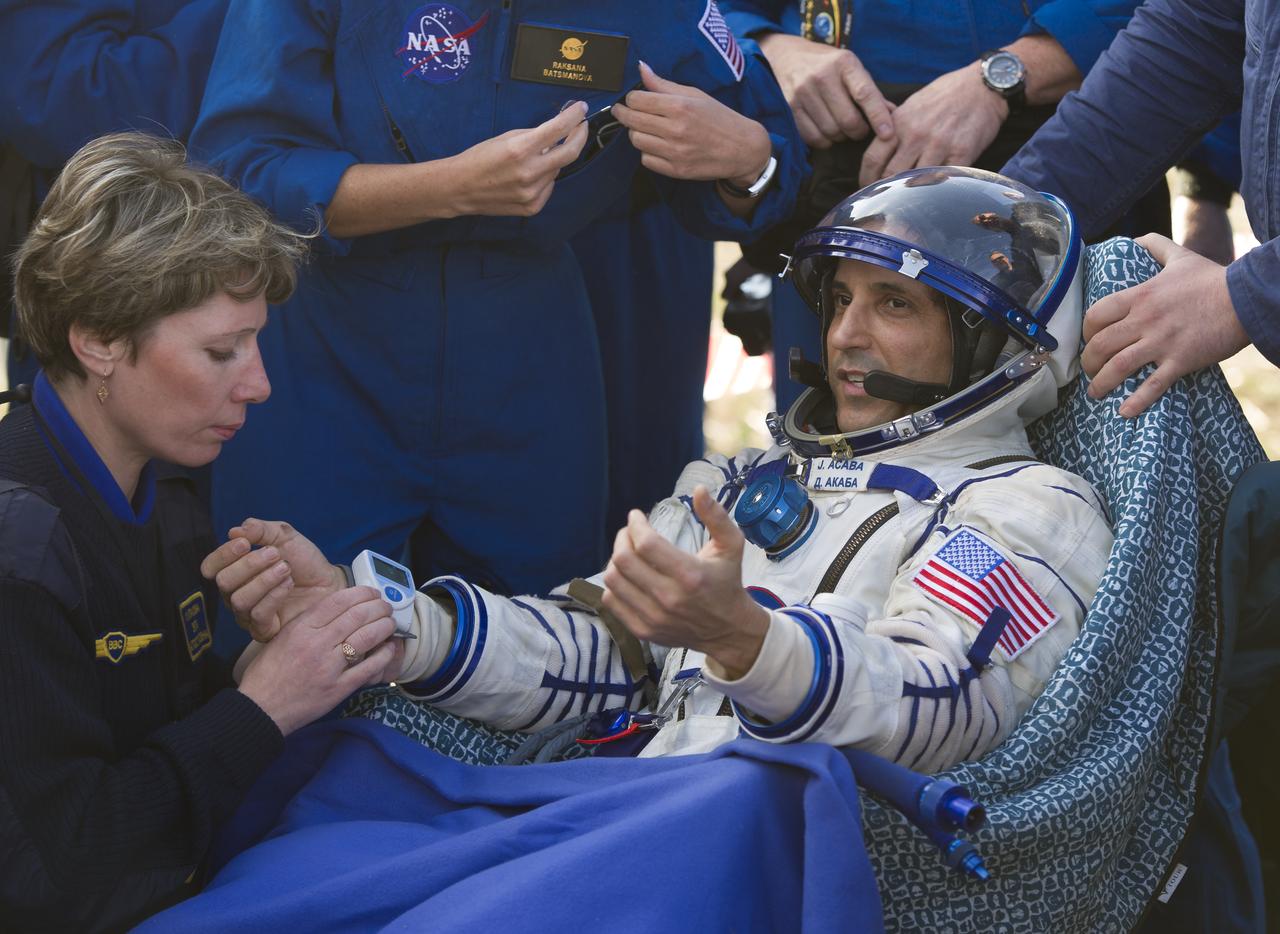
Expedition 32 NASA Flight Engineer Joe Acaba is attended to by crew support personnel following his landing in the Soyuz TMA-04M spacecraft, Monday, Sept. 17, 2012. Acaba and Russian cosmonauts Padalka and Revin are returning from five months onboard the International Space Station where they served as members of the Expedition 31 and 32 crews. Photo Credit: (NASA/Carla Cioffi)
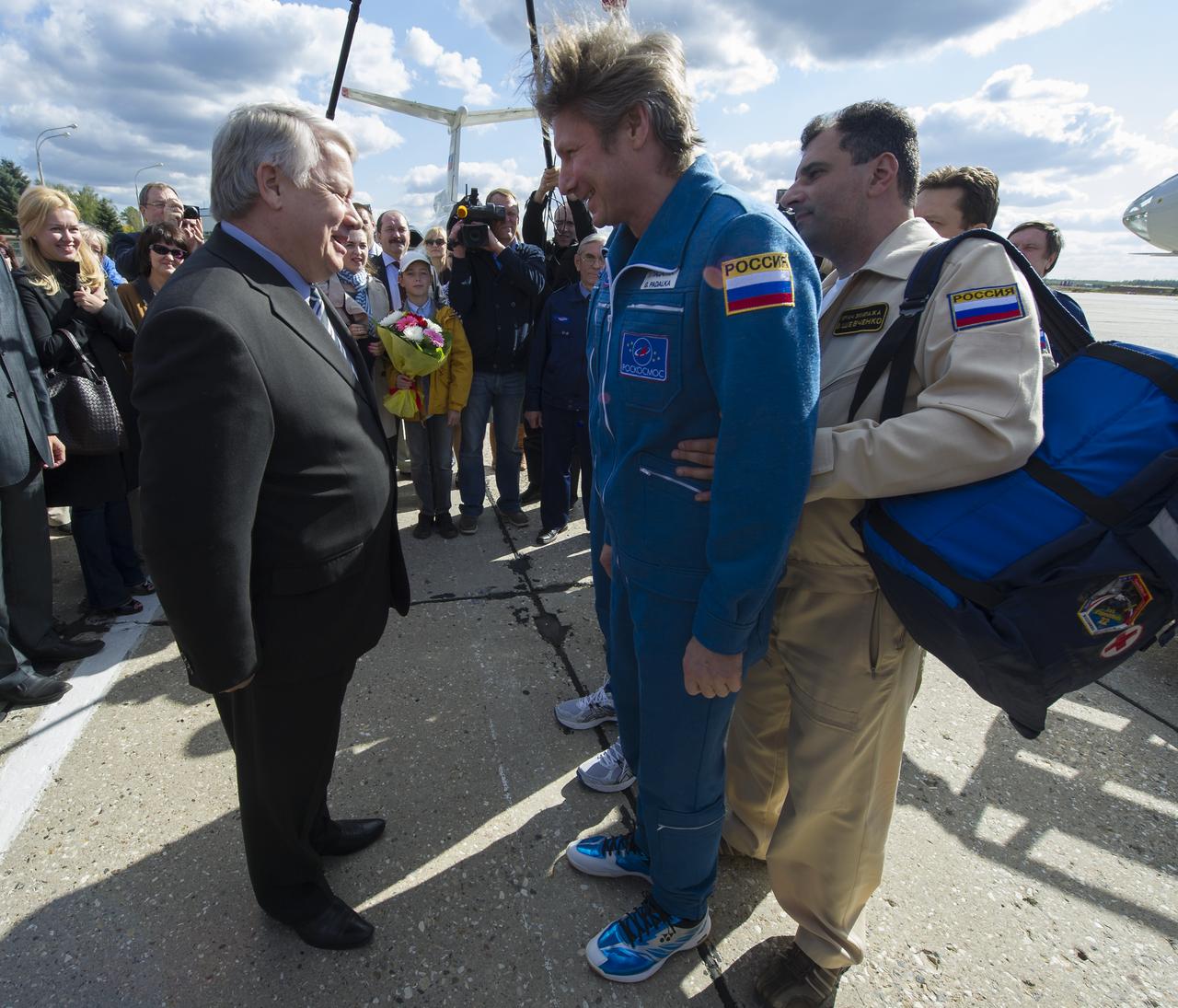
Expedition 32 Commander is welcomed home upon his arrival in Star City, Monday, Sept. 17, 2012 in Russia. Padalka, NASA Flight Engineer Joe Acaba and Russian Flight Engineer Sergei Revin landed in their Soyuz TMA-04M earlier that day in a remote area outside of Arkalyk, Kazakhstan. They returned home from five months onboard the International Space Station where they served as members of the Expedition 31 and 32 crews. Photo Credit: (NASA/Carla Cioffi)
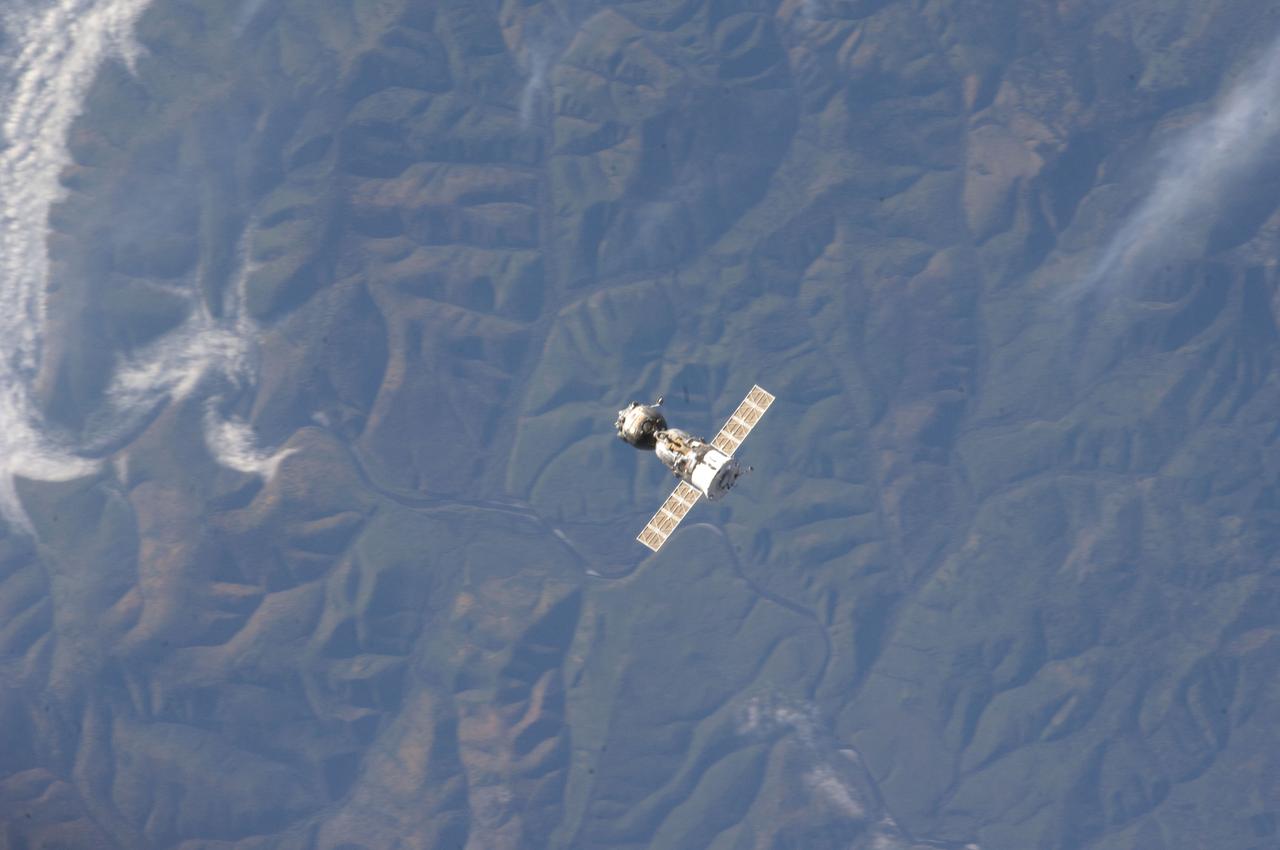
ISS033-E-005131 (16 Sept. 2012) --- The Soyuz TMA-04M spacecraft departs from the International Space Station and heads toward a landing in a remote area outside of the town of Arkalyk, Kazakhstan, on Sept. 17, 2012 (Kazakhstan time). Expedition 32 Commander Gennady Padalka of Russia, NASA Flight Engineer Joe Acaba and Russian Flight Engineer Sergei Revin are returning from five months onboard the International Space Station where they served as members of the Expedition 31 and 32 crews.
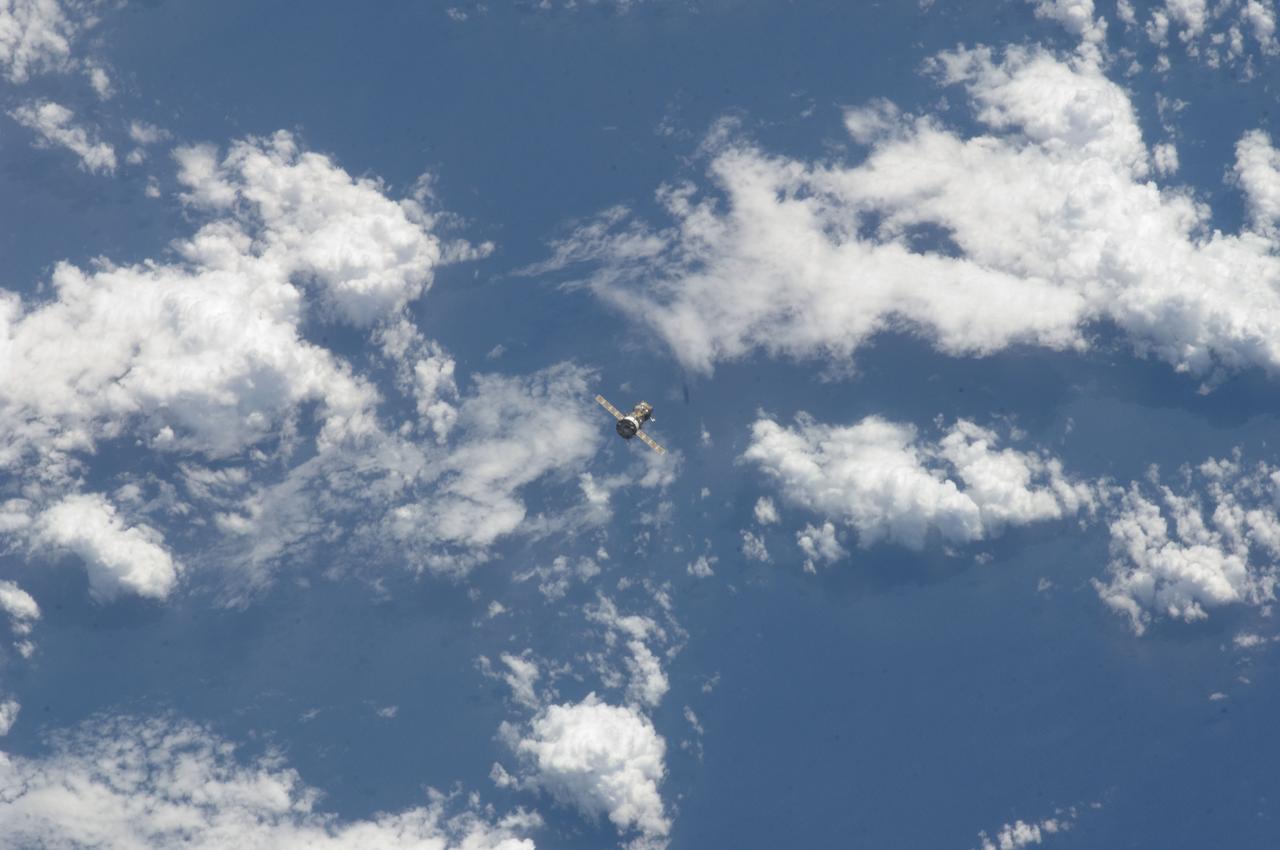
ISS033-E-005166 (16 Sept. 2012) --- The Soyuz TMA-04M spacecraft departs from the International Space Station and heads toward a landing in a remote area outside of the town of Arkalyk, Kazakhstan, on Sept. 17, 2012 (Kazakhstan time). Expedition 32 Commander Gennady Padalka of Russia, NASA Flight Engineer Joe Acaba and Russian Flight Engineer Sergei Revin are returning from five months onboard the International Space Station where they served as members of the Expedition 31 and 32 crews.
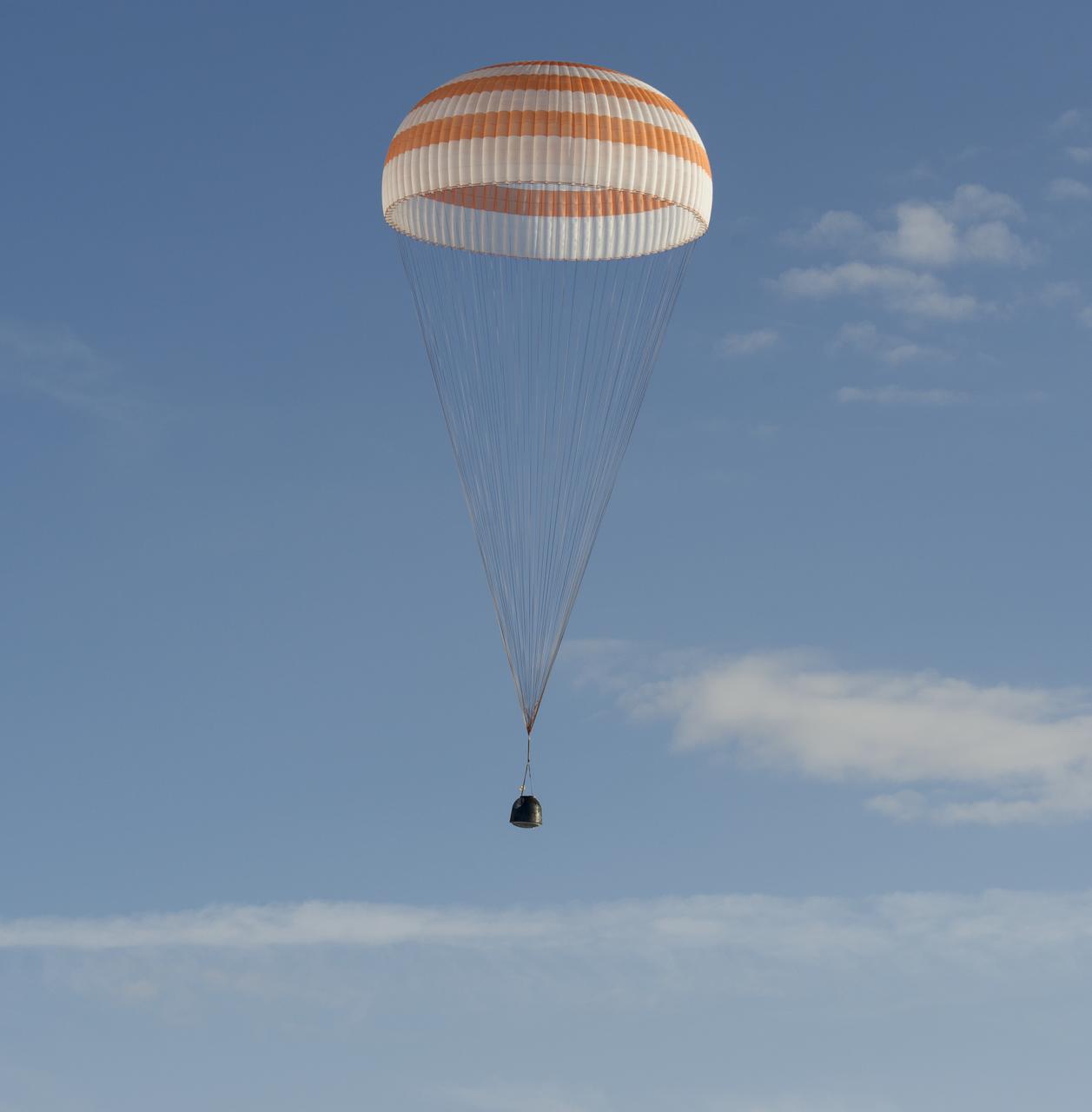
The Soyuz TMA-04M spacecraft is seen as it lands with Expedition 32 Commander Gennady Padalka of Russia, NASA Flight Engineer Joe Acaba and Russian Flight Engineer Sergei Revin in a remote area near the town of Arkalyk, Kazakhstan, on Monday, September 17, 2012. Padalka, Acaba and Revin returned from five months onboard the International Space Station where they served as members of the Expedition 31 and 32 crews. Photo Credit: (NASA/Carla Cioffi)
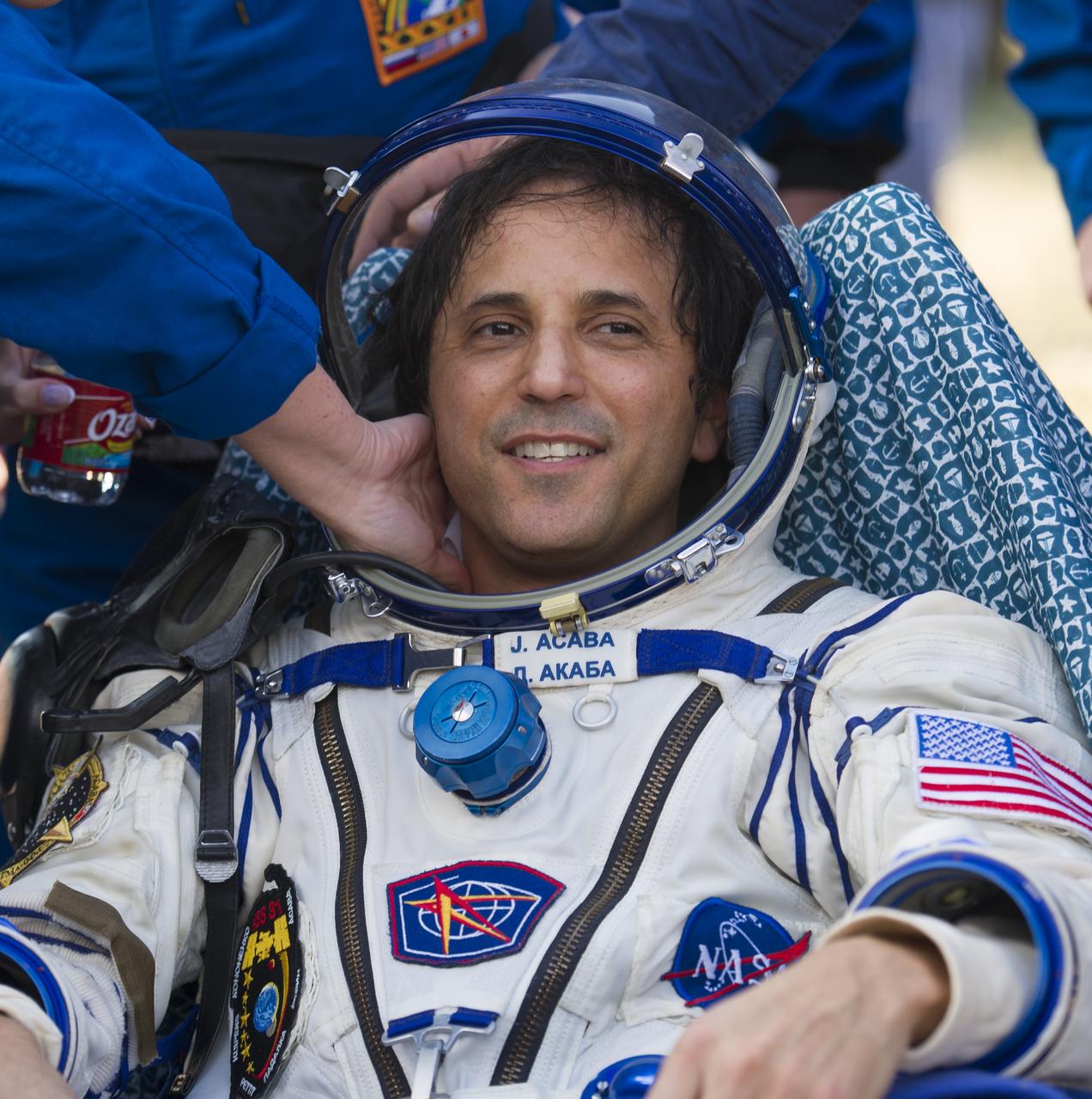
Expedition 32 NASA Flight Engineer Joe Acaba is seen as he rests outside the Soyuz TMA-04M capsule just minutes after he and Expedition 32 Soyuz Commander Gennady Padalka and Russian Flight Engineer Sergei Revin landed in a remote area outside of the town of Arkalyk, Kazakhstan, on Monday, Sept. 17, 2012. NASA Astronaut Acaba, Russian Cosmonauts Padalka and Revin are returning from five months onboard the International Space Station where they served as members of the Expedition 31 and 32 crews. Photo Credit: (NASA/Carla Cioffi)
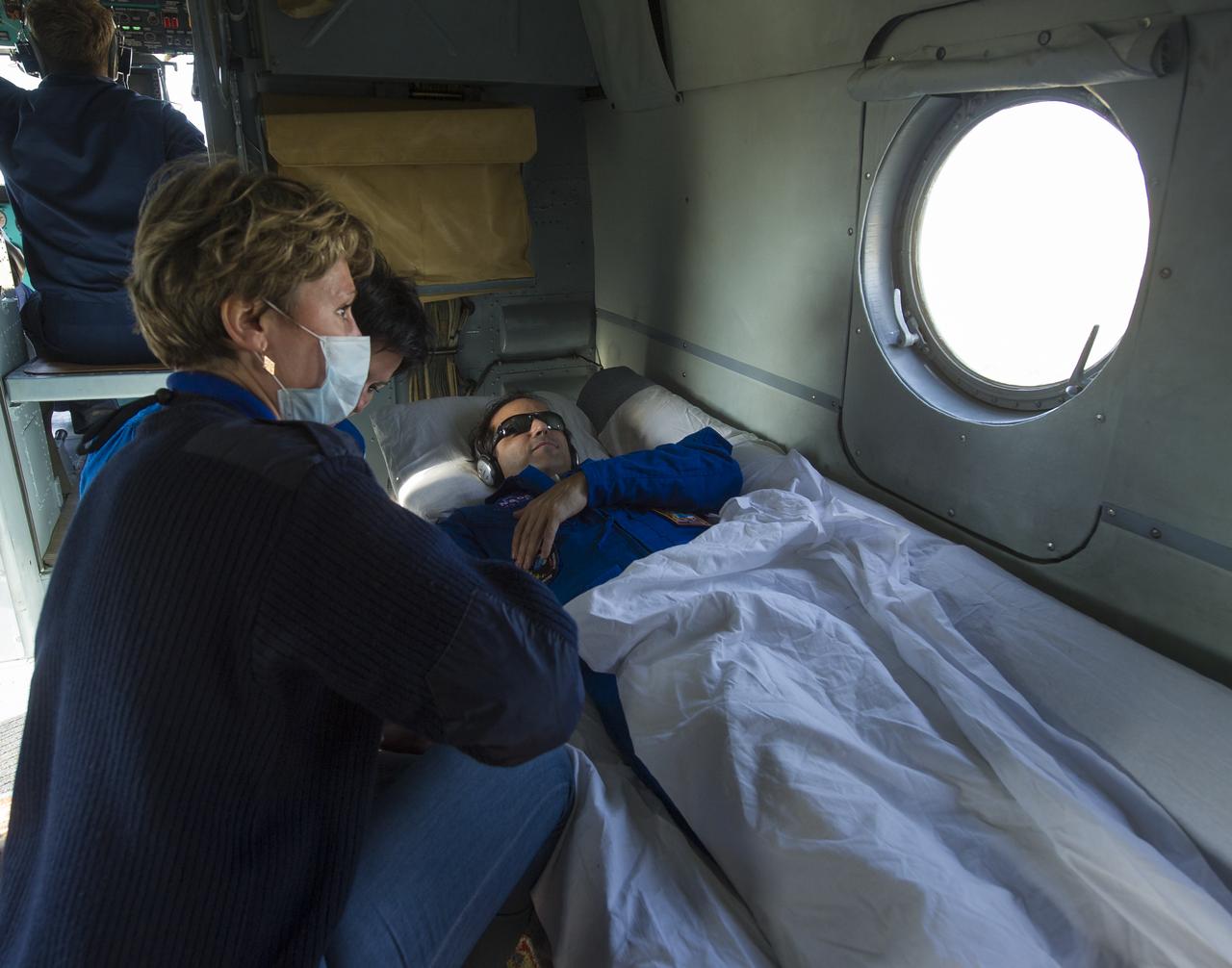
Expedition 32 NASA Flight Engineer Joe Acaba rests on the Russian Search and Rescue helicopter that is carrying him from the Soyuz TMA-04M landing site in a remote area outside Arkalyk, Kazakhstan to Kostanay, Kazakhstan shortly after he and Expedition 32 Commander Gennady Padalka and Flight Engineer Sergei Revin returned from the International Space Station on Monday, Sept. 17, 2012. Acaba, Padalka and Revin returned from five months onboard the International Space Station where they served as members of the Expedition 31 and 32 crews. Photo Credit: (NASA/Carla Cioffi)
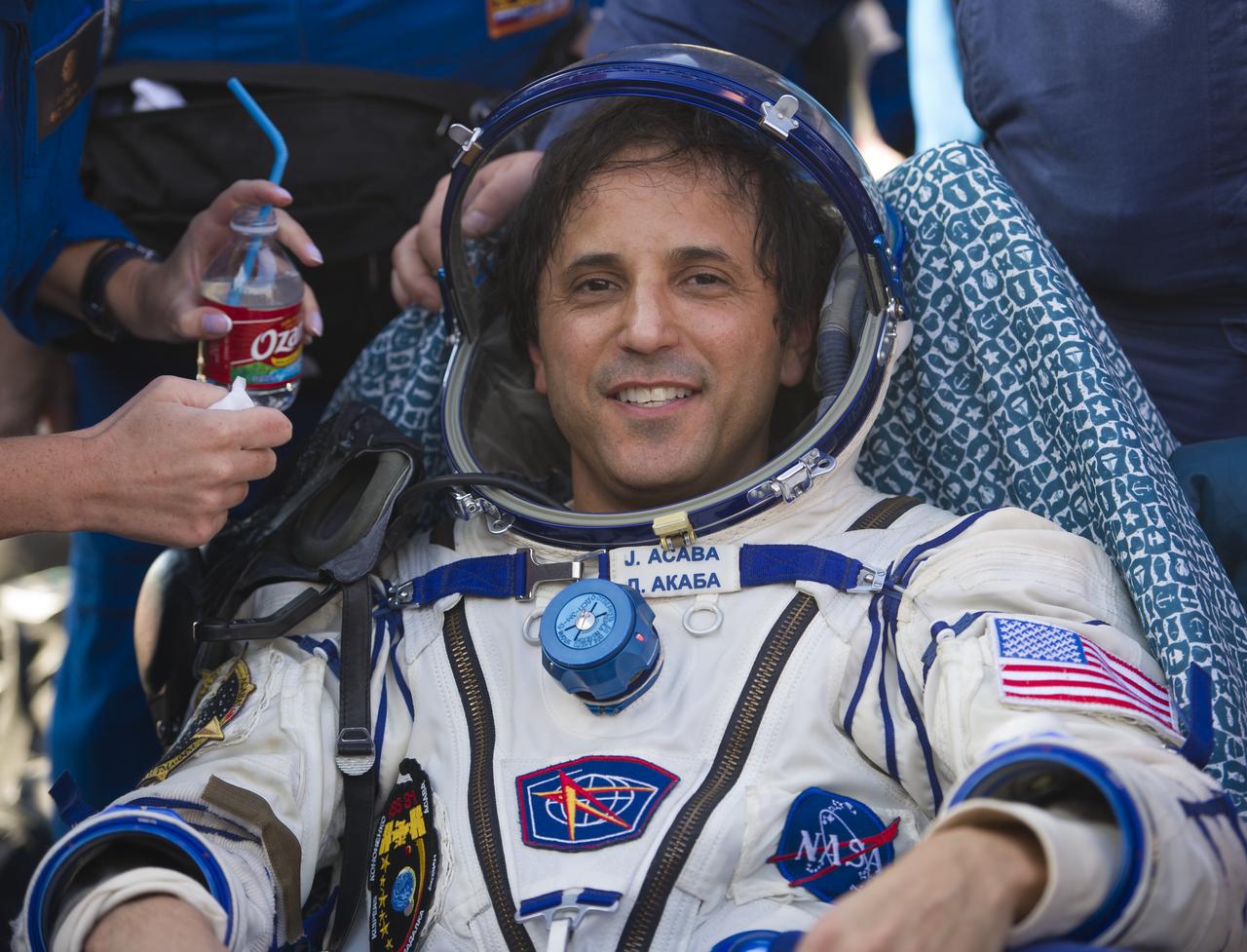
Expedition 32 NASA Flight Engineer Joe Acaba is seen as he rests outside the Soyuz TMA-04M capsule just minutes after he and Expedition 32 Soyuz Commander Gennady Padalka and Russian Flight Engineer Sergei Revin landed in a remote area outside of the town of Arkalyk, Kazakhstan, on Monday, Sept. 17, 2012. NASA Astronaut Acaba, Russian Cosmonauts Padalka and Revin are returning from five months onboard the International Space Station where they served as members of the Expedition 31 and 32 crews. Photo Credit: (NASA/Carla Cioffi)
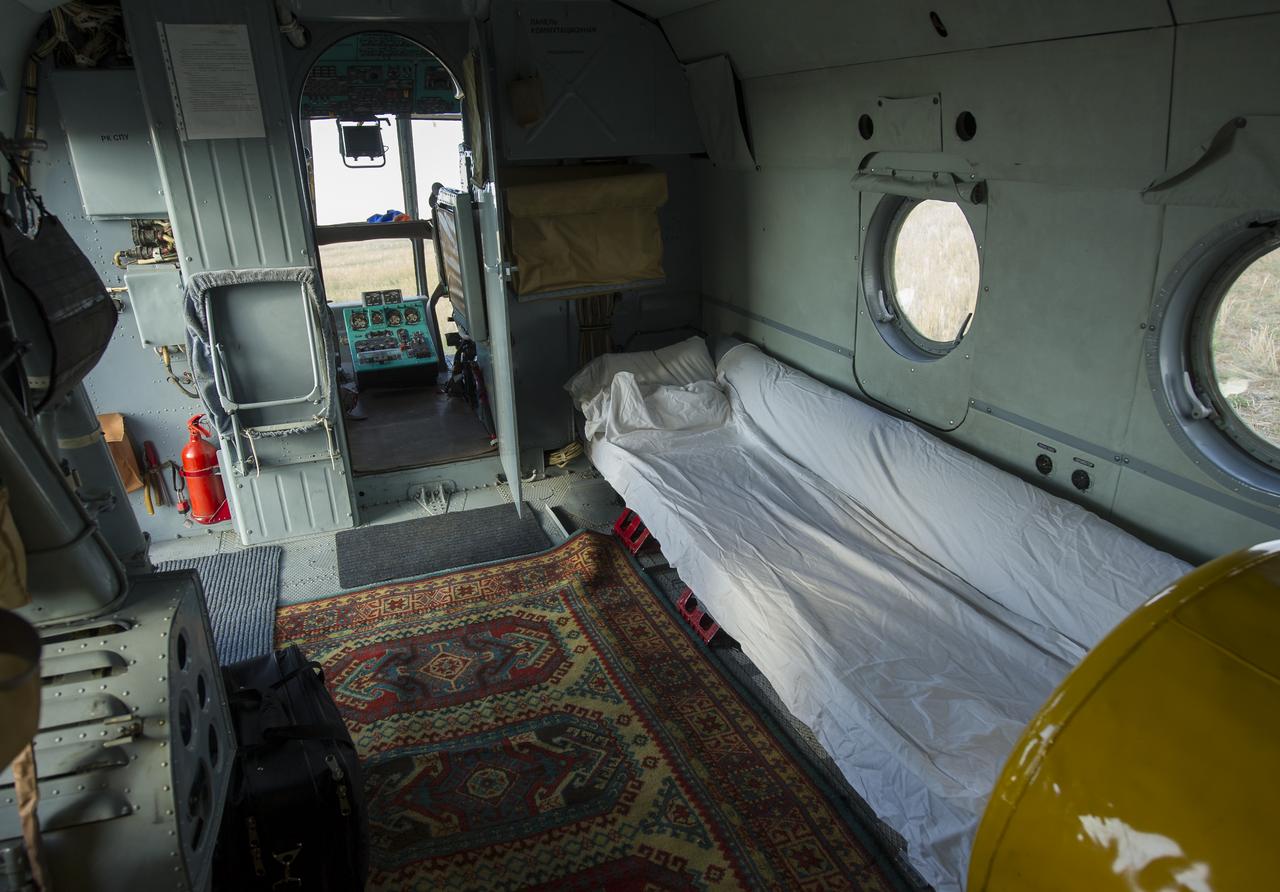
A view inside inside the Russian Search and Rescue helicopter that will carry Expedition 32 Flight Engineer Joe Acaba from the Soyuz TMA-04M landing site in a remote area outside Arkalyk, Kazakhstan to Kostanay, Kazakhstan shortly after he and Expedition 32 Commander Gennady Padalka and Flight Engineer Sergei Revin returned from the International Space Station on Monday, Sept. 17, 2012. Acaba, Padalka and Revin returned from five months onboard the International Space Station where they served as members of the Expedition 31 and 32 crews. Photo Credit: (NASA/Carla Cioffi)
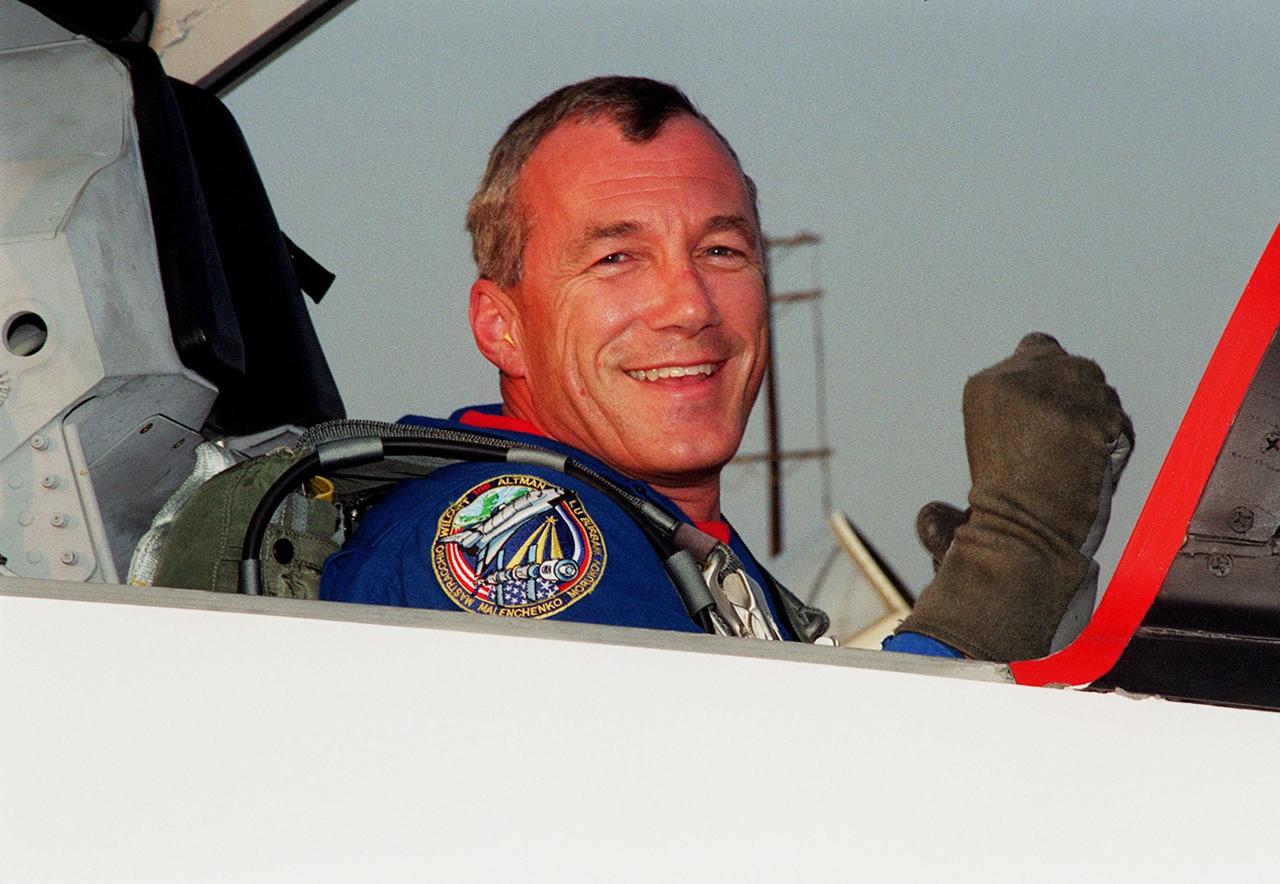
STS-106 Commander Terrence W. Wilcutt grins after landing at the KSC Shuttle Landing Facility aboard a T-38 jet aircraft. He and the rest of the crew will be taking part in Terminal Countdown Demonstration Test activities, which include emergency egress training and a simulated launch countdown. STS-106 is scheduled to launch Sept. 8, 2000, at 8:31 a.m. EDT from Launch Pad 39B. On the 11-day mission, the seven-member crew will perform support tasks on orbit, transfer supplies and prepare the living quarters in the newly arrived Zvezda Service Module. The first long-duration crew, dubbed “Expedition One,” is due to arrive at the Station in late fall
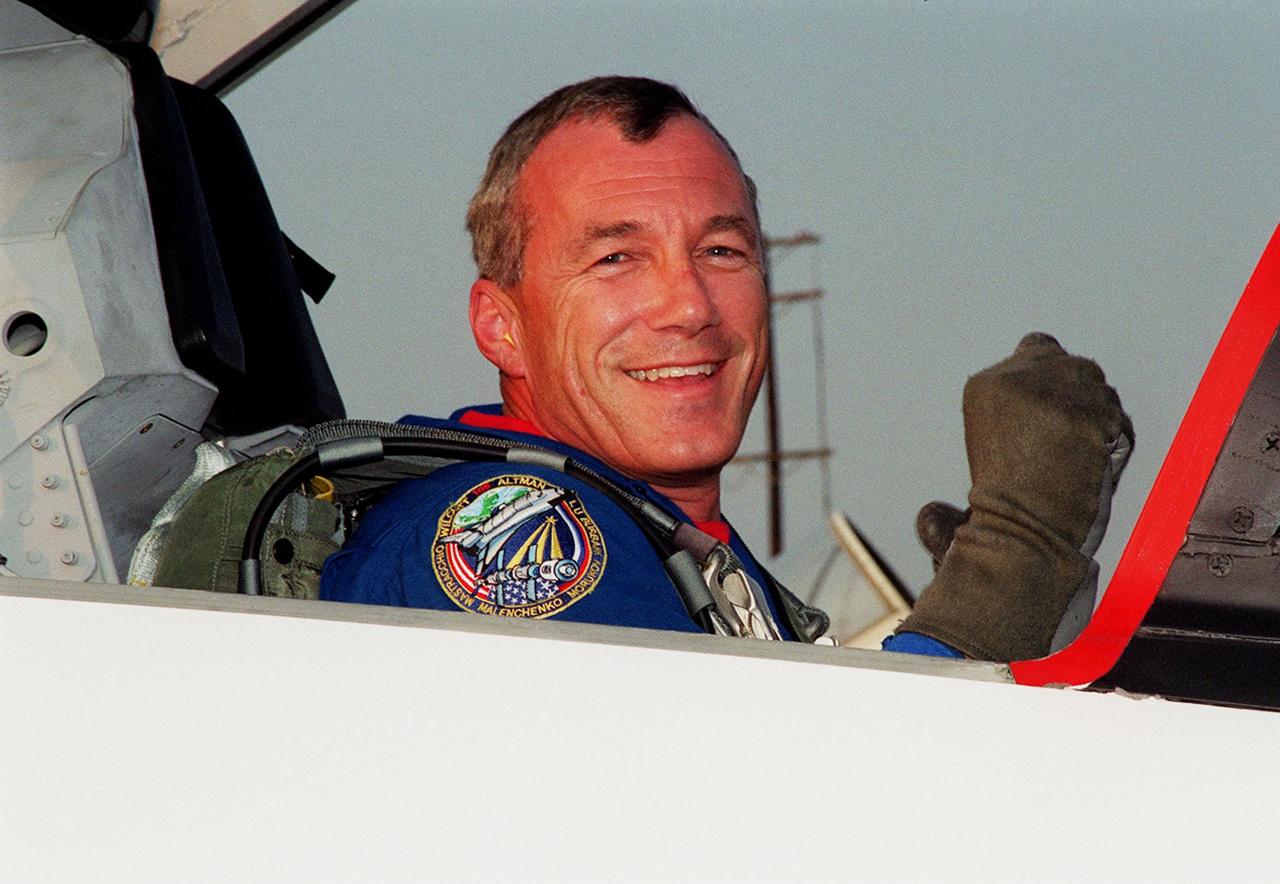
STS-106 Commander Terrence W. Wilcutt grins after landing at the KSC Shuttle Landing Facility aboard a T-38 jet aircraft. He and the rest of the crew will be taking part in Terminal Countdown Demonstration Test activities, which include emergency egress training and a simulated launch countdown. STS-106 is scheduled to launch Sept. 8, 2000, at 8:31 a.m. EDT from Launch Pad 39B. On the 11-day mission, the seven-member crew will perform support tasks on orbit, transfer supplies and prepare the living quarters in the newly arrived Zvezda Service Module. The first long-duration crew, dubbed “Expedition One,” is due to arrive at the Station in late fall
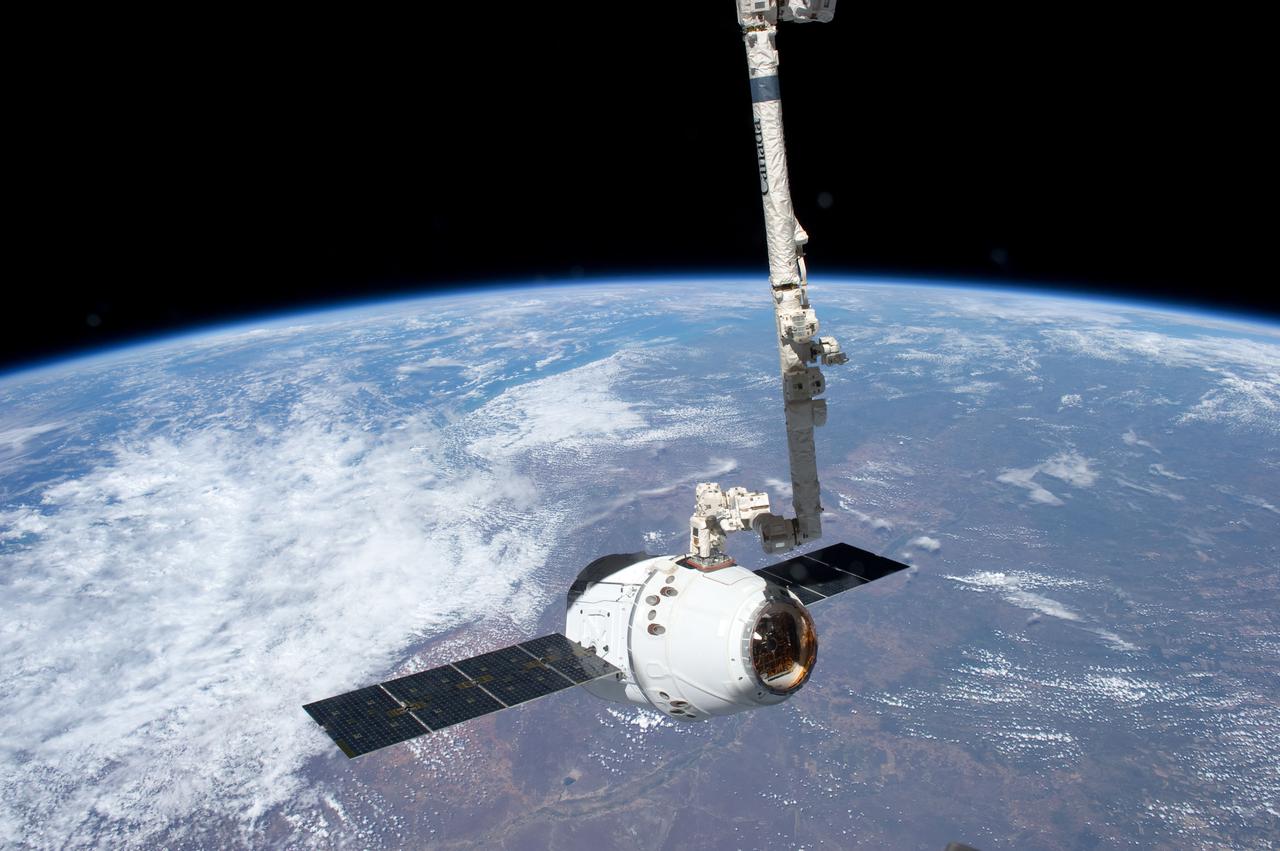
ISS031-E-070790 (25 May 2012) --- With clouds and land forming a backdrop, the SpaceX Dragon commercial cargo craft is grappled by the Canadarm2 robotic arm at the International Space Station. Expedition 31 Flight Engineers Don Pettit and Andre Kuipers grappled Dragon at 9:56 a.m. (EDT) and used the robotic arm to berth Dragon to the Earth-facing side of the station’s Harmony node at 12:02 p.m. May 25, 2012. Dragon became the first commercially developed space vehicle to be launched to the station to join Russian, European and Japanese resupply craft that service the complex while restoring a U.S. capability to deliver cargo to the orbital laboratory. Dragon is scheduled to spend about a week docked with the station before returning to Earth on May 31 for retrieval.
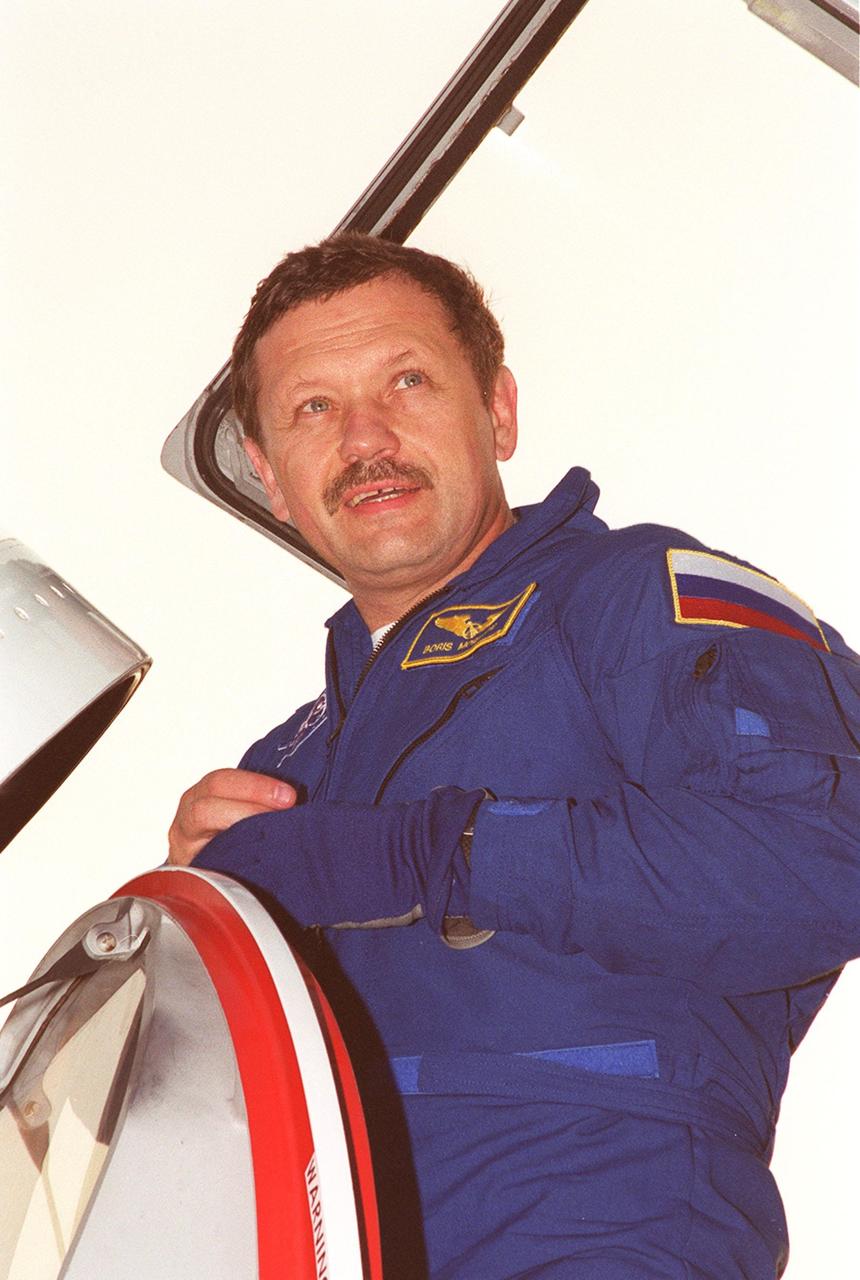
STS-106 Mission Specialist Boris V. Morukov, eager to start Terminal Countdown Demonstration Test (TCDT)activities, arrives at the KSC Shuttle Landing Facility aboard a T-38 jet aircraft. As part of TCDT, he and the rest of the crew will practice emergency egress from the Fixed Service Structure and driving the M113 armored carrier, plus take part in a dress rehearsal for launch with a simulated countdown. STS-106 is scheduled to launch Sept. 8, 2000, at 8:31 a.m. EDT from Launch Pad 39B. On the 11-day mission, the seven-member crew will perform support tasks on orbit, transfer supplies and prepare the living quarters in the newly arrived Zvezda Service Module. The first long-duration crew, dubbed “Expedition One,” is due to arrive at the Station in late fall
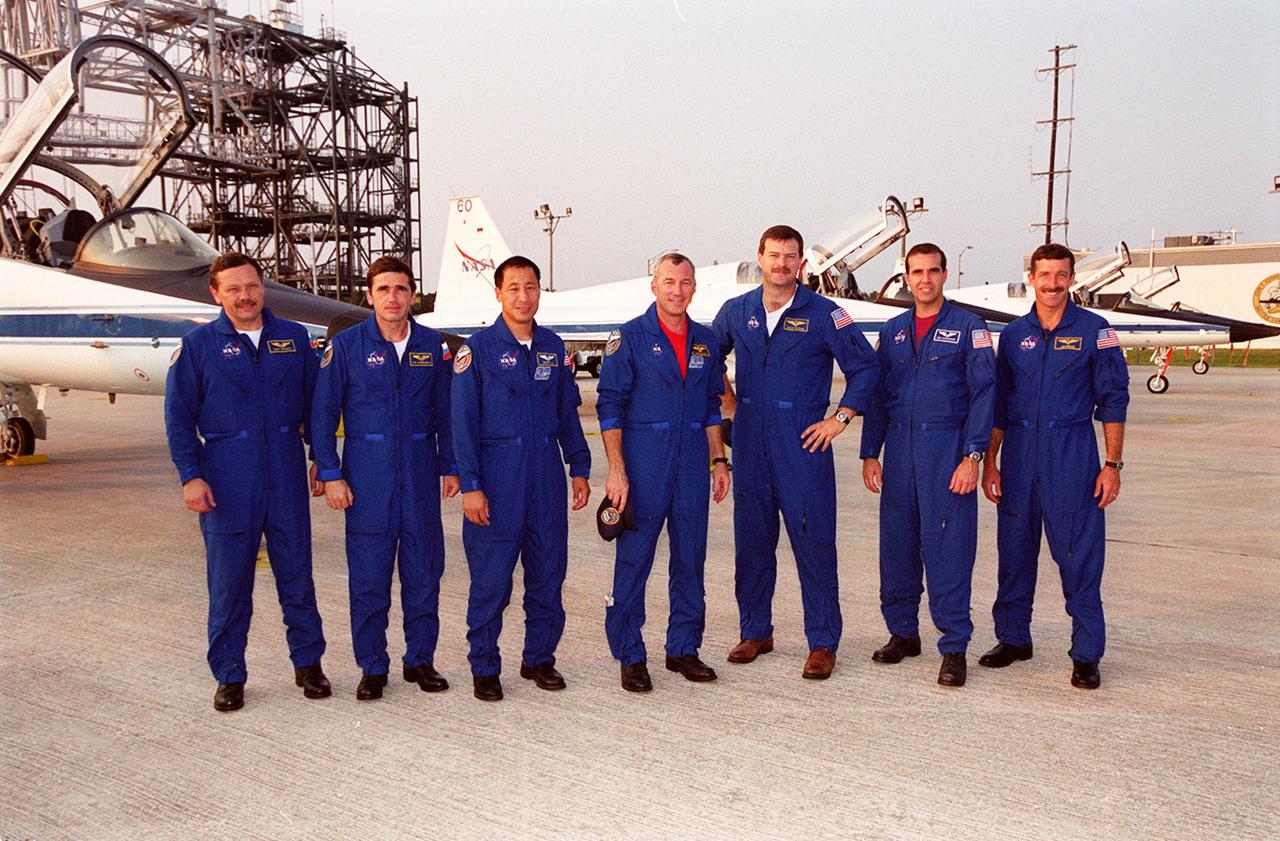
KENNEDY SPACE CENTER, FLA. -- The STS-106 crew members pose on the tarmac at KSC's Shuttle Landing Facility after their arrival aboard the T-38 jets behind them. From left are Mission Specialists Boris V. Morukov, Yuri I. Malenchenko and Edward T. Lu; Commander Terrence W. Wilcutt; Pilot Scott D. Altman; and Mission Specialists Richard A. Mastracchio and Daniel C. Burbank. They will be taking part in Terminal Countdown Demonstration Test activities, which include emergency egress training and a simulated launch countdown. STS-106 is scheduled to launch Sept. 8, 2000, at 8:31 a.m. EDT from Launch Pad 39B. On the 11-day mission, the seven-member crew will perform support tasks on orbit, transfer supplies and prepare the living quarters in the newly arrived Zvezda Service Module. The first long-duration crew, dubbed "Expedition One," is due to arrive at the Station in late fall.
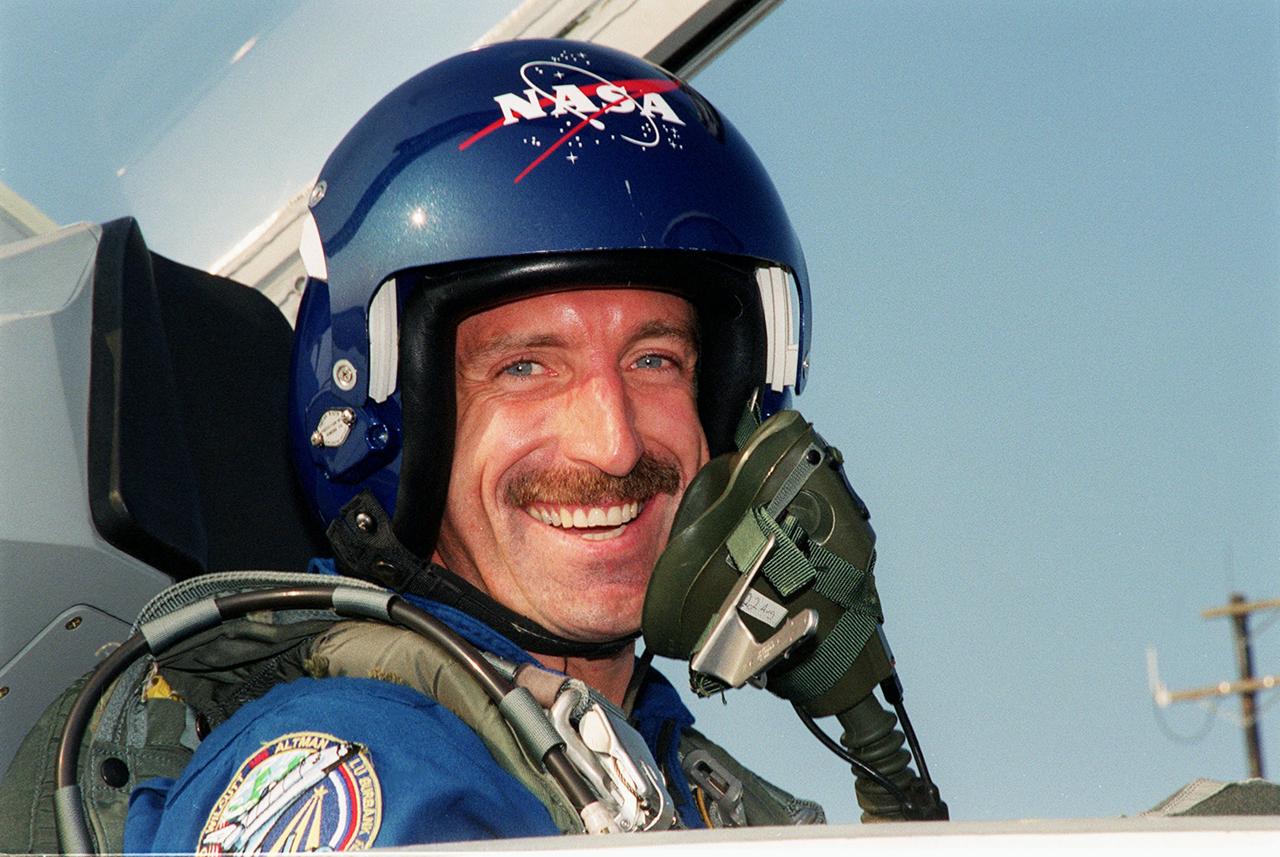
KENNEDY SPACE CENTER, FLA. -- STS-106 Mission Specialist Daniel C. Burbank grins as he arrives at the KSC Shuttle Landing Facility aboard a T-38 jet aircraft. He and the rest of the crew will be taking part in Terminal Countdown Demonstration Test activities, which include emergency egress training and a simulated launch countdown. STS-106 is scheduled to launch Sept. 8, 2000, at 8:31 a.m. EDT from Launch Pad 39B. On the 11-day mission, the seven-member crew will perform support tasks on orbit, transfer supplies and prepare the living quarters in the newly arrived Zvezda Service Module. The first long-duration crew, dubbed "Expedition One," is due to arrive at the Station in late fall.
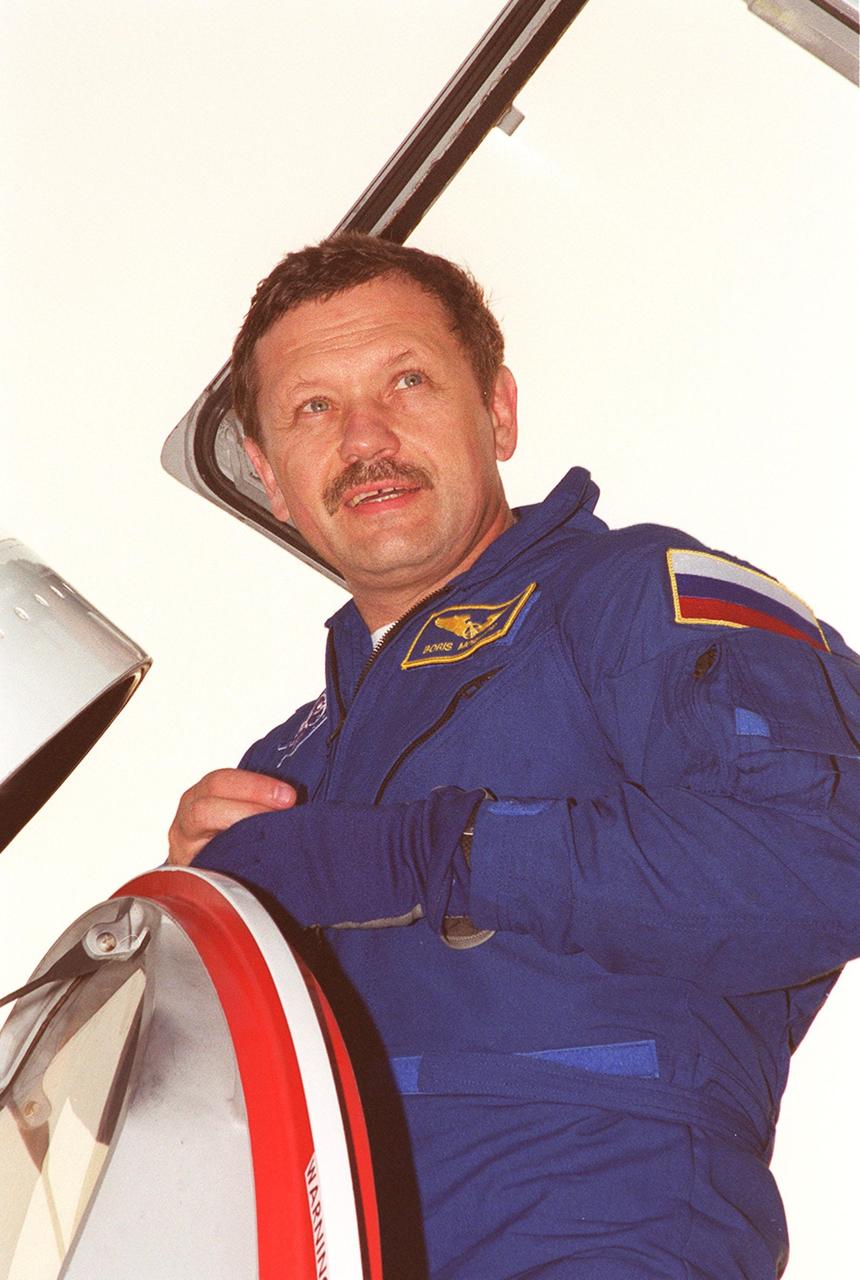
STS-106 Mission Specialist Boris V. Morukov, eager to start Terminal Countdown Demonstration Test (TCDT)activities, arrives at the KSC Shuttle Landing Facility aboard a T-38 jet aircraft. As part of TCDT, he and the rest of the crew will practice emergency egress from the Fixed Service Structure and driving the M113 armored carrier, plus take part in a dress rehearsal for launch with a simulated countdown. STS-106 is scheduled to launch Sept. 8, 2000, at 8:31 a.m. EDT from Launch Pad 39B. On the 11-day mission, the seven-member crew will perform support tasks on orbit, transfer supplies and prepare the living quarters in the newly arrived Zvezda Service Module. The first long-duration crew, dubbed “Expedition One,” is due to arrive at the Station in late fall
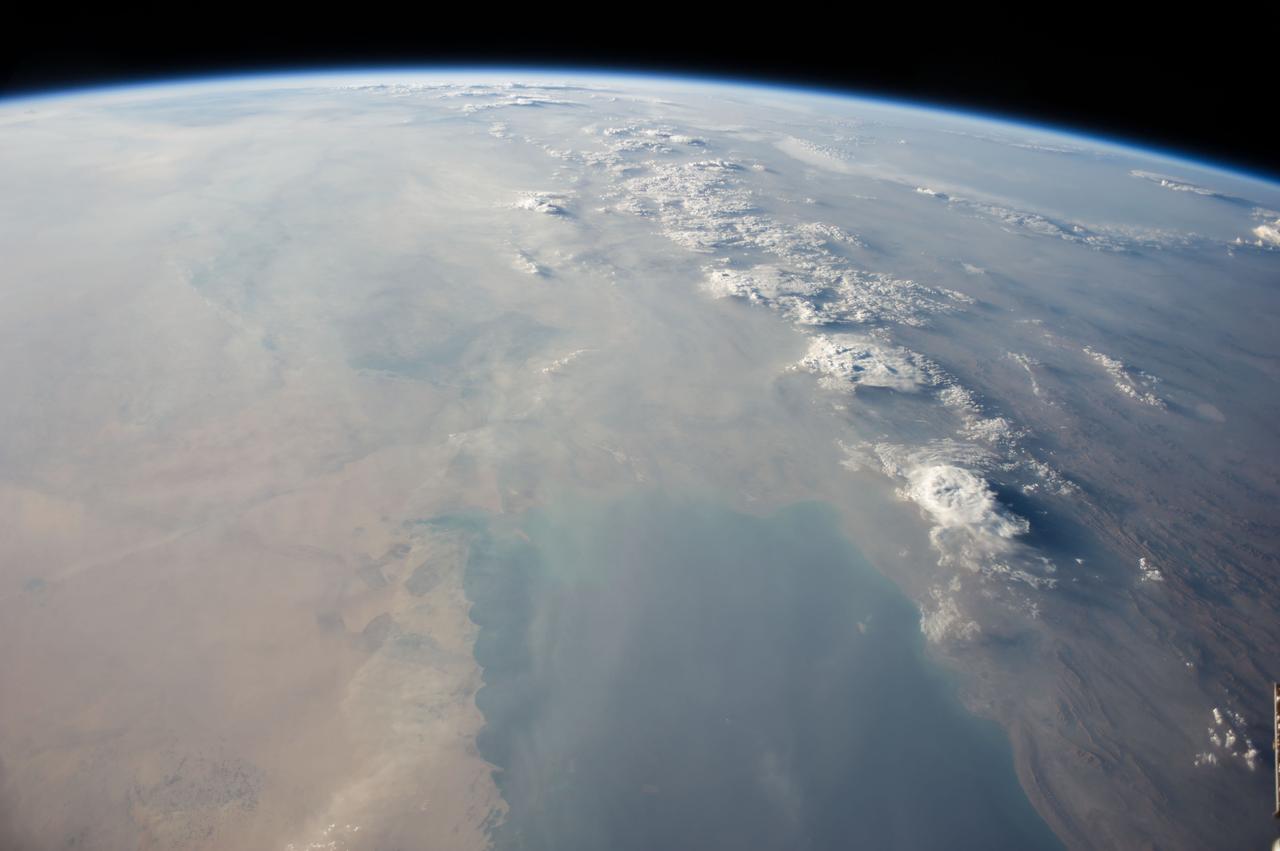
ISS040-E-113700 (31 Aug. 2014) --- This panorama view, photographed by an Expedition 40 crew member on the International Space Station, shows tan-colored dust of a major dust storm obscuring the Persian Gulf and the its northern shoreline. Strong north winds often blow in summer, churning up dust from the entire length of the desert surfaces of the Tigris and Euphrates valleys (top left). Dust partly obscures the hundreds of kilometers of Iraq’s light-green agricultural lands along these rivers (left). A line of thunderstorms is being set off by the Zagros Mountains of Iran (right), with the setting sun casting long shadows from the thunderheads. Space station crews see sixteen sunrises and sunsets every day from low Earth orbit. Here the crew captured dusk in a darkening Iranian landscape (right).
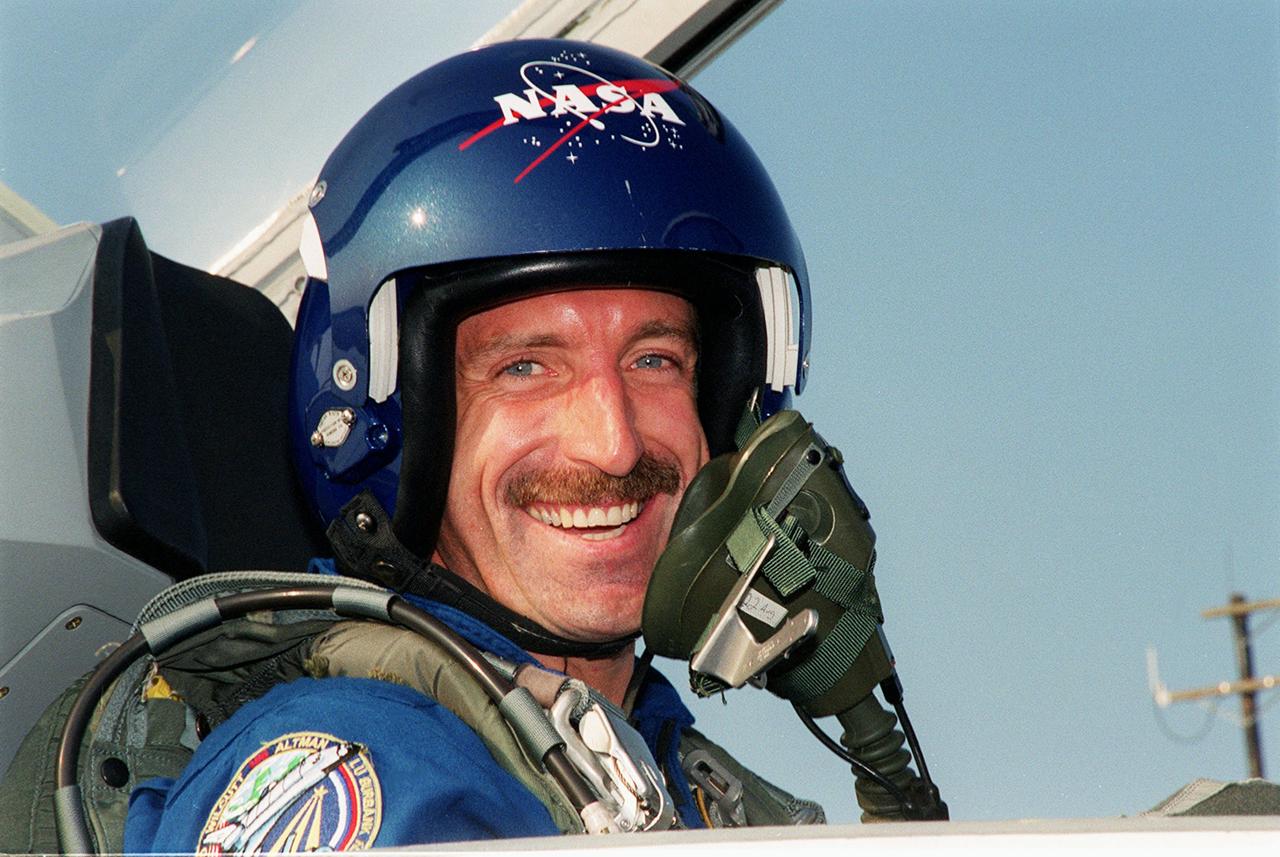
KENNEDY SPACE CENTER, FLA. -- STS-106 Mission Specialist Daniel C. Burbank grins as he arrives at the KSC Shuttle Landing Facility aboard a T-38 jet aircraft. He and the rest of the crew will be taking part in Terminal Countdown Demonstration Test activities, which include emergency egress training and a simulated launch countdown. STS-106 is scheduled to launch Sept. 8, 2000, at 8:31 a.m. EDT from Launch Pad 39B. On the 11-day mission, the seven-member crew will perform support tasks on orbit, transfer supplies and prepare the living quarters in the newly arrived Zvezda Service Module. The first long-duration crew, dubbed "Expedition One," is due to arrive at the Station in late fall.
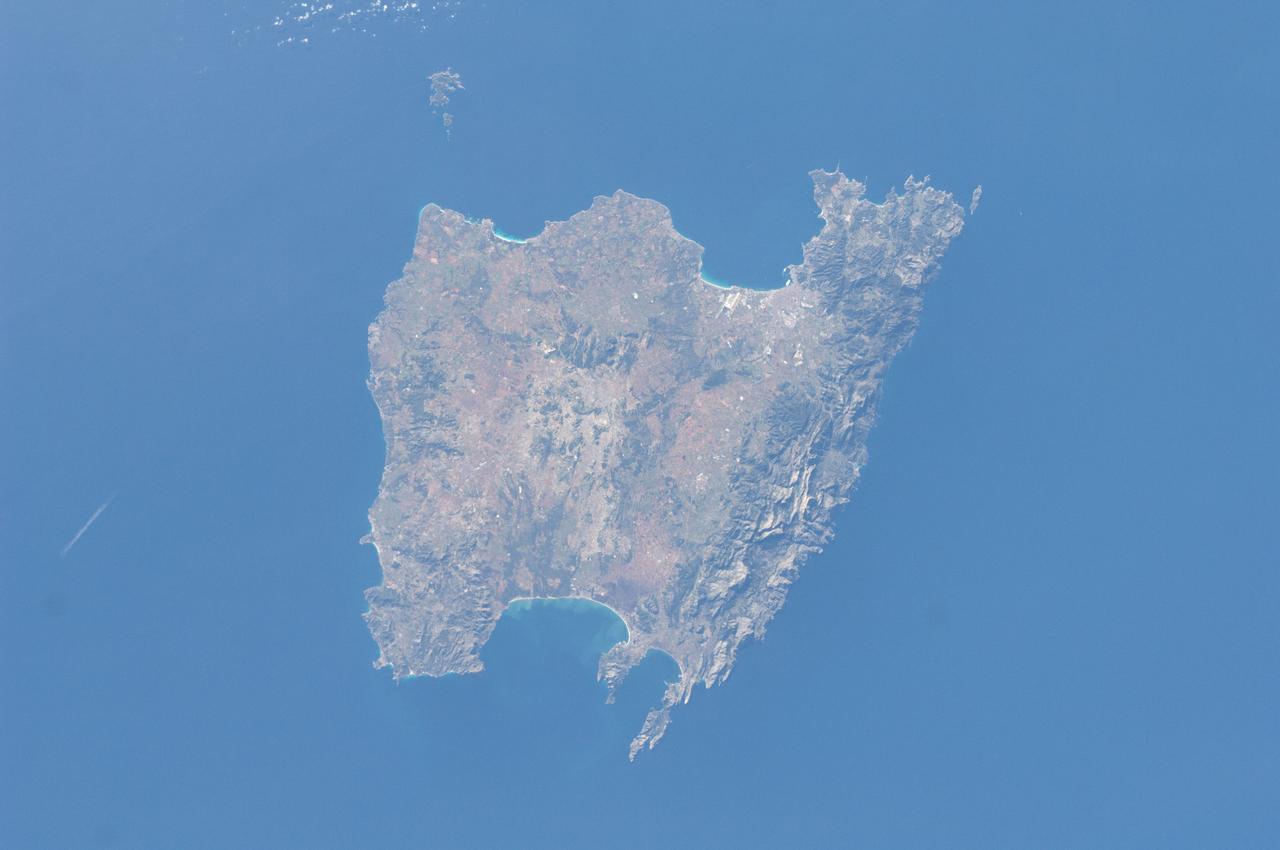
ISS030-E-030290 (31 Dec. 2011) --- Majorca in the Balearic Islands (Spain) is featured in this image photographed by an Expedition 30 crew member aboard the International Space Station. The Balearic Islands are an archipelago located to the southwest of Spain in the Mediterranean Sea. Catalan – the native tongue – and Spanish are the official languages. The islands are an autonomous community and province of Spain, located approximately midway between the southeastern coastline of Spain and the northern coastline of Algeria. This photograph highlights the large island of Majorca (approximately 5,400 square kilometers; also known as Mallorca in Spanish) on which the capital city of Palma is located (center). The small island of Cabrera to the southwest of Majorca (upper left) hosts the Parc Nacional de l’Arxipelag de Cabrera (site mainly in Spanish). Like the other Balearic Islands, Majorca is a popular holiday destination for the European community with tourism forming a major part of the island’s economy. The island’s physiography offers many recreational opportunities – mountainous regions are present along the northwest coastline and eastern third, while much of the central part of the island is flat. Diving is also a popular activity. The central region includes agricultural lands (tan, light brown, and green, center), forested patches and corridors (dark green, center), and urban centers (gray). In addition to Majorca, the other major islands of the archipelago include Ibiza, Formentera, and Minorca.
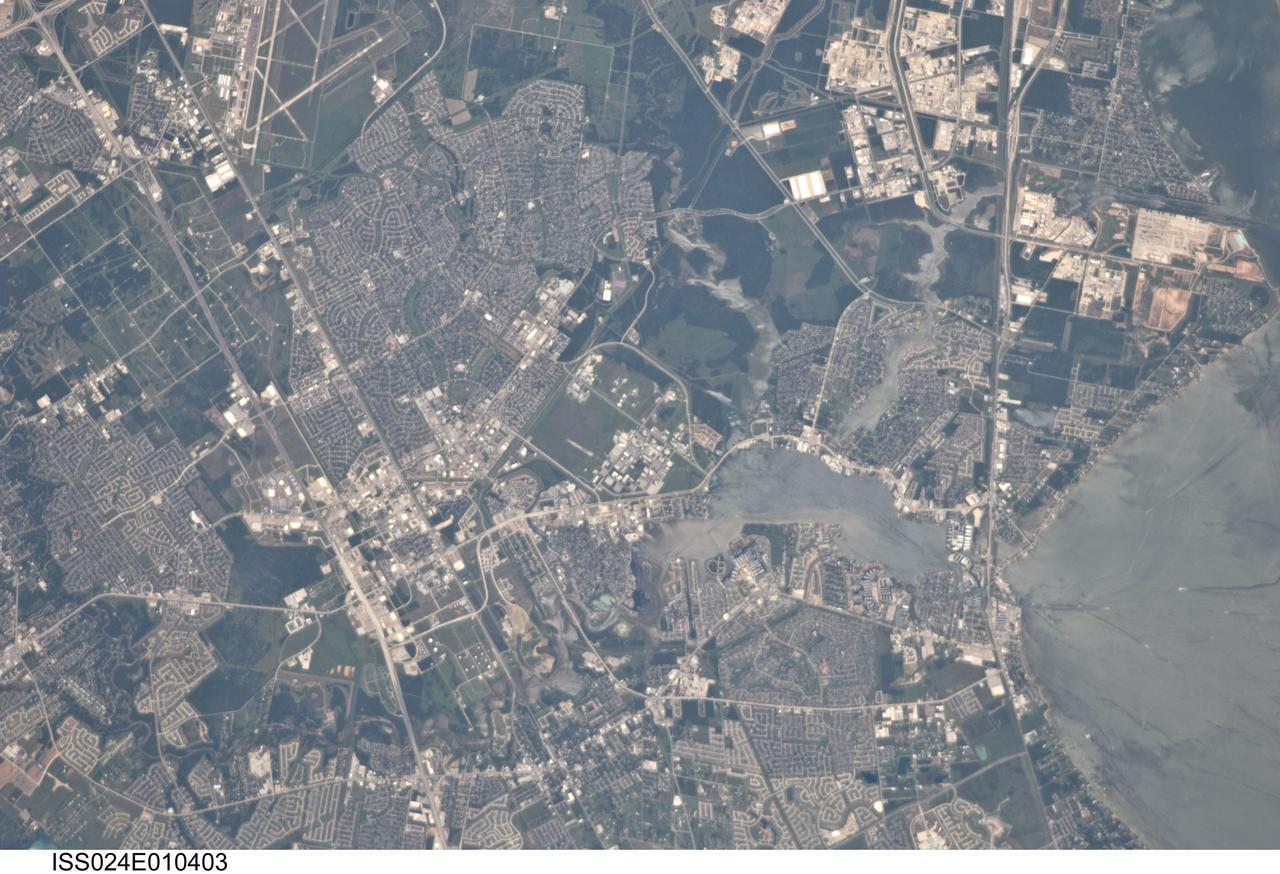
ISS024-E-010403 (31 July 2010) --- This detailed image ? photographed by an Expedition 24 crew member on the International Space Station (ISS) ? is centered on the NASA Lyndon B. Johnson Space Center (JSC), located in the southeastern Houston, TX metropolitan area. While initially being represented by a number of temporary locations in Houston, the facility was established in 1961 as the Manned Spacecraft Center and renamed in honor of the late U.S. President Johnson (a Texas native) in 1973. JSC serves as the lead NASA center for both astronaut training and mission control of manned spacecraft - such as the ISS and space shuttle - and has done so throughout the history of the U.S. manned space program. The Center also collaborates with other NASA and international partner facilities in a variety of scientific and engineering programs related to human spaceflight and planetary exploration. JSC is located approximately midway between downtown Houston and Galveston, TX, and is bordered by several smaller municipalities that form a mosaic of urban and suburban land use (grey areas with street grids, and commercial/industrial areas characterized by white rooftops). Large tracts of grassy fields and forests in the area (light to dark green respectively) include nature preserves, grazing lands, and flood control areas. Also visible at upper left is Ellington Field. This airport services a variety of NASA aircraft used for astronaut training, scientific, and cargo transport purposes. Clear Lake, an inlet of Galveston Bay, is located to the immediate southeast of JSC. Both Clear Lake and Galveston Bay appear silver-grey due to sunglint, or light reflected back towards the observer on the ISS that gives the water surface a mirror-like appearance. Several boat wakes are visible in Galveston Bay (right) due to disruption of the water surface that reduces the sunglint effect.
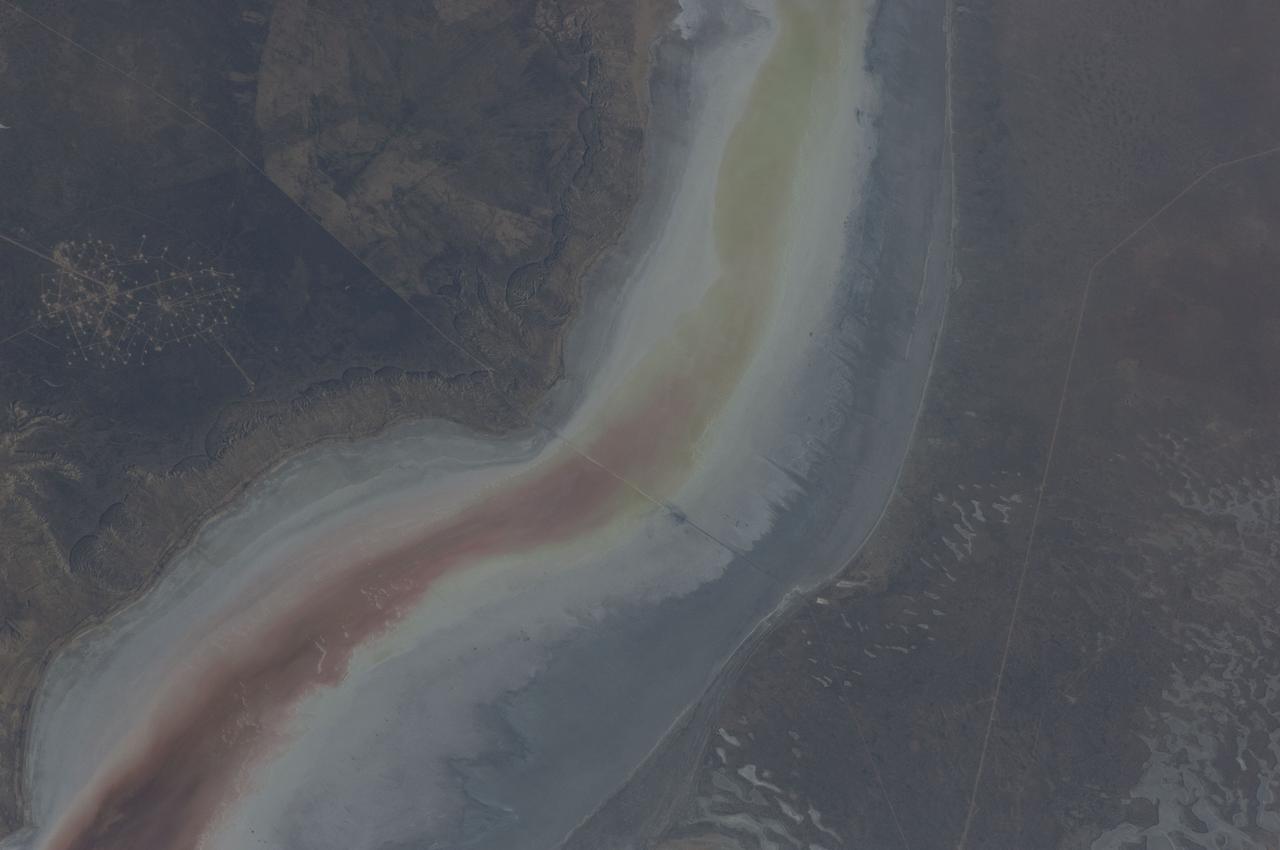
ISS031-E-030896 (11 May 2012) --- The Sor Kaydak near the northeast Caspian Sea in Kazakhstan are featured in this image photographed by an Expedition 31 crew member on the International Space Station. This striking image shows saline water of different colors in the Sor Kaydak, a salt marsh that leads into the northeast bulb of the Caspian Sea. The central 50 kilometers of this 180 kilometer-long depression is shown in this photograph. The Sor Kaydak depression is inundated on occasion by water from the Caspian Sea since it lies at the same elevation?that is, 29 meters below global sea level?though separated from the Sea by a low bar of land that is 1?2 meters high. The different colors of marsh water (brown to pink to light green, northeast to southwest) result from the interplay of water depth and resident organisms such as algae. Algae color varies depending on water temperature and salinity. The irregular gray areas at bottom right are wet zones between low sand dunes. These interdune flats are whitened with salt derived by evaporation of Caspian Sea water (the sea is just outside the image bottom right). The jagged line following the colored water (crossing the center of the image top to bottom) is the limit of the wetting zone (or perimeter), an irregular zone influenced by wind and the depth of water in the marsh. Small cliffs can be seen marking the east margin of the depression that contains Sor Kaydak. Above the cliffs a plateau surface (approximately 200 meters above the salt marsh, approximately 160 meters above global sea level) extends eastward for hundreds of kilometers. Here the plateau is occupied by a dense pattern of well heads which appear as a geometric pattern of tan dots. By contrast, the west margin (right) rises less than 10 meters above the marsh altitude. The straight line visible at center is a pipeline built across the salt marsh which takes oil to a terminal on the Caspian shore 100 kilometers northwest of the area shown here.