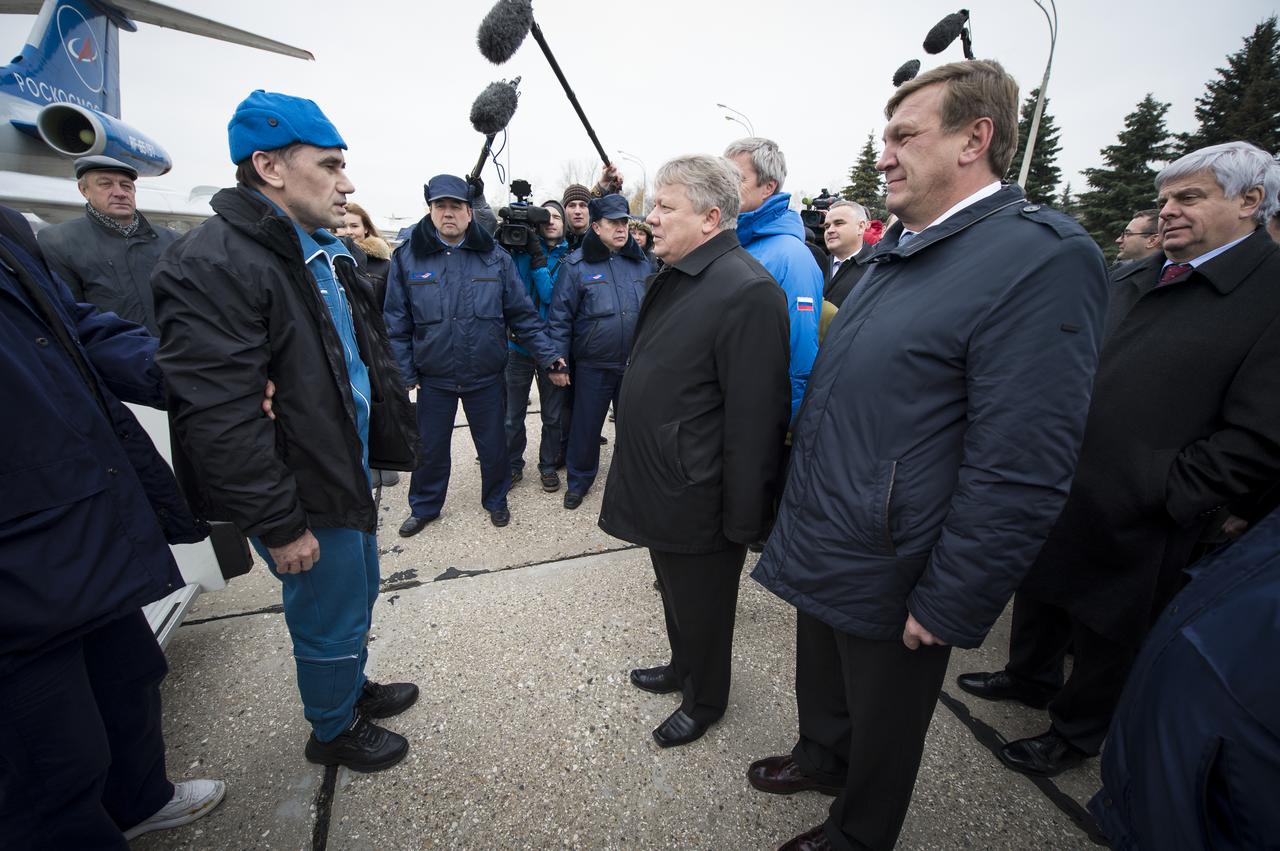
Expedition 33 flight engineer Yuri Malenchenko, left, is welcomed home upon his arrival in Star City, Monday, Nov. 19, 2012 in Russia. Malenchenko, Expedition 33 Commander Sunita Williams and JAXA flight engineer Akihiko Hoshide landed in their Soyuz TMA-05M earlier that day in a remote area outside of Arkalyk, Kazakhstan. They returned home from four months onboard the International Space Station where they served as members of the Expedition 32 and 33 crews. Photo Credit: (NASA/Bill Ingalls)

Girls in traditional Kazakh dress smile after welcoming home Expedition 33 crew members; Commander Sunita Williams of NASA, and Flight Engineers Yuri Malenchenko of ROSCOSMOS (Russian Federal Space Agency), and Akihiko Hoshide of JAXA (Japan Aerospace Exploration Agency) at the Kustanay Airport in Kazakhstan a few hours after the Expedition 33 crew landed their Soyuz spacecraft in a remote area outside the town of Arkalyk, Kazakhstan, on Monday, Nov. 19, 2012. Williams, Hoshide and Malenchenko returned from four months onboard the International Space Station. Photo Credit: (NASA/Bill Ingalls)
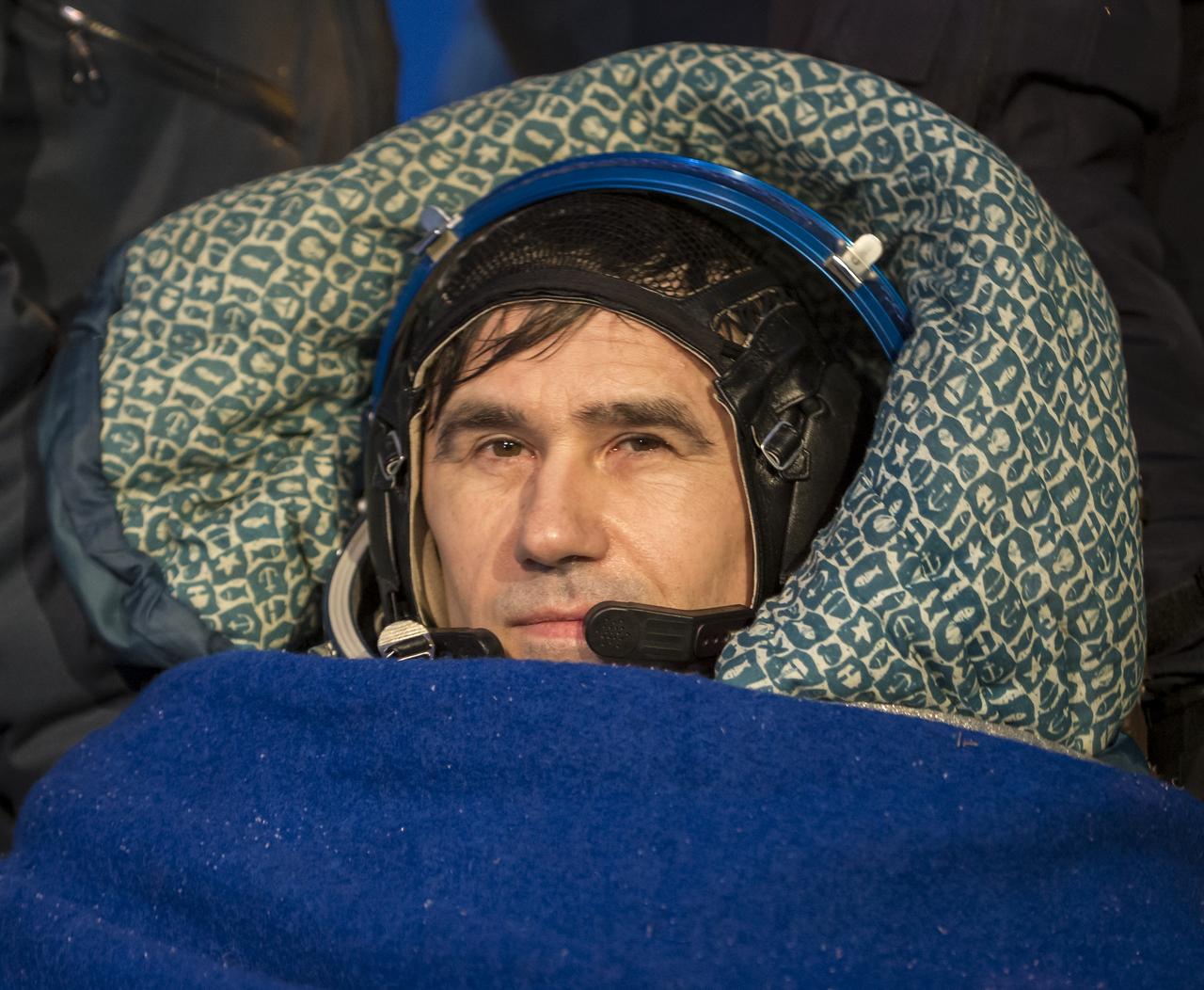
Expedition 33 Flight Engineer Yuri Malenchenko of ROSCOSMOS (Russian Federal Space Agency) rest in a chair outside the Soyuz Capsule after he and Commander Sunita Williams of NASA, and Flight Engineer Akihiko Hoshide of JAXA (Japan Aerospace Exploration Agency), landed their Soyuz spacecraft in a remote area outside the town of Arkalyk, Kazakhstan, on Monday, Nov. 19, 2012. Williams, Hoshide and Malenchenko returned from four months onboard the International Space Station. Photo Credit: (NASA/Bill Ingalls)
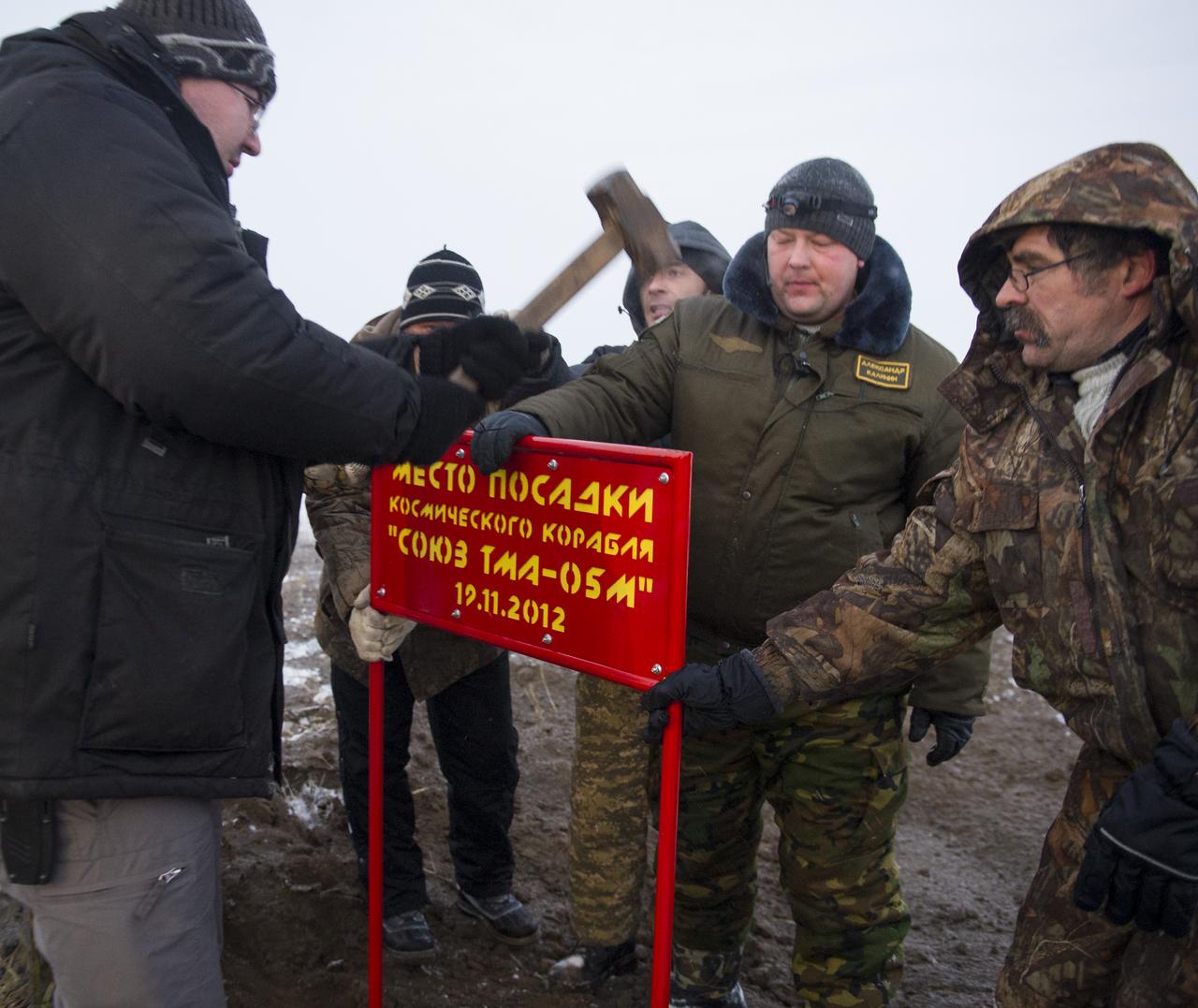
Workers place a marker where the Soyuz TMA-05M spacecraft landed with Expedition 33 Commander Sunita Williams of NASA and Flight Engineers Akihiko Hoshide of JAXA (Japan Aerospace Exploration Agency), and Yuri Malenchenko of ROSCOSMOS (Russian Federal Space Agency) in a remote area near the town of Arkalyk, Kazakhstan, on Monday, Nov. 19, 2012. Williams, Hoshide and Malenchenko returned from four months onboard the International Space Station. Photo Credit: (NASA/GCTC/Andrey Shelepin)
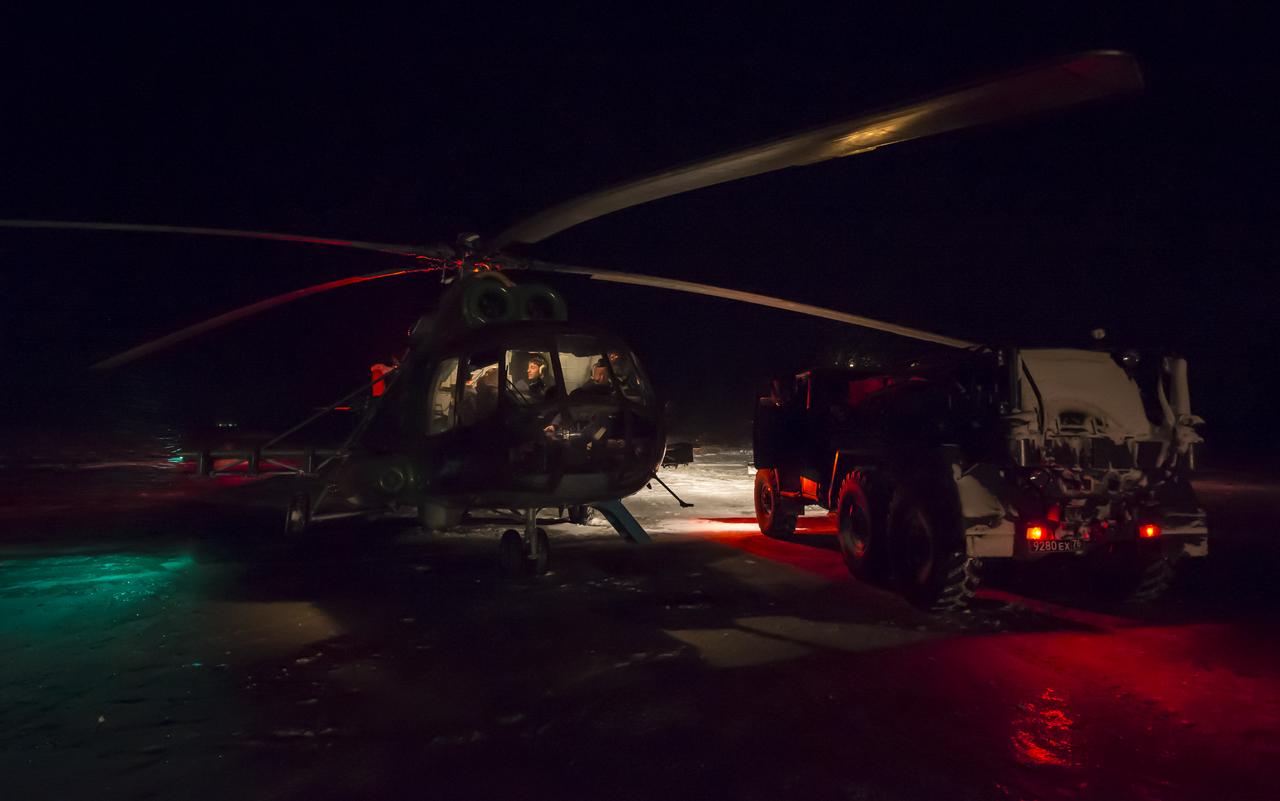
A Russian Search and Rescue helicopter is prepared to take off in support of the Soyuz landing of Expedition 33 Commander Sunita Williams of NASA and Flight Engineers Akihiko Hoshide of JAXA (Japan Aerospace Exploration Agency), and Yuri Malenchenko of ROSCOSMOS (Russian Federal Space Agency) near the town of Arkalyk, Kazakhstan, on Monday, Nov. 19, 2012. Williams, Hoshide and Malenchenko returned from four months onboard the International Space Station. Photo Credit: (NASA/Bill Ingalls)
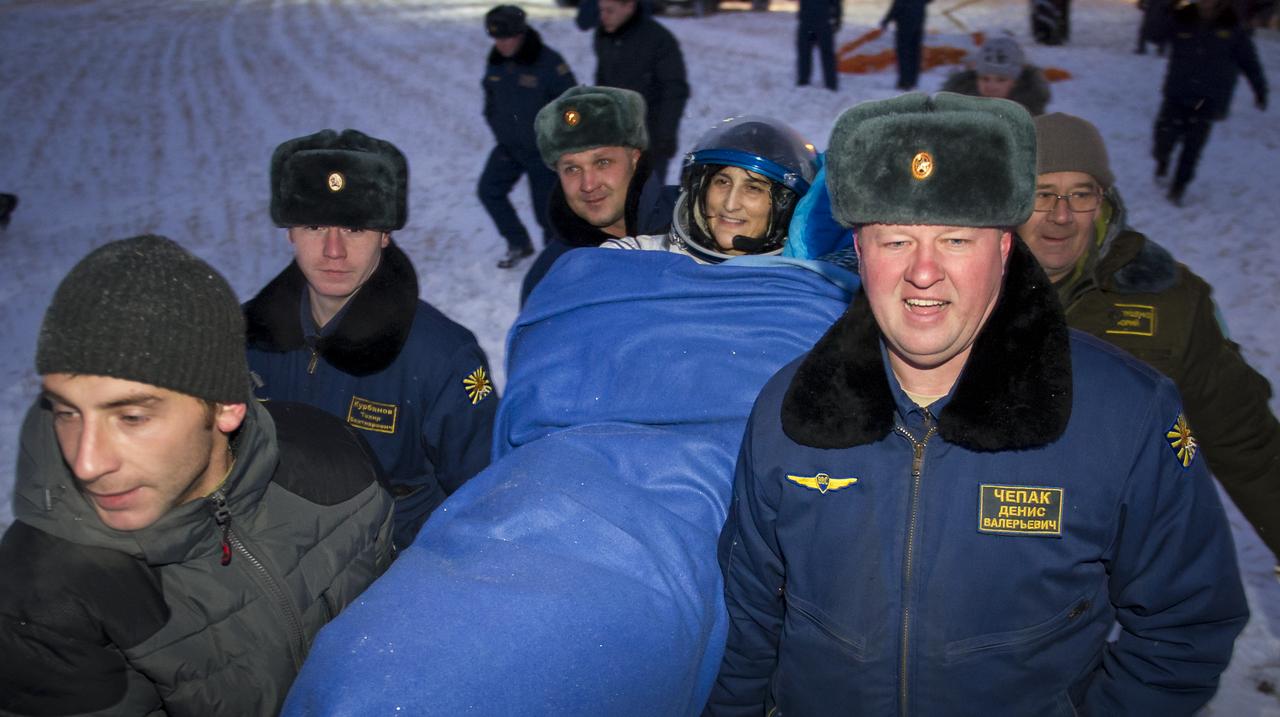
Expedition 33 Commander Sunita Williams of NASA is carried to a medical tent shortly after she and Flight Engineers Yuri Malenchenko of ROSCOSMOS (Russian Federal Space Agency), and Akihiko Hoshide of JAXA (Japan Aerospace Exploration Agency), landed their Soyuz spacecraft in a remote area outside the town of Arkalyk, Kazakhstan, on Monday, Nov. 19, 2012. Williams, Hoshide and Malenchenko returned from four months onboard the International Space Station. Photo Credit: (NASA/Bill Ingalls)
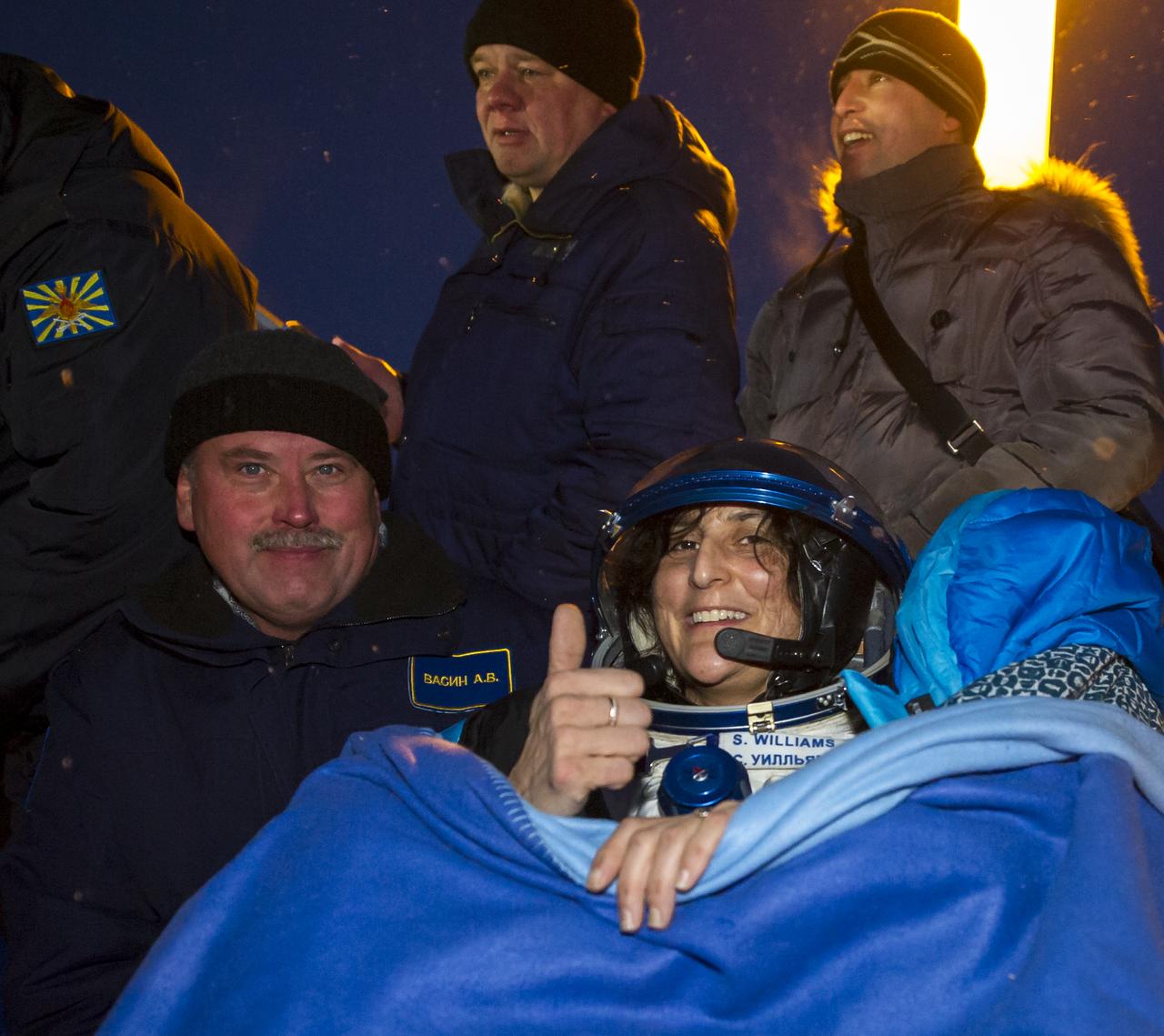
Expedition 33 Commander Sunita Williams of NASA smiles and gives a thumbs up in a chair outside the Soyuz Capsule after she and Flight Engineers Yuri Malenchenko of ROSCOSMOS (Russian Federal Space Agency), and Akihiko Hoshide of JAXA (Japan Aerospace Exploration Agency), landed their Soyuz spacecraft in a remote area outside the town of Arkalyk, Kazakhstan, on Monday, Nov. 19, 2012. Williams, Hoshide and Malenchenko returned from four months onboard the International Space Station. Photo Credit: (NASA/GCTC/Andrey Shelepin)
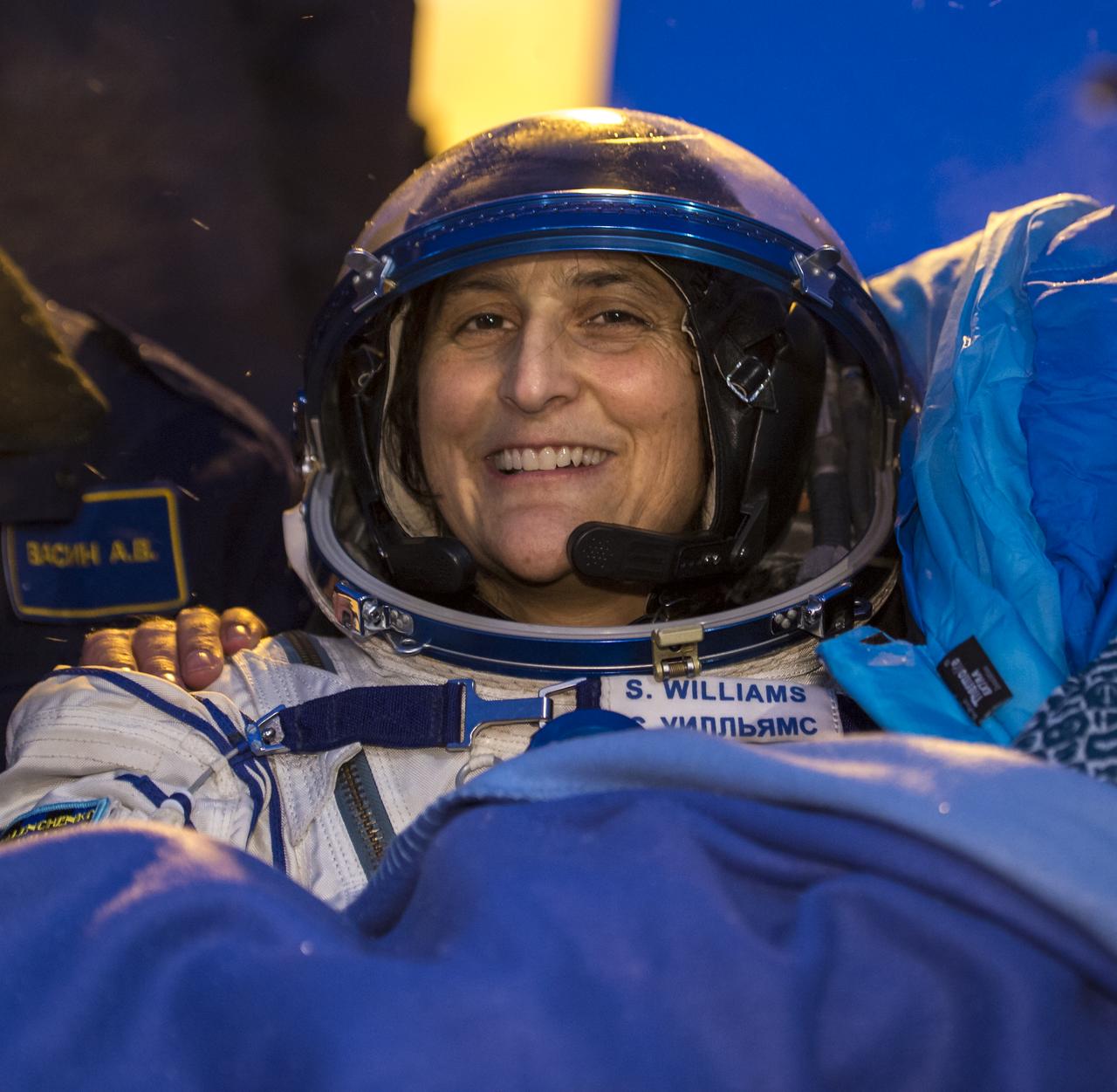
Expedition 33 Commander Sunita Williams of NASA smiles as she rest in a chair outside the Soyuz Capsule after she and Flight Engineers Yuri Malenchenko of ROSCOSMOS (Russian Federal Space Agency), and Akihiko Hoshide of JAXA (Japan Aerospace Exploration Agency), landed their Soyuz spacecraft in a remote area outside the town of Arkalyk, Kazakhstan, on Monday, Nov. 19, 2012. Williams, Hoshide and Malenchenko returned from four months onboard the International Space Station. Photo Credit: (NASA/Bill Ingalls)
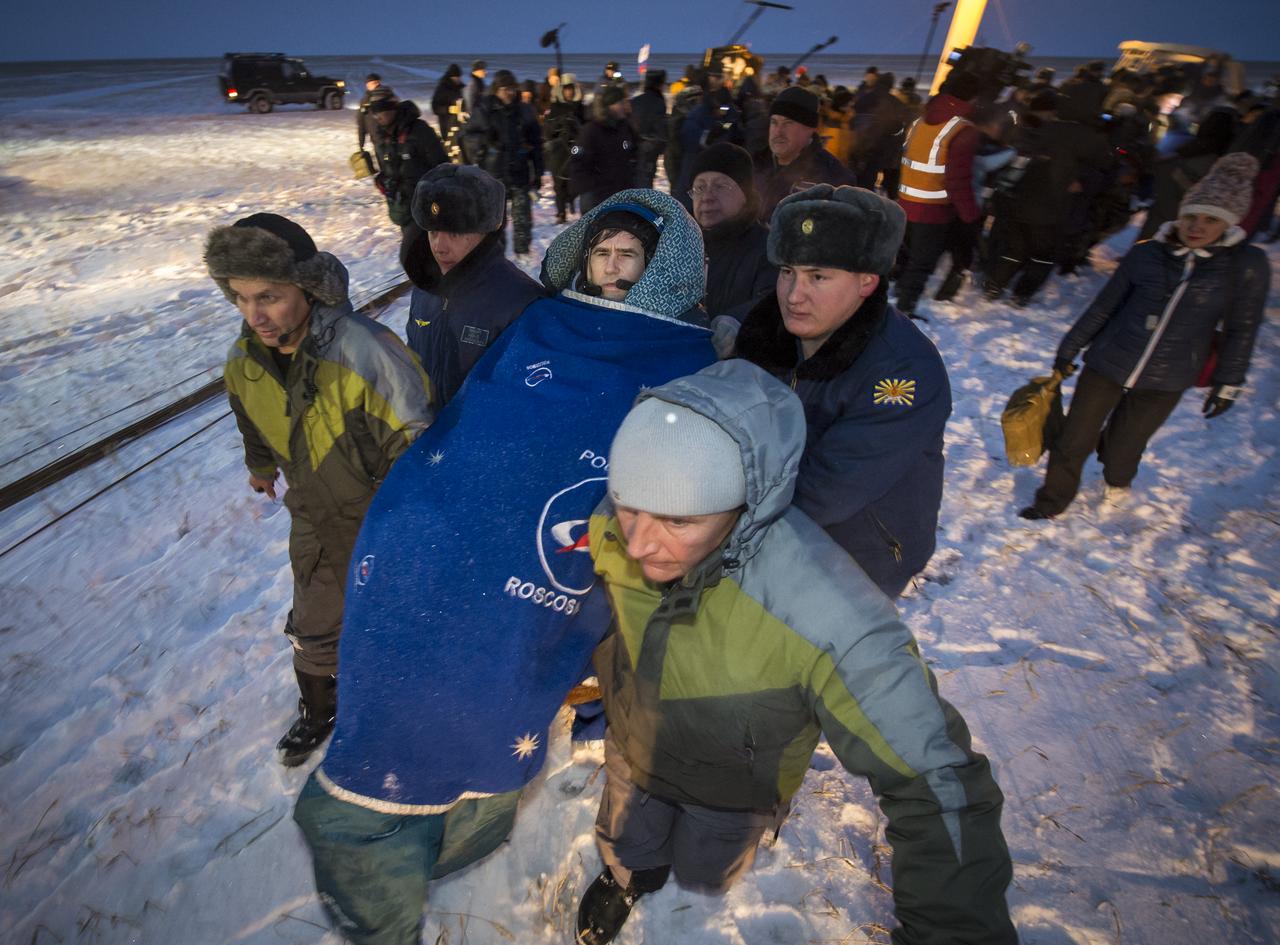
Expedition 33 Flight Engineer Yuri Malenchenko of ROSCOSMOS (Russian Federal Space Agency) is carried to a medical tent shortly after he and Commander Sunita Williams of NASA, and Flight Engineer Akihiko Hoshide of JAXA (Japan Aerospace Exploration Agency), landed their Soyuz spacecraft in a remote area outside the town of Arkalyk, Kazakhstan, on Monday, Nov. 19, 2012. Williams, Hoshide and Malenchenko returned from four months onboard the International Space Station. Photo Credit: (NASA/Bill Ingalls)

View of a Russian Search and Rescue helicopter as seen from another helicopter as they land at the Kustanay Airport in Kazakhstan with Expedition 33 crew members Commander Sunita Williams of NASA and Flight Engineers Akihiko Hoshide of JAXA (Japan Aerospace Exploration Agency), and Yuri Malenchenko of ROSCOSMOS (Russian Federal Space Agency) a few hours after the crew of three landed their Soyuz Capsule in a remote area near the town of Arkalyk, Kazakhstan, on Monday, Nov. 19, 2012. Williams, Hoshide and Malenchenko returned from four months onboard the International Space Station. Photo Credit: (NASA/Bill Ingalls)
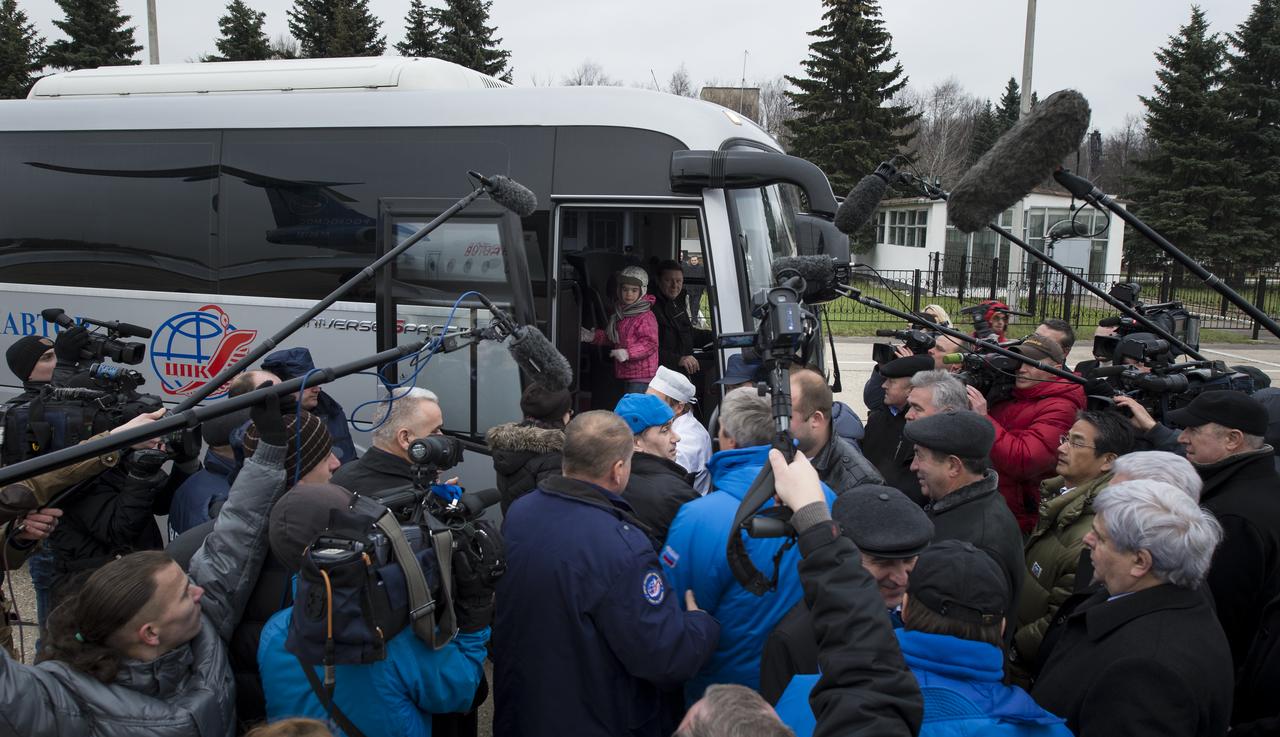
Crowds of officials, family and media gather as Expedition 33 Flight Engineer Yuri Malenchenko of ROSCOSMOS (Russian Federal Space Agency) is welcomed home at the Chkalovsky Airport in Star City, Russia several hours after he, Commander Sunita Williams of NASA, and Flight Engineer Akihiko Hoshide of JAXA (Japan Aerospace Exploration Agency), landed their Soyuz spacecraft in a remote area outside the town of Arkalyk, Kazakhstan, on Monday, Nov. 19, 2012. Williams, Hoshide and Malenchenko returned from four months onboard the International Space Station. Photo Credit: (NASA/Bill Ingalls)
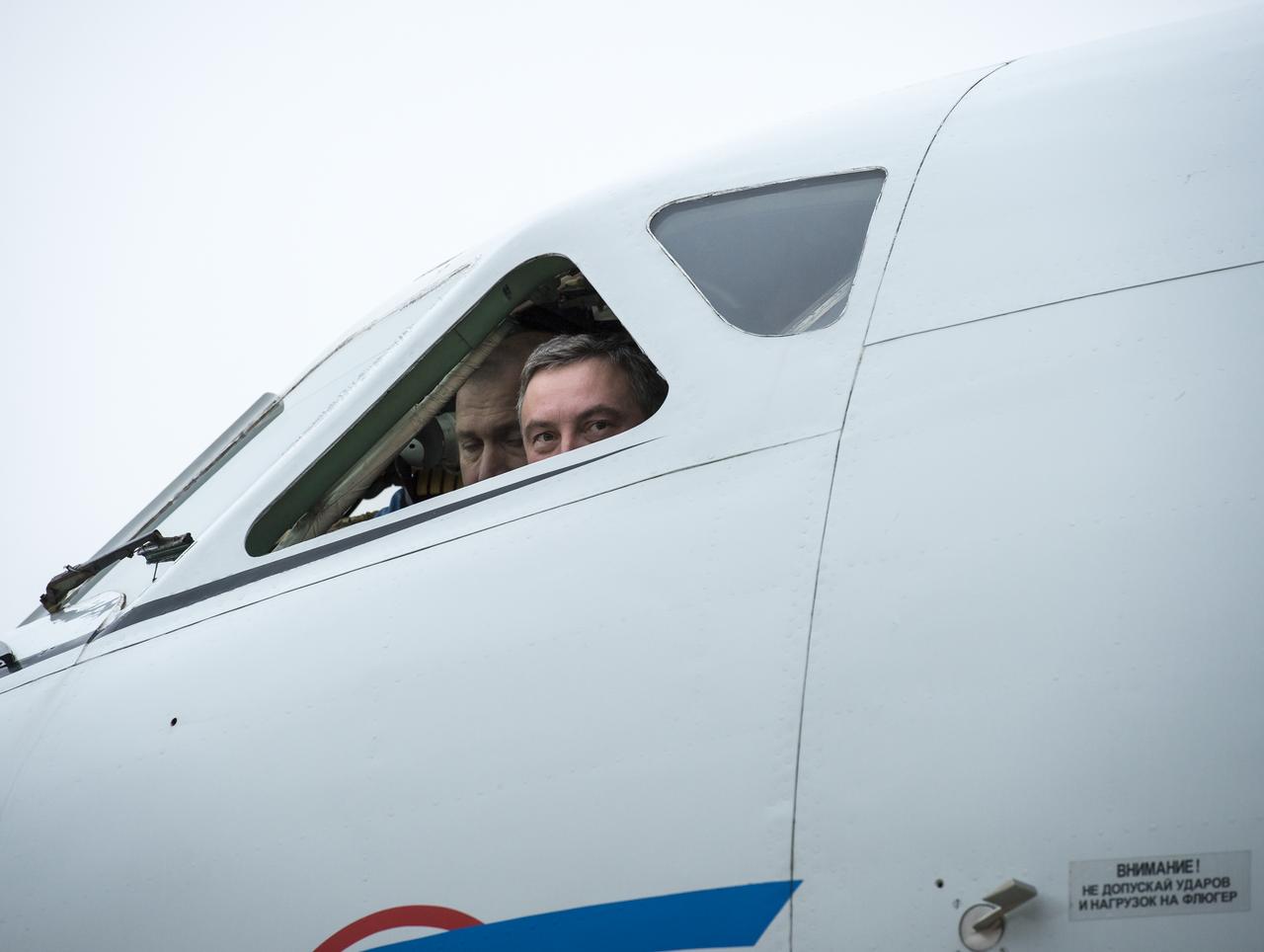
Pilots look out from the cockpit and watch as Expedition 33 Flight Engineer Yuri Malenchenko of ROSCOSMOS (Russian Federal Space Agency) is welcomed home at the Chkalovsky Airport in Star City, Russia by officials and his family after he, Commander Sunita Williams of NASA, and Flight Engineer Akihiko Hoshide of JAXA (Japan Aerospace Exploration Agency), landed their Soyuz spacecraft in a remote area outside the town of Arkalyk, Kazakhstan, on Monday, Nov. 19, 2012. Williams, Hoshide and Malenchenko returned from four months onboard the International Space Station. Photo Credit: (NASA/Bill Ingalls)
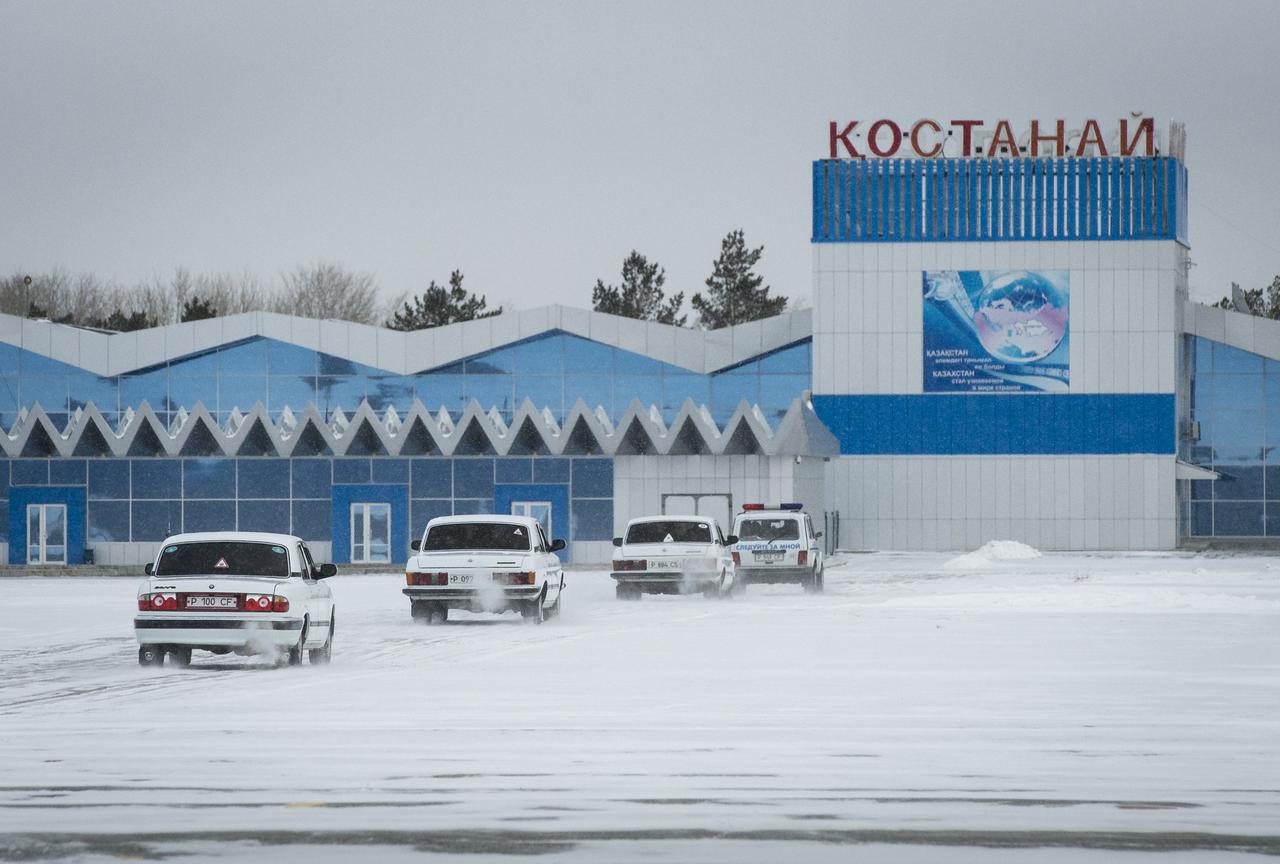
Expedition 33 crew members; Commander Sunita Williams of NASA, Flight Engineers Akihiko Hoshide of JAXA (Japan Aerospace Exploration Agency), and Yuri Malenchenko of ROSCOSMOS (Russian Federal Space Agency) are driven from Russian search and Rescue helicopters to the main terminal at the Kustanay Airport in Kazakhstan a few hours after they landed their Soyuz spacecraft in a remote area outside the town of Arkalyk, Kazakhstan, on Monday, Nov. 19, 2012. Williams, Hoshide and Malenchenko returned from four months onboard the International Space Station. Photo Credit: (NASA/Bill Ingalls)
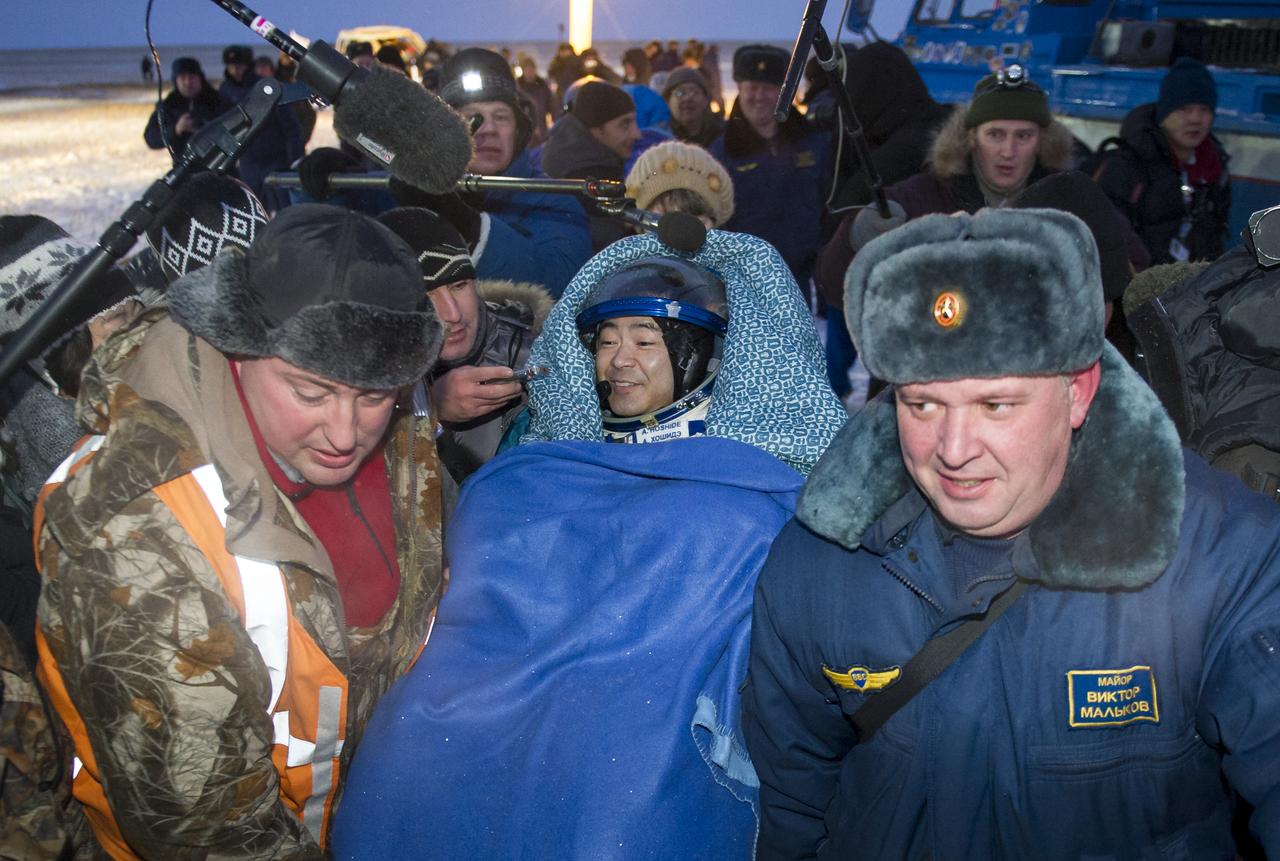
Expedition 33 Flight Engineer Akihiko Hoshide of JAXA (Japan Aerospace Exploration Agency) is carried to a medical tent shortly after he and Commander Sunita Williams of NASA, and Flight Engineer Yuri Malenchenko of ROSCOSMOS (Russian Federal Space Agency), landed their Soyuz spacecraft in a remote area outside the town of Arkalyk, Kazakhstan, on Monday, Nov. 19, 2012. Williams, Hoshide and Malenchenko returned from four months onboard the International Space Station. Photo Credit: (NASA/GCTC/Andrey Shelepin)
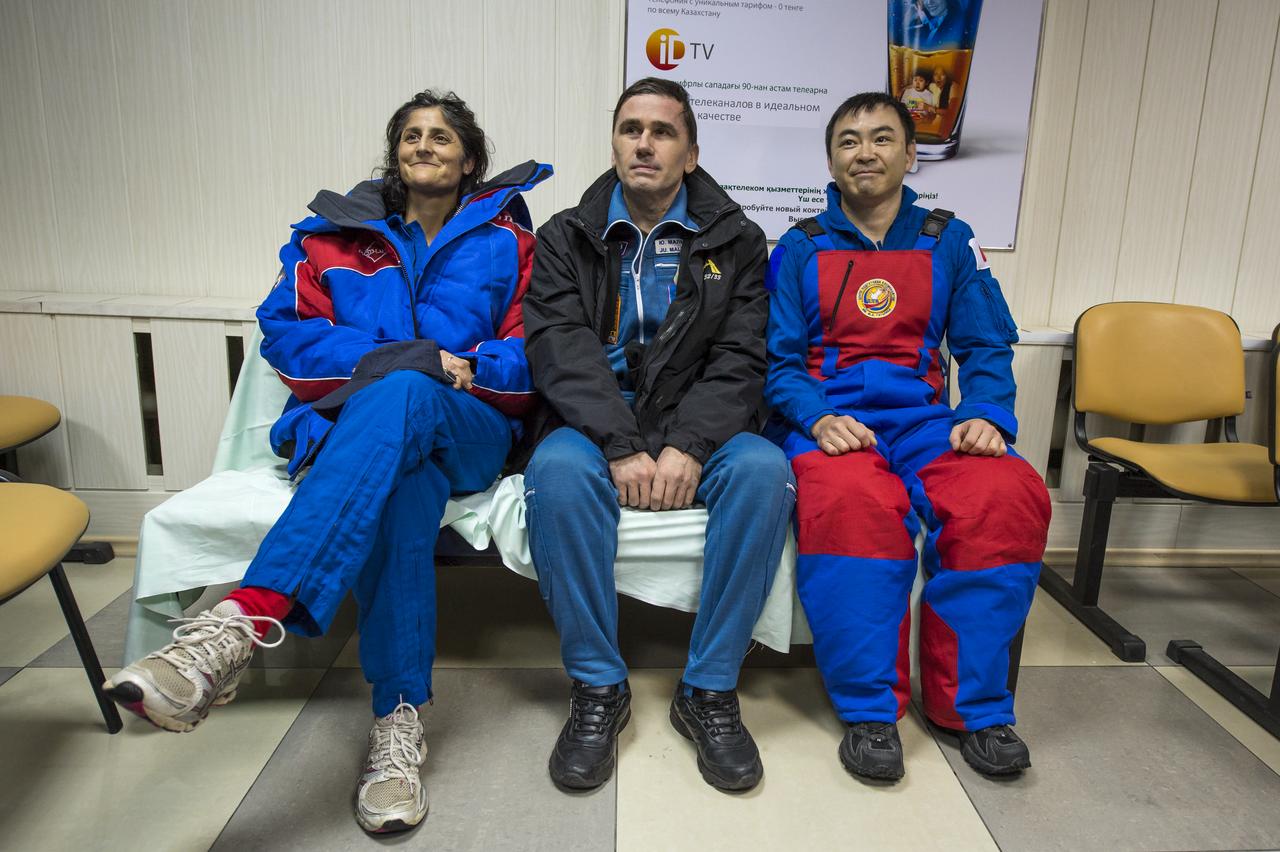
Expedition 33 crew members; Commander Sunita Williams of NASA, left, Flight Engineers Yuri Malenchenko of ROSCOSMOS (Russian Federal Space Agency), and Akihiko Hoshide of JAXA (Japan Aerospace Exploration Agency), right, smile for photos at the Kustanay Airport in Kazakhstan a few hours after they landed their Soyuz spacecraft in a remote area outside the town of Arkalyk, Kazakhstan, on Monday, Nov. 19, 2012. Williams, Hoshide and Malenchenko returned from four months onboard the International Space Station. Photo Credit: (NASA/Bill Ingalls)
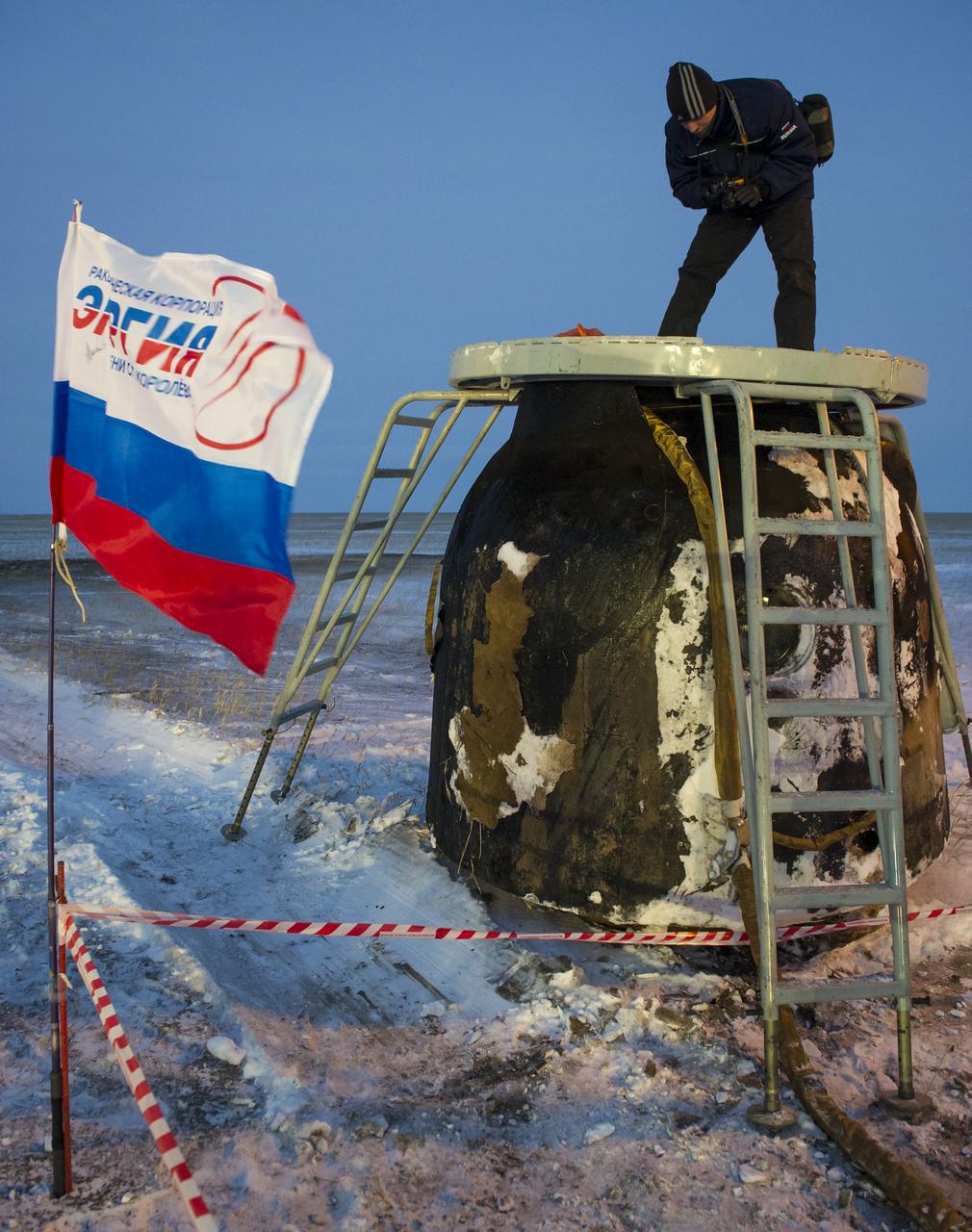
A photographer stands atop the Soyuz TMA-05M spacecraft long after it landed with Expedition 33 Commander Sunita Williams of NASA and Flight Engineers Akihiko Hoshide of JAXA (Japan Aerospace Exploration Agency), and Yuri Malenchenko of ROSCOSMOS (Russian Federal Space Agency) in a remote area near the town of Arkalyk, Kazakhstan, on Monday, Nov. 19, 2012. Williams, Hoshide and Malenchenko returned from four months onboard the International Space Station. Photo Credit: (NASA/GCTC/Andrey Shelepin)
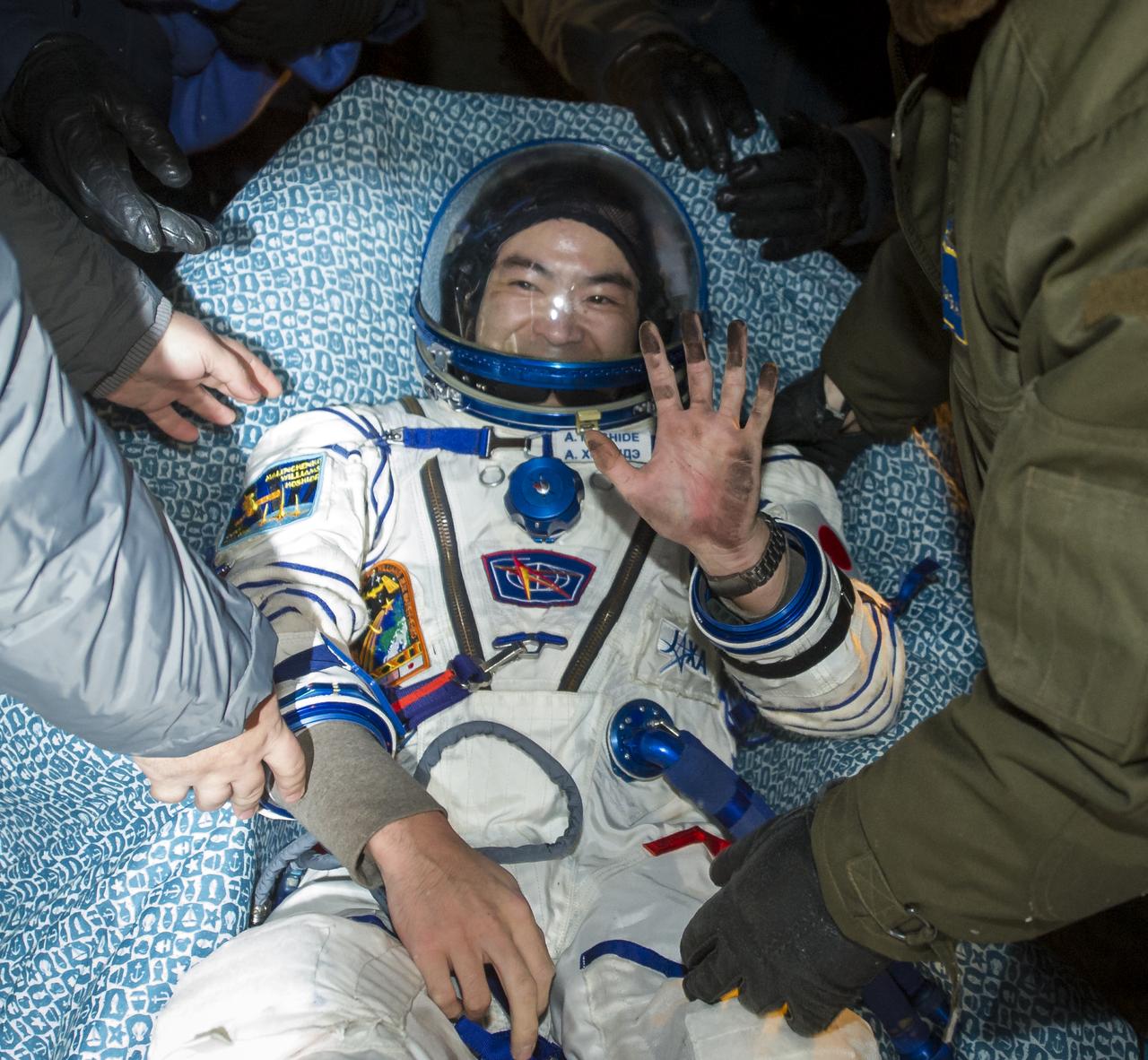
Expedition 33 Flight Engineer Akihiko Hoshide of JAXA (Japan Aerospace Exploration Agency) waves hello in a chair outside the Soyuz Capsule after he and Commander Sunita Williams of NASA, and Flight Engineer Yuri Malenchenko of ROSCOSMOS (Russian Federal Space Agency), landed their Soyuz spacecraft in a remote area outside the town of Arkalyk, Kazakhstan, on Monday, Nov. 19, 2012. Williams, Hoshide and Malenchenko returned from four months onboard the International Space Station. Photo Credit: (NASA/GCTC/Andrey Shelepin)
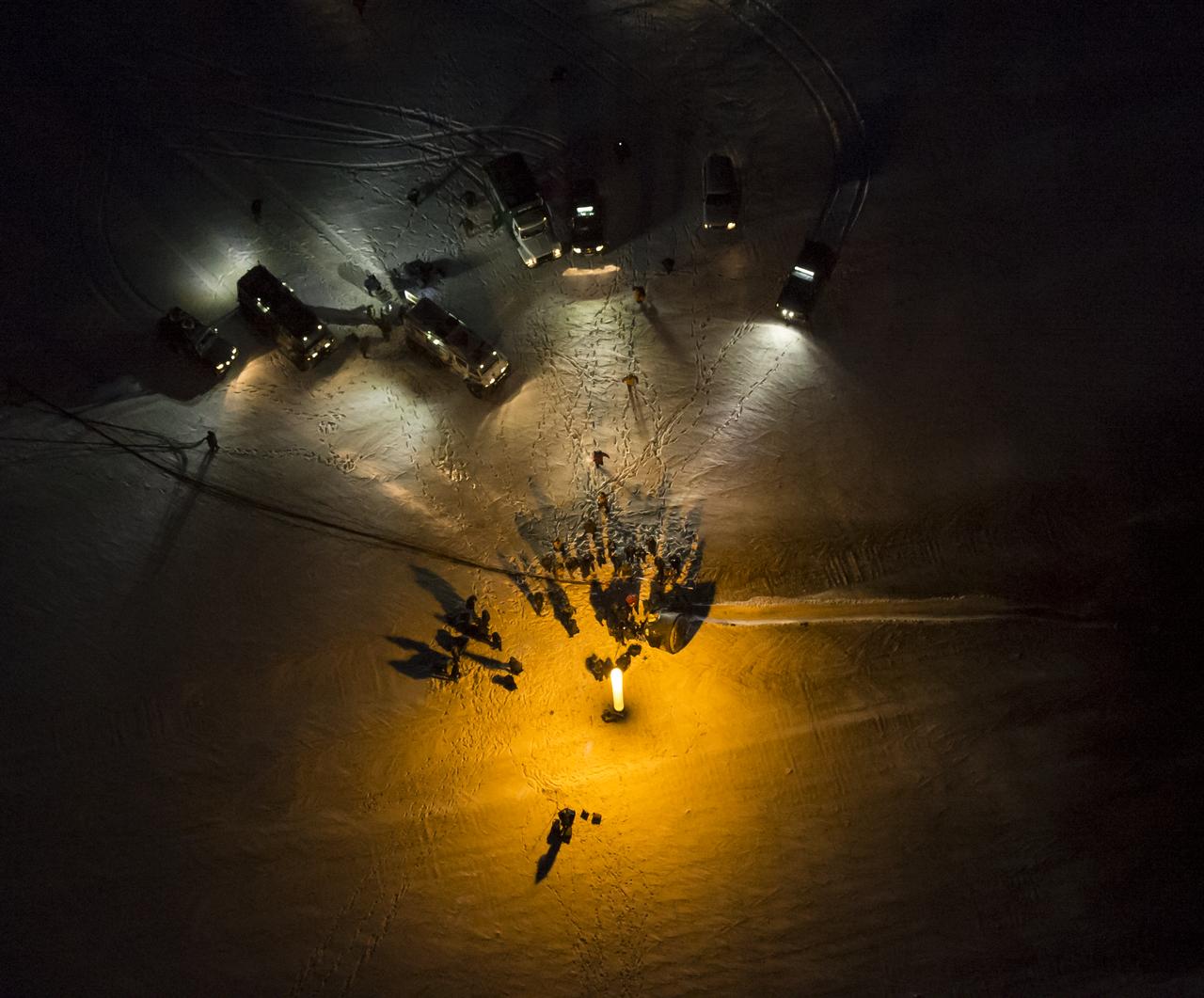
The Soyuz TMA-05M spacecraft is seen shortly after it landed with Expedition 33 Commander Sunita Williams of NASA and Flight Engineers Akihiko Hoshide of JAXA (Japan Aerospace Exploration Agency), and Yuri Malenchenko of ROSCOSMOS (Russian Federal Space Agency) in a remote area near the town of Arkalyk, Kazakhstan, on Monday, Nov. 19, 2012. Williams, Hoshide and Malenchenko returned from four months onboard the International Space Station. Photo Credit: (NASA/Bill Ingalls)
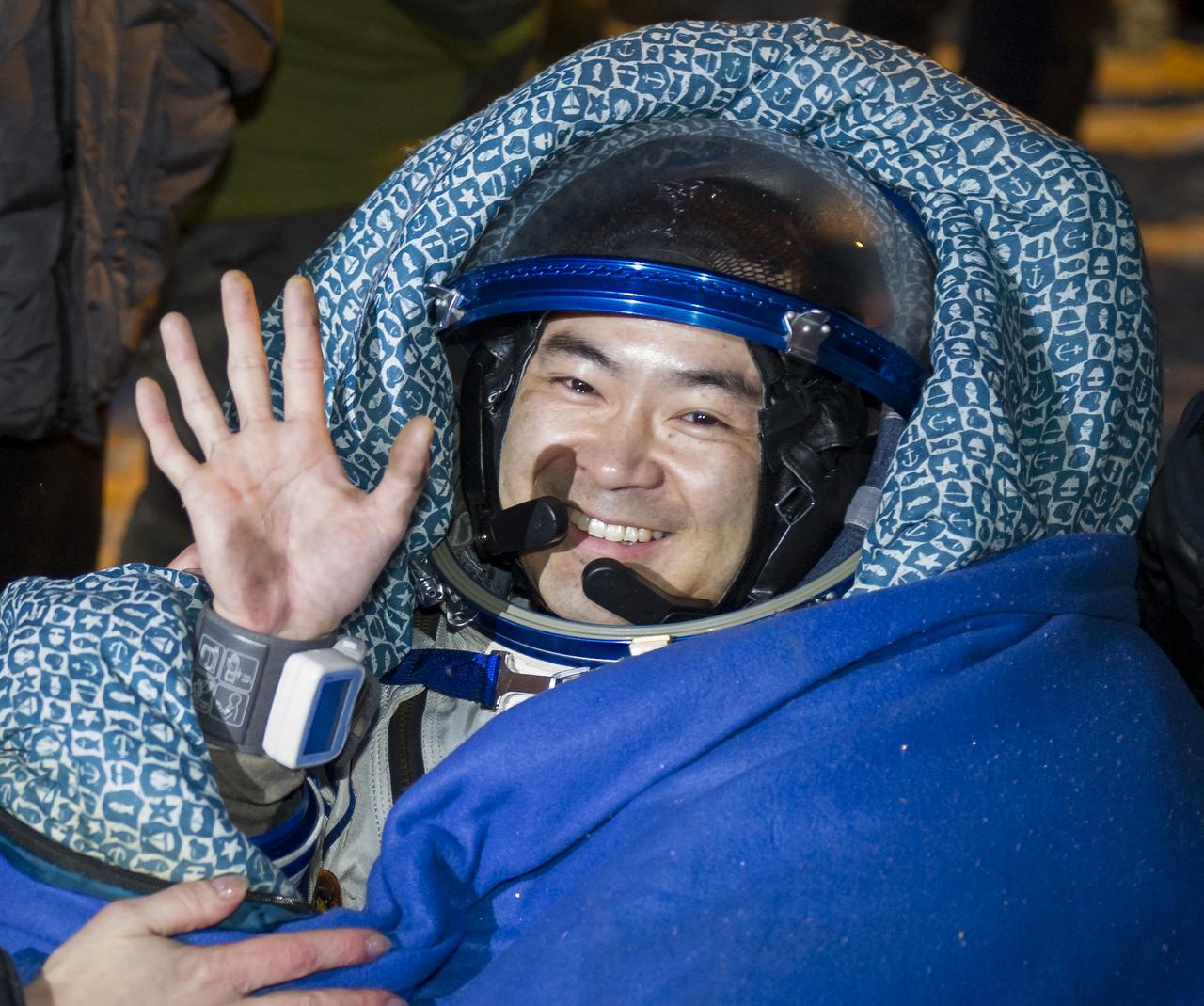
Expedition 33 Flight Engineer Akihiko Hoshide of JAXA (Japan Aerospace Exploration Agency) waves hello in a chair outside the Soyuz Capsule after he and Commander Sunita Williams of NASA, and Flight Engineer Yuri Malenchenko of ROSCOSMOS (Russian Federal Space Agency), landed their Soyuz spacecraft in a remote area outside the town of Arkalyk, Kazakhstan, on Monday, Nov. 19, 2012. Williams, Hoshide and Malenchenko returned from four months onboard the International Space Station. Photo Credit: (NASA/GCTC/Andrey Shelepin)
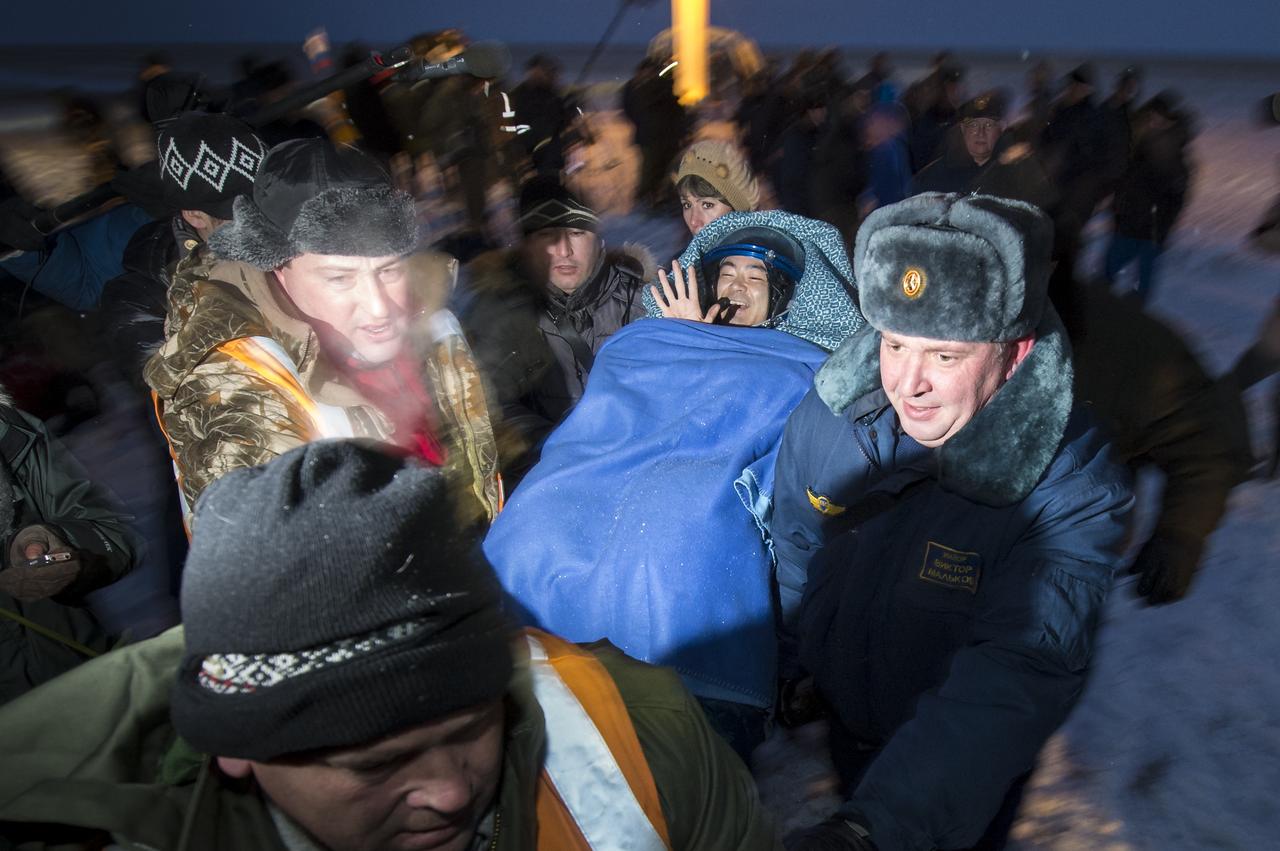
Expedition 33 Flight Engineer Akihiko Hoshide of JAXA (Japan Aerospace Exploration Agency) is carried to a medical tent shortly after he and Commander Sunita Williams of NASA, and Flight Engineer Yuri Malenchenko of ROSCOSMOS (Russian Federal Space Agency), landed their Soyuz spacecraft in a remote area outside the town of Arkalyk, Kazakhstan, on Monday, Nov. 19, 2012. Williams, Hoshide and Malenchenko returned from four months onboard the International Space Station. Photo Credit: (NASA/Bill Ingalls)
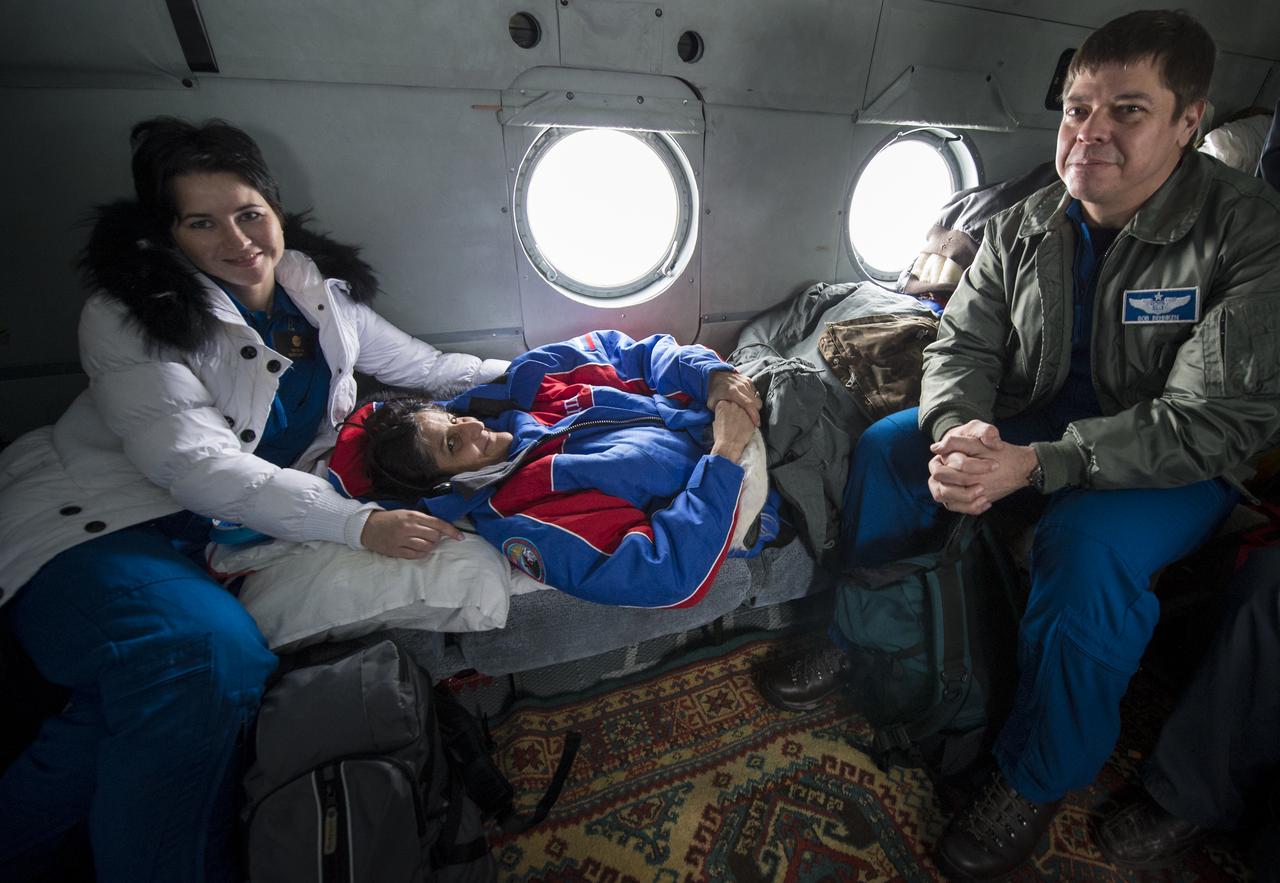
Expedition 33 Commander Sunita Williams of NASA rests during a helicopter flight back to Kustanany, Kazakhstan while nurse Raxana Batsmanova and Chief of the NASA Astronaut Office Bob Behnken look on just a a few hours after Williams and Flight Engineers Yuri Malenchenko of ROSCOSMOS (Russian Federal Space Agency), and Akihiko Hoshide of JAXA (Japan Aerospace Exploration Agency), landed their Soyuz spacecraft in a remote area outside the town of Arkalyk, Kazakhstan, on Monday, Nov. 19, 2012. Williams, Hoshide and Malenchenko returned from four months onboard the International Space Station. Photo Credit: (NASA/Bill Ingalls)
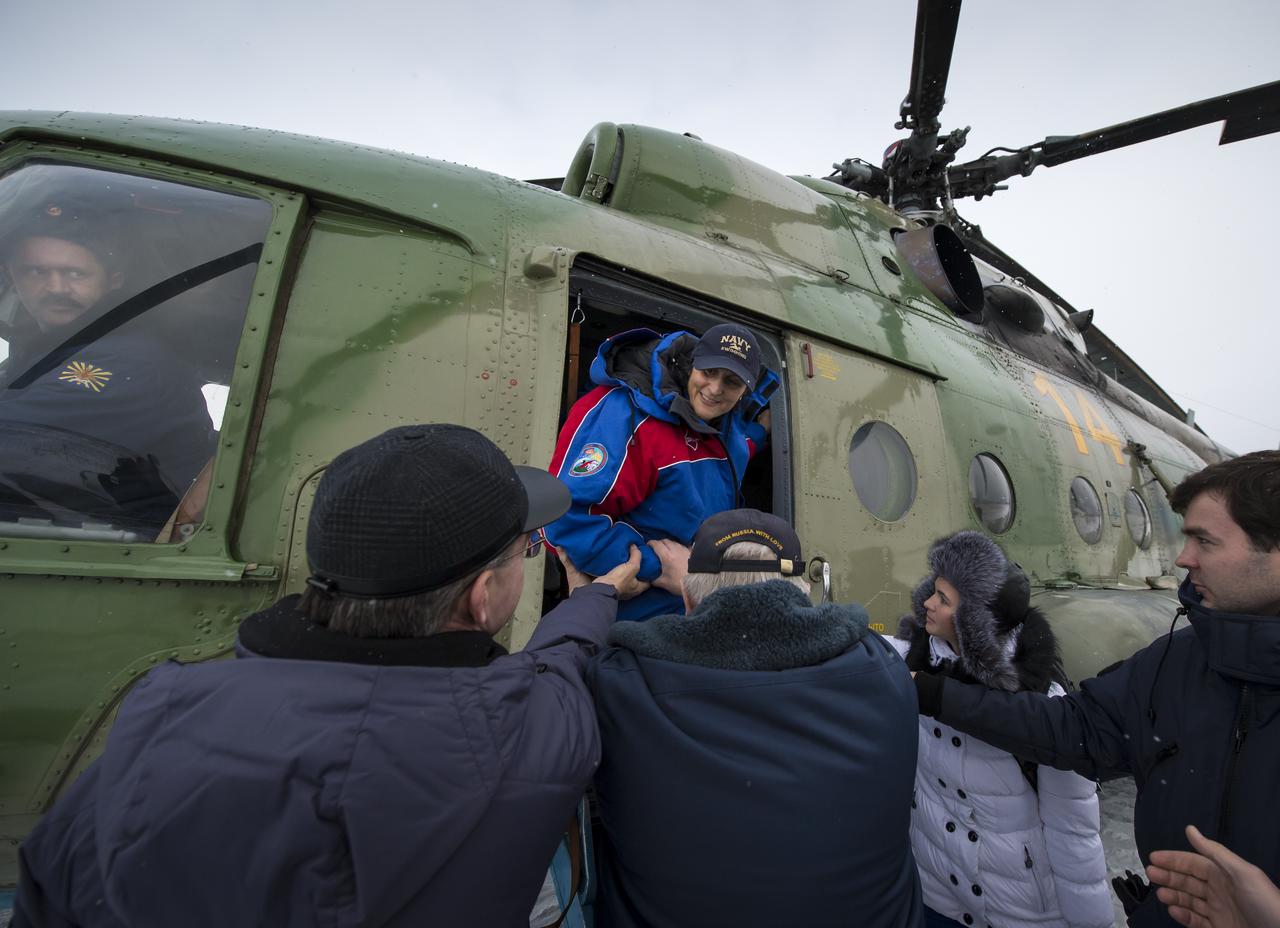
Expedition 33 Commander Sunita Williams of NASA is helped out of a Russian Search and Rescue helicopter after her flight back to Kustanany, Kazakhstan just a few hours after Williams and Flight Engineers Yuri Malenchenko of ROSCOSMOS (Russian Federal Space Agency), and Akihiko Hoshide of JAXA (Japan Aerospace Exploration Agency), landed their Soyuz spacecraft in a remote area outside the town of Arkalyk, Kazakhstan, on Monday, Nov. 19, 2012. Williams, Hoshide and Malenchenko returned from four months onboard the International Space Station. Photo Credit: (NASA/Bill Ingalls)
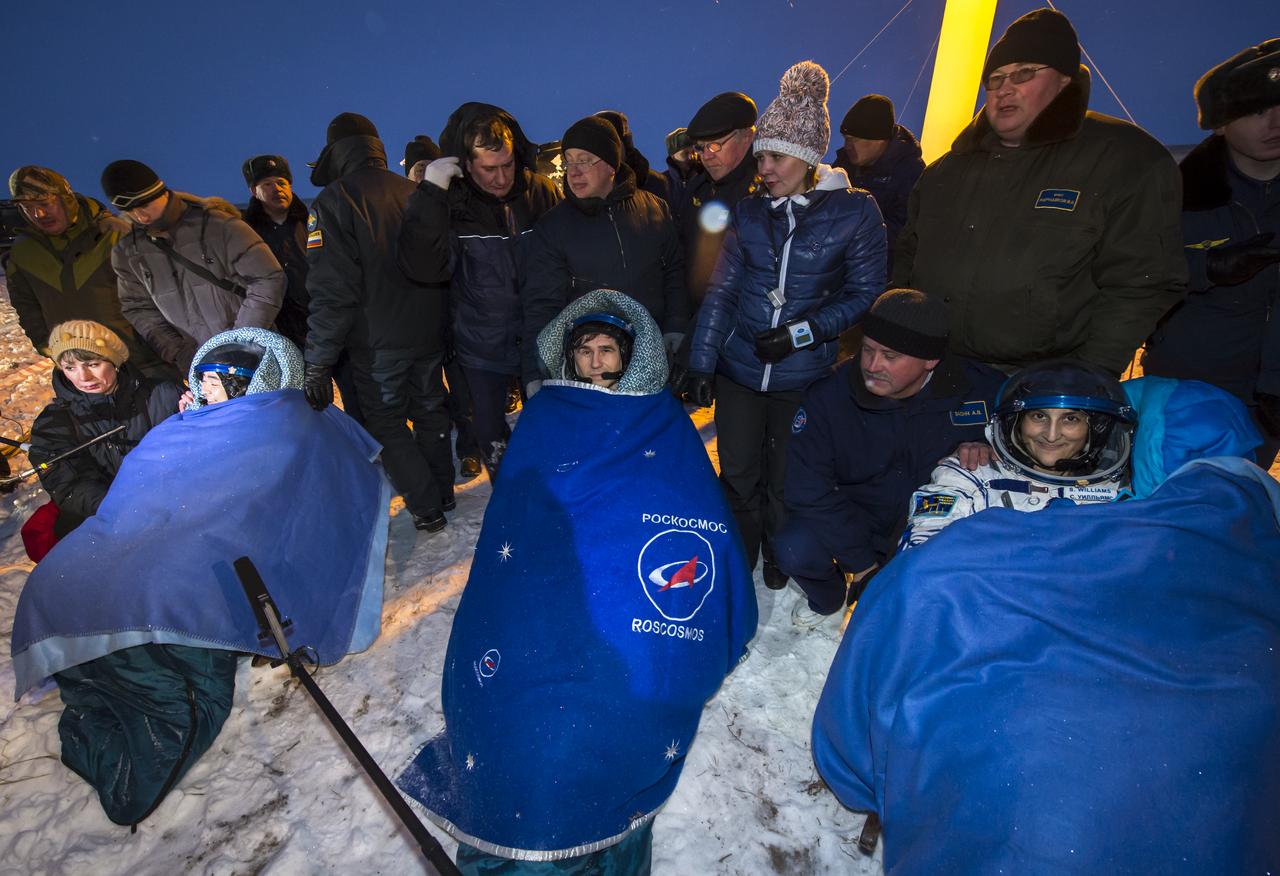
Expedition 33 Commander Sunita Williams of NASA, right, and Flight Engineers Yuri Malenchenko of ROSCOSMOS (Russian Federal Space Agency), and Akihiko Hoshide of JAXA (Japan Aerospace Exploration Agency), left, sit in chairs outside the Soyuz Capsule just minutes after they landed in a remote area outside the town of Arkalyk, Kazakhstan, on Monday, Nov. 19, 2012. Williams, Hoshide and Malenchenko returned from four months onboard the International Space Station. Photo Credit: (NASA/Bill Ingalls)
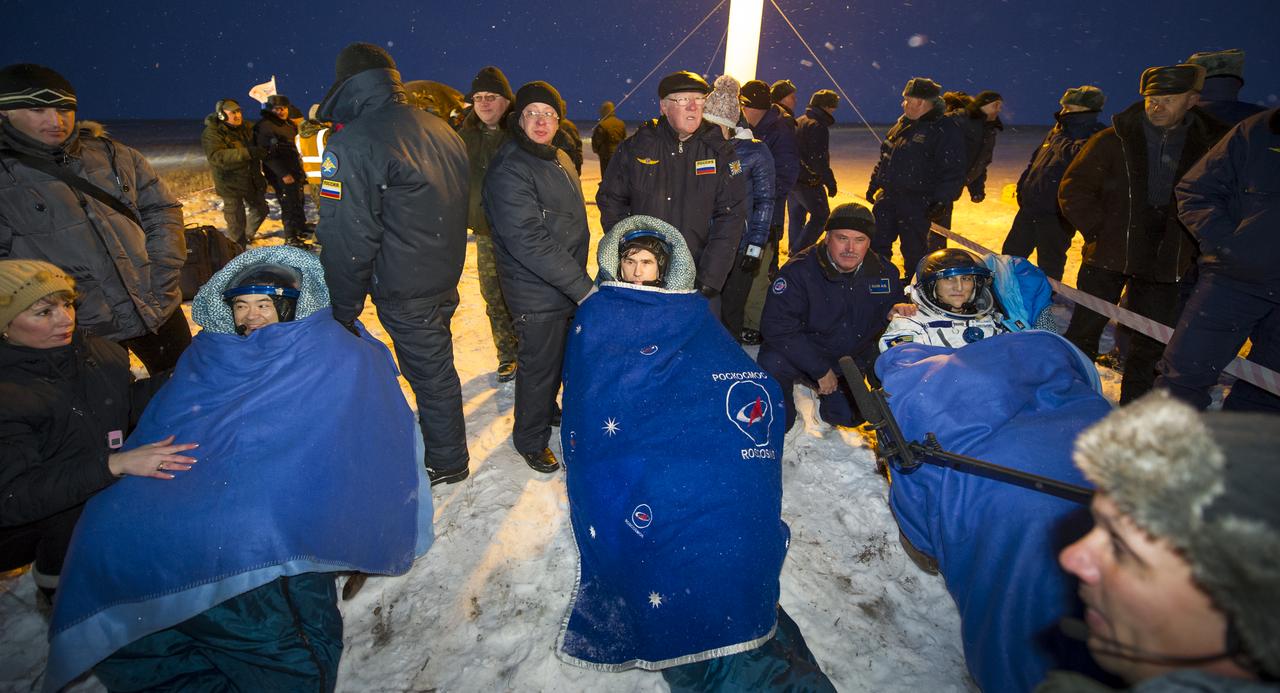
Expedition 33 Commander Sunita Williams of NASA, right, and Flight Engineers Yuri Malenchenko of ROSCOSMOS (Russian Federal Space Agency), and Akihiko Hoshide of JAXA (Japan Aerospace Exploration Agency), left, sit in chairs outside the Soyuz Capsule just minutes after they landed in a remote area outside the town of Arkalyk, Kazakhstan, on Monday, Nov. 19, 2012. Williams, Hoshide and Malenchenko returned from four months onboard the International Space Station. Photo Credit: (NASA/GCTC/Andrey Shelepin)
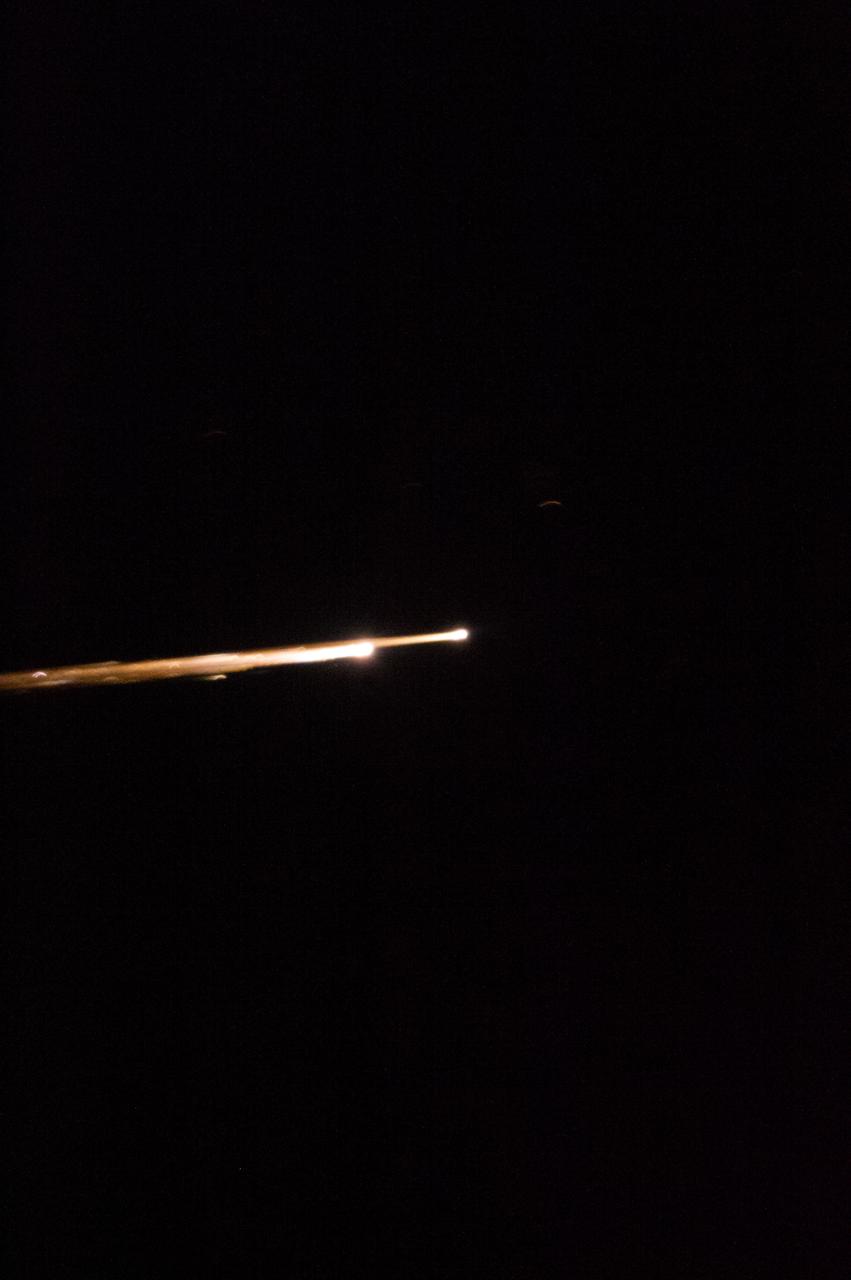
ISS034-E-005034 (18 Nov. 2012) --- Soyuz TMA-05M (descent module) beginning to re-enter the Earth's atmosphere on Nov. 19 (real time, Nov. 18, U.S. time) leaving a plasma trail as the Expedition 33 crew streaked toward a pre-dawn landing on the steppe of Kazakhstan northeast of Arkalyk.
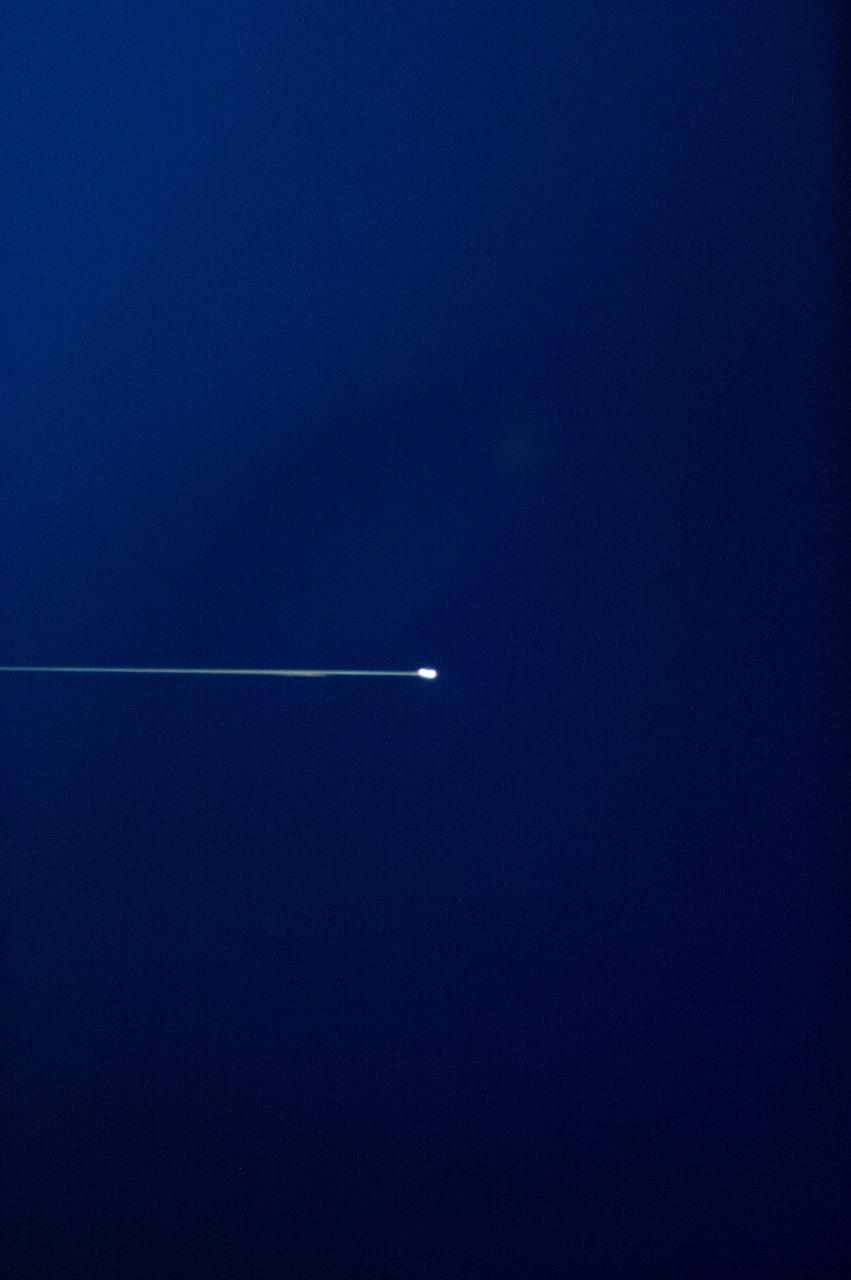
ISS034-E-005049 (18 Nov. 2012) --- Soyuz TMA-05M (descent module) beginning to re-enter the Earth's atmosphere on Nov. 19 (real time, Nov. 18, U.S. time) leaving a plasma trail as the Expedition 33 crew streaked toward a pre-dawn landing on the steppe of Kazakhstan northeast of Arkalyk.
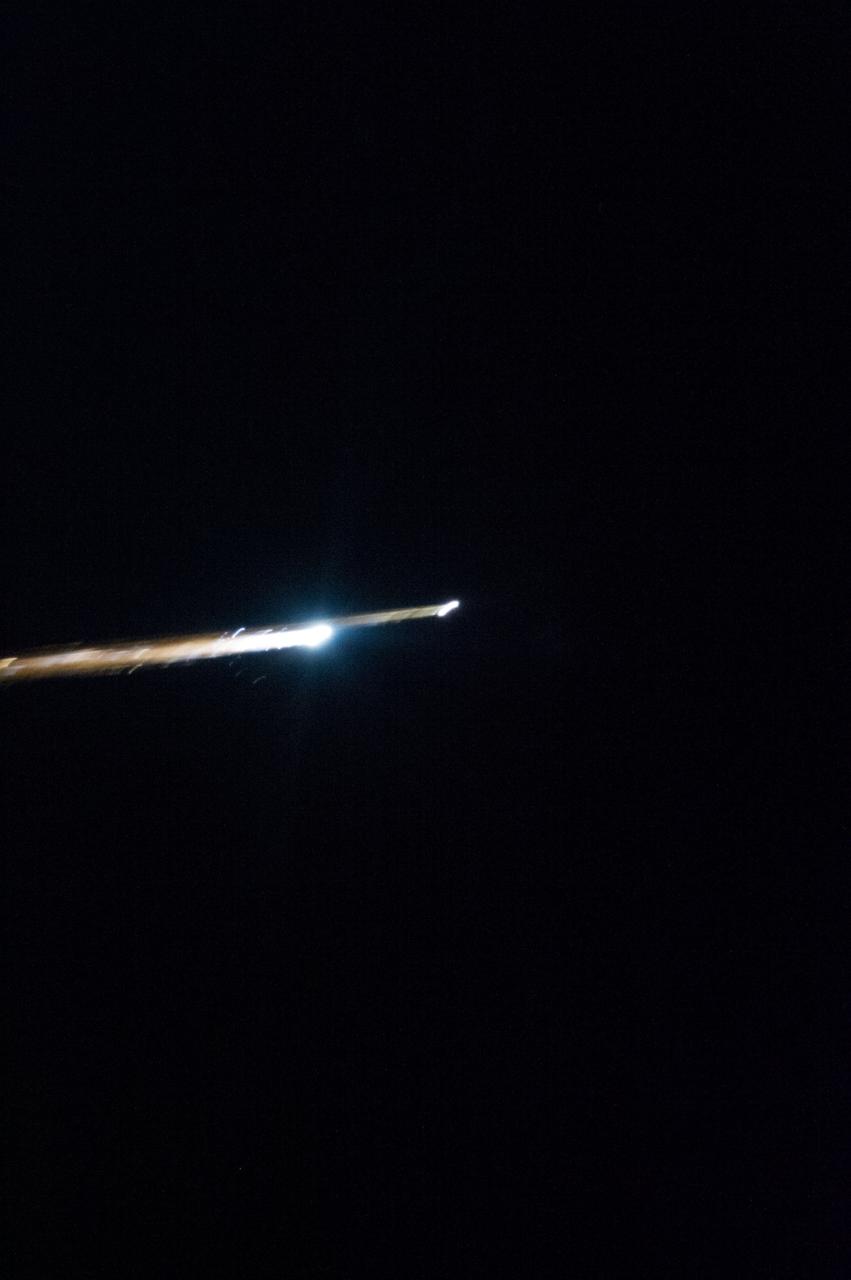
ISS034-E-005037 (18 Nov. 2012) --- Soyuz TMA-05M (descent module) beginning to re-enter the Earth's atmosphere on Nov. 19 (real time, Nov. 18, U.S. time) leaving a plasma trail as the Expedition 33 crew streaked toward a pre-dawn landing on the steppe of Kazakhstan northeast of Arkalyk.
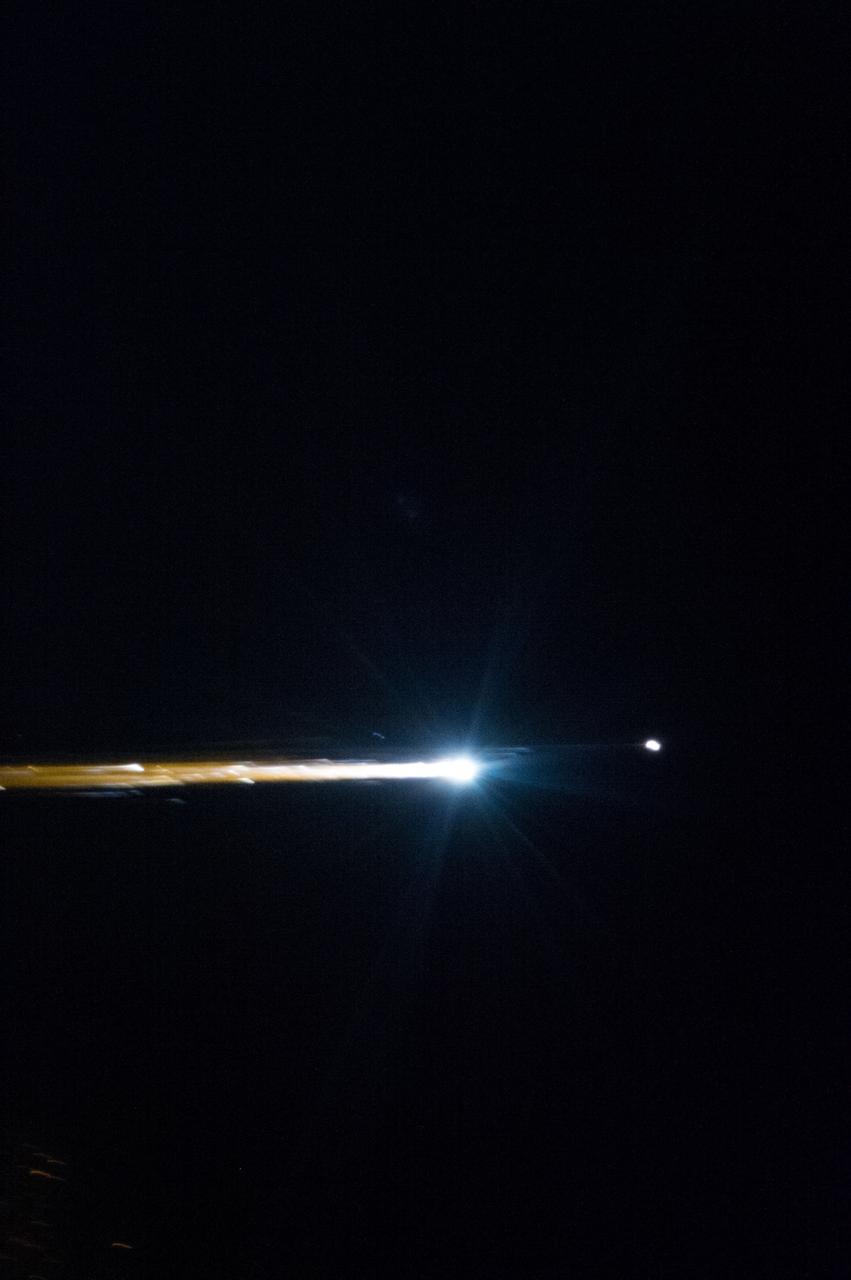
ISS034-E-005039 (18 Nov. 2012) --- Soyuz TMA-05M (descent module) beginning to re-enter the Earth's atmosphere on Nov. 19 (real time, Nov. 18, U.S. time) leaving a plasma trail as the Expedition 33 crew streaked toward a pre-dawn landing on the steppe of Kazakhstan northeast of Arkalyk.
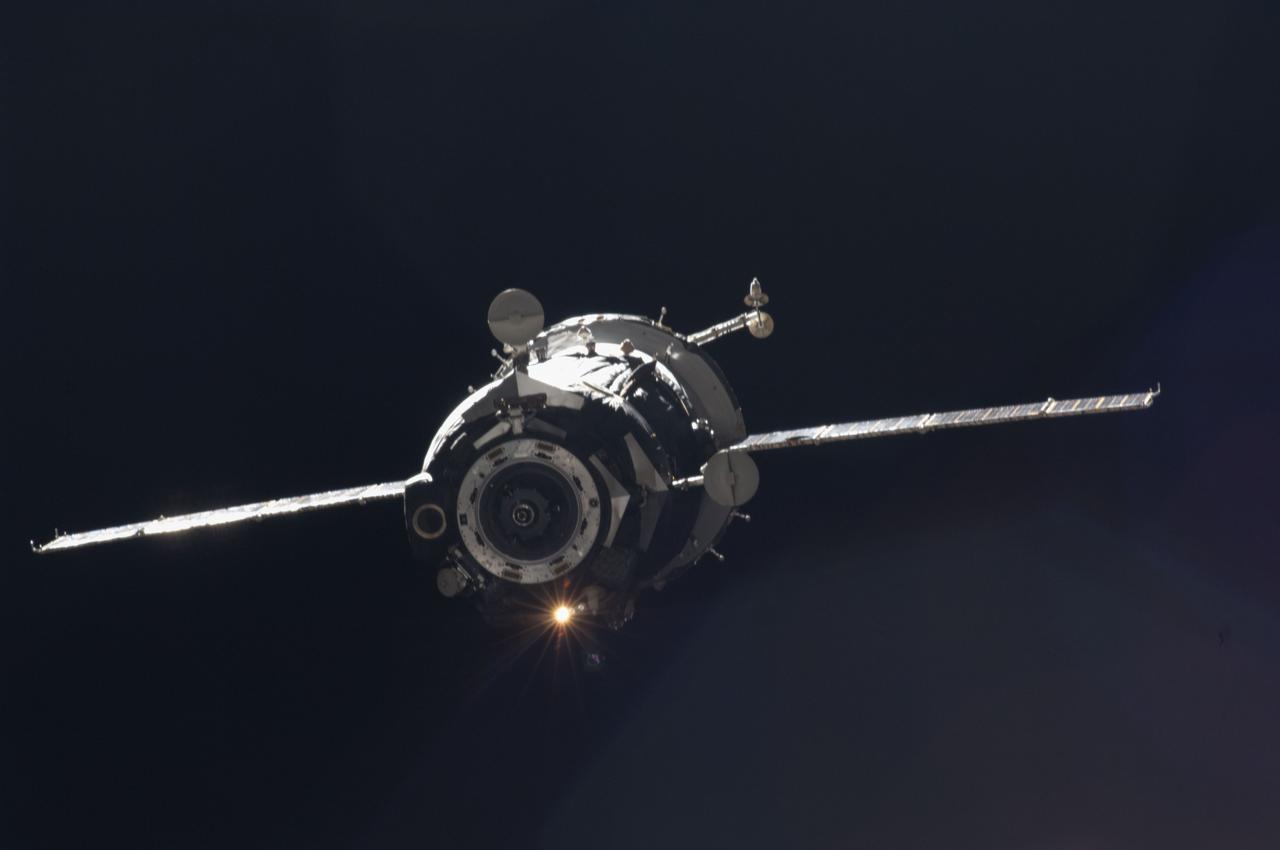
ISS034-E-005003 (18 Nov. 2012) --- The Soyuz TMA-05M spacecraft departs from the International Space Station and heads toward a landing in a remote area outside the town of Arkalyk, Kazakhstan on Nov. 19, 2012 (Kazakhstan time). NASA astronaut Sunita Williams, Expedition 33 commander; Russian cosmonaut Yuri Malenchenko, Soyuz commander and flight engineer; and Japan Aerospace Exploration Agency astronaut Aki Hoshide, flight engineer, are returning from four months onboard the space station where they served as members of the Expedition 32 and 33 crews.
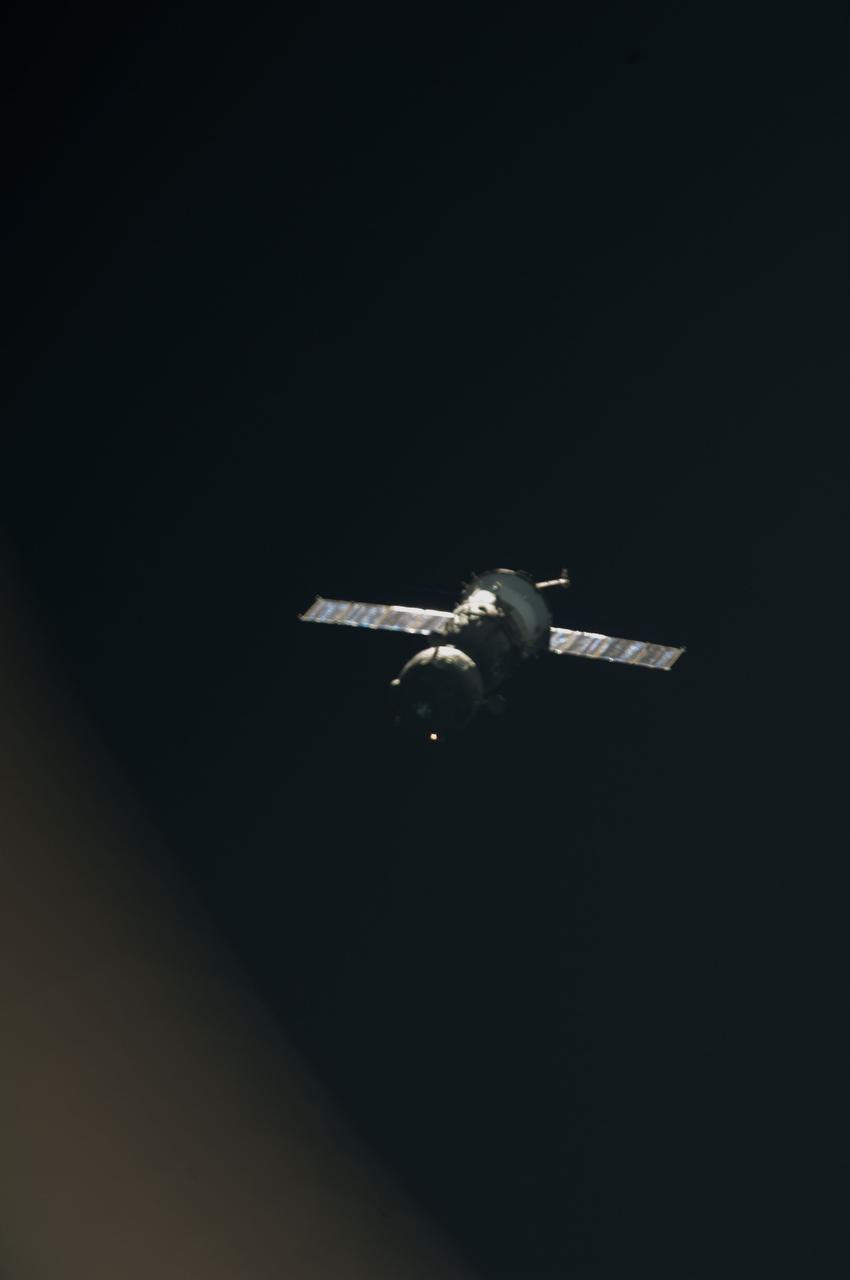
ISS034-E-005022 (18 Nov. 2012) --- The Soyuz TMA-05M spacecraft departs from the International Space Station and heads toward a landing in a remote area outside the town of Arkalyk, Kazakhstan on Nov. 19, 2012 (Kazakhstan time). NASA astronaut Sunita Williams, Expedition 33 commander; Russian cosmonaut Yuri Malenchenko, Soyuz commander and flight engineer; and Japan Aerospace Exploration Agency astronaut Aki Hoshide, flight engineer, are returning from four months onboard the space station where they served as members of the Expedition 32 and 33 crews.
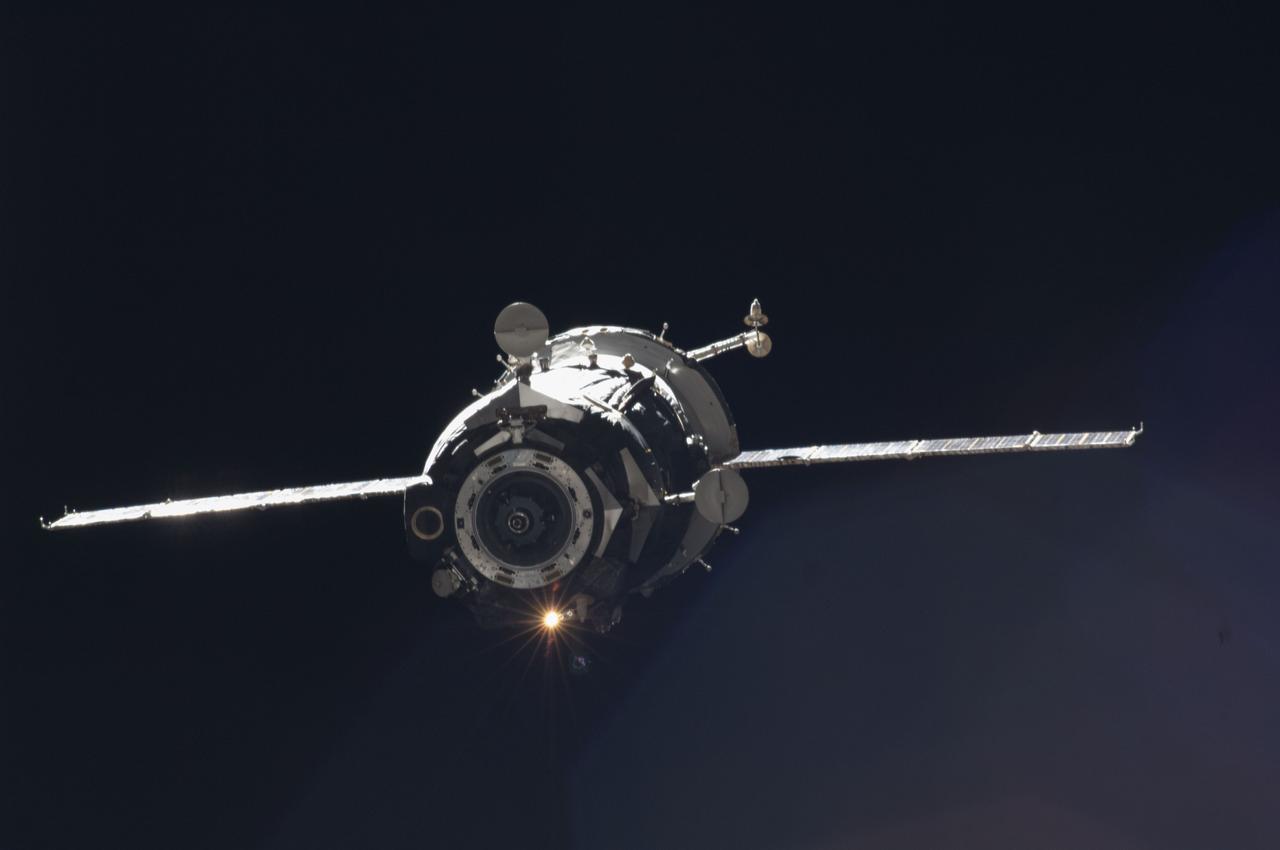
ISS034-E-005005 (18 Nov. 2012) --- The Soyuz TMA-05M spacecraft departs from the International Space Station and heads toward a landing in a remote area outside the town of Arkalyk, Kazakhstan on Nov. 19, 2012 (Kazakhstan time). NASA astronaut Sunita Williams, Expedition 33 commander; Russian cosmonaut Yuri Malenchenko, Soyuz commander and flight engineer; and Japan Aerospace Exploration Agency astronaut Aki Hoshide, flight engineer, are returning from four months onboard the space station where they served as members of the Expedition 32 and 33 crews.

Women in ceremonial Kazakh dress prepare to welcome home Expedition 34 Russian Flight Engineer Evgeny Tarelkin, Commander Kevin Ford of NASA, and Russian Soyuz Commander Oleg Novitskiy at the Kustanay Airport a few hours after they landed near the town of Arkalyk, Kazakhstan on Saturday, March 16, 2013. Tarelkin, Ford, and Novitskiy, returned from 142 days onboard the International Space Station where they served as members of the Expedition 33 and 34 crews. Photo Credit: (NASA/Bill Ingalls)
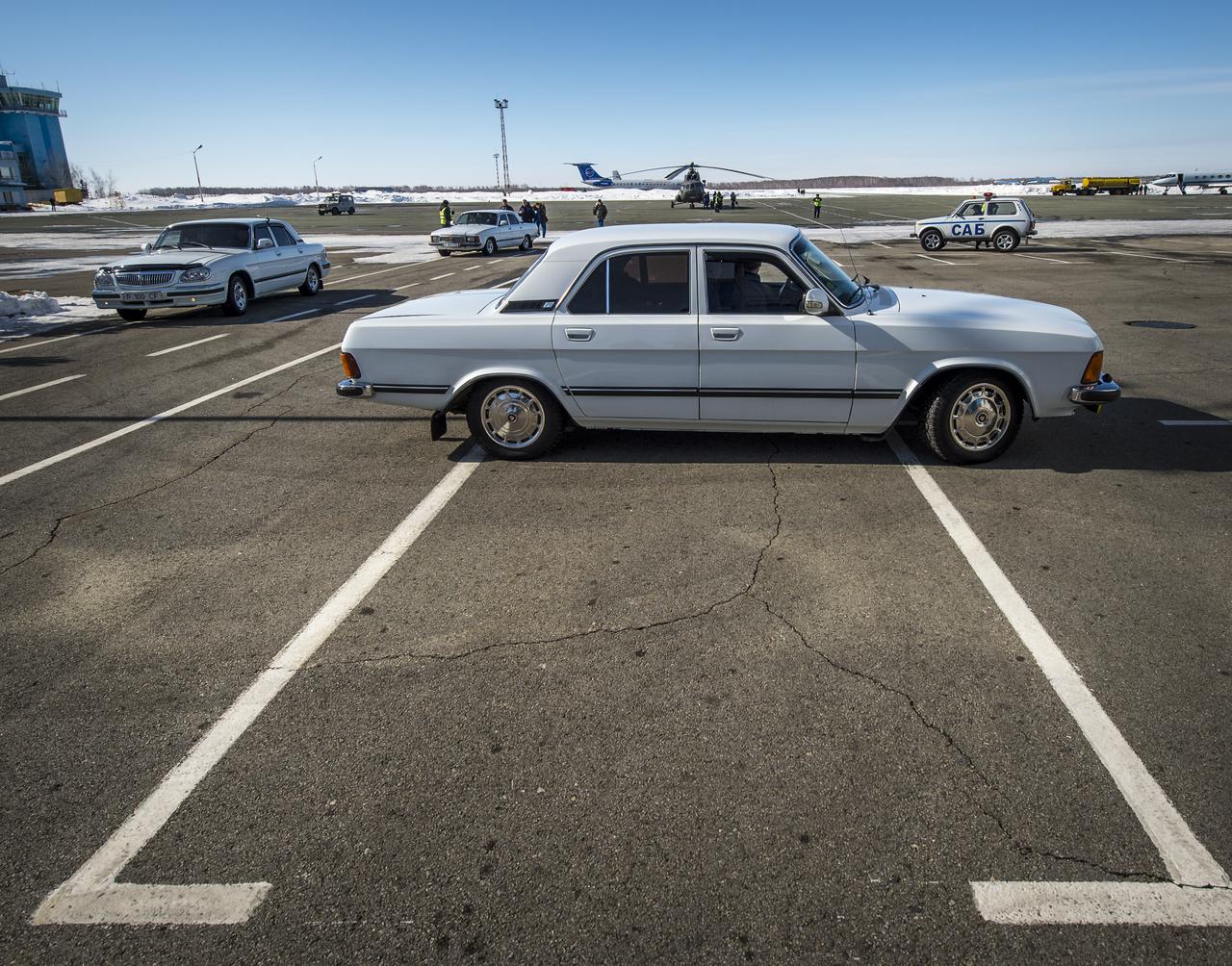
Cars carrying Expedition 34 Commander Kevin Ford of NASA, Russian Soyuz Commander Oleg Novitskiy and Russian Flight Engineer Evgeny Tarelkin pull up to the terminal at the Kustanay Airport a few hours after the crew landed their Soyuz TMA-06M spacecraft near the town of Arkalyk, Kazakhstan on Saturday, March 16, 2013. Ford, Novitskiy, and, Tarelkin returned from 142 days onboard the International Space Station where they served as members of the Expedition 33 and 34 crews. Photo Credit: (NASA/Bill Ingalls)
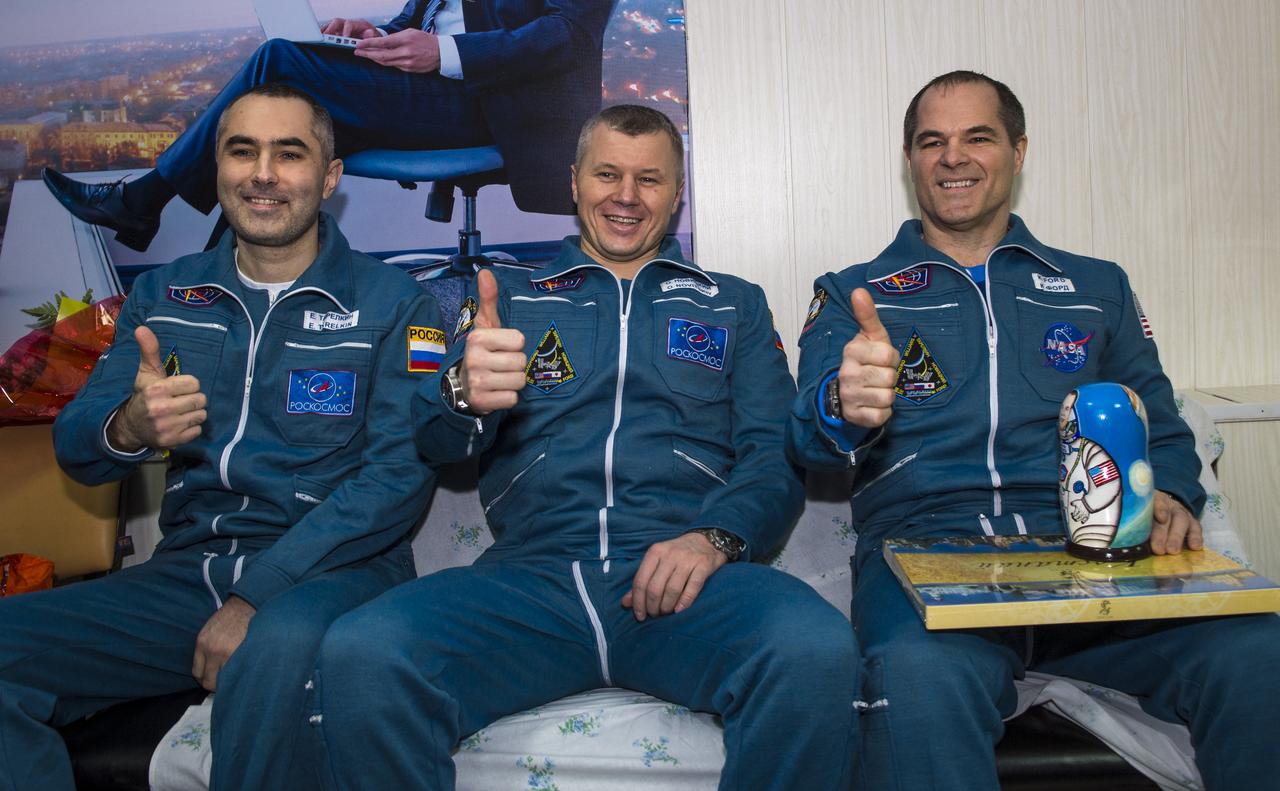
Expedition 34 Russian Flight Engineer Evgeny Tarelkin, left, Russian Soyuz Commander Oleg Novitskiy, center, and Commander Kevin Ford of NASA sit together at the Kustanay Airport a few hours after they landed near the town of Arkalyk, Kazakhstan on Saturday, March 16, 2013. Ford, Novitskiy, and Tarelkin are returning from 142 days onboard the International Space Station where they served as members of the Expedition 33 and 34 crews. Photo Credit: (NASA/Bill Ingalls)
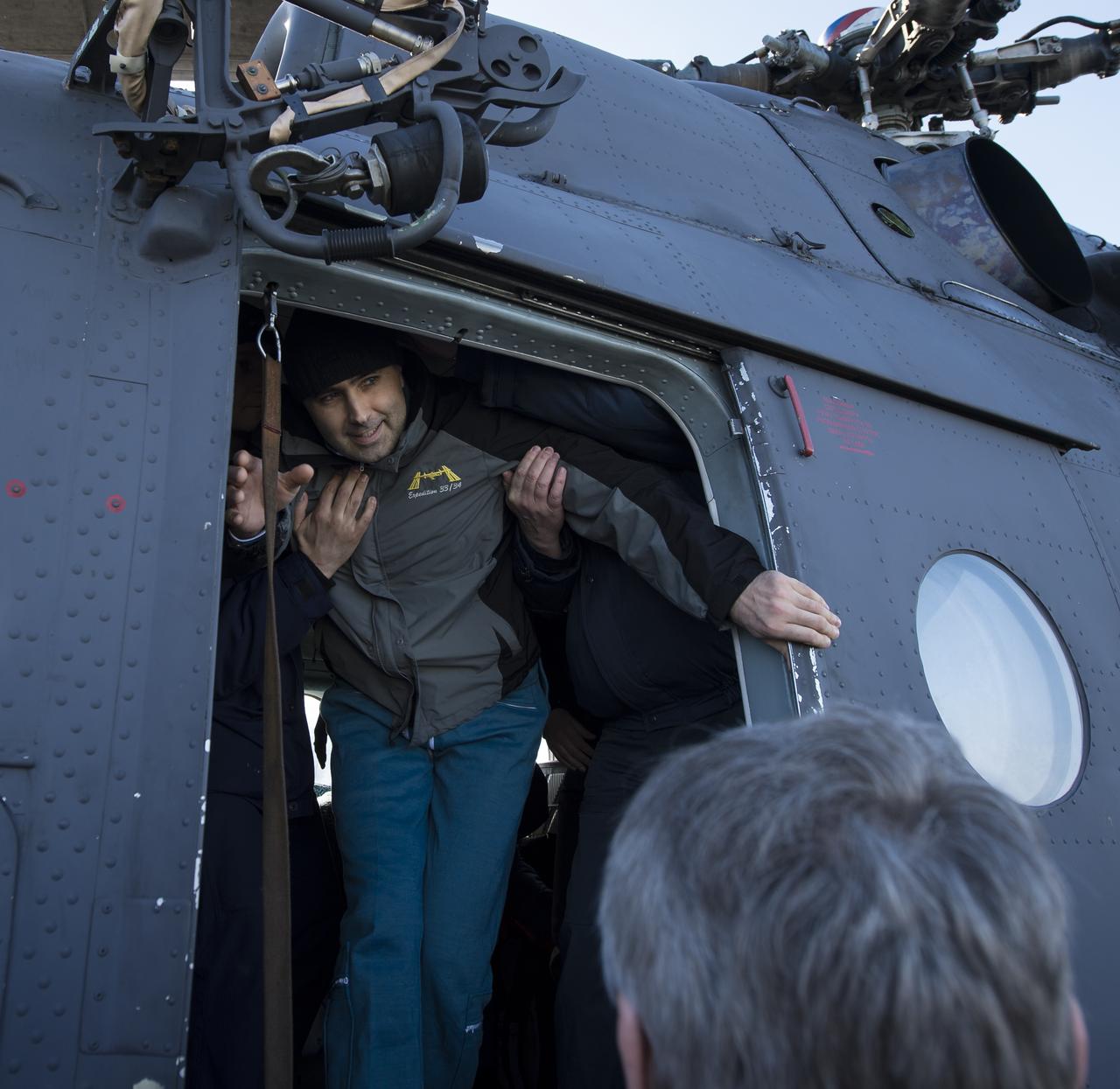
Expedition 34 Flight Engineer Evgeny Tarelkin of Russia is helped out a Russian Search and Rescue helicopter after flying from his Soyuz TMA-06M spacecraft landing site outside the town of Arkalyk to Kustanay, Kazakhstan on Saturday, March 16, 2013. Tarelkin, along with Commander Kevin Ford of NASA and Russian Soyuz Commander Oleg Novitskiy returned from 142 days onboard the International Space Station where they served as members of the Expedition 33 and 34 crews. Photo Credit: (NASA/Bill Ingalls)
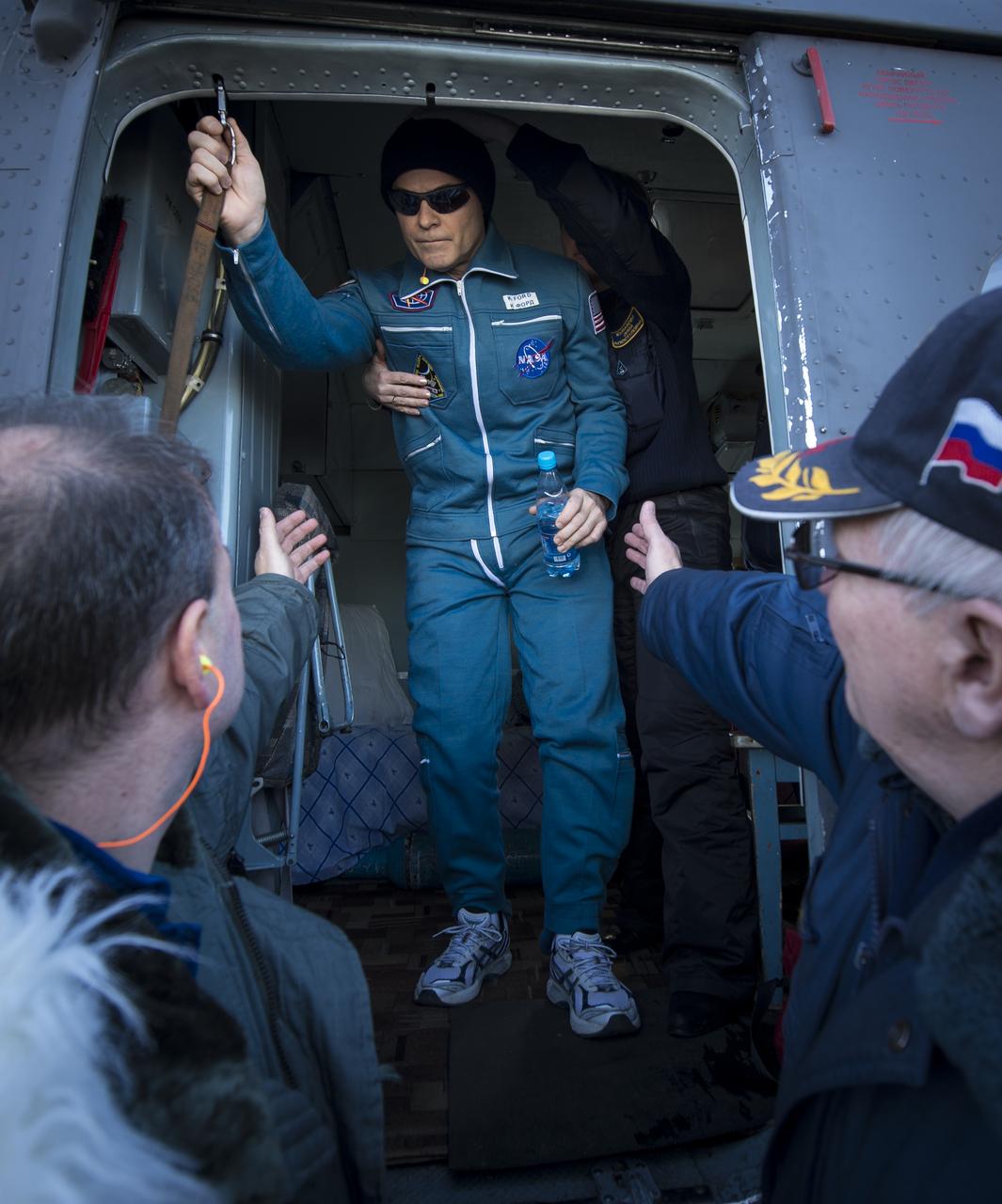
Expedition 34 Commander Kevin Ford of NASA is helped out a Russian Search and Rescue helicopter after flying from his Soyuz TMA-06M spacecraft landing site outside the town of Arkalyk to Kustanay, Kazakhstan on Saturday, March 16, 2013. Ford, along with Russian Soyuz Commander Oleg Novitskiy and Flight Engineer Evgeny Tarelkin of Russia returned from 142 days onboard the International Space Station where they served as members of the Expedition 33 and 34 crews. Photo Credit: (NASA/Bill Ingalls)
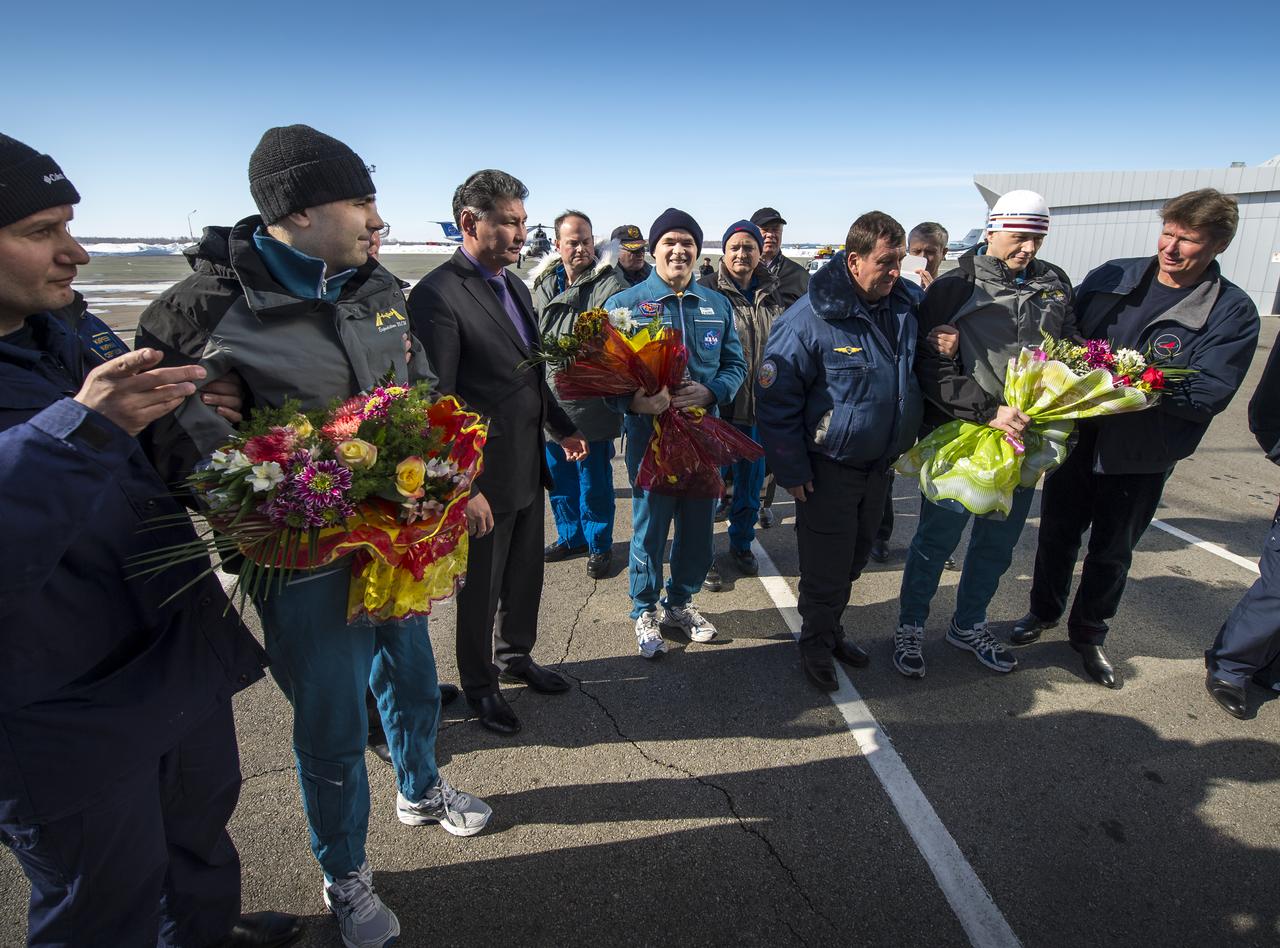
Expedition 34 Russian Flight Engineer Evgeny Tarelkin, left with flowers, Commander Kevin Ford of NASA, center with flowers, and Russian Soyuz Commander Oleg Novitskiy are greeted at the Kustanay Airport a few hours after they landed near the town of Arkalyk, Kazakhstan on Saturday, March 16, 2013. Ford, Novitskiy, and Tarelkin are returning from 142 days onboard the International Space Station where they served as members of the Expedition 33 and 34 crews. Photo Credit: (NASA/Bill Ingalls)
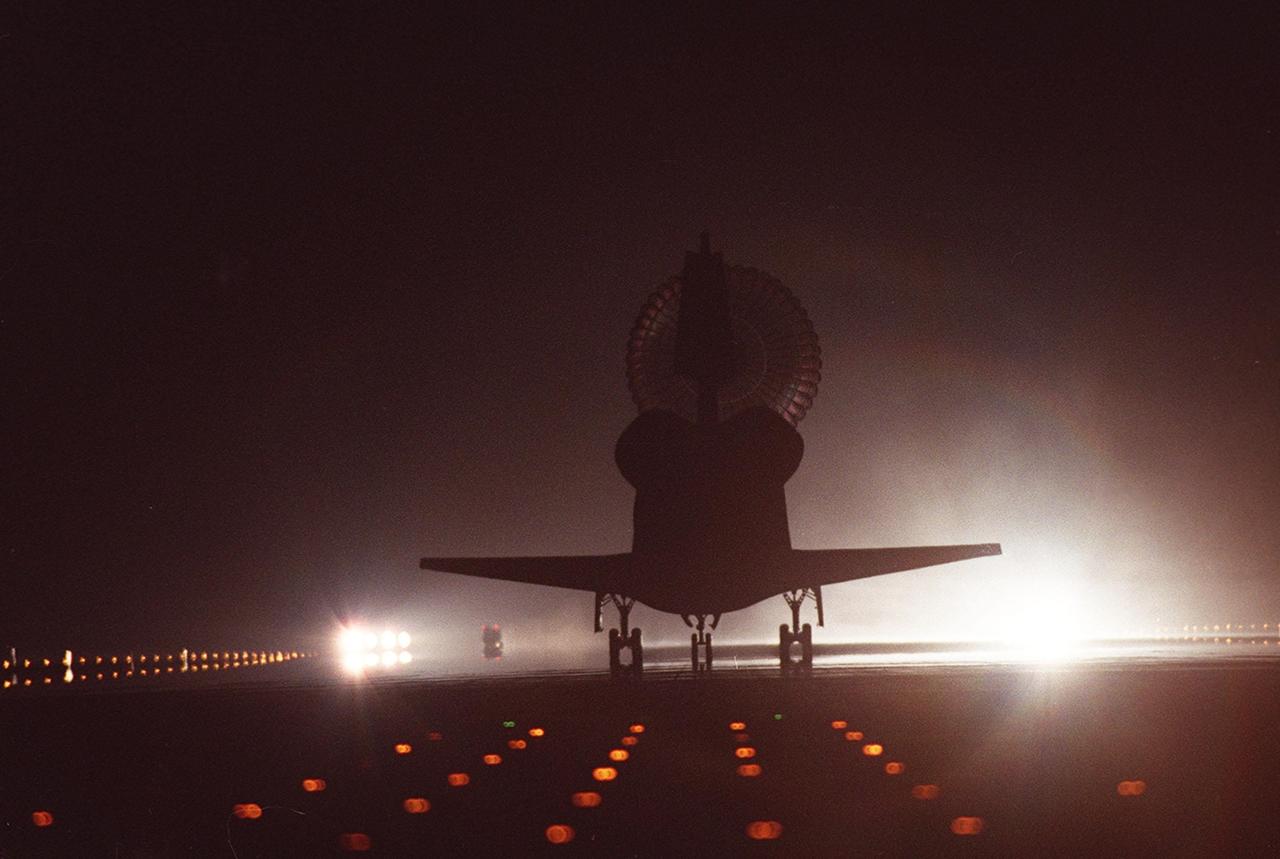
KENNEDY SPACE CENTER, Fla. -- Space Shuttle Discovery is silhouetted by the brilliant runway lights of runway 15 as it lands at the KSC Shuttle Landing Facility. Main gear touchdown occurred at 2:31:42 a.m. EST. Nose wheel touchdown occurred at 2:31:54 a.m., and wheel stop at 2:33:06 a.m. The landing on orbit 201 concluded mission STS-102, the eighth flight to the International Space Station, carrying the first Multi-Purpose Logistics Module, Leonardo, to the ISS and Expedition Two, a replacement crew for the Station. The 12-day, 19-hour, 51-minute mission returned both the Leonardo and the first resident crew of the ISS, Expedition One, to KSC. Discovery logged 5.3 million miles on this mission. The landing marked the 54th at KSC in the history of the program, and the 12th night landing at KSC
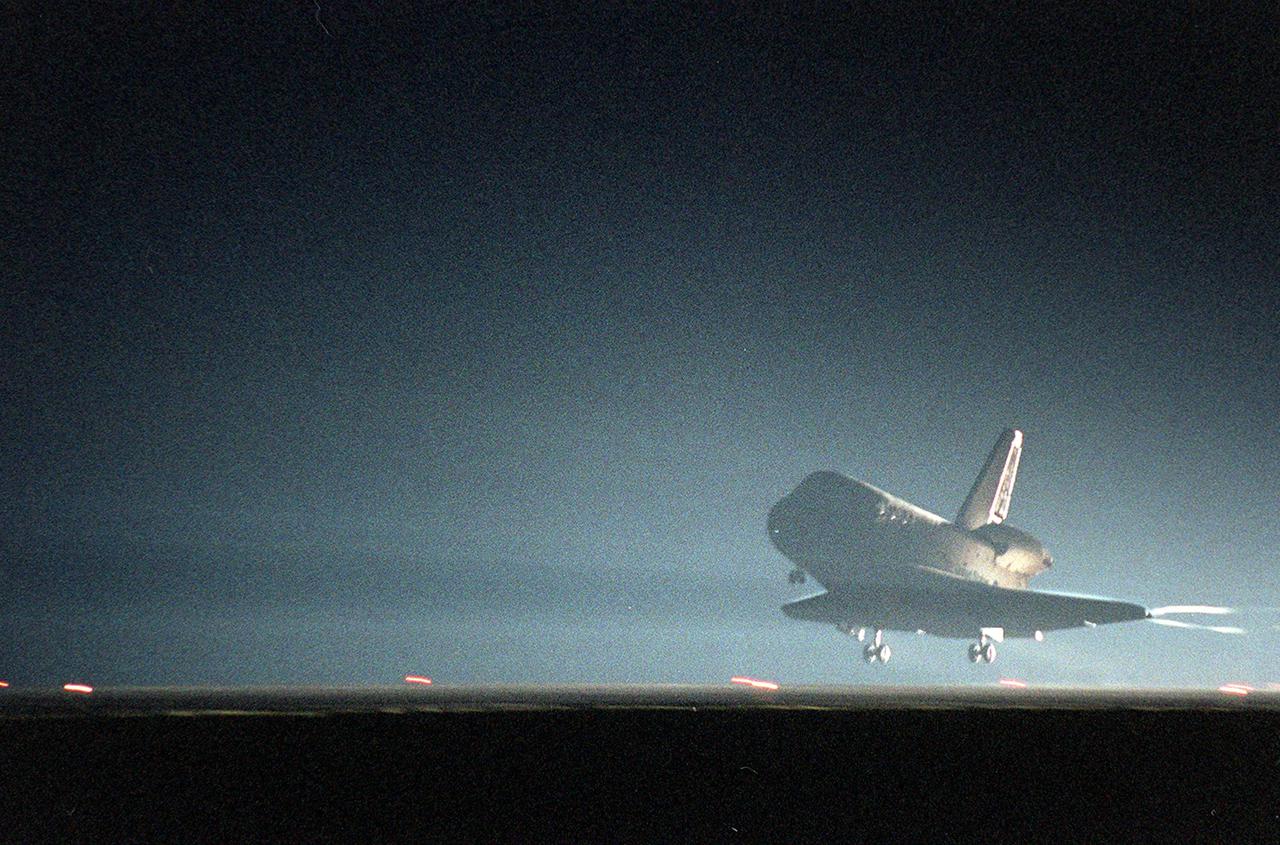
KENNEDY SPACE CENTER, Fla. -- Space Shuttle Discovery prepares to land at the KSC Shuttle Landing Facility on runway 15. Main gear touchdown occurred about 2:31:42 a.m. EST, nose wheel touchdown at 2:31:54 a.m., and wheel stop at 2:33:06 a.m. The landing, on orbit 201, concluded mission STS-102, the eighth flight to the International Space Station, carrying the first Multi-Purpose Logistics Module Leonardo, to the ISS and Expedition Two, a replacement crew for the Station. The 12-day, 19-hour, 51-minute mission returned both the Leonardo and the first resident crew of the ISS, Expedition One, to KSC. Discovery logged 5.3 million miles on this mission. The landing marked the 54th at KSC in the history of the program, and the 12th night landing at KSC
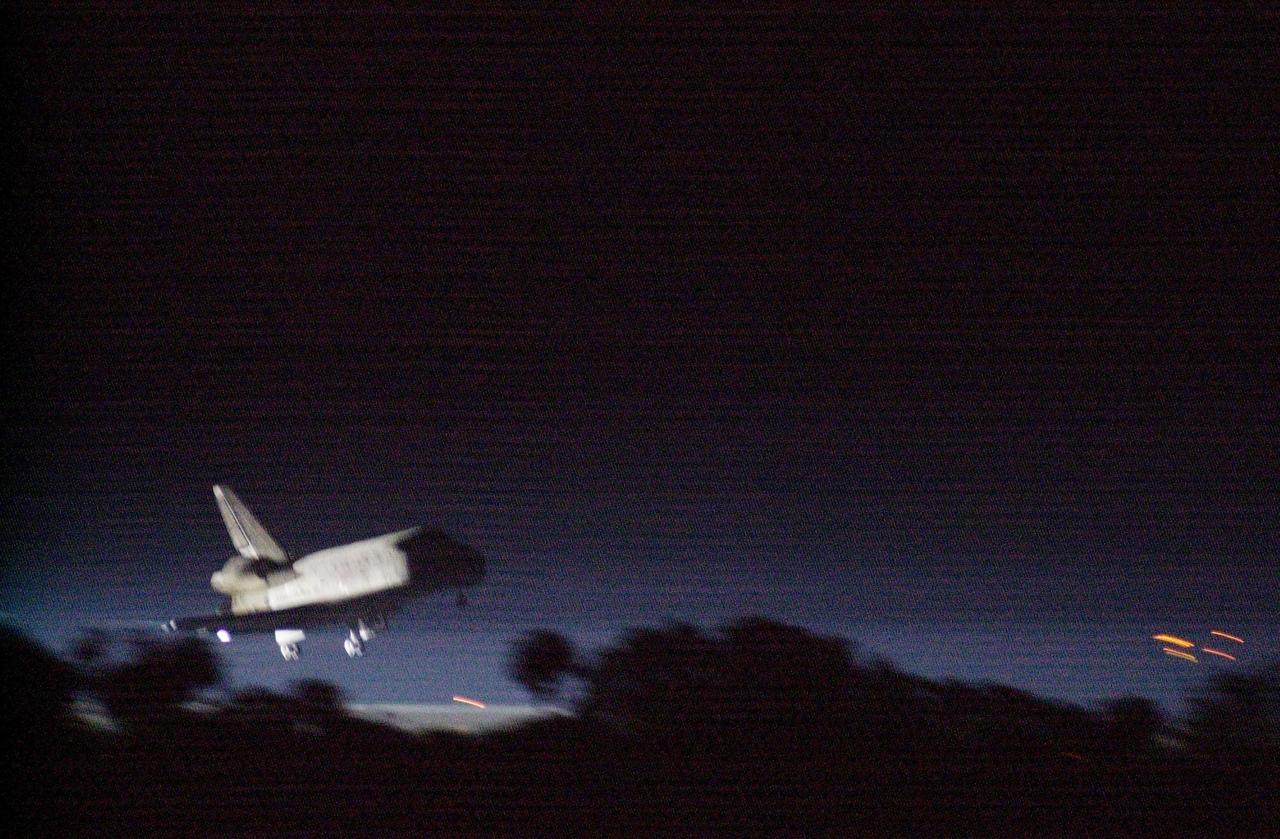
KENNEDY SPACE CENTER, Fla. -- Getting a break in the weather, Space Shuttle Discovery prepares to land at the KSC Shuttle Landing Facility March 21, on runway 15. Main gear touchdown occurred at 2:31:42 a.m. EST, nose wheel touchdown at 2:31:54 a.m., and wheel stop at 2:33:06 a.m. The landing on orbit 201 concluded mission STS-102, the eighth flight to the International Space Station, carrying the first Multi-Purpose Logistics Module Leonardo, to the ISS and Expedition Two, a replacement crew for the Station. The 12-day, 19-hour, 51-minute mission returned both the Leonardo and the first resident crew of the ISS, Expedition One, to KSC. Discovery logged 5.3 million miles on this mission. The landing marked the 54th at KSC in the history of the program, and the 12th night landing at KSC
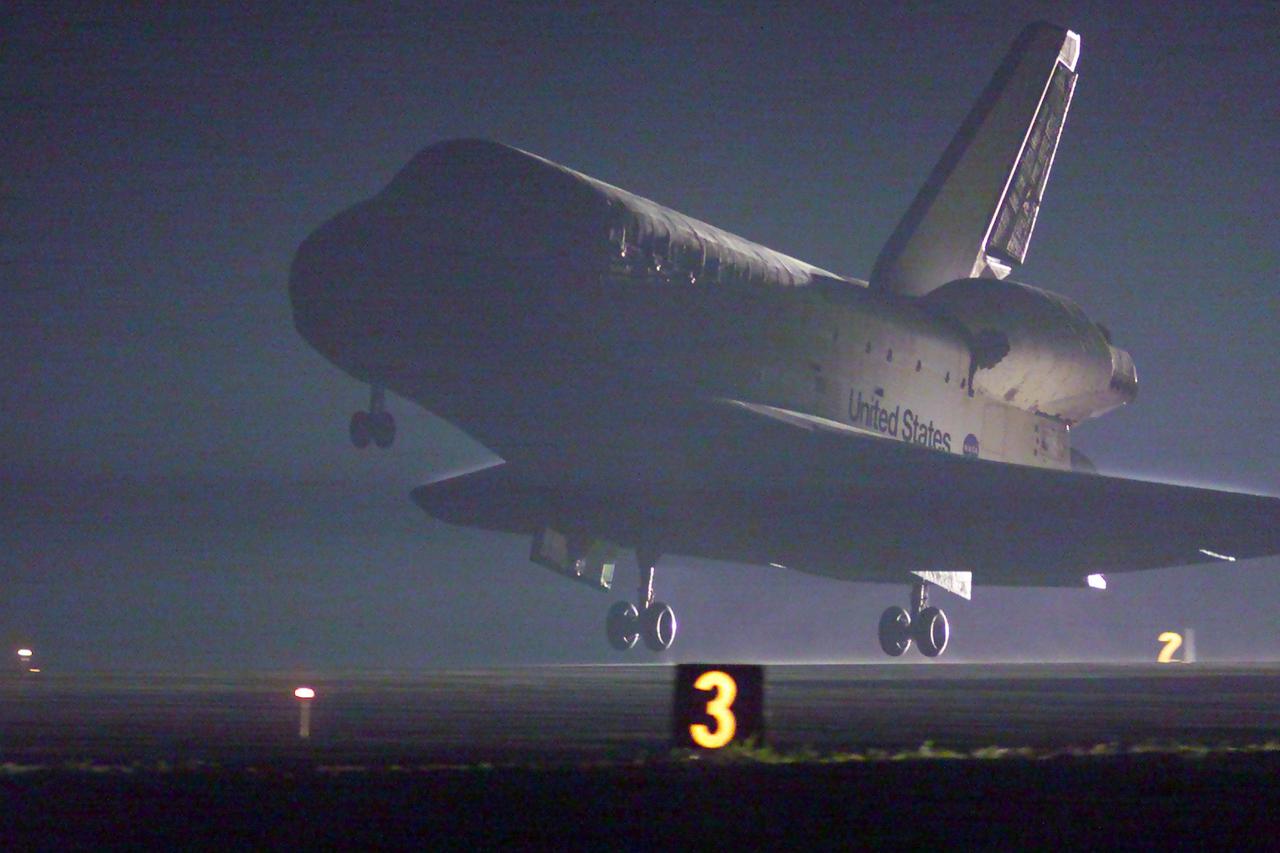
KENNEDY SPACE CENTER, Fla. -- Space Shuttle Discovery prepares to land at the KSC Shuttle Landing Facility on runway 15. Main gear touchdown occurred at 2:31:42 a.m. EST, nose wheel touchdown at 2:31:54 a.m., and wheel stop at 2:33:06 a.m. The landing on orbit 201 concluded mission STS-102, the eighth flight to the International Space Station, carrying the first Multi-Purpose Logistics Module Leonardo, to the ISS and Expedition Two, a replacement crew for the Station. The 12-day, 19-hour, 51-minute mission returned both the Leonardo and the first resident crew of the ISS, Expedition One, to KSC. Discovery logged 5.3 million miles on this mission. The landing marked the 54th at KSC in the history of the program, and the 12th night landing at KSC
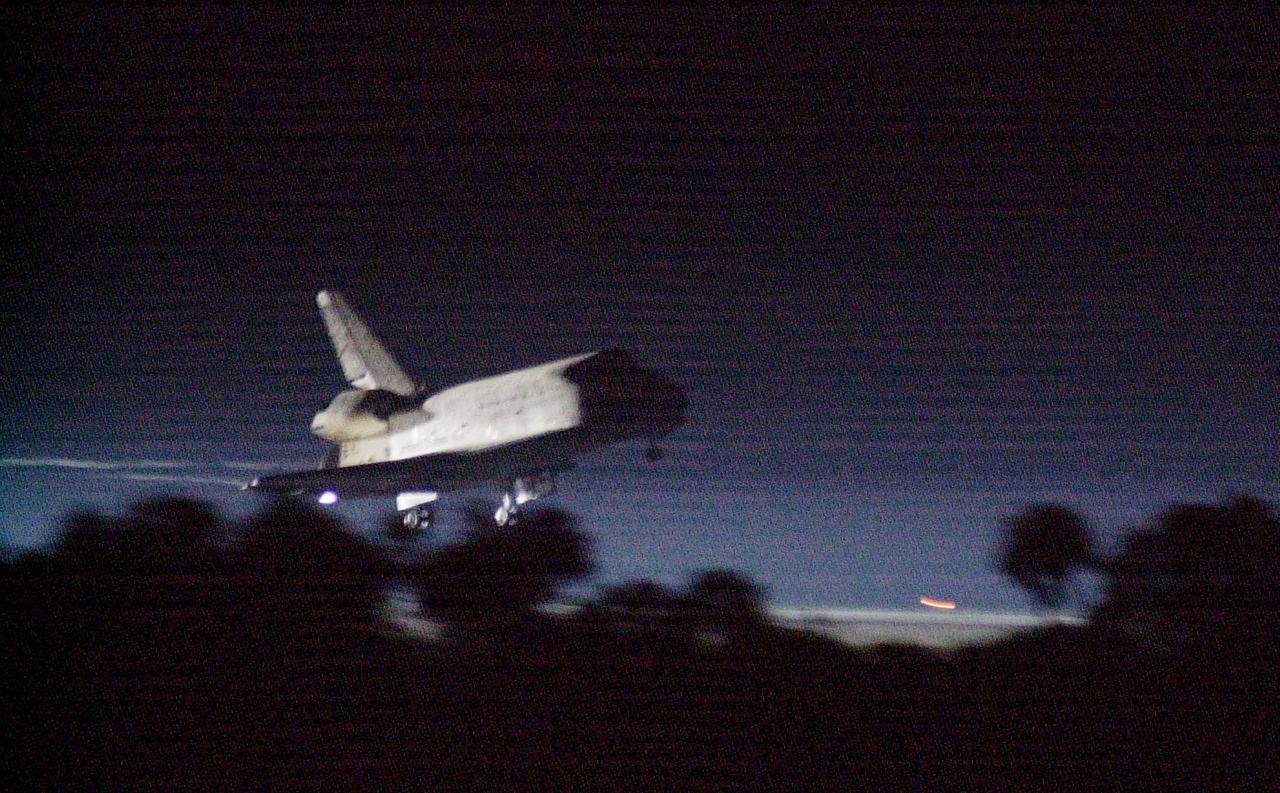
KENNEDY SPACE CENTER, Fla. -- Getting a break in the weather, Space Shuttle Discovery prepares to land at the KSC Shuttle Landing Facility March 21, on runway 15. Main gear touchdown occurred at 2:31:42 a.m. EST, nose wheel touchdown at 2:31:54 a.m., and wheel stop at 2:33:06 a.m. The landing on orbit 201 concluded mission STS-102, the eighth flight to the International Space Station, carrying the first Multi-Purpose Logistics Module Leonardo, to the ISS and Expedition Two, a replacement crew for the Station. The 12-day, 19-hour, 51-minute mission returned both the Leonardo; and the first resident crew of the ISS, Expedition One, to KSC. Discovery logged 5.3 million miles on this mission. The landing marked the 54th at KSC in the history of the program, and the 12th night landing at KSC
KENNEDY SPACE CENTER, Fla. -- Space Shuttle Discovery is silhouetted by the brilliant runway lights of runway 15 as it lands at the KSC Shuttle Landing Facility. Main gear touchdown occurred at 2:31:42 a.m. EST. Nose wheel touchdown occurred at 2:31:54 a.m., and wheel stop at 2:33:06 a.m. The landing on orbit 201 concluded mission STS-102, the eighth flight to the International Space Station, carrying the first Multi-Purpose Logistics Module, Leonardo, to the ISS and Expedition Two, a replacement crew for the Station. The 12-day, 19-hour, 51-minute mission returned both the Leonardo and the first resident crew of the ISS, Expedition One, to KSC. Discovery logged 5.3 million miles on this mission. The landing marked the 54th at KSC in the history of the program, and the 12th night landing at KSC
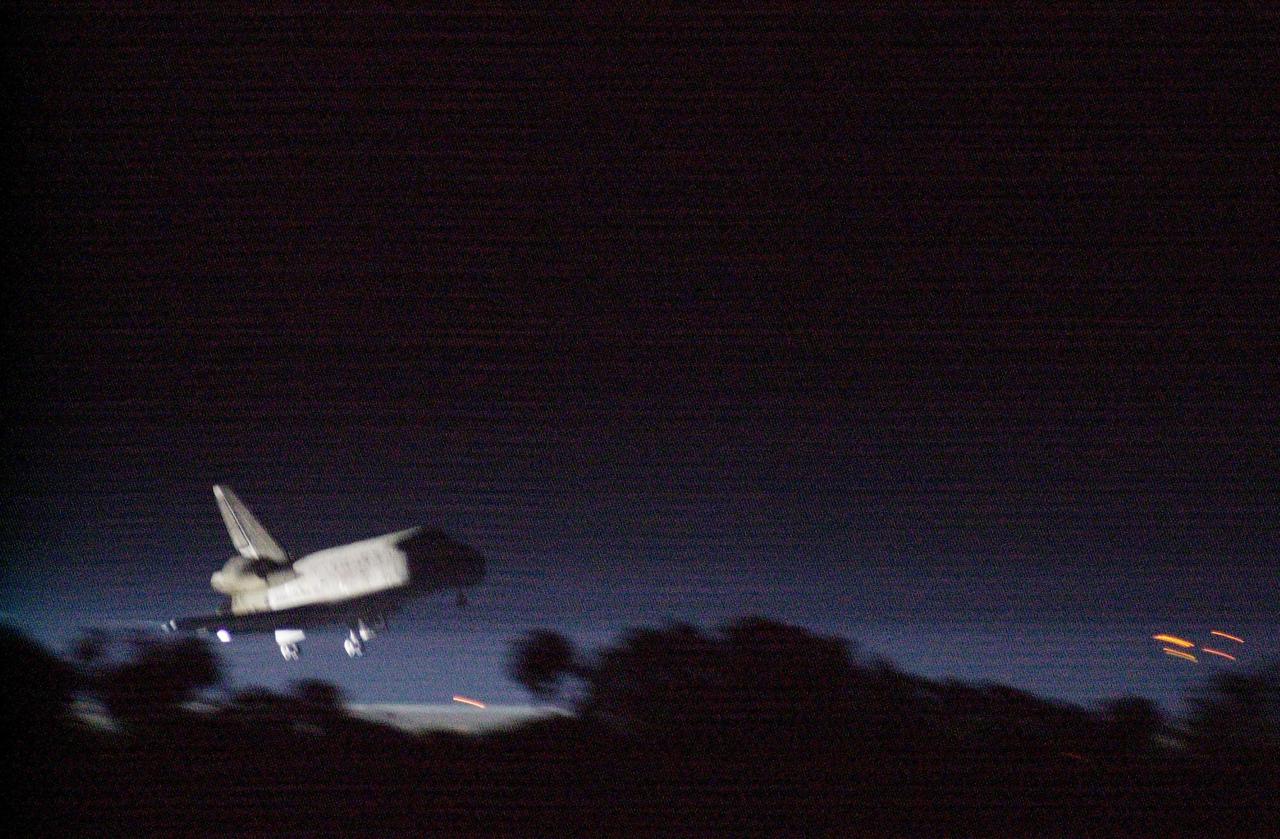
KENNEDY SPACE CENTER, Fla. -- Getting a break in the weather, Space Shuttle Discovery prepares to land at the KSC Shuttle Landing Facility March 21, on runway 15. Main gear touchdown occurred at 2:31:42 a.m. EST, nose wheel touchdown at 2:31:54 a.m., and wheel stop at 2:33:06 a.m. The landing on orbit 201 concluded mission STS-102, the eighth flight to the International Space Station, carrying the first Multi-Purpose Logistics Module Leonardo, to the ISS and Expedition Two, a replacement crew for the Station. The 12-day, 19-hour, 51-minute mission returned both the Leonardo and the first resident crew of the ISS, Expedition One, to KSC. Discovery logged 5.3 million miles on this mission. The landing marked the 54th at KSC in the history of the program, and the 12th night landing at KSC
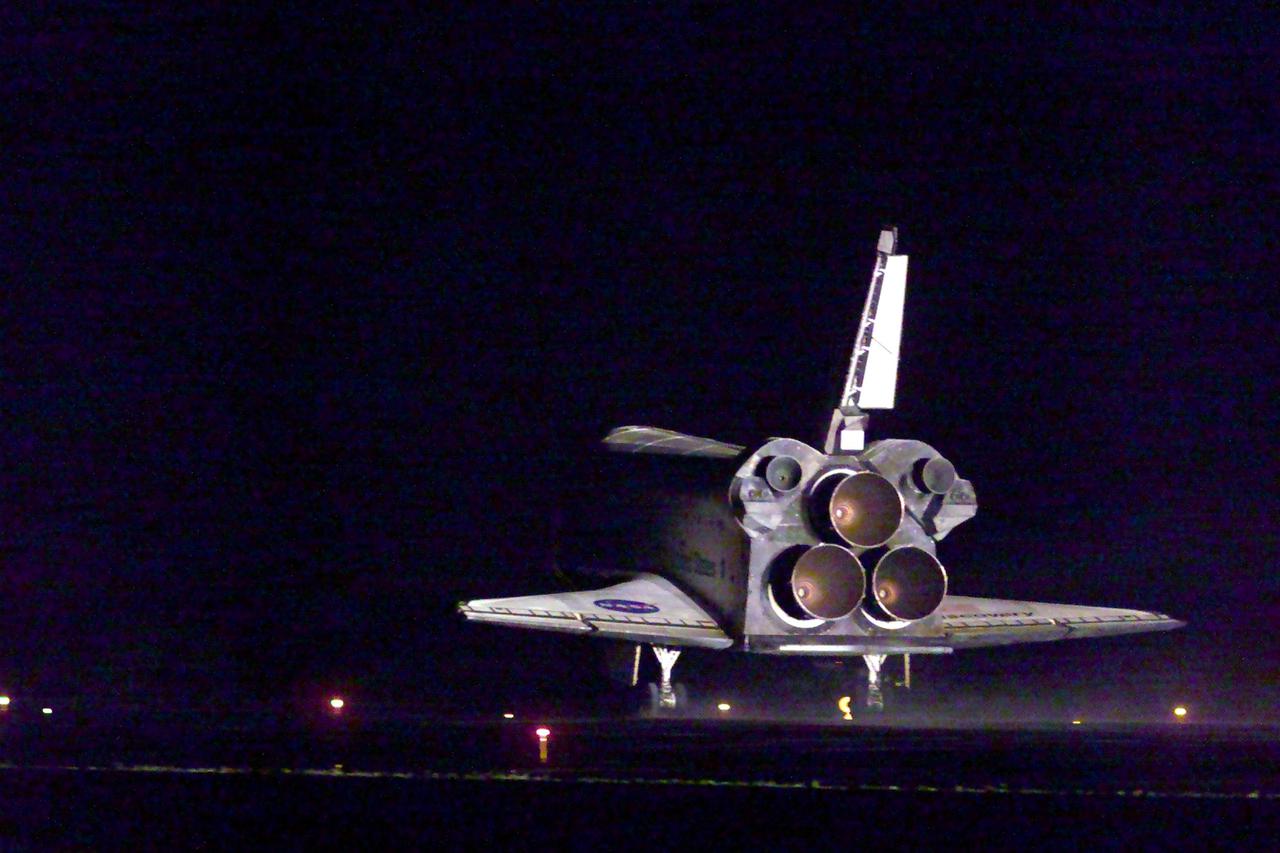
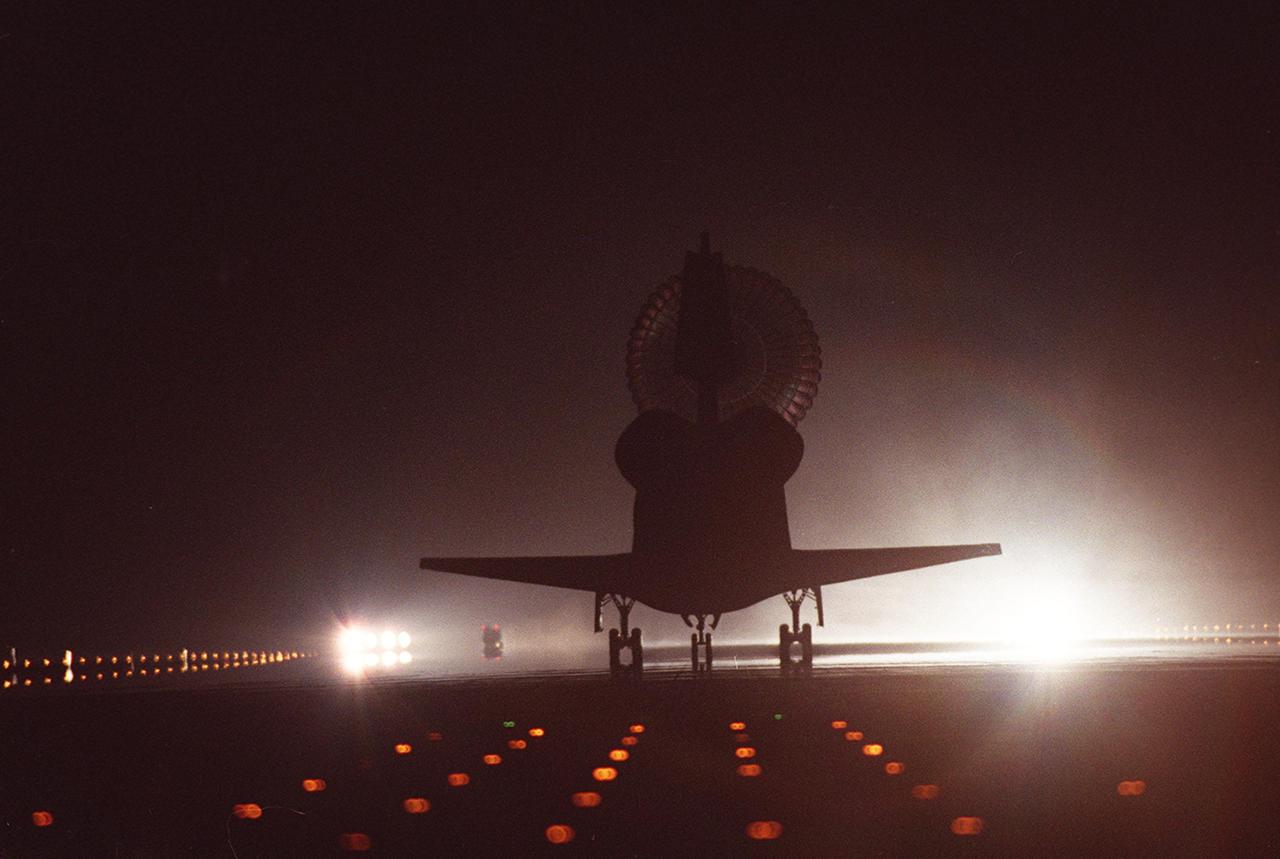
KENNEDY SPACE CENTER, Fla. -- Viewed from behind, Space Shuttle Discovery is seen landing on runway 15 of the KSC Shuttle Landing Facility. Main gear touchdown occurred at 2:31:42 a.m. EST. Nose wheel touchdown occurred at 2:31:54 a.m., and wheel stop at 2:33:06 a.m. The landing on orbit 201 concluded mission STS-102, the eighth flight to the International Space Station, carrying the first Multi-Purpose Logistics Module Leonardo, to the ISS and Expedition Two, a replacement crew for the Station. The 12-day, 19-hour, 51-minute mission returned both the Leonardo and the first resident crew of the ISS, Expedition One, to KSC. Discovery logged 5.3 million miles on this mission. The landing marked the 54th at KSC in the history of the program, and the 12th night landing at KSC
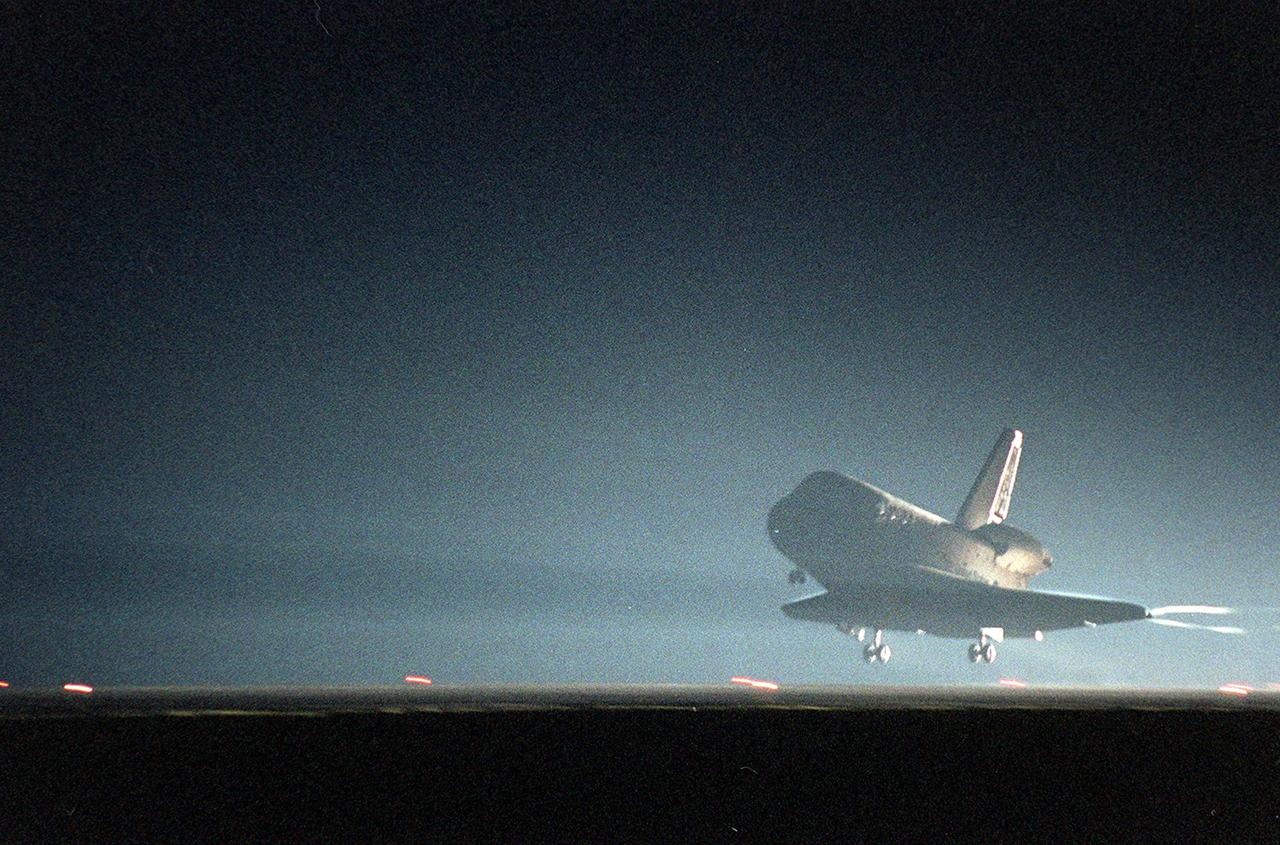
KENNEDY SPACE CENTER, Fla. -- Space Shuttle Discovery prepares to land at the KSC Shuttle Landing Facility on runway 15. Main gear touchdown occurred about 2:31:42 a.m. EST, nose wheel touchdown at 2:31:54 a.m., and wheel stop at 2:33:06 a.m. The landing, on orbit 201, concluded mission STS-102, the eighth flight to the International Space Station, carrying the first Multi-Purpose Logistics Module Leonardo, to the ISS and Expedition Two, a replacement crew for the Station. The 12-day, 19-hour, 51-minute mission returned both the Leonardo and the first resident crew of the ISS, Expedition One, to KSC. Discovery logged 5.3 million miles on this mission. The landing marked the 54th at KSC in the history of the program, and the 12th night landing at KSC
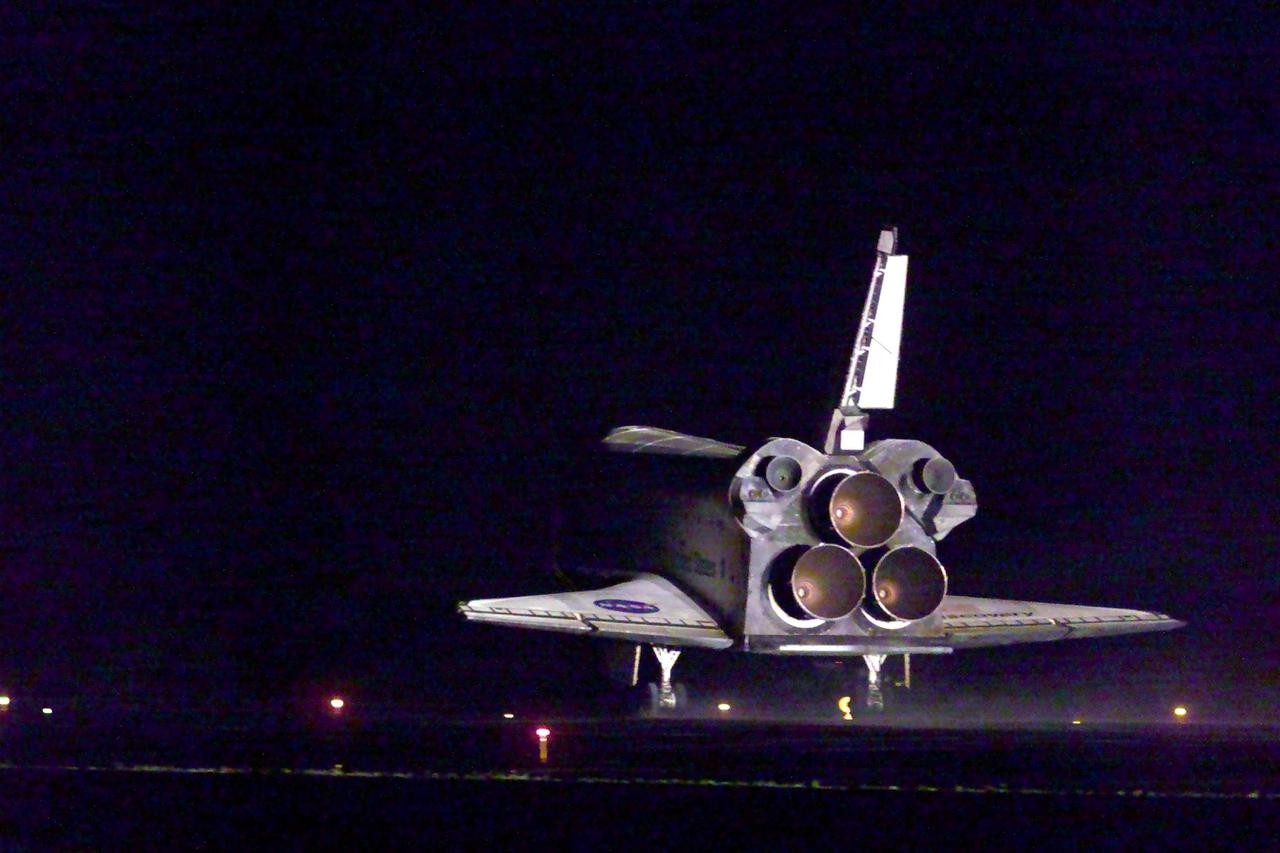
KENNEDY SPACE CENTER, Fla. -- Viewed from behind, Space Shuttle Discovery is seen landing on runway 15 of the KSC Shuttle Landing Facility. Main gear touchdown occurred at 2:31:42 a.m. EST. Nose wheel touchdown occurred at 2:31:54 a.m., and wheel stop at 2:33:06 a.m. The landing on orbit 201 concluded mission STS-102, the eighth flight to the International Space Station, carrying the first Multi-Purpose Logistics Module Leonardo, to the ISS and Expedition Two, a replacement crew for the Station. The 12-day, 19-hour, 51-minute mission returned both the Leonardo and the first resident crew of the ISS, Expedition One, to KSC. Discovery logged 5.3 million miles on this mission. The landing marked the 54th at KSC in the history of the program, and the 12th night landing at KSC
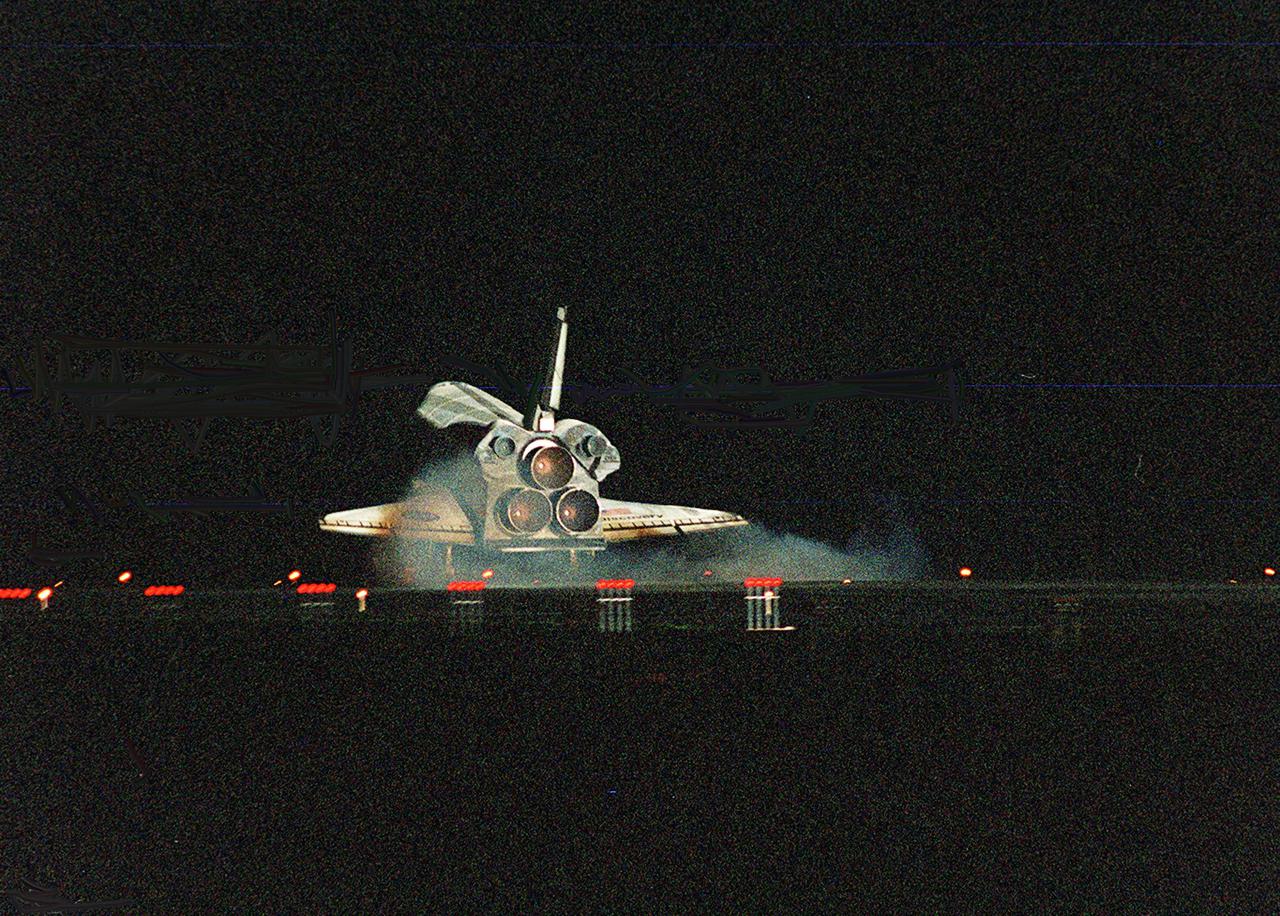
KENNEDY SPACE CENTER, Fla. -- Space Shuttle Discovery kicks up a swirl of dust as it touches down on runway 15 at the KSC Shuttle Landing Facility. Main gear touchdown occurred about 2:31:42 a.m. EST, nose wheel touchdown at 2:31:54 a.m., and wheel stop at 2:33:06 a.m. The landing, on orbit 201, concluded mission STS-102, the eighth flight to the International Space Station, carrying the first Multi-Purpose Logistics Module Leonardo, to the ISS and Expedition Two, a replacement crew for the Station. The 12-day, 19-hour, 51-minute mission returned both the Leonardo and the first resident crew of the ISS, Expedition One, to KSC. Discovery logged 5.3 million miles on this mission. The landing marked the 54th at KSC in the history of the program, and the 12th night landing at KSC
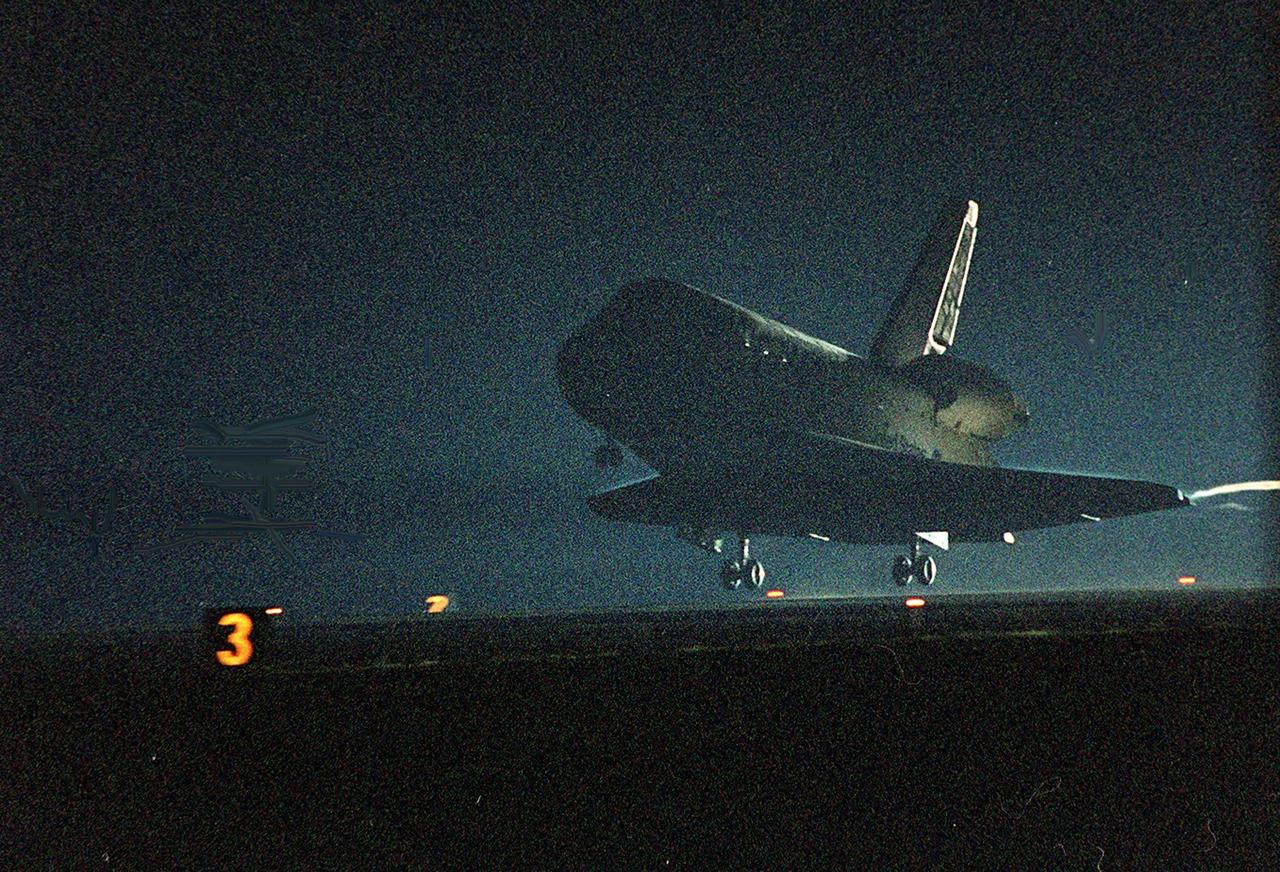
KENNEDY SPACE CENTER, Fla. -- Space Shuttle Discovery approaches touchdown on runway 15 at the KSC Shuttle Landing Facility. Main gear touchdown occurred about 2:31:42 a.m. EST, nose wheel touchdown at 2:31:54 a.m., and wheel stop at 2:33:06 a.m. The landing, on orbit 201, concluded mission STS-102, the eighth flight to the International Space Station, carrying the first Multi-Purpose Logistics Module Leonardo, to the ISS and Expedition Two, a replacement crew for the Station. The 12-day, 19-hour, 51-minute mission returned both the Leonardo and the first resident crew of the ISS, Expedition One, to KSC. Discovery logged 5.3 million miles on this mission. The landing marked the 54th at KSC in the history of the program, and the 12th night landing at KSC
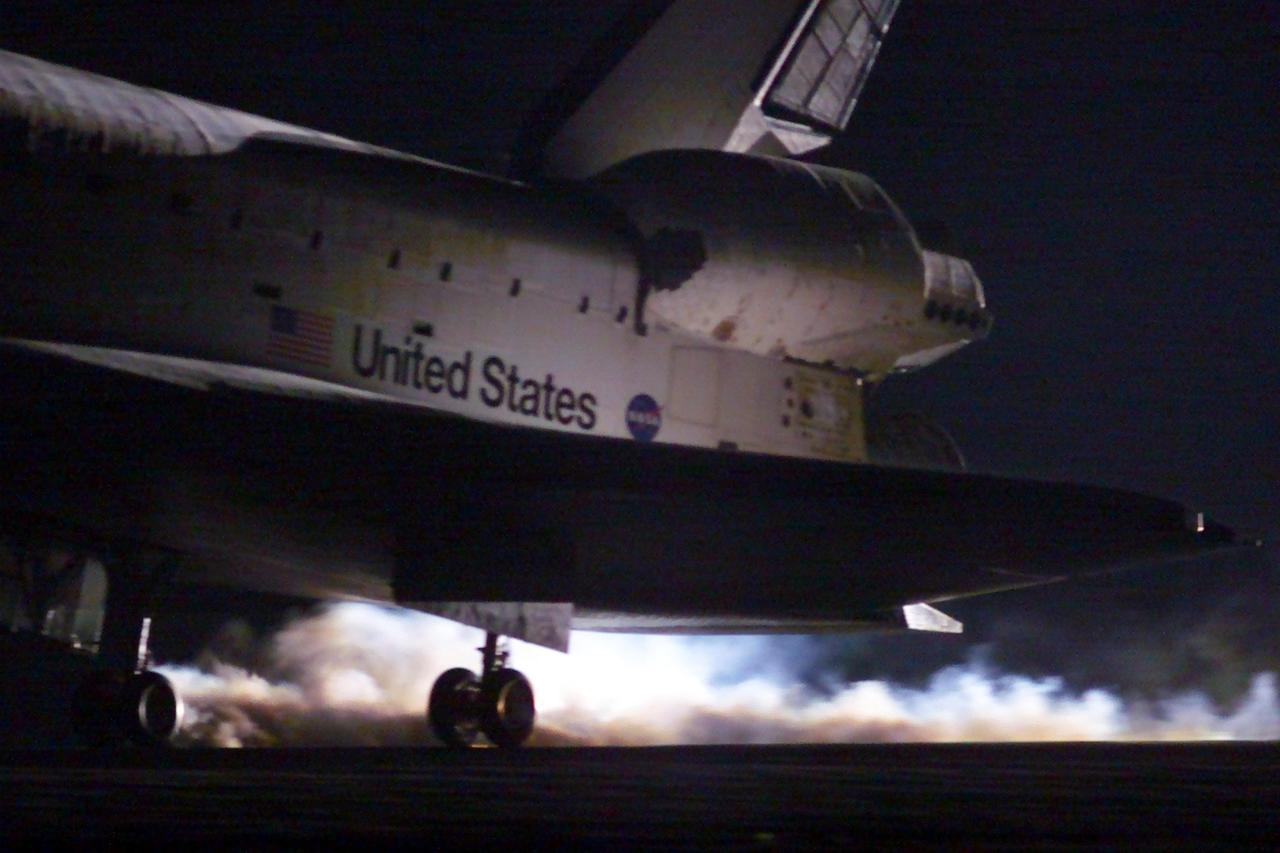
KENNEDY SPACE CENTER, Fla. -- In this view, the rear wheels on Space Shuttle Discovery are seen touching down on runway 15 of the KSC Shuttle Landing Facility. Main gear touchdown occurred at 2:31:42 a.m. EST. Nose wheel touchdown occurred at 2:31:54 a.m., and wheel stop at 2:33:06 a.m. The landing on orbit 201 concluded mission STS-102, the eighth flight to the International Space Station, carrying the first Multi-Purpose Logistics Module Leonardo, to the ISS and Expedition Two, a replacement crew for the Station. The 12-day, 19-hour, 51-minute mission returned both the Leonardo and the first resident crew of the ISS, Expedition One, to KSC. Discovery logged 5.3 million miles on this mission. The landing marked the 54th at KSC in the history of the program, and the 12th night landing at KSC
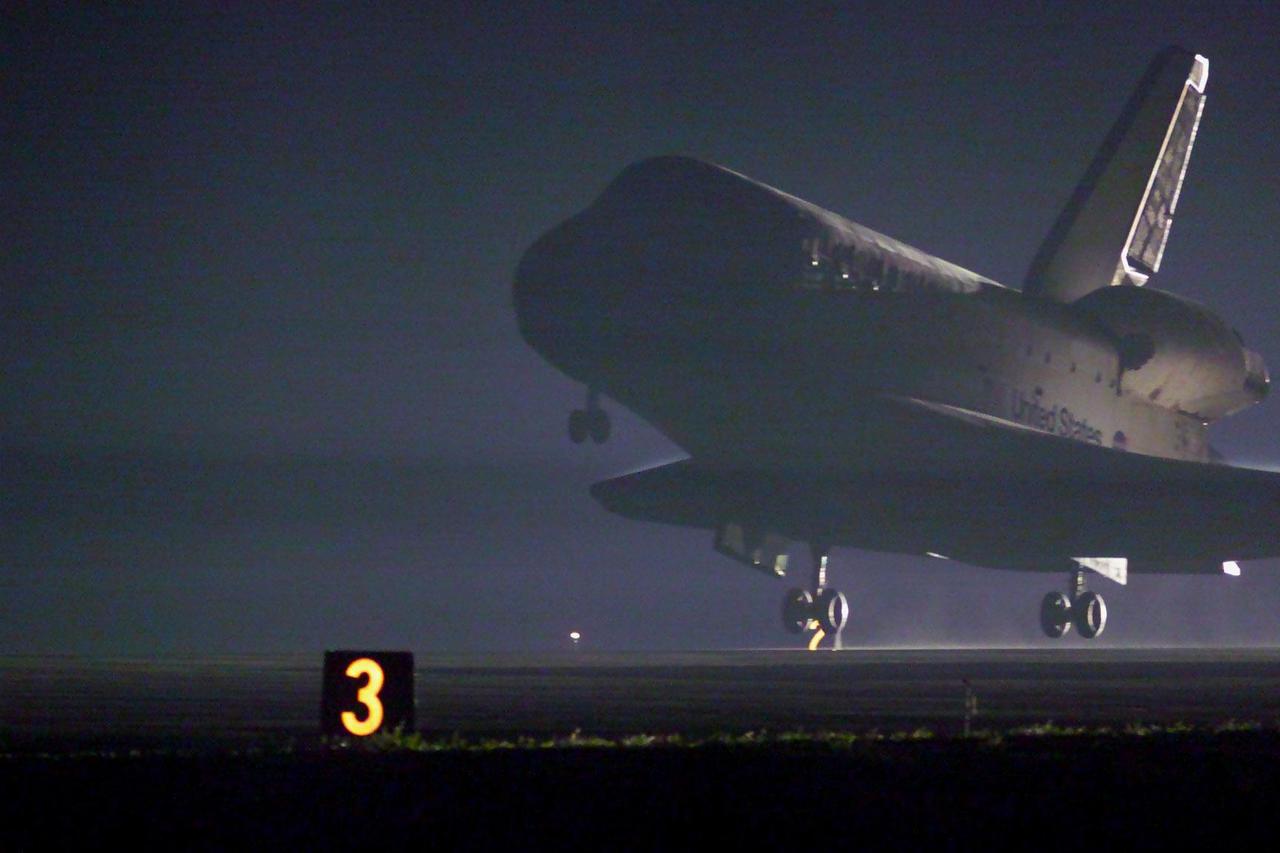
KENNEDY SPACE CENTER, Fla. -- Space Shuttle Discovery approaches touchdown on runway 15 at the KSC Shuttle Landing Facility. Main gear touchdown occurred at 2:31:42 a.m. EST, nose wheel touchdown at 2:31:54 a.m., and wheel stop at 2:33:06 a.m. The landing on orbit 201 concluded mission STS-102, the eighth flight to the International Space Station, carrying the first Multi-Purpose Logistics Module Leonardo, to the ISS and Expedition Two, a replacement crew for the Station. The 12-day, 19-hour, 51-minute mission returned both the Leonardo and the first resident crew of the ISS, Expedition One, to KSC . Discovery logged 5.3 million miles on this mission. The landing marked the 54th at KSC in the history of the program, and the 12th night landing at KSC
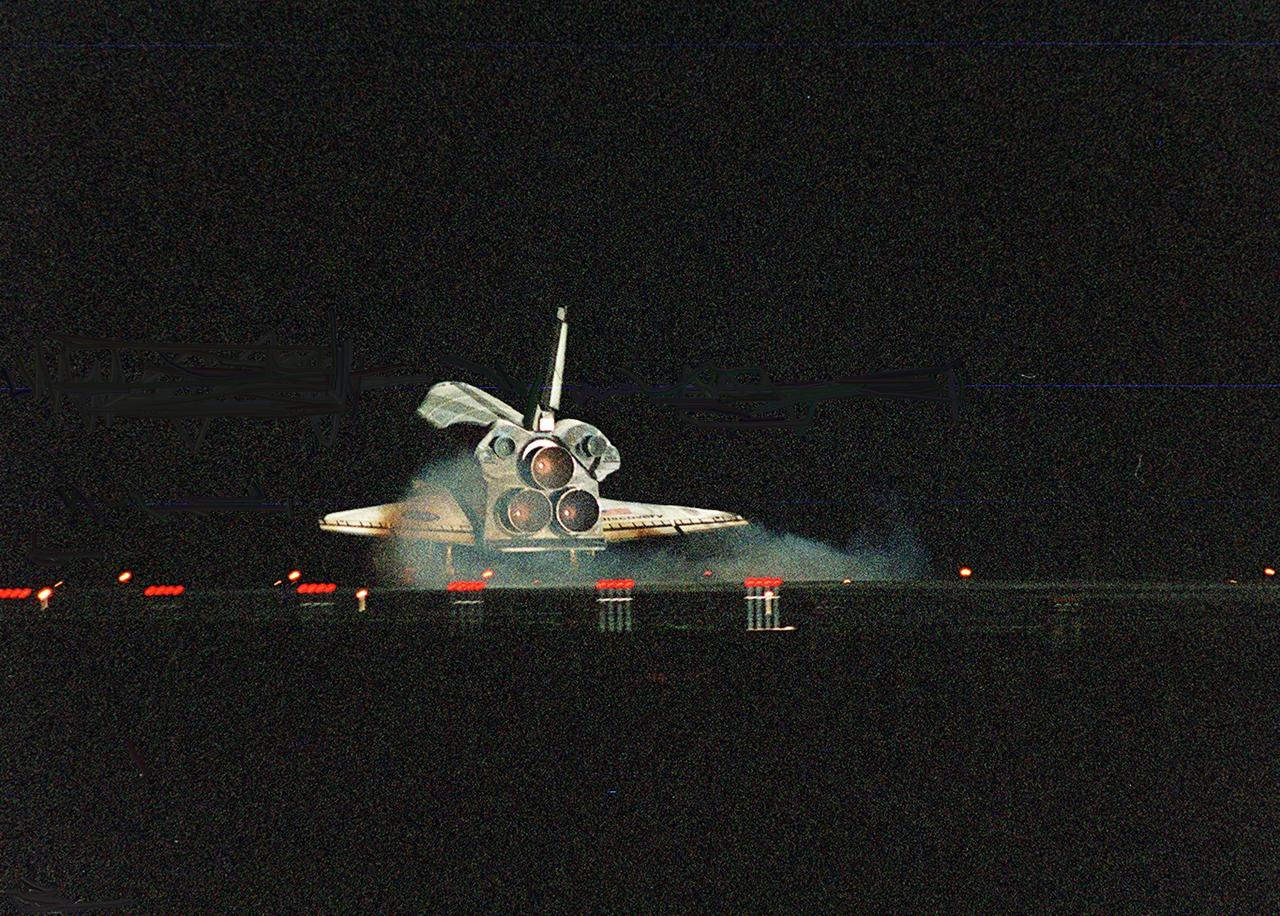
KENNEDY SPACE CENTER, Fla. -- Space Shuttle Discovery kicks up a swirl of dust as it touches down on runway 15 at the KSC Shuttle Landing Facility. Main gear touchdown occurred about 2:31:42 a.m. EST, nose wheel touchdown at 2:31:54 a.m., and wheel stop at 2:33:06 a.m. The landing, on orbit 201, concluded mission STS-102, the eighth flight to the International Space Station, carrying the first Multi-Purpose Logistics Module Leonardo, to the ISS and Expedition Two, a replacement crew for the Station. The 12-day, 19-hour, 51-minute mission returned both the Leonardo and the first resident crew of the ISS, Expedition One, to KSC. Discovery logged 5.3 million miles on this mission. The landing marked the 54th at KSC in the history of the program, and the 12th night landing at KSC
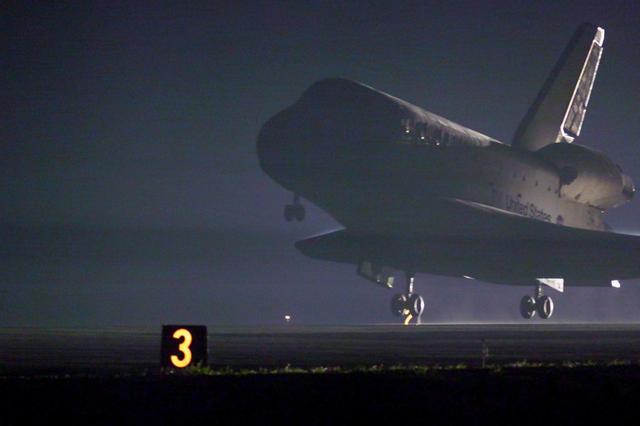
KENNEDY SPACE CENTER, Fla. -- Space Shuttle Discovery approaches touchdown on runway 15 at the KSC Shuttle Landing Facility. Main gear touchdown occurred at 2:31:42 a.m. EST, nose wheel touchdown at 2:31:54 a.m., and wheel stop at 2:33:06 a.m. The landing on orbit 201 concluded mission STS-102, the eighth flight to the International Space Station, carrying the first Multi-Purpose Logistics Module Leonardo, to the ISS and Expedition Two, a replacement crew for the Station. The 12-day, 19-hour, 51-minute mission returned both the Leonardo and the first resident crew of the ISS, Expedition One, to KSC . Discovery logged 5.3 million miles on this mission. The landing marked the 54th at KSC in the history of the program, and the 12th night landing at KSC
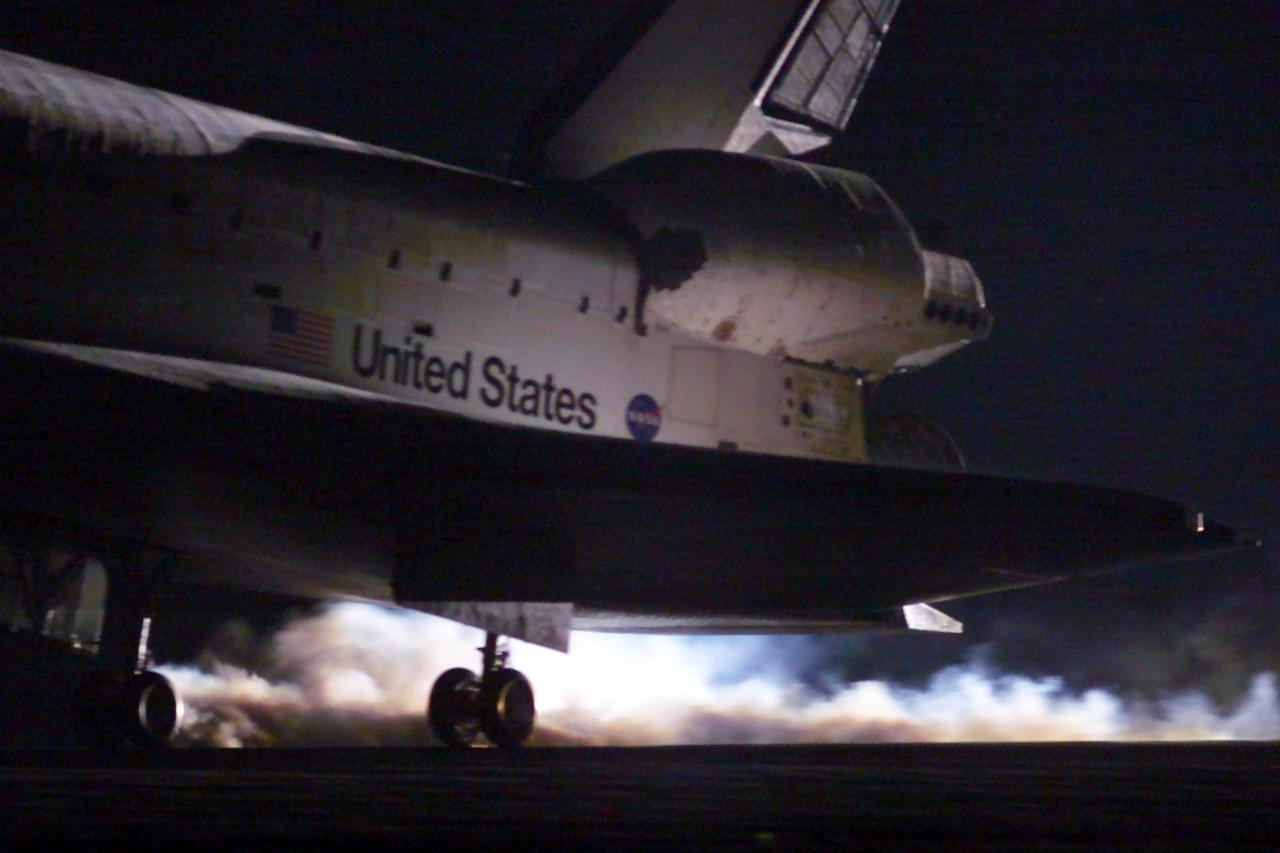
KENNEDY SPACE CENTER, Fla. -- In this view, the rear wheels on Space Shuttle Discovery are seen touching down on runway 15 of the KSC Shuttle Landing Facility. Main gear touchdown occurred at 2:31:42 a.m. EST. Nose wheel touchdown occurred at 2:31:54 a.m., and wheel stop at 2:33:06 a.m. The landing on orbit 201 concluded mission STS-102, the eighth flight to the International Space Station, carrying the first Multi-Purpose Logistics Module Leonardo, to the ISS and Expedition Two, a replacement crew for the Station. The 12-day, 19-hour, 51-minute mission returned both the Leonardo and the first resident crew of the ISS, Expedition One, to KSC. Discovery logged 5.3 million miles on this mission. The landing marked the 54th at KSC in the history of the program, and the 12th night landing at KSC
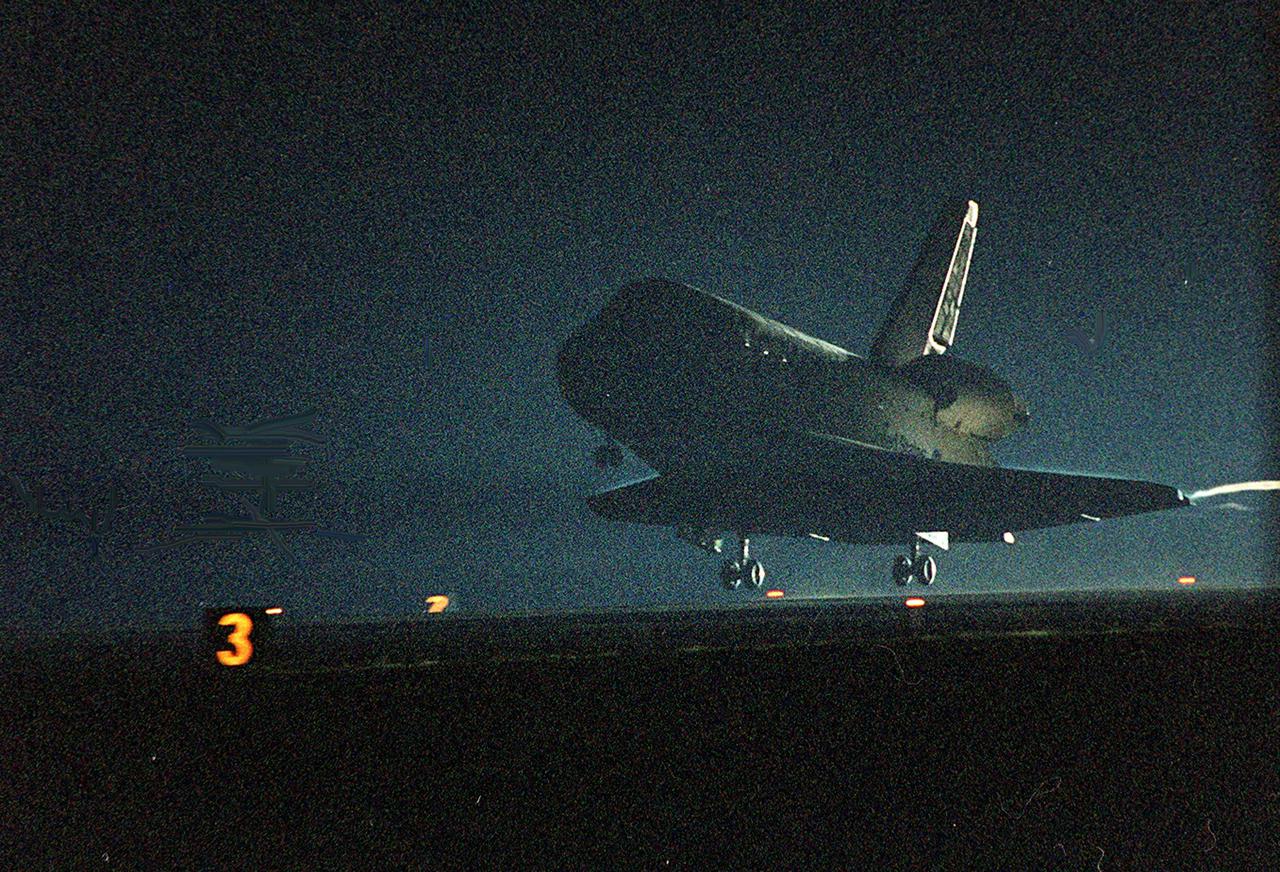
KENNEDY SPACE CENTER, Fla. -- Space Shuttle Discovery approaches touchdown on runway 15 at the KSC Shuttle Landing Facility. Main gear touchdown occurred about 2:31:42 a.m. EST, nose wheel touchdown at 2:31:54 a.m., and wheel stop at 2:33:06 a.m. The landing, on orbit 201, concluded mission STS-102, the eighth flight to the International Space Station, carrying the first Multi-Purpose Logistics Module Leonardo, to the ISS and Expedition Two, a replacement crew for the Station. The 12-day, 19-hour, 51-minute mission returned both the Leonardo and the first resident crew of the ISS, Expedition One, to KSC. Discovery logged 5.3 million miles on this mission. The landing marked the 54th at KSC in the history of the program, and the 12th night landing at KSC
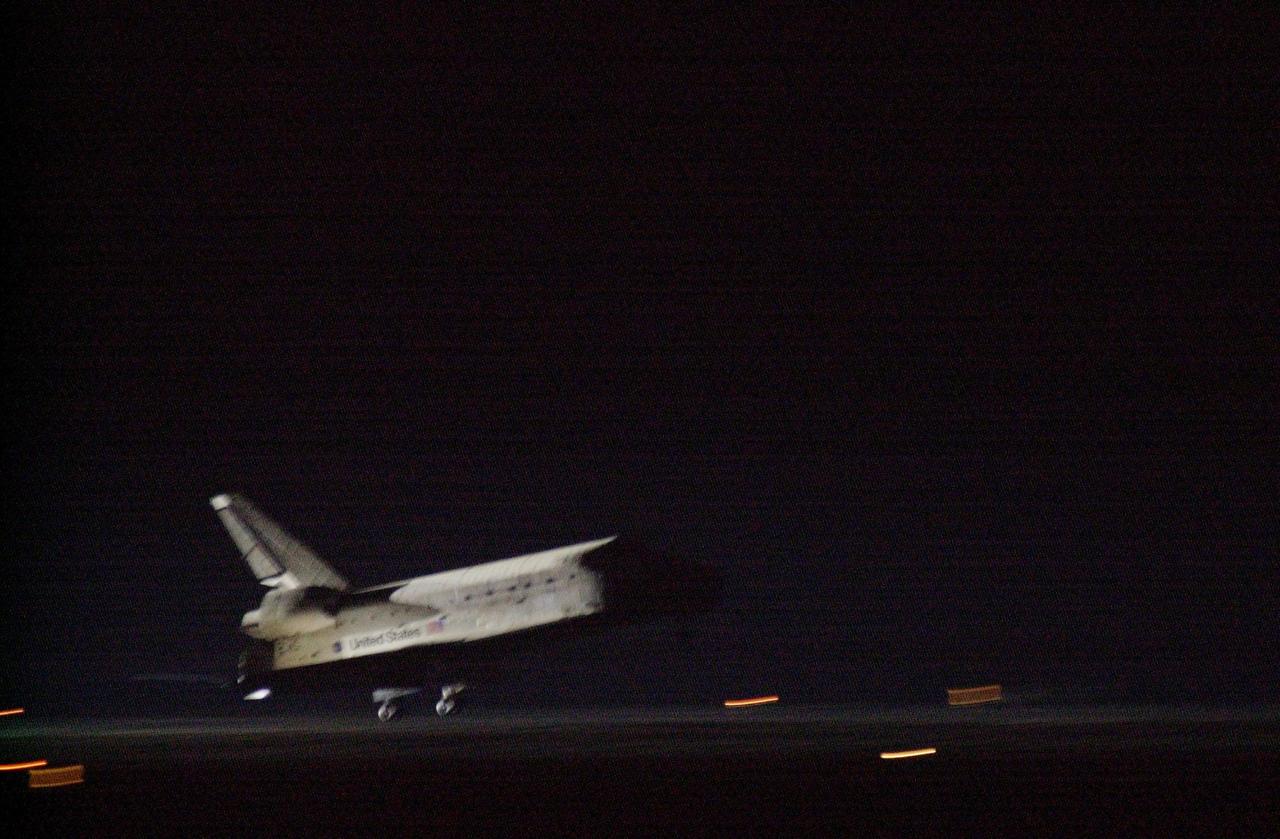
KENNEDY SPACE CENTER, Fla. -- Space Shuttle Discovery approaches runway 15 at the KSC Shuttle Landing Facility March 21. Main gear touchdown occurred at 2:31:42 a.m. EST, nose wheel touchdown at 2:31:54 a.m., and wheel stop at 2:33:06 a.m. The landing on orbit 201 concluded mission STS-102, the eighth flight to the International Space Station, carrying the first Multi-Purpose Logistics Module Leonardo, to the ISS and Expedition Two, a replacement crew for the Station. The 12-day, 19-hour, 51-minute mission returned both the Leonardo and the first resident crew of the ISS, Expedition One, to KSC . Discovery logged 5.3 million miles on this mission. The landing marked the 54th at KSC in the history of the program, and the 12th night landing at KSC
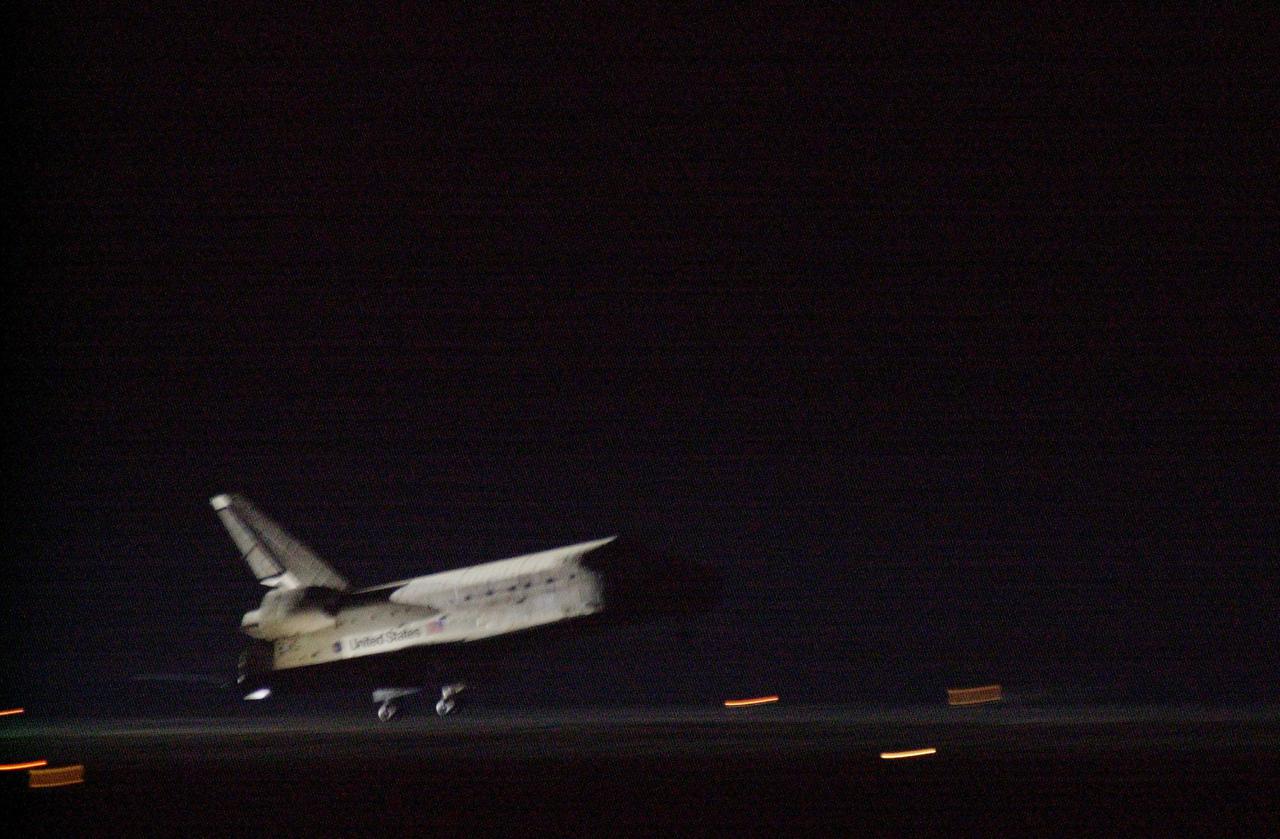
KENNEDY SPACE CENTER, Fla. -- Space Shuttle Discovery approaches runway 15 at the KSC Shuttle Landing Facility March 21. Main gear touchdown occurred at 2:31:42 a.m. EST, nose wheel touchdown at 2:31:54 a.m., and wheel stop at 2:33:06 a.m. The landing on orbit 201 concluded mission STS-102, the eighth flight to the International Space Station, carrying the first Multi-Purpose Logistics Module Leonardo, to the ISS and Expedition Two, a replacement crew for the Station. The 12-day, 19-hour, 51-minute mission returned both the Leonardo and the first resident crew of the ISS, Expedition One, to KSC . Discovery logged 5.3 million miles on this mission. The landing marked the 54th at KSC in the history of the program, and the 12th night landing at KSC
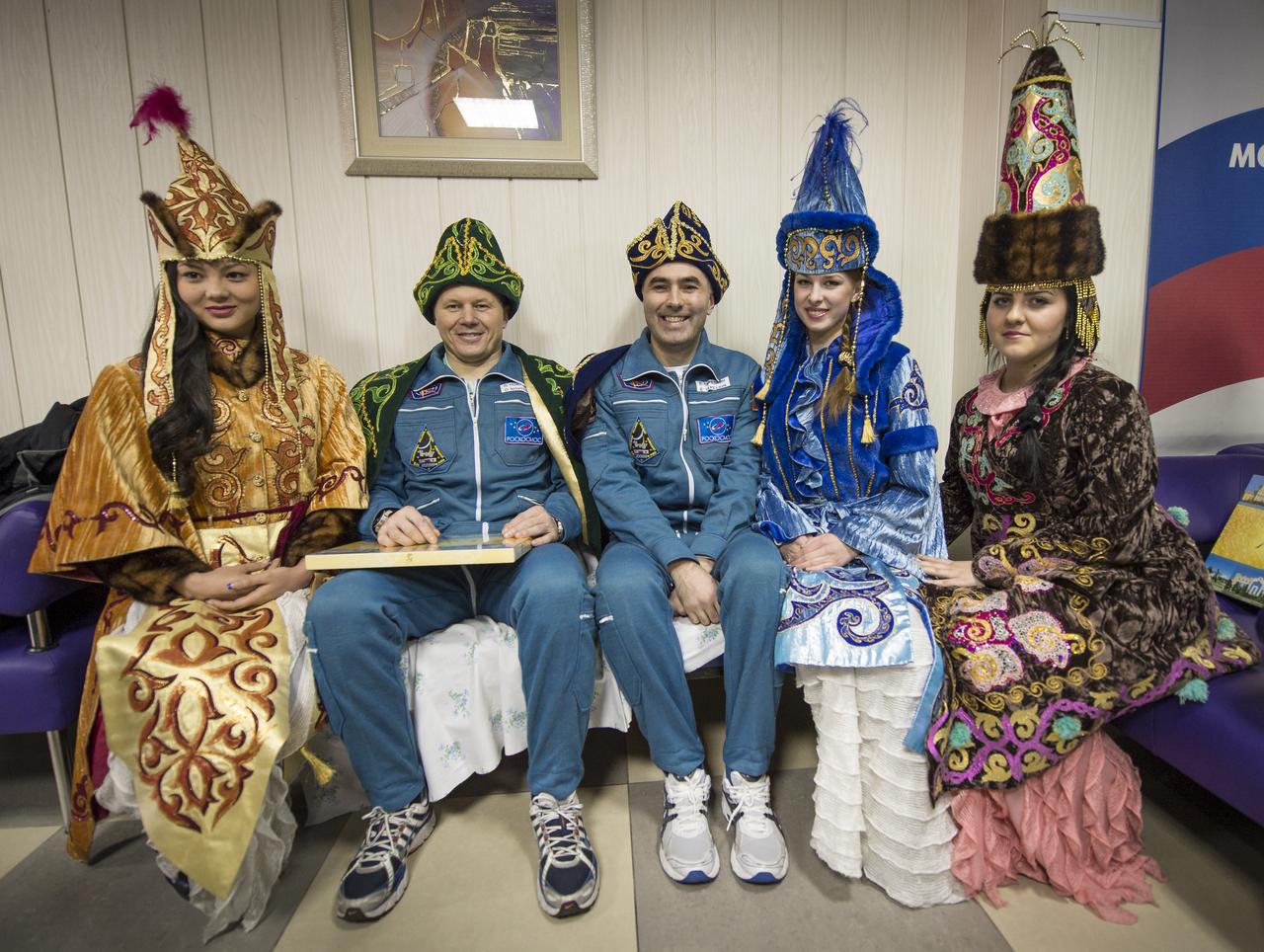
Expedition 34 Russian Soyuz Commander Oleg Novitskiy, left, and Russian Flight Engineer Evgeny Tarelkin pose for a photograph with women in ceremonial Kazakh dress at the Kustanay Airport in Kazakhstan a few hours after they, along with Expedition 34 Commander Kevin Ford of NASA, landed their Soyuz TMA-06M spacecraft near the town of Arkalyk on Saturday, March 16, 2013. Novitskiy, Tarelkin, and Ford returned from 142 days onboard the International Space Station where they served as members of the Expedition 33 and 34 crews. Photo Credit: (NASA/Bill Ingalls)
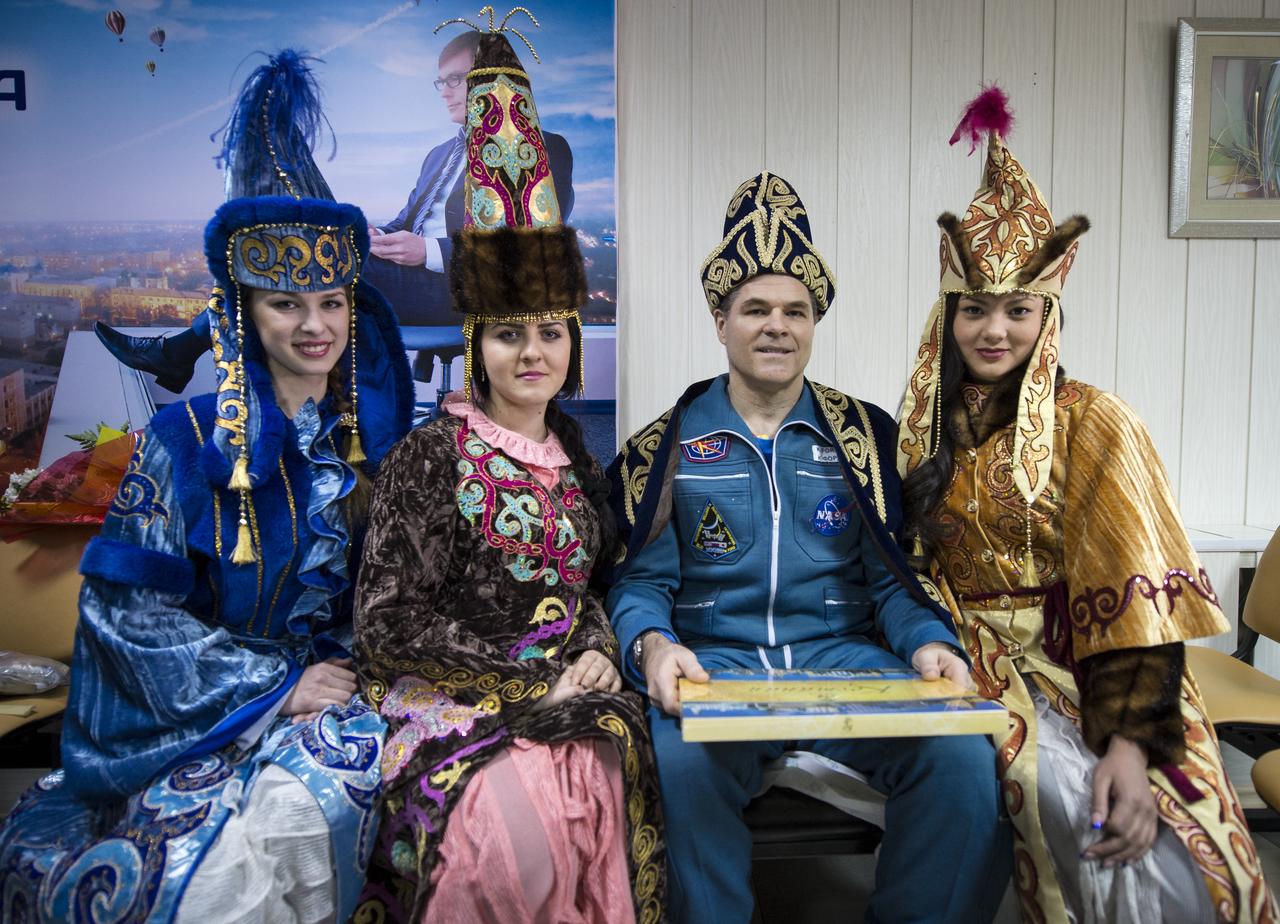
Expedition 34 Commander Kevin Ford of NASA poses for a photograph with women in ceremonial Kazakh dress at the Kustanay Airport in Kazakhstan a few hours after he, along with Expedition 34 Russian Soyuz Commander Oleg Novitskiy, and Russian Flight Engineer Evgeny Tarelkin, landed their Soyuz TMA-06M spacecraft near the town of Arkalyk on Saturday, March 16, 2013. Ford, Novitskiy, and, Tarelkin returned from 142 days onboard the International Space Station where they served as members of the Expedition 33 and 34 crews. Photo Credit: (NASA/Bill Ingalls)
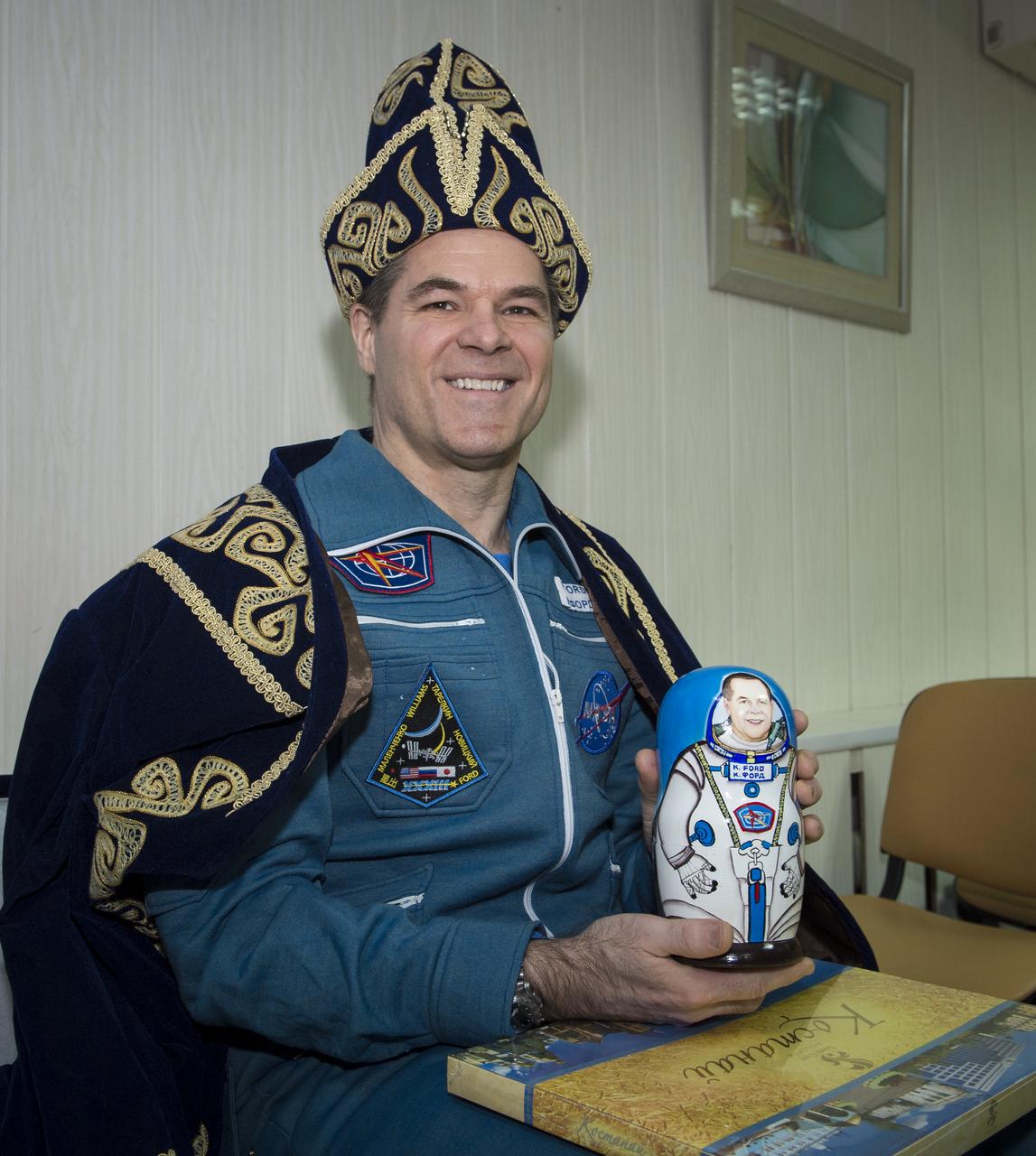
Expedition 34 Commander Kevin Ford of NASA poses for a photograph after receiving welcome home gifts at the Kustanay Airport in Kazakhstan a few hours after he, along with Expedition 34 Russian Soyuz Commander Oleg Novitskiy, and Russian Flight Engineer Evgeny Tarelkin, landed their Soyuz TMA-06M spacecraft near the town of Arkalyk on Saturday, March 16, 2013. Ford, Novitskiy, and, Tarelkin returned from 142 days onboard the International Space Station where they served as members of the Expedition 33 and 34 crews. Photo Credit: (NASA/Bill Ingalls)
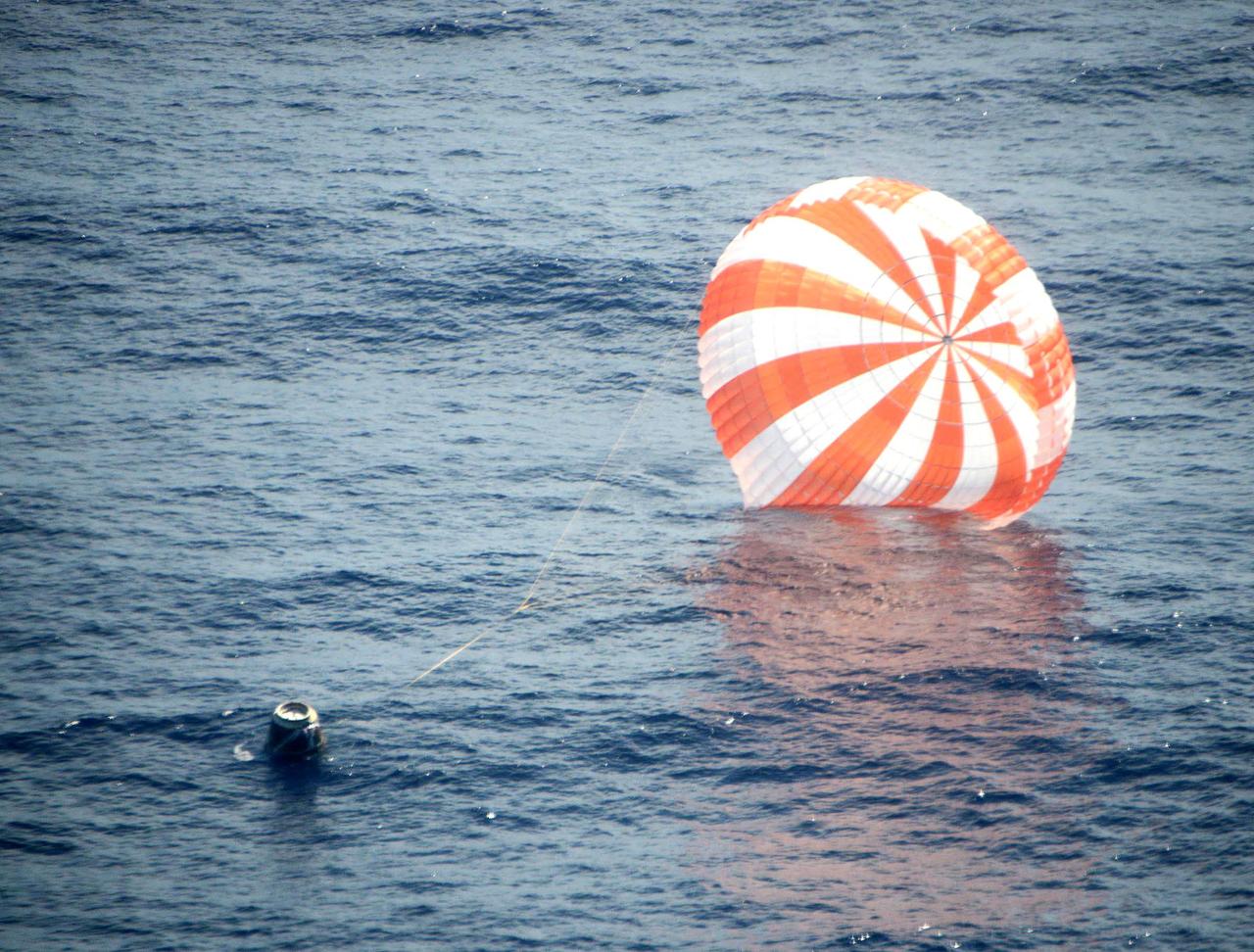
JSC2012-E-229708 (28 Oct. 2012) --- SpaceX's Dragon spacecraft is seen shortly after splashdown Oct. 28, 2012. Dragon landed in the Pacific Ocean, about 250 miles off the coast of Baja, Calif. after the conclusion of the first commercial cargo resupply mission to the International Space Station. Dragon delivered more than 800 pounds of supplies to the Expedition 33 crew and returned more than 1,600 pounds of cargo and research to Earth. Photo credit: SpaceX
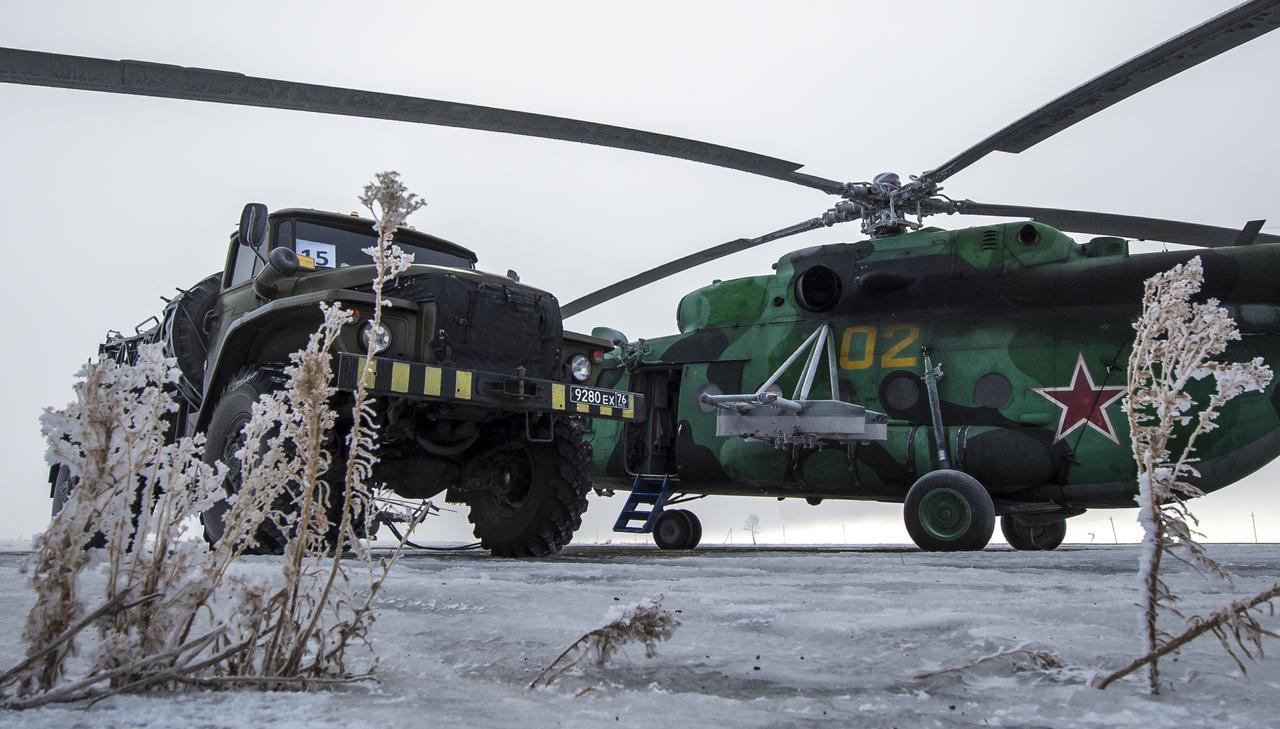
A Search and Rescue helicopter is seen grounded by low visibility at the Arkalyk Airport in Kazakhstan on Saturday, March 16, 2013. The Soyuz TMA-06M spacecraft landed with Expedition 34 Commander Kevin Ford of NASA, Russian Soyuz Commander Oleg Novitskiy and Russian Flight Engineer Evgeny Tarelkin near the town of Arkalyk, Kazakhstan on Saturday, March 16, 2013. Ford, Novitskiy, and Tarelkin returned from 142 days onboard the International Space Station where they served as members of the Expedition 33 and 34 crews. Photo Credit: (NASA/Bill Ingalls)
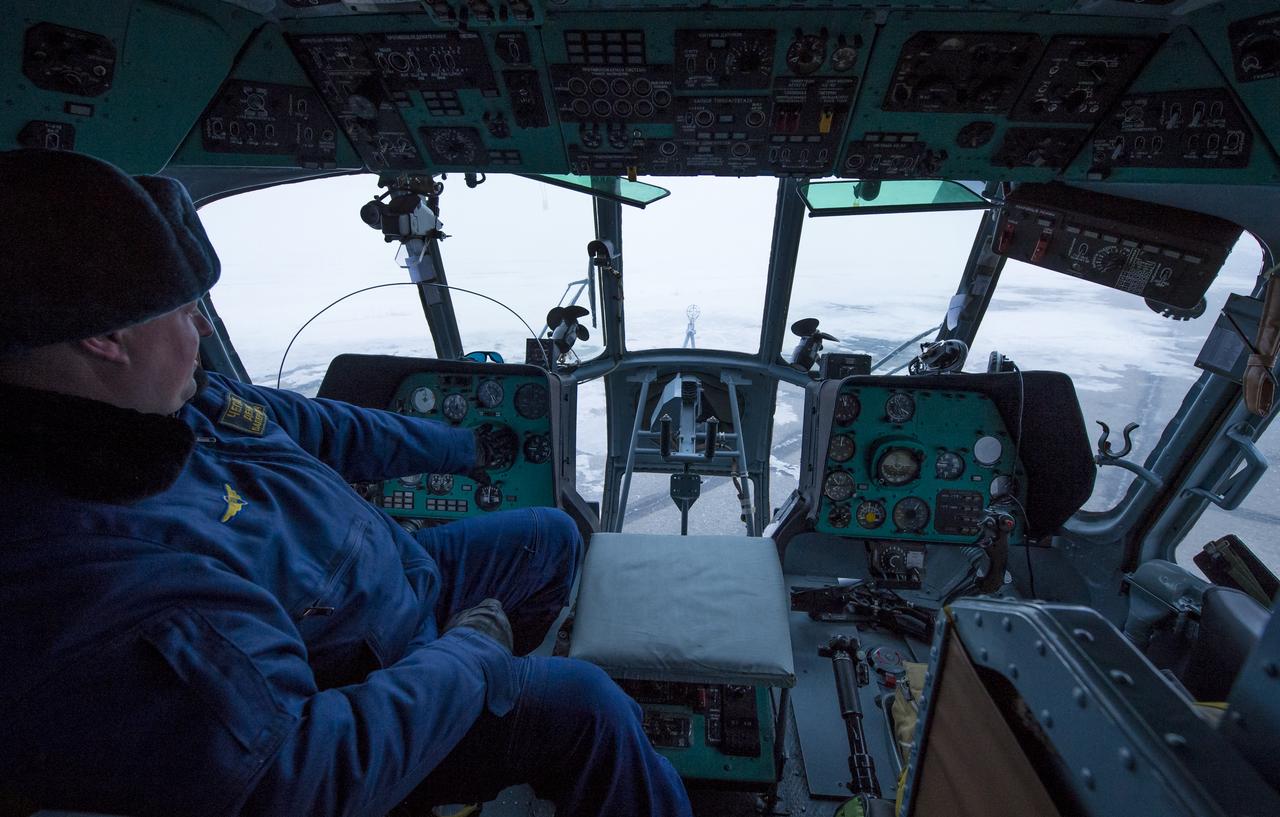
A Russian helicopter commander waits inside his Search and Rescue helicopter that was grounded by low visibility at the Arkalyk Airport in Kazakhstan on Saturday, March 16, 2013. The Soyuz TMA-06M spacecraft landed with Expedition 34 Commander Kevin Ford of NASA, Russian Soyuz Commander Oleg Novitskiy and Russian Flight Engineer Evgeny Tarelkin near the town of Arkalyk, Kazakhstan on Saturday, March 16, 2013. Ford, Novitskiy, and Tarelkin returned from 142 days onboard the International Space Station where they served as members of the Expedition 33 and 34 crews. Photo Credit: (NASA/Bill Ingalls)
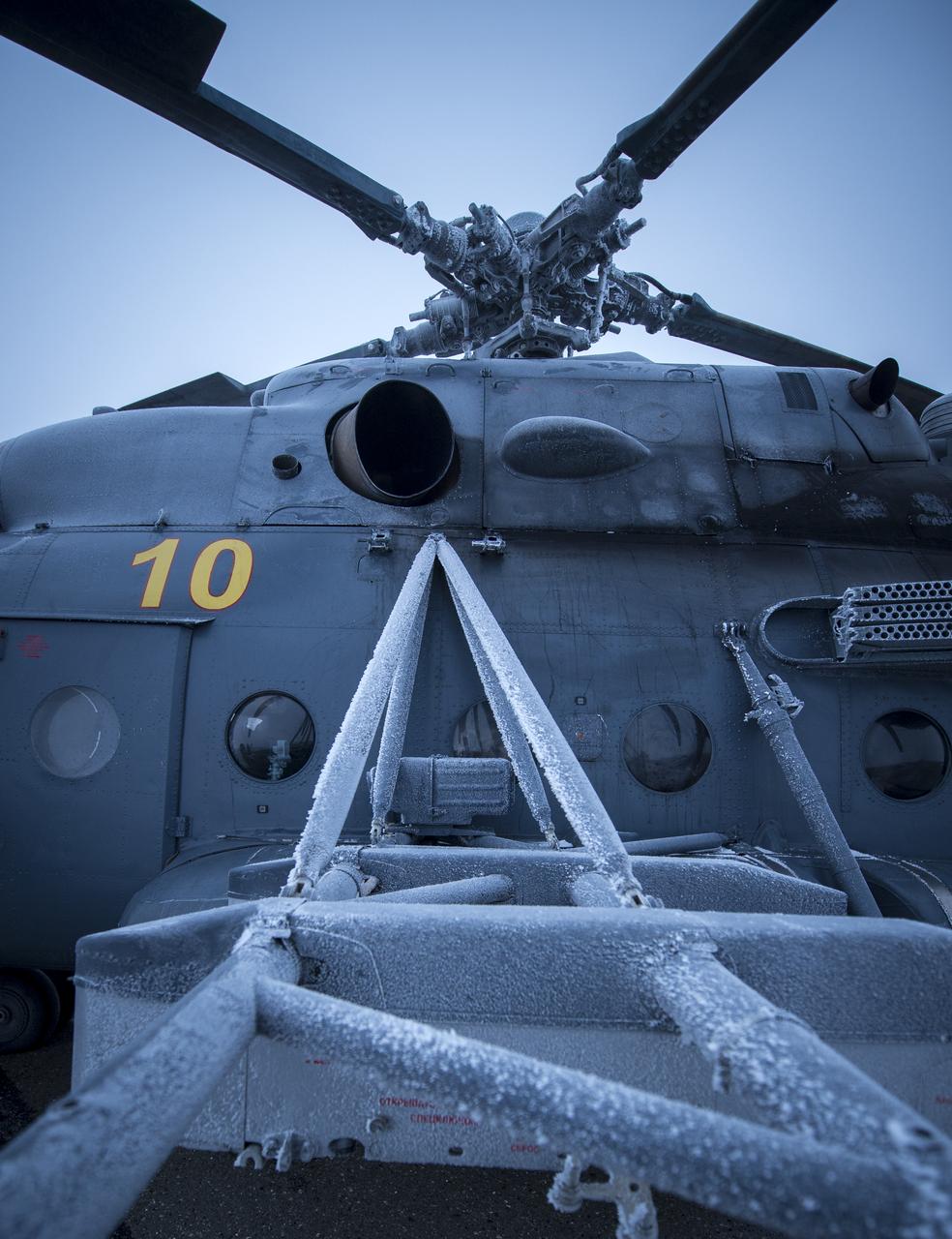
A view of a Russian Search and Rescue helicopter that was grounded by low visibility at the Arkalyk Airport in Kazakhstan on Saturday, March 16, 2013. The Soyuz TMA-06M spacecraft landed with Expedition 34 Commander Kevin Ford of NASA, Russian Soyuz Commander Oleg Novitskiy and Russian Flight Engineer Evgeny Tarelkin near the town of Arkalyk, Kazakhstan on Saturday, March 16, 2013. Ford, Novitskiy, and Tarelkin returned from 142 days onboard the International Space Station where they served as members of the Expedition 33 and 34 crews. Photo Credit: (NASA/Bill Ingalls)
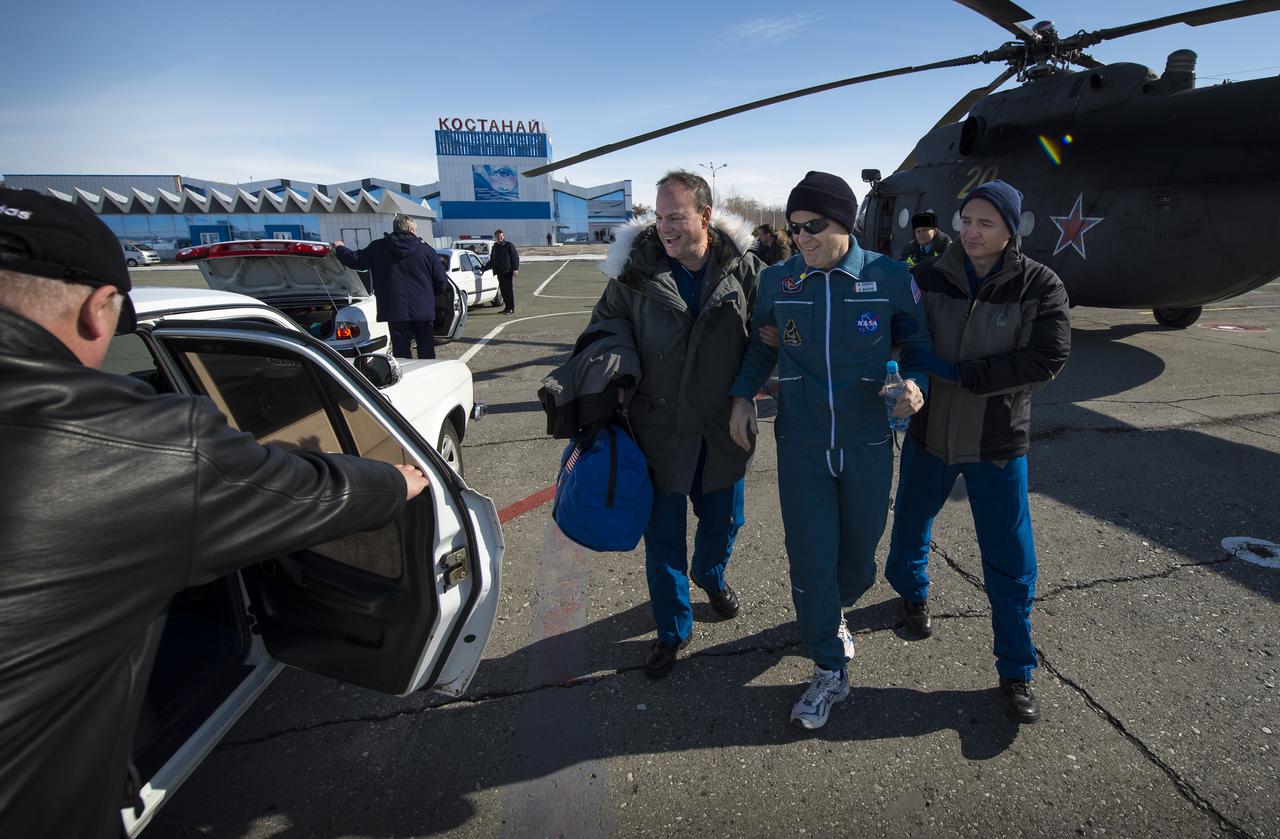
Expedition 34 Commander Kevin Ford of NASA walks from a Russian Search and Rescue helicopter with NASA flight doctors, David Alexander, left, and Blake Chamberlain after flying from his Soyuz TMA-06M spacecraft landing site outside the town of Arkalyk to Kustanay, Kazakhstan on Saturday, March 16, 2013. Ford, along with Russian Soyuz Commander Oleg Novitskiy and Flight Engineer Evgeny Tarelkin of Russia returned from 142 days onboard the International Space Station where they served as members of the Expedition 33 and 34 crews. Photo Credit: (NASA/Bill Ingalls)
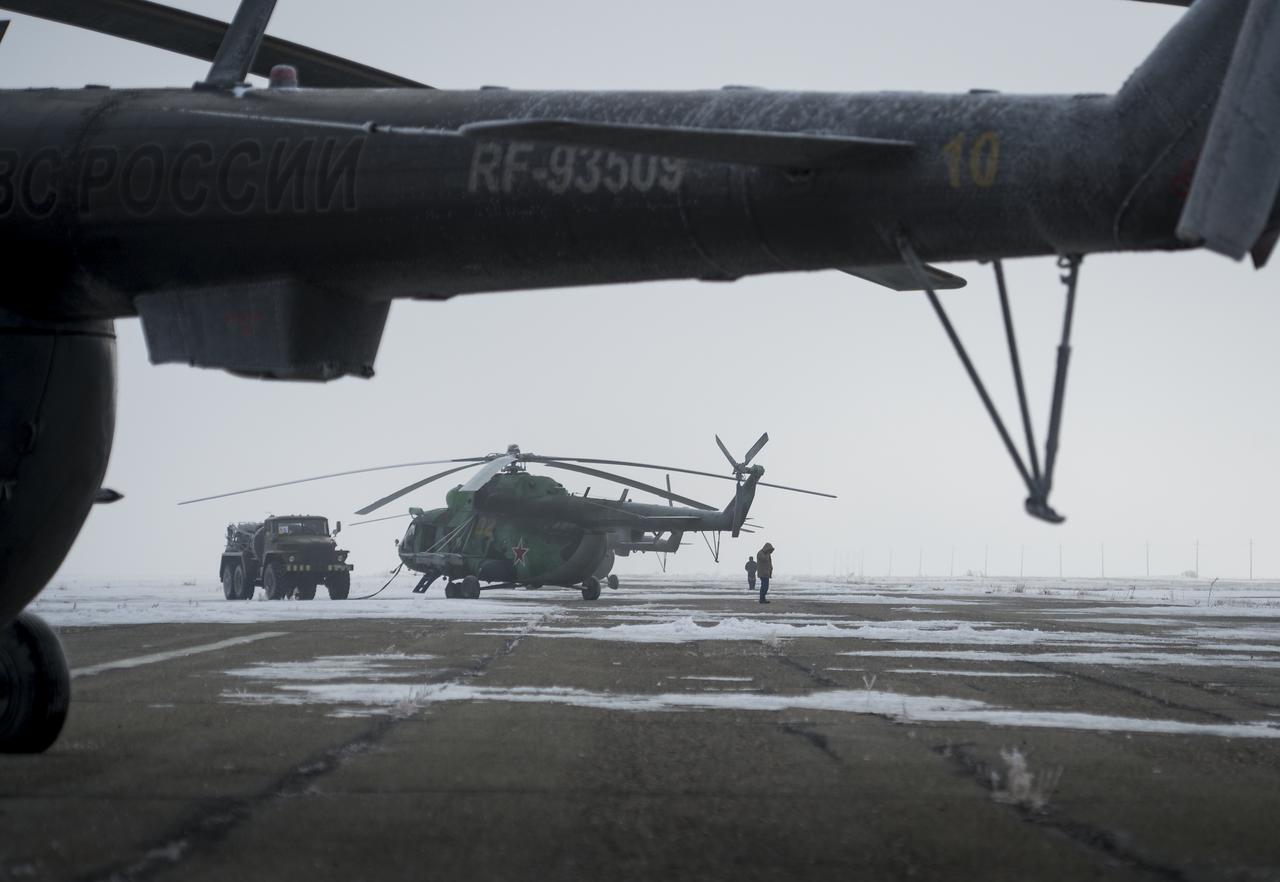
Search and Rescue helicopters are seen grounded by low visibility at the Arkalyk Airport in Kazakhstan on Saturday, March 16, 2013. The Soyuz TMA-06M spacecraft landed with Expedition 34 Commander Kevin Ford of NASA, Russian Soyuz Commander Oleg Novitskiy and Russian Flight Engineer Evgeny Tarelkin near the town of Arkalyk, Kazakhstan on Saturday, March 16, 2013. Ford, Novitskiy, and Tarelkin returned from 142 days onboard the International Space Station where they served as members of the Expedition 33 and 34 crews. Photo Credit: (NASA/Bill Ingalls)
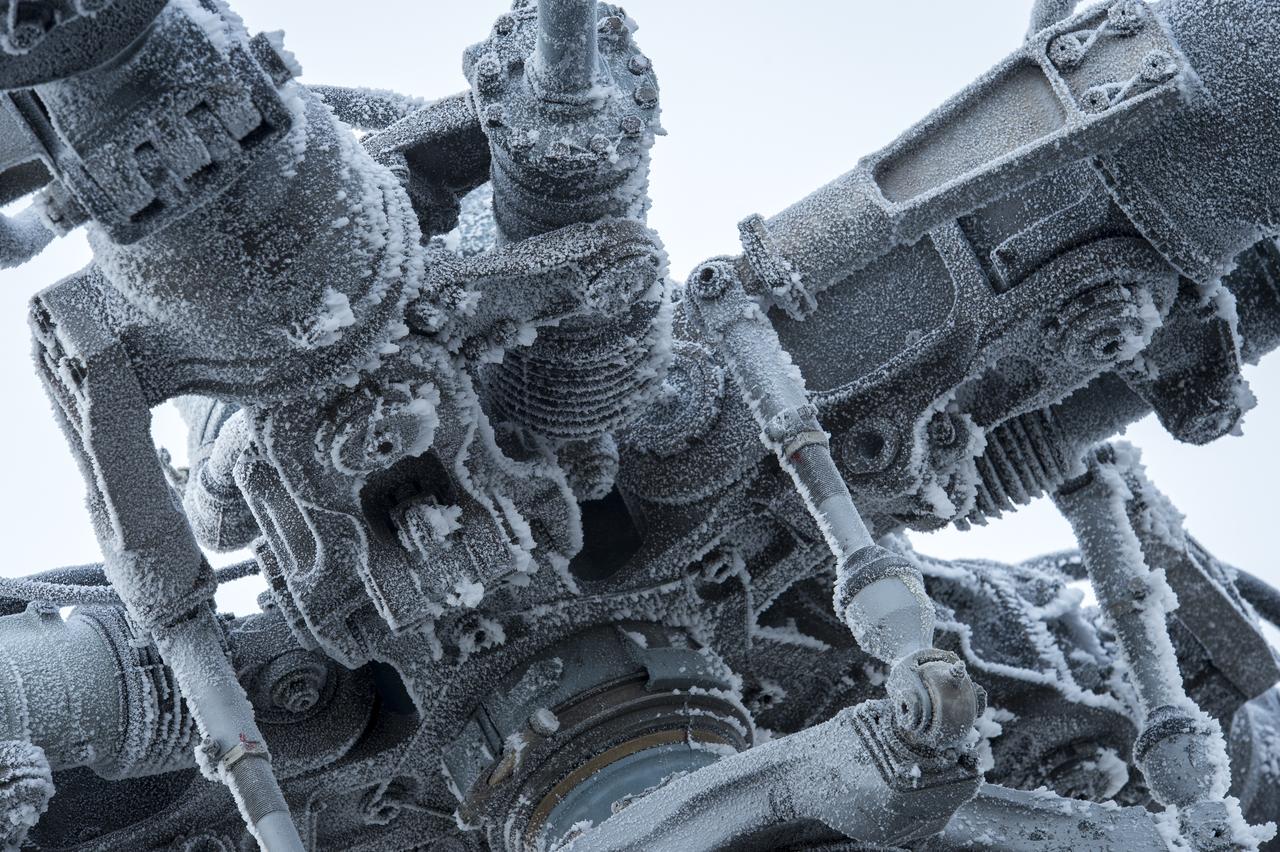
A heavily frosted rotor of a Search and Rescue helicopter is seen as it is grounded by low visibility at the Arkalyk Airport in Kazakhstan on Saturday, March 16, 2013. The Soyuz TMA-06M spacecraft landed with Expedition 34 Commander Kevin Ford of NASA, Russian Soyuz Commander Oleg Novitskiy and Russian Flight Engineer Evgeny Tarelkin near the town of Arkalyk, Kazakhstan on Saturday, March 16, 2013. Ford, Novitskiy, and Tarelkin returned from 142 days onboard the International Space Station where they served as members of the Expedition 33 and 34 crews. Photo Credit: (NASA/Bill Ingalls)
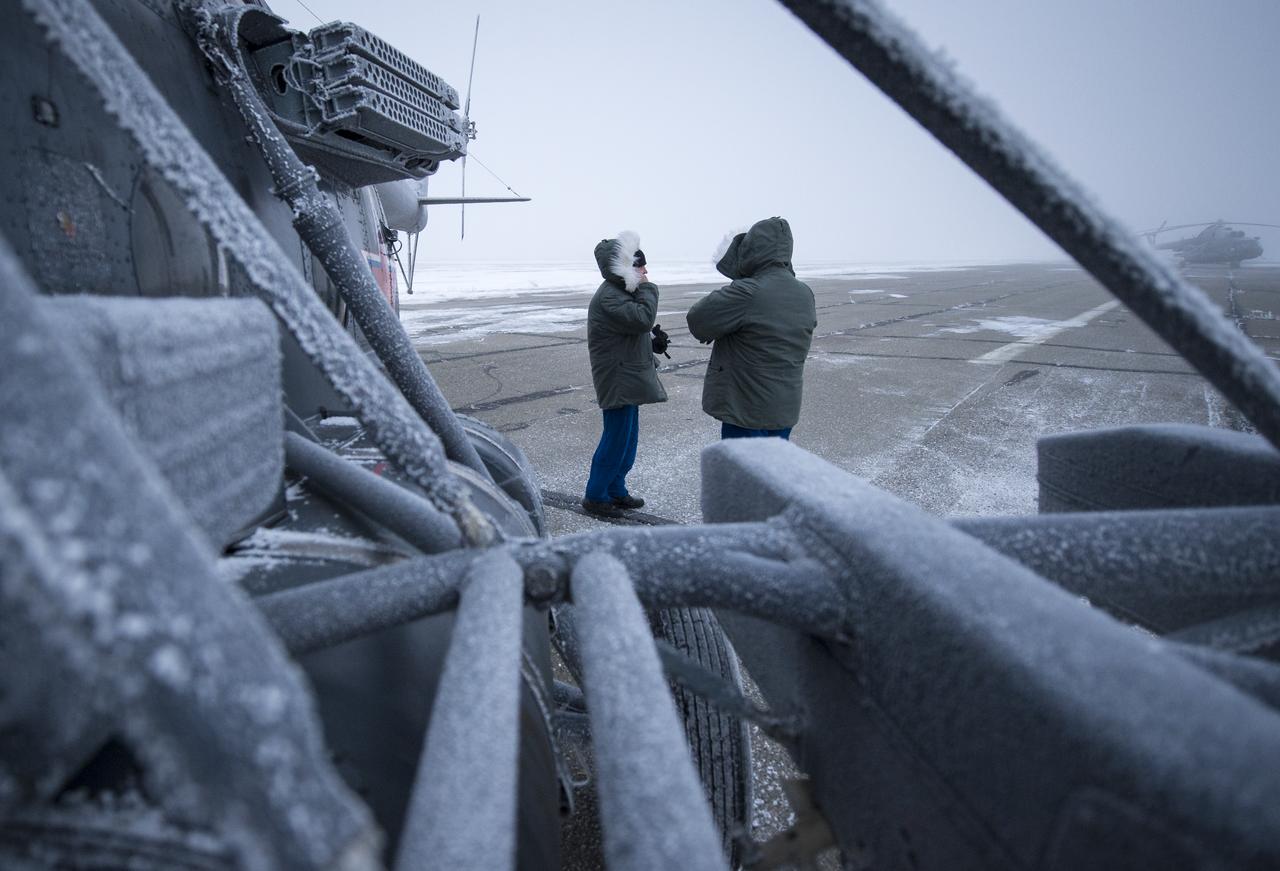
NASA Astronauts Eric Boe, left, and Bob Behnken are seen making contact with other team members outside a Search and Rescue helicopter that was grounded by low visibility at the Arkalyk Airport in Kazakhstan on Saturday, March 16, 2013. The Soyuz TMA-06M spacecraft landed with Expedition 34 Commander Kevin Ford of NASA, Russian Soyuz Commander Oleg Novitskiy and Russian Flight Engineer Evgeny Tarelkin near the town of Arkalyk, Kazakhstan on Saturday, March 16, 2013. Ford, Novitskiy, and Tarelkin returned from 142 days onboard the International Space Station where they served as members of the Expedition 33 and 34 crews. Photo Credit: (NASA/Bill Ingalls)
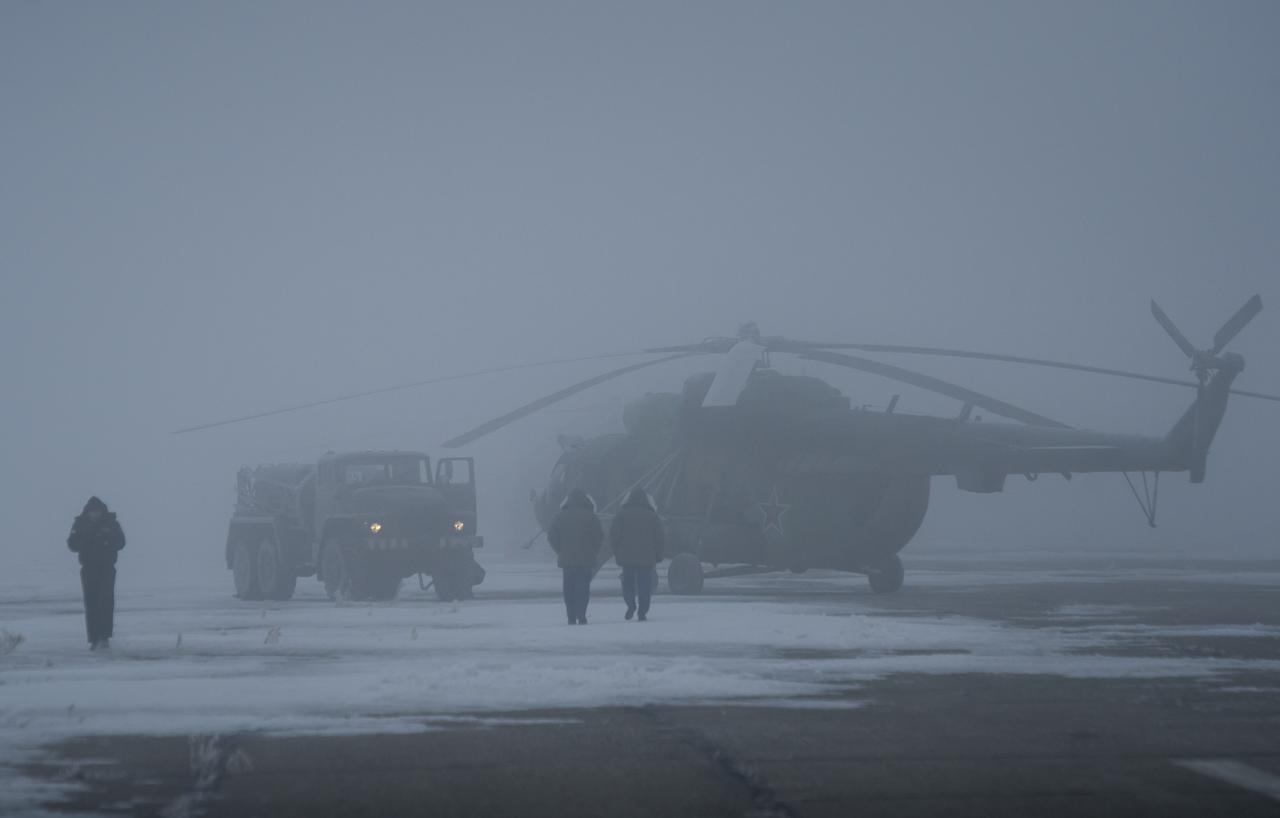
Search and Rescue helicopters are seen grounded by low visibility at the Arkalyk Airport in Kazakhstan on Saturday, March 16, 2013. The Soyuz TMA-06M spacecraft landed with Expedition 34 Commander Kevin Ford of NASA, Russian Soyuz Commander Oleg Novitskiy and Russian Flight Engineer Evgeny Tarelkin near the town of Arkalyk, Kazakhstan on Saturday, March 16, 2013. Ford, Novitskiy, and Tarelkin returned from 142 days onboard the International Space Station where they served as members of the Expedition 33 and 34 crews. Photo Credit: (NASA/Bill Ingalls)

A helicopter crew member waits for weather to clear outside his Search and Rescue helicopter that was grounded by low visibility at the Arkalyk Airport in Kazakhstan on Saturday, March 16, 2013. The Soyuz TMA-06M spacecraft landed with Expedition 34 Commander Kevin Ford of NASA, Russian Soyuz Commander Oleg Novitskiy and Russian Flight Engineer Evgeny Tarelkin near the town of Arkalyk, Kazakhstan on Saturday, March 16, 2013. Ford, Novitskiy, and Tarelkin returned from 142 days onboard the International Space Station where they served as members of the Expedition 33 and 34 crews. Photo Credit: (NASA/Bill Ingalls)
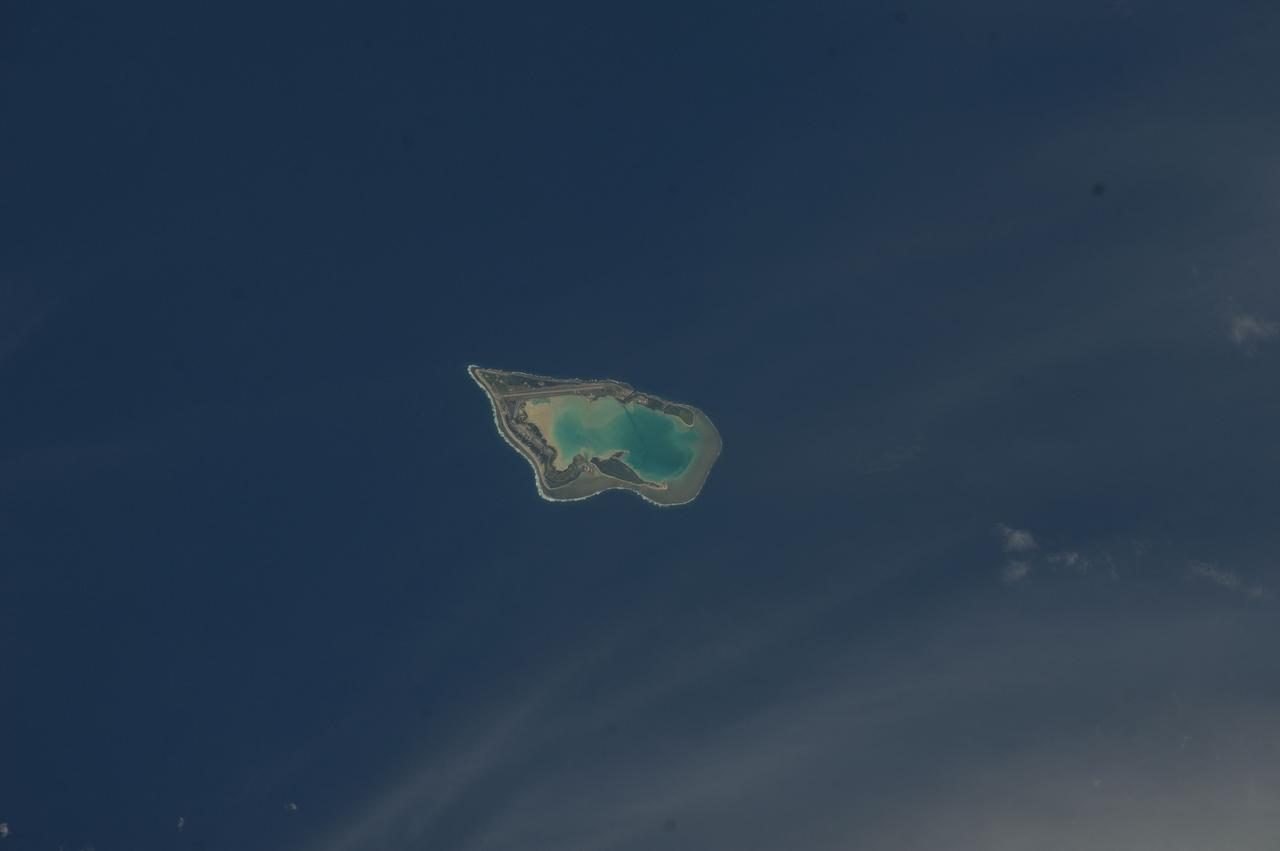
ISS033-E-007873 (27 Sept. 2012) --- Wake Island is featured in this image photographed by an Expedition 33 crew member on the International Space Station. The atoll of Wake Island is located in the central Pacific Ocean approximately 4,000 kilometers to the west-southwest of Hawaii and 2,400 kilometers to the northwest of Guam. In addition to Wake Island, the atoll includes the smaller Peale and Wilkes Island for a total land surface area of 6.5 square kilometers. Like many atolls in the Pacific, the islands and associated reefs formed around a submerged volcano. The lagoon in the center of the islands—characterized by shallow, light blue water in contrast to the surrounding darker, deeper Pacific Ocean waters—marks the approximate location of the summit crater of the volcano.
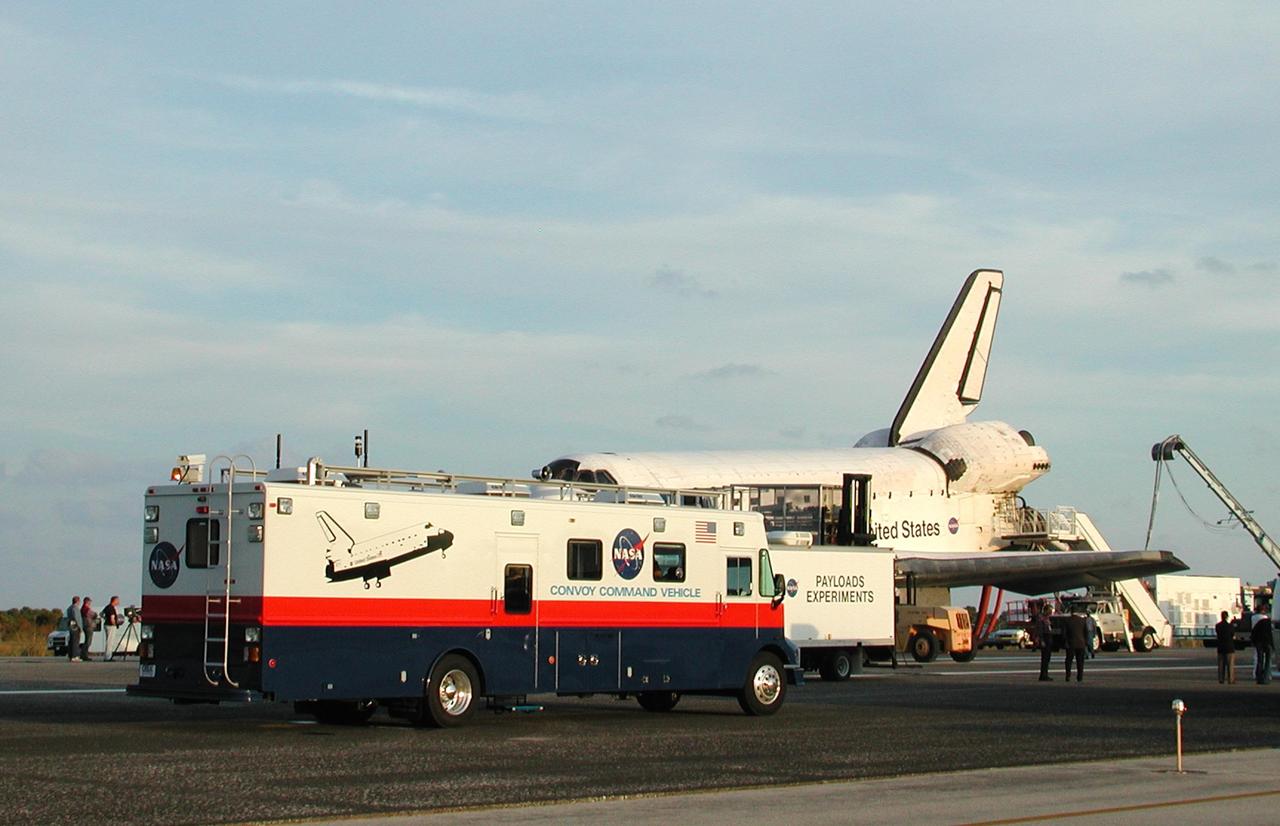
KENNEDY SPACE CENTER, FLA. - Space Shuttle Endeavour is surrounded by vehicles from the landing convoy on runway 33 at the Shuttle Landing Facility at the conclusion of the 13-day, 18-hour, 48-minute, 5.74-million mile STS-113 mission to the International Space Station. In the foreground is the Convoy Command Vehicle which is the command post for the Convoy Commander. The Convoy Commander is in communication with the orbiter and all of the landing convoy vehicles during the post-landing operations. The landing convoy's purpose is to safe the vehicle and provide support for the disembarking crew and experiments. Main gear touchdown was at 2:37:12 p.m. EST, nose gear touchdown was at 2:37:23 p.m., and wheel stop was at 2:38:25 p.m. Poor weather conditions thwarted landing opportunities until a fourth day, the first time in Shuttle program history that a landing has been waved off for three consecutive days. The vehicle carries the STS-113 crew, Commander James Wetherbee, Pilot Paul Lockhart and Mission Specialists Michael Lopez-Alegria and John Herrington, as well as the returning Expedition Five crew, Commander Valeri Korzun, ISS Science Officer Peggy Whitson and Flight Engineer Sergei Treschev. The installation of the P1 truss on the International Space Station was accomplished during the mission.
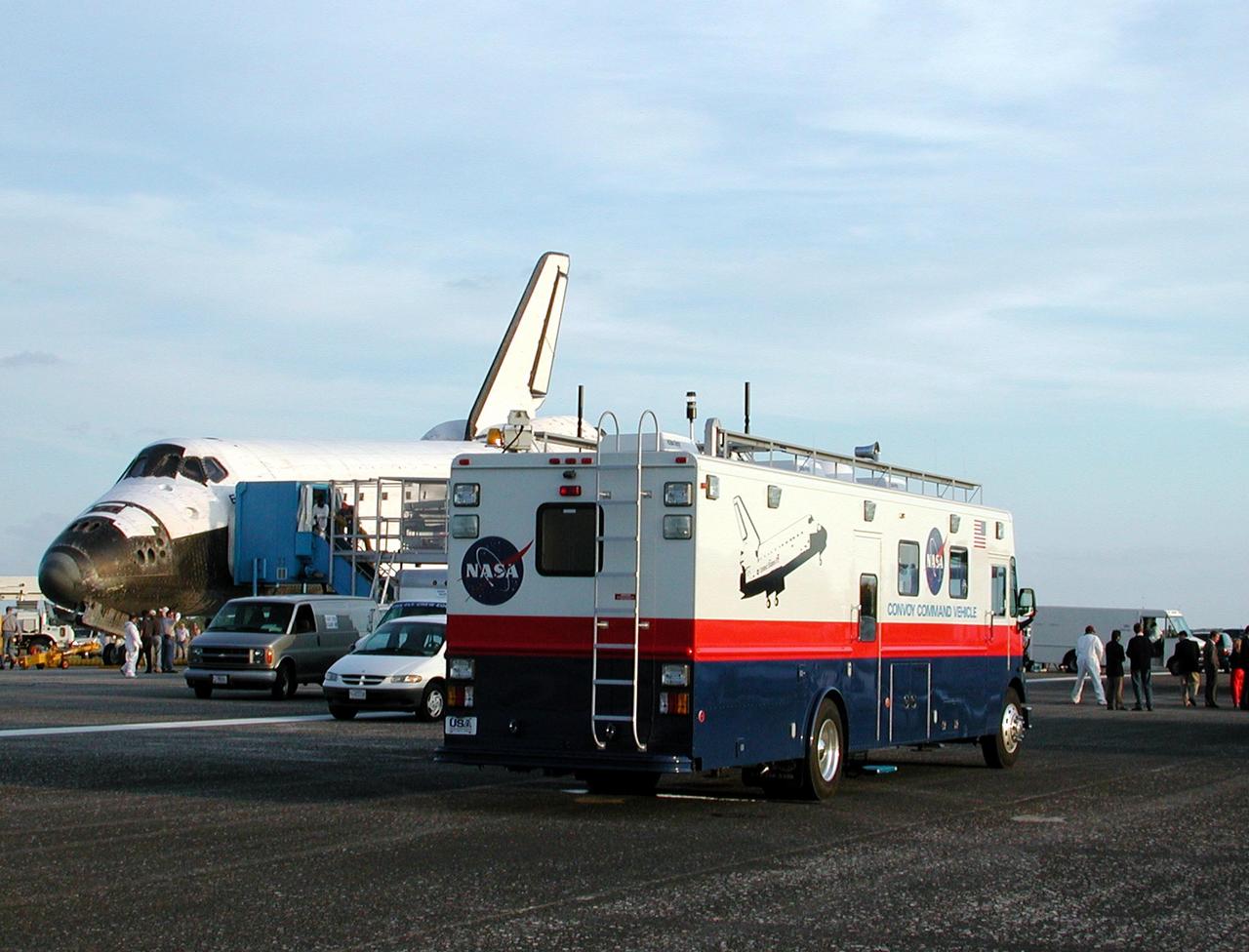
KENNEDY SPACE CENTER, FLA. - Space Shuttle Endeavour is surrounded by vehicles from the landing convoy on runway 33 at the Shuttle Landing Facility at the conclusion of the 13-day, 18-hour, 48-minute, 5.74-million mile STS-113 mission to the International Space Station. In the foreground is the Convoy Command Vehicle which is the command post for the Convoy Commander. The Convoy Commander is in communication with the orbiter and all of the landing convoy vehicles during the post-landing operations. The landing convoy's purpose is to safe the vehicle and provide support for the disembarking crew and experiments. Main gear touchdown was at 2:37:12 p.m. EST, nose gear touchdown was at 2:37:23 p.m., and wheel stop was at 2:38:25 p.m. Poor weather conditions thwarted landing opportunities until a fourth day, the first time in Shuttle program history that a landing has been waved off for three consecutive days. The vehicle carries the STS-113 crew, Commander James Wetherbee, Pilot Paul Lockhart and Mission Specialists Michael Lopez-Alegria and John Herrington, as well as the returning Expedition Five crew, Commander Valeri Korzun, ISS Science Officer Peggy Whitson and Flight Engineer Sergei Treschev. The installation of the P1 truss on the International Space Station was accomplished during the mission.
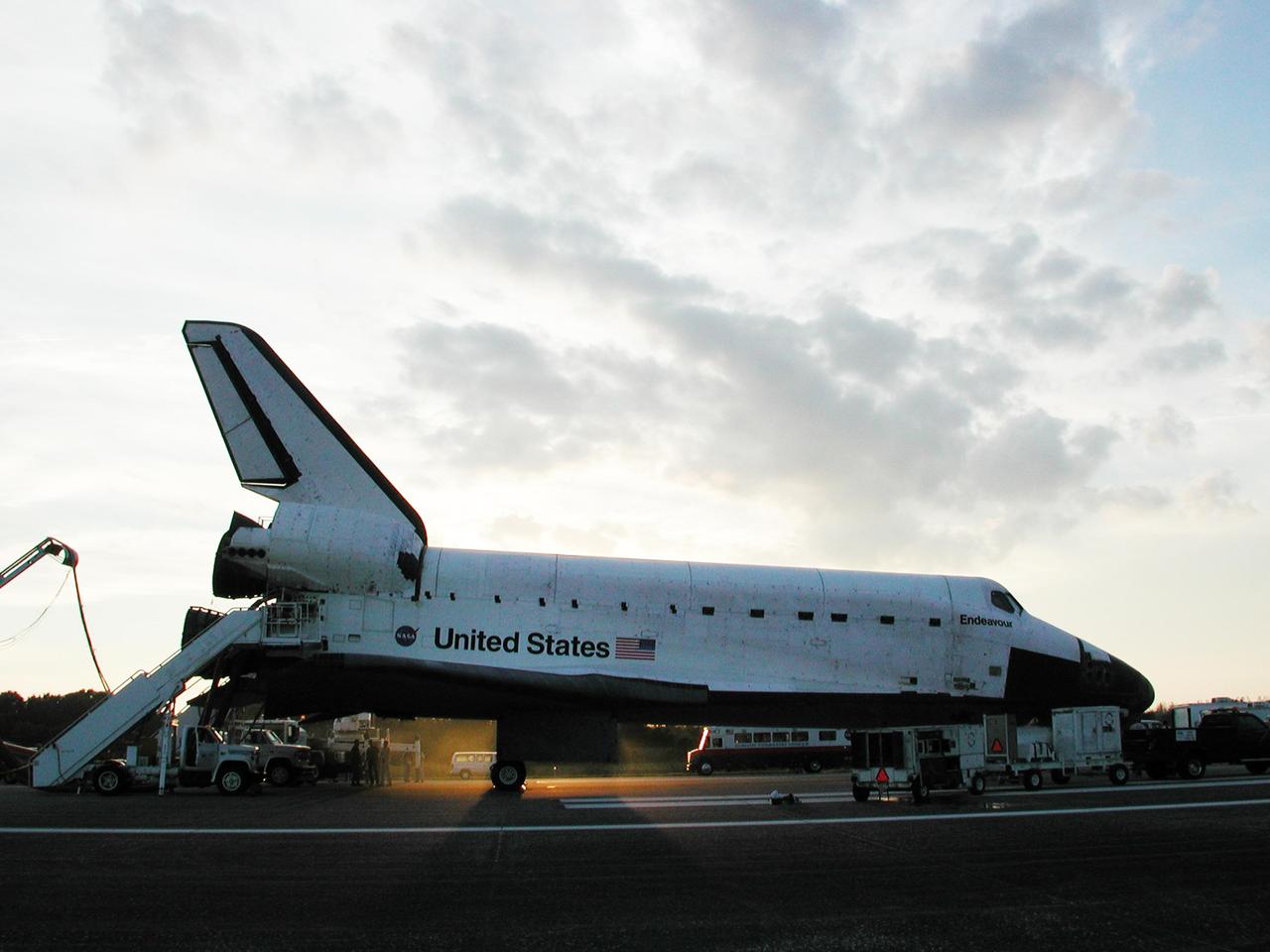
KENNEDY SPACE CENTER, FLA. - Space Shuttle Endeavour is surrounded by vehicles from the landing convoy, as the sun sets on runway 33 at the Shuttle Landing Facility at the conclusion of the 13-day, 18-hour, 48-minute, 5.74-million mile STS-113 mission to the International Space Station. Under the orbiter, the Convoy Command Vehicle, the command post for the Convoy Commander, can be seen on the far side of the runway. The Convoy Commander is in communication with the orbiter and all of the landing convoy vehicles during the post-landing operations. The landing convoy's purpose is to safe the vehicle and provide support for the disembarking crew and experiments. Main gear touchdown was at 2:37:12 p.m. EST, nose gear touchdown was at 2:37:23 p.m., and wheel stop was at 2:38:25 p.m. Poor weather conditions thwarted landing opportunities until a fourth day, the first time in Shuttle program history that a landing has been waved off for three consecutive days. The vehicle carries the STS-113 crew, Commander James Wetherbee, Pilot Paul Lockhart and Mission Specialists Michael Lopez-Alegria and John Herrington, as well as the returning Expedition Five crew, Commander Valeri Korzun, ISS Science Officer Peggy Whitson and Flight Engineer Sergei Treschev. The installation of the P1 truss on the International Space Station was accomplished during the mission.
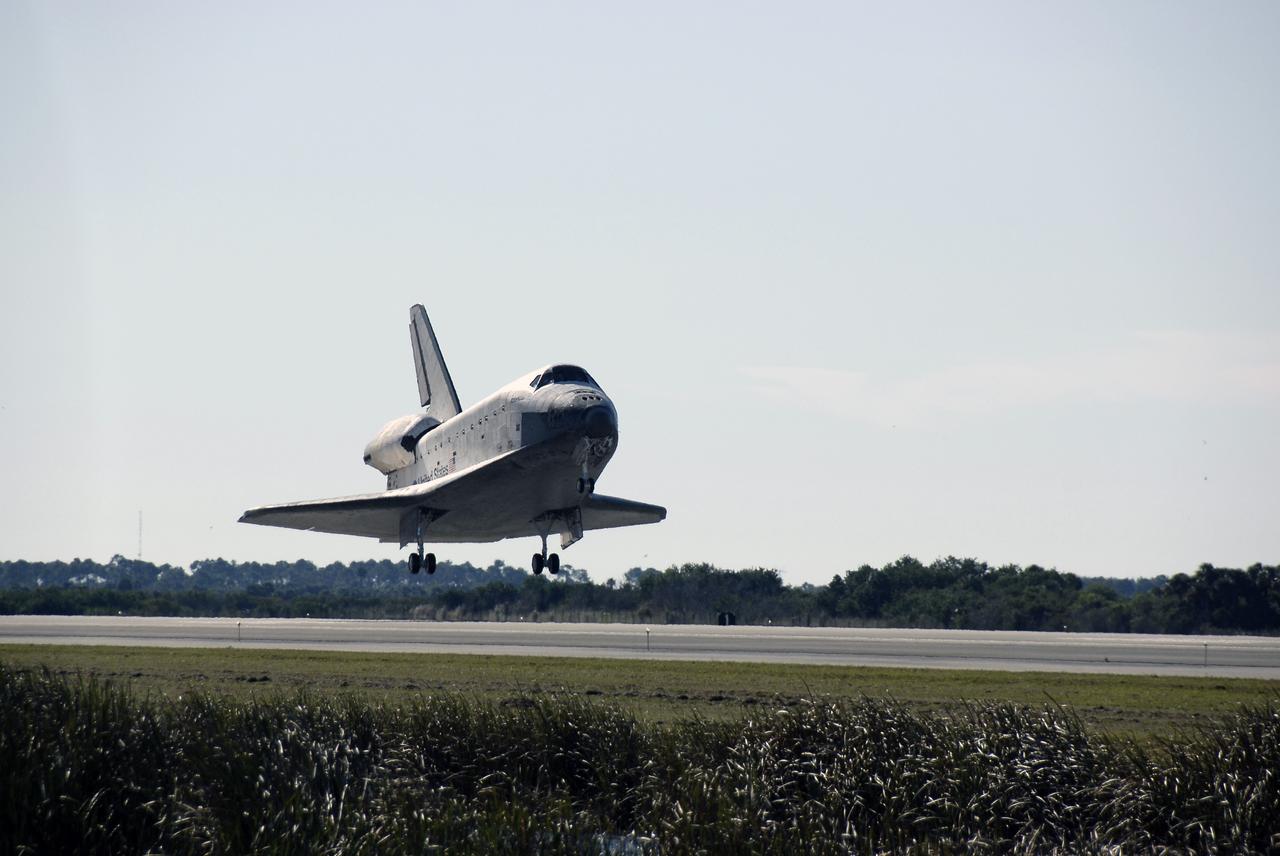
CAPE CANAVERAL, Fla. - With landing gear down, space shuttle Atlantis approaches landing on Runway 33 at the Shuttle Landing Facility at NASA's Kennedy Space Center in Florida after 11 days in space, completing the 4.5-million mile STS-129 mission on orbit 171. Main gear touchdown was at 9:44:23 a.m. EST. Nose gear touchdown was at 9:44:36 a.m., and wheels stop was at 9:45:05 a.m. Aboard Atlantis are Commander Charles O. Hobaugh; Pilot Barry E. Wilmore; Mission Specialists Leland Melvin, Randy Bresnik, Mike Foreman and Robert L. Satcher Jr.; and Expedition 20 and 21 Flight Engineer Nicole Stott who spent 87 days aboard the International Space Station. STS-129 is the final space shuttle Expedition crew rotation flight on the manifest. On STS-129, the crew delivered 14 tons of cargo to the orbiting laboratory, including two ExPRESS Logistics Carriers containing spare parts to sustain station operations after the shuttles are retired next year. For information on the STS-129 mission and crew, visit http://www.nasa.gov/mission_pages/shuttle/shuttlemissions/sts129/index.html. Photo credit: NASA/Kim Shiflett
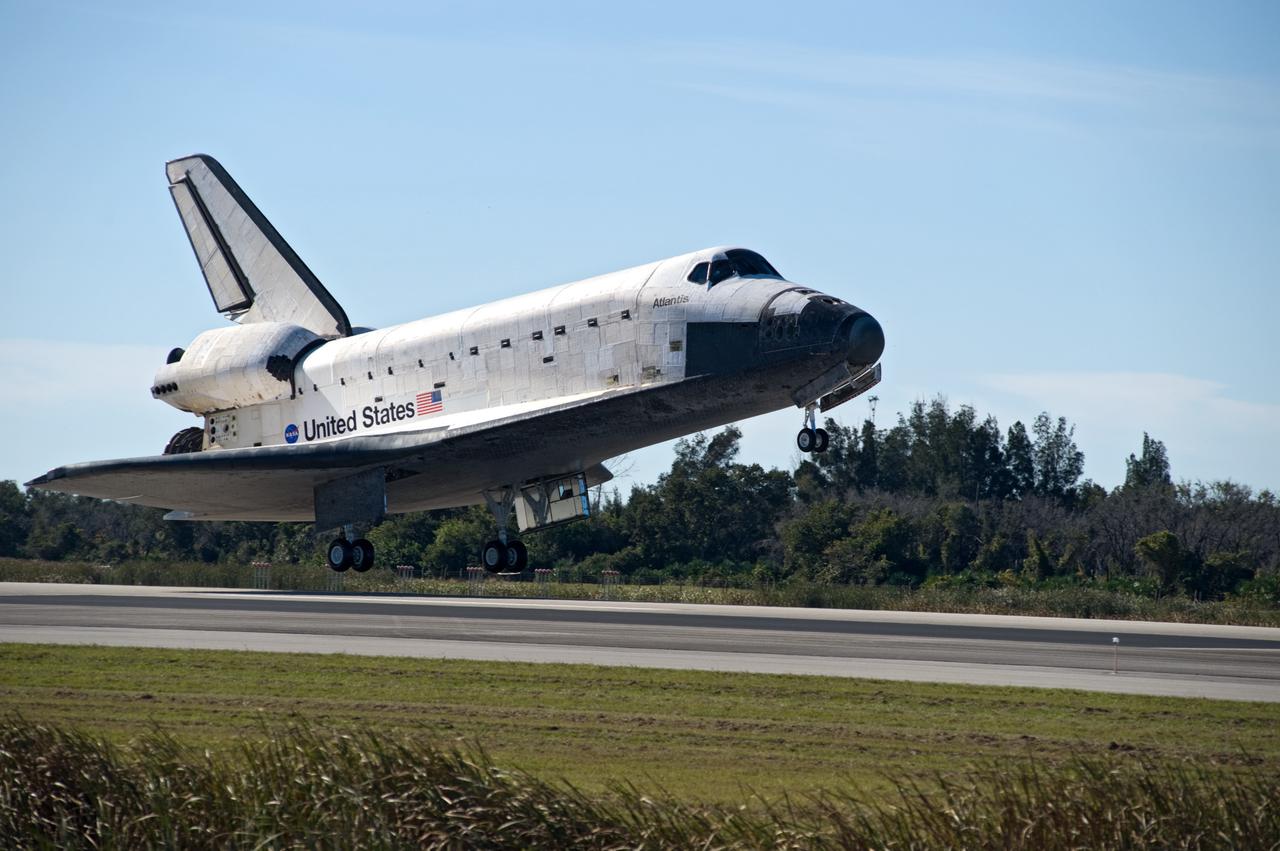
CAPE CANAVERAL, Fla. - With landing gear down, space shuttle Atlantis approaches landing on Runway 33 at the Shuttle Landing Facility at NASA's Kennedy Space Center in Florida after 11 days in space, completing the 4.5-million mile STS-129 mission on orbit 171. Main gear touchdown was at 9:44:23 a.m. EST. Nose gear touchdown was at 9:44:36 a.m., and wheels stop was at 9:45:05 a.m. Aboard Atlantis are Commander Charles O. Hobaugh; Pilot Barry E. Wilmore; Mission Specialists Leland Melvin, Randy Bresnik, Mike Foreman and Robert L. Satcher Jr.; and Expedition 20 and 21 Flight Engineer Nicole Stott who spent 87 days aboard the International Space Station. STS-129 is the final space shuttle Expedition crew rotation flight on the manifest. On STS-129, the crew delivered 14 tons of cargo to the orbiting laboratory, including two ExPRESS Logistics Carriers containing spare parts to sustain station operations after the shuttles are retired next year. For information on the STS-129 mission and crew, visit http://www.nasa.gov/mission_pages/shuttle/shuttlemissions/sts129/index.html. Photo credit: NASA/Tom Joseph
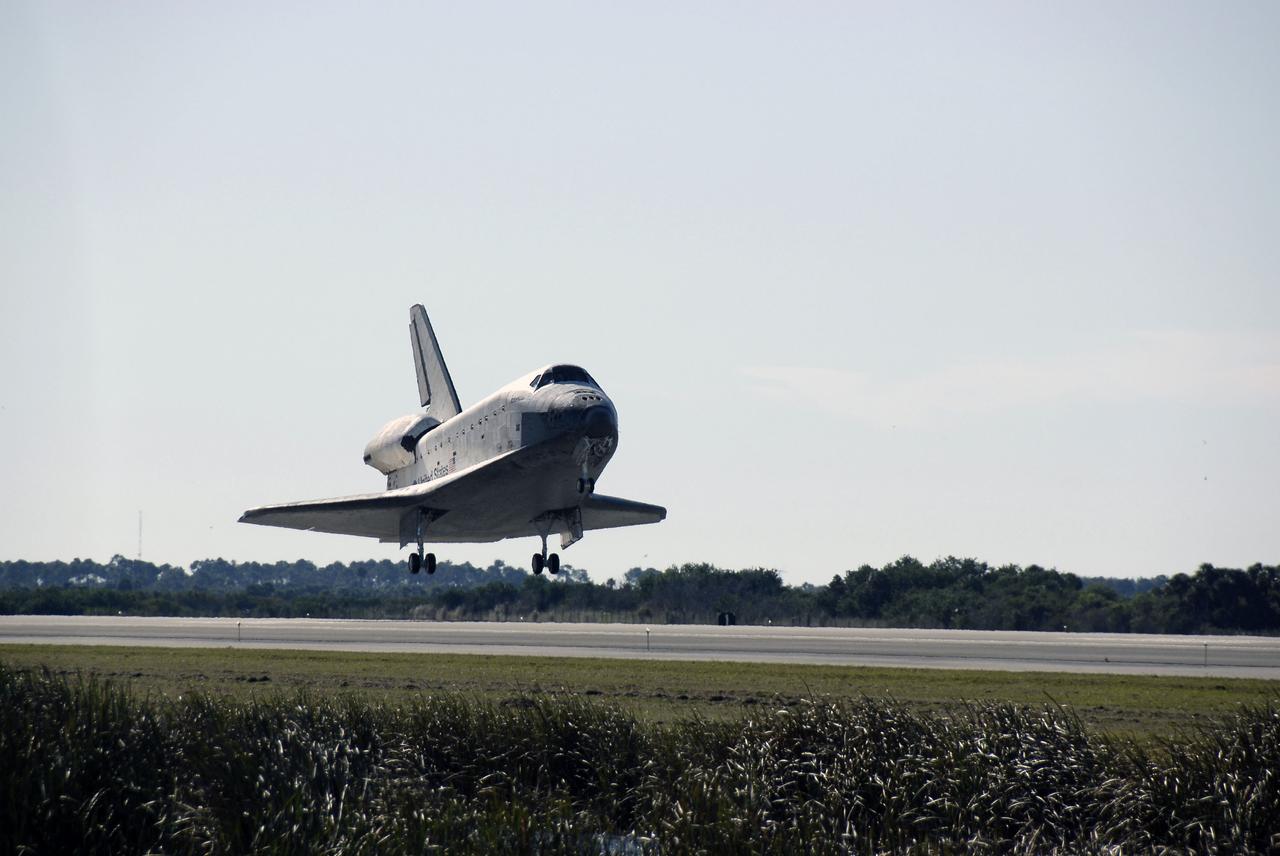
PHOTO CREDIT: NASA or National Aeronautics and Space Administration CAPE CANAVERAL, Fla. - With landing gear down, space shuttle Atlantis approaches landing on Runway 33 at the Shuttle Landing Facility at NASA's Kennedy Space Center in Florida after 11 days in space, completing the 4.5-million mile STS-129 mission on orbit 171. Main gear touchdown was at 9:44:23 a.m. EDT. Nose gear touchdown was at 9:44:36 a.m., and wheels stop was at 9:45:05 a.m. Aboard Atlantis are Commander Charles O. Hobaugh; Pilot Barry E. Wilmore; Mission Specialists Leland Melvin, Randy Bresnik, Mike Foreman and Robert L. Satcher Jr.; and Expedition 20 and 21 Flight Engineer Nicole Stott who spent 87 days aboard the International Space Station. STS-129 is the final space shuttle Expedition crew rotation flight on the manifest. On STS-129, the crew delivered 14 tons of cargo to the orbiting laboratory, including two ExPRESS Logistics Carriers containing spare parts to sustain station operations after the shuttles are retired next year. For information on the STS-129 mission and crew, visit http://www.nasa.gov/mission_pages/shuttle/shuttlemissions/sts129/index.html. Photo credit: NASA/Kim Shiflett
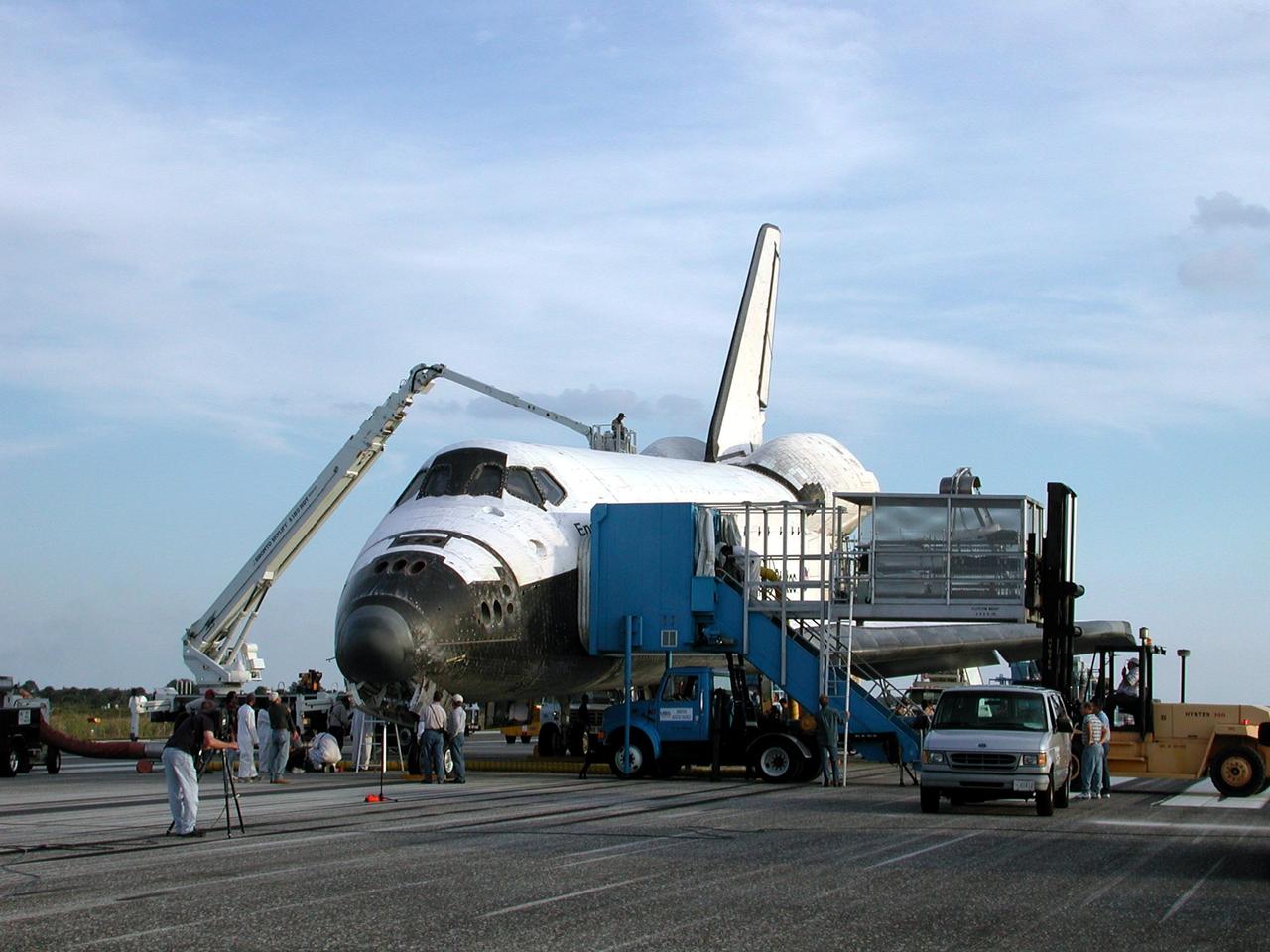
KENNEDY SPACE CENTER, FLA. - Space Shuttle Endeavour is surrounded by vehicles from the landing convoy on runway 33 at the Shuttle Landing Facility at the conclusion of the 13-day, 18-hour, 48-minute, 5.74-million mile STS-113 mission to the International Space Station. The landing convoy's purpose is to safe the vehicle and provide support for the disembarking crew and experiments. Main gear touchdown was at 2:37:12 p.m. EST, nose gear touchdown was at 2:37:23 p.m., and wheel stop was at 2:38:25 p.m. Poor weather conditions thwarted landing opportunities until a fourth day, the first time in Shuttle program history that a landing has been waved off for three consecutive days. The vehicle carries the STS-113 crew, Commander James Wetherbee, Pilot Paul Lockhart and Mission Specialists Michael Lopez-Alegria and John Herrington, as well as the returning Expedition Five crew, Commander Valeri Korzun, ISS Science Officer Peggy Whitson and Flight Engineer Sergei Treschev. The installation of the P1 truss on the International Space Station was accomplished during the mission.

KENNEDY SPACE CENTER, FLA. - Space Shuttle Endeavour's drag chute is unreefed as the orbiter lands on runway 33 at the Shuttle Landing Facility at the conclusion of the 13-day, 18-hour, 48-minute, 5.74-million mile STS-113 mission to the International Space Station. The landing convoy in the foreground is ready to approach and safe the vehicle after it comes to a full stop. Main gear touchdown was at 2:37:12 p.m. EST, nose gear touchdown was at 2:37:23 p.m., and wheel stop was at 2:38:25 p.m. Poor weather conditions thwarted landing opportunities until a fourth day, the first time in Shuttle program history that a landing has been waved off for three consecutive days. The vehicle carries the STS-113 crew, Commander James Wetherbee, Pilot Paul Lockhart and Mission Specialists Michael Lopez-Alegria and John Herrington, as well as the returning Expedition Five crew, Commander Valeri Korzun, ISS Science Officer Peggy Whitson and Flight Engineer Sergei Treschev. The installation of the P1 truss on the International Space Station was accomplished during the mission.
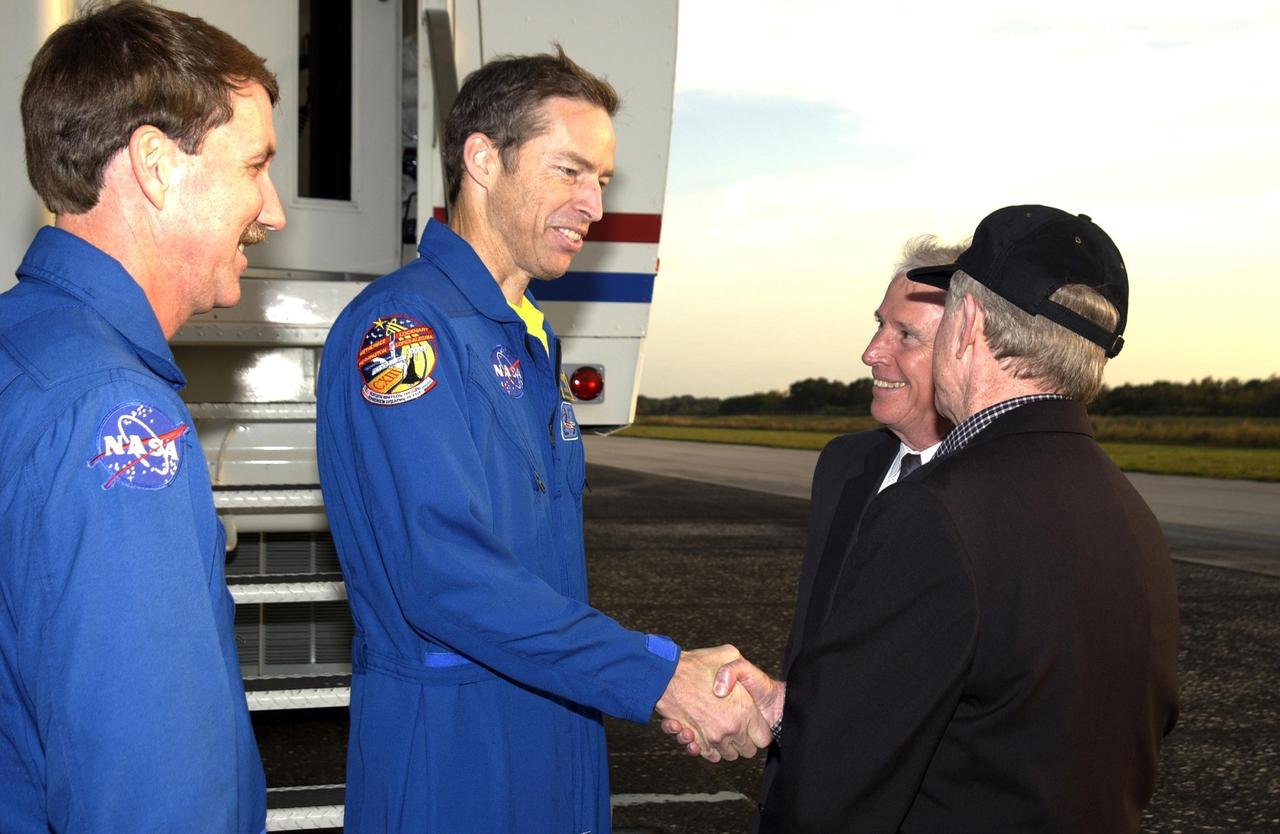
KENNEDY SPACE CENTER, FLA. - STS-113 Commander James Wetherbee shakes hands with KSC Director Roy D. Bridges Jr. following landing at the Shuttle Landing Facility. From left are Kent Rominger, Deputy Director of Flight Crew Operations, Wetherbee, Dr. Daniel R. Mulville, NASA Associate Deputy Administrator, and Bridges. Commander Wetherbee earlier guided Space Shuttle Endeavour to a flawless touchdown on runway 33 at the Shuttle Landing Facility after completing the 13-day, 18-hour, 48-minute, 5.74-million mile STS-113 mission to the International Space Station. Main gear touchdown was at 2:37:12 p.m. EST, nose gear touchdown was at 2:37:23 p.m., and wheel stop was at 2:38:25 p.m. Poor weather conditions thwarted landing opportunities until a fourth day, the first time in Shuttle program history that a landing has been waved off for three consecutive days. The orbiter also carried the other members of the STS-113 crew, Pilot Paul Lockhart and Mission Specialists Michael Lopez-Alegria and John Herrington, as well as the returning Expedition Five crew, Commander Valeri Korzun, ISS Science Officer Peggy Whitson and Flight Engineer Sergei Treschev. The installation of the P1 truss on the International Space Station was accomplished during the mission.
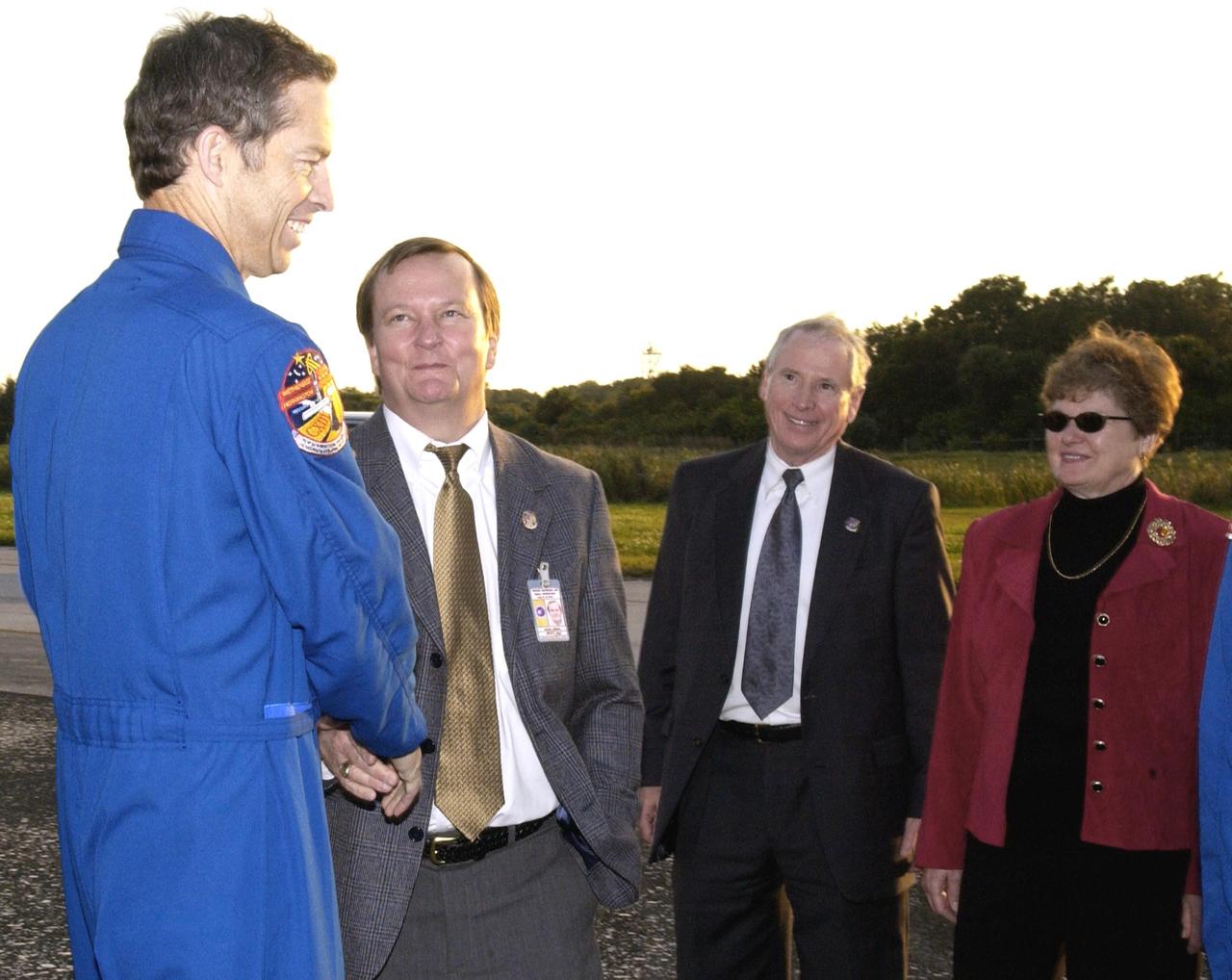
KENNEDY SPACE CENTER, FLA. - STS-113 Commander James Wetherbee shakes hands with Michael D. Leinbach, Shuttle Launch Director at KSC, on the runway of the Shuttle Landing Facility following the landing of Endeavour. From left are Wetherbee, Leinbach, Dr. Daniel R. Mulville, NASA Associate Deputy Administrator, and Mrs. Mulville. Commander Wetherbee earlier guided Space Shuttle Endeavour to a flawless touchdown on runway 33 at the Shuttle Landing Facility after completing the 13-day, 18-hour, 48-minute, 5.74-million mile STS-113 mission to the International Space Station. Main gear touchdown was at 2:37:12 p.m. EST, nose gear touchdown was at 2:37:23 p.m., and wheel stop was at 2:38:25 p.m. Poor weather conditions thwarted landing opportunities until a fourth day, the first time in Shuttle program history that a landing has been waved off for three consecutive days. The orbiter also carried the other members of the STS-113 crew, Pilot Paul Lockhart and Mission Specialists Michael Lopez-Alegria and John Herrington, as well as the returning Expedition Five crew, Commander Valeri Korzun, ISS Science Officer Peggy Whitson and Flight Engineer Sergei Treschev. The installation of the P1 truss on the International Space Station was accomplished during the mission.
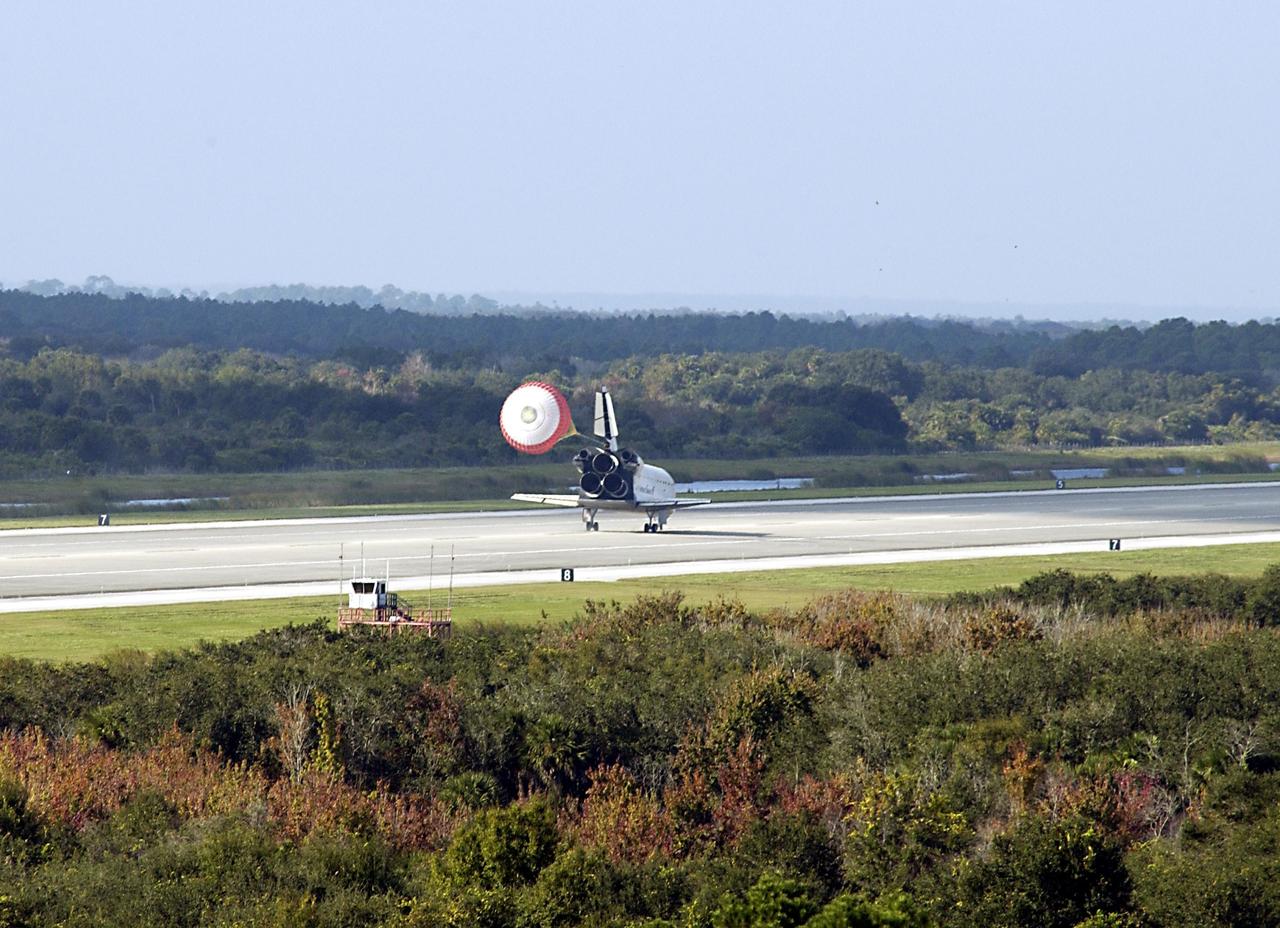
KENNEDY SPACE CENTER, FLA. - Space Shuttle Endeavour's drag chute deploys as the orbiter lands on runway 33 at the Shuttle Landing Facility after completing the 13-day, 18-hour, 48-minute, 5.74-million mile STS-113 mission to the International Space Station. Main gear touchdown was at 2:37:12 p.m. EST, nose gear touchdown was at 2:37:23 p.m., and wheel stop was at 2:38:25 p.m. Poor weather conditions thwarted landing opportunities until a fourth day, the first time in Shuttle program history that a landing has been waved off for three consecutive days. The vehicle carries the STS-113 crew, Commander James Wetherbee, Pilot Paul Lockhart and Mission Specialists Michael Lopez-Alegria and John Herrington, as well as the returning Expedition Five crew, Commander Valeri Korzun, ISS Science Officer Peggy Whitson and Flight Engineer Sergei Treschev. The installation of the P1 truss on the International Space Station was accomplished during the mission.
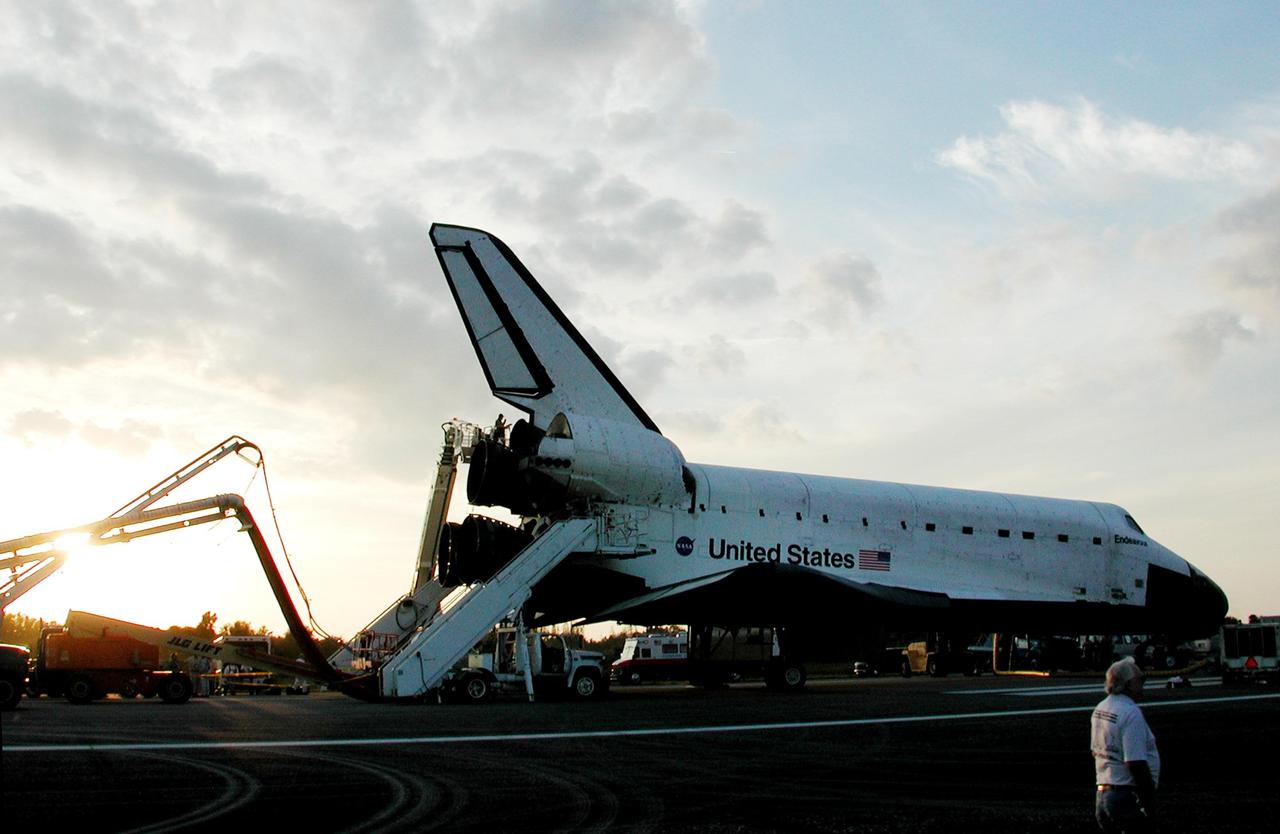
KENNEDY SPACE CENTER, FLA. - A technician, outlined against the setting sun, checks the main engines on Space Shuttle Endeavour on runway 33 at the Shuttle Landing Facility at the conclusion of the 13-day, 18-hour, 48-minute, 5.74-million mile STS-113 mission to the International Space Station. The landing convoy's purpose is to safe the vehicle and provide support for the disembarking crew and experiments. Main gear touchdown was at 2:37:12 p.m. EST, nose gear touchdown was at 2:37:23 p.m., and wheel stop was at 2:38:25 p.m. Poor weather conditions thwarted landing opportunities until a fourth day, the first time in Shuttle program history that a landing has been waved off for three consecutive days. The vehicle carries the STS-113 crew, Commander James Wetherbee, Pilot Paul Lockhart and Mission Specialists Michael Lopez-Alegria and John Herrington, as well as the returning Expedition Five crew, Commander Valeri Korzun, ISS Science Officer Peggy Whitson and Flight Engineer Sergei Treschev. The installation of the P1 truss on the International Space Station was accomplished during the mission.
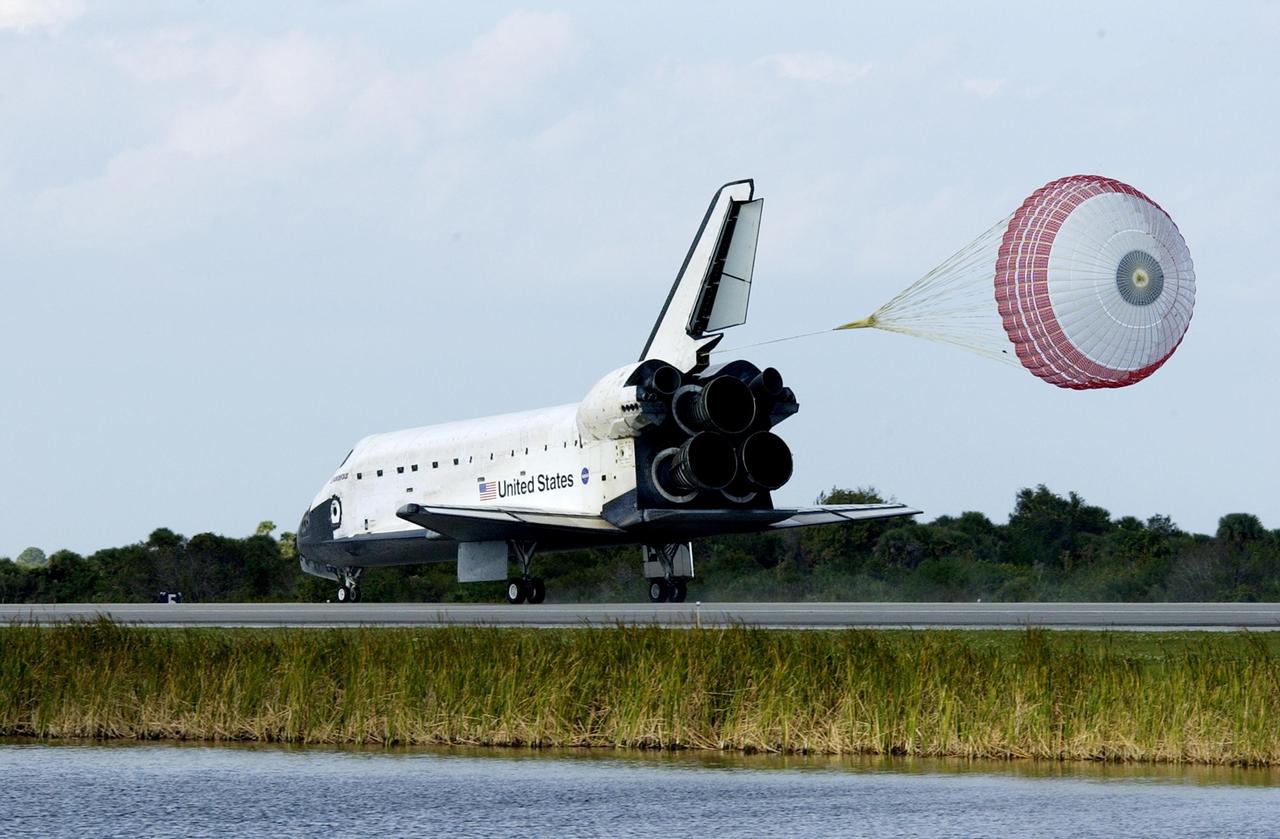
KENNEDY SPACE CENTER, FLA. - Space Shuttle Endeavour's drag chute slows down the orbiter as it lands on runway 33 at the Shuttle Landing Facility after completing the 13-day, 18-hour, 48-minute, 5.74-million mile STS-113 mission to the International Space Station. Main gear touchdown was at 2:37:12 p.m. EST, nose gear touchdown was at 2:37:23 p.m., and wheel stop was at 2:38:25 p.m. Poor weather conditions thwarted landing opportunities until a fourth day, the first time in Shuttle program history that a landing has been waved off for three consecutive days. The vehicle carries the STS-113 crew, Commander James Wetherbee, Pilot Paul Lockhart and Mission Specialists Michael Lopez-Alegria and John Herrington, as well as the returning Expedition Five crew, Commander Valeri Korzun, ISS Science Officer Peggy Whitson and Flight Engineer Sergei Treschev. The installation of the P1 truss on the International Space Station was accomplished during the mission.
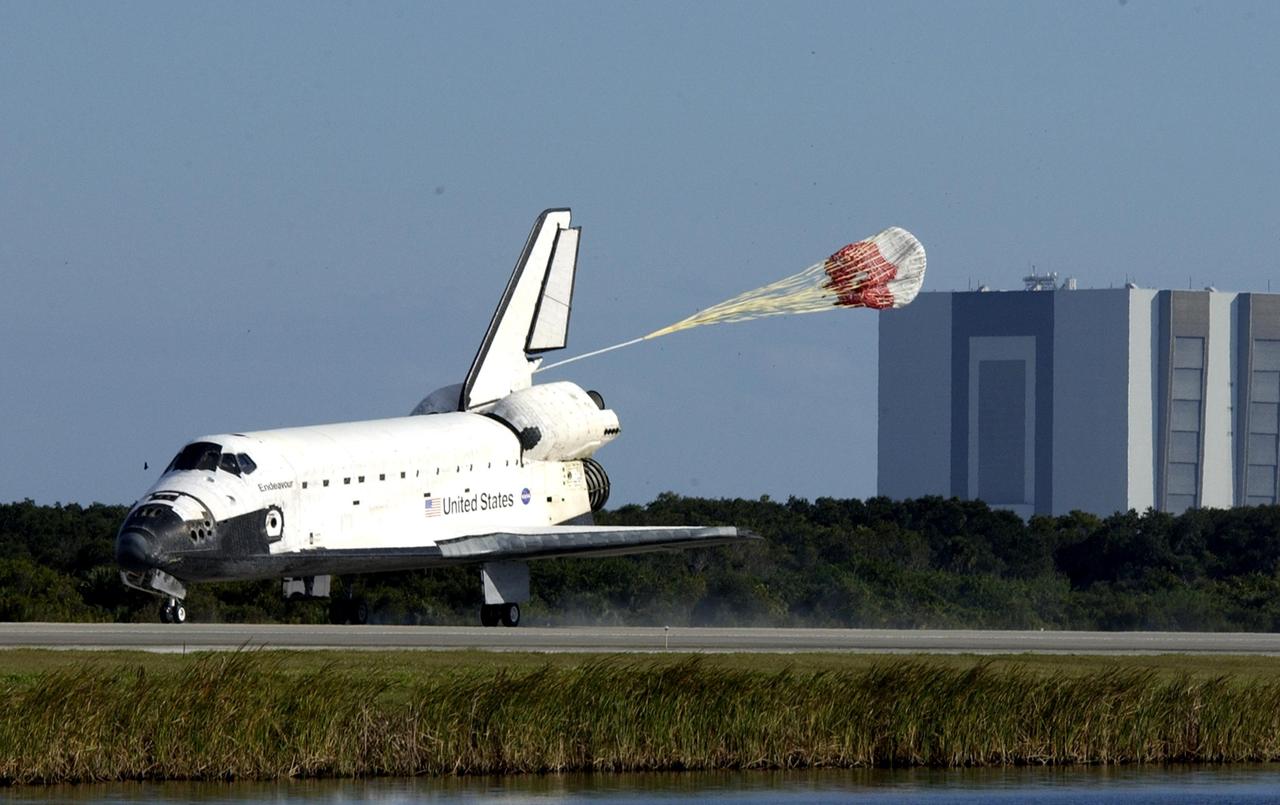
KENNEDY SPACE CENTER, FLA. - Space Shuttle Endeavour's drag chute deploys as the orbiter lands on runway 33 at the Shuttle Landing Facility after completing the 13-day, 18-hour, 48-minute, 5.74-million mile STS-113 mission to the International Space Station. In the background is a well known KSC landmark: the 525-foot-tall Vehicle Assembly Building. Main gear touchdown was at 2:37:12 p.m. EST, nose gear touchdown was at 2:37:23 p.m., and wheel stop was at 2:38:25 p.m. Poor weather conditions thwarted landing opportunities until a fourth day, the first time in Shuttle program history that a landing has been waved off for three consecutive days. The vehicle carries the STS-113 crew, Commander James Wetherbee, Pilot Paul Lockhart and Mission Specialists Michael Lopez-Alegria and John Herrington, as well as the returning Expedition Five crew, Commander Valeri Korzun, ISS Science Officer Peggy Whitson and Flight Engineer Sergei Treschev. The installation of the P1 truss on the International Space Station was accomplished during the mission.
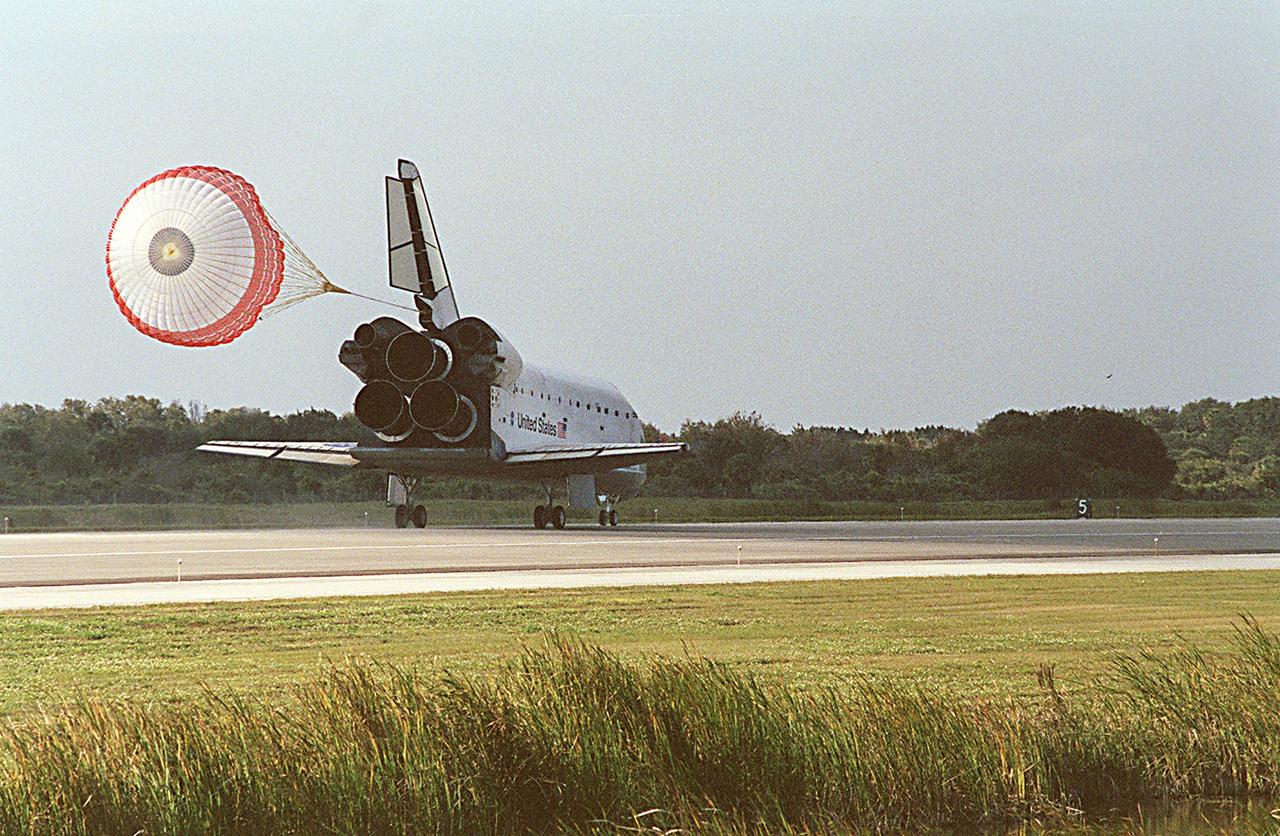
KENNEDY SPACE CENTER, FLA. -- The drag chute on Space Shuttle Endeavour unfurls upon landing on runway 33 at the Shuttle Landing Facility, bringing to a close the 13-day, 18-hour, 48-minute, 5.74-million mile STS-113 mission to the International Space Station. Main gear touchdown was at 2:37:12 p.m. EST, nose gear touchdown was at 2:37:23 p.m., and wheel stop was at 2:38:25 p.m. Poor weather conditions thwarted landing opportunities until a fourth day, the first time in Shuttle program history that a landing has been waved off for three consecutive days. The vehicle carries the STS-113 crew, Commander James Wetherbee, Pilot Paul Lockhart and Mission Specialists Michael Lopez-Alegria and John Herrington, as well as the returning Expedition Five crew, Commander Valeri Korzun, ISS Science Officer Peggy Whitson and Flight Engineer Sergei Treschev. The installation of the P1 truss on the International Space Station was accomplished during the mission.
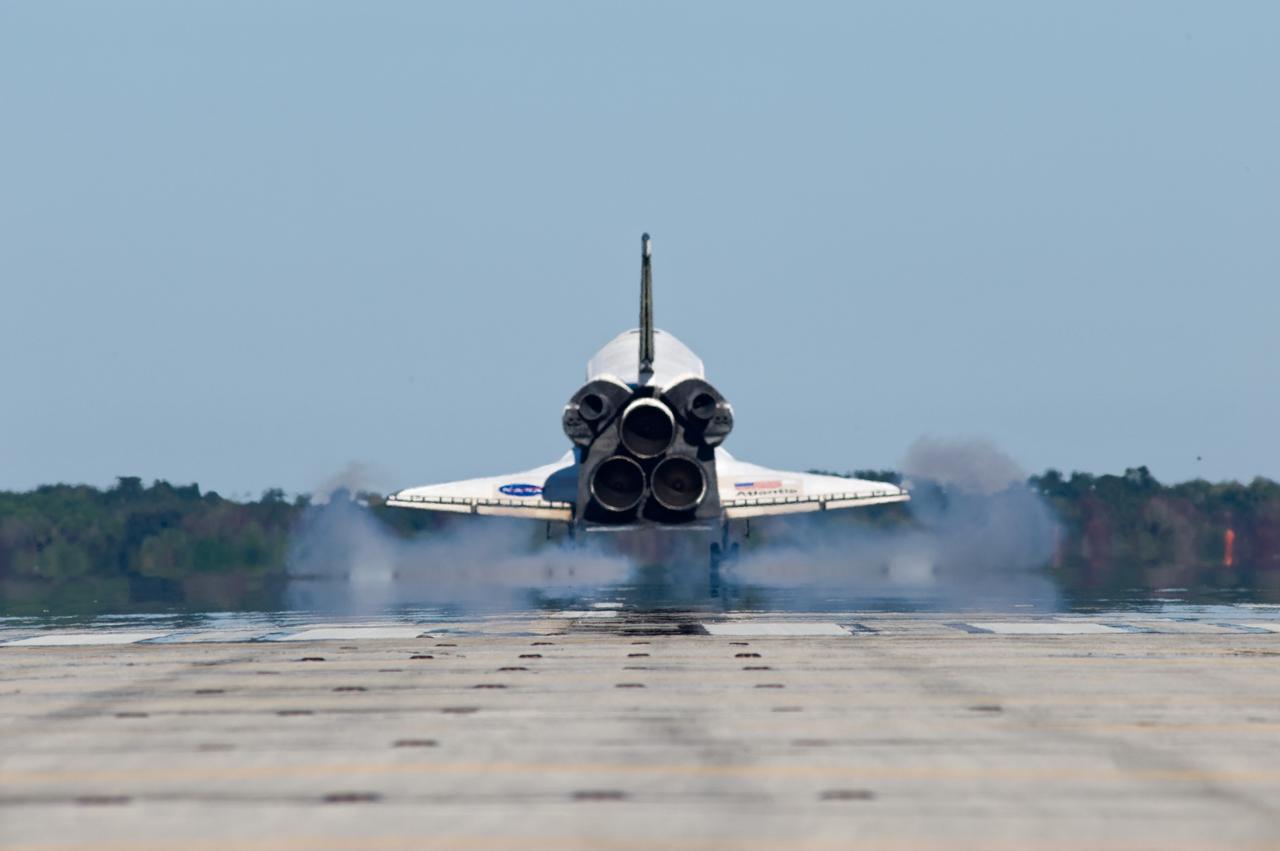
CAPE CANAVERAL, Fla. - Touchdown is apparent by the cloud of dust kicked up by space shuttle Atlantis as its main landing gear tires contact Runway 33 at the Shuttle Landing Facility at NASA's Kennedy Space Center in Florida. After 11 days in space, Atlantis' 4.5-million-mile STS-129 mission is completed on orbit 171. Main gear touchdown was at 9:44:23 a.m. EST. Nose gear touchdown was at 9:44:36 a.m., and wheels stop was at 9:45:05 a.m. Aboard Atlantis are Commander Charles O. Hobaugh; Pilot Barry E. Wilmore; Mission Specialists Leland Melvin, Randy Bresnik, Mike Foreman and Robert L. Satcher Jr.; and Expedition 20 and 21 Flight Engineer Nicole Stott who spent 87 days aboard the International Space Station. STS-129 is the final space shuttle Expedition crew rotation flight on the manifest. On STS-129, the crew delivered 14 tons of cargo to the orbiting laboratory, including two ExPRESS Logistics Carriers containing spare parts to sustain station operations after the shuttles are retired next year. For information on the STS-129 mission and crew, visit http://www.nasa.gov/mission_pages/shuttle/shuttlemissions/sts129/index.html. Photo credit: NASA/Kevin O'Connell and Rick Prickett

CAPE CANAVERAL, Fla. - Streams of smoke trail from the main landing gear tires as space shuttle Atlantis touches down on Runway 33 at the Shuttle Landing Facility at NASA's Kennedy Space Center in Florida after 11 days in space, completing the 4.5-million-mile STS-129 mission on orbit 171. Main gear touchdown was at 9:44:23 a.m. EST. Nose gear touchdown was at 9:44:36 a.m., and wheels stop was at 9:45:05 a.m. Aboard Atlantis are Commander Charles O. Hobaugh; Pilot Barry E. Wilmore; Mission Specialists Leland Melvin, Randy Bresnik, Mike Foreman and Robert L. Satcher Jr.; and Expedition 20 and 21 Flight Engineer Nicole Stott who spent 87 days aboard the International Space Station. STS-129 is the final space shuttle Expedition crew rotation flight on the manifest. On STS-129, the crew delivered 14 tons of cargo to the orbiting laboratory, including two ExPRESS Logistics Carriers containing spare parts to sustain station operations after the shuttles are retired next year. For information on the STS-129 mission and crew, visit http://www.nasa.gov/mission_pages/shuttle/shuttlemissions/sts129/index.html. Photo credit: NASA/Carl Winebarger
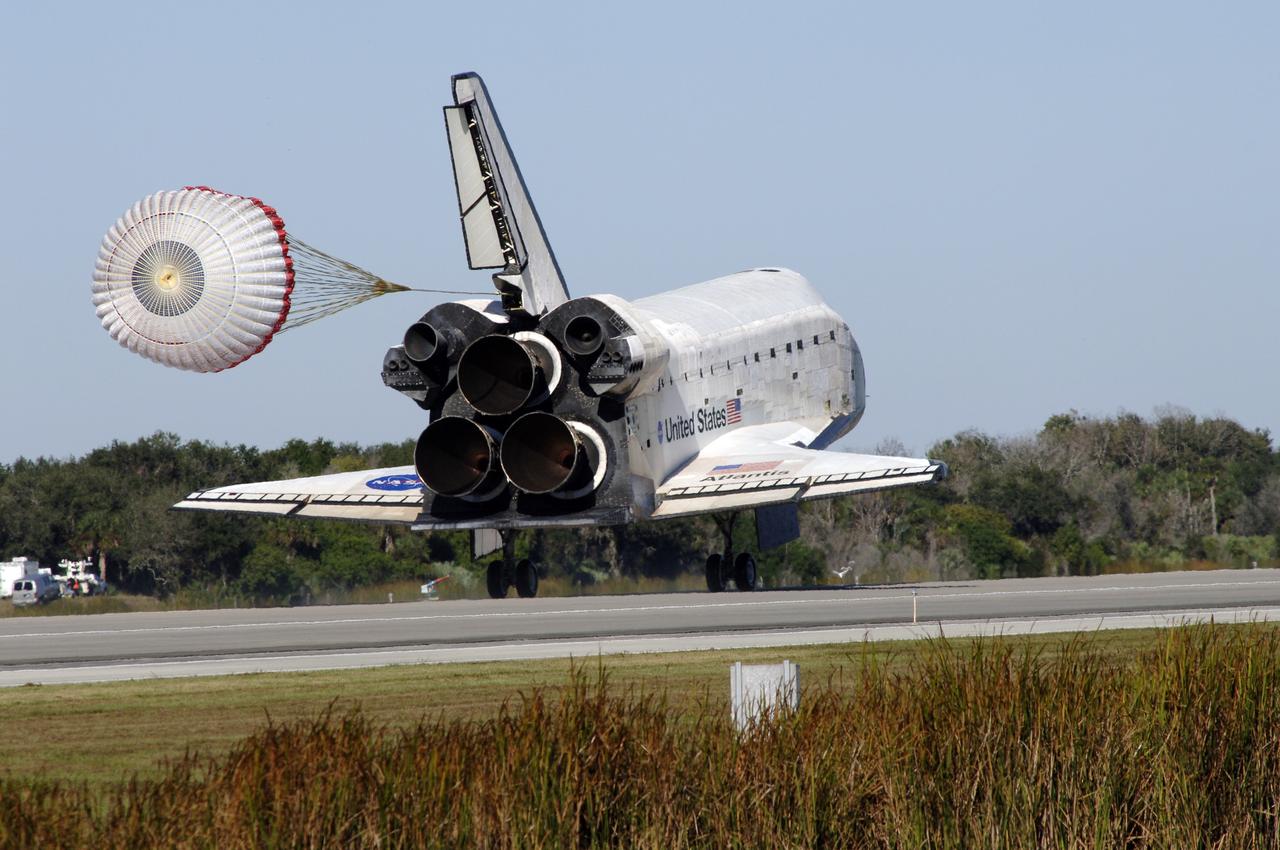
CAPE CANAVERAL, Fla. - With drag chute unfurled, space shuttle Atlantis lands on Runway 33 at the Shuttle Landing Facility at NASA's Kennedy Space Center in Florida after 11 days in space, completing the 4.5-million mile STS-129 mission on orbit 171. Main gear touchdown was at 9:44:23 a.m. EST. Nose gear touchdown was at 9:44:36 a.m., and wheels stop was at 9:45:05 a.m. Aboard Atlantis are Commander Charles O. Hobaugh; Pilot Barry E. Wilmore; Mission Specialists Leland Melvin, Randy Bresnik, Mike Foreman and Robert L. Satcher Jr.; and Expedition 20 and 21 Flight Engineer Nicole Stott who spent 87 days aboard the International Space Station. STS-129 is the final space shuttle Expedition crew rotation flight on the manifest. On STS-129, the crew delivered 14 tons of cargo to the orbiting laboratory, including two ExPRESS Logistics Carriers containing spare parts to sustain station operations after the shuttles are retired next year. For information on the STS-129 mission and crew, visit http://www.nasa.gov/mission_pages/shuttle/shuttlemissions/sts129/index.html. Photo credit: NASA/Kim Shiflett
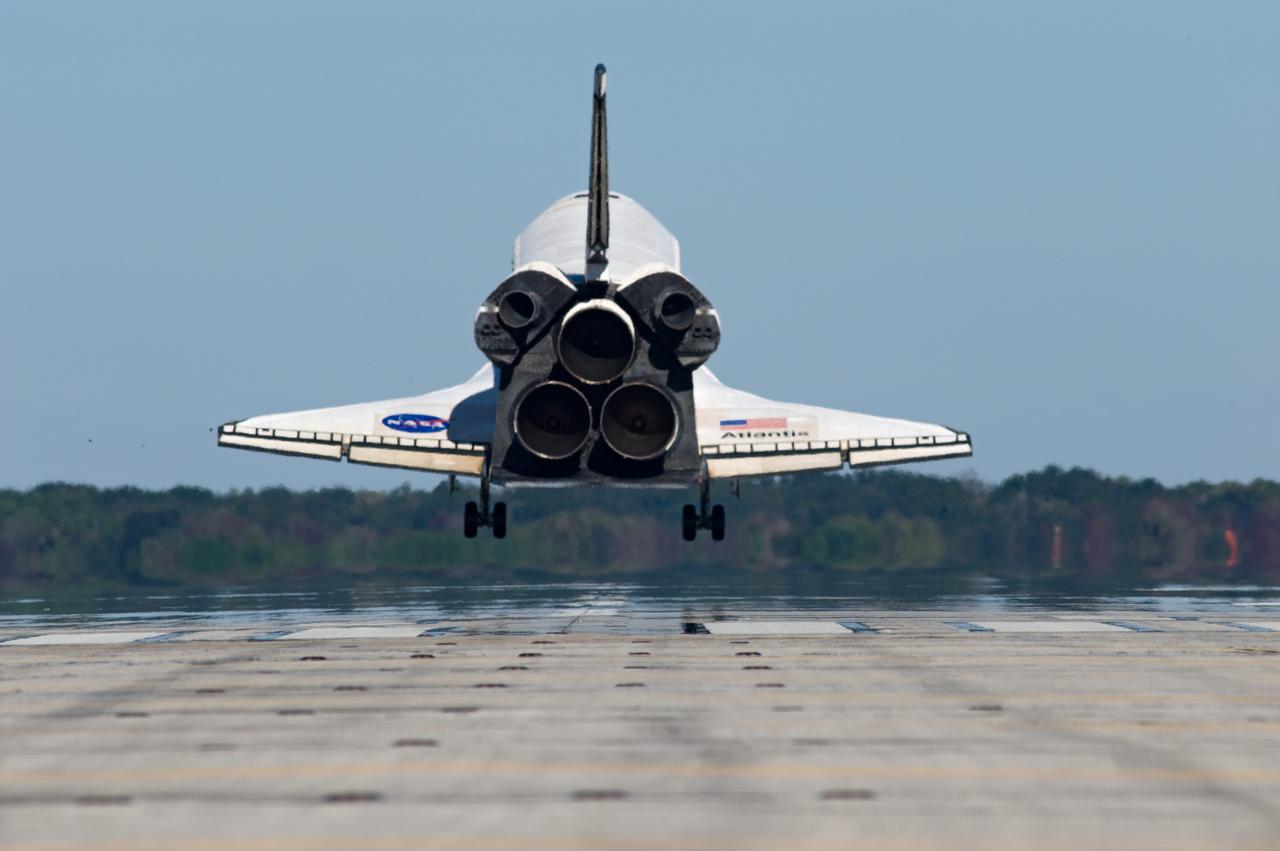
CAPE CANAVERAL, Fla. - With landing gear down, space shuttle Atlantis nears touch down on Runway 33 at the Shuttle Landing Facility at NASA's Kennedy Space Center in Florida after 11 days in space, completing the 4.5-million mile STS-129 mission on orbit 171. Main gear touchdown was at 9:44:23 a.m. EST. Nose gear touchdown was at 9:44:36 a.m., and wheels stop was at 9:45:05 a.m. Aboard Atlantis are Commander Charles O. Hobaugh; Pilot Barry E. Wilmore; Mission Specialists Leland Melvin, Randy Bresnik, Mike Foreman and Robert L. Satcher Jr.; and Expedition 20 and 21 Flight Engineer Nicole Stott who spent 87 days aboard the International Space Station. STS-129 is the final space shuttle Expedition crew rotation flight on the manifest. On STS-129, the crew delivered 14 tons of cargo to the orbiting laboratory, including two ExPRESS Logistics Carriers containing spare parts to sustain station operations after the shuttles are retired next year. For information on the STS-129 mission and crew, visit http://www.nasa.gov/mission_pages/shuttle/shuttlemissions/sts129/index.html. Photo credit: NASA/Kevin O'Connell and Rick Prickett
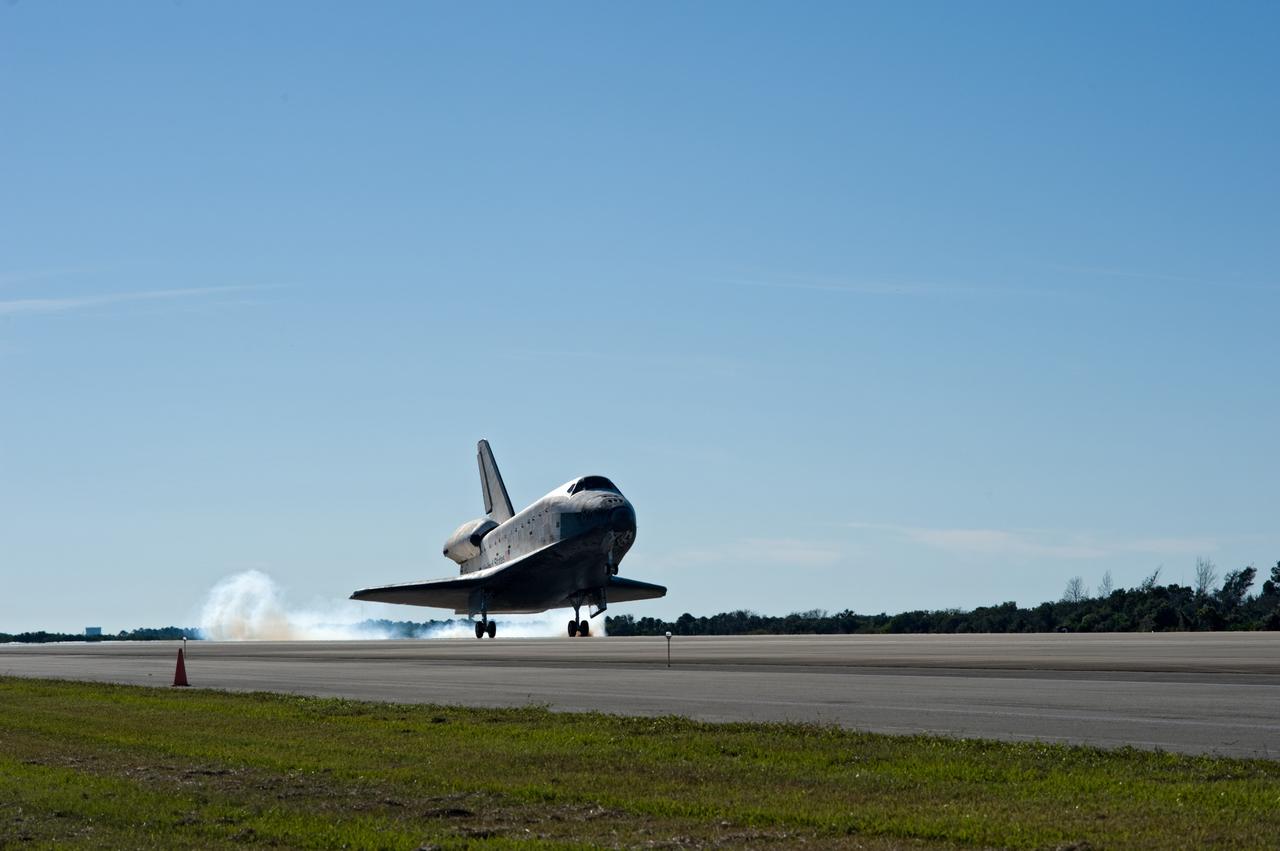
CAPE CANAVERAL, Fla. - Touchdown is apparent by the streams of smoke trailing space shuttle Atlantis as its main landing gear tires contact Runway 33 at the Shuttle Landing Facility at NASA's Kennedy Space Center in Florida. After 11 days in space, Atlantis' 4.5-million-mile STS-129 mission is completed on orbit 171. Main gear touchdown was at 9:44:23 a.m. EST. Nose gear touchdown was at 9:44:36 a.m., and wheels stop was at 9:45:05 a.m. Aboard Atlantis are Commander Charles O. Hobaugh; Pilot Barry E. Wilmore; Mission Specialists Leland Melvin, Randy Bresnik, Mike Foreman and Robert L. Satcher Jr.; and Expedition 20 and 21 Flight Engineer Nicole Stott who spent 87 days aboard the International Space Station. STS-129 is the final space shuttle Expedition crew rotation flight on the manifest. On STS-129, the crew delivered 14 tons of cargo to the orbiting laboratory, including two ExPRESS Logistics Carriers containing spare parts to sustain station operations after the shuttles are retired next year. For information on the STS-129 mission and crew, visit http://www.nasa.gov/mission_pages/shuttle/shuttlemissions/sts129/index.html. Photo credit: NASA/Kevin O'Connell and Rick Prickett
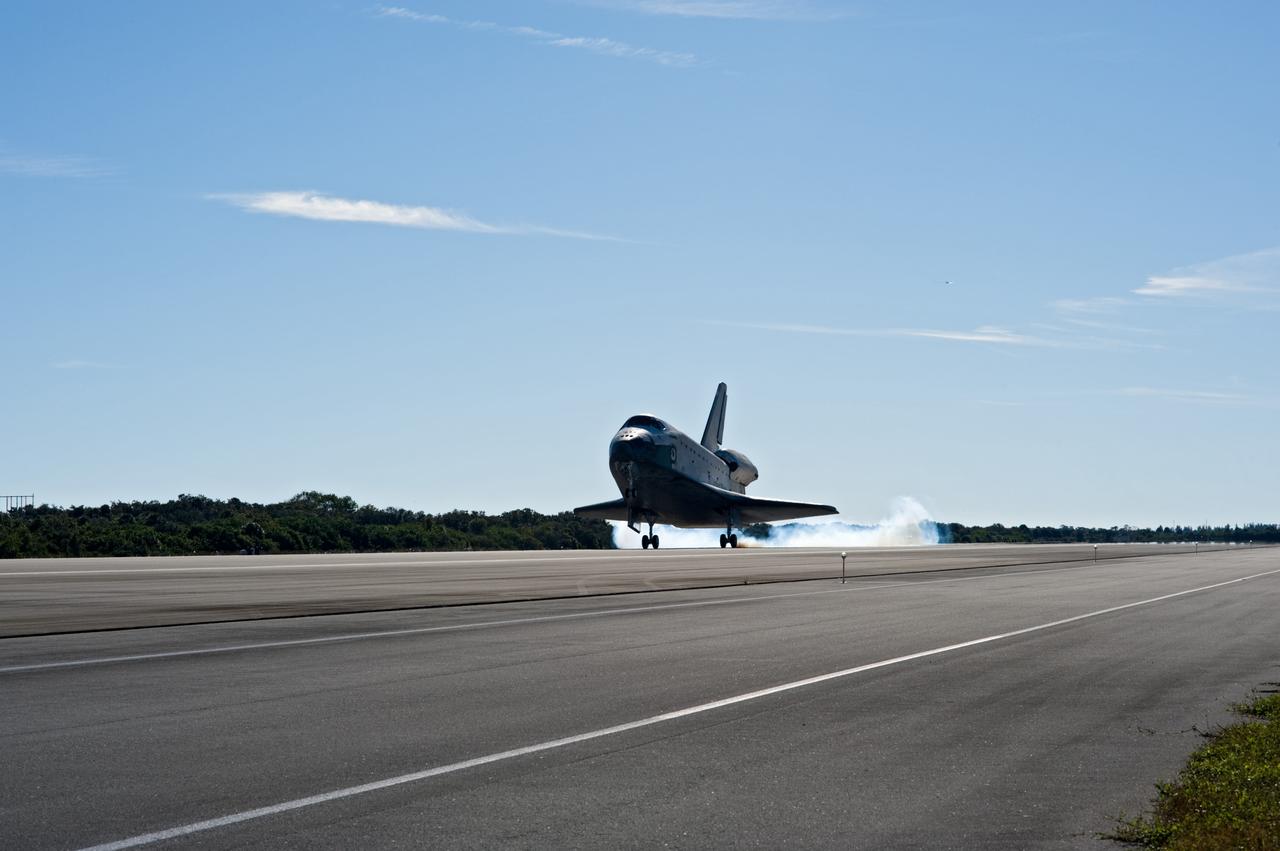
CAPE CANAVERAL, Fla. - Streams of smoke trail from the main landing gear tires as space shuttle Atlantis touches down on Runway 33 at the Shuttle Landing Facility at NASA's Kennedy Space Center in Florida after 11 days in space, completing the 4.5-million-mile STS-129 mission on orbit 171. Main gear touchdown was at 9:44:23 a.m. EST. Nose gear touchdown was at 9:44:36 a.m., and wheels stop was at 9:45:05 a.m. Aboard Atlantis are Commander Charles O. Hobaugh; Pilot Barry E. Wilmore; Mission Specialists Leland Melvin, Randy Bresnik, Mike Foreman and Robert L. Satcher Jr.; and Expedition 20 and 21 Flight Engineer Nicole Stott who spent 87 days aboard the International Space Station. STS-129 is the final space shuttle Expedition crew rotation flight on the manifest. On STS-129, the crew delivered 14 tons of cargo to the orbiting laboratory, including two ExPRESS Logistics Carriers containing spare parts to sustain station operations after the shuttles are retired next year. For information on the STS-129 mission and crew, visit http://www.nasa.gov/mission_pages/shuttle/shuttlemissions/sts129/index.html. Photo credit: NASA/Kevin O'Connell and Rick Prickett
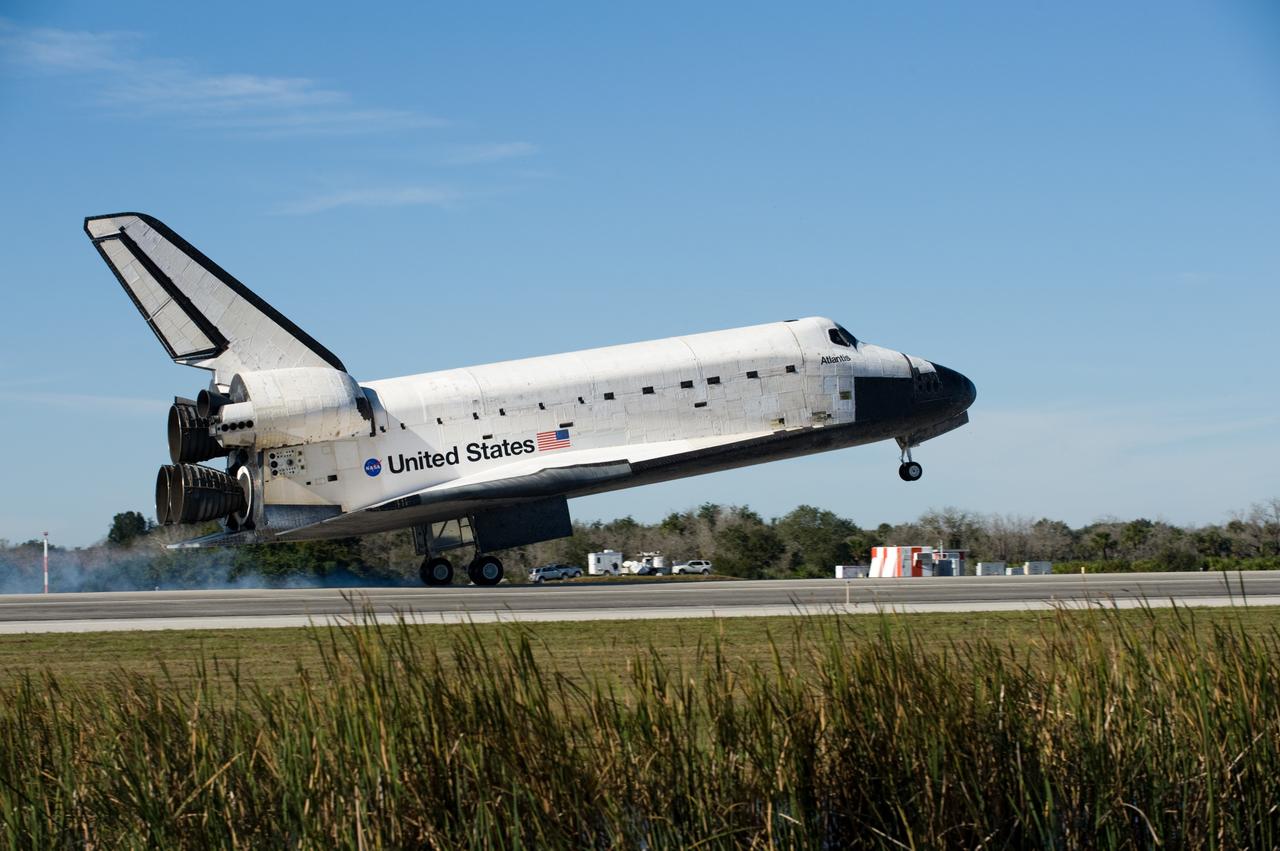
CAPE CANAVERAL, Fla. - The tires of space shuttle Atlantis' main landing gear make contact with Runway 33 at the Shuttle Landing Facility at NASA's Kennedy Space Center in Florida after 11 days in space, completing the 4.5-million mile STS-129 mission on orbit 171. Main gear touchdown was at 9:44:23 a.m. EST. Nose gear touchdown was at 9:44:36 a.m., and wheels stop was at 9:45:05 a.m. Aboard Atlantis are Commander Charles O. Hobaugh; Pilot Barry E. Wilmore; Mission Specialists Leland Melvin, Randy Bresnik, Mike Foreman and Robert L. Satcher Jr.; and Expedition 20 and 21 Flight Engineer Nicole Stott who spent 87 days aboard the International Space Station. STS-129 is the final space shuttle Expedition crew rotation flight on the manifest. On STS-129, the crew delivered 14 tons of cargo to the orbiting laboratory, including two ExPRESS Logistics Carriers containing spare parts to sustain station operations after the shuttles are retired next year. For information on the STS-129 mission and crew, visit http://www.nasa.gov/mission_pages/shuttle/shuttlemissions/sts129/index.html. Photo credit: NASA/Thomas Farrar Jr.
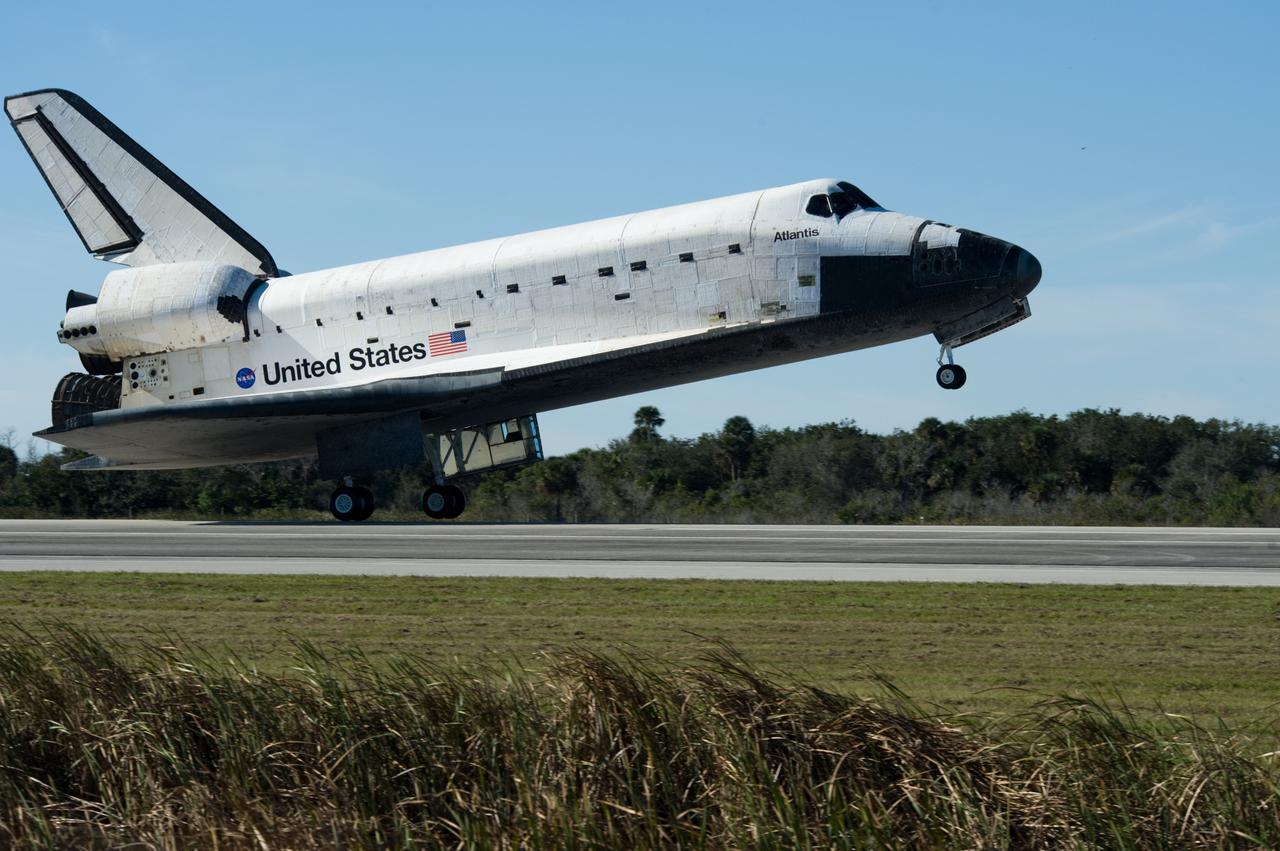
CAPE CANAVERAL, Fla. - Space shuttle Atlantis' main landing gear tires near contact with Runway 33 at the Shuttle Landing Facility at NASA's Kennedy Space Center in Florida after 11 days in space, completing the 4.5-million mile STS-129 mission on orbit 171. Main gear touchdown was at 9:44:23 a.m. EST. Nose gear touchdown was at 9:44:36 a.m., and wheels stop was at 9:45:05 a.m. Aboard Atlantis are Commander Charles O. Hobaugh; Pilot Barry E. Wilmore; Mission Specialists Leland Melvin, Randy Bresnik, Mike Foreman and Robert L. Satcher Jr.; and Expedition 20 and 21 Flight Engineer Nicole Stott who spent 87 days aboard the International Space Station. STS-129 is the final space shuttle Expedition crew rotation flight on the manifest. On STS-129, the crew delivered 14 tons of cargo to the orbiting laboratory, including two ExPRESS Logistics Carriers containing spare parts to sustain station operations after the shuttles are retired next year. For information on the STS-129 mission and crew, visit http://www.nasa.gov/mission_pages/shuttle/shuttlemissions/sts129/index.html. Photo credit: NASA/Carl Winebarger
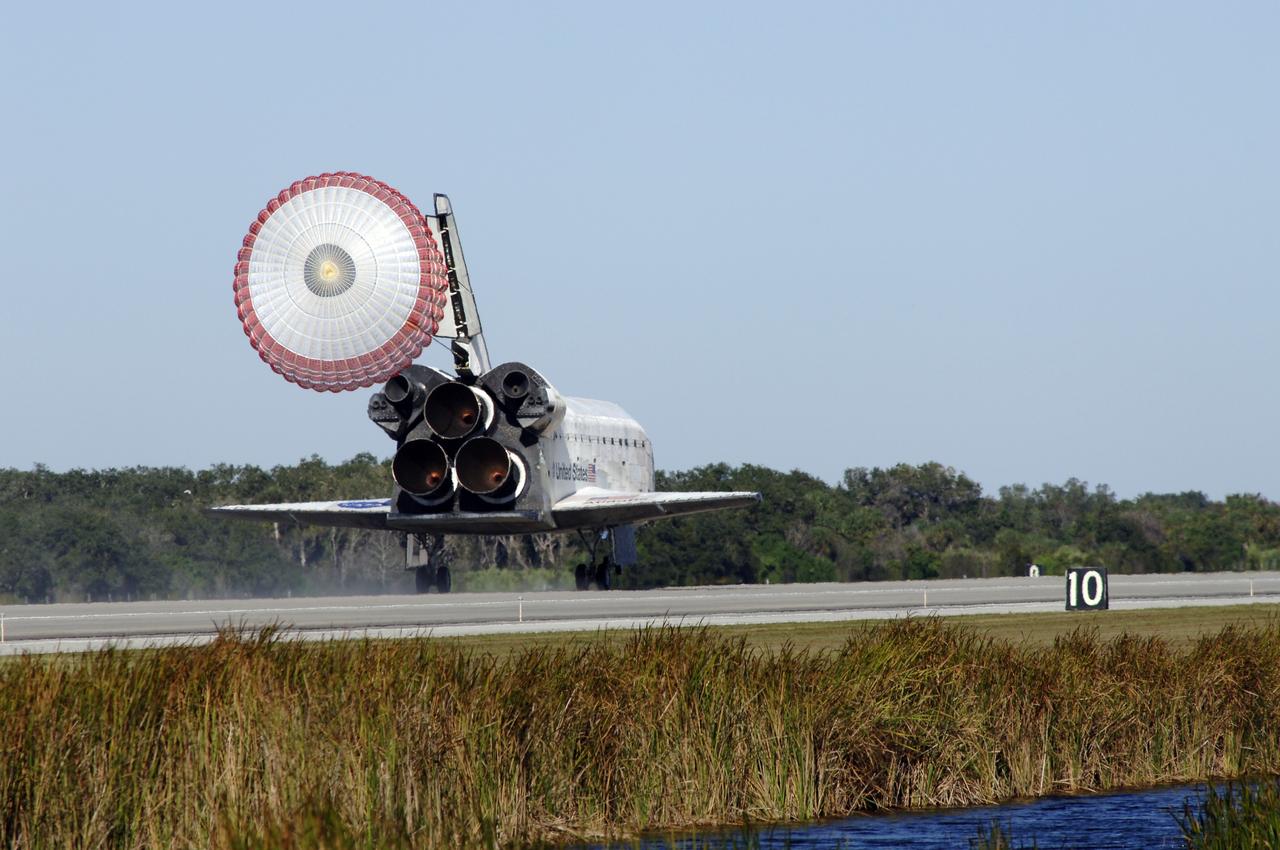
CAPE CANAVERAL, Fla. - The drag chute unfurls as space shuttle Atlantis lands on Runway 33 at the Shuttle Landing Facility at NASA's Kennedy Space Center in Florida after 11 days in space, completing the 4.5-million mile STS-129 mission on orbit 171. Main gear touchdown was at 9:44:23 a.m. EST. Nose gear touchdown was at 9:44:36 a.m., and wheels stop was at 9:45:05 a.m. Aboard Atlantis are Commander Charles O. Hobaugh; Pilot Barry E. Wilmore; Mission Specialists Leland Melvin, Randy Bresnik, Mike Foreman and Robert L. Satcher Jr.; and Expedition 20 and 21 Flight Engineer Nicole Stott who spent 87 days aboard the International Space Station. STS-129 is the final space shuttle Expedition crew rotation flight on the manifest. On STS-129, the crew delivered 14 tons of cargo to the orbiting laboratory, including two ExPRESS Logistics Carriers containing spare parts to sustain station operations after the shuttles are retired next year. For information on the STS-129 mission and crew, visit http://www.nasa.gov/mission_pages/shuttle/shuttlemissions/sts129/index.html. Photo credit: NASA/Kim Shiflett
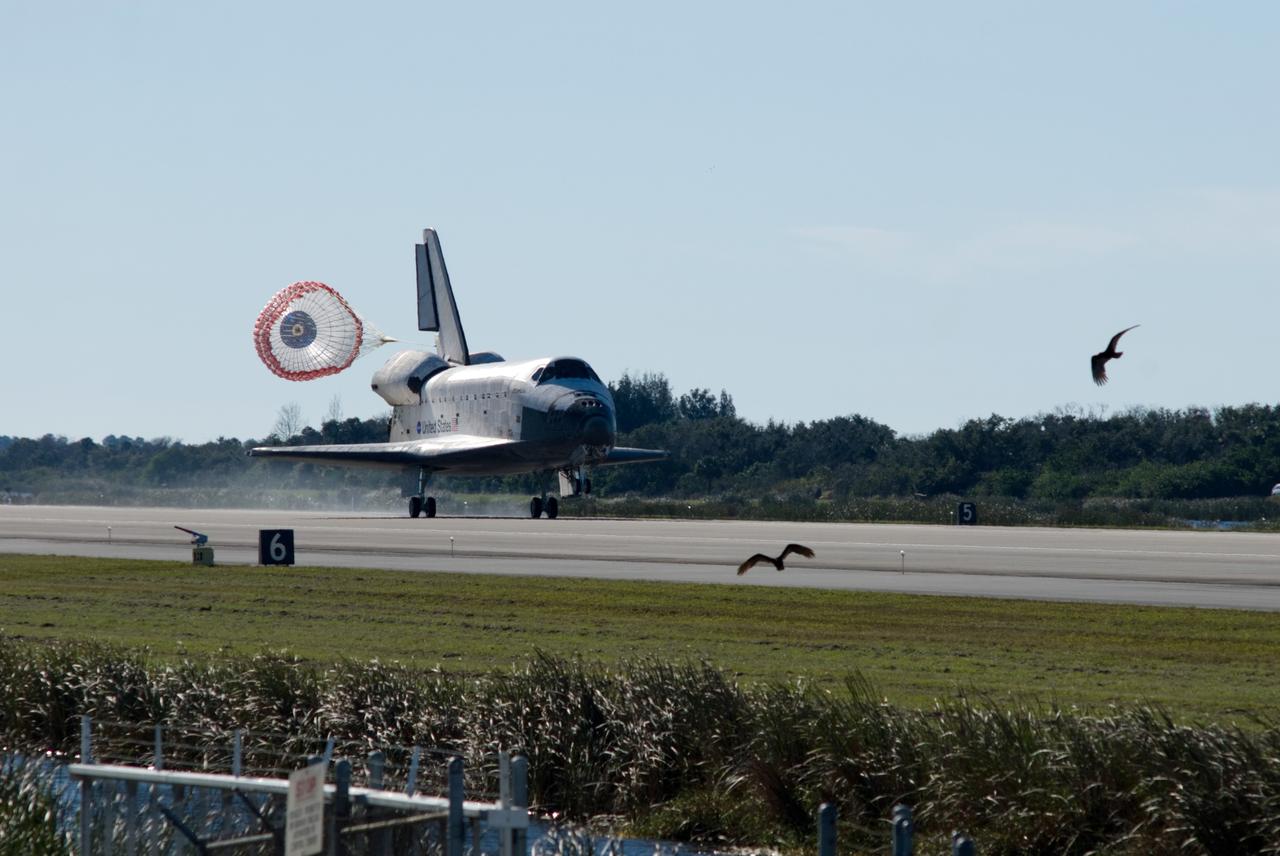
CAPE CANAVERAL, Fla. - The drag chute unfurls to slow space shuttle Atlantis for landing on Runway 33 at the Shuttle Landing Facility at NASA's Kennedy Space Center in Florida after 11 days in space, completing the 4.5-million mile STS-129 mission on orbit 171. Main gear touchdown was at 9:44:23 a.m. EST. Nose gear touchdown was at 9:44:36 a.m., and wheels stop was at 9:45:05 a.m. Aboard Atlantis are Commander Charles O. Hobaugh; Pilot Barry E. Wilmore; Mission Specialists Leland Melvin, Randy Bresnik, Mike Foreman and Robert L. Satcher Jr.; and Expedition 20 and 21 Flight Engineer Nicole Stott who spent 87 days aboard the International Space Station. STS-129 is the final space shuttle Expedition crew rotation flight on the manifest. On STS-129, the crew delivered 14 tons of cargo to the orbiting laboratory, including two ExPRESS Logistics Carriers containing spare parts to sustain station operations after the shuttles are retired next year. For information on the STS-129 mission and crew, visit http://www.nasa.gov/mission_pages/shuttle/shuttlemissions/sts129/index.html. Photo credit: NASA/Sandra Joseph
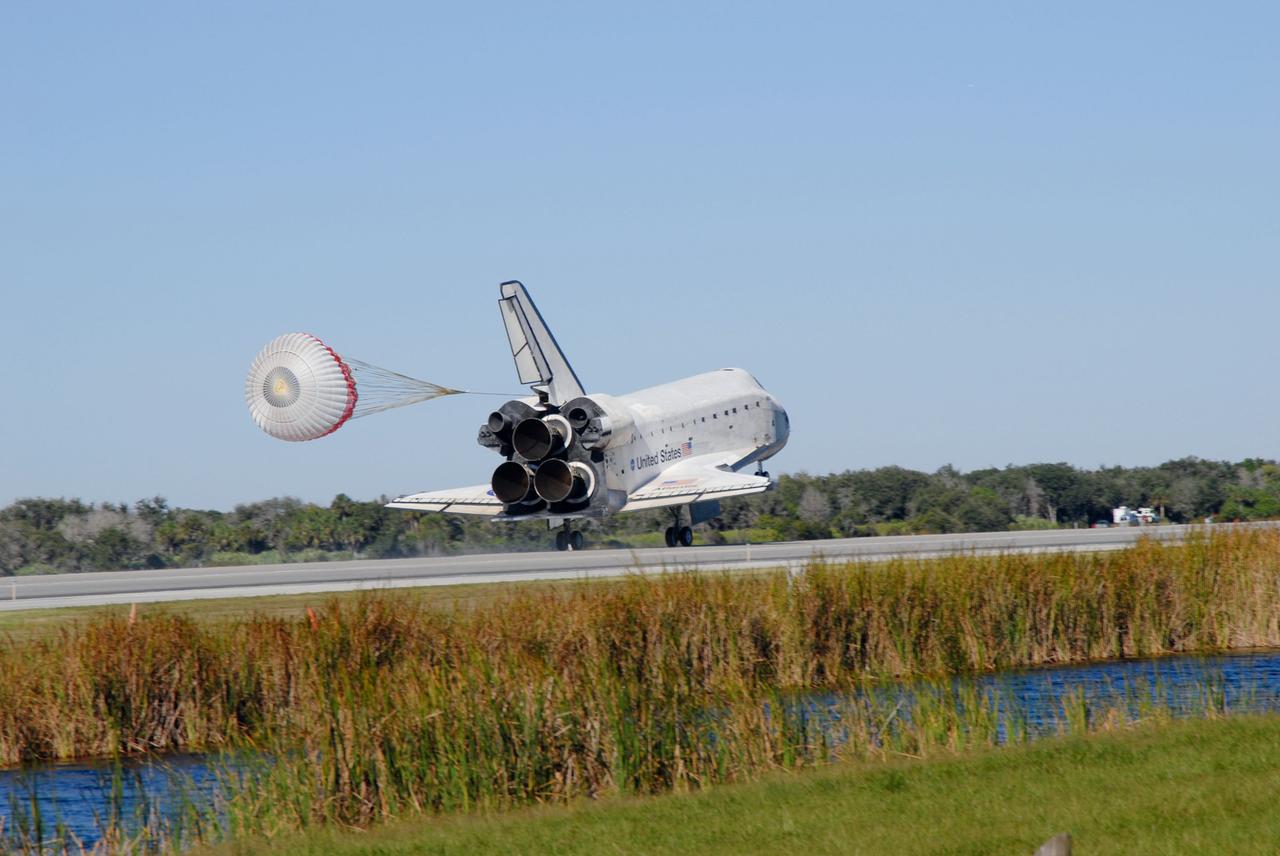
PHOTO CREDIT: NASA or National Aeronautics and Space Administration CAPE CANAVERAL, Fla. - The drag chute unfurls to slow space shuttle Atlantis for landing on Runway 33 at the Shuttle Landing Facility at NASA's Kennedy Space Center in Florida after 11 days in space, completing the 4.5-million mile STS-129 mission on orbit 171. Main gear touchdown was at 9:44:23 a.m. EDT. Nose gear touchdown was at 9:44:36 a.m., and wheels stop was at 9:45:05 a.m. Aboard Atlantis are Commander Charles O. Hobaugh; Pilot Barry E. Wilmore; Mission Specialists Leland Melvin, Randy Bresnik, Mike Foreman and Robert L. Satcher Jr.; and Expedition 20 and 21 Flight Engineer Nicole Stott who spent 87 days aboard the International Space Station. STS-129 is the final space shuttle Expedition crew rotation flight on the manifest. On STS-129, the crew delivered 14 tons of cargo to the orbiting laboratory, including two ExPRESS Logistics Carriers containing spare parts to sustain station operations after the shuttles are retired next year. For information on the STS-129 mission and crew, visit http://www.nasa.gov/mission_pages/shuttle/shuttlemissions/sts129/index.html. Photo credit: NASA/Jim Grossmann
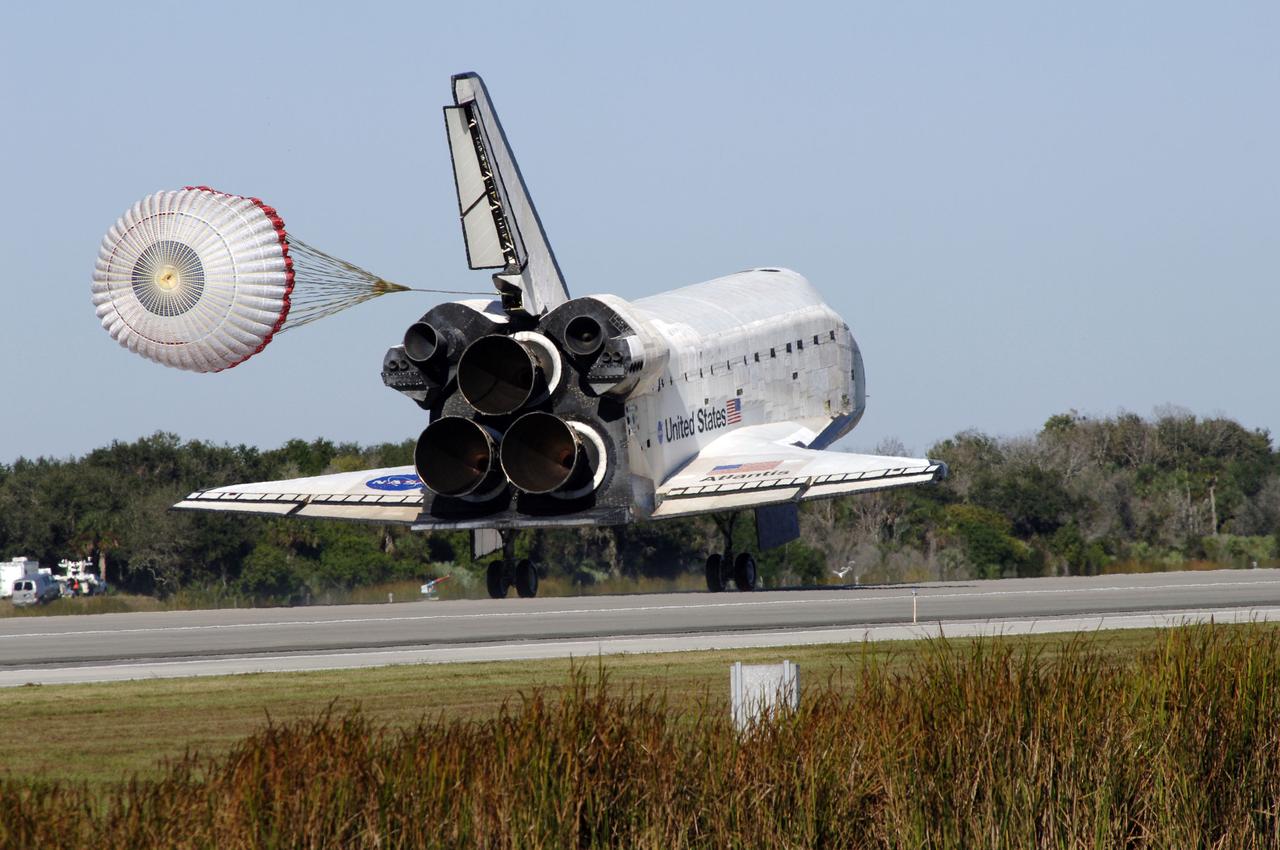
PHOTO CREDIT: NASA or National Aeronautics and Space Administration CAPE CANAVERAL, Fla. - With drag chute unfurled, space shuttle Atlantis lands on Runway 33 at the Shuttle Landing Facility at NASA's Kennedy Space Center in Florida after 11 days in space, completing the 4.5-million mile STS-129 mission on orbit 171. Main gear touchdown was at 9:44:23 a.m. EDT. Nose gear touchdown was at 9:44:36 a.m., and wheels stop was at 9:45:05 a.m. Aboard Atlantis are Commander Charles O. Hobaugh; Pilot Barry E. Wilmore; Mission Specialists Leland Melvin, Randy Bresnik, Mike Foreman and Robert L. Satcher Jr.; and Expedition 20 and 21 Flight Engineer Nicole Stott who spent 87 days aboard the International Space Station. STS-129 is the final space shuttle Expedition crew rotation flight on the manifest. On STS-129, the crew delivered 14 tons of cargo to the orbiting laboratory, including two ExPRESS Logistics Carriers containing spare parts to sustain station operations after the shuttles are retired next year. For information on the STS-129 mission and crew, visit http://www.nasa.gov/mission_pages/shuttle/shuttlemissions/sts129/index.html. Photo credit: NASA/Kim Shiflett
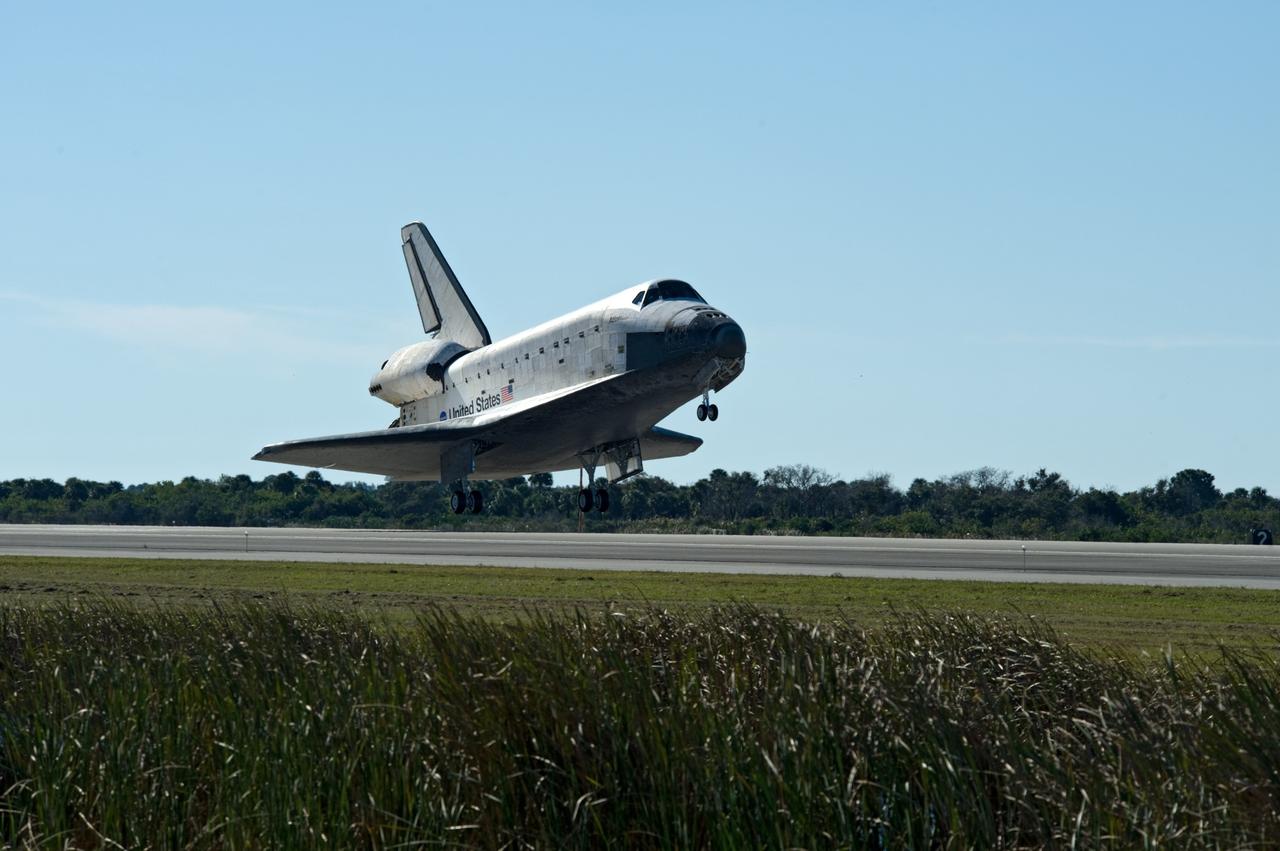
CAPE CANAVERAL, Fla. - With landing gear down, space shuttle Atlantis nears touch down on Runway 33 at the Shuttle Landing Facility at NASA's Kennedy Space Center in Florida after 11 days in space, completing the 4.5-million mile STS-129 mission on orbit 171. Main gear touchdown was at 9:44:23 a.m. EST. Nose gear touchdown was at 9:44:36 a.m., and wheels stop was at 9:45:05 a.m. Aboard Atlantis are Commander Charles O. Hobaugh; Pilot Barry E. Wilmore; Mission Specialists Leland Melvin, Randy Bresnik, Mike Foreman and Robert L. Satcher Jr.; and Expedition 20 and 21 Flight Engineer Nicole Stott who spent 87 days aboard the International Space Station. STS-129 is the final space shuttle Expedition crew rotation flight on the manifest. On STS-129, the crew delivered 14 tons of cargo to the orbiting laboratory, including two ExPRESS Logistics Carriers containing spare parts to sustain station operations after the shuttles are retired next year. For information on the STS-129 mission and crew, visit http://www.nasa.gov/mission_pages/shuttle/shuttlemissions/sts129/index.html. Photo credit: NASA/Carl Winebarger
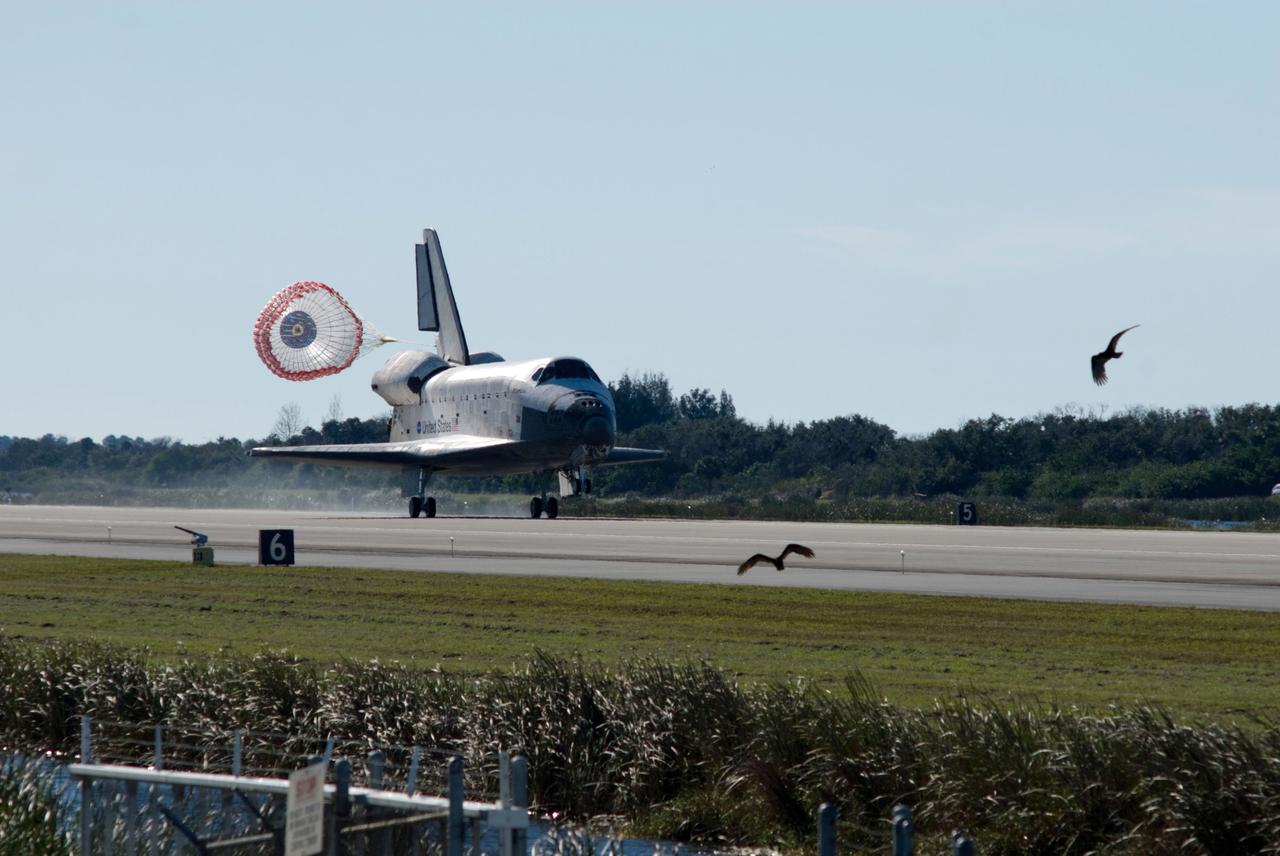
PHOTO CREDIT: NASA or National Aeronautics and Space Administration CAPE CANAVERAL, Fla. - The drag chute unfurls to slow space shuttle Atlantis for landing on Runway 33 at the Shuttle Landing Facility at NASA's Kennedy Space Center in Florida after 11 days in space, completing the 4.5-million mile STS-129 mission on orbit 171. Main gear touchdown was at 9:44:23 a.m. EDT. Nose gear touchdown was at 9:44:36 a.m., and wheels stop was at 9:45:05 a.m. Aboard Atlantis are Commander Charles O. Hobaugh; Pilot Barry E. Wilmore; Mission Specialists Leland Melvin, Randy Bresnik, Mike Foreman and Robert L. Satcher Jr.; and Expedition 20 and 21 Flight Engineer Nicole Stott who spent 87 days aboard the International Space Station. STS-129 is the final space shuttle Expedition crew rotation flight on the manifest. On STS-129, the crew delivered 14 tons of cargo to the orbiting laboratory, including two ExPRESS Logistics Carriers containing spare parts to sustain station operations after the shuttles are retired next year. For information on the STS-129 mission and crew, visit http://www.nasa.gov/mission_pages/shuttle/shuttlemissions/sts129/index.html. Photo credit: NASA/Sandra Joseph