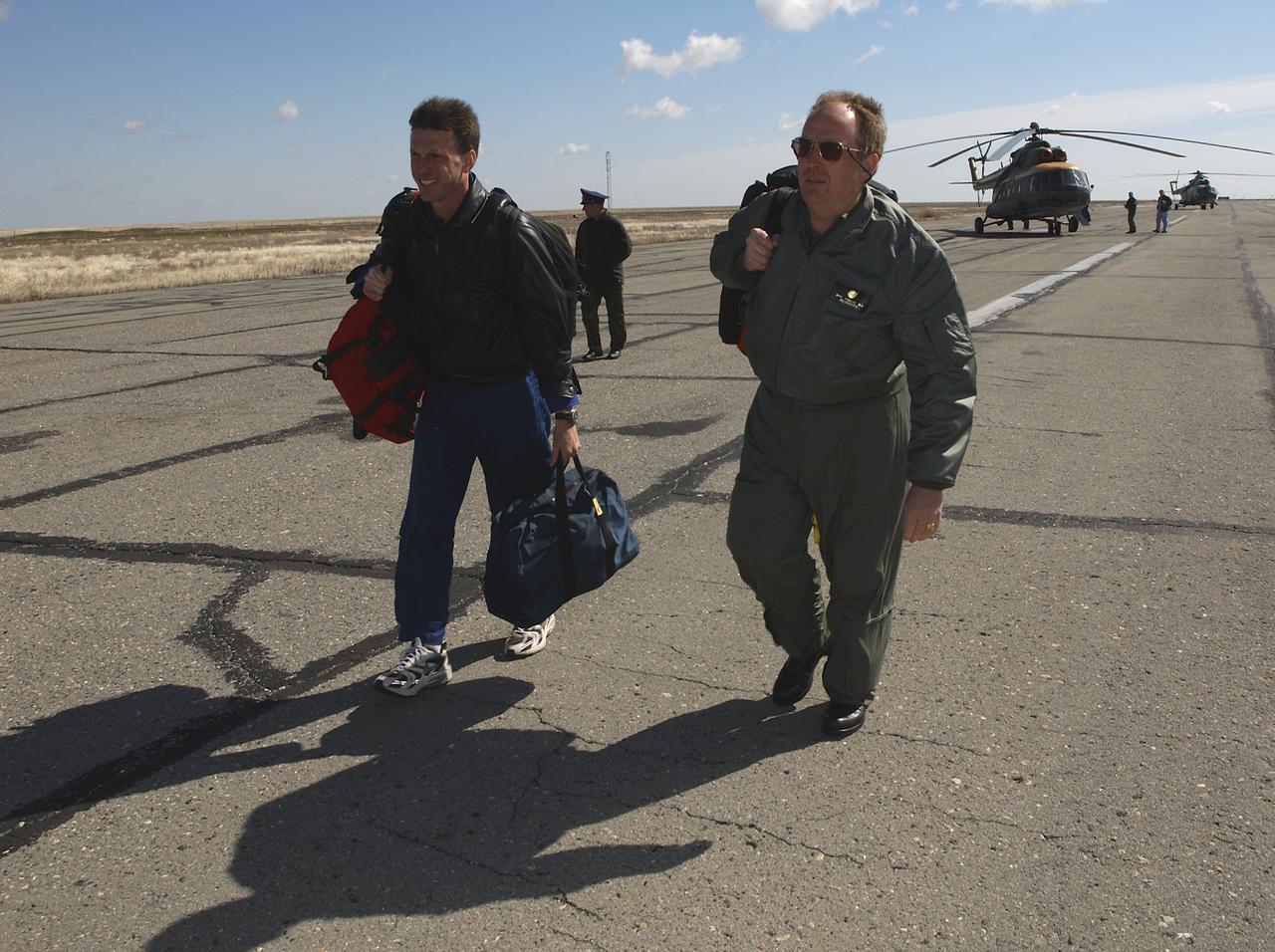
Astronaut Michael Foale, left, and Mike Duncan, Expedition 6 Lead Flight Surgeon, move to another helicopter after the landing team helicopters returned for refueling, Tuesday, May 4, 2003, in Kazakhstan. Foale and Duncan went on from the refueling to meet the crew of Expedition 6 at the landing site. Photo Credit: (NASA/Bill Ingalls)
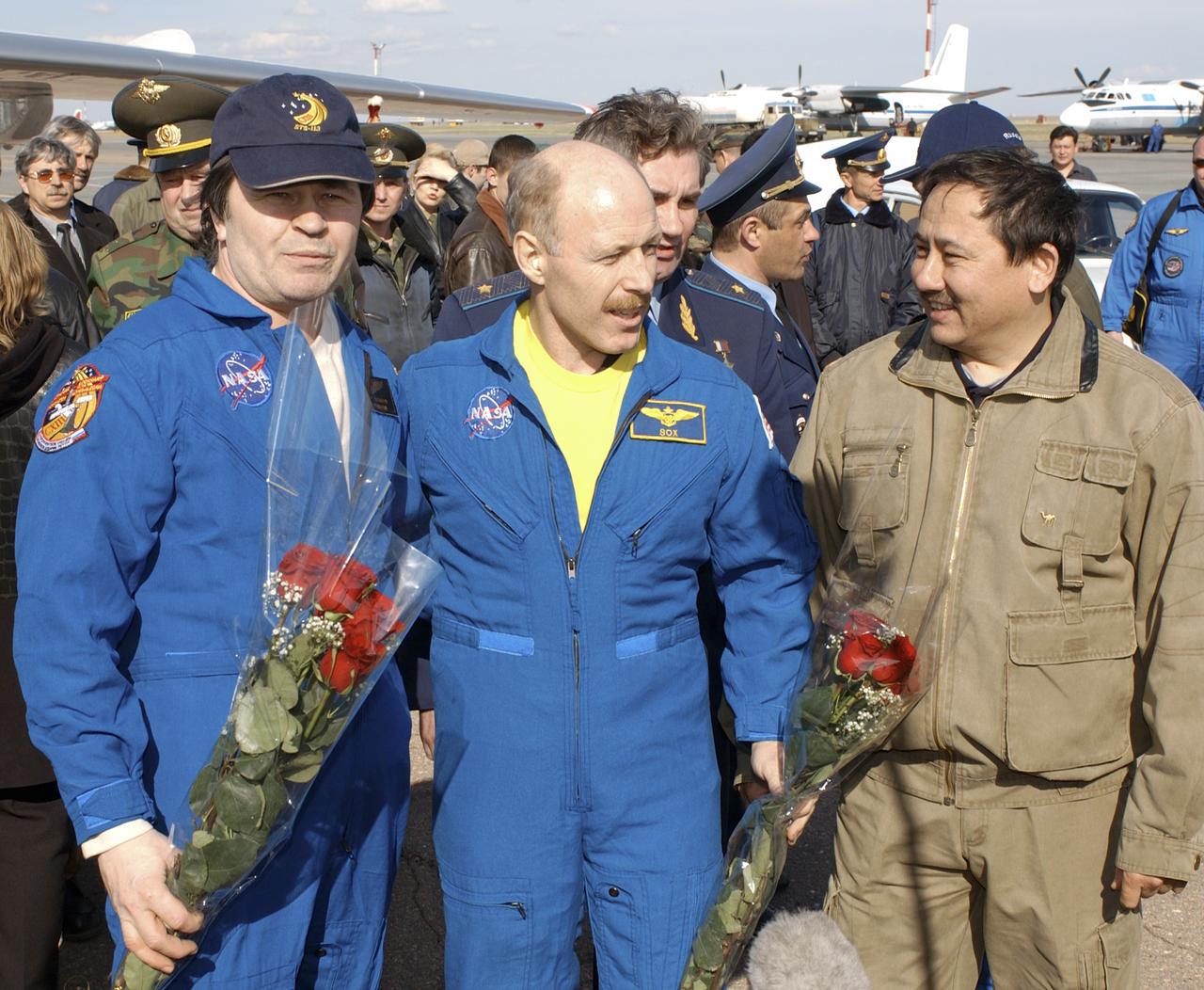
Expedition 6 Flight Engineer Nikolai Budarin, left, and Commander Ken Bowersox are greeted by Cosmonaut Talgat Musabayev, right, on Tuesday, May 4, 2003, after their arrival in Astana, Kazakhstan. The Expedition 6 Soyuz capsule landed in Kazakhstan. Photo Credit: (NASA/Bill Ingalls)
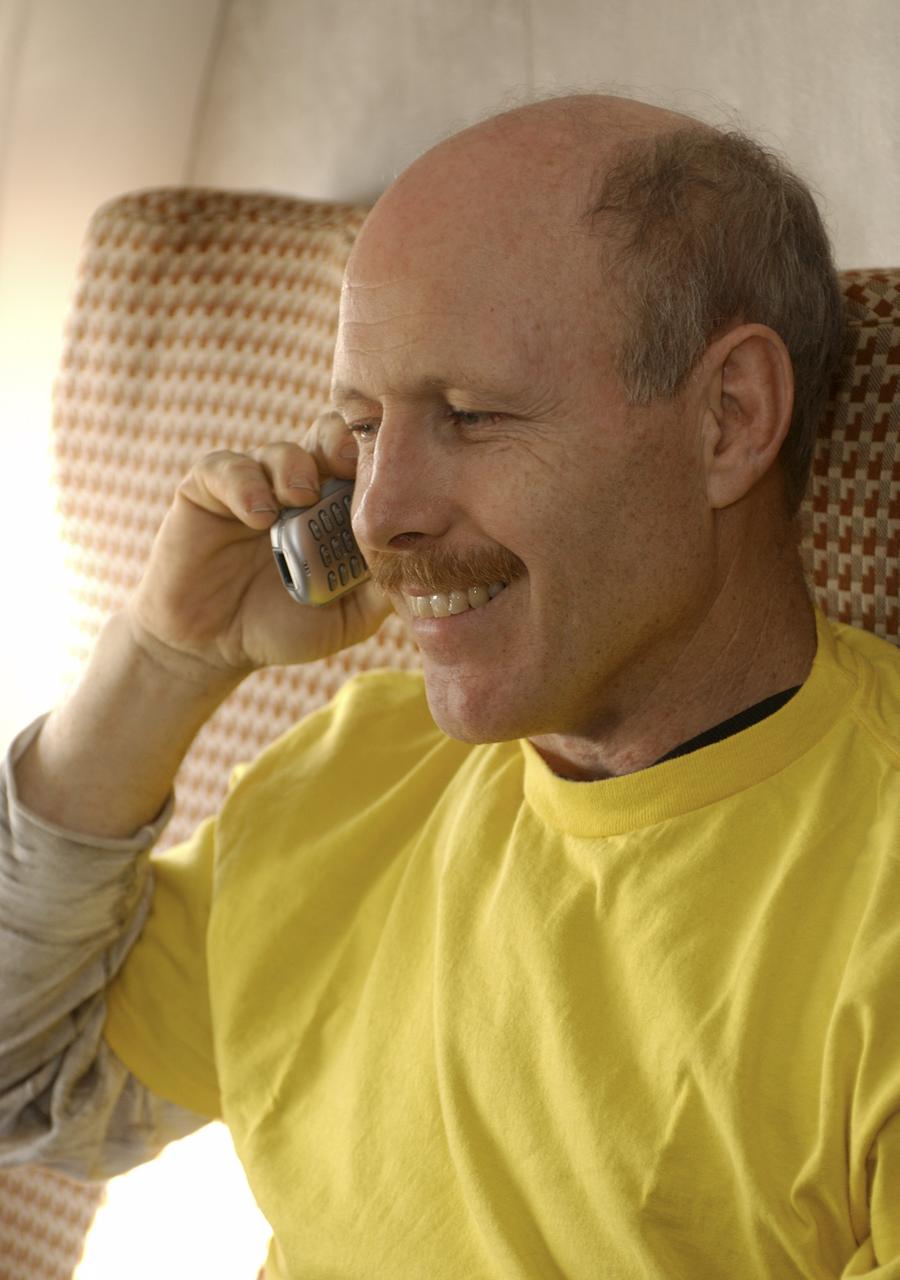
Expedition 6 Commander Ken Bowersox calls his wife Annie from the airplane prior to departure from Astana, Kazakhstan to Moscow, Tuesday, May 4, 2003. Photo Credit: (NASA/Bill Ingalls)
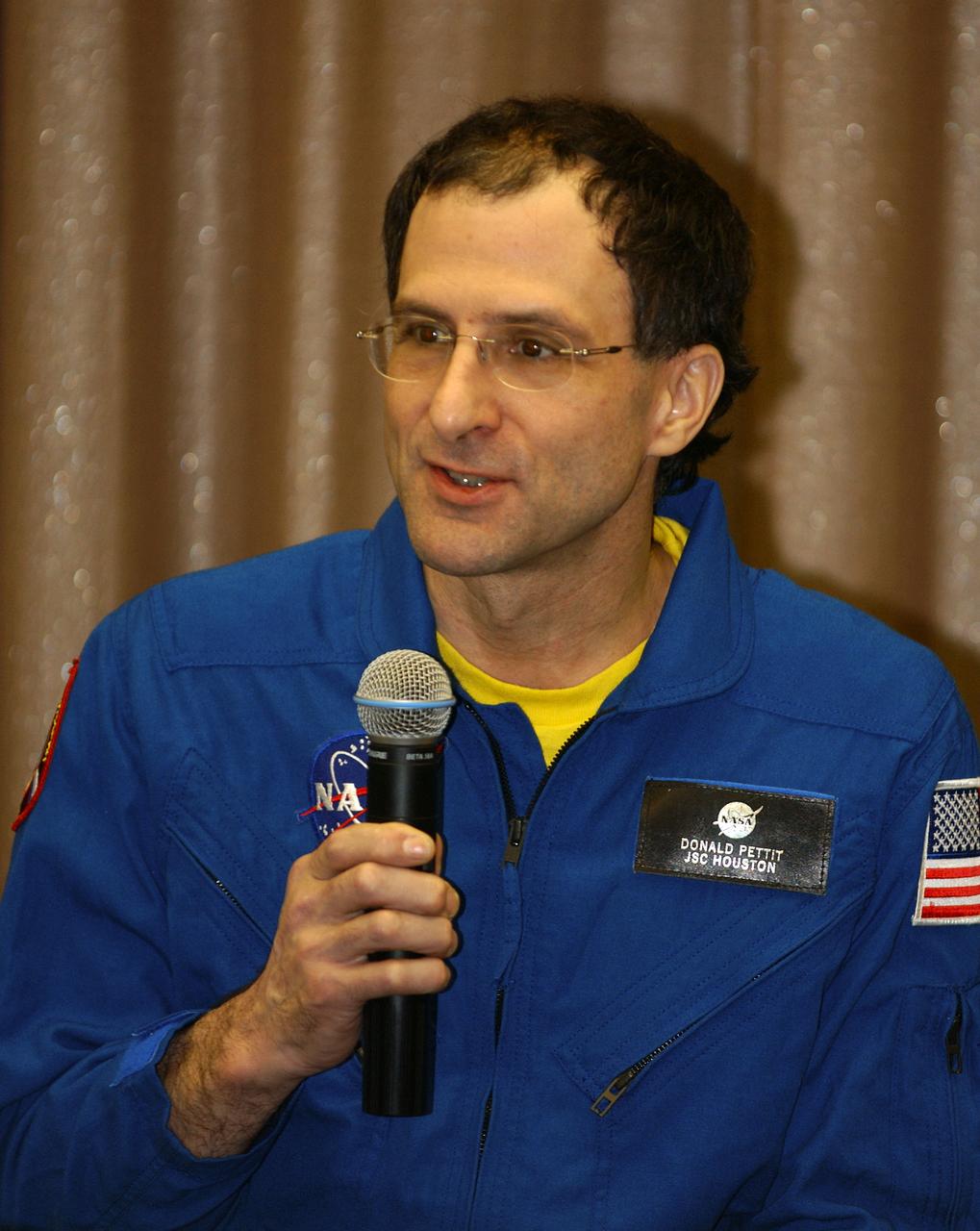
Expedition 6 International Space Station Science Officer Don Pettit speaks during a press conference at the Gagarin Cosmonaut Training Center in Star City, Russia, Thursday, May 6, 2003. Photo Credit: (NASA/Bill Ingalls)
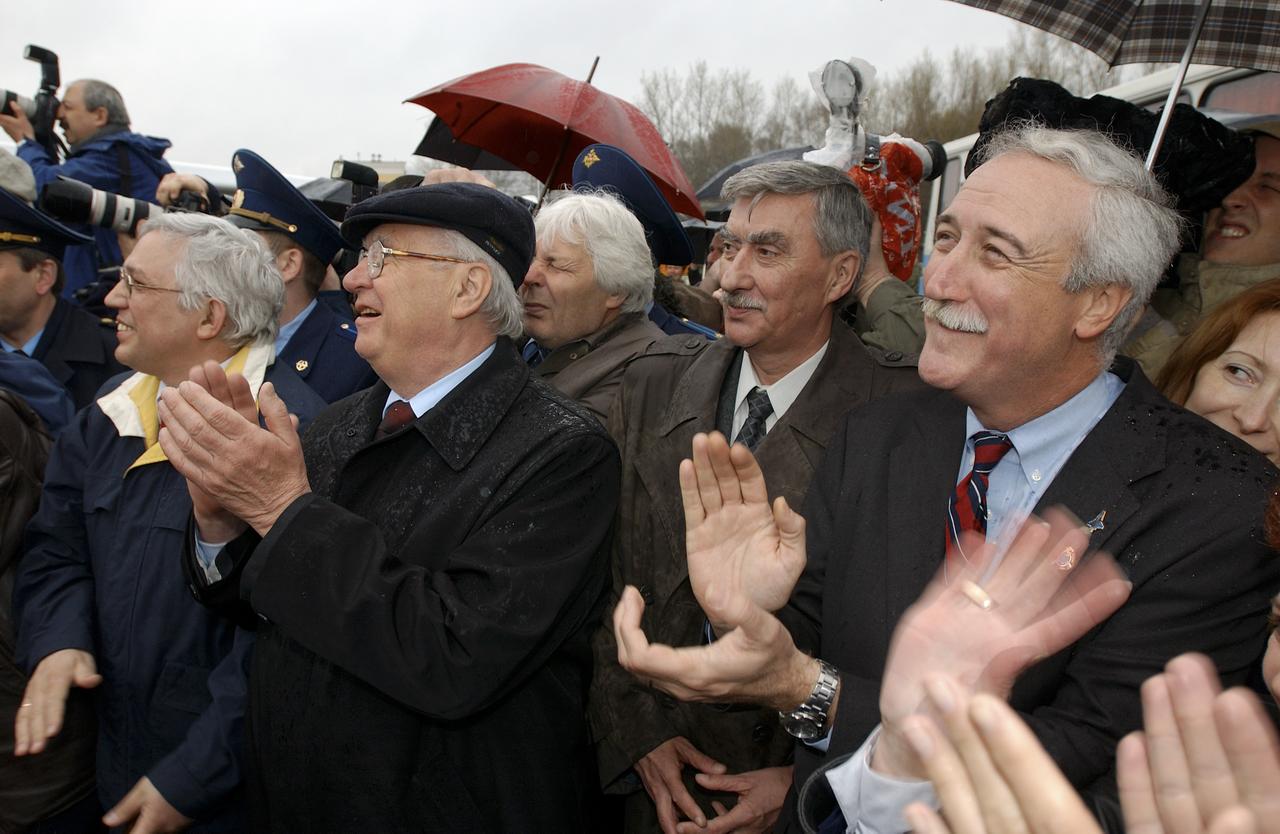
NASA Administrator Sean O'Keefe, right, along with Russian space officials welcome the crew of Expedition 6 as they return from Kazakhstan and the landing of their Soyuz capsule on Tuesday, May 4, 2003 in Star City, Russia. Photo Credit: (NASA/Bill Ingalls)
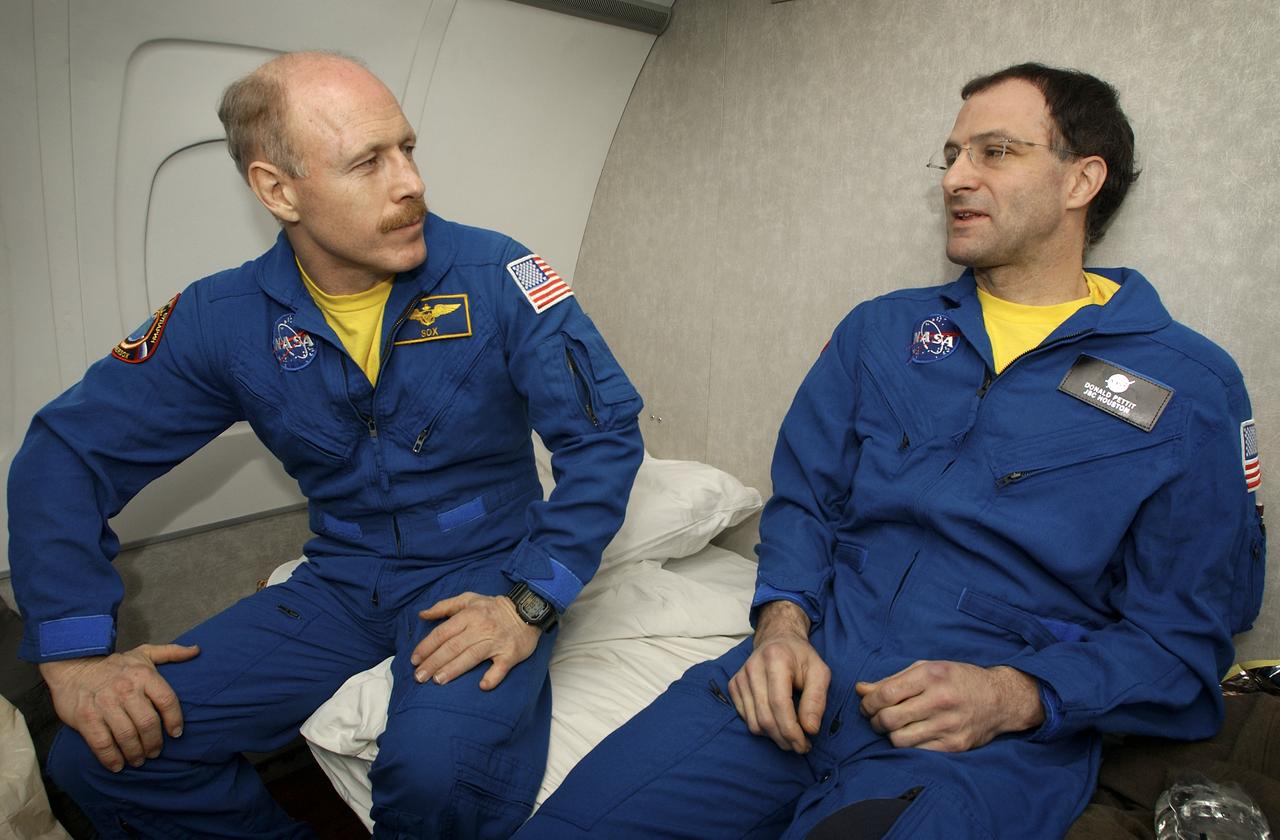
Expedition 6 Commander Ken Bowersox, left and NASA Internationl Space Station Science Officer Don Pettit talk about their landing during the flight from Kazakhstan to Moscow, Tuesday, May 4, 2003. Photo Credit: (NASA/Bill Ingalls)
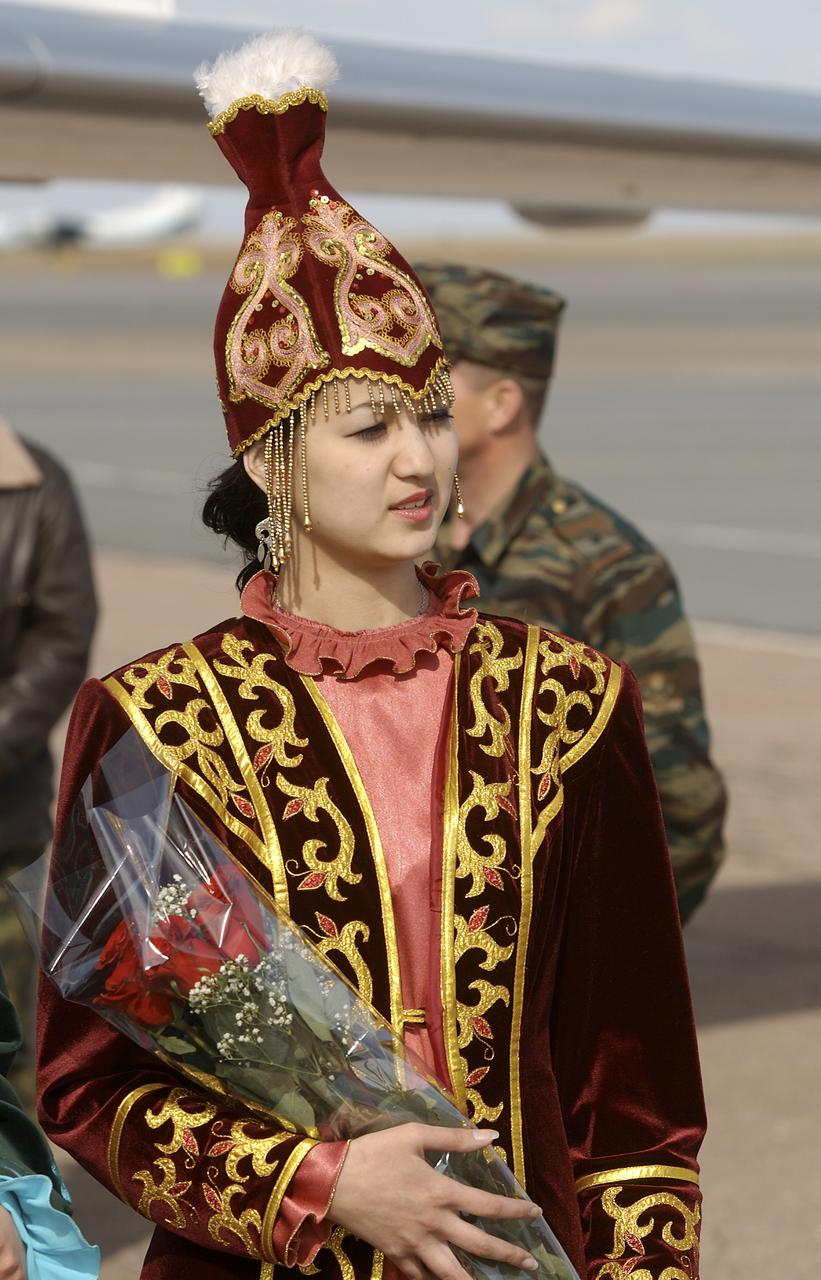
One of three local Kazakh girls who were on hand at the International Airport Astana to welcome the Expedition 6 crew with roses after the crew landed on the Kazakh steppe in their Soyuz capsule, Tuesday, May 4, 2003 in Astana, Kazakhstan. Photo Credit: (NASA/Bill Ingalls)
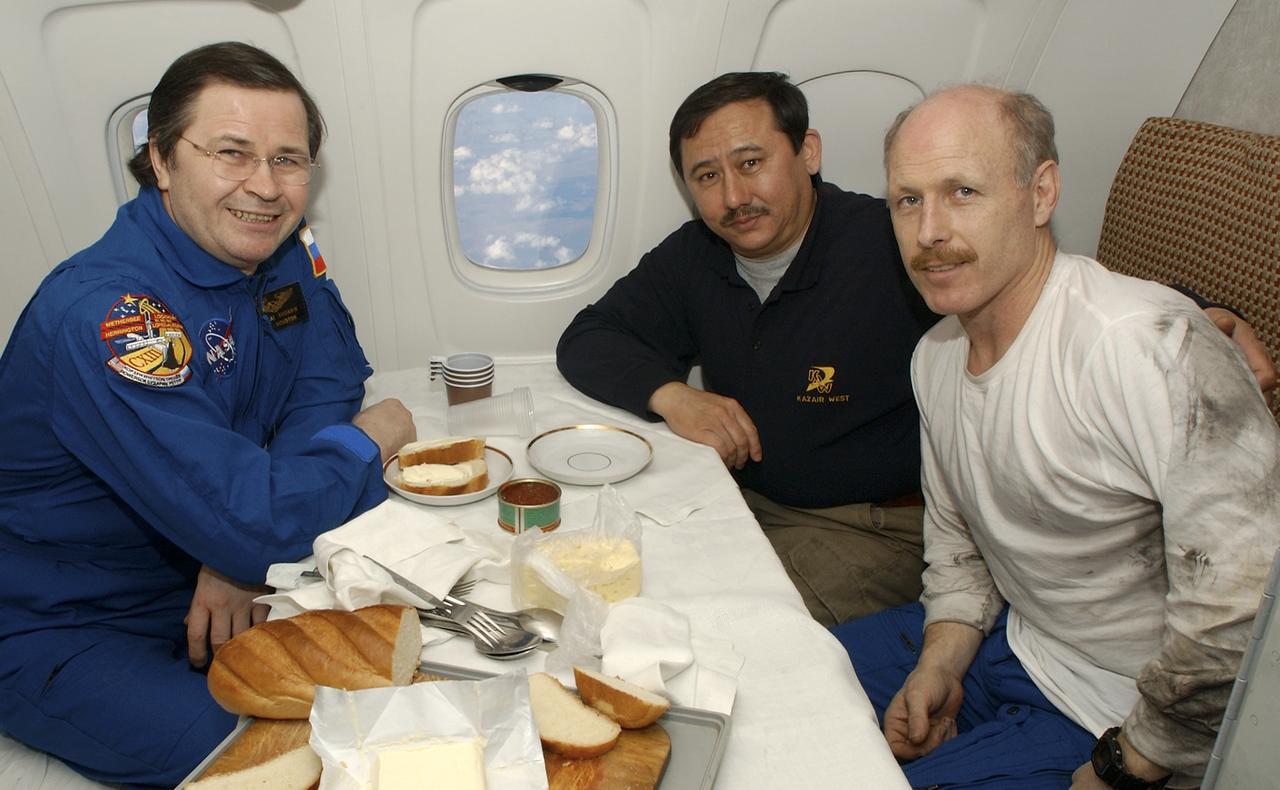
Expedition 6 Flight Engineer Nikolai Budarin, left, Cosmonaut Talgat Musabayev, and Commander Ken Bowersox, right, share a meal onboard the aircraft during their flight from Kazakhstan to Moscow on Tuesday, May 4, 2003. Photo Credit: (NASA/Bill Ingalls)
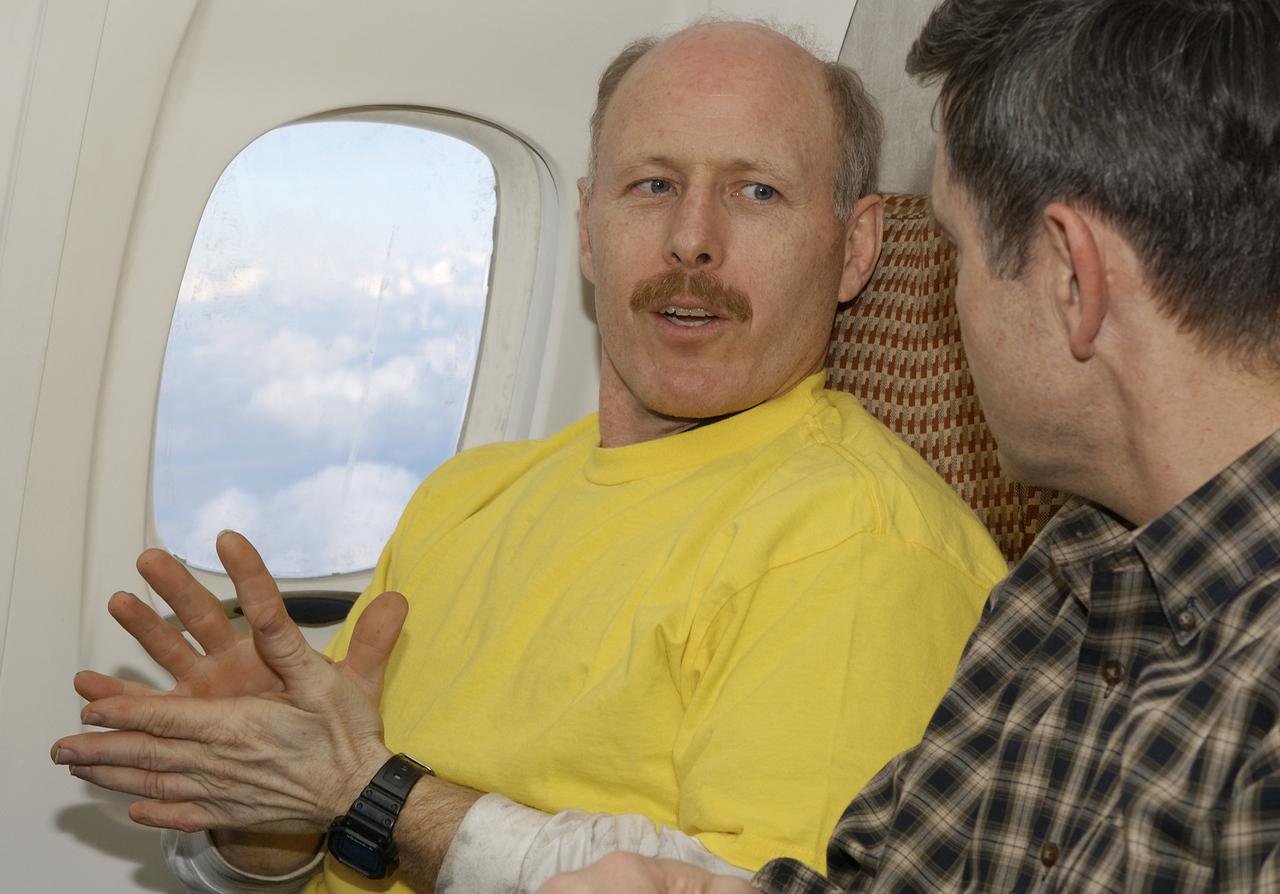
Expedition 6 Commander Ken Bowersox, left, talks about his mission with Bob Cabana, Director of Flight Crew Operations while on the airplane flying from Astana, Kazakhstan to Moscow on Tuesday, May 4, 2003. Photo Credit: (NASA/Bill Ingalls)
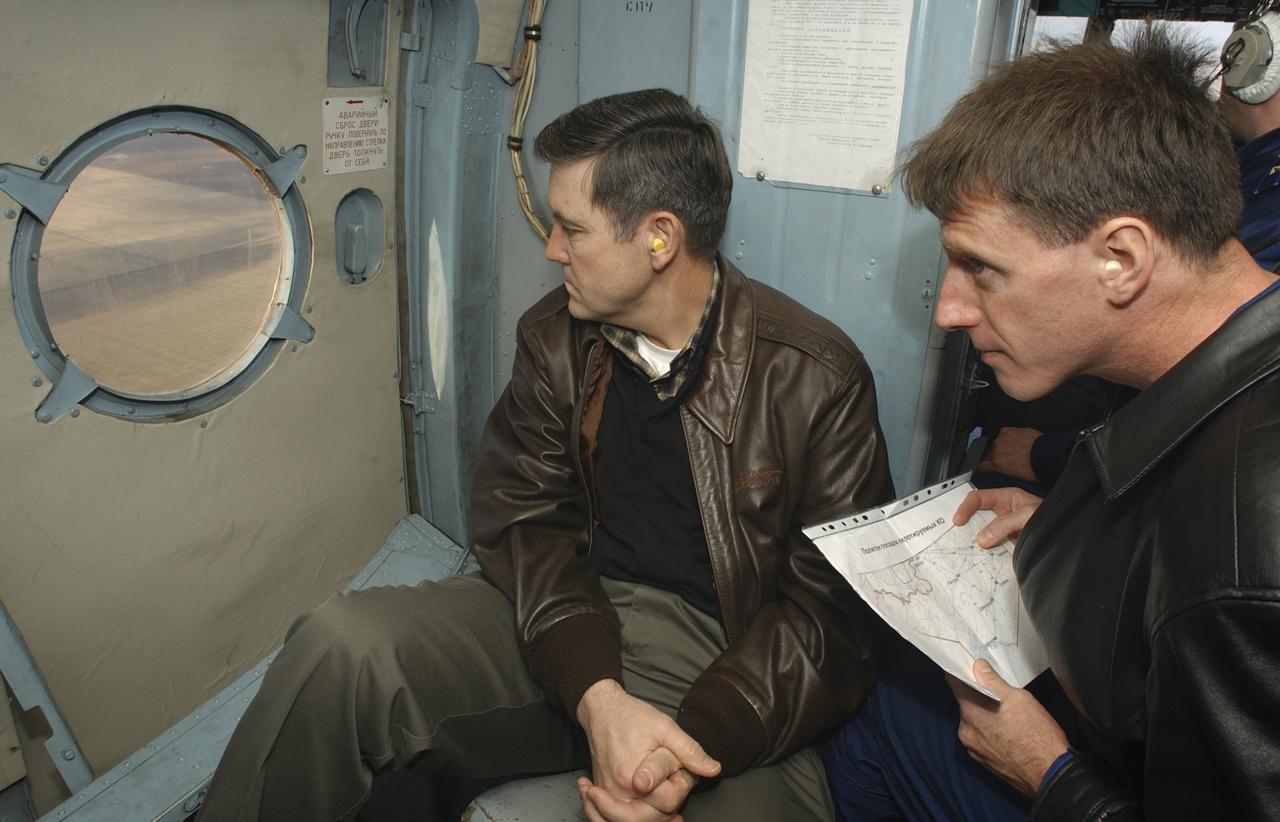
From the seat of a Russian helicopter, Bob Cabana, left, Director of Flight Crew Operations and astronaut Michael Foale look out over the Kazakh terrain for the Expedition 6 Soyuz capsule after its landing on Tuesday, May 4, 2003, in Kazakhstan. Photo Credit: (NASA/Bill Ingalls)
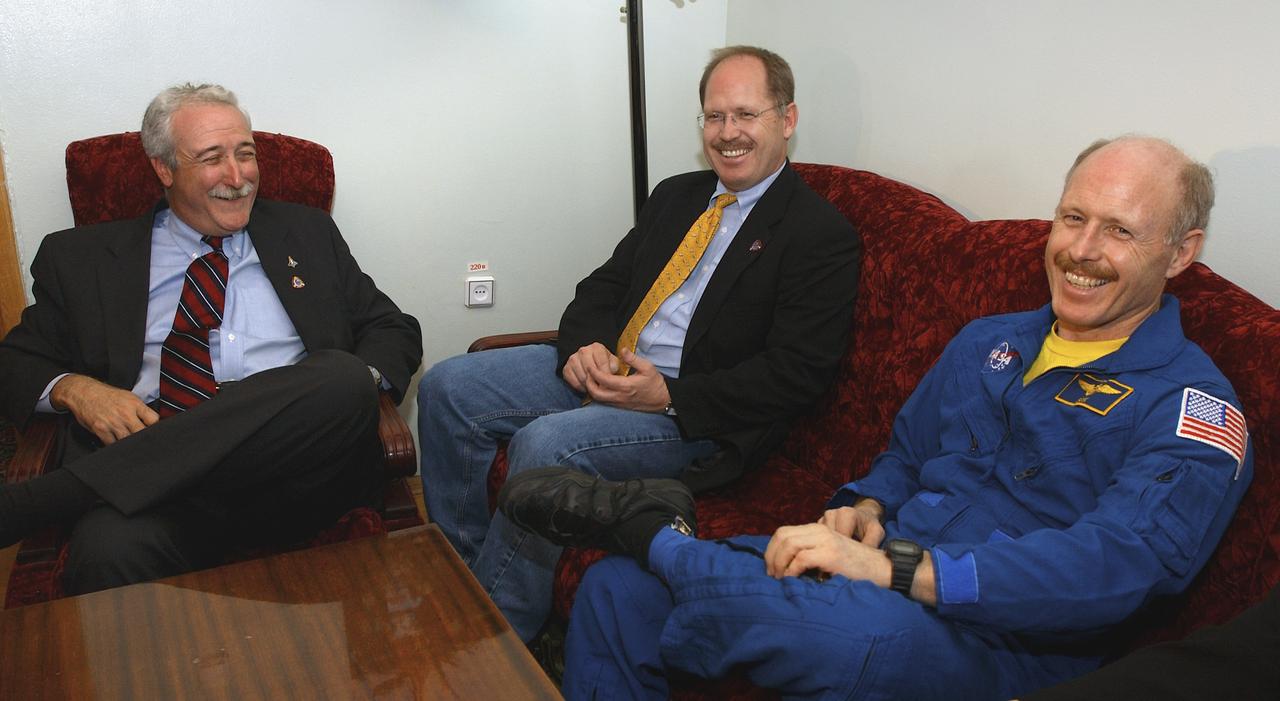
NASA Administrator Sean O'Keefe, left, visits with Expedition 6 Commander Ken Bowersox, far right and his brother on Tuesday, May 4, 2003, in Star City, Russia. Photo Credit: (NASA/Bill Ingalls)
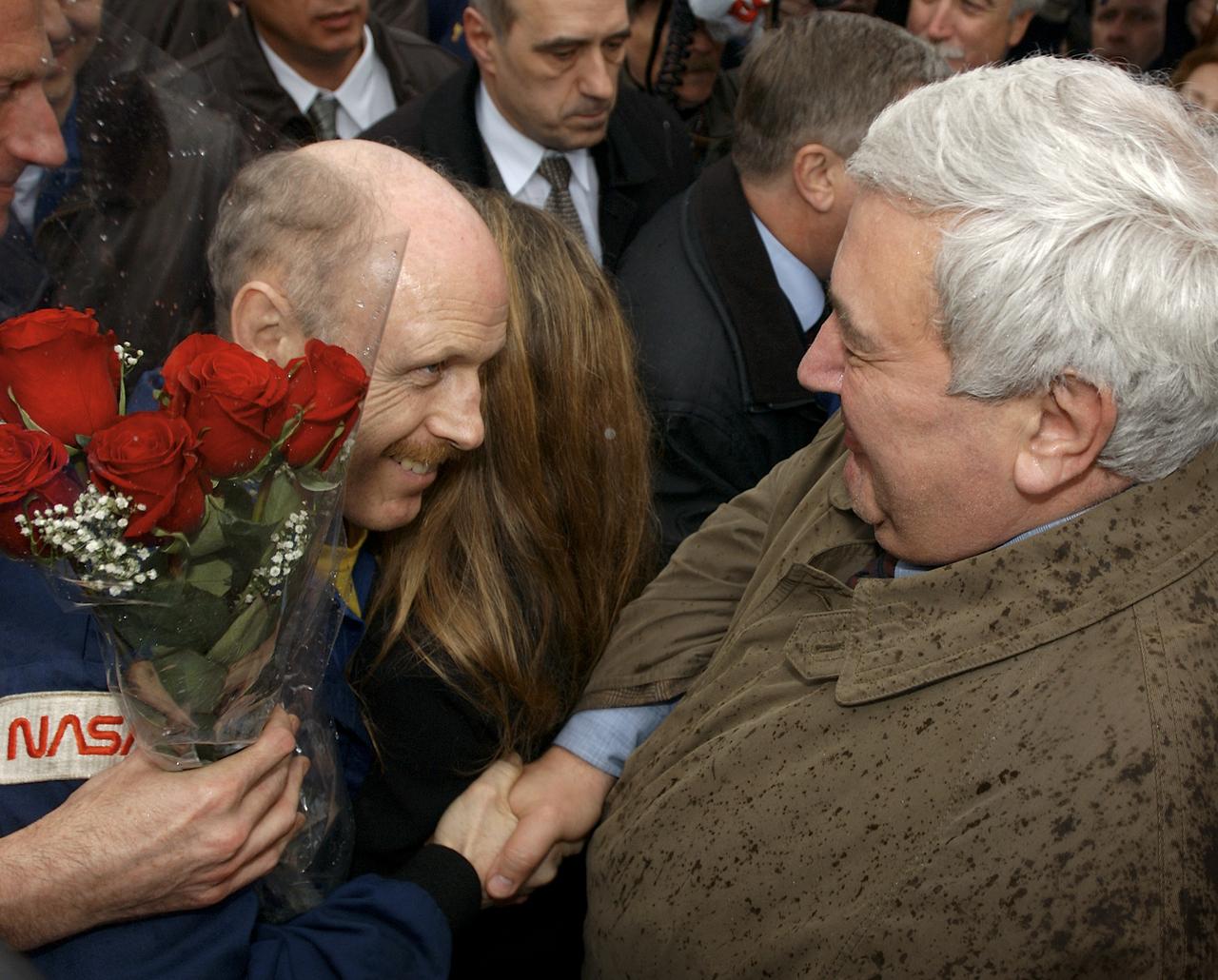
Expedition 6 Commander Ken Bowersox is hugged by his wife Annie as he shakes hands with Russian Federal Space Agency Director Yuri Koptev, right, after returning, Tuesday, May 4, 2003, to Star City, Russia. Photo Credit: (NASA/Bill Ingalls)
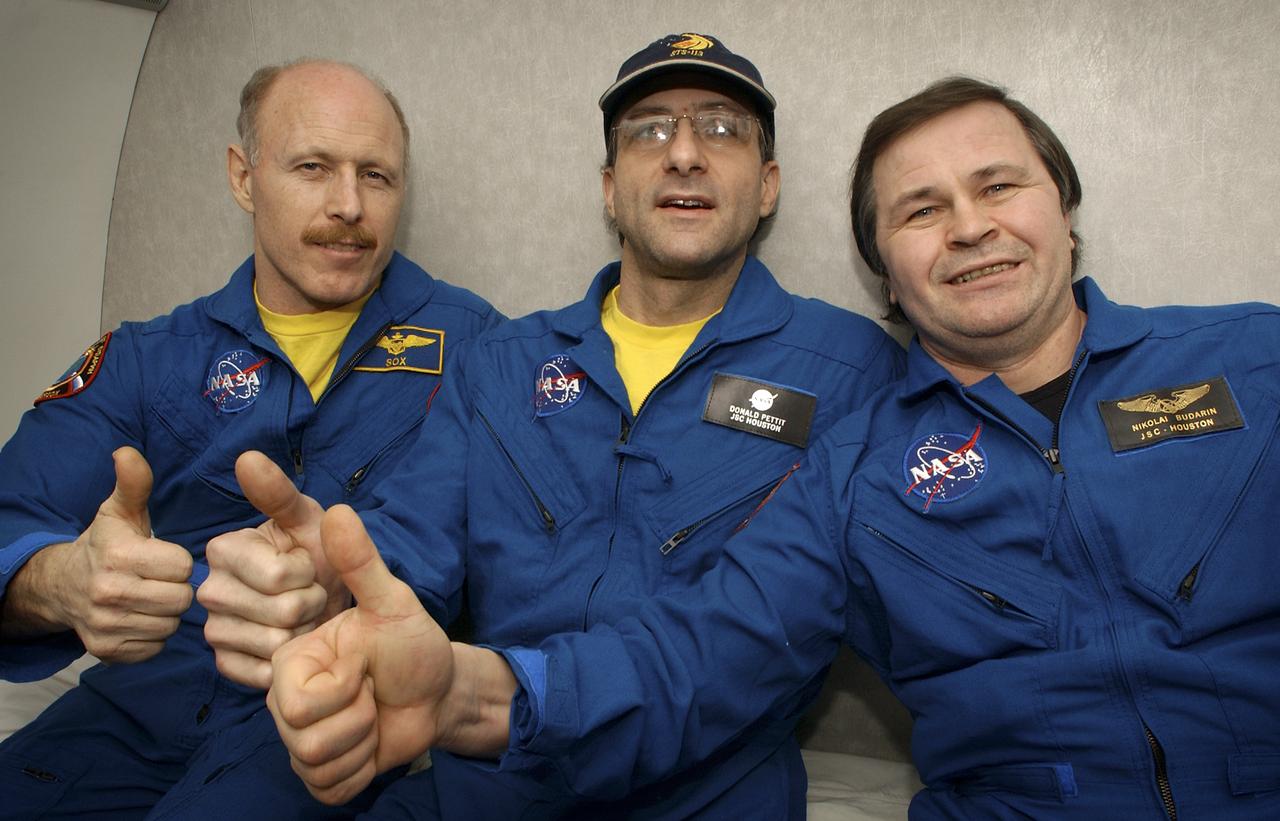
Expedition 6 Commander Ken Bowersox, left, NASA International Space Station Science Officer Don Pettit and Flight Engineer Nikolai Budarin, right, celebrate their mission onboard an aircraft flight from Kazakhstan to Moscow on Tuesday, May 4, 2003. Photo Credit: (NASA/Bill Ingalls)
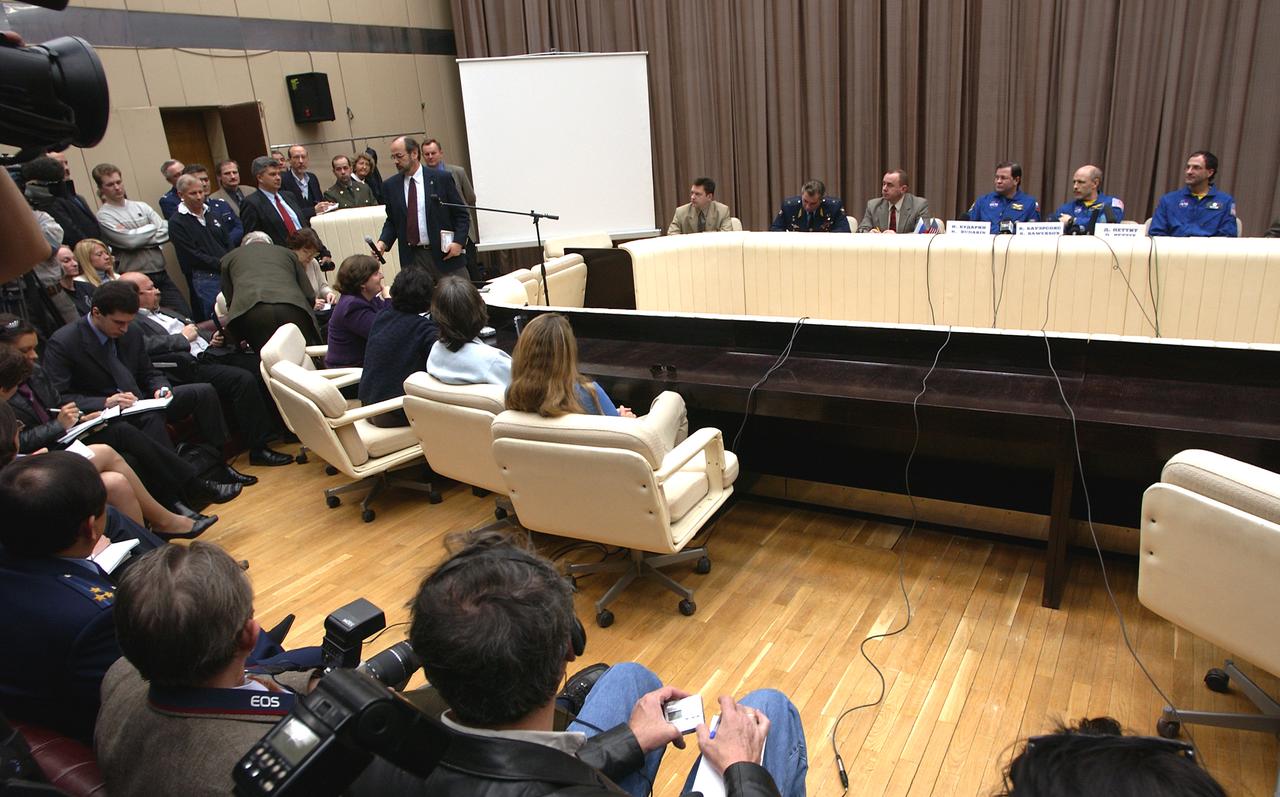
Expedition 6 Flight Engineer Nikolai Budarin, left, Commander Ken Bowersox and NASA International Space Station Science Officer Don Pettit, right, answer questions during a press conference at the Gagarin Cosmonaut Training Center in Star City, Russia, Thursday, May 6, 2003. Photo Credit: (NASA/Bill Ingalls)
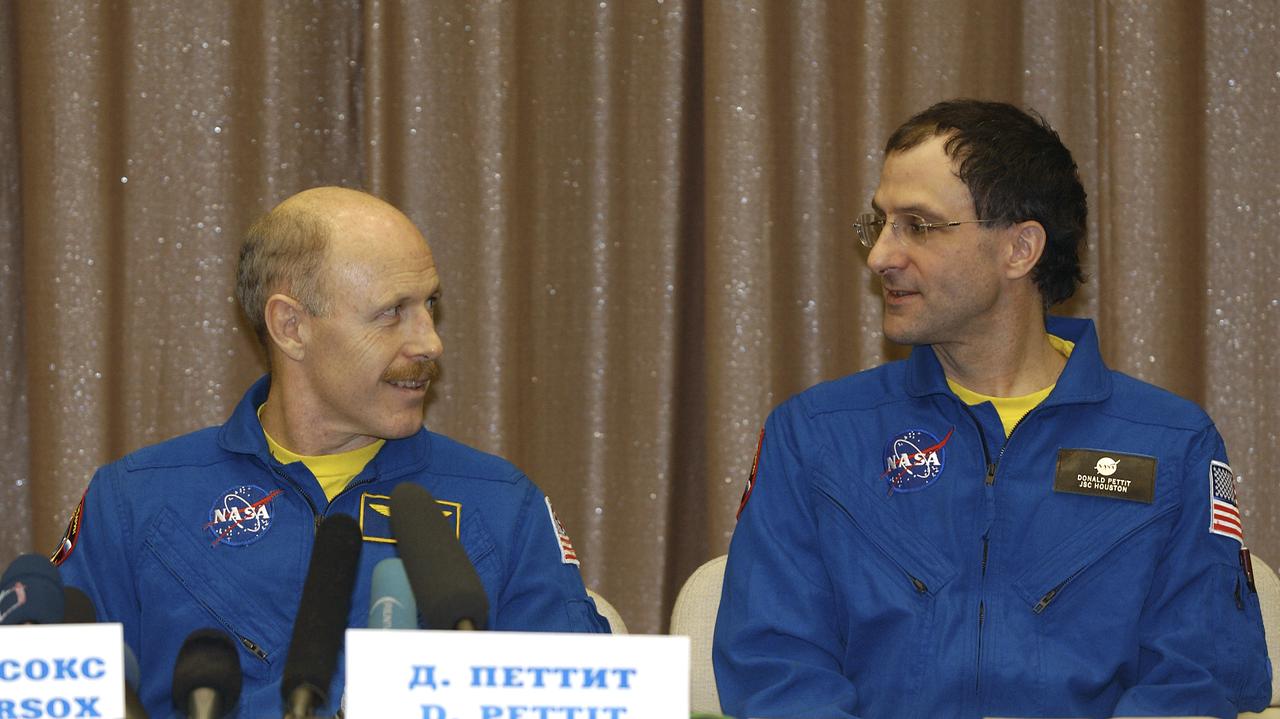
Expedition 6 Commander Ken Bowersox, left and NASA International Space Station Science Officer Don Pettit speak during a press conference at the Gagarin Cosmonaut Training Center in Star City, Russia, Thursday, May 6, 2003. Photo Credit: (NASA/Bill Ingalls)
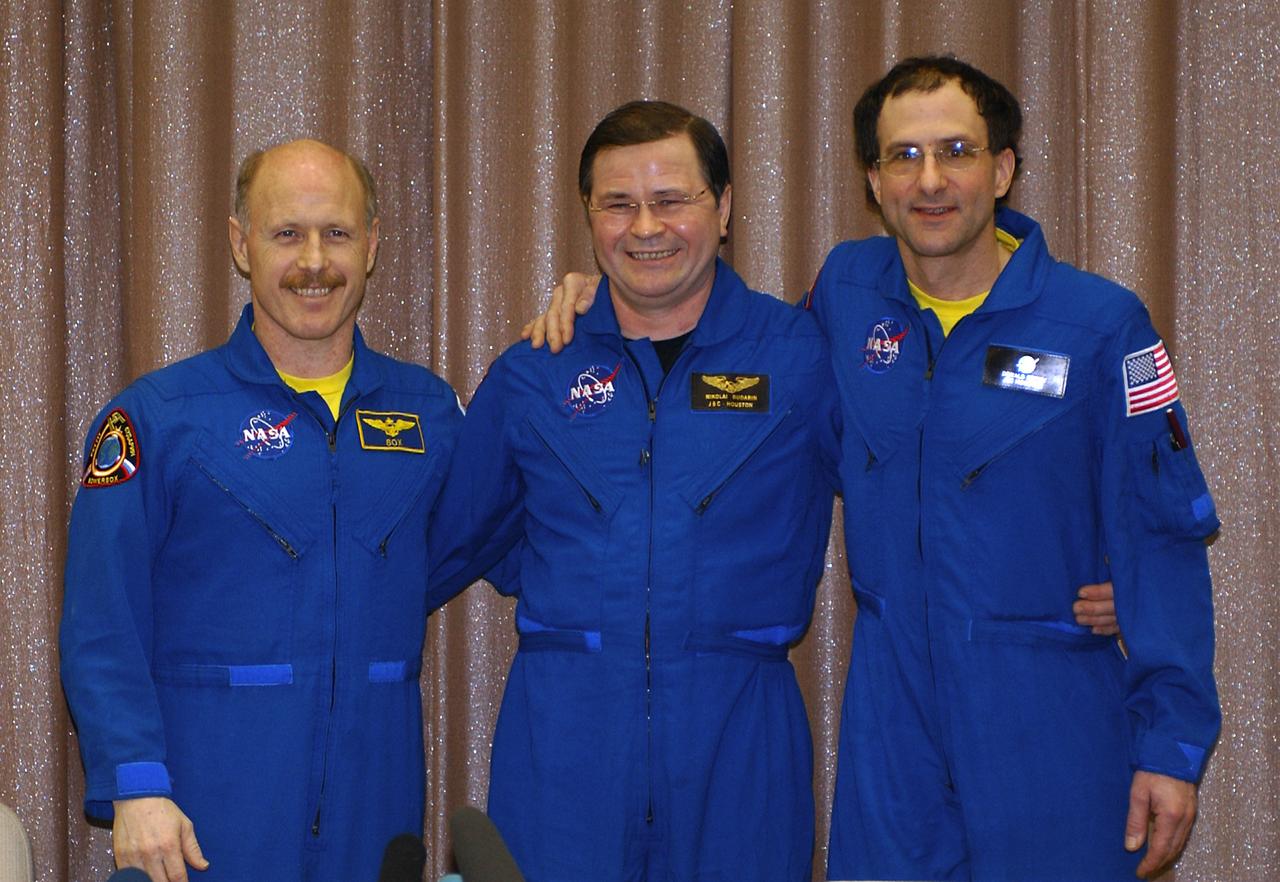
Expedition 6 Flight Engineer Nikolai Budarin, left, Commander Ken Bowersox and International Space Station Science Officer Don Pettit, right, pose for photos at a press conference at the Gagarin Cosmonaut Training Center in Star City, Russia, Thursday, May 6, 2003. Photo Credit: (NASA/Bill Ingalls)
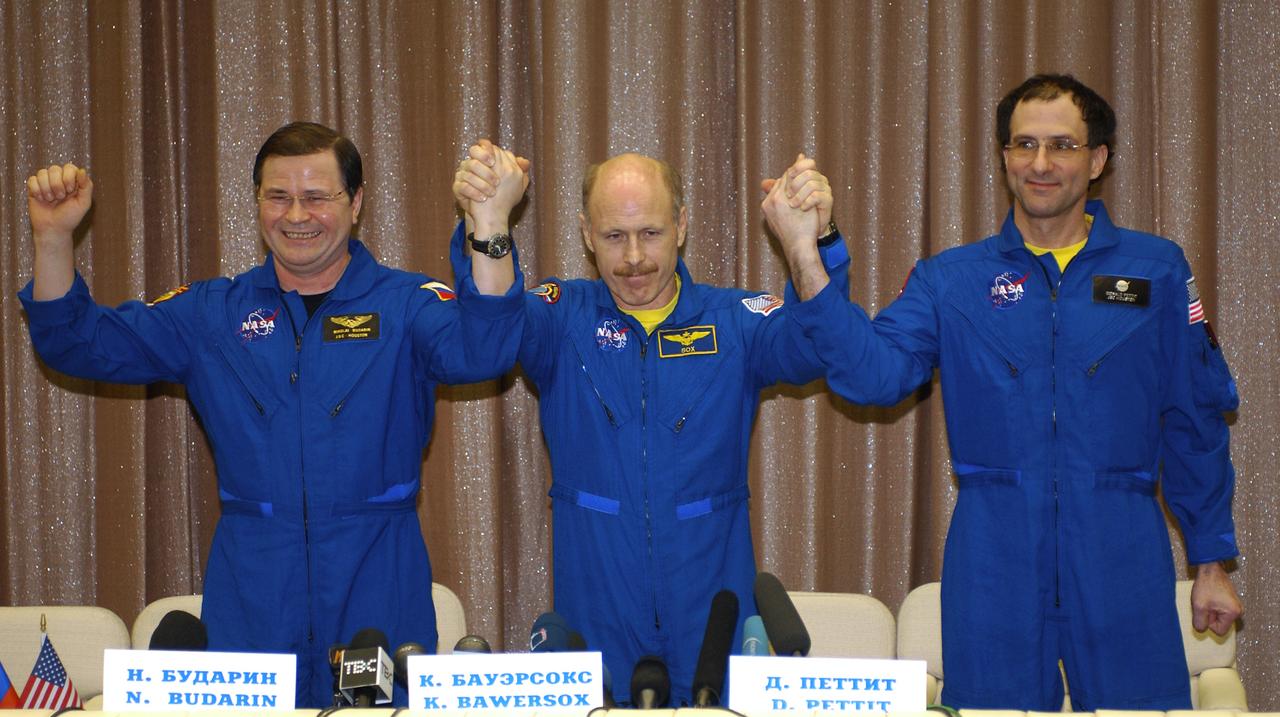
Expedition 6 Flight Engineer Nikolai Budarin, left, Commander Ken Bowersox and International Space Station Science Officer Don Pettit, right, pose for photos at a press conference at the Gagarin Cosmonaut Training Center in Star City, Russia, Thursday, May 6, 2003. Photo Credit: (NASA/Bill Ingalls)
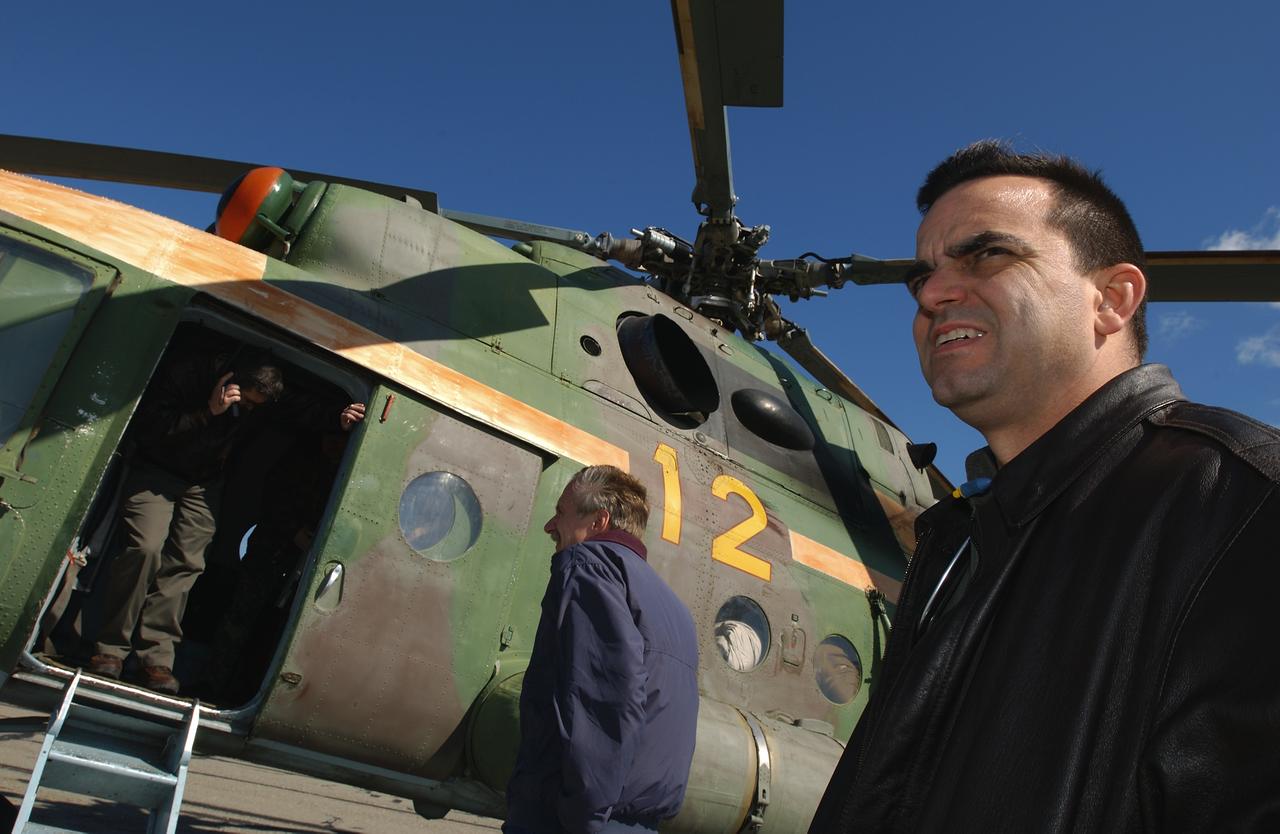
Director of Flight Crew Operations Bob Cabana, upper left, talks with NASA colleagues on the satellite phone from a Russian helicopter while International Space Station Program Manager, William Gerstenmaier and J.D. Polk, Expedition 6 Flight Surgeon, right, wait to get word if they will be continuing on to the landing site after a refueling stop, Tuesday, May 4, 2003 in Kazakhstan. Photo Credit: (NASA/Bill Ingalls)
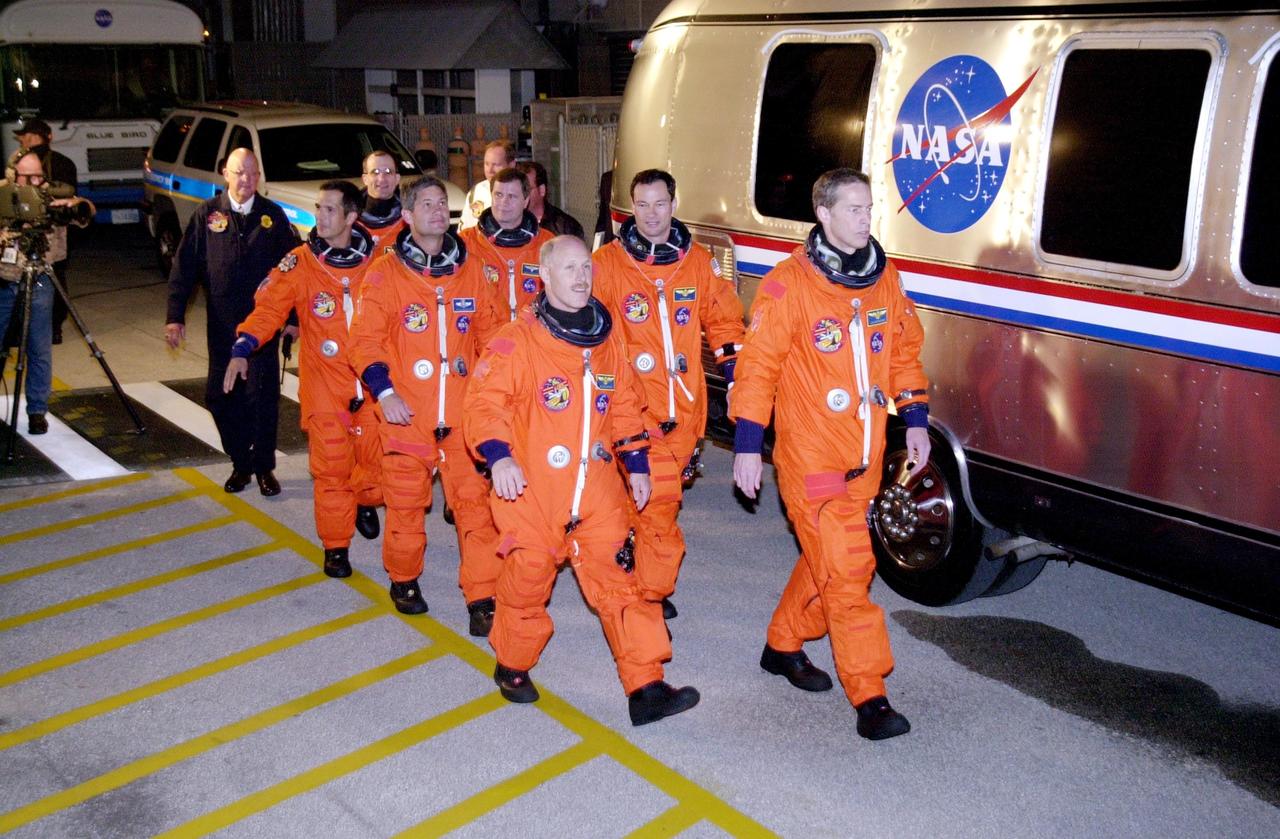
KENNEDY SPACE CENTER, FLA. -- The STS-113 and Expedition 6 crews head for the Astrovan that will take them to Launch Pad 39A and Space Shuttle Endeavour. In the foreground, from left to right, are Mission Specialist John Herrington, Pilot Paul Lockhart and Expedition 6 Commander Ken Bowersox. In the back, from left to right, are Expedition 6 flight engineers Donald Pettit and Nikolai Budarin, Mission Specialist Michael Lopez-Alegria and Commander James Wetherbee. The primary mission is bringing the Expedition 6 crew to the Station and returning the Expedition 5 crew to Earth. The major objective of the mission is delivery of the Port 1 (P1) Integrated Truss Assembly, which will be attached to the port side of the S0 truss. Three spacewalks are planned to install and activate the truss and its associated equipment. Launch of Space Shuttle Endeavour on mission STS-113 is scheduled for Nov. 11 at 12:58 a.m. EST.
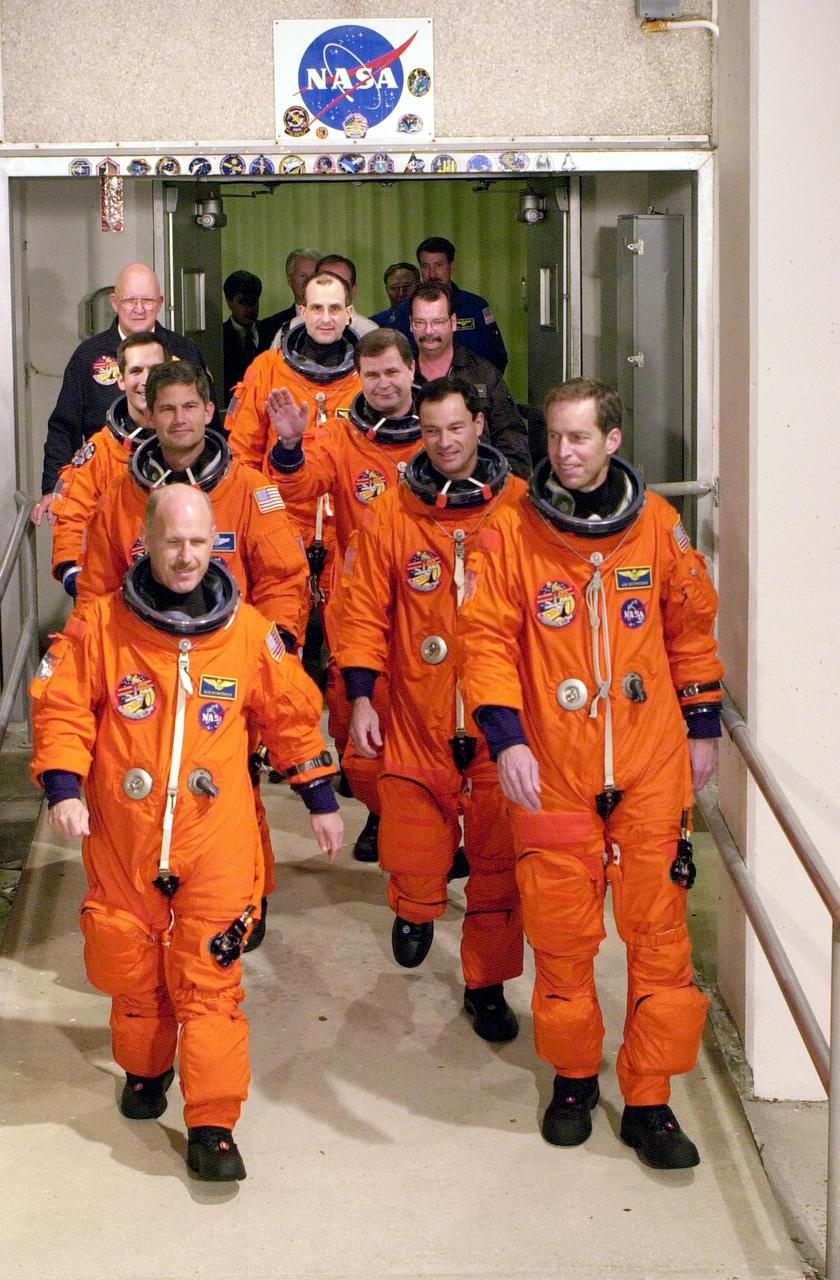
KENNEDY SPACE CENTER, FLA. - The STS-113 and Expedition 6 crews exit the Operations and Checkout Building on their way to Launch Pad 39A and liftoff of Space Shuttle Endeavour. From front to back are Expedition 6 Commander Ken Bowersox and Mission Commander James Wetherbee; Pilot Paul Lockhart and Mission Specialist Michael Lopez-Alegria; Mission Specialist John Herrington and Expedition 6 flight engineer Nikolai Budarin; and flight engineer Donald Pettit. The primary mission is bringing the Expedition 6 crew to the Station and returning the Expedition 5 crew to Earth. The major objective of the mission is delivery of the Port 1 (P1) Integrated Truss Assembly, which will be attached to the port side of the S0 truss. Three spacewalks are planned to install and activate the truss and its associated equipment. Launch of Space Shuttle Endeavour on mission STS-113 is scheduled for Nov. 11 at 12:58 a.m. EST.
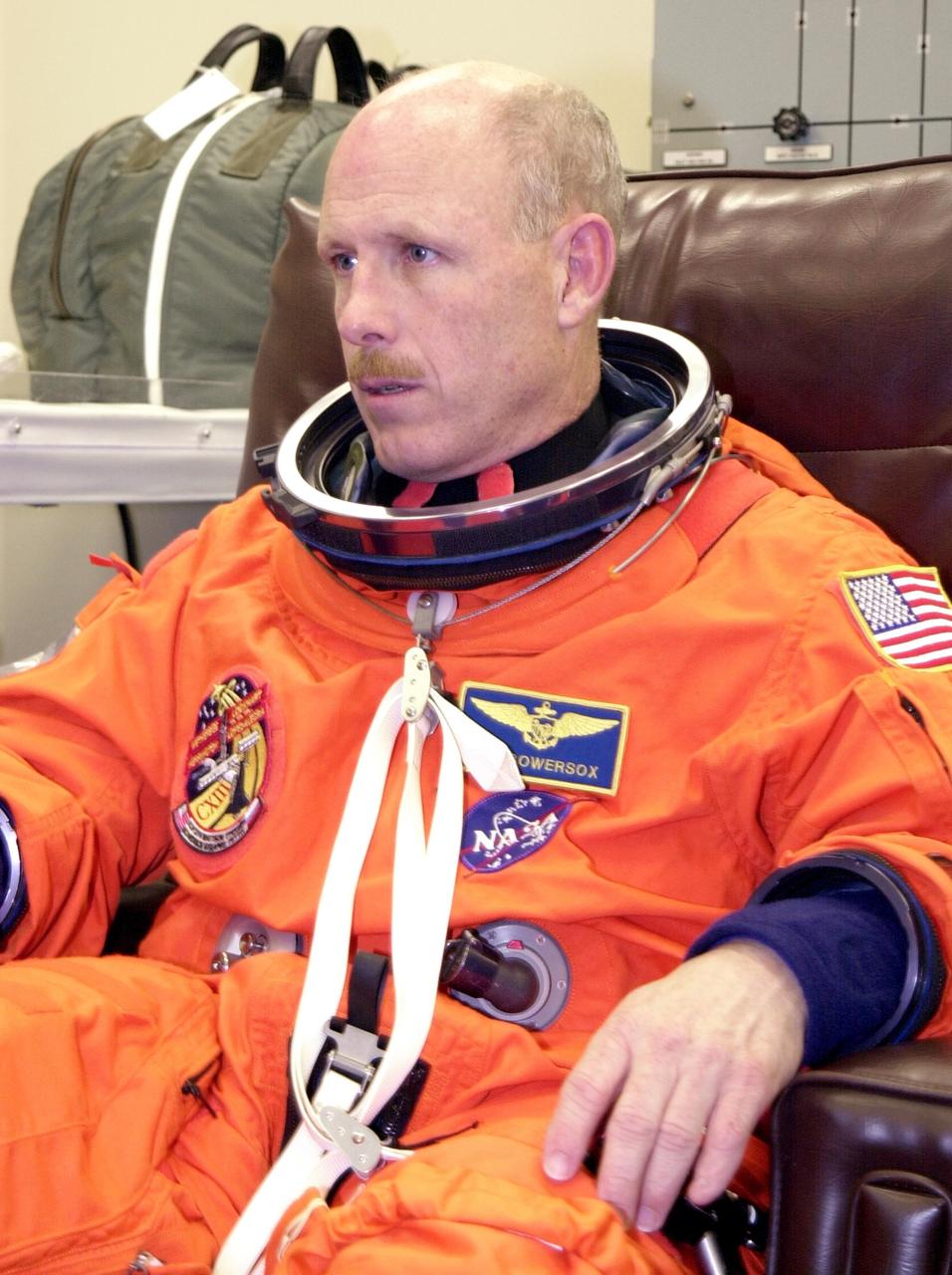
KENNEDY SPACE CENTER, FLA. -- Expedition 6 Commander Ken Bowersox suits up before launch. Bowersox will be making his fifth Shuttle flight. The primary mission is bringing the Expedition 6 crew to the Station and returning the Expedition 5 crew to Earth. The major objective of the mission is delivery of the Port 1 (P1) Integrated Truss Assembly, which will be attached to the port side of the S0 truss. Three spacewalks are planned to install and activate the truss and its associated equipment. Launch of Space Shuttle Endeavour on mission STS-113 is scheduled for Nov. 11 at 12:58 a.m. EST.

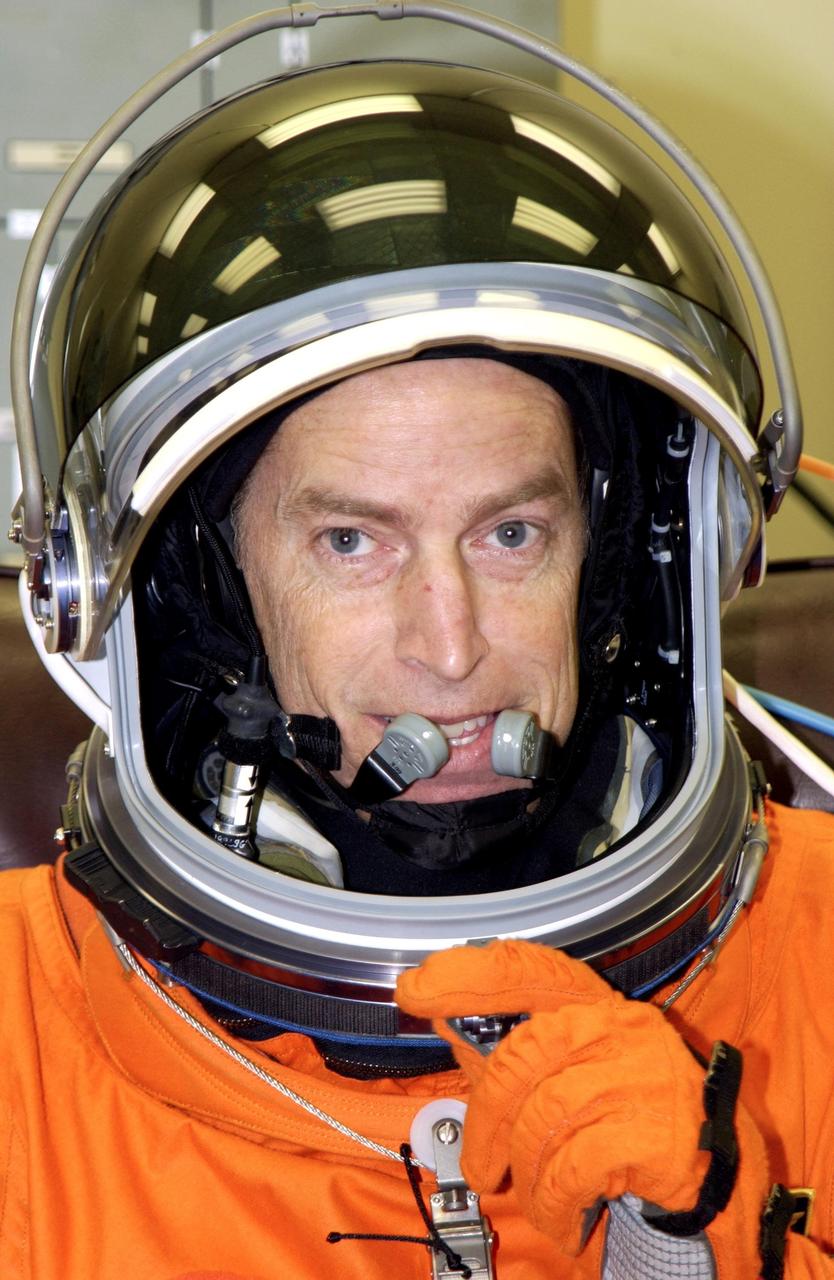
KENNEDY SPACE CENTER, FLA. - Expedition 6 flight engineer Nikolai Budarin gets help with his helmet during suitup for launch on mission STS-113. Budarin, who represents the Russian Space Agency, will be making his second Shuttle flight. The primary mission is bringing the Expedition 6 crew to the Station and returning the Expedition 5 crew to Earth. The major objective of the mission is delivery of the Port 1 (P1) Integrated Truss Assembly, which will be attached to the port side of the S0 truss. Three spacewalks are planned to install and activate the truss and its associated equipment. Launch of Space Shuttle Endeavour on mission STS-113 is scheduled for Nov. 11 at 12:58 a.m. EST.
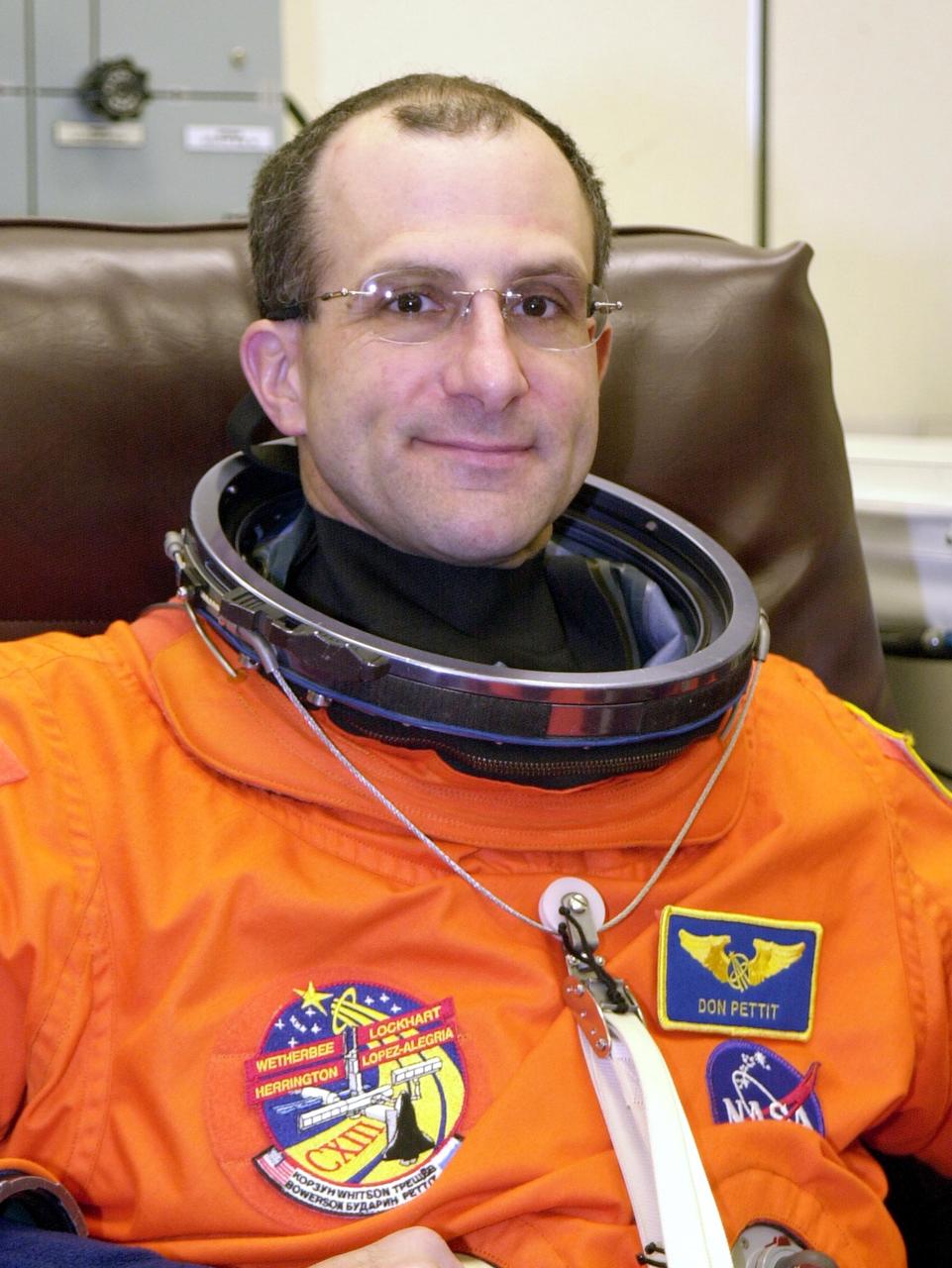
KENNEDY SPACE CENTER, FLA. - Expedition 6 flight engineer Donald Pettit suits up before launch. This will be his first Shuttle flight. The primary mission is bringing the Expedition 6 crew to the Station and returning the Expedition 5 crew to Earth. The major objective of the mission is delivery of the Port 1 (P1) Integrated Truss Assembly, which will be attached to the port side of the S0 truss. Three spacewalks are planned to install and activate the truss and its associated equipment. Launch of Space Shuttle Endeavour on mission STS-113 is scheduled for Nov. 11 at 12:58 a.m. EST.
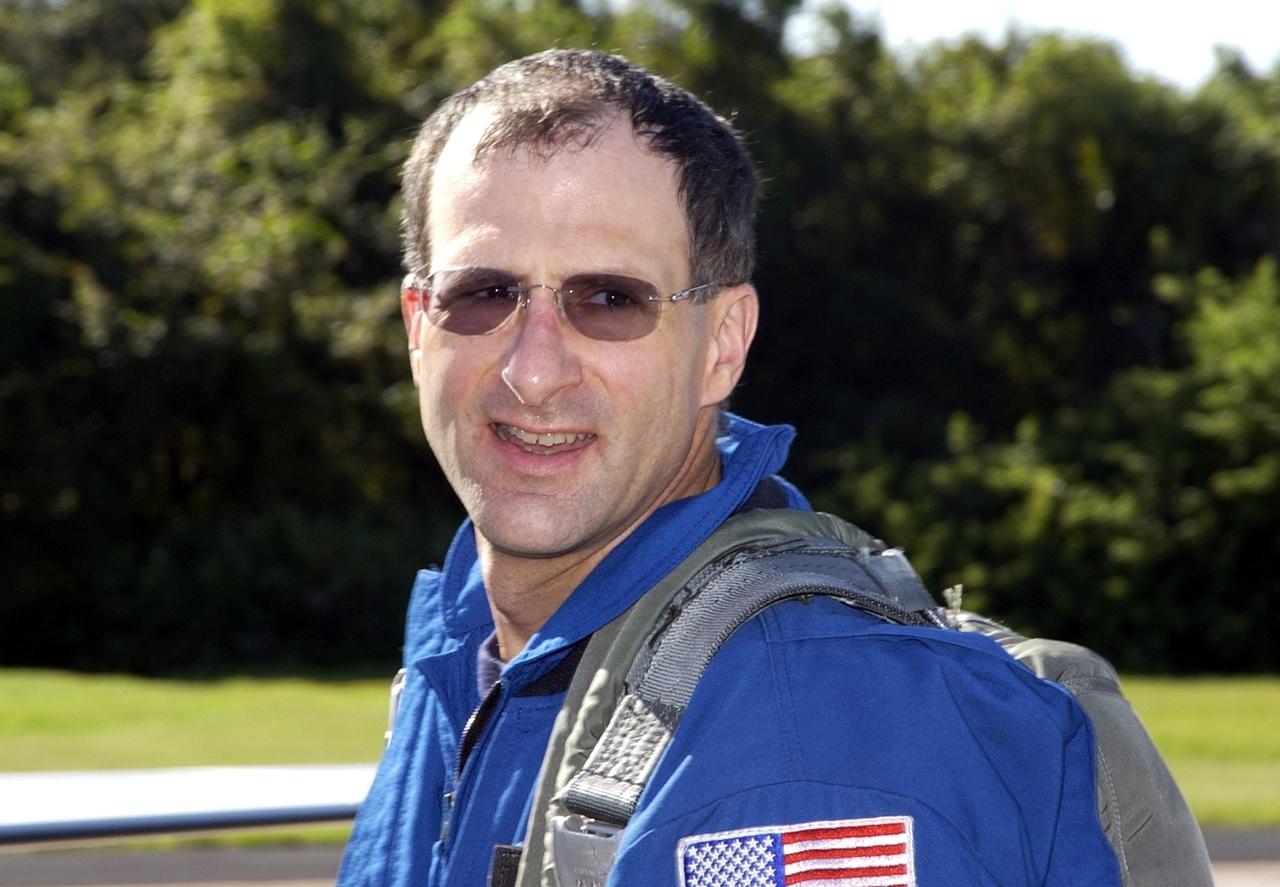
KENNEDY SPACE CENTER, FLA. -- Astronaut Donald Pettit, a member of the Expedition 6 crew, arrives at KSC for Terminal Countdown Demonstration Test activities. Expedition 6 will fly on Space Shuttle Endeavour to the International Space Station on mission STS-113. They will relieve and replace the Expedition 5 crew. Endeavour will also be transporting the Port 1 (P1) truss segment to the Station. STS-113 is scheduled to launch Nov. 10, 2002.
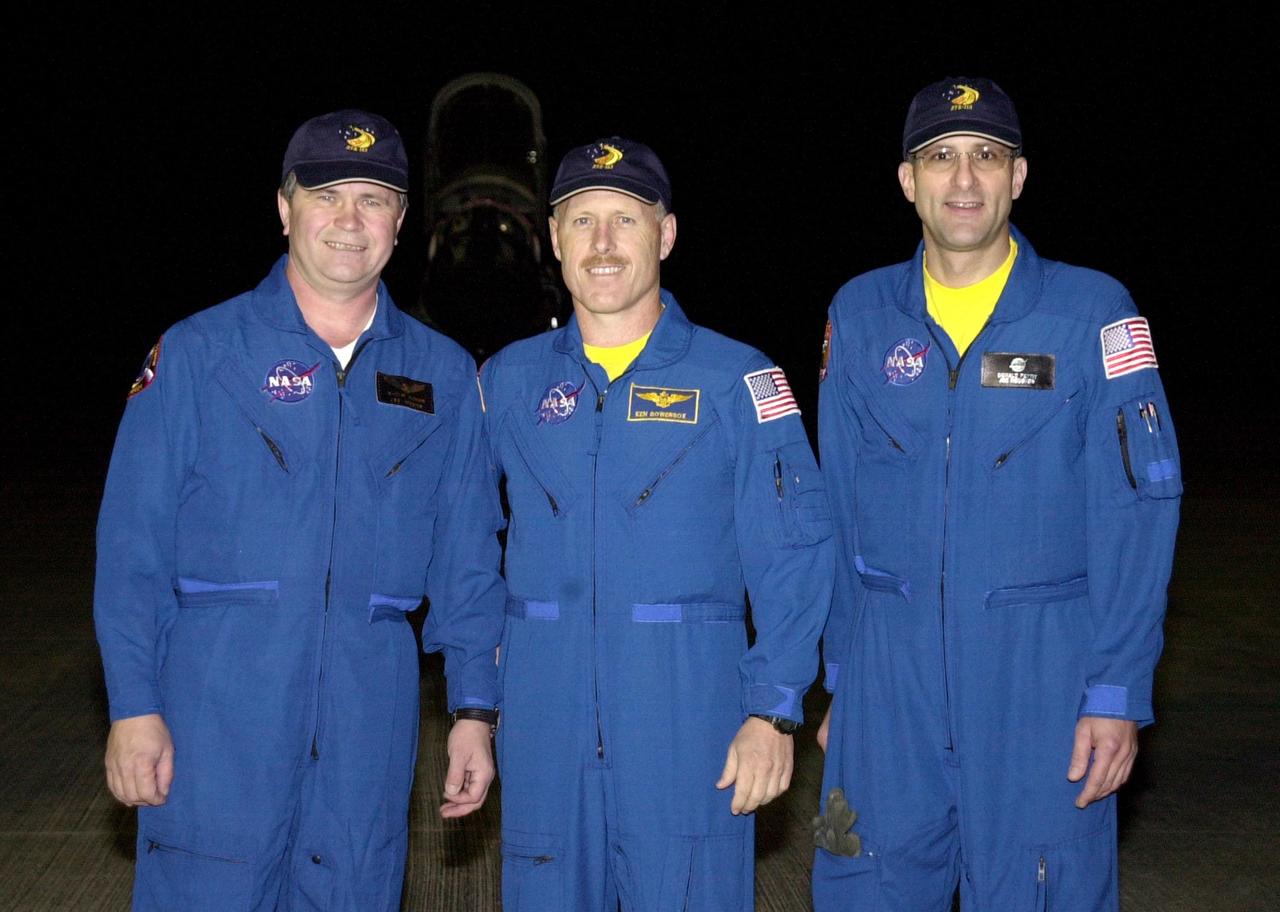
KENNEDY SPACE CENTER, FLA. -- The Expedition 6 crew poses for a photo after their arrival at the KSC Shuttle Landing Facility to prepare for launch on mission STS-113. From left are Flight Engineer Nikolai Budarin, Commander Ken Bowersox and Flight Engineer Donald Pettit. The primary mission of STS-113 is bringing the Expedition 6 crew to the Station and returning the Expedition 5 crew to Earth. In addition, the major objective of the mission is delivery of the Port 1 (P1) Integrated Truss Assembly, which will be attached to the port side of the S0 truss. Three spacewalks are planned to install and activate the truss and its associated equipment. Launch of Space Shuttle Endeavour on mission STS-113 is scheduled for Nov. 11 between midnight and 4 a.m. EST.
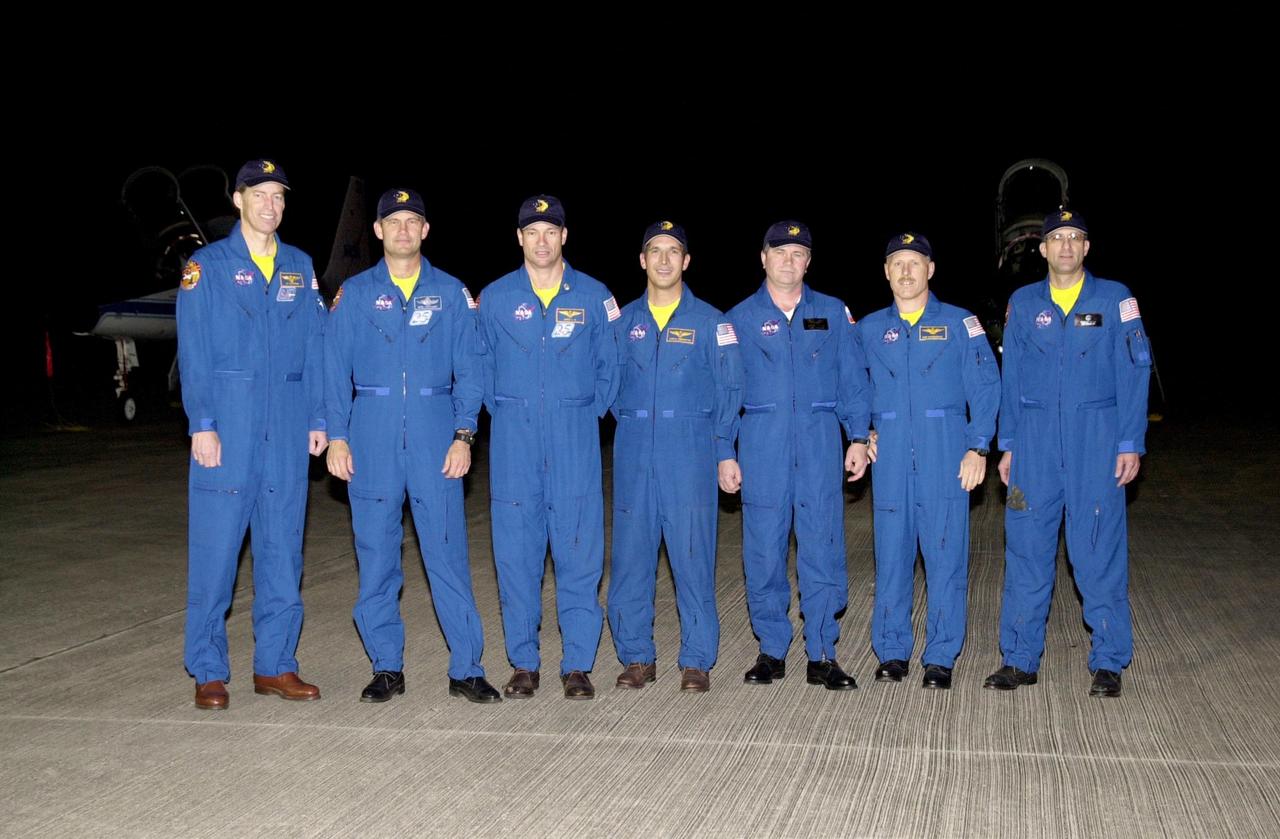
KENNEDY SPACE CENTER, FLA. - After their arrival at the KSC Shuttle Landing Facility, the crews of mission STS-113 pause for a group photo. From left are STS-113 Commander James Wetherbee, Pilot Paul Lockhart, and Mission Specialists Michael Lopez-Alegria and John Herrington; and the Expedition 6 crew, Flight Engineer Nikolai Budarin, Commander Ken Bowersox and Flight Engineer Donald Pettit. Budarin represents the Russian Space Agency. The primary mission of STS-113 is bringing the Expedition 6 crew to the Station and returning the Expedition 5 crew to Earth. In addition, the major objective of the mission is delivery of the Port 1 (P1) Integrated Truss Assembly, which will be attached to the port side of the S0 truss. Three spacewalks are planned to install and activate the truss and its associated equipment. Launch of Space Shuttle Endeavour on mission STS-113 is scheduled for Nov. 11 between midnight and 4 a.m. EST.
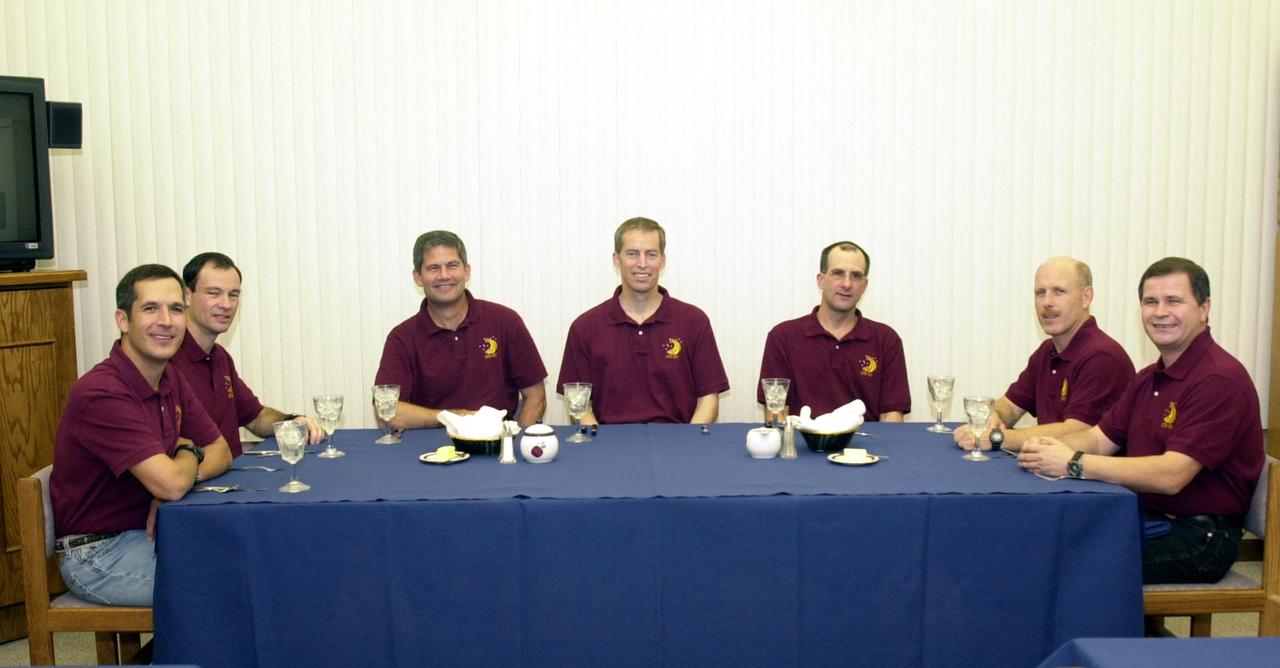
KENNEDY SPACE CENTER, FLA. -- The STS-113 crew enjoys a snack before suiting up for launch. Seated left to right are Mission Specialists John Herrington and Michael Lopez-Alegria, Pilot Paul Lockhart and Commander James Wetherbee; Expedition 6 flight engineer Donald Pettit, Commander Ken Bowersox and flight engineer Nikolai Budarin. STS-113 is the 16th American assembly flight to the International Space Station. The primary mission is bringing the Expedition 6 crew to the Station and returning the Expedition 5 crew to Earth. The major objective of the mission is delivery of the Port 1 (P1) Integrated Truss Assembly, which will be attached to the port side of the S0 truss. Three spacewalks are planned to install and activate the truss and its associated equipment. Launch of Space Shuttle Endeavour on mission STS-113 is scheduled for Nov. 11 at 12:58 a.m. EST.
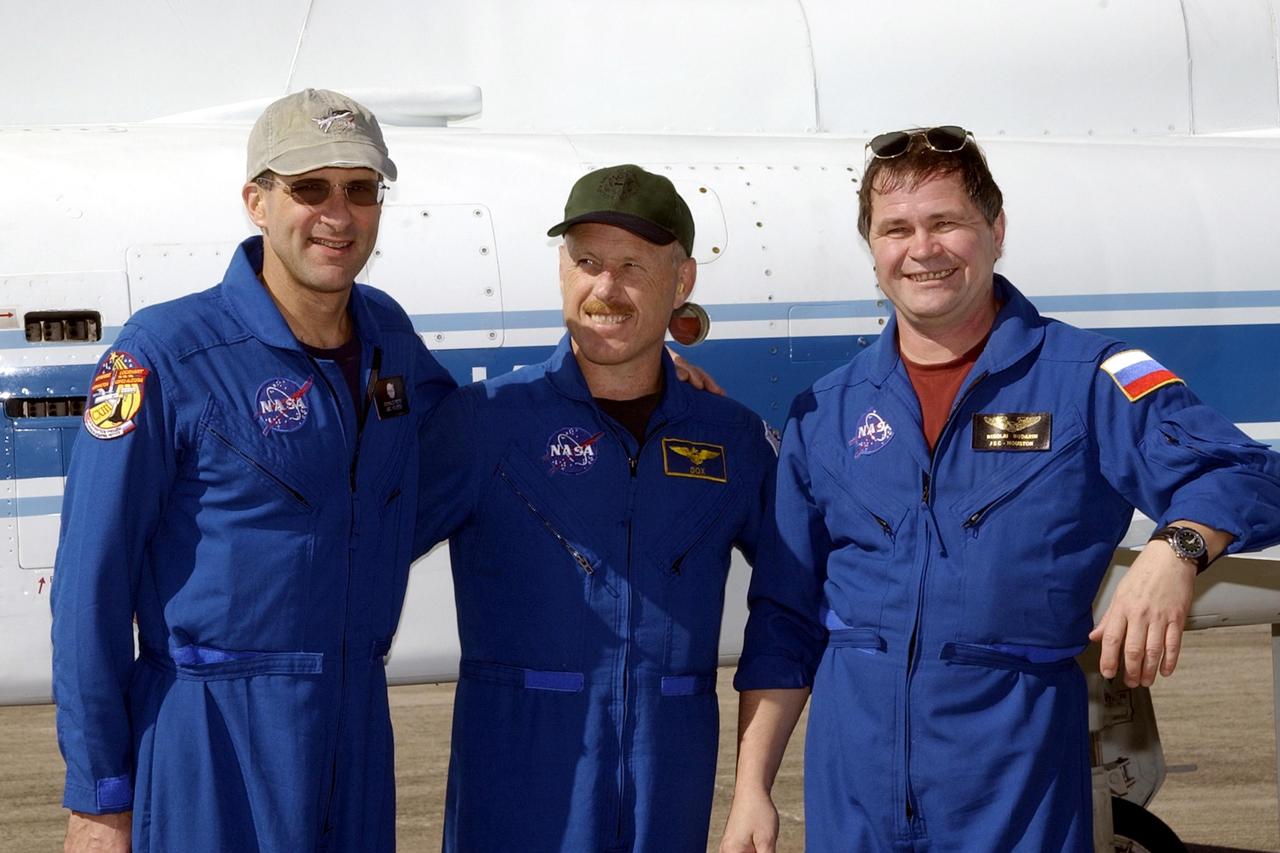
KENNEDY SPACE CENTER, FLA. -- The Expedition 6 crew pauses for the photographer after their arrival at the Shuttle Landing Facility. From left are astronaut Donald Pettit, Commander Ken Bowersox and cosmonaut Nikolai Budarin. The crew is at KSC for Terminal Countdown Demonstration Test activities. Expedition 6 will fly on Space Shuttle Endeavour to the International Space Station on mission STS-113. They will relieve and replace the Expedition 5 crew. Endeavour will also be transporting the Port 1 (P1) truss segment to the Station. STS-113 is scheduled to launch Nov. 10, 2002.
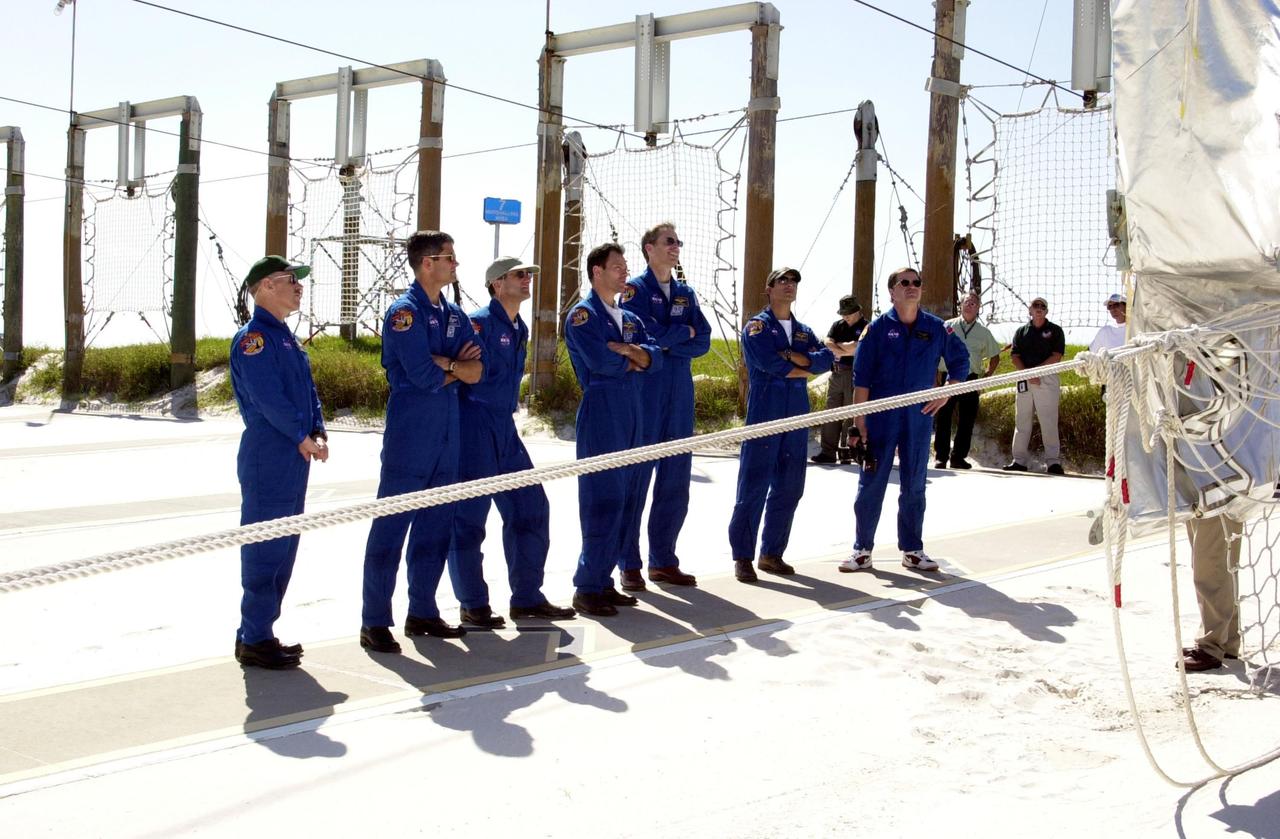
KENNEDY SPACE CENTER, FLA. - As part of Terminal Countdown Demonstration Test (TCDT) activities, the STS-113 and Expedition 6 crews receive training in emergency exit from the orbiter on Launch Pad 39A. Shown are (from left) Expedition 6 Commander Ken Bowersox; STS-113 Pilot Paul Lockhart; astronaut Donald Pettit; Mission Specialist Michael Lopez-Alegria, Commander James Wetherbee and Mission Specialist John Herrington; and cosmonaut Nikolai Budarin. The TCDT also includes a simulated launch countdown. The 16th assembly flight to the International Space Station, STS-113 will carry the Port 1 (P1) truss aboard Space Shuttle Endeavour as well as the Expedition 6 crew, who will replace Expedition 5 on the Station. Mission STS-113 is scheduled to launch Nov. 10, 2002.
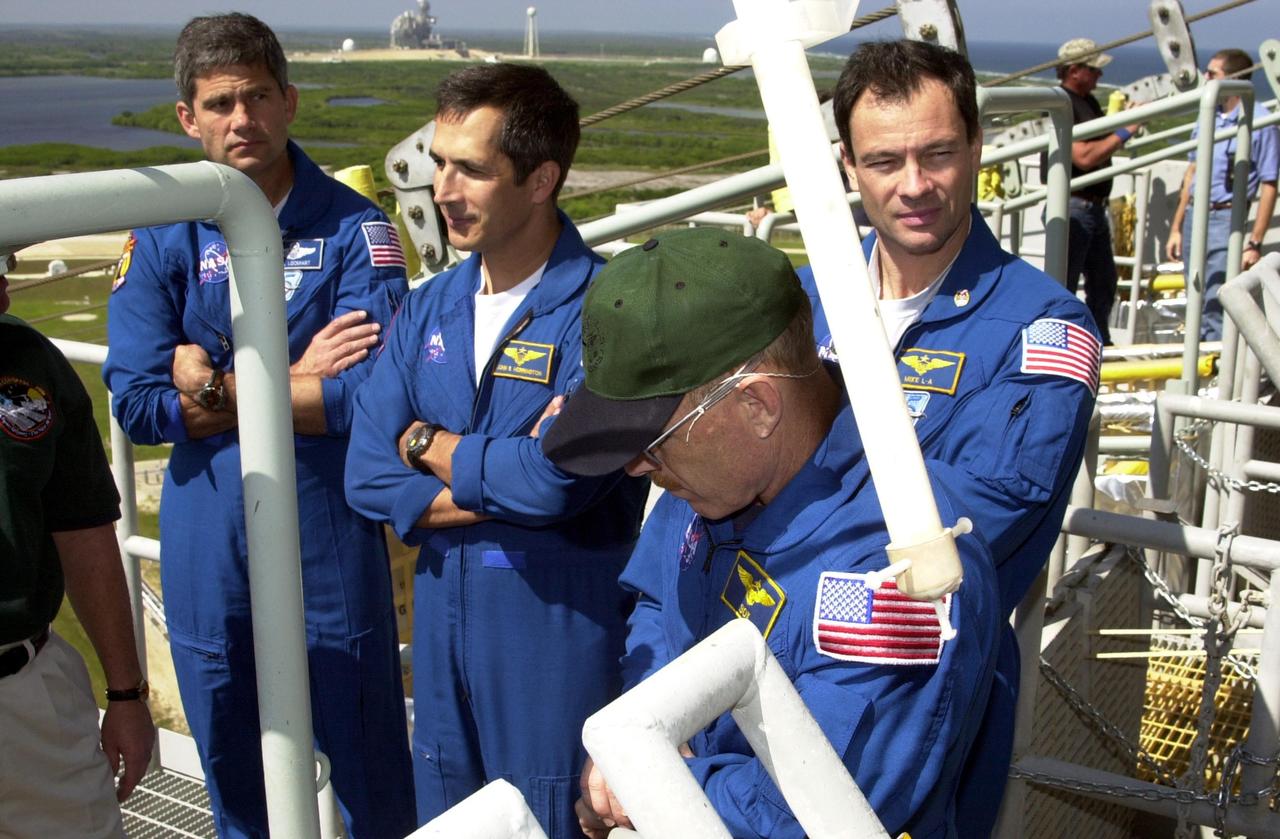
KENNEDY SPACE CENTER, FLA. - As part of Terminal Countdown Demonstration Test (TCDT) activities, the STS-113 and Expedition 6 crews receive training in emergency exit from the orbiter on Launch Pad 39A. Shown are (from left) STS-113 Pilot Paul Lockhart, Mission Specialist John Herrington, Expedition 6 Commander Ken Bowersox, and STS-113 Mission Specialist Michael Lopez-Alegria. The TCDT also includes a simulated launch countdown. The 16th assembly flight to the International Space Station, STS-113 will carry the Port 1 (P1) truss aboard Space Shuttle Endeavour as well as the Expedition 6 crew, who will replace Expedition 5 on the Station. Mission STS-113 is scheduled to launch Nov. 10, 2002.
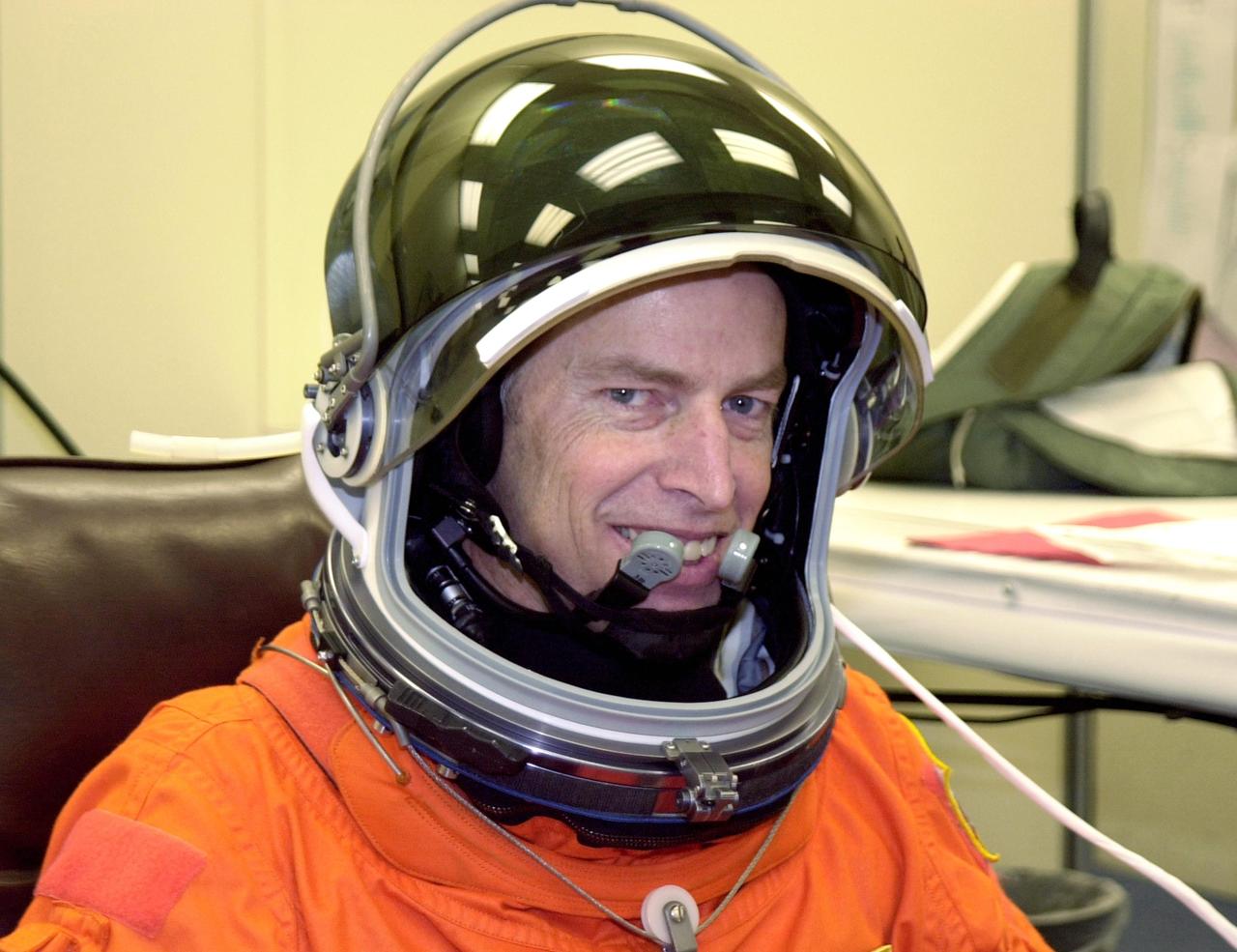
KENNEDY SPACE CENTER, FLA. - STS-113 Commander James Wetherbee is happy to suit up before launch. Wetherbee will be making his sixth Shuttle flight. The primary mission is bringing the Expedition 6 crew to the Station and returning the Expedition 5 crew to Earth. The major objective of the mission is delivery of the Port 1 (P1) Integrated Truss Assembly, which will be attached to the port side of the S0 truss. Three spacewalks are planned to install and activate the truss and its associated equipment. Launch of Space Shuttle Endeavour on mission STS-113 is scheduled for Nov. 11 at 12:58 a.m. EST.
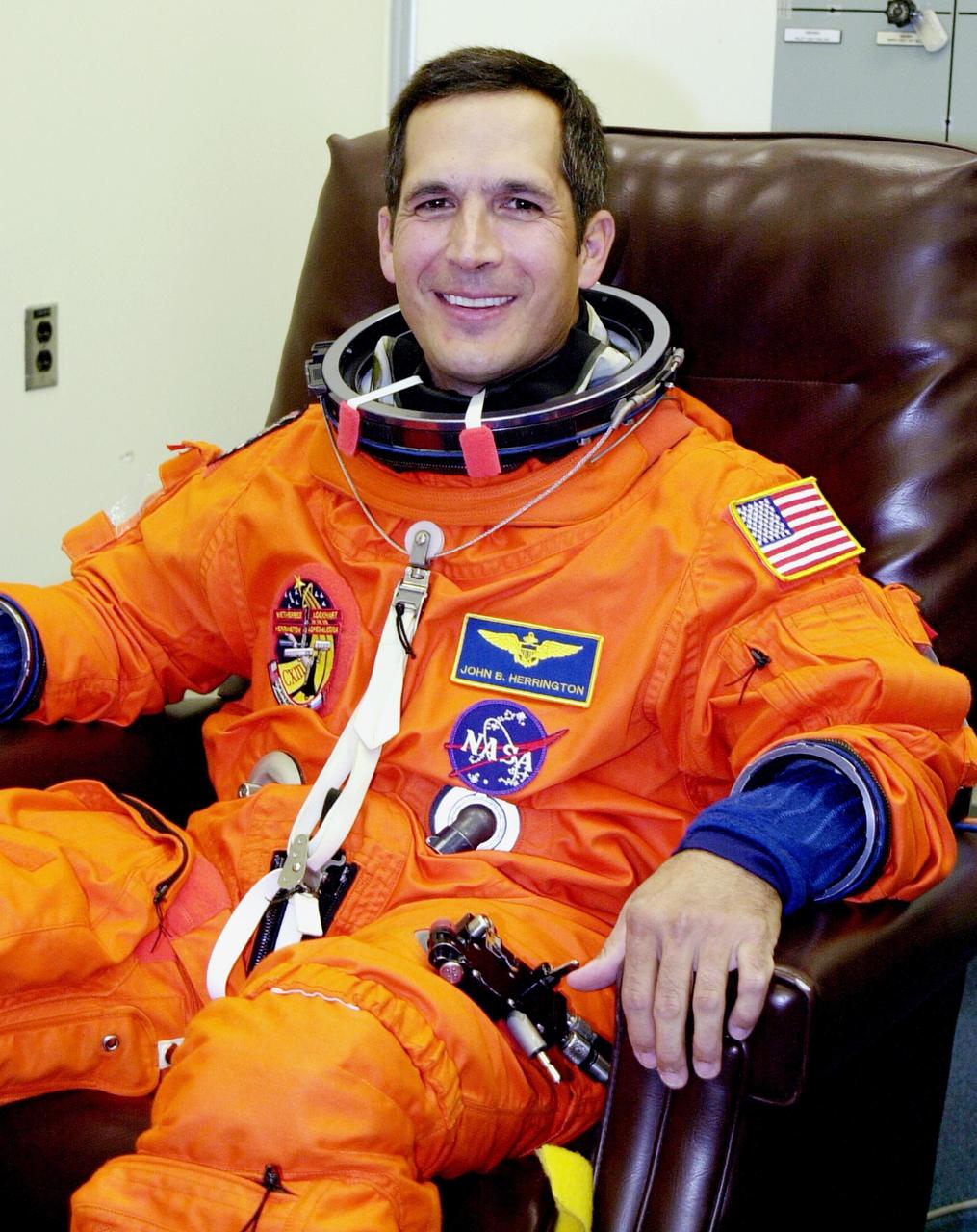
KENNEDY SPACE CENTER, FLA. -- STS-113 Mission Specialist John Herrington suits up before launch. This will be his first Shuttle flight. The primary mission is bringing the Expedition 6 crew to the Station and returning the Expedition 5 crew to Earth. The major objective of the mission is delivery of the Port 1 (P1) Integrated Truss Assembly, which will be attached to the port side of the S0 truss. Three spacewalks are planned to install and activate the truss and its associated equipment. Launch of Space Shuttle Endeavour on mission STS-113 is scheduled for Nov. 11 at 12:58 p.m. EST.
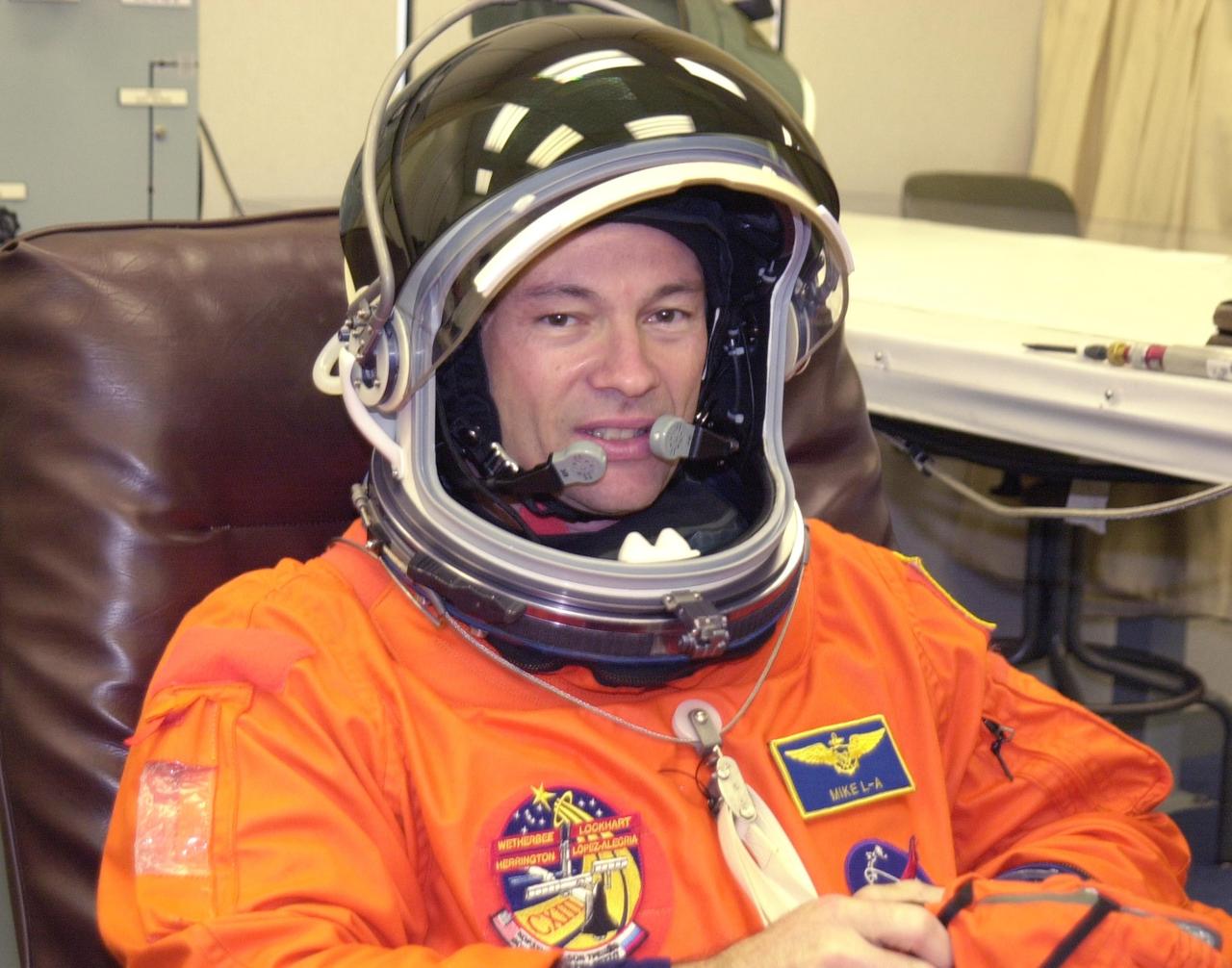
KENNEDY SPACE CENTER, FLA. -- STS-113 Mission Specialist Michael Lopez-Alegria suits up before launch. This will be his third Shuttle flight. The primary mission is bringing the Expedition 6 crew to the Station and returning the Expedition 5 crew to Earth. The major objective of the mission is delivery of the Port 1 (P1) Integrated Truss Assembly, which will be attached to the port side of the S0 truss. Three spacewalks are planned to install and activate the truss and its associated equipment. Launch of Space Shuttle Endeavour on mission STS-113 is scheduled for Nov. 11 at 12:58 a.m. EST.
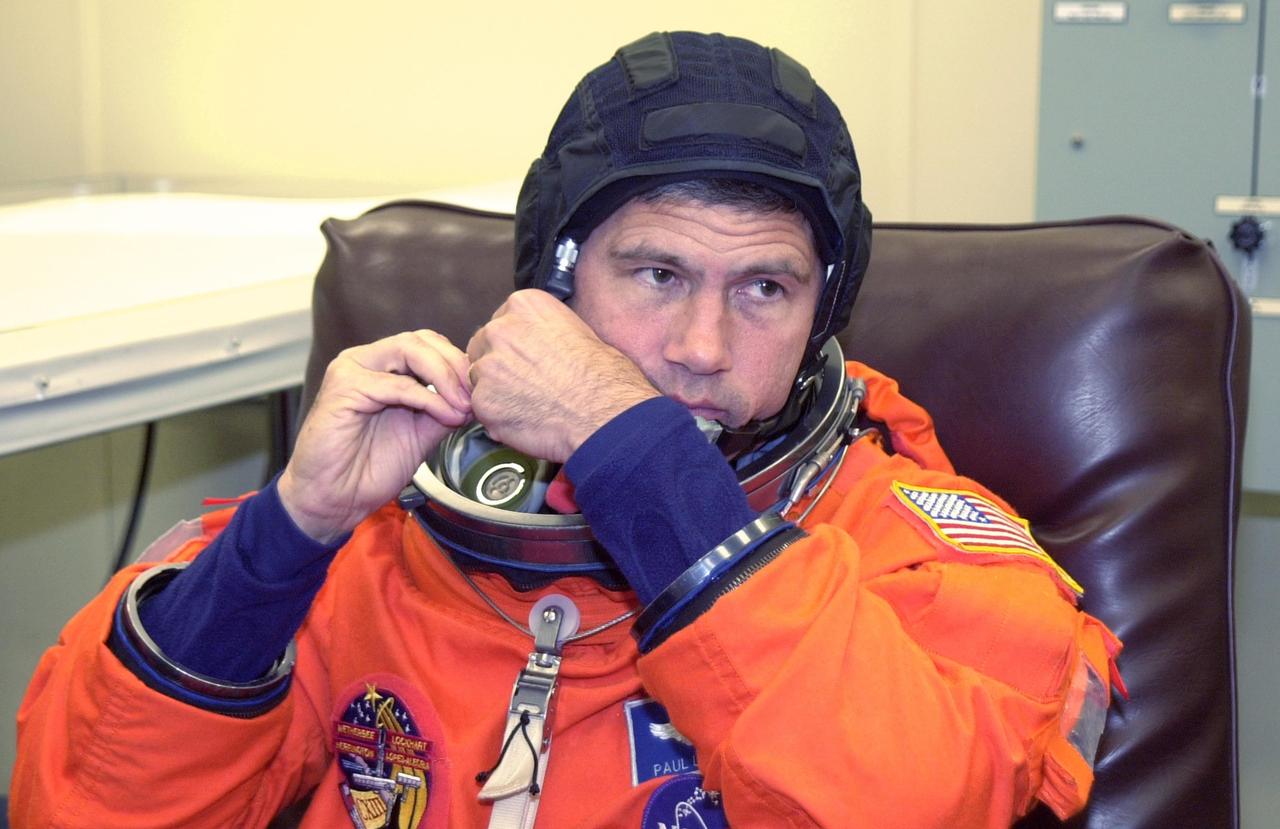
KENNEDY SPACE CENTER, FLA. -- STS-113 Paul Lockhart adjusts his helmet during suitup before launch. Lockhart will be making his second Shuttle flight. The primary mission is bringing the Expedition 6 crew to the Station and returning the Expedition 5 crew to Earth. The major objective of the mission is delivery of the Port 1 (P1) Integrated Truss Assembly, which will be attached to the port side of the S0 truss. Three spacewalks are planned to install and activate the truss and its associated equipment. Launch of Space Shuttle Endeavour on mission STS-113 is scheduled for Nov. 11 at 12:58 a.m. EST.
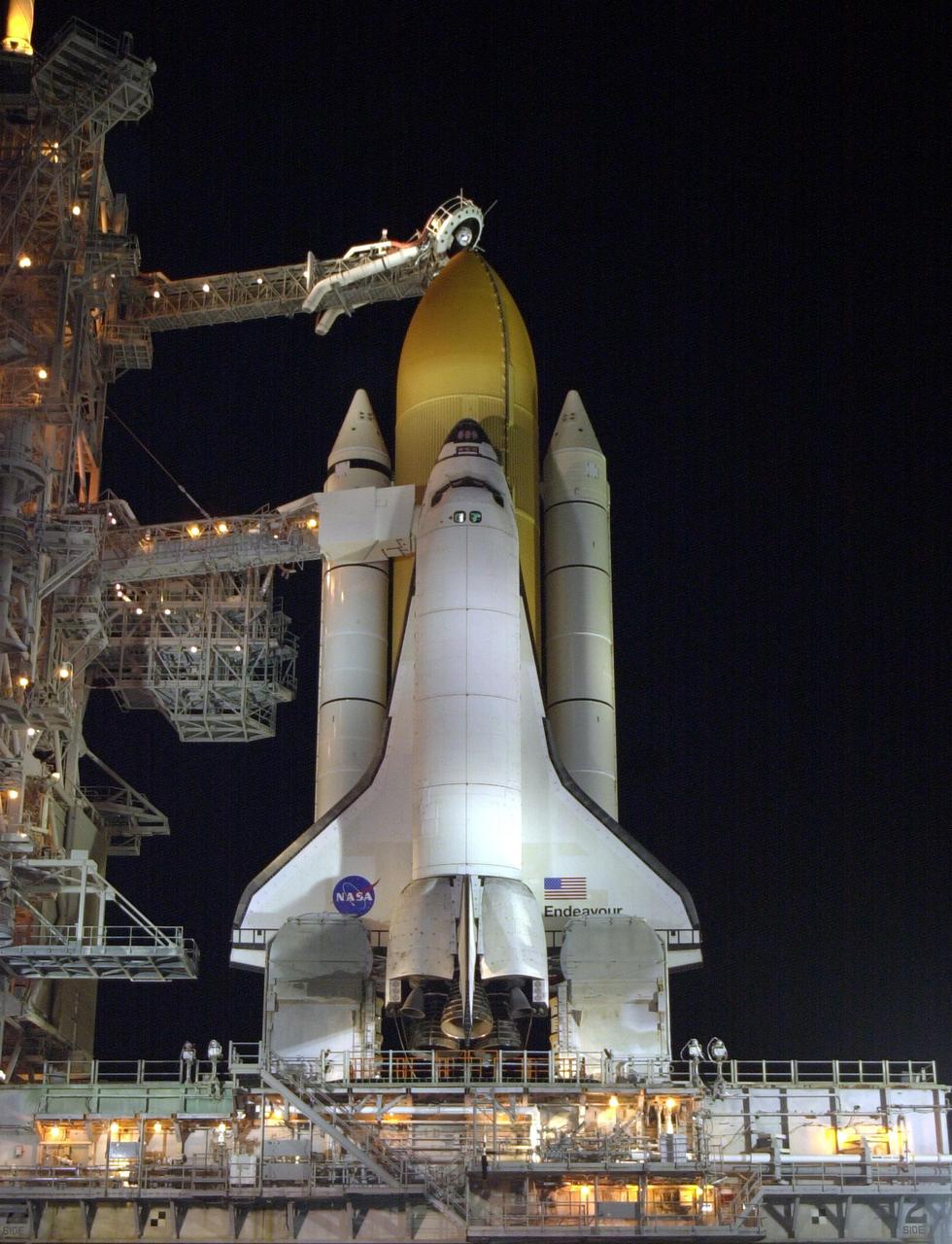
KENNEDY SPACE CENTER, FLA. - The Rotating Service Structure has been rolled back to reveal Space Shuttle Endeavour awaiting launch on Launch Pad 39A. The primary mission of STS-113 is to bring the Expedition 6 crew to the Station and return the Expedition 5 crew to Earth. Another major objective of the mission is delivery of the Port 1 (P1) Integrated Truss Assembly, which will be attached to the port side of the S0 truss. Three spacewalks are planned to install and activate the truss and its associated equipment. Launch of Space Shuttle Endeavour on mission STS-113 is scheduled for Nov. 11 at 12:58:40 a.m. EST.
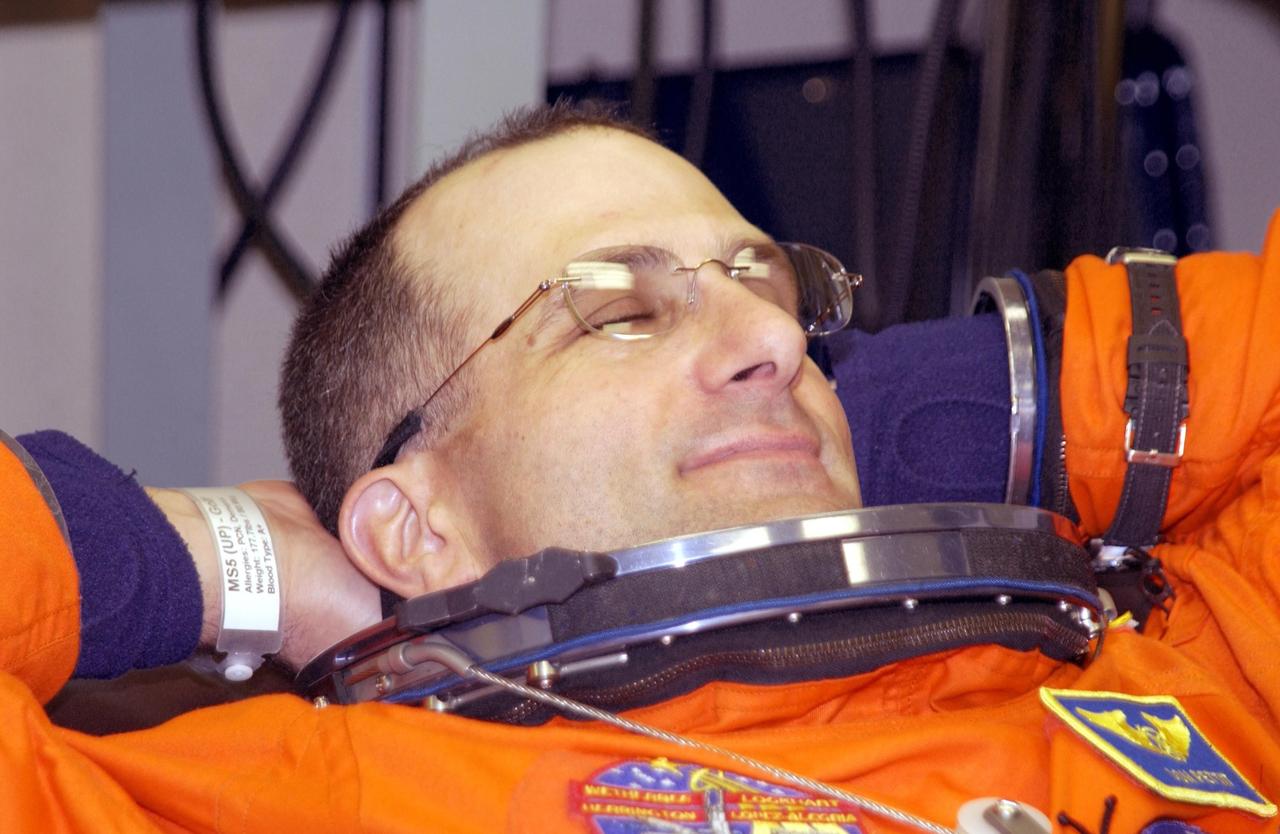
KENNEDY SPACE CENTER, FLA. -- Expedition 6 flight engineer Donald Pettit relaxes during suitup for launch. Pettit will be making his first Shuttle flight. The primary mission for the crew is bringing the Expedition 6 crew to the Station and returning the Expedition 5 crew to Earth. The major objective of the mission is delivery of the Port 1 (P1) Integrated Truss Assembly, which will be attached to the port side of the S0 truss. Three spacewalks are planned to install and activate the truss and its associated equipment. Launch of Space Shuttle Endeavour on mission STS-113 is scheduled for 8:15 p.m. EST.
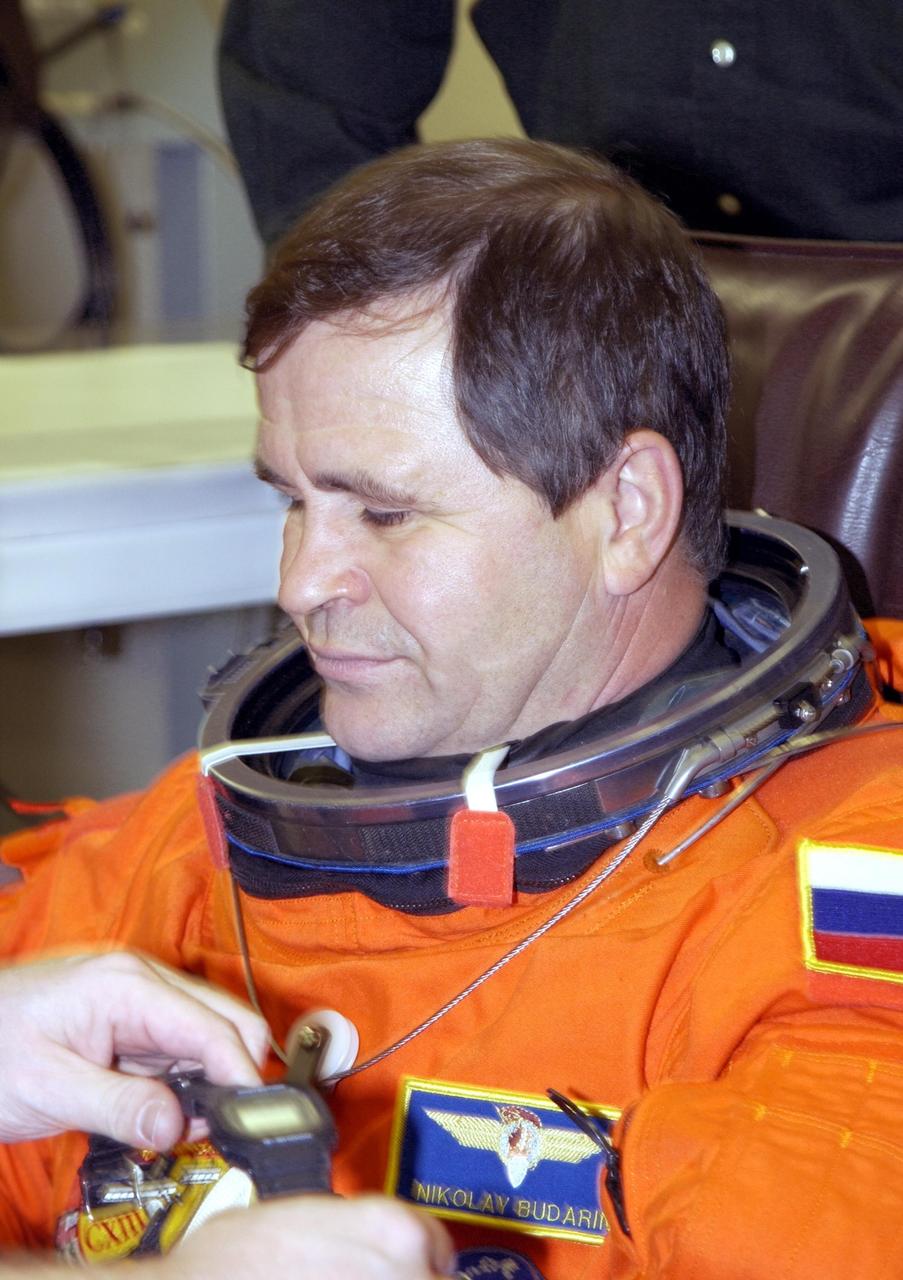
KENNEDY SPACE CENTER, FLA. - Expedition 6 flight engineer Nikolai Budarin relaxes during suitup for launch. Budarin, who is with the Russian Space Agency, will be making his second Shuttle flight. The primary mission for the crew is bringing the Expedition 6 crew to the Station and returning the Expedition 5 crew to Earth. The major objective of the mission is delivery of the Port 1 (P1) Integrated Truss Assembly, which will be attached to the port side of the S0 truss. Three spacewalks are planned to install and activate the truss and its associated equipment. Launch of Space Shuttle Endeavour on mission STS-113 is scheduled for 8:15 p.m. EST.
![KENNEDY SPACE CENTER, FLA. -- Against a black moonless sky, Space Shuttle Endeavour blazes into space after an ontime liftoff at 7:49:47 p.m. EST. The launch is the 19th for Endeavour, and the 112th flight in the Shuttle program. Mission STS-113 is the 16th assembly flight to the International Space Station, carrying another structure for the Station, the P1 integrated truss. Also onboard are the Expedition 6 crew, who will replace Expedition 5. Endeavour is scheduled to land at KSC after an 11-day journey. [Photo by Ray Yost]](https://images-assets.nasa.gov/image/KSC-02pd1805/KSC-02pd1805~medium.jpg)
KENNEDY SPACE CENTER, FLA. -- Against a black moonless sky, Space Shuttle Endeavour blazes into space after an ontime liftoff at 7:49:47 p.m. EST. The launch is the 19th for Endeavour, and the 112th flight in the Shuttle program. Mission STS-113 is the 16th assembly flight to the International Space Station, carrying another structure for the Station, the P1 integrated truss. Also onboard are the Expedition 6 crew, who will replace Expedition 5. Endeavour is scheduled to land at KSC after an 11-day journey. [Photo by Ray Yost]
![KENNEDY SPACE CENTER, FLA. - A full moon over Kennedy Space Center competes for dominance in the night sky with the illuminated Space Shuttle Endeavour below, poised for launch on mission STS-113 from Launch Pad 39A. The mission will be the 16th assembly flight to the International Space Station, carrying another structure for the Station, the P1 integrated truss. Also onboard will be the Expedition 6 crew, who will replace Expedition 5. [Photo by Scott Andrews]](https://images-assets.nasa.gov/image/KSC-02pd1807/KSC-02pd1807~medium.jpg)
KENNEDY SPACE CENTER, FLA. - A full moon over Kennedy Space Center competes for dominance in the night sky with the illuminated Space Shuttle Endeavour below, poised for launch on mission STS-113 from Launch Pad 39A. The mission will be the 16th assembly flight to the International Space Station, carrying another structure for the Station, the P1 integrated truss. Also onboard will be the Expedition 6 crew, who will replace Expedition 5. [Photo by Scott Andrews]

KENNEDY SPACE CENTER, FLA. - Expedition Six crew member Nikolai Budarin, of the Russian Space Agency, pauses in front of Space Shuttle Endeavour at Launch Pad 39A during a tour of Kennedy Space Center prior to his launch. The primary mission of STS-113 is bringing the Expedition 6 crew to the Station and returning the Expedition 5 crew to Earth. Another major objective of the mission is delivery of the Port 1 (P1) Integrated Truss Assembly, which will be attached to the port side of the S0 truss. Three spacewalks are planned to install and activate the truss and its associated equipment. Launch of Space Shuttle Endeavour on mission STS-113 is scheduled for Nov. 11 between midnight and 4 a.m. EST.
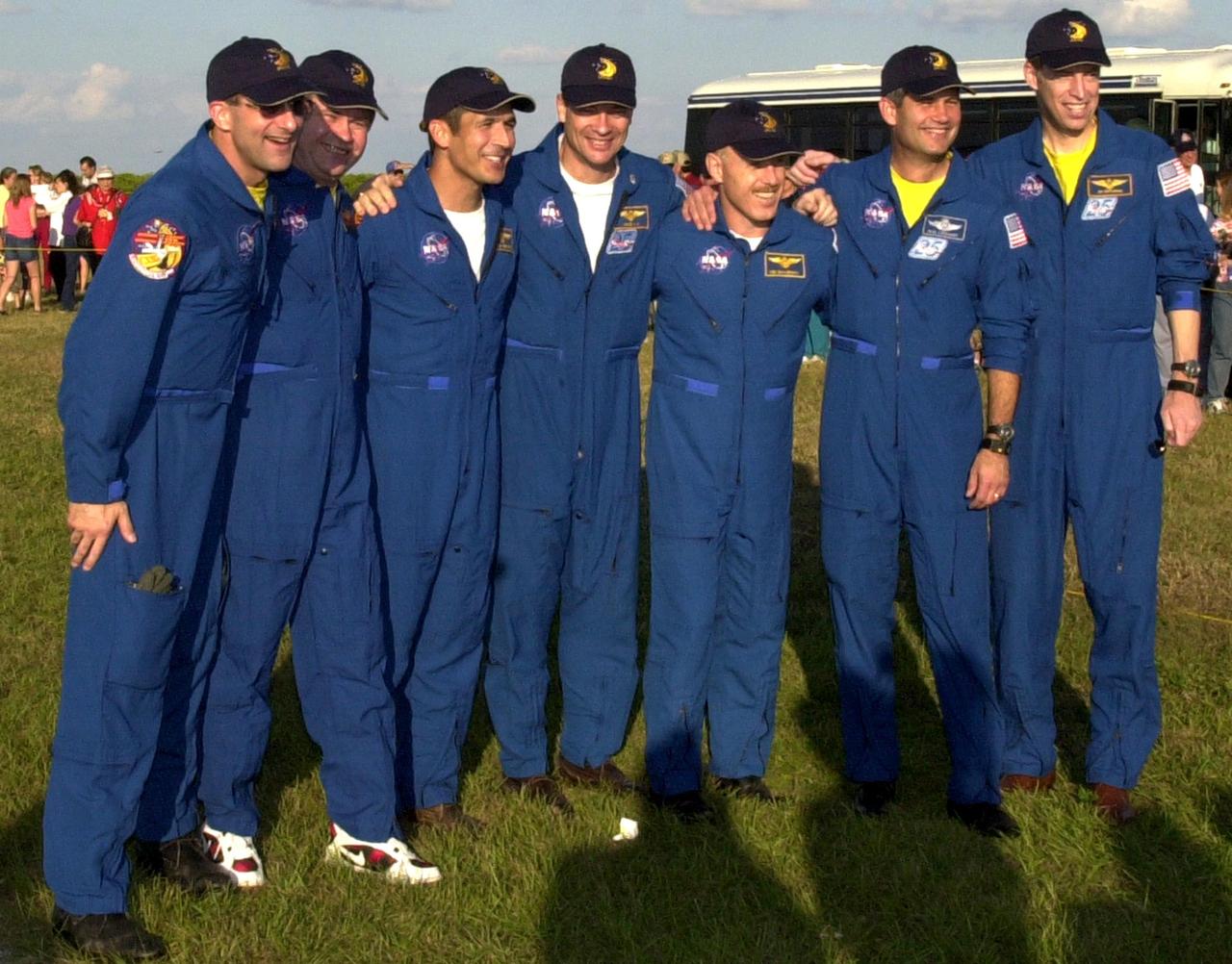
KENNEDY SPACE CENTER, FLA. - The STS-113 and Expedition Six crews pose for a group photo at Launch Pad 39A with Space Shuttle Endeavour in the background during a tour of Kennedy Space Center prior to their launch. From left are Expedition Six crew members Donald Pettit and Nikolai Budarin of the Russian Space Agency, STS-113 Mission Specialists John Herrington and Michael Lopez-Alegria, Expedition Six Commander Ken Bowersox, STS-113 Pilot Paul Lockhart, and STS-113 Commander James Wetherbee. The primary mission of STS-113 is bringing the Expedition 6 crew to the Station and returning the Expedition 5 crew to Earth. Another major objective of the mission is delivery of the Port 1 (P1) Integrated Truss Assembly, which will be attached to the port side of the S0 truss. Three spacewalks are planned to install and activate the truss and its associated equipment. Launch of Space Shuttle Endeavour on mission STS-113 is scheduled for Nov. 11 between midnight and 4 a.m. EST.
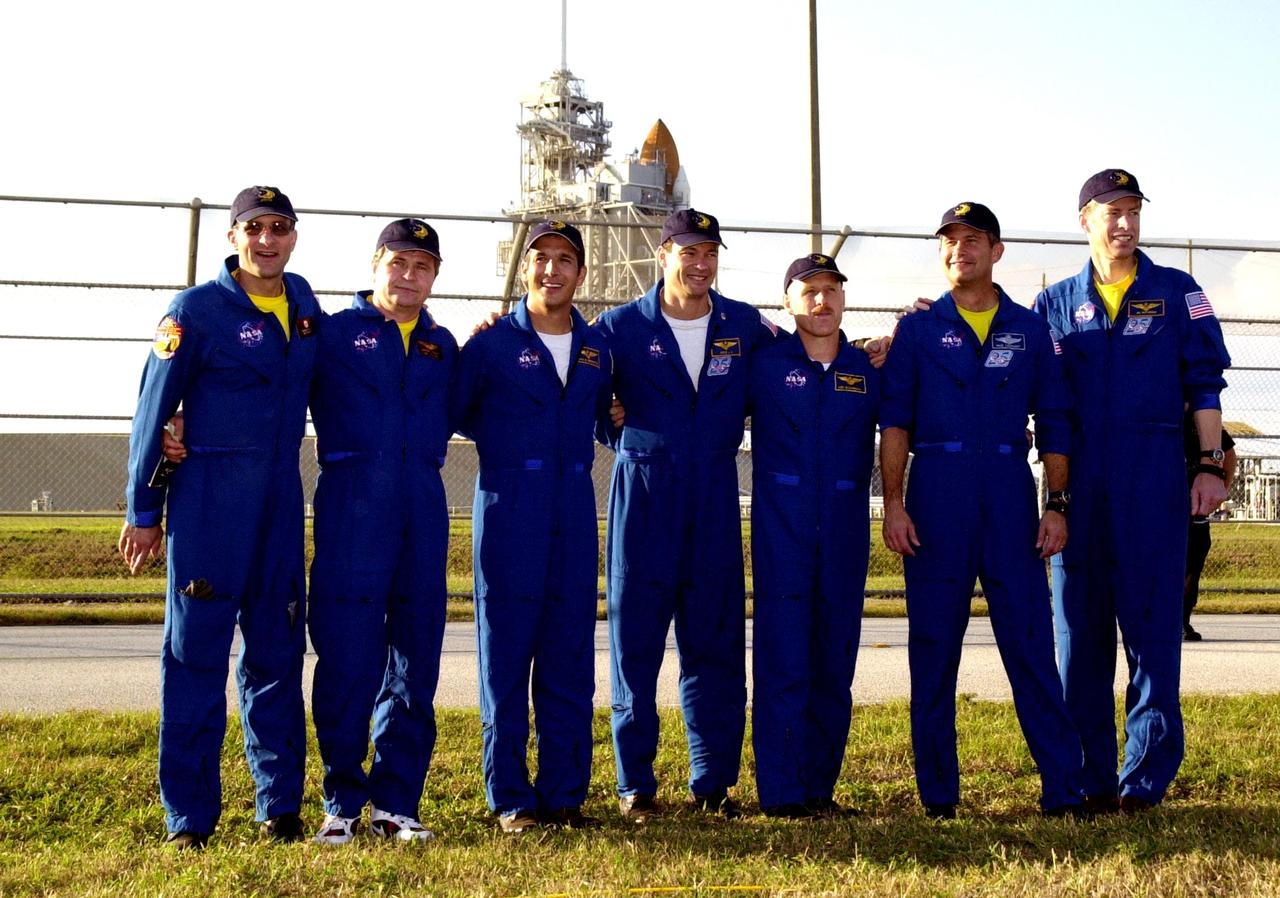
KENNEDY SPACE CENTER, FLA. - The STS-113 and Expedition Six crews pose for a group photo at Launch Pad 39A with Space Shuttle Endeavour in the background during a tour of Kennedy Space Center prior to their launch. From left are Expedition Six crew members Donald Pettit and Nikolai Budarin of the Russian Space Agency, STS-113 Mission Specialists John Herrington and Michael Lopez-Alegria, Expedition Six Commander Ken Bowersox, STS-113 Pilot Paul Lockhart, and STS-113 Commander James Wetherbee. The primary mission of STS-113 is bringing the Expedition 6 crew to the Station and returning the Expedition 5 crew to Earth. Another major objective of the mission is delivery of the Port 1 (P1) Integrated Truss Assembly, which will be attached to the port side of the S0 truss. Three spacewalks are planned to install and activate the truss and its associated equipment. Launch of Space Shuttle Endeavour on mission STS-113 is scheduled for Nov. 11 between midnight and 4 a.m. EST.
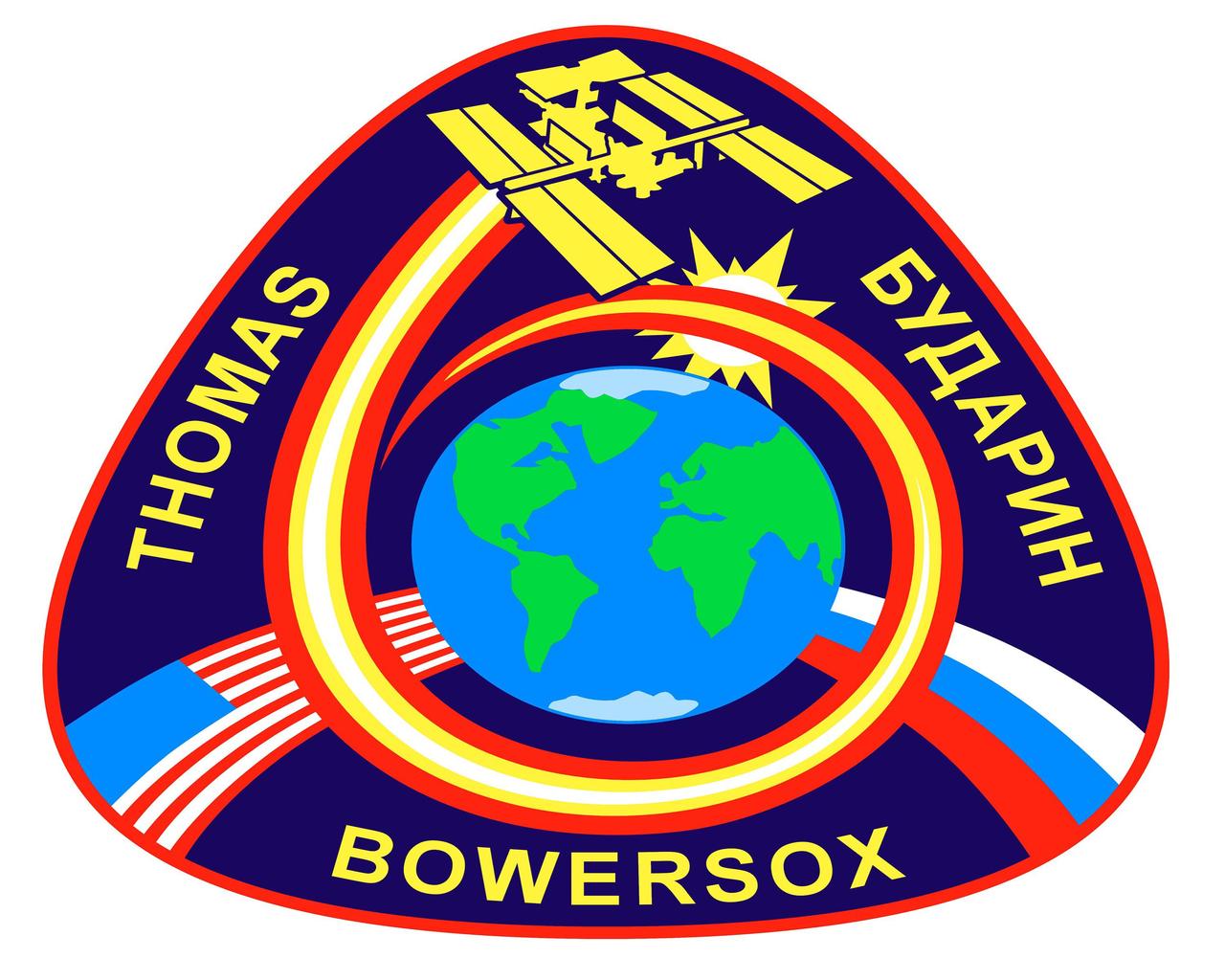
The International Space Station (ISS) Expedition 6 crew patch depicts the station orbiting the Earth on its mission of international cooperation and scientific research. The Earth is placed in the center of the patch to emphasize that work conducted aboard this orbiting laboratory is intended to improve life on our home planet. The shape of the Space Station’s orbit symbolizes the role that experience gained from ISS will have on future exploration of our solar system and beyond. The American and Russian flags encircling the Earth represent the native countries of the Expedition 6 crew members, which are just two of the many participant countries contributing to the ISS and committed to the peaceful exploration of space.
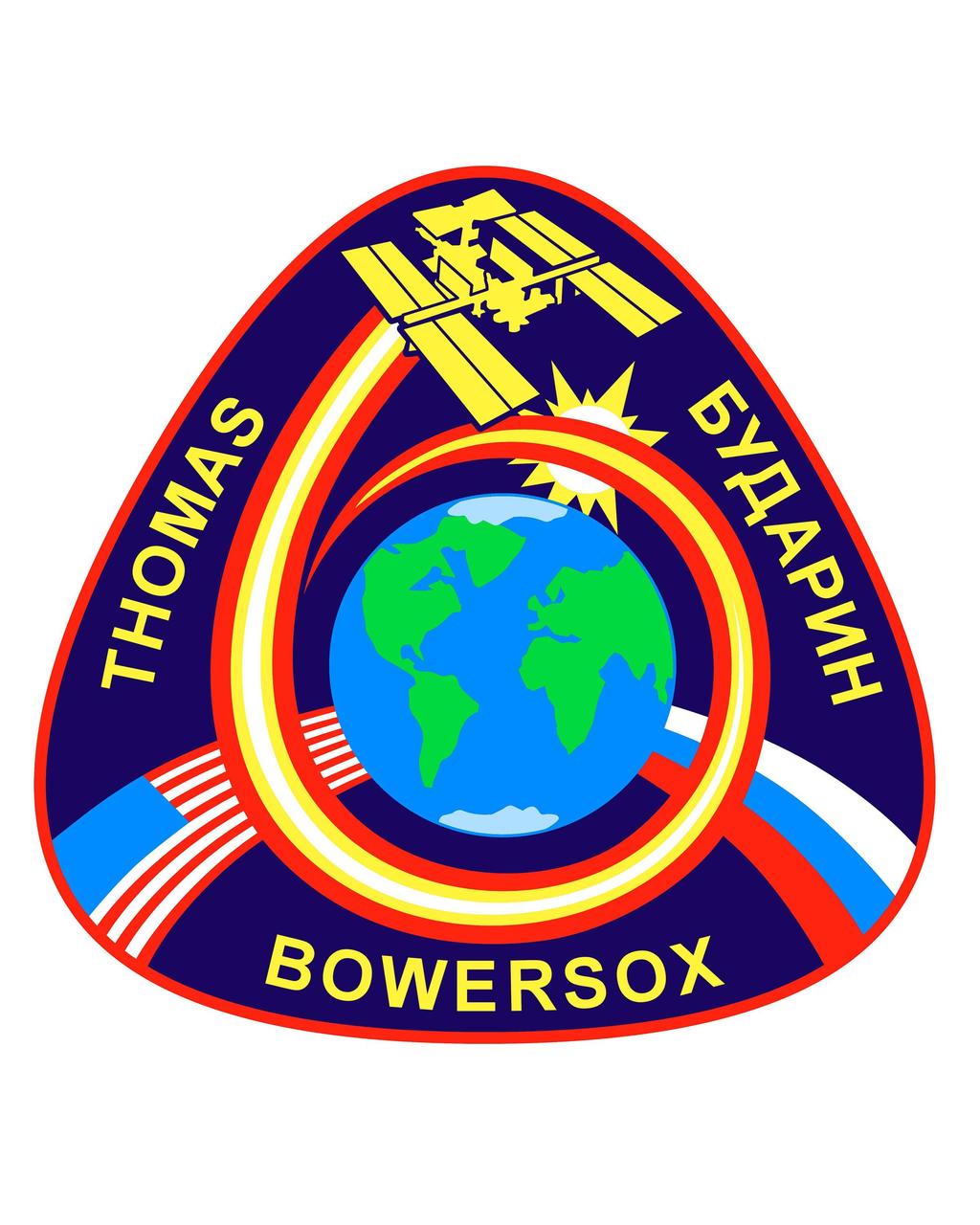
The International Space Station (ISS) Expedition 6 crew patch depicts the station orbiting the Earth on its mission of international cooperation and scientific research. The Earth is placed in the center of the patch to emphasize that work conducted aboard this orbiting laboratory is intended to improve life on our home planet. The shape of the Space Station’s orbit symbolizes the role that experience gained from ISS will have on future exploration of our solar system and beyond. The American and Russian flags encircling the Earth represent the native countries of the Expedition 6 crew members, which are just two of the many participant countries contributing to the ISS and committed to the peaceful exploration of space.
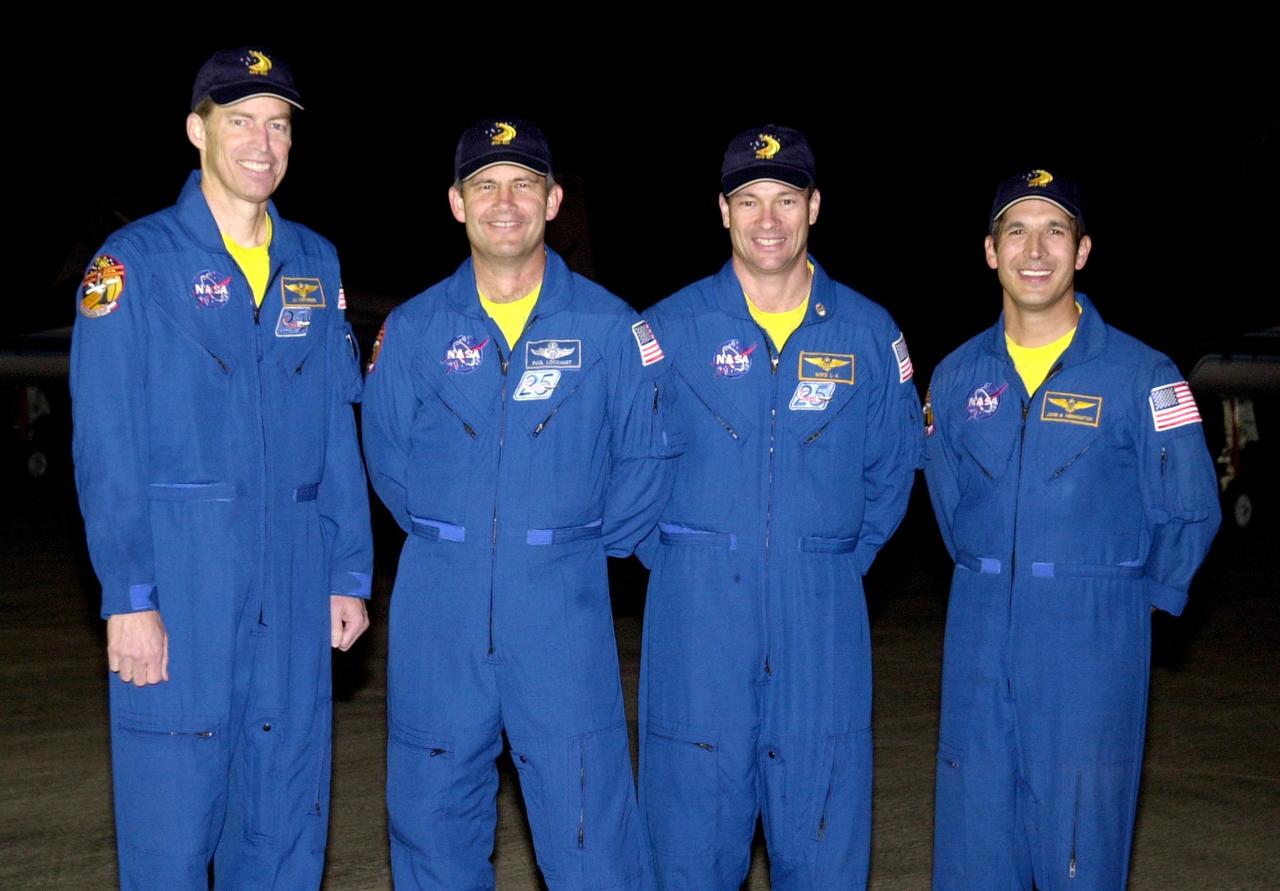
KENNEDY SPACE CENTER, FLA. - The STS-113 crew poses for a photo after their arrival at the KSC Shuttle Landing Facility to prepare for launch. From left are Commander James Wetherbee, Pilot Paul Lockhart, and Mission Specialists Michael Lopez-Alegria and John Herrington. The primary mission of STS-113 is bringing the Expedition 6 crew to the Station and returning the Expedition 5 crew to Earth. In addition, the major objective of the mission is delivery of the Port 1 (P1) Integrated Truss Assembly, which will be attached to the port side of the S0 truss. Three spacewalks are planned to install and activate the truss and its associated equipment. Launch of Space Shuttle Endeavour on mission STS-113 is scheduled for Nov. 11 between midnight and 4 a.m. EST.
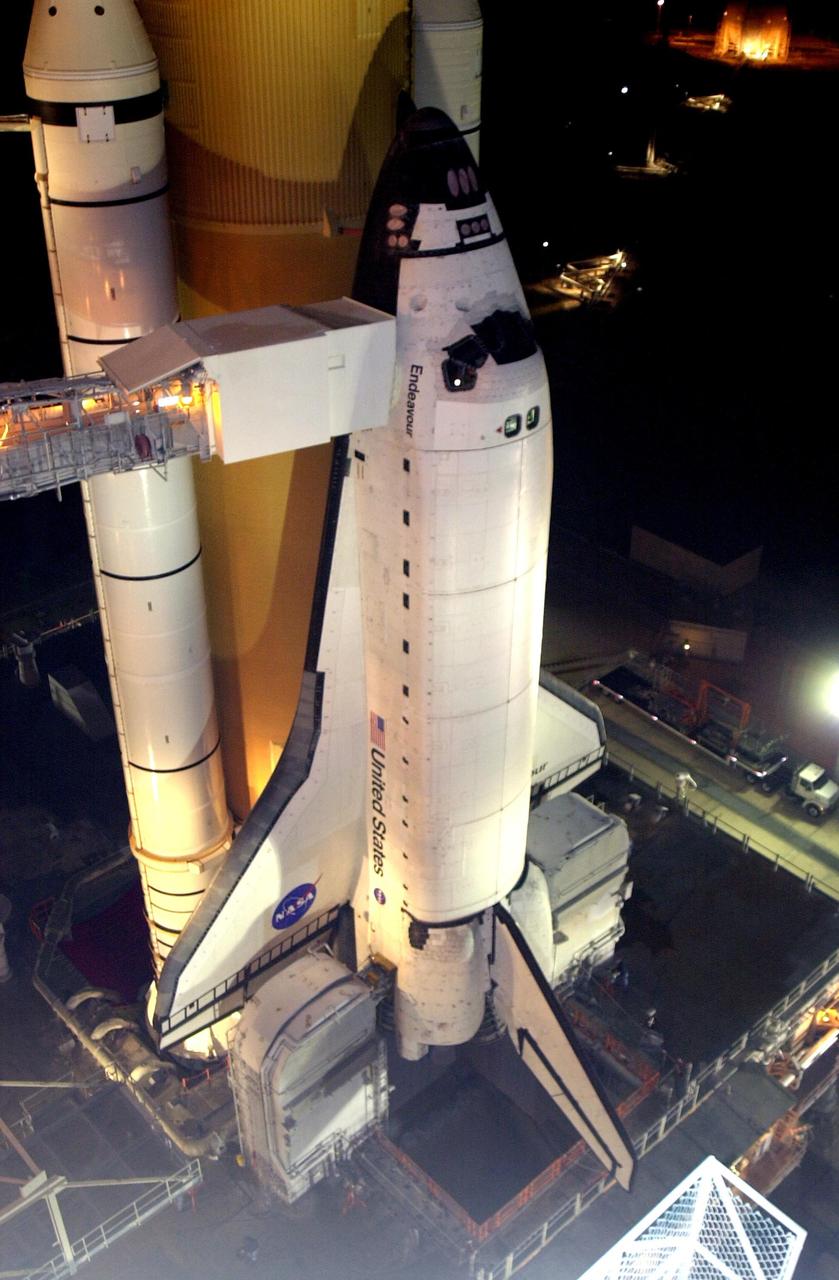
KENNEDY SPACE CENTER, FLA. -- Space Shuttle Endeavour stands ready for launch on mission STS-113. . The Orbiter Access Arm extends from the Fixed Service Structure (FSS) to the crew compartment hatch, through which the STS-113 crew will enter Endeavour. STS-113 is the 16th American assembly flight to the International Space Station. The primary mission is bringing the Expedition 6 crew to the Station and returning the Expedition 5 crew to Earth. The major objective of the mission is delivery of the Port 1 (P1) Integrated Truss Assembly, which will be attached to the port side of the S0 truss. Three spacewalks are planned to install and activate the truss and its associated equipment. Launch of Space Shuttle Endeavour on mission STS-113 is scheduled for Nov. 11 at 12:58 a.m. EST.
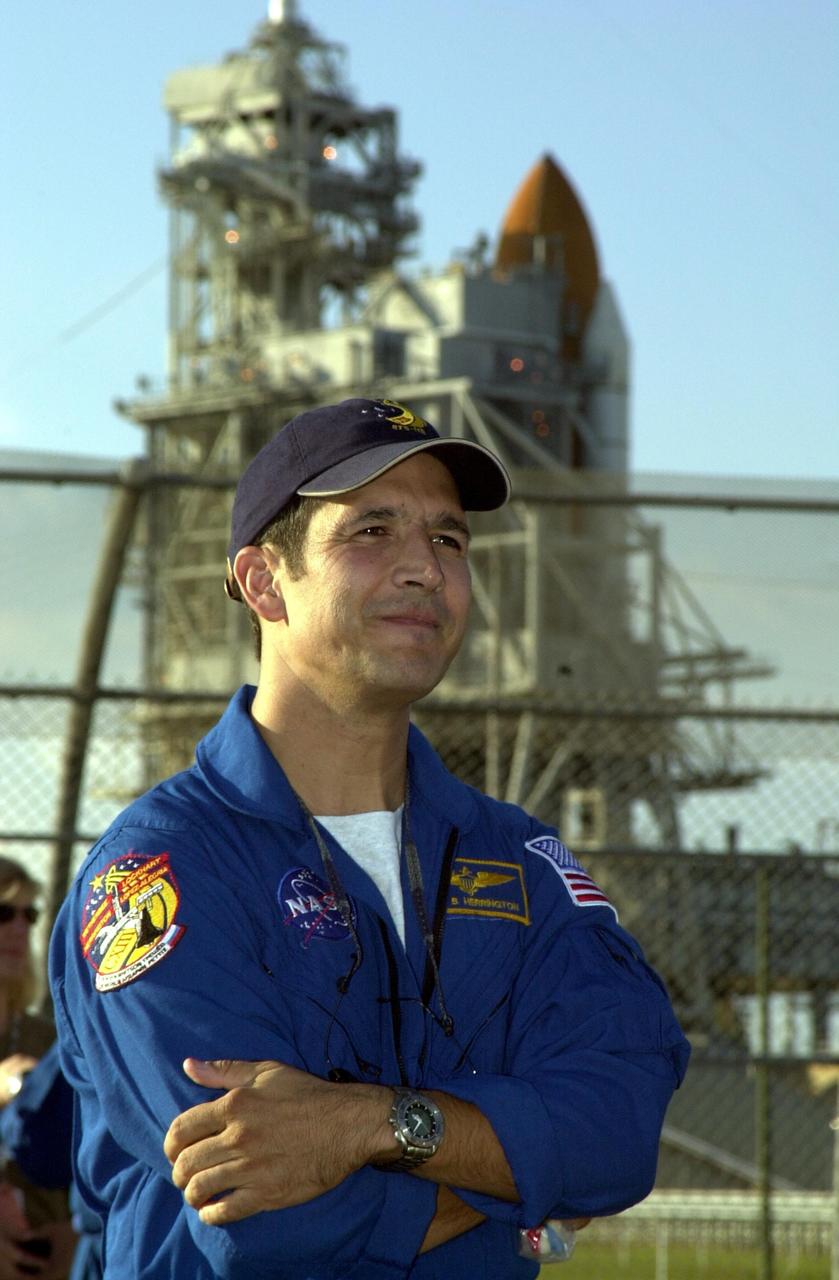
KENNEDY SPACE CENTER, FLA. - STS-113 Mission Specialist John Herrington pauses in front of Space Shuttle Endeavour at Launch Pad 39A during a tour of Kennedy Space Center prior to his launch. Upon launch, Herrington will become the first Native American in space. The primary mission of STS-113 is bringing the Expedition 6 crew to the Station and returning the Expedition 5 crew to Earth. Another major objective of the mission is delivery of the Port 1 (P1) Integrated Truss Assembly, which will be attached to the port side of the S0 truss. Three spacewalks are planned to install and activate the truss and its associated equipment. Launch of Space Shuttle Endeavour on mission STS-113 is scheduled for Nov. 11 between midnight and 4 a.m. EST.
![KENNEDY SPACE CENTER, FLA. - Against a black moonless sky, Space Shuttle Endeavour lights up the night as it blazes into space after an ontime liftoff at 7:49:47 p.m. EST. The launch is the 19th for Endeavour, and the 112th flight in the Shuttle program. Mission STS-113 is the 16th assembly flight to the International Space Station, carrying another structure for the Station, the P1 integrated truss. Also onboard are the Expedition 6 crew, who will replace Expedition 5. Endeavour is scheduled to land at KSC after an 11-day journey. [Photo by Scott Andrews]](https://images-assets.nasa.gov/image/KSC-02pd1806/KSC-02pd1806~medium.jpg)
KENNEDY SPACE CENTER, FLA. - Against a black moonless sky, Space Shuttle Endeavour lights up the night as it blazes into space after an ontime liftoff at 7:49:47 p.m. EST. The launch is the 19th for Endeavour, and the 112th flight in the Shuttle program. Mission STS-113 is the 16th assembly flight to the International Space Station, carrying another structure for the Station, the P1 integrated truss. Also onboard are the Expedition 6 crew, who will replace Expedition 5. Endeavour is scheduled to land at KSC after an 11-day journey. [Photo by Scott Andrews]
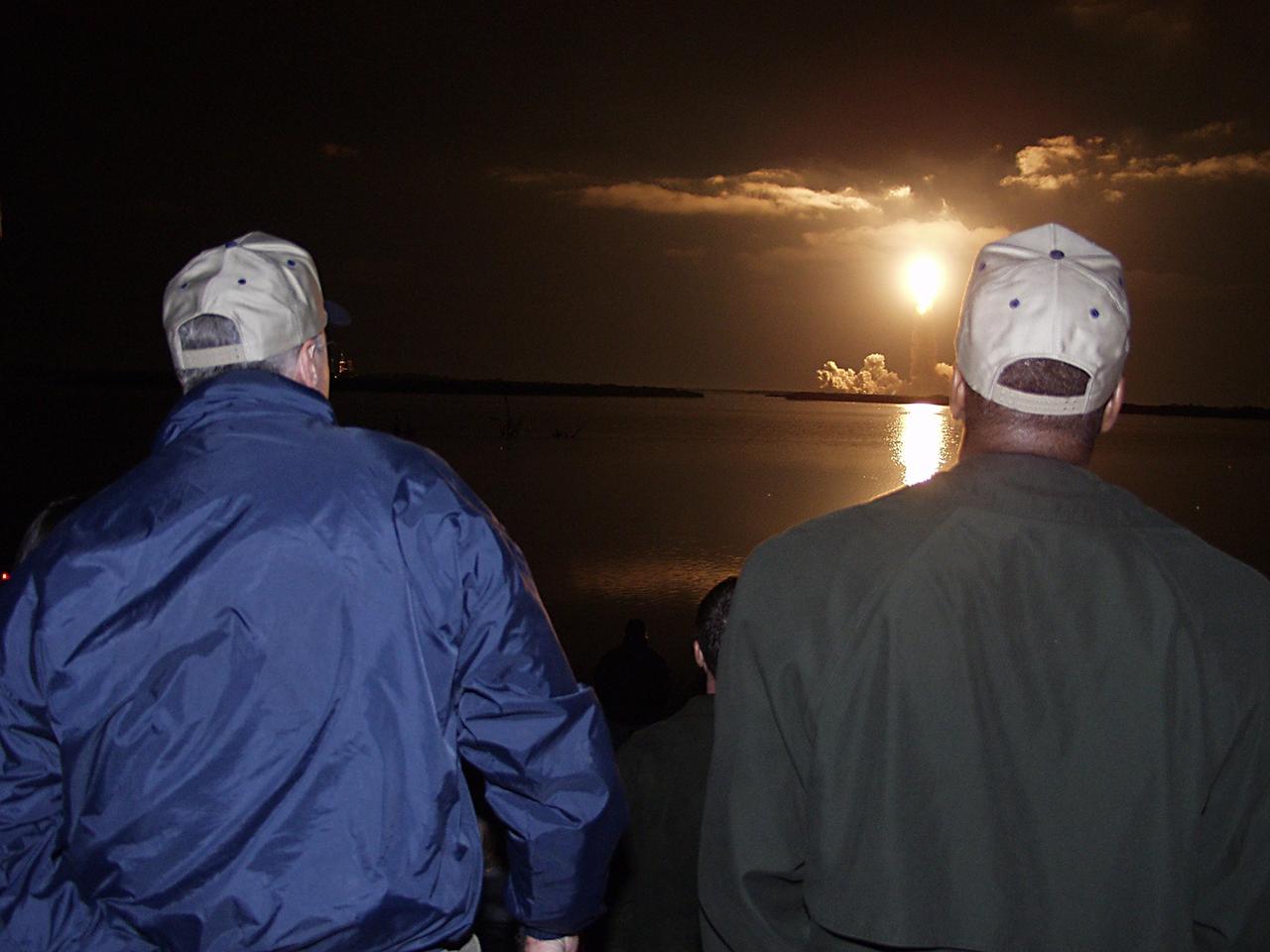
KENNEDY SPACE CENTER, FLA. - Watching the launch of Space Shuttle Endeavour on mission STS-113 are NASA Administrator Sean O'Keefe (left) and Associate Administrator of Public Affairs Glen Mahone. Liftoff occurred ontime at 7:49:47 p.m. EST. The launch is the 19th for Endeavour, and the 112th flight in the Shuttle program. Mission STS-113 is the 16th assembly flight to the International Space Station, carrying another structure for the Station, the P1 integrated truss. Also onboard are the Expedition 6 crew, who will replace Expedition 5. Endeavour is scheduled to land at KSC after an 11-day journey.
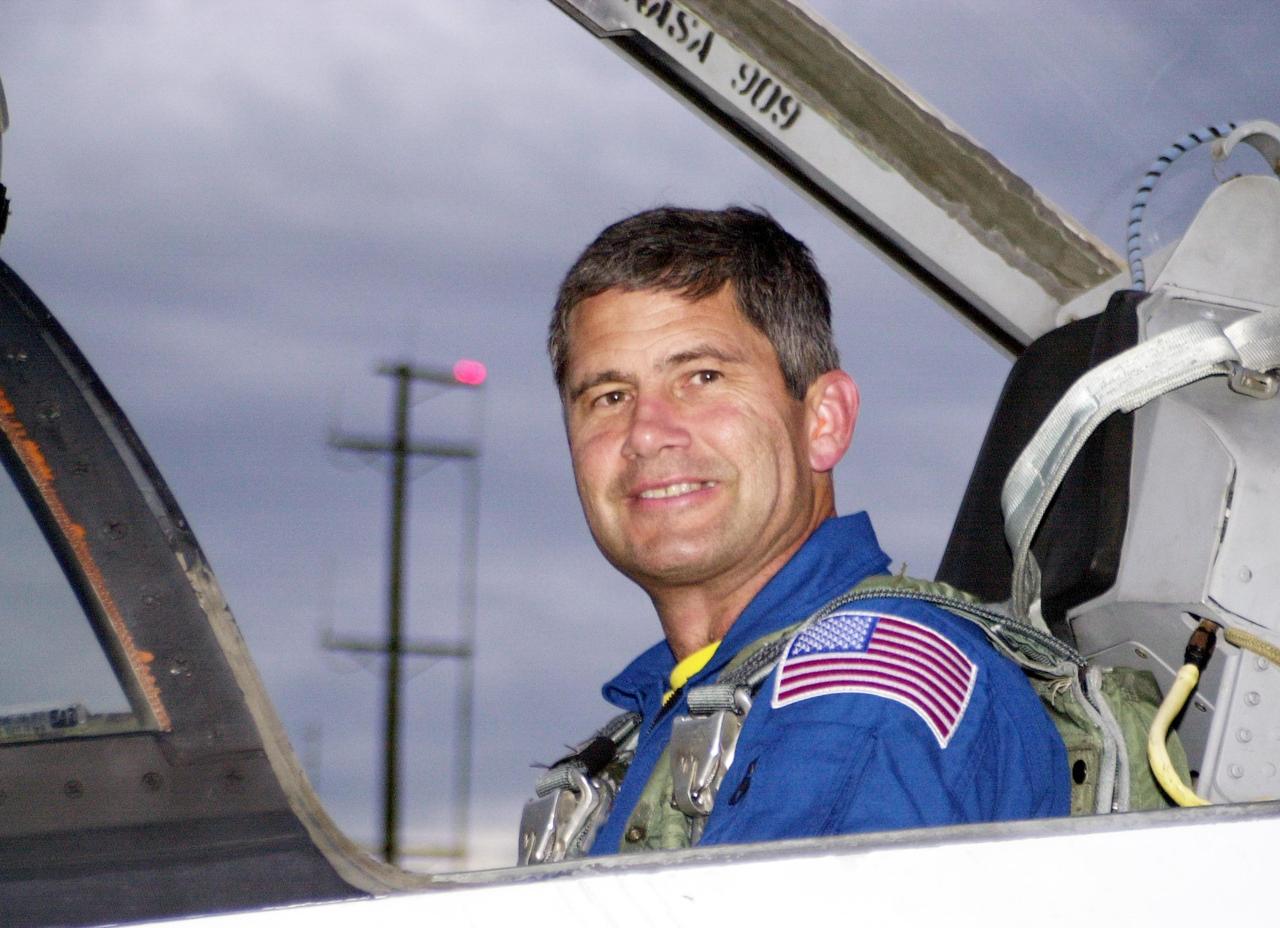
KENNEDY SPACE CENTER, FLA. -- STS-113 Pilot Paul Lockhart arrives at KSC for Terminal Countdown Demonstration Test activities, which include a simulated launch countdown. The primary payloads on mission STS-113 are the first port truss segment, P1, and the Crew and Equipment Translation Aid (CETA) Cart B. Once delivered, the P1 truss will remain stowed until flight 12A.1 in 2003 when it will be attached to the central truss segment, S0, on the Space Station. Also onboard Space Shuttle Endeavour will be the Expedition 6 crew who will replace Expedition 5, returning to Earth after 4 months. The STS-113 launch is scheduled for Nov. 10, 2002. .
![KENNEDY SPACE CENTER, FLA. -- Space Shuttle Endeavour climbs into the black sky as it lifts off Launch Pad 39A on mission STS-113. Liftoff occurred ontime at 7:49:47 p.m. EST. The launch is the 19th for Endeavour, and the 112th flight in the Shuttle program. Mission STS-113 is the 16th assembly flight to the International Space Station, carrying another structure for the Station, the P1 integrated truss. Also onboard are the Expedition 6 crew, who will replace Expedition 5. Endeavour is scheduled to land at KSC after an 11-day journey. [Photo by Scott Andrews]](https://images-assets.nasa.gov/image/KSC-02pd1811/KSC-02pd1811~medium.jpg)
KENNEDY SPACE CENTER, FLA. -- Space Shuttle Endeavour climbs into the black sky as it lifts off Launch Pad 39A on mission STS-113. Liftoff occurred ontime at 7:49:47 p.m. EST. The launch is the 19th for Endeavour, and the 112th flight in the Shuttle program. Mission STS-113 is the 16th assembly flight to the International Space Station, carrying another structure for the Station, the P1 integrated truss. Also onboard are the Expedition 6 crew, who will replace Expedition 5. Endeavour is scheduled to land at KSC after an 11-day journey. [Photo by Scott Andrews]
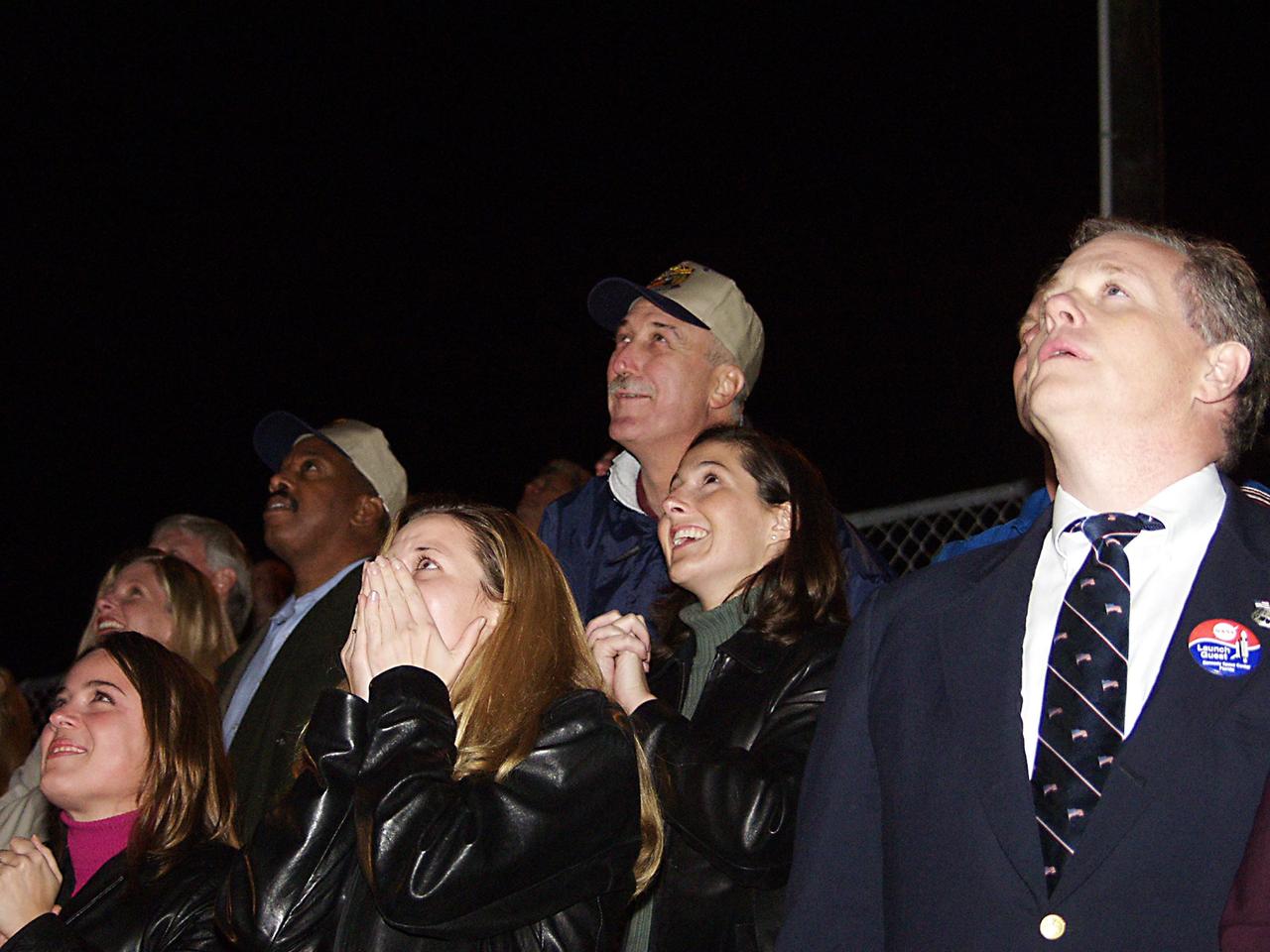
KENNEDY SPACE CENTER, FLA. - Among the visitors watching the launch of Space Shuttle Endeavour on mission STS-113 are NASA Administrator Sean O'Keefe (top, center) and Glen Mahone, associate administrator for public affairs, NASA (left of O'Keefe). Liftoff occurred ontime at 7:49:47 p.m. EST. The launch is the 19th for Endeavour, and the 112th flight in the Shuttle program. Mission STS-113 is the 16th assembly flight to the International Space Station, carrying another structure for the Station, the P1 integrated truss. Also onboard are the Expedition 6 crew, who will replace Expedition 5. Endeavour is scheduled to land at KSC after an 11-day journey.
![KENNEDY SPACE CENTER, FLA. -Space Shuttle Endeavour roars into the black sky on columns of fire as it lifts off Launch Pad 39A on mission STS-113. Liftoff occurred ontime at 7:49:47 p.m. EST. The launch is the 19th for Endeavour, and the 112th flight in the Shuttle program. Mission STS-113 is the 16th assembly flight to the International Space Station, carrying another structure for the Station, the P1 integrated truss. Also onboard are the Expedition 6 crew, who will replace Expedition 5. Endeavour is scheduled to land at KSC after an 11-day journey. [Photo by Scott Andrews]](https://images-assets.nasa.gov/image/KSC-02pd1812/KSC-02pd1812~medium.jpg)
KENNEDY SPACE CENTER, FLA. -Space Shuttle Endeavour roars into the black sky on columns of fire as it lifts off Launch Pad 39A on mission STS-113. Liftoff occurred ontime at 7:49:47 p.m. EST. The launch is the 19th for Endeavour, and the 112th flight in the Shuttle program. Mission STS-113 is the 16th assembly flight to the International Space Station, carrying another structure for the Station, the P1 integrated truss. Also onboard are the Expedition 6 crew, who will replace Expedition 5. Endeavour is scheduled to land at KSC after an 11-day journey. [Photo by Scott Andrews]
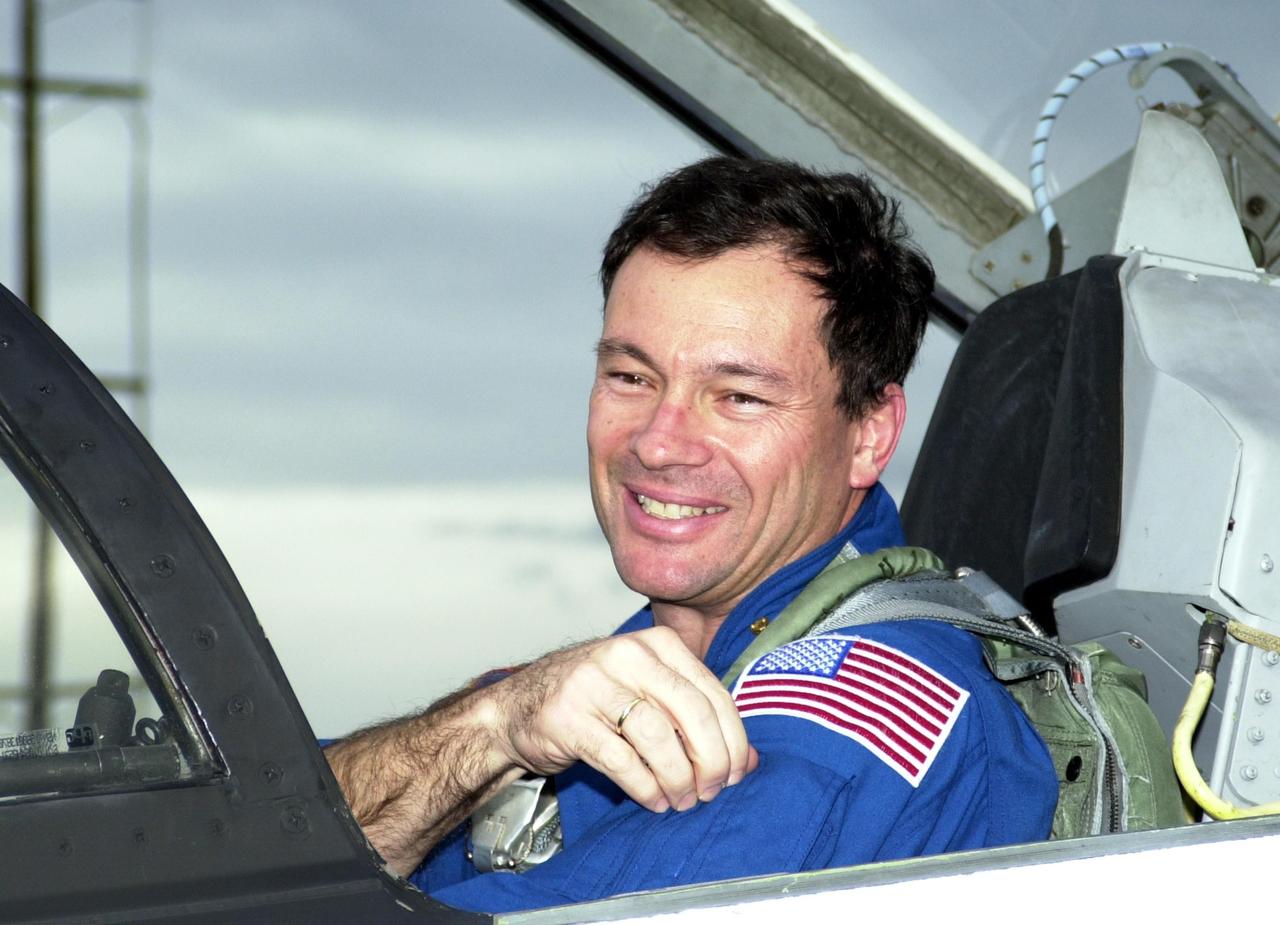
KENNEDY SPACE CENTER, FLA. -- STS-113 Mission Specialist Michael Lopez-Alegria arrives at KSC for Terminal Countdown Demonstration Test activities, which include a simulated launch countdown. The primary payloads on mission STS-113 are the first port truss segment, P1, and the Crew and Equipment Translation Aid (CETA) Cart B. Once delivered, the P1 truss will remain stowed until flight 12A.1 in 2003 when it will be attached to the central truss segment, S0, on the Space Station. Also onboard Space Shuttle Endeavour will be the Expedition 6 crew who will replace Expedition 5, returning to Earth after 4 months. The STS-113 launch is scheduled for Nov. 10, 2002.
![KENNEDY SPACE CENTER, FLA. -- Brilliant clouds of smoke and steam roll away from Launch Pad 39A as Space Shuttle Endeavour blazes into the black sky. Liftoff occurred ontime at 7:49:47 p.m. EST. The launch is the 19th for Endeavour, and the 112th flight in the Shuttle program. Mission STS-113 is the 16th assembly flight to the International Space Station, carrying another structure for the Station, the P1 integrated truss. Also onboard are the Expedition 6 crew, who will replace Expedition 5. Endeavour is scheduled to land at KSC after an 11-day journey. [Photo by Scott Andrews]](https://images-assets.nasa.gov/image/KSC-02pd1810/KSC-02pd1810~medium.jpg)
KENNEDY SPACE CENTER, FLA. -- Brilliant clouds of smoke and steam roll away from Launch Pad 39A as Space Shuttle Endeavour blazes into the black sky. Liftoff occurred ontime at 7:49:47 p.m. EST. The launch is the 19th for Endeavour, and the 112th flight in the Shuttle program. Mission STS-113 is the 16th assembly flight to the International Space Station, carrying another structure for the Station, the P1 integrated truss. Also onboard are the Expedition 6 crew, who will replace Expedition 5. Endeavour is scheduled to land at KSC after an 11-day journey. [Photo by Scott Andrews]

KENNEDY SPACE CENTER, FLA. - On Launch Pad 39A, a trainer (right) explains use of the slidewire basket, part of the emergency egress system, to Expedition 6 astronaut Donald Pettit (left) and STS-113 Mission Specialists Michael Lopez-Alegria (center) and John Herrington (right). . They are other crew members are taking part in Terminal Countdown Demonstration Test (TCDT) activities, which also include a simulated launch countdown. The 16th assembly flight to the International Space Station, STS-113 will carry the Port 1 (P1) truss aboard Space Shuttle Endeavour as well as the Expedition 6 crew, who will replace Expedition 5 on the Station. Mission STS-113 is scheduled to launch Nov. 10, 2002.
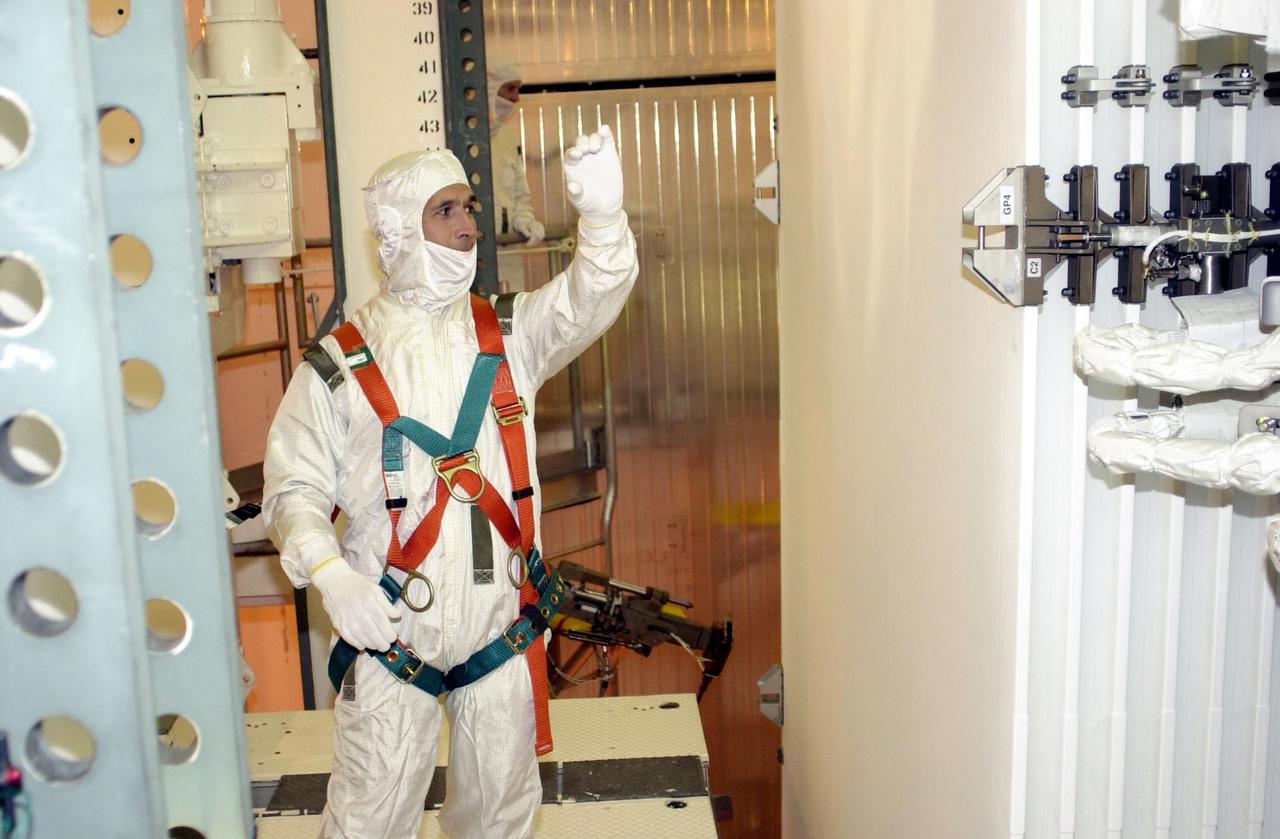
KENNEDY SPACE CENTER, FLA. - From a platform in Endeavour's payload bay, STS-113 Mission Specialist John Herrington looks over the payload for the mission. The 16th assembly flight to the International Space Station, STS-113 will carry the Port 1 (P1) truss aboard Space Shuttle Endeavour as well as the Expedition 6 crew, who will replace Expedition 5 on the Station. Mission STS-113 is scheduled to launch Nov. 10, 2002.
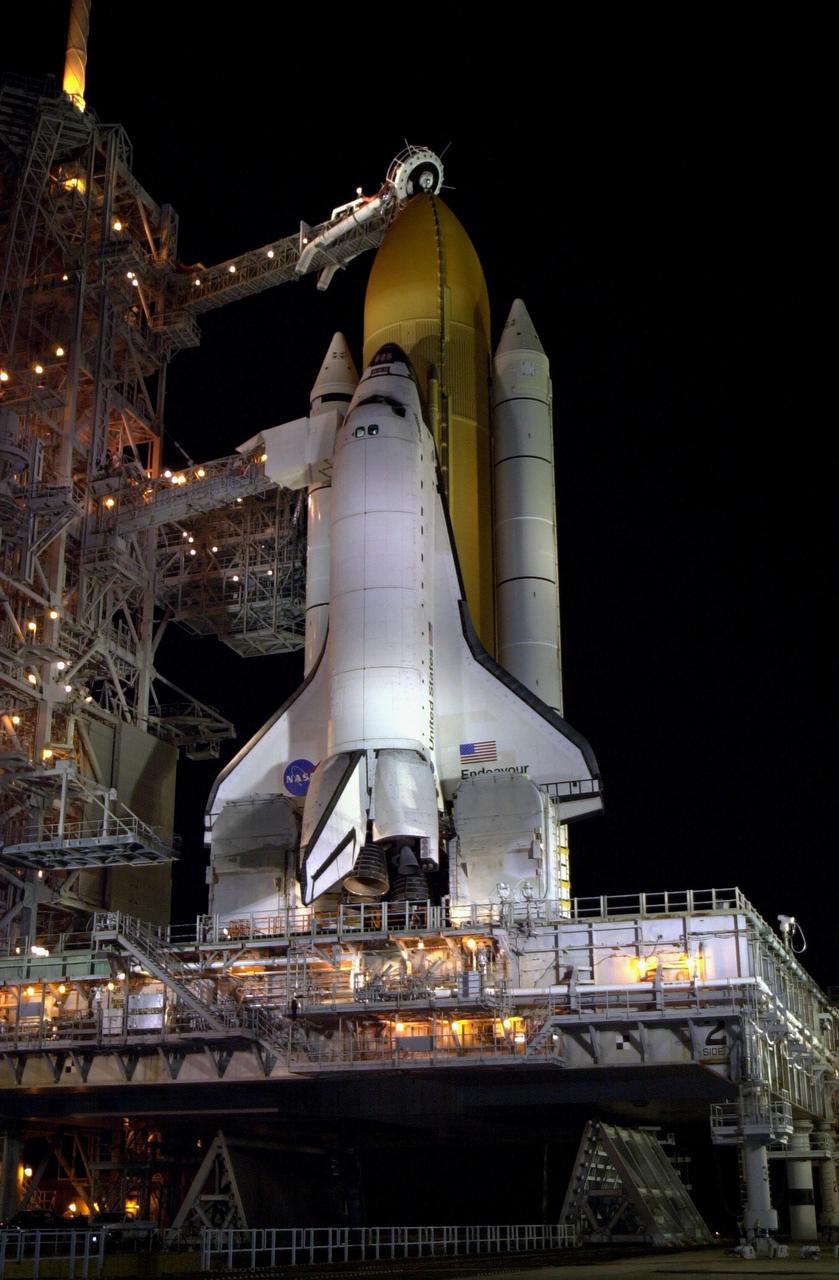
KENNEDY SPACE CENTER, FLA. -- With the Rotating Service Structure rolled back, Space Shuttle Endeavour stands ready for launch on mission STS-113. Above the golden external tank is the vent hood (known as the "beanie cap") at the end of the gaseous oxygen vent arm. Vapors are created as the liquid oxygen in the external tank boil off. The hood vents the gaseous oxygen vapors away from the Space Shuttle vehicle. The Orbiter Access Arm extends from the Fixed Service Structure (FSS) to the crew compartment hatch, through which the STS-113 crew will enter Endeavour. STS-113 is the 16th American assembly flight to the International Space Station. The primary mission is bringing the Expedition 6 crew to the Station and returning the Expedition 5 crew to Earth. The major objective of the mission is delivery of the Port 1 (P1) Integrated Truss Assembly, which will be attached to the port side of the S0 truss. Three spacewalks are planned to install and activate the truss and its associated equipment. Launch of Space Shuttle Endeavour on mission STS-113 is scheduled for Nov. 11 at 12:58 a.m. EST.
KENNEDY SPACE CENTER, FLA. -- STS-113 Commander James Wetherbee finishes suiting up before leaving for Launch Pad 39A. Wetherbee will be making his sixth Shuttle flight. The primary mission for the crew is bringing the Expedition 6 crew to the Station and returning the Expedition 5 crew to Earth. The major objective of the mission is delivery of the Port 1 (P1) Integrated Truss Assembly, which will be attached to the port side of the S0 truss. Three spacewalks are planned to install and activate the truss and its associated equipment. Launch of Space Shuttle Endeavour on mission STS-113 is scheduled for 8:15 p.m. EST.
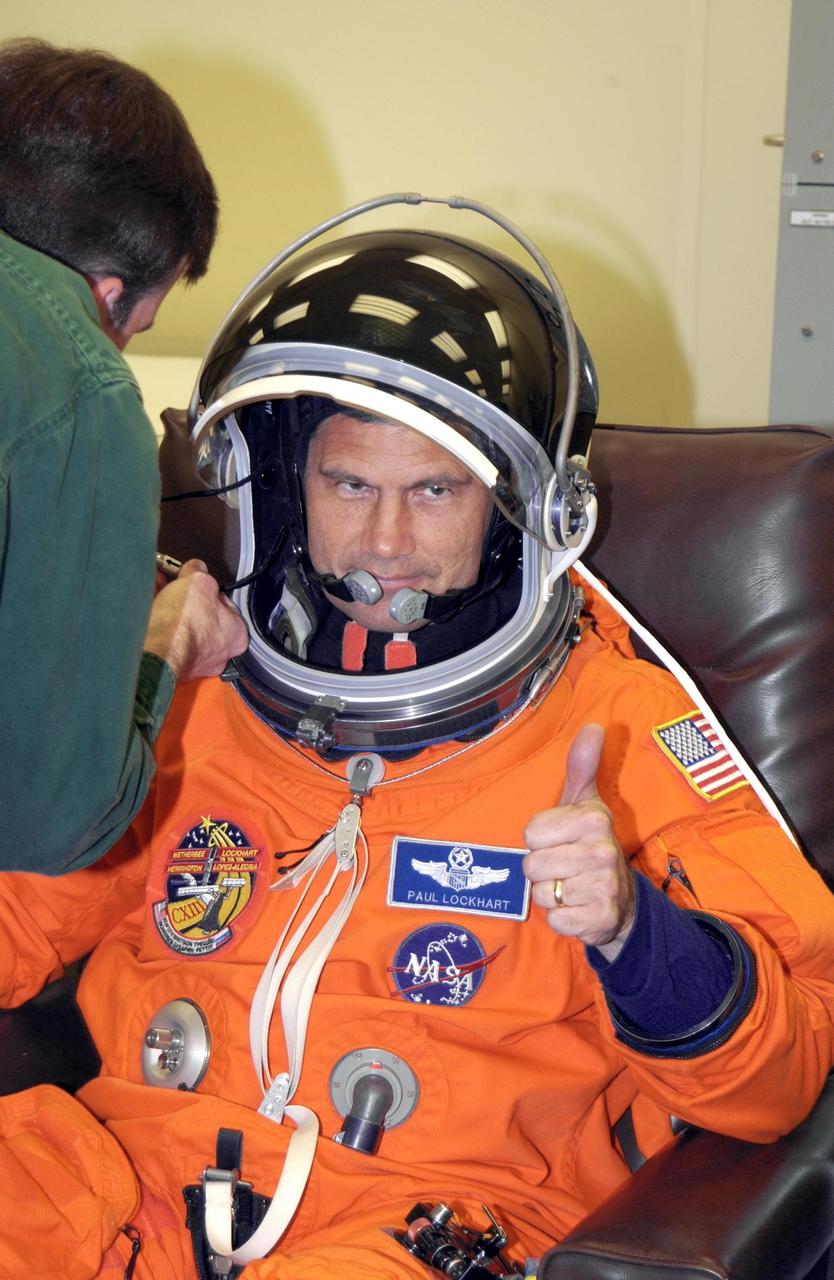
KENNEDY SPACE CENTER, FLA. -- STS-113 Pilot Paul Lockhart shows thumbs up for launch as he finishes suiting up. Lockhart will be making his second Shuttle flight. The primary mission for the crew is bringing the Expedition 6 crew to the Station and returning the Expedition 5 crew to Earth. The major objective of the mission is delivery of the Port 1 (P1) Integrated Truss Assembly, which will be attached to the port side of the S0 truss. Three spacewalks are planned to install and activate the truss and its associated equipment. Launch of Space Shuttle Endeavour on mission STS-113 is scheduled for 8:15 p.m. EST.
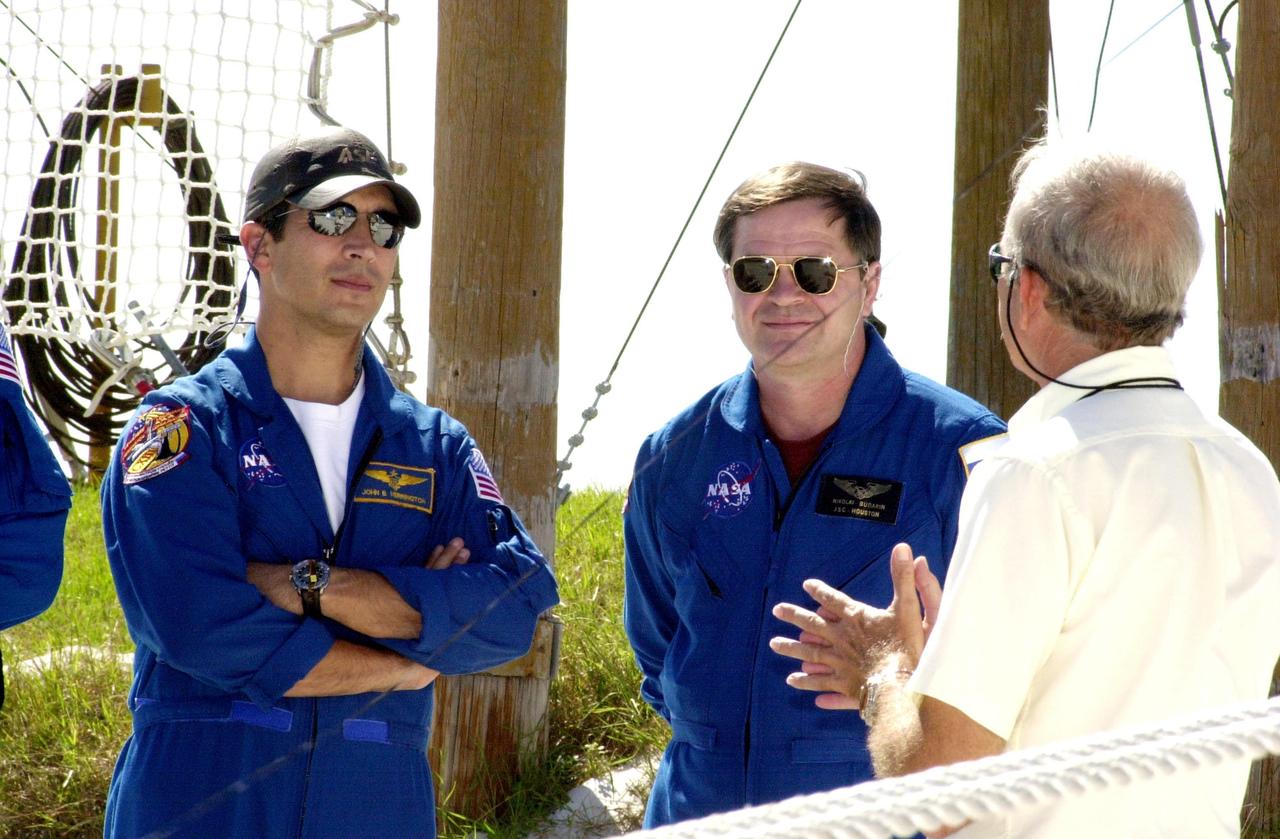
KENNEDY SPACE CENTER, FLA. - STS-113 Mission Specialist John Herrington (left) and cosmonaut Nikolai Budarin (center) listen to instructions from a trainer on the emergency egress system on Launch Pad 39A. They are other crew members are taking part in Terminal Countdown Demonstration Test (TCDT) activities, which also include a simulated launch countdown. The 16th assembly flight to the International Space Station, STS-113 will carry the Port 1 (P1) truss aboard Space Shuttle Endeavour as well as the Expedition 6 crew, who will replace Expedition 5 on the Station. Mission STS-113 is scheduled to launch Nov. 10, 2002.
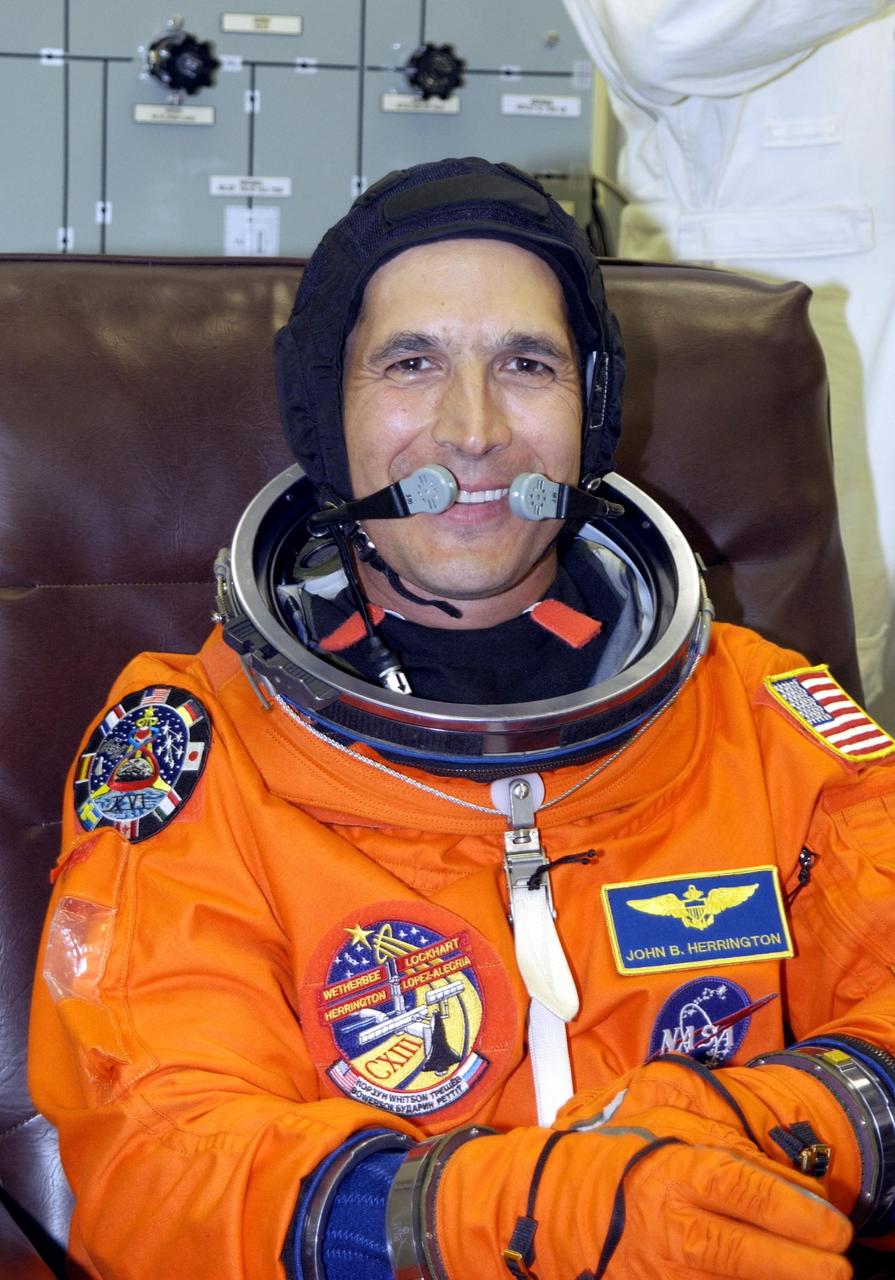
KENNEDY SPACE CENTER, FLA. -- STS-113 Mission Specialist John Herrington suits up for launch. Herrington will be making his first Shuttle flight. This is also the first launch of the first tribally enrolled Native American astronaut -- John B. Herrington -- on Space Transportation System. The primary mission for the crew is bringing the Expedition 6 crew to the Station and returning the Expedition 5 crew to Earth. The major objective of the mission is delivery of the Port 1 (P1) Integrated Truss Assembly, which will be attached to the port side of the S0 truss. Three spacewalks are planned to install and activate the truss and its associated equipment. Launch of Space Shuttle Endeavour on mission STS-113 is scheduled for 8:15 p.m. EST.
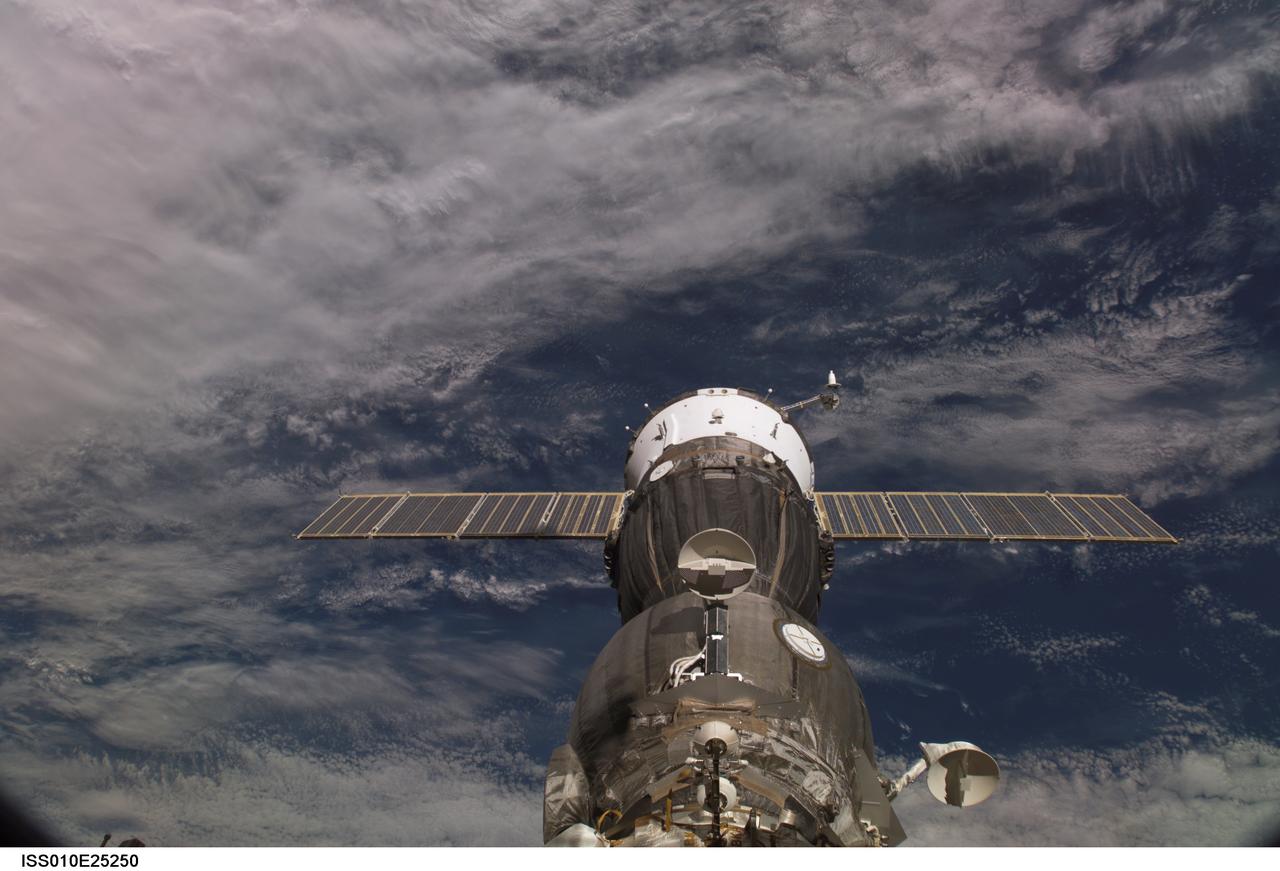
ISS010-E-25250 (18 April 2005) --- A blanket of clouds provides the backdrop for this scene of the Soyuz TMA-6 spacecraft, docked to the Pirs Docking Compartment on the International Space Station (ISS). The scene was photographed by an Expedition 10 crewmember.
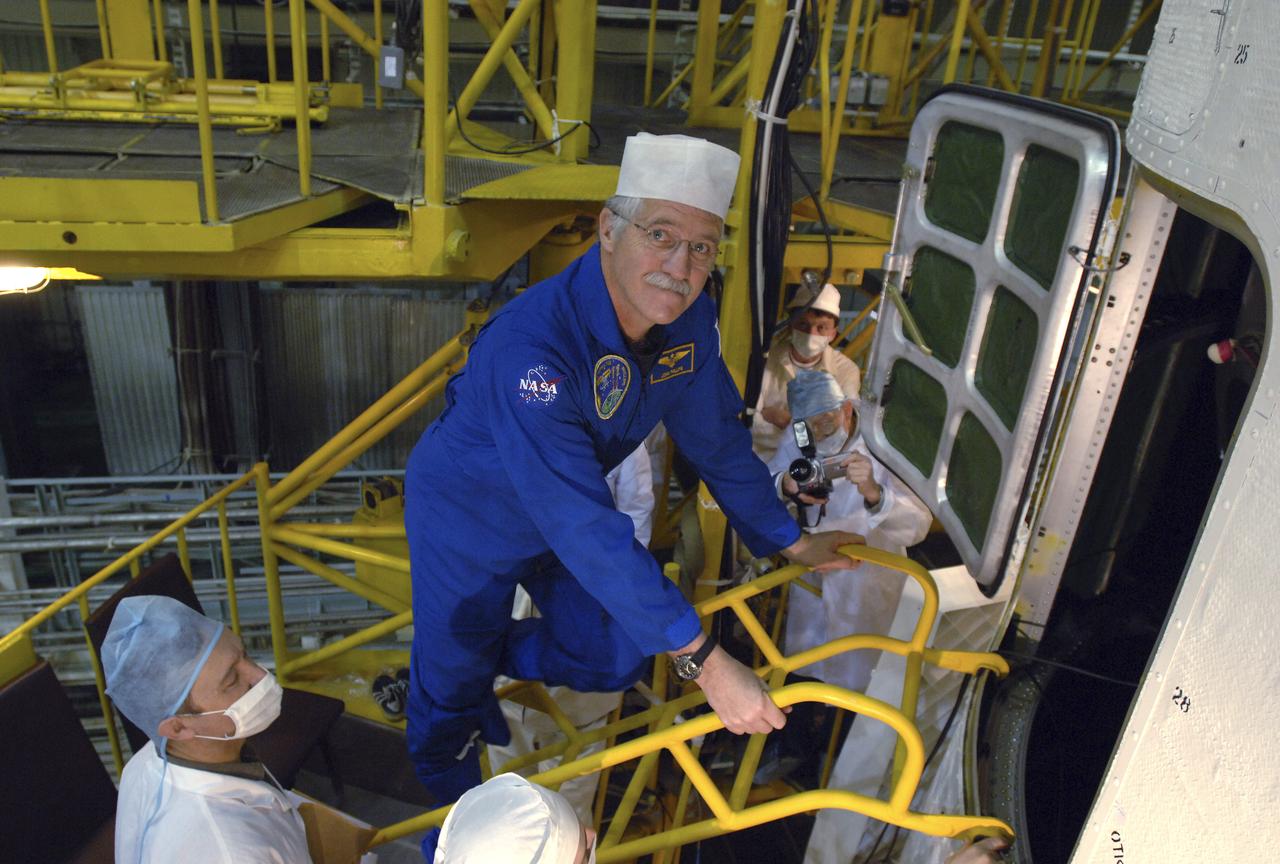
Expedition 11 Flight Engineer John Phillips enters the Soyuz TMA-6 spacecraft at the Baikonur Cosmodrome in Baikonur, Kazakhstan, Sunday, April 10, 2005, during preparations for launch to the International Space Station. Phillips along with Commander Sergei Krikalev and European Space Agency astronaut Roberto Vittori will launch April 15 on the spacecraft to the International Space Station. Krikalev and Phillips will spend six months in space and greet the first Shuttle crew to fly in more than two years when it arrives at the station, while Vittori spends eight days on the station under a commercial contract between ESA and the Russian Federal Space Agency. Photo Credit: (NASA/Bill Ingalls)
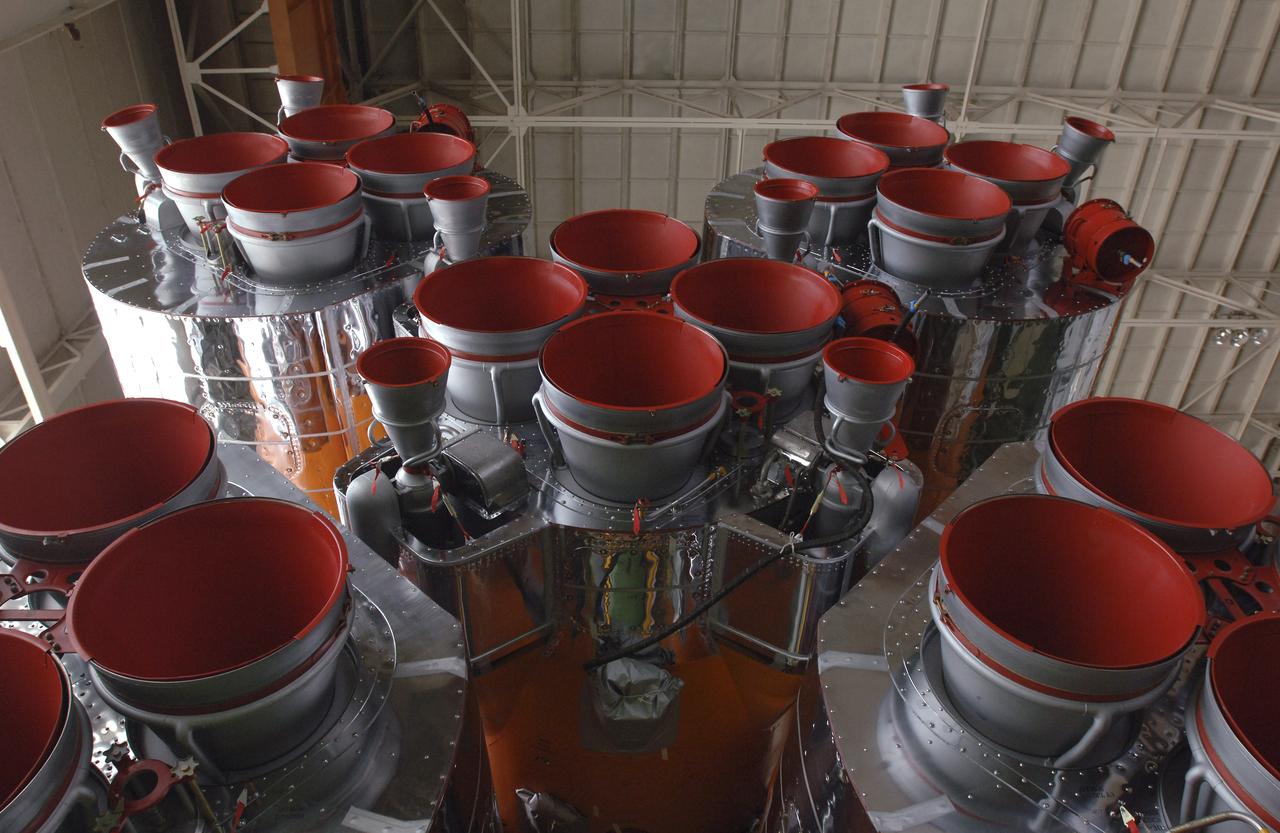
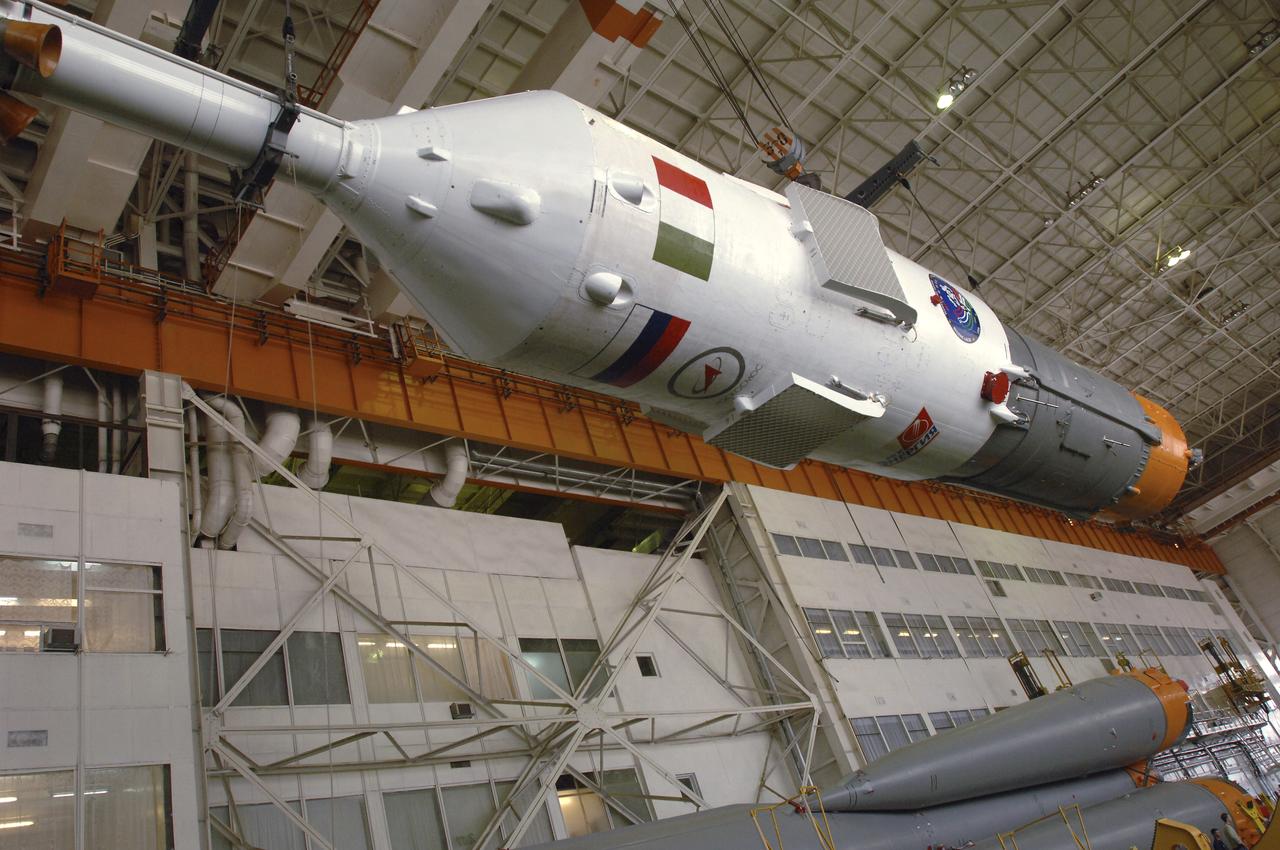
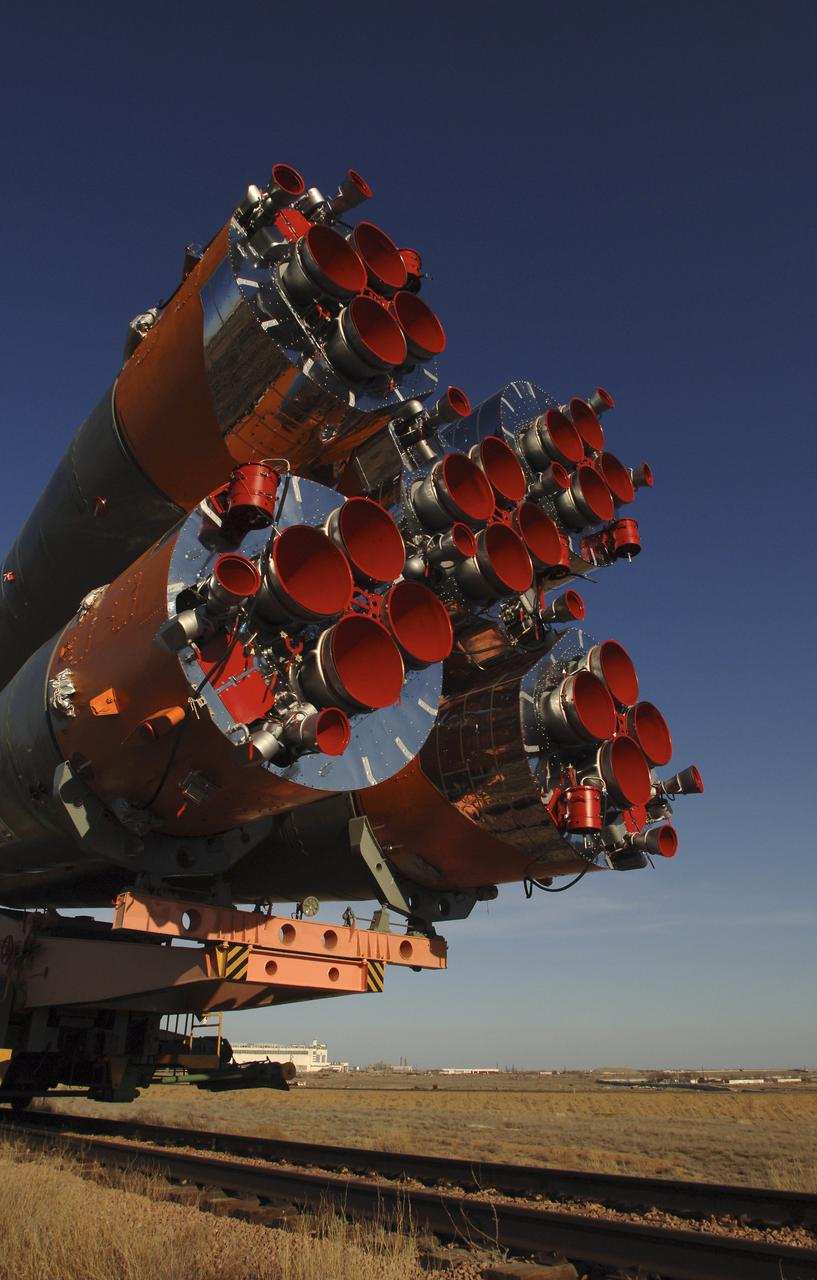
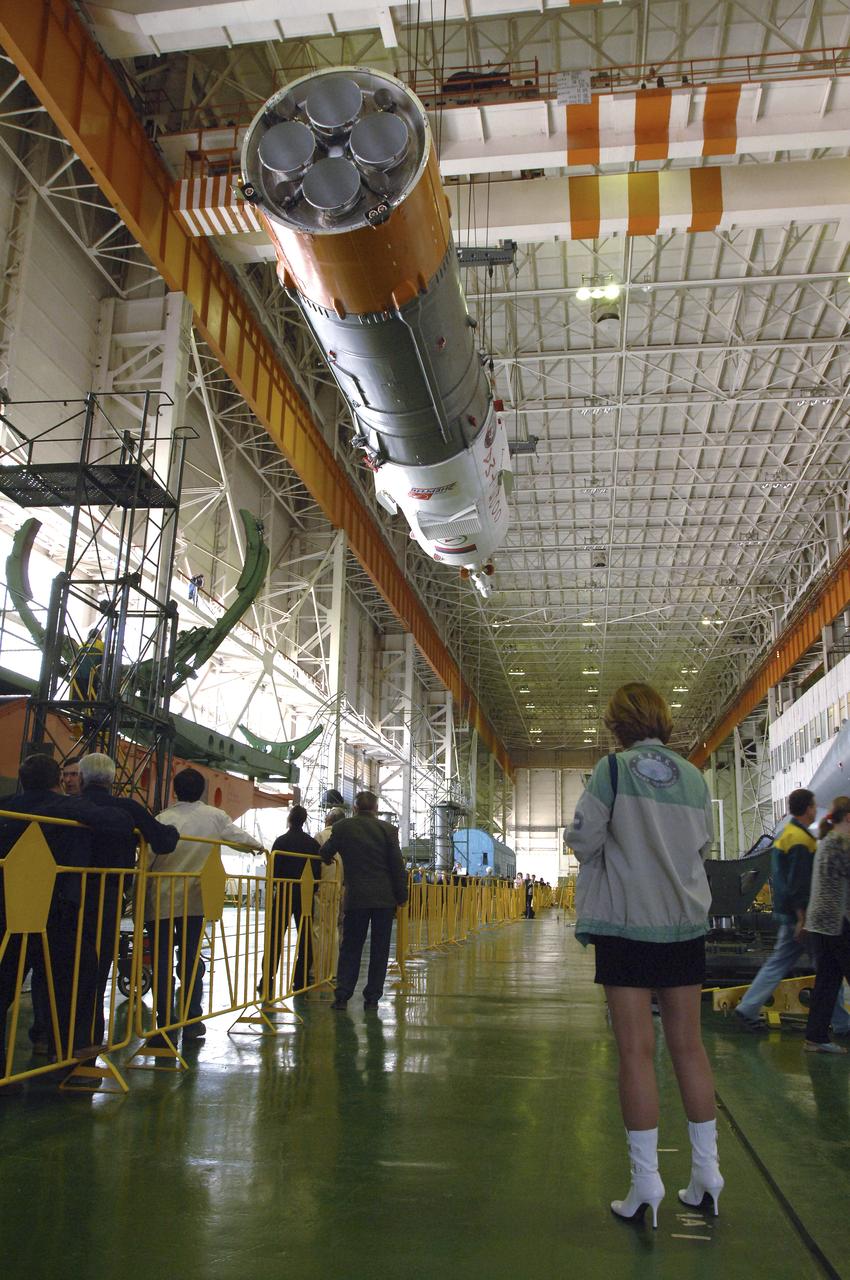
The engines for the Soyuz TMA-6 spacecraft are seen, Tuesday, April 12, 2005, inside the integration facility at the Baikonur Cosmodrome in Kazakhstan as preparations continued for the April 15 launch of Expedition 11 with Commander Sergei Krikalev, Flight Engineer John Phillips and European Space Agency Astronaut Roberto Vittori, of Italy, to the International Space Station. The rocket mating operation occurred on the 44th anniversary of the launch of Yuri Gagarin from the same complex to become the first human in space. Photo Credit: (NASA/Bill Ingalls)
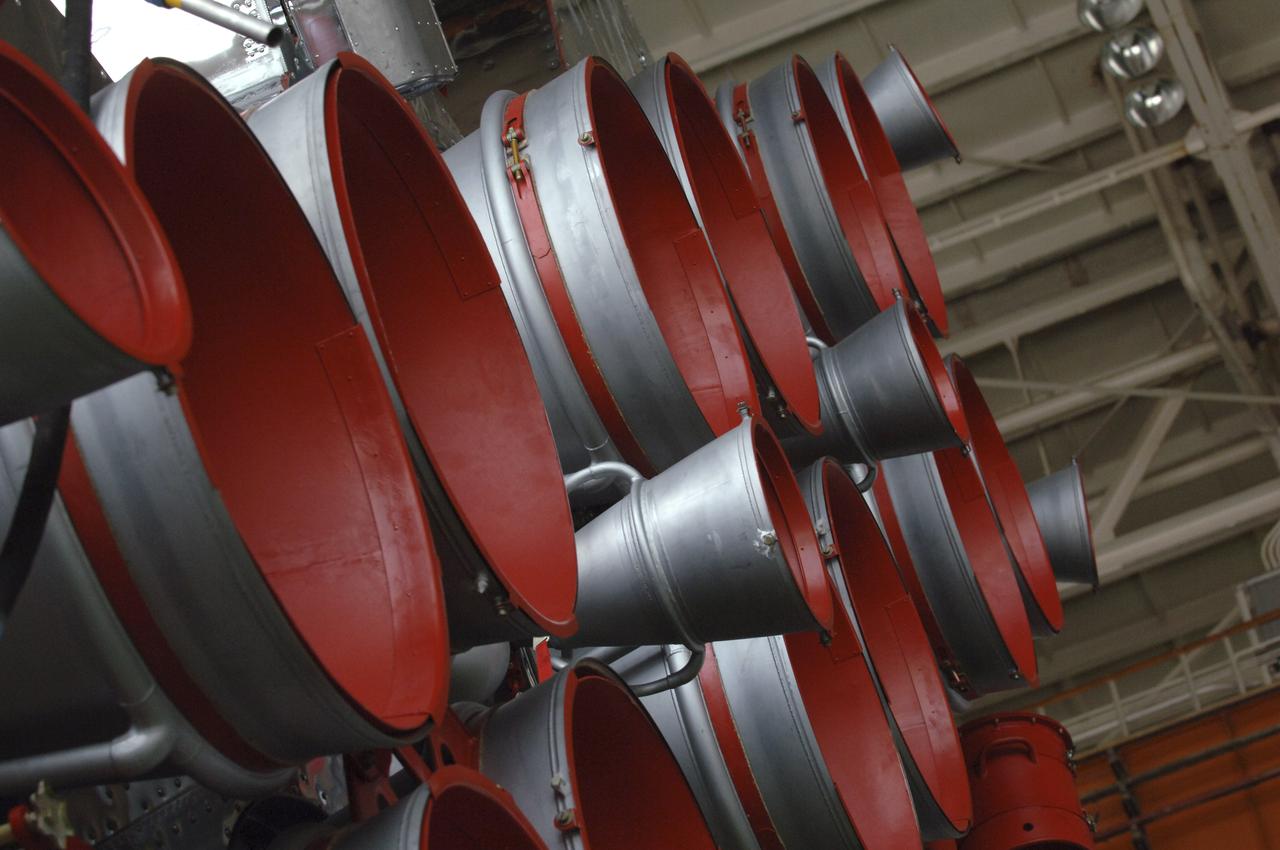
The engines of the Soyuz TMA-6 spacecraft are seen, Tuesday, April 12, 2005, inside the integration facility at the Baikonur Cosmodrome in Kazakhstan as preparations continued for the April 15 launch of Expedition 11 with Commander Sergei Krikalev, Flight Engineer John Phillips and European Space Agency Astronaut Roberto Vittori, of Italy, to the International Space Station. The rocket mating operation occurred on the 44th anniversary of the launch of Yuri Gagarin from the same complex to become the first human in space. Photo Credit: (NASA/Bill Ingalls)
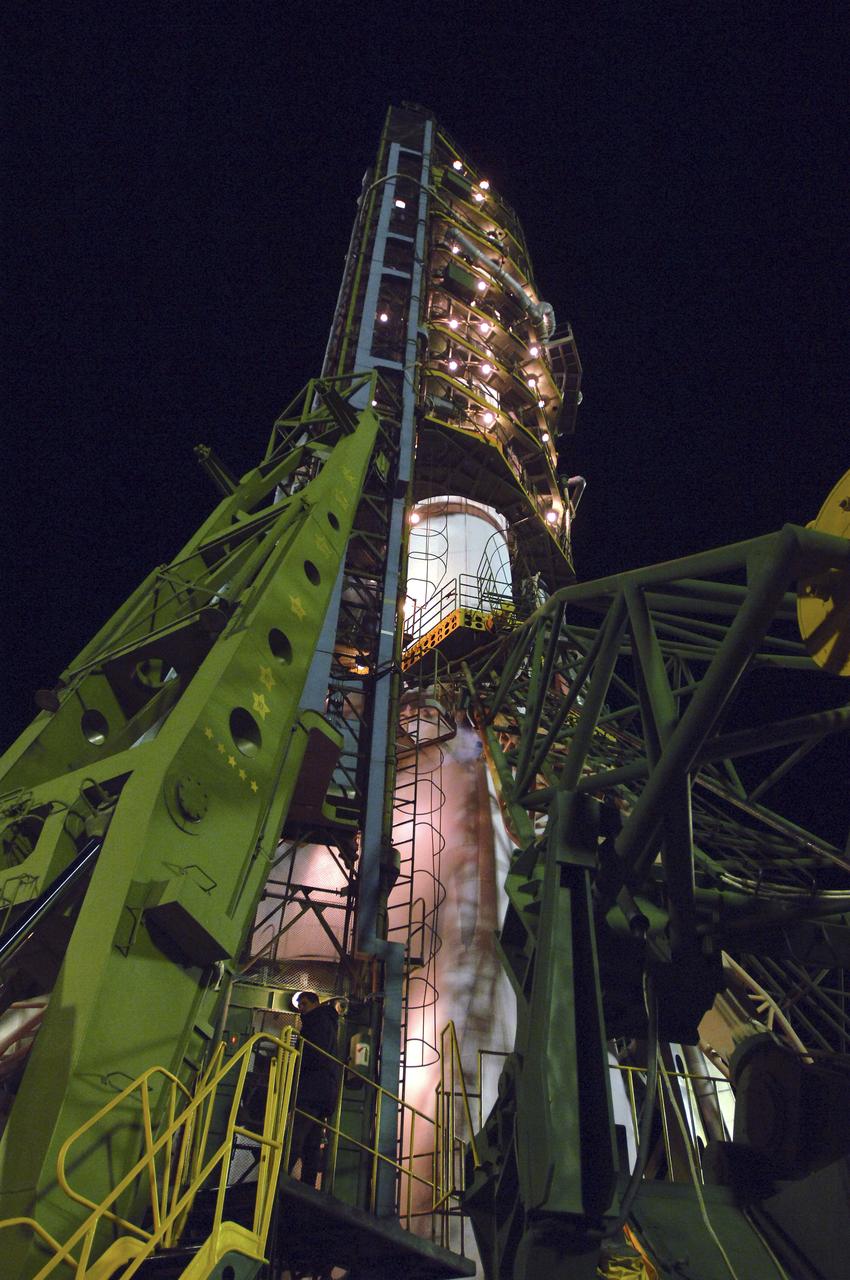
Expedition 11 Commander Sergei Krikalev, Flight Engineer and NASA Science Officer John Phillips and European Space Agency astronaut Roberto Vittori of Italy ride the elevator to the top of the Soyuz TMA-6 rocket, Friday, April 15, 2005 at the Baikonur Cosmodrome in Kazakhstan. Photo Credit: (NASA/Bill Ingalls)
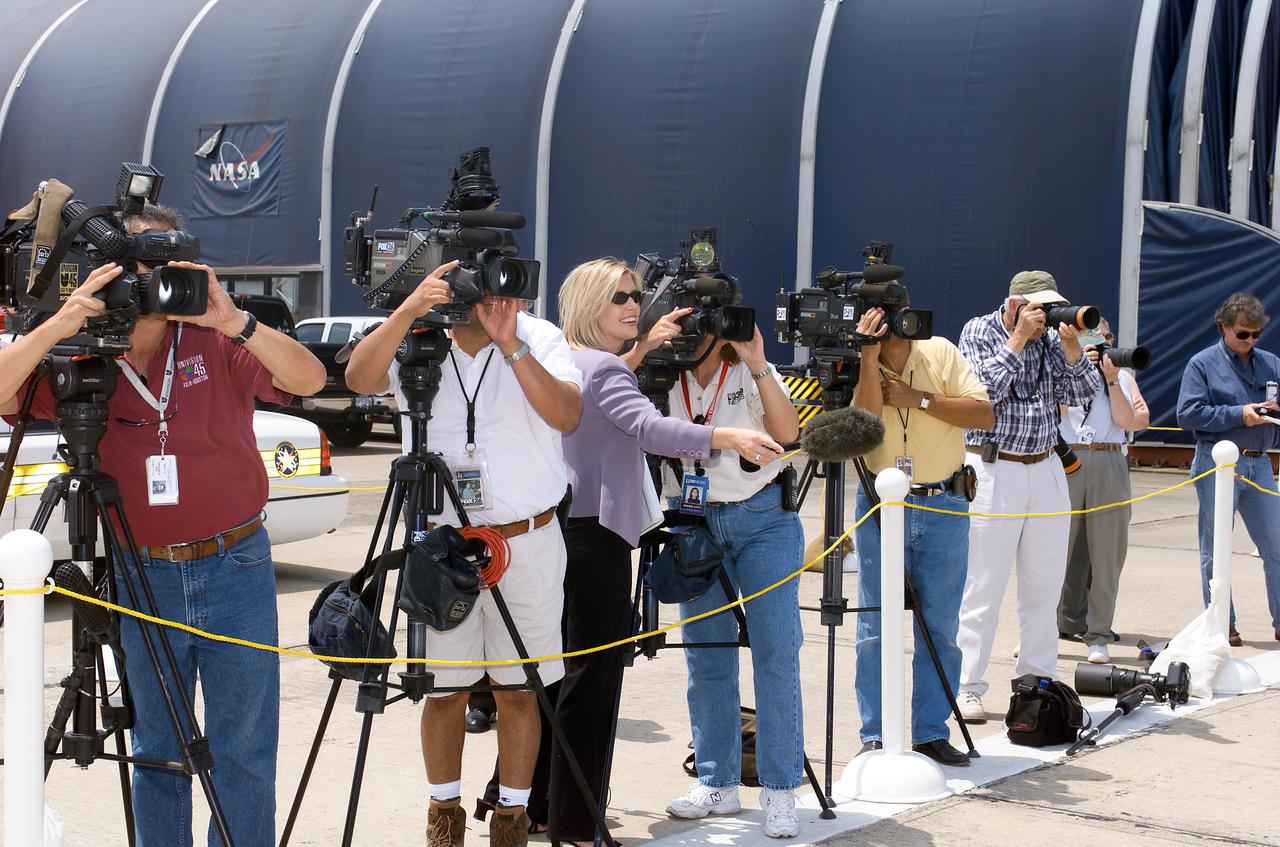
JSC2003-E-37465 (21 May 2003) --- Members of the media are pictured while they watch the arrival of the Expedition 6 crewmembers in a Gulfstream IV aircraft at Ellington Field, near Johnson Space Center (JSC).
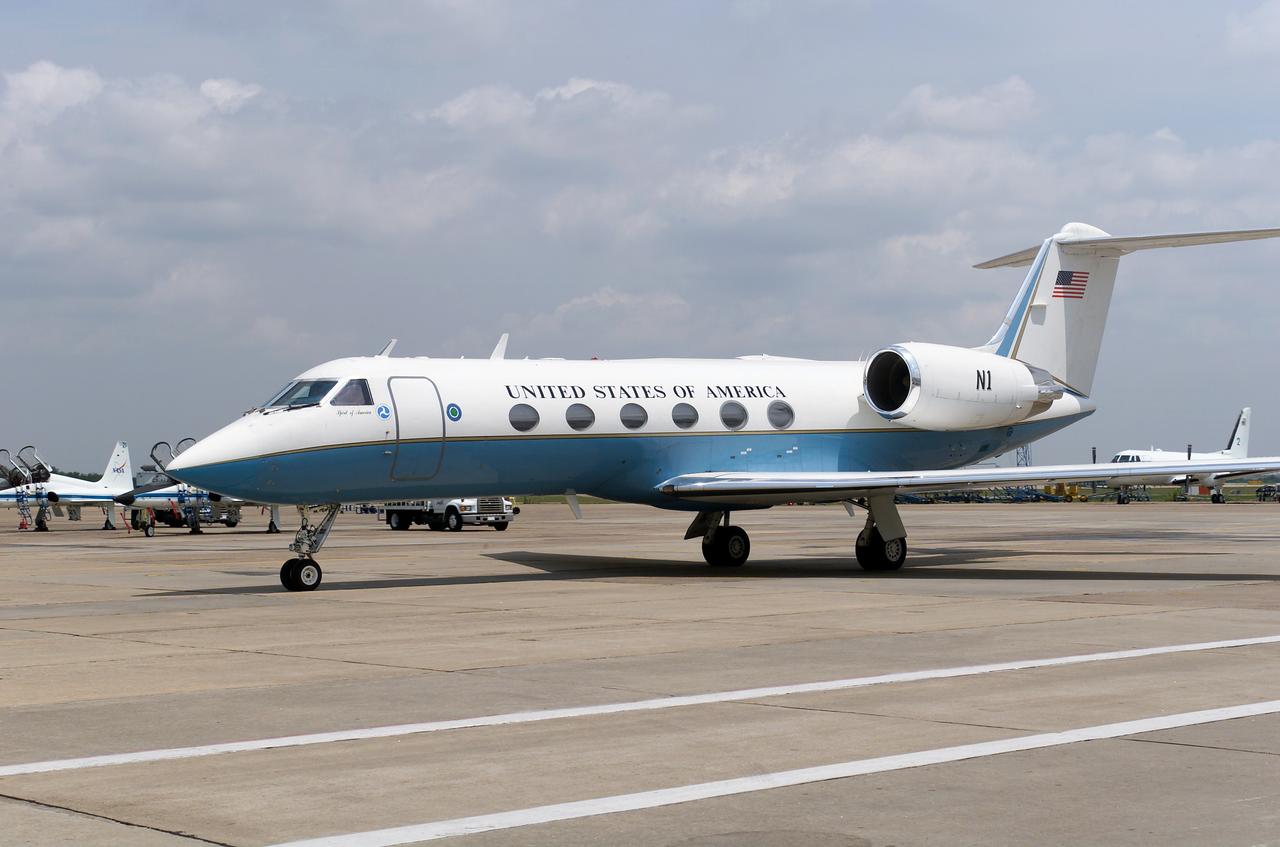
JSC2003-E-37449 (21 May 2003) --- A Federal Aviation Administration Gulfstream IV aircraft, which carried the Expedition 6 crewmembers, is pictured at Ellington Field, near Johnson Space Center (JSC).
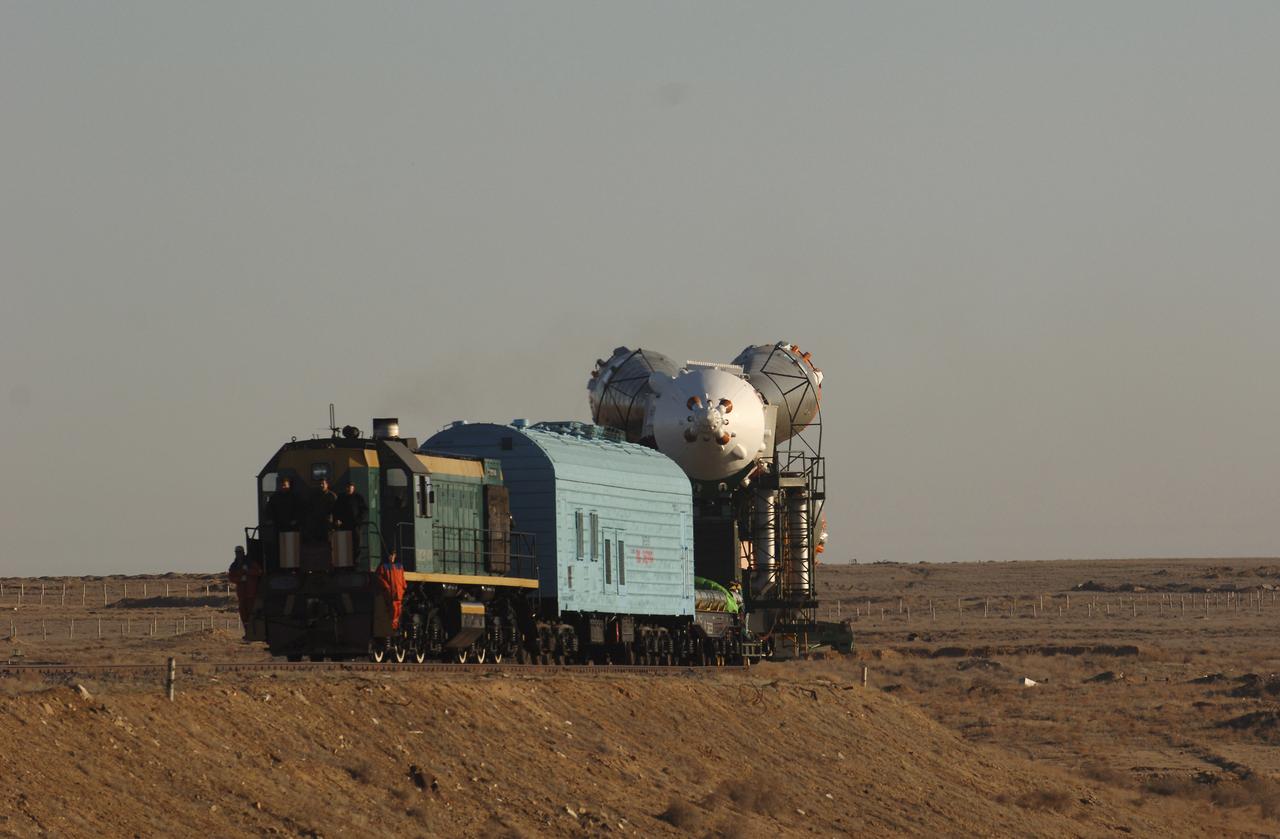
The Soyuz TMA-6 vehicle is transported by train to the launch pad at the Baikonur Cosmodrome in Kazakhstan, Wednesday, April 13, 2005, as preparations continued for the April 15 launch to send Expedition 11 Commander Sergei Krikalev, Flight Engineer John Phillips and European Space Agency Astronaut Roberto Vittori, of Italy, to the International Space Station. Krikalev and Phillips will spend six months in space and greet the first Shuttle crew to fly in more than two years when it arrives at the station, while Vittori spends eight days on the station under a commercial contract between ESA and the Russian Federal Space Agency. Photo Credit: (NASA/Bill Ingalls)
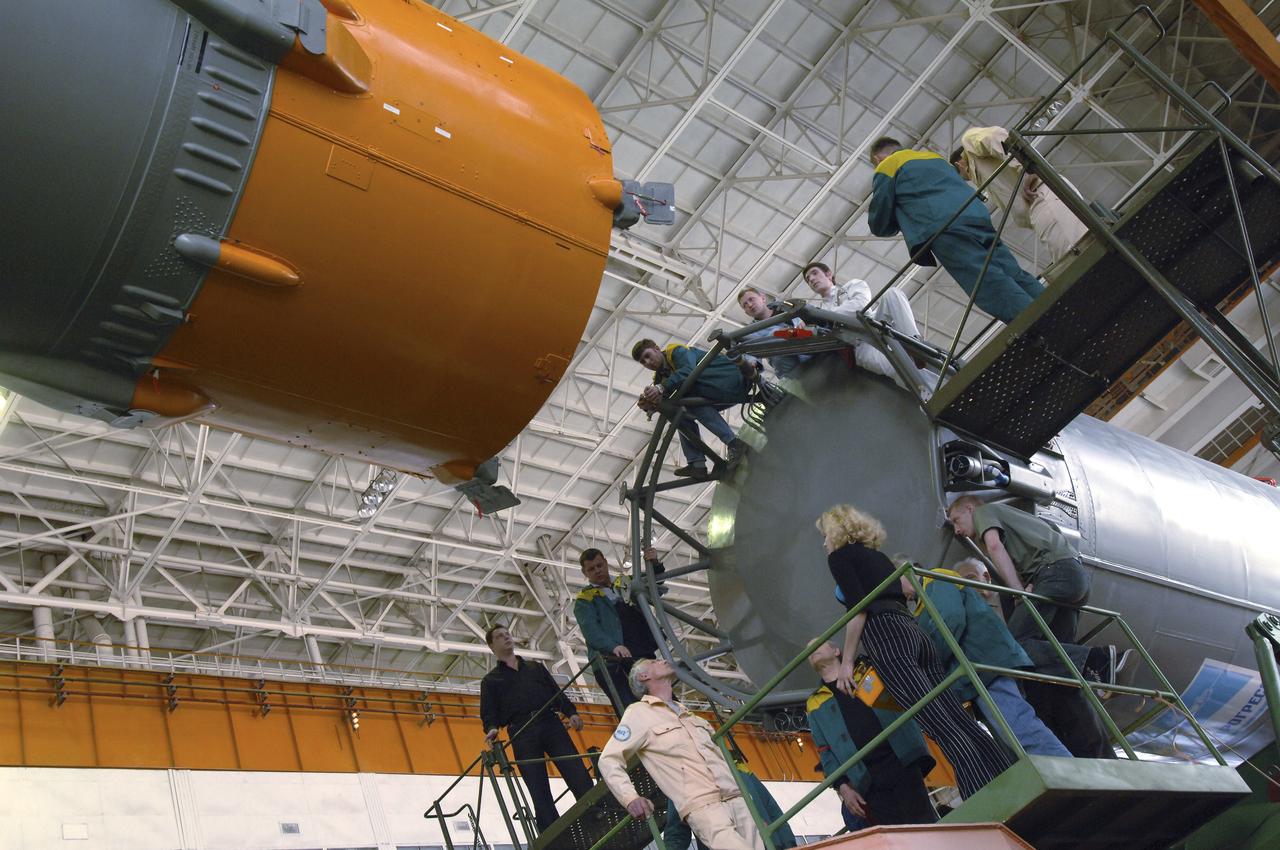
Russian technicians work, Tuesday, April 12, 2005, on mating the Soyuz TMA-6 spacecraft to the booster rocket inside the integration facility at the Baikonur Cosmodrome in Kazakhstan as preparations continued for the April 15 launch of Expedition 11 with Commander Sergei Krikalev, Flight Engineer John Phillips and European Space Agency Astronaut Roberto Vittori, of Italy, to the International Space Station. The rocket mating operation occurred on the 44th anniversary of the launch of Yuri Gagarin from the same complex to become the first human in space. Photo Credit: (NASA/Bill Ingalls)
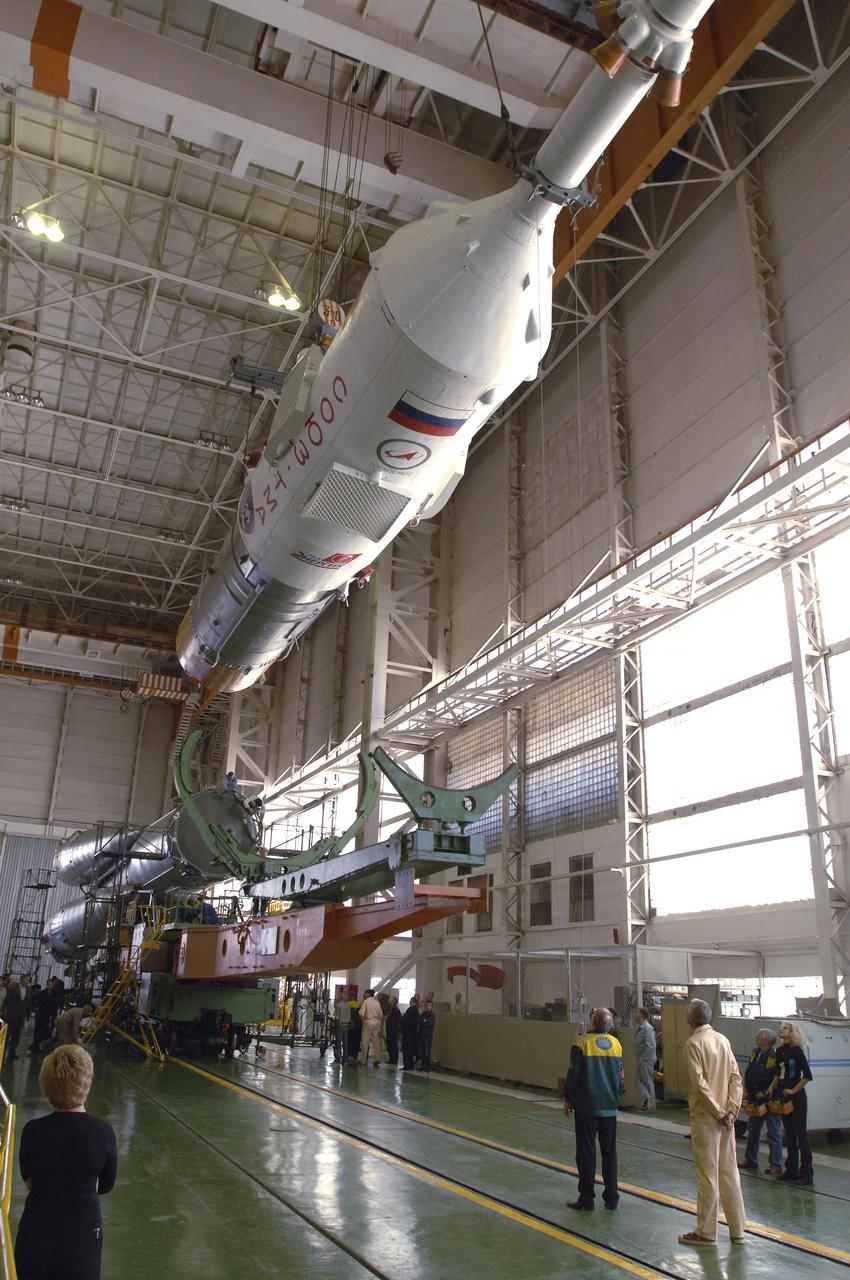
Russian technicians work, Tuesday, April 12, 2005, on mating the Soyuz TMA-6 spacecraft to the booster rocket inside the integration facility at the Baikonur Cosmodrome in Kazakhstan as preparations continued for the April 15 launch of Expedition 11 with Commander Sergei Krikalev, Flight Engineer John Phillips and European Space Agency Astronaut Roberto Vittori, of Italy, to the International Space Station. The rocket mating operation occurred on the 44th anniversary of the launch of Yuri Gagarin from the same complex to become the first human in space. Photo Credit: (NASA/Bill Ingalls)
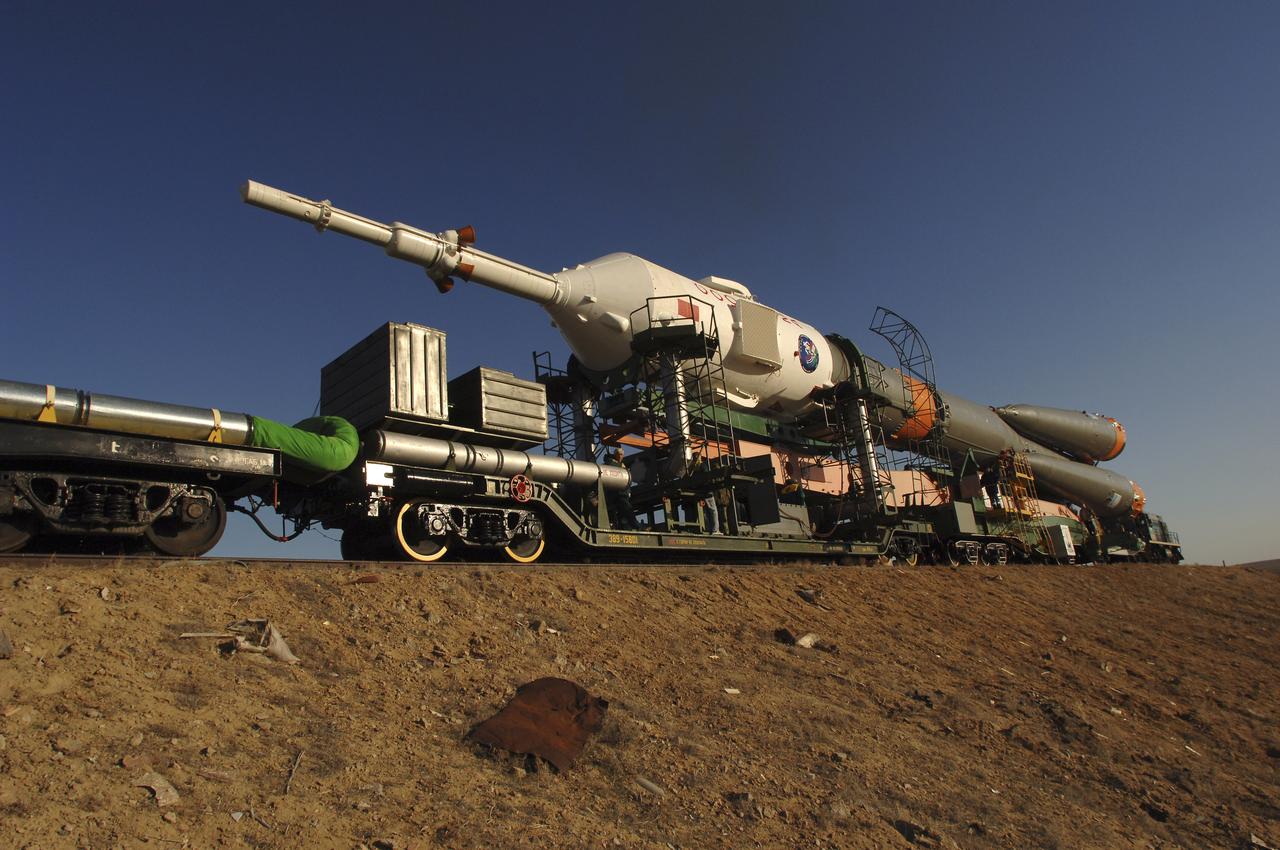
The Soyuz TMA-6 vehicle is transported by train to the launch pad at the Baikonur Cosmodrome in Kazakhstan, Wednesday, April 13, 2005, as preparations continued for the April 15 launch to send Expedition 11 Commander Sergei Krikalev, Flight Engineer John Phillips and European Space Agency Astronaut Roberto Vittori, of Italy, to the International Space Station. Krikalev and Phillips will spend six months in space and greet the first Shuttle crew to fly in more than two years when it arrives at the station, while Vittori spends eight days on the station under a commercial contract between ESA and the Russian Federal Space Agency. Photo Credit: (NASA/Bill Ingalls)
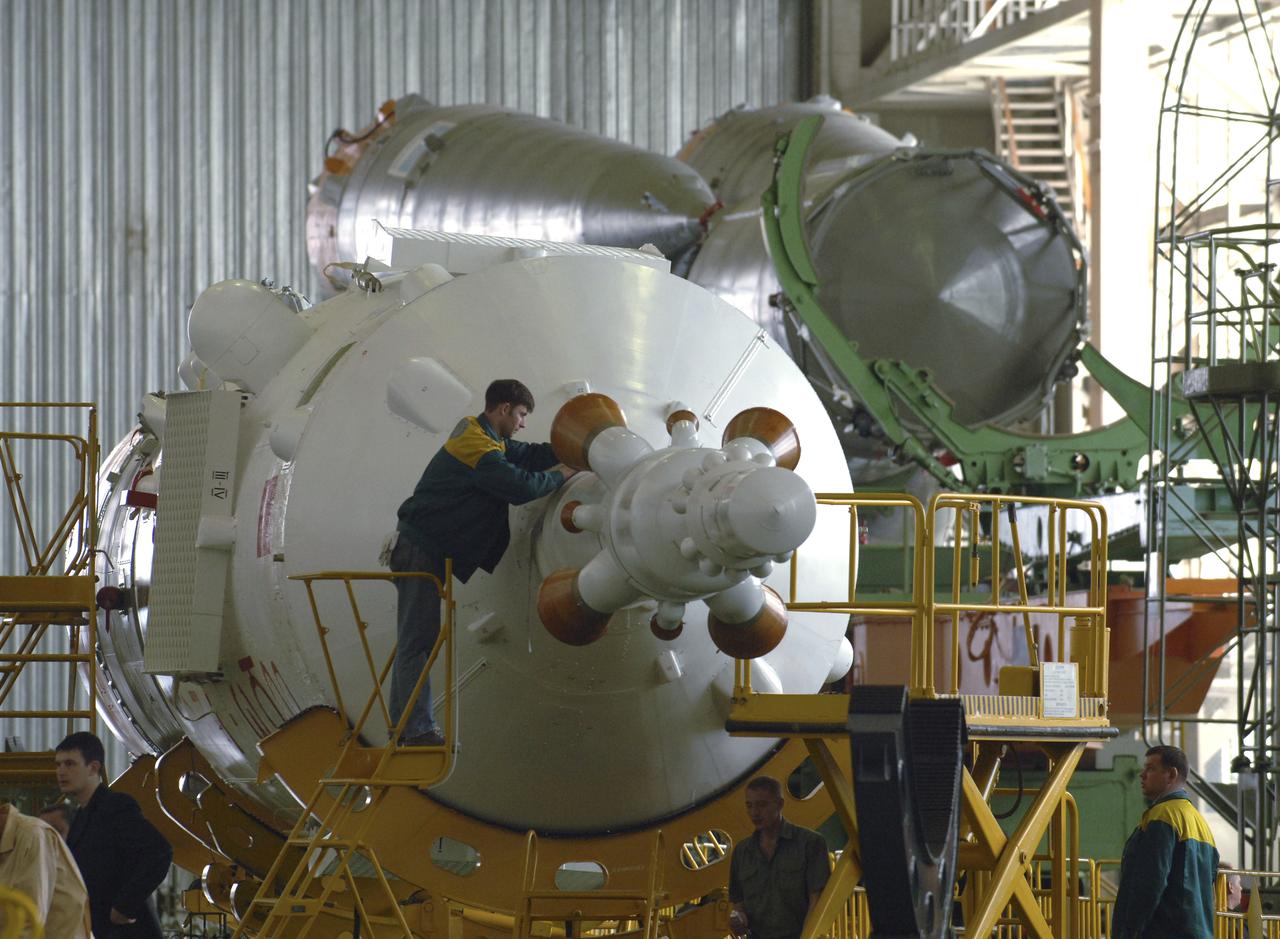
Russian technicians work, Tuesday, April 12, 2005, on mating the Soyuz TMA-6 spacecraft to the booster rocket inside the integration facility at the Baikonur Cosmodrome in Kazakhstan as preparations continued for the April 15 launch of Expedition 11 with Commander Sergei Krikalev, Flight Engineer John Phillips and European Space Agency Astronaut Roberto Vittori, of Italy, to the International Space Station. The rocket mating operation occurred on the 44th anniversary of the launch of Yuri Gagarin from the same complex to become the first human in space. Photo Credit: (NASA/Bill Ingalls)
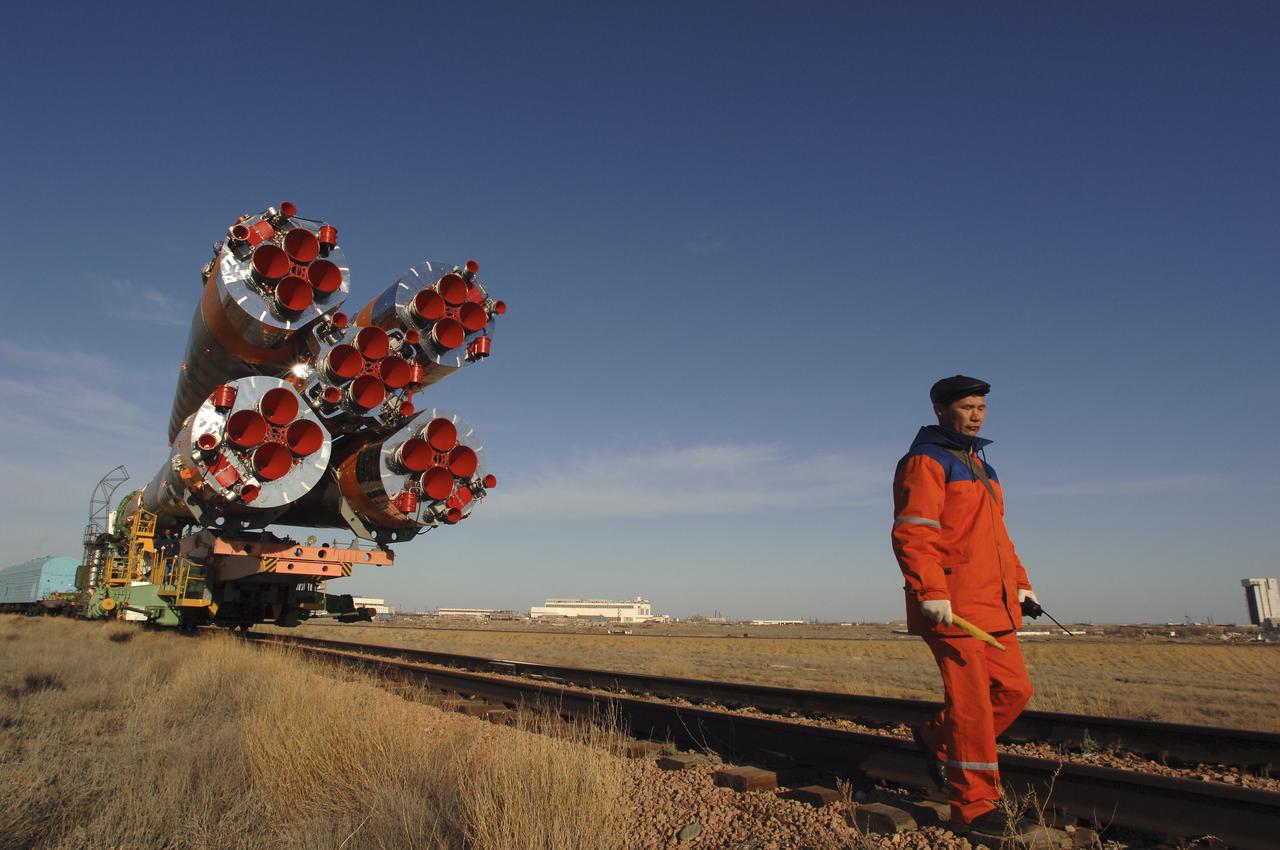
The Soyuz TMA-6 vehicle is transported by train to the launch pad at the Baikonur Cosmodrome in Kazakhstan, Wednesday, April 13, 2005, as preparations continued for the April 15 launch to send Expedition 11 Commander Sergei Krikalev, Flight Engineer John Phillips and European Space Agency Astronaut Roberto Vittori, of Italy, to the International Space Station. Krikalev and Phillips will spend six months in space and greet the first Shuttle crew to fly in more than two years when it arrives at the station, while Vittori spends eight days on the station under a commercial contract between ESA and the Russian Federal Space Agency. Photo Credit: (NASA/Bill Ingalls)
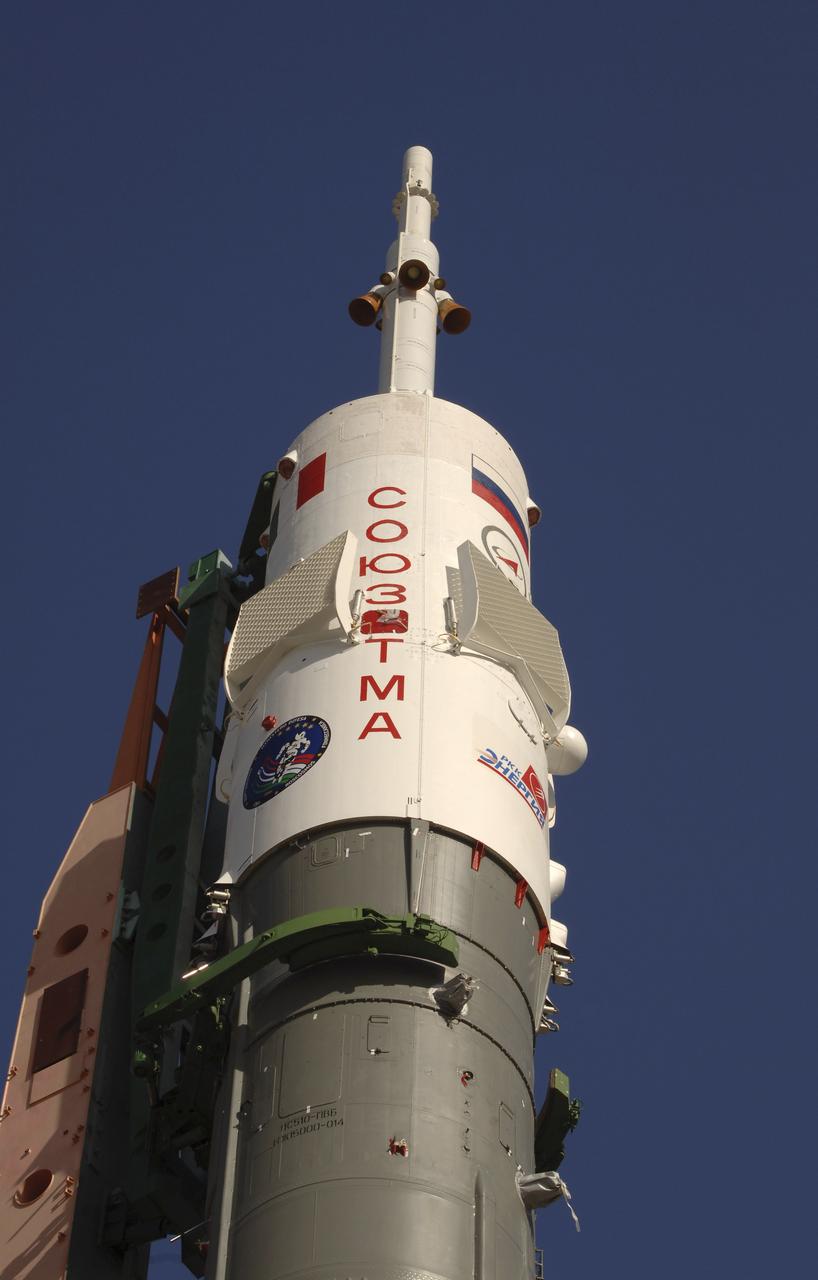
The Soyuz TMA-6 spacecraft is seen on the launch pad at the Baikonur Cosmodrome in Kazakhstan, Wednesday, April 13, 2005, as preparations continued for the April 15 launch to send Expedition 11 Commander Sergei Krikalev, Flight Engineer John Phillips and European Space Agency Astronaut Roberto Vittori, of Italy, to the International Space Station. Krikalev and Phillips will spend six months in space and greet the first Shuttle crew to fly in more than two years when it arrives at the station, while Vittori spends eight days on the station under a commercial contract between ESA and the Russian Federal Space Agency. Photo Credit: (NASA/Bill Ingalls)
Russian technicians work, Tuesday, April 12, 2005, on mating the Soyuz TMA-6 spacecraft to the booster rocket inside the integration facility at the Baikonur Cosmodrome in Kazakhstan as preparations continued for the April 15 launch of Expedition 11 with Commander Sergei Krikalev, Flight Engineer John Phillips and European Space Agency Astronaut Roberto Vittori, of Italy, to the International Space Station. The rocket mating operation occurred on the 44th anniversary of the launch of Yuri Gagarin from the same complex to become the first human in space. Photo Credit: (NASA/Bill Ingalls)
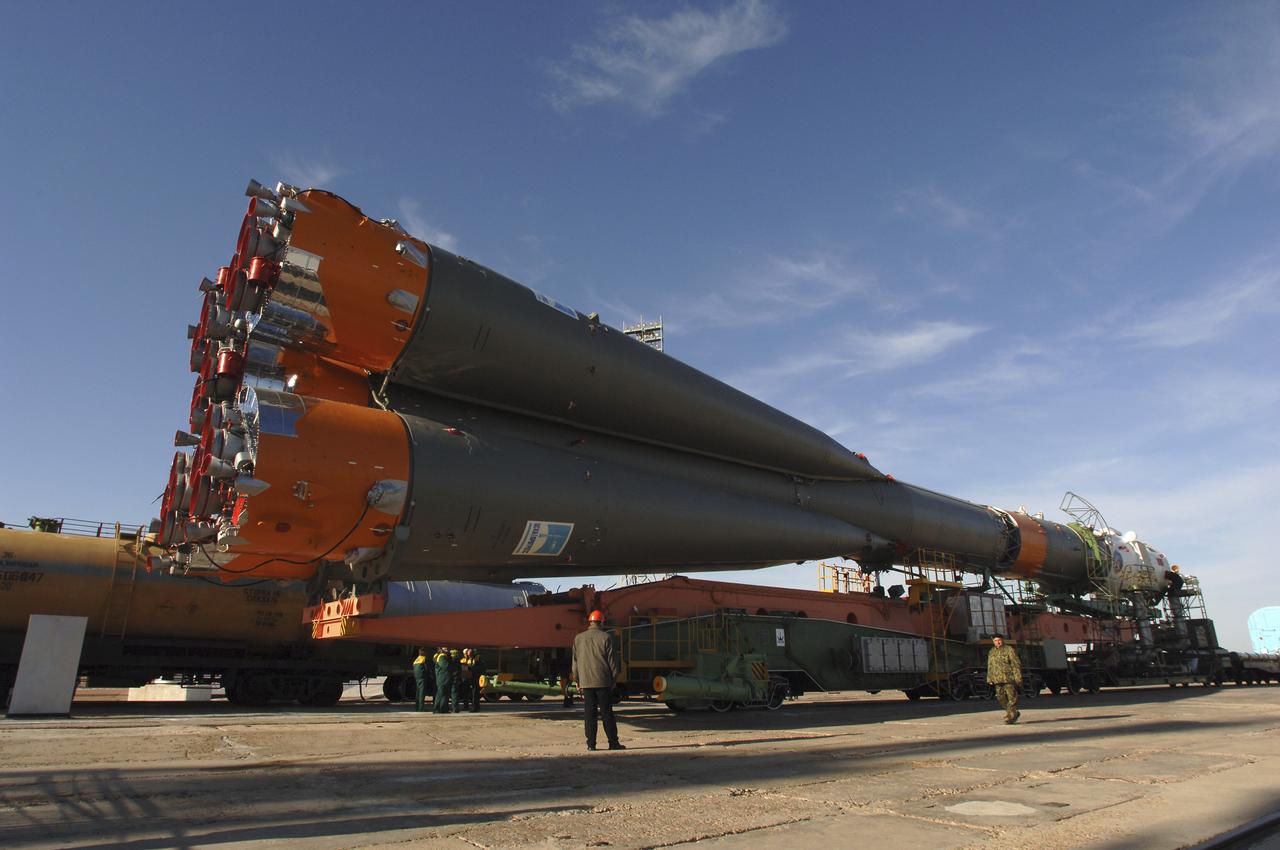
The Soyuz TMA-6 vehicle is transported by train to the launch pad at the Baikonur Cosmodrome in Kazakhstan, Wednesday, April 13, 2005, as preparations continued for the April 15 launch to send Expedition 11 Commander Sergei Krikalev, Flight Engineer John Phillips and European Space Agency Astronaut Roberto Vittori, of Italy, to the International Space Station. Krikalev and Phillips will spend six months in space and greet the first Shuttle crew to fly in more than two years when it arrives at the station, while Vittori spends eight days on the station under a commercial contract between ESA and the Russian Federal Space Agency. Photo Credit: (NASA/Bill Ingalls)
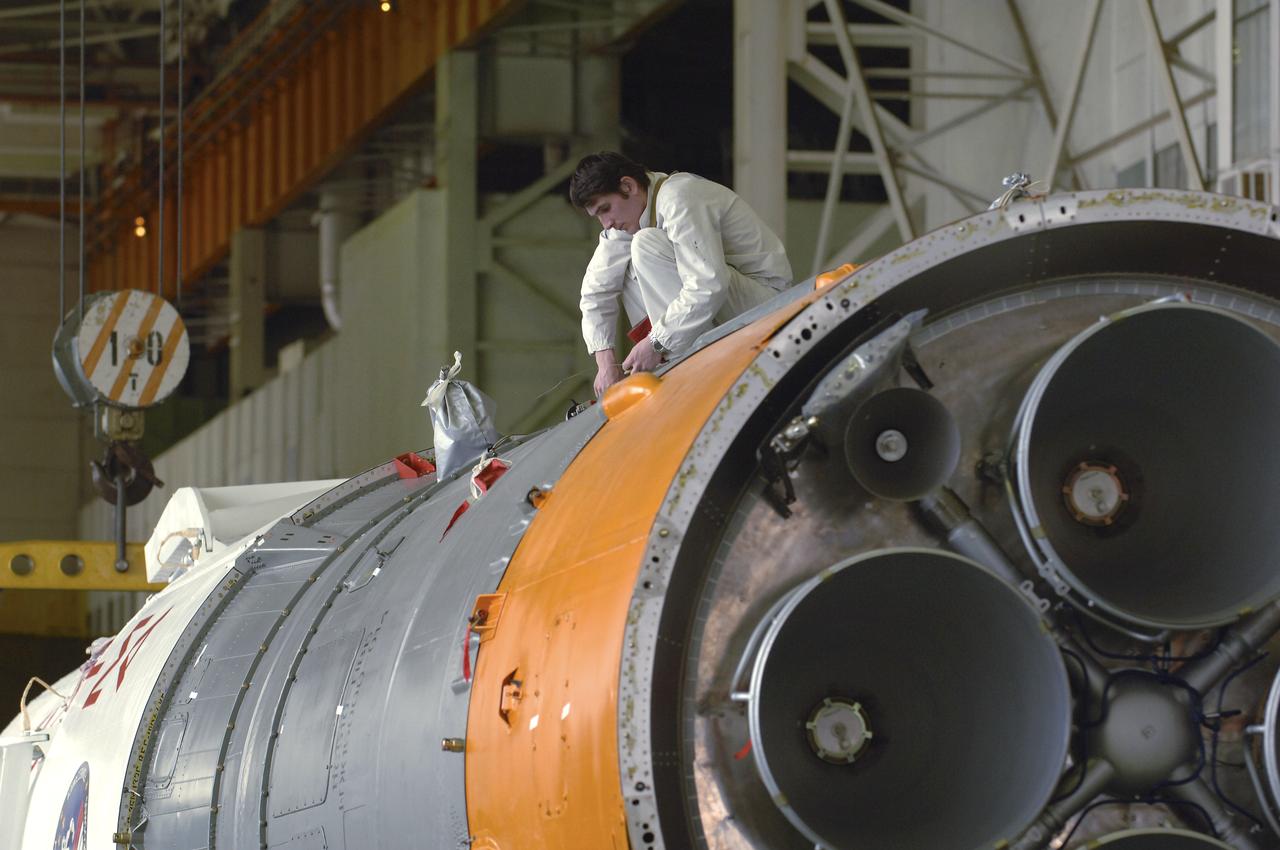
A Russian technician works, Tuesday, April 12, 2005, on mating the Soyuz TMA-6 spacecraft to the booster rocket inside the integration facility at the Baikonur Cosmodrome in Kazakhstan as preparations continued for the April 15 launch of Expedition 11 with Commander Sergei Krikalev, Flight Engineer John Phillips and European Space Agency Astronaut Roberto Vittori, of Italy, to the International Space Station. The rocket mating operation occurred on the 44th anniversary of the launch of Yuri Gagarin from the same complex to become the first human in space. Photo Credit: (NASA/Bill Ingalls)
The Soyuz TMA-6 vehicle is transported by train to the launch pad at the Baikonur Cosmodrome in Kazakhstan, Wednesday, April 13, 2005, as preparations continued for the April 15 launch to send Expedition 11 Commander Sergei Krikalev, Flight Engineer John Phillips and European Space Agency Astronaut Roberto Vittori, of Italy, to the International Space Station. Krikalev and Phillips will spend six months in space and greet the first Shuttle crew to fly in more than two years when it arrives at the station, while Vittori spends eight days on the station under a commercial contract between ESA and the Russian Federal Space Agency. Photo Credit: (NASA/Bill Ingalls)
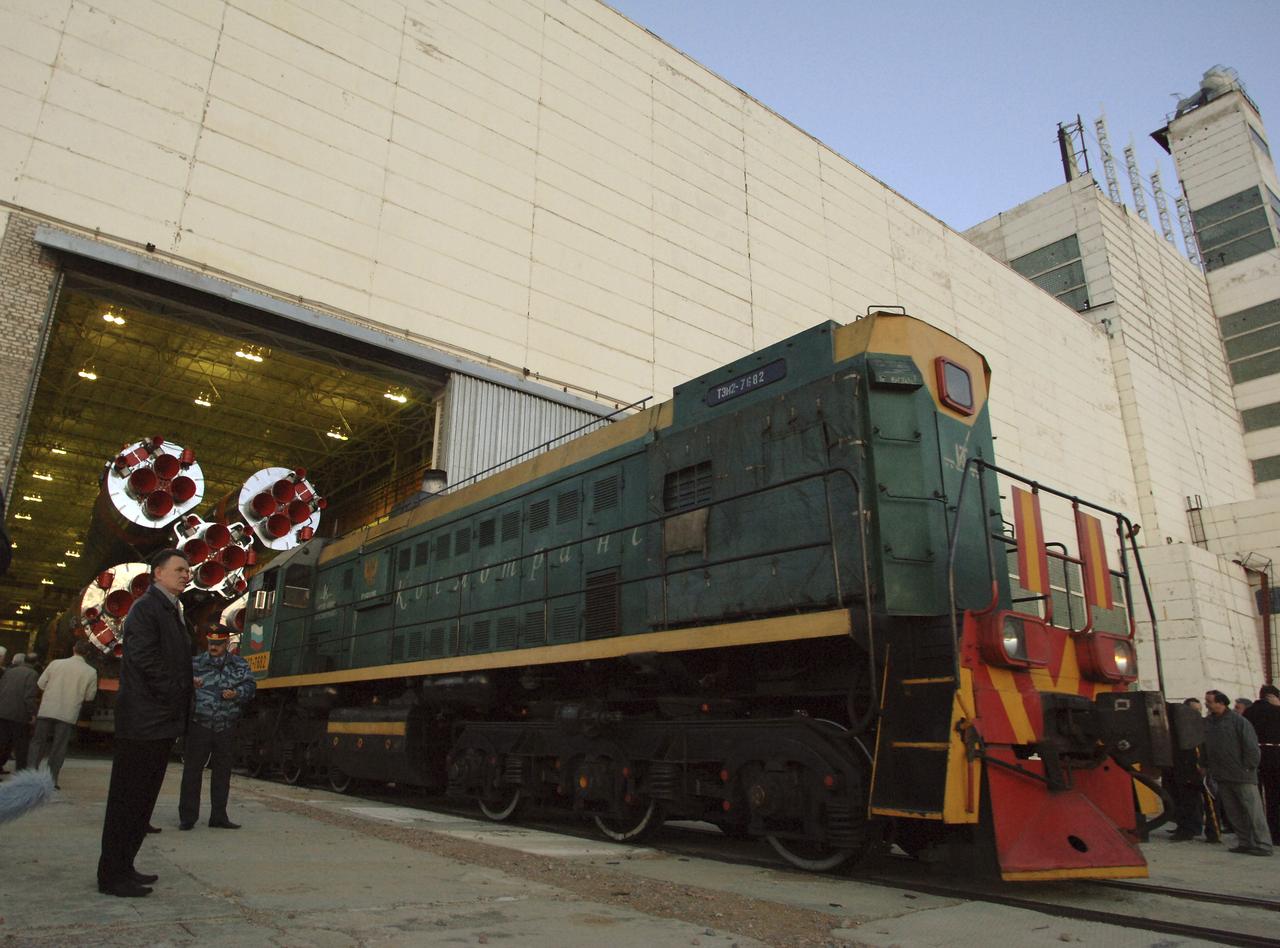
Officials look on as the Soyuz TMA-6 vehicle begins the journey to the launch pad at the Baikonur Cosmodrome in Kazakhstan, Wednesday, April 13, 2005, in preparation for the April 15 launch to send Expedition 11 Commander Sergei Krikalev, Flight Engineer John Phillips and European Space Agency Astronaut Roberto Vittori, of Italy, to the International Space Station. Krikalev and Phillips will spend six months in space and greet the first Shuttle crew to fly in more than two years when it arrives at the station, while Vittori spends eight days on the station under a commercial contract between ESA and the Russian Federal Space Agency. Photo Credit: (NASA/Bill Ingalls)
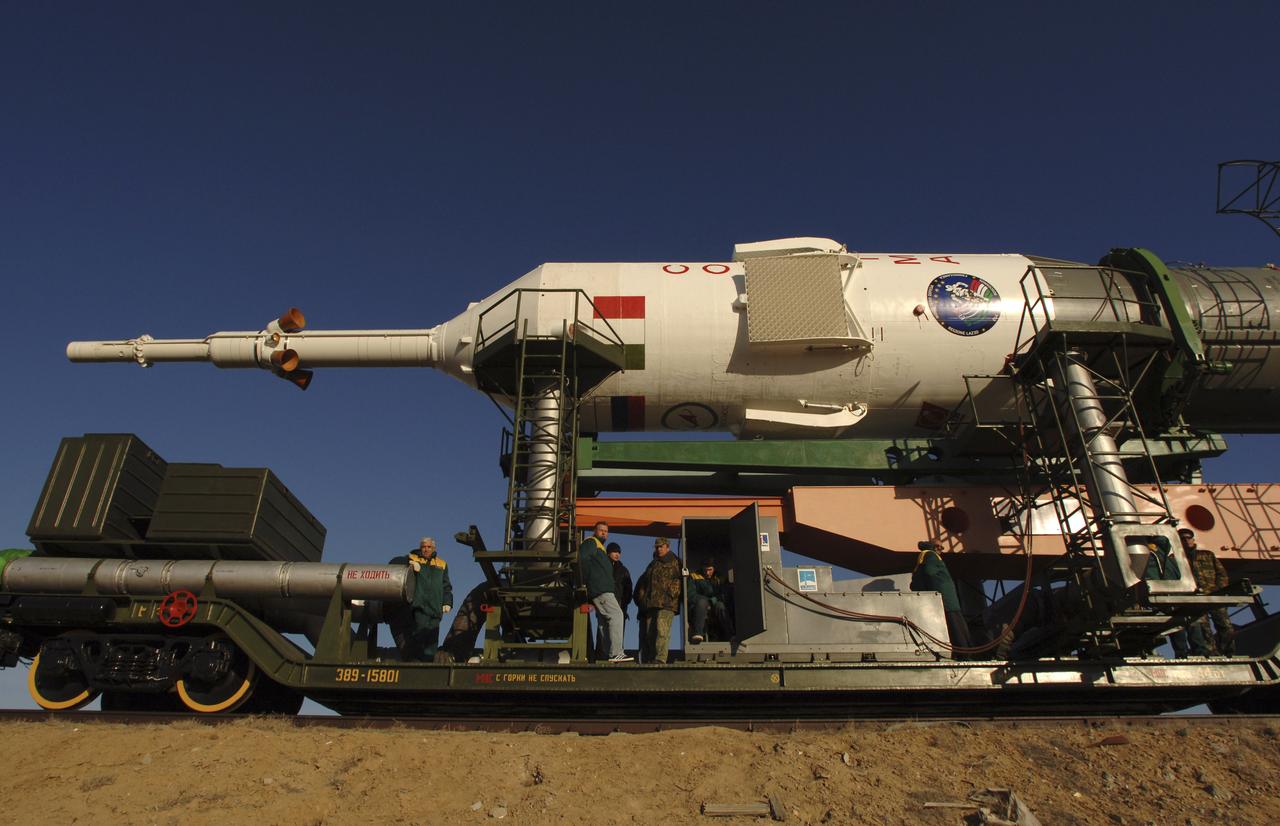
The Soyuz TMA-6 vehicle is transported by train to the launch pad at the Baikonur Cosmodrome in Kazakhstan, Wednesday, April 13, 2005, as preparations continued for the April 15 launch to send Expedition 11 Commander Sergei Krikalev, Flight Engineer John Phillips and European Space Agency Astronaut Roberto Vittori, of Italy, to the International Space Station. Krikalev and Phillips will spend six months in space and greet the first Shuttle crew to fly in more than two years when it arrives at the station, while Vittori spends eight days on the station under a commercial contract between ESA and the Russian Federal Space Agency. Photo Credit: (NASA/Bill Ingalls)
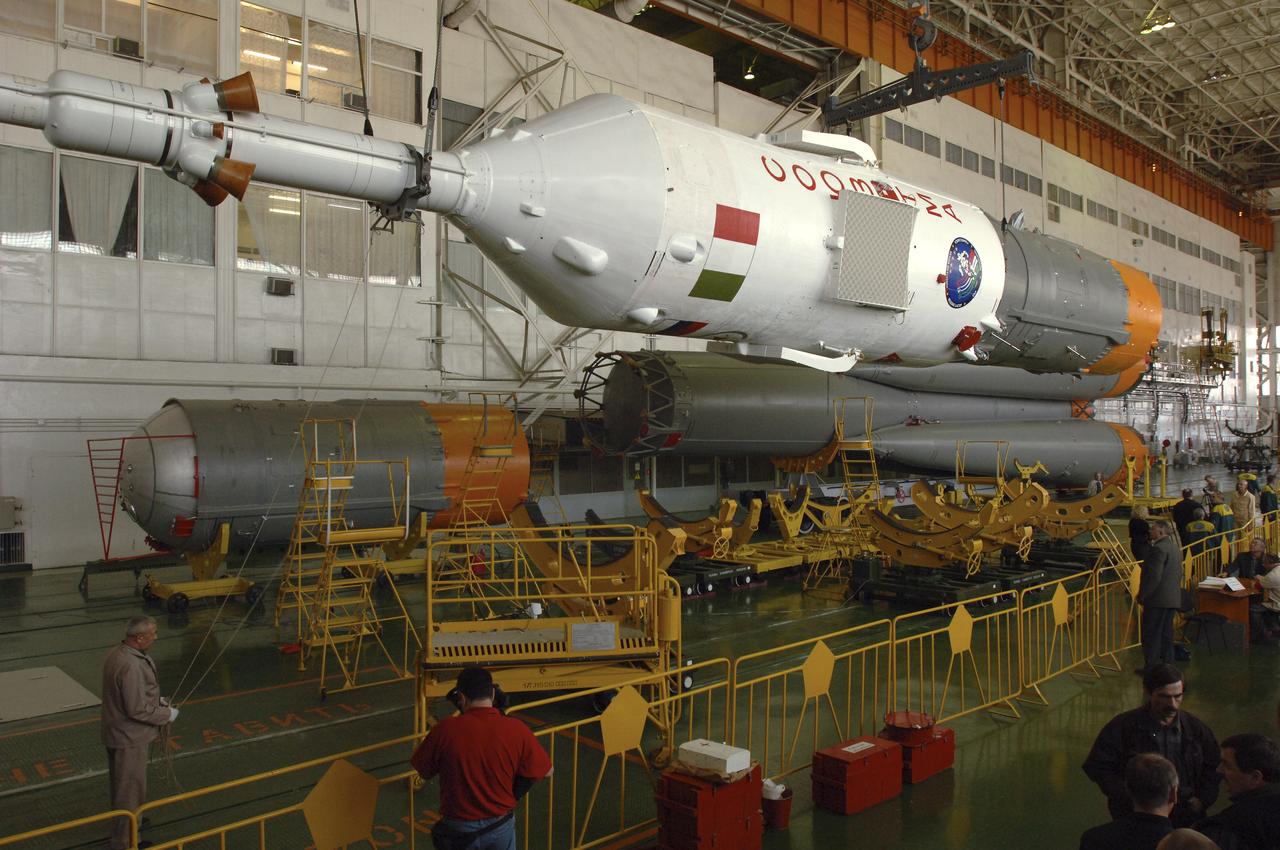
Russian technicians work, Tuesday, April 12, 2005, on mating the Soyuz TMA-6 spacecraft to the booster rocket inside the integration facility at the Baikonur Cosmodrome in Kazakhstan as preparations continued for the April 15 launch of Expedition 11 with Commander Sergei Krikalev, Flight Engineer John Phillips and European Space Agency Astronaut Roberto Vittori, of Italy, to the International Space Station. The rocket mating operation occurred on the 44th anniversary of the launch of Yuri Gagarin from the same complex to become the first human in space. Photo Credit: (NASA/Bill Ingalls)
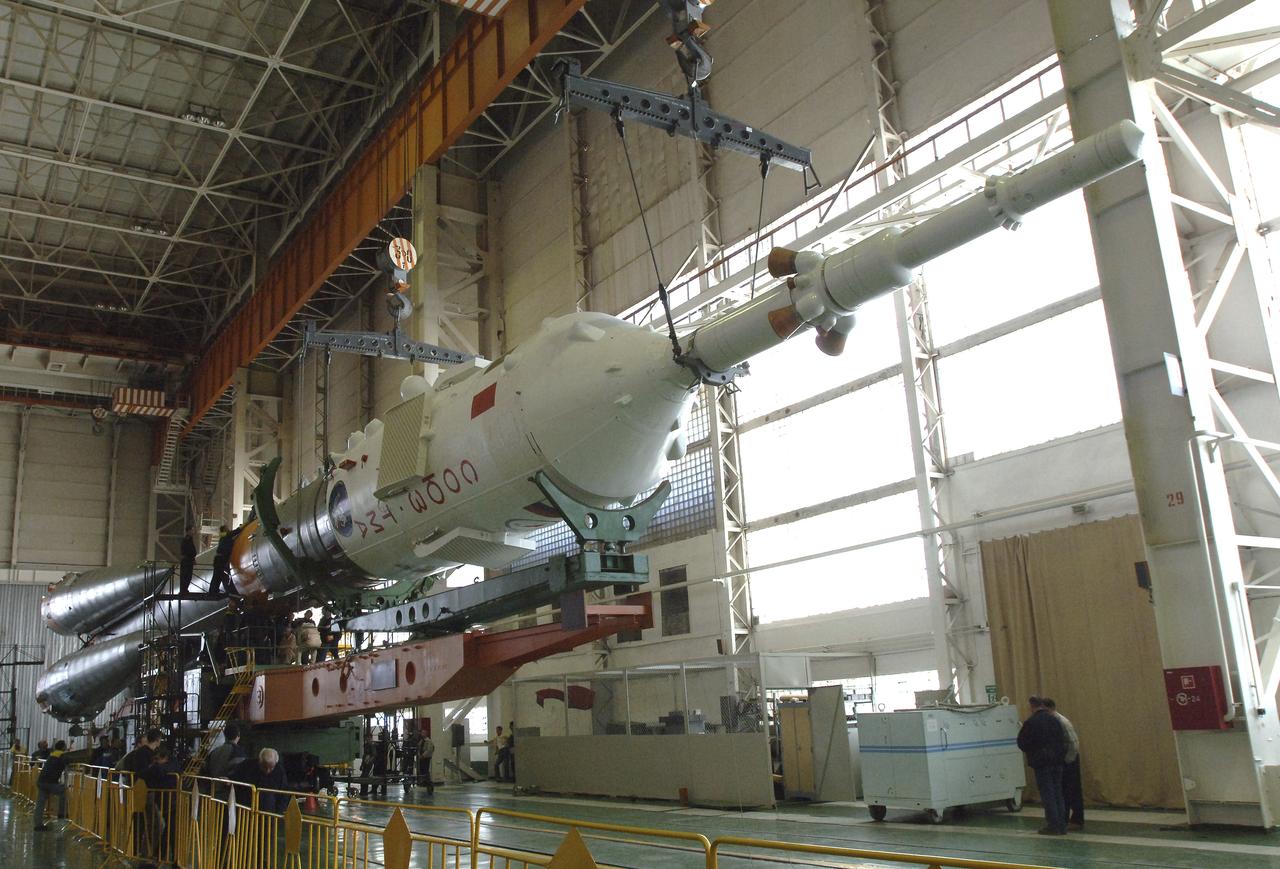
Russian technicians work, Tuesday, April 12, 2005, on mating the Soyuz TMA-6 spacecraft to the booster rocket inside the integration facility at the Baikonur Cosmodrome in Kazakhstan as preparations continued for the April 15 launch of Expedition 11 with Commander Sergei Krikalev, Flight Engineer John Phillips and European Space Agency Astronaut Roberto Vittori, of Italy, to the International Space Station. The rocket mating operation occurred on the 44th anniversary of the launch of Yuri Gagarin from the same complex to become the first human in space. Photo Credit: (NASA/Bill Ingalls)
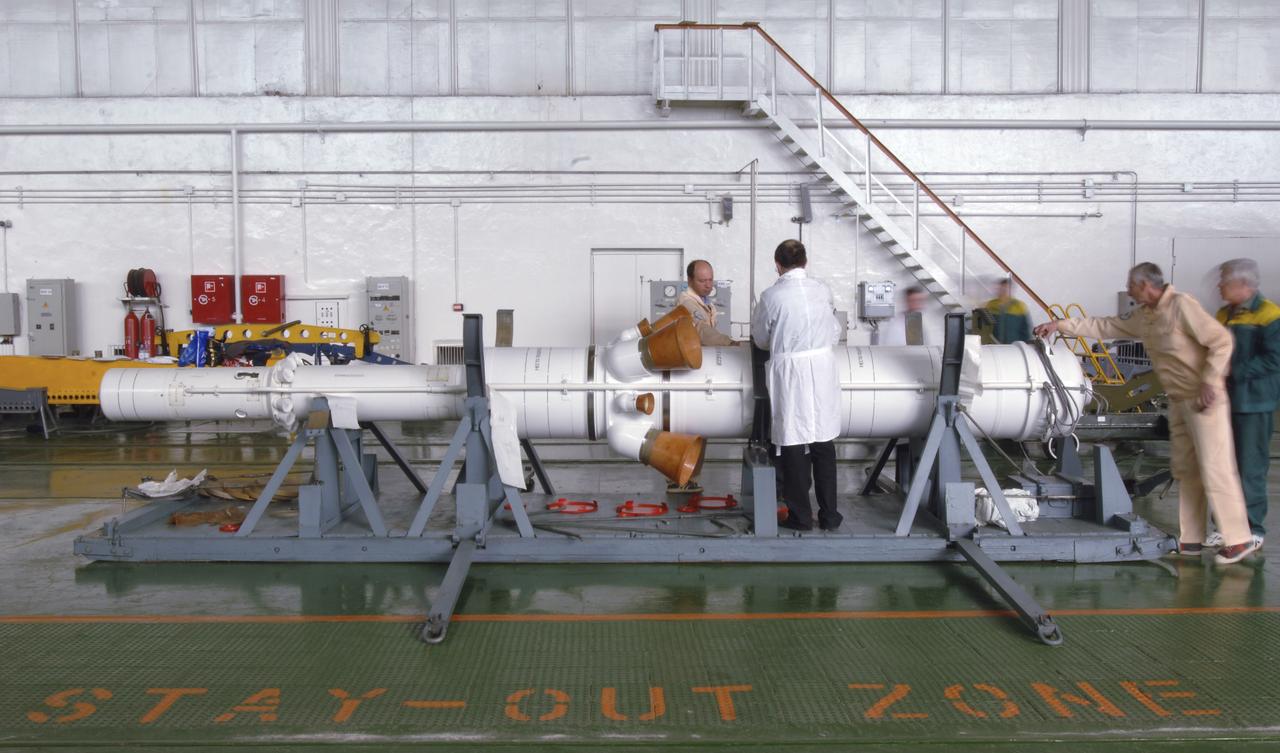
Russian technicians work, Tuesday, April 12, 2005, on mating the Soyuz TMA-6 spacecraft to the booster rocket inside the integration facility at the Baikonur Cosmodrome in Kazakhstan as preparations continued for the April 15 launch of Expedition 11 with Commander Sergei Krikalev, Flight Engineer John Phillips and European Space Agency Astronaut Roberto Vittori, of Italy, to the International Space Station. The rocket mating operation occurred on the 44th anniversary of the launch of Yuri Gagarin from the same complex to become the first human in space. Photo Credit: (NASA/Bill Ingalls)
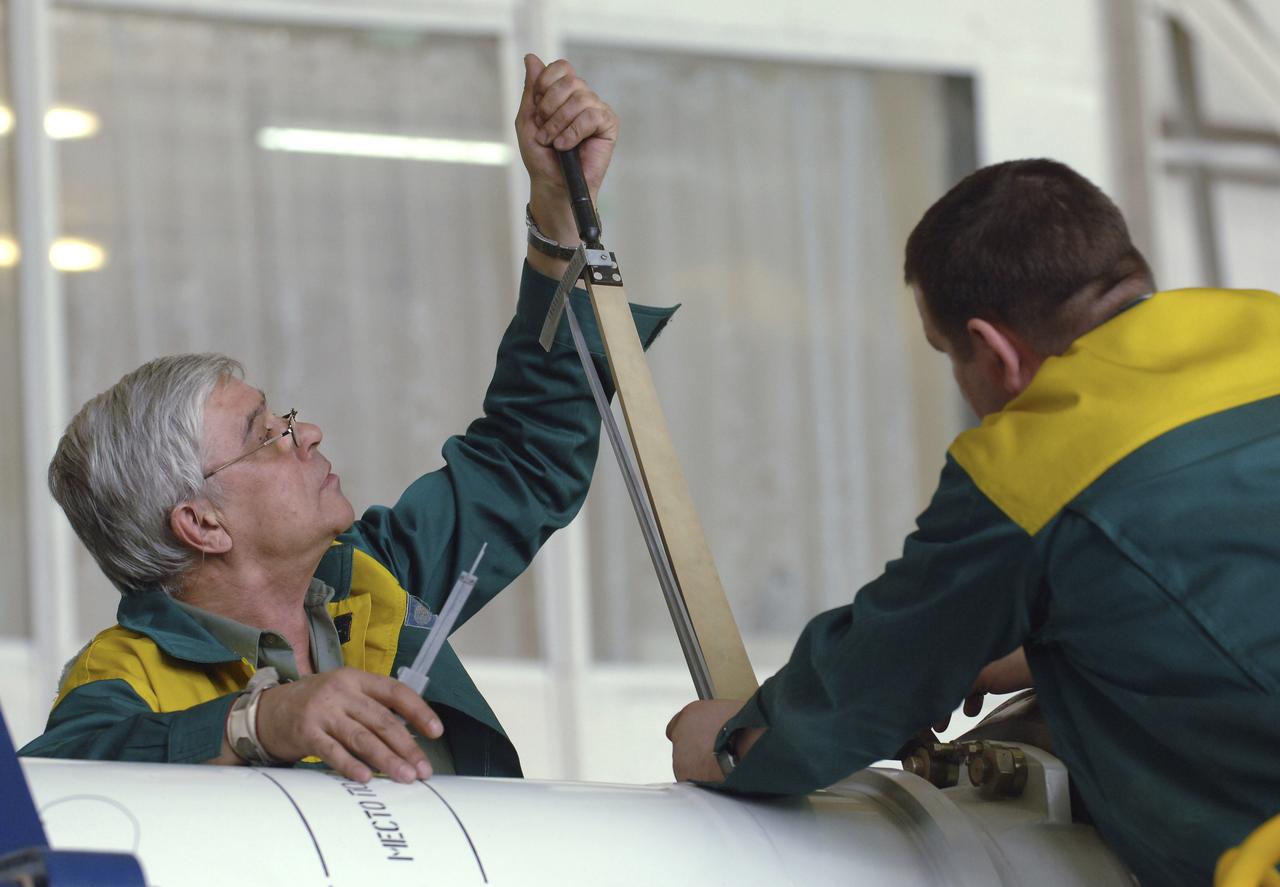
Russian technicians work, Tuesday, April 12, 2005, on mating the Soyuz TMA-6 spacecraft to the booster rocket inside the integration facility at the Baikonur Cosmodrome in Kazakhstan as preparations continued for the April 15 launch of Expedition 11 with Commander Sergei Krikalev, Flight Engineer John Phillips and European Space Agency Astronaut Roberto Vittori, of Italy, to the International Space Station. The rocket mating operation occurred on the 44th anniversary of the launch of Yuri Gagarin from the same complex to become the first human in space. Photo Credit: (NASA/Bill Ingalls)
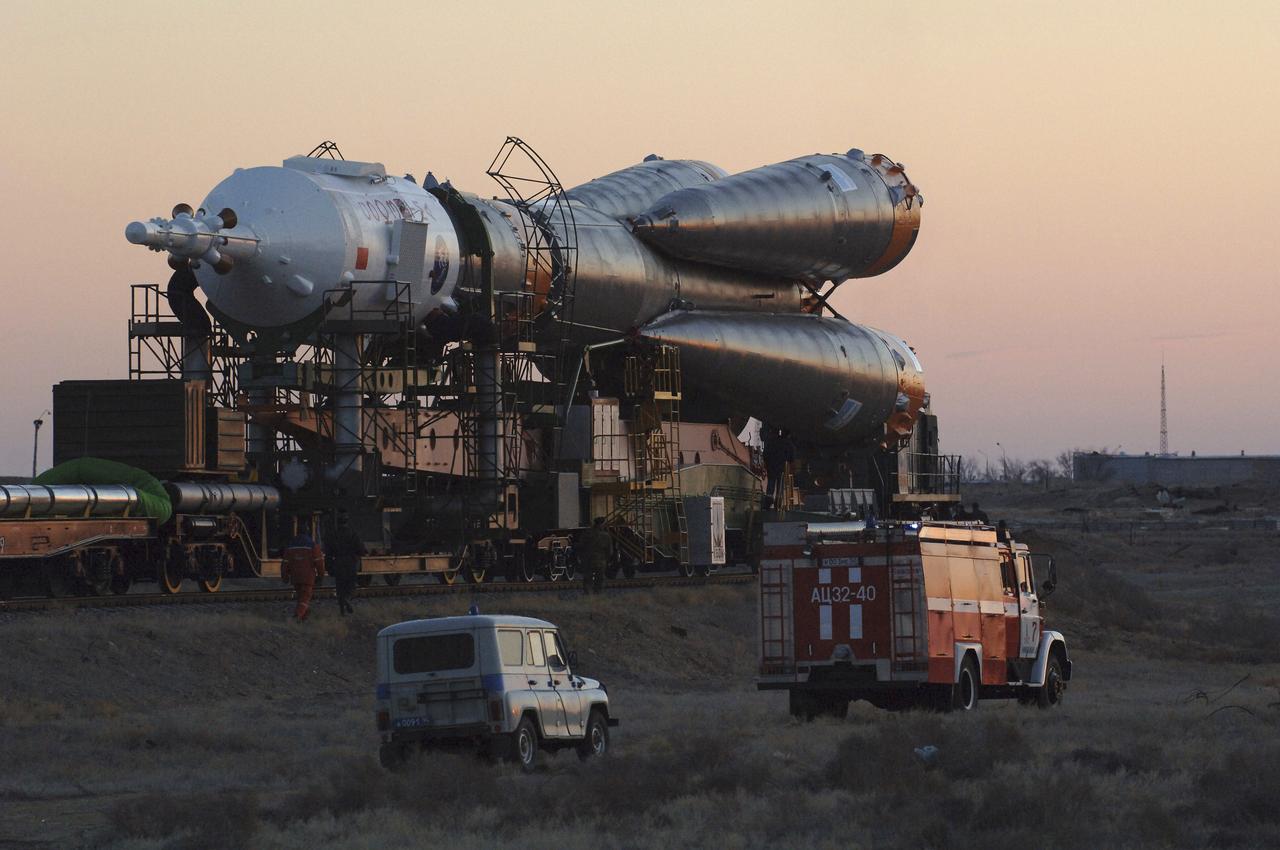
The Soyuz TMA-6 vehicle is transported to the launch pad at the Baikonur Cosmodrome in Kazakhstan, Wednesday, April 13, 2005, in preparation for the April 15 launch to send Expedition 11 Commander Sergei Krikalev, Flight Engineer John Phillips and European Space Agency Astronaut Roberto Vittori, of Italy, to the International Space Station. Krikalev and Phillips will spend six months in space and greet the first Shuttle crew to fly in more than two years when it arrives at the station, while Vittori spends eight days on the station under a commercial contract between ESA and the Russian Federal Space Agency. Photo Credit: (NASA/Bill Ingalls)
Russian technicians work, Tuesday, April 12, 2005, on mating the Soyuz TMA-6 spacecraft to the booster rocket inside the integration facility at the Baikonur Cosmodrome in Kazakhstan as preparations continued for the April 15 launch of Expedition 11 with Commander Sergei Krikalev, Flight Engineer John Phillips and European Space Agency Astronaut Roberto Vittori, of Italy, to the International Space Station. The rocket mating operation occurred on the 44th anniversary of the launch of Yuri Gagarin from the same complex to become the first human in space. Photo Credit: (NASA/Bill Ingalls)
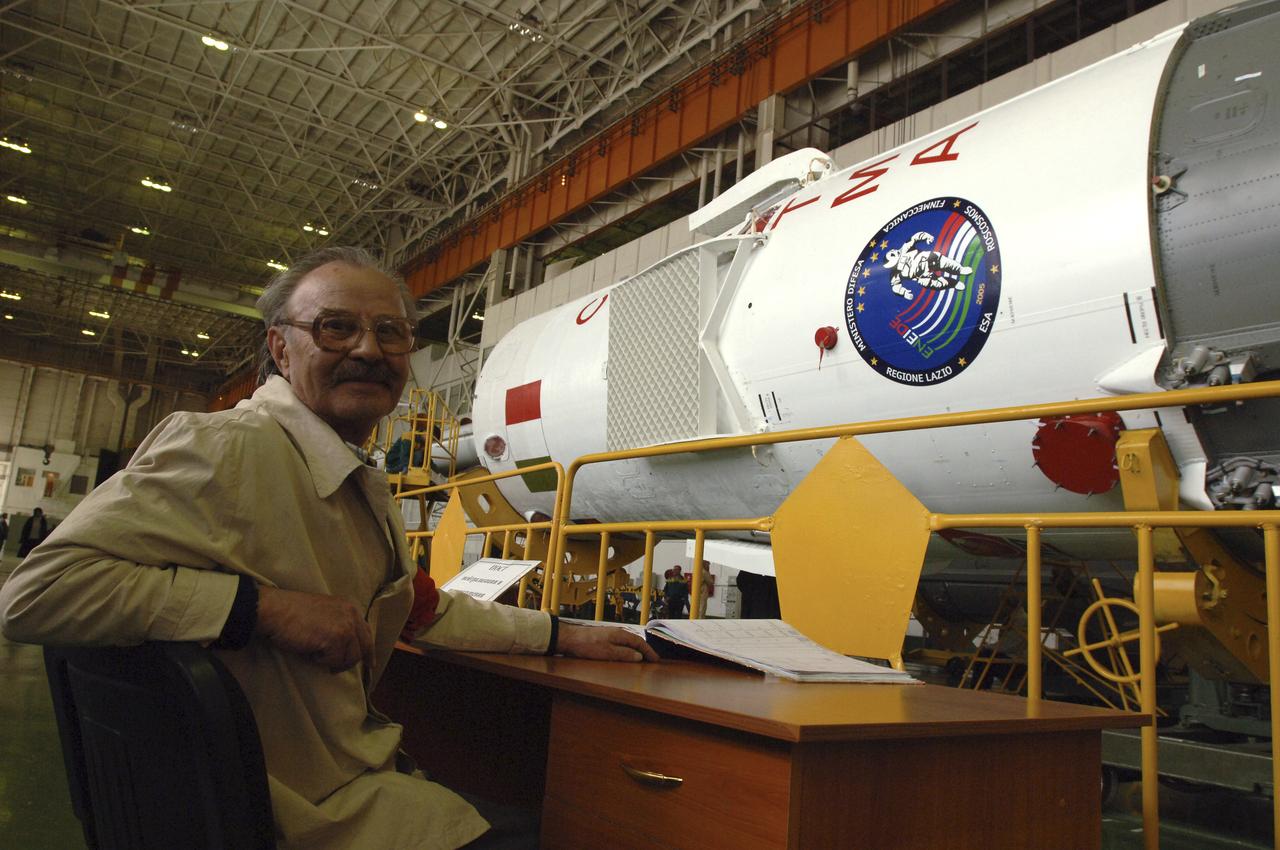
An unidentified Russian technician is seen, Tuesday, April 12, 2005, while the Soyuz TMA-6 spacecraft is mated to the booster rocket inside the integration facility at the Baikonur Cosmodrome in Kazakhstan as preparations continued for the April 15 launch of Expedition 11 with Commander Sergei Krikalev, Flight Engineer John Phillips and European Space Agency Astronaut Roberto Vittori, of Italy, to the International Space Station. The rocket mating operation occurred on the 44th anniversary of the launch of Yuri Gagarin from the same complex to become the first human in space. Photo Credit: (NASA/Bill Ingalls)
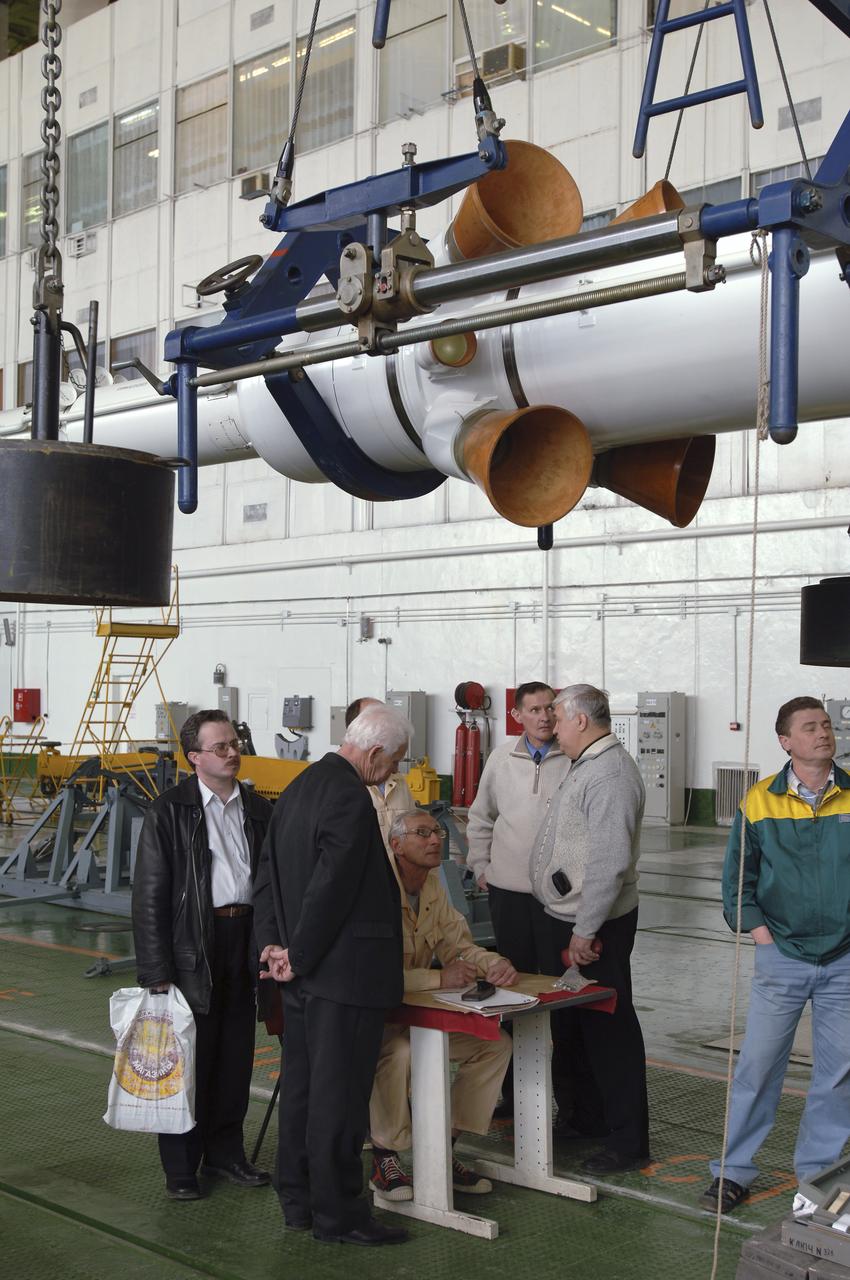
Russian technicians work, Tuesday, April 12, 2005, on mating the Soyuz TMA-6 spacecraft to the booster rocket inside the integration facility at the Baikonur Cosmodrome in Kazakhstan as preparations continued for the April 15 launch of Expedition 11 with Commander Sergei Krikalev, Flight Engineer John Phillips and European Space Agency Astronaut Roberto Vittori, of Italy, to the International Space Station. The rocket mating operation occurred on the 44th anniversary of the launch of Yuri Gagarin from the same complex to become the first human in space. Photo Credit: (NASA/Bill Ingalls)
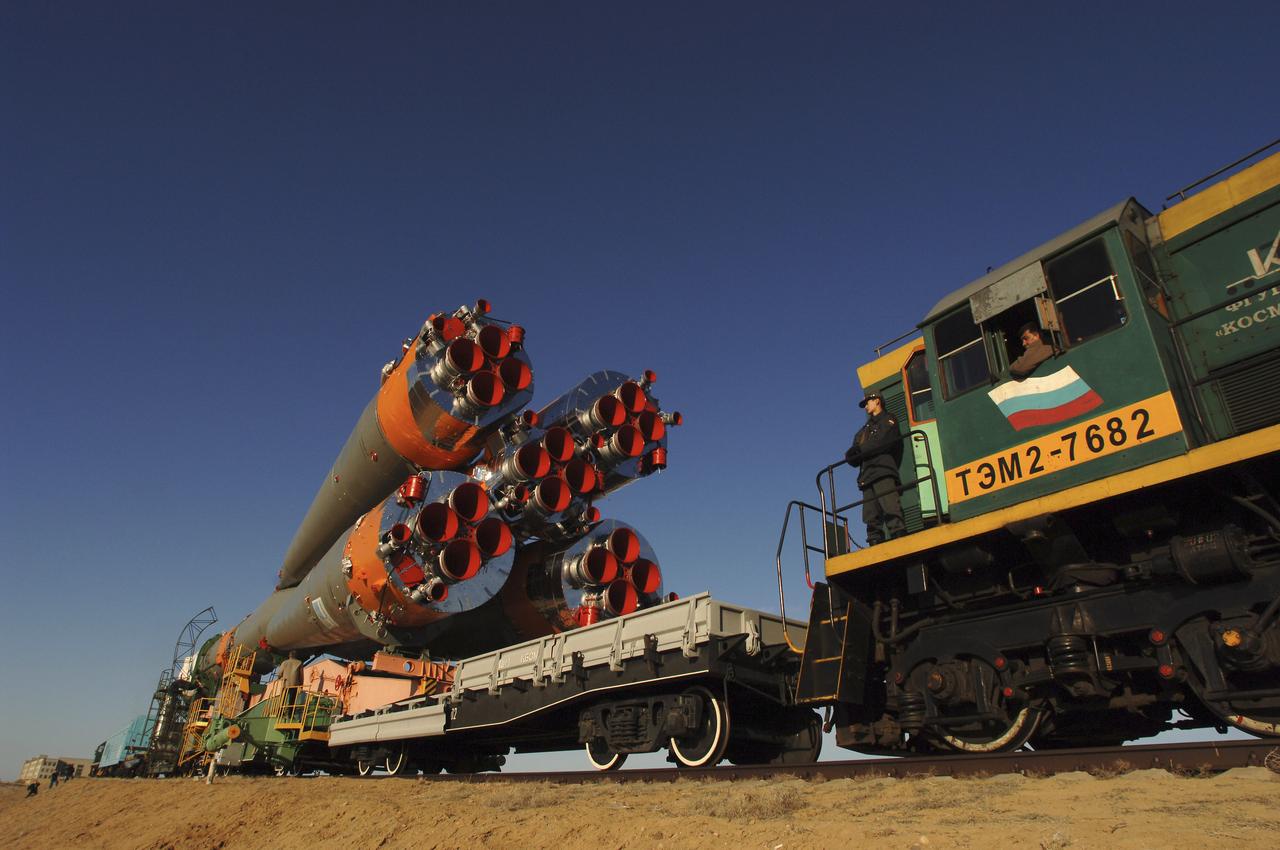
The Soyuz TMA-6 vehicle is transported by train to the launch pad at the Baikonur Cosmodrome in Kazakhstan, Wednesday, April 13, 2005, as preparations continued for the April 15 launch to send Expedition 11 Commander Sergei Krikalev, Flight Engineer John Phillips and European Space Agency Astronaut Roberto Vittori, of Italy, to the International Space Station. Krikalev and Phillips will spend six months in space and greet the first Shuttle crew to fly in more than two years when it arrives at the station, while Vittori spends eight days on the station under a commercial contract between ESA and the Russian Federal Space Agency. Photo Credit: (NASA/Bill Ingalls)
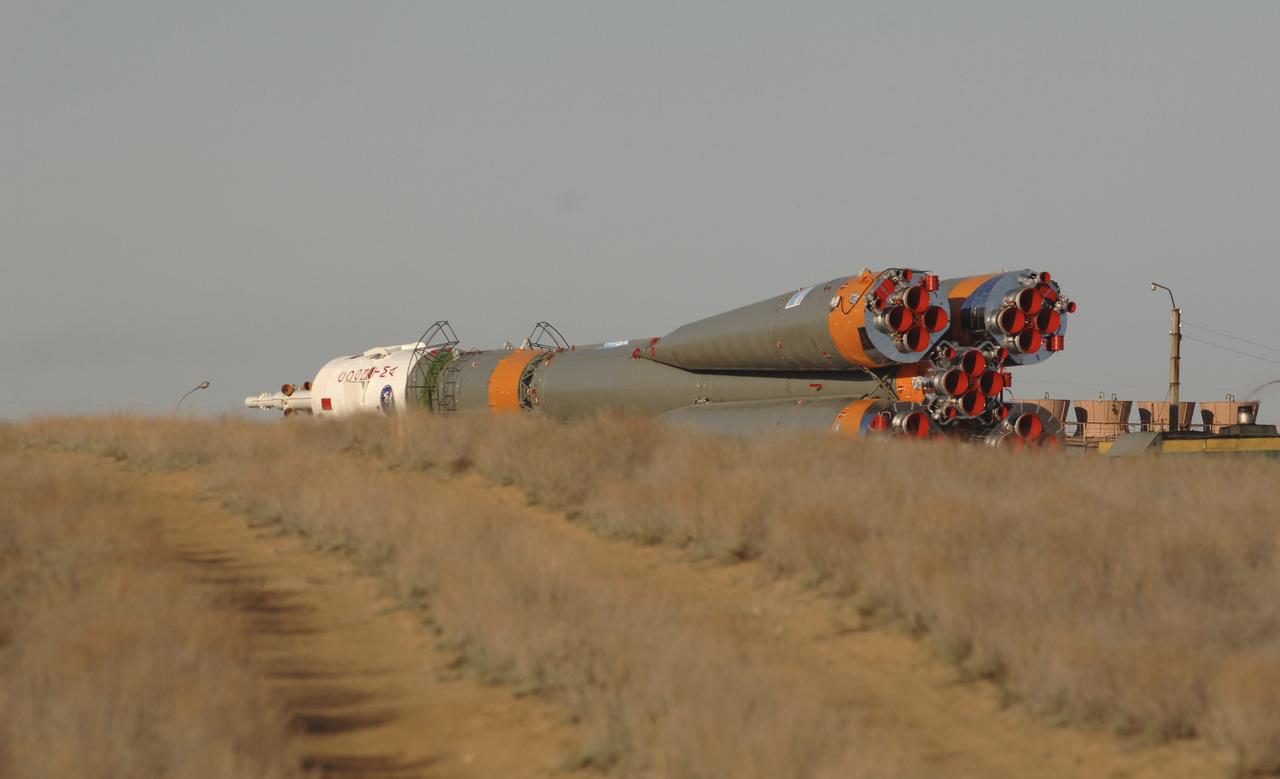
The Soyuz TMA-6 vehicle is transported by train to the launch pad at the Baikonur Cosmodrome in Kazakhstan, Wednesday, April 13, 2005, as preparations continued for the April 15 launch to send Expedition 11 Commander Sergei Krikalev, Flight Engineer John Phillips and European Space Agency Astronaut Roberto Vittori, of Italy, to the International Space Station. Krikalev and Phillips will spend six months in space and greet the first Shuttle crew to fly in more than two years when it arrives at the station, while Vittori spends eight days on the station under a commercial contract between ESA and the Russian Federal Space Agency. Photo Credit: (NASA/Bill Ingalls)
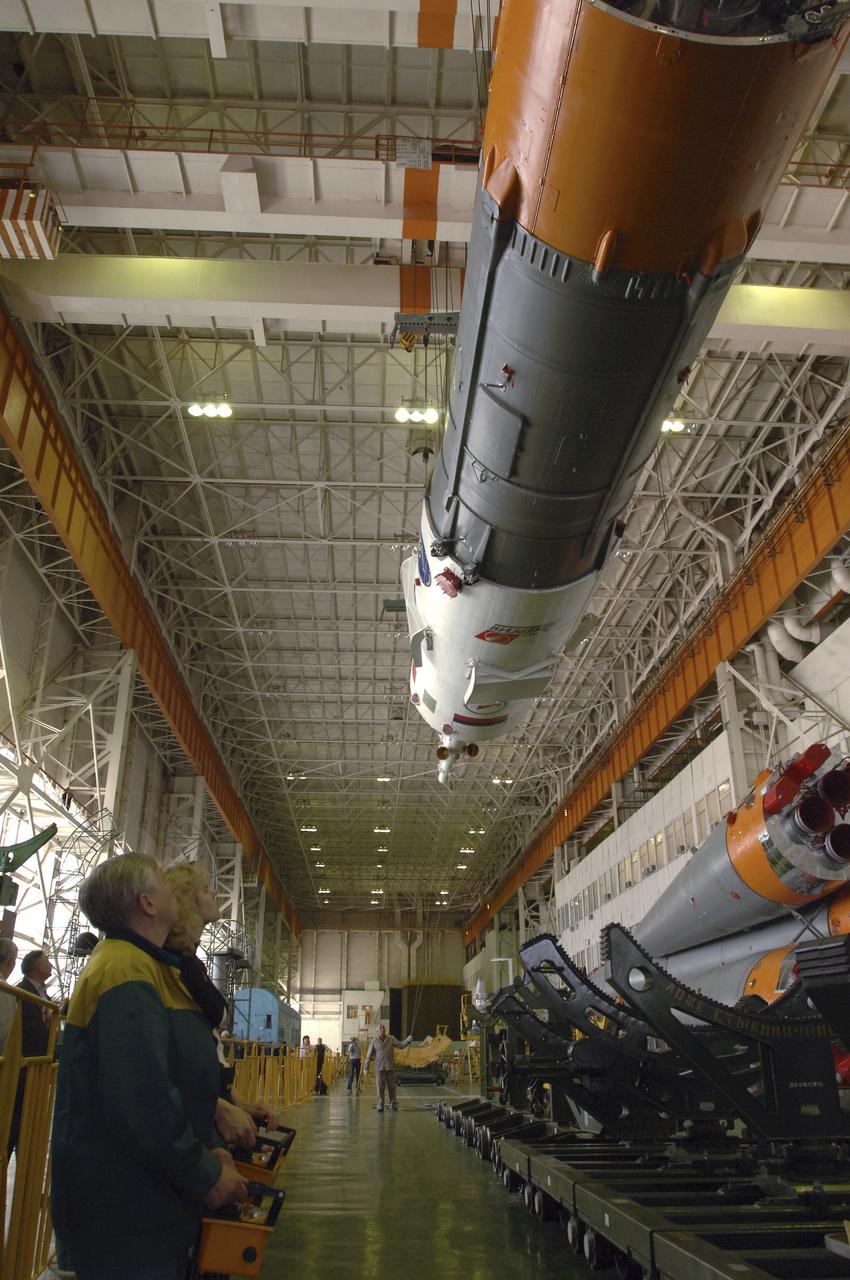
Russian technicians work, Tuesday, April 12, 2005, on mating the Soyuz TMA-6 spacecraft to the booster rocket inside the integration facility at the Baikonur Cosmodrome in Kazakhstan as preparations continued for the April 15 launch of Expedition 11 with Commander Sergei Krikalev, Flight Engineer John Phillips and European Space Agency Astronaut Roberto Vittori, of Italy, to the International Space Station. The rocket mating operation occurred on the 44th anniversary of the launch of Yuri Gagarin from the same complex to become the first human in space. Photo Credit: (NASA/Bill Ingalls)

The Soyuz TMA-6 vehicle is transported by train to the launch pad at the Baikonur Cosmodrome in Kazakhstan, Wednesday, April 13, 2005, as preparations continued for the April 15 launch to send Expedition 11 Commander Sergei Krikalev, Flight Engineer John Phillips and European Space Agency Astronaut Roberto Vittori, of Italy, to the International Space Station. Krikalev and Phillips will spend six months in space and greet the first Shuttle crew to fly in more than two years when it arrives at the station, while Vittori spends eight days on the station under a commercial contract between ESA and the Russian Federal Space Agency. Photo Credit: (NASA/Bill Ingalls)
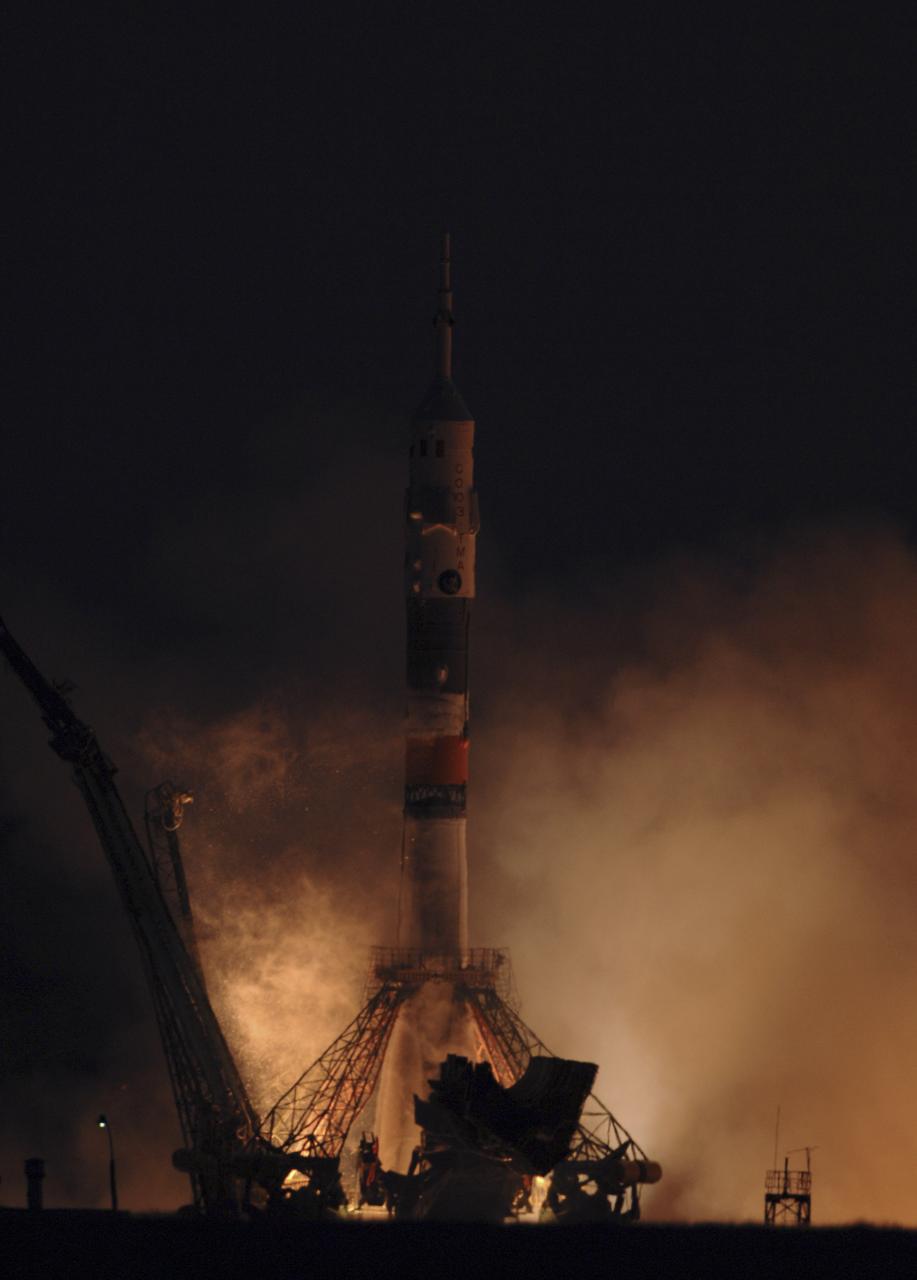
Expedition 11 Commander Sergei Krikalev, Flight Engineer and NASA Science Officer John Phillips and European Space Agency astronaut Roberto Vittori, of Italy, blast off aboard the Soyuz TMA-6 spacecraft from the Baikonur Cosmodrome in Kazakhstan, Friday, April 15, 2005, for a two-day trip to the International Space Station. Krikalev and Phillips will spend six months on the Station, replacing Expedition 10 Commander Leroy Chiao and Flight Engineer Salizhan Sharipov, while Vittori will spend eight days on the Station under a commerical contract between ESA and the Russian Federal Space Agency, returning to Earth with Chiao and Sharipov on April 25. Photo Credit: (NASA/Bill Ingalls)
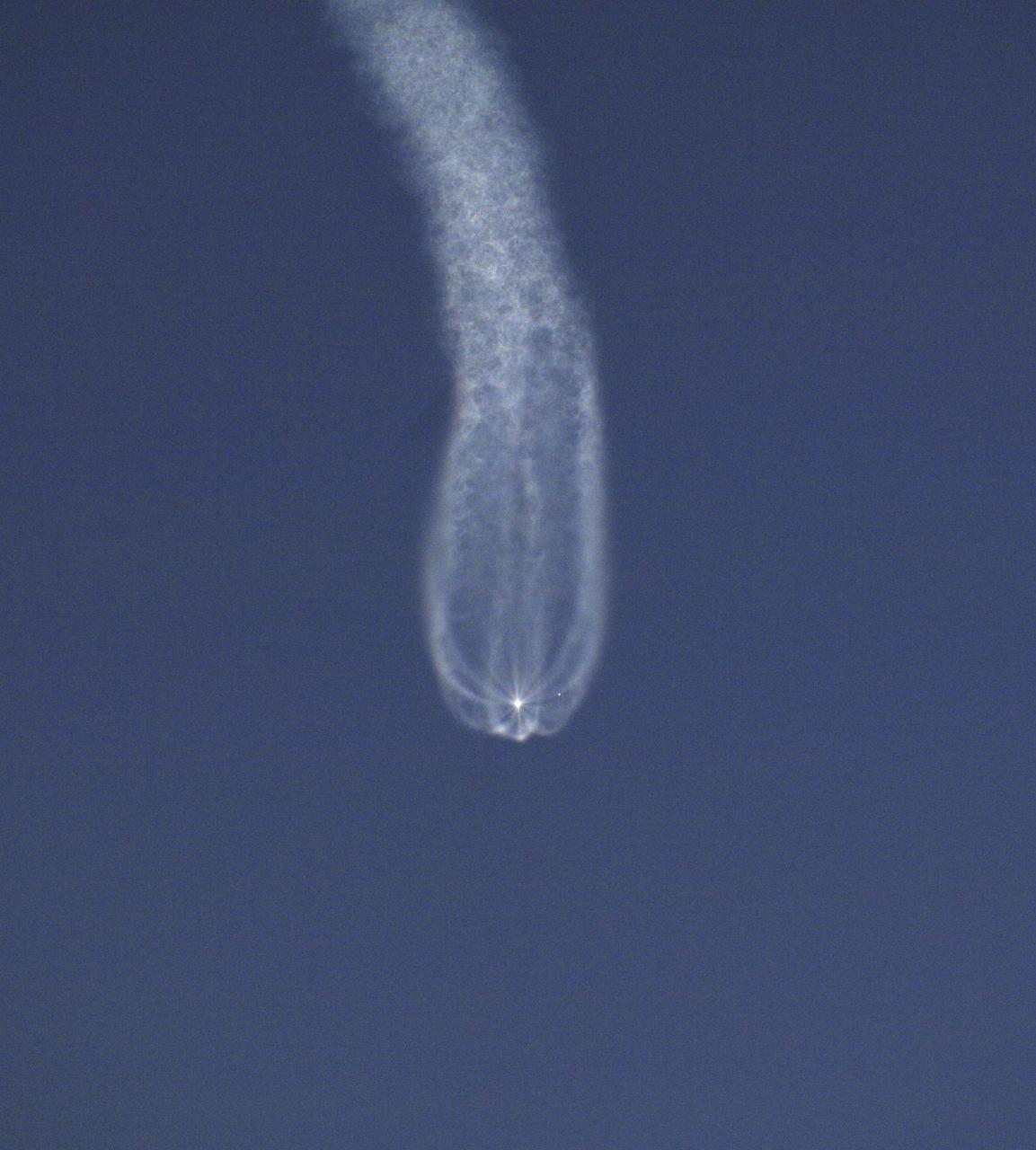
Expedition 11 Commander Sergei Krikalev, Flight Engineer and NASA Science Officer John Phillips and European Space Agency astronaut Roberto Vittori of Italy blast off aboard the Soyuz TMA-6 spacecraft from the Baikonur Cosmodrome in Kazakhstan, Friday, April 15, 2005, for a two-day trip to the International Space Station. Krikalev and Phillips will spend six months on the Station, replacing Expedition 10 Commander Leroy Chiao and Flight Engineer Salizhan Sharipov, while Vittori will spend eight days on the Station under a commerical contract between ESA and the Russian Federal Space Agency, returning to Earth with Chiao and Sharipov on April 25. Photo Credit: (NASA/Bill Ingalls)
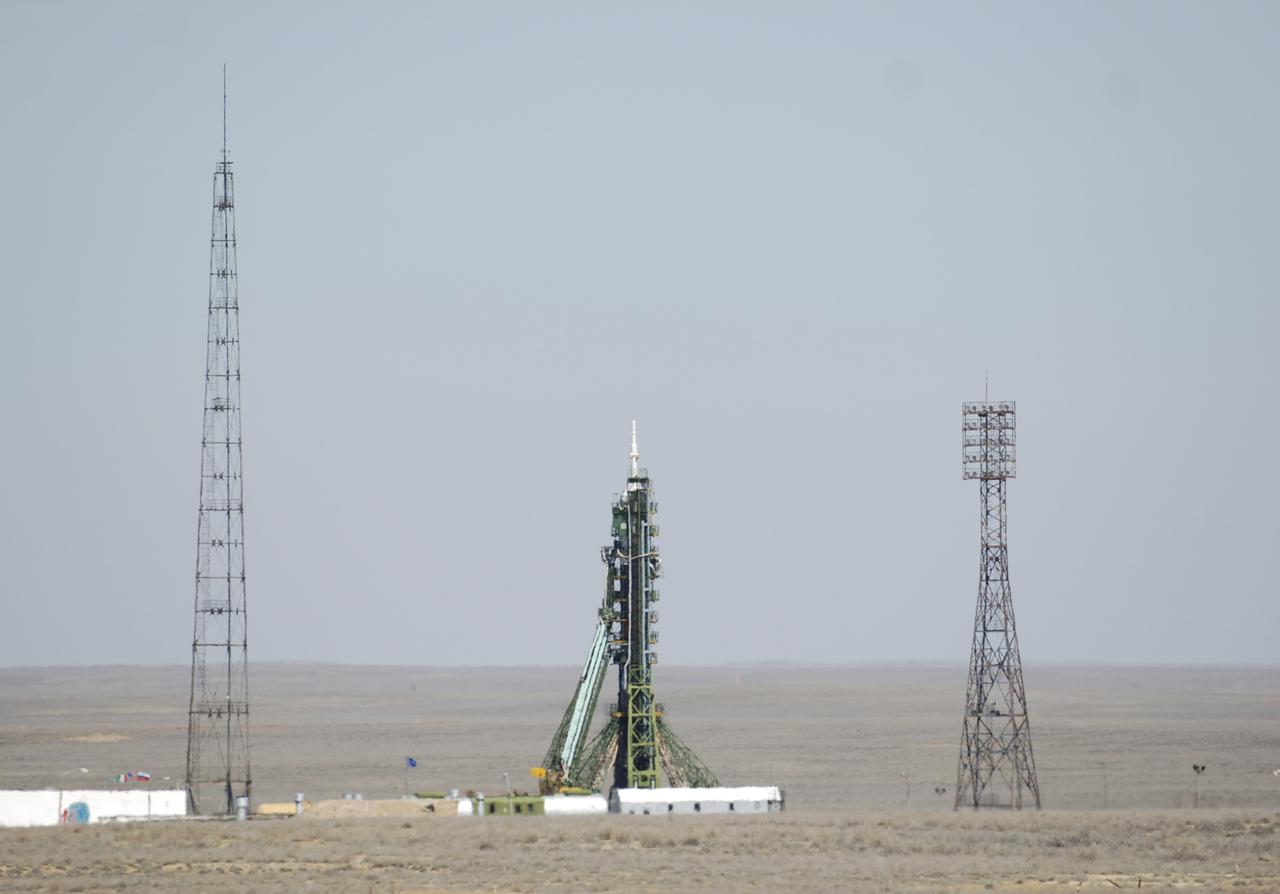
The Soyuz TMA-6 sits on the pad ready for launch, Thursday, April 14, 2005, at the Baikonur Cosmodrome in Kazakhstan. Expedition 11 crew Commander Sergei Krikalev along with Flight Engineer and NASA Science Officer John Phillips and European Space Agency Astronaut Roberto Vittori, of Italy, will launch April 15, 2005. Krikalev and Phillips will spend six months on the station, replacing Expedition 10 Commander Leroy Chiao and Flight Engineer Salizhan Sharipov, while Vittori will spend eight days on the Station under a commerical contract between ESA and the Russian Federal Space Agency, returning to Earth with Chiao and Sharipov on April 25. Photo Credit: (NASA/Bill Ingalls)
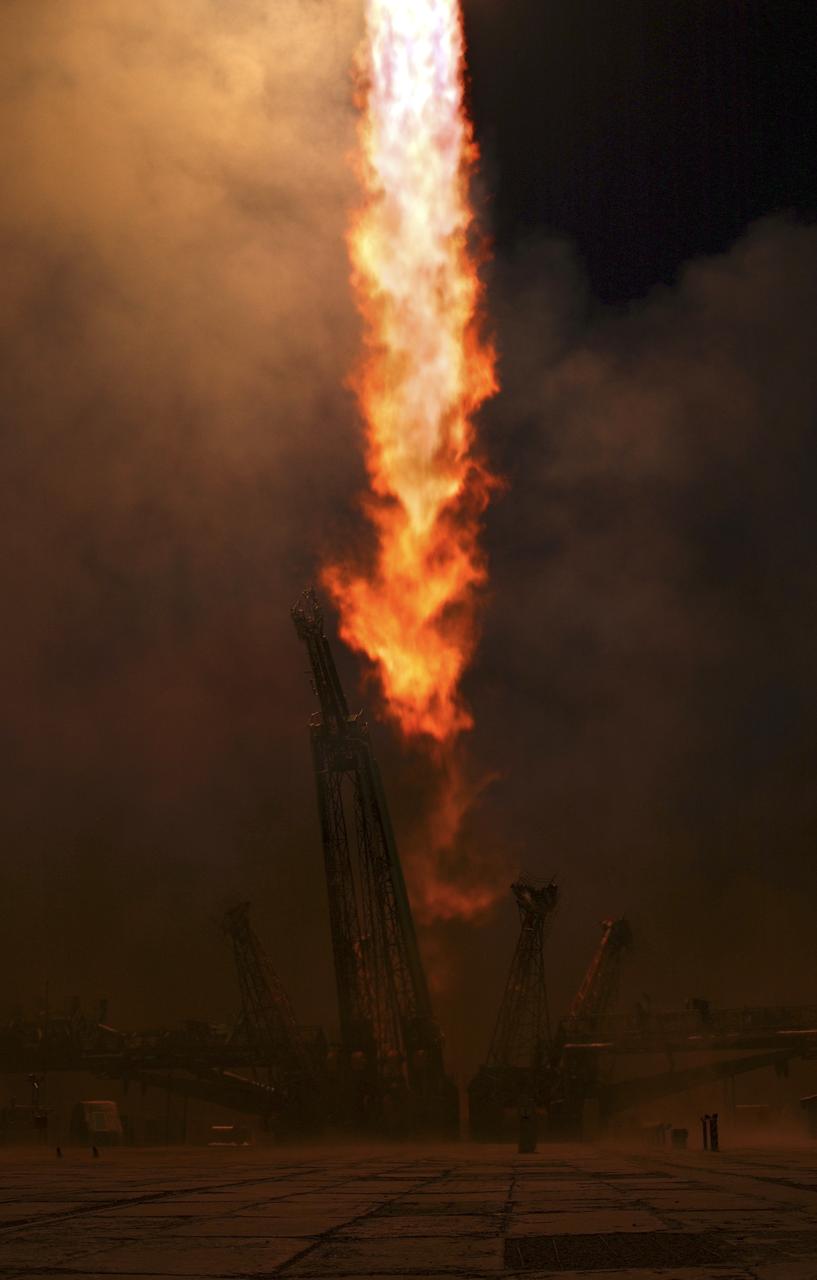
Expedition 11 Commander Sergei Krikalev, Flight Engineer and NASA Science Officer John Phillips and European Space Agency astronaut Roberto Vittori of Italy blast off aboard the Soyuz TMA-6 spacecraft from the Baikonur Cosmodrome in Kazakhstan, Friday, April 15, 2005, for a two-day trip to the International Space Station. Krikalev and Phillips will spend six months on the Station, replacing Expedition 10 Commander Leroy Chiao and Flight Engineer Salizhan Sharipov, while Vittori will spend eight days on the Station under a commerical contract between ESA and the Russian Federal Space Agency, returning to Earth with Chiao and Sharipov on April 25. Photo Credit: (NASA/Bill Ingalls)
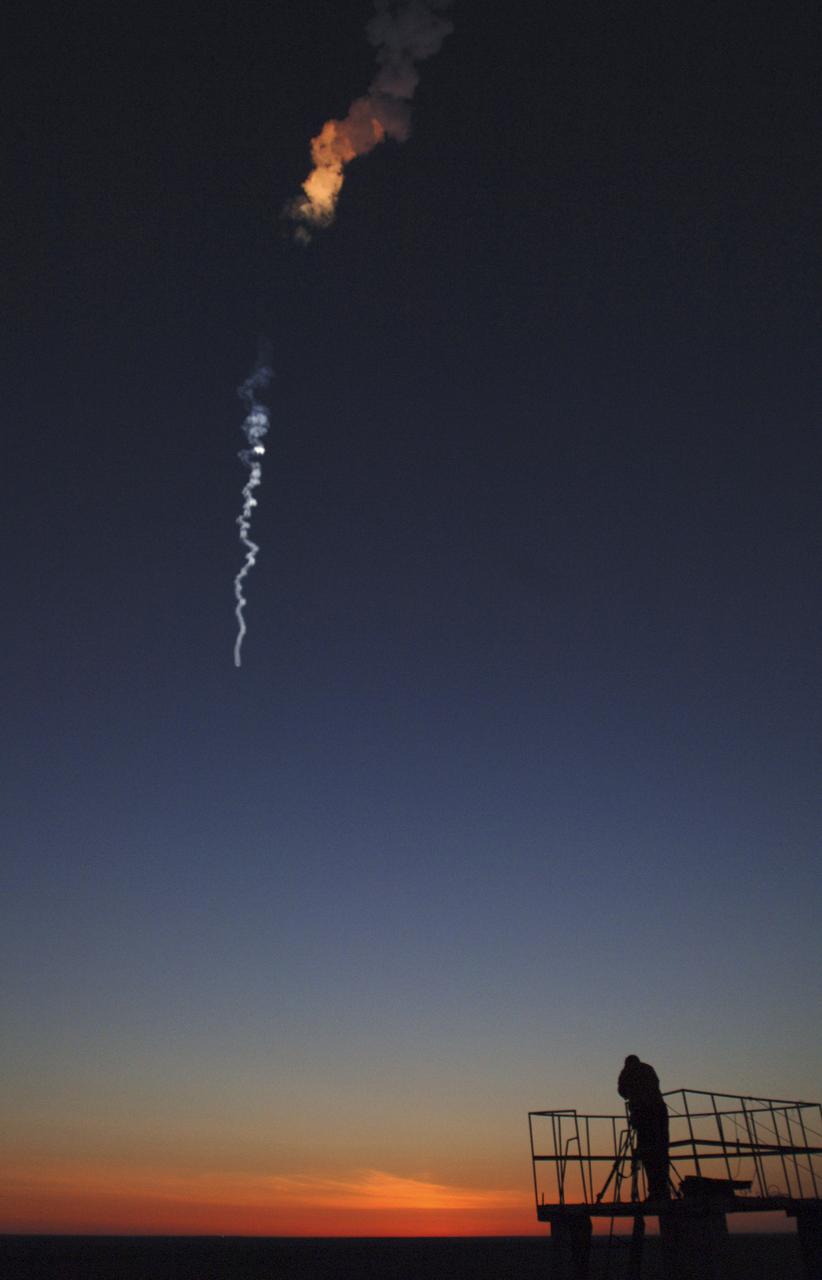
Expedition 11 Commander Sergei Krikalev, Flight Engineer and NASA Science Officer John Phillips and European Space Agency astronaut Roberto Vittori of Italy blast off aboard the Soyuz TMA-6 spacecraft from the Baikonur Cosmodrome in Kazakhstan, Friday, April 15, 2005, for a two-day trip to the International Space Station. Krikalev and Phillips will spend six months on the Station, replacing Expedition 10 Commander Leroy Chiao and Flight Engineer Salizhan Sharipov, while Vittori will spend eight days on the Station under a commerical contract between ESA and the Russian Federal Space Agency, returning to Earth with Chiao and Sharipov on April 25. Photo Credit: (NASA/Bill Ingalls)
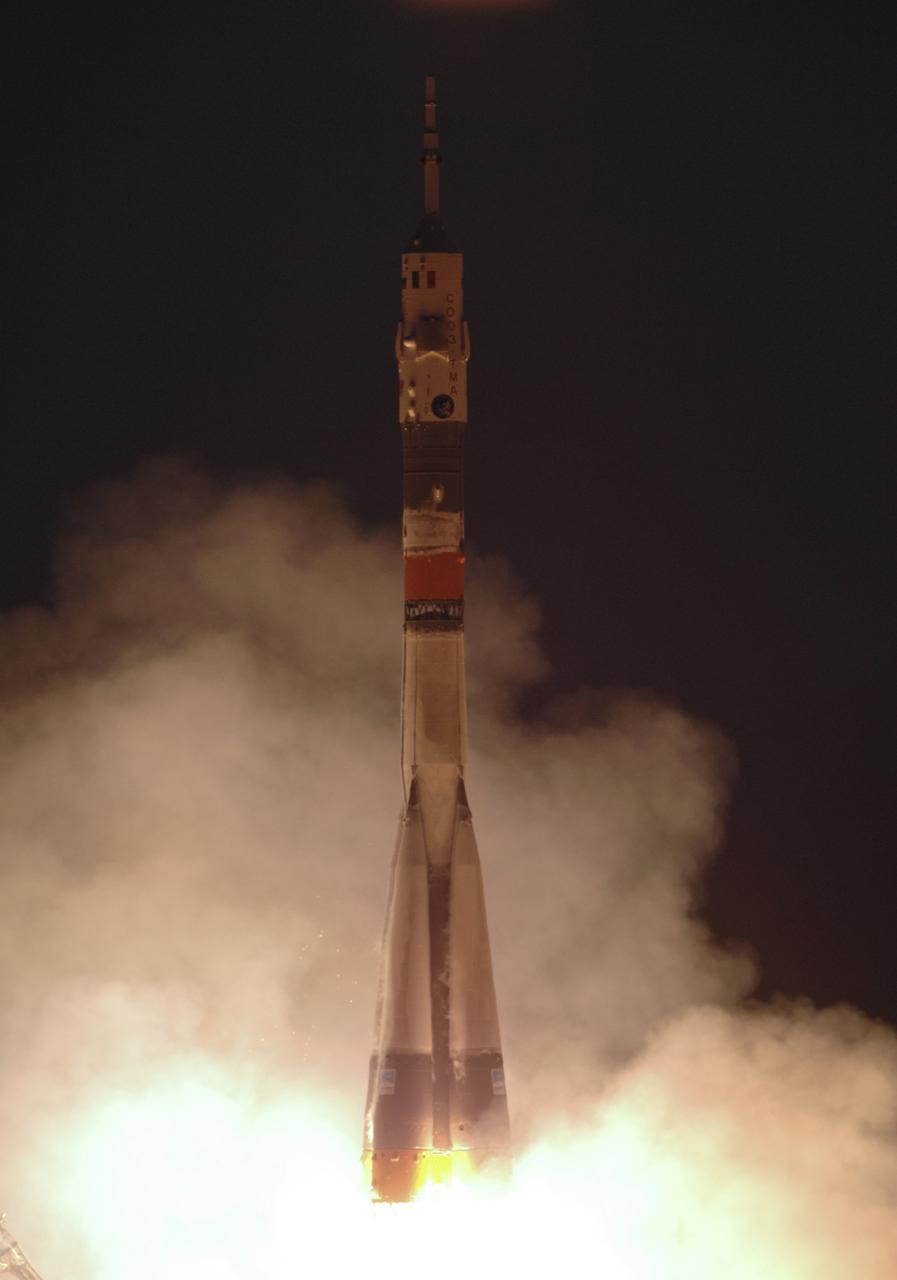
Expedition 11 Commander Sergei Krikalev, Flight Engineer and NASA Science Officer John Phillips and European Space Agency astronaut Roberto Vittori, of Italy, blast off aboard the Soyuz TMA-6 spacecraft from the Baikonur Cosmodrome in Kazakhstan, Friday, April 15, 2005 for a two-day trip to the International Space Station. Photo Credit: (NASA/Bill Ingalls)