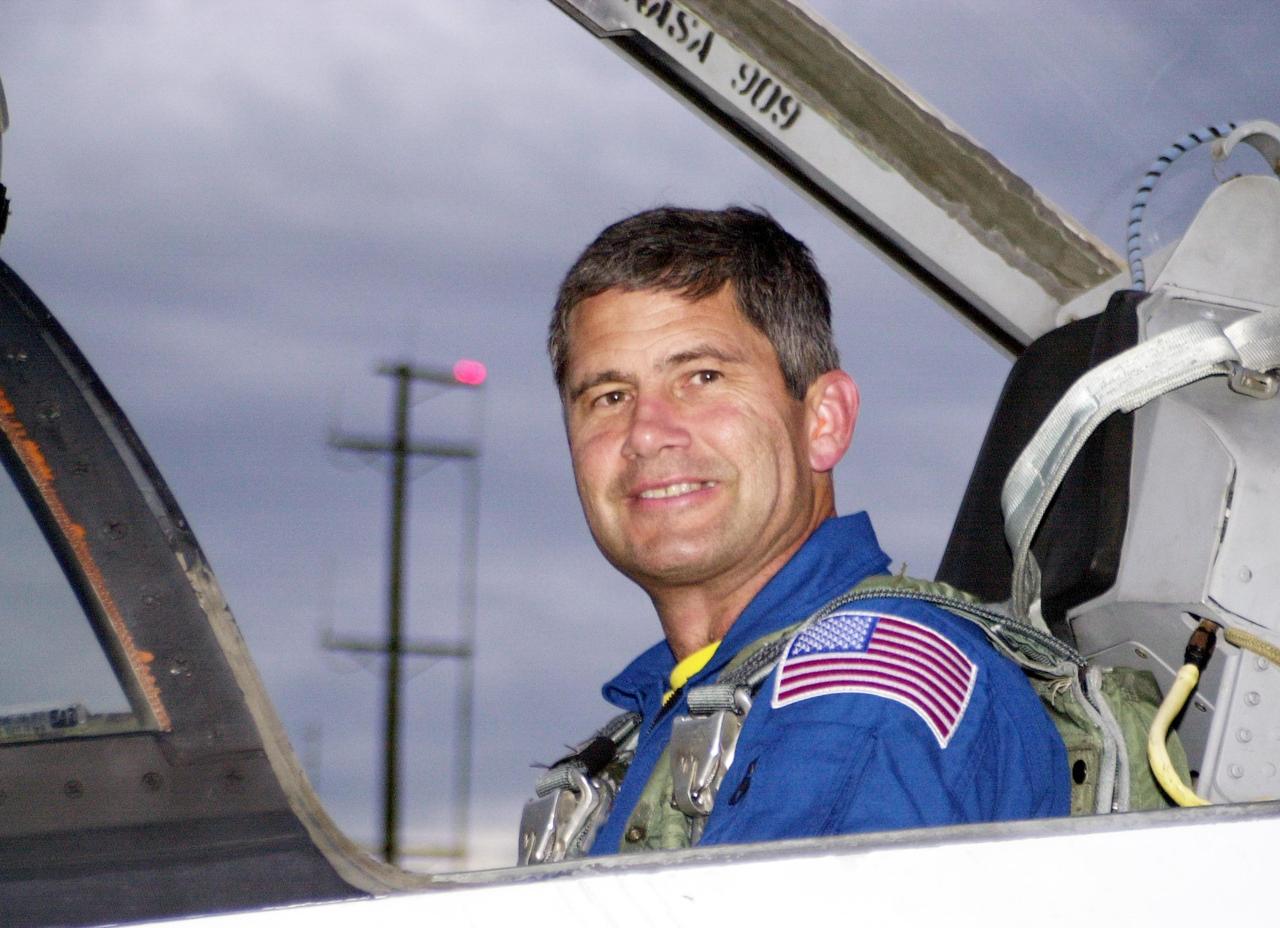
KENNEDY SPACE CENTER, FLA. -- STS-113 Pilot Paul Lockhart arrives at KSC for Terminal Countdown Demonstration Test activities, which include a simulated launch countdown. The primary payloads on mission STS-113 are the first port truss segment, P1, and the Crew and Equipment Translation Aid (CETA) Cart B. Once delivered, the P1 truss will remain stowed until flight 12A.1 in 2003 when it will be attached to the central truss segment, S0, on the Space Station. Also onboard Space Shuttle Endeavour will be the Expedition 6 crew who will replace Expedition 5, returning to Earth after 4 months. The STS-113 launch is scheduled for Nov. 10, 2002. .
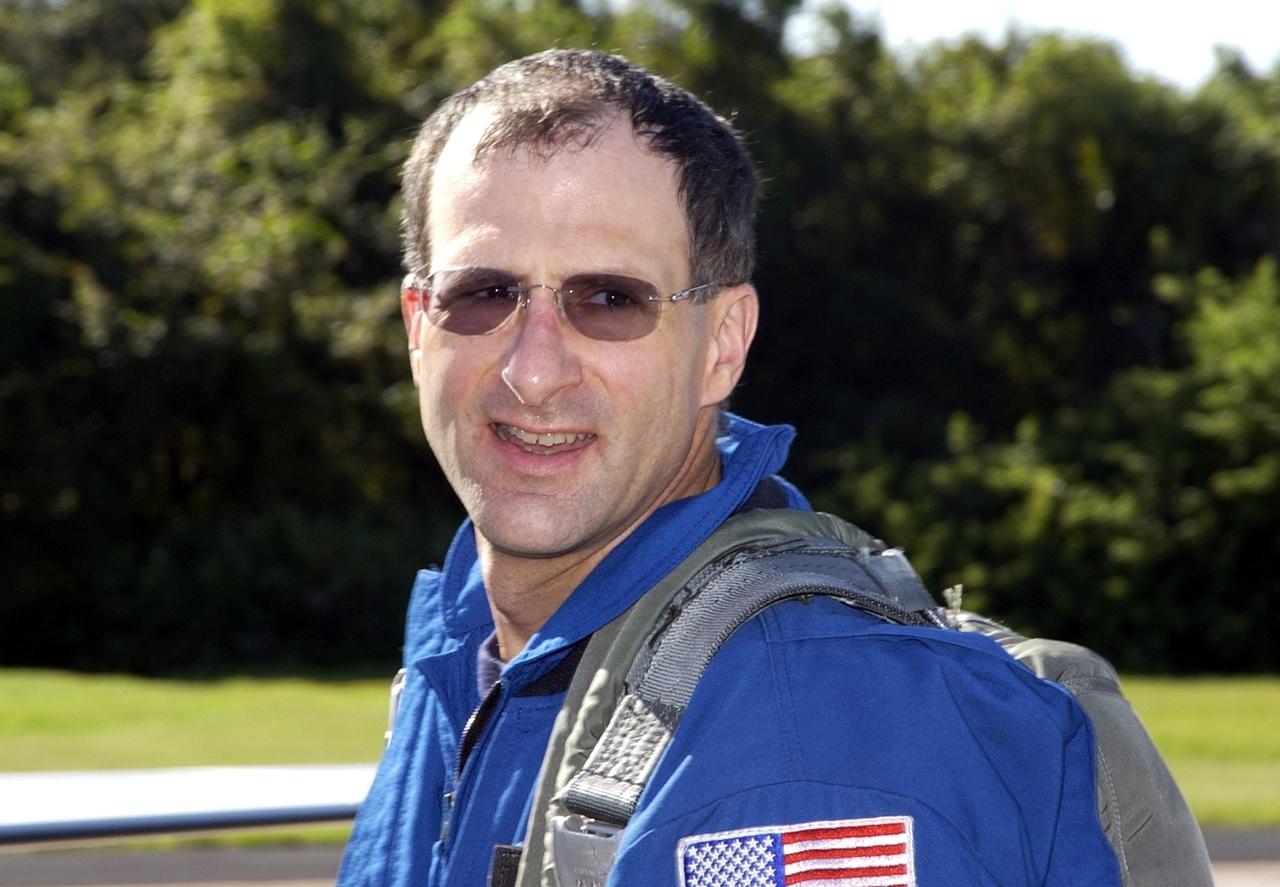
KENNEDY SPACE CENTER, FLA. -- Astronaut Donald Pettit, a member of the Expedition 6 crew, arrives at KSC for Terminal Countdown Demonstration Test activities. Expedition 6 will fly on Space Shuttle Endeavour to the International Space Station on mission STS-113. They will relieve and replace the Expedition 5 crew. Endeavour will also be transporting the Port 1 (P1) truss segment to the Station. STS-113 is scheduled to launch Nov. 10, 2002.
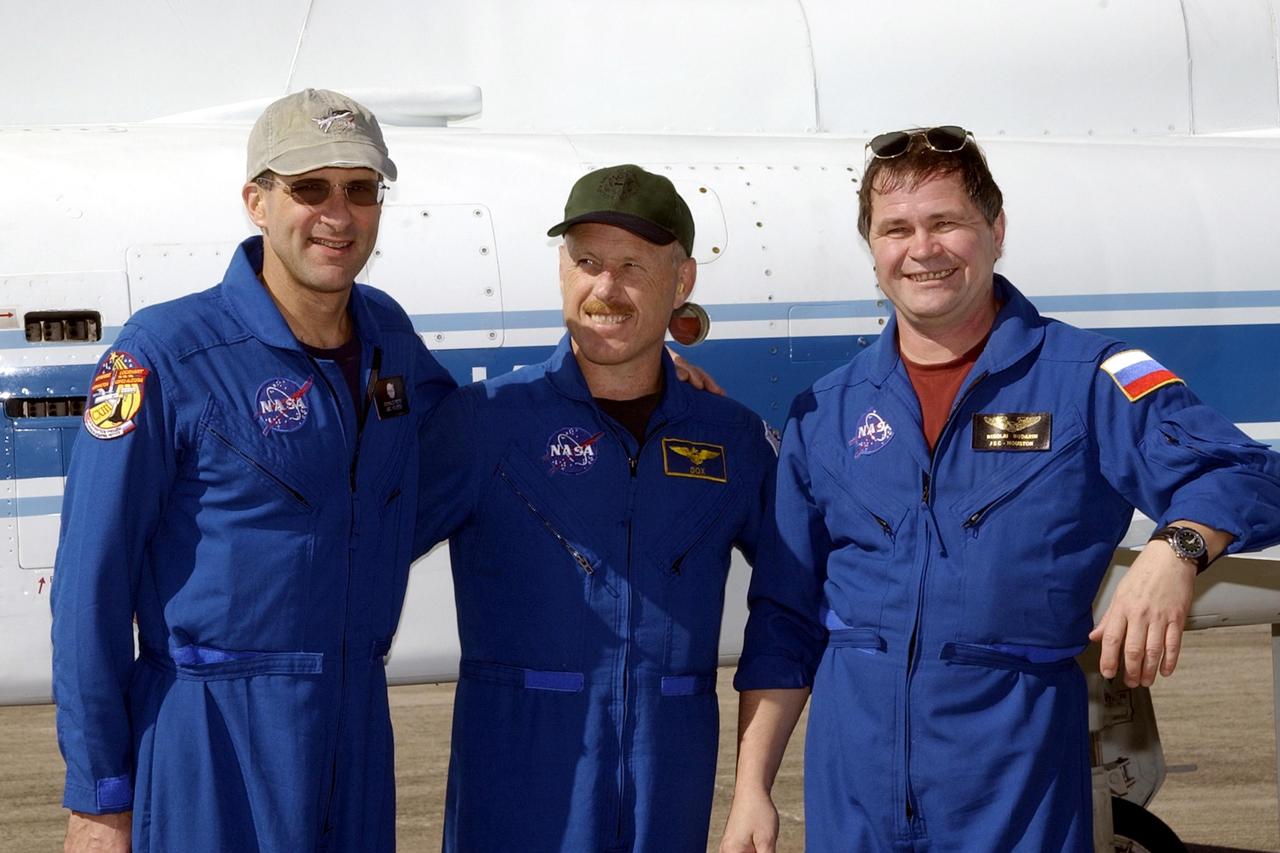
KENNEDY SPACE CENTER, FLA. -- The Expedition 6 crew pauses for the photographer after their arrival at the Shuttle Landing Facility. From left are astronaut Donald Pettit, Commander Ken Bowersox and cosmonaut Nikolai Budarin. The crew is at KSC for Terminal Countdown Demonstration Test activities. Expedition 6 will fly on Space Shuttle Endeavour to the International Space Station on mission STS-113. They will relieve and replace the Expedition 5 crew. Endeavour will also be transporting the Port 1 (P1) truss segment to the Station. STS-113 is scheduled to launch Nov. 10, 2002.
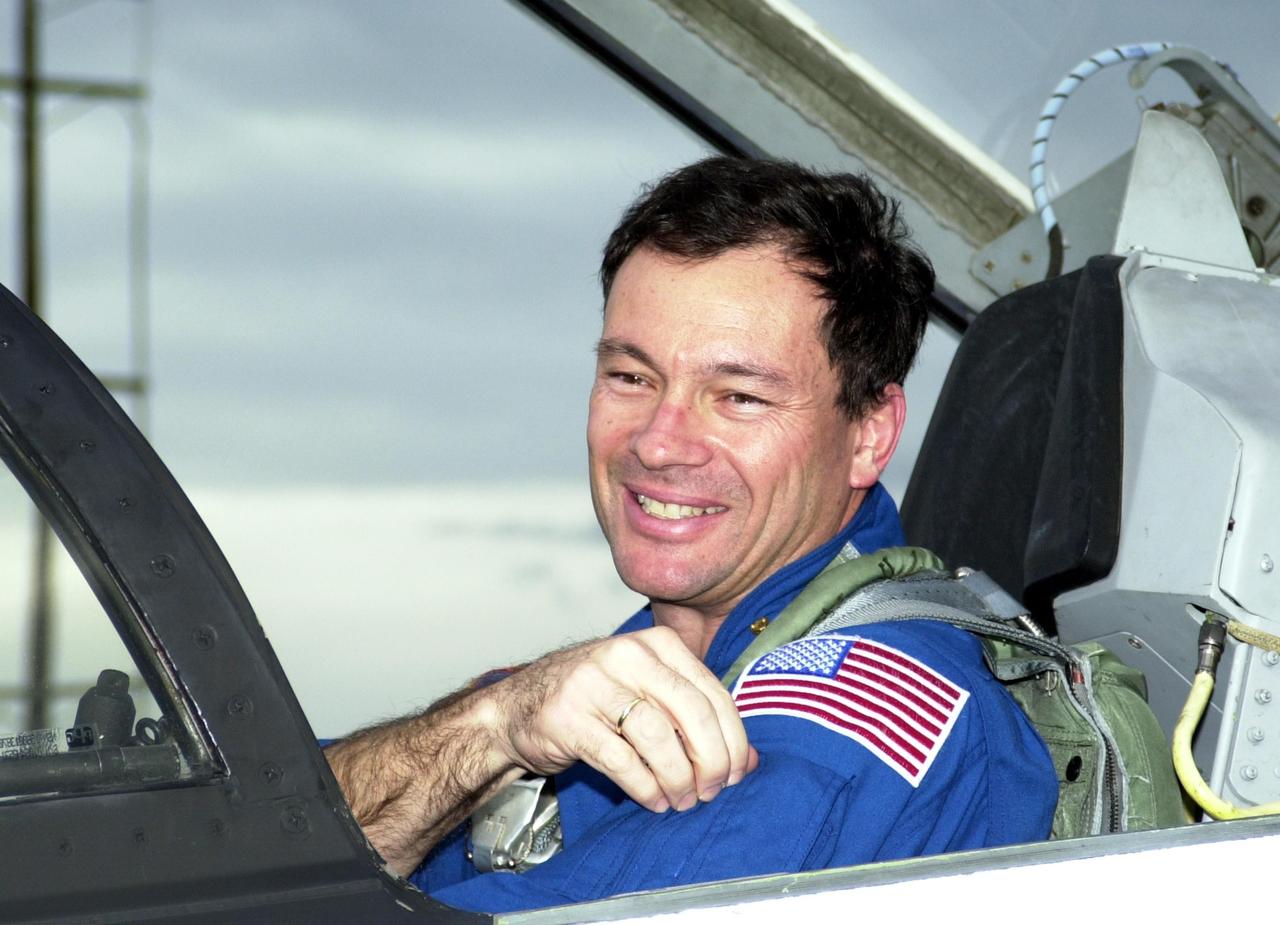
KENNEDY SPACE CENTER, FLA. -- STS-113 Mission Specialist Michael Lopez-Alegria arrives at KSC for Terminal Countdown Demonstration Test activities, which include a simulated launch countdown. The primary payloads on mission STS-113 are the first port truss segment, P1, and the Crew and Equipment Translation Aid (CETA) Cart B. Once delivered, the P1 truss will remain stowed until flight 12A.1 in 2003 when it will be attached to the central truss segment, S0, on the Space Station. Also onboard Space Shuttle Endeavour will be the Expedition 6 crew who will replace Expedition 5, returning to Earth after 4 months. The STS-113 launch is scheduled for Nov. 10, 2002.
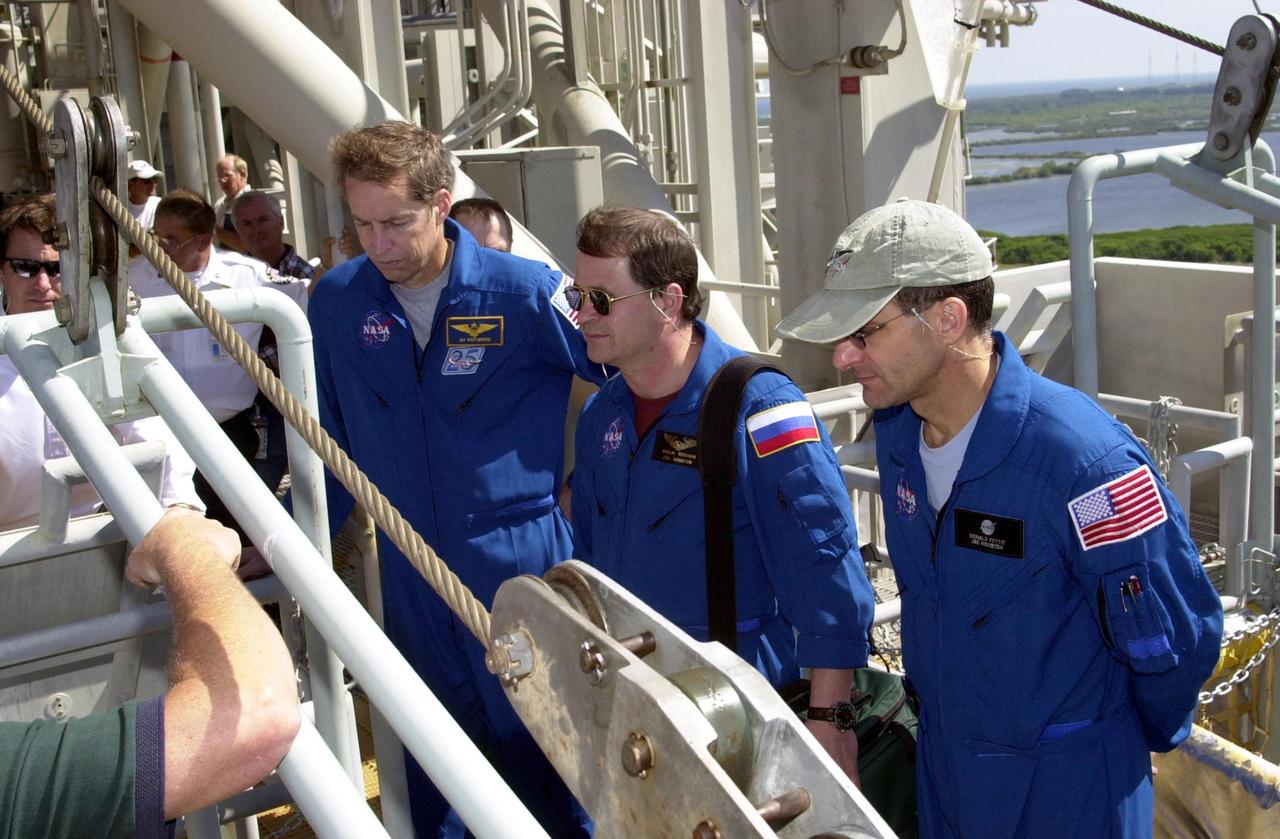
KENNEDY SPACE CENTER, FLA. - As part of Terminal Countdown Demonstration Test (TCDT) activities, the STS-113 and Expedition 6 crews receive training in emergency exit from the orbiter on Launch Pad 39A. Shown are (from left) Mission Commander James Wetherbee and cosmonaut Nikolai Budarin and astronaut Donald Pettit of the Expedition 6 crew. The TCDT also includes a simulated launch countdown. The 16th assembly flight to the International Space Station, STS-113 will carry the Port 1 (P1) truss aboard Space Shuttle Endeavour as well as the Expedition 6 crew, who will replace Expedition 5 on the Station. Mission STS-113 is scheduled to launch Nov. 10, 2002.
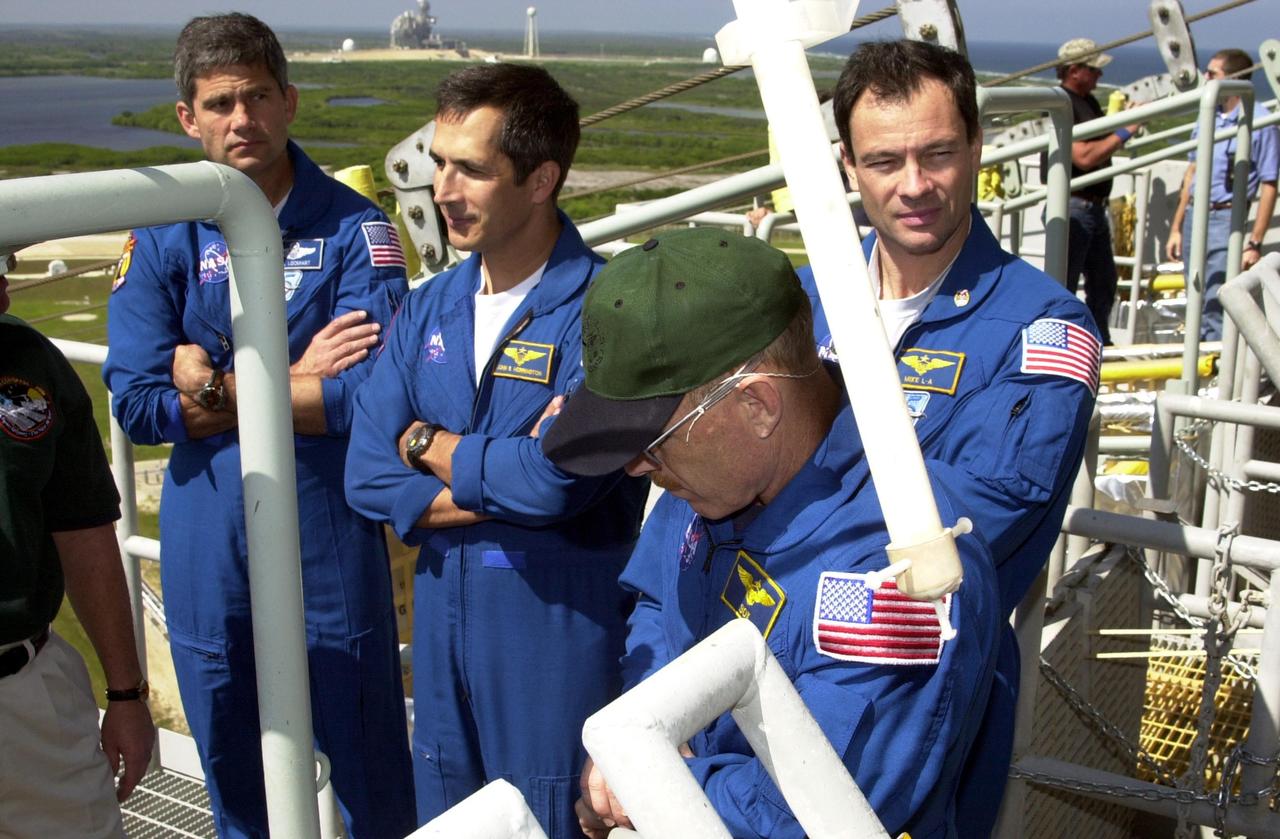
KENNEDY SPACE CENTER, FLA. - As part of Terminal Countdown Demonstration Test (TCDT) activities, the STS-113 and Expedition 6 crews receive training in emergency exit from the orbiter on Launch Pad 39A. Shown are (from left) STS-113 Pilot Paul Lockhart, Mission Specialist John Herrington, Expedition 6 Commander Ken Bowersox, and STS-113 Mission Specialist Michael Lopez-Alegria. The TCDT also includes a simulated launch countdown. The 16th assembly flight to the International Space Station, STS-113 will carry the Port 1 (P1) truss aboard Space Shuttle Endeavour as well as the Expedition 6 crew, who will replace Expedition 5 on the Station. Mission STS-113 is scheduled to launch Nov. 10, 2002.
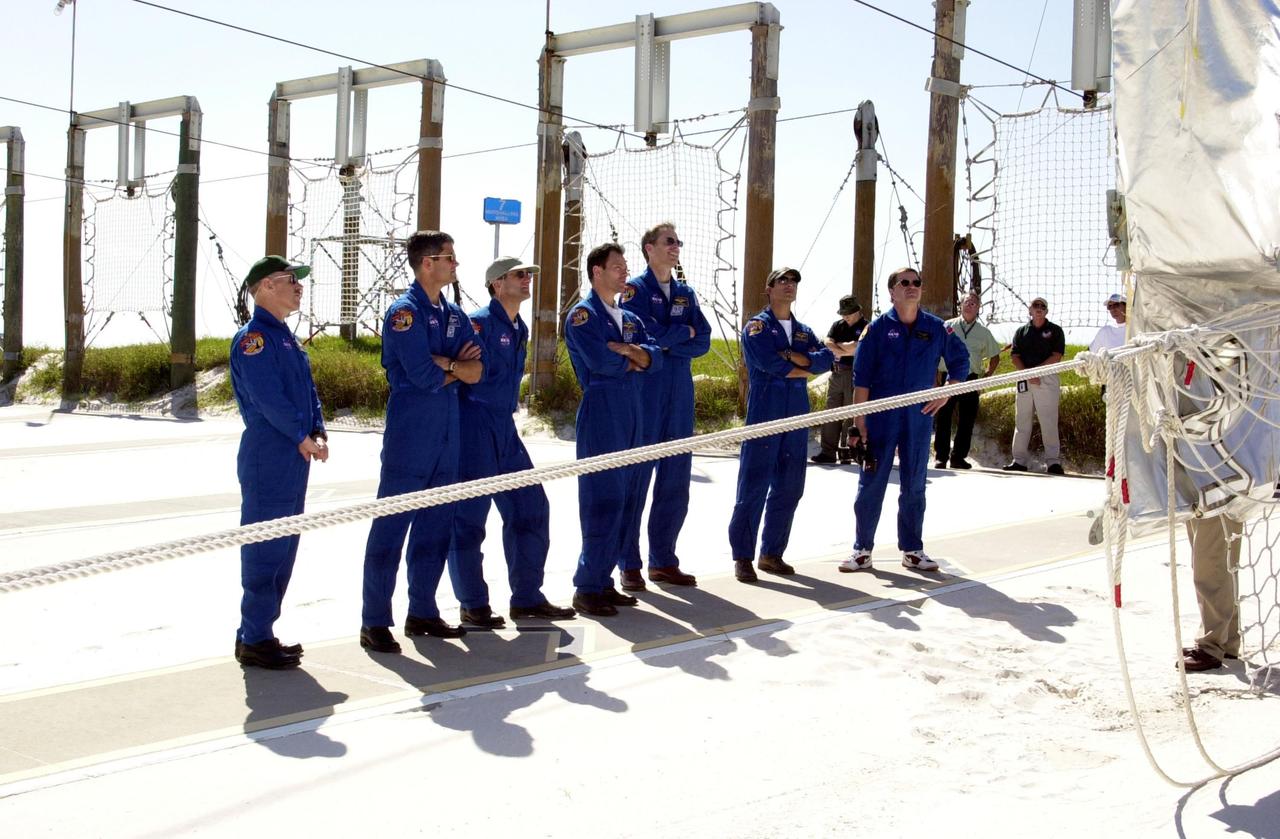
KENNEDY SPACE CENTER, FLA. - As part of Terminal Countdown Demonstration Test (TCDT) activities, the STS-113 and Expedition 6 crews receive training in emergency exit from the orbiter on Launch Pad 39A. Shown are (from left) Expedition 6 Commander Ken Bowersox; STS-113 Pilot Paul Lockhart; astronaut Donald Pettit; Mission Specialist Michael Lopez-Alegria, Commander James Wetherbee and Mission Specialist John Herrington; and cosmonaut Nikolai Budarin. The TCDT also includes a simulated launch countdown. The 16th assembly flight to the International Space Station, STS-113 will carry the Port 1 (P1) truss aboard Space Shuttle Endeavour as well as the Expedition 6 crew, who will replace Expedition 5 on the Station. Mission STS-113 is scheduled to launch Nov. 10, 2002.
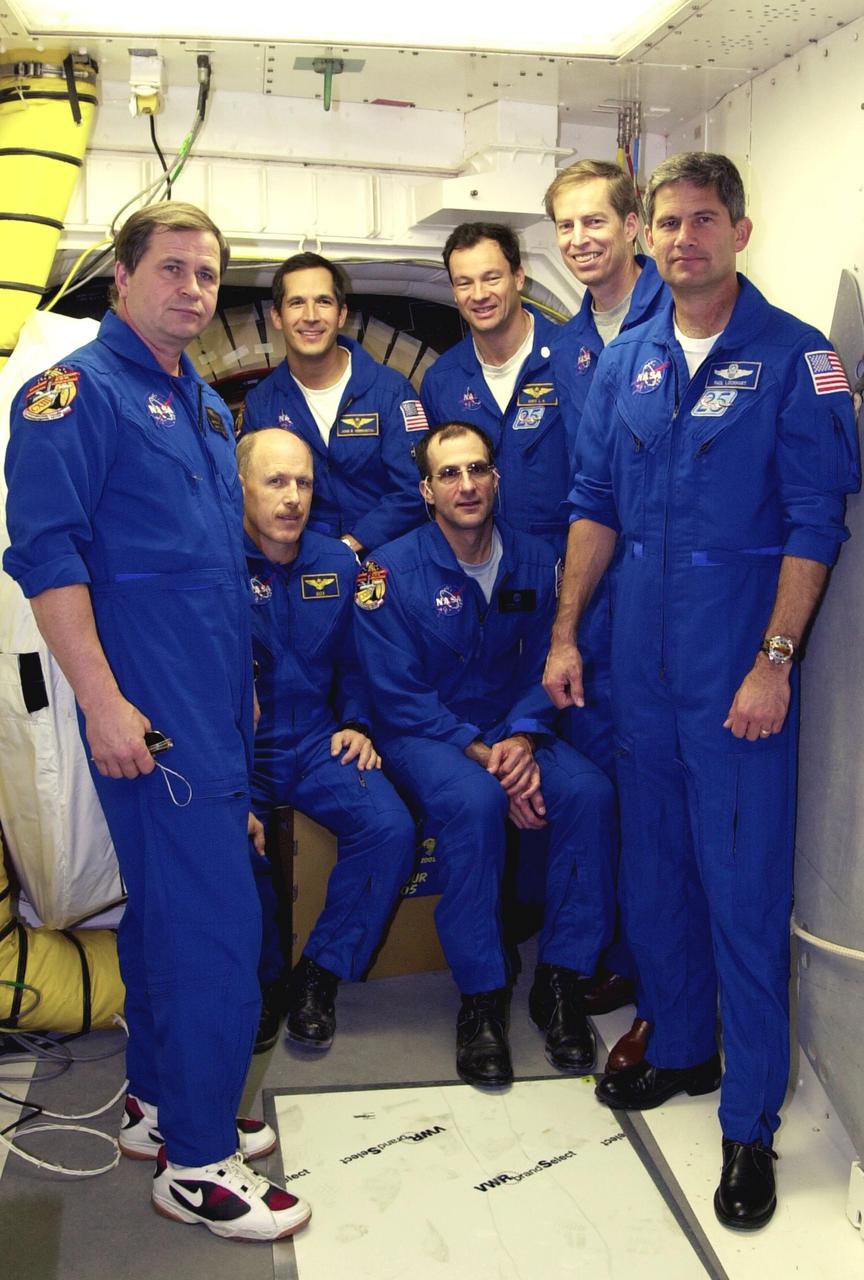
KENNEDY SPACE CENTER, FLA. -- At the entrance to Space Shuttle Endeavour's cockpit, the STS-113 and Expedition 6 crews gather for a photo during Terminal Countdown Demonstration Test activities at the pad. From left, in front, are cosmonaut Nikolai Budarin, Commander Ken Bowersox and astronaut Donald Pettit of Expedition 6, and STS-113 Pilot Paul Lockhart. In back, from left, are STS-113 Mission Specialists John Herrington and Michael Lopez-Alegria and Commander James Wetherbee. The TCDT also includes a simulated launch countdown. The 16th assembly flight to the International Space Station, STS-113 will carry the Port 1 (P1) truss aboard Space Shuttle Endeavour as well as the Expedition 6 crew, who will replace Expedition 5 on the Station. Mission STS-113 is scheduled to launch Nov. 10, 2002.
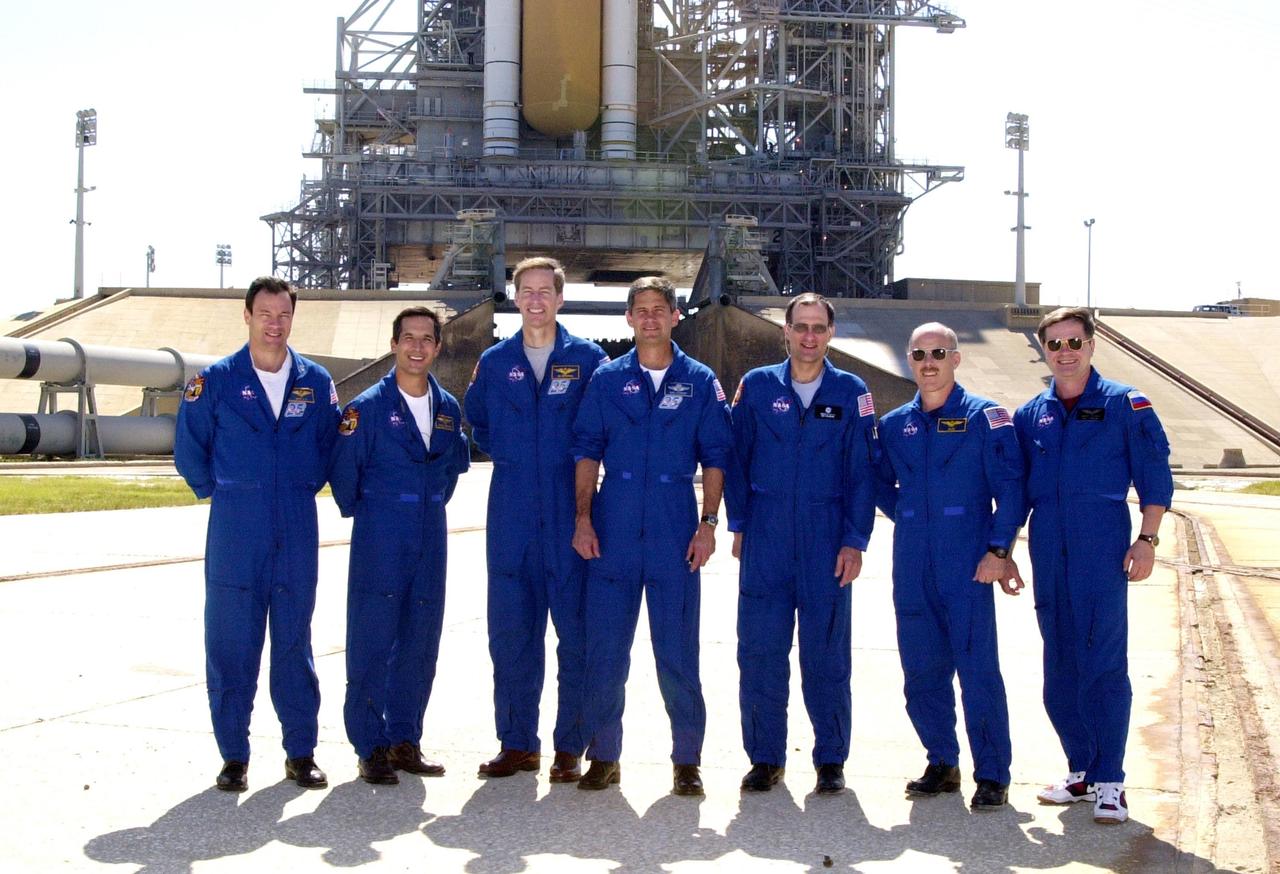
KENNEDY SPACE CENTER, FLA. - The STS-113 and Expedition 6 crews pause for a photo during Terminal Countdown Demonstration Test activities at the pad. From left are STS-113 Mission Specialists Michael Lopez-Alegria and John Herrington, Commander James Wetherbee and Pilot Paul Lockhart; Expedition 6 astronaut Donald Pettit, Commander Ken Bowersox and cosmonaut Nikolai Budarin. The TCDT also includes a simulated launch countdown. The 16th assembly flight to the International Space Station, STS-113 will carry the Port 1 (P1) truss aboard Space Shuttle Endeavour as well as the Expedition 6 crew, who will replace Expedition 5 on the Station. Mission STS-113 is scheduled to launch Nov. 10, 2002.
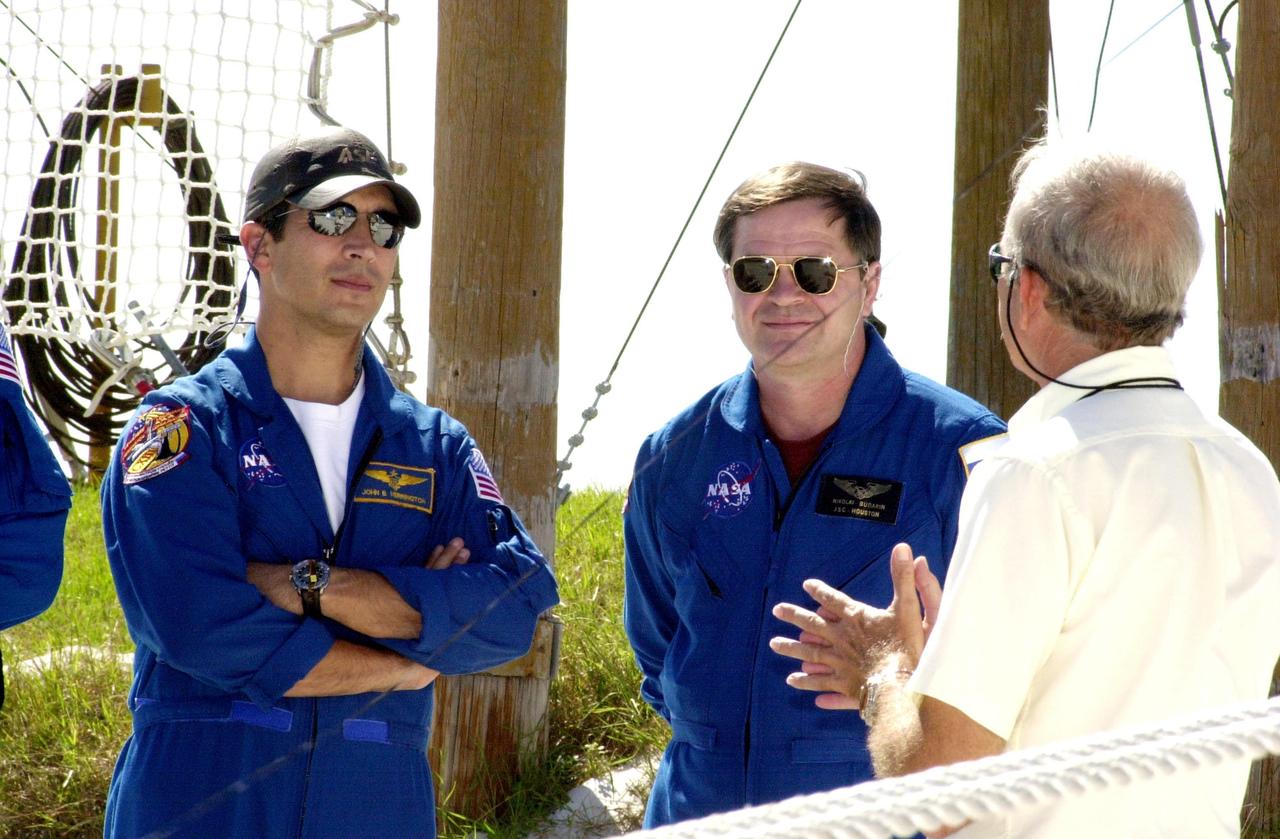
KENNEDY SPACE CENTER, FLA. - STS-113 Mission Specialist John Herrington (left) and cosmonaut Nikolai Budarin (center) listen to instructions from a trainer on the emergency egress system on Launch Pad 39A. They are other crew members are taking part in Terminal Countdown Demonstration Test (TCDT) activities, which also include a simulated launch countdown. The 16th assembly flight to the International Space Station, STS-113 will carry the Port 1 (P1) truss aboard Space Shuttle Endeavour as well as the Expedition 6 crew, who will replace Expedition 5 on the Station. Mission STS-113 is scheduled to launch Nov. 10, 2002.

KENNEDY SPACE CENTER, FLA. - On Launch Pad 39A, a trainer (right) explains use of the slidewire basket, part of the emergency egress system, to Expedition 6 astronaut Donald Pettit (left) and STS-113 Mission Specialists Michael Lopez-Alegria (center) and John Herrington (right). . They are other crew members are taking part in Terminal Countdown Demonstration Test (TCDT) activities, which also include a simulated launch countdown. The 16th assembly flight to the International Space Station, STS-113 will carry the Port 1 (P1) truss aboard Space Shuttle Endeavour as well as the Expedition 6 crew, who will replace Expedition 5 on the Station. Mission STS-113 is scheduled to launch Nov. 10, 2002.
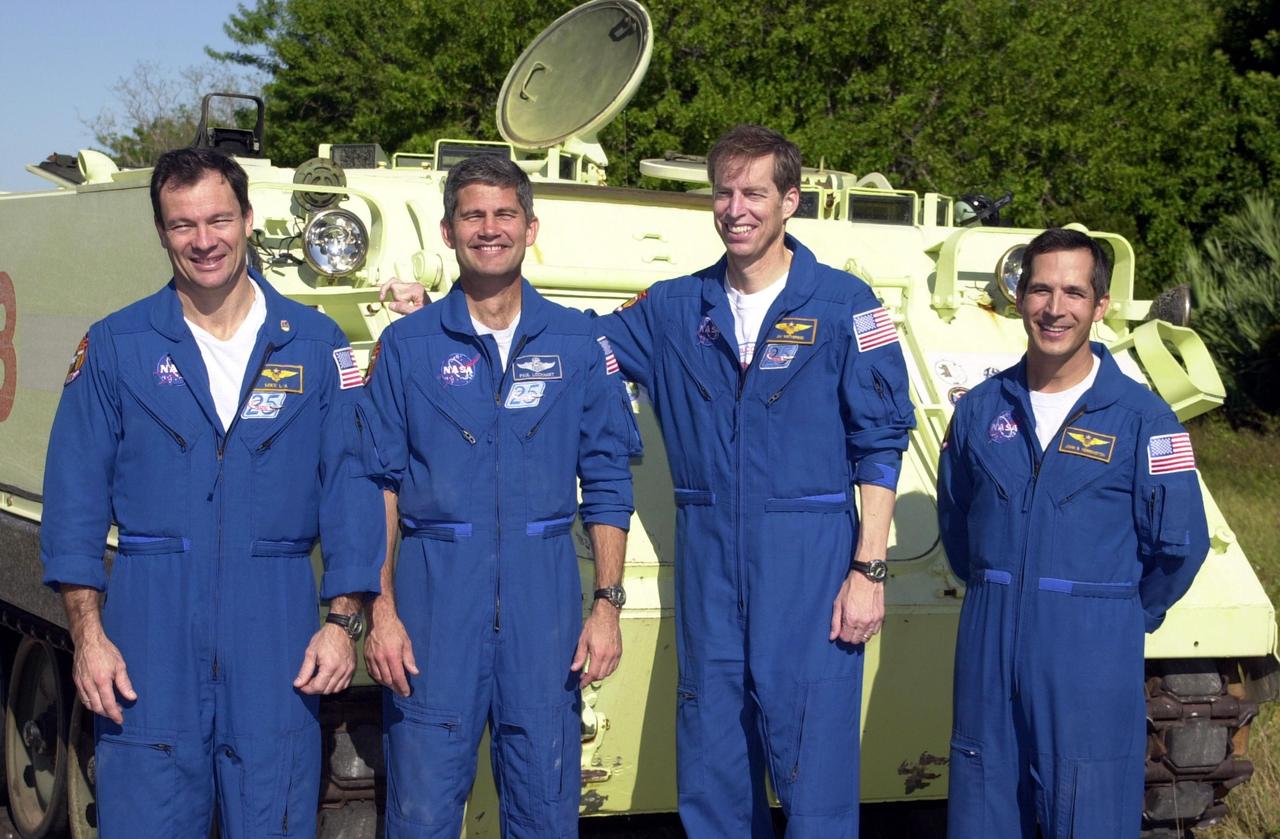
KENNEDY SPACE CENTER, FLA. -- The STS-113 crew pause for a photo after test drives in the M-113 armored personnel carrier behind them. From left are Mission Specialist Michael Lopez-Alegria, Pilot Paul Lockhart, Commander James Wetherbee and Mission Specialist John Herrington. Driving the M-113 is part of emergency egress training at the pad, one of the Terminal Countdown Demonstration Test activities in preparation for launch. The TCDT also includes a simulated launch countdown. The primary payloads on mission STS-113 are the first port truss segment, P1, and the Crew and Equipment Translation Aid (CETA) Cart B. Once delivered, the P1 truss will remain stowed until flight 12A.1 in 2003 when it will be attached to the central truss segment, S0, on the Space Station. Also onboard Space Shuttle Endeavour will be the Expedition 6 crew who will replace Expedition 5, returning to Earth after 4 months.
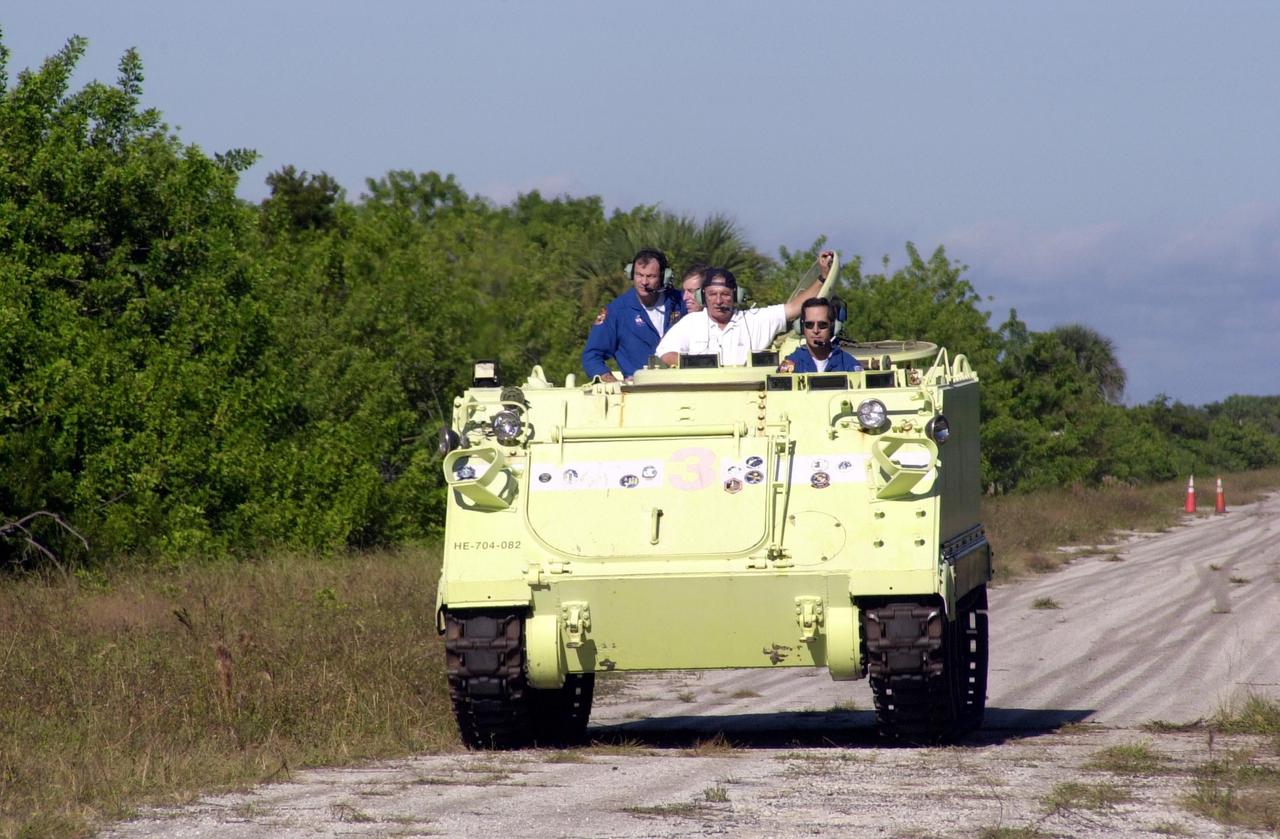
KENNEDY SPACE CENTER, FLA. -- STS-113 Mission Specialist John Herrington is at the wheel of an M-113 armored personnel carrier during emergency egress training at the pad. He is accompanied by (left) Mission Specialist Michael Lopez-Alegria and Commander James Wetherbee. The crew is preparing for the mission aboard Space Shuttle Endeavour, which is scheduled to launch Nov. 10, by taking part in Terminal Countdown Demonstration Test activities. The TCDT includes a simulated launch countdown.. The primary payloads on mission STS-113 are the first port truss segment, P1, and the Crew and Equipment Translation Aid (CETA) Cart B. Once delivered, the P1 truss will remain stowed until flight 12A.1 in 2003 when it will be attached to the central truss segment, S0, on the Space Station. Also onboard Space Shuttle Endeavour will be the Expedition 6 crew who will replace Expedition 5, returning to Earth after 4 months.
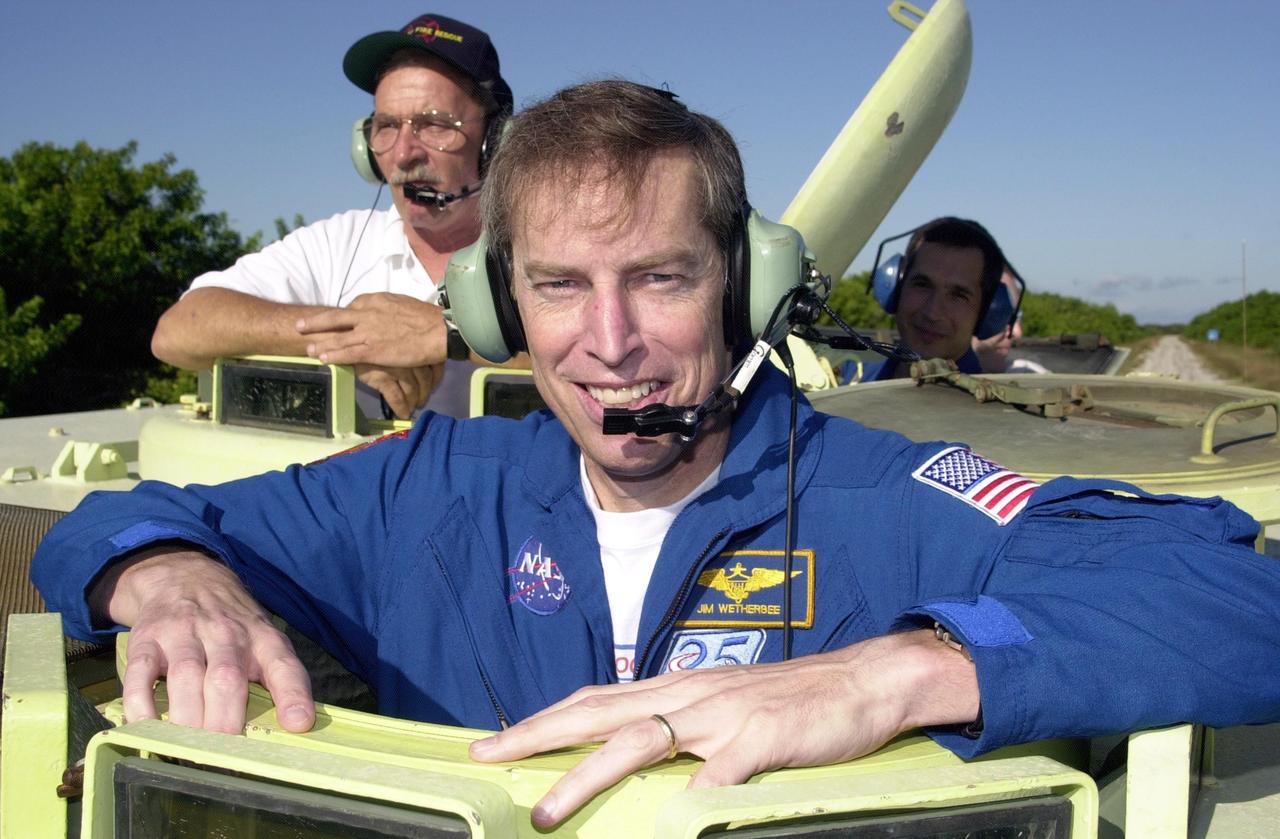
KENNEDY SPACE CENTER, FLA. - STS-113 Mission Commander James Wetherbee gets ready to drive an M-113 armored personnel carrier, part of emergency egress training during Terminal Countdown Demonstration Test activities. He and the rest of the crew are preparing for the mission aboard Space Shuttle Endeavour, which is scheduled to launch Nov. 10. The TCDT includes a launch countdown. The primary payloads on mission STS-113 are the first port truss segment, P1, and the Crew and Equipment Translation Aid (CETA) Cart B. Once delivered, the P1 truss will remain stowed until flight 12A.1 in 2003 when it will be attached to the central truss segment, S0, on the Space Station. Also onboard Space Shuttle Endeavour will be the Expedition 6 crew who will replace Expedition 5, returning to Earth after 4 months.
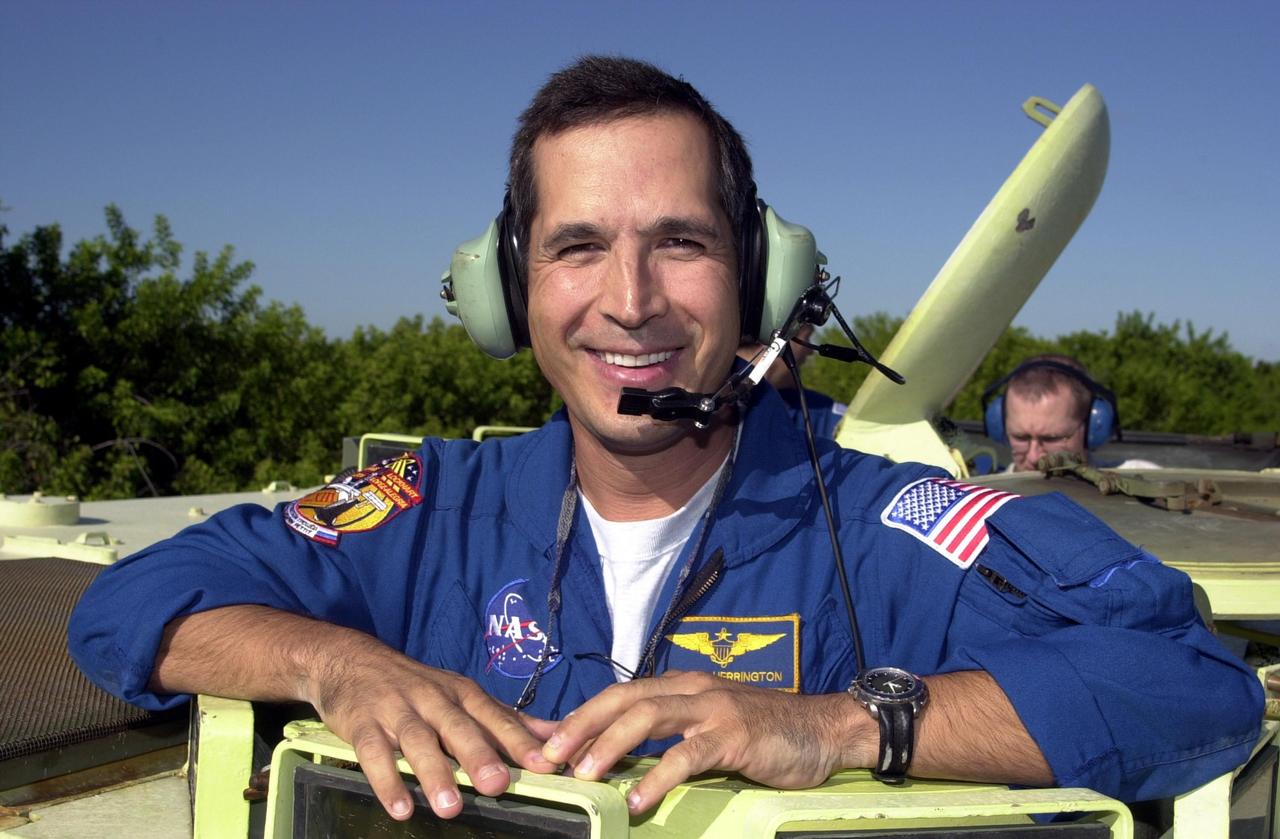
KENNEDY SPACE CENTER, FLA. -- STS-113 Mission Specialist John Herrington stands inside an M-113 armored personnel carrier that he is about to drive as part of emergency egress training during Terminal Countdown Demonstration Test activities. He and the rest of the crew are preparing for the mission aboard Space Shuttle Endeavour, which is scheduled to launch Nov. 10. The TCDT includes a simulated launch countdown. The primary payloads on mission STS-113 are the first port truss segment, P1, and the Crew and Equipment Translation Aid (CETA) Cart B. Once delivered, the P1 truss will remain stowed until flight 12A.1 in 2003 when it will be attached to the central truss segment, S0, on the Space Station. Also onboard Space Shuttle Endeavour will be the Expedition 6 crew who will replace Expedition 5, returning to Earth after 4 months.
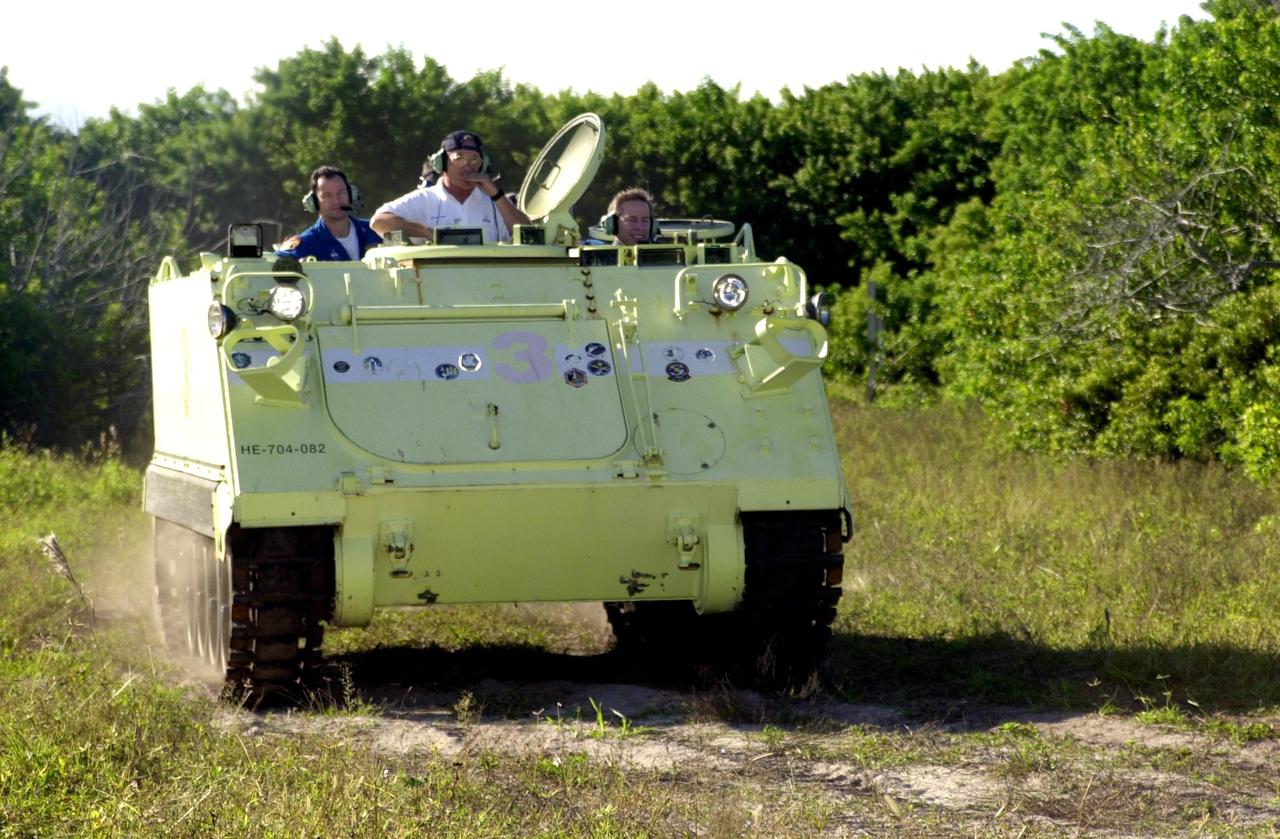
KENNEDY SPACE CENTER, FLA. -- STS-113 Mission Commander James Wetherbee practices driving an M-113 armored personnel carrier, part of emergency egress training during Terminal Countdown Demonstration Test activities. He and the rest of the crew are preparing for the mission aboard Space Shuttle Endeavour, which is scheduled to launch Nov. 10. The TCDT includes a launch countdown. The primary payloads on mission STS-113 are the first port truss segment, P1, and the Crew and Equipment Translation Aid (CETA) Cart B. Once delivered, the P1 truss will remain stowed until flight 12A.1 in 2003 when it will be attached to the central truss segment, S0, on the Space Station. Also onboard Space Shuttle Endeavour will be the Expedition 6 crew who will replace Expedition 5, returning to Earth after 4 months.
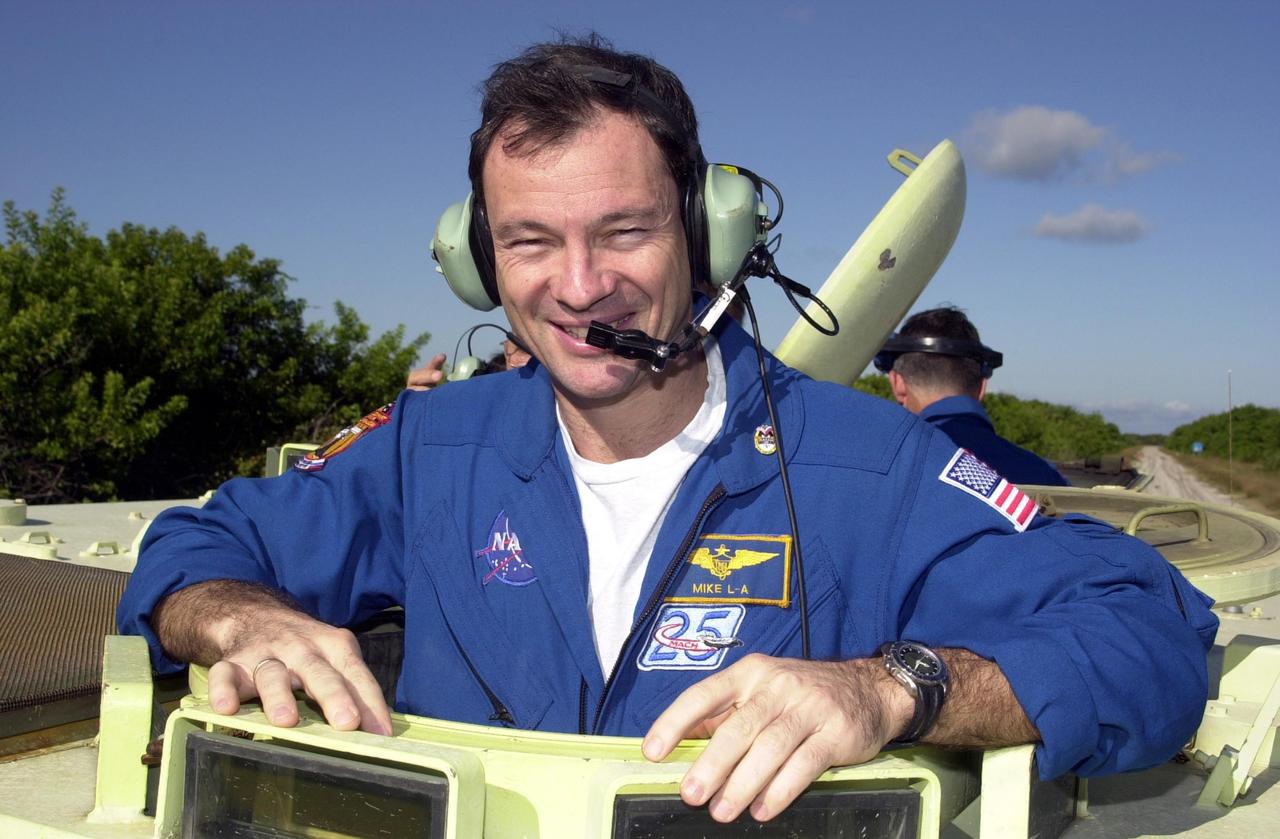
KENNEDY SPACE CENTER, FLA. - STS-113 Mission Specialist Michael Lopez-Alegria is ready to begin a test drive behind the wheel of an M-113 armored personnel carrier during emergency egress training at the pad. He and the rest of the crew are preparing for the mission aboard Space Shuttle Endeavour, which is scheduled to launch Nov. 10, by taking part in Terminal Countdown Demonstration Test activities. The TCDT includes a simulated launch countdown. The primary payloads on mission STS-113 are the first port truss segment, P1, and the Crew and Equipment Translation Aid (CETA) Cart B. Once delivered, the P1 truss will remain stowed until flight 12A.1 in 2003 when it will be attached to the central truss segment, S0, on the Space Station. Also onboard Space Shuttle Endeavour will be the Expedition 6 crew who will replace Expedition 5, returning to Earth after 4 months.
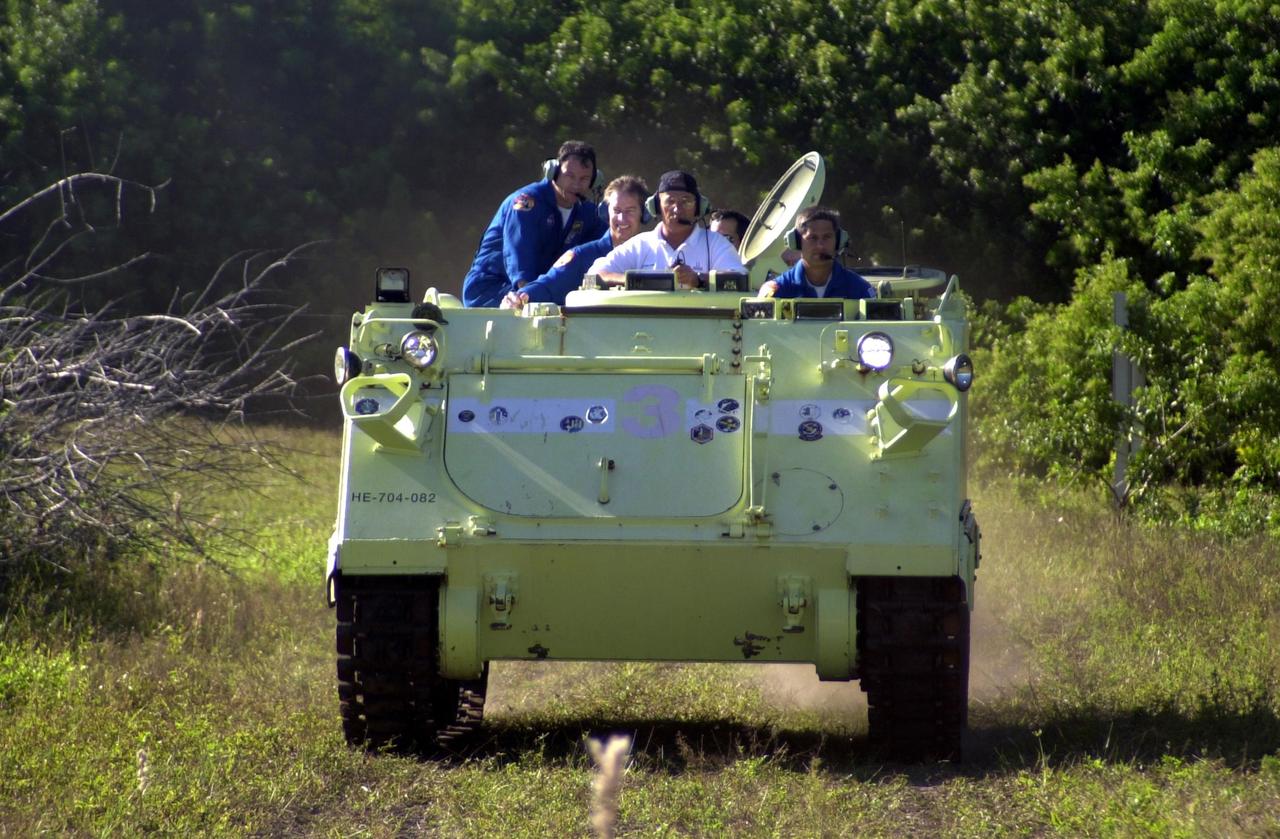
KENNEDY SPACE CENTER, FLA. -- STS-113 Pilot Paul Lockhart test drives an M-113 armored personnel carrier, part of emergency egress training during Terminal Countdown Demonstration Test activities. He is accompanied by several other crew members, seen at left, Mission Specialist Michael Lopez-Alegria and Commander James Wetherbee. The crew is preparing for the mission aboard Space Shuttle Endeavour, which is scheduled to launch Nov. 10. The TCDT includes a simulated launch countdown. The primary payloads on mission STS-113 are the first port truss segment, P1, and the Crew and Equipment Translation Aid (CETA) Cart B. Once delivered, the P1 truss will remain stowed until flight 12A.1 in 2003 when it will be attached to the central truss segment, S0, on the Space Station. Also onboard Space Shuttle Endeavour will be the Expedition 6 crew who will replace Expedition 5, returning to Earth after 4 months.
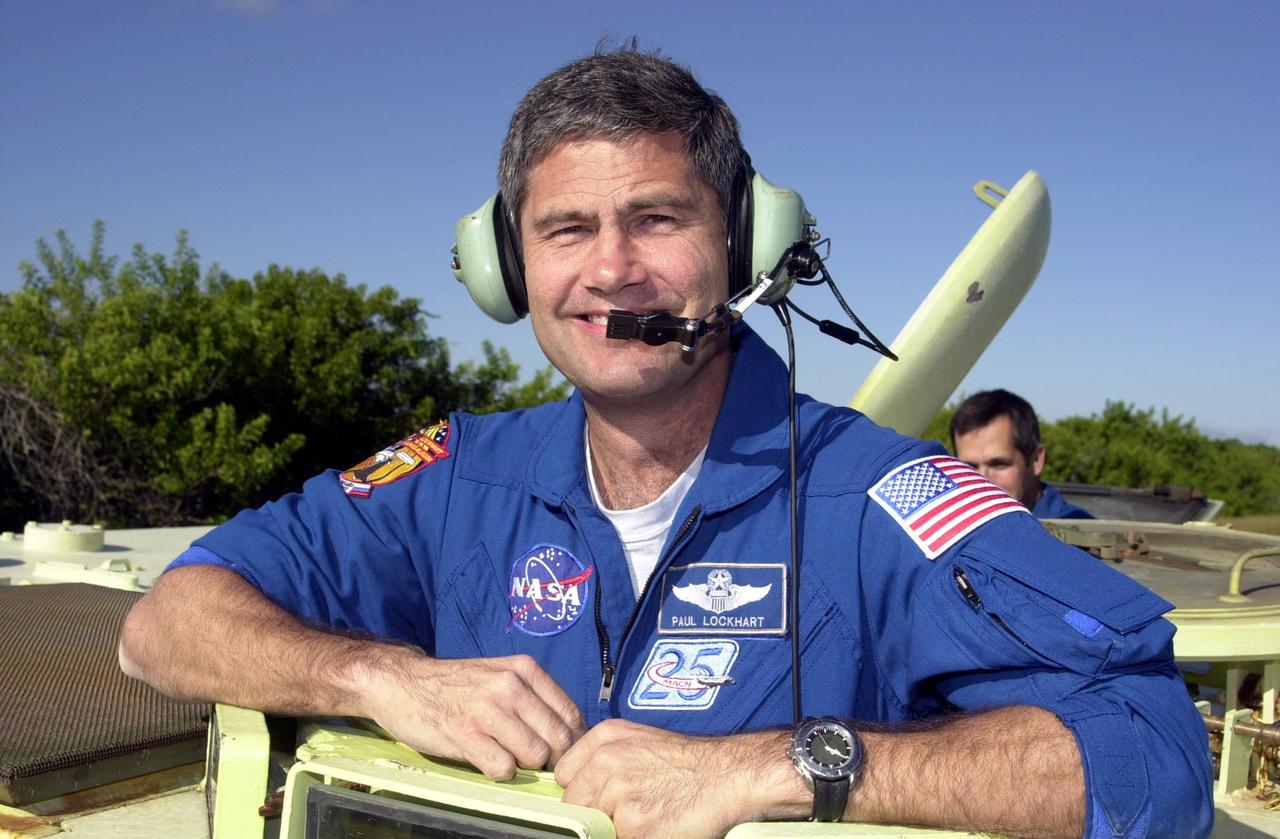
KENNEDY SPACE CENTER, FLA. -- STS-113 Pilot Paul Lockhart stands inside an M-113 armored personnel carrier he is about to drive, part of emergency egress training during Terminal Countdown Demonstration Test activities. He and the rest of the crew are preparing for the mission aboard Space Shuttle Endeavour, which is scheduled to launch Nov. 10. The TCDT includes a simulated launch countdown. The primary payloads on mission STS-113 are the first port truss segment, P1, and the Crew and Equipment Translation Aid (CETA) Cart B. Once delivered, the P1 truss will remain stowed until flight 12A.1 in 2003 when it will be attached to the central truss segment, S0, on the Space Station. Also onboard Space Shuttle Endeavour will be the Expedition 6 crew who will replace Expedition 5, returning to Earth after 4 months.
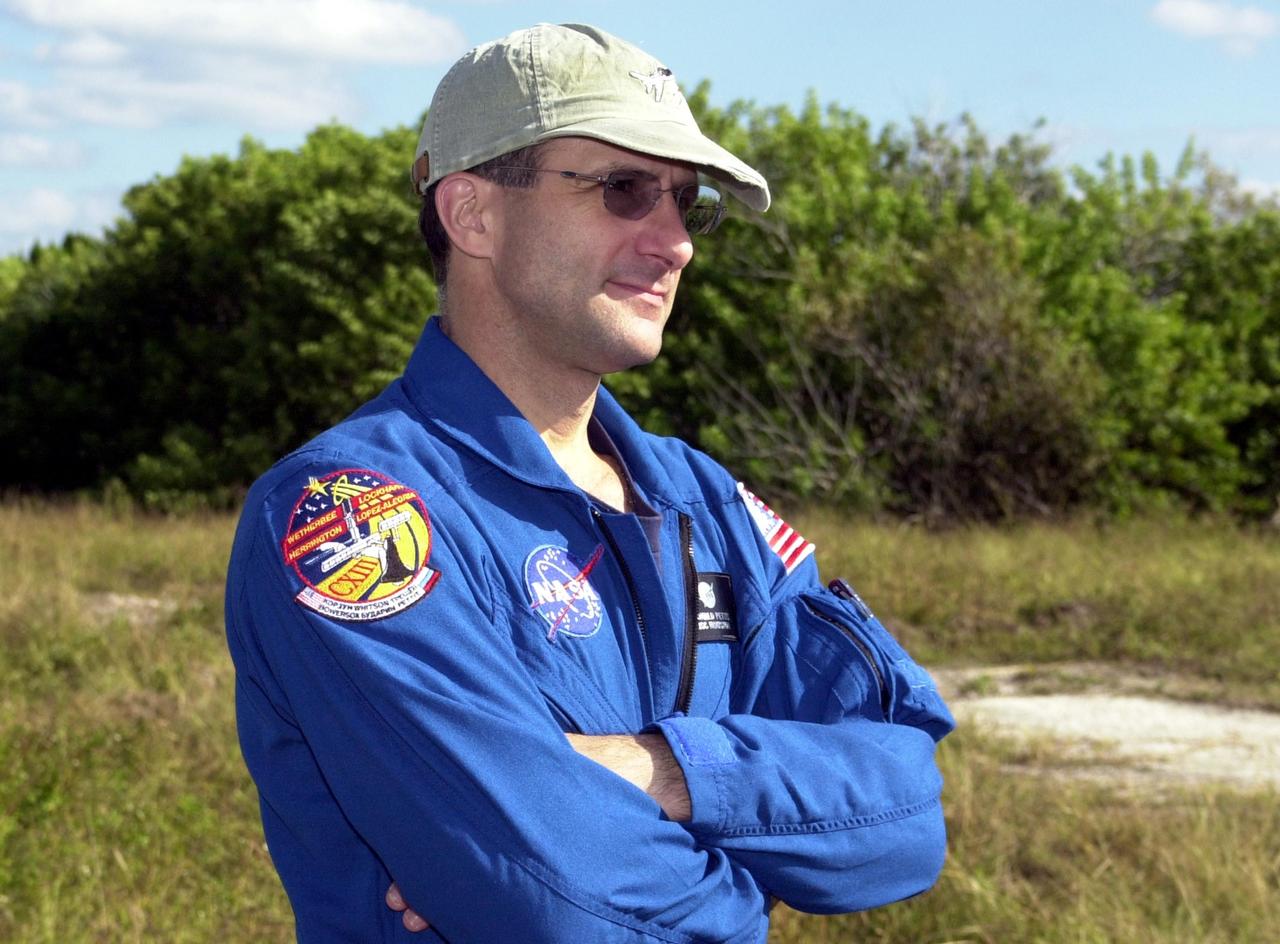
KENNEDY SPACE CENTER, FLA. -- Expedition 6 crew member Donald Pettit stands ready for a practice drive in an M-113 armored personnel carrier during emergency egress training at the pad, one of the Terminal Countdown Demonstration Test activities in preparation for launch. The TCDT also includes a simulated launch countdown. The Expedition 6 crew will travel on Space Shuttle Endeavour to the International Space Station to replace Expedition 5, returning to Earth after 4 months. The primary payloads on mission STS-113 are the first port truss segment, P1, and the Crew and Equipment Translation Aid (CETA) Cart B. Once delivered, the P1 truss will remain stowed until flight 12A.1 in 2003 when it will be attached to the central truss segment, S0, on the Space Station. Launch is scheduled for Nov. 10, 2002.
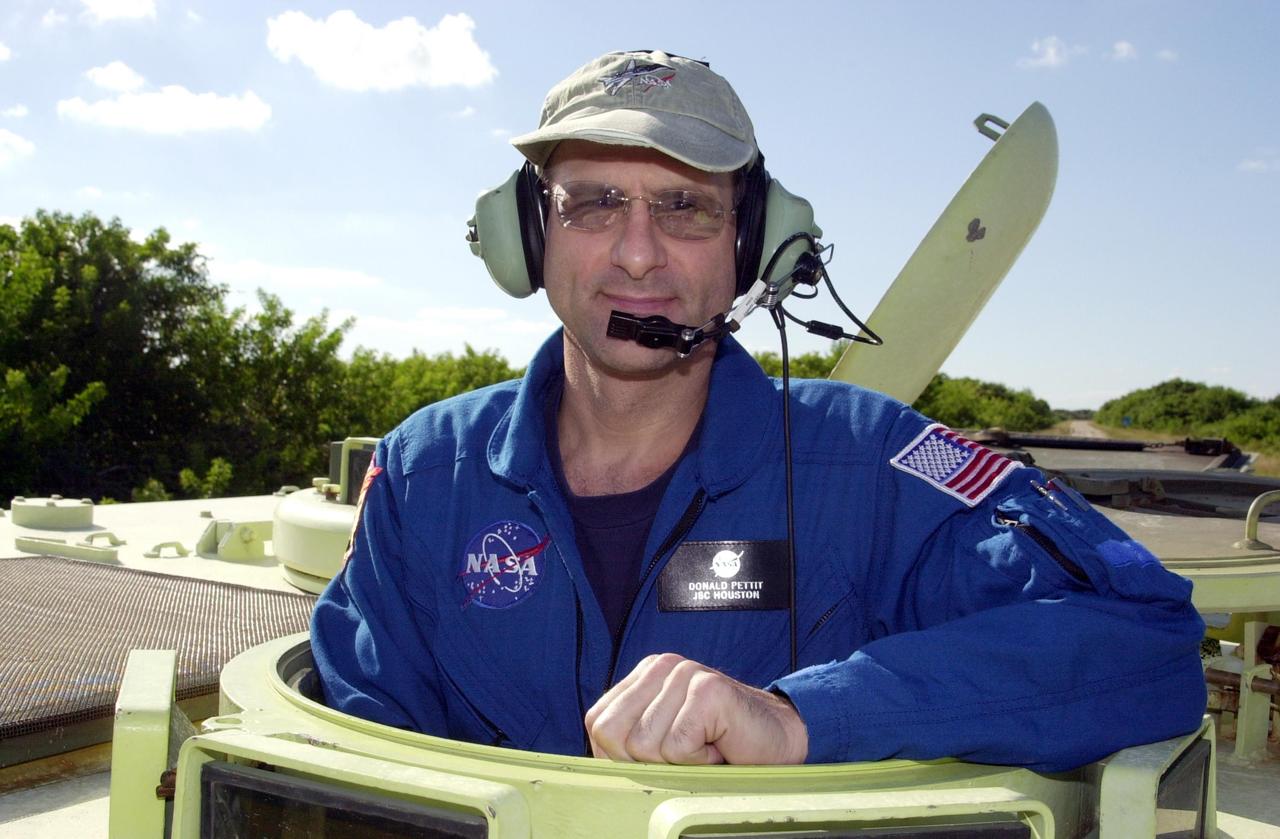
KENNEDY SPACE CENTER, FLA. -- During emergency egress training at the pad, Expedition 6 crew member Donald Pettit stands inside an M-113 armored personnel carrier before his practice drive. The training is part of Terminal Countdown Demonstration Test activities in preparation for launch. The TCDT also includes a simulated launch countdown. The Expedition 6 crew will travel on Space Shuttle Endeavour to the International Space Station to replace Expedition 5, returning to Earth after 4 months. The primary payloads on mission STS-113 are the first port truss segment, P1, and the Crew and Equipment Translation Aid (CETA) Cart B. Once delivered, the P1 truss will remain stowed until flight 12A.1 in 2003 when it will be attached to the central truss segment, S0, on the Space Station. Launch is scheduled for Nov. 10, 2002.
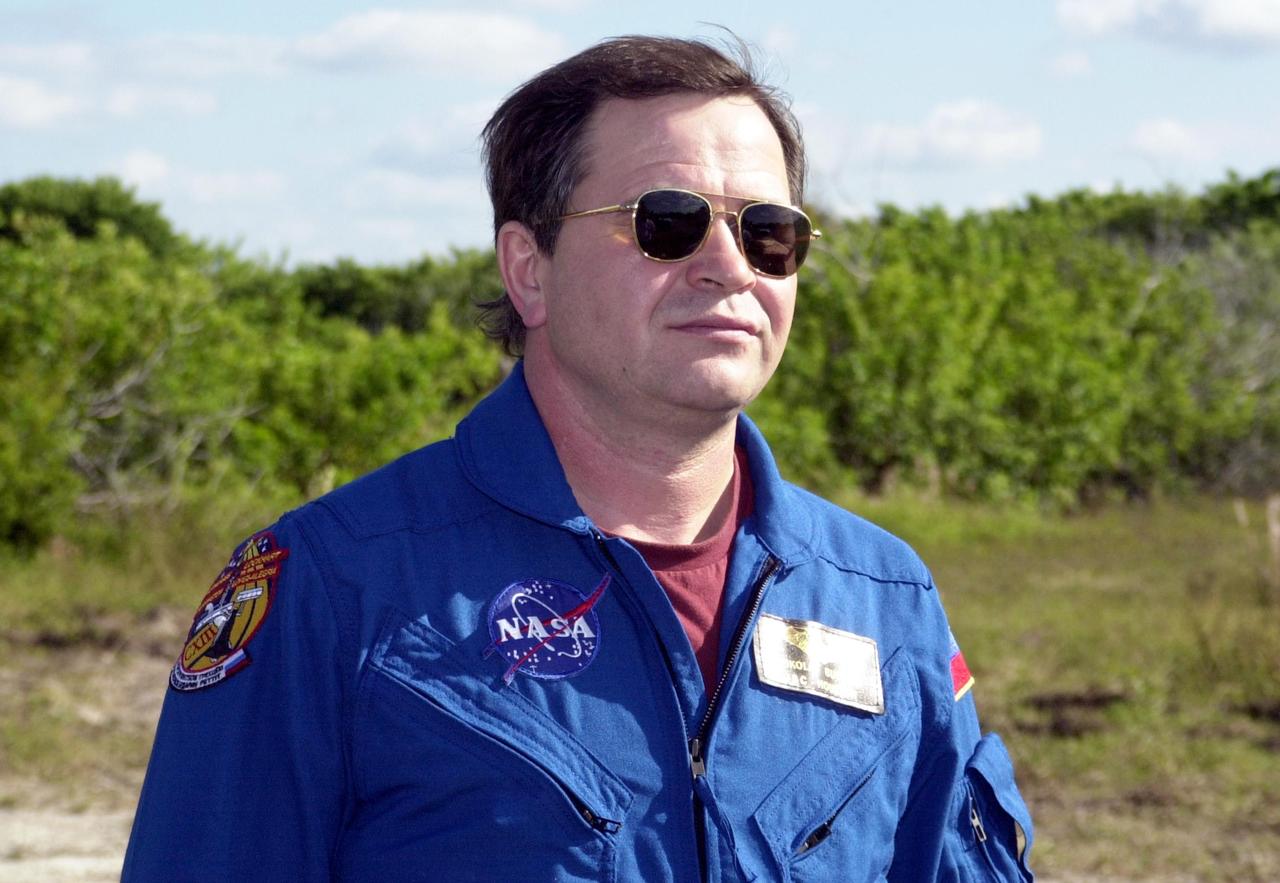
KENNEDY SPACE CENTER, FLA. -- Expedition 6 crew member Nikolai Budarin stands ready for a practice drive in an M-113 armored personnel carrier during emergency egress training at the pad, one of the Terminal Countdown Demonstration Test activities in preparation for launch. The TCDT also includes a simulated launch countdown. The Expedition 6 crew will travel on Space Shuttle Endeavour to the International Space Station to replace Expedition 5, returning to Earth after 4 months. The primary payloads on mission STS-113 are the first port truss segment, P1, and the Crew and Equipment Translation Aid (CETA) Cart B. Once delivered, the P1 truss will remain stowed until flight 12A.1 in 2003 when it will be attached to the central truss segment, S0, on the Space Station. Launch is scheduled for Nov. 10, 2002.
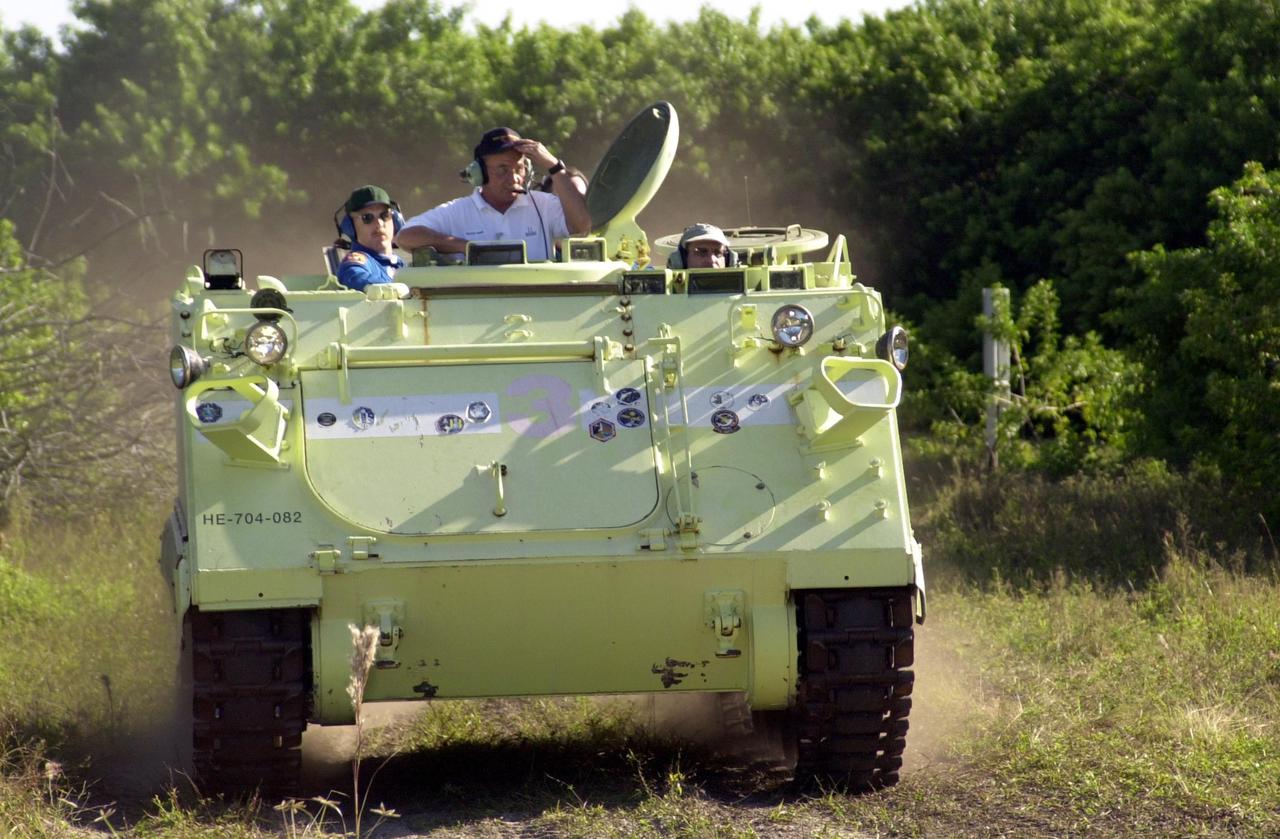
KENNEDY SPACE CENTER, FLA. -- Expedition 6 crew member Donald Pettit concentrates on driving an M-113 armored personnel carrier during emergency egress training at the pad. The crew is preparing for the mission aboard Space Shuttle Endeavour, which is scheduled to launch Nov. 10, by taking part in Terminal Countdown Demonstration Test activities. The TCDT includes a simulated launch countdown.. The Expedition 6 crew will travel on Space Shuttle Endeavour to the International Space Station to replace Expedition 5, returning to Earth after 4 months. The primary payloads on mission STS-113 are the first port truss segment, P1, and the Crew and Equipment Translation Aid (CETA) Cart B. Once delivered, the P1 truss will remain stowed until flight 12A.1 in 2003 when it will be attached to the central truss segment, S0, on the Space Station. Launch is scheduled for Nov. 10, 2002.
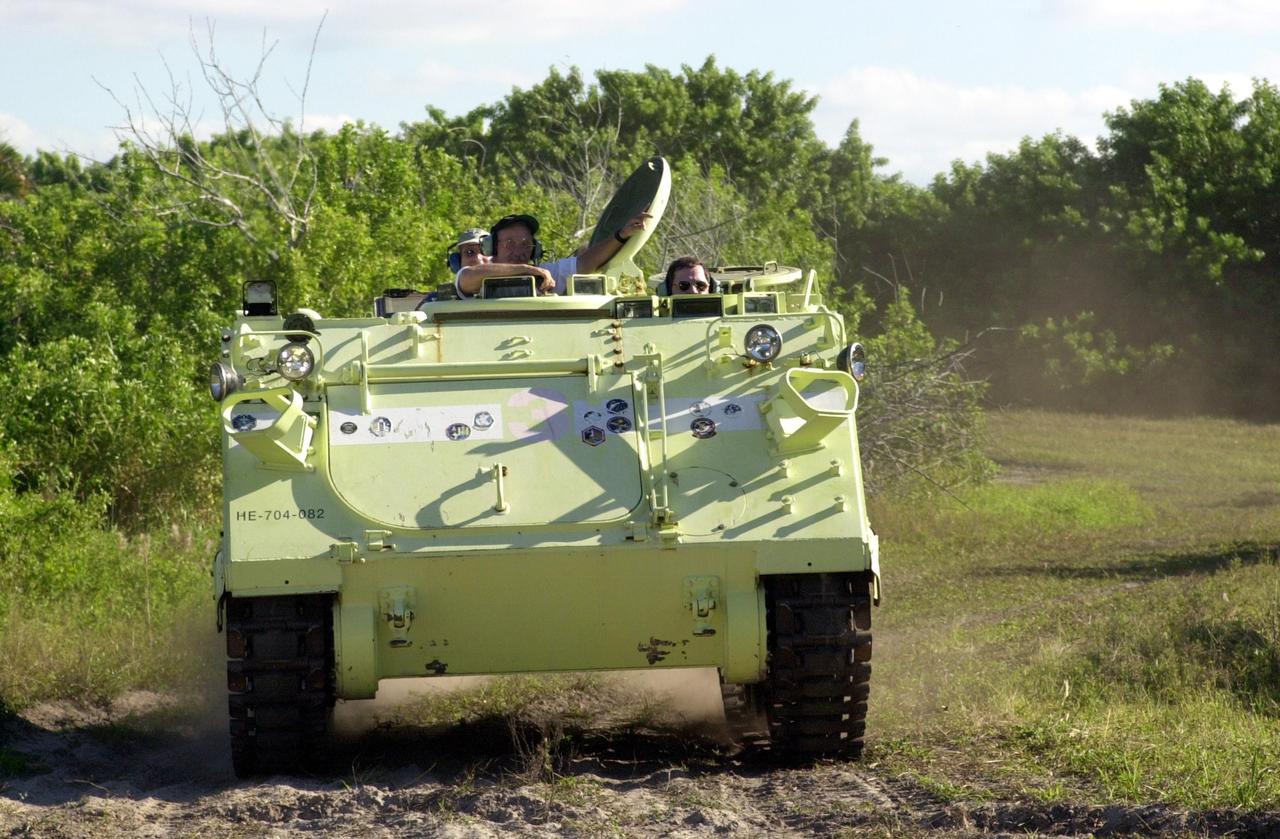
KENNEDY SPACE CENTER, FLA. -- Expedition 6 crew member Nikolai Budarin takes his turn driving an M-113 armored personnel carrier during emergency egress training at the pad. The crew is preparing for the mission aboard Space Shuttle Endeavour, which is scheduled to launch Nov. 10, by taking part in Terminal Countdown Demonstration Test activities. The TCDT includes a simulated launch countdown.. The Expedition 6 crew will travel on Space Shuttle Endeavour to the International Space Station to replace Expedition 5, returning to Earth after 4 months. The primary payloads on mission STS-113 are the first port truss segment, P1, and the Crew and Equipment Translation Aid (CETA) Cart B. Once delivered, the P1 truss will remain stowed until flight 12A.1 in 2003 when it will be attached to the central truss segment, S0, on the Space Station. Launch is scheduled for Nov. 10, 2002.
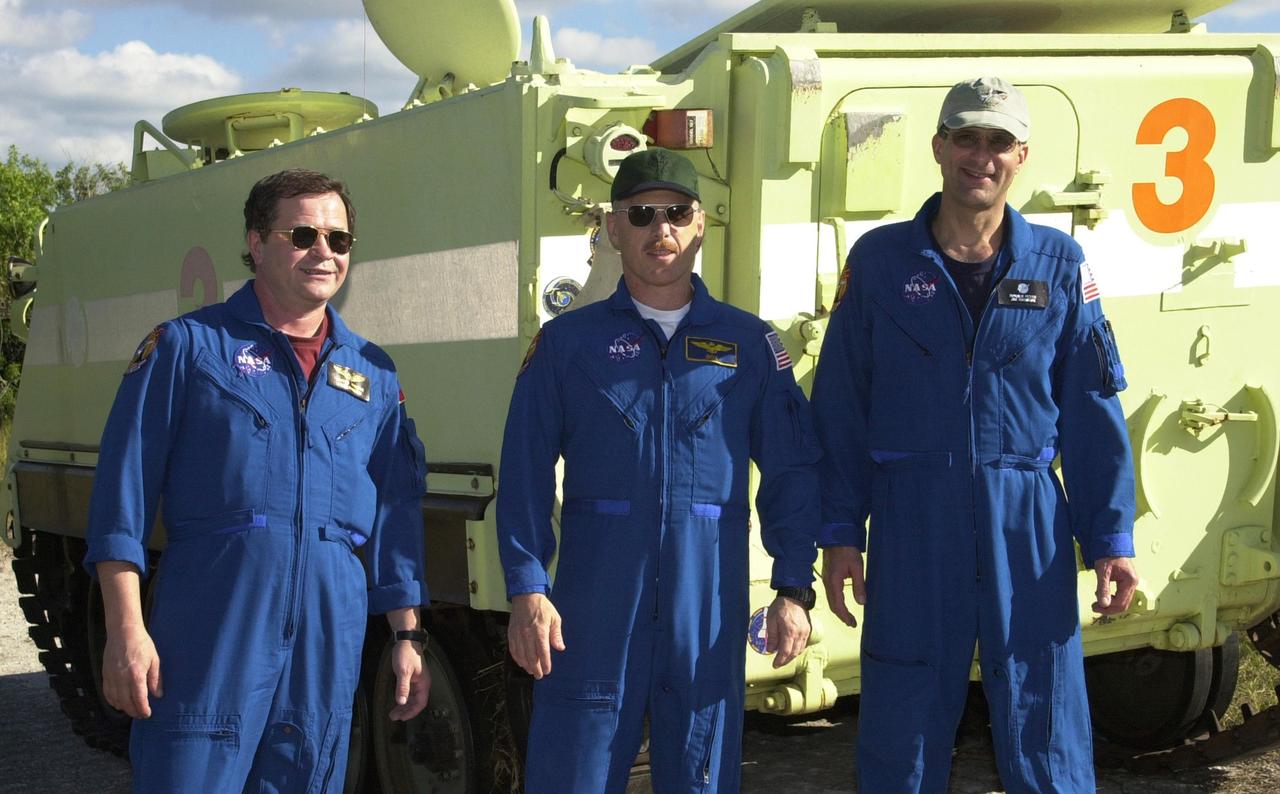
KENNEDY SPACE CENTER, FLA. -- The Expedition 6 crew pauses for a photo after emergency egress training at the pad, which included driving the M-113 armored personnel carrier behind them. The crew is preparing for the mission aboard Space Shuttle Endeavour, which is scheduled to launch Nov. 10, by taking part in Terminal Countdown Demonstration Test activities. The TCDT includes a simulated launch countdown.. The Expedition 6 crew will travel on Space Shuttle Endeavour to the International Space Station to replace Expedition 5, returning to Earth after 4 months. The primary payloads on mission STS-113 are the first port truss segment, P1, and the Crew and Equipment Translation Aid (CETA) Cart B. Once delivered, the P1 truss will remain stowed until flight 12A.1 in 2003 when it will be attached to the central truss segment, S0, on the Space Station. Launch is scheduled for Nov. 10, 2002.
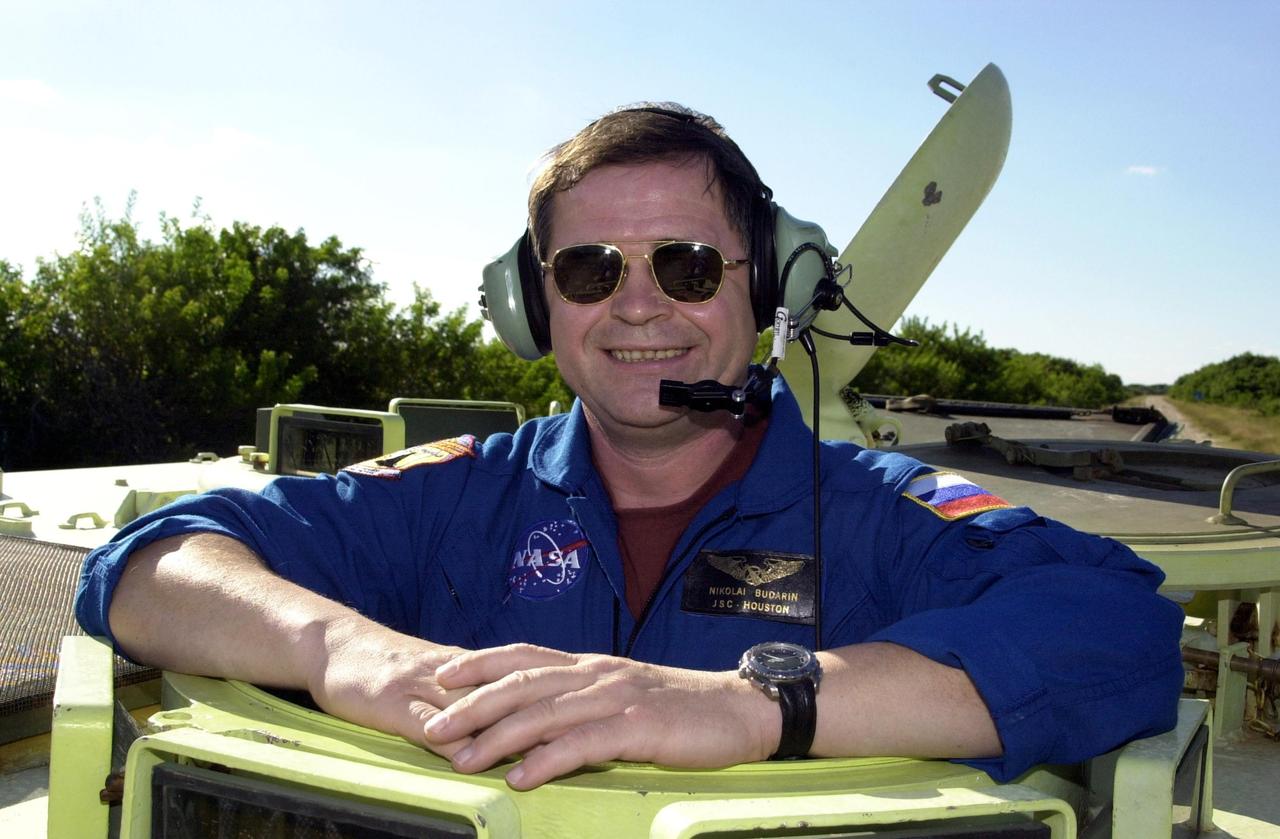
KENNEDY SPACE CENTER, FLA. -- Expedition 6 crew member Nikolai Budarin stands ready for a practice drive in an M-113 armored personnel carrier during emergency egress training at the pad, one of the Terminal Countdown Demonstration Test activities in preparation for launch. The TCDT also includes a simulated launch countdown. The Expedition 6 crew will travel on Space Shuttle Endeavour to the International Space Station to replace Expedition 5, returning to Earth after 4 months. The primary payloads on mission STS-113 are the first port truss segment, P1, and the Crew and Equipment Translation Aid (CETA) Cart B. Once delivered, the P1 truss will remain stowed until flight 12A.1 in 2003 when it will be attached to the central truss segment, S0, on the Space Station. Launch is scheduled for Nov. 10, 2002.
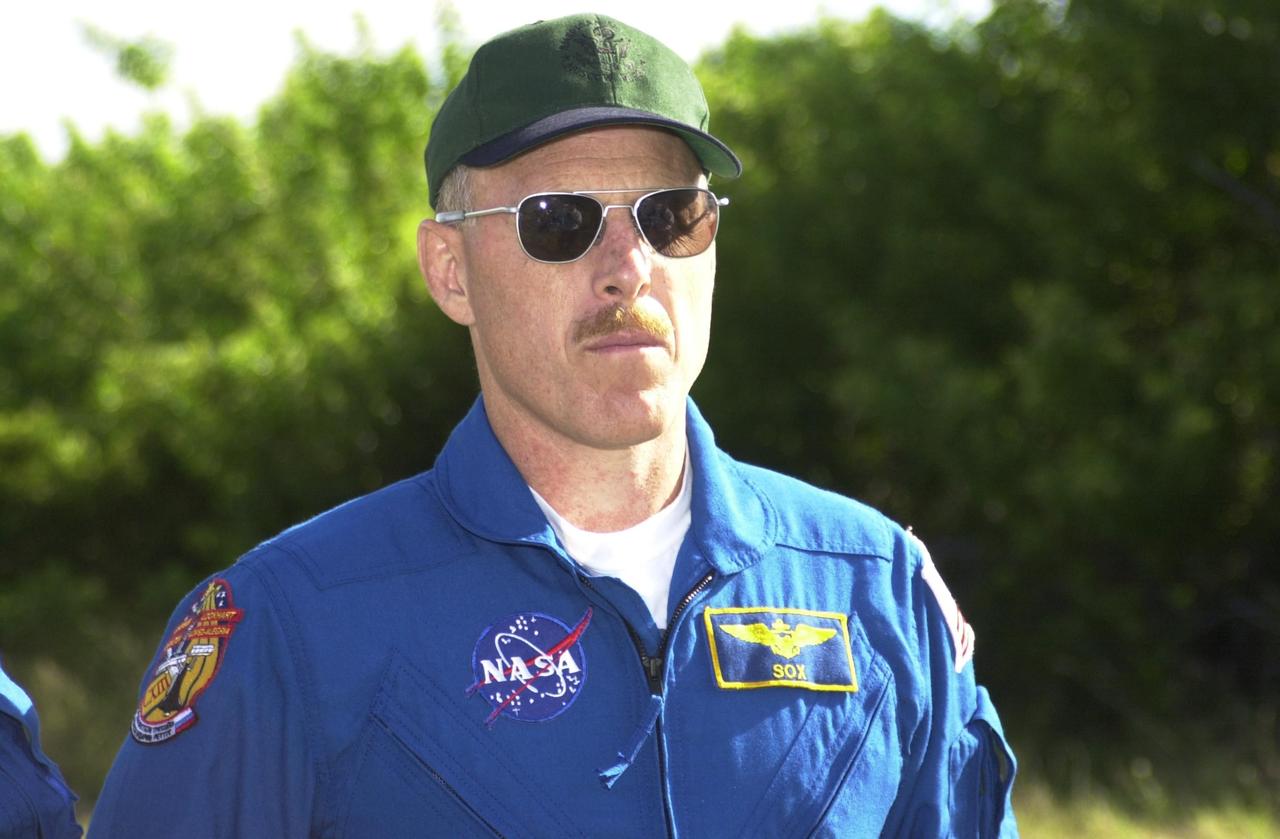
KENNEDY SPACE CENTER, FLA. -- Expedition 6 Commander Ken Bowersox stands ready for a practice drive in an M-113 armored personnel carrier during emergency egress training at the pad, one of the Terminal Countdown Demonstration Test activities in preparation for launch. The TCDT also includes a simulated launch countdown. The Expedition 6 crew will travel on Space Shuttle Endeavour to the International Space Station to replace Expedition 5, returning to Earth after 4 months. The primary payloads on mission STS-113 are the first port truss segment, P1, and the Crew and Equipment Translation Aid (CETA) Cart B. Once delivered, the P1 truss will remain stowed until flight 12A.1 in 2003 when it will be attached to the central truss segment, S0, on the Space Station. Launch is scheduled for Nov. 10, 2002.
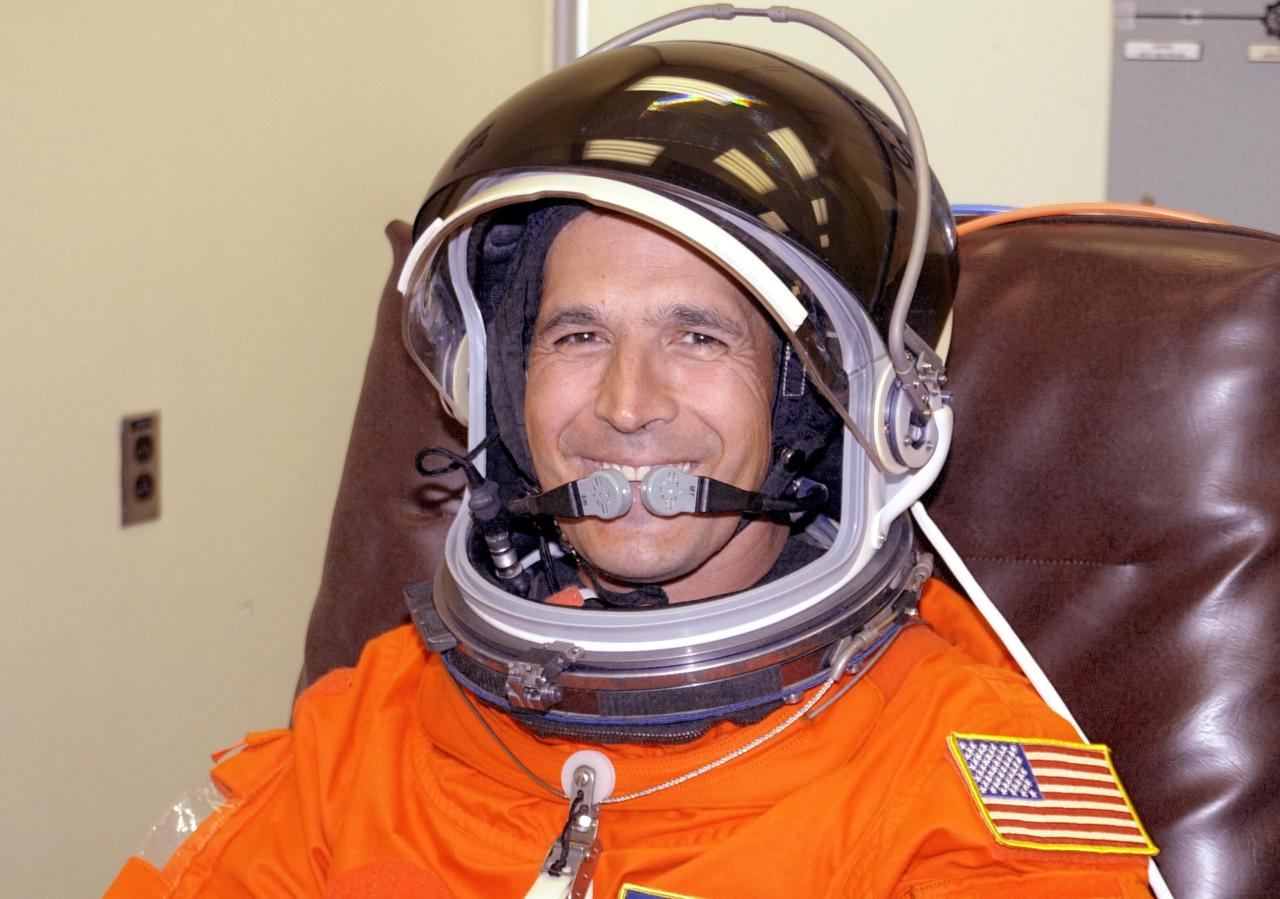
KENNEDY SPACE CENTER, FLA. -- STS-113 Mission Specialist John Herrington relaxes during fit check of his launch and entry suit, part of Terminal Countdown Demonstration Test activities. He and the rest of the crew are preparing for the mission aboard Space Shuttle Endeavour, which is scheduled to launch Nov. 10. The TCDT includes emergency egress training and a launch countdown. The primary payloads on mission STS-113 are the first port truss segment, P1, and the Crew and Equipment Translation Aid (CETA) Cart B. Once delivered, the P1 truss will remain stowed until flight 12A.1 in 2003 when it will be attached to the central truss segment, S0, on the Space Station. Also onboard Space Shuttle Endeavour will be the Expedition 6 crew who will replace Expedition 5, returning to Earth after 4 months.
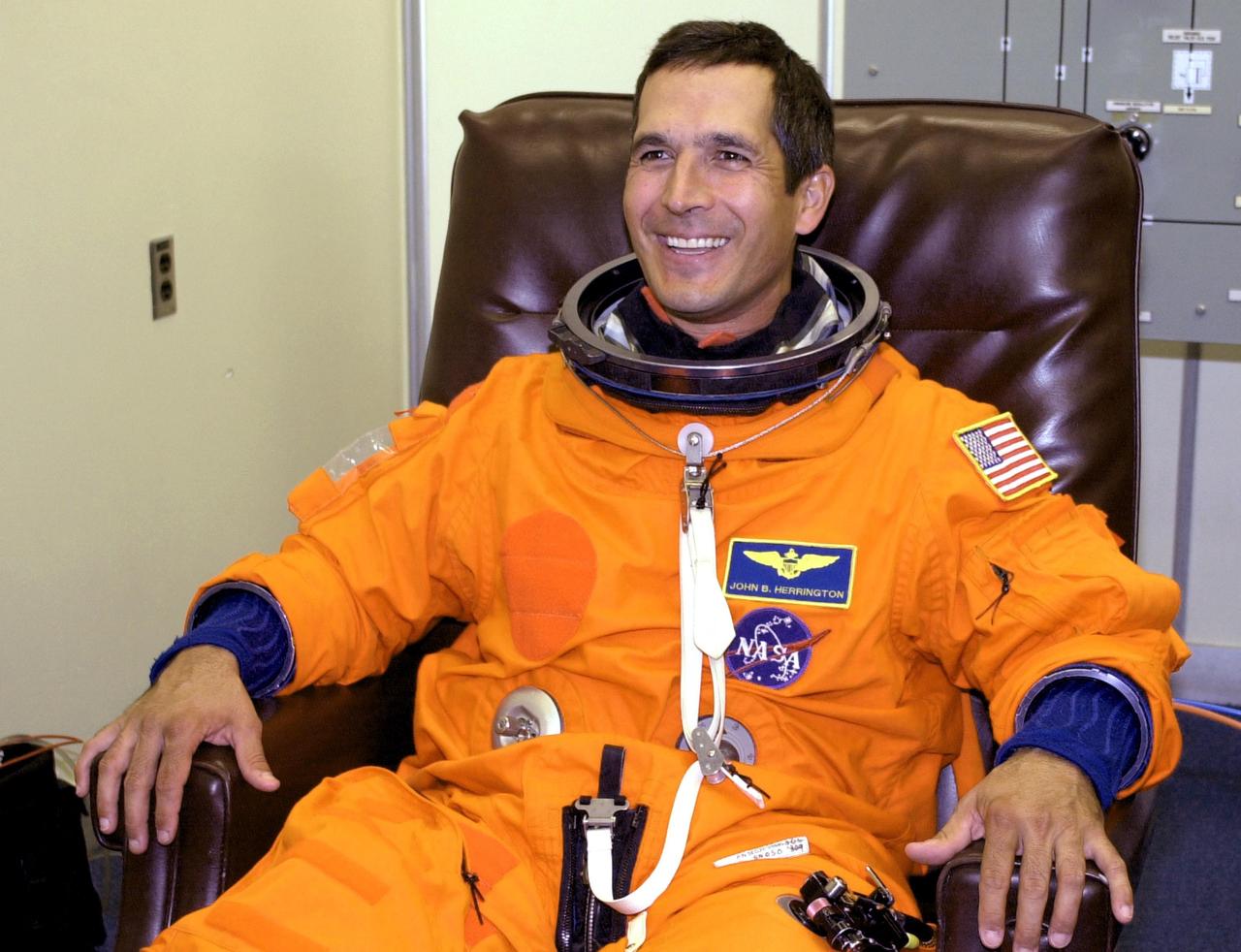
KENNEDY SPACE CENTER, FLA. -- STS-113 Mission Specialist John Herrington relaxes during fit check of his launch and entry suit, part of Terminal Countdown Demonstration Test activities. He and the rest of the crew are preparing for the mission aboard Space Shuttle Endeavour, which is scheduled to launch Nov. 10. The TCDT includes emergency egress training and a launch countdown. The primary payloads on mission STS-113 are the first port truss segment, P1, and the Crew and Equipment Translation Aid (CETA) Cart B. Once delivered, the P1 truss will remain stowed until flight 12A.1 in 2003 when it will be attached to the central truss segment, S0, on the Space Station. Also onboard Space Shuttle Endeavour will be the Expedition 6 crew who will replace Expedition 5, returning to Earth after 4 months.
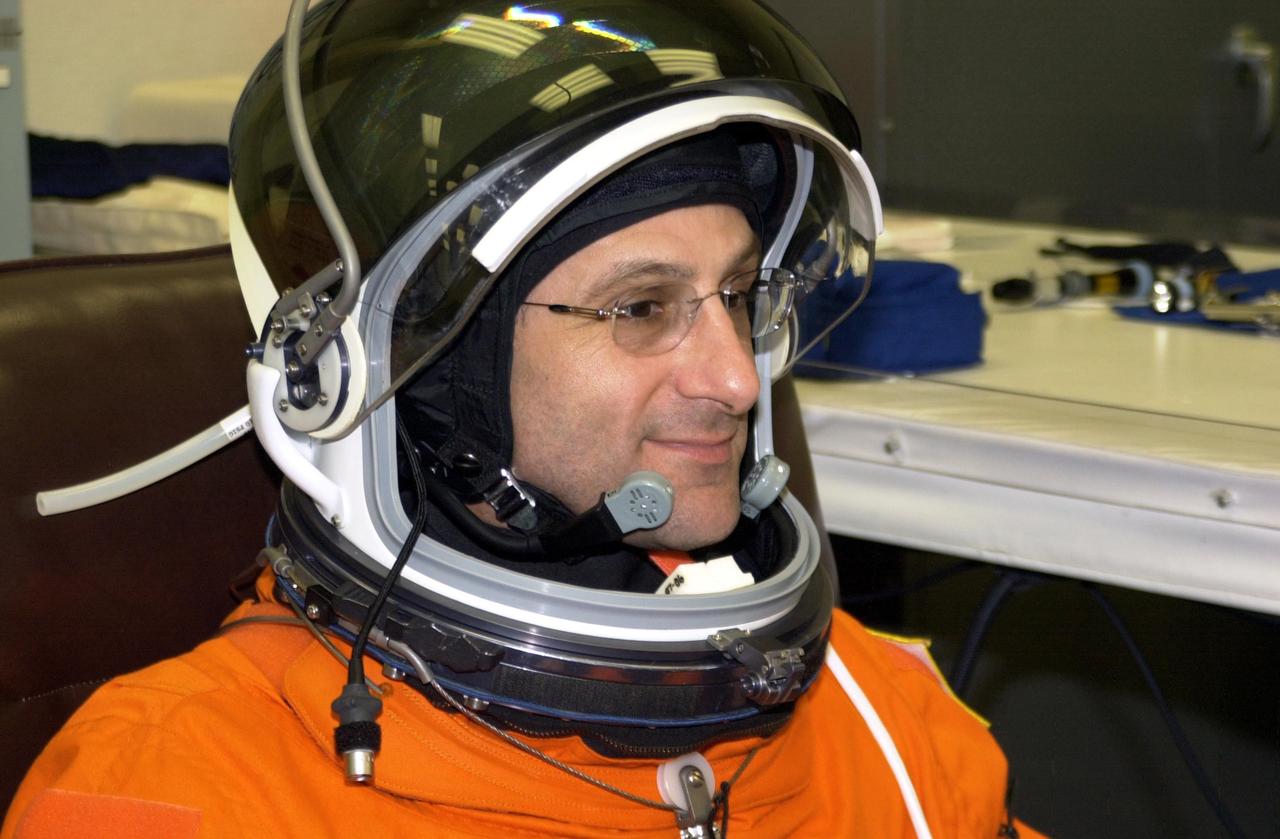
KENNEDY SPACE CENTER, FLA. -- STS-113 Mission Specialist Donald Pettit smiles during fit check of his helmet, part of Terminal Countdown Demonstration Test activities. He and the rest of the crew are preparing for the mission aboard Space Shuttle Endeavour, which is scheduled to launch Nov. 10. The TCDT includes emergency egress training and a launch countdown. The primary payloads on mission STS-113 are the first port truss segment, P1, and the Crew and Equipment Translation Aid (CETA) Cart B. Once delivered, the P1 truss will remain stowed until flight 12A.1 in 2003 when it will be attached to the central truss segment, S0, on the Space Station. Also onboard Space Shuttle Endeavour will be the Expedition 6 crew who will replace Expedition 5, returning to Earth after 4 months.
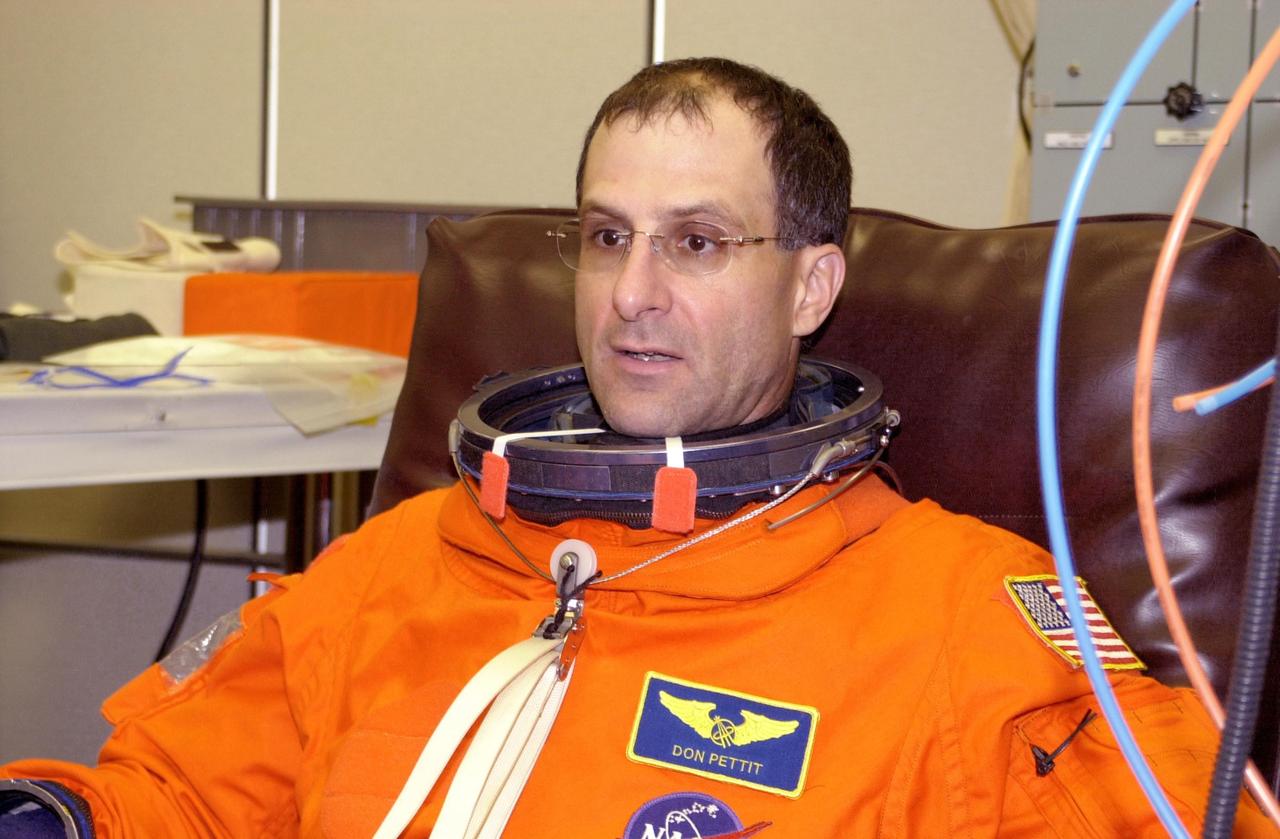
KENNEDY SPACE CENTER, FLA. -- STS-113 Mission Specialist Donald Pettit relaxes during fit check of his launch and entry suit, part of Terminal Countdown Demonstration Test activities. He and the rest of the crew are preparing for the mission aboard Space Shuttle Endeavour, which is scheduled to launch Nov. 10. The TCDT includes emergency egress training and a launch countdown. The primary payloads on mission STS-113 are the first port truss segment, P1, and the Crew and Equipment Translation Aid (CETA) Cart B. Once delivered, the P1 truss will remain stowed until flight 12A.1 in 2003 when it will be attached to the central truss segment, S0, on the Space Station. Also onboard Space Shuttle Endeavour will be the Expedition 6 crew who will replace Expedition 5, returning to Earth after 4 months.
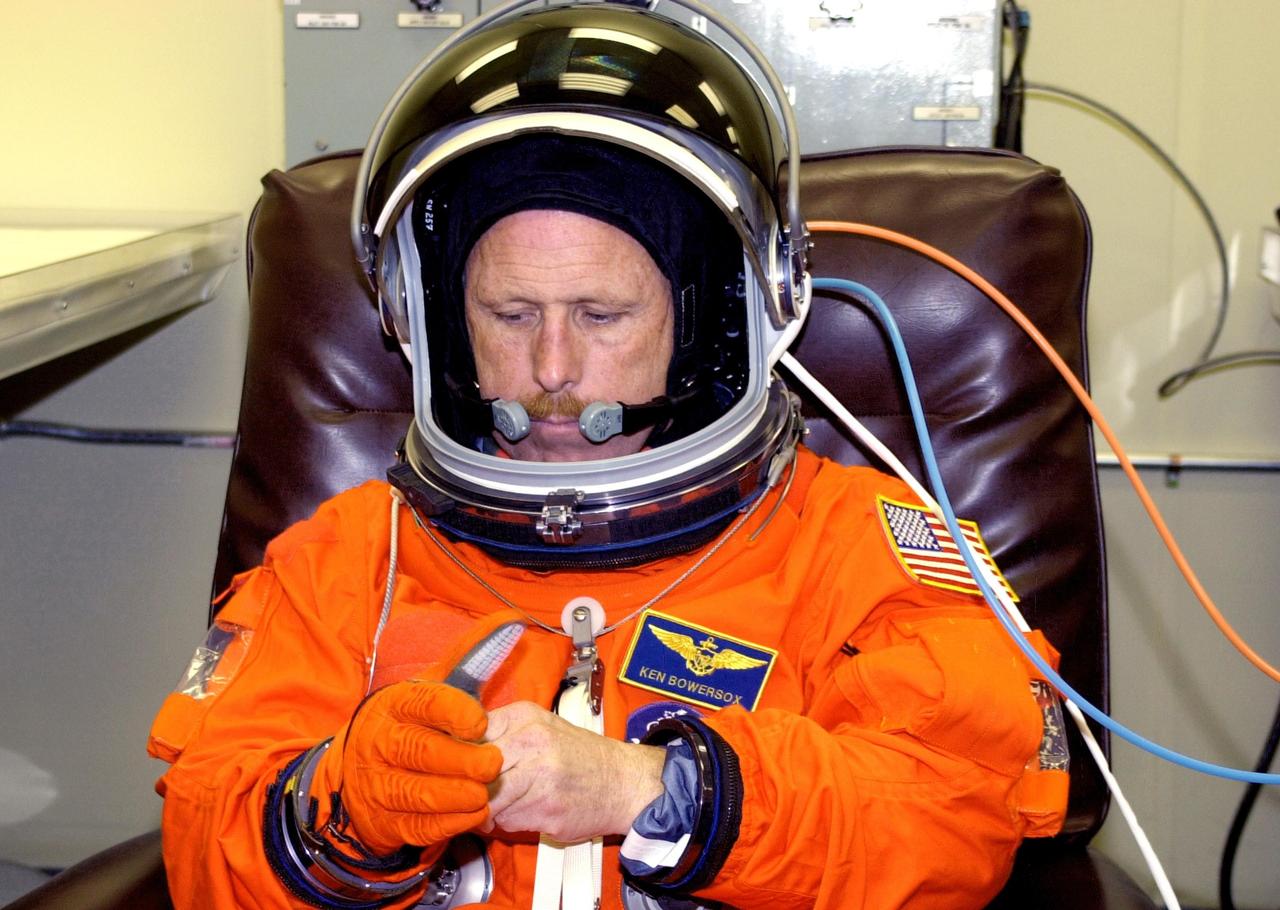
KENNEDY SPACE CENTER, FLA. -- Expedition 6 Commander Ken Bowersox adjusts his gloves during fit check of his launch and entry suit, part of Terminal Countdown Demonstration Test activities. He and the rest of the crew are preparing for the mission aboard Space Shuttle Endeavour, which is scheduled to launch Nov. 10. The TCDT includes emergency egress training and a launch countdown. The Expedition 6 crew will travel on Space Shuttle Endeavour to the International Space Station to replace Expedition 5, returning to Earth after 4 months. The primary payloads on mission STS-113 are the first port truss segment, P1, and the Crew and Equipment Translation Aid (CETA) Cart B. Once delivered, the P1 truss will remain stowed until flight 12A.1 in 2003 when it will be attached to the central truss segment, S0, on the Space Station. Launch is scheduled for Nov. 10, 2002.
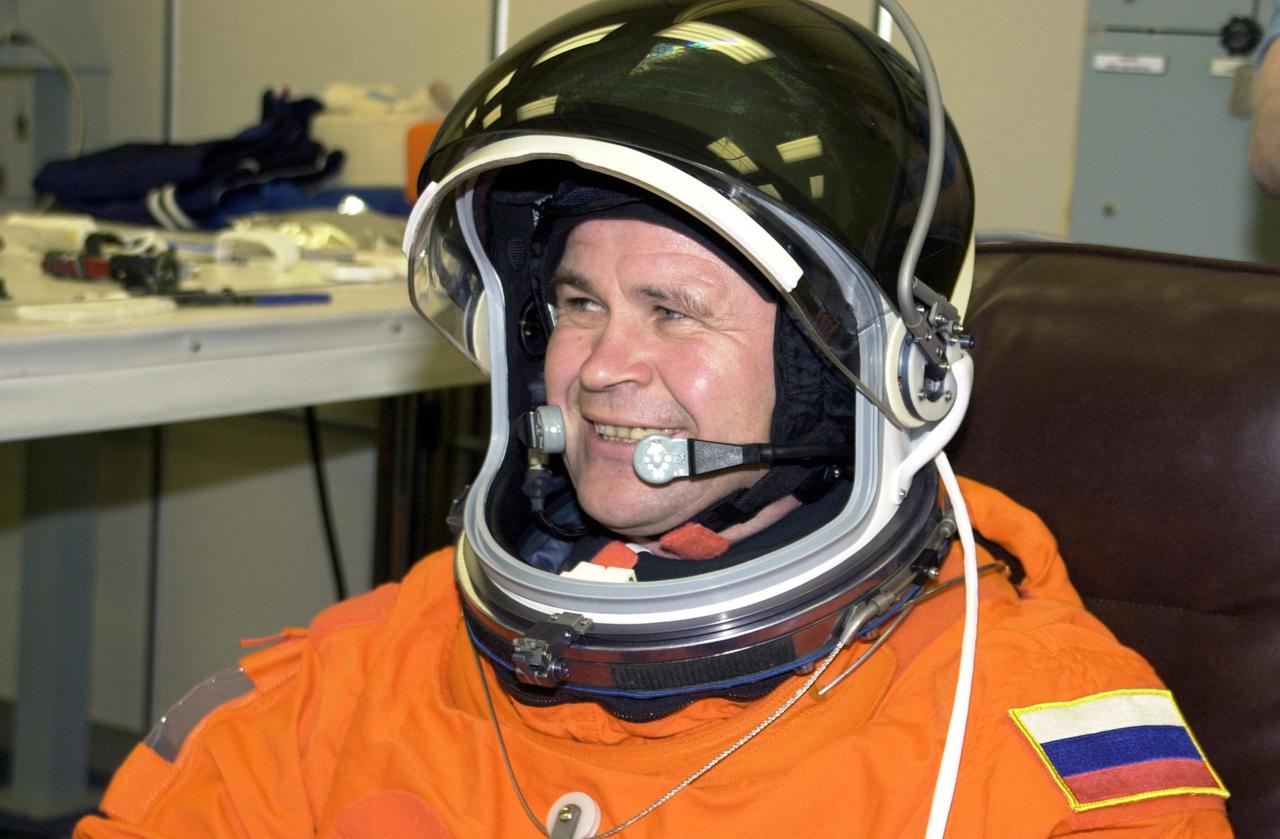
KENNEDY SPACE CENTER, FLA. -- Expedition 6 crew member Nikolai Budarin smiles during fit check of his helmet, part of Terminal Countdown Demonstration Test activities. He and the rest of the crew are preparing for the mission aboard Space Shuttle Endeavour, which is scheduled to launch Nov. 10. The TCDT includes emergency egress training and a launch countdown. The Expedition 6 crew will travel on Space Shuttle Endeavour to the International Space Station to replace Expedition 5, returning to Earth after 4 months. The primary payloads on mission STS-113 are the first port truss segment, P1, and the Crew and Equipment Translation Aid (CETA) Cart B. Once delivered, the P1 truss will remain stowed until flight 12A.1 in 2003 when it will be attached to the central truss segment, S0, on the Space Station. Launch is scheduled for Nov. 10, 2002.
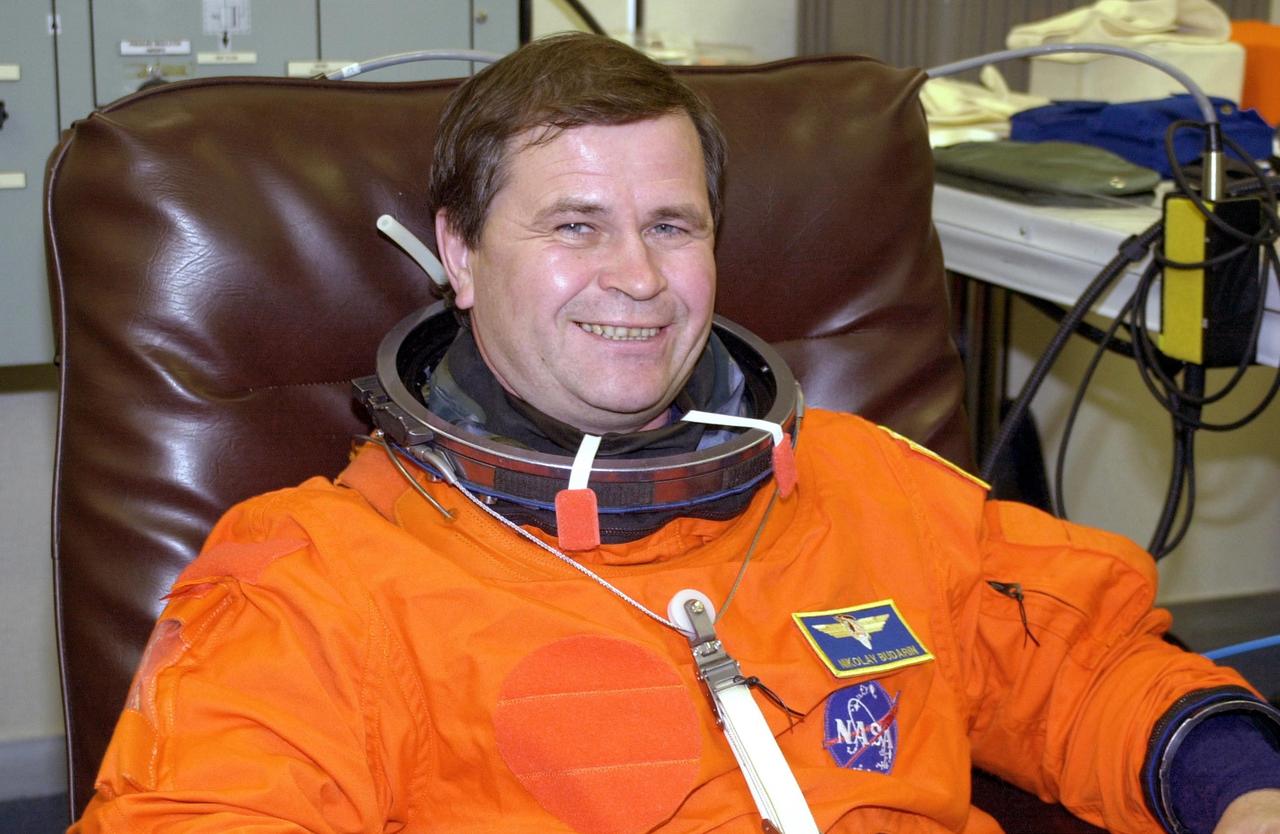
KENNEDY SPACE CENTER, FLA. -- Expedition 6 crew member Nikolai Budarin relaxes during fit check of his launch and entry suit, part of Terminal Countdown Demonstration Test activities. He and the rest of the crew are preparing for the mission aboard Space Shuttle Endeavour, which is scheduled to launch Nov. 10. The TCDT includes emergency egress training and a launch countdown. The Expedition 6 crew will travel on Space Shuttle Endeavour to the International Space Station to replace Expedition 5, returning to Earth after 4 months. The primary payloads on mission STS-113 are the first port truss segment, P1, and the Crew and Equipment Translation Aid (CETA) Cart B. Once delivered, the P1 truss will remain stowed until flight 12A.1 in 2003 when it will be attached to the central truss segment, S0, on the Space Station. Launch is scheduled for Nov. 10, 2002.
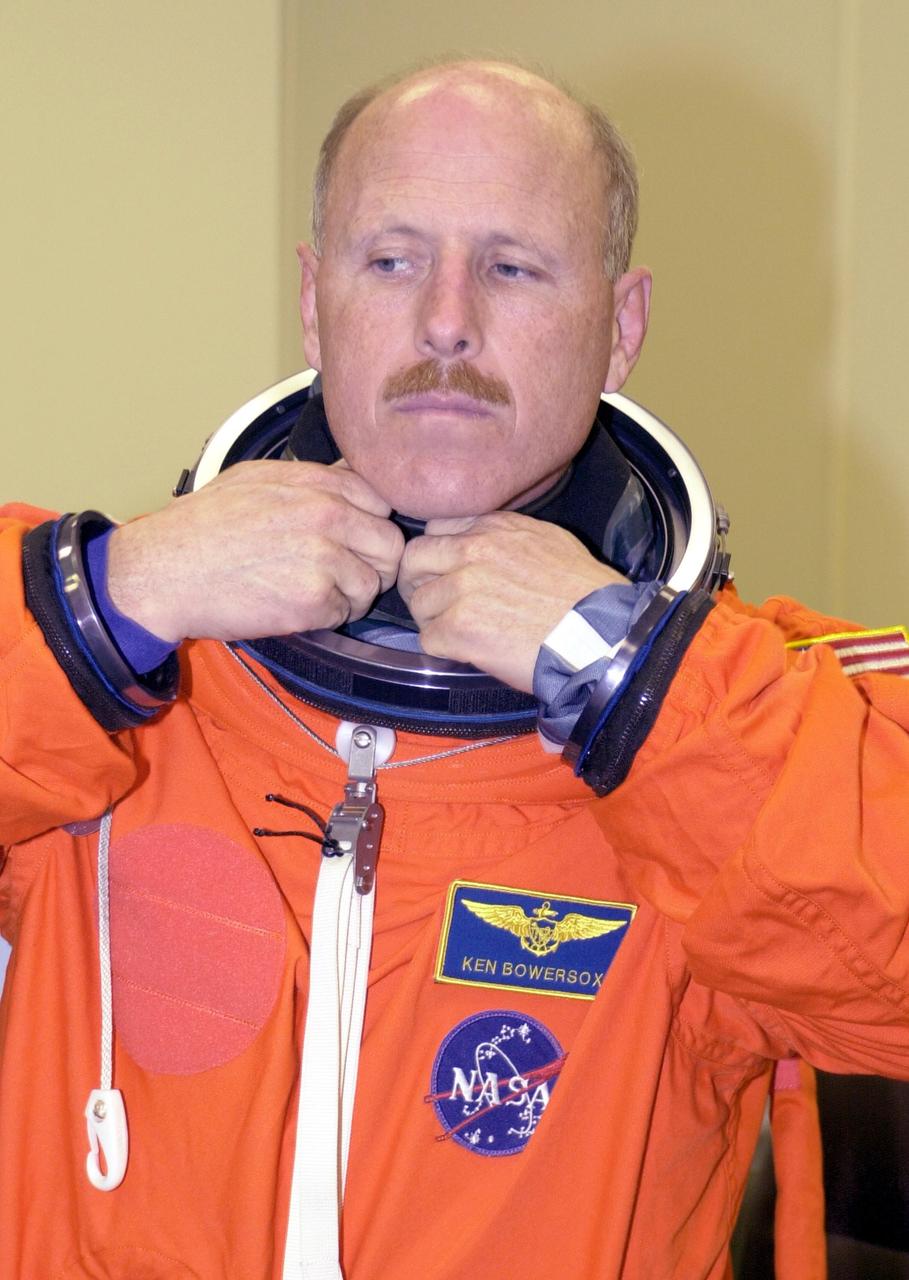
KENNEDY SPACE CENTER, FLA. - Expedition 6 Commander Ken Bowersox adjusts his launch and entry suit during fit check, part of Terminal Countdown Demonstration Test activities. He and the rest of the crew are preparing for the mission aboard Space Shuttle Endeavour, which is scheduled to launch Nov. 10. The TCDT includes emergency egress training and a launch countdown. The Expedition 6 crew will travel on Space Shuttle Endeavour to the International Space Station to replace Expedition 5, returning to Earth after 4 months. The primary payloads on mission STS-113 are the first port truss segment, P1, and the Crew and Equipment Translation Aid (CETA) Cart B. Once delivered, the P1 truss will remain stowed until flight 12A.1 in 2003 when it will be attached to the central truss segment, S0, on the Space Station. Launch is scheduled for Nov. 10, 2002.

KENNEDY SPACE CENTER, FLA. -- STS-113 Mission Specialist Michael Lopez-Alegria concentrates on driving an M-113 armored personnel carrier during emergency egress training at the pad. He is accompanied by (far left) Mission Specialist John Herrington and Commander James Wetherbee. Behind Lopez-Alegria is Pilot Paul Lockhart. The crew is preparing for the mission aboard Space Shuttle Endeavour, which is scheduled to launch Nov. 10, by taking part in Terminal Countdown Demonstration Test activities. The TCDT includes a simulated launch countdown.. The primary payloads on mission STS-113 are the first port truss segment, P1, and the Crew and Equipment Translation Aid (CETA) Cart B. Once delivered, the P1 truss will remain stowed until flight 12A.1 in 2003 when it will be attached to the central truss segment, S0, on the Space Station. Also onboard Space Shuttle Endeavour will be the Expedition 6 crew who will replace Expedition 5, returning to Earth after 4 months.
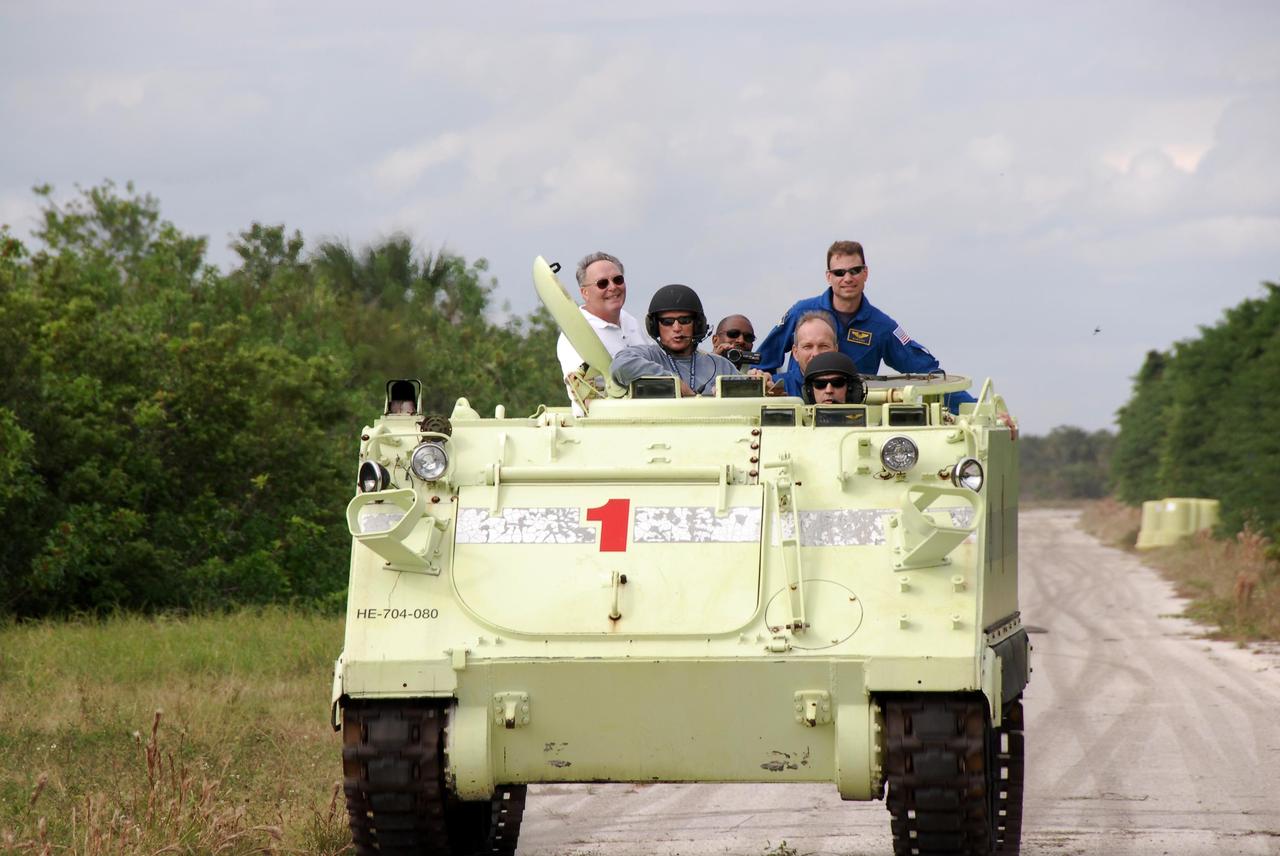
KENNEDY SPACE CENTER, FLA. -- STS-122 Mission Specialist Leopold Eyharts of the European Space Agency, in front, practices driving an M-113 armored personnel carrier as the instructor, in the helmet beside him, monitors his performance. Eyharts will remain on the International Space Station as a flight engineer for Expedition 16 following the STS-122 mission. In back from left, former astronaut Jerry Ross, chief of the Vehicle Integration Test Office at NASA Johnson Space Center, and STS-122 Mission Specialists Leland Melvin, Stanley Love (standing) and Hans Schlegel of the European Space Agency, are along for the ride. The practice near Launch Pad 39B is part of training on emergency egress procedures. An M-113 will be available to transport the crew to safety in the event of a contingency on the pad before their launch. The crew is participating in Terminal Countdown Demonstration Test activities, a standard part of launch preparations. The TCDT provides astronauts and ground crews with equipment familiarization, emergency egress training and a simulated launch countdown. On mission STS-122, Atlantis will deliver the European Space Agency's Columbus module to the International Space Station. Columbus is a multifunctional, pressurized laboratory that will be permanently attached to U.S. Node 2, called Harmony, and will expand the research facilities aboard the station. Launch is targeted for Dec. 6. Photo credit: NASA/Kim Shiflett
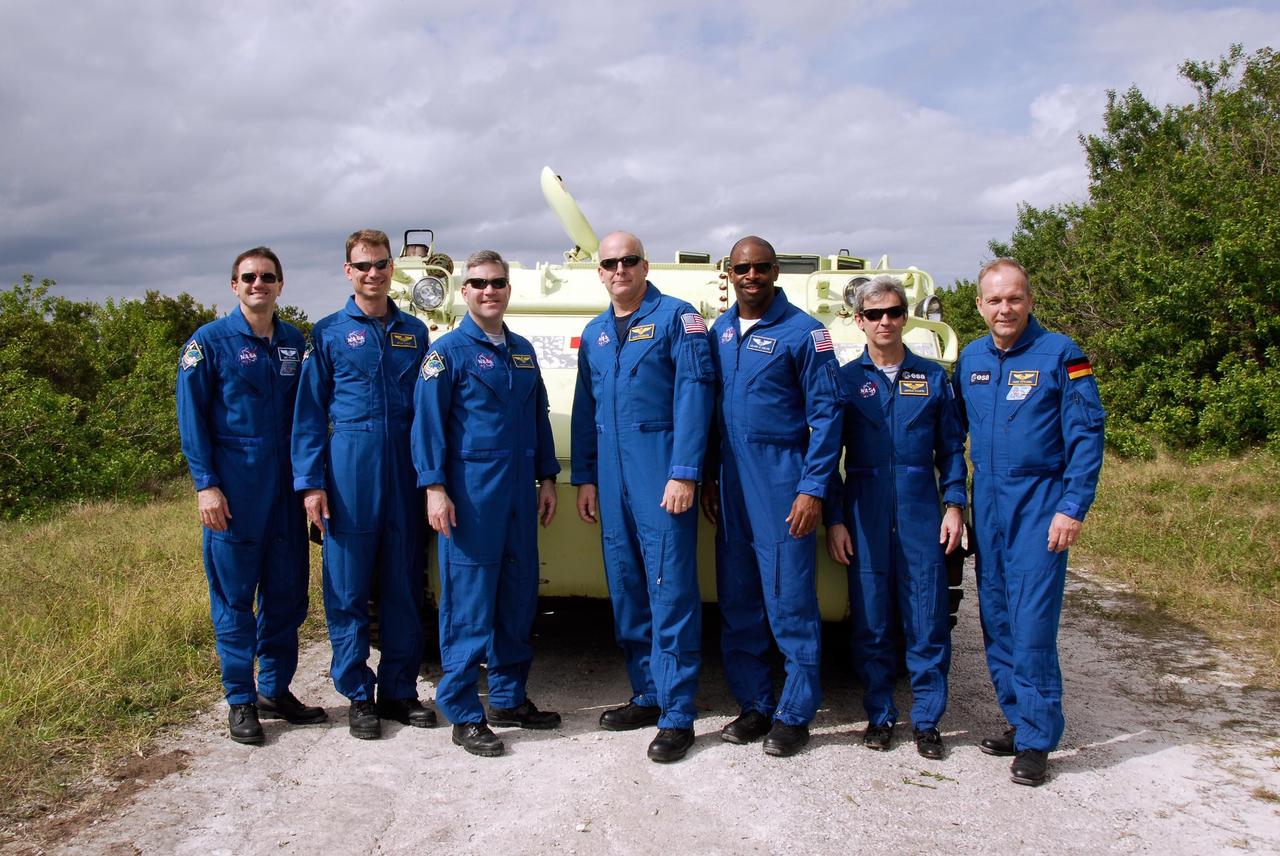
KENNEDY SPACE CENTER, FLA. -- The STS-122 crew poses for a group portrait near Launch Pad 39B following a training session on the operation of the M-113 armored personnel carrier. An M-113 will be available to transport the crew to safety in the event of an emergency on the pad before their launch. From left are Mission Specialists Rex Walheim and Stanley Love; Commander Steve Frick; Pilot Alan Poindexter; and Mission Specialists Leland Melvin, Leopold Eyharts and Hans Schlegel. Eyharts and Schlegel are with the European Space Agency. Eyharts will remain on the International Space Station as a flight engineer for Expedition 16 following the STS-122 mission. The crew is participating in Terminal Countdown Demonstration Test activities, a standard part of launch preparations. The TCDT provides astronauts and ground crews with equipment familiarization, emergency egress training and a simulated launch countdown. On mission STS-122, Atlantis will deliver the European Space Agency's Columbus module to the International Space Station. Columbus is a multifunctional, pressurized laboratory that will be permanently attached to U.S. Node 2, called Harmony, and will expand the research facilities aboard the station. Launch is targeted for Dec. 6. Photo credit: NASA/Kim Shiflett
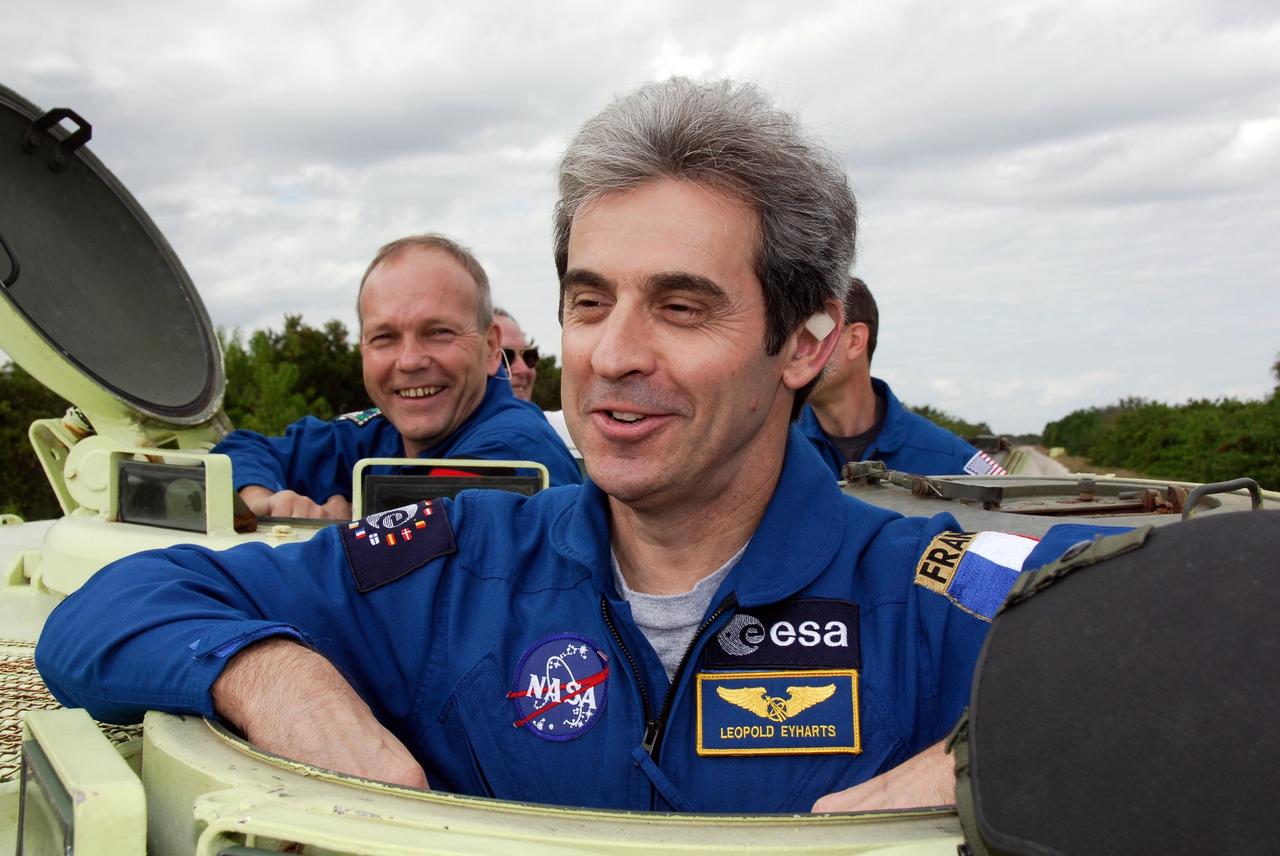
KENNEDY SPACE CENTER, FLA. -- STS-122 Mission Specialist Leopold Eyharts takes time out from driving practice of the M-113 armored personnel carrier to pose for a photo as Mission Specialist Hans Schlegel, behind him on the left, prepares to ride along. Both Eyharts and Schlegel are with the European Space Agency, but Eyharts will remain on the International Space Station as a flight engineer for Expedition 16 following the STS-122 mission. The practice near Launch Pad 39B is part of training on emergency egress procedures. An M-113 will be available to transport the crew to safety in the event of a contingency on the pad before their launch. The crew is participating in Terminal Countdown Demonstration Test activities, a standard part of launch preparations. The TCDT provides astronauts and ground crews with equipment familiarization, emergency egress training and a simulated launch countdown. On mission STS-122, Atlantis will deliver the European Space Agency's Columbus module to the International Space Station. Columbus is a multifunctional, pressurized laboratory that will be permanently attached to U.S. Node 2, called Harmony, and will expand the research facilities aboard the station. Launch is targeted for Dec. 6. Photo credit: NASA/Kim Shiflett

KENNEDY SPACE CENTER, FLA. -- European Space Agency astronaut Frank De Winne takes time out from driving practice of the M-113 armored personnel carrier to pose for a photo. De Winne is the backup for STS-122 Mission Specialist Leopold Eyharts will remain on the International Space Station as a flight engineer for Expedition 16 following the STS-122 mission. The practice near Launch Pad 39B is part of training on emergency egress procedures. An M-113 will be available to transport the crew to safety in the event of a contingency on the pad before their launch. The crew is participating in Terminal Countdown Demonstration Test activities, a standard part of launch preparations. The TCDT provides astronauts and ground crews with equipment familiarization, emergency egress training and a simulated launch countdown. On mission STS-122, Atlantis will deliver the European Space Agency's Columbus module to the International Space Station. Columbus is a multifunctional, pressurized laboratory that will be permanently attached to U.S. Node 2, called Harmony, and will expand the research facilities aboard the station. Launch is targeted for Dec. 6. Photo credit: NASA/Kim Shiflett
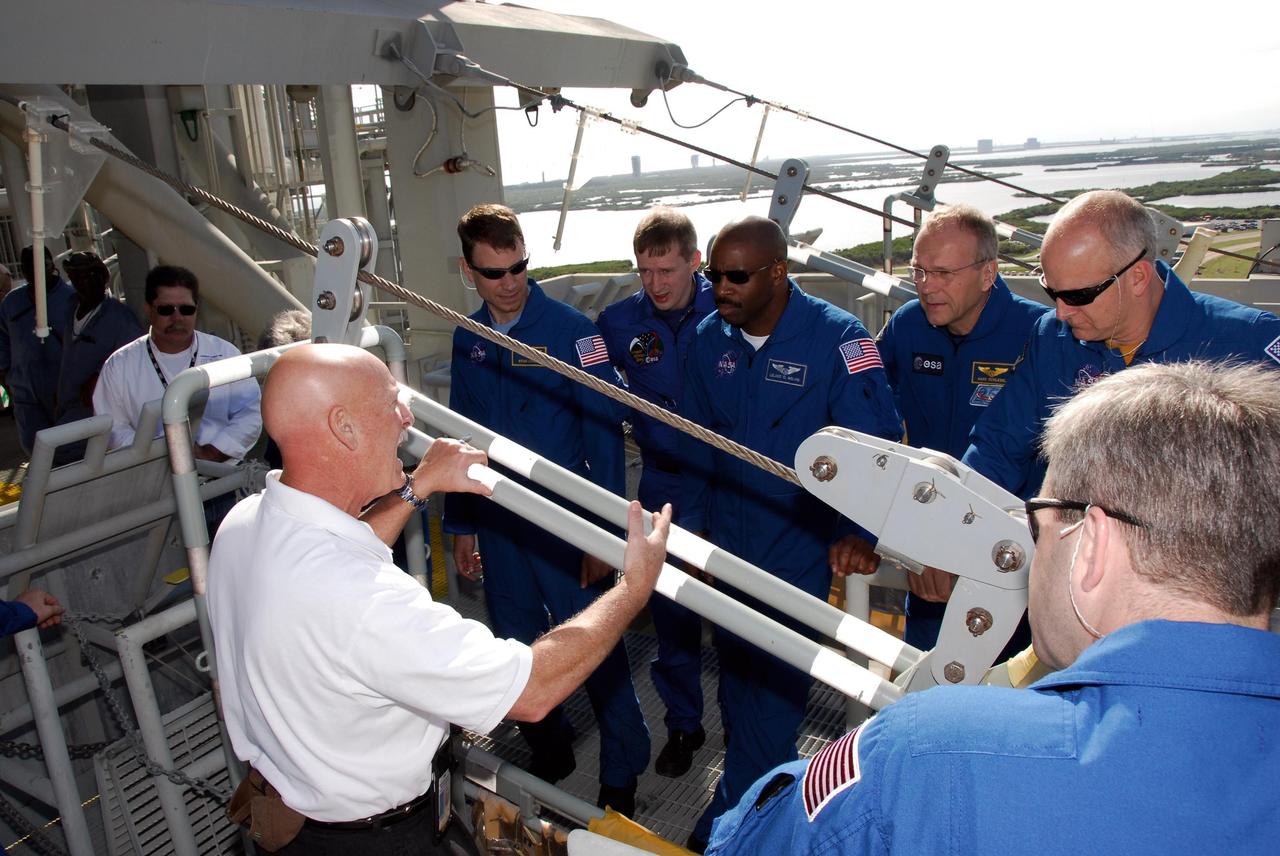
KENNEDY SPACE CENTER, FLA. -- The space shuttle Atlantis STS-122 crew receives instruction on slidewire basket operation, part of the emergency exit system on the fixed service structure on Launch Pad 39A. From left are Mission Specialists Stanley Love; Leopold Eyharts' backup, Frank De Winne; Leland Melvin and Hans Schlegel; Pilot Alan Poindexter; and Commander Steve Frick, with his back to the camera. Schlegel, Eyharts and De Winne are with the European Space Agency. Eyharts will remain on the International Space Station as a flight engineer for Expedition 16 following the STS-122 mission. Seven slidewire baskets are available to carry the crew from the level of the pad's Orbiter Access Arm to a safe landing site below, if needed. Each basket can hold up to three people. A braking system catch net and drag chain slow, and then halt, the baskets as they travel down the wire at approximately 55 miles per hour. The journey takes about half a minute. A bunker is located in the landing zone 1,200 feet west of the pad, with an M-113 armored personnel carrier stationed nearby. The STS-122 crew is at NASA's Kennedy Space Center to take part in terminal countdown demonstration test, or TCDT, activities, a standard part of launch preparations. The TCDT provides astronauts and ground crews with equipment familiarization and a simulated launch countdown before launch. On mission STS-122, Atlantis will deliver the European Space Agency's Columbus module to the International Space Station. Columbus is a multifunctional, pressurized laboratory that will be permanently attached to U.S. Node 2, called Harmony, and will expand the research facilities aboard the station. Launch is targeted for Dec. 6. Photo credit: NASA/Kim Shiflett
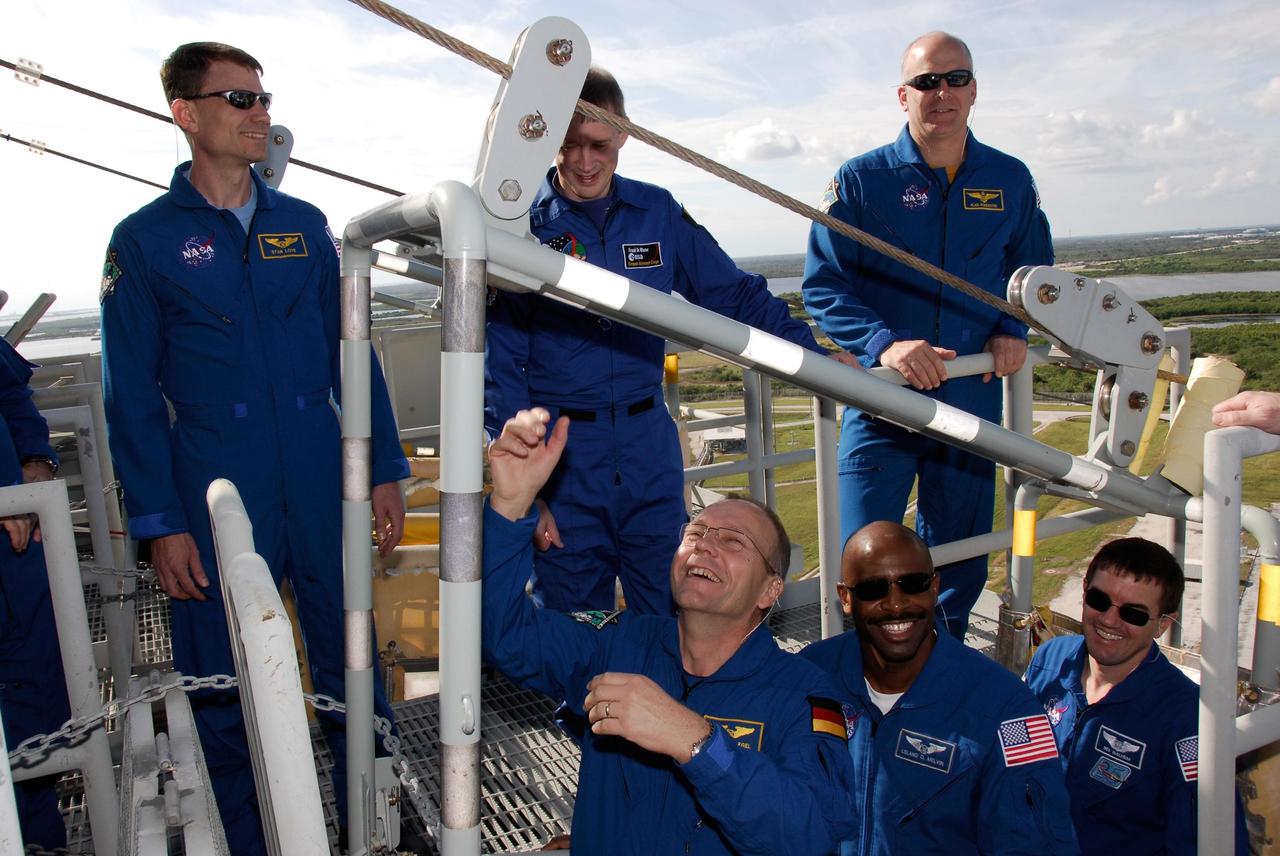
KENNEDY SPACE CENTER, FLA. -- The space shuttle Atlantis STS-122 crew receives instruction on slidewire basket operation, part of the emergency exit system on the fixed service structure on Launch Pad 39A. Standing, from left, are Mission Specialists Stanley Love; Leopold Eyharts' backup, Frank De Winne; and Pilot Alan Poindexter. Standing in the basket, from left, are Mission Specialists Hans Schlegel, Leland Melvin and Rex Walheim. Schlegel, Eyharts and De Winne are with the European Space Agency. Eyharts will remain on the International Space Station as a flight engineer for Expedition 16 following the STS-122 mission. Seven slidewire baskets are available to carry the crew from the level of the pad's Orbiter Access Arm to a safe landing site below, if needed. Each basket can hold up to three people. A braking system catch net and drag chain slow, and then halt, the baskets as they travel down the wire at approximately 55 miles per hour. The journey takes about half a minute. A bunker is located in the landing zone 1,200 feet west of the pad, with an M-113 armored personnel carrier stationed nearby. The STS-122 crew is at NASA's Kennedy Space Center to take part in terminal countdown demonstration test, or TCDT, activities, a standard part of launch preparations. The TCDT provides astronauts and ground crews with equipment familiarization and a simulated launch countdown before launch. On mission STS-122, Atlantis will deliver the European Space Agency's Columbus module to the International Space Station. Columbus is a multifunctional, pressurized laboratory that will be permanently attached to U.S. Node 2, called Harmony, and will expand the research facilities aboard the station. Launch is targeted for Dec. 6. Photo credit: NASA/Kim Shiflett
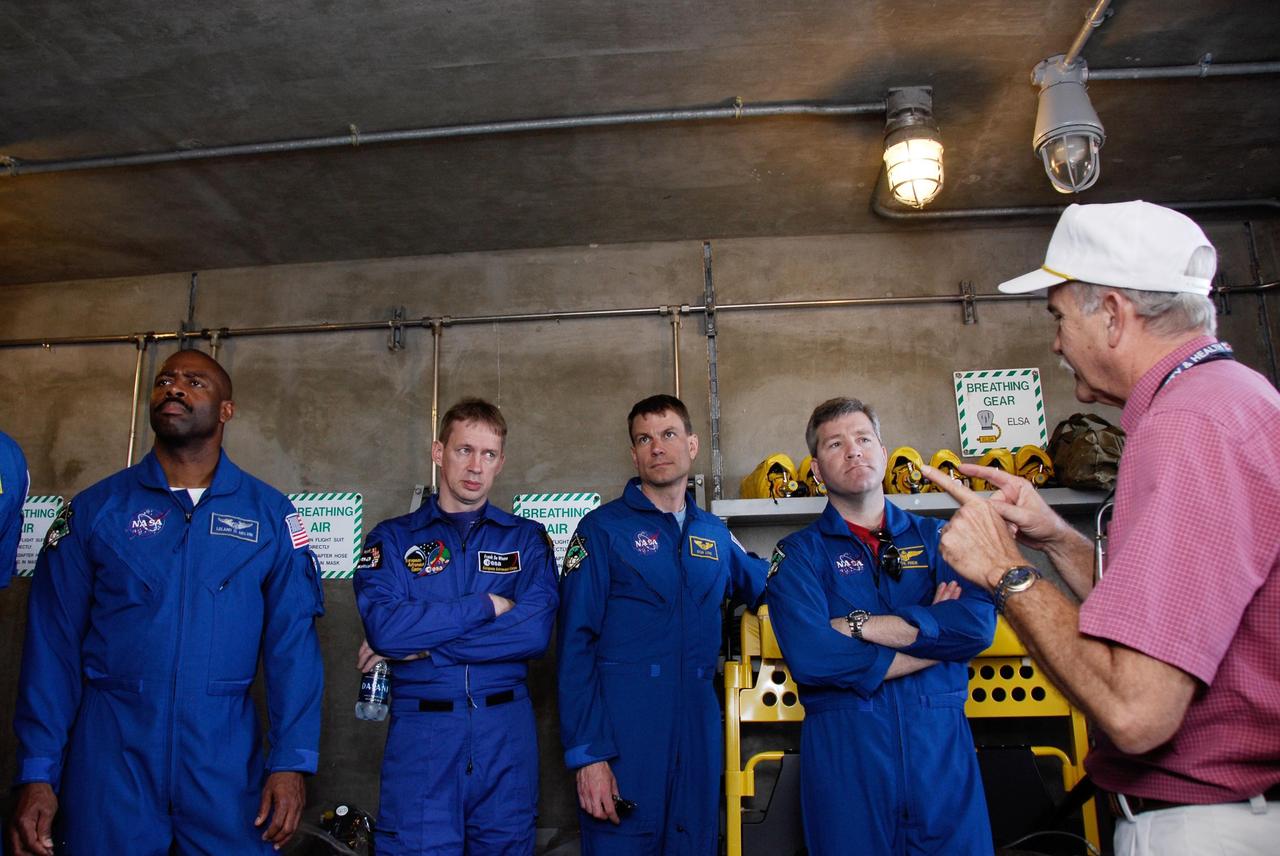
KENNEDY SPACE CENTER, FLA. -- The space shuttle Atlantis STS-122 crew receives instruction on the emergency exit system on Launch Pad 39A. Inside the bunker at the foot of the pad, from left, Mission Specialist Leland Melvin; astronaut Frank De Winne of the European Space Agency, backup for Expedition 16 Flight Engineer Leopold Eyharts; Mission Specialist Stanley Love; and Commander Steve Frick listen intently to their trainer. Seven slidewire baskets are available to carry the crew from the level of the pad's Orbiter Access Arm to a safe landing site below, if needed. Each basket can hold up to three people. A braking system catch net and drag chain slow, and then halt, the baskets as they travel down the wire at approximately 55 miles per hour. The journey takes about half a minute. A bunker is located in the landing zone 1,200 feet west of the pad, with an M-113 armored personnel carrier stationed nearby. The STS-122 crew is at NASA's Kennedy Space Center to take part in terminal countdown demonstration test, or TCDT, activities, a standard part of launch preparations. The TCDT provides astronauts and ground crews with equipment familiarization and a simulated launch countdown before launch. On mission STS-122, Atlantis will deliver the European Space Agency's Columbus module to the International Space Station. Columbus is a multifunctional, pressurized laboratory that will be permanently attached to U.S. Node 2, called Harmony, and will expand the research facilities aboard the station. Launch is targeted for Dec. 6. Photo credit: NASA/Kim Shiflett