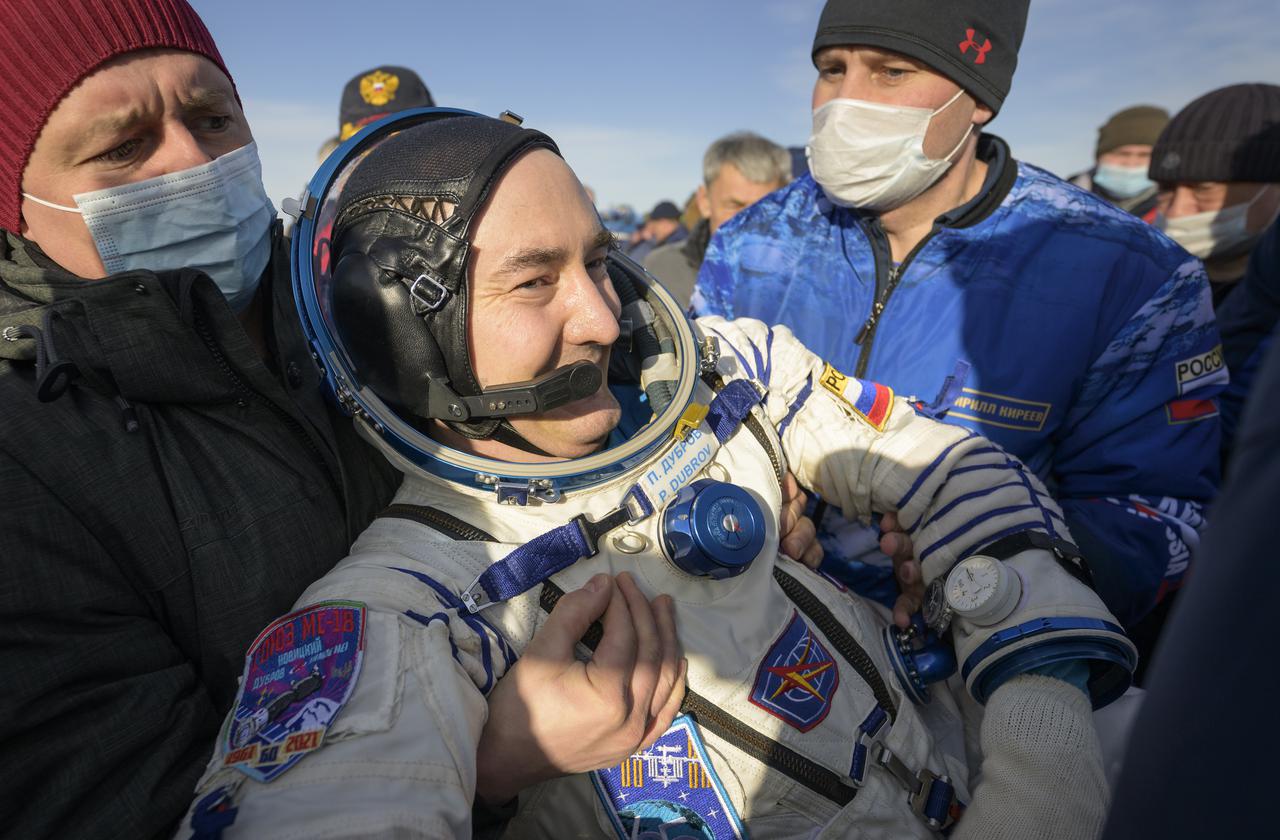
Expedition 66 Russian cosmonaut Pyotr Dubrov is helped out of the Soyuz MS-19 spacecraft just minutes after he, Russian cosmonaut Anton Shkaplerov and NASA astronaut Mark Vande Hei, landed in a remote area near the town of Zhezkazgan, Kazakhstan on Wednesday, March 30, 2022. Vande Hei and Dubrov are returning to Earth after logging 355 days in space as members of Expeditions 64-66 aboard the International Space Station. For Vande Hei, his mission is the longest single spaceflight by a U.S. astronaut in history. Shkaplerov is returning after 176 days in space, serving as a Flight Engineer for Expedition 65 and commander of Expedition 66. Photo Credit: (NASA/Bill Ingalls)
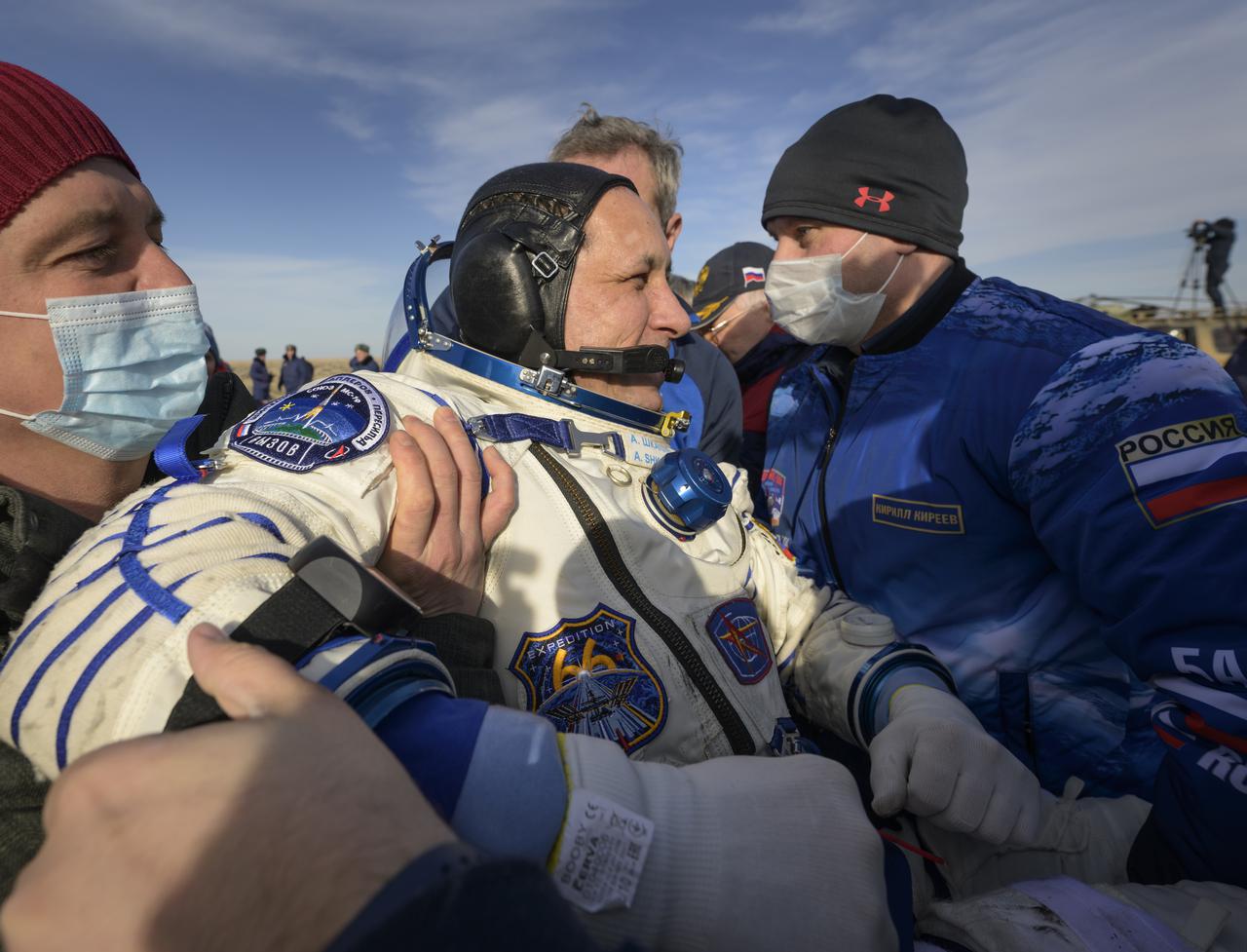
Expedition 66 Russian cosmonaut Anton Shkaplerov is helped out of the Soyuz MS-19 spacecraft just minutes after he, Russian cosmonaut Pyotr Dubrov, and NASA astronaut Mark Vande Hei, landed in a remote area near the town of Zhezkazgan, Kazakhstan on Wednesday, March 30, 2022. Vande Hei and Dubrov are returning to Earth after logging 355 days in space as members of Expeditions 64-66 aboard the International Space Station. For Vande Hei, his mission is the longest single spaceflight by a U.S. astronaut in history. Shkaplerov is returning after 176 days in space, serving as a Flight Engineer for Expedition 65 and commander of Expedition 66. Photo Credit: (NASA/Bill Ingalls)
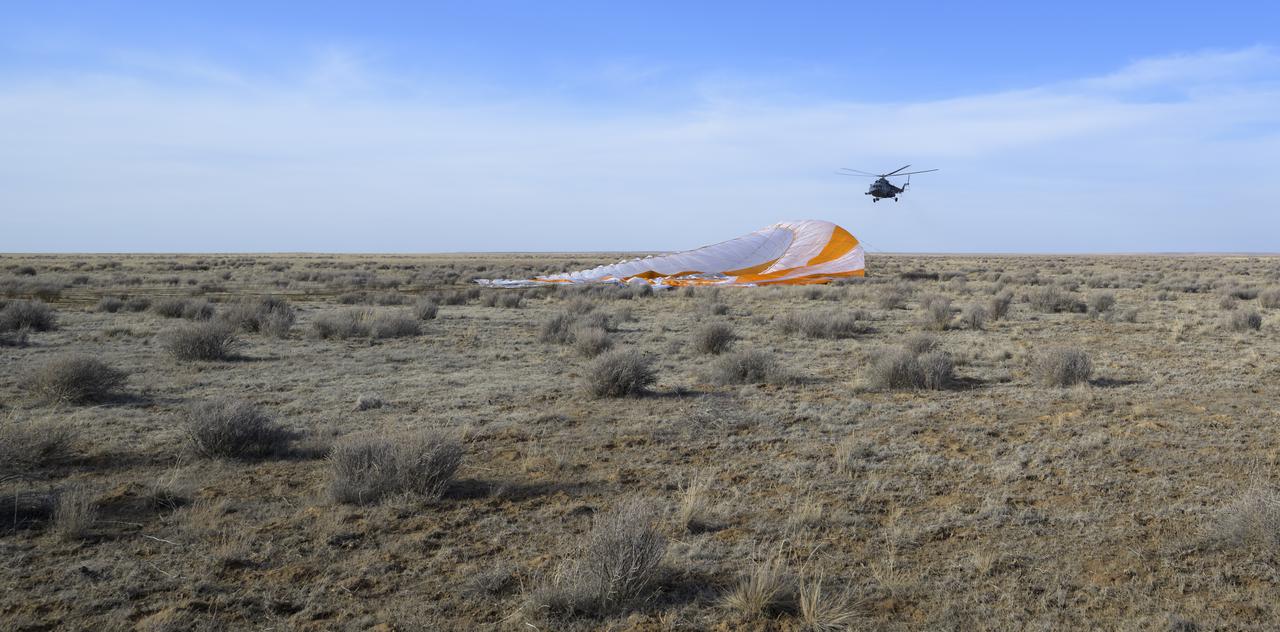
Russian Search and Rescue teams arrive at the Soyuz MS-19 spacecraft shortly after it landed in a remote area near the town of Zhezkazgan, Kazakhstan with Expedition 66 crew members Mark Vande Hei of NASA, and cosmonauts Pyotr Dubrov, and Anton Shkaplerov of Roscosmos, Wednesday, March 30, 2022. Vande Hei and Dubrov are returning to Earth after logging 355 days in space as members of Expeditions 64-66 aboard the International Space Station. For Vande Hei, his mission is the longest single spaceflight by a U.S. astronaut in history. Shkaplerov is returning after 176 days in space, serving as a Flight Engineer for Expedition 65 and commander of Expedition 66. Photo Credit: (NASA/Bill Ingalls)
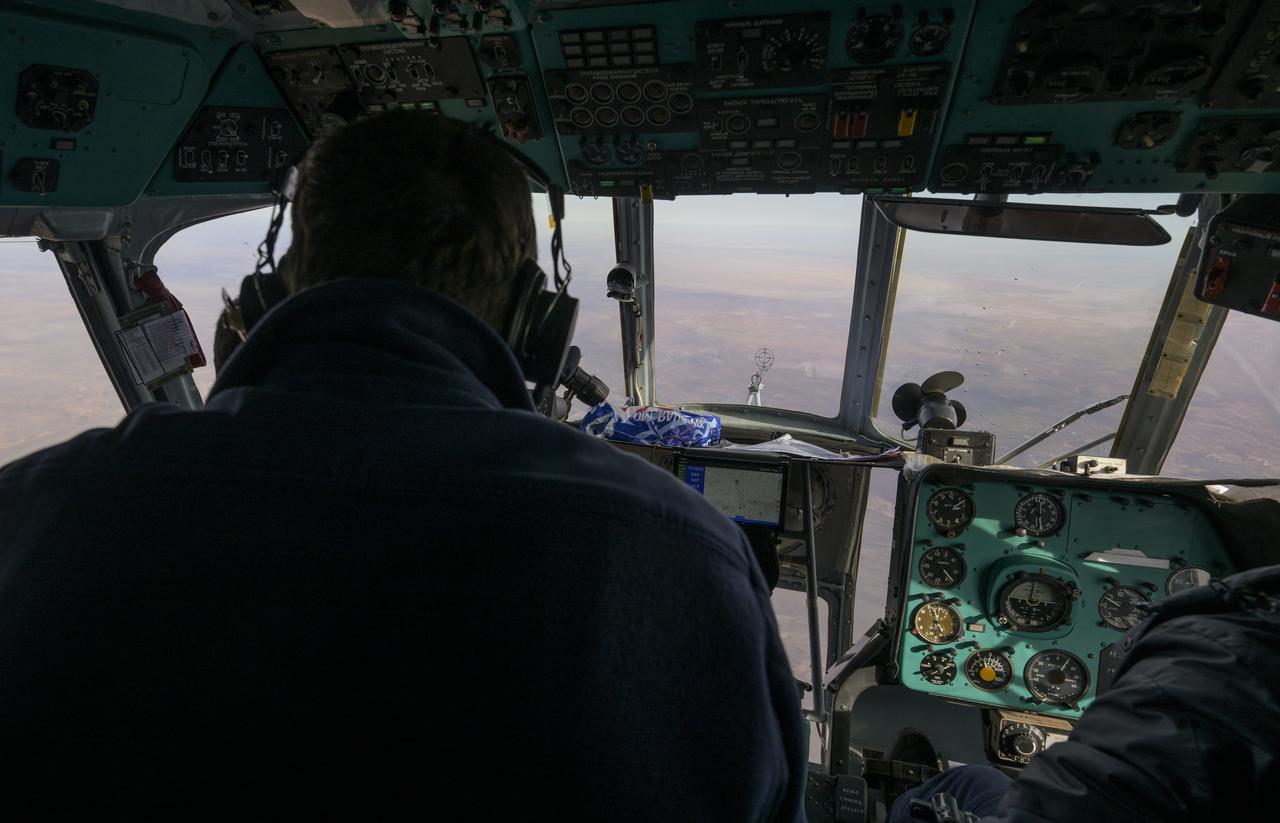
Russian Search and Rescue helicopter teams survey the sky for the Soyuz MS-19 spacecraft as it lands in a remote area near the town of Zhezkazgan, Kazakhstan with Expedition 66 crew members Mark Vande Hei of NASA, and cosmonauts Pyotr Dubrov, and Anton Shkaplerov of Roscosmos, Wednesday, March 30, 2022. Vande Hei and Dubrov are returning to Earth after logging 355 days in space as members of Expeditions 64-66 aboard the International Space Station. For Vande Hei, his mission is the longest single spaceflight by a U.S. astronaut in history. Shkaplerov is returning after 176 days in space, serving as a Flight Engineer for Expedition 65 and commander of Expedition 66. Photo Credit: (NASA/Bill Ingalls)
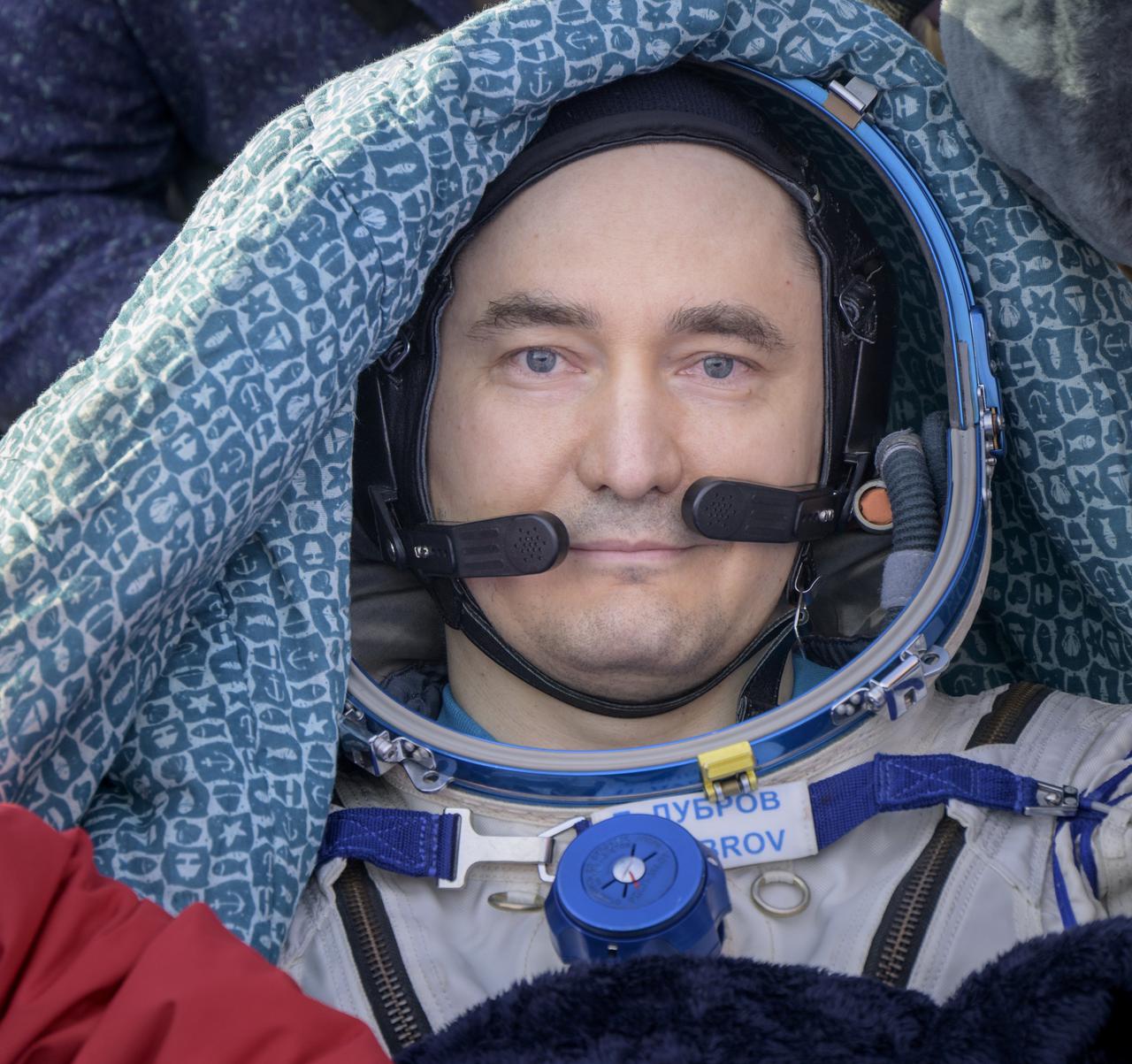
Russian cosmonaut Pyotr Dubrov is seen outside the Soyuz MS-19 spacecraft after he landed with fellow Expedition 66 crew members Anton Shkaplerov of Roscosmos, and NASA astronaut Mark Vande Hei in a remote area near the town of Zhezkazgan, Kazakhstan on Wednesday, March 30, 2022. Vande Hei and Dubrov are returning to Earth after logging 355 days in space as members of Expeditions 64-66 aboard the International Space Station. For Vande Hei, his mission is the longest single spaceflight by a U.S. astronaut in history. Shkaplerov is returning after 176 days in space, serving as a Flight Engineer for Expedition 65 and commander of Expedition 66. Photo Credit: (NASA/Bill Ingalls)
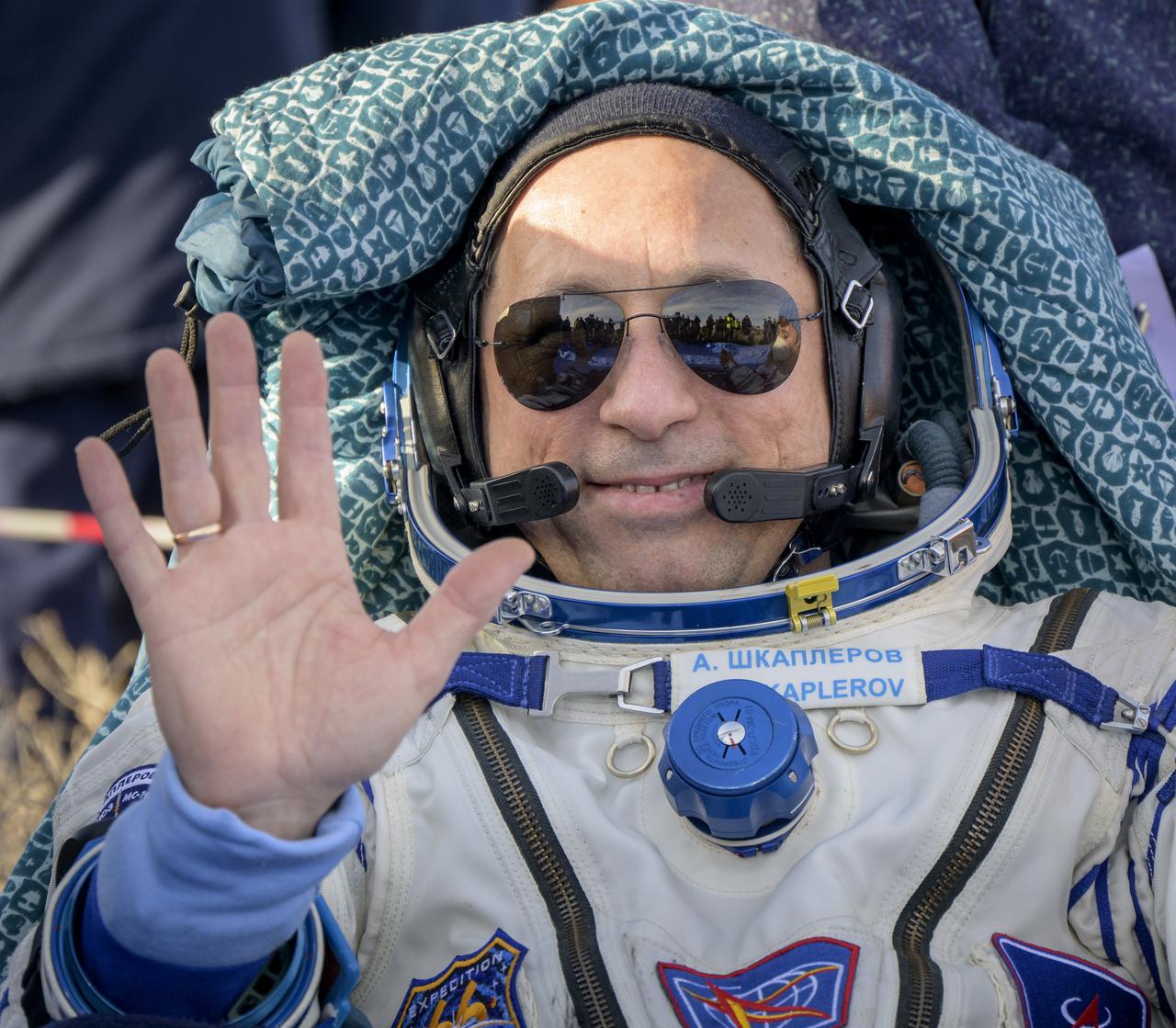
Russian cosmonaut Anton Shkaplerov is seen outside the Soyuz MS-19 spacecraft after he landed with fellow Expedition 66 crew members Russian cosmonaut Pyotr Dubrov of Roscosmos, and NASA astronaut Mark Vande Hei in a remote area near the town of Zhezkazgan, Kazakhstan on Wednesday, March 30, 2022. Vande Hei and Dubrov are returning to Earth after logging 355 days in space as members of Expeditions 64-66 aboard the International Space Station. For Vande Hei, his mission is the longest single spaceflight by a U.S. astronaut in history. Shkaplerov is returning after 176 days in space, serving as a Flight Engineer for Expedition 65 and commander of Expedition 66. Photo Credit: (NASA/Bill Ingalls)
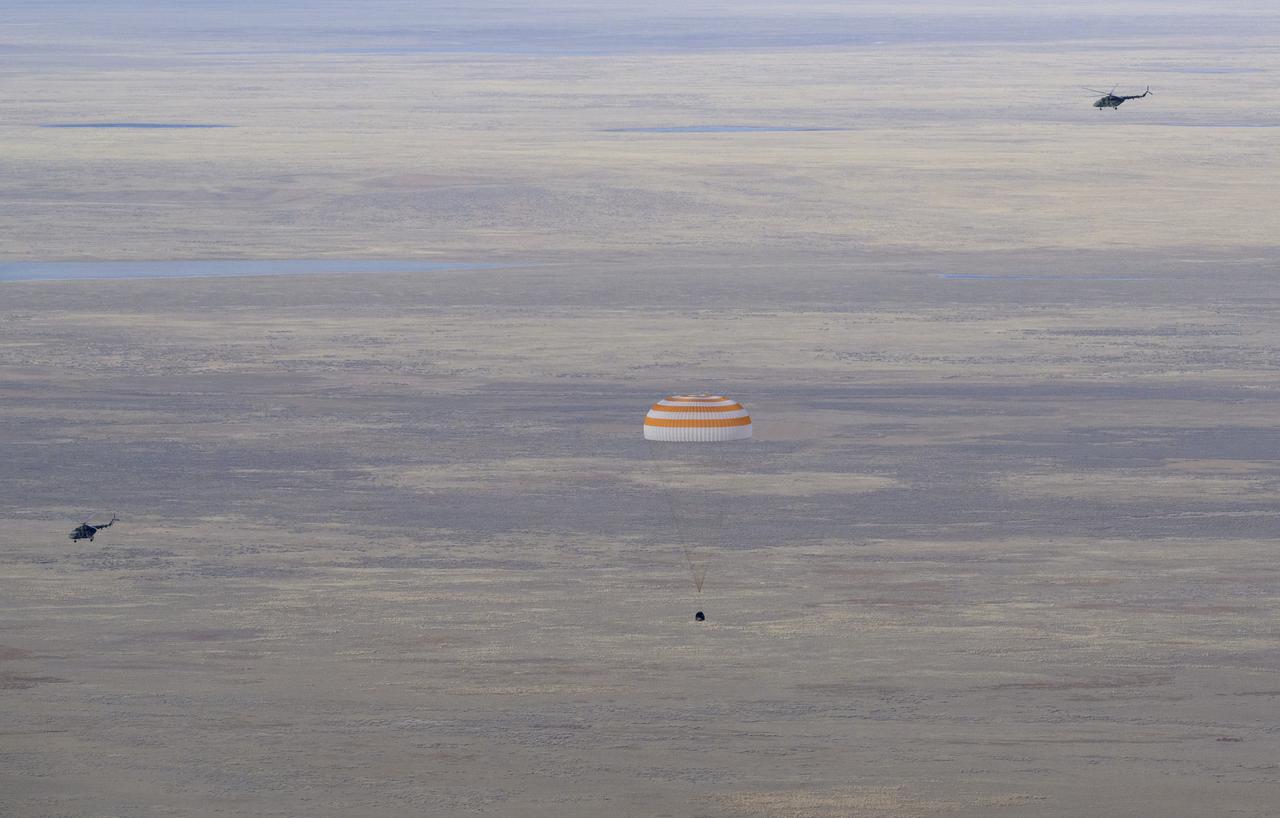
The Soyuz MS-19 spacecraft is seen as it lands in a remote area near the town of Zhezkazgan, Kazakhstan with Expedition 66 crew members Mark Vande Hei of NASA, and cosmonauts Pyotr Dubrov, and Anton Shkaplerov of Roscosmos, Wednesday, March 30, 2022. Vande Hei and Dubrov are returning to Earth after logging 355 days in space as members of Expeditions 64-66 aboard the International Space Station. For Vande Hei, his mission is the longest single spaceflight by a U.S. astronaut in history. Shkaplerov is returning after 176 days in space, serving as a Flight Engineer for Expedition 65 and commander of Expedition 66. Photo Credit: (NASA/Bill Ingalls)
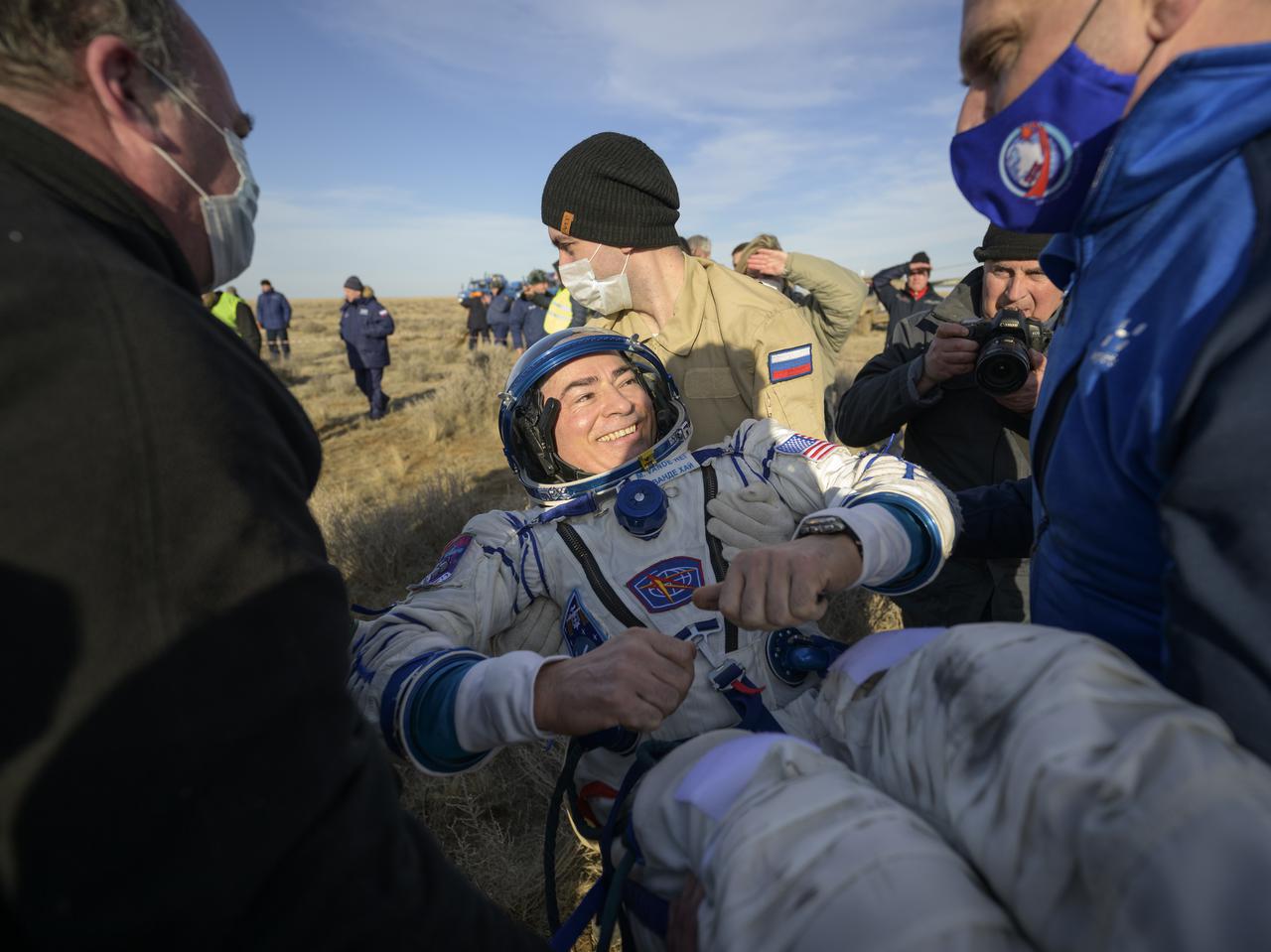
Expedition 66 NASA astronaut Mark Vande Hei is helped out of the Soyuz MS-19 spacecraft just minutes after he and Russian cosmonauts Pyotr Dubrov and Anton Shkaplerov, landed in a remote area near the town of Zhezkazgan, Kazakhstan on Wednesday, March 30, 2022. Vande Hei and Dubrov are returning to Earth after logging 355 days in space as members of Expeditions 64-66 aboard the International Space Station. For Vande Hei, his mission is the longest single spaceflight by a U.S. astronaut in history. Shkaplerov is returning after 176 days in space, serving as a Flight Engineer for Expedition 65 and commander of Expedition 66. Photo Credit: (NASA/Bill Ingalls)
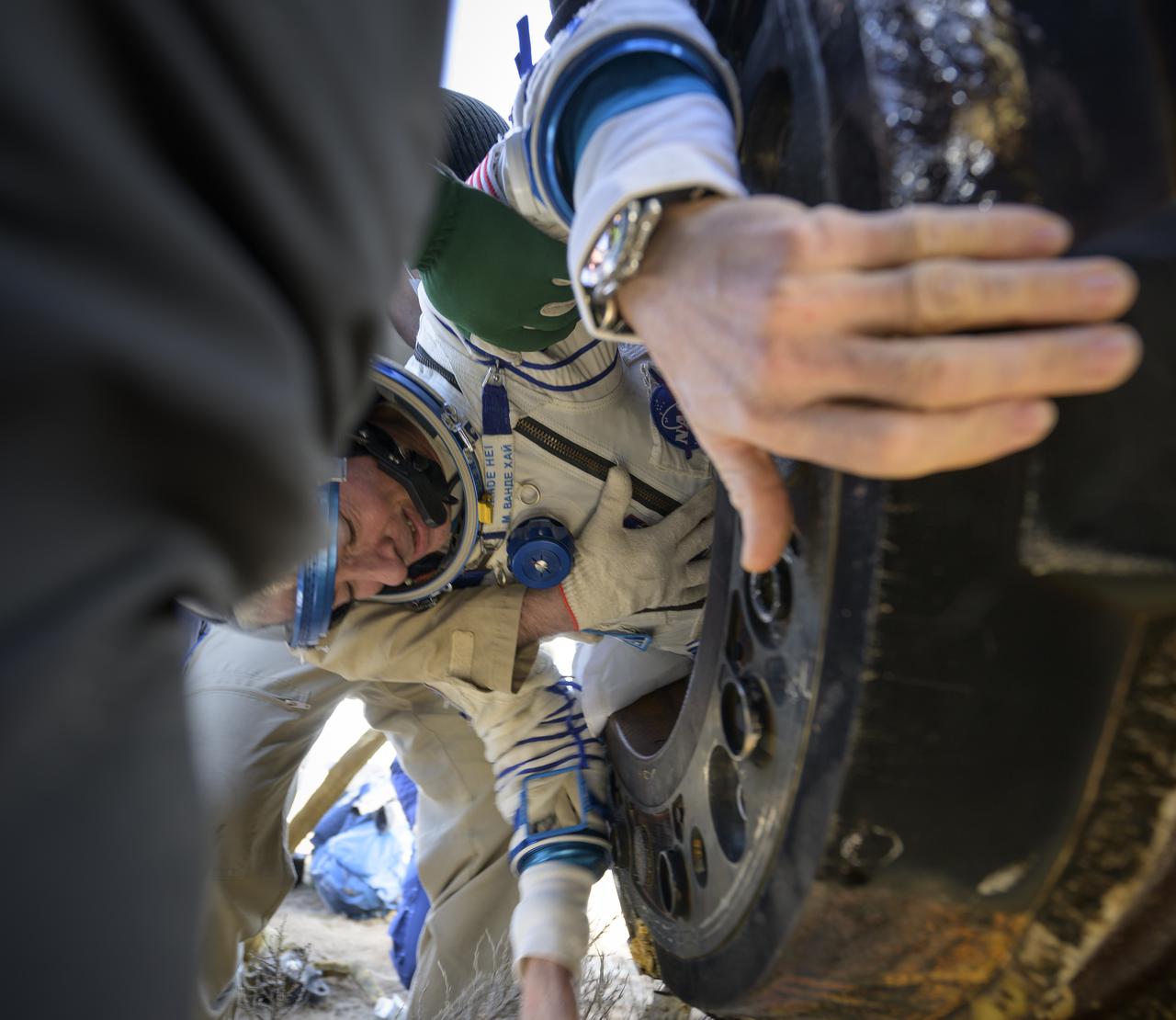
Expedition 66 NASA astronaut Mark Vande Hei is helped out of the Soyuz MS-19 spacecraft just minutes after he and Russian cosmonauts Pyotr Dubrov and Anton Shkaplerov, landed in a remote area near the town of Zhezkazgan, Kazakhstan on Wednesday, March 30, 2022. Vande Hei and Dubrov are returning to Earth after logging 355 days in space as members of Expeditions 64-66 aboard the International Space Station. For Vande Hei, his mission is the longest single spaceflight by a U.S. astronaut in history. Shkaplerov is returning after 176 days in space, serving as a Flight Engineer for Expedition 65 and commander of Expedition 66. Photo Credit: (NASA/Bill Ingalls)
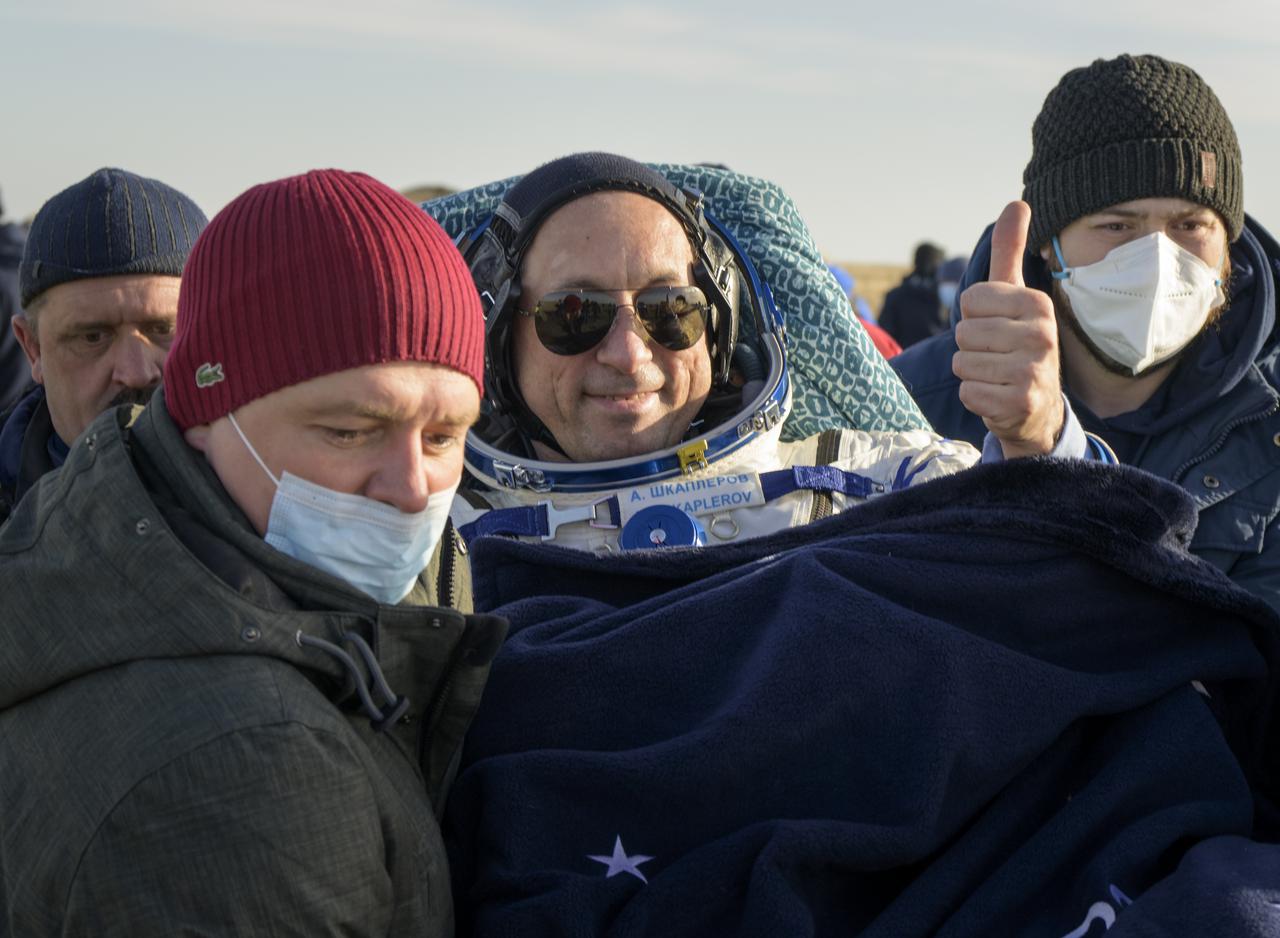
Expedition 66 Russian cosmonaut Anton Shkaplerov is carried to a medical tent shortly after he and fellow crew mates Mark Vande Hei of NASA and Pyotr Dubrov of Roscosmos landed in their Soyuz MS-19 spacecraft near the town of Zhezkazgan, Kazakhstan on Wednesday, March 30, 2022. Vande Hei and Dubrov are returning to Earth after logging 355 days in space as members of Expeditions 64-66 aboard the International Space Station. For Vande Hei, his mission is the longest single spaceflight by a U.S. astronaut in history. Shkaplerov is returning after 176 days in space, serving as a Flight Engineer for Expedition 65 and commander of Expedition 66. Photo Credit: (NASA/Bill Ingalls)
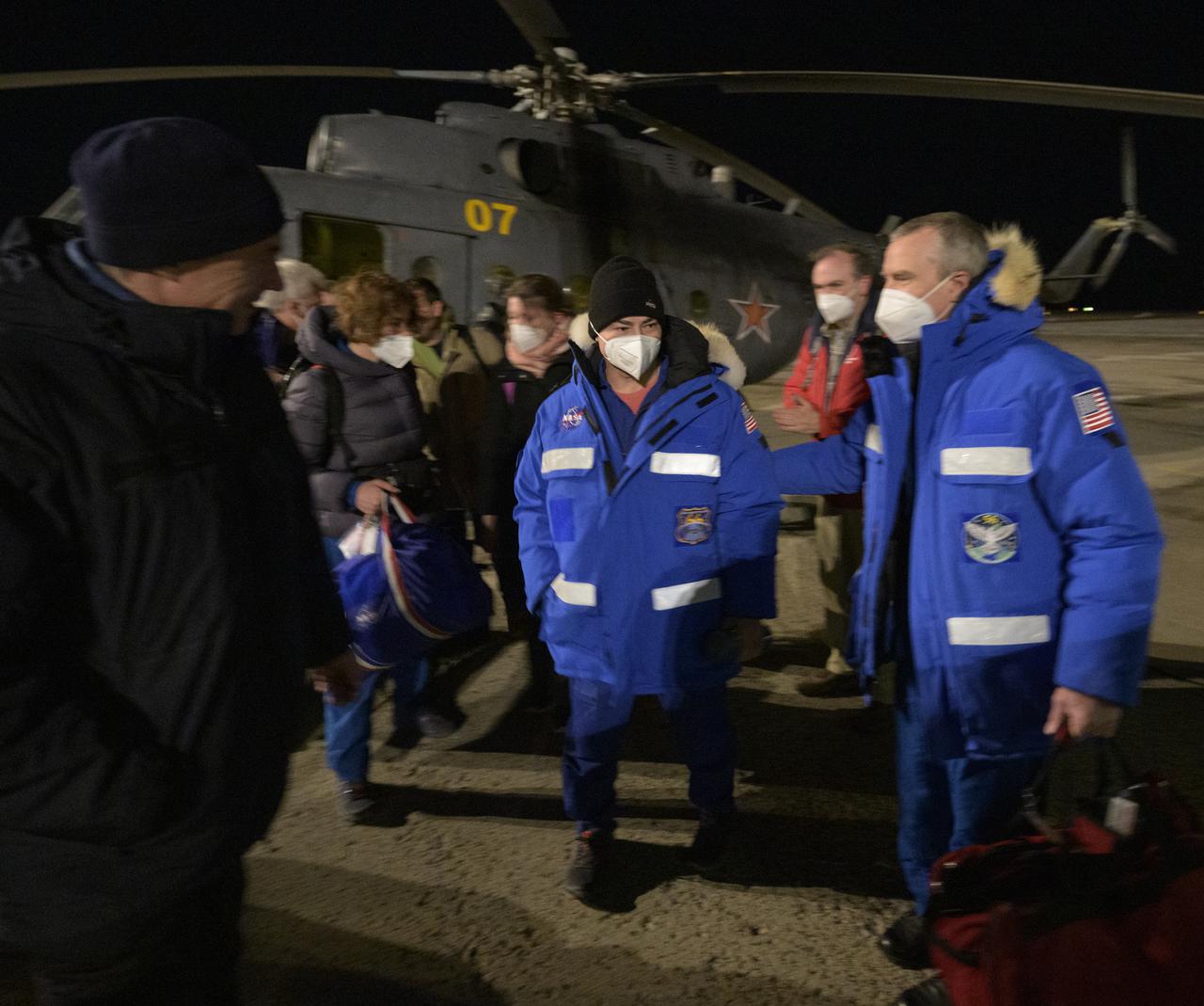
Expedition 66 NASA astronaut Mark Vande Hei arrives at the Karaganda Airport in Kazakhstan after he and Russian cosmonauts Anton Shkaplerov and Pyotr Dubrov landed in their Soyuz MS-19 spacecraft in a remote area near the town of Zhezkazgan, Kazakhstan on Wednesday, March 30, 2022. Vande Hei and Dubrov are returning to Earth after logging 355 days in space as members of Expeditions 64-66 aboard the International Space Station. For Vande Hei, his mission is the longest single spaceflight by a U.S. astronaut in history. Shkaplerov is returning after 176 days in space, serving as a Flight Engineer for Expedition 65 and commander of Expedition 66. Photo Credit: (NASA/Bill Ingalls)
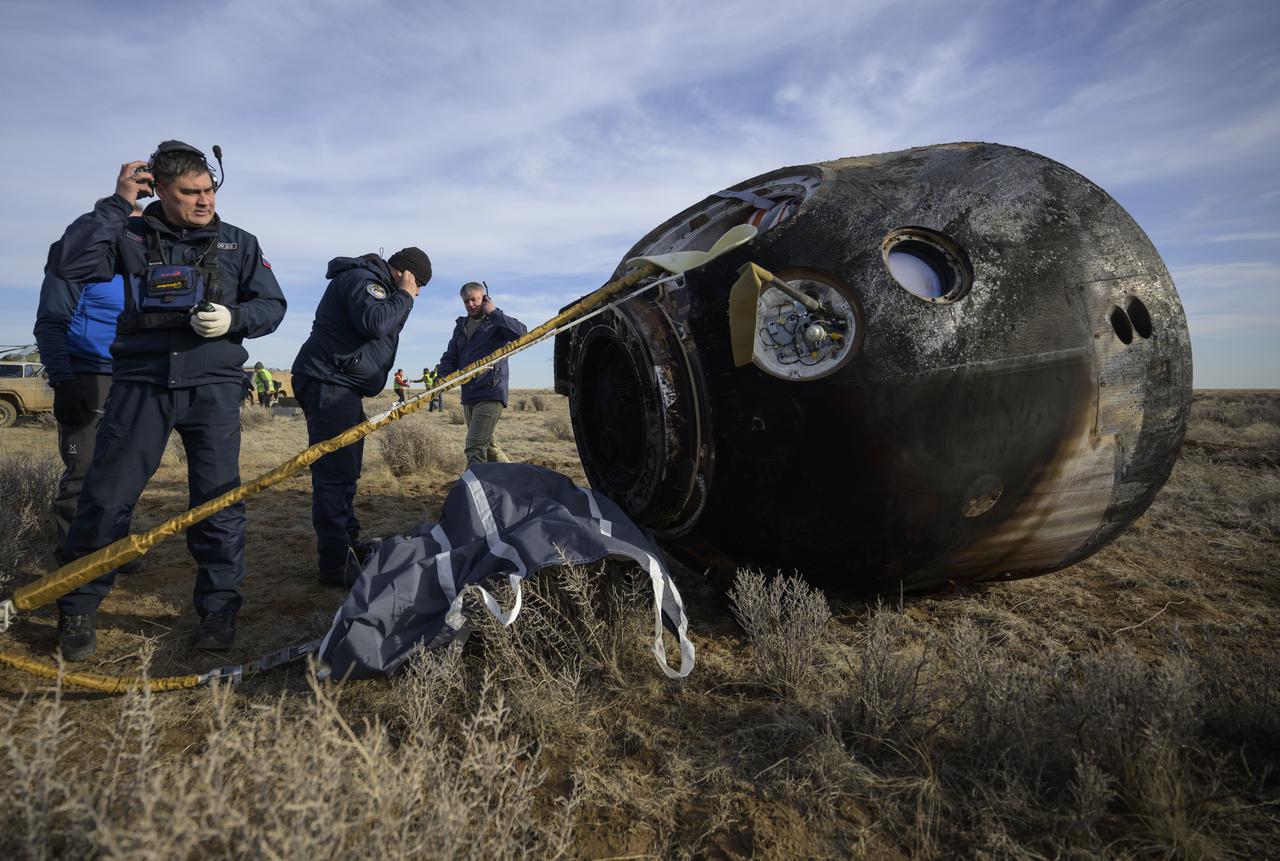
Russian Search and Rescue teams arrive at the Soyuz MS-19 spacecraft shortly after it landed in a remote area near the town of Zhezkazgan, Kazakhstan with Expedition 66 crew members Mark Vande Hei of NASA, and cosmonauts Pyotr Dubrov, and Anton Shkaplerov of Roscosmos, Wednesday, March 30, 2022. Vande Hei and Dubrov are returning to Earth after logging 355 days in space as members of Expeditions 64-66 aboard the International Space Station. For Vande Hei, his mission is the longest single spaceflight by a U.S. astronaut in history. Shkaplerov is returning after 176 days in space, serving as a Flight Engineer for Expedition 65 and commander of Expedition 66. Photo Credit: (NASA/Bill Ingalls)
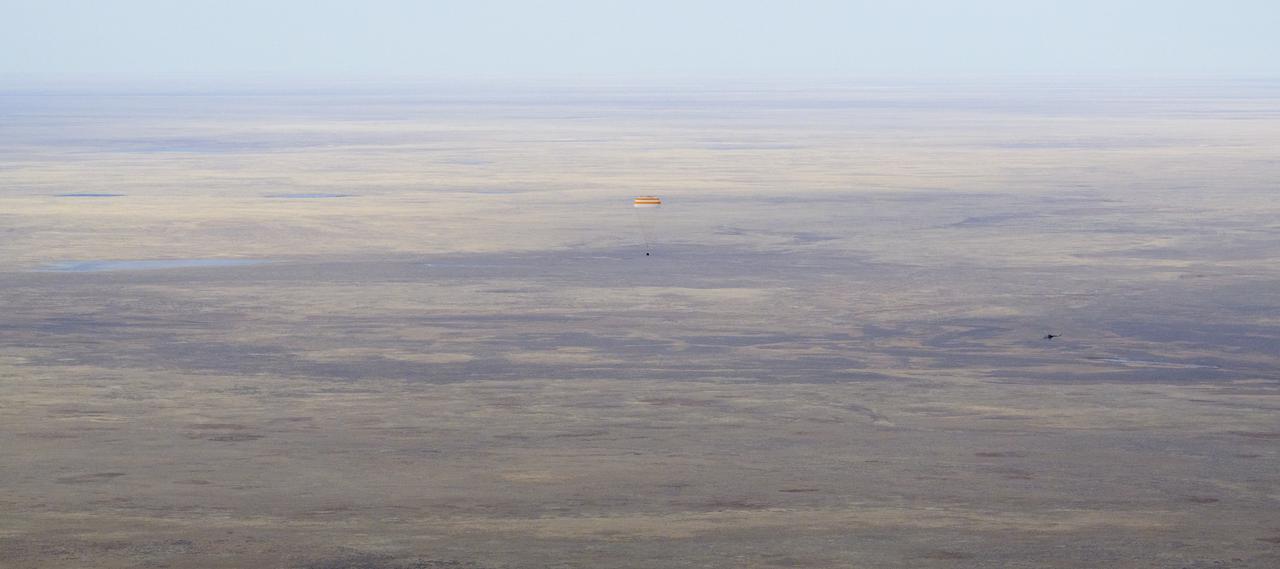
The Soyuz MS-19 spacecraft is seen as it lands in a remote area near the town of Zhezkazgan, Kazakhstan with Expedition 66 crew members Mark Vande Hei of NASA, and cosmonauts Pyotr Dubrov, and Anton Shkaplerov of Roscosmos, Wednesday, March 30, 2022. Vande Hei and Dubrov are returning to Earth after logging 355 days in space as members of Expeditions 64-66 aboard the International Space Station. For Vande Hei, his mission is the longest single spaceflight by a U.S. astronaut in history. Shkaplerov is returning after 176 days in space, serving as a Flight Engineer for Expedition 65 and commander of Expedition 66. Photo Credit: (NASA/Bill Ingalls)
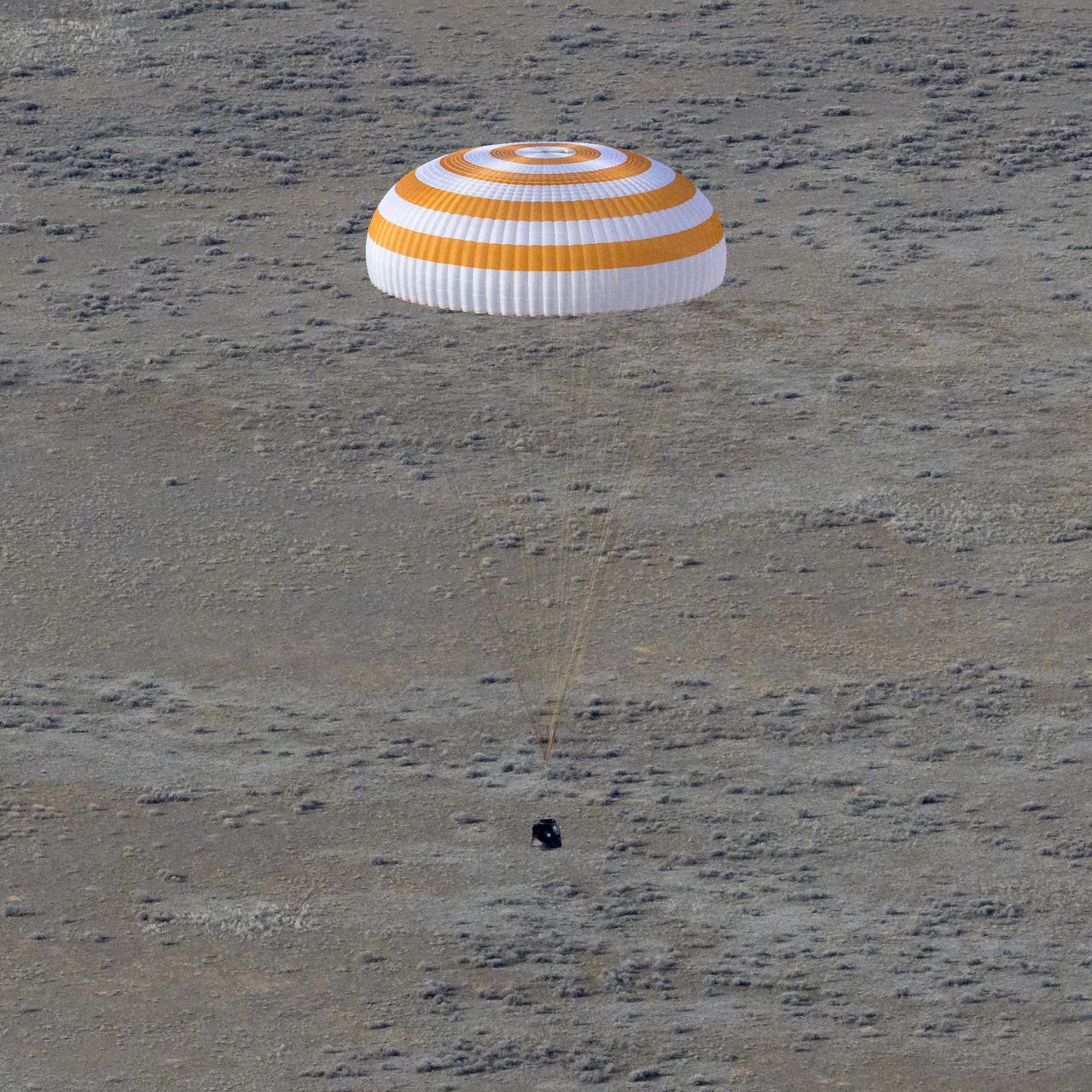
The Soyuz MS-19 spacecraft is seen as it lands in a remote area near the town of Zhezkazgan, Kazakhstan with Expedition 66 crew members Mark Vande Hei of NASA, and cosmonauts Pyotr Dubrov, and Anton Shkaplerov of Roscosmos, Wednesday, March 30, 2022. Vande Hei and Dubrov are returning to Earth after logging 355 days in space as members of Expeditions 64-66 aboard the International Space Station. For Vande Hei, his mission is the longest single spaceflight by a U.S. astronaut in history. Shkaplerov is returning after 176 days in space, serving as a Flight Engineer for Expedition 65 and commander of Expedition 66. Photo Credit: (NASA/Bill Ingalls)
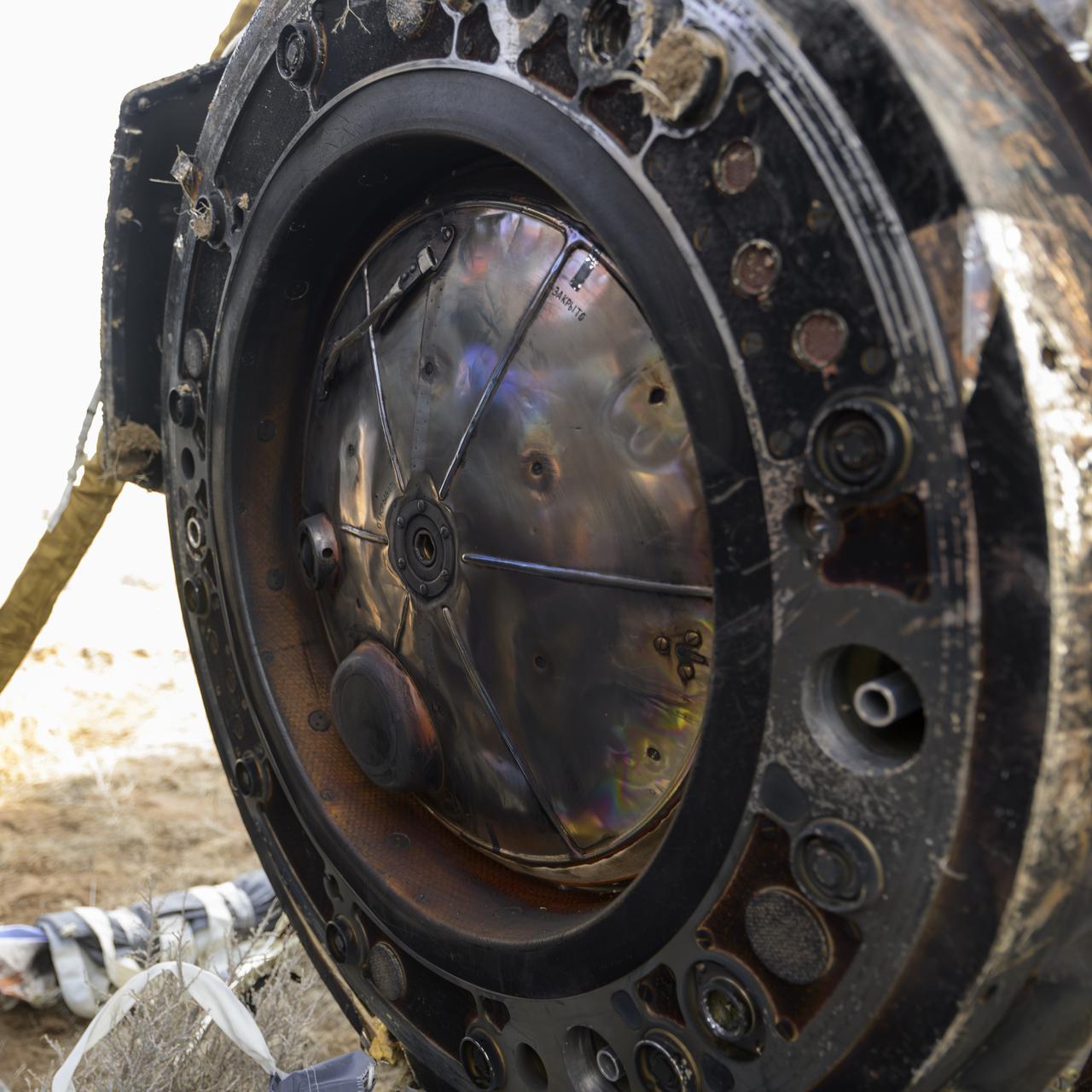
Russian Search and Rescue teams arrive at the Soyuz MS-19 spacecraft shortly after it landed in a remote area near the town of Zhezkazgan, Kazakhstan with Expedition 66 crew members Mark Vande Hei of NASA, and cosmonauts Pyotr Dubrov, and Anton Shkaplerov of Roscosmos, Wednesday, March 30, 2022. Vande Hei and Dubrov are returning to Earth after logging 355 days in space as members of Expeditions 64-66 aboard the International Space Station. For Vande Hei, his mission is the longest single spaceflight by a U.S. astronaut in history. Shkaplerov is returning after 176 days in space, serving as a Flight Engineer for Expedition 65 and commander of Expedition 66. Photo Credit: (NASA/Bill Ingalls)
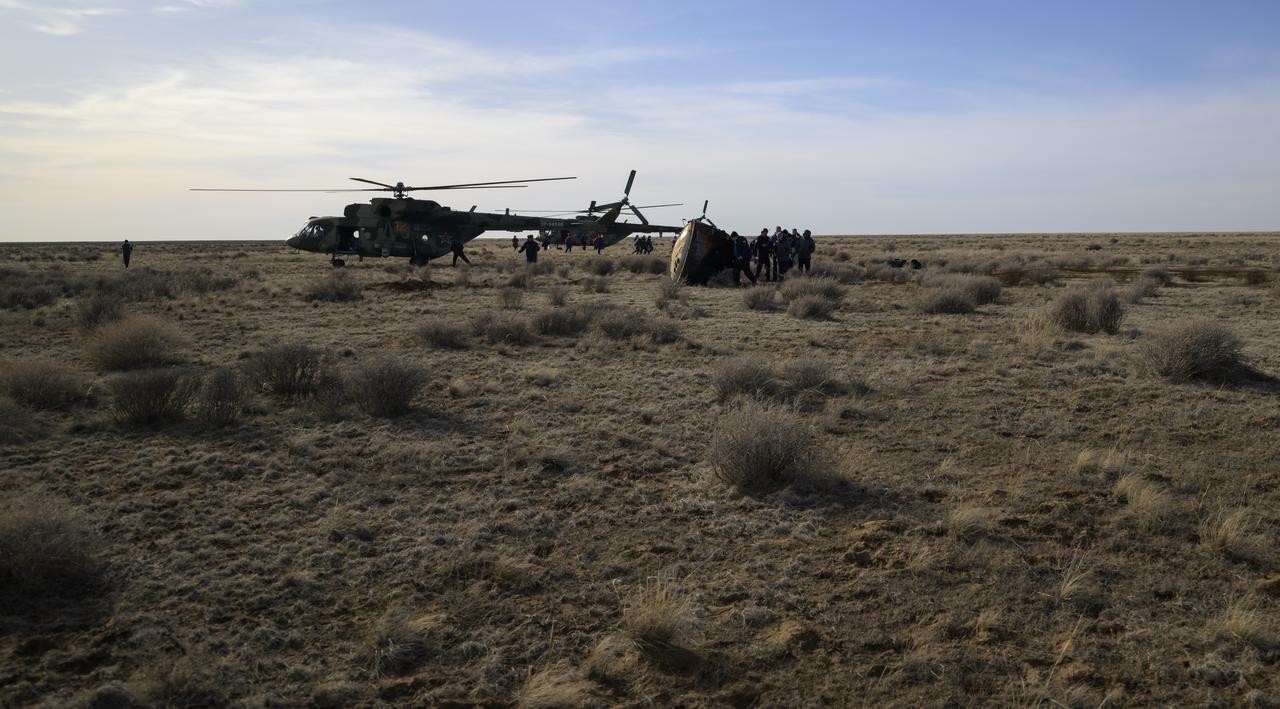
Russian Search and Rescue teams arrive at the Soyuz MS-19 spacecraft shortly after it landed in a remote area near the town of Zhezkazgan, Kazakhstan with Expedition 66 crew members Mark Vande Hei of NASA, and cosmonauts Pyotr Dubrov, and Anton Shkaplerov of Roscosmos, Wednesday, March 30, 2022. Vande Hei and Dubrov are returning to Earth after logging 355 days in space as members of Expeditions 64-66 aboard the International Space Station. For Vande Hei, his mission is the longest single spaceflight by a U.S. astronaut in history. Shkaplerov is returning after 176 days in space, serving as a Flight Engineer for Expedition 65 and commander of Expedition 66. Photo Credit: (NASA/Bill Ingalls)
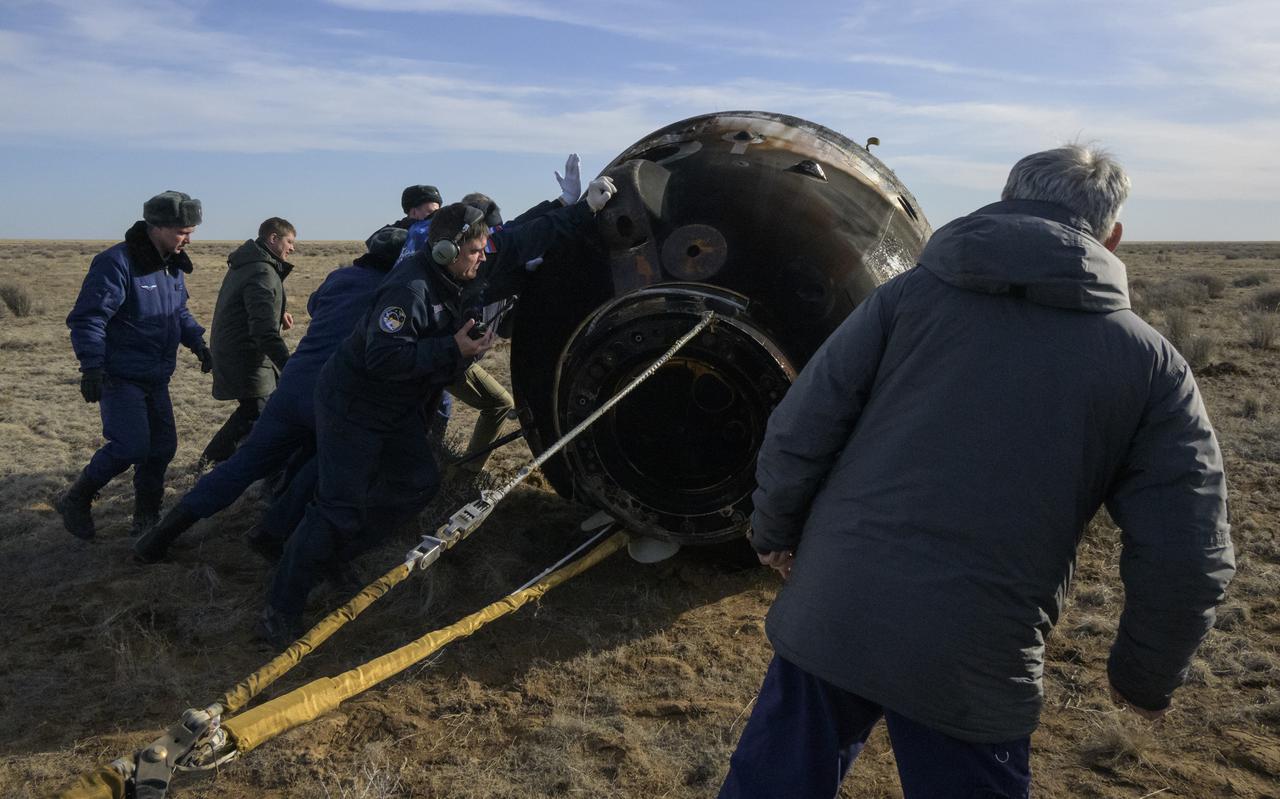
Russian Search and Rescue teams arrive at the Soyuz MS-19 spacecraft shortly after it landed in a remote area near the town of Zhezkazgan, Kazakhstan with Expedition 66 crew members Mark Vande Hei of NASA, and cosmonauts Pyotr Dubrov, and Anton Shkaplerov of Roscosmos, Wednesday, March 30, 2022. Vande Hei and Dubrov are returning to Earth after logging 355 days in space as members of Expeditions 64-66 aboard the International Space Station. For Vande Hei, his mission is the longest single spaceflight by a U.S. astronaut in history. Shkaplerov is returning after 176 days in space, serving as a Flight Engineer for Expedition 65 and commander of Expedition 66. Photo Credit: (NASA/Bill Ingalls)
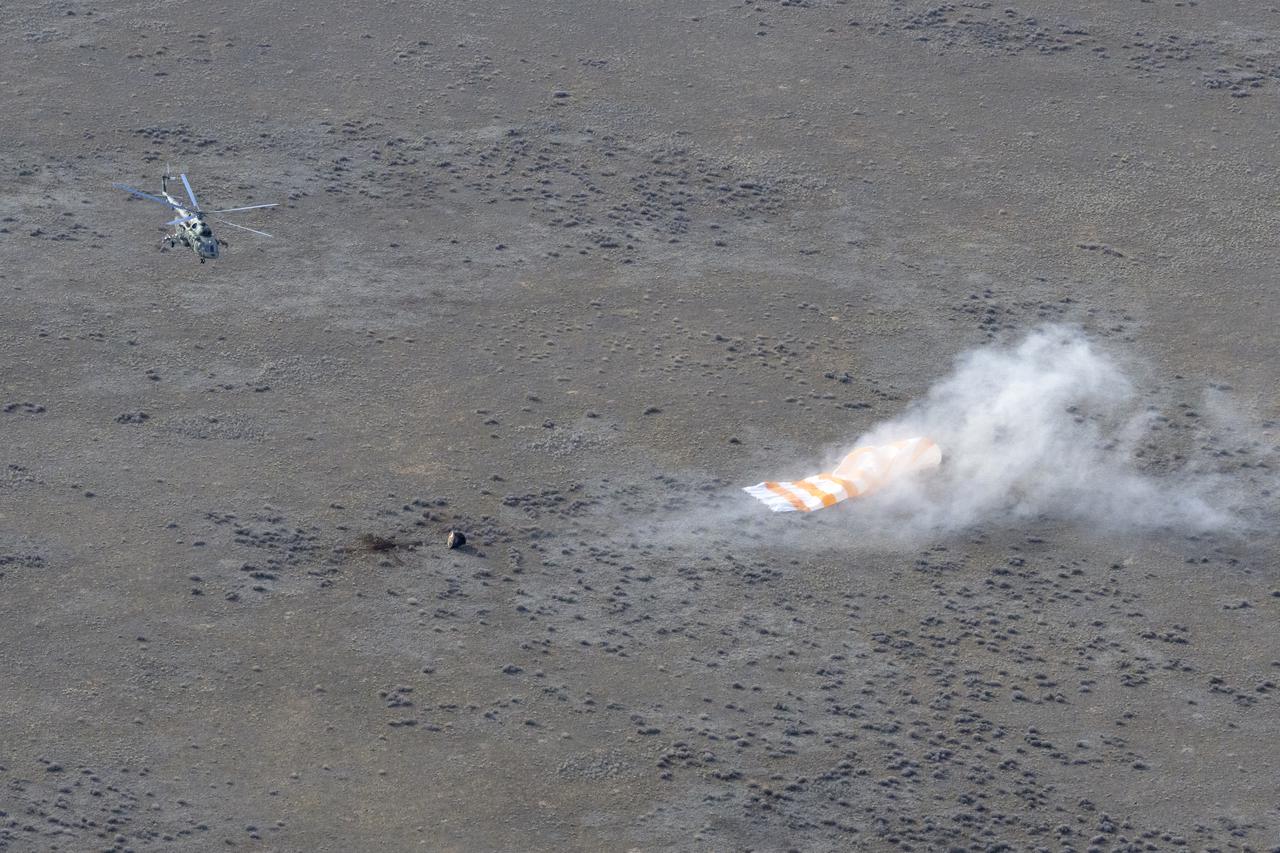
The Soyuz MS-19 spacecraft is seen as it lands in a remote area near the town of Zhezkazgan, Kazakhstan with Expedition 66 crew members Mark Vande Hei of NASA, and cosmonauts Pyotr Dubrov, and Anton Shkaplerov of Roscosmos, Wednesday, March 30, 2022. Vande Hei and Dubrov are returning to Earth after logging 355 days in space as members of Expeditions 64-66 aboard the International Space Station. For Vande Hei, his mission is the longest single spaceflight by a U.S. astronaut in history. Shkaplerov is returning after 176 days in space, serving as a Flight Engineer for Expedition 65 and commander of Expedition 66. Photo Credit: (NASA/Bill Ingalls)
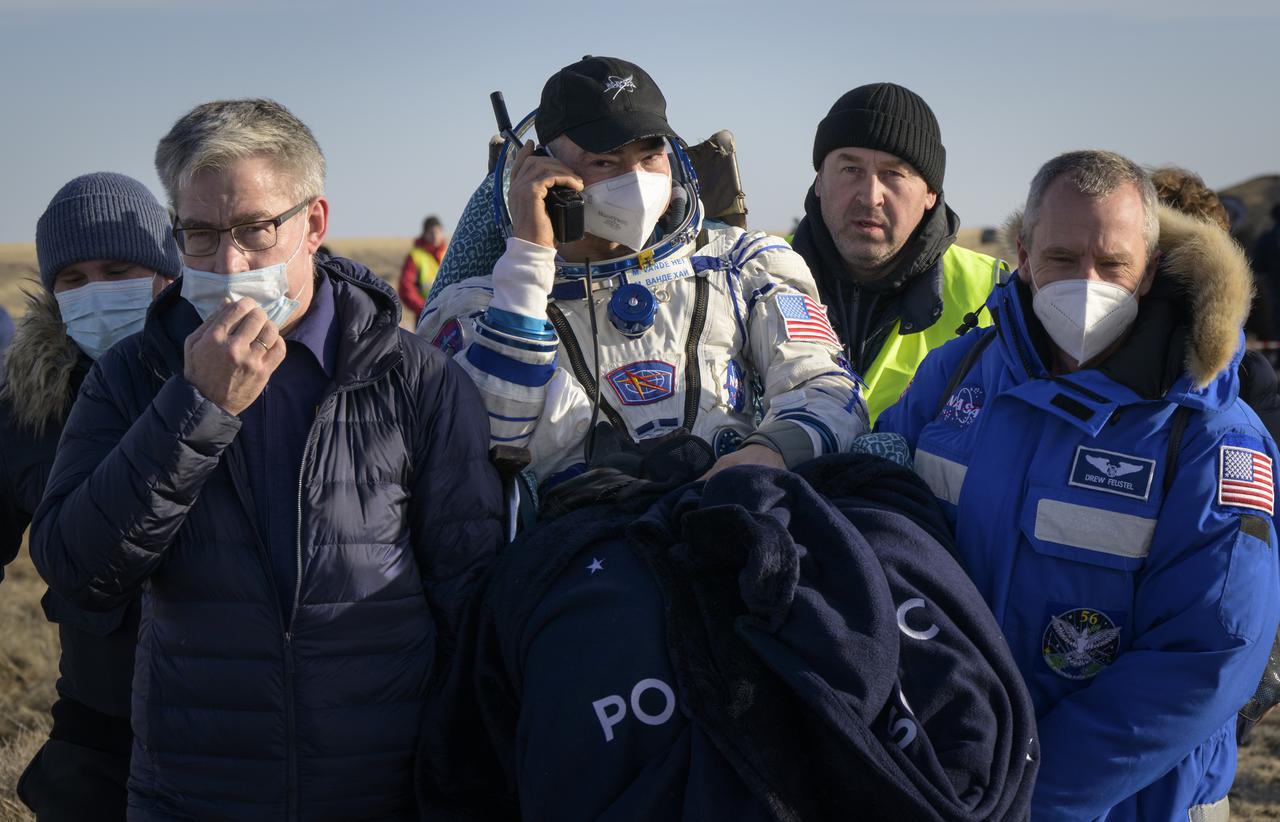
Expedition 66 NASA astronaut Mark Vande Hei is carried to a medical tent shortly after he and fellow crew mates Pyotr Dubrov and Anton Shkaplerov of Roscosmos landed in their Soyuz MS-19 spacecraft near the town of Zhezkazgan, Kazakhstan on Wednesday, March 30, 2022. Vande Hei and Dubrov are returning to Earth after logging 355 days in space as members of Expeditions 64-66 aboard the International Space Station. For Vande Hei, his mission is the longest single spaceflight by a U.S. astronaut in history. Shkaplerov is returning after 176 days in space, serving as a Flight Engineer for Expedition 65 and commander of Expedition 66. Photo Credit: (NASA/Bill Ingalls)
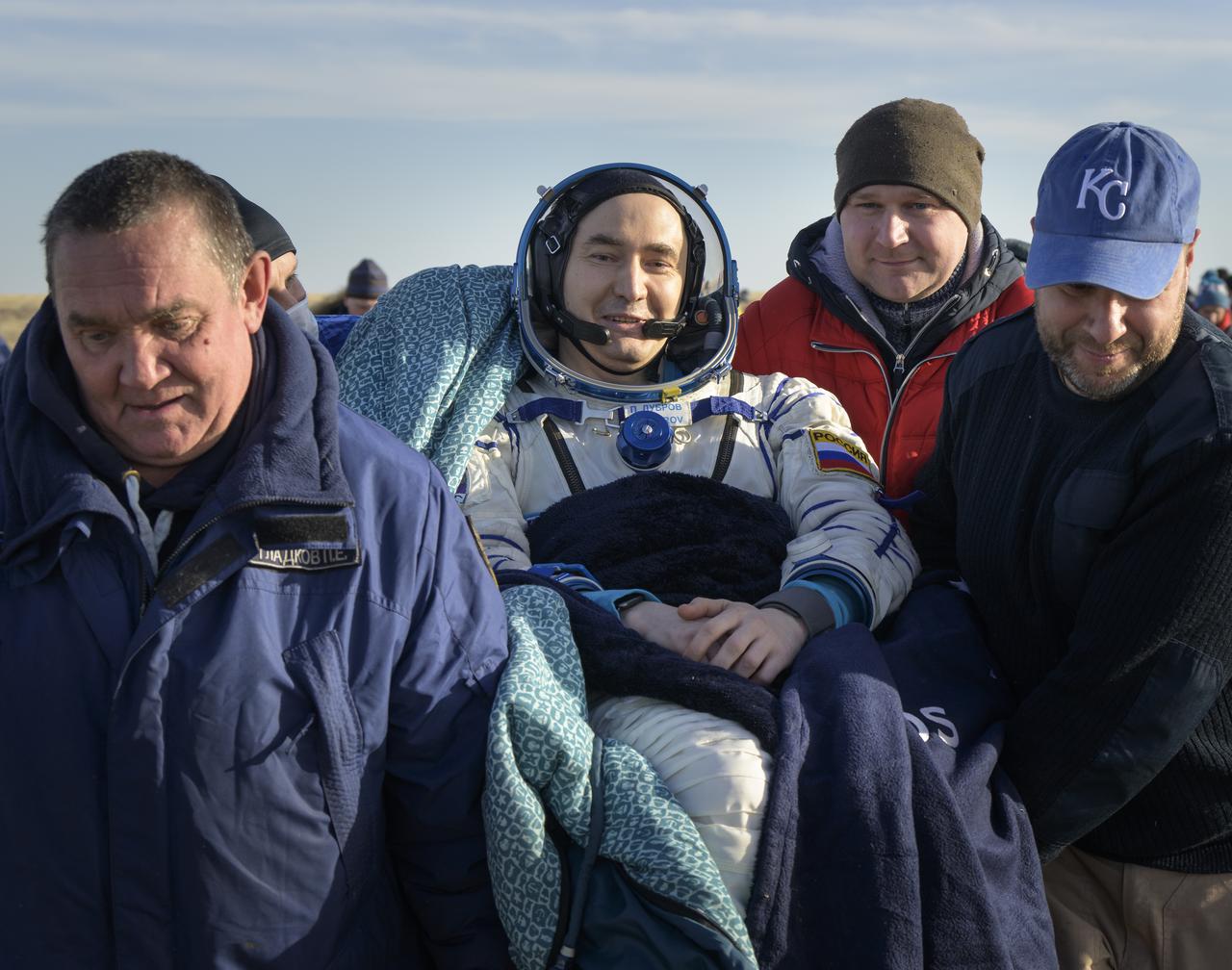
Expedition 66 Russian cosmonaut Pyotr Dubrov is carried to a medical tent shortly after he and fellow crew mates Mark Vande Hei of NASA and Anton Shkaplerov of Roscosmos landed in their Soyuz MS-19 spacecraft near the town of Zhezkazgan, Kazakhstan on Wednesday, March 30, 2022. Vande Hei and Dubrov are returning to Earth after logging 355 days in space as members of Expeditions 64-66 aboard the International Space Station. For Vande Hei, his mission is the longest single spaceflight by a U.S. astronaut in history. Shkaplerov is returning after 176 days in space, serving as a Flight Engineer for Expedition 65 and commander of Expedition 66. Photo Credit: (NASA/Bill Ingalls)
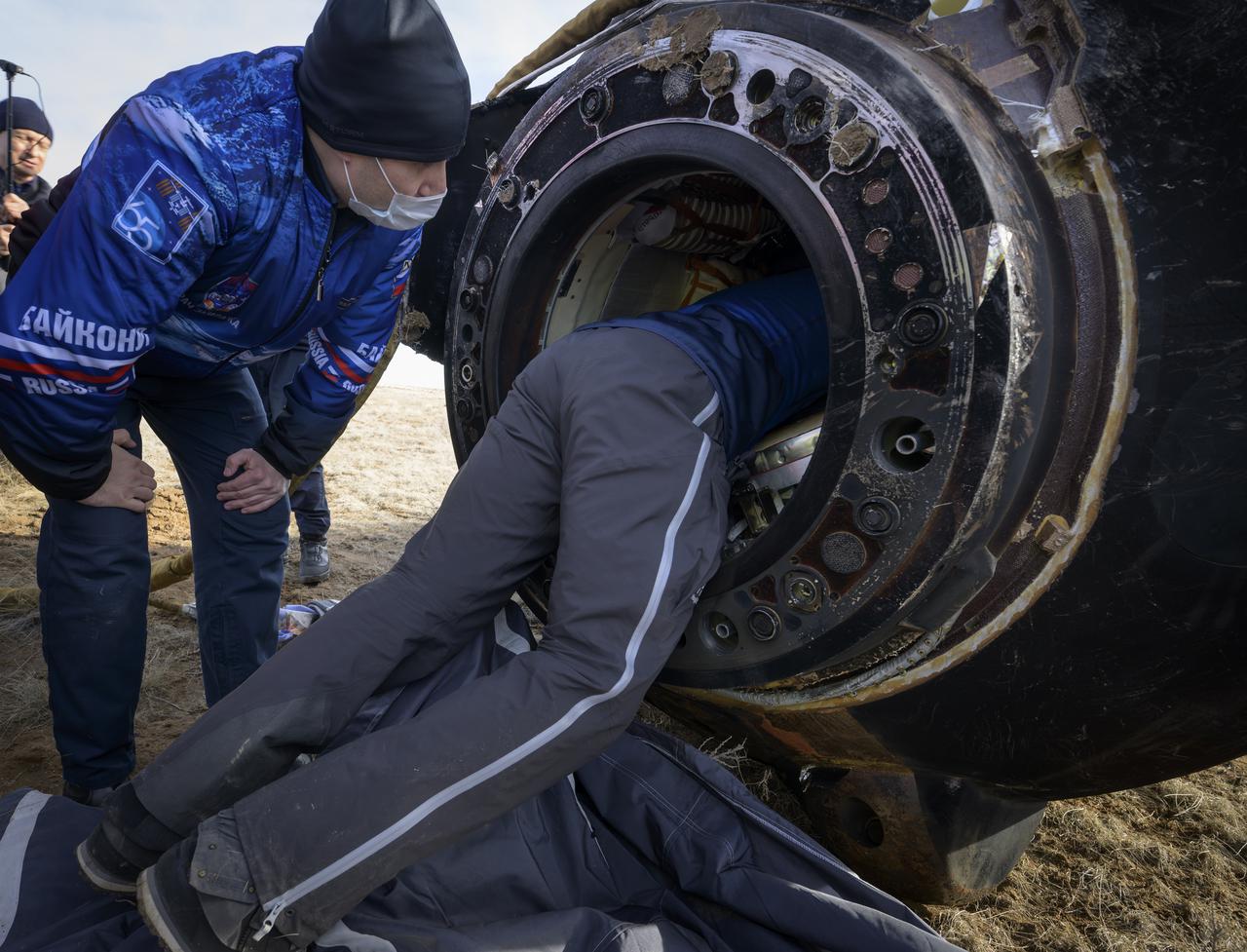
Russian Search and Rescue teams arrive at the Soyuz MS-19 spacecraft shortly after it landed in a remote area near the town of Zhezkazgan, Kazakhstan with Expedition 66 crew members Mark Vande Hei of NASA, and cosmonauts Pyotr Dubrov, and Anton Shkaplerov of Roscosmos, Wednesday, March 30, 2022. Vande Hei and Dubrov are returning to Earth after logging 355 days in space as members of Expeditions 64-66 aboard the International Space Station. For Vande Hei, his mission is the longest single spaceflight by a U.S. astronaut in history. Shkaplerov is returning after 176 days in space, serving as a Flight Engineer for Expedition 65 and commander of Expedition 66. Photo Credit: (NASA/Bill Ingalls)
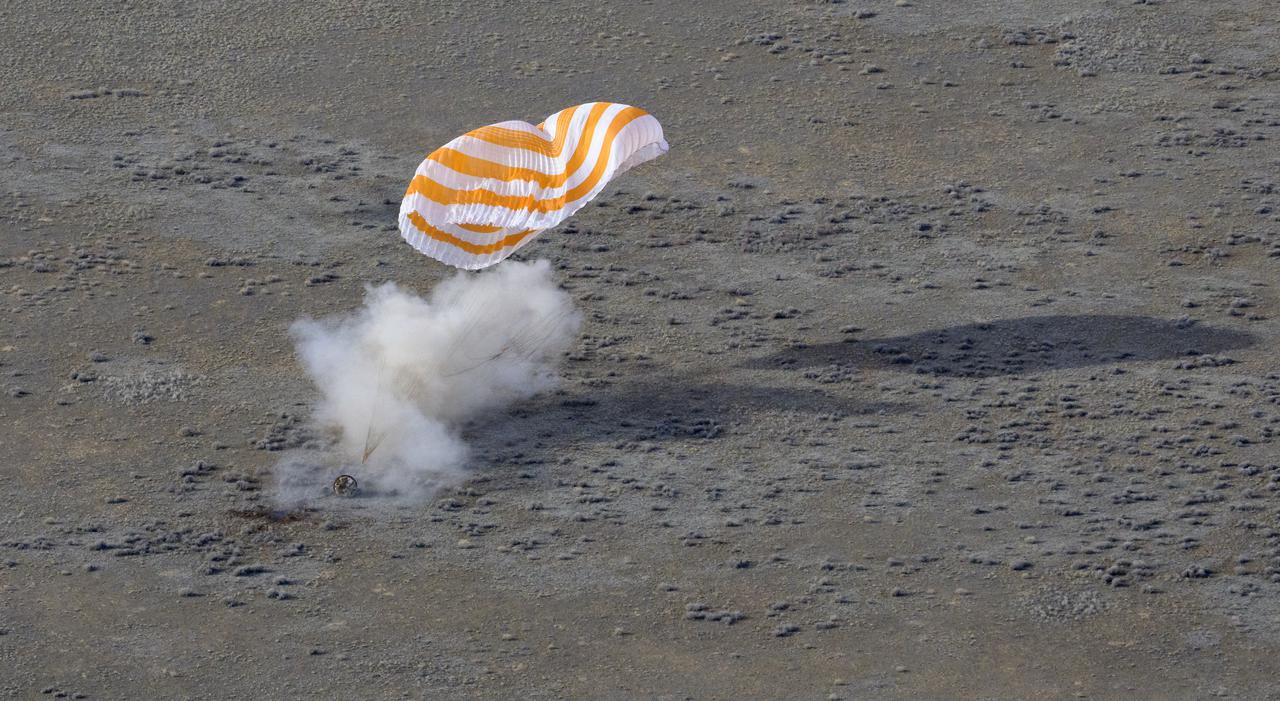
The Soyuz MS-19 spacecraft is seen as it lands in a remote area near the town of Zhezkazgan, Kazakhstan with Expedition 66 crew members Mark Vande Hei of NASA, and cosmonauts Pyotr Dubrov, and Anton Shkaplerov of Roscosmos, Wednesday, March 30, 2022. Vande Hei and Dubrov are returning to Earth after logging 355 days in space as members of Expeditions 64-66 aboard the International Space Station. For Vande Hei, his mission is the longest single spaceflight by a U.S. astronaut in history. Shkaplerov is returning after 176 days in space, serving as a Flight Engineer for Expedition 65 and commander of Expedition 66. Photo Credit: (NASA/Bill Ingalls)
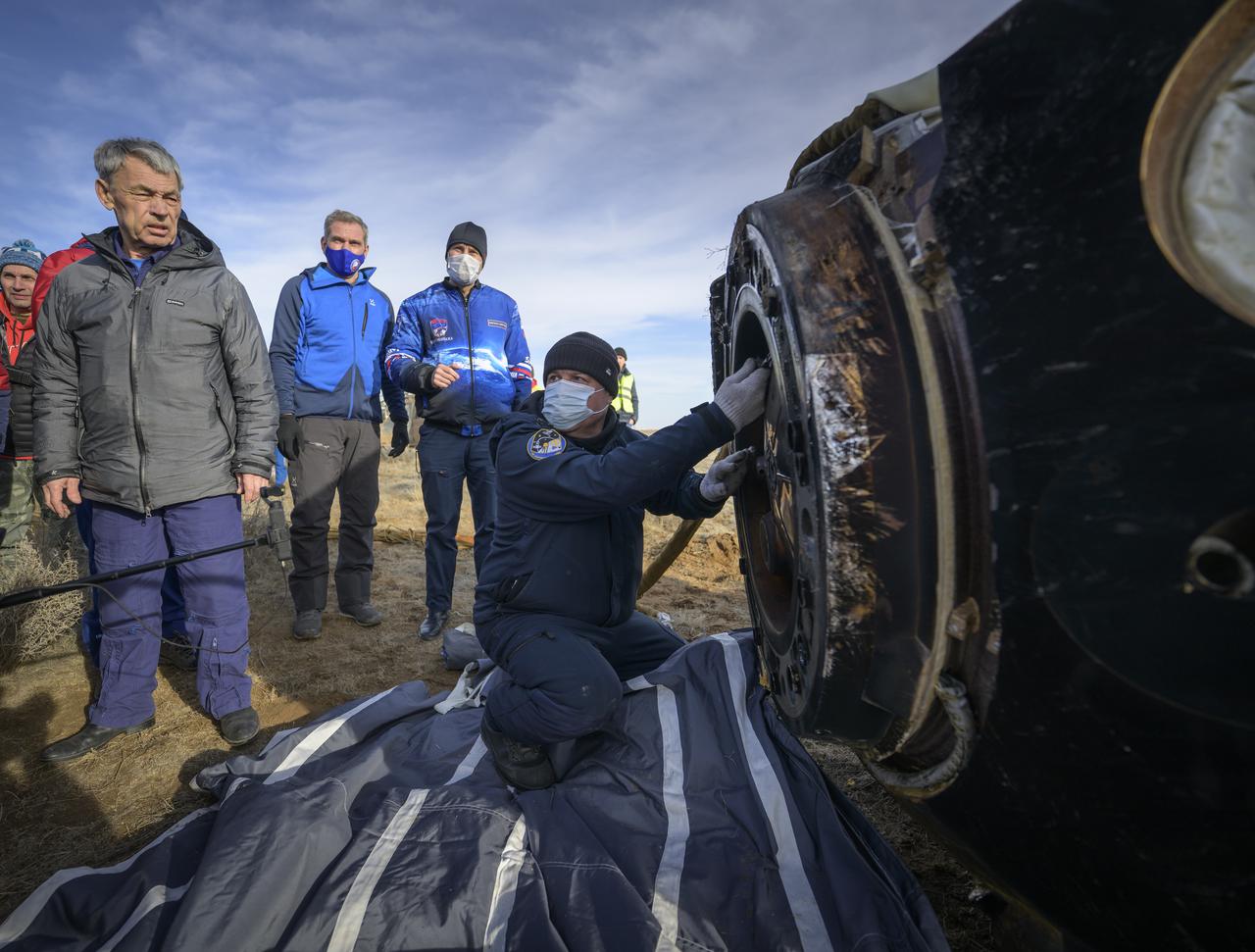
Russian Search and Rescue teams arrive at the Soyuz MS-19 spacecraft shortly after it landed in a remote area near the town of Zhezkazgan, Kazakhstan with Expedition 66 crew members Mark Vande Hei of NASA, and cosmonauts Pyotr Dubrov, and Anton Shkaplerov of Roscosmos, Wednesday, March 30, 2022. Vande Hei and Dubrov are returning to Earth after logging 355 days in space as members of Expeditions 64-66 aboard the International Space Station. For Vande Hei, his mission is the longest single spaceflight by a U.S. astronaut in history. Shkaplerov is returning after 176 days in space, serving as a Flight Engineer for Expedition 65 and commander of Expedition 66. Photo Credit: (NASA/Bill Ingalls)
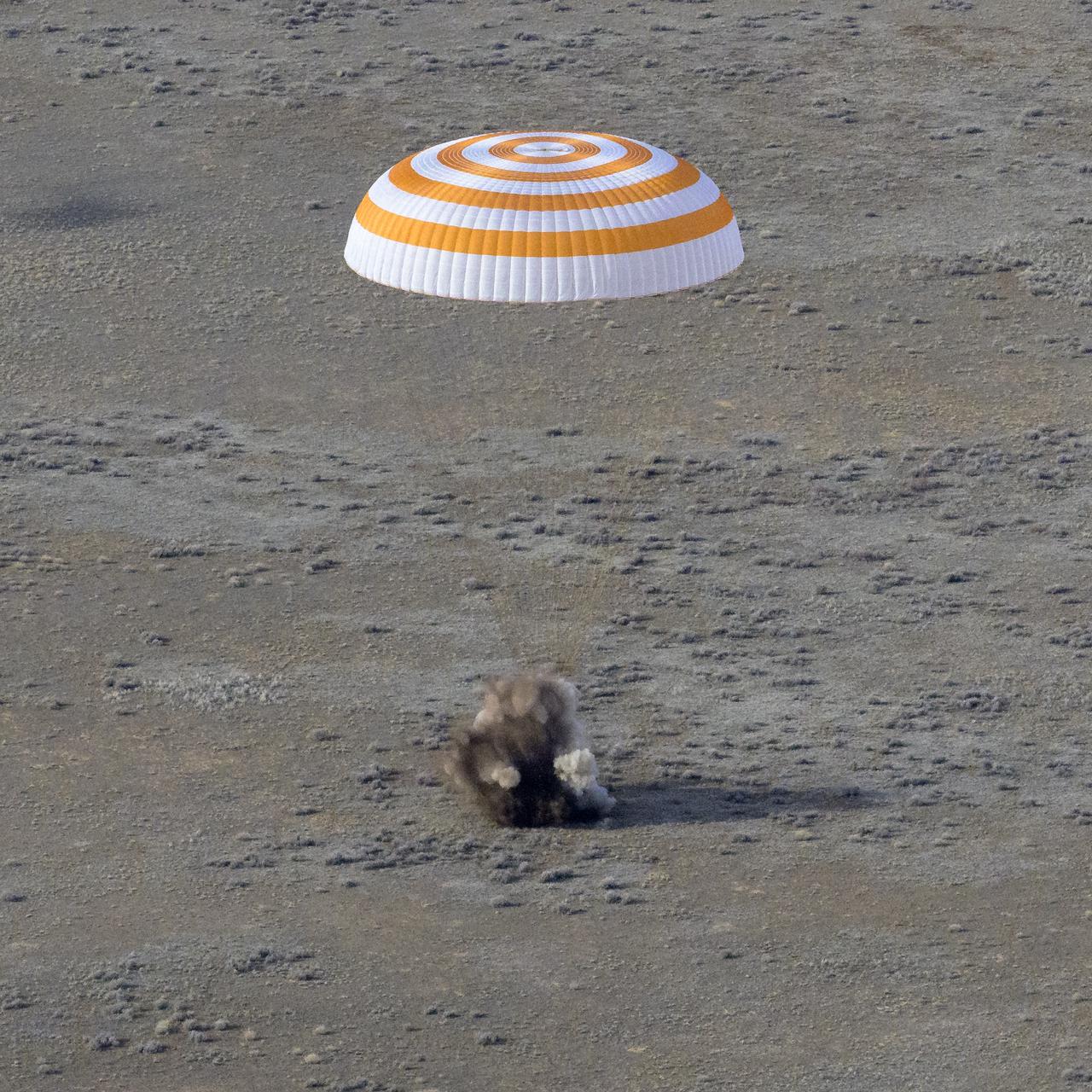
The Soyuz MS-19 spacecraft is seen as it lands in a remote area near the town of Zhezkazgan, Kazakhstan with Expedition 66 crew members Mark Vande Hei of NASA, and cosmonauts Pyotr Dubrov, and Anton Shkaplerov of Roscosmos, Wednesday, March 30, 2022. Vande Hei and Dubrov are returning to Earth after logging 355 days in space as members of Expeditions 64-66 aboard the International Space Station. For Vande Hei, his mission is the longest single spaceflight by a U.S. astronaut in history. Shkaplerov is returning after 176 days in space, serving as a Flight Engineer for Expedition 65 and commander of Expedition 66. Photo Credit: (NASA/Bill Ingalls)
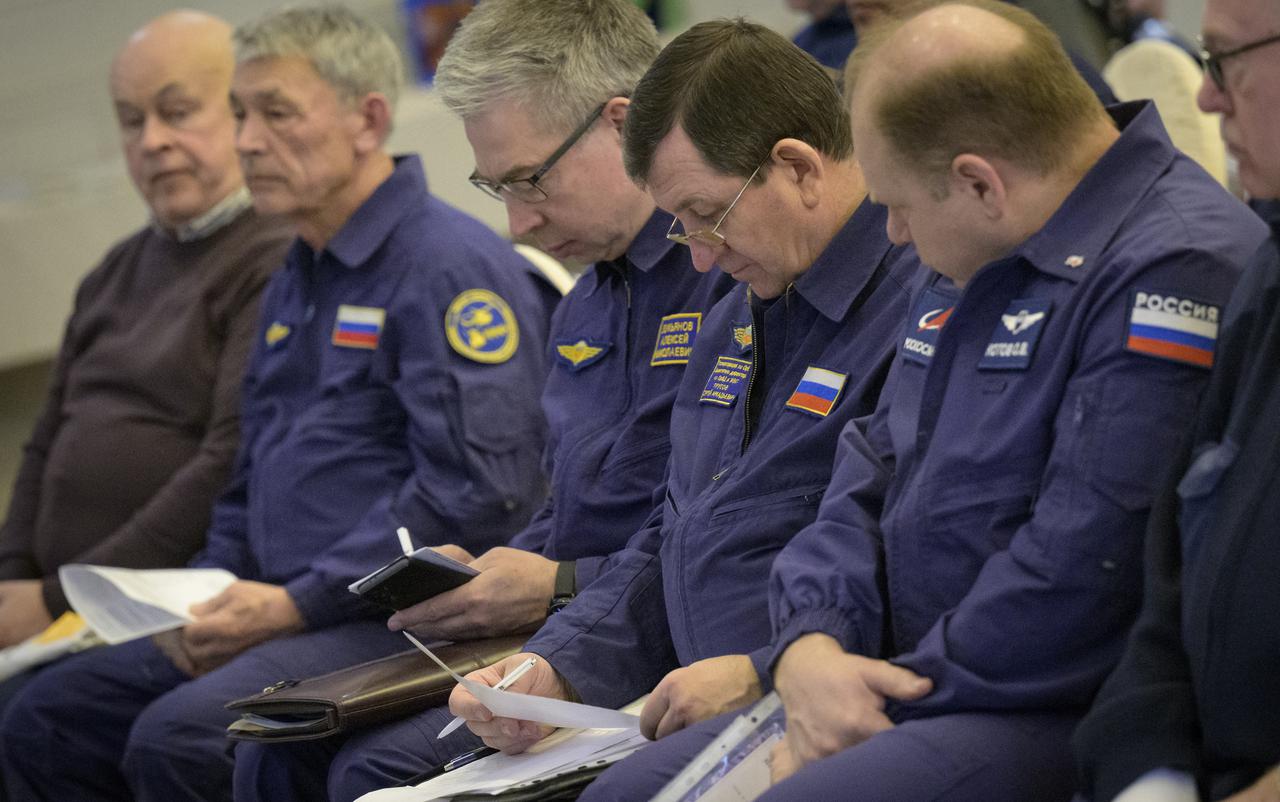
NASA, Roscosmos, and Russian Search and Recovery Forces meet at the Cosmonaut Hotel in Karaganda, Kazakhstan to discuss the readiness for the landing of Expedition 66 crew members Mark Vande Hei of NASA, and Pyotr Dubrov, and Anton Shkaplerov of Roscosmos, Monday, March 28, 2022, at the Cosmonaut Hotel in Karaganda, Kazakhstan. Vande Hei and Dubrov will be returning to Earth after logging 355 days in space as members of Expeditions 64-66 aboard the International Space Station. For Vande Hei, his mission is the longest single spaceflight by a U.S. astronaut in history. Shkaplerov will be returning after 176 days in space, serving as a Flight Engineer for Expedition 65 and commander of Expedition 66. Photo Credit: (NASA/Bill Ingalls)
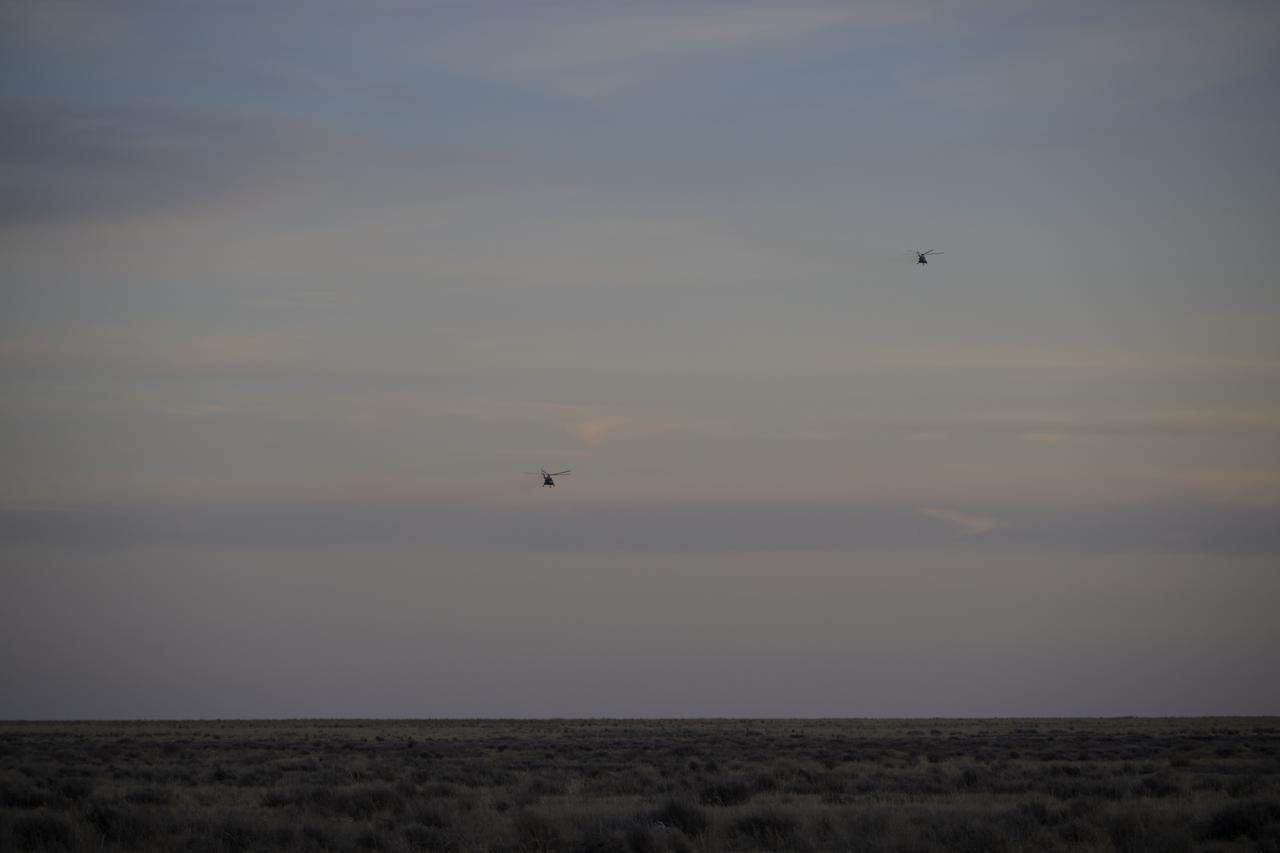
Russian support personnel start to depart the Soyuz MS-19 spacecraft landing site shortly after it landed in a remote area near the town of Zhezkazgan, Kazakhstan with Expedition 64 crew members Mark Vande Hei of NASA, and cosmonauts Pyotr Dubrov, and Anton Shkaplerov of Roscosmos, Wednesday, March 30, 2022. Vande Hei and Dubrov are returning to Earth after logging 355 days in space as members of Expeditions 64-66 aboard the International Space Station. For Vande Hei, his mission is the longest single spaceflight by a U.S. astronaut in history. Shkaplerov is returning after 176 days in space, serving as a Flight Engineer for Expedition 65 and commander of Expedition 66. Photo Credit: (NASA/Bill Ingalls)
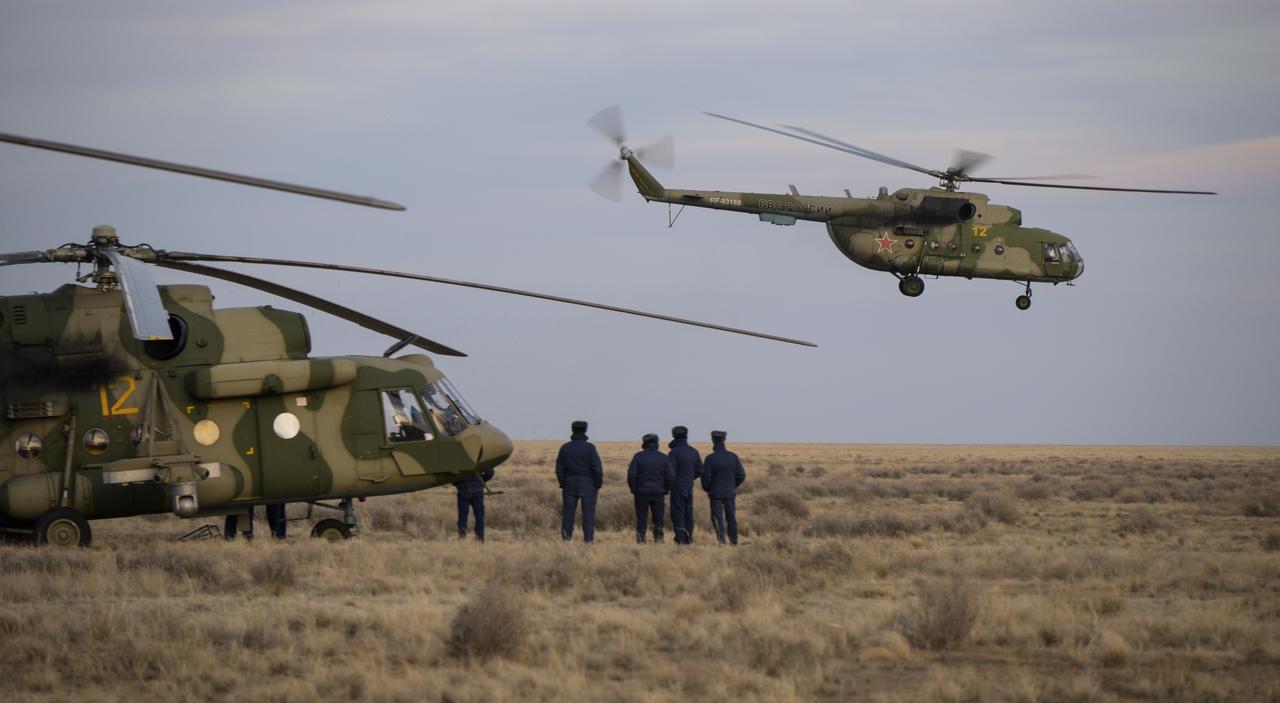
Russian support personnel start to depart the Soyuz MS-19 spacecraft landing site shortly after it landed in a remote area near the town of Zhezkazgan, Kazakhstan with Expedition 64 crew members Mark Vande Hei of NASA, and cosmonauts Pyotr Dubrov, and Anton Shkaplerov of Roscosmos, Wednesday, March 30, 2022. Vande Hei and Dubrov are returning to Earth after logging 355 days in space as members of Expeditions 64-66 aboard the International Space Station. For Vande Hei, his mission is the longest single spaceflight by a U.S. astronaut in history. Shkaplerov is returning after 176 days in space, serving as a Flight Engineer for Expedition 65 and commander of Expedition 66. Photo Credit: (NASA/Bill Ingalls)
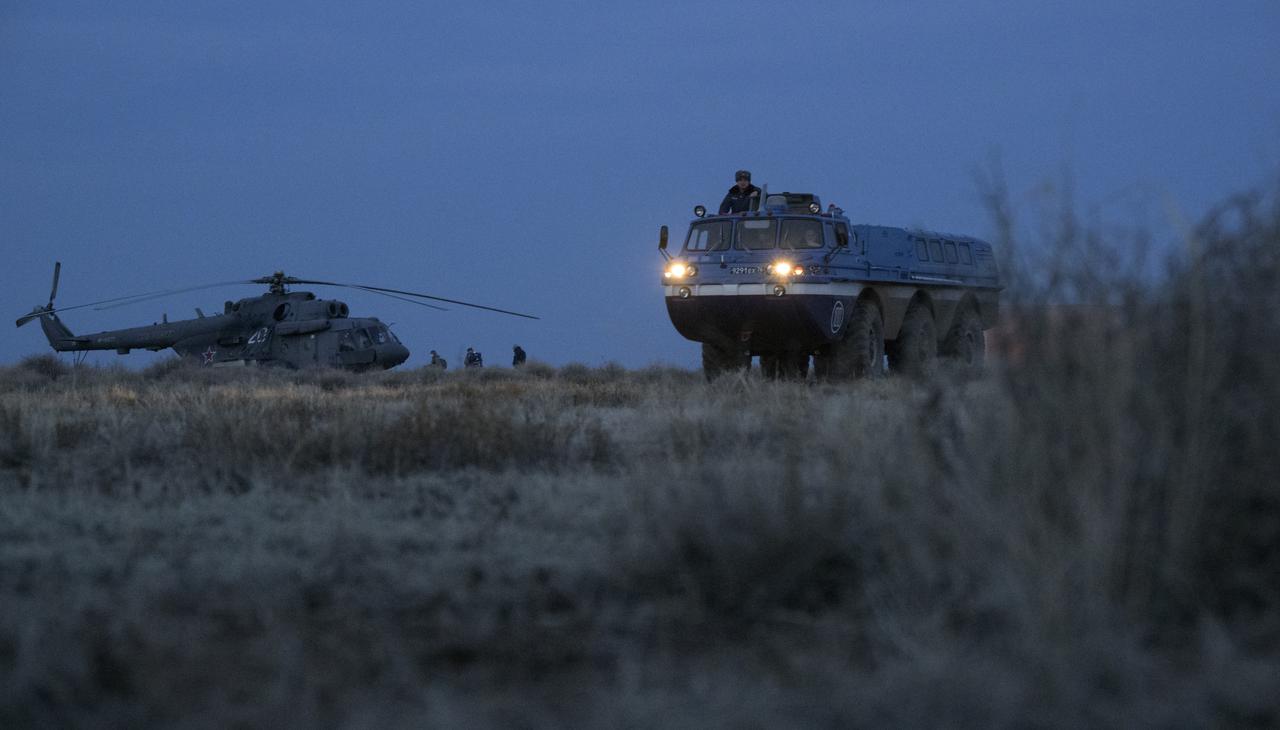
A Russian all terrain vehicle delivers Expedition 66 NASA astronaut Mark Vande Hei to an awaiting helicopter that will fly him to Karaganda after he and Russian cosmonauts Anton Shkaplerov and Pyotr Dubrov of Roscosmos, landed in their Soyuz MS-19 spacecraft near the town of Zhezkazgan, Kazakhstan on Wednesday, March 30, 2022. Vande Hei and Dubrov are returning to Earth after logging 355 days in space as members of Expeditions 64-66 aboard the International Space Station. For Vande Hei, his mission is the longest single spaceflight by a U.S. astronaut in history. Shkaplerov is returning after 176 days in space, serving as a Flight Engineer for Expedition 65 and commander of Expedition 66. Photo Credit: (NASA/Bill Ingalls)
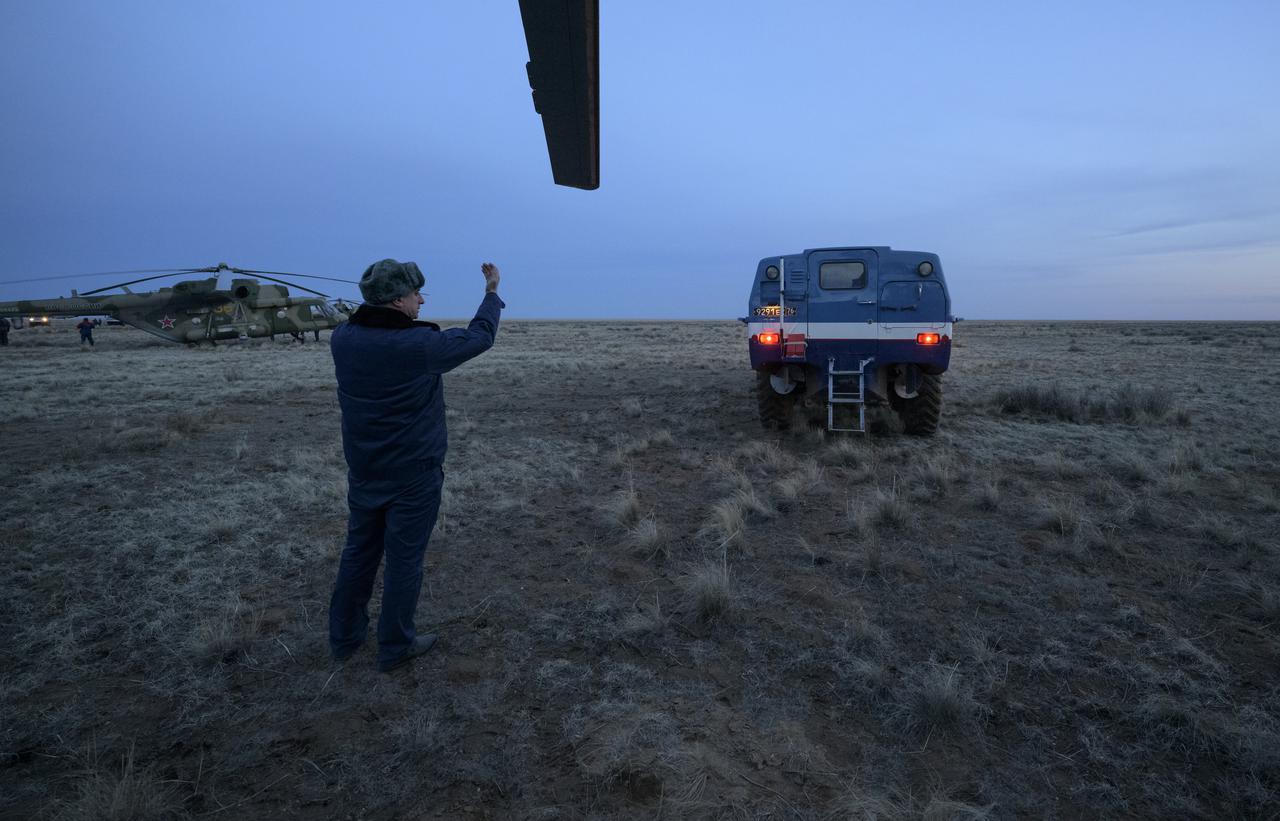
A Russian all terrain vehicle delivers Expedition 66 NASA astronaut Mark Vande Hei to an awaiting helicopter that will fly him to Karaganda after he and Russian cosmonauts Anton Shkaplerov and Pyotr Dubrov of Roscosmos, landed in their Soyuz MS-19 spacecraft near the town of Zhezkazgan, Kazakhstan on Wednesday, March 30, 2022. Vande Hei and Dubrov are returning to Earth after logging 355 days in space as members of Expeditions 64-66 aboard the International Space Station. For Vande Hei, his mission is the longest single spaceflight by a U.S. astronaut in history. Shkaplerov is returning after 176 days in space, serving as a Flight Engineer for Expedition 65 and commander of Expedition 66. Photo Credit: (NASA/Bill Ingalls)
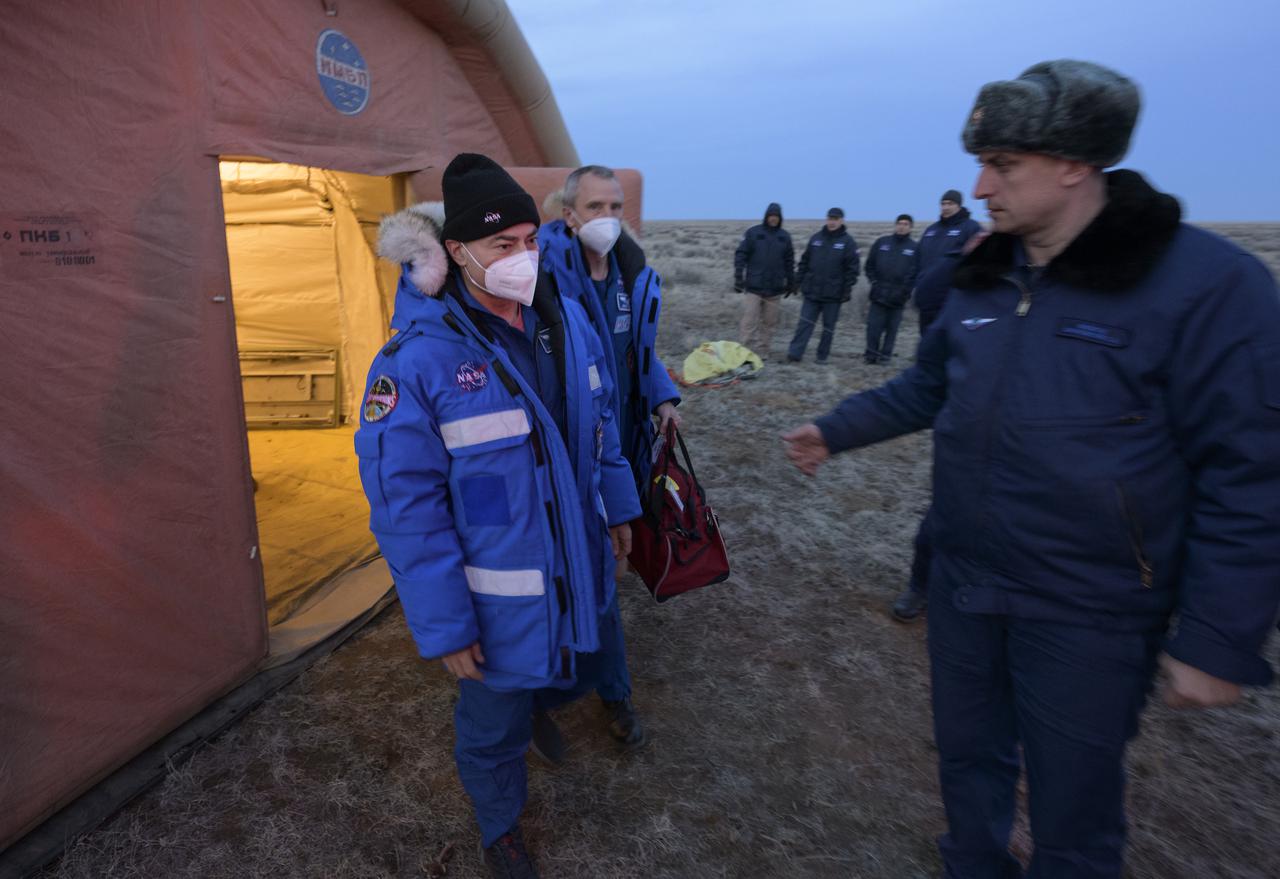
Expedition 66 NASA astronaut Mark Vande Hei exits the medical tent to get board a Russian helicopter and fly to Karaganda after he and Russian cosmonauts Anton Shkaplerov and Pyotr Dubrov of Roscosmos, landed in their Soyuz MS-19 spacecraft near the town of Zhezkazgan, Kazakhstan on Wednesday, March 30, 2022. Vande Hei and Dubrov are returning to Earth after logging 355 days in space as members of Expeditions 64-66 aboard the International Space Station. For Vande Hei, his mission is the longest single spaceflight by a U.S. astronaut in history. Shkaplerov is returning after 176 days in space, serving as a Flight Engineer for Expedition 65 and commander of Expedition 66. Photo Credit: (NASA/Bill Ingalls)

Expedition 66 crew members Mark Vande Hei of NASA, left, and cosmonaut Anton Shkaplerov of Roscosmos, are seen inside their Soyuz MS-19 spacecraft after is landed with fellow crew member Pyotr Dubrov in a remote area near the town of Zhezkazgan, Kazakhstan, Wednesday, March 30, 2022. Vande Hei and Dubrov are returning to Earth after logging 355 days in space as members of Expeditions 64-66 aboard the International Space Station. For Vande Hei, his mission is the longest single spaceflight by a U.S. astronaut in history. Shkaplerov is returning after 176 days in space, serving as a Flight Engineer for Expedition 65 and commander of Expedition 66. Photo Credit: (NASA/Bill Ingalls)
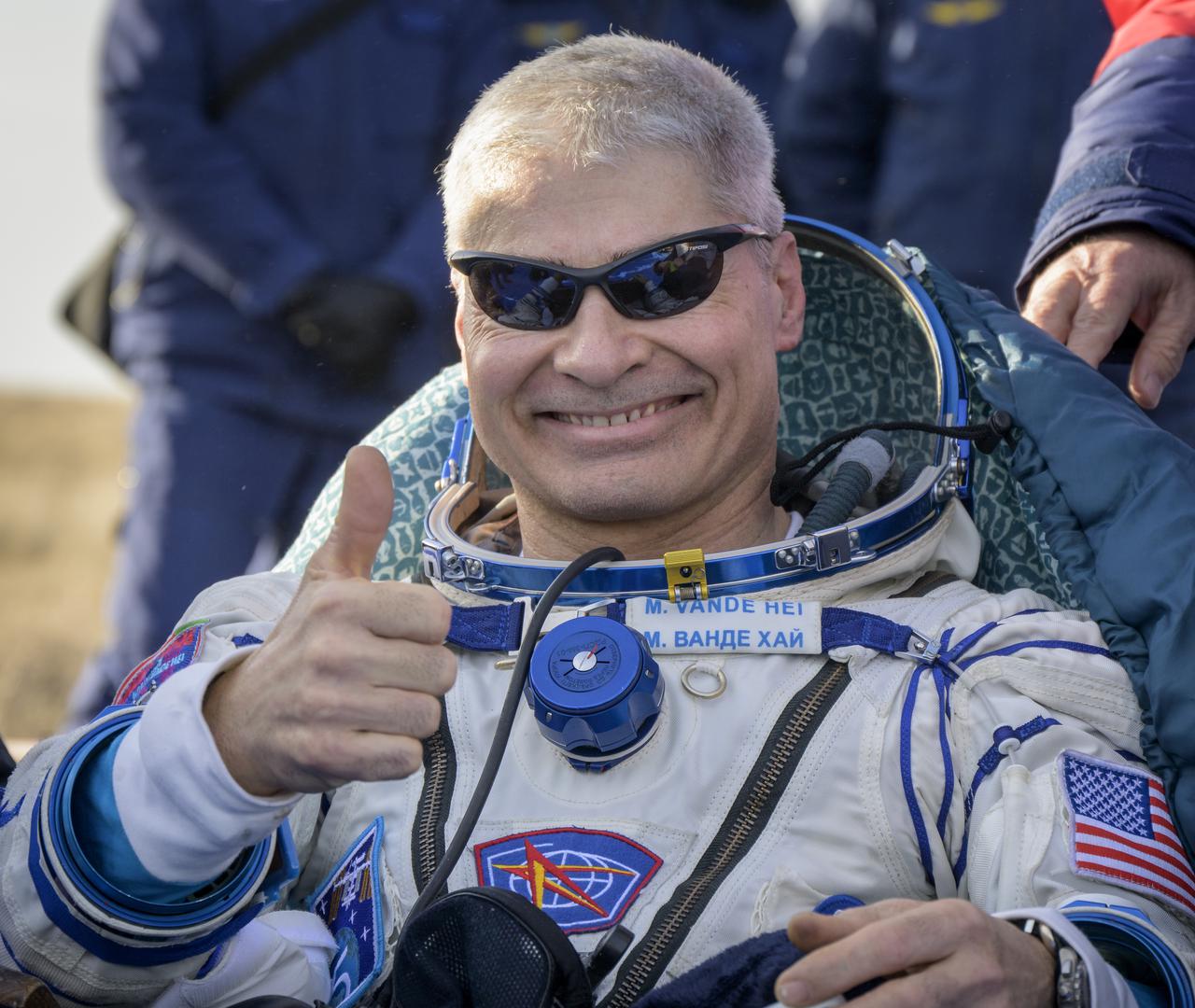
NASA astronaut Mark Vande Hei is seen outside the Soyuz MS-19 spacecraft after he landed with Russian cosmonauts Anton Shkaplerov and Pyotr Dubrov in a remote area near the town of Zhezkazgan, Kazakhstan on Wednesday, March 30, 2022. Vande Hei and Dubrov are returning to Earth after logging 355 days in space as members of Expeditions 64-66 aboard the International Space Station. For Vande Hei, his mission is the longest single spaceflight by a U.S. astronaut in history. Shkaplerov is returning after 176 days in space, serving as a Flight Engineer for Expedition 65 and commander of Expedition 66. Photo Credit: (NASA/Bill Ingalls)
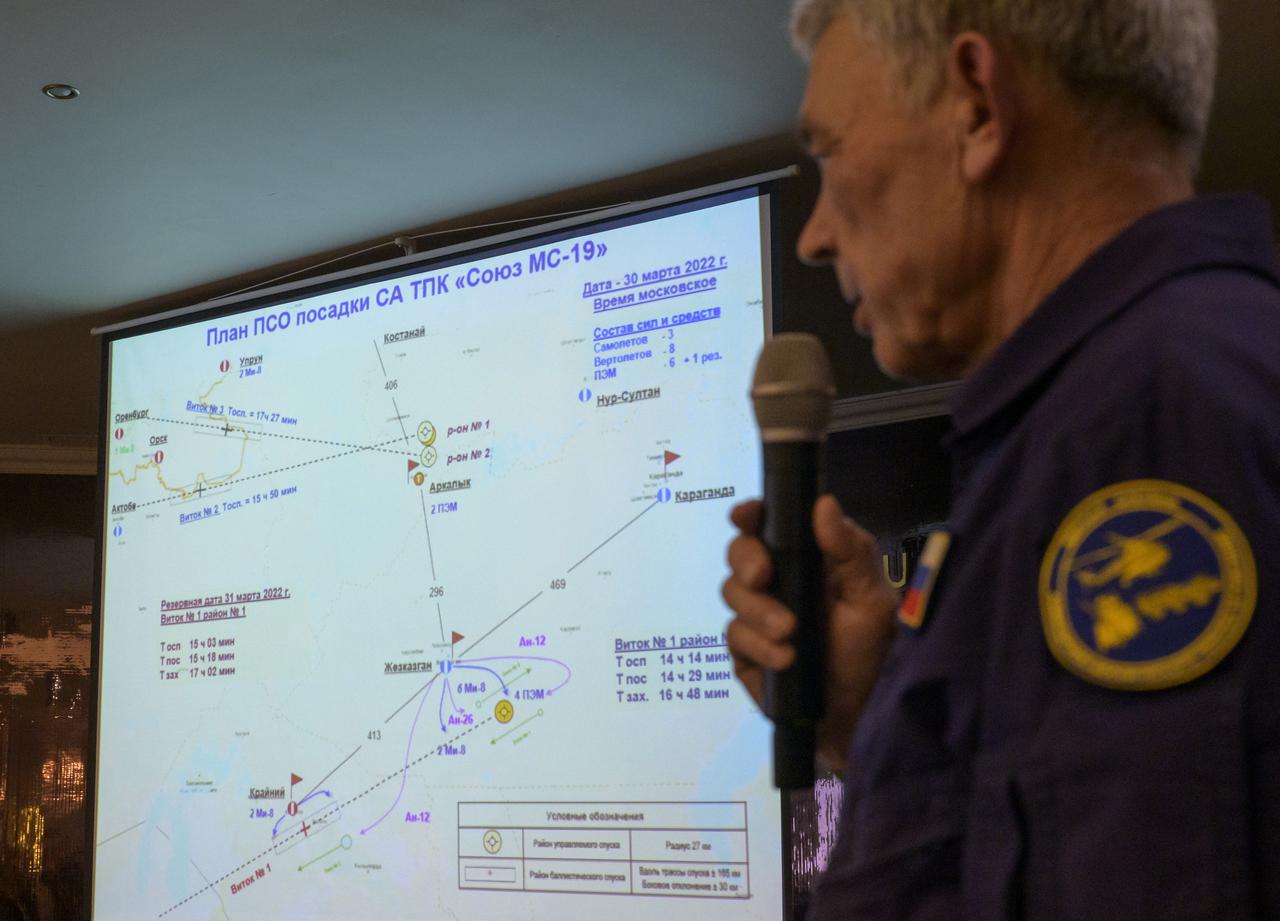
NASA, Roscosmos, and Russian Search and Recovery Forces meet at the Cosmonaut Hotel in Karaganda, Kazakhstan to discuss the readiness for the landing of Expedition 66 crew members Mark Vande Hei of NASA, and Pyotr Dubrov, and Anton Shkaplerov of Roscosmos, Monday, March 28, 2022, at the Cosmonaut Hotel in Karaganda, Kazakhstan. Vande Hei and Dubrov will be returning to Earth after logging 355 days in space as members of Expeditions 64-66 aboard the International Space Station. For Vande Hei, his mission is the longest single spaceflight by a U.S. astronaut in history. Shkaplerov will be returning after 176 days in space, serving as a Flight Engineer for Expedition 65 and commander of Expedition 66. Photo Credit: (NASA/Bill Ingalls)
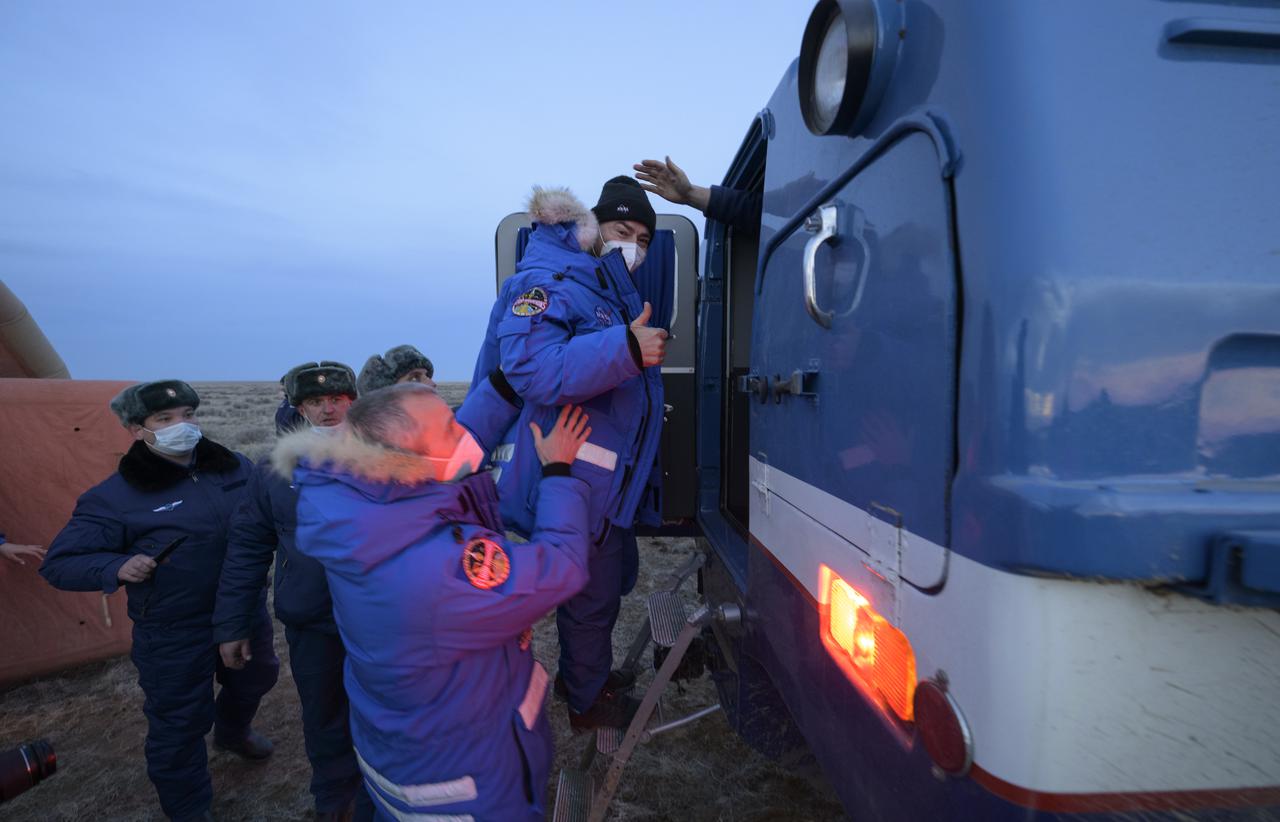
Expedition 66 NASA astronaut Mark Vande Hei gives a thumbs up as he is helped aboard a Russian all terrain vehicle by NASA Astronaut Office Representative, astronaut Drew Feustel, that will take him to an awaiting helicopter and then fly to Karaganda after he and Russian cosmonauts Anton Shkaplerov and Pyotr Dubrov of Roscosmos, landed in their Soyuz MS-19 spacecraft near the town of Zhezkazgan, Kazakhstan on Wednesday, March 30, 2022. Vande Hei and Dubrov are returning to Earth after logging 355 days in space as members of Expeditions 64-66 aboard the International Space Station. For Vande Hei, his mission is the longest single spaceflight by a U.S. astronaut in history. Shkaplerov is returning after 176 days in space, serving as a Flight Engineer for Expedition 65 and commander of Expedition 66. Photo Credit: (NASA/Bill Ingalls)
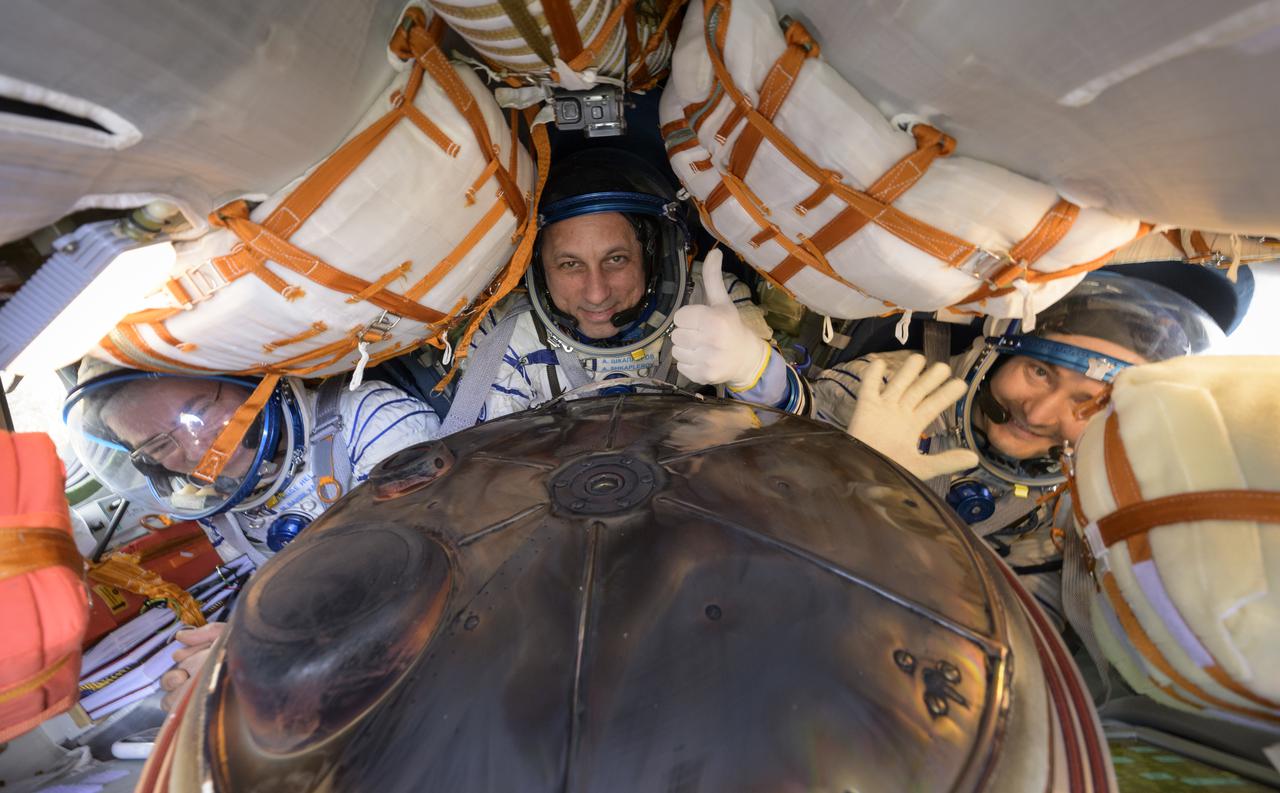
Expedition 66 crew members Mark Vande Hei of NASA, left, cosmonauts Anton Shkaplerov, center, and Pyotr Dubrov of Roscosmos, are seen inside their Soyuz MS-19 spacecraft after is landed in a remote area near the town of Zhezkazgan, Kazakhstan, Wednesday, March 30, 2022. Vande Hei and Dubrov are returning to Earth after logging 355 days in space as members of Expeditions 64-66 aboard the International Space Station. For Vande Hei, his mission is the longest single spaceflight by a U.S. astronaut in history. Shkaplerov is returning after 176 days in space, serving as a Flight Engineer for Expedition 65 and commander of Expedition 66. Photo Credit: (NASA/Bill Ingalls)
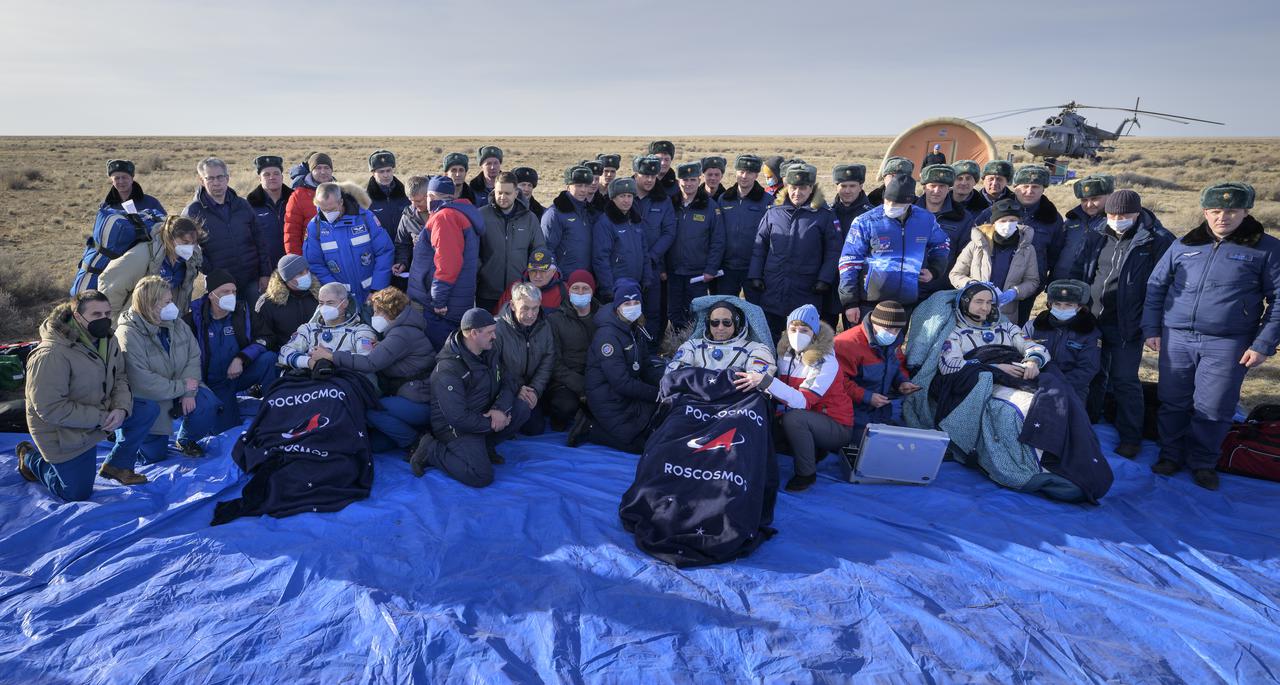
Expedition 66 crew members Mark Vande Hei of NASA, left, and cosmonauts Anton Shkaplerov, center, and Pyotr Dubrov of Roscosmos, sit in chairs outside the Soyuz MS-19 spacecraft after they landed in a remote area near the town of Zhezkazgan, Kazakhstan on Wednesday, March 30, 2022. Vande Hei and Dubrov are returning to Earth after logging 355 days in space as members of Expeditions 64-66 aboard the International Space Station. For Vande Hei, his mission is the longest single spaceflight by a U.S. astronaut in history. Shkaplerov is returning after 176 days in space, serving as a Flight Engineer for Expedition 65 and commander of Expedition 66. Photo Credit: (NASA/Bill Ingalls)
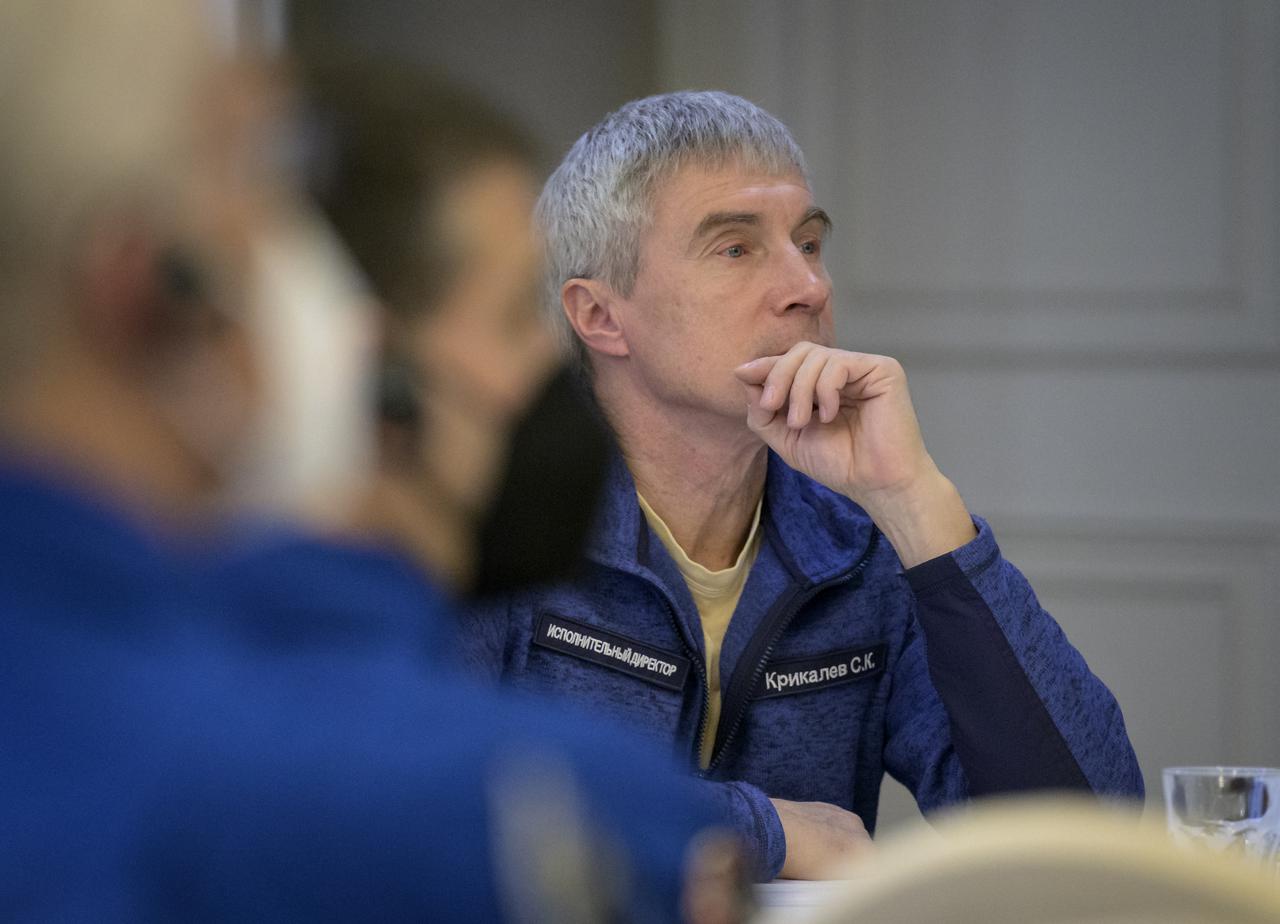
Roscosmos Executive director of Human Spaceflight Programs Sergei Krikalev, is seen as NASA, Roscosmos, and Russian Search and Recovery Forces meet at the Cosmonaut Hotel in Karaganda, Kazakhstan to discuss the readiness for the landing of Expedition 66 crew members Mark Vande Hei of NASA, and Pyotr Dubrov, and Anton Shkaplerov of Roscosmos, Monday, March 28, 2022, at the Cosmonaut Hotel in Karaganda, Kazakhstan. Vande Hei and Dubrov will be returning to Earth after logging 355 days in space as members of Expeditions 64-66 aboard the International Space Station. For Vande Hei, his mission is the longest single spaceflight by a U.S. astronaut in history. Shkaplerov will be returning after 176 days in space, serving as a Flight Engineer for Expedition 65 and commander of Expedition 66. Photo Credit: (NASA/Bill Ingalls)
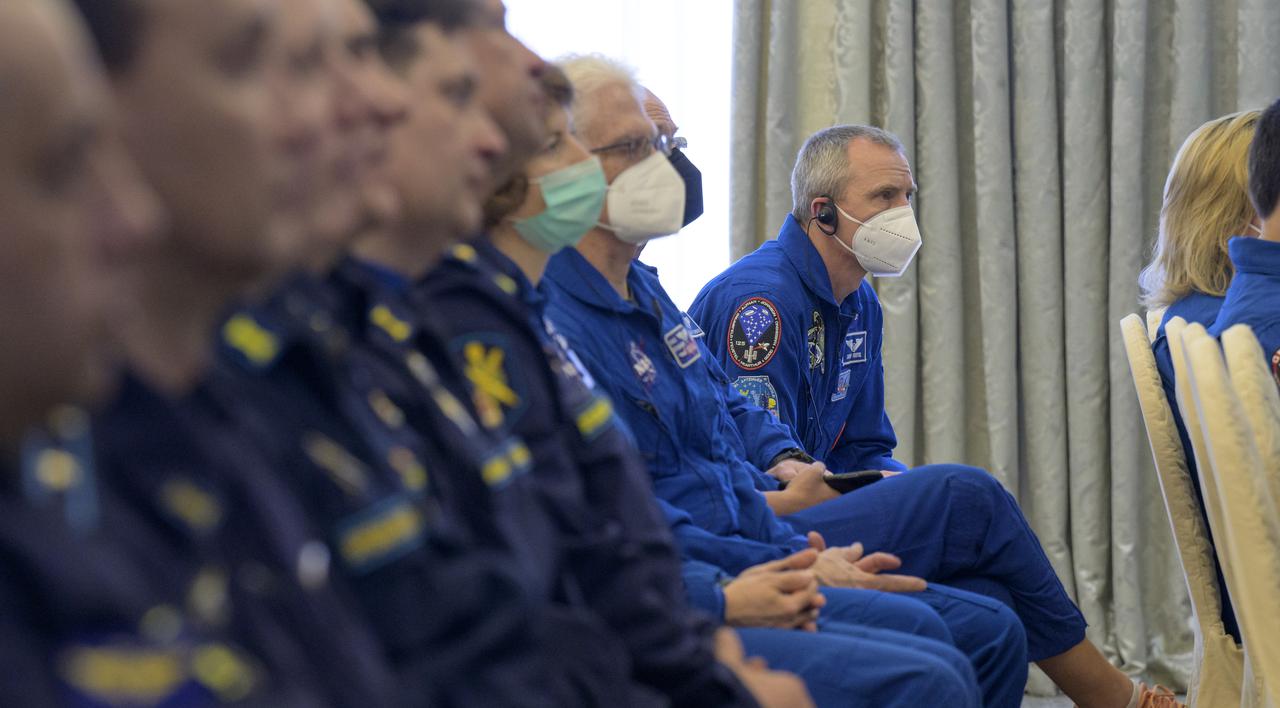
NASA Astronaut Office Representative, astronaut Drew Feustel is seen as NASA, Roscosmos, and Russian Search and Recovery Forces meet at the Cosmonaut Hotel in Karaganda, Kazakhstan to discuss the readiness for the landing of Expedition 66 crew members Mark Vande Hei of NASA, and Pyotr Dubrov, and Anton Shkaplerov of Roscosmos, Monday, March 28, 2022, at the Cosmonaut Hotel in Karaganda, Kazakhstan. Vande Hei and Dubrov will be returning to Earth after logging 355 days in space as members of Expeditions 64-66 aboard the International Space Station. For Vande Hei, his mission is the longest single spaceflight by a U.S. astronaut in history. Shkaplerov will be returning after 176 days in space, serving as a Flight Engineer for Expedition 65 and commander of Expedition 66. Photo Credit: (NASA/Bill Ingalls)
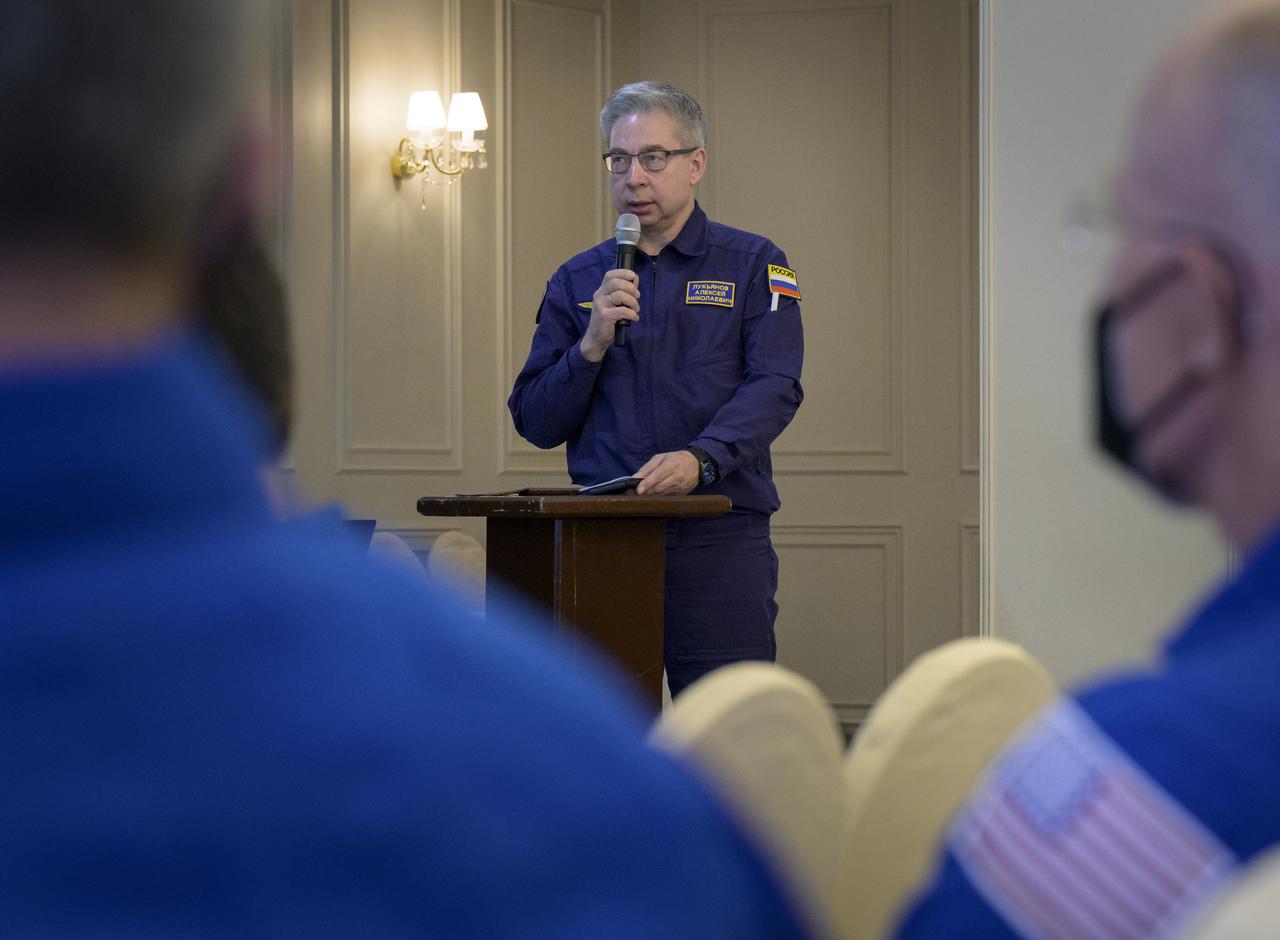
Deputy Head of the Search-and-Rescue Department of Rosaviatsiya (Russian Federal Air Transport Agency) Aleksey Lukiyanov is seen as NASA, Roscosmos, and Russian Search and Recovery Forces meet at the Cosmonaut Hotel in Karaganda, Kazakhstan to discuss the readiness for the landing of Expedition 66 crew members Mark Vande Hei of NASA, and Pyotr Dubrov, and Anton Shkaplerov of Roscosmos, Monday, March 28, 2022, at the Cosmonaut Hotel in Karaganda, Kazakhstan. Vande Hei and Dubrov will be returning to Earth after logging 355 days in space as members of Expeditions 64-66 aboard the International Space Station. For Vande Hei, his mission is the longest single spaceflight by a U.S. astronaut in history. Shkaplerov will be returning after 176 days in space, serving as a Flight Engineer for Expedition 65 and commander of Expedition 66. Photo Credit: (NASA/Bill Ingalls)
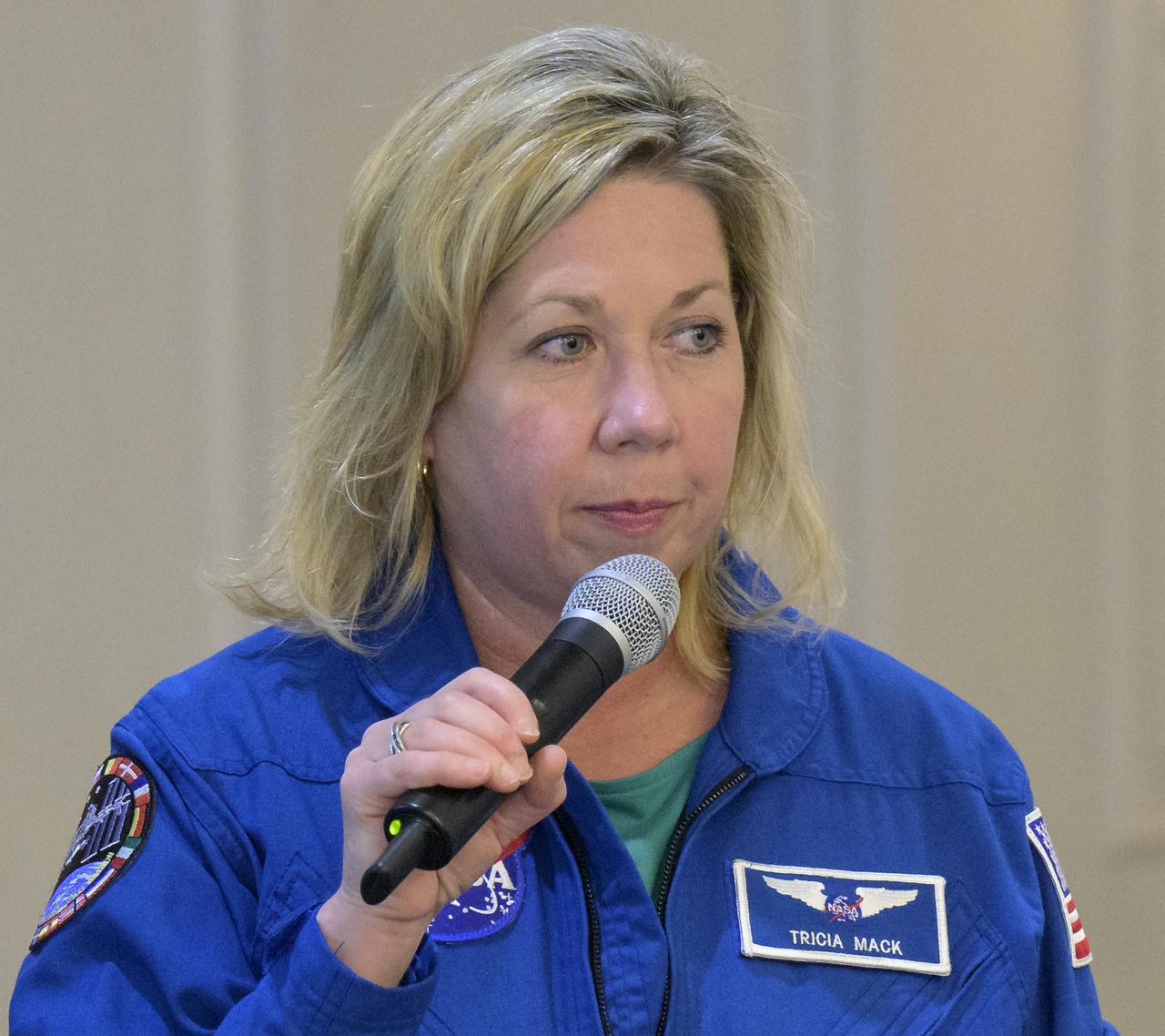
NASA Director for Human Space Flight Programs, Russia, Tricia Mack gives a readiness update on behalf of NASA during landing team meeting with Roscosmos, and Russian Search and Recovery Forces meet at the Cosmonaut Hotel in Karaganda, Kazakhstan to discuss the readiness for the landing of Expedition 66 crew members Mark Vande Hei of NASA, and Pyotr Dubrov, and Anton Shkaplerov of Roscosmos, Monday, March 28, 2022, at the Cosmonaut Hotel in Karaganda, Kazakhstan. Vande Hei and Dubrov will be returning to Earth after logging 355 days in space as members of Expeditions 64-66 aboard the International Space Station. For Vande Hei, his mission is the longest single spaceflight by a U.S. astronaut in history. Shkaplerov will be returning after 176 days in space, serving as a Flight Engineer for Expedition 65 and commander of Expedition 66. Photo Credit: (NASA/Bill Ingalls)
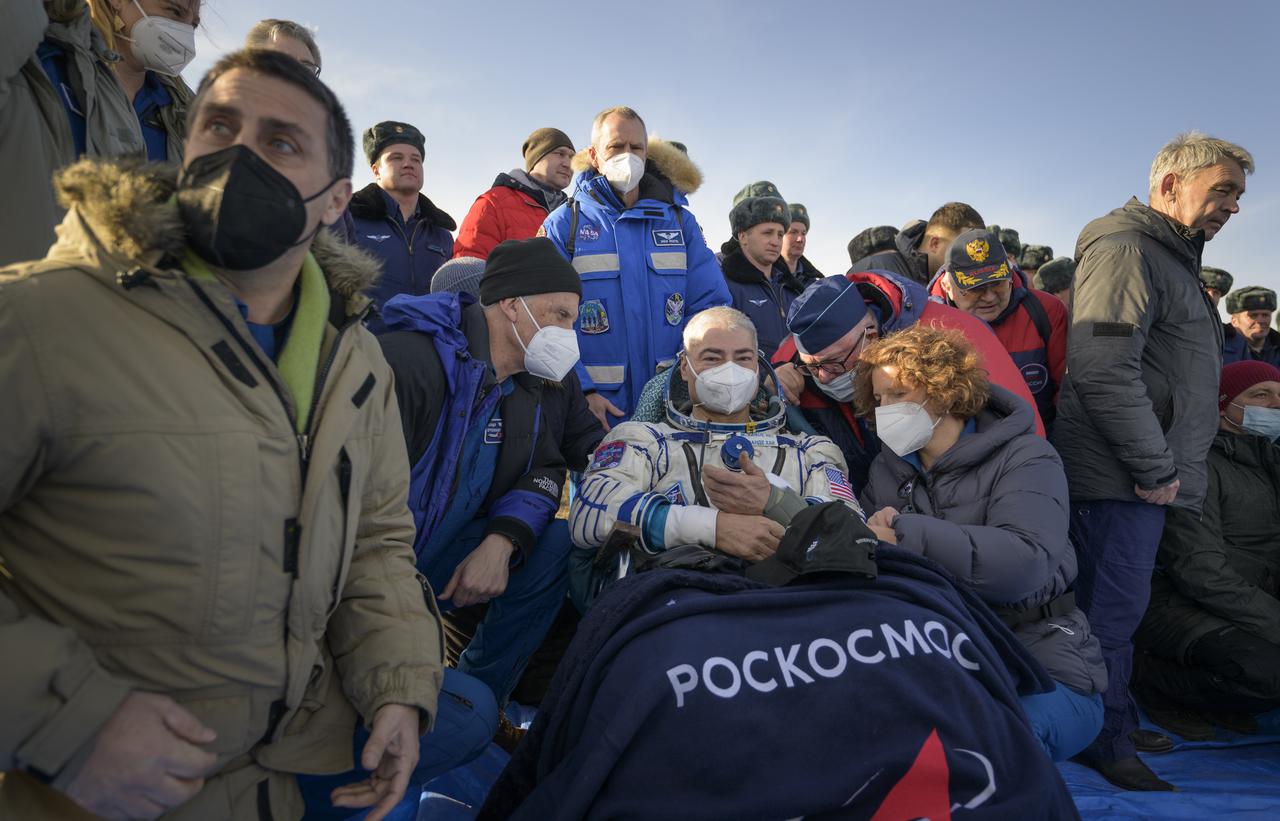
NASA astronaut Mark Vande Hei is seen outside the Soyuz MS-19 spacecraft after he landed with Russian cosmonauts Anton Shkaplerov and Pyotr Dubrov in a remote area near the town of Zhezkazgan, Kazakhstan on Wednesday, March 30, 2022. Vande Hei and Dubrov are returning to Earth after logging 355 days in space as members of Expeditions 64-66 aboard the International Space Station. For Vande Hei, his mission is the longest single spaceflight by a U.S. astronaut in history. Shkaplerov is returning after 176 days in space, serving as a Flight Engineer for Expedition 65 and commander of Expedition 66. Photo Credit: (NASA/Bill Ingalls)
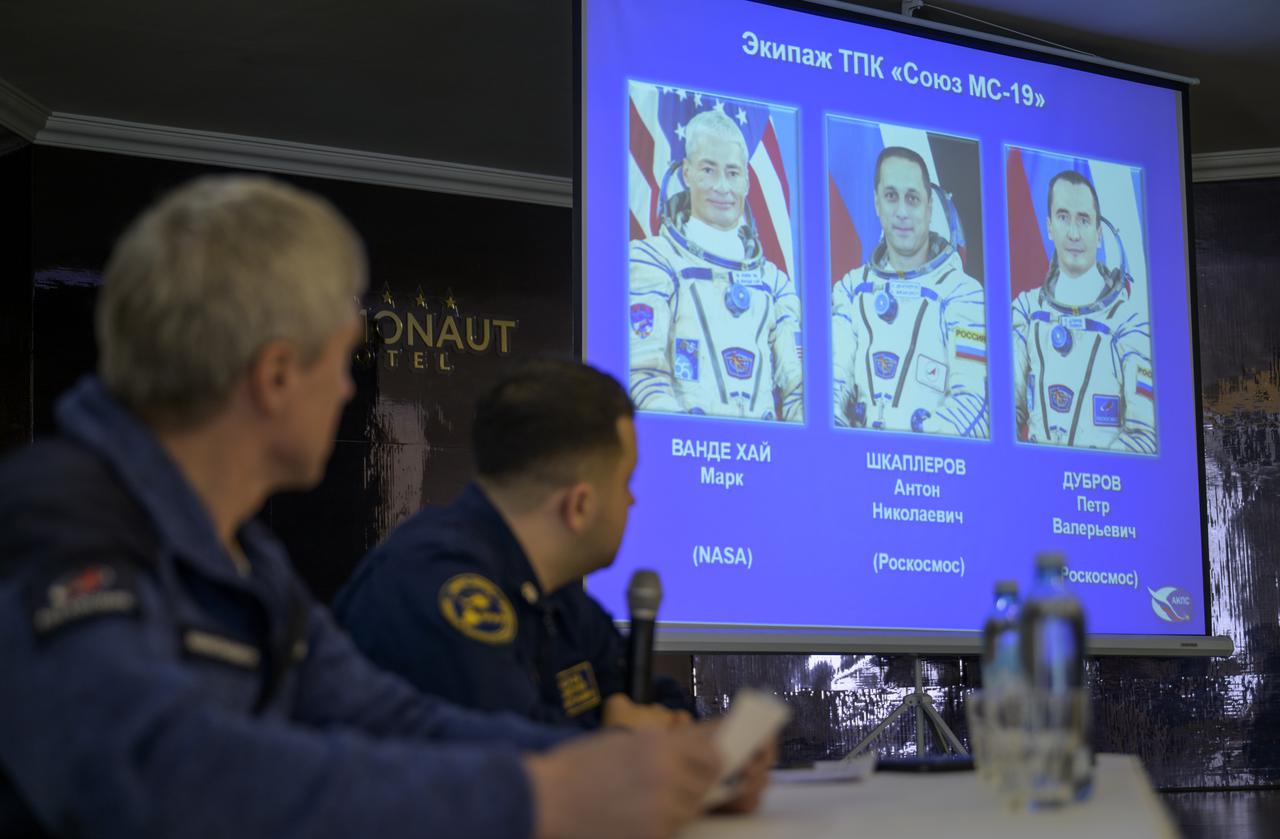
NASA, Roscosmos, and Russian Search and Recovery Forces meet at the Cosmonaut Hotel in Karaganda, Kazakhstan to discuss the readiness for the landing of Expedition 66 crew members Mark Vande Hei of NASA, and Pyotr Dubrov, and Anton Shkaplerov of Roscosmos, Monday, March 28, 2022, at the Cosmonaut Hotel in Karaganda, Kazakhstan. Vande Hei and Dubrov will be returning to Earth after logging 355 days in space as members of Expeditions 64-66 aboard the International Space Station. For Vande Hei, his mission is the longest single spaceflight by a U.S. astronaut in history. Shkaplerov will be returning after 176 days in space, serving as a Flight Engineer for Expedition 65 and commander of Expedition 66. Photo Credit: (NASA/Bill Ingalls)
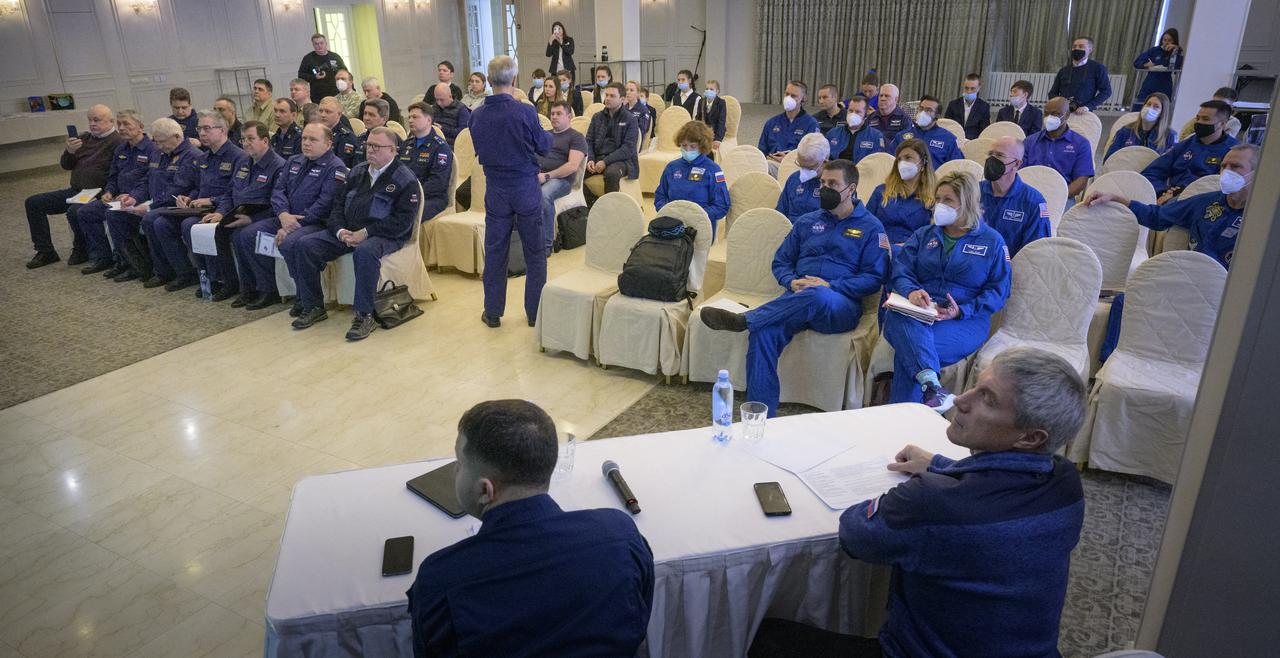
NASA, Roscosmos, and Russian Search and Recovery Forces meet at the Cosmonaut Hotel in Karaganda, Kazakhstan to discuss the readiness for the landing of Expedition 66 crew members Mark Vande Hei of NASA, and Pyotr Dubrov, and Anton Shkaplerov of Roscosmos, Monday, March 28, 2022, at the Cosmonaut Hotel in Karaganda, Kazakhstan. Vande Hei and Dubrov will be returning to Earth after logging 355 days in space as members of Expeditions 64-66 aboard the International Space Station. For Vande Hei, his mission is the longest single spaceflight by a U.S. astronaut in history. Shkaplerov will be returning after 176 days in space, serving as a Flight Engineer for Expedition 65 and commander of Expedition 66. Photo Credit: (NASA/Bill Ingalls)
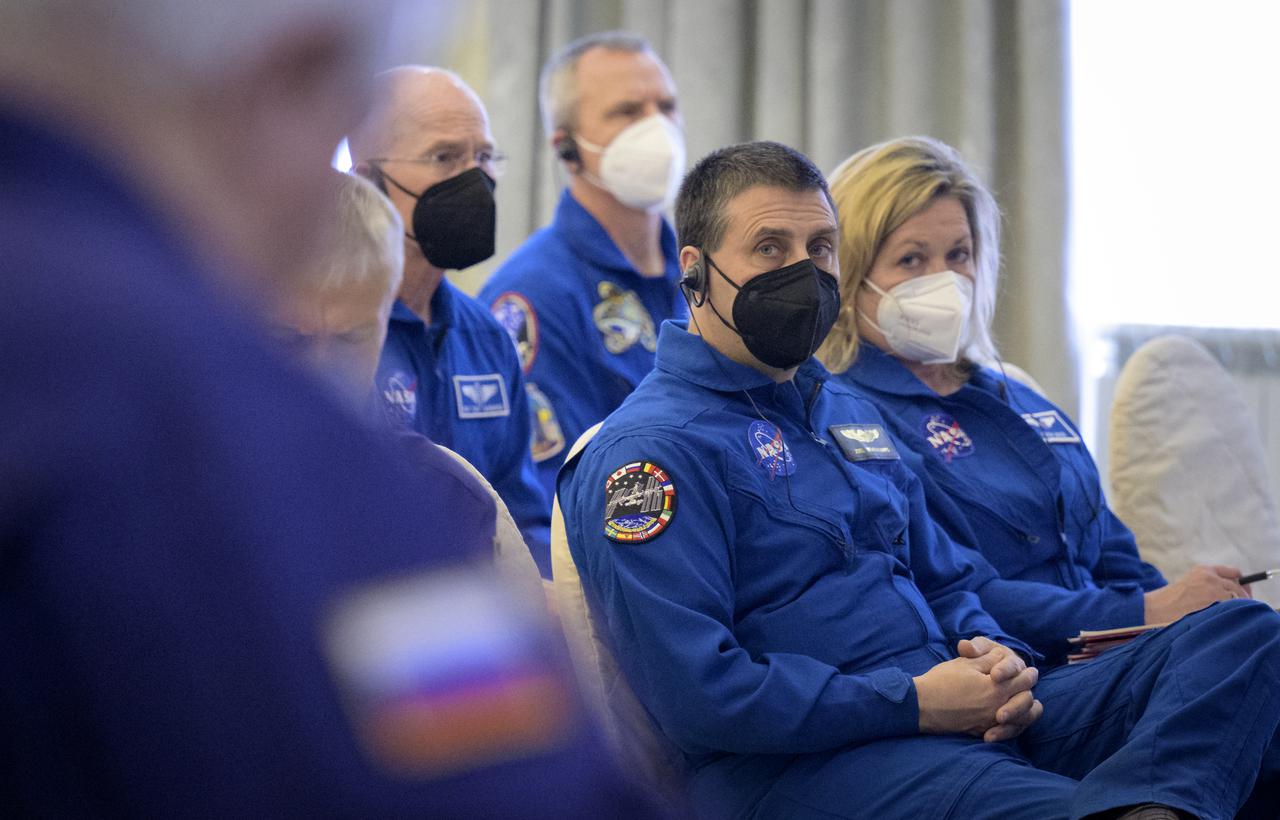
NASA ISS Program Manager Joel Montalbano and NASA Director for Human Space Flight Programs, Russia, Tricia Mack are seen as NASA, Roscosmos, and Russian Search and Recovery Forces meet at the Cosmonaut Hotel in Karaganda, Kazakhstan to discuss the readiness for the landing of Expedition 66 crew members Mark Vande Hei of NASA, and Pyotr Dubrov, and Anton Shkaplerov of Roscosmos, Monday, March 28, 2022, at the Cosmonaut Hotel in Karaganda, Kazakhstan. Vande Hei and Dubrov will be returning to Earth after logging 355 days in space as members of Expeditions 64-66 aboard the International Space Station. For Vande Hei, his mission is the longest single spaceflight by a U.S. astronaut in history. Shkaplerov will be returning after 176 days in space, serving as a Flight Engineer for Expedition 65 and commander of Expedition 66. Photo Credit: (NASA/Bill Ingalls)
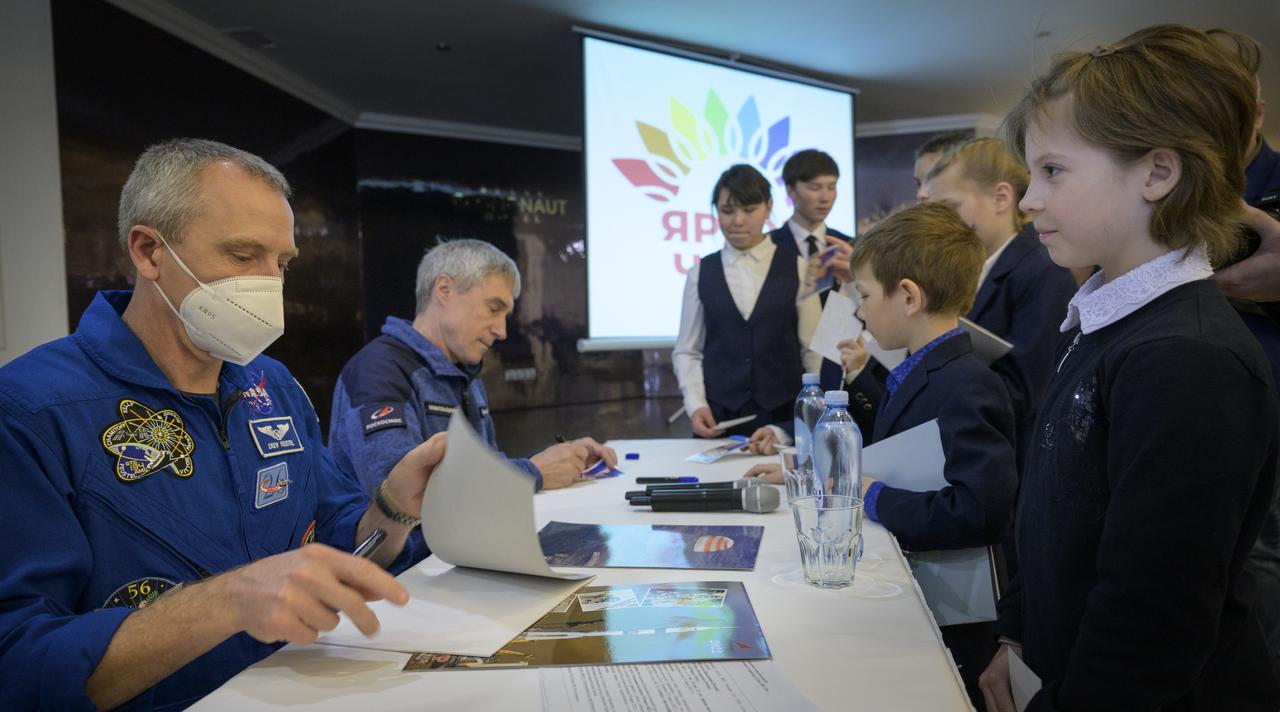
NASA Astronaut Office Representative, astronaut Drew Feustel, left, and Roscosmos Executive director of Human Spaceflight Programs Sergei Krikalev, give autographs to children from a local school, Monday, March 28, 2022, at the Cosmonaut Hotel in Karaganda, Kazakhstan. The two were part of an earlier meeting where NASA, Roscosmos, and Russian Search and Recovery Forces meet to discuss the readiness for the landing of Expedition 66 crew members Mark Vande Hei of NASA, and Pyotr Dubrov, and Anton Shkaplerov of Roscosmos. Vande Hei and Dubrov will be returning to Earth after logging 355 days in space as members of Expeditions 64-66 aboard the International Space Station. For Vande Hei, his mission is the longest single spaceflight by a U.S. astronaut in history. Shkaplerov will be returning after 176 days in space, serving as a Flight Engineer for Expedition 65 and commander of Expedition 66. Photo Credit: (NASA/Bill Ingalls)
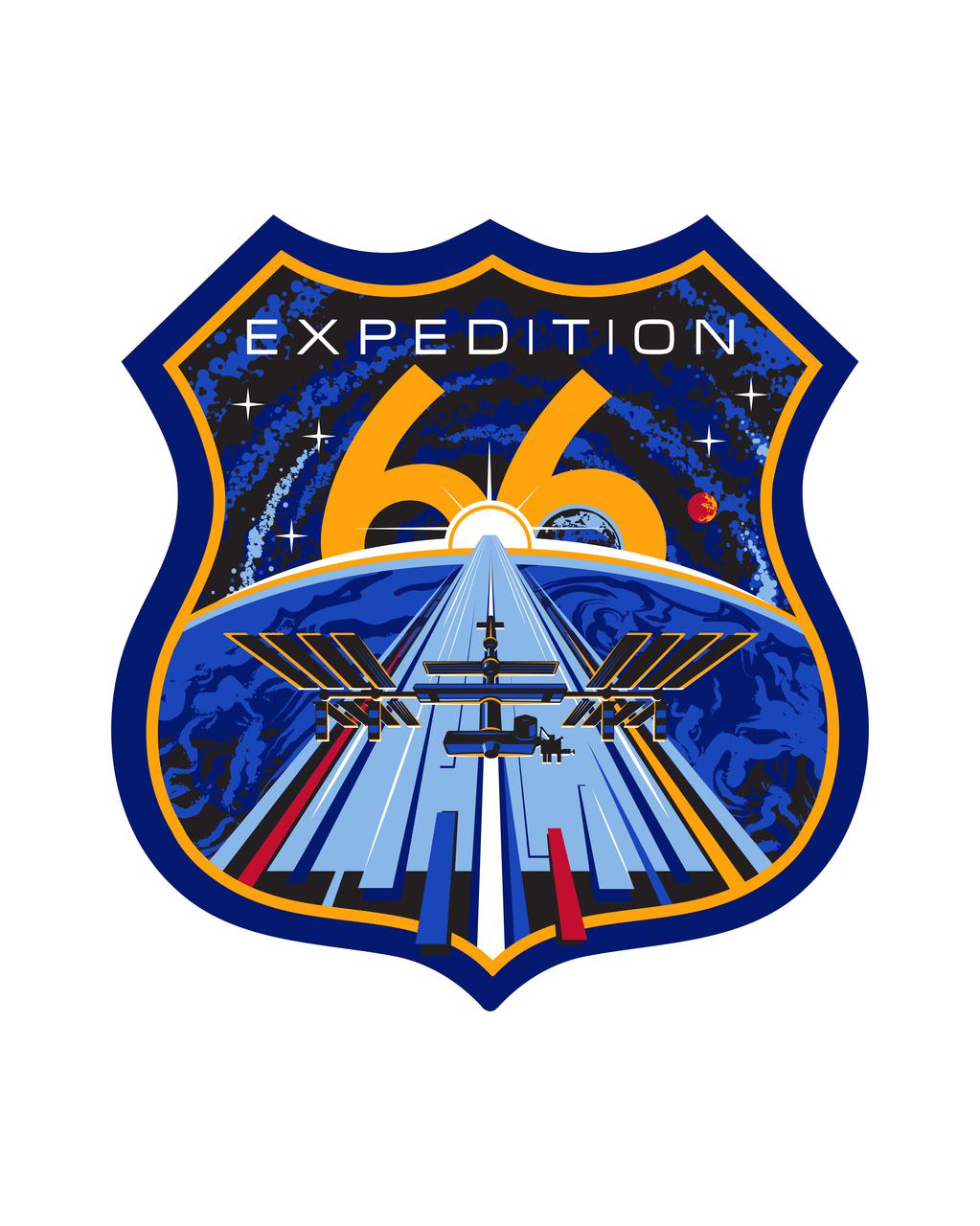
iss066-s-001 (April 26, 2021) --- The official insignia of the Expedition 66 mission aboard the International Space Station.
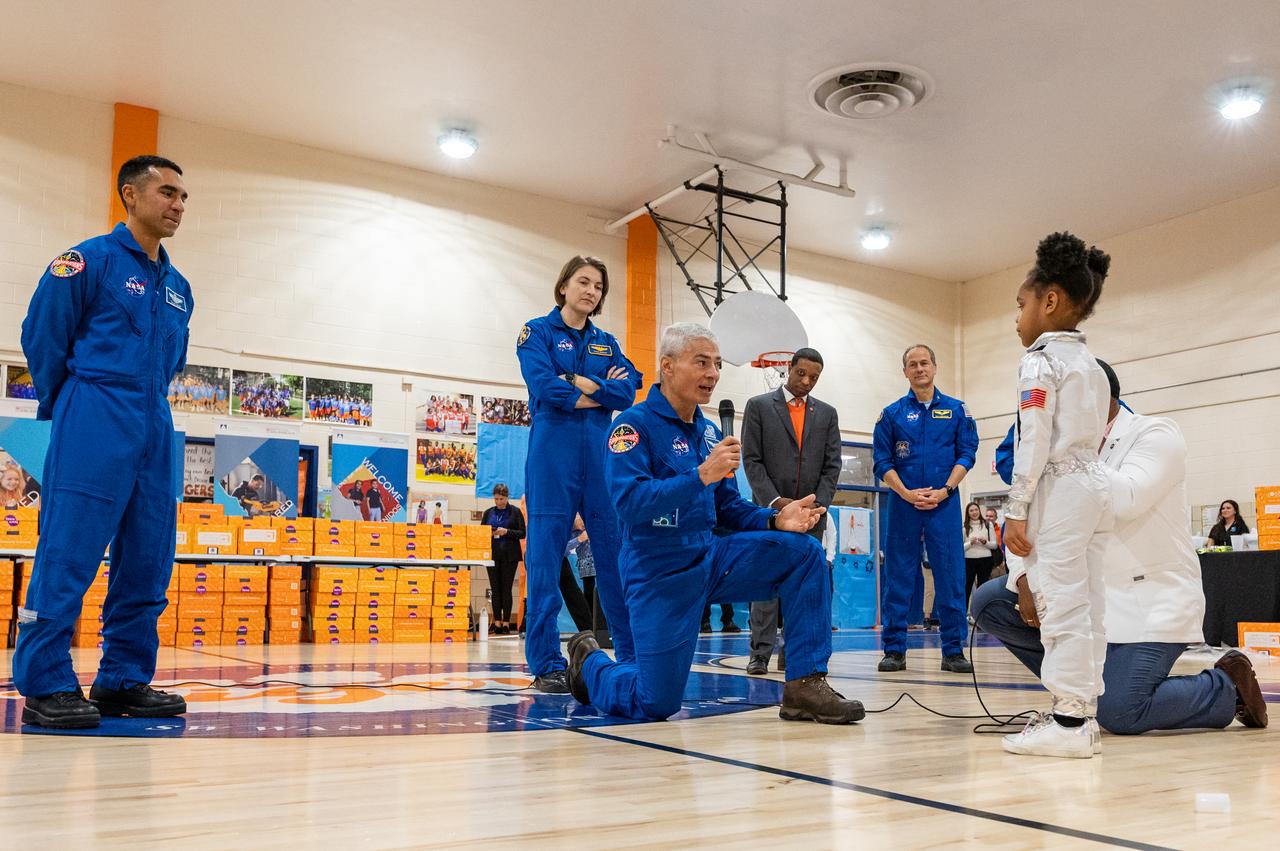
NASA astronaut Mark Vande Hei speaks with students during a visit to Amidon-Bowen Elementary School with Expedition 66 crewmates NASA astronauts Raja Chari, Kayla Barron, Tom Marshburn and NASA Administrator Bill Nelson, Thursday, Dec. 8, 2022, in Washington. Vande Hei spent 355 days in space as a member of Expedition 65/66 and was joined during Expedition 66 by Marshburn, Chari, and Barron who spent 177 days onboard the International Space Station. Photo Credit: (NASA/Keegan Barber)
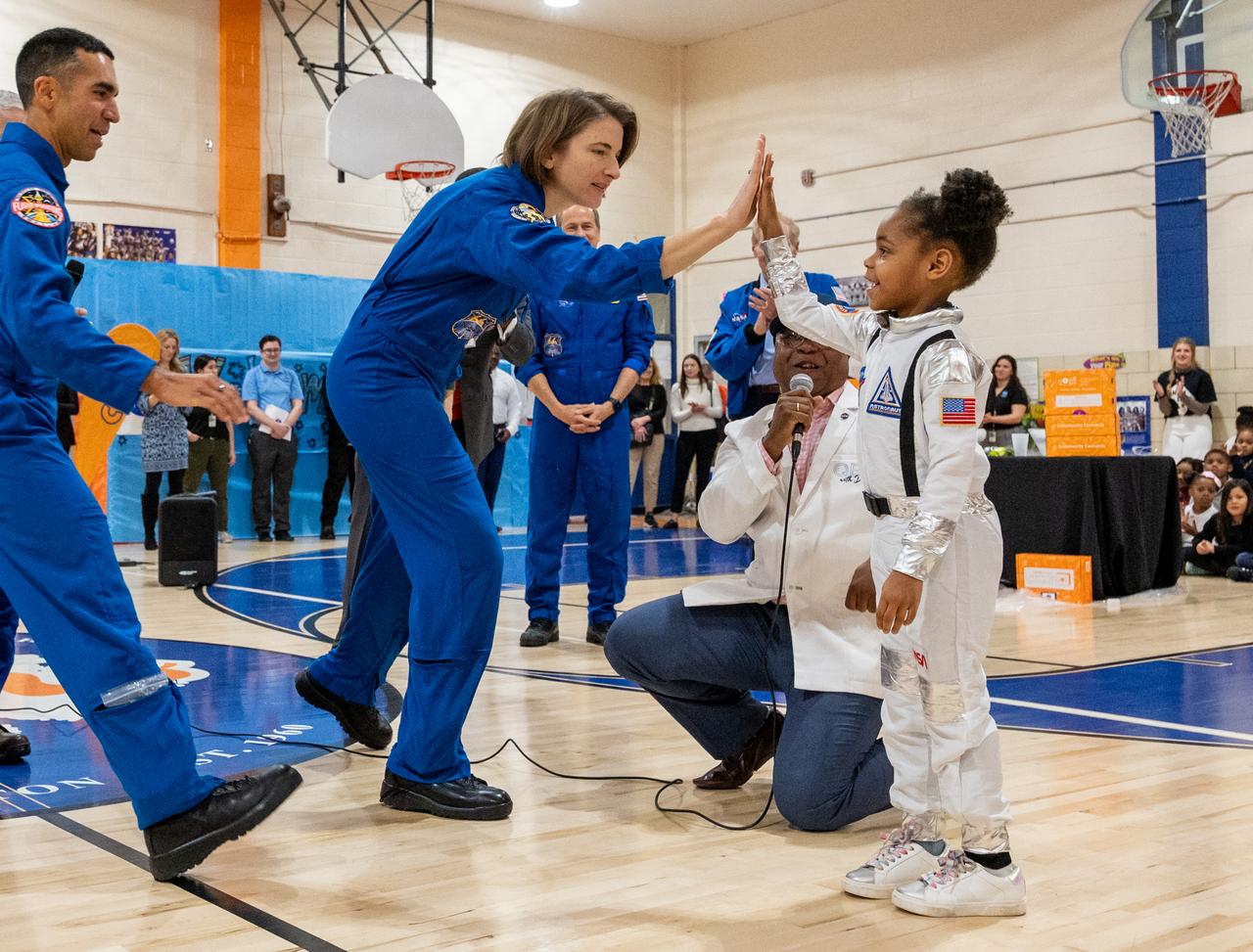
NASA astronaut Kayla Barron high fives a student during a visit to Amidon-Bowen Elementary School with fellow Expedition 66 crewmates NASA astronauts Raja Chari, Tom Marshburn, and Mark Vande Hei, and NASA Administrator Bill Nelson, Thursday, Dec. 8, 2022, in Washington. Vande Hei spent 355 days in space as a member of Expedition 65/66 and was joined during Expedition 66 by Marshburn, Chari, and Barron who spent 177 days onboard the International Space Station. Photo Credit: (NASA/Keegan Barber)
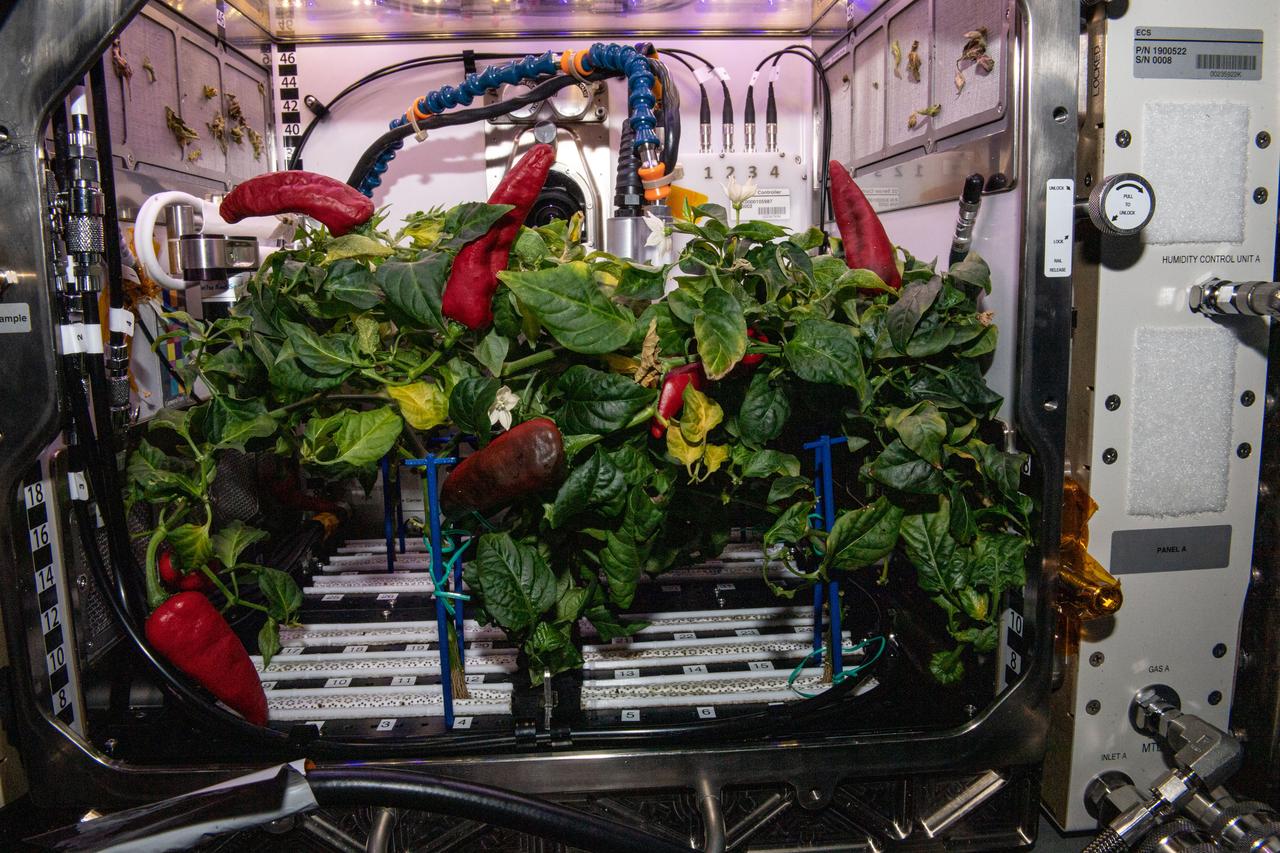
View of Chile Peppers growing inside the Advanced Plant Habitat in the Columbus Module during Expedition 66.
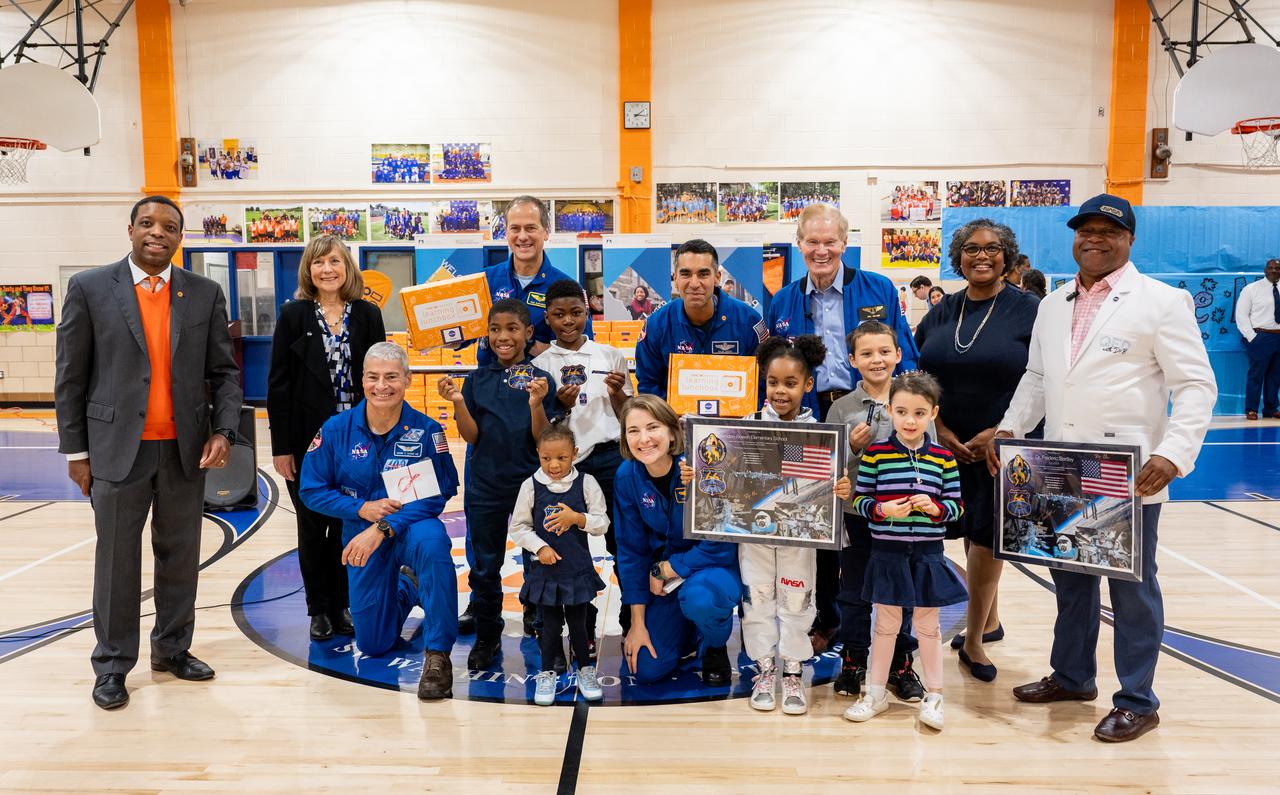
NASA Administrator Bill Nelson and NASA astronauts Raja Chari, Kayla Barron, Tom Marshburn, and Mark Vande Hei pose for a photo with students during their visit to Amidon-Bowen Elementary School, Thursday, Dec. 8, 2022, in Washington. Vande Hei spent 355 days in space as a member of Expedition 65/66 and was joined during Expedition 66 by Marshburn, Chari, and Barron who spent 177 days onboard the International Space Station. Photo Credit: (NASA/Keegan Barber)
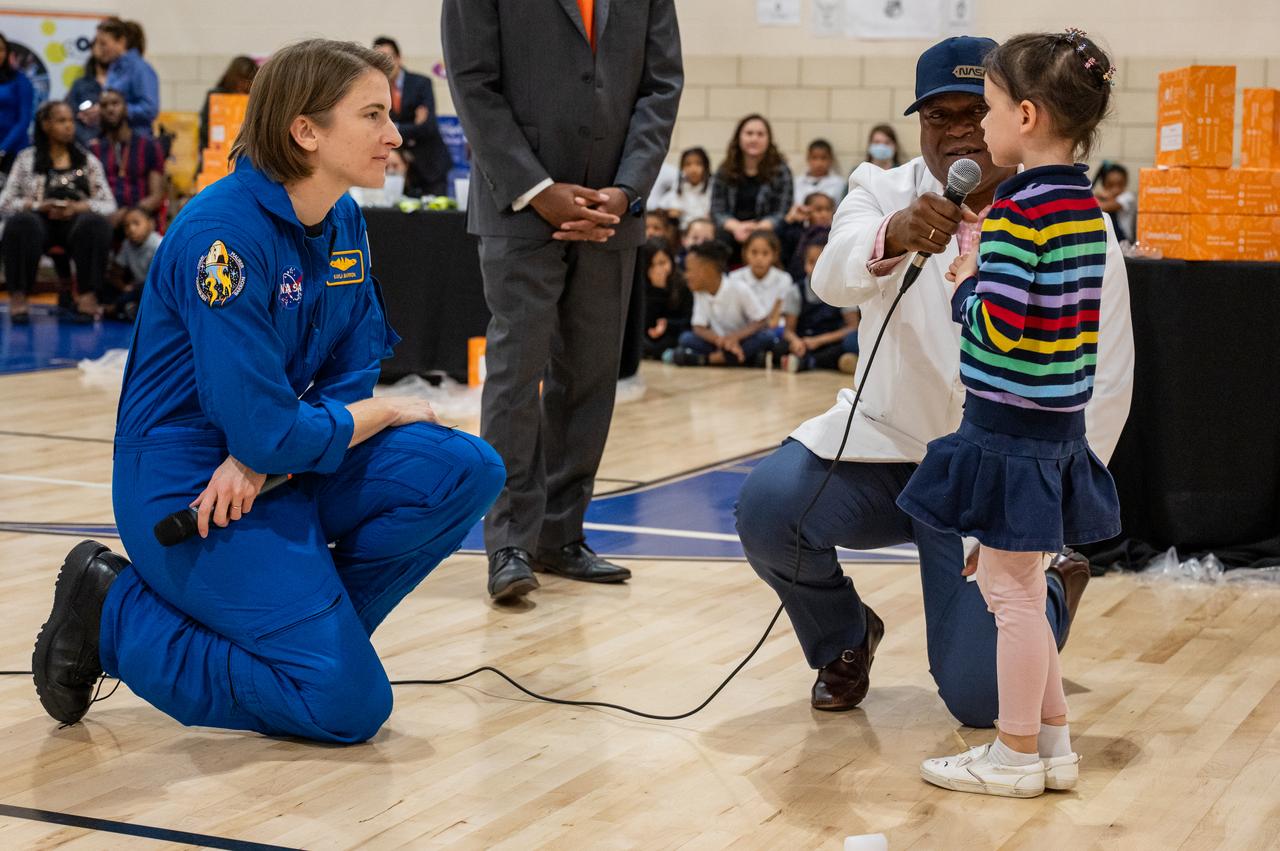
NASA astronaut Kayla Barron speaks with students as she and fellow crewmates Raja Chari, Tom Marshburn, and Mark Vande Hei visit Amidon-Bowen Elementary School, Thursday, Dec. 8, 2022, in Washington. Vande Hei spent 355 days in space as a member of Expedition 65/66 and was joined during Expedition 66 by Marshburn, Chari, and Barron who spent 177 days onboard the International Space Station. Photo Credit: (NASA/Keegan Barber)
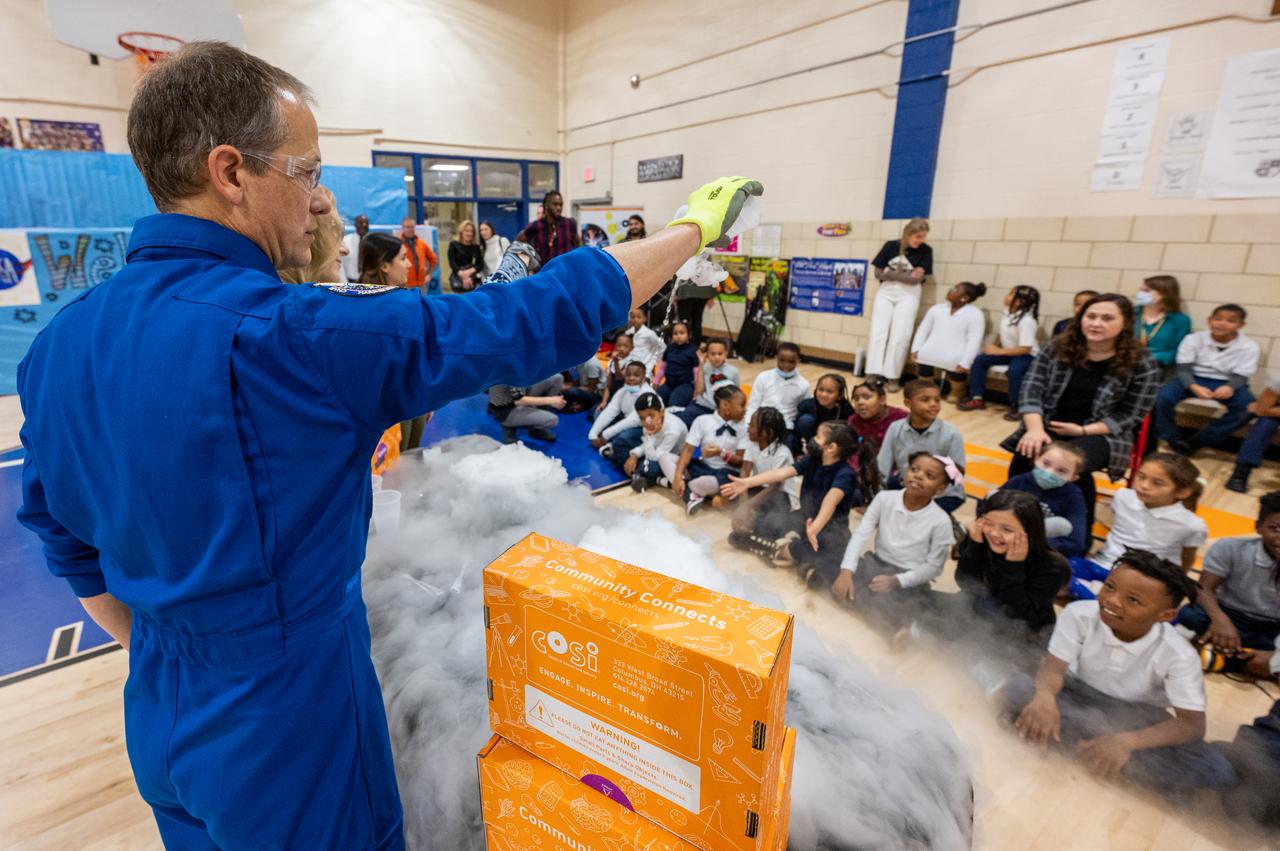
NASA astronaut Tom Marshburn is seen during science demonstrations as he and fellow crewmates Raja Chari, Kayla Barron, and Mark Vande Hei visit Amidon-Bowen Elementary School, Thursday, Dec. 8, 2022, in Washington. Vande Hei spent 355 days in space as a member of Expedition 65/66 and was joined during Expedition 66 by Marshburn, Chari, and Barron who spent 177 days onboard the International Space Station. Photo Credit: (NASA/Keegan Barber)
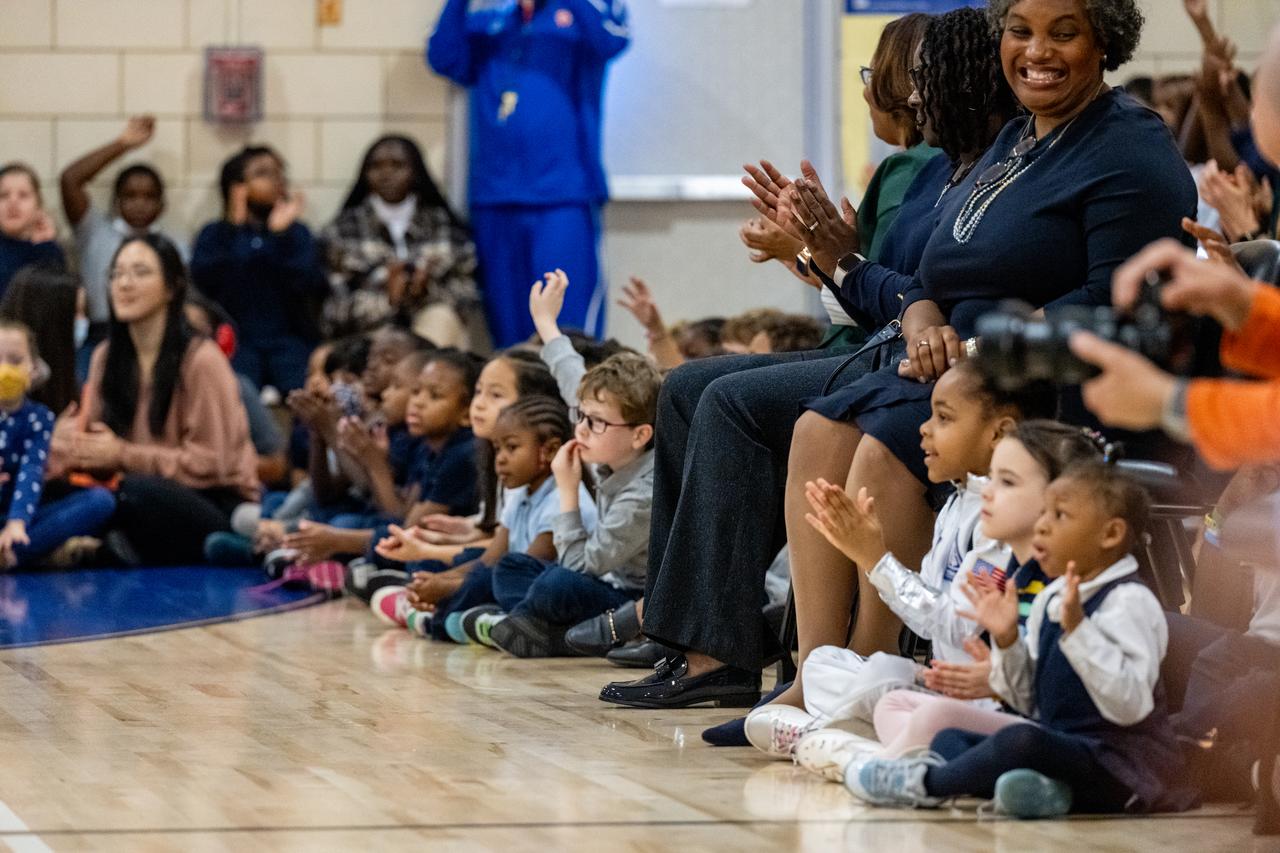
Students and faculty are seen during NASA Administrator Bill Nelson and NASA astronauts Raja Chari, Kayla Barron, Tom Marshburn, and Mark Vande Hei’s visit to Amidon-Bowen Elementary School, Thursday, Dec. 8, 2022, in Washington. Vande Hei spent 355 days in space as a member of Expedition 65/66 and was joined during Expedition 66 by Marshburn, Chari, and Barron who spent 177 days onboard the International Space Station. Photo Credit: (NASA/Keegan Barber)
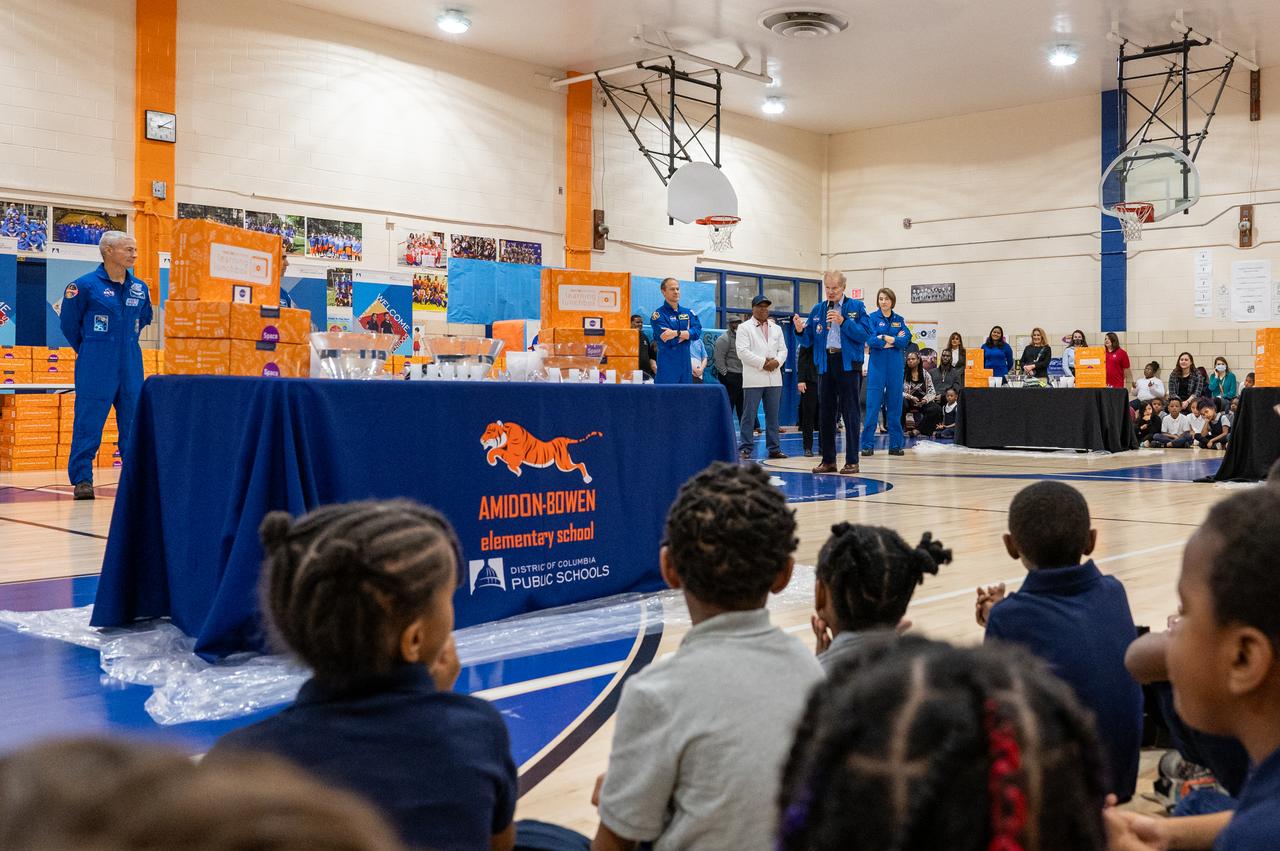
NASA Administrator Bill Nelson and NASA astronauts Raja Chari, Kayla Barron, Tom Marshburn, and Mark Vande Hei speak with students during their visit to Amidon-Bowen Elementary School, Thursday, Dec. 8, 2022, in Washington. Vande Hei spent 355 days in space as a member of Expedition 65/66 and was joined during Expedition 66 by Marshburn, Chari, and Barron who spent 177 days onboard the International Space Station. Photo Credit: (NASA/Keegan Barber)
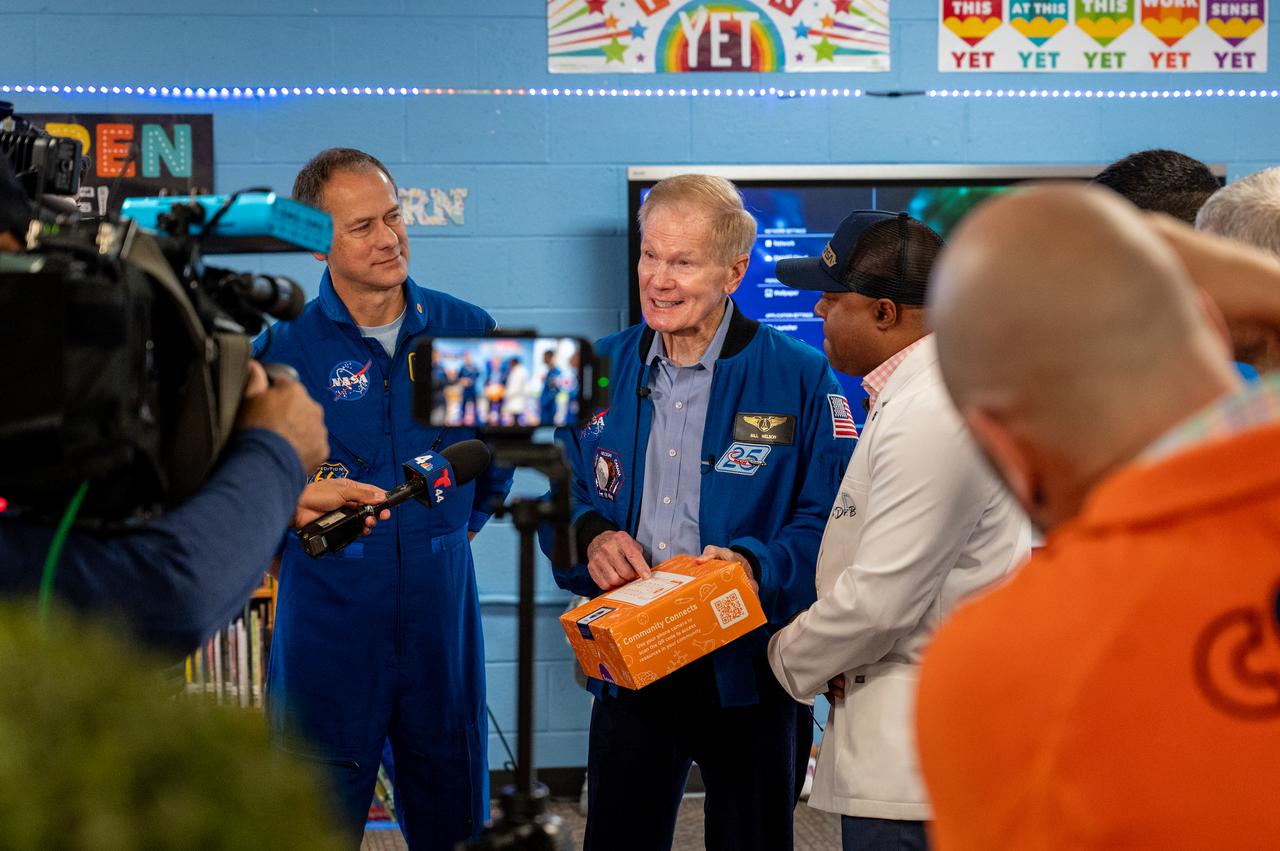
NASA Administrator Bill Nelson, right, speaks with local media during a visit by NASA astronauts Tom Marshburn, left, and crewmates Raja Chari, Kayla Barron, and Mark Vande Hei, to Amidon-Bowen Elementary School, Thursday, Dec. 8, 2022, in Washington. Vande Hei spent 355 days in space as a member of Expedition 65/66 and was joined during Expedition 66 by Marshburn, Chari, and Barron who spent 177 days onboard the International Space Station. Photo Credit: (NASA/Keegan Barber)
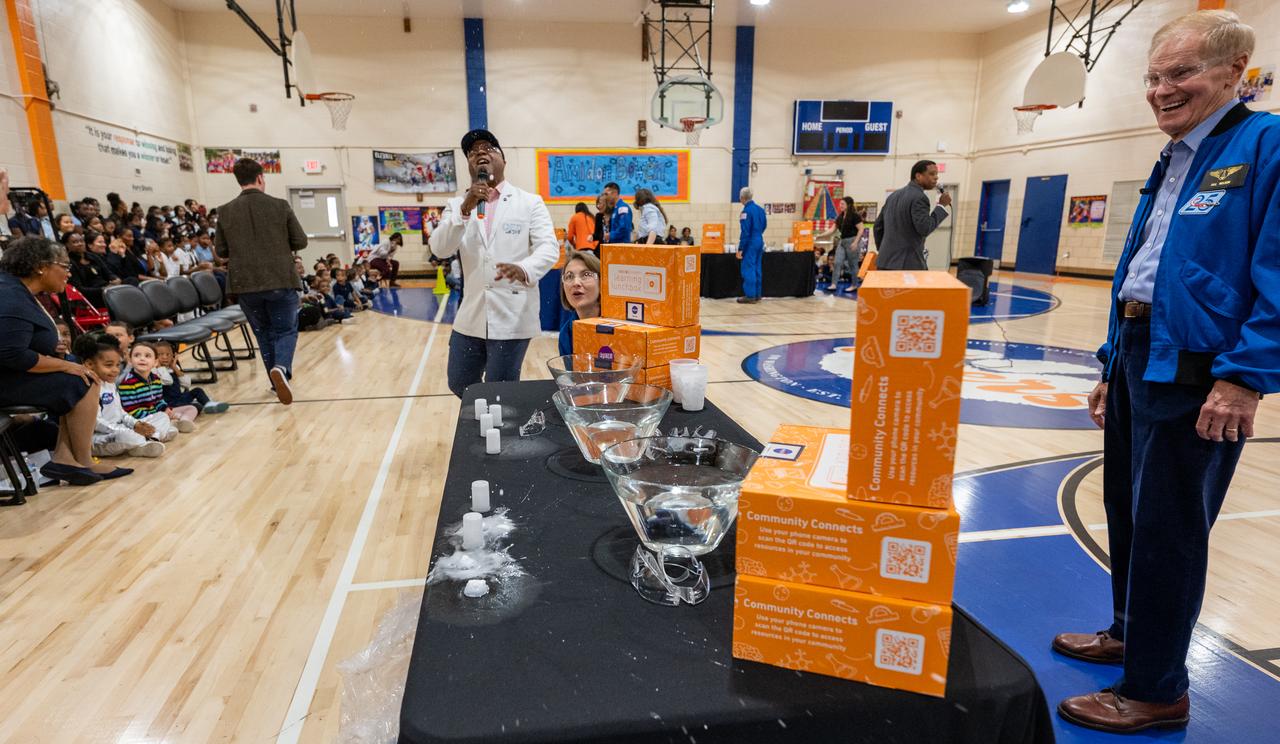
NASA Administrator Bill Nelson, right, participates in STEM demonstrations with students during a visit by NASA astronauts Kayla Barron, center, and crewmates Raja Chari, Tom Marshburn, and Mark Vande Hei, to Amidon-Bowen Elementary School, Thursday, Dec. 8, 2022, in Washington. Vande Hei spent 355 days in space as a member of Expedition 65/66 and was joined during Expedition 66 by Marshburn, Chari, and Barron who spent 177 days onboard the International Space Station. Photo Credit: (NASA/Keegan Barber)
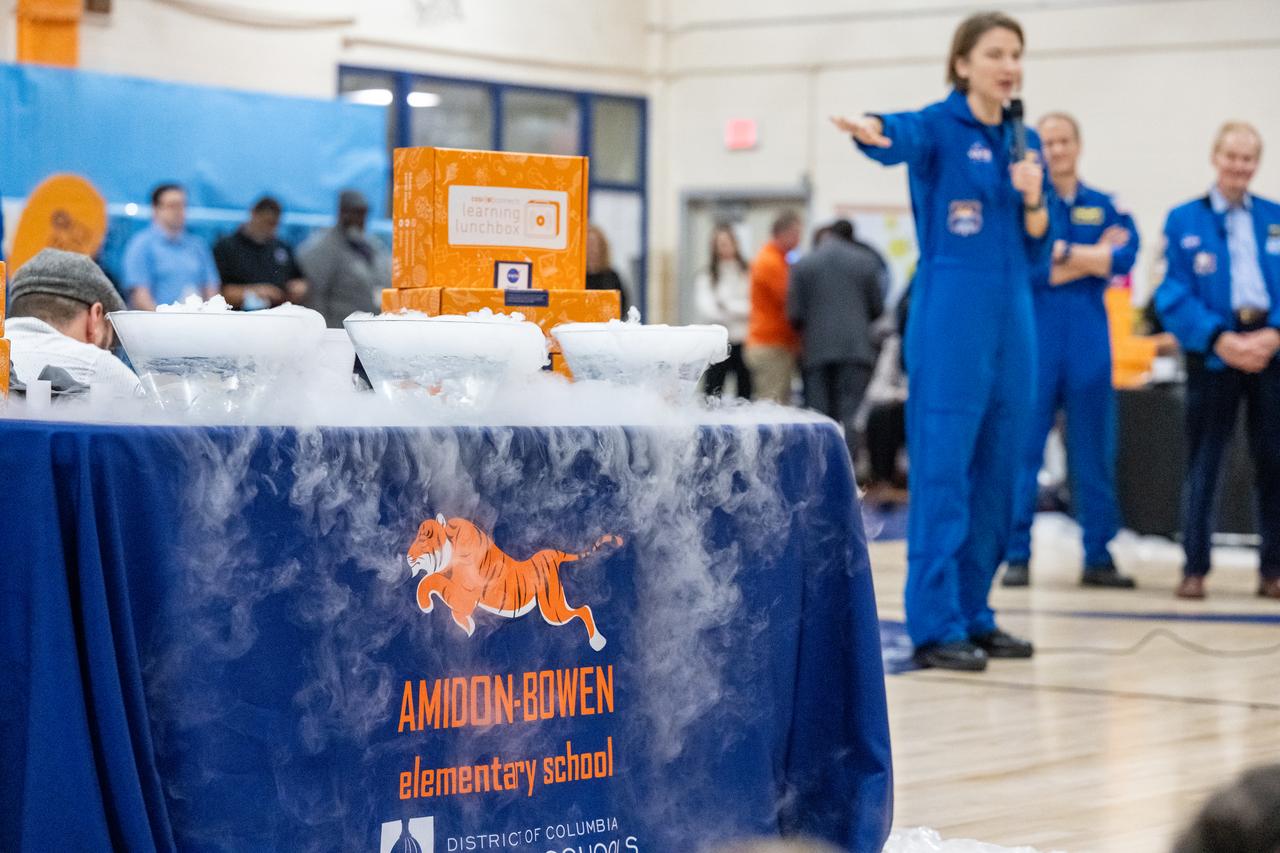
NASA astronaut Kayla Barron speaks during science demonstrations as she and fellow crewmates Raja Chari, Tom Marshburn, and Mark Vande Hei visit Amidon-Bowen Elementary School, Thursday, Dec. 8, 2022, in Washington. Vande Hei spent 355 days in space as a member of Expedition 65/66 and was joined during Expedition 66 by Marshburn, Chari, and Barron who spent 177 days onboard the International Space Station. Photo Credit: (NASA/Keegan Barber)
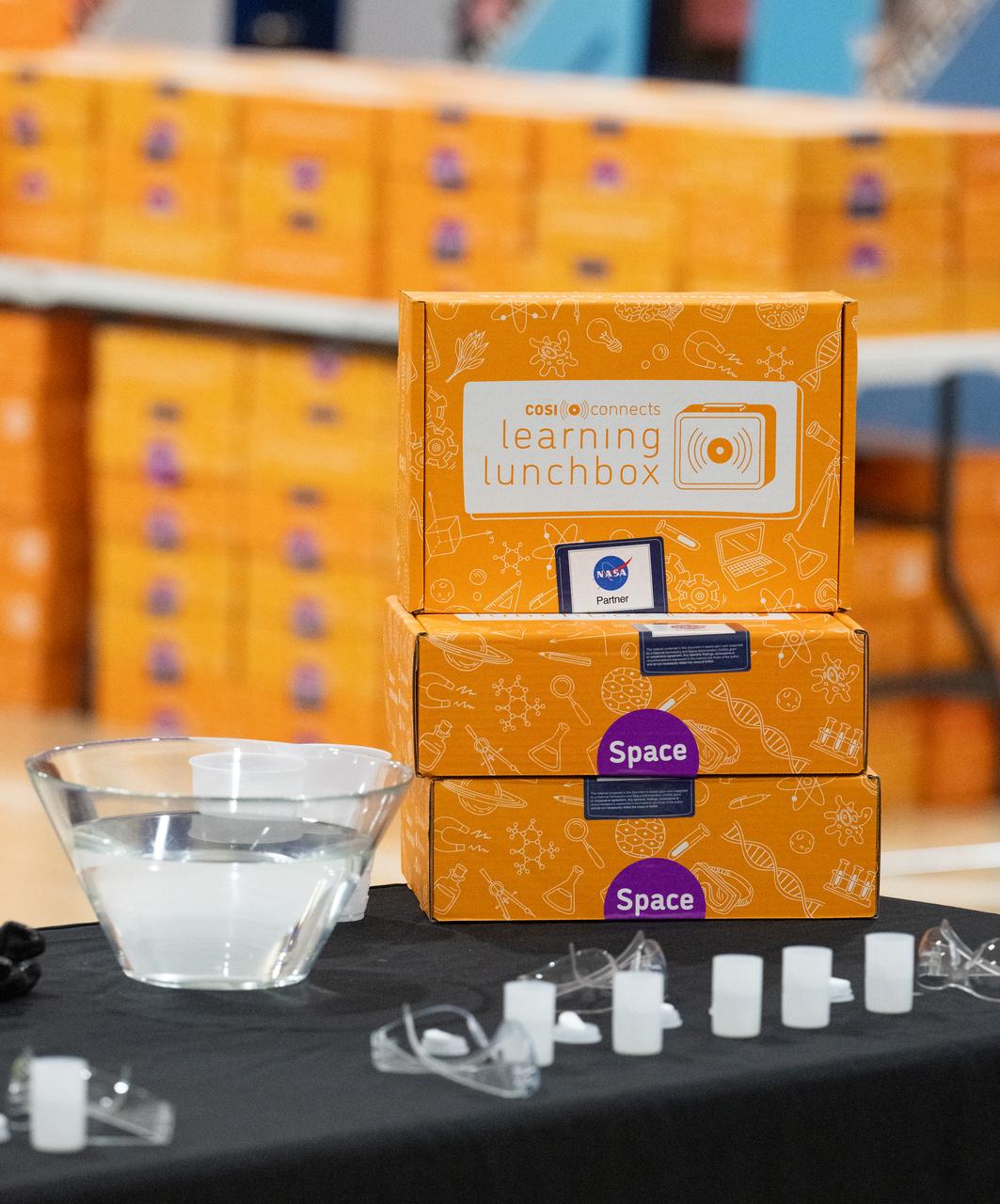
Center of Science and Industry (COSI) learning lunchboxes are seen during NASA Administrator Bill Nelson and NASA astronauts Raja Chari, Kayla Barron, Tom Marshburn, and Mark Vande Hei’s visit to Amidon-Bowen Elementary School, Thursday, Dec. 8, 2022, in Washington. Vande Hei spent 355 days in space as a member of Expedition 65/66 and was joined during Expedition 66 by Marshburn, Chari, and Barron who spent 177 days onboard the International Space Station. Photo Credit: (NASA/Keegan Barber)
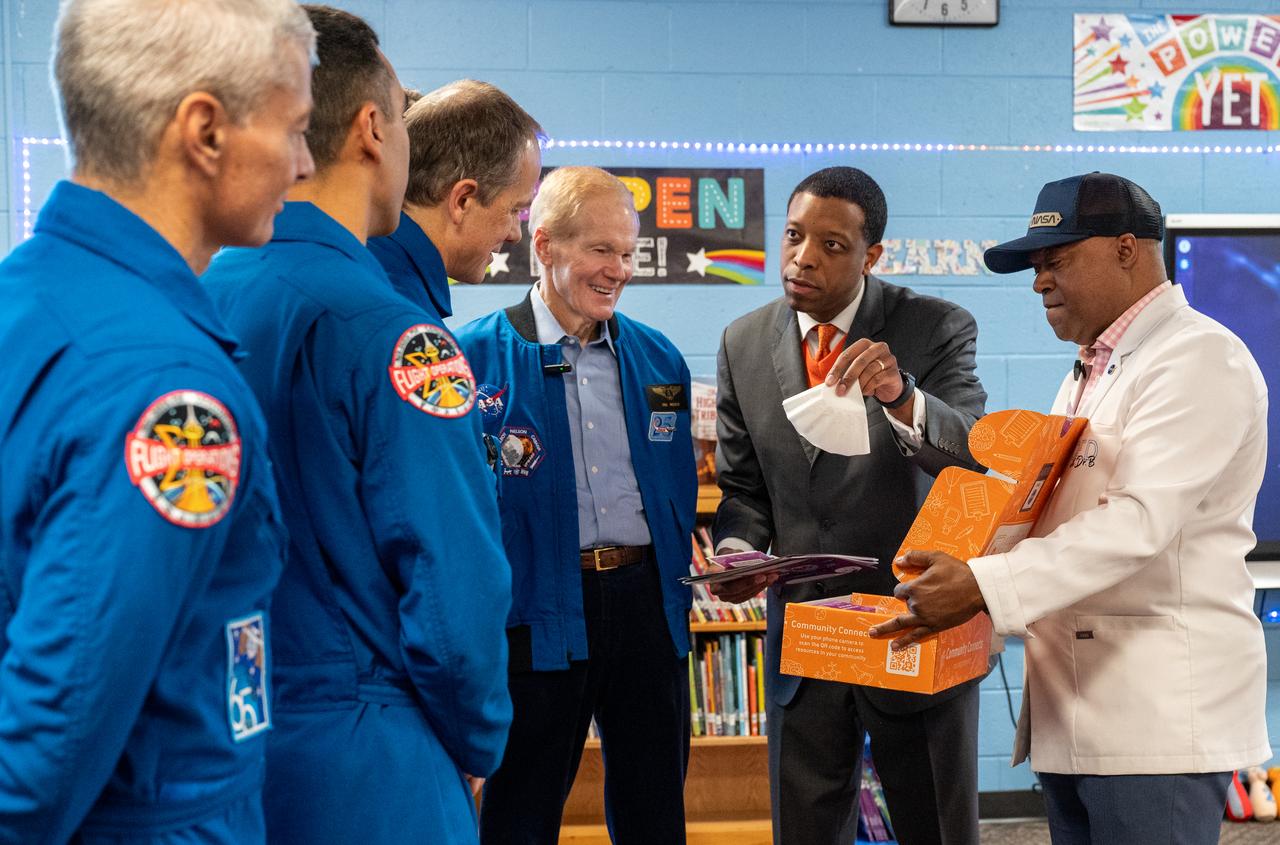
NASA astronauts, from left to right, Mark Vande Hei, Raja Chari, Tom Marshburn, and NASA Administrator Bill Nelson speak with local media during their visit to Amidon-Bowen Elementary School, Thursday, Dec. 8, 2022, in Washington. Vande Hei spent 355 days in space as a member of Expedition 65/66 and was joined during Expedition 66 by Marshburn, Chari, and Barron who spent 177 days onboard the International Space Station. Photo Credit: (NASA/Keegan Barber)
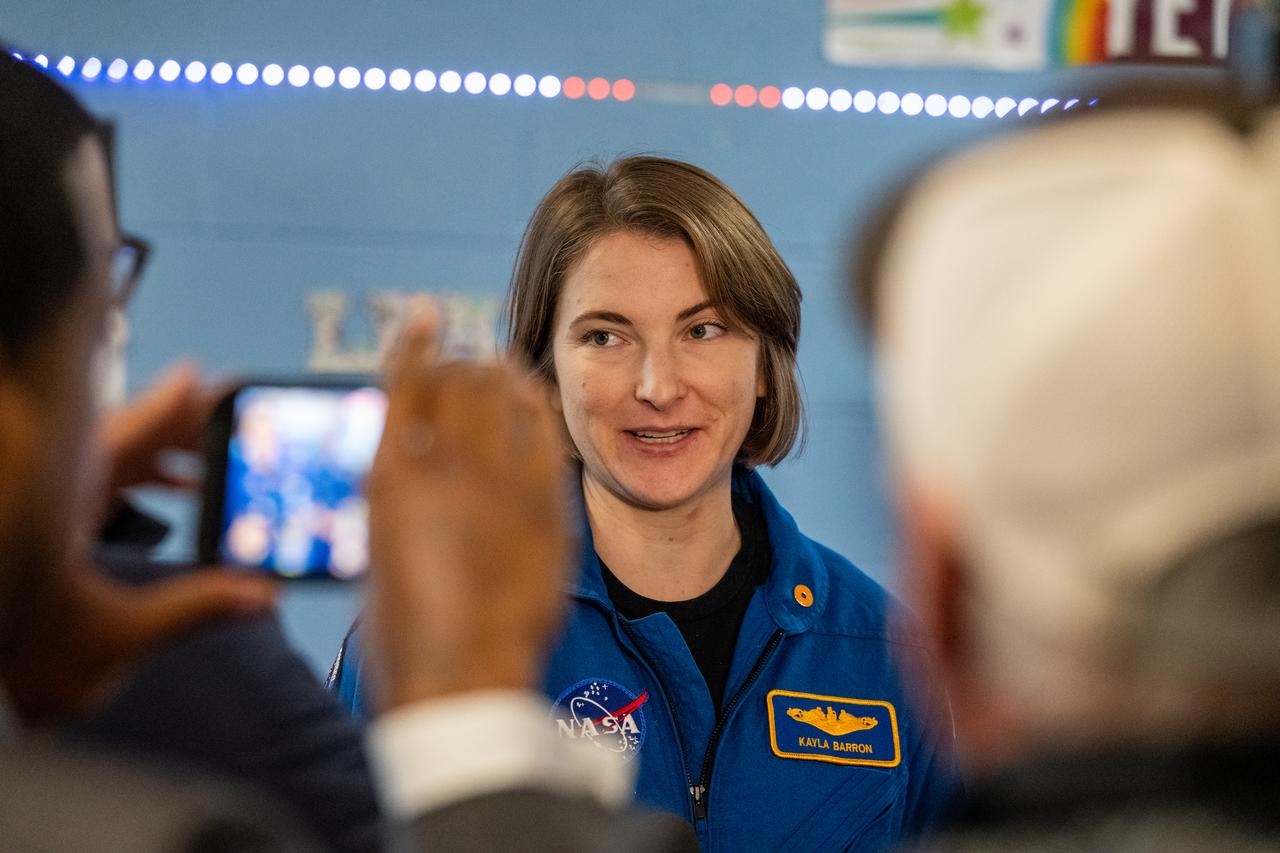
NASA astronaut Kayla Barron is seen as she and fellow crewmates Raja Chari, Tom Marshburn, and Mark Vande Hei visit Amidon-Bowen Elementary School, Thursday, Dec. 8, 2022, in Washington. Vande Hei spent 355 days in space as a member of Expedition 65/66 and was joined during Expedition 66 by Marshburn, Chari, and Barron who spent 177 days onboard the International Space Station. Photo Credit: (NASA/Keegan Barber)
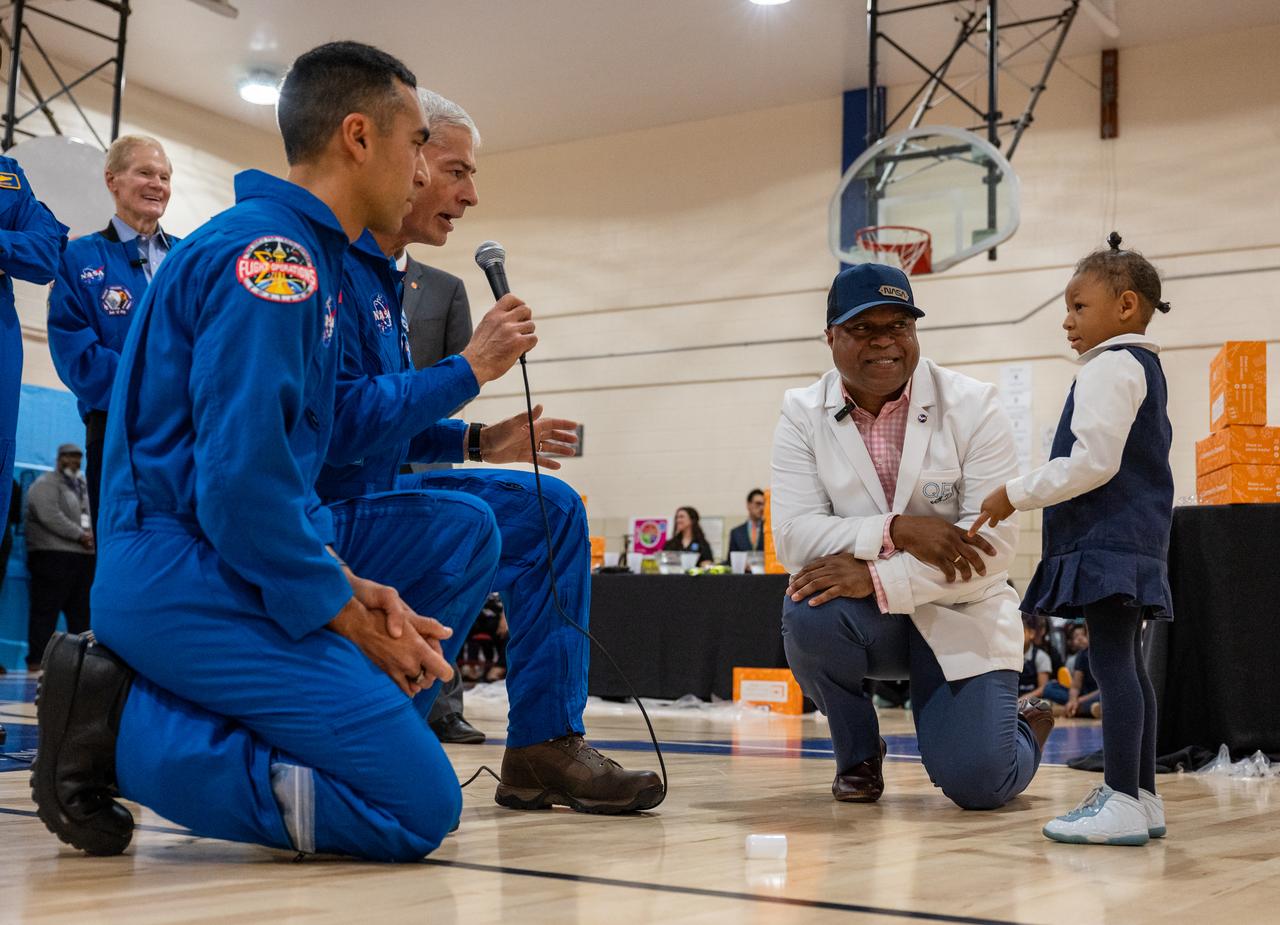
NASA astronauts Mark Vande Hei, second from left, and Raja Chari speak with students as he and fellow crewmates Kayla Barron and Tom Marshburn visit Amidon-Bowen Elementary School, Thursday, Dec. 8, 2022, in Washington. Vande Hei spent 355 days in space as a member of Expedition 65/66 and was joined during Expedition 66 by Marshburn, Chari, and Barron who spent 177 days onboard the International Space Station. Photo Credit: (NASA/Keegan Barber)
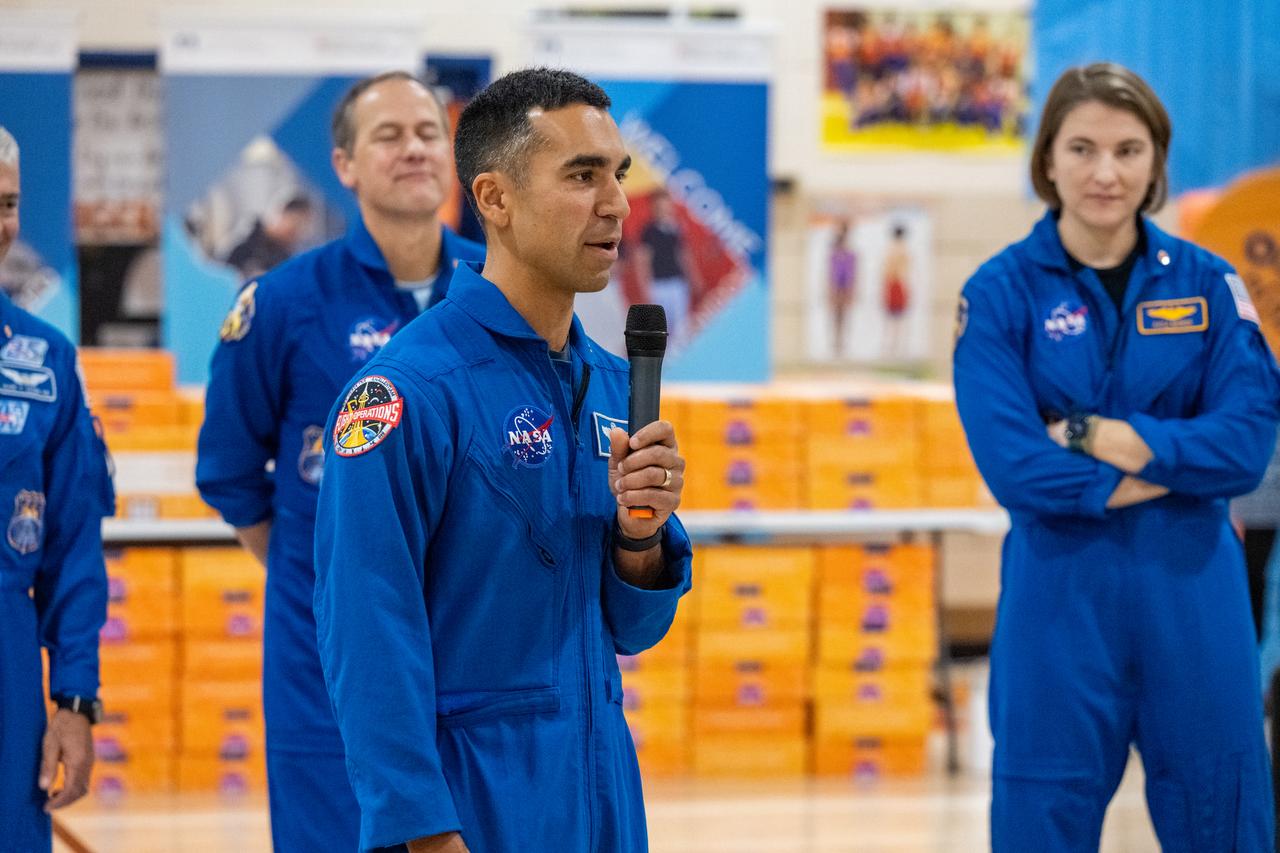
NASA astronaut Raja Chari speaks with students as he and fellow crewmates Kayla Barron, Tom Marshburn, and Mark Vande Hei visit Amidon-Bowen Elementary School, Thursday, Dec. 8, 2022, in Washington. Vande Hei spent 355 days in space as a member of Expedition 65/66 and was joined during Expedition 66 by Marshburn, Chari, and Barron who spent 177 days onboard the International Space Station. Photo Credit: (NASA/Keegan Barber)
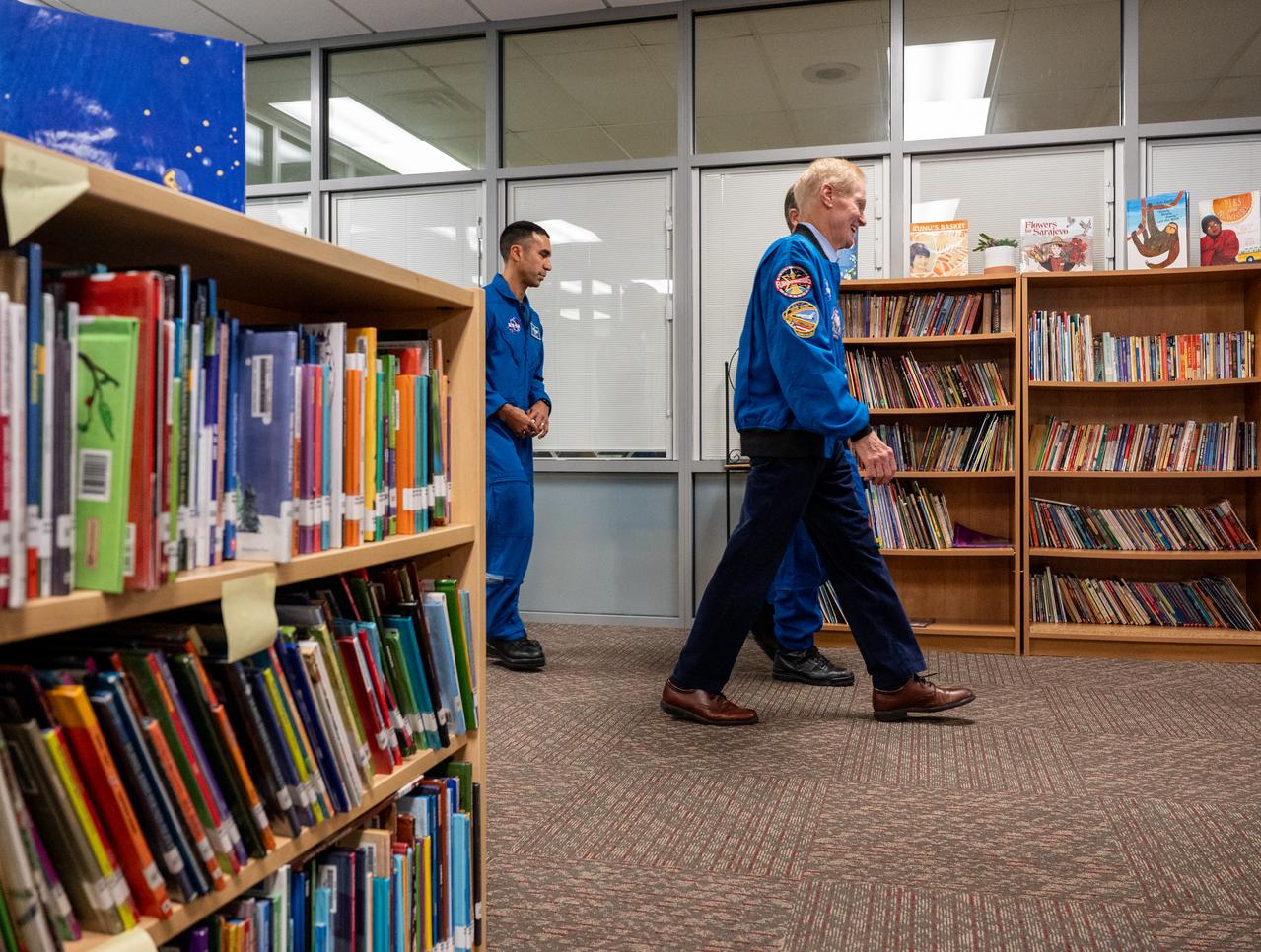
NASA Administrator Bill Nelson and NASA astronauts Raja Chari, Kayla Barron, Tom Marshburn, and Mark Vande Hei visit Amidon-Bowen Elementary School, Thursday, Dec. 8, 2022, in Washington. Vande Hei spent 355 days in space as a member of Expedition 65/66 and was joined during Expedition 66 by Marshburn, Chari, and Barron who spent 177 days onboard the International Space Station.Photo Credit: (NASA/Keegan Barber)
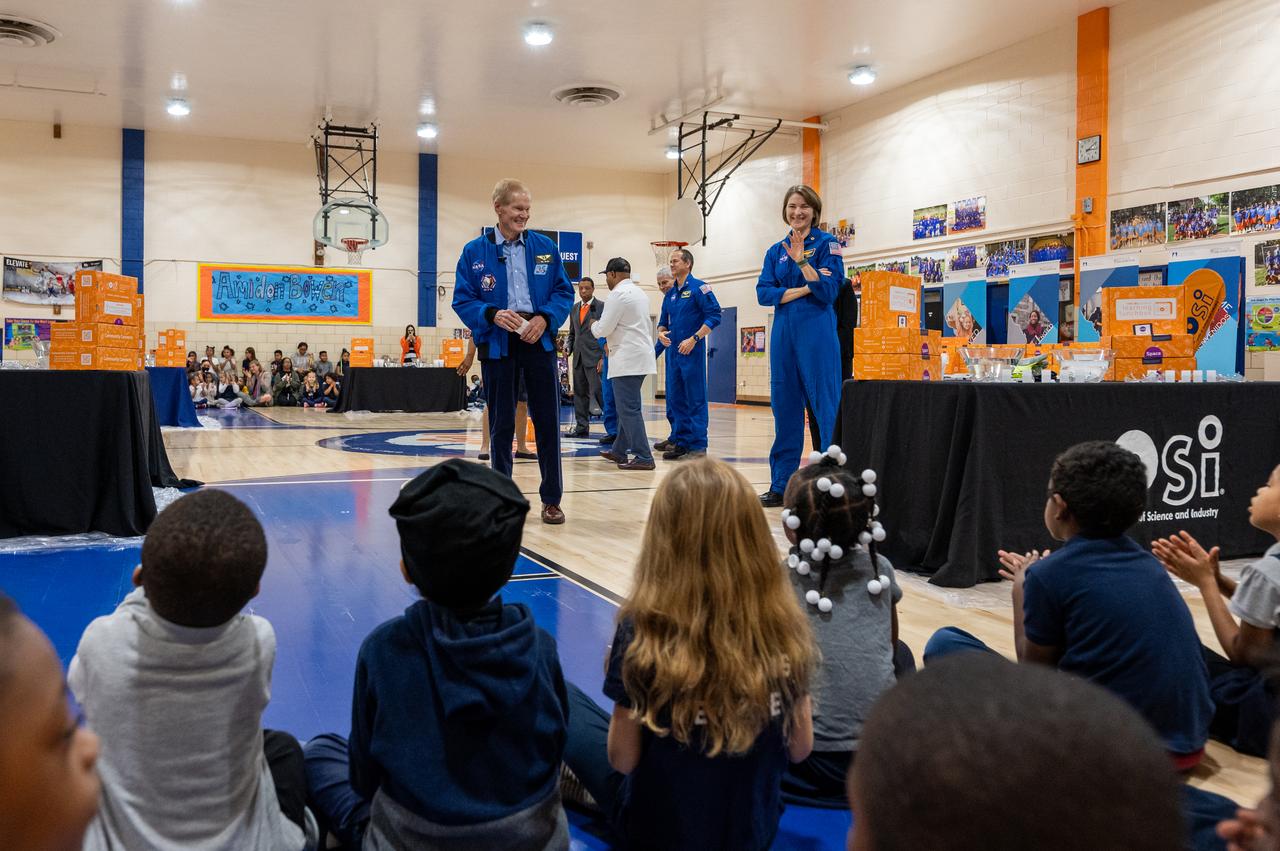
NASA Administrator Bill Nelson and NASA astronauts Raja Chari, Kayla Barron, Tom Marshburn, and Mark Vande Hei speak with students during their visit to Amidon-Bowen Elementary School, Thursday, Dec. 8, 2022, in Washington. Vande Hei spent 355 days in space as a member of Expedition 65/66 and was joined during Expedition 66 by Marshburn, Chari, and Barron who spent 177 days onboard the International Space Station. Photo Credit: (NASA/Keegan Barber)
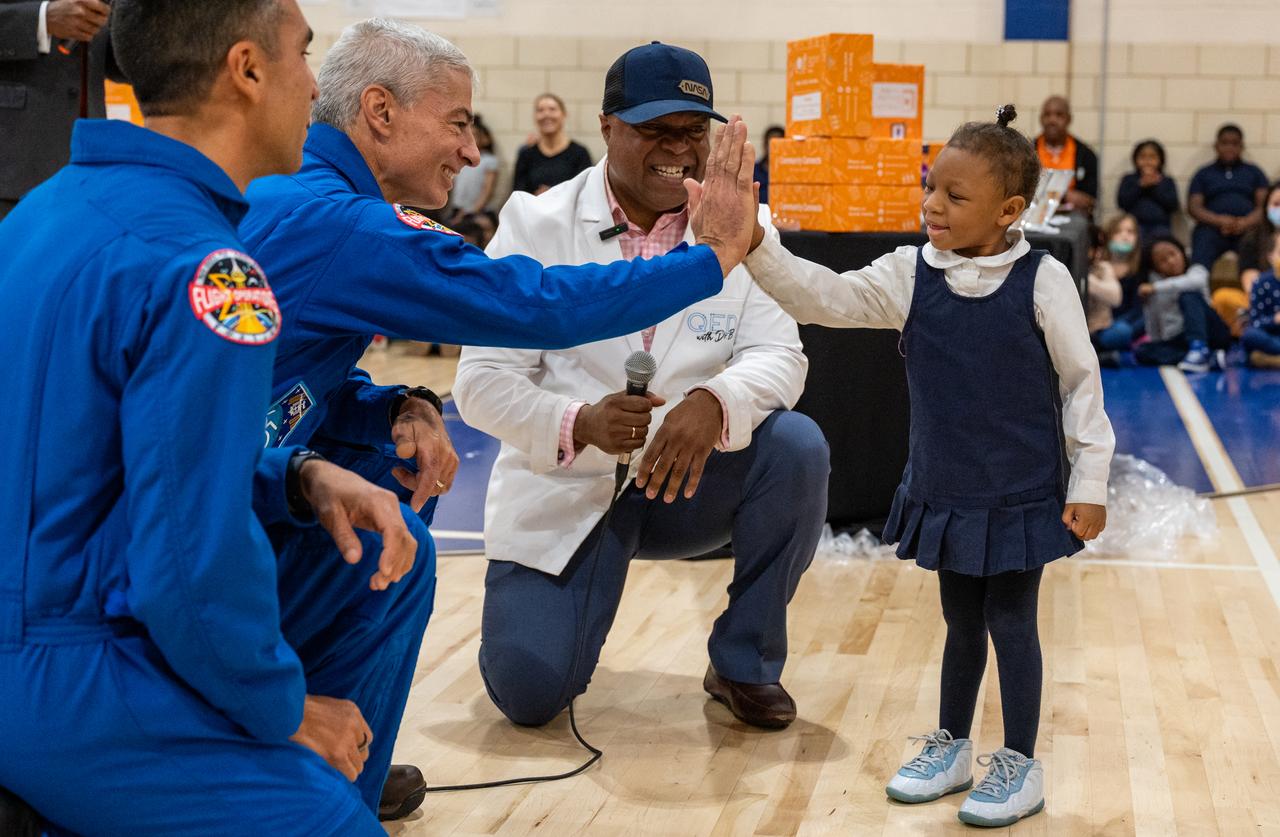
NASA astronaut Mark Vande Hei, second from left, speaks with students as he and fellow crewmates Kayla Barron, Tom Marshburn, and Raja Chari visit Amidon-Bowen Elementary School, Thursday, Dec. 8, 2022, in Washington. Vande Hei spent 355 days in space as a member of Expedition 65/66 and was joined during Expedition 66 by Marshburn, Chari, and Barron who spent 177 days onboard the International Space Station. Photo Credit: (NASA/Keegan Barber)
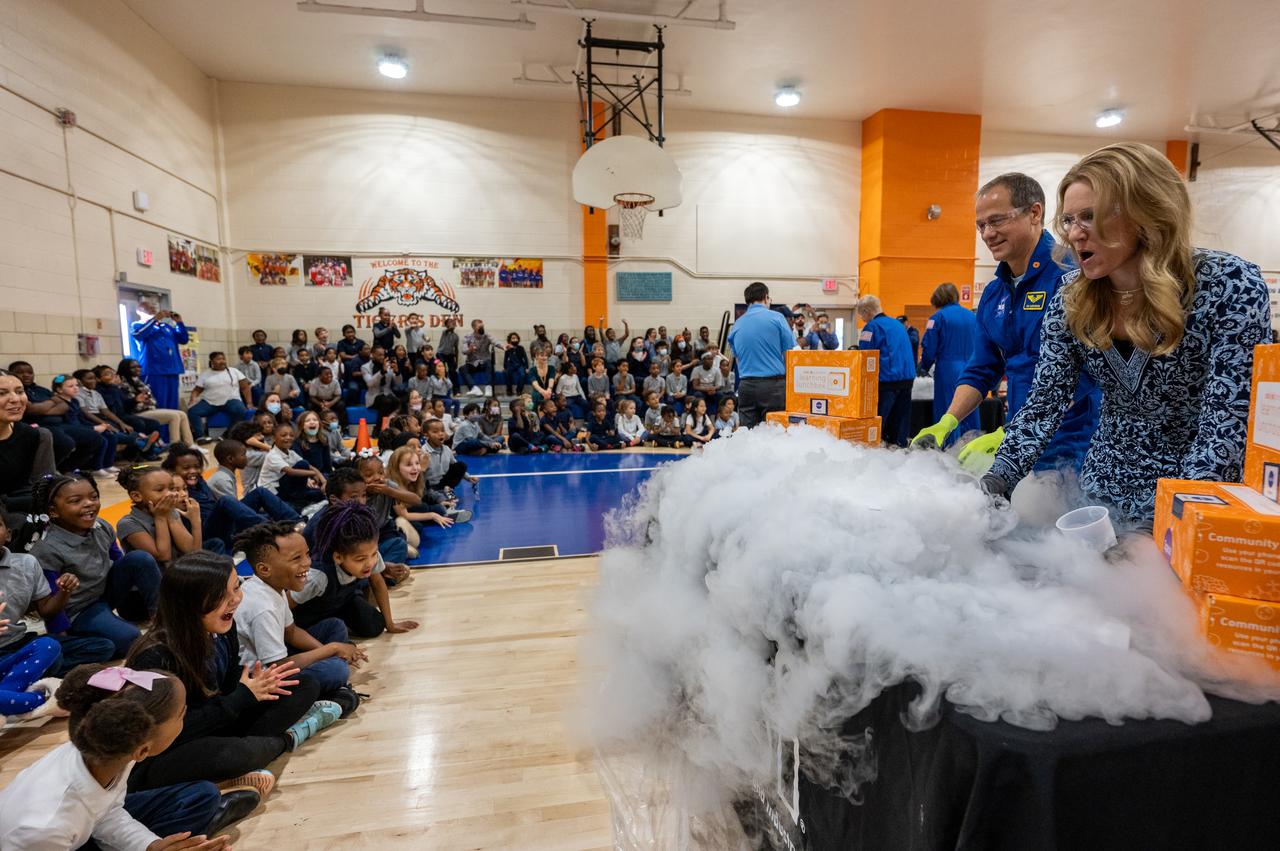
NASA astronaut Tom Marshburn is seen during science demonstrations as he and fellow crewmates Raja Chari, Kayla Barron, and Mark Vande Hei visit Amidon-Bowen Elementary School, Thursday, Dec. 8, 2022, in Washington. Vande Hei spent 355 days in space as a member of Expedition 65/66 and was joined during Expedition 66 by Marshburn, Chari, and Barron who spent 177 days onboard the International Space Station. Photo Credit: (NASA/Keegan Barber)
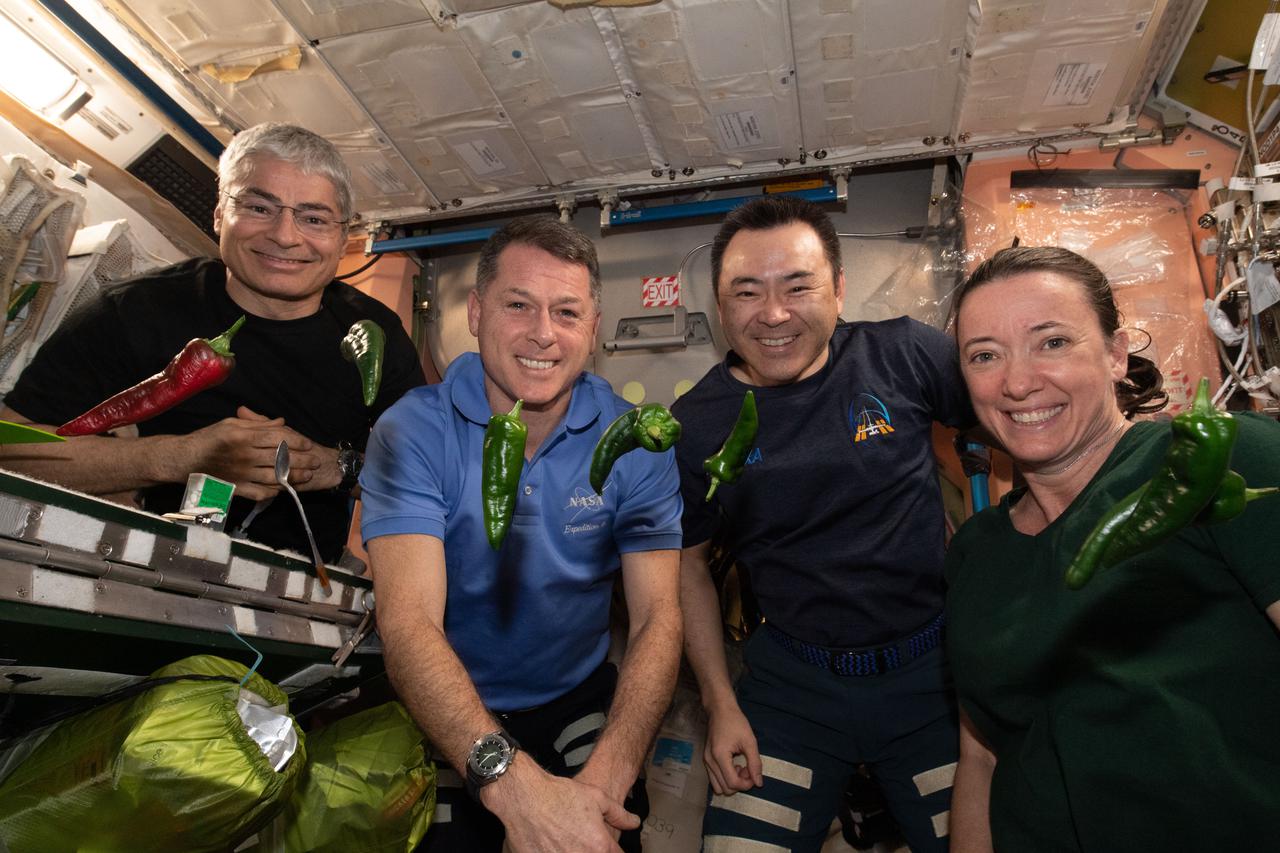
iss066e023259 (October 29, 2021) -- Expedition 66 astronauts are pictured with the first harvest of chile peppers grown aboard the International Space Station as part of the Plant Habitat-04 investigation. The chile peppers started growing on July 12, 2021, and represent one of the longest and most challenging plant experiments attempted aboard the orbiting laboratory. The chile peppers started growing on July 12, 2021, and represent one of the longest and most challenging plant experiments attempted aboard the orbiting laboratory. NASA astronaut and Expedition 66 flight engineer Mark Vande Hei conducted the first harvest of the pepper crop on October 29, 2021. Crew members sanitized the peppers and completed a scientific survey after their taste test. The Crew-3 astronauts will take over the crop when they arrive at the orbiting laboratory, and will conduct a final harvest of the peppers in late November. They will also sanitize and sample the crop, and complete surveys. Some peppers and their leaves from the final harvest will return to Earth for further analysis. What we learn will inform future crop growth and food supplementation activities for deep space exploration. Pictured, from left, are Expedition 66 flight engineers NASA astronauts Mark Vande Hei and Shane Kimbrough, JAXA (Japan Aerospace Exploration) astronaut Aki Hoshide, and NASA astronaut Megan McArthur.
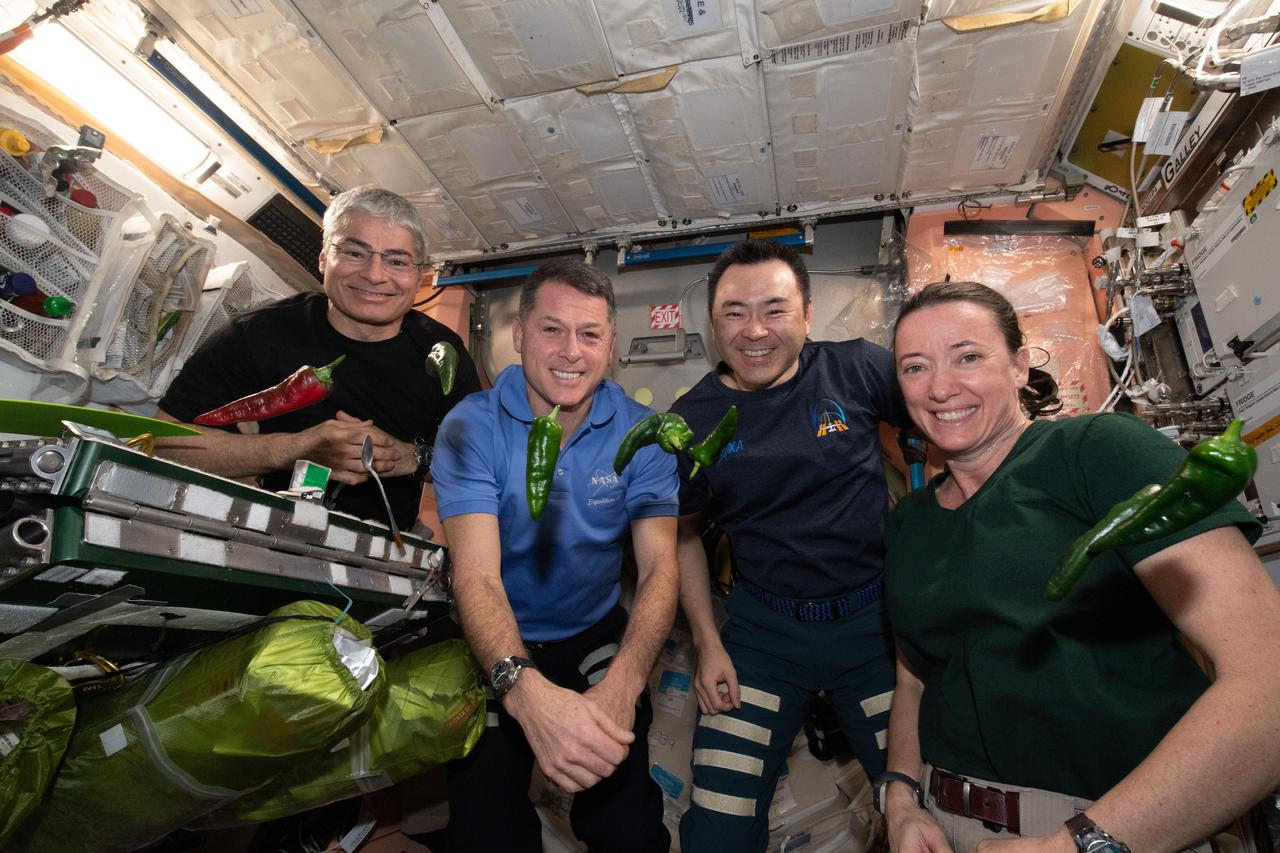
iss066e023260 (October 29, 2021) -- Expedition 66 astronauts are pictured with the first harvest of chile peppers grown aboard the International Space Station as part of the Plant Habitat-04 investigation. The chile peppers started growing on July 12, 2021, and represent one of the longest and most challenging plant experiments attempted aboard the orbiting laboratory. The chile peppers started growing on July 12, 2021, and represent one of the longest and most challenging plant experiments attempted aboard the orbiting laboratory. NASA astronaut and Expedition 66 flight engineer Mark Vande Hei conducted the first harvest of the pepper crop on October 29, 2021. Crew members sanitized the peppers and completed a scientific survey after their taste test. The Crew-3 astronauts will take over the crop when they arrive at the orbiting laboratory, and will conduct a final harvest of the peppers in late November. They will also sanitize and sample the crop, and complete surveys. Some peppers and their leaves from the final harvest will return to Earth for further analysis. What we learn will inform future crop growth and food supplementation activities for deep space exploration. Pictured, from left, are Expedition 66 flight engineers NASA astronauts Mark Vande Hei and Shane Kimbrough, JAXA (Japan Aerospace Exploration) astronaut Aki Hoshide, and NASA astronaut Megan McArthur.
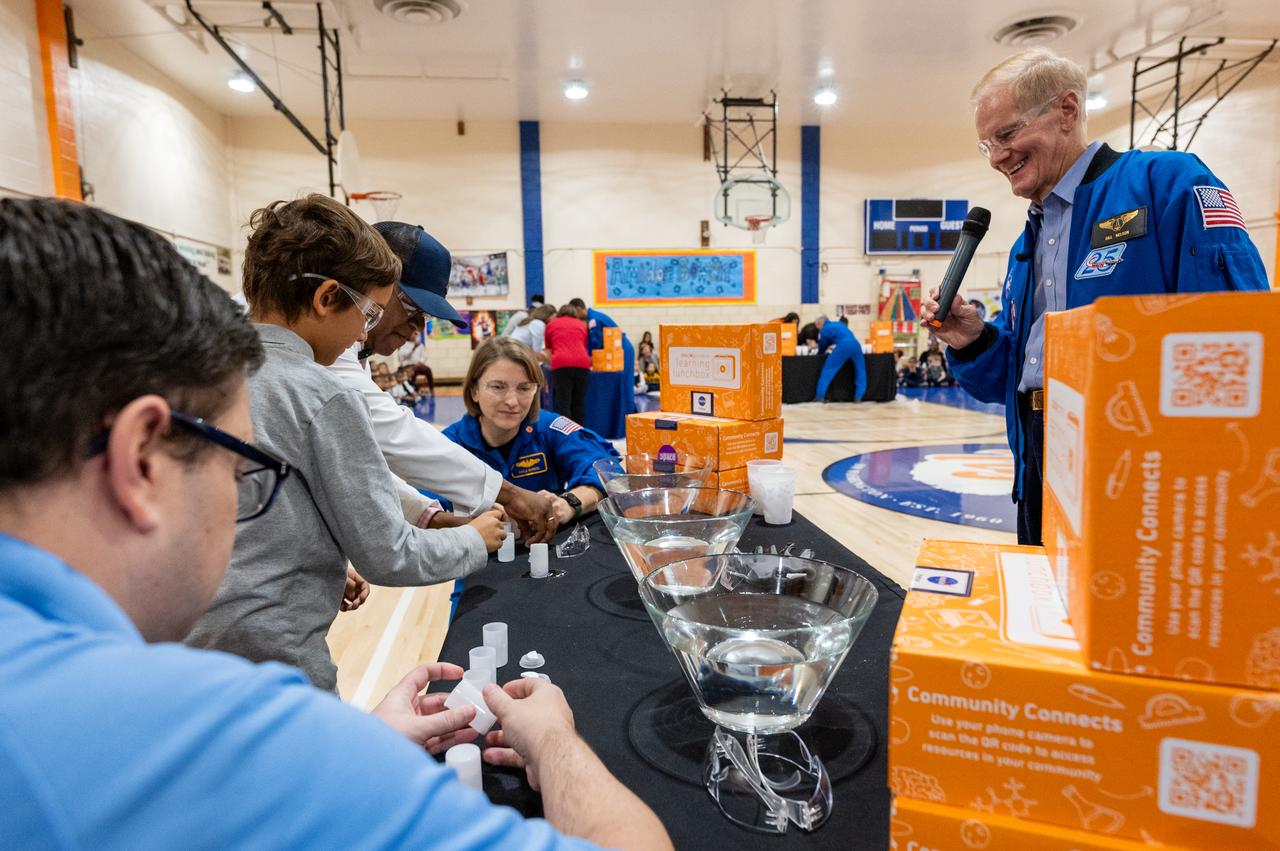
NASA Administrator Bill Nelson, right, and NASA astronaut Kayla Barron, center, participate in STEM demonstrations with students during a visit along with NASA astronauts Raja Chari, Tom Marshburn, and Mark Vande Hei, to Amidon-Bowen Elementary School, Thursday, Dec. 8, 2022, in Washington. Vande Hei spent 355 days in space as a member of Expedition 65/66 and was joined during Expedition 66 by Marshburn, Chari, and Barron who spent 177 days onboard the International Space Station. Photo Credit: (NASA/Keegan Barber)
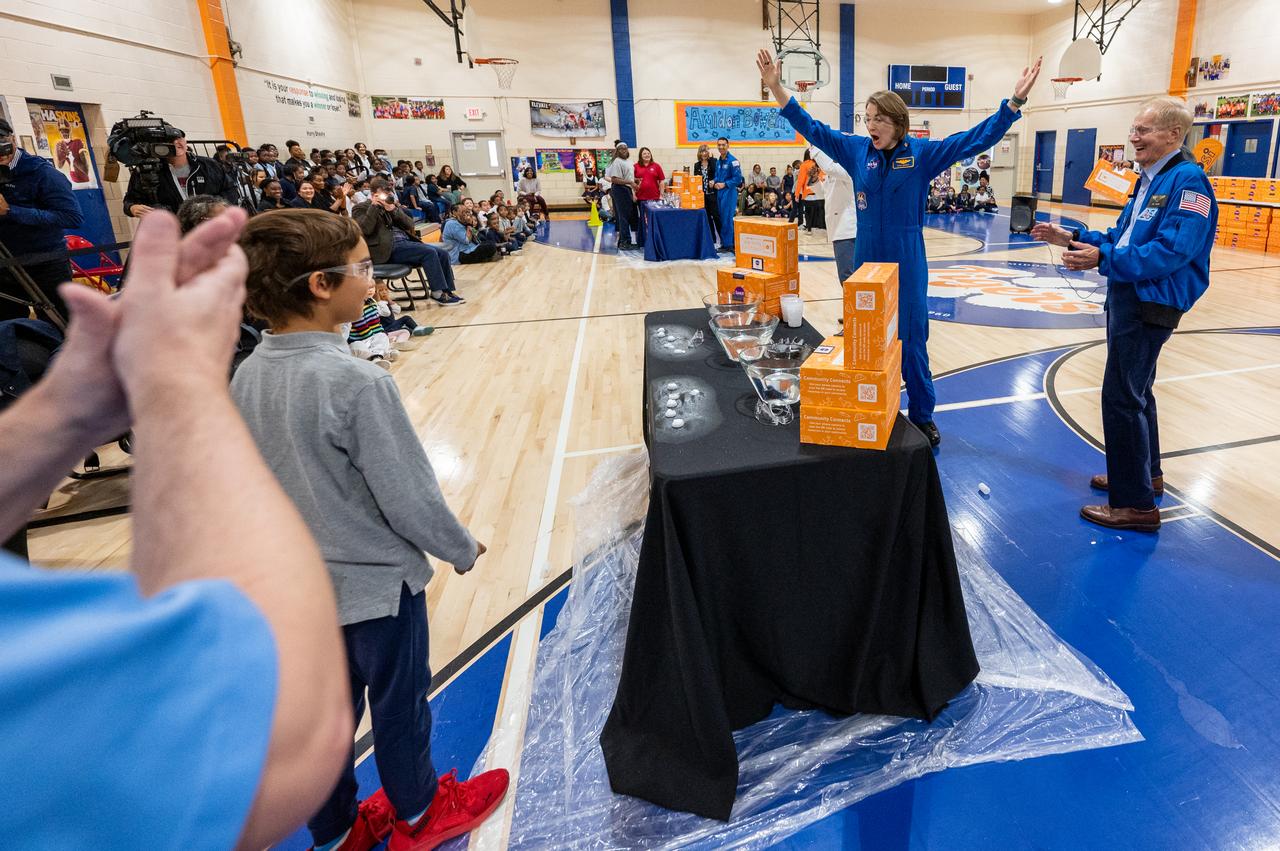
NASA Administrator Bill Nelson, right, and NASA astronaut Kayla Barron, left, participate in STEM demonstrations with students during a visit along with NASA astronauts Raja Chari, Tom Marshburn, and Mark Vande Hei, to Amidon-Bowen Elementary School, Thursday, Dec. 8, 2022, in Washington. Vande Hei spent 355 days in space as a member of Expedition 65/66 and was joined during Expedition 66 by Marshburn, Chari, and Barron who spent 177 days onboard the International Space Station. Photo Credit: (NASA/Keegan Barber)
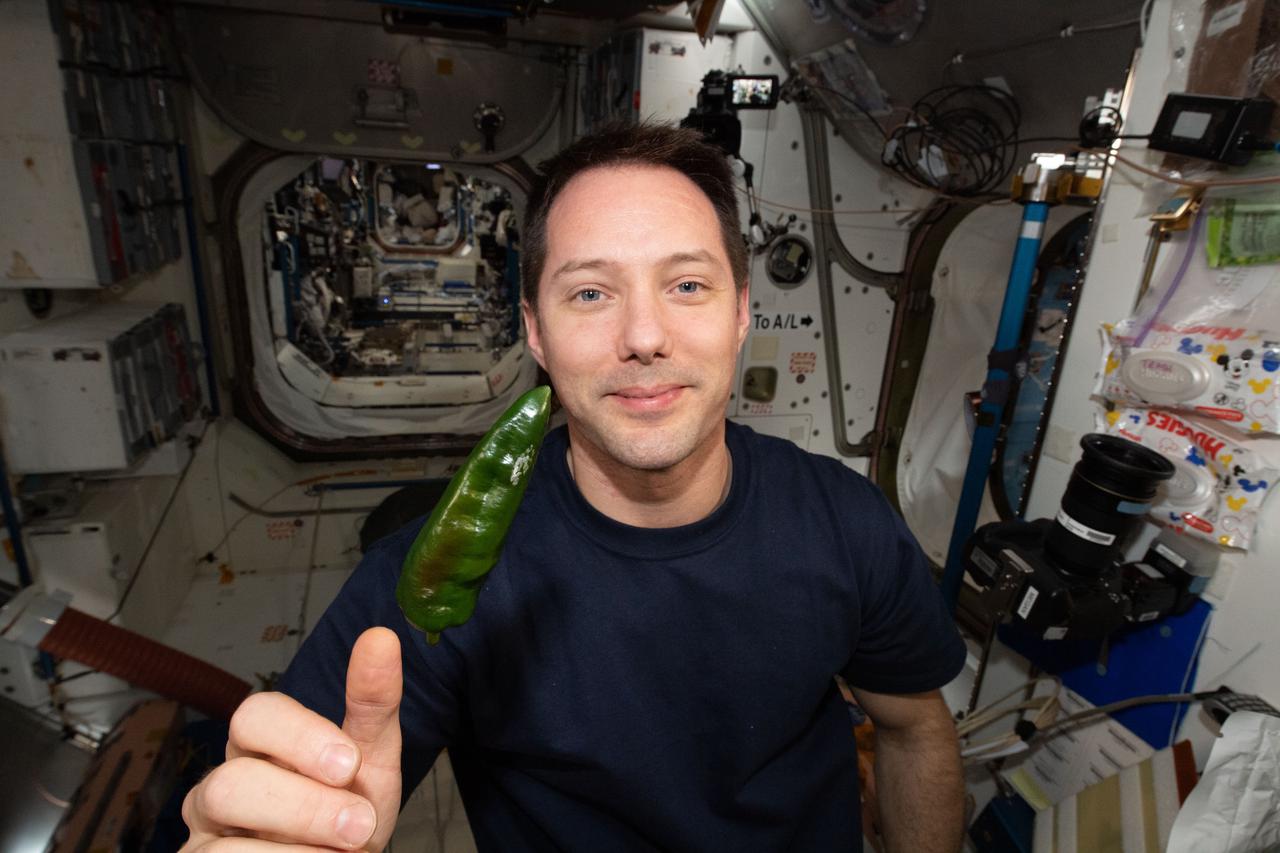
iss066e023273 (October 29, 2021) -- ESA (European Space Agency) astronaut and Expedition 66 commander Thomas Pesquet is seen with a green chile pepper during a taste test as part of the Plant Habitat-04 investigation aboard the International Space Station. The chile peppers started growing on July 12, 2021, and represent one of the longest and most challenging plant experiments attempted aboard the orbiting laboratory. The chile peppers started growing on July 12, 2021, and represent one of the longest and most challenging plant experiments attempted aboard the orbiting laboratory. NASA astronaut and Expedition 66 flight engineer Mark Vande Hei conducted the first harvest of the pepper crop on October 29, 2021. Crew members sanitized the peppers and completed a scientific survey after their taste test. The Crew-3 astronauts will take over the crop when they arrive at the orbiting laboratory, and will conduct a final harvest of the peppers in late November. They will also sanitize and sample the crop, and complete surveys. Some peppers and their leaves from the final harvest will return to Earth for further analysis. What we learn will inform future crop growth and food supplementation activities for deep space exploration.
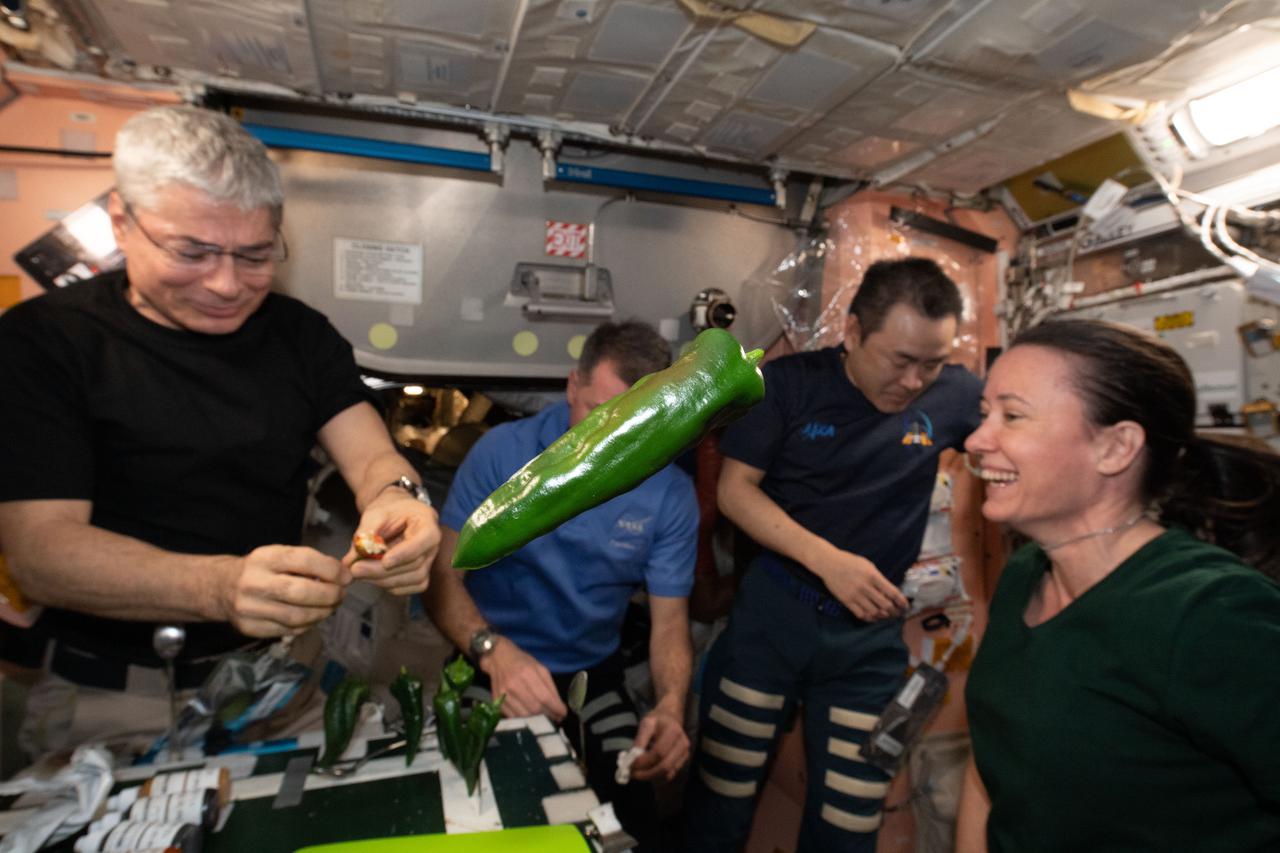
iss066e023272 (October 29, 2021) -- A green chile pepper is seen floating as Expedition 66 crew members conduct a taste test as part of the Plant Habitat-04 investigation aboard the International Space Station. The chile peppers started growing on July 12, 2021, and represent one of the longest and most challenging plant experiments attempted aboard the orbiting laboratory. The chile peppers started growing on July 12, 2021, and represent one of the longest and most challenging plant experiments attempted aboard the orbiting laboratory. NASA astronaut and Expedition 66 flight engineer Mark Vande Hei conducted the first harvest of the pepper crop on October 29, 2021. Crew members sanitized the peppers and completed a scientific survey after their taste test. The Crew-3 astronauts will take over the crop when they arrive at the orbiting laboratory, and will conduct a final harvest of the peppers in late November. They will also sanitize and sample the crop, and complete surveys. Some peppers and their leaves from the final harvest will return to Earth for further analysis. What we learn will inform future crop growth and food supplementation activities for deep space exploration.
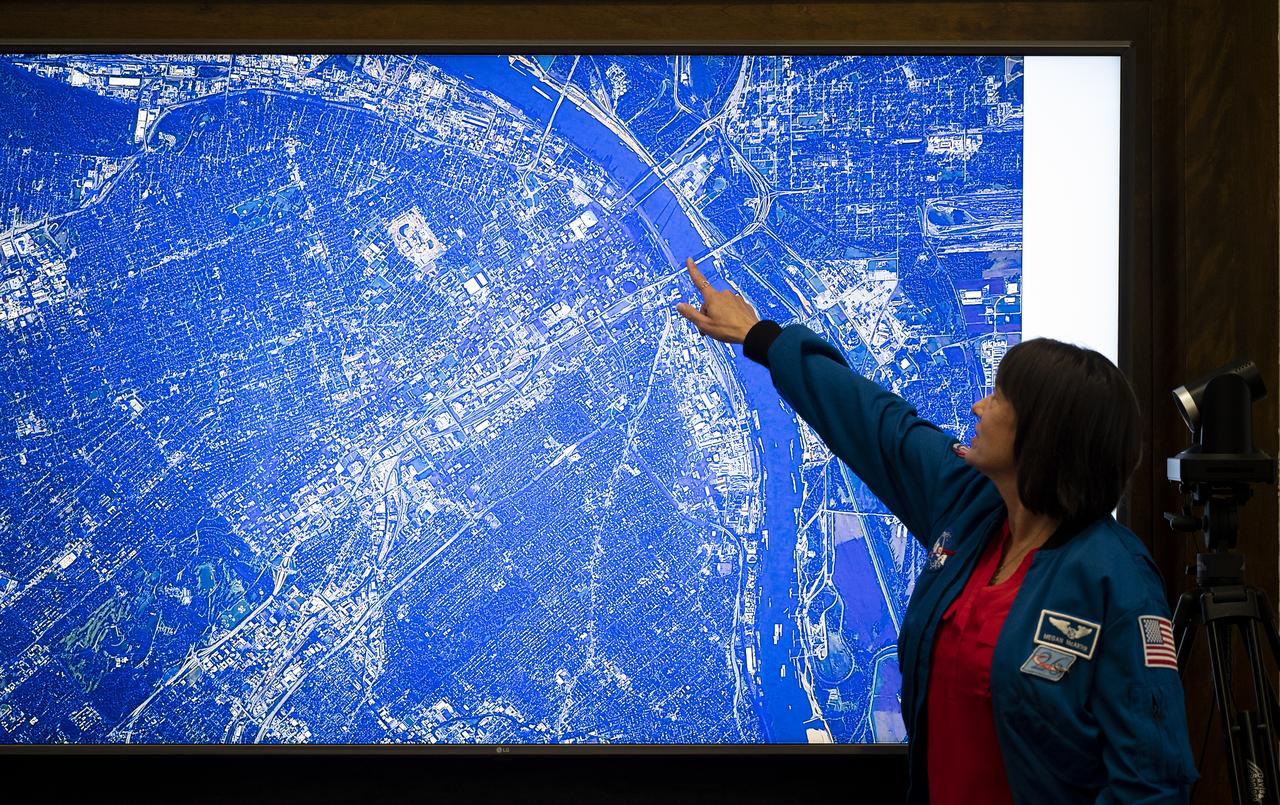
NASA astronaut Megan McArthur points to the shadow of the Gateway Arch on the Mississippi River in St. Louis while showing images of National Parks taken from the International Space Station during Expeditions 65 and 66 during a presentation to leadership and rangers who participate in the National Park Service’s astronomy and dark sky programs, Thursday, June 9, 2022 at the U.S. Department of the Interior in Washington, DC. McArthur, NASA astronaut Shane Kimbrough, Japan Aerospace Exploration Agency (JAXA) astronaut Akihiko Hoshide, and ESA (European Space Agency) astronaut Thomas Pesquet, flew on NASA’s SpaceX Crew-2 mission, the second crew rotation mission to the International Space Station as part of the agency’s Commercial Crew Program, and spent 198 days aboard the orbiting laboratory as part of Expeditions 65 and 66. Photo Credit: (NASA/Joel Kowsky)
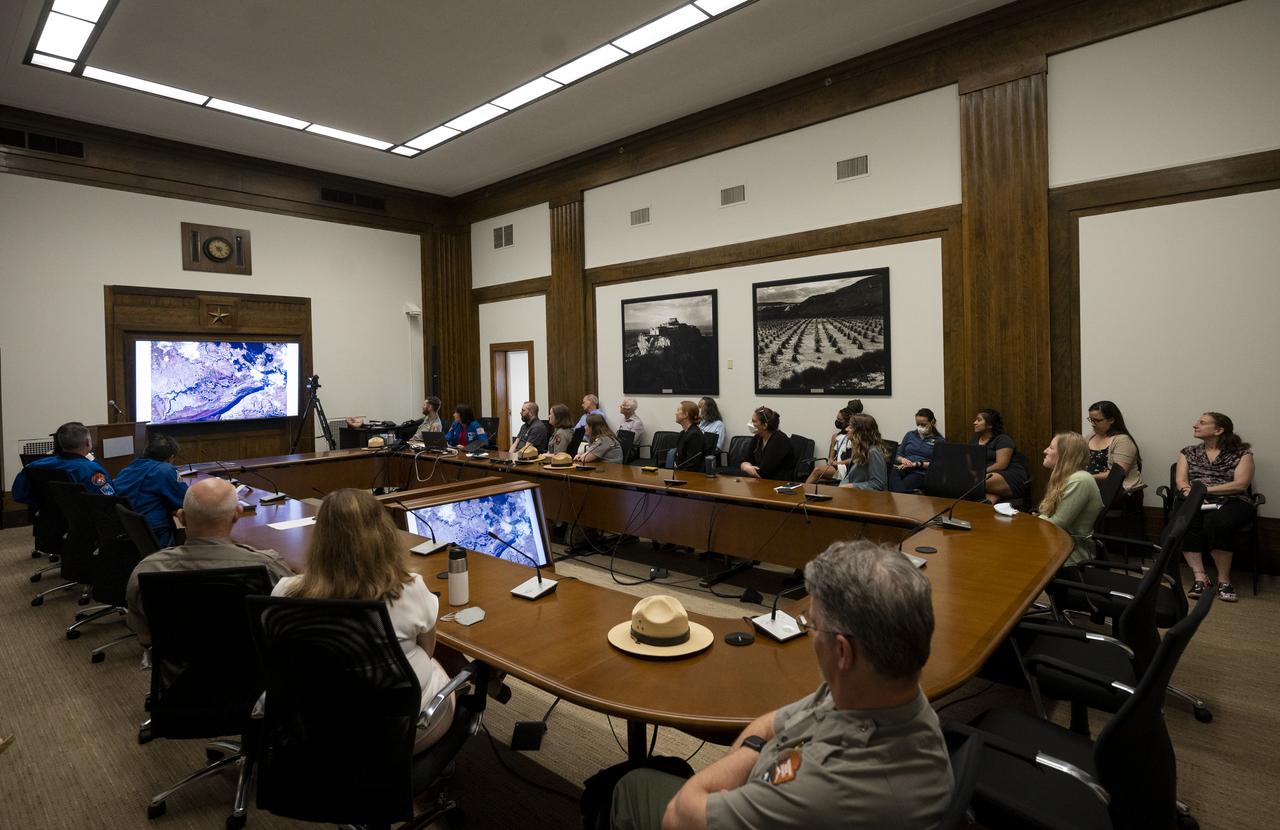
NASA astronaut Megan McArthur shows pictures of National Parks taken from the International Space Station during Expeditions 65 and 66 during a presentation to leadership and rangers who participate in the National Park Service’s astronomy and dark sky programs, Thursday, June 9, 2022 at the U.S. Department of the Interior in Washington, DC. McArthur, NASA astronaut Shane Kimbrough, Japan Aerospace Exploration Agency (JAXA) astronaut Akihiko Hoshide, and ESA (European Space Agency) astronaut Thomas Pesquet, flew on NASA’s SpaceX Crew-2 mission, the second crew rotation mission to the International Space Station as part of the agency’s Commercial Crew Program, and spent 198 days aboard the orbiting laboratory as part of Expeditions 65 and 66. Photo Credit: (NASA/Joel Kowsky)
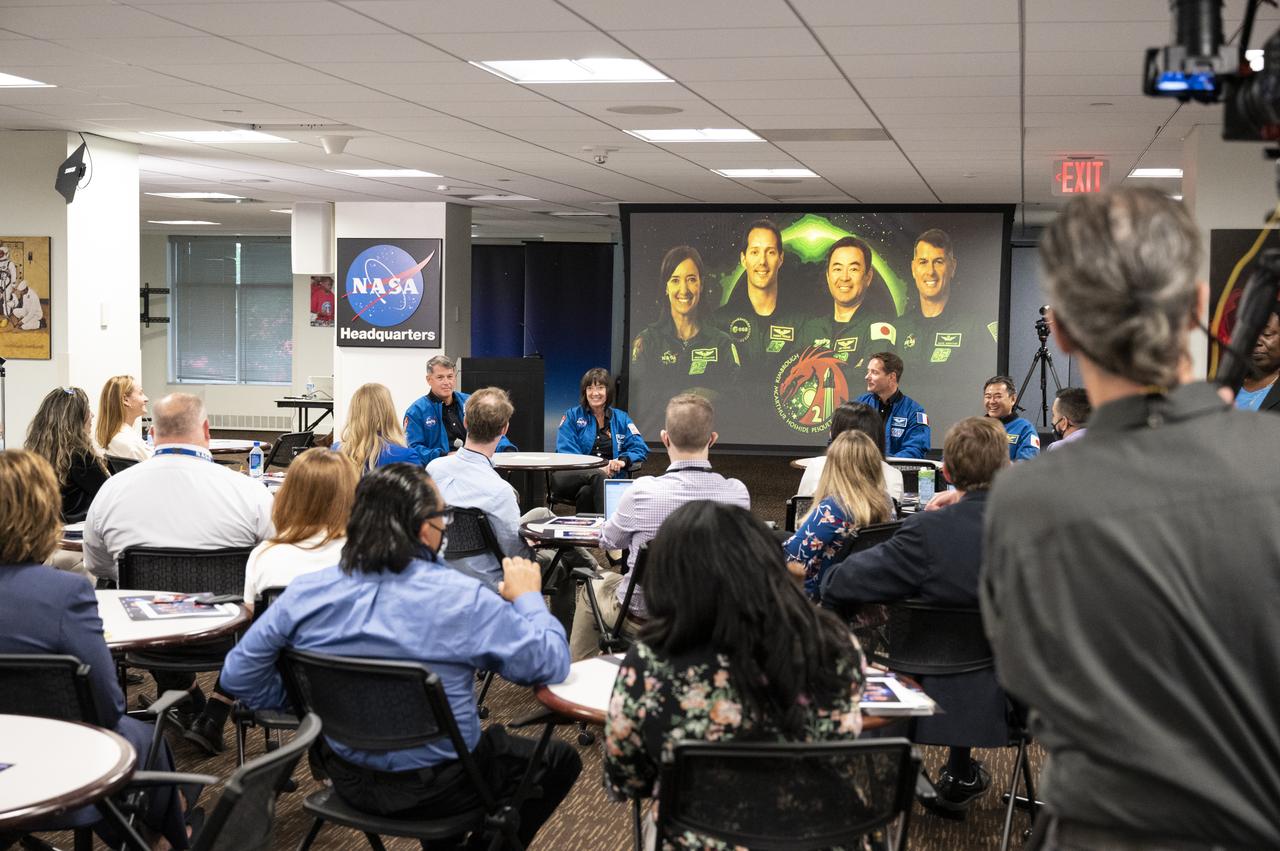
NASA’s SpaceX Crew-2 astronauts participate in a meet and greet with employees Tuesday, June 7, 2022, at the Mary W. Jackson NASA Headquarters Building in Washington. Kimbrough, McArthur, Hoshide, and Pesquet completed the second crew rotation mission to the International Space Station as part of the agency’s Commercial Crew Program and spent 198 days aboard the orbiting laboratory as part of Expeditions 65 and 66. Kimbrough, McArthur, Hoshide, and Pesquet completed the second crew rotation mission to the International Space Station as part of the agency’s Commercial Crew Program and spent 198 days aboard the orbiting laboratory as part of Expeditions 65 and 66. Photo Credit: (NASA/Keegan Barber)
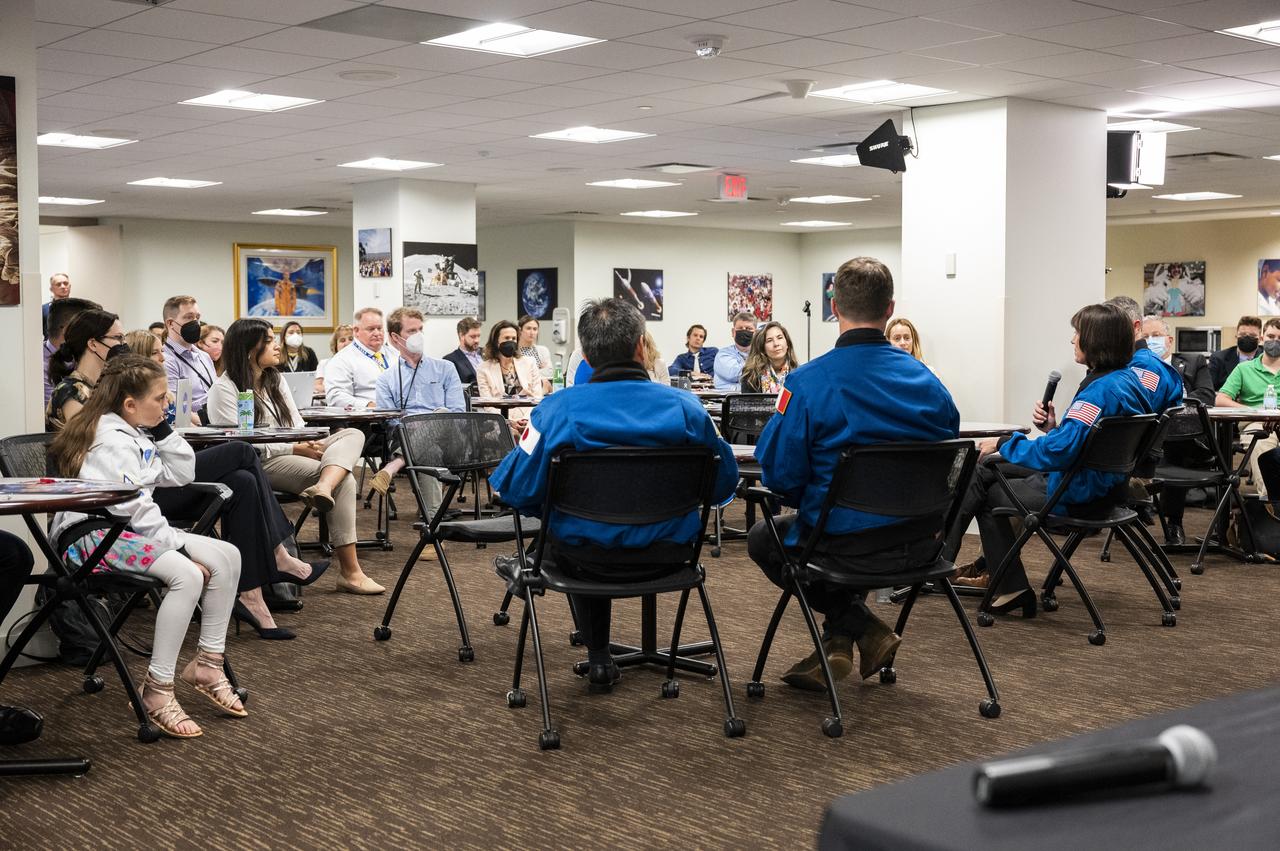
NASA’s SpaceX Crew-2 astronauts participate in a meet and greet with employees Tuesday, June 7, 2022, at the Mary W. Jackson NASA Headquarters Building in Washington. Kimbrough, McArthur, Hoshide, and Pesquet completed the second crew rotation mission to the International Space Station as part of the agency’s Commercial Crew Program and spent 198 days aboard the orbiting laboratory as part of Expeditions 65 and 66. Kimbrough, McArthur, Hoshide, and Pesquet completed the second crew rotation mission to the International Space Station as part of the agency’s Commercial Crew Program and spent 198 days aboard the orbiting laboratory as part of Expeditions 65 and 66. Photo Credit: (NASA/Keegan Barber)
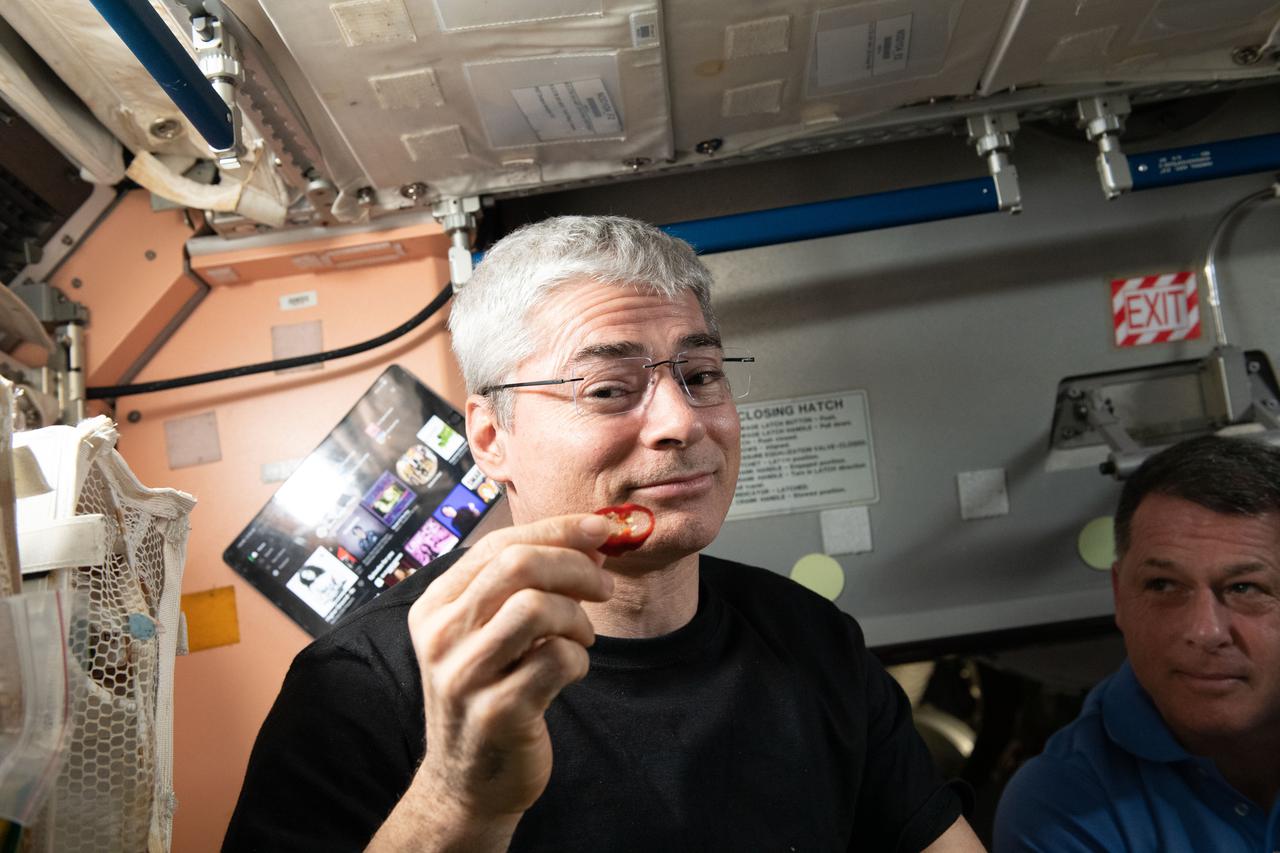
iss066e023179 (October 29, 2021) -- NASA astronaut and Expedition 66 Flight Engineer Mark Vande Hei samples a red chile pepper grown as part of the Plant Habitat-04 experiment aboard the International Space Station. The chile pepper seeds started growing on July 12, 2021, and represent one of the longest and most challenging plant experiments attempted aboard the orbiting laboratory. Vande Hei conducted the first harvest of the pepper crop on October 29, 2021. Crew members sanitized the peppers and completed a scientific survey after their taste test. The Crew-3 astronauts will take over the crop when they arrive at the orbiting laboratory, and will conduct a final harvest of the peppers in late November. They will also sanitize and sample the crop, and complete surveys. Some peppers from the final harvest and their leaves will return to Earth for further analysis. What we learn will inform future crop growth and food supplementation activities for deep space exploration.
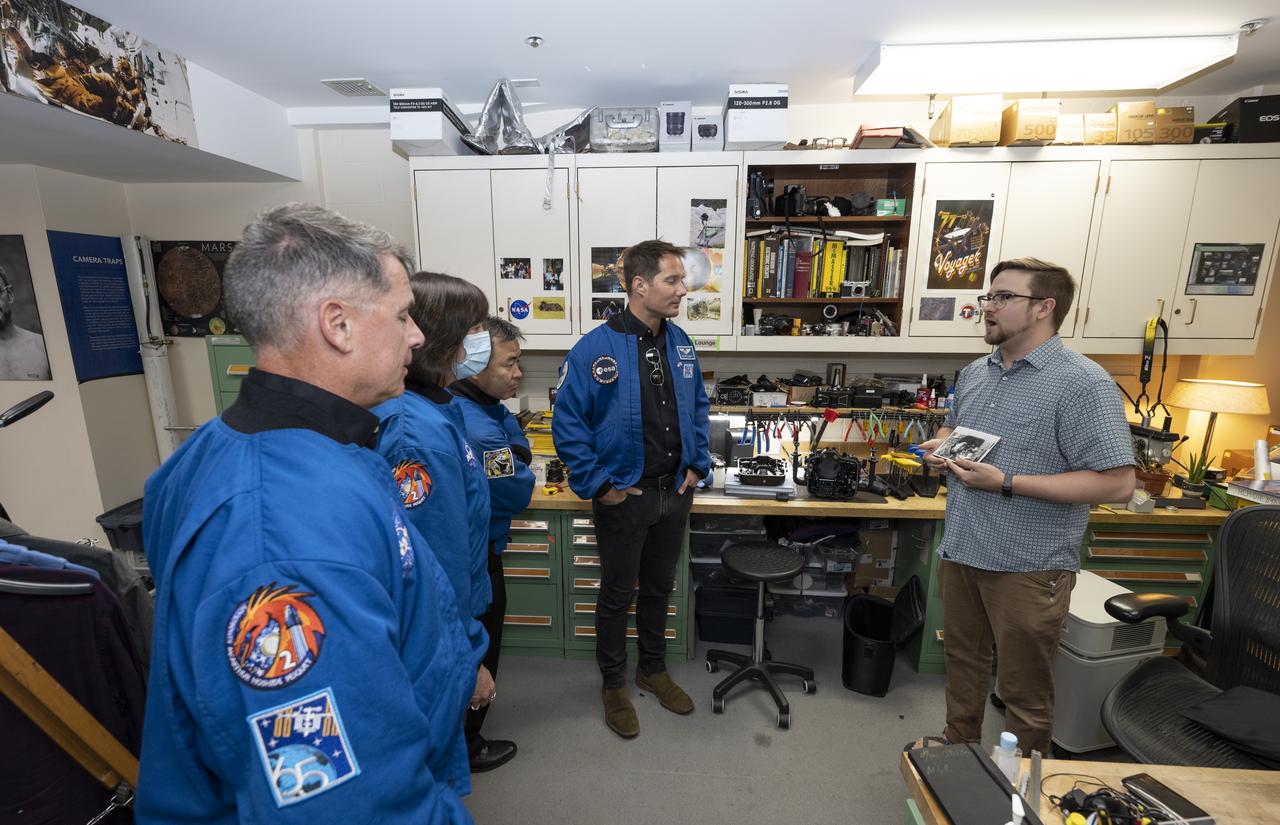
Photo Engineer Tom O’Brien speaks with NASA’s SpaceX Crew-2 astronauts during a tour of the Photo Engineering Department, Tuesday, June 7, 2022, at National Geographic Headquarters in Washington. Kimbrough, McArthur, Hoshide, and Pesquet completed the second crew rotation mission to the International Space Station as part of the agency’s Commercial Crew Program and spent 198 days aboard the orbiting laboratory as part of Expeditions 65 and 66. Photo Credit: (NASA/Keegan Barber)
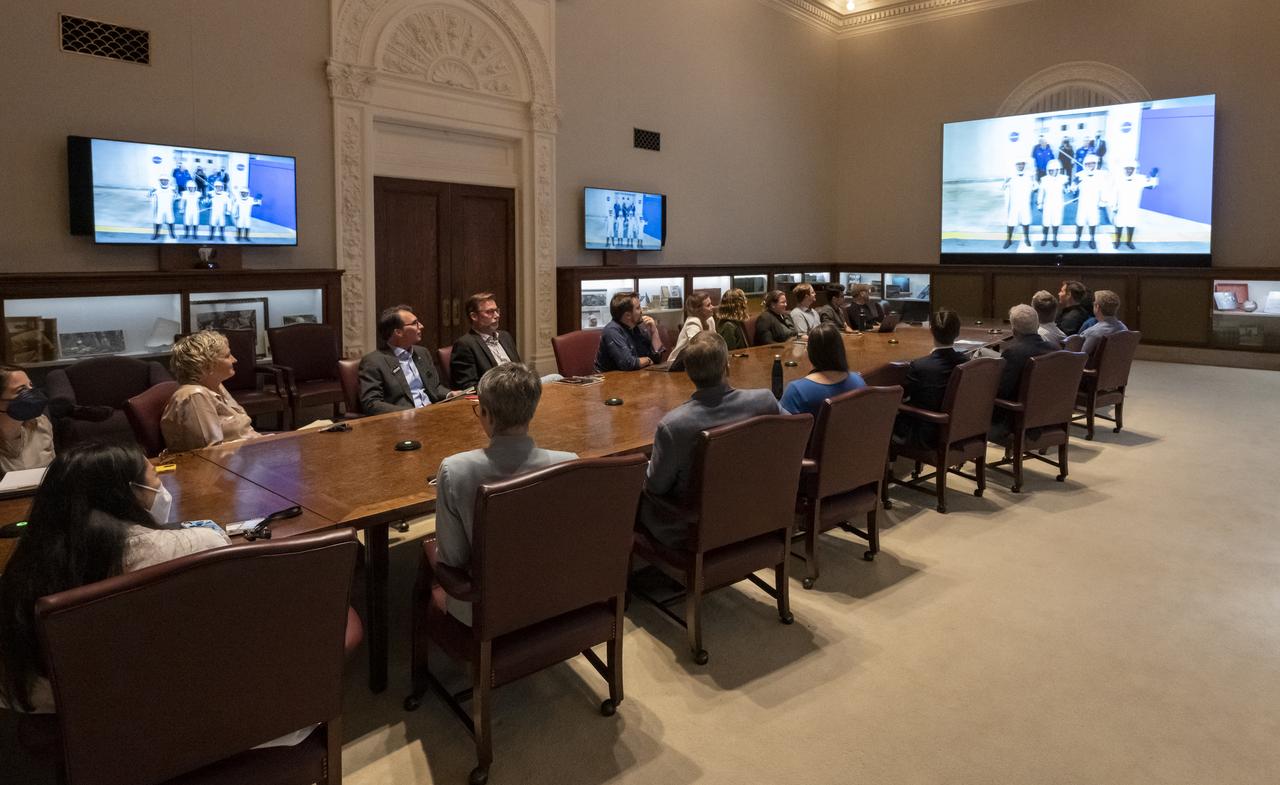
NASA’s SpaceX Crew-2 astronauts meet with National Geographic leadership and staff Tuesday, June 7, 2022, at National Geographic Headquarters in Washington. Kimbrough, McArthur, Hoshide, and Pesquet completed the second crew rotation mission to the International Space Station as part of the agency’s Commercial Crew Program and spent 198 days aboard the orbiting laboratory as part of Expeditions 65 and 66. Photo Credit: (NASA/Keegan Barber)
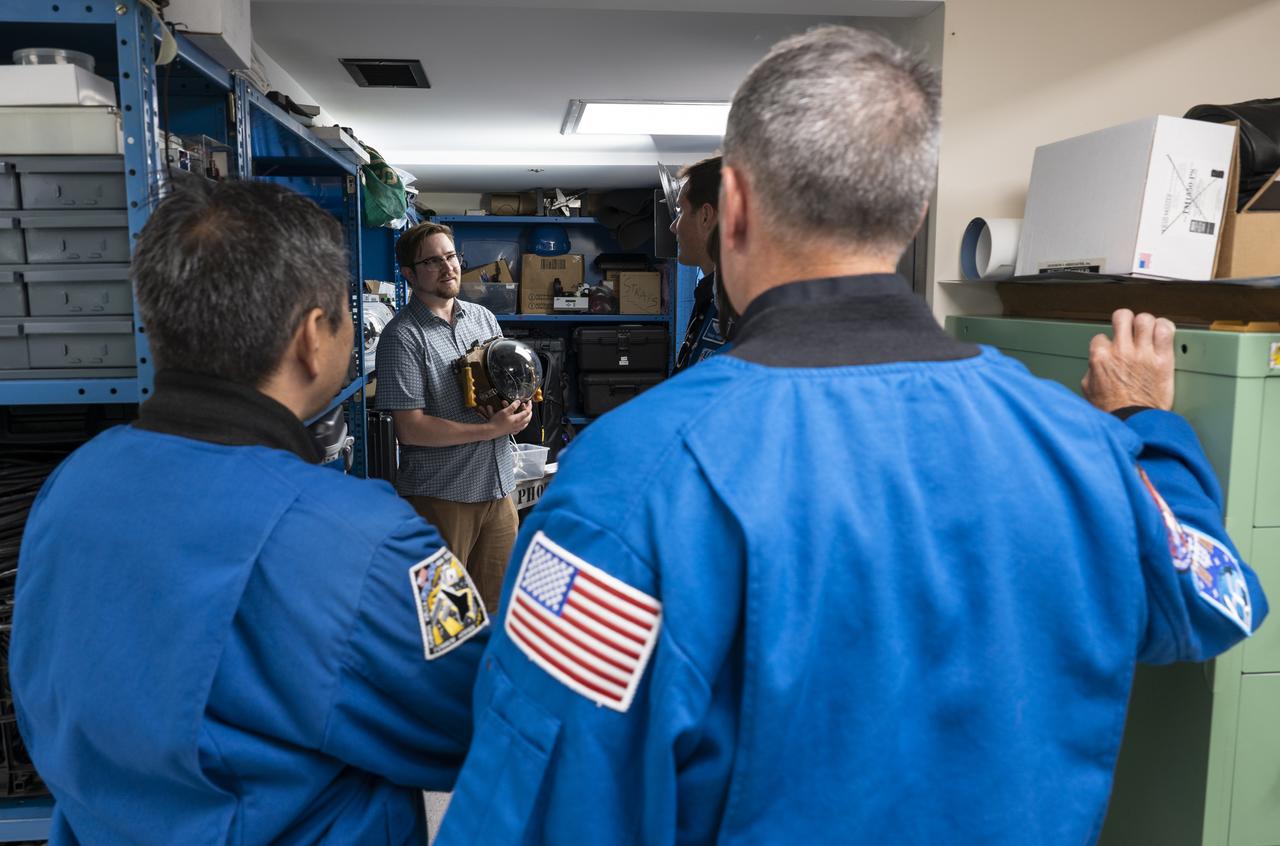
Photo Engineer Tom O’Brien speaks with NASA’s SpaceX Crew-2 astronauts during a tour of the Photo Engineering Department, Tuesday, June 7, 2022, at National Geographic Headquarters in Washington. Kimbrough, McArthur, Hoshide, and Pesquet completed the second crew rotation mission to the International Space Station as part of the agency’s Commercial Crew Program and spent 198 days aboard the orbiting laboratory as part of Expeditions 65 and 66. Photo Credit: (NASA/Keegan Barber)
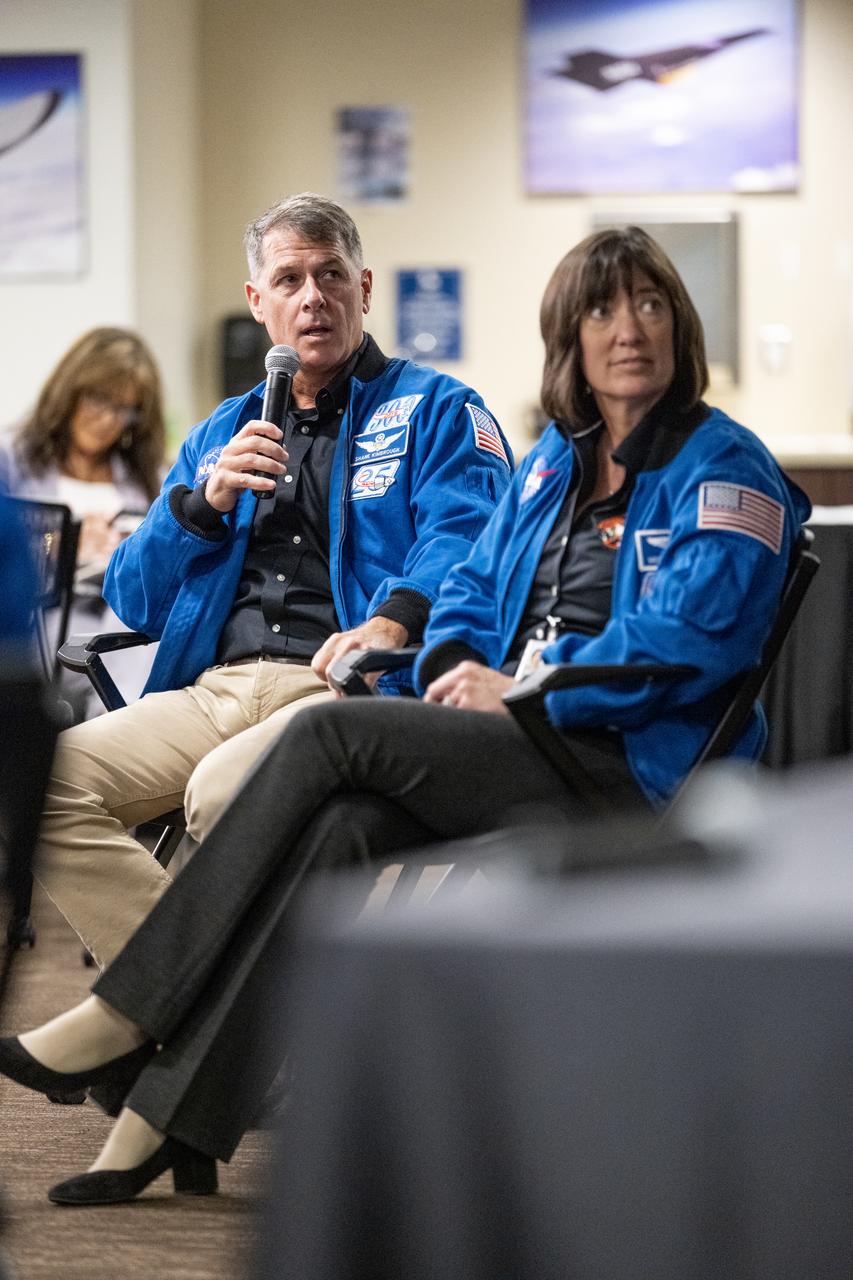
NASA’s SpaceX Crew-2 astronauts Shane Kimbrough, left, and Megan McArthur, right, speak during a meet and greet with employees Tuesday, June 7, 2022, at the Mary W. Jackson NASA Headquarters Building in Washington. Kimbrough, McArthur, Hoshide, and Pesquet completed the second crew rotation mission to the International Space Station as part of the agency’s Commercial Crew Program and spent 198 days aboard the orbiting laboratory as part of Expeditions 65 and 66. Photo Credit: (NASA/Keegan Barber)
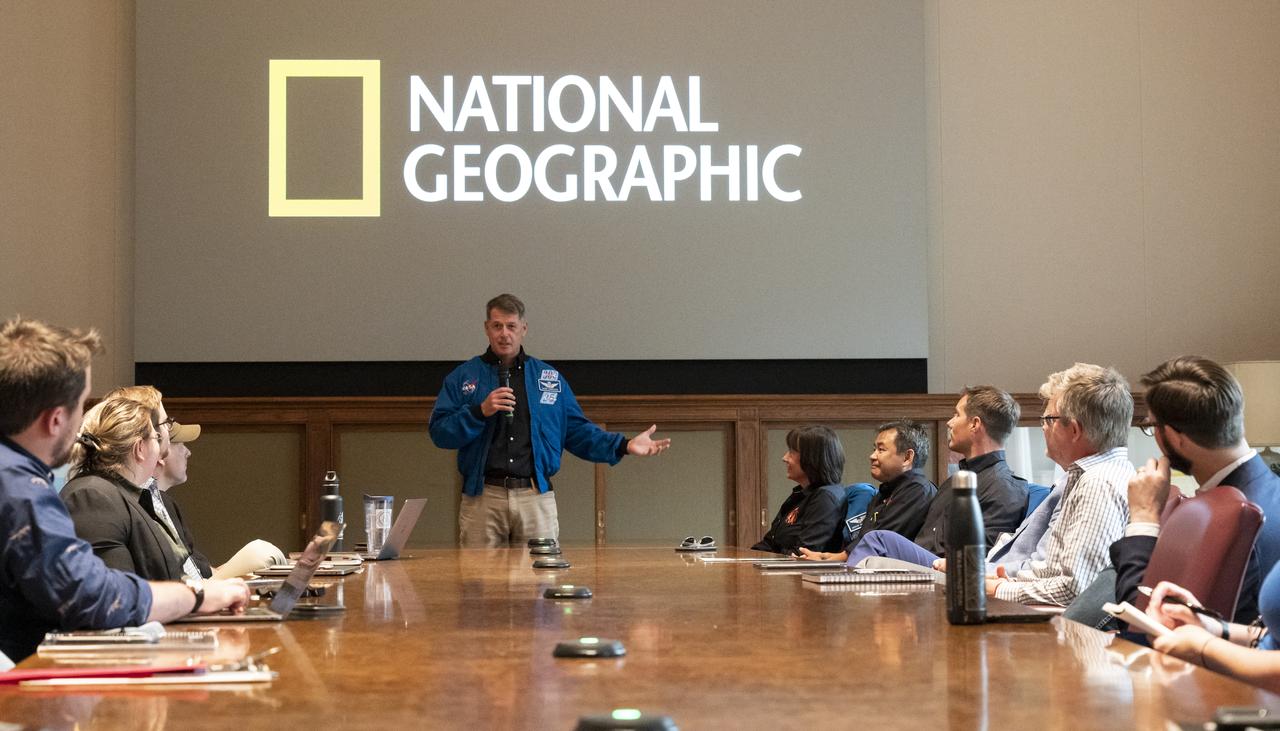
NASA’s SpaceX Crew-2 astronaut Shane Kimbrough speaks during a meeting with National Geographic leadership and staff Tuesday, June 7, 2022, at National Geographic Headquarters in Washington. Kimbrough, McArthur, Hoshide, and Pesquet completed the second crew rotation mission to the International Space Station as part of the agency’s Commercial Crew Program and spent 198 days aboard the orbiting laboratory as part of Expeditions 65 and 66. Photo Credit: (NASA/Keegan Barber)
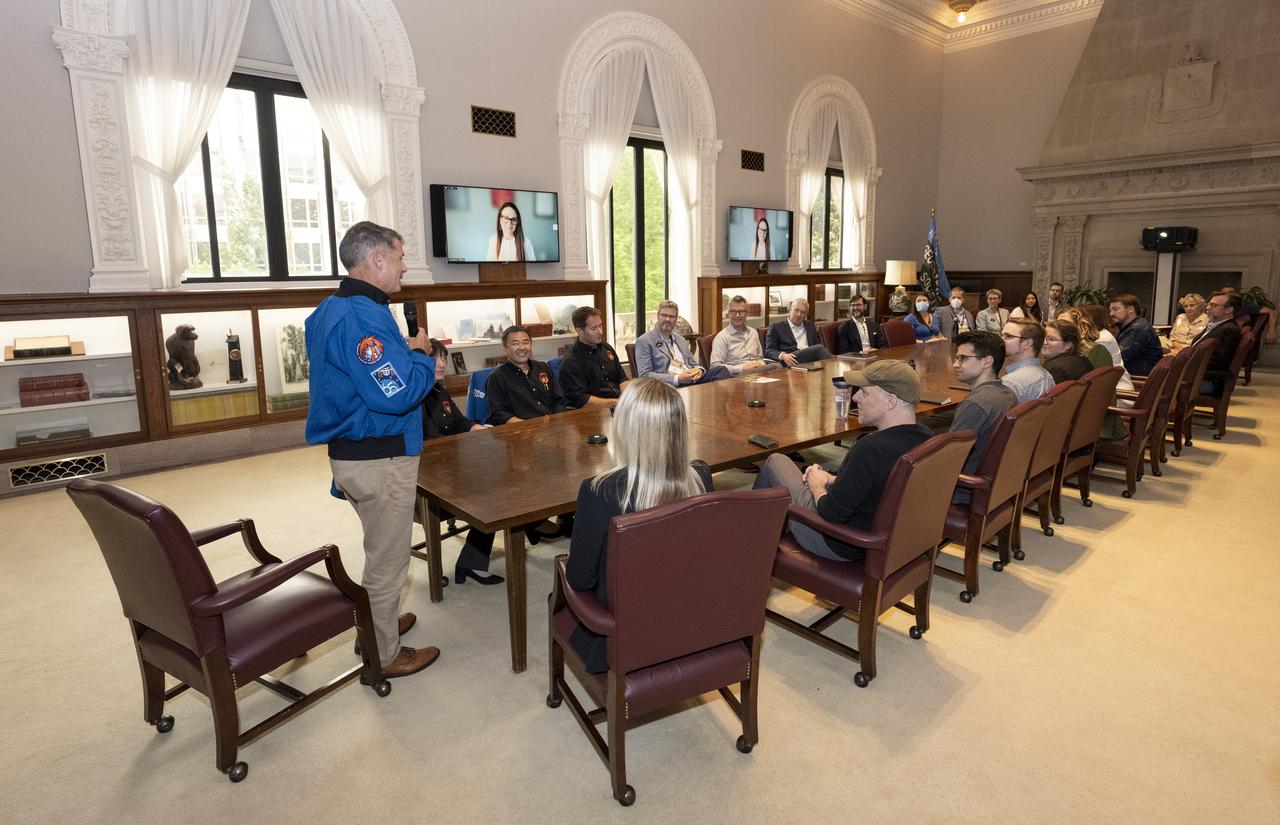
NASA’s SpaceX Crew-2 astronaut Shane Kimbrough speaks during a meeting with National Geographic leadership and staff Tuesday, June 7, 2022, at National Geographic Headquarters in Washington. Kimbrough, McArthur, Hoshide, and Pesquet completed the second crew rotation mission to the International Space Station as part of the agency’s Commercial Crew Program and spent 198 days aboard the orbiting laboratory as part of Expeditions 65 and 66. Photo Credit: (NASA/Keegan Barber)
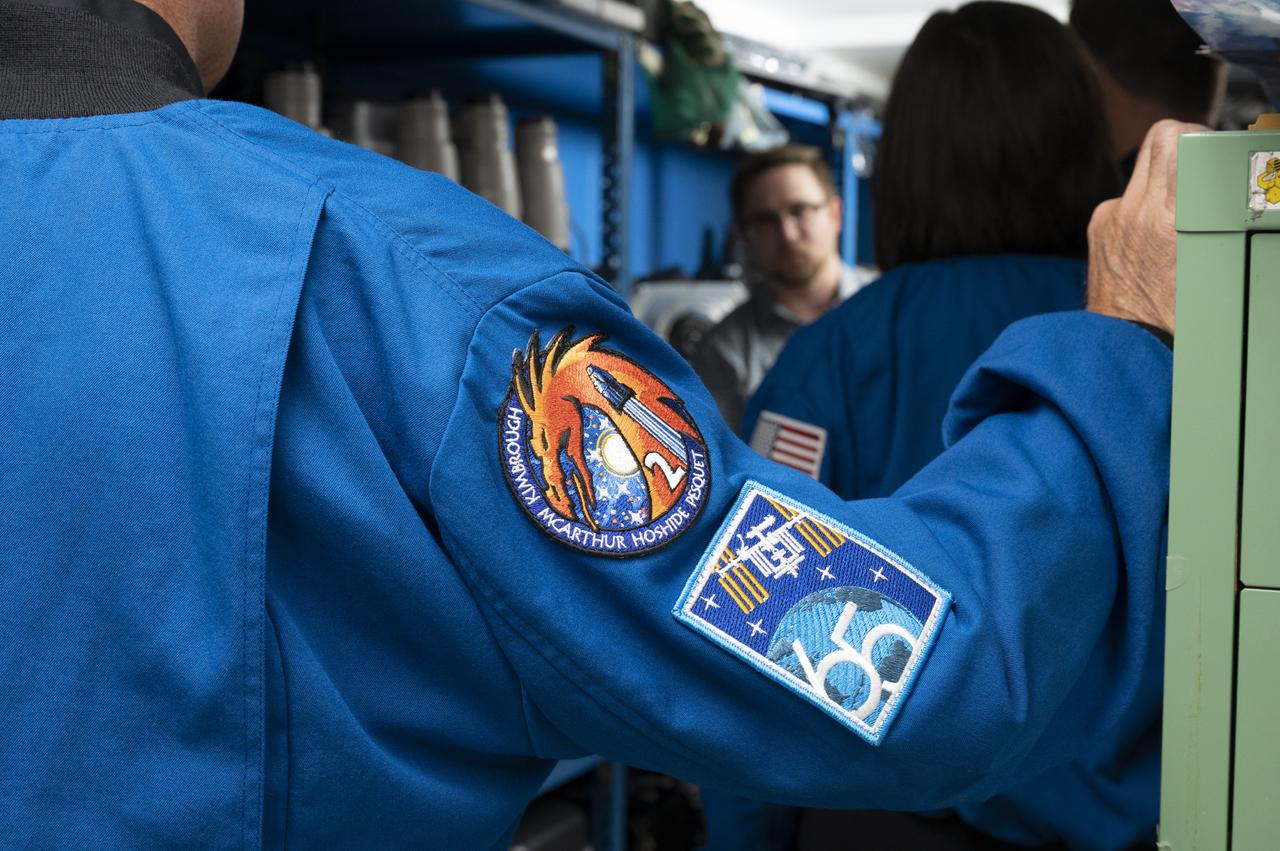
Photo Engineer Tom O’Brien speaks with NASA’s SpaceX Crew-2 astronauts during a tour of the Photo Engineering Department, Tuesday, June 7, 2022, at National Geographic Headquarters in Washington. Kimbrough, McArthur, Hoshide, and Pesquet completed the second crew rotation mission to the International Space Station as part of the agency’s Commercial Crew Program and spent 198 days aboard the orbiting laboratory as part of Expeditions 65 and 66. Photo Credit: (NASA/Keegan Barber)
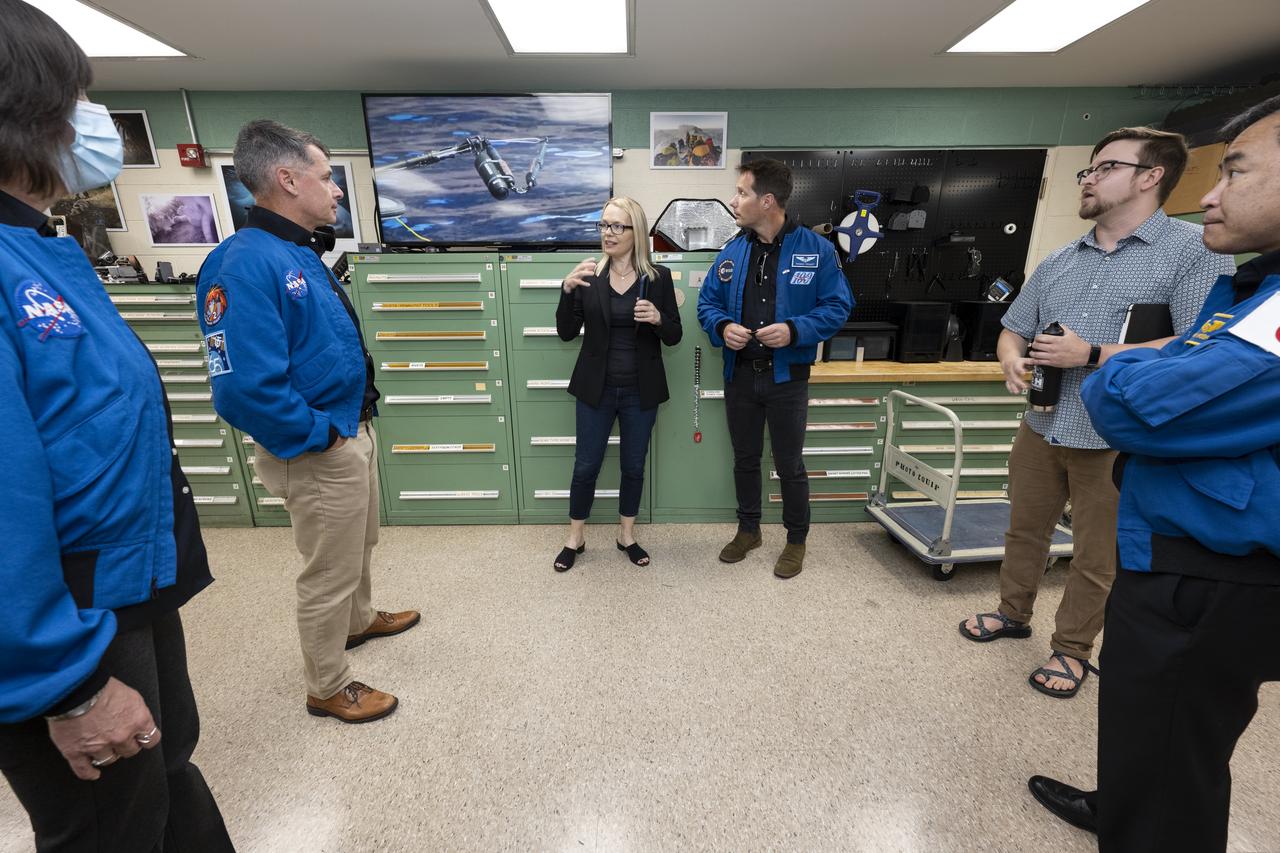
Executive Producer Betsy Forhan speaks with NASA’s SpaceX Crew-2 astronauts during a tour of the Photo Engineering Department, Tuesday, June 7, 2022, at National Geographic Headquarters in Washington. Kimbrough, McArthur, Hoshide, and Pesquet completed the second crew rotation mission to the International Space Station as part of the agency’s Commercial Crew Program and spent 198 days aboard the orbiting laboratory as part of Expeditions 65 and 66. Photo Credit: (NASA/Keegan Barber)
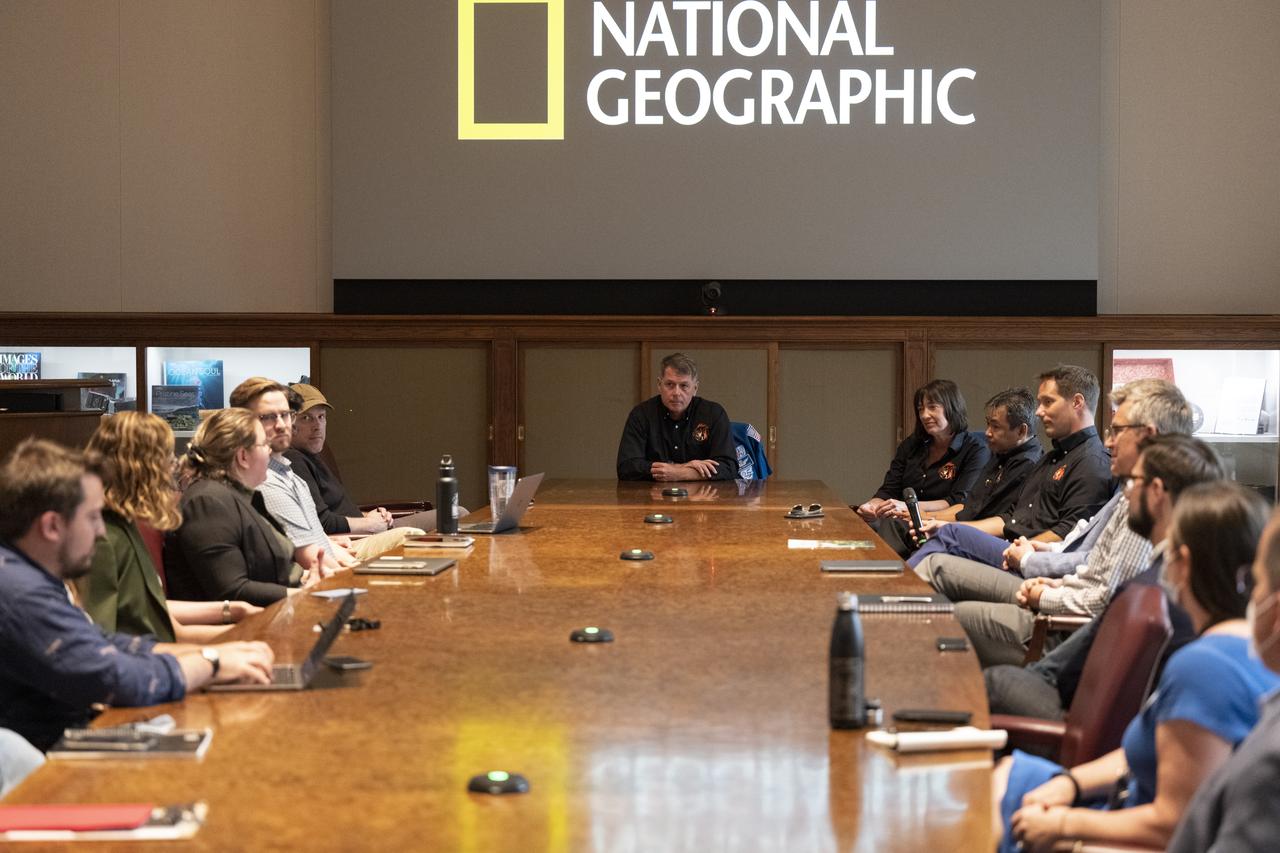
NASA’s SpaceX Crew-2 astronauts meet with National Geographic leadership and staff Tuesday, June 7, 2022, at National Geographic Headquarters in Washington. Kimbrough, McArthur, Hoshide, and Pesquet completed the second crew rotation mission to the International Space Station as part of the agency’s Commercial Crew Program and spent 198 days aboard the orbiting laboratory as part of Expeditions 65 and 66. Photo Credit: (NASA/Keegan Barber)
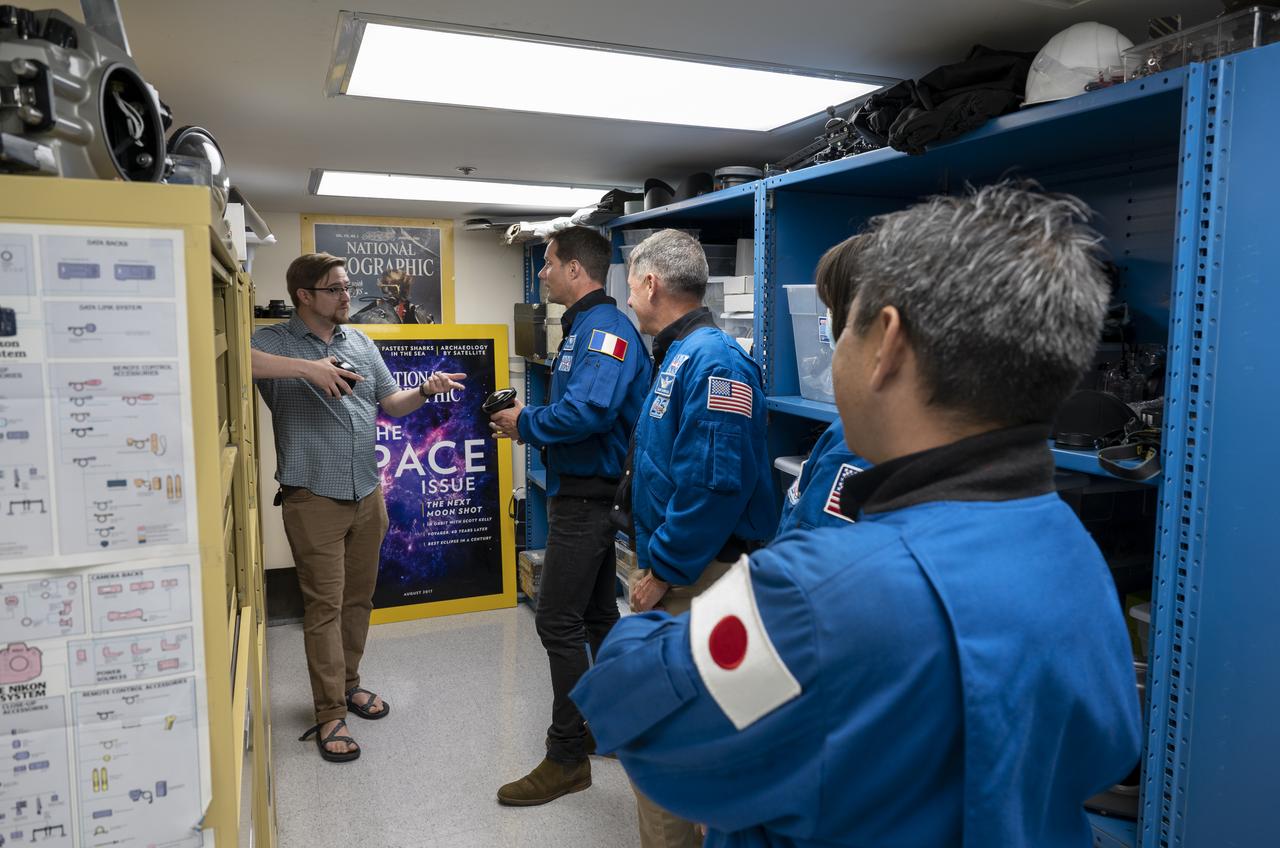
Photo Engineer Tom O’Brien speaks with NASA’s SpaceX Crew-2 astronauts during a tour of the Photo Engineering Department, Tuesday, June 7, 2022, at National Geographic Headquarters in Washington. Kimbrough, McArthur, Hoshide, and Pesquet completed the second crew rotation mission to the International Space Station as part of the agency’s Commercial Crew Program and spent 198 days aboard the orbiting laboratory as part of Expeditions 65 and 66. Photo Credit: (NASA/Keegan Barber)
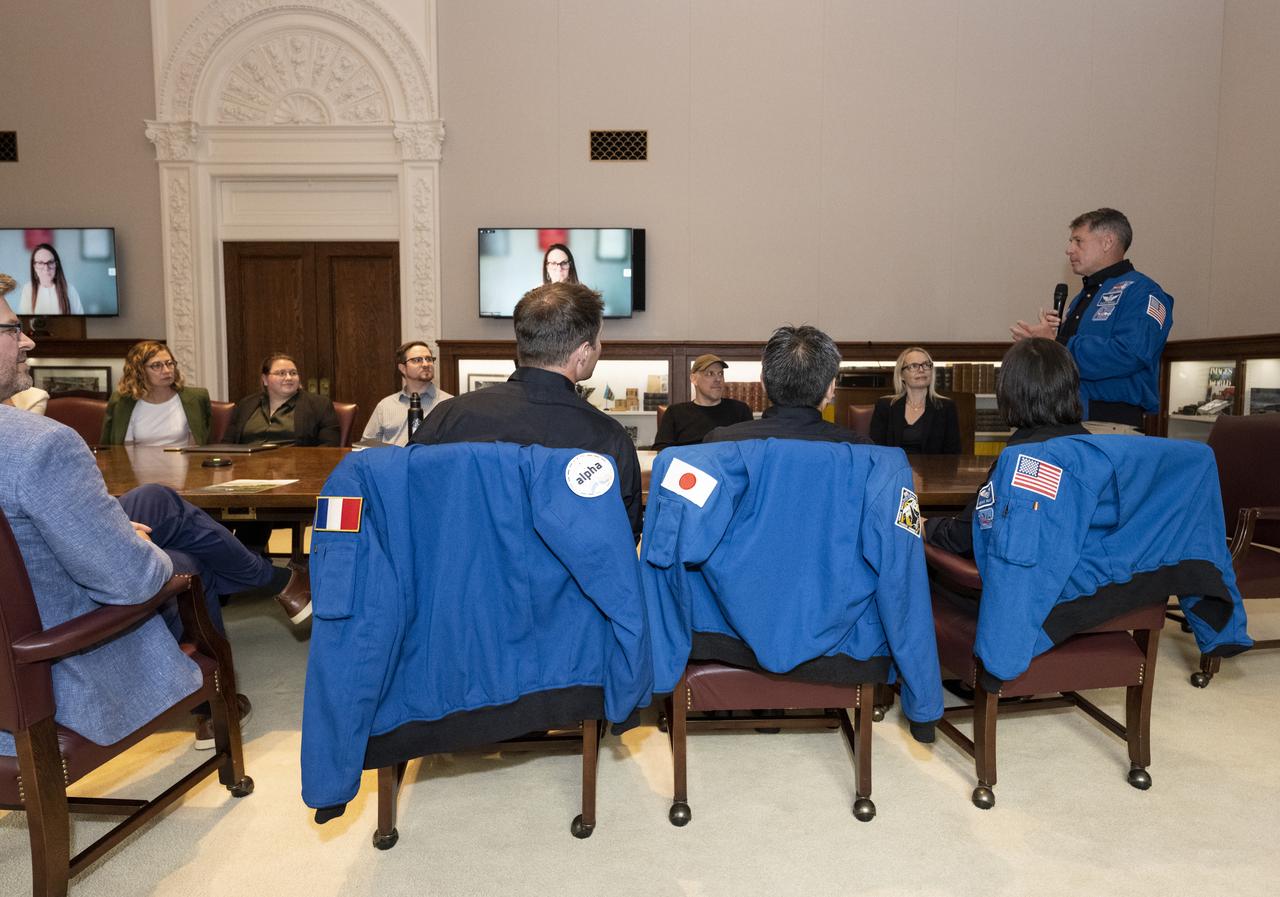
NASA’s SpaceX Crew-2 astronaut Shane Kimbrough speaks during a meeting with National Geographic leadership and staff Tuesday, June 7, 2022, at National Geographic Headquarters in Washington. Kimbrough, McArthur, Hoshide, and Pesquet completed the second crew rotation mission to the International Space Station as part of the agency’s Commercial Crew Program and spent 198 days aboard the orbiting laboratory as part of Expeditions 65 and 66. Photo Credit: (NASA/Keegan Barber)

Photo Engineer Tom O’Brien speaks with NASA’s SpaceX Crew-2 astronauts during a tour of the Photo Engineering Department, Tuesday, June 7, 2022, at National Geographic Headquarters in Washington. Kimbrough, McArthur, Hoshide, and Pesquet completed the second crew rotation mission to the International Space Station as part of the agency’s Commercial Crew Program and spent 198 days aboard the orbiting laboratory as part of Expeditions 65 and 66. Photo Credit: (NASA/Keegan Barber)
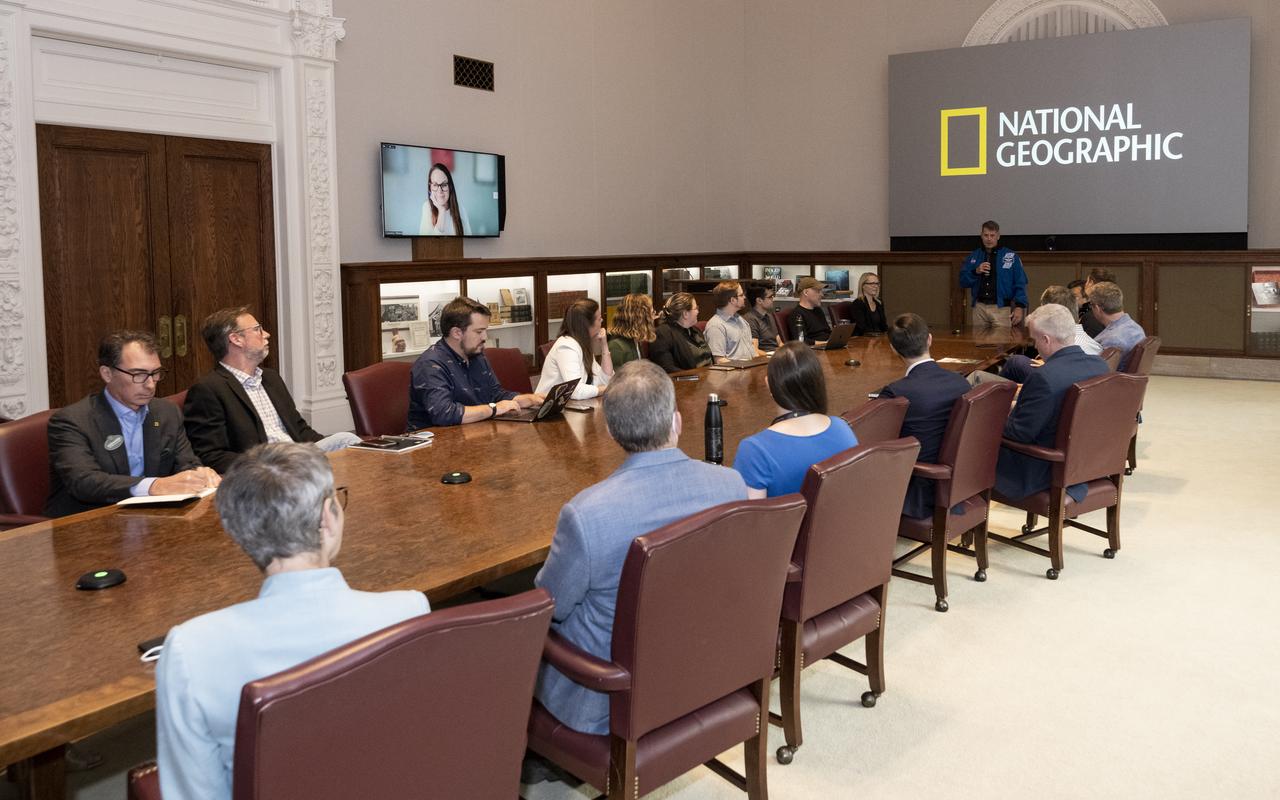
NASA’s SpaceX Crew-2 astronauts meet with National Geographic leadership and staff Tuesday, June 7, 2022, at National Geographic Headquarters in Washington. Kimbrough, McArthur, Hoshide, and Pesquet completed the second crew rotation mission to the International Space Station as part of the agency’s Commercial Crew Program and spent 198 days aboard the orbiting laboratory as part of Expeditions 65 and 66. Photo Credit: (NASA/Keegan Barber)
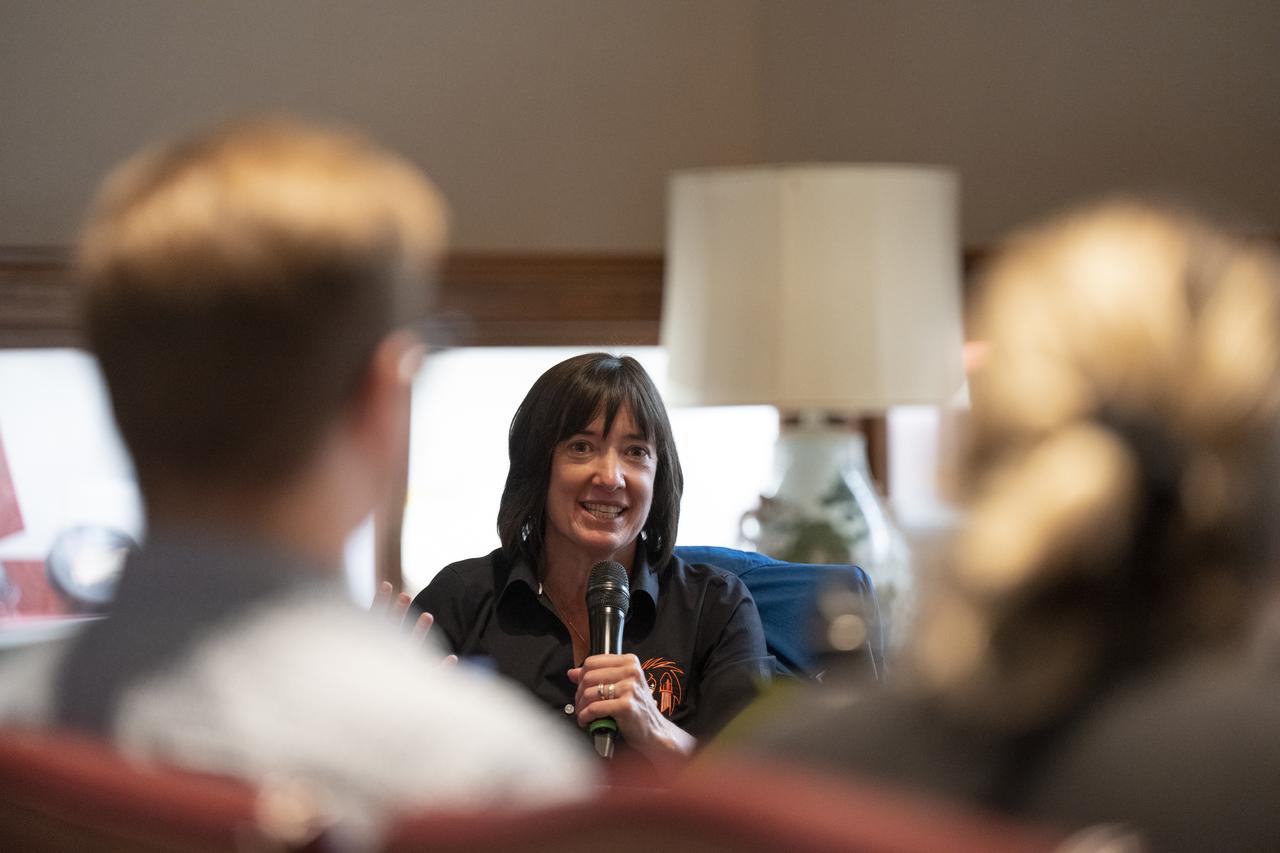
NASA’s SpaceX Crew-2 astronaut Megan McArthur speaks during a meeting with National Geographic leadership and staff Tuesday, June 7, 2022, at National Geographic Headquarters in Washington. Photo Credit: (Kimbrough, McArthur, Hoshide, and Pesquet completed the second crew rotation mission to the International Space Station as part of the agency’s Commercial Crew Program and spent 198 days aboard the orbiting laboratory as part of Expeditions 65 and 66. Photo Credit: (NASA/Keegan Barber)
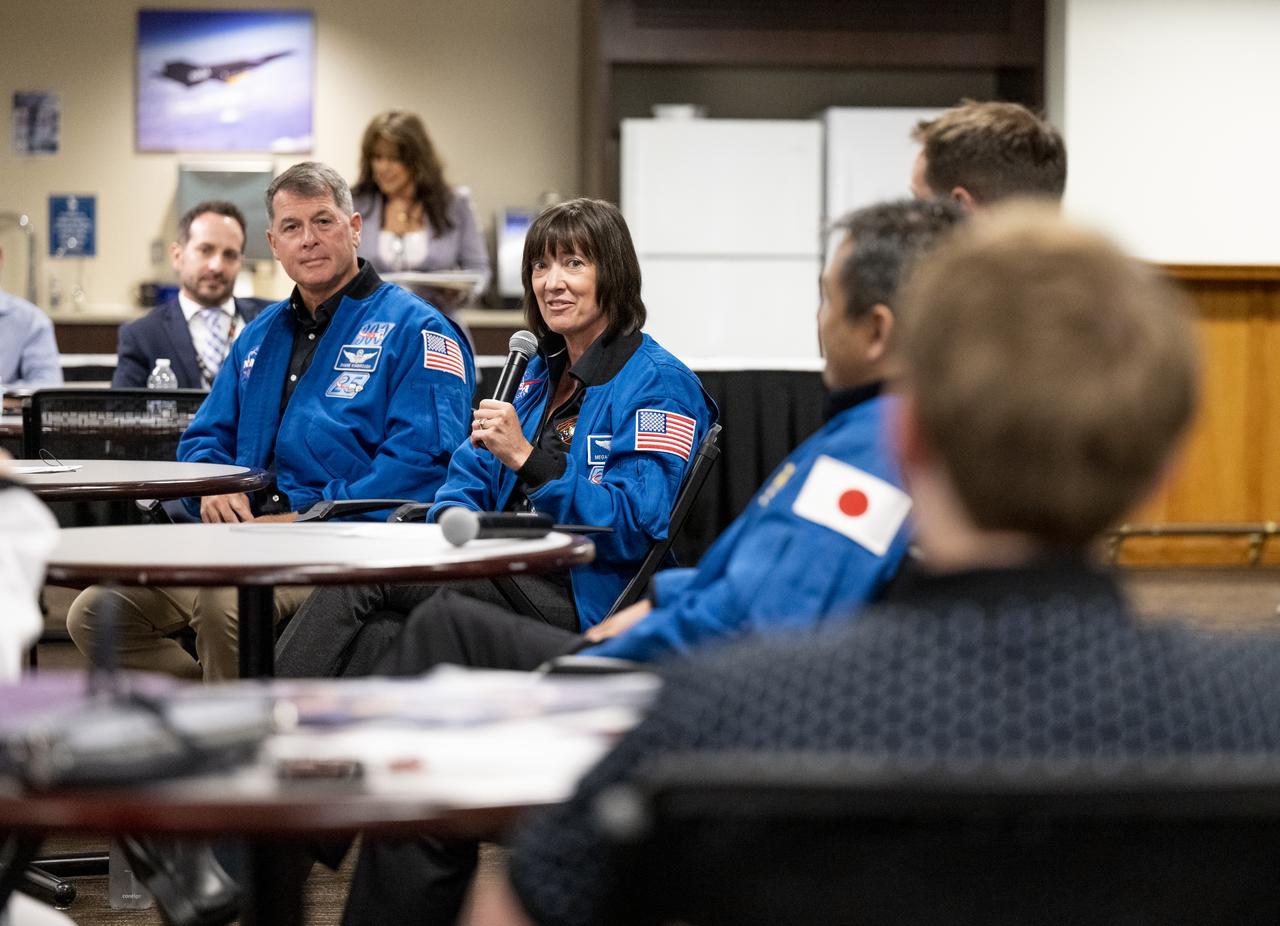
NASA’s SpaceX Crew-2 astronauts Shane Kimbrough, left, and Megan McArthur, right, speak during a meet and greet with employees Tuesday, June 7, 2022, at the Mary W. Jackson NASA Headquarters Building in Washington. Kimbrough, McArthur, Hoshide, and Pesquet completed the second crew rotation mission to the International Space Station as part of the agency’s Commercial Crew Program and spent 198 days aboard the orbiting laboratory as part of Expeditions 65 and 66. Photo Credit: (NASA/Keegan Barber)
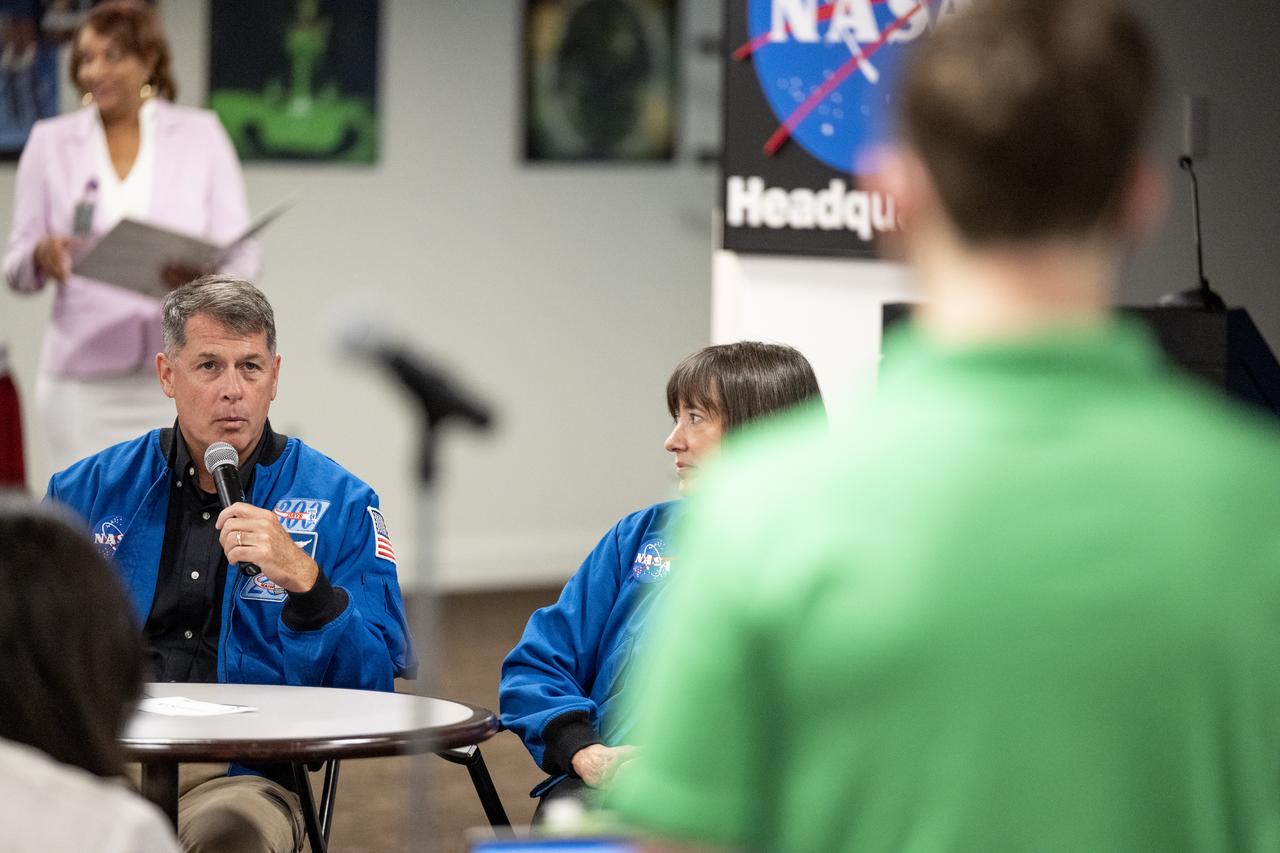
NASA’s SpaceX Crew-2 astronauts Shane Kimbrough, left, and Megan McArthur, right, speak during a meet and greet with employees Tuesday, June 7, 2022, at the Mary W. Jackson NASA Headquarters Building in Washington. Kimbrough, McArthur, Hoshide, and Pesquet completed the second crew rotation mission to the International Space Station as part of the agency’s Commercial Crew Program and spent 198 days aboard the orbiting laboratory as part of Expeditions 65 and 66. Photo Credit: (NASA/Keegan Barber)
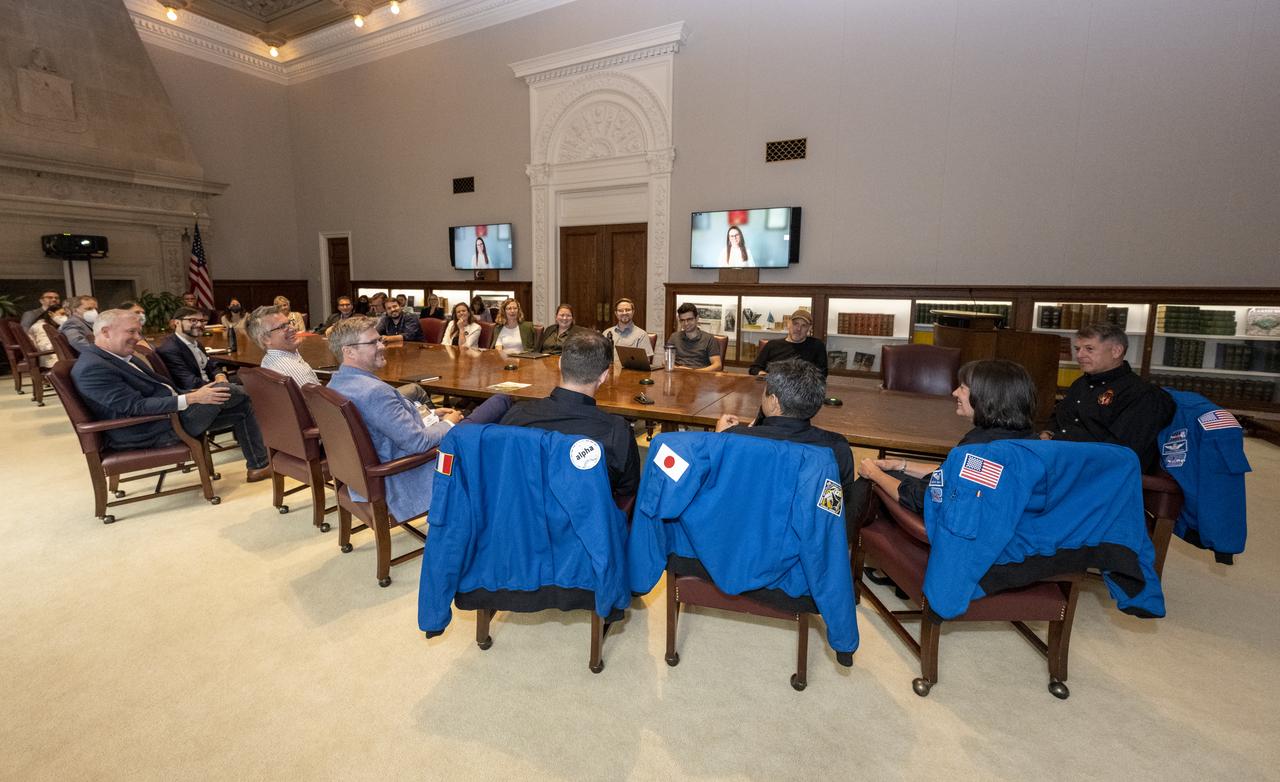
NASA’s SpaceX Crew-2 astronauts meet with National Geographic leadership and staff Tuesday, June 7, 2022, at National Geographic Headquarters in Washington. Kimbrough, McArthur, Hoshide, and Pesquet completed the second crew rotation mission to the International Space Station as part of the agency’s Commercial Crew Program and spent 198 days aboard the orbiting laboratory as part of Expeditions 65 and 66. Photo Credit: (NASA/Keegan Barber)
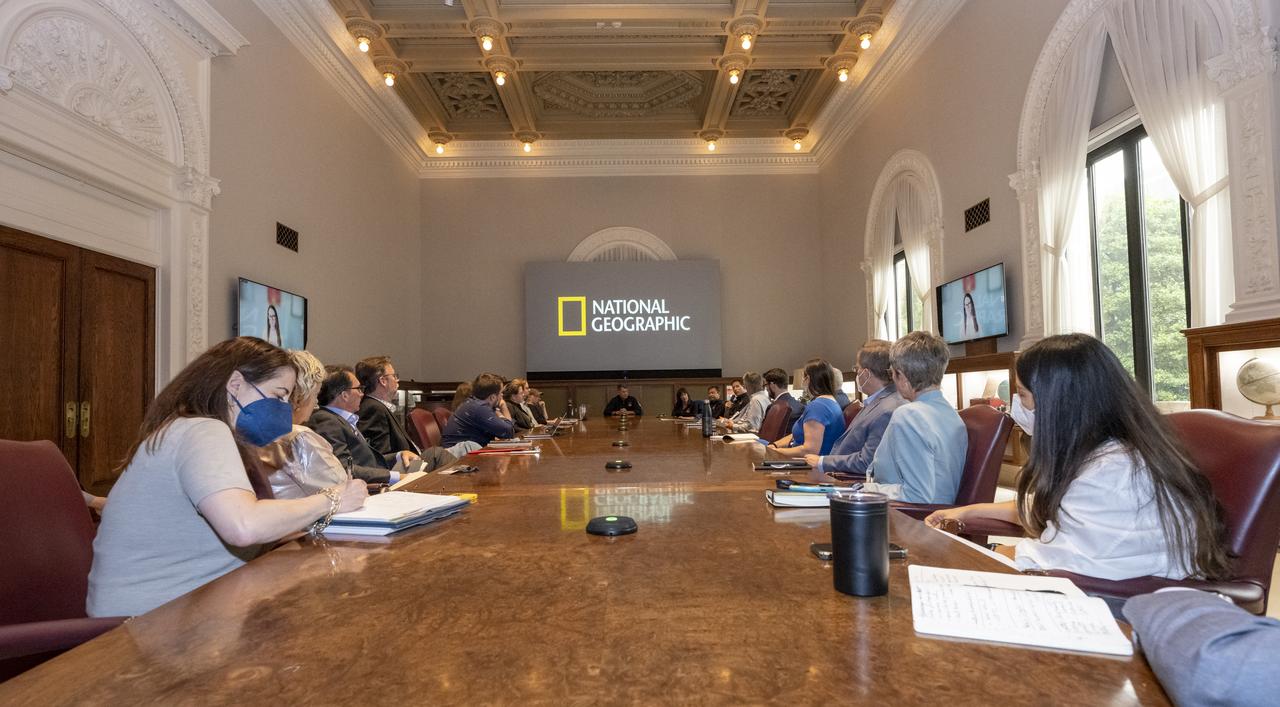
NASA’s SpaceX Crew-2 astronauts meet with National Geographic leadership and staff Tuesday, June 7, 2022, at National Geographic Headquarters in Washington. Kimbrough, McArthur, Hoshide, and Pesquet completed the second crew rotation mission to the International Space Station as part of the agency’s Commercial Crew Program and spent 198 days aboard the orbiting laboratory as part of Expeditions 65 and 66. Photo Credit: (NASA/Keegan Barber)
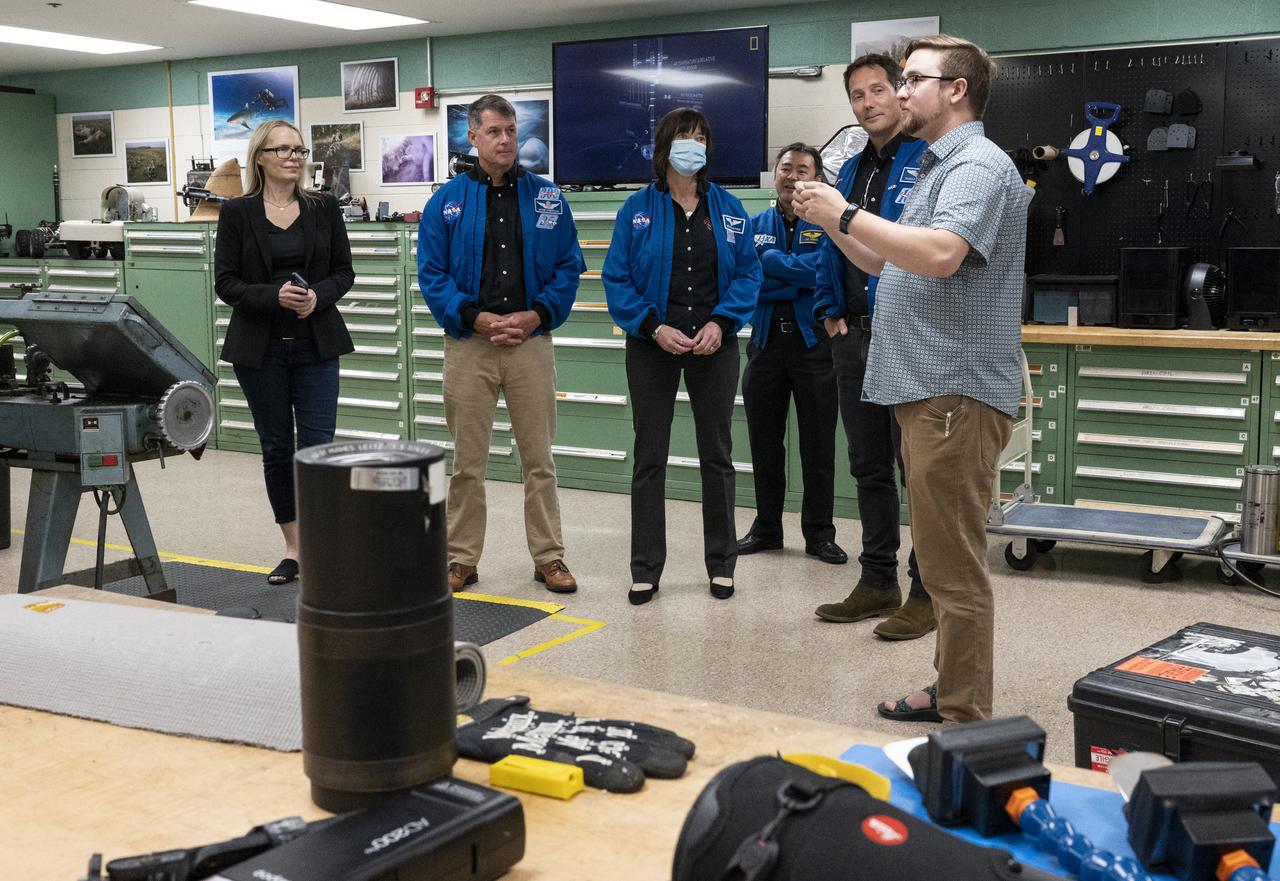
Photo Engineer Tom O’Brien speaks with NASA’s SpaceX Crew-2 astronauts during a tour of the Photo Engineering Department, Tuesday, June 7, 2022, at National Geographic Headquarters in Washington. Kimbrough, McArthur, Hoshide, and Pesquet completed the second crew rotation mission to the International Space Station as part of the agency’s Commercial Crew Program and spent 198 days aboard the orbiting laboratory as part of Expeditions 65 and 66. Photo Credit: (NASA/Keegan Barber)
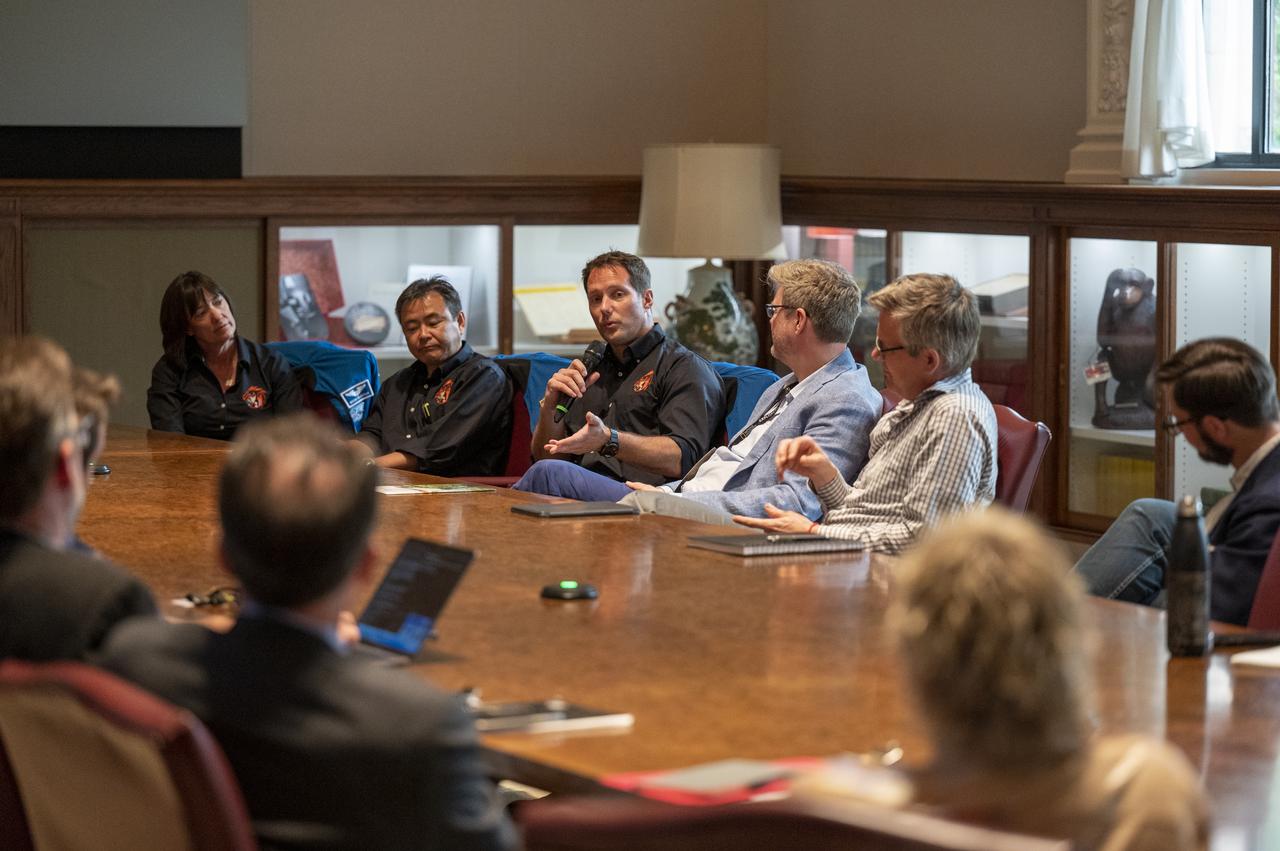
NASA’s SpaceX Crew-2 ESA (European Space Agency) astronaut Thomas Pesquet speaks during a meeting with National Geographic leadership and staff Tuesday, June 7, 2022, at National Geographic Headquarters in Washington. Kimbrough, McArthur, Hoshide, and Pesquet completed the second crew rotation mission to the International Space Station as part of the agency’s Commercial Crew Program and spent 198 days aboard the orbiting laboratory as part of Expeditions 65 and 66. Photo Credit: (NASA/Keegan Barber)
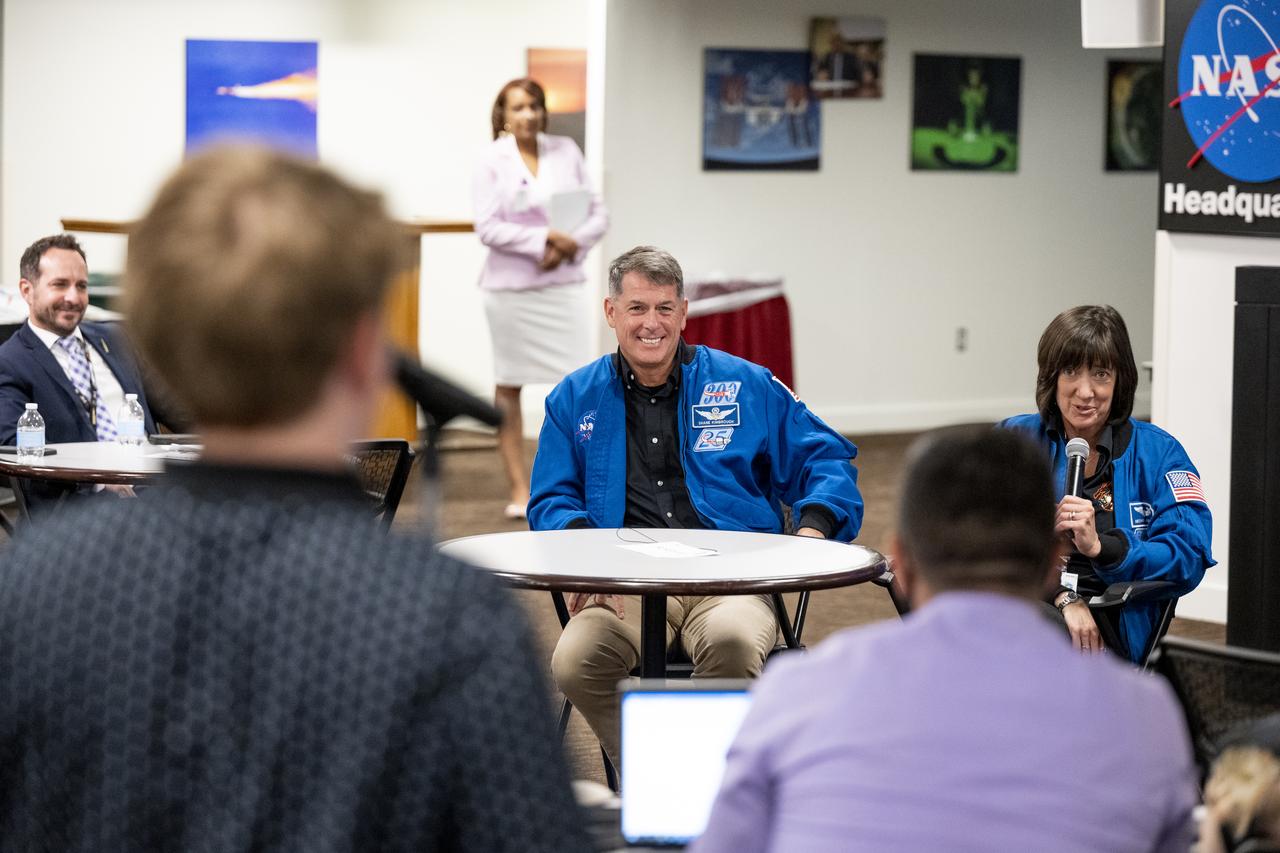
NASA’s SpaceX Crew-2 astronauts Shane Kimbrough, left, and Megan McArthur, right, speak during a meet and greet with employees Tuesday, June 7, 2022, at the Mary W. Jackson NASA Headquarters Building in Washington. Kimbrough, McArthur, Hoshide, and Pesquet completed the second crew rotation mission to the International Space Station as part of the agency’s Commercial Crew Program and spent 198 days aboard the orbiting laboratory as part of Expeditions 65 and 66. Photo Credit: (NASA/Keegan Barber)
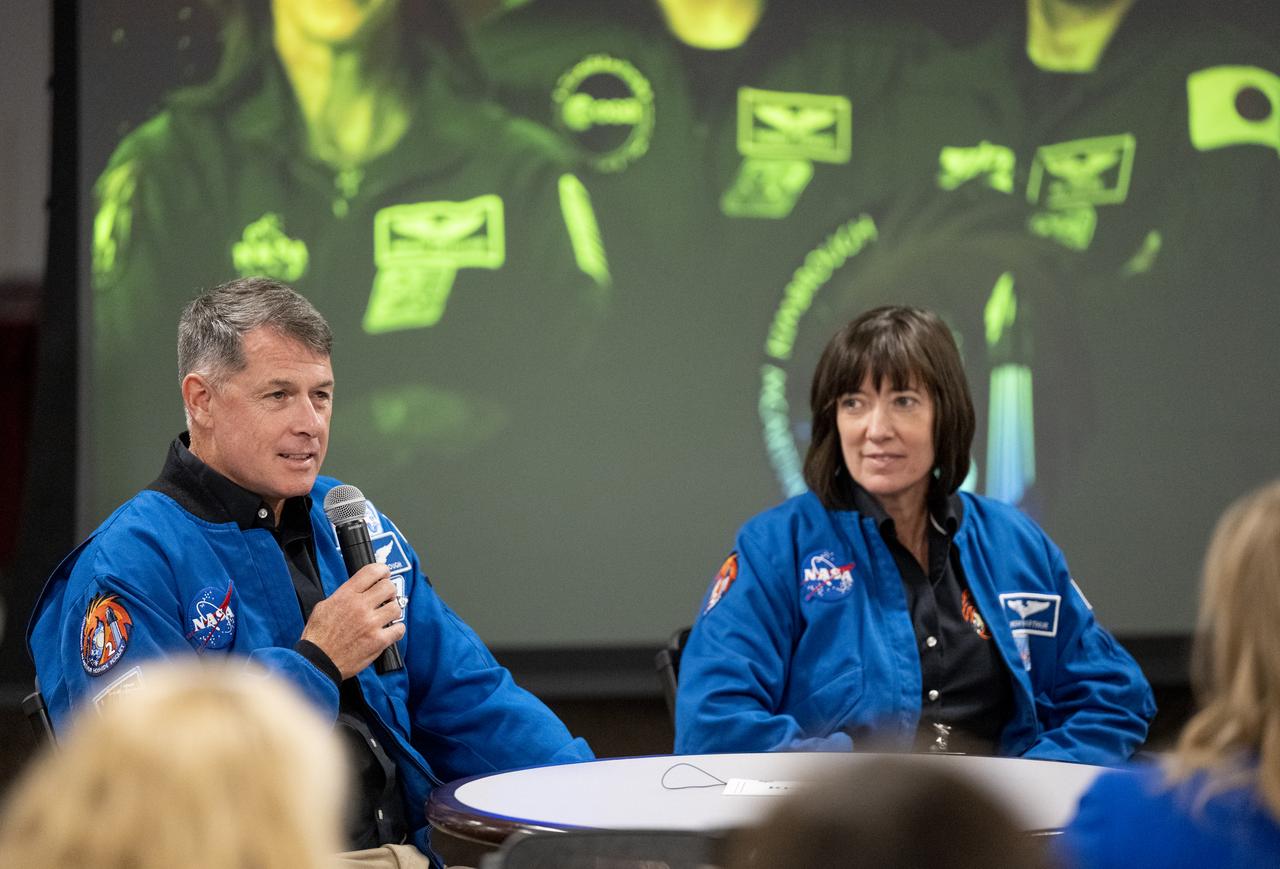
NASA’s SpaceX Crew-2 astronauts Shane Kimbrough, left, and Megan McArthur, right, speak during a meet and greet with employees Tuesday, June 7, 2022, at the Mary W. Jackson NASA Headquarters Building in Washington. Kimbrough, McArthur, Hoshide, and Pesquet completed the second crew rotation mission to the International Space Station as part of the agency’s Commercial Crew Program and spent 198 days aboard the orbiting laboratory as part of Expeditions 65 and 66. Photo Credit: (NASA/Keegan Barber)
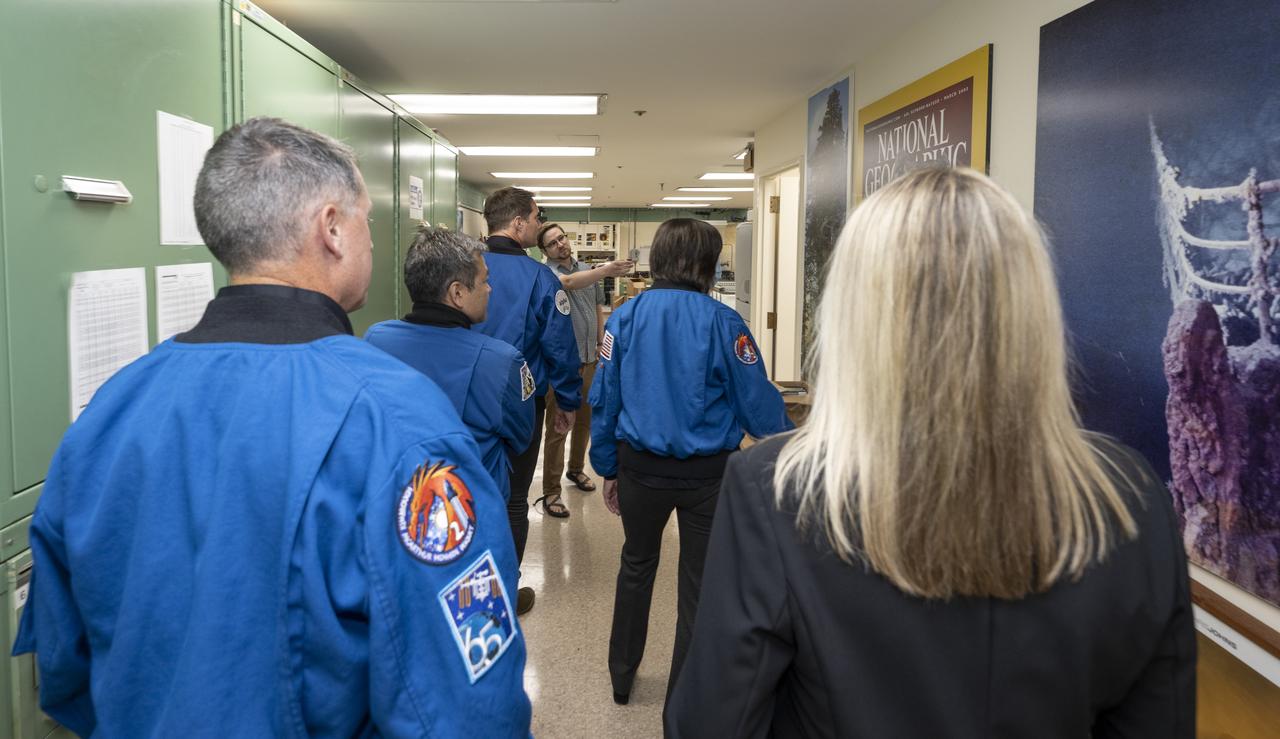
Photo Engineer Tom O’Brien speaks with NASA’s SpaceX Crew-2 astronauts during a tour of the Photo Engineering Department, Tuesday, June 7, 2022, at National Geographic Headquarters in Washington. Kimbrough, McArthur, Hoshide, and Pesquet completed the second crew rotation mission to the International Space Station as part of the agency’s Commercial Crew Program and spent 198 days aboard the orbiting laboratory as part of Expeditions 65 and 66. Photo Credit: (NASA/Keegan Barber)