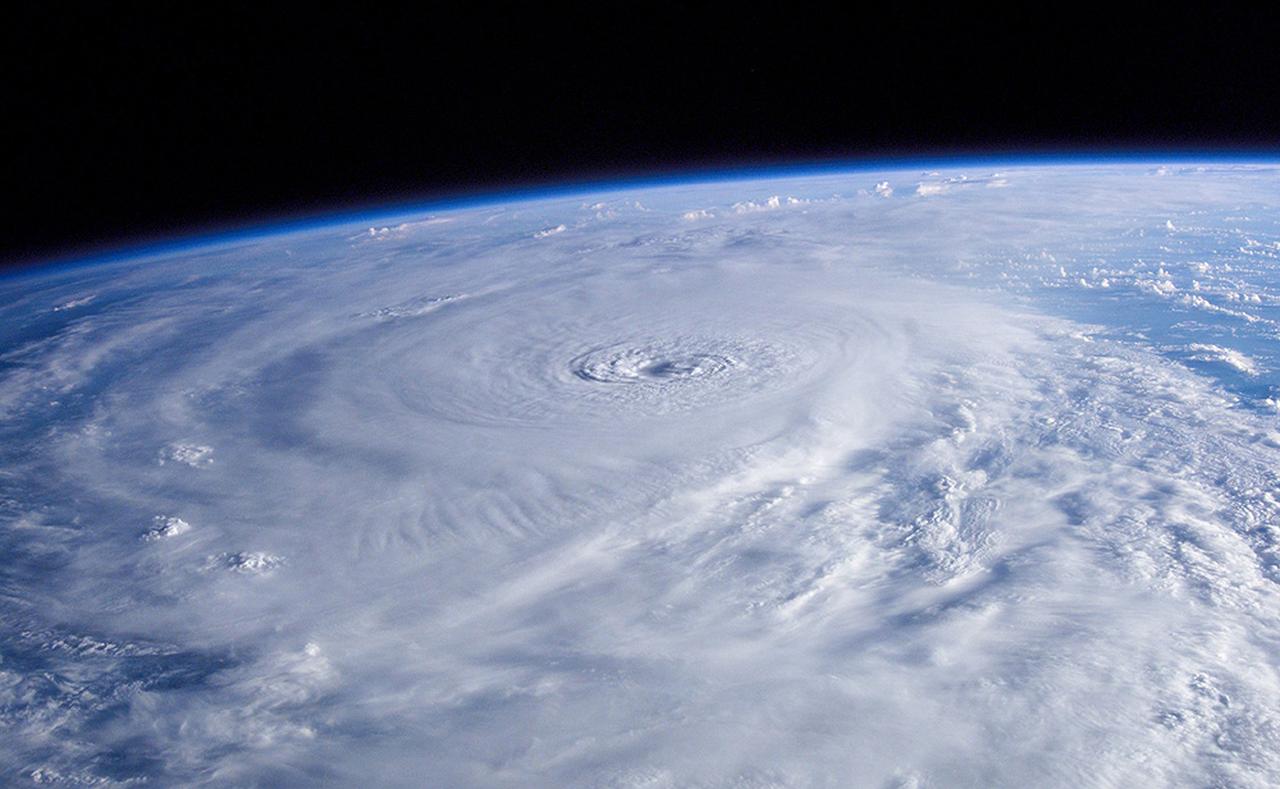
This photo of hurricane Lili, captured during the Expedition Five mission, shows the compact storm system and the structure of its estimated 15 nautical mile wide eye. After strengthening to a Category 4 storm (125 knots with the central pressure of 940 millibars), Lili weakened to a Category 2 before slamming into the central coast of Louisiana just south of Lafayette. This is one of many photos that stem form the Crew Observation (CEO) experiment that has been a part of every Space Station expedition.
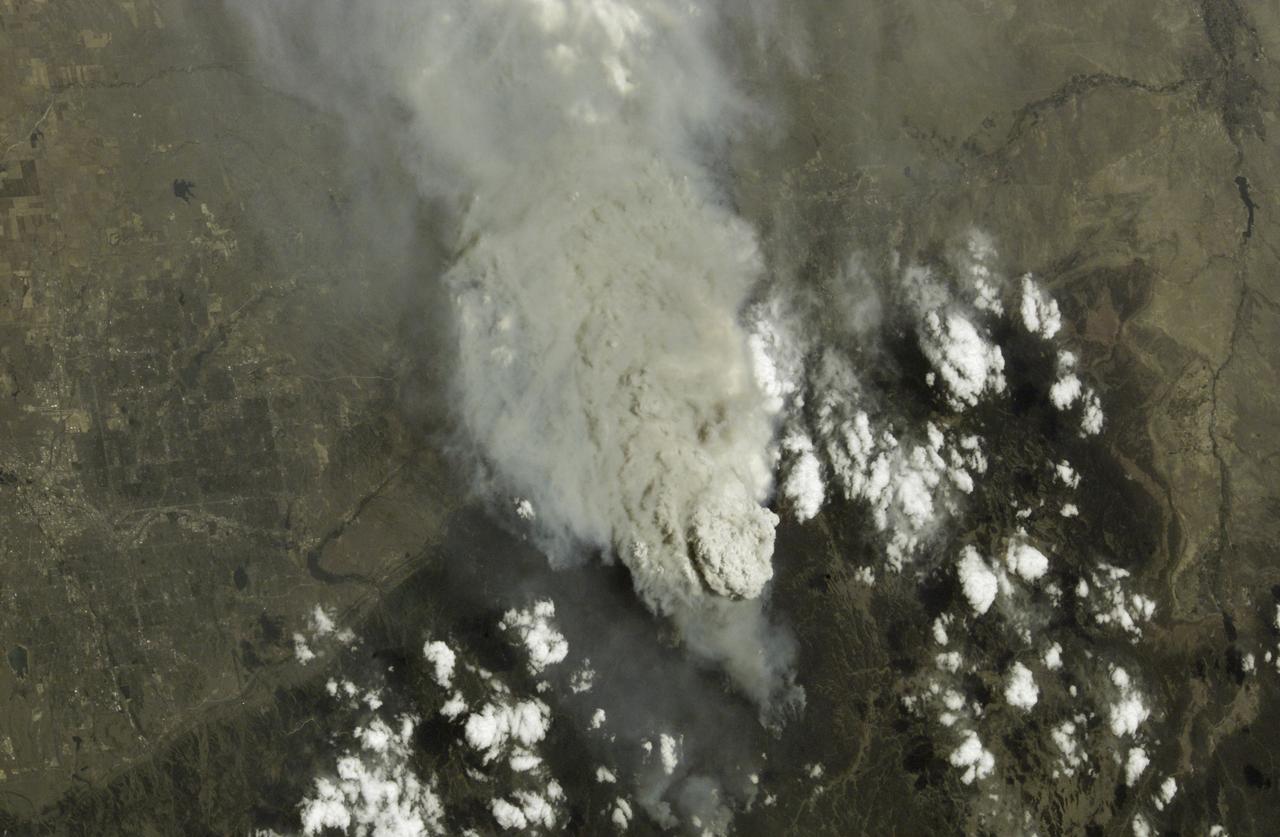
This is a photo of the Hayman Fire burning in the foothills southwest of Denver, Colorado, as viewed by an Expedition Five crewmember aboard the International Space Station (ISS). Astronauts use a variety of lenses and look angles as their orbits pass over the wildfires to document the long-distance movements of smoke from the fires as well as details of the burning areas. In this view, Littleton, Chatfield Lake, and the Arkansas River are all visible.

Expedition Five crewmembers include (left to right) Cosmonaut Verleri Korzun, Commander; Astronaut Peggy Whitson, flight engineer; and Cosmonaut Sergei Treschev, flight engineer. Launched aboard the Space Shuttle Orbiter Endeavour, STS-111, in April 2002, Expedition Five replaced Expedition Four on the International Space Station (ISS) for a scheduled 4-month mission. Expedition Five carried several new experiments and science facilities to the ISS. The research compliment included 24 new and continuing investigations:10 human life sciences studies, 6 in microgravity, 5 in space product development, and 3 sponsored by the Office of Space Flight. The new experiments are expected to lead to new insights in the fields of materials, plant science, commercial biotechnology, and the long term effects of space flight on humans. 280 hours will be devoted to research in addition to the continuing building of the ISS. Station science will also be conducted by the ever-present ground crew, with a new cadre of controllers for Expedition Five in the ISS Payload Operations Control Center (POCC) at NASA's Marshall Space Flight Center in Huntsville, Alabama. Controllers work in three shifts around the clock, 7 days a week, in the POCC, the world's primary science command post for the Space Station. The POCC links Earth-bound researchers around the world with their experiments and crew aboard the Space Station.
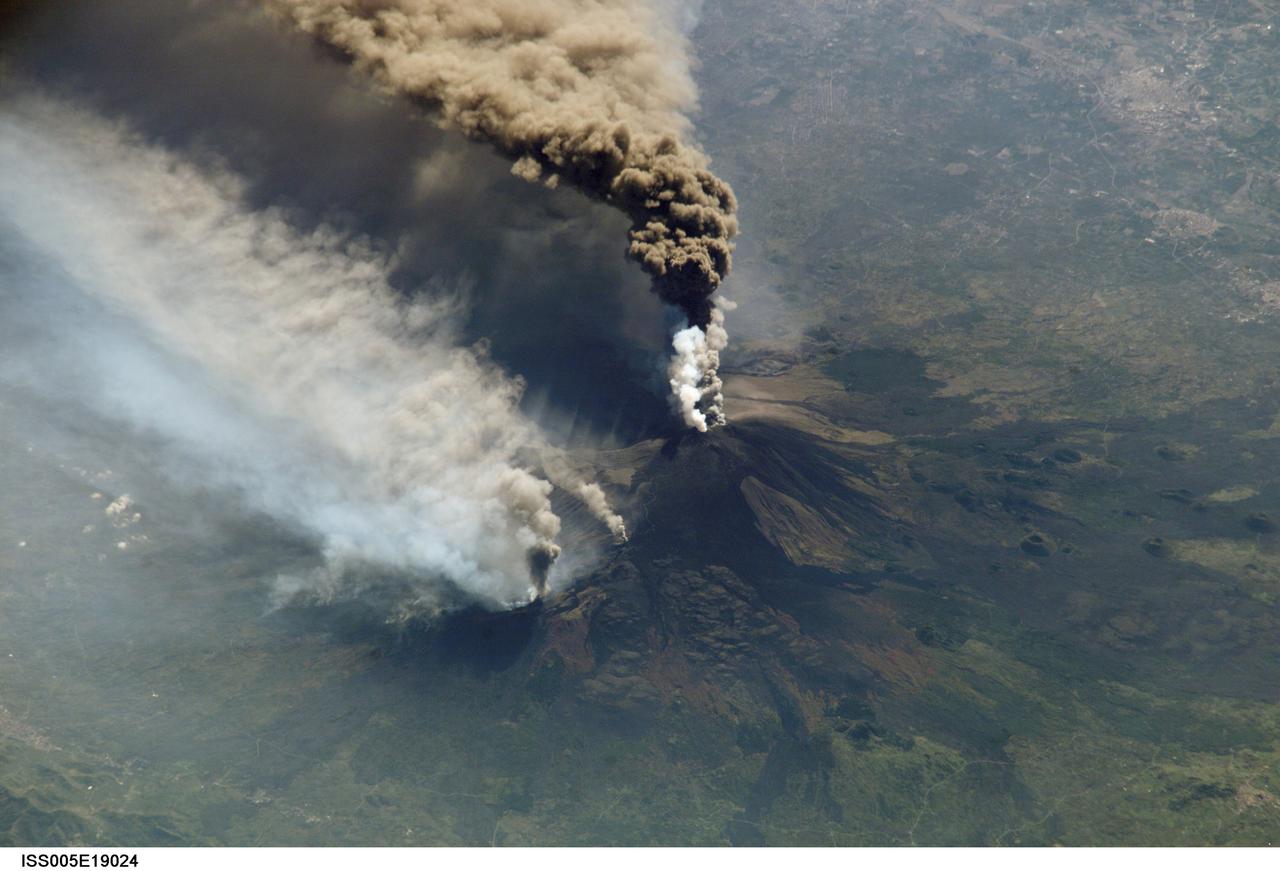
Expedition Five crew members aboard the International Space Station (ISS) captured this overhead look at the smoke and ash regurgitated from the erupting volcano Mt. Etna on the island of Sicily, Italy in October 2002. Triggered by a series of earthquakes on October 27, 2002, this eruption was one of Etna's most vigorous in years. This image shows the ash plume curving out toward the horizon. The lighter-colored plumes down slope and north of the summit seen in this frame are produced by forest fires set by flowing lava. At an elevation of 10,990 feet (3,350 m), the summit of the Mt. Etna volcano, one of the most active and most studied volcanoes in the world, has been active for a half-million years and has erupted hundreds of times in recorded history.

ISS005-E-20062 (9 November 2002) --- The Expedition Five and Soyuz 5 Taxi crews pose for a group photo in the Zvezda Service Module on the International Space Station (ISS). In the foreground is cosmonaut Valery G. Korzun, Expedition Five mission commander. From the left, middle row, are Soyuz 5 Commander Sergei Zalyotin and Belgian Soyuz 5 Flight Engineer Frank DeWinne. From the left, back row, are astronaut Peggy A. Whitson, Expedition Five flight engineer; Soyuz 5 Flight Engineer Yuri V. Lonchakov; and cosmonaut Sergei Y. Treschev, Expedition Five flight engineer. Korzun, Treschev, Zalyotin and Lonchakov represent Rosaviakosmos and DeWinne represents the European Space Agency (ESA).
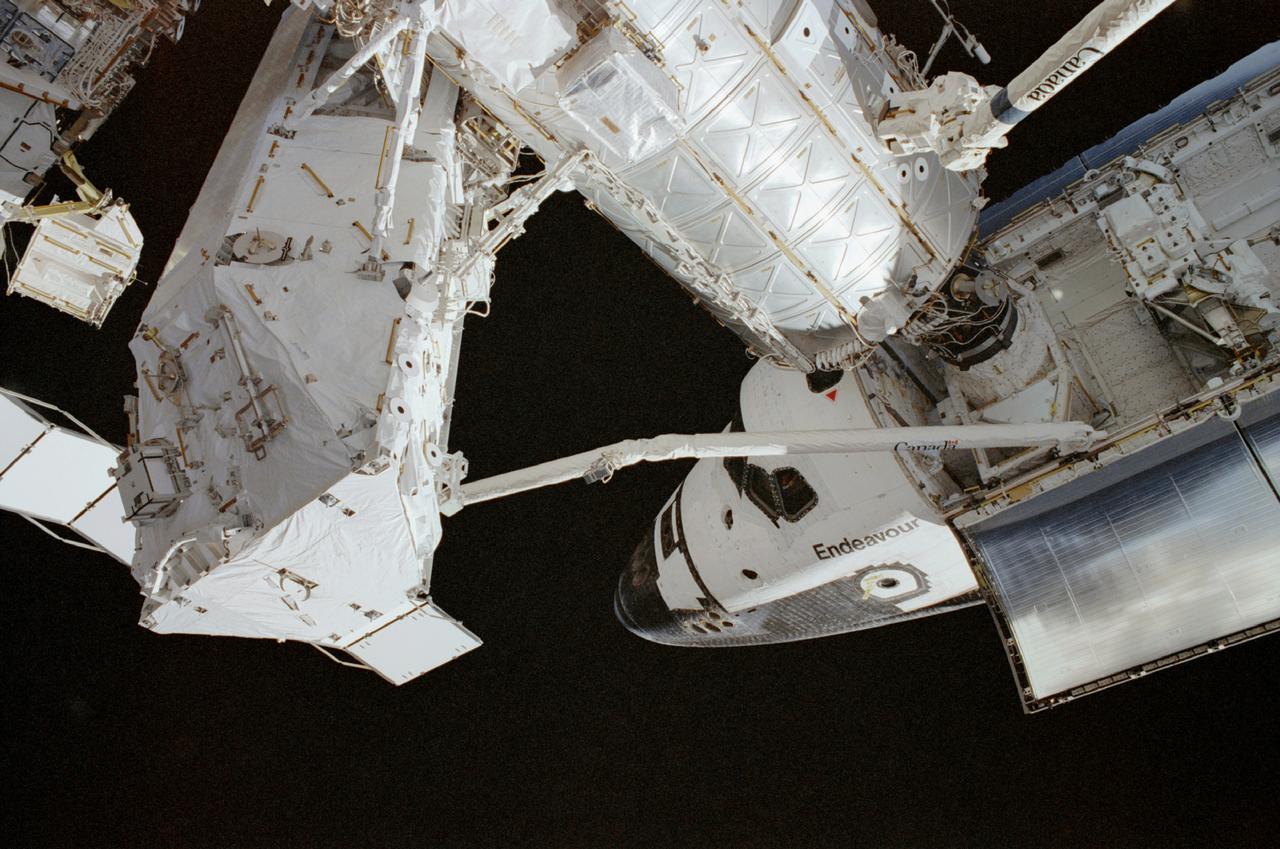
The STS-111 mission, the 14th Shuttle mission to visit the International Space Station (ISS), was launched on June 5, 2002 aboard the Space Shuttle Orbiter Endeavour. On board were the STS-111 and Expedition Five crew members. Astronauts Kerneth D. Cockrell, commander; Paul S. Lockhart, pilot, and mission specialists Franklin R. Chang-Diaz and Philippe Perrin were the STS-111 crew members. Expedition Five crew members included Cosmonaut Valeri G. Korzun, commander, Astronaut Peggy A. Whitson and Cosmonaut Sergei Y. Treschev, flight engineers. Three space walks enabled the STS-111 crew to accomplish mission objectives: The delivery and installation of the Mobile Remote Servicer Base System (MBS), an important part of the Station's Mobile Servicing System that allows the robotic arm to travel the length of the Station, which is necessary for future construction tasks; the replacement of a wrist roll joint on the Station's robotic arm; and the task of unloading supplies and science experiments from the Leonardo multipurpose Logistics Module, which made its third trip to the orbital outpost. In this photograph, the Space Shuttle Endeavour, back dropped by the blackness of space, is docked to the pressurized Mating Adapter (PMA-2) at the forward end of the Destiny Laboratory on the ISS. Endeavour's robotic arm is in full view as it is stretched out with the S0 (S-zero) Truss at its end.
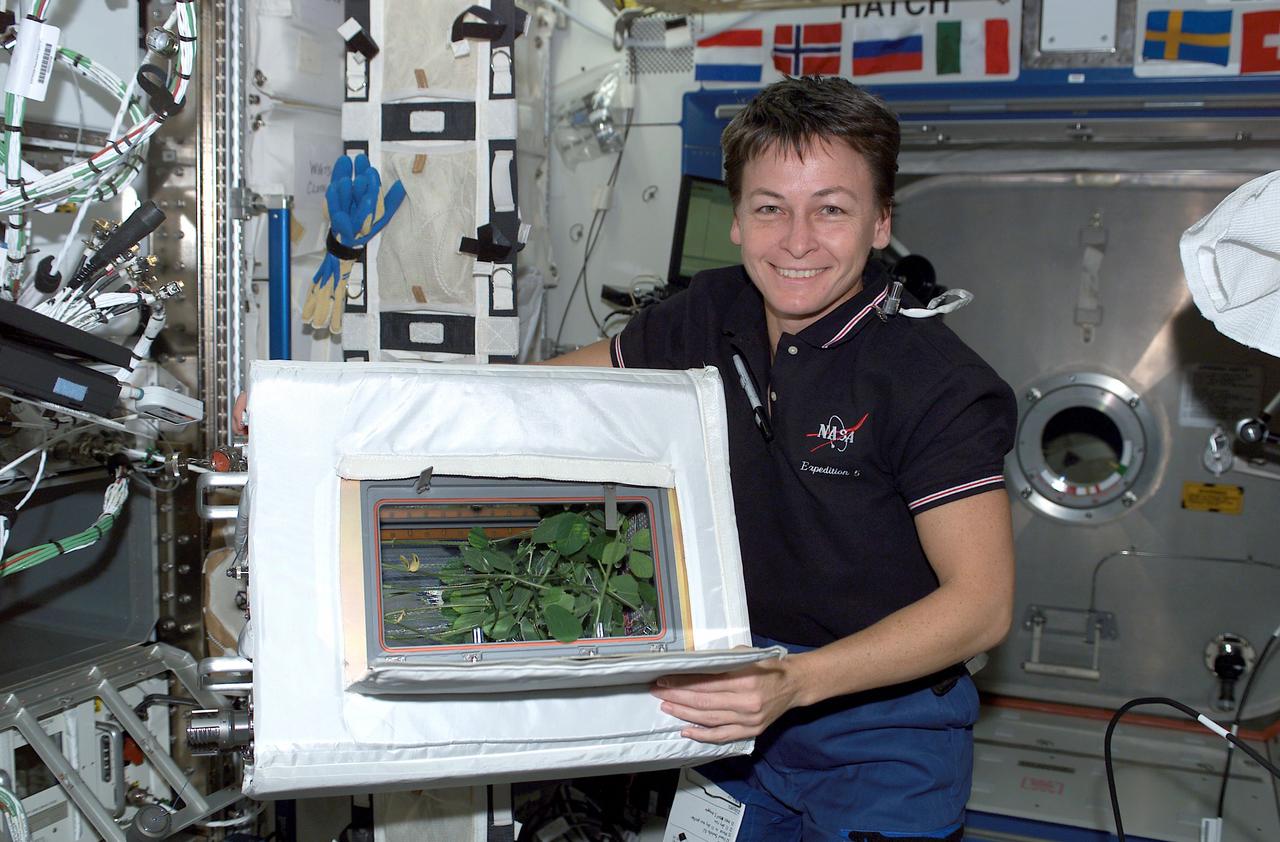
Expedition Five crewmember and flight engineer Peggy Whitson displays the progress of soybeans growing in the Advanced Astroculture (ADVASC) Experiment aboard the International Space Station (ISS). The ADVASC experiment was one of the several new experiments and science facilities delivered to the ISS by Expedition Five aboard the Space Shuttle Orbiter Endeavor STS-111 mission. An agricultural seed company will grow soybeans in the ADVASC hardware to determine whether soybean plants can produce seeds in a microgravity environment. Secondary objectives include determination of the chemical characteristics of the seed in space and any microgravity impact on the plant growth cycle. Station science will also be conducted by the ever-present ground crew, with a new cadre of controllers for Expedition Five in the ISS Payload Operations Control Center (POCC) at NASA's Marshall Space Flight Center in Huntsville, Alabama. Controllers work in three shifts around the clock, 7 days a week, in the POCC, the world's primary science command post for the Space Station. The POCC links Earth-bound researchers around the world with their experiments and crew aboard the Space Station.
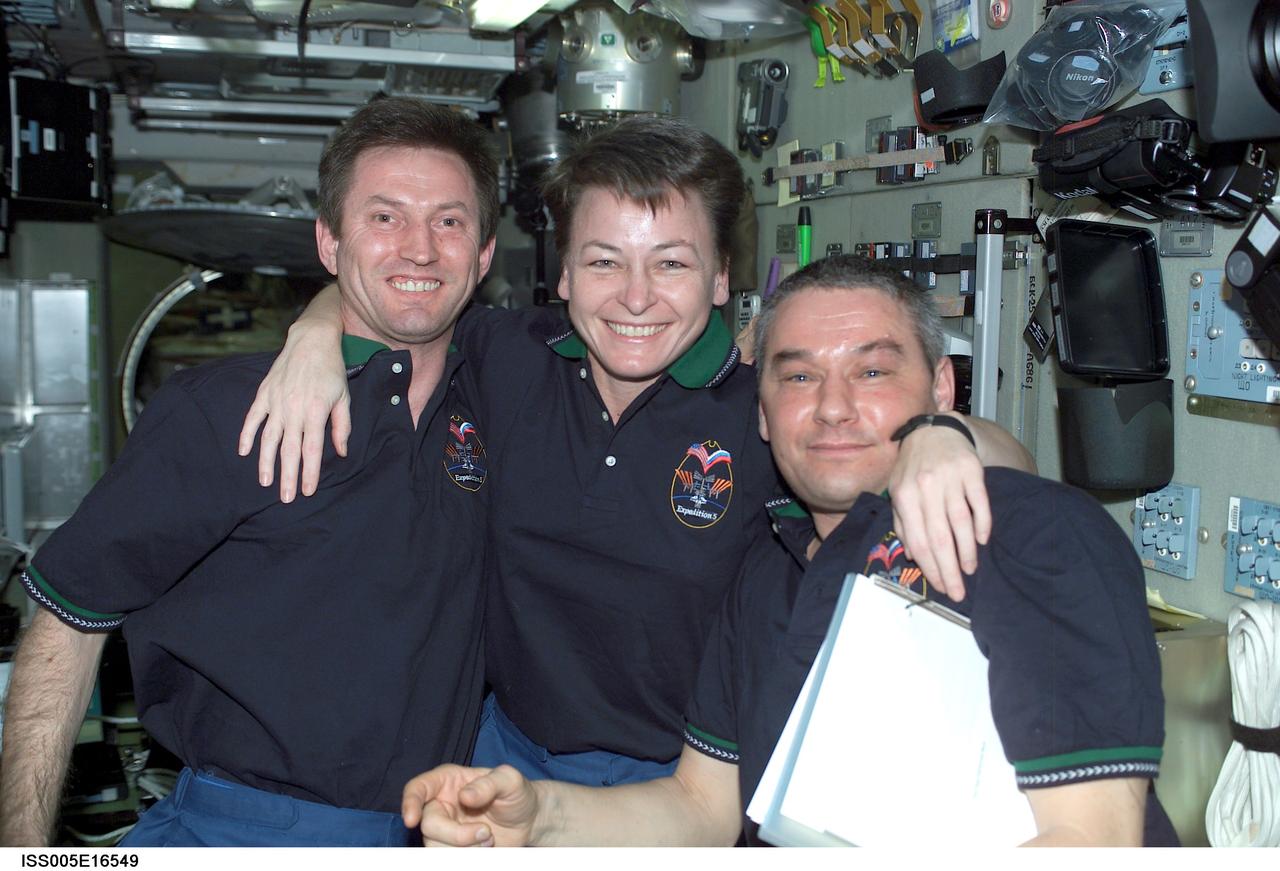
ISS005-E-16549 (9 October 2002) --- The Expedition Five crewmembers were photographed in the Zvezda Service Module on the International Space Station (ISS). From the right are cosmonaut Valery G. Korzun, mission commander, astronaut Peggy A. Whitson and cosmonaut Sergei Y. Treschev, both flight engineers. Korzun and Treschev represent Rosaviakosmos.
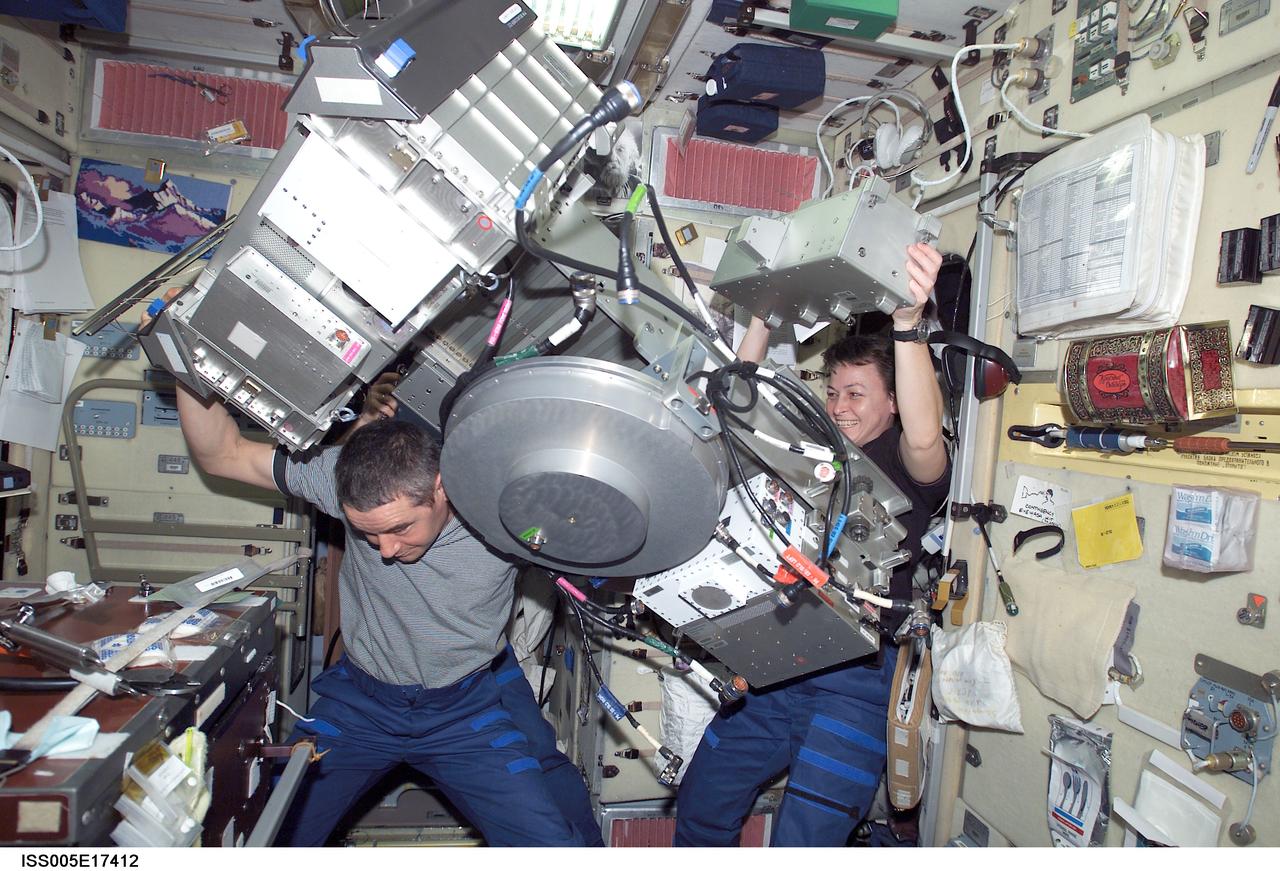
ISS005-E-17412 (13 October 2002) --- Cosmonaut Valery G. Korzun (left), Expedition Five mission commander, and astronaut Peggy A. Whitson, Expedition Five flight engineer, perform maintenance on the Treadmill Vibration Isolation System (TVIS) in the Zvezda Service Module on the International Space Station (ISS). Korzun represents Rosaviakosmos.
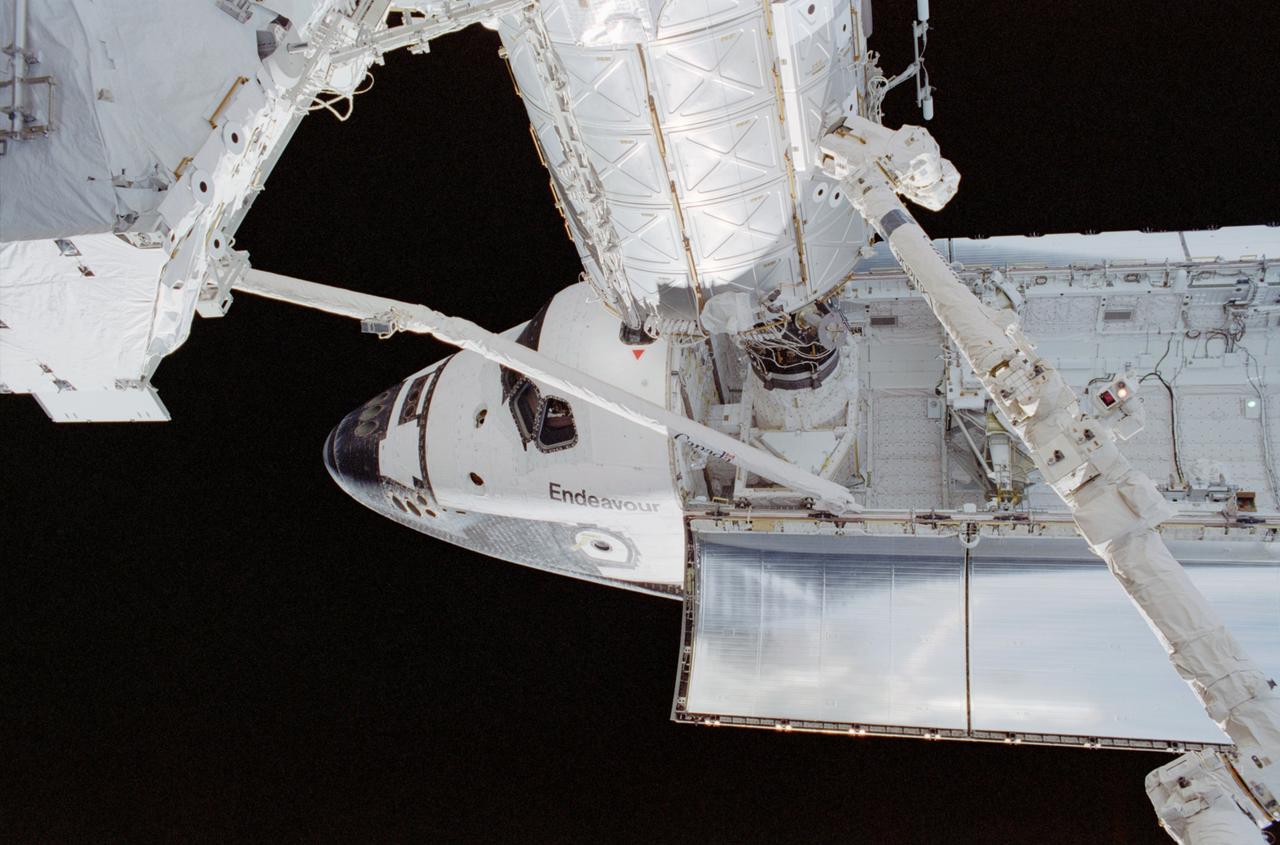
The STS-111 mission, the 14th Shuttle mission to visit the International Space Station (ISS), was launched on June 5, 2002 aboard the Space Shuttle Orbiter Endeavour. On board were the STS-111 and Expedition Five crew members. Astronauts Kerneth D. Cockrell, commander; Paul S. Lockhart, pilot, and mission specialists Franklin R. Chang-Diaz and Philippe Perrin were the STS-111 crew members. Expedition Five crew members included Cosmonaut Valeri G. Korzun, commander, Astronaut Peggy A. Whitson and Cosmonaut Sergei Y. Treschev, flight engineers. Three space walks enabled the STS-111 crew to accomplish the delivery and installation of the Mobile Remote Servicer Base System (MBS), an important part of the Station's Mobile Servicing System that allows the robotic arm to travel the length of the Station, which is necessary for future construction tasks; the replacement of a wrist roll joint on the Station's robotic arm; and the task of unloading supplies and science experiments from the Leonardo multipurpose Logistics Module, which made its third trip to the orbital outpost. In this photograph, the Space Shuttle Endeavour, back dropped by the blackness of space, is docked to the pressurized Mating Adapter (PMA-2) at the forward end of the Destiny Laboratory on the ISS. A portion of the Canadarm2 is visible on the right and Endeavour's robotic arm is in full view as it is stretched out with the S0 (S-zero) Truss at its end.
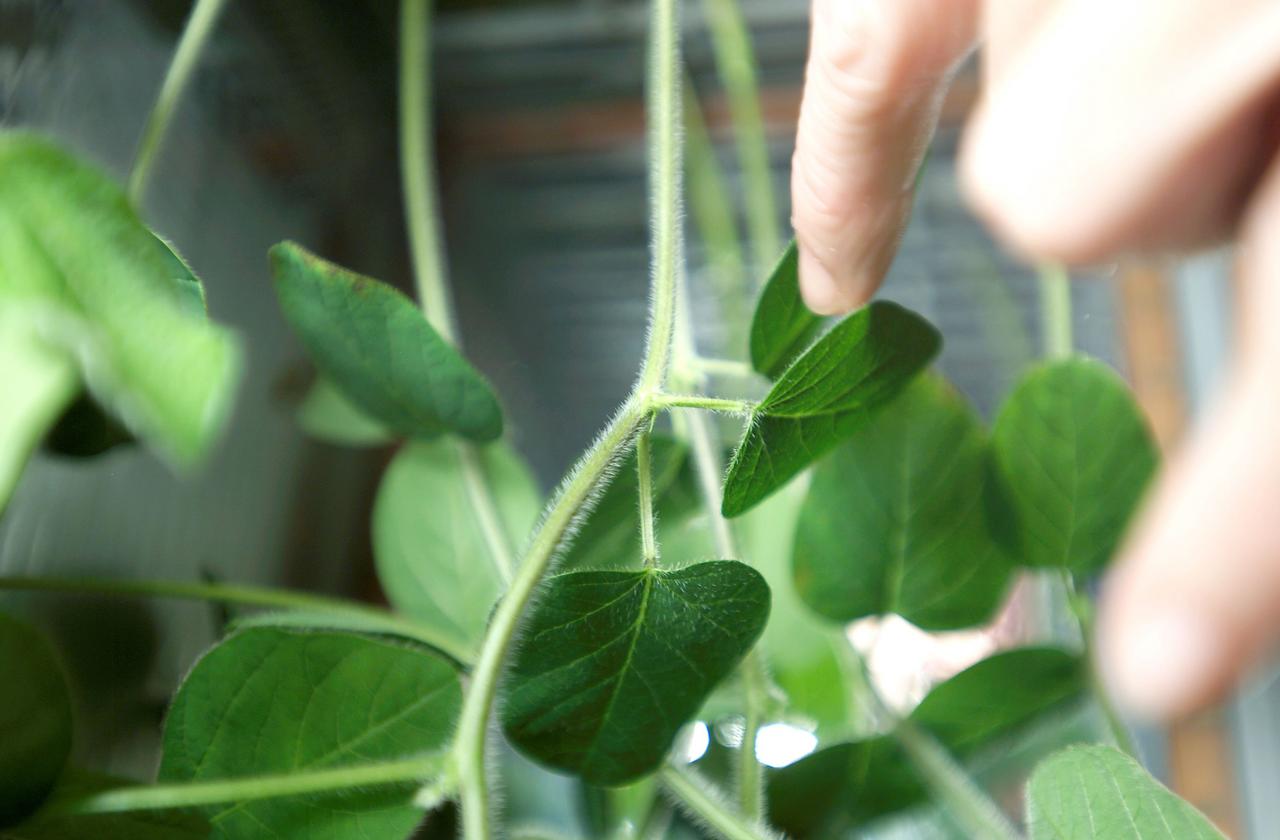
This is a photo of soybeans growing in the Advanced Astroculture (ADVASC) Experiment aboard the International Space Station (ISS). The ADVASC experiment was one of the several new experiments and science facilities delivered to the ISS by Expedition Five aboard the Space Shuttle Orbiter Endeavor STS-111 mission. An agricultural seed company will grow soybeans in the ADVASC hardware to determine whether soybean plants can produce seeds in a microgravity environment. Secondary objectives include determination of the chemical characteristics of the seed in space and any microgravity impact on the plant growth cycle. Station science will also be conducted by the ever-present ground crew, with a new cadre of controllers for Expedition Five in the ISS Payload Operations Control Center (POCC) at NASA's Marshall Space Flight Center in Huntsville, Alabama. Controllers work in three shifts around the clock, 7 days a week, in the POCC, the world's primary science command post for the Space Station. The POCC links Earth-bound researchers around the world with their experiments and crew aboard the Space Station.

ISS005-E-15356 (22 September 2002) --- View of a full Moon photographed by one of the crewmembers aboard the International Space Station (ISS) for Expedition Five.
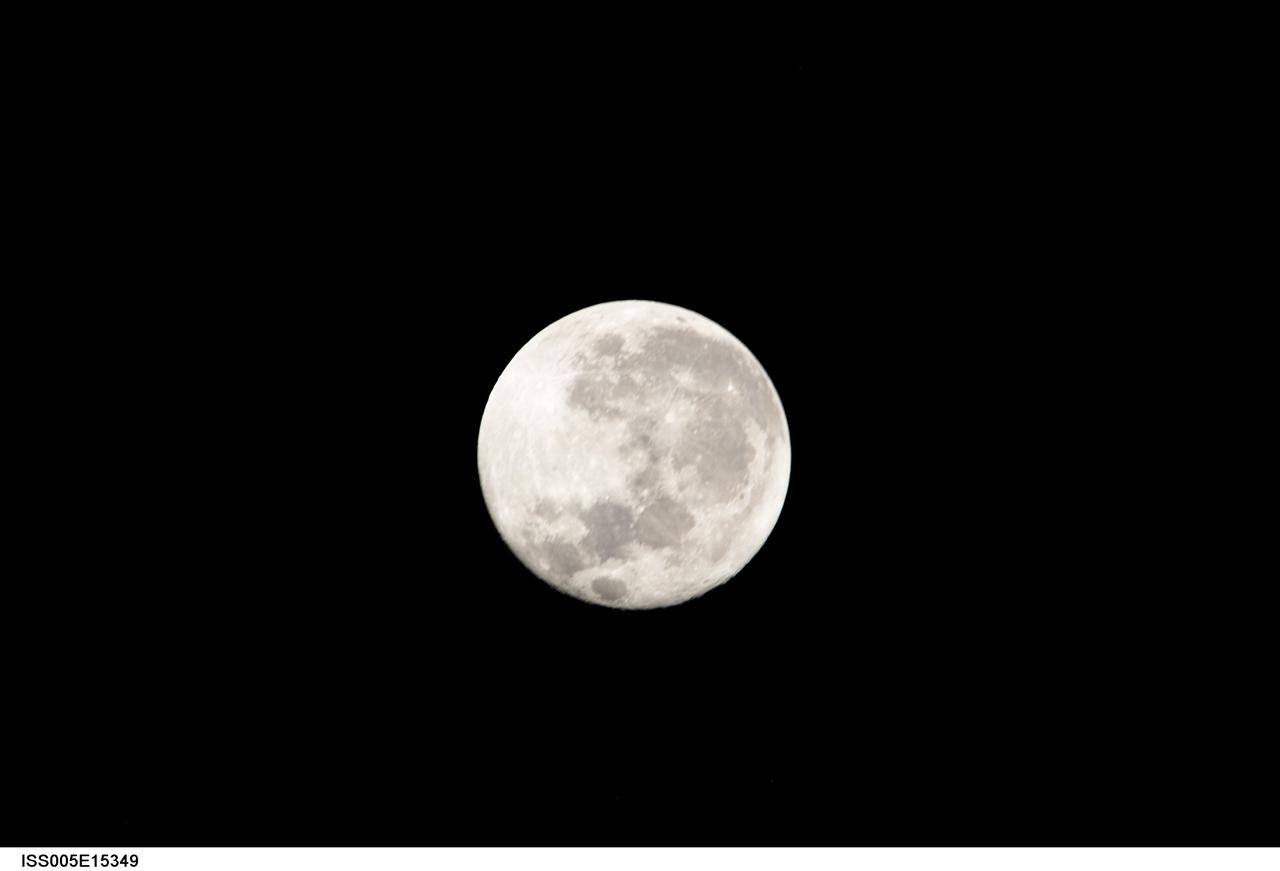
ISS005-E-15349 (22 September 2002) --- View of a full Moon photographed by one of the crewmembers aboard the International Space Station (ISS) for Expedition Five.

Expedition Five flight engineer Peggy Whitson is shown installing the Solidification Using a Baffle in Sealed Ampoules (SUBSA) experiment in the Microgravity Science Glovebox (MSG) in the Destiny laboratory aboard the International Space Station (ISS). SUBSA examines the solidification of semiconductor crystals from a melted material. Semiconductor crystals are used for many products that touch our everyday lives. They are found in computer chips, integrated circuits, and a multitude of other electronic devices, such as sensors for medical imaging equipment and detectors of nuclear radiation. Materials scientists want to make better semiconductor crystals to be able to further reduce the size of high-tech devices. In the microgravity environment, convection and sedimentation are reduced, so fluids do not remove and deform. Thus, space laboratories provide an ideal environment of studying solidification from the melt. This investigation is expected to determine the mechanism causing fluid motion during production of semiconductors in space. It will provide insight into the role of the melt motion in production of semiconductor crystals, advancing our knowledge of the crystal growth process. This could lead to a reduction of defects in semiconductor crystals produced in space and on Earth.
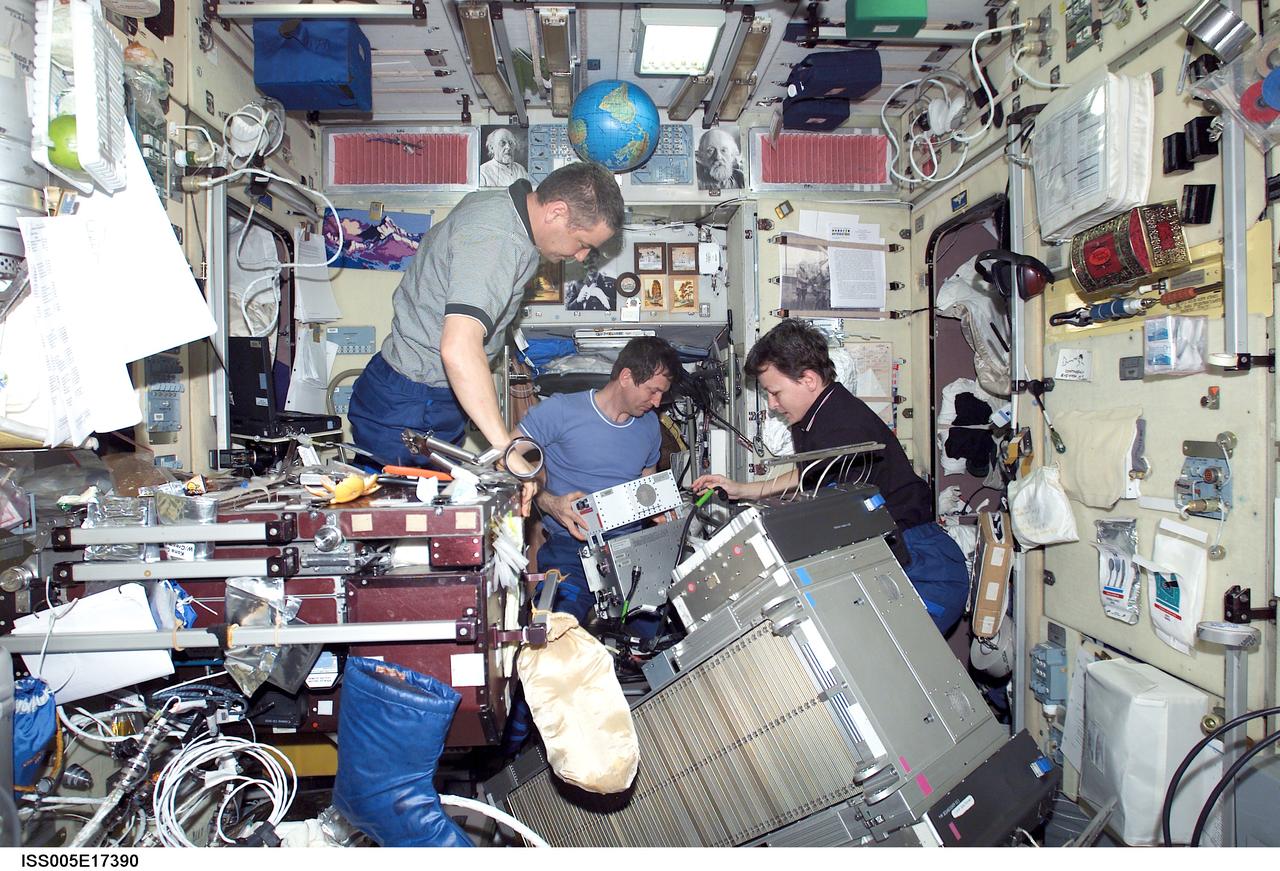
ISS005-E-17390 (13 October 2002) --- Cosmonauts Valery G. Korzun (left), Expedition Five mission commander, Sergei Y. Treschev and astronaut Peggy A. Whitson, Expedition Five flight engineers, perform maintenance on the Treadmill Vibration Isolation System (TVIS) in the Zvezda Service Module on the International Space Station (ISS). Korzun and Treschev represent Rosaviakosmos.
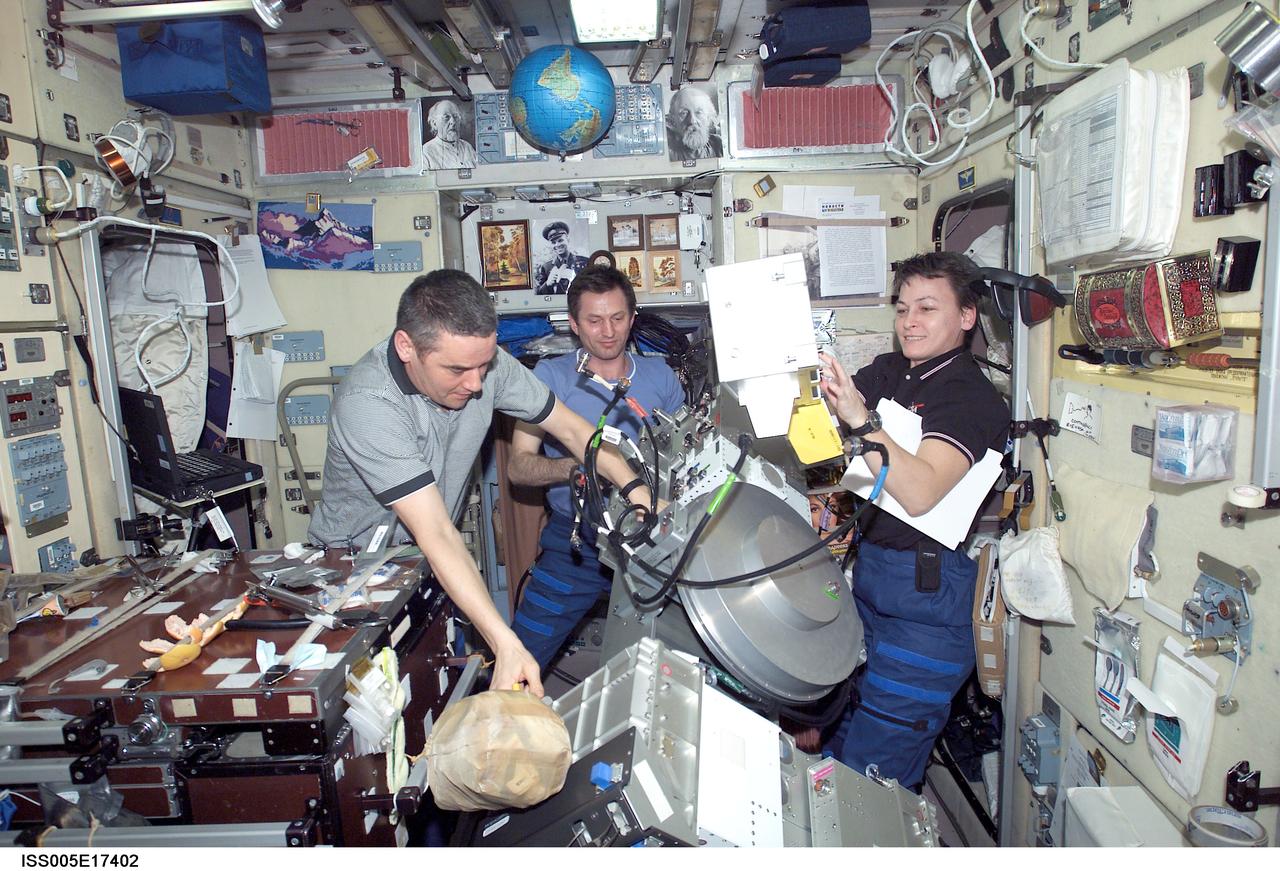
ISS005-E-17402 (13 October 2002) --- Cosmonauts Valery G. Korzun (left), Expedition Five mission commander, Sergei Y. Treschev and astronaut Peggy A. Whitson, Expedition Five flight engineers, perform maintenance on the Treadmill Vibration Isolation System (TVIS) in the Zvezda Service Module on the International Space Station (ISS). Korzun and Treschev represent Rosaviakosmos.
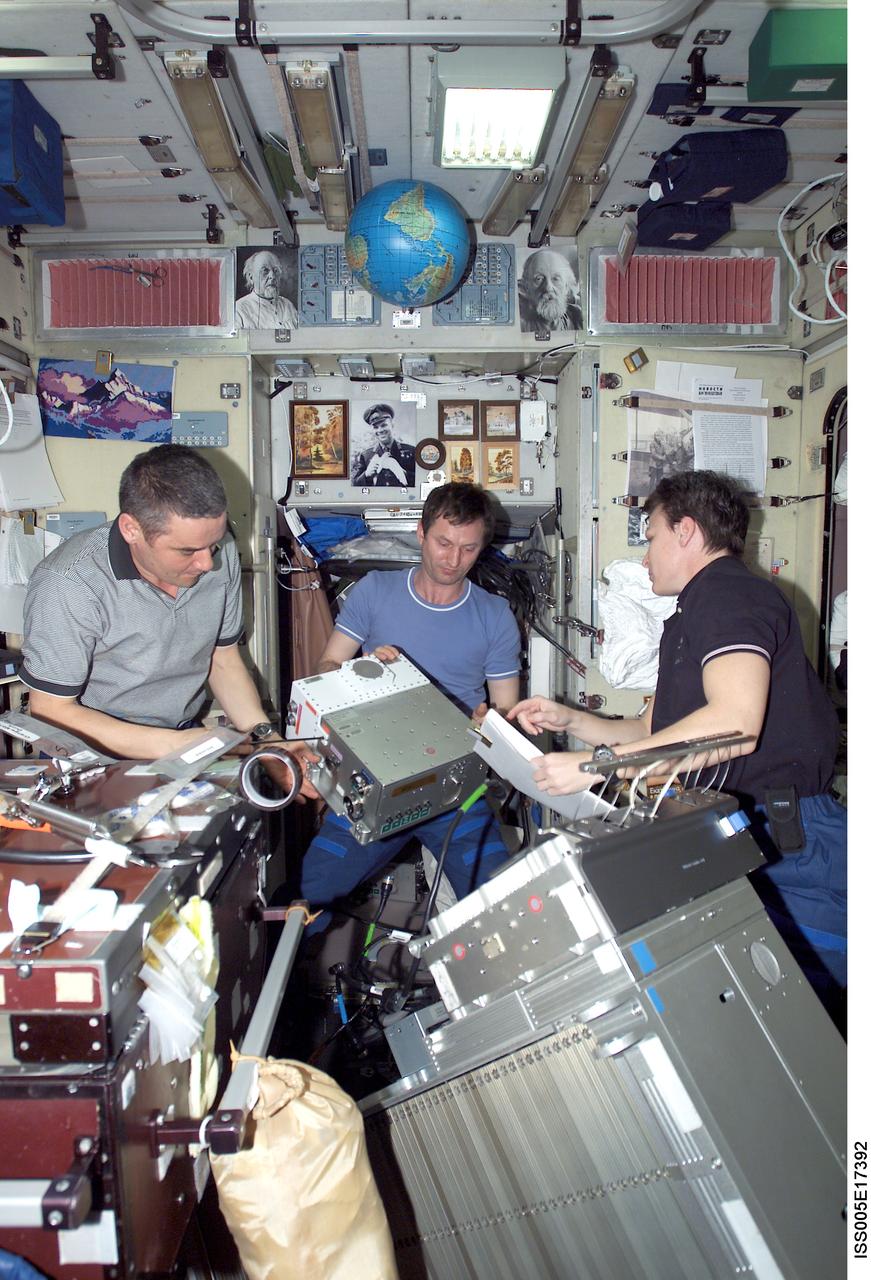
ISS005-E-17392 (13 October 2002) --- Cosmonauts Valery G. Korzun (left), Expedition Five mission commander, Sergei Y. Treschev and astronaut Peggy A. Whitson, Expedition Five flight engineers, perform maintenance on the Treadmill Vibration Isolation System (TVIS) in the Zvezda Service Module on the International Space Station (ISS). Korzun and Treschev represent Rosaviakosmos.
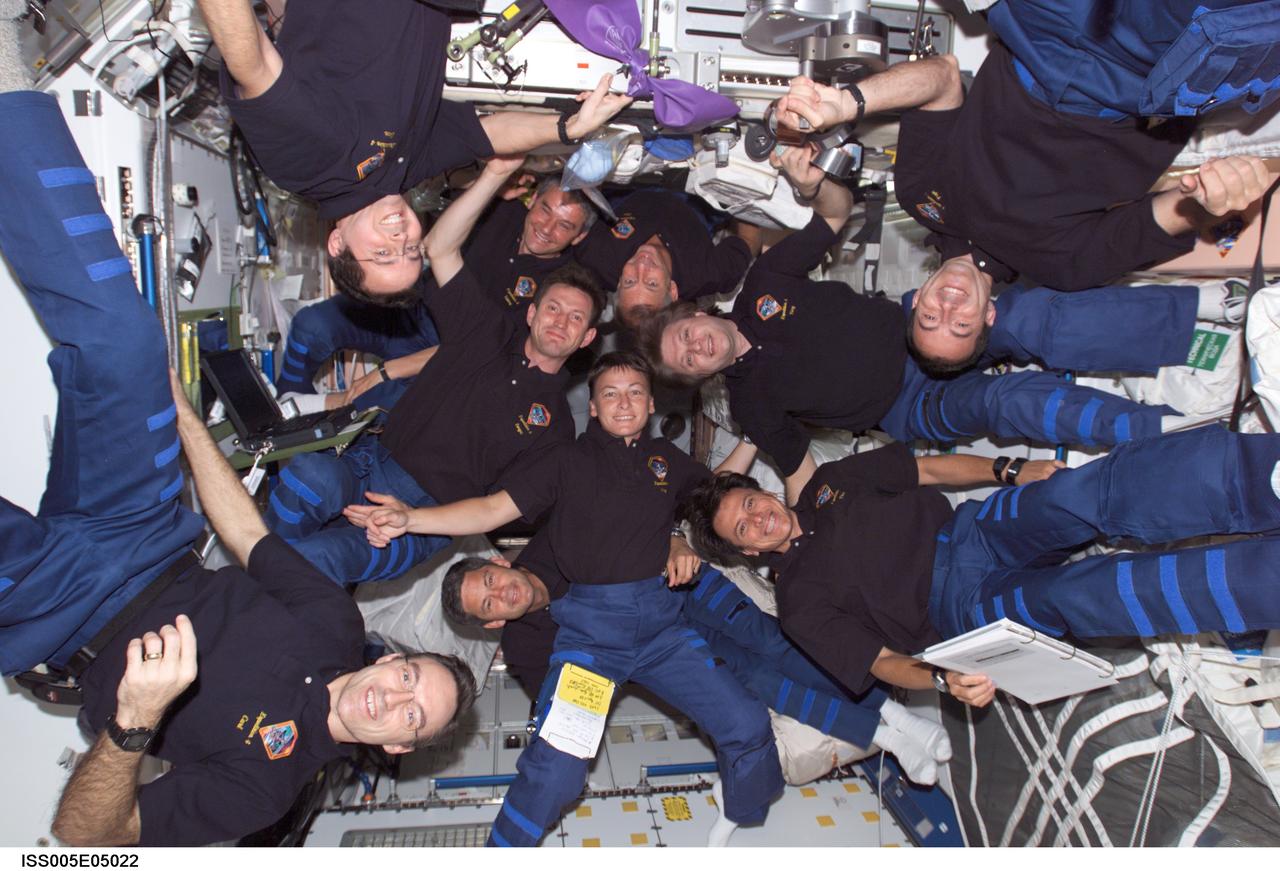
ISS005-E-05022 (15 June 2002) --- The Expedition Four, STS-111, and Expedition Five crews assemble for a group photo in the Unity node on the International Space Station (ISS). Pictured are cosmonaut Valery G. Korzun, Expedition Five mission commander; astronaut Peggy A. Whitson and cosmonaut Sergei Y. Treschev, Expedition Five flight engineers; cosmonaut Yury I. Onufrienko, Expedition Four mission commander; astronauts Carl E. Walz and Daniel W. Bursch, Expedition Four flight engineers; astronauts Kenneth D. Cockrell and Paul S. Lockhart, STS-111 mission commander and pilot, respectively; and astronauts Franklin R. Chang-Diaz and Philippe Perrin, both STS-111 mission specialists. Korzun, Onufrienko, and Treschev represent Rosaviakosmos, and Perrin represents CNES, the French Space Agency.
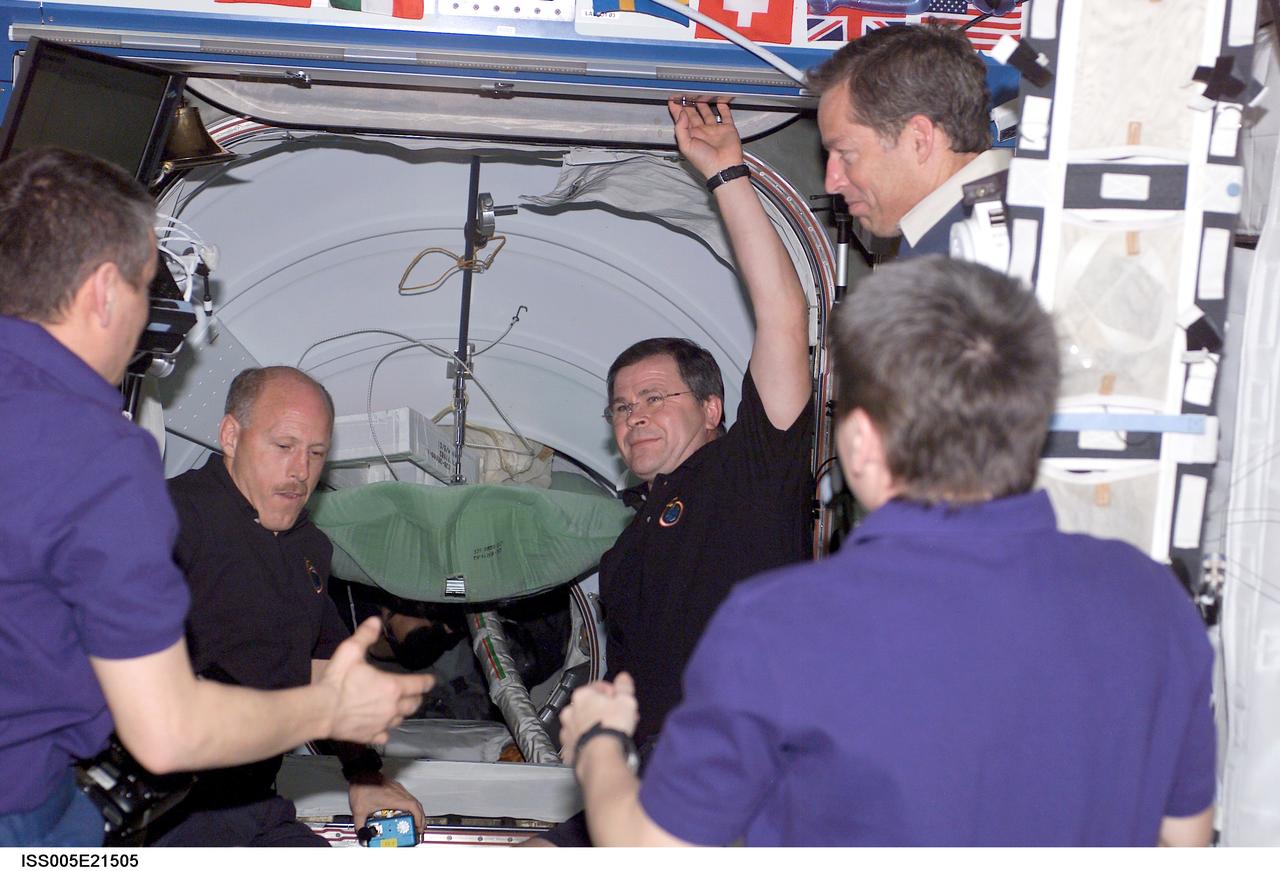
ISS005-E-21505 (25 November 2002) --- The Expedition Five crewmembers greet the Expedition Six and STS-113 crewmembers when the hatch to the Pressurized Mating Adapter 2 (PMA-2) on the International Space Station (ISS) was opened for the STS-113 ingress. Pictured are cosmonaut Valery G. Korzun (back to camera, left), Expedition Five mission commander; astronaut Peggy A. Whitson (back to camera, right), Expedition Five NASA ISS science office. Pictured, left to right (background), are astronaut Kenneth D. Bowersox, Expedition Six mission commander; cosmonaut Nikolai M. Budarin, Expedition Six flight engineer; and astronaut James D. Wetherbee, STS-113 mission commander. Korzun and Budarin represent Rosaviakosmos.
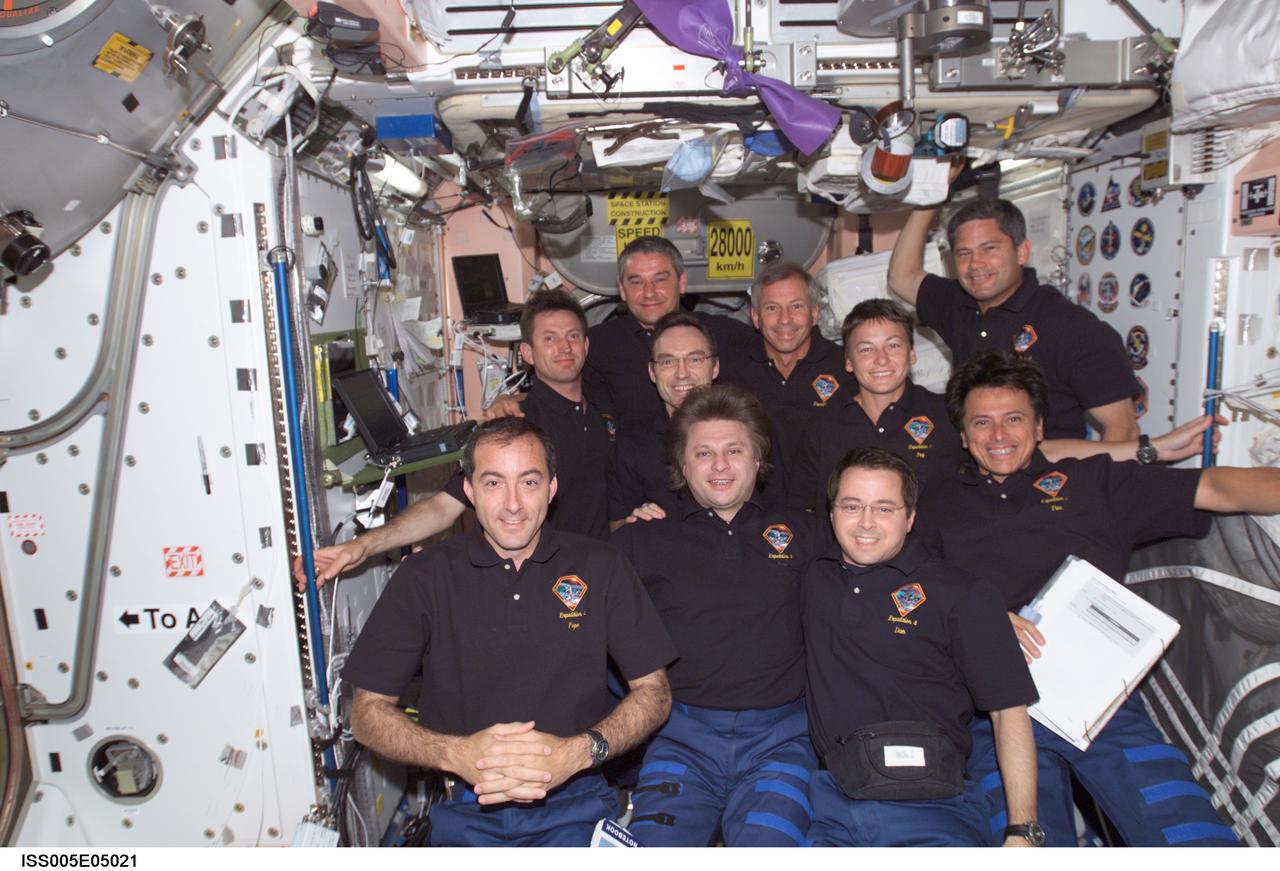
ISS005-E-05021 (15 June 2002) --- The Expedition Four, STS-111, and Expedition Five crews assemble for a group photo in the Unity node on the International Space Station (ISS). From the left, front row, are astronaut Philippe Perrin, STS-111 mission specialist; cosmonaut Yury I. Onufrienko, Expedition Four mission commander; astronauts Daniel W. Bursch, Expedition Four flight engineer; and Franklin R. Chang-Diaz, STS-111 mission specialist. From the left, center row, are cosmonaut Sergei Y. Treschev, Expedition Five flight engineer; astronaut Carl E. Walz, Expedition Four flight engineer; astronaut Peggy A. Whitson, Expedition Five flight engineer; and astronaut Paul S. Lockhart, STS-111 pilot. From the left, back row, are cosmonaut Valery G. Korzun, Expedition Five mission commander, and astronaut Kenneth D. Cockrell, STS-111 mission commander. Onufrienko, Korzun and Treschev represent Rosaviakosmos, and Perrin represents CNES, the French Space Agency.
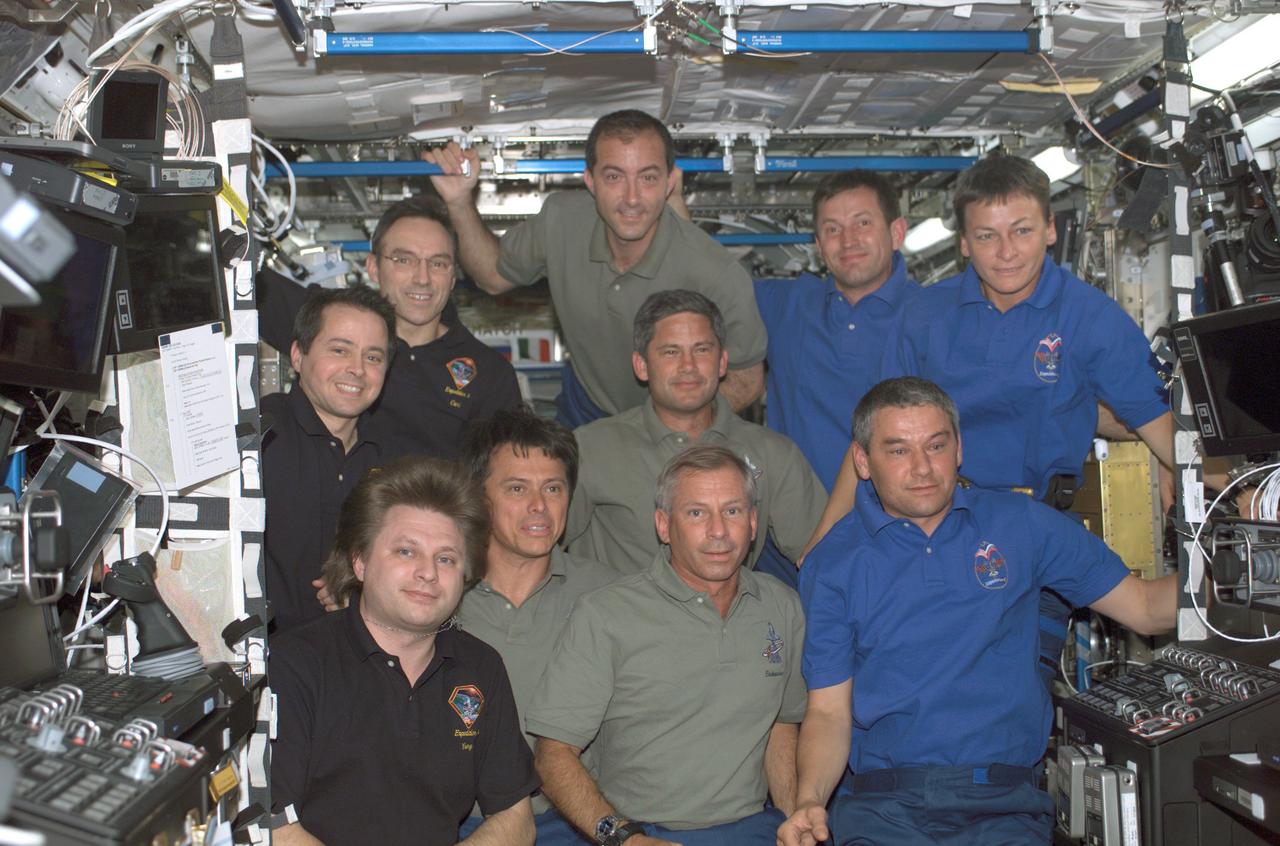
Huddled together in the Destiny laboratory of the International Space Station (ISS) are the Expedition Four crew (dark blue shirts), Expedition Five crew (medium blue shirts) and the STS-111 crew (green shirts). The Expedition Four crewmembers are, from front to back, Cosmonaut Ury I. Onufrienko, mission commander; and Astronauts Daniel W. Bursch and Carl E. Waltz, flight engineers. The ISS crewmembers are, from front to back, Astronauts Kerneth D. Cockrell, mission commander; Franklin R. Chang-Diaz, mission specialist; Paul S. Lockhart, pilot; and Philippe Perrin, mission specialist. Expedition Five crewmembers are, from front to back, Cosmonaut Valery G. Korzun, mission commander; Astronaut Peggy A. Whitson and Cosmonaut Sergei Y. Treschev, flight engineers. The ISS recieved a new crew, Expedition Five, replacing Expedition Four after a record-setting 196 days in space, when the Space Shuttle Orbiter Endeavour STS-111 mission visited in June 2002. Three spacewalks enabled the STS-111 crew to accomplish additional mission objectives: the delivery and installation of the Mobile Base System (MBS), which is an important part of the station's Mobile Servicing System allowing the robotic arm to travel the length of the station; the replacement of a wrist roll joint on the Station's robotic arm; and unloading supplies and science experiments from the Leonardo Multi-Purpose Logistics Module, which made its third trip to the orbital outpost. The STS-111 mission, the 14th Shuttle mission to visit the ISS, was launched on June 5, 2002 and landed June 19, 2002.
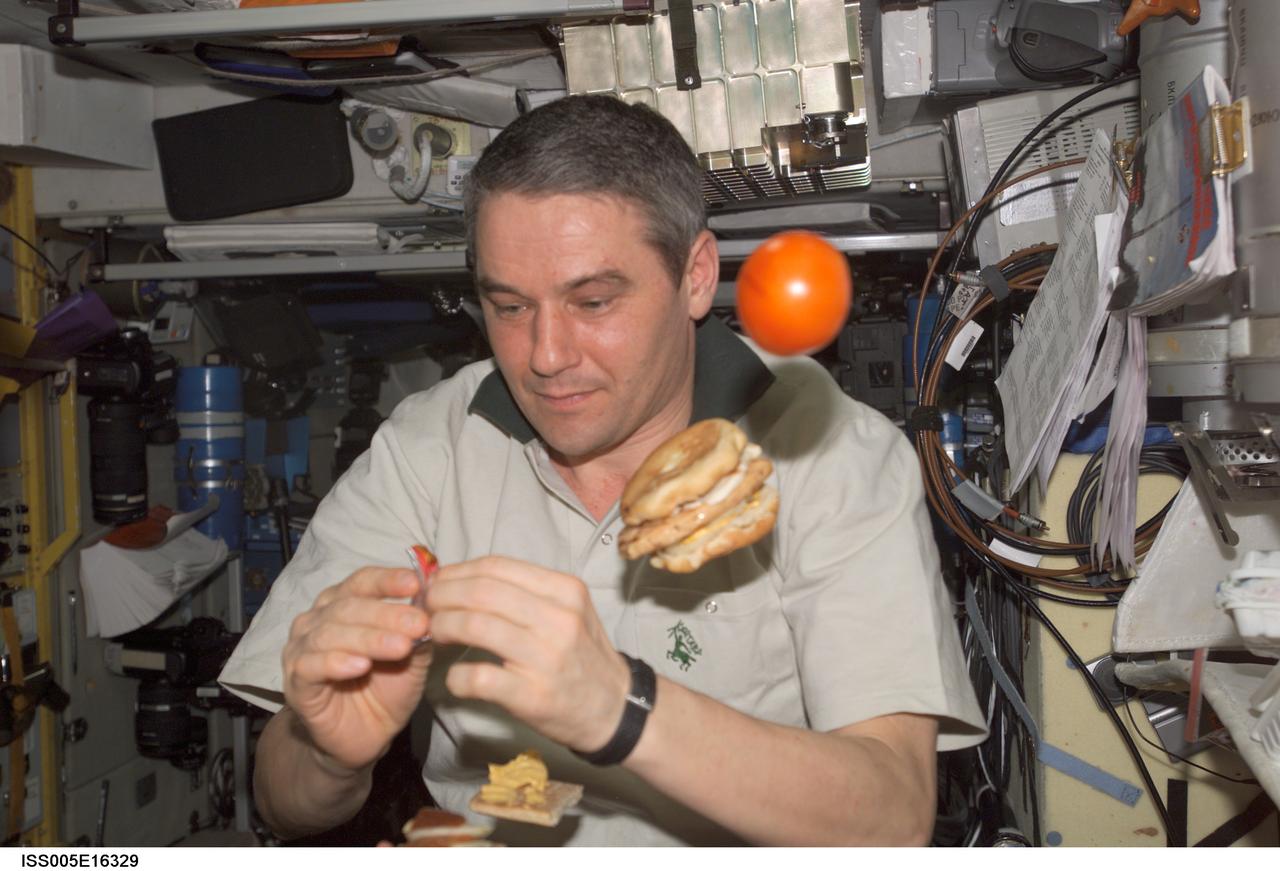
ISS005-E-16329 (4 October 2002) --- Cosmonaut Valery G. Korzun, Expedition Five mission commander, prepares to eat a meal in the Zvezda Service Module on the International Space Station (ISS). Korzun represents Rosaviakosmos.
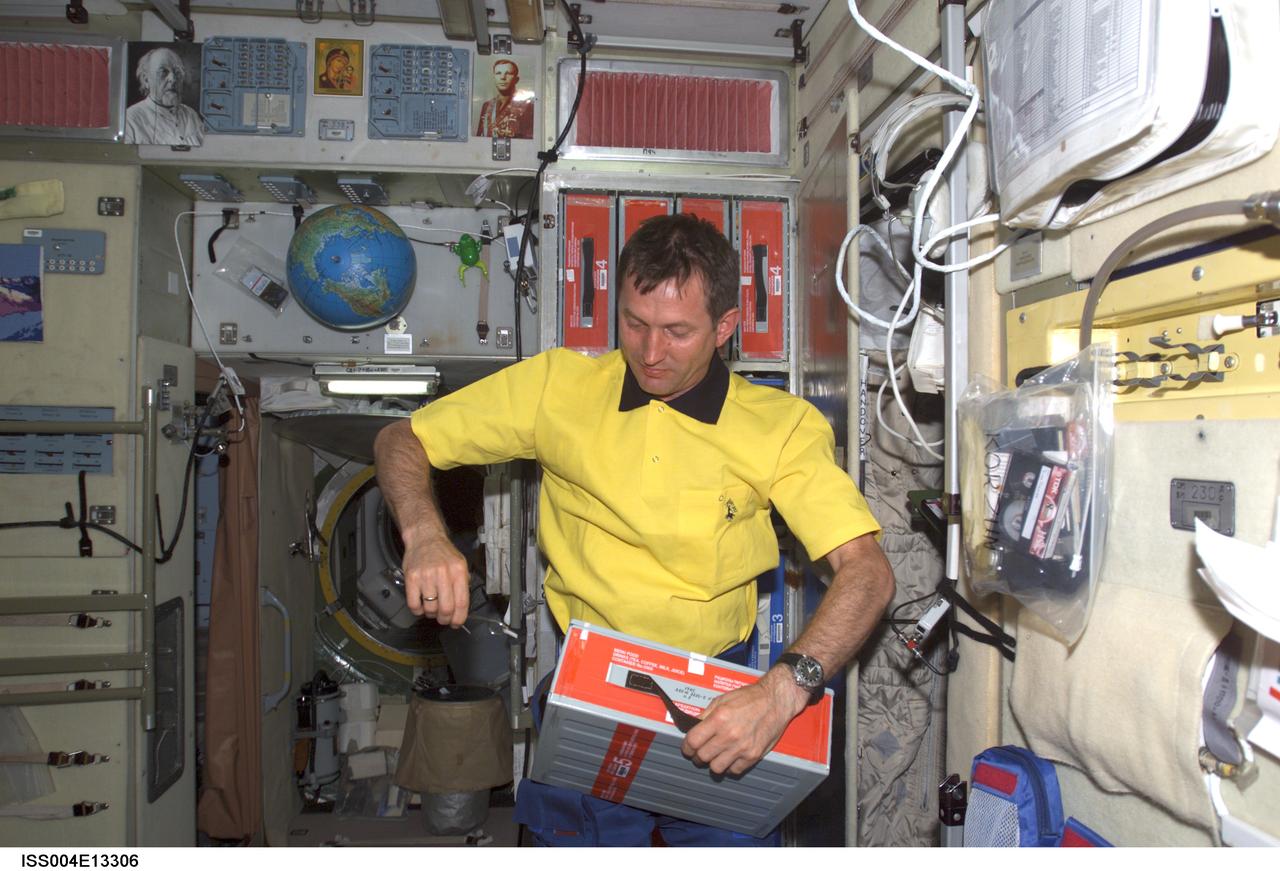
ISS004-E-13306 (June 2002) --- Cosmonaut Sergei Y. Treschev, Expedition Five flight engineer representing Rosaviakosmos, works in the Zvezda Service Module on the International Space Station (ISS).
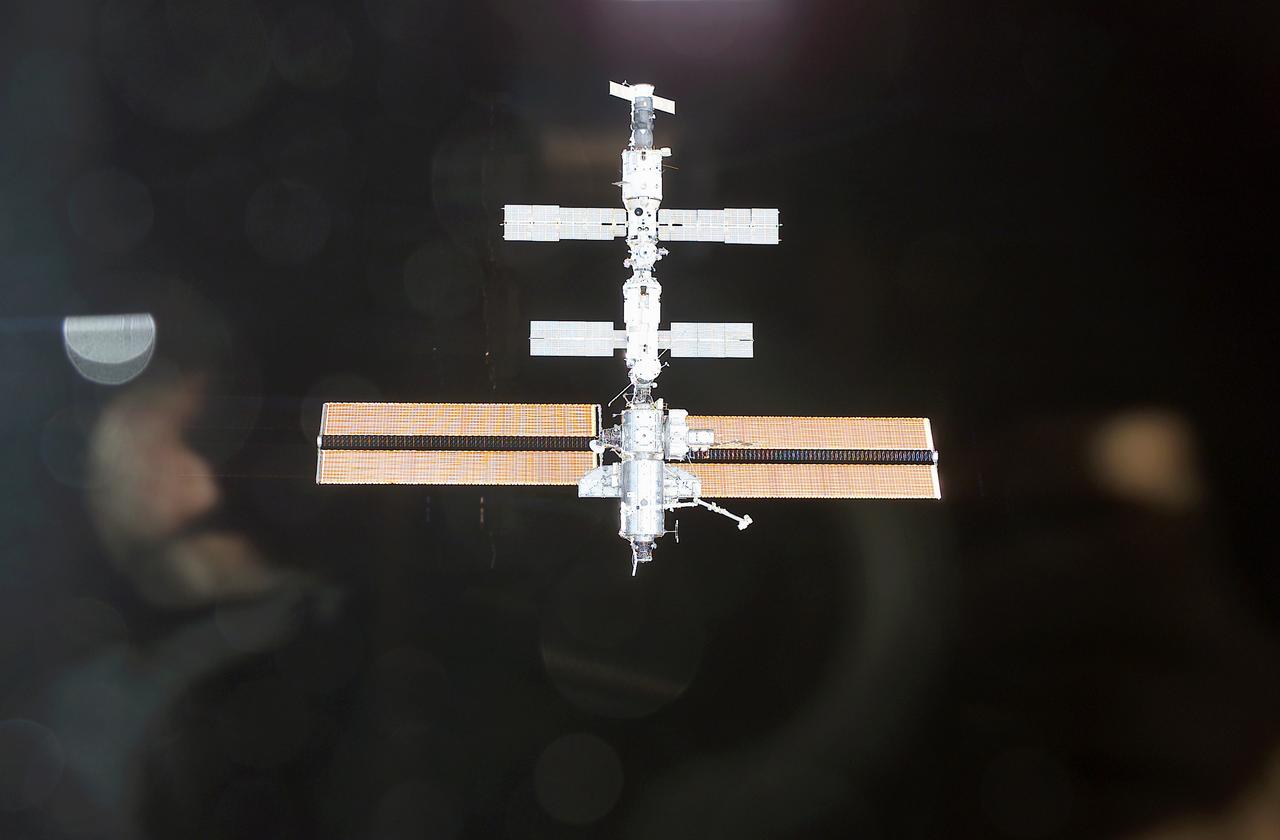
Backdropped against the blackness of space is the International Space Station (ISS), as viewed from the approching Space Shuttle Orbiter Endeavour, STS-111 mission, in June 2002. Expedition Five replaced Expedition Four crew after remaining a record-setting 196 days in space. Three spacewalks enabled the STS-111 crew to accomplish the delivery and installation of the Mobile Remote Servicer Base System (MBS), an important part of the Station's Mobile Servicing System that allows the robotic arm to travel the length of the Station, which is necessary for future construction tasks; the replacement of a wrist roll joint on the Station's robotic arm, and the task of unloading supplies and science experiments from the Leonardo Multi-Purpose Logistics Module, which made its third trip to the orbital outpost. The STS-111 mission, the 14th Shuttle mission to visit the ISS, was launched on June 5, 2002 and landed June 19, 2002.
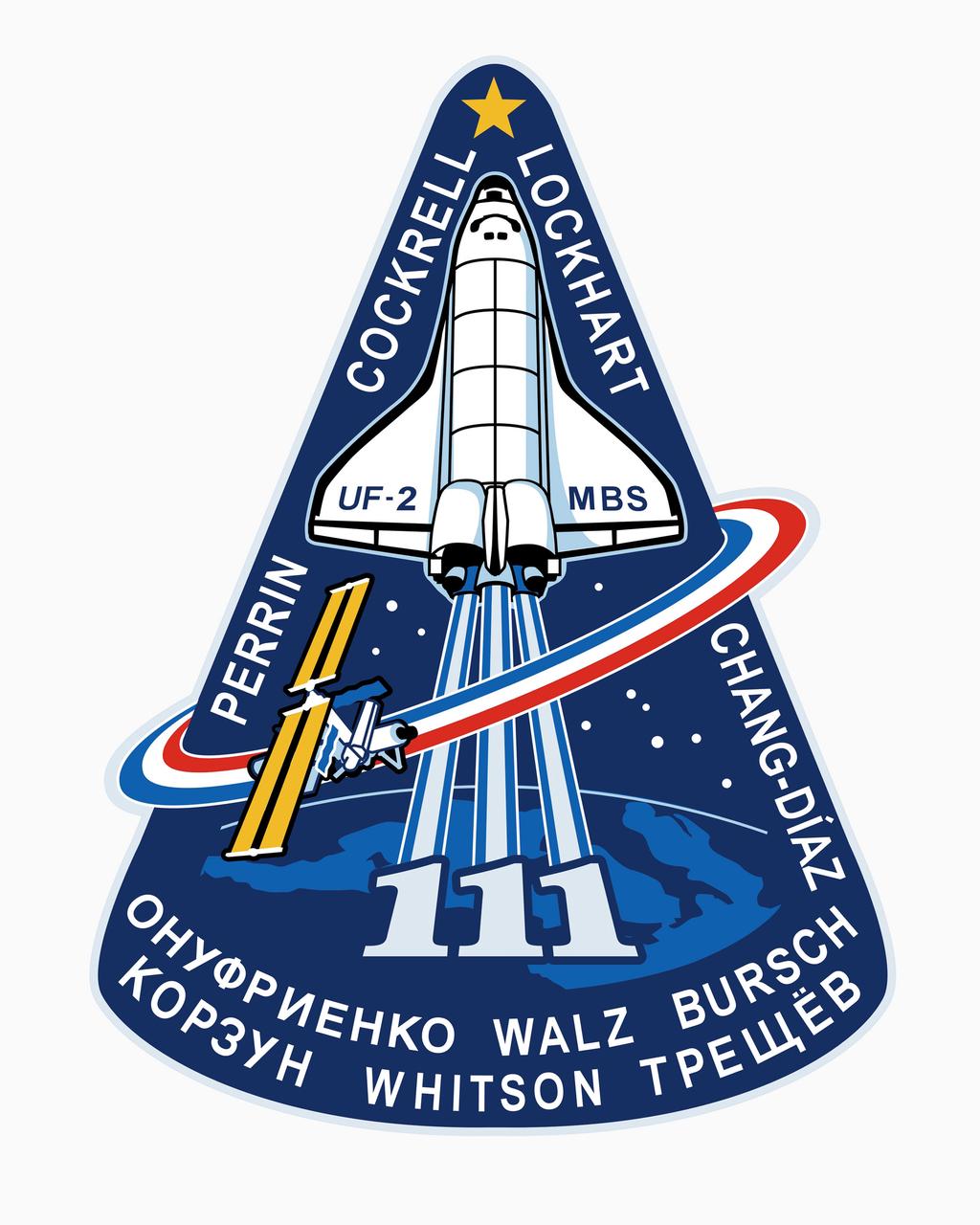
Pictured here is the Space Shuttle Orbiter Endeavour, STS-111 mission insignia. The International Space Station (ISS) recieved a new crew, Expedition Five, replacing Expedition Four after a record-setting 196 days in space, when STS-111 visited in June 2002. Three spacewalks enabled the STS-111 crew to accomplish additional mission objectives: the delivery and installation of a new platform for the ISS robotic arm, the Mobile Base System (MBS) which is an important part of the Station's Mobile Servicing System allowing the robotic arm to travel the length of the Station; the replacement of a wrist roll joint on the Station's robotic arm; and unloading supplies and science experiments from the Leonardo Multi-Purpose Logistics Module, which made its third trip to the orbital outpost. The STS-111 mission, the 14th Shuttle mission to visit the ISS, was launched on June 5, 2002 and landed June 19, 2002.
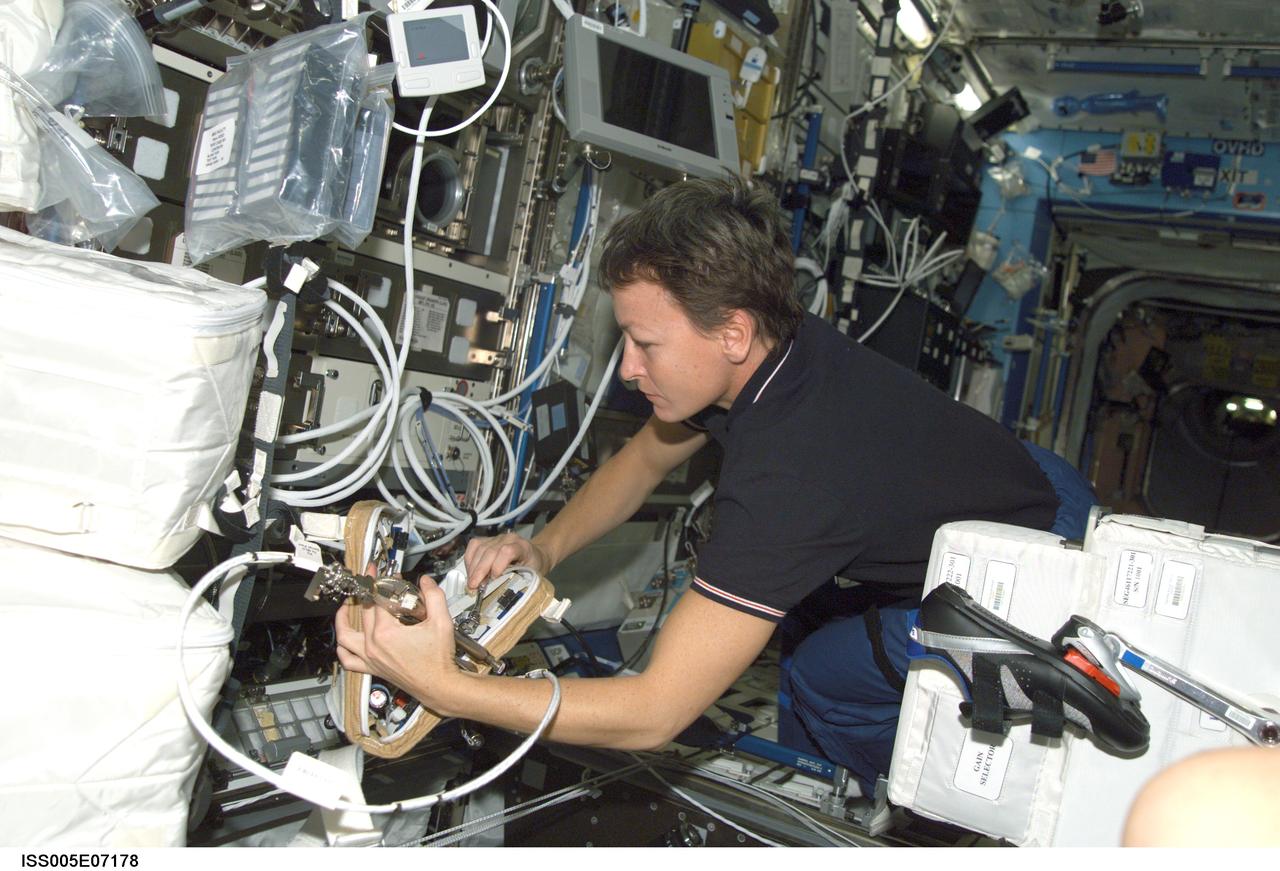
ISS005-E-07178 (9 July 2002) --- Astronaut Peggy A. Whitson, Expedition Five flight engineer, works in the Destiny laboratory on the International Space Station (ISS).

ISS005-E-08115 (July 2002) --- View of a gibbous Moon photographed by one of the crewmembers aboard the International Space Station (ISS) for Expedition Five.

ISS005-E-16538 (9 October 2002) --- Astronaut Peggy A. Whitson, Expedition Five flight engineer, works in the Destiny laboratory on the International Space Station (ISS).
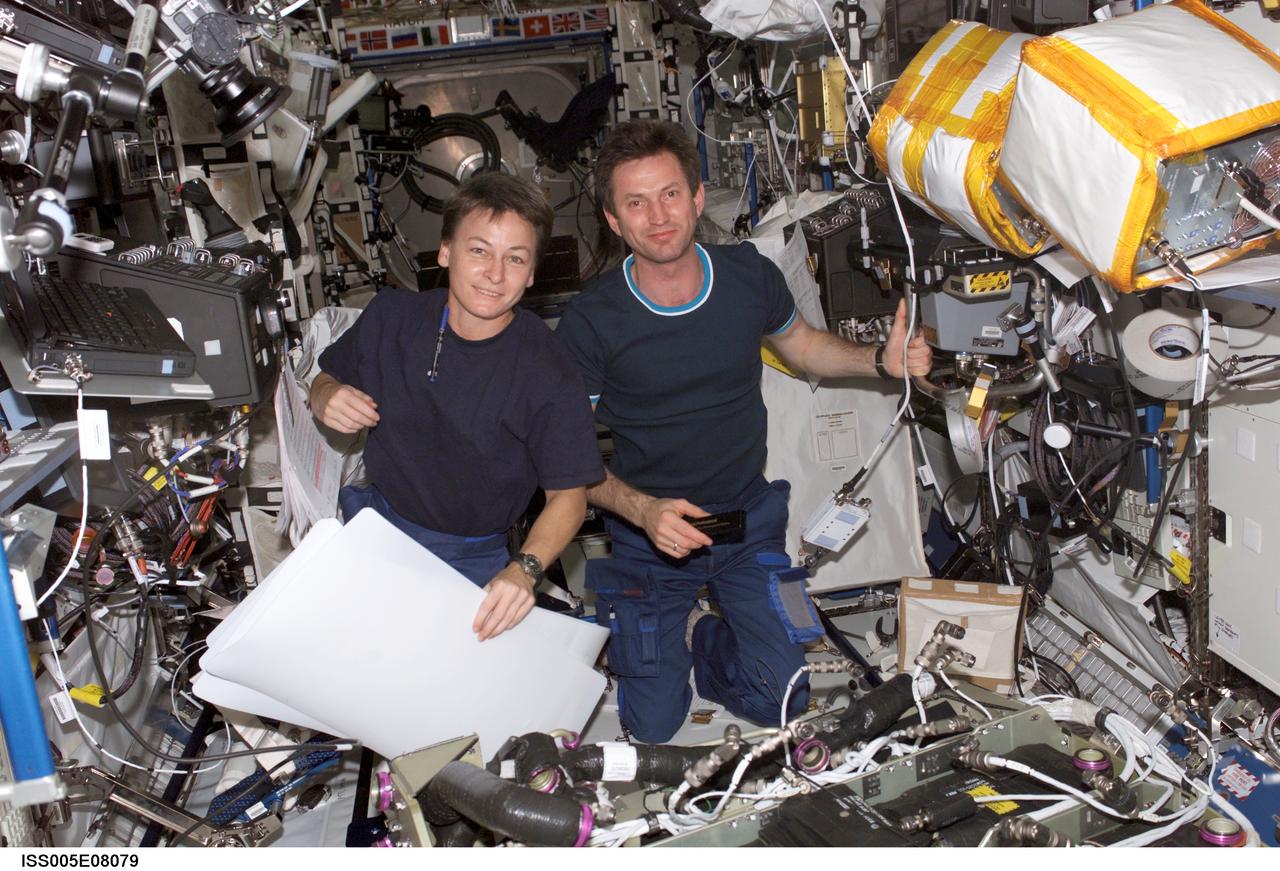
ISS005-E-08079 (July 2002) --- Astronaut Peggy A. Whitson (left) and cosmonaut Sergei Y. Treschev, both Expedition Five flight engineers, work in the Destiny laboratory on the International Space Station (ISS). Treschev represents Rosaviakosmos.
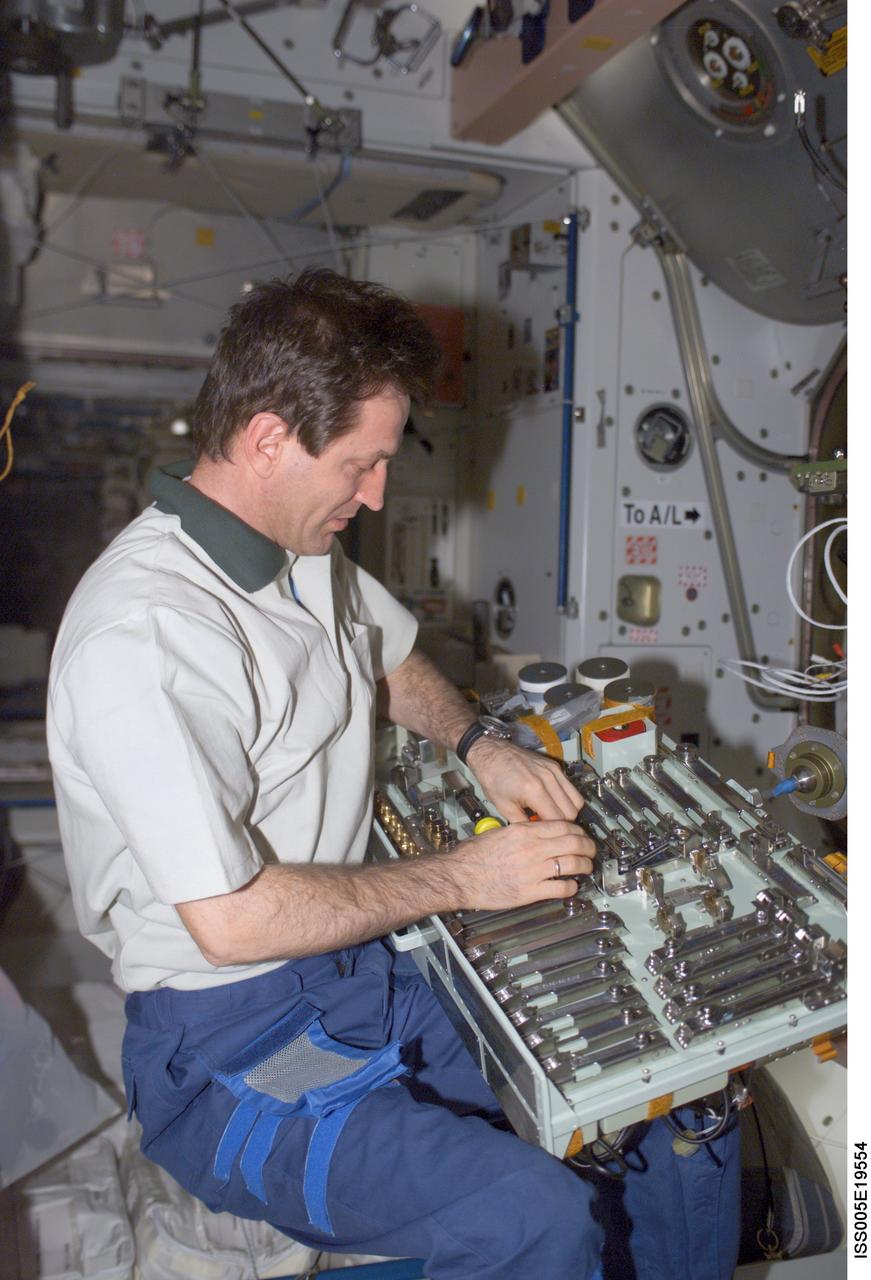
ISS005-E-19554 (2 November 2002) --- Cosmonaut Sergei Y. Treschev, Expedition Five flight engineer, works with various tools in the Unity node on the International Space Station (ISS). Treschev represents Rosaviakosmos.
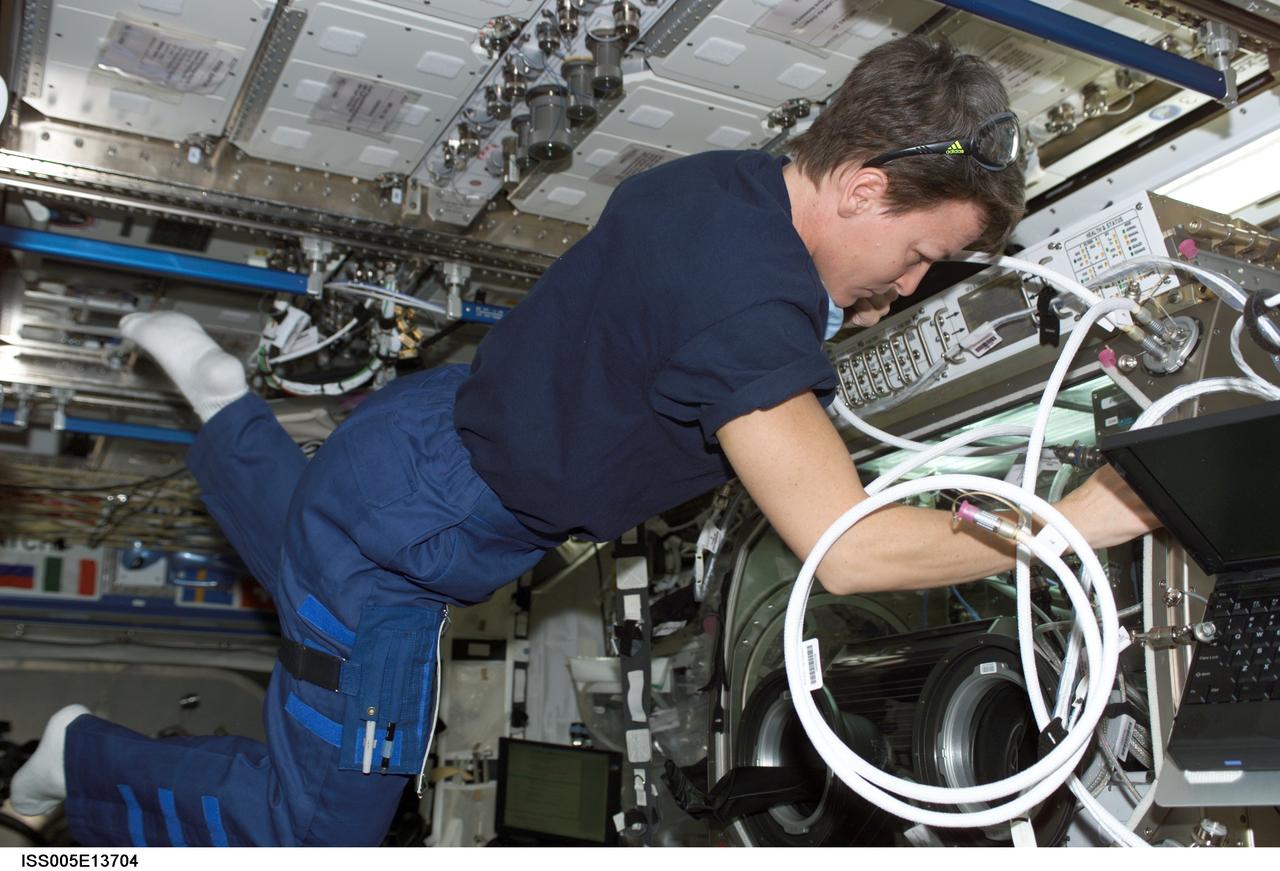
ISS005-E-13704 (11 September 2002) --- Astronaut Peggy A. Whitson, Expedition Five flight engineer, works with the Microgravity Science Glovebox (MSG) in the Destiny laboratory on the International Space Station (ISS).
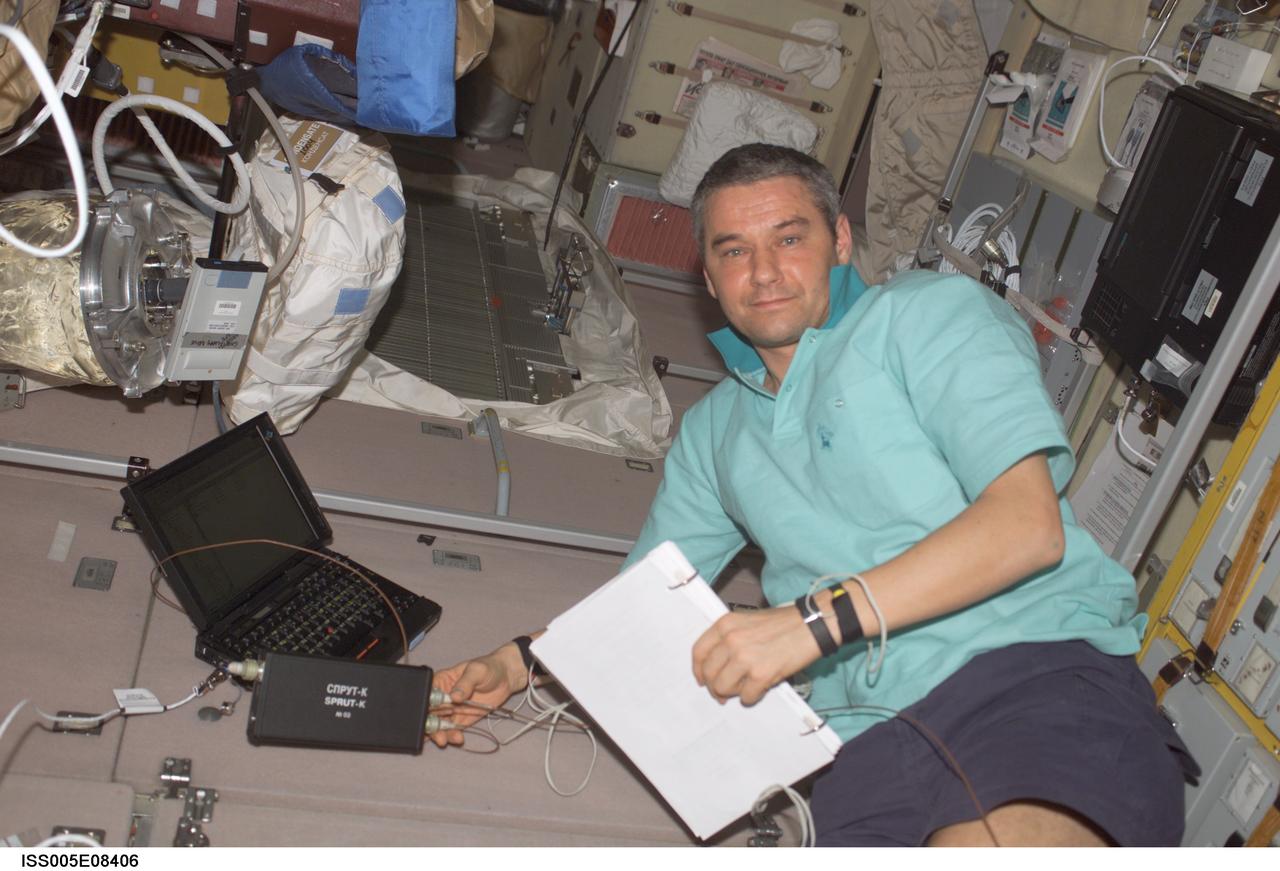
ISS005-E-08406 (July 2002) --- Cosmonaut Valery G. Korzun, Expedition Five mission commander representing Rosaviakosmos, works in the Zvezda Service Module on the International Space Station (ISS).
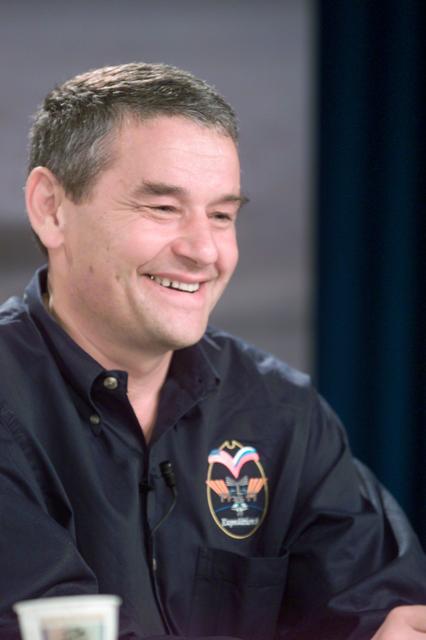
JSC2002-E-21246 (20 May 2002) --- Cosmonaut Valery G. Korzun, Expedition Five mission commander representing Rosaviakosmos, responds to a query during a pre-flight press conference at Johnson Space Center (JSC).
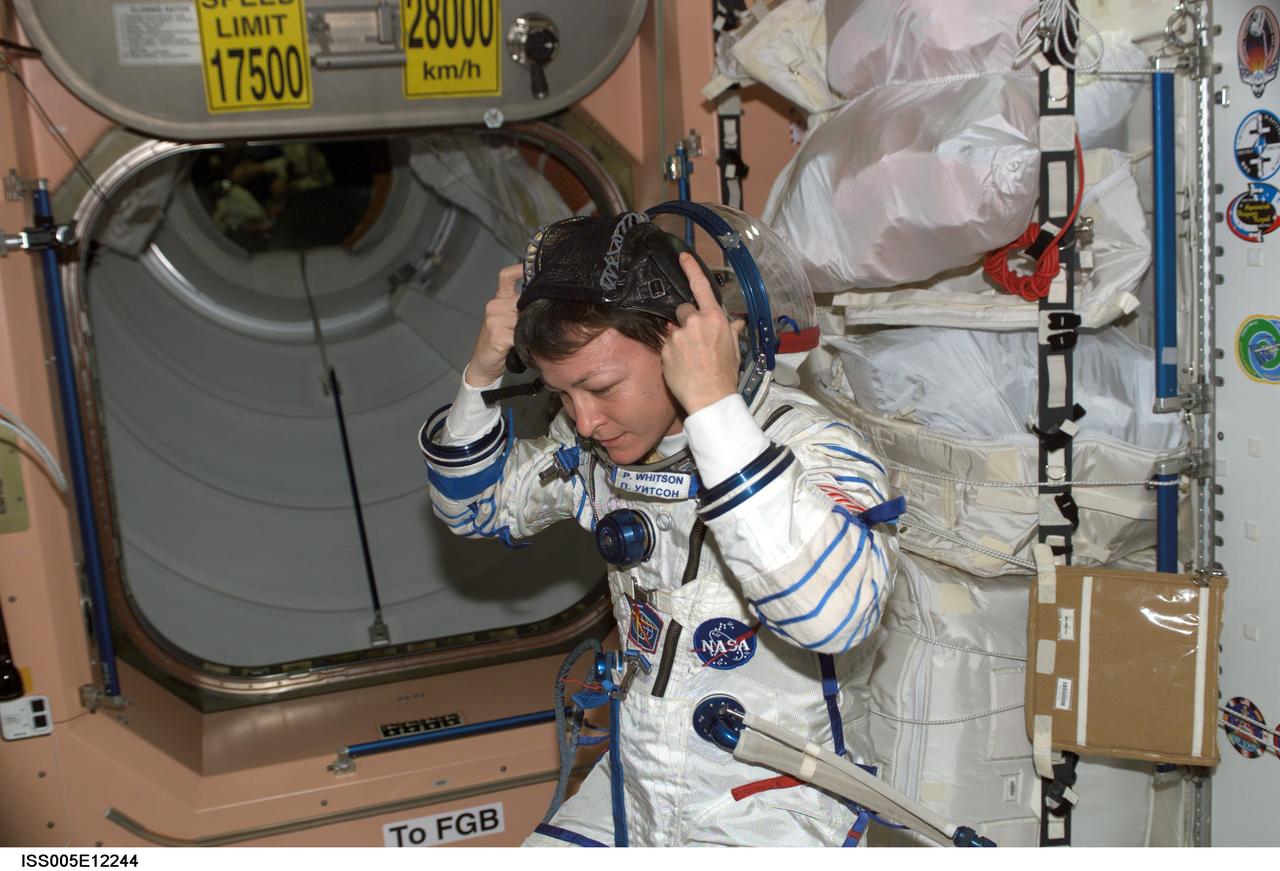
ISS005-E-12244 (3 September 2002) --- Astronaut Peggy A. Whitson, Expedition Five flight engineer, dons a Russian Sokol suit in the Unity node on the International Space Station (ISS).

ISS005-E-21040 (21 November 2002) --- Astronaut Peggy A. Whitson, Expedition Five NASA ISS science officer, floats in the Destiny laboratory on the International Space Station (ISS).
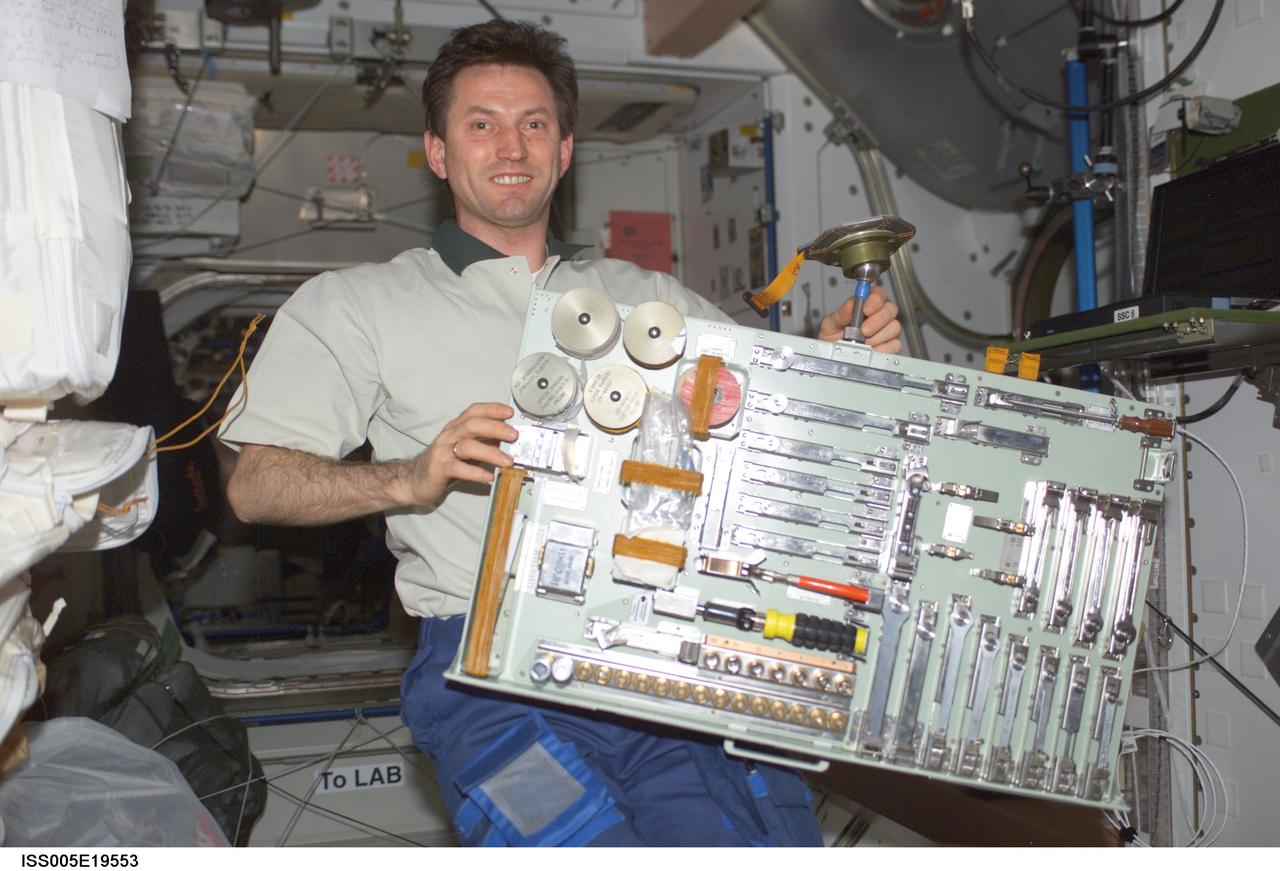
ISS005-E-19553 (2 November 2002) --- Cosmonaut Sergei Y. Treschev, Expedition Five flight engineer, holds a pallet containing various tools in the Unity node on the International Space Station (ISS). Treschev represents Rosaviakosmos.

JSC2002-E-21249 (20 May 2002) --- Astronaut Peggy A. Whitson, Expedition Five flight engineer, responds to a query during a pre-flight press conference at Johnson Space Center (JSC).

ISS005-E-06010 (June 2002) --- Cosmonaut Sergei Y. Treschev, Expedition Five flight engineer representing Rosaviakosmos, works in the Zvezda Service Module on the International Space Station (ISS).
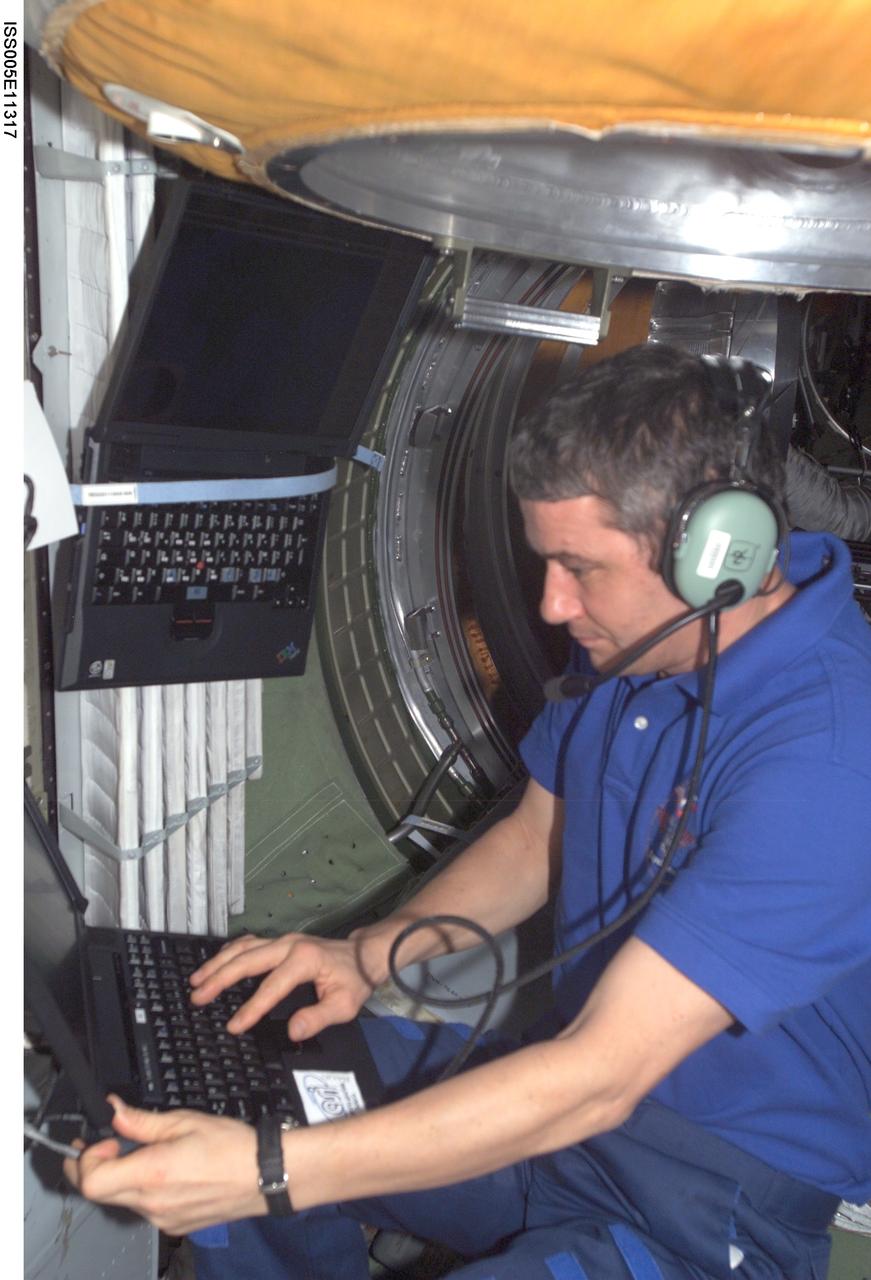
ISS005-E-11317 (27 August 2002) --- Cosmonaut Valery G. Korzun, Expedition Five mission commander, uses an amateur radio in the functional cargo block (FGB) on the International Space Station (ISS). Korzun represents Rosaviakosmos.
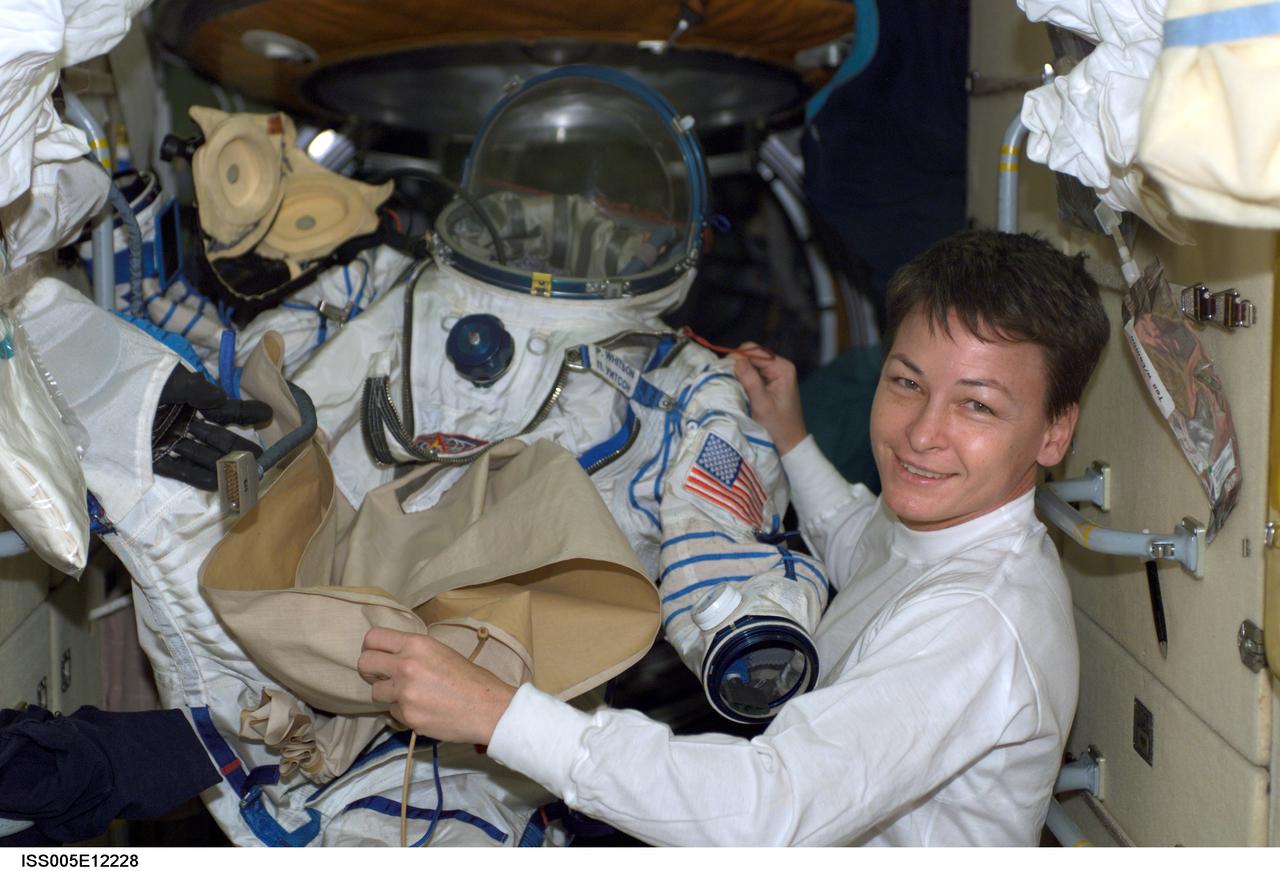
ISS005-E-12228 (3 September 2002) --- Astronaut Peggy A. Whitson, Expedition Five flight engineer, is pictured holding a Russian Sokol suit in the functional cargo block (FGB), or Zarya on the International Space Station (ISS).
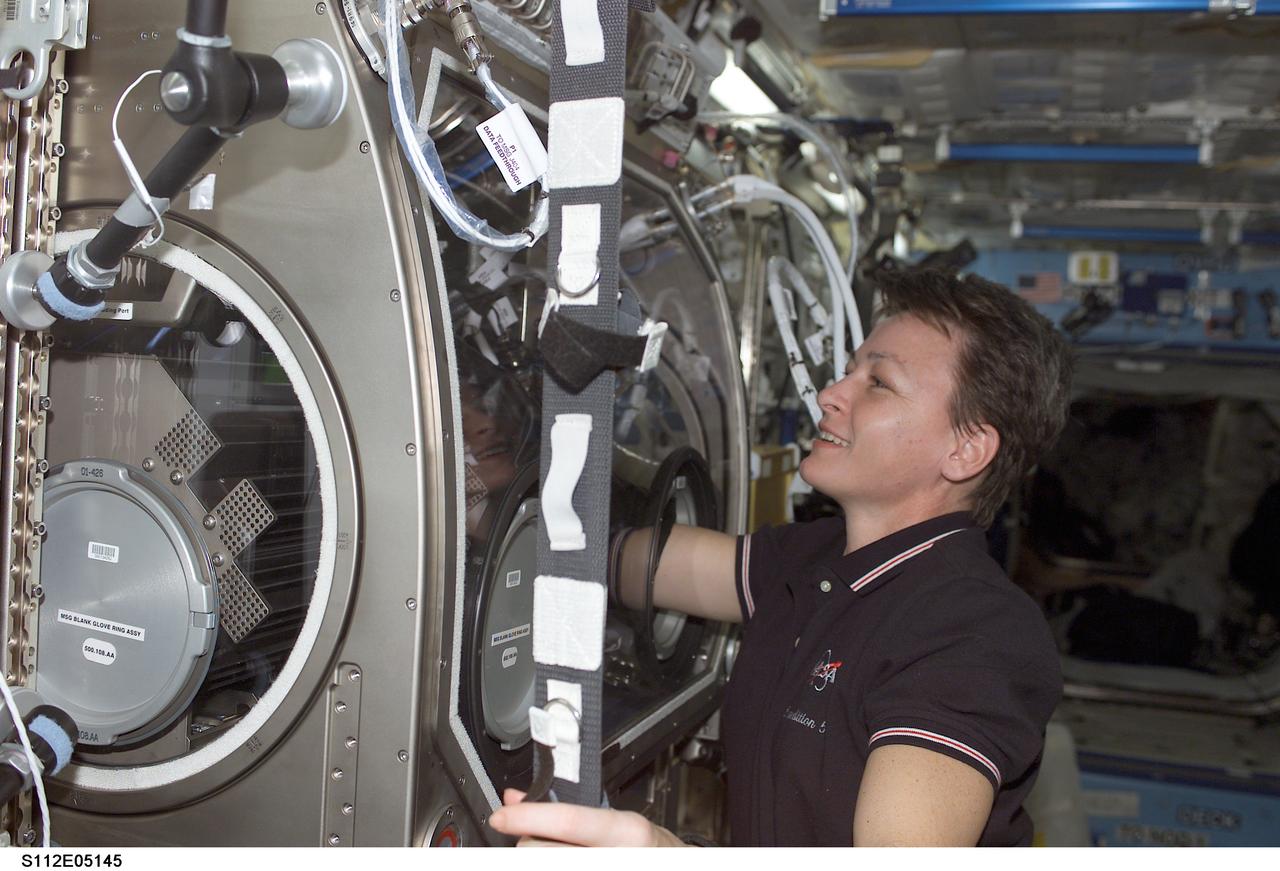
STS112-E-05145 (11 October 2002) --- Astronaut Peggy A. Whitson, Expedition Five flight engineer, works with the Microgravity Science Glovebox (MSG) in the Destiny laboratory on the International Space Station (ISS).
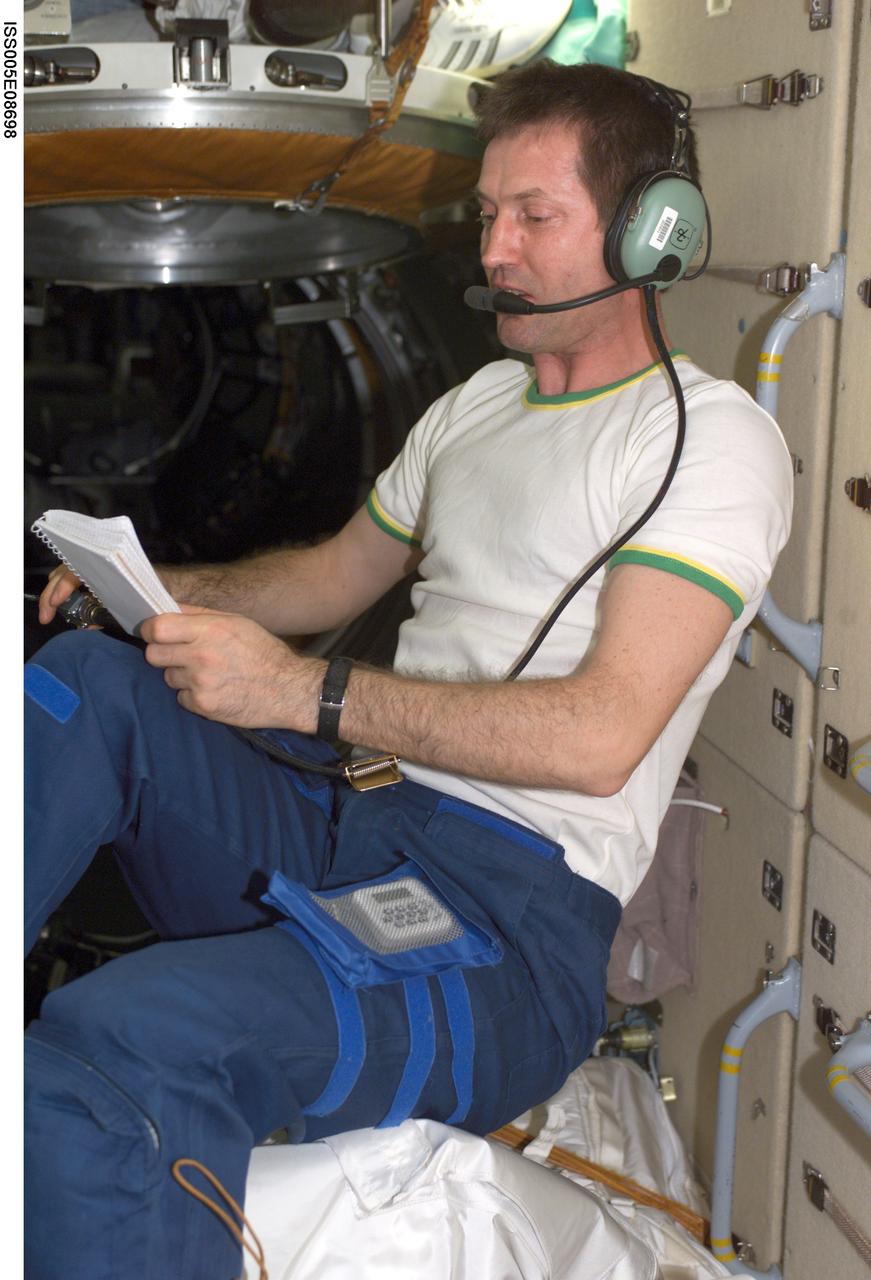
ISS005-E-08698 (6 August 2002) --- Cosmonaut Sergei Y. Treschev, Expedition Five flight engineer, uses an amateur radio in the functional cargo block (FGB) on the International Space Station (ISS). Treschev represents Rosaviakosmos.
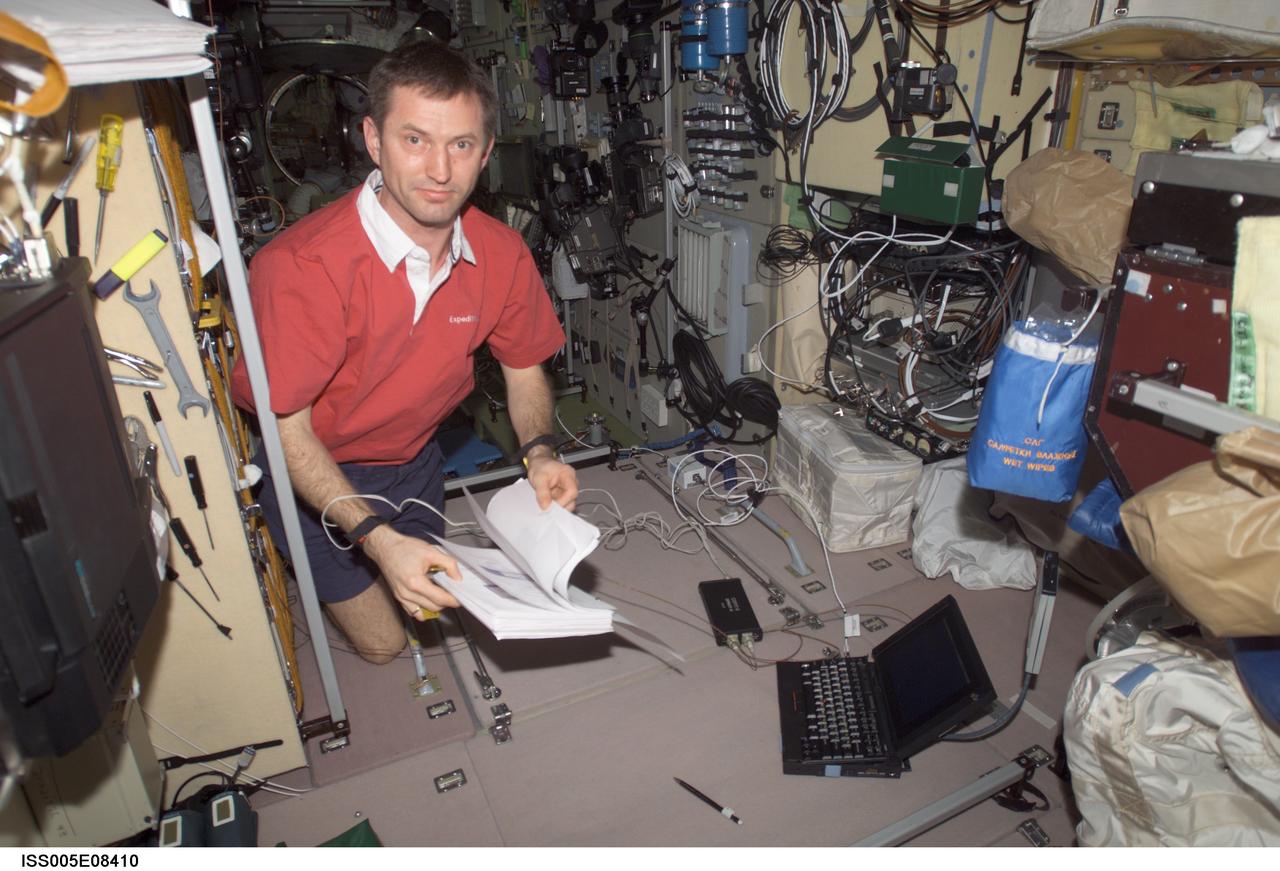
ISS005-E-08410 (July 2002) --- Cosmonaut Sergei Y. Treschev, Expedition Five flight engineer representing Rosaviakosmos, works in the Zvezda Service Module on the International Space Station (ISS).
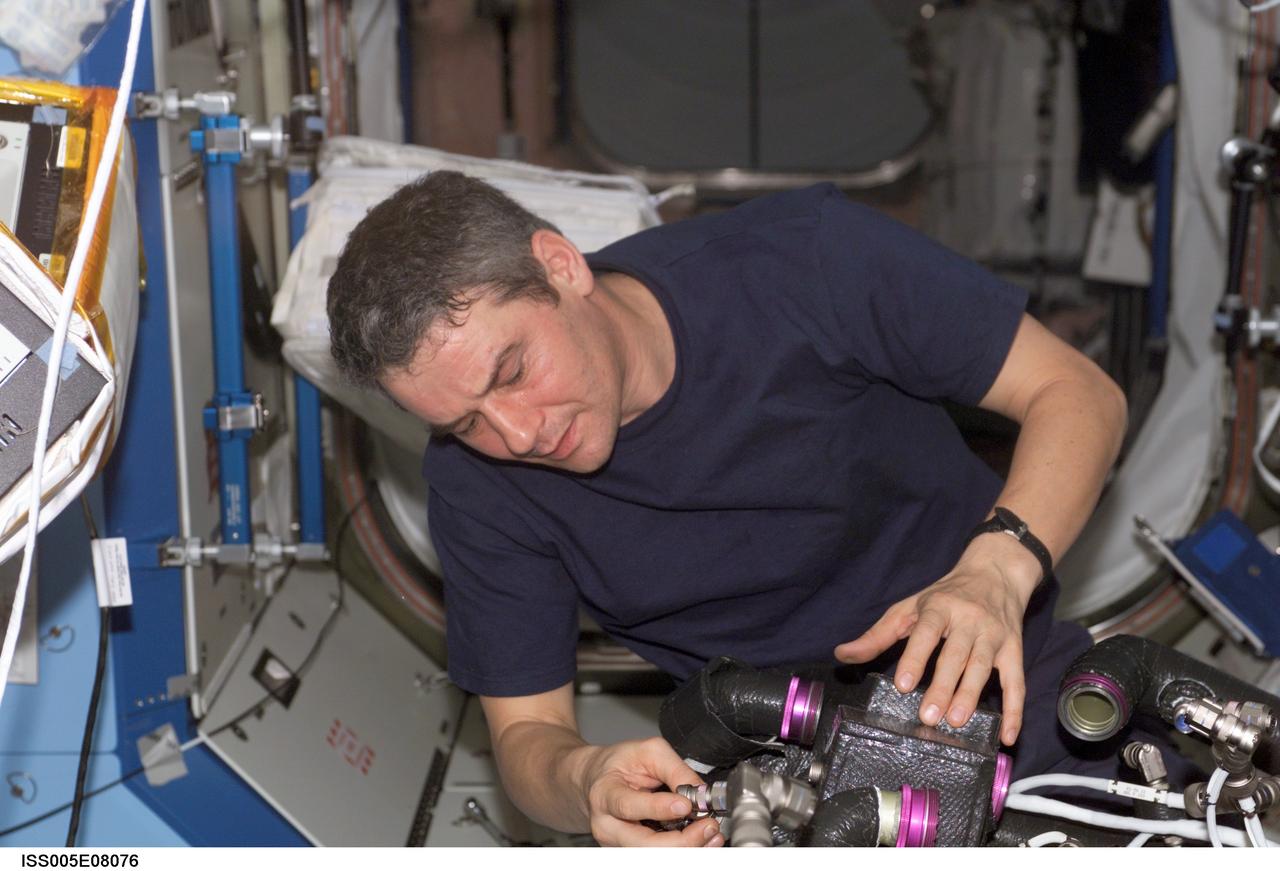
ISS005-E-08076 (July 2002) --- Cosmonaut Valery G. Korzun, Expedition Five mission commander representing Rosaviakosmos, works on equipment in the Destiny laboratory on the International Space Station (ISS).
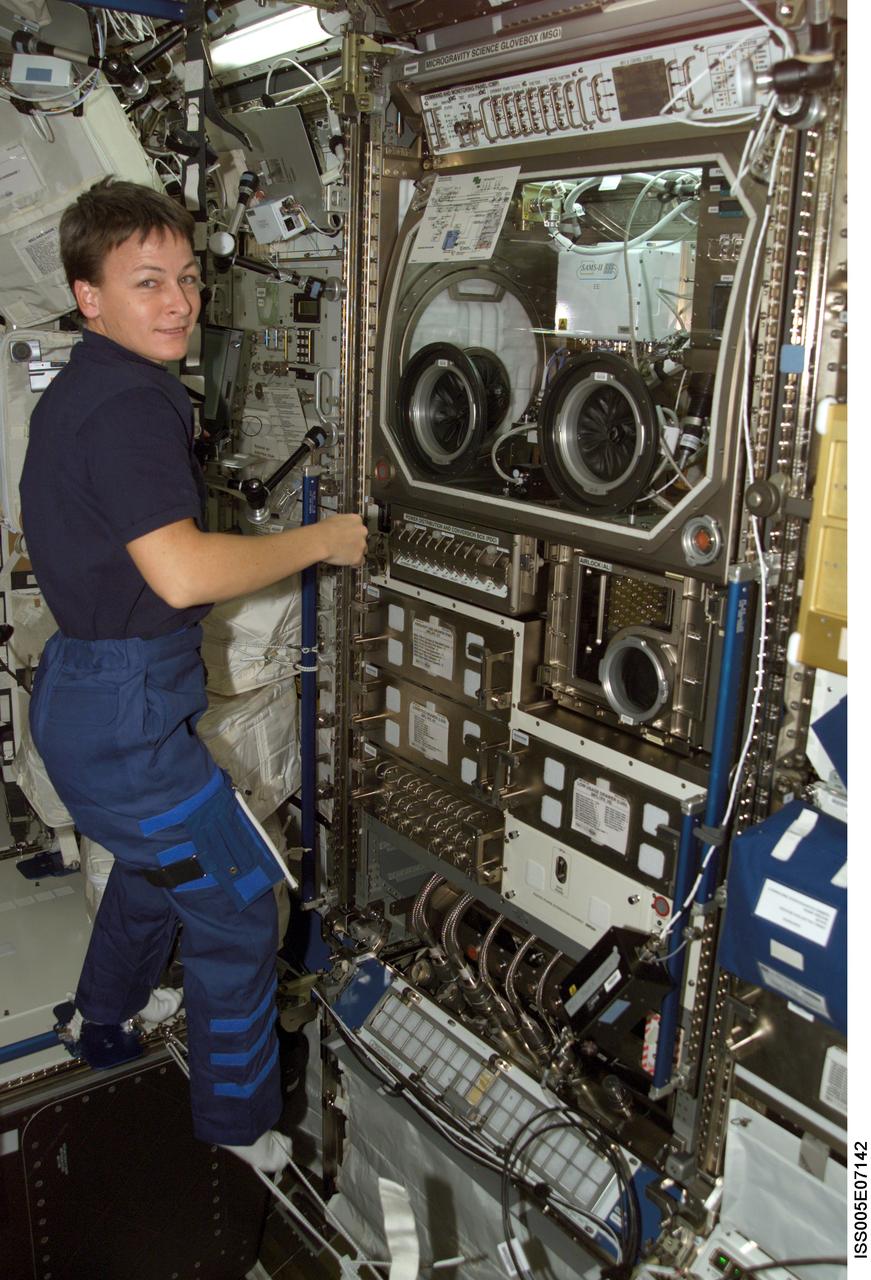
ISS005-E-07142 (8 July 2002) --- Astronaut Peggy A. Whitson, Expedition Five flight engineer, works near the Microgravity Science Glovebox (MSG) in the Destiny laboratory on the International Space Station (ISS).
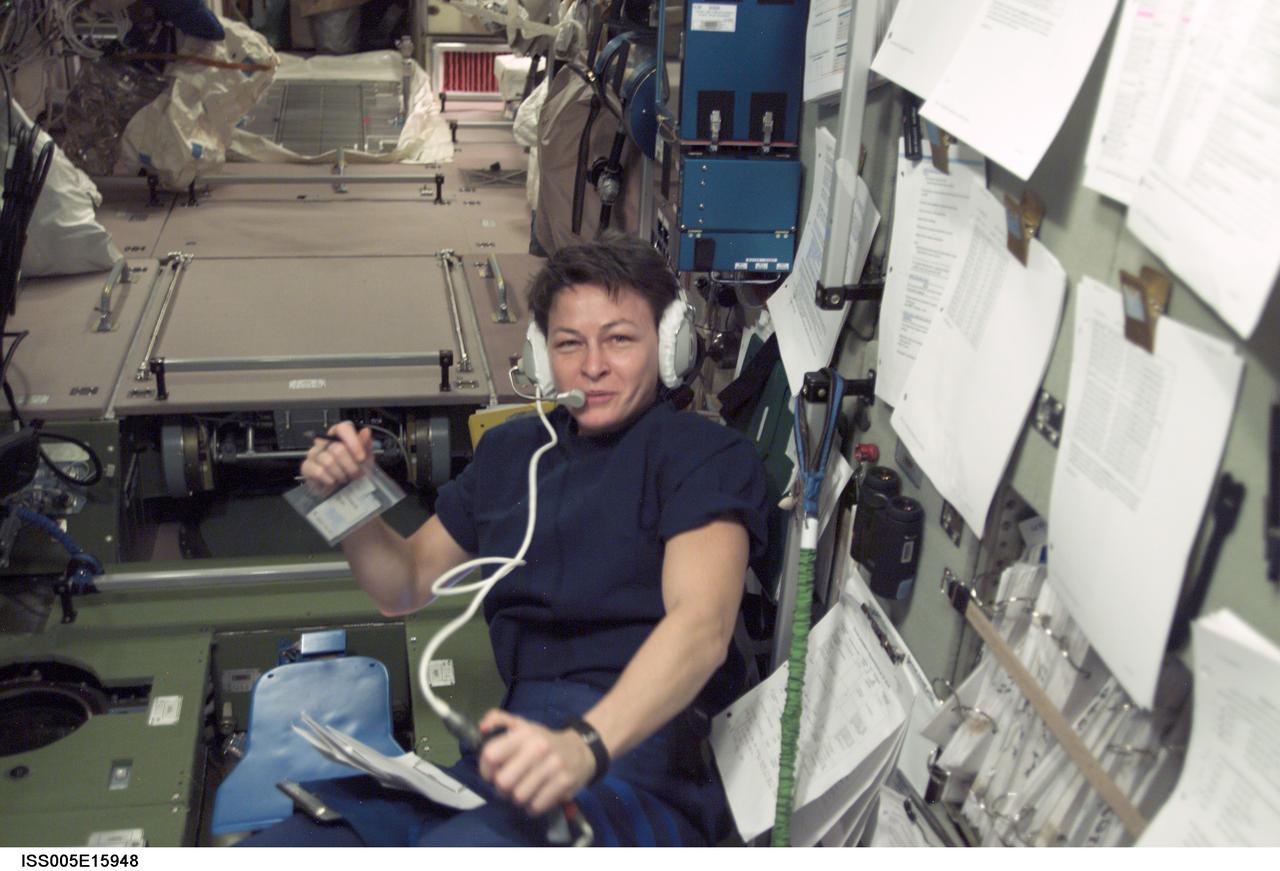
ISS005-E-15948 (2 October 2002) --- Astronaut Peggy A. Whitson, Expedition Five flight engineer, uses a communication system in the Zvezda Service Module on the International Space Station (ISS).
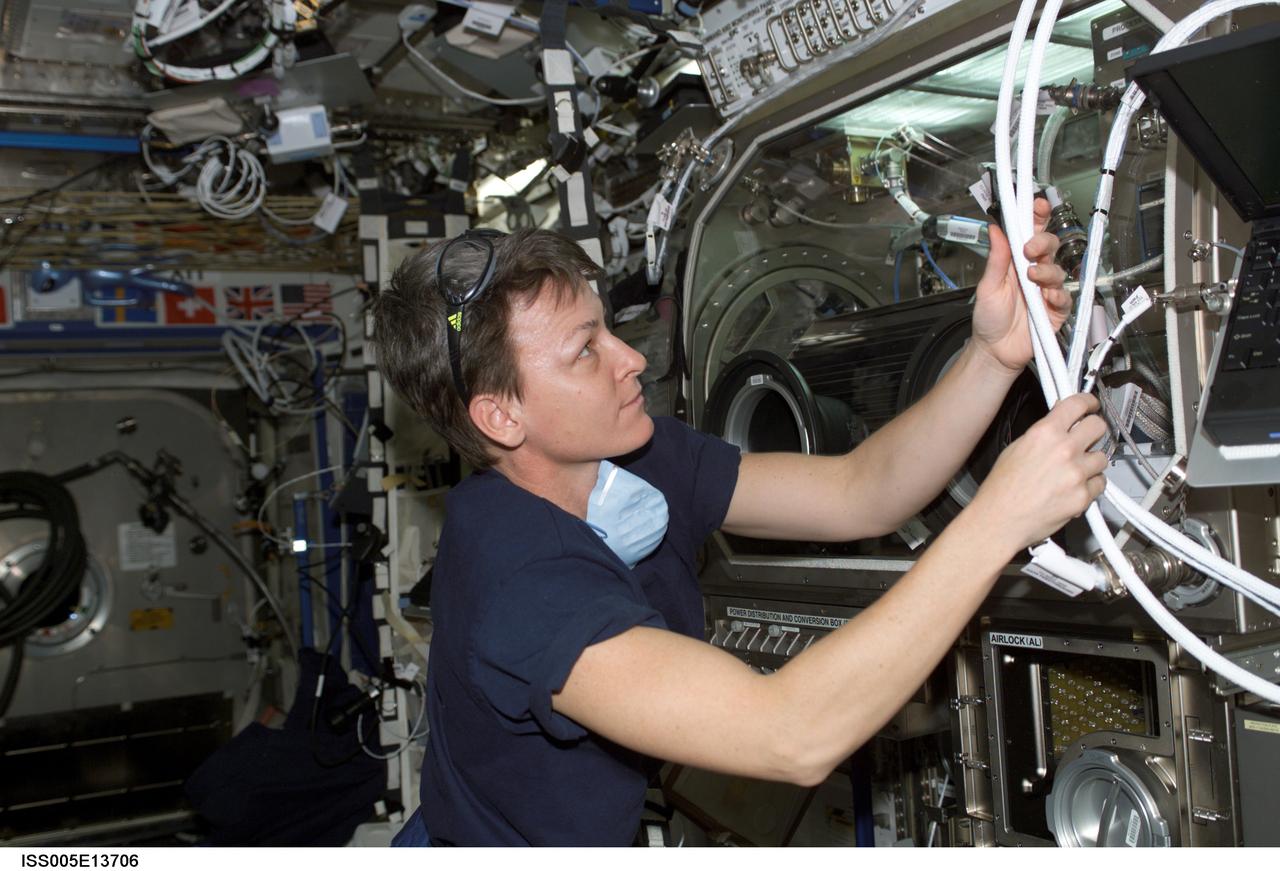
ISS005-E-13706 (11 September 2002) --- Astronaut Peggy A. Whitson, Expedition Five flight engineer, works with the Microgravity Science Glovebox (MSG) in the Destiny laboratory on the International Space Station (ISS).
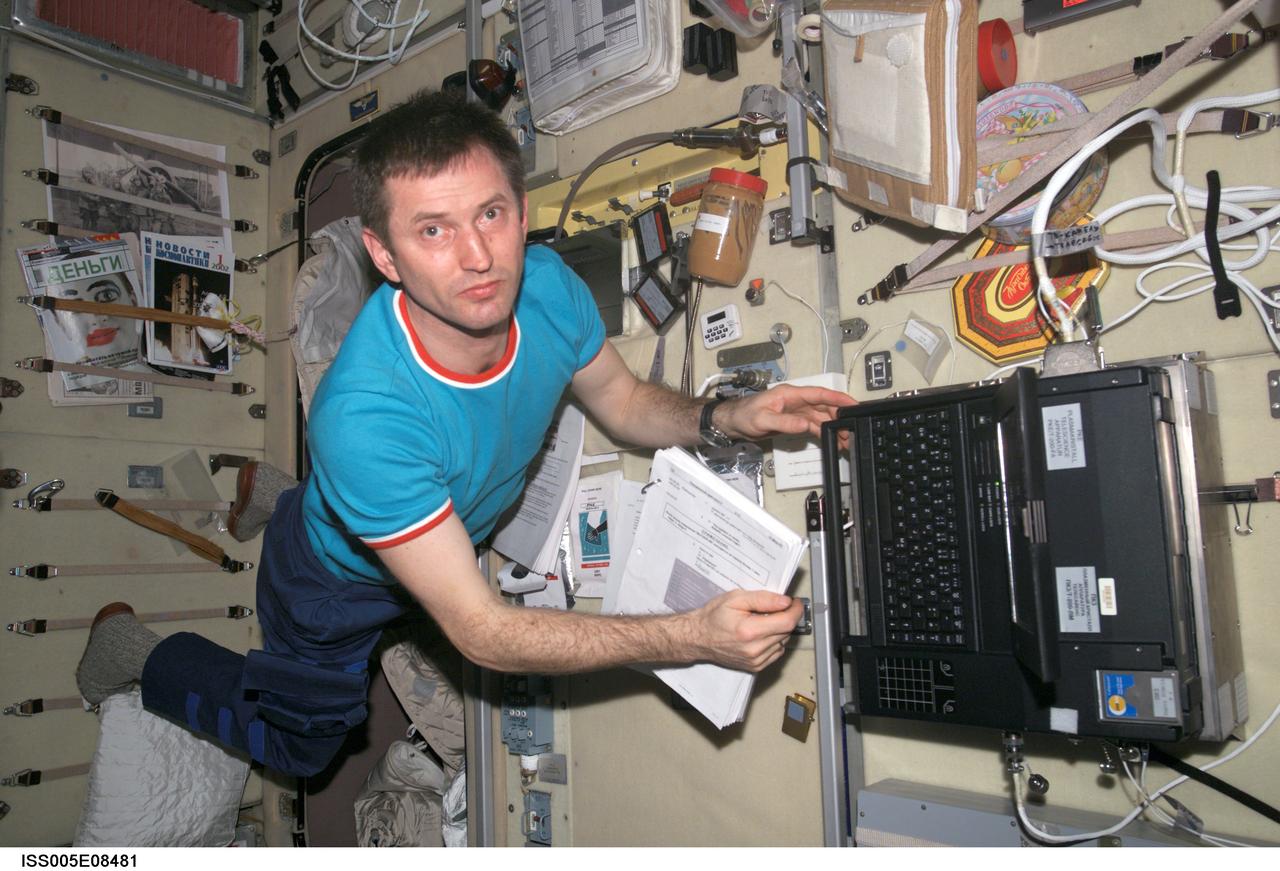
ISS005-E-08481 (1 August 2002) --- Cosmonaut Sergei Y. Treschev, Expedition Five flight engineer, works in the Zvezda Service Module on the International Space Station (ISS). Treschev represents Rosaviakosmos.
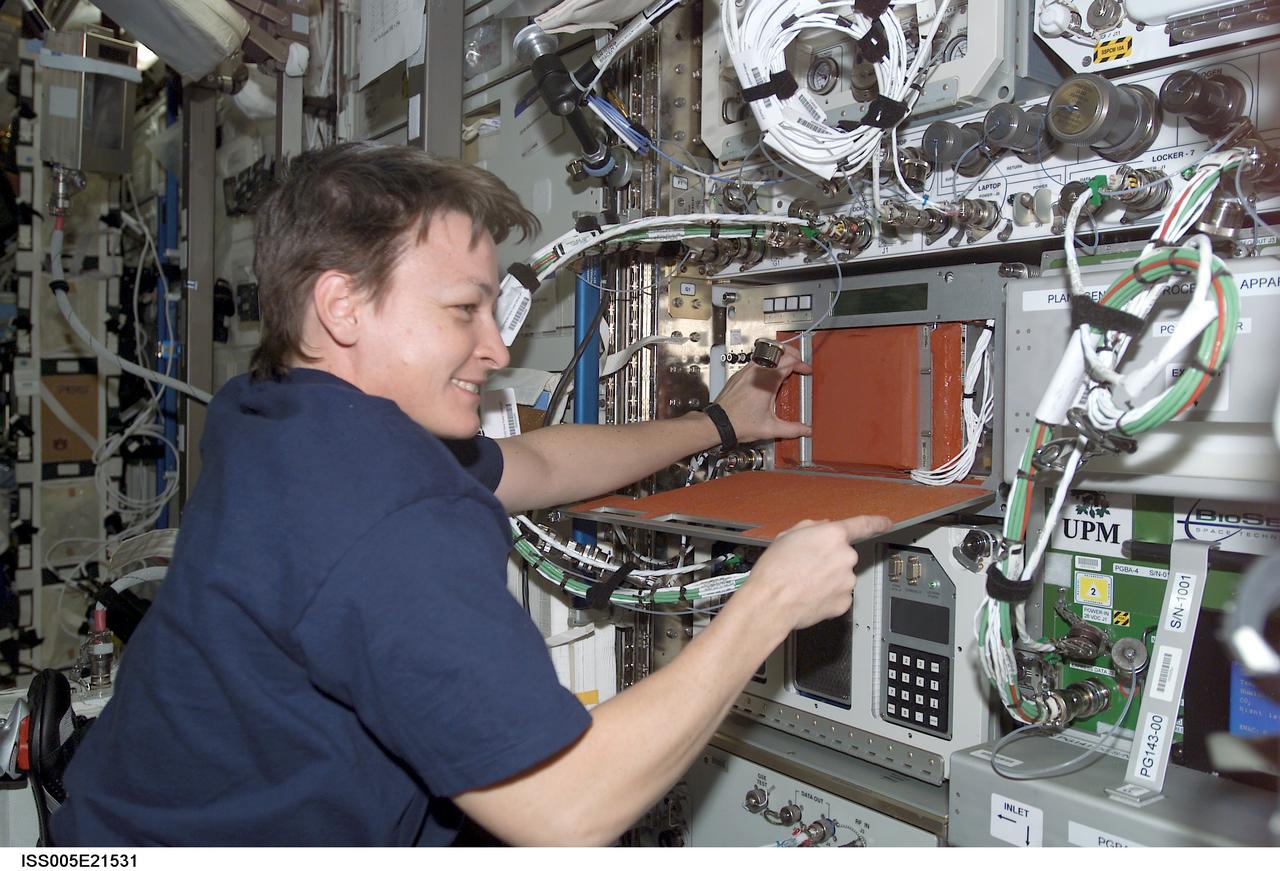
ISS005-E-21531 (24 November 2002) --- Astronaut Peggy A. Whitson, Expedition Five science officer, works with an experiment in the Destiny laboratory as her tenure on board the International Space Station (ISS) winds down.
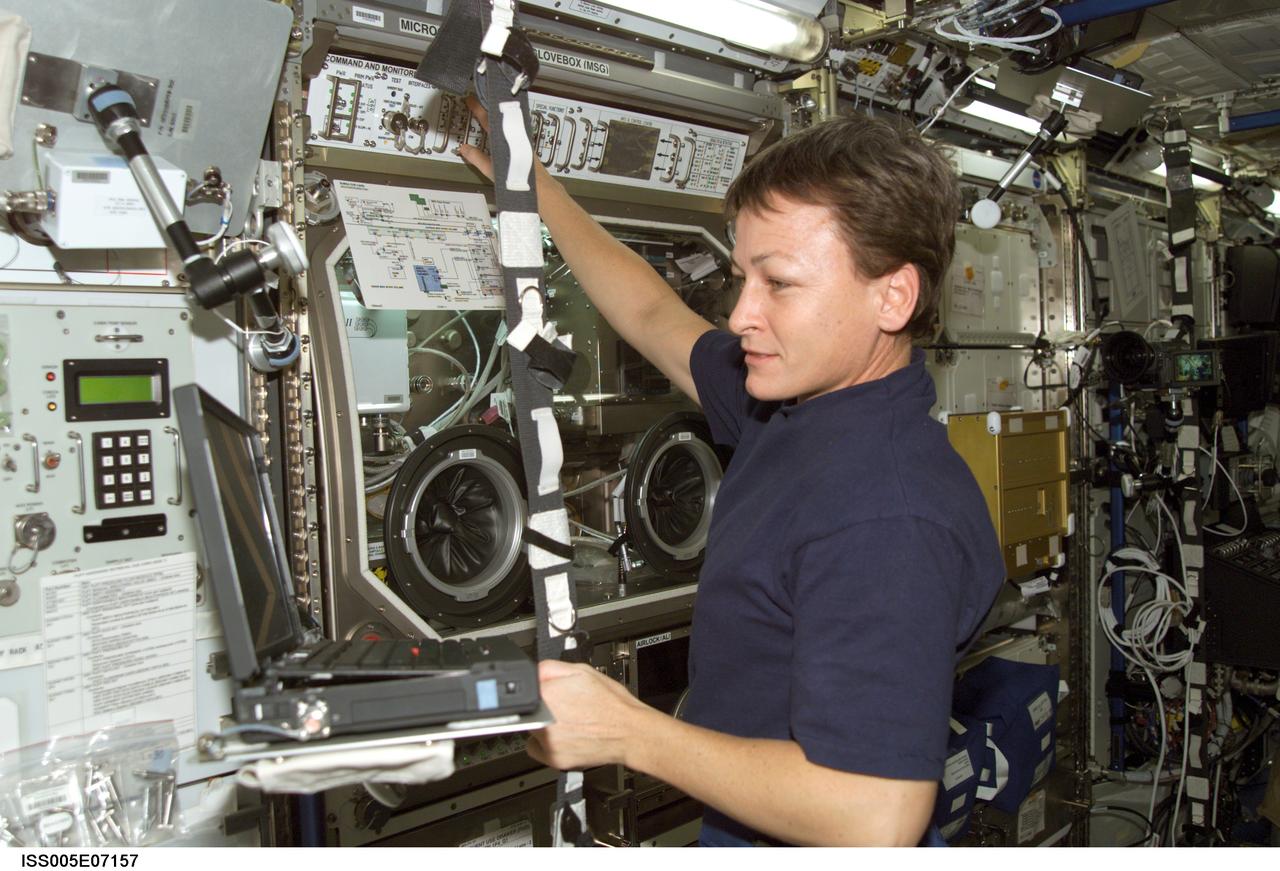
ISS005-E-07157 (8 July 2002) --- Astronaut Peggy A. Whitson, Expedition Five flight engineer, works with the Microgravity Science Glovebox (MSG) in the Destiny laboratory on the International Space Station (ISS).
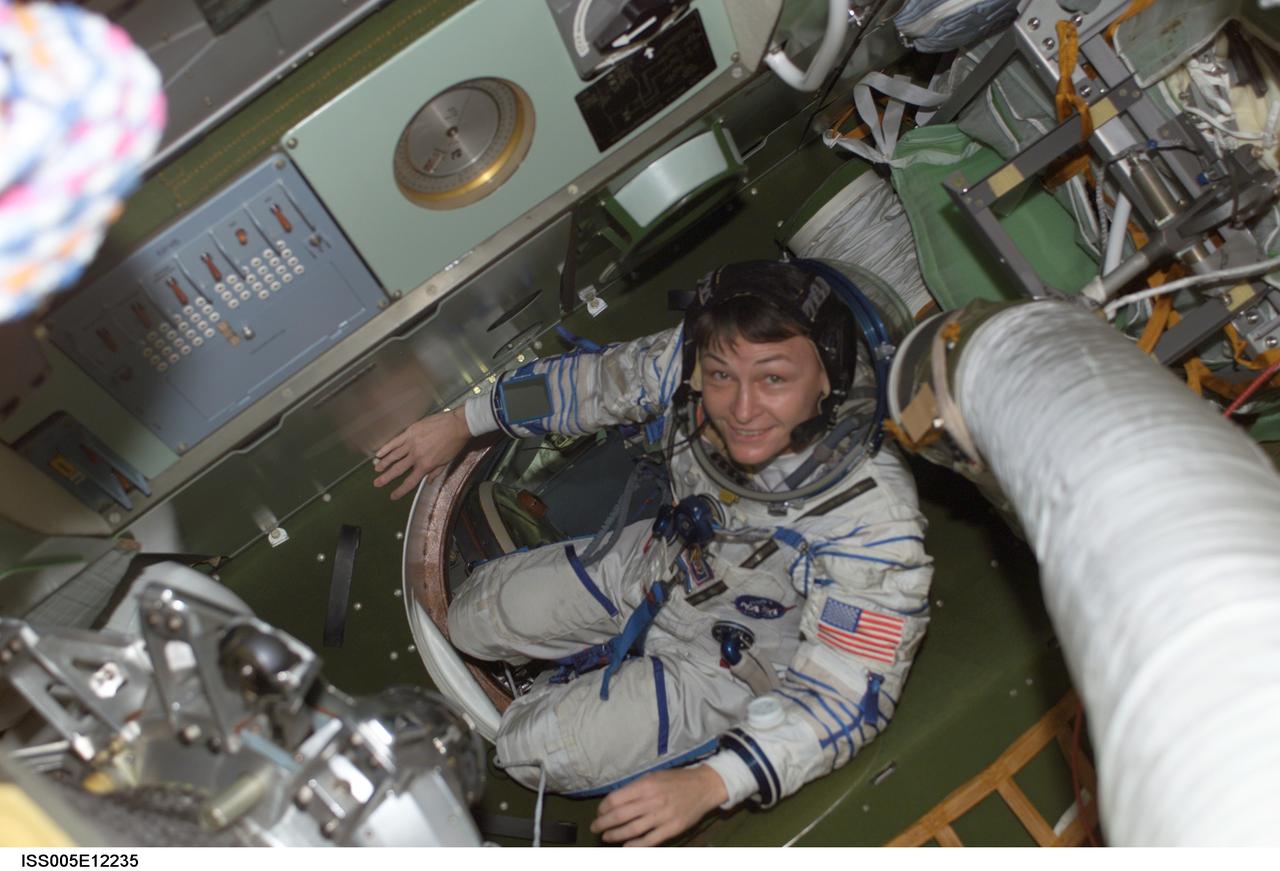
ISS005-E-12235 (3 September 2002) --- Astronaut Peggy A. Whitson, Expedition Five flight engineer, wearing a Russian Sokol suit, is pictured in a Soyuz spacecraft that is docked to the International Space Station (ISS).
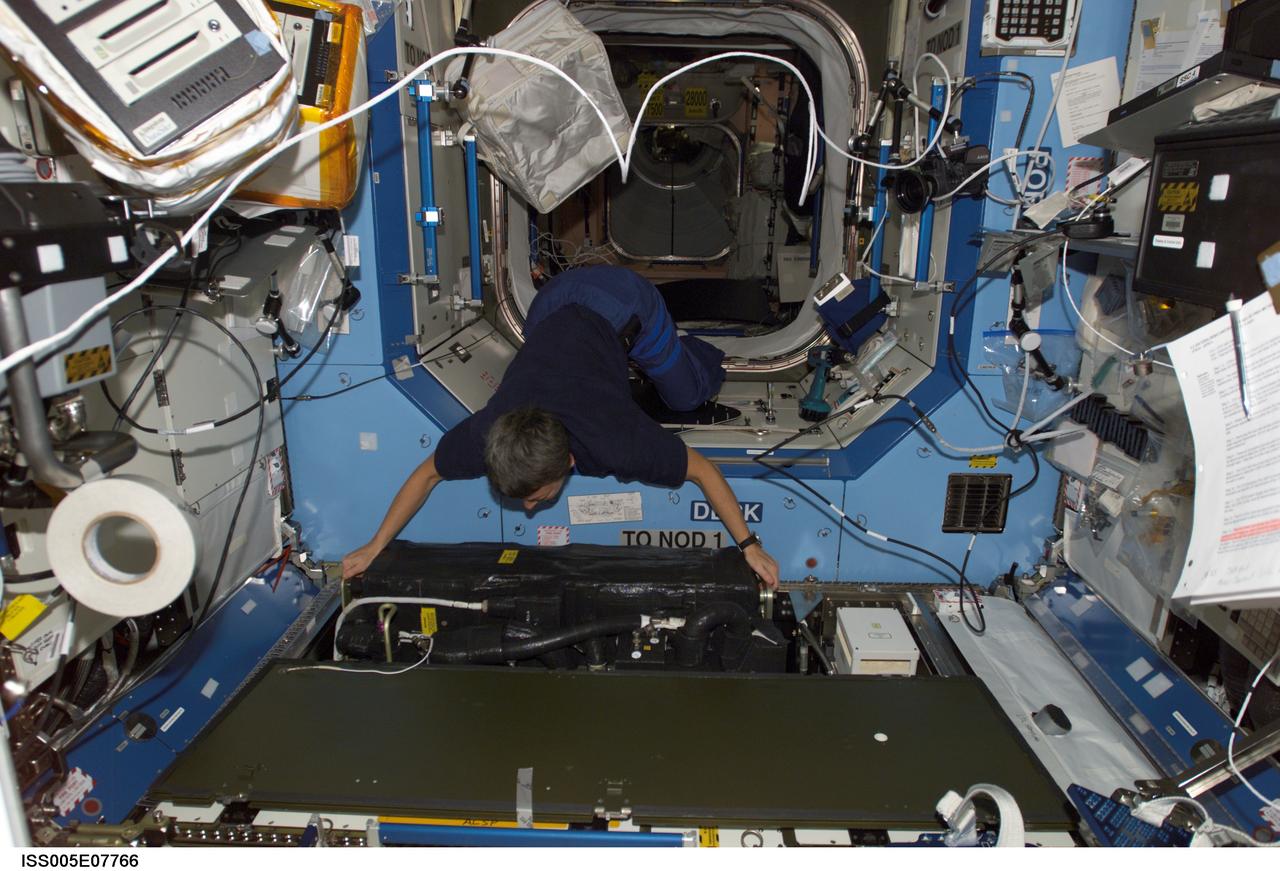
ISS005-E-07766 (15 July 2002) --- Astronaut Peggy A. Whitson, Expedition Five flight engineer, moves equipment in the Destiny laboratory on the International Space Station (ISS).
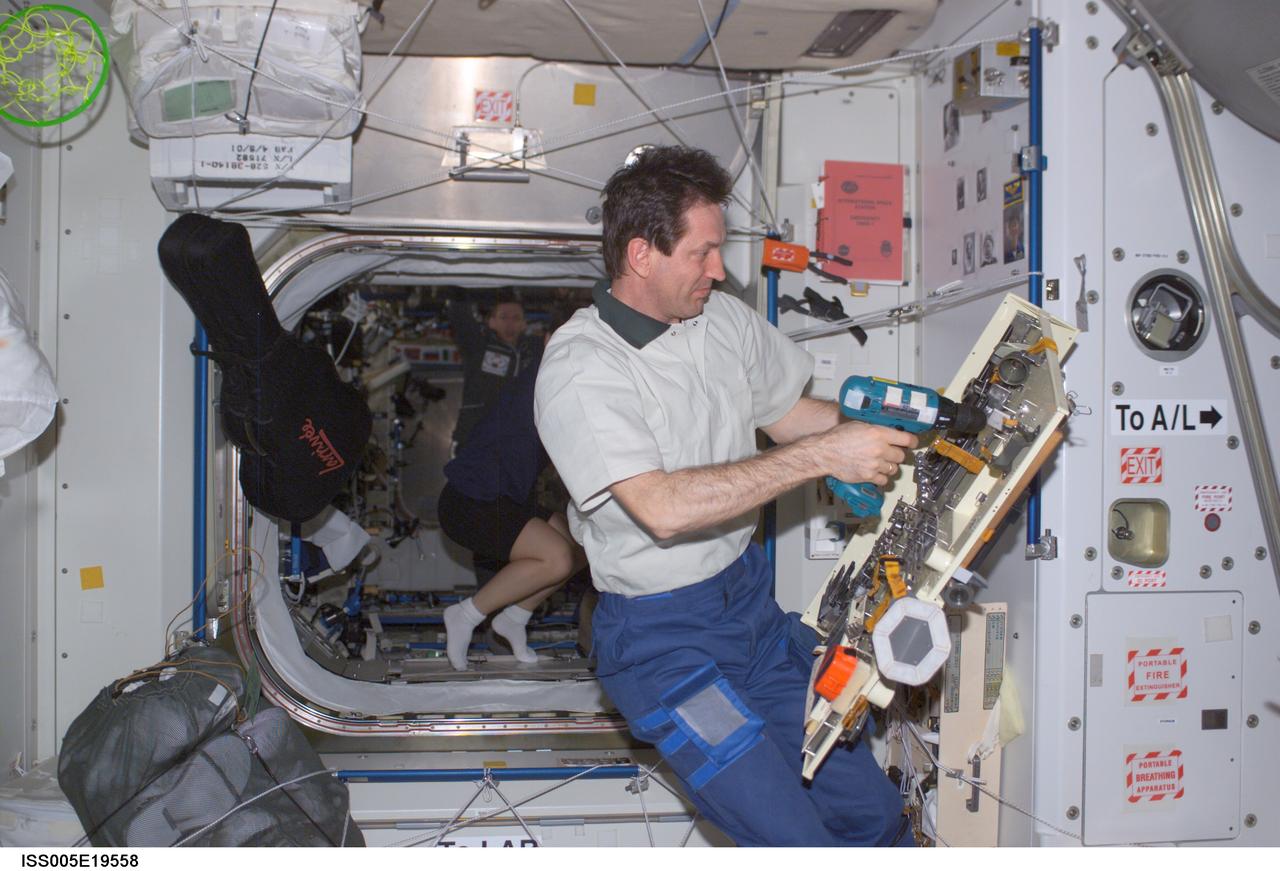
ISS005-E-19558 (2 November 2002) --- Cosmonaut Sergei Y. Treschev, Expedition Five flight engineer, works with various tools in the Unity node on the International Space Station (ISS). Treschev represents Rosaviakosmos.
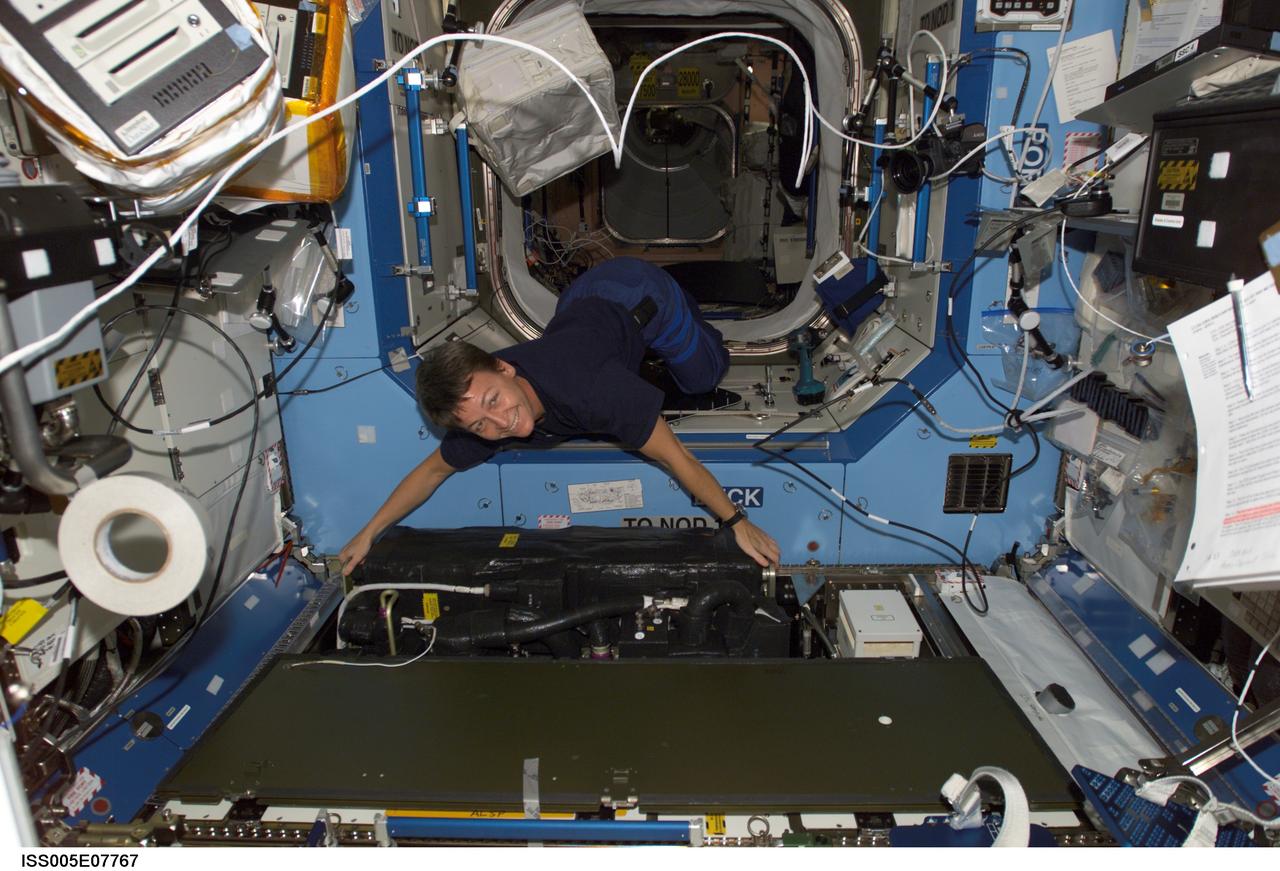
ISS005-E-07767 (15 July 2002) --- Astronaut Peggy A. Whitson, Expedition Five flight engineer, moves equipment in the Destiny laboratory on the International Space Station (ISS).
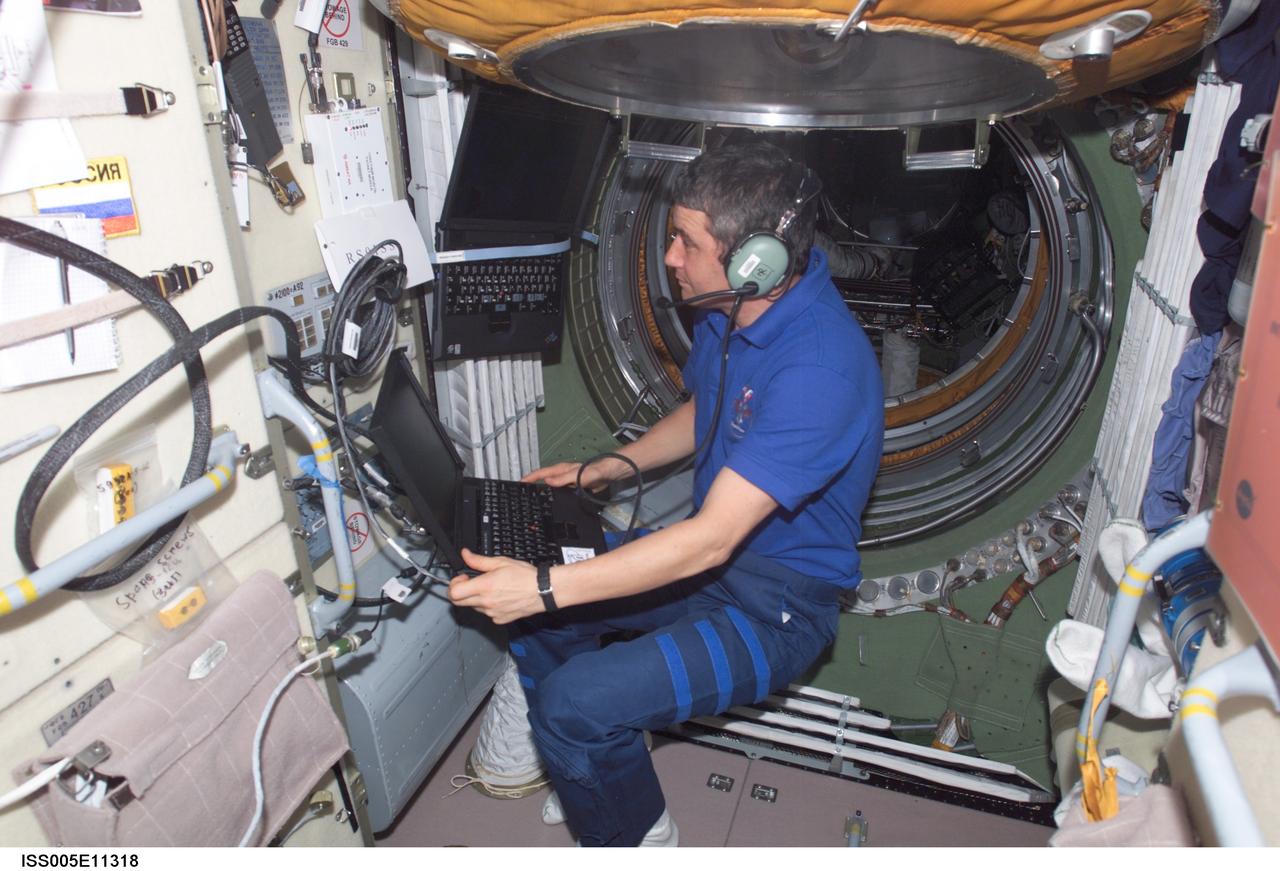
ISS005-E-11318 (27 August 2002) --- Cosmonaut Valery G. Korzun, Expedition Five mission commander, uses an amateur radio in the functional cargo block (FGB) on the International Space Station (ISS). Korzun represents Rosaviakosmos.
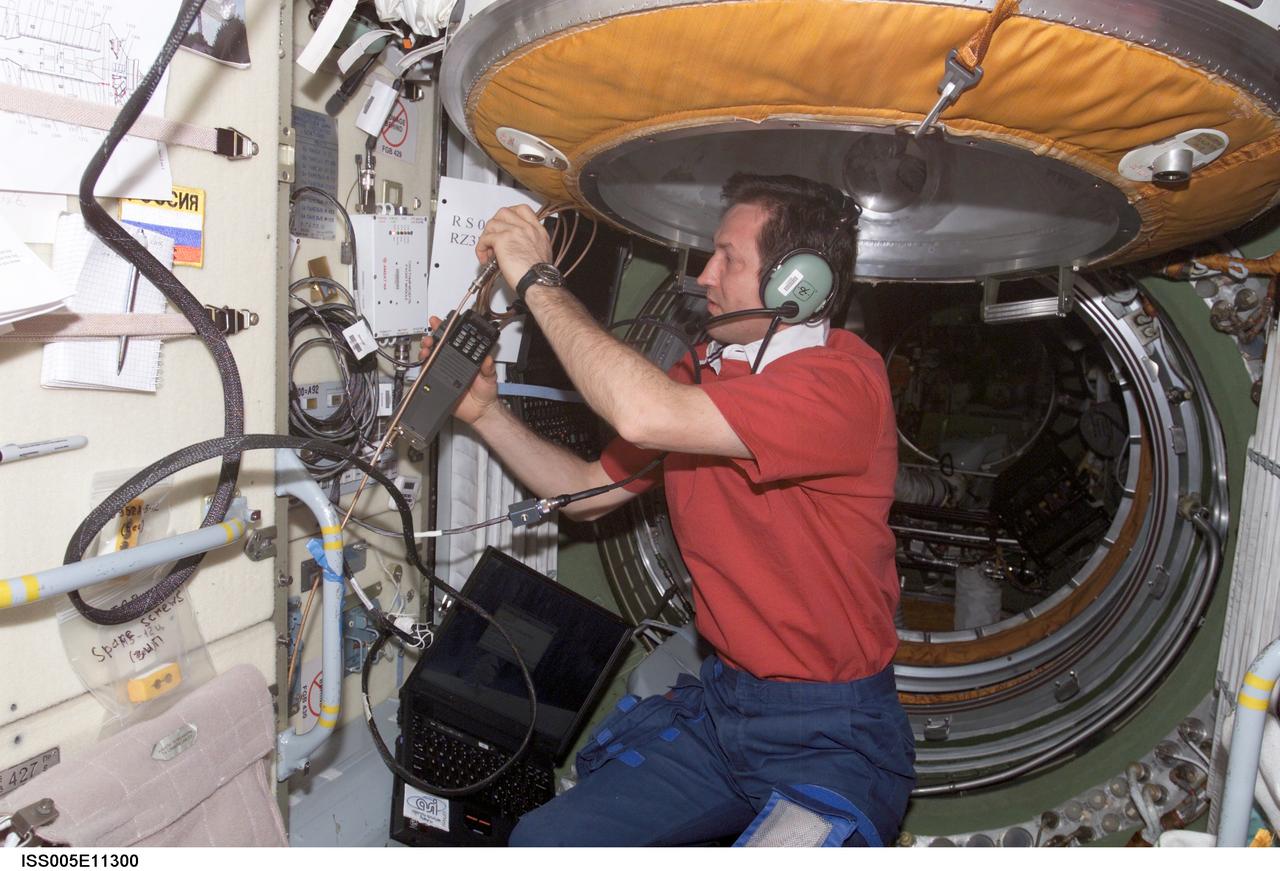
ISS005-E-11300 (27 August 2002) --- Cosmonaut Sergei Y. Treschev, Expedition Five flight engineer, uses an amateur radio in the functional cargo block (FGB) on the International Space Station (ISS). Treschev represents Rosaviakosmos.
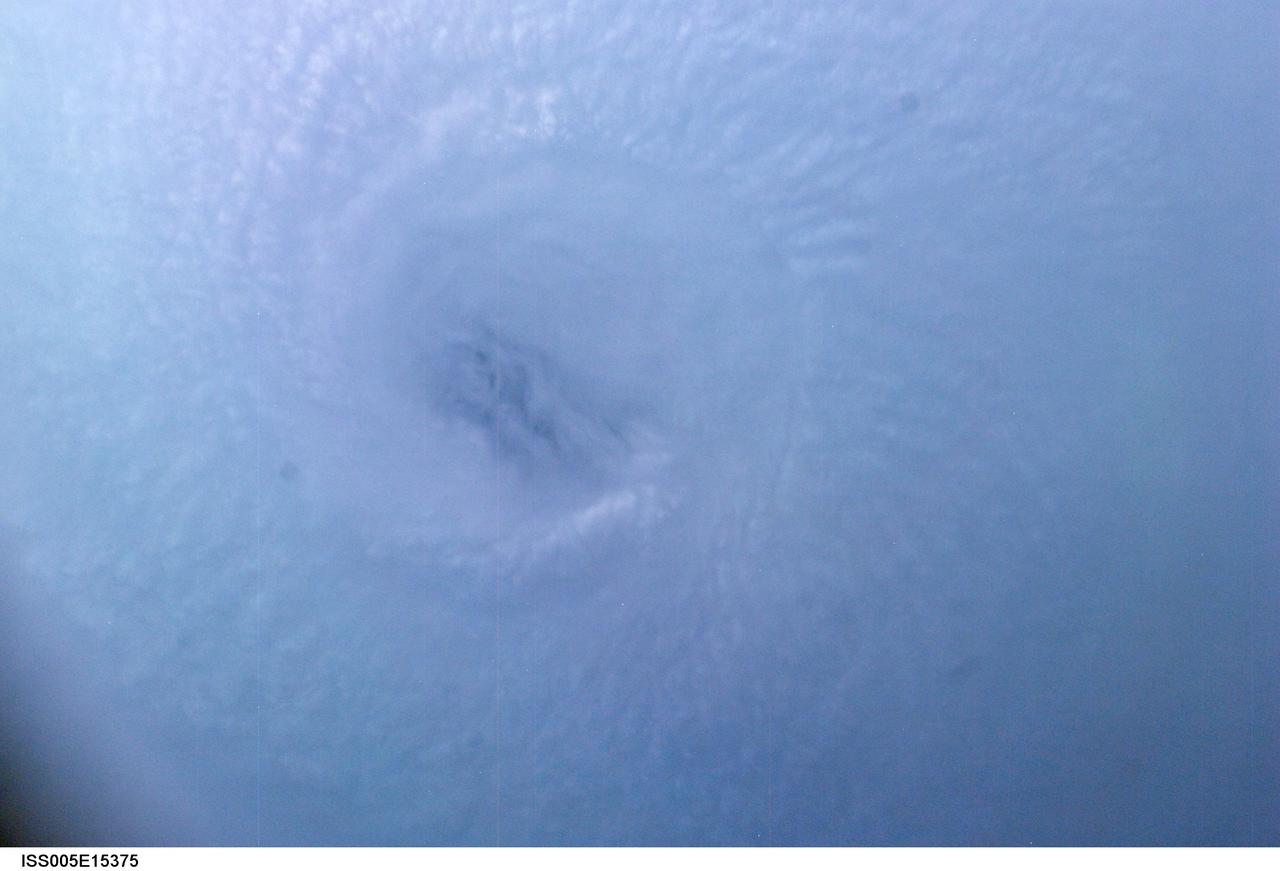
ISS005- E-15375 (22 September 2002) --- This digital still camera's picture, taken from the International Space Station (ISS) on September 22, 2002, shows the central eye of Hurricane Isidore. The eye become less defined as the hurricane stalled and weakened over the Yucatan Peninsula near Merida. Onboard the orbital outpost for the Expedition Five mission are cosmonauts Valery G. Korzun, commander, and Sergei Y. Treschev, flight engineer, both with Rosaviakosmos; and astronaut Peggy A. Whitson, flight engineer.
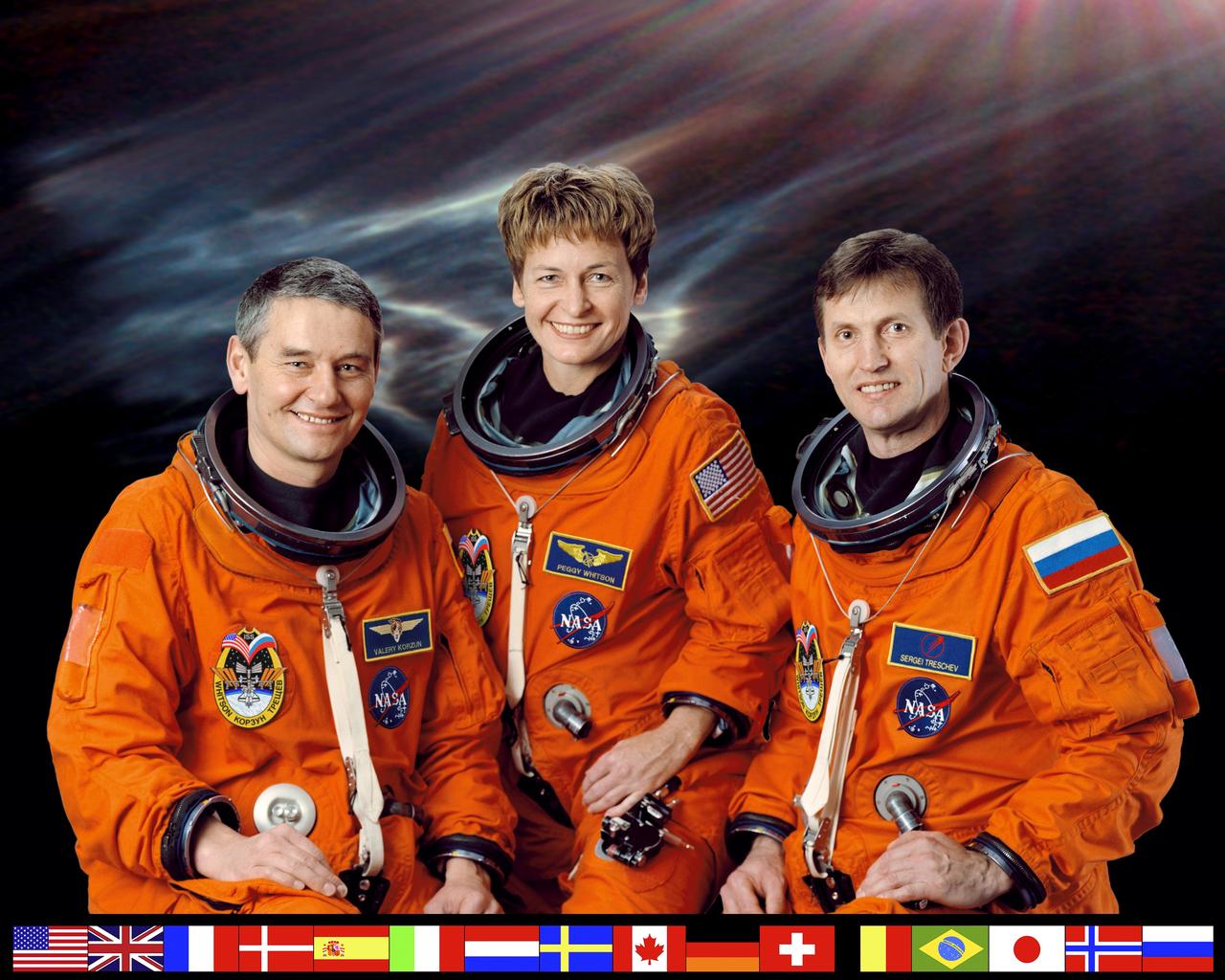
ISS005-S-002 (February 2002) --- Cosmonaut Valeri G. Korzun (left), Expedition Five mission commander; astronaut Peggy A. Whitson and cosmonaut Sergei Y. Treschev, both flight engineers, attired in training versions of the shuttle launch and entry suit, pause from their training schedule for a crew portrait. The three will be launched to the International Space Station (ISS) in early spring of this year aboard the Space Shuttle Atlantis. Korzun and Treschev represent the Russian Aviation and Space Agency (Rosaviakosmos).
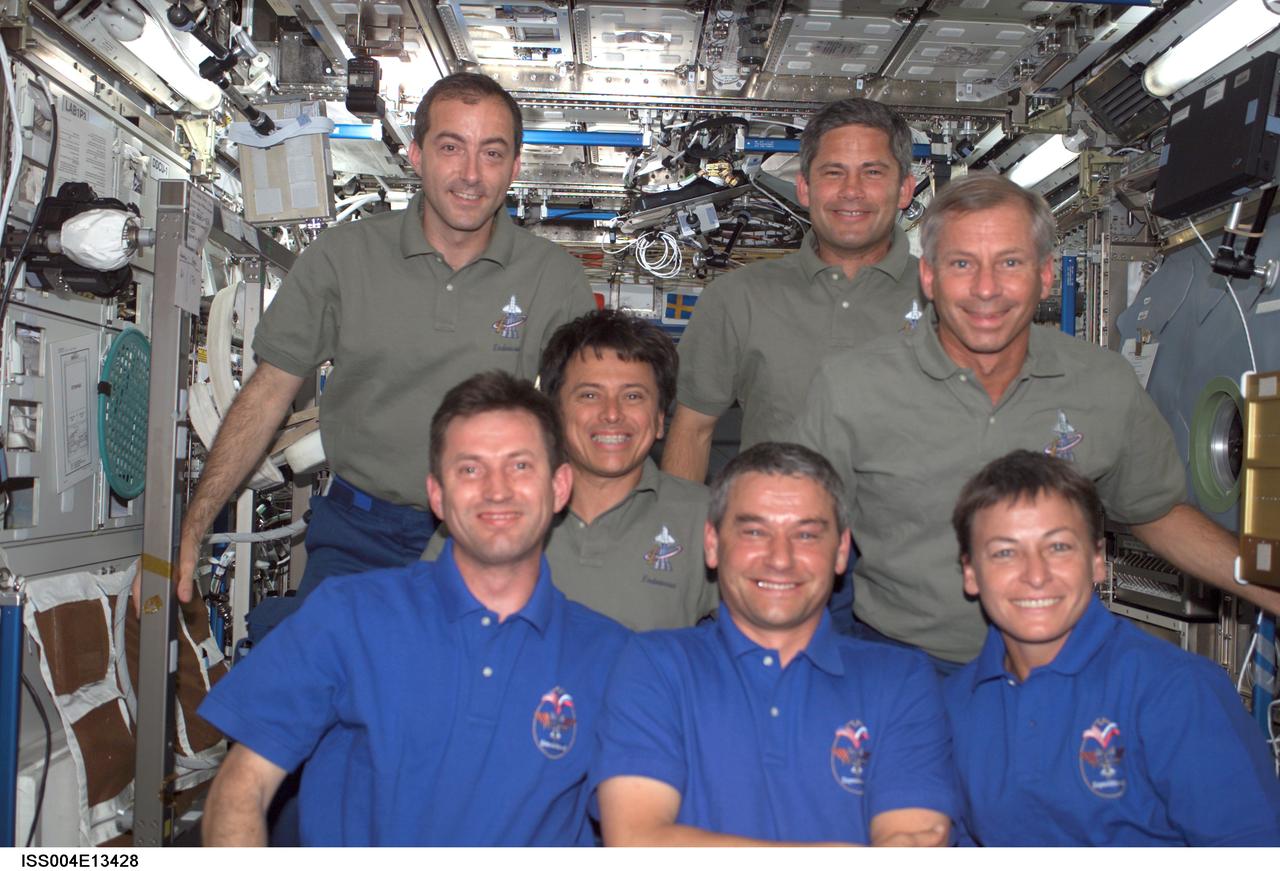
ISS004-E-13428 (June 2002) --- The Expedition Five (front row) and STS-111 crews assemble for a group photo in the Destiny laboratory on the International Space Station (ISS). The Expedition Five crewmembers, from left to right, are cosmonauts Sergei Y. Treschev, flight engineer; Valery G. Korzun, mission commander; and astronaut Peggy A. Whitson, flight engineer. The STS-111 crewmembers, from left to right, are astronauts Philippe Perrin and Franklin R. Chang-Diaz, both mission specialists; Paul S. Lockhart and Kenneth D. Cockrell, pilot and mission commander, respectively. Onufrienko, Korzun and Treschev represent Rosaviakosmos and Perrin represents CNES, the French Space Agency.
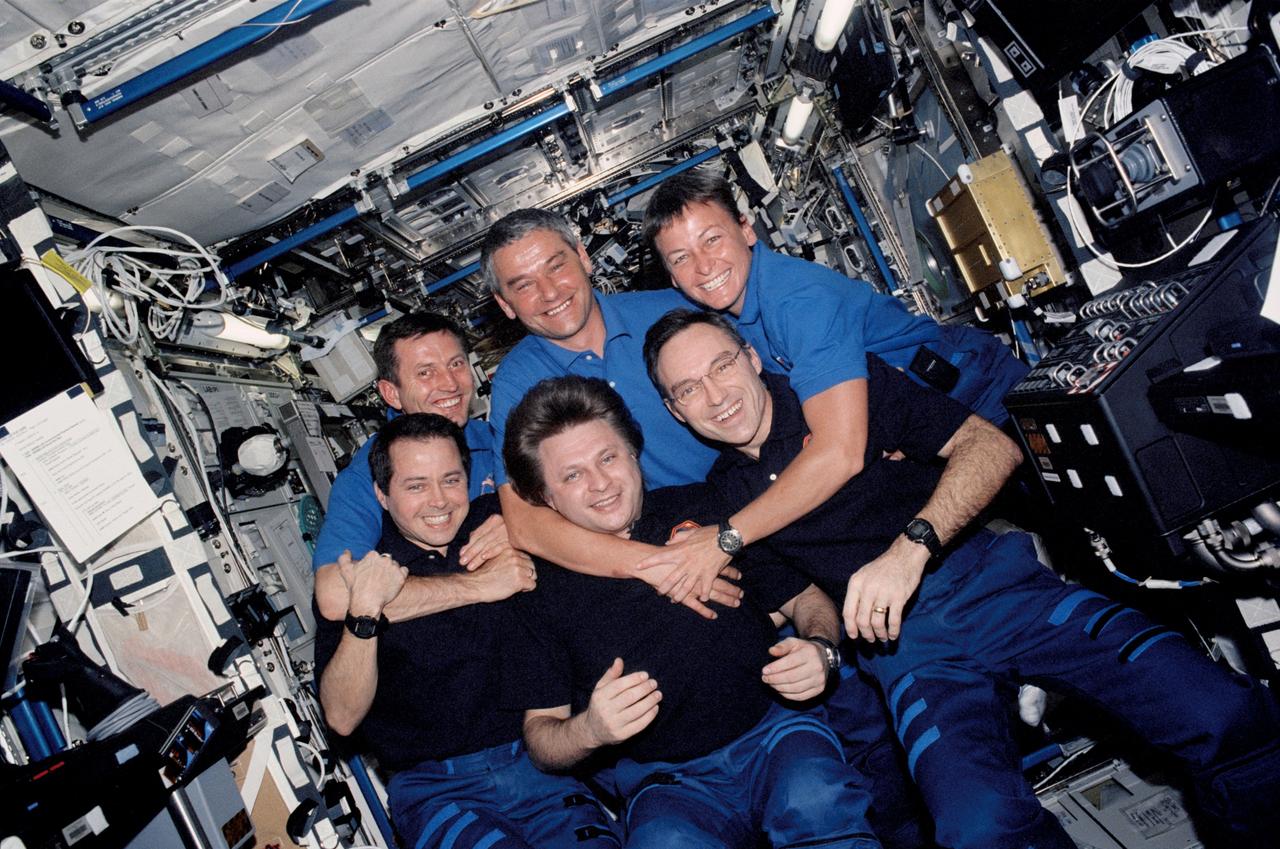
STS111-320-032 (5-19 June 2002) --- The Expedition Four (front row) and Expedition Five crewmembers gather for a group photo in the Destiny laboratory on the International Space Station (ISS). The Expedition Four crewmembers, from the left, are astronaut Daniel W. Bursch, flight engineer; cosmonaut Yury I. Onufrienko, mission commander; and astronaut Carl E. Walz, flight engineer. The Expedition Five crewmembers, from the left, are cosmonauts Sergei Y. Treschev, flight engineer; Valery G. Korzun, mission commander; and astronaut Peggy A. Whitson, flight engineer. Onufrienko, Korzun and Treschev represent Rosaviakosmos.
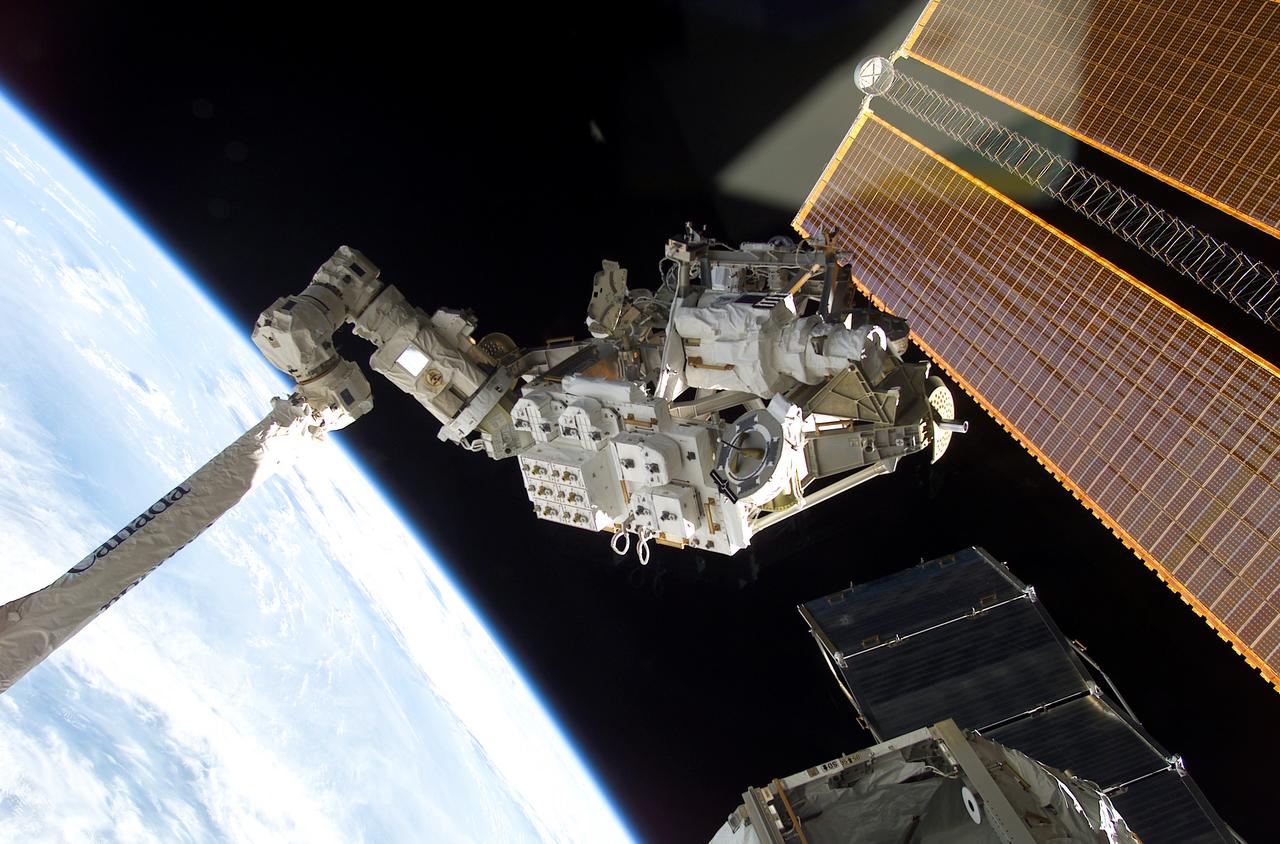
Backdropped against the blackness of space and the Earth's horizon, the Mobile Remote Base System (MBS) is moved by the Canadarm2 for installation on the International Space Station (ISS). Delivered by the STS-111 mission aboard the Space Shuttle Endeavour in June 2002, the MBS is an important part of the Station's Mobile Servicing System allowing the robotic arm to travel the length of the Station, which is neccessary for future construction tasks. In addition, STS-111 delivered a new crew, Expedition Five, replacing Expedition Four after remaining a record-setting 196 days in space. Three spacewalks enabled the STS-111 crew to accomplish the delivery and installation of the MBS to the Mobile Transporter on the S0 (S-zero) truss, the replacement of a wrist roll joint on the Station's robotic arm, and the task of unloading supplies and science experiments from the Leonardo Multi-Purpose Logistics Module, which made its third trip to the orbital outpost. The STS-111 mission, the 14th Shuttle mission to visit the ISS, was launched on June 5, 2002 and landed June 19, 2002.
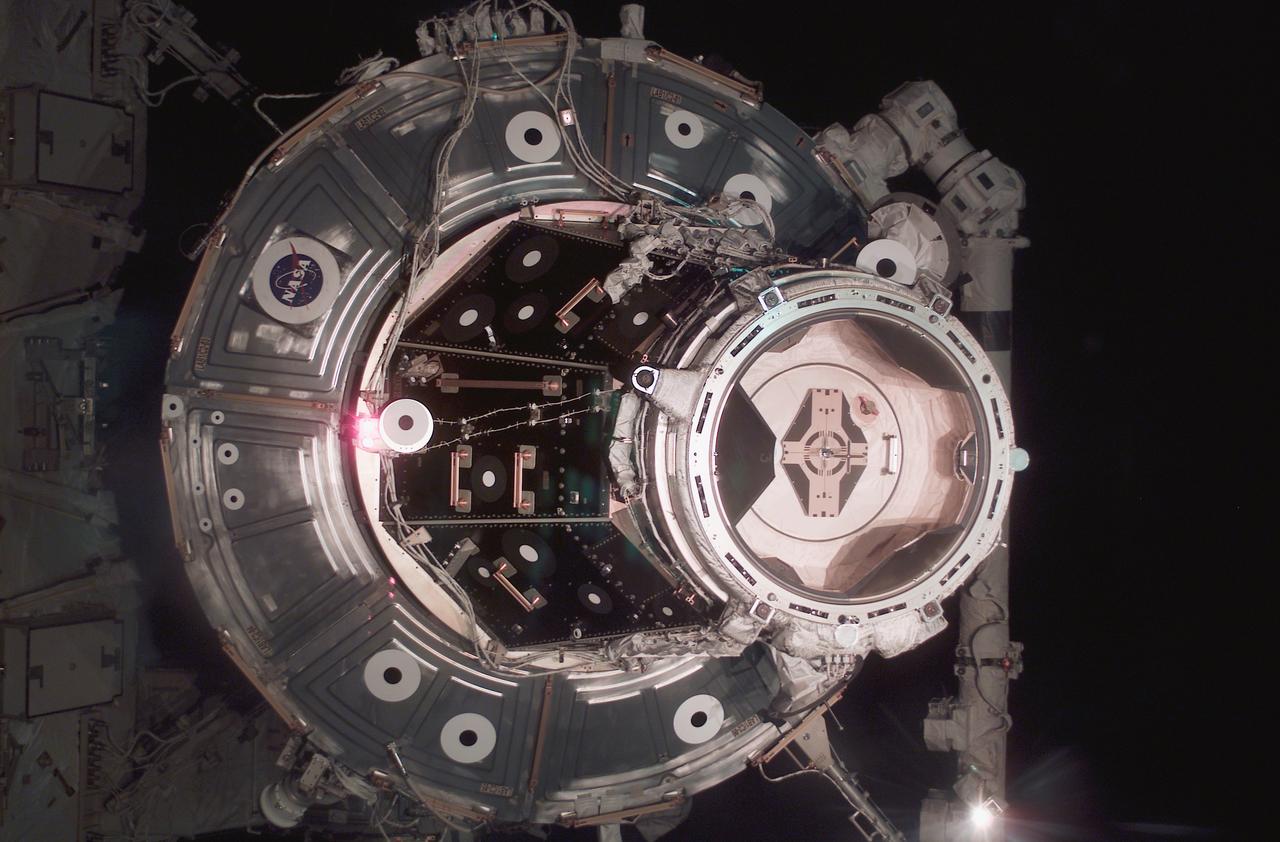
Pictured here is the forward docking port on the International Space Station's (ISS) Destiny Laboratory as seen by one of the STS-111 crewmembers from the Space Shuttle Orbiter Endeavour just prior to docking. In June 2002, STS-111 provided the Space Station with a new crew, Expedition Five, replacing Expedition Four after remaining a record-setting 196 days in space. Three spacewalks enabled the STS-111 crew to accomplish additional mission objectives: the delivery and installation of a new platform for the ISS robotic arm, the Mobile Base System (MBS) which is an important part of the Station's Mobile Servicing System allowing the robotic arm to travel the length of the Station; the replacement of a wrist roll joint on the Station's robotic arm; and unloading supplies and science experiments form the Leonardo Multi-Purpose Logistics Module, which made its third trip to the orbital outpost. The STS-111 mission, the 14th Shuttle mission to visit the ISS, was launched on June 5, 2002 and landed June 19, 2002.
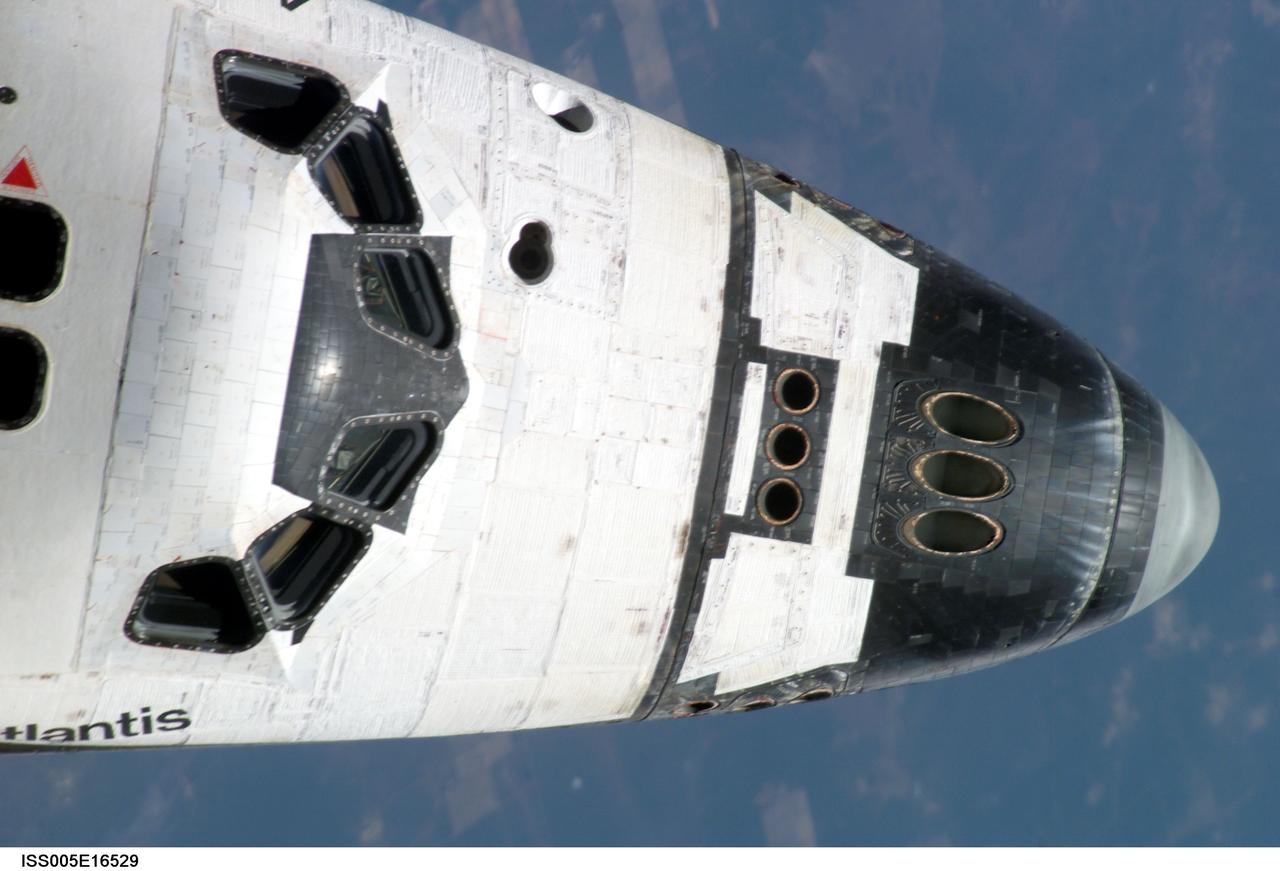
ISS005-E-16529 (9 October 2002) --- The forward section of the Space Shuttle Atlantis was photographed by an Expedition Five crewmember aboard the International Space Station (ISS) during rendezvous and docking operations. Docking occurred at 10:17 a.m. (CDT) on October 9, 2002.
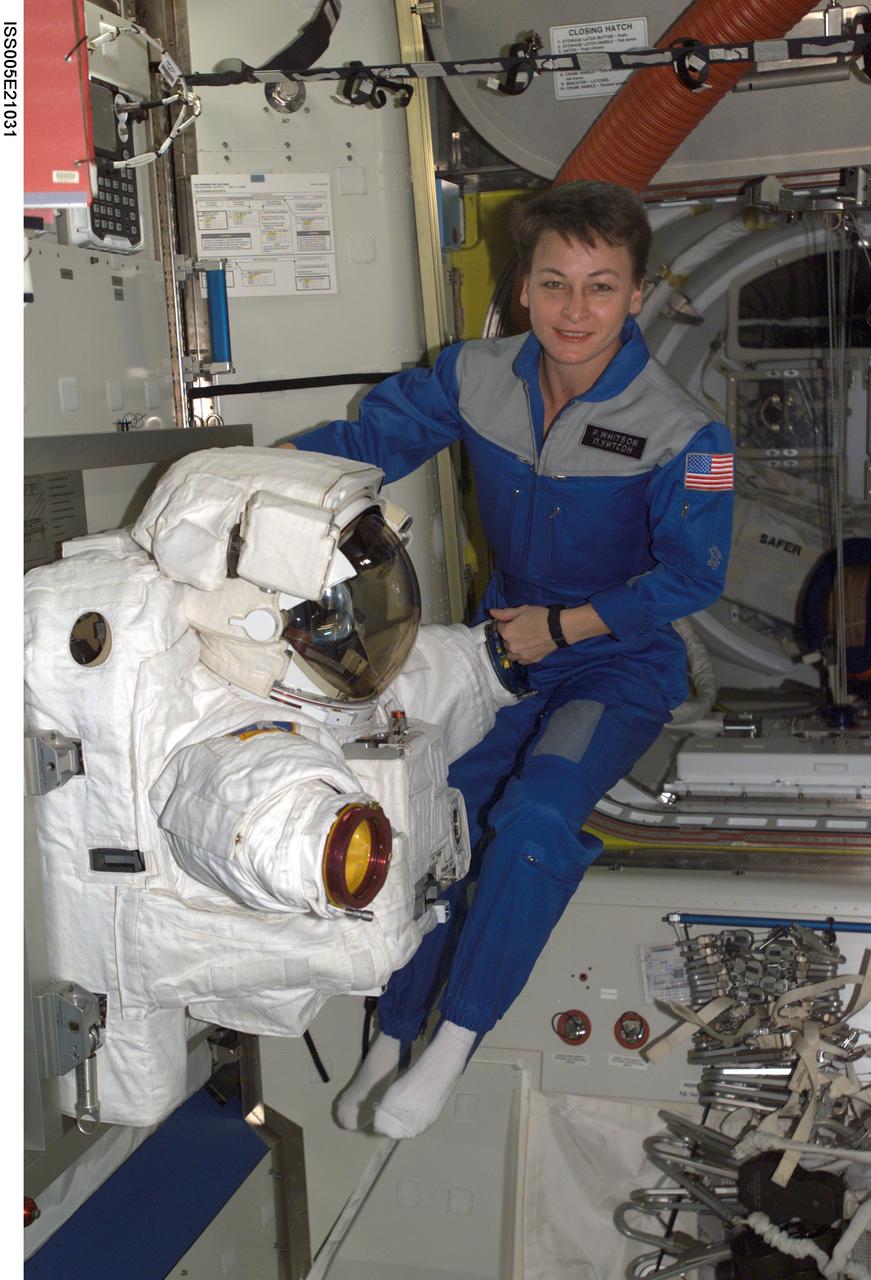
ISS005-E-21031 (21 November 2002) --- Astronaut Peggy A. Whitson, Expedition Five NASA ISS science officer, floats near an upper portion of an Extravehicular Mobility Unit (EMU) spacesuit stored in the Quest Airlock on the International Space Station (ISS).
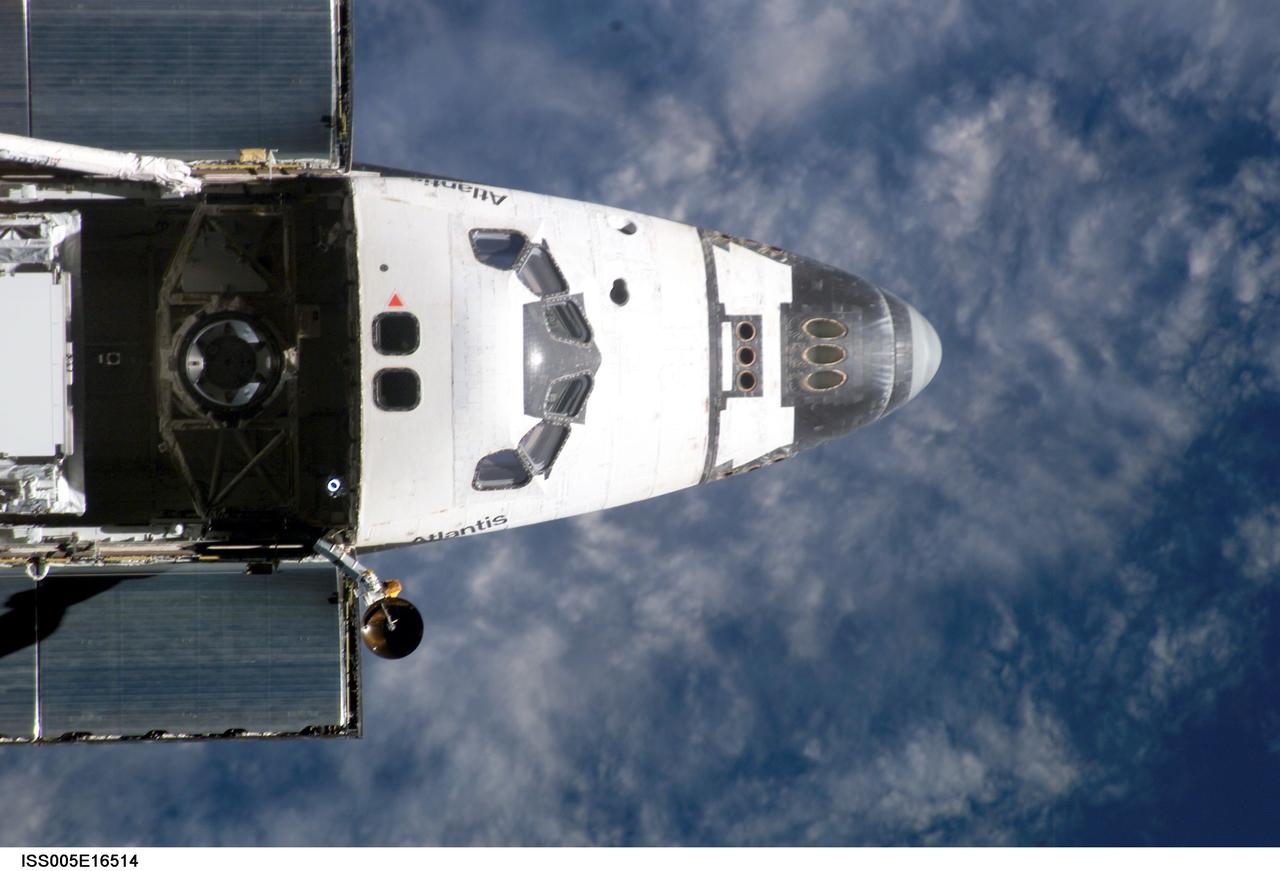
ISS005-E-16514 (9 October 2002) --- The forward section and part of the cargo bay of the Space Shuttle Atlantis were photographed by an Expedition Five crewmember aboard the International Space Station (ISS) during rendezvous and docking operations. Docking occurred at 10:17 a.m. (CDT) on October 9, 2002.
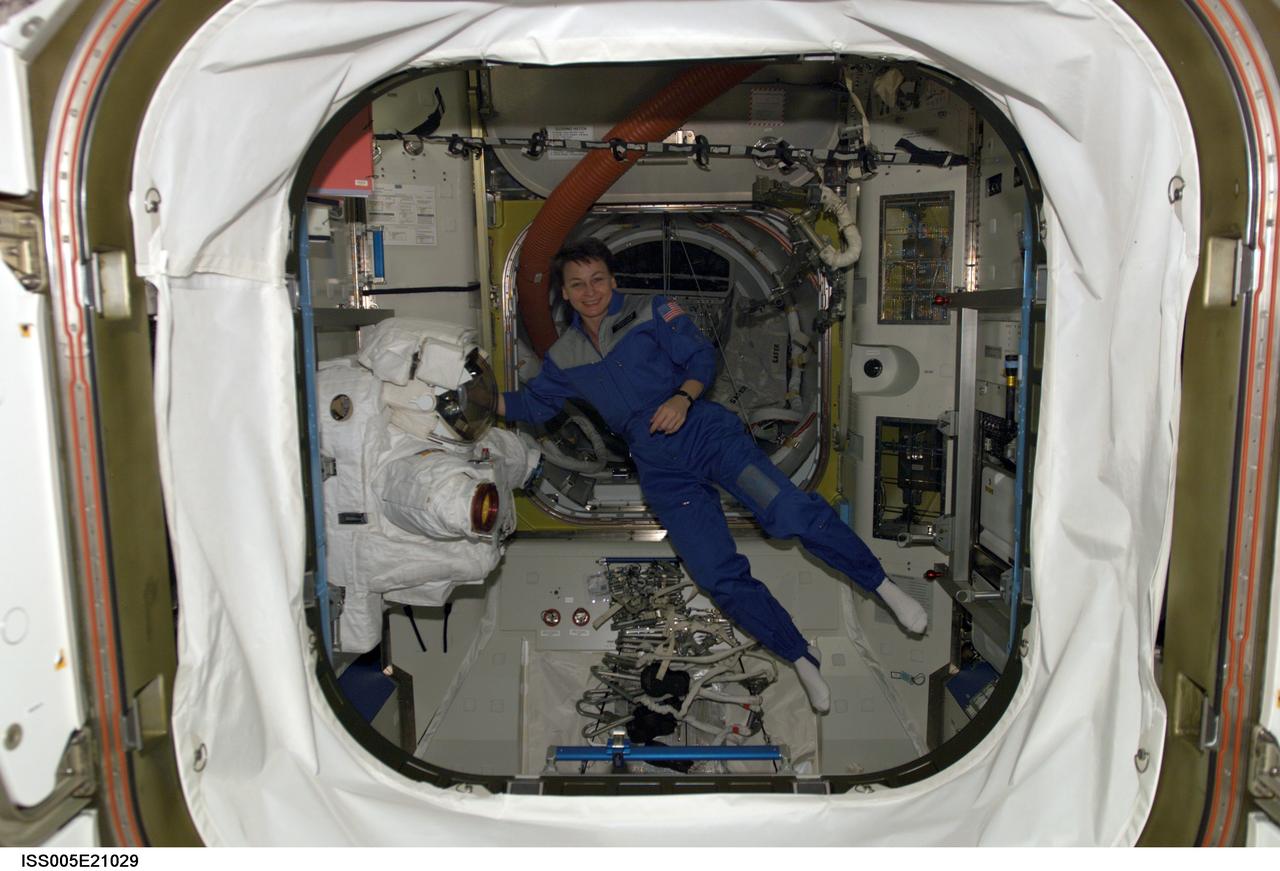
ISS005-E-21029 (21 November 2002) --- Astronaut Peggy A. Whitson, Expedition Five NASA ISS science officer, floats near an upper portion of an Extravehicular Mobility Unit (EMU) spacesuit stored in the Quest Airlock on the International Space Station (ISS).
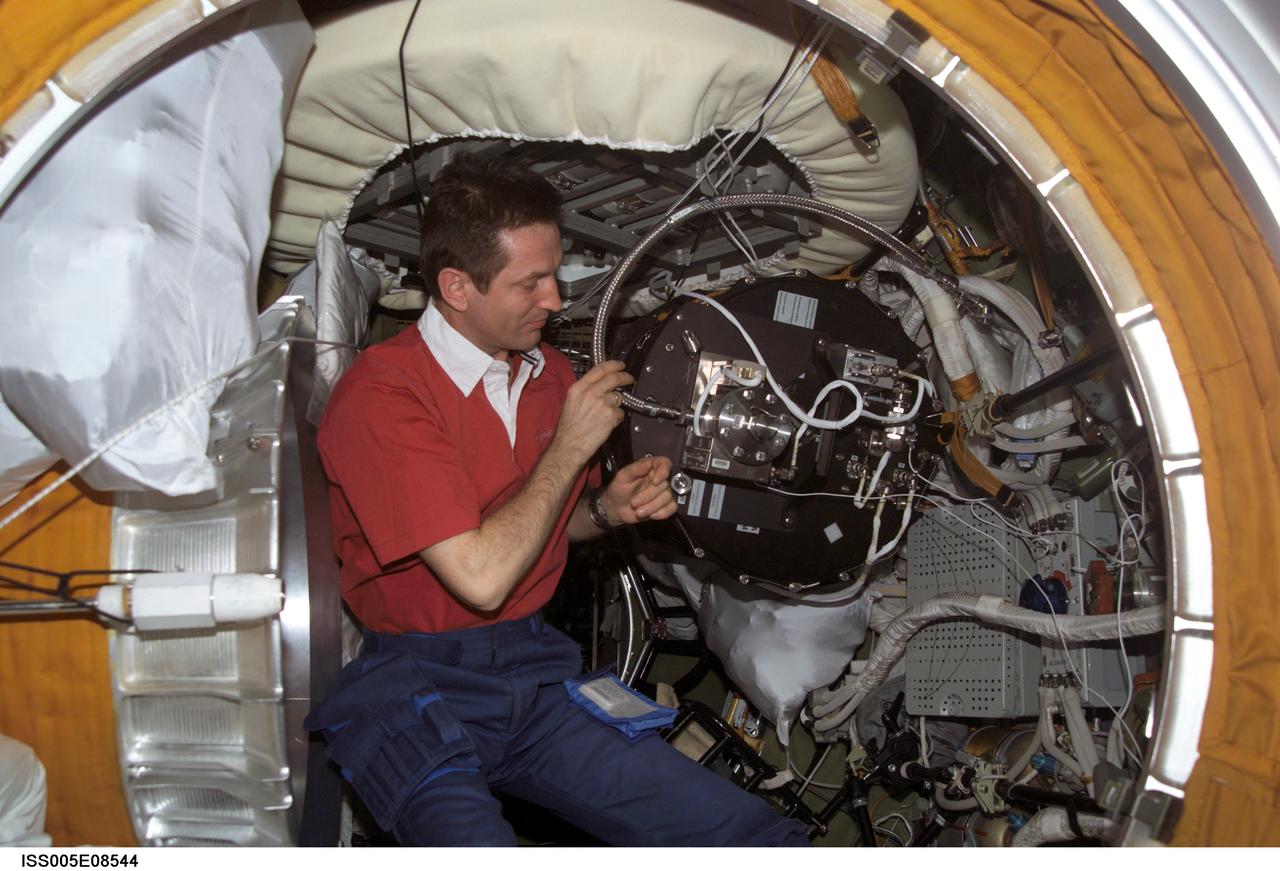
ISS005-E-08544 (3 August 2002) --- Cosmonaut Sergei Y. Treschev, Expedition Five flight engineer, disassembles the Plasmakristall Telescience Apparatus in the Zvezda Service Module’s transfer compartment on the International Space Station (ISS). Treschev represents Rosaviakosmos.
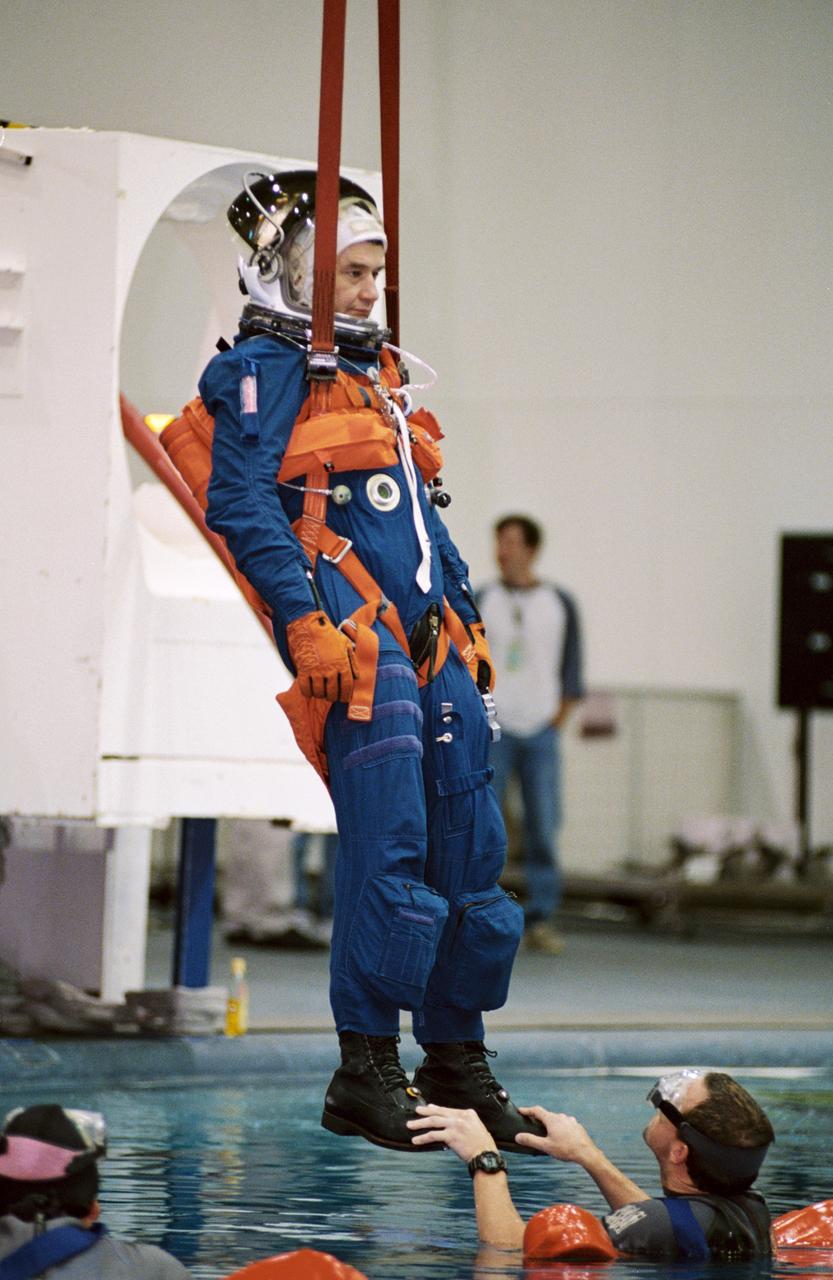
JSC2001-01922 (12 July 2001) --- Cosmonaut Valeri G. Korzun, Expedition Five mission commander, assisted by Johnson Engineering diver Gabriel Meyer, simulates a parachute drop into water during an emergency bailout training session in the Neutral Buoyancy Laboratory (NBL) near the Johnson Space Center (JSC). Korzun represents Rosaviakosmos.
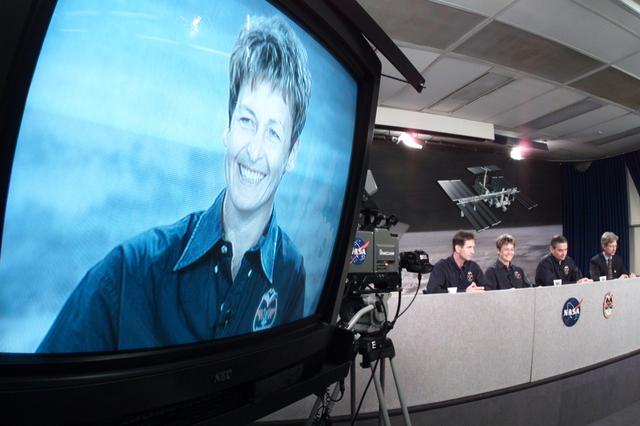
JSC2002-E-21247 (20 May 2002) --- A close-up image of astronaut Peggy A. Whitson, Expedition Five flight engineer, shows on a nearby television monitor during a pre-flight press conference at Johnson Space Center (JSC). The entire crew can be seen in the background.
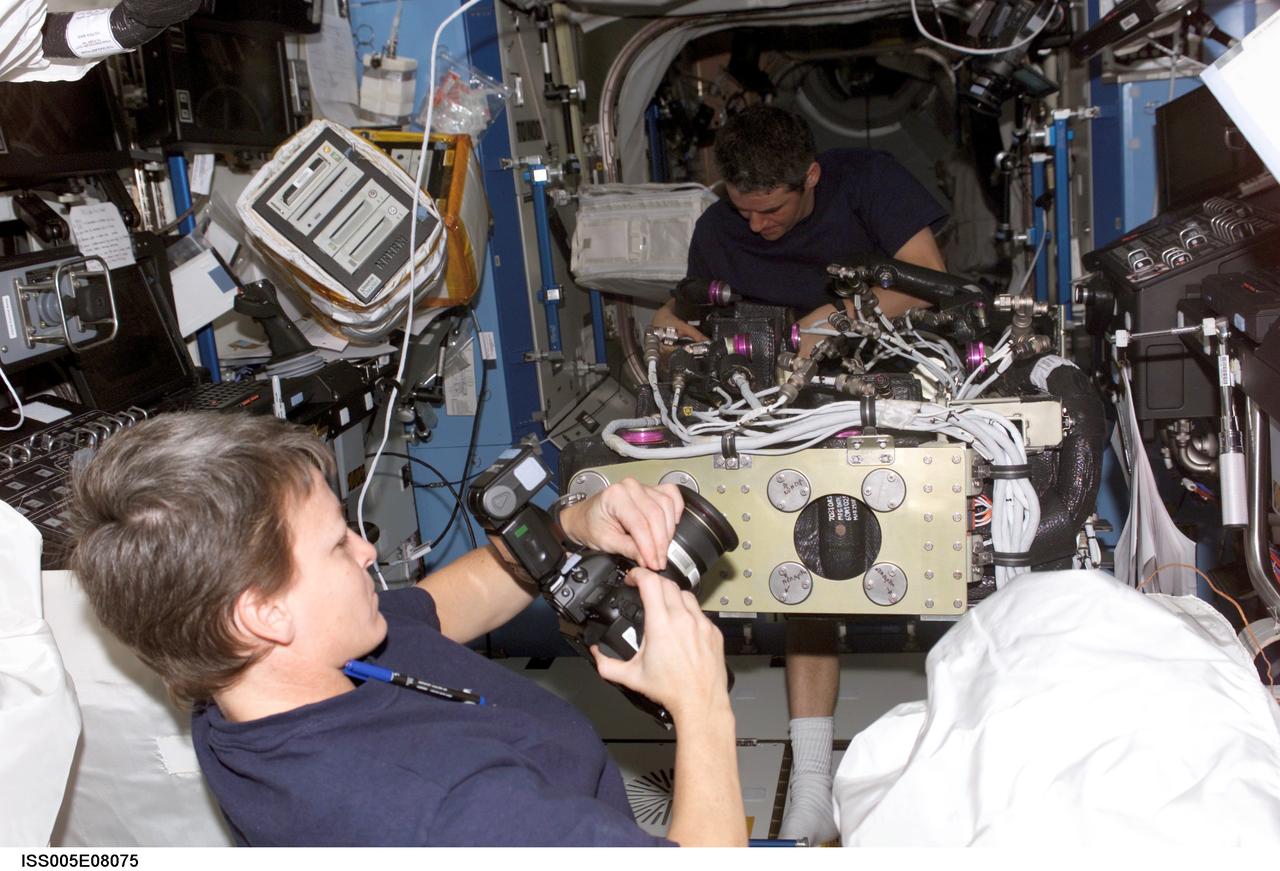
ISS005-E-08075 (July 2002) --- Astronaut Peggy A. Whitson (foreground), Expedition Five flight engineer, prepares to use a still camera in the Destiny laboratory on the International Space Station (ISS). Cosmonaut Valery G. Korzun, mission commander, is visible in the background as he works on equipment. Korzun represents Rosaviakosmos.
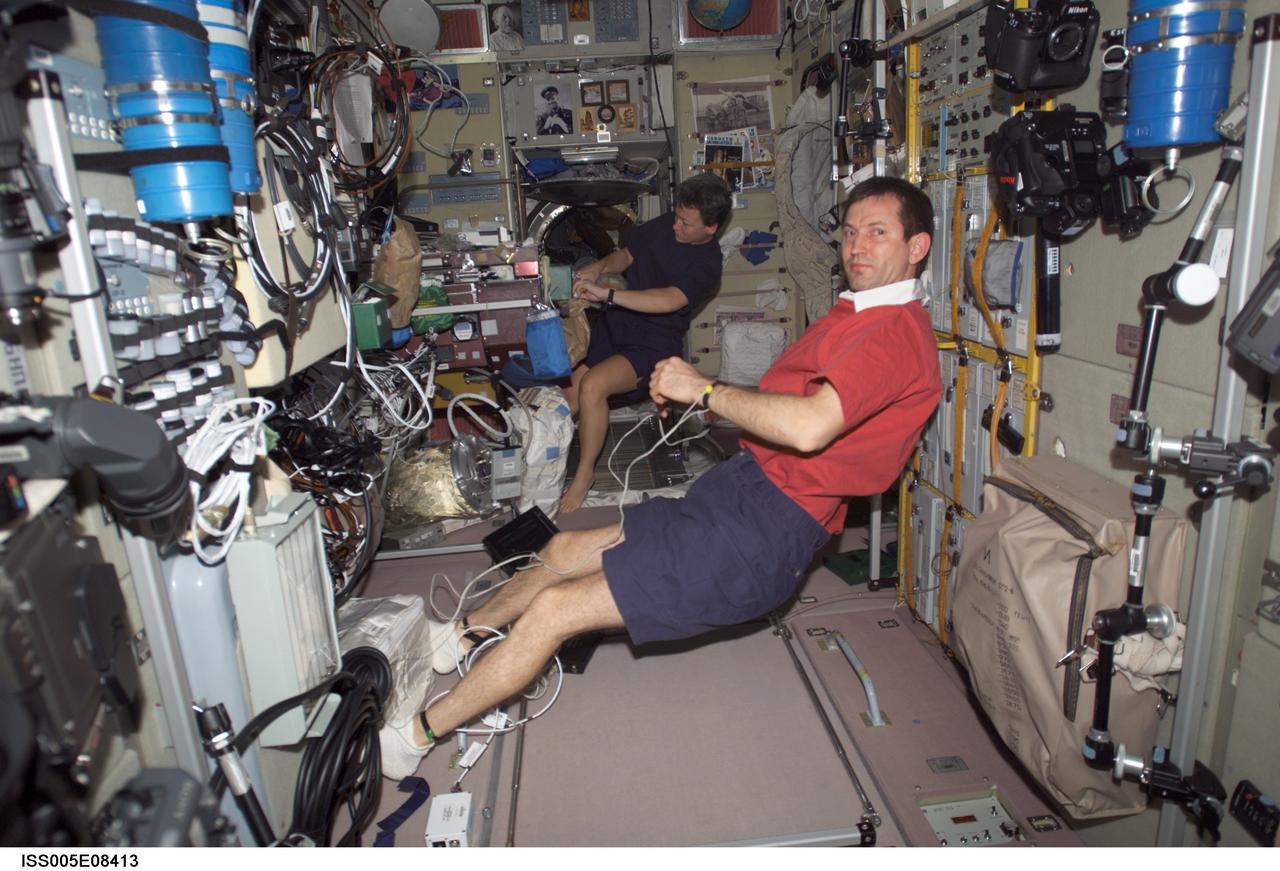
ISS005-E-08413 (July 2002) --- Cosmonaut Sergei Y. Treschev (foreground) and astronaut Peggy A. Whitson, both Expedition Five flight engineers, are photographed in the Zvezda Service Module on the International Space Station (ISS). Treschev represents Rosaviakosmos.
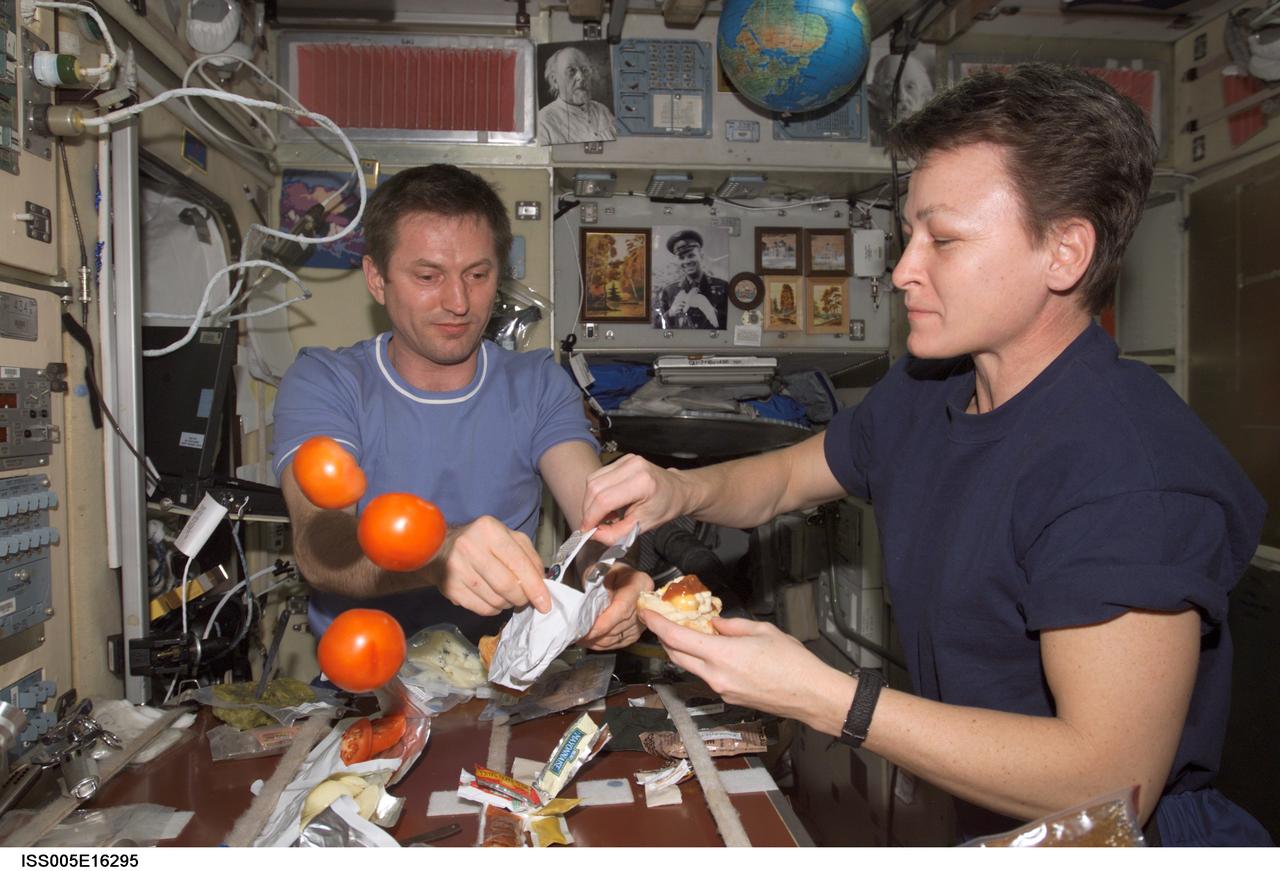
ISS005-E-16295 (4 October 2002) --- Astronaut Peggy A. Whitson (right) and cosmonaut Sergei Y. Treschev, both Expedition Five flight engineers, share a meal in the Zvezda Service Module on the International Space Station (ISS). Treschev represents Rosaviakosmos.
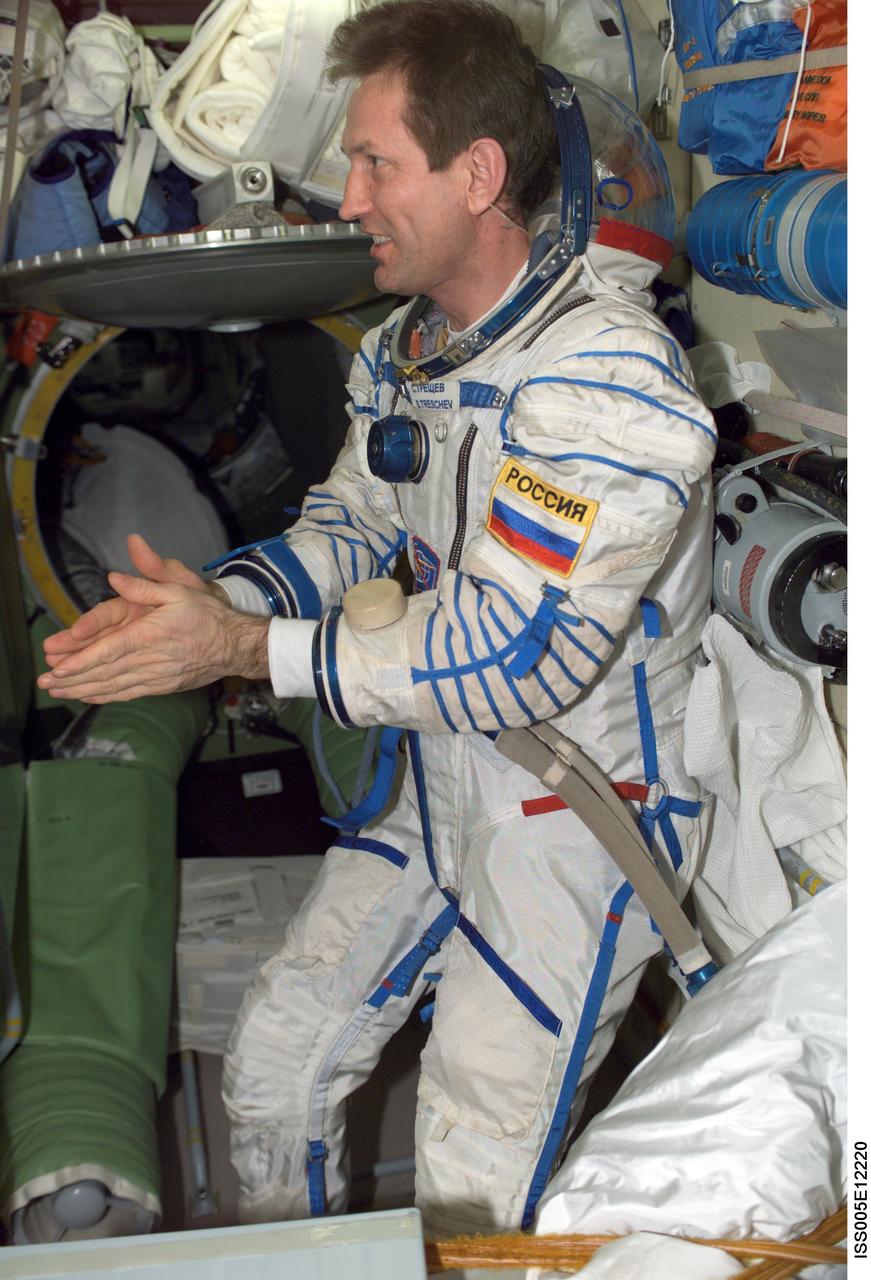
ISS005-E-12220 (3 September 2002) --- Cosmonaut Sergei Y. Treschev, Expedition Five flight engineer, wearing a Russian Sokol suit, is pictured in the functional cargo block (FGB), or Zarya on the International Space Station (ISS). Treschev represents Rosaviakosmos.
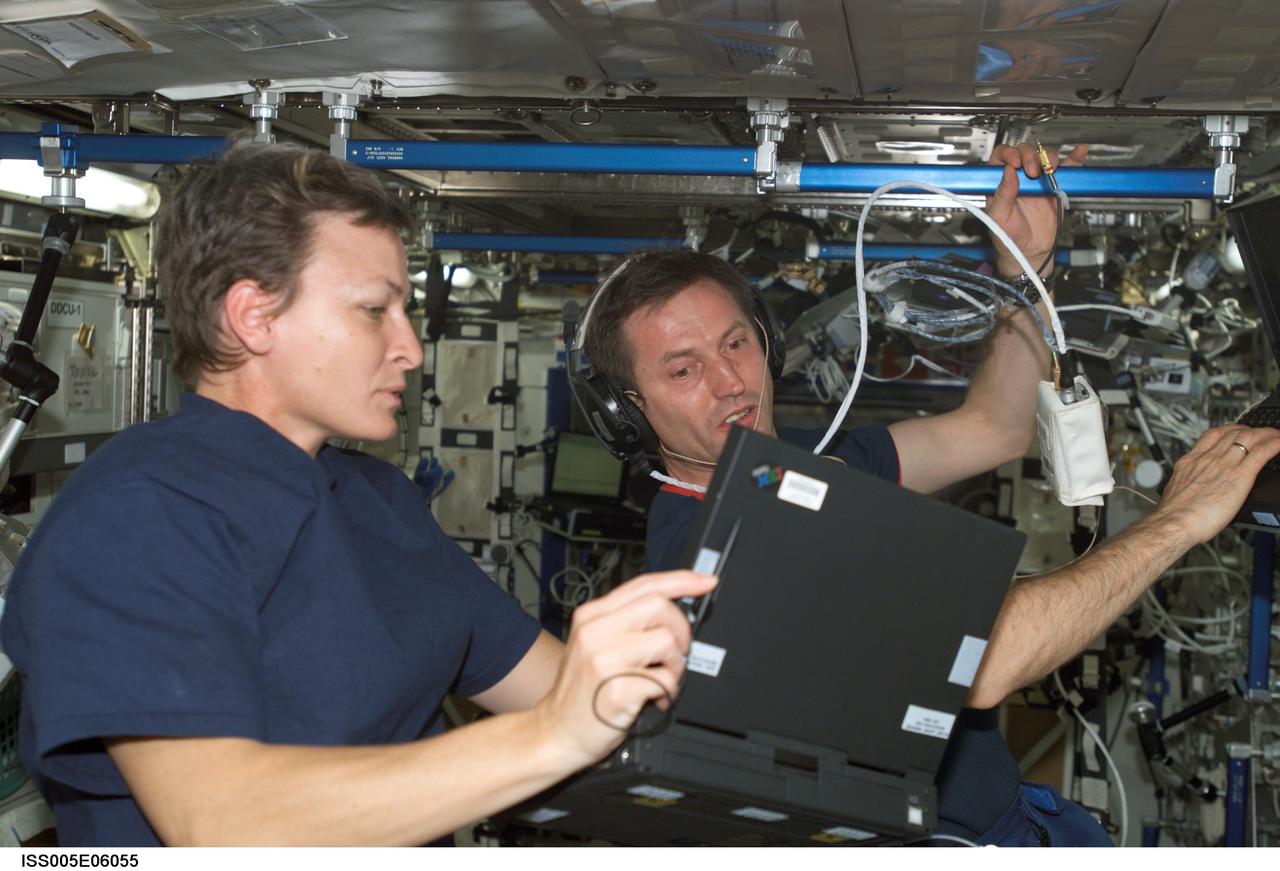
ISS005-E-06055 (27 June 2002) --- Astronaut Peggy A. Whitson (left) and cosmonaut Sergei Y. Treschev, both Expedition Five flight engineers, work in the Destiny laboratory on the International Space Station (ISS). Treschev represents Rosaviakosmos.
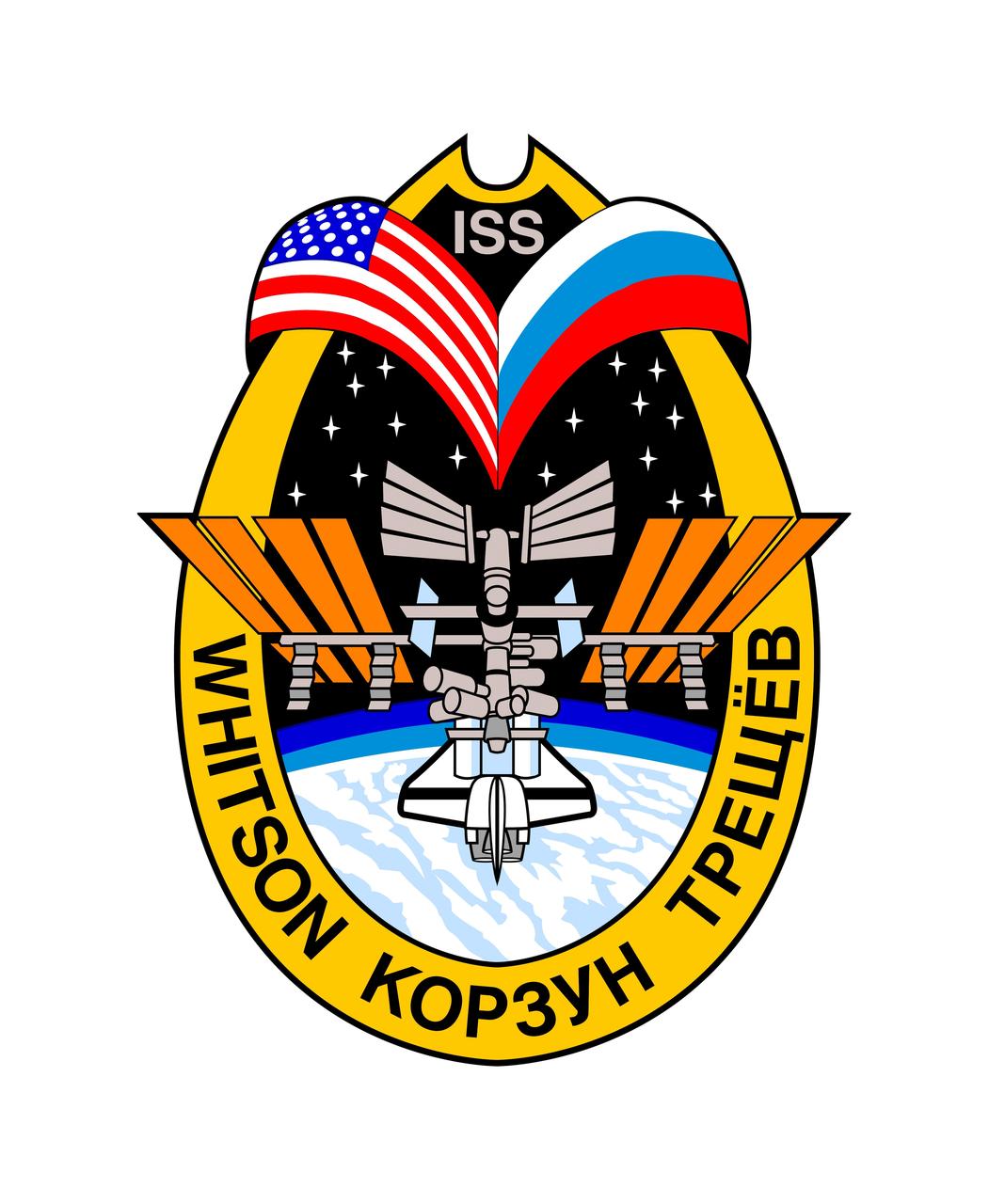
ISS005-S-001 (January 2002) -- The International Space Station (ISS) Expedition Five patch depicts the station in its completed configuration and represents the vision of mankind's first step as a permanent human presence in space. The United States and Russian flags are joined together in a Roman numeral V to represent both the nationalities of the crew and the fifth crew to live aboard the ISS. Crew members? names are shown in the border of this patch. This increment encompasses a new phase in growth for the station, with three shuttle crews delivering critical components and building blocks to the ISS. To signify the participation of each crew member, the shuttle is docked to the station beneath a constellation of 17 stars symbolizing all those visiting and living aboard station during this increment. The NASA insignia design for shuttle flights and station increments is reserved for use by the astronauts and for other official use as the NASA Administrator may authorize. Public availability has been approved only in the forms of illustrations by the various news media. When and if there is any change in this policy, which is not anticipated, the change will be publicly announced.
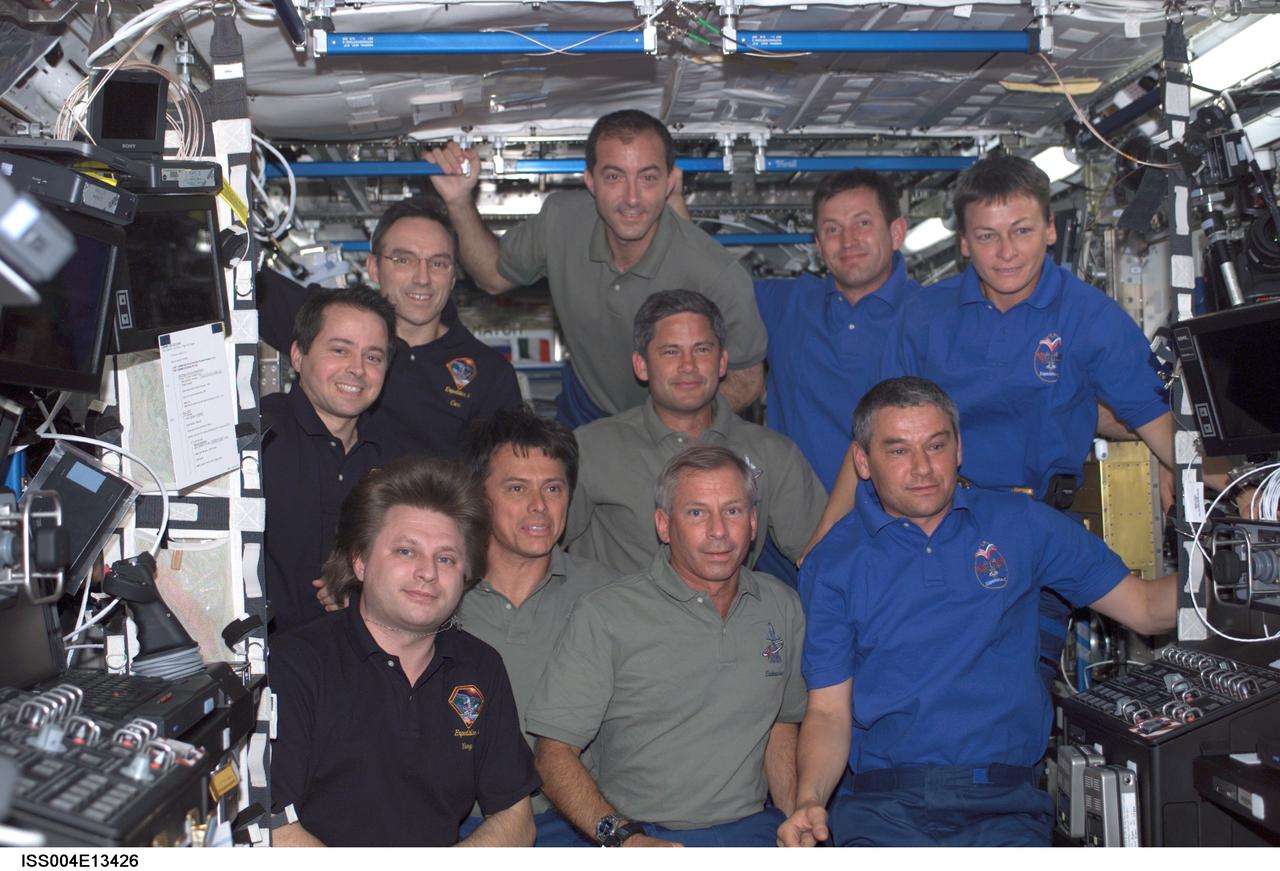
ISS004-E-13426 (June 2002) --- The Expedition Four (dark blue shirts), STS-111 (green shirts), and Expedition Five (medium blue shirts) crews assemble for a group photo in the Destiny laboratory on the International Space Station (ISS). The Expedition Four crewmembers are, from front to back, cosmonaut Yury I. Onufrienko, mission commander, and astronauts Daniel W. Bursch and Carl E. Walz, flight engineers. STS-111 crewmembers are, from front to back, astronauts Kenneth D. Cockrell, mission commander; Franklin R. Chang-Diaz, mission specialist; Paul S. Lockhart, pilot; and Philippe Perrin, mission specialist. Expedition Five crewmembers are, from front to back, cosmonaut Valery G. Korzun, mission commander; astronaut Peggy A. Whitson and cosmonaut Sergei Y. Treschev, flight engineers. Onufrienko, Korzun and Treschev represent Rosaviakosmos and Perrin represents CNES, the French Space Agency.
![ISS005-E-5416 (18 June 2002) --- This photograph, taken by the International Space Station’s Expedition Five crew on June 18, 2002, shows the Hayman Fire burning in the foothills southwest of Denver. Astronauts use a variety of lenses and look angles as their orbits pass over wildfires to document the long-distance movements of smoke from the fires as well as details of the burning areas. In this detail view, you can see multiple smoke source points as the fire moves across the rough terrain. The link [<http://eol.jsc.nasa.gov/scripts/sseop/photo.pl?mission=ISS005&roll=E&frame=5416> ] was provided by the Earth Sciences and Image Analysis Laboratory at Johnson Space Center. Additional images taken by astronauts and cosmonauts can be viewed at the NASA-JSC Gateway to Astronaut Photography of Earth [link to <http://eol.jsc.nasa.gov/> ].](https://images-assets.nasa.gov/image/iss005e05416/iss005e05416~medium.jpg)
ISS005-E-5416 (18 June 2002) --- This photograph, taken by the International Space Station’s Expedition Five crew on June 18, 2002, shows the Hayman Fire burning in the foothills southwest of Denver. Astronauts use a variety of lenses and look angles as their orbits pass over wildfires to document the long-distance movements of smoke from the fires as well as details of the burning areas. In this detail view, you can see multiple smoke source points as the fire moves across the rough terrain. The link [<http://eol.jsc.nasa.gov/scripts/sseop/photo.pl?mission=ISS005&roll=E&frame=5416> ] was provided by the Earth Sciences and Image Analysis Laboratory at Johnson Space Center. Additional images taken by astronauts and cosmonauts can be viewed at the NASA-JSC Gateway to Astronaut Photography of Earth [link to <http://eol.jsc.nasa.gov/> ].
![ISS005-E-5419 (18 June 2002) --- This photograph, taken by the International Space Station’s Expedition Five crew on June 18, 2002, shows the Hayman Fire burning in the foothills southwest of Denver. Astronauts use a variety of lenses and look angles as their orbits pass over wildfires to document the long-distance movements of smoke from the fires as well as details of the burning areas. In this perspective view, Littleton, Chatfield Lake and the Arkansas River are all visible. The link [<http://eol.jsc.nasa.gov/scripts/sseop/photo.pl?mission=ISS005&roll=E&frame=5416> ] was provided by the Earth Sciences and Image Analysis Laboratory at Johnson Space Center. Additional images taken by astronauts and cosmonauts can be viewed at the NASA-JSC Gateway to Astronaut Photography of Earth [link to <http://eol.jsc.nasa.gov/> ].](https://images-assets.nasa.gov/image/iss005e05419/iss005e05419~medium.jpg)
ISS005-E-5419 (18 June 2002) --- This photograph, taken by the International Space Station’s Expedition Five crew on June 18, 2002, shows the Hayman Fire burning in the foothills southwest of Denver. Astronauts use a variety of lenses and look angles as their orbits pass over wildfires to document the long-distance movements of smoke from the fires as well as details of the burning areas. In this perspective view, Littleton, Chatfield Lake and the Arkansas River are all visible. The link [<http://eol.jsc.nasa.gov/scripts/sseop/photo.pl?mission=ISS005&roll=E&frame=5416> ] was provided by the Earth Sciences and Image Analysis Laboratory at Johnson Space Center. Additional images taken by astronauts and cosmonauts can be viewed at the NASA-JSC Gateway to Astronaut Photography of Earth [link to <http://eol.jsc.nasa.gov/> ].
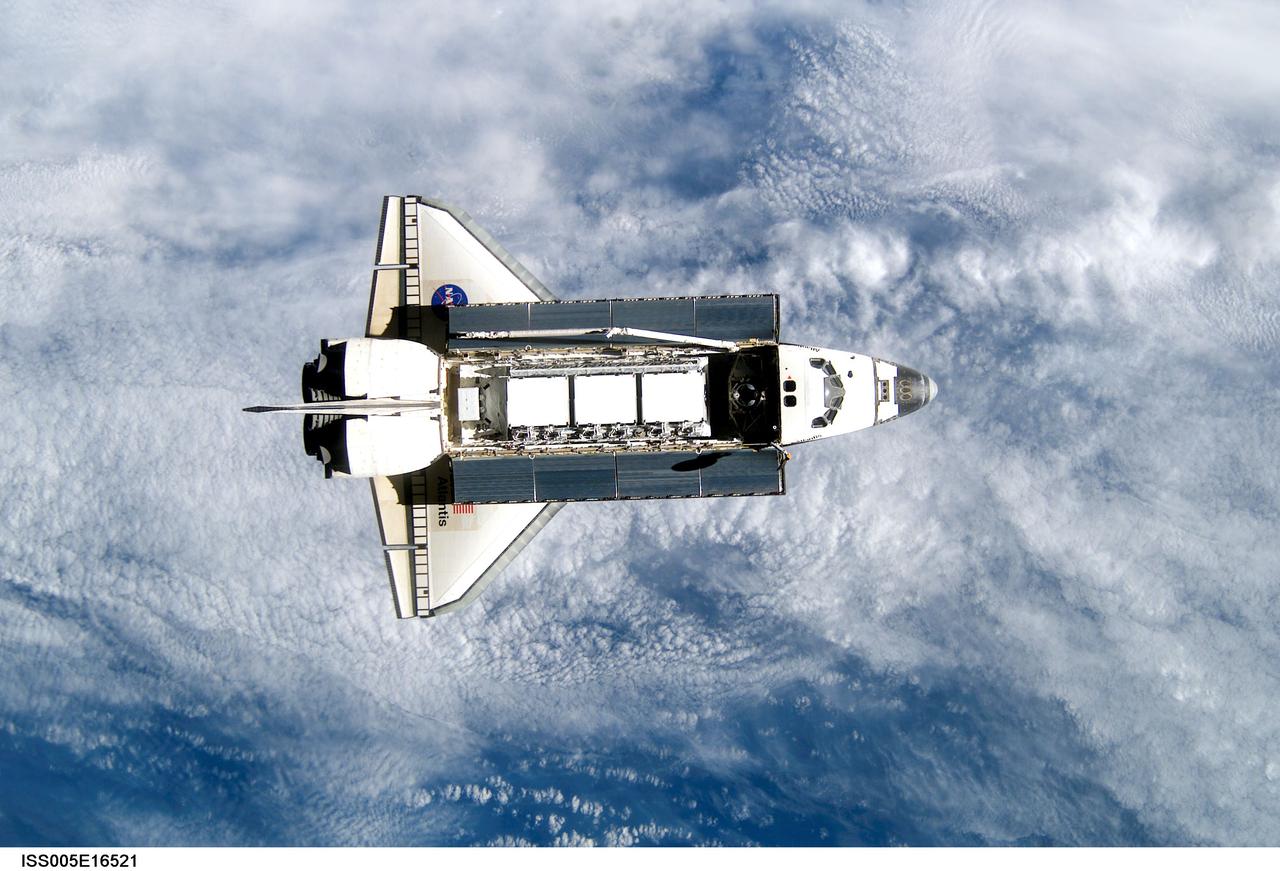
ISS005-E-16521 (9 October 2002) --- Backdropped against a blue and white Earth, this view of the Space Shuttle Atlantis was photographed by an Expedition Five crewmember onboard the International Space Station (ISS) during rendezvous and docking operations. Docking occurred at 10:17 a.m. (CDT) on October 9, 2002. The S1 (S-One) Truss, which is scheduled to be attached to the station and outfitted during three spacewalks, can be seen in Atlantis’ cargo bay.
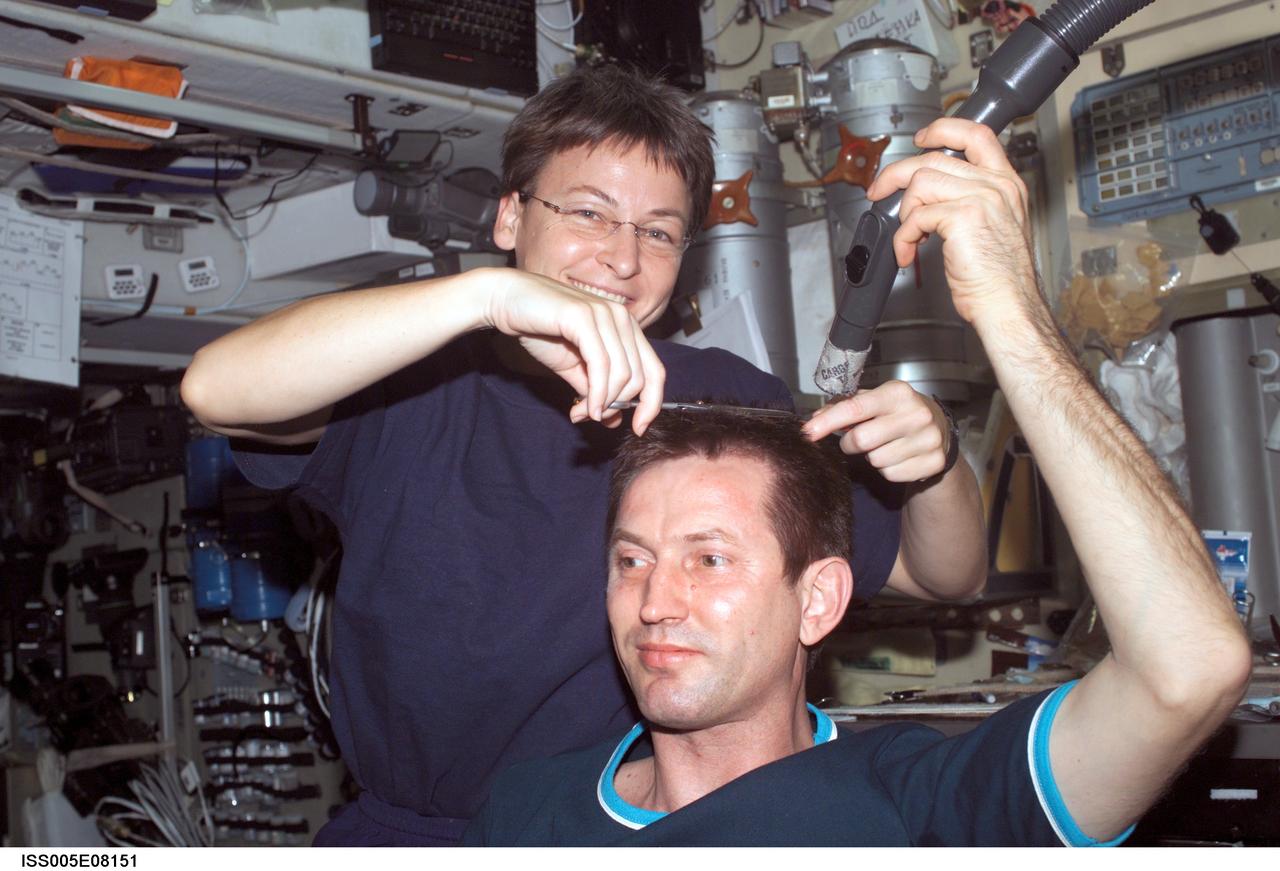
ISS005-E-08151 (July 2002) --- Astronaut Peggy A. Whitson, Expedition Five flight engineer, cuts cosmonaut Sergei Y. Treschev’s hair in the Zvezda Service Module on the International Space Station (ISS). Treschev, flight engineer representing Rosaviakosmos, holds a vacuum device the crew has fashioned to garner freshly cut hair, which is floating freely.
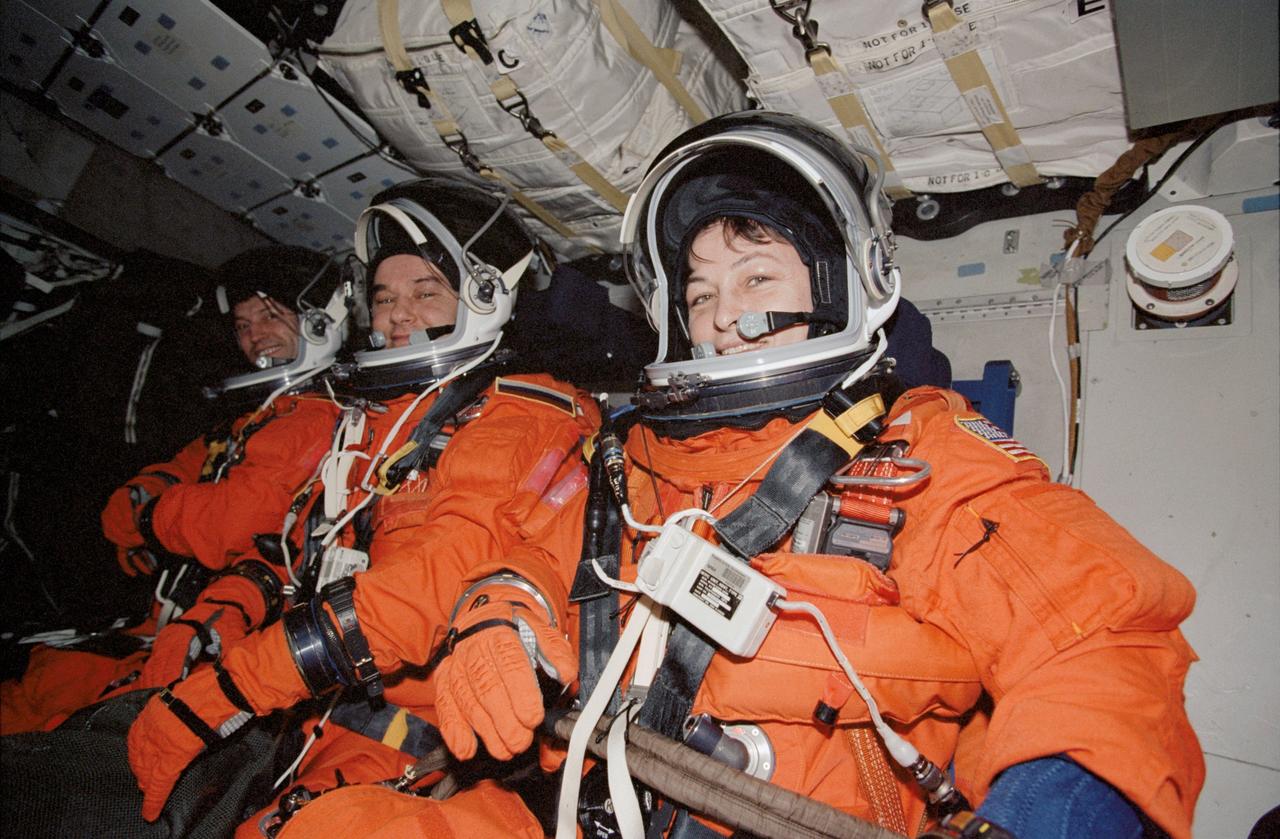
STS113-346-022 (7 December 2002) --- The Expedition Five crewmembers, attired in their shuttle launch and entry suits, are seated on the middeck of the Space Shuttle Endeavour in preparation for landing at Kennedy Space Center, Florida. From front to back are astronaut Peggy A. Whitson, NASA ISS science officer; cosmonauts Valery G. Korzun, mission commander; and Sergei Y. Treschev, flight engineer. Korzun and Treschev represent Rosaviakosmos.
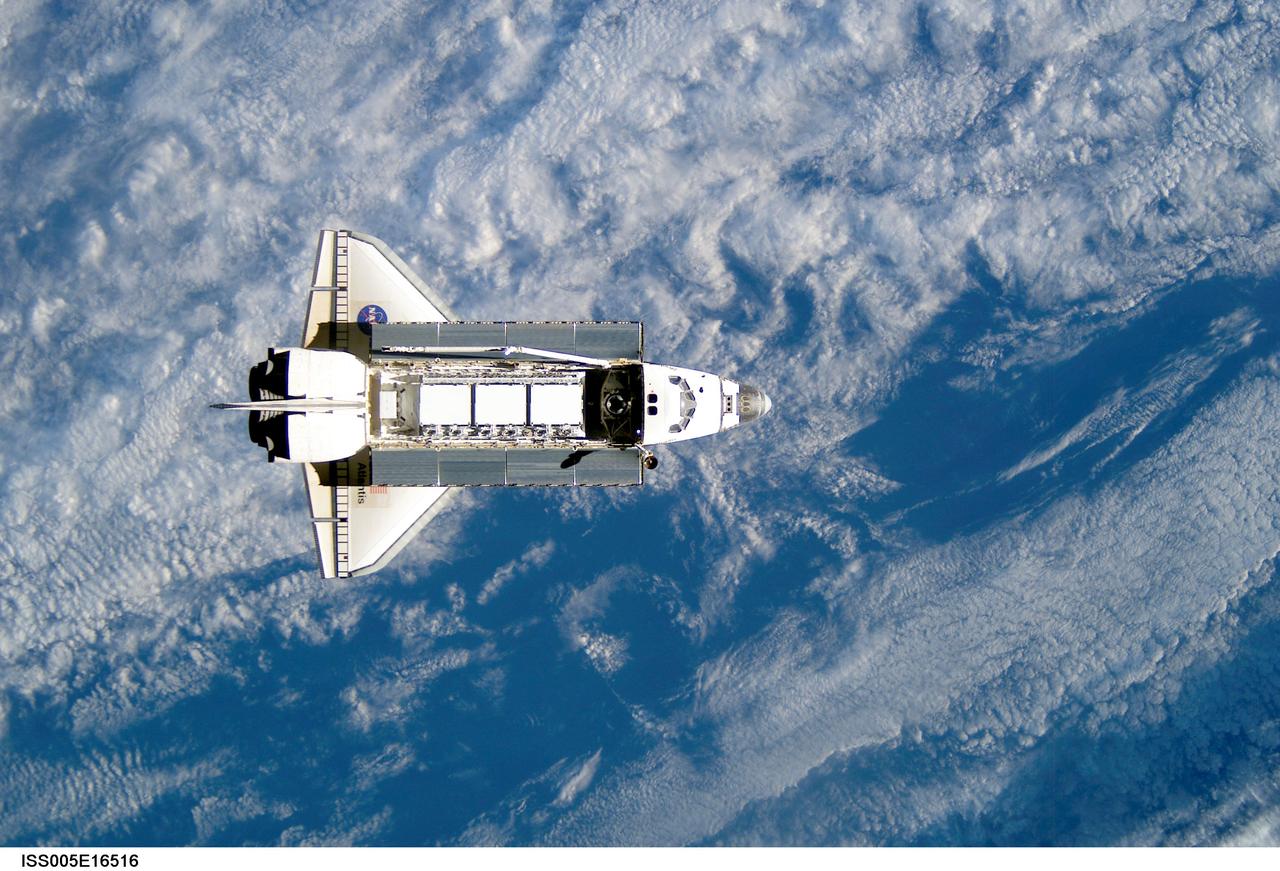
ISS005-E-16516 (9 October 2002) --- Backdropped against a blue and white Earth, this view of the Space Shuttle Atlantis was photographed by an Expedition Five crewmember onboard the International Space Station (ISS) during rendezvous and docking operations. Docking occurred at 10:17 a.m. (CDT) on October 9, 2002. The S1 (S-One) Truss, which is scheduled to be attached to the station and outfitted during three spacewalks, can be seen in Atlantis’ cargo bay.
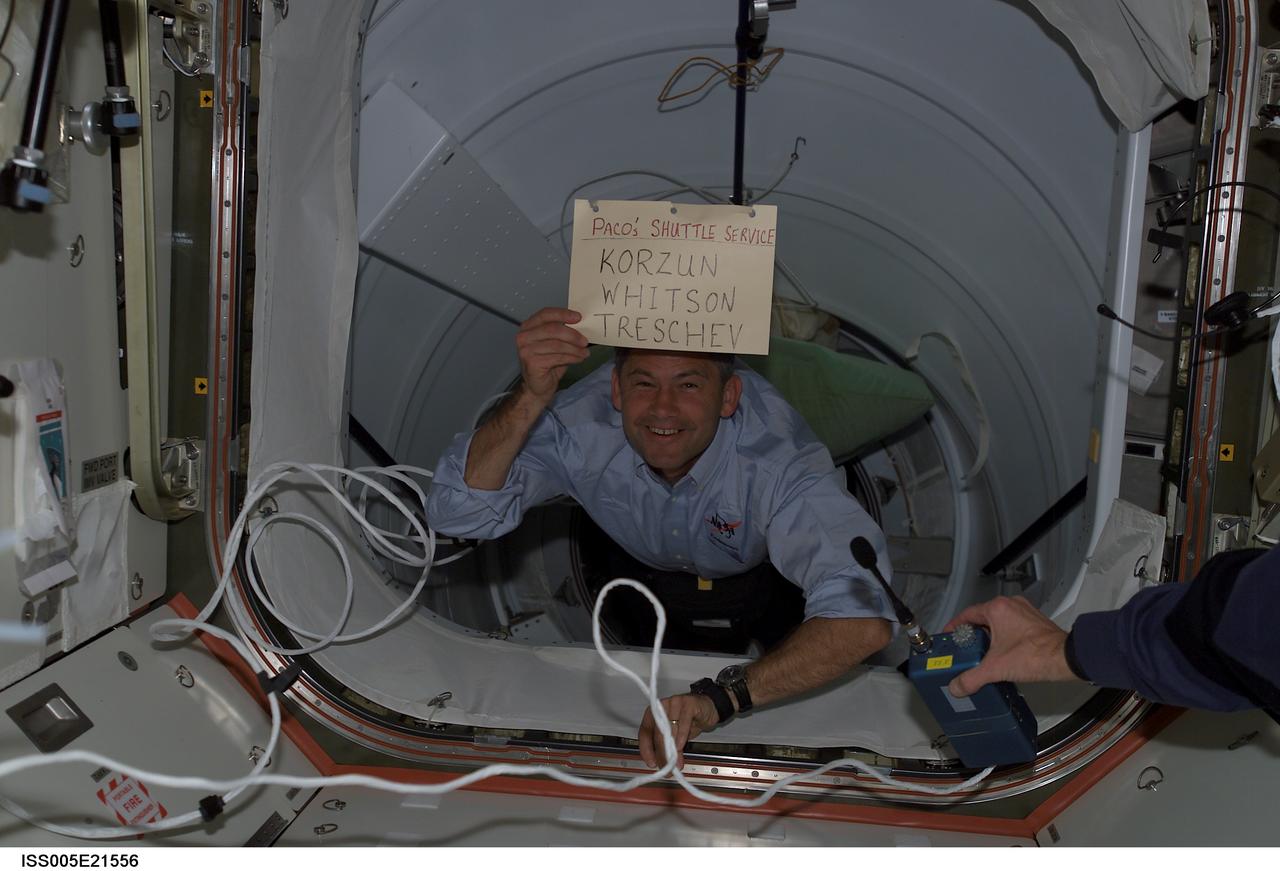
ISS005-E-21556 (25 November 2002) --- Astronaut Paul S. Lockhart, STS-113 pilot, holds a sign as he floats through the Pressurized Mating Adapter 2 (PMA-2) on the International Space Station (ISS) following the docking with the Space Shuttle Endeavour. Lockhart was also STS-111 pilot, which carried the Expedition Five crew to the station.
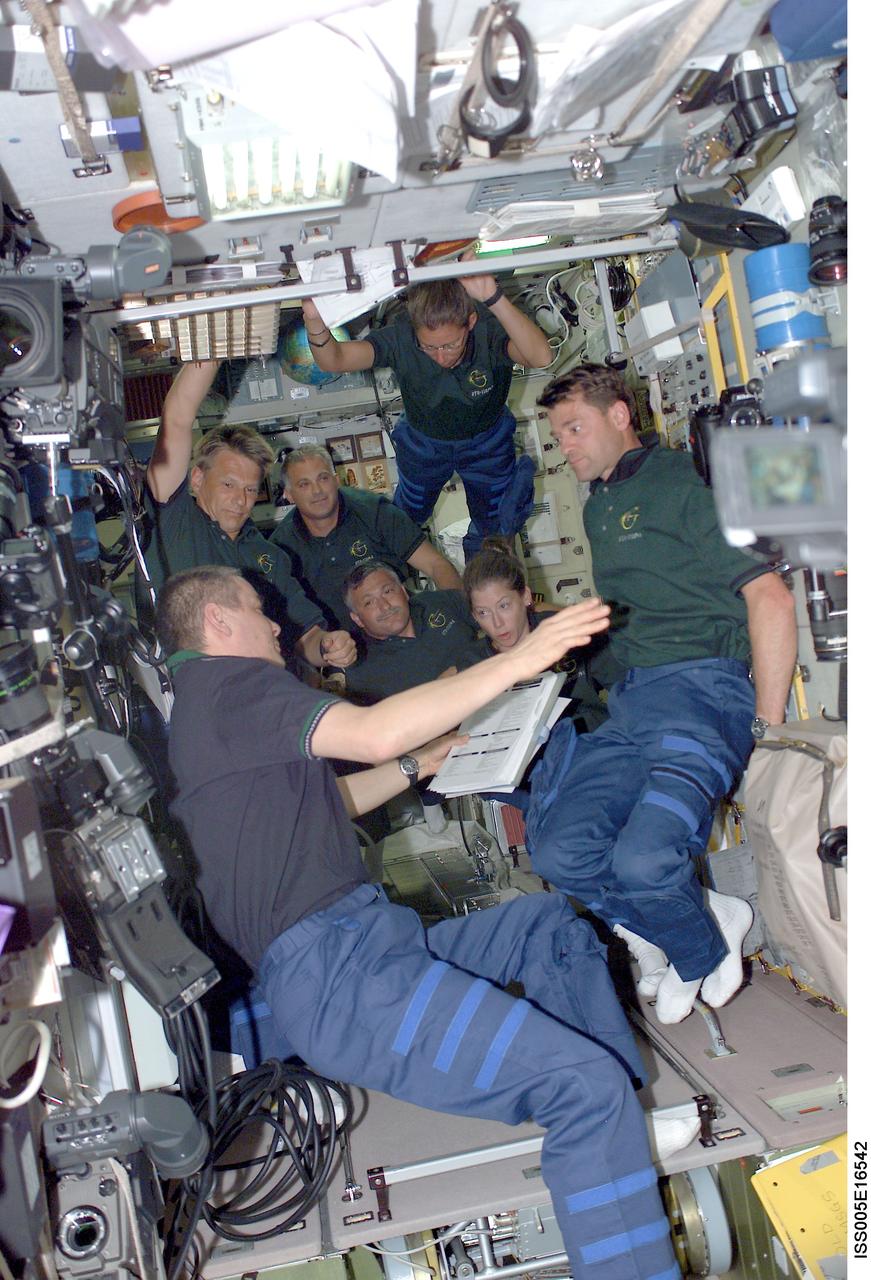
ISS005-E-16542 (9 October 2002) --- Cosmonaut Valery G. Korzun, Expedition Five mission commander, and the STS-112 crewmembers were photographed in the Zvezda Service Module on the International Space Station (ISS). Others pictured are astronauts Jeffrey S. Ashby, STS-112 mission commander; Pamela A. Melroy, pilot; Sandra H. Magnus, Piers J. Sellers, David A. Wolf, and cosmonaut Fyodor N. Yurchikhin, all mission specialists. Korzun and Yurchikhin represent Rosaviakosmos.
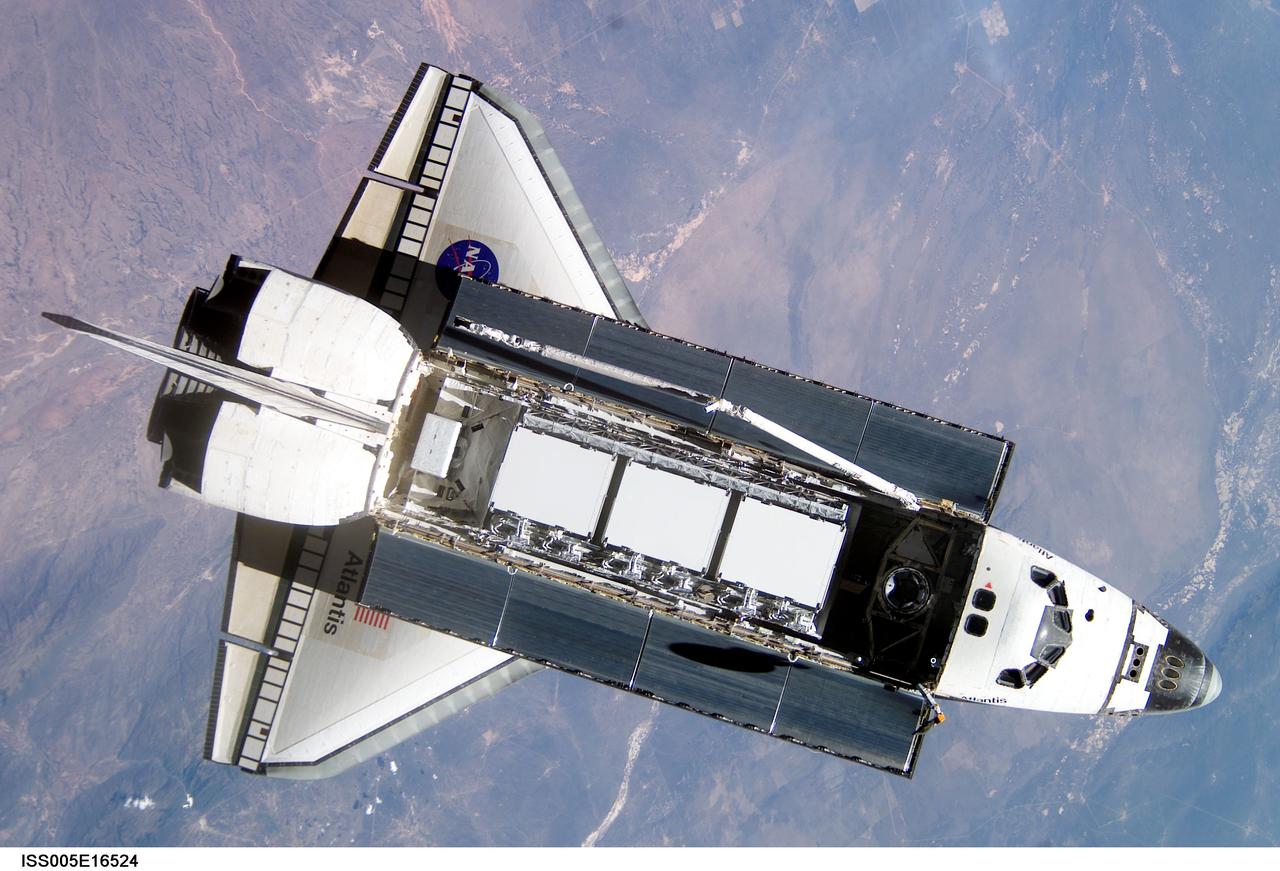
ISS005-E-16524 (9 October 2002) --- This view of the Space Shuttle Atlantis was photographed by an Expedition Five crewmember onboard the International Space Station (ISS) during rendezvous and docking operations. Docking occurred at 10:17 a.m. (CDT) on October 9, 2002. The S1 (S-One) Truss, which is scheduled to be attached to the station and outfitted during three spacewalks, can be seen in Atlantis’ cargo bay.
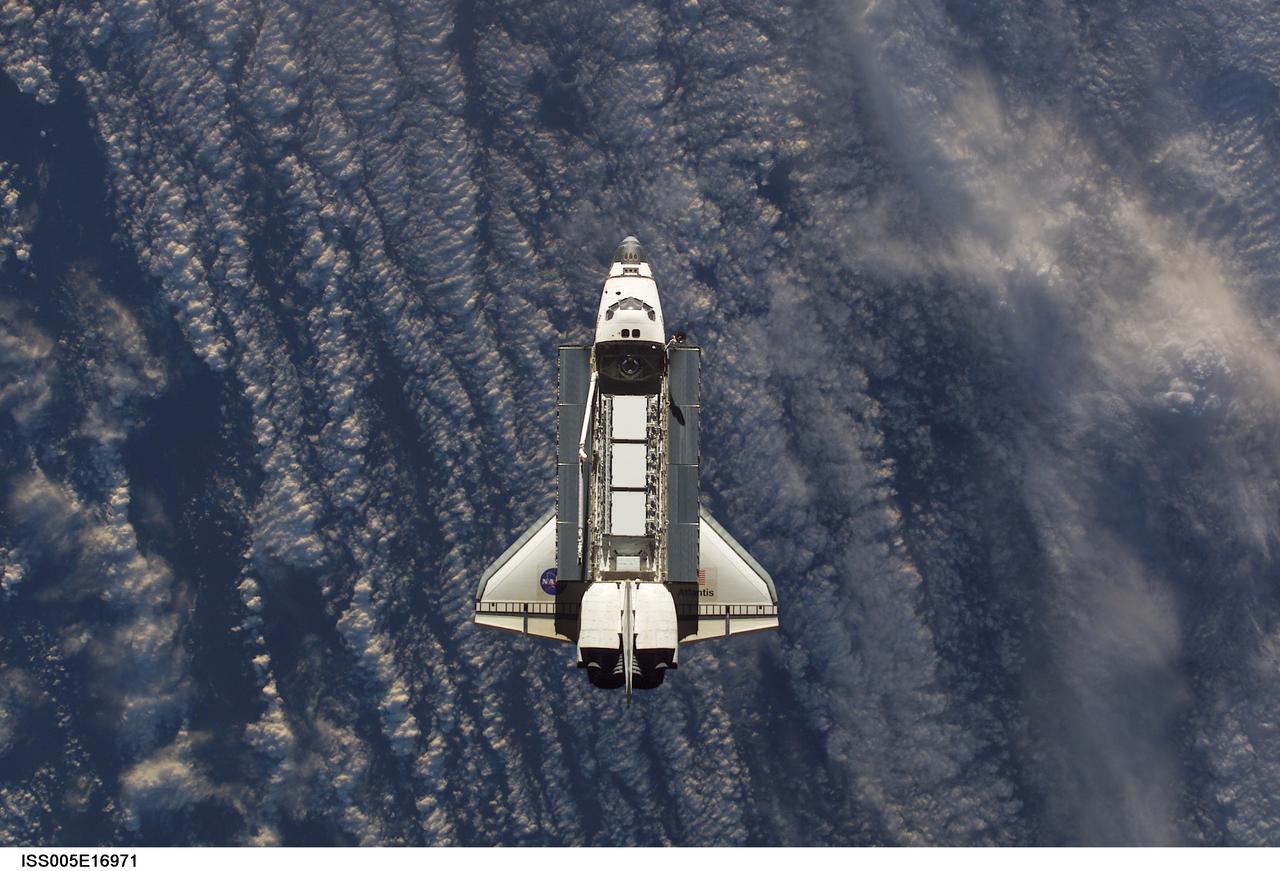
ISS005-E-16971 (9 October 2002) --- Backdropped against a blue and white Earth, this view of the Space Shuttle Atlantis was photographed by an Expedition Five crewmember onboard the International Space Station (ISS) during rendezvous and docking operations. Docking occurred at 10:17 a.m. (CDT) on October 9, 2002. The Starboard One (S-1) Truss, which was later attached to the station and outfitted during three spacewalks, can be seen in Atlantis’ cargo bay.
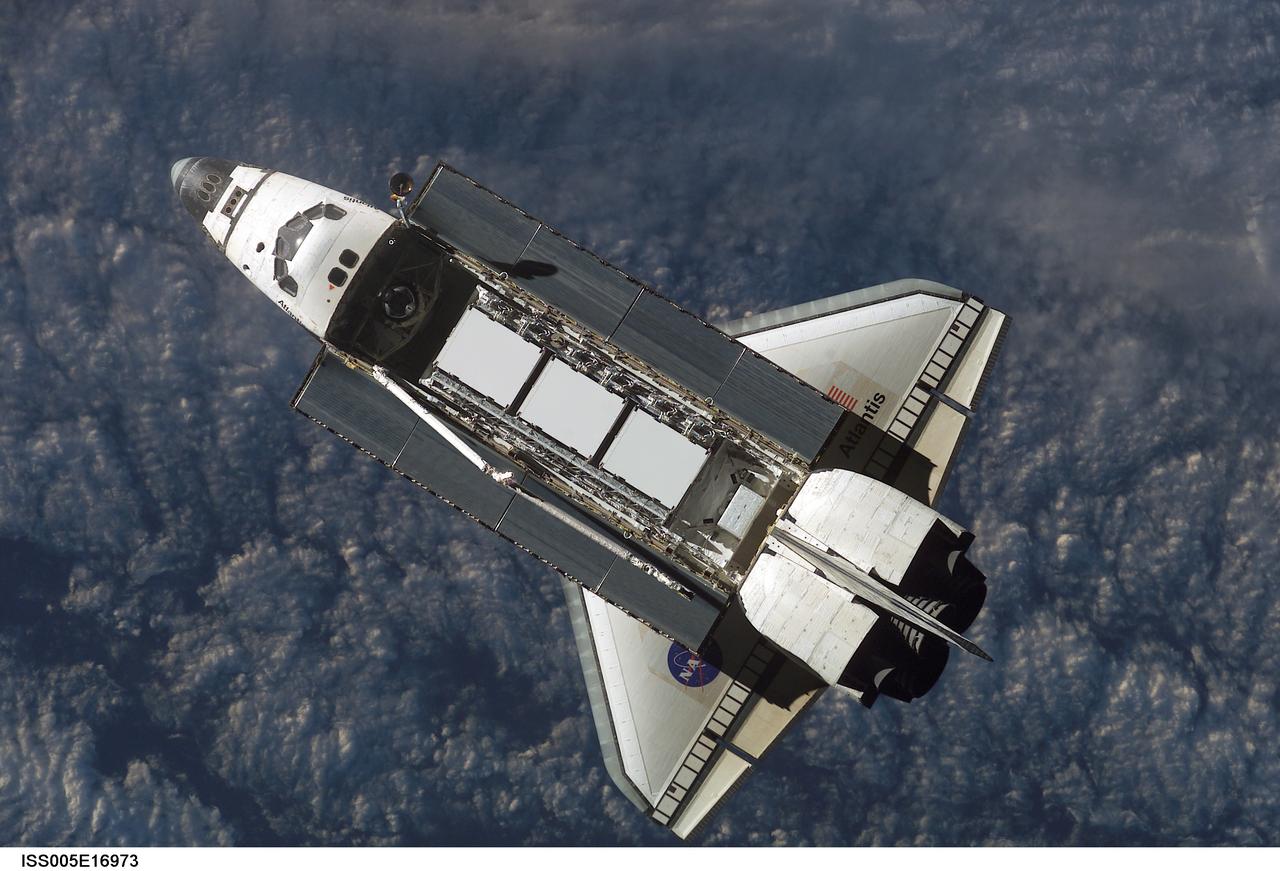
ISS005-E-16973 (9 October 2002) --- Backdropped against a blue and white Earth, this view of the Space Shuttle Atlantis was photographed by an Expedition Five crewmember onboard the International Space Station (ISS) during rendezvous and docking operations. Docking occurred at 10:17 a.m. (CDT) on October 9, 2002. The Starboard One (S-1) Truss, which was later attached to the station and outfitted during three spacewalks, can be seen in Atlantis’ cargo bay.

ISS005-E-16977 (9 October 2002) --- Backdropped against a blue and white Earth, this view of the Space Shuttle Atlantis was photographed by an Expedition Five crewmember onboard the International Space Station (ISS) during rendezvous and docking operations. Docking occurred at 10:17 a.m. (CDT) on October 9, 2002. The Starboard One (S-1) Truss, which was later attached to the station and outfitted during three spacewalks, can be seen in Atlantis’ cargo bay.
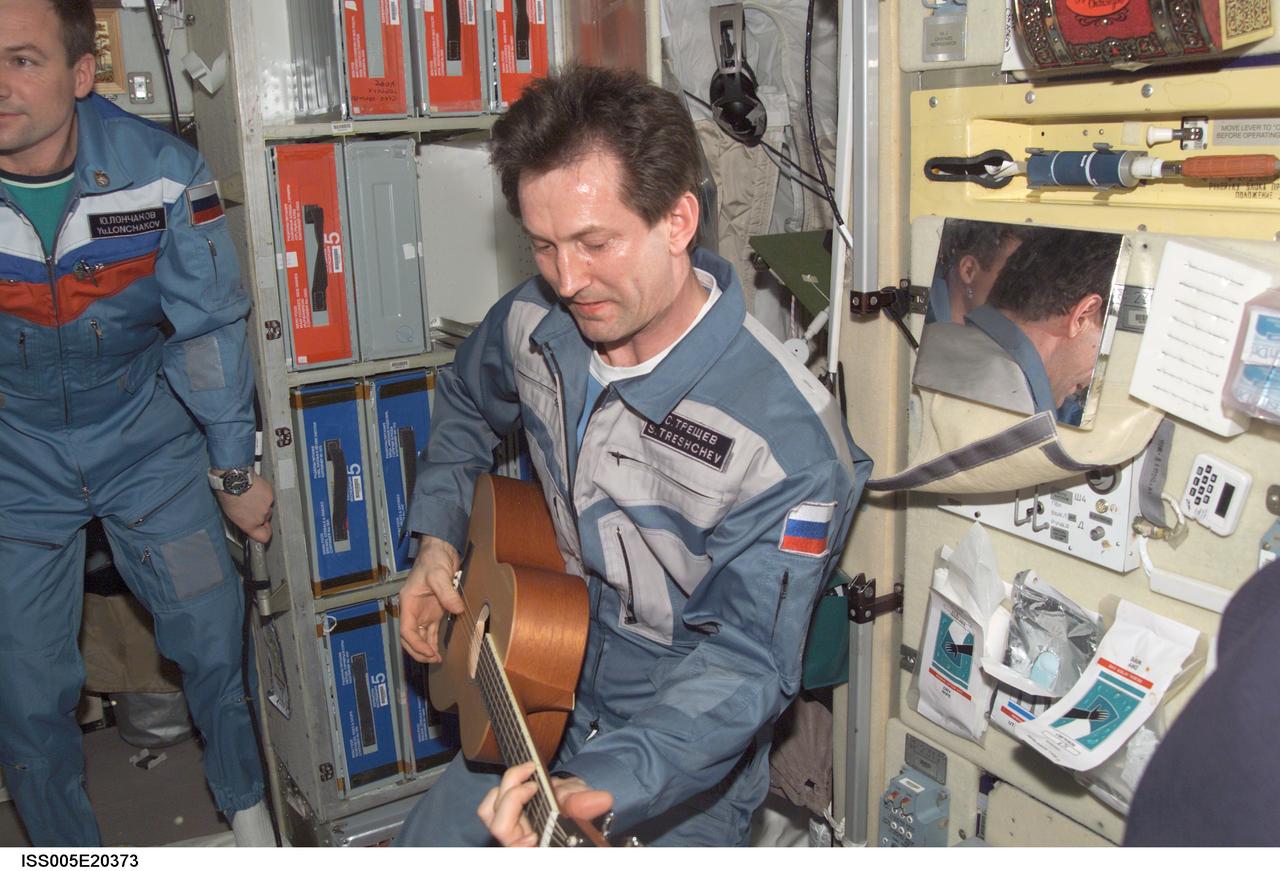
ISS005-E-20373 (8 November 2002) --- Cosmonaut Sergei Y. Treschev, Expedition Five flight engineer, plays host to some “visitors” to the International Space Station (ISS) as he performs on a guitar in the Zvezda Service Module on the International Space Station (ISS). Soyuz 5 Commander Sergei Zalyotin is partially out of frame to the left of Treschev. Zalyotin and Treschev represent Rosaviakosmos.
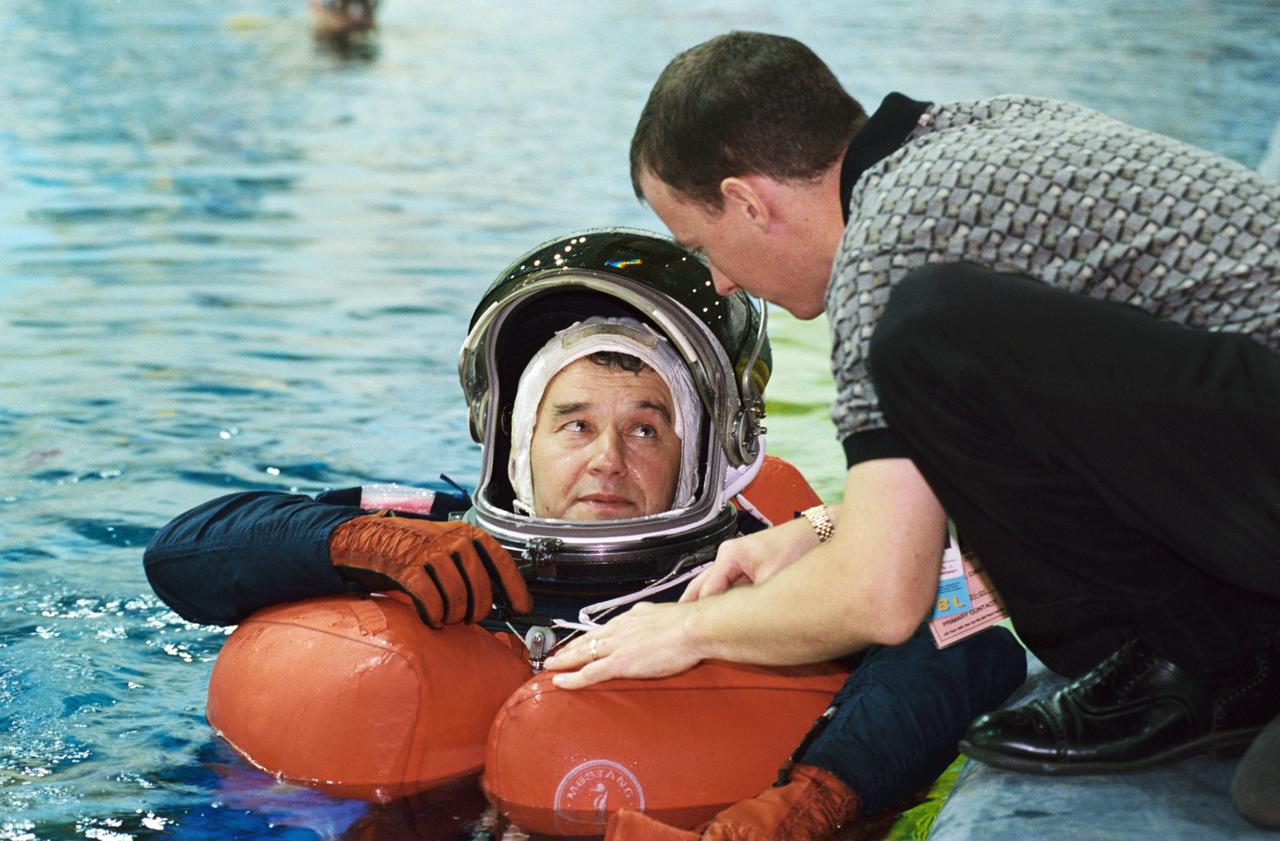
JSC2001-01923 (12 July 2001) --- Cosmonaut Valeri G. Korzun, Expedition Five mission commander representing Rosaviakosmos, floats in a life raft during an emergency bailout training session in the Neutral Buoyancy Laboratory (NBL) near the Johnson Space Center (JSC). Korzun is assisted by United Space Alliance (USA) crew trainer David Pogue.
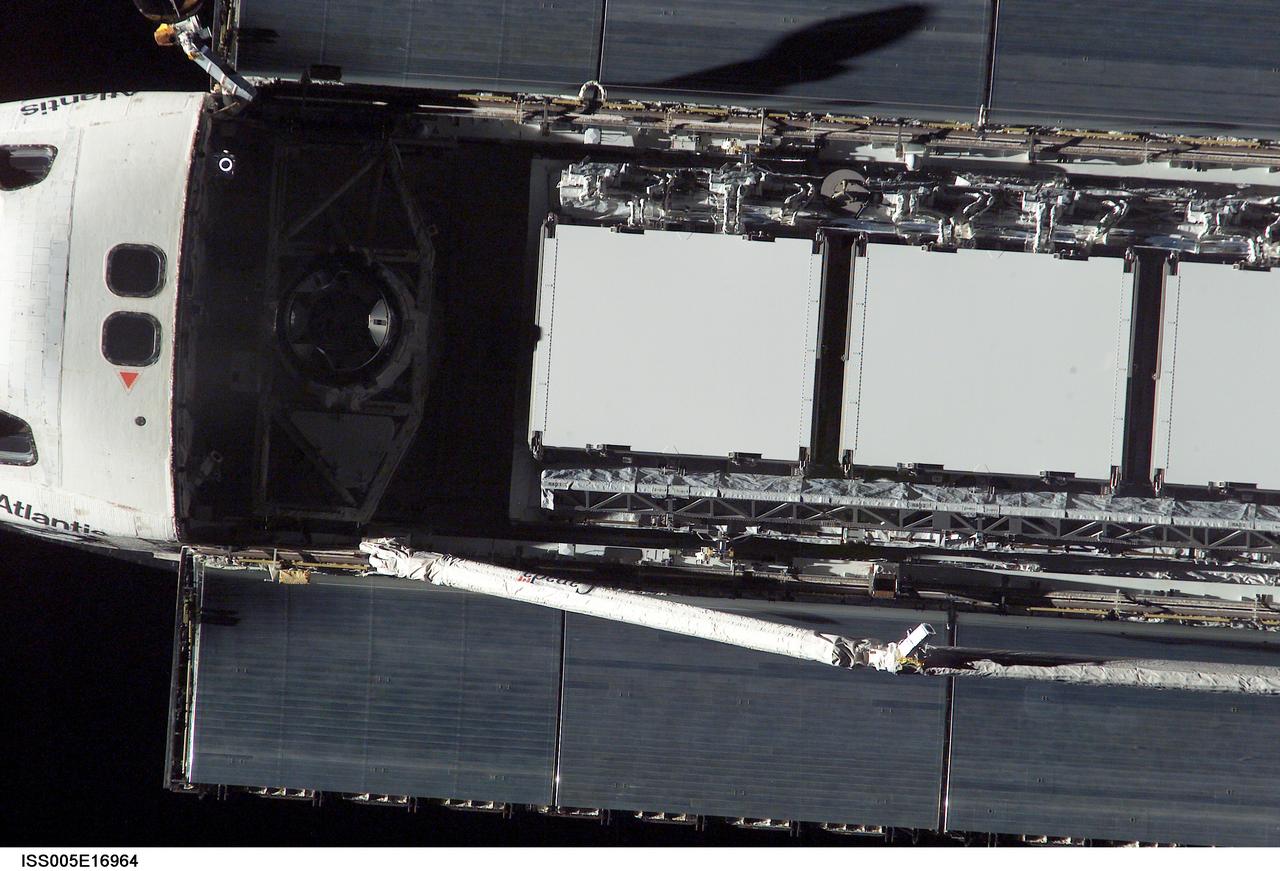
ISS005-E-16964 (9 October 2002) --- This close-up view of the Space Shuttle Atlantis was photographed by an Expedition Five crewmember onboard the International Space Station (ISS) during rendezvous and docking operations. Docking occurred at 10:17 a.m. (CDT) on October 9, 2002. The Starboard One (S-1) Truss, which was later attached to the station and outfitted during three spacewalks, can be seen in Atlantis’ cargo bay.
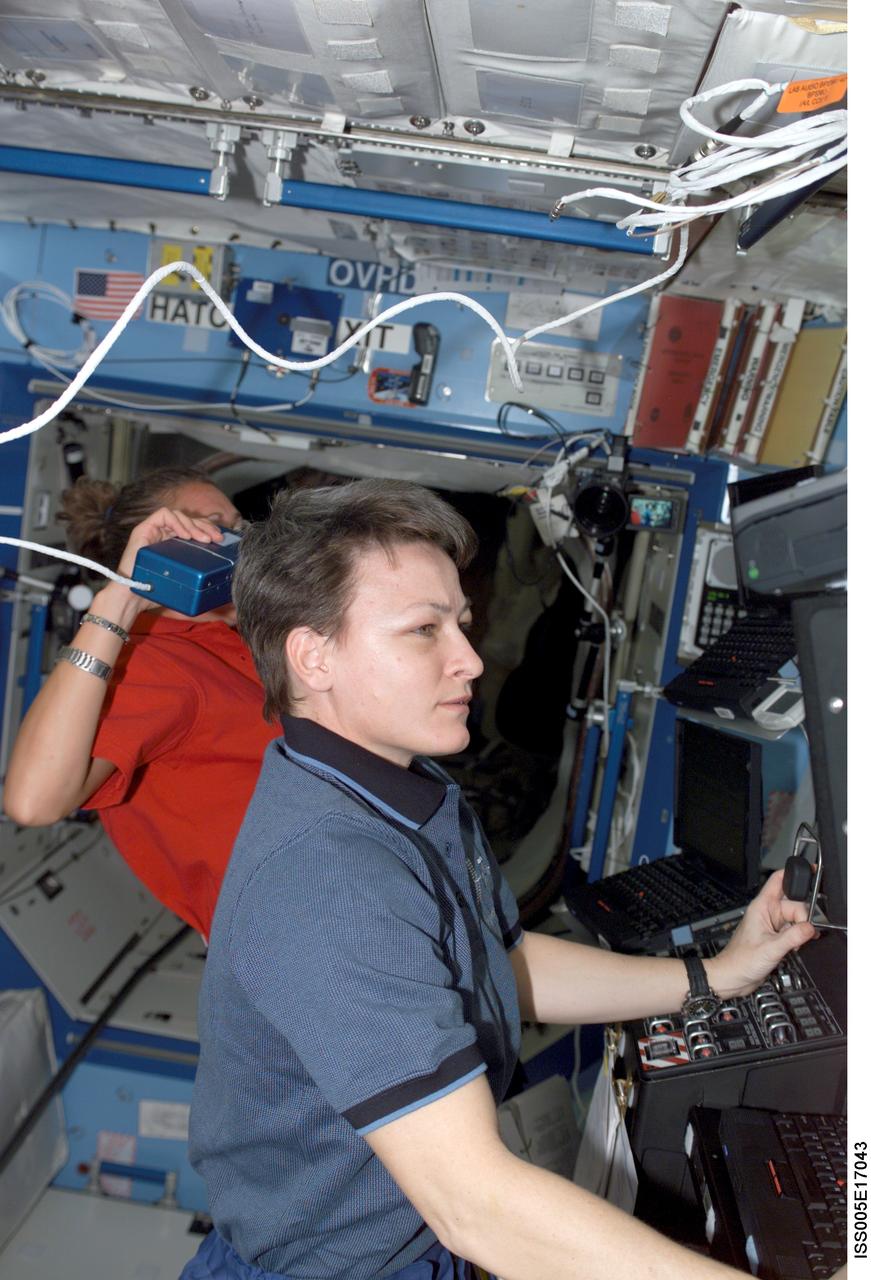
ISS005-E-17043 (10 October 2002) --- Astronauts Peggy A. Whitson (foreground), Expedition Five flight engineer, and Sandra H. Magnus, STS-112 mission specialist, work the controls of the Canadarm2 from inside the Destiny laboratory on the International Space Station (ISS). Whitson and Magnus used the station’s robotic arm to lift the Starboard One (S1) Truss out of the Atlantis’ payload bay and move it into position on the starboard end of the S0 (S-Zero) Truss.
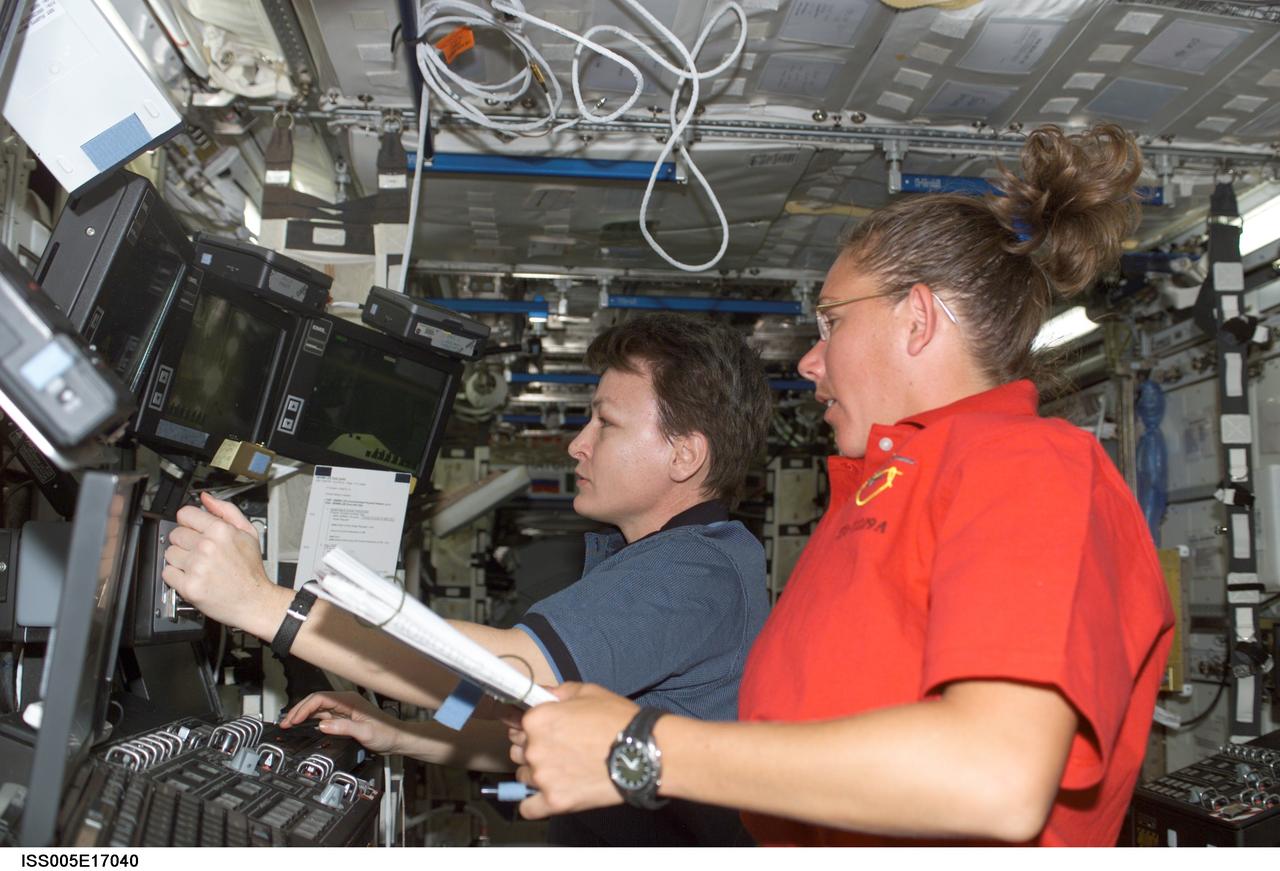
ISS005-E-17040 (10 October 2002) --- Astronauts Peggy A. Whitson (background), Expedition Five flight engineer, and Sandra H. Magnus, STS-112 mission specialist, work the controls of the Canadarm2 from inside the Destiny laboratory on the International Space Station (ISS). Whitson and Magnus used the station’s robotic arm to lift the Starboard One (S1) Truss out of the Atlantis’ payload bay and move it into position on the starboard end of the S0 (S-Zero) Truss.
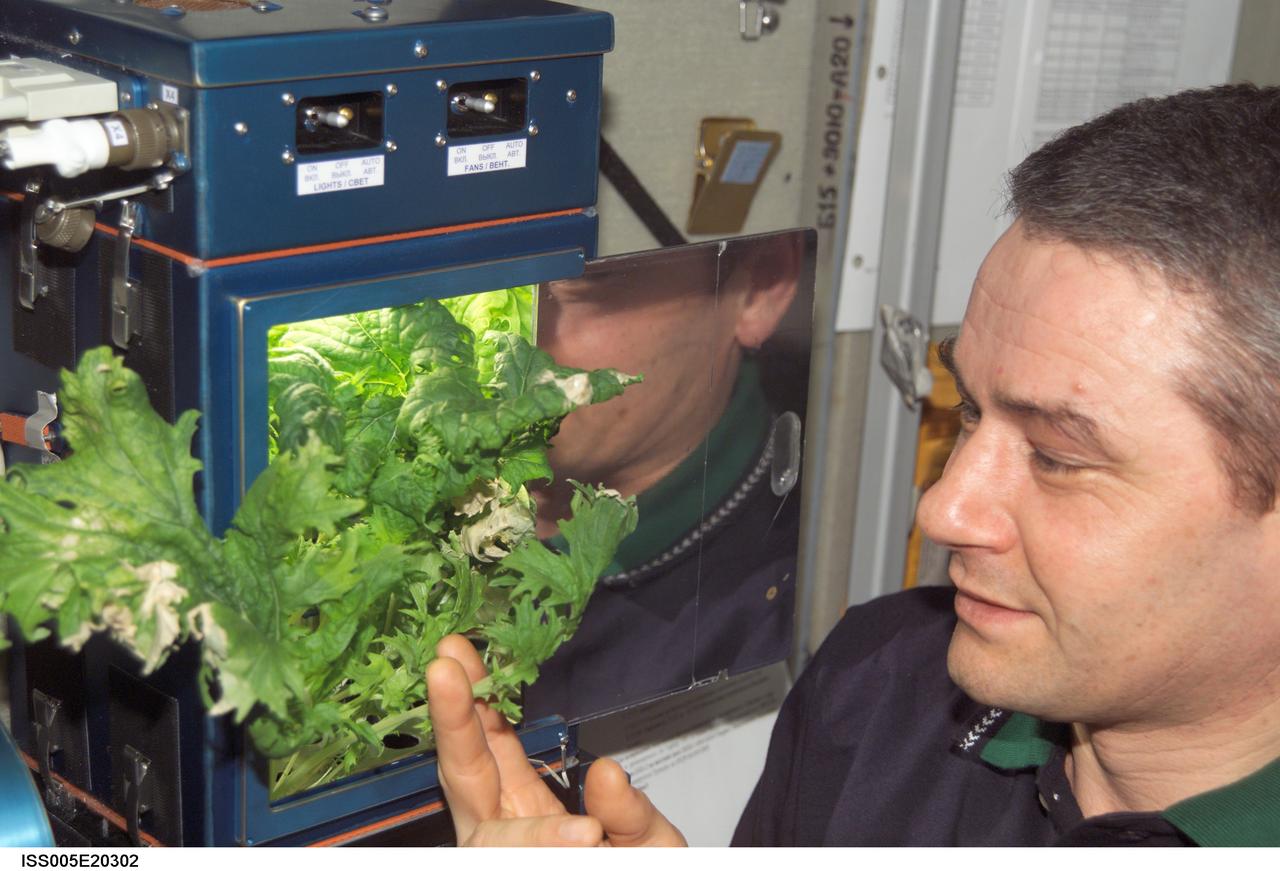
ISS005-E-20302 (8 November 2002) --- Cosmonaut Valery G. Korzun, Expedition Five mission commander, checks a plant growth experiment in the Zvezda Service Module on the International Space Station (ISS). Korzun represents Rosaviakosmos.
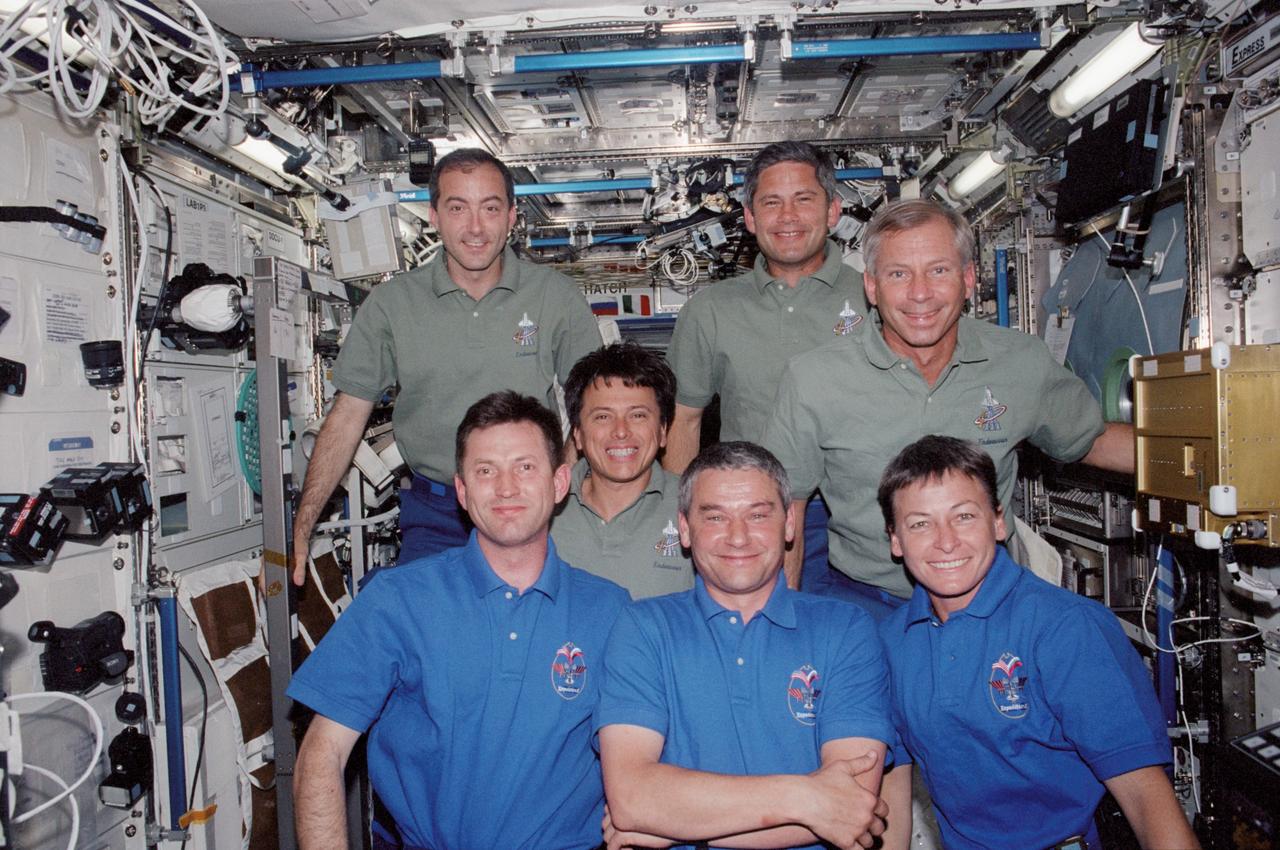
STS111-320-008 (5-19 June 2002) --- The STS-111 (back row) and Expedition Five crewmembers gather for a group photo in the Destiny laboratory on the International Space Station (ISS). The STS-111 crewmembers, from the left, are astronauts Philippe Perrin and Franklin R. Chang-Diaz, both mission specialists; Paul S. Lockhart and Kenneth D. Cockrell, pilot and mission commander, respectively. The Expedition Five crewmembers, from the left, are cosmonauts Sergei Y. Treschev, flight engineer; Valery G. Korzun, mission commander; and astronaut Peggy A. Whitson, flight engineer. Korzun and Treschev represent Rosaviakosmos and Perrin represents CNES, the French Space Agency.
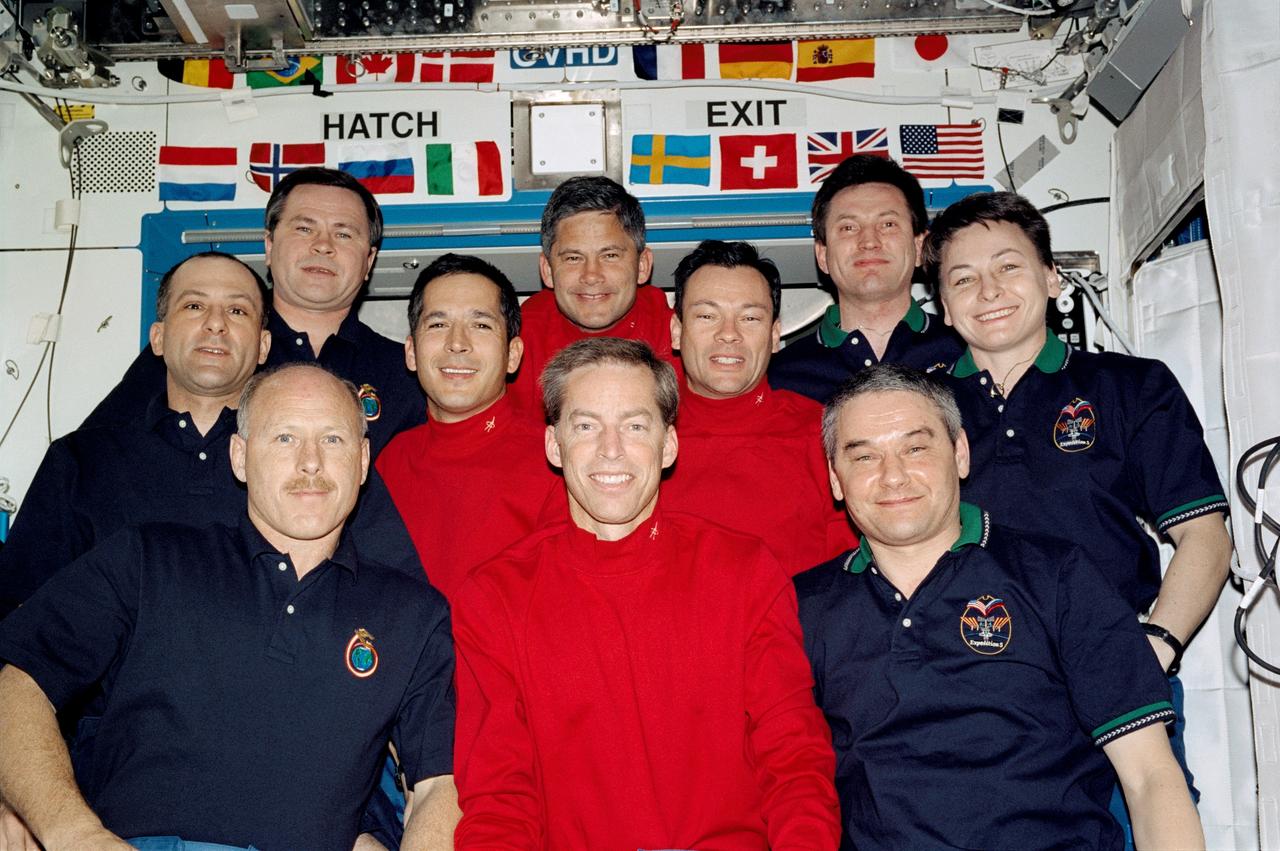
STS113-342-006 (29 November 2002) --- The STS-113 (red shirts), Expedition Five (right) and Expedition Six crewmembers (left) gathered for a group photo in the Destiny laboratory on the International Space Station (ISS). The STS-113 crew, front to back, are astronauts James D. Wetherbee, mission commander; John B. Herrington (left), Michael E. Lopez-Alegria, mission specialists; and Paul S. Lockhart, pilot. The Expedition Six crew, front to back, are astronauts Kenneth D. Bowersox, mission commander; Donald R. Pettit, NASA ISS science officer; and cosmonaut Nikolai M. Budarin, flight engineer. The Expedition Five crew, front to back, are cosmonaut Valery G. Korzun, mission commander; astronaut Peggy A. Whitson, NASA ISS science officer; and cosmonaut Sergei Y. Treschev, flight engineer. Korzun, Treschev and Budarin represent Rosaviakosmos.
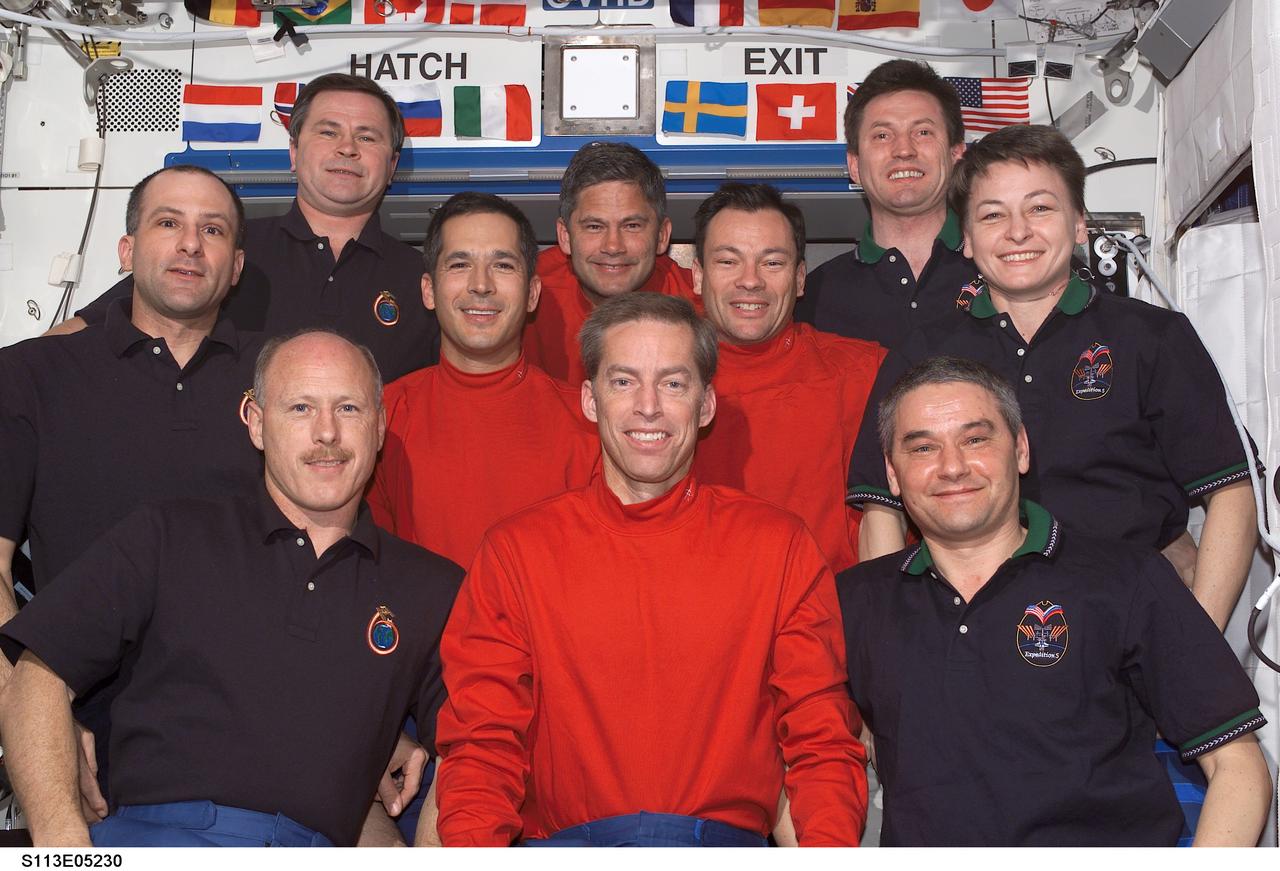
STS113-E-05230 (29 November 2002) --- The STS-113 (red shirts), Expedition Five (right) and Expedition Six crewmembers (left) gathered for a group photo in the Destiny laboratory on the International Space Station (ISS). The STS-113 crew, front to back, are astronauts James D. Wetherbee, mission commander; John B. Herrington (left), Michael E. Lopez-Alegria, mission specialists; and Paul S. Lockhart, pilot. The Expedition Six crew, front to back, are astronauts Kenneth D. Bowersox, mission commander; Donald R. Pettit, NASA ISS science officer; and cosmonaut Nikolai M. Budarin, flight engineer. The Expedition Five crew, front to back, are cosmonaut Valery G. Korzun, mission commander; astronaut Peggy A. Whitson, NASA ISS science officer; and cosmonaut Sergei Y. Treschev, flight engineer. Korzun, Treschev and Budarin represent Rosaviakosmos.
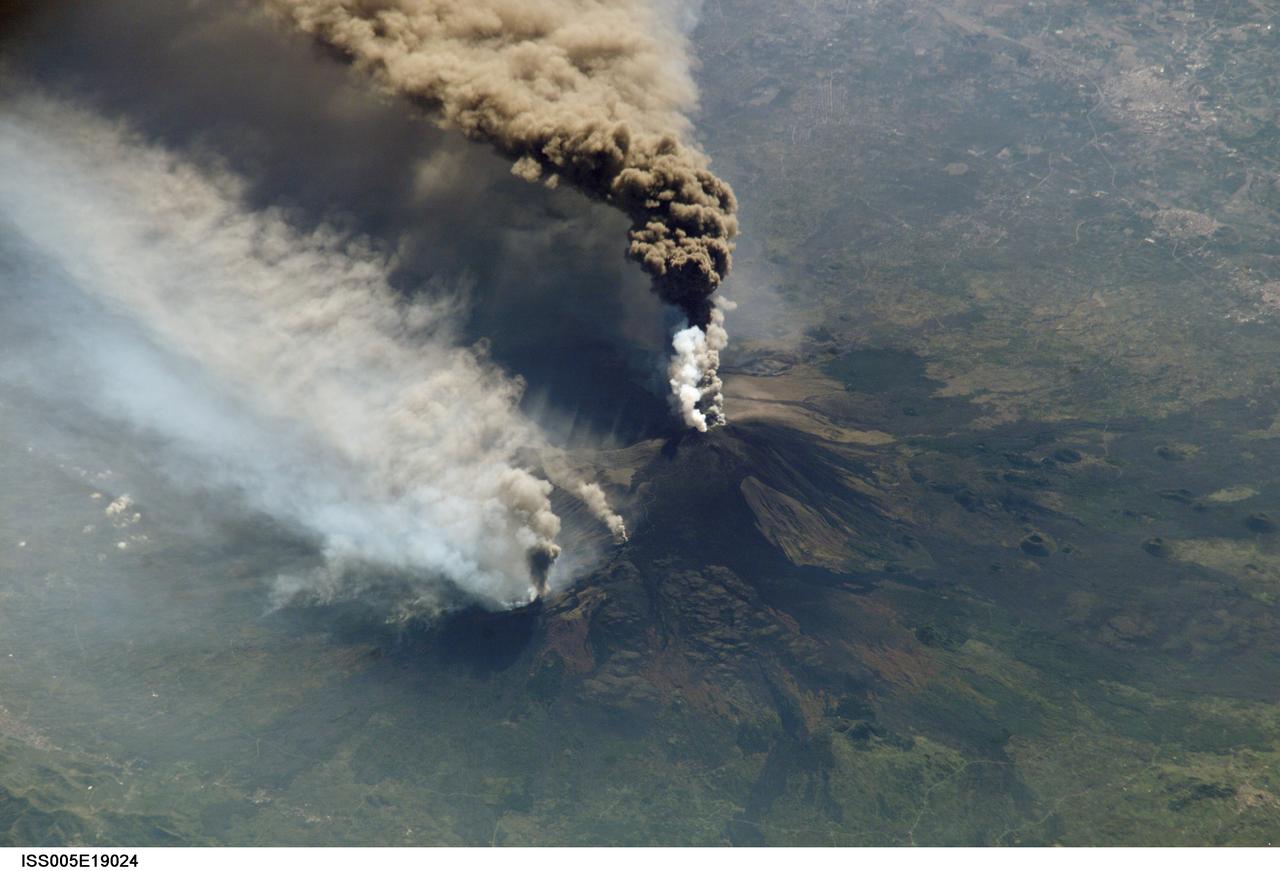
ISS005-E-19024 (30 October 2002) --- The three-member crew of the Expedition Five mission onboard the International Space Station was able to observe Mt. Etna’s spectacular eruption, and photograph the details of the eruption plume and smoke from fires triggered by the lava as it flowed down the 11,000 ft mountain. This image and a second image (ISS005-E-19016) are looking obliquely to the southeast over the island of Sicily. The wider view (ISS005-E-19024) shows the ash plume curving out toward the horizon, caught first by low-level winds blowing to the southeast, and to the south toward Africa at higher altitudes. Ashfall was reported in Libya, more than 350 miles away. The lighter-colored plumes downslope and north of the summit seen in this frame are produced by forest fires set by lava flowing into the pine forests on the slope of the mountain. This image provides a more three-dimensional profile of the eruption plume. This eruption was one of Etna’s most vigorous in years, volcanologists reported this week. The eruption was triggered by a series of earthquakes on October 27, 2002, they said. These images were taken on October 30. Although schools were closed and air traffic was diverted because of the ash, no towns or villages were reported to have been threatened by the lava flow.
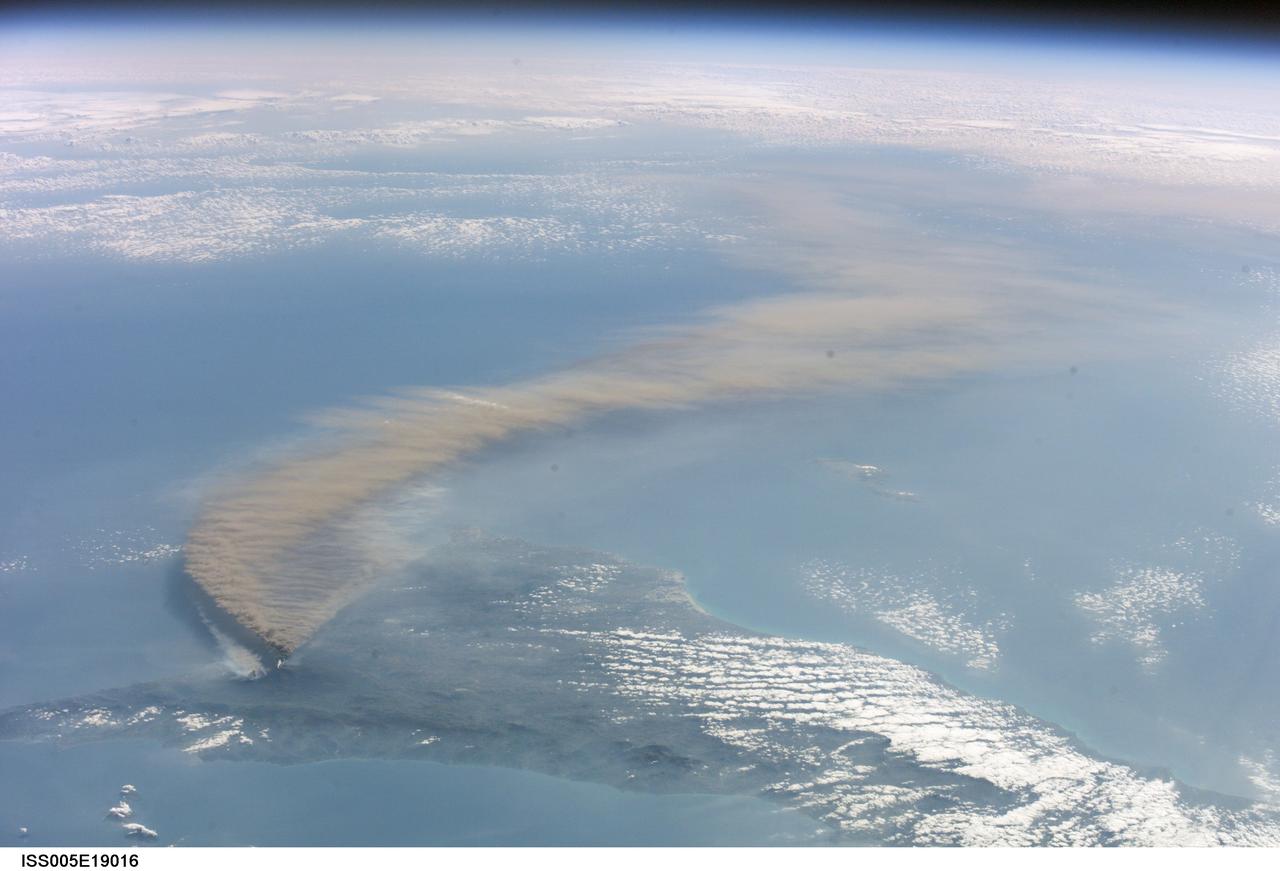
ISS005-E-19016 (30 October 2002) --- The three-member crew of the Expedition Five mission onboard the International Space Station was able to observe Mt. Etna’s spectacular eruption, and photograph the details of the eruption plume and smoke from fires triggered by the lava as it flowed down the 11,000 ft mountain. This image and a second image (ISS005-E-19024) are looking obliquely to the southeast over the island of Sicily. This wide view shows the ash plume curving out toward the horizon, caught first by low-level winds blowing to the southeast, and to the south toward Africa at higher altitudes. Ashfall was reported in Libya, more than 350 miles away. The lighter-colored plumes downslope and north of the summit (see detailed view taken the same day, ISS005-E-19024) are produced by forest fires set by lava flowing into the pine forests on the slope of the mountain. The detailed image provides a more three-dimensional profile of the eruption plume. This eruption was one of Etna’s most vigorous in years, volcanologists reported this week. The eruption was triggered by a series of earthquakes on October 27, 2002, they said. These images were taken on October 30. Although schools were closed and air traffic was diverted because of the ash, no towns or villages were reported to have been threatened by the lava flow.
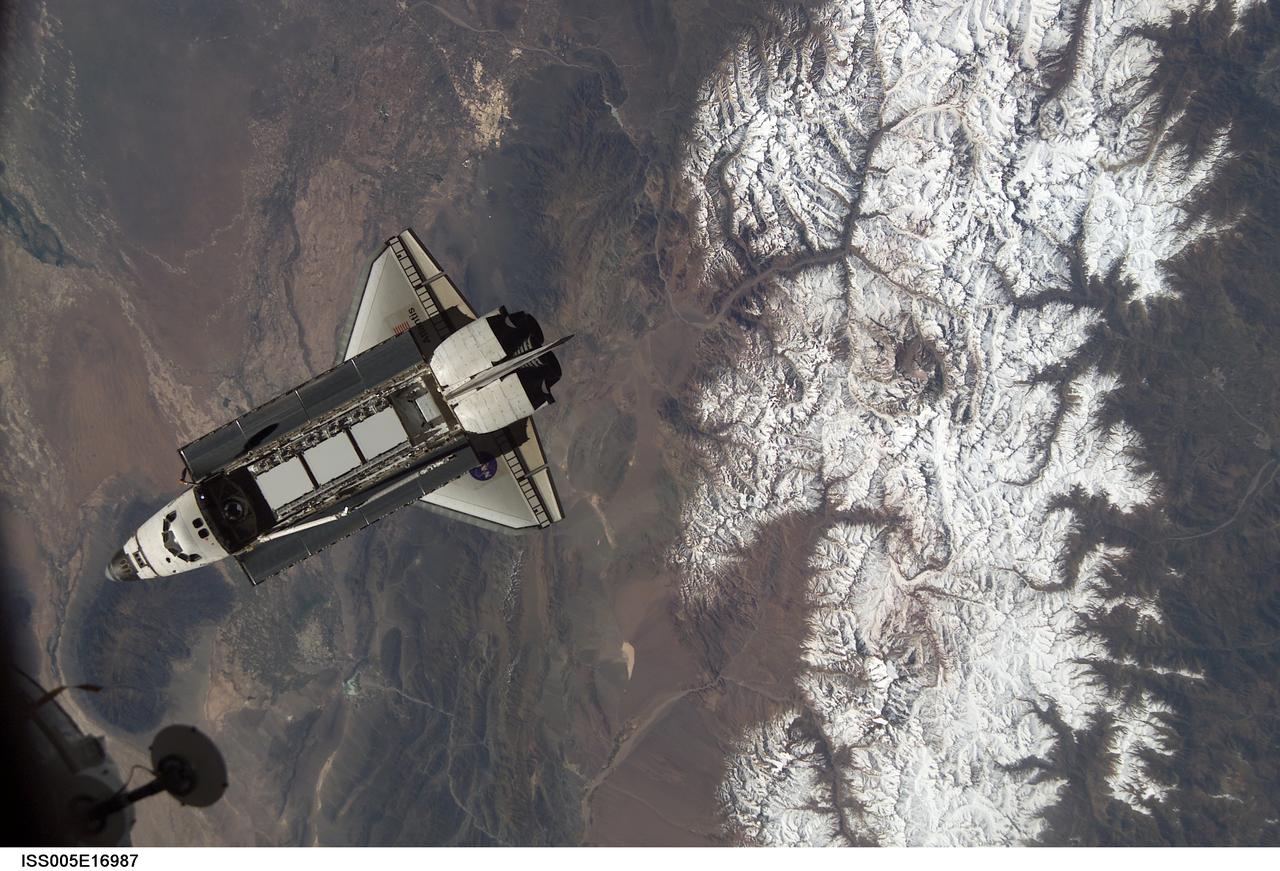
ISS005-E-16987 (9 October 2002) --- Backdropped against snowcapped Cordon del Plata of the Andes mountains, this view of the Space Shuttle Atlantis over Argentina was photographed by an Expedition Five crewmember onboard the International Space Station (ISS) during rendezvous and docking operations. Docking occurred at 10:17 a.m. (CDT) on October 9, 2002. The Starboard One (S-1) Truss, which was later attached to the station and outfitted during three spacewalks, can be seen in Atlantis’ cargo bay. Santiago, Chile is just out of frame in the upper right corner.