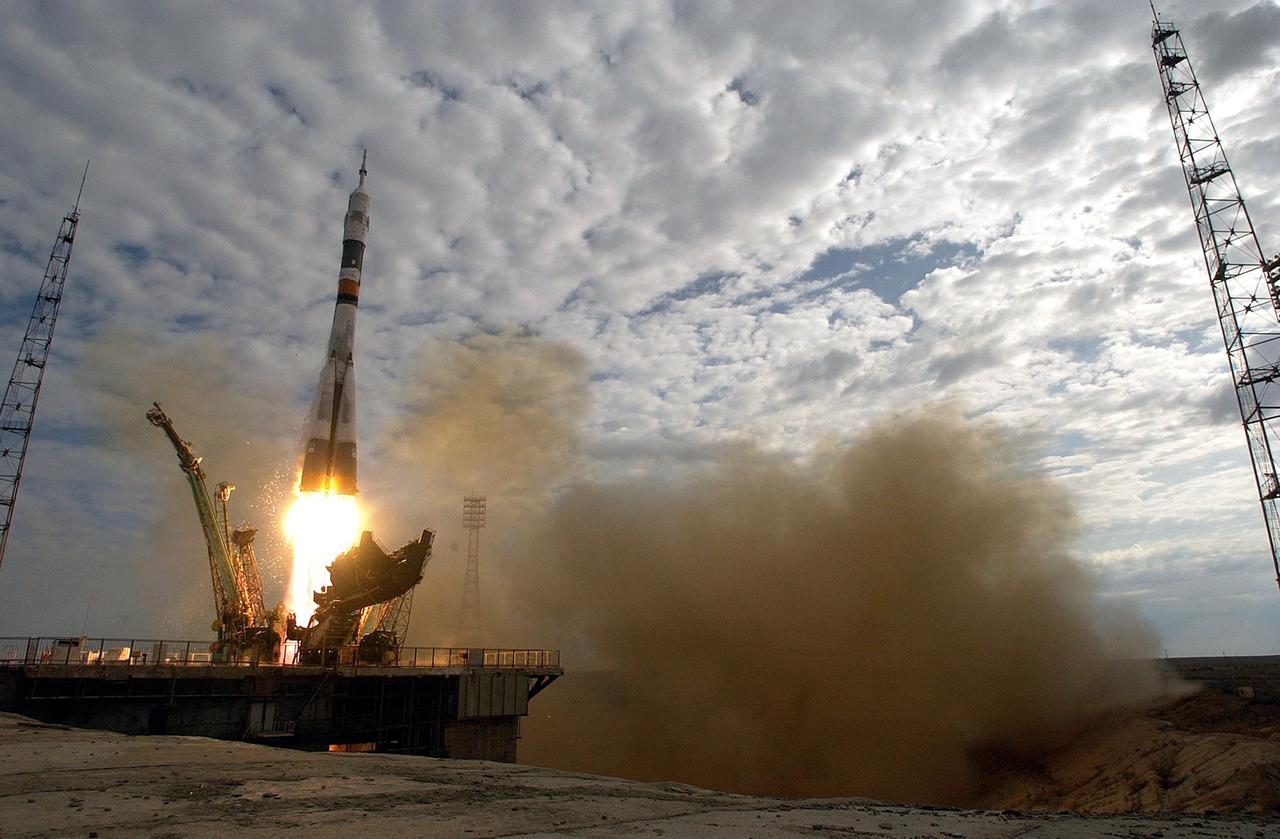
Destined for the International Space Station (ISS), a Soyez TMA-1 spacecraft launches from the Baikonur Cosmodrome, Kazakhstan on April 26, 2003. Aboard are Expedition Seven crew members, cosmonaut Yuri I. Malenchenko, Expedition Seven mission commander, and Astronaut Edward T. Lu, Expedition Seven NASA ISS science officer and flight engineer. Expedition Six crew members returned to Earth aboard the Russian spacecraft after a 5 and 1/2 month stay aboard the ISS. Photo credit: NASA/Scott Andrews
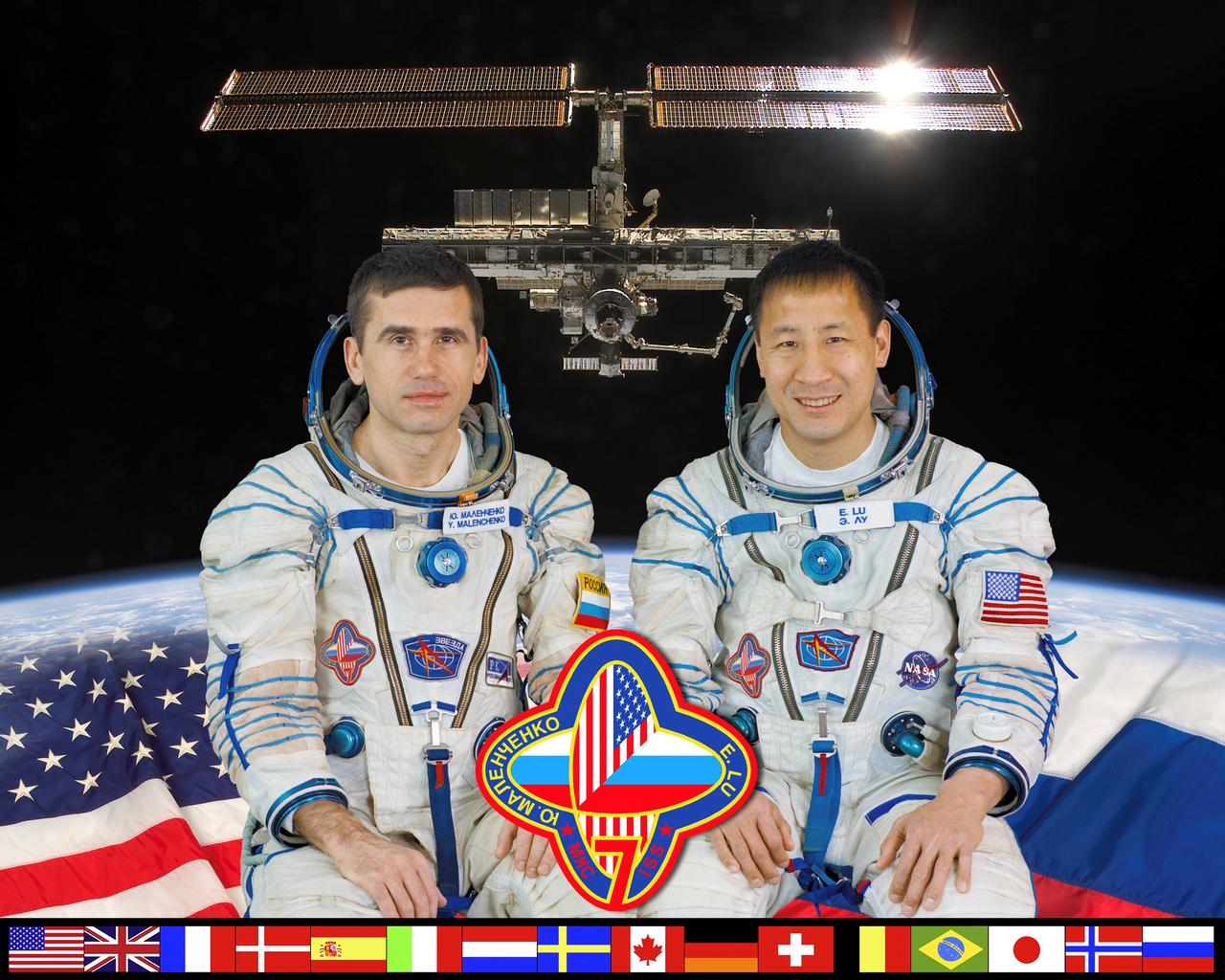
This crew portrait of Expedition Seven, Cosmonaut Yuri I. Malenchenko, Expedition Seven mission commander (left), and Astronaut Edward T. Lu, Expedition Seven NASA ISS science officer and flight engineer (right) was taken while in training at the Gagarin Cosmonaut Training Center in Star City, Russia. Destined for the International Space Station (ISS), the two-man crew launched from the Baikonur Cosmodrome, Kazakhstan on April 26, 2003. aboard a Soyez TMA-1 spacecraft.
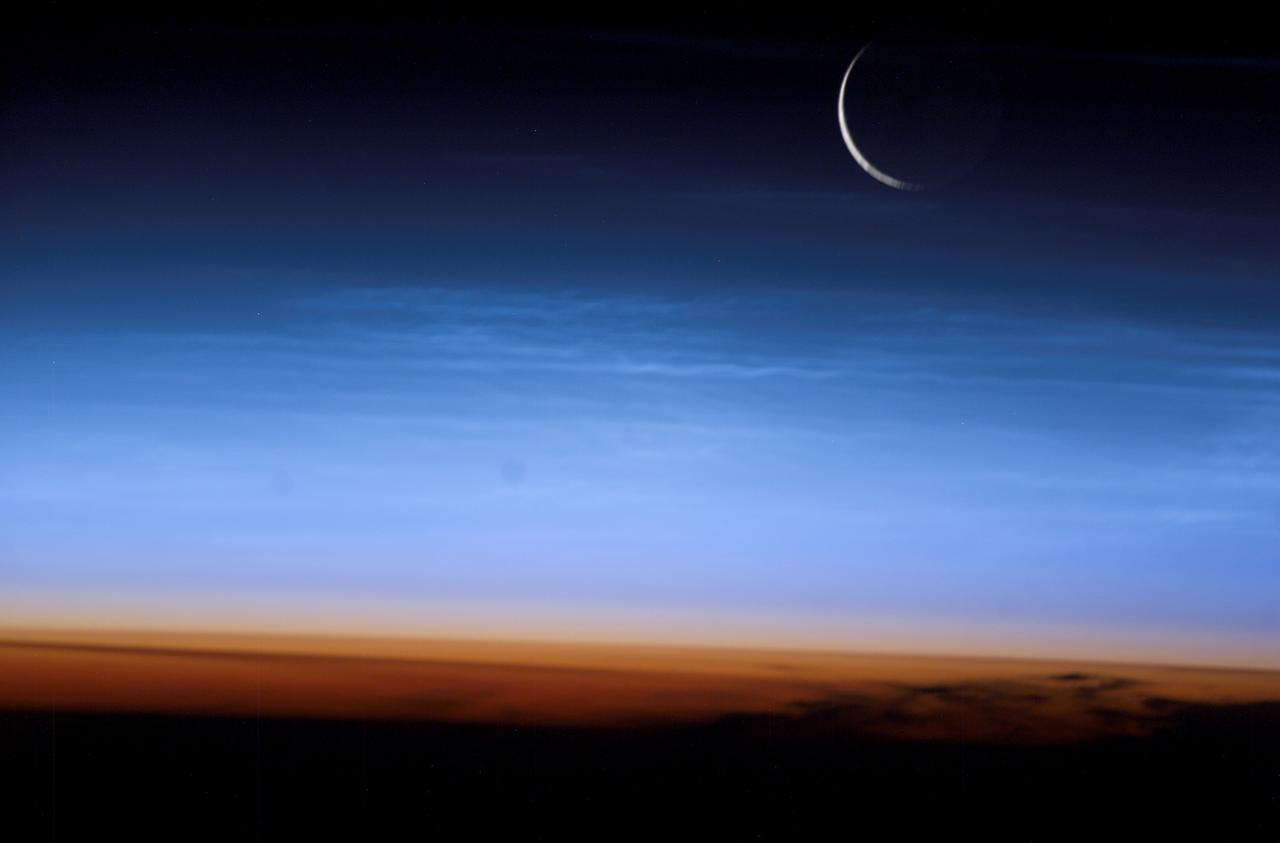
This Expedition Seven image, taken while aboard the International Space Station (ISS), shows the limb of the Earth at the bottom transitioning into the orange-colored stratosphere, the lowest and most dense portion of the Earth's atmosphere. The troposphere ends abruptly at the tropopause, which appears in the image as the sharp boundary between the orange- and blue-colored atmosphere. The silvery blue noctilucent clouds extend far above the Earth's troposphere. The silver of the setting moon is visible at upper right.
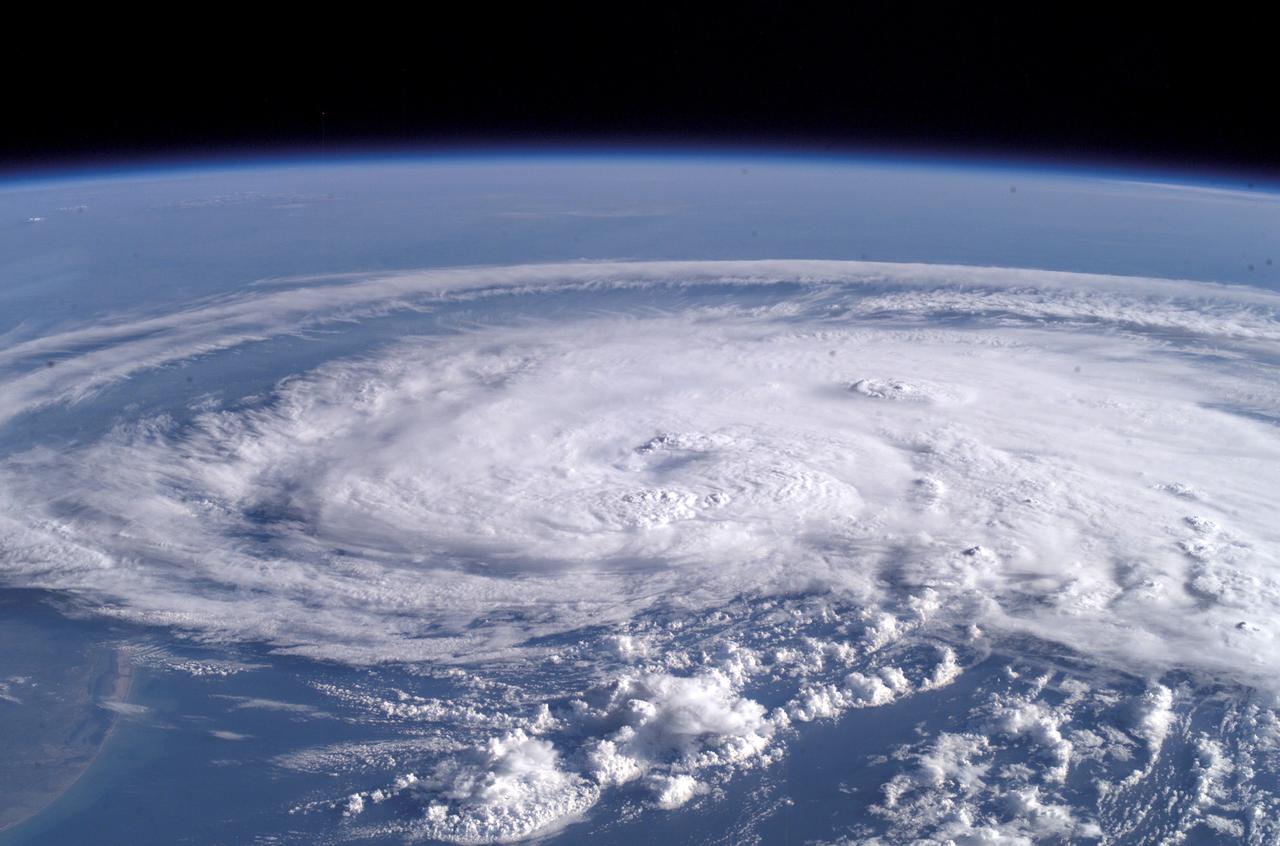
Aboard the International Space Station (ISS), Expedition Seven crew members, Cosmonaut Yuri I. Malenchenko, and Astronaut Edward T. Lu, had an outstanding opportunity to observe tropical storm Claudette as she turned into a hurricane and came ashore to their Houston home and other Texas areas. The storm produced winds of 80-85 mph gusting to 104 mph.
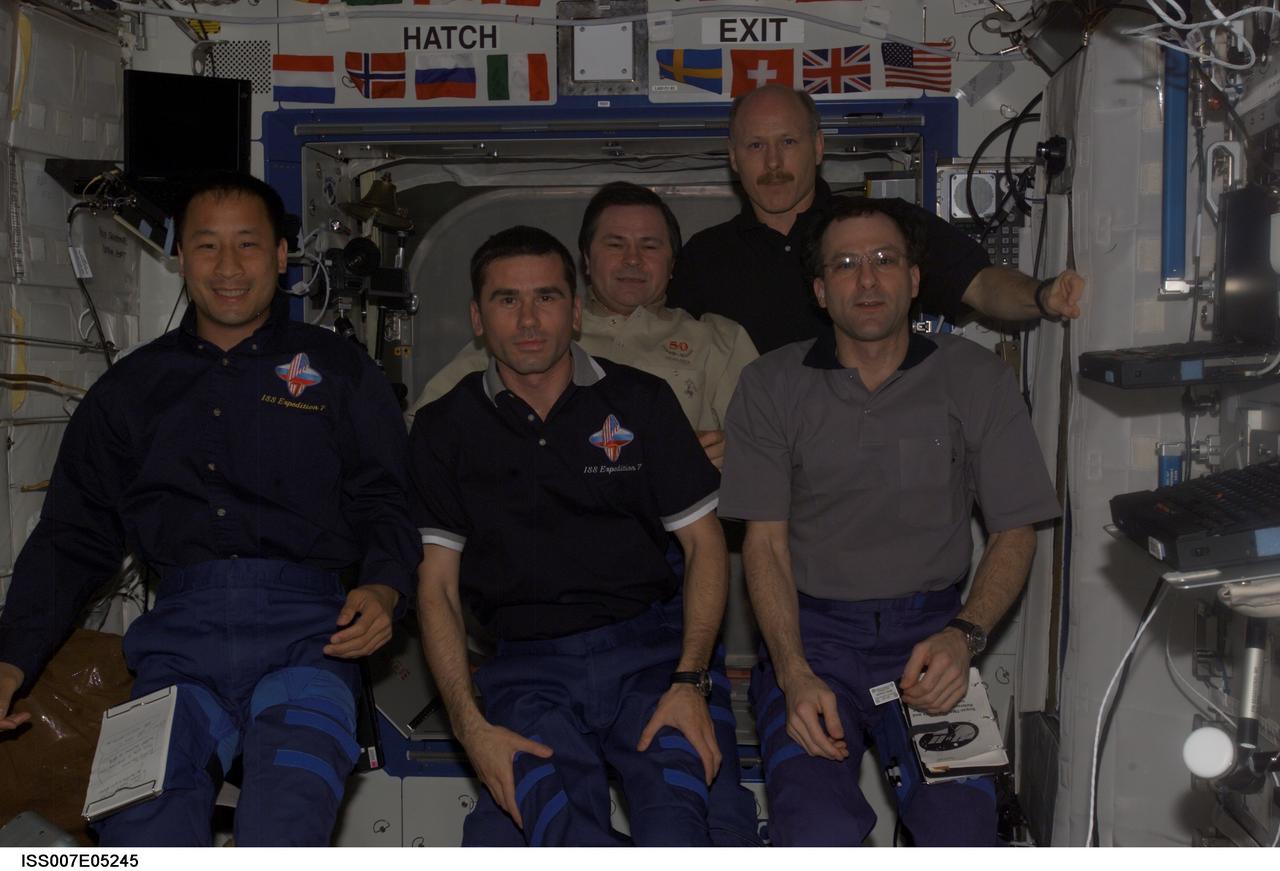
ISS007-E-05245 (3 May 2003) --- The Expedition Six and Seven crews pose for a group photo in the Destiny laboratory on the International Space Station (ISS). From the left (front row) are astronaut Edward T. Lu, Expedition Seven NASA ISS science officer and flight engineer; cosmonaut Yuri I. Malenchenko, Expedition Seven mission commander; and astronaut Donald R. Pettit, Expedition Six NASA ISS science officer. From the left (back row) are cosmonaut Nikolai M. Budarin, Expedition Six flight engineer, and astronaut Kenneth D. Bowersox, Expedition Six mission commander. Budarin and Malenchenko represent Rosaviakosmos.
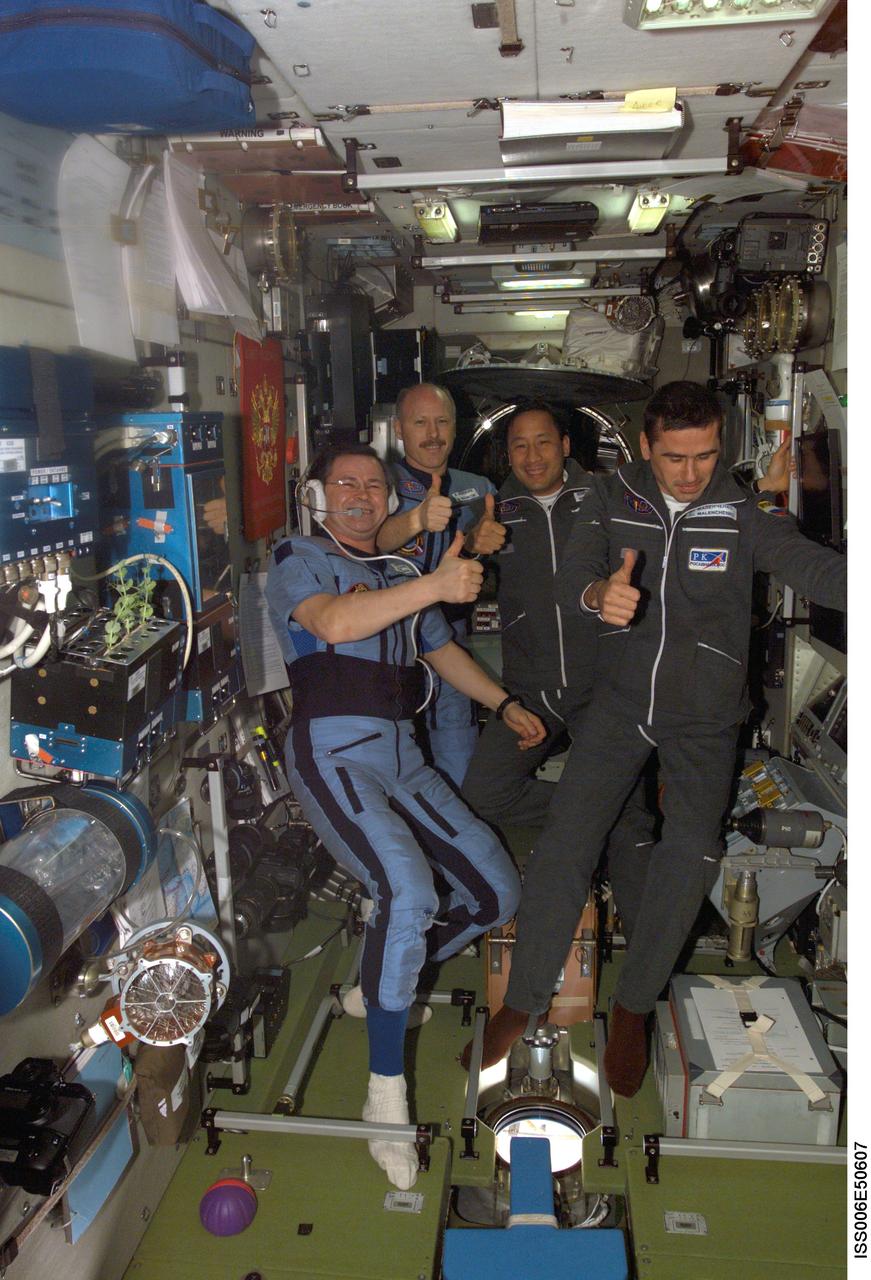
ISS006-E-50607 (28 April 2003) --- The Expedition Seven crewmembers pose with two of the Expedition Six crewmembers (blue suits) in the Zvezda Service Module on the International Space Station (ISS), photographed by astronaut Donald R. Pettit (out of view), Expedition Six NASA ISS science officer. From the left are cosmonaut Nikolai M. Budarin, Expedition Six flight engineer; astronaut Kenneth D. Bowersox, Expedition Six mission commander; astronaut Edward T. Lu, Expedition Seven NASA ISS science officer and flight engineer; and cosmonaut Yuri I. Malenchenko, Expedition Seven mission commander. Budarin and Malenchenko represent Rosaviakosmos.

iss075-s-002 (Oct. 16, 2024) --- The official portrait of the seven‑member Expedition 75 crew that will live and work aboard the International Space Station. From left, are NASA astronauts Jessica Meir and Anil Menon; Roscosmos cosmonauts Pyotr Dubrov, Andrey Fedyaev, and Anna Kikina; NASA astronaut Jack Hathaway; and ESA (European Space Agency) astronaut Sophie Adenot. Credit: NASA/Josh Valcarcel

ISS007-S-002 (March 2003) --- Expedition Seven Commander Yuri I. Malenchenko (left), and NASA ISS Science Officer and Flight Engineer Edward T. Lu pose for their crew portrait while in training at the Gagarin Cosmonaut Training Center in Star City, Russia for their scheduled launch in a Soyuz TMA-2 spacecraft later this year. Malenchenko represents Rosaviakosmos, the Russian Aviation and Space Agency.
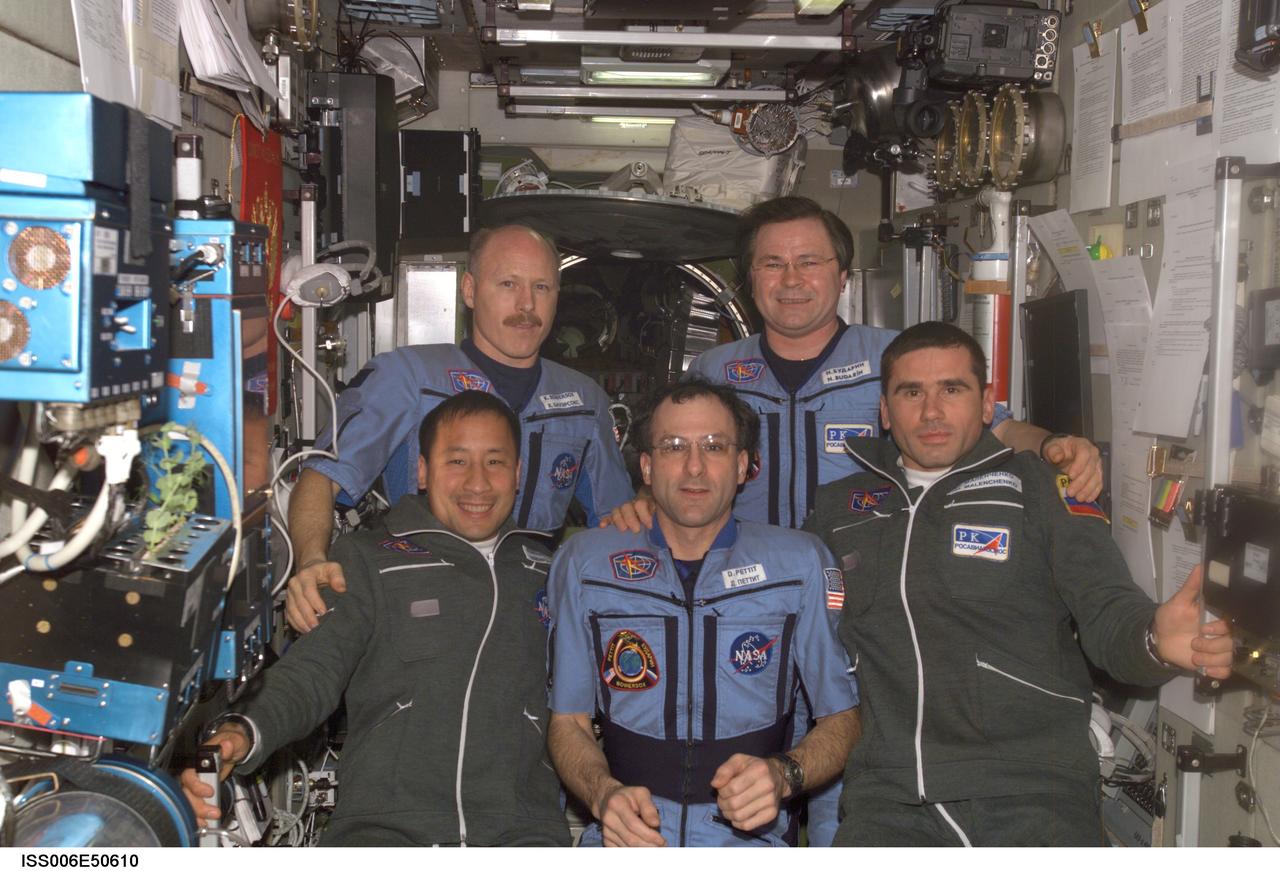
ISS006-E-50610 (28 April 2003) --- The Expedition Six and Seven crews pose for a group photo in the Zvezda Service Module on the International Space Station (ISS). From the left (front row) are astronauts Edward T. Lu, Expedition Seven NASA ISS science officer and flight engineer; Donald R. Pettit, Expedition Six NASA ISS science officer; and cosmonaut Yuri I. Malenchenko, Expedition Seven mission commander. From the left (back row) are astronaut Kenneth D. Bowersox, Expedition Six mission commander, and cosmonaut Nikolai M. Budarin, Expedition Six flight engineer. Budarin and Malenchenko represent Rosaviakosmos.
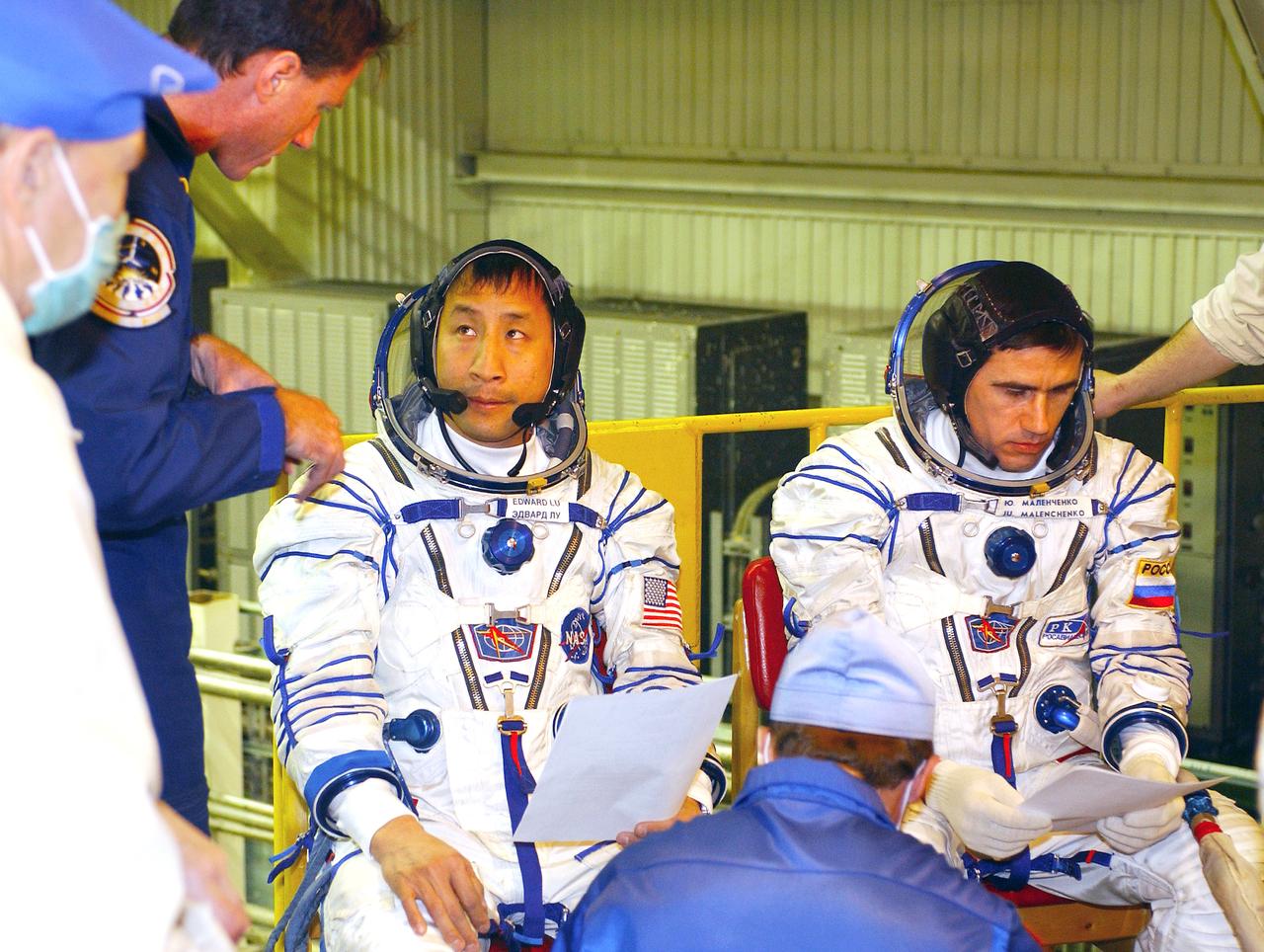
April 10, 2003. Baikonur Cosmodrome, Kazakhstan. Building 254, Soyuz Integration Facility. Astronaut Michael Foale (left standing), backup crew for Expedition Seven, talks with Astronaut Edward T. Lu, NASA ISS science officer and flight engineer for Expedition Seven. Seated on the right is Cosmonaut Yuri I. Malenchenko, Expedition Seven commander. The crew is reviewing documents prior to entering the Soyuz TMA-2 capsule for inspection and seat liner check. Photo Credit: "NASA/Bill Ingalls"
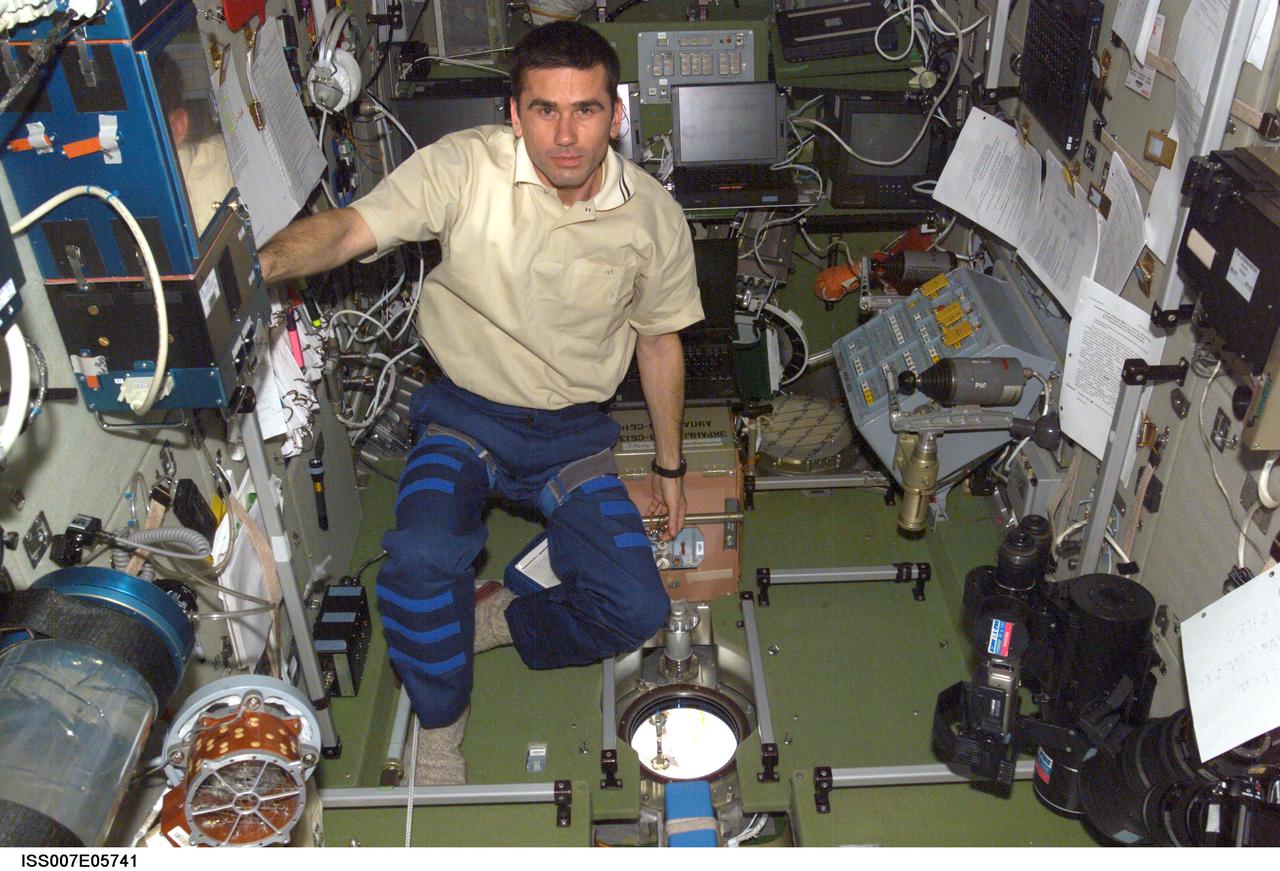
ISS007-E-05741 (19 May 2003) --- Yuri Malenchenko, Expedition Seven commander, prepares to use a window on the Zvezda service module for Earth observation purposes. Malenchenko represents Rosaviakosmos.

ISS007-E-05541 (15 May 2003) --- This digital image was taken near the time of a total lunar eclipse through a window on the International Space Station (ISS) by Expedition Seven NASA ISS Science Officer Ed Lu.
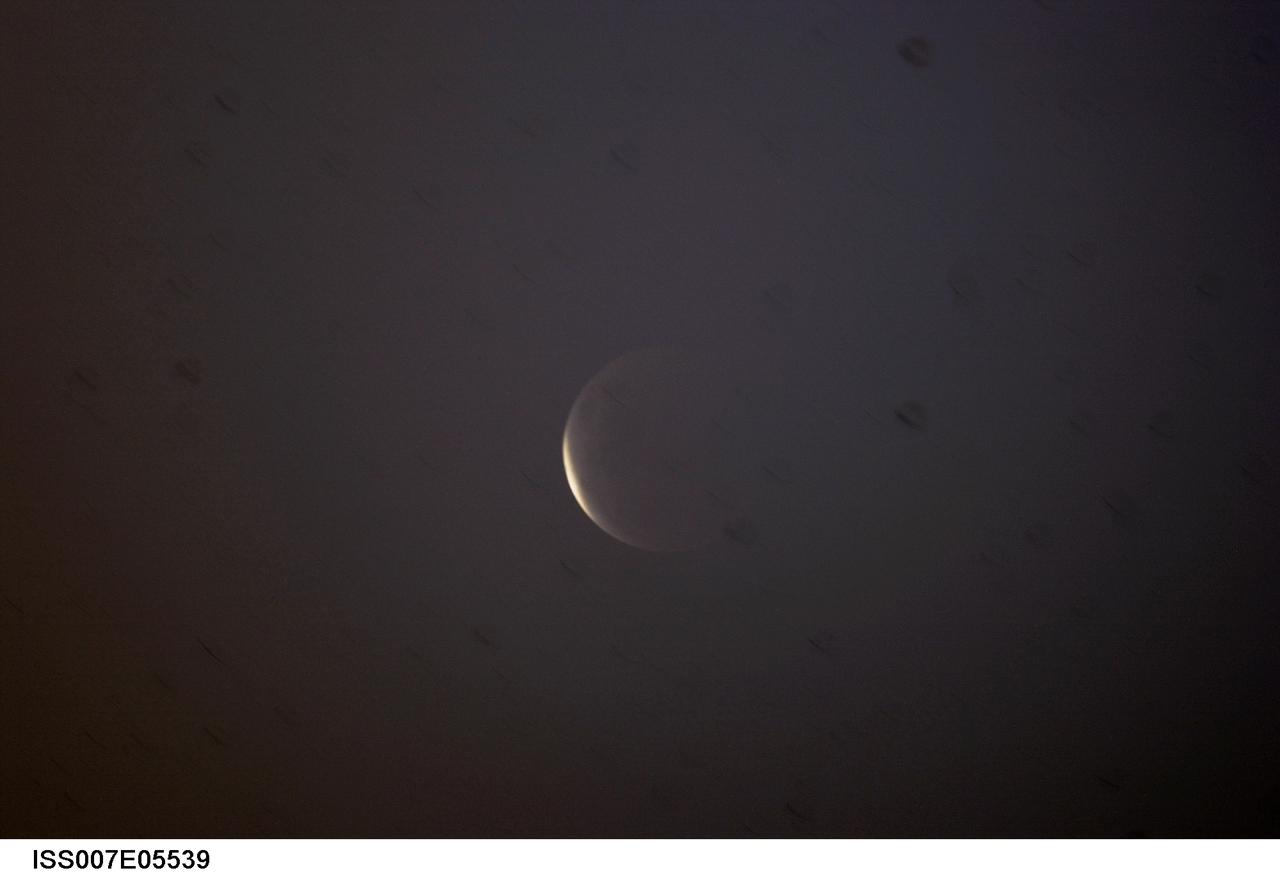
ISS007-E-05539 (15 May 2003) --- This digital image was taken near the time of a total lunar eclipse through a window on the International Space Station (ISS) by Expedition Seven NASA ISS Science Officer Ed Lu.
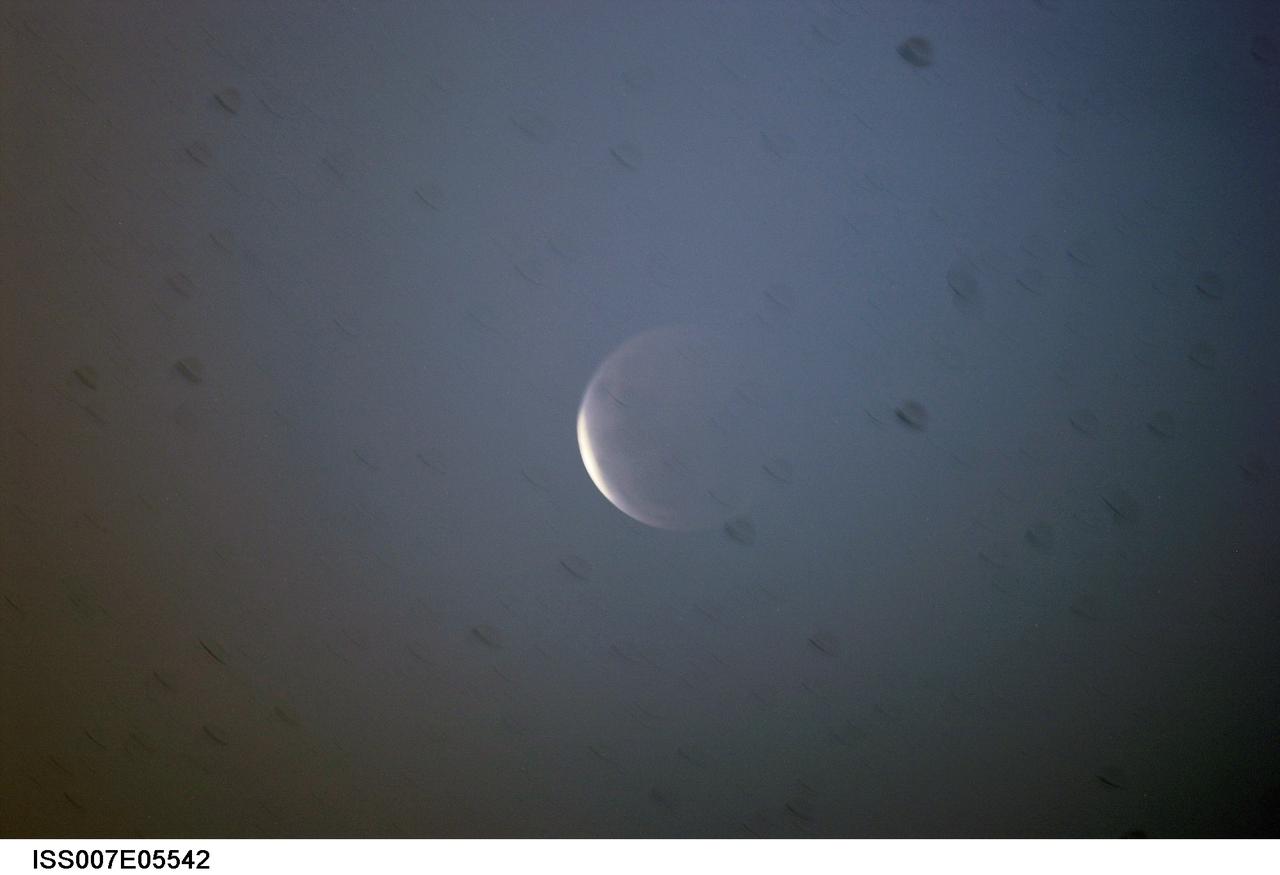
ISS007-E-05542 (15 May 2003) --- This digital image was taken near the time of a total lunar eclipse through a window on the International Space Station (ISS) by Expedition Seven NASA ISS Science Officer Ed Lu.
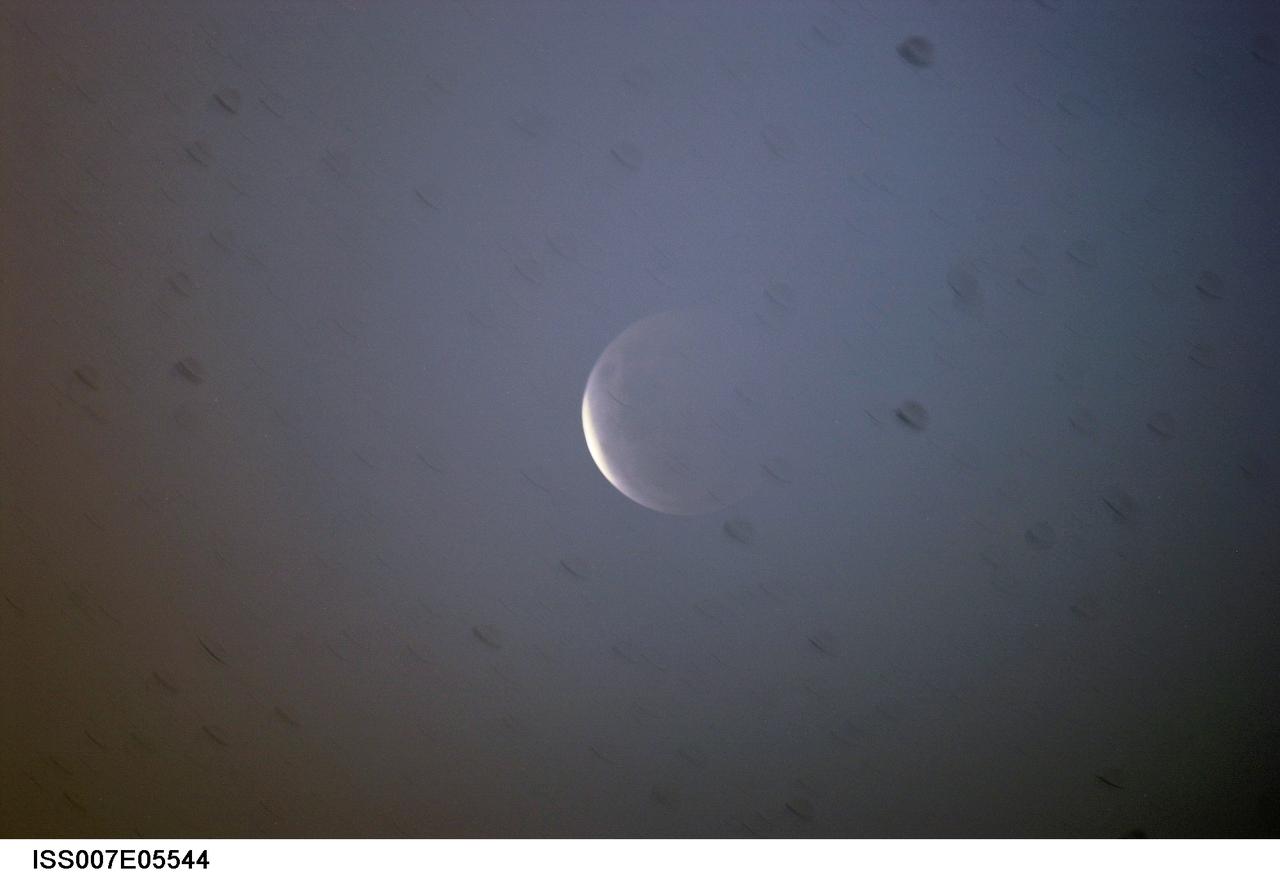
ISS007-E-05544 (15 May 2003) --- This digital image was taken near the time of a total lunar eclipse through a window on the International Space Station (ISS) by Expedition Seven NASA ISS Science Officer Ed Lu.
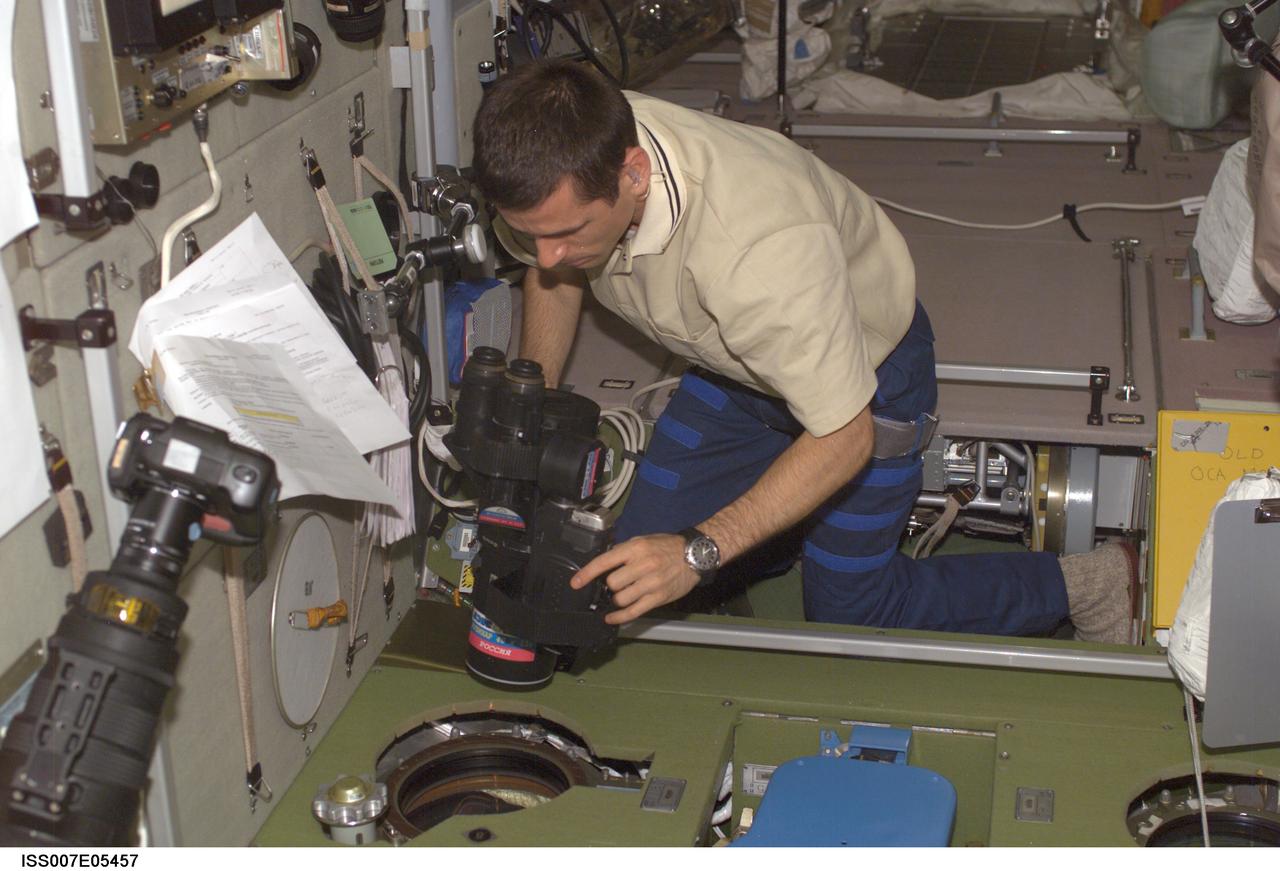
ISS007-E-05457 (15 May 2003) --- Cosmonaut Yuri I. Malenchenko, Expedition Seven mission commander, uses a camera at a window in the Zvezda Service Module on the International Space Station (ISS). Malenchenko represents Rosaviakosmos.
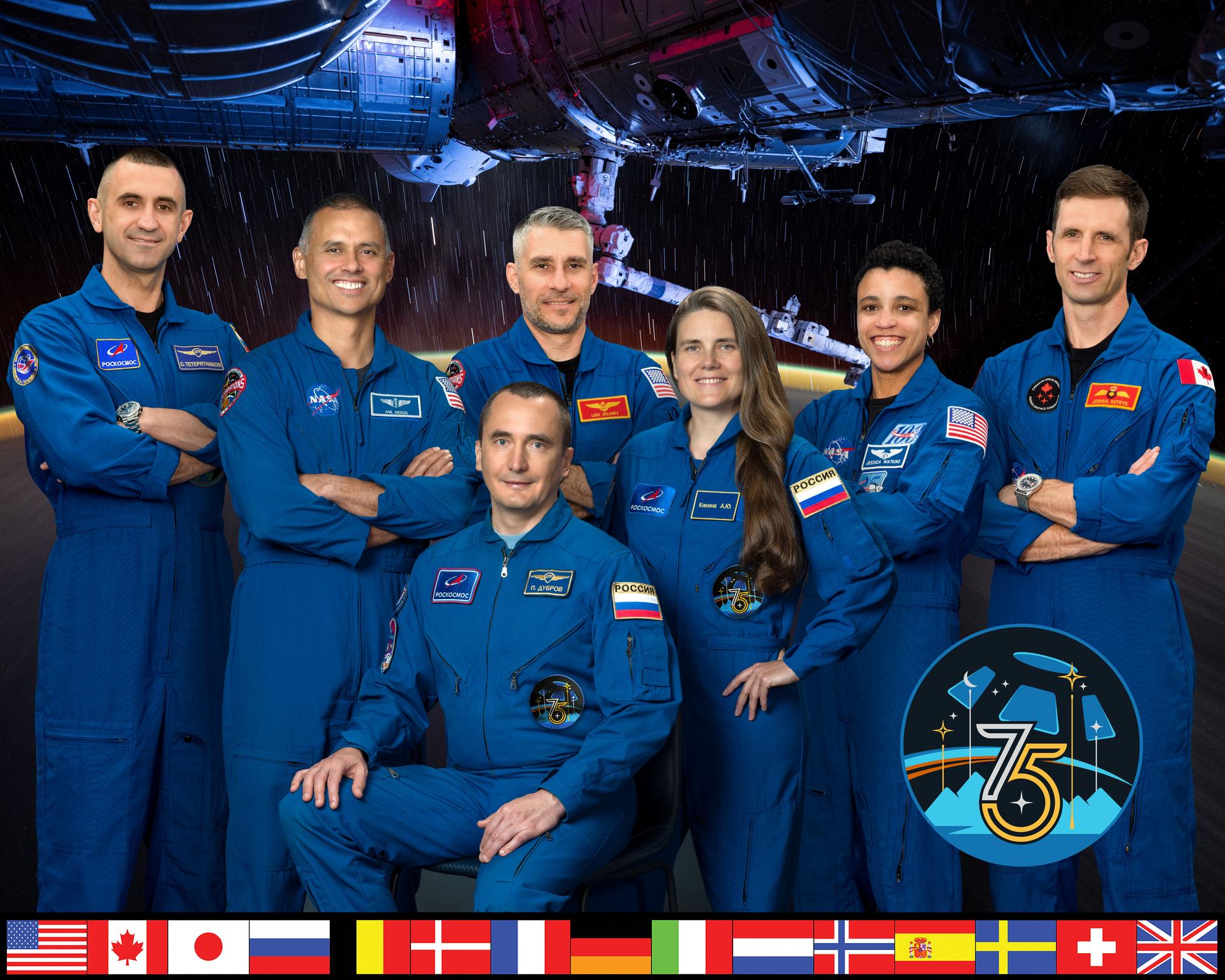
iss075-s-002a (Oct. 16, 2024) --- The official portrait of the seven‑member Expedition 75 crew that will live and work aboard the International Space Station. From left, are Roscosmos cosmonaut Sergey Teteryatnikov; NASA astronaut Anil Menon; Roscosmos cosmonaut Pyotr Dubrov; NASA astronaut Luke Delaney; Roscosmos cosmonaut Anna Kikina; NASA astronaut Jessica Watkins; and CSA (Canadian Space Agency) astronaut Joshua Kutryk. Credit: NASA
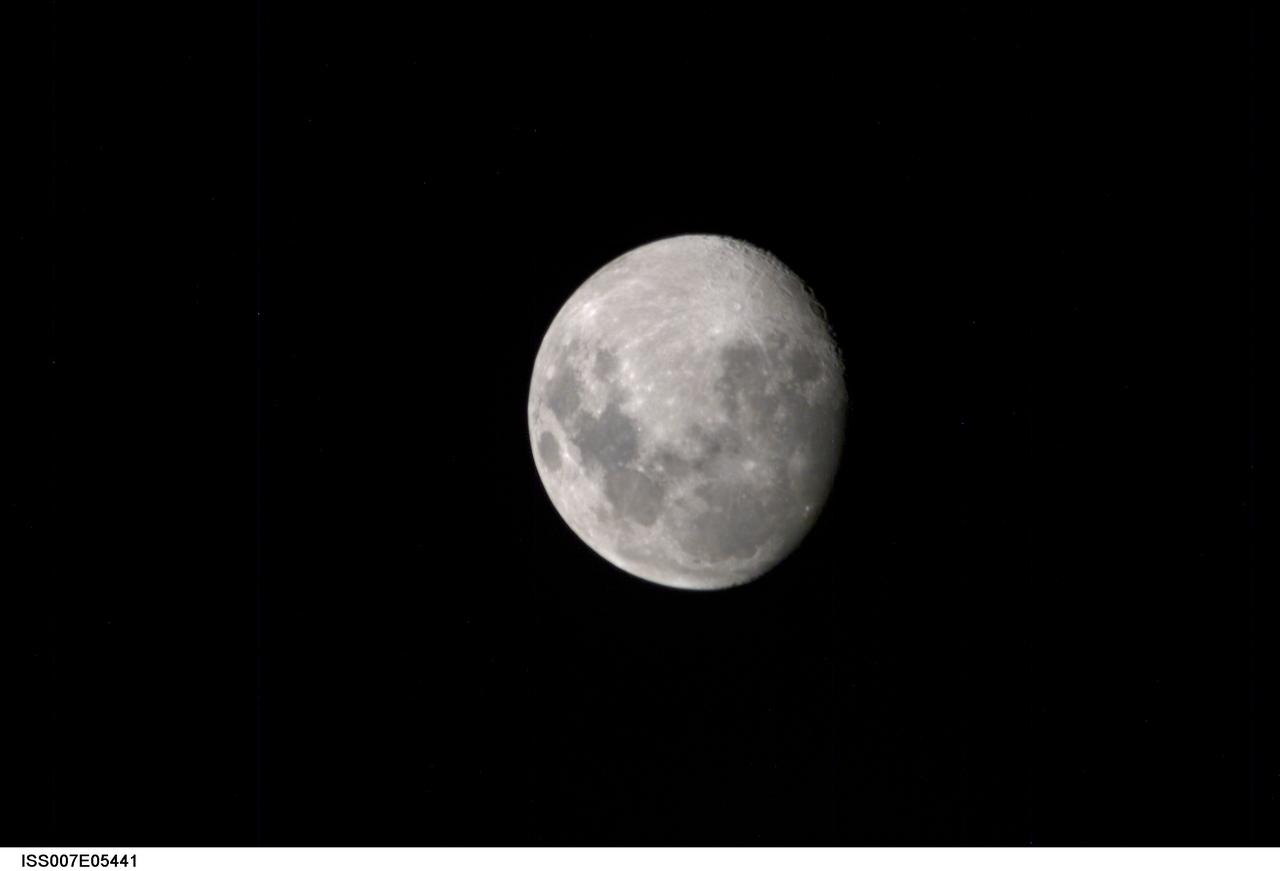
ISS007-E-05441 (13 May 2003) --- View of a gibbous Moon photographed by an Expedition Seven crewmember on board the International Space Station (ISS). The image was taken two days prior to the occurrence of a total lunar eclipse, which was photographed by astronaut Edward T. Lu, NASA ISS science officer.
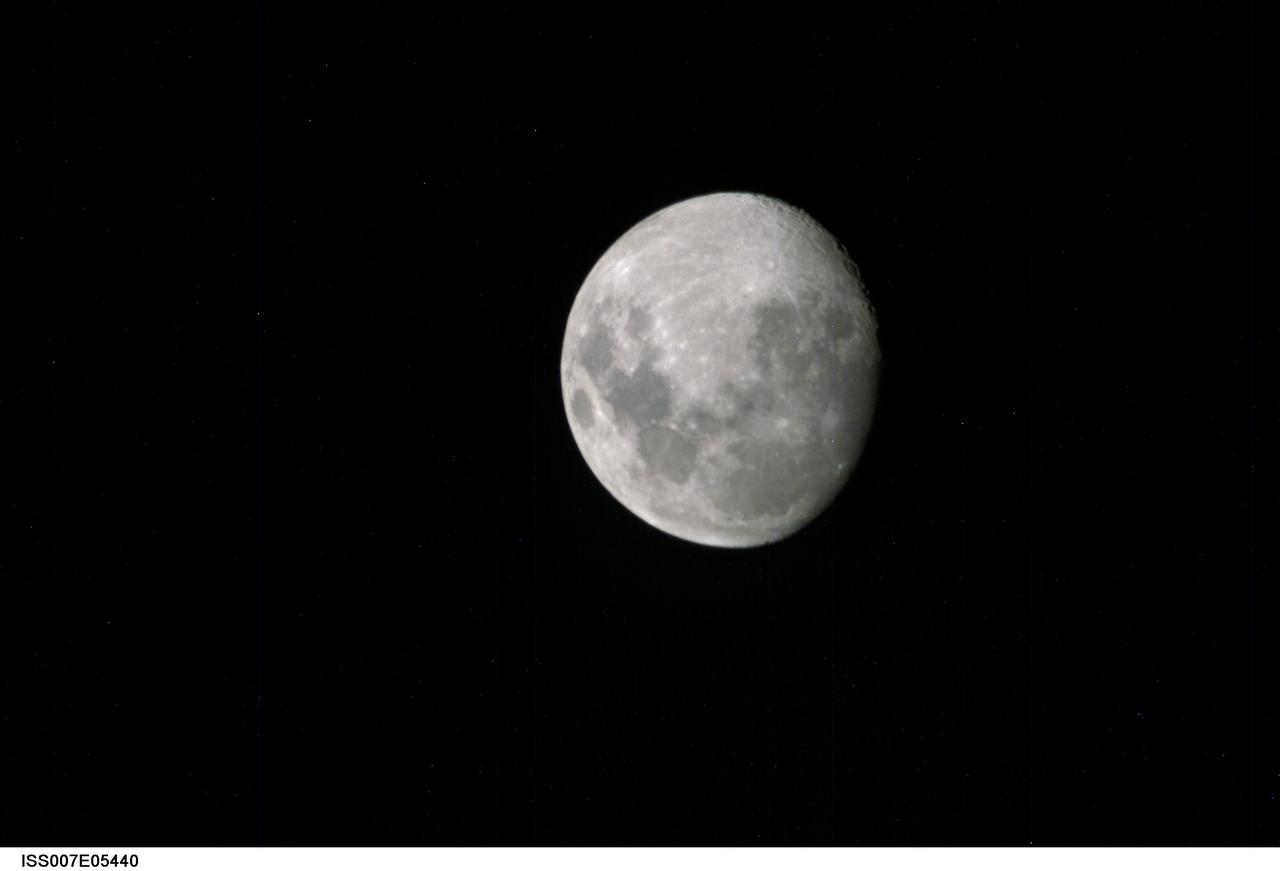
ISS007-E-05440 (13 May 2003) --- View of a gibbous Moon photographed by an Expedition Seven crewmember on board the International Space Station (ISS). The image was taken two days prior to the occurrence of a total lunar eclipse, which was photographed by astronaut Edward T. Lu, NASA ISS science officer.
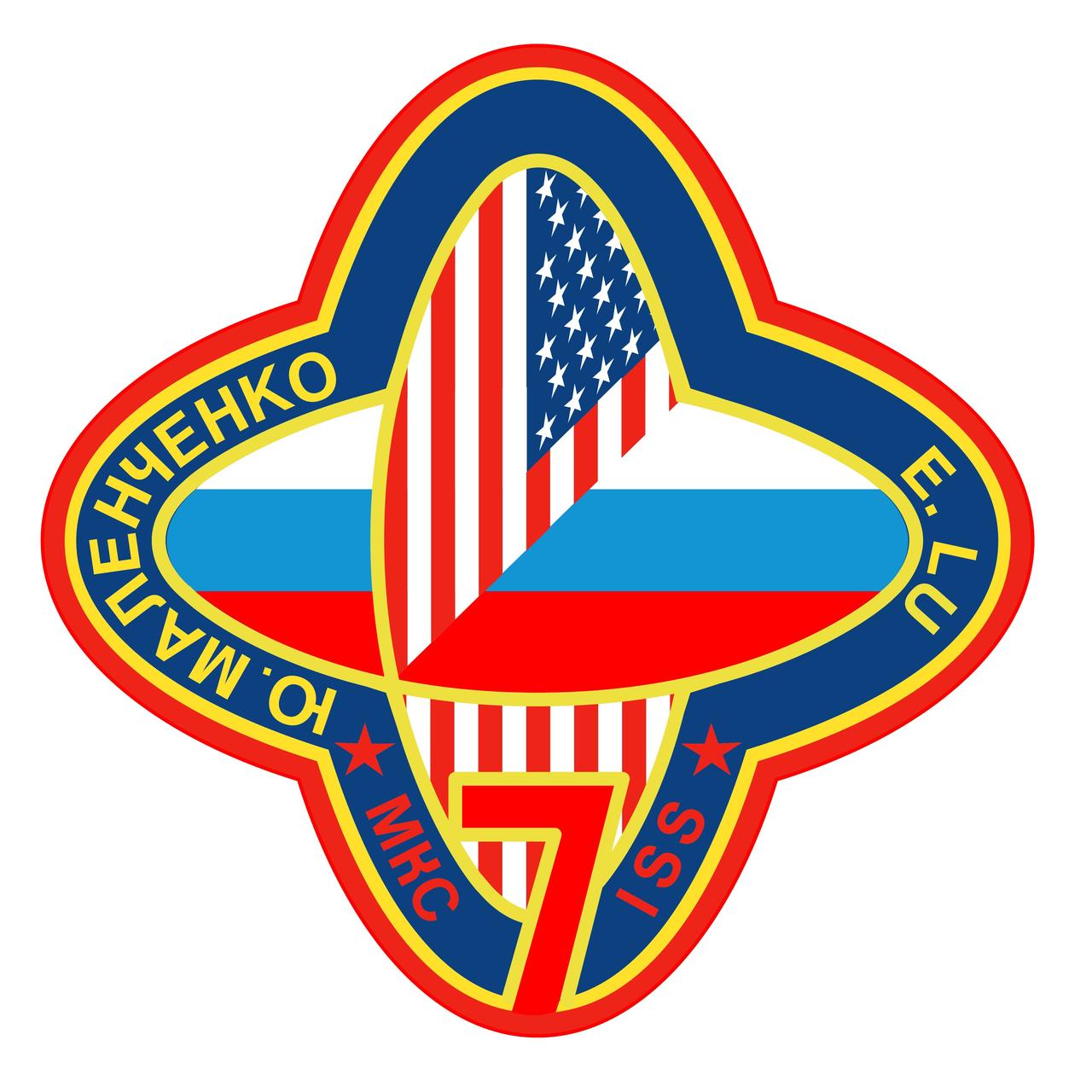
ISS007-S-001 (March 2003) --- The International Space Station (ISS) Expedition Seven patch consists of two elliptical orbits which evoke the histories of the two space programs from which the crew is drawn. The Russian and American flags are intersecting, representing the peaceful cooperation of the many countries contributing to the ISS. Two stars indicate the station's goals of contributing to life on Earth through science and commerce. The NASA insignia design for station space flights is reserved for use by the crew members and other official use as the NASA Administrator may authorize. Public availability has been approved only in the form of illustrations by the various news media. When and if there is any change in this policy, which is not anticipated, such will be publicly announced.
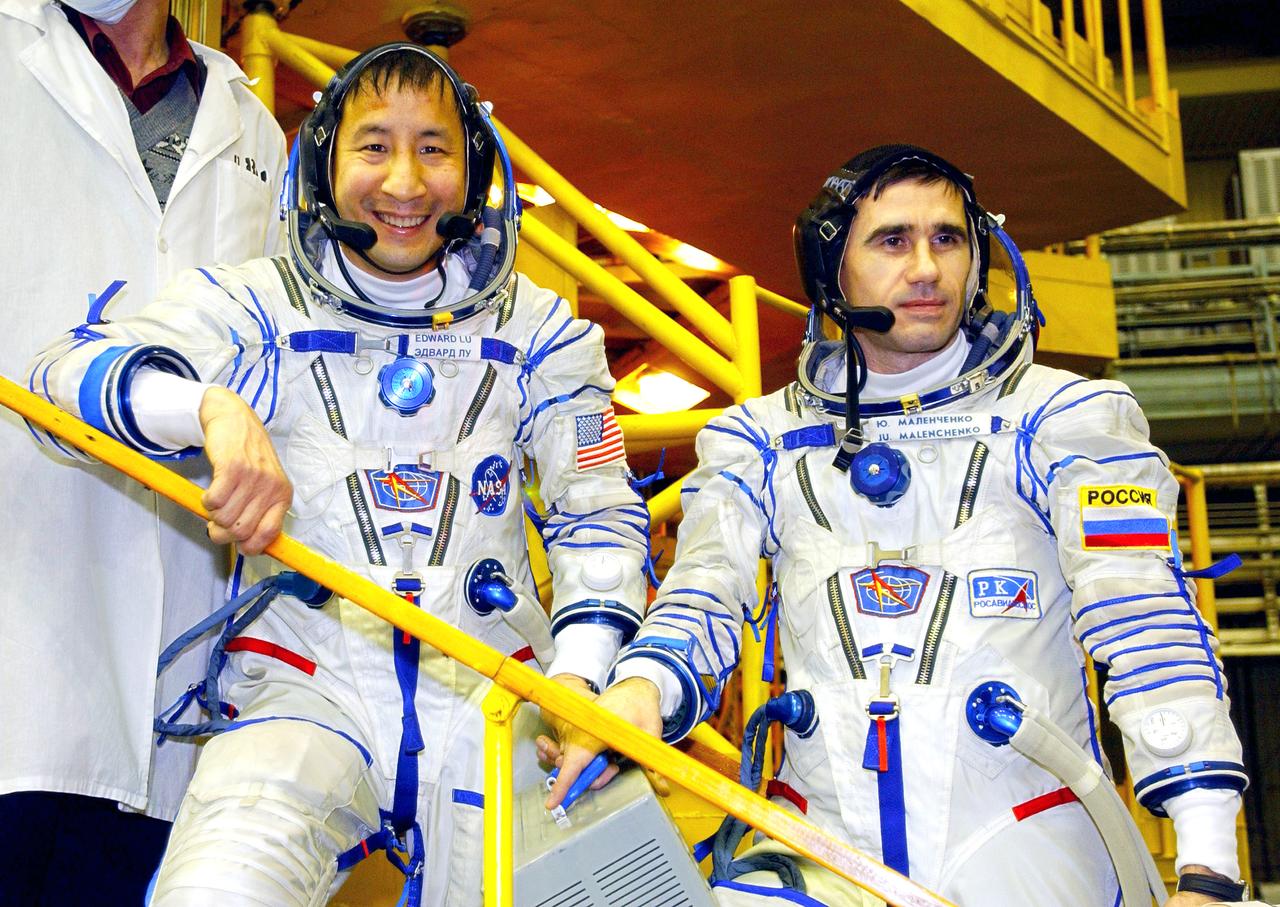
April 10, 2003. Baikonur Cosmodrome, Kazakhstan. Building 254, Soyuz Integration Facility. Cosmonaut Yuri I. Malenchenko (right), Expedition Seven commander and Astronaut Edward T. Lu, NASA ISS science officer and flight engineer for Expedition Seven pause for a photograph on the Soyuz stand after the Soyuz inspection, seat liner check. Photo Credit: "NASA/Bill Ingalls"
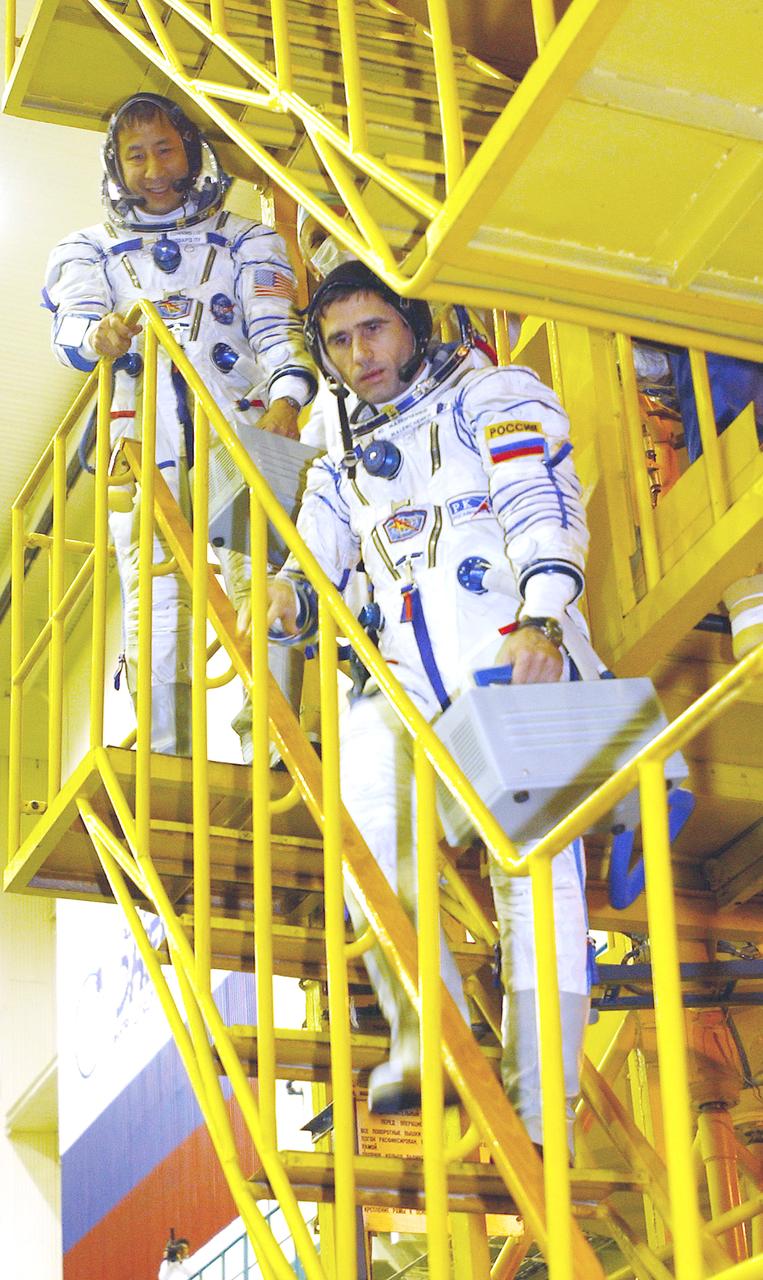
April 10, 2003. Baikonur Cosmodrome, Kazakhstan. Building 254, Soyuz Integration Facility. Cosmonaut Yuri I. Malenchenko (forground), Expedition Seven commander and Astronaut Edward T. Lu, NASA ISS science officer and flight engineer for Expedition Seven walk down the Soyuz stand after the Soyuz inspection, seat liner check. Photo Credit: "NASA/Bill Ingalls"
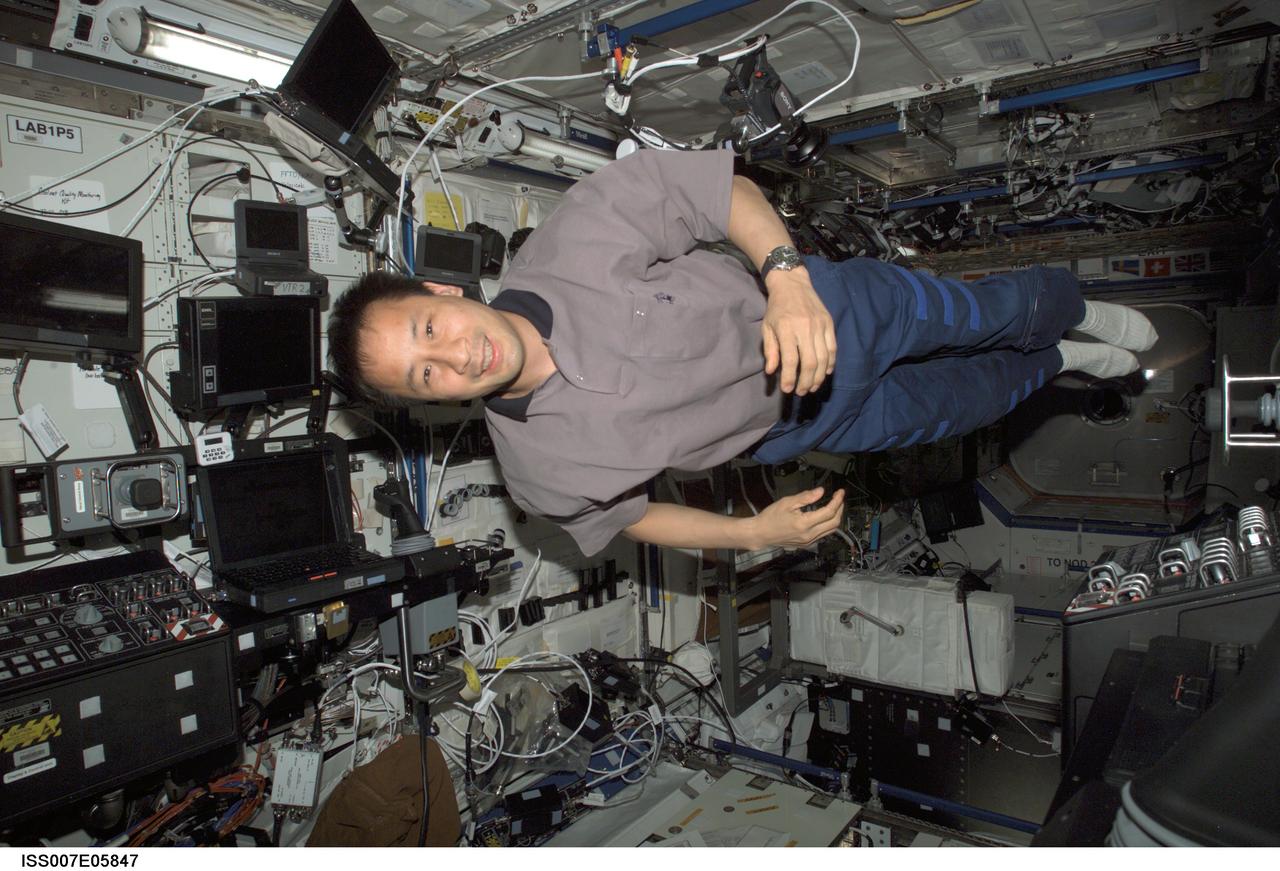
ISS007-E-05847 (26 May 2003) --- Astronaut Edward T. Lu, Expedition Seven NASA ISS science officer and flight engineer, floats in the Destiny laboratory on the International Space Station (ISS).
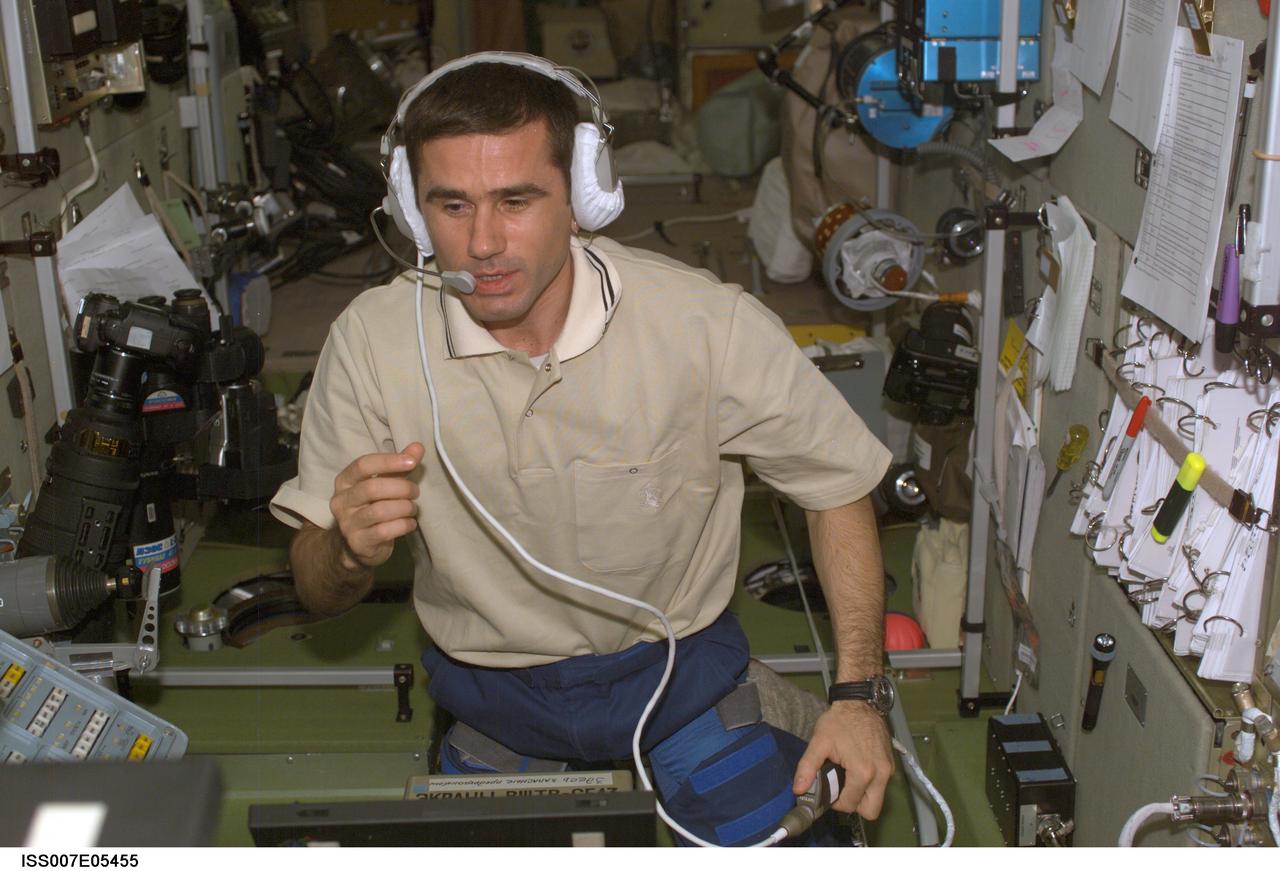
ISS007-E-05455 (15 May 2003) --- Cosmonaut Yuri I. Malenchenko, Expedition Seven mission commander, uses a communication system in the Zvezda Service Module on the International Space Station (ISS). Malenchenko represents Rosaviakosmos.
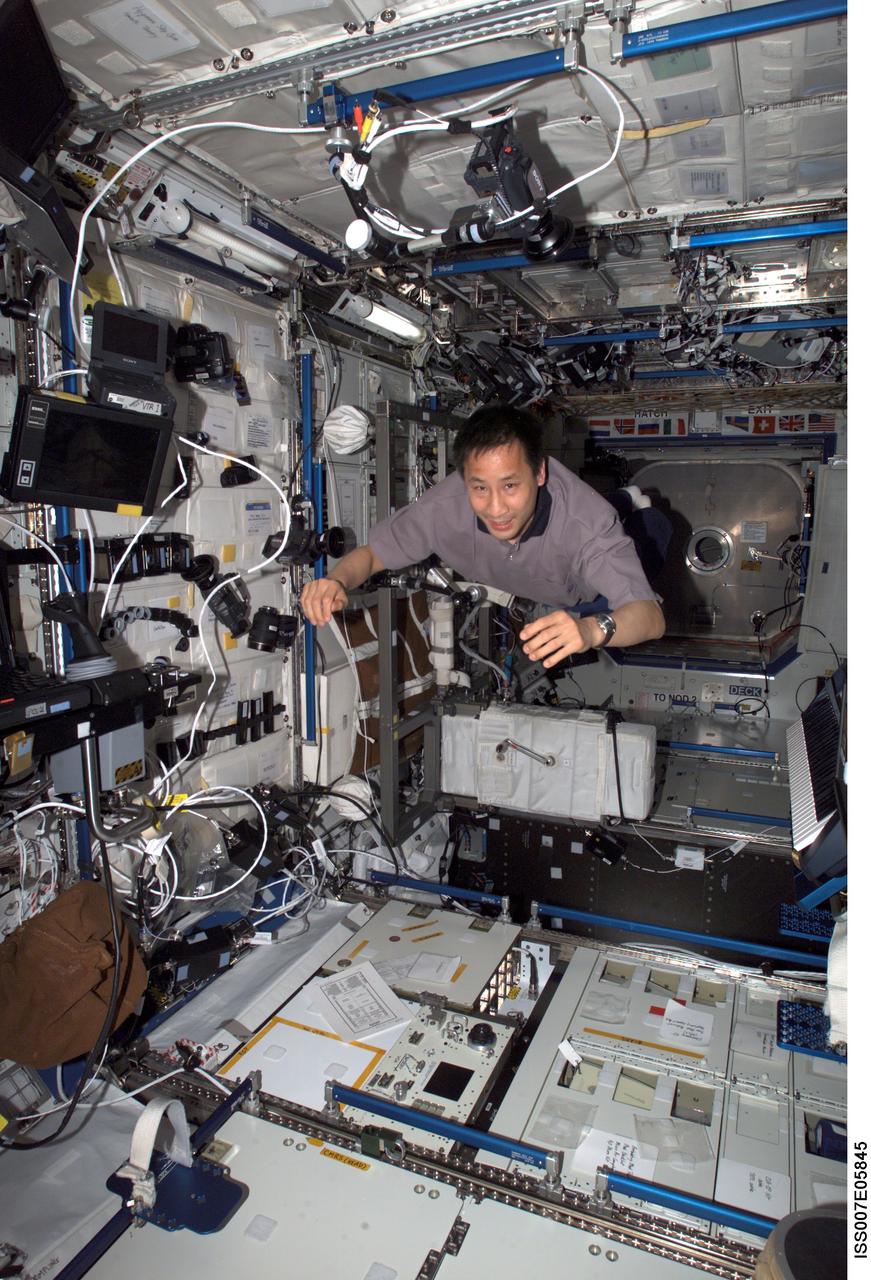
ISS007-E-05845 (26 May 2003) --- Astronaut Edward T. Lu, Expedition Seven NASA ISS science officer and flight engineer, floats in the Destiny laboratory on the International Space Station (ISS).
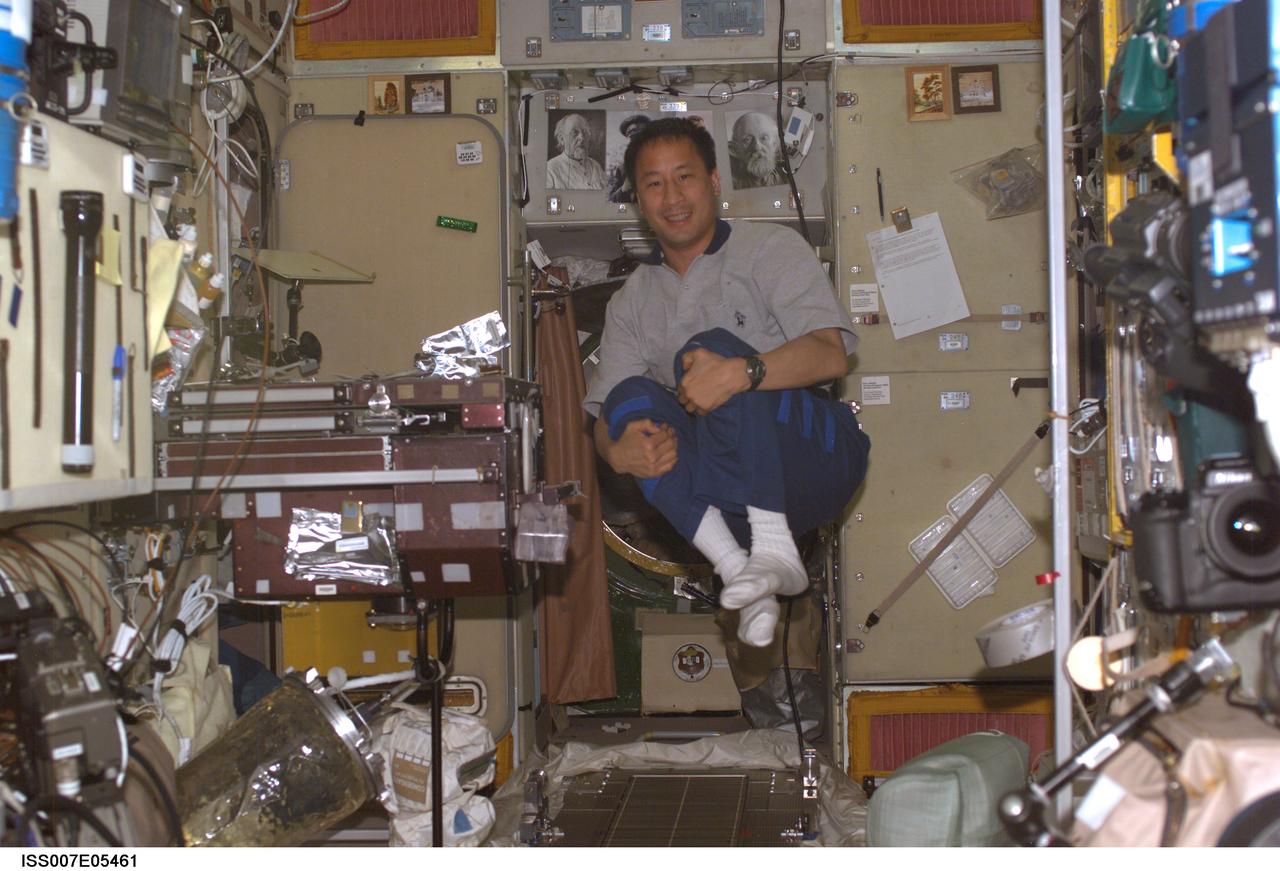
ISS007-E-05461 (15 May 2003) --- Astronaut Edward T. Lu, Expedition Seven NASA ISS science officer and flight engineer, floats in the Zvezda Service Module on the International Space Station (ISS).
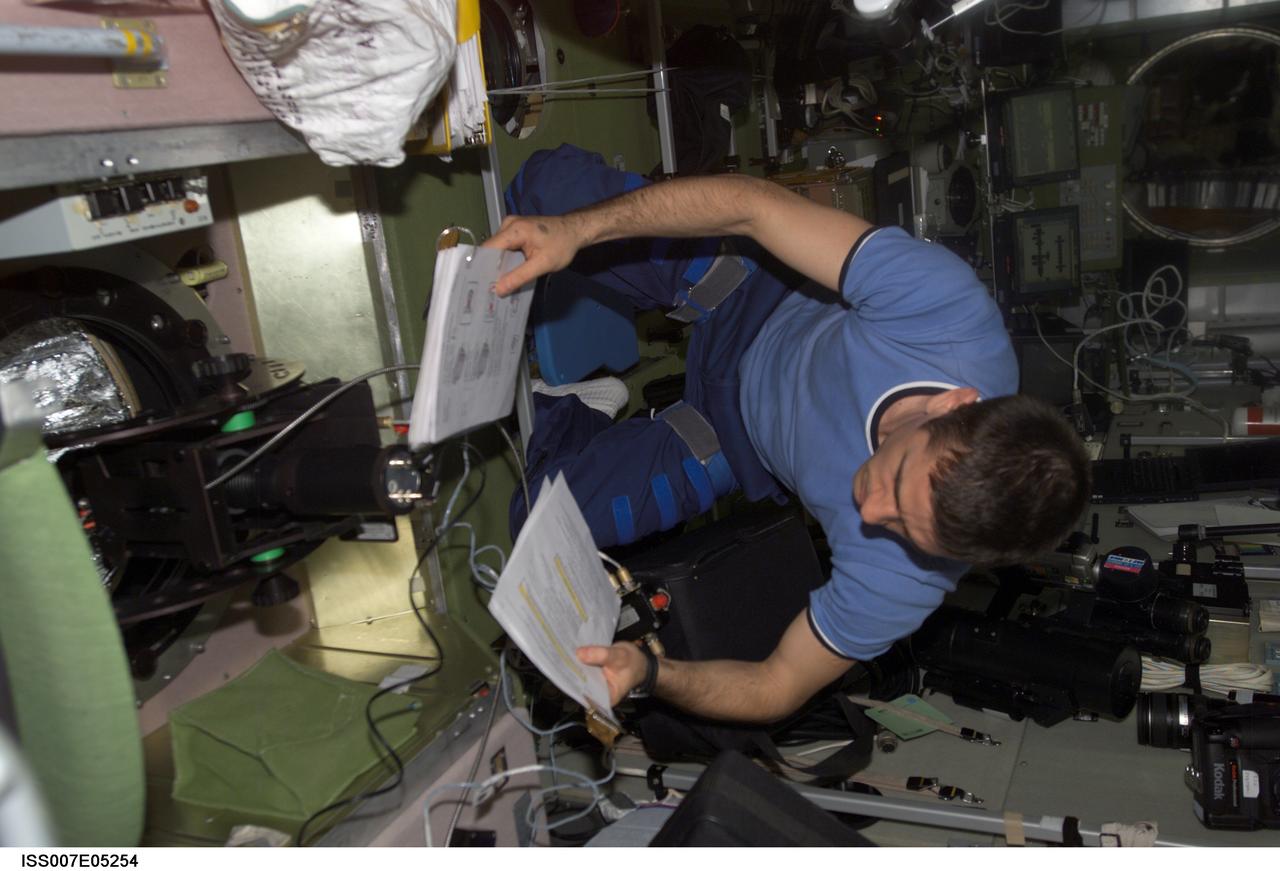
ISS007-E-05254 (3 May 2003) --- Cosmonaut Yuri I. Malenchenko, Expedition Seven mission commander, looks over procedures checklists in the Zvezda Service Module on the International Space Station (ISS). Malenchenko represents Rosaviakosmos.
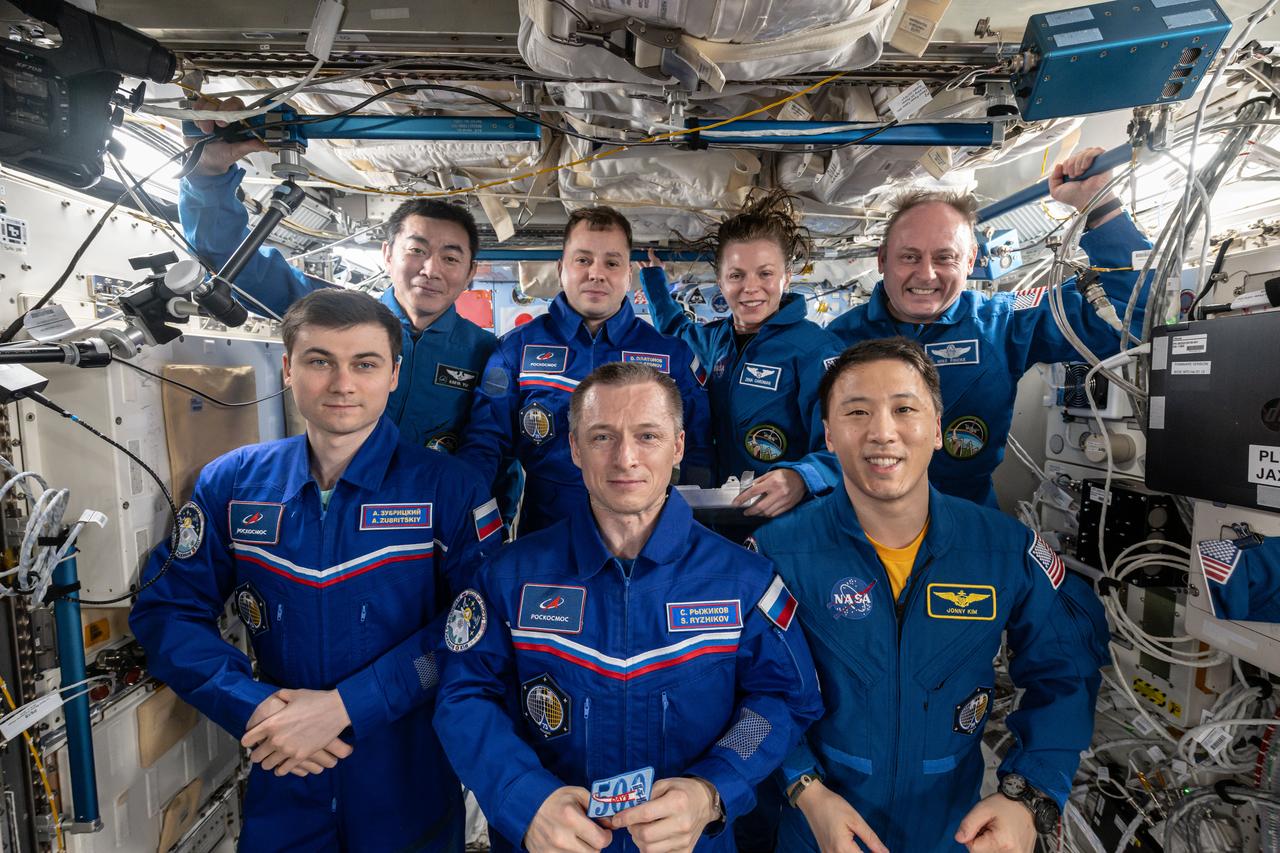
iss073e0548947 (Aug. 28, 2025) --- The seven-member Expedition 73 crew gathers for a portrait inside the International Space Station's Kibo laboratory module. In the front row from left are, Roscosmos cosmonauts Alexey Zubritsky and Sergey Ryzhikov, station Flight Engineer and Commander respectively, and NASA Flight Engineer Jonny Kim. In the back row are Flight Engineers Kimiya Yui of JAXA (Japan Aerospace Exploration Agency) Oleg Platonov of Roscosmos, and Zena Cardman and Mike Fincke, both from NASA. Ryzhikov is holding a patch commemorating his 500th day cumulative in space across three spaceflights including Expeditions 49-50, 63-64, and 72-73.
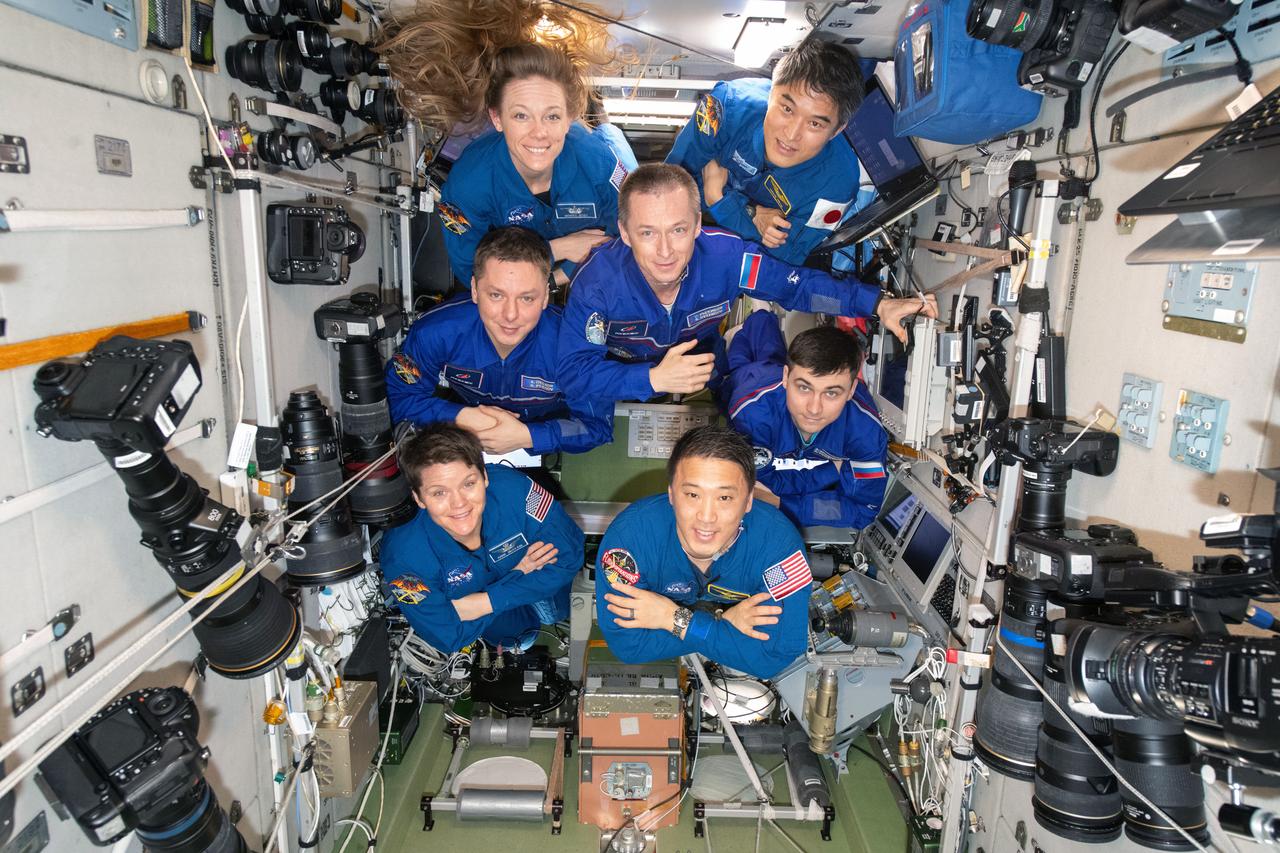
iss073e0249083 (June 15, 2025) --- The seven-member Expedition 73 crew poses for a portrait inside the International Space Station's Zvezda service module. Clockwise from top left are, NASA Flight Engineer Nichole Ayers; JAXA (Japan Aerospace Exploration Agency) Commander Takuya Onishi; Roscosmos Flight Engineer Alexey Zubritsky; NASA Flight Engineers Jonny Kim and Anne McClain; and Roscosmos Flight Engineers Kirill Peskov and Sergey Ryzhikov.
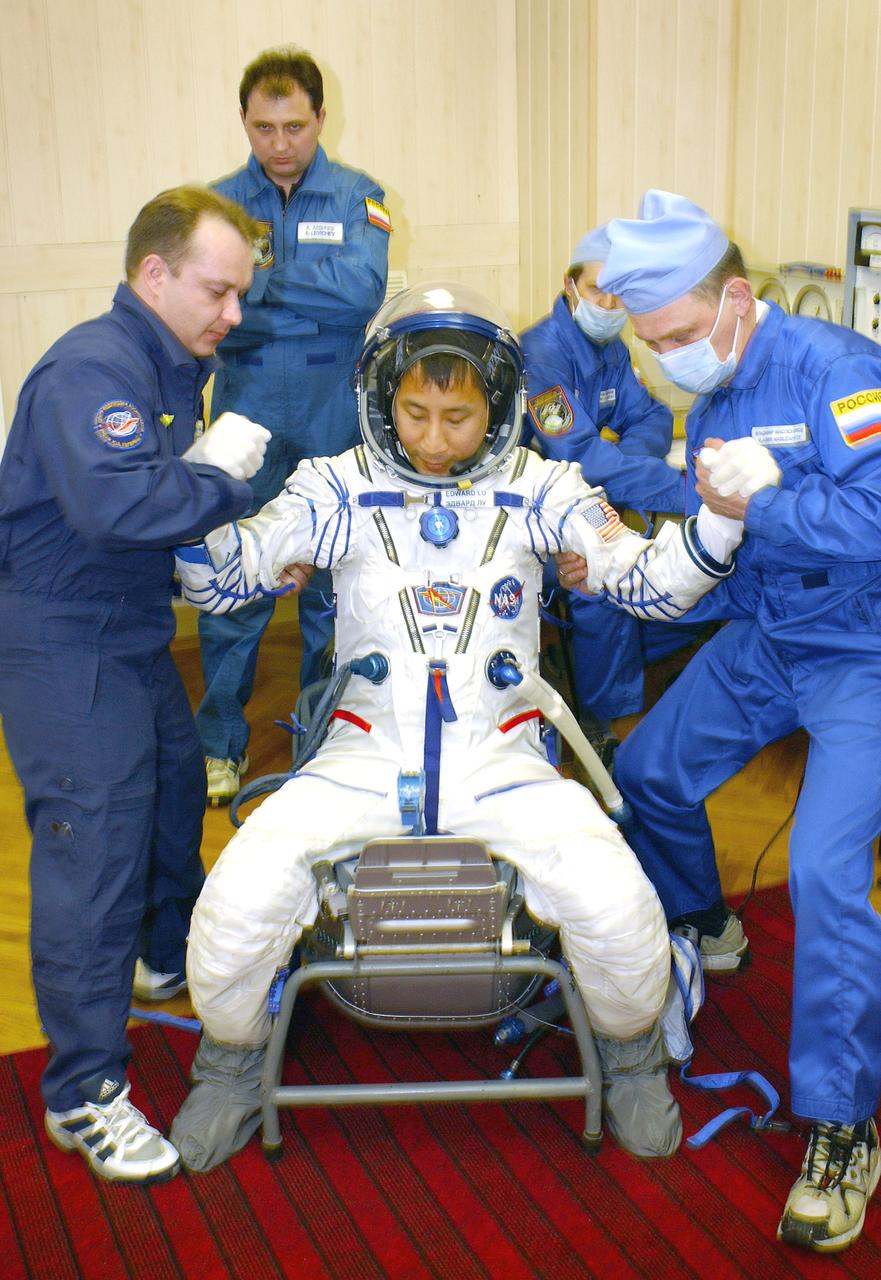
April 10, 2003. Baikonur Cosmodrome, Kazakhstan. Building 254, Soyuz Integration Facility. Astronaut Edward T. Lu, NASA ISS science officer and flight engineer for Expedition Seven has a leak check preformed on the Russian Sokol suit. Photo Credit: "NASA/Bill Ingalls"
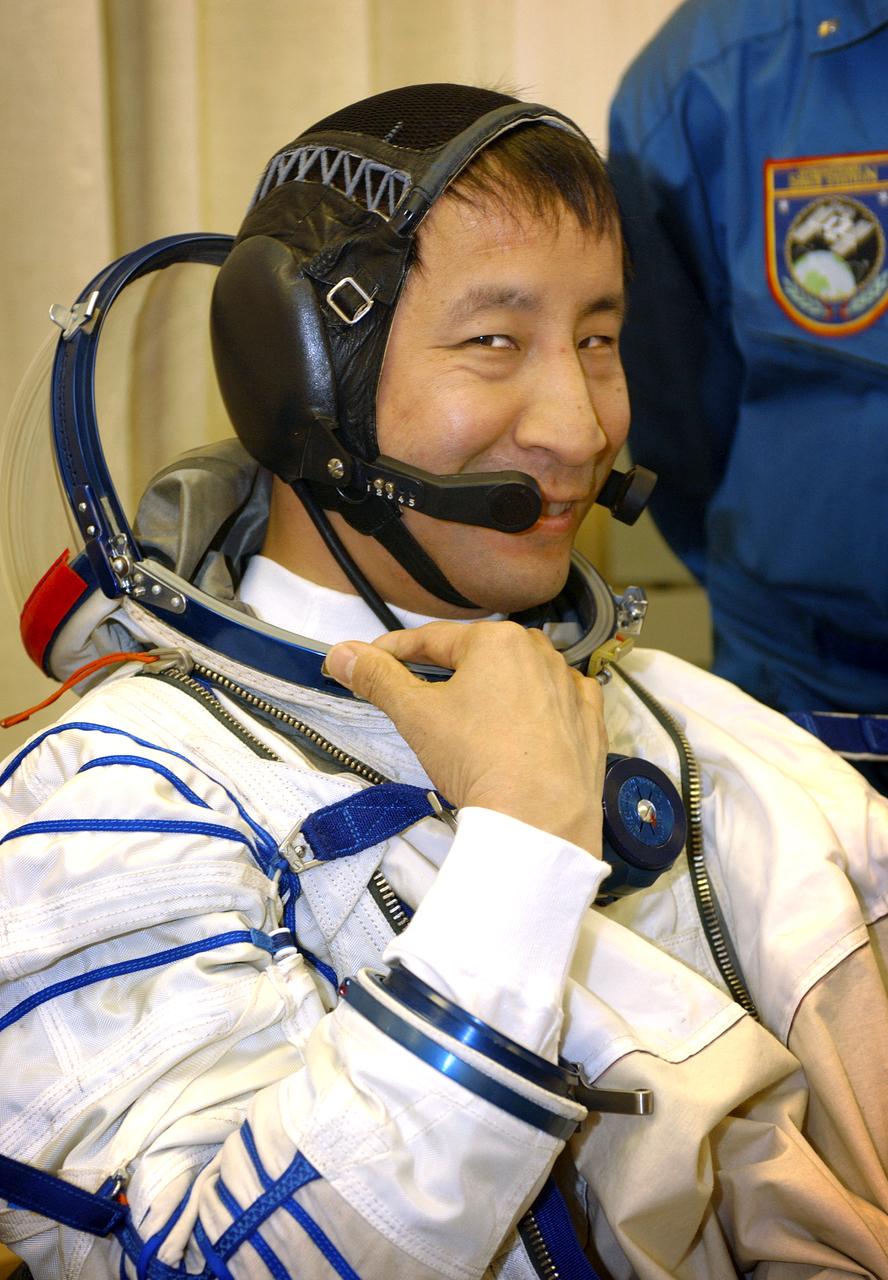
April 10, 2003. Baikonur Cosmodrome, Kazakhstan. Building 254, Soyuz Integration Facility. Astronaut Edward T. Lu, NASA ISS science officer and flight engineer for Expedition Seven dons his Russian Sokol suit for the leak check and Soyuz inspection, seat liner check. Photo Credit: "NASA/Bill Ingalls"
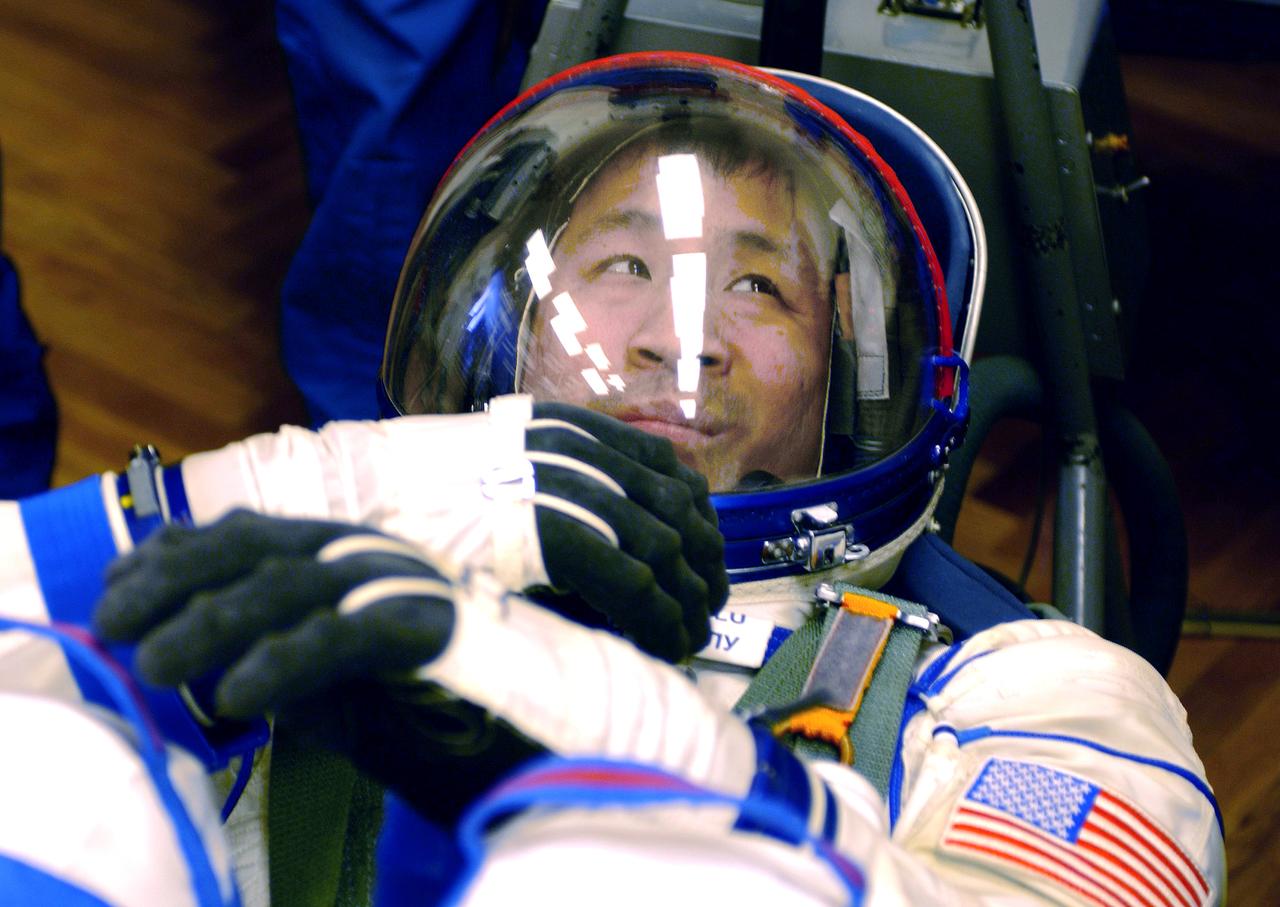
April 10, 2003. Baikonur Cosmodrome, Kazakhstan. Building 254, Soyuz Integration Facility. Astronaut Edward T. Lu, NASA ISS science officer and flight engineer for Expedition Seven has a leak check preformed on the Russian Sokol suit. Photo Credit: "NASA/Bill Ingalls"
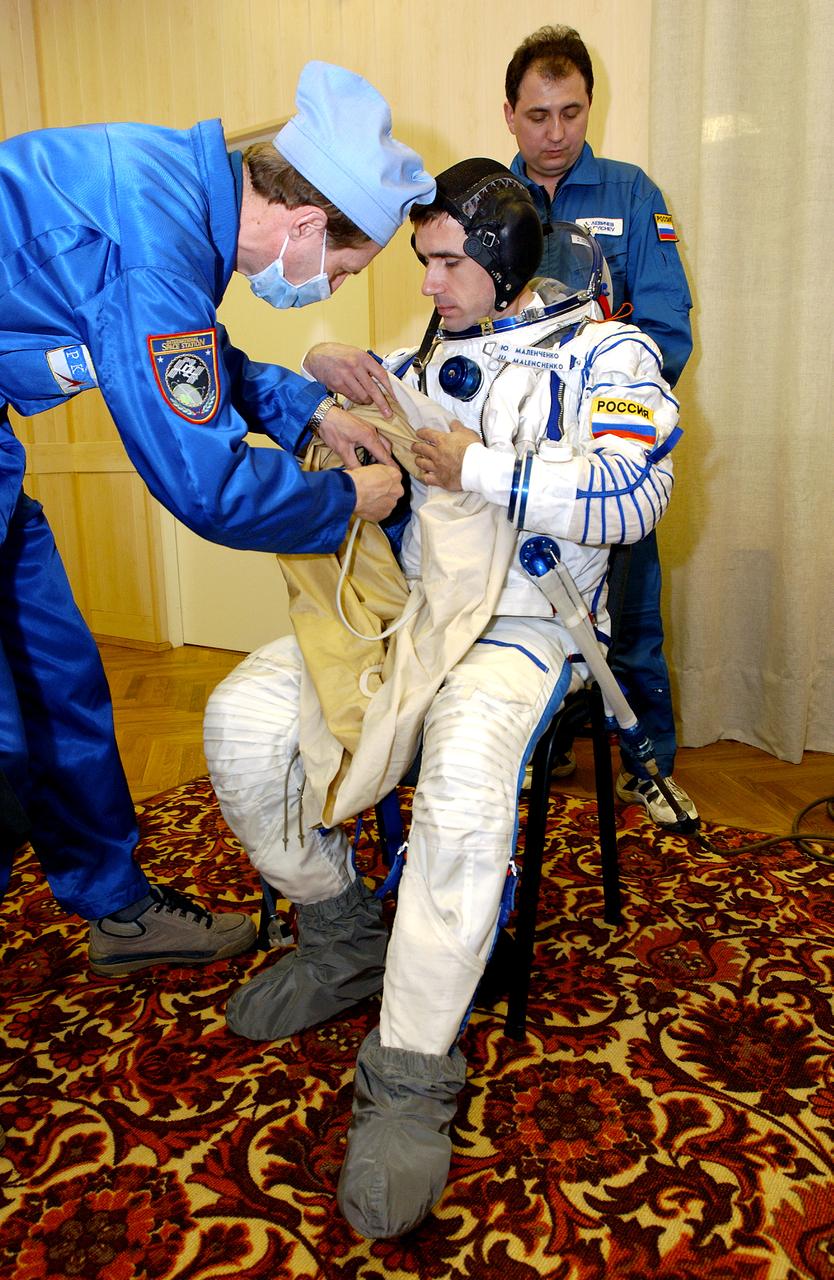
April 10, 2003. Baikonur Cosmodrome, Kazakhstan. Building 254, Soyuz Integration Facility. Cosmonaut Yuri I. Malenchenko, Expedition Seven commander dons his Russian Sokol suit for the leak check and Soyuz inspection, seat liner check. Photo Credit: "NASA/Bill Ingalls"
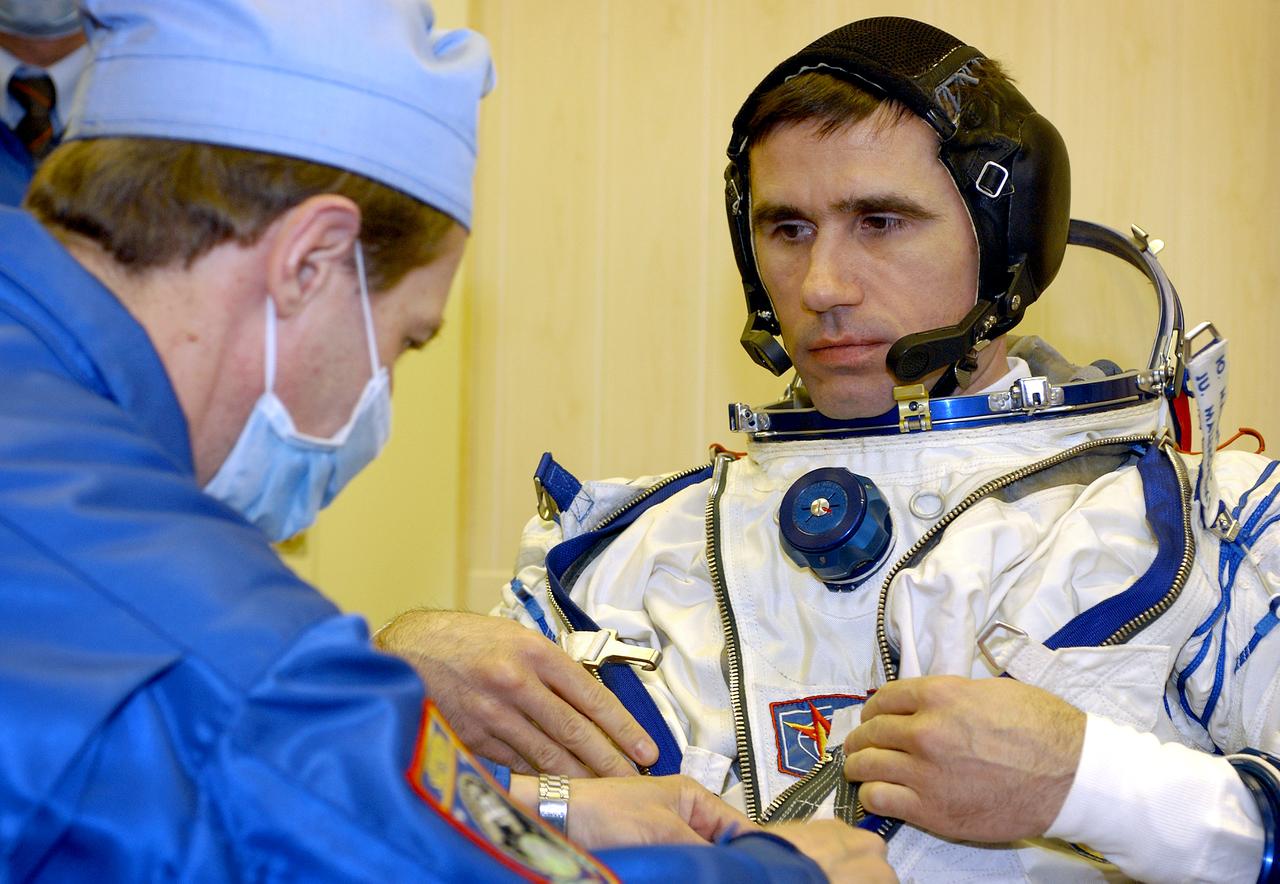
April 10, 2003. Baikonur Cosmodrome, Kazakhstan. Building 254, Soyuz Integration Facility. Cosmonaut Yuri I. Malenchenko, Expedition Seven commander dons his Russian Sokol suit for the leak check and Soyuz inspection, seat liner check. Photo Credit: "NASA/Bill Ingalls"
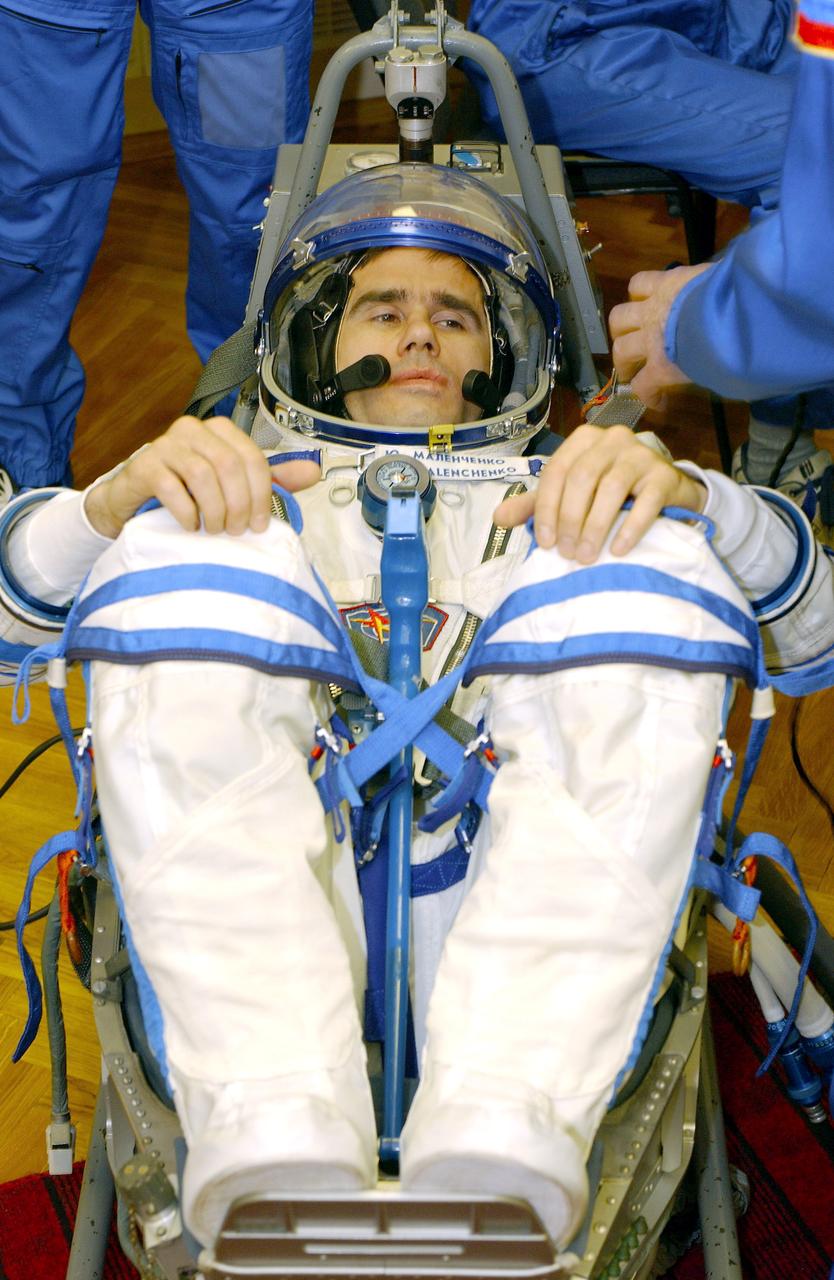
April 10, 2003. Baikonur Cosmodrome, Kazakhstan. Building 254, Soyuz Integration Facility. Cosmonaut Yuri I. Malenchenko, Expedition Seven commander dons his Russian Sokol suit for the leak check and Soyuz inspection, seat liner check. Photo Credit: "NASA/Bill Ingalls"
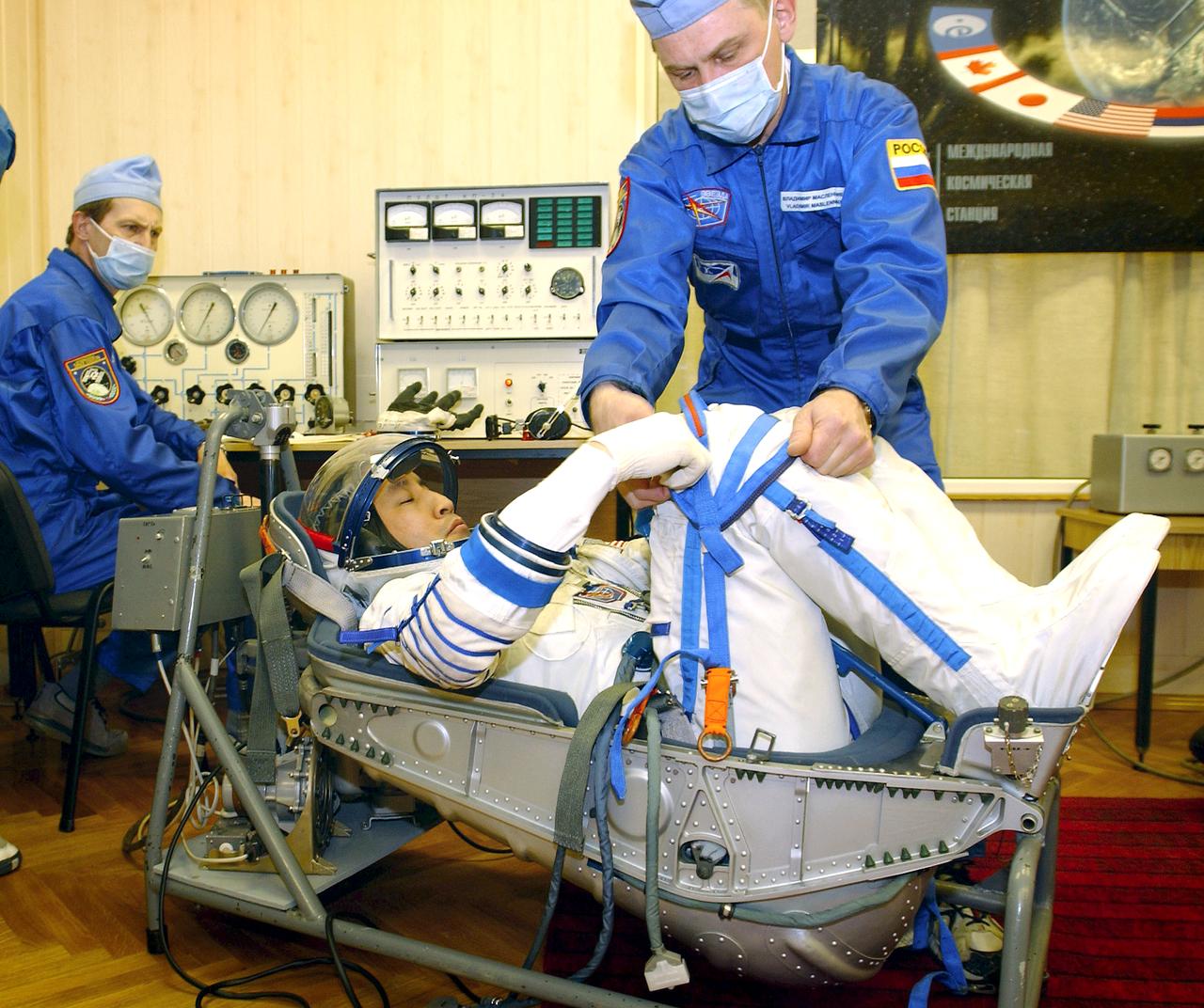
April 10, 2003. Baikonur Cosmodrome, Kazakhstan. Building 254, Soyuz Integration Facility. Astronaut Edward T. Lu, NASA ISS science officer and flight engineer for Expedition Seven has a leak check preformed on the Russian Sokol suit. Photo Credit: "NASA/Bill Ingalls"
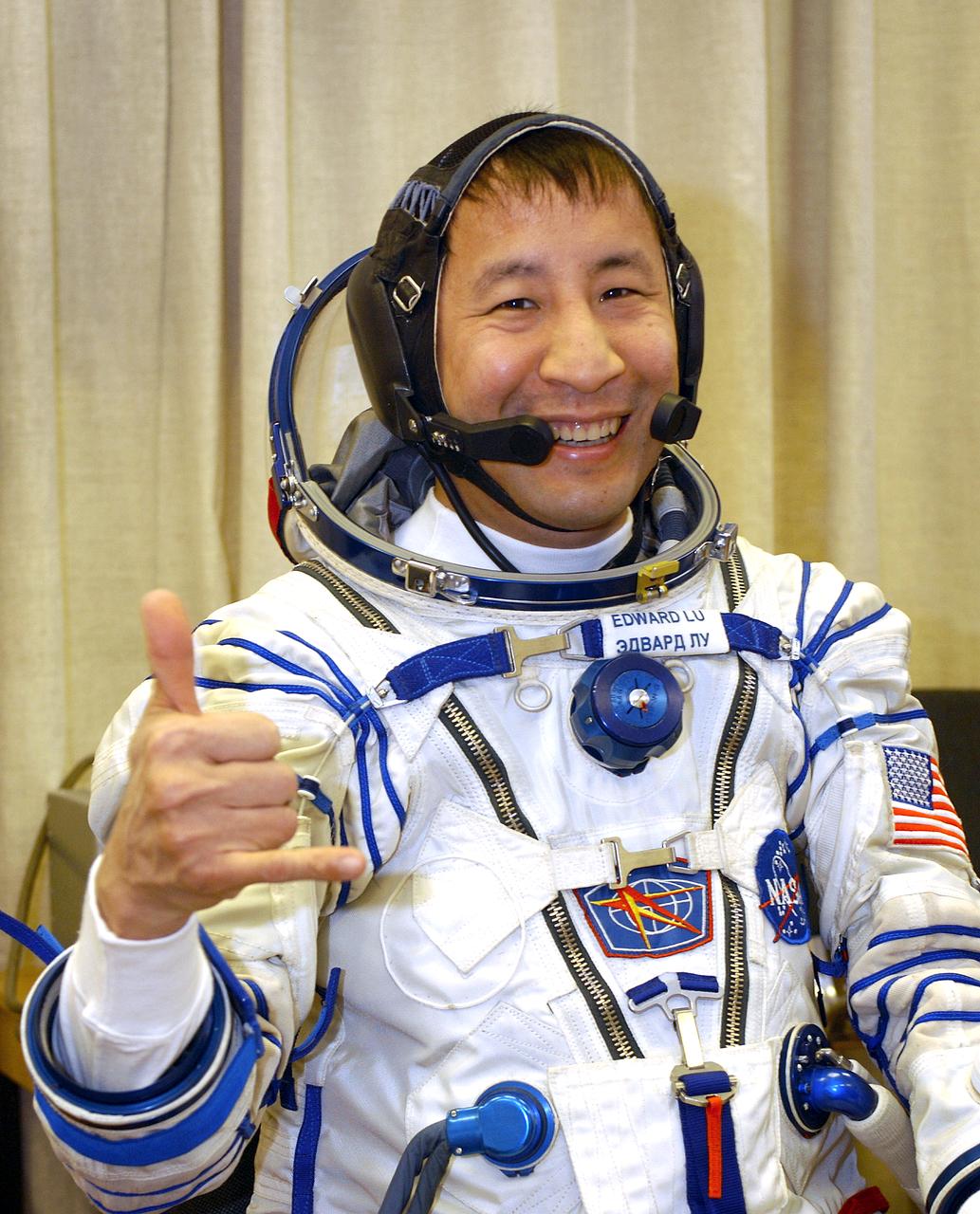
April 10, 2003. Baikonur Cosmodrome, Kazakhstan. Building 254, Soyuz Integration Facility. Astronaut Edward T. Lu, NASA ISS science officer and flight engineer for Expedition Seven dons his Russian Sokol suit for the leak check and Soyuz inspection, seat liner check. Photo Credit: "NASA/Bill Ingalls"
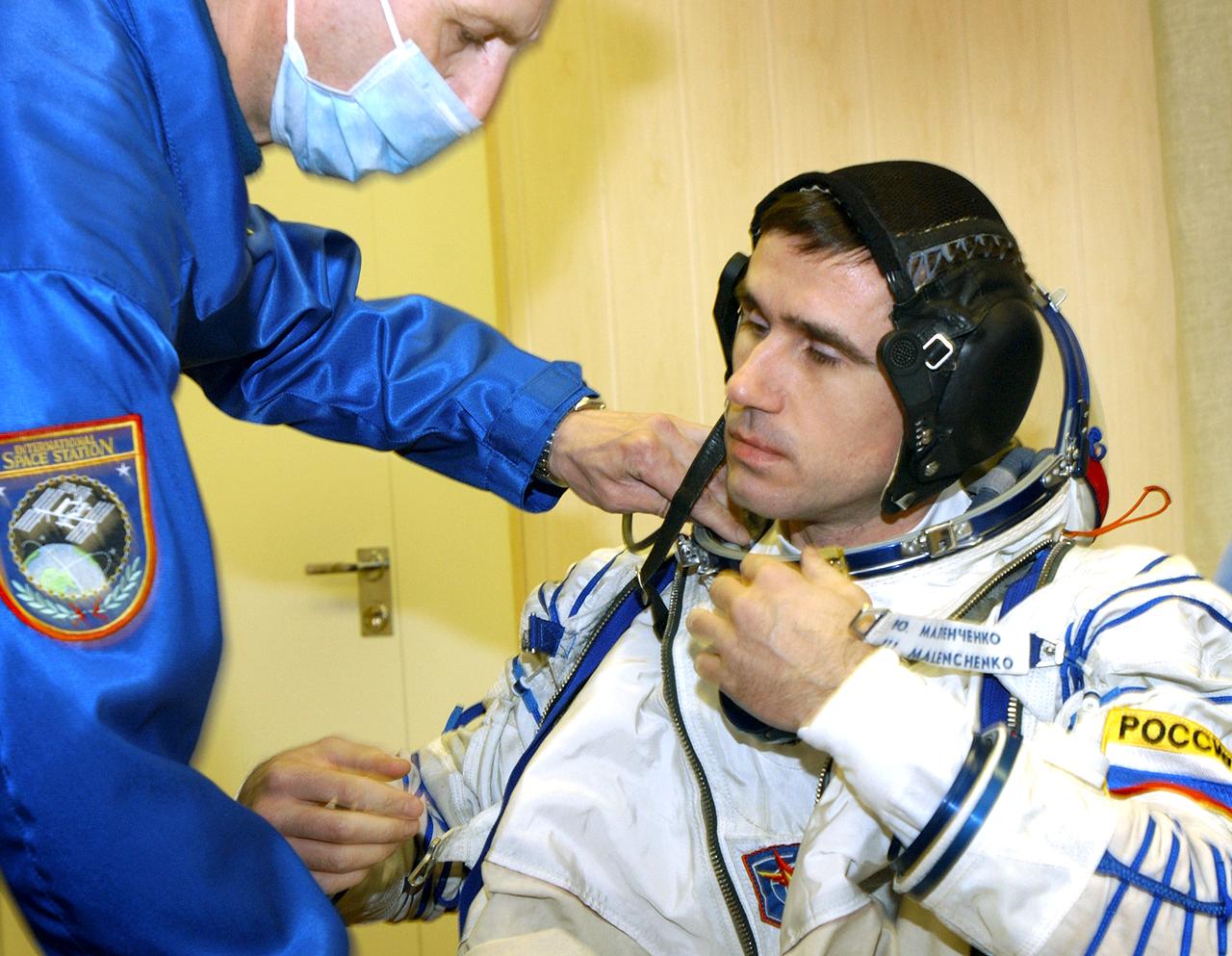
April 10, 2003. Baikonur Cosmodrome, Kazakhstan. Building 254, Soyuz Integration Facility. Cosmonaut Yuri I. Malenchenko, Expedition Seven commander dons his Russian Sokol suit for the leak check and Soyuz inspection, seat liner check. Photo Credit: "NASA/Bill Ingalls"
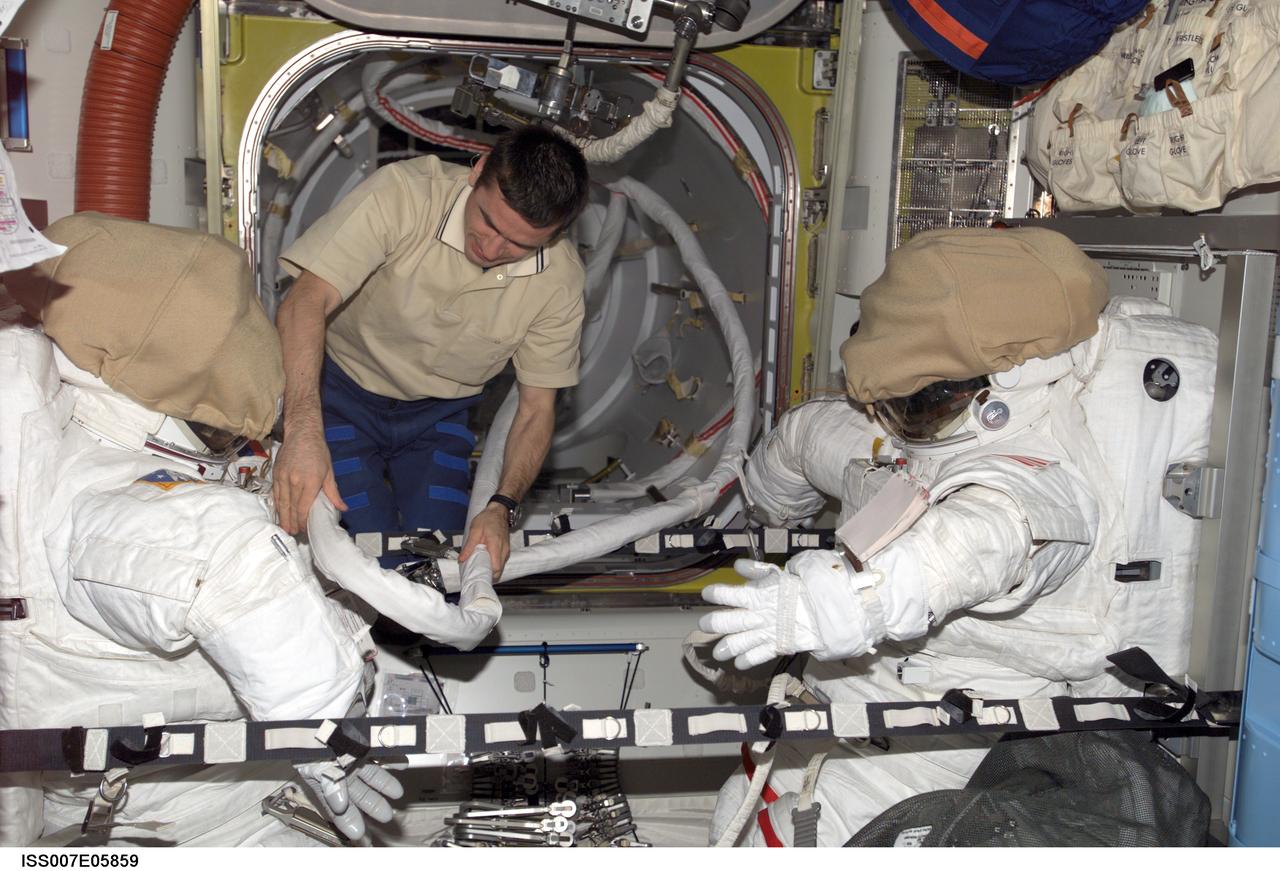
ISS007-E-05859 (28 May 2003) --- Cosmonaut Yuri I. Malenchenko, Expedition Seven mission commander, works with Extravehicular Mobility Unit (EMU) spacesuits in the Quest airlock on the International Space Station (ISS). Today Malenchenko and astronaut Edward T. Lu (out of frame), NASA ISS science officer and flight engineer, performed an EMU spacesuit fit check and don/doff dry-run. The objective was to check out the equipment and provide the crew with training for preparing for a two-person spacewalk without intravehicular (IV) crewmember support, should it become necessary. Malenchenko represents Rosaviakosmos.
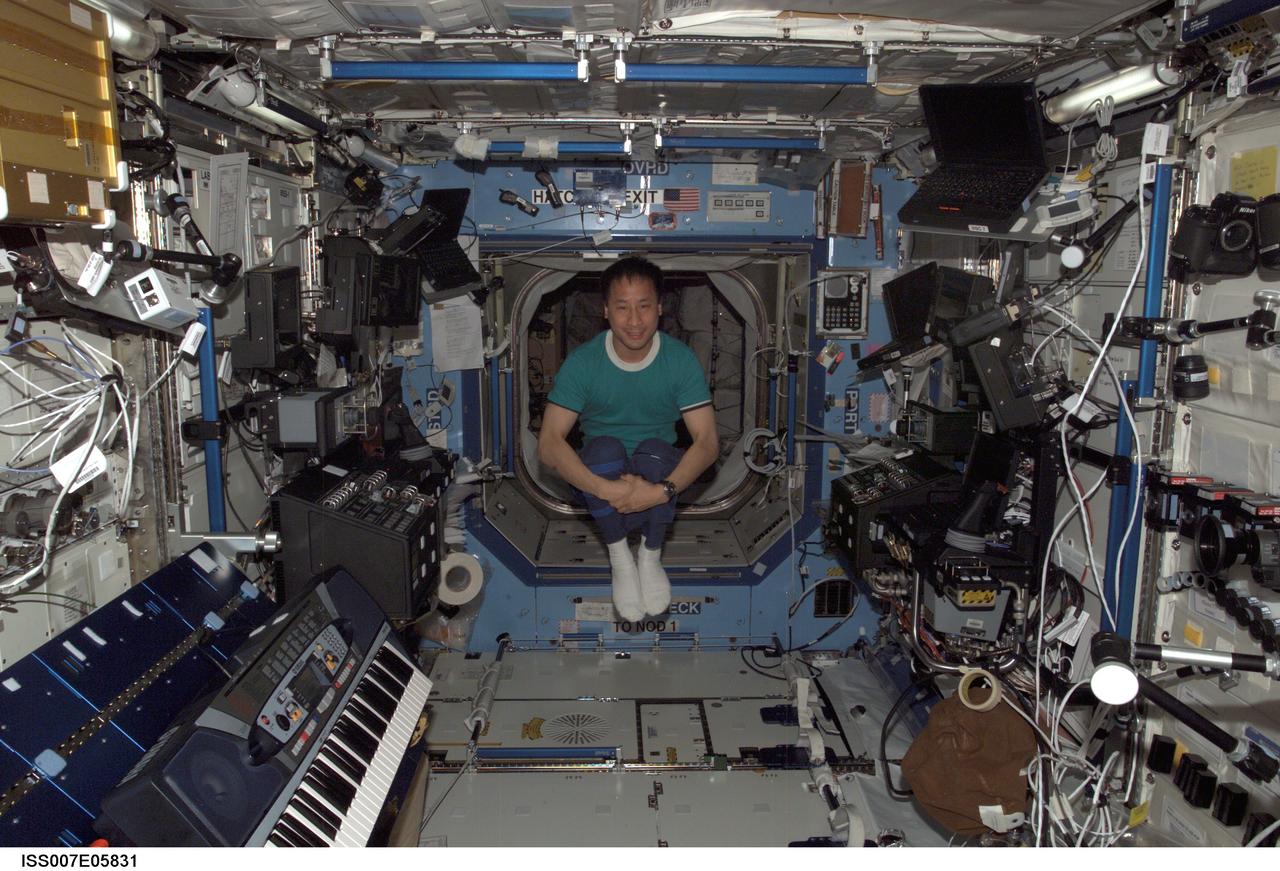
ISS007-E-05831 (22 May 2003) --- Astronaut Edward T. Lu, Expedition Seven NASA ISS science officer and flight engineer, floats in the Destiny laboratory on the International Space Station (ISS). Carl E. Walz, a musician and member of a band made up of NASA astronauts, brought the keyboard (lower left) to the station for his Expedition Four stay aboard the orbital outpost.
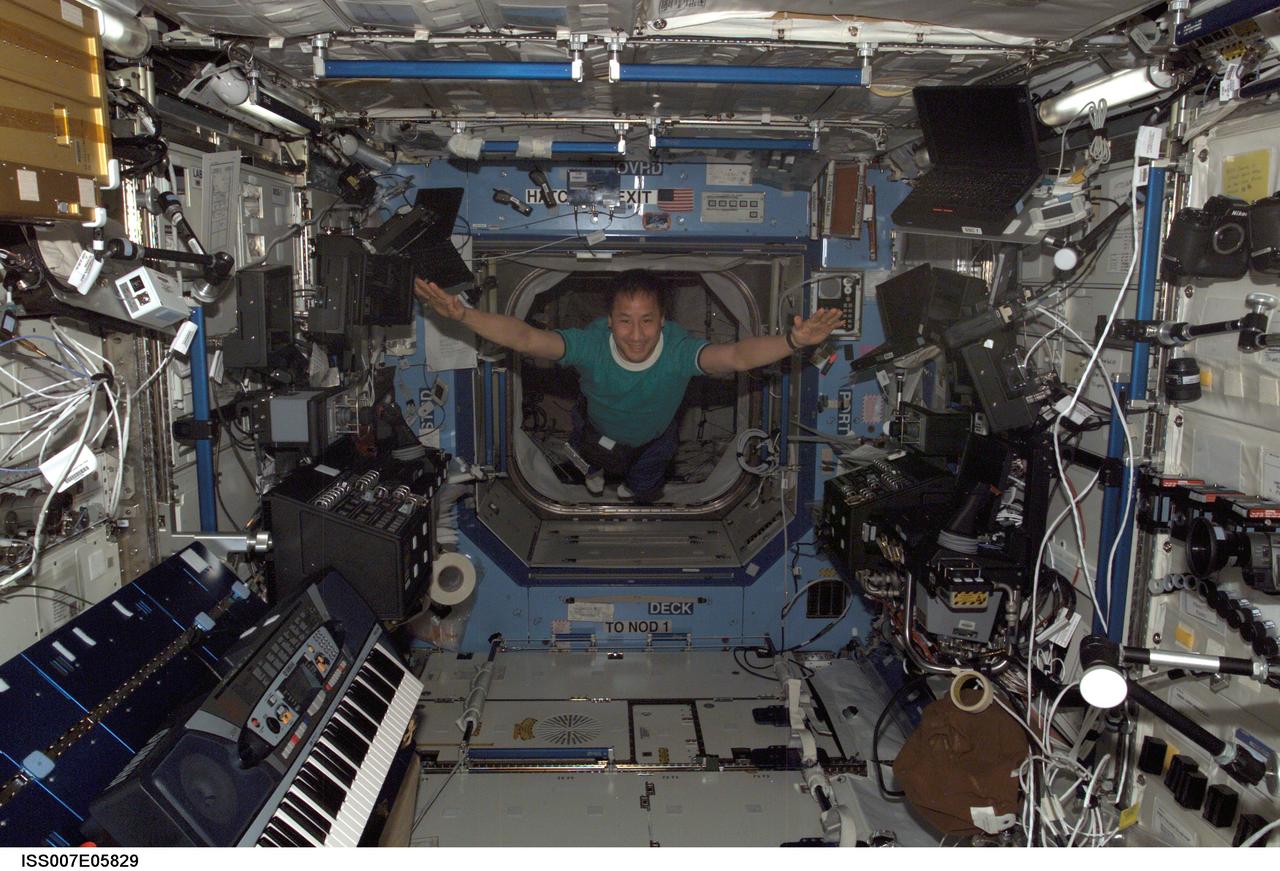
ISS007-E-05829 (22 May 2003) --- Astronaut Edward T. Lu, Expedition Seven NASA ISS science officer and flight engineer, floats in the Destiny laboratory on the International Space Station (ISS). Carl E. Walz, a musician and member of a band made up of NASA astronauts, brought the keyboard (lower left) to the station for his Expedition Four stay aboard the orbital outpost.
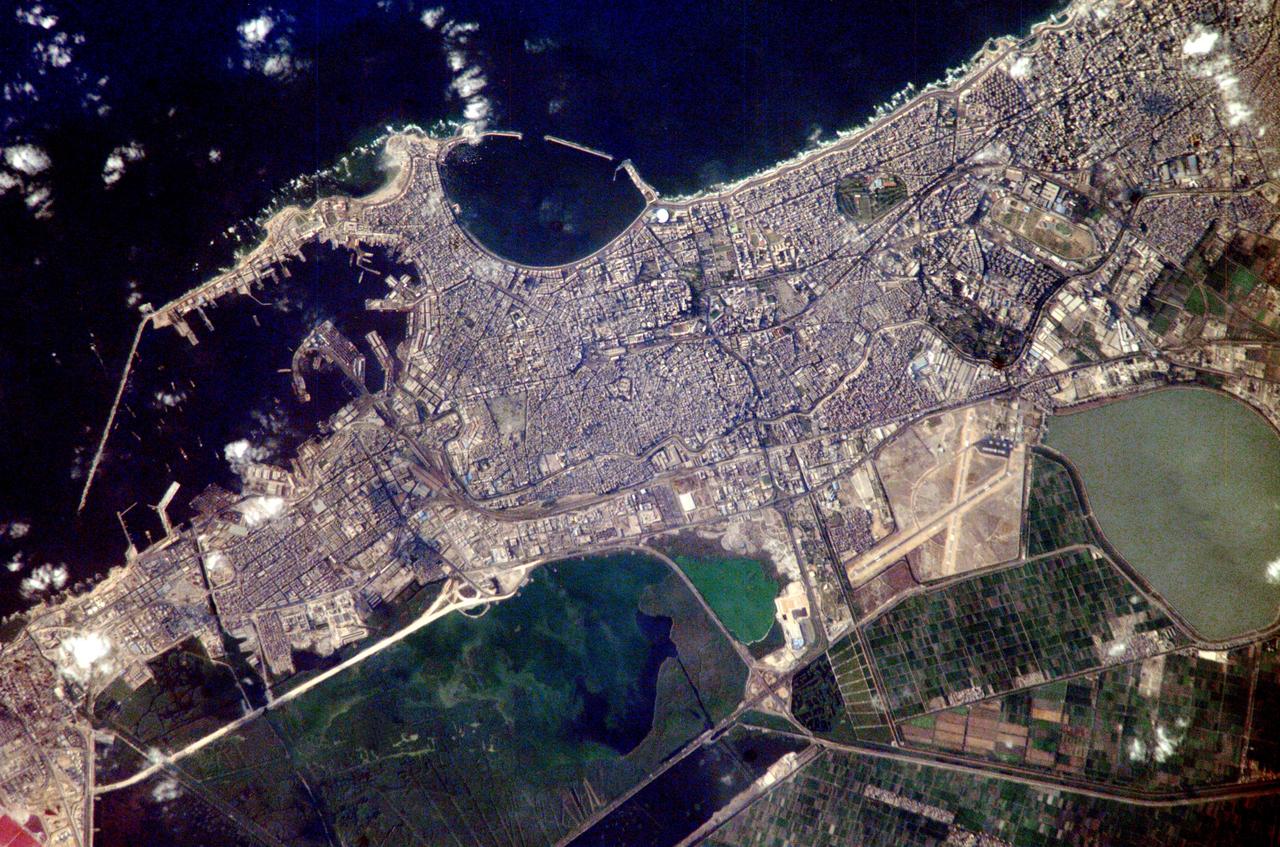
ISS007-E-10960 (27 July 2003) --- Alexandria, Egypt, is featured in this image photographed by an Expedition 7 crewmember on the International Space Station (ISS). Founded by Alexander the Great in 331 BC on the Mediterranean coast of Egypt, Alexandria became a center of trade and learning in the ancient world. Alexander built the causeway between the Eastern and Western Harbors, joining Pharos Island to the mainland. Alexandria’s cultural status was symbolized by the lighthouse on Pharos, one of the “Seven Wonders of the World.” The causeway is still known as the old part of the modern city. Since the year 2000, underwater archeologists have located the sunken palace, ceremonial buildings and port facilities of ancient Alexandria, located along most of the curved southern shoreline of the Eastern Harbor. This detailed image provides a view of the modern port facilities in the Western Harbor, where wharves and many moored ships can be detected.
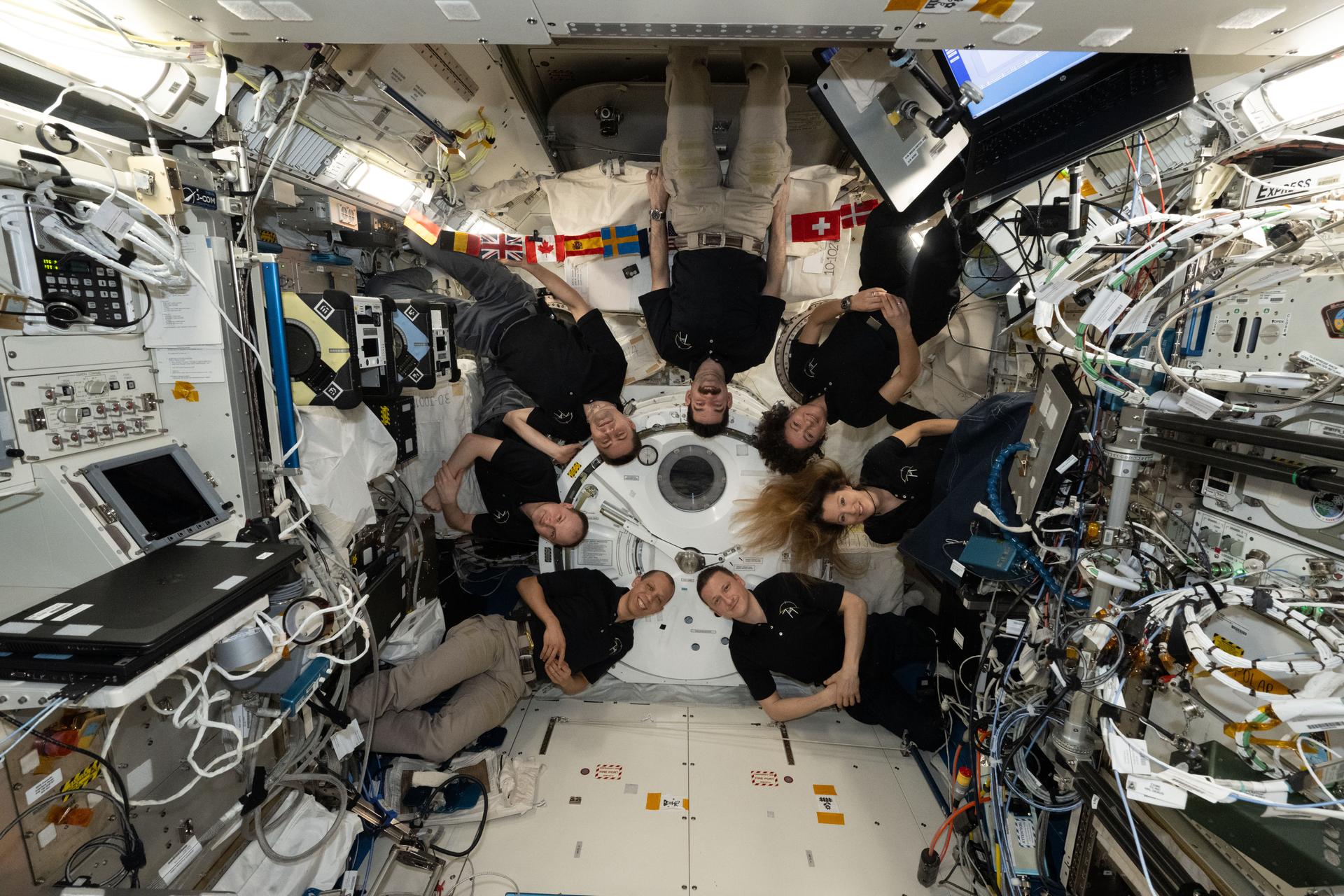
iss074e0812184 (July 12, 2026) --- The seven-member Expedition 74 crew poses together for a fun portrait inside the International Space Station's Kibo laboratory module. Clockwise from bottom left, are NASA astronaut Chris Williams, Roscosmos cosmonauts Sergei Mikaev and Andrey Fedyaev, NASA astronauts Jack Hathaway and Jessica Meir, ESA (European Space Agency) astronaut Sophie Adenot, and Roscosmos cosmonaut Sergey Kud-Sverchkov. Credit: NASA/Chris Williams
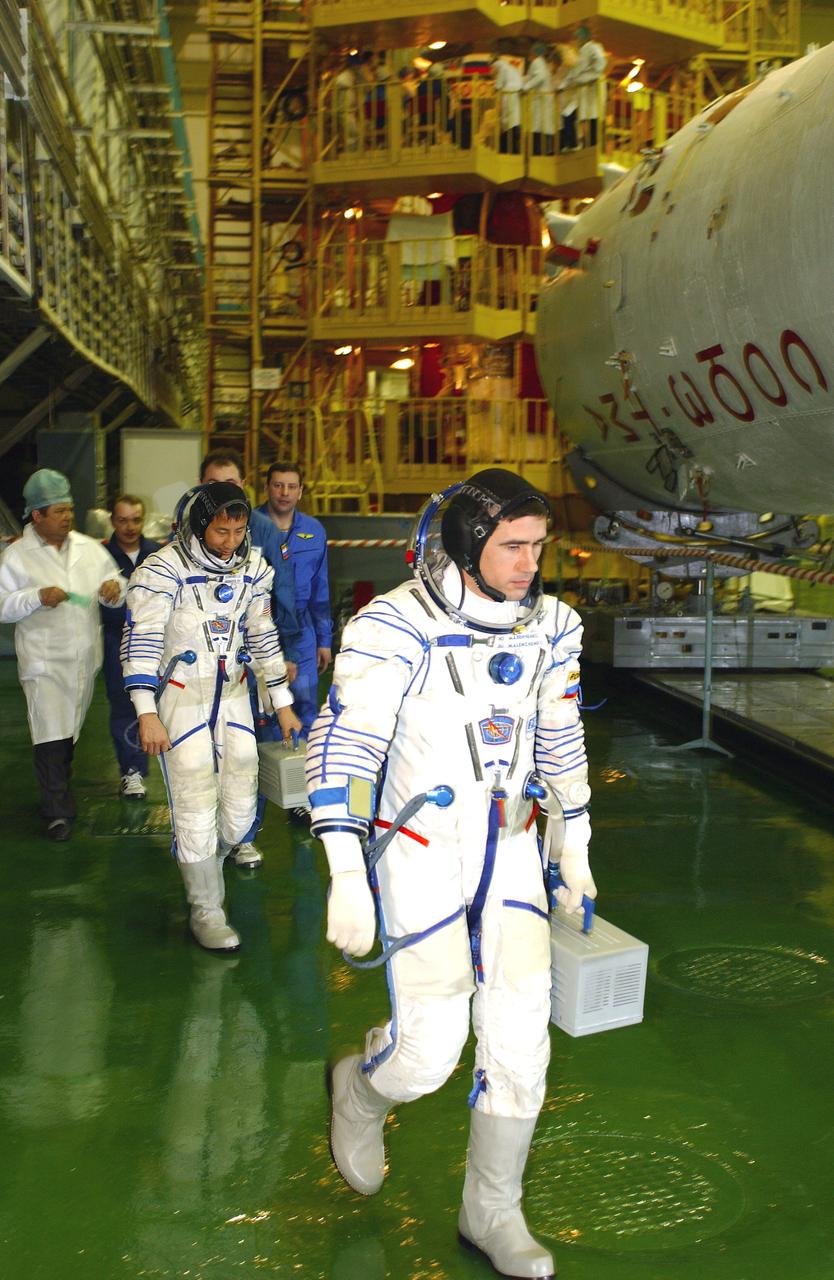
April 10, 2003. Baikonur Cosmodrome, Kazakhstan. Building 254, Soyuz Integration Facility. Cosmonaut Yuri I. Malenchenko (forground), Expedition Seven commander and Astronaut Edward T. Lu, NASA ISS science officer and flight engineer walk out for Soyuz inspection, seat liner check. The Soyuz is in the workstand in the background. Photo Credit: "NASA/Bill Ingalls"
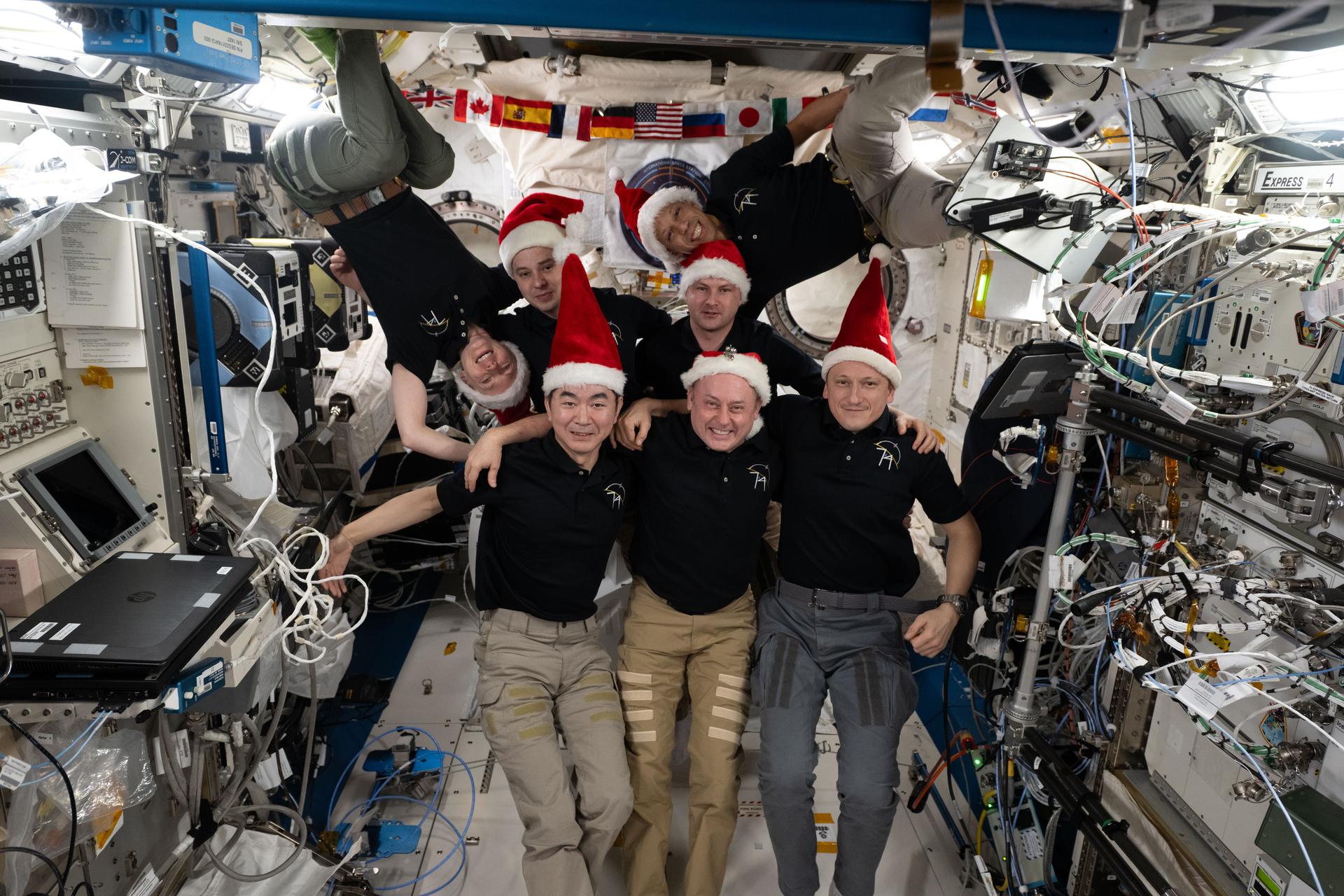
iss074e0006507 (Dec. 30, 2025) --- The seven-member Expedition 74 crew poses for a festive portrait aboard the International Space Station's Kibo laboratory module. In the front row, from left, are Kimiya Yui of JAXA (Japan Aerospace Exploration Agency), Mike Fincke of NASA, and Sergey Kud-Sverchkov of Roscosmos. In the back are, Zena Cardman of NASA, Oleg Platonov of Roscosmos, Chris Williams of NASA, and Sergei Mikaev of Roscosmos.
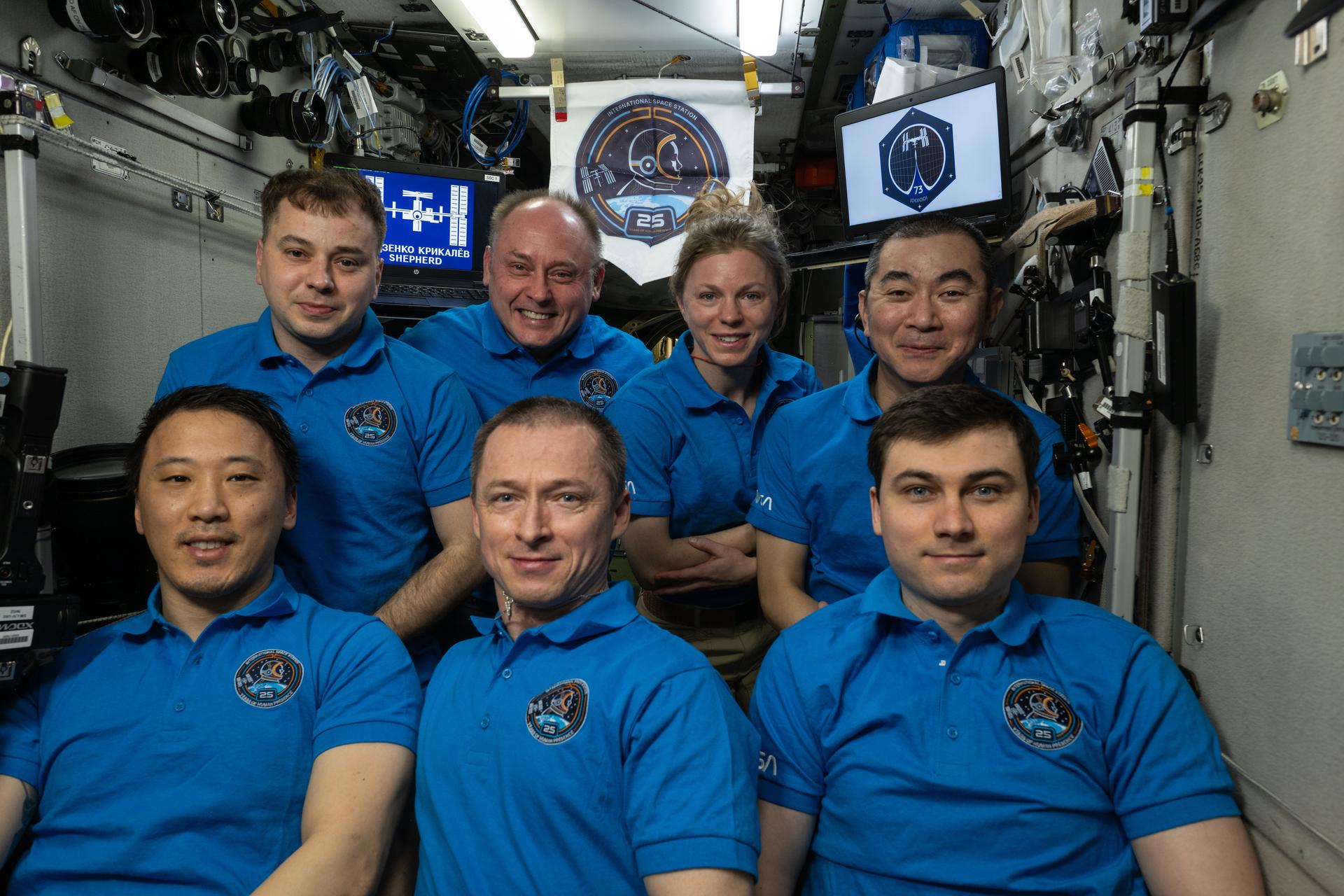
iss073e1129528 (Nov. 2, 2025) --- The seven-member Expedition 73 crew poses for a portrait commemorating 25 years of continuous human presence aboard the International Space Station. In the front row from left are, NASA astronaut Jonny Kim, Roscosmos cosmonaut and station Commander Sergey Ryzhikov, and Roscosmos cosmonaut Alexey Zubritsky. In the back row are, Roscosmos cosmonaut Oleg Platonov, NASA astronauts Mike Fincke and Zena Cardman, and JAXA (Japan Aerospace Exploration Agency) astronaut Kimiya Yui.
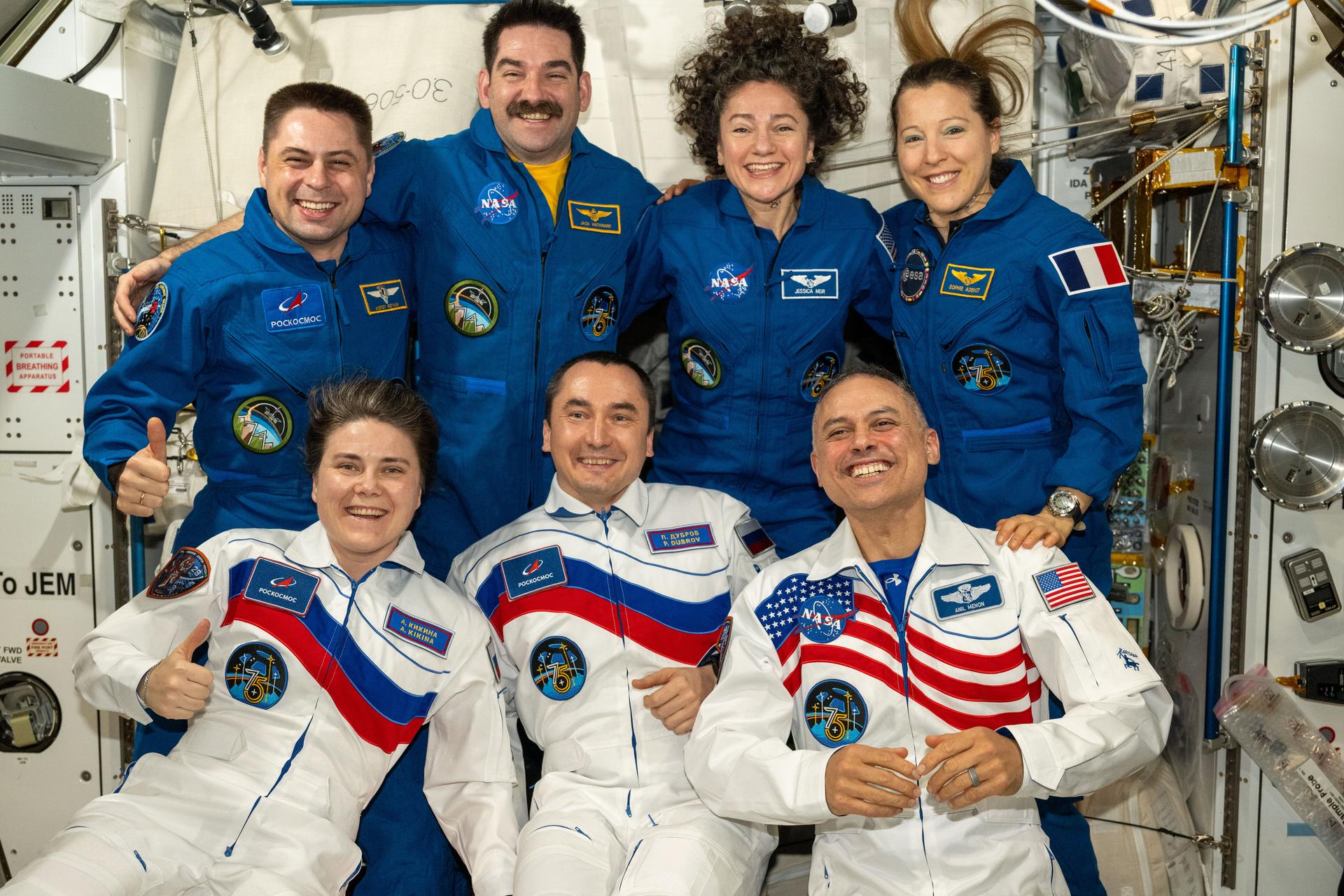
iss075e0157371 (Oct. 2, 2026) --- Seven of the Expedition 75 crew members take a team portrait while waiting for SpaceX Crew‑13 to enter the International Space Station. In the front row from left are Roscosmos cosmonauts Anna Kikina and Pyotr Dubrov and NASA astronaut Anil Menon. In the back row are Roscosmos cosmonaut Andrey Fedyaev, NASA astronauts Jack Hathaway and Jessica Meir, and ESA (European Space Agency) astronaut Sophie Adenot. Credit: NASA
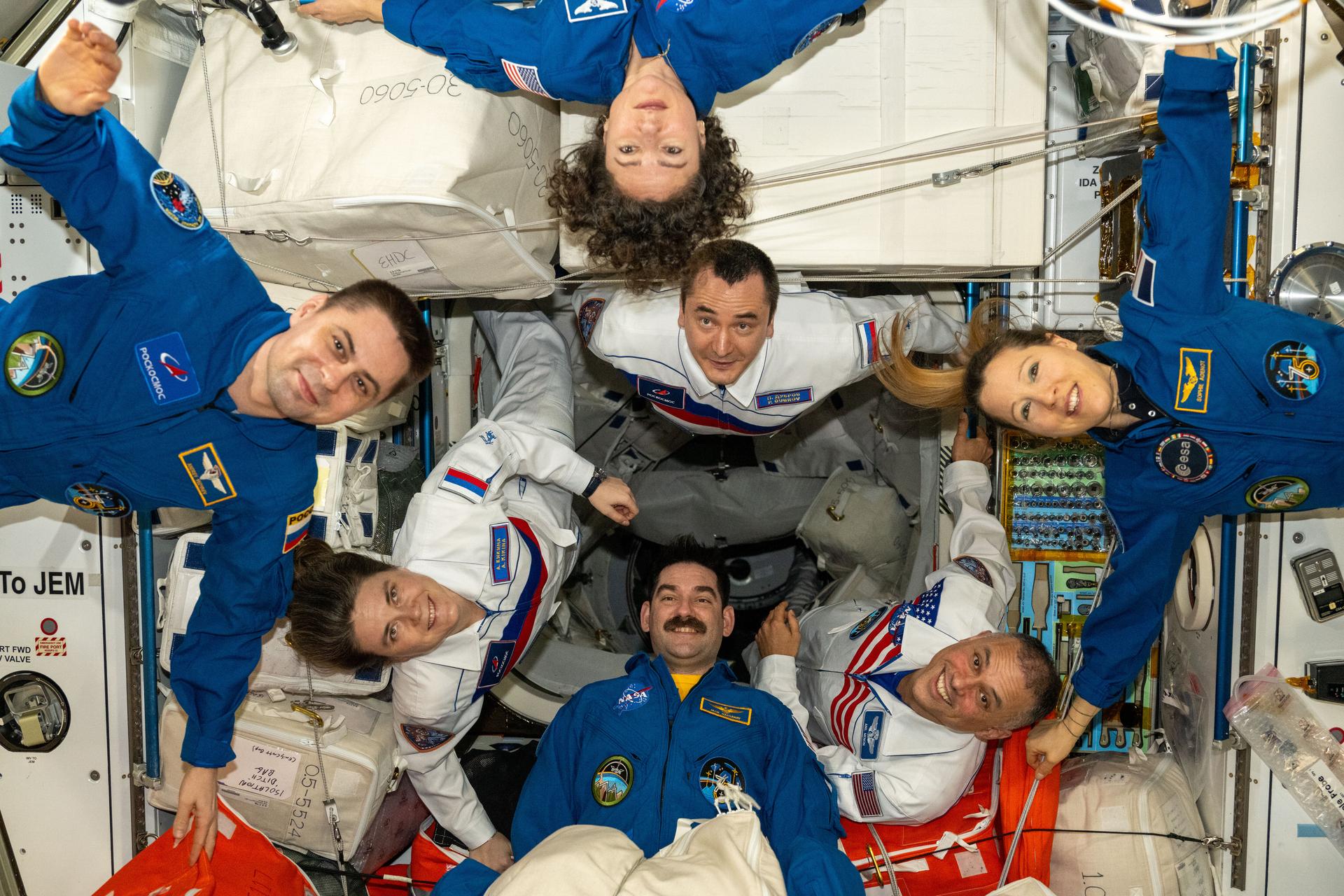
iss075e0157380 (Oct. 2, 2026) --- Seven of the Expedition 75 crew members take a team portrait while waiting for SpaceX Crew‑13 to enter the International Space Station. Clockwise from bottom are NASA astronaut Jack Hathaway, Roscosmos cosmonauts Anna Kikina and Andrey Fedyaev, NASA astronaut Jessica Meir, Roscosmos cosmonaut Pyotr Dubrov, ESA (European Space Agency) astronaut Sophie Adenot, and NASA astronaut Anil Menon. Credit: NASA
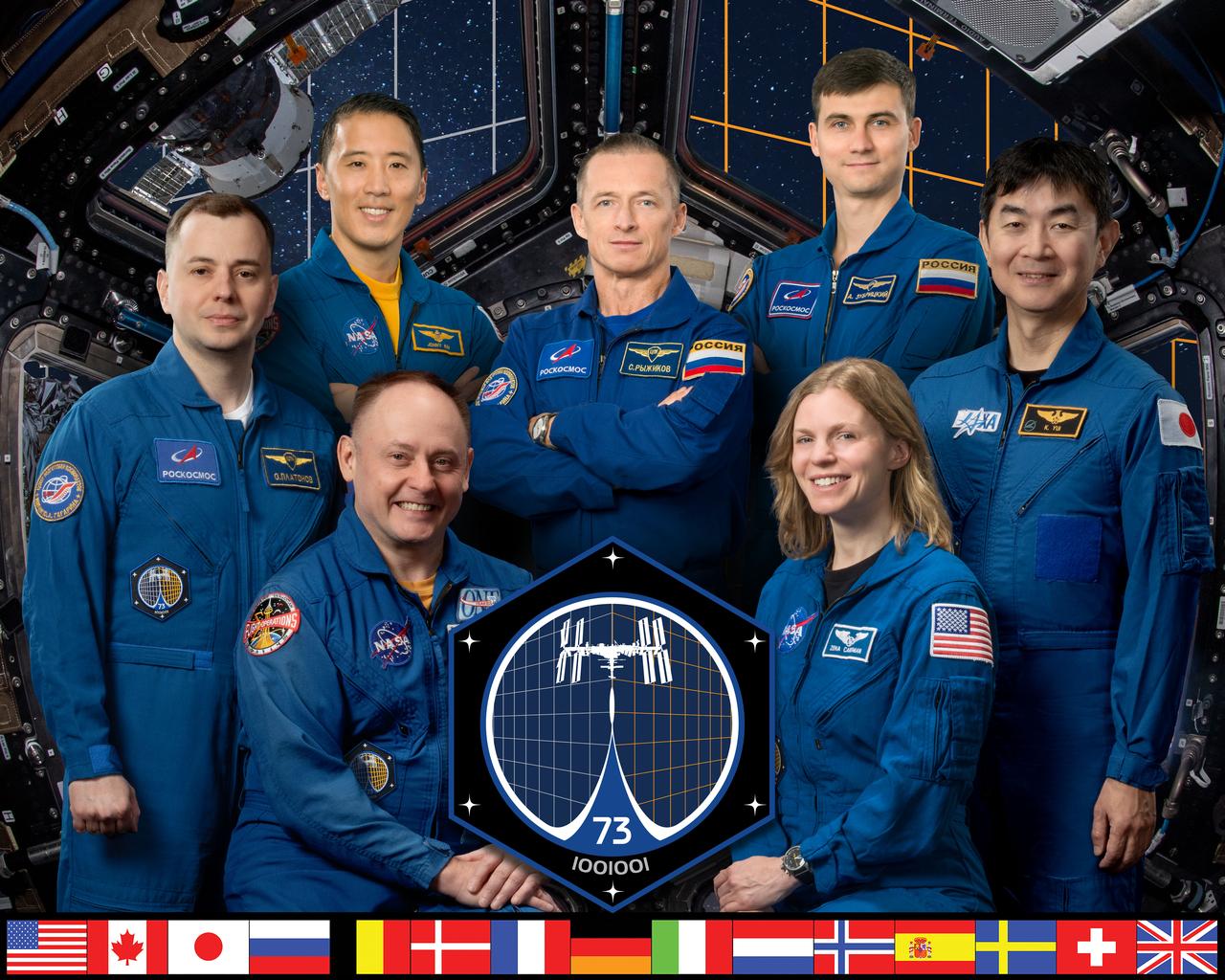
iss073-s-002b (Oct. 16, 2024) --- The updated official portrait of the International Space Station's seven-member Expedition 73 crew from three different space agencies. Seated in the front row are NASA astronauts Mike Fincke and Zena Cardman. In the back row from left are, Roscosmos cosmonaut Oleg Platonov; NASA astronaut Jonny Kim; Roscosmos cosmonauts Sergey Ryzhikov and Alexey Zubritsky; and JAXA (Japan Aerospace Exploration Agency) astronaut Kimiya Yui. Credit: NASA/Josh Valcarcel
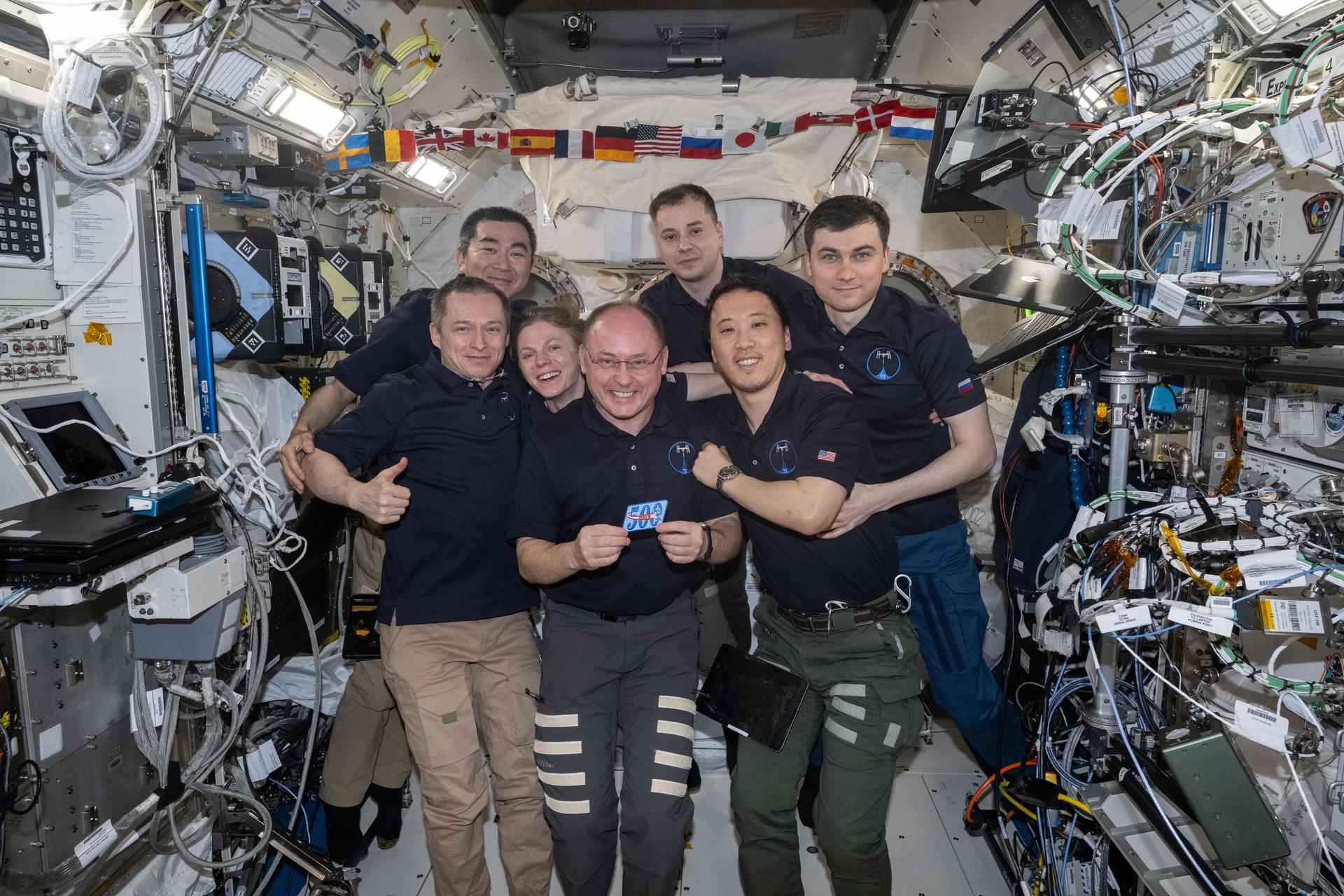
iss073e1198029 (Nov. 27, 2025) --- The seven-member Expedition 73 crew gathers together for a portrait inside the International Space Station's Kibo laboratory module celebrating NASA astronaut Mike Fincke's (center) 500 cumulative days in space over four missions since 2004. In the front from left are, Roscosmos cosmonaut Sergey Ryzhikov, NASA astronaut Zena Cardman, Mike Fincke, and NASA astronaut Jonny Kim. In the back are, JAXA (Japan Aerospace Exploration Agency) astronaut Kimiya Yui and Roscosmos cosmonauts Oleg Platonov and Alexey Zubritsky.
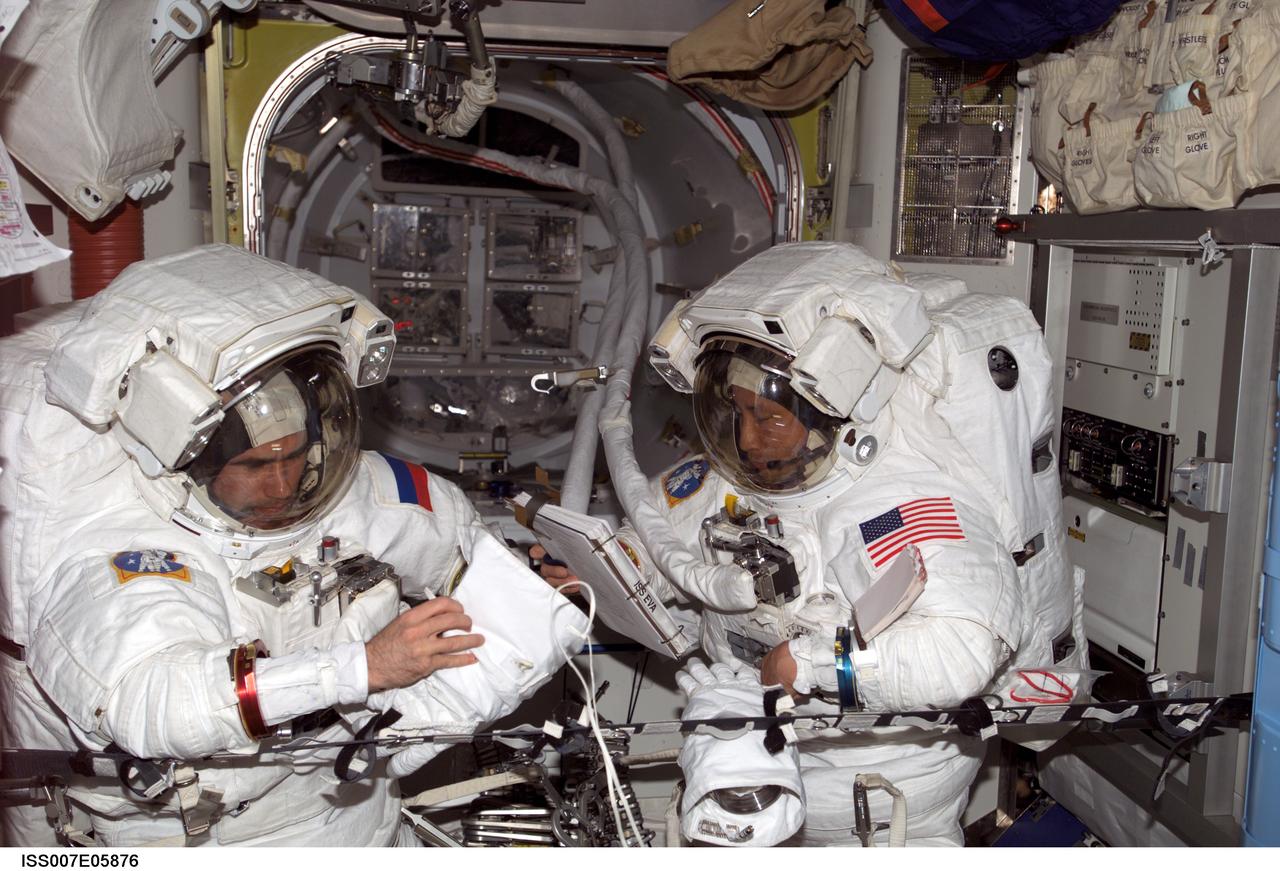
ISS007-E-05876 (28 May 2003) --- Cosmonaut Yuri I. Malenchenko (left), Expedition Seven mission commander, and astronaut Edward T. Lu, NASA ISS science officer and flight engineer, perform an Extravehicular Mobility Unit (EMU) spacesuit fit check and don/doff dry-run in the Quest airlock on the International Space Station (ISS). The objective was to check out the equipment and provide the crew with training for preparing for a two-person spacewalk without intravehicular (IV) crewmember support, should it become necessary. Malenchenko represents Rosaviakosmos.
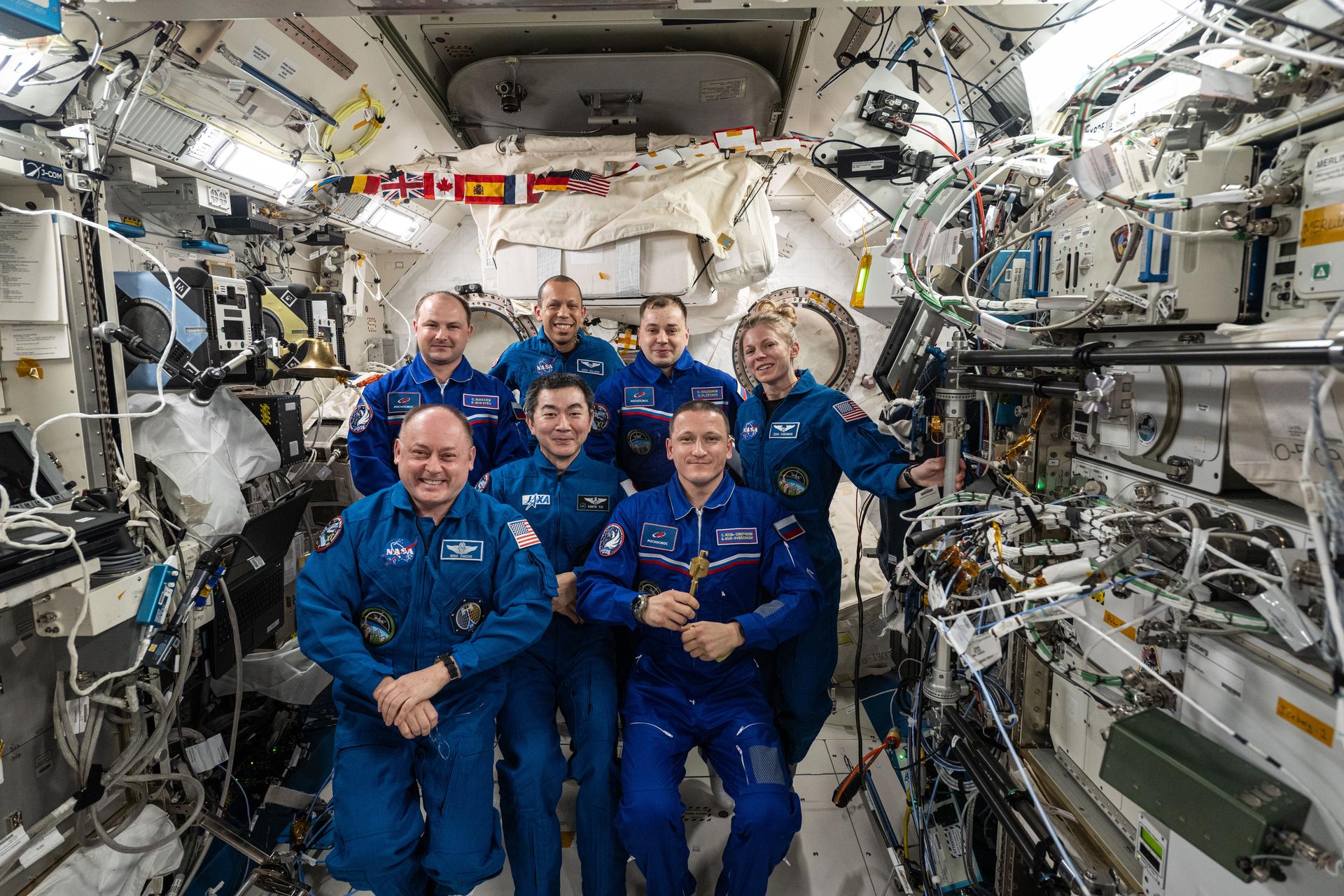
iss074e0086896 (Jan. 12, 2024) --- The seven-member Expedition 74 crew gathers for a crew portrait aboard the International Space Station's Kibo laboratory module. Moments earlier, NASA astronaut Mike Fincke (front left) handed over command of the orbital outpost to Roscosmos cosmonaut Sergey Kud-Sverchkov (front right) during a traditional Change of Command ceremony. Clockwise from center are, JAXA (Japan Aerospace Exploration Agency) astronaut Kimiya Yui, Roscosmos cosmonaut Sergei Mikaev, NASA astronaut Chris Williams, Roscosmos cosmonaut Oleg Platonov, and NASA astronaut Zena Cardman. Fincke returned to Earth with Cardman, Yui, and Platonov on Jan. 15 aboard the SpaceX Dragon crew spacecraft ending NASA's SpaceX Crew-11 mission to the orbital outpost.
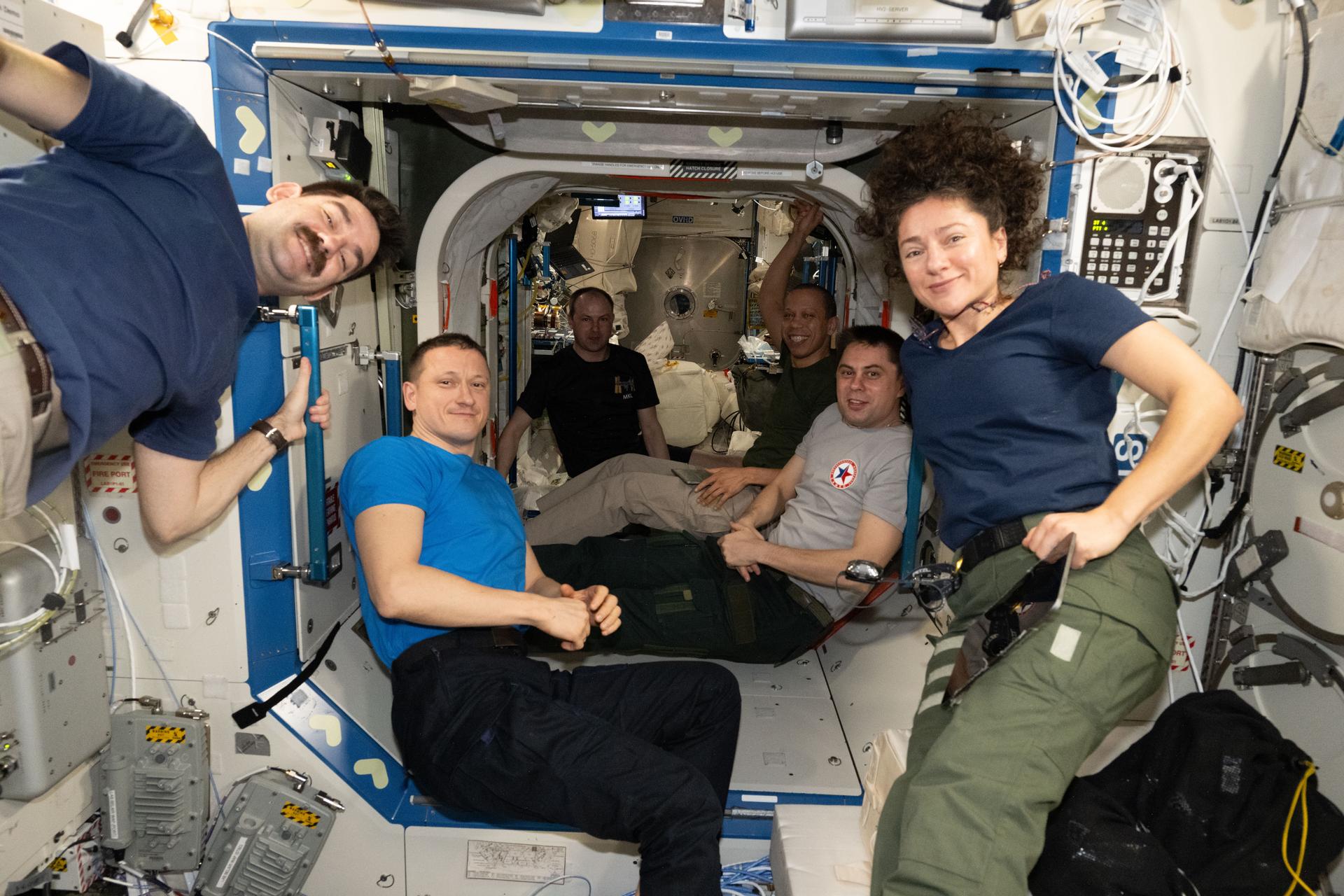
iss074e0588592 (May 15, 2026) --- Six of the seven Expedition 74 crew members pose for a portrait together aboard the International Space Station. From left are, NASA astronaut Jack Hathaway, Roscosmos cosmonauts Sergey Kud‑Sverchkov and Sergey Mikaev, NASA astronaut Chris Williams, Roscosmos cosmonaut Andrey Fedyaev, and NASA astronaut Jessica Meir. The crew was checking out new hatch‑seal covers that were installed earlier in the day to protect the seals from damage and stains. ESA (European Space Agency) astronaut and Expedition 74 flight engineer Sophie Adenot is out of frame. Credit: NASA/Jessica Meir
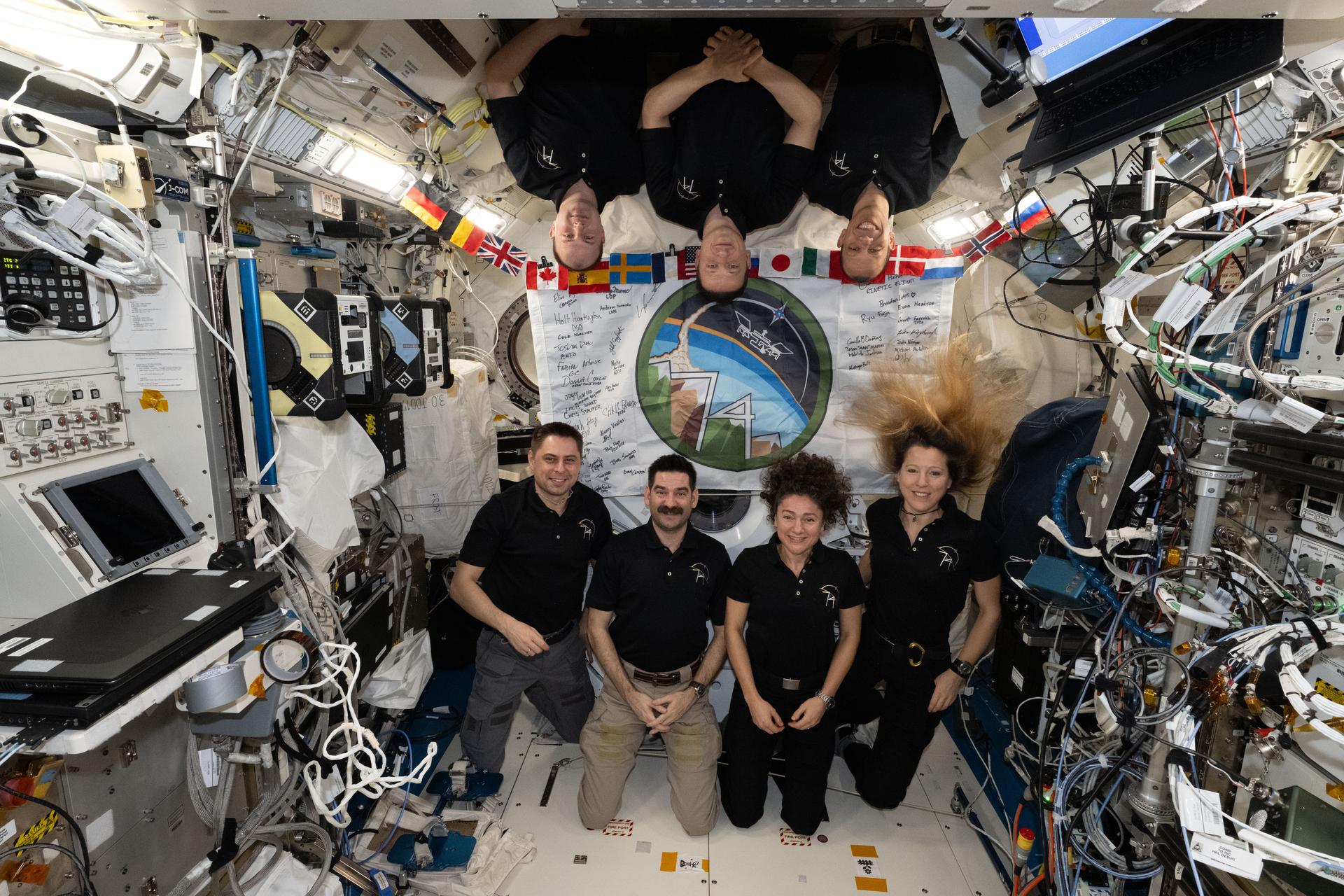
iss074e0812067 (July 12, 2026) --- The seven‑member Expedition 74 crew poses for a portrait inside the International Space Station’s Kibo laboratory module. At bottom left are Roscosmos cosmonaut Andrey Fedyaev, NASA astronauts Jack Hathaway and Jessica Meir, and ESA (European Space Agency) astronaut Sophie Adenot. At top are Roscosmos cosmonauts Sergei Mikaev and Sergey Kud‑Sverchkov, along with NASA astronaut Chris Williams. In the background is a flag with the Expedition 74 insignia, sent to the orbital outpost and decorated with signatures from mission controllers on the ground. Credit: NASA/Chris Williams
iss074e0006146 (Dec. 8, 2025) --- The seven-member Expedition 73 crew gathers for a portrait inside the International Space Station’s Kibo laboratory module. In the front row, from left, are NASA astronaut Jonny Kim and Roscosmos cosmonauts Sergey Ryzhikov and Alexey Zubritsky. In the back row are Kimiya Yui of JAXA (Japan Aerospace Exploration Agency), Zena Cardman of NASA, Oleg Platonov of Roscosmos, and Mike Fincke of NASA.
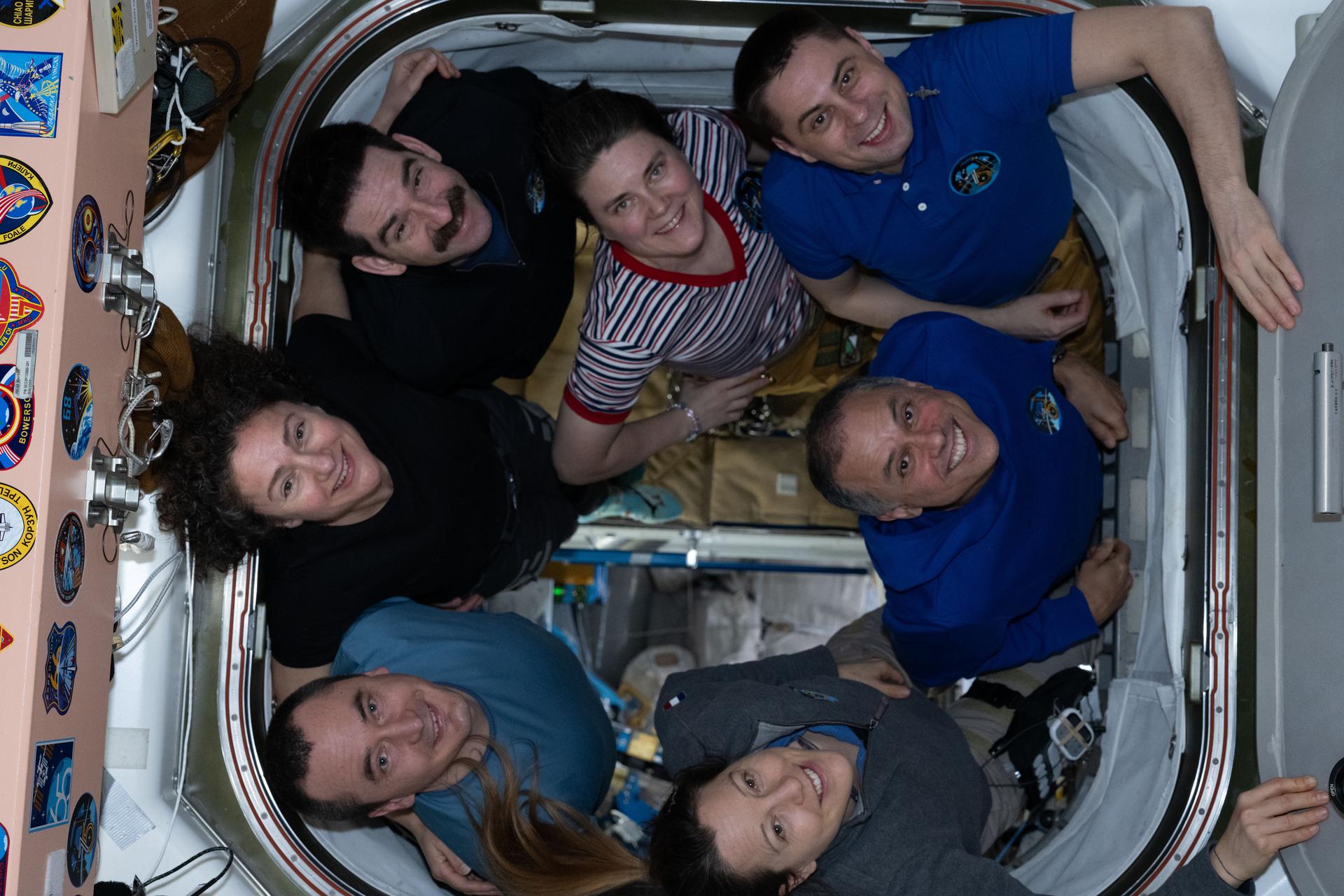
iss075e0144725 (Sept. 23, 2026) --- The seven-member Expedition 75 crew poses for a portrait inside the International Space Station. Clockwise from left are, NASA astronauts Jessica Meir and Jack Hathaway, Roscosmos cosmonauts Anna Kikina and Andrey Fedyaev, astronauts Anil Menon of NASA and Sophie Adenot of ESA (European Space Agency), and Roscosmos cosmonaut Pyotr Dubrov. Credit: NASA
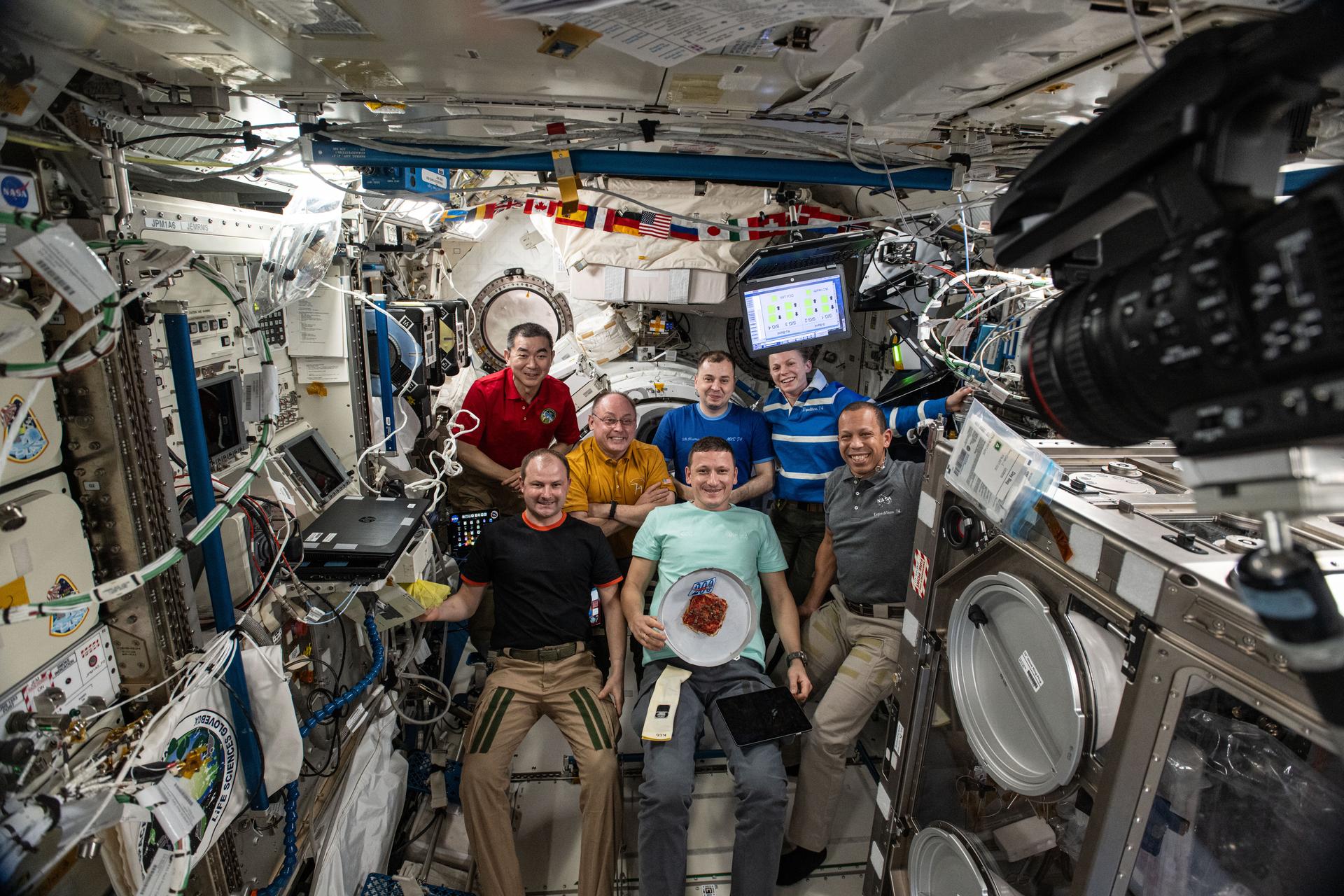
iss074e0001091 (Dec. 12, 2025) --- The seven-member Expedition 74 crew gathers for a portrait inside the International Space Station's Kibo laboratory module. In the front row, from left, are Roscosmos cosmonauts Sergei Mikaev and Sergey Kud-Sverchkov, along with NASA astronaut Chris Williams. In the back row are JAXA (Japan Aerospace Exploration Agency) astronaut Kimiya Yui, NASA astronaut Mike Fincke, Roscosmos cosmonaut Oleg Platonov, and NASA astronaut Zena Cardman. Kud-Sverchkov (center) was celebrating 200 cumulative days in space with a slice of cake.
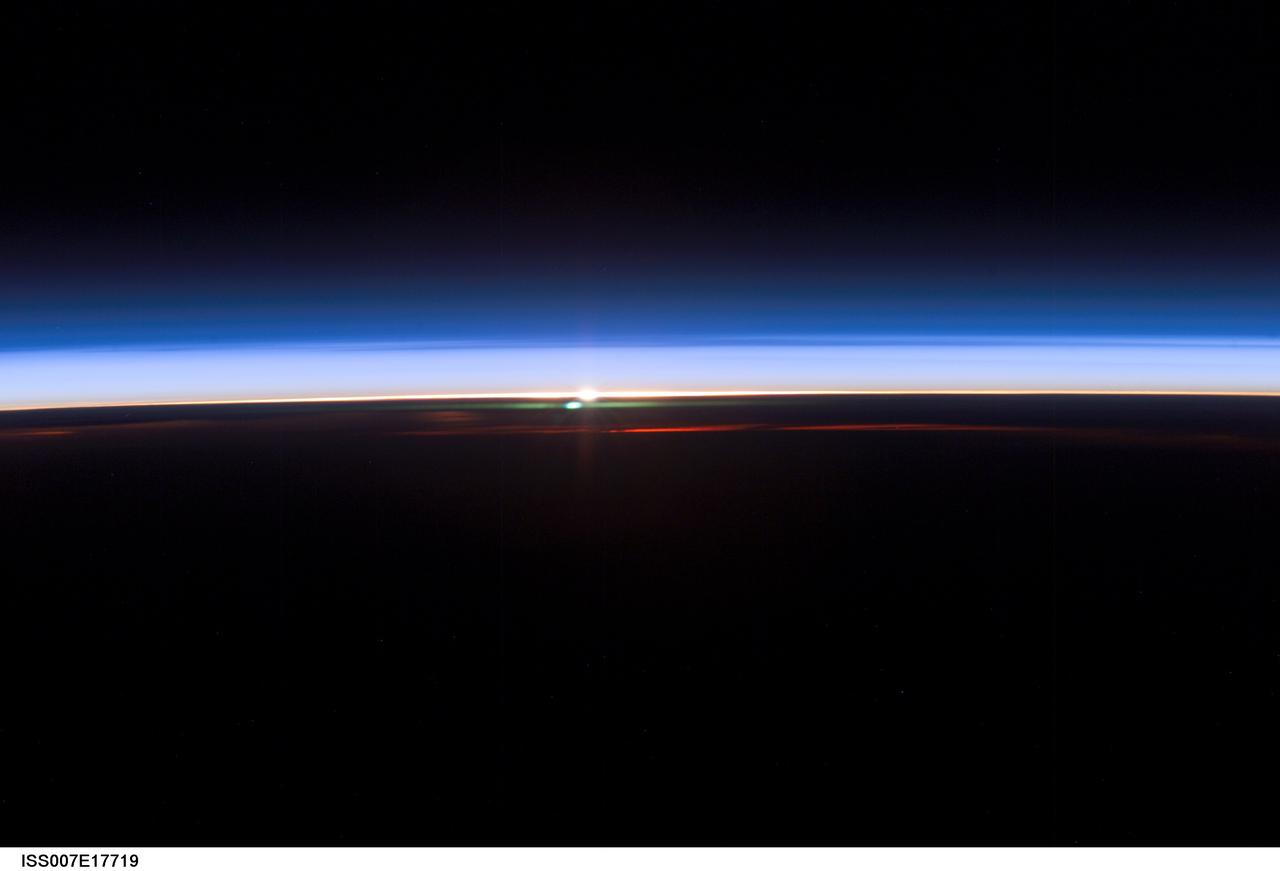
ISS007-E-17719 (20 October 2003) --- The airglow above Earth’s horizon was photographed by an Expedition 7 crewmember onboard the International Space Station (ISS).

ISS007-E-13293 (24 August 2003) --- Astronaut Edward T. Lu, Expedition 7 NASA ISS science officer and flight engineer, floats in the Destiny laboratory on the International Space Station (ISS).
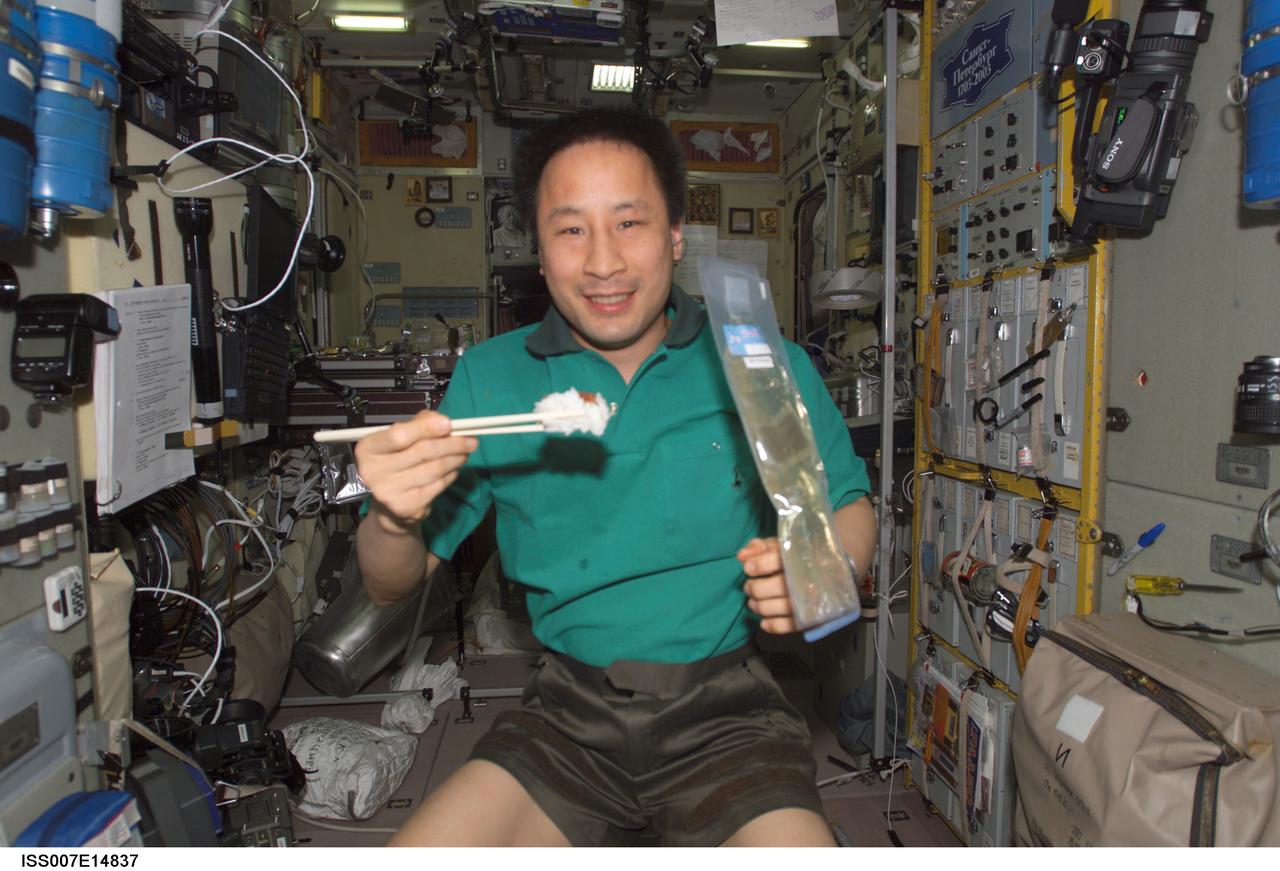
ISS007-E-14837 (12 September 2003) --- Astronaut Edward T. Lu, Expedition 7 NASA ISS science officer and flight engineer, uses chopsticks to eat in the Zvezda Service Module on the International Space Station (ISS).

ISS007-E-13547 (25 August 2003) --- Astronaut Edward T. Lu, Expedition 7 NASA ISS science officer and flight engineer, holds a camera prior to photographing the topography of a point on Earth from a window in the Zvezda Service Module on the International Space Station (ISS).
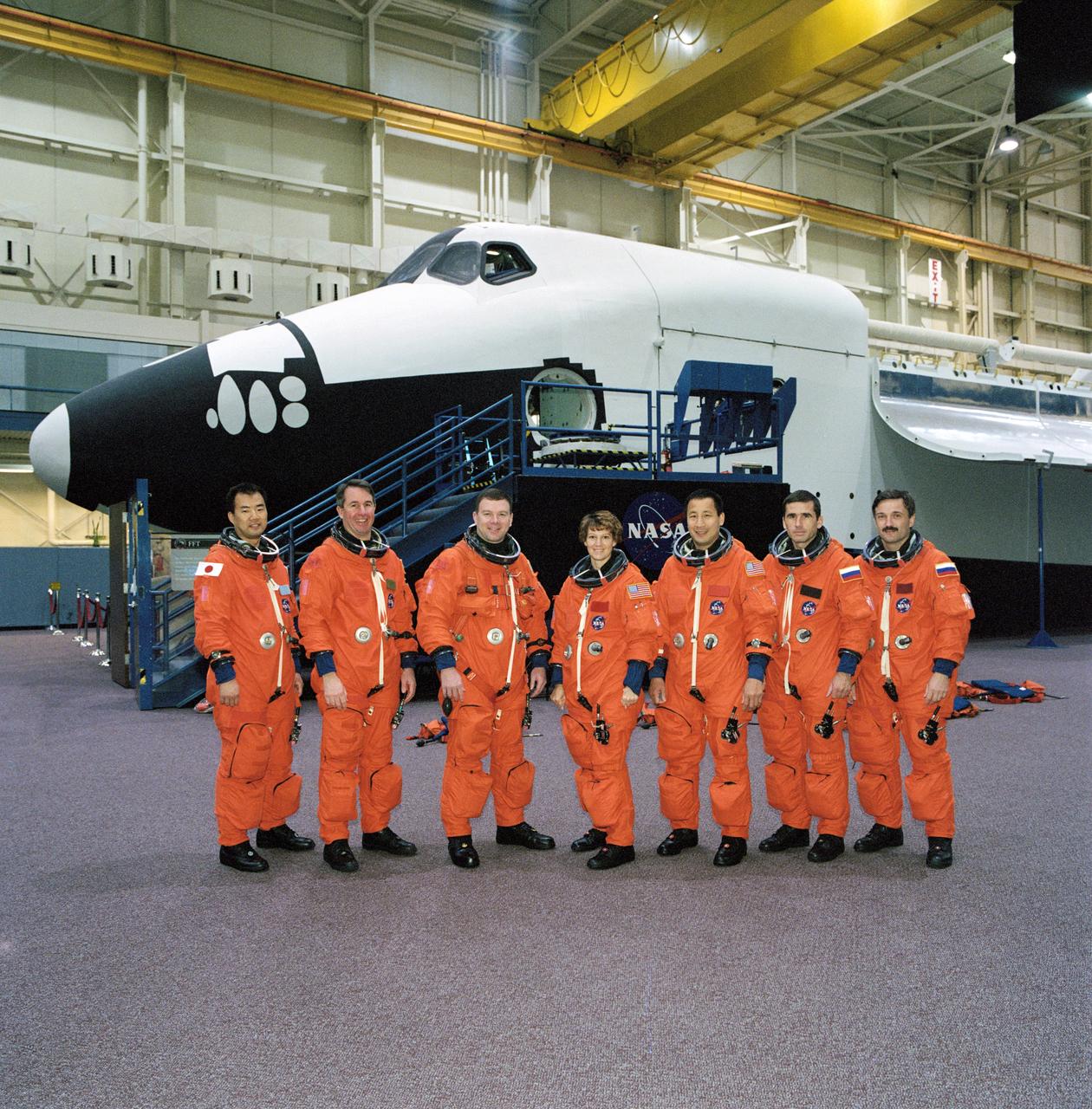
JSC2002-02020 (12 November 2002) --- The STS-114 and Expedition Seven crews, attired in training versions of the full-pressure launch and entry suit, pose for a group photo prior to a training session in the Space Vehicle Mockup Facility at the Johnson Space Center (JSC). From the left are astronauts Soichi Noguchi, Stephen K. Robinson, both STS-114 mission specialists; James M. Kelly, STS-114 pilot; Eileen M. Collins, STS-114 mission commander; Edward T. Lu, Expedition Seven flight engineer; cosmonauts Yuri I. Malenchenko, Expedition Seven mission commander; and Alexander Y. Kaleri, Expedition Seven flight engineer. Noguchi represents Japan’s National Space Development Agency (NASDA). Malenchenko and Kaleri represent Rosaviakosmos.
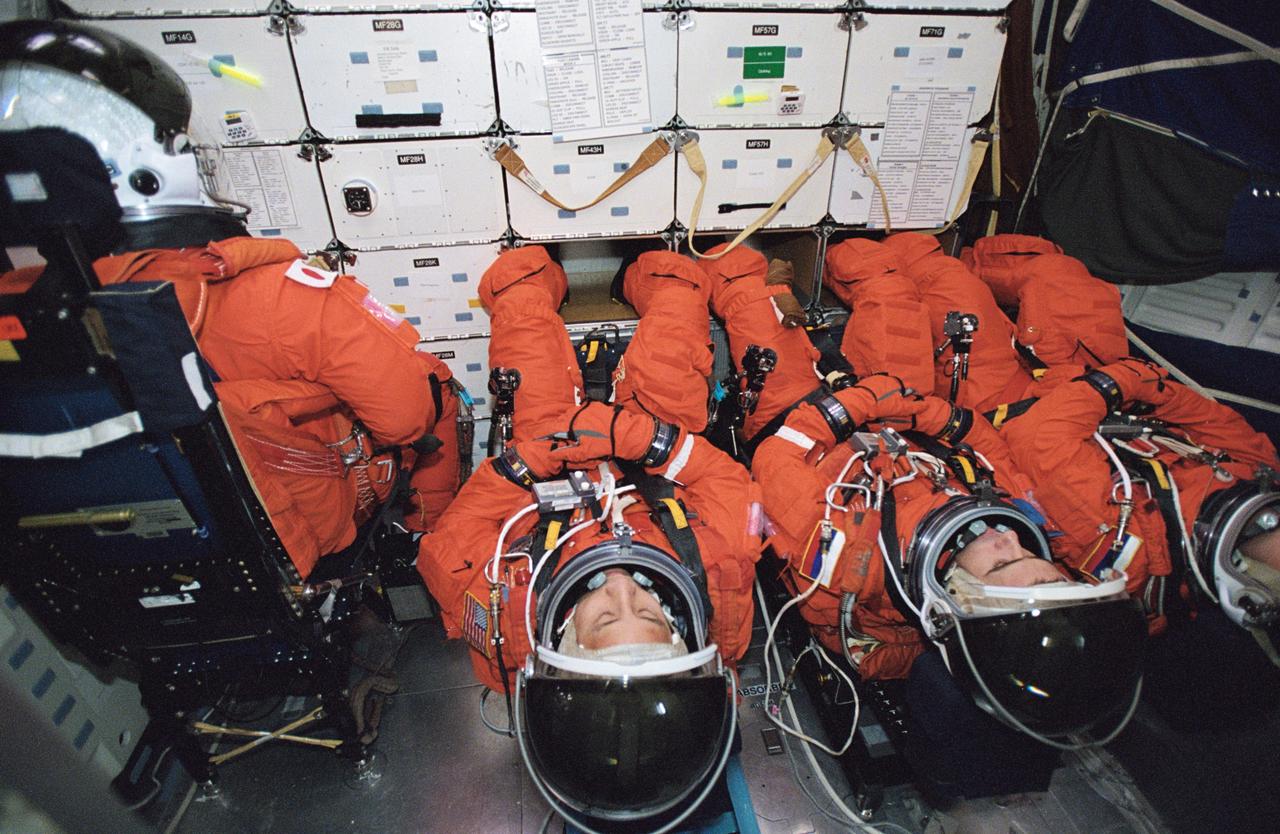
JSC2002-02022 (13 November 2002) --- Astronauts Soichi Noguchi (left), STS-114 mission specialist; Edward T. Lu, Expedition Seven flight engineer; cosmonauts Yuri I. Malenchenko, Expedition Seven mission commander; and Alexander Y. Kaleri, Expedition Seven flight engineer; participate in mission training in one of the full-scale trainers in the Space Vehicle Mockup Facility at the Johnson Space Center (JSC). Attired in training versions of the shuttle launch and entry suit, the four are seated on the middeck for an emergency egress training session. Noguchi represents Japan’s National Space Development Agency (NASDA). Malenchenko and Kaleri represent Rosaviakosmos.
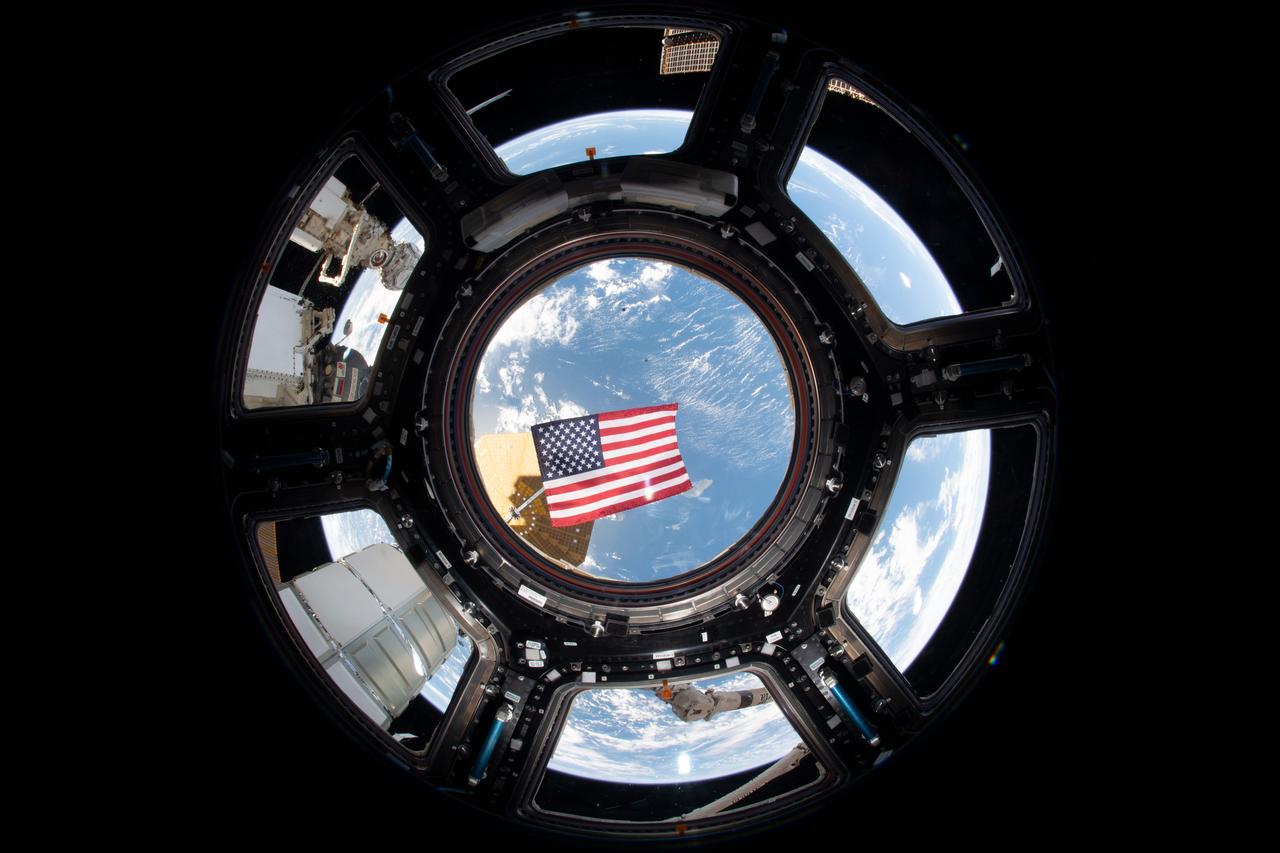
Photo of the American flag floating in front of all seven windows inside the Cupola during Expedition 68.
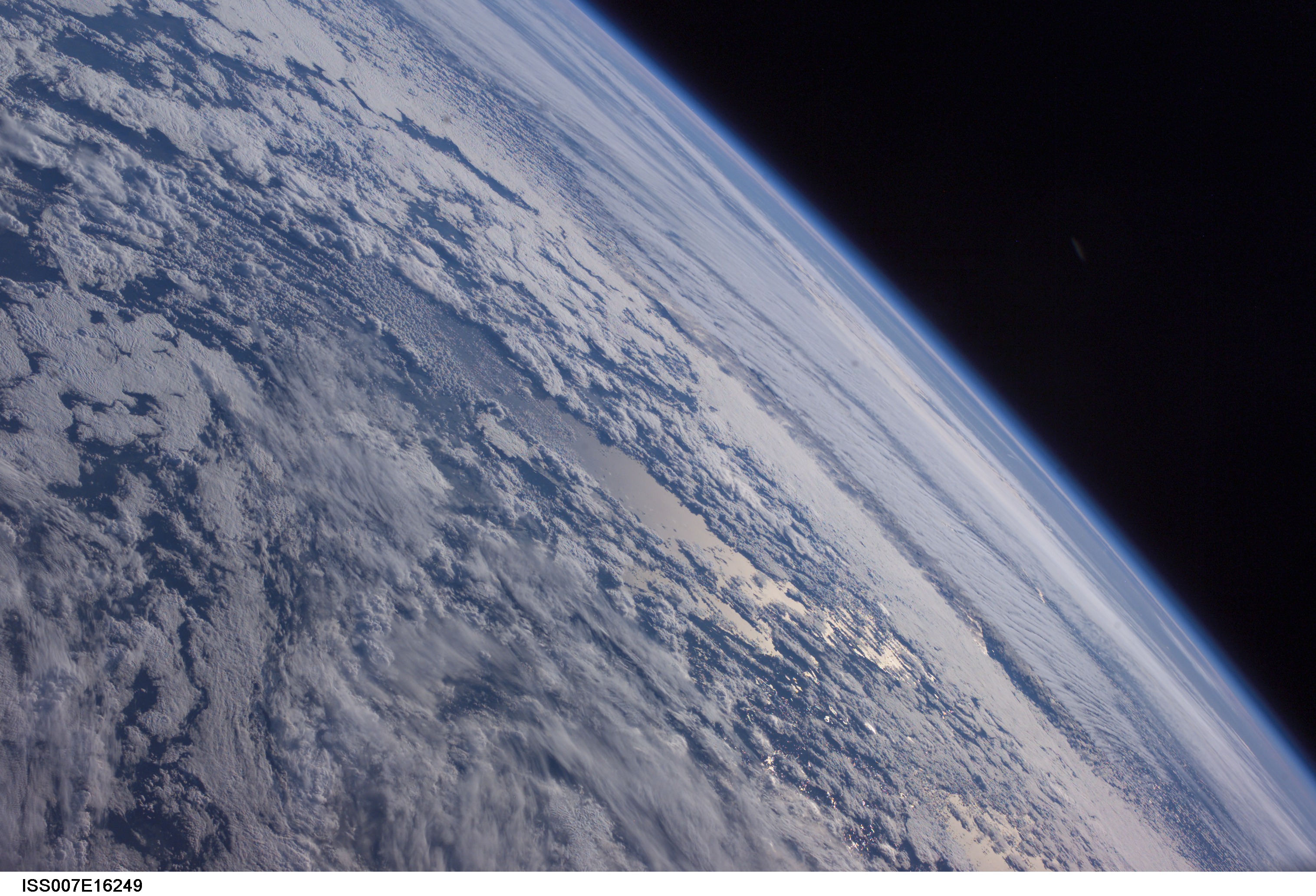
ISS007-E-16249 (4 October 2003) --- Earth’s horizon against the blackness of space is featured in this image photographed by an Expedition 7 crewmember onboard the International Space Station (ISS).
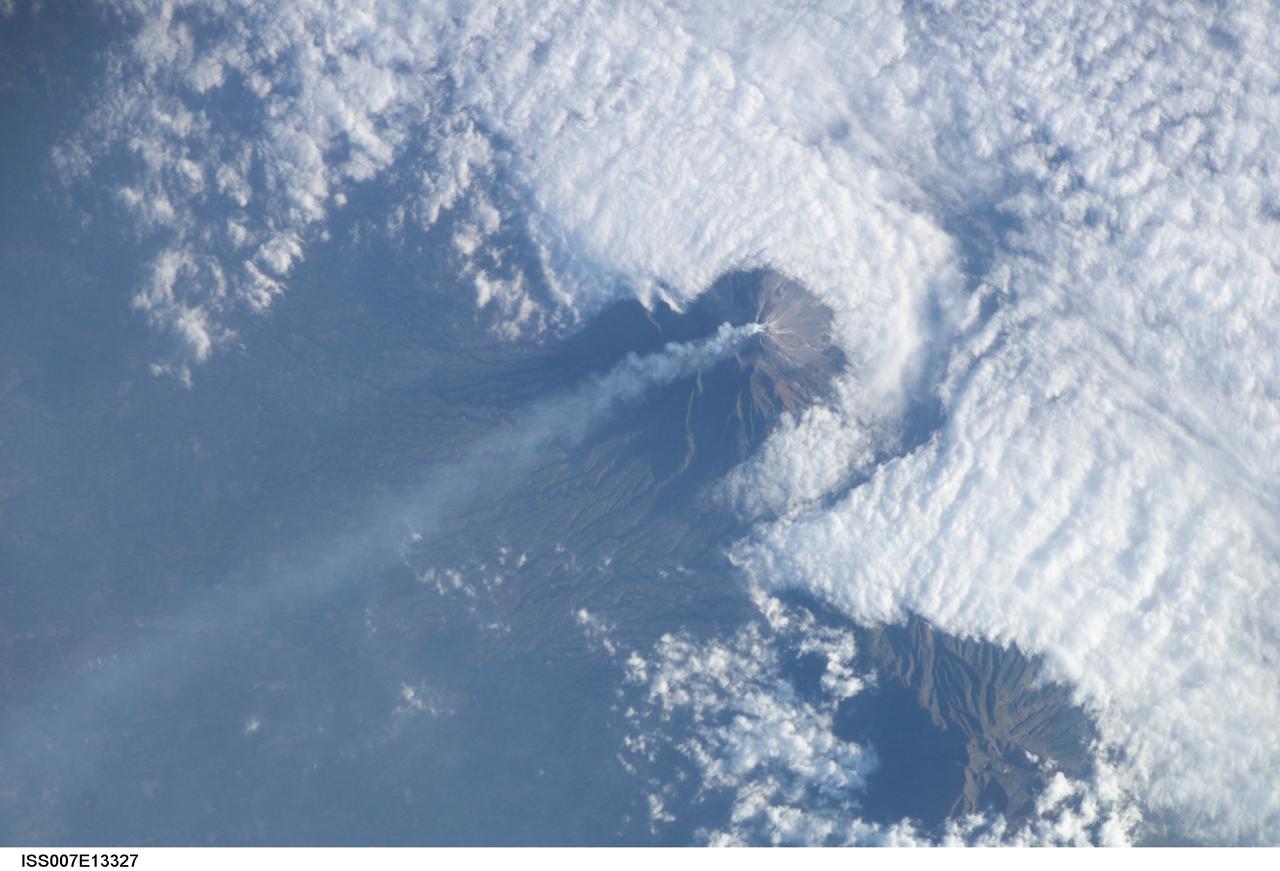
ISS007-E-13327 (24 August 2003) --- This view featuring Java’s Merapi volcano was photographed by one of the Expedition 7 crewmembers onboard the International Space Station (ISS). At 2,911 meters, the summit of Merapi and its vigorous steam plume rises above a bank of stratus clouds. One of Indonesia’s most active volcanoes, it has been almost continuously active for nearly ten years, including periodic pyroclastic flows and avalanches. The volcano is located less than 25 miles north of the city of Yogykarta in central Java.
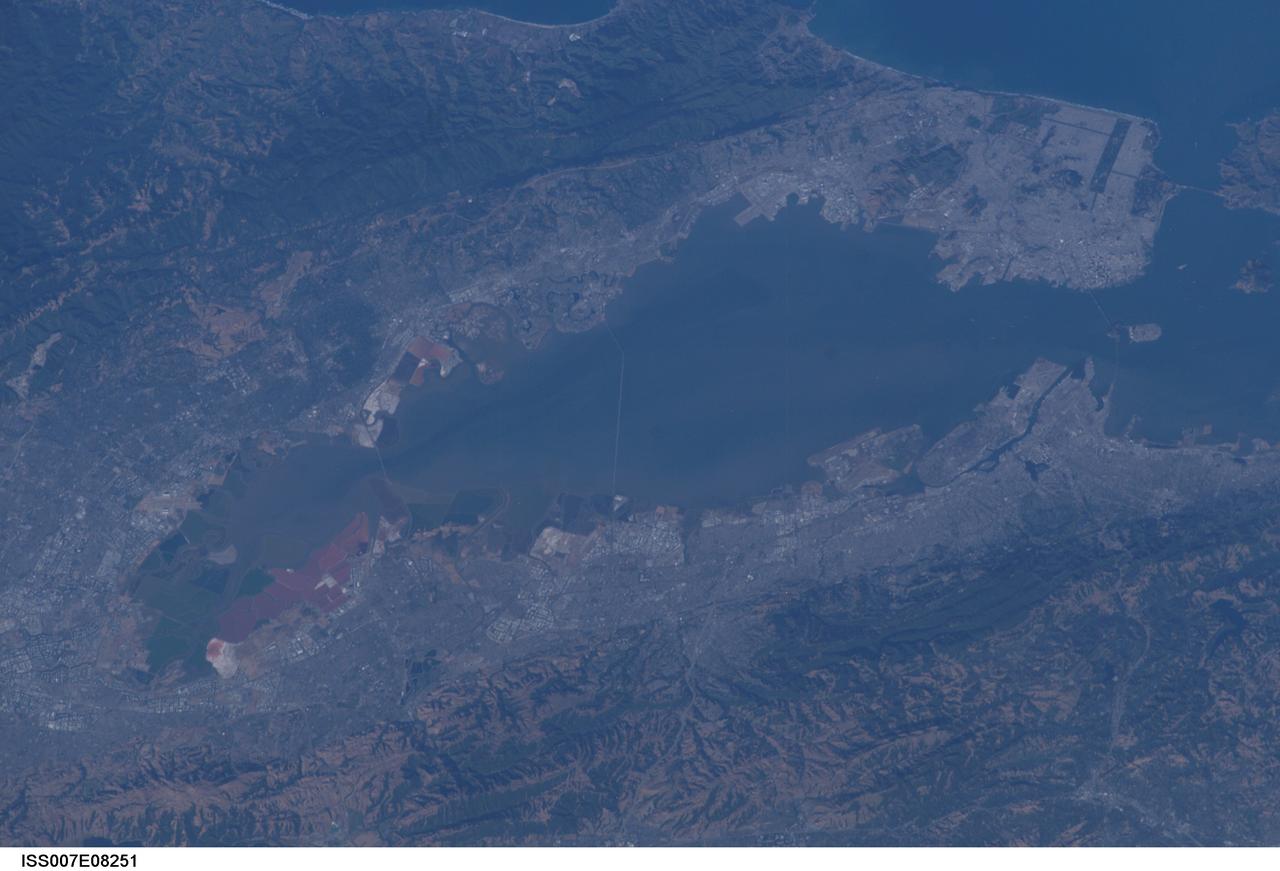
ISS007-E-08251 (25 June 2003) --- This photo featuring the San Francisco Bay area in California was photographed from the International Space Station (ISS) by astronaut Edward T. Lu, Expedition 7 NASA ISS science officer and flight engineer. The San Francisco Bay Bridge, Alcatraz Island, Golden Gate Bridge, and Golden Gate Park are visible at upper right. Stanford University and red salt ponds on the bay near Fremont at lower left.
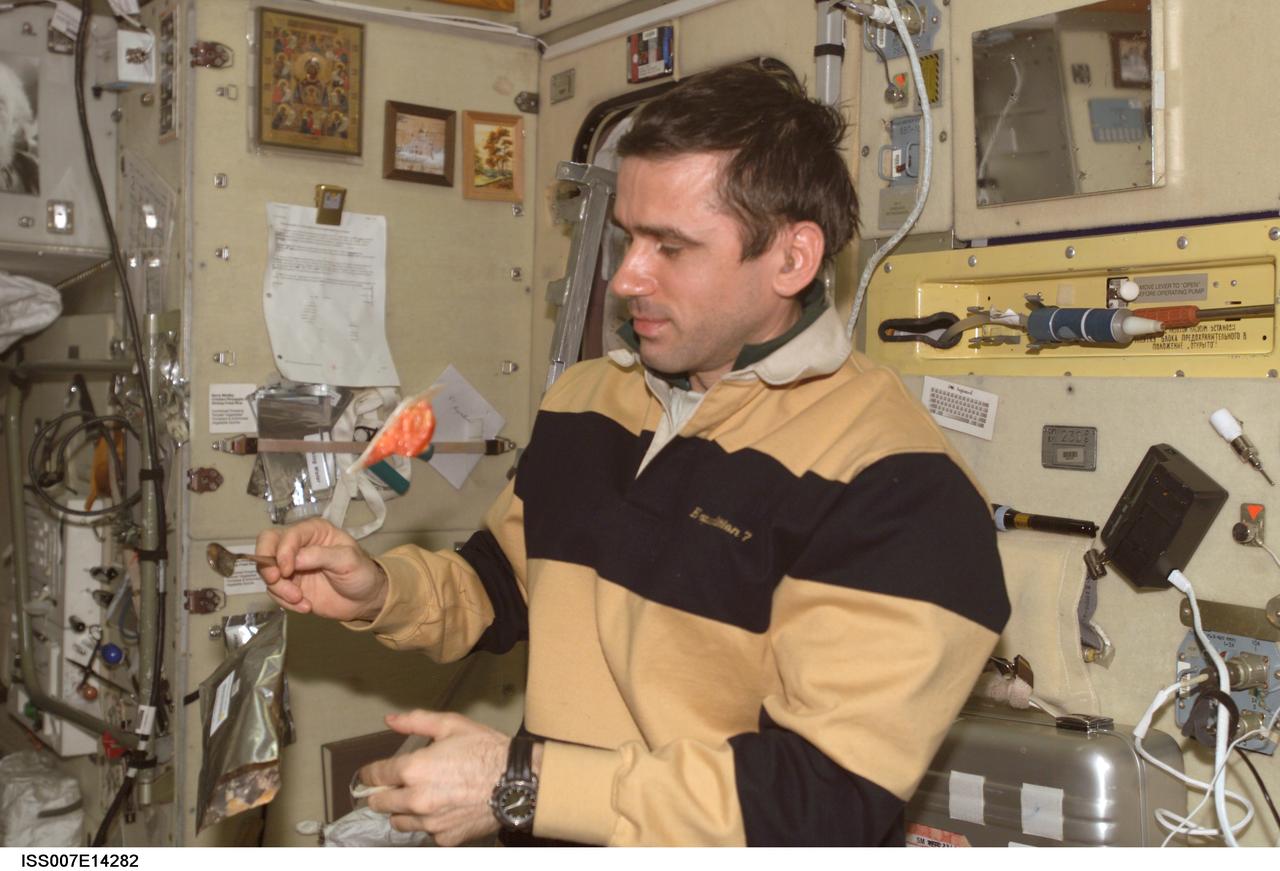
ISS007-E-14282 (1 September 2003) --- Cosmonaut Yuri I. Malenchenko, Expedition 7 mission commander, is pictured holding a spoon while a package of food floats nearby in the Zvezda Service Module on the International Space Station (ISS). Malenchenko represents Rosaviakosmos.
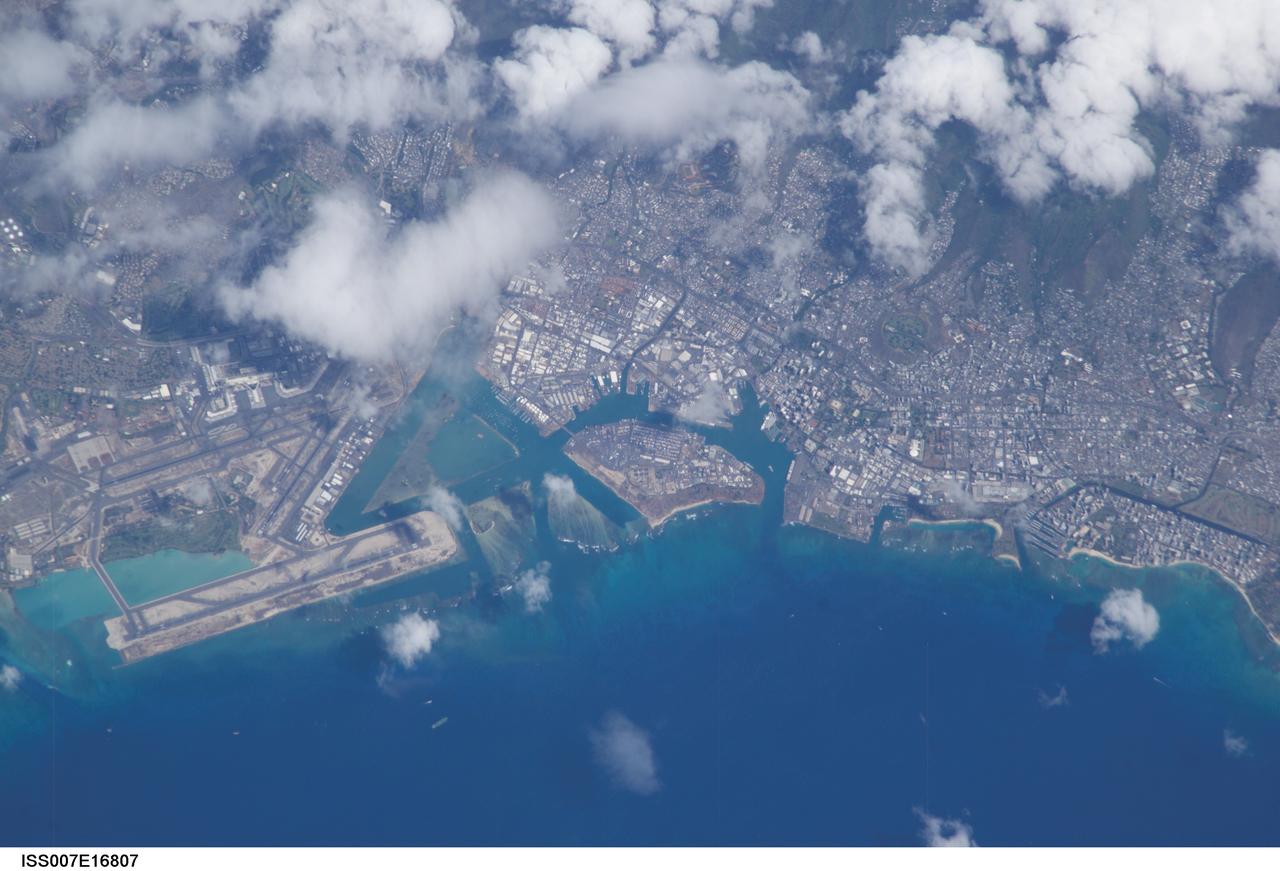
ISS007-E-16807 (8 October 2003) --- The Honolulu International Airport runway juts into the water on the left side of this image of Oahu, taken by an Expedition 7 crewmember onboard the International Space Station (ISS). In the center is Ke’ehi Lagoon and on the right is Sand Island.
![ISS007-E-18082 (26 October 2003) --- The fires in the San Bernardino Mountains, fueled by Santa Ana winds, burned out of control on the morning of Oct. 26, 2003, when these images were taken from the International Space Station at roughly 11 a.m. (PST). Thick yellow smoke blows south, blanketing the valley below. This image and ISS007-E-18078, looking southeast, capture the smoke pall as the ISS approached and passed over the region. Image numbers 18078 and 18082 were taken roughly a minute apart. A small break in the smoke marks Cajon pass. Content was provided by JSC’s Earth Observation Lab. The International Space Station Program {link to http://spaceflight.nasa.gov} supports the laboratory to help crew members take pictures of Earth that will be of the greatest value to scientists and the public, and to make those images freely available on the Internet. Additional images taken by astronauts and cosmonauts can be viewed at the NASA/JSC Gateway to Astronaut Photography of Earth [link to http://eol.jsc.nasa.gov/].](https://images-assets.nasa.gov/image/iss007e18082/iss007e18082~medium.jpg)
ISS007-E-18082 (26 October 2003) --- The fires in the San Bernardino Mountains, fueled by Santa Ana winds, burned out of control on the morning of Oct. 26, 2003, when these images were taken from the International Space Station at roughly 11 a.m. (PST). Thick yellow smoke blows south, blanketing the valley below. This image and ISS007-E-18078, looking southeast, capture the smoke pall as the ISS approached and passed over the region. Image numbers 18078 and 18082 were taken roughly a minute apart. A small break in the smoke marks Cajon pass. Content was provided by JSC’s Earth Observation Lab. The International Space Station Program {link to http://spaceflight.nasa.gov} supports the laboratory to help crew members take pictures of Earth that will be of the greatest value to scientists and the public, and to make those images freely available on the Internet. Additional images taken by astronauts and cosmonauts can be viewed at the NASA/JSC Gateway to Astronaut Photography of Earth [link to http://eol.jsc.nasa.gov/].
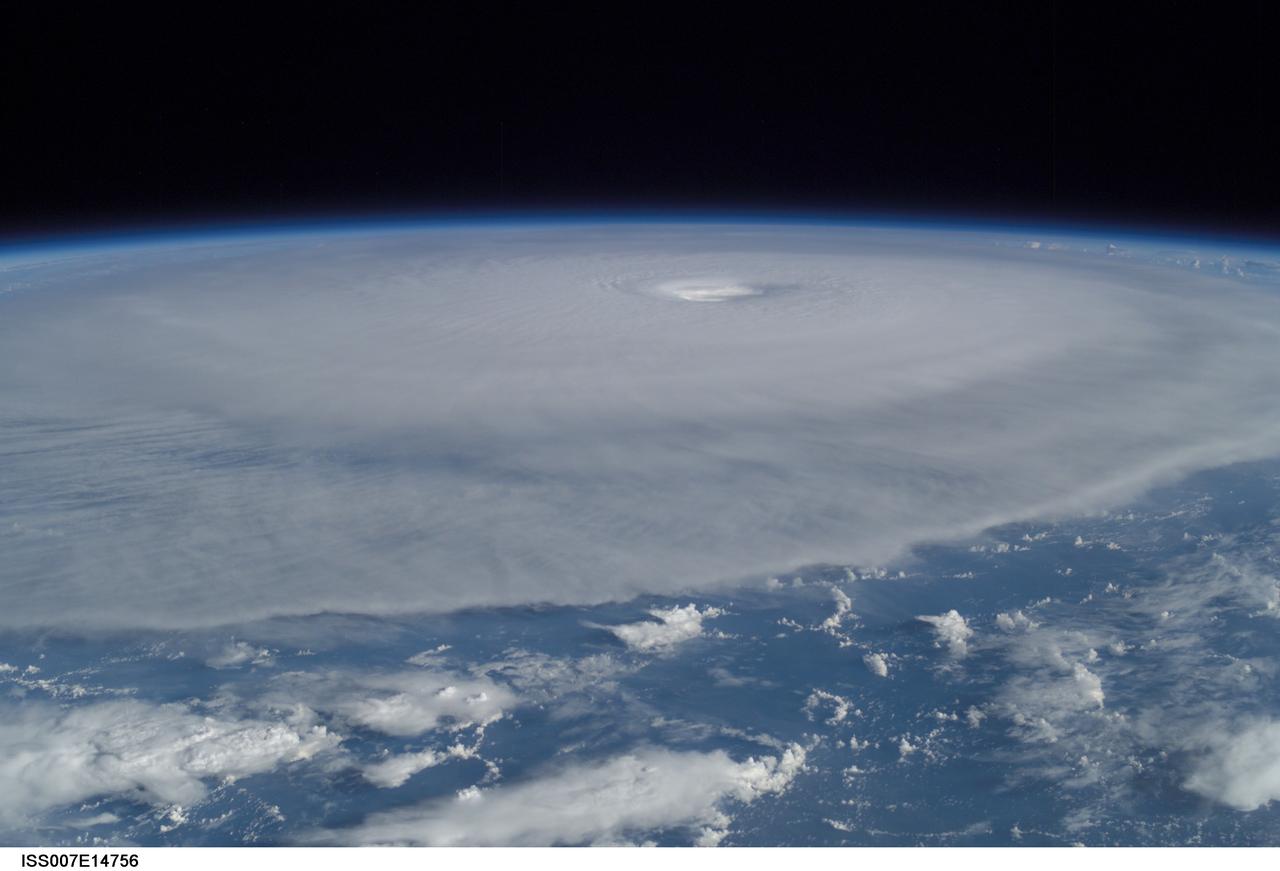
ISS007-E-14756 (13 September 2003) --- This view of Hurricane Isabel was taken by one of the Expedition 7 crewmembers onboard the International Space Station (ISS). At the time this photo was taken, Isabel had reformed to a Category 5 storm, packing winds of 160 miles per hour.
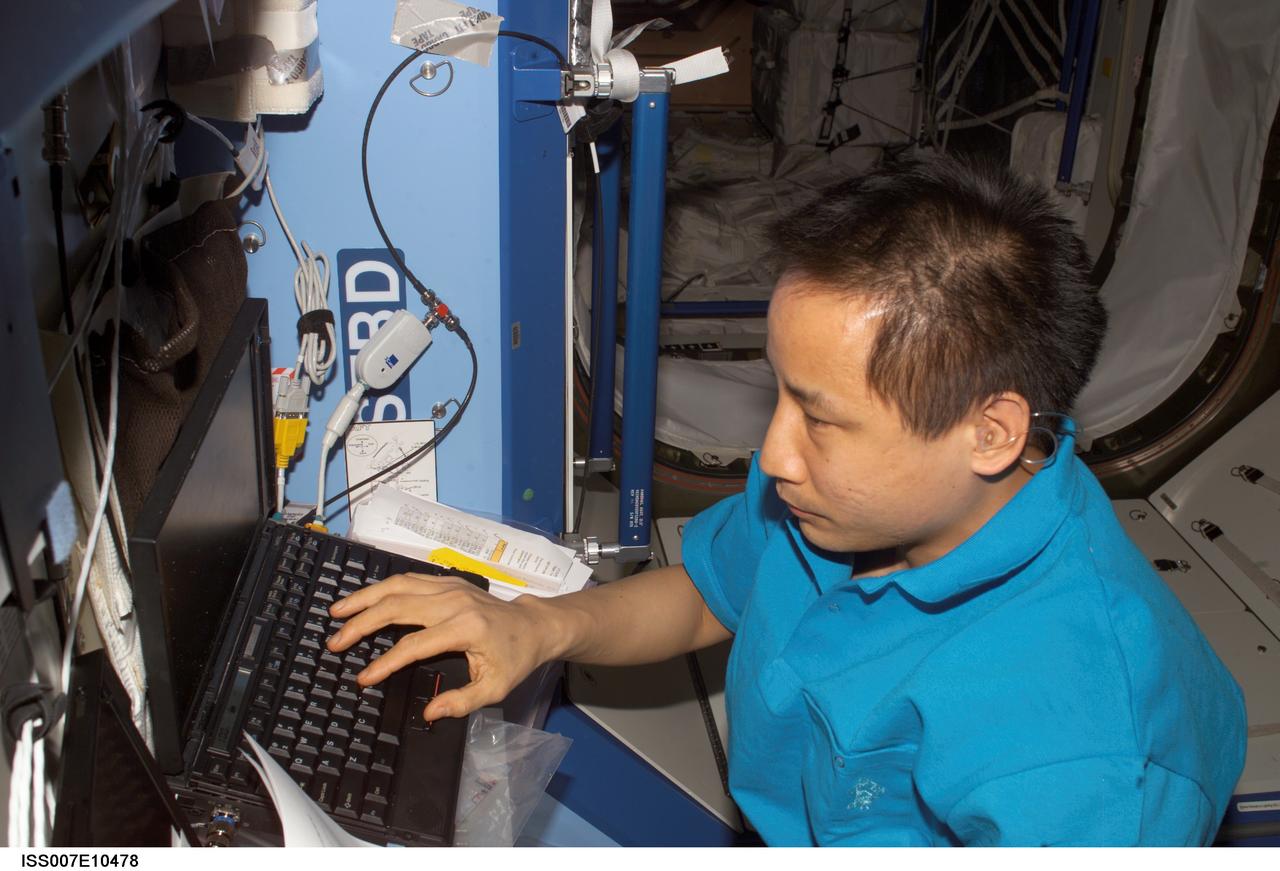
ISS007-E-10478 (16 July 2003) --- Astronaut Edward T. Lu, Expedition 7 NASA ISS science officer and flight engineer, uses a computer in the Destiny laboratory on the International Space Station (ISS).
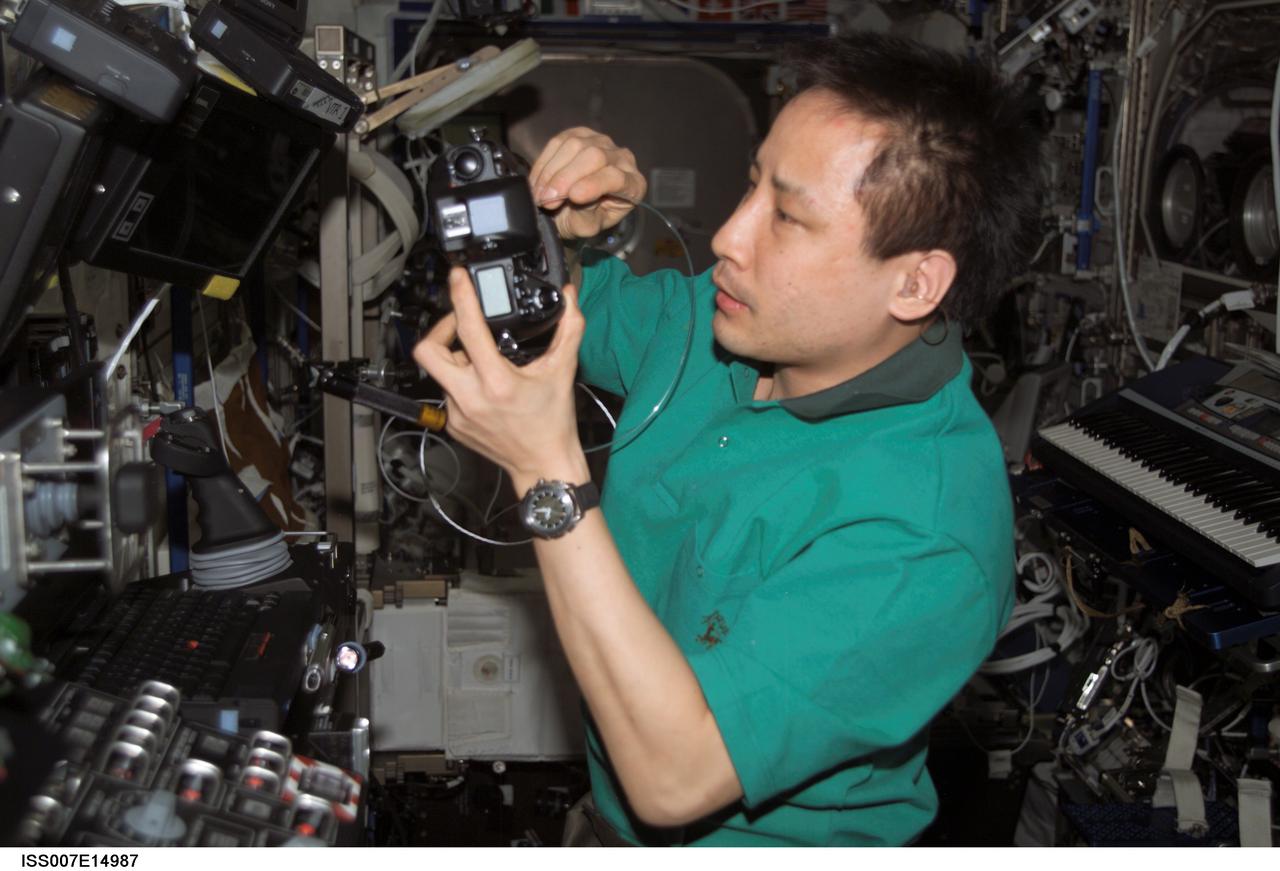
ISS007-E-14987 (16 September 2003) --- Astronaut Edward T. Lu, Expedition 7 NASA ISS science officer and flight engineer, cleans the dust off the charged couple device (CCD) on a digital still camera in the Destiny laboratory on the International Space Station (ISS).
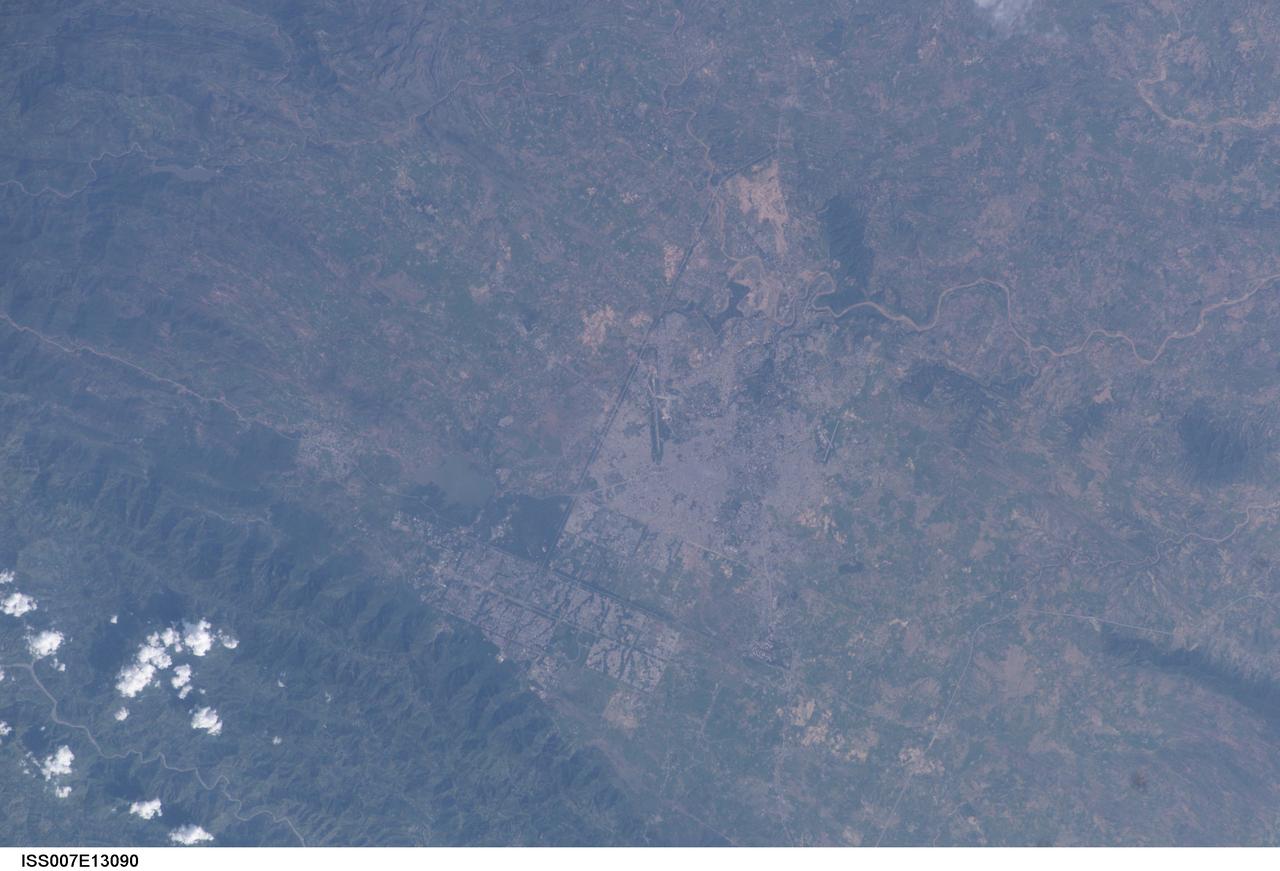
ISS007-E-13090 (21 August 2003) --- This view featuring Islamabad and Rawalpindi was taken by an Expedition 7 crewmember onboard the International Space Station (ISS). These two capital cities in Pakistan lie next to each another, but display land use patterns that are entirely different. Islamabad has a rectangular street pattern nestled against the Margala Hills. The larger Rawalpindi lies to the south on the Soan River.
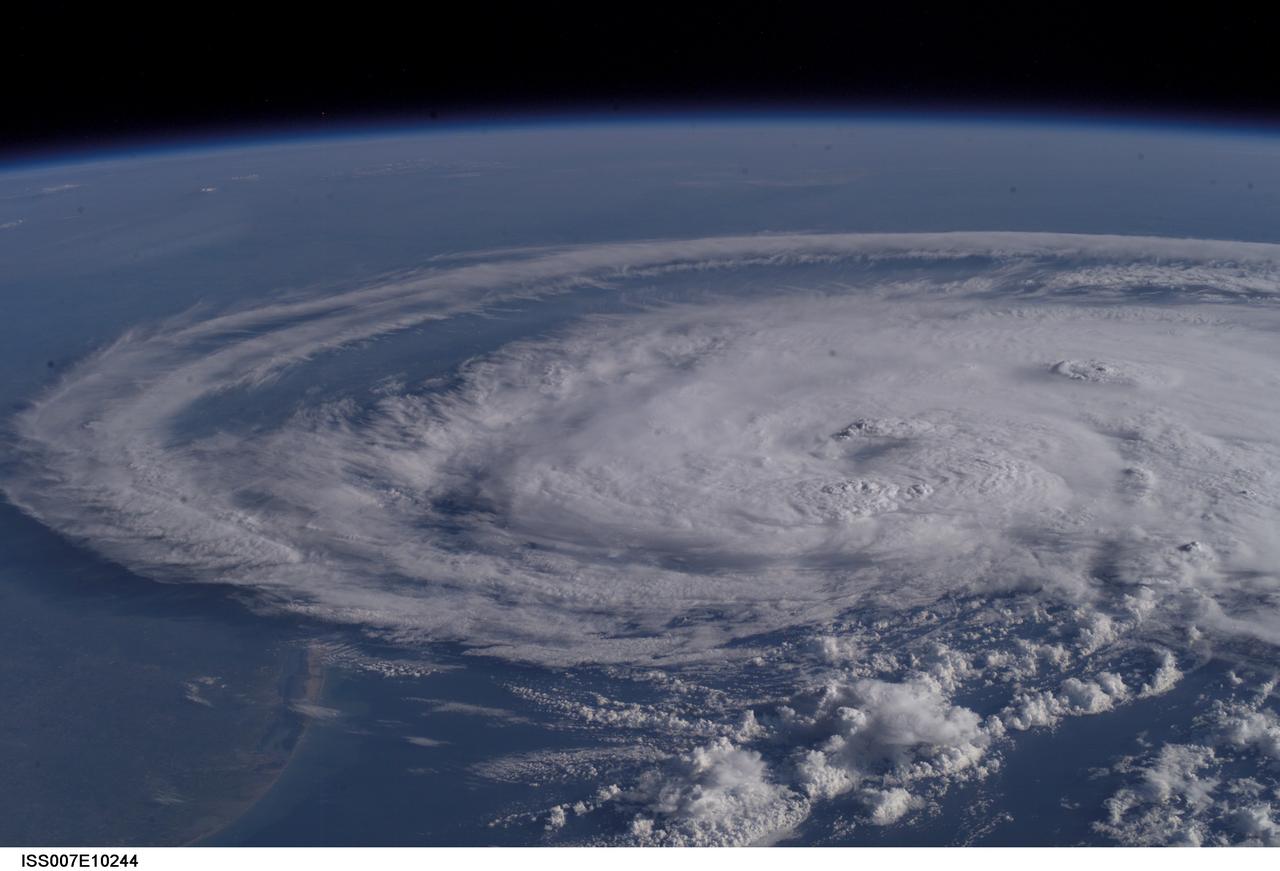
ISS007-E-10244 (15 July 2003) --- The Expedition 7 crew onboard the International Space Station (ISS) had a great seat from which to observe tropical storm Claudette as she turned into a hurricane and came ashore with high winds and heavy rains that drenched their Houston home base and other Texas areas. This digital image was recorded at 13:26:41 GMT, July 15, 2003.

ISS007-E-14741 (13 September 2003) --- This close-up view of the eye of Hurricane Isabel was taken by one of the Expedition 7 crewmembers onboard the International Space Station (ISS). At the time this photo was taken, Isabel had reformed to a Category 5 storm, packing winds of 160 miles per hour.
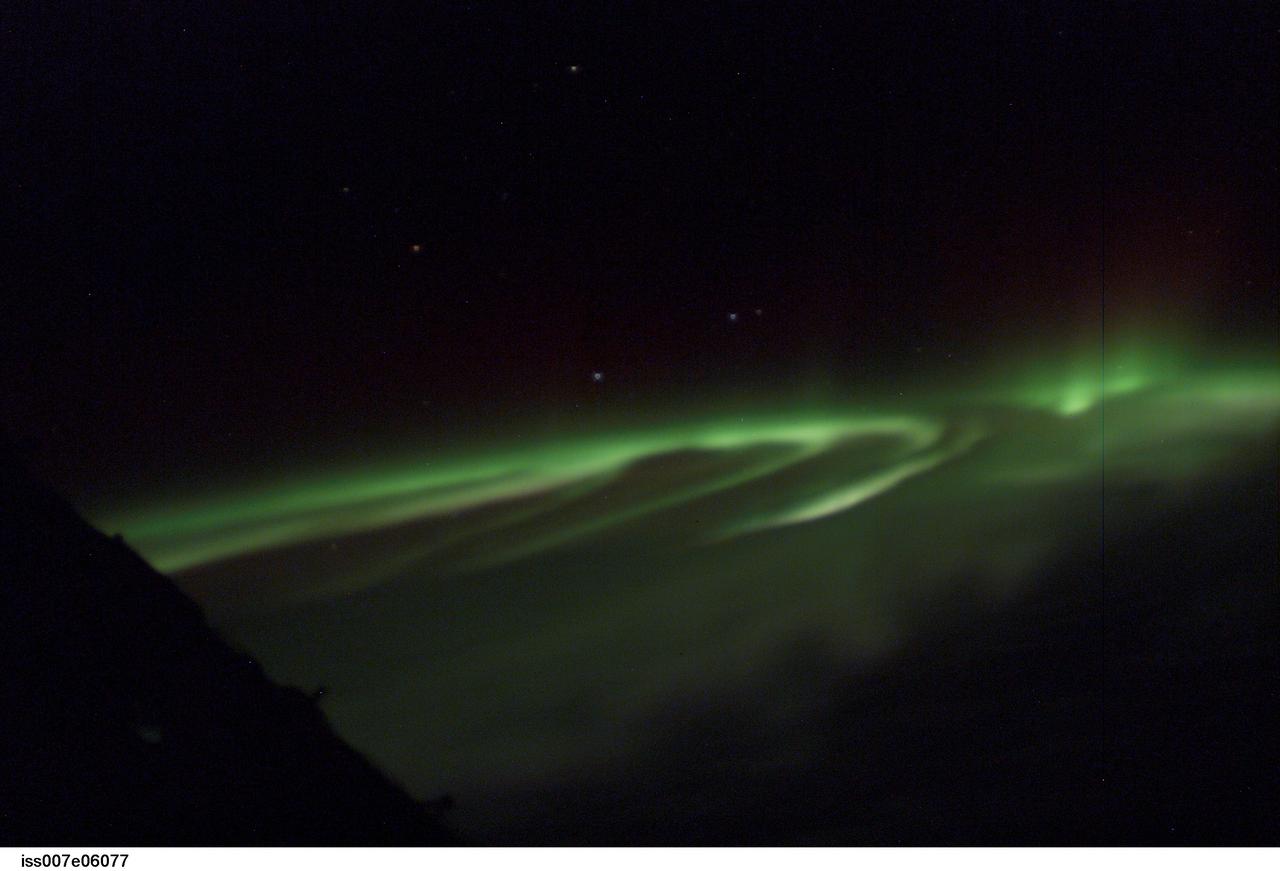
ISS007-E-06077 (3 June 2003) --- This view featuring the Aurora Australis or “southern lights” was photographed by astronaut Edward T. Lu, Expedition 7 NASA ISS science officer and flight engineer aboard the International Space Station (ISS). When this was taken, the Station was in a position over the Indian Ocean, southwest of Australia. The four stars hanging above Earth’s limb are the brightest stars of the southern constellation Corvus.
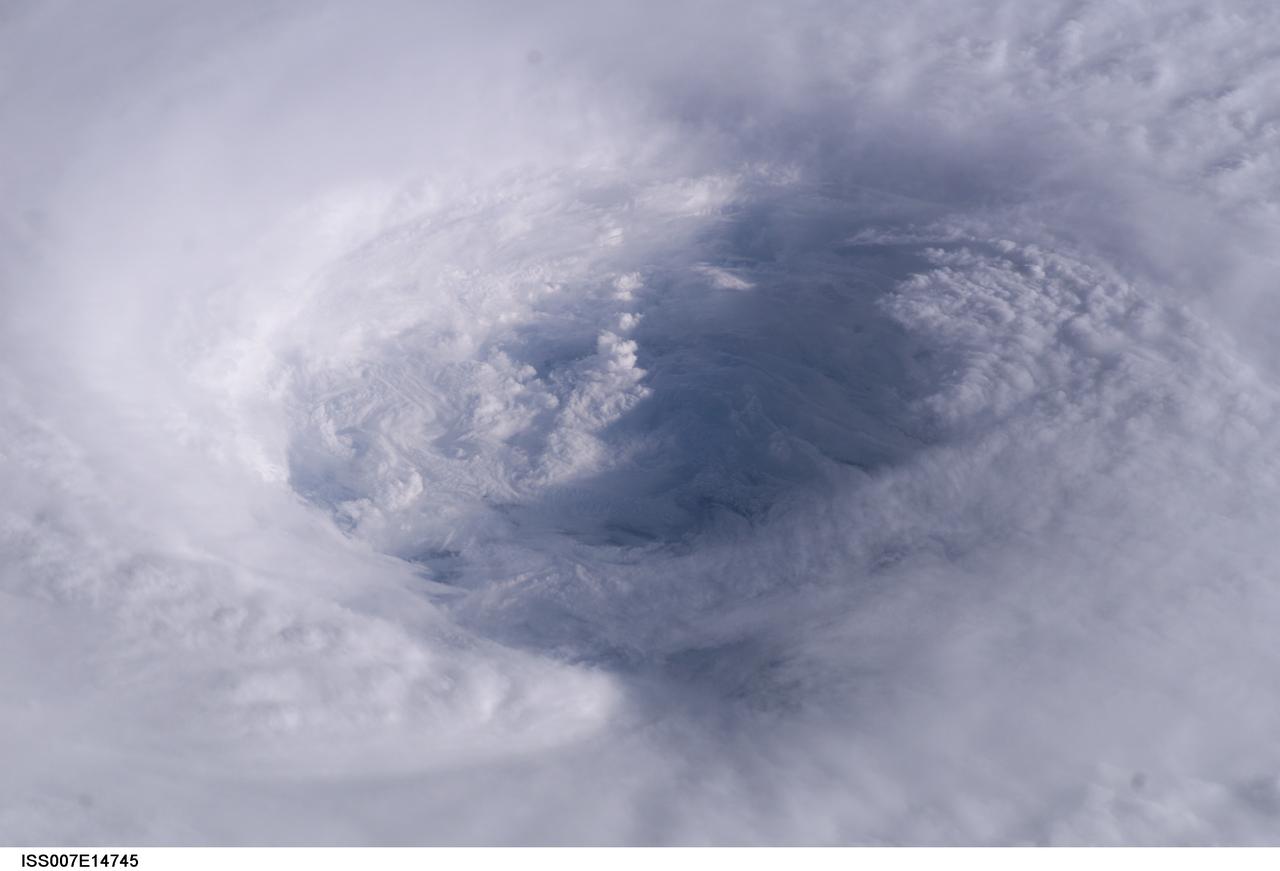
ISS007-E-14745 (13 September 2003) --- This close-up view of the eye of Hurricane Isabel was taken by one of the Expedition 7 crewmembers onboard the International Space Station (ISS). At the time this photo was taken, Isabel had reformed to a Category 5 storm, packing winds of 160 miles per hour.
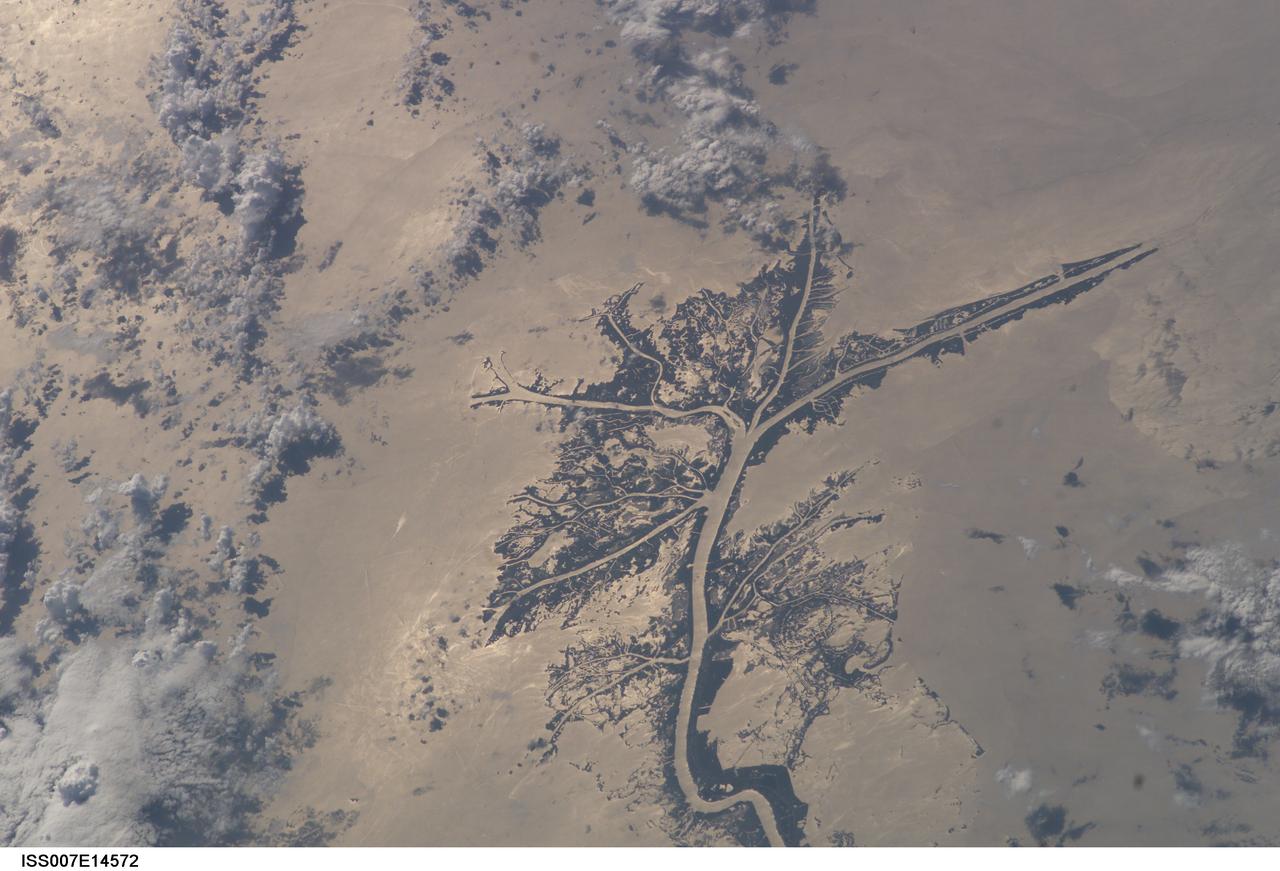
ISS007-E-14572 (8 September 2003) --- This view of the Mississippi River Delta on the Gulf of Mexico was taken by an Expedition 7 crewmember onboard the International Space Station (ISS). This delta area is often referred to as the "crow's foot."
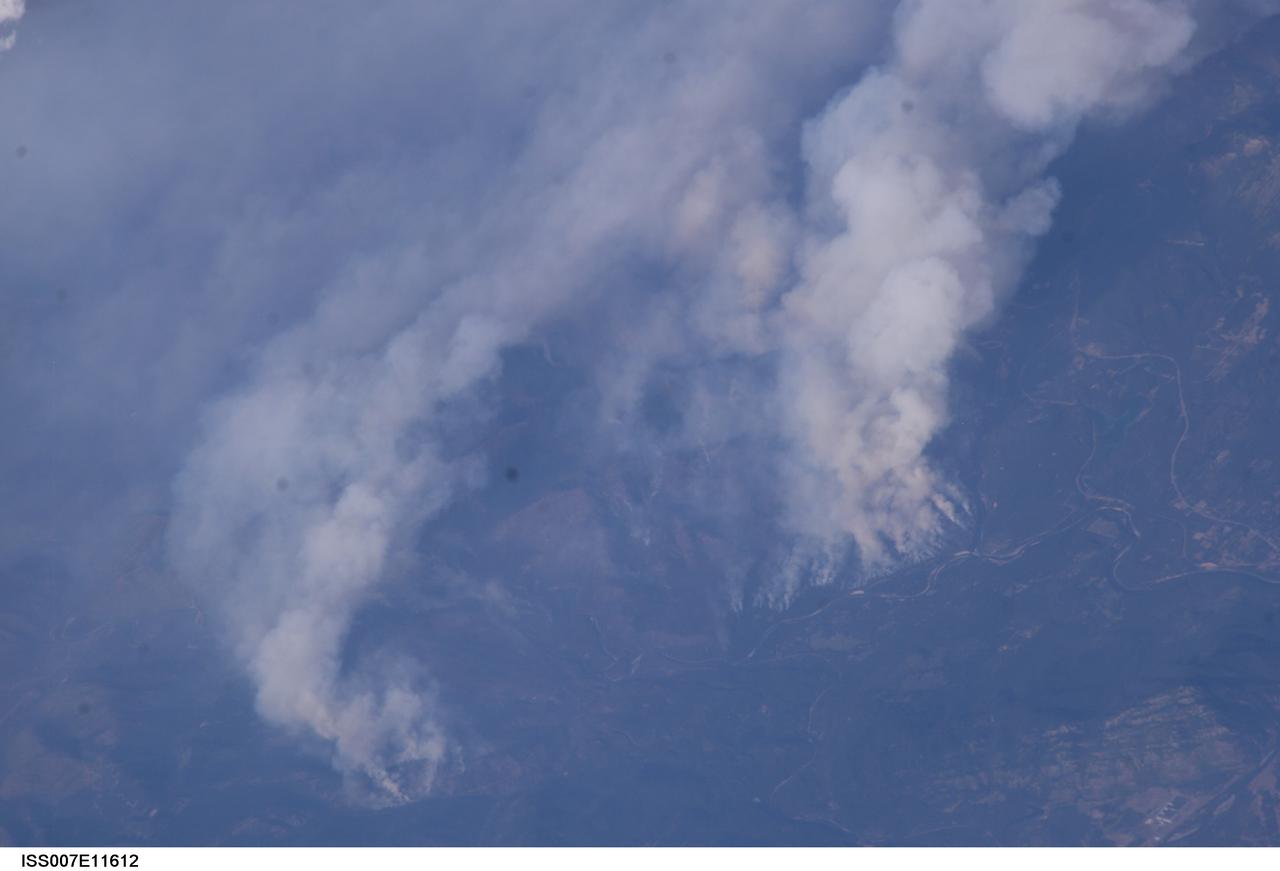
ISS007-E-11612 (2 August 2003) --- This digital still camera's view of Glacier National Park in Montana, was captured by one of the crew members aboard the International Space Station orbiting earth at 215 nautical miles. The area pictured is north of Flathead Lake on the southern flank of the Apgar Mountains, just across the Flathead River.
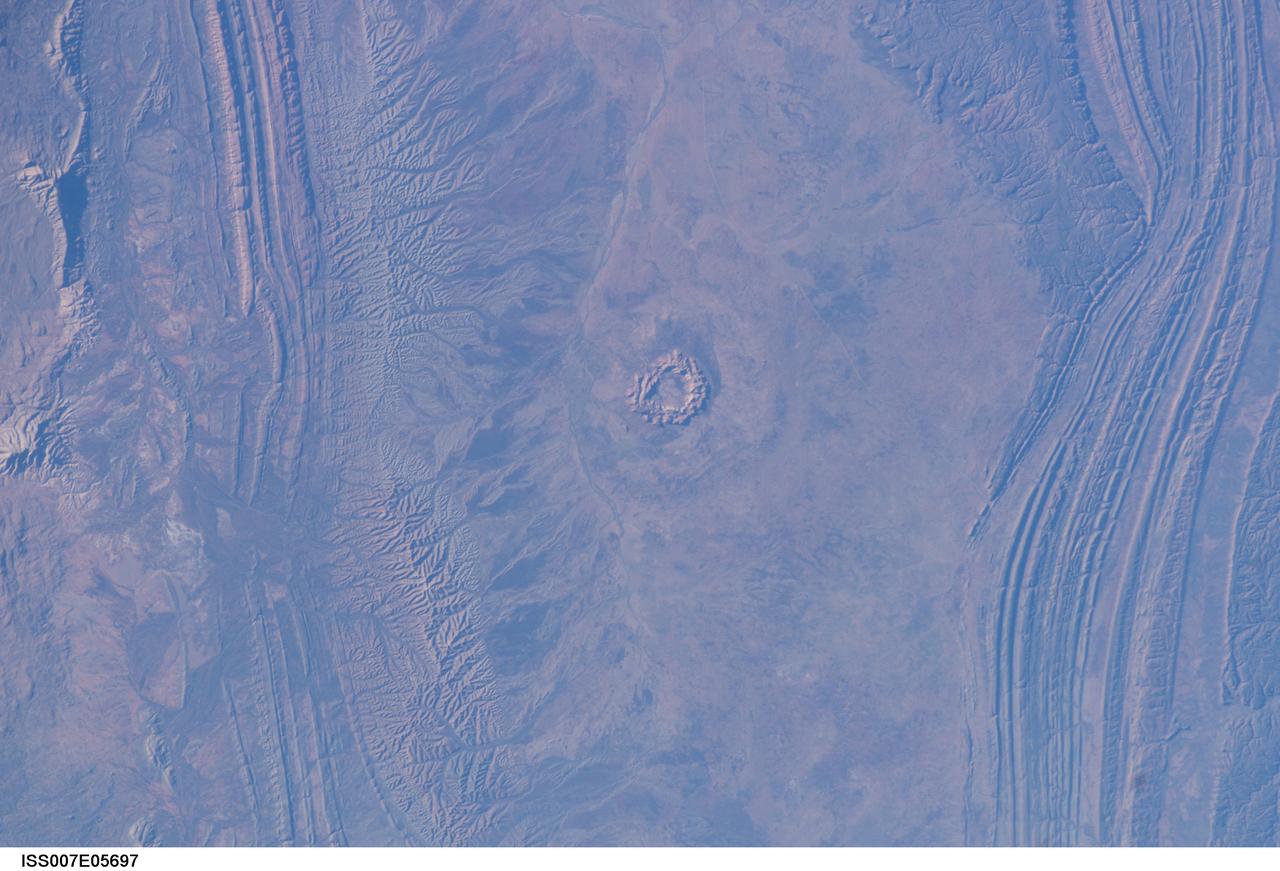
ISS007-E-05697 (20 May 2003) --- This image, photographed by an Expedition 7 crewmember onboard the International Space Station (ISS), shows Gosses Bluff, an impact crater sandwiched between the MacDonnell Range to the north and the James Range to the south in Australia’s Northern Territory – it is about 160 kilometers west of Alice Springs. It is one of the most studied of the Australian impact craters. The impactor, an asteroid or comet, was, according to scientists, probably about 1 kilometer in diameter and crashed into the Earth about 142 million years ago. The isolated circular feature within the crater consists of a central ring of hills about 4.5 kilometers in diameter. The grayish feature surrounding the inner ring probably marks the original boundary of the outer rim.
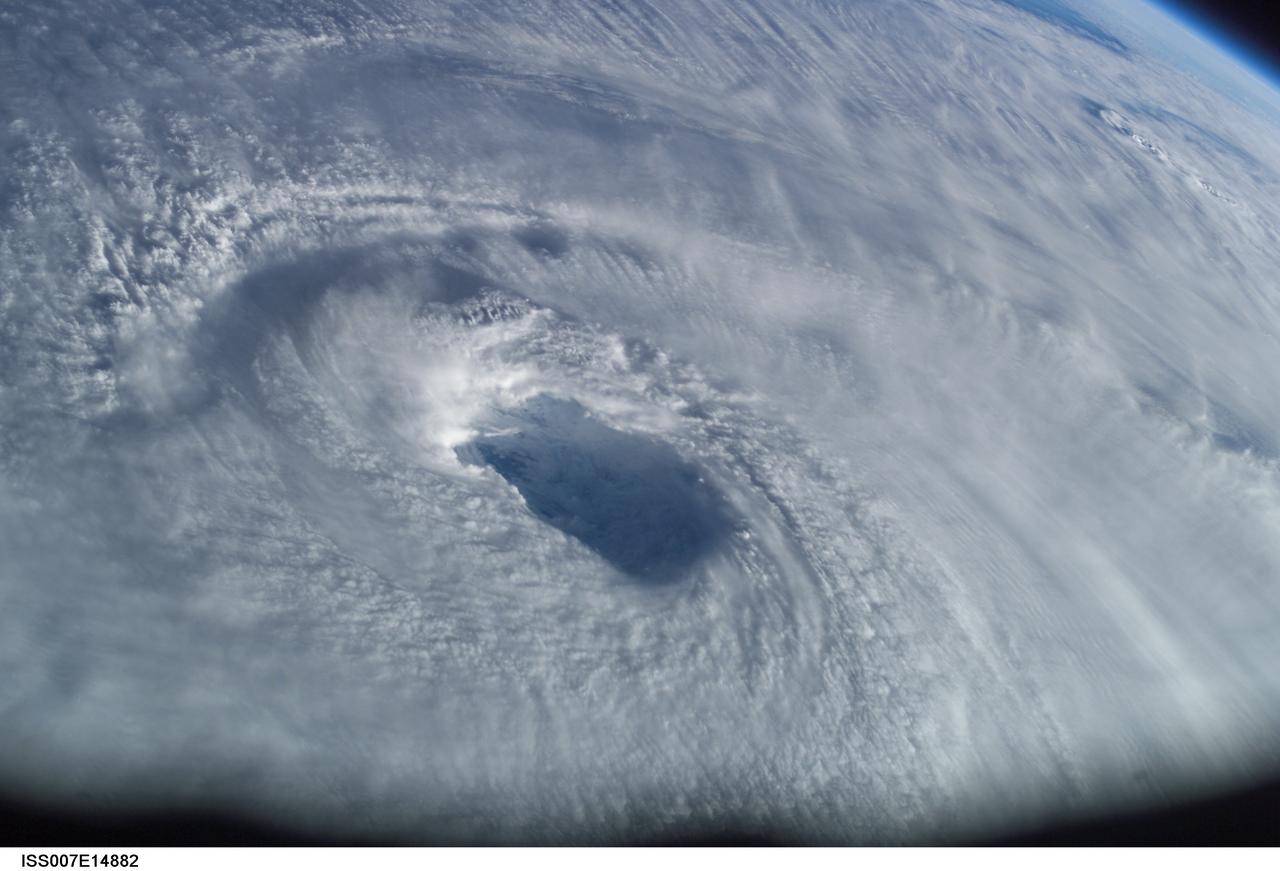
ISS007-E-14882 (15 September 2003) --- This close-up view of the eye of Hurricane Isabel was taken by one of the Expedition 7 crewmembers onboard the International Space Station (ISS).

ISS007-E-14742 (13 September 2003) --- This close-up view of the eye of Hurricane Isabel was taken by one of the Expedition 7 crewmembers onboard the International Space Station (ISS). At the time this photo was taken, Isabel had reformed to a Category 5 storm, packing winds of 160 miles per hour.
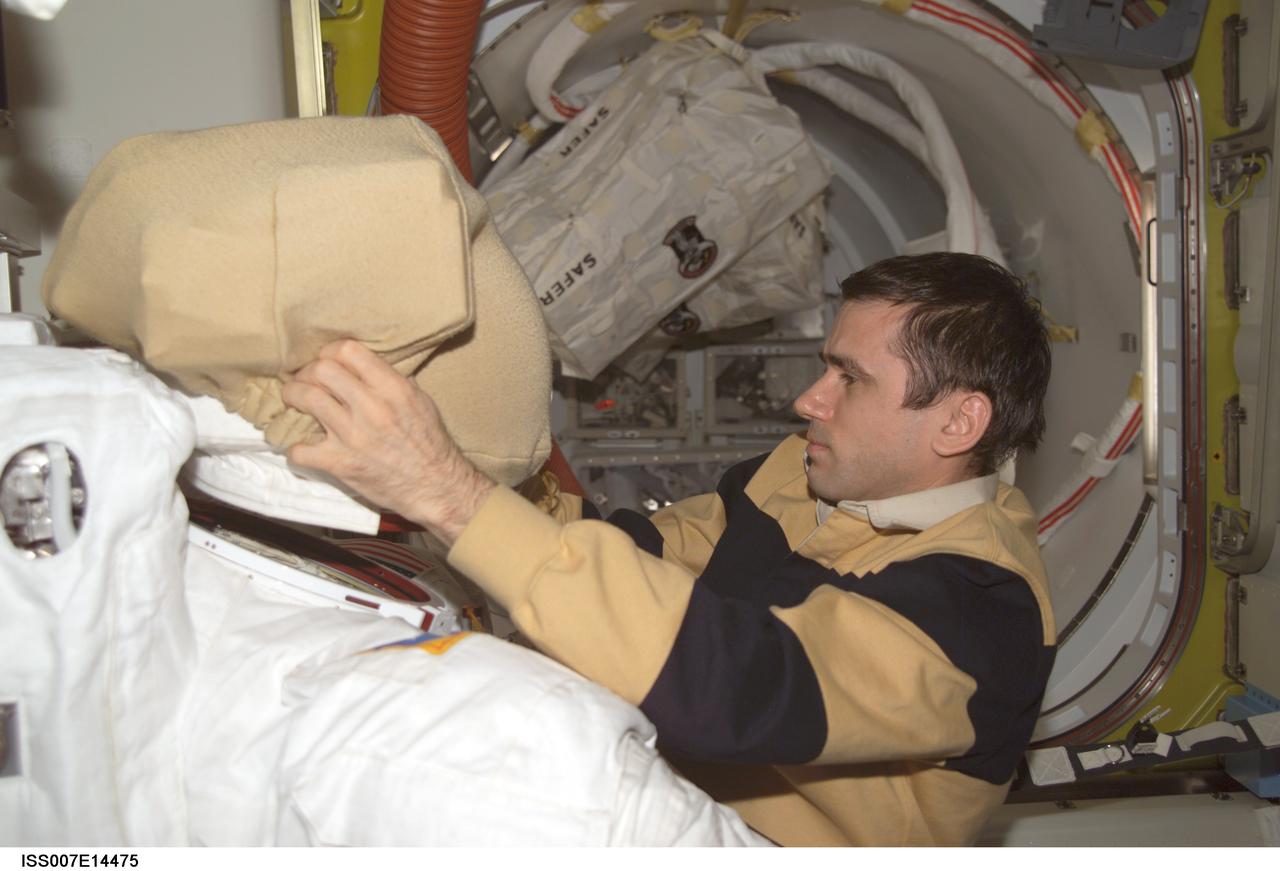
ISS007-E-14475 (5 September 2003) --- Cosmonaut Yuri I. Malenchenko, Expedition 7 mission commander, works with a torso portion of an Extravehicular Mobility Unit (EMU) space suit stored in the Quest airlock on the International Space Station (ISS). Malenchenko represents Rosaviakosmos.
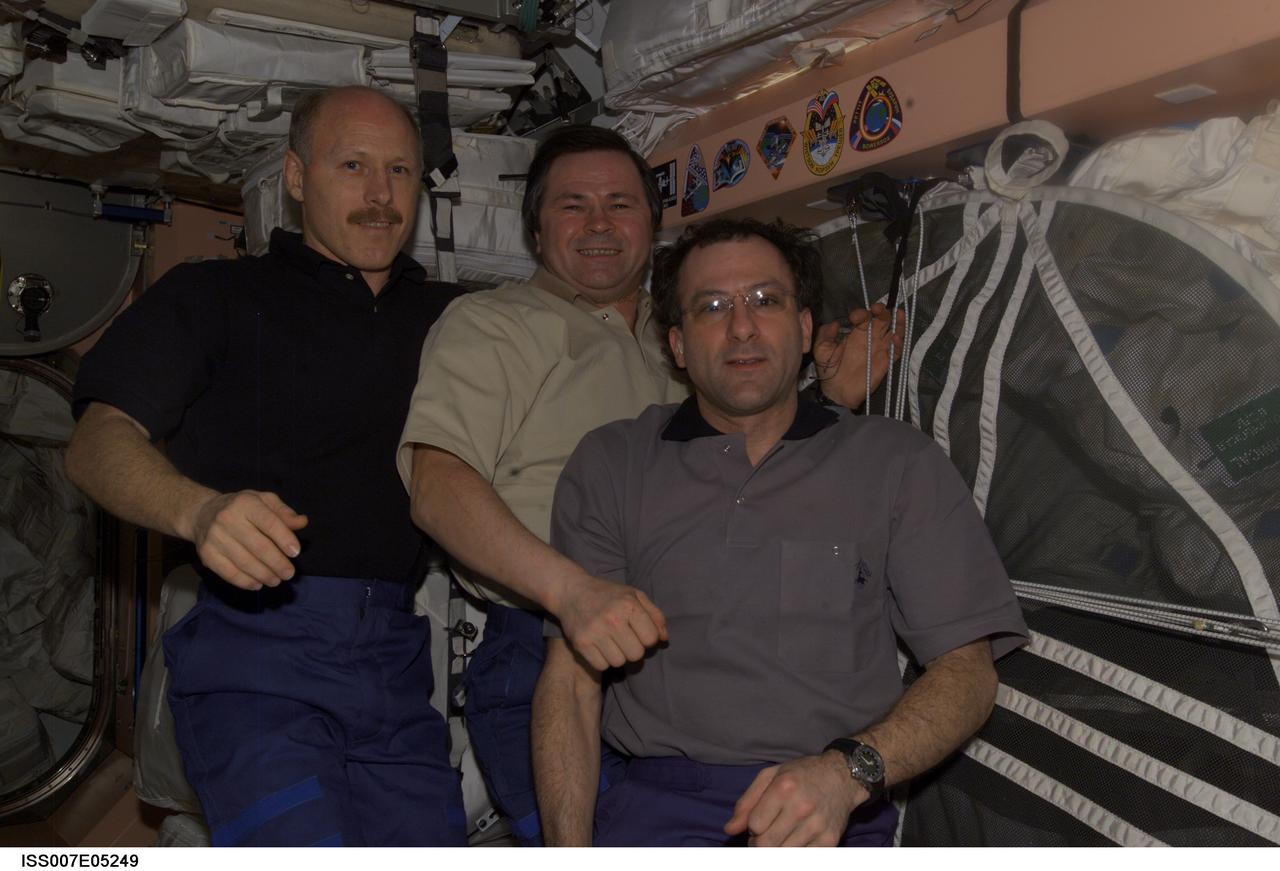
ISS007-E-05249 (3 May 2003) --- The Expedition Six crewmembers pose in the Unity node near the growing collection of insignias representing crews who have worked on the International Space Station (ISS). From the left are astronaut Kenneth D. Bowersox, mission commander; cosmonaut Nikolai M. Budarin, flight engineer; and Donald R. Pettit, NASA ISS science officer. Budarin represents Rosaviakosmos.

ISS007-E-07306 (13 June 2003) --- Earth’s horizon and the blackness of space are featured in this image taken from a window on the International Space Station (ISS), photographed by astronaut Edward T. Lu, Expedition 7 NASA ISS science officer and flight engineer.
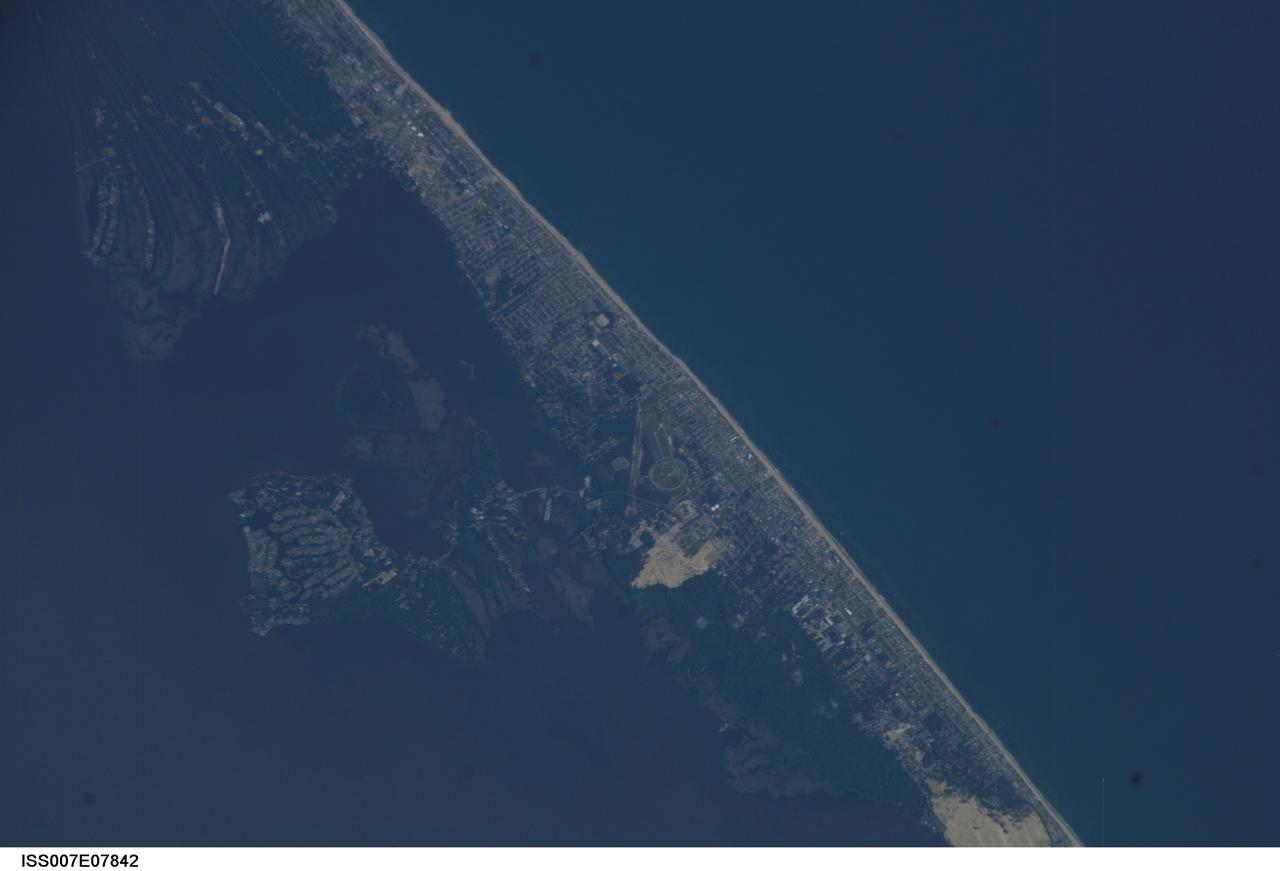
ISS007-E-07842 (22 June 2003) --- This image, photographed by an Expedition 7 crewmember onboard the International Space Station (ISS), features Kitty Hawk, N.C., on North Carolina’s Outer Banks. The view shows part of Pamlico Sound and the Atlantic side of the banks as well. This year the world celebrates a century of human flight with the 100th anniversary of the Wright Brothers' first flight at Kitty Hawk. The Wrights used the Outer Banks’ prevailing winds and the altitude gained by climbing a 90-foot hill (Kill Devil Hill) to successfully demonstrate powered flight. The large circle on the image is a road that wraps around Kill Devil Hill, now part of the Wright Brothers National Memorial.
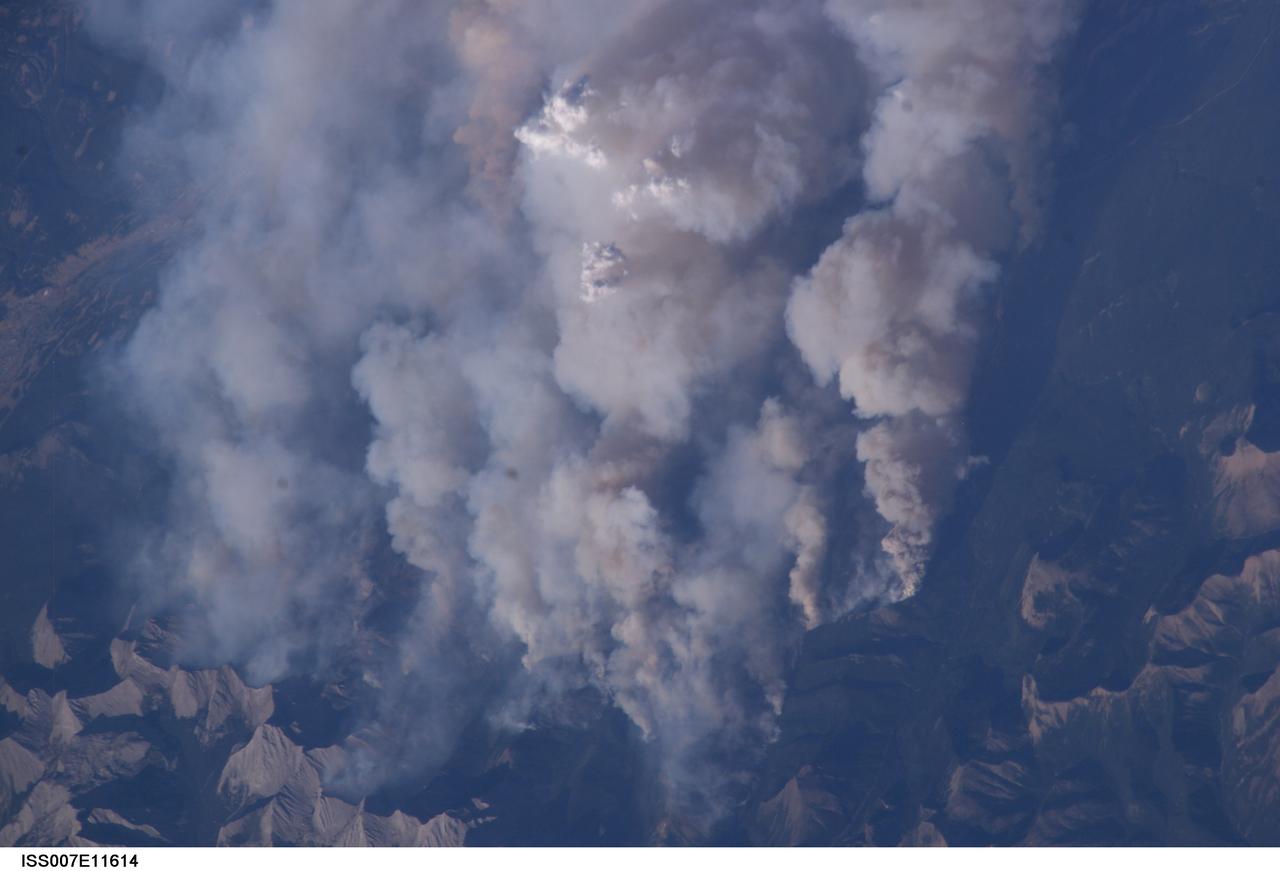
ISS007-E-11614 (2 August 2003) --- This digital still camera's view from the International Space Station features early August forest fires in the Lost Creek area on the border of Alberta and British Columbia, just to the southwest of Calgary. Across the international border, fires were raging in the Glacier National Park in Montana
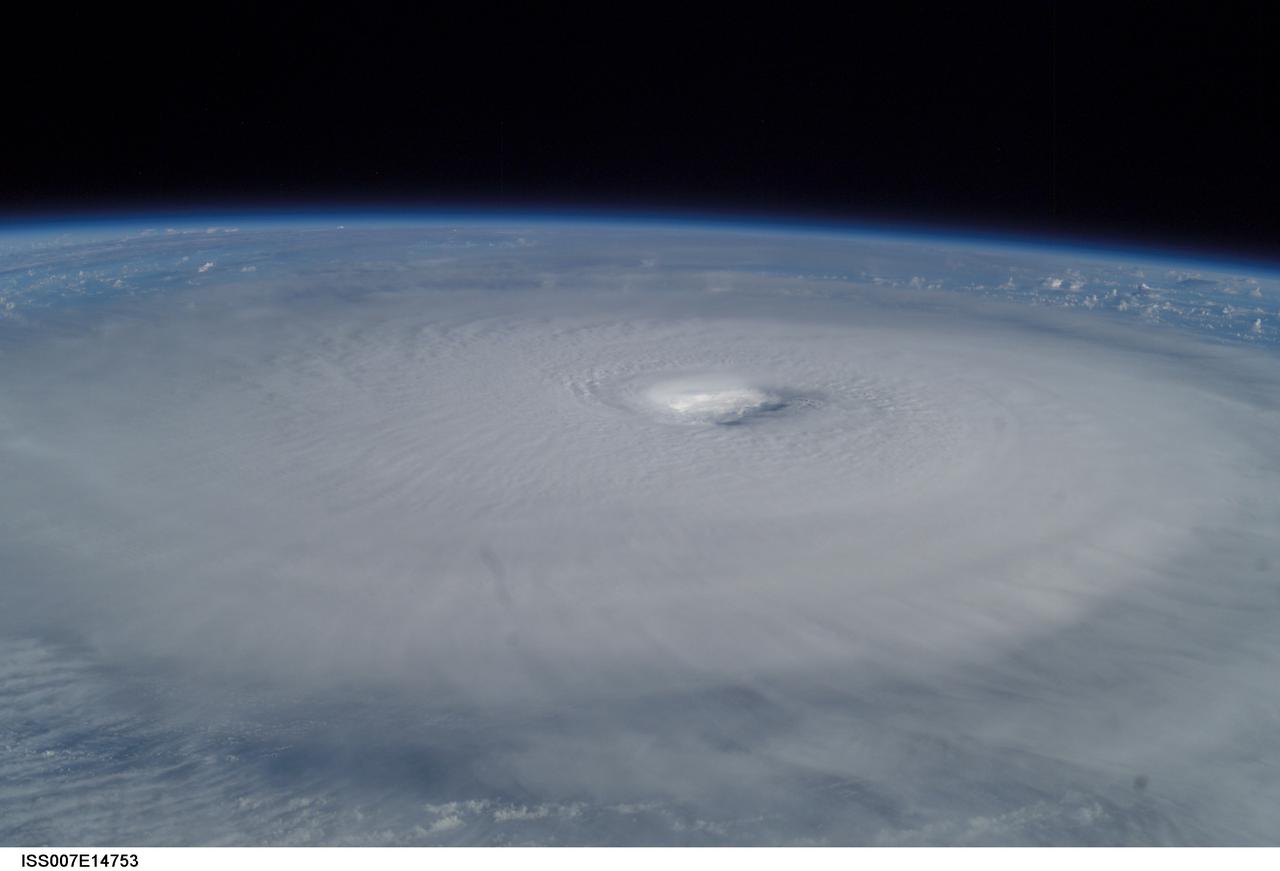
ISS007-E-14753 (13 September 2003) --- This view of Hurricane Isabel was taken by one of the Expedition 7 crewmembers onboard the International Space Station (ISS). At the time this photo was taken, Isabel had reformed to a Category 5 storm, packing winds of 160 miles per hour.
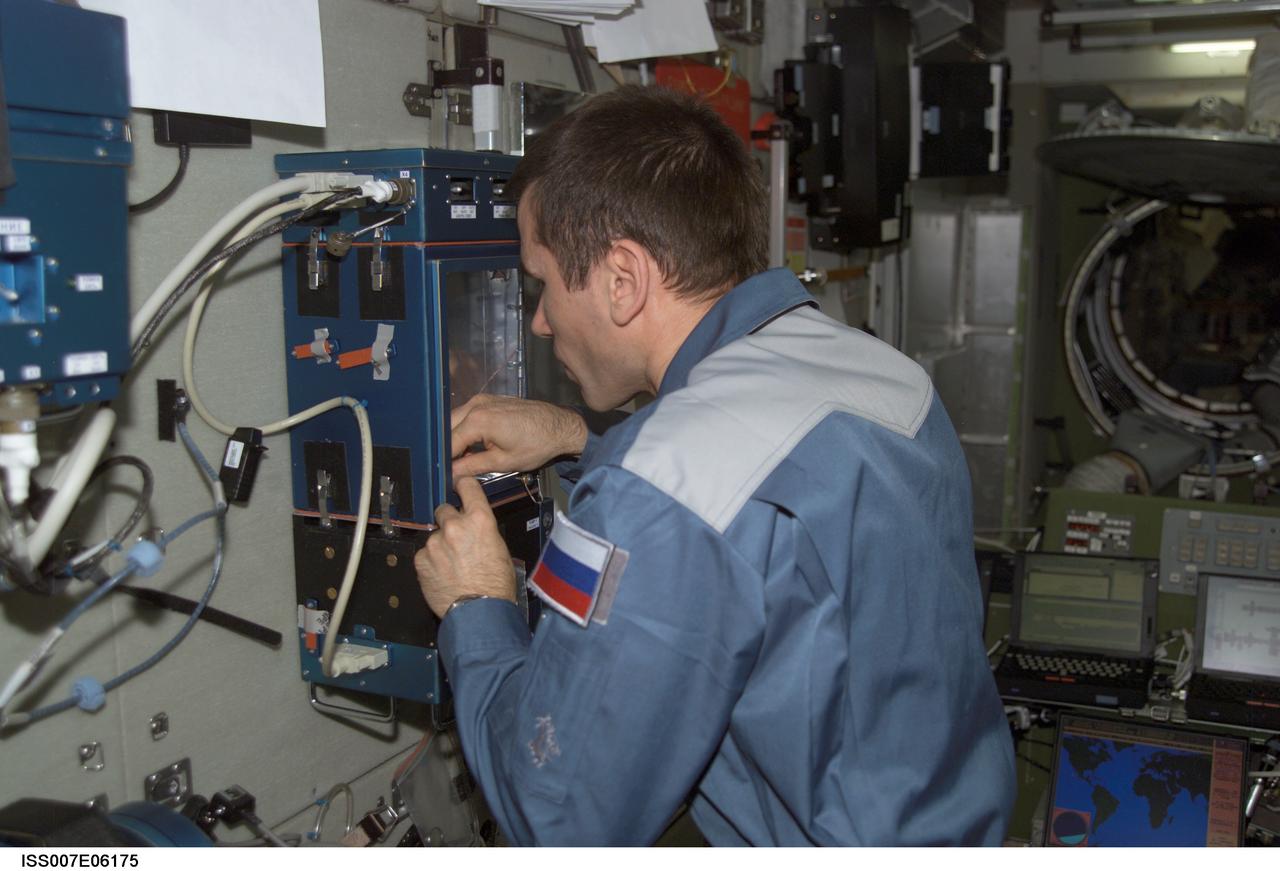
ISS007-E-06175 (21 May 2003) --- Cosmonaut Yuri I. Malenchenko, Expedition 7 mission commander, works with the Russian Lada greenhouse in the Zvezda Service Module on the International Space Station (ISS). Malenchenko represents Rosaviakosmos.
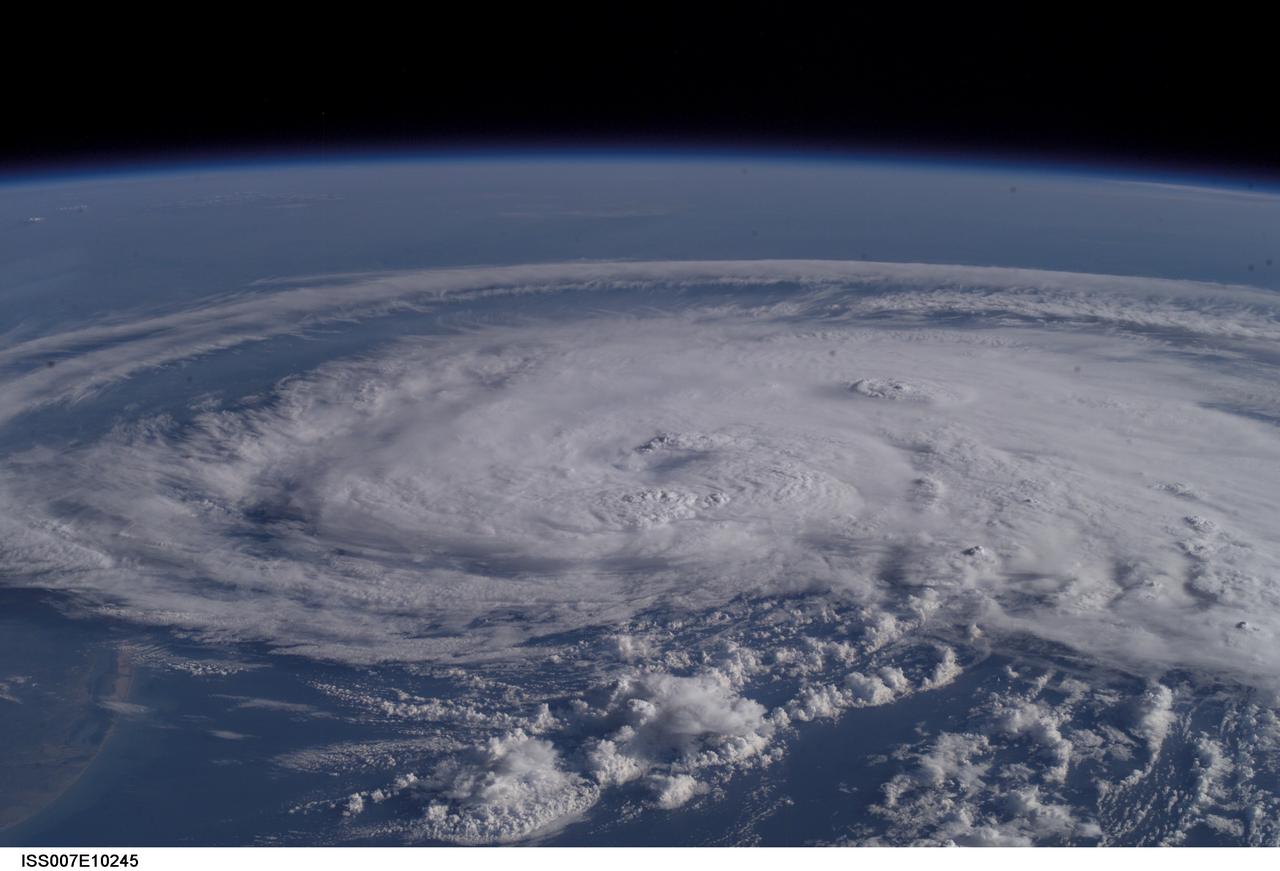
ISS007-E-10245 (15 July 2003) --- The crew of the International Space Station had a great seat from which to observe tropical storm Claudette as she turned into a hurricane and came ashore with high winds and heavy rains that drenched their Houston home base and other Texas areas. This digital image was recorded at 13:26:41 GMT, July 15, 2003
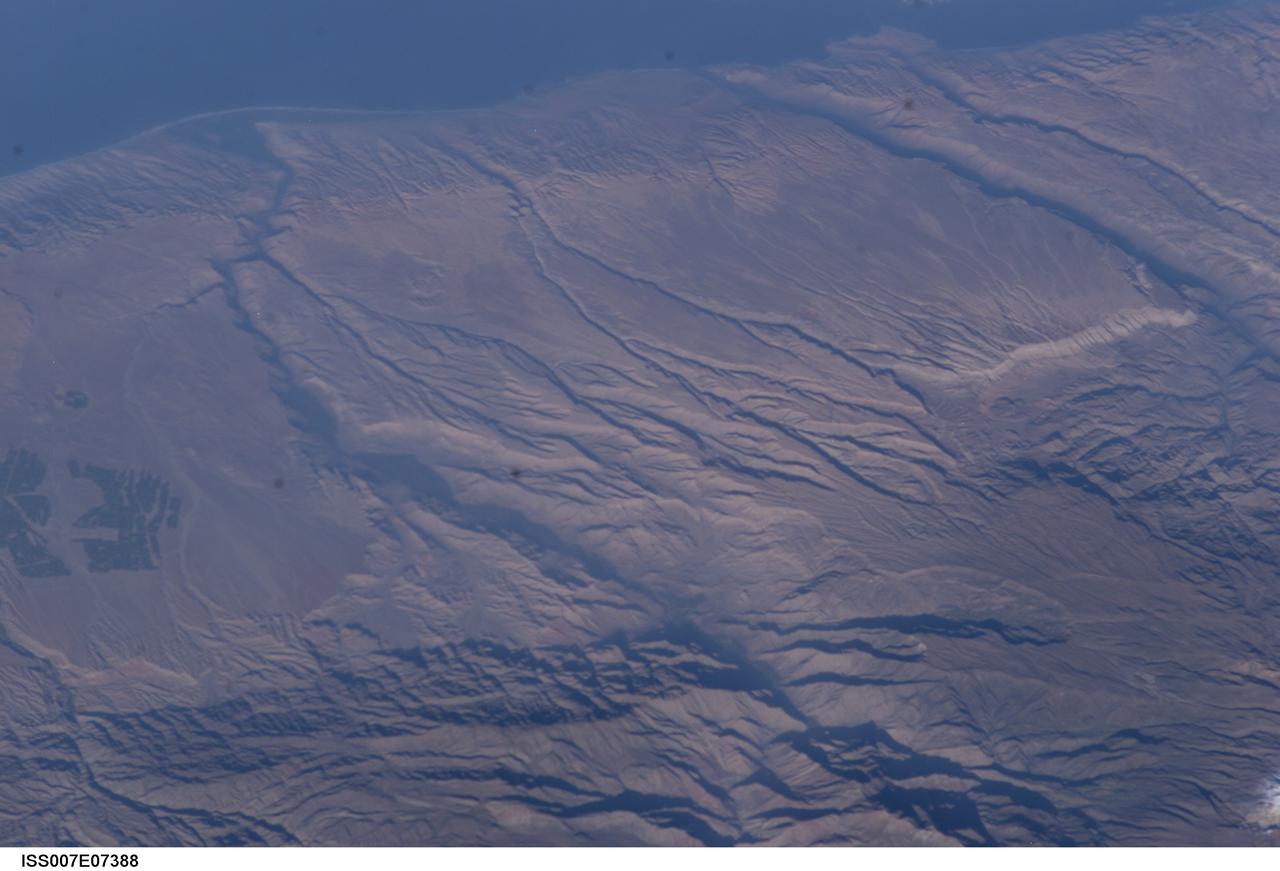
ISS007-E-07388 (14 June 2003) --- Some of the deepest canyons in the world cut west to the Pacific from the high crest of the Andes Mountains in Peru. This view taken by an Expedition 7 crewmember onboard the International Space Station (ISS) provides a birds-eye view down the canyons of the Rio Camana (center left) and the Rio Ocona (upper right). The low early morning sun highlights the extreme topography created by rapidly uplifting mountains and powerful water erosion by water dropping nearly 10,000 feet in this view. At the edge of the image are the snowy flanks of Nevado Coropuna, the highest mountain in the Cordillera Occidental (6613 meters). The coastal city of Camana is visible in the upper left.

ISS007-E-14743 (13 September 2003) --- This close-up view of the eye of Hurricane Isabel was taken by one of the Expedition 7 crewmembers onboard the International Space Station (ISS). At the time this photo was taken, Isabel had reformed to a Category 5 storm, packing winds of 160 miles per hour.
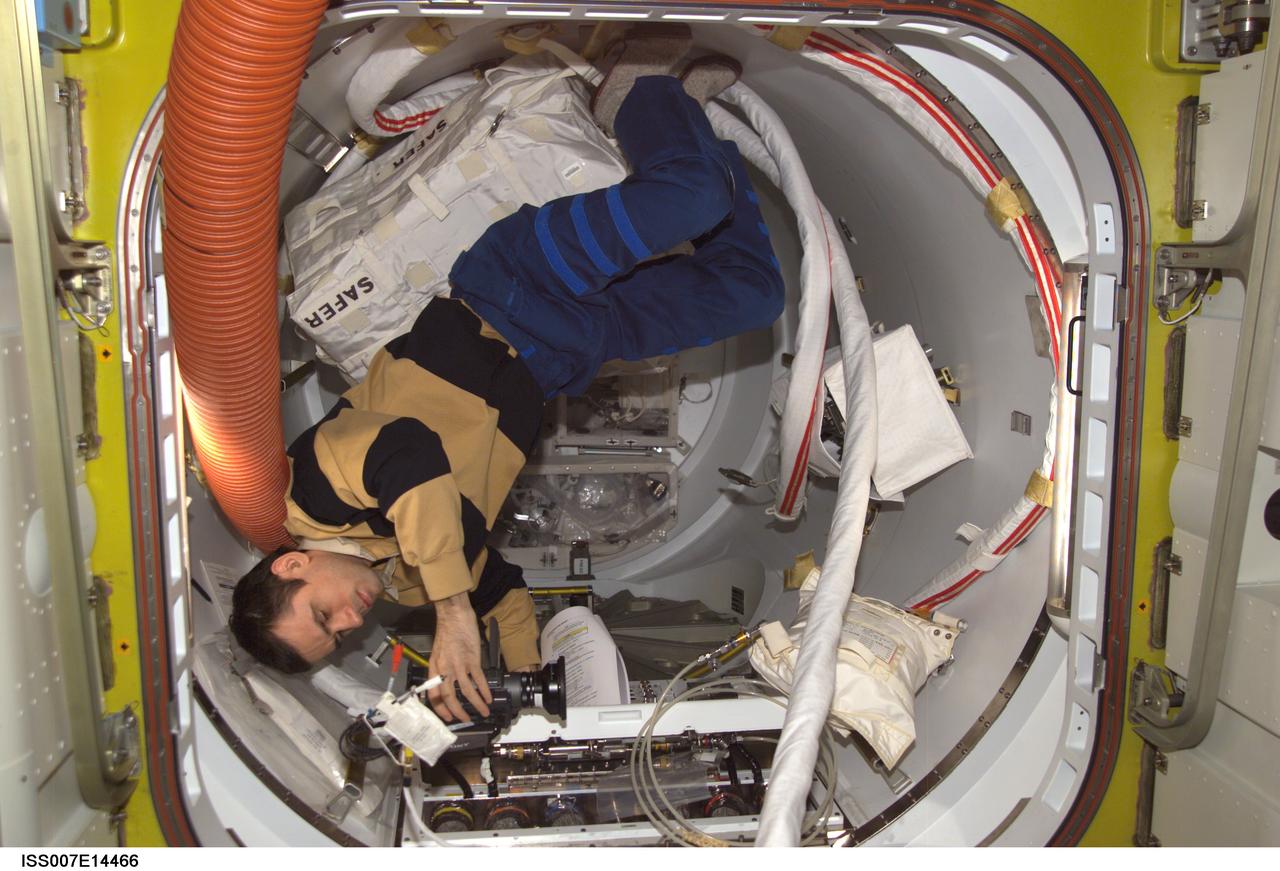
ISS007-E-14466 (5 September 2003) --- Cosmonaut Yuri I. Malenchenko, Expedition 7 mission commander, sets up a video camera to document a review of one of the Extravehicular Mobility Unit (EMU) space suits in the Quest airlock on the International Space Station (ISS). Malenchenko represents Rosaviakosmos.
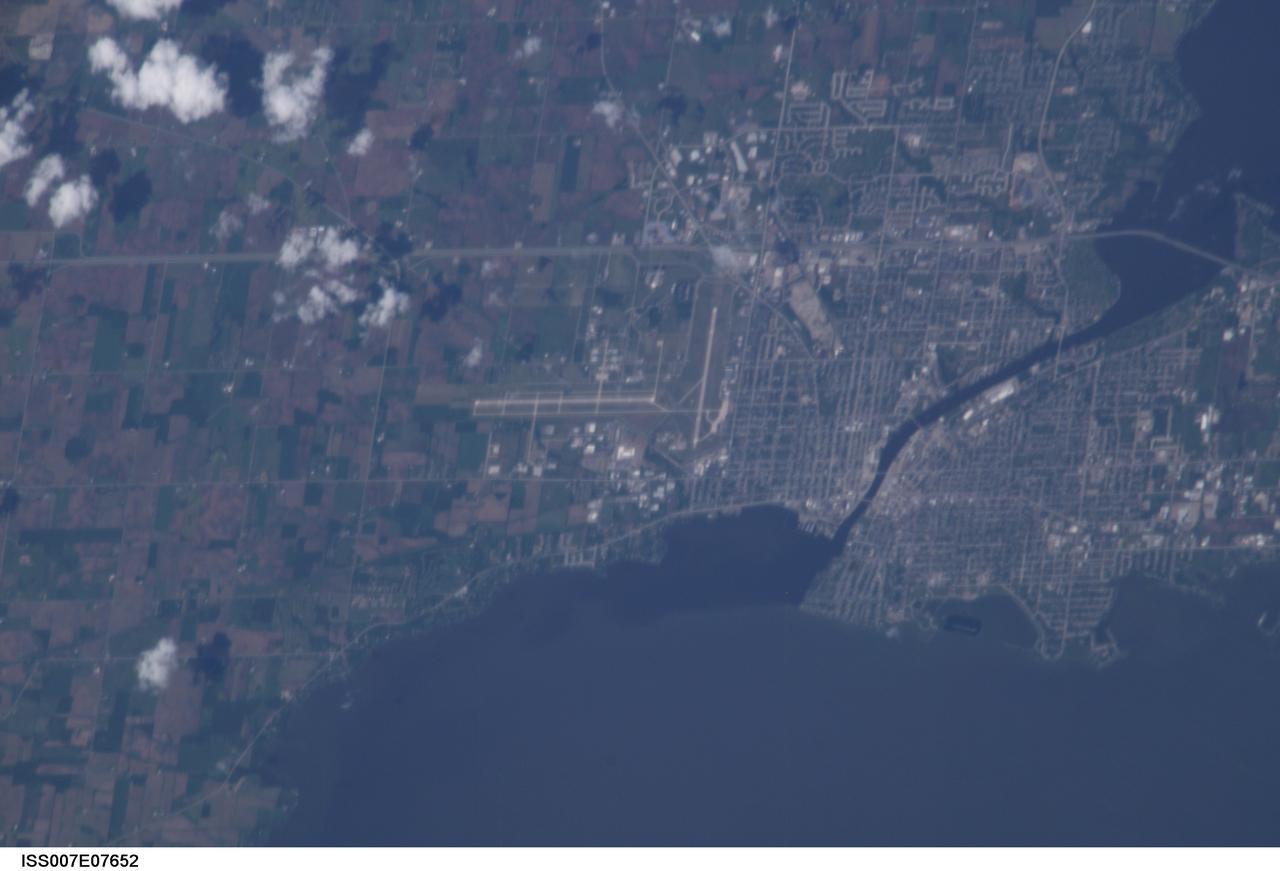
ISS007-E-07652 (July 2003) --- Part of Oshkosh, Wisconsin, site of a very popular air show, held around this time of year, was photographed by a crew member aboard the International Space Station during its seventh habitation mission. The airfield near Lake Winnebago hosts the mid-summer fly-in event sponsored by the Experimental Aircraft Association (EAA).
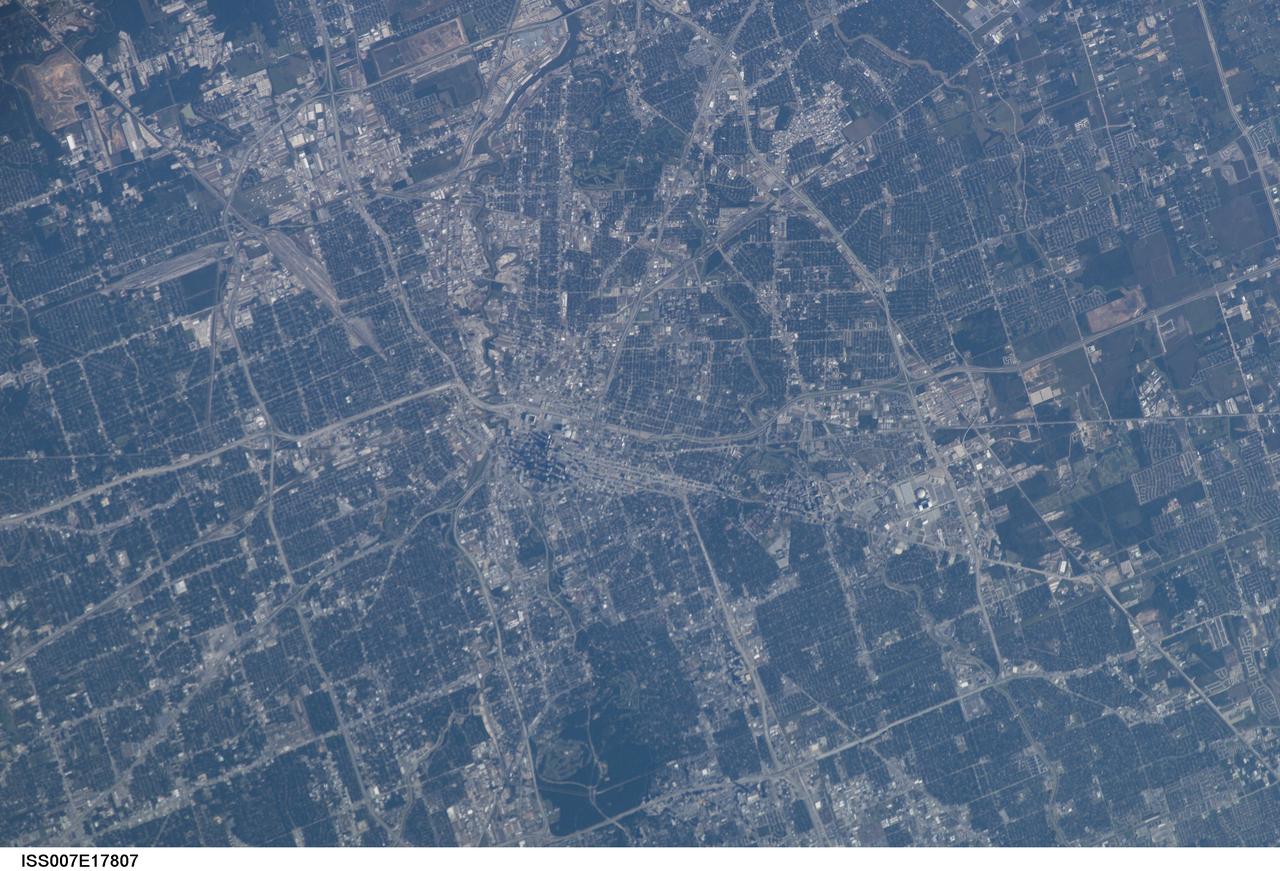
ISS007-E-17807 (22 Oct 2003) --- Houston, Texas
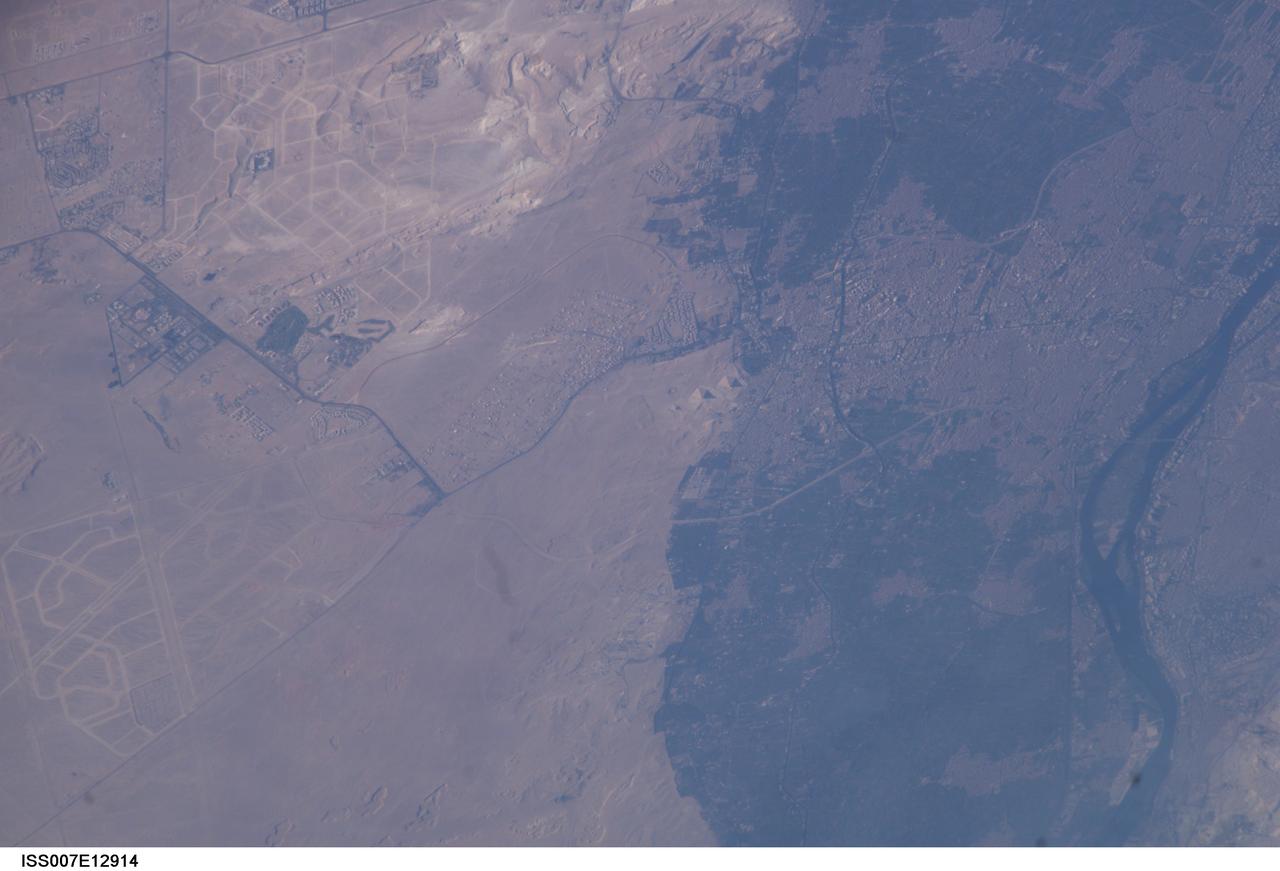
ISS007-E-12914 (18 August 2003) --- This view featuring Egypt’s Great pyramids of Giza (right center) was taken by an Expedition 7 crewmember onboard the International Space Station (ISS). Giza is a royal burial place, commissioned and built by pharaohs during the fourth dynasty around 2550 BC. Today, Giza is a rapidly growing region of Cairo. Population growth in Egypt continues to soar, leading to new construction. New roads for large new developments are obvious in the desert hills northwest and southwest of the pyramids.
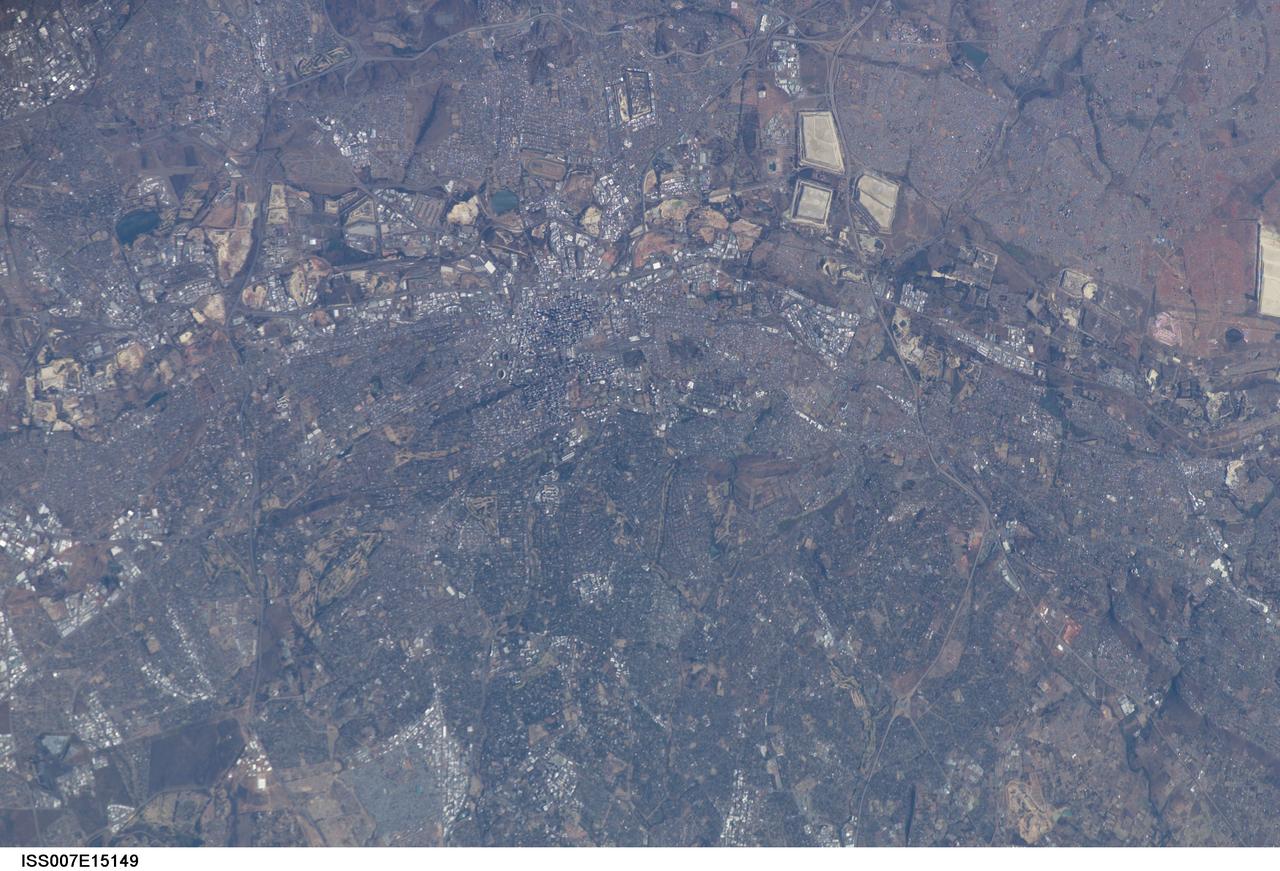
ISS007-E-15149 (21 September 2003) --- This image, photographed by an Expedition 7 crewmember onboard the International Space Station (ISS), was merged with images ISS007-E-15148 and ISS007-E-15150 to create a mosaic of Johannesburg, South Africa. The mosaic can be viewed on http://eol.jsc.nasa.gov
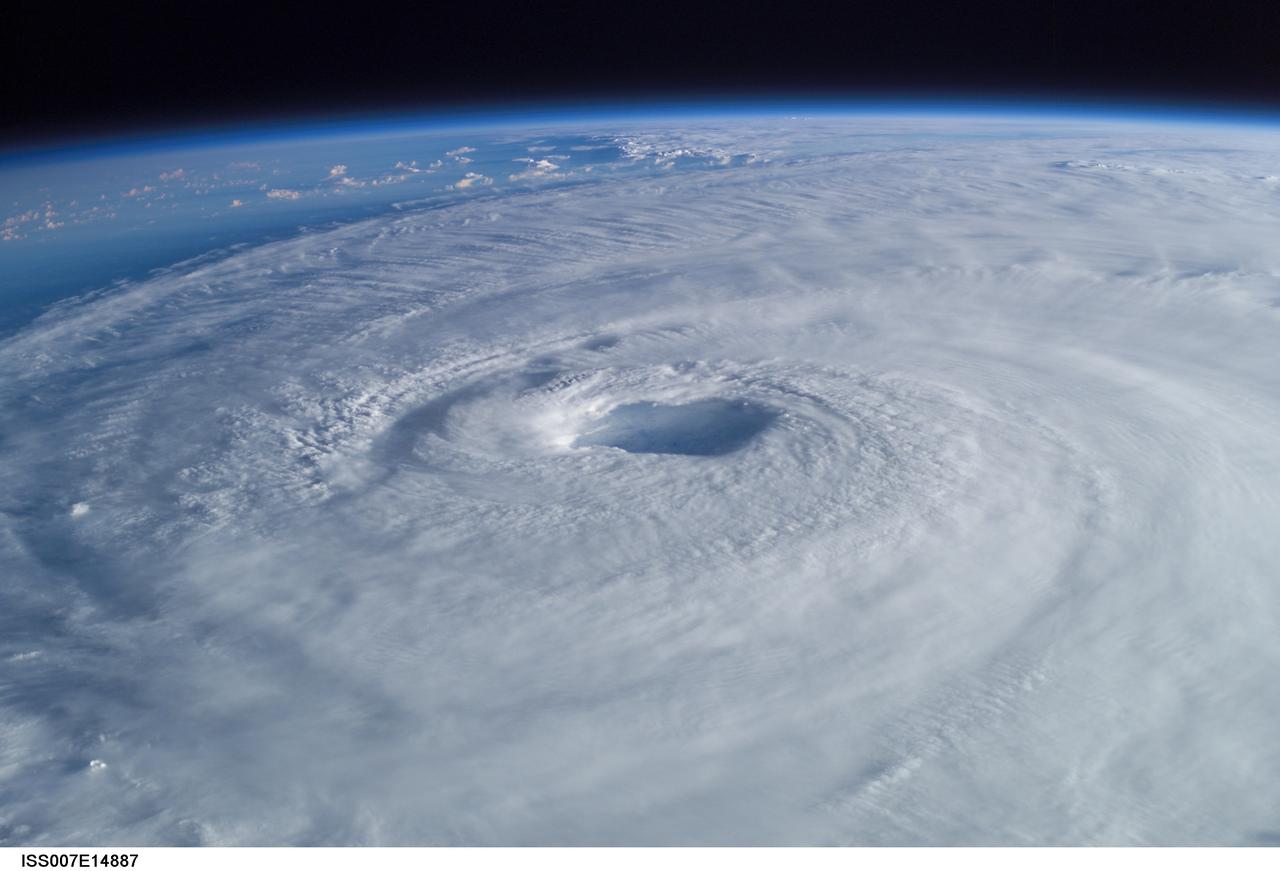
ISS007-E-14887 (15 September 2003) --- This view of Hurricane Isabel was taken by one of the Expedition 7 crewmembers onboard the International Space Station (ISS).

ISS007-E-10974 (27 July 2003) --- Photographed by an Expedition 7 crewmember onboard the International Space Station (ISS), this image shows the limb of the Earth at the bottom transitioning into the orange-colored troposphere, the lowest and most dense portion of the Earth's atmosphere. The troposphere ends abruptly at the tropopause, which appears in the image as the sharp boundary between the orange- and blue- colored atmosphere. The silvery-blue noctilucent clouds extend far above the Earth's troposphere. The sliver of the setting moon is visible at upper right.