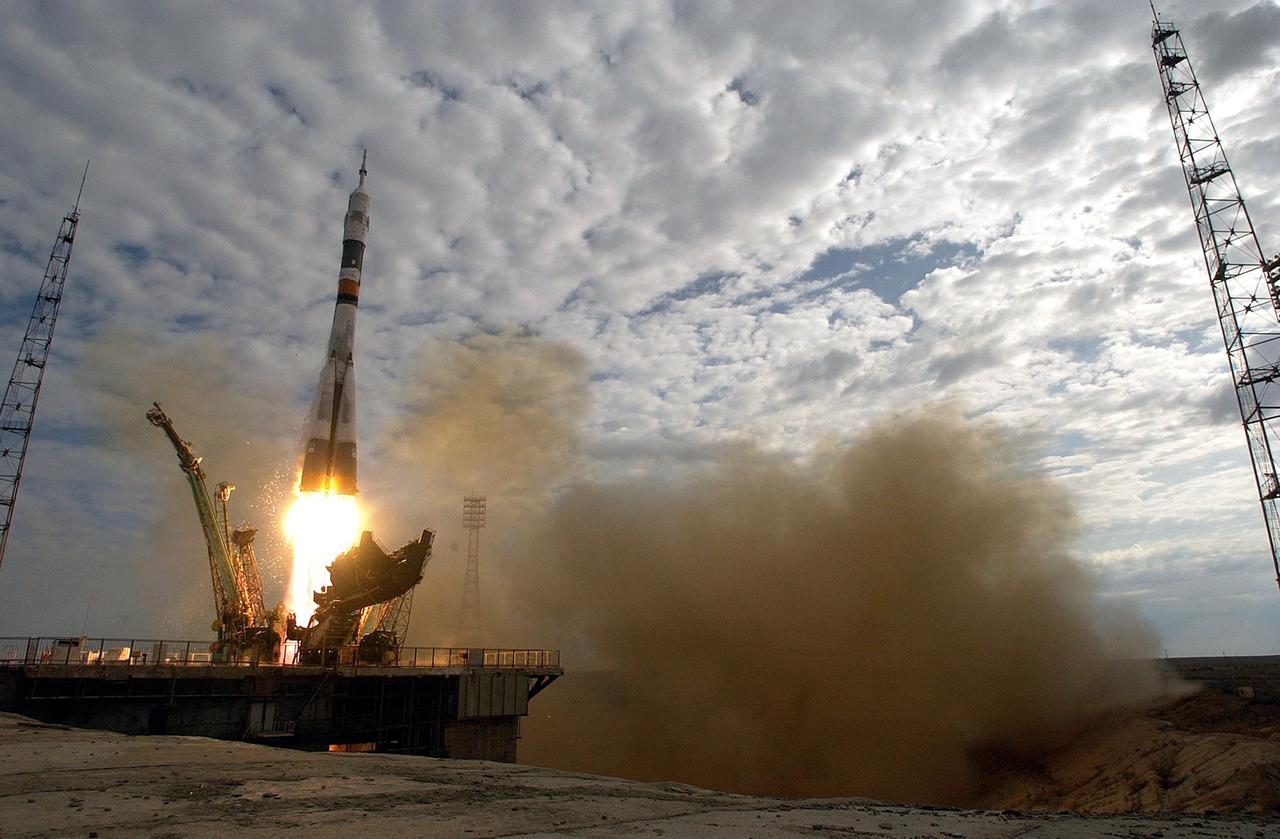
Destined for the International Space Station (ISS), a Soyez TMA-1 spacecraft launches from the Baikonur Cosmodrome, Kazakhstan on April 26, 2003. Aboard are Expedition Seven crew members, cosmonaut Yuri I. Malenchenko, Expedition Seven mission commander, and Astronaut Edward T. Lu, Expedition Seven NASA ISS science officer and flight engineer. Expedition Six crew members returned to Earth aboard the Russian spacecraft after a 5 and 1/2 month stay aboard the ISS. Photo credit: NASA/Scott Andrews
International Space Station (ISS)
JOHNSON SPACE CENTER, HOUSTON, TEXAS -- (ISS006-S-002) (From left) Astronauts Donald R. Pettit, Expedition Six flight engineer, and Kenneth D. Bowersox, mission commander; and cosmonaut Nikolai M. Budarin, flight engineer, attired in training versions of the Shuttle launch and entry suit, pause from their training schedule for a crew portrait.  The three will be launched to the International Space Station (ISS) in late autumn of this year aboard the Space Shuttle Endeavour.  Budarin represents Rosaviakosmos.
KSC-02pd1674
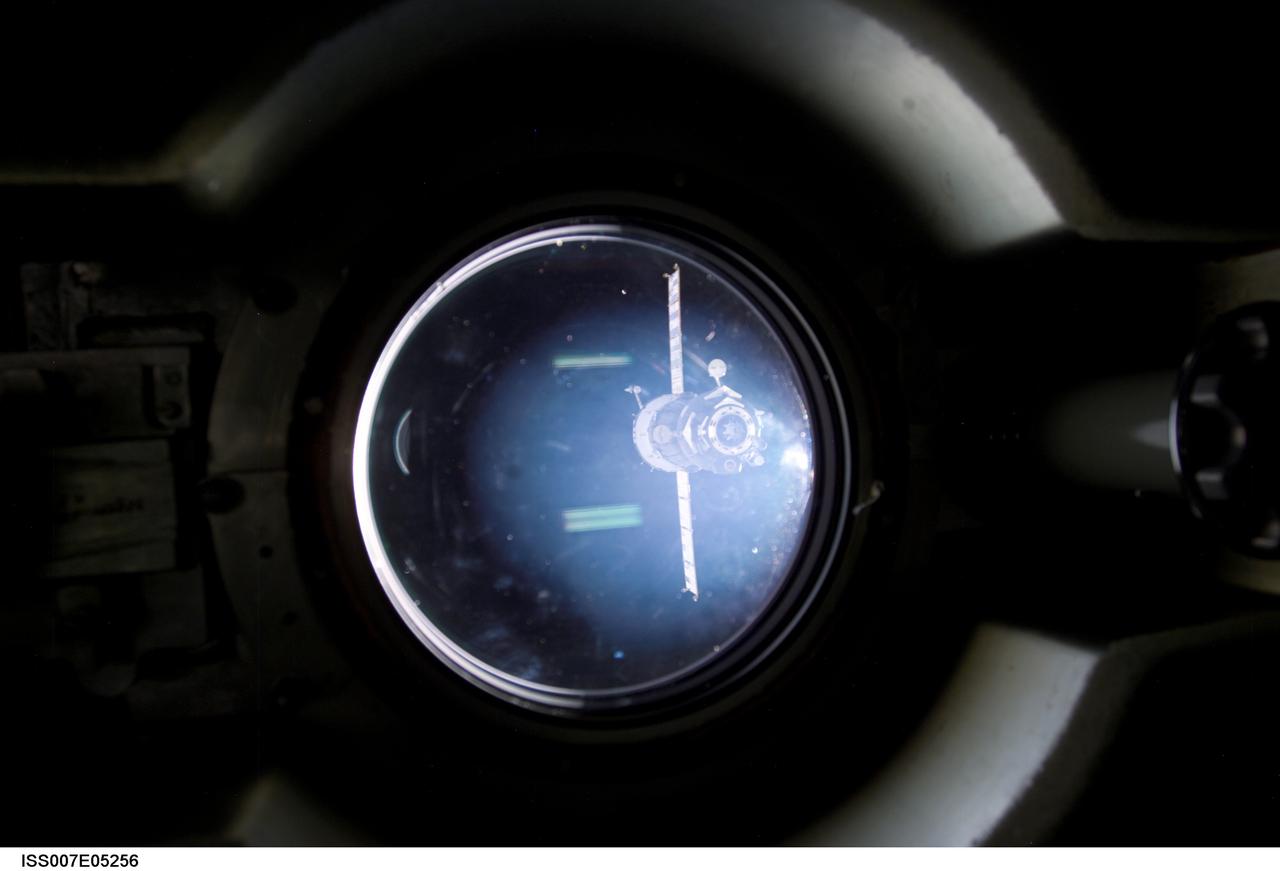
Expedition Seven photographed the Soyez TMA-1 Capsule through a window of the International Space Station (ISS) as it departed for Earth. Aboard were Expedition Six crew members, astronauts Kerneth D. Bowersox and Donald R. Pettit, and cosmonaut Nikolai M. Budarin. Expedition Six served a 5 and 1/2 month stay aboard the ISS, the longest stay to date.
International Space Station (ISS)
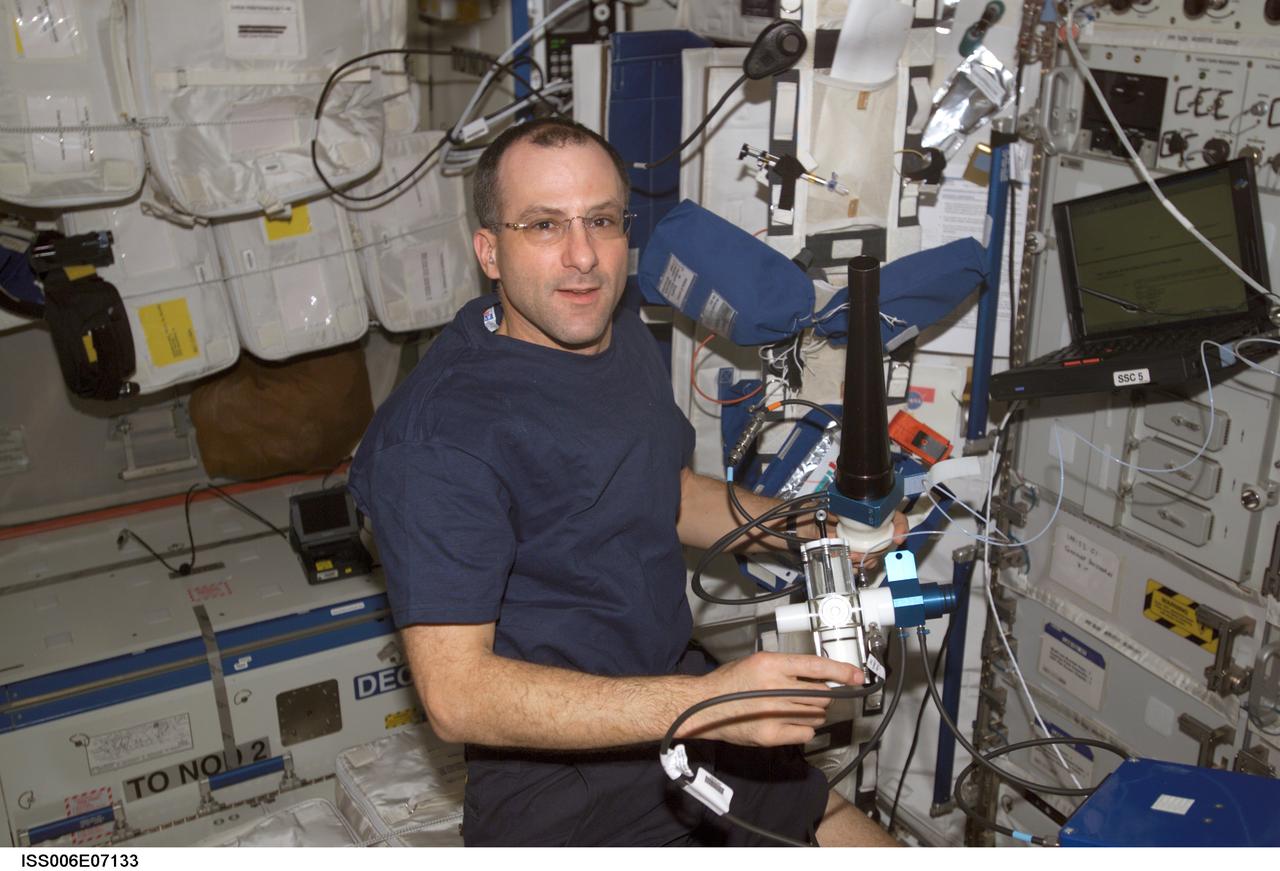
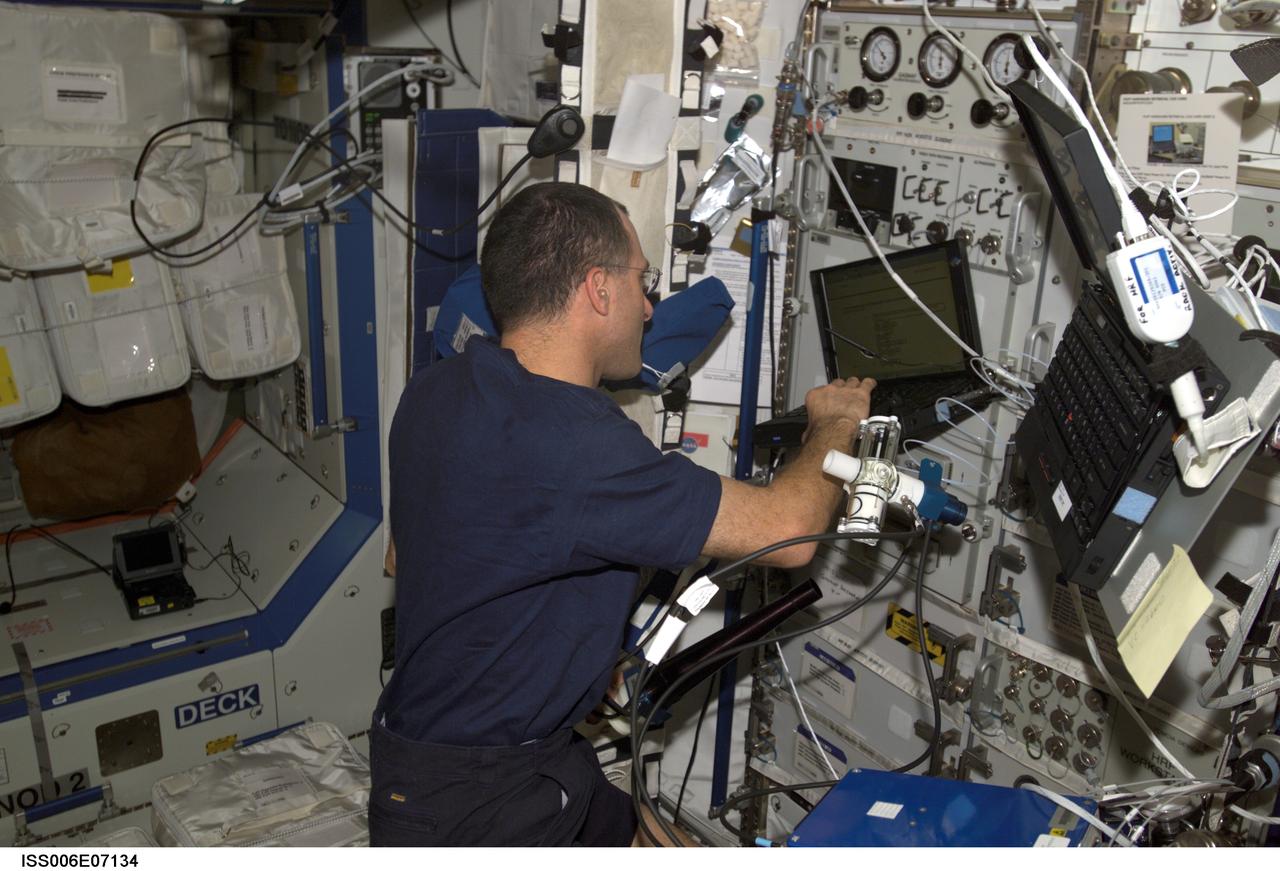
In this International Space Station (ISS) onboard photo, Expedition Six Science Officer Donald R. Pettit works to set up the Pulmonary Function in Flight (PuFF) experiment hardware in the Destiny Laboratory. Expedition Six is the fourth and final crew to perform the PuFF experiment. The PuFF experiment was developed to better understand what effects long term exposure to microgravity may have on the lungs. The focus is on measuring changes in the everness of gas exchange in the lungs, and on detecting changes in respiratory muscle strength. It allows astronauts to measure blood flow through the lungs, the ability of the lung to take up oxygen, and lung volumes. Each PuFF session includes five lung function tests, which involve breathing only cabin air. For each planned extravehicular (EVA) activity, a crew member performs a PuFF test within one week prior to the EVA. Following the EVA, those crew members perform another test to document the effect of exposure of the lungs to the low-pressure environment of the space suits. This experiment utilizes the Gas Analyzer System for Metabolic Analysis Physiology, or GASMAP, located in the Human Research Facility (HRF), along with a variety of other Puff equipment including a manual breathing valve, flow meter, pressure-flow module, pressure and volume calibration syringes, and disposable mouth pieces.
International Space Station (ISS)
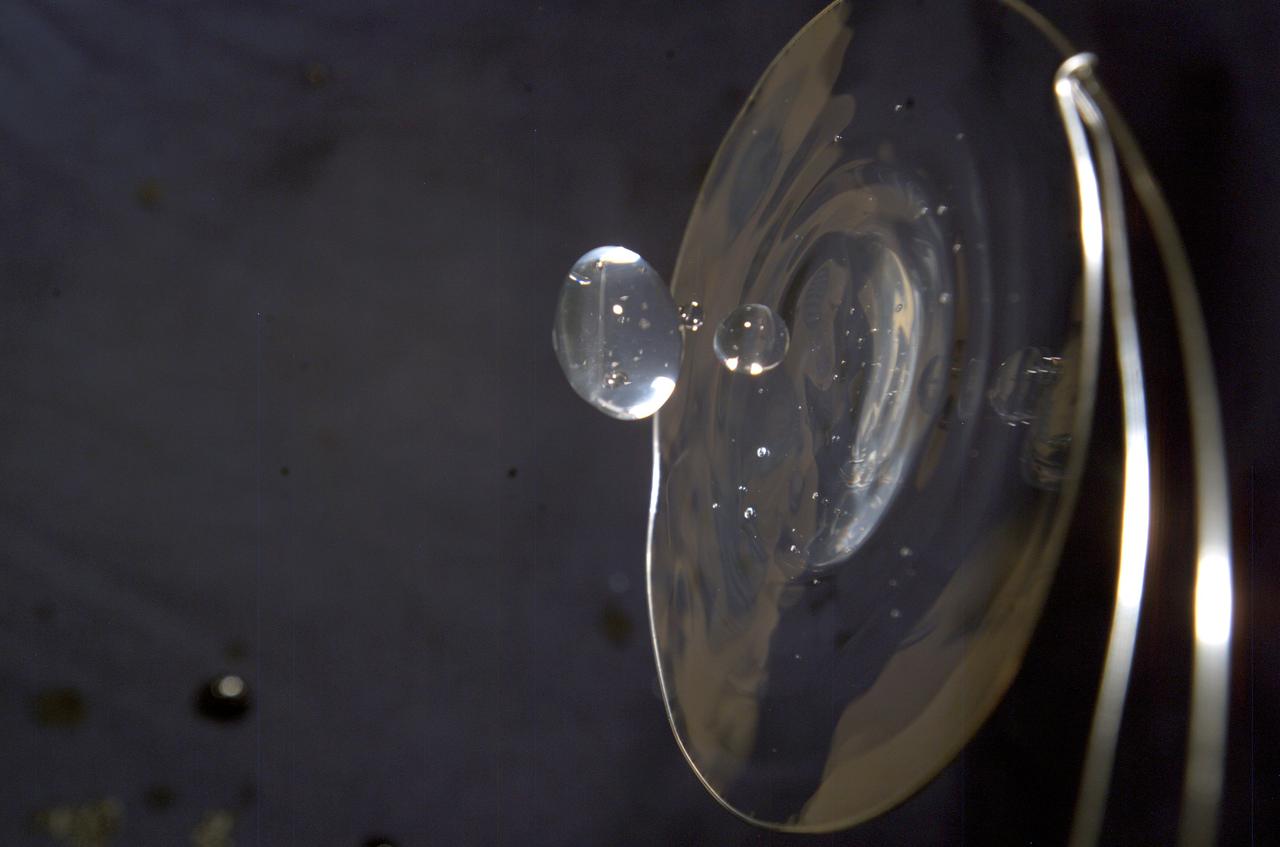
Astronaut Donald R. Pettit, Expedition Six NASA ISS science officer, photographed this view of a surface tension demonstration using water that is held in place by a metal loop. The experiment took place in the Destiny laboratory on the International Space Station (ISS). The Expedition Six crew was delivered to the station via the Space Shuttle Orbiter Endeavor STS-113 mission which was launched on November 23, 2002.
International Space Station (ISS)
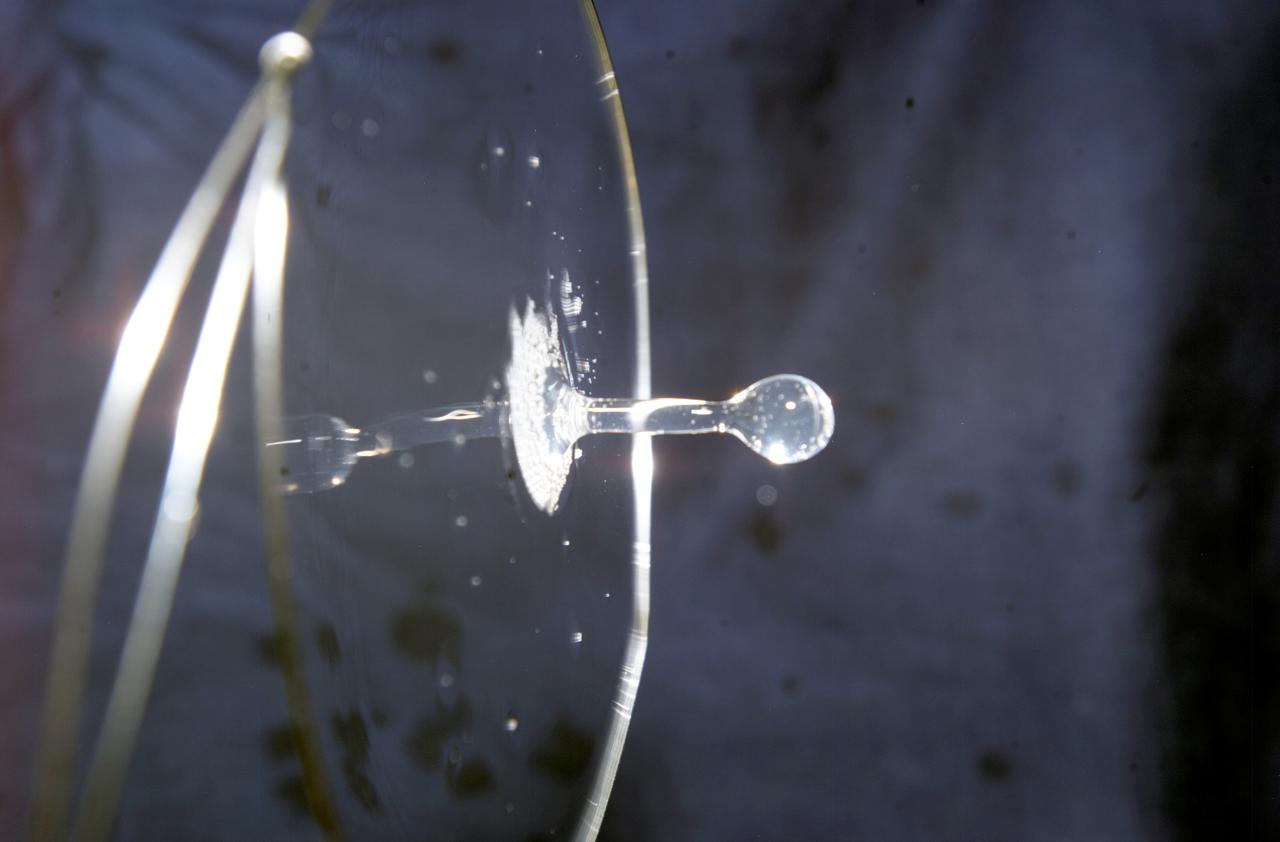
Astronaut Donald R. Pettit, Expedition Six NASA ISS science officer, photographed this view of a surface tension demonstration using water that is held in place by a metal loop. The experiment took place in the Destiny laboratory on the International Space Station (ISS). The Expedition Six crew was delivered to the station via the Space Shuttle Orbiter Endeavor STS-113 mission which was launched on November 23, 2002.
International Space Station (ISS)
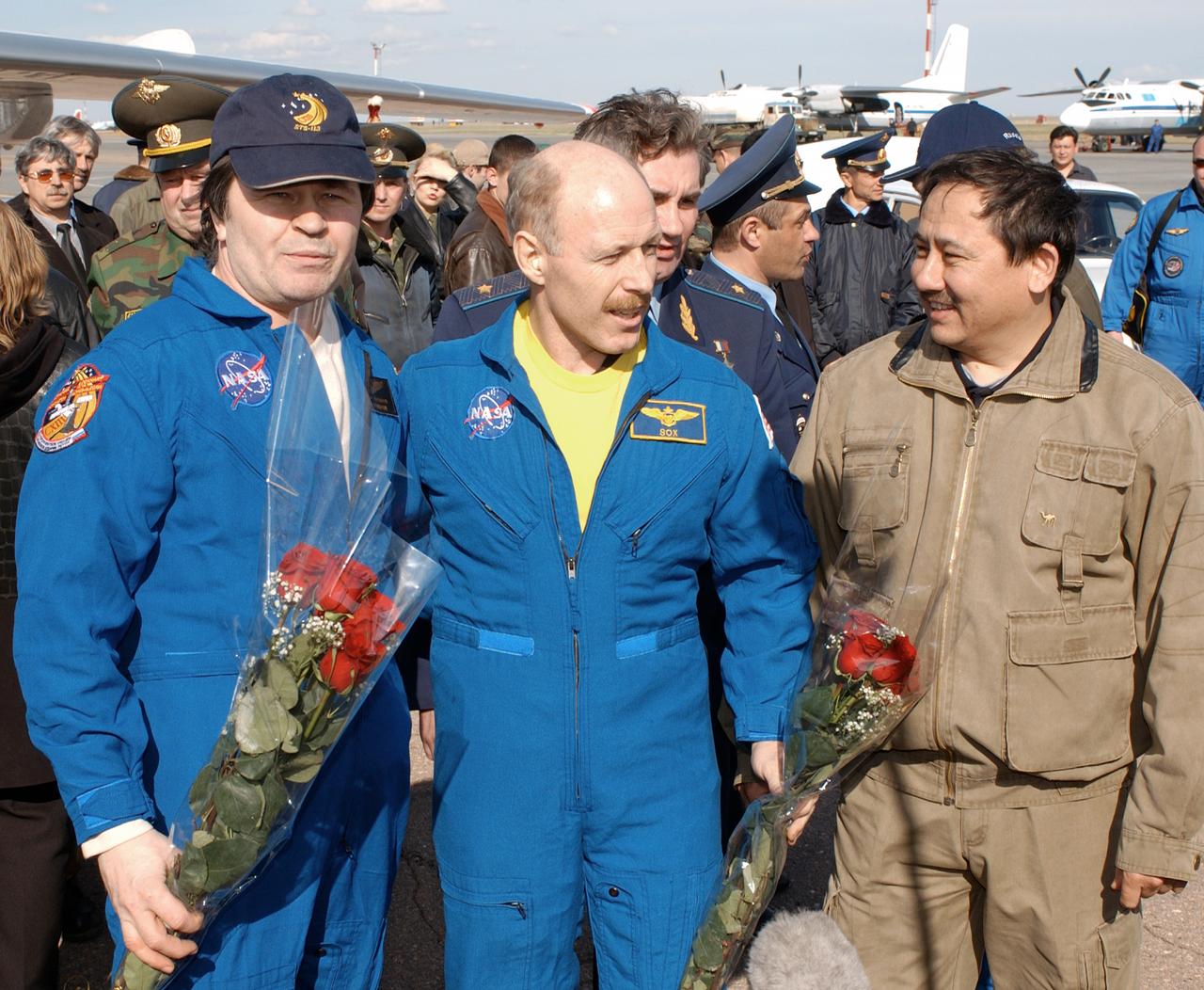
May 4, 2003, Astana, Kazakhstan.  Expedition Six Commander Ken Bowersox (C), Flight Engineer Nikolai Budarin (L) and NASA ISS Science Officer Don Pettit (not pictured) are welcomed to Kazakhstan by Cosmonaut Talgat Musabayev. The Expedition Six Soyuz capsule landed in Kazakhstan.  Photo Credit: "NASA/Bill Ingalls"
Expedition Six landing views
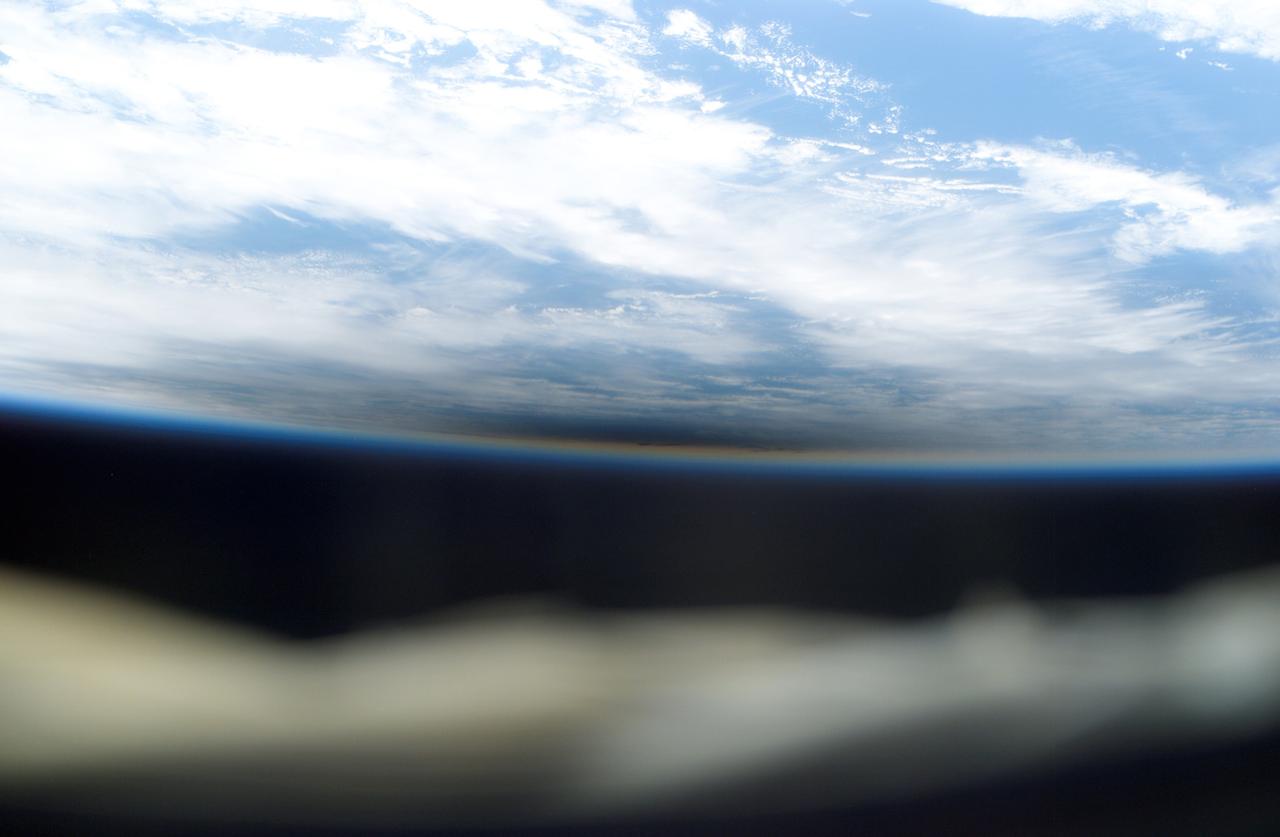
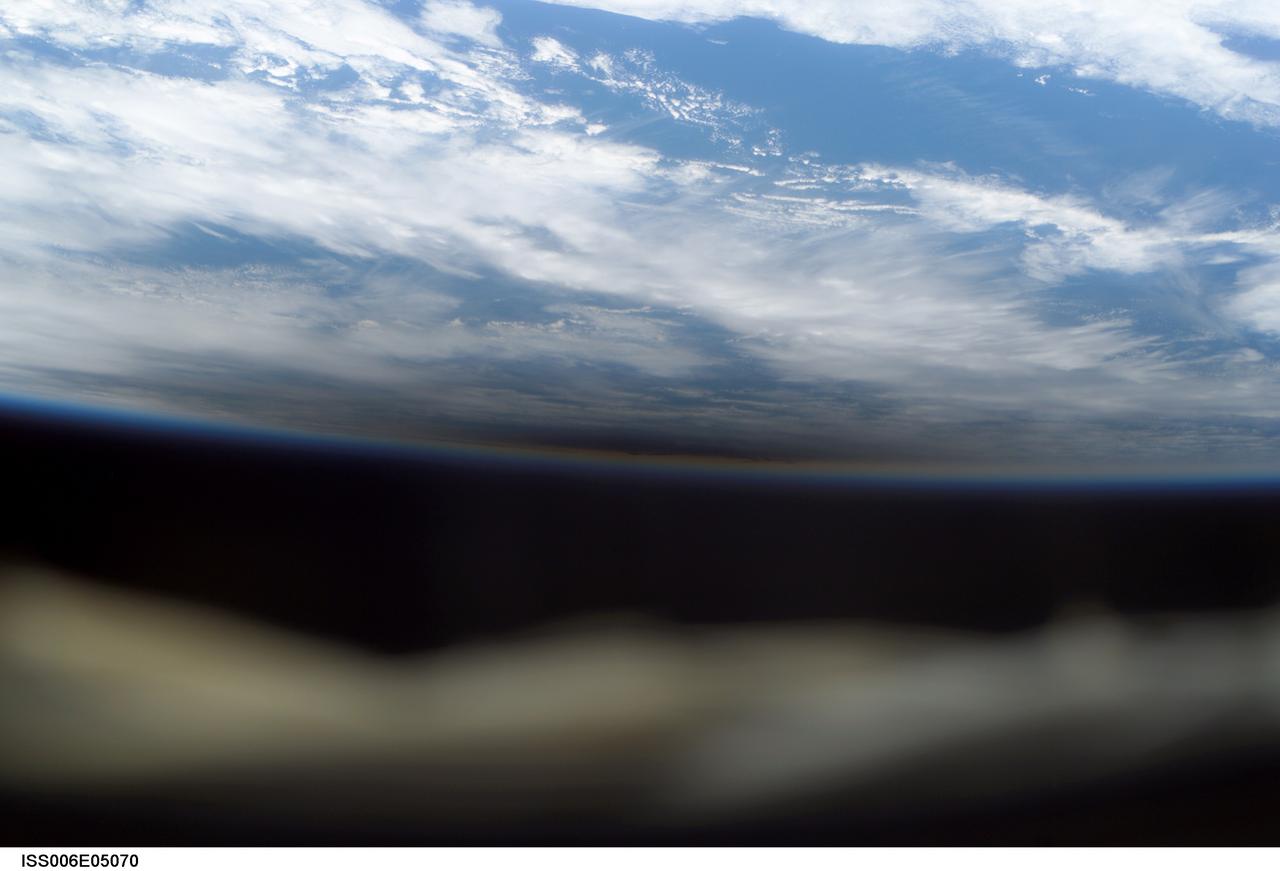
International Space Station (ISS) crew members were able to document a rare occurrence. The dark area near the center of the frame is actually a shadow cast by the moon during the total solar eclipse of December 4, 2002. The shadow obscures an area of cloud cover. The Station, with three Expedition Six crew members aboard, was over the Indian Ocean at the time of the eclipse.
Earth Science
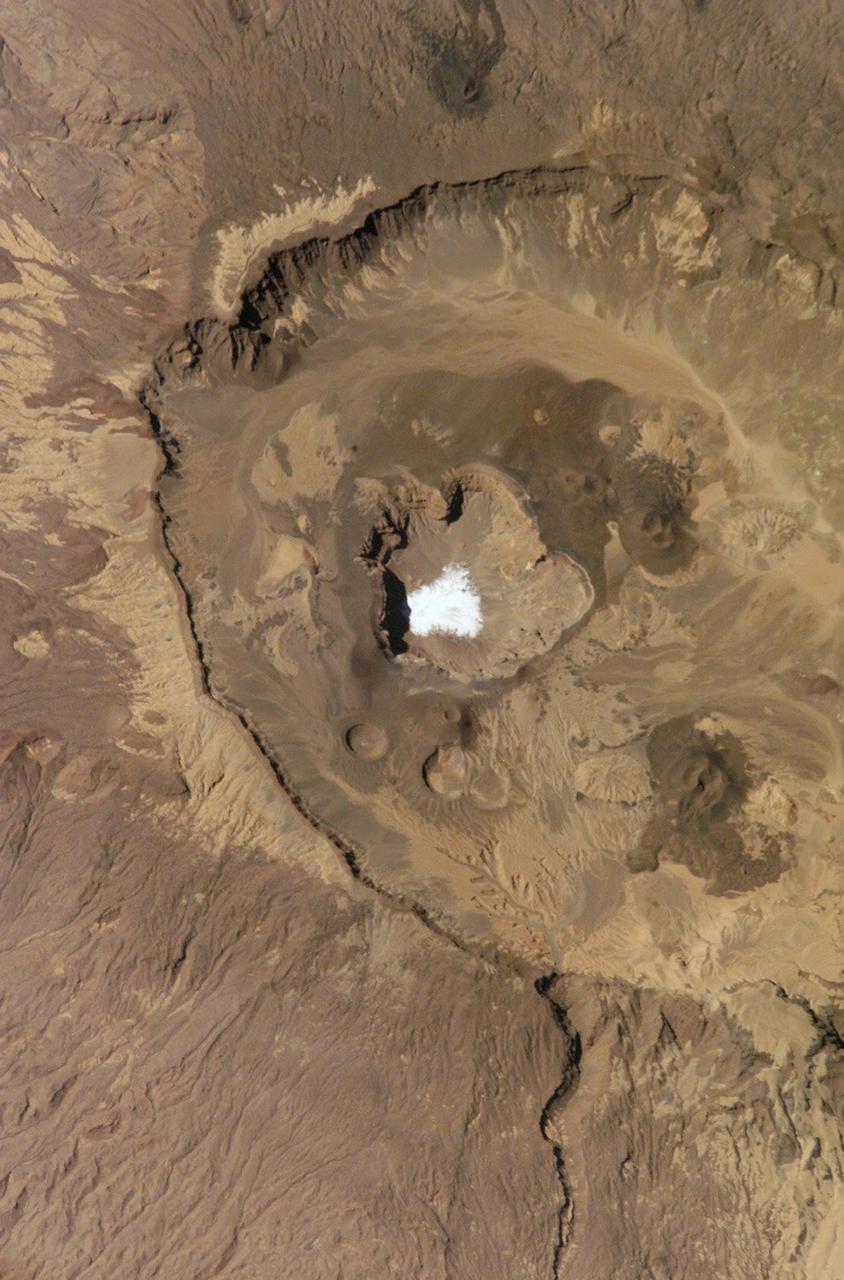
This is a view of the Emi Koussi Caldera captured by the Expedition Six Crew Observation (CEO) experiment aboard the International Space Station (ISS). Rising 2.3 km above the surrounding sandstone plains, Emi Koussi is a 6.5 km wide volcano located at the south end of the Tibesti Mountains in the central Sahara desert. The volcano is one of several in the Tibesti massif and has been used as a close analog to the famous Martian volcano Elysium Mons. Major charnels can be seen on volcanoes on both planets that indicate low points in caldera rims where lava spilled out of the pre-collapsed craters.
Earth Science
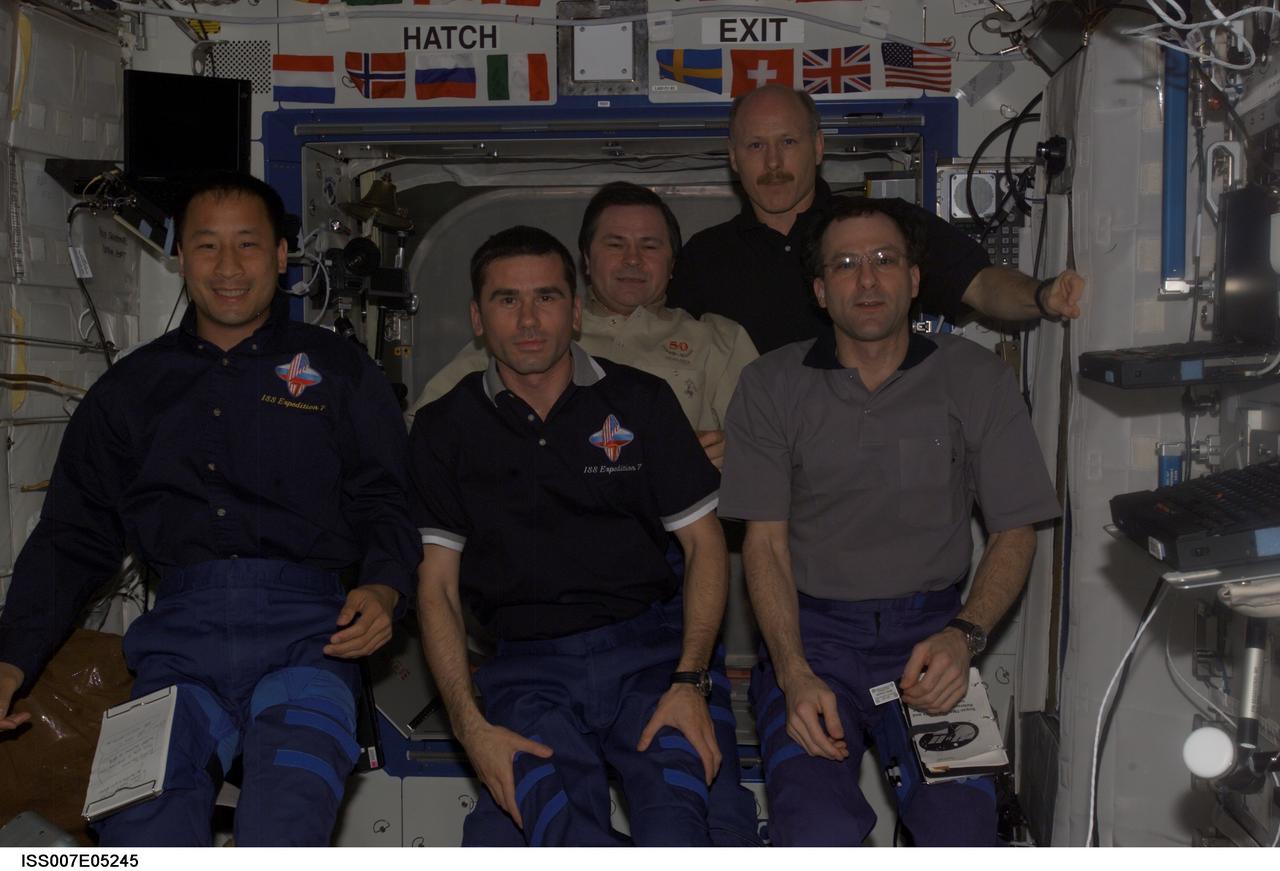
ISS007-E-05245 (3 May 2003) --- The Expedition Six and Seven crews pose for a group photo in the Destiny laboratory on the International Space Station (ISS). From the left (front row) are astronaut Edward T. Lu, Expedition Seven NASA ISS science officer and flight engineer; cosmonaut Yuri I. Malenchenko, Expedition Seven mission commander; and astronaut Donald R. Pettit, Expedition Six NASA ISS science officer. From the left (back row) are cosmonaut Nikolai M. Budarin, Expedition Six flight engineer, and astronaut Kenneth D. Bowersox, Expedition Six mission commander. Budarin and Malenchenko represent Rosaviakosmos.
Expedition Six and Seven crew in Destiny module
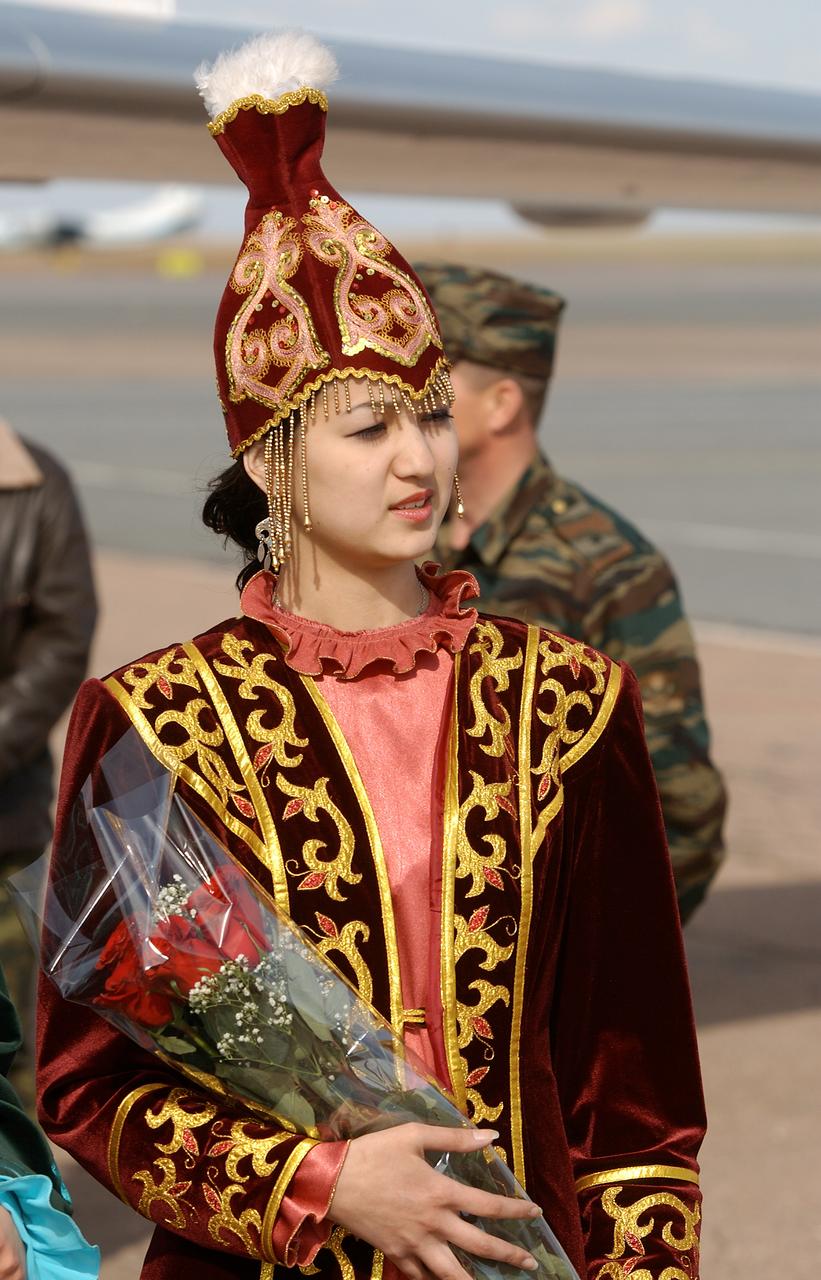
May 4, 2003, Astana, Kazakhstan.  One of three local Kazakh girls who were on hand at the Astana airport to welcome the Expedition Six crew with Roses after the crew landed on the Kazakh Steppe in their Soyuz capsule.  Photo Credit: "NASA/Bill Ingalls"
Expedition Six landing views
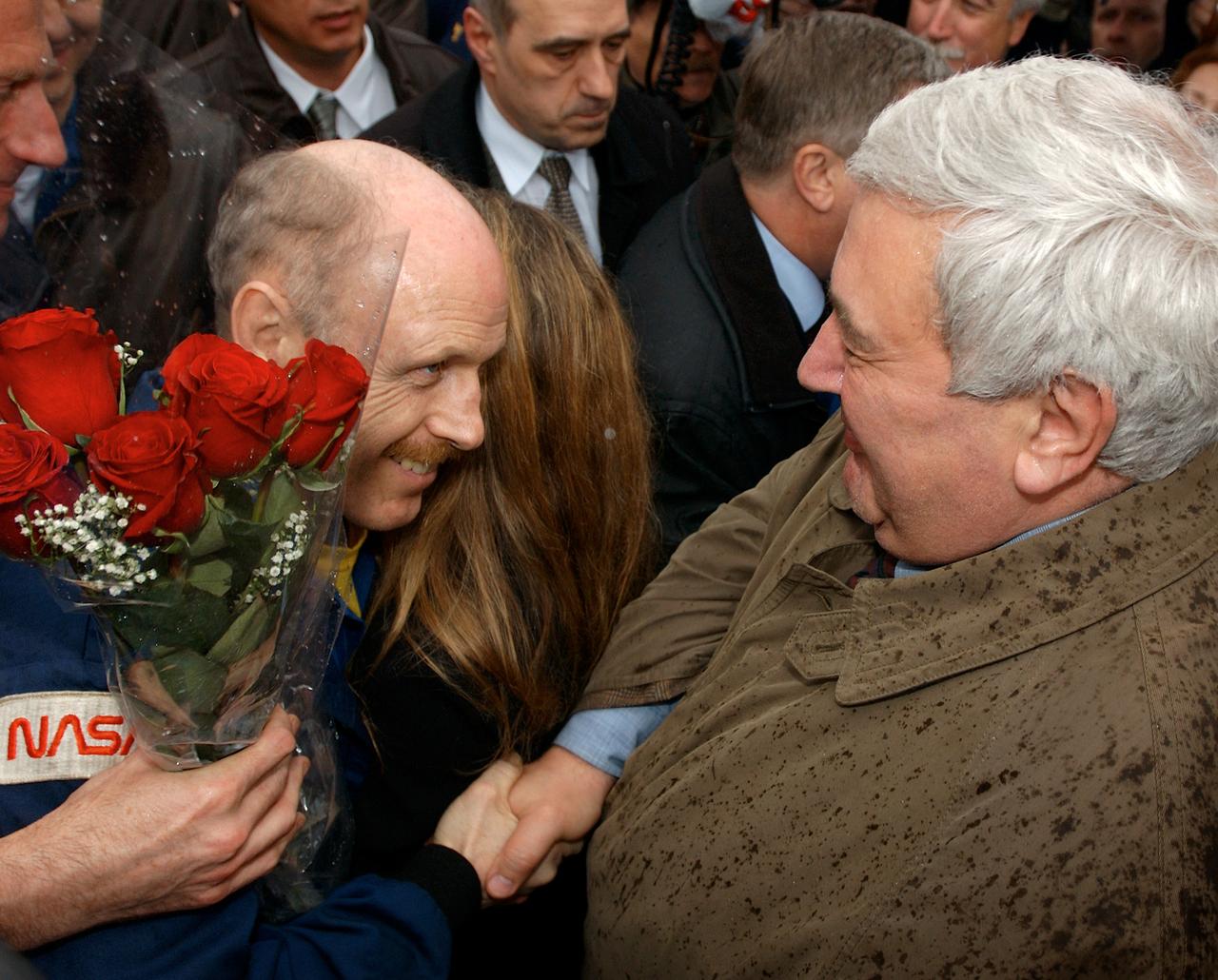
May 4, 2003, Star City, Russia.  Russian Space Agency Director Yuri Koptev shakes hands with Expedition Six Commander Ken Bowersox, as bowersox is also hugged by his wife Annie.  Photo Credit: "NASA/Bill Ingalls"
Expedition Six landing views
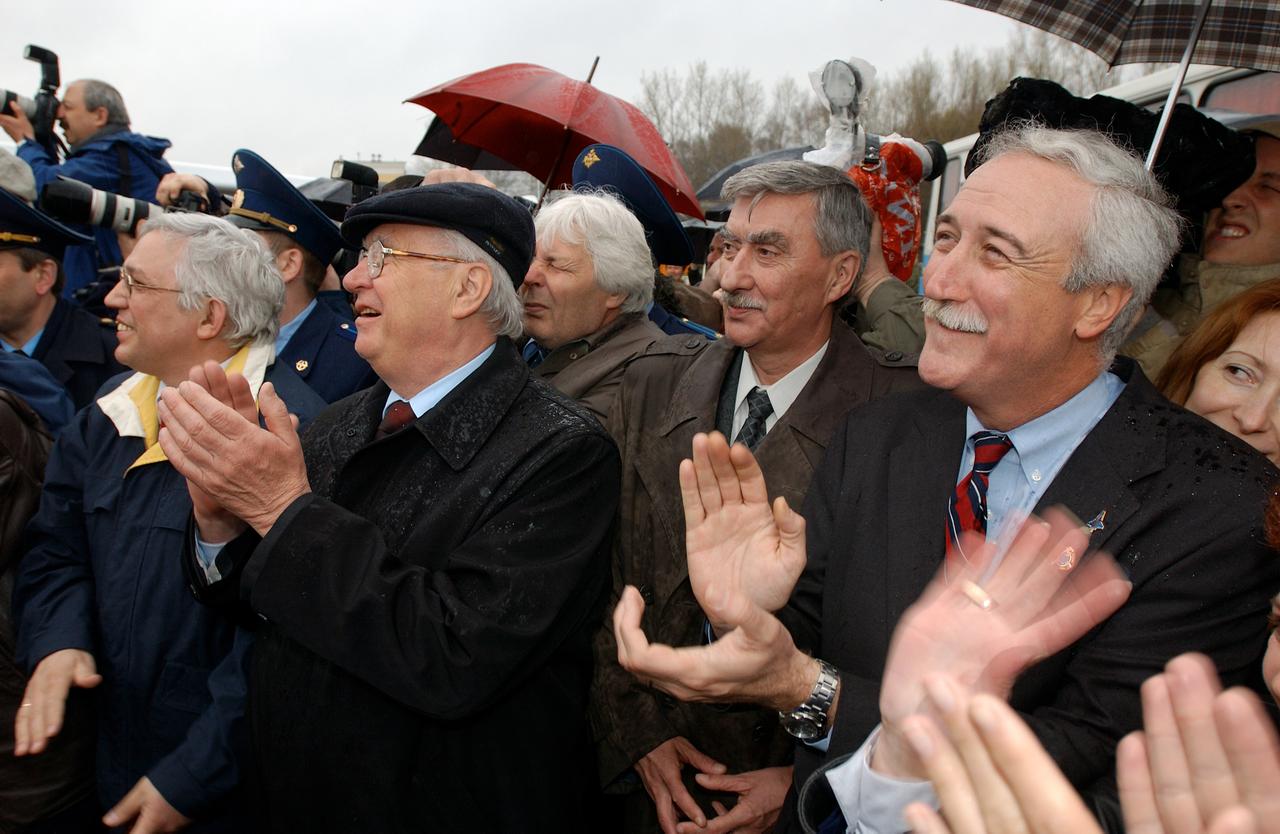
May 4, 2003, Star City, Russia.  NASA Administrator Sean O'Keefe (R) along with Russian Space officials welcomes the crew of Expedition Six as they return from Kazakhstan and the landing of their Soyuz capsule. Photo Credit: "NASA/Bill Ingalls"
Expedition Six landing views
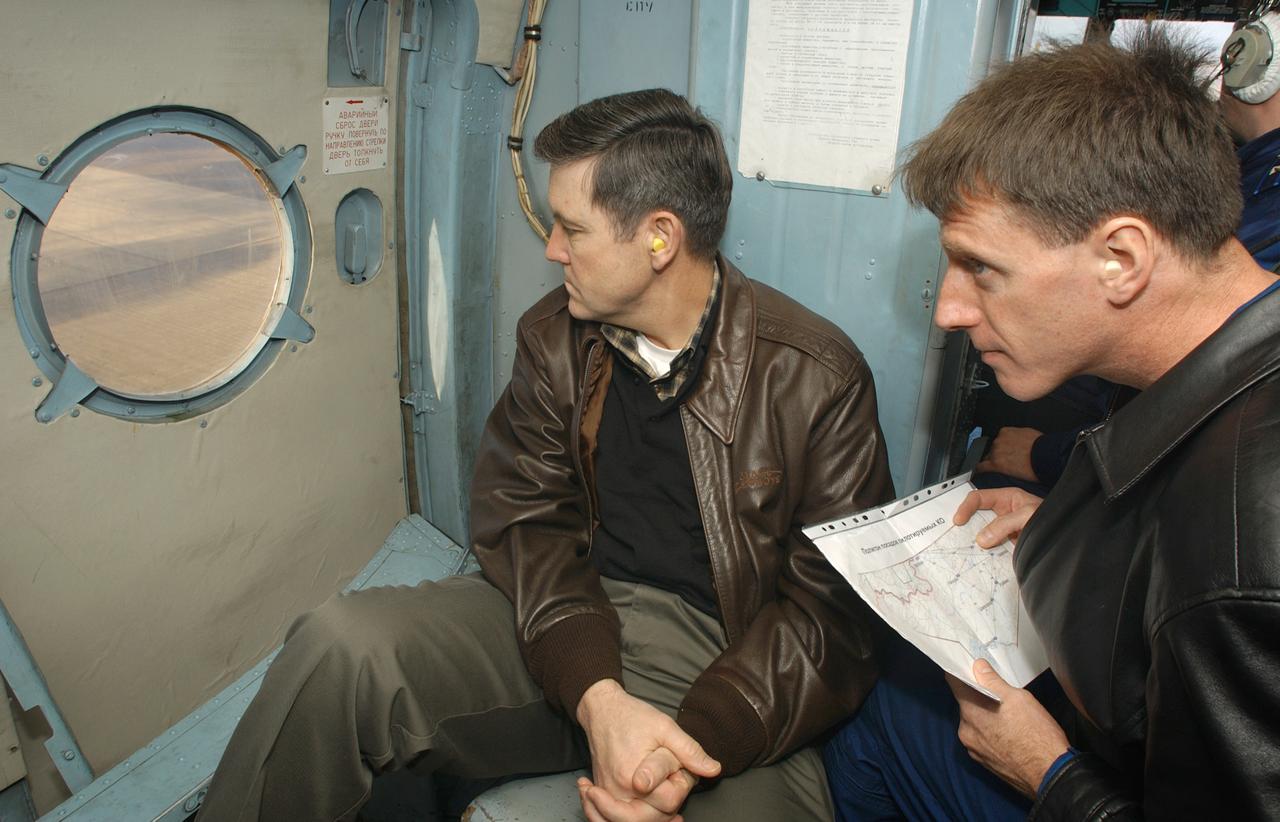
May 4, 2003, Kazakhstan.  From the seat of a Russian Helicopter, Bob Cabana (L), Director of Flight Crew Operations and Astronaut Michael Foale (R) look out over the Kazakh terrain for the Expedition Six Soyuz capsule after it's landing in Kazakhstan.  Photo Credit: "NASA/Bill Ingalls"
Expedition Six landing views
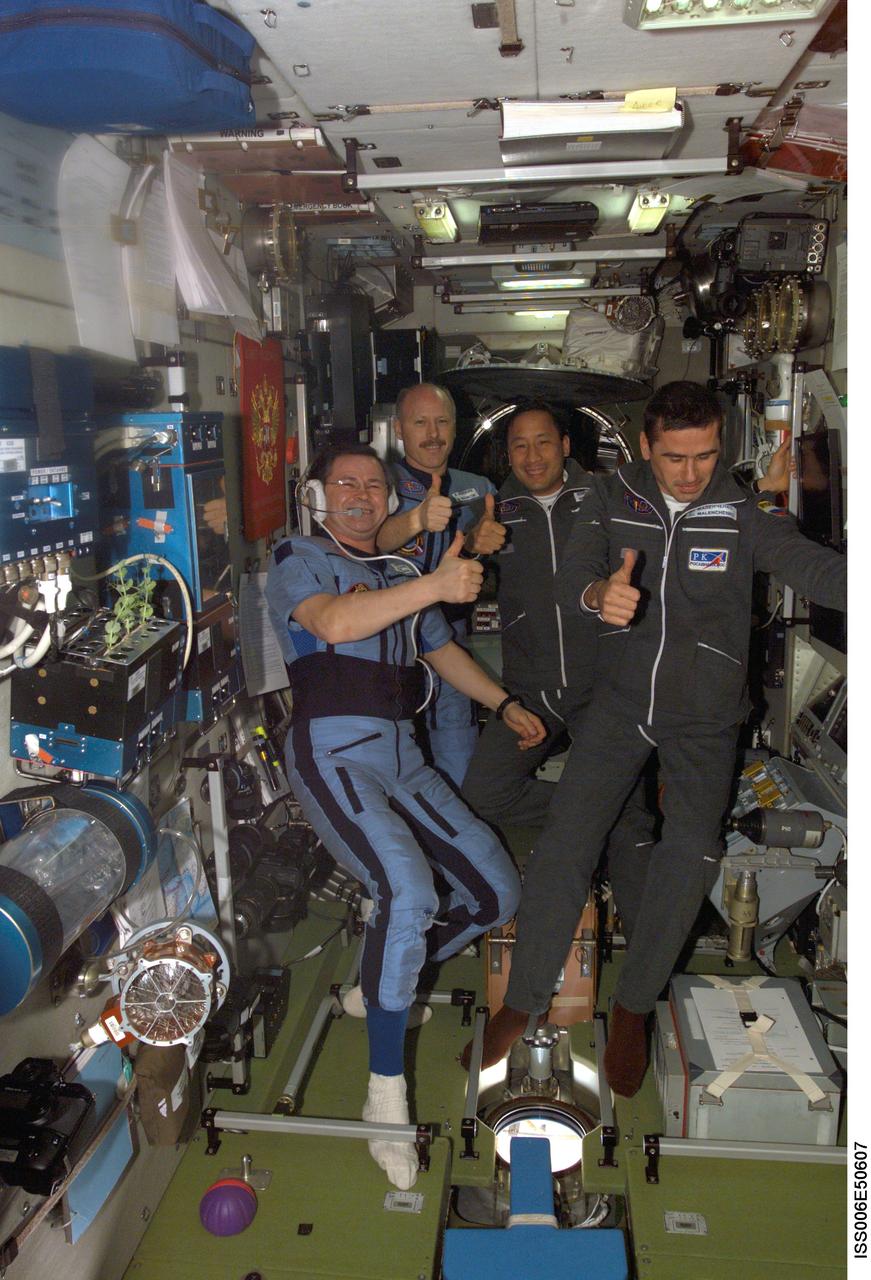
ISS006-E-50607 (28 April 2003) --- The Expedition Seven crewmembers pose with two of the Expedition Six crewmembers (blue suits) in the Zvezda Service Module on the International Space Station (ISS), photographed by astronaut Donald R. Pettit (out of view), Expedition Six NASA ISS science officer. From the left are cosmonaut Nikolai M. Budarin, Expedition Six flight engineer; astronaut Kenneth D. Bowersox, Expedition Six mission commander; astronaut Edward T. Lu, Expedition Seven NASA ISS science officer and flight engineer; and cosmonaut Yuri I. Malenchenko, Expedition Seven mission commander. Budarin and Malenchenko represent Rosaviakosmos.
Expedition Seven crewmembers pose with two of the Expedition Six crewmembers in the SM
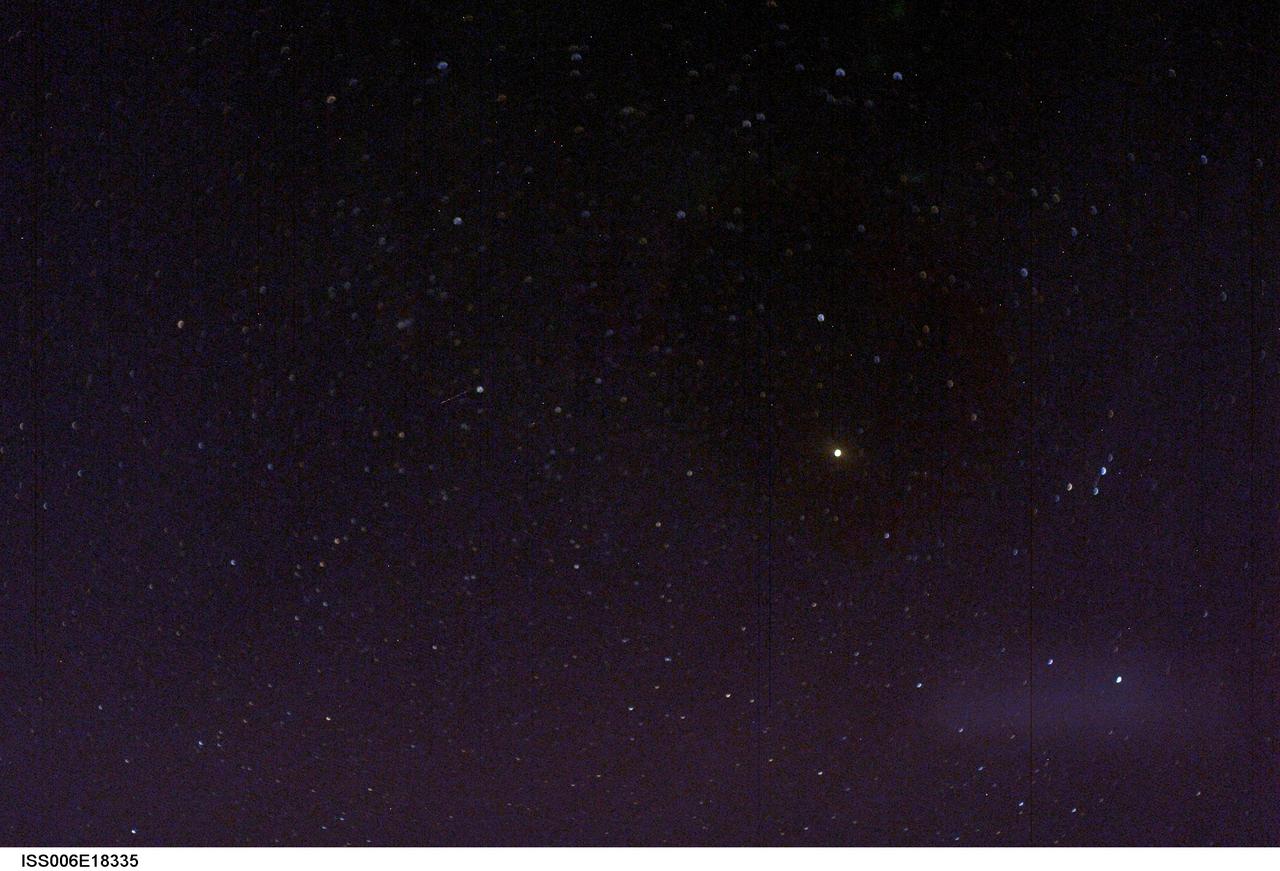
ISS006-E-18335 (7 January 2003) --- View of stars photographed by an Expedition Six crewmember on the International Space Station (ISS).
View of the stars taken during Expedition Six
ISS006-E-18298 (5 January 2003) --- View of stars photographed by an Expedition Six crewmember on the International Space Station (ISS).
View of the stars taken during Expedition Six
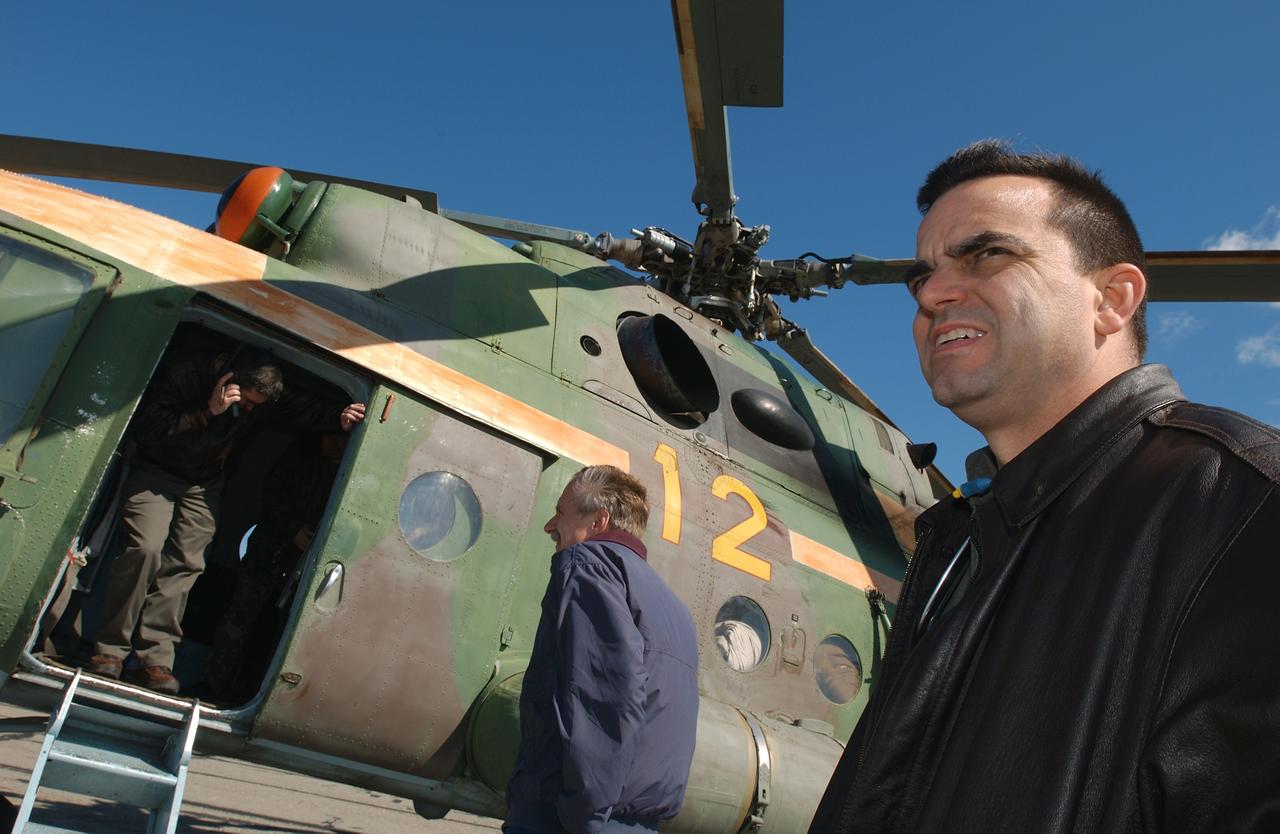
May 4, 2003, Kazakhstan.   Bob Cabana (L in door), Director of Flight Crew Operations talks with NASA colleagues on the satellite phone from a Russian helicopter while Bill Gerstenmaier (center), I.S.S. Program Manager and J.D. Polk (R), Expedition Six Flight Surgeon wait to get word if they will be continuing on to the landing site after a refueling stop.  Photo Credit: "NASA/Bill Ingalls"
Expedition Six landing views
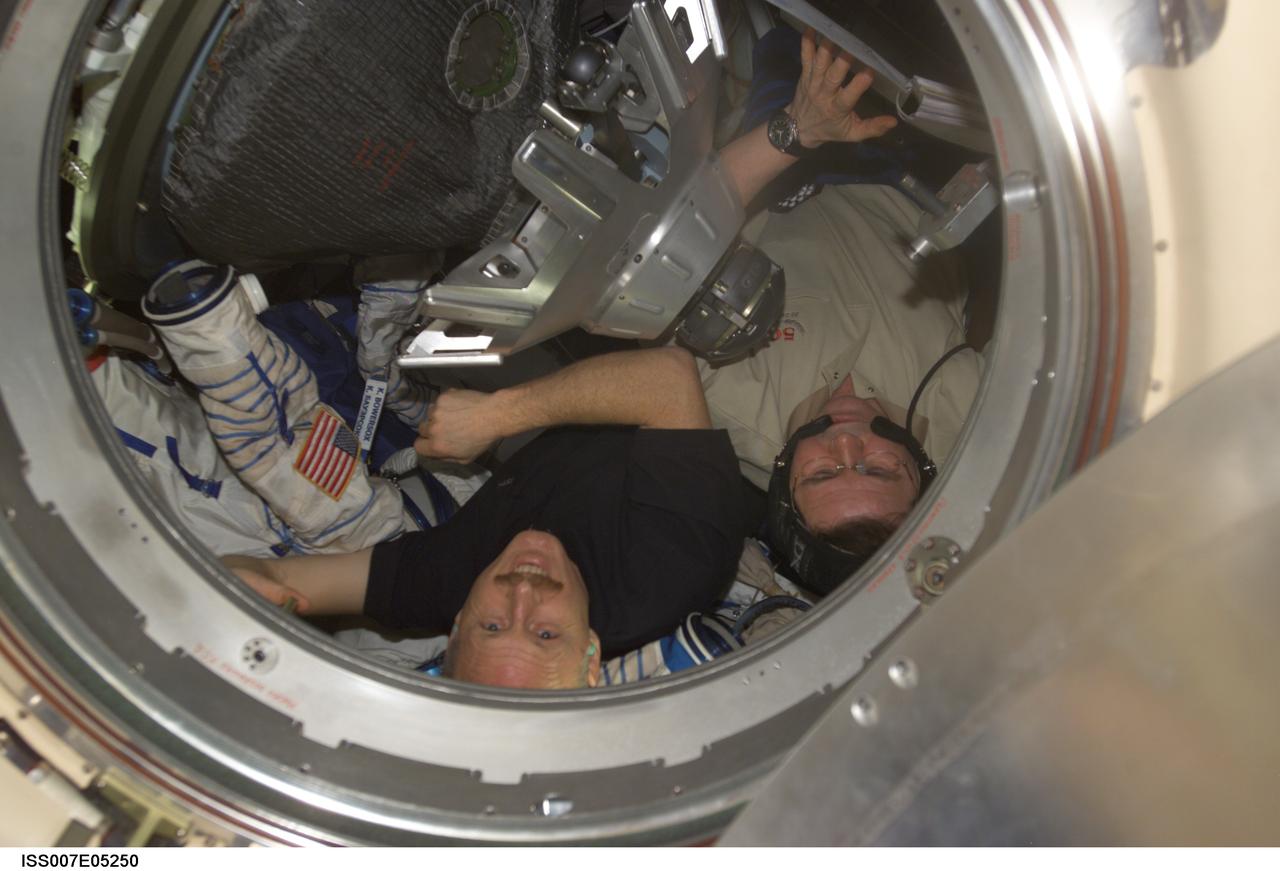
ISS007-E-05250 (3 May 2003) --- Astronaut Kenneth D. Bowersox (left), Expedition Six mission commander, and cosmonaut Nikolai M. Budarin, flight engineer, are pictured in a Soyuz spacecraft docked to the International Space Station (ISS). Budarin represents Rosaviakosmos.
Expedition Six crew in the Soyuz spacecraft
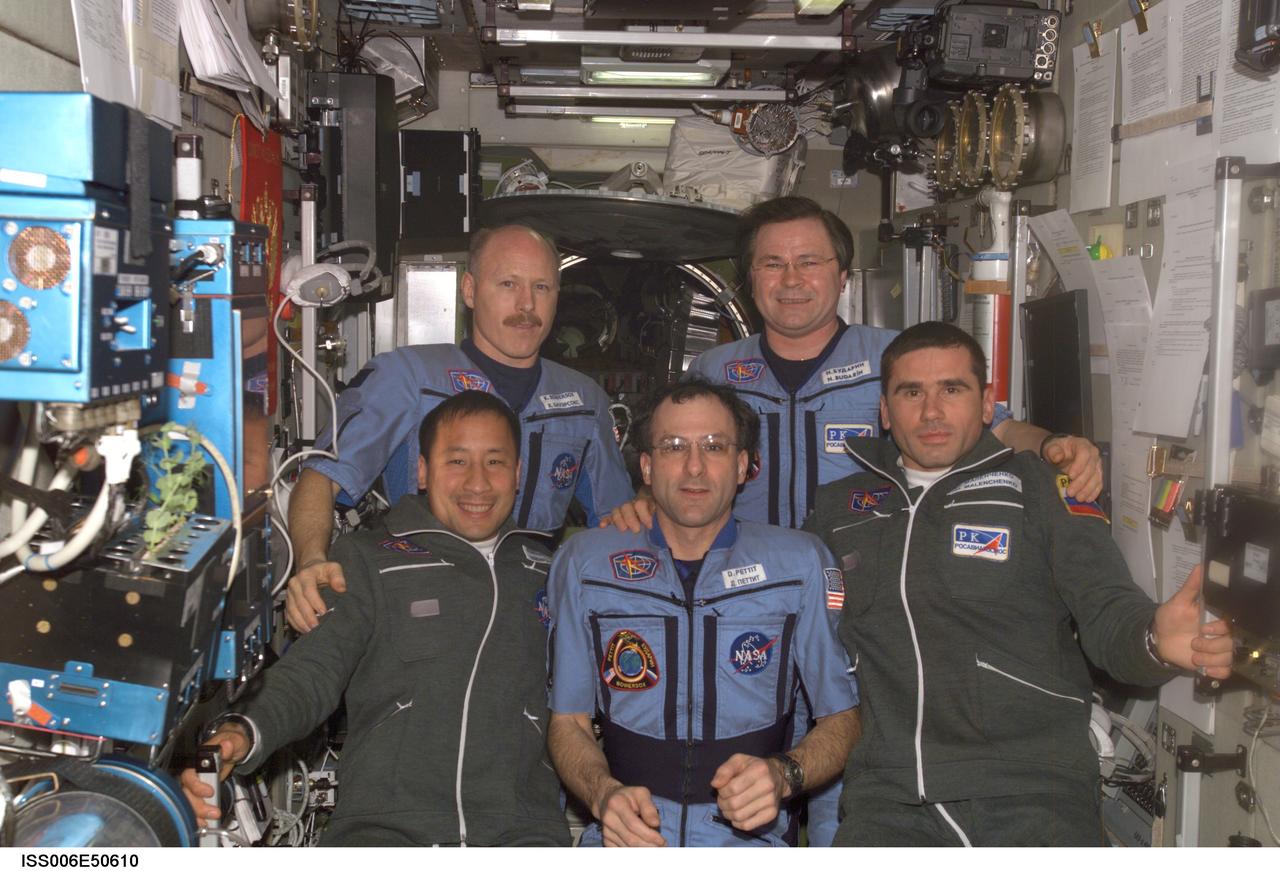
ISS006-E-50610 (28 April 2003) --- The Expedition Six and Seven crews pose for a group photo in the Zvezda Service Module on the International Space Station (ISS). From the left (front row) are astronauts Edward T. Lu, Expedition Seven NASA ISS science officer and flight engineer; Donald R. Pettit, Expedition Six NASA ISS science officer; and cosmonaut Yuri I. Malenchenko, Expedition Seven mission commander. From the left (back row) are astronaut Kenneth D. Bowersox, Expedition Six mission commander, and cosmonaut Nikolai M. Budarin, Expedition Six flight engineer. Budarin and Malenchenko represent Rosaviakosmos.
Expedition Six and Seven crews pose for a group photo in the SM
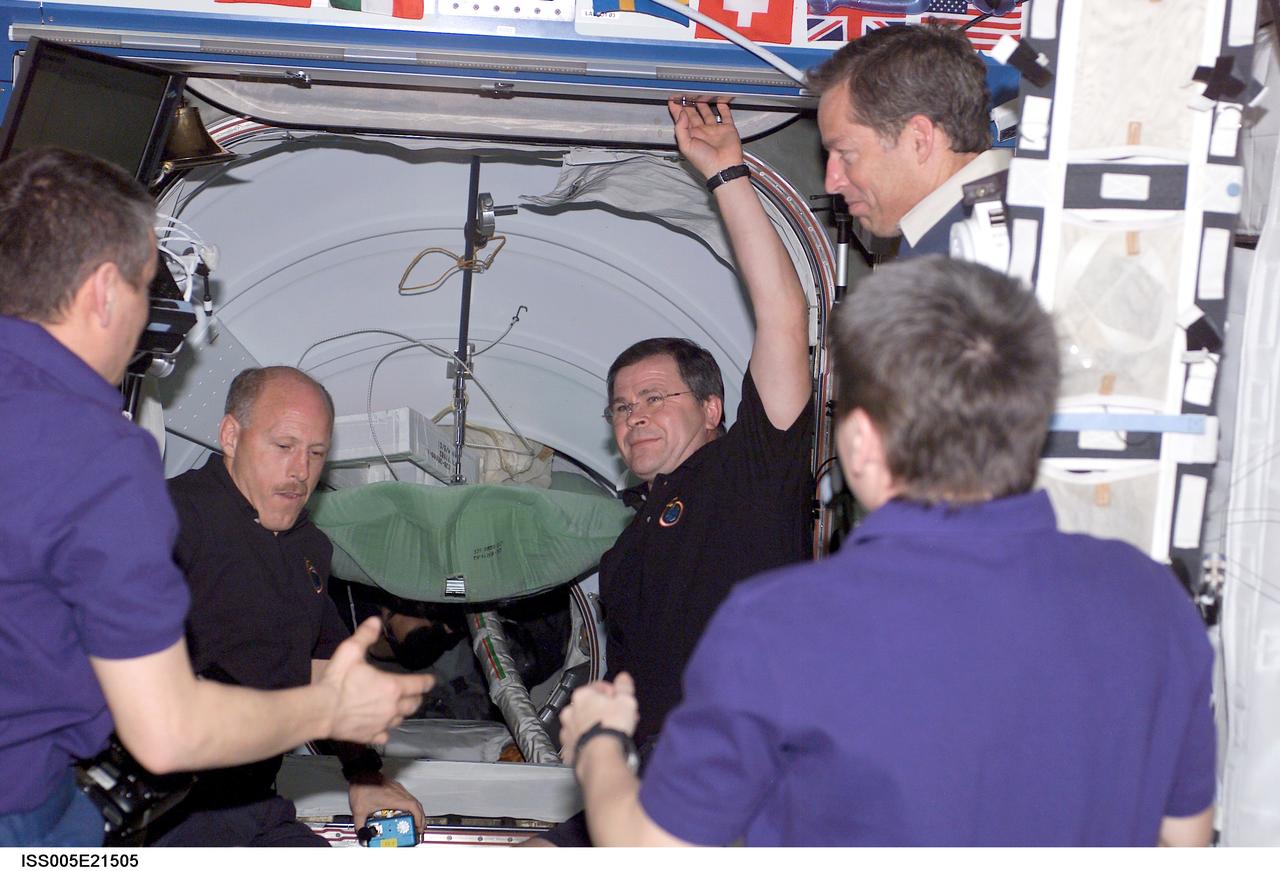
ISS005-E-21505 (25 November 2002) --- The Expedition Five crewmembers greet the Expedition Six and STS-113 crewmembers when the hatch to the Pressurized Mating Adapter 2 (PMA-2) on the International Space Station (ISS) was opened for the STS-113 ingress. Pictured are cosmonaut Valery G. Korzun (back to camera, left), Expedition Five mission commander; astronaut Peggy A. Whitson (back to camera, right), Expedition Five NASA ISS science office. Pictured, left to right (background), are astronaut Kenneth D. Bowersox, Expedition Six mission commander; cosmonaut Nikolai M. Budarin, Expedition Six flight engineer; and astronaut James D. Wetherbee, STS-113 mission commander.  Korzun and Budarin represent Rosaviakosmos.
Expedition Five crewmembers greet Expedition Six and STS-113 crewmembers
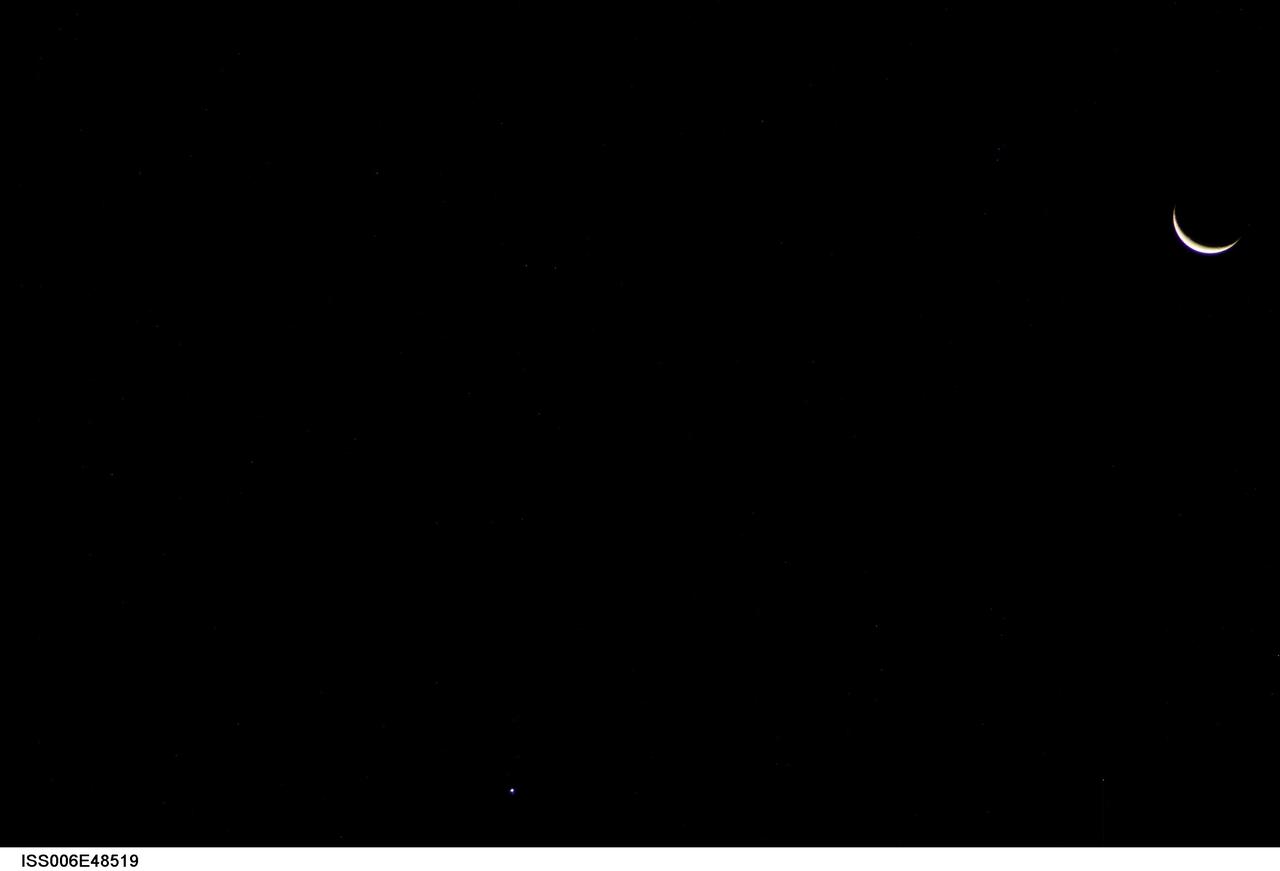
ISS006-E-48519 (28 April 2003) --- A crescent moon was photographed by an Expedition Six crewmember onboard the International Space Station (ISS).
View of the crescent moon during Expedition Six
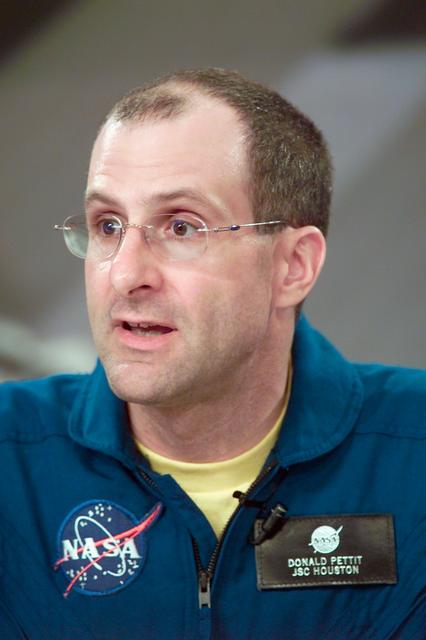
JSC2002-E-43941 (28 October 2002) --- Astronaut Donald R. Pettit, Expedition Six flight engineer, responds to a query during a joint shuttle-station pre-flight press conference at the Johnson Space Center (JSC).
STS-113 & Expedition Six preflight press conference
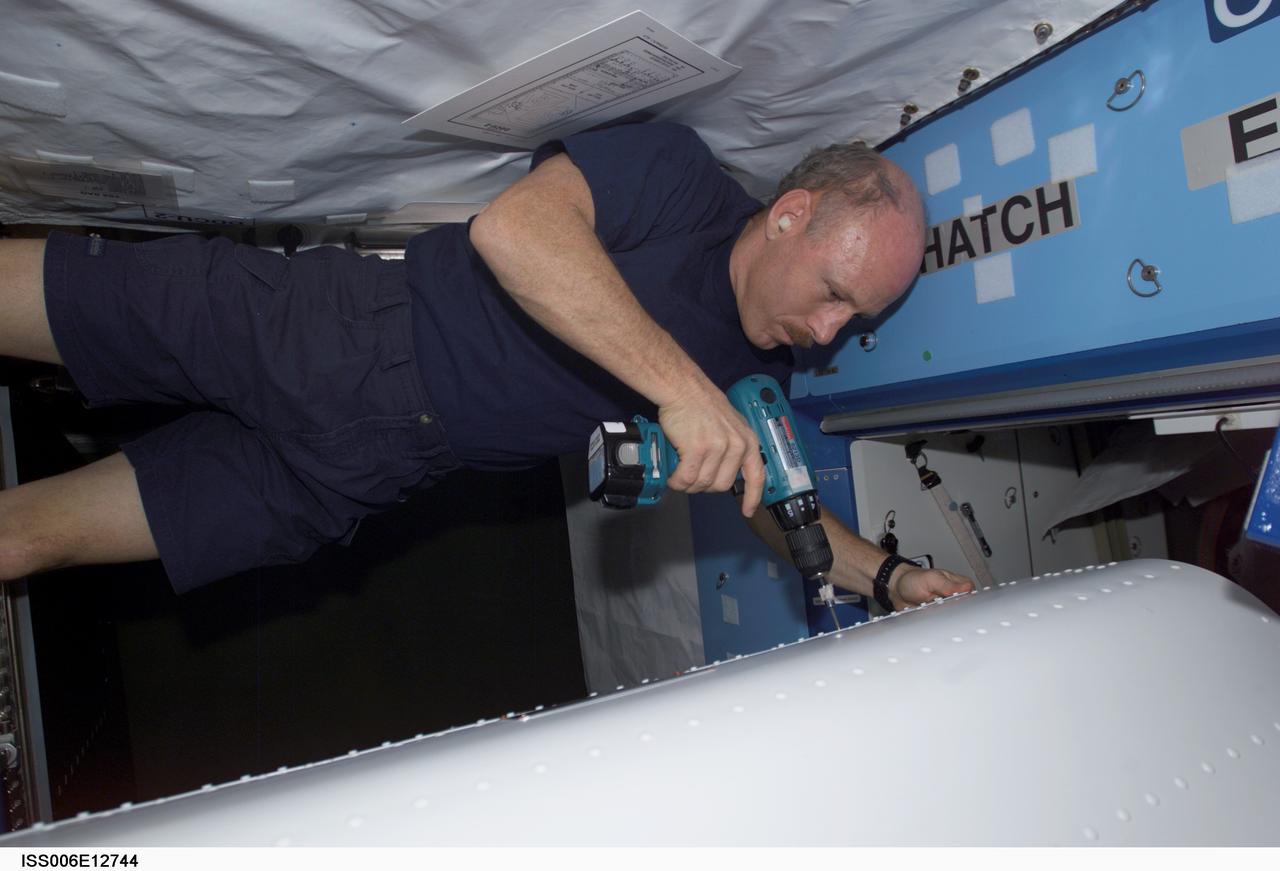
ISS006-E-12744 (30 December 2002) --- Astronaut Kenneth D. Bowersox, Expedition Six mission commander, performs in-flight maintenance (IFM) in the Destiny laboratory on the International Space Station (ISS).
Bowesox works on the ITCS in Destiny during Expedition Six
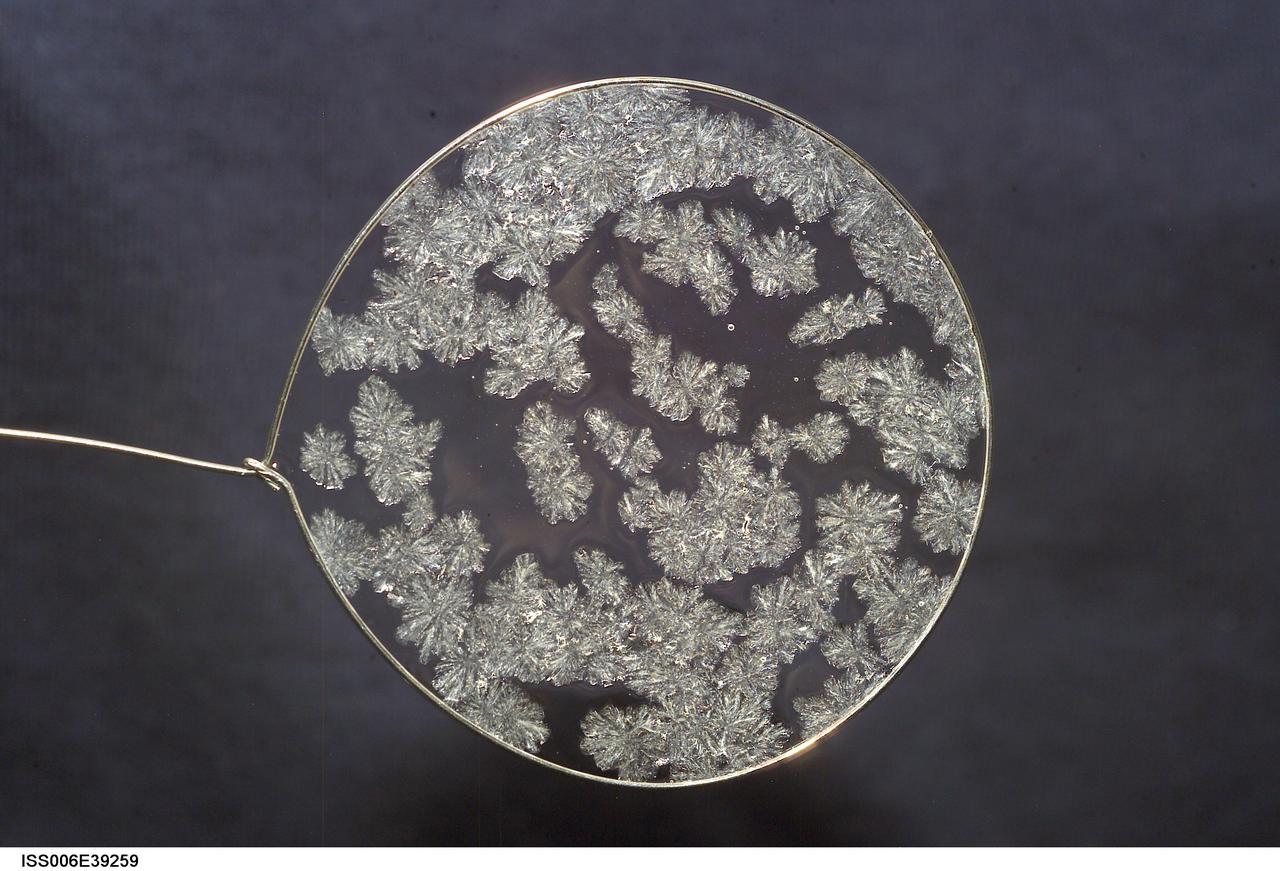
ISS006-E-39259 (14 March 2003) --- A view of sugar crystals in a water bubble within a 50-millimeter (mm) metal loop was photographed by an Expedition Six crewmember. The experiment took place in the Destiny laboratory on the International Space Station (ISS).
View of sugar crystals in a water bubble on Expedition Six
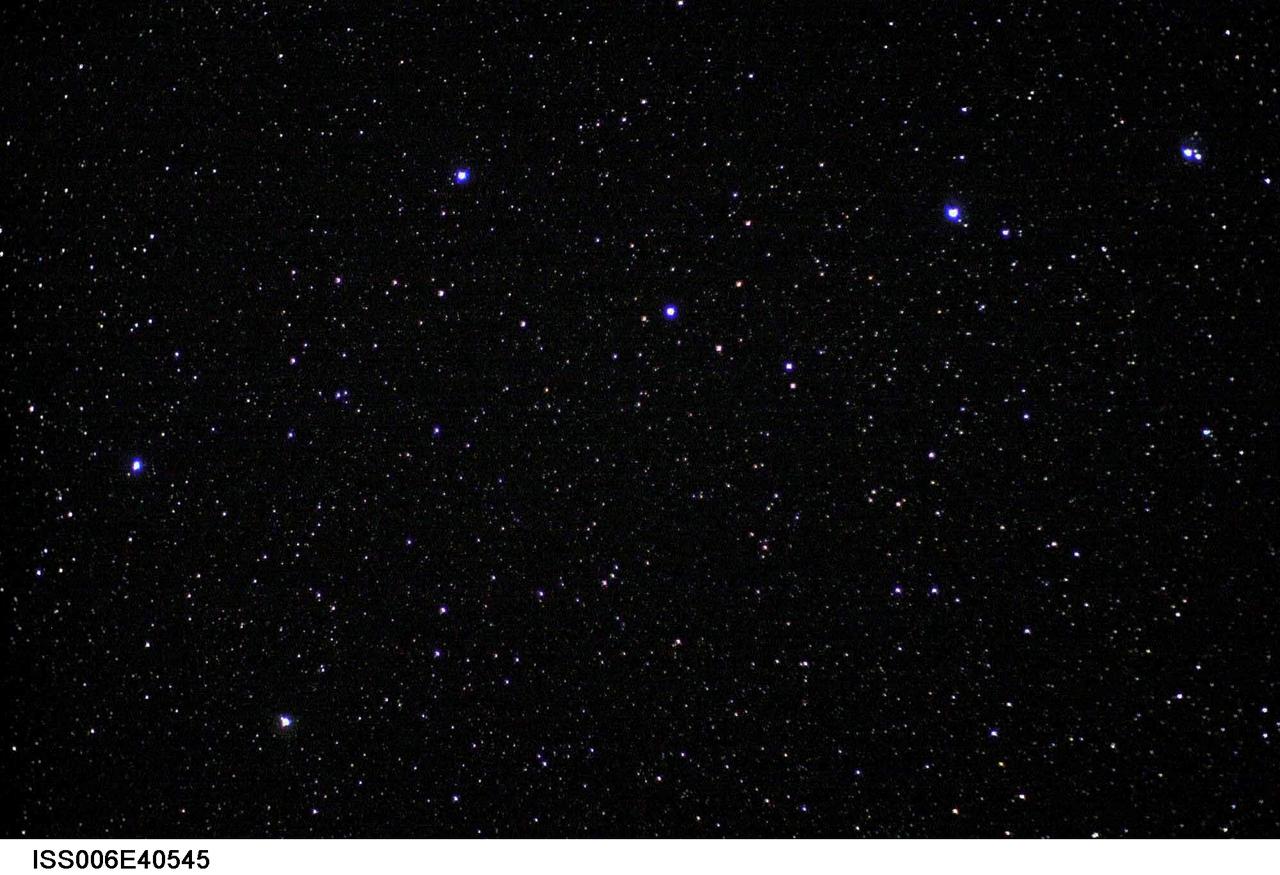
ISS006-E-40545 (March 2003) --- The bowl and a portion of the “handle” stars of the Big Dipper are visible in this photograph taken by astronaut Donald R. Pettit, Expedition Six NASA ISS science officer, on board the International Space Station (ISS).
View of stars taken during Expedition Six
ISS006-E-32103 (February 2003) --- A portion of the International Space Station (ISS) is visible in this view of a starry sky, photographed by astronaut Donald R. Pettit, Expedition Six NASA ISS science officer, currently on board the orbital outpost.
View of the stars taken during Expedition Six
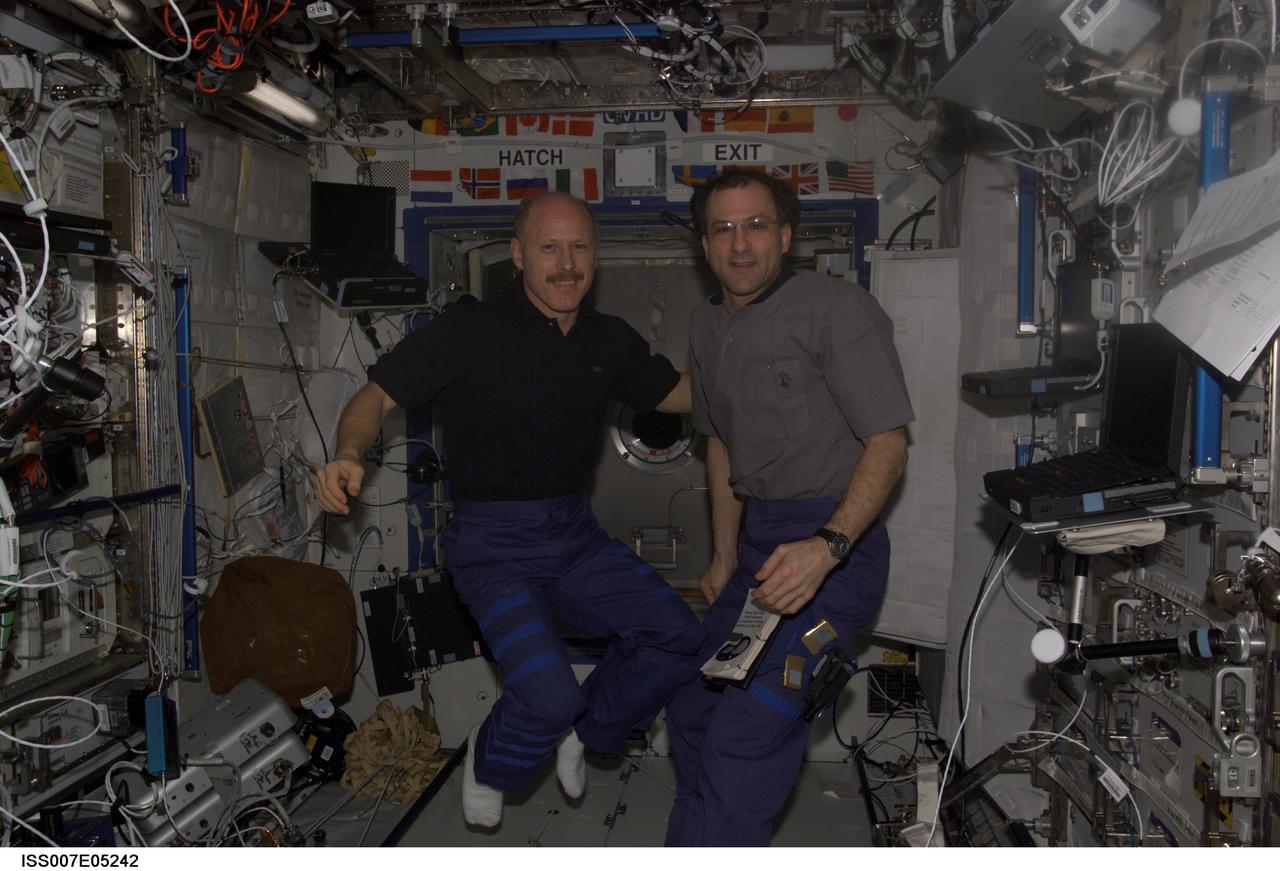
ISS007-E-05242 (3 May 2003) --- Astronauts Kenneth D. Bowersox (left) and Donald R. Pettit, Expedition Six mission commander and NASA ISS science officer, respectively, are pictured in the Destiny laboratory on the International Space Station (ISS).
Expedition Six crewmembers Bowersox and Pettit in Zvezda module
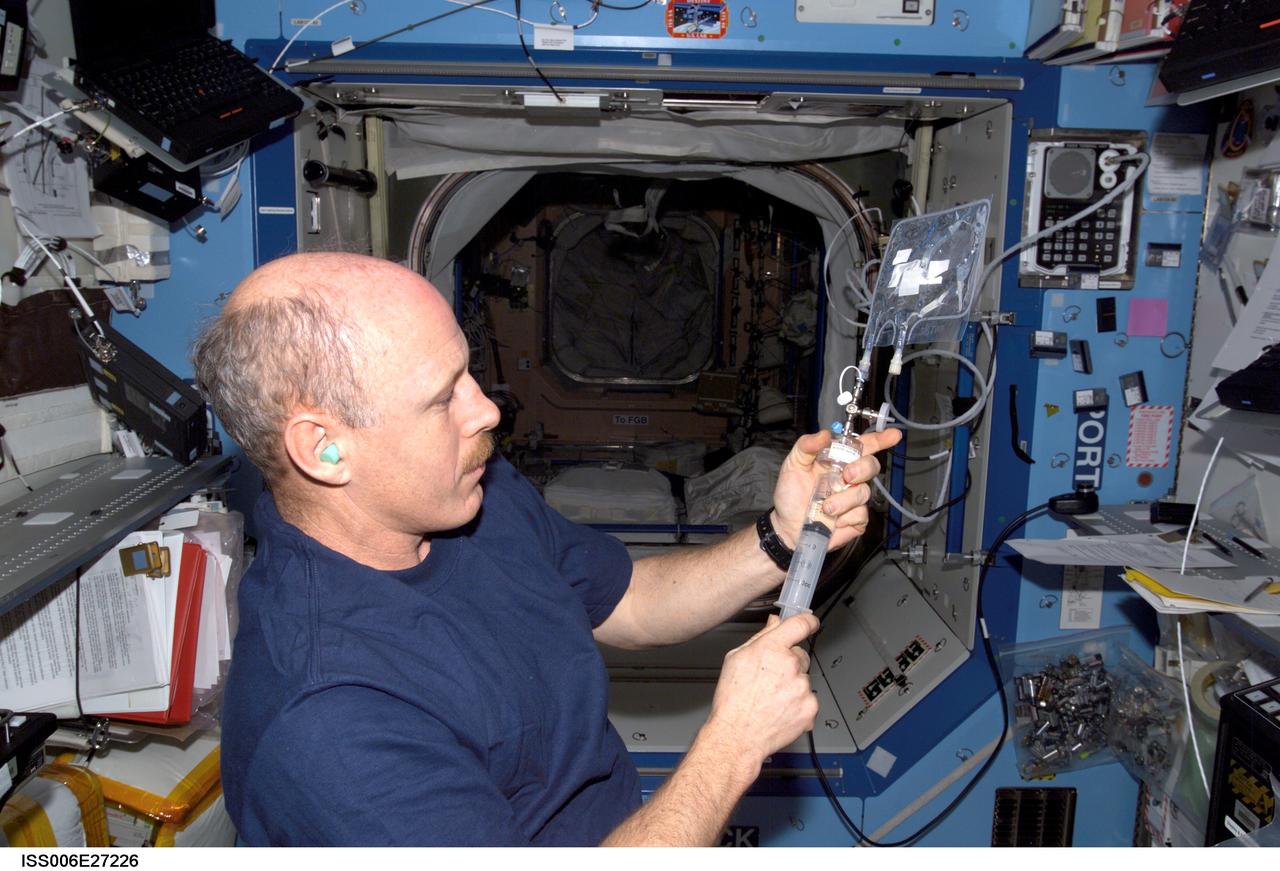
ISS006-E-27226 (17 February 2003) --- Astronaut Kenneth D. Bowersox, Expedition Six mission commander, uses the water microbiology kit (WMK) to collect water samples for in-flight chemistry/microbiology analysis in the Destiny laboratory on the International Space Station (ISS).
Bowersox works with the WMK in Destiny during Expedition Six
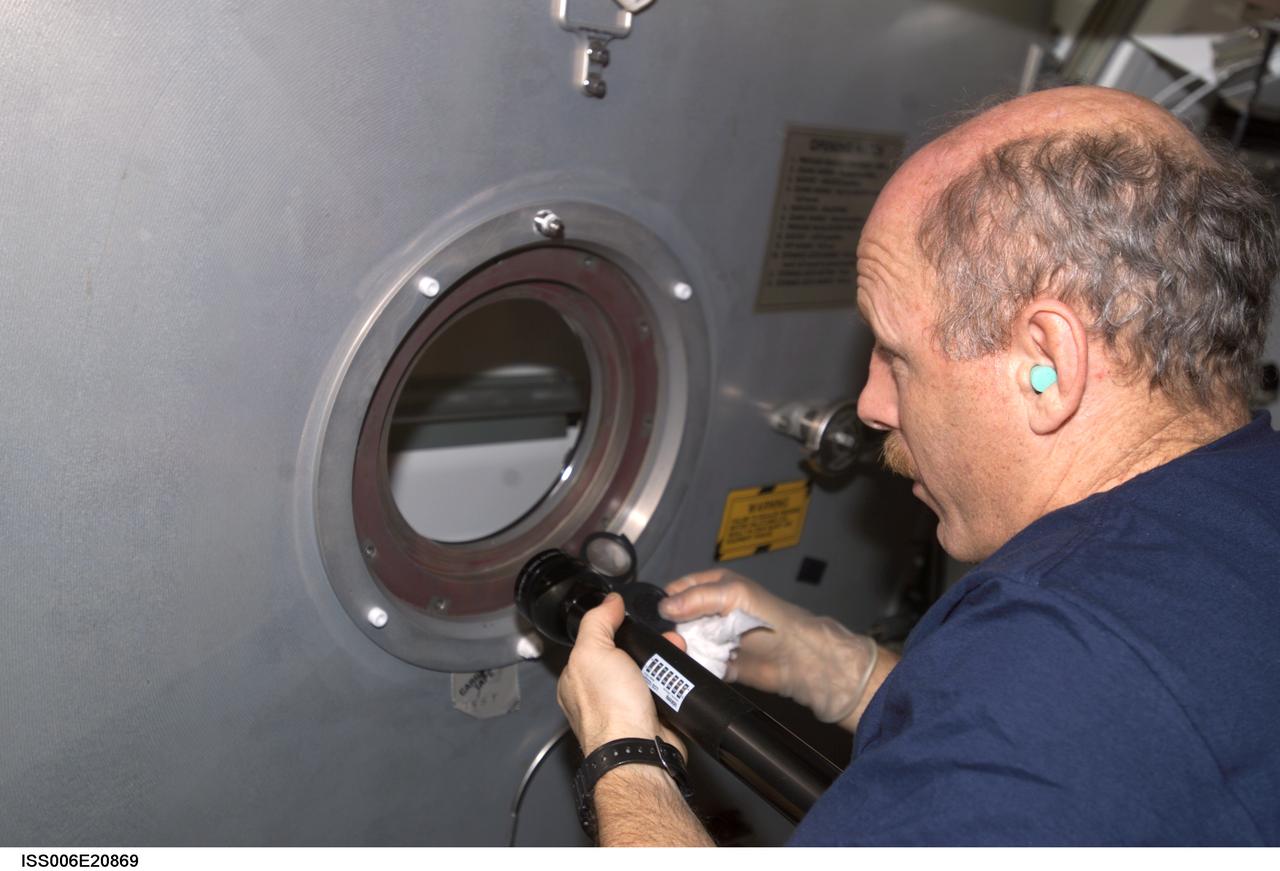
ISS006-E-20869 (26 January 2003) --- Astronaut Kenneth D. Bowersox, Expedition Six mission commander, holds a flashlight as he looks through a portal in the Zvezda Service Module on the International Space Station (ISS).
Bowersox examines the starboard hatch window in Node 1 during Expedition Six
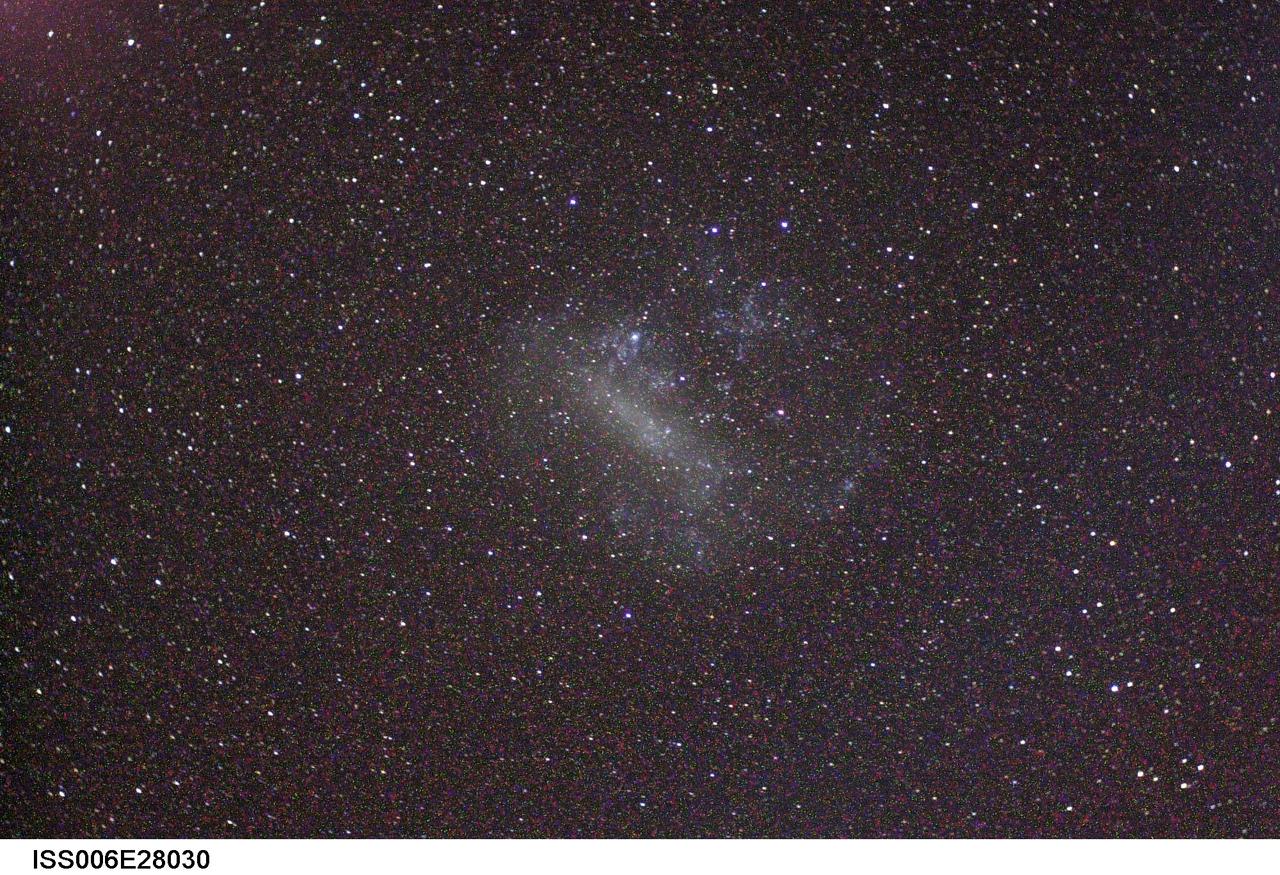
ISS006-E-28030 (February 2003) --- The Large Magellanic Cloud appears in the center of this frame photographed by astronaut Donald R. Pettit, Expedition Six NASA ISS science officer, on board the International Space Station (ISS).
Crew Earth Observations (CEO) taken during Expedition Six
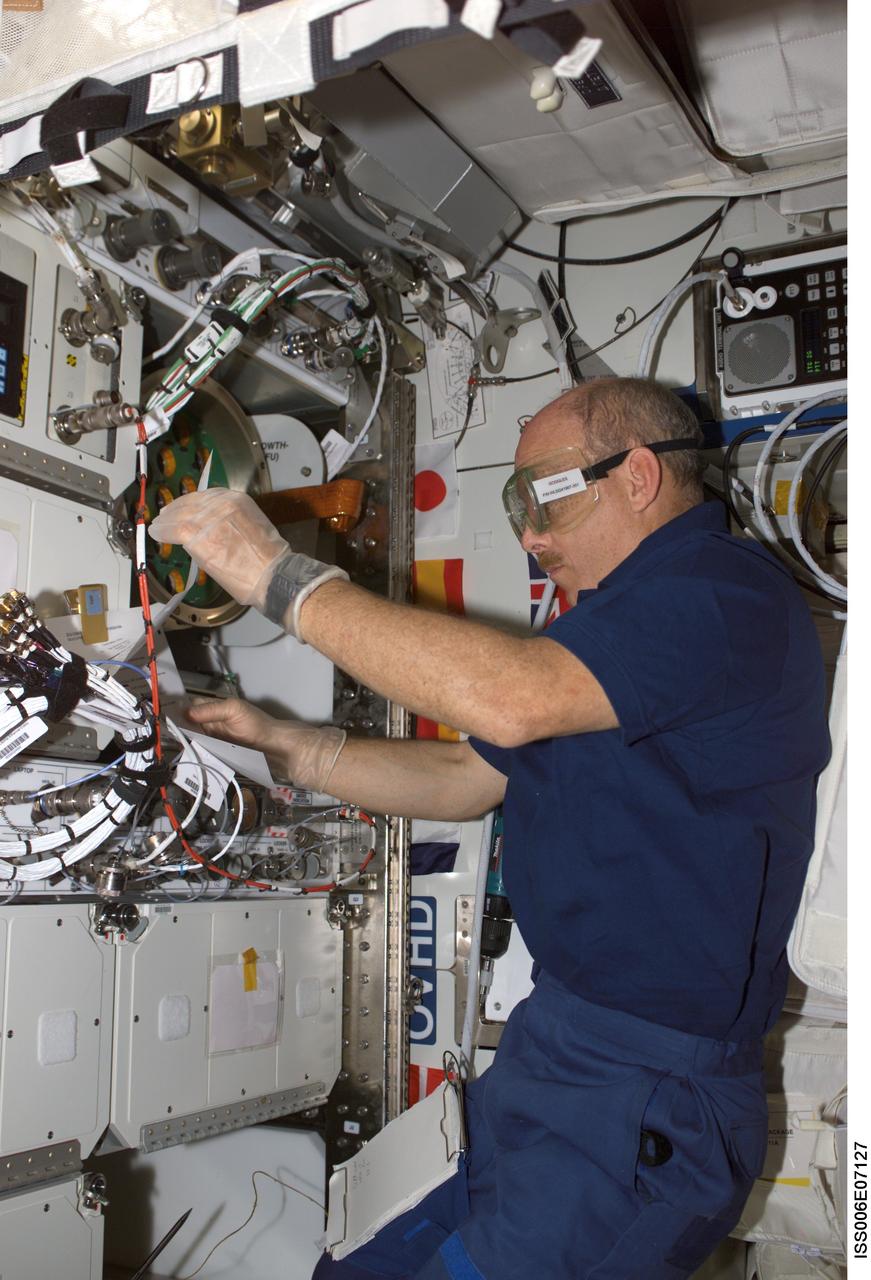
ISS006-E-07127 (5 December 2002) --- Astronaut Kenneth D. Bowersox, Expedition Six mission commander, works with the Zeolite Crystal Growth (ZCG) experiment in the Destiny laboratory on the International Space Station (ISS).
Expedition Six Commander Bowersox working with Zeolite Crystal Growth in U.S. Lab
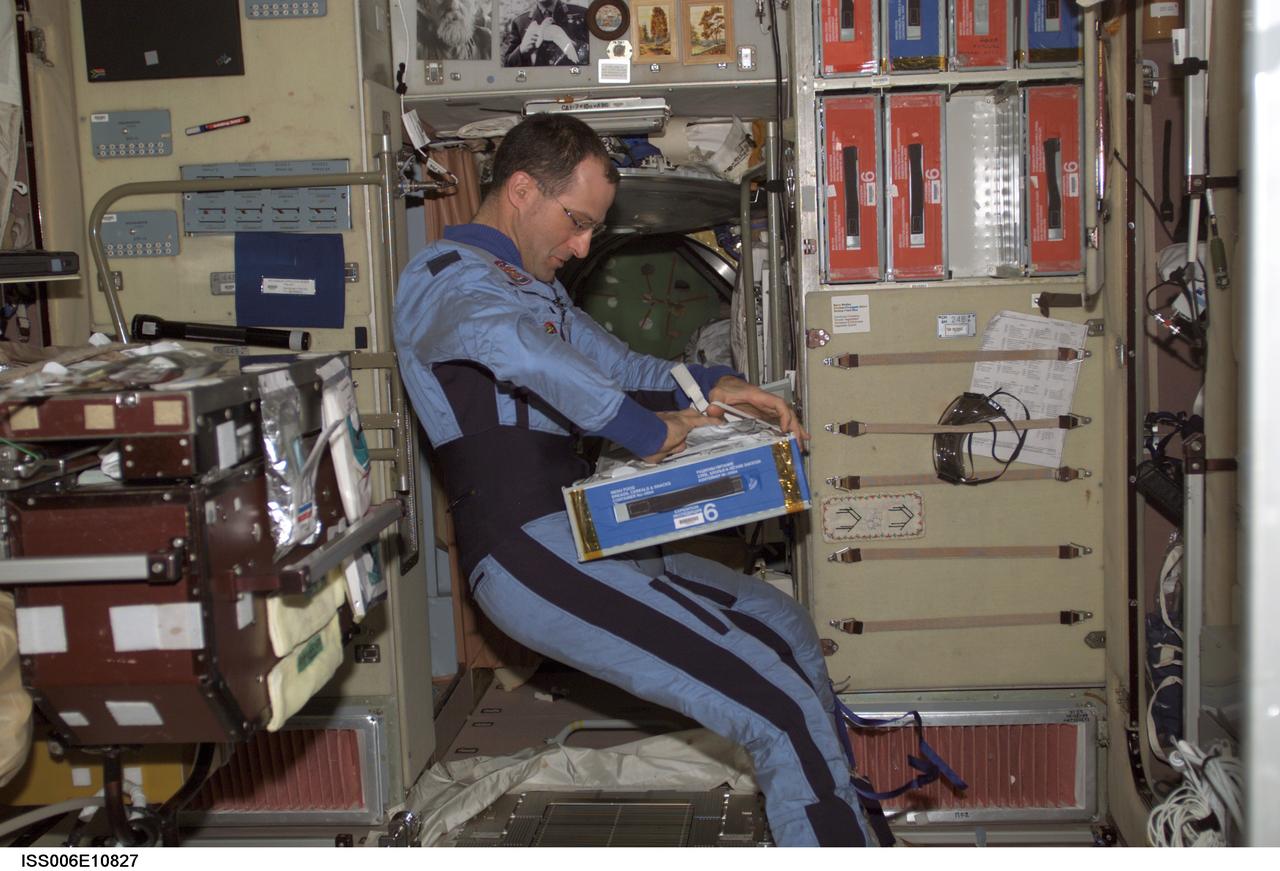
ISS006-E-10827 (19 December 2002) --- Astronaut Donald R. Pettit, Expedition Six NASA ISS science officer, works in the Zvezda Service Module on the International Space Station (ISS).
Pettit looks through a food container in Zvezda during Expedition Six
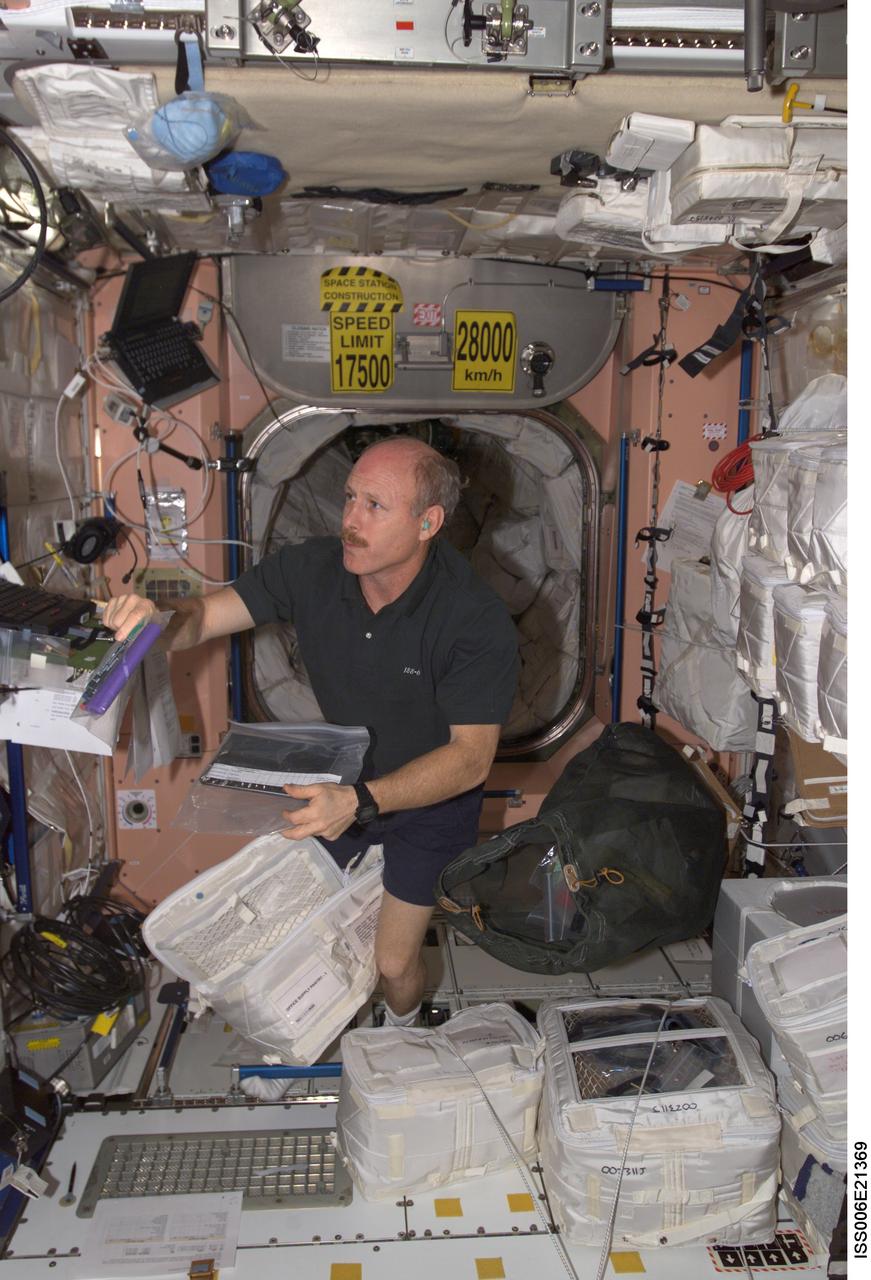
ISS006-E-21369 (31 January 2003) --- Astronaut Kenneth D. Bowersox, Expedition Six mission commander, moves toward a computer in the Unity node on the International Space Station (ISS).
Bowersox works at a laptop computer in Node 1 during Expedition Six
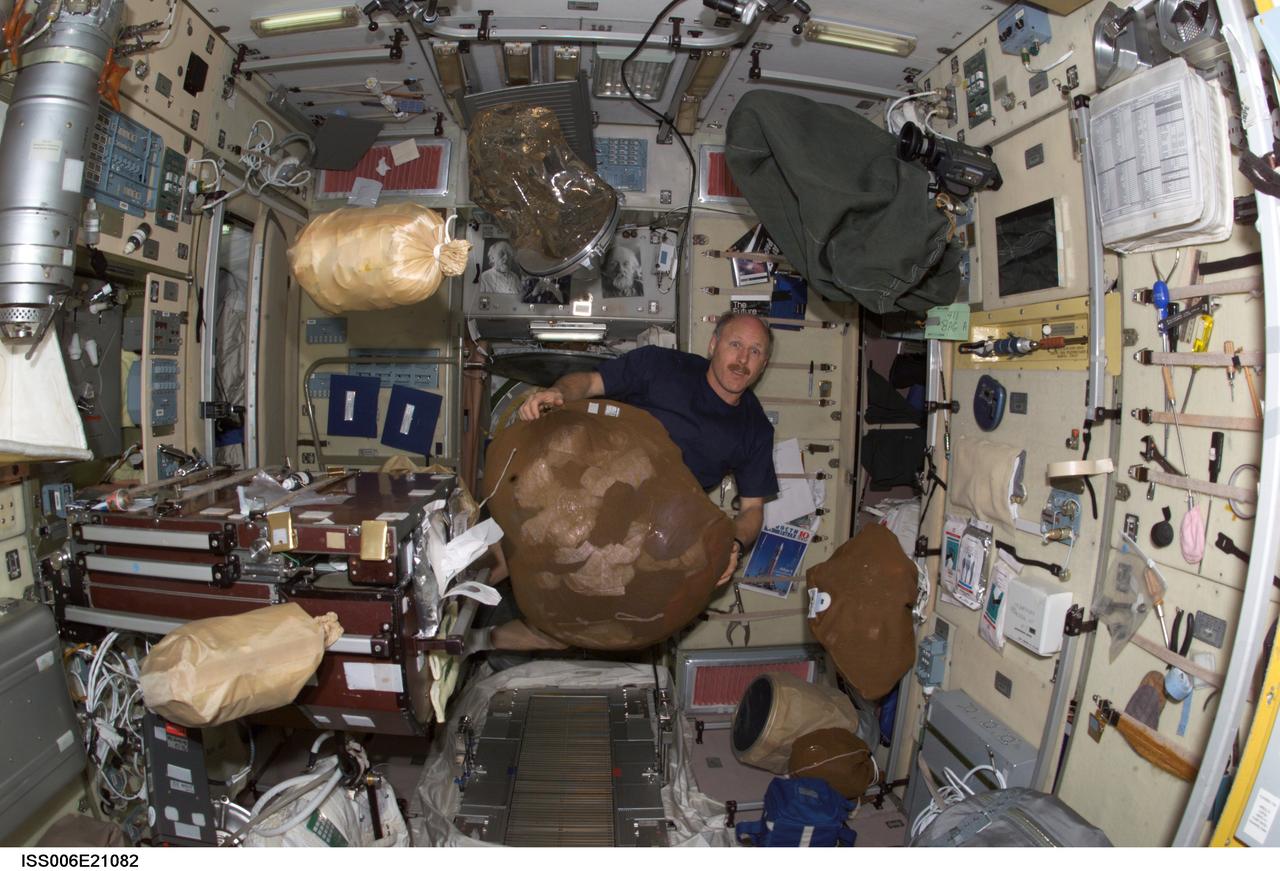
ISS006-E-21082 (28 January 2003) --- Astronaut Kenneth D. Bowersox, Expedition Six mission commander, moves bagged items from the Progress 9 to the Zvezda Service Module on the International Space Station (ISS).
Bowersox moves stowage bags from the Progress to Zvezda during Expedition Six
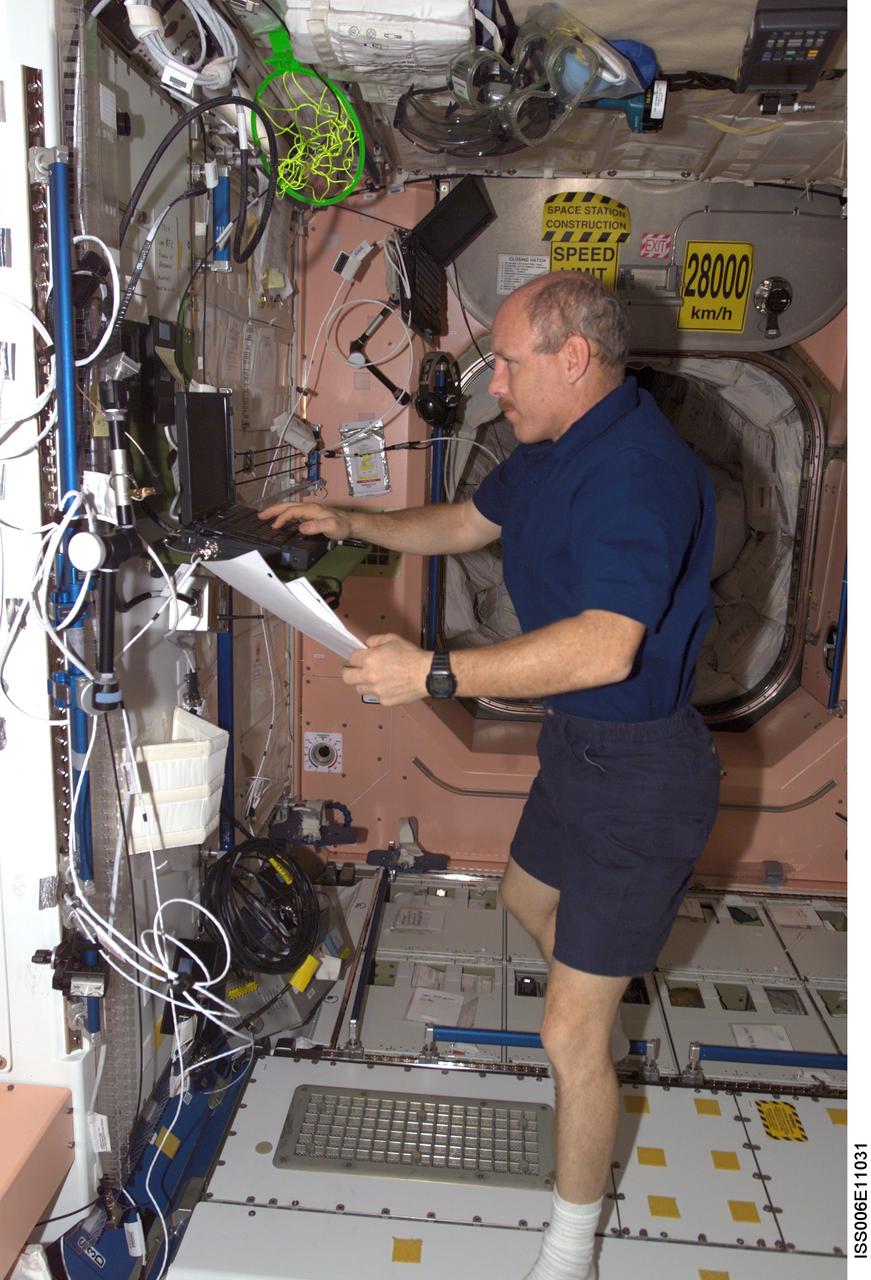
ISS006-E-11031 (26 December 2002) --- Astronaut Kenneth D. Bowersox, Expedition Six mission commander, works in the Unity node on the International Space Station (ISS).
Bowersox works on a laptop computer in Node 1 during Expedition Six
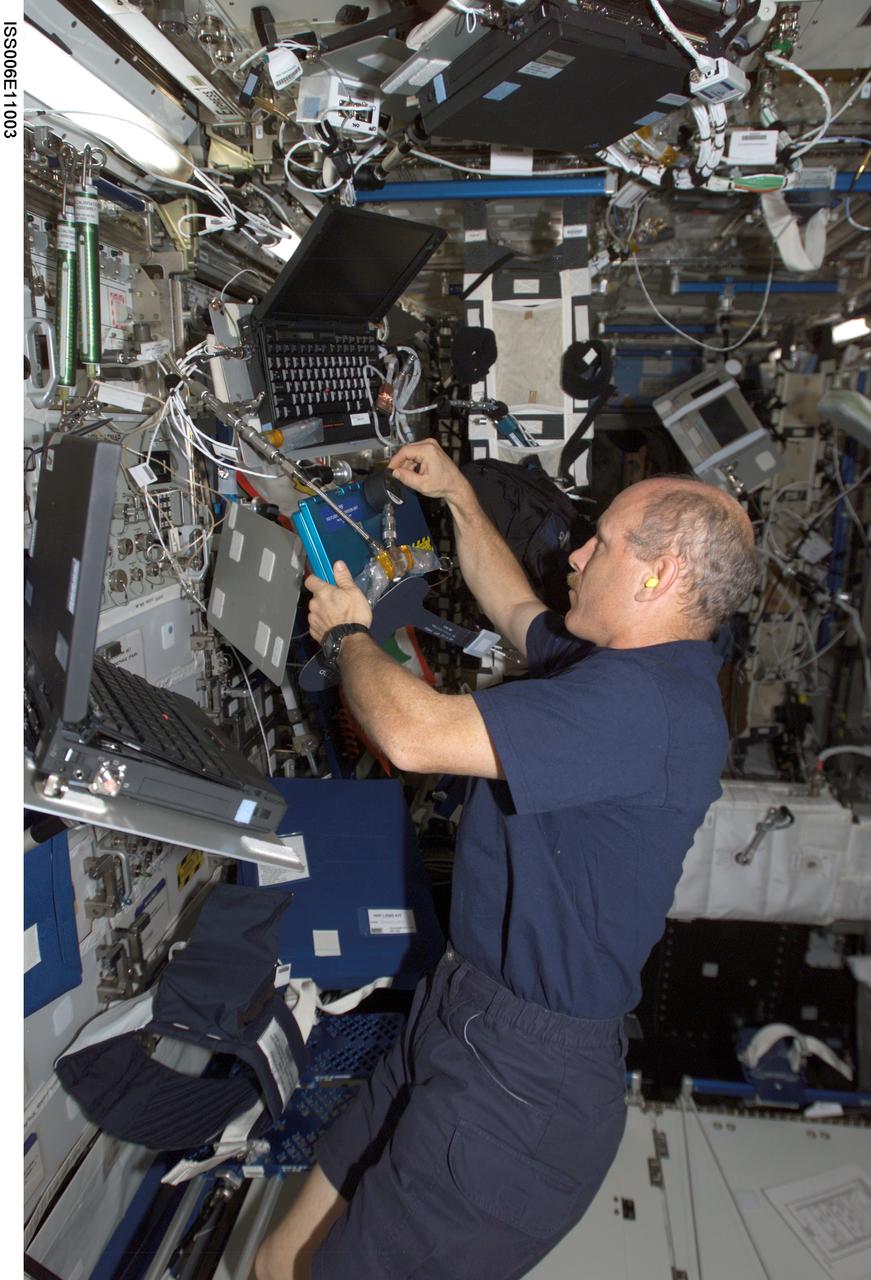
ISS006-E-11003 (24 December 2002) --- Astronaut Kenneth D. Bowersox, Expedition Six mission commander, works in the Destiny laboratory on the International Space Station (ISS).
Bowersox works with the Flight Calibration Unit in the U.S. Laboratory during Expedition Six
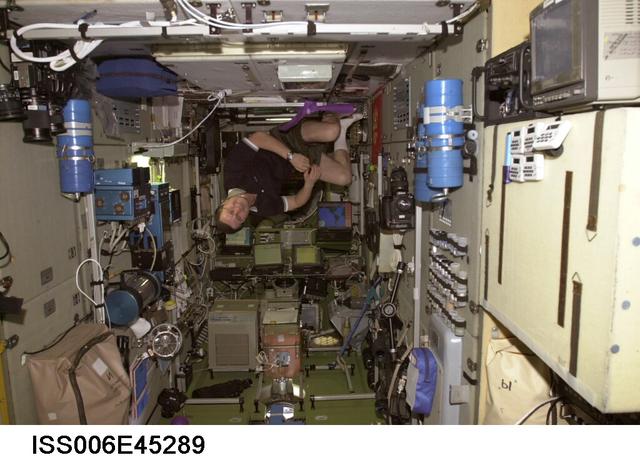
ISS006-E-45289  (21 March 2003) --- Cosmonaut Nikolai M. Budarin, Expedition Six flight engineer, floats in the Zvezda Service Module on the International Space Station (ISS). Budarin represents Rosaviakosmos.
Flight Engineer Nikolai Budarin floats in the SM during Expedition Six
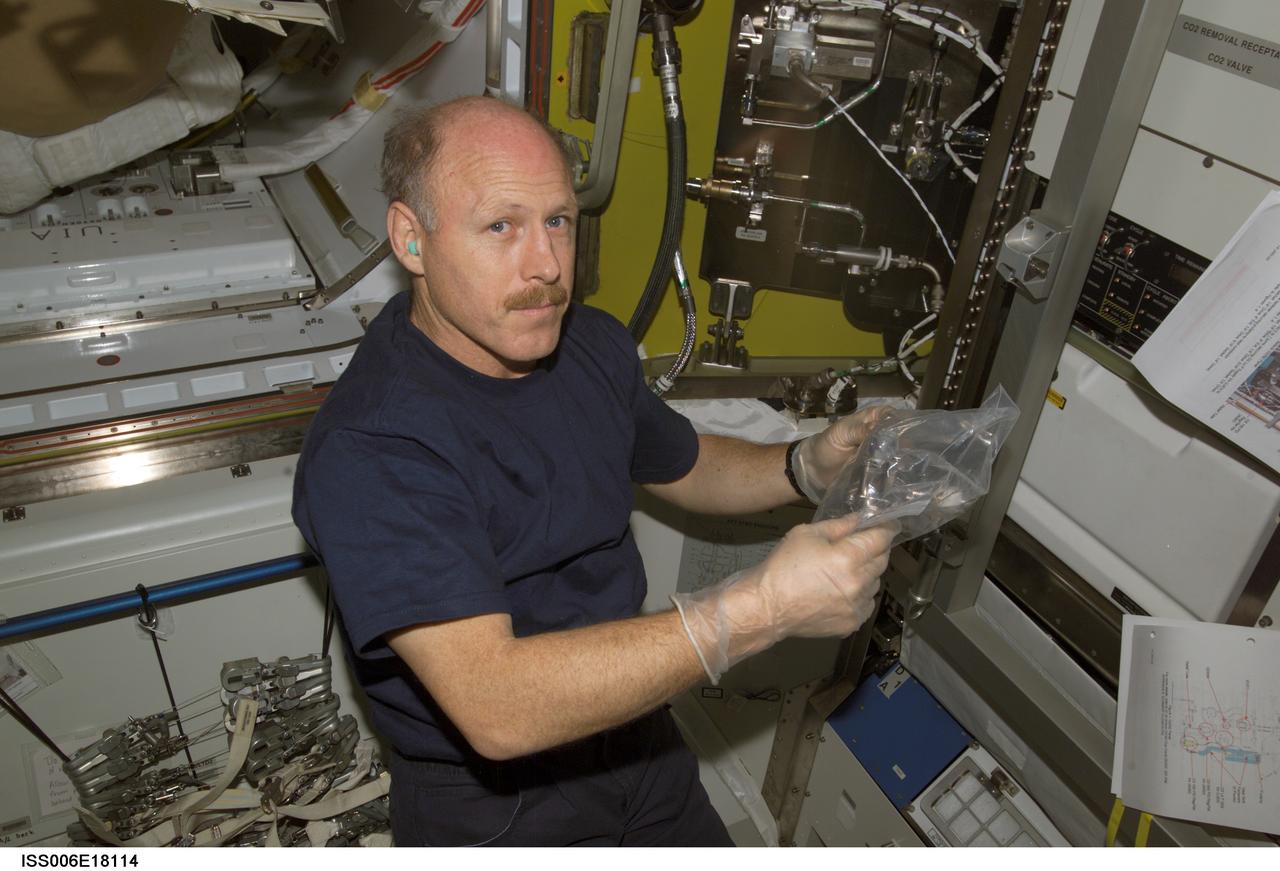
ISS006-E-18114 (18 January 2003) --- Astronaut Kenneth D. Bowersox, Expedition Six mission commander, is pictured in the Quest Airlock on the International Space Station (ISS).
Bowersox handles part of the 02 / N2 system in the Airlock during Expedition Six
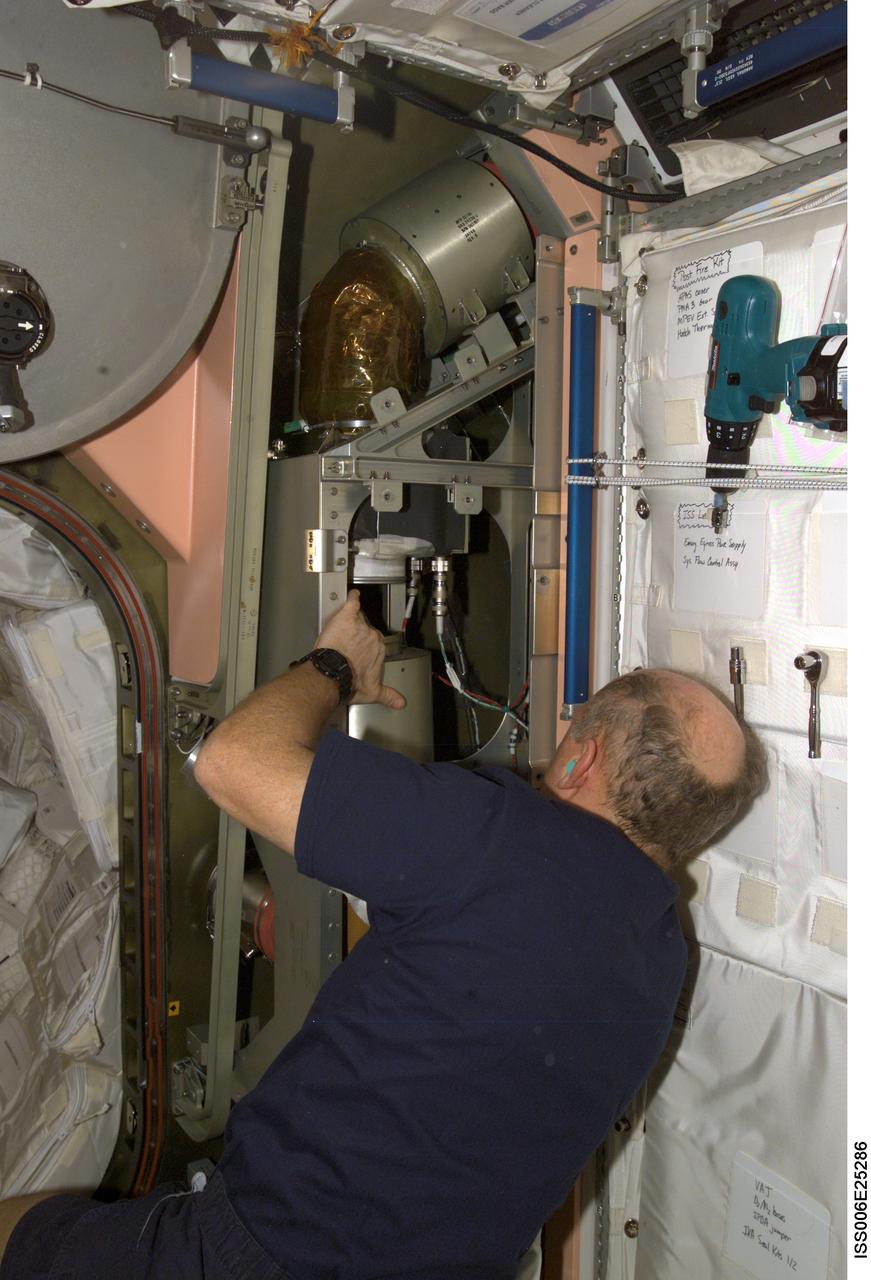
ISS006-E-25286 (12 February 2003) --- Astronaut Kenneth D. Bowersox, Expedition Six mission commander, performs routine maintenance on the air handler system in the Unity node on the International Space Station (ISS).
Bowersox works on the IMV system in Node 1 during Expedition Six
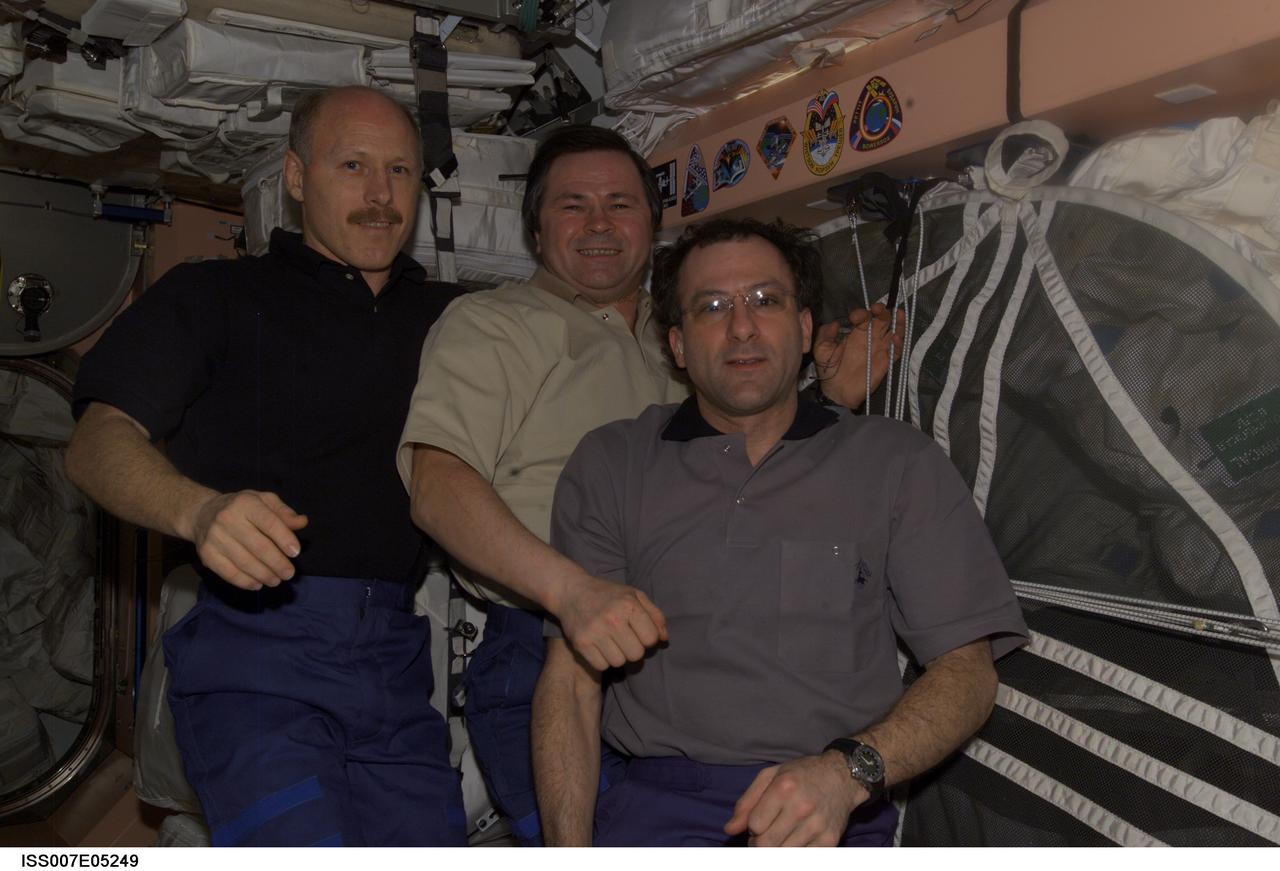
ISS007-E-05249 (3 May 2003) --- The Expedition Six crewmembers pose in the Unity node near the growing collection of insignias representing crews who have worked on the International Space Station (ISS). From the left are astronaut Kenneth D. Bowersox, mission commander; cosmonaut Nikolai M. Budarin, flight engineer; and Donald R. Pettit, NASA ISS science officer. Budarin represents Rosaviakosmos.
Expedition Six and Seven crew in Destiny module
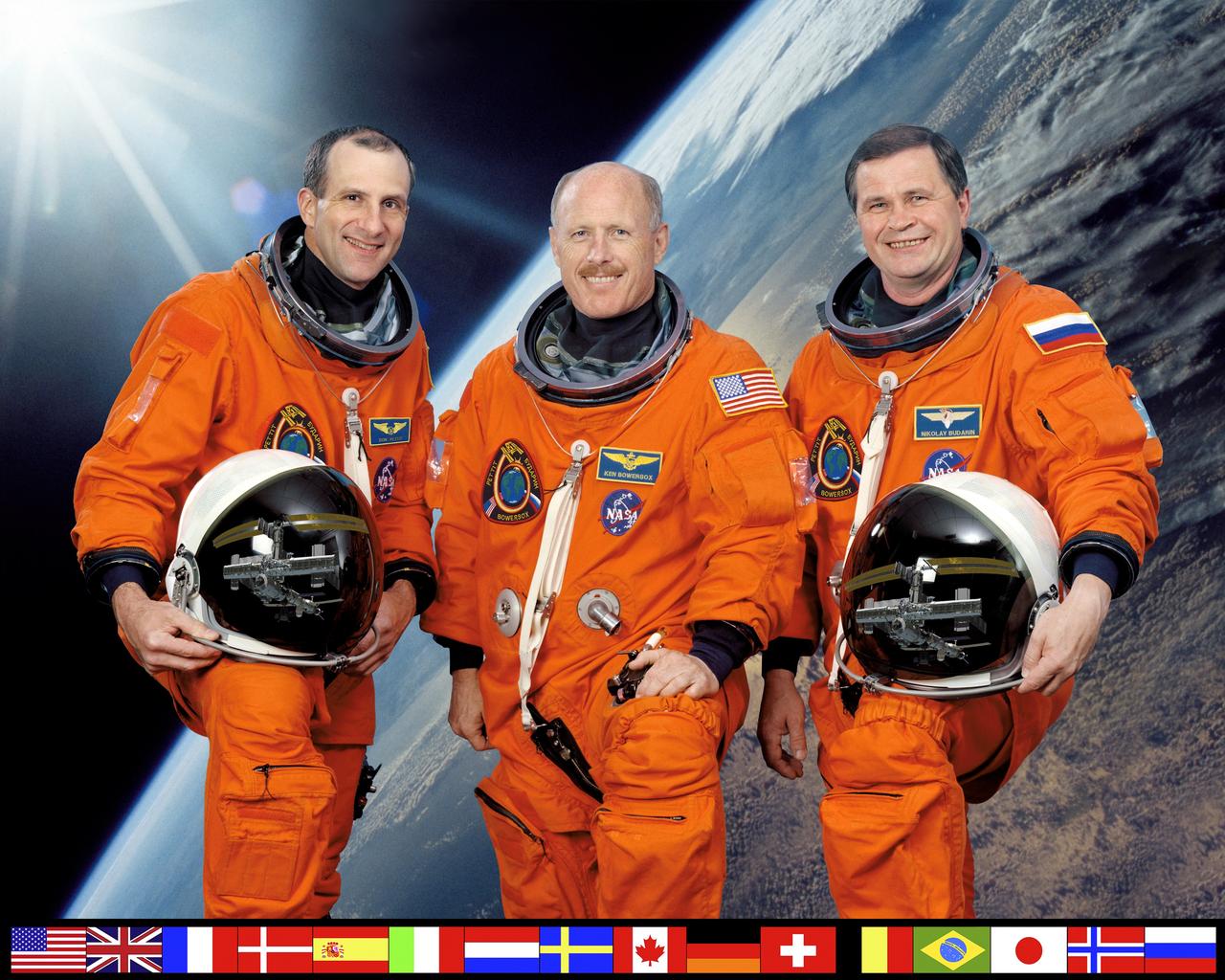
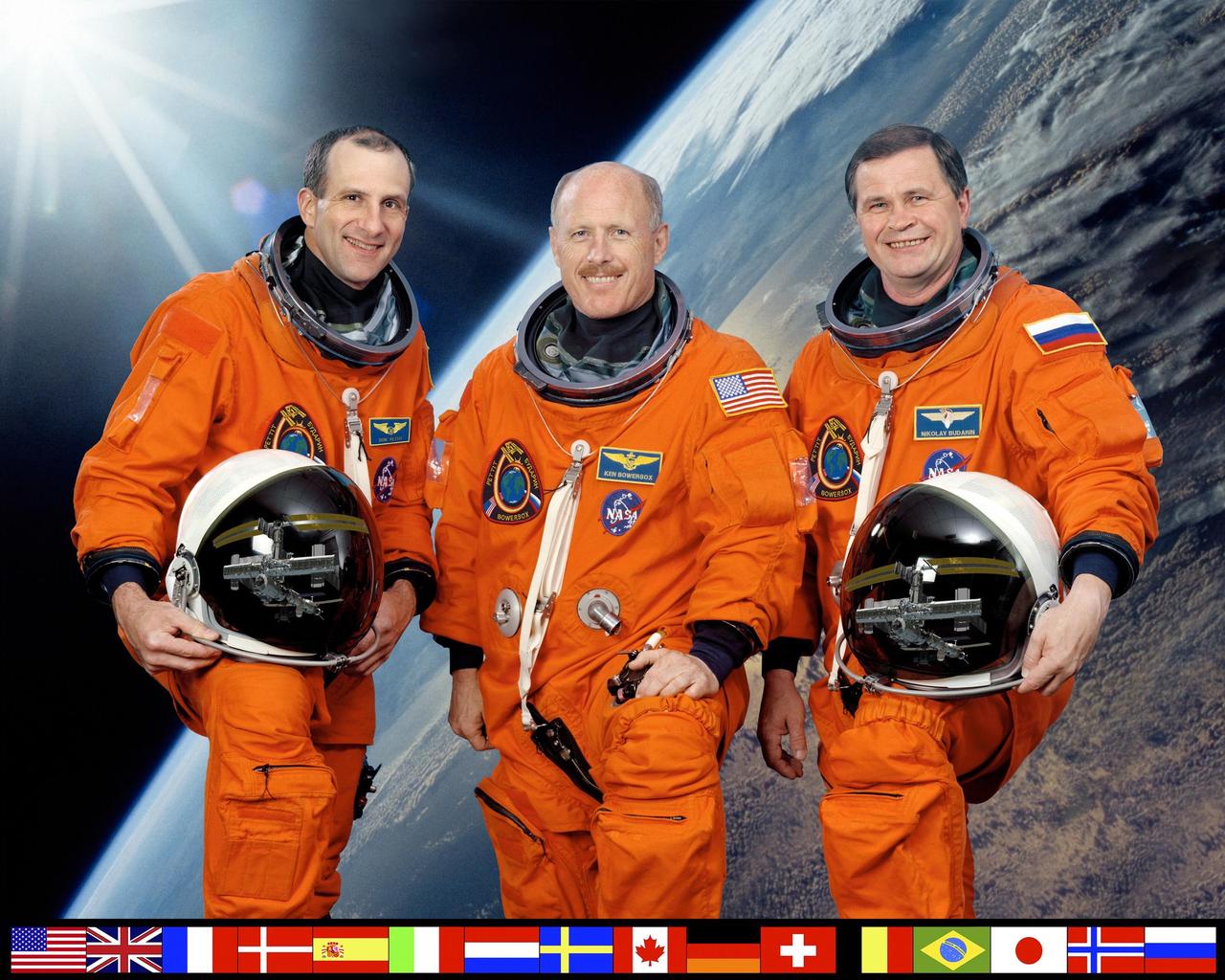
ISS006-S-002 (September 2002) --- Astronauts Donald R. Pettit (left), Expedition Six flight engineer; Kenneth D. Bowersox, mission commander; and cosmonaut Nikolai M. Budarin, flight engineer, attired in training versions of the shuttle launch and entry suit, pause from their training schedule for a crew portrait. The three will be launched to the International Space Station (ISS) in late autumn of this year aboard the space shuttle Endeavour. Budarin represents Rosaviakosmos.
Official portrait of the ISS Expedition Six crewmembers
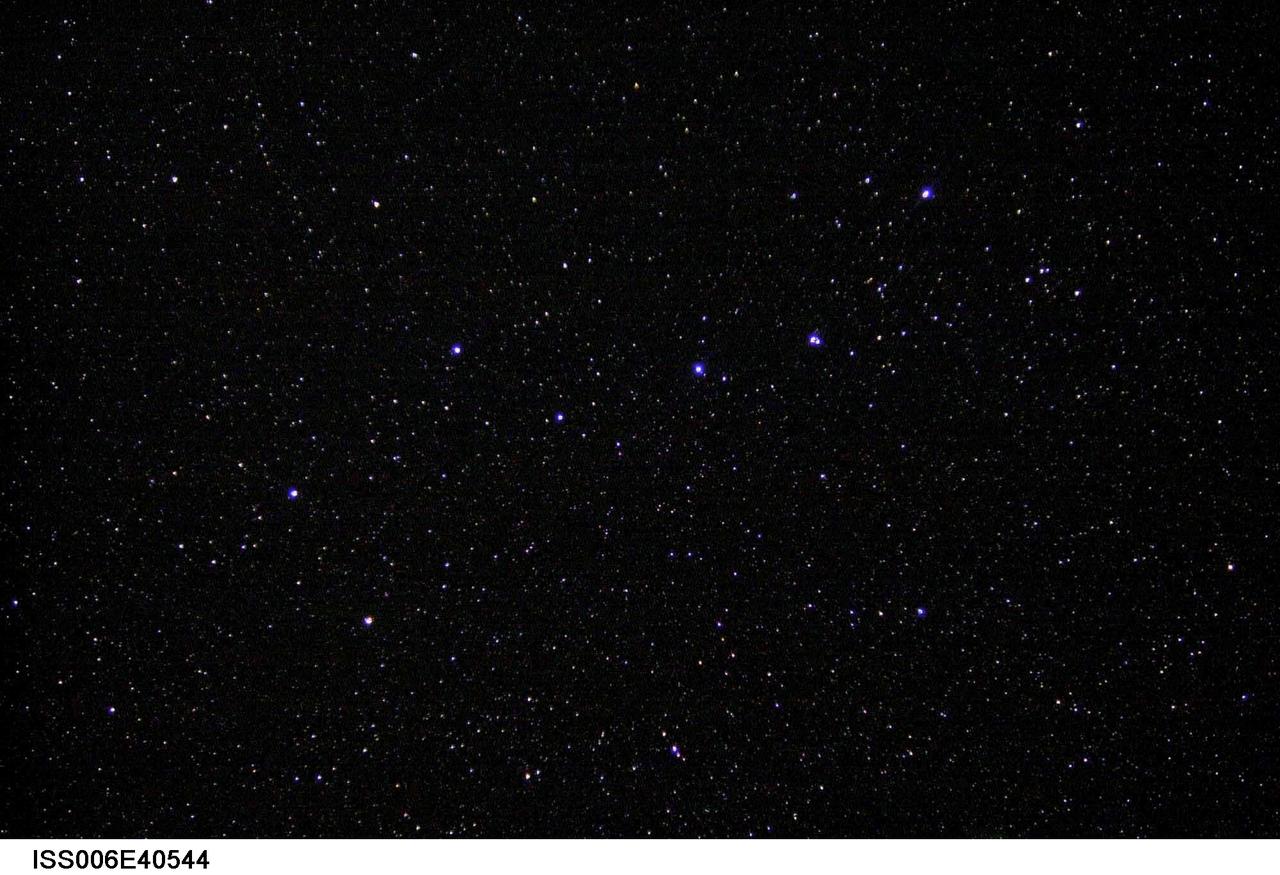
ISS006-E-40544 (March 2003) --- The entire Big Dipper is visible in this photograph taken by astronaut Donald R. Pettit, Expedition Six NASA ISS science officer, on board the International Space Station (ISS). The roughly rectangular bowl (center left) and “handle” (extending toward the upper right) are shaped by the brightest stars. The Dipper is upside-down, appearing to empty its contents.
View of stars taken during Expedition Six
ISS006-E-40537 (March 2003) --- The Coma Cluster, a collection of stars which are visible to the naked eye in the constellation Coma Berenices, is visible in this view photographed by astronaut Donald R. Pettit, Expedition Six NASA ISS science officer, on board the International Space Station (ISS). The Coma Cluster is visible as a faint fuzzy patch between the constellations Leo and Virgo. The naked eye cannot resolve the individual stars, but collectively, they merge into a fuzzy flow in this part of the sky.
View of stars taken during Expedition Six
ISS006-S-001 (September 2002) --- The International Space Station (ISS) Expedition Six crew patch depicts the station orbiting the Earth on its mission of international cooperation and scientific research. The Earth is placed in the center of the patch to emphasize that work conducted aboard this orbiting laboratory is intended to improve life on our home planet. The shape of the space station’s orbit symbolizes the role that experience gained from ISS will have on future exploration of our solar system and beyond. The American and Russian flags encircling the Earth represent the native countries of the Expedition 6 crew members, which are just two of the many participant countries contributing to the ISS and committed to the peaceful exploration of space.    The NASA insignia design for International Space Station (ISS) missions is reserved for use by the crew members and for other official use as the NASA Administrator may authorize. Public availability has been approved only in the forms of illustrations by the various news media. When and if there is any change in this policy, which is not anticipated, the change will be publicly announced.
ISS Expedition Six NASA Insignia
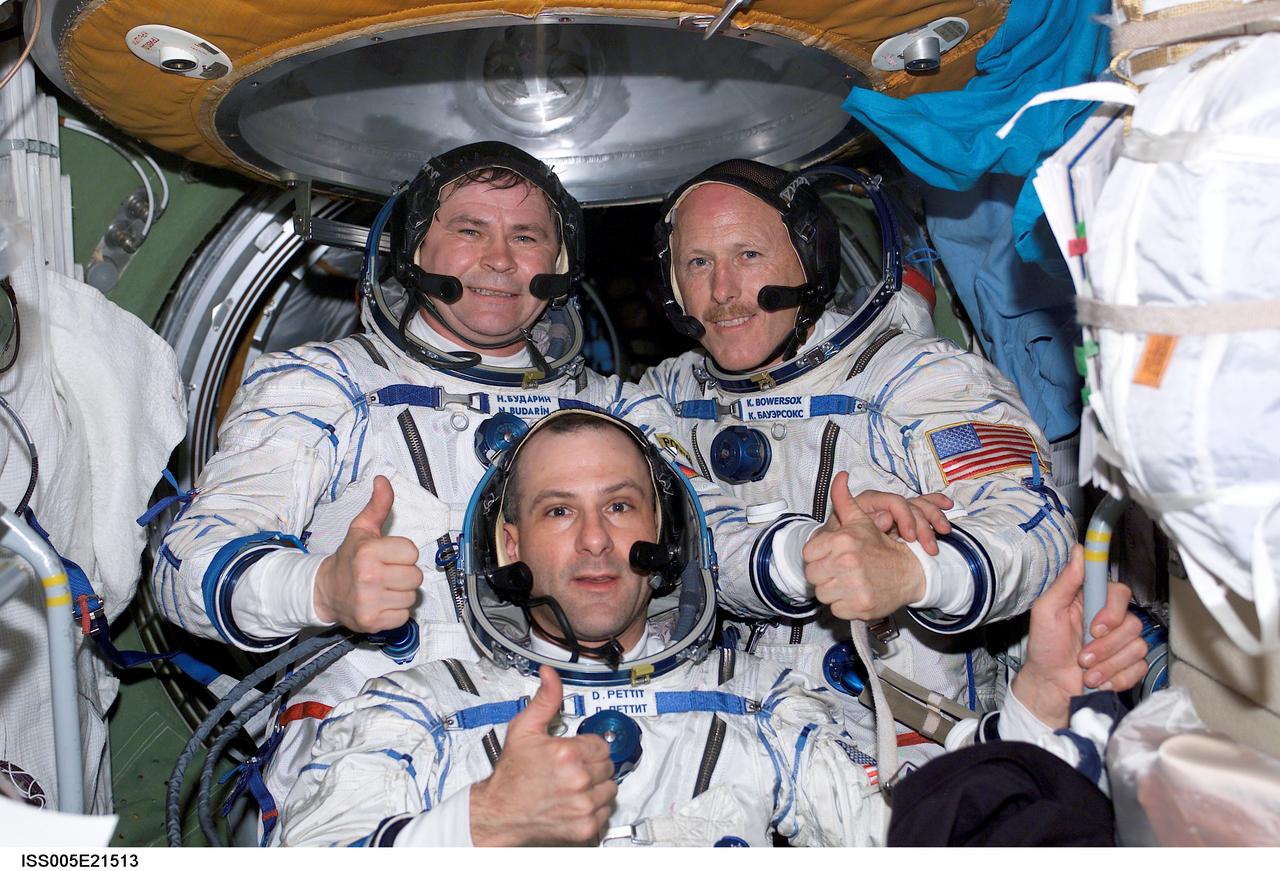
ISS005-E-21513 (26 November 2002) --- The Expedition Six crewmembers, wearing Russian Sokol suits, pose for a crew photo in the functional cargo block (FGB), or Zarya, on the International Space Station (ISS). Pictured are astronaut Donald R. Pettit (front), NASA ISS science officer; cosmonaut Nikolai M. Budarin (left back), flight engineer; and astronaut Kenneth D. Bowersox, mission commander. Budarin represents Rosaviakosmos.
Expedition Six crewmembers pose in the FGB during Expedition Five on the ISS
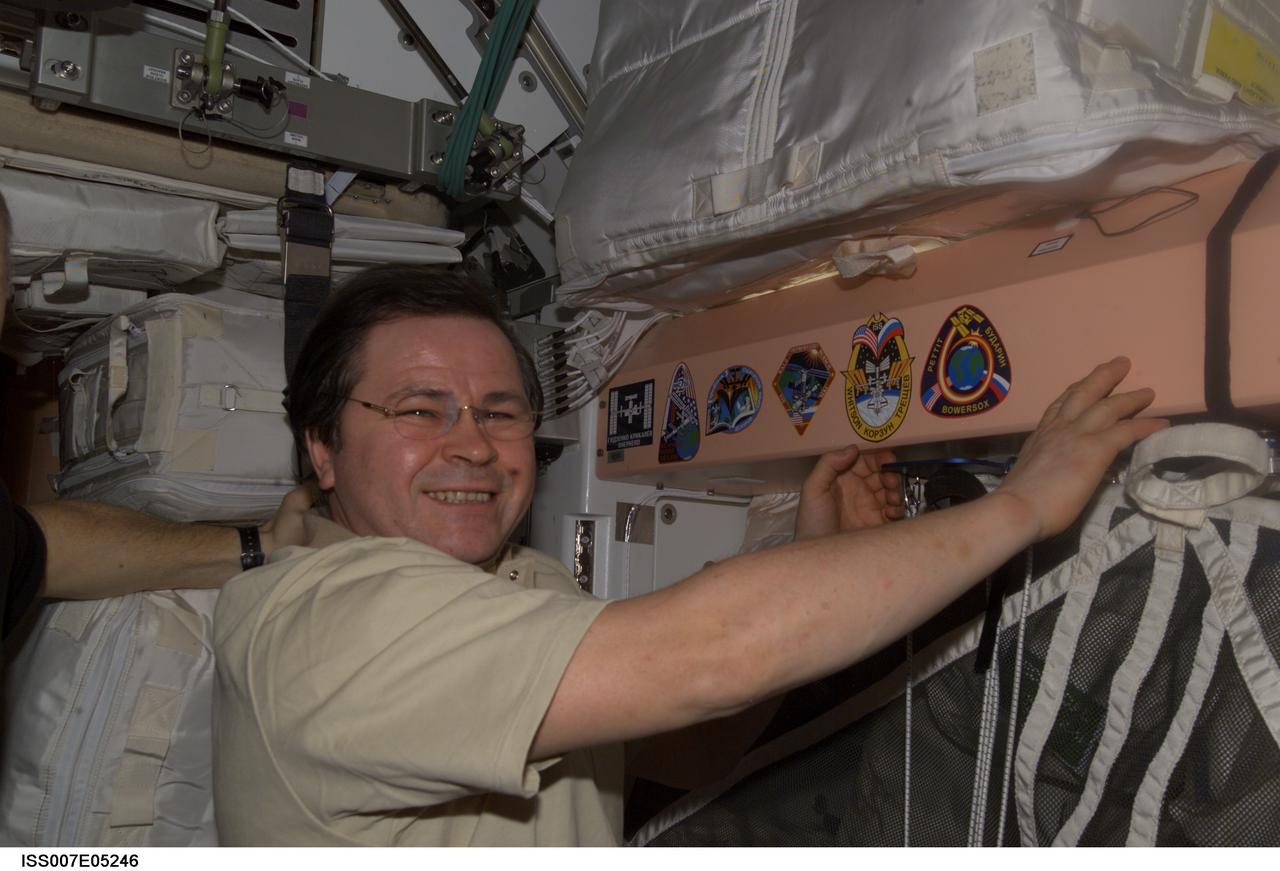
ISS007-E-05246 (3 May 2003) --- Cosmonaut Nikolai M. Budarin, Expedition Six flight engineer, adds his crew’s patch to the growing collection, in the Unity node, of insignias representing crews who have worked on the International Space Station (ISS). Budarin represents Rosaviakosmos.
Expedition Six crewmember Budarin with mission patch in Unity /Node 1
ISS006-E-13995 (2 January 2003) --- Astronaut Donald R. Pettit, Expedition Six NASA ISS science officer, performs the Human Research Facility (HRF) Ultrasound functional checkout in the Destiny laboratory on the International Space Station (ISS).
Pettit works at the HRF workstation in Destiny during Expedition Six
PHOTO DATE: 21 January 2014 LOCATION: Bldg. 9NW, Space Vehicle Mockup Training Facility - ISS Mockups SUBJECT: Expedition 41 six person crew emergency training scenarios. Crewmembers: 39S/Suraev, Wiseman and Gerst along with 40S/Wilmore, Samokutyaev, and Serova. PHOTOGRAPHER: Mark Sowa
Expedition 41 six person crew emergency training scenarios
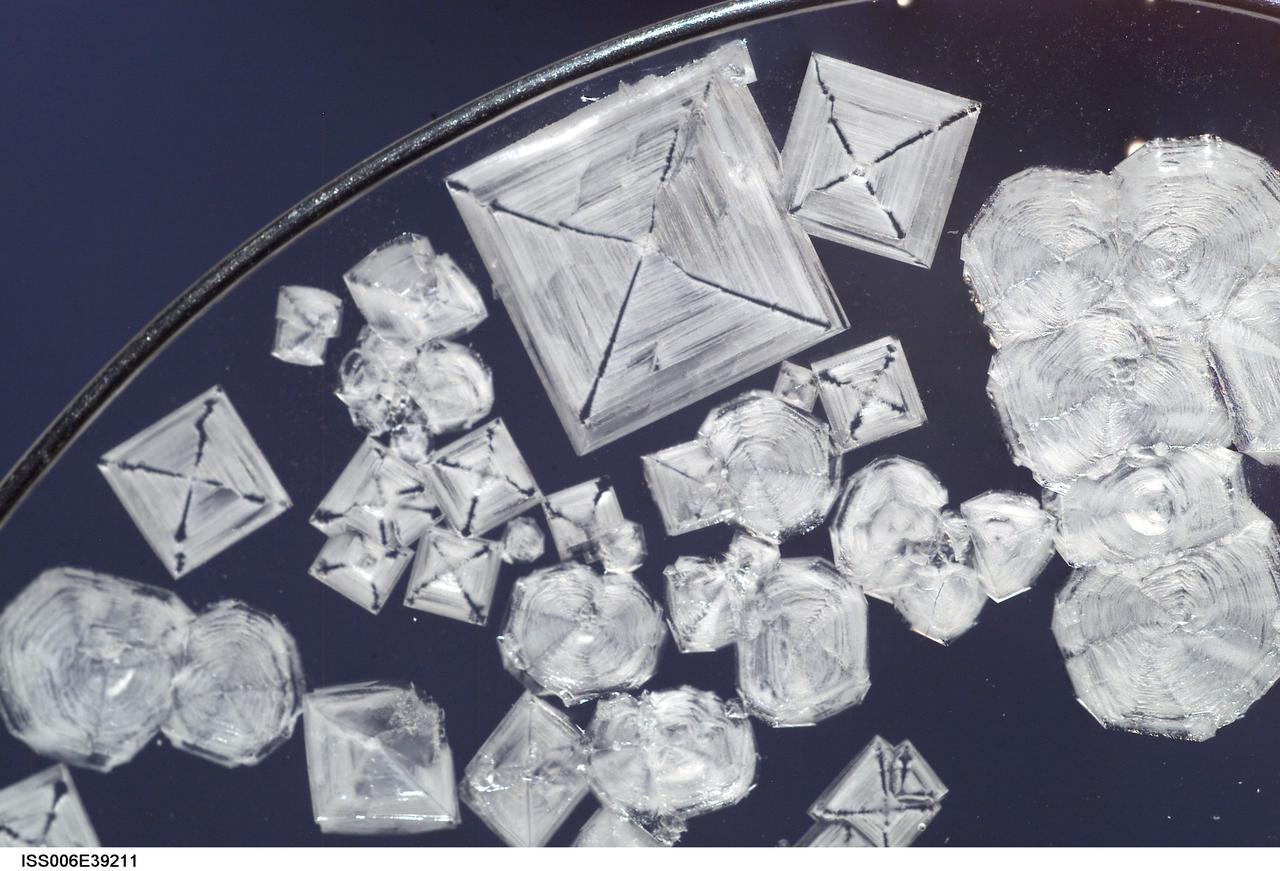
ISS006-E-39211 (13 March 2003) --- A close up view of sodium chloride crystals in a water bubble within a 50-millimeter metal loop was photographed by an Expedition Six crewmember. The experiment took place in the Destiny laboratory on the International Space Station (ISS).
Close-up view of Sodium Chloride crystals in a water bubble on Expedition Six.
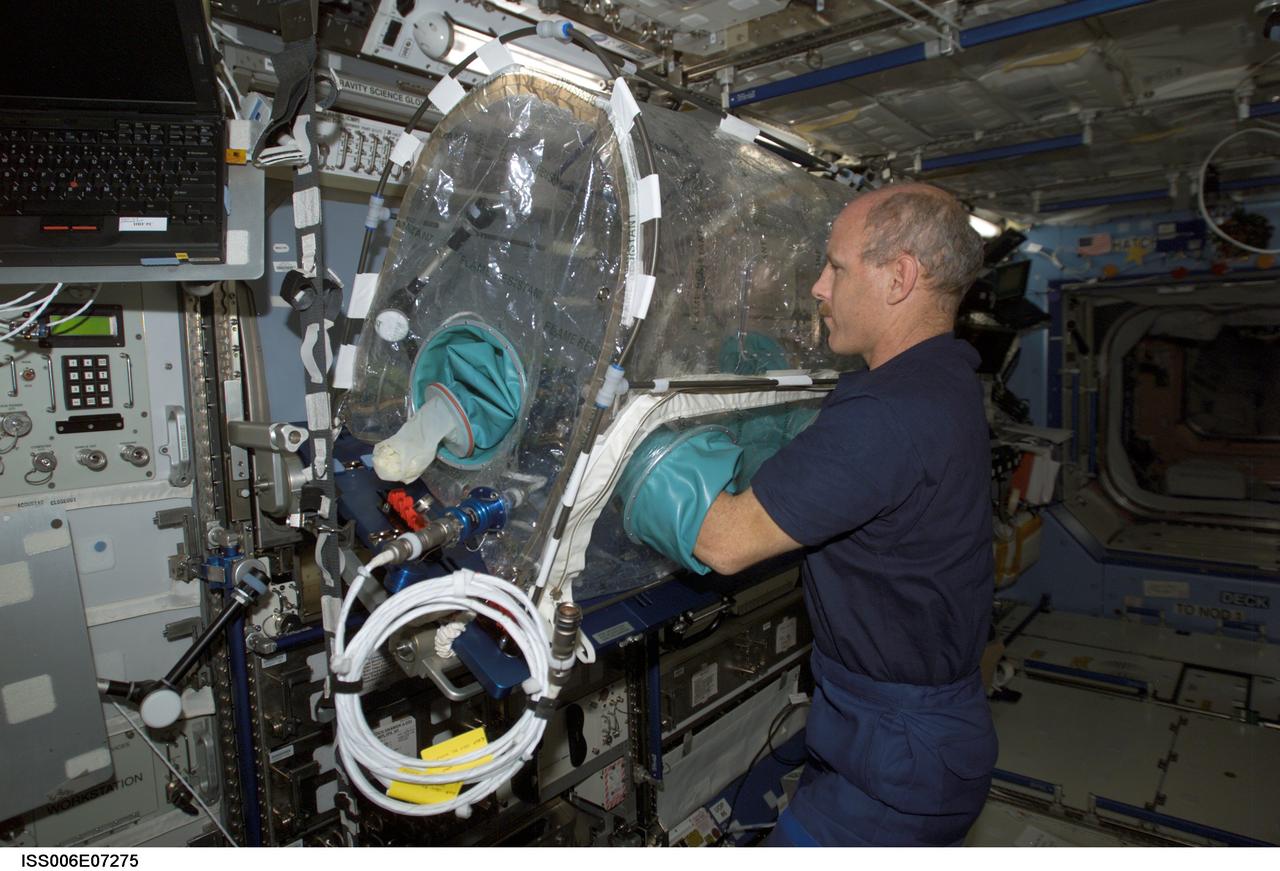
ISS006-E-07275 (16 December 2002) ---  Astronaut Kenneth D. Bowersox,          Expedition Six mission commander, works with an experiment in a portable glovebox facility called the Maintenance Work Area (MWA) in the Destiny laboratory on the International Space Station (ISS).
Expedition Six Commander Bowersox works with an experiment in a portable glovebox facility
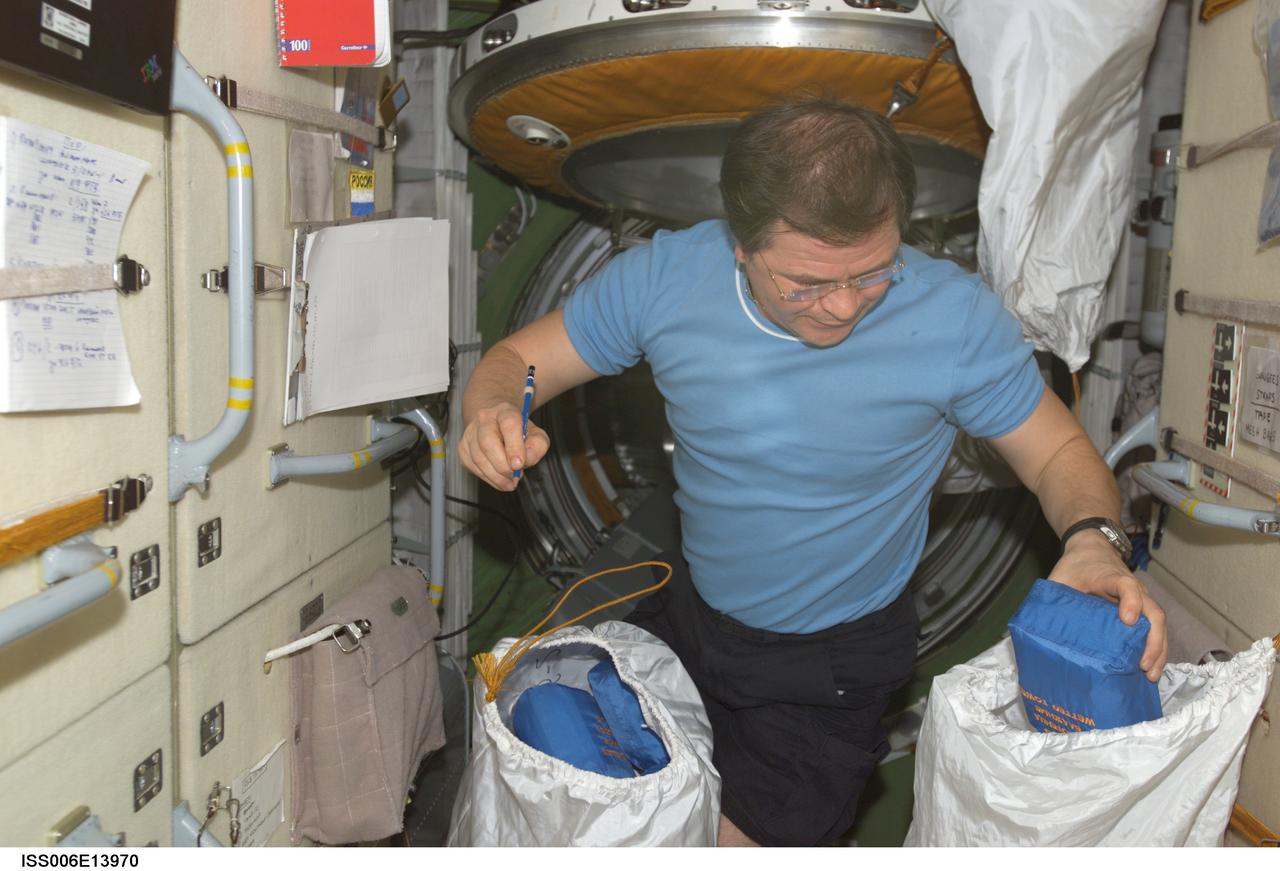
ISS006-E-13970 (2 January 2003) --- Cosmonaut Nikolai M. Budarin, Expedition Six flight engineer, takes inventory of equipment in the functional cargo block (FGB), or Zarya, on the International Space Station (ISS). Budarin represents Rosaviakosmos.
Budarin takes inventory of medical equipment on the FGB during Expedition Six
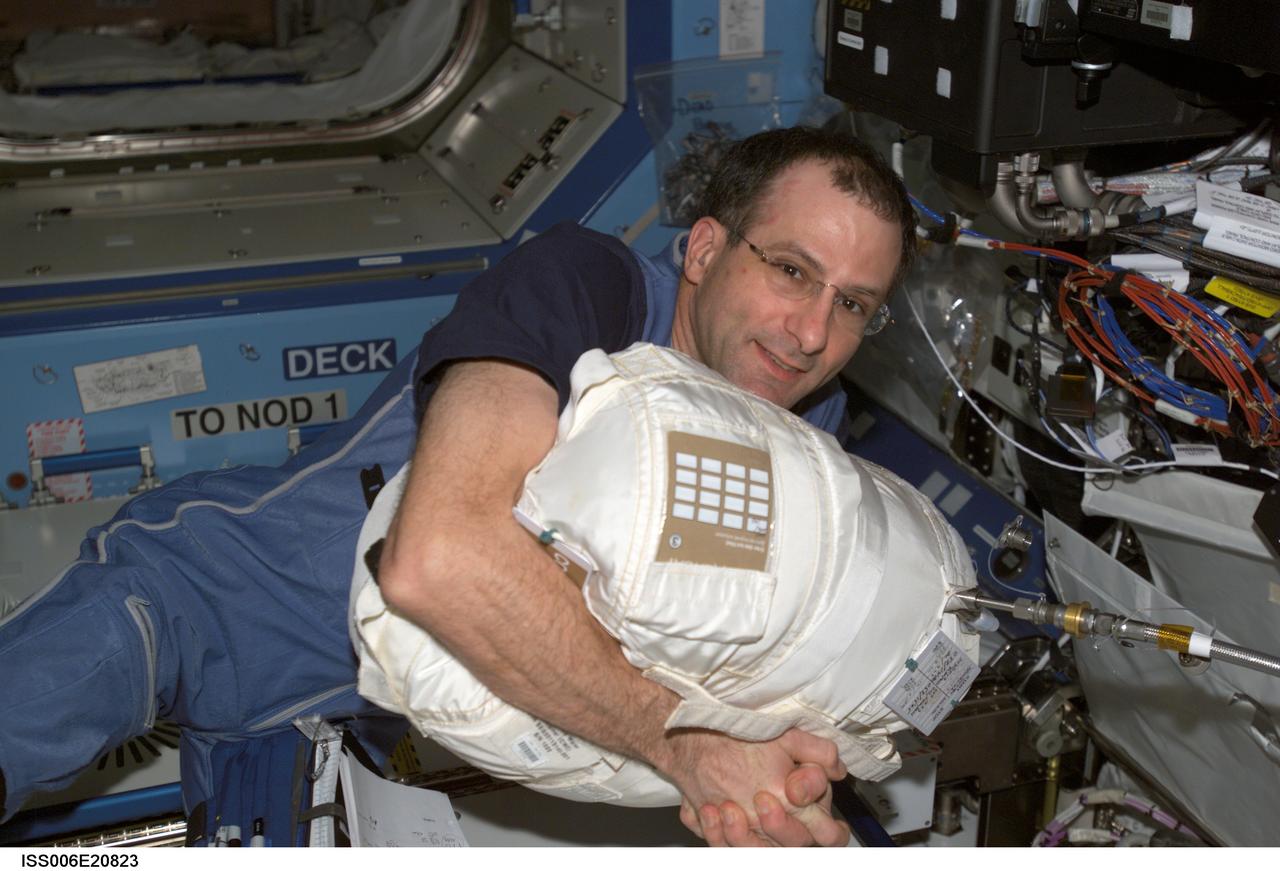
ISS006-E-20823 (22 January 2003) --- Astronaut Donald R. Pettit, Expedition Six NASA ISS science officer, completes a Water Resource Management (WRM) and Contingency Water Container (CWC) function in the Destiny laboratory on the International Space Station (ISS).
Pettit completes WRM and CWC functions in the U.S. Laboratory during Expedition Six
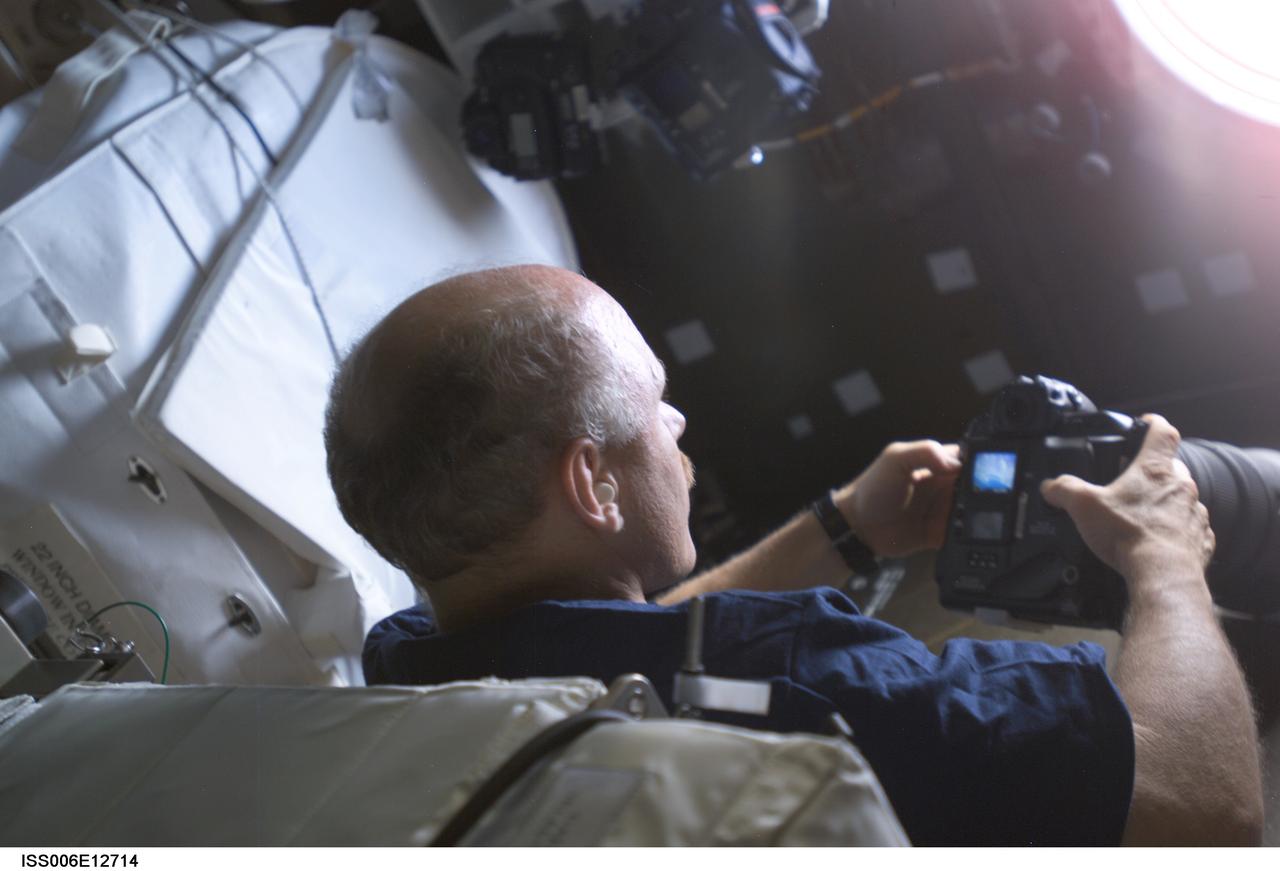
ISS006-E-12714 (27 December 2002) --- Astronaut Kenneth D. Bowersox, Expedition Six mission commander, holds a still camera as he studies the topography of a point on Earth from the nadir window in the Destiny laboratory on the International Space Station (ISS).
Bowersox takes pictures of Earth from the window in Destiny during Expedition Six
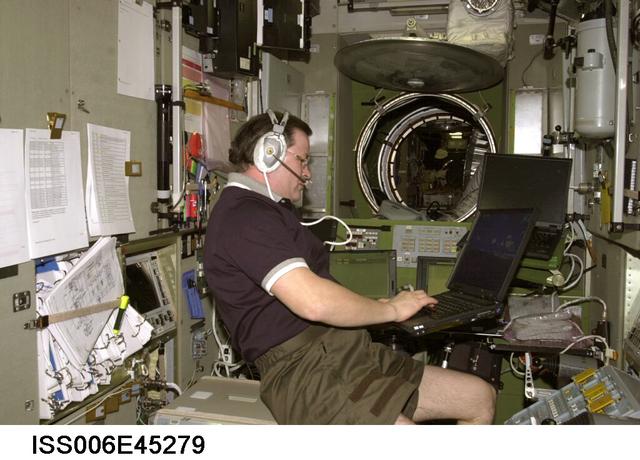
ISS006-E-45279 (21 March 2003) --- Cosmonaut Nikolai M. Budarin, Expedition Six flight engineer, uses a computer as he talks on a communication system in the Zvezda Service Module on the International Space Station (ISS). Budarin represents Rosaviakosmos.
Flight Engineer Budarin uses a laptop computer in the SM during Expedition Six
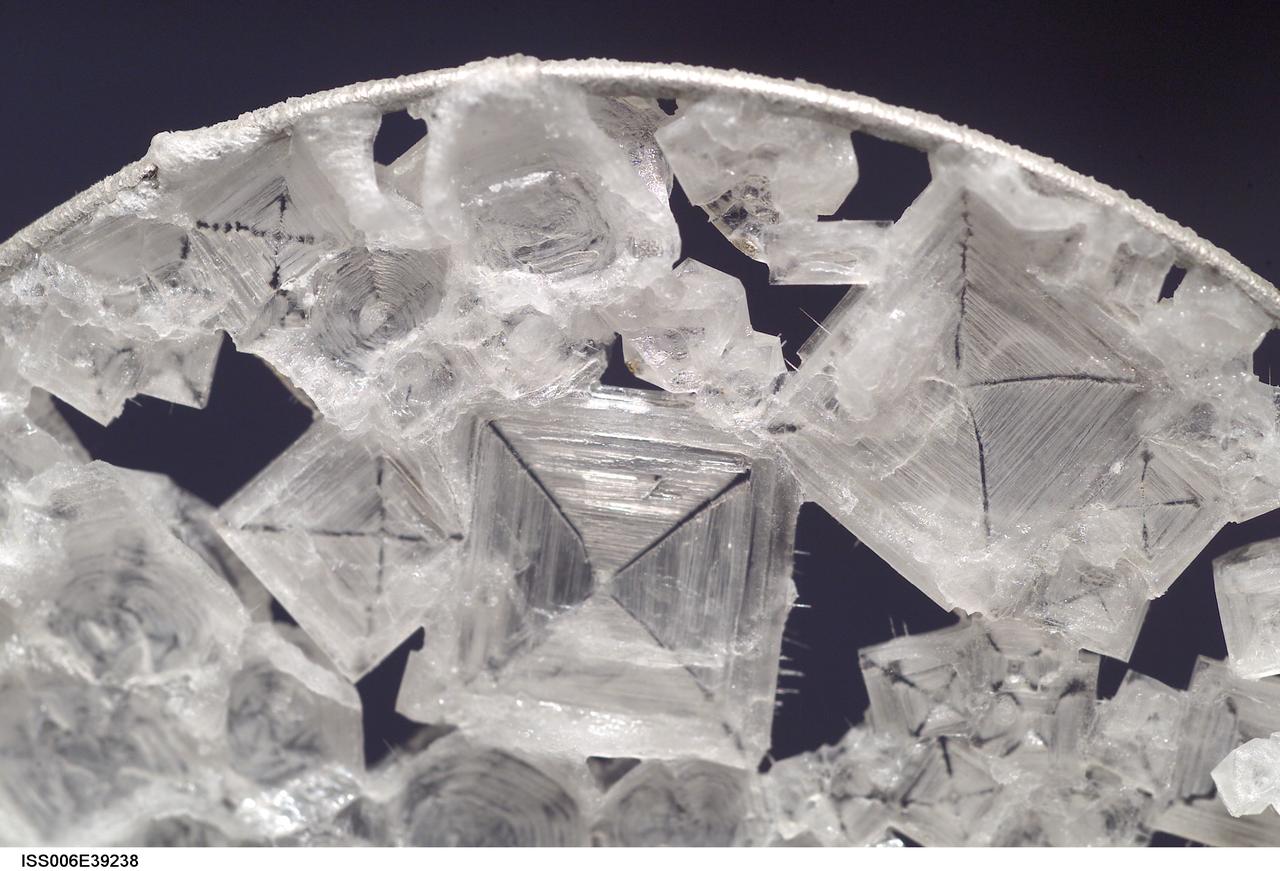
ISS006-E-39238 (14 March 2003) --- A close up view of sodium chloride crystals in a water bubble within a 50-millimeter metal loop was photographed by an Expedition Six crewmember. The experiment took place in the Destiny laboratory on the International Space Station (ISS).
Close-up view of Sodium Chloride crystals in a water bubble on Expedition Six.
ISS006-E-13993 (2 January 2003) --- Astronaut Donald R. Pettit, Expedition Six NASA ISS science officer, uses a still camera to photograph the topography of a point on Earth from the nadir window in the Destiny laboratory on the International Space Station (ISS).
Pettit takes pictures of Earth from the window in Destiny during Expedition Six
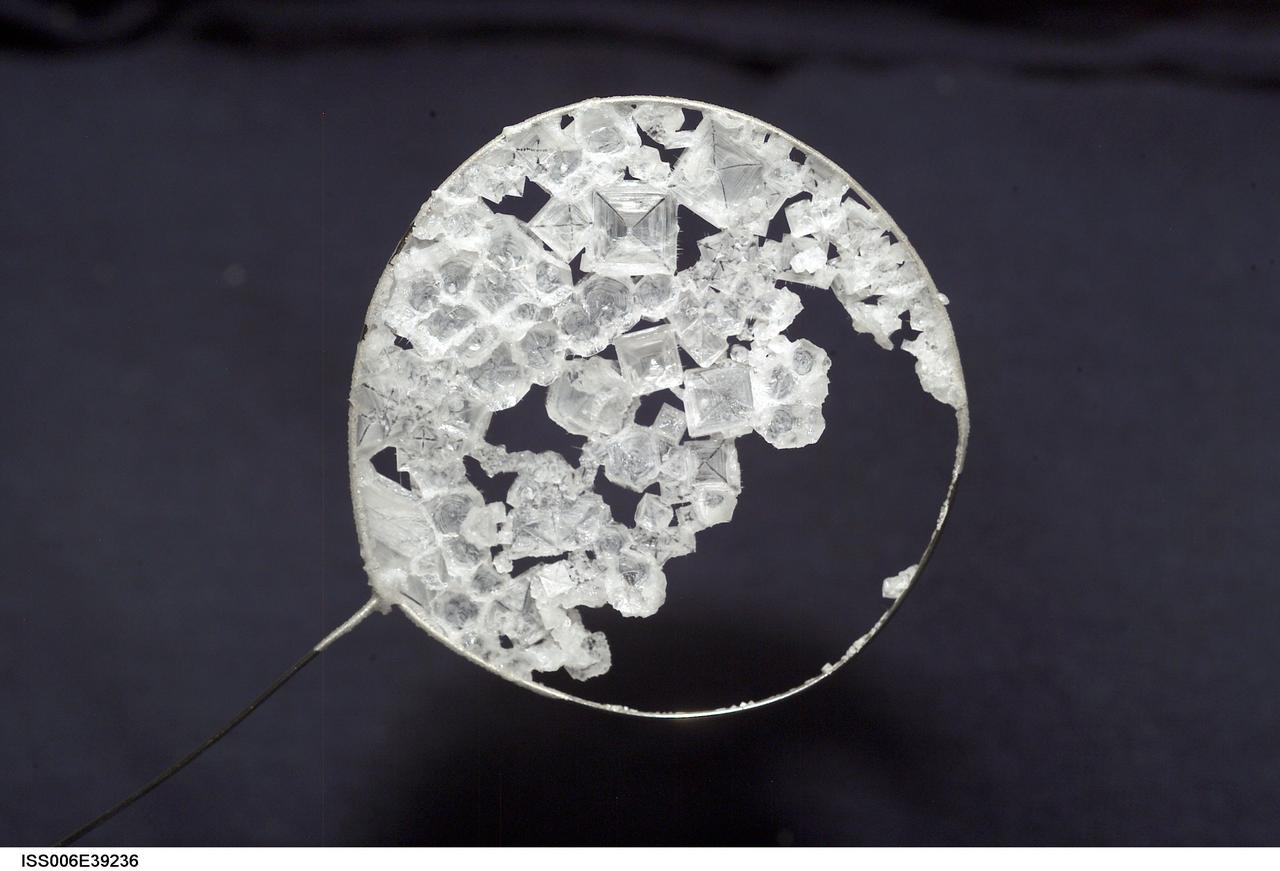
ISS006-E-39236 (14 March 2003) --- A view of sodium chloride crystals in a water bubble within a 50-millimeter metal loop was photographed by an Expedition Six crewmember. The experiment took place in the Destiny laboratory on the International Space Station (ISS).
Close-up view of Sodium Chloride crystals in a water bubble on Expedition Six.
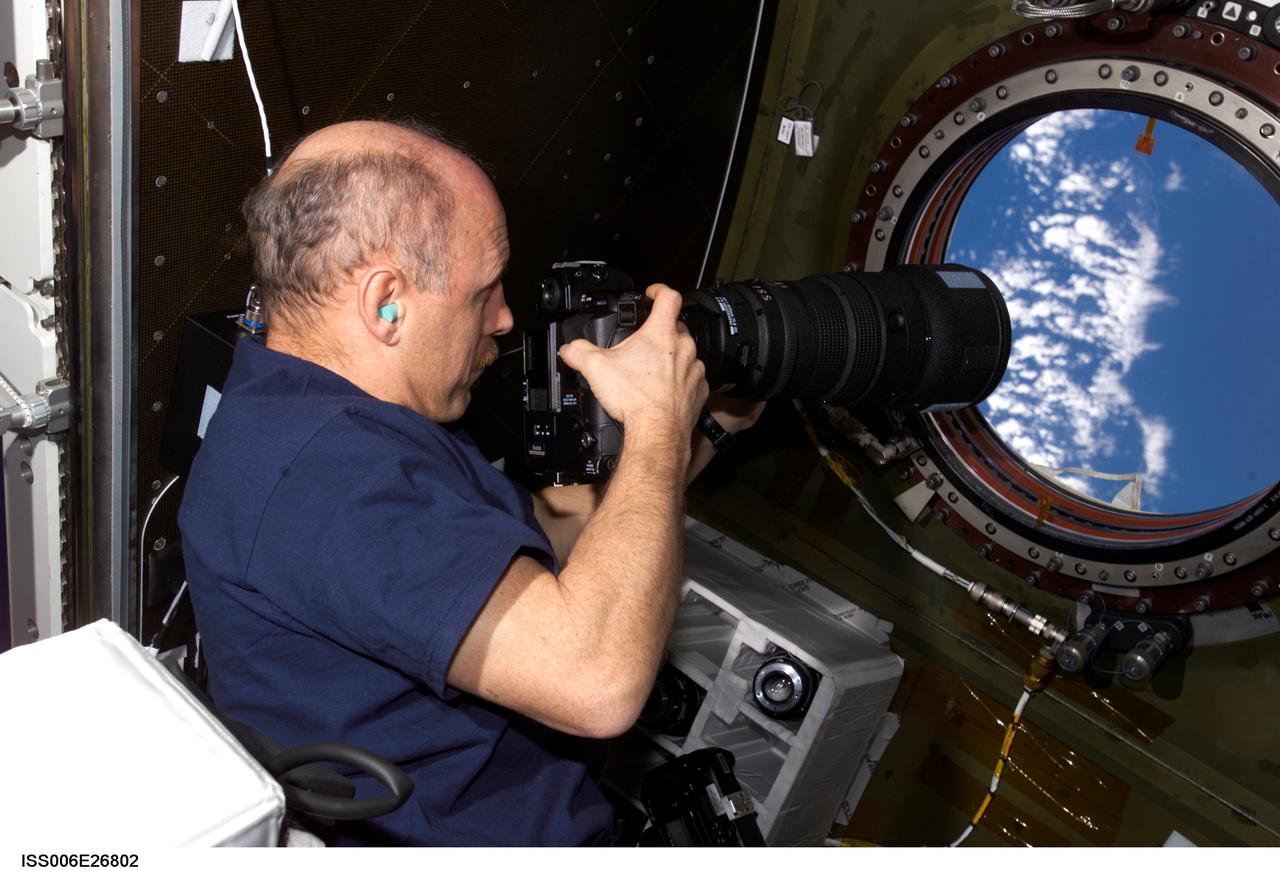
ISS006-E-26802 (14 February 2003) --- Astronaut Kenneth D. Bowersox, Expedition Six mission commander, uses a still camera to photograph the topography of a point on Earth from the nadir window in the Destiny laboratory on the International Space Station (ISS).
Bowersox photographs the Earth from the nadir window in Destiny during Expedition Six
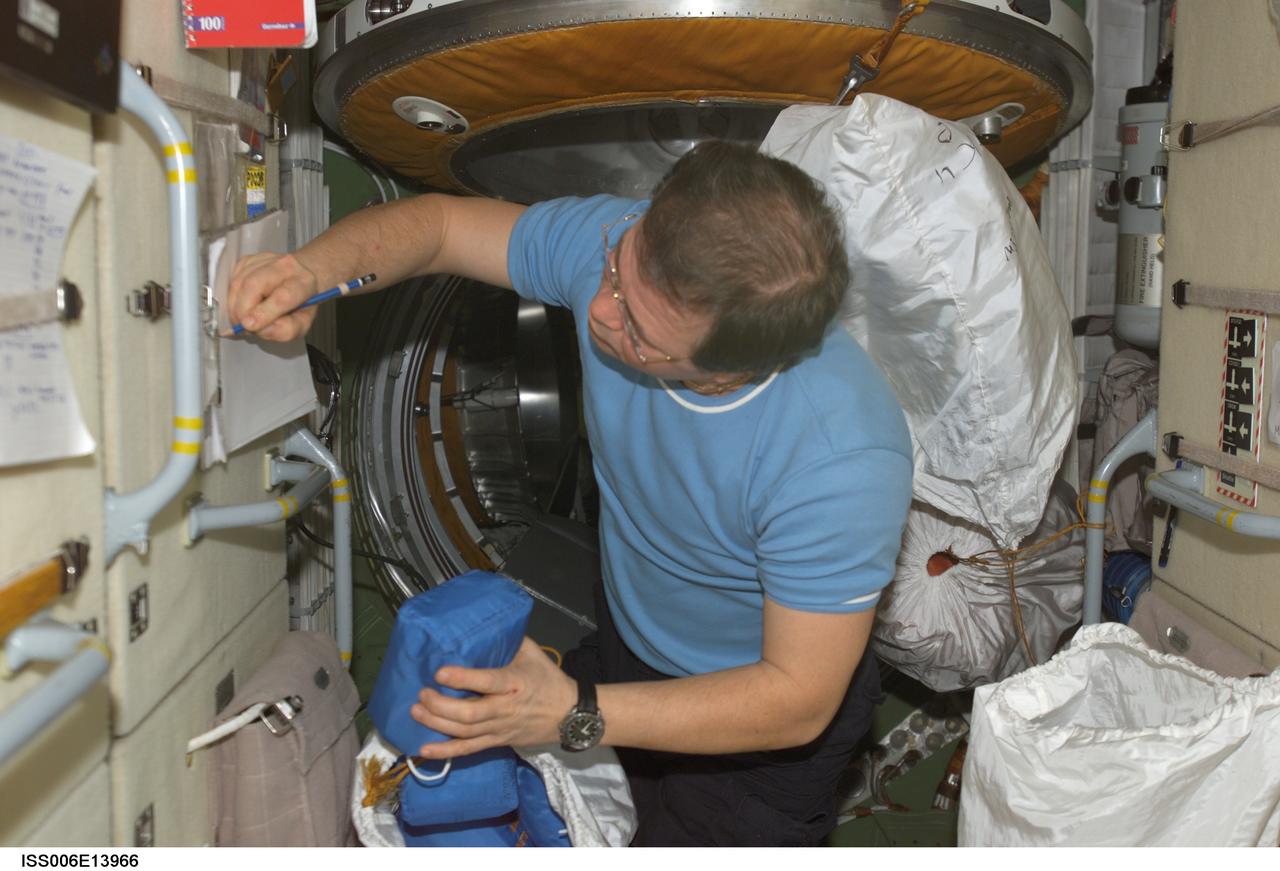
ISS006-E-13966 (2 January 2003) --- Cosmonaut Nikolai M. Budarin, Expedition Six flight engineer, takes inventory of equipment in the functional cargo block (FGB), or Zarya, on the International Space Station (ISS). Budarin represents Rosaviakosmos.
Budarin takes inventory of medical equipment on the FGB during Expedition Six
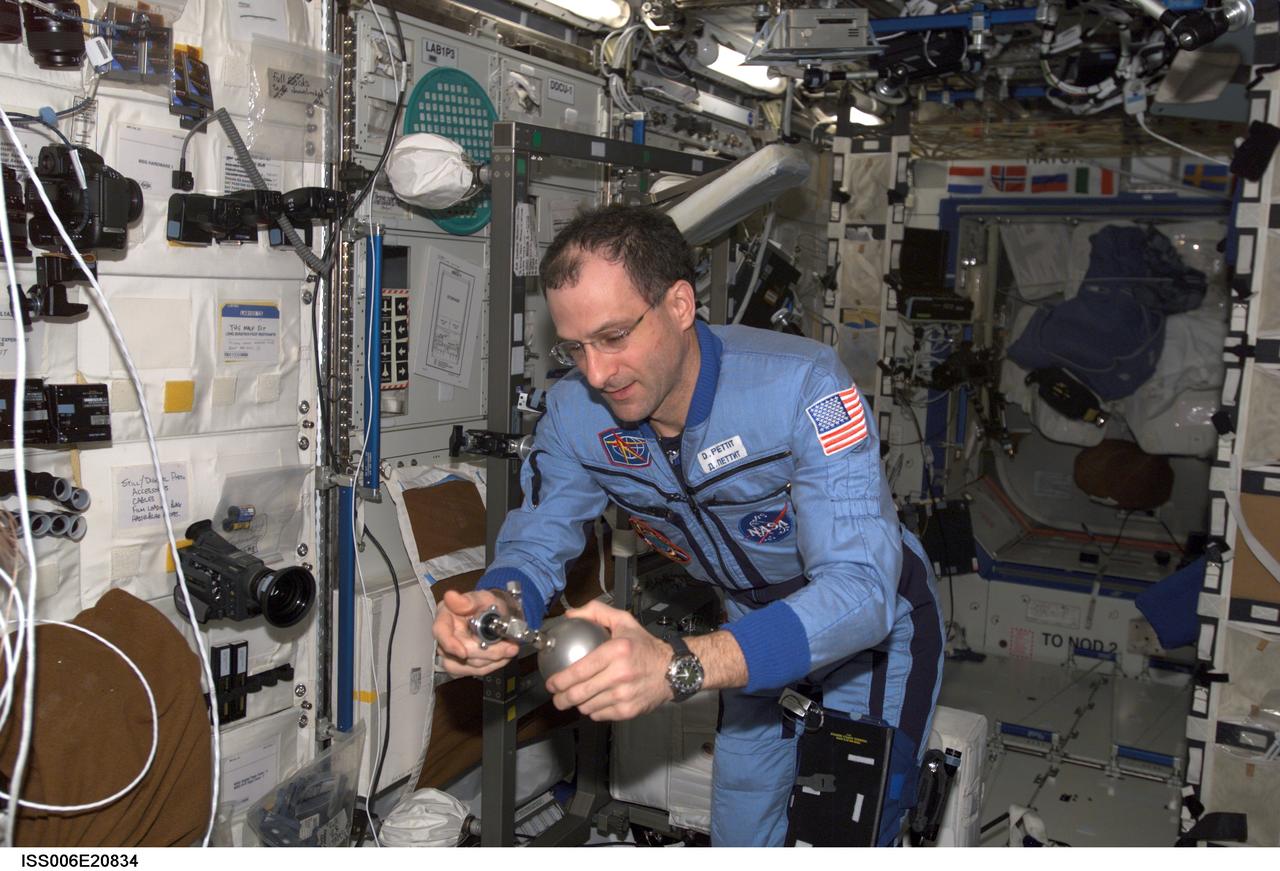
ISS006-E-20834 (22 January 2003) --- Astronaut Donald R. Pettit, Expedition Six NASA ISS science officer, holds a Grab Sample Container (GSC) in the Destiny laboratory on the International Space Station (ISS). GSC is used for collecting air samples as part of ISS environmental monitoring.
Pettit uses a Grab Sample Container in the U.S. Laboratory during Expedition Six
PHOTO DATE: 21 January 2014 LOCATION: Bldg. 9NW, Space Vehicle Mockup Training Facility - ISS Mockups SUBJECT: Expedition 41 six person crew emergency training scenarios. Crewmembers: 39S/Suraev, Wiseman and Gerst along with 40S/Wilmore, Samokutyaev, and Serova. PHOTOGRAPHER: Mark Sowa
Expedition 41 six person crew emergency training scenarios
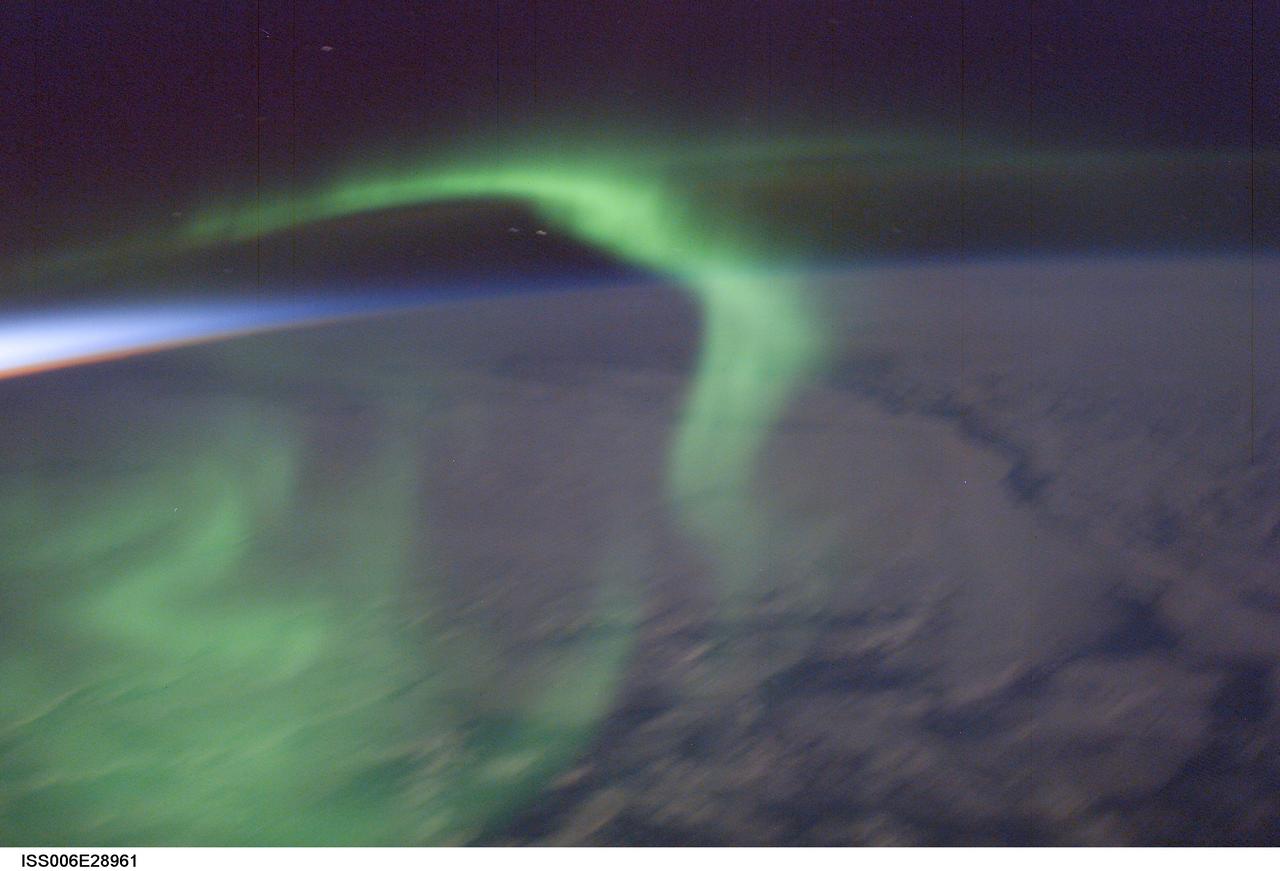
ISS006-E-028961 (16 Feb. 2003) ---  The Expedition Six crew enjoyed this green aurora dancing over the night side of the Earth just after sunset on February 16, 2003. The reds and blues of sunset light up the air layer to the west. The image was recorded  with a 58 mm lens on a digital still camera. Because auroras follow Earth's magnetic field, they are observed at Earth's poles when the oxygen and nitrogen atoms start to glow when bombarded by charged particles coming from the sun.  In a sense, auroras are the "neon lights" of the poles.
Aurora Austrailis taken during Expedition Six
ISS006-E-07134 (9 December 2002) --- Astronaut Donald R. Pettit, Expedition Six NASA ISS science officer, works to set up Pulmonary Function in Flight (PuFF) hardware in preparation for a Human Research Facility (HRF) experiment in the Destiny laboratory on the International Space Station (ISS). Expedition Six is the fourth and final expedition crew to perform the HRF/PuFF Experiment on the ISS.
Expedition Six Flight Engineer Donald R. Pettit is loading software on PC in U.S. Lab
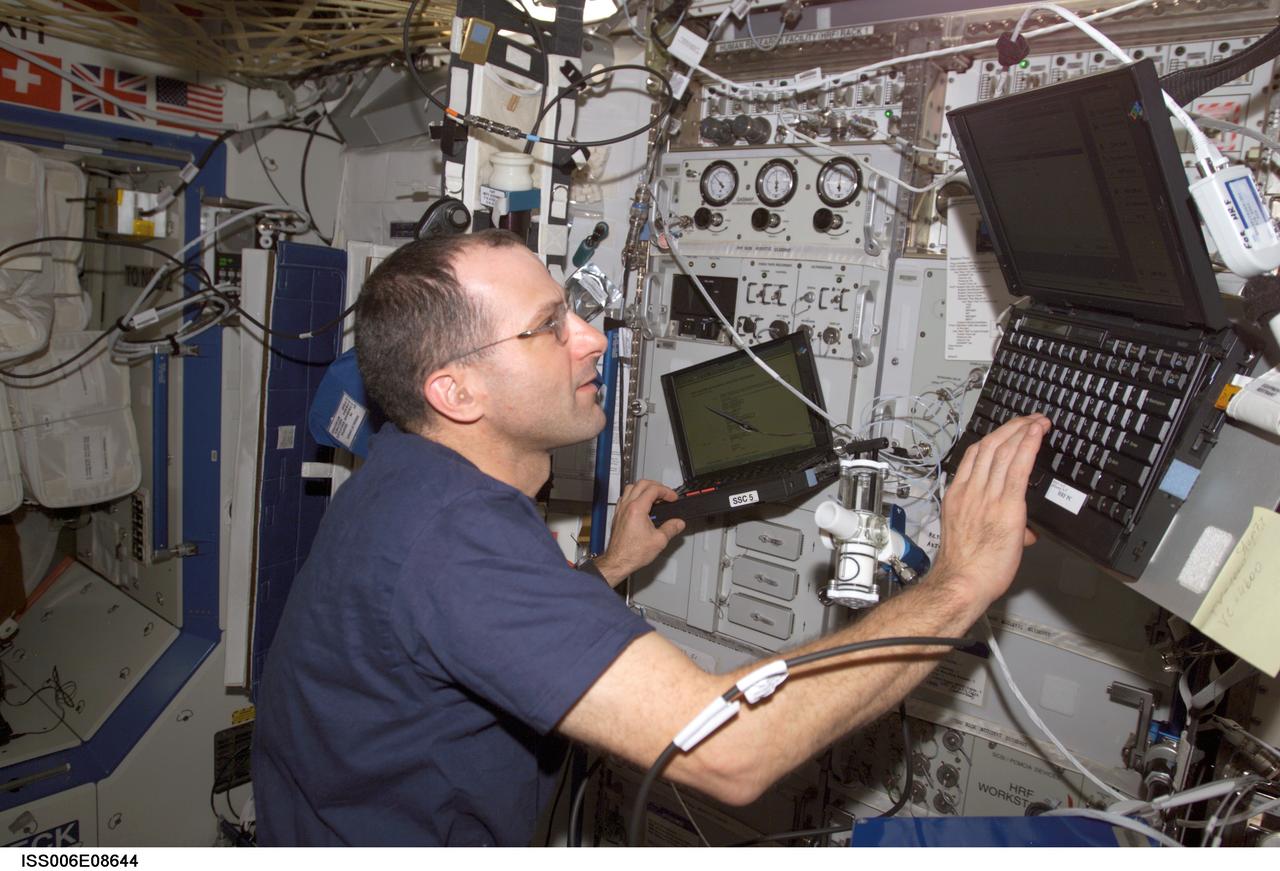
ISS006-E-08644 (9 December 2002) --- Astronaut Donald R. Pettit, Expedition Six NASA ISS science officer, works to set up Pulmonary Function in Flight (PuFF) hardware in preparation for a Human Research Facility (HRF) experiment in the Destiny laboratory on the International Space Station (ISS). Expedition Six is the fourth and final expedition crew to perform the HRF/PuFF Experiment on the ISS.
Expedition Six Flight Eng Donald R. Pettit is setting up the Pulmonary Function in Flight hardware
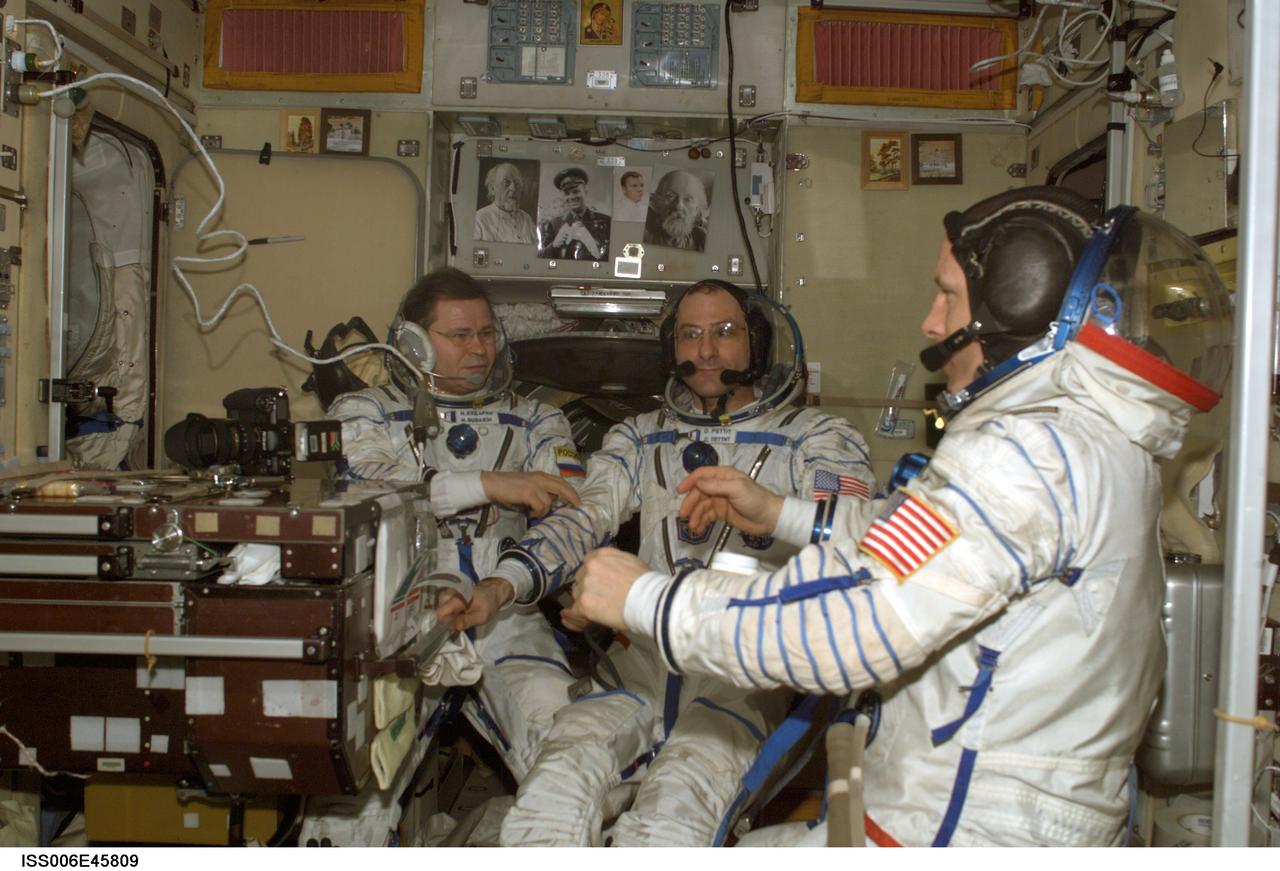
ISS006-E-45809 (14 April 2003) --- Attired in their Russian Sokol suits, the Expedition Six crewmembers are pictured in the Zvezda Service Module on the International Space Station (ISS) as they rehearse for their return flight home onboard the Soyuz TMA-1 spacecraft scheduled for May 3, 2003. From the left are cosmonaut Nikolai M. Budarin, flight engineer; astronauts Donald R. Pettit, NASA ISS science officer, and Kenneth D. Bowersox, mission commander. Budarin represents Rosaviakosmos.
Informal portrait of Pettit, Budarin, and Bowersox in the SM during Expedition Six
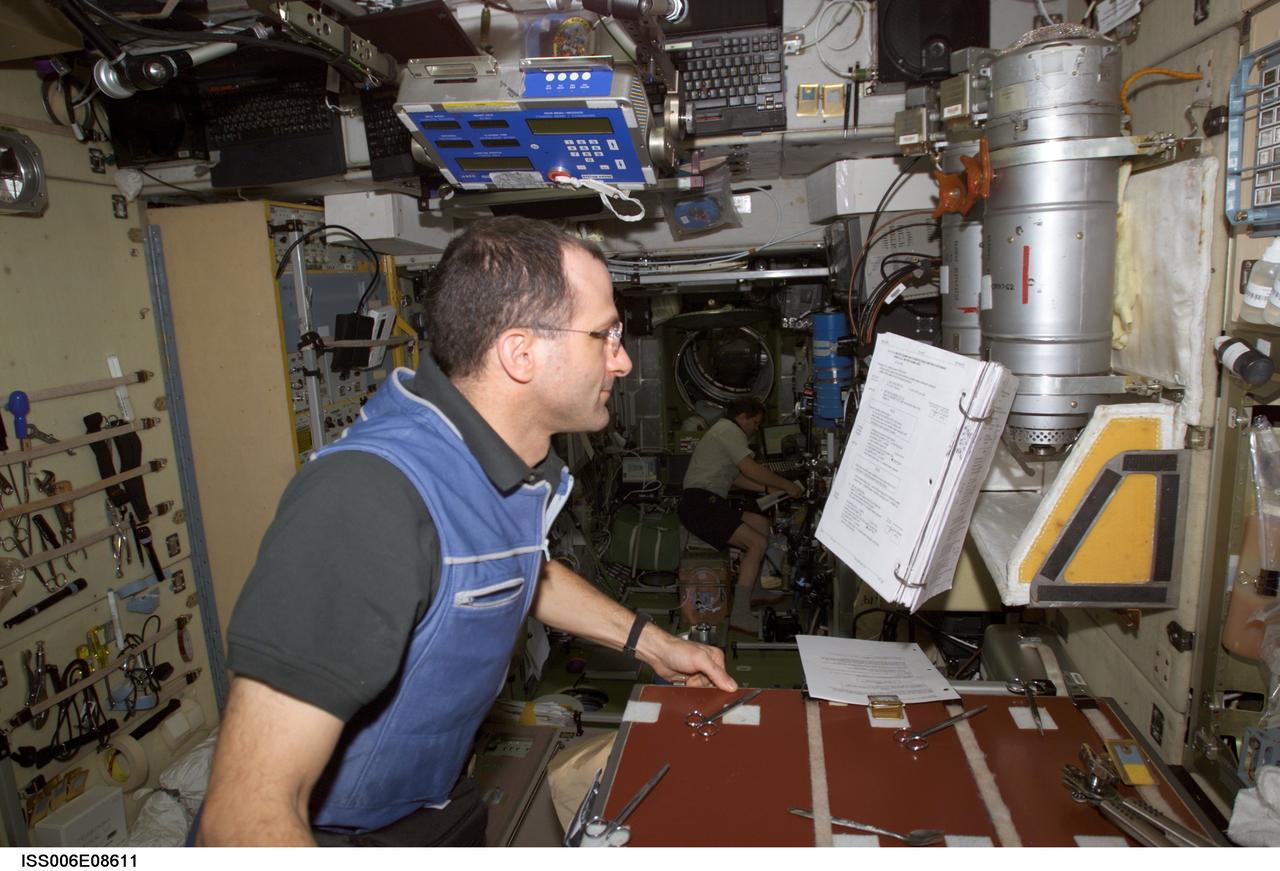
ISS006-E-08611 (18 December 2002) --- Astronaut Donald R. Pettit, Expedition Six NASA ISS science officer, looks over a procedures checklist in the Zvezda Service Module (SM) on the International Space Station (ISS). Pettit went on to complete the scheduled Week 3 potable water sampling and on-orbit chemical/microbial analysis of the SM environment control and life support system.
Expedition Six Flight Engineer Pettit is looking at a procedures checklist
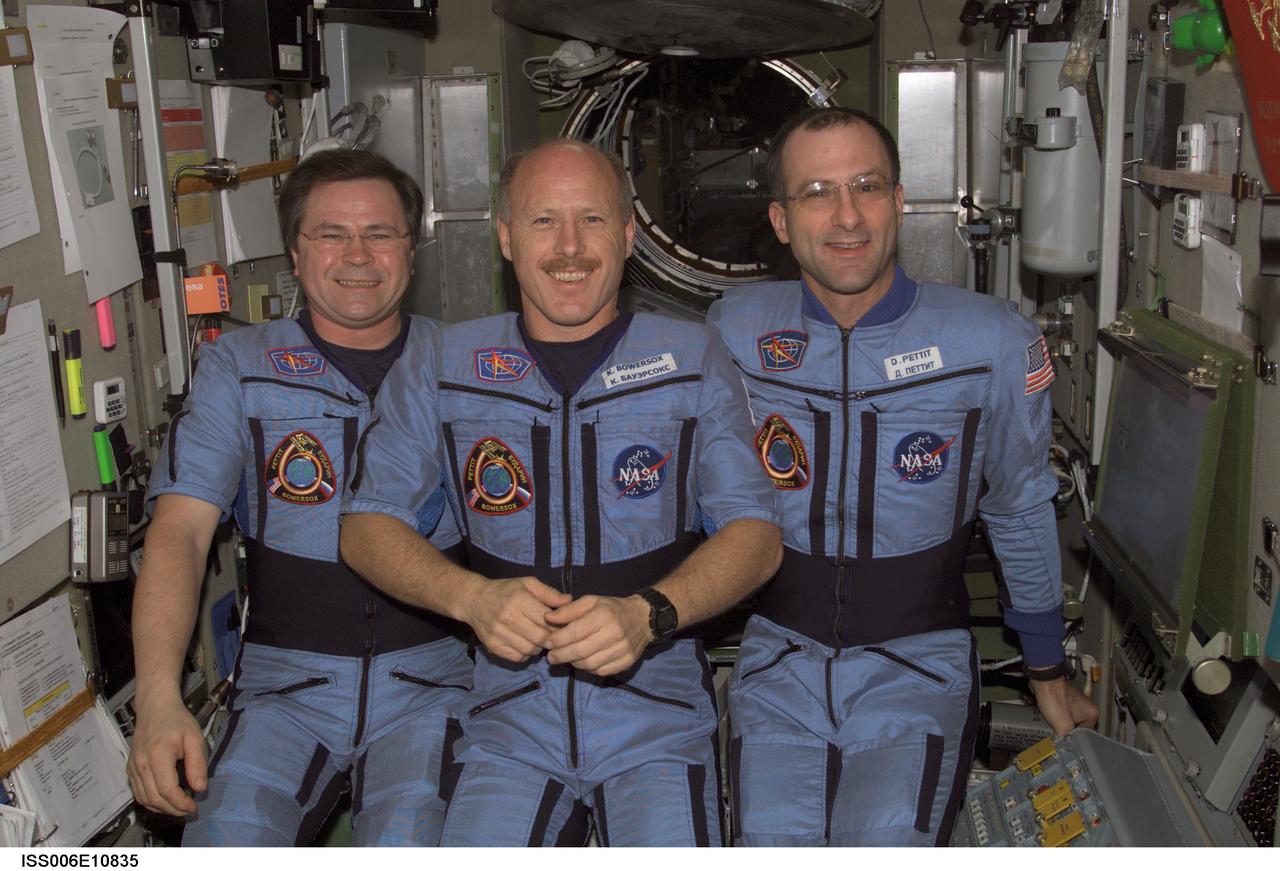
ISS006-E-10835 (19 December 2002) --- The Expedition Six crewmembers pose for a crew photo in the Zvezda Service Module on the International Space Station (ISS). From the left are cosmonaut Nikolai M. Budarin, flight engineer; astronauts Kenneth D. Bowersox, mission commander; and Donald R. Pettit, NASA ISS science officer. Budarin represents Rosaviakosmos. The photo was taken with a pre-set digital still camera.
Expedition Six crewmembers pose for a group photo in the Service Module
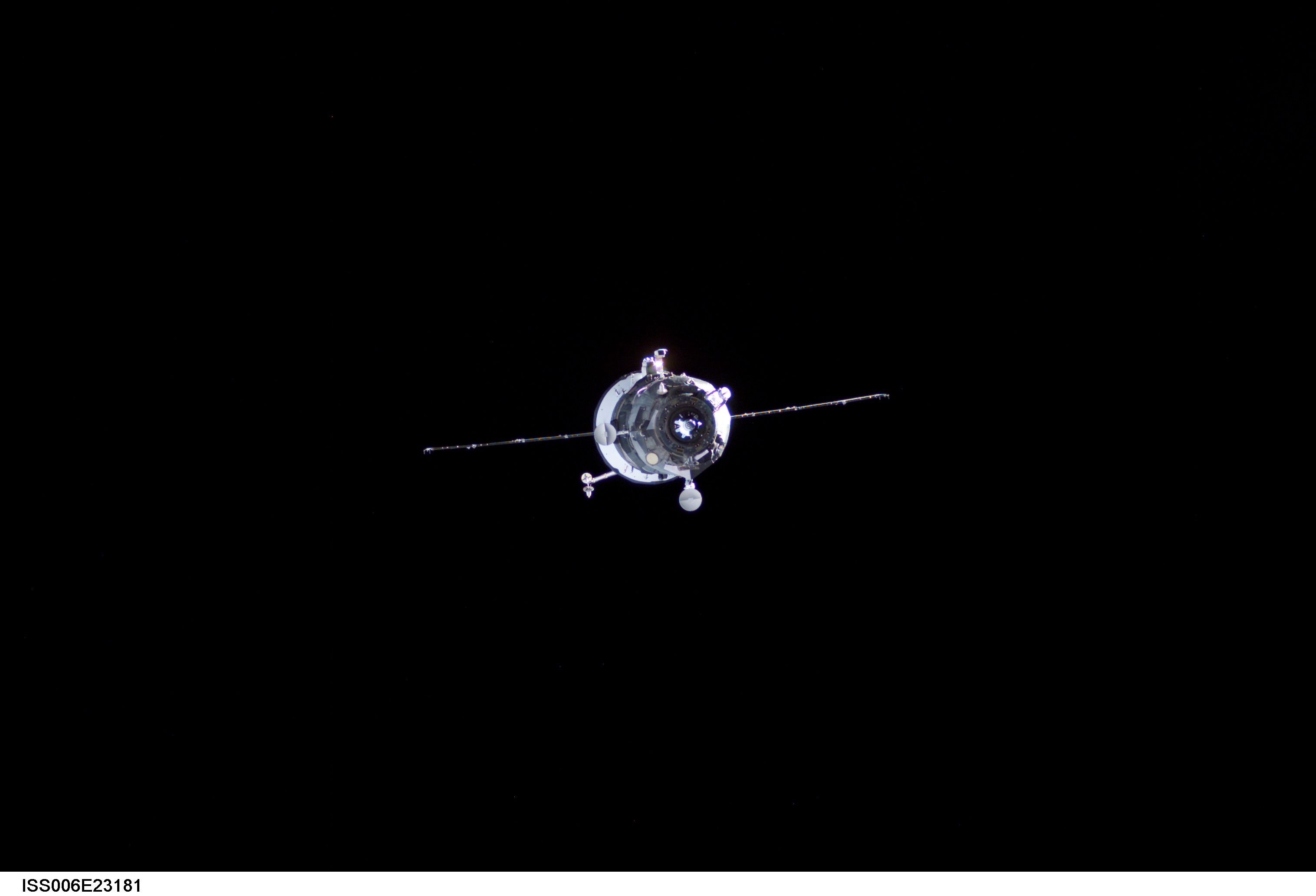
ISS006-E-23181 (4 February 2003) --- Backdropped by the blackness of space, an unpiloted Progress supply vehicle approaches the aft port of the Zvezda Service Module (out of frame) on the International Space Station (ISS), completing a two-day automated flight. The Progress 10 resupply craft, which launched from the Baikonur Cosmodrome in Kazakhstan on Sunday, February 2, 2003, carried more than a ton of food, fuel and equipment for the Expedition Six crewmembers.
View of the Progress Spacecraft approaching the ISS during Expedition Six
ISS006-E-05070 (4 December 2002) --- The new crewmembers aboard the International Space Station (ISS) were able to document a rare occurrence early into their tour on the outpost.  The dark area near Earth's horizon at center frame is actually a shadow cast by the Moon during the total solar eclipse of Dec. 4, 2002. The shadow obscures an area of cloud cover.  The station, with three Expedition Six crewmembers aboard, was over the Indian Ocean at the time of the eclipse. The out-of-focus object in the foreground is part of the frame for the viewing port.
Crew Earth Observations (CEO) taken during Expedition Six.
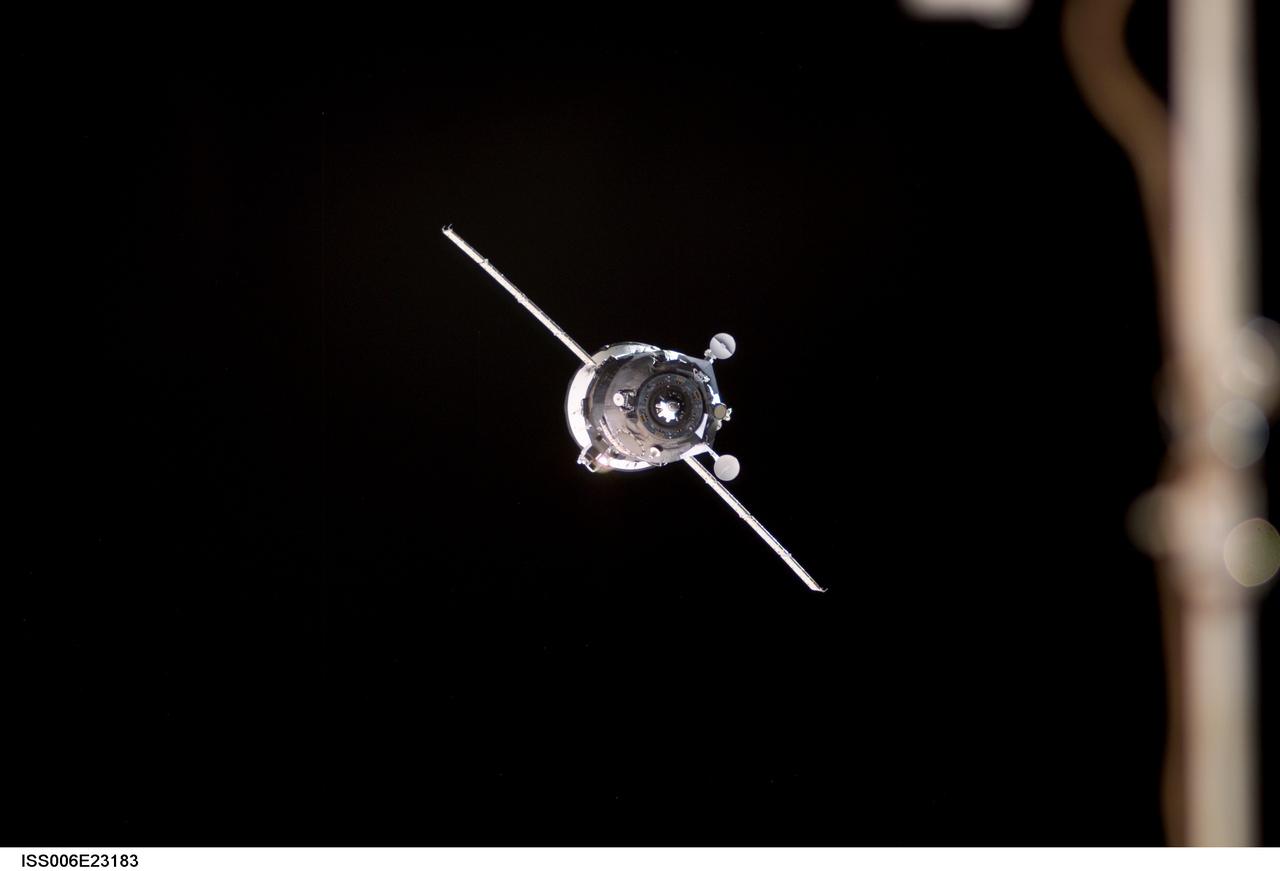
ISS006-E-23183 (4 February 2003) --- Backdropped by the blackness of space, an unpiloted Progress supply vehicle approaches the aft port of the Zvezda Service Module (out of frame) on the International Space Station (ISS), completing a two-day automated flight. The Progress 10 resupply craft, which launched from the Baikonur Cosmodrome in Kazakhstan on Sunday, February 2, 2003, carried more than a ton of food, fuel and equipment for the Expedition Six crewmembers.
View of the Progress Spacecraft approaching the SM on the ISS during Expedition Six
ISS006-E-05064 (4 December 2002) --- The new crewmembers aboard the International Space Station (ISS) were able to document a rare occurrence early into their tour on the outpost.  The dark area near Earth's horizon at center frame is actually a shadow cast by the Moon during the total solar eclipse of Dec. 4, 2002. The shadow obscures an area of cloud cover.  The station, with three Expedition Six crewmembers aboard, was over the Indian Ocean at the time of the eclipse. The out-of-focus object in the foreground is part of the frame for the viewing port.
Crew Earth Observations (CEO) taken during Expedition Six.
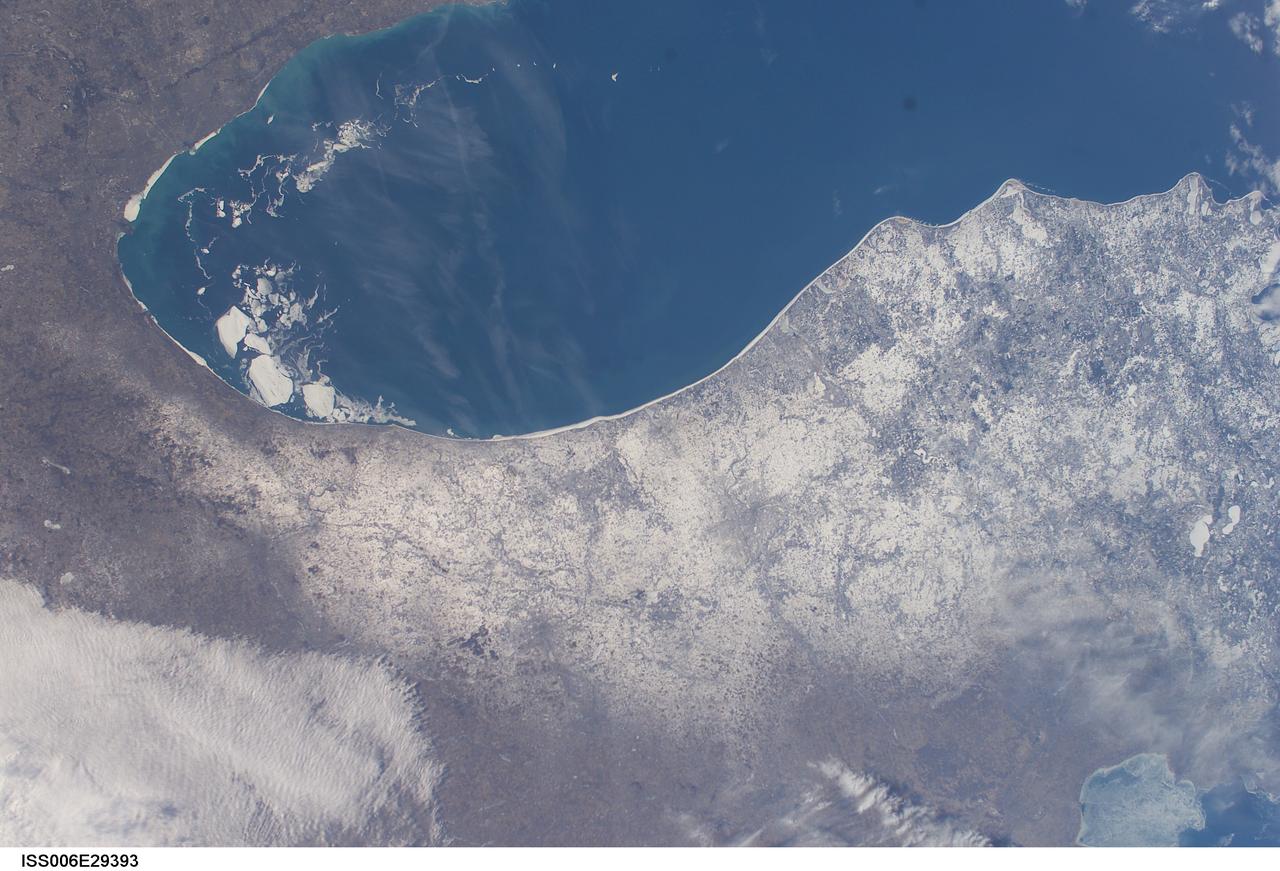
ISS006-E-29393 (21 February 2003) --- A number of large pieces of ice collected along and just off the shoreline southwest of Benton Harbor, Michigan and smaller pieces trailing northward offshore from Chicago, Illinois were captured with a digital still camera by one of the Expedition Six crewmembers on board the International Space Station (ISS). Note the ice accumulation along the entire eastern shoreline of Lake Michigan as well as the wind-drive lake-effect snow cover over the western half of the Lower Michigan Peninsula.
Crew Earth Observations (CEO) taken during Expedition Six
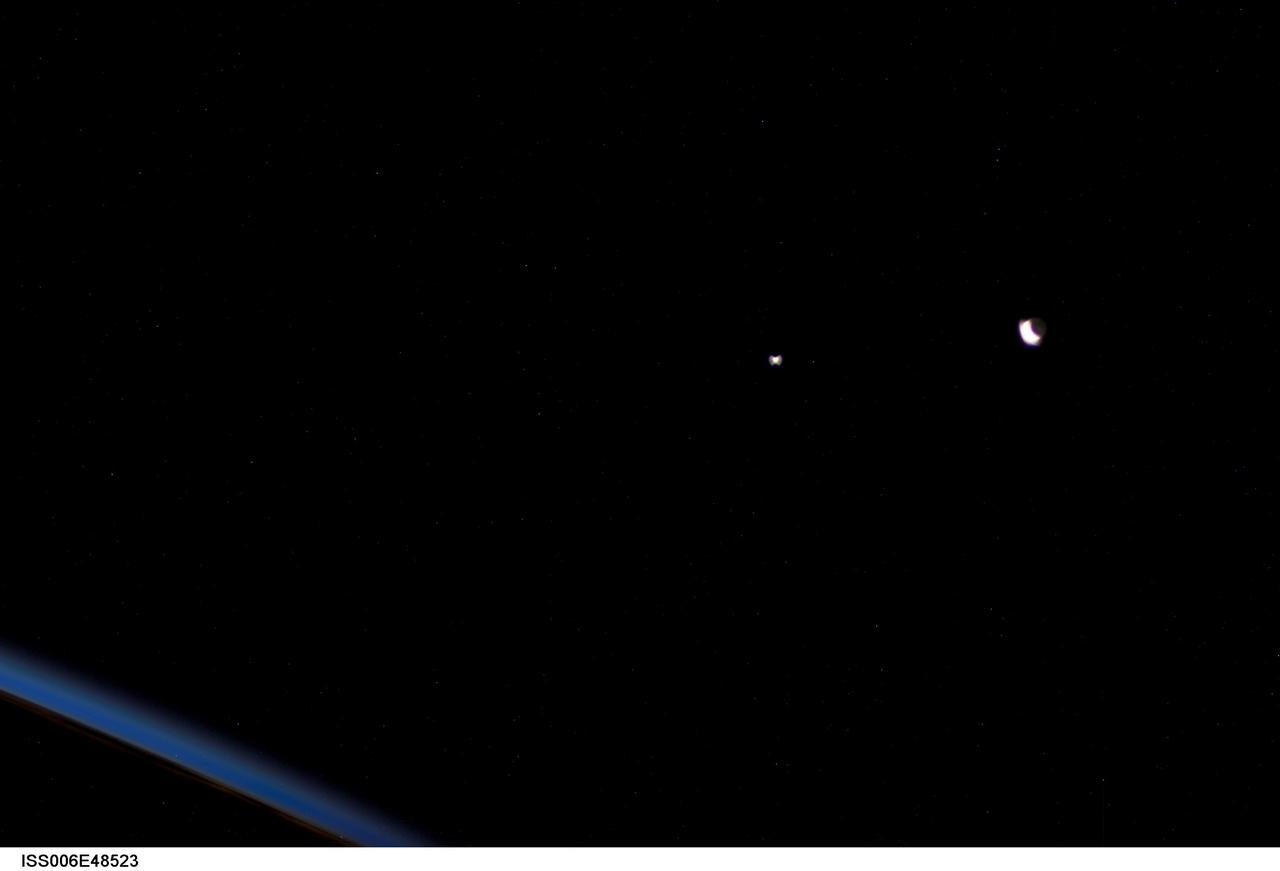
ISS006-E-48523 (28 April 2003) --- A crescent moon (right) and the planet Venus were photographed by an Expedition six crewmember onboard the International Space Station (ISS). As a result of overexposure, the dark part of the moon’s terrain is visible, which is faintly lit by Earthshine (sunlight reflected from our planet onto the moon). Earth’s horizon is visible in the lower left portion of this image.
View of crescent moon and the planet Venus during Expedition Six
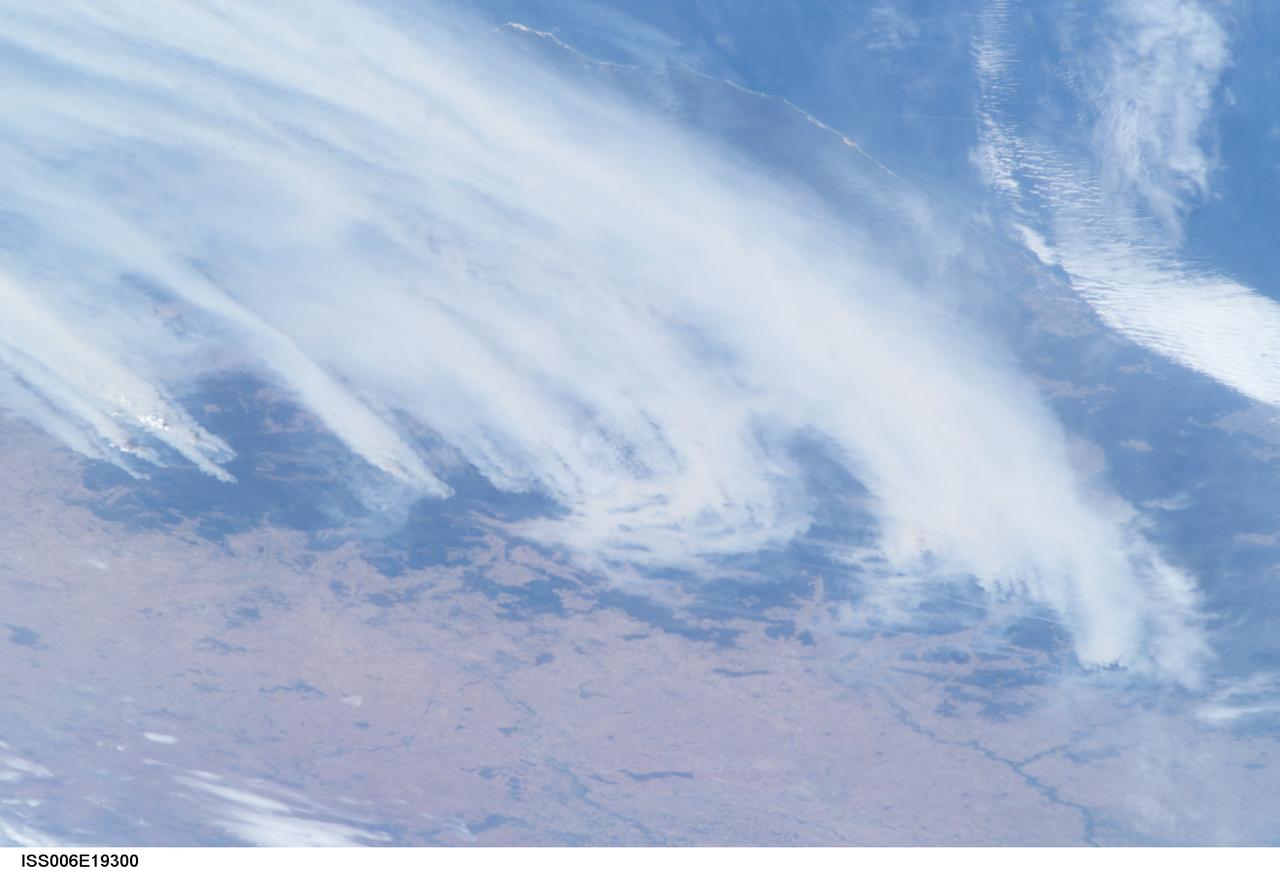
ISS006-E-19300 (18 January 2003) --- Bushfires in southeastern Australia were captured with a digital still camera by one of the Expedition Six crewmembers on the International Space Station (ISS). Brisk winds were sweeping smoke plumes eastward off the Australian coast north of Cape Howe. The agricultural valleys of the Murrumbidgee and Murray Rivers give way to the burning, darker bush areas of the mountains with the extreme eastern coastline of Victoria visible beyond.
Crew Earth Observations (CEO) taken during Expedition Six
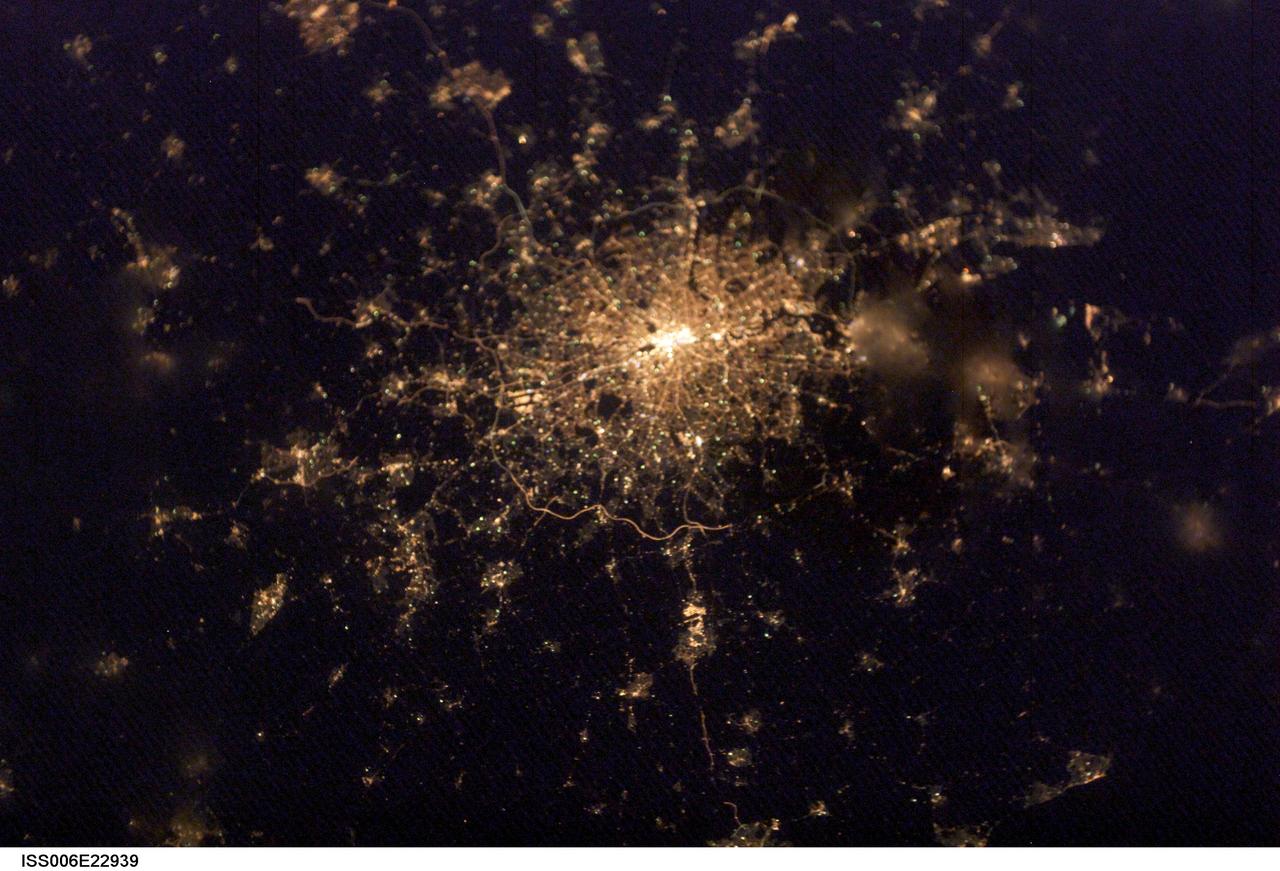
ISS006-E-22939 (4 February 2003) --- City lights of London, England were captured with a digital still camera by one of the Expedition Six crewmembers on the International Space Station (ISS). This nighttime view of the British capital shows the city’;s urban density and infrastructure as highlighted by electrical lighting. Beyond lie isolated bright areas marking the numerous smaller cities and towns of the region and as far southeast as Hastings on the coast. London’;s two major airports, Heathrow and Gatwick, are visible to the south of the city.
City lights of London, England taken during Expedition Six
ISS006-E-36913 (10 March 2003) --- This nighttime view of Los Angeles, California was captured by one of the Expedition Six crewmembers on board the International Space Station (ISS). In the north, Hollywood is nestled against the south side of the Santa Monica Mountains. On the coast, Los Angeles International Airport (LAX) and the port facilities at Long Beach Naval Shipyards are also bright spots. The bright lights of Disneyland in Anaheim are also a standout feature.
Crew Earth Observations (CEO) taken during Expedition Six
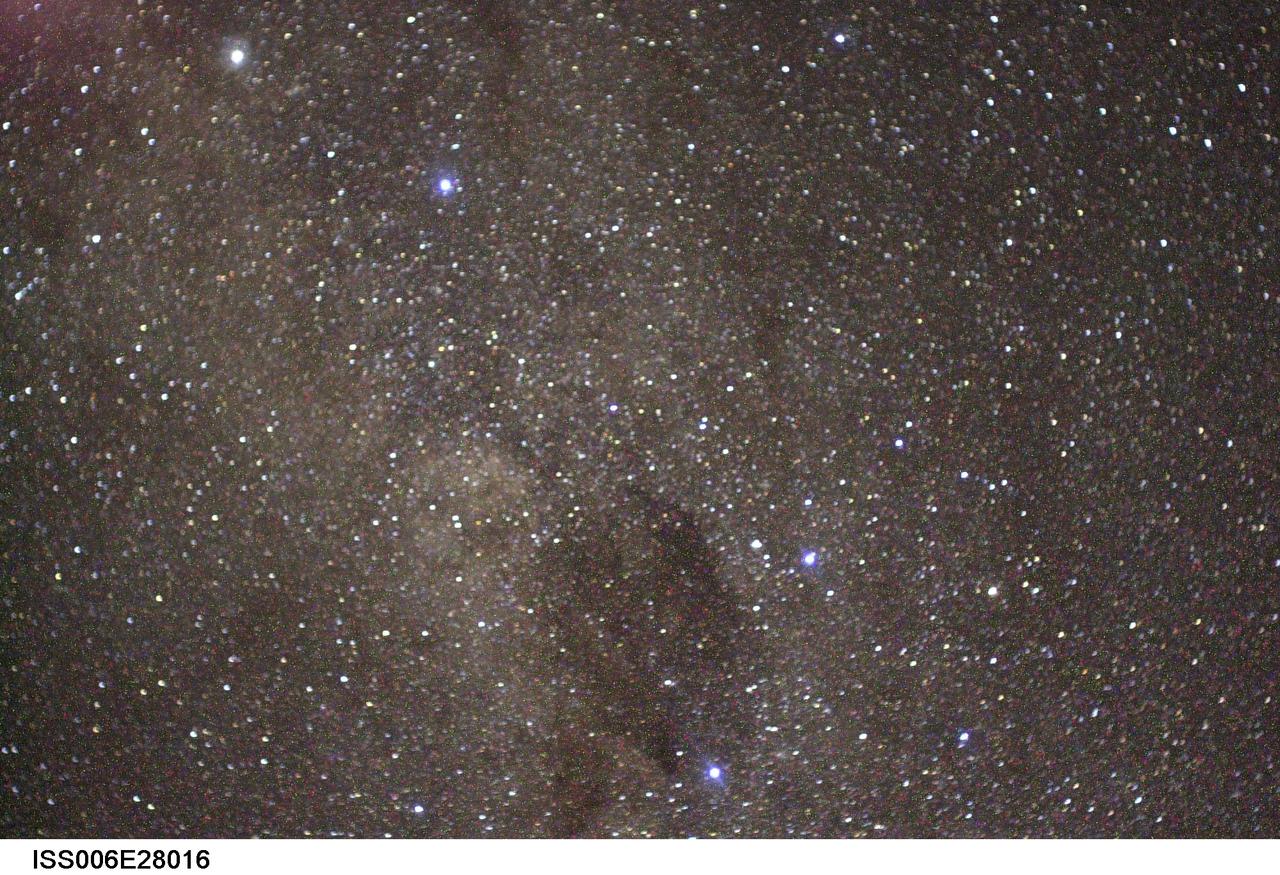
ISS006-E-28016 (February 2003) --- The Coal Sack Nebula (bottom center), the Southern Cross (lower right), and the two prominent stars in the upper left, which are the two prominent stars of the southern constellation Centaurus, are visible in this view photographed by astronaut Donald R. Pettit, Expedition Six NASA ISS science officer, on board the International Space Station (ISS).
Crew Earth Observations (CEO) taken during Expedition Six
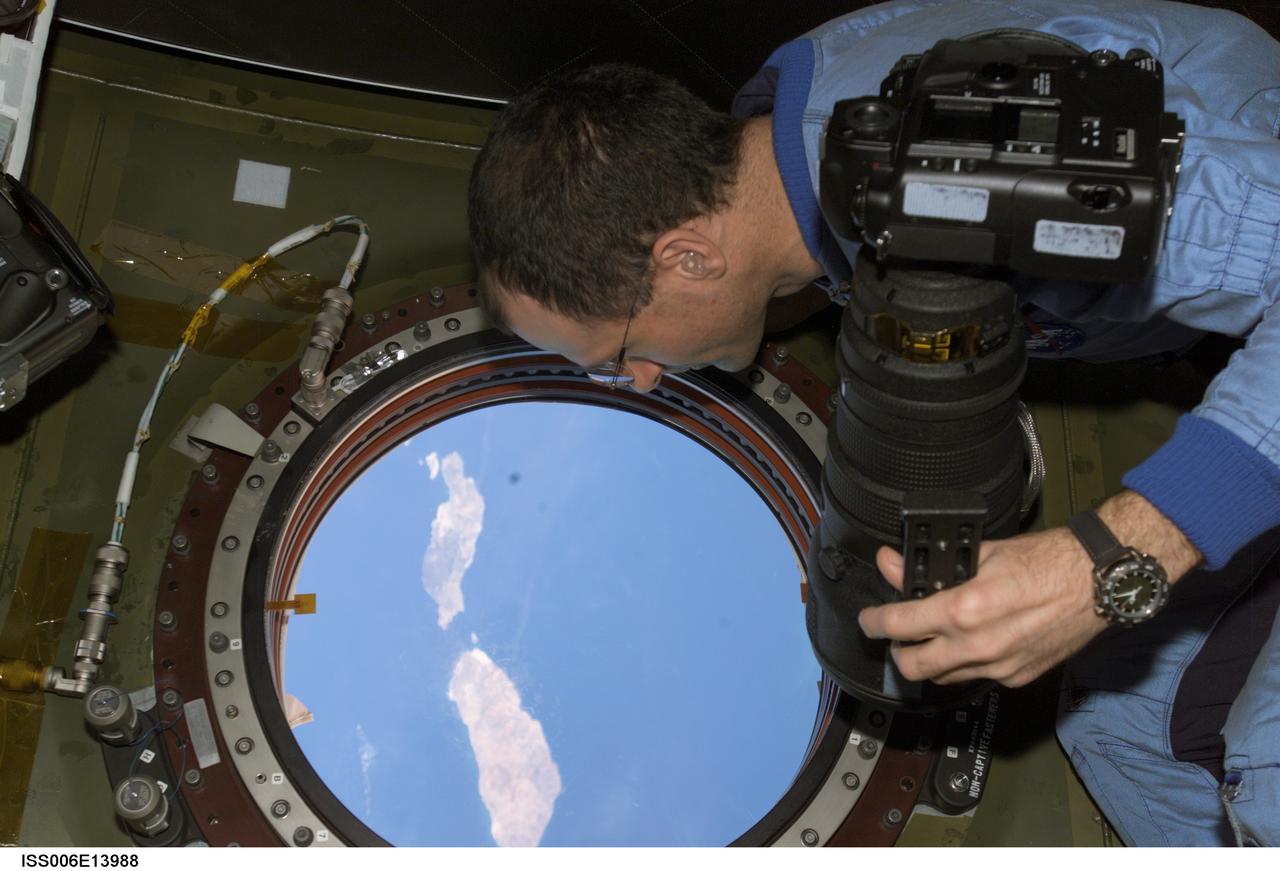
ISS006-E-13988 (2 January 2003) --- Astronaut Donald R. Pettit, Expedition Six NASA ISS science officer, holds a still camera as he looks through the nadir window in the Destiny laboratory on the International Space Station (ISS). The islands of Lanzarote and Fuerteventura of the Canary Island chain in the Atlantic Ocean off the coast of Morocco are visible.
Pettit takes pictures of Earth from the window in Destiny during Expedition Six
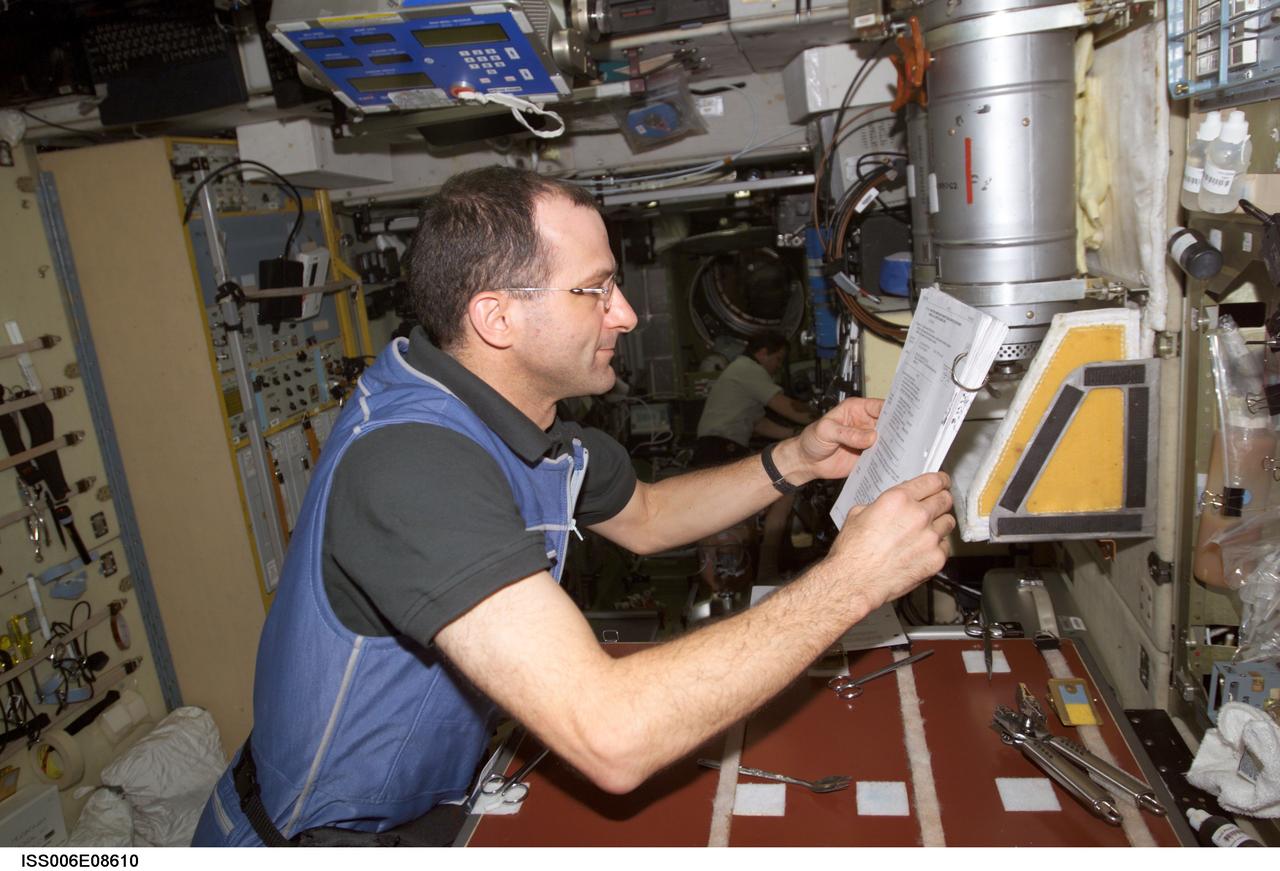
ISS006-E-08610 (18 December 2002) --- Astronaut Donald R. Pettit, Expedition Six NASA ISS science officer, looks over a procedures checklist in the Zvezda Service Module (SM) on the International Space Station (ISS). Pettit went on to complete the scheduled Week 3 potable water sampling and on-orbit chemical/microbial analysis of the SM environment control and life support system.
Expedition Six Flight Engineer Pettit is looking at a procedures checklist
ISS006-E-25010 (7 February 2003) --- Astronaut Kenneth D. Bowersox, Expedition Six mission commander, conducts a Foot/Ground Reaction Forces During Spaceflight (FOOT) – Electromyography (EMG) calibration at the Human Research Facility (HRF) rack in the Destiny laboratory on the International Space Station (ISS). This experiment determines the change in joint angles (muscle activity) of the ankle, knee, and hip.
Bowersox prepares for the FOOT experiment in Destiny during Expedition Six
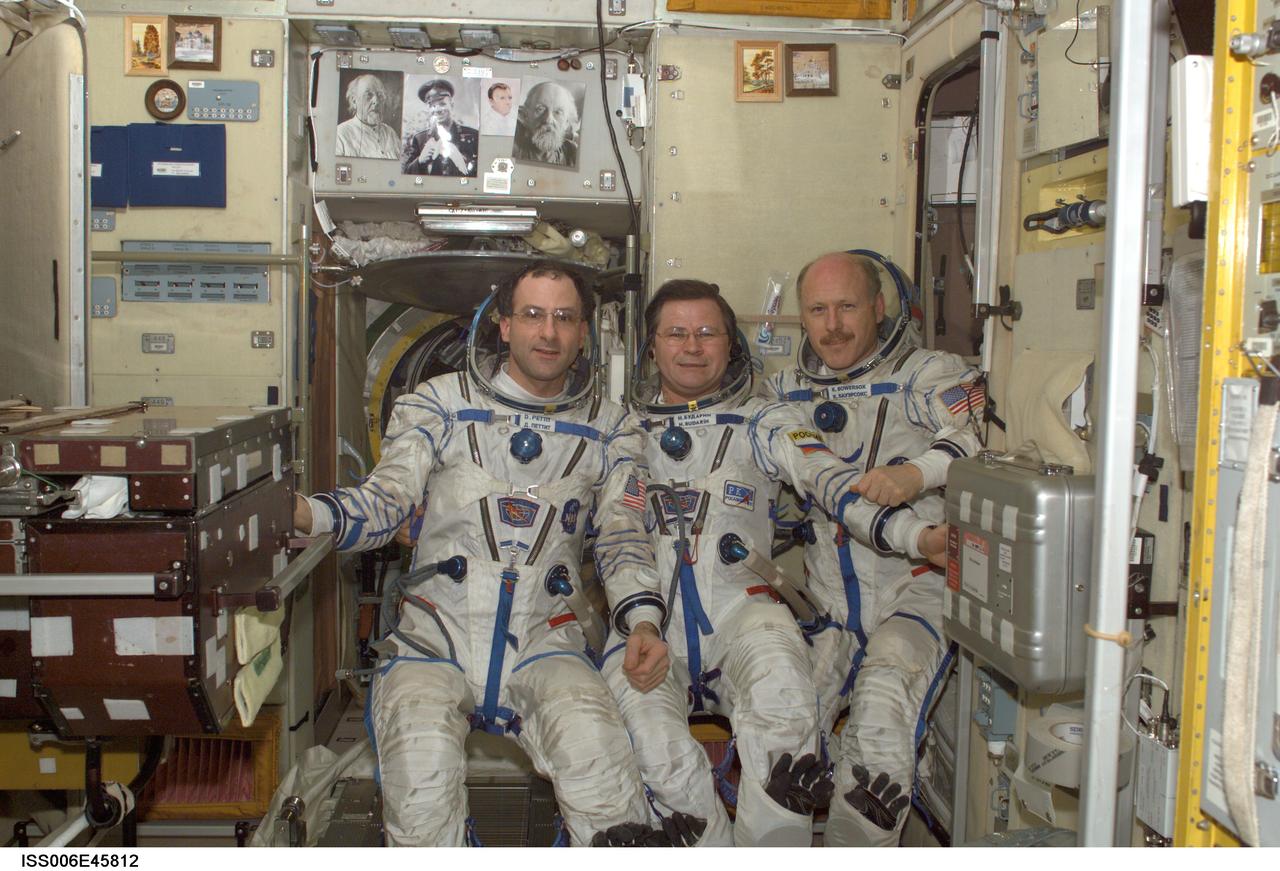
ISS006-E-45812 (14 April 2003) --- Attired in their Russian Sokol suits, the Expedition Six crewmembers pose for a crew photo in the Zvezda Service Module on the International Space Station (ISS). From the left are astronaut Donald R. Pettit, NASA ISS science officer; cosmonaut Nikolai M. Budarin, flight engineer; and astronaut Kenneth D. Bowersox, mission commander. The crewmembers are making preparations for their return flight home scheduled for May 3, 2003. Budarin represents Rosaviakosmos.
Informal portrait of Pettit, Budarin, and Bowersox in the SM during Expedition Six
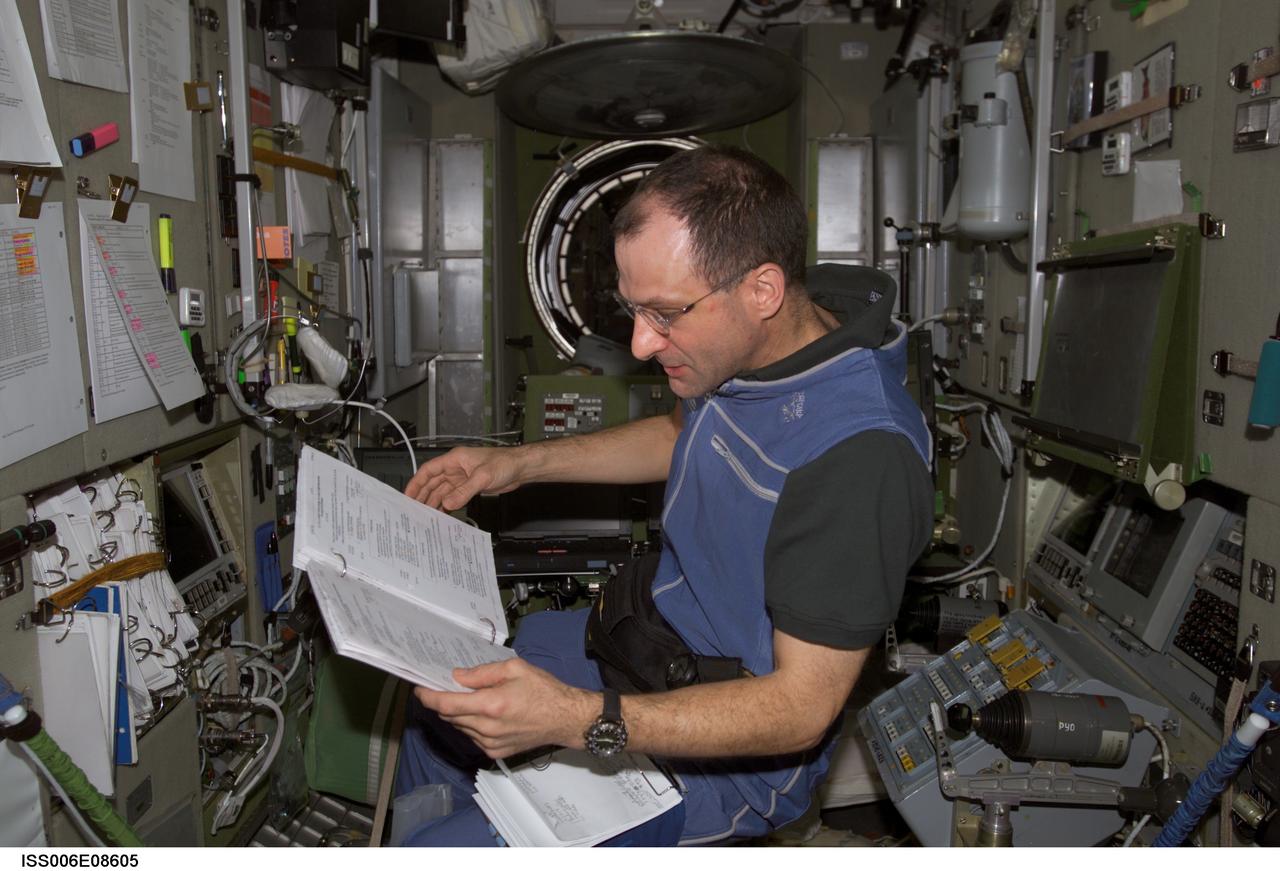
ISS006-E-08605 (18 December 2002) --- Astronaut Donald R. Pettit, Expedition Six NASA ISS science officer, looks over a procedures checklist in the Zvezda Service Module on the International Space Station (ISS).
Expedition Six Flight Engineer Pettit is looking at procedures checklist in the Zvezda Service Module
STS113-E-05023 (25 November 2002) --- Astronaut Donald R. Pettit, Expedition Six flight engineer, holds a camera on the aft flight deck of the Space Shuttle Endeavour.
Expedition Six Flight Engineer Don Pettit adjusts camera on AFD during STS-113
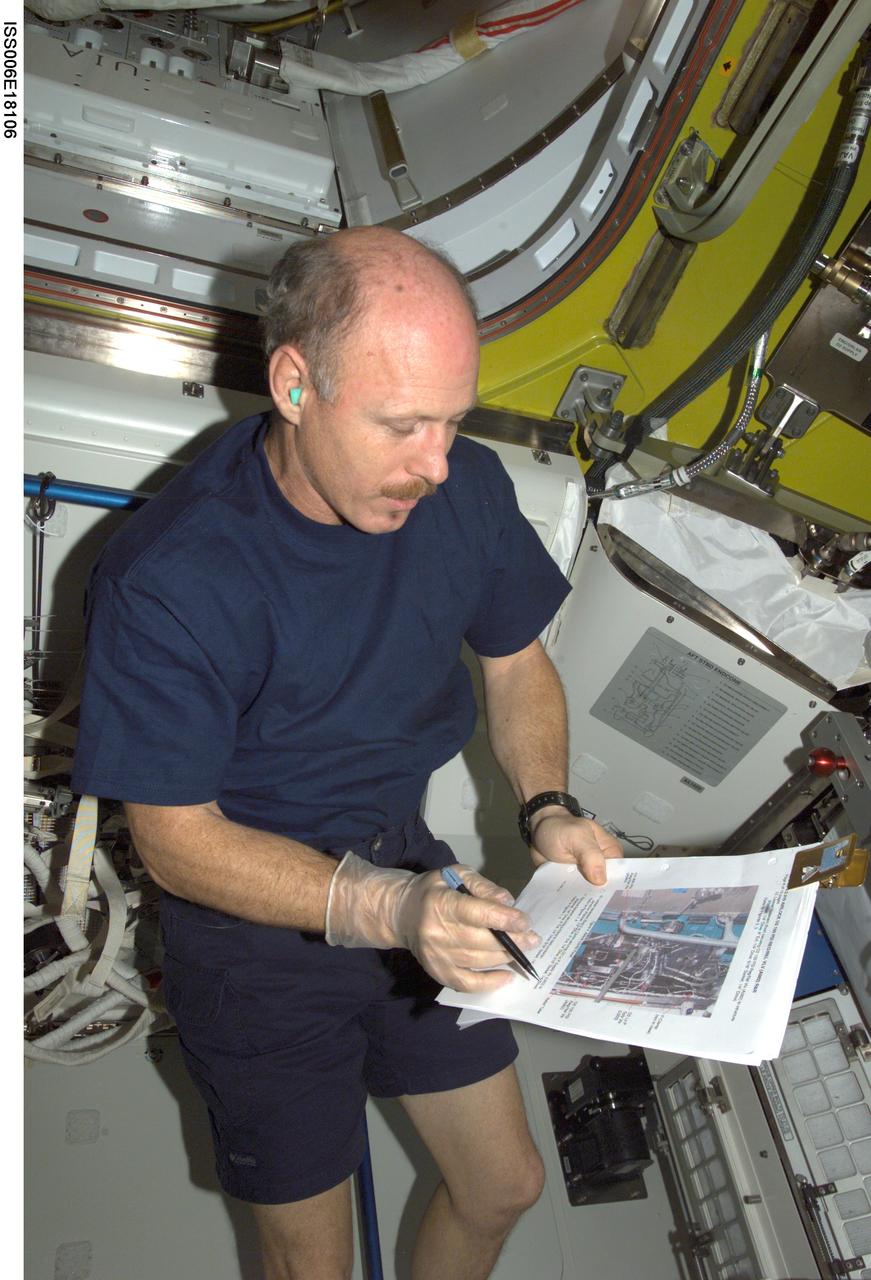
ISS006-E-18106 (18 January 2003) --- Astronaut Kenneth D. Bowersox, Expedition Six mission commander, looks over paperwork in the Quest Airlock on the International Space Station (ISS).
Bowersox looks over O2 / N2 system paperwork in the Airlock during Expedition Six
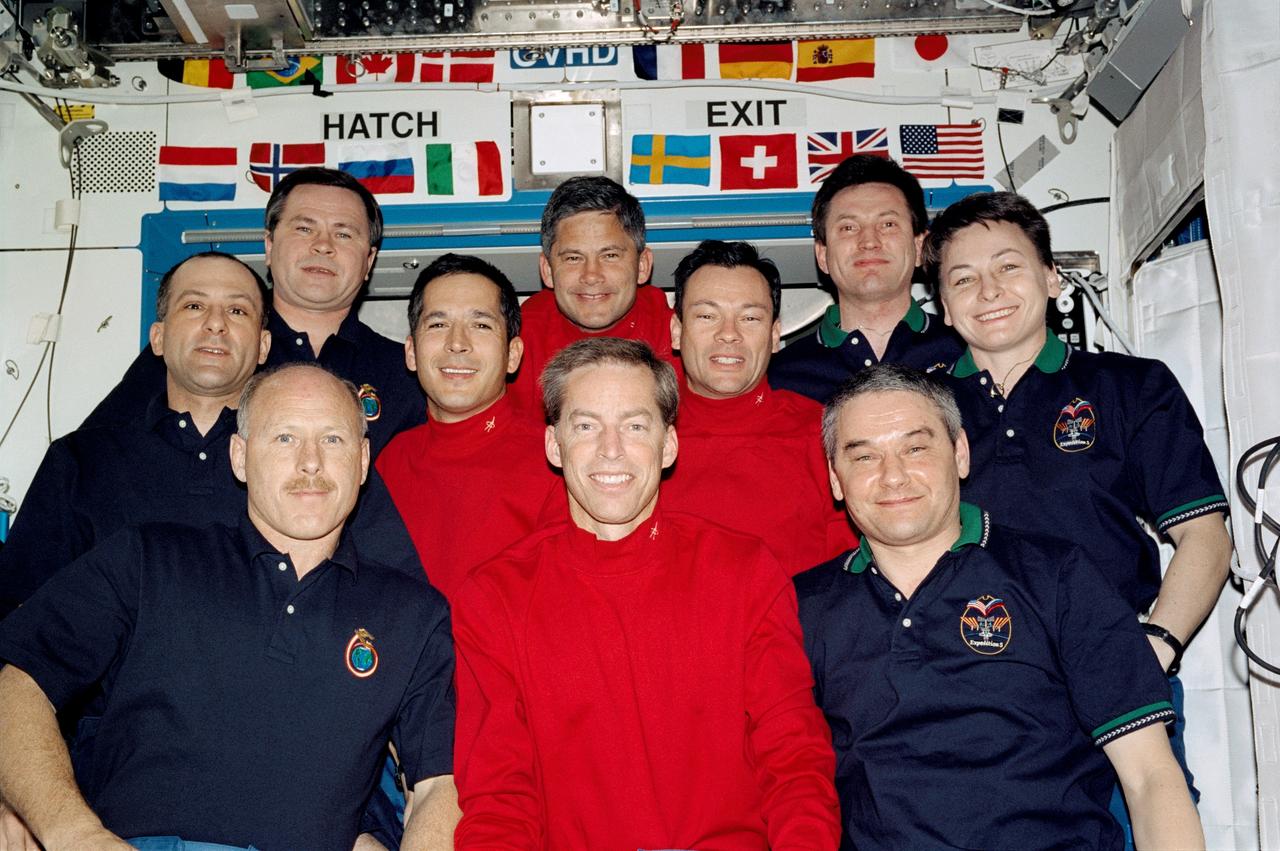
STS113-342-006 (29 November 2002) --- The STS-113 (red shirts), Expedition Five (right) and Expedition Six crewmembers (left) gathered for a group photo in the Destiny laboratory on the International Space Station (ISS). The STS-113 crew, front to back, are astronauts James D. Wetherbee, mission commander; John B. Herrington (left), Michael E. Lopez-Alegria, mission specialists; and Paul S. Lockhart, pilot. The Expedition Six crew, front to back, are astronauts Kenneth D. Bowersox, mission commander; Donald R. Pettit, NASA ISS science officer; and cosmonaut Nikolai M. Budarin, flight engineer. The Expedition Five crew, front to back, are cosmonaut Valery G. Korzun, mission commander; astronaut Peggy A. Whitson, NASA ISS science officer; and cosmonaut Sergei Y. Treschev, flight engineer. Korzun, Treschev and Budarin represent Rosaviakosmos.
STS-113, Expedition Five and Six In-flight Crew Portrait in the U.S. Laboratory for STS-113
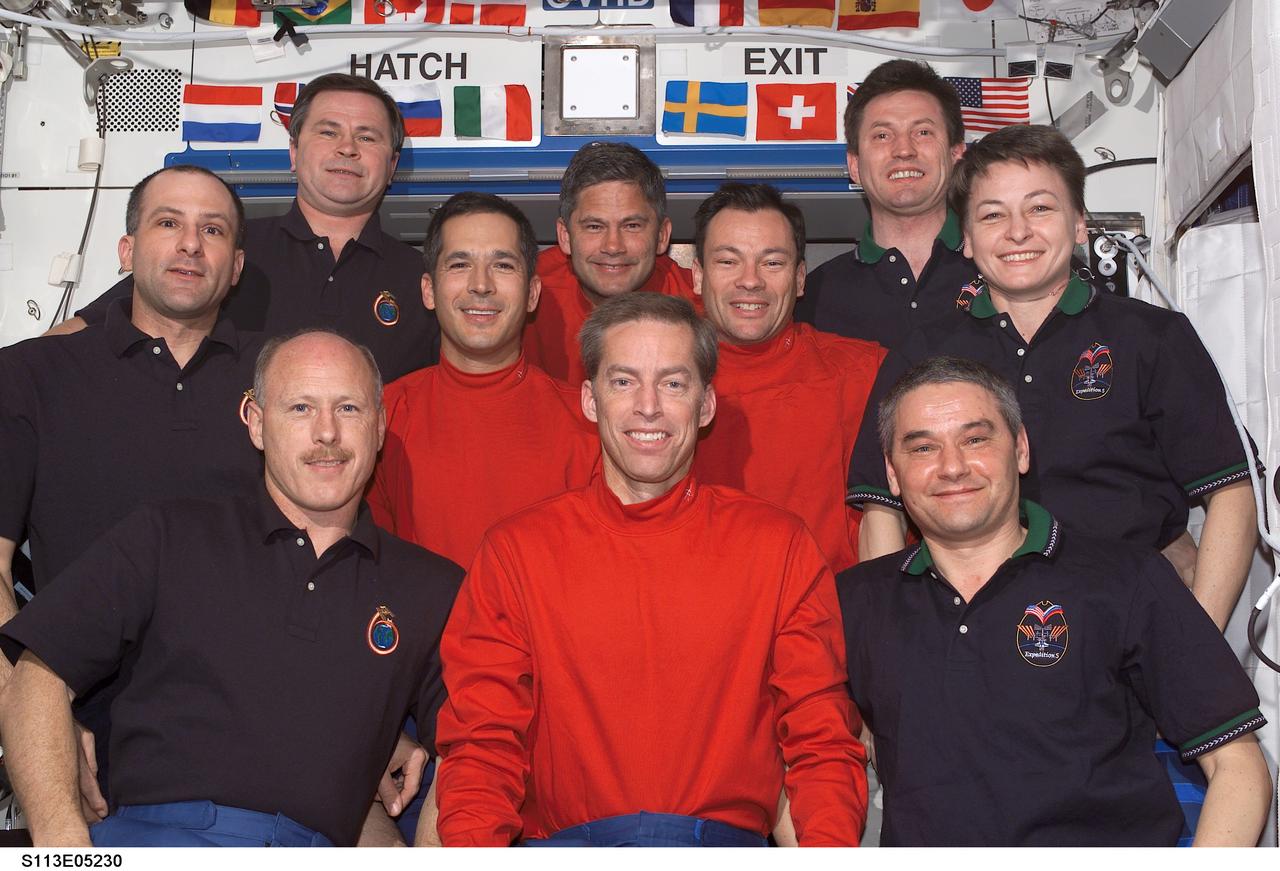
STS113-E-05230 (29 November 2002) --- The STS-113 (red shirts), Expedition Five (right) and Expedition Six crewmembers (left) gathered for a group photo in the Destiny laboratory on the International Space Station (ISS). The STS-113 crew, front to back, are astronauts James D. Wetherbee, mission commander; John B. Herrington (left), Michael E. Lopez-Alegria, mission specialists; and Paul S. Lockhart, pilot. The Expedition Six crew, front to back, are astronauts Kenneth D. Bowersox, mission commander; Donald R. Pettit, NASA ISS science officer; and cosmonaut Nikolai M. Budarin, flight engineer. The Expedition Five crew, front to back, are cosmonaut Valery G. Korzun, mission commander; astronaut Peggy A. Whitson, NASA ISS science officer; and cosmonaut Sergei Y. Treschev, flight engineer.  Korzun, Treschev and Budarin represent Rosaviakosmos.
STS-113, Expedition Five and Six In-flight Crew Portrait in the U.S. Laboratory for STS-113
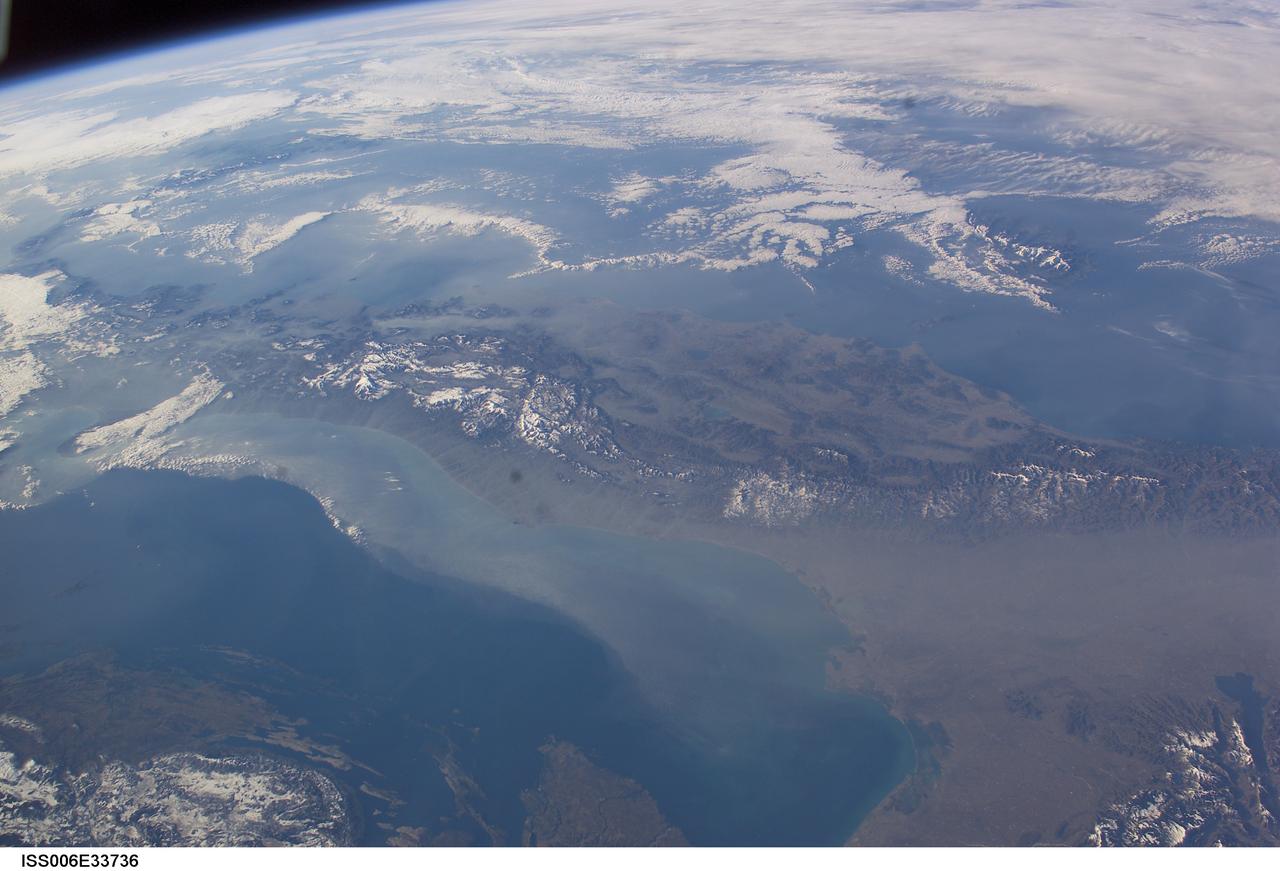
ISS006-E-33736 (25 February 2003) --- The boot of Italy crosses the image in this southwest-looking view taken by an Expedition Six crewmember onboard the International Space Station (ISS). The spine of Italy is highlighted with snow and the largely cloud-covered Mediterranean Sea is at the top. The Adriatic Sea transverses most of the bottom of the image and Sicily appears top left beyond the toe of the boot. The heel lies out of the left side of the image. Corsica and Sardinia appear right of center partly under cloud. The floor of the Po River valley, lower right, is obscured by haze. Experience gained from similar haze events, in which atmospheric pressure, humidity and visibility and atmospheric chemistry were known, suggests that the haze as industrial smog. Industrial haze from the urban region of the central and upper Po valley accumulates to visible concentrations under conditions of high atmospheric pressure and the surrounding mountains prevent easy dispersal. This view illustrates the markedly different color and texture of cloud versus industrial aerosol haze.
Boot of Italy taken during Expedition Six
ISS006-E-22132 (January 2003) --- A portion of the Society Islands was captured with a digital still camera by one of the Expedition Six crewmembers on the International Space Station (ISS). The evolution of fringing reefs to atolls was captured in this one frame. As with the Hawaiian Islands, these volcanic hot spot islands become progressively older to the northwest. As these islands move away from their magma sources they erode and subside. The two large islands, Raiatea and Tahaa, share a single fringing reef. The next island to the northwest, Bora-Bora, consists of a highly eroded volcanic remnant with fringing reef. The last island, Tupai, has become an atoll with the central portion below sea level.
Crew Earth Observations (CEO) taken during Expedition Six
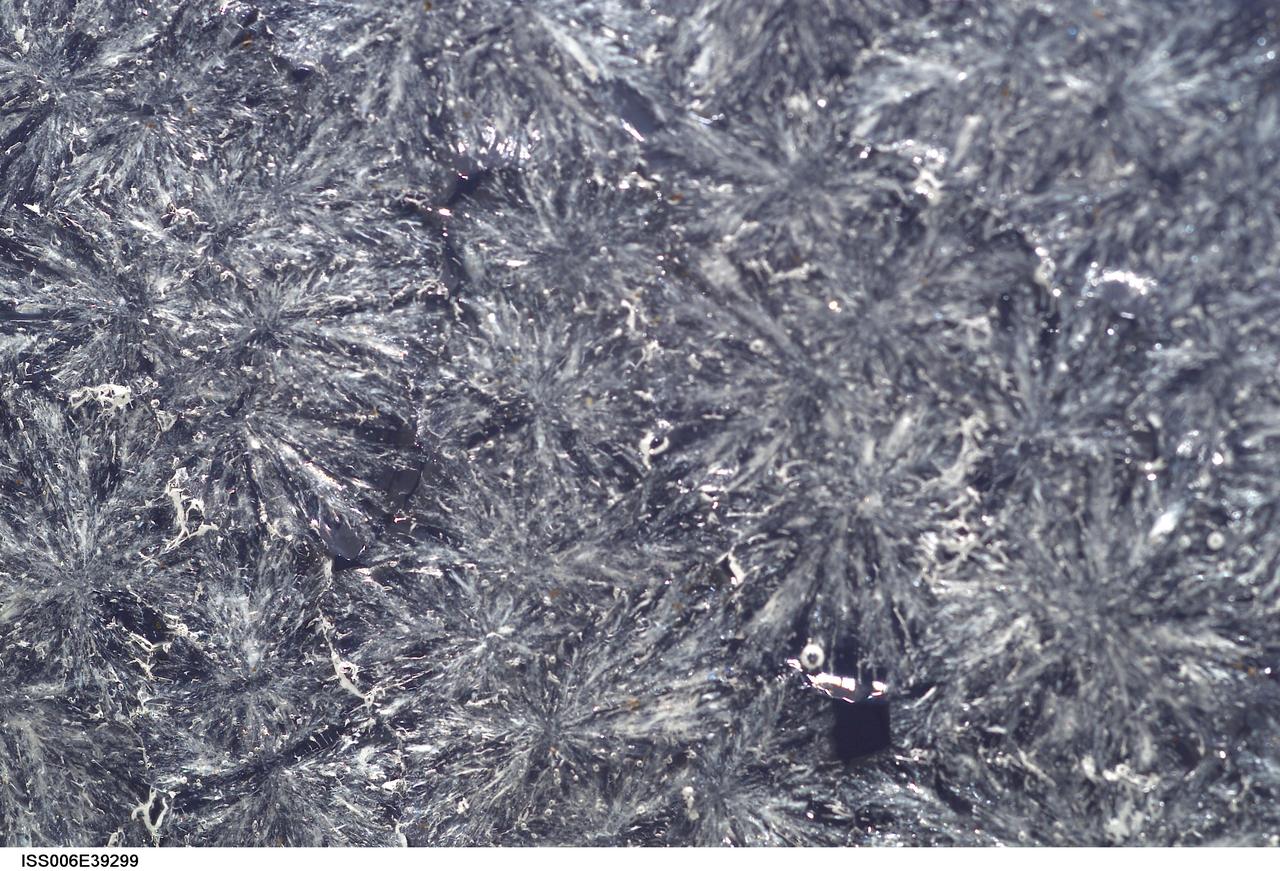
ISS006-E-39299 (15 March 2003) --- A close up view of sugar crystals in a water bubble within a 50-millimeter (mm) metal loop was photographed by an Expedition Six crewmember. The experiment took place in the Destiny laboratory on the International Space Station (ISS).
Close-up view of sugar crystals in a water bubble within a metal loop on Expedition Six
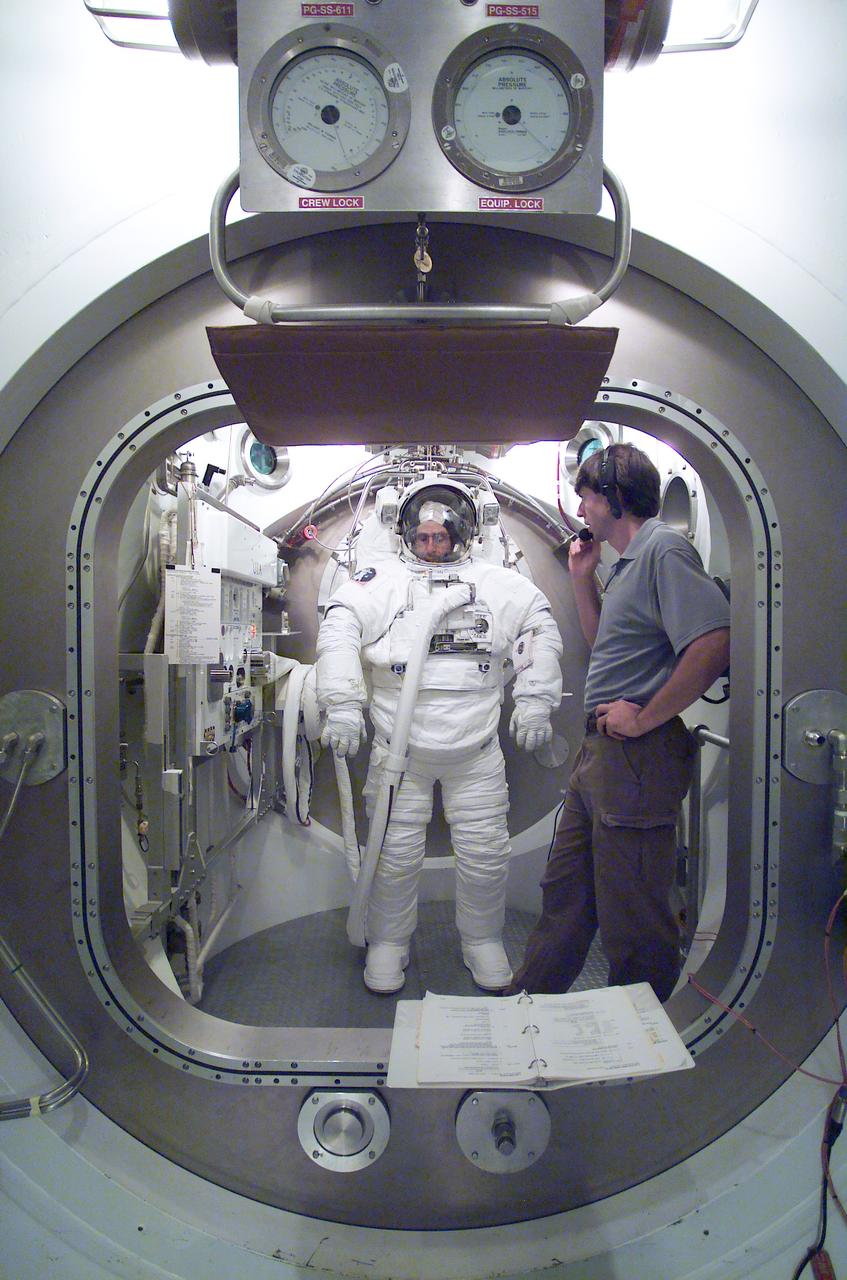
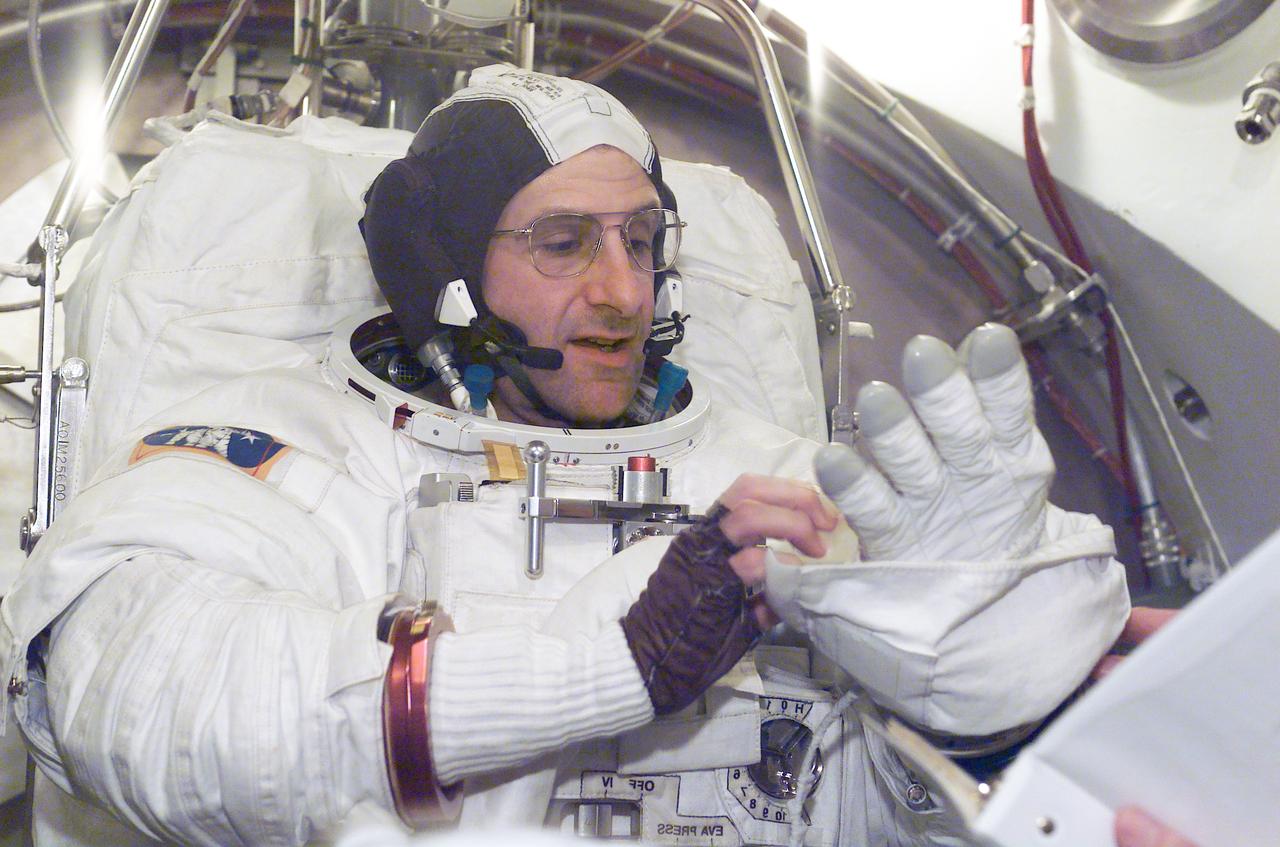
JSC2002-E-36202 (27 August 2002) --- Astronaut Donald R. Pettit, Expedition Six flight engineer, participates in an Extravehicular Mobility Unit (EMU) spacesuit fit check in a Space Station Airlock Test Article (SSATA) in the Crew Systems Laboratory at the Johnson Space Center (JSC). Zebulon L. Scoville assisted Pettit.
Expedition Six Crew Training: Donald Pettit EMU Suit Training in SSATA Chamber
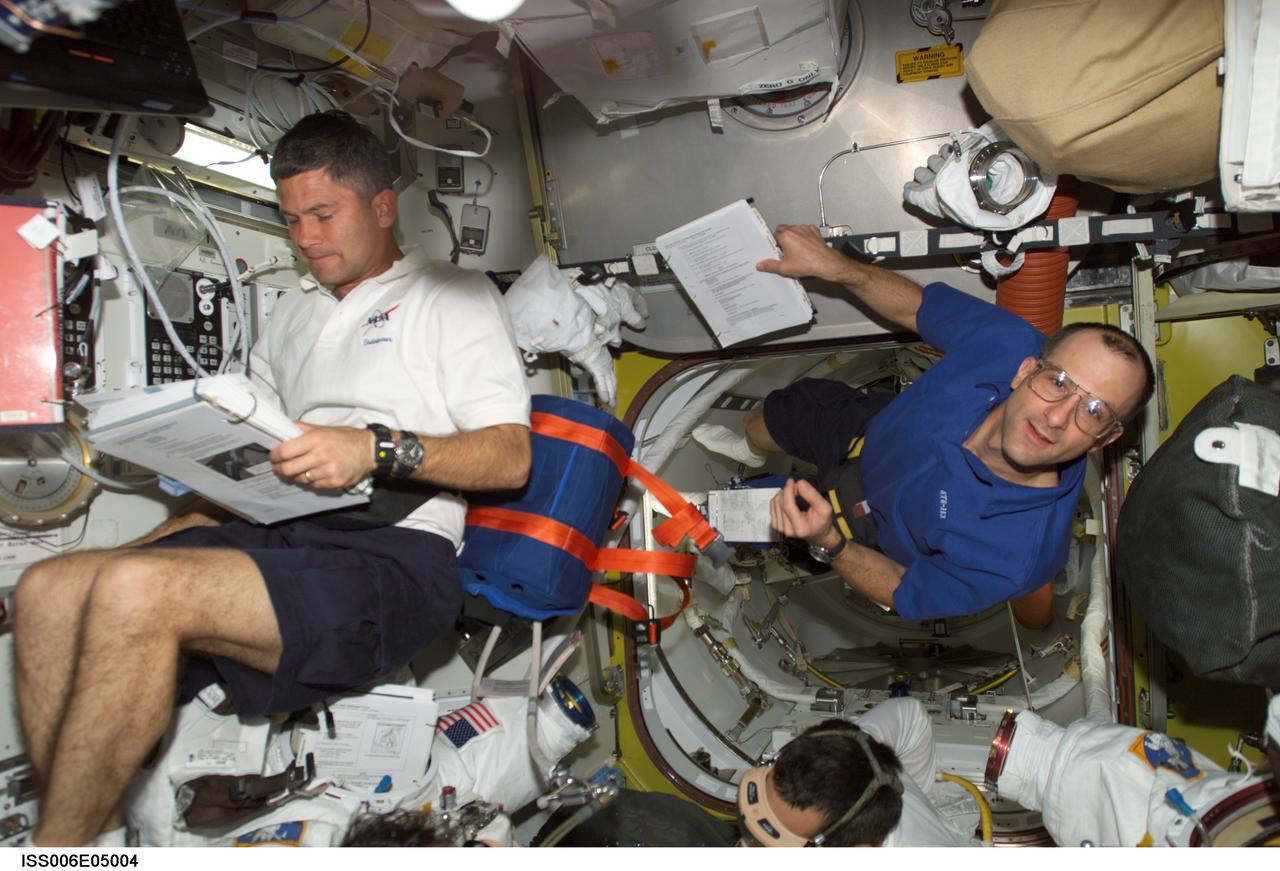
ISS006-E-05004 (28 November 2002) --- Astronaut Paul S. Lockhart (left), STS-113 pilot, looks over a procedures checklist as astronaut Donald R. Pettit, Expedition Six NASA ISS science officer, floats into the Quest Airlock on the International Space Station (ISS).
STS-113 Pilot Lockhart and Expedition Six Flight Engineer Pettit are looking over a checklist in Airlock
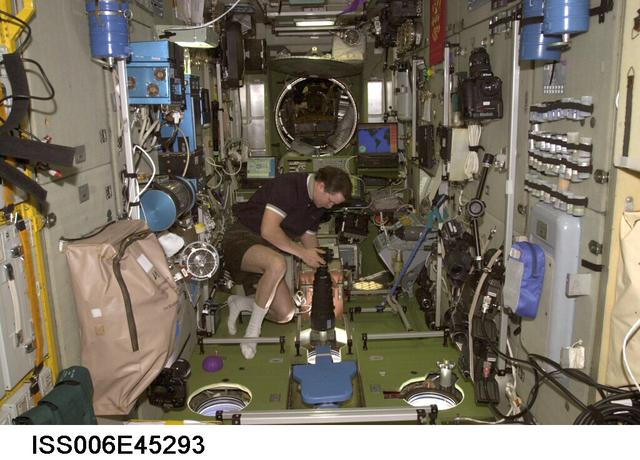
ISS006-E-45293 (21 March 2003) --- Cosmonaut Nikolai M. Budarin, Expedition Six flight engineer, uses a still camera to photograph the topography of a point on Earth from a window in the Zvezda Service Module on the International Space Station (ISS). Budarin represents Rosaviakosmos.
Flight Engineer Nikolai Budarin holds a still camera in the SM during Expedition Six
JSC2002-E-36194 (27 August 2002) --- Astronaut Donald R. Pettit, Expedition Six flight engineer, participates in an Extravehicular Mobility Unit (EMU) spacesuit fit check in a Space Station Airlock Test Article (SSATA) in the Crew Systems Laboratory at the Johnson Space Center (JSC).
Expedition Six Crew Training: Donald Pettit EMU Suit Training in SSATA Chamber
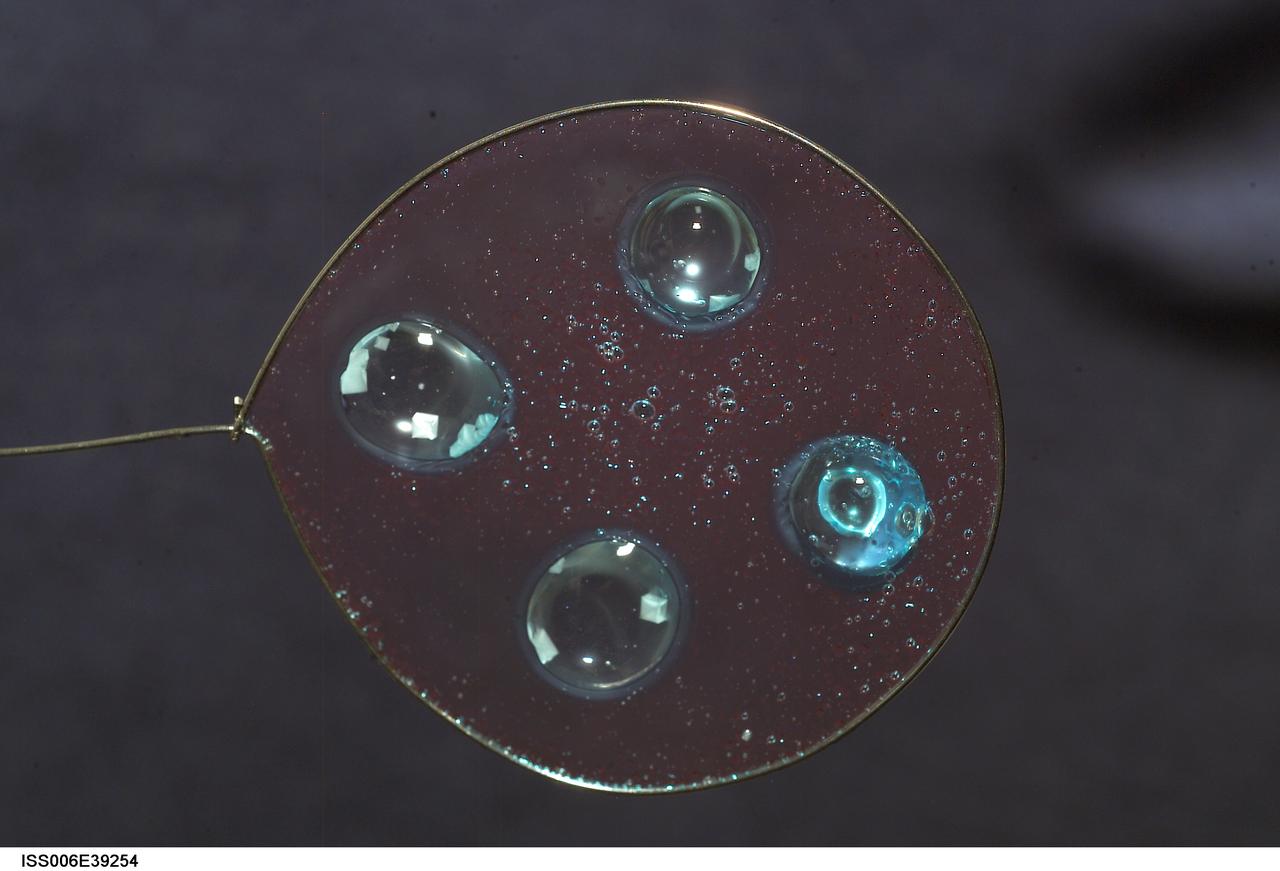
ISS006-E-39254 (14 March 2003) --- A view of sodium chloride inserted onto blueberry jelly within a 50-millimeter (mm) metal loop was photographed by an Expedition Six crewmember. The experiment took place in the Destiny laboratory on the International Space Station (ISS).
View of Sodium Chloride inserted onto blueberry jelly within a metal loop on Expedition Six
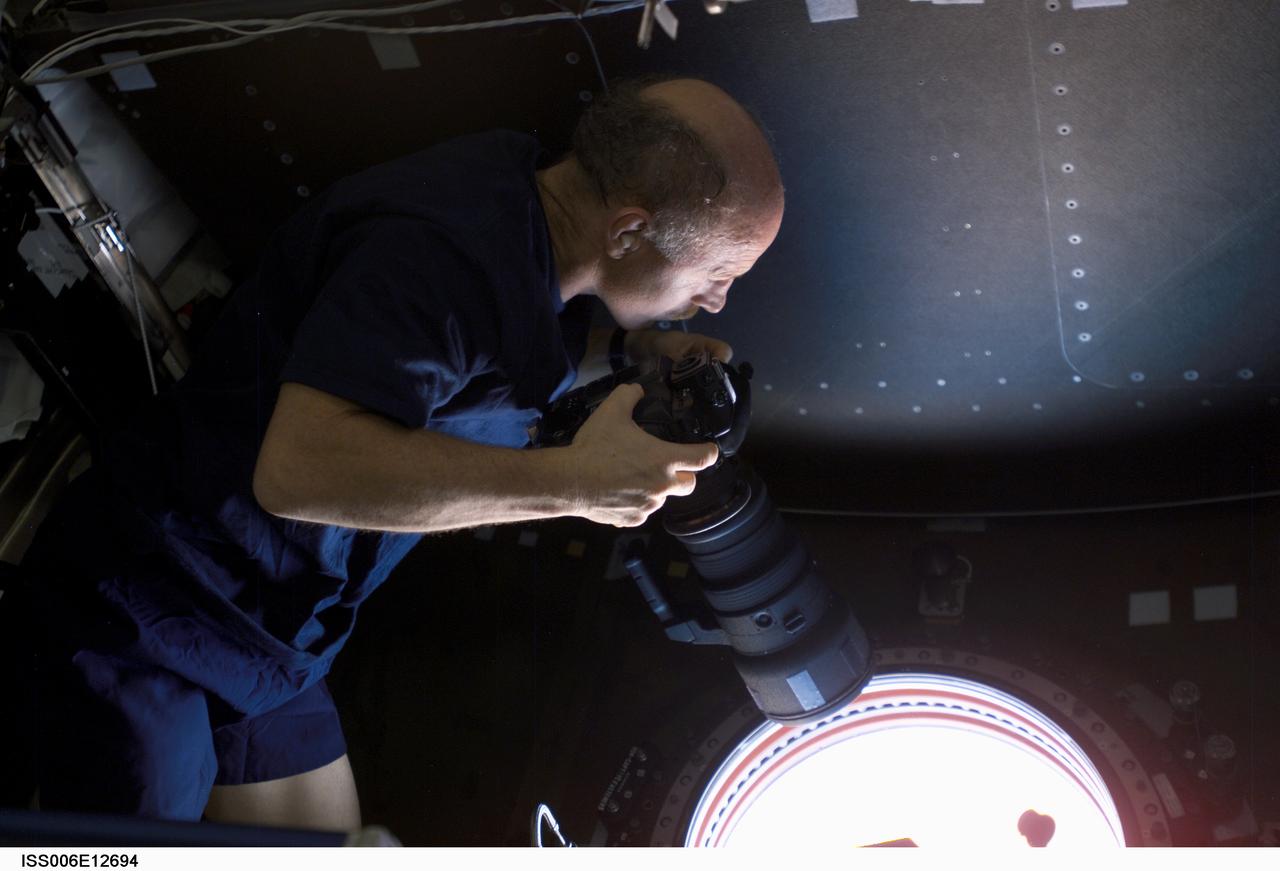
ISS006-E-12694 (16 December 2002) --- Astronaut Kenneth D. Bowersox, Expedition Six mission commander, uses a still camera to photograph the topography of a point on Earth from the nadir window in the Destiny laboratory on the International Space Station (ISS).
Bowersox takes pictures of Earth from the nadir window of Destiny during Expedition Six
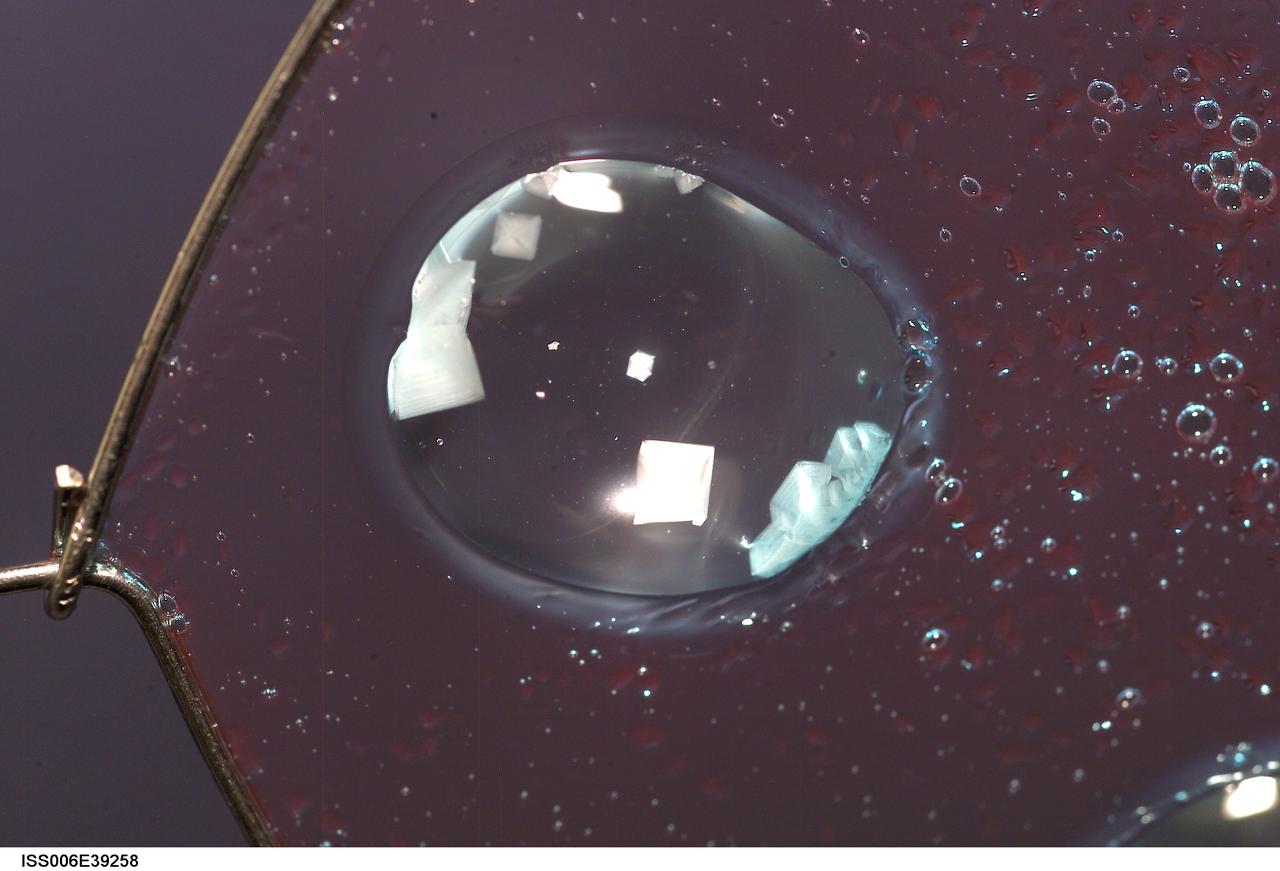
ISS006-E-39258 (14 March 2003) --- A close up view of sodium chloride inserted onto blueberry jelly within a 50-millimeter (mm) metal loop was photographed by an Expedition Six crewmember. The experiment took place in the Destiny laboratory on the International Space Station (ISS).
View of Sodium Chloride inserted onto blueberry jelly within a metal loop on Expedition Six
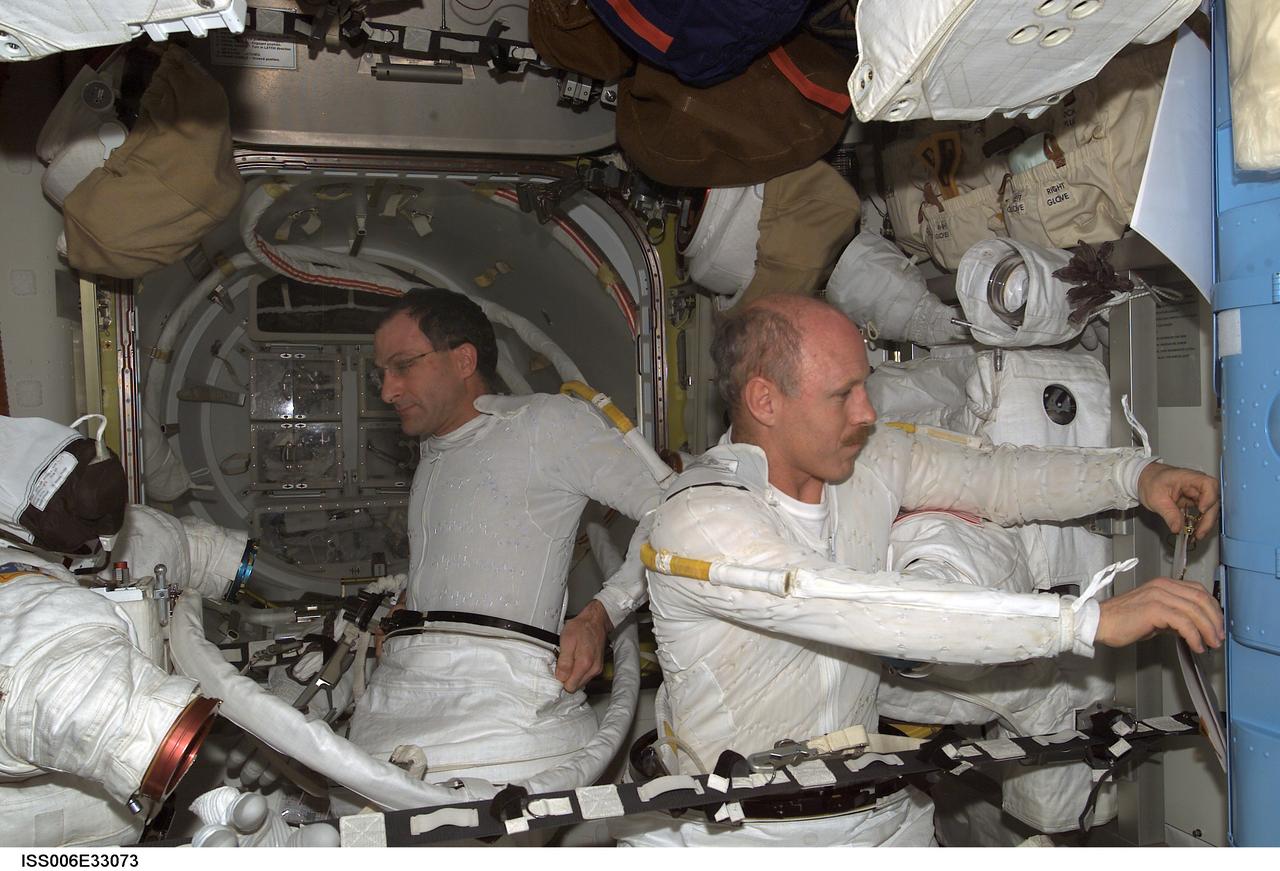
ISS006-E-33073 (24 February 2003) --- Astronauts Kenneth D. Bowersox (right) and Donald R. Pettit, Expedition Six mission commander and NASA ISS science officer, respectively, participate in a scheduled extravehicular activity (EVA) development test objective (DTO) in the Quest Airlock on the International Space Station (ISS). The test demonstrated the ability of two crewmembers to safely get into the American Extravehicular Mobility Unit (EMU) spacesuit without the assistance of a third crewmember; that ability is a prerequisite to sending smaller crews to ISS while the space shuttle fleet remains grounded during the investigation of the Columbia accident. Bowersox and Pettit helped each other into their EMU spacesuits, donned jet backpacks called Simplified Aid for EVA Rescue (SAFER), set up the necessary equipment for a pre-breathe of oxygen to purge nitrogen from their bloodstreams, and then got out of the spacesuits.
Bowersox and Pettit are preparing for an EVA DTO in the Quest Airlock during Expedition Six
ISS006-E-33075 (24 February 2003) --- Astronauts Kenneth D. Bowersox (right) and Donald R. Pettit, Expedition Six mission commander and NASA ISS science officer, respectively, participate in a scheduled extravehicular activity (EVA) development test objective (DTO) in the Quest Airlock on the International Space Station (ISS). The test demonstrated the ability of two crewmembers to safely get into the American Extravehicular Mobility Unit (EMU) spacesuit without the assistance of a third crewmember; that ability is a prerequisite to sending smaller crews to ISS while the space shuttle fleet remains grounded during the investigation of the Columbia accident. Bowersox and Pettit helped each other into their EMU spacesuits, donned jet backpacks called Simplified Aid for EVA Rescue (SAFER), set up the necessary equipment for a pre-breathe of oxygen to purge nitrogen from their bloodstreams, and then got out of the spacesuits.
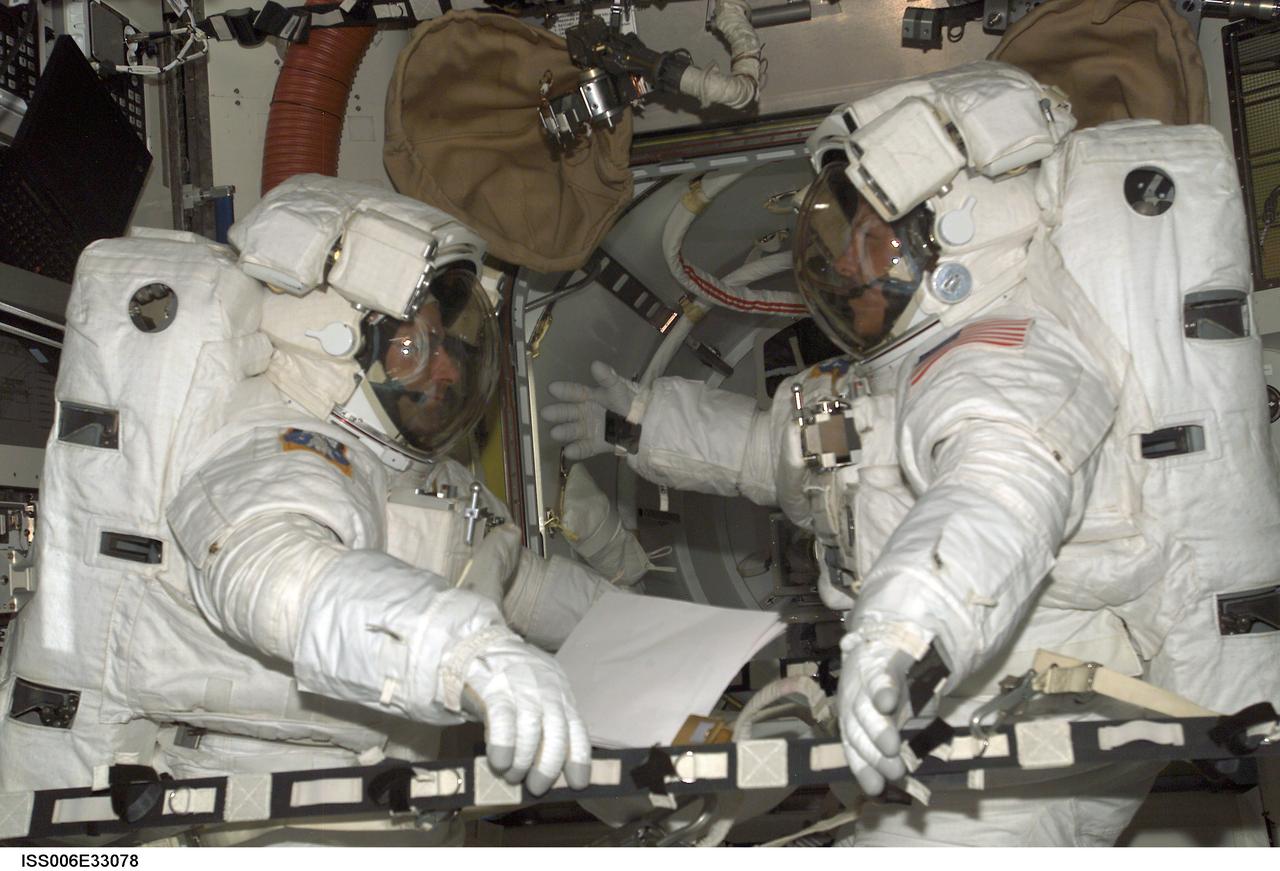
Bowersox and Pettit are wearing EMU's in the Quest Airlock during Expedition Six
ISS006-E-28028 (February 2003) --- The Southern Cross (left center), the Coal Sack Nebula (bottom left), and the Carina Nebula (upper right) are visible in this view photographed by astronaut Donald R. Pettit, Expedition Six NASA ISS science officer, on board the International Space Station (ISS). The Carina Nebula is a molecular cloud about 9000 light years from Earth where young stars are forming. The Coal Sack Nebula is an inky-black dust cloud about 2000 light years from Earth. Stars are probably condensing deep inside the Coal Sack, but their light has not yet broken through the cloud’s dense exterior. The Southern Cross, also known as The Crux, is a constellation familiar to southern hemisphere stargazers.
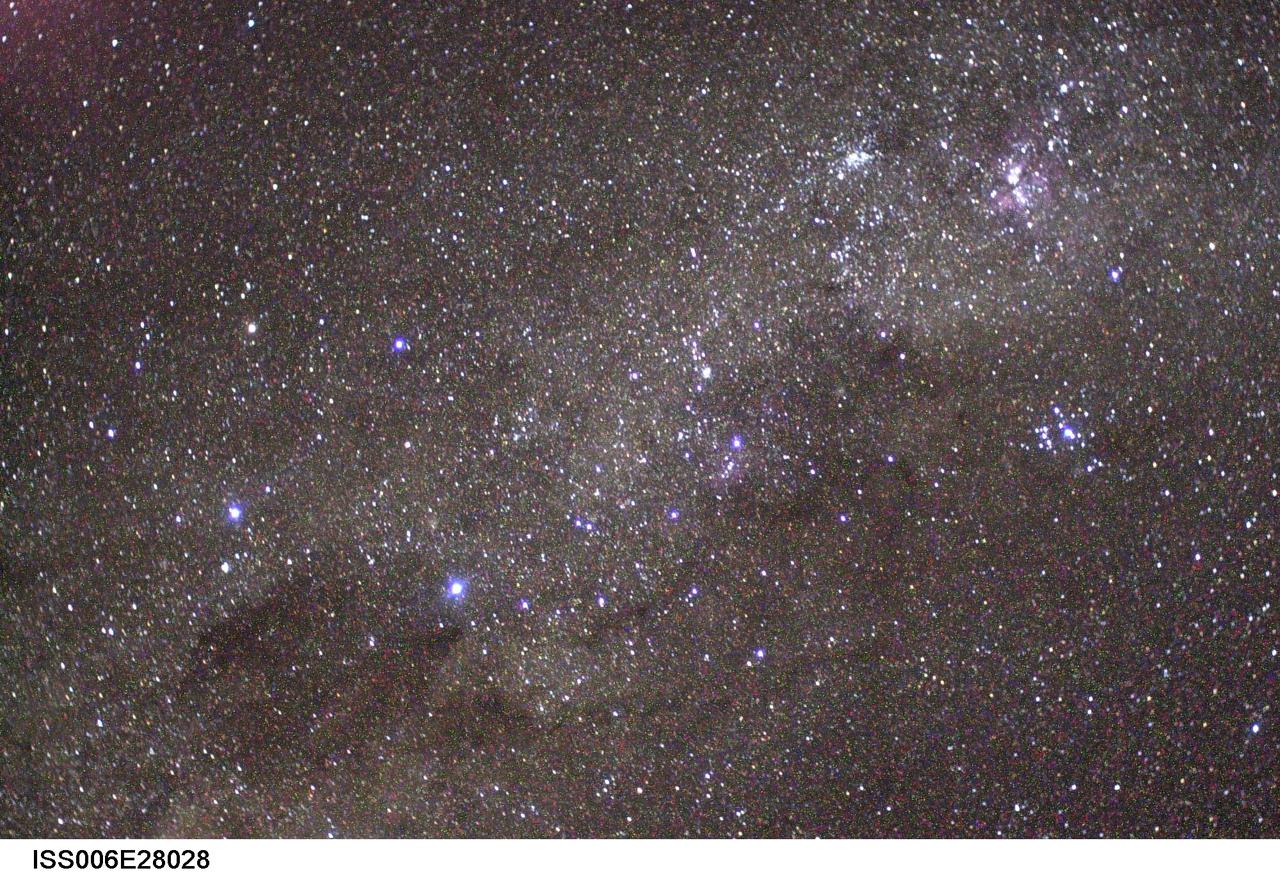
Crew Earth Observations (CEO) taken during Expedition Six