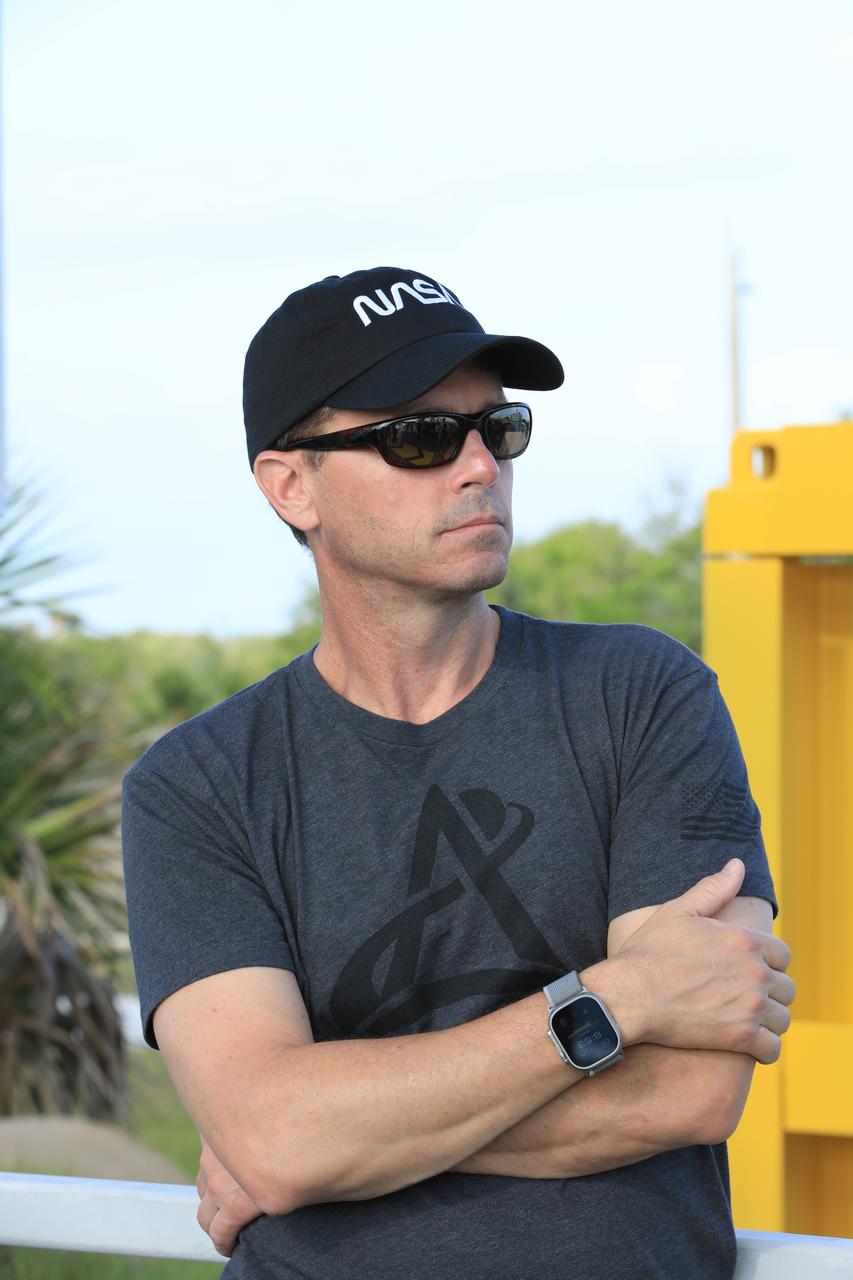
NASA astronaut Reid Wiseman participates in training with teams from NASA’s Exploration Ground Systems Program at Launch Complex 39B at the agency’s Kennedy Space Center in Florida on Tuesday, May 6, 2025. Wiseman and fellow Artemis II crew members and backup members trained with the mine-resistant ambush protected vehicles, or MRAPs, inside the launch pad area. Originally designed for military applications, the 45,000-pound MRAP offers a mobile bunker for astronauts and ground crews in the unlikely event they must get away from the launch pad quickly in an emergency.
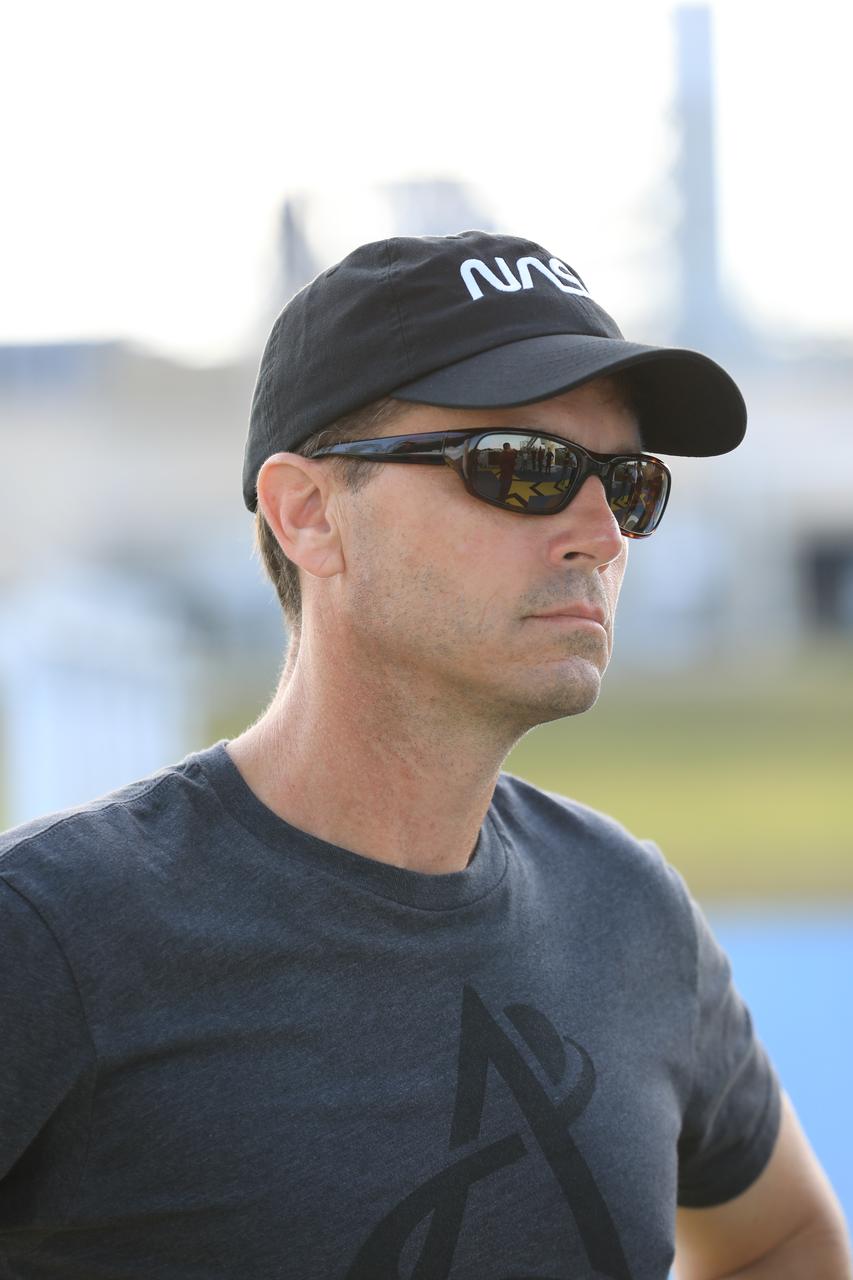
NASA astronaut Reid Wiseman participates in training with teams from NASA’s Exploration Ground Systems Program at Launch Complex 39B at the agency’s Kennedy Space Center in Florida on Tuesday, May 6, 2025. Wiseman and fellow Artemis II crew members and backup members trained with the mine-resistant ambush protected vehicles, or MRAPs, inside the launch pad area. Originally designed for military applications, the 45,000-pound MRAP offers a mobile bunker for astronauts and ground crews in the unlikely event they must get away from the launch pad quickly in an emergency.
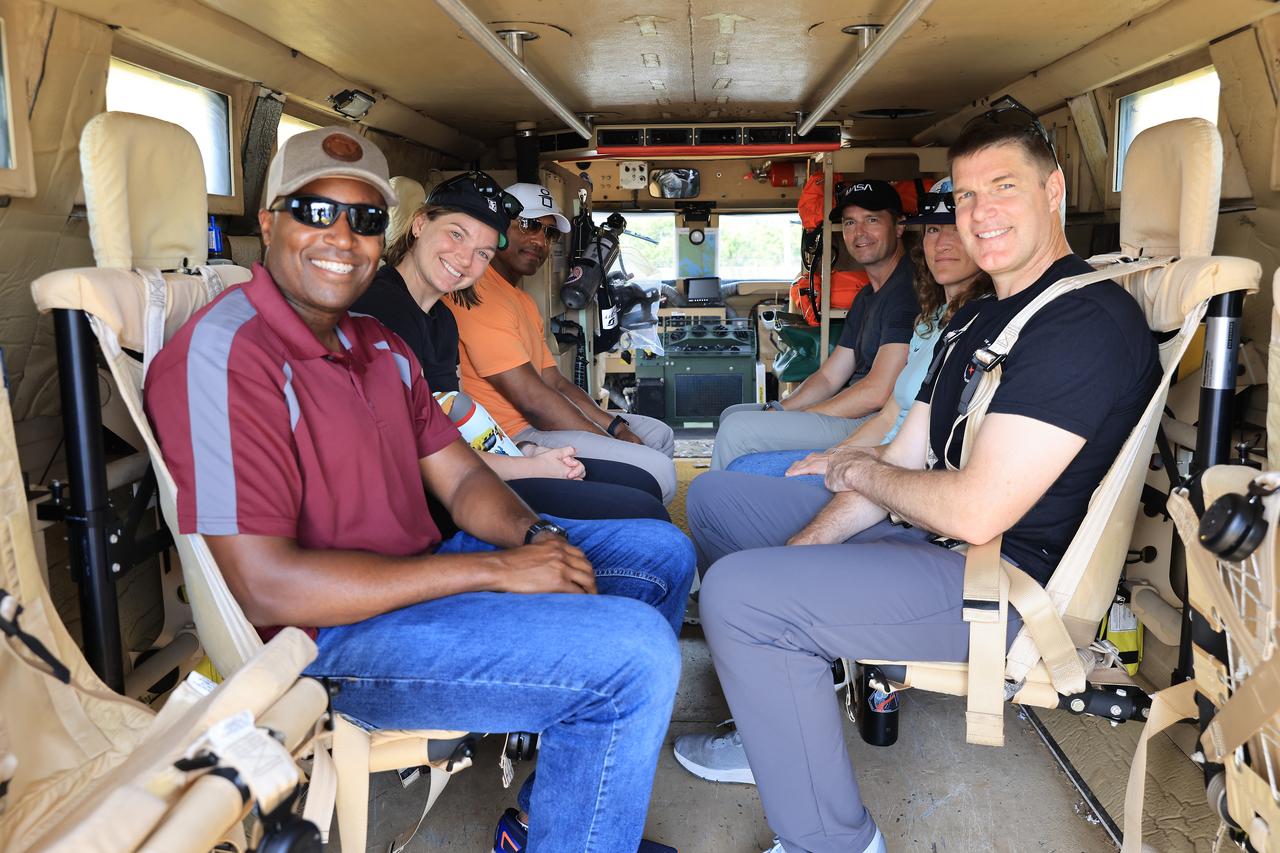
Crew members and backup members for NASA’s Artemis II mission and teams from the agency’s Exploration Ground Systems Program participate in emergency egress training at Launch Complex 39B at NASA’s Kennedy Space Center in Florida on Tuesday, May 6, 2025. From left, Andre Douglas, NASA’s Artemis II backup crew member; CSA (Canadian Space Agency) astronaut Jenni Gibbons, Artemis II backup crew member; NASA astronaut Victor Glover, Artemis II pilot; NASA astronaut Reid Wiseman, Artemis II commander; NASA astronaut Christina Koch, Artemis II mission specialist; and CSA astronaut Jeremy Hansen, Artemis II mission specialist sit in the back of a mine-resistant ambush protected vehicle, or MRAP. Originally designed for military applications, the 45,000-pound MRAP offers a mobile bunker for astronauts and ground crews in the unlikely event they must get away from the launch pad quickly in an emergency.
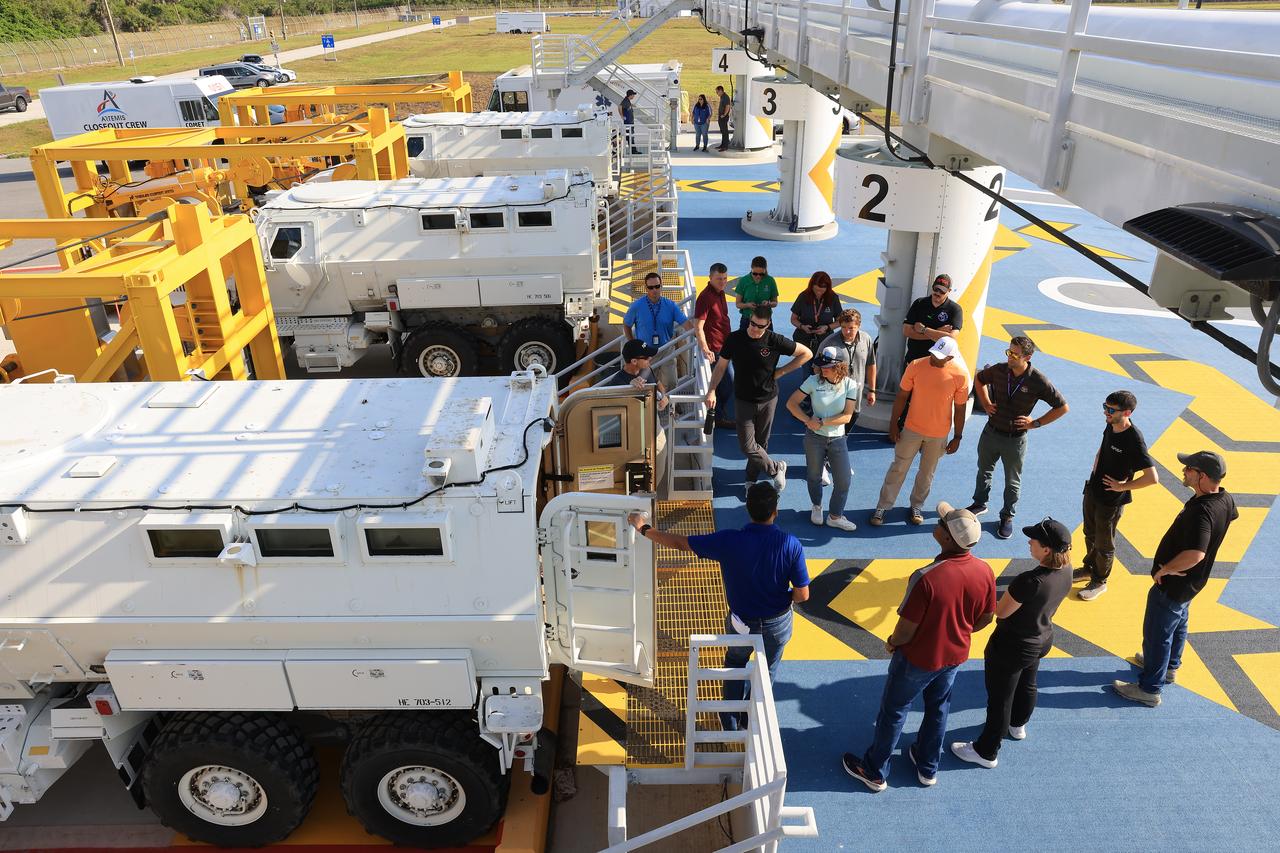
Crew members and backup members for NASA’s Artemis II mission and teams from the agency’s Exploration Ground Systems Program participate in emergency egress training at Launch Complex 39B at NASA’s Kennedy Space Center in Florida on Tuesday, May 6, 2025. Teams trained with the mine-resistant ambush protected vehicles, or MRAPs, inside the launch pad terminus area, where the emergency egress baskets carrying the astronauts and flight crew will arrive following their safe exit from the mobile launcher. Originally designed for military applications, the 45,000-pound MRAP offers a mobile bunker for astronauts and ground crews in the unlikely event they must get away from the launch pad quickly in an emergency.
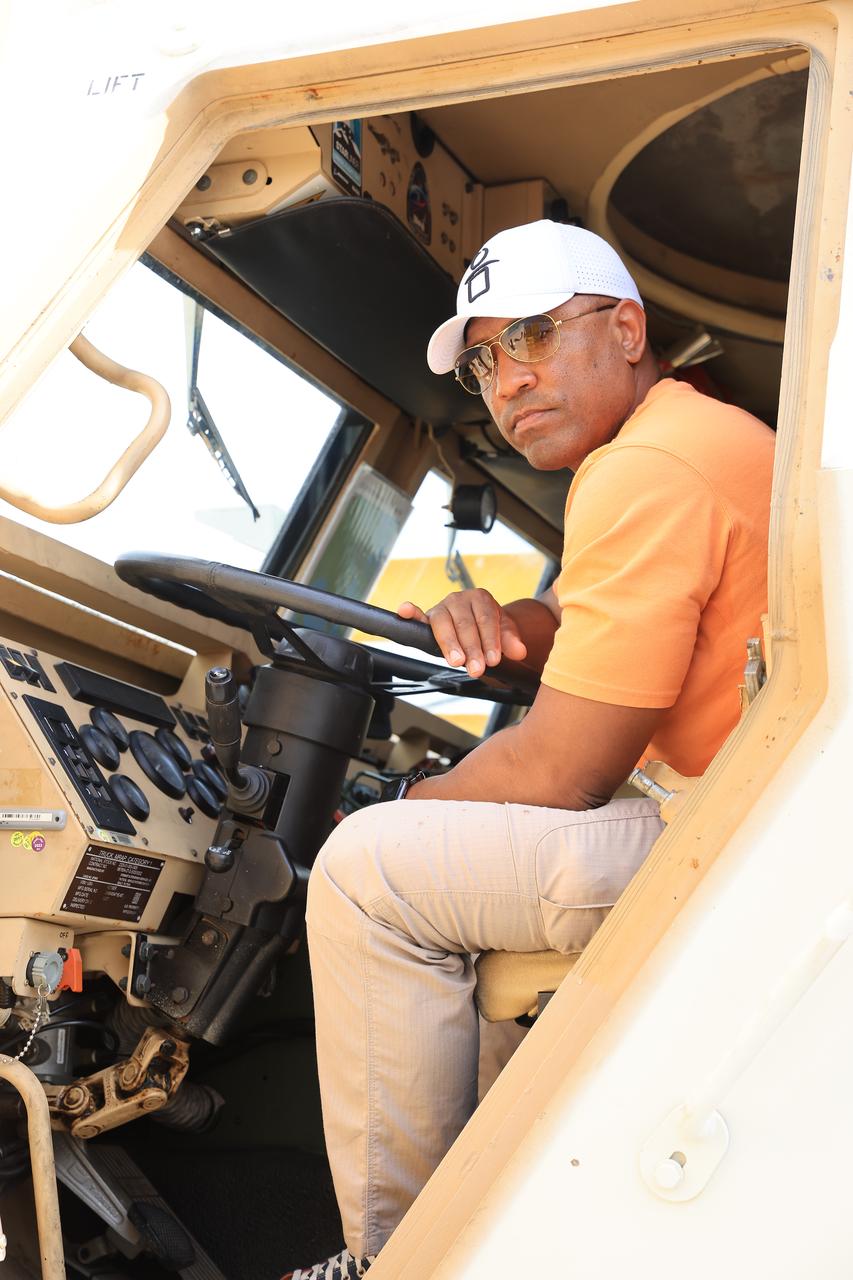
NASA astronaut Victor Glover participates in emergency egress training with teams from NASA’s Exploration Ground Systems Program at Launch Complex 39B at the agency’s Kennedy Space Center in Florida on Tuesday, May 6, 2025. Glover and fellow Artemis II crew members and backup members trained with the mine-resistant ambush protected vehicles, or MRAPs, inside the launch pad area. Originally designed for military applications, the 45,000-pound MRAP offers a mobile bunker for astronauts and ground crews in the unlikely event they must get away from the launch pad quickly in an emergency.
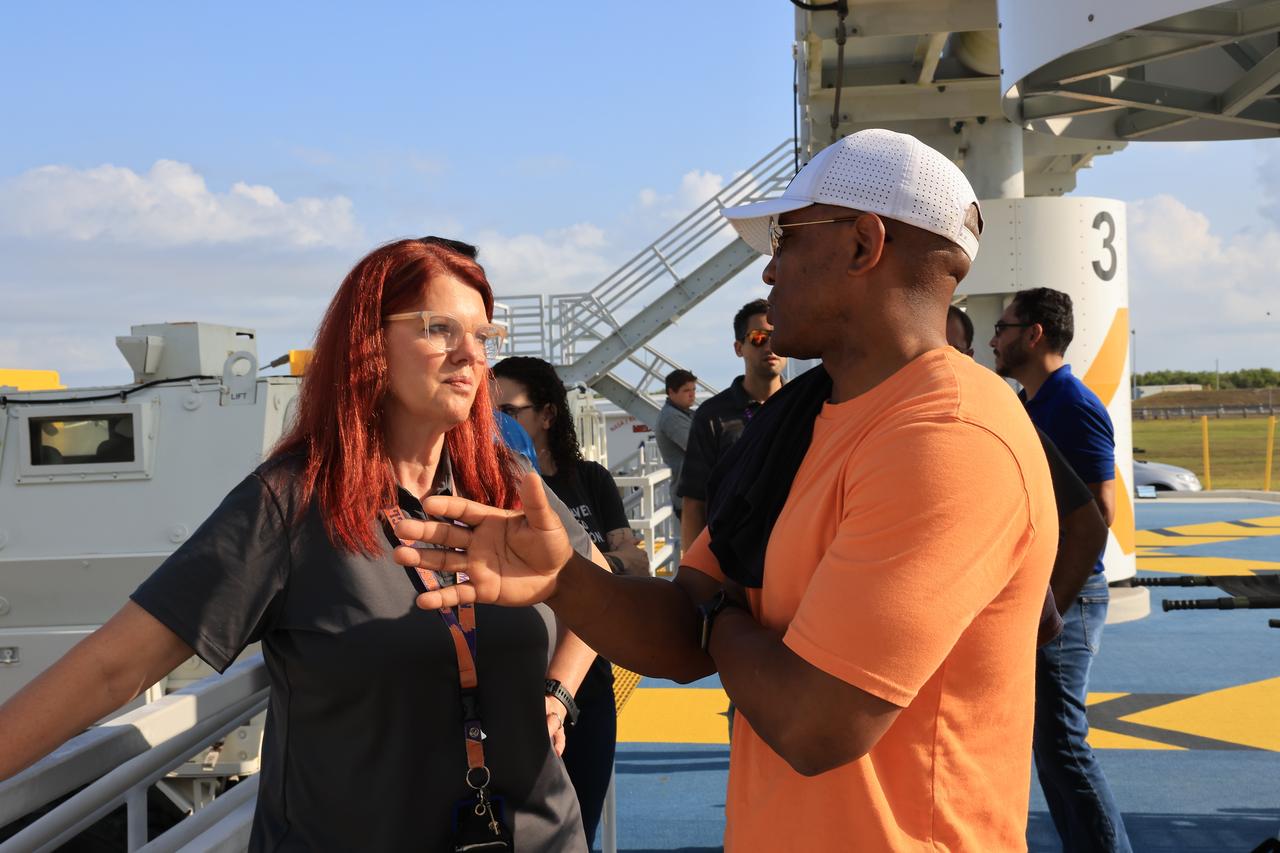
From left, Charlie Blackwell-Thompson, Artemis launch director with NASA’s Exploration Ground Systems Program, and Artemis II pilot Victor Glover participate in training at Launch Complex 39B at the agency’s Kennedy Space Center in Florida on Tuesday, May 6, 2025. Glover and fellow Artemis II crew members and backup members trained with the mine-resistant ambush protected vehicles, or MRAPs, inside the launch pad area. Originally designed for military applications, the 45,000-pound MRAP offers a mobile bunker for astronauts and ground crews in the unlikely event they must get away from the launch pad quickly in an emergency.
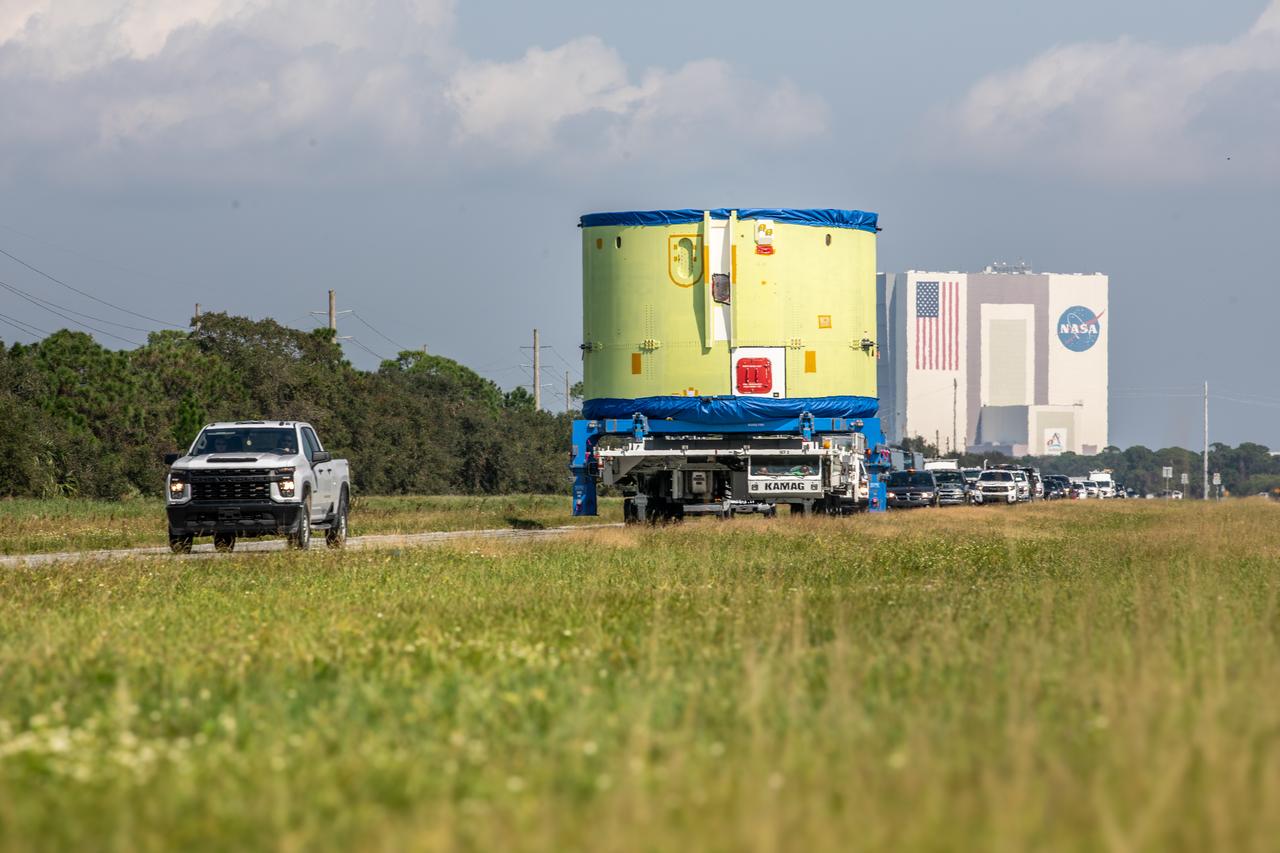
Teams from NASA’s Exploration Ground Systems transport the engine section of the agency’s Artemis IV SLS (Space Launch System) core stage from the Vehicle Assembly Building at NASA’s Kennedy Space Center in Florida to the spaceport’s Space Systems Processing Facility (SSPF) on Tuesday, Oct. 15, 2024. NASA’s Pegasus barge delivered the core stage engine section housing the four RS-25 engines from NASA’s Michoud Assembly Facility in New Orleans, Louisiana to NASA Kennedy on Thursday, Sept. 5, 2024. The engine section is one the most complex and intricate parts of the rocket stage that will help power the Artemis missions to the Moon.
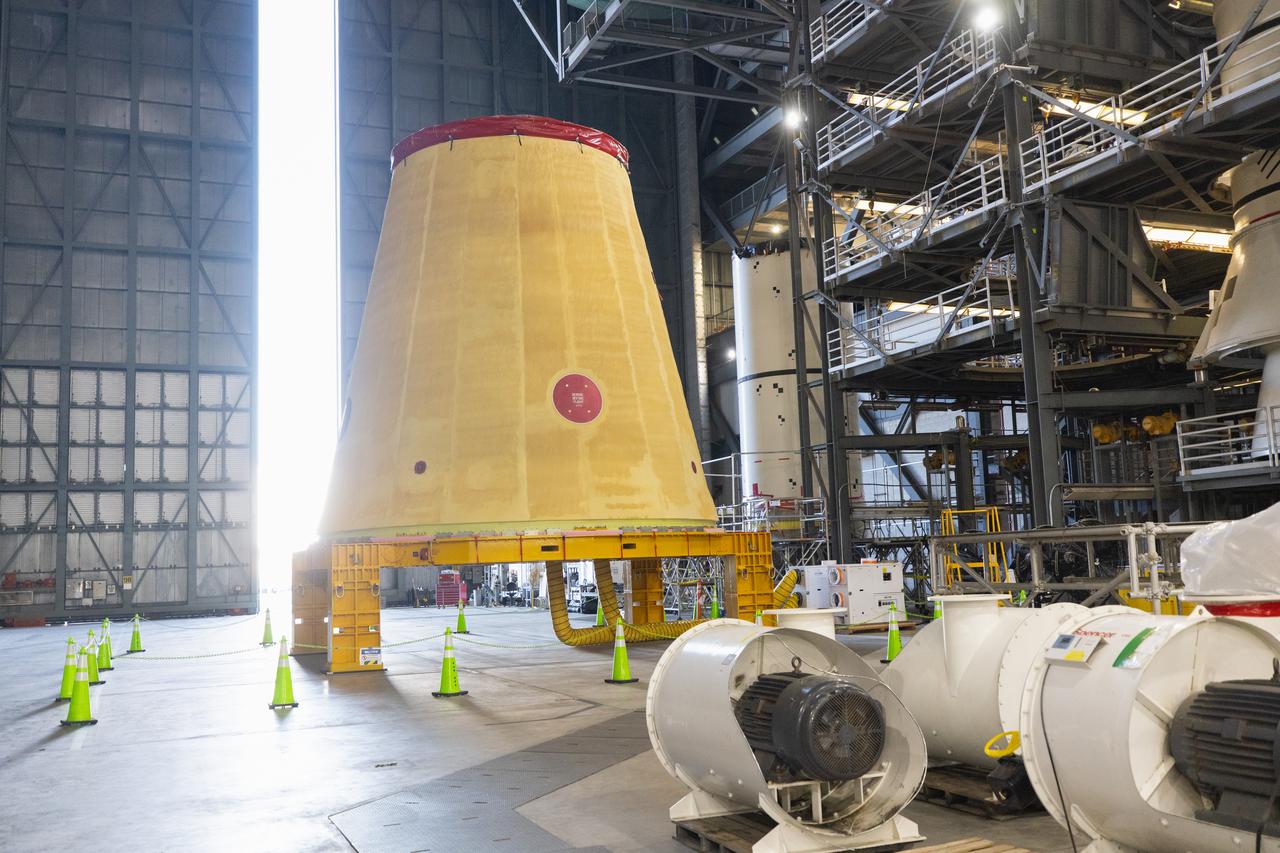
NASA’s Artemis II hardware, the launch vehicle stage adapter, is inside High Bay 4 on Thursday, March 20, 2025, at the Vehicle Assembly Building at NASA’s Kennedy Space Center in Florida ahead of rocket stacking operations. The cone shaped launch vehicle stage adapter connects the SLS (Space Launch System) Moon rocket to the upper stage, the interim cryogenic propulsion stage, and protects the rocket’s flight computers, avionics, and electrical devices during launch and ascent during the Artemis missions.
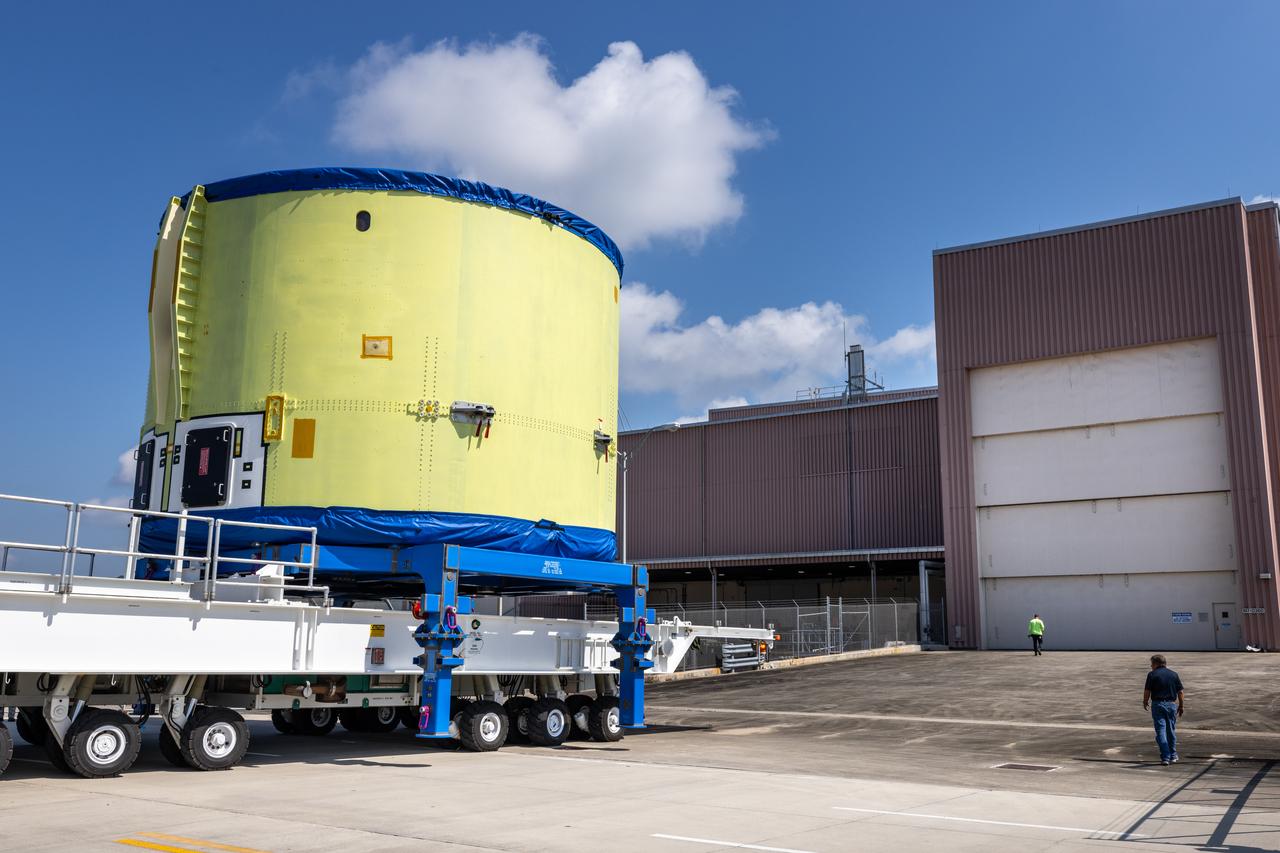
The engine section of NASA’s Artemis IV SLS (Space Launch System) core stage arrives at the Space Systems Processing Facility (SSPF) at NASA’s Kennedy Space Center in Florida on Tuesday, Oct. 15, 2024, after being transported from the spaceport’s Vehicle Assembly Building. NASA’s Pegasus barge delivered the core stage engine section housing the four RS-25 engines from NASA’s Michoud Assembly Facility in New Orleans, Louisiana to NASA Kennedy on Thursday, Sept. 5, 2024. The engine section is one the most complex and intricate parts of the rocket stage that will help power the Artemis missions to the Moon.
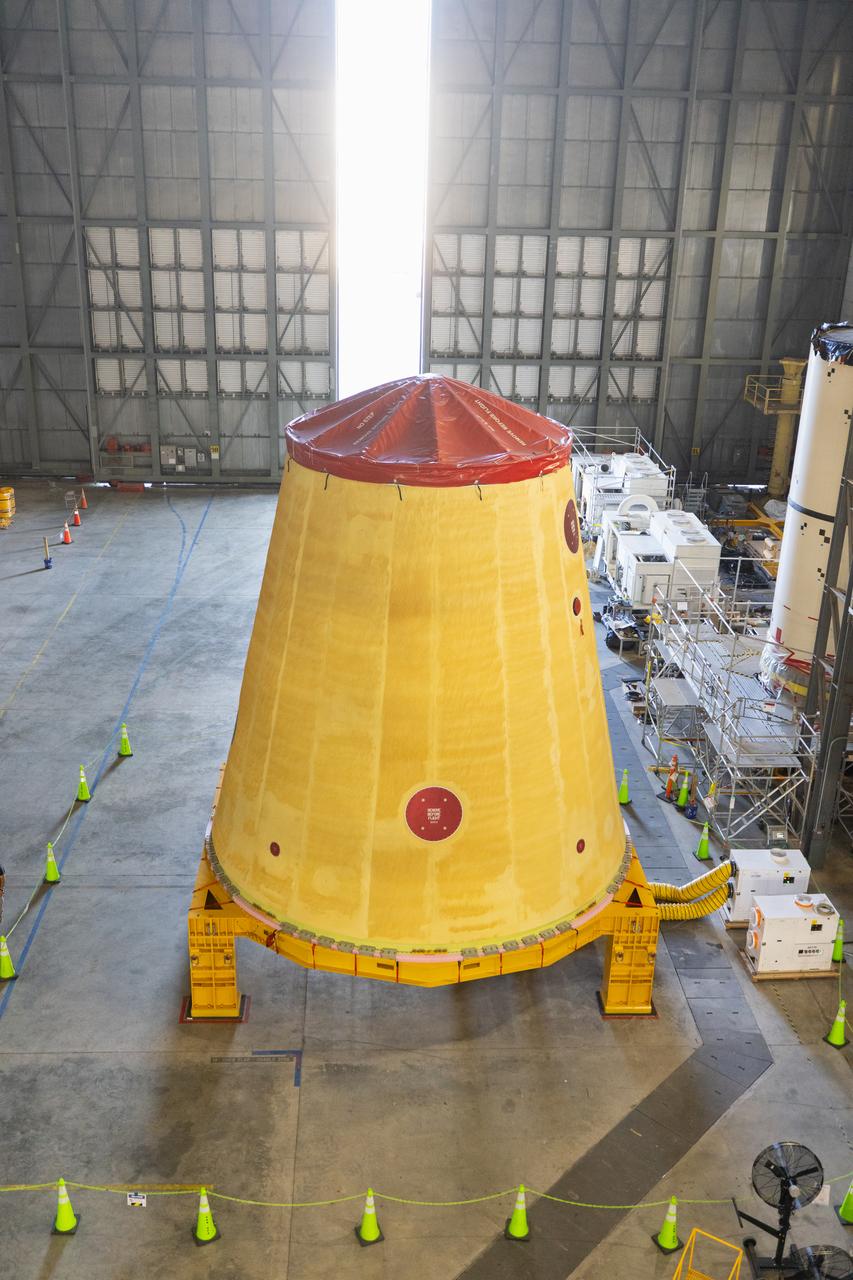
NASA’s Artemis II hardware, the launch vehicle stage adapter, is inside High Bay 4 on Thursday, March 20, 2025, at the Vehicle Assembly Building at NASA’s Kennedy Space Center in Florida ahead of rocket stacking operations. The cone shaped launch vehicle stage adapter connects the SLS (Space Launch System) Moon rocket to the upper stage, the interim cryogenic propulsion stage, and protects the rocket’s flight computers, avionics, and electrical devices during launch and ascent during the Artemis missions.
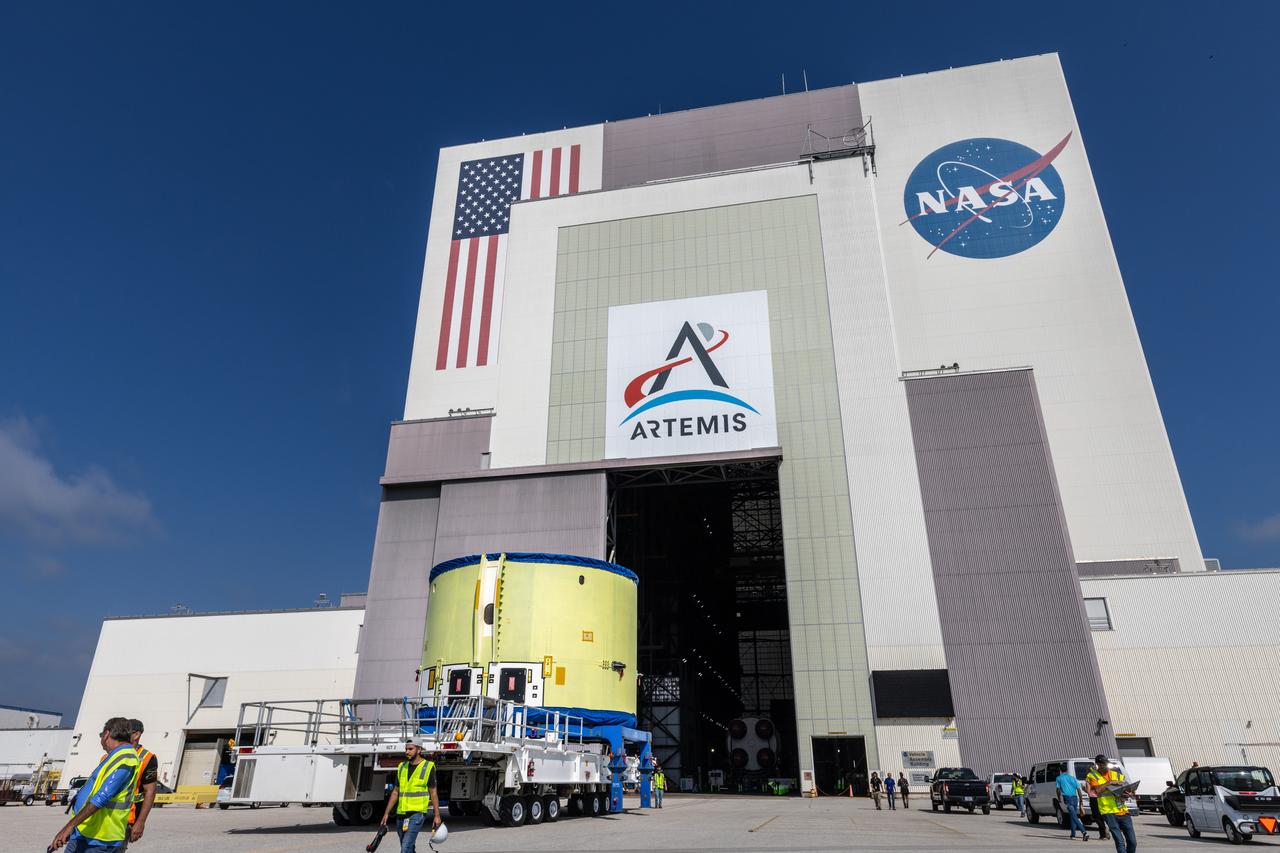
Teams from NASA’s Exploration Ground Systems transport the engine section of the agency’s Artemis IV SLS (Space Launch System) core stage from the Vehicle Assembly Building at NASA’s Kennedy Space Center in Florida to the spaceport’s Space Systems Processing Facility (SSPF) on Tuesday, Oct. 15, 2024. NASA’s Pegasus barge delivered the core stage engine section housing the four RS-25 engines from NASA’s Michoud Assembly Facility in New Orleans, Louisiana to NASA Kennedy on Thursday, Sept. 5, 2024. The engine section is one the most complex and intricate parts of the rocket stage that will help power the Artemis missions to the Moon.
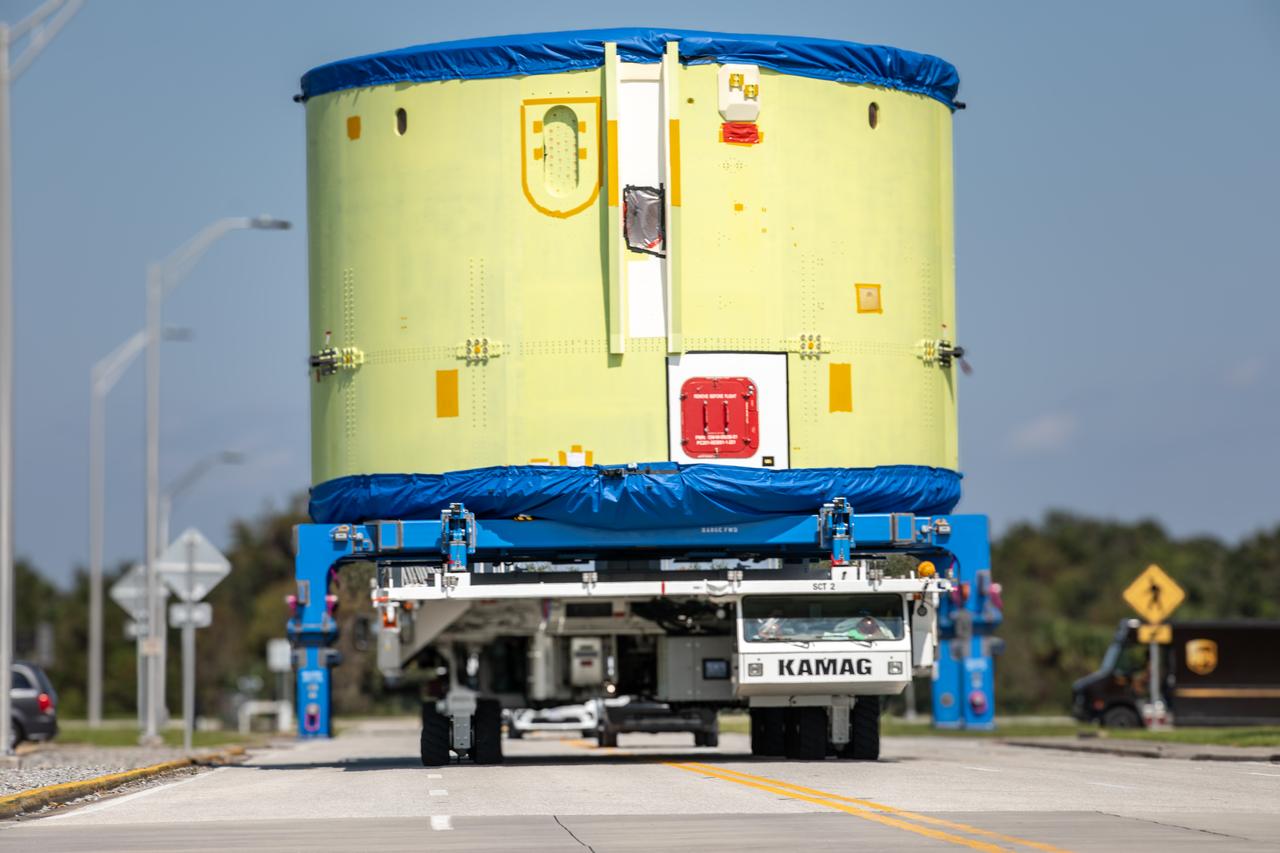
Teams from NASA’s Exploration Ground Systems transport the engine section of the agency’s Artemis IV SLS (Space Launch System) core stage from the Vehicle Assembly Building at NASA’s Kennedy Space Center in Florida to the spaceport’s Space Systems Processing Facility (SSPF) on Tuesday, Oct. 15, 2024. NASA’s Pegasus barge delivered the core stage engine section housing the four RS-25 engines from NASA’s Michoud Assembly Facility in New Orleans, Louisiana to NASA Kennedy on Thursday, Sept. 5, 2024. The engine section is one the most complex and intricate parts of the rocket stage that will help power the Artemis missions to the Moon.
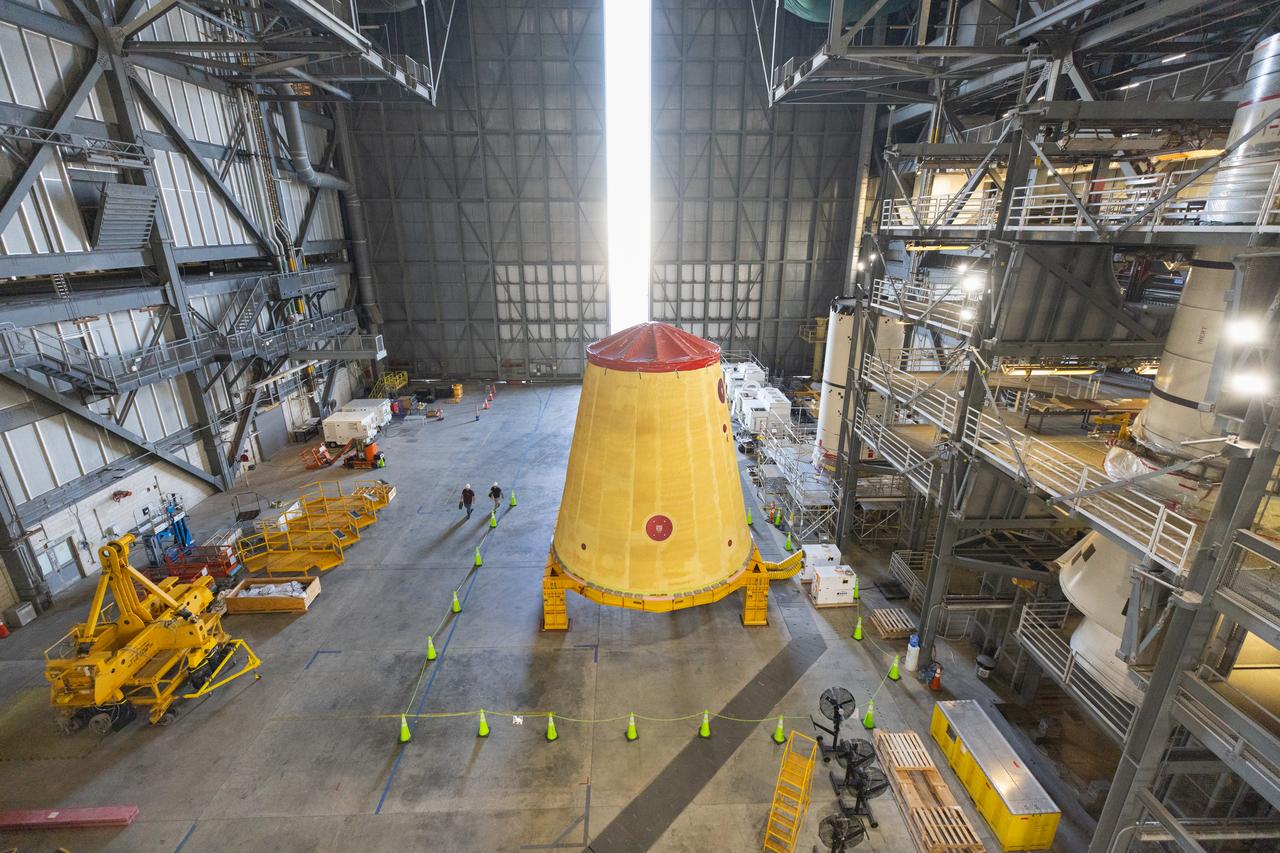
NASA’s Artemis II hardware, the launch vehicle stage adapter, is inside High Bay 4 on Thursday, March 20, 2025, at the Vehicle Assembly Building at NASA’s Kennedy Space Center in Florida ahead of rocket stacking operations. The cone shaped launch vehicle stage adapter connects the SLS (Space Launch System) Moon rocket to the upper stage, the interim cryogenic propulsion stage, and protects the rocket’s flight computers, avionics, and electrical devices during launch and ascent during the Artemis missions.
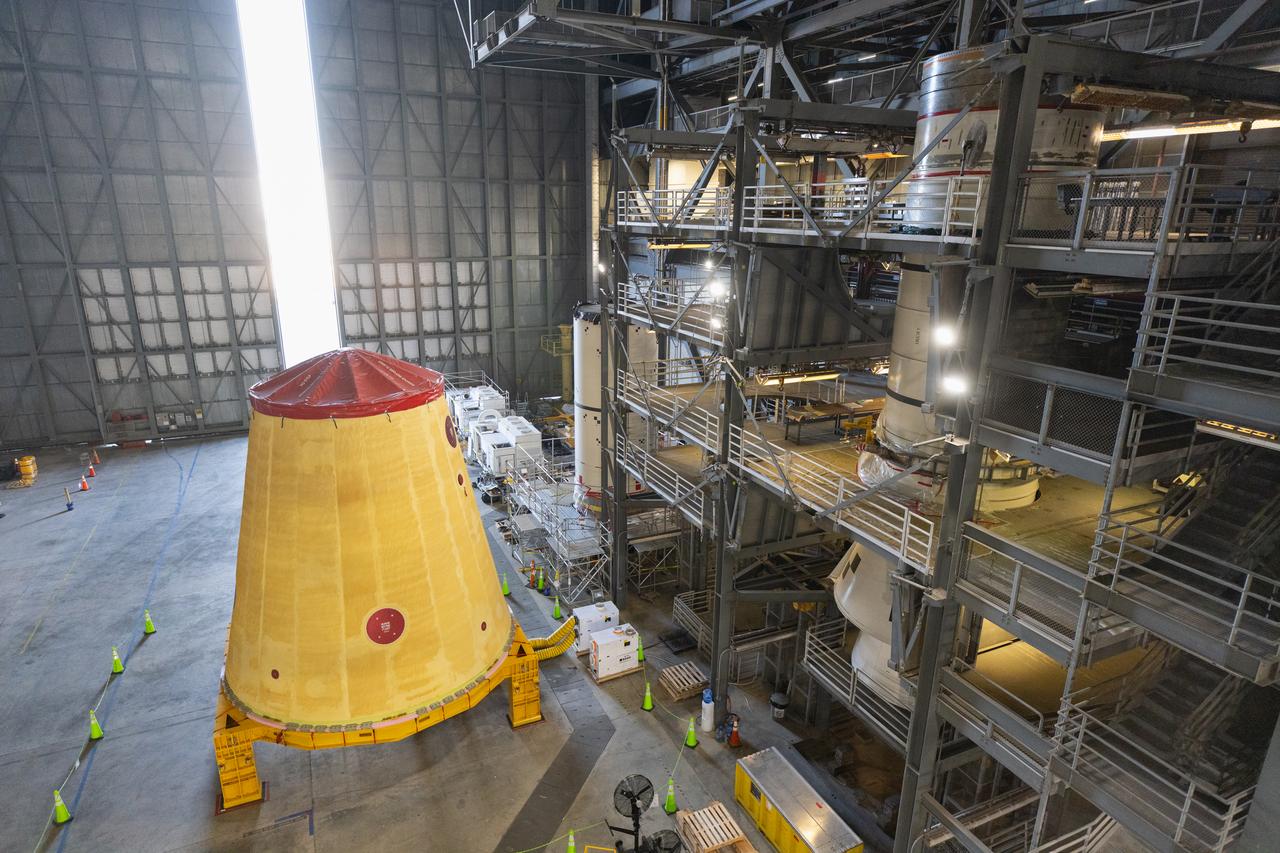
NASA’s Artemis II hardware, the launch vehicle stage adapter, is inside High Bay 4 on Thursday, March 20, 2025, at the Vehicle Assembly Building at NASA’s Kennedy Space Center in Florida ahead of rocket stacking operations. The cone shaped launch vehicle stage adapter connects the SLS (Space Launch System) Moon rocket to the upper stage, the interim cryogenic propulsion stage, and protects the rocket’s flight computers, avionics, and electrical devices during launch and ascent during the Artemis missions.
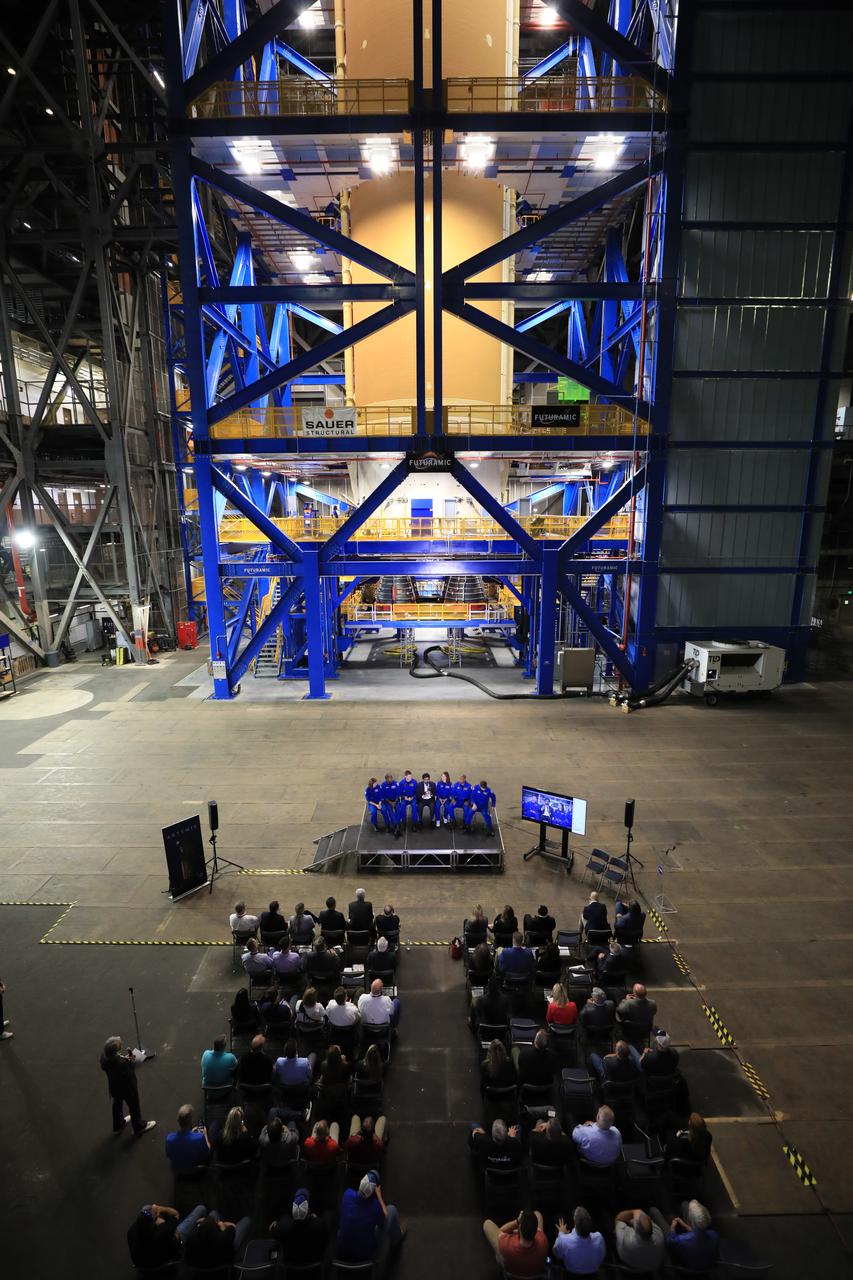
From left, CSA (Canadian Space Agency) astronaut Jenni Gibbons, NASA astronaut Andre Douglas, CSA astronaut Jeremy Hansen, NASA Moon to Mars Program Deputy Associate Administrator Amit Kshatriya, and NASA astronauts Christina Koch, Victor Glover, and Reid Wiseman participate in a media day event on Monday, Dec. 16, 2024, inside the Vehicle Assembly Building at the agency’s Kennedy Space Center in Florida. The Artemis II crew and backup crew participated in the event days after teams with NASA’s Exploration Ground Systems transport lifted the agency’s 212-foot-tall SLS (Space Launch System) core stage from the facility’s transfer aisle into High Bay 2 where it will remain while teams stack the two solid rocket boosters on top of mobile launcher 1.
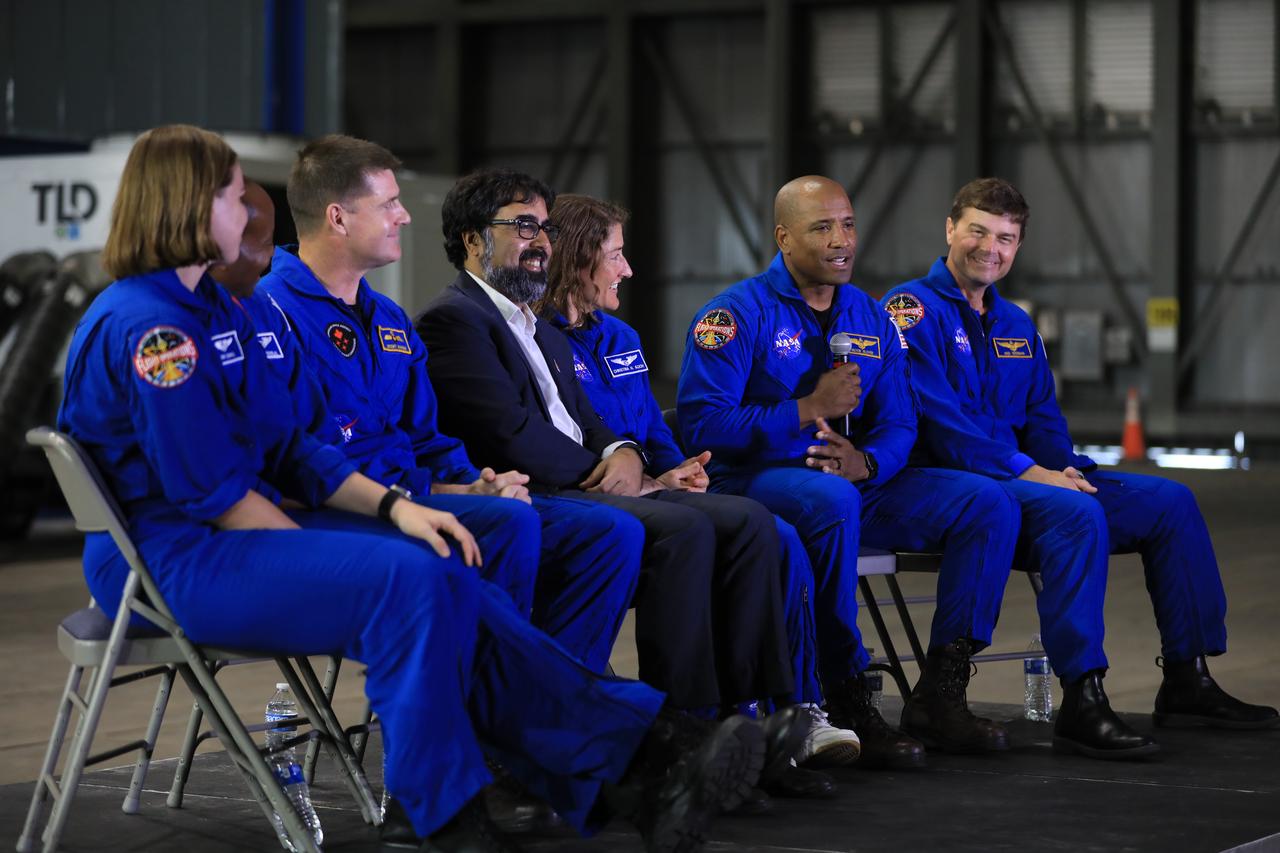
From left, CSA (Canadian Space Agency) astronaut Jenni Gibbons, NASA astronaut Andre Douglas, CSA astronaut Jeremy Hansen, NASA Moon to Mars Program Deputy Associate Administrator Amit Kshatriya, and NASA astronauts Christina Koch, Victor Glover, and Reid Wiseman participate in a media day event on Monday, Dec. 16, 2024, inside the Vehicle Assembly Building at the agency’s Kennedy Space Center in Florida. The Artemis II crew and backup crew participated in the event days after teams with NASA’s Exploration Ground Systems transport lifted the agency’s 212-foot-tall SLS (Space Launch System) core stage from the facility’s transfer aisle into High Bay 2 where it will remain while teams stack the two solid rocket boosters on top of mobile launcher 1.
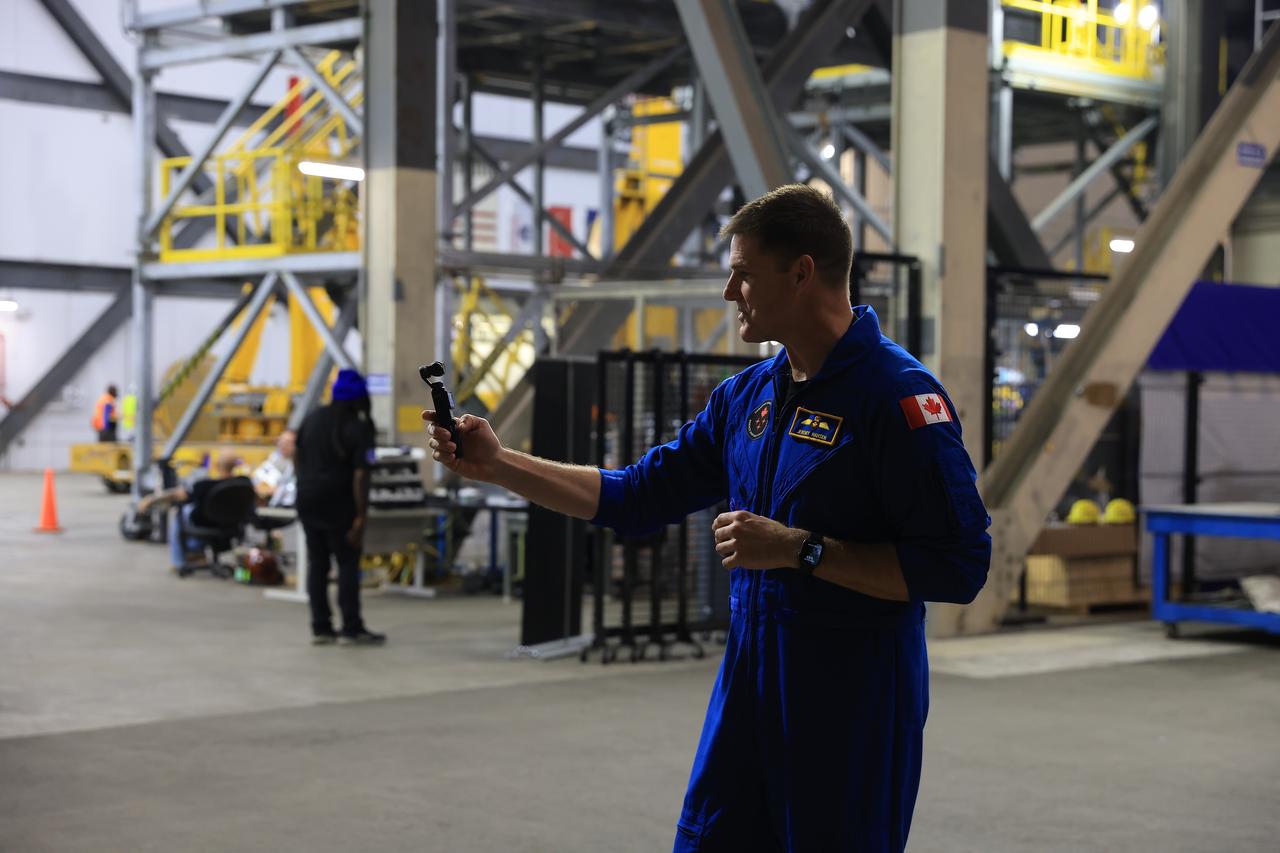
Artemis II crew member CSA (Canadian Space Agency) astronaut Jeremy Hansen participates in a media day event on Monday, Dec. 16, 2024, inside the Vehicle Assembly Building at the agency’s Kennedy Space Center in Florida. The Artemis II crew and backup crew participated in the event days after teams with NASA’s Exploration Ground Systems transport lifted the agency’s 212-foot-tall SLS (Space Launch System) core stage from the facility’s transfer aisle into High Bay 2 where it will remain while teams stack the two solid rocket boosters on top of mobile launcher 1.
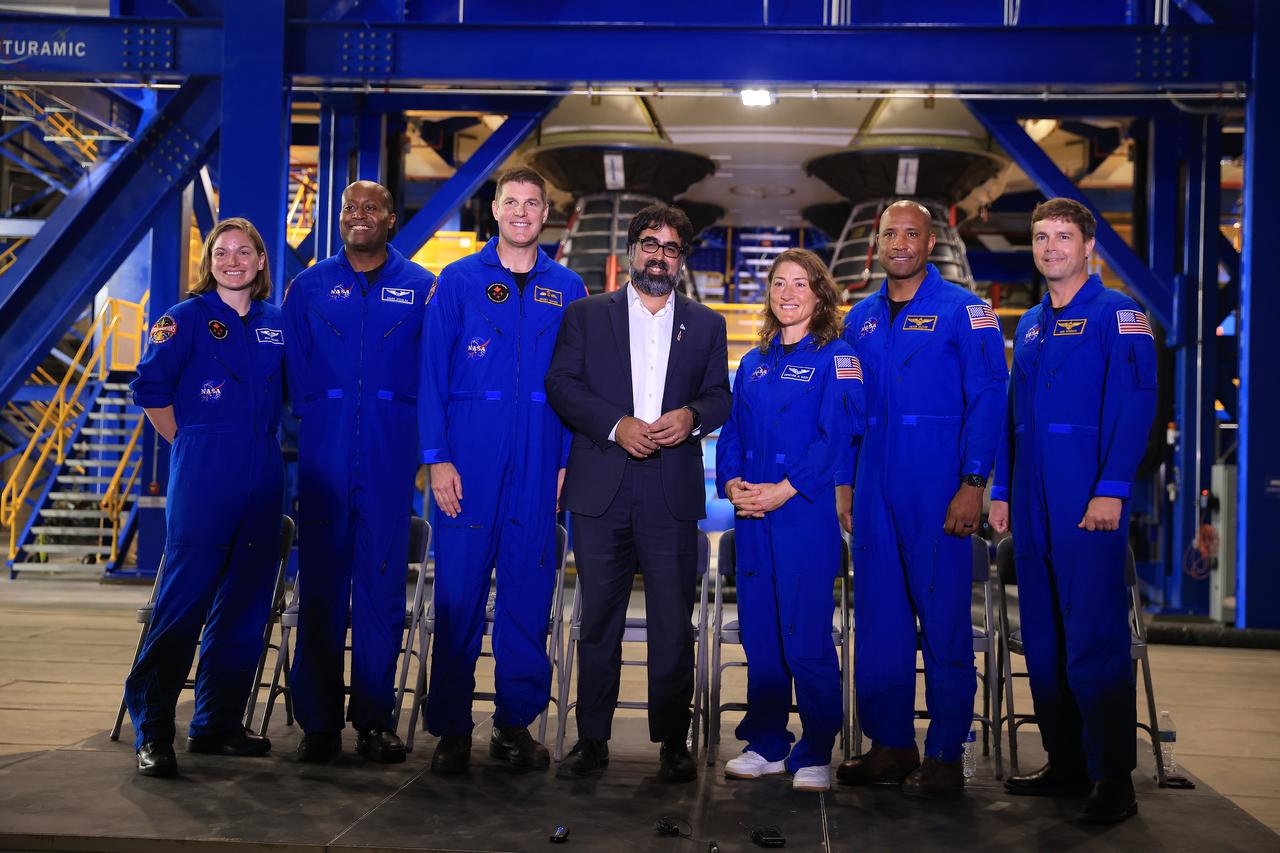
From left, CSA (Canadian Space Agency) astronaut Jenni Gibbons, NASA astronaut Andre Douglas, CSA astronaut Jeremy Hansen, NASA Moon to Mars Program Deputy Associate Administrator Amit Kshatriya, and NASA astronauts Christina Koch, Victor Glover, and Reid Wiseman participate in a media day event on Monday, Dec. 16, 2024, inside the Vehicle Assembly Building at the agency’s Kennedy Space Center in Florida. The Artemis II crew and backup crew participated in the event days after teams with NASA’s Exploration Ground Systems transport lifted the agency’s 212-foot-tall SLS (Space Launch System) core stage from the facility’s transfer aisle into High Bay 2 where it will remain while teams stack the two solid rocket boosters on top of mobile launcher 1.
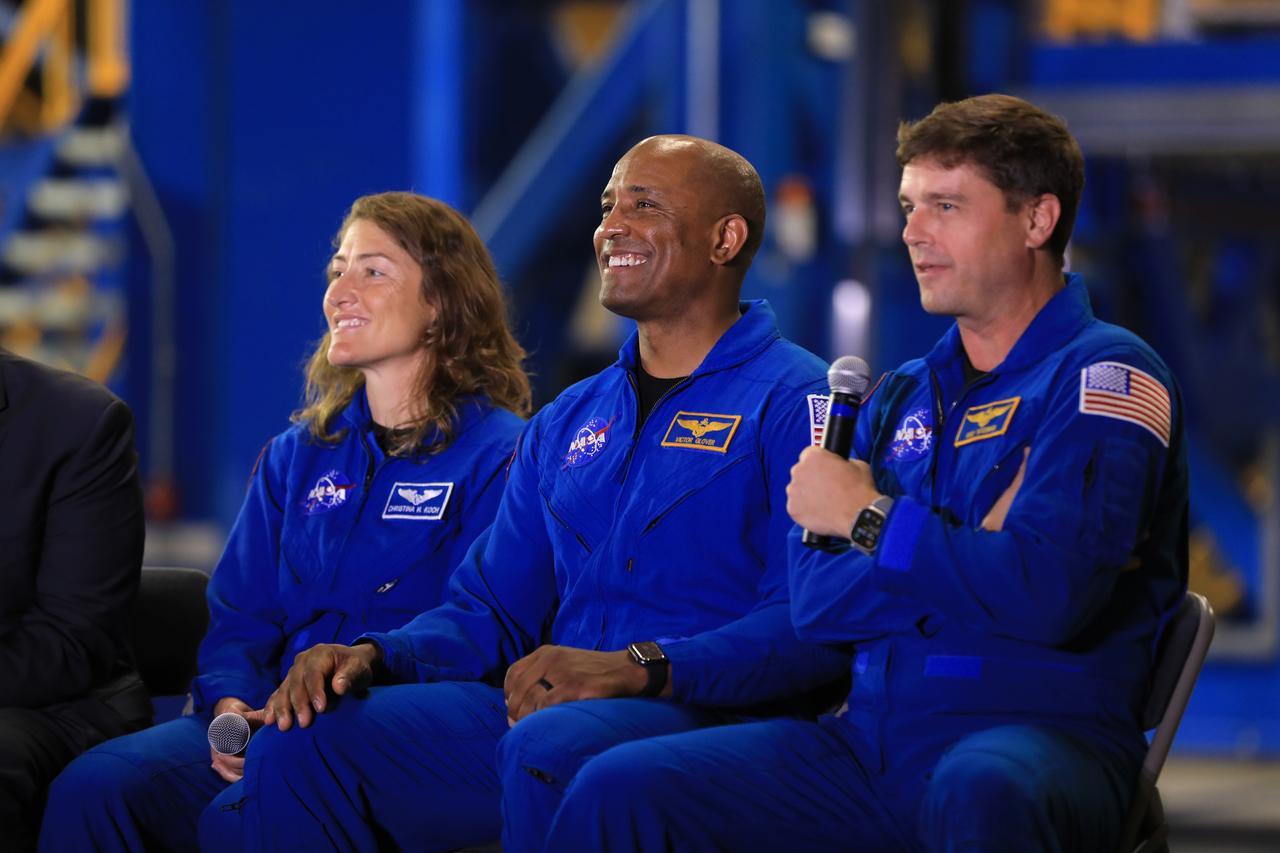
From left, Artemis II NASA astronauts Christina Koch, Victor Glover, and Reid Wiseman participate in a media day event on Monday, Dec. 16, 2024, inside the Vehicle Assembly Building at the agency’s Kennedy Space Center in Florida. The crew participated in the event days after teams with NASA’s Exploration Ground Systems transport lifted the agency’s 212-foot-tall SLS (Space Launch System) core stage from the facility’s transfer aisle into High Bay 2 where it will remain while teams stack the two solid rocket boosters on top of mobile launcher 1.
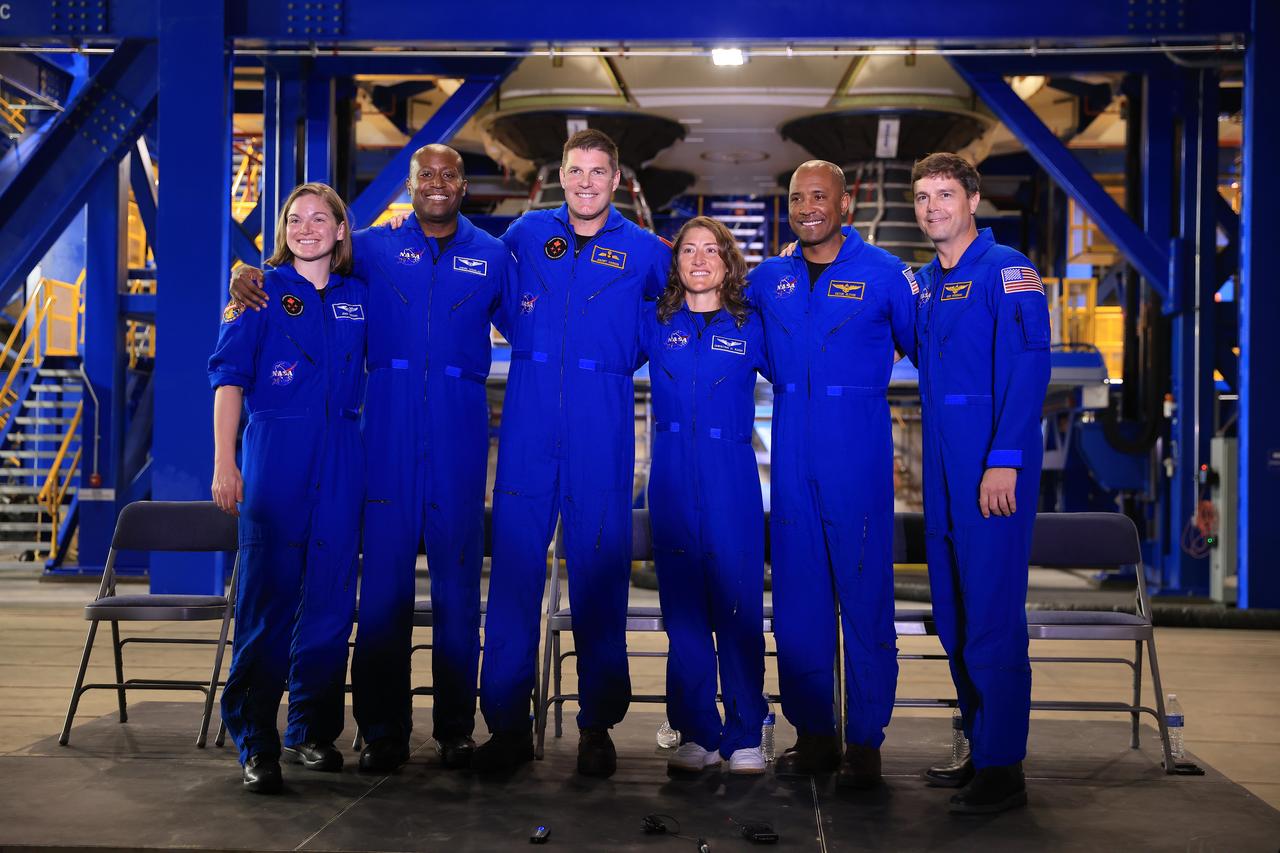
From left, CSA (Canadian Space Agency) astronaut Jenni Gibbons, NASA astronaut Andre Douglas, CSA astronaut Jeremy Hansen, and NASA astronauts Christina Koch, Victor Glover, and Reid Wiseman participate in a media day event on Monday, Dec. 16, 2024, inside the Vehicle Assembly Building at the agency’s Kennedy Space Center in Florida. The Artemis II crew and backup crew participated in the event days after teams with NASA’s Exploration Ground Systems transport lifted the agency’s 212-foot-tall SLS (Space Launch System) core stage from the facility’s transfer aisle into High Bay 2 where it will remain while teams stack the two solid rocket boosters on top of mobile launcher 1.
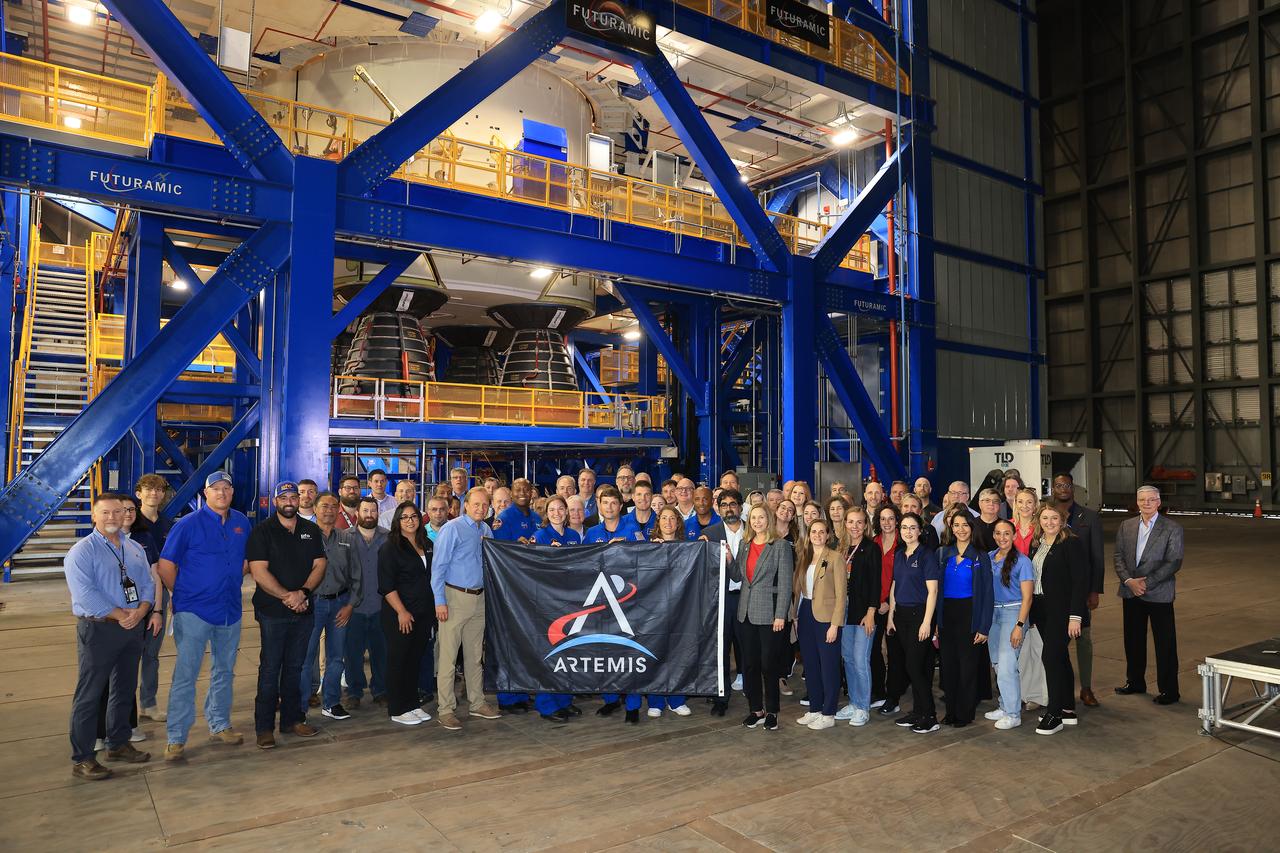
Artemis II crew and backup crew hold a banner with NASA and industry leaders during a supplier and media day event on Monday, Dec. 16, 2024, inside the Vehicle Assembly Building at the agency’s Kennedy Space Center in Florida. The Artemis II crew and backup crew participated in the event days after teams with NASA’s Exploration Ground Systems transport lifted the agency’s 212-foot-tall SLS (Space Launch System) core stage from the facility’s transfer aisle into High Bay 2 where it will remain while teams stack the two solid rocket boosters on top of mobile launcher 1.