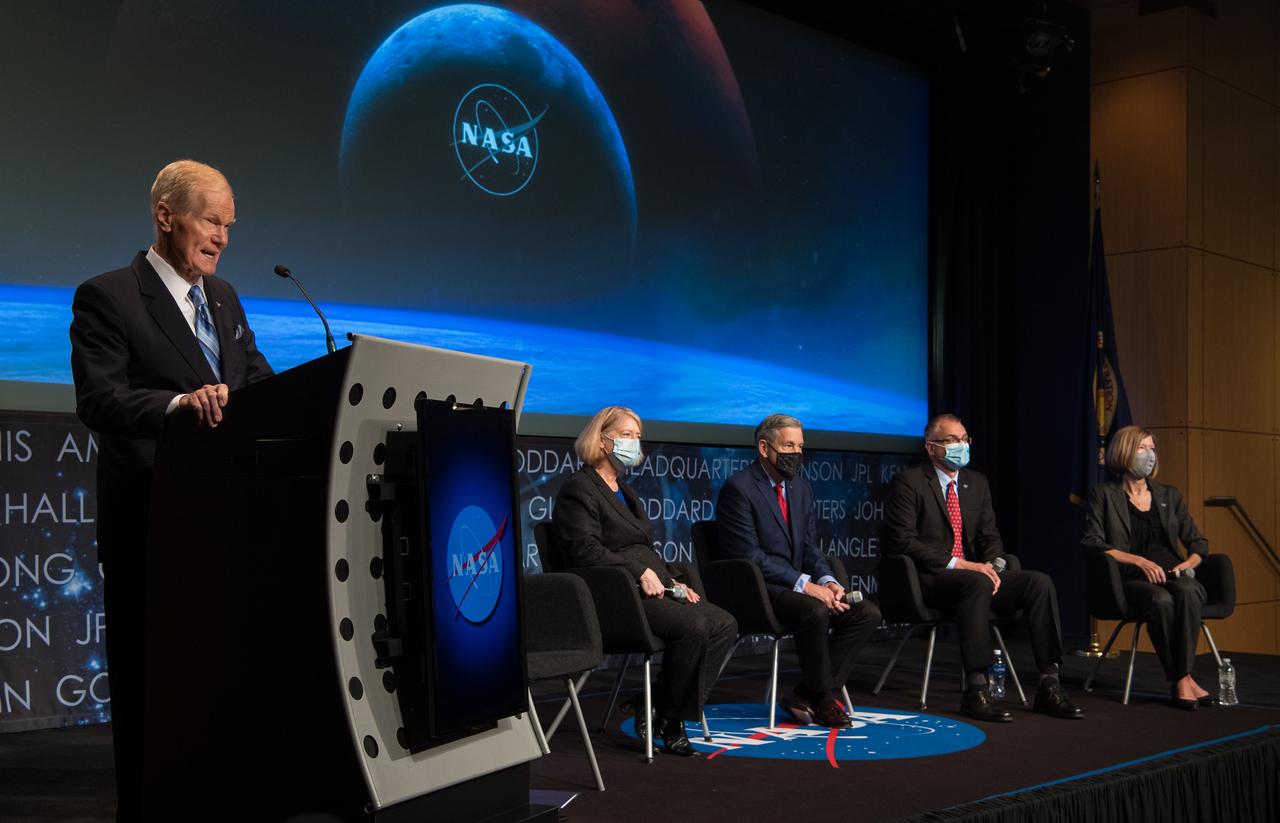
NASA Administrator Bill Nelson speaks during a NASA town hall to discuss the reorganization of the Human Exploration and Operations Mission Directorate into two mission directorates: Exploration Systems Development Mission Directorate (ESDMD) and Space Operations Mission Directorate (SpaceOps), Tuesday, Sept. 21, 2021 at the Mary W. Jackson NASA Headquarters building in Washington. Panelists were from left to right, NASA Deputy Administrator Pam Melroy; NASA Associate Administrator Bob Cabana; NASA Associate Administrator for the Exploration Systems Development Mission Directorate (ESDMD), Jim Free; and NASA Associate Administrator for the Space Operations Mission Directorate (SpaceOps), Kathy Lueders. Photo Credit: (NASA/Aubrey Gemignani)
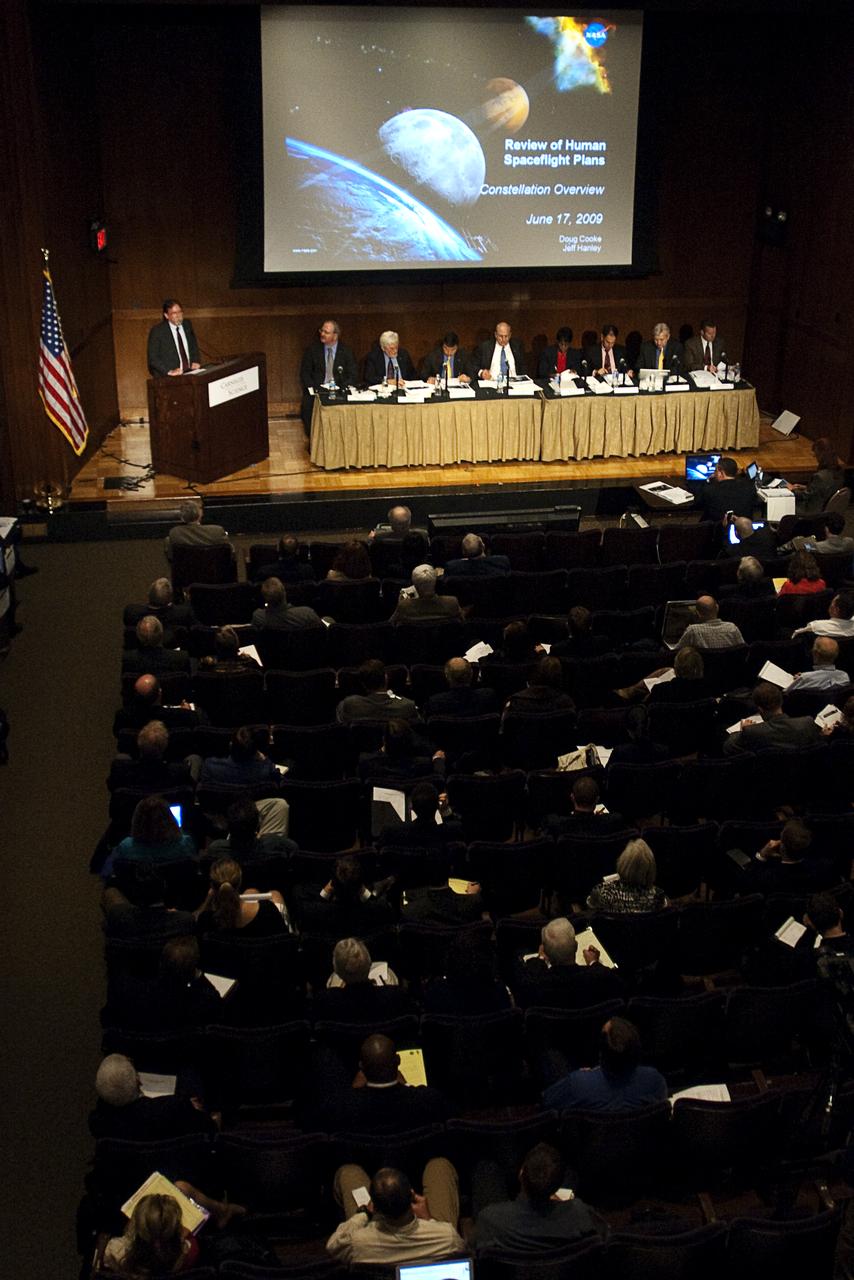
Douglas R. Cooke, Associate Administrator for Exploration Systems Mission Directorate, at podium, addresses the Human Space Flight Review Committee, Wednesday, June 17, 2009, at the Carnegie Institution in Washington. The panel will examine ongoing and planned NASA development activities and potential alternatives in order to present options for advancing a safe, innovative, affordable and sustainable human space flight program following the space shuttle's retirement. The committee wil present its results by August 2009. Seated from left on the panel is Jeffrey Greason, Bohdan Bejmuk, Dr. Leroy Chiao, Norman Augustine (chair), Dr. Wanda Austin, Dr. Edward Crawley, Dr. Christopher Chyba and Philip McAlister. Photo Credit: (NASA/Paul E. Alers)
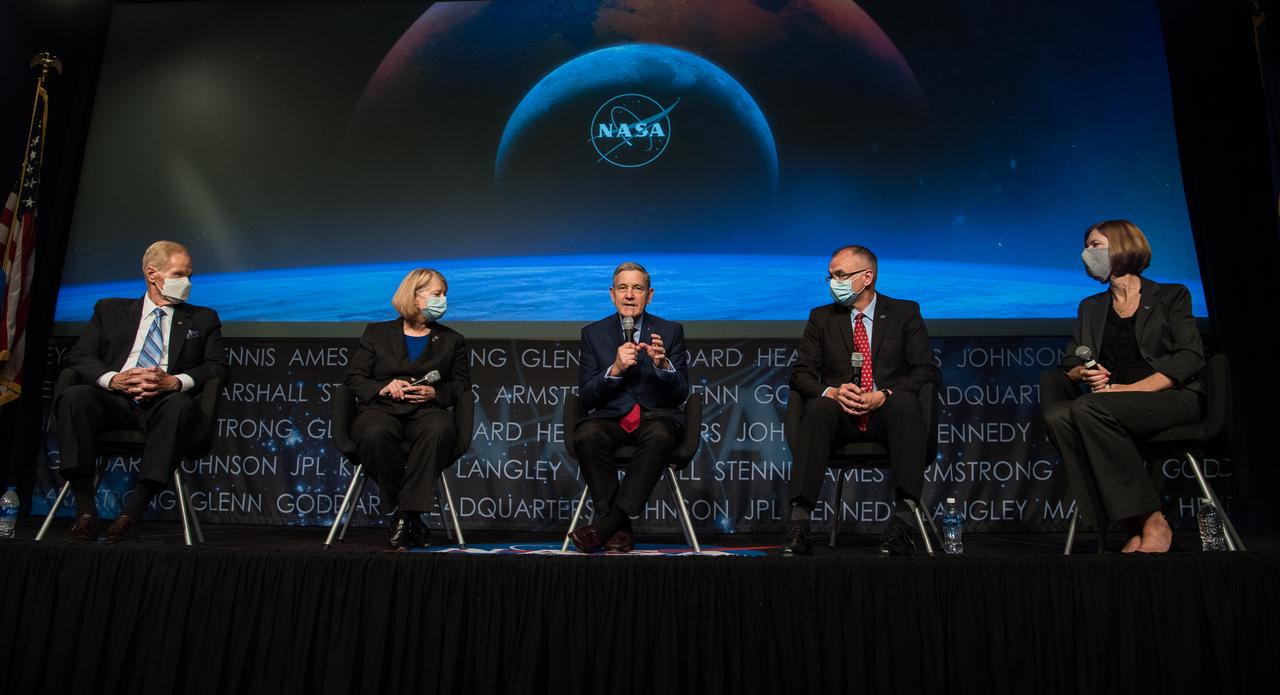
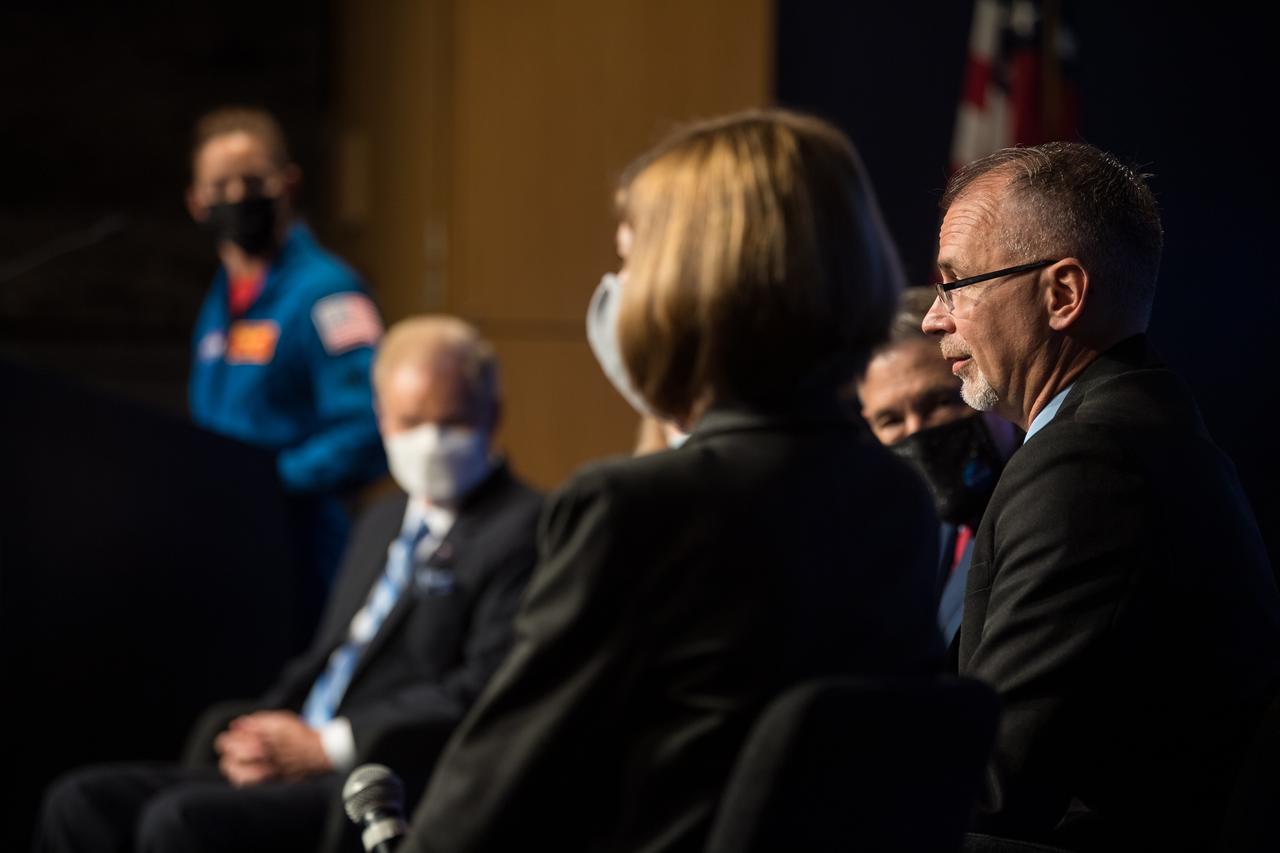
NASA Associate Administrator Bob Cabana speaks on a panel during a NASA town hall to discuss the reorganization of the Human Exploration and Operations Mission Directorate into two mission directorates: Exploration Systems Development Mission Directorate (ESDMD) and Space Operations Mission Directorate (SpaceOps), Tuesday, Sept. 21, 2021 at the Mary W. Jackson NASA Headquarters building in Washington. Panelists were, from left to right, NASA Administrator Bill Nelson; NASA Deputy Administrator Pam Melroy; Cabana; NASA Associate Administrator for the Exploration Systems Development Mission Directorate (ESDMD), Jim Free; and NASA Associate Administrator for the Space Operations Mission Directorate (SpaceOps), Kathy Lueders. Photo Credit: (NASA/Aubrey Gemignani)
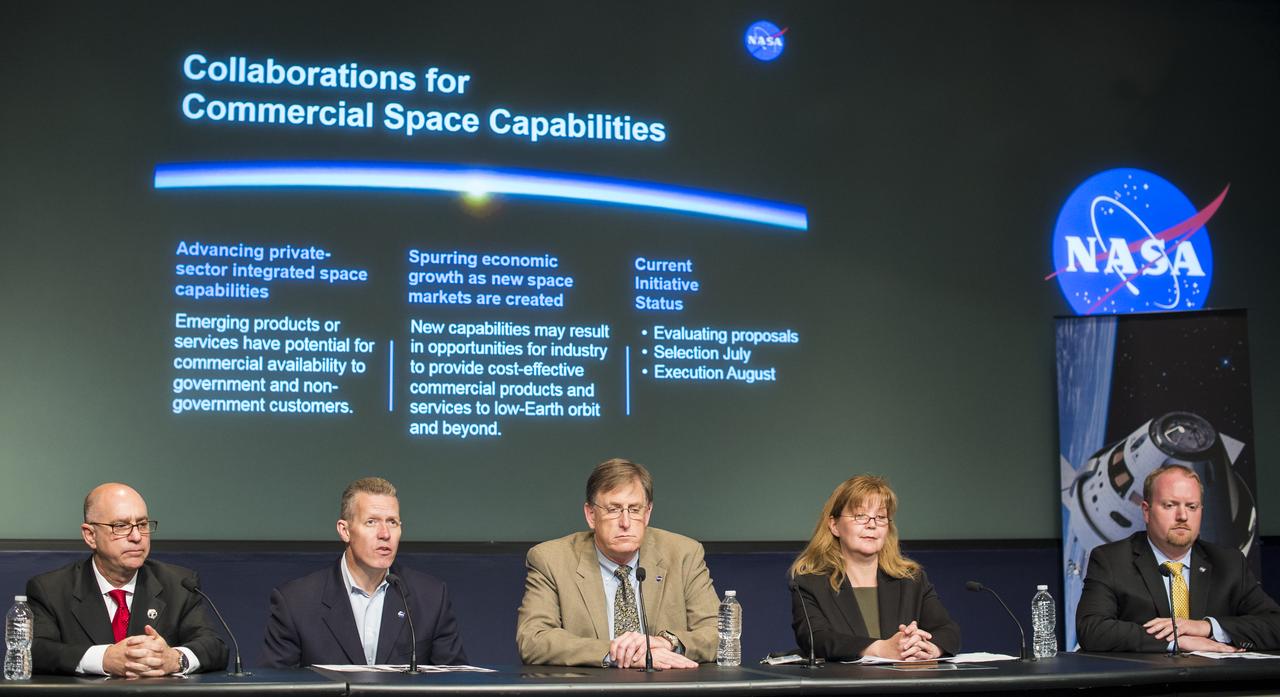
Sam Scimemi, Director of NASA's International Space Station Division, left, Phil McAlister, Director of NASA's Commercial Spaceflight Division, second from left, Dan Dumbacher, Deputy Associate Administrator of NASA's Exploration Systems Development, center, Michele Gates, Senior Technical Advisor of NASA's Human Exploration and Operations Mission Directorate, second from right, and Jason Crusan, Director of NASA's Advanced Exploration Systems Division, right, sit on a panel during an Exploration Forum showcasing NASA's human exploration path to Mars in the James E. Webb Auditorium at NASA Headquarters on Tuesday, April 29, 2014. Photo Credit: (NASA/Joel Kowsky)
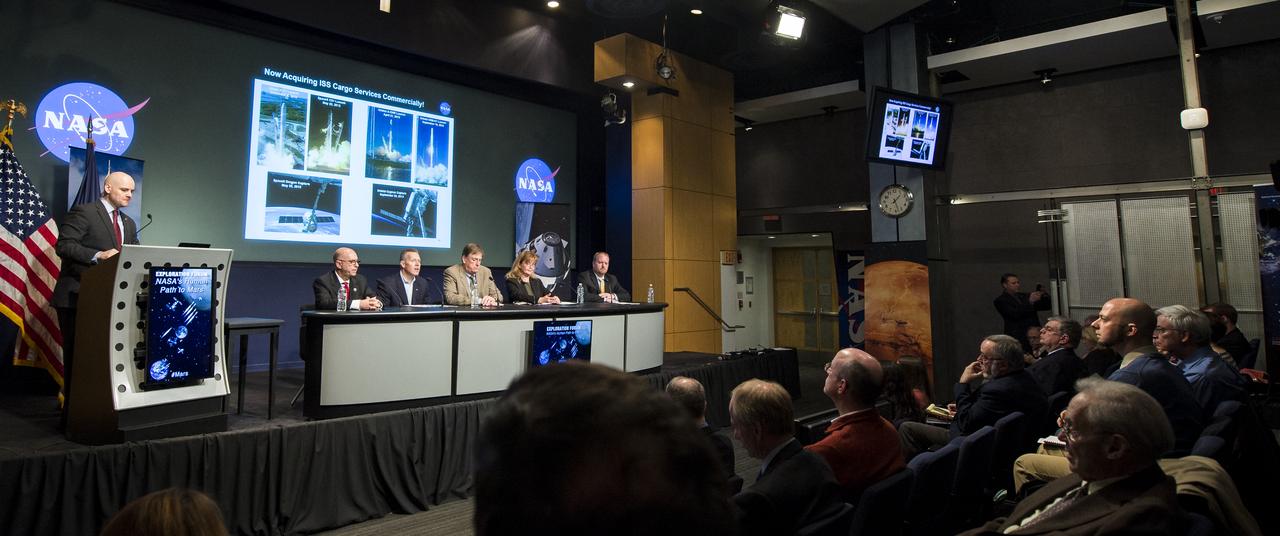
Sam Scimemi, Director of NASA's International Space Station Division, second from left, Phil McAlister, Director of NASA's Commercial Spaceflight Division, third from left, Dan Dumbacher, Deputy Associate Administrator of NASA's Exploration Systems Development, center, Michele Gates, Senior Technical Advisor of NASA's Human Exploration and Operations Mission Directorate, second from right, and Jason Crusan, Director of NASA's Advanced Exploration Systems Division, right, sit on a panel during an Exploration Forum showcasing NASA's human exploration path to Mars in the James E. Webb Auditorium at NASA Headquarters on Tuesday, April 29, 2014. Photo Credit: (NASA/Joel Kowsky)

Lakiesha Hawkins, Assistant Deputy Associate Administrator for the Moon to Mars (M2M) Program within the Exploration Systems Development Mission Directorate (ESDMD), takes a peek at the Payload Adapter test article at Marshall Space Flight Center. The adapter, which will debut on NASA’s Artemis IV mission, is an evolution from the Orion stage adapter used in the Block 1 configuration of the rocket for the first three Artemis missions. It will be housed inside the universal stage adapter atop the rocket’s more powerful in-space stage, called the exploration upper stage. The payload adapter, like the launch vehicle stage adapter and the Orion stage adapter, is fully manufactured and tested at Marshall, which manages the SLS Program.
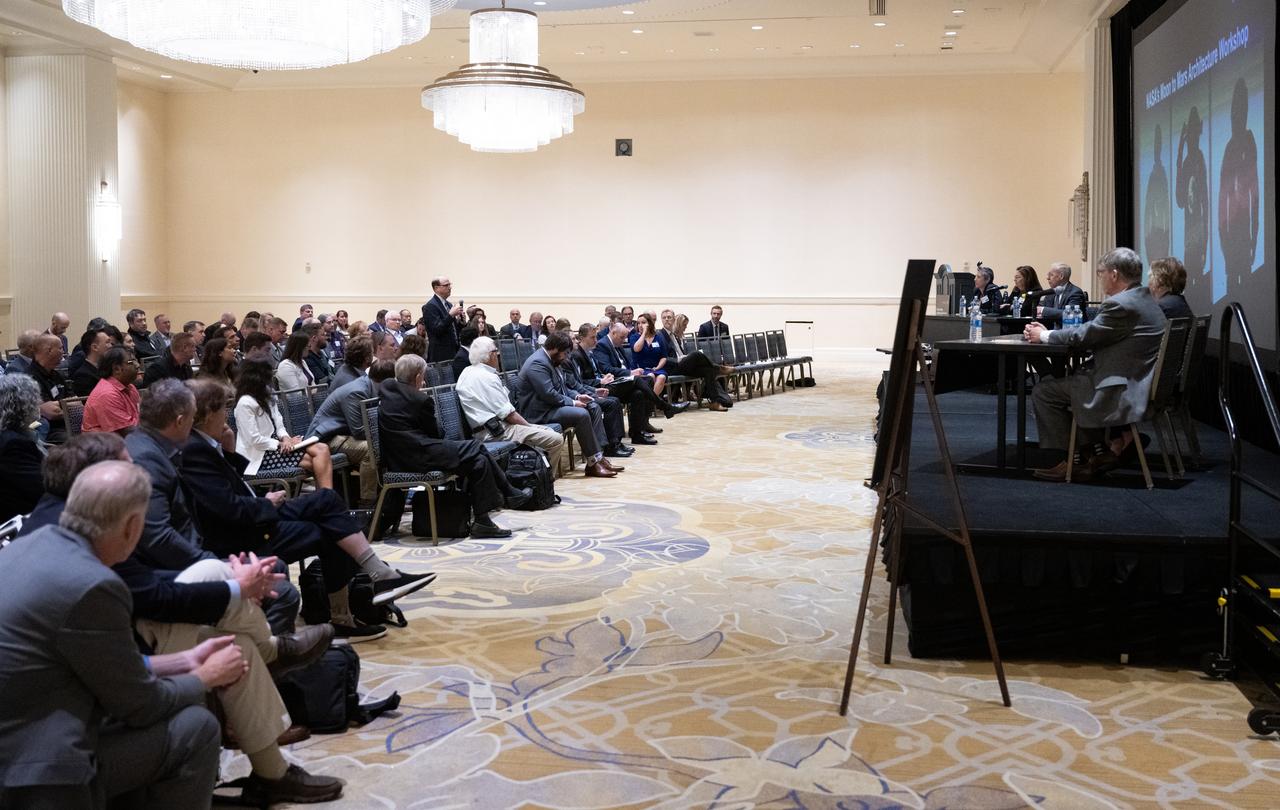
Nujoud Merancy, architecture lead for NASA's Exploration Systems Development Mission Directorate, Catherine Koerner, deputy associate administrator for NASA's Exploration Systems Development Mission Directorate, Patrick Forrester, special advisor in NASA's Space Operations Mission Directorate, Michelle Munk, chief architect for NASA’s Space Technology Mission Directorate, and Joel Kearns, deputy associate administrator for Exploration in NASA's Science Mission Directorate, listen to a question during NASA’s Moon to Mars Architecture Workshop, Tuesday, June 27, 2023, at the Gaylord National Resort and Convention Center in National Harbor, Md. Following the release of the 2022 Architecture Concept Review, NASA is conducting the workshop to engage the broader space community and collect feedback from U.S. industry and academia to inform the Moon to Mars mission architecture and operational delivery. Photo Credit: (NASA/Joel Kowsky)
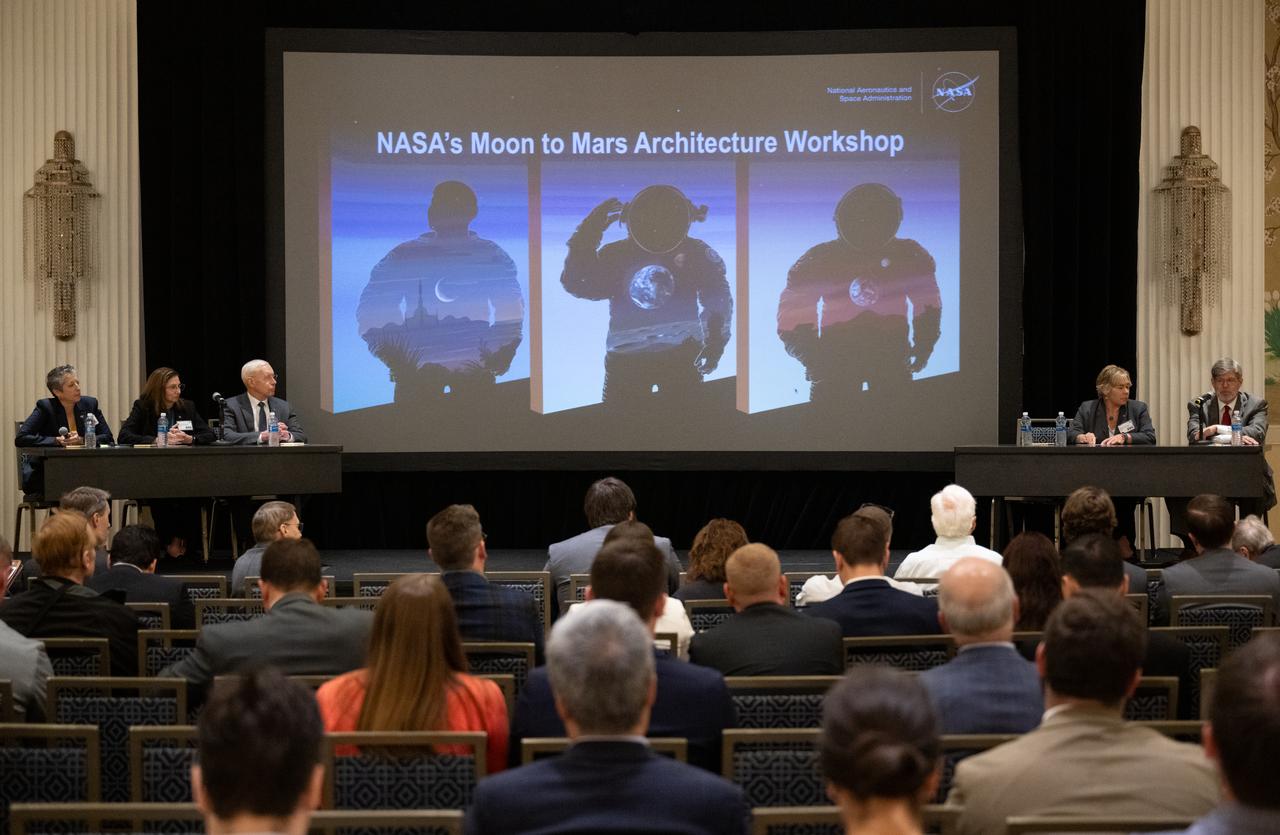
Nujoud Merancy, architecture lead for NASA's Exploration Systems Development Mission Directorate, Catherine Koerner, deputy associate administrator for NASA's Exploration Systems Development Mission Directorate, Patrick Forrester, special advisor in NASA's Space Operations Mission Directorate, Michelle Munk, chief architect for NASA’s Space Technology Mission Directorate, and Joel Kearns, deputy associate administrator for Exploration in NASA's Science Mission Directorate, are seen on stage during NASA’s Moon to Mars Architecture Workshop, Tuesday, June 27, 2023, at the Gaylord National Resort and Convention Center in National Harbor, Md. Following the release of the 2022 Architecture Concept Review, NASA is conducting the workshop to engage the broader space community and collect feedback from U.S. industry and academia to inform the Moon to Mars mission architecture and operational delivery. Photo Credit: (NASA/Joel Kowsky)
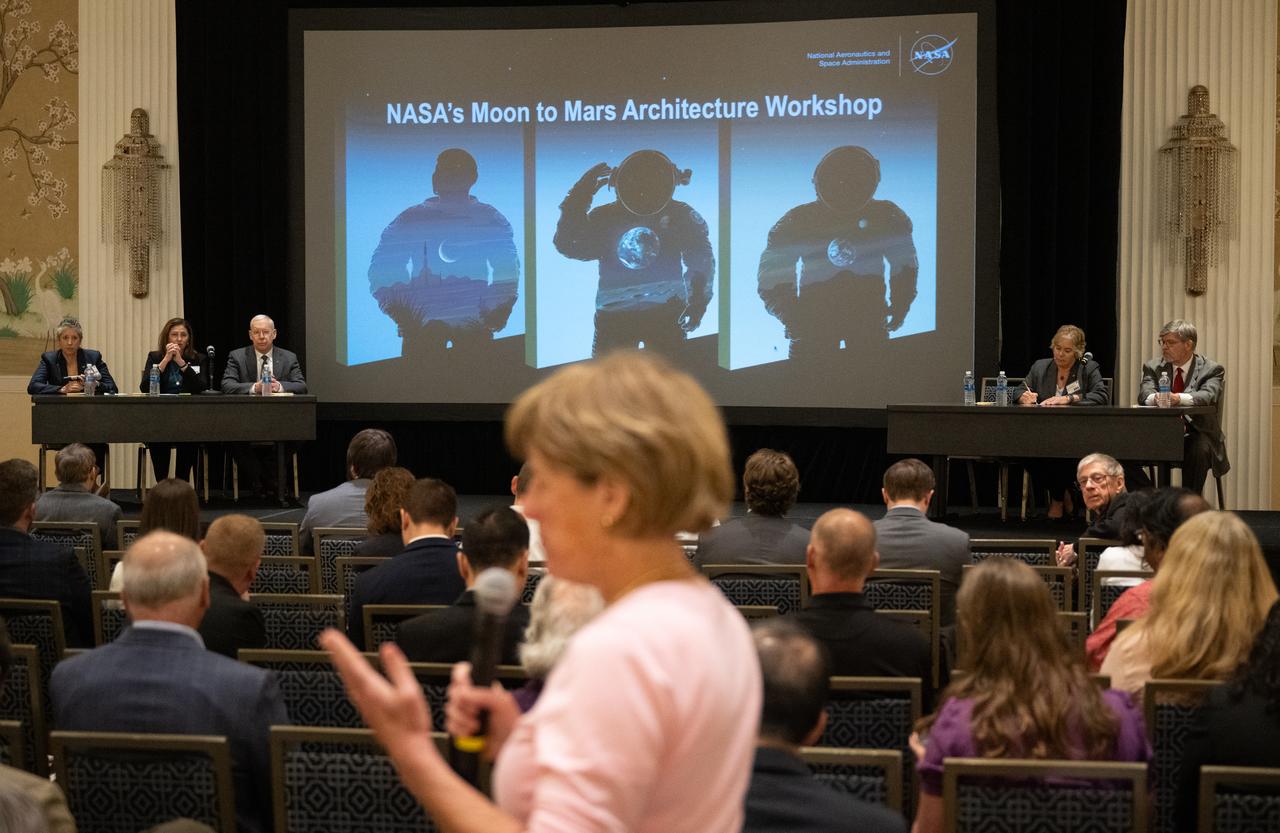
Nujoud Merancy, architecture lead for NASA's Exploration Systems Development Mission Directorate, Catherine Koerner, deputy associate administrator for NASA's Exploration Systems Development Mission Directorate, Patrick Forrester, special advisor in NASA's Space Operations Mission Directorate, Michelle Munk, chief architect for NASA’s Space Technology Mission Directorate, and Joel Kearns, deputy associate administrator for Exploration in NASA's Science Mission Directorate, listen to a question during NASA’s Moon to Mars Architecture Workshop, Tuesday, June 27, 2023, at the Gaylord National Resort and Convention Center in National Harbor, Md. Following the release of the 2022 Architecture Concept Review, NASA is conducting the workshop to engage the broader space community and collect feedback from U.S. industry and academia to inform the Moon to Mars mission architecture and operational delivery. Photo Credit: (NASA/Joel Kowsky)
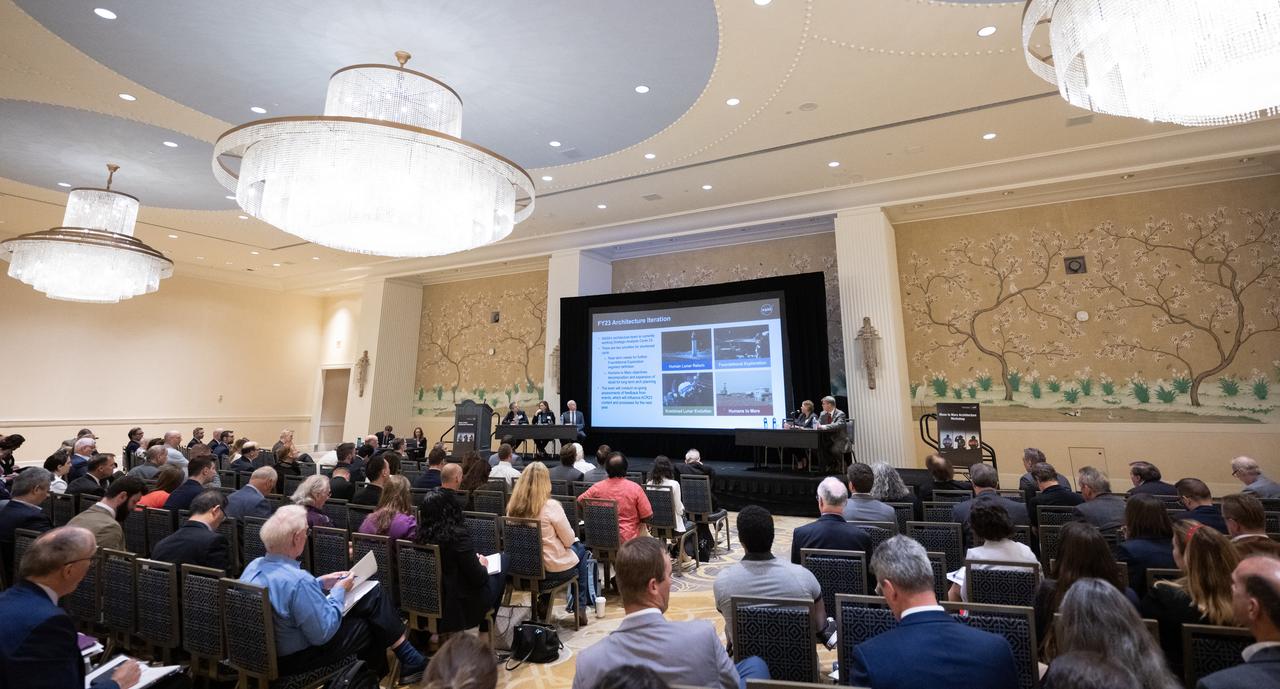
Nujoud Merancy, architecture lead for NASA's Exploration Systems Development Mission Directorate, Catherine Koerner, deputy associate administrator for NASA's Exploration Systems Development Mission Directorate, Patrick Forrester, special advisor in NASA's Space Operations Mission Directorate, Michelle Munk, chief architect for NASA’s Space Technology Mission Directorate, and Joel Kearns, deputy associate administrator for Exploration in NASA's Science Mission Directorate, are seen on stage during NASA’s Moon to Mars Architecture Workshop, Tuesday, June 27, 2023, at the Gaylord National Resort and Convention Center in National Harbor, Md. Following the release of the 2022 Architecture Concept Review, NASA is conducting the workshop to engage the broader space community and collect feedback from U.S. industry and academia to inform the Moon to Mars mission architecture and operational delivery. Photo Credit: (NASA/Joel Kowsky)
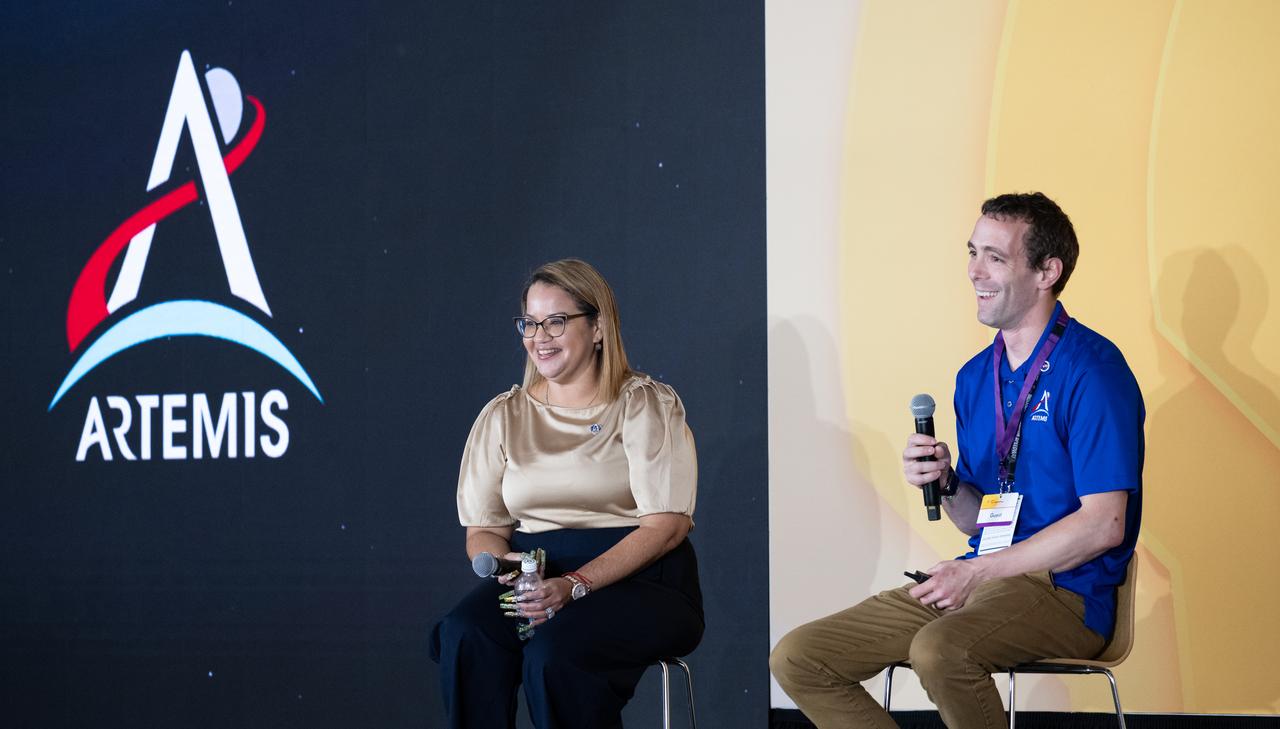
Dr. Dionne Hernandez-Lugo, Power and Propulsion Element Contracting Officer Representative in the Gateway & Power and Propulsion Element Office of NASA's Exploration Systems Development Mission Directorate, left, and Logan Kennedy, surface lead for Human Landing System Programs in NASA's Exploration Systems Development Mission Directorate, right, speaks to students about power production and energy for the Artemis Program at the Shell Eco-marathon Americas, Saturday, April 6, 2024, at the Indianapolis Motor Speedway in Indianapolis, Ind. Photo Credit: (NASA/Joel Kowsky)
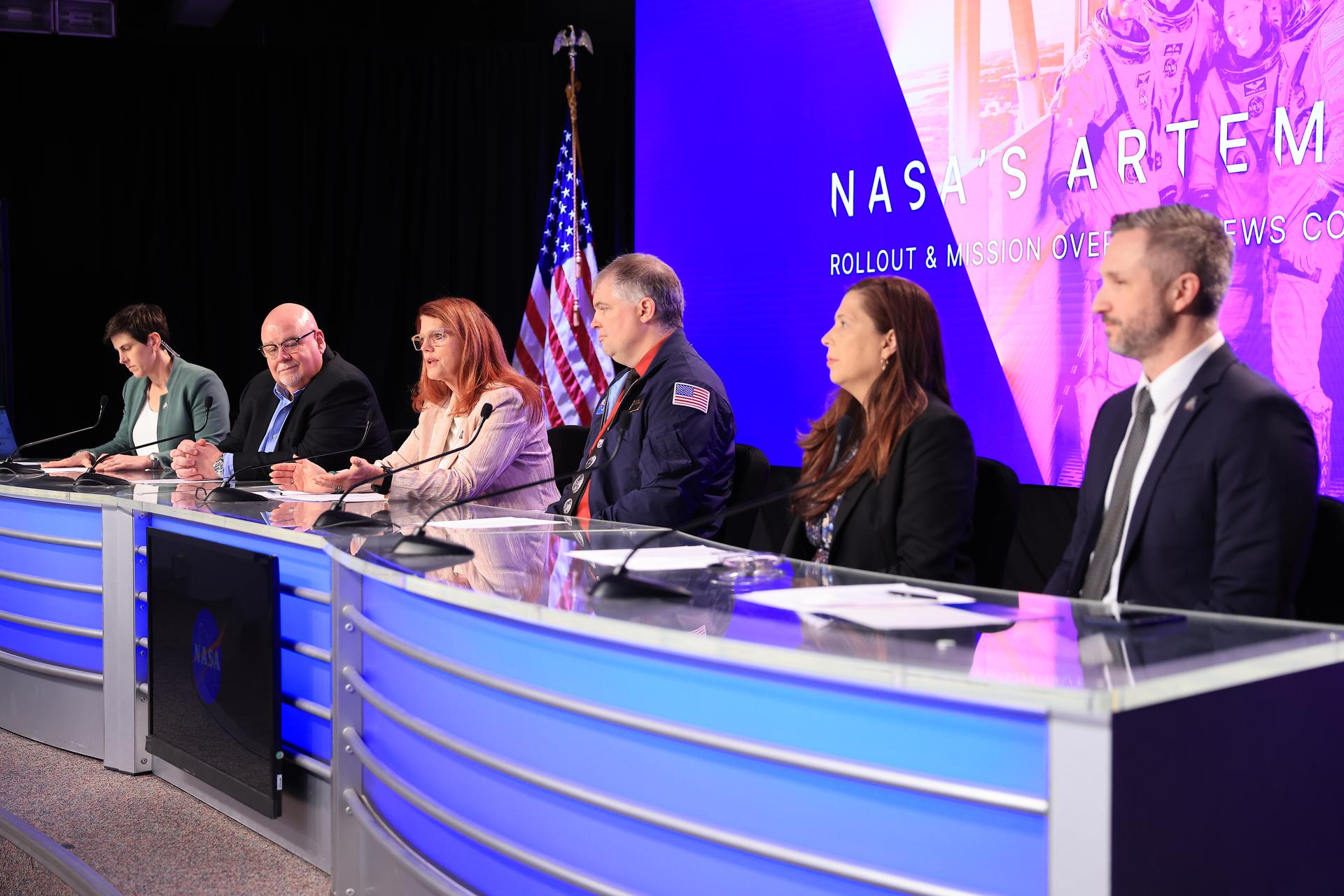
From left to right, Rachel Kraft, NASA's Office of Communications; John Honeycutt, Artemis II mission management team chair; Charlie Blackwell-Thompson, launch director, Exploration Ground Systems Program at NASA’s Kennedy Space Center in Florida; Jeff Radigan, Artemis II lead flight director, Flight Operations Directorate; Lili Villarreal, Artemis II landing and recovery director in Exploration Ground Systems Program at NASA’s Kennedy Space Center in Florida; Jacob Bleacher, chief exploration scientist in the Exploration Systems Development Mission Directorate at NASA Headquarters in Washington, participate in an Artemis II mission overview news conference on Friday, Jan. 16, 2026, at NASA’s Kennedy Space Center in Florida ahead of rollout of the SLS (Space Launch System) rocket and Orion spacecraft from the Vehicle Assembly Building to Launch Complex 39B at NASA Kennedy. The Artemis II test flight will take Commander Reid Wiseman, Pilot Victor Glover, and Mission Specialist Christina Koch from NASA, and Mission Specialist Jeremy Hansen from the CSA (Canadian Space Agency), around the Moon and back to Earth no later than April 2026.
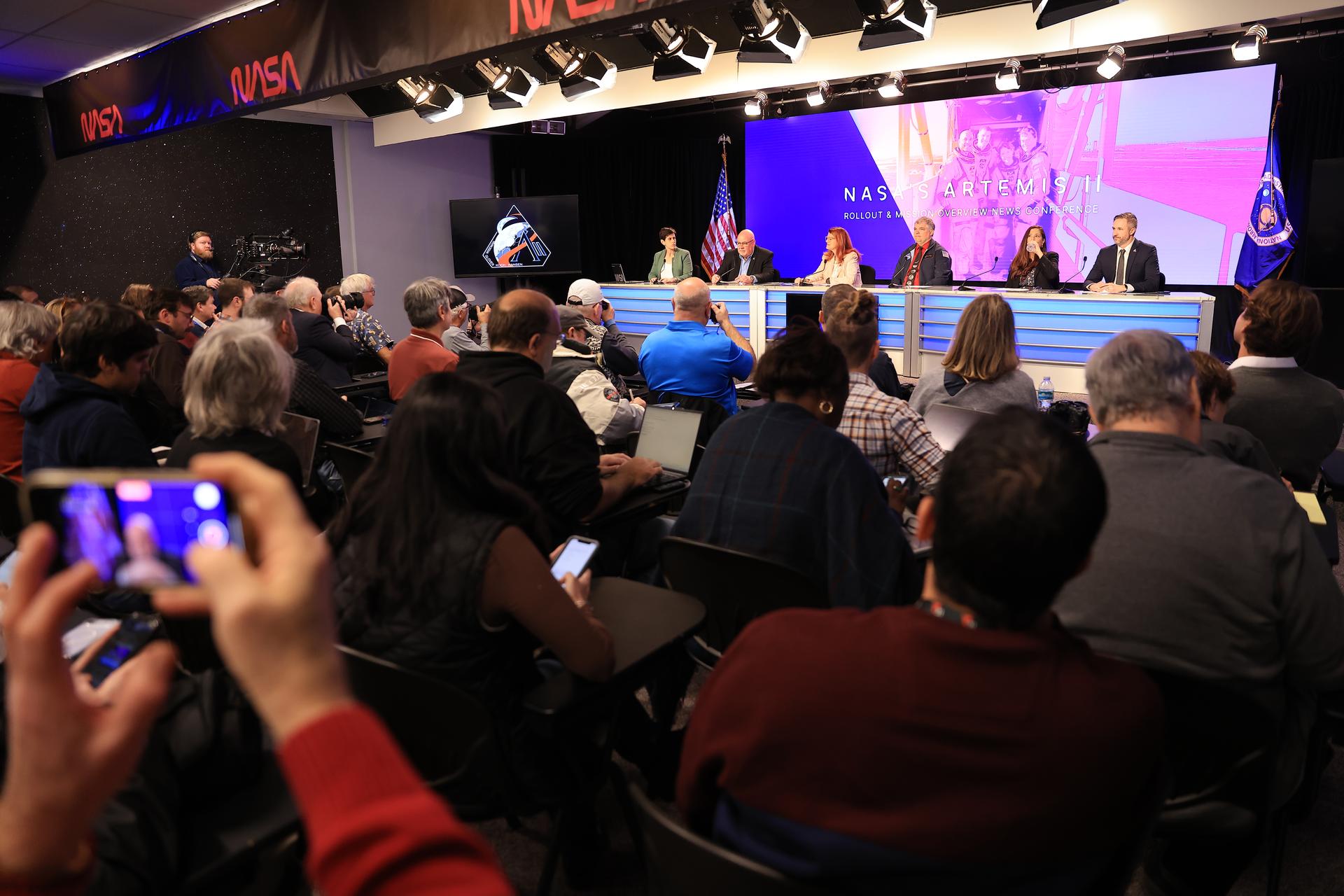
From left to right, Rachel Kraft, NASA's Office of Communications; John Honeycutt, Artemis II mission management team chair; Charlie Blackwell-Thompson, launch director, Exploration Ground Systems Program at NASA’s Kennedy Space Center in Florida; Jeff Radigan, Artemis II lead flight director, Flight Operations Directorate; Lili Villarreal, Artemis II landing and recovery director in Exploration Ground Systems Program at NASA’s Kennedy Space Center in Florida; Jacob Bleacher, chief exploration scientist in the Exploration Systems Development Mission Directorate at NASA Headquarters in Washington, participate in an Artemis II mission overview news conference on Friday, Jan. 16, 2026, at NASA’s Kennedy Space Center in Florida ahead of rollout of the SLS (Space Launch System) rocket and Orion spacecraft from the Vehicle Assembly Building to Launch Complex 39B at NASA Kennedy. The Artemis II test flight will take Commander Reid Wiseman, Pilot Victor Glover, and Mission Specialist Christina Koch from NASA, and Mission Specialist Jeremy Hansen from the CSA (Canadian Space Agency), around the Moon and back to Earth no later than April 2026.
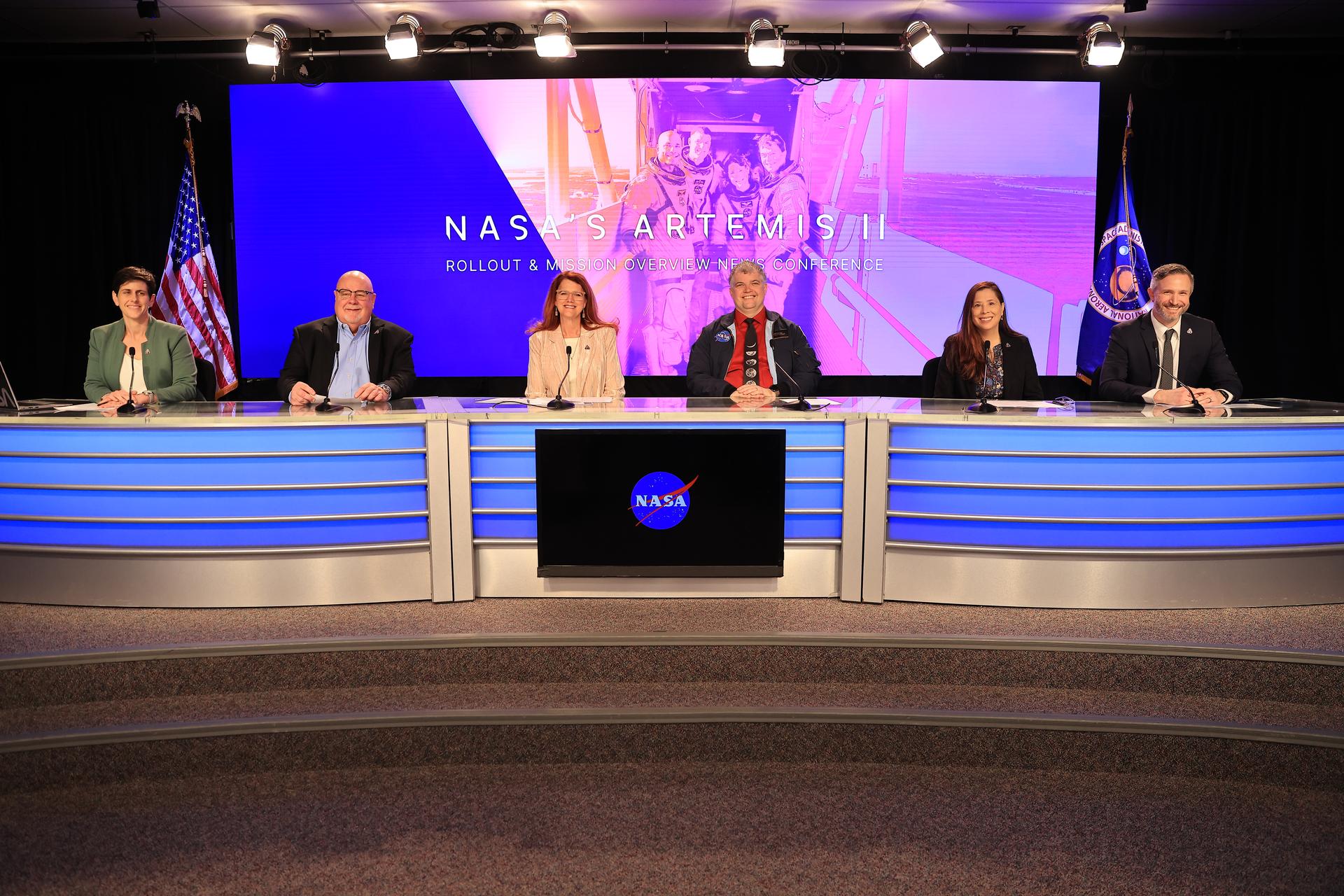
From left to right, Rachel Kraft, NASA's Office of Communications; John Honeycutt, Artemis II mission management team chair; Charlie Blackwell-Thompson, launch director, Exploration Ground Systems Program at NASA’s Kennedy Space Center in Florida; Jeff Radigan, Artemis II lead flight director, Flight Operations Directorate; Lili Villarreal, Artemis II landing and recovery director in Exploration Ground Systems Program at NASA’s Kennedy Space Center in Florida; Jacob Bleacher, chief exploration scientist in the Exploration Systems Development Mission Directorate at NASA Headquarters in Washington, participate in an Artemis II mission overview news conference on Friday, Jan. 16, 2026, at NASA’s Kennedy Space Center in Florida ahead of rollout of the SLS (Space Launch System) rocket and Orion spacecraft from the Vehicle Assembly Building to Launch Complex 39B at NASA Kennedy. The Artemis II test flight will take Commander Reid Wiseman, Pilot Victor Glover, and Mission Specialist Christina Koch from NASA, and Mission Specialist Jeremy Hansen from the CSA (Canadian Space Agency), around the Moon and back to Earth no later than April 2026.
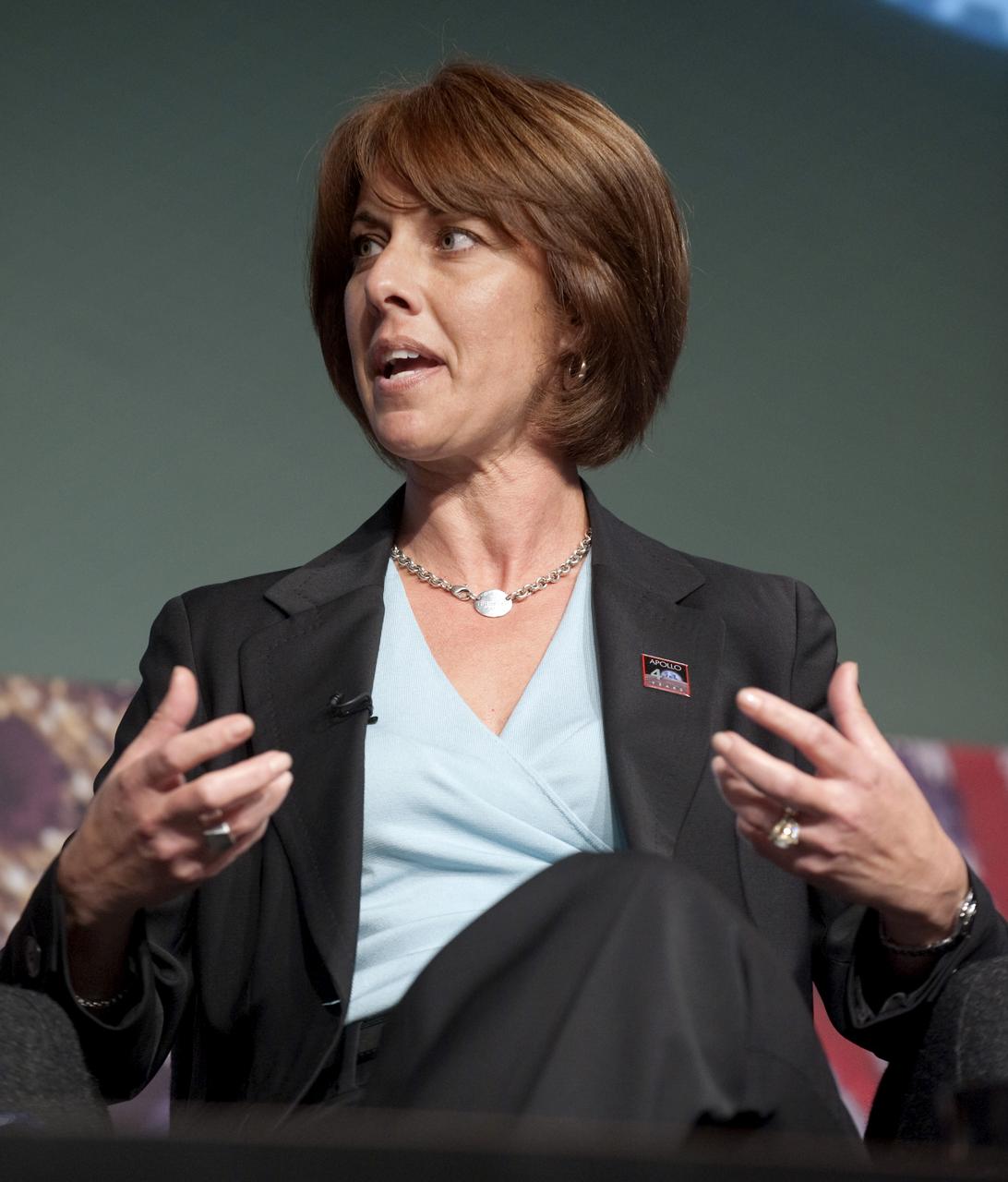
Cristina Guidi, deputy director, Constellation Systems Division, Exploration Systems Mission Directorate, NASA Headquarters, speaks during an Apollo History and Legacy roundtable discussion, Thursday, July 16, 2009, at NASA Headquarters in Washington. Photo Credit: (NASA/Paul E. Alers)
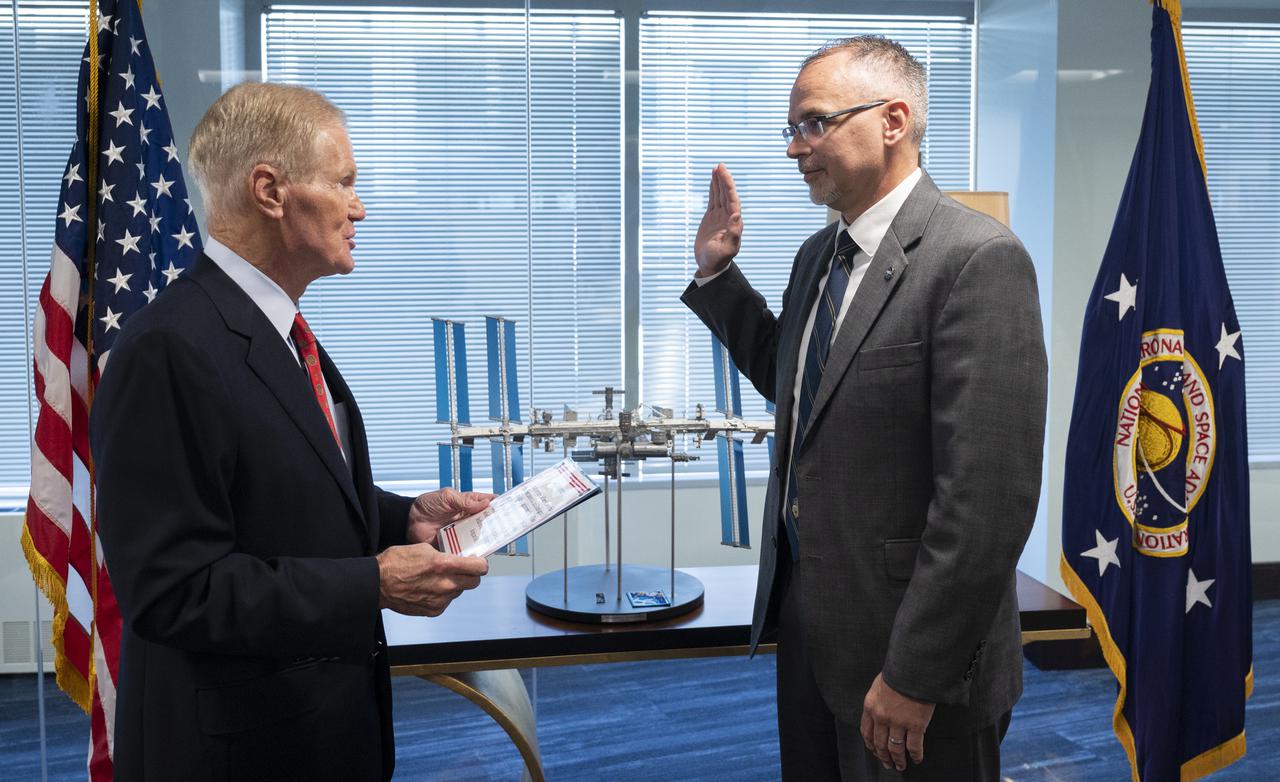
NASA Administrator Bill Nelson, left, swears in Jim Free as the first associate administrator of the new Exploration Systems Development Mission Directorate, Monday, Sept. 20, 2021, at the Mary W. Jackson NASA Headquarters building in Washington. NASA is working to establish ESDMD to focus on planning and developing future space systems while a new Space Operations Mission Directorate will focus on operations. Both areas will support NASA’s Moon to Mars exploration approach. Photo Credit: NASA/Joel Kowsky)
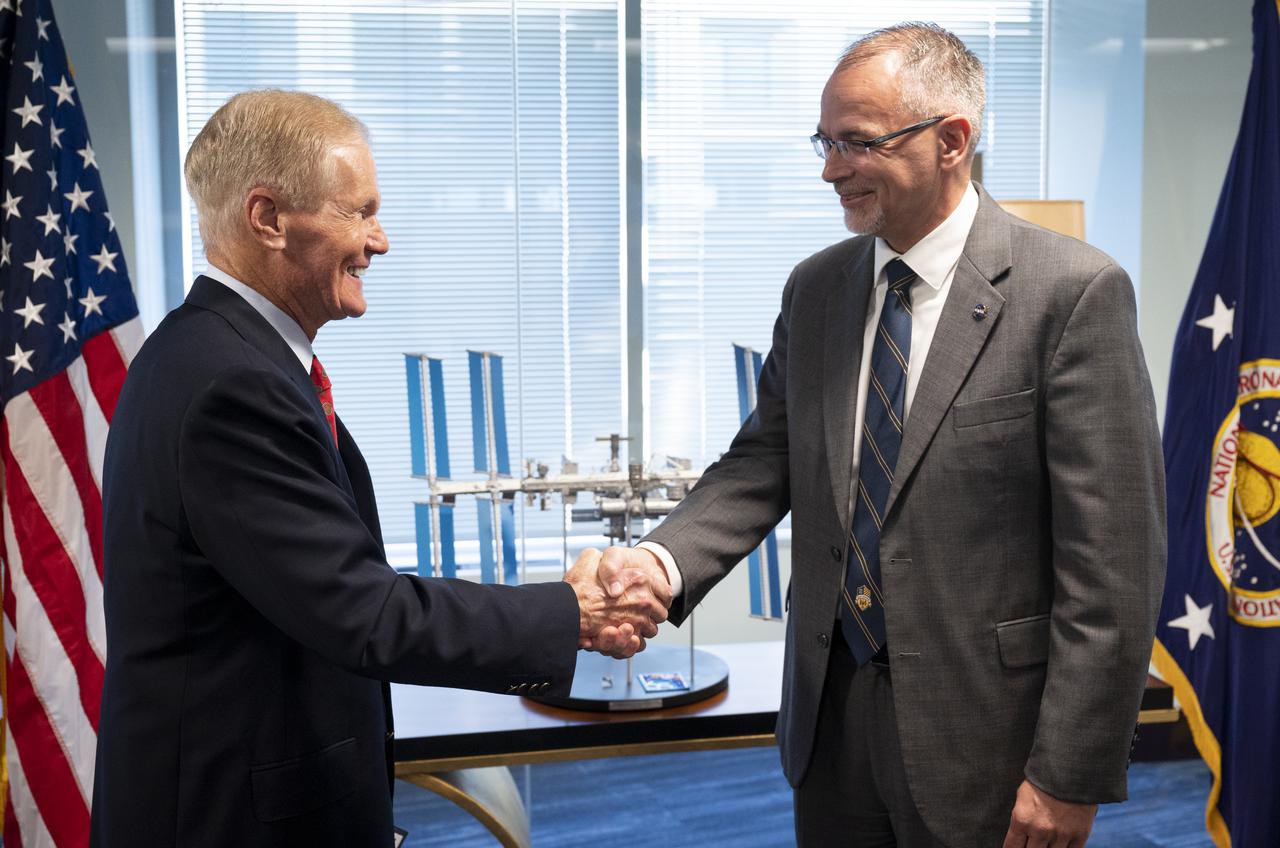
NASA Administrator Bill Nelson, left, shakes hands with Jim Free after being sworn in as the first associate administrator of the new Exploration Systems Development Mission Directorate, Monday, Sept. 20, 2021, at the Mary W. Jackson NASA Headquarters building in Washington. NASA is working to establish ESDMD to focus on planning and developing future space systems while a new Space Operations Mission Directorate will focus on operations. Both areas will support NASA’s Moon to Mars exploration approach. Photo Credit: NASA/Joel Kowsky)
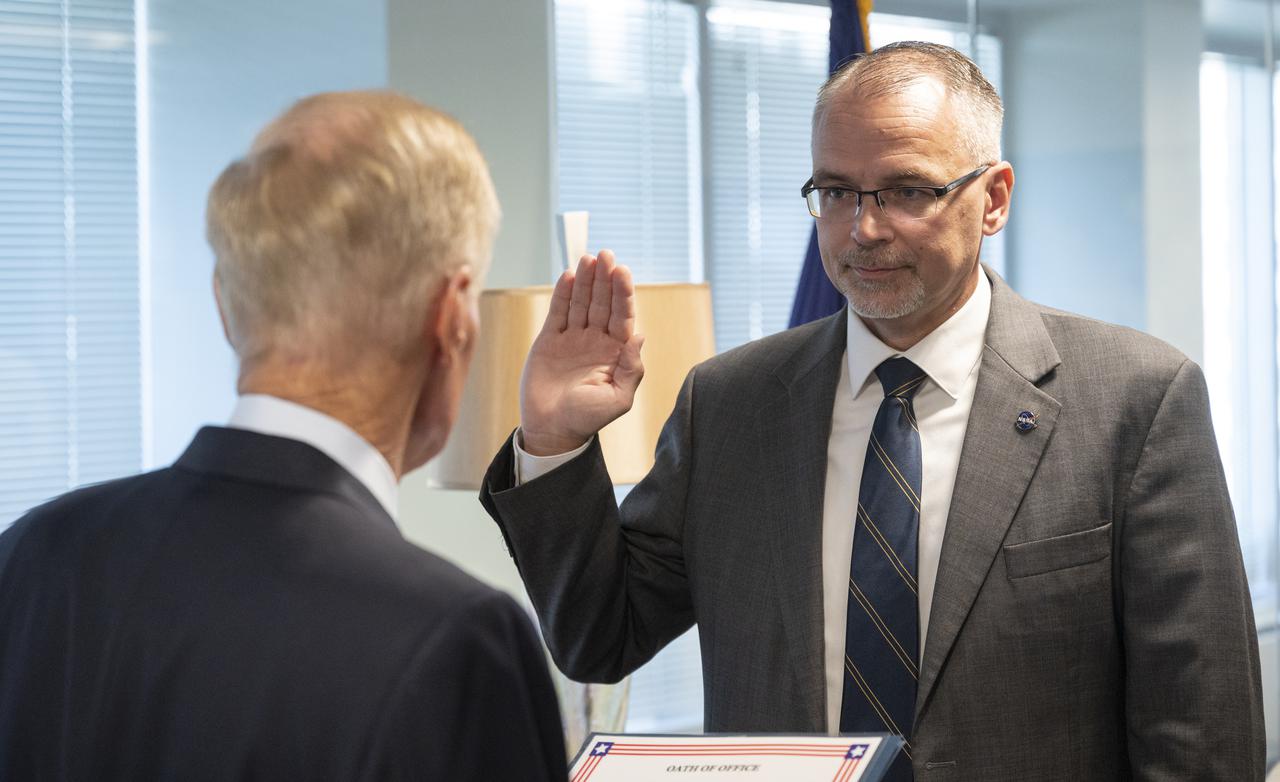
NASA Administrator Bill Nelson, left, swears in Jim Free as the first associate administrator of the new Exploration Systems Development Mission Directorate, Monday, Sept. 20, 2021, at the Mary W. Jackson NASA Headquarters building in Washington. NASA is working to establish ESDMD to focus on planning and developing future space systems while a new Space Operations Mission Directorate will focus on operations. Both areas will support NASA’s Moon to Mars exploration approach. Photo Credit: NASA/Joel Kowsky)
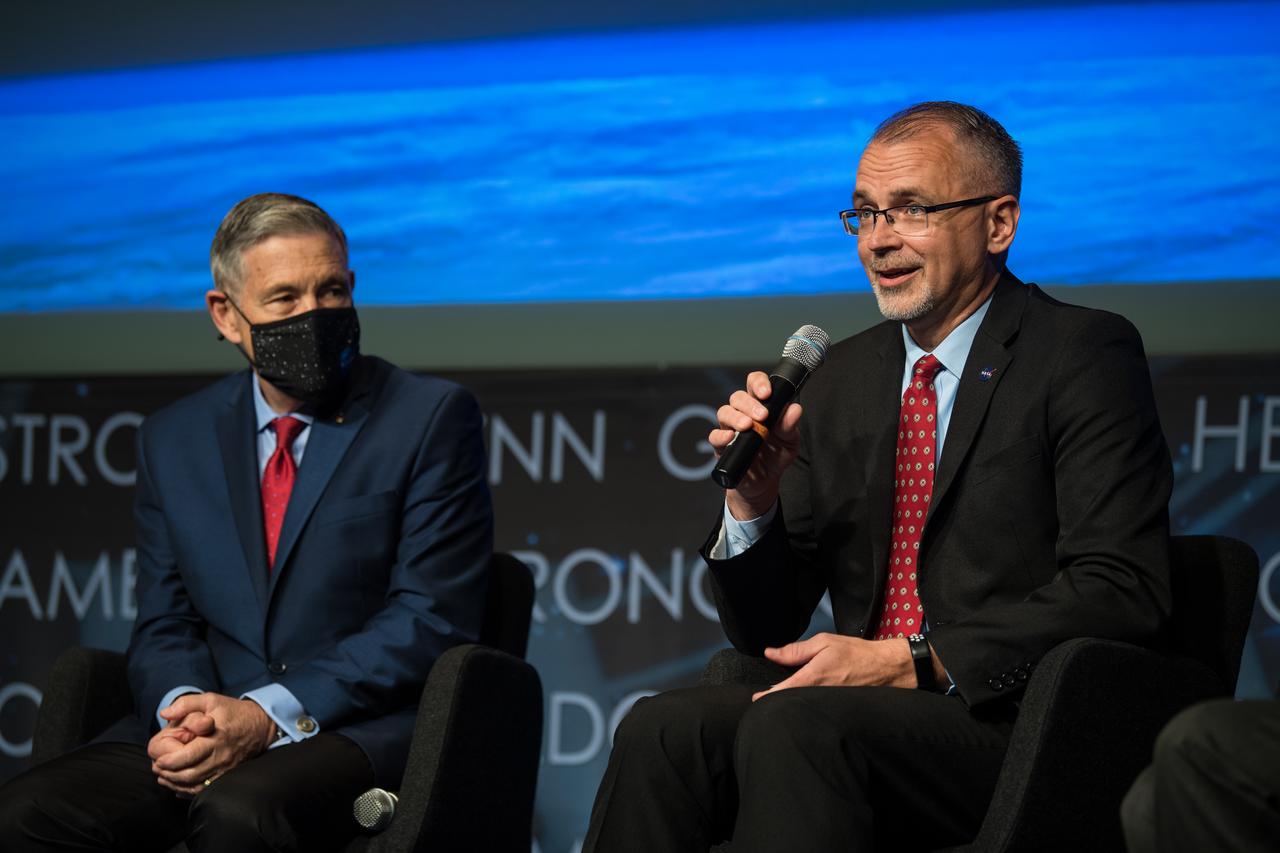
NASA Associate Administrator for the Exploration Systems Development Mission Directorate (ESDMD), Jim Free, speaks during a NASA town hall to discuss the reorganization of the Human Exploration and Operations Mission Directorate into two mission directorates: ESDMD and Space Operations Mission Directorate (SpaceOps), Tuesday, Sept. 21, 2021 at the Mary W. Jackson NASA Headquarters building in Washington. NASA Associate Administrator for SpaceOps, Kathy Lueders, will lead launch and space operations including the International Space Station, the commercialization of low-Earth orbit, and eventually operations on and around the Moon. Head of ESDMD, Jim Free, will lead efforts to define and manage systems development for programs critical to NASA’s Artemis program and the planning of NASA’s Moon to Mars exploration. Photo Credit: (NASA/Aubrey Gemignani)
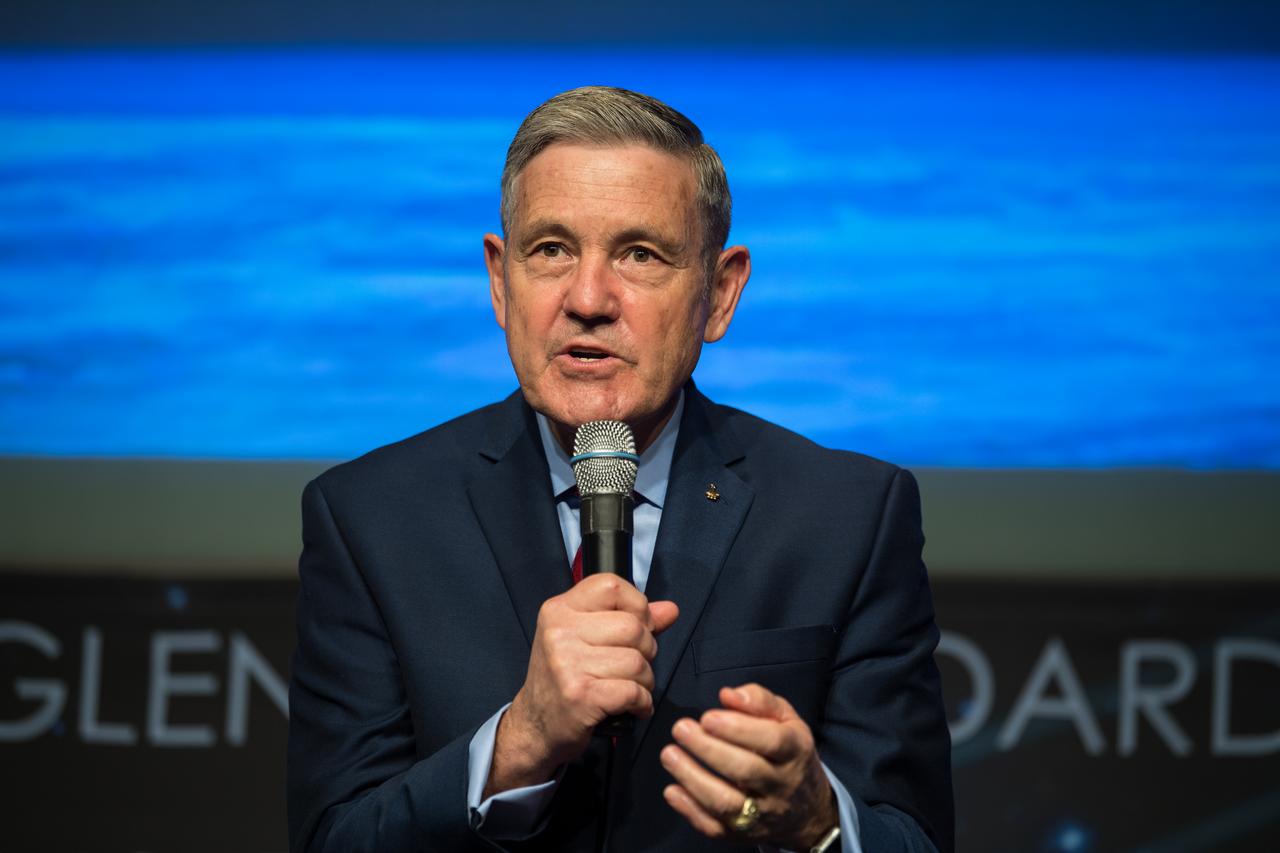
NASA Associate Administrator Bob Cabana speaks during a NASA town hall to discuss the reorganization of the Human Exploration and Operations Mission Directorate into two mission directorates: Exploration Systems Development Mission Directorate (ESDMD) and Space Operations Mission Directorate (SpaceOps), Tuesday, Sept. 21, 2021 at the Mary W. Jackson NASA Headquarters building in Washington. NASA Associate Administrator for SpaceOps, Kathy Lueders, will lead launch and space operations including the International Space Station, the commercialization of low-Earth orbit, and eventually operations on and around the Moon. NASA Associate Administrator for the ESDMD, Jim Free, will lead efforts to define and manage systems development for programs critical to NASA’s Artemis program and the planning of NASA’s Moon to Mars exploration. Photo Credit: (NASA/Aubrey Gemignani)
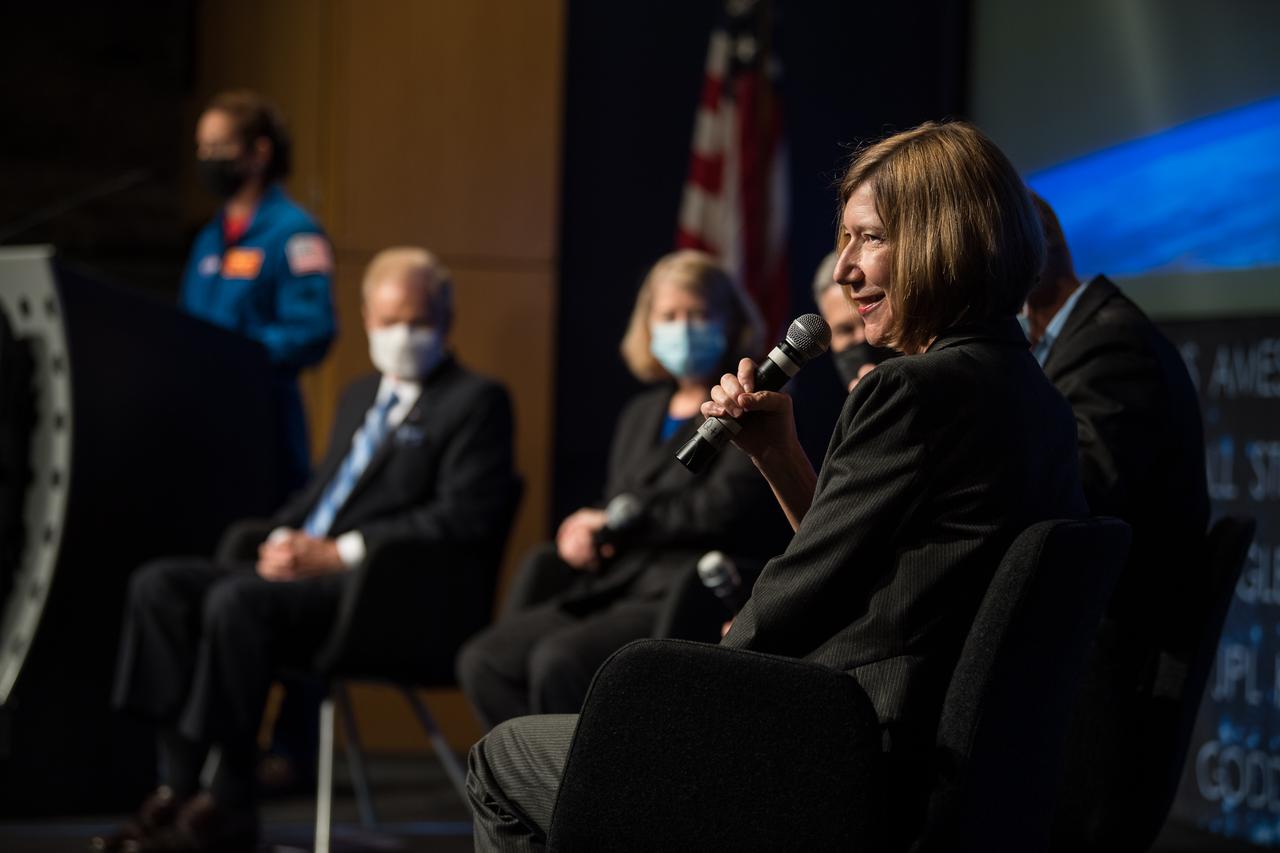
NASA Associate Administrator for the Space Operations Mission Directorate (SpaceOps), Kathy Lueders, speaks during a NASA town hall to discuss the reorganization of the Human Exploration and Operations Mission Directorate into two mission directorates: SpaceOps and the Exploration Systems Development Mission Directorate (ESDMD), Tuesday, Sept. 21, 2021 at the Mary W. Jackson NASA Headquarters building in Washington. As head of SpaceOps, Kathy Lueders will lead launch and space operations including the International Space Station, the commercialization of low-Earth orbit, and eventually operations on and around the Moon. Associate Administrator of ESDMD, Jim Free, will lead efforts to define and manage systems development for programs critical to NASA’s Artemis program and the planning of NASA’s Moon to Mars exploration. Photo Credit: (NASA/Aubrey Gemignani)
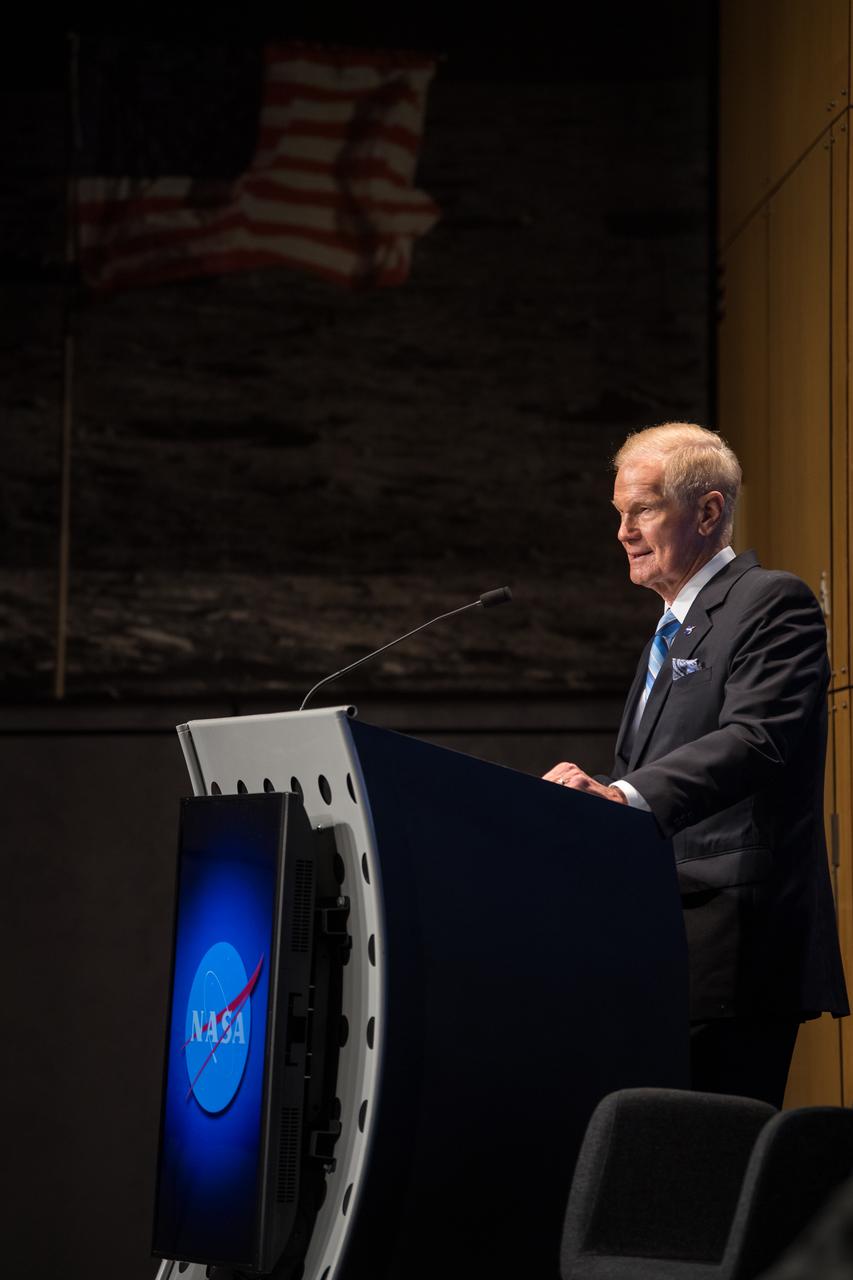
NASA Administrator Bill Nelson speaks during a NASA town hall to discuss the reorganization of the Human Exploration and Operations Mission Directorate into two mission directorates: Exploration Systems Development Mission Directorate (ESDMD) and Space Operations Mission Directorate (SpaceOps), Tuesday, Sept. 21, 2021 at the Mary W. Jackson NASA Headquarters building in Washington. NASA Associate Administrator for SpaceOps, Kathy Lueders, will lead launch and space operations including the International Space Station, the commercialization of low-Earth orbit, and eventually operations on and around the Moon. NASA Associate Administrator for the ESDMD, Jim Free, will lead efforts to define and manage systems development for programs critical to NASA’s Artemis program and the planning of NASA’s Moon to Mars exploration. Photo Credit: (NASA/Aubrey Gemignani)
NASA Associate Administrator for the Exploration Systems Development Mission Directorate (ESDMD), Jim Free, speaks during a NASA town hall to discuss the reorganization of the Human Exploration and Operations Mission Directorate into two mission directorates: ESDMD and Space Operations Mission Directorate (SpaceOps), Tuesday, Sept. 21, 2021 at the Mary W. Jackson NASA Headquarters building in Washington. NASA Associate Administrator for SpaceOps, Kathy Lueders, will lead launch and space operations including the International Space Station, the commercialization of low-Earth orbit, and eventually operations on and around the Moon. Head of ESDMD, Jim Free, will lead efforts to define and manage systems development for programs critical to NASA’s Artemis program and the planning of NASA’s Moon to Mars exploration. Photo Credit: (NASA/Aubrey Gemignani)
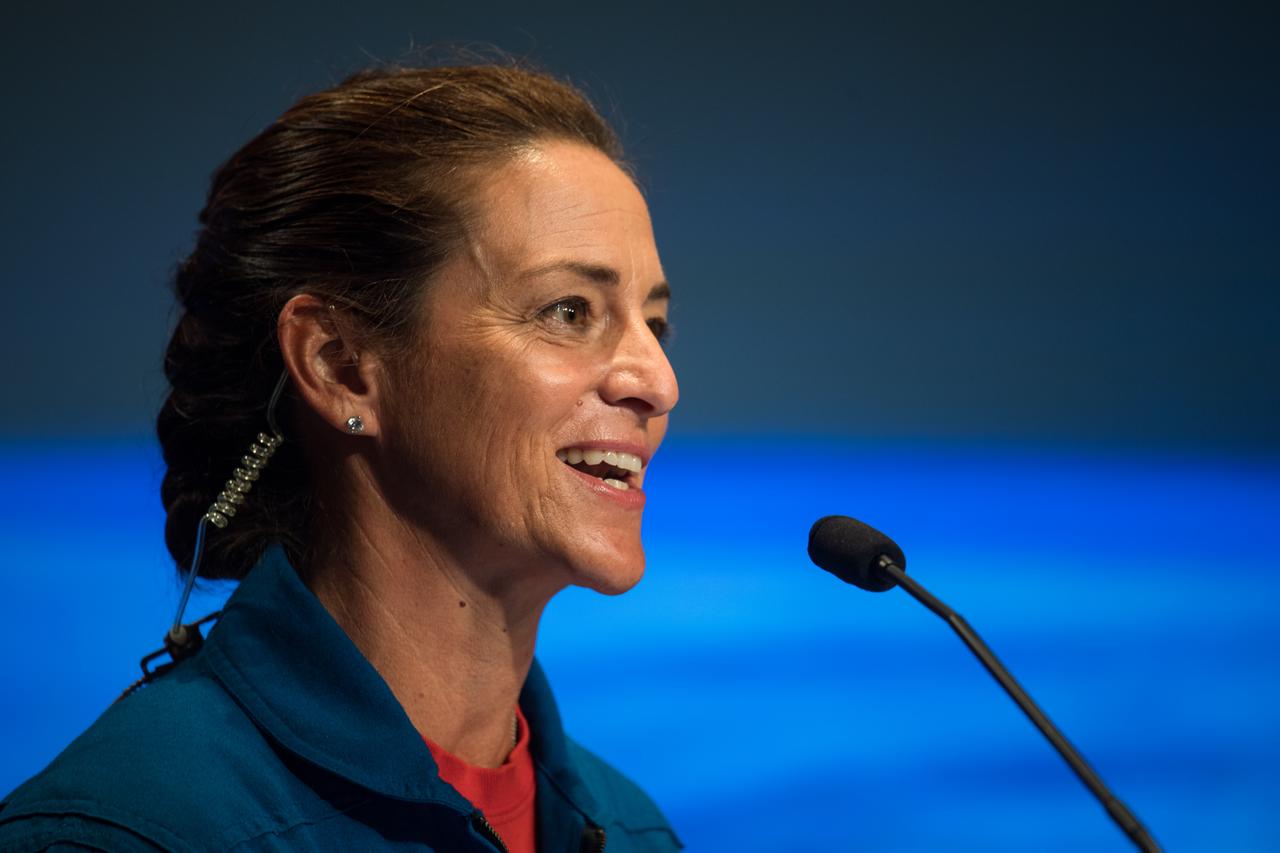
NASA astronaut Nicole Mann speaks during a NASA town hall to discuss the reorganization of the Human Exploration and Operations Mission Directorate into two mission directorates: Exploration Systems Development Mission Directorate (ESDMD) and Space Operations Mission Directorate (SpaceOps), Tuesday, Sept. 21, 2021 at the Mary W. Jackson NASA Headquarters building in Washington. NASA Associate Administrator for SpaceOps, Kathy Lueders, will lead launch and space operations including the International Space Station, the commercialization of low-Earth orbit, and eventually operations on and around the Moon. NASA Associate Administrator for the ESDMD, Jim Free, will lead efforts to define and manage systems development for programs critical to NASA’s Artemis program and the planning of NASA’s Moon to Mars exploration. Photo Credit: (NASA/Aubrey Gemignani)
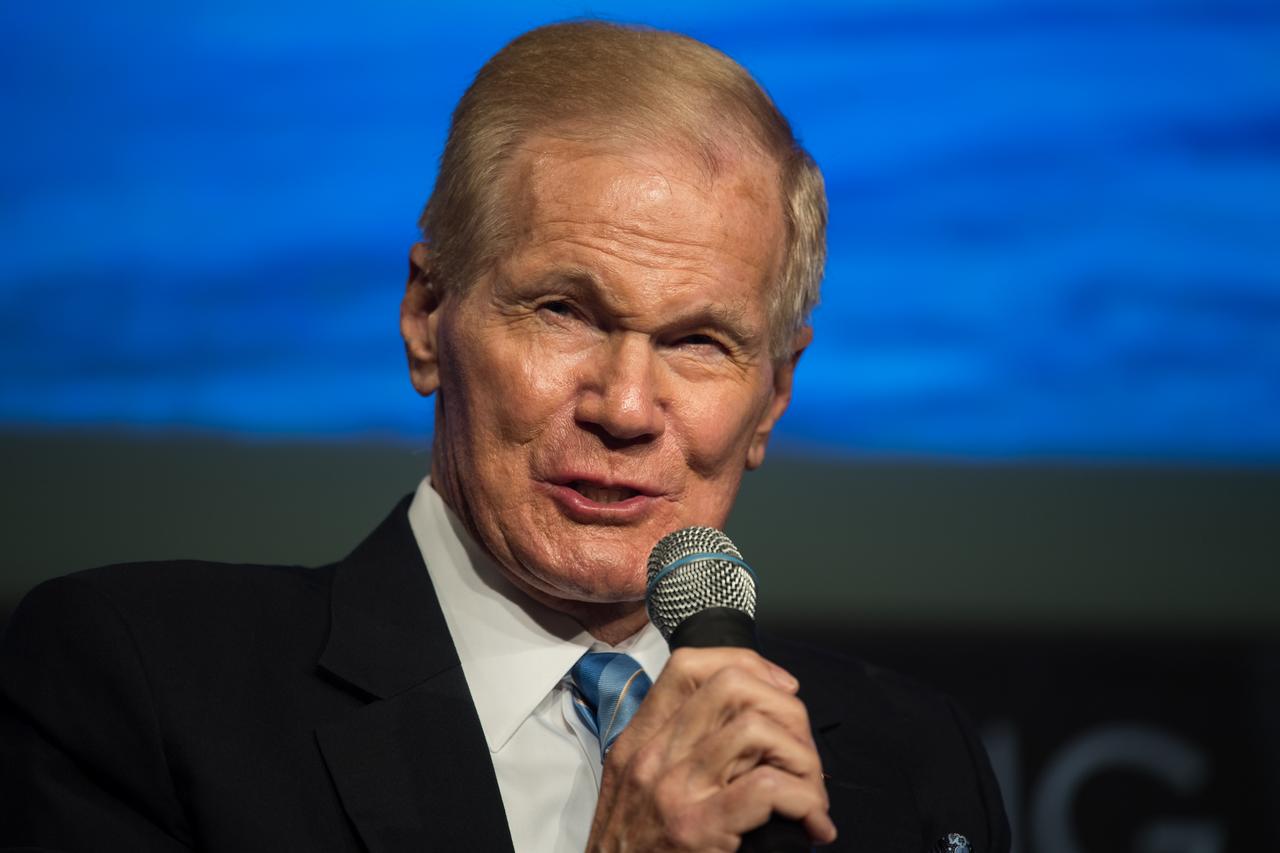
NASA Administrator Bill Nelson speaks during a NASA town hall to discuss the reorganization of the Human Exploration and Operations Mission Directorate into two mission directorates: Exploration Systems Development Mission Directorate (ESDMD) and Space Operations Mission Directorate (SpaceOps), Tuesday, Sept. 21, 2021 at the Mary W. Jackson NASA Headquarters building in Washington. NASA Associate Administrator for SpaceOps, Kathy Lueders, will lead launch and space operations including the International Space Station, the commercialization of low-Earth orbit, and eventually operations on and around the Moon. NASA Associate Administrator for the ESDMD, Jim Free, will lead efforts to define and manage systems development for programs critical to NASA’s Artemis program and the planning of NASA’s Moon to Mars exploration. Photo Credit: (NASA/Aubrey Gemignani)
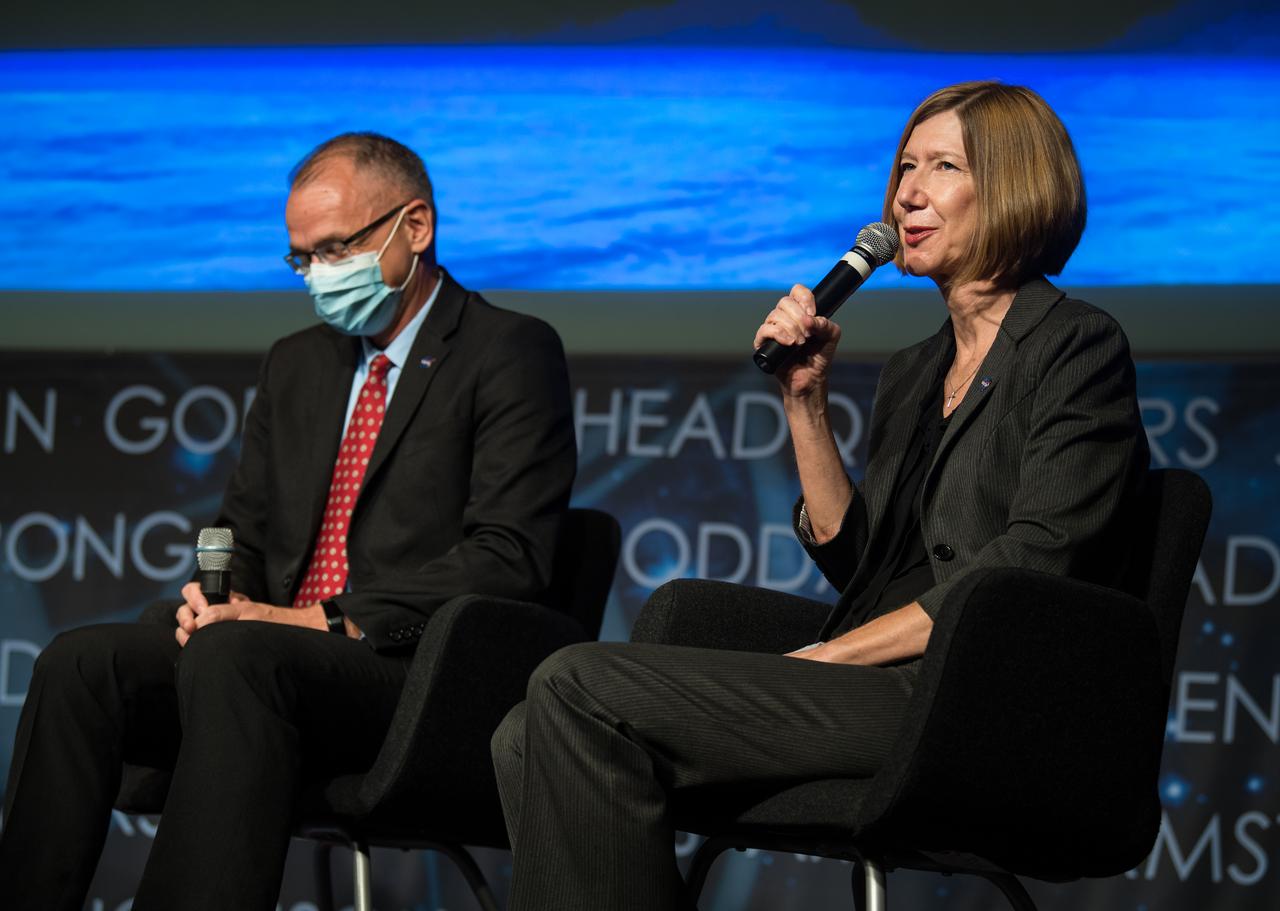
NASA Associate Administrator for the Space Operations Mission Directorate (SpaceOps), Kathy Lueders, right, speaks during a NASA town hall to discuss the reorganization of the Human Exploration and Operations Mission Directorate into two mission directorates: SpaceOps and the Exploration Systems Development Mission Directorate (ESDMD), Tuesday, Sept. 21, 2021 at the Mary W. Jackson NASA Headquarters building in Washington. As head of SpaceOps, Kathy Lueders will lead launch and space operations including the International Space Station, the commercialization of low-Earth orbit, and eventually operations on and around the Moon. Associate Administrator of ESDMD, Jim Free, left, will lead efforts to define and manage systems development for programs critical to NASA’s Artemis program and the planning of NASA’s Moon to Mars exploration. Photo Credit: (NASA/Aubrey Gemignani)
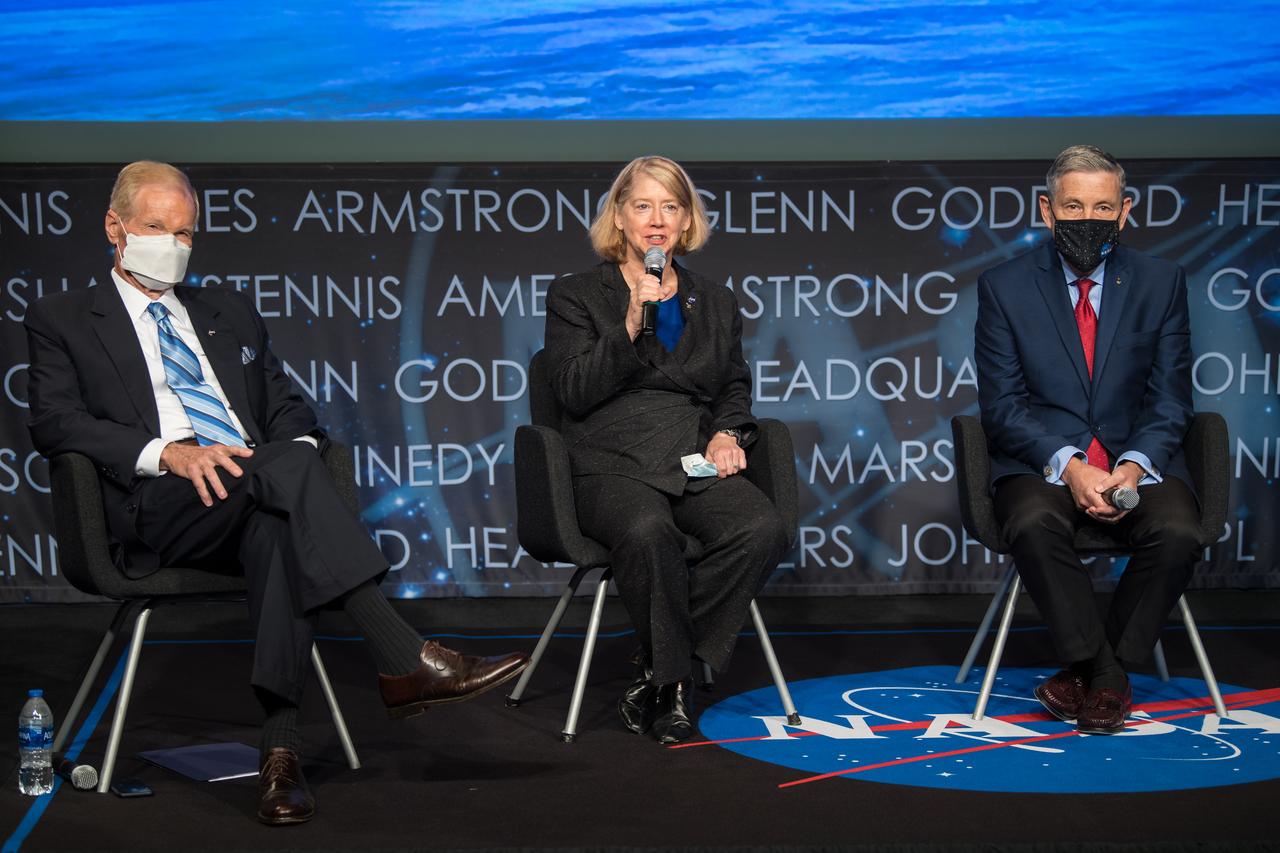
NASA Deputy Administrator Pam Melroy speaks alongside NASA Administrator Bill Nelson, left, and NASA Associate Administrator Bob Cabana, right, during a NASA town hall to discuss the reorganization of the Human Exploration and Operations Mission Directorate into two mission directorates: Exploration Systems Development Mission Directorate (ESDMD) and Space Operations Mission Directorate (SpaceOps), Tuesday, Sept. 21, 2021 at the Mary W. Jackson NASA Headquarters building in Washington. NASA Associate Administrator for SpaceOps, Kathy Lueders, will lead launch and space operations including the International Space Station, the commercialization of low-Earth orbit, and eventually operations on and around the Moon. NASA Associate Administrator for the ESDMD, Jim Free, will lead efforts to define and manage systems development for programs critical to NASA’s Artemis program and the planning of NASA’s Moon to Mars exploration. Photo Credit: (NASA/Aubrey Gemignani)

NASA Deputy Administrator Pam Melroy speaks during a NASA town hall to discuss the reorganization of the Human Exploration and Operations Mission Directorate into two mission directorates: Exploration Systems Development Mission Directorate (ESDMD) and Space Operations Mission Directorate (SpaceOps), Tuesday, Sept. 21, 2021 at the Mary W. Jackson NASA Headquarters building in Washington. NASA Associate Administrator for SpaceOps, Kathy Lueders, will lead launch and space operations including the International Space Station, the commercialization of low-Earth orbit, and eventually operations on and around the Moon. NASA Associate Administrator for the ESDMD, Jim Free, will lead efforts to define and manage systems development for programs critical to NASA’s Artemis program and the planning of NASA’s Moon to Mars exploration. Photo Credit: (NASA/Aubrey Gemignani)
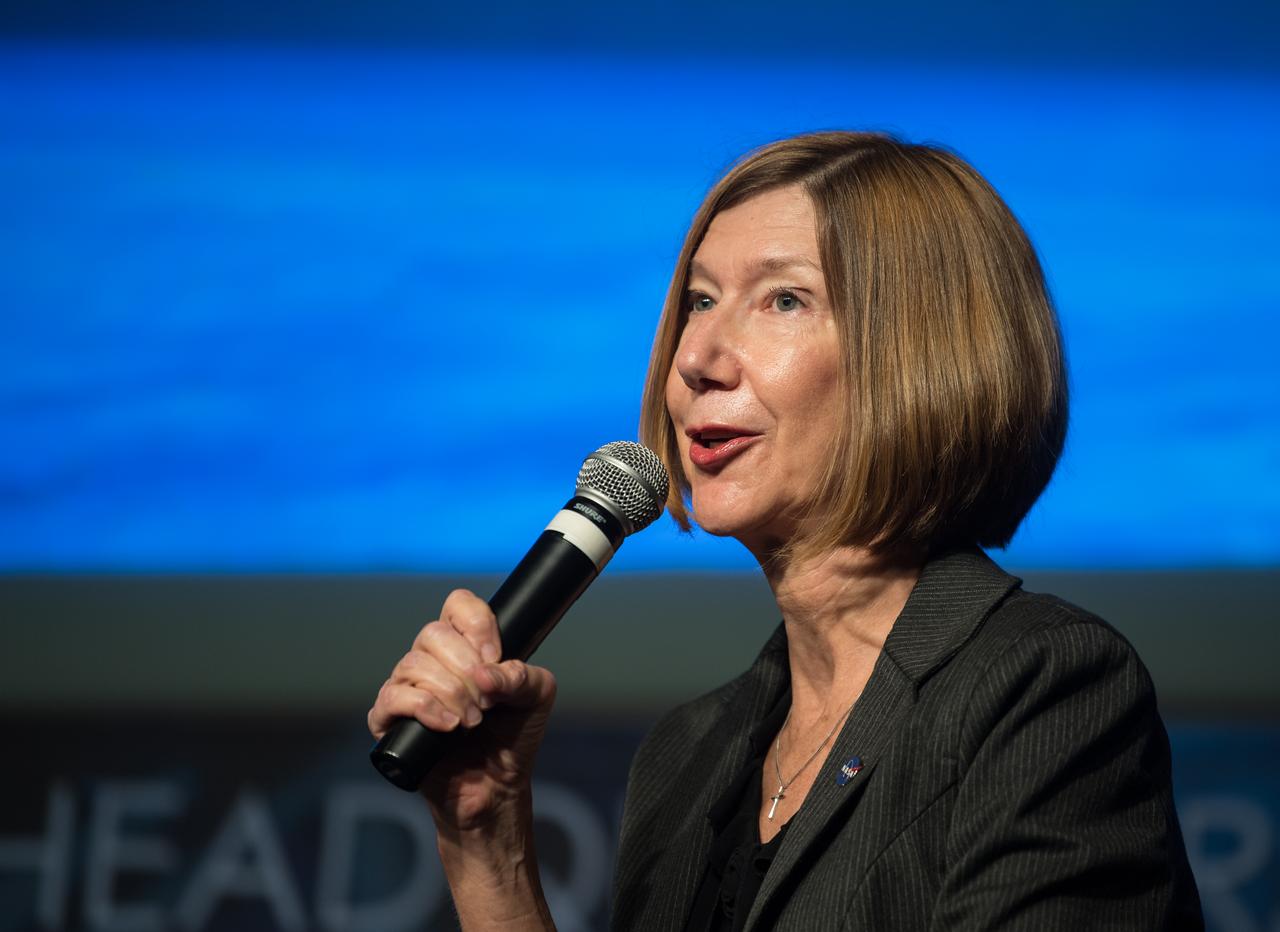
NASA Associate Administrator for the Space Operations Mission Directorate (SpaceOps), Kathy Lueders, speaks during a NASA town hall to discuss the reorganization of the Human Exploration and Operations Mission Directorate into two mission directorates: SpaceOps and the Exploration Systems Development Mission Directorate (ESDMD), Tuesday, Sept. 21, 2021 at the Mary W. Jackson NASA Headquarters building in Washington. As head of SpaceOps, Kathy Lueders will lead launch and space operations including the International Space Station, the commercialization of low-Earth orbit, and eventually operations on and around the Moon. Associate Administrator of ESDMD, Jim Free, will lead efforts to define and manage systems development for programs critical to NASA’s Artemis program and the planning of NASA’s Moon to Mars exploration. Photo Credit: (NASA/Aubrey Gemignani)
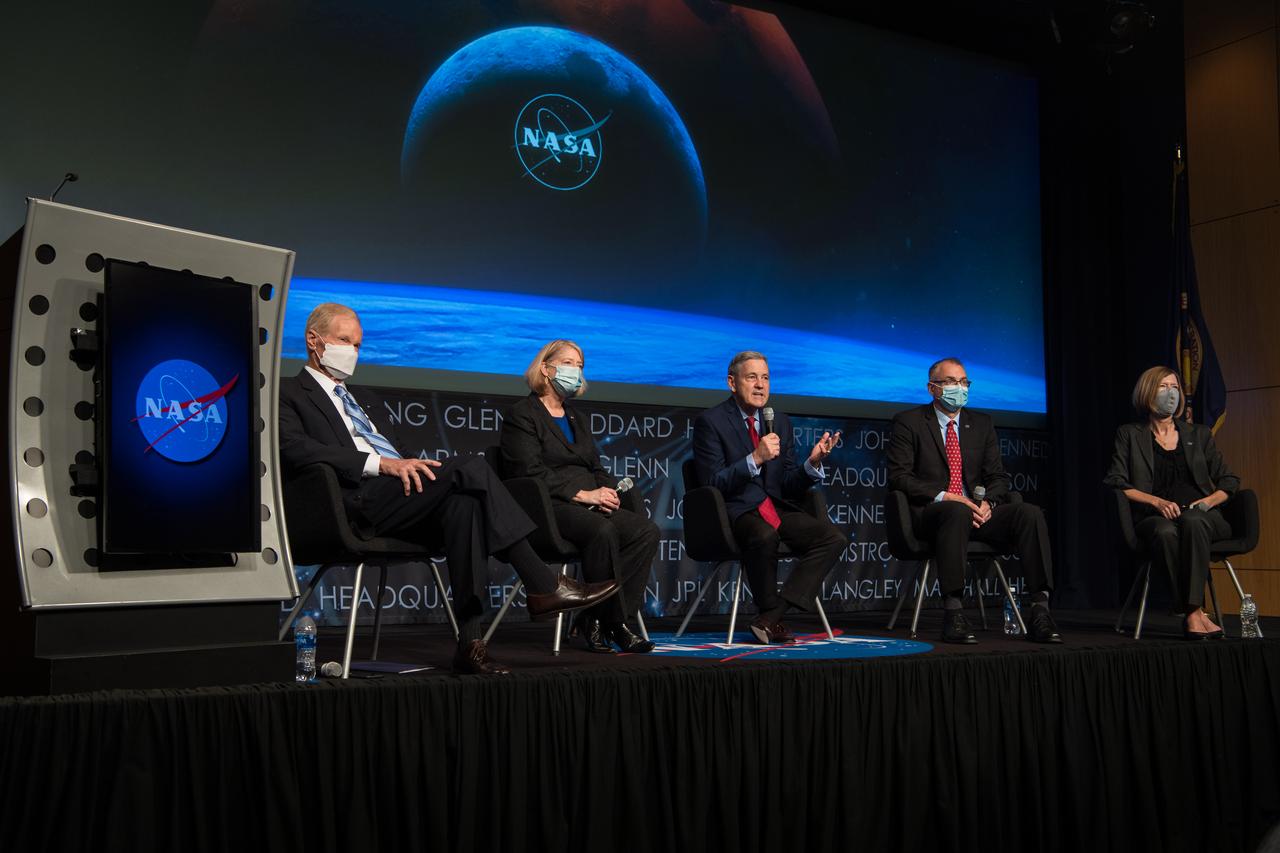
Panelists are seen from left to right, NASA Administrator Bill Nelson; NASA Deputy Administrator Pam Melroy; NASA Associate Administrator Bob Cabana; NASA Associate Administrator for the Exploration Systems Development Mission Directorate (ESDMD), Jim Free; and NASA Associate Administrator for the Space Operations Mission Directorate (SpaceOps), Kathy Lueders, during a NASA town hall to discuss the reorganization of the Human Exploration and Operations Mission Directorate into two mission directorates: ESDMD and SpaceOps, Tuesday, Sept. 21, 2021 at the Mary W. Jackson NASA Headquarters building in Washington. Kathy Lueders will lead SpaceOps in launch and space operations including the International Space Station, the commercialization of low-Earth orbit, and eventually operations on and around the Moon. Jim Free will lead ESDMD to define and manage systems development for programs critical to NASA’s Artemis program and in the planning of NASA’s Moon to Mars exploration. Photo Credit: (NASA/Aubrey Gemignani)
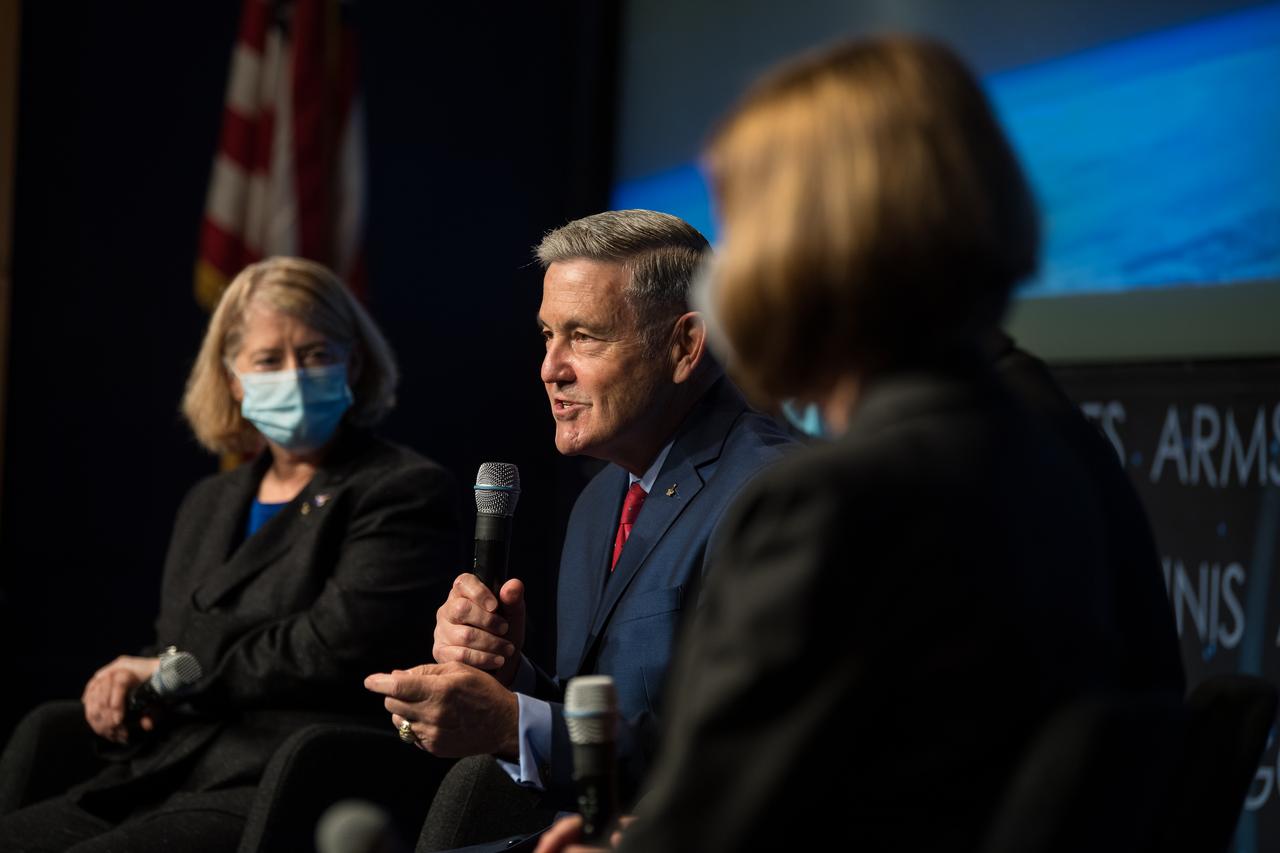
NASA Associate Administrator Bob Cabana speaks during a NASA town hall to discuss the reorganization of the Human Exploration and Operations Mission Directorate into two mission directorates: Exploration Systems Development Mission Directorate (ESDMD) and Space Operations Mission Directorate (SpaceOps), Tuesday, Sept. 21, 2021 at the Mary W. Jackson NASA Headquarters building in Washington. NASA Associate Administrator for SpaceOps, Kathy Lueders, will lead launch and space operations including the International Space Station, the commercialization of low-Earth orbit, and eventually operations on and around the Moon. NASA Associate Administrator for the ESDMD, Jim Free, will lead efforts to define and manage systems development for programs critical to NASA’s Artemis program and the planning of NASA’s Moon to Mars exploration. Photo Credit: (NASA/Aubrey Gemignani)

NASA Associate Administrator for the Space Operations Mission Directorate (SpaceOps), Kathy Lueders, speaks during a NASA town hall to discuss the reorganization of the Human Exploration and Operations Mission Directorate into two mission directorates: SpaceOps and the Exploration Systems Development Mission Directorate (ESDMD), Tuesday, Sept. 21, 2021 at the Mary W. Jackson NASA Headquarters building in Washington. As head of SpaceOps, Kathy Lueders will lead launch and space operations including the International Space Station, the commercialization of low-Earth orbit, and eventually operations on and around the Moon. Associate Administrator of ESDMD, Jim Free, will lead efforts to define and manage systems development for programs critical to NASA’s Artemis program and the planning of NASA’s Moon to Mars exploration. Photo Credit: (NASA/Aubrey Gemignani)
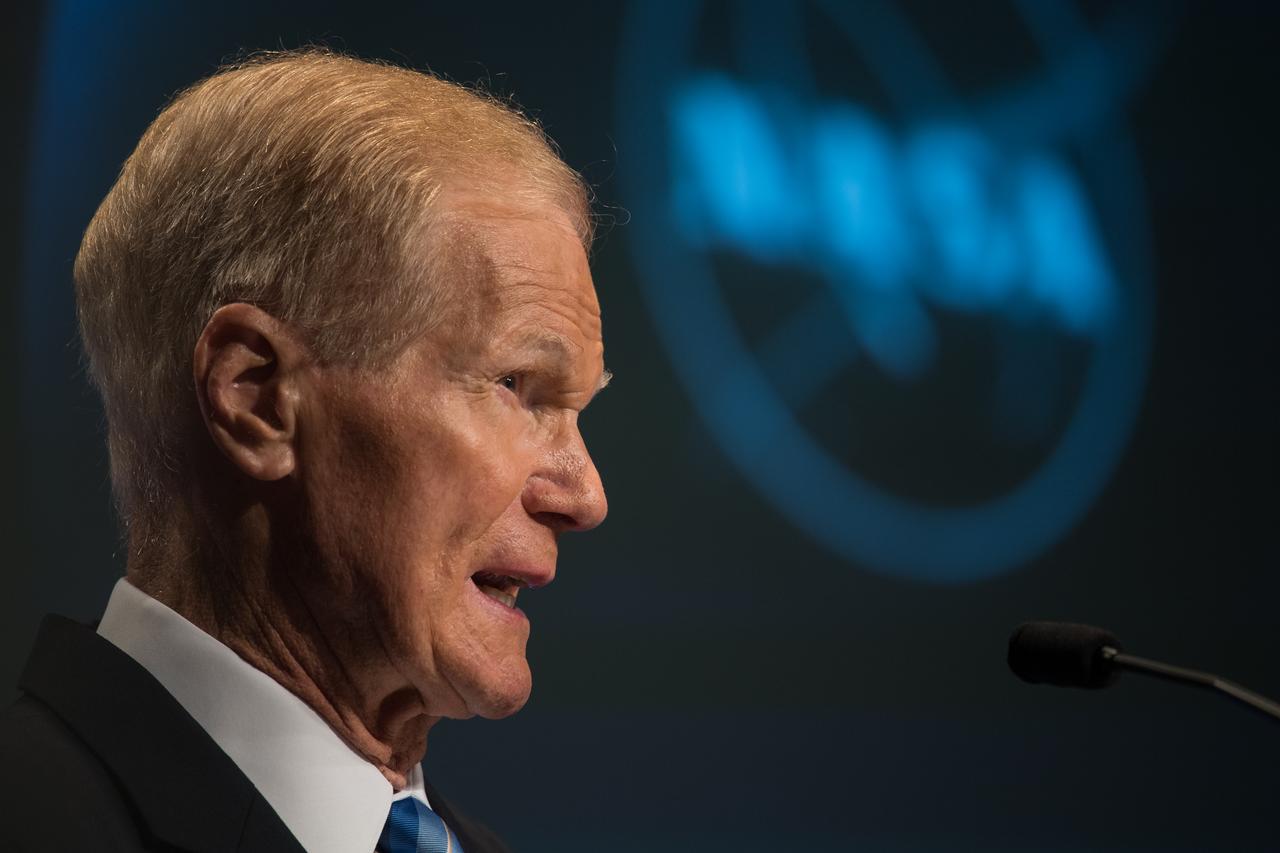
NASA Administrator Bill Nelson speaks during a NASA town hall to discuss the reorganization of the Human Exploration and Operations Mission Directorate into two mission directorates: Exploration Systems Development Mission Directorate (ESDMD) and Space Operations Mission Directorate (SpaceOps), Tuesday, Sept. 21, 2021 at the Mary W. Jackson NASA Headquarters building in Washington. NASA Associate Administrator for SpaceOps, Kathy Lueders, will lead launch and space operations including the International Space Station, the commercialization of low-Earth orbit, and eventually operations on and around the Moon. NASA Associate Administrator for the ESDMD, Jim Free, will lead efforts to define and manage systems development for programs critical to NASA’s Artemis program and the planning of NASA’s Moon to Mars exploration. Photo Credit: (NASA/Aubrey Gemignani)
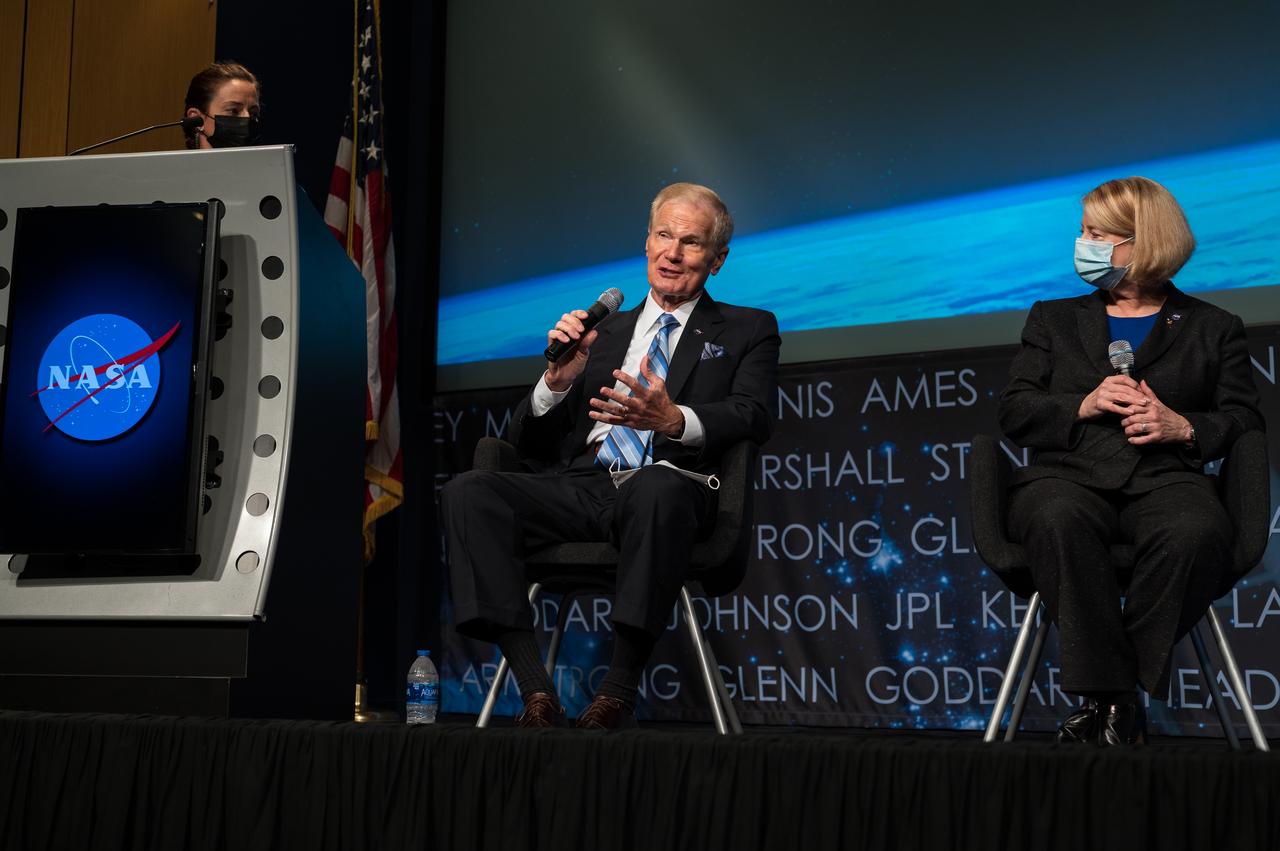
NASA Administrator Bill Nelson speaks during a NASA town hall to discuss the reorganization of the Human Exploration and Operations Mission Directorate into two mission directorates: Exploration Systems Development Mission Directorate (ESDMD) and Space Operations Mission Directorate (SpaceOps), Tuesday, Sept. 21, 2021 at the Mary W. Jackson NASA Headquarters building in Washington. NASA Associate Administrator for SpaceOps, Kathy Lueders, will lead launch and space operations including the International Space Station, the commercialization of low-Earth orbit, and eventually operations on and around the Moon. NASA Associate Administrator for the ESDMD, Jim Free, will lead efforts to define and manage systems development for programs critical to NASA’s Artemis program and the planning of NASA’s Moon to Mars exploration. Photo Credit: (NASA/Aubrey Gemignani)
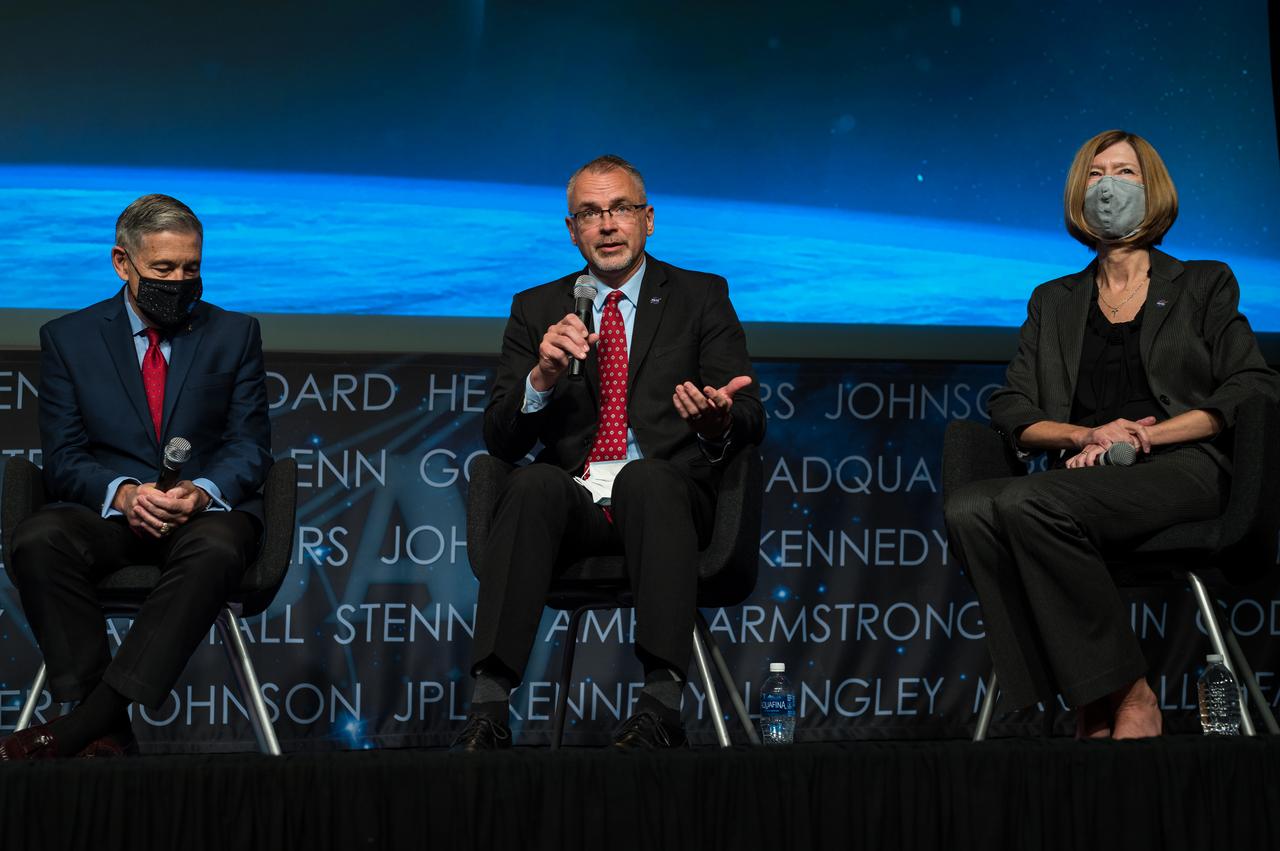
NASA Associate Administrator for the Exploration Systems Development Mission Directorate (ESDMD), Jim Free, speaks alongside NASA Associate Administrator Bob Cabana, left, and NASA Associate Administrator for Space Operations Mission Directorate (SpaceOps), Kathy Lueders, right, during a NASA town hall to discuss the reorganization of the Human Exploration and Operations Mission Directorate into two mission directorates: ESDMD and SpaceOps, Tuesday, Sept. 21, 2021 at the Mary W. Jackson NASA Headquarters building in Washington. Lueders will lead launch and space operations including the International Space Station, the commercialization of low-Earth orbit, and eventually operations on and around the Moon. Free will lead efforts to define and manage systems development for programs critical to NASA’s Artemis program and the planning of NASA’s Moon to Mars exploration. Photo Credit: (NASA/Aubrey Gemignani)

NASA Associate Administrator Bob Cabana speaks during a NASA town hall to discuss the reorganization of the Human Exploration and Operations Mission Directorate into two mission directorates: Exploration Systems Development Mission Directorate (ESDMD) and Space Operations Mission Directorate (SpaceOps), Tuesday, Sept. 21, 2021 at the Mary W. Jackson NASA Headquarters building in Washington. NASA Associate Administrator for SpaceOps, Kathy Lueders, will lead launch and space operations including the International Space Station, the commercialization of low-Earth orbit, and eventually operations on and around the Moon. NASA Associate Administrator for the ESDMD, Jim Free, will lead efforts to define and manage systems development for programs critical to NASA’s Artemis program and the planning of NASA’s Moon to Mars exploration. Photo Credit: (NASA/Aubrey Gemignani)
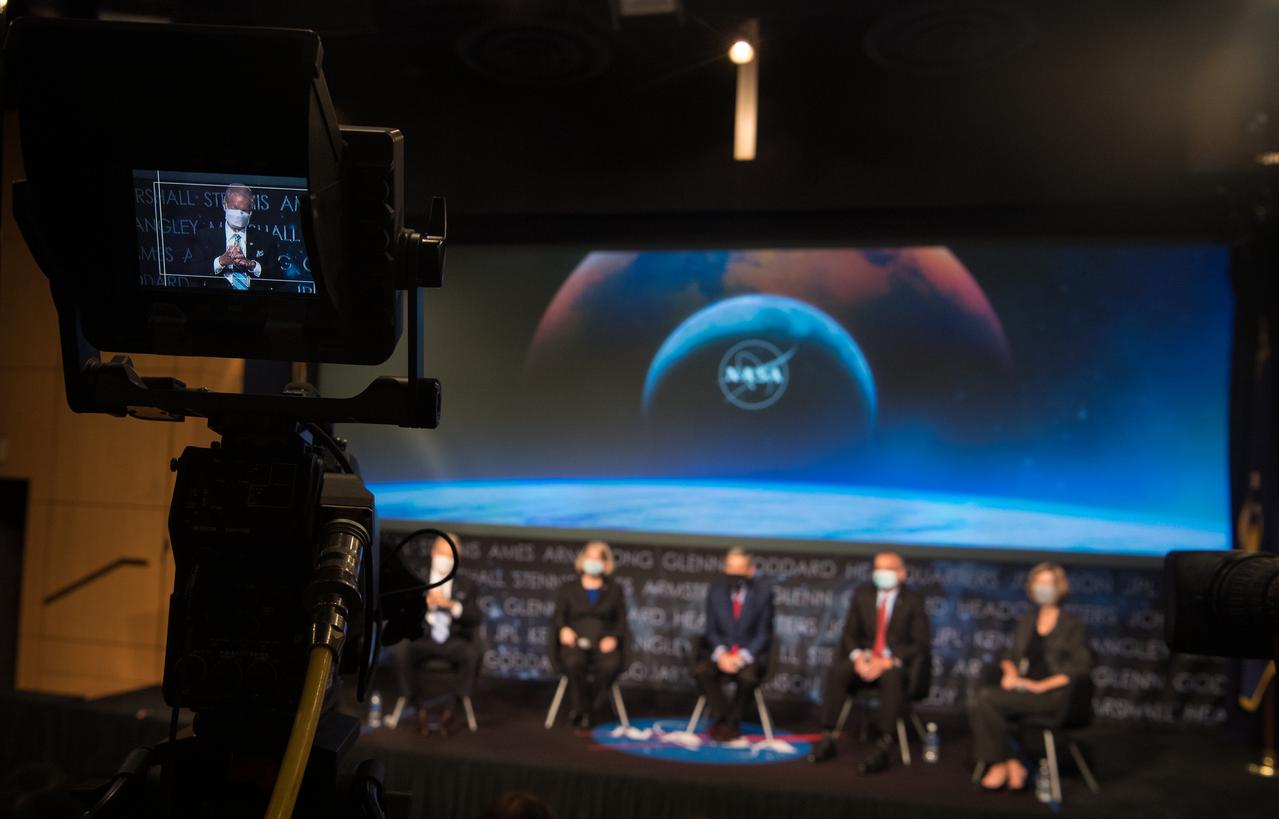
NASA Administrator Bill Nelson is seen through a video camera before a NASA town hall to discuss the reorganization of the Human Exploration and Operations Mission Directorate into two mission directorates: Exploration Systems Development Mission Directorate (ESDMD) and Space Operations Mission Directorate (SpaceOps), Tuesday, Sept. 21, 2021 at the Mary W. Jackson NASA Headquarters building in Washington. NASA Associate Administrator for SpaceOps, Kathy Lueders, will lead launch and space operations including the International Space Station, the commercialization of low-Earth orbit, and eventually operations on and around the Moon. NASA Associate Administrator for the ESDMD, Jim Free, will lead efforts to define and manage systems development for programs critical to NASA’s Artemis program and the planning of NASA’s Moon to Mars exploration. Photo Credit: (NASA/Aubrey Gemignani)
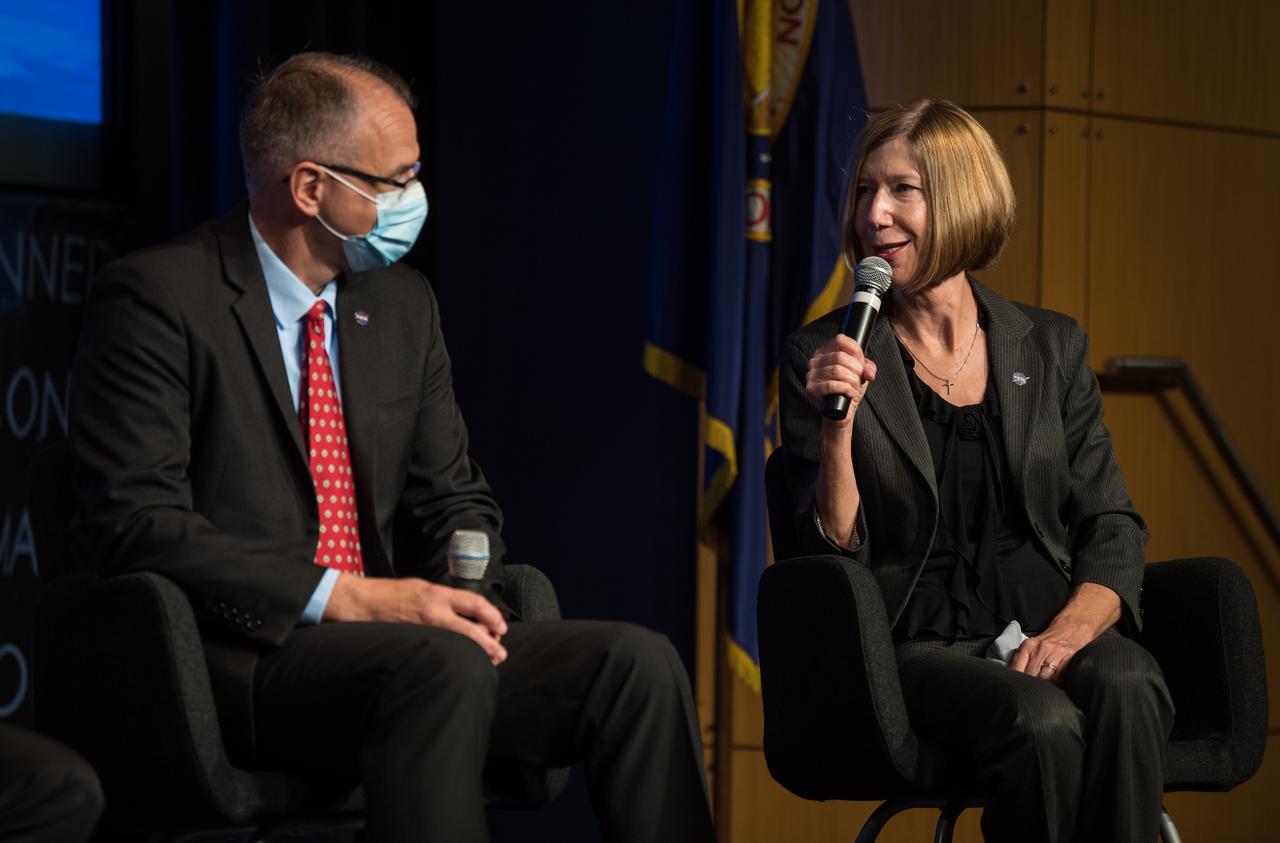
NASA Associate Administrator for the Space Operations Mission Directorate (SpaceOps), Kathy Lueders, right, speaks during a NASA town hall to discuss the reorganization of the Human Exploration and Operations Mission Directorate into two mission directorates: SpaceOps and the Exploration Systems Development Mission Directorate (ESDMD), Tuesday, Sept. 21, 2021 at the Mary W. Jackson NASA Headquarters building in Washington. As head of SpaceOps, Kathy Lueders will lead launch and space operations including the International Space Station, the commercialization of low-Earth orbit, and eventually operations on and around the Moon. Associate Administrator of ESDMD, Jim Free, left, will lead efforts to define and manage systems development for programs critical to NASA’s Artemis program and the planning of NASA’s Moon to Mars exploration. Photo Credit: (NASA/Aubrey Gemignani)
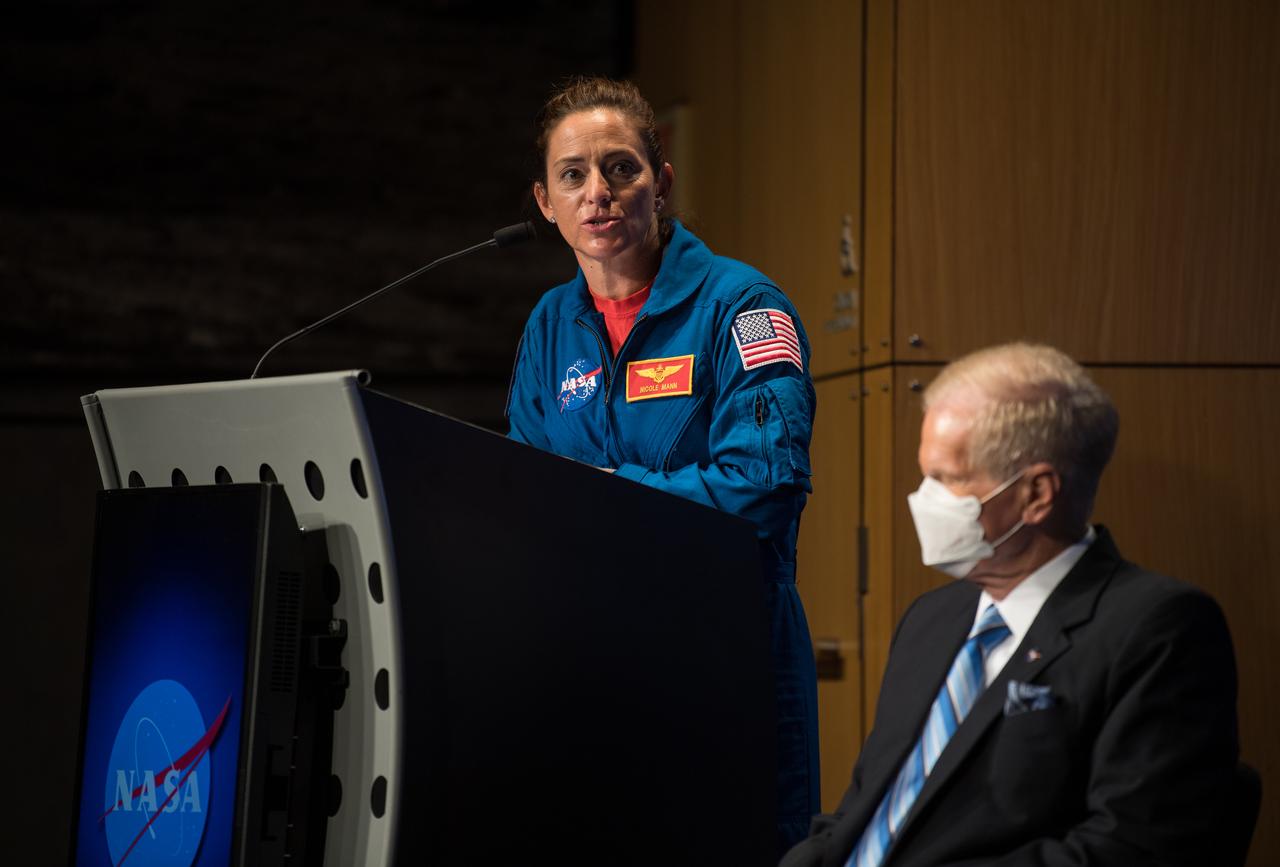
NASA astronaut Nicole Mann asks the panelists a question during a NASA town hall to discuss the reorganization of the Human Exploration and Operations Mission Directorate into two mission directorates: Exploration Systems Development Mission Directorate (ESDMD) and Space Operations Mission Directorate (SpaceOps), Tuesday, Sept. 21, 2021 at the Mary W. Jackson NASA Headquarters building in Washington. NASA Associate Administrator for SpaceOps, Kathy Lueders, will lead launch and space operations including the International Space Station, the commercialization of low-Earth orbit, and eventually operations on and around the Moon. NASA Associate Administrator for the ESDMD, Jim Free, will lead efforts to define and manage systems development for programs critical to NASA’s Artemis program and the planning of NASA’s Moon to Mars exploration. Photo Credit: (NASA/Aubrey Gemignani)
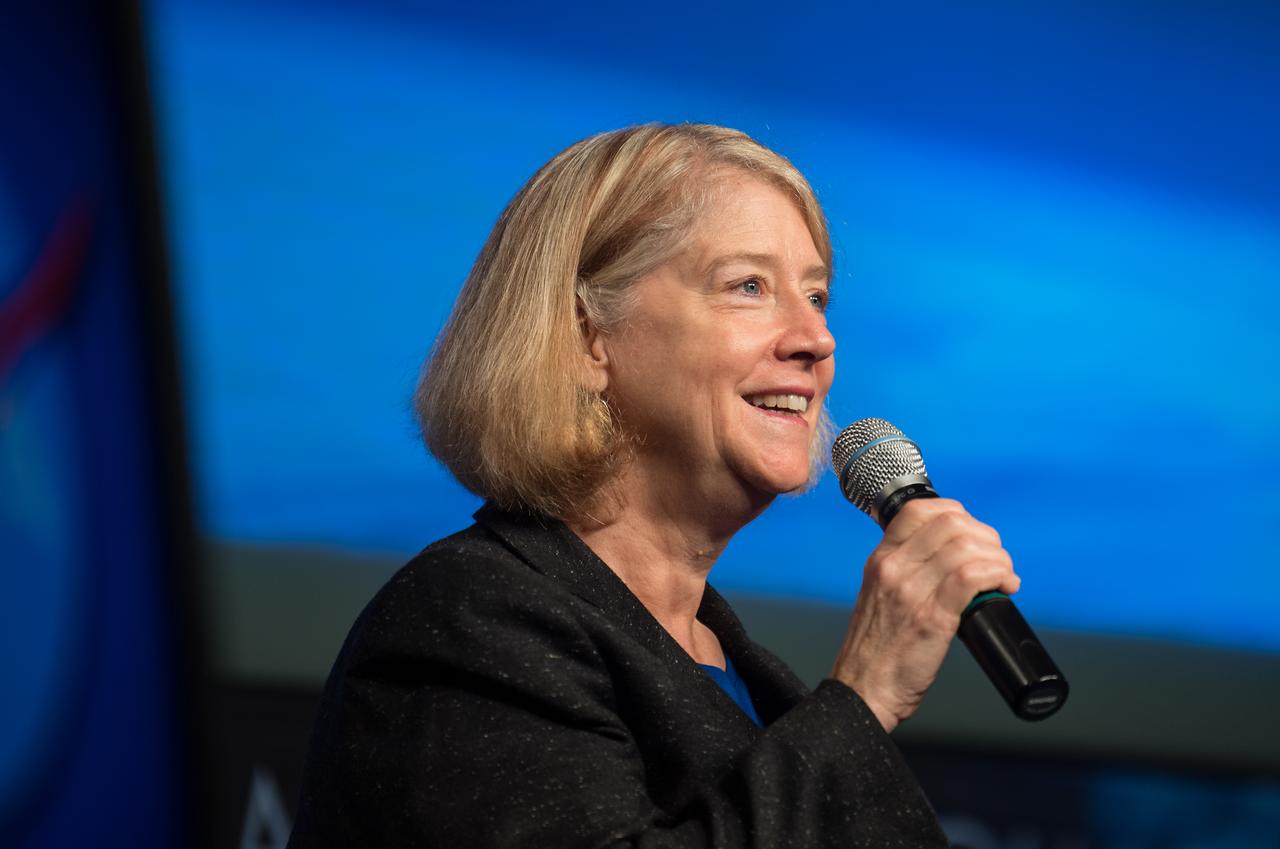
NASA Deputy Administrator Pam Melroy speaks during a NASA town hall to discuss the reorganization of the Human Exploration and Operations Mission Directorate into two mission directorates: Exploration Systems Development Mission Directorate (ESDMD) and Space Operations Mission Directorate (SpaceOps), Tuesday, Sept. 21, 2021 at the Mary W. Jackson NASA Headquarters building in Washington. NASA Associate Administrator for SpaceOps, Kathy Lueders, will lead launch and space operations including the International Space Station, the commercialization of low-Earth orbit, and eventually operations on and around the Moon. NASA Associate Administrator for the ESDMD, Jim Free, will lead efforts to define and manage systems development for programs critical to NASA’s Artemis program and the planning of NASA’s Moon to Mars exploration. Photo Credit: (NASA/Aubrey Gemignani)
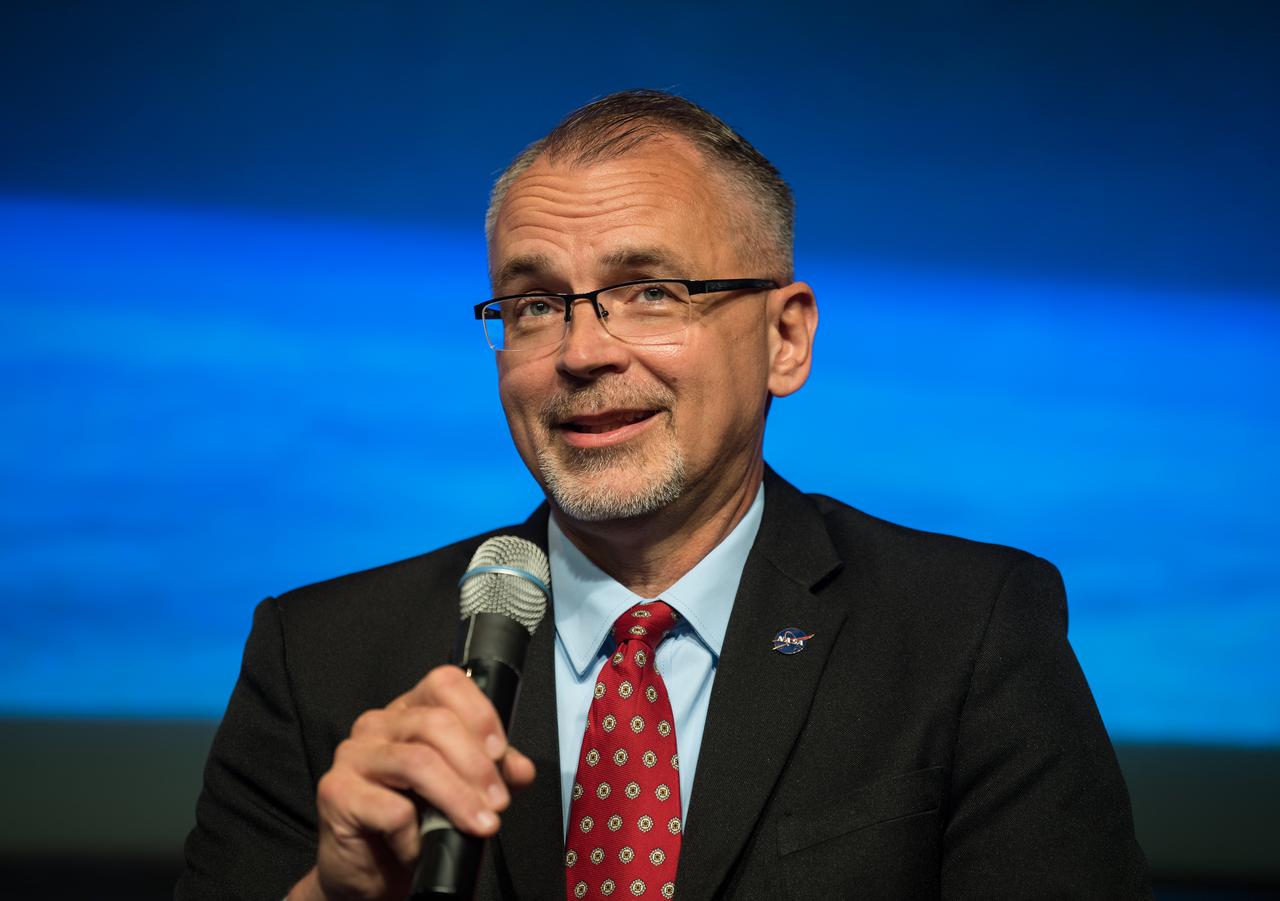
NASA Associate Administrator for the Exploration Systems Development Mission Directorate (ESDMD), Jim Free, speaks during a NASA town hall to discuss the reorganization of the Human Exploration and Operations Mission Directorate into two mission directorates: ESDMD and Space Operations Mission Directorate (SpaceOps), Tuesday, Sept. 21, 2021 at the Mary W. Jackson NASA Headquarters building in Washington. NASA Associate Administrator for SpaceOps, Kathy Lueders, will lead launch and space operations including the International Space Station, the commercialization of low-Earth orbit, and eventually operations on and around the Moon. Head of ESDMD, Jim Free, will lead efforts to define and manage systems development for programs critical to NASA’s Artemis program and the planning of NASA’s Moon to Mars exploration. Photo Credit: (NASA/Aubrey Gemignani)
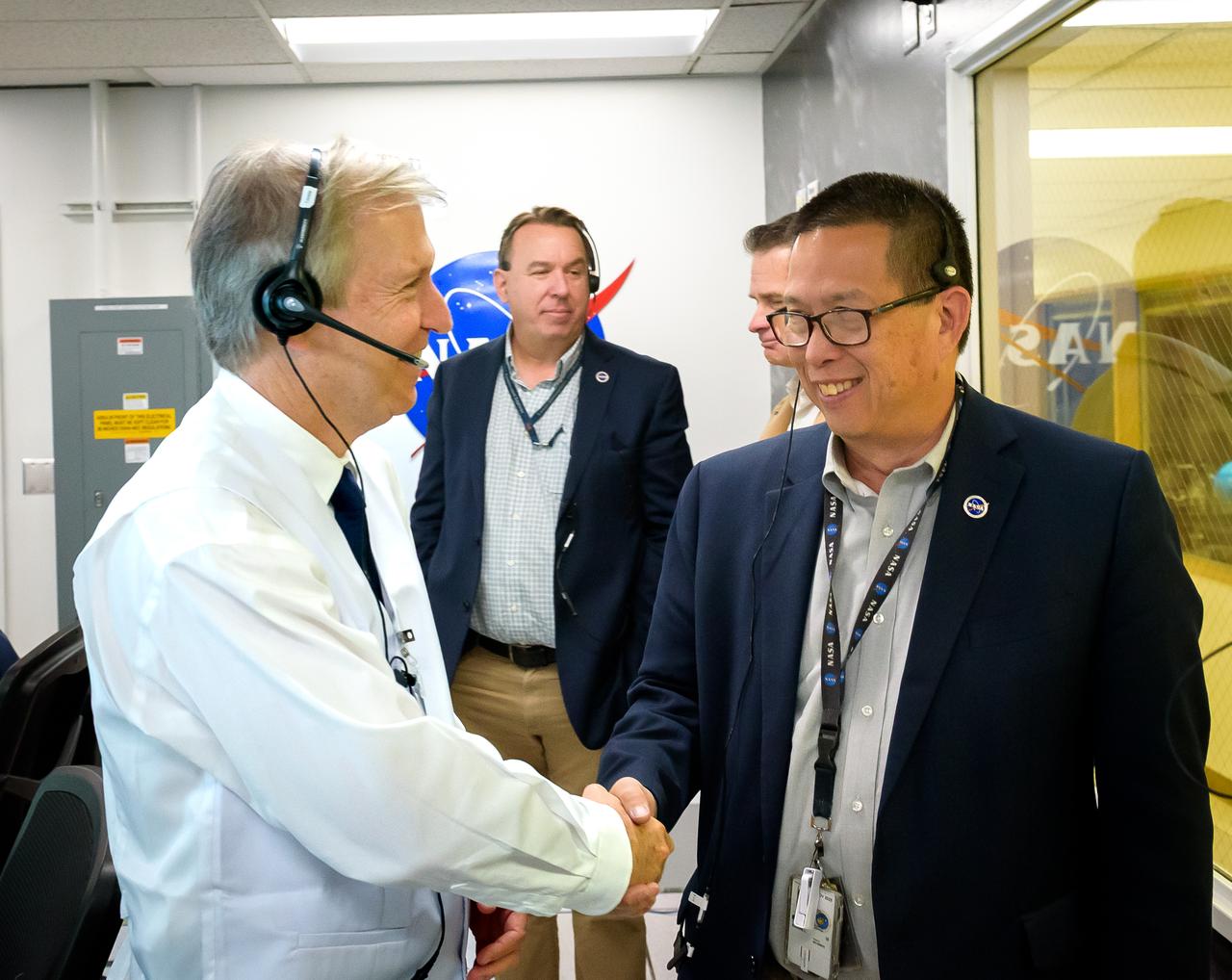
Volatiles Investigating Polar Exploration Rover (VIPER) mission systems manager Jay Trimble, left, with Center Director Eugene Tu during the vehicle operational readiness test in the Multi-Mission Operations Center (MMOC), N240A. Deputy Center Director David Korsmeyer, behind.
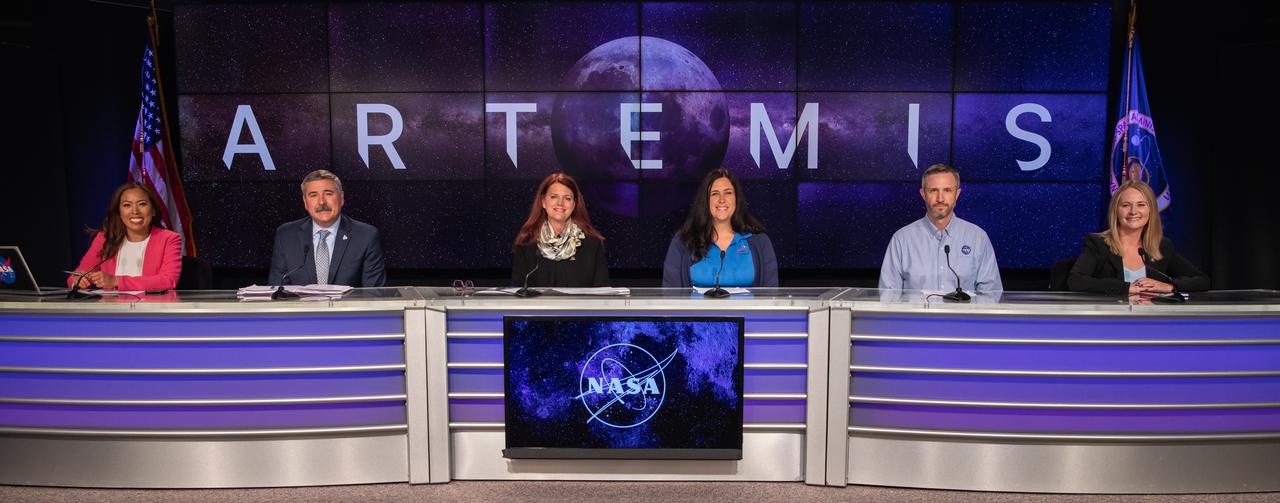
From left, Megan Cruz, NASA Communications; Mike Sarafin, Artemis mission manager, NASA Headquarters; Charlie Blackwell-Thompson, Artemis launch director, Kennedy Space Center; Melissa Jones, recovery director, Exploration Ground Systems Program, Kennedy; Jacob Bleacher, chief exploration scientist, Exploration Systems Development Mission Directorate, NASA Headquarters; and Melody Lovin, weather officer, Space Launch Delta 45, participate in an Artemis I mission status press briefing at Kennedy on Aug. 27, 2022. NASA’s Space Launch System rocket and Orion spacecraft are targeted to lift off from Kennedy’s Launch Complex 39B no earlier than Aug. 29, 2022, at 8:33 a.m. EDT.
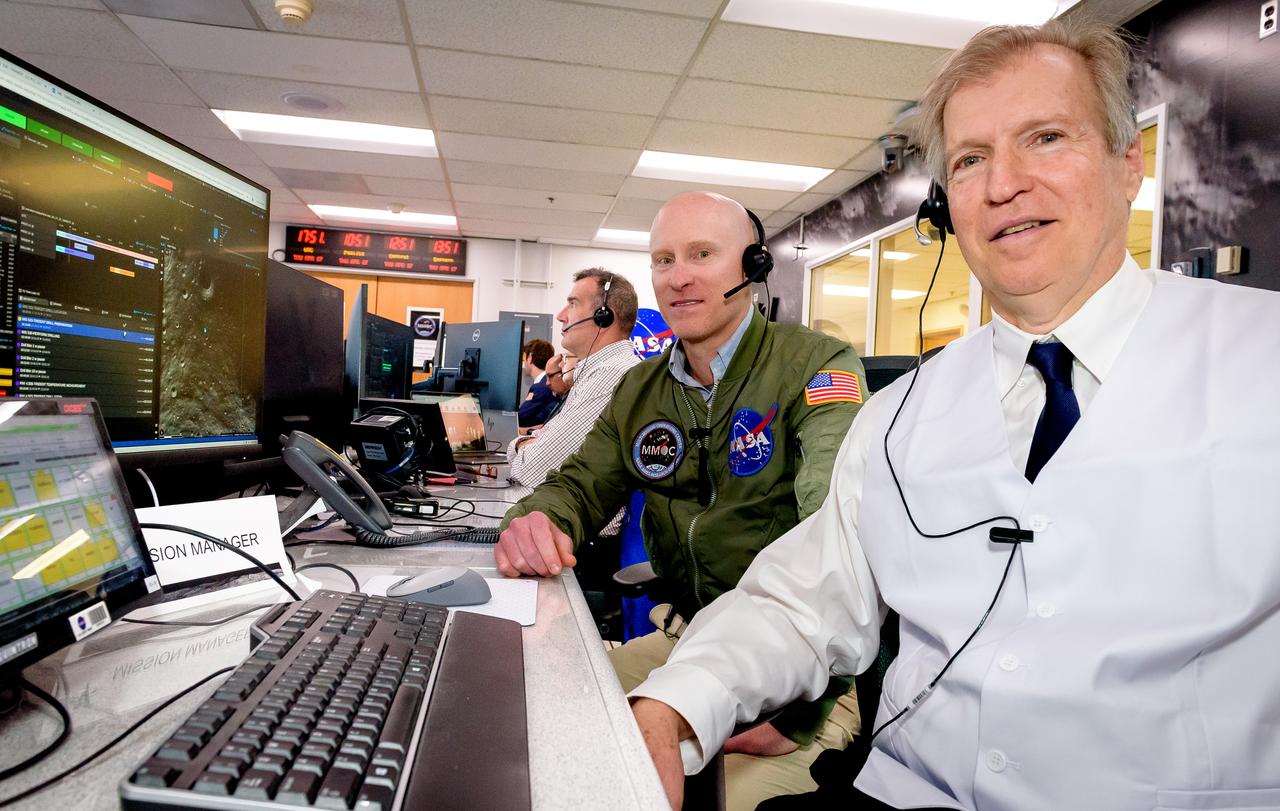
Volatiles Investigating Polar Exploration Rover (VIPER) mission systems manager Jay Trimble, right, with Multi-Mission Operations Center (MMOC) Director Justin Pane, during the vehicle operational readiness test in the MMOC, N240A.
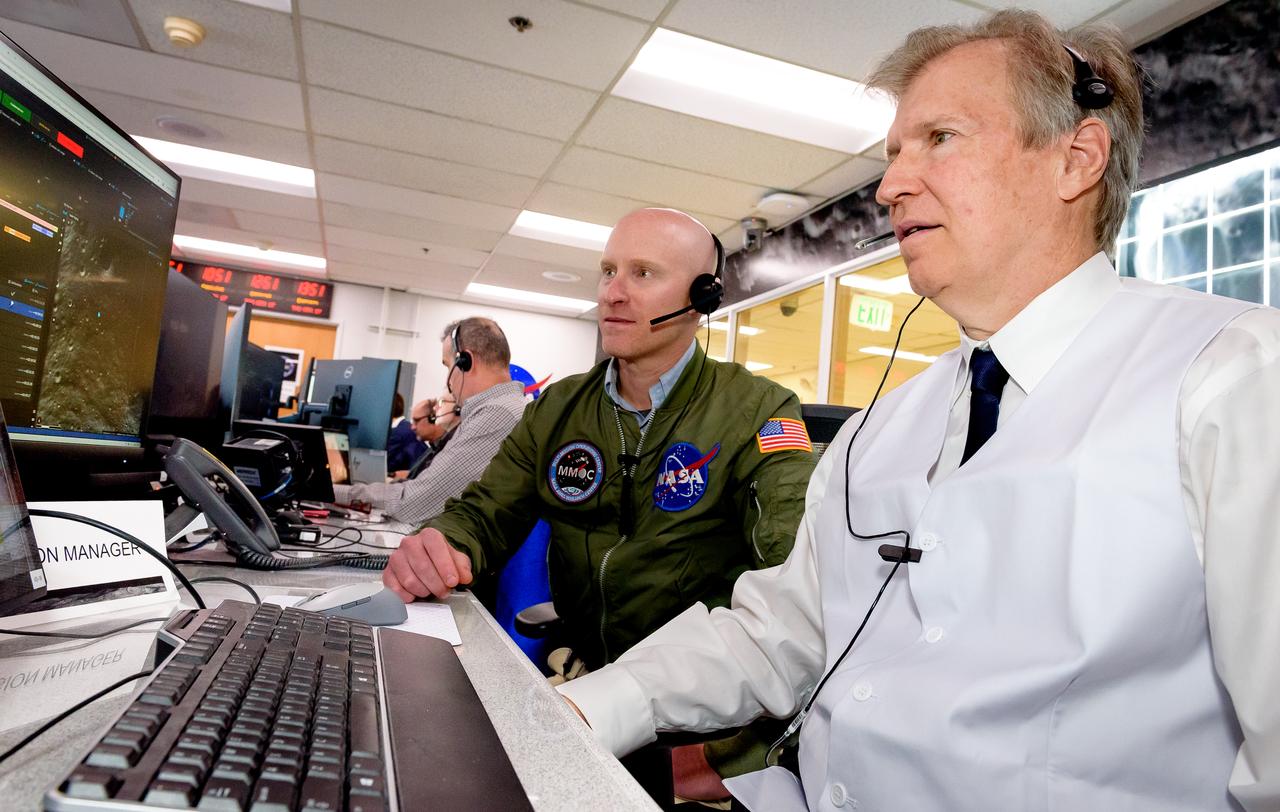
Volatiles Investigating Polar Exploration Rover (VIPER) mission systems manager Jay Trimble, right, with Multi-Mission Operations Center (MMOC) Director Justin Pane, during the vehicle operational readiness test in the MMOC, N240A.
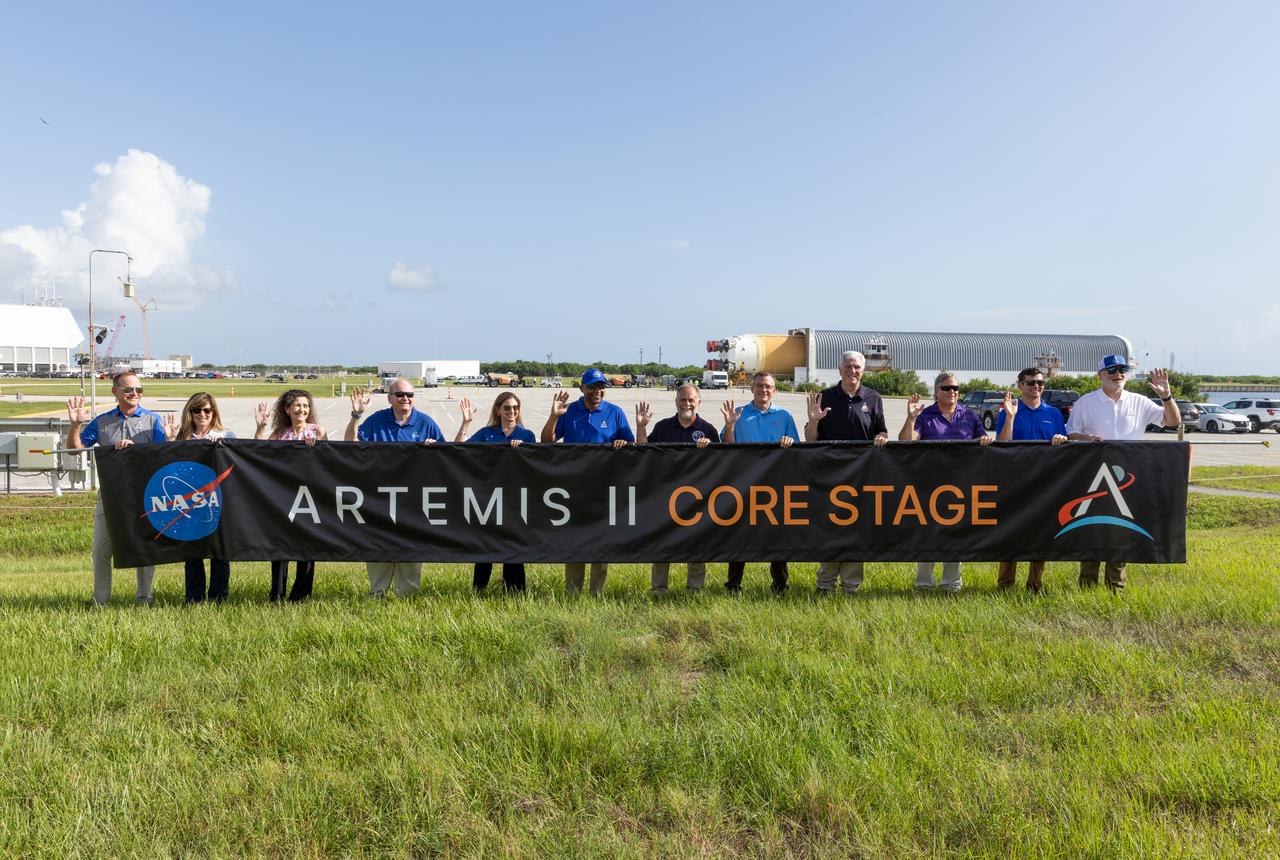
From left, John Ramsey, chief transformation officer for Jacobs; Jennifer Kunz, associate director, technical, NASA’s Kennedy Space Center; Lorna Kenna, vice president and general manager, Jacobs; Burt Summerfield, associate director, management, NASA Kennedy; Catherine Koerner, associate administrator for NASA’s Exploration Systems Development Mission Directorate; Kelvin Manning, deputy director, NASA Kennedy; Shawn Quinn, manager, NASA’s Exploration Ground Systems; Cliff Lanham, senior vehicle operations manager, NASA’s Exploration Ground Systems; Matthew Ramsey, Artemis II mission manager; Paul Hudson, Jacobs senior vehicle engineer; Jay Grow, Boeing’s associate chief engineer for Space Launch System Launch Operations; and Bill Muddle, lead RS-25 field engineer at Aerojet Rocketdyne, hold a banner to celebrate the arrival of the Artemis II SLS (Space Launch System) core stage at NASA’s Kennedy Space Center on Wednesday, July 24, 2024. Journeying from NASA’s Michoud Assembly Facility in New Orleans aboard the Pegasus barge, the core stage arrived at the Florida spaceport on July 23, 2024, to be processed for flight by NASA’s Exploration Ground Systems Program.
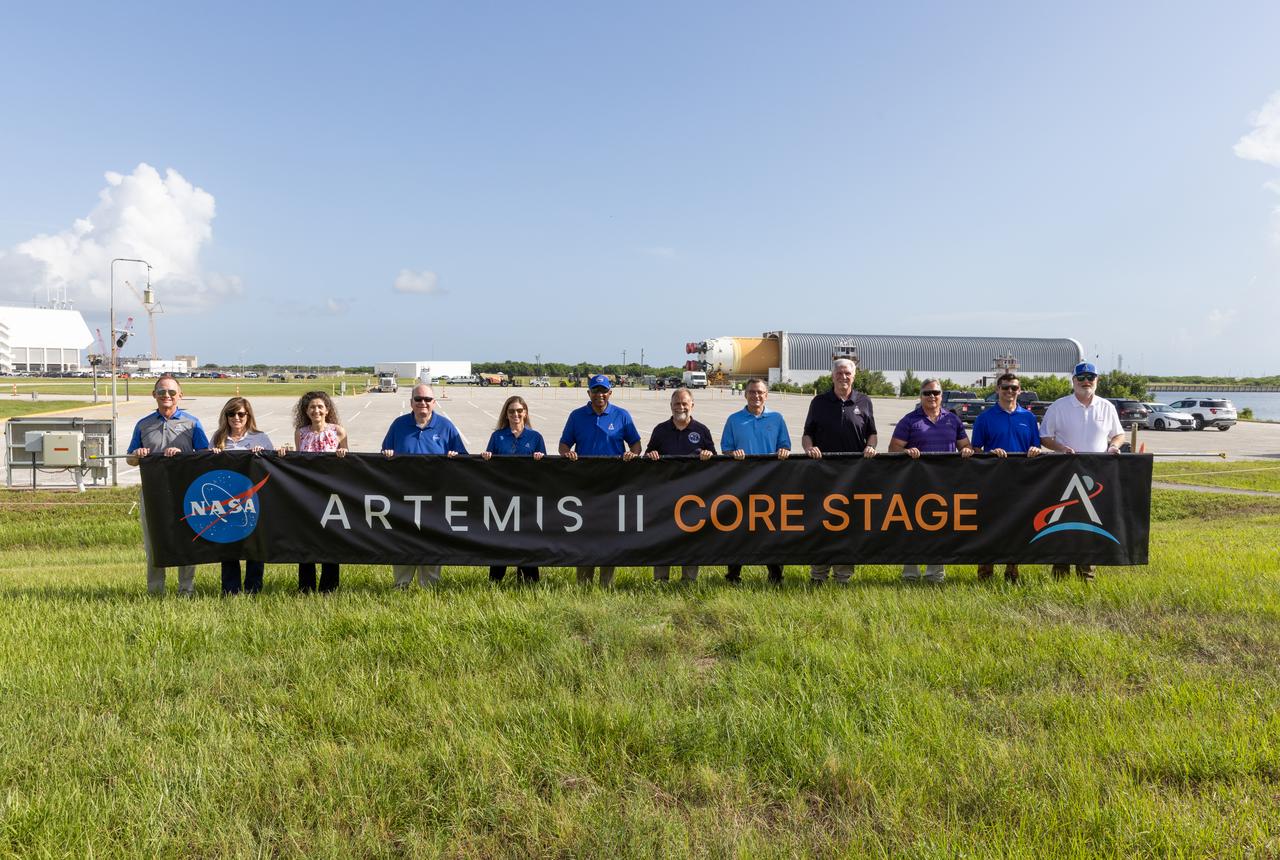
From left, John Ramsey, chief transformation officer for Jacobs; Jennifer Kunz, associate director, technical, NASA’s Kennedy Space Center; Lorna Kenna, vice president and general manager, Jacobs; Burt Summerfield, associate director, management, NASA Kennedy; Catherine Koerner, associate administrator for NASA’s Exploration Systems Development Mission Directorate; Kelvin Manning, deputy director, NASA Kennedy; Shawn Quinn, manager, NASA’s Exploration Ground Systems; Cliff Lanham, senior vehicle operations manager, NASA’s Exploration Ground Systems; Matthew Ramsey, Artemis II mission manager; Paul Hudson, Jacobs senior vehicle engineer; Jay Grow, Boeing’s associate chief engineer for Space Launch System Launch Operations; and Bill Muddle, lead RS-25 field engineer at Aerojet Rocketdyne, hold a banner to celebrate the arrival of the Artemis II SLS (Space Launch System) core stage at NASA’s Kennedy Space Center on Wednesday, July 24, 2024. Journeying from NASA’s Michoud Assembly Facility in New Orleans aboard the Pegasus barge, the core stage arrived at the Florida spaceport on July 23, 2024, to be processed for flight by NASA’s Exploration Ground Systems Program.

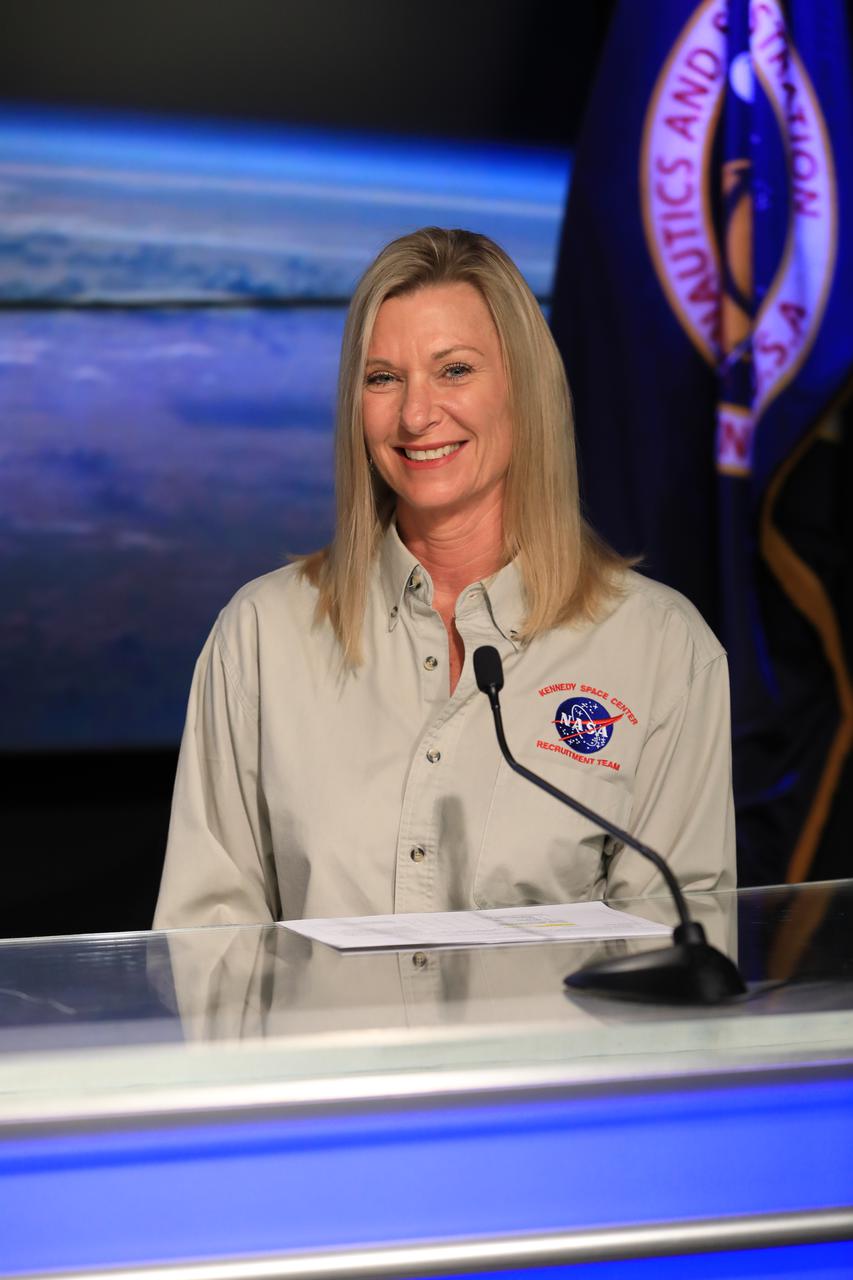
Barbara L. Brown, director of Exploration Research and Technology Programs at NASA's Kennedy Space Center in Florida, poses for a portrait inside the spaceport’s Space Station Processing Facility High Bay on Aug. 5, 2022. Brown leads processing, assembly, integration, and test of payloads and flight science experiments bound for the International Space Station. Additionally, Brown serves as Kennedy’s lead for the formulation of concepts to support uncrewed operations on the Moon and Mars, directing research, development, testing, and demonstration of flight systems and technologies to advance exploration and space systems. The programs and projects under her purview span NASA’s Exploration Systems, Science, Space Operations, and Space Technology mission directorates.
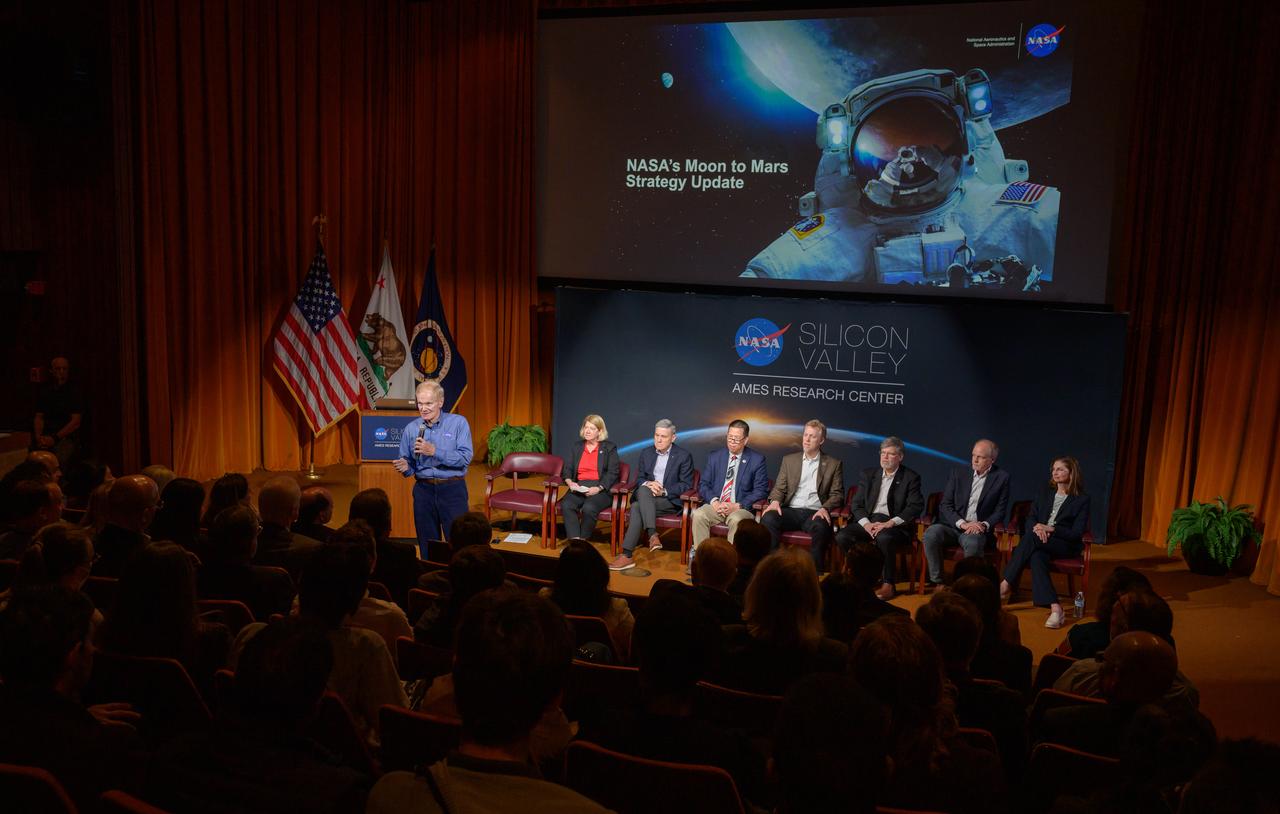
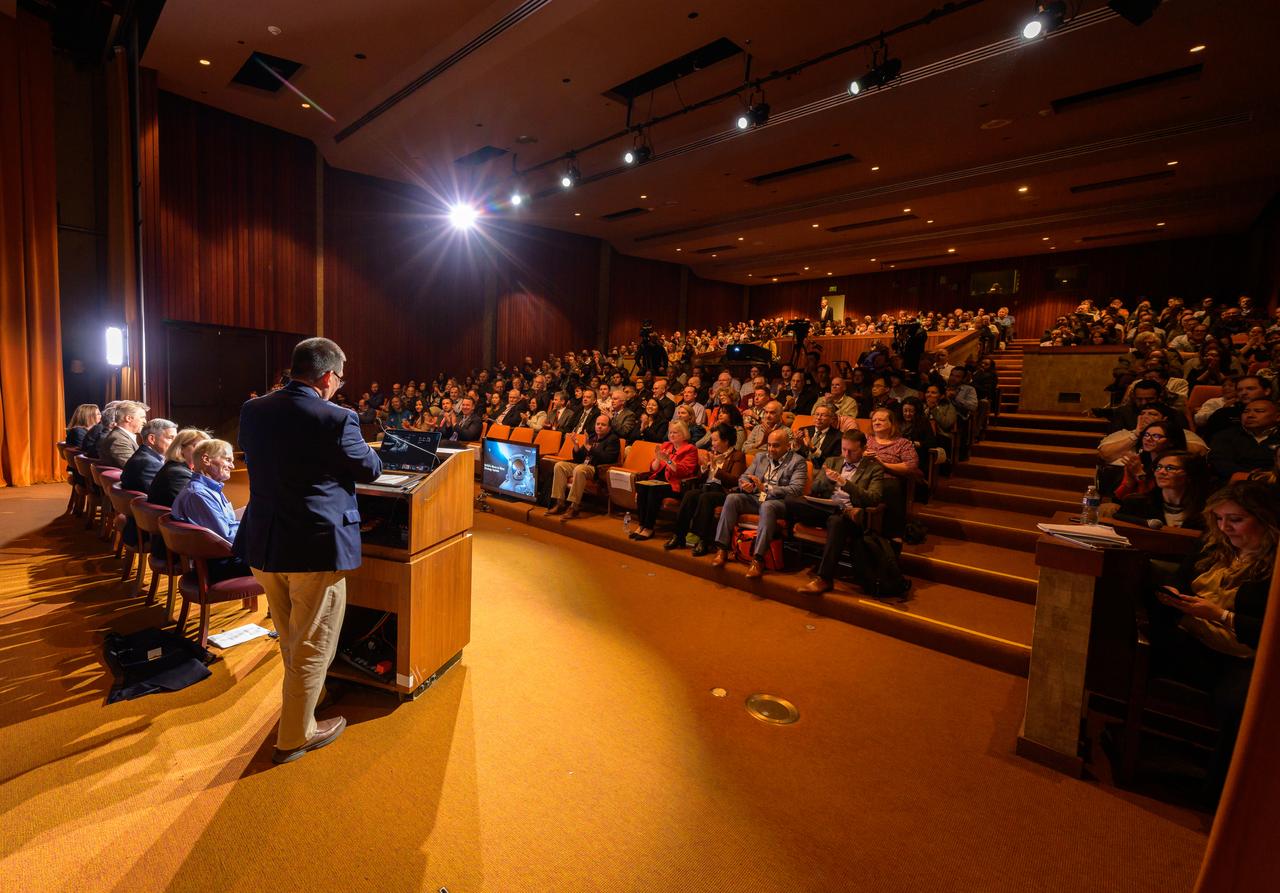
NASA Administrator Bill Nelson, front, talks to the workforce at NASA’s Ames Research Center in California’s Silicon Valley during the “Moon to Mars” town hall in the N201 Syvertson Auditorium. Behind him, left to right, are Deputy Administrator Pam Melroy, Associate Administrator Bob Cabana, AmesCenter Director Eugene Tu, Director of Space Architectures Kurt “Spuds” Vogel, Deputy Associate Administrator for Exploration in the Science Mission Directorate Joel Kearns, Deputy Associate Administrator for Programs in the Space Technology Mission Directorate Walt Engelund, and Deputy Associate Administrator for Exploration Systems Development Cathy Koerner.
Eugene Tu, center director at NASA’s Ames Research Center in California’s Silicon Valley, offers his opening remarks to the Ames workforce during the “Moon to Mars” town hall in the N201 Syvertson Auditorium. Town hall panel, seated right to left, are NASA Administrator Bill Nelson, Deputy Administrator Pam Melroy, Associate Administrator Bob Cabana, Director of Space Architectures Kurt “Spuds” Vogel, Deputy Associate Administrator for Exploration in the Science Mission Directorate Joel Kearns, Deputy Associate Administrator for Programs in the Space Technology Mission Directorate Walt Engelund, and Deputy Associate Administrator for Exploration Systems Development Cathy Koerner.
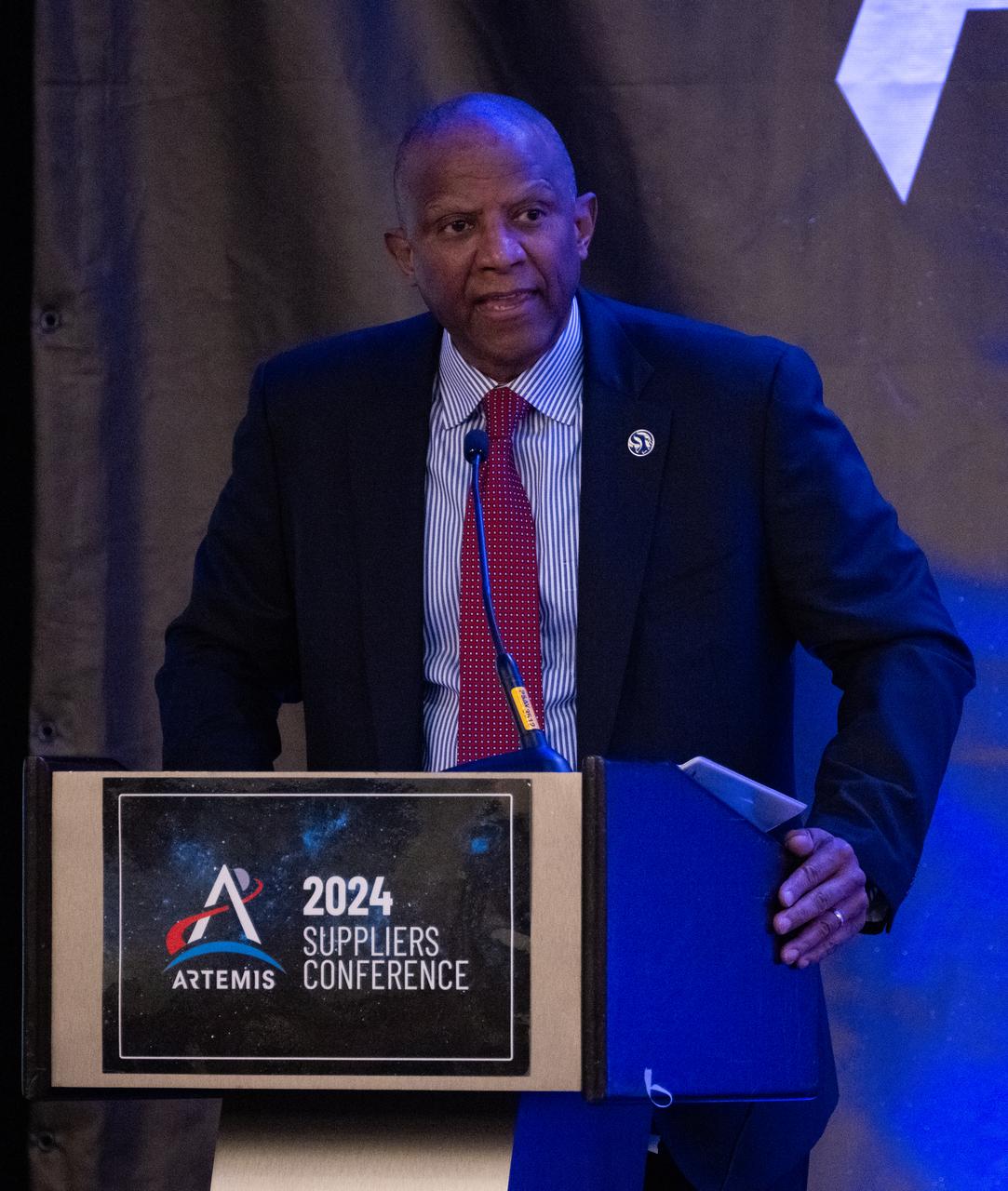
Kelvin Manning, acting deputy associate administrator for the Explorations Systems Development Mission Directorate at NASA, speaks before a panel discussion with agency center directors during the 2024 Artemis Suppliers Conference, Wednesday, Feb. 28, 2024, at the Grand Hyatt Hotel in Washington. Photo Credit: (NASA/Joel Kowsky)
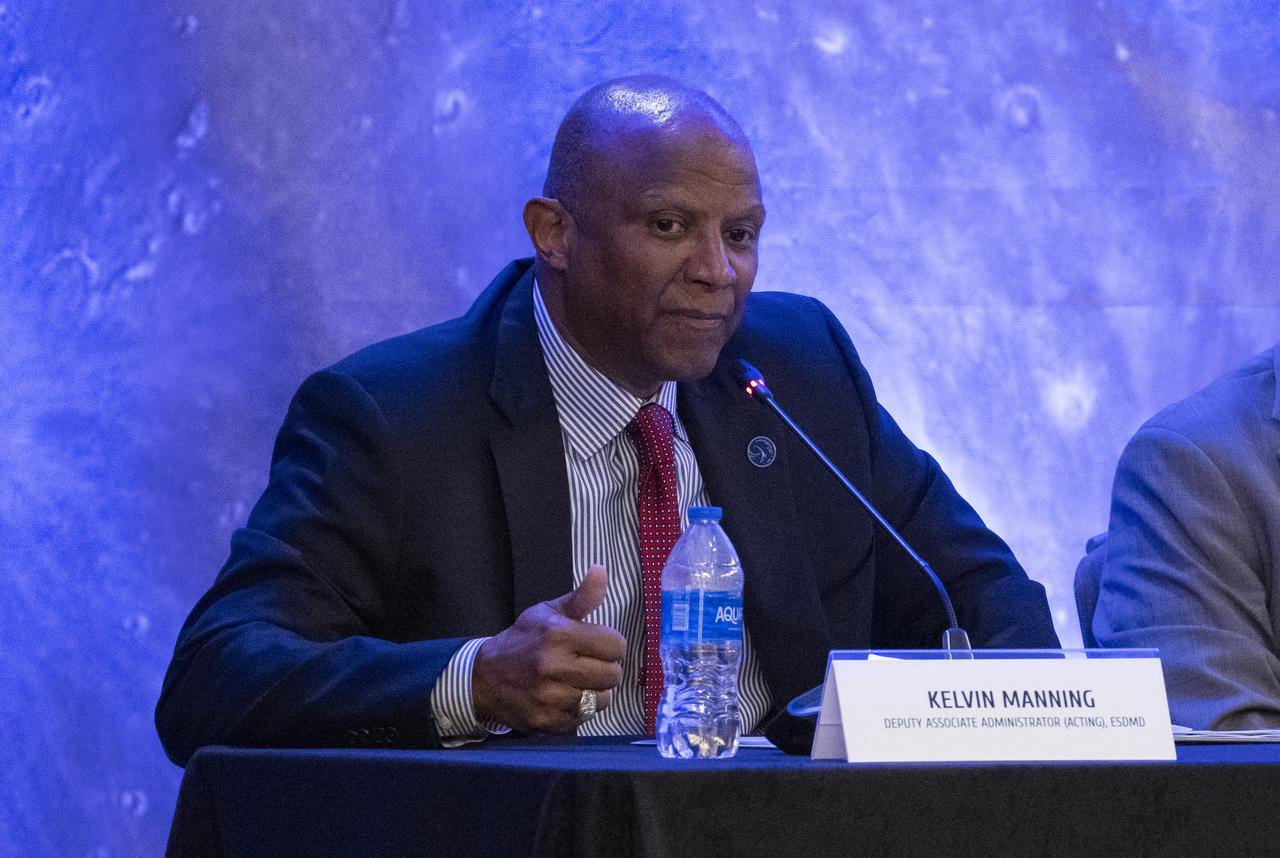
Kelvin Manning, acting deputy associate administrator for the Explorations Systems Development Mission Directorate at NASA, speaks before a panel discussion with agency center directors during the 2024 Artemis Suppliers Conference, Wednesday, Feb. 28, 2024, at the Grand Hyatt Hotel in Washington. Photo Credit: (NASA/Joel Kowsky)
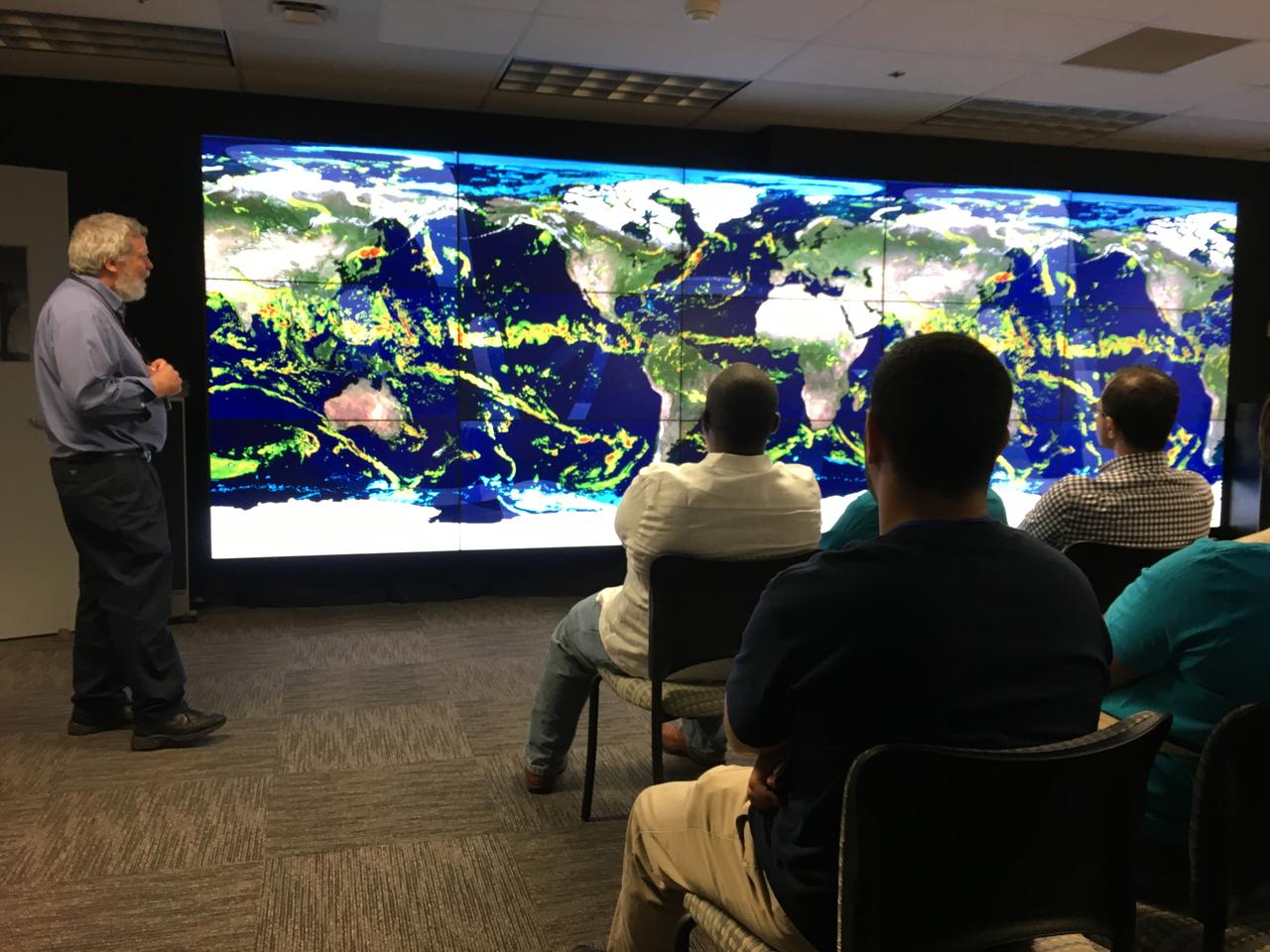
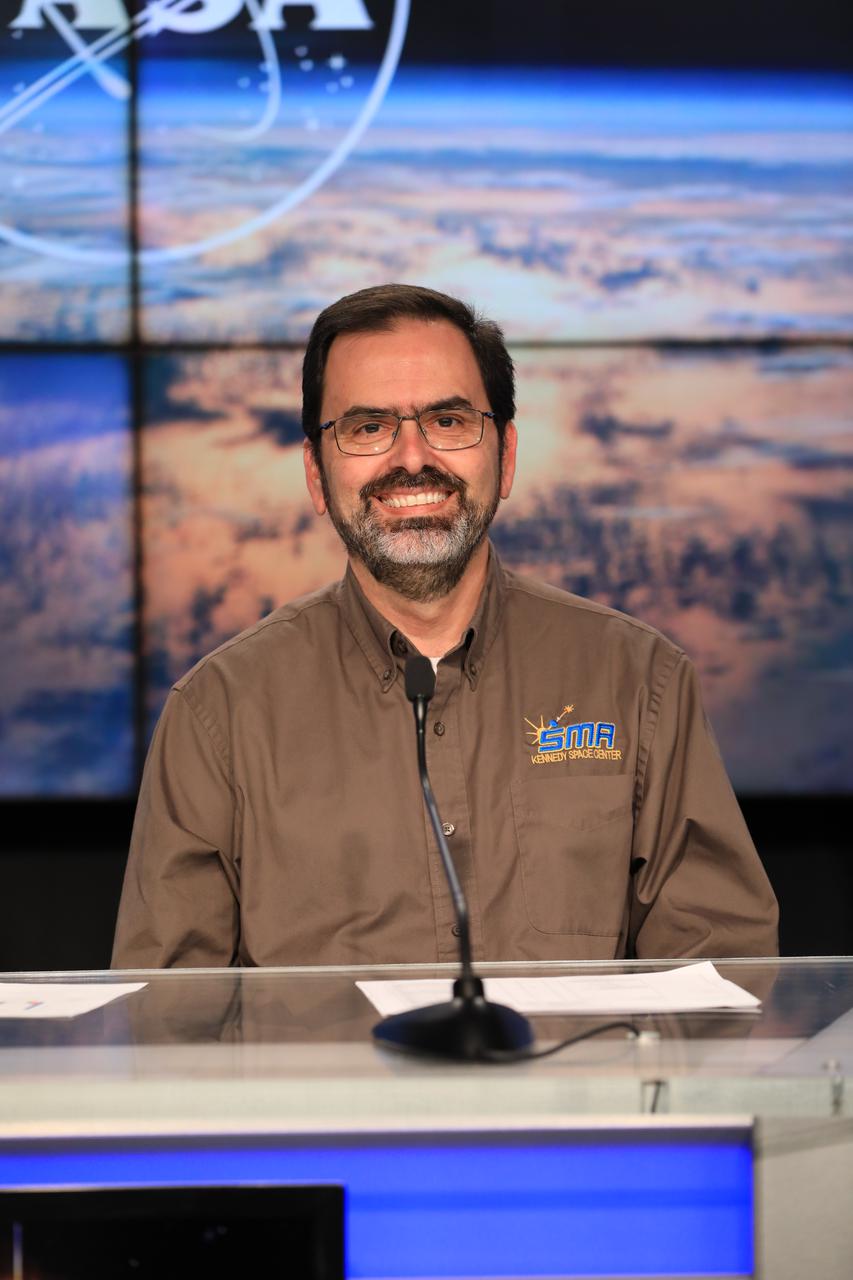
The Safety and Mission Assurance Directors from all NASA centers came together July 26-28, 2016 at Goddard Space Flight Center for their quarterly meeting. As part of the event, the attendees received a tour of the facilities and a briefing from the Goddard's Solar System Exploration Division Director Dr. Paul Mahaffy.
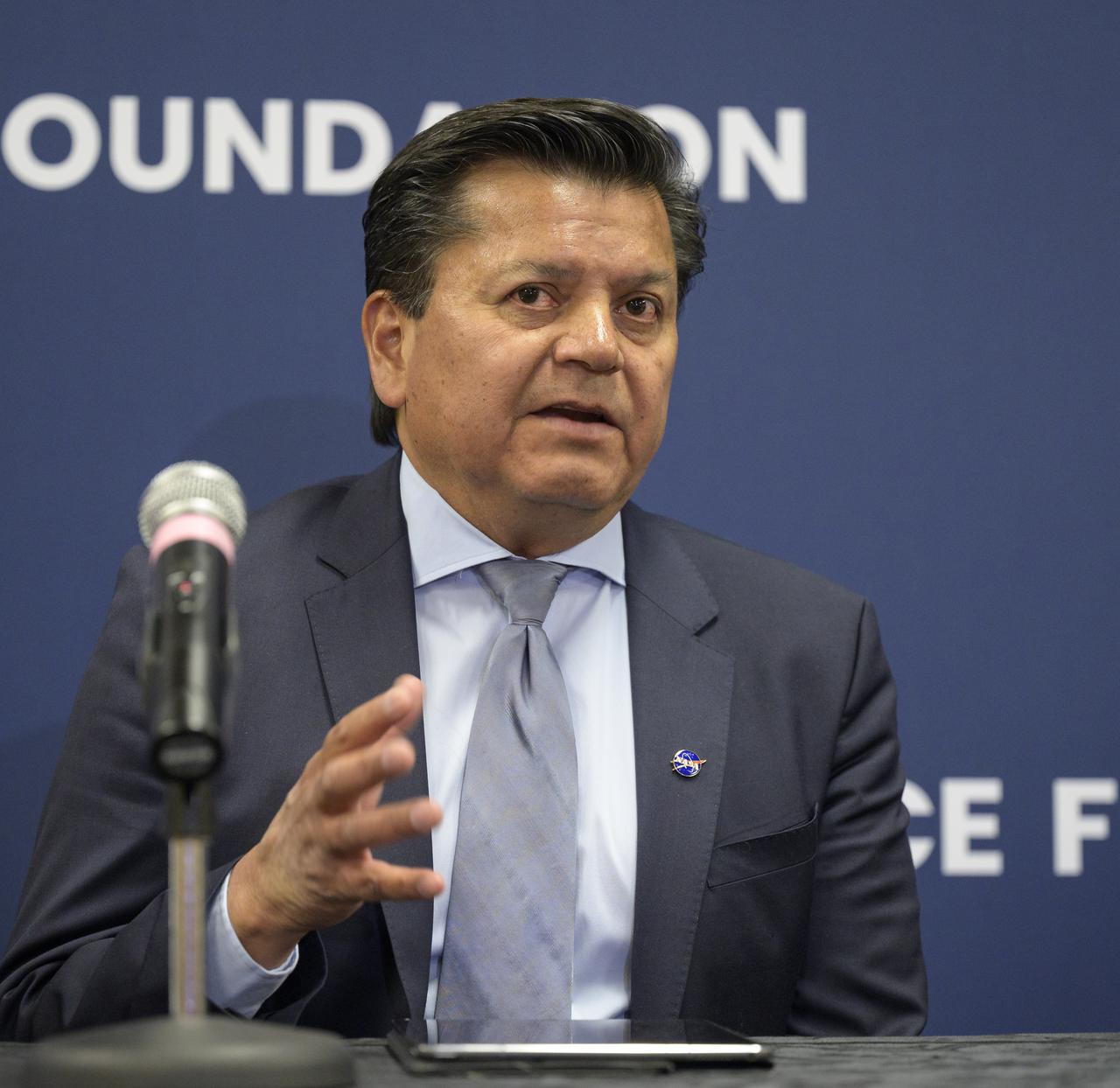
Andres Martinez, program executive for small spacecraft in NASA’s Exploration Systems Development Mission Directorate speaks at “Small Satellites, Big Missions: Pathfinding CubeSats Exploring the Moon and Beyond,” a news conference during the 37th Space Symposium, Wednesday, April 6, 2022, in Colorado Springs, Colorado. Photo Credit: (NASA/Bill Ingalls)
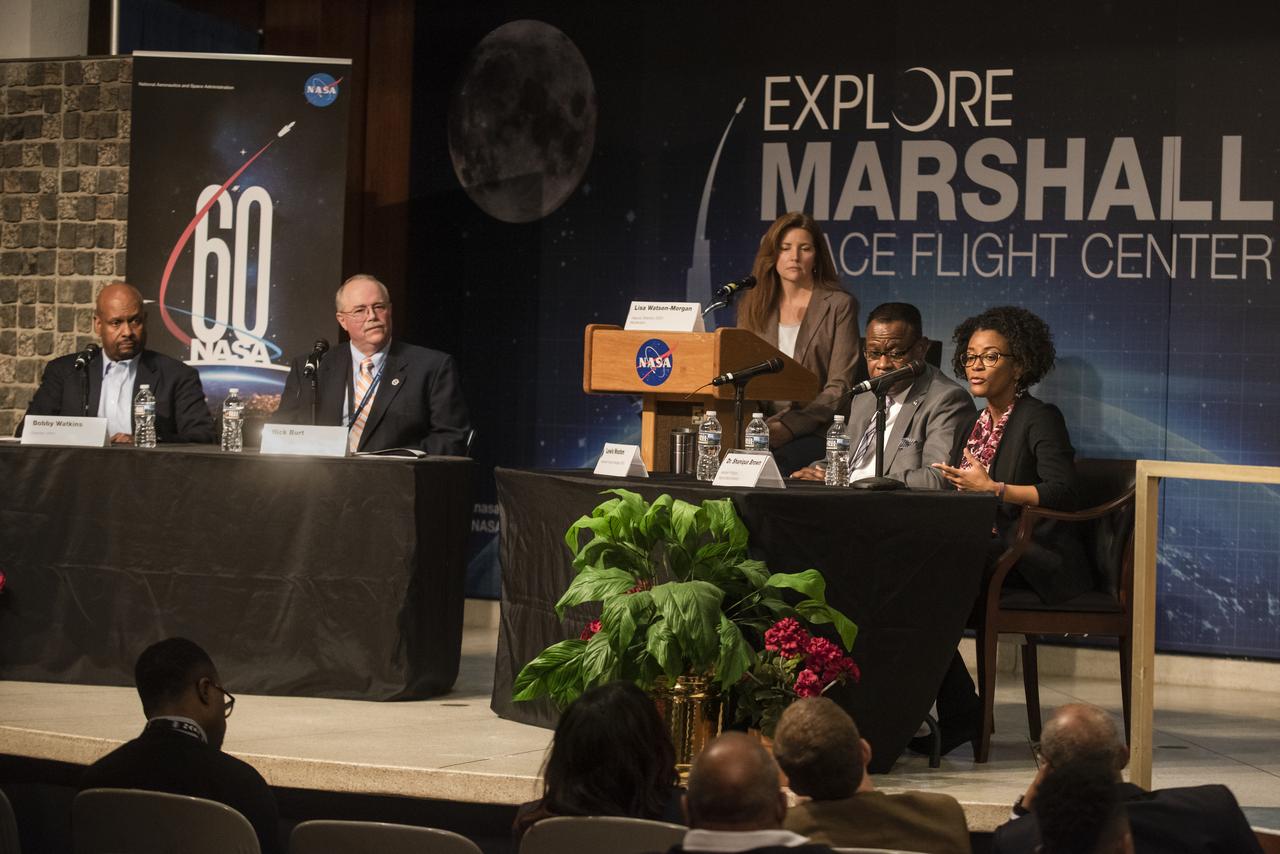
Wayne State University professor Shanique Brown, far right, takes part in a panel discussion on diversity and building strong, inclusive teams. She was joined by, from right, Lewis Wooten, associate program manager for the Space Launch System Program Office at Marshall; moderator Lisa Watson-Morgan, deputy director of Marshall's Engineering Directorate; Rick Burt, director of Marshall's Safety & Mission Assurance Directorate; and Bobby Watkins, director of the Human Exploration Development and Operations Office.
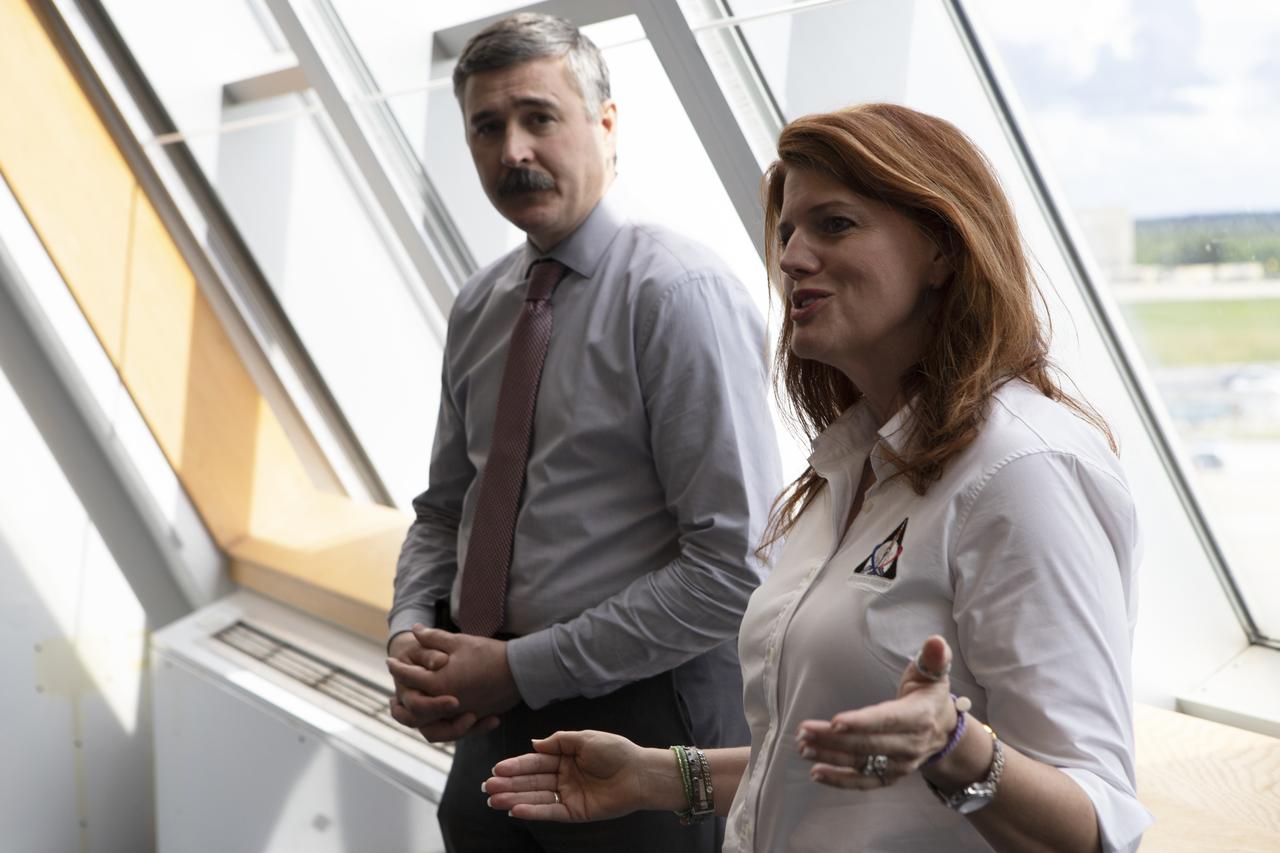
Charlie Blackwell-Thompson, Exploration Mission-1 launch director, and Michael Sarafin, EM-1 mission manager, talk to members of the media inside the Launch Control Center at NASA's Kennedy Space Center in Florida, on Sept. 8, 2018. Exploration Ground Systems is preparing the ground systems necessary to launch the agency's Space Launch System and Orion on EM-1, missions to the Moon and on to Mars.

LCROSS Impact Night: Guest Speaker Victoria P. Friedensen, Advanced Capabilities Exploration Systems Mission Directorate, NASA address the crowd during the all night public event.
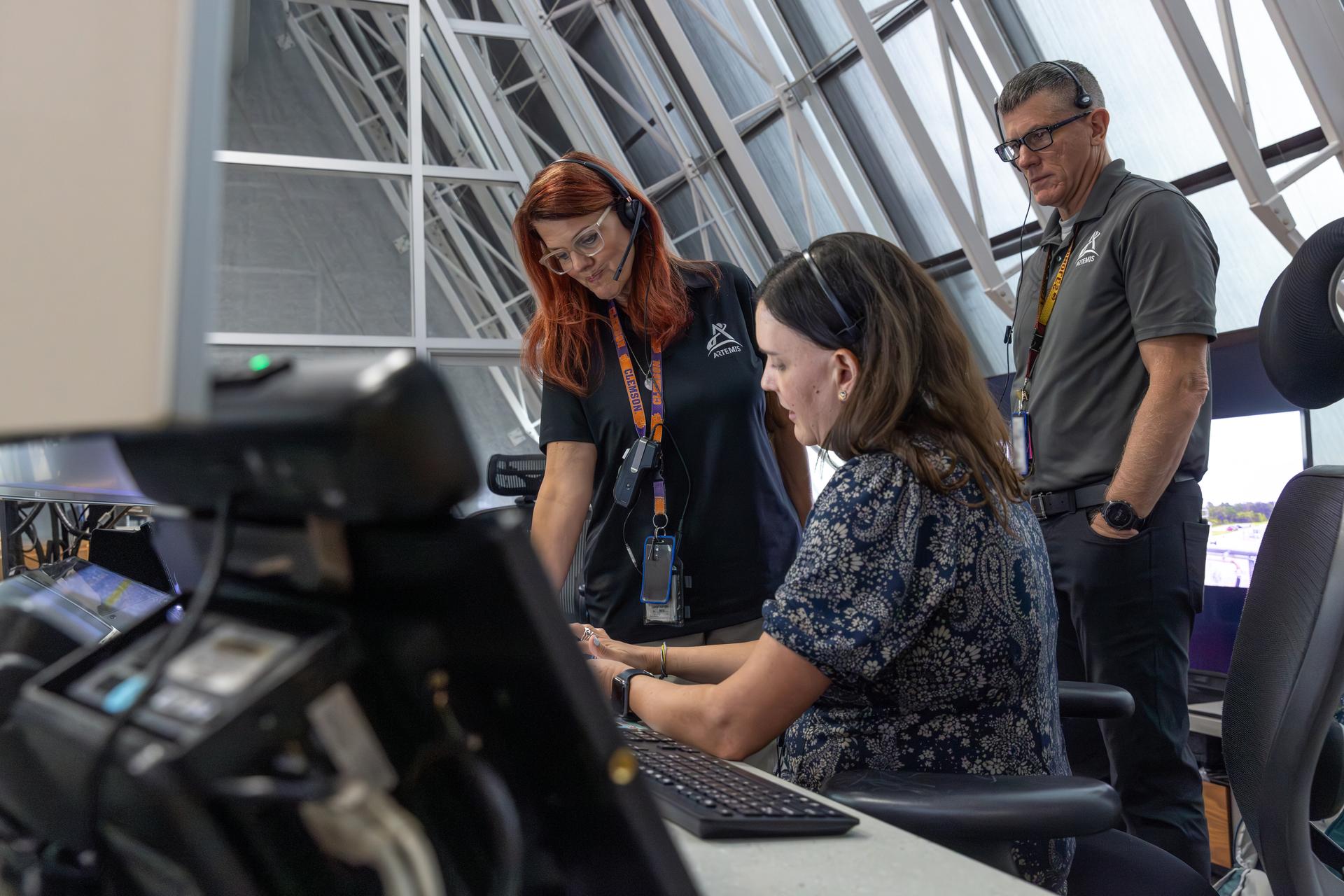
From left, Charlie Blackwell-Thompson, Artemis launch director; Mari Forrestel, Artemis launch director technical assistant; and Jeremy Graeber, assistant launch director, all with NASA’s Exploration Ground Systems Program, participate in a cryogenic propellant loading simulation for NASA’s Artemis III mission on Wednesday, Aug. 5, 2026, inside Firing Rooms 1 and 2 of the Rocco A. Petrone Launch Control Center at the agency’s Kennedy Space Center in Florida. Members of NASA’s Exploration Ground Systems team rehearse the steps to load the super-cooled liquid hydrogen and liquid oxygen into the SLS (Space Launch System) rocket core stage, a process that starts several hours before liftoff for the Artemis III mission. Artemis III will carry out a series of objectives in low Earth orbit designed to demonstrate critical systems needed for future lunar landings, beginning with Artemis IV.
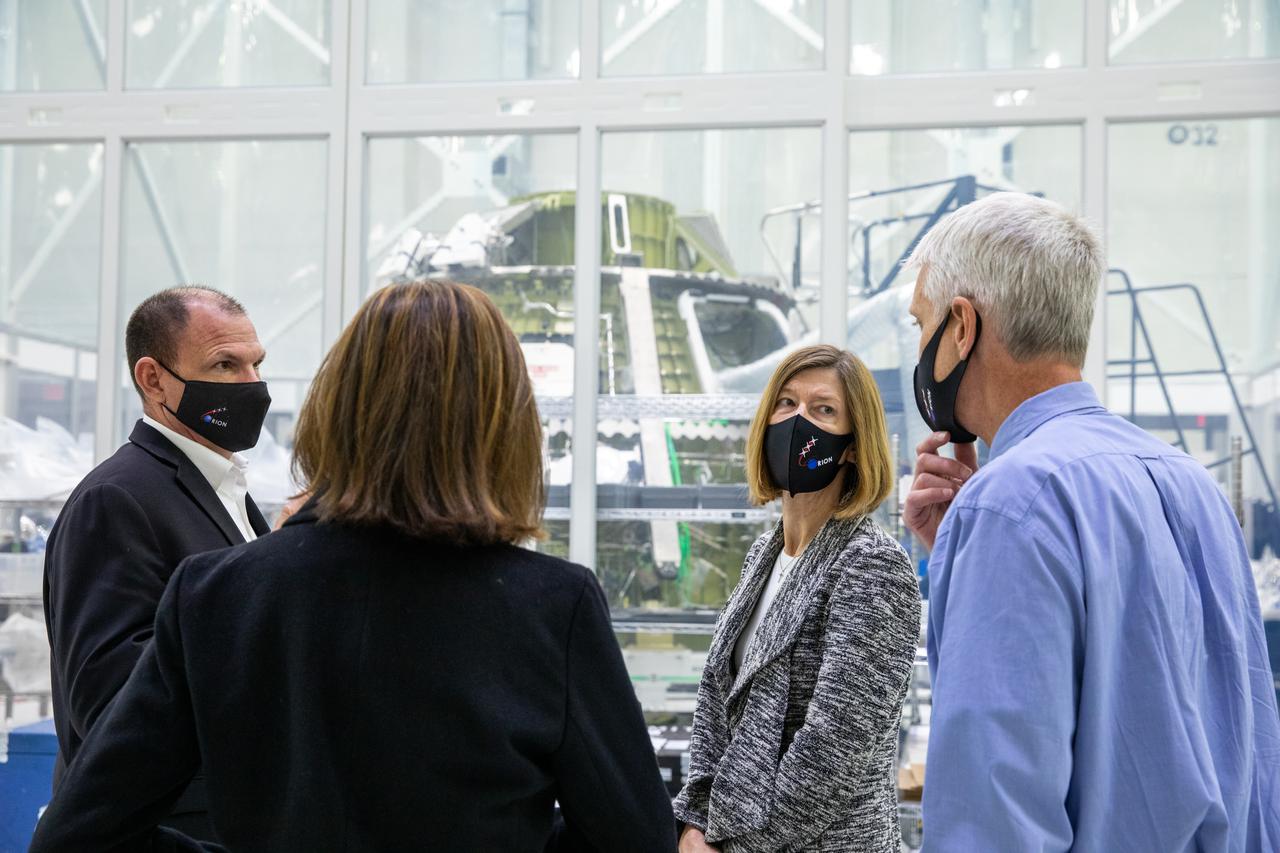
Kathy Lueders, second from right, associate administrator of the Human Exploration and Operations Mission Directorate, tours the Neil Armstrong Operations and Checkout Building high bay at NASA’s Kennedy Space Center in Florida on Jan. 14, 2021. In the background is the Orion crew module for the Artemis II mission. From left are Tony Antonelli, Lockheed Martin Orion Program director and Artemis II Mission director; Cathy Koerner, Orion Program manager; and Scott Wilson, Orion Production Operations manager. The group also viewed the Orion spacecraft for Artemis I as it was lowered onto a transporter for the move to the Multi-Payload Processing Facility to begin ground processing by the Exploration Ground Systems and Jacobs teams.
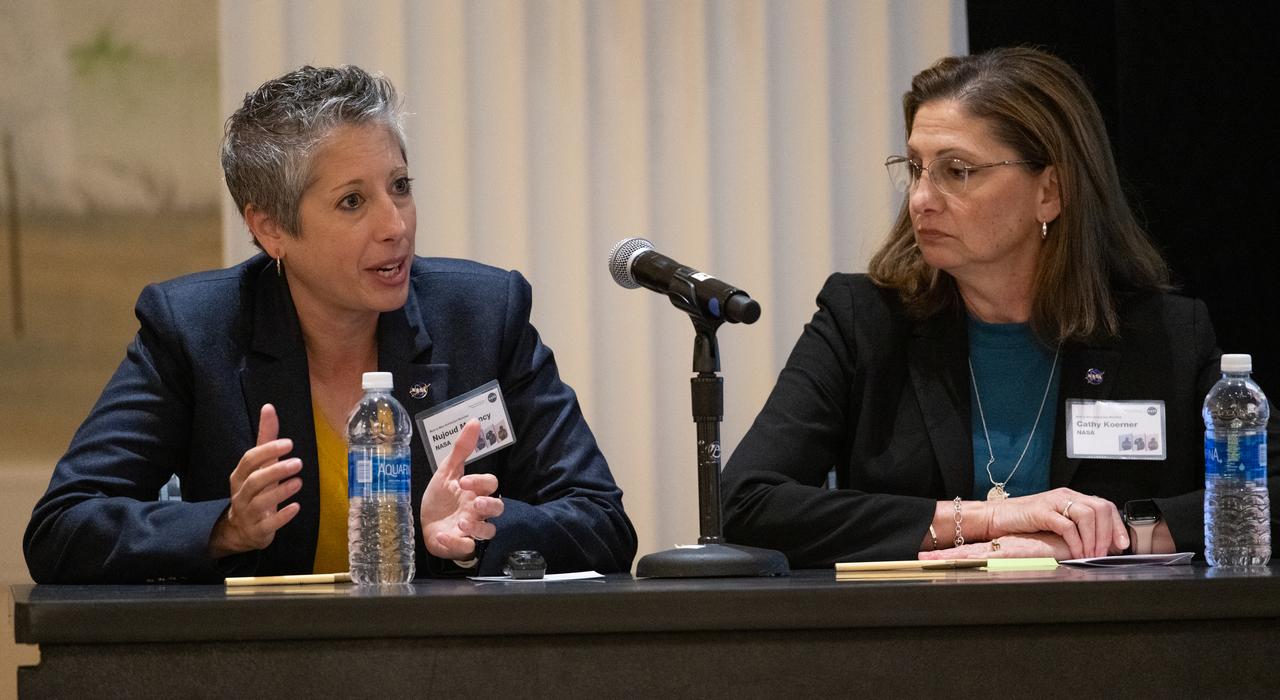
Nujoud Merancy, architecture lead for NASA's Exploration Systems Development Mission Directorate, left, and Catherine Koerner, deputy associate administrator for NASA's Exploration Systems Development Mission Directorate, are seen during NASA’s Moon to Mars Architecture Workshop, Tuesday, June 27, 2023, at the Gaylord National Resort and Convention Center in National Harbor, Md. Following the release of the 2022 Architecture Concept Review, NASA is conducting the workshop to engage the broader space community and collect feedback from U.S. industry and academia to inform the Moon to Mars mission architecture and operational delivery. Photo Credit: (NASA/Joel Kowsky)
Nujoud Merancy, architecture lead for NASA's Exploration Systems Development Mission Directorate, left, and Catherine Koerner, deputy associate administrator for NASA's Exploration Systems Development Mission Directorate, are seen during NASA’s Moon to Mars Architecture Workshop, Tuesday, June 27, 2023, at the Gaylord National Resort and Convention Center in National Harbor, Md. Following the release of the 2022 Architecture Concept Review, NASA is conducting the workshop to engage the broader space community and collect feedback from U.S. industry and academia to inform the Moon to Mars mission architecture and operational delivery. Photo Credit: (NASA/Joel Kowsky)
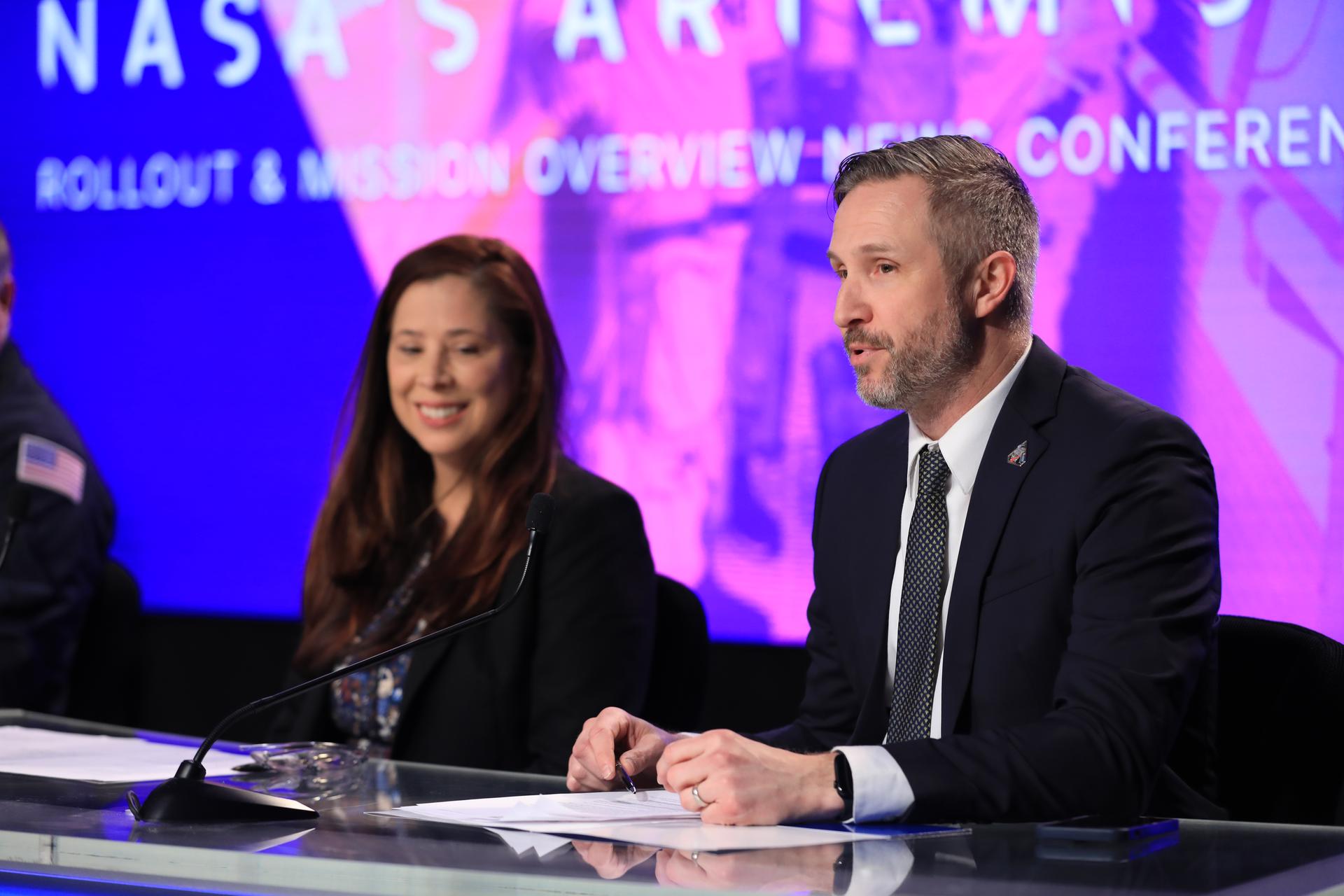
From left, Lili Villarreal, Artemis II landing and recovery director in Exploration Ground Systems Program at NASA’s Kennedy Space Center in Florida, and Jacob Bleacher, chief exploration scientist in the Exploration Systems Development Mission Directorate at NASA Headquarters in Washington, participate in an Artemis II mission overview news conference on Friday, Jan. 16, 2026, at NASA’s Kennedy Space Center in Florida ahead of rollout of the SLS (Space Launch System) rocket and Orion spacecraft from the Vehicle Assembly Building to Launch Complex 39B at NASA Kennedy. The Artemis II test flight will take Commander Reid Wiseman, Pilot Victor Glover, and Mission Specialist Christina Koch from NASA, and Mission Specialist Jeremy Hansen from the CSA (Canadian Space Agency), around the Moon and back to Earth no later than April 2026.
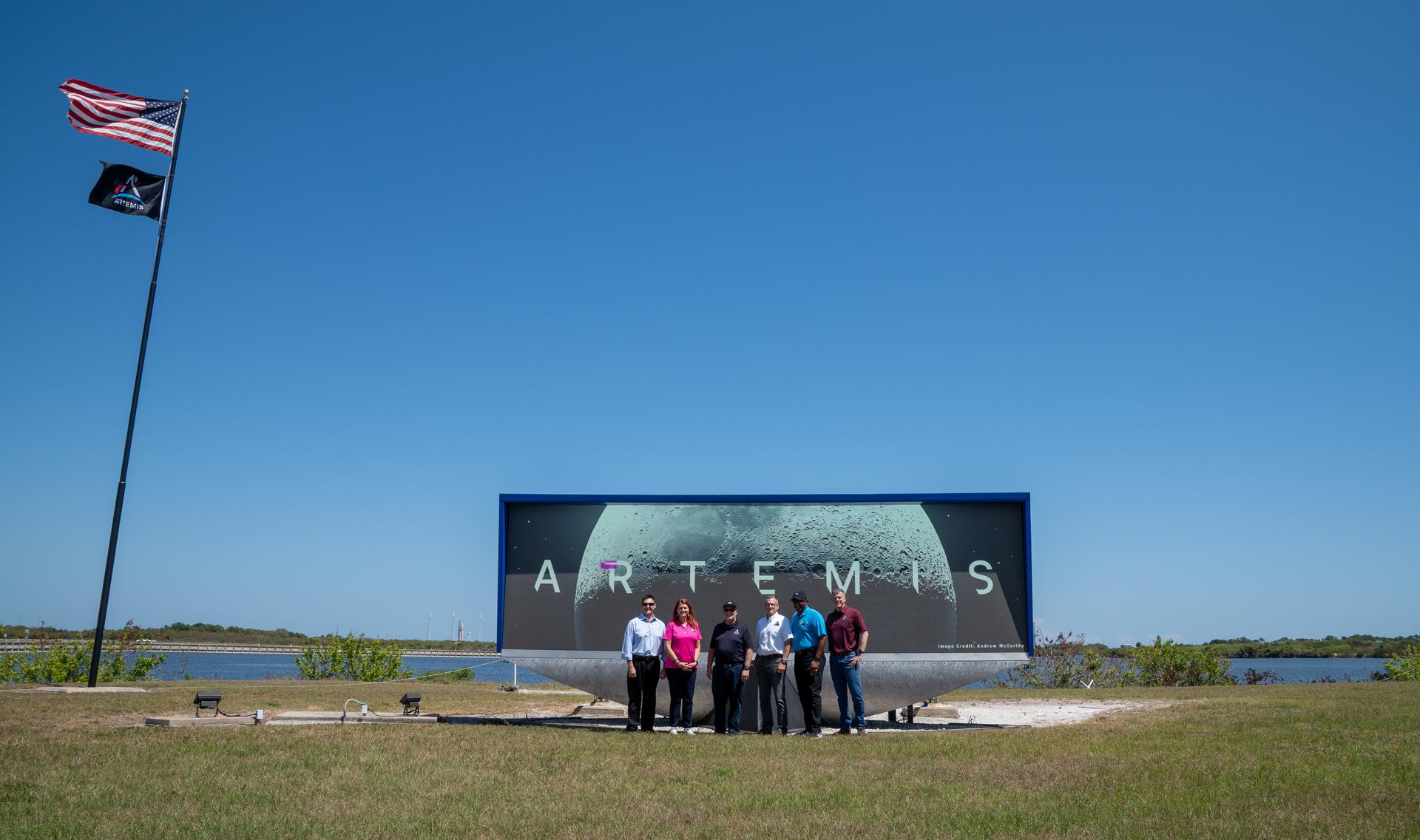
Robert Yaskovic, associate manager, Exploration Ground Systems Program; Charlie Blackwell-Thompson, Artemis II launch director; Shawn Quinn, manager, Exploration Ground Systems Program; Cliff Lanham, deputy manager, Exploration Ground Systems Program; NASA Kennedy Space Center Deputy Director Kelvin Manning; and Jeremy Graeber, assistant launch director, Exploration Ground Systems Program raise the Artemis flag near the countdown clock at the NASA News Center at NASA’s Kennedy Space Center in Florida on Friday, March 27, 2026. The Artemis II test flight mission will take Artemis II Commander Reid Wiseman, Pilot Victor Glover, and Mission Specialist Christina Koch from NASA, and Mission Specialist Jeremy Hansen from the CSA (Canadian Space Agency) on a 10-day journey around the Moon and back aboard NASA’s SLS (Space Launch System) rocket and Orion spacecraft from Launch Complex 39B no earlier than 6:24 p.m. EDT on Wednesday, April 1.
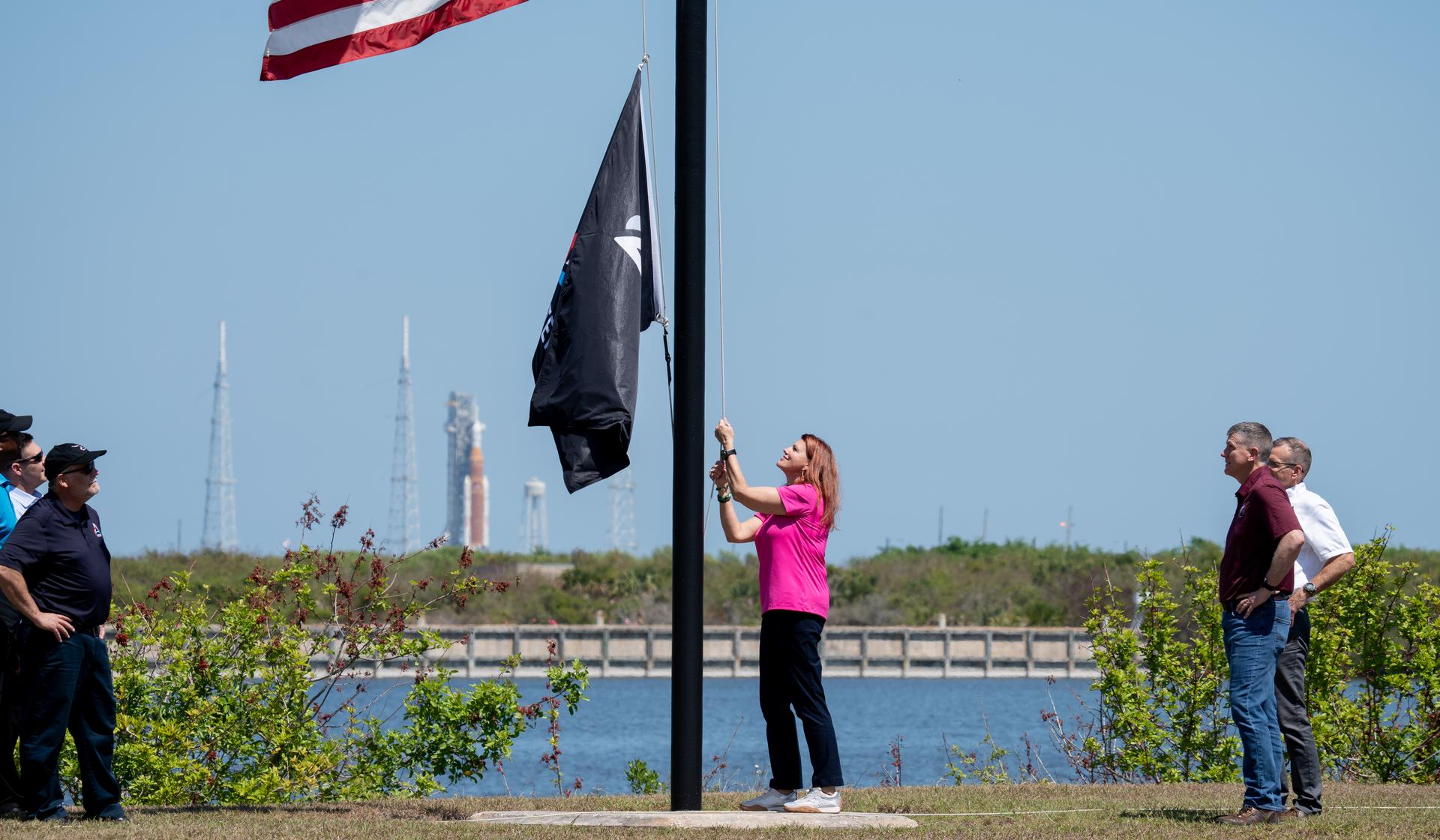
From left, NASA Kennedy Space Center Deputy Director Kelvin Manning; Robert Yaskovic, associate manager, Exploration Ground Systems Program; Shawn Quinn, manager, Exploration Ground Systems Program; Charlie Blackwell-Thompson, Artemis II launch director; Cliff Lanham, deputy manager, Exploration Ground Systems Program; and Jeremy Graeber, assistant launch director, Exploration Ground Systems Program raise the Artemis flag near the countdown clock at the NASA News Center at NASA’s Kennedy Space Center in Florida on Friday, March 27, 2026. The Artemis II test flight mission will take Artemis II Commander Reid Wiseman, Pilot Victor Glover, and Mission Specialist Christina Koch from NASA, and Mission Specialist Jeremy Hansen from the CSA (Canadian Space Agency) on a 10-day journey around the Moon and back aboard NASA’s SLS (Space Launch System) rocket and Orion spacecraft from Launch Complex 39B no earlier than 6:24 p.m. EDT on Wednesday, April 1.
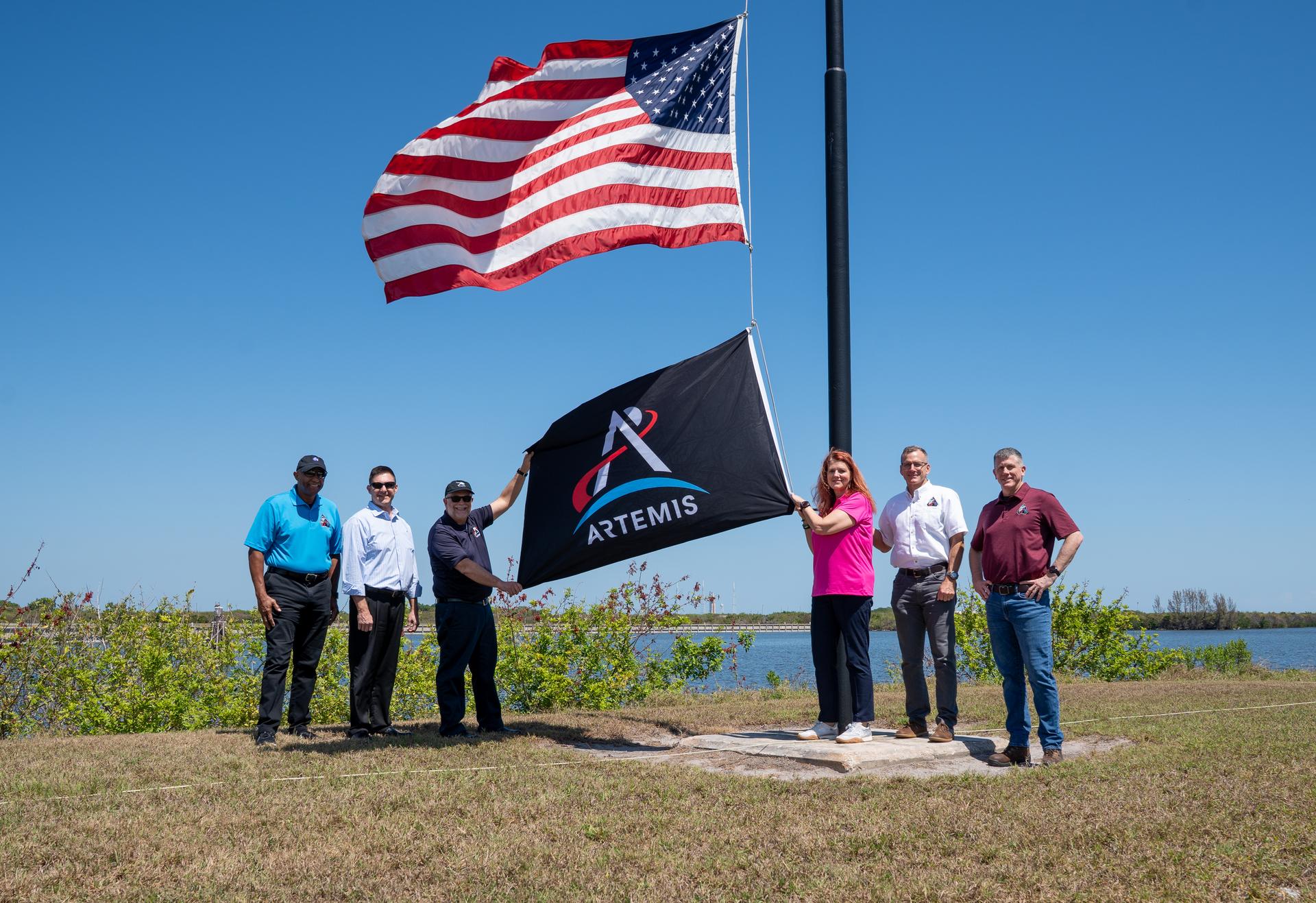
From left, NASA Kennedy Space Center Deputy Director Kelvin Manning; Robert Yaskovic, associate manager, Exploration Ground Systems Program; Shawn Quinn, manager, Exploration Ground Systems Program; Charlie Blackwell-Thompson, Artemis II launch director; Cliff Lanham, deputy manager, Exploration Ground Systems Program; and Jeremy Graeber, assistant launch director, Exploration Ground Systems Program raise the Artemis flag near the countdown clock at the NASA News Center at NASA’s Kennedy Space Center in Florida on Friday, March 27, 2026. The Artemis II test flight mission will take Artemis II Commander Reid Wiseman, Pilot Victor Glover, and Mission Specialist Christina Koch from NASA, and Mission Specialist Jeremy Hansen from the CSA (Canadian Space Agency) on a 10-day journey around the Moon and back aboard NASA’s SLS (Space Launch System) rocket and Orion spacecraft from Launch Complex 39B no earlier than 6:24 p.m. EDT on Wednesday, April 1.
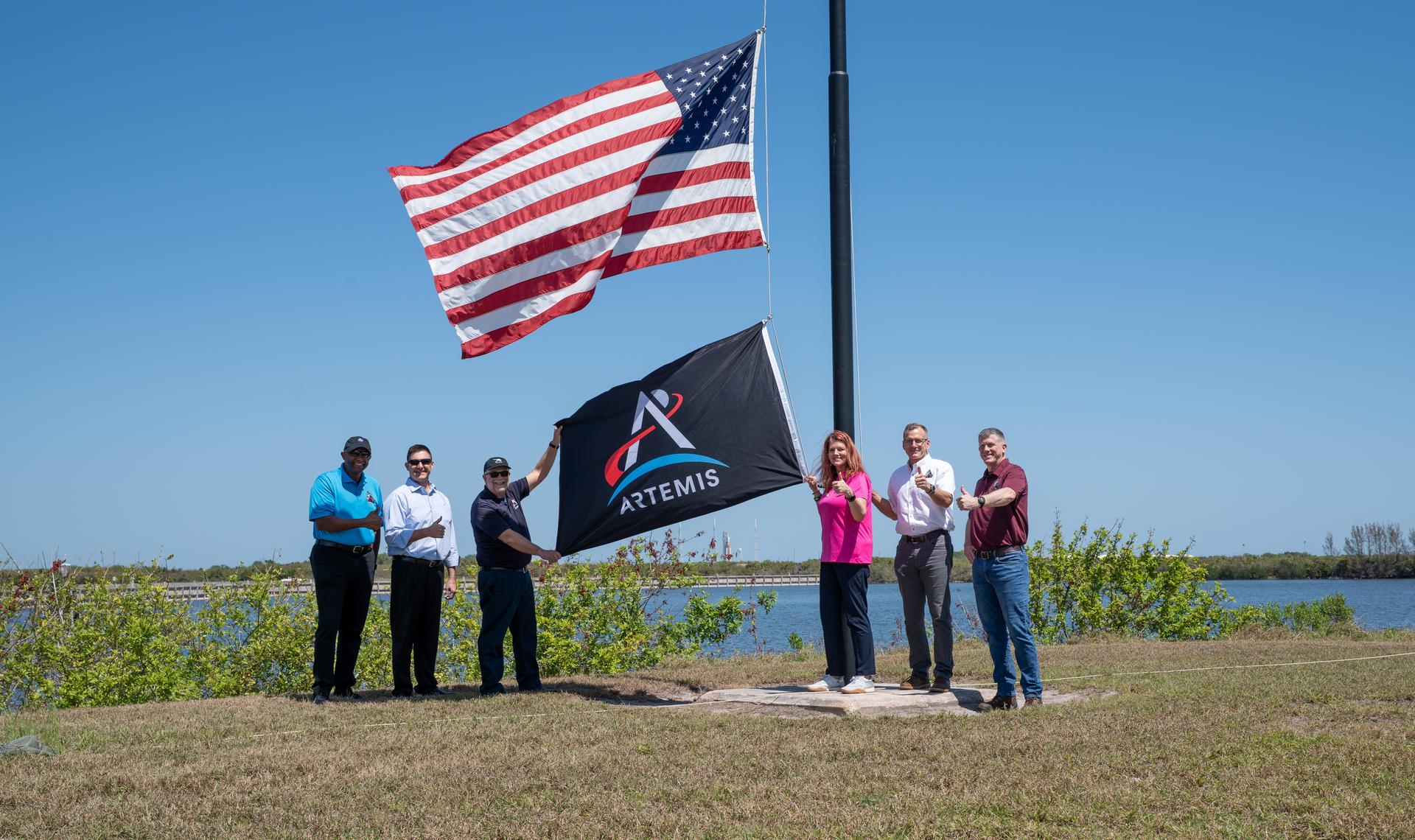
From left, NASA Kennedy Space Center Deputy Director Kelvin Manning; Robert Yaskovic, associate manager, Exploration Ground Systems Program; Shawn Quinn, manager, Exploration Ground Systems Program; Charlie Blackwell-Thompson, Artemis II launch director; Cliff Lanham, deputy manager, Exploration Ground Systems Program; and Jeremy Graeber, assistant launch director, Exploration Ground Systems Program raise the Artemis flag near the countdown clock at the NASA News Center at NASA’s Kennedy Space Center in Florida on Friday, March 27, 2026. The Artemis II test flight mission will take Artemis II Commander Reid Wiseman, Pilot Victor Glover, and Mission Specialist Christina Koch from NASA, and Mission Specialist Jeremy Hansen from the CSA (Canadian Space Agency) on a 10-day journey around the Moon and back aboard NASA’s SLS (Space Launch System) rocket and Orion spacecraft from Launch Complex 39B no earlier than 6:24 p.m. EDT on Wednesday, April 1.

From left, NASA Kennedy Space Center Deputy Director Kelvin Manning; Robert Yaskovic, associate manager, Exploration Ground Systems Program; Shawn Quinn, manager, Exploration Ground Systems Program; Charlie Blackwell-Thompson, Artemis II launch director; Cliff Lanham, deputy manager, Exploration Ground Systems Program; and Jeremy Graeber, assistant launch director, Exploration Ground Systems Program raise the Artemis flag near the countdown clock at the NASA News Center at NASA’s Kennedy Space Center in Florida on Friday, March 27, 2026. The Artemis II test flight mission will take Artemis II Commander Reid Wiseman, Pilot Victor Glover, and Mission Specialist Christina Koch from NASA, and Mission Specialist Jeremy Hansen from the CSA (Canadian Space Agency) on a 10-day journey around the Moon and back aboard NASA’s SLS (Space Launch System) rocket and Orion spacecraft from Launch Complex 39B no earlier than 6:24 p.m. EDT on Wednesday, April 1.
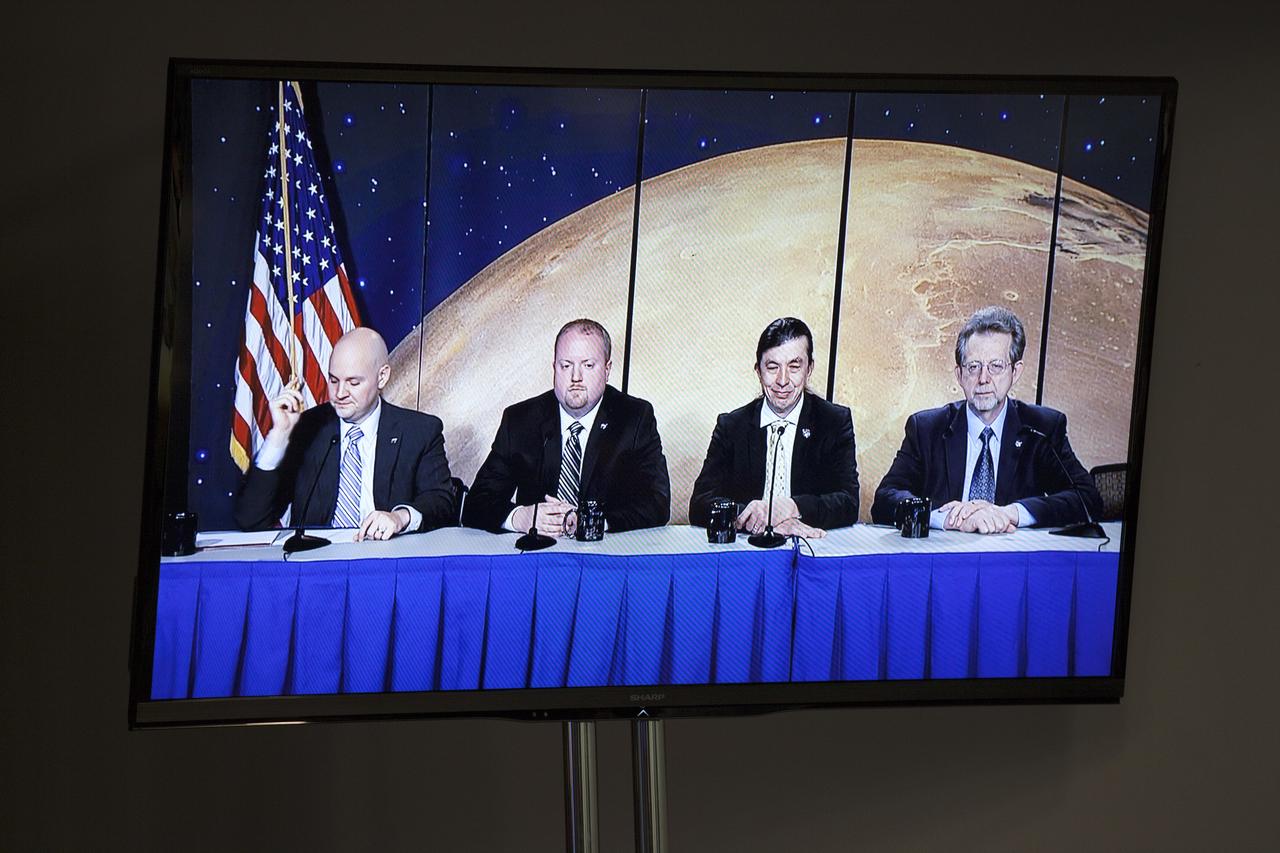
CAPE CANAVERAL, Fla. – At NASA Headquarters in Washington and the Kennedy Space Center in Florida, NASA leaders spoke to members of the new media about how the first flight of the new Orion spacecraft is a first step in the agency's plans to send humans to Mars. Seen on a video monitor at Kennedy, Headquarter participants, from the left are: Trent Perrotto of NASA Public Affairs, Jason Crusan, director of Advanced Exploration Systems Division of Human Exploration and Operations Mission Directorate, Jim Reuther, deputy associate administrator for Programs, Space Technology Mission Directorate, and Jim Green, director of Planetary Division of the Science Mission Directorate. Orion is the exploration spacecraft designed to carry astronauts to destinations not yet explored by humans, including an asteroid and Mars. It will have emergency abort capability, sustain the crew during space travel and provide safe re-entry from deep space return velocities. The first unpiloted flight test of Orion is scheduled to launch Dec. 4, 2014 atop a United Launch Alliance Delta IV Heavy rocket, and in 2018 on NASA’s Space Launch System rocket. For more information, visit www.nasa.gov/orion Photo credit: NASA/Kim Shiflett
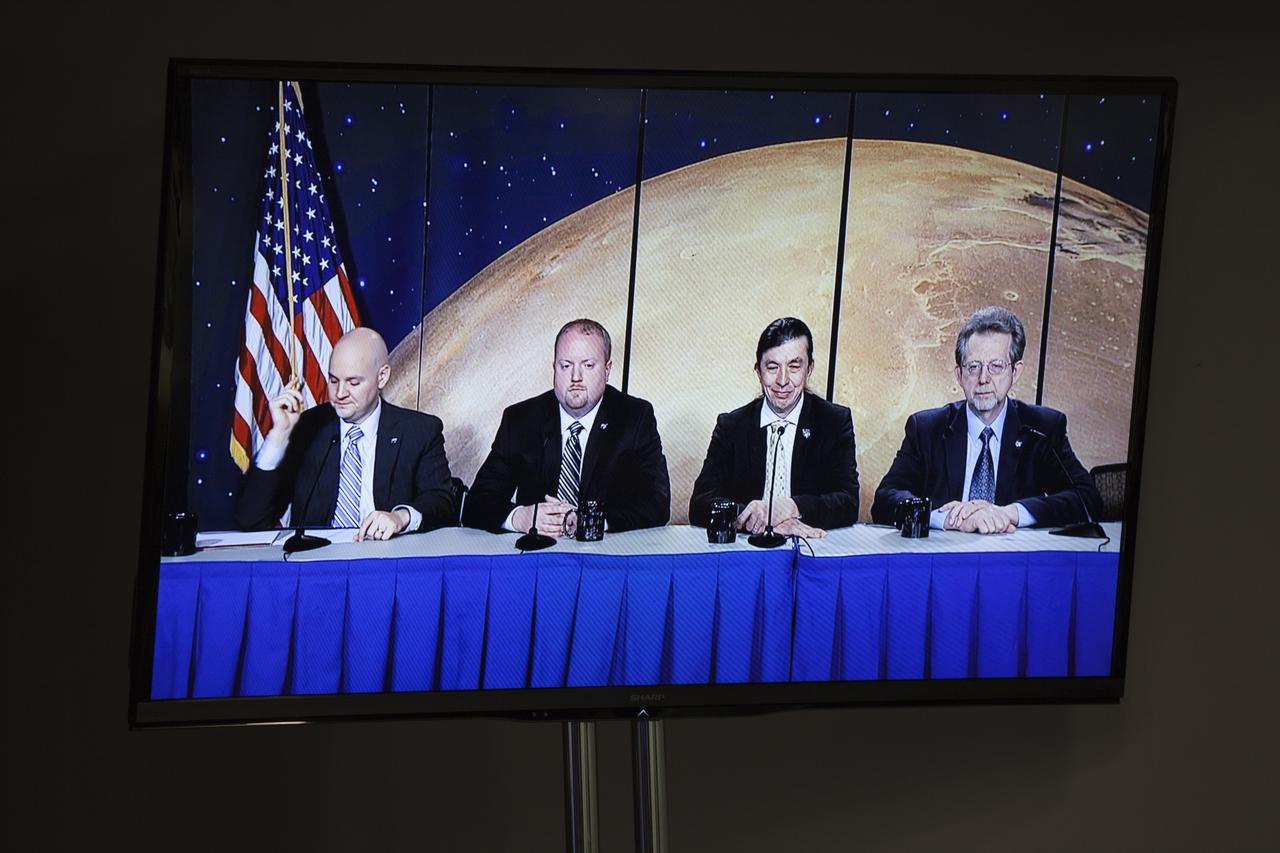
At NASA Headquarters in Washington and the Kennedy Space Center in Florida, NASA leaders spoke to members of the new media about how the first flight of the new Orion spacecraft is a first step in the agency's plans to send humans to Mars. Seen on a video monitor at Kennedy, Headquarter participants, from the left are: Trent Perrotto of NASA Public Affairs, Jason Crusan, director of Advanced Exploration Systems Division of Human Exploration and Operations Mission Directorate, Jim Reuther, deputy associate administrator for Programs, Space Technology Mission Directorate, and Jim Green, director of Planetary Division of the Science Mission Directorate. Orion is the exploration spacecraft designed to carry astronauts to destinations not yet explored by humans, including an asteroid and Mars. It will have emergency abort capability, sustain the crew during space travel and provide safe re-entry from deep space return velocities. The first unpiloted flight test of Orion is scheduled to launch Dec. 4, 2014 atop a United Launch Alliance Delta IV Heavy rocket, and in 2018 on NASA’s Space Launch System rocket.
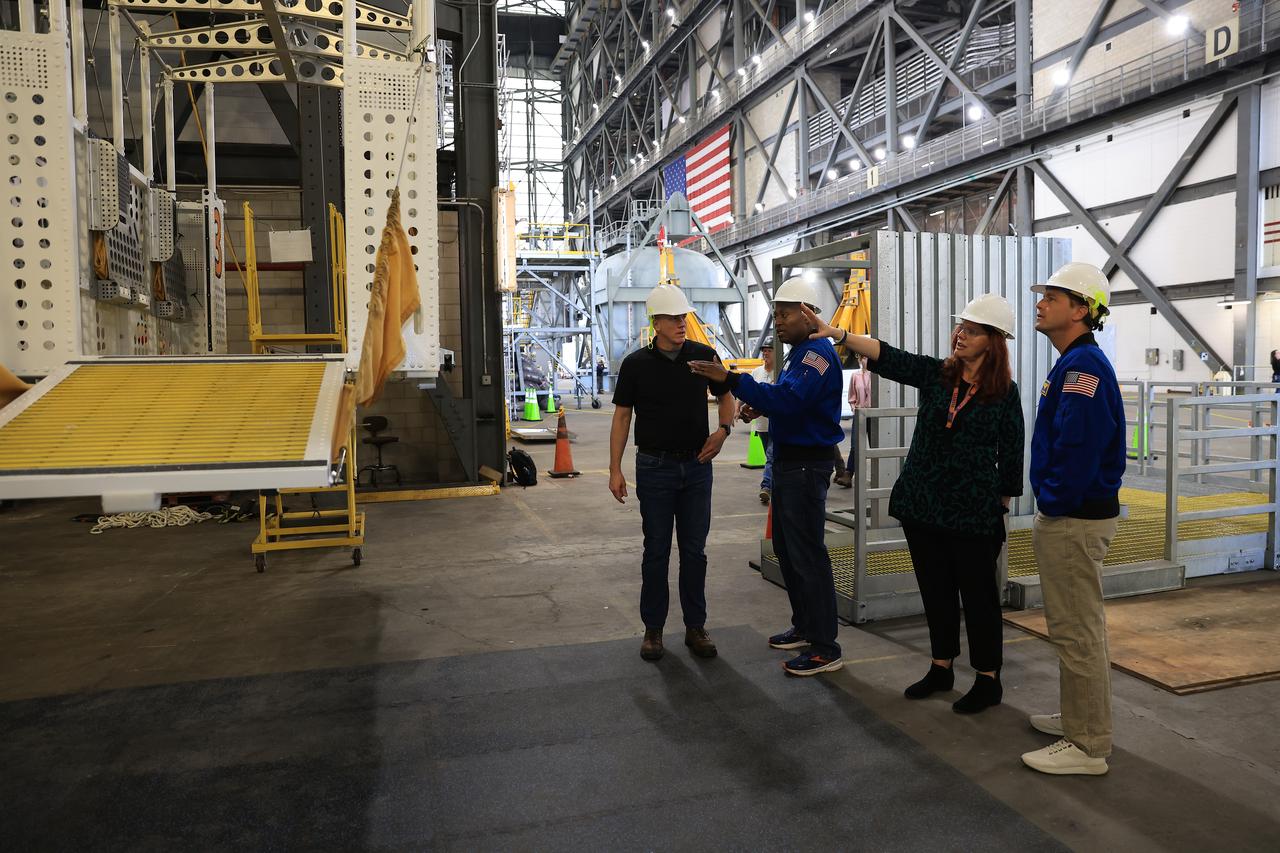
From left, Jeremy Graeber, Artemis assistant launch director Exploration Ground Systems at NASA’s Kennedy Space Center in Florida; NASA astronaut Andre Douglas, Artemis II backup crew member; Charlie Blackwell-Thompson, launch director for NASA’s Exploration Ground Systems Program at Kennedy Space Center; and Artemis II NASA astronaut Reid Wiseman, commander, look at the emergency egress basket inside the Vehicle Assembly Building at NASA Kennedy on Thursday, Feb. 27, 2025. For Artemis II, four astronauts will venture around the Moon, the first crewed mission on NASA’s path to establishing a long-term presence for science and exploration through Artemis.
Director of Safety and Mission Assurance Ronnie Rodriguez participates in the Safety Starts With You Leadership Panel on Jan. 25, 2022, at NASA’s Kennedy Space Center in Florida. The panel discussion featured senior leaders from the spaceport addressing ways employees can focus on safely completing mission objectives in the new year. Other panelists included Kennedy Space Center Director Janet Petro, Director of Spaceport Integration and Services Nancy Bray, and Exploration Ground Systems Chief of Staff Sasha Sims.

Leah Martin, NASA Communications, moderates the Safety Starts With You Leadership Panel on Jan. 25, 2022, at Kennedy Space Center in Florida. The panel discussion featured senior leaders from the spaceport addressing ways employees can focus on safely completing mission objectives in the new year. Panelists included Kennedy Space Center Director Janet Petro, Director of Safety and Mission Assurance Ronnie Rodriguez, Director of Spaceport Integration and Services Nancy Bray, and Exploration Ground Systems Chief of Staff Sasha Sims.
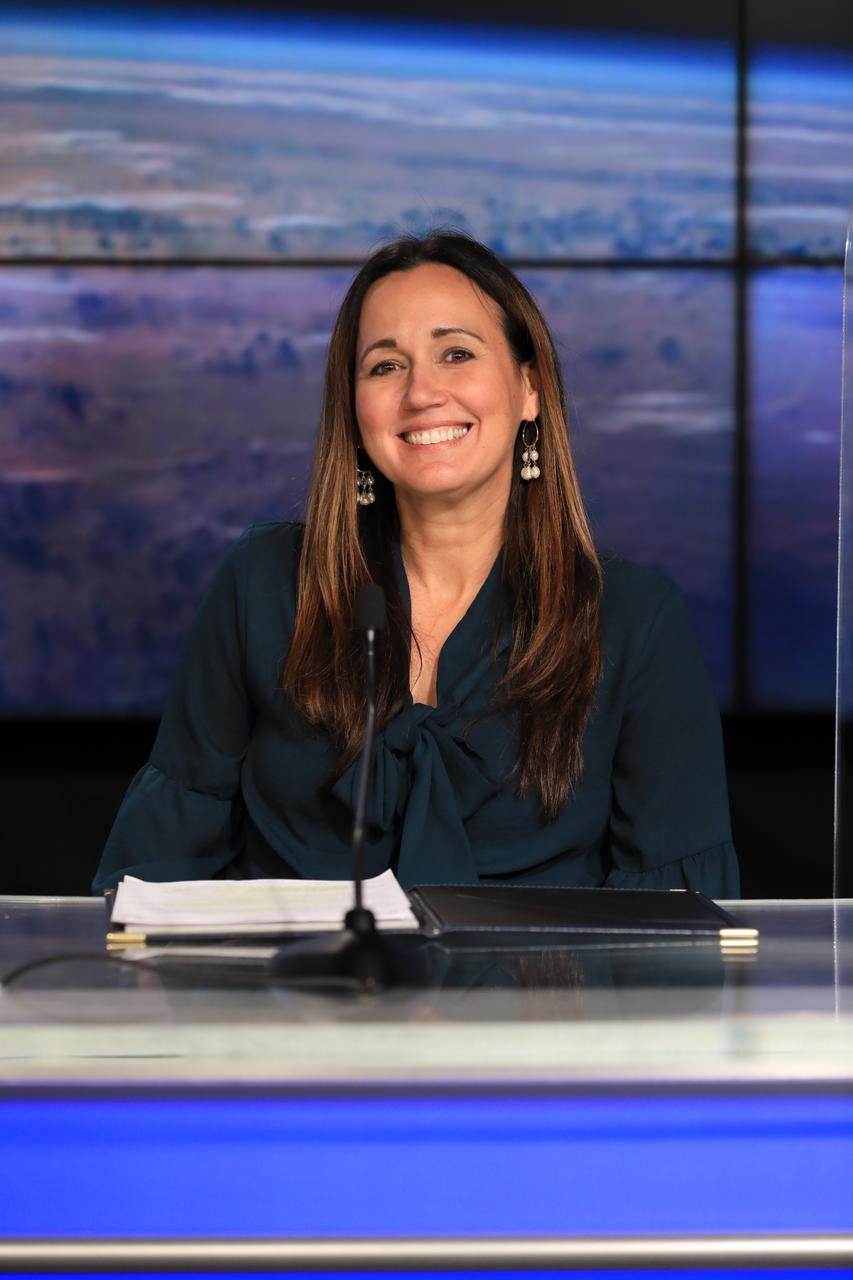
Director of Spaceport Integration and Services Nancy Bray participates in the Safety Starts With You Leadership Panel on Jan. 25, 2022, at NASA’s Kennedy Space Center in Florida. The panel discussion featured senior leaders from the spaceport addressing ways employees can focus on safely completing mission objectives in the new year. Other panelists included Kennedy Space Center Director Janet Petro, Director of KSC Safety and Mission Assurance Ronnie Rodriguez, and Exploration Ground Systems Chief of Staff Sasha Sims.
Exploration Ground Systems Chief of Staff Sasha Sims participates in the Safety Starts With You Leadership Panel on Jan. 25, 2022, at NASA’s Kennedy Space Center in Florida. The panel discussion featured senior leaders from the spaceport addressing ways employees can focus on safely completing mission objectives in the new year. Other panelists included Kennedy Space Center Director Janet Petro, Director of Safety and Mission Assurance Ronnie Rodriguez, and Director of Spaceport Integration and Services Nancy Bray.
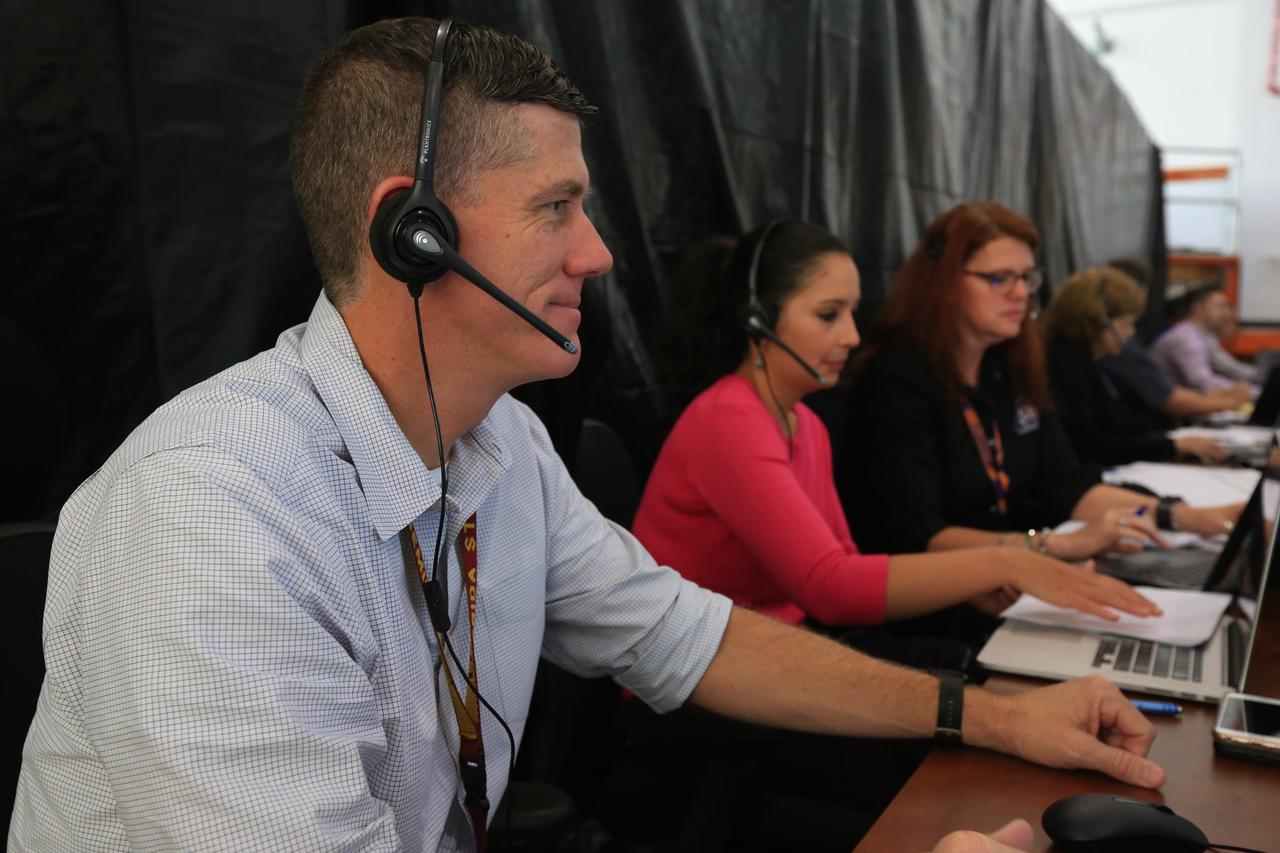
From left, Jeremy Graeber, chief NASA test director; Jessica Parsons, technical assistant to the launch director; and Charlie Blackwell-Thompson, Exploration Mission-1 (EM-1) launch director, participate in a countdown demonstration event of cryogenic propellant loading April 12, 2019, inside Firing Room 2 in the Launch Control Center at NASA’s Kennedy Space Center in Florida. The practice simulation involved loading of liquid hydrogen and liquid oxygen into the Space Launch System rocket’s core and upper stages to prepare for Exploration Mission-1 (EM-1). During the tanking exercise, the team worked through surprise issues in real-time. The practice countdown events are training opportunities coordinated by Blackwell-Thompson with Exploration Ground Systems.
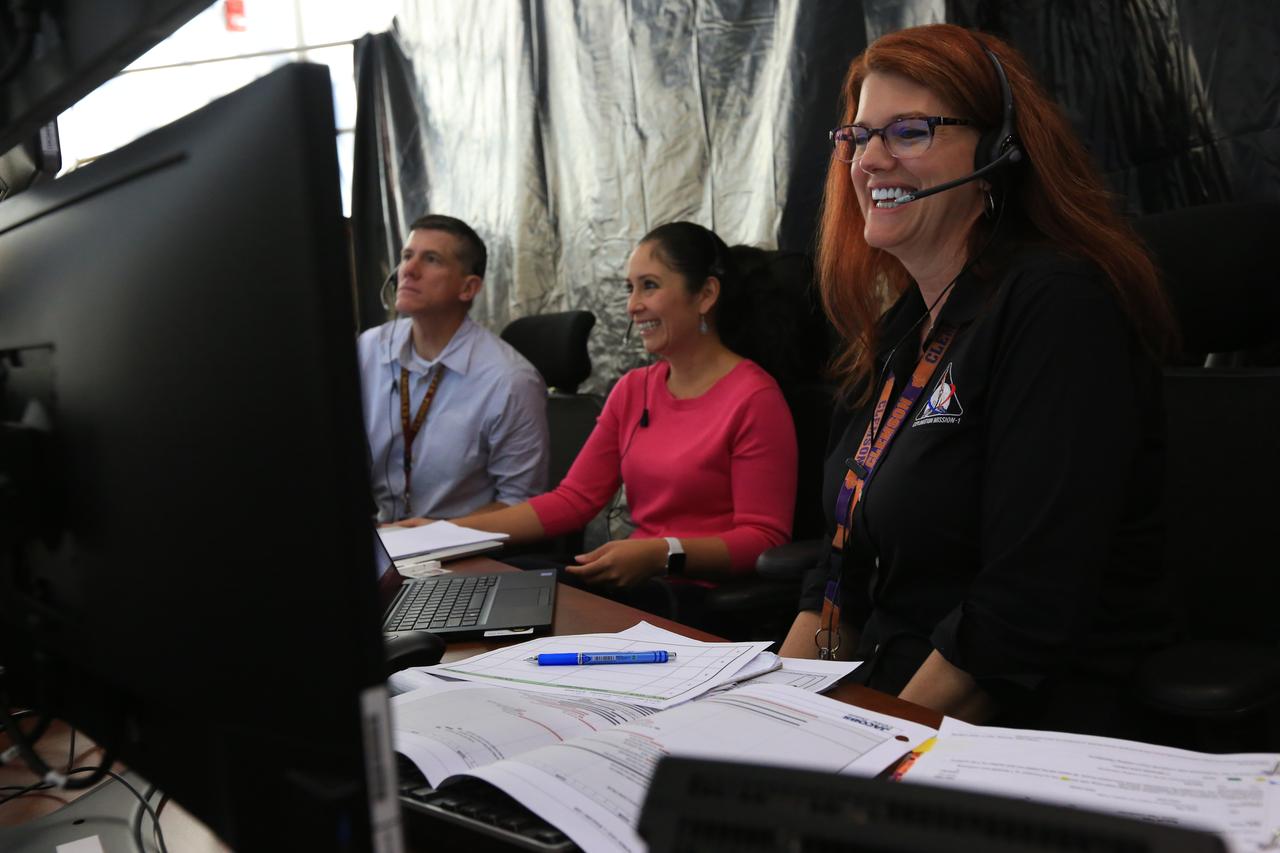
From left, Jeremy Graeber, chief NASA test director; Jessica Parsons, technical assistant to the launch director; and Charlie Blackwell-Thompson, Exploration Mission-1 (EM-1) launch director, participate in a countdown demonstration event of cryogenic propellant loading April 12, 2019, inside Firing Room 2 in the Launch Control Center at NASA’s Kennedy Space Center in Florida. The practice simulation involved loading of liquid hydrogen and liquid oxygen into the Space Launch System rocket’s core and upper stages to prepare for Exploration Mission-1 (EM-1). During the tanking exercise, the team worked through surprise issues in real-time. The practice countdown events are training opportunities coordinated by Blackwell-Thompson with Exploration Ground Systems.
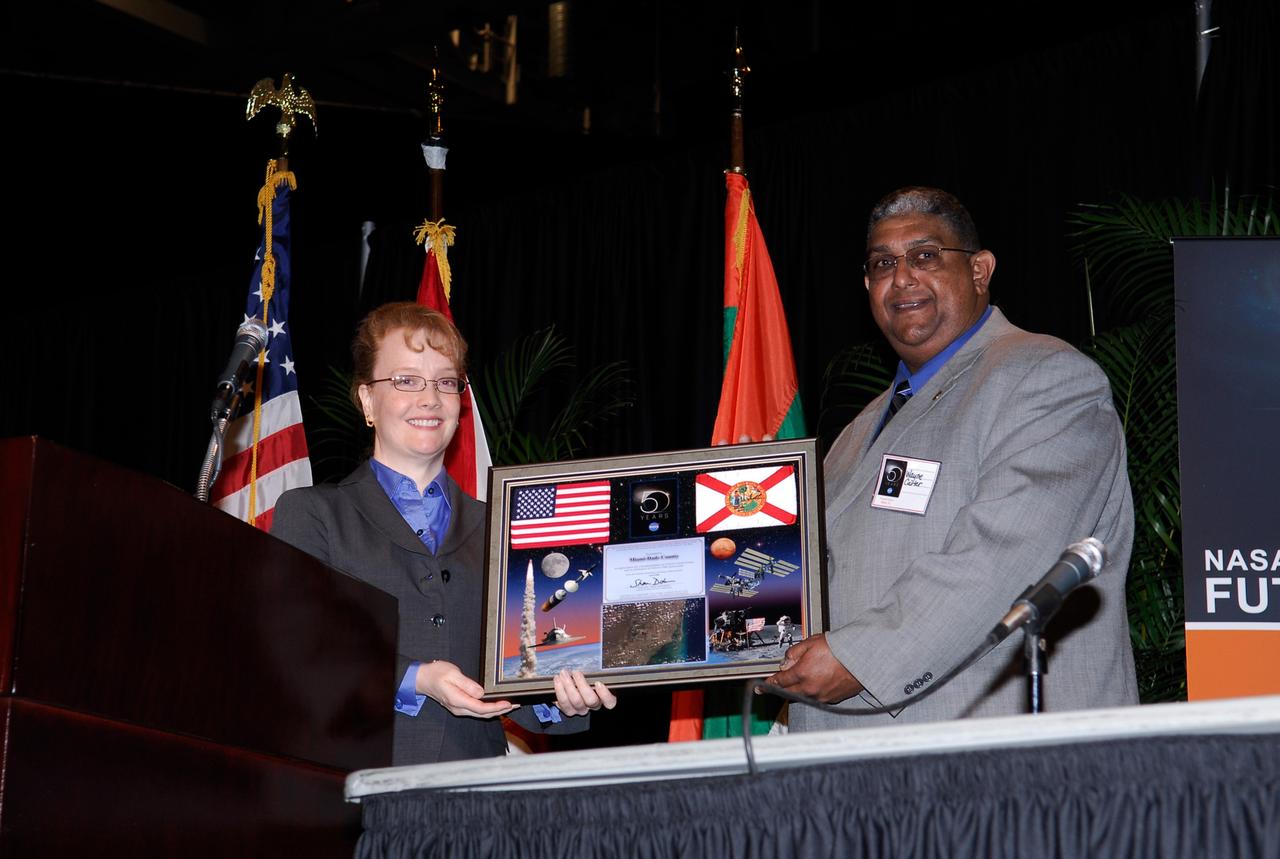
CAPE CANAVERAL, Fla. -- NASA Deputy Administrator Shana Dale (left) presents a 50th anniversary commemorative plaque to Wayne Carter during a Future Forum in Miami that focused on how space exploration benefits Florida's economy. Carter is assistant director for constituent services for the Miami-Dade County Mayor, Carlos Alveraz. The event, which included presentations and panels, was held at the University of Miami's BankUnited Center. Among those participating were NASA Deputy Administrator Shana Dale, astronaut Carl Walz, director of the Advanced Capabilities Division in NASA's Exploration Systems Mission Directorate, and Russell Romanella, director, International Space Station and Spacecraft Processing. Photo credit: NASA/Kim Shiflett
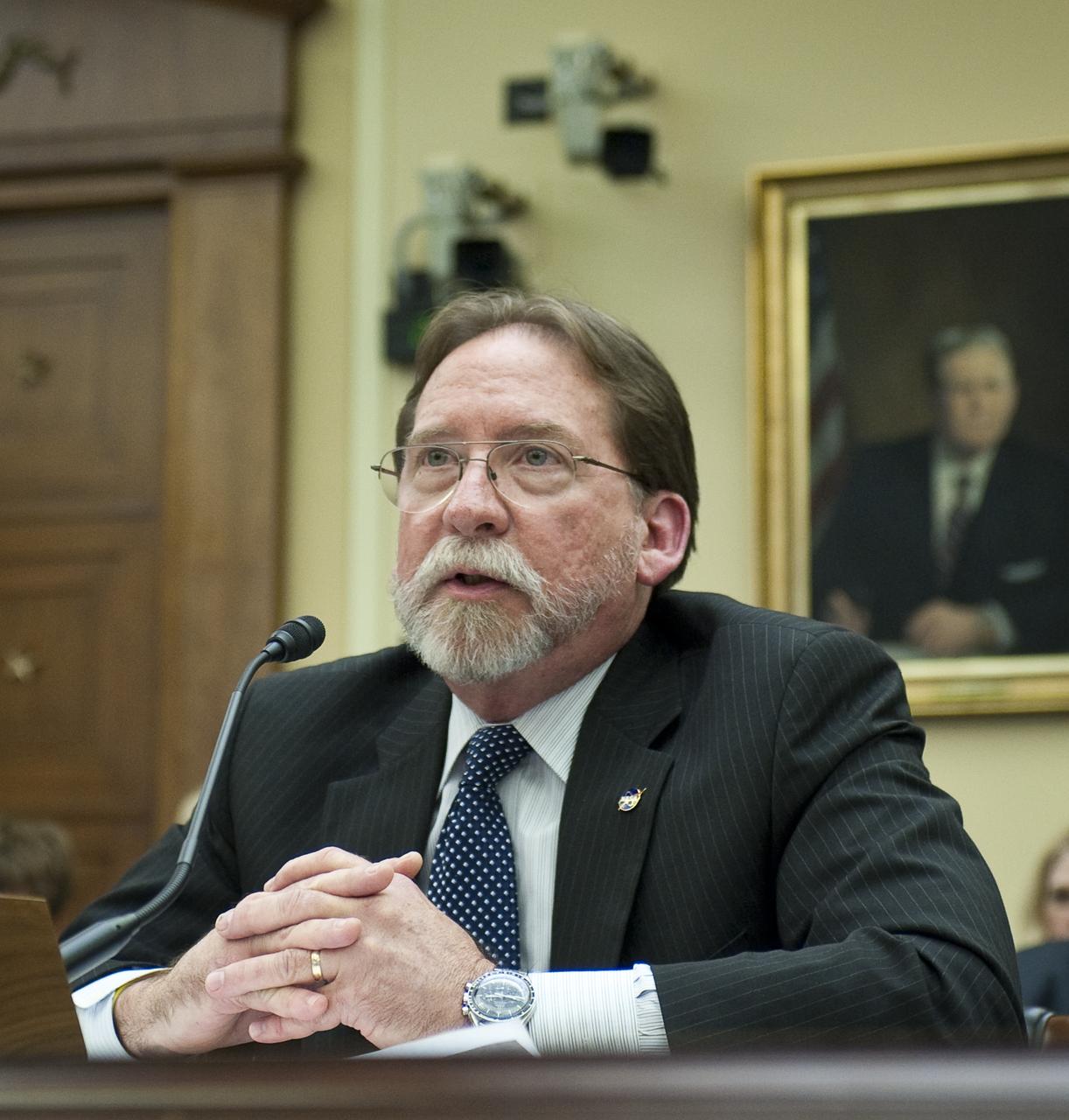
Douglas R. Cooke, NASA's Associate Administrator for Exploration Systems Mission Directorate (ESMD), appears before the U.S. House of Representatives' Committee on Science and Technology, Subcommittee on Space and Aeronautics to discuss proposed changes to NASA's exploration program on Wednesday, March 24, 2010, on Capitol Hill in Washington. Photo Credit: (NASA/Carla Cioffi)
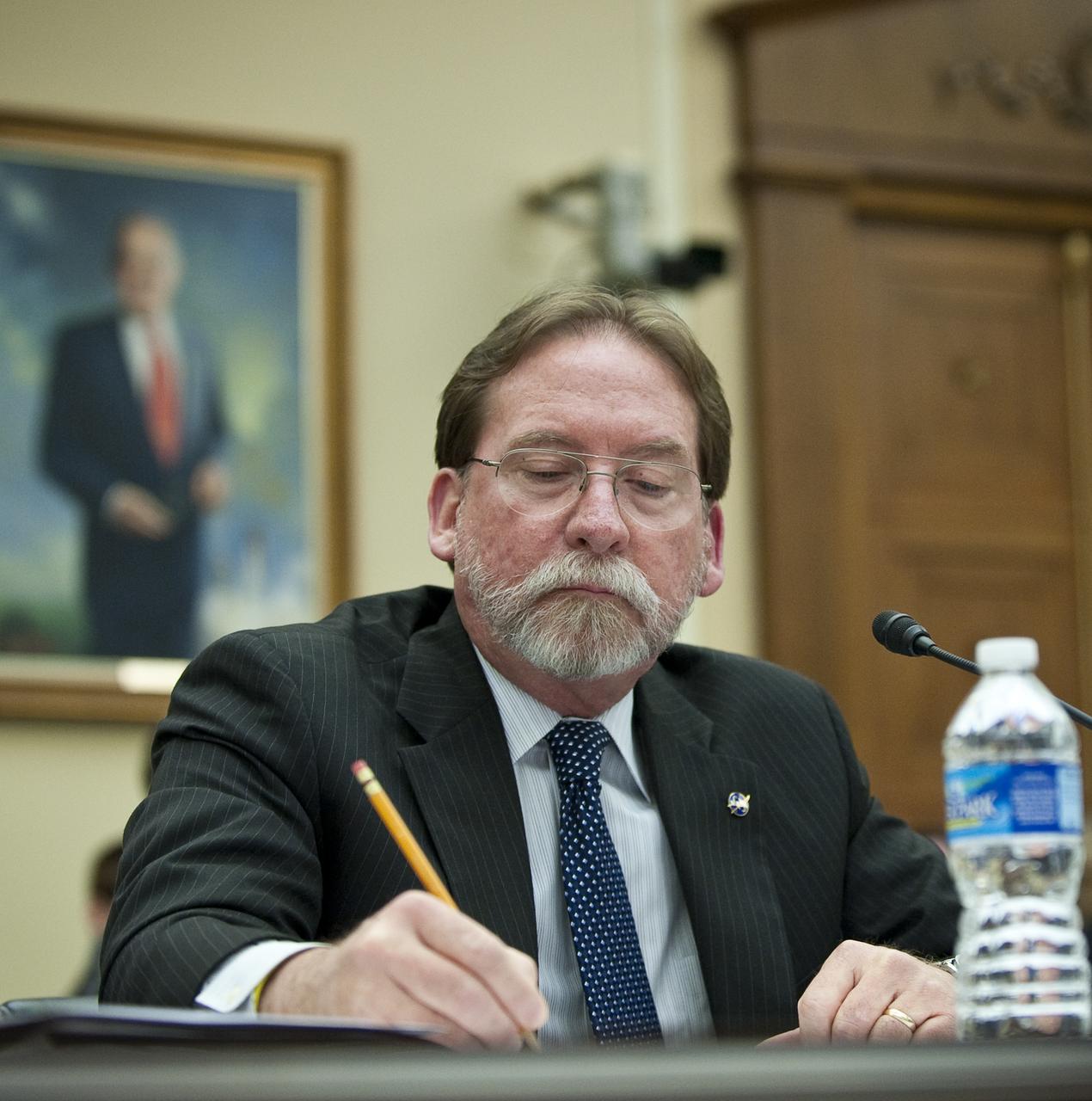
Douglas R. Cooke, NASA's Associate Administrator for Exploration Systems Mission Directorate (ESMD), appears before the U.S. House of Representatives' Committee on Science and Technology, Subcommittee on Space and Aeronautics to discuss proposed changes to NASA's exploration program on Wednesday, March 24, 2010, on Capitol Hill in Washington. Photo Credit: (NASA/Carla Cioffi)
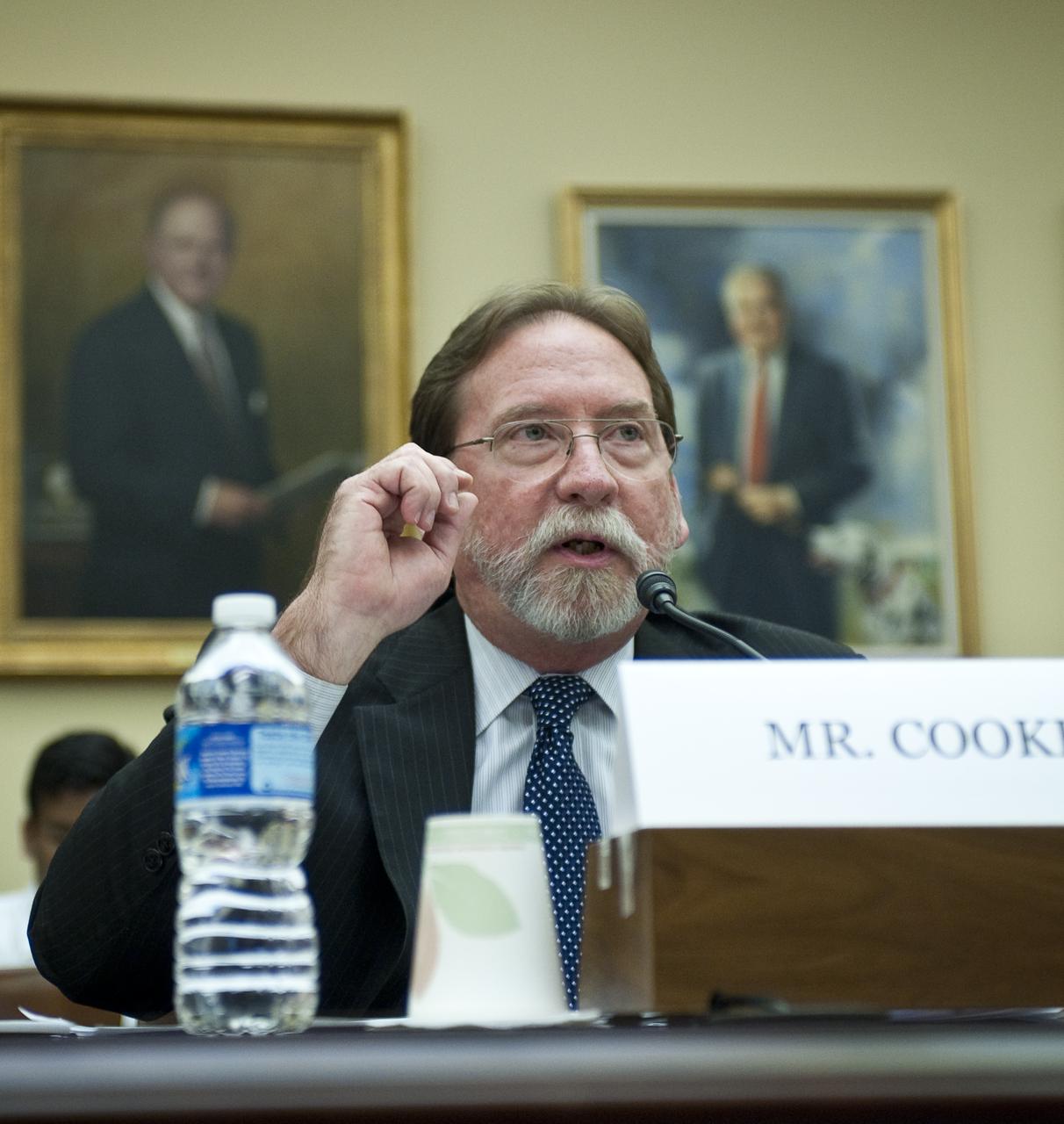
Douglas R. Cooke, NASA's Associate Administrator for Exploration Systems Mission Directorate (ESMD), appears before the U.S. House of Representatives' Committee on Science and Technology, Subcommittee on Space and Aeronautics to discuss proposed changes to NASA's exploration program on Wednesday, March 24, 2010, on Capitol Hill in Washington. Photo Credit: (NASA/Carla Cioffi)
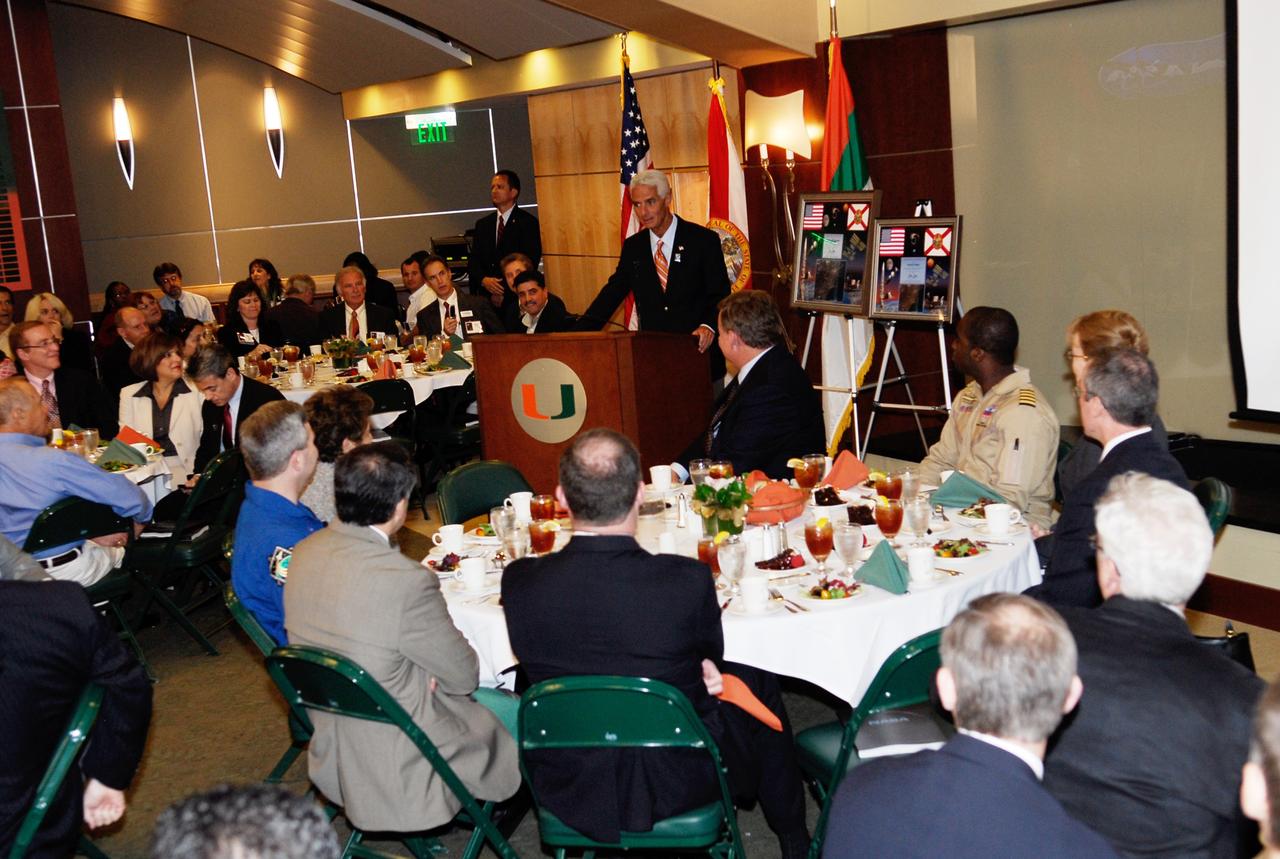
CAPE CANAVERAL, Fla. -- Florida Gov. Charlie Crist (center, by the podium) makes an appearance at the luncheon held during NASA’s Future Forum in Miami. The keynote presentation was given by astronaut Steve Frick, who was commander of the STS-122 shuttle mission. The forum focused on how space exploration benefits Florida's economy. The event, which included presentations and panels, was held at the University of Miami's BankUnited Center. Among those participating were NASA Deputy Administrator Shana Dale, astronaut Carl Walz, director of the Advanced Capabilities Division in NASA's Exploration Systems Mission Directorate, and Russell Romanella, director, International Space Station and Spacecraft Processing. Photo credit: NASA/Kim Shiflett
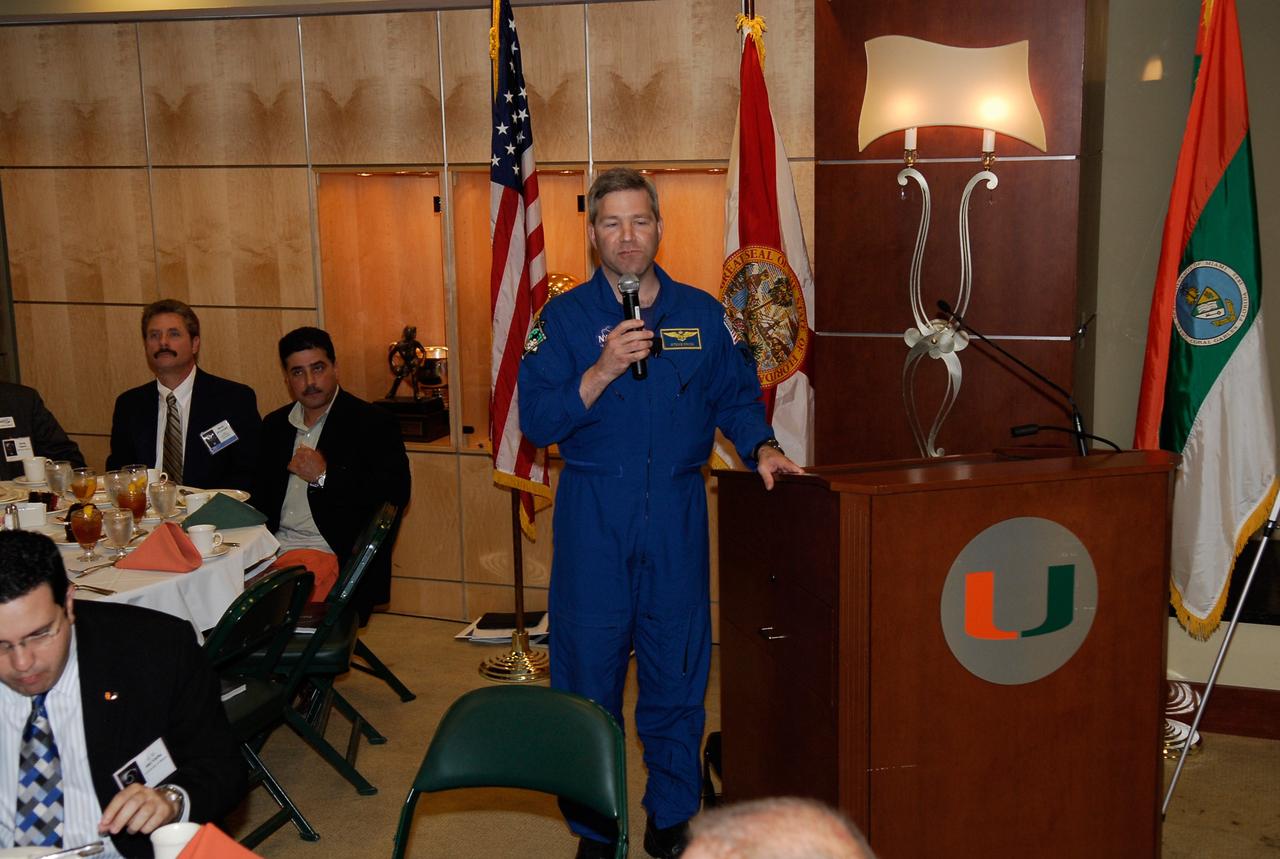
CAPE CANAVERAL, Fla. -- At the luncheon held during NASA’s Future Forum in Miami, astronaut Steve Frick gives the keynote address. Frick served as commander of the STS-122 shuttle mission. The forum focused on how space exploration benefits Florida's economy. The event, which included presentations and panels, was held at the University of Miami's BankUnited Center. Among those participating were NASA Deputy Administrator Shana Dale, astronaut Carl Walz, director of the Advanced Capabilities Division in NASA's Exploration Systems Mission Directorate, and Russell Romanella, director, International Space Station and Spacecraft Processing. Photo credit: NASA/Kim Shiflett
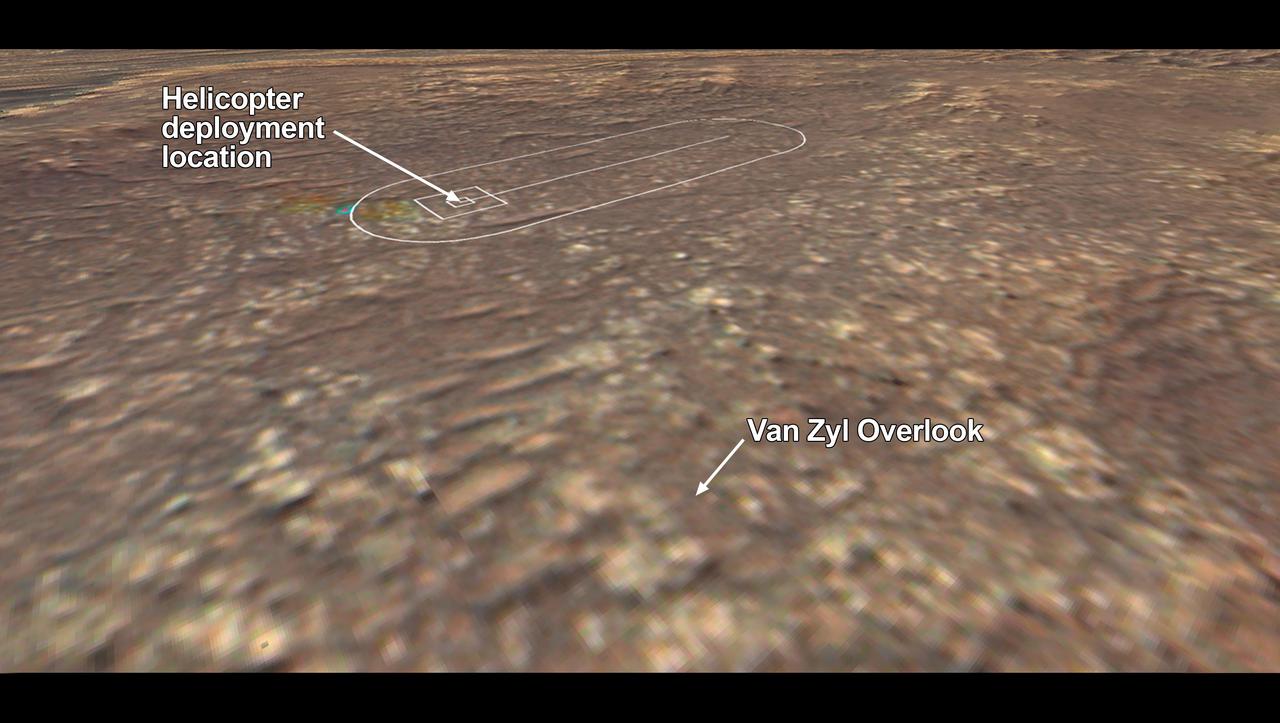
The location where NASA's Mars 2020 Perseverance rover will observe the Ingenuity Mars Helicopter's attempt at powered controlled flight at Mars is called "Van Zyl Overlook," after Jakob van Zyl. Van Zyl was the team's longtime colleague, mentor, and leader at NASA's Jet Propulsion Laboratory in Southern California. He passed away unexpectedly in August 2020, about a month after the launch of Perseverance. Van Zyl joined JPL in 1986 and served in crucial roles at the Lab over a 33-year career, including as director for the Astronomy and Physics Directorate, associate director for project formulation and strategy, and finally director for the Solar System Exploration Directorate. As leader of solar system exploration at JPL, he oversaw successful operations of such NASA missions as Juno, Dawn, and Cassini, the implementation of the Mars InSight lander and MarCO CubeSats, as well as ongoing development of Europa Clipper, Psyche, and all of JPL's instruments and Ingenuity. https://photojournal.jpl.nasa.gov/catalog/PIA24435
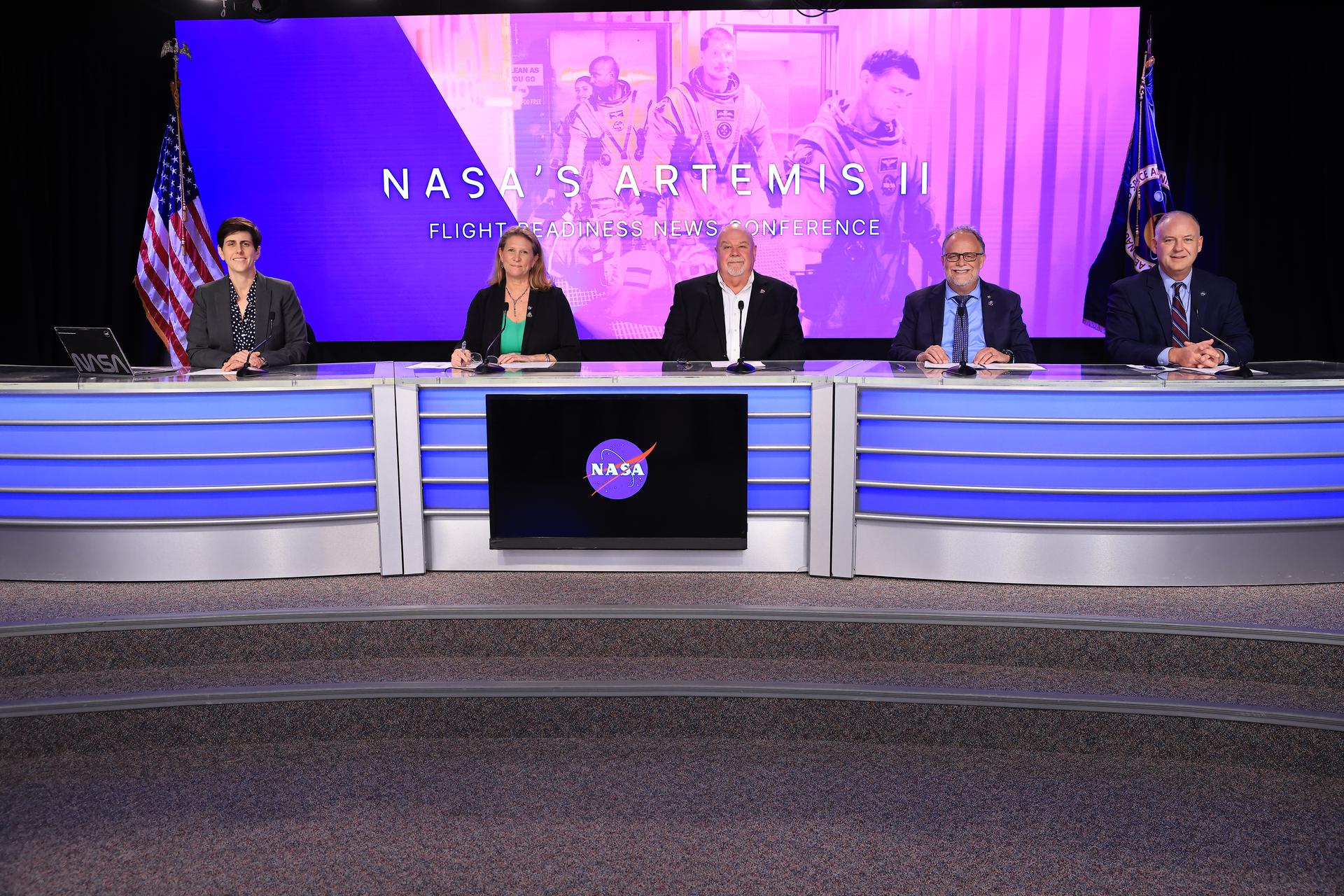
From left to right, Rachel Kraft, NASA Communications; Lori Glaze, acting associate administrator, Exploration Systems Development Mission Directorate; John Honeycutt, chair, Artemis II Mission Management Team; Shawn Quinn, manager, Exploration Ground Systems Program; and Norm Knight, director, Flight Operations Directorate, participate in a post-Flight Readiness Review news conference for the Artemis II test flight inside the John Holliman Auditorium of the NASA News Center at the agency’s Kennedy Space Center in Florida on Thursday, March 12, 2026. The review is an assessment of the readiness of NASA’s SLS (Space Launch System) rocket and Orion spacecraft to support the Artemis II test flight as four astronauts journey around the Moon and return to Earth.
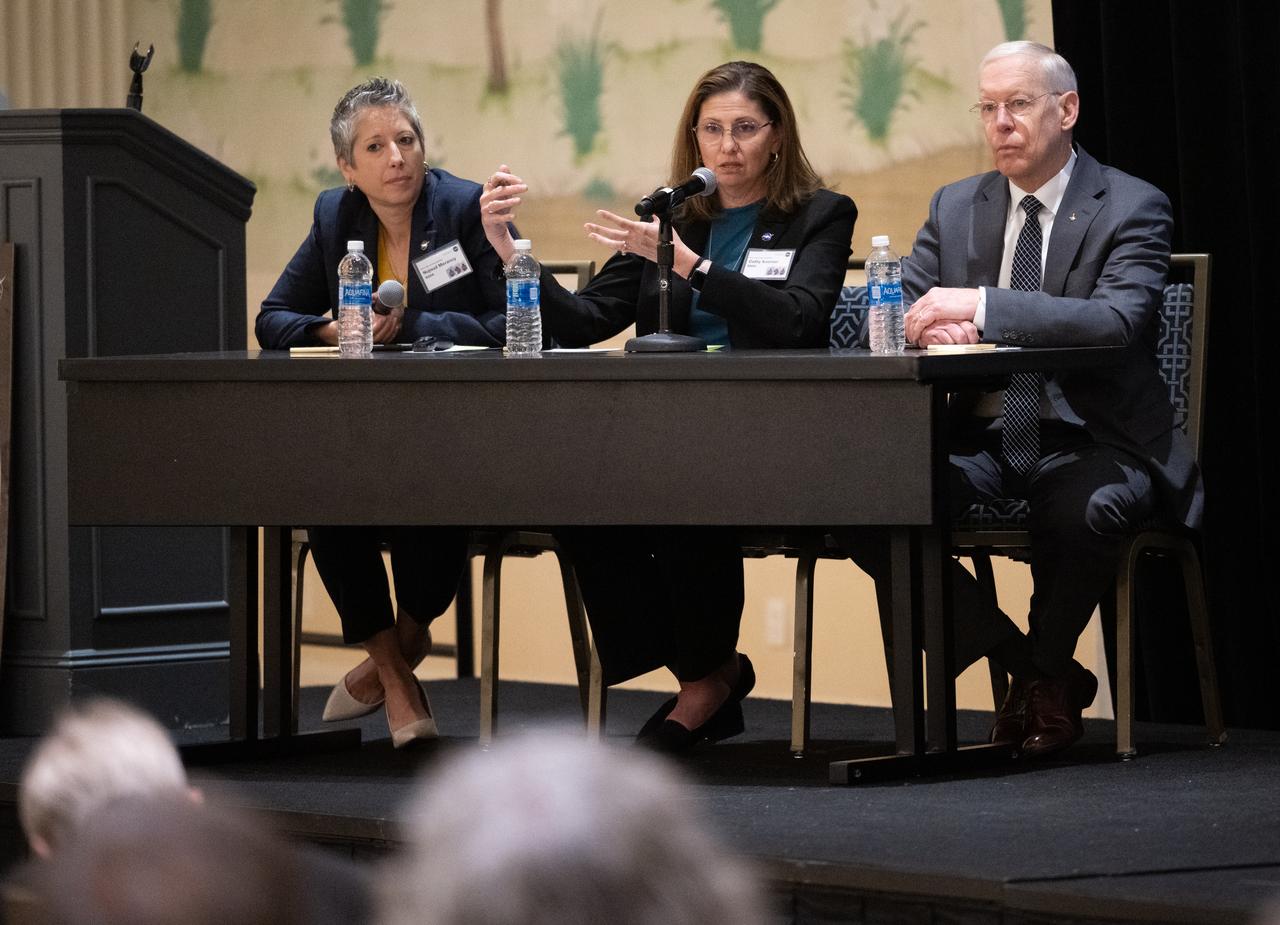
Catherine Koerner, deputy associate administrator for NASA's Exploration Systems Development Mission Directorate, center, is seen alongside Nujoud Merancy, architecture lead for NASA's Exploration Systems Development Mission Directorate, left, and Patrick Forrester, special advisor in NASA's Space Operations Mission Directorate, right, during NASA’s Moon to Mars Architecture Workshop, Tuesday, June 27, 2023, at the Gaylord National Resort and Convention Center in National Harbor, Md. Following the release of the 2022 Architecture Concept Review, NASA is conducting the workshop to engage the broader space community and collect feedback from U.S. industry and academia to inform the Moon to Mars mission architecture and operational delivery. Photo Credit: (NASA/Joel Kowsky)
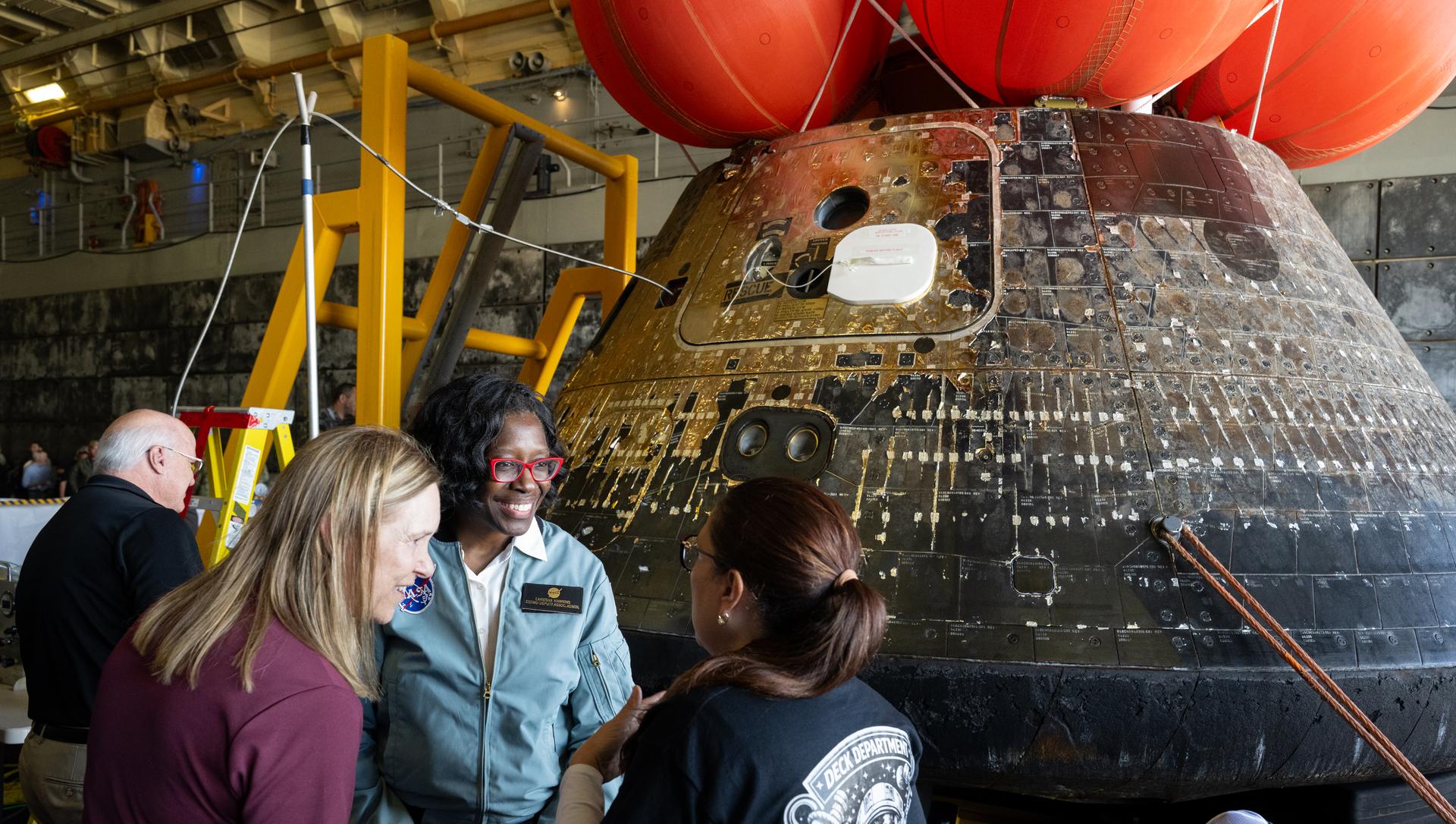
Lilian Villarreal, Artemis II landing and recovery director for Exploration Ground Systems at NASA's Kennedy Space Center, right, speaks with Janet Petro, director of NASA's Kennedy Space Center, left, and Lakiesha Hawkins, acting deputy associate administrator for NASA's Exploration Systems Development Mission Directorate, center, as they look at the agency’s Orion spacecraft in the well deck of USS John P. Murtha, Saturday, April 11, 2026, at Naval Base San Diego in California. NASA’s Artemis II mission, which took NASA astronauts Reid Wiseman, commander; Victor Glover, pilot; Christina Koch, mission specialist; and CSA (Canadian Space Agency) astronaut Jeremy Hansen, mission specialist on a nearly 10-day journey around the Moon and back to Earth, splashed down at 5:07 p.m. PDT (8:07 p.m. EDT) on April 10 in the Pacific Ocean off the coast of California. Photo Credit: (NASA/Joel Kowsky)
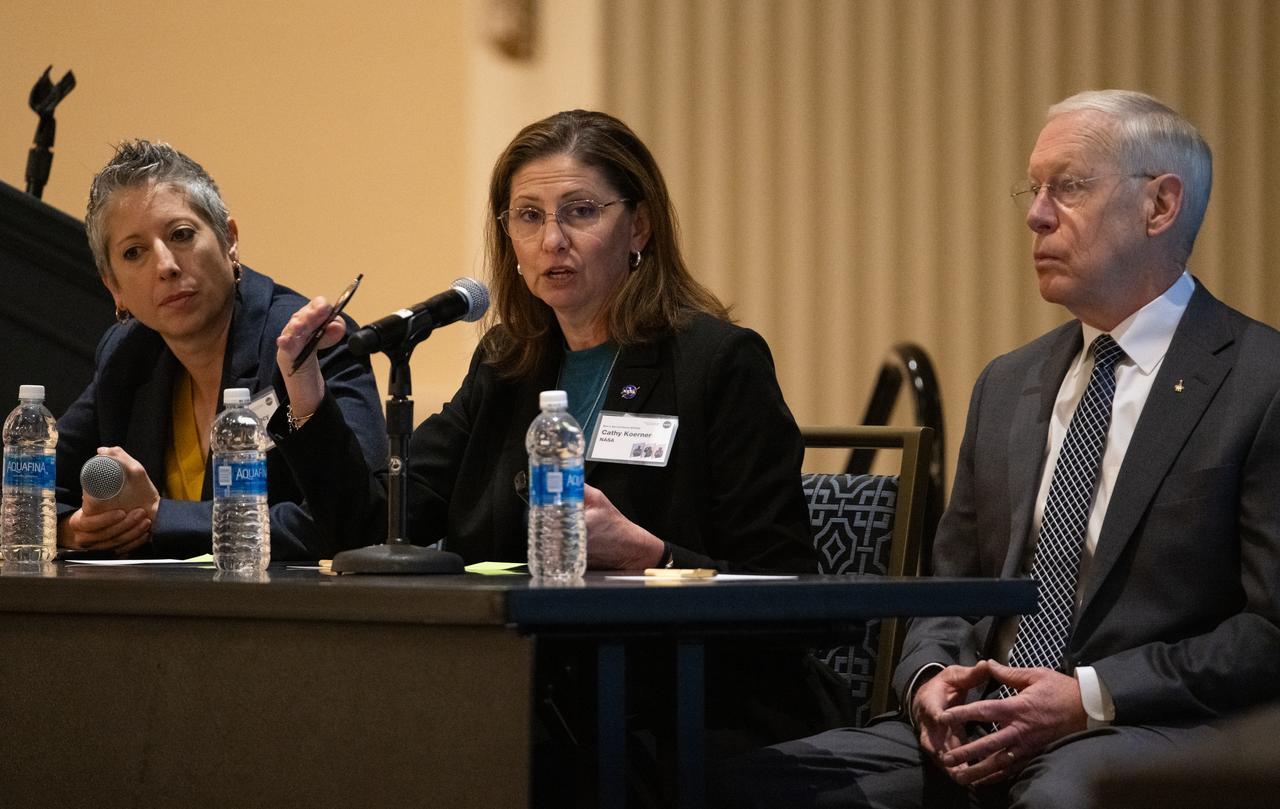
Catherine Koerner, deputy associate administrator for NASA's Exploration Systems Development Mission Directorate, center, is seen alongside Nujoud Merancy, architecture lead for NASA's Exploration Systems Development Mission Directorate, left, and Patrick Forrester, special advisor in NASA's Space Operations Mission Directorate, right, during NASA’s Moon to Mars Architecture Workshop, Tuesday, June 27, 2023, at the Gaylord National Resort and Convention Center in National Harbor, Md. Following the release of the 2022 Architecture Concept Review, NASA is conducting the workshop to engage the broader space community and collect feedback from U.S. industry and academia to inform the Moon to Mars mission architecture and operational delivery. Photo Credit: (NASA/Joel Kowsky)
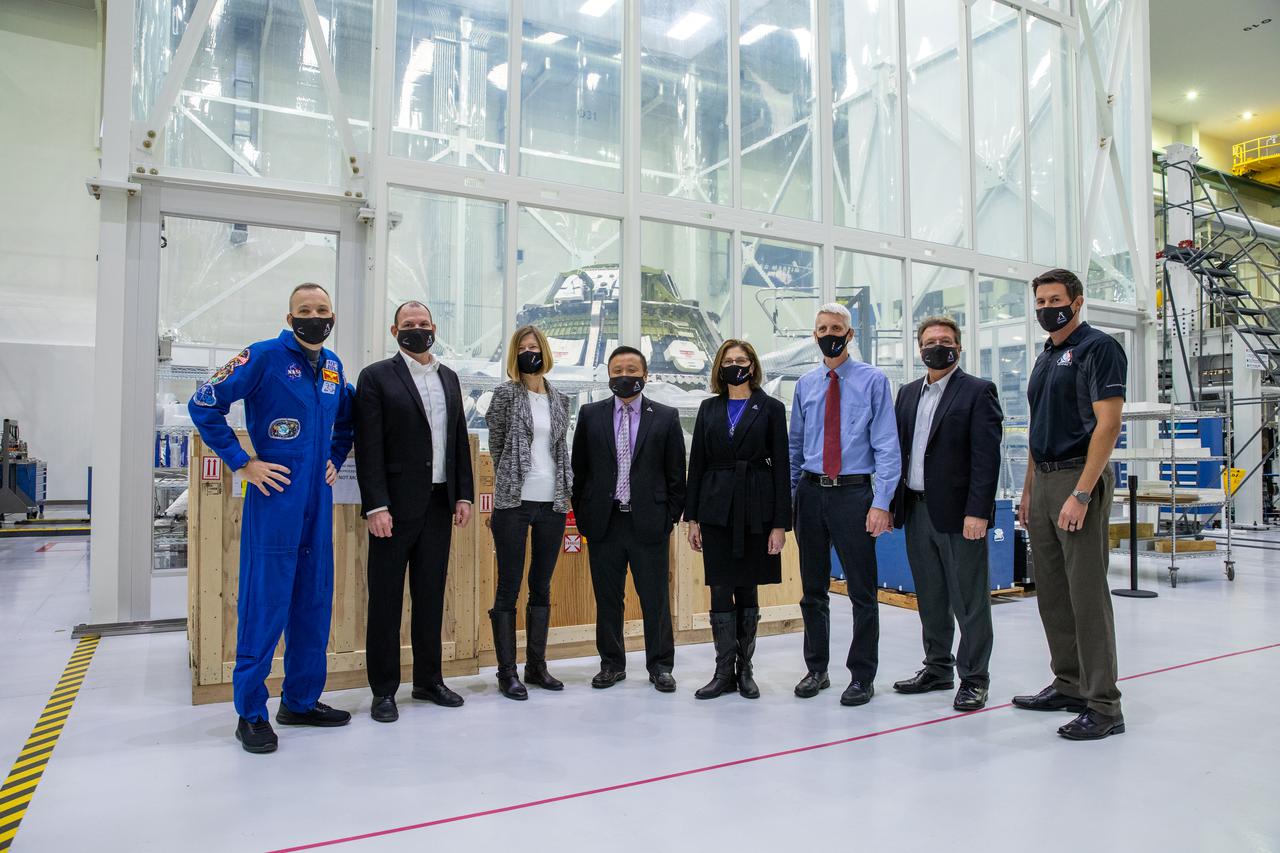
Kathy Lueders, third from left, associate administrator of the Human Exploration and Operations Mission Directorate, tours the Neil Armstrong Operations and Checkout Building high bay at NASA’s Kennedy Space Center in Florida on Jan. 14, 2021. In the background is the Orion crew module for the Artemis II mission. From left are NASA astronaut Randy Bresnik; Tony Antonelli, Lockheed Martin Orion Program director and Artemis II Mission director; Howard Hu, Orion deputy program manager; Cathy Koerner, Orion Program manager; Scott Wilson, Orion Production Operations manager; Jules Schneider, Lockheed Martin director of Orion Assembly, Test and Launch Operations at Kennedy; and Nathan Varn, Lockheed Martin Production Control director. The group also viewed the Orion spacecraft for Artemis I as it was lowered onto a transporter for the move to the Multi-Payload Processing Facility to begin ground processing by the Exploration Ground Systems and Jacobs teams.
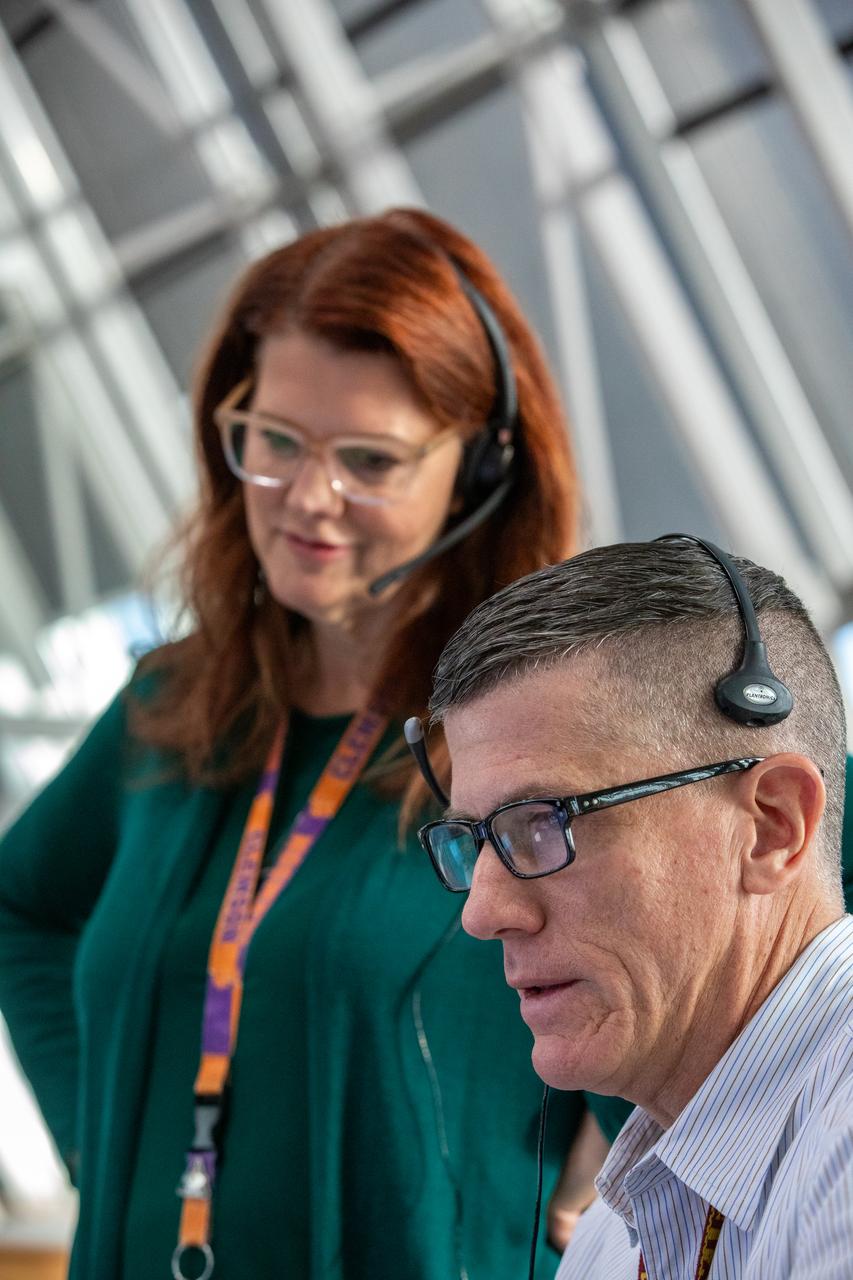
Charlie Blackwell-Thompson, at left, NASA Artemis launch director; and Jeremy Graeber, assistant Artemis launch director, monitor the first launch simulation for the Artemis II mission inside Firing Room at the Launch Control Center at NASA’s Kennedy Space Center in Florida on July 20, 2023. A team of engineers with Exploration Ground Systems and Jacobs, are rehearsing the steps to launch NASA’s Space Launch System and Orion spacecraft for the Artemis II crewed mission. Artemis II will be the first mission with astronauts under Artemis that will test and check out all of Orion’s systems needed for future crewed missions.
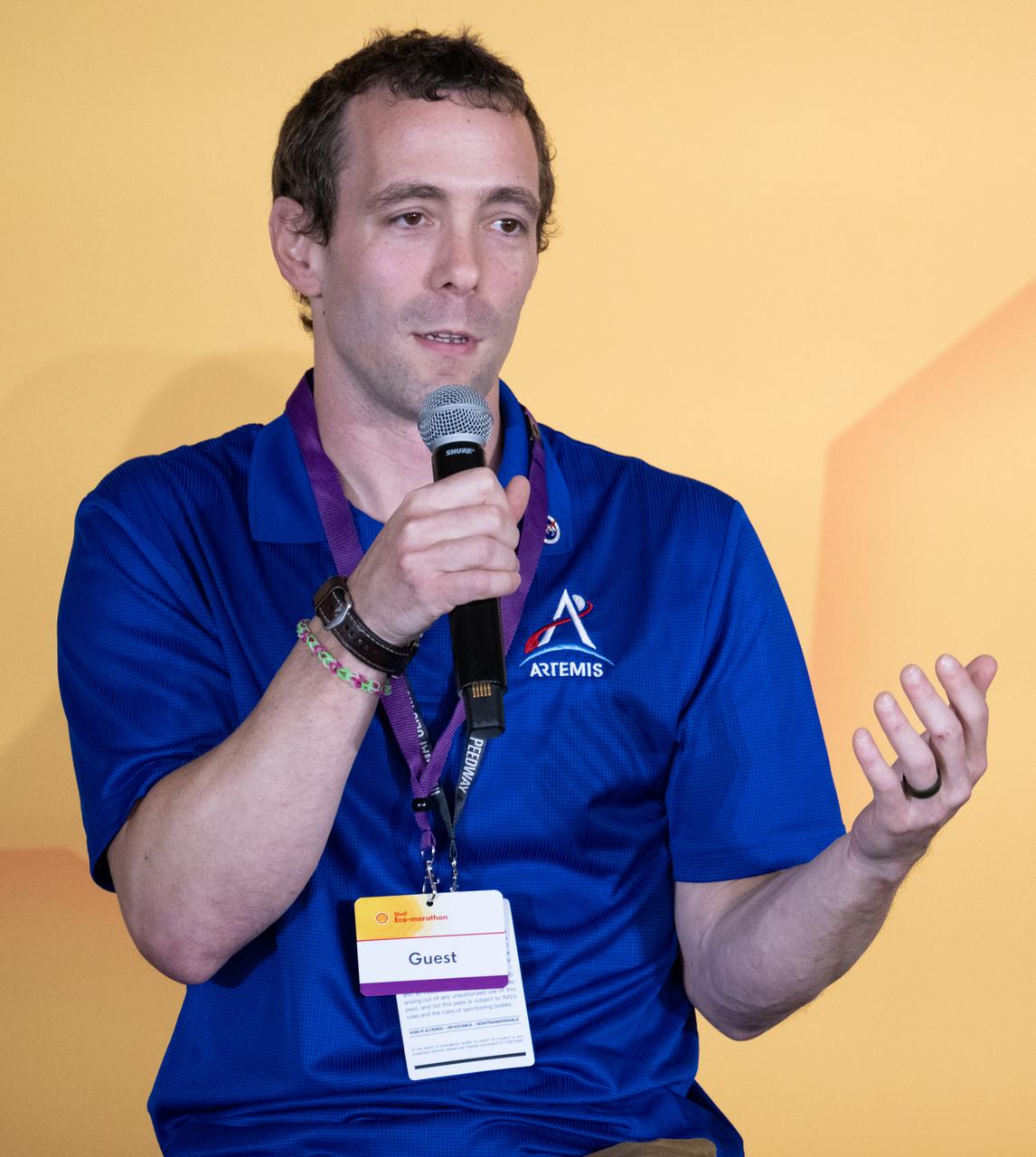
Logan Kennedy, surface lead for Human Landing System Programs in NASA's Exploration Systems Development Mission Directorate, speaks to students about power production and energy for the Artemis Program at the Shell Eco-marathon Americas, Saturday, April 6, 2024, at the Indianapolis Motor Speedway in Indianapolis, Ind. Photo Credit: (NASA/Joel Kowsky)
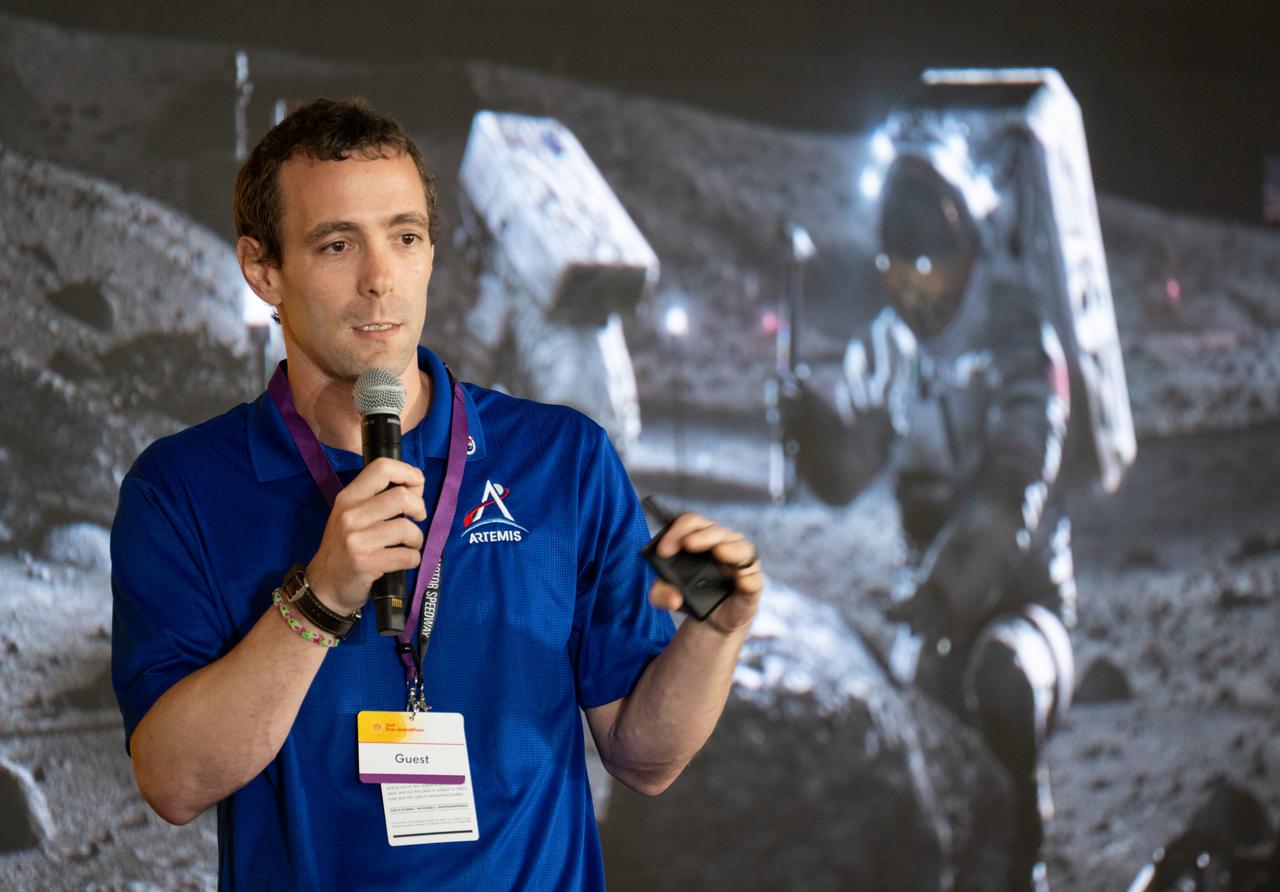
Logan Kennedy, surface lead for Human Landing System Programs in NASA's Exploration Systems Development Mission Directorate, speaks to students about power production and energy for the Artemis Program at the Shell Eco-marathon Americas, Saturday, April 6, 2024, at the Indianapolis Motor Speedway in Indianapolis, Ind. Photo Credit: (NASA/Joel Kowsky)

Artemis launch director, Charlie Blackwell-Thompson and associate administrator of NASA’s Space Operations Mission Directorate, Kathryn Lueders finish coloring in the other eye of the Japanese Daruma doll to highlight the successful Artemis I mission on Dec. 20, 2022 in Firing Room 1 of the Rocco A. Petrone Launch Control Center at NASA’s Kennedy Space Center in Florida. The Japan Aerospace Exploration Agency gave a Daruma doll to both Lueders and associate administrator for the Exploration Systems Development Mission Directorate, Jim Free as a token of good luck prior to the Artemis I launch. Free filled in his eye on Dec. 11, 2022, with Artemis I Ascent and Entry Flight Director Judd Frieling in Mission Control Center at NASA’s Johnson Space Center in Houston, Texas.

Artemis launch director, Charlie Blackwell-Thompson and associate administrator of NASA’s Space Operations Mission Directorate, Kathryn Lueders finish coloring in the other eye of the Japanese Daruma doll to highlight the successful Artemis I mission on Dec. 20, 2022 in Firing Room 1 of the Rocco A. Petrone Launch Control Center at NASA’s Kennedy Space Center in Florida. The Japan Aerospace Exploration Agency gave a Daruma doll to both Lueders and associate administrator for the Exploration Systems Development Mission Directorate, Jim Free as a token of good luck prior to the Artemis I launch. Free filled in his eye on Dec. 11, 2022, with Artemis I Ascent and Entry Flight Director Judd Frieling in Mission Control Center at NASA’s Johnson Space Center in Houston, Texas.
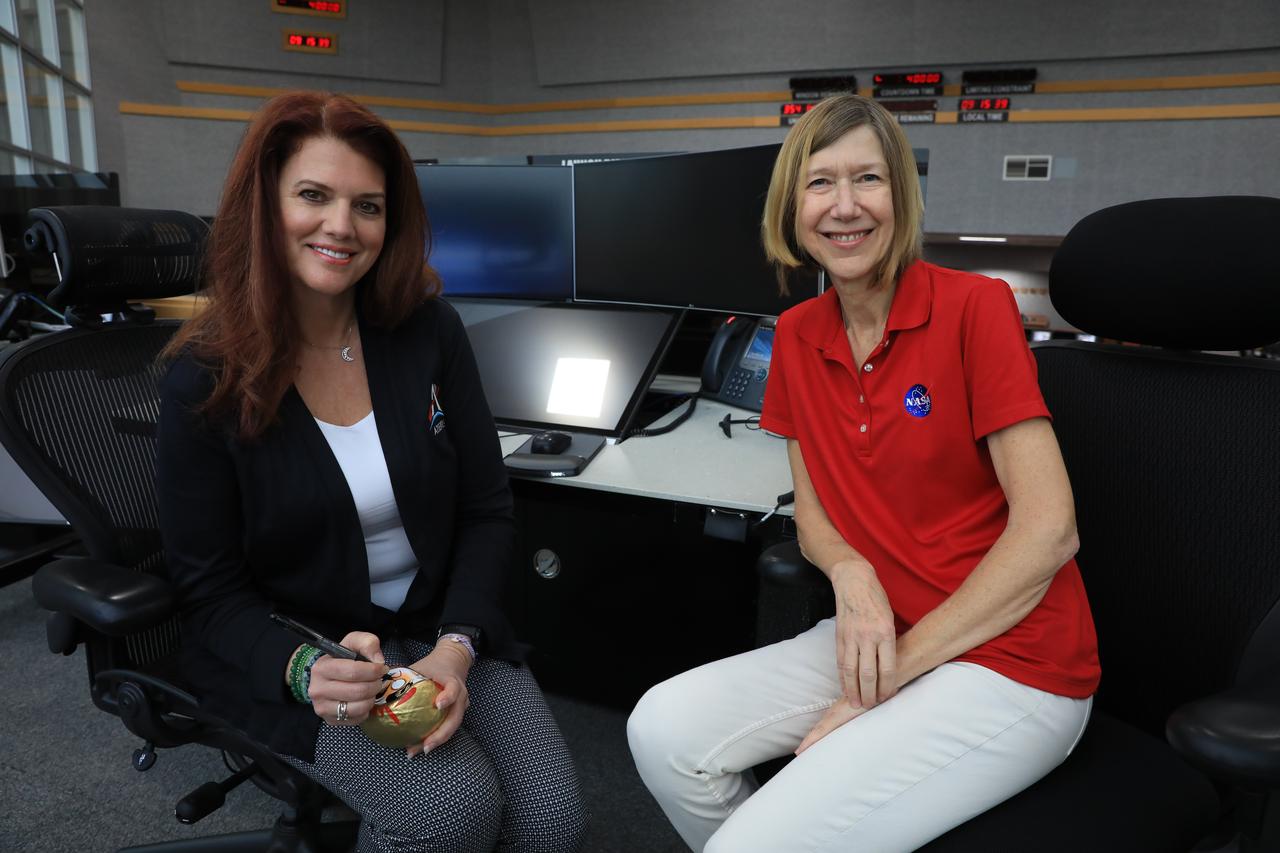
Artemis launch director, Charlie Blackwell-Thompson and associate administrator of NASA’s Space Operations Mission Directorate, Kathryn Lueders finish coloring in the other eye of the Japanese Daruma doll to highlight the successful Artemis I mission on Dec. 20, 2022 in Firing Room 1 of the Rocco A. Petrone Launch Control Center at NASA’s Kennedy Space Center in Florida. The Japan Aerospace Exploration Agency gave a Daruma doll to both Lueders and associate administrator for the Exploration Systems Development Mission Directorate, Jim Free as a token of good luck prior to the Artemis I launch. Free filled in his eye on Dec. 11, 2022, with Artemis I Ascent and Entry Flight Director Judd Frieling in Mission Control Center at NASA’s Johnson Space Center in Houston, Texas.
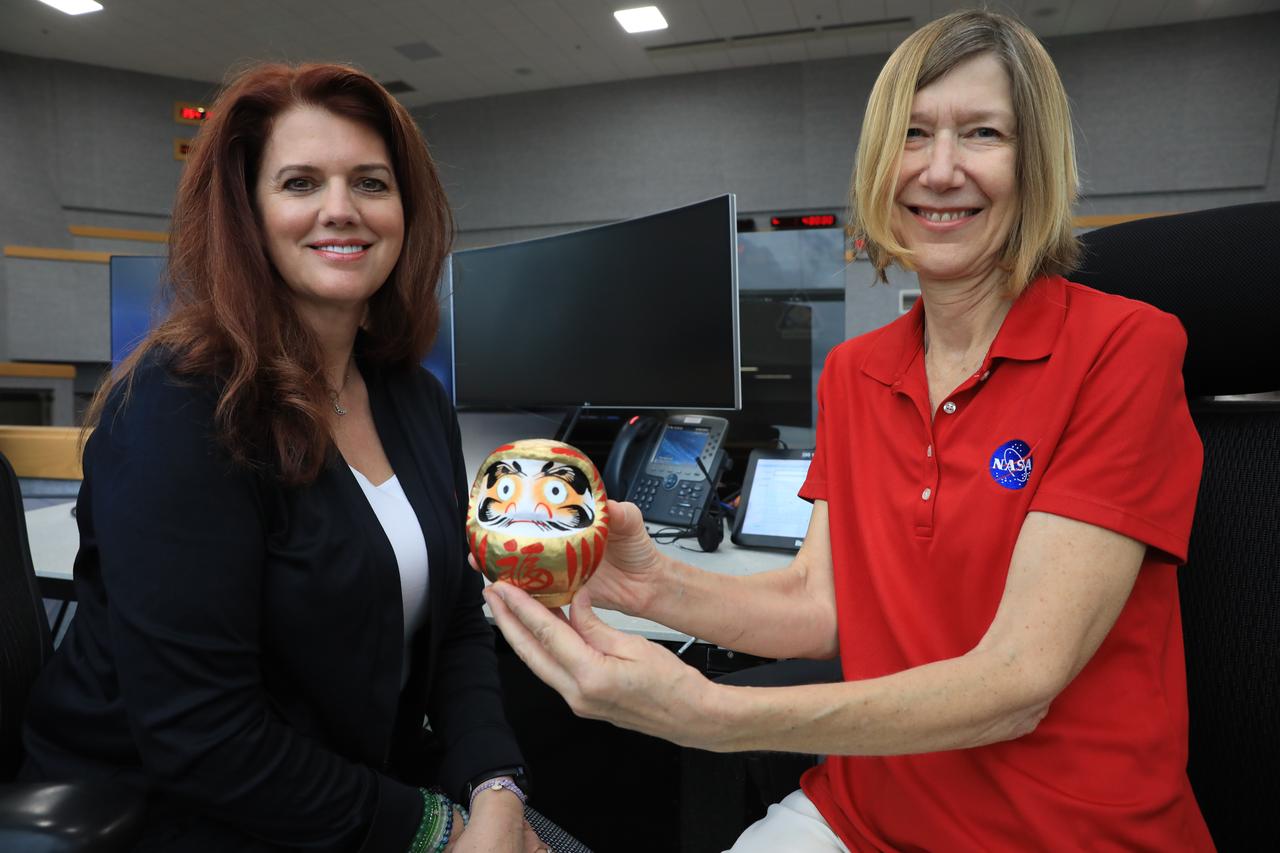
Artemis launch director, Charlie Blackwell-Thompson and associate administrator of NASA’s Space Operations Mission Directorate, Kathryn Lueders finish coloring in the other eye of the Japanese Daruma doll to highlight the successful Artemis I mission on Dec. 20, 2022 in Firing Room 1 of the Rocco A. Petrone Launch Control Center at NASA’s Kennedy Space Center in Florida. The Japan Aerospace Exploration Agency gave a Daruma doll to both Lueders and associate administrator for the Exploration Systems Development Mission Directorate, Jim Free as a token of good luck prior to the Artemis I launch. Free filled in his eye on Dec. 11, 2022, with Artemis I Ascent and Entry Flight Director Judd Frieling in Mission Control Center at NASA’s Johnson Space Center in Houston, Texas.
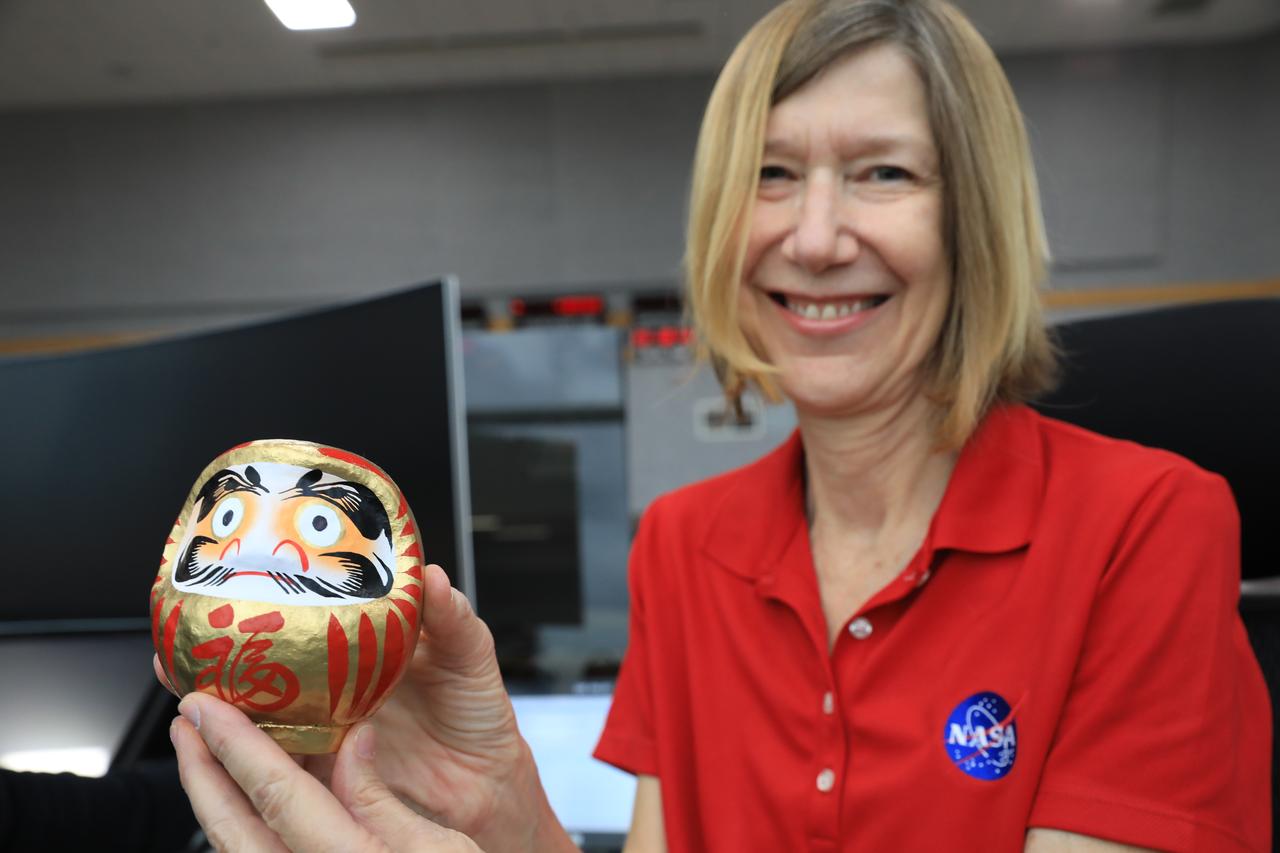
Artemis launch director, Charlie Blackwell-Thompson and associate administrator of NASA’s Space Operations Mission Directorate, Kathryn Lueders finish coloring in the other eye of the Japanese Daruma doll to highlight the successful Artemis I mission on Dec. 20, 2022 in Firing Room 1 of the Rocco A. Petrone Launch Control Center at NASA’s Kennedy Space Center in Florida. The Japan Aerospace Exploration Agency gave a Daruma doll to both Lueders and associate administrator for the Exploration Systems Development Mission Directorate, Jim Free as a token of good luck prior to the Artemis I launch. Free filled in his eye on Dec. 11, 2022, with Artemis I Ascent and Entry Flight Director Judd Frieling in Mission Control Center at NASA’s Johnson Space Center in Houston, Texas.

NASA holds a prelaunch media briefing on the role of industry in advancing human exploration on Aug. 26, 2022, at NASA’s Kennedy Space Center in Florida, as the agency prepares for launch of Artemis I scheduled for Aug. 29, at 8:33 a.m. EDT from Kennedy’s Launch Complex 39B. Participants, from left are Kathryn Hambleton, NASA Communications; Jim Free, association administrator, Exploration Systems Development Mission Directorate, NASA Headquarters; Randy Lycans, vice president/general manager of NASA Enterprise Solutions, Jacobs; Jeff Zotti, RS-25 program director, Aerojet Rocketdyne; Jennifer Boland-Masterson, director of operations, Michoud Assembly Facility, Boeing; Doug Hurley, senior director of business development, Northrop Grumman; Kelly DeFazio, director of Orion production, Lockheed Martin; and Ralf Zimmerman, head of Moon programs and Orion European Service Module, Airbus. The first in a series of increasingly complex missions, Artemis I will provide a foundation for human deep space exploration and demonstrate our commitment and capability to extend human presence to the Moon and beyond. The primary goal of Artemis I is to thoroughly test the integrated systems before crewed missions by operating the spacecraft in a deep space environment, testing Orion’s heat shield, and recovering the crew module after reentry, descent, and splashdown.

NASA holds a prelaunch media briefing on the role of industry in advancing human exploration on Aug. 26, 2022, at NASA’s Kennedy Space Center in Florida, as the agency prepares for launch of Artemis I scheduled for Aug. 29, at 8:33 a.m. EDT from Kennedy’s Launch Complex 39B. Participants, from left are Kathryn Hambleton, NASA Communications; Jim Free, association administrator, Exploration Systems Development Mission Directorate, NASA Headquarters; Randy Lycans, vice president/general manager of NASA Enterprise Solutions, Jacobs; Jeff Zotti, RS-25 program director, Aerojet Rocketdyne; Jennifer Boland-Masterson, director of operations, Michoud Assembly Facility, Boeing; Doug Hurley, senior director of business development, Northrop Grumman; Kelly DeFazio, director of Orion production, Lockheed Martin; and Ralf Zimmerman, head of Moon programs and Orion European Service Module, Airbus. The first in a series of increasingly complex missions, Artemis I will provide a foundation for human deep space exploration and demonstrate our commitment and capability to extend human presence to the Moon and beyond. The primary goal of Artemis I is to thoroughly test the integrated systems before crewed missions by operating the spacecraft in a deep space environment, testing Orion’s heat shield, and recovering the crew module after reentry, descent, and splashdown.
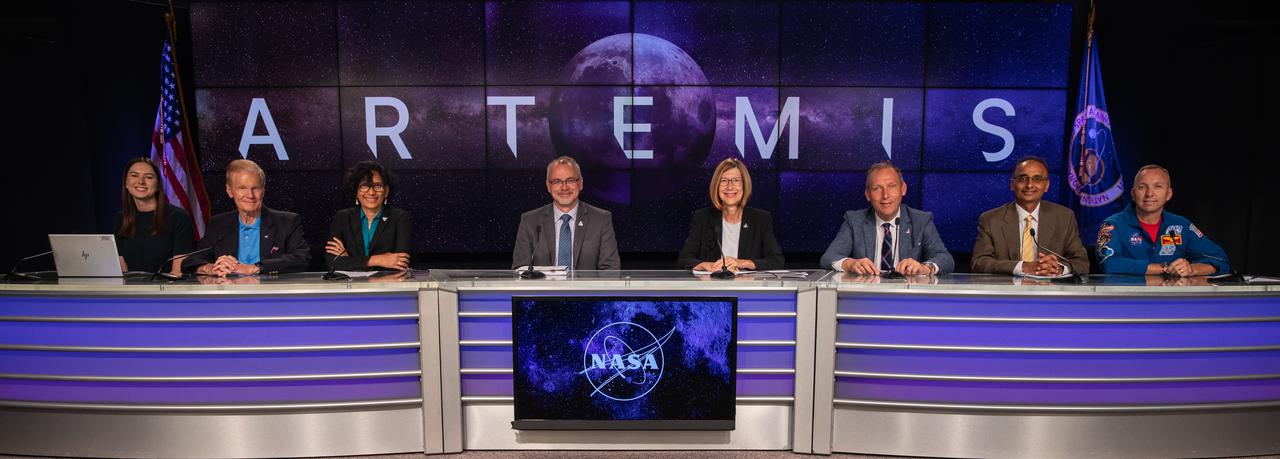
NASA holds a prelaunch media briefing on the agency’s Moon to Mars exploration plans on Aug. 27, 2022, at the agency’s Kennedy Space Center in Florida, as the clock counts down to the launch of Artemis I scheduled for Aug. 29, at 8:33 a.m. EDT from Kennedy’s Launch Complex 39B. From left, are Jackie McGuinness, NASA press secretary; Bill Nelson, NASA administrator; Bhavya Lal, NASA associate administrator for technology, policy and strategy; Jim Free, NASA associate administrator, Exploration Systems Development Mission Directorate; Kathy Lueders, NASA associate administrator, Space Operations Mission Directorate; Thomas Zurbuchen, NASA associate administrator, Science Mission Directorate; Prasun Desai, NASA deputy associate administrator, Space Technology Mission Directorate; and Randy Bresnik, NASA astronaut. The first in a series of increasingly complex missions, Artemis I will provide a foundation for human deep space exploration and demonstrate our commitment and capability to extend human presence to the Moon and beyond. The primary goal of Artemis I is to thoroughly test the integrated systems before crewed missions by operating the spacecraft in a deep space environment, testing Orion’s heat shield, and recovering the crew module after reentry, descent, and splashdown.
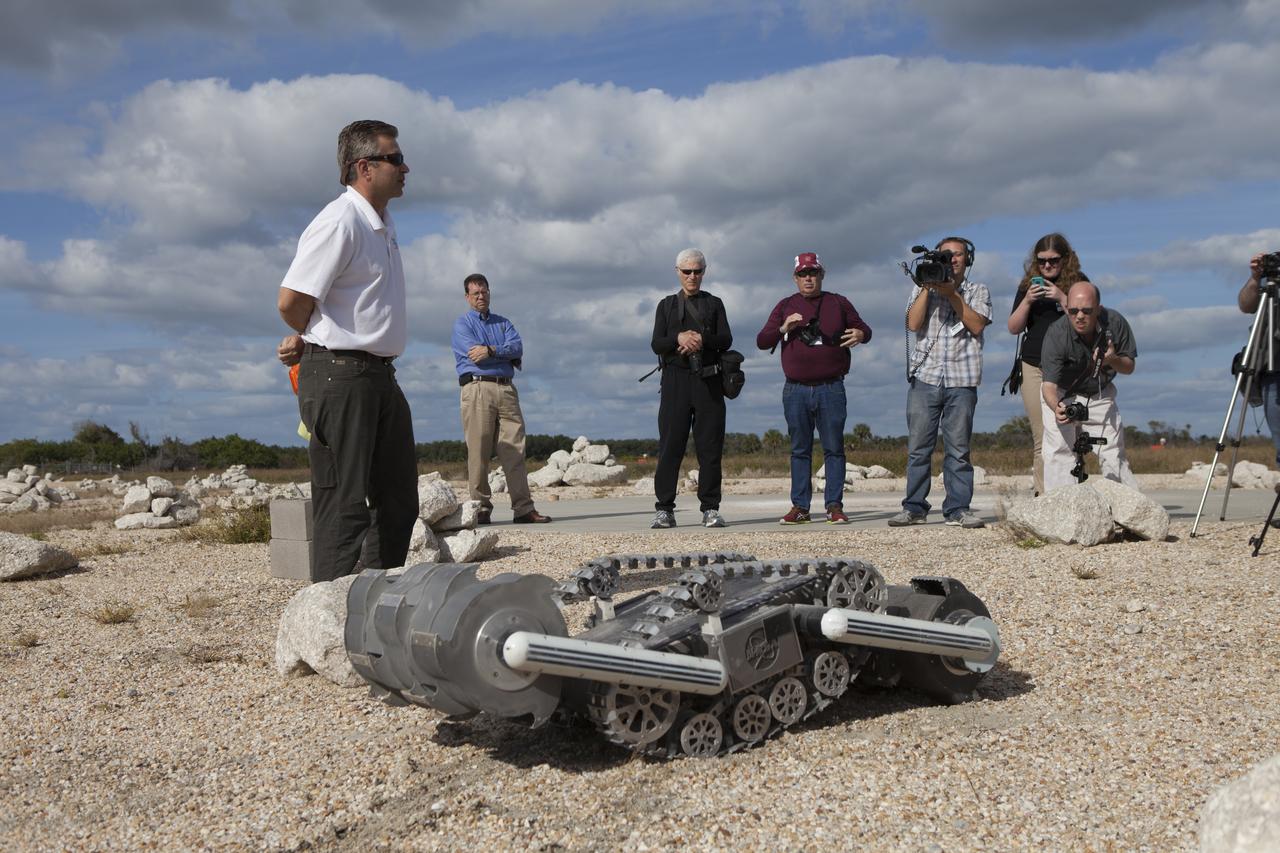
Rob Mueller, NASA senior technologist in the Surface Systems Office in Kennedy Space Center's Engineering and Technology Directorate, demonstrates the Regolith Advanced Surface System Operations Robot, or RASSOR, during a media event at Kennedy's automated landing and hazard avoidance technology, or ALHAT, hazard field at the north end of the Shuttle Landing Facility. The event was held to announce Moon Express Inc., of Moffett Field, California is selected to utilize Kennedy facilities for NASA's Lunar Cargo Transportation and Landing by Soft Touchdown, or Lunar CATALYST, initiative. Moon Express is developing a lander with capabilities that will enable delivery of payloads to the surface of the moon, as well as new science and exploration missions of interest to NASA and scientific and academic communities. Moon Express will base its activities at Kennedy and utilize the Morpheus ALHAT field and a hangar nearby for CATALYST testing. The Advanced Exploration Systems Division of NASA's Human Exploration and Operations Mission Directorate manages Lunar CATALYST.