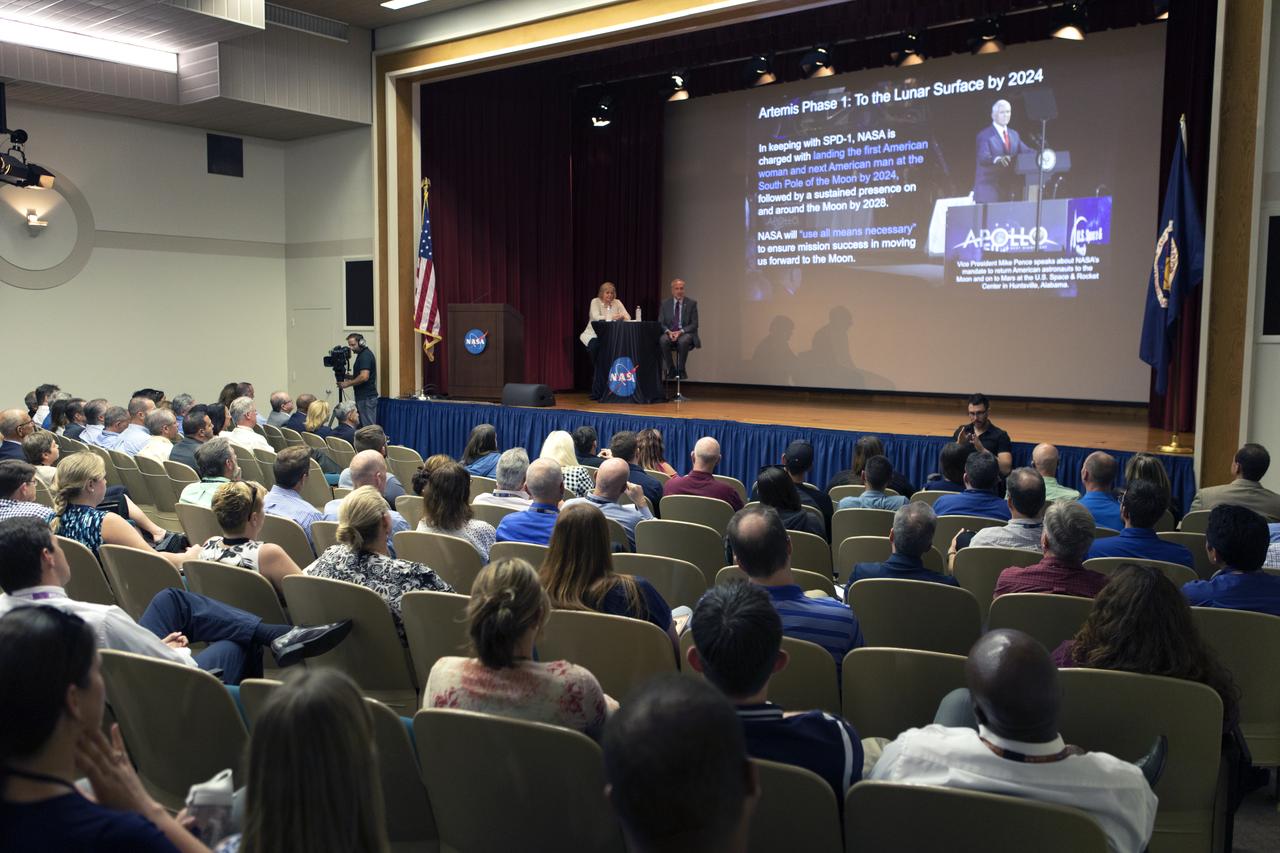
Employees listen to remarks from NASA’s Deputy Associate Administrator Melanie Saunders, left, and Associate Administrator Steve Jurczyk during a Town Hall session at Kennedy Space Center on May 28, 2019. The agency senior leaders provided an update on the agency’s Exploration campaign, current missions and NASA’s operating model initiatives. As part of its Artemis program, NASA is charged with landing the first American woman and next American man at the South Pole of the Moon by 2024.
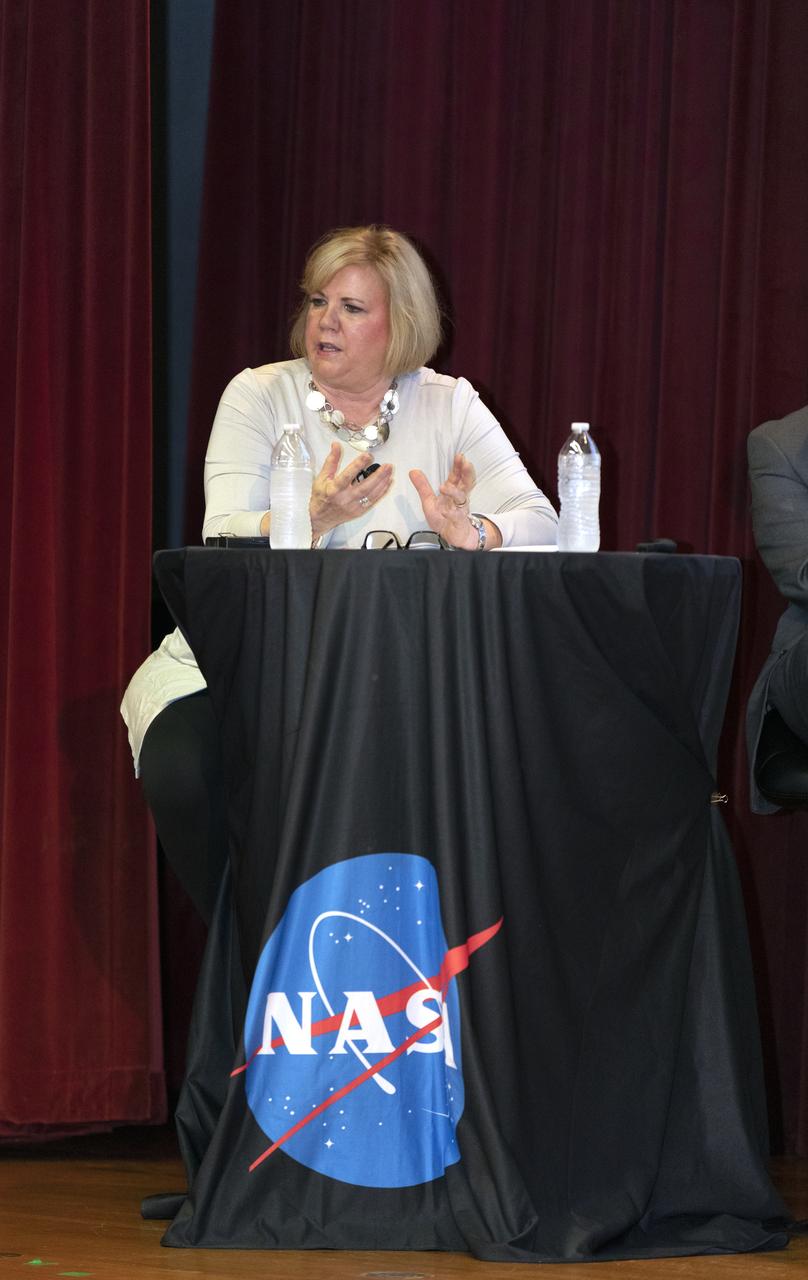
NASA Deputy Associate Administrator Melanie Saunders addresses Kennedy Space Center employees during a Town Hall session at the Florida spaceport on May 28, 2019. Saunders, along with NASA Associate Administrator Steve Jurczyk, provided an update on the agency’s Exploration campaign, current missions and NASA’s operating model initiatives. As part of its Artemis program, NASA is charged with landing the first American woman and next American man at the South Pole of the Moon by 2024.
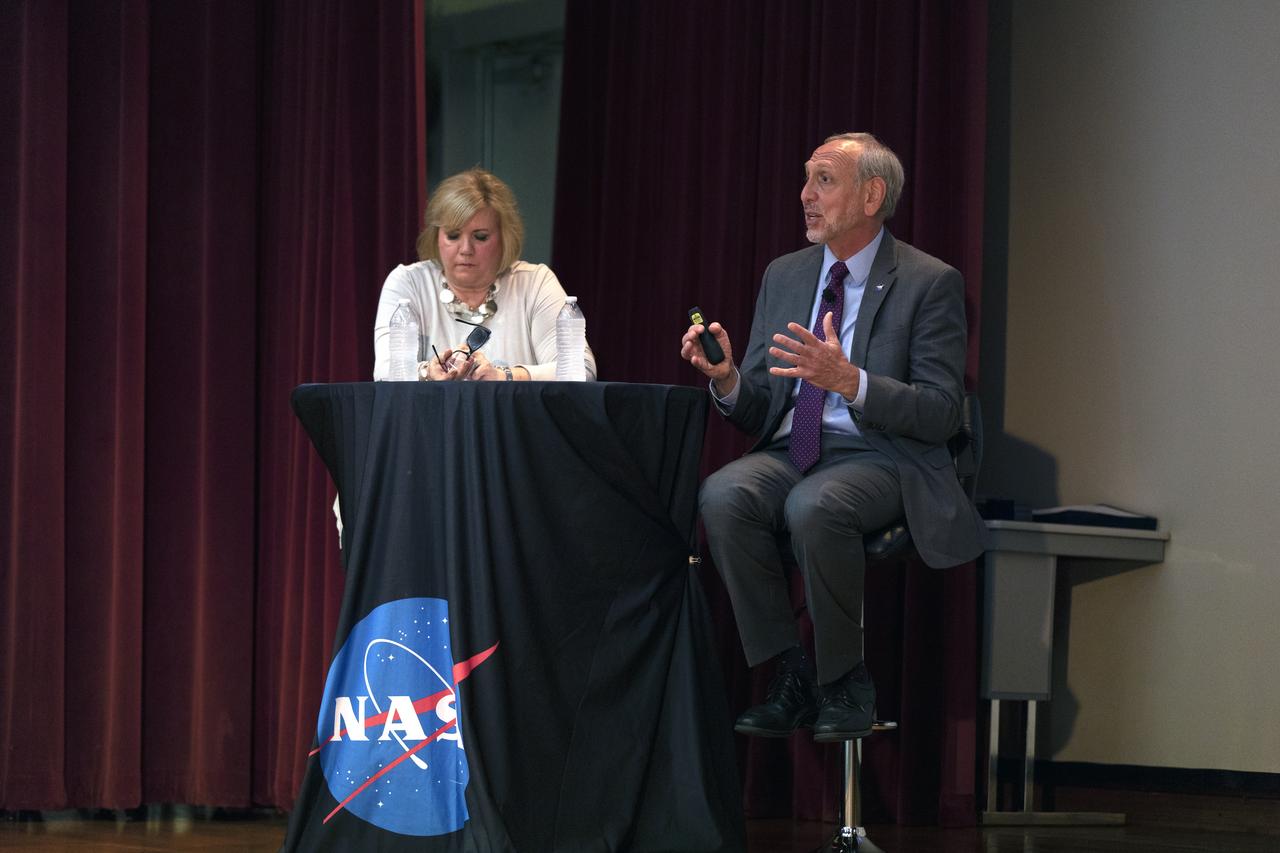
NASA’s Deputy Associate Administrator Melanie Saunders, left, and Associate Administrator Steve Jurczyk participate in a Town Hall session at Kennedy Space Center on May 28, 2019. The agency senior leaders provided an update on the agency’s Exploration campaign, current missions and NASA’s operating model initiatives. As part of its Artemis program, NASA is charged with landing the first American woman and next American man at the South Pole of the Moon by 2024.
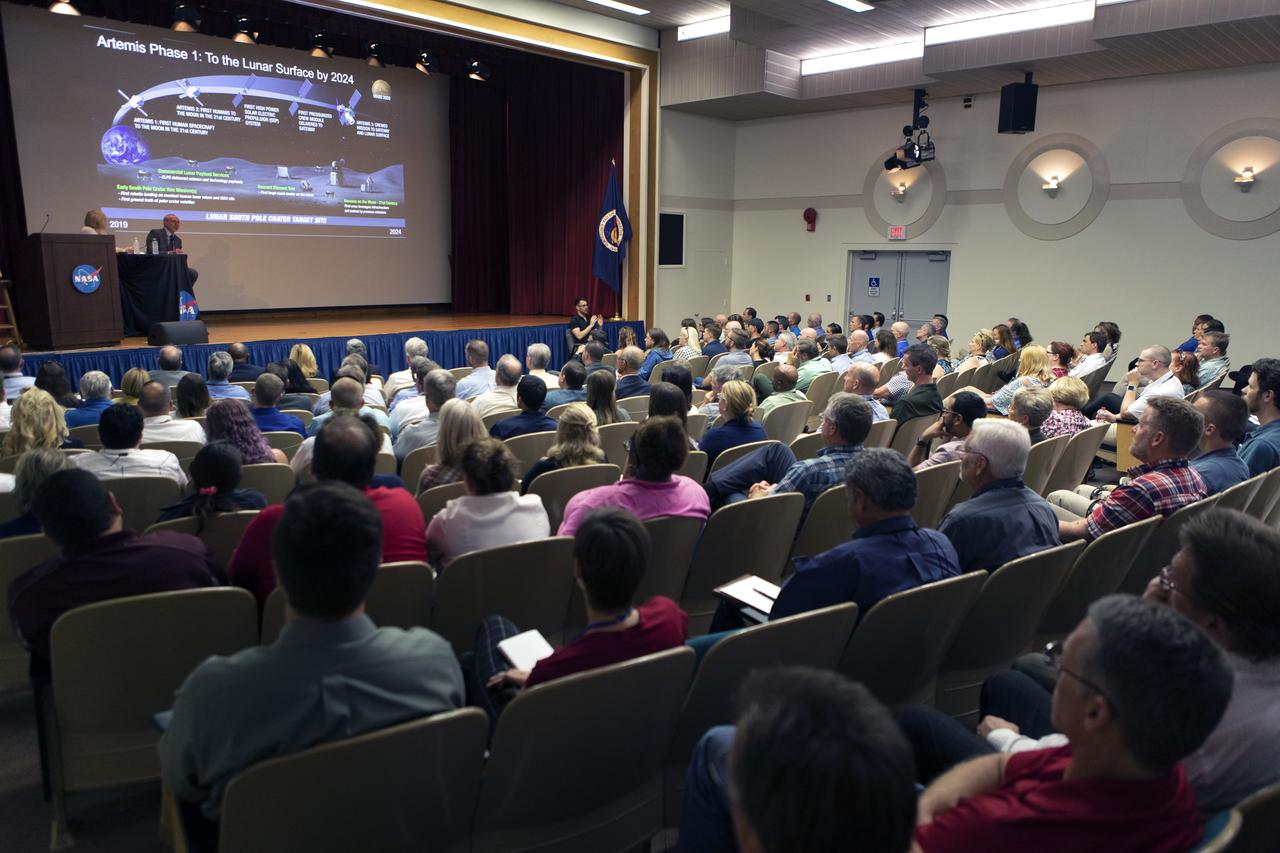
Employees listen to remarks from NASA’s Deputy Associate Administrator Melanie Saunders, left, and Associate Administrator Steve Jurczyk during a Town Hall session at Kennedy Space Center on May 28, 2019. The agency senior leaders provided an update on the agency’s Exploration campaign, current missions and NASA’s operating model initiatives. Jurczyk stressed that NASA is committed to meeting the mandate of returning American astronauts to the Moon, and on to Mars.

The Alta-X aircraft flies by the former space shuttle hangar at NASA’s Armstrong Flight Research Center in Edwards, California, as part of the Advanced Exploration of Reliable Operation at Low Altitudes: Meteorology, Simulation and Technology campaign. The campaign was at NASA Armstrong to study wind from the ground to 2,000 feet to provide data to assist future drones to safely land on rooftop hubs called vertiports and to potentially improve weather prediction.
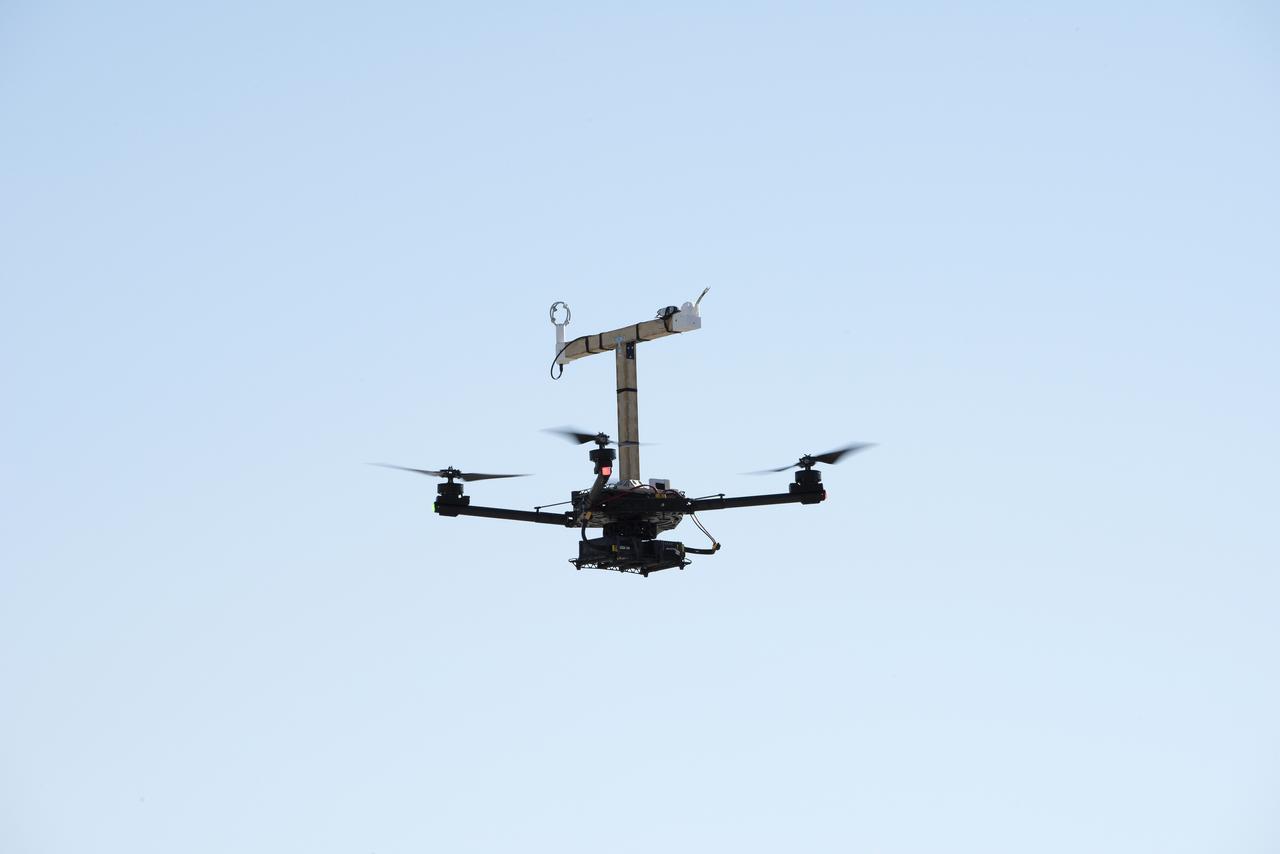
The Alta-X aircraft flies at NASA’s Armstrong Flight Research Center in Edwards, California, as part of the Advanced Exploration of Reliable Operation at Low Altitudes: Meteorology, Simulation and Technology campaign. The campaign was at NASA Armstrong to study wind from the ground to 2,000 feet to provide data to assist future drones to safely land on rooftop hubs called vertiports and to potentially improve weather prediction.
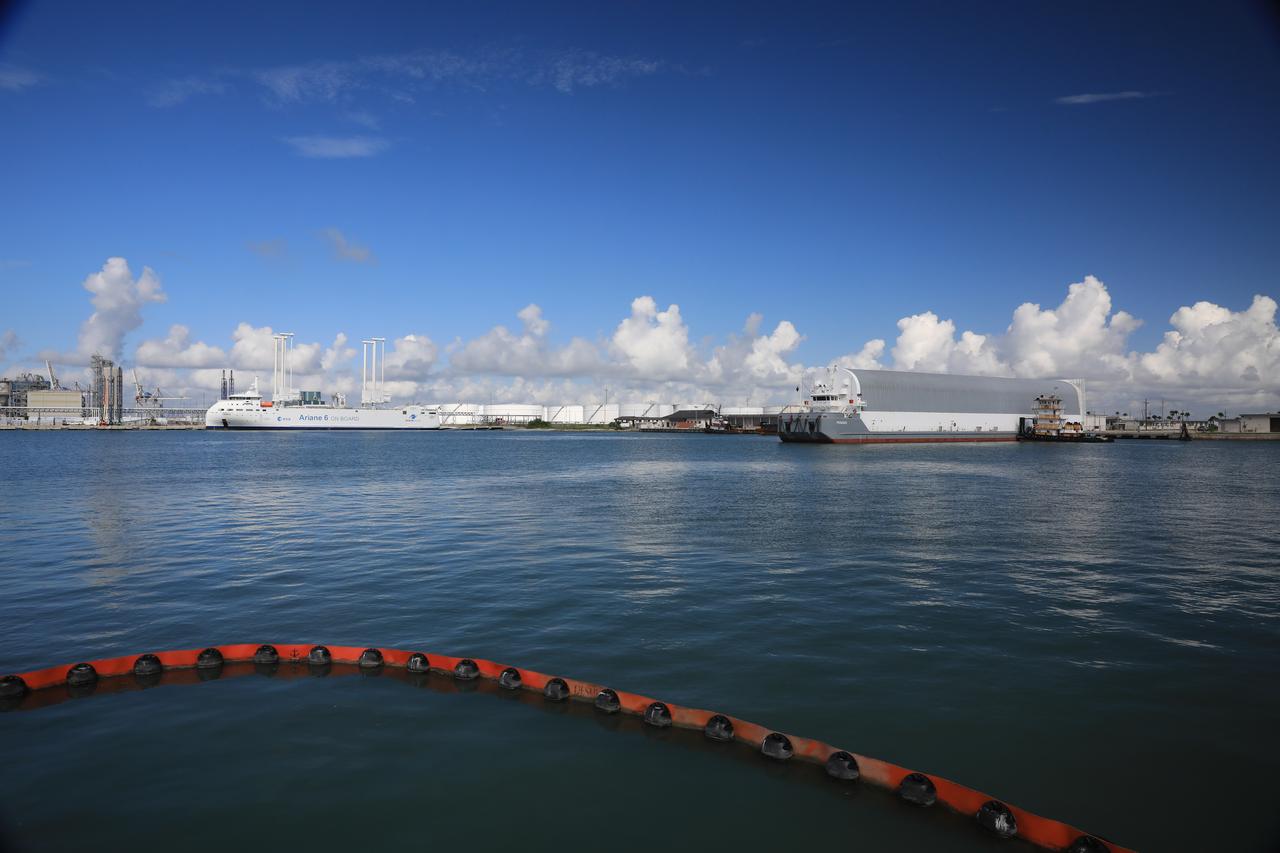
NASA’s Pegasus barge, carrying several pieces of the Artemis campaign hardware, along with the ESA (European Space Agency) ship carrying European Service Module 3 for NASA’s Artemis III mission arrives at Port Canaveral on Tuesday, Sept. 3, 2024, awaiting transportation to NASA’s Kennedy Space Center in Florida. Through the Artemis campaign, we are exploring the Moon for scientific discovery, technology advancement, and to learn how to live and work on another world.
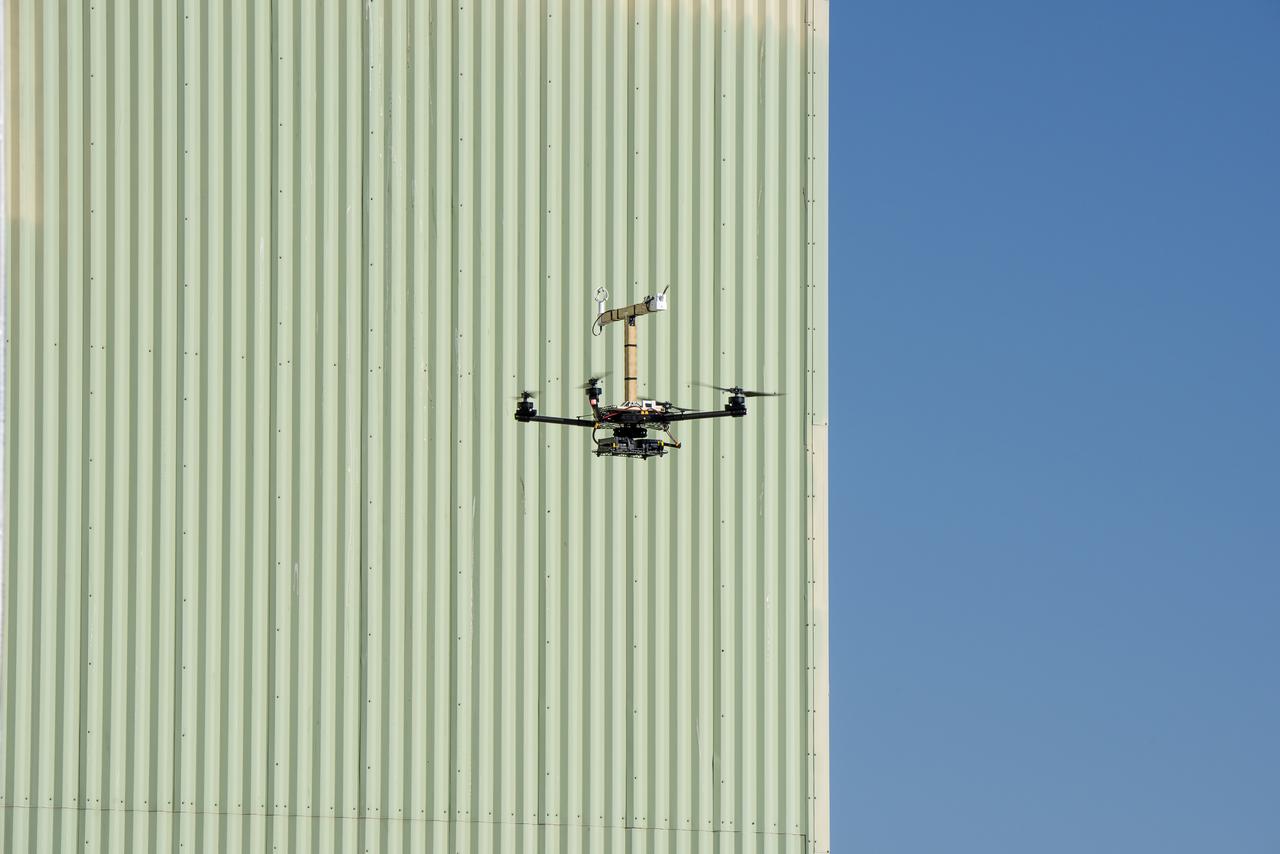
The Alta-X aircraft flies by the former space shuttle hangar at NASA’s Armstrong Flight Research Center in Edwards, California, as part of the Advanced Exploration of Reliable Operation at Low Altitudes: Meteorology, Simulation and Technology campaign. The campaign was at NASA Armstrong Flight to study wind from the ground to 2,000 feet to provide data to assist future drones to safely land on rooftop hubs called vertiports and to potentially improve weather prediction.
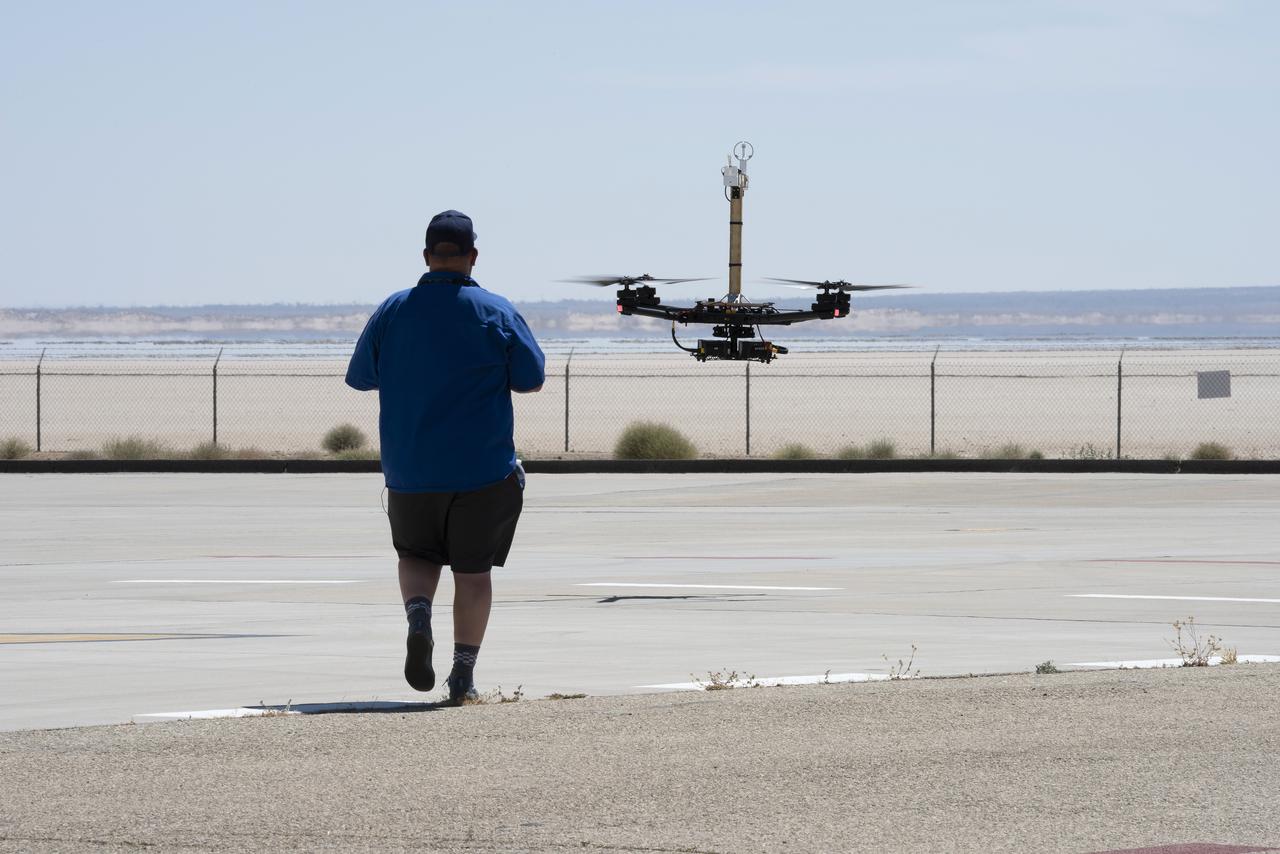
Red Jensen lands the Alta-X aircraft at NASA’s Armstrong Flight Research Center in Edwards, California, as part of the Advanced Exploration of Reliable Operation at Low Altitudes: Meteorology, Simulation and Technology campaign. The campaign was at NASA Armstrong to study wind from the ground to 2,000 feet to provide data to assist future drones to safely land on rooftop hubs called vertiports and to potentially improve weather prediction.
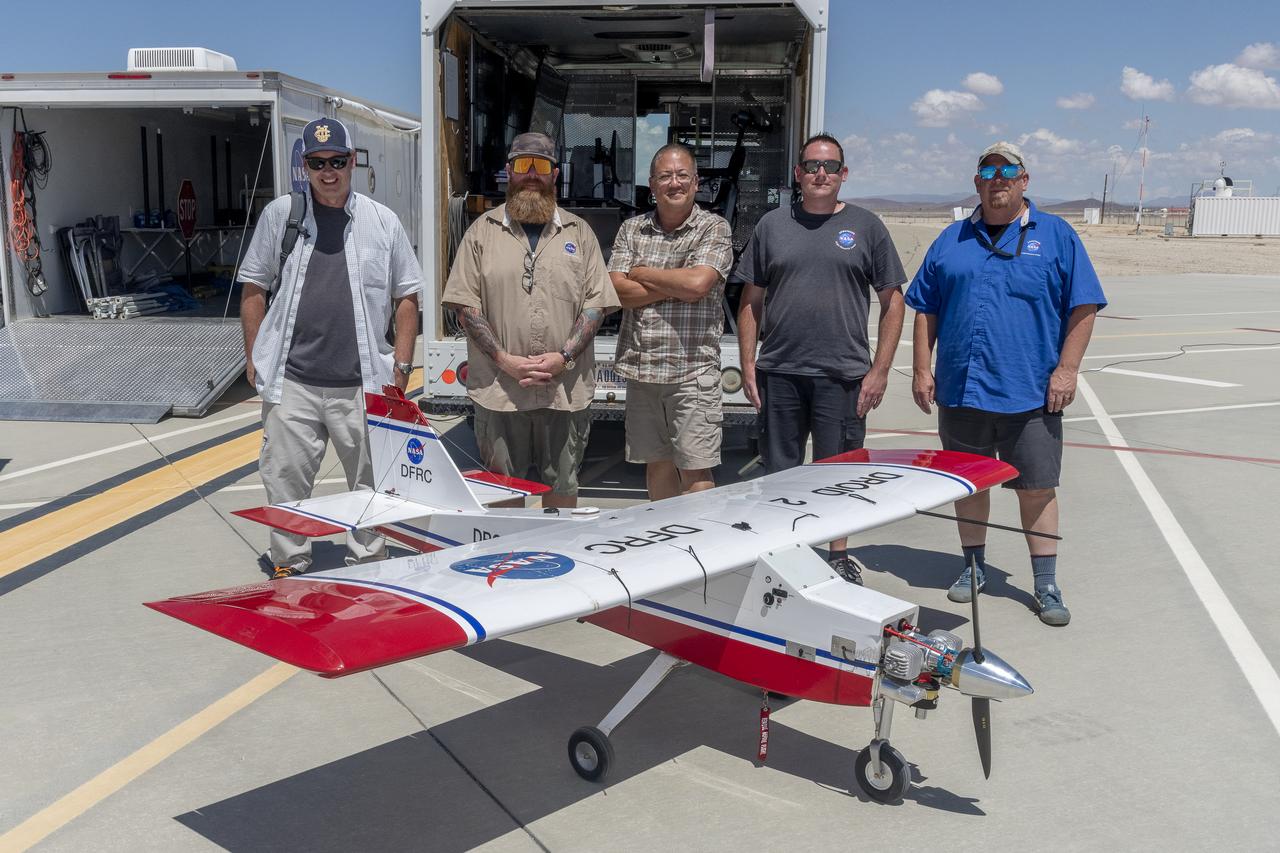
John Melton, Justin Hall, Derek Abramson, Justin Link, and Robert "Red" Jensen were key on mission day for the Advanced Exploration of Reliable Operation at Low Altitudes: Meteorology, Simulation, and Technology campaign. The DROID 2 (Dryden Remotely Operated Integrated Drone 2) aircraft supported the campaign at NASA's Armstrong Flight Research Center in Edwards, California. The focus was to study wind to provide data for safe takeoff and landing of future air taxis.
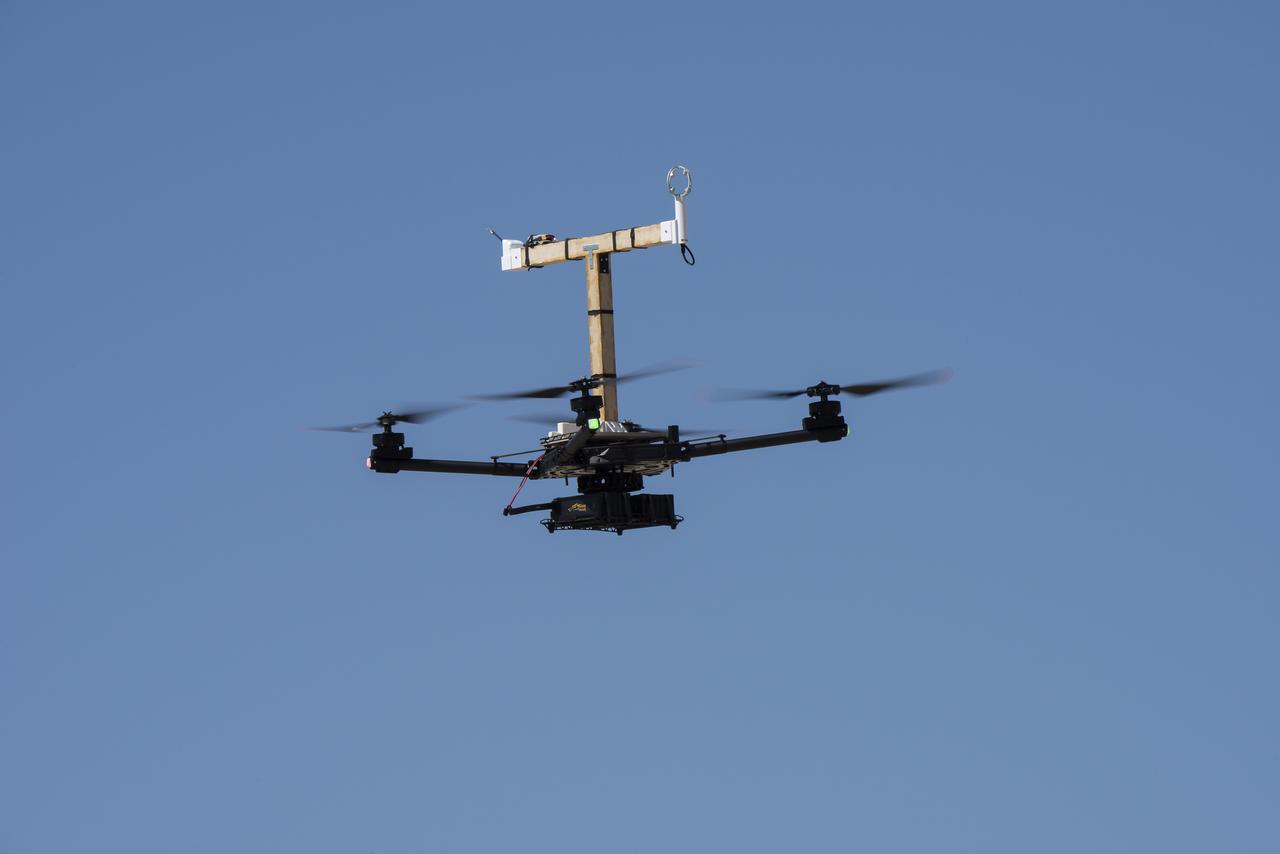
The Alta-X aircraft flies at NASA’s Armstrong Flight Research Center in Edwards, California, as part of the Advanced Exploration of Reliable Operation at Low Altitudes: Meteorology, Simulation and Technology campaign. The campaign was at NASA Armstrong to study wind from the ground to 2,000 feet to provide data to assist future drones to safely land on rooftop hubs called vertiports and to potentially improve weather prediction.
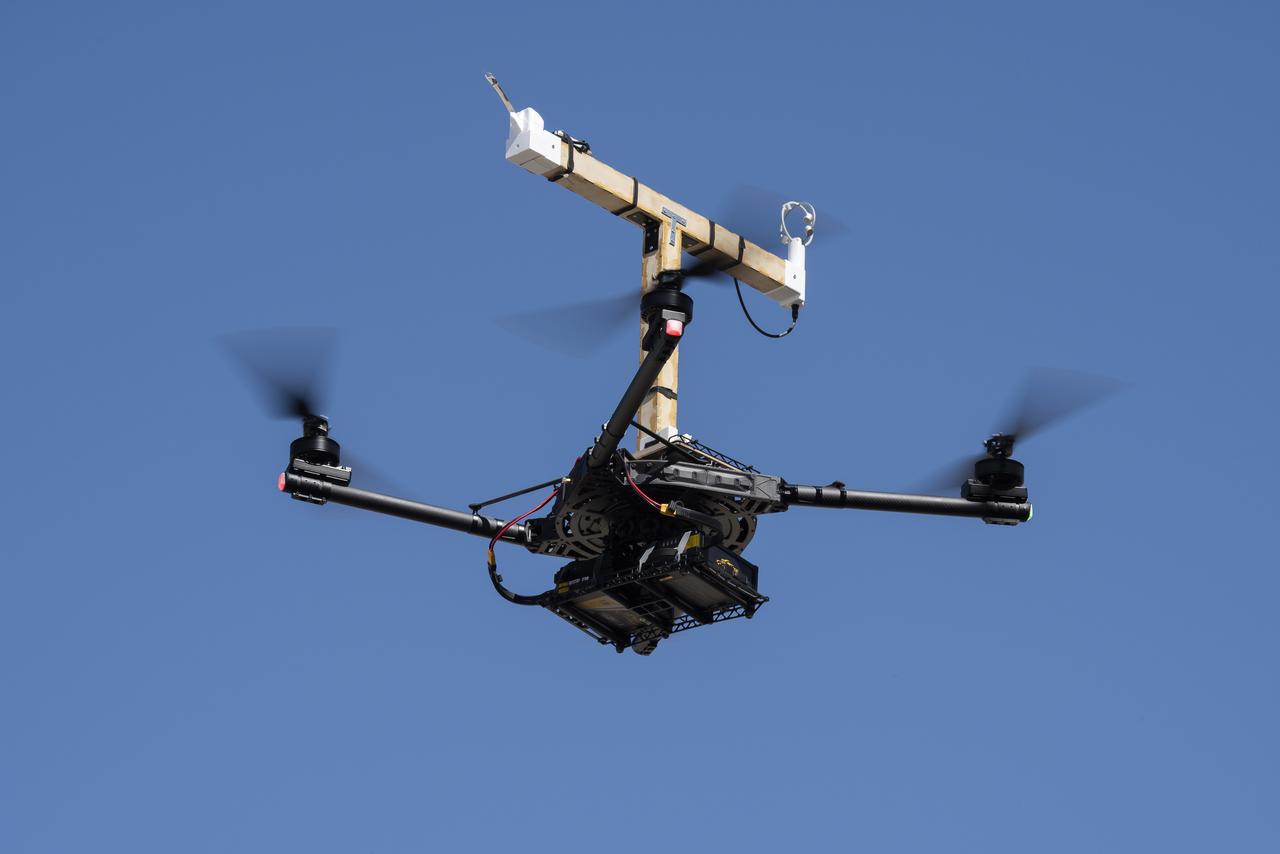
The Alta-X aircraft flies at NASA’s Armstrong Flight Research Center in Edwards, California, as part of the Advanced Exploration of Reliable Operation at Low Altitudes: Meteorology, Simulation and Technology campaign. The campaign was at NASA Armstrong to study wind from the ground to 2,000 feet to provide data to assist future drones to safely land on rooftop hubs called vertiports and to potentially improve weather prediction.
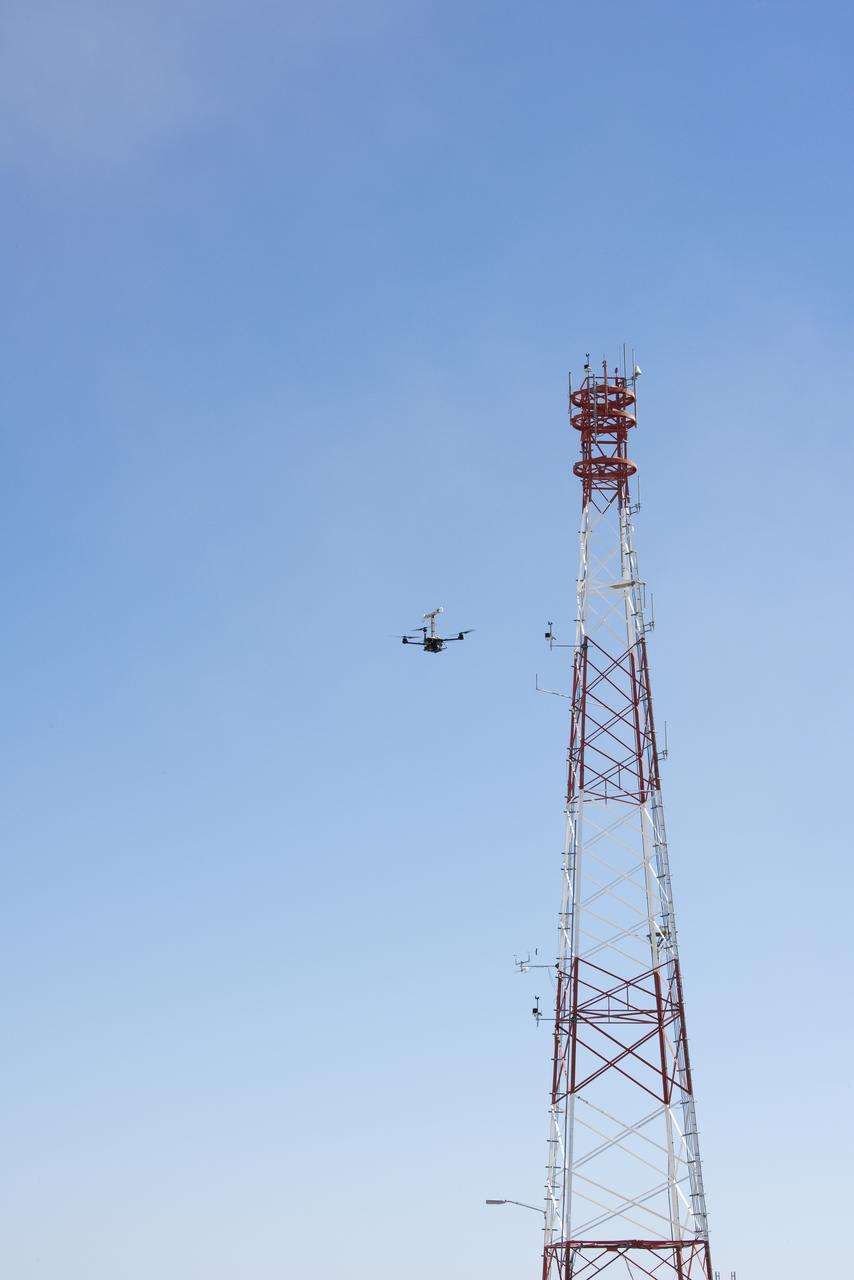
The Alta-X aircraft flies by a 140-foot instrumented tower at NASA’s Armstrong Flight Research Center in Edwards, California, as part of the Advanced Exploration of Reliable Operation at Low Altitudes: Meteorology, Simulation and Technology campaign. The campaign was at NASA Armstrong to study wind from the ground to 2,000 feet to provide data to assist future drones to safely land on rooftop hubs called vertiports and to potentially improve weather prediction.

Justin Link, left, Red Jensen and Derek Abramson prepare for an Alta-X aircraft flight as part of the Advanced Exploration of Reliable Operation at Low Altitudes: Meteorology, Simulation and Technology campaign. In the background are Grady Koch and Jennifer Fowler. The campaign was at NASA Armstrong to study wind from the ground to 2,000 feet to provide data to assist future drones to safely land on rooftop hubs called vertiports and to potentially improve weather prediction.
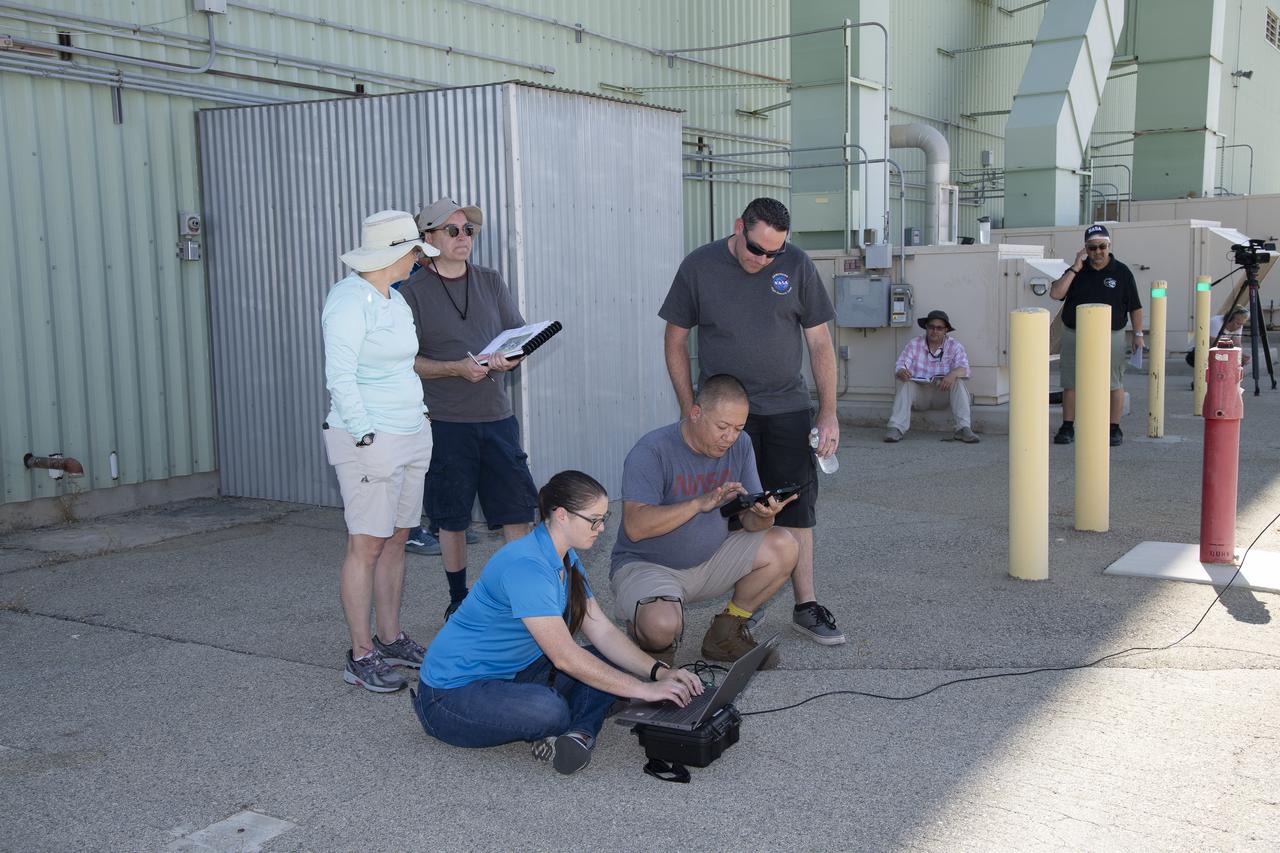
Tyler Willhite, sitting, and Derek Abramson and Justin Link, prepare for an Alta-X aircraft flight. Behind them are Jennifer Fowler, from left and Grady Kock. The Alta-X flight was part of the Advanced Exploration of Reliable Operation at Low Altitudes: Meteorology, Simulation and Technology campaign. The campaign was at NASA Armstrong to study wind from the ground to 2,000 feet to provide data to assist future drones to safely land on rooftop hubs called vertiports and to potentially improve weather prediction.
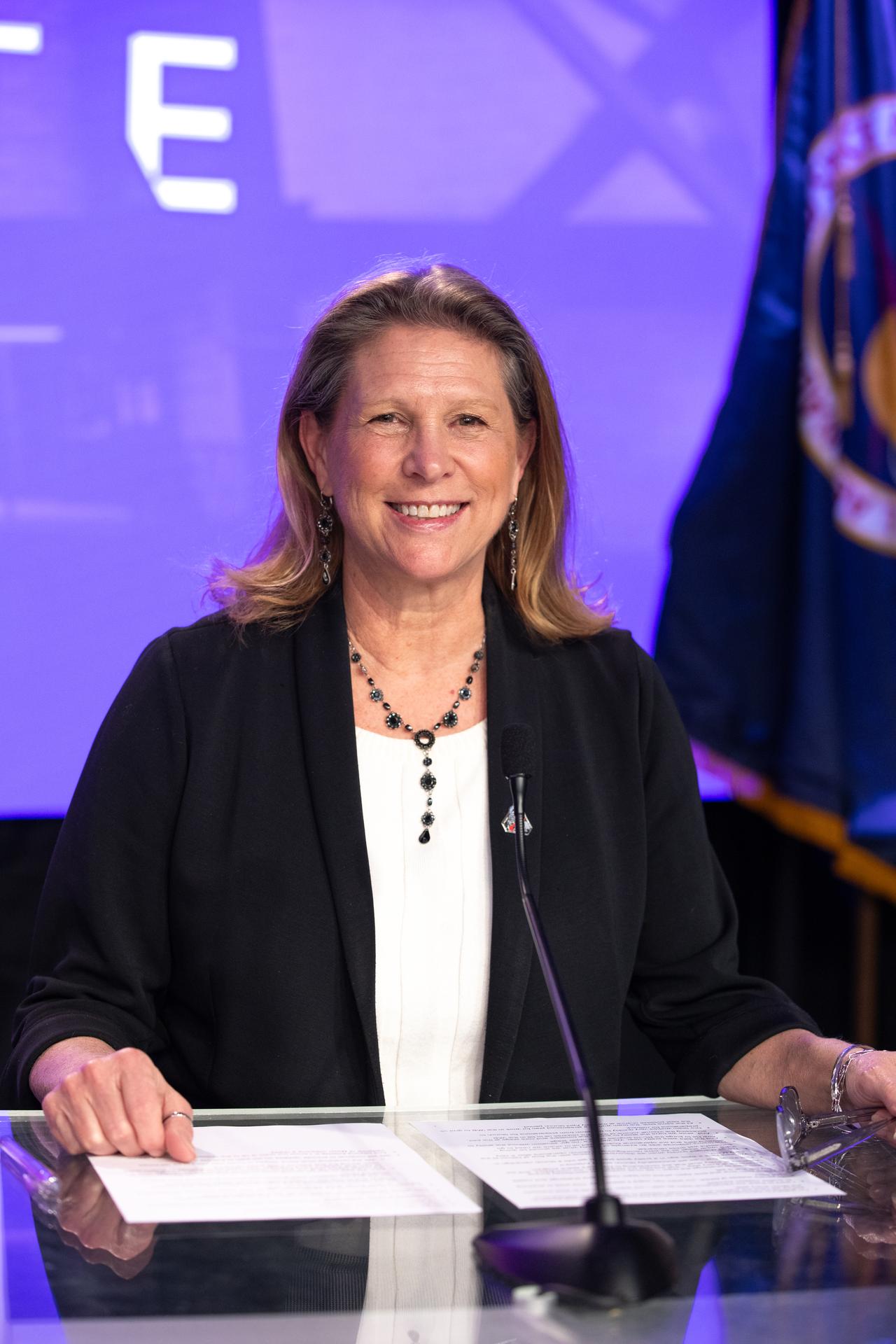
Lori Glaze, acting associate administrator for Exploration Systems Development Mission Directorate, participates in a news conference on Friday, Feb. 27, 2026, to discuss the rollback of the Artemis II SLS (Space Launch System) rocket from the launch pad to the Vehicle Assembly Building and next steps for the Artemis campaign at NASA’s Kennedy Space Center in Florida. Participants discussed the work ahead for the Artemis II test flight and a broader update on the Artemis campaign.
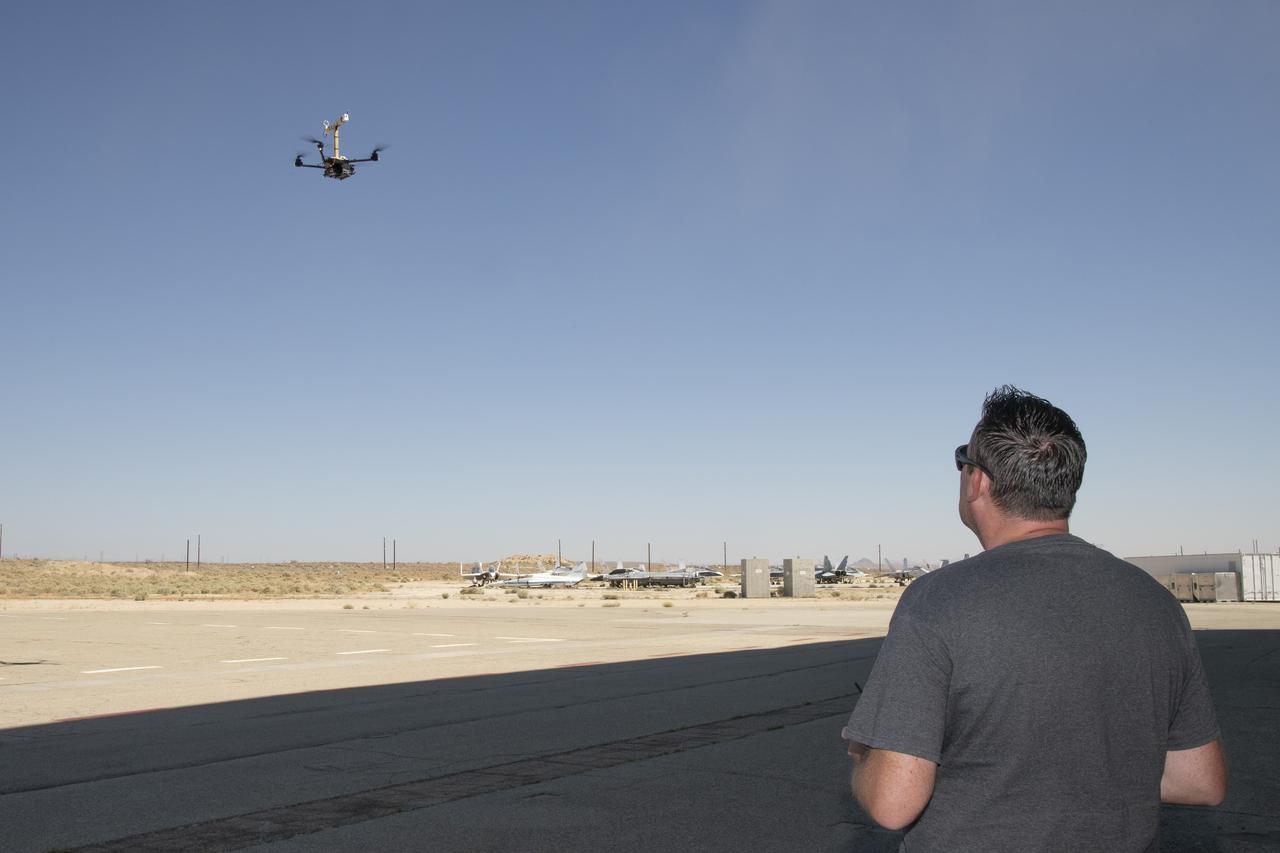
Justin Link positions the Alta-X aircraft for a hover to capture data as part of the Advanced Exploration of Reliable Operation at Low Altitudes: Meteorology, Simulation and Technology campaign. The campaign was at NASA Armstrong to study wind from the ground to 2,000 feet to provide data to assist future drones to safely land on rooftop hubs called vertiports and to potentially improve weather prediction.
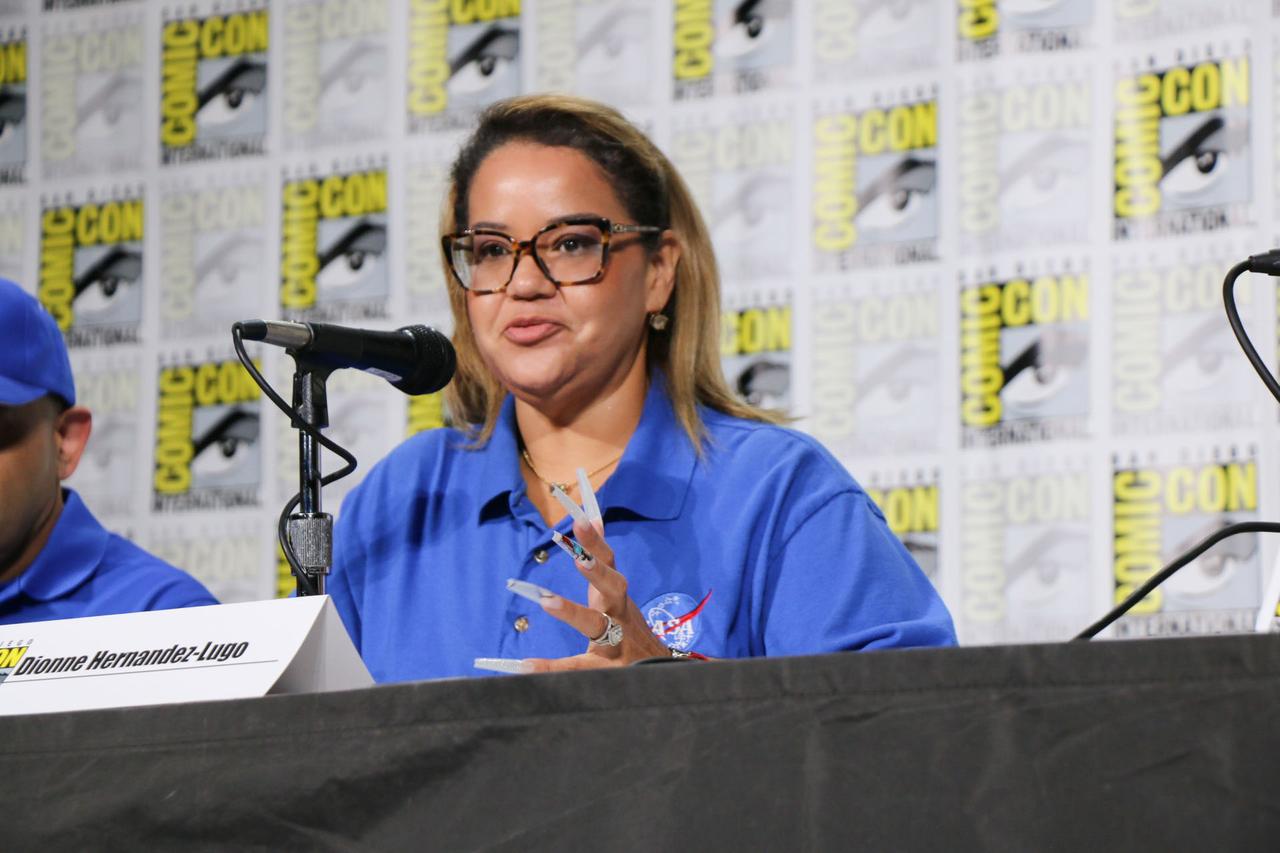
jsc2024e055755 (July 25, 2024) -- Location: San Diego Convention Center, San Diego, CA Subject: Coverage of NASA panel Exploring the Moon: the Artemis Generation with NASA’s chief technologist, NASA astronaut Stan Love, and representatives from the Artemis campaign and Gateway lunar space station. Photo Credit: NASA
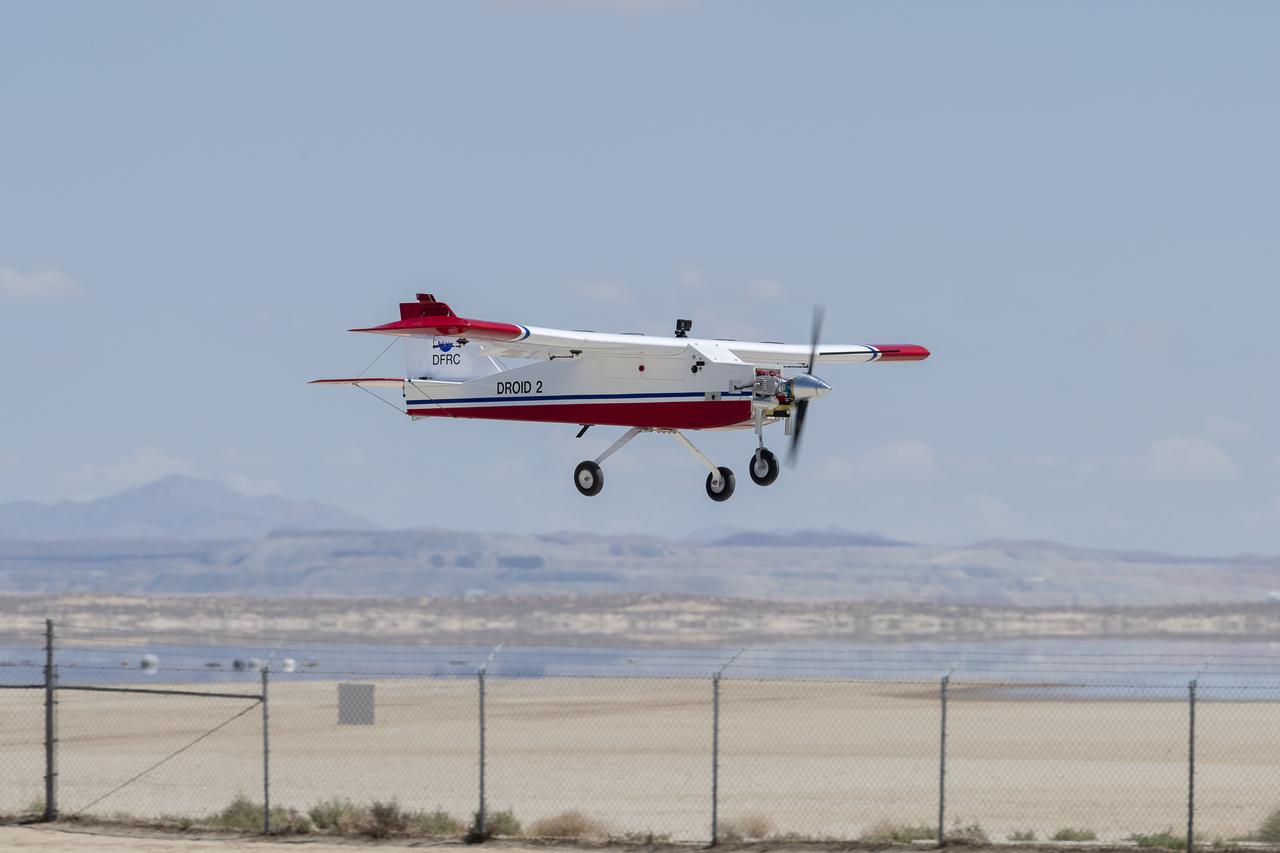
The DROID 2 (Dryden Remotely Operated Integrated Drone 2) prepares to land at NASA's Armstrong Flight Research Center in Edwards, California, as part of the Advanced Exploration of Reliable Operation at Low Altitudes: Meteorology, Simulation, and Technology campaign. The focus was to study wind to provide data for safe takeoff and landing of future air taxis.
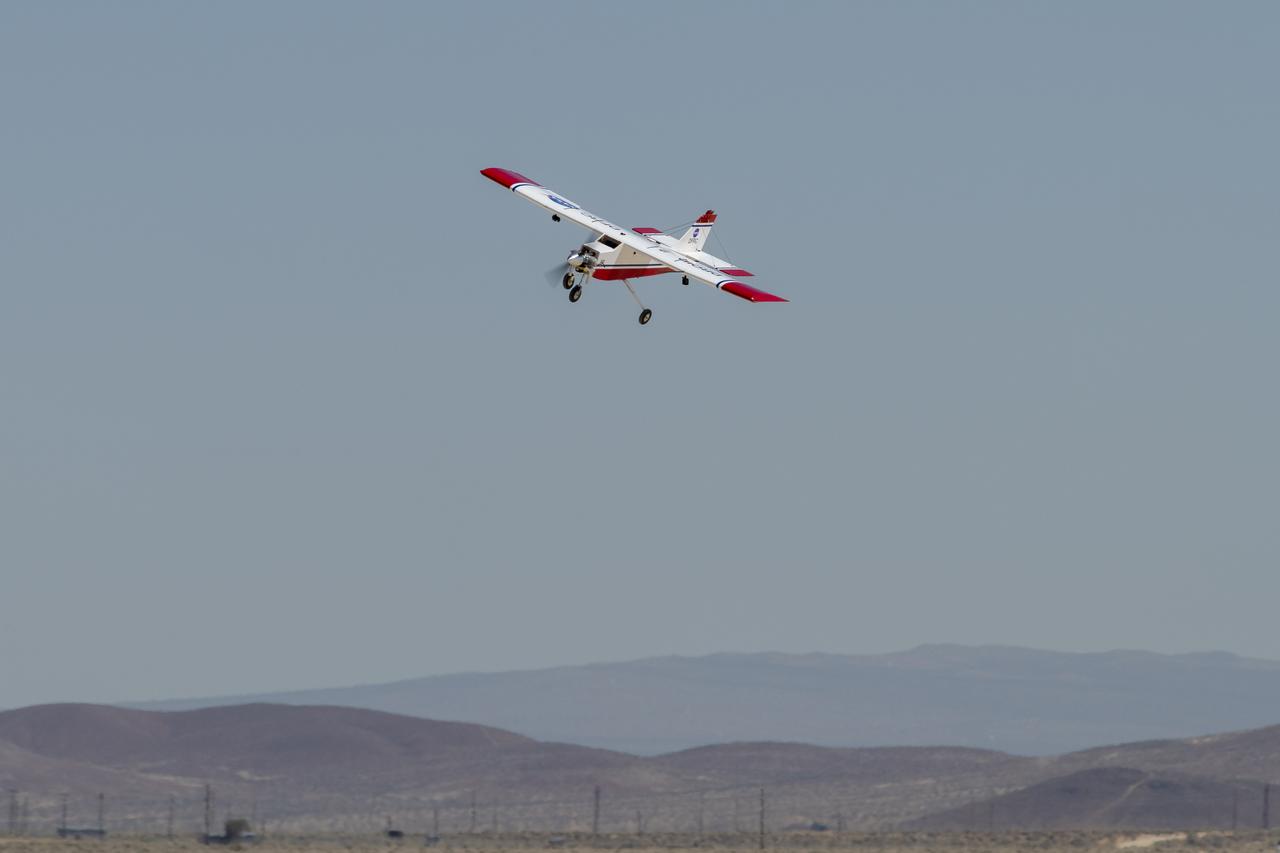
The DROID 2 (Dryden Remotely Operated Integrated Drone 2) flies at NASA's Armstrong Flight Research Center in Edwards, California, as part of the Advanced Exploration of Reliable Operation at Low Altitudes: Meteorology, Simulation, and Technology campaign. The focus was to study wind to provide data for safe takeoff and landing of future air taxis.

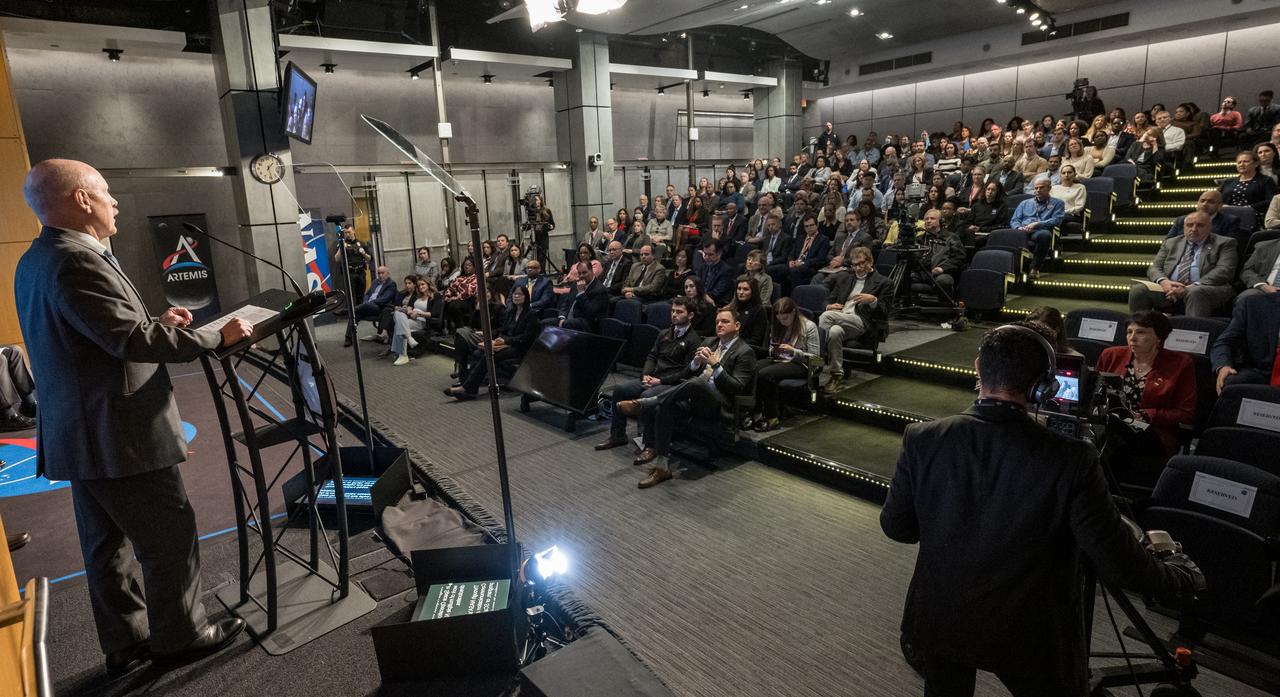
NASA Deputy Associate Administrator for the Moon to Mars Program in the Explorations Systems Development Mission Directorate, Amit Kshatriya, on the monitor, gives remarks during an update on NASA's Artemis campaign, Thursday, Dec. 5, 2024, at the NASA Headquarters Mary W. Jackson Building in Washington. Photo Credit: (NASA/Bill Ingalls)
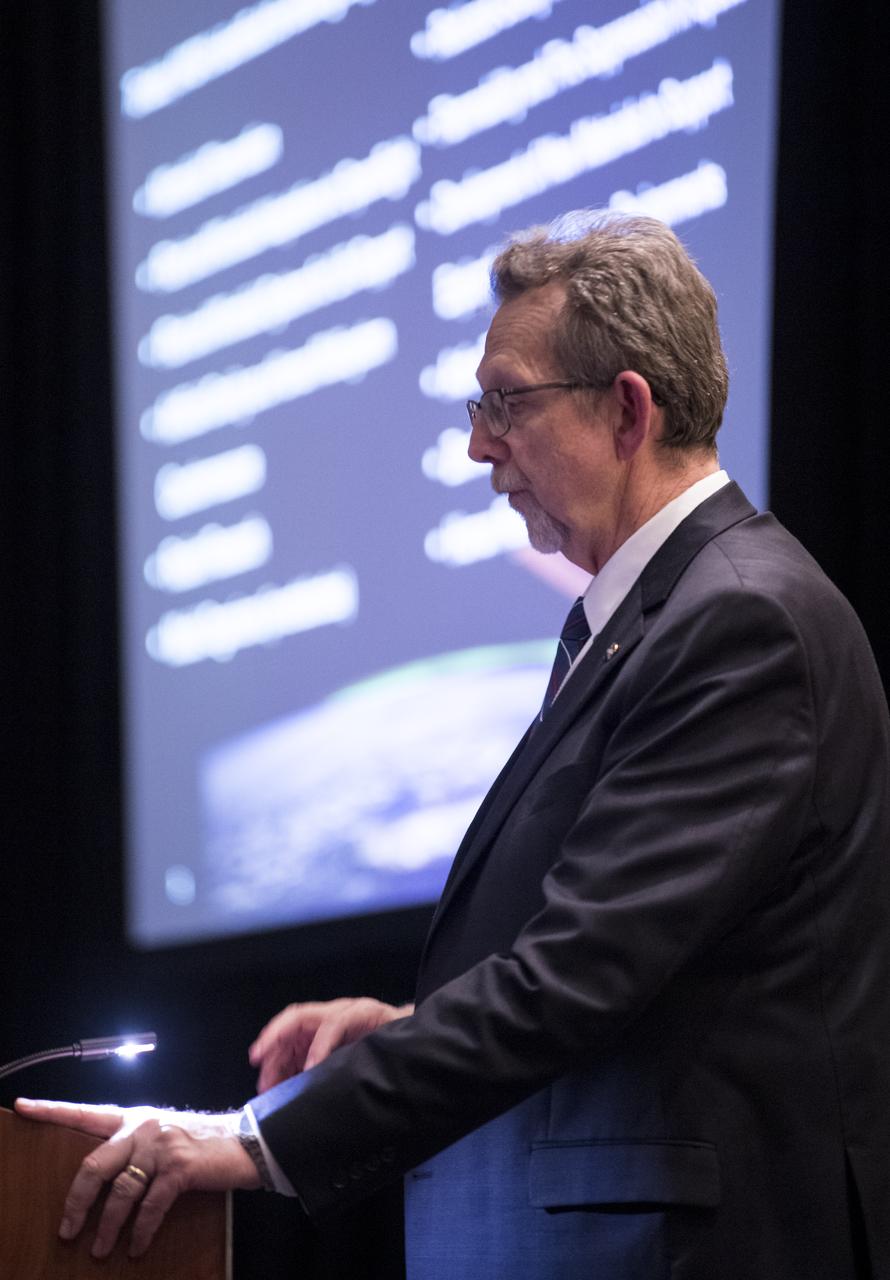
NASA Chief Scientist Jim Green speaks about NASA Science under the National Space Exploration Campaign during a keynote at the 70th International Astronautical Congress, Monday, Oct. 21, 2019 at the Walter E. Washington Convention Center in Washington. Photo Credit: (NASA/Joel Kowsky)
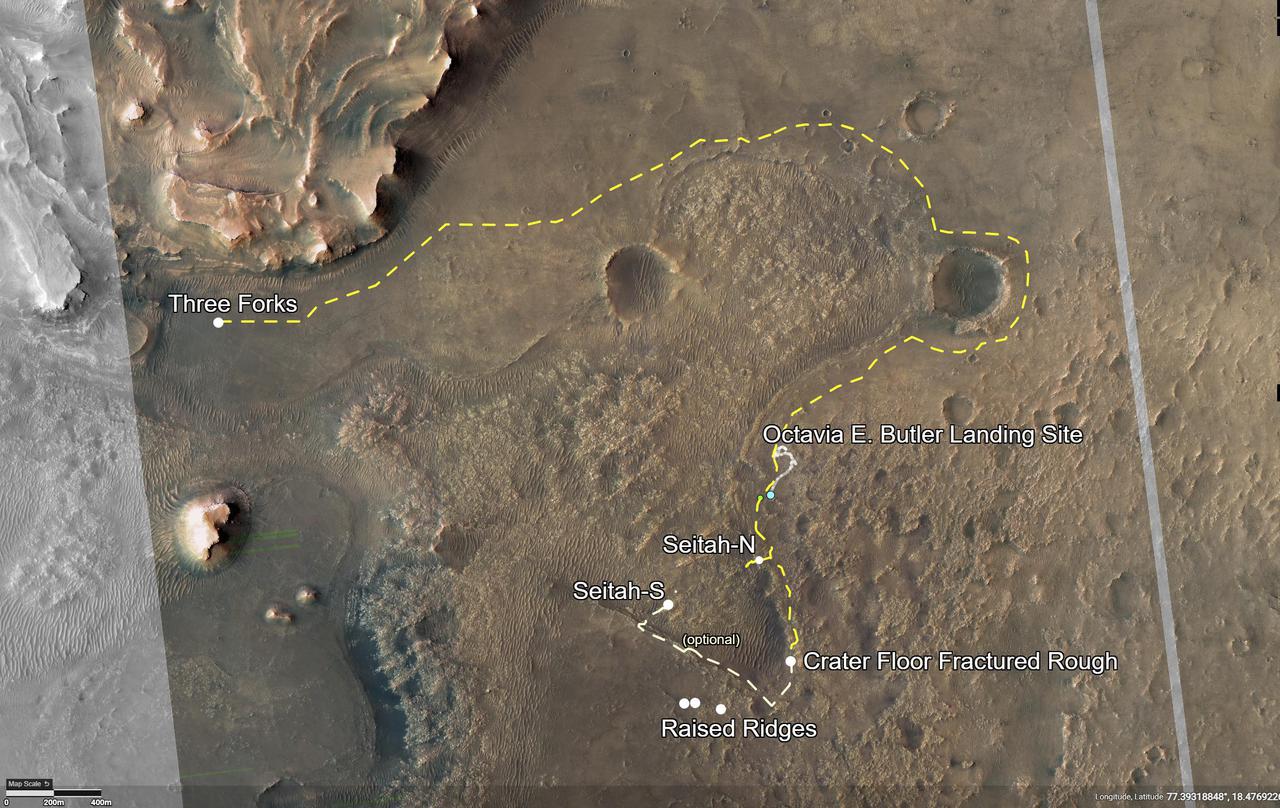
This annotated image of Mars' Jezero Crater depicts the route NASA's Perseverance rover will take during its first science campaign – as well as its path to the location of its second science campaign. The image was provided by the High Resolution Imaging Experiment (HiRISE) aboard NASA's Mars Reconnaissance orbiter. Perseverance's first science campaign sends the rover south and west of the Octavia E. Butler Landing Site to investigate and sample several of the deepest, and potentially oldest, accessible geologic units in Jezero Crater – the "Séítah" unit (which in Navajo language means "amidst the sand"), and the "Cratered Floor Fractured Rough." At the completion of the science campaign, Perseverance will return to the "Octavia E. Butler" landing site on its way north, then head west toward the location where its second science campaign will begin. The first science campaign (depicted with yellow hash marks) begins with the rover performing an arching drive southward from its landing site to Séítah-North (Séítah-N). At that point the rover will travel west a short distance to an overlook where it can view much of the Séítah unit. The "Séítah-N Overlook" could also become an area of scientific interest – with Perseverance performing a "toe dip" into the unit to collect remote-sensing measurements of geologic targets. Once its time at the Séítah-N Overlook is complete, Perseverance will head east, then south toward a spot where the science team can study the Crater Floor Fractured Rough in greater detail. The first core sample collected by the mission will also take place at this location. After Cratered Floor Fractured Rough, the Perseverance rover team will evaluate whether additional exploration (depicted with light-yellow hash marks) farther south – and then west – is warranted. Whether Perseverance travels beyond the Cratered Floor Fractured Rough during this first science campaign, the rover will eventually retrace its steps. As Perseverance passes the Octavia B. Butler landing site, the first science campaign will conclude. At that point, several months of travel lay ahead as Perseverance makes its way to "Three Forks," where the second science campaign will begin. From Three Forks, Perseverance can access geologic locations at the base of the ancient delta (the fan-shaped remains of the confluence of an ancient river and a lake), as well as ascend the delta by driving up a valley wall to the northwest. https://photojournal.jpl.nasa.gov/catalog/PIA24596

jsc2025e034457 (March 18, 2025) -- The official Artemis II mission crew patch. The Artemis II test flight begins when a mighty team launches the first crew of the Artemis generation. This patch designates the mission as “AII,” signifying not only the second major flight of the Artemis campaign, but also an endeavor of discovery that seeks to explore for all and by all. Framed in Apollo 8’s famous Earthrise photo, the scene of the Earth and the Moon represents the dual nature of human spaceflight, both equally compelling: The Moon represents our exploration destination, focused on discovery of the unknown. The Earth represents home, focused on the perspective we gain when we look back at our shared planet and learn what it is to be uniquely human. The orbit around Earth highlights the ongoing exploration missions that have enabled Artemis to set sights on a long-term presence on the Moon and soon, Mars. Credit: NASA
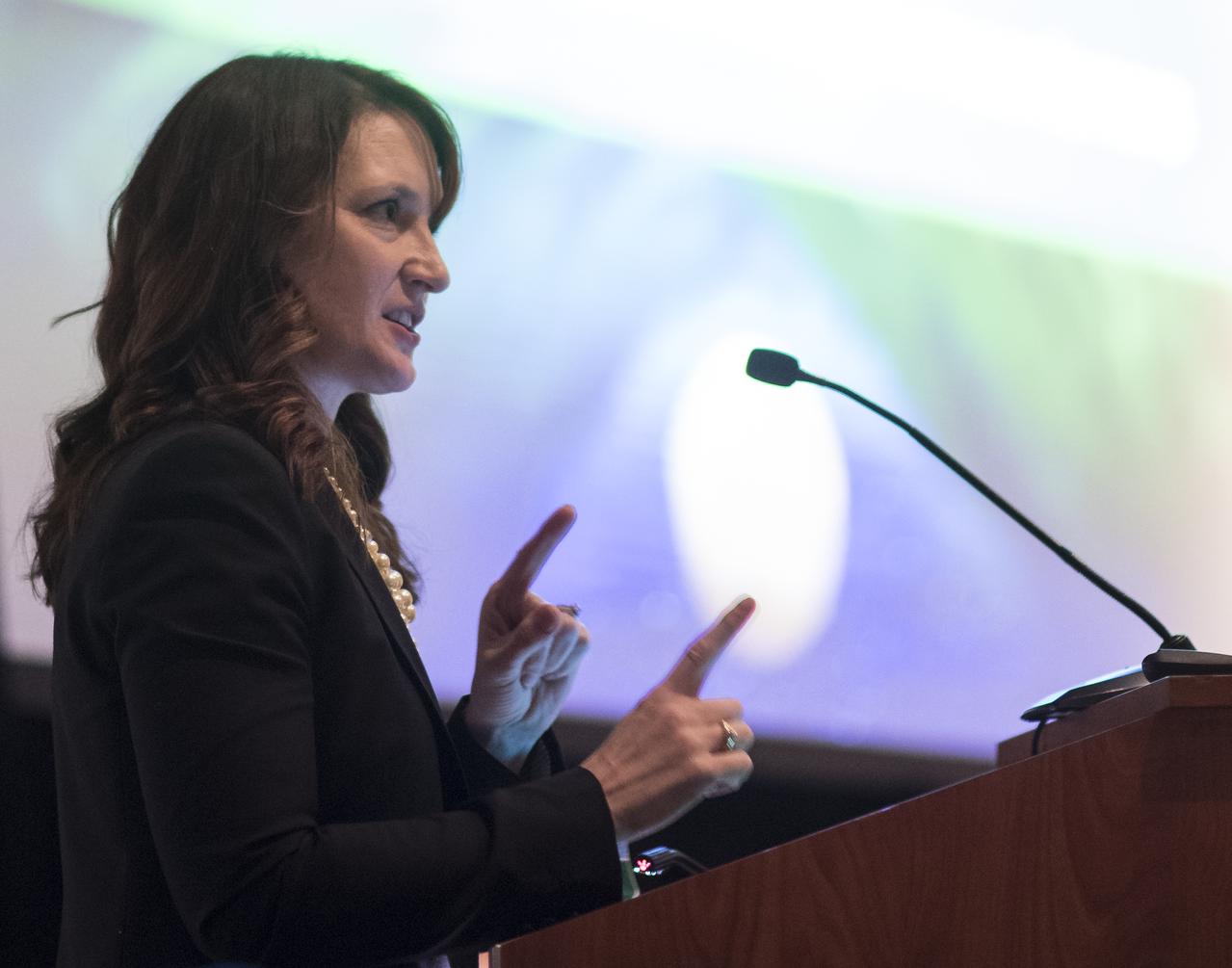
Kathleen Boggs, Systems and Technology Demonstration Manager in the International Space Station Division of NASA’s Human Exploration and Operations Mission Directorate, is seen a keynote titled “From LEO to the Moon, Mars, and Beyond: Shaping Capability Development Strategies for NASA’s Human Exploration Campaign” at the 70th International Astronautical Congress, Thursday, Oct. 24, 2019 at the Walter E. Washington Convention Center in Washington. Photo Credit: (NASA/Joel Kowsky)

Kathleen Boggs, Systems and Technology Demonstration Manager in the International Space Station Division of NASA’s Human Exploration and Operations Mission Directorate, is seen a keynote titled “From LEO to the Moon, Mars, and Beyond: Shaping Capability Development Strategies for NASA’s Human Exploration Campaign” at the 70th International Astronautical Congress, Thursday, Oct. 24, 2019 at the Walter E. Washington Convention Center in Washington. Photo Credit: (NASA/Joel Kowsky)
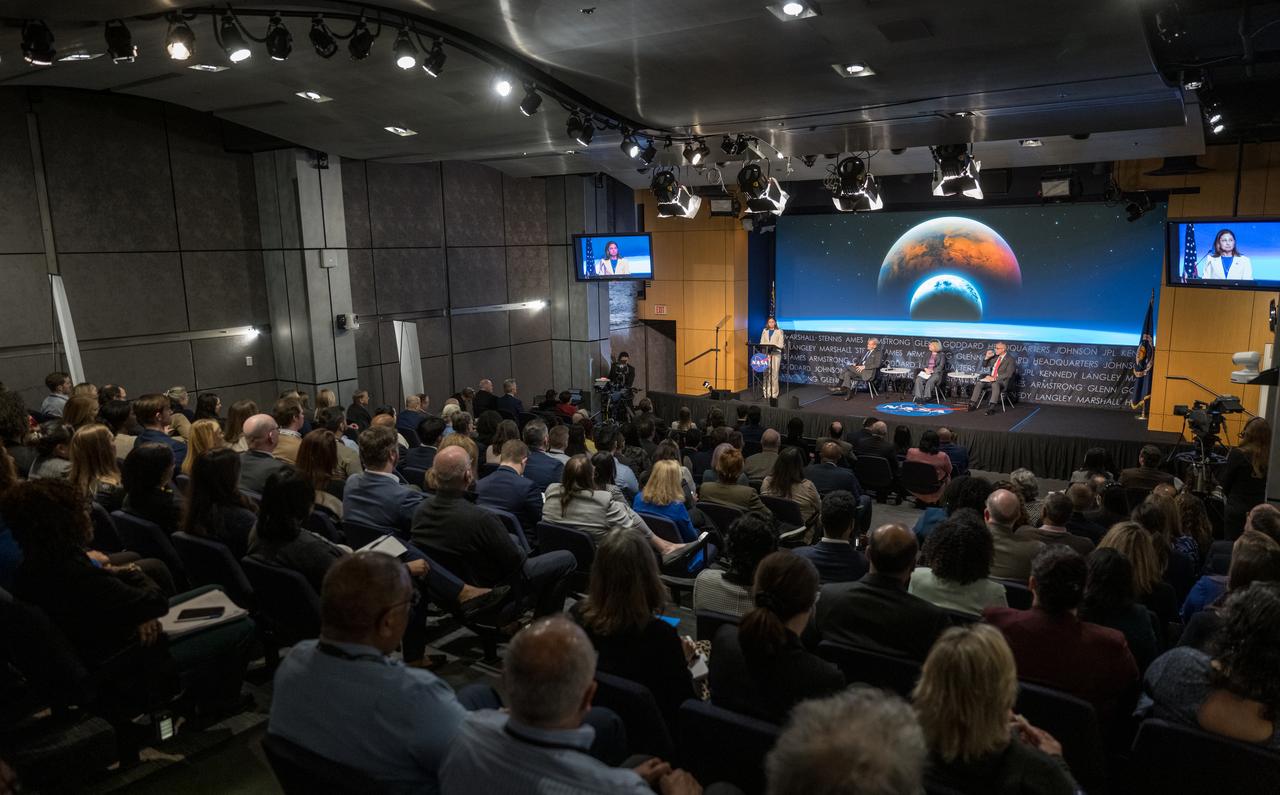
NASA Associate Administrator for Exploration Systems, Catherine Koerner, discusses the agency’s goals during the annual State of NASA address, Monday, March 11, 2024, at the Mary W. Jackson NASA Headquarters Building in Washington. NASA leaders discussed plans for promoting U.S. leadership in space exploration, improving life on Earth through science and innovation, humanity’s return to the Moon under the Artemis campaign, aeronautics, and more. Photo Credit: (NASA/Bill Ingalls)
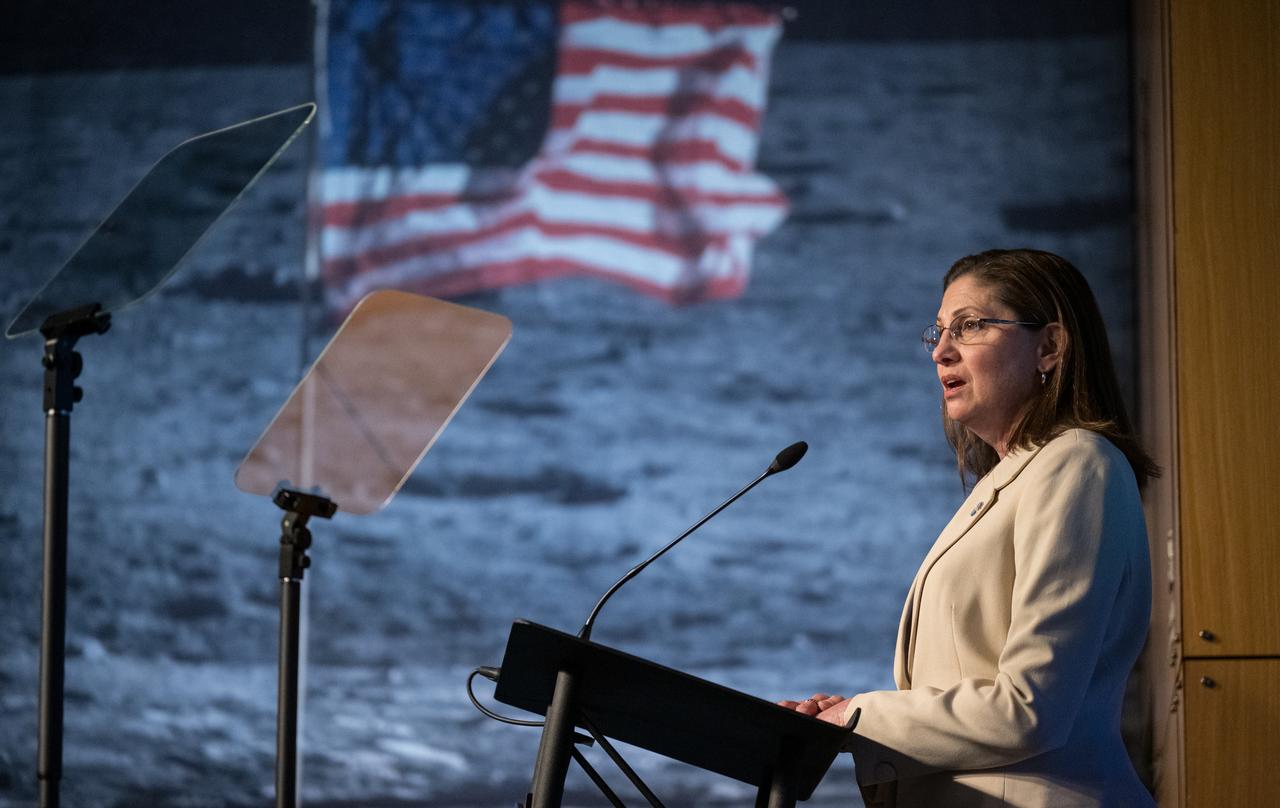
NASA Associate Administrator for Exploration Systems, Catherine Koerner, discusses the agency’s goals during the annual State of NASA address, Monday, March 11, 2024, at the Mary W. Jackson NASA Headquarters Building in Washington. NASA leaders discussed plans for promoting U.S. leadership in space exploration, improving life on Earth through science and innovation, humanity’s return to the Moon under the Artemis campaign, aeronautics, and more. Photo Credit: (NASA/Bill Ingalls)
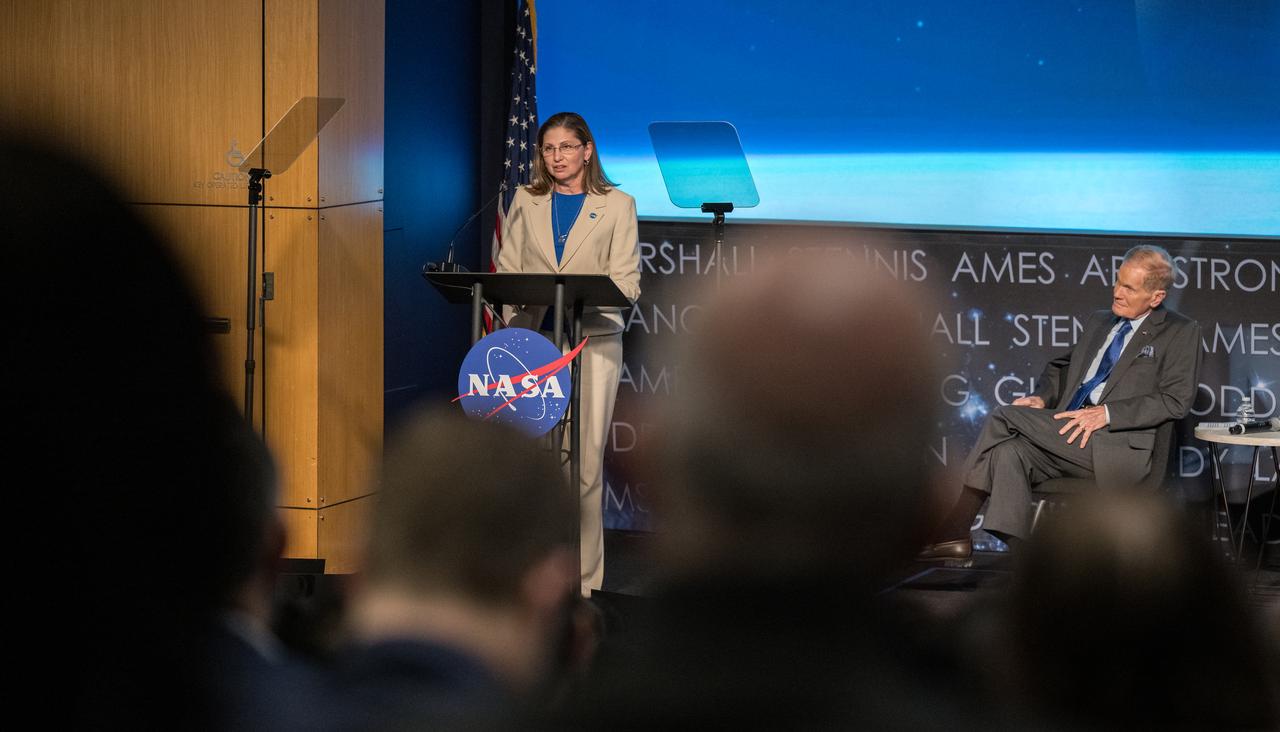
NASA Associate Administrator for Exploration Systems, Catherine Koerner, discusses the agency’s goals during the annual State of NASA address, as NASA Administrator Bill Nelson looks on, Monday, March 11, 2024, at the Mary W. Jackson NASA Headquarters Building in Washington. NASA leaders discussed plans for promoting U.S. leadership in space exploration, improving life on Earth through science and innovation, humanity’s return to the Moon under the Artemis campaign, aeronautics, and more. Photo Credit: (NASA/Bill Ingalls)

Kathleen Boggs, Systems and Technology Demonstration Manager in the International Space Station Division of NASA’s Human Exploration and Operations Mission Directorate, is seen a keynote titled “From LEO to the Moon, Mars, and Beyond: Shaping Capability Development Strategies for NASA’s Human Exploration Campaign” at the 70th International Astronautical Congress, Thursday, Oct. 24, 2019 at the Walter E. Washington Convention Center in Washington. Photo Credit: (NASA/Joel Kowsky)
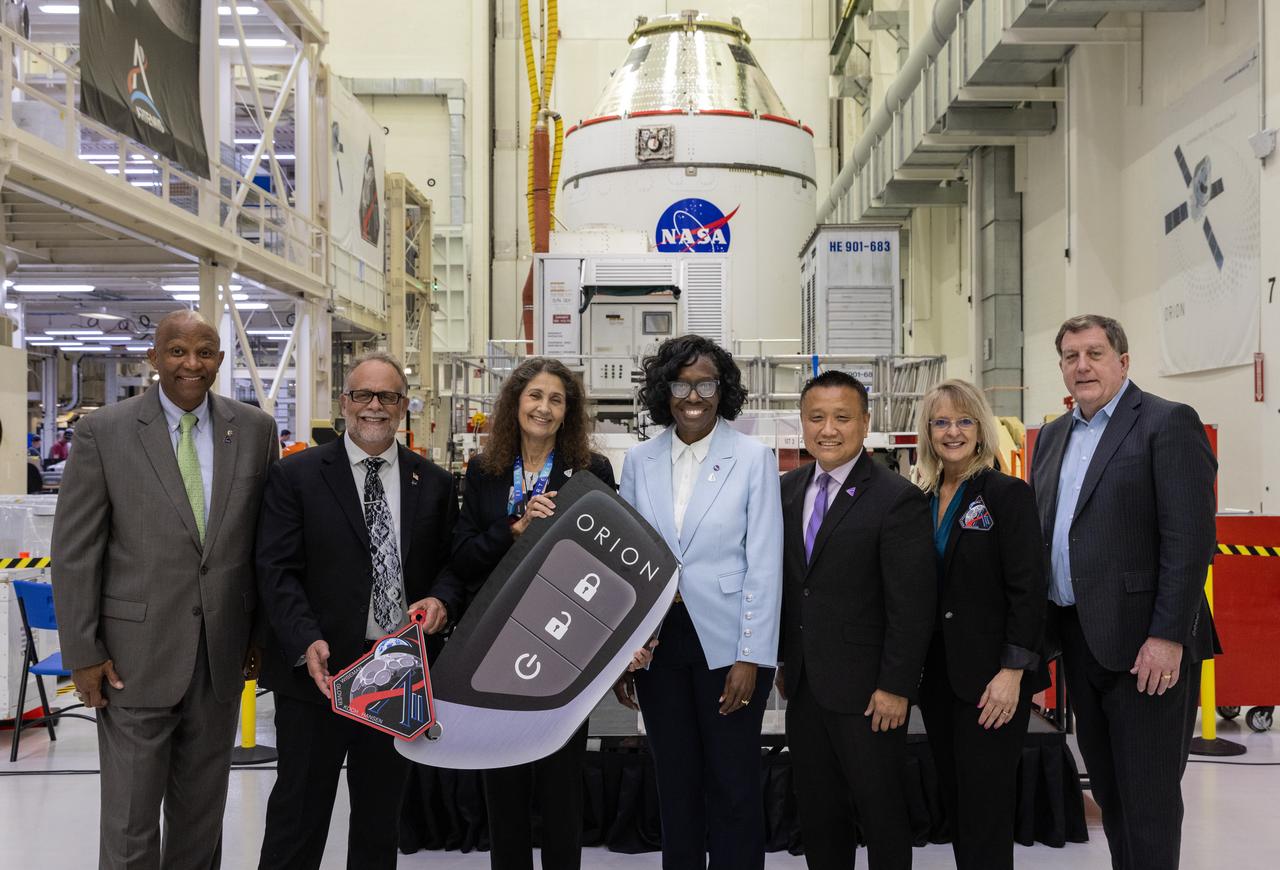
From left, Kelvin Manning, acting center director, NASA’s Kennedy Space Center; Shawn Quinn, Exploration Ground Systems program manager; Lorna Kenna, Amentum Vice President and program manager; Lakiesha Hawkins, assistant deputy associate administrator, Moon to Mars Program office; Howard Hu, Orion program manager; Debbie Korth, Orion deputy program manager; Keith Shireman Lockheed Martin Vice President of Lunar Exploration Campaign, participate in a handover ceremony of NASA’s Artemis II Orion spacecraft to crews with the agency’s Exploration Ground Systems Program at the Neil A. Armstrong Operations and Checkout Building at NASA’s Kennedy Space Center in Florida on Thursday, May 1, 2025. The spacecraft will be transported to the Multi-Payload Processing Facility to undergo fueling and processing for prelaunch operations. The Artemis II test flight is the first crewed flight under NASA’s Artemis campaign and is another step toward missions on the lunar surface and helping the agency prepare for future human missions to Mars.
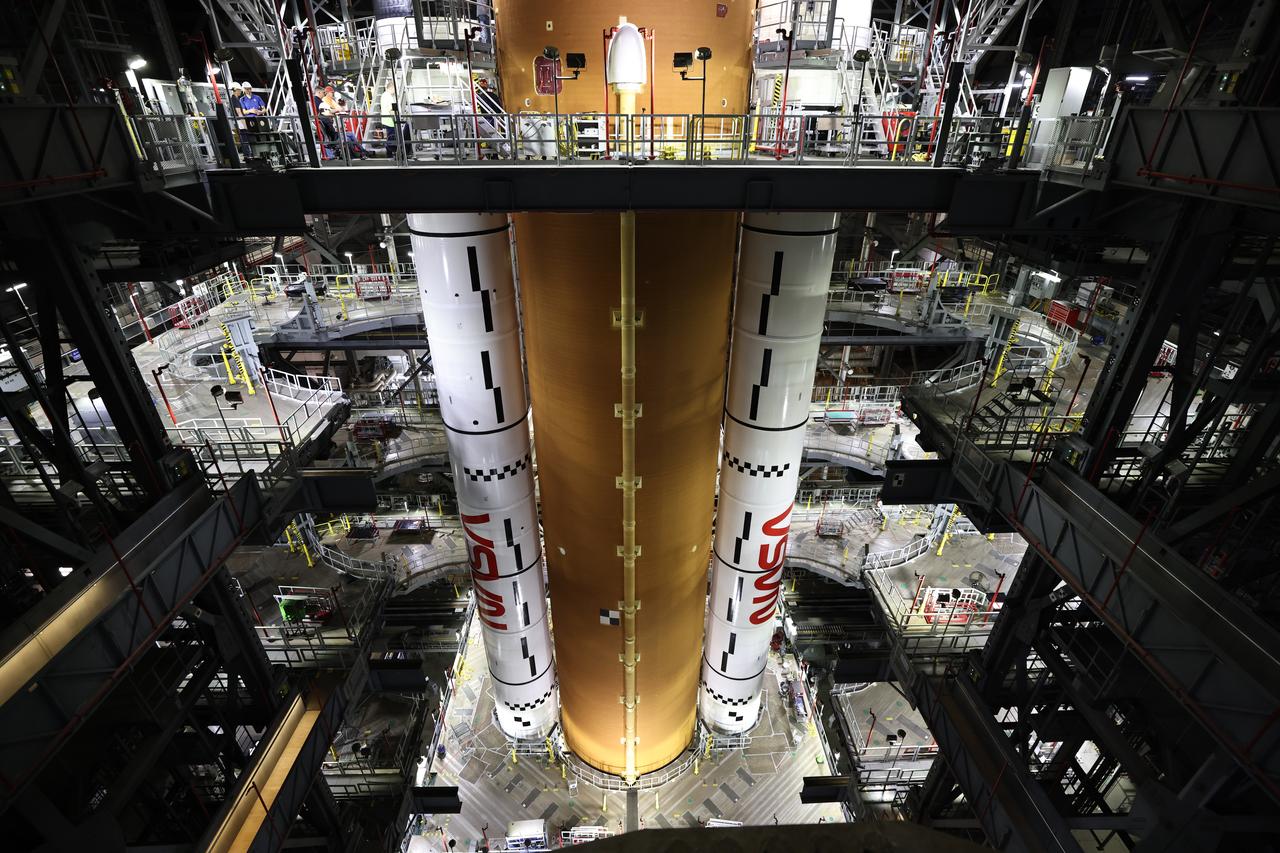
Teams with NASA’s Exploration Ground Systems and primary contractor Amentum, integrate the SLS (Space Launch System) Moon rocket with the solid rocket boosters onto mobile launcher 1 inside High Bay 3 of the Vehicle Assembly Building at NASA’s Kennedy Space Center on Sunday, March 23, 2025. Artemis II is the first crewed test flight under NASA’s Artemis campaign and is another step toward missions on the lunar surface and helping the agency prepare for future human missions to Mars.
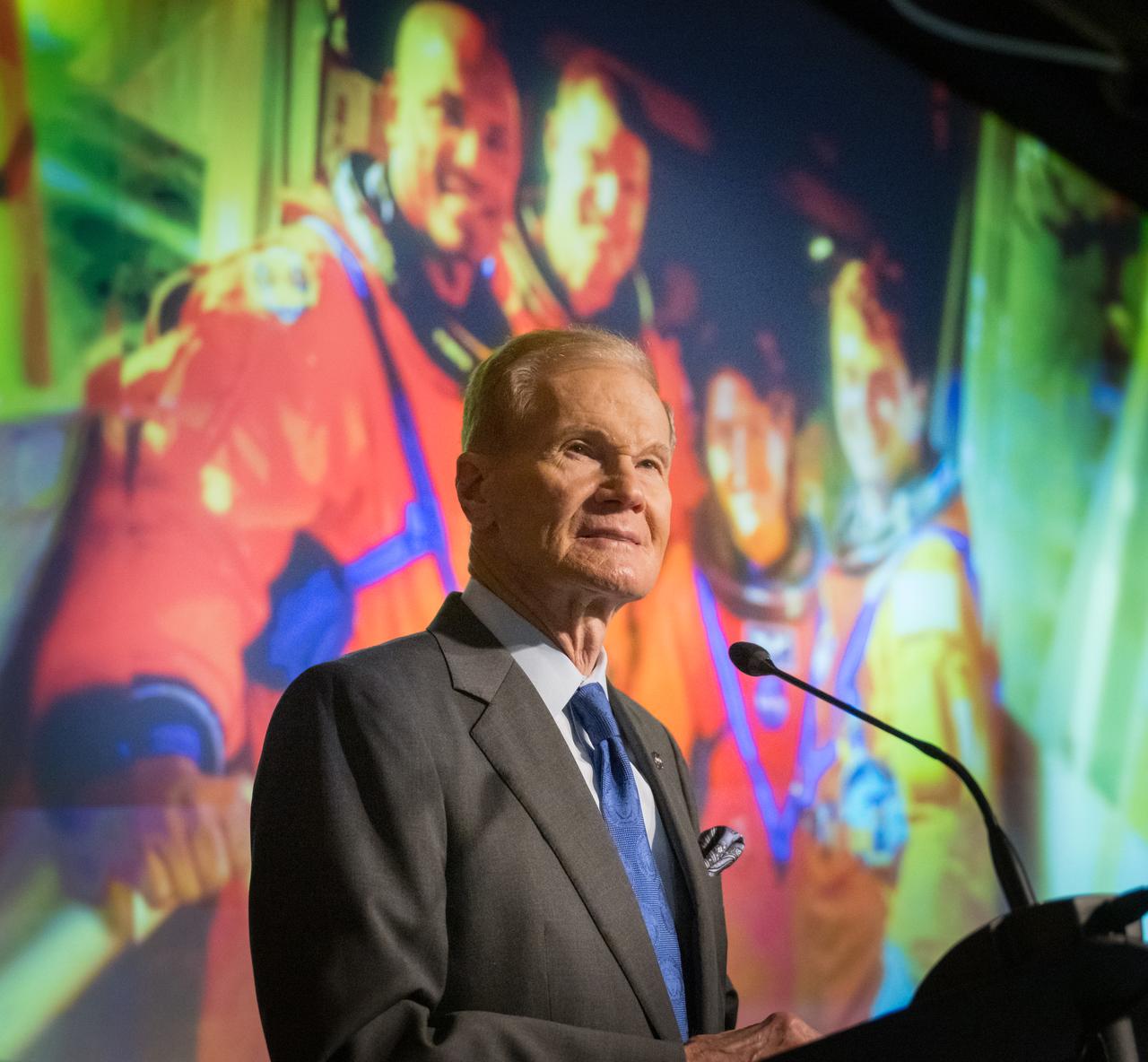
NASA Administrator Bill Nelson discusses the agency’s goals during the annual State of NASA address, Monday, March 11, 2024, at the Mary W. Jackson NASA Headquarters Building in Washington. NASA leaders discussed plans for promoting U.S. leadership in space exploration, improving life on Earth through science and innovation, humanity’s return to the Moon under the Artemis campaign, aeronautics, and more. Photo Credit: (NASA/Bill Ingalls)
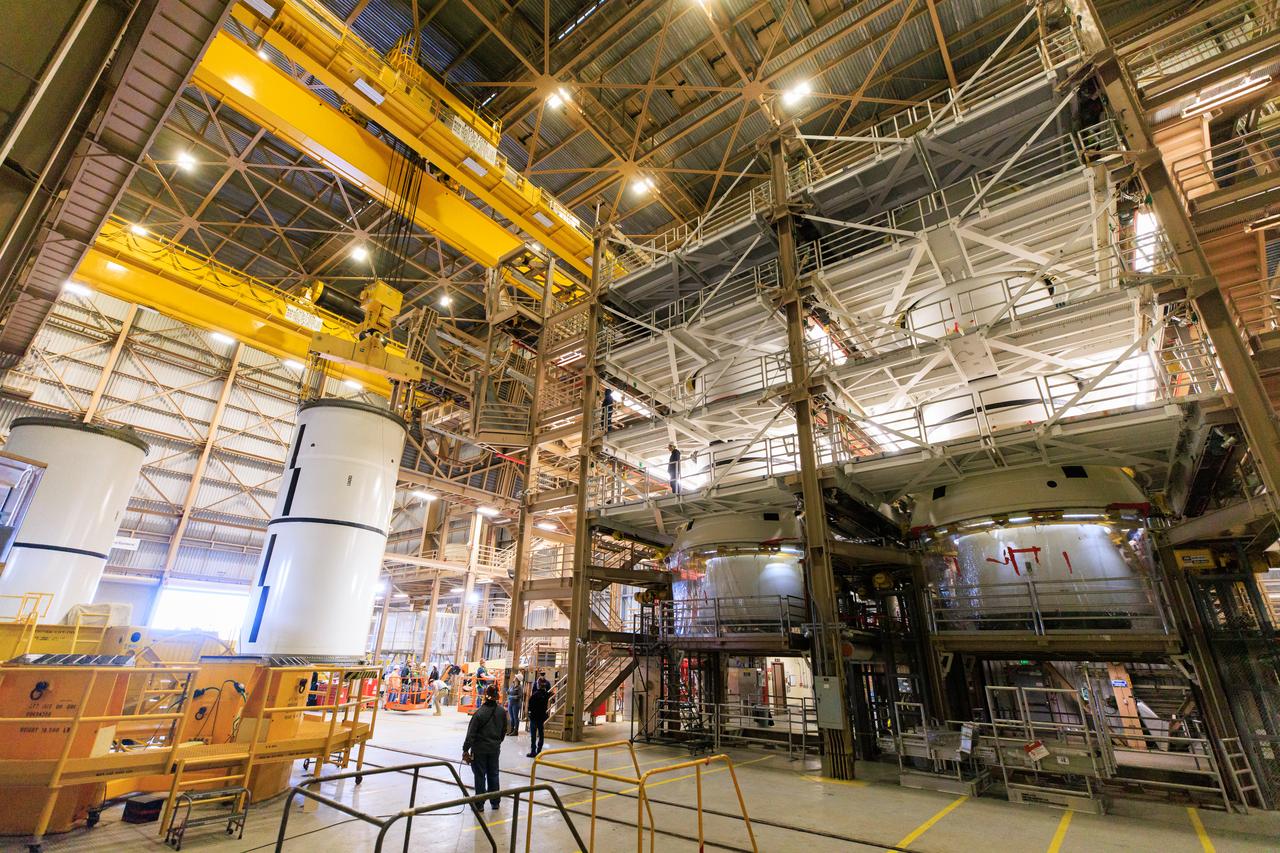
Following the successful propellant grain inspection of two segments of the solid rocket boosters for NASA’s Space Launch System inside the Rotation, Processing and Surge Facility at NASA’s Kennedy Space Center in Florida, crews on Thursday, Dec. 21, 2023, rotate and lift the segments from horizontal into a vertical position in preparation for the agency’s Artemis II launch campaign. The Artemis II mission will send four astronauts around the Moon as part of the agency’s effort to establish a long-term science and exploration presence at the Moon, and eventually Mars.
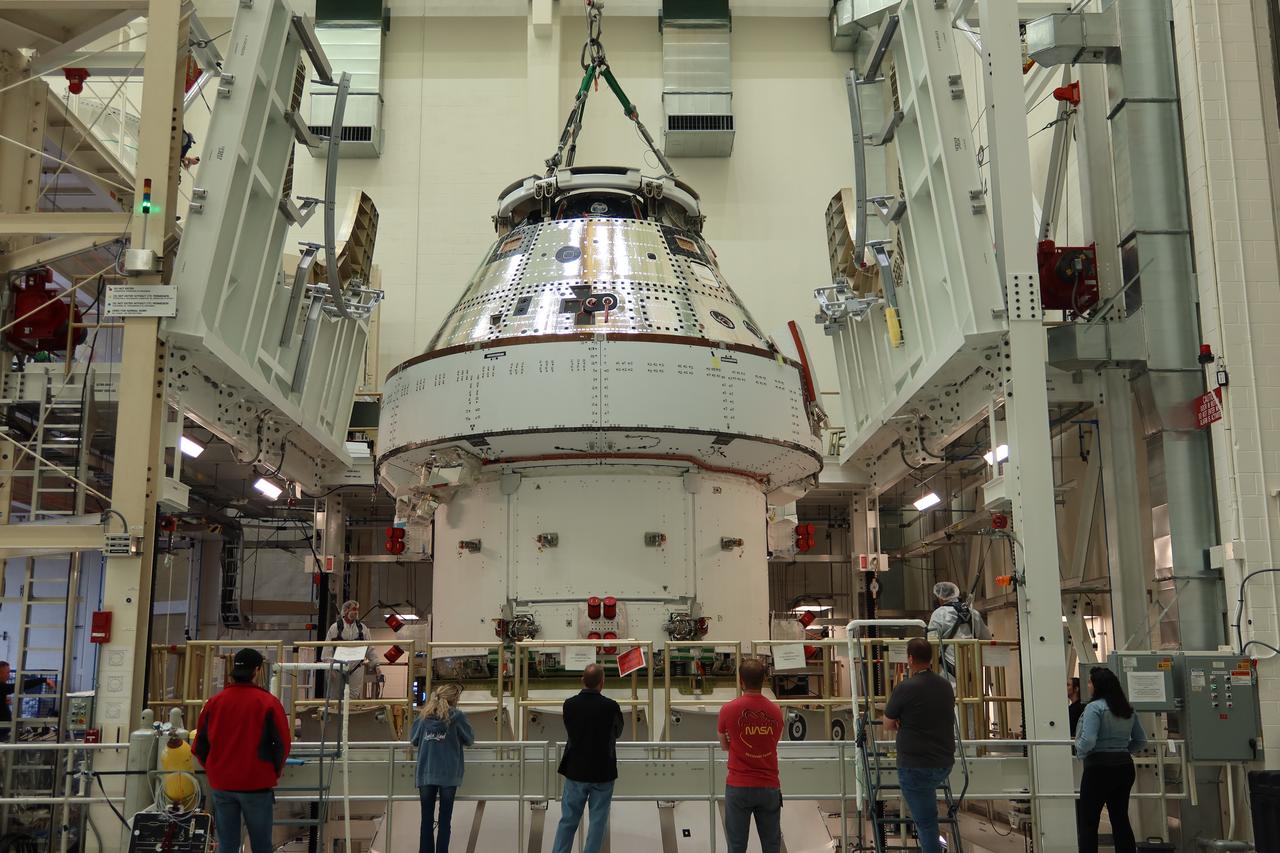
The Orion spacecraft crew module for NASA’s Artemis II mission is photographed being lowered inside the Final Assembly and System Testing cell by a 30 ton crane at the Neil Armstrong Operations and Checkout Building at NASA’s Kennedy Space Center in Florida on Saturday, April 27, 2024. Four astronauts will venture around the Moon in the Orion spacecraft on Artemis II, the first crewed mission on NASA's path to establishing a long-term presence at the Moon for science and exploration through the Artemis campaign.
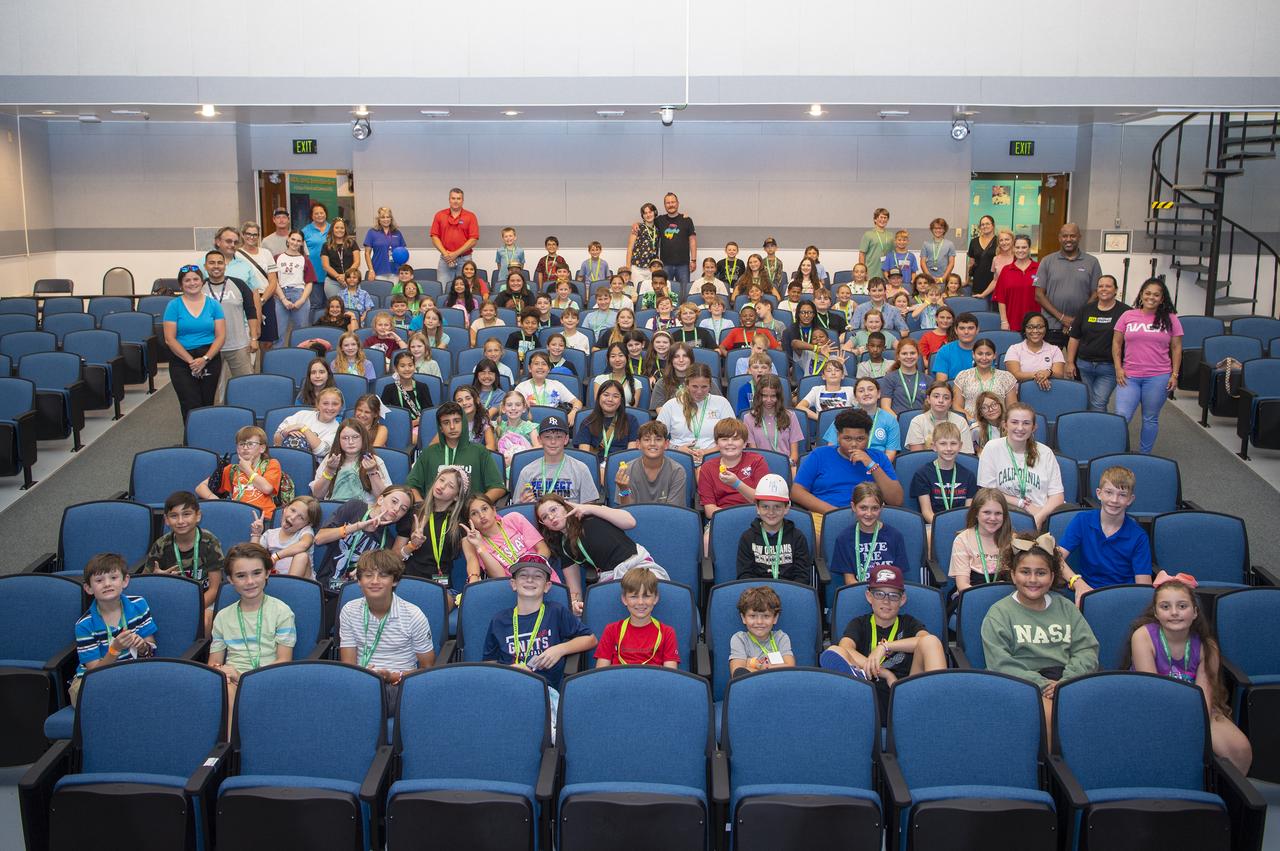
NASA’s Stennis Space Center inspired the Artemis Generation during the 2024 Take Our Children to Work Day on June 27. Participants are shown in the StenniSphere auditorium following a site tour and full day of hands-on activities to promote interest in STEM (science, technology, engineering, and mathematics) and the variety of work conducted at NASA Stennis. NASA is returning to the Moon through the Artemis campaign for scientific discovery, economic benefits, and inspiration for a new generation of explorers.
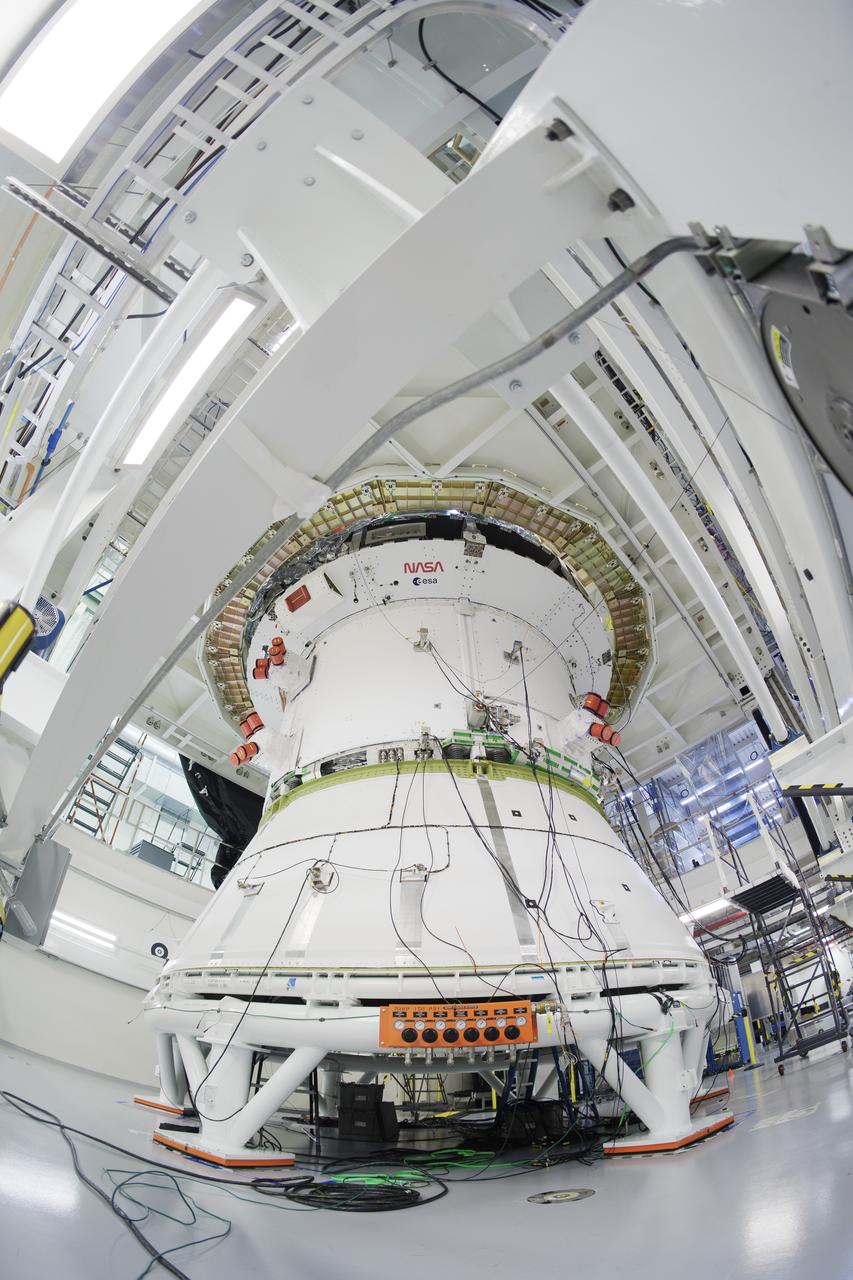
Work for Artemis II continues inside the Operations and Checkout building at NASA's Kennedy Space Center on Thursday, Feb. 1, 2024. Teams with Lockheed Martin and NASA are preparing the Orion spacecraft for vacuum testing this spring. Four astronauts will venture around the Moon in the Orion spacecraft on Artemis II, the first crewed mission on NASA's path to establishing a long-term presence at the Moon for science and exploration through the Artemis campaign.
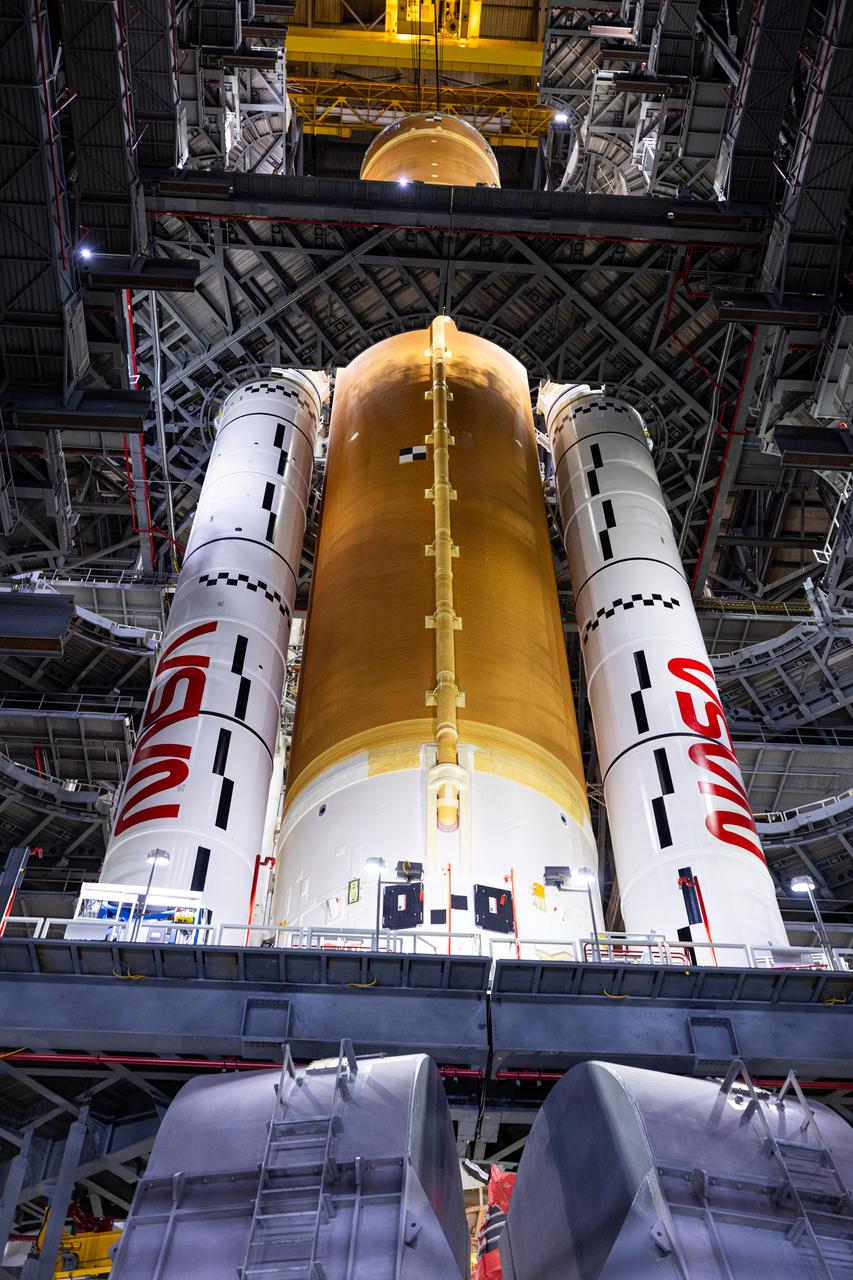
Teams with NASA’s Exploration Ground Systems and primary contractor Amentum, integrate the SLS (Space Launch System) Moon rocket with the solid rocket boosters onto mobile launcher 1 inside High Bay 3 of the Vehicle Assembly Building at NASA’s Kennedy Space Center on Sunday, March 23, 2025. Artemis II is the first crewed test flight under NASA’s Artemis campaign and is another step toward missions on the lunar surface and helping the agency prepare for future human missions to Mars.
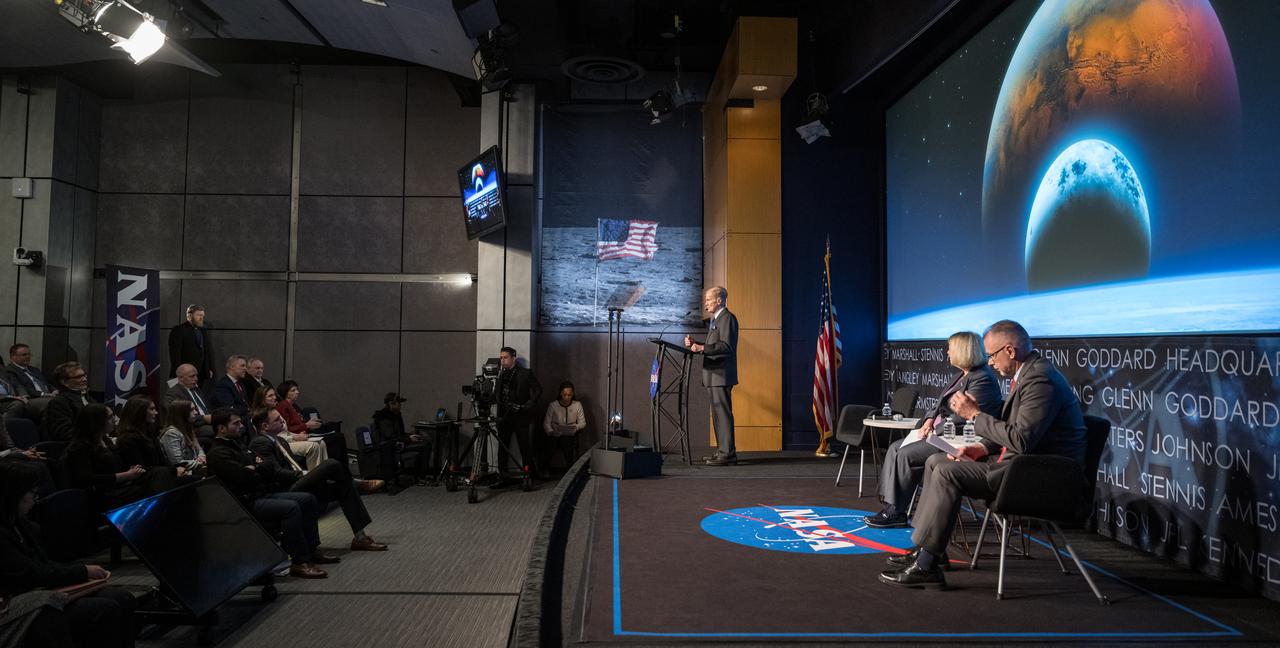
NASA Administrator Bill Nelson, at podium, discusses the agency’s goals during the annual State of NASA address, Monday, March 11, 2024, at the Mary W. Jackson NASA Headquarters Building in Washington. NASA leaders discussed plans for promoting U.S. leadership in space exploration, improving life on Earth through science and innovation, humanity’s return to the Moon under the Artemis campaign, aeronautics, and more. Photo Credit: (NASA/Bill Ingalls)
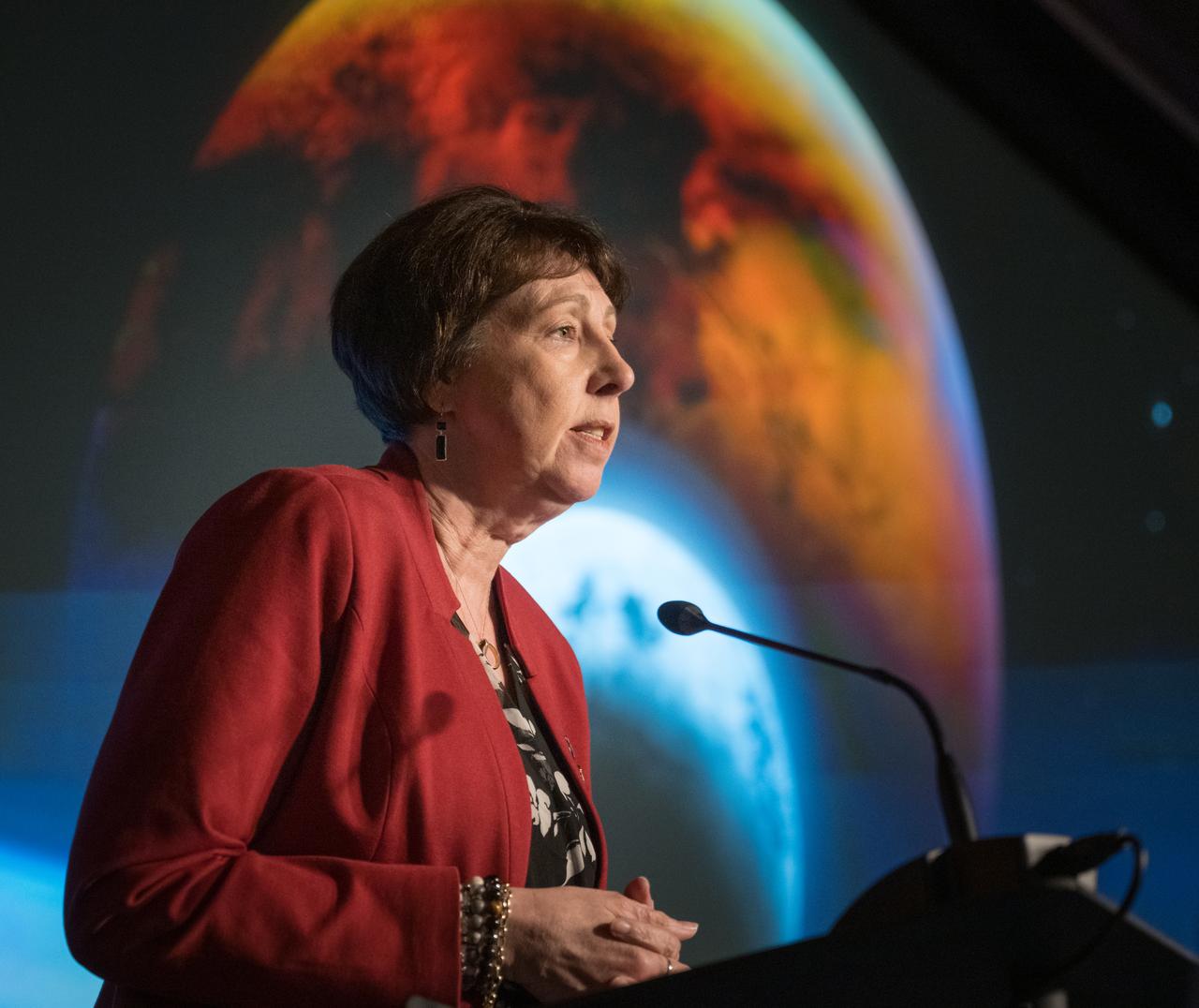
NASA Associate Administrator for Science, Nicky Fox, discusses the agency’s goals during the annual State of NASA address, Monday, March 11, 2024, at the Mary W. Jackson NASA Headquarters Building in Washington. NASA leaders discussed plans for promoting U.S. leadership in space exploration, improving life on Earth through science and innovation, humanity’s return to the Moon under the Artemis campaign, aeronautics, and more. Photo Credit: (NASA/Bill Ingalls)
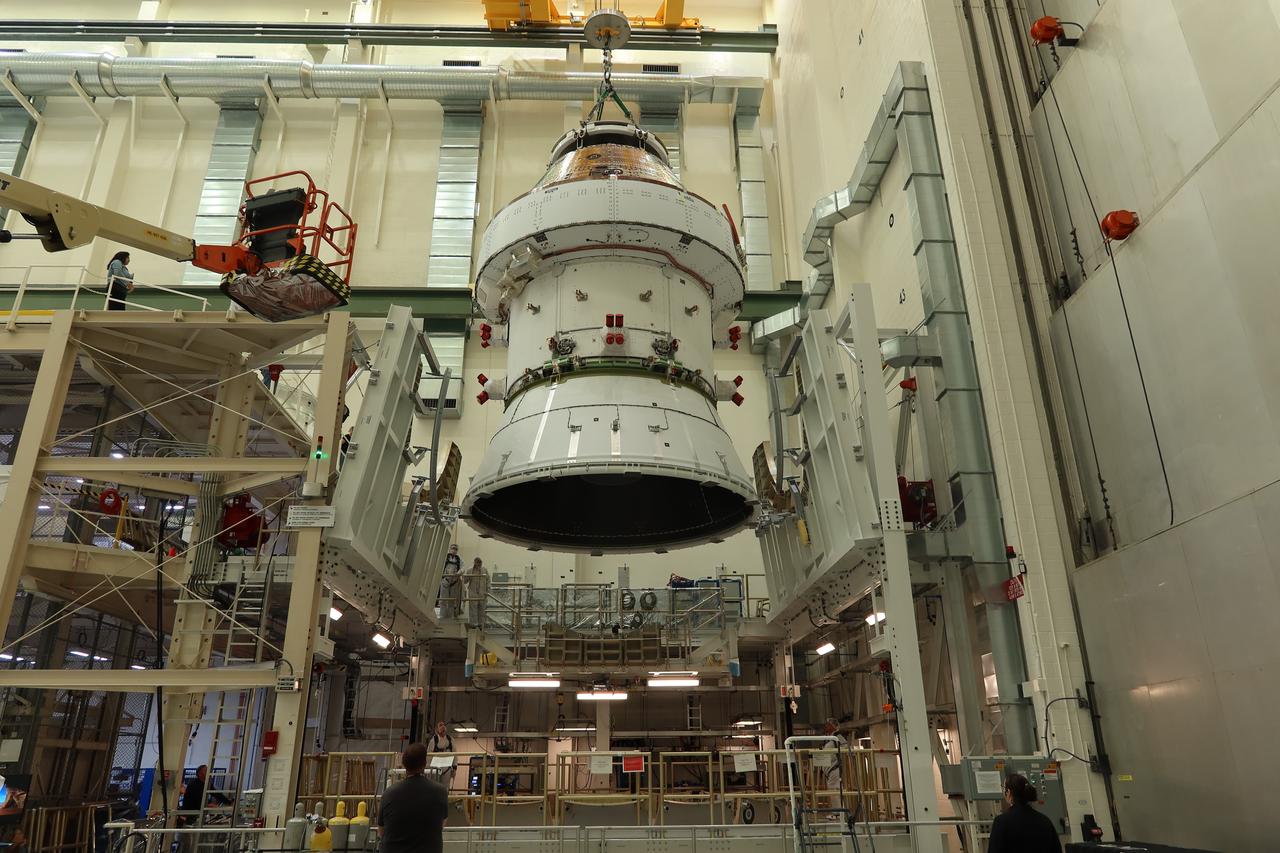
The Orion spacecraft crew module for NASA’s Artemis II mission is photographed being lowered inside the Final Assembly and System Testing cell by a 30 ton crane at the Neil Armstrong Operations and Checkout Building at NASA’s Kennedy Space Center in Florida on Saturday, April 27, 2024. Four astronauts will venture around the Moon in the Orion spacecraft on Artemis II, the first crewed mission on NASA's path to establishing a long-term presence at the Moon for science and exploration through the Artemis campaign.
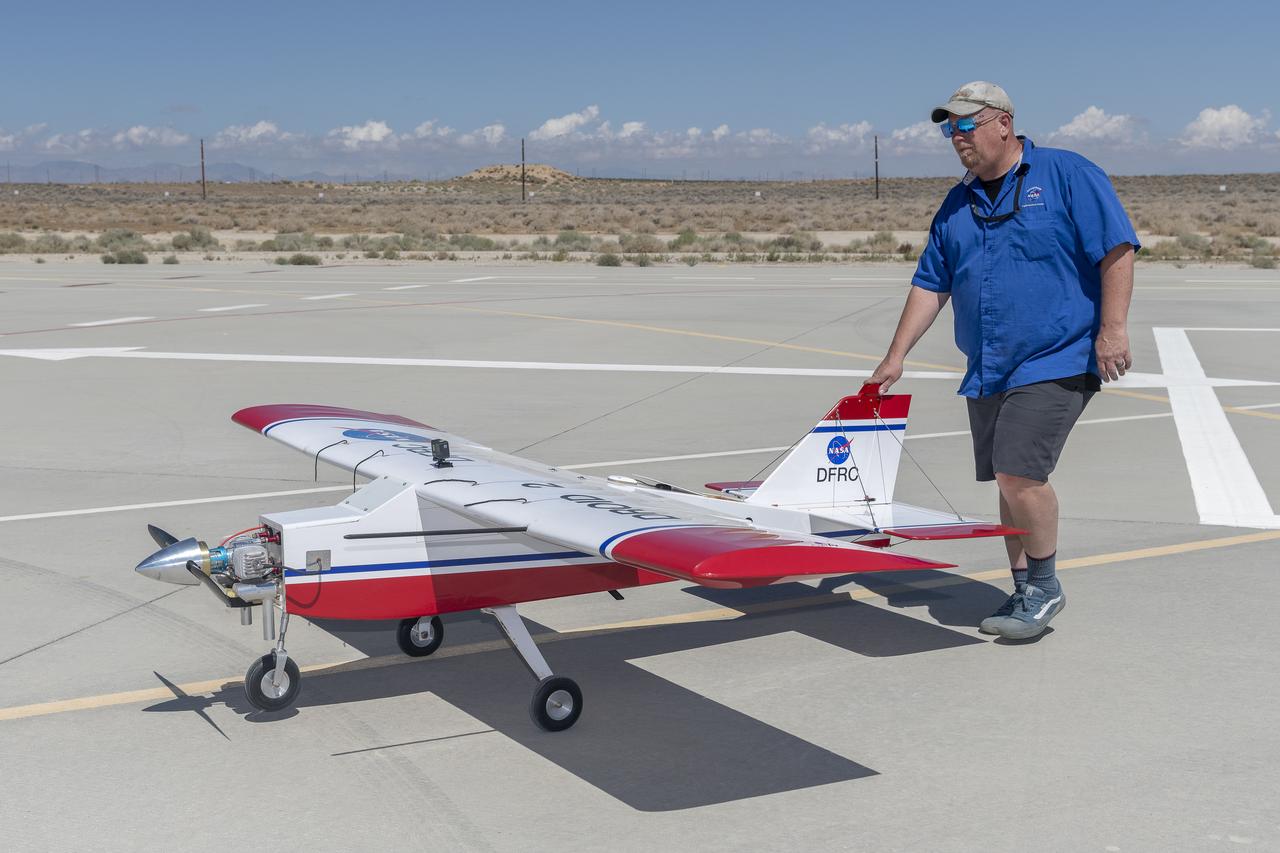
Robert "Red" Jensen positions the DROID 2 (Dryden Remotely Operated Integrated Drone) aircraft before a flight for the Advanced Exploration of Reliable Operation at Low Altitudes: Meteorology, Simulation, and Technology campaign. The weather study was at NASA's Armstrong Flight Research Center in Edwards, California. The focus was to study wind to provide data for safe takeoff and landing of future air taxis.
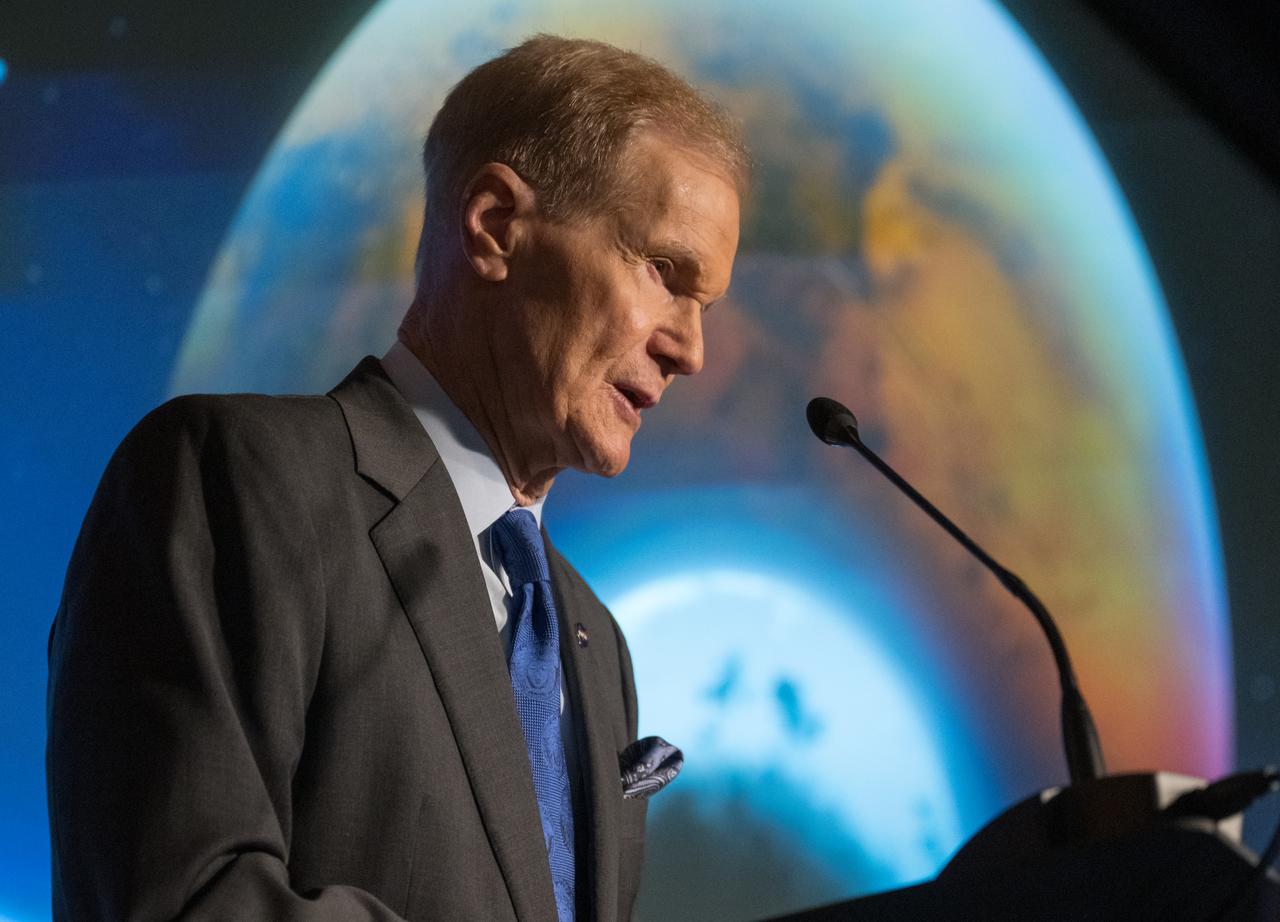
NASA Administrator Bill Nelson discusses the agency’s goals during the annual State of NASA address, Monday, March 11, 2024, at the Mary W. Jackson NASA Headquarters Building in Washington. NASA leaders discussed plans for promoting U.S. leadership in space exploration, improving life on Earth through science and innovation, humanity’s return to the Moon under the Artemis campaign, aeronautics, and more. Photo Credit: (NASA/Bill Ingalls)
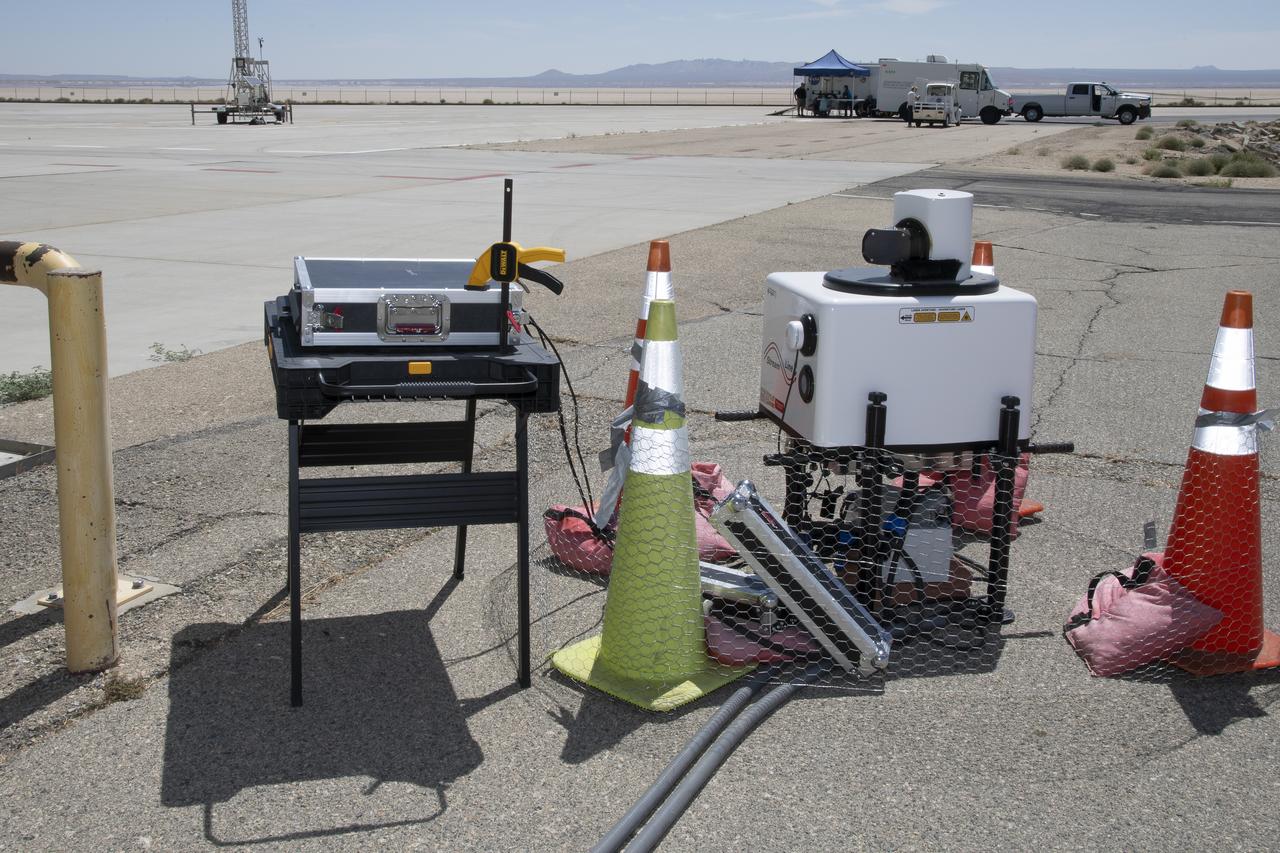
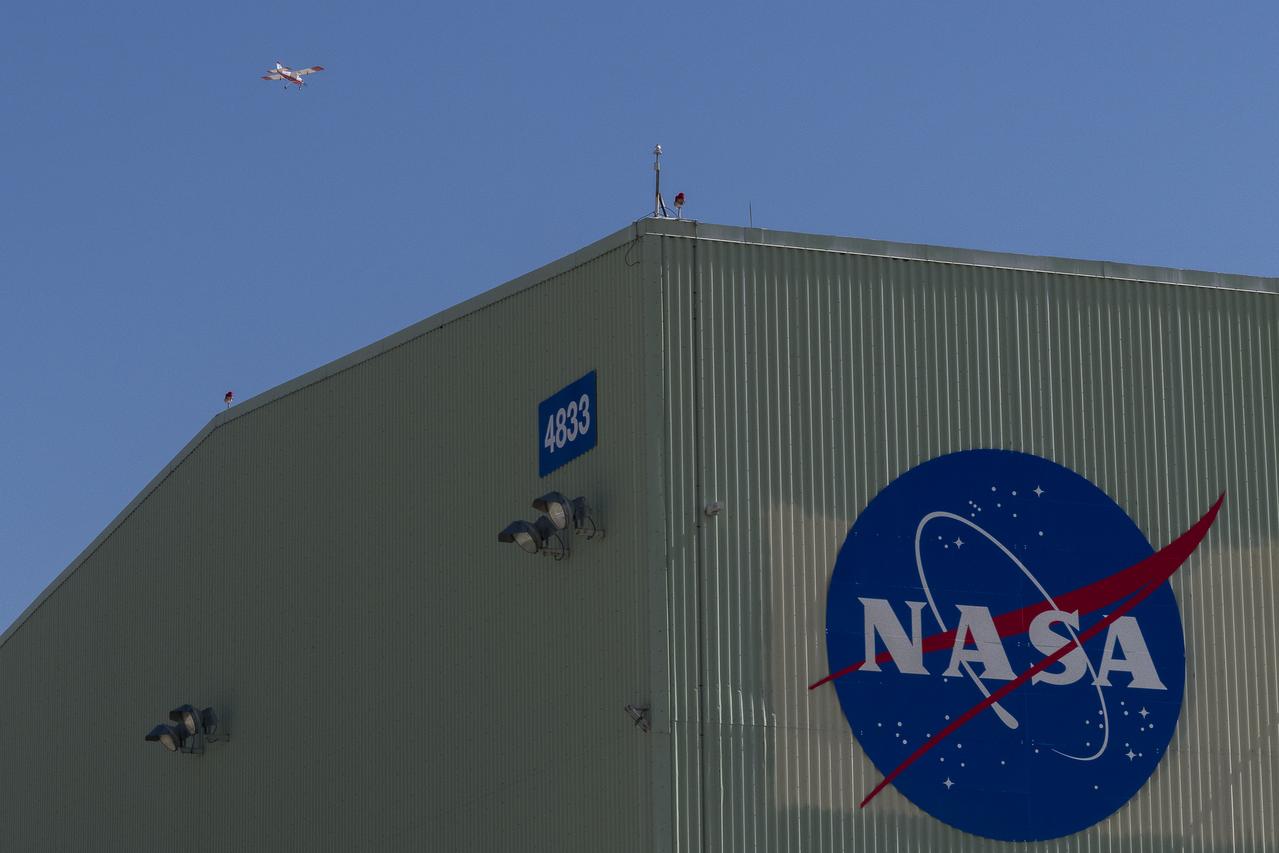
This is one of two lidar units positioned on either end of Building 4833 at NASA’s Armstrong Flight Research Center in Edwards, California, that formed the cutting-edge ‘virtual tower concept.’ The units use lasers to measure airflow from the ground level to 2,000 feet to provide data to assist future drones to safely land on rooftop hubs called vertiports, and to potentially improve weather prediction. It was part of the multi-faceted Advanced Exploration of Reliable Operation at Low Altitudes: Meteorology, Simulation and Technology campaign.
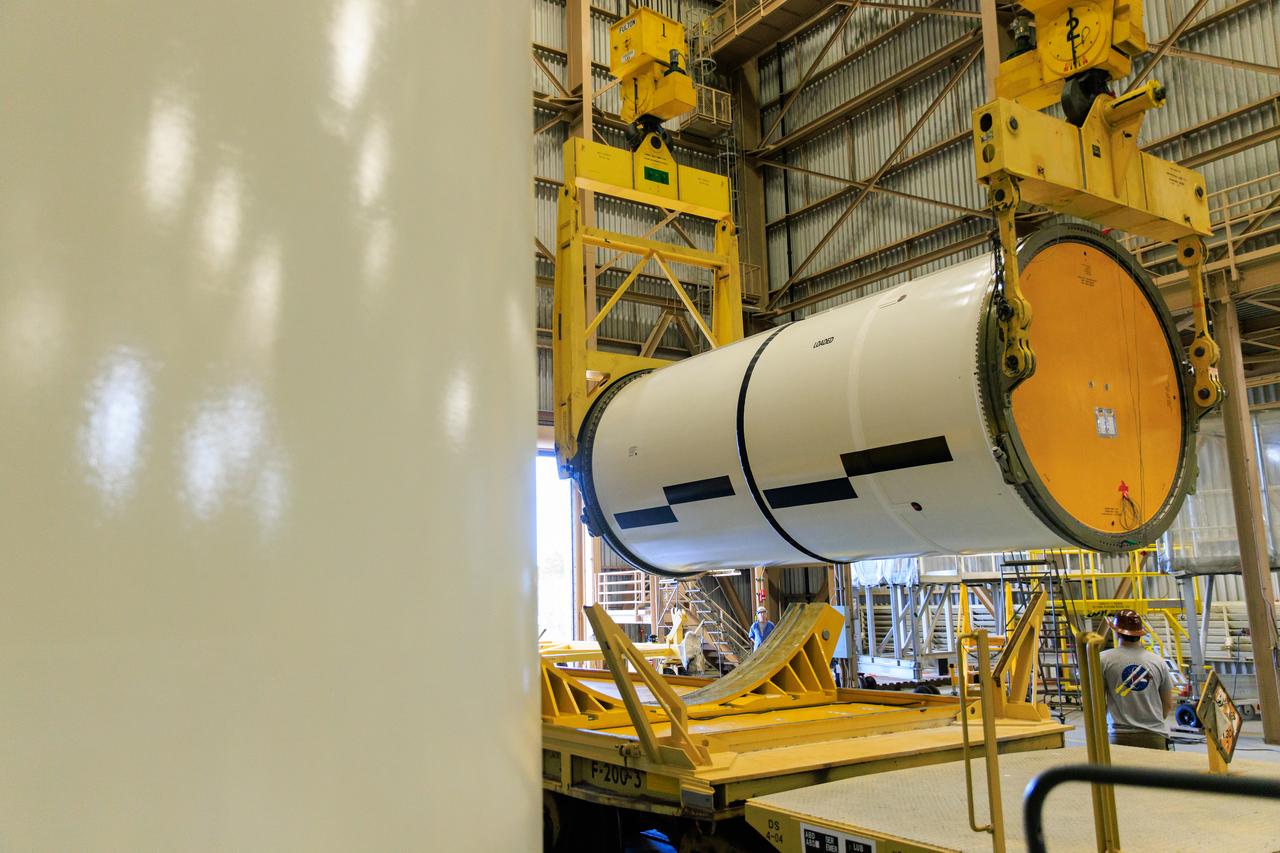
Following the successful propellant grain inspection of two segments of the solid rocket boosters for NASA’s Space Launch System inside the Rotation, Processing and Surge Facility at NASA’s Kennedy Space Center in Florida, crews on Thursday, Dec. 21, 2023, rotate and lift the segments from horizontal into a vertical position in preparation for the agency’s Artemis II launch campaign. The Artemis II mission will send four astronauts around the Moon as part of the agency’s effort to establish a long-term science and exploration presence at the Moon, and eventually Mars.
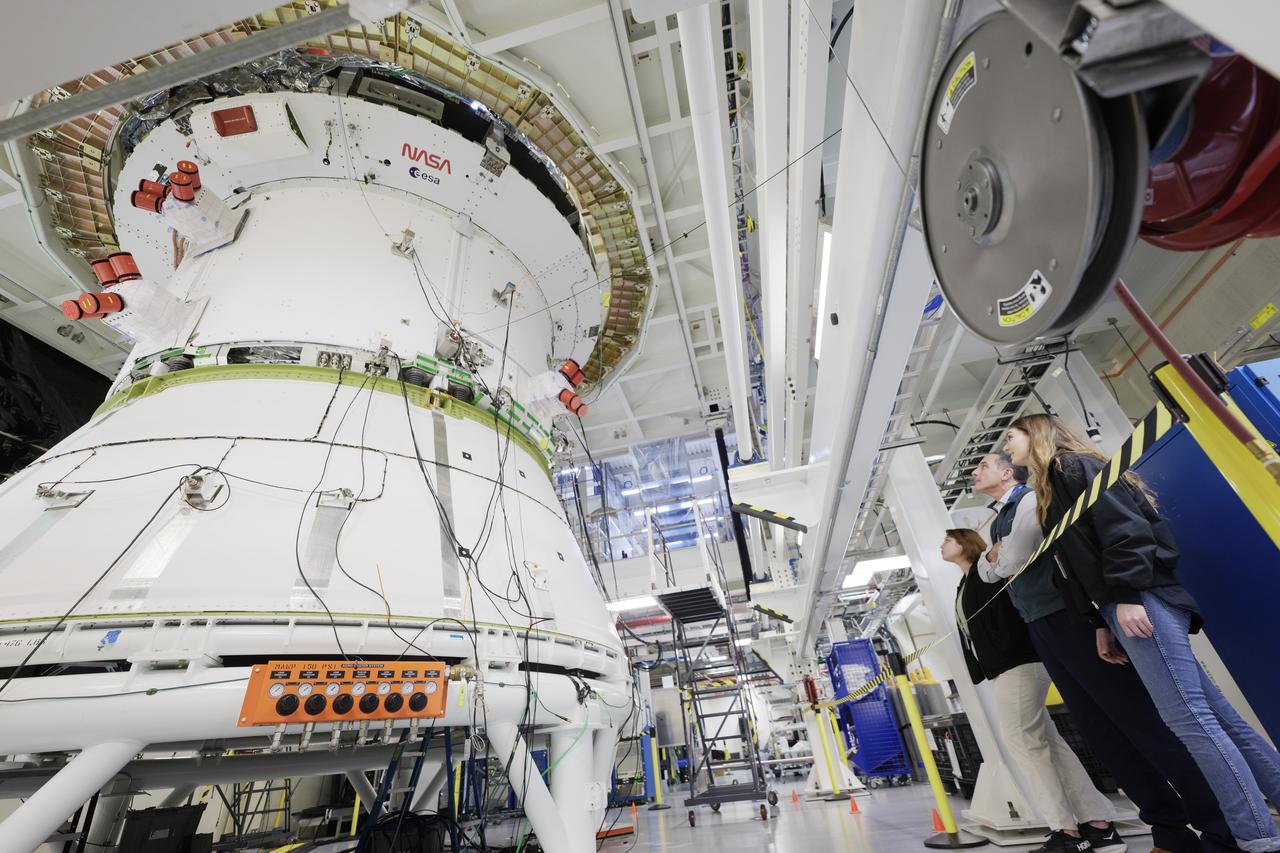
Work for Artemis II continues inside the Operations and Checkout building at NASA's Kennedy Space Center on Thursday, Feb. 1, 2024. Teams with Lockheed Martin and NASA are preparing the Orion spacecraft for vacuum testing this spring. Four astronauts will venture around the Moon in the Orion spacecraft on Artemis II, the first crewed mission on NASA's path to establishing a long-term presence at the Moon for science and exploration through the Artemis campaign.
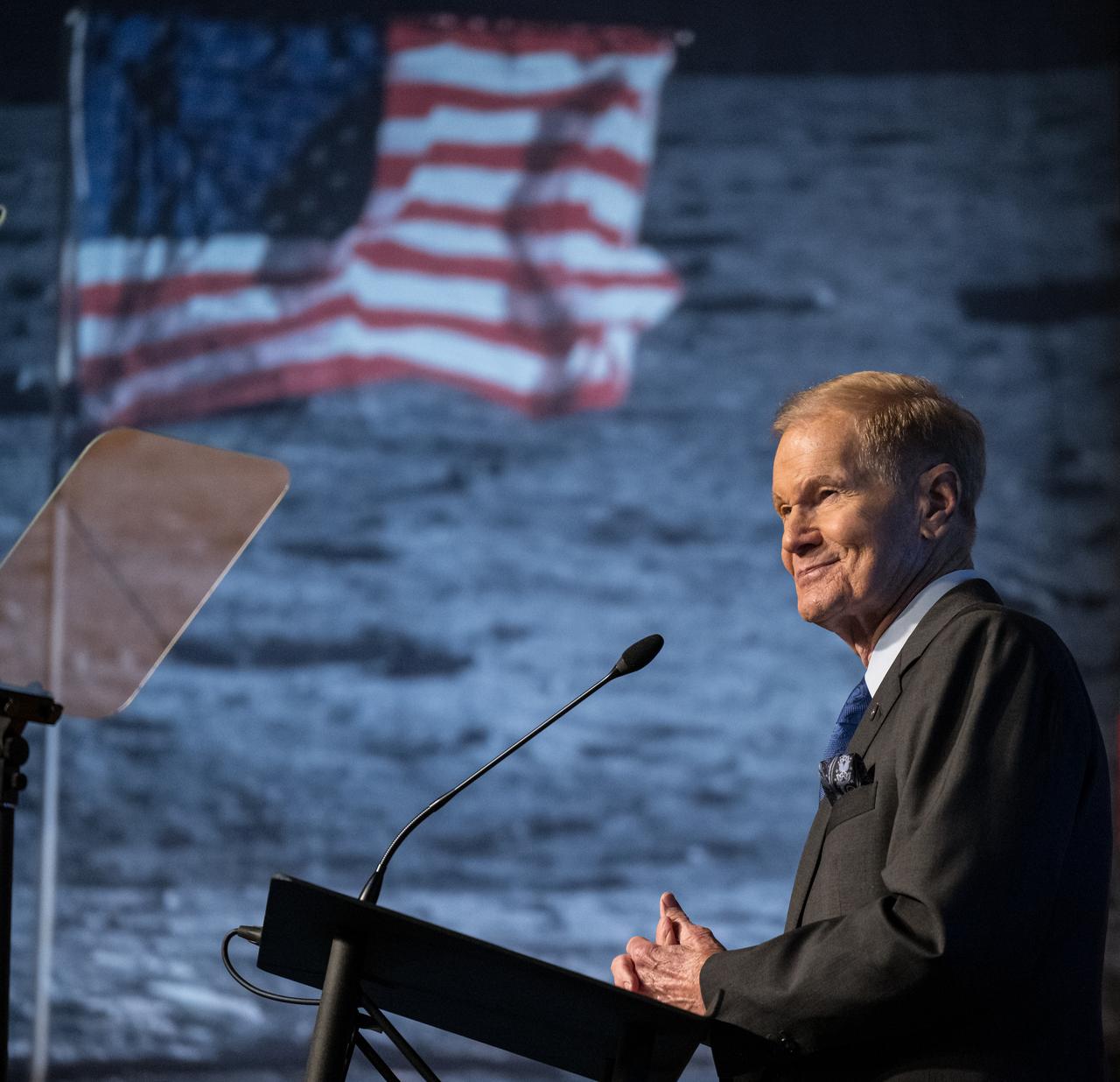
NASA Administrator Bill Nelson discusses the agency’s goals during the annual State of NASA address, Monday, March 11, 2024, at the Mary W. Jackson NASA Headquarters Building in Washington. NASA leaders discussed plans for promoting U.S. leadership in space exploration, improving life on Earth through science and innovation, humanity’s return to the Moon under the Artemis campaign, aeronautics, and more. Photo Credit: (NASA/Bill Ingalls)
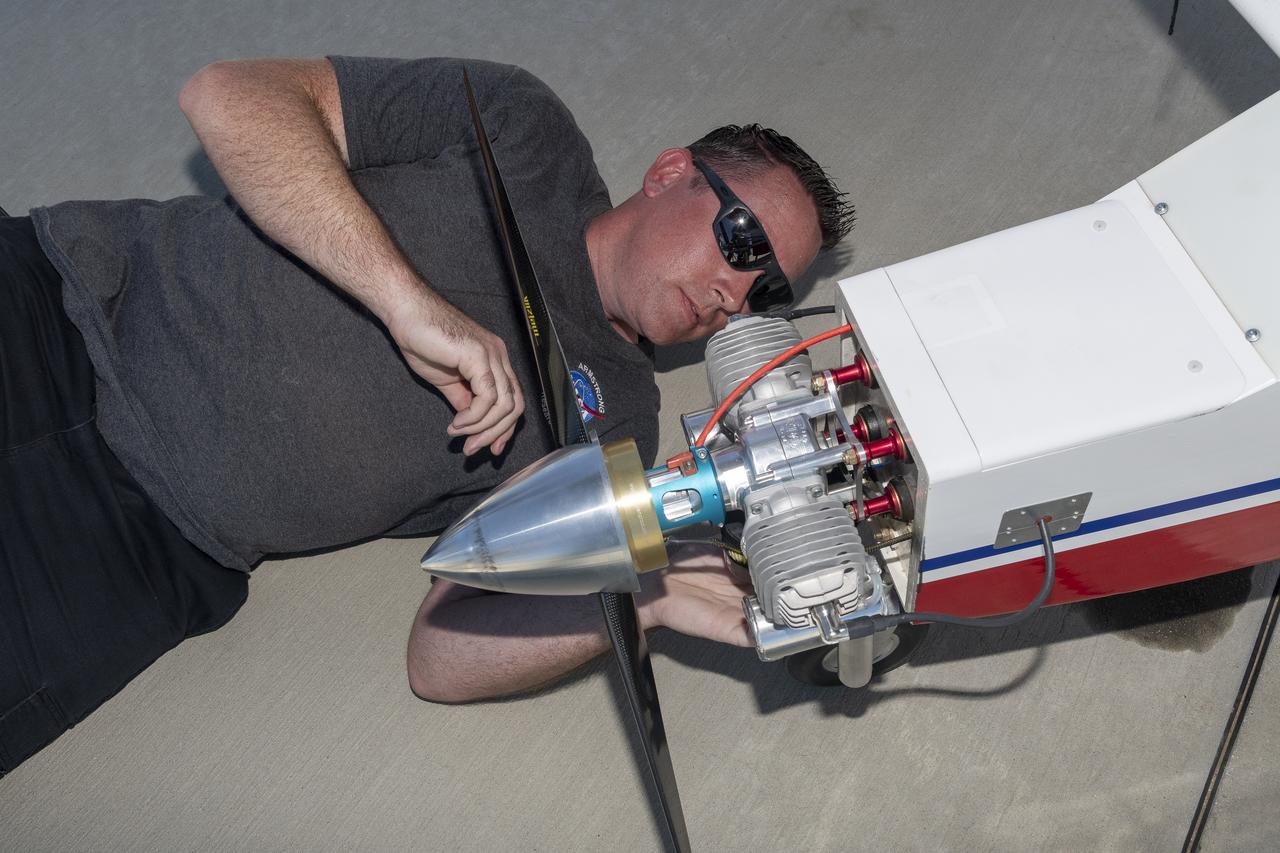
Justin Link prepares the DROID 2 (Dryden Remotely Operated Integrated Drone 2) aircraft before a flight for the Advanced Exploration of Reliable Operation at Low Altitudes: Meteorology, Simulation, and Technology campaign. The weather study was at NASA's Armstrong Flight Research Center in Edwards, California. The focus was to study wind to provide data for safe takeoff and landing of future air taxis.
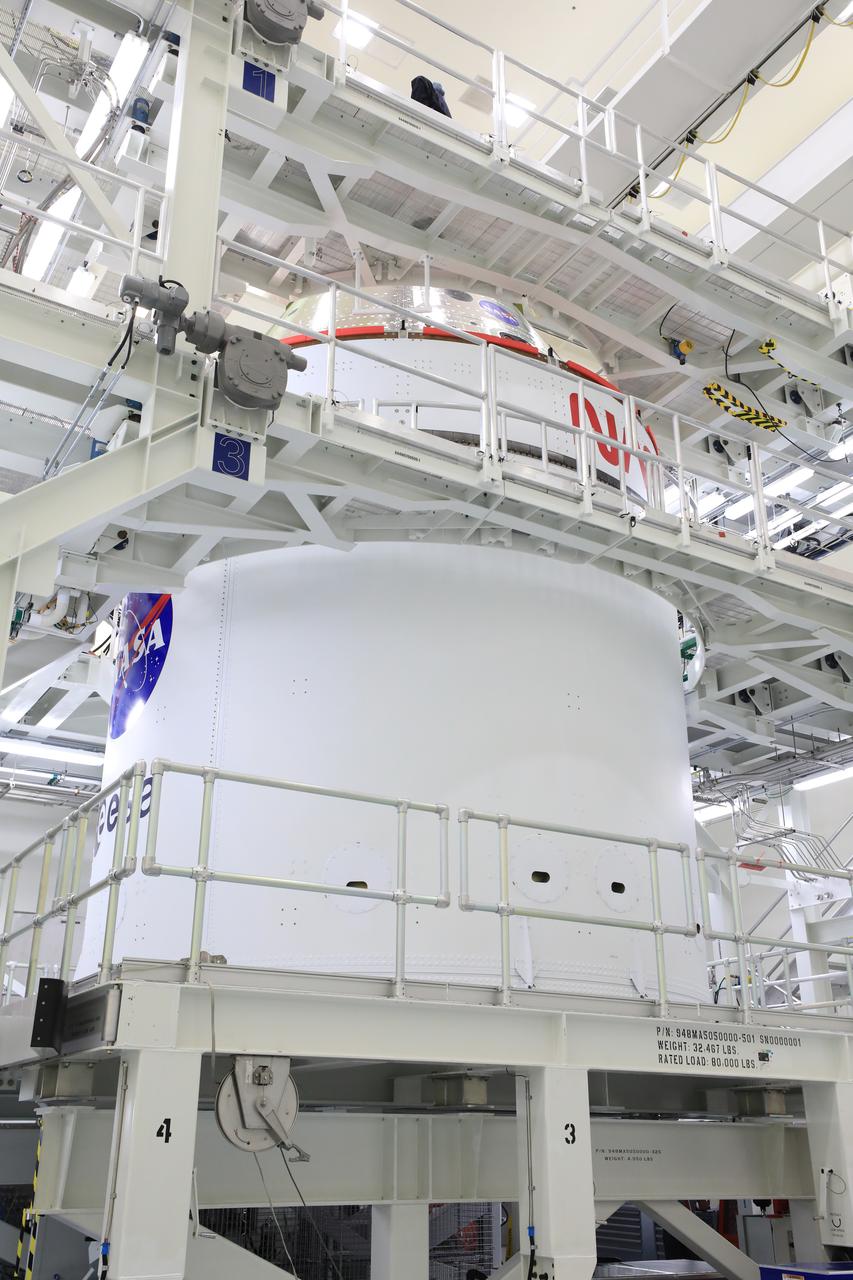
Technicians with NASA’s Exploration Ground Systems Program offload the agency’s Orion spacecraft from the KAMAG transporter to the servicing stand inside the Multi-Payload Processing Facility at Kennedy Space Center in Florida on Sunday, May 4, 2025, to undergo fueling and processing operations for prelaunch operations. The Artemis II test flight is the first crewed flight under NASA’s Artemis campaign and is another step toward missions on the lunar surface and helping the agency prepare for future human missions to Mars.
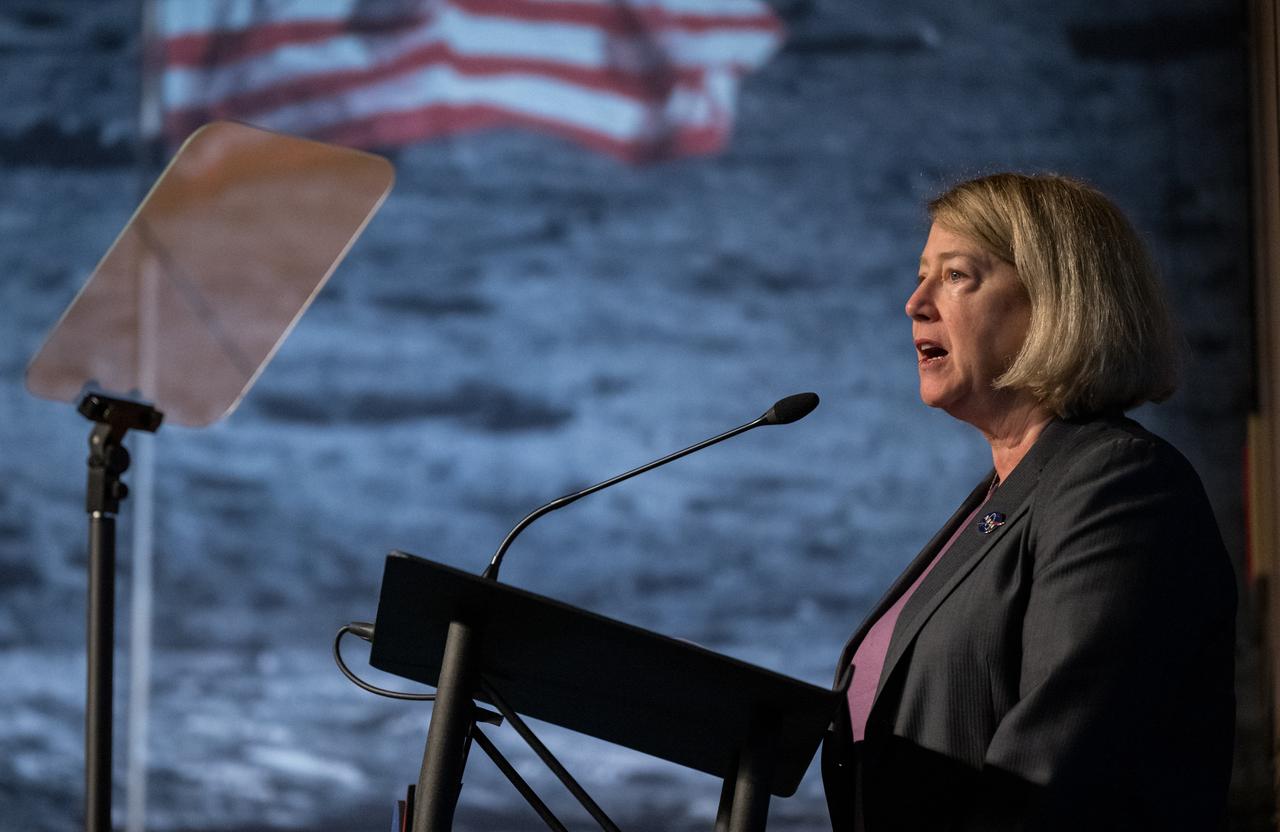
NASA Deputy Administrator Pam Melroy discusses the agency’s goals during the annual State of NASA address, Monday, March 11, 2024, at the Mary W. Jackson NASA Headquarters Building in Washington. NASA leaders discussed plans for promoting U.S. leadership in space exploration, improving life on Earth through science and innovation, humanity’s return to the Moon under the Artemis campaign, aeronautics, and more. Photo Credit: (NASA/Bill Ingalls)
NASA Associate Administrator Jim Free discusses the agency’s goals during the annual State of NASA address, Monday, March 11, 2024, at the Mary W. Jackson NASA Headquarters Building in Washington. NASA leaders discussed plans for promoting U.S. leadership in space exploration, improving life on Earth through science and innovation, humanity’s return to the Moon under the Artemis campaign, aeronautics, and more. Photo Credit: (NASA/Bill Ingalls)
The DROID 2 (Dryden Remotely Operated Integrated Drone 2) aircraft flies by the former space shuttle hangar at NASA's Armstrong Flight Research Center in Edwards, California, as part of the Advanced Exploration of Reliable Operation at Low Altitudes: Meteorology, Simulation, and Technology campaign. The focus was to study wind to provide data for safe takeoff and landing of future air taxis.
NASA Associate Administrator for Space Operations, Ken Bowersox, discusses the agency’s goals during the annual State of NASA address, Monday, March 11, 2024, at the Mary W. Jackson NASA Headquarters Building in Washington. NASA leaders discussed plans for promoting U.S. leadership in space exploration, improving life on Earth through science and innovation, humanity’s return to the Moon under the Artemis campaign, aeronautics, and more. Photo Credit: (NASA/Bill Ingalls)
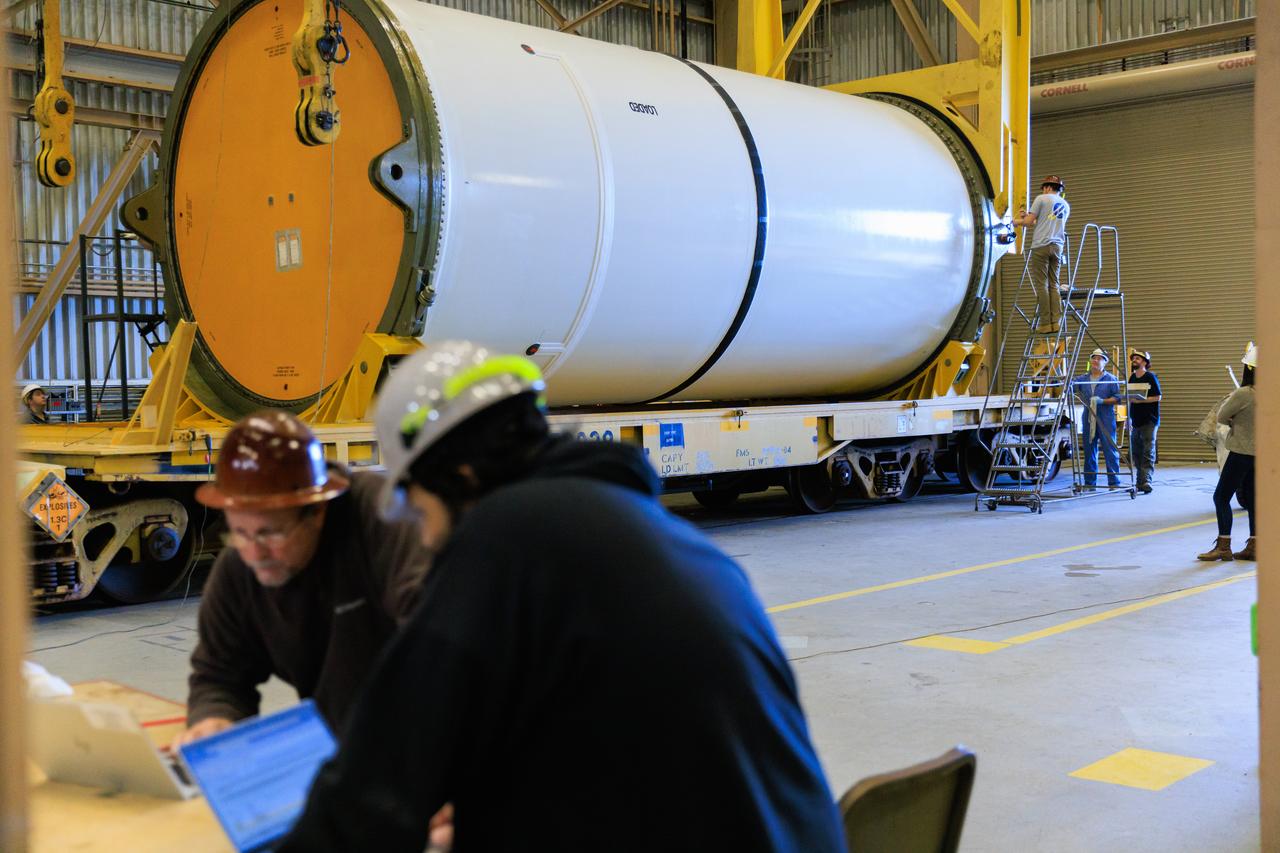
Following the successful propellant grain inspection of two segments of the solid rocket boosters for NASA’s Space Launch System inside the Rotation, Processing and Surge Facility at NASA’s Kennedy Space Center in Florida, crews on Thursday, Dec. 21, 2023, rotate and lift the segments from horizontal into a vertical position in preparation for the agency’s Artemis II launch campaign. The Artemis II mission will send four astronauts around the Moon as part of the agency’s effort to establish a long-term science and exploration presence at the Moon, and eventually Mars.
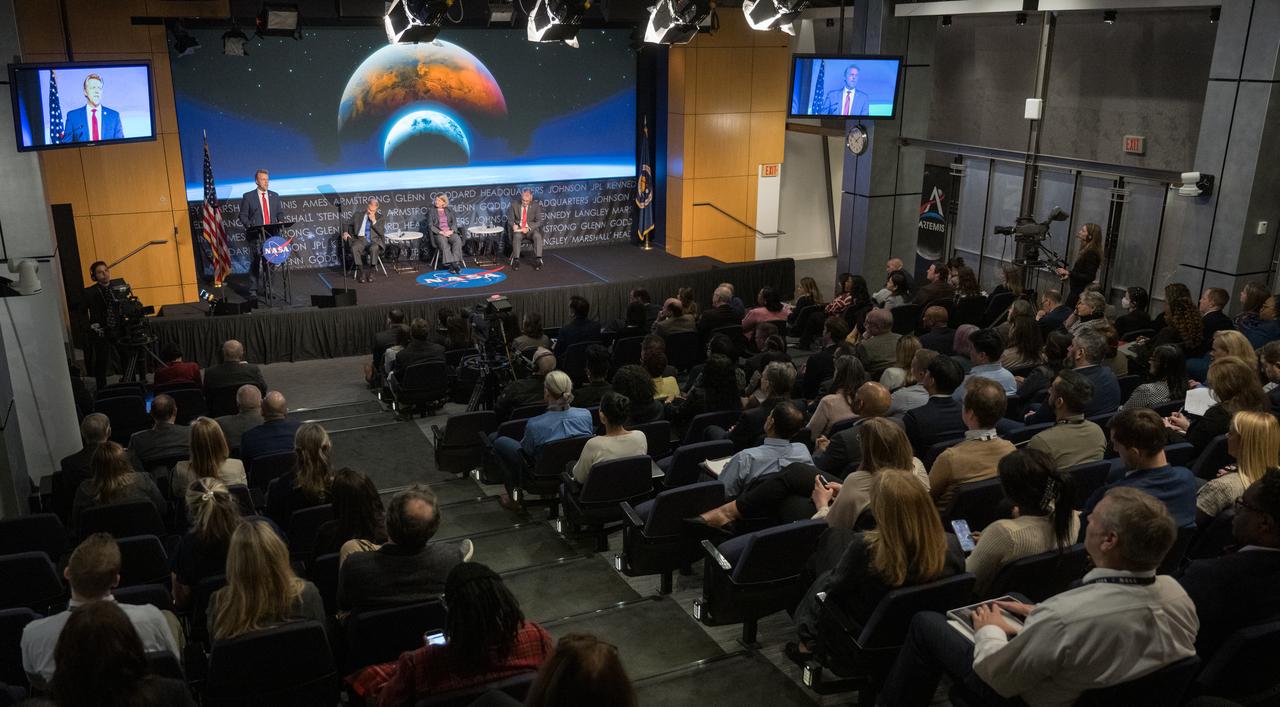
NASA Associate Administrator for Space Technology, Spuds Vogel, discusses the agency’s goals during the annual State of NASA address, Monday, March 11, 2024, at the Mary W. Jackson NASA Headquarters Building in Washington. NASA leaders discussed plans for promoting U.S. leadership in space exploration, improving life on Earth through science and innovation, humanity’s return to the Moon under the Artemis campaign, aeronautics, and more. Photo Credit: (NASA/Bill Ingalls)
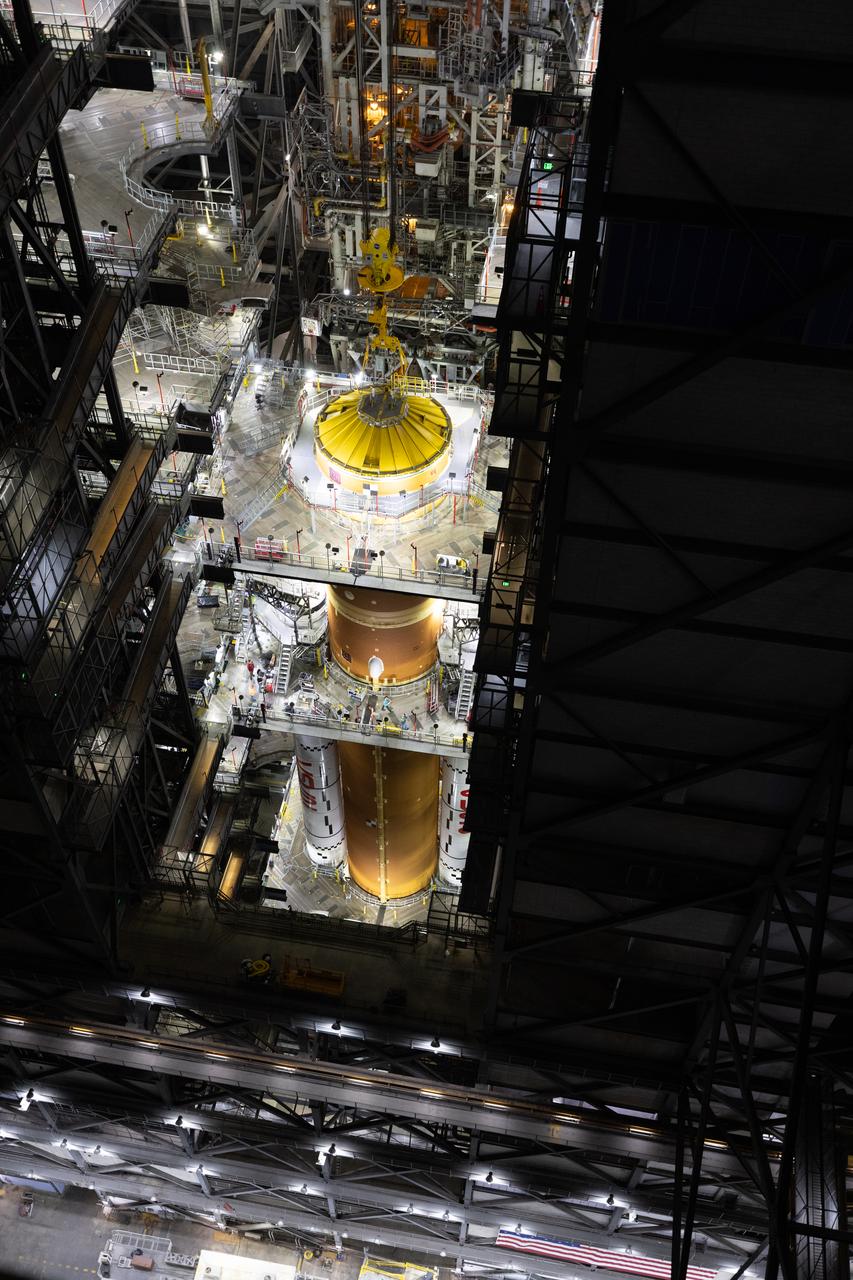
Teams with NASA’s Exploration Ground Systems and primary contractor Amentum, integrate the SLS (Space Launch System) Moon rocket with the solid rocket boosters onto mobile launcher 1 inside High Bay 3 of the Vehicle Assembly Building at NASA’s Kennedy Space Center on Sunday, March 23, 2025. Artemis II is the first crewed test flight under NASA’s Artemis campaign and is another step toward missions on the lunar surface and helping the agency prepare for future human missions to Mars.
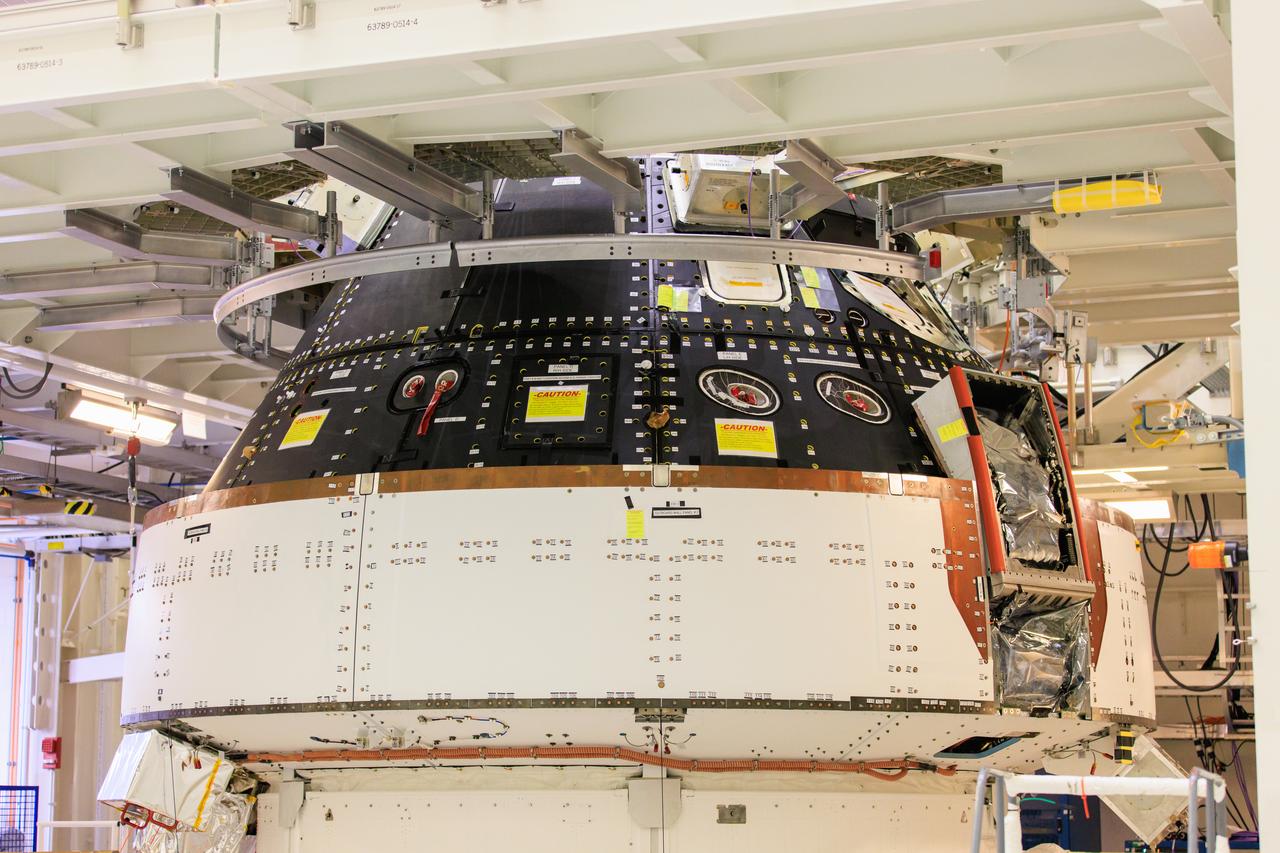
The Orion spacecraft for NASA’s Artemis II mission is photographed inside the Final Assembly and System Testing cell at the Neil Armstrong Operations and Checkout Building at NASA’s Kennedy Space Center in Florida on Friday, March 15, 2024. Four astronauts will venture around the Moon in the Orion spacecraft on Artemis II, the first crewed mission on NASA's path to establishing a long-term presence at the Moon for science and exploration through the Artemis campaign.
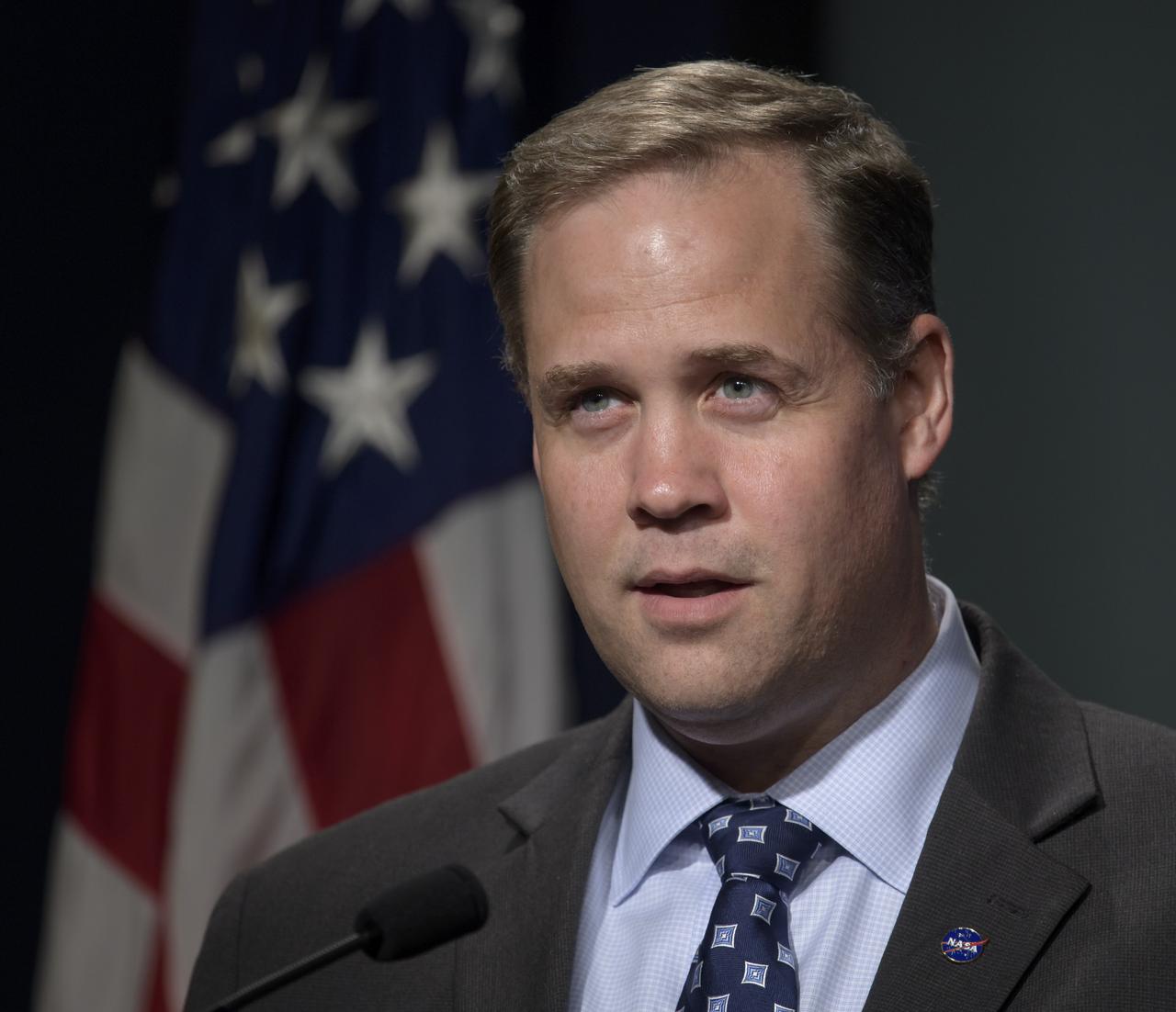
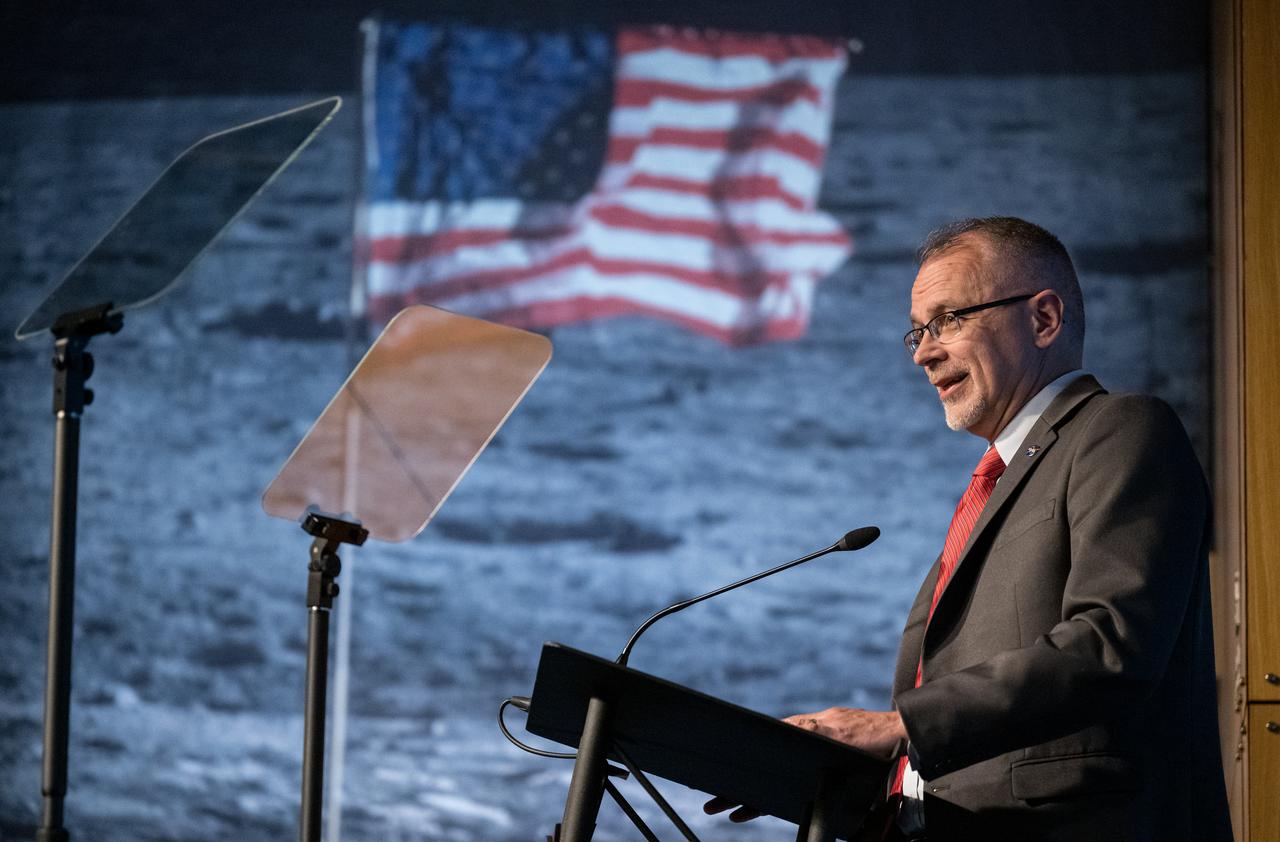
NASA Administrator Jim Bridenstine asks commercial companies to help get the agency back to the Moon as quickly as possible during an ‘industry day', Tuesday, May 8, 2018 held at NASA Headquarters in Washington. NASA is calling for commercial proposals for delivering instruments, experiments, and other small payloads to the surface of the Moon as early as next year. This solicitation is part of a broader Exploration Campaign that will pave the way for a human return to the Moon. Photo Credit: (NASA/Bill Ingalls)
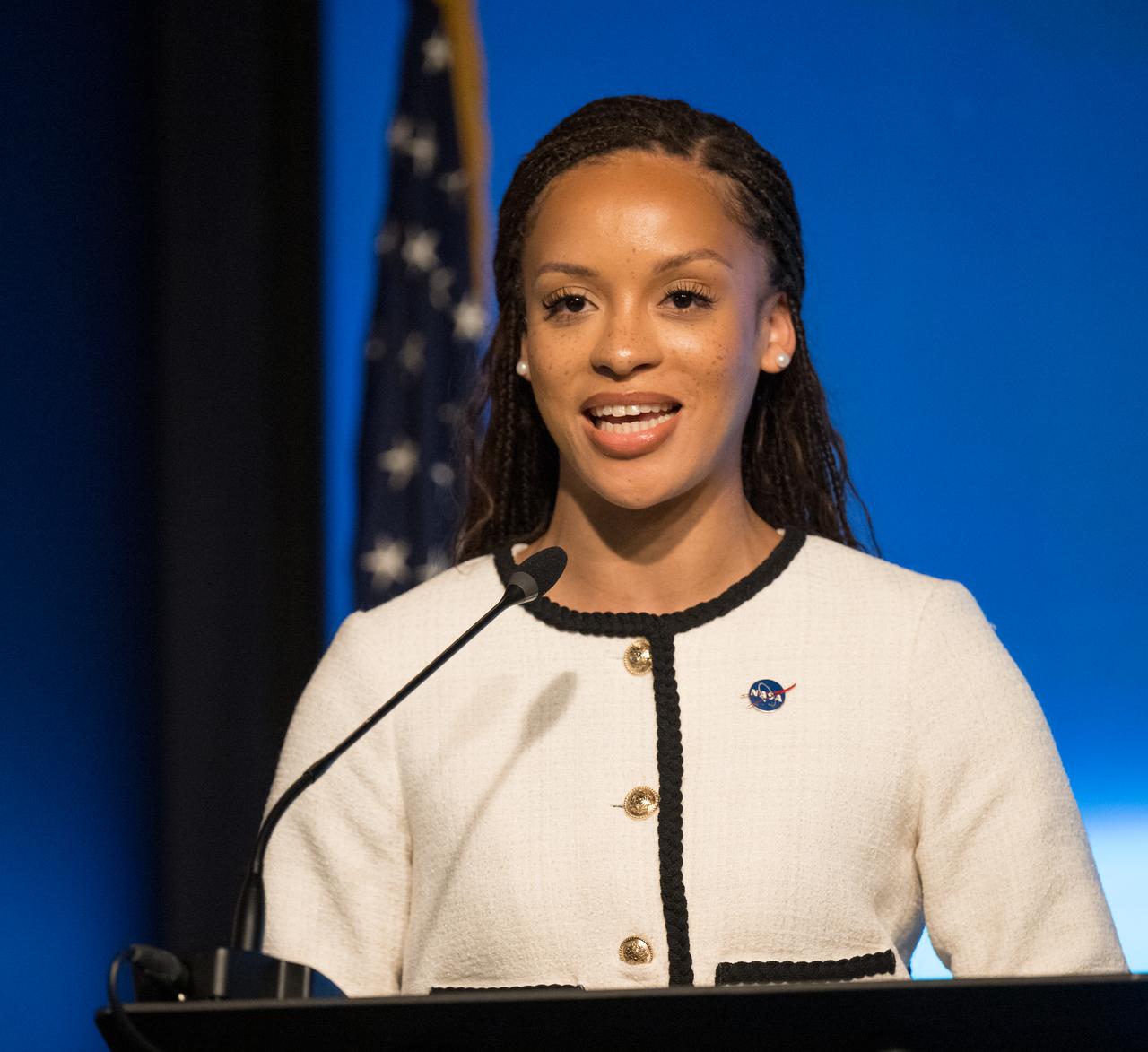
NASA Press Secretary, Faith McKie, moderates the annual State of NASA address, Monday, March 11, 2024, at the Mary W. Jackson NASA Headquarters Building in Washington. NASA leaders discussed plans for promoting U.S. leadership in space exploration, improving life on Earth through science and innovation, humanity’s return to the Moon under the Artemis campaign, aeronautics, and more. Photo Credit: (NASA/Bill Ingalls)
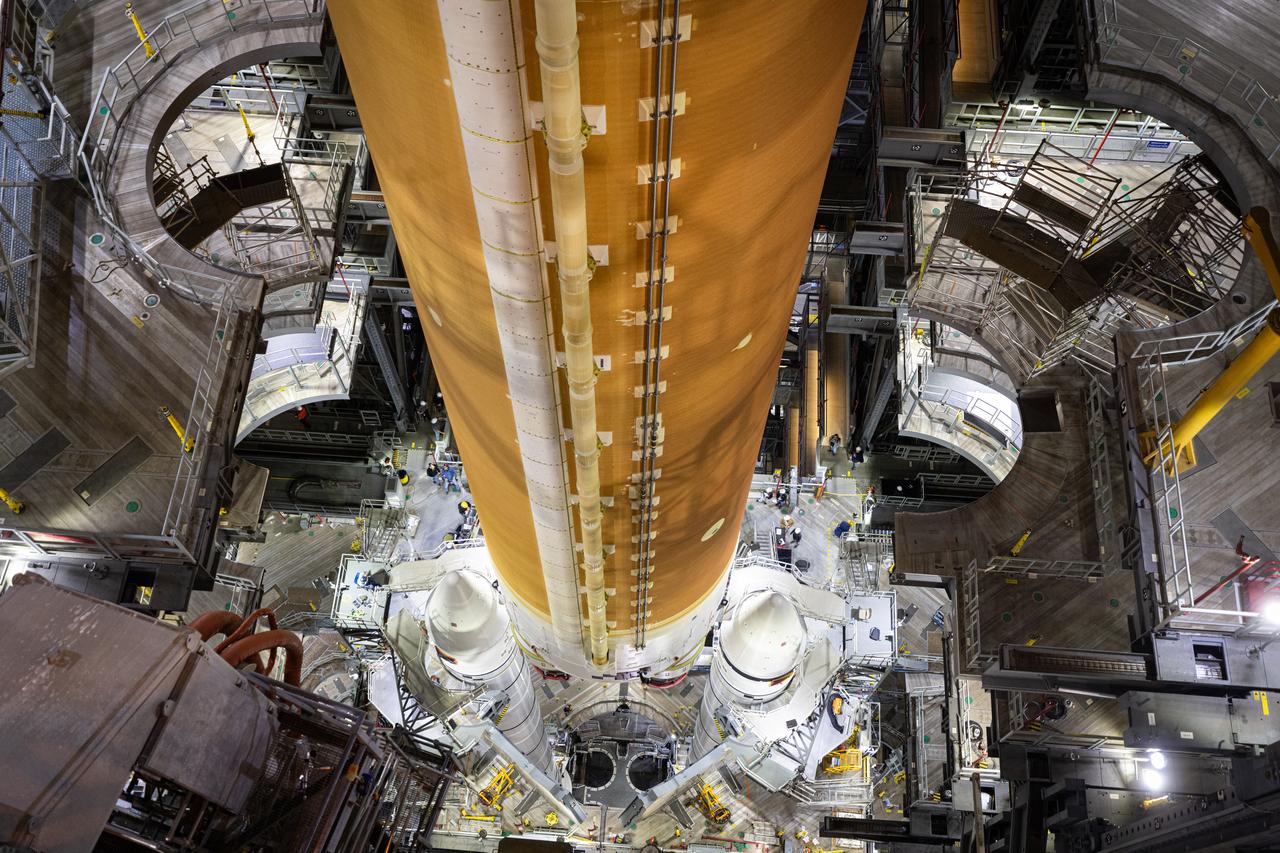
Teams with NASA’s Exploration Ground Systems and primary contractor Amentum, integrate the SLS (Space Launch System) Moon rocket with the solid rocket boosters onto mobile launcher 1 inside High Bay 3 of the Vehicle Assembly Building at NASA’s Kennedy Space Center on Sunday, March 23, 2025. Artemis II is the first crewed test flight under NASA’s Artemis campaign and is another step toward missions on the lunar surface and helping the agency prepare for future human missions to Mars.

Teams with NASA’s Exploration Ground Systems and primary contractor Amentum, integrate the SLS (Space Launch System) Moon rocket with the solid rocket boosters onto mobile launcher 1 inside High Bay 3 of the Vehicle Assembly Building at NASA’s Kennedy Space Center on Sunday, March 23, 2025. Artemis II is the first crewed test flight under NASA’s Artemis campaign and is another step toward missions on the lunar surface and helping the agency prepare for future human missions to Mars.
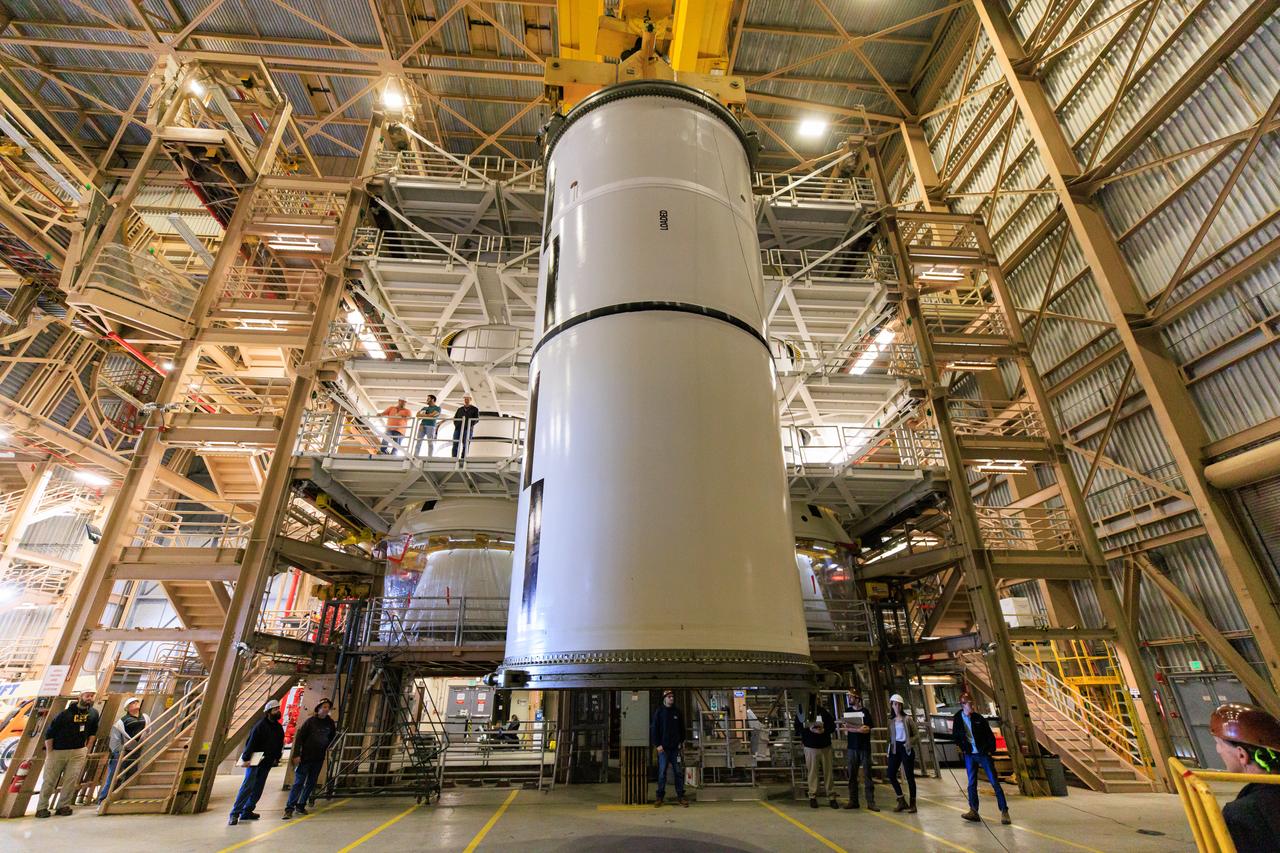
Following the successful propellant grain inspection of two segments of the solid rocket boosters for NASA’s Space Launch System inside the Rotation, Processing and Surge Facility at NASA’s Kennedy Space Center in Florida, crews on Thursday, Dec. 21, 2023, rotate and lift the segments from horizontal into a vertical position in preparation for the agency’s Artemis II launch campaign. The Artemis II mission will send four astronauts around the Moon as part of the agency’s effort to establish a long-term science and exploration presence at the Moon, and eventually Mars.
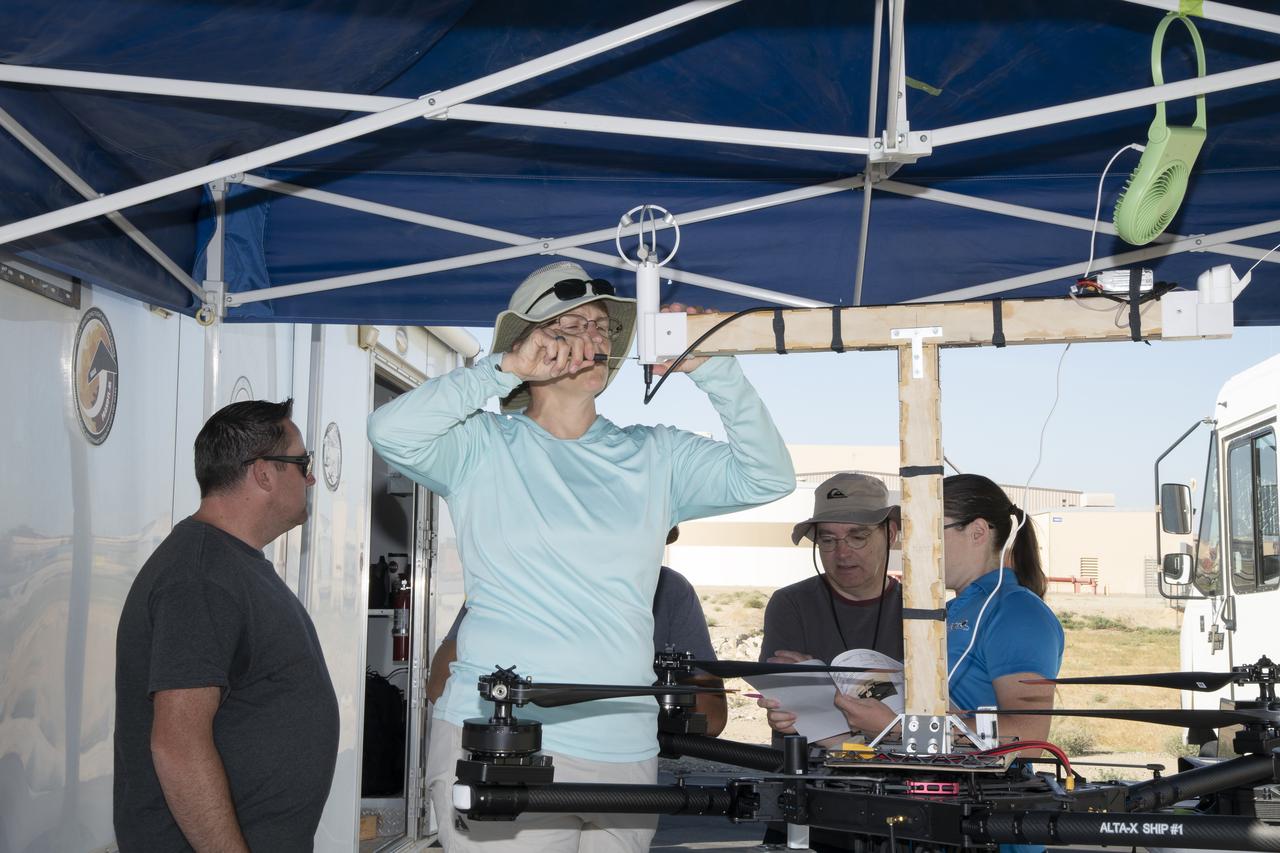
Jennifer Fowler works on securing sensors onto the test fixture on the Alta-X aircraft. Justin Link, Grady Koch, and Tyler Willhite are in the background. The Advanced Exploration of Reliable Operation at Low Altitudes: Meteorology, Simulation and Technology campaign was at NASA’s Armstrong Flight Research Center in Edwards, California. The focus was to study wind from the ground to 2,000 feet to provide data to assist future drones to safely land on rooftop hubs called vertiports and to potentially improve weather prediction.
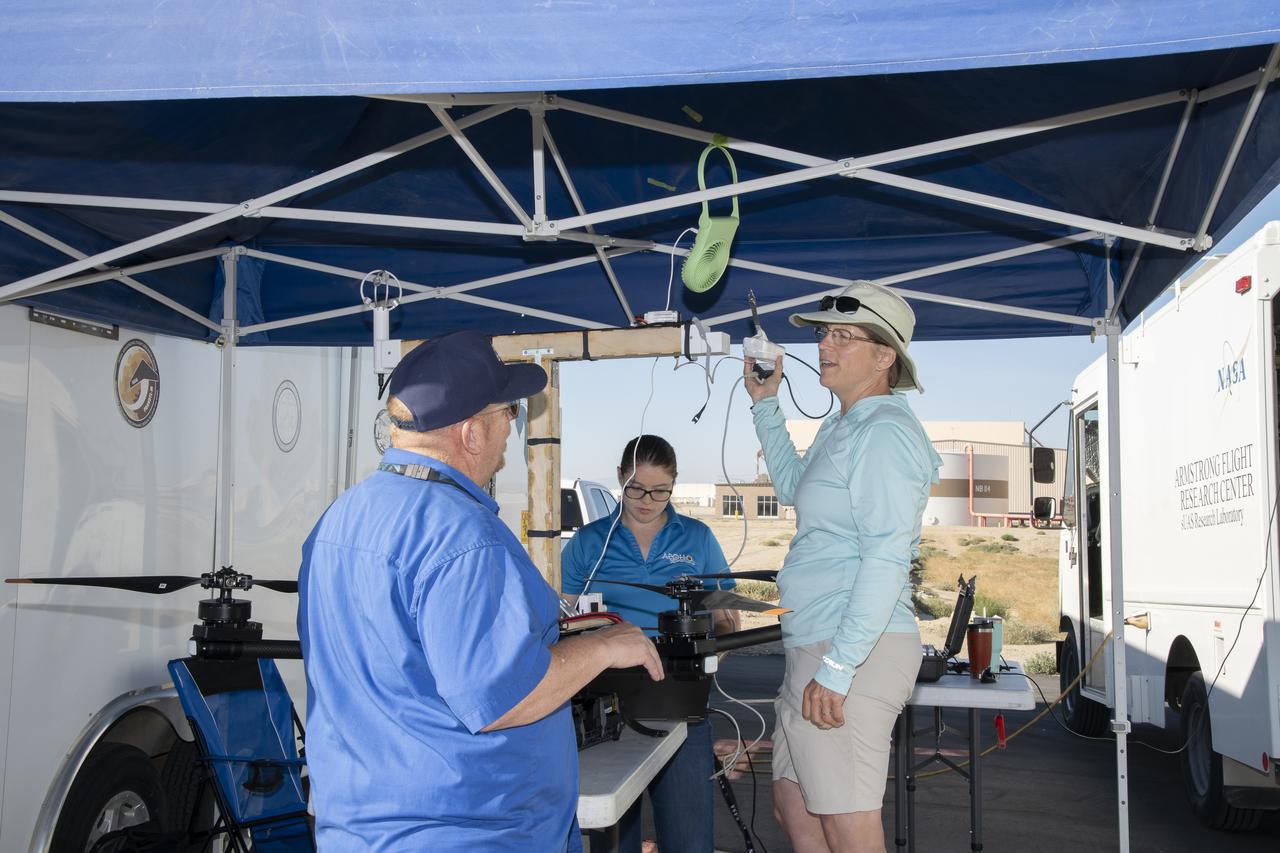
Jennifer Fowler talks to Red Jensen prior to a flight for the Advanced Exploration of Reliable Operation at Low Altitudes: Meteorology, Simulation and Technology campaign. Tyler Willhite completes some equipment checks for the research in the background. The weather study was at NASA’s Armstrong Flight Research Center in Edwards, California. The focus was to study wind from the ground to 2,000 feet to provide data to assist future drones to safely land on rooftop hubs called vertiports and to potentially improve weather prediction.
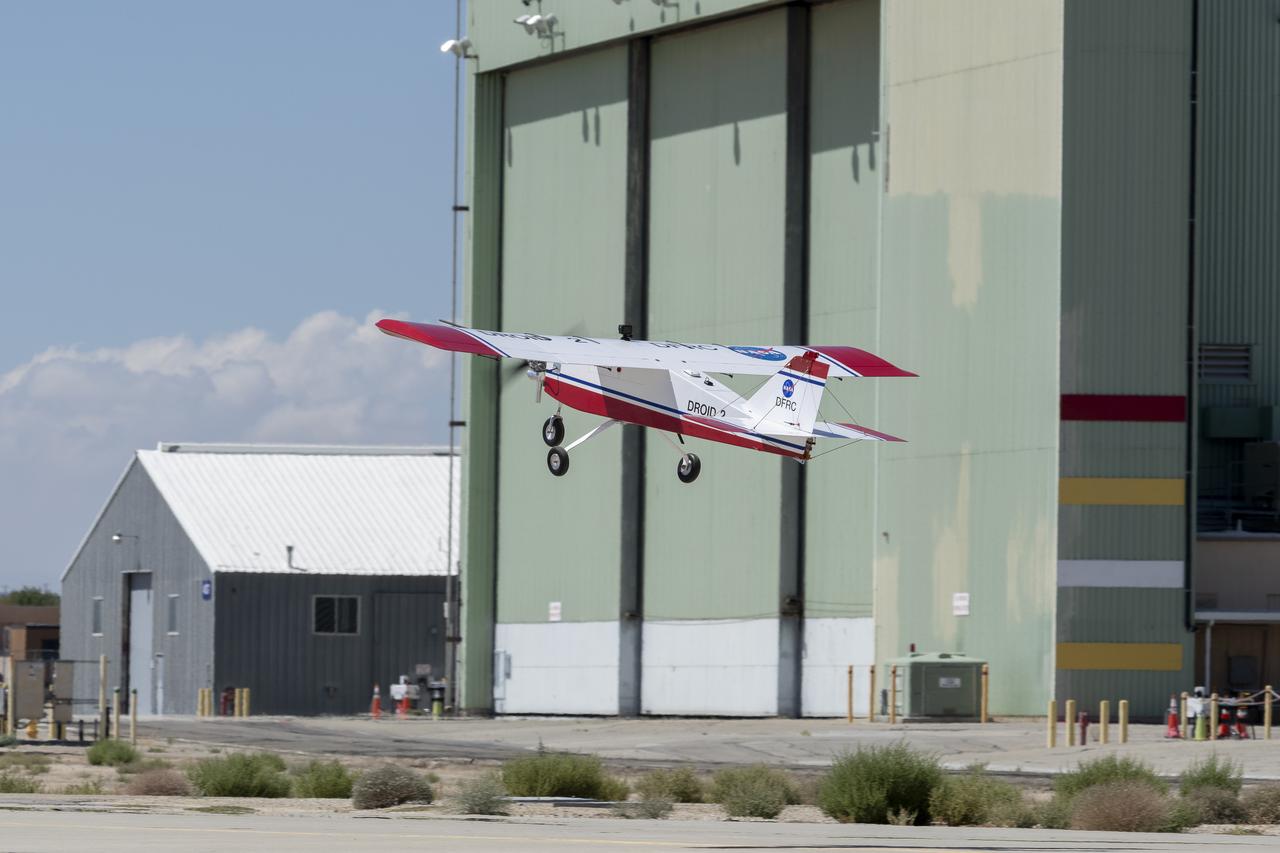
The DROID 2 (Dryden Remotely Operated Integrated Drone 2) aircraft flies by the former space shuttle hangar at NASA's Armstrong Flight Research Center in Edwards, California, as part of the Advanced Exploration of Reliable Operation at Low Altitudes: Meteorology, Simulation, and Technology campaign. The focus was to study wind to provide data for safe takeoff and landing of future air taxis.
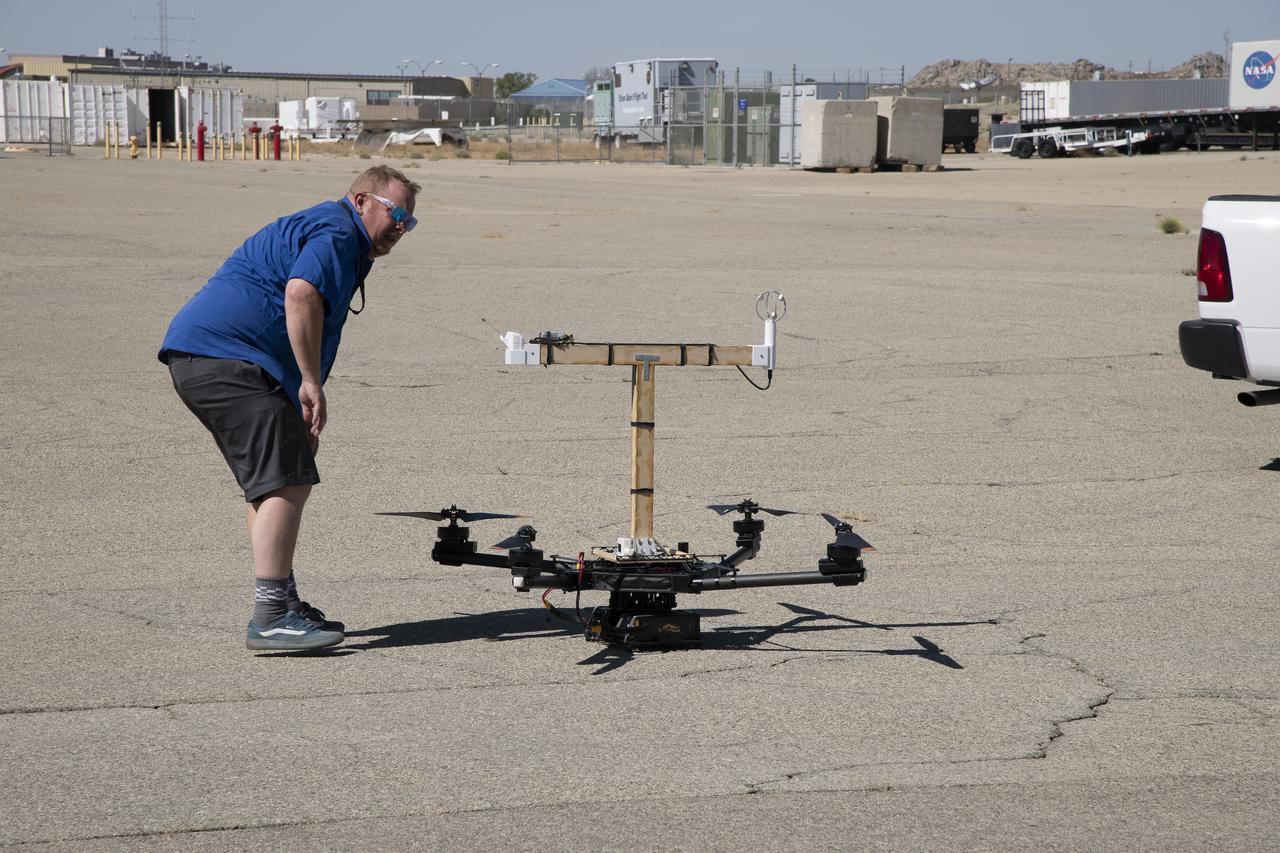
Red Jensen looks over the Alta-X aircraft before a flight for the Advanced Exploration of Reliable Operation at Low Altitudes: Meteorology, Simulation and Technology campaign. The weather study was at NASA’s Armstrong Flight Research Center in Edwards, California. The focus was to study wind from the ground to 2,000 feet to provide data to assist future drones to safely land on rooftop hubs called vertiports and to potentially improve weather prediction.
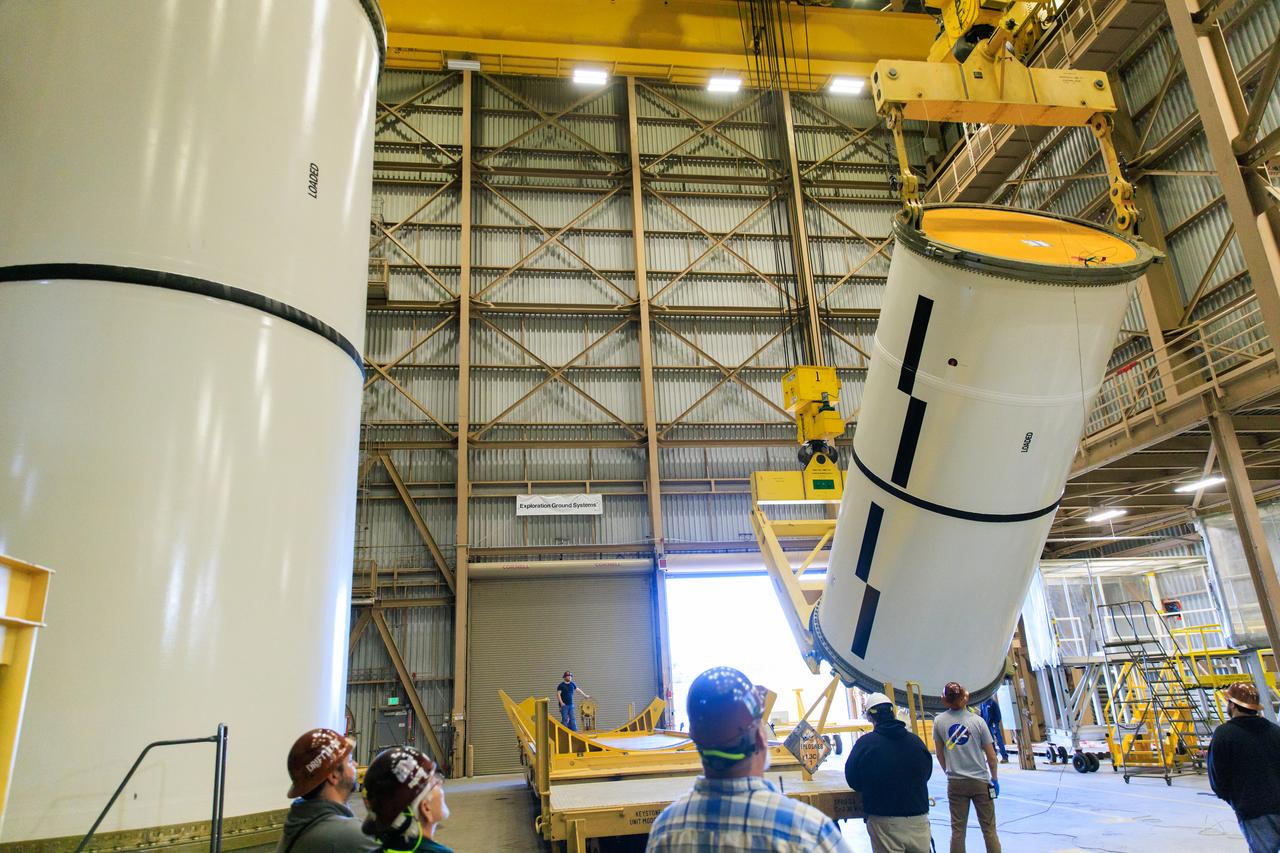
Following the successful propellant grain inspection of two segments of the solid rocket boosters for NASA’s Space Launch System inside the Rotation, Processing and Surge Facility at NASA’s Kennedy Space Center in Florida, crews on Thursday, Dec. 21, 2023, rotate and lift the segments from horizontal into a vertical position in preparation for the agency’s Artemis II launch campaign. The Artemis II mission will send four astronauts around the Moon as part of the agency’s effort to establish a long-term science and exploration presence at the Moon, and eventually Mars.
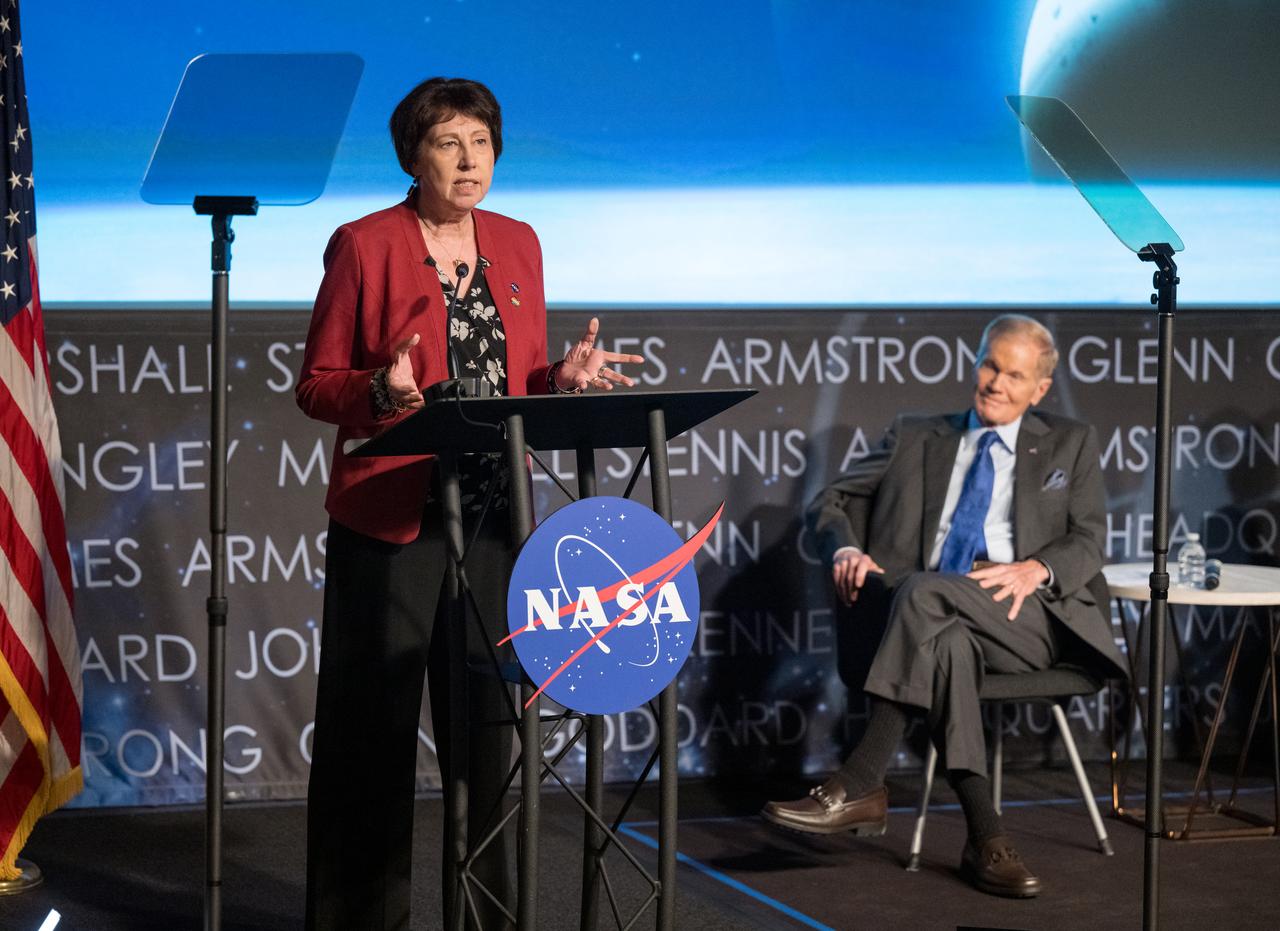
NASA Associate Administrator for Science, Nicky Fox, discusses the agency’s goals during the annual State of NASA address, Monday, March 11, 2024, at the Mary W. Jackson NASA Headquarters Building in Washington. NASA leaders discussed plans for promoting U.S. leadership in space exploration, improving life on Earth through science and innovation, humanity’s return to the Moon under the Artemis campaign, aeronautics, and more. Photo Credit: (NASA/Bill Ingalls)
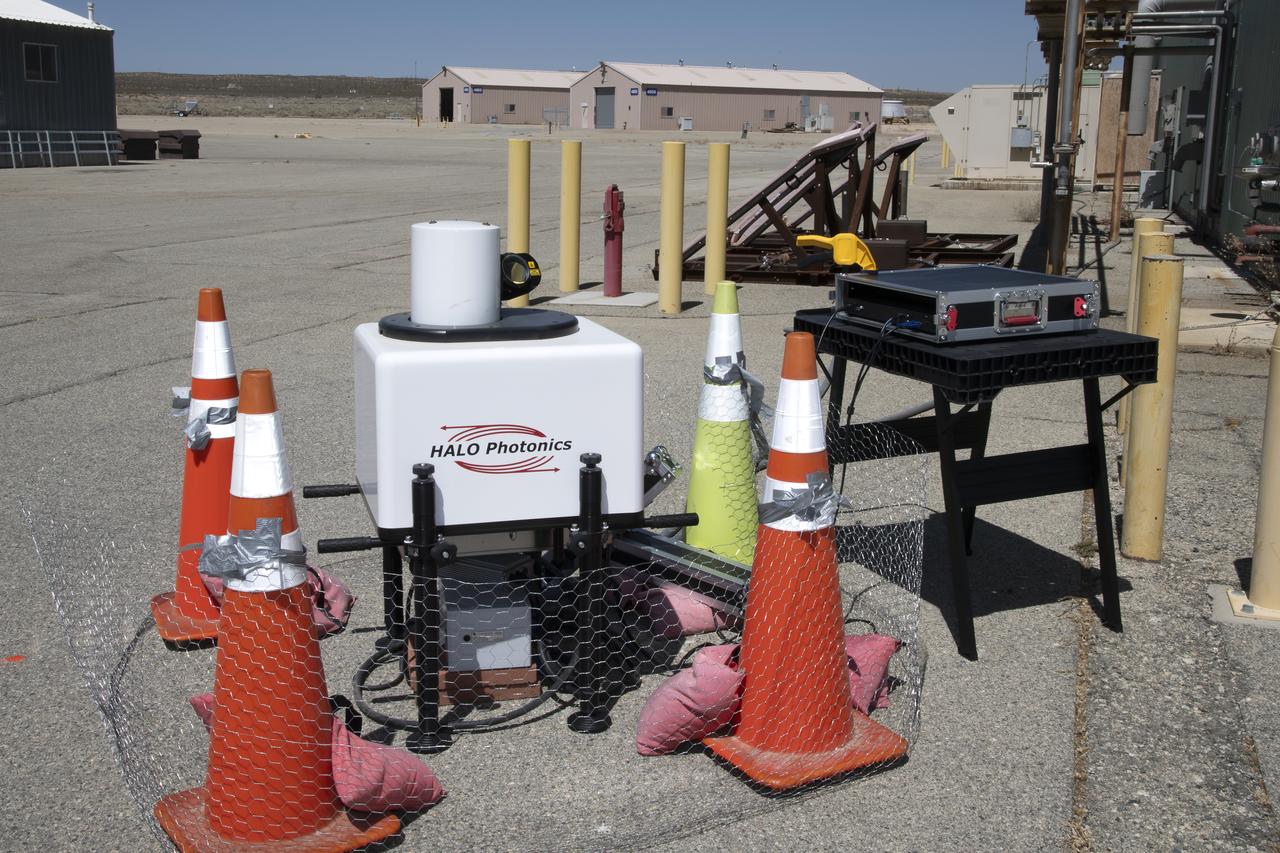
This is one of two lidar units positioned on either end of Building 4833 at NASA’s Armstrong Flight Research Center in Edwards, California, that formed the cutting-edge ‘virtual tower concept.’ The units use lasers to measure airflow from the ground level to 2,000 feet to provide data to assist future drones to safely land on rooftop hubs called vertiports, and to potentially improve weather prediction. It was part of the multi-faceted Advanced Exploration of Reliable Operation at Low Altitudes: Meteorology, Simulation and Technology campaign.
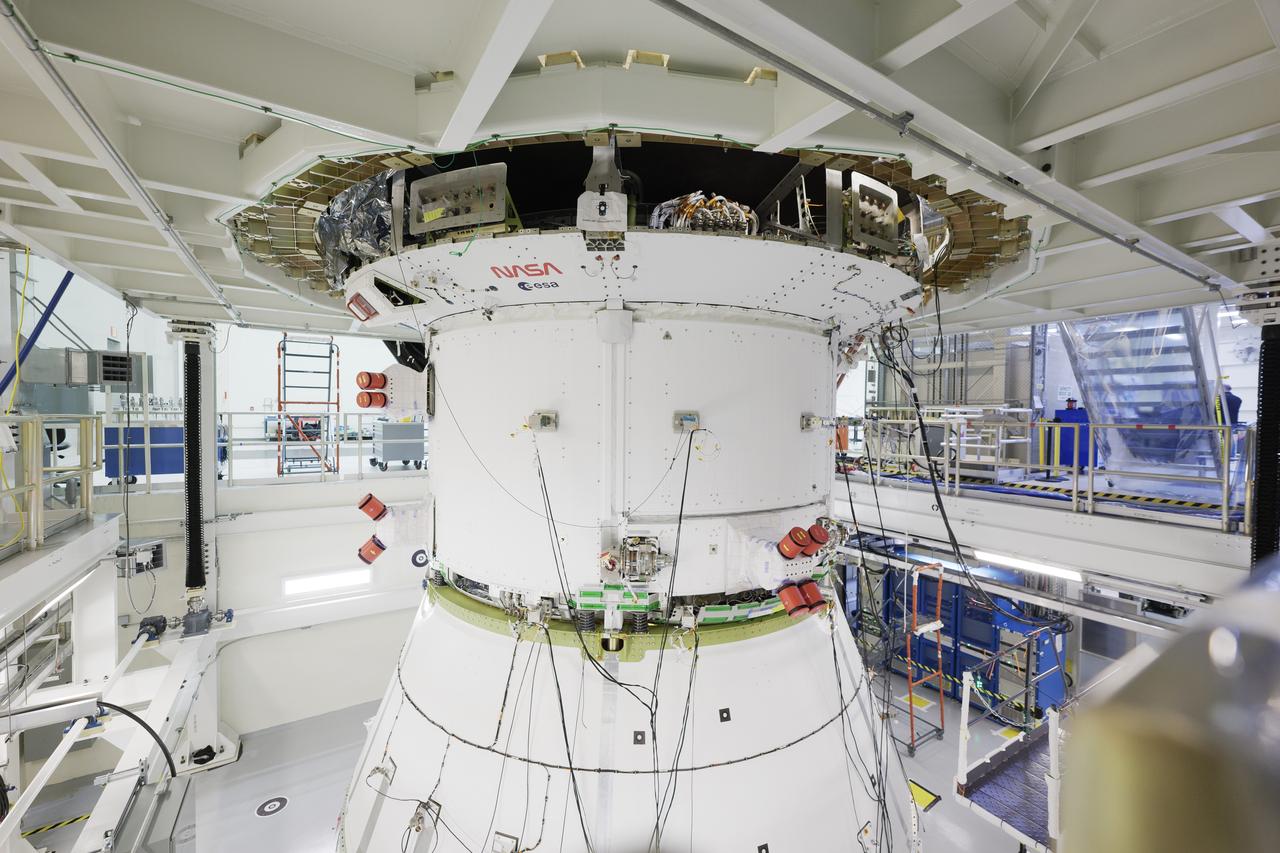
Work for Artemis II continues inside the Operations and Checkout building at NASA's Kennedy Space Center on Thursday, Feb. 1, 2024. Teams with Lockheed Martin and NASA are preparing the Orion spacecraft for vacuum testing this spring. Four astronauts will venture around the Moon in the Orion spacecraft on Artemis II, the first crewed mission on NASA's path to establishing a long-term presence at the Moon for science and exploration through the Artemis campaign.
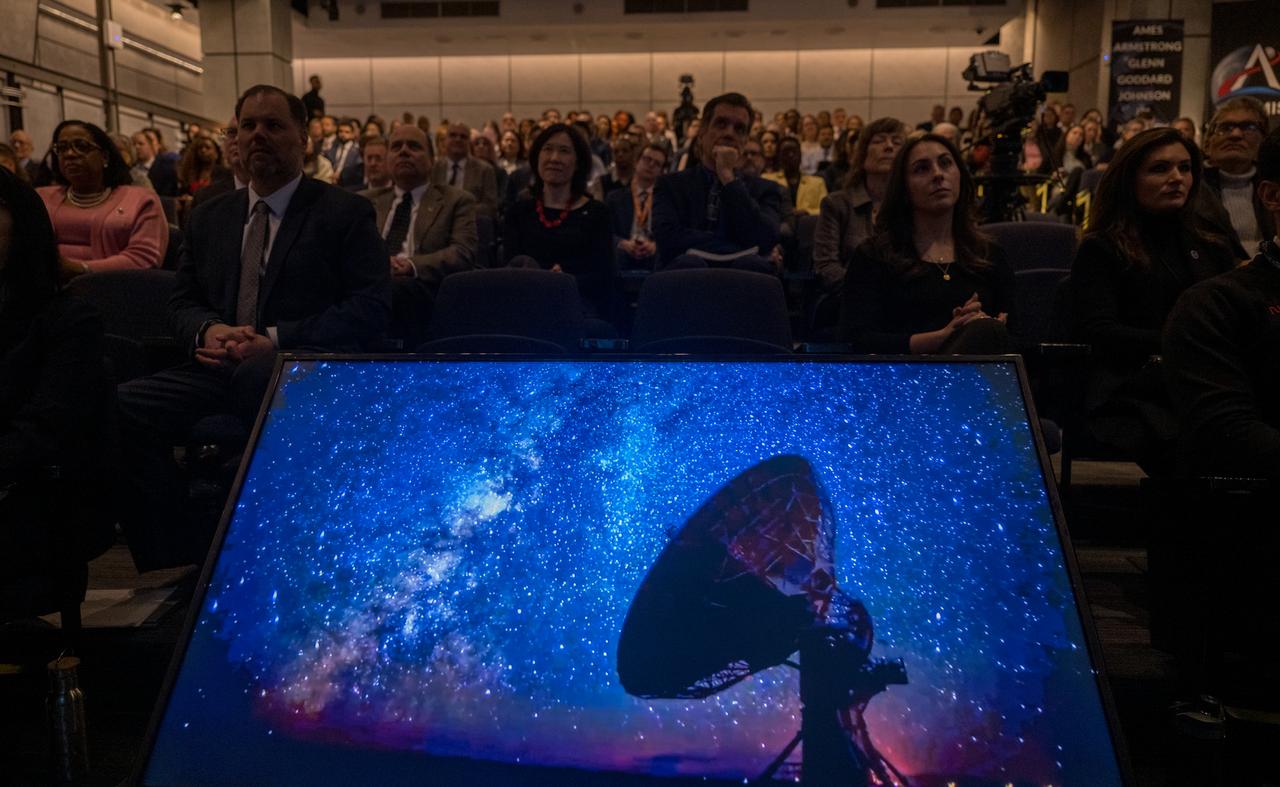
Employees watch a video introduction during the annual State of NASA address, Monday, March 11, 2024, at the Mary W. Jackson NASA Headquarters Building in Washington. NASA leaders discussed plans for promoting U.S. leadership in space exploration, improving life on Earth through science and innovation, humanity’s return to the Moon under the Artemis campaign, aeronautics, and more. Photo Credit: (NASA/Bill Ingalls)

Teams with NASA’s Exploration Ground Systems and primary contractor Amentum, integrate the SLS (Space Launch System) Moon rocket with the solid rocket boosters onto mobile launcher 1 inside High Bay 3 of the Vehicle Assembly Building at NASA’s Kennedy Space Center on Sunday, March 23, 2025. Artemis II is the first crewed test flight under NASA’s Artemis campaign and is another step toward missions on the lunar surface and helping the agency prepare for future human missions to Mars.
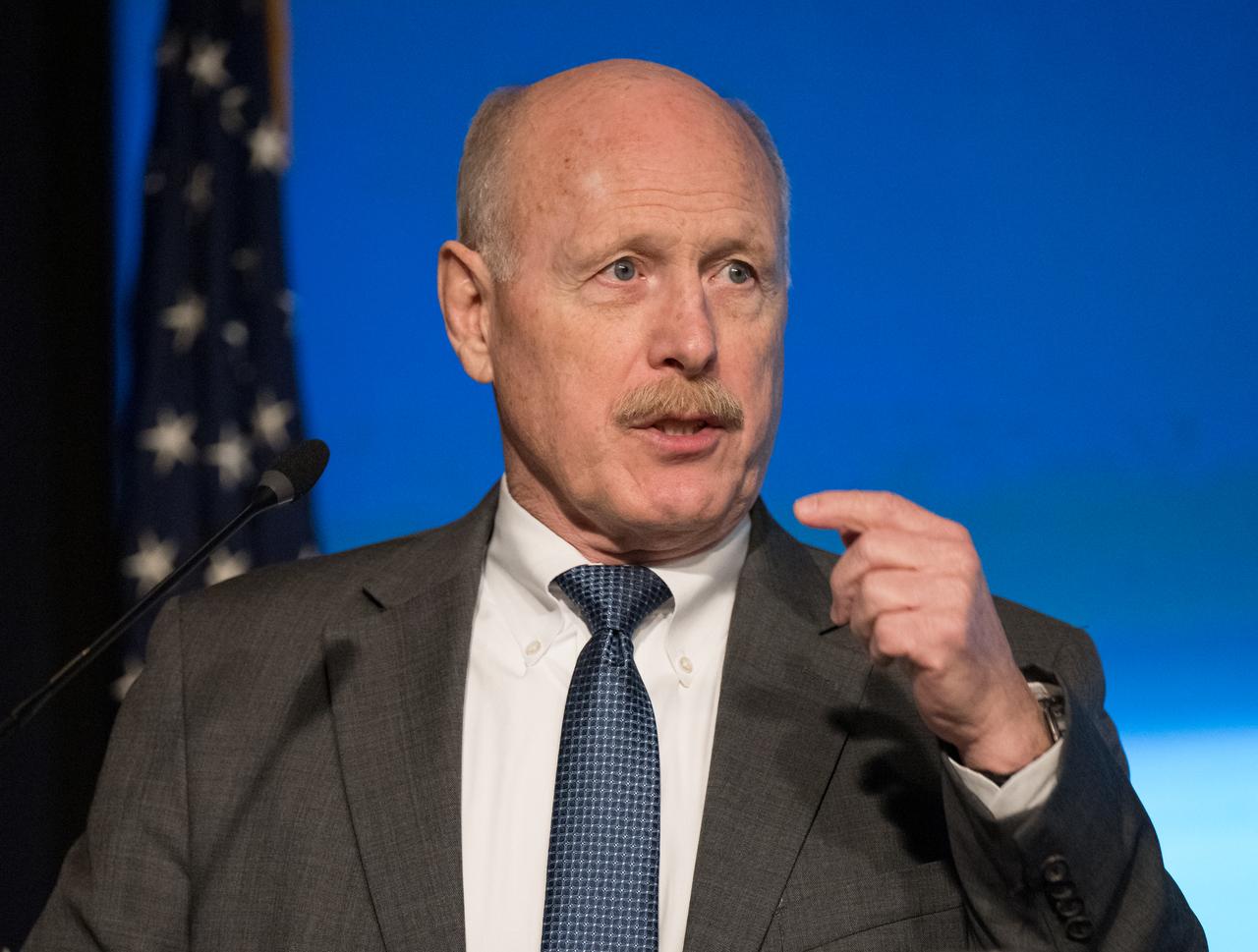
NASA Associate Administrator for Space Operations, Ken Bowersox, discusses the agency’s goals during the annual State of NASA address, Monday, March 11, 2024, at the Mary W. Jackson NASA Headquarters Building in Washington. NASA leaders discussed plans for promoting U.S. leadership in space exploration, improving life on Earth through science and innovation, humanity’s return to the Moon under the Artemis campaign, aeronautics, and more. Photo Credit: (NASA/Bill Ingalls)
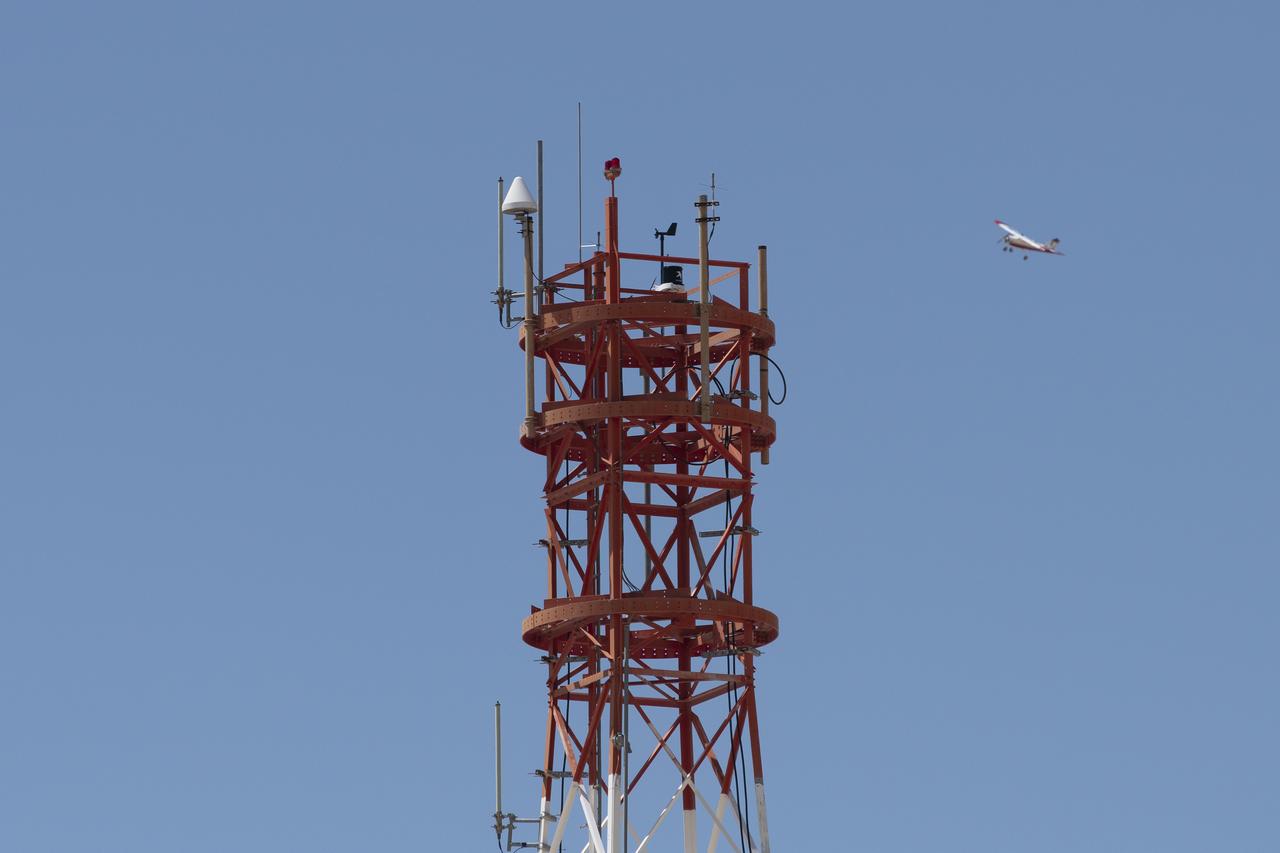
The DROID 2 (Dryden Remotely Operated Integrated Drone 2) flies by a 140-foot instrumented tower at NASA's Armstrong Flight Research Center in Edwards, California, as part of the Advanced Exploration of Reliable Operation at Low Altitudes: Meteorology, Simulation, and Technology campaign. The focus was to study wind to provide data for safe takeoff and landing of future air taxis.
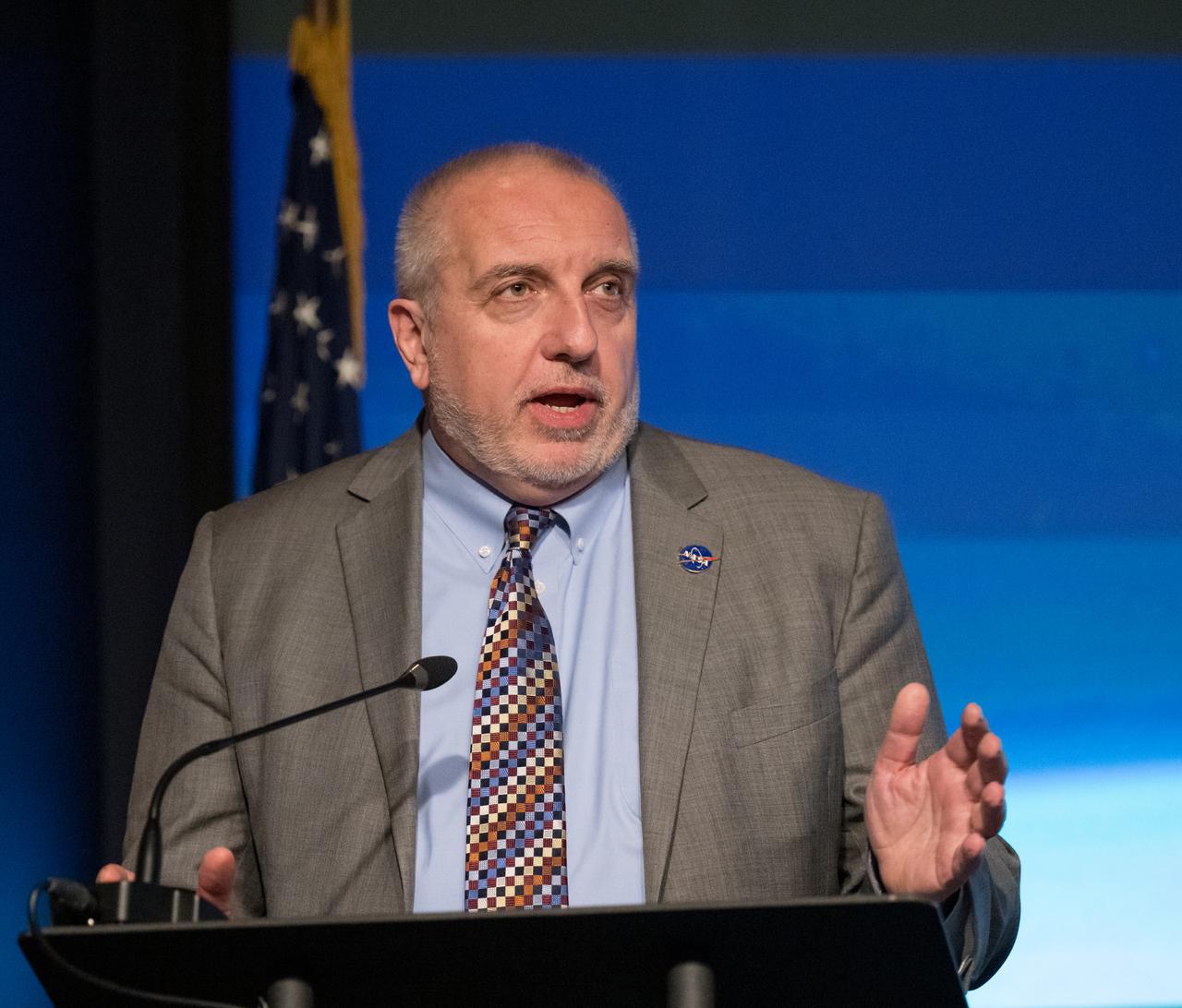
NASA Associate Administrator for Aeronautics Research, Robert Pearce, discusses the agency’s goals during the annual State of NASA address, Monday, March 11, 2024, at the Mary W. Jackson NASA Headquarters Building in Washington. NASA leaders discussed plans for promoting U.S. leadership in space exploration, improving life on Earth through science and innovation, humanity’s return to the Moon under the Artemis campaign, aeronautics, and more. Photo Credit: (NASA/Bill Ingalls)
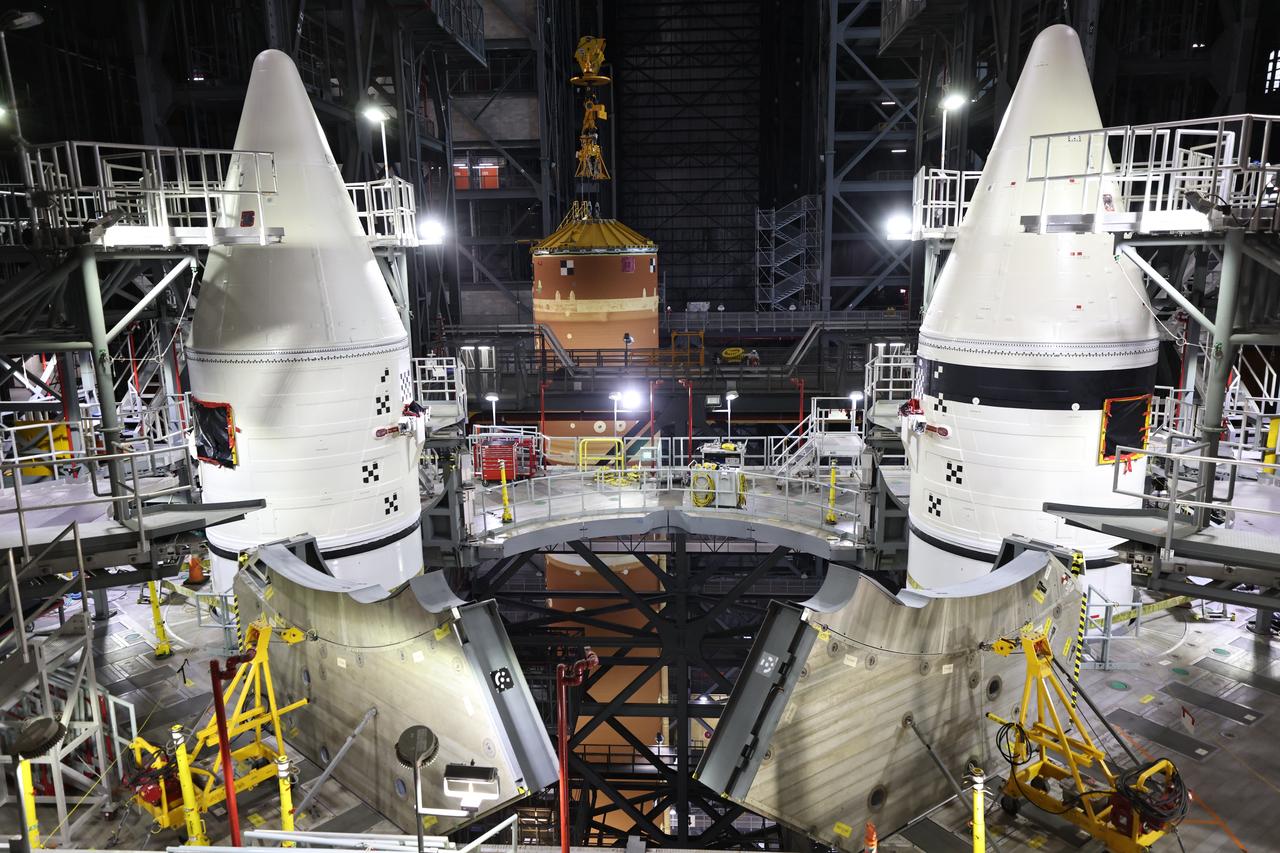
Teams with NASA’s Exploration Ground Systems and primary contractor Amentum, integrate the SLS (Space Launch System) Moon rocket with the solid rocket boosters onto mobile launcher 1 inside High Bay 3 of the Vehicle Assembly Building at NASA’s Kennedy Space Center on Sunday, March 23, 2025. Artemis II is the first crewed test flight under NASA’s Artemis campaign and is another step toward missions on the lunar surface and helping the agency prepare for future human missions to Mars.
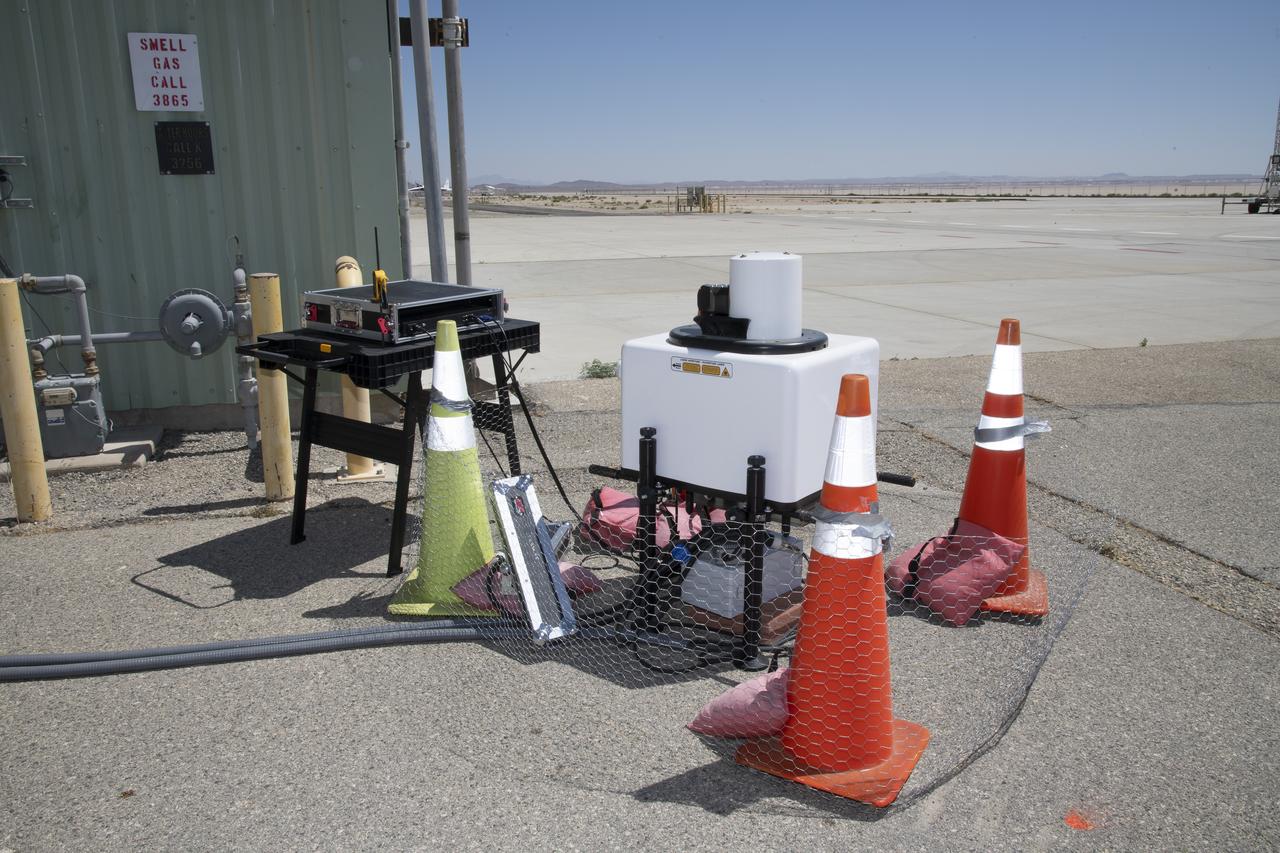
This is one of two lidar units positioned on either end of Building 4833 at NASA’s Armstrong Flight Research Center in Edwards, California, that formed the cutting-edge ‘virtual tower concept.’ The units use lasers to measure airflow from the ground level to 2,000 feet to provide data to assist future drones to safely land on rooftop hubs called vertiports, and to potentially improve weather prediction. It was part of the multi-faceted Advanced Exploration of Reliable Operation at Low Altitudes: Meteorology, Simulation and Technology campaign.
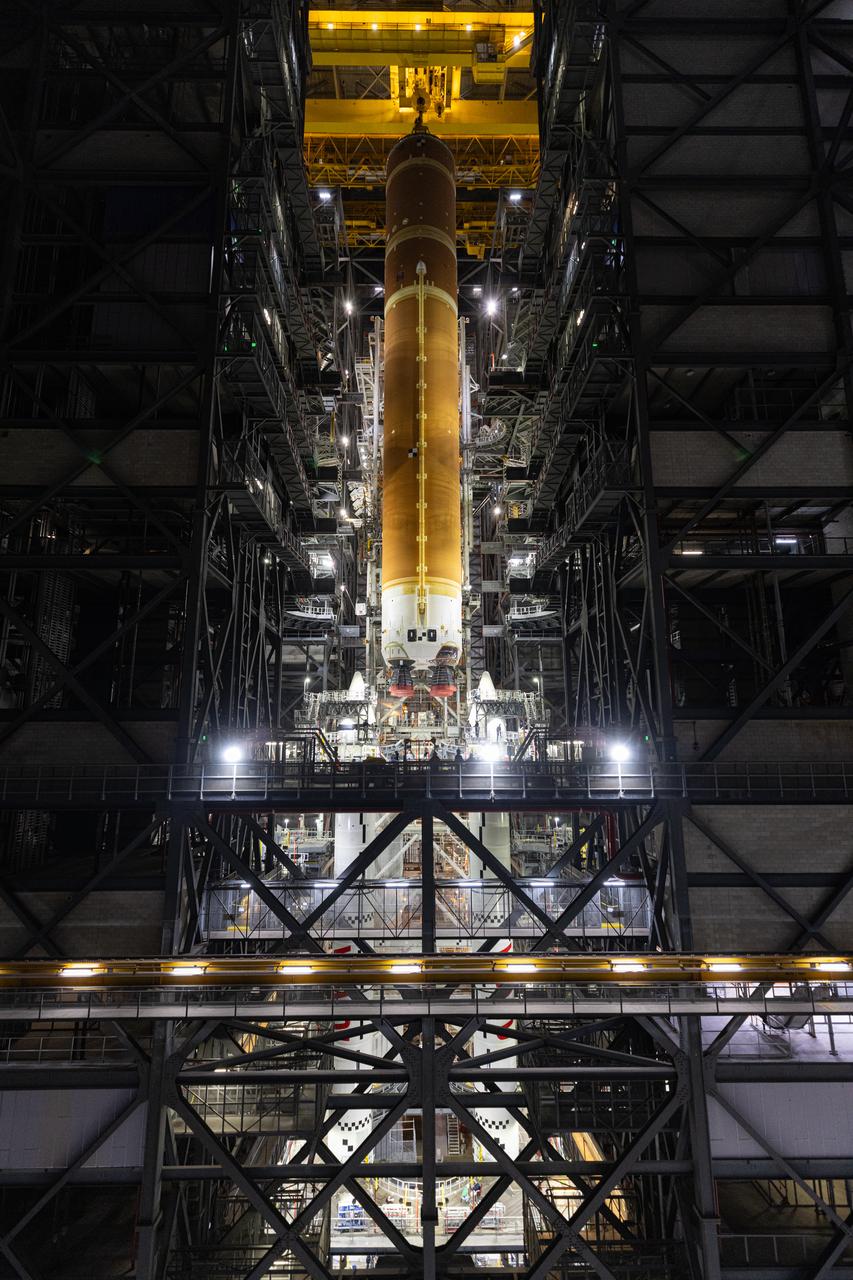
Teams with NASA’s Exploration Ground Systems and primary contractor Amentum, integrate the SLS (Space Launch System) Moon rocket with the solid rocket boosters onto mobile launcher 1 inside High Bay 3 of the Vehicle Assembly Building at NASA’s Kennedy Space Center on Sunday, March 23, 2025. Artemis II is the first crewed test flight under NASA’s Artemis campaign and is another step toward missions on the lunar surface and helping the agency prepare for future human missions to Mars.
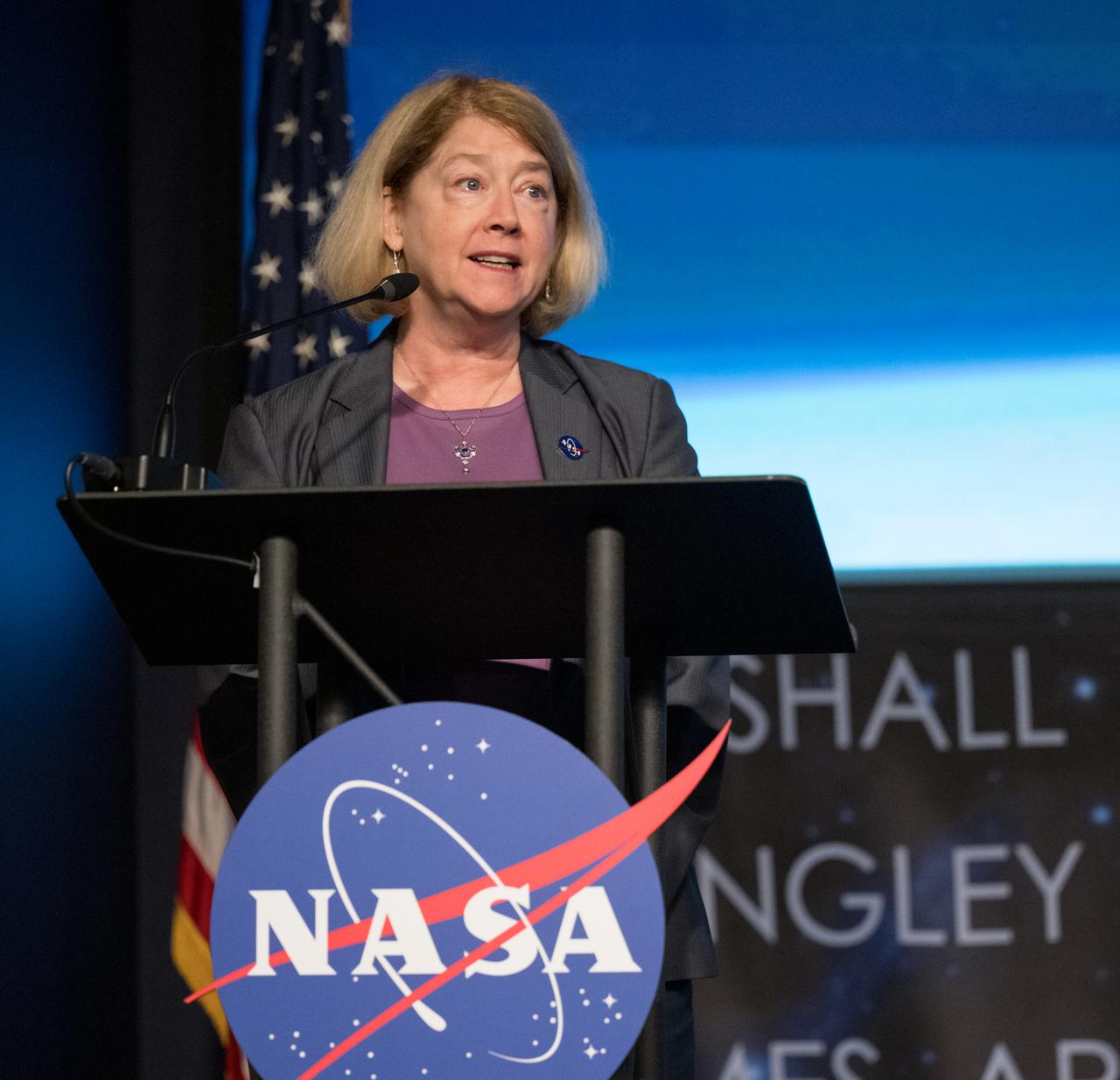
NASA Deputy Administrator Pam Melroy discusses the agency’s goals during the annual State of NASA address, Monday, March 11, 2024, at the Mary W. Jackson NASA Headquarters Building in Washington. NASA leaders discussed plans for promoting U.S. leadership in space exploration, improving life on Earth through science and innovation, humanity’s return to the Moon under the Artemis campaign, aeronautics, and more. Photo Credit: (NASA/Bill Ingalls)
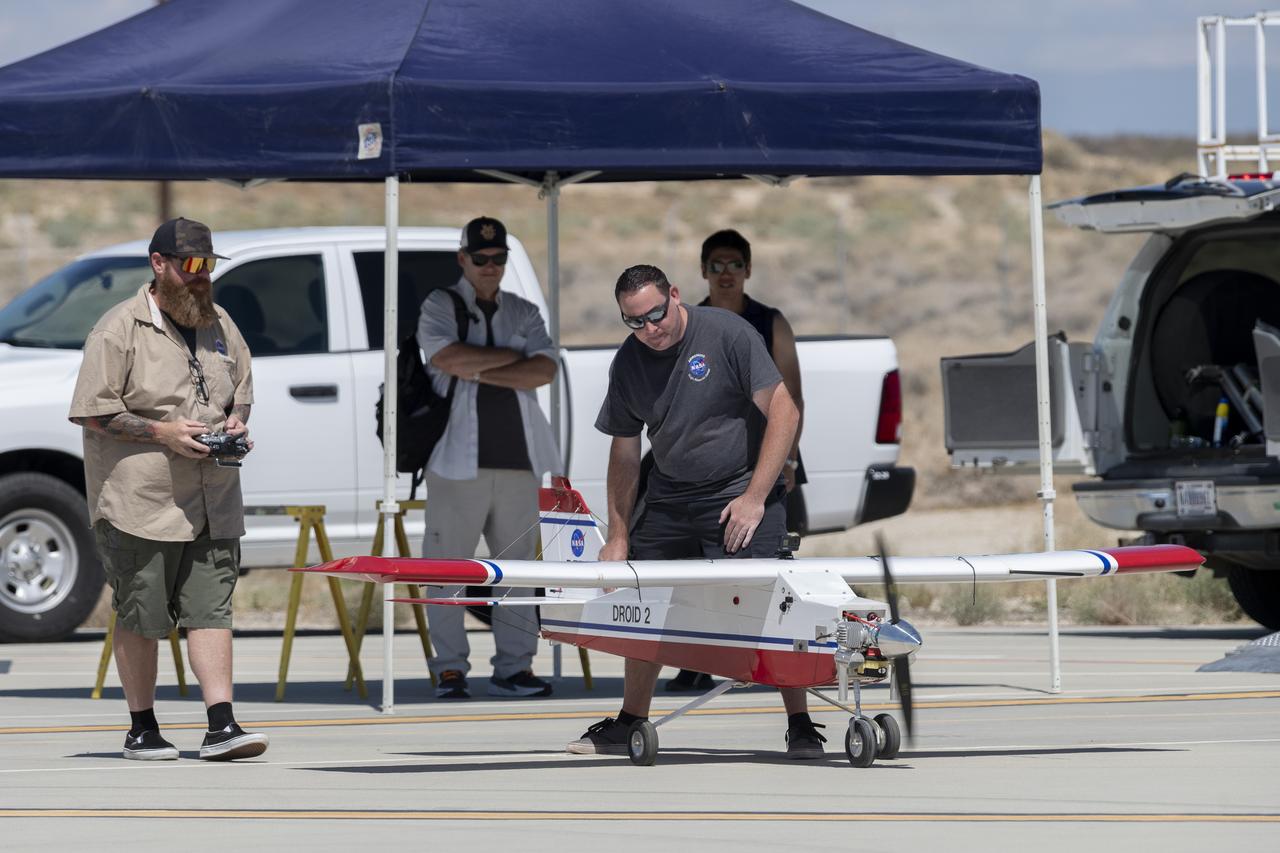
Justin Hall, left, prepares to pilot the DROID 2 (Dryden Remotely Operated Integrated Drone 2) aircraft, as John Melton watches and Justin Link makes a final adjustment. The flight was part of the Advanced Exploration of Reliable Operation at Low Altitudes: Meteorology, Simulation, and Technology campaign. The weather study was at NASA's Armstrong Flight Research Center in Edwards, California. The focus was to study wind to provide data for safe takeoff and landing of future air taxis.
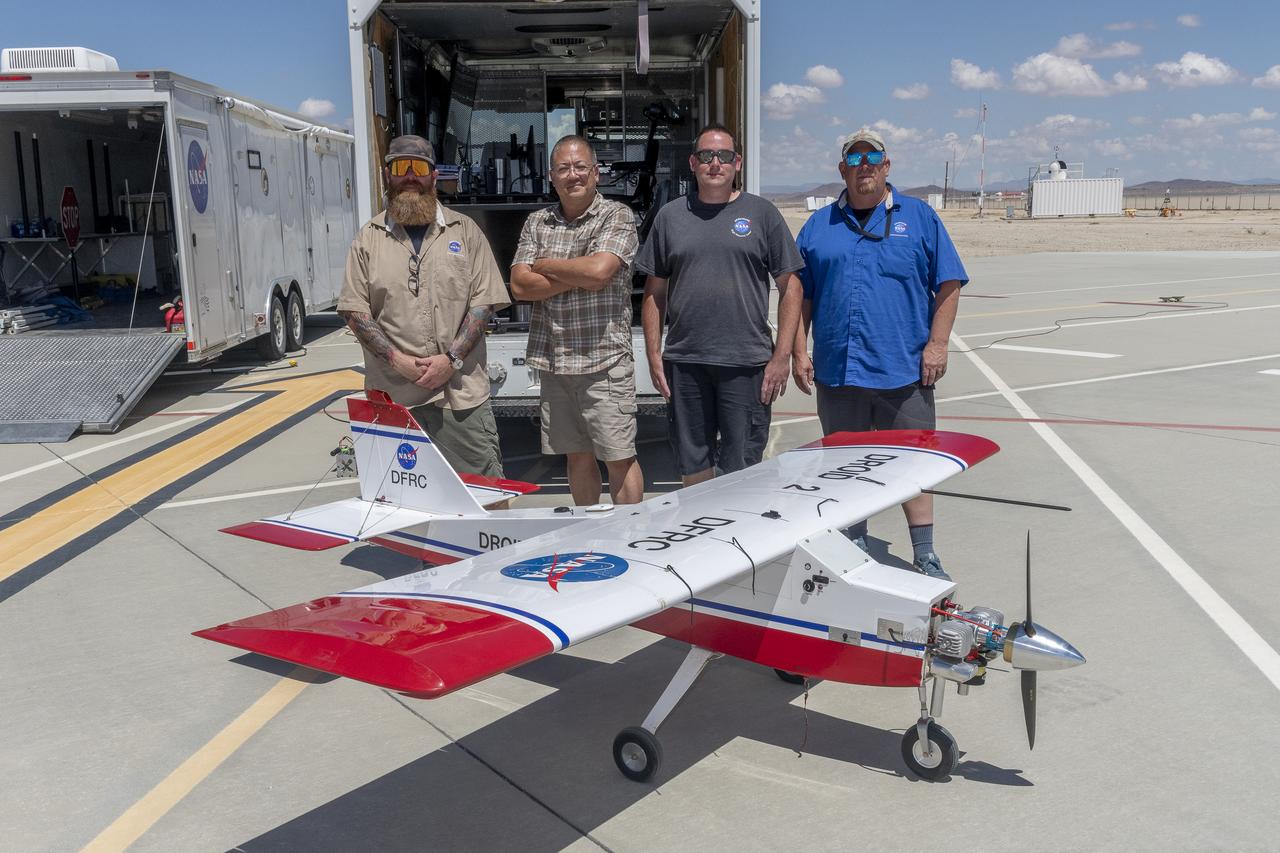
Justin Hall, Derek Abramson, Justin Link, and Robert "Red" Jensen were key to a successful mission for the DROID 2 (Dryden Remotely Operated Integrated Drone 2) aircraft at NASA's Armstrong Flight Research Center in Edwards, California. The aircraft flew as part of the Advanced Exploration of Reliable Operation at Low Altitudes: Meteorology, Simulation, and Technology campaign. The focus was to study wind to provide data for safe takeoff and landing of future air taxis.
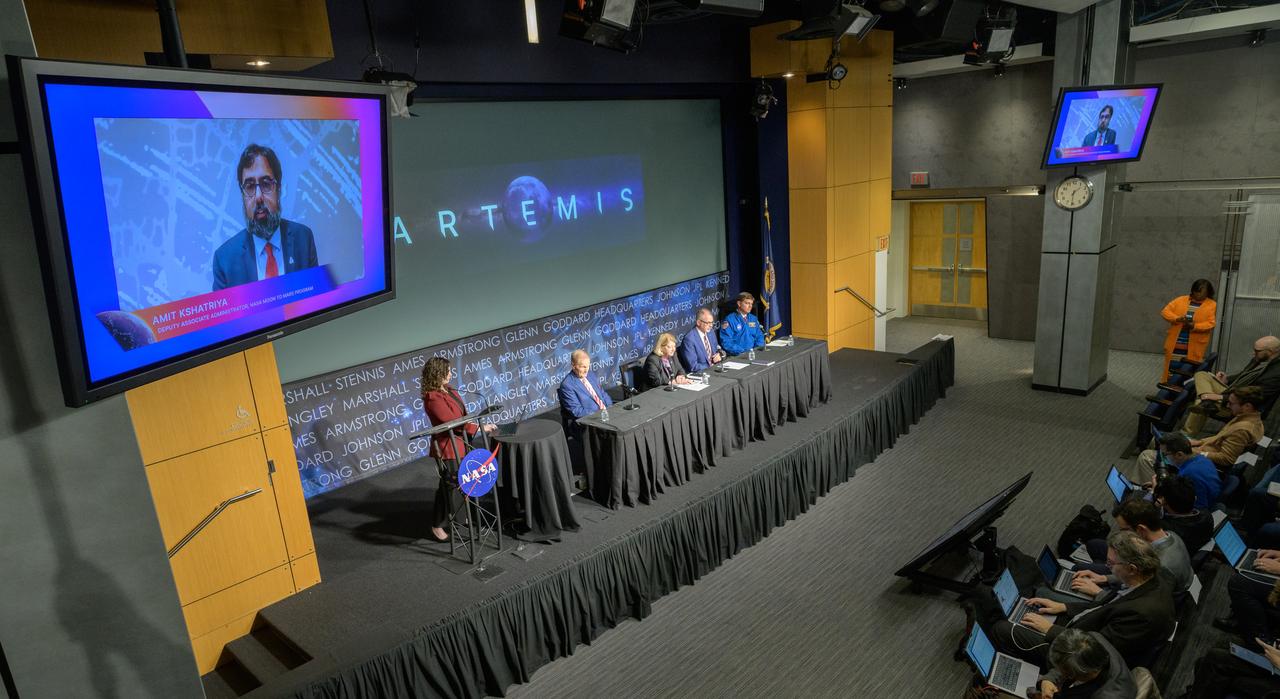
NASA Deputy Associate Administrator for the Moon to Mars Program in the Explorations Systems Development Mission Directorate, Amit Kshatriya, on monitors, NASA Administrator Bill Nelson, seated left, NASA Deputy Administrator Pam Melroy, NASA Associate Administrator Jim Free, and, NASA Astronaut and Artemis II commander Reid Wiseman, right, are seen during an update on NASA's Artemis campaign, Thursday, Dec. 5, 2024, at the NASA Headquarters Mary W. Jackson Building in Washington. Photo Credit: (NASA/Bill Ingalls)
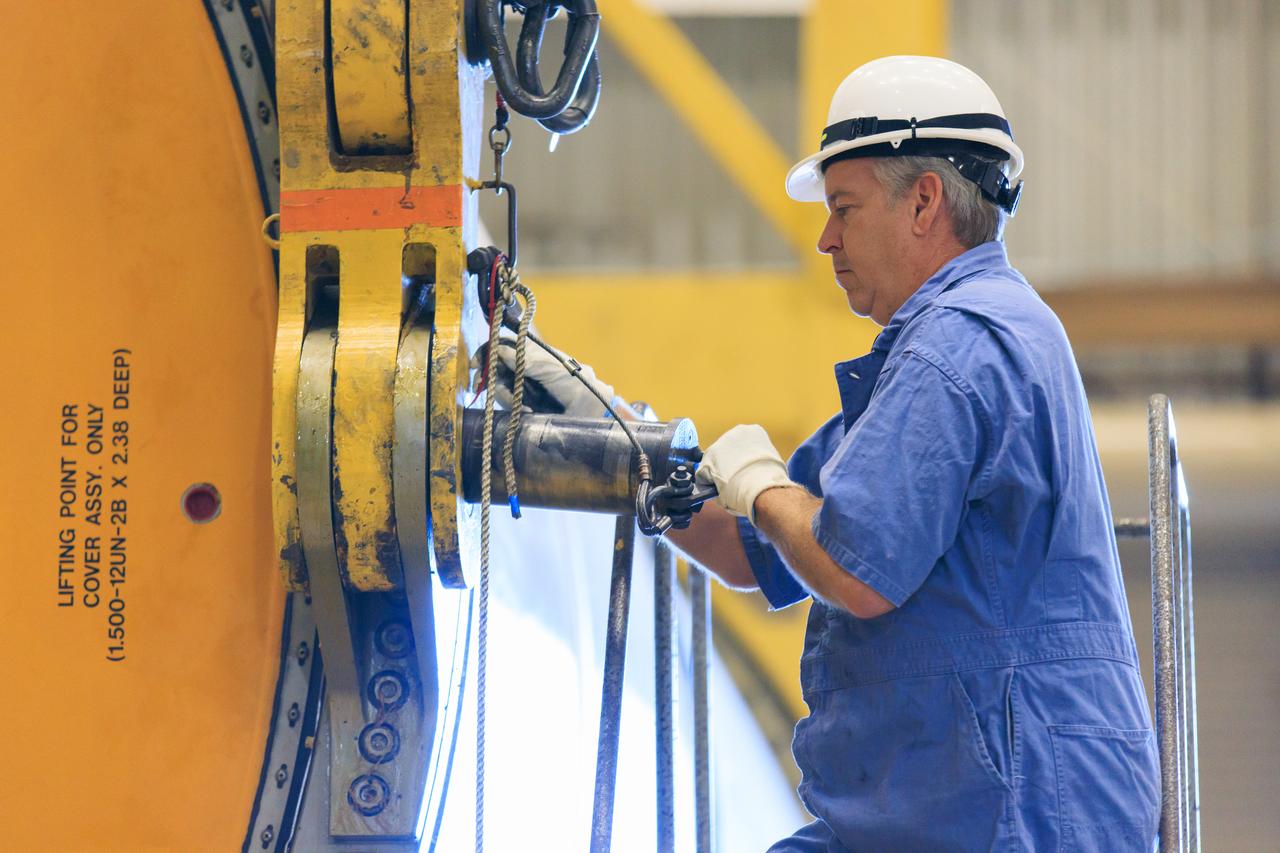
Following the successful propellant grain inspection of two segments of the solid rocket boosters for NASA’s Space Launch System inside the Rotation, Processing and Surge Facility at NASA’s Kennedy Space Center in Florida, crews on Thursday, Dec. 21, 2023, rotate and lift the segments from horizontal into a vertical position in preparation for the agency’s Artemis II launch campaign. The Artemis II mission will send four astronauts around the Moon as part of the agency’s effort to establish a long-term science and exploration presence at the Moon, and eventually Mars.

Technicians with NASA’s Exploration Ground Systems Program offload the agency’s Orion spacecraft from the KAMAG transporter to the servicing stand inside the Multi-Payload Processing Facility at Kennedy Space Center in Florida on Sunday, May 4, 2025, to undergo fueling and processing operations for prelaunch operations. The Artemis II test flight is the first crewed flight under NASA’s Artemis campaign and is another step toward missions on the lunar surface and helping the agency prepare for future human missions to Mars.
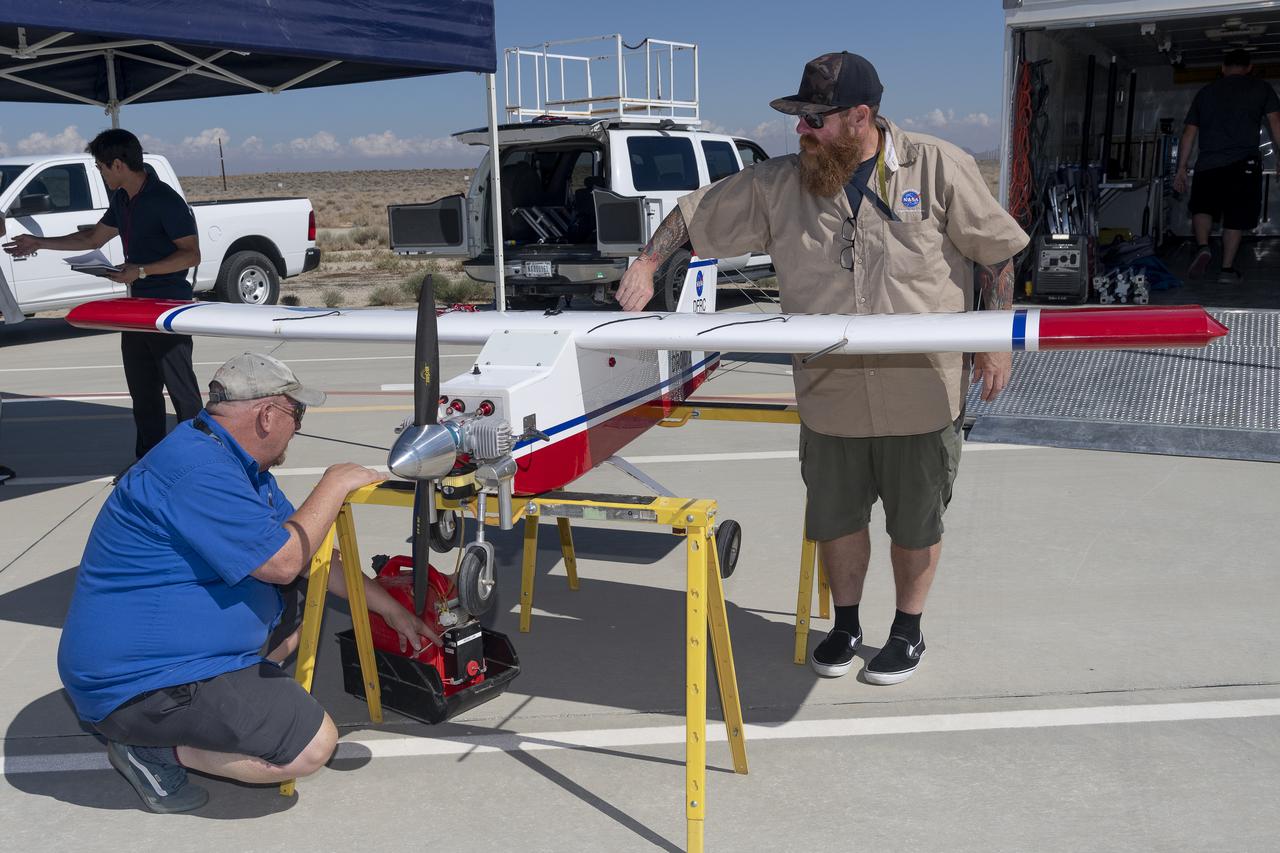
Robert "Red" Jensen and Justin Hall prepare the DROID 2 (Dryden Remotely Operated Integrated Drone 2) aircraft for the Advanced Exploration of Reliable Operation at Low Altitudes: Meteorology, Simulation, and Technology campaign flights. The weather study was at NASA's Armstrong Flight Research Center in Edwards, California. The focus was to study wind to provide data for safe takeoff and landing of future air taxis.
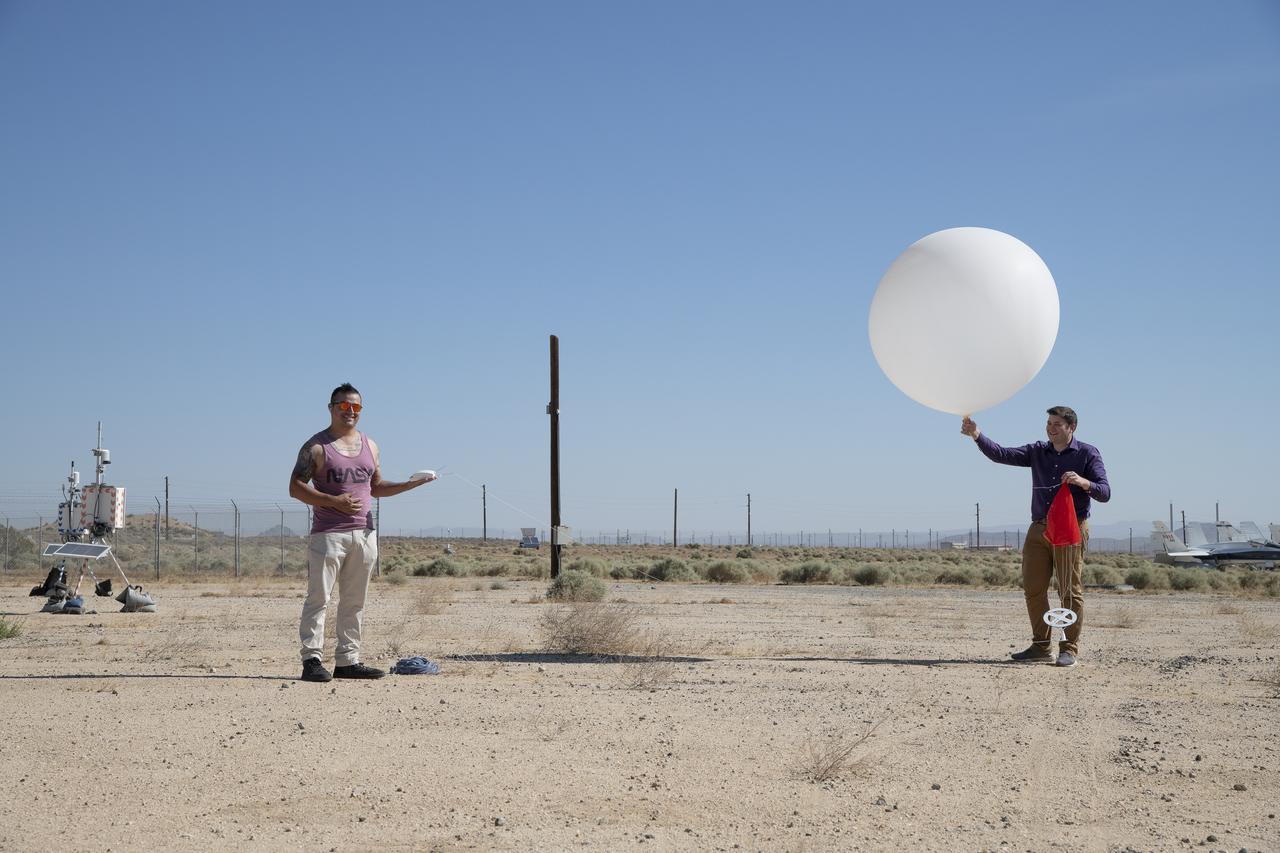
Rocky Garcia and Wesley James prepare a weather balloon to collect wind data for the Advanced Exploration of Reliable Operation at Low Altitudes: Meteorology, Simulation and Technology campaign. The weather study was at NASA’s Armstrong Flight Research Center in Edwards, California. The focus was to study wind from the ground to 2,000 feet to provide data to assist future drones to safely land on rooftop hubs called vertiports and to potentially improve weather prediction.
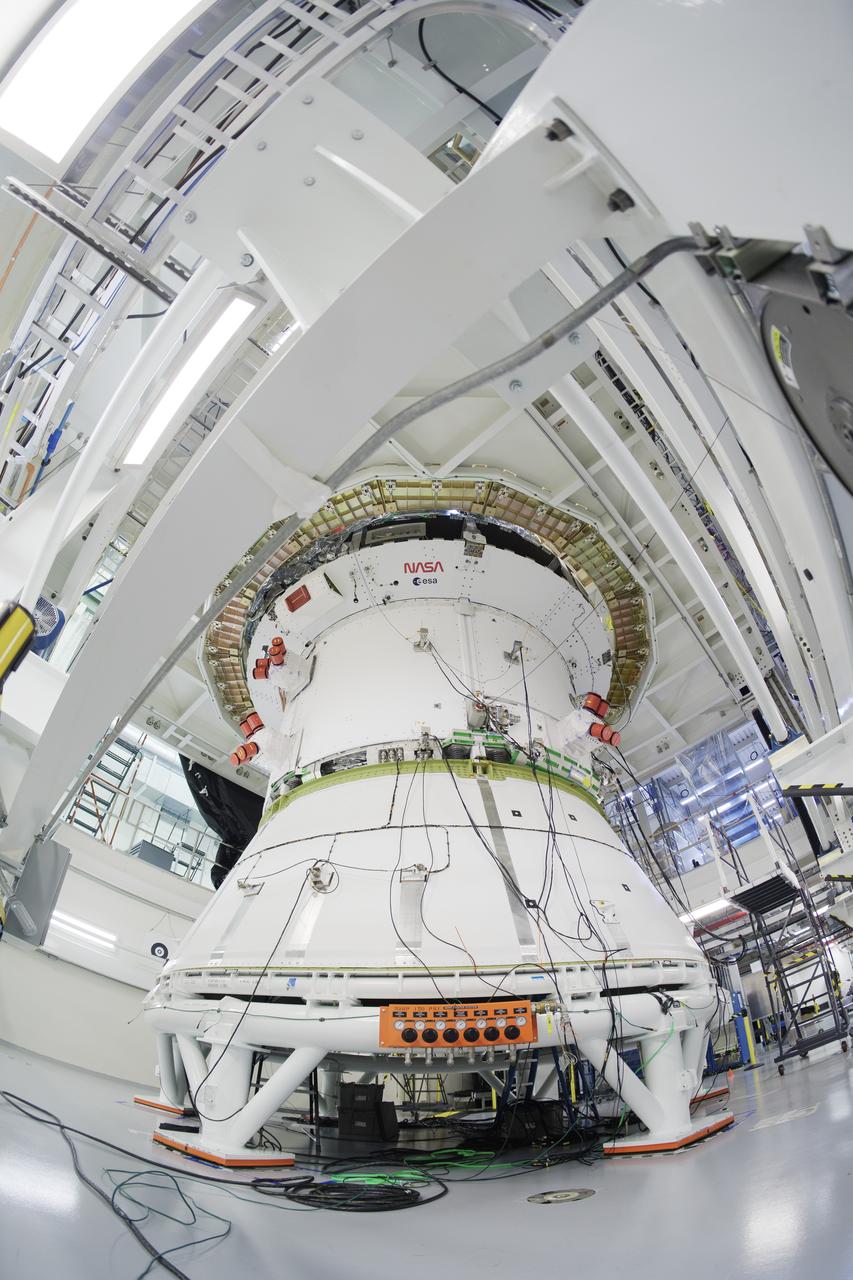
Work for Artemis II continues inside the Operations and Checkout building at NASA's Kennedy Space Center on Thursday, Feb. 1, 2024. Teams with Lockheed Martin and NASA are preparing the Orion spacecraft for vacuum testing this spring. Four astronauts will venture around the Moon in the Orion spacecraft on Artemis II, the first crewed mission on NASA's path to establishing a long-term presence at the Moon for science and exploration through the Artemis campaign.
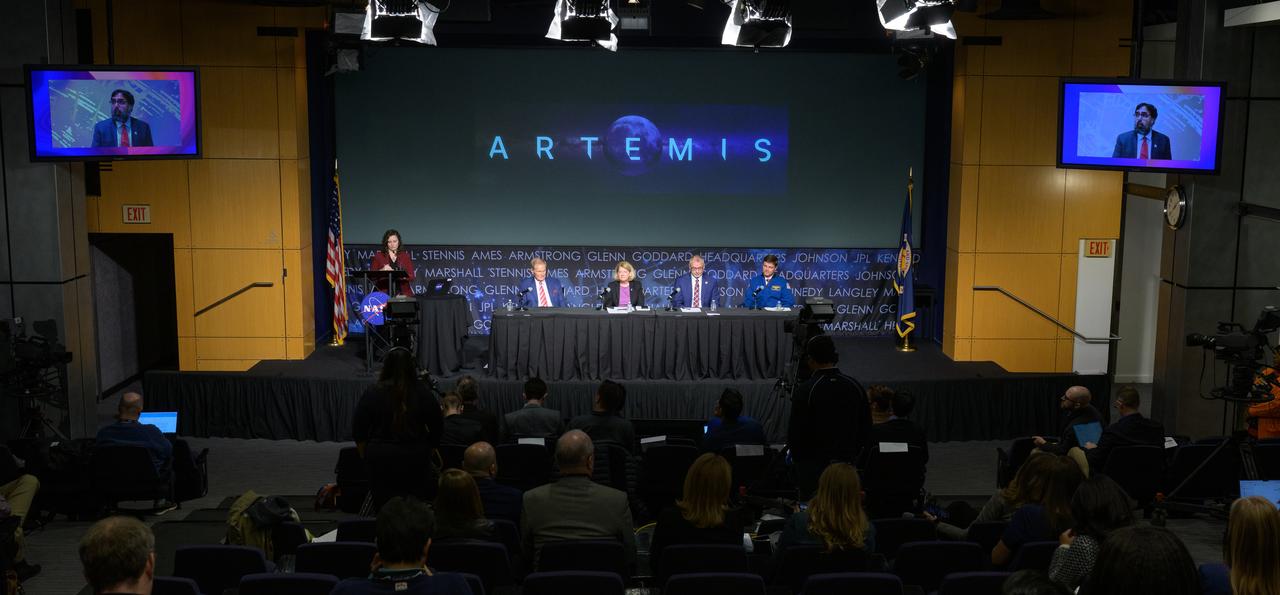
NASA Deputy Associate Administrator for the Moon to Mars Program in the Explorations Systems Development Mission Directorate, Amit Kshatriya, on monitors, NASA Administrator Bill Nelson, seated left, NASA Deputy Administrator Pam Melroy, NASA Associate Administrator Jim Free, and, NASA Astronaut and Artemis II commander Reid Wiseman, right, are seen during an update on NASA's Artemis campaign, Thursday, Dec. 5, 2024, at the NASA Headquarters Mary W. Jackson Building in Washington. Photo Credit: (NASA/Bill Ingalls)
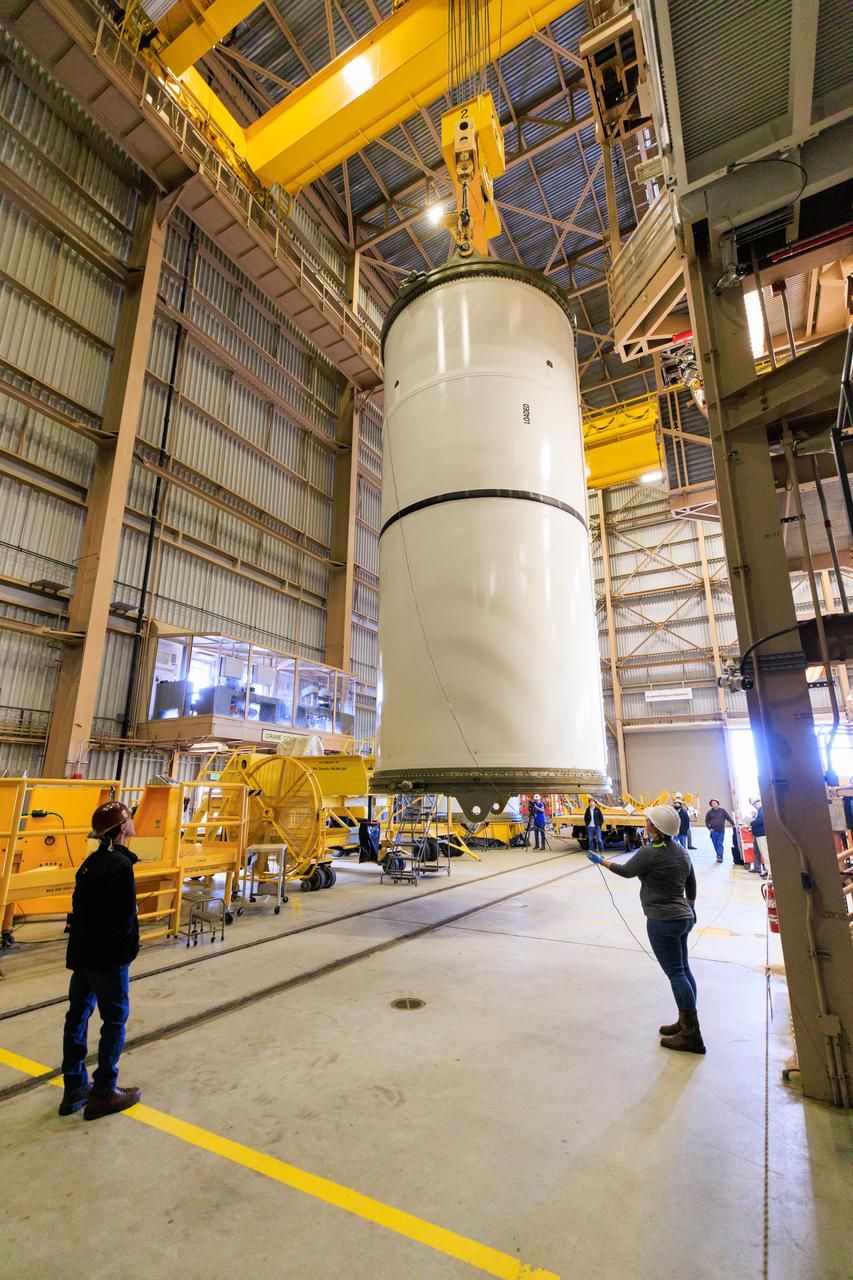
Following the successful propellant grain inspection of two segments of the solid rocket boosters for NASA’s Space Launch System inside the Rotation, Processing and Surge Facility at NASA’s Kennedy Space Center in Florida, crews on Thursday, Dec. 21, 2023, rotate and lift the segments from horizontal into a vertical position in preparation for the agency’s Artemis II launch campaign. The Artemis II mission will send four astronauts around the Moon as part of the agency’s effort to establish a long-term science and exploration presence at the Moon, and eventually Mars.

The Orion spacecraft for NASA’s Artemis II mission is photographed inside the Final Assembly and System Testing cell at the Neil Armstrong Operations and Checkout Building at NASA’s Kennedy Space Center in Florida on Friday, March 15, 2024. Four astronauts will venture around the Moon in the Orion spacecraft on Artemis II, the first crewed mission on NASA's path to establishing a long-term presence at the Moon for science and exploration through the Artemis campaign.
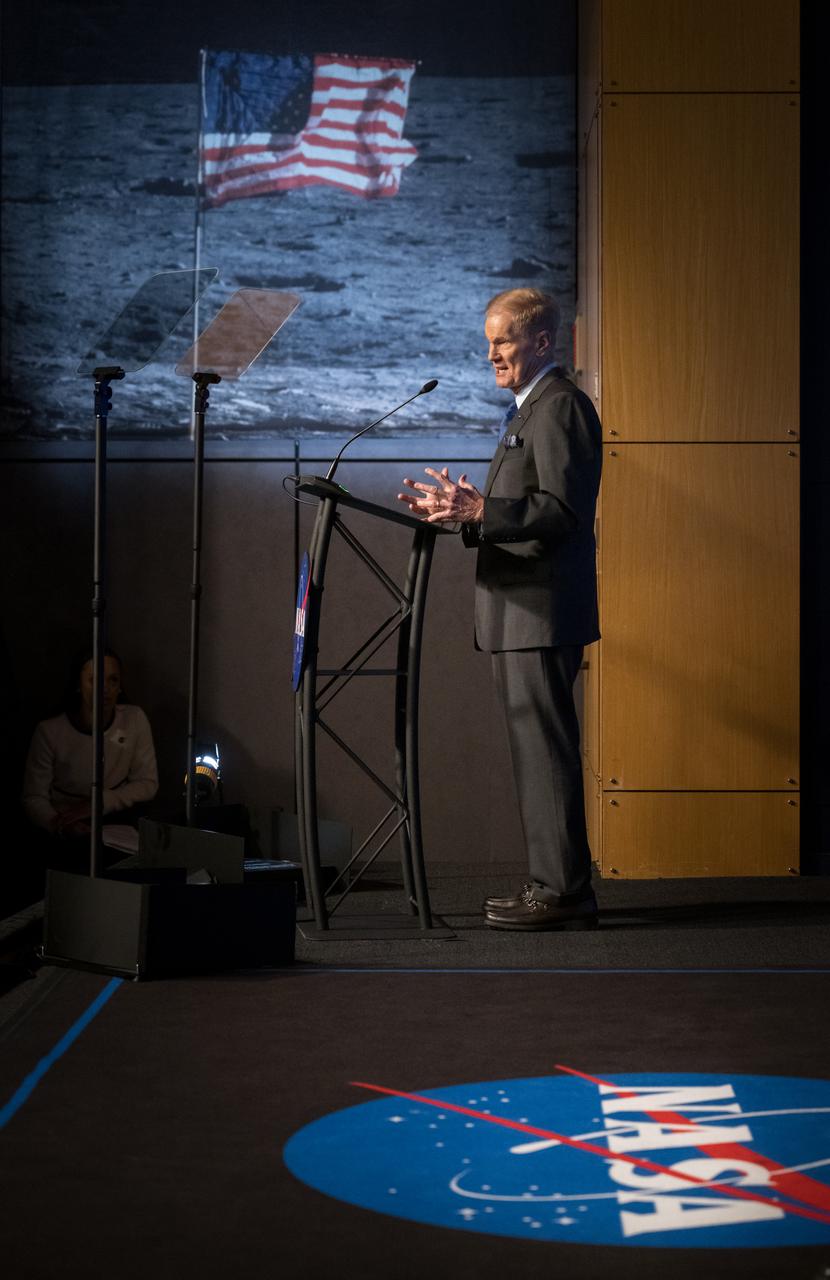
NASA Administrator Bill Nelson discusses the agency’s goals during the annual State of NASA address, Monday, March 11, 2024, at the Mary W. Jackson NASA Headquarters Building in Washington. NASA leaders discussed plans for promoting U.S. leadership in space exploration, improving life on Earth through science and innovation, humanity’s return to the Moon under the Artemis campaign, aeronautics, and more. Photo Credit: (NASA/Bill Ingalls)
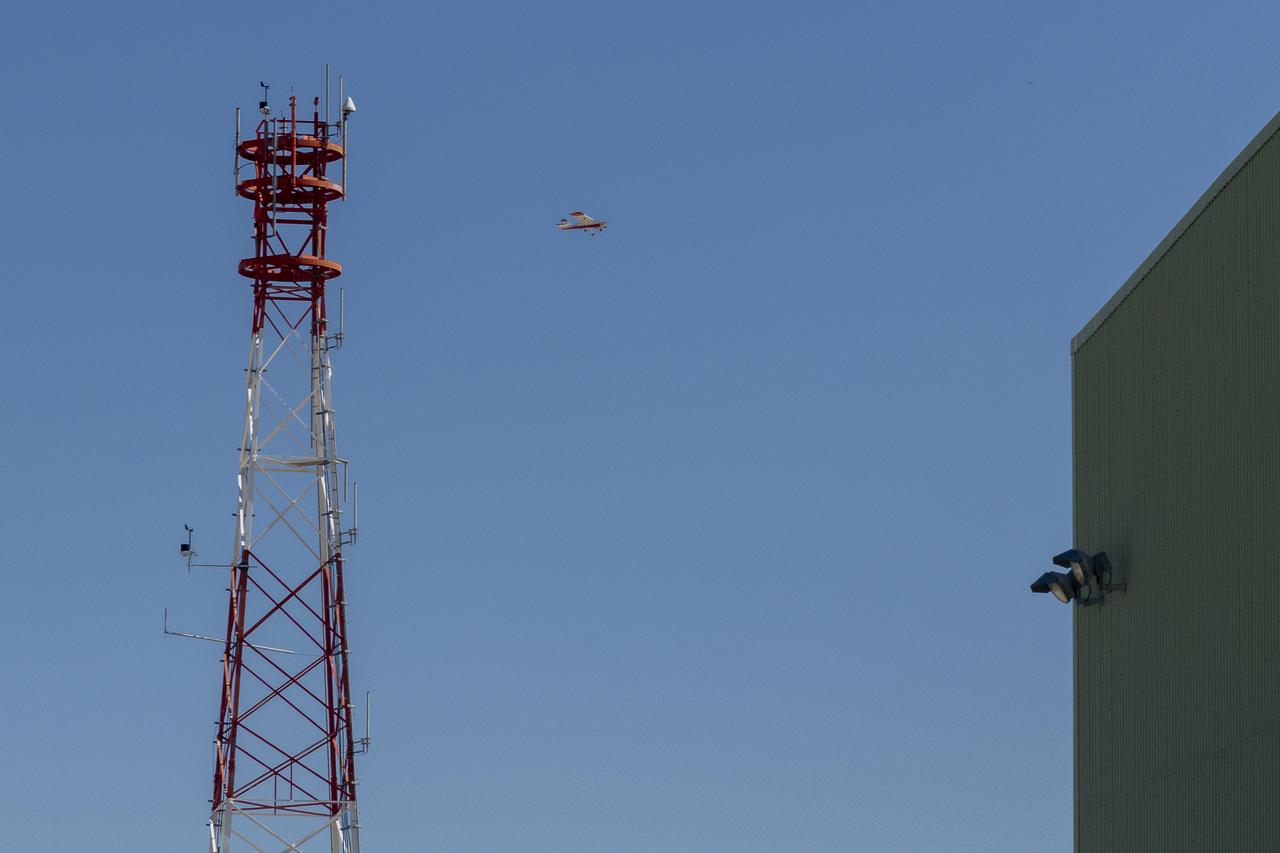
The DROID 2 (Dryden Remotely Operated Integrated Drone 2) flies by a 140-foot instrumented tower and the former space shuttle hangar at NASA's Armstrong Flight Research Center in Edwards, California, as part of the Advanced Exploration of Reliable Operation at Low Altitudes: Meteorology, Simulation, and Technology campaign. The focus was to study wind to provide data for safe takeoff and landing of future air taxis.
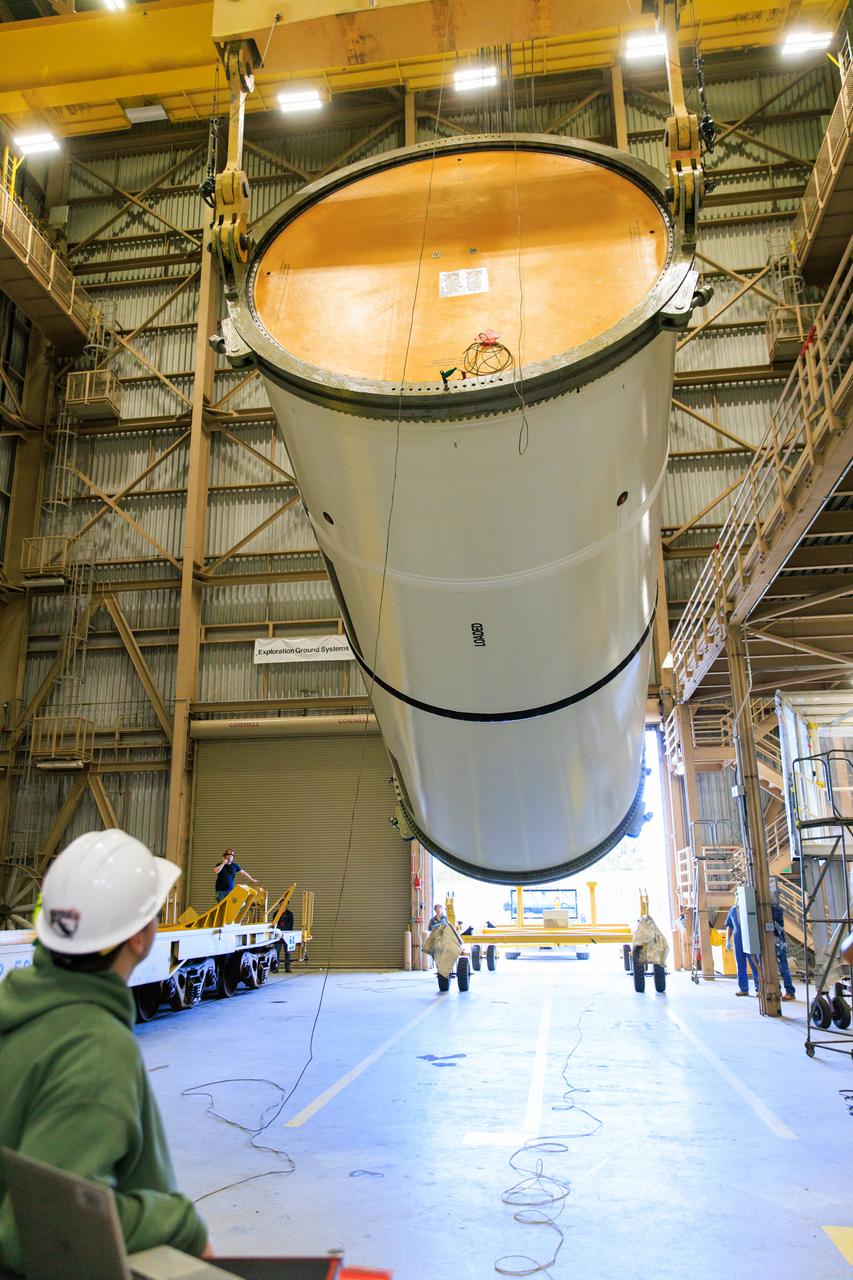
Following the successful propellant grain inspection of two segments of the solid rocket boosters for NASA’s Space Launch System inside the Rotation, Processing and Surge Facility at NASA’s Kennedy Space Center in Florida, crews on Thursday, Dec. 21, 2023, rotate and lift the segments from horizontal into a vertical position in preparation for the agency’s Artemis II launch campaign. The Artemis II mission will send four astronauts around the Moon as part of the agency’s effort to establish a long-term science and exploration presence at the Moon, and eventually Mars.
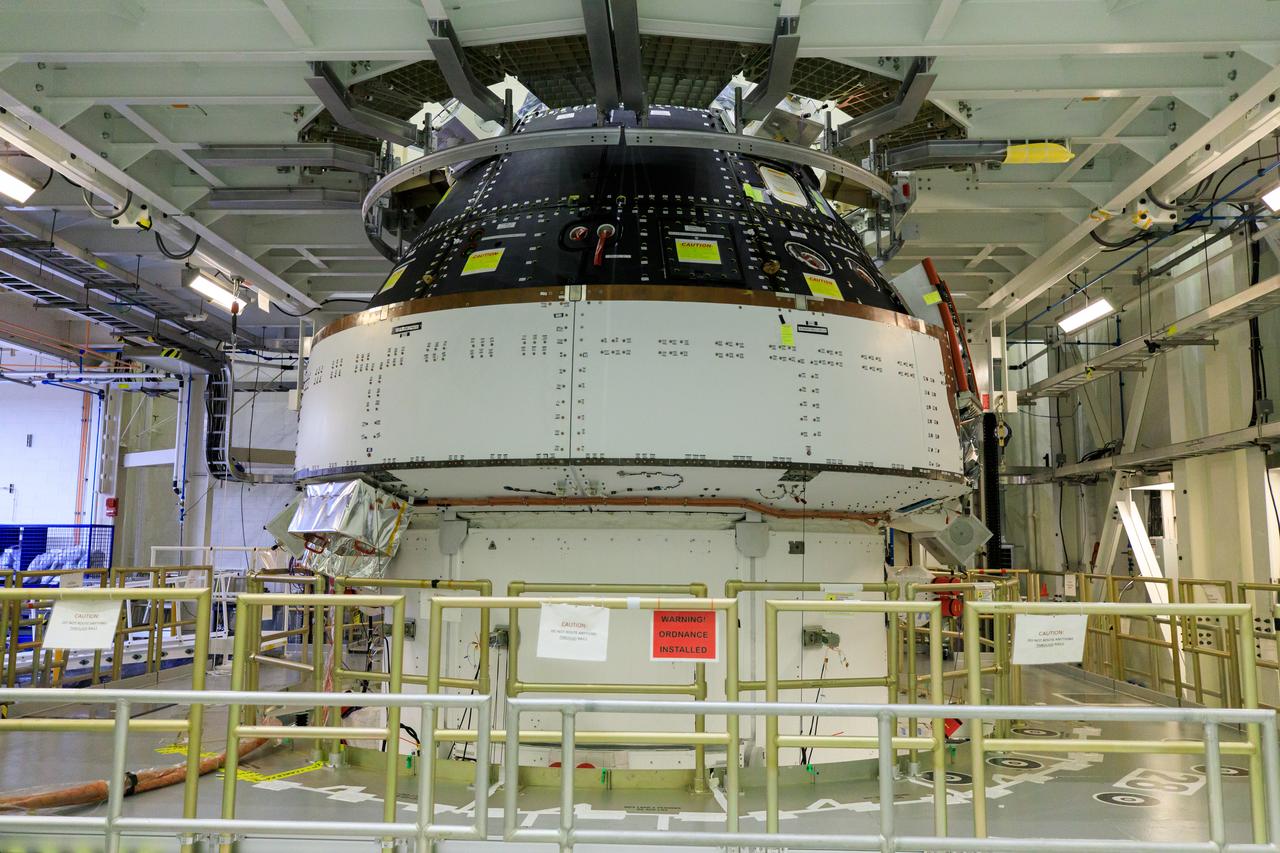
The Orion spacecraft for NASA’s Artemis II mission is photographed inside the Final Assembly and System Testing cell at the Neil Armstrong Operations and Checkout Building at NASA’s Kennedy Space Center in Florida on Friday, March 15, 2024. Four astronauts will venture around the Moon in the Orion spacecraft on Artemis II, the first crewed mission on NASA's path to establishing a long-term presence at the Moon for science and exploration through the Artemis campaign.
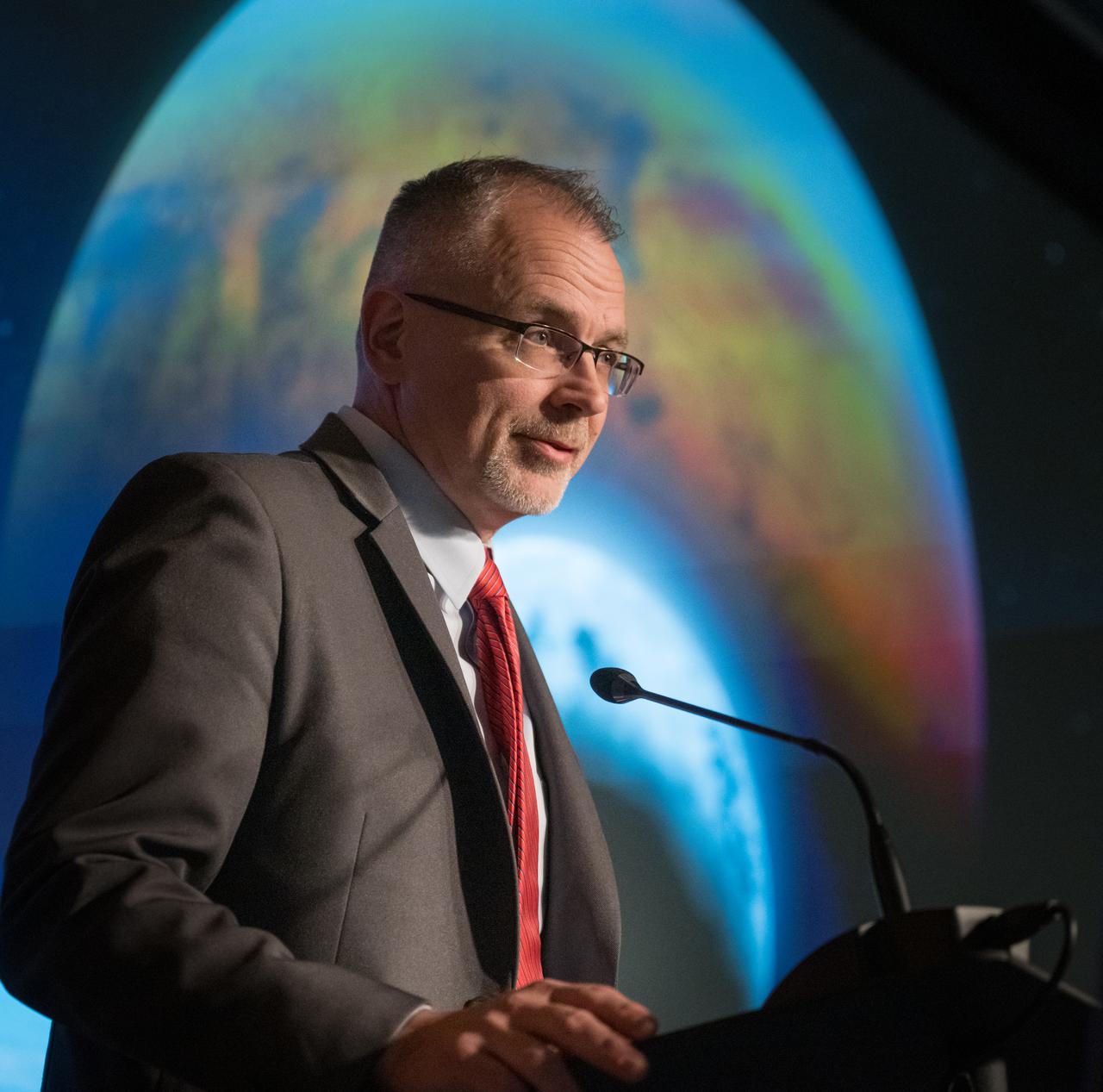
NASA Associate Administrator Jim Free discusses the agency’s goals during the annual State of NASA address, Monday, March 11, 2024, at the Mary W. Jackson NASA Headquarters Building in Washington. NASA leaders discussed plans for promoting U.S. leadership in space exploration, improving life on Earth through science and innovation, humanity’s return to the Moon under the Artemis campaign, aeronautics, and more. Photo Credit: (NASA/Bill Ingalls)
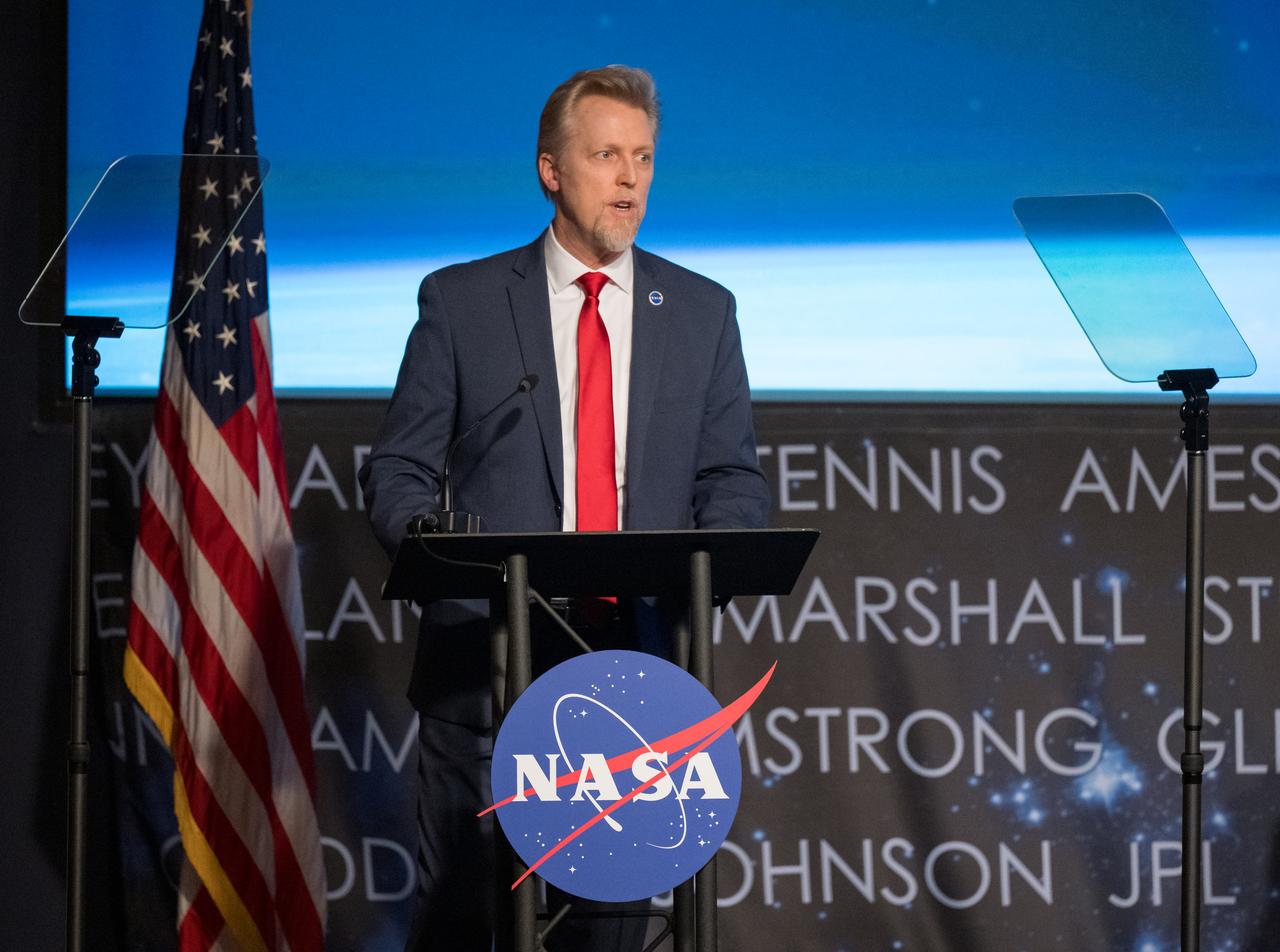
NASA Associate Administrator for Space Technology, Spuds Vogel, discusses the agency’s goals during the annual State of NASA address, Monday, March 11, 2024, at the Mary W. Jackson NASA Headquarters Building in Washington. NASA leaders discussed plans for promoting U.S. leadership in space exploration, improving life on Earth through science and innovation, humanity’s return to the Moon under the Artemis campaign, aeronautics, and more. Photo Credit: (NASA/Bill Ingalls)

NASA Associate Administrator for Space Operations, Ken Bowersox, discusses the agency’s goals during the annual State of NASA address, Monday, March 11, 2024, at the Mary W. Jackson NASA Headquarters Building in Washington. NASA leaders discussed plans for promoting U.S. leadership in space exploration, improving life on Earth through science and innovation, humanity’s return to the Moon under the Artemis campaign, aeronautics, and more. Photo Credit: (NASA/Bill Ingalls)
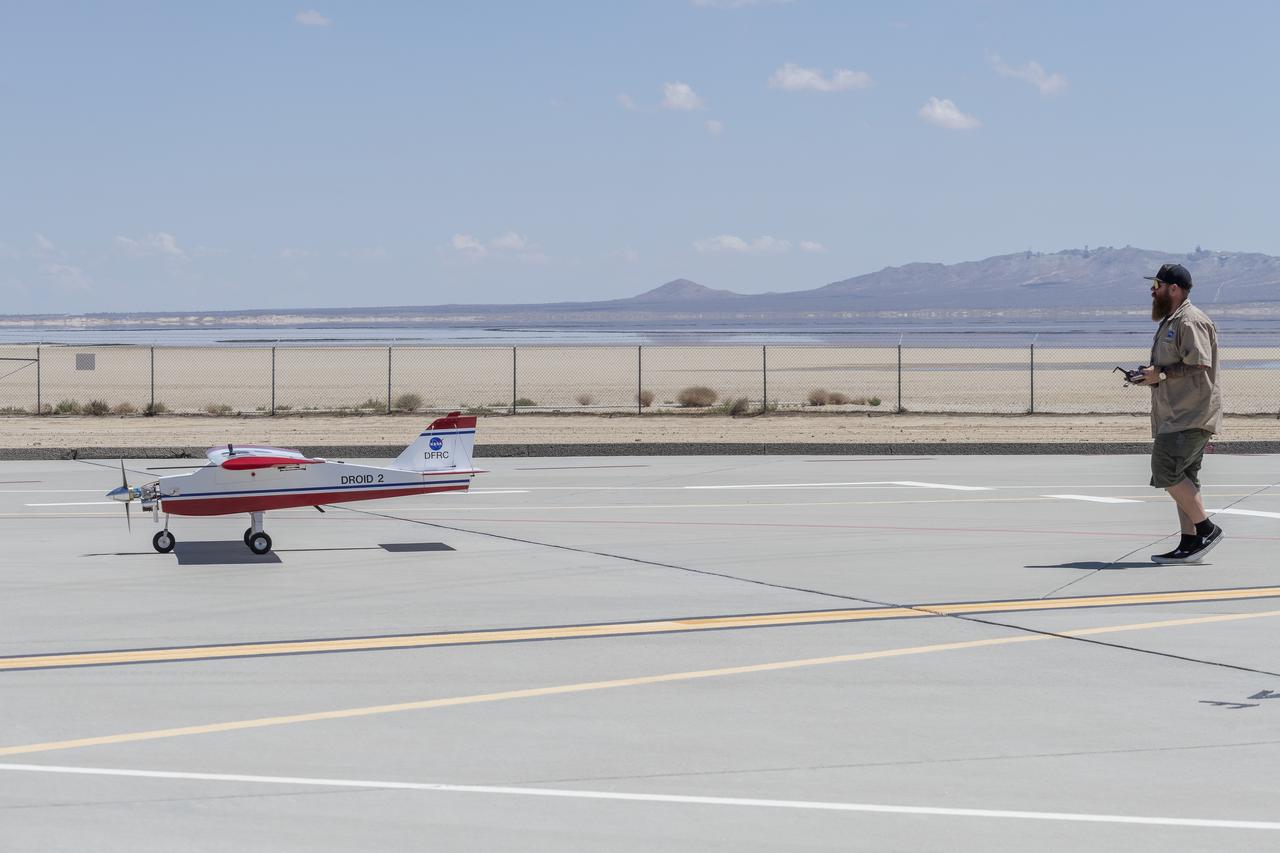
Justin Hall lands the DROID 2 (Dryden Remotely Operated Integrated Drone 2) aircraft at NASA's Armstrong Flight Research Center in Edwards, California, as part of the Advanced Exploration of Reliable Operation at Low Altitudes: Meteorology, Simulation, and Technology campaign. The focus was to study wind to provide data for safe takeoff and landing of future air taxis.

Robert "Red" Jensen lands the DROID 2 (Dryden Remotely Operated Integrated Drone 2) aircraft at NASA's Armstrong Flight Research Center in Edwards, California, as part of the Advanced Exploration of Reliable Operation at Low Altitudes: Meteorology, Simulation, and Technology campaign. The focus was to study wind to provide data for safe takeoff and landing of future air taxis.
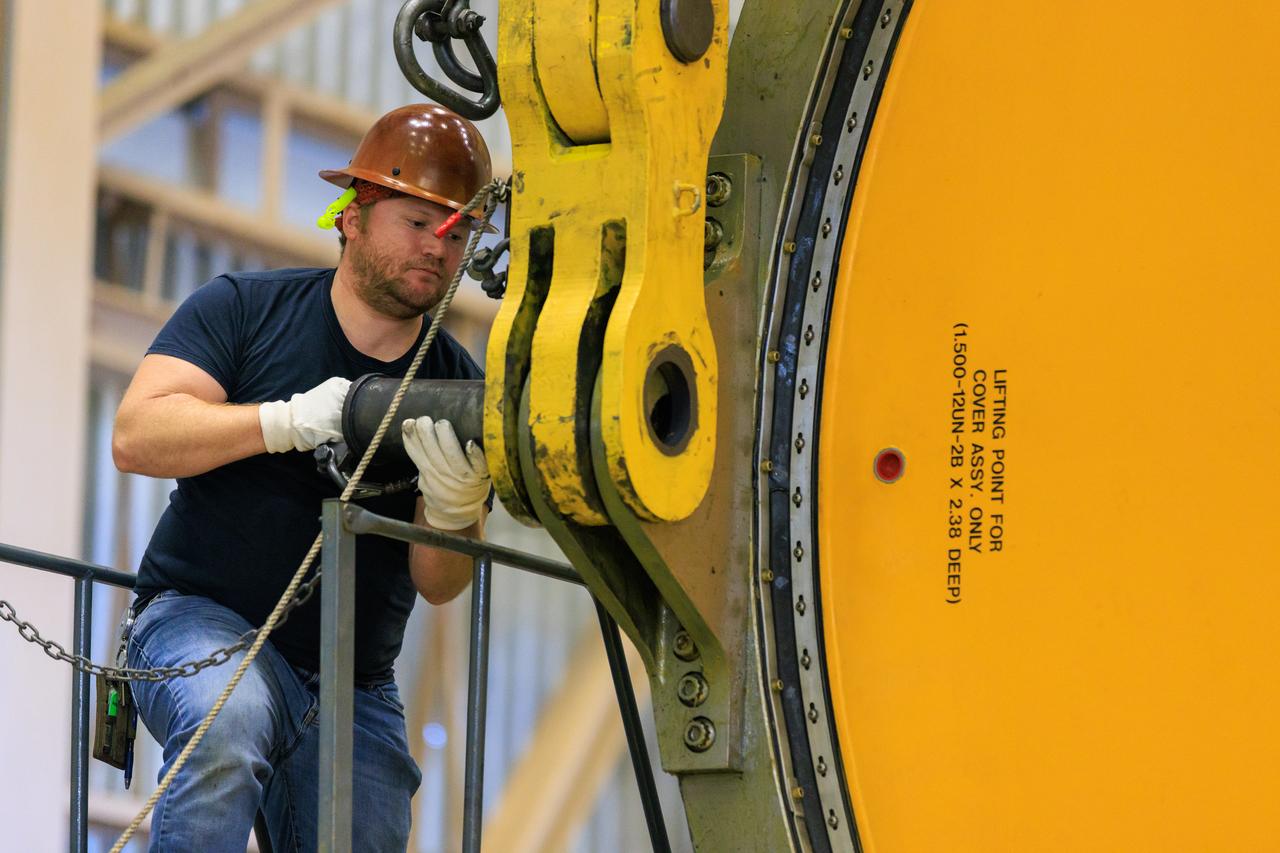
Following the successful propellant grain inspection of two segments of the solid rocket boosters for NASA’s Space Launch System inside the Rotation, Processing and Surge Facility at NASA’s Kennedy Space Center in Florida, crews on Thursday, Dec. 21, 2023, rotate and lift the segments from horizontal into a vertical position in preparation for the agency’s Artemis II launch campaign. The Artemis II mission will send four astronauts around the Moon as part of the agency’s effort to establish a long-term science and exploration presence at the Moon, and eventually Mars.