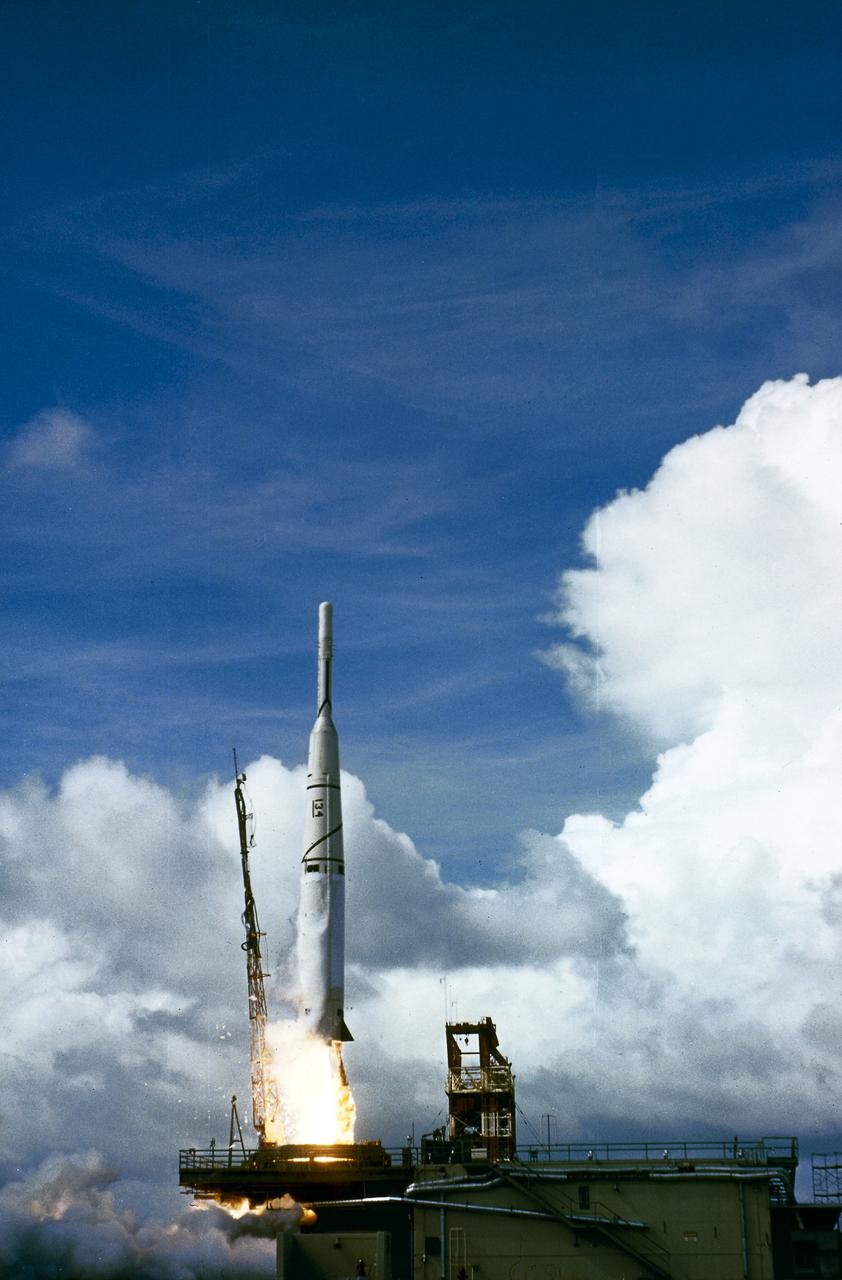
The launch of Thor/Able 3 launch vehicle on August 6, 1959, from the Atlantic Missile Range. The payload was Explorer VI for meteorology study.
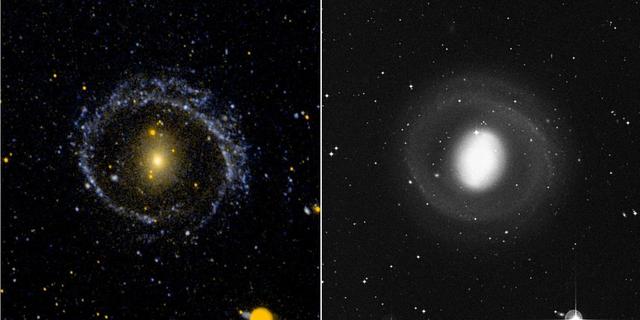
This ultraviolet image left and visual image right from NASA Galaxy Evolution Explorer is of the barred ring galaxy NGC 1291. The VIS image is dominated by the inner disk and bar. The UV image is dominated by the low surface brightness outer arms.
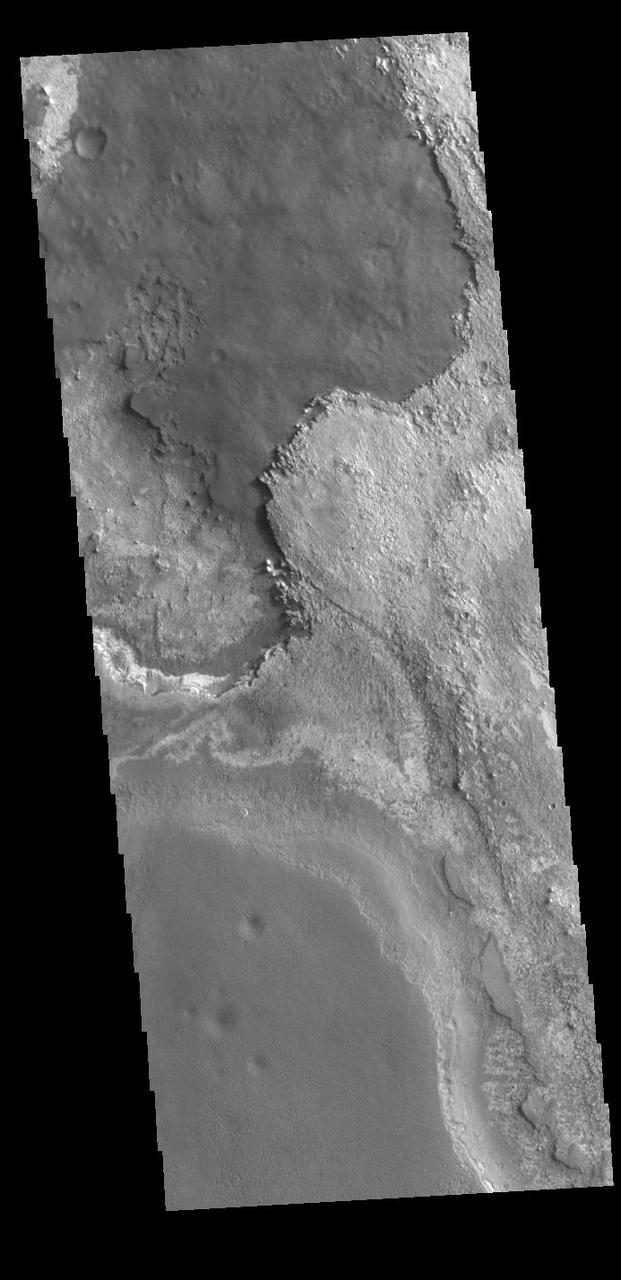
This VIS image shows layering of surface materials in Meridiani Planum. TES (Thermal Emission Spectrometer) initially detected hematite in a surface layer, which was confimed by THEMIS (THermal EMision Imaging System). These findings supported a water rich origin of the hematite and led to the selection of the site for the Opportunity MER (Mars Exploration Rover). Orbit Number: 87337 Latitude: 1.58599 Longitude: 0.436954 Instrument: VIS Captured: 2021-08-22 15:12 https://photojournal.jpl.nasa.gov/catalog/PIA25221
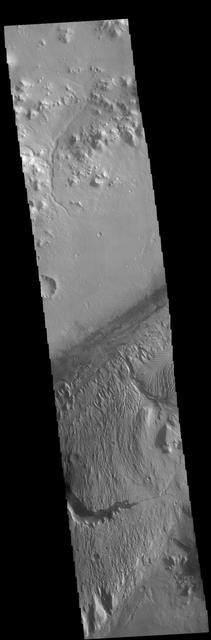
This VIS image shows much of the same location as yesterday's image. Gale Crater is the home of the Curiosity Rover. The rover landed in August of 2012 and has been exploring the crater for the past 6 Earth years (3 Mars years). The goal of the mission is to climb onto the layered deposit in the center of the crater to assess it's possible origins. Orbit Number: 71424 Latitude: -4.66294 Longitude: 137.356 Instrument: VIS Captured: 2018-01-20 04:52 https://photojournal.jpl.nasa.gov/catalog/PIA22393
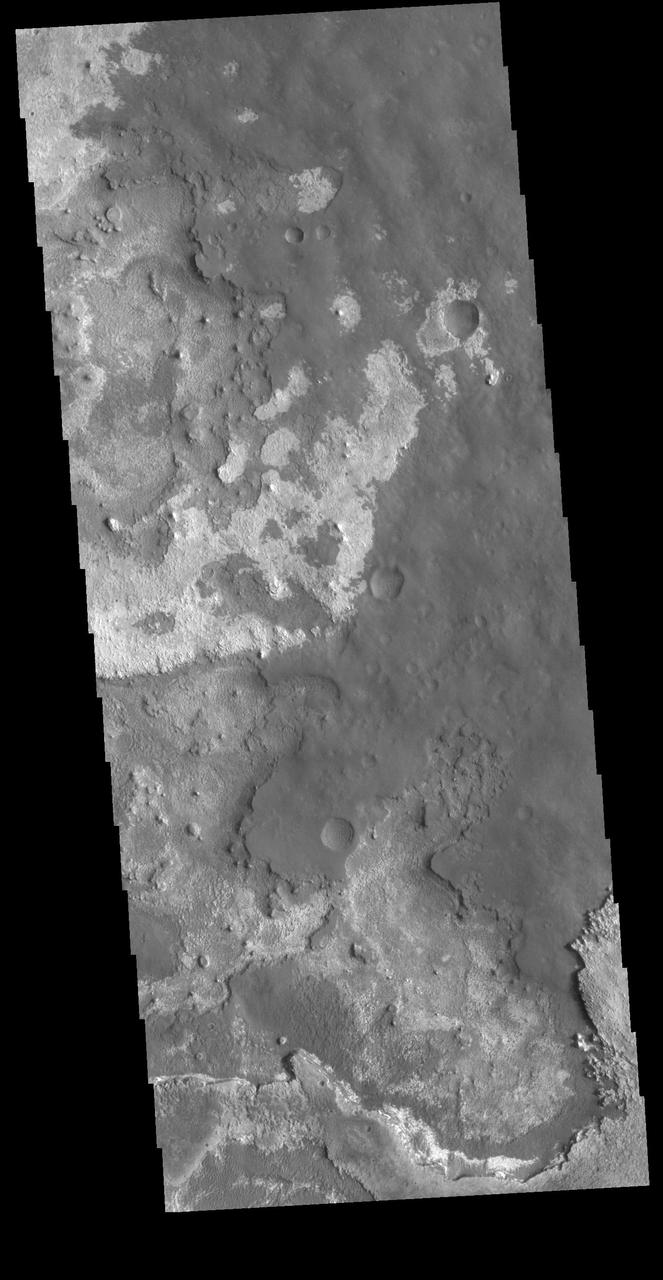
This VIS image shows layering of surface materials in Meridiani Planum. TES (Thermal Emission Spectrometer) initially detected hematite in a surface layer, which was confimed by THEMIS (THrmal EMision Imaging System). These findings supported a water rich origin of the hematite and led to the selection of the site for the Opportunity MER (Mars Exploration Rover). Orbit Number: 80848 Latitude: 1.85739 Longitude: 0.251223 Instrument: VIS Captured: 2020-03-06 08:13 https://photojournal.jpl.nasa.gov/catalog/PIA23930
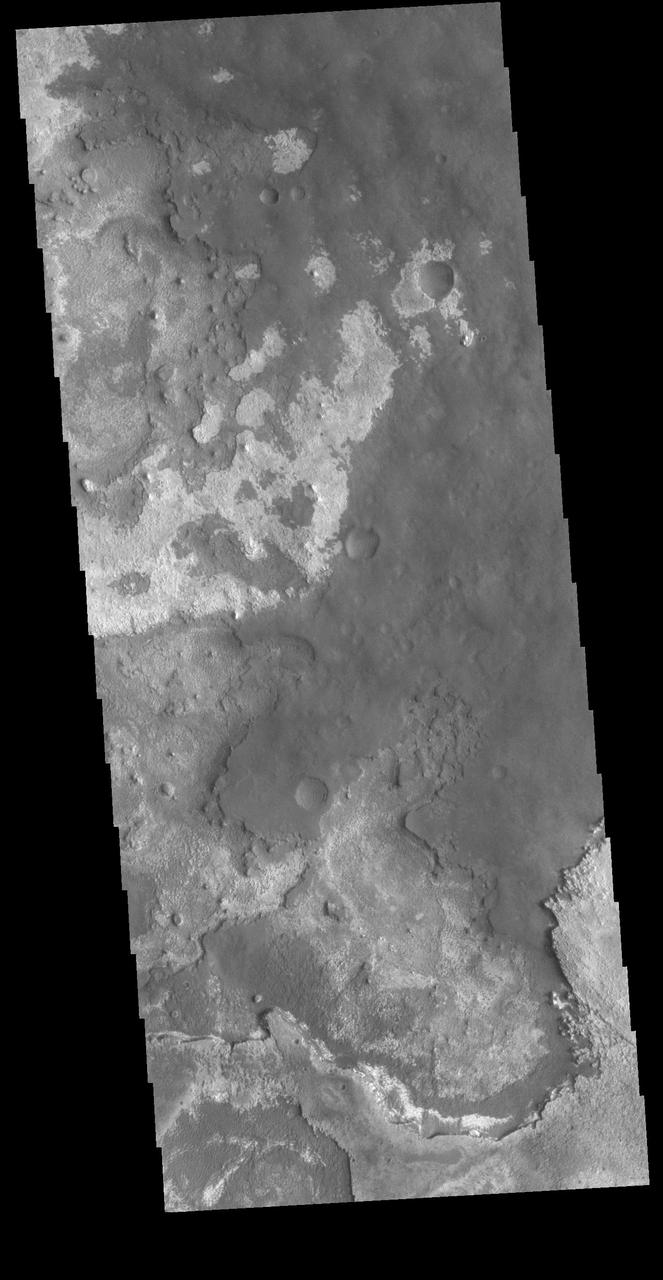
This VIS image shows layering of surface materials in Meridiani Planum. TES (Thermal Emission Spectrometer) initially detected hematite in a surface layer, which was confirmed by THEMIS (THrmal EMision Imaging System). These findings supported a water rich origin of the hematite and led to the selection of the site for the Opportunity MER (Mars Exploration Rover). The TES instrument was located on the Mars Global Surveyor spacecraft. THEMIS is onboard the Mars 2001 Odyssey spacecraft. Orbit Number: 89658 Latitude: 1.83323 Longitude: 0.267191 Instrument: VIS Captured: 2022-03-01 17:54 https://photojournal.jpl.nasa.gov/catalog/PIA25457
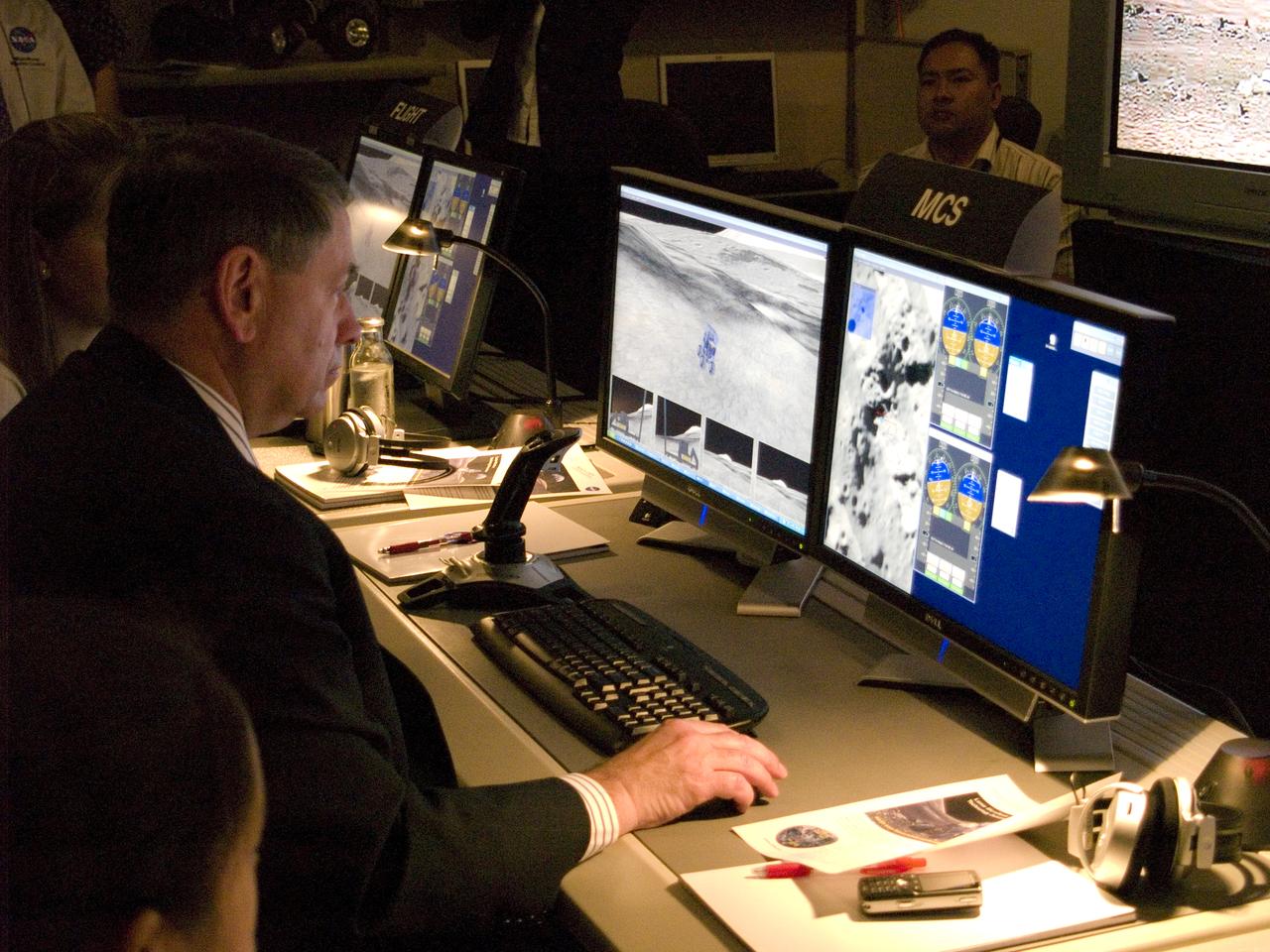
Spaceward Bound Program in Atacama Desert; shown here is a realtime webcast from Yungay, Chile vis satellite involving NASA Scientists and seven NASA Explorer school teachers. Spaceward Bound Program in Atacama Desert; shown here is a realtime webcast from Yungay, Chile vis satellite involving NASA Scientists and seven NASA Explorer school teachers. On the Ames end we find the Girl Scouts Space cookines robotic team. The robot nicknamed Zoe is looking for life in extreme environments in preparation for what might be encounter on Mars. On the Ames end we find the Girl Csouts Space cookines robotic team. The robot nicknamed Zoe is looking for life in extreme environments in preparation for what might be encounter on Mars. see full text on the NASA-Ames News - Research # 04-91AR Center Director works with 'SpaceCookie' sending commands to Zoe.
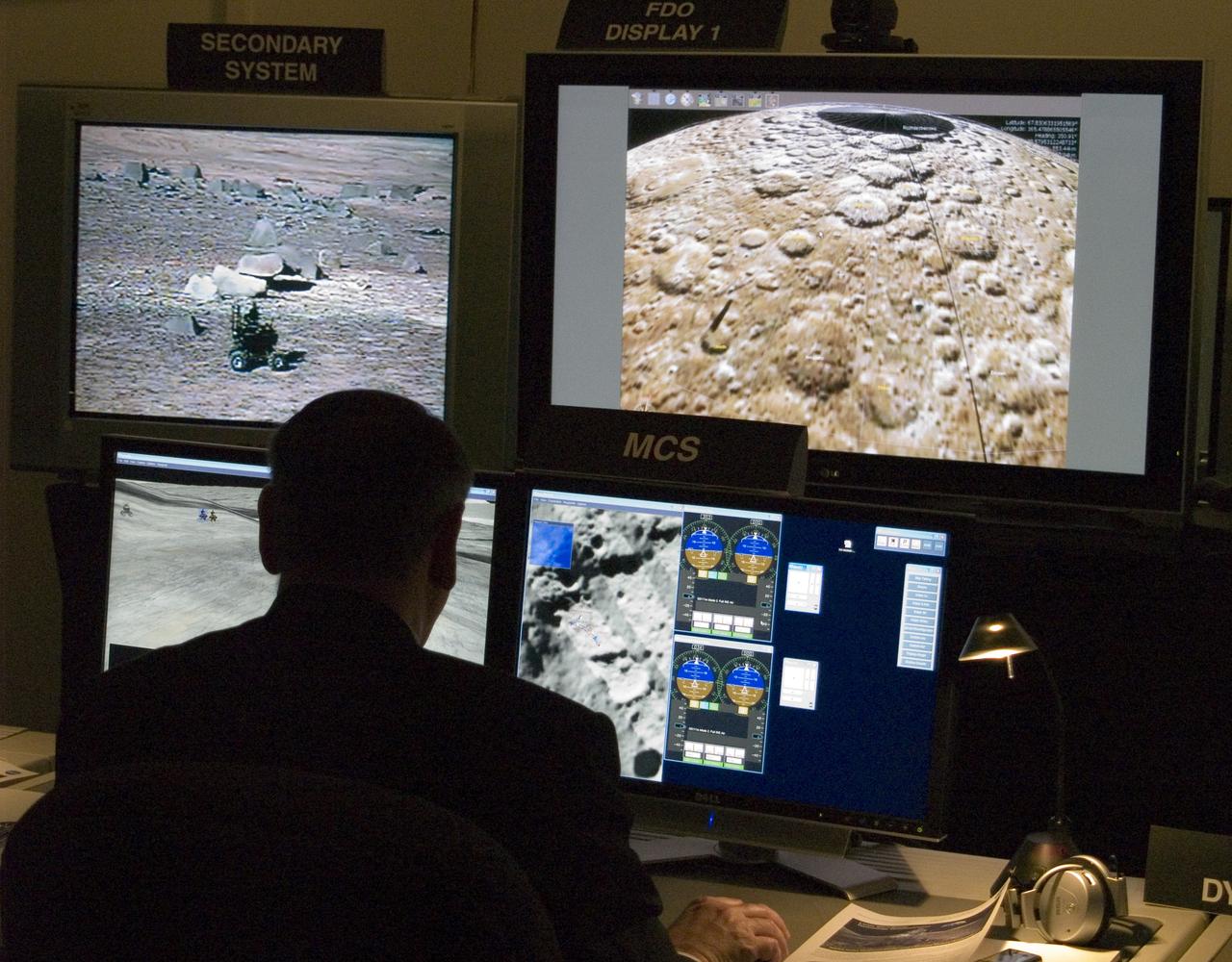
Spaceward Bound Program in Atacama Desert; shown here is a realtime webcast from Yungay, Chile vis satellite involving NASA Scientists and seven NASA Explorer school teachers. Spaceward Bound Program in Atacama Desert; shown here is a realtime webcast from Yungay, Chile vis satellite involving NASA Scientists and seven NASA Explorer school teachers. On the Ames end we find the Girl Scouts Space cookines robotic team. The robot nicknamed Zoe is looking for life in extreme environments in preparation for what might be encounter on Mars. On the Ames end we find the Girl Csouts Space cookines robotic team. The robot nicknamed Zoe is looking for life in extreme environments in preparation for what might be encounter on Mars. see full text on the NASA-Ames News - Research # 04-91AR Center Director works with 'SpaceCookie' sending commands to Zoe.
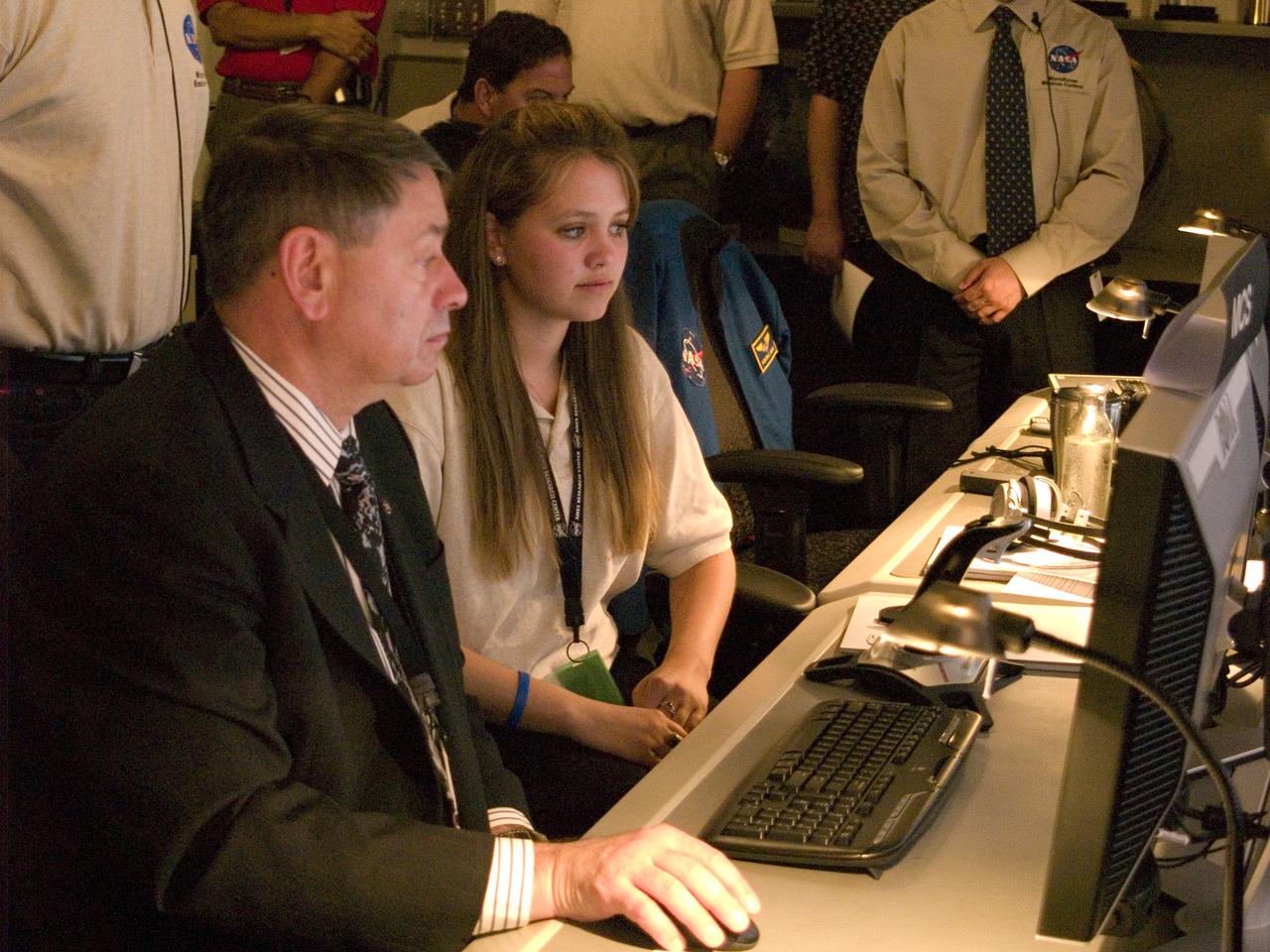
Spaceward Bound Program in Atacama Desert; shown here is a realtime webcast from Yungay, Chile vis satellite involving NASA Scientists and seven NASA Explorer school teachers. Spaceward Bound Program in Atacama Desert; shown here is a realtime webcast from Yungay, Chile vis satellite involving NASA Scientists and seven NASA Explorer school teachers. On the Ames end we find the Girl Scouts Space cookines robotic team. The robot nicknamed Zoe is looking for life in extreme environments in preparation for what might be encounter on Mars. On the Ames end we find the Girl Csouts Space cookines robotic team. The robot nicknamed Zoe is looking for life in extreme environments in preparation for what might be encounter on Mars. see full text on the NASA-Ames News - Research # 04-91AR Center Director works with 'SpaceCookie' sending commands to Zoe.
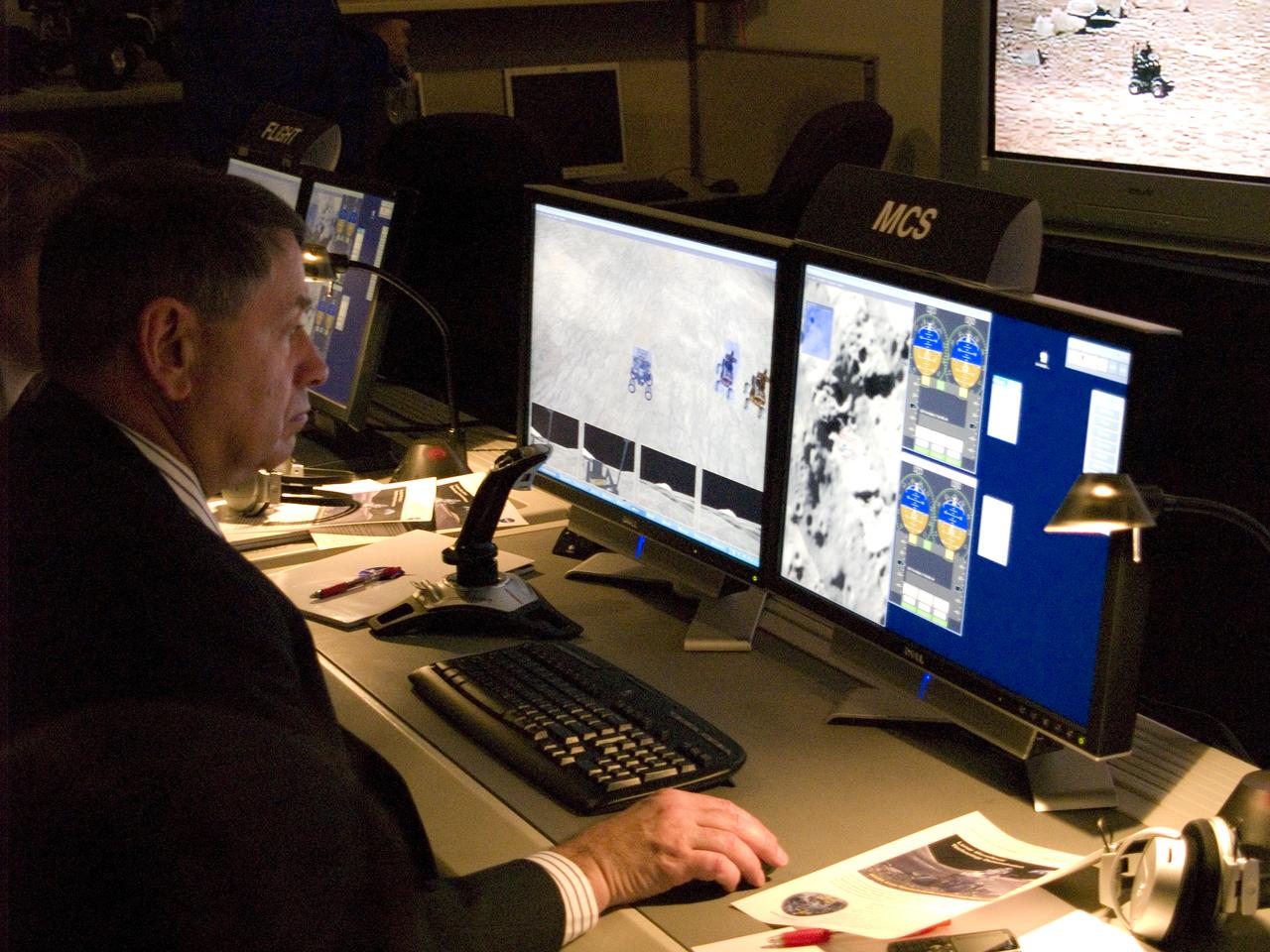
Spaceward Bound Program in Atacama Desert; shown here is a realtime webcast from Yungay, Chile vis satellite involving NASA Scientists and seven NASA Explorer school teachers. Spaceward Bound Program in Atacama Desert; shown here is a realtime webcast from Yungay, Chile vis satellite involving NASA Scientists and seven NASA Explorer school teachers. On the Ames end we find the Girl Scouts Space cookines robotic team. The robot nicknamed Zoe is looking for life in extreme environments in preparation for what might be encounter on Mars. On the Ames end we find the Girl Csouts Space cookines robotic team. The robot nicknamed Zoe is looking for life in extreme environments in preparation for what might be encounter on Mars. see full text on the NASA-Ames News - Research # 04-91AR Center Director works with 'SpaceCookie' sending commands to Zoe.
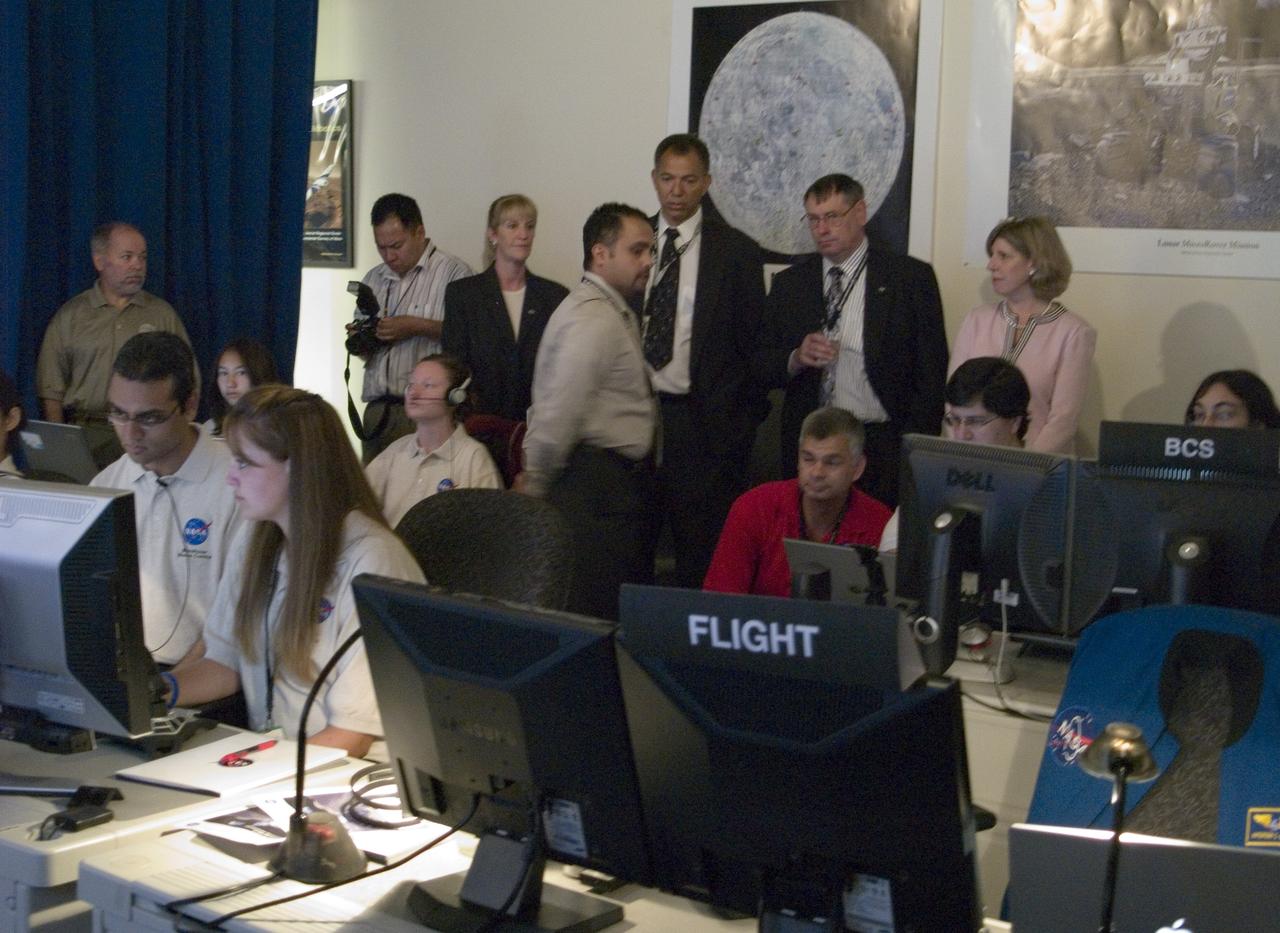
Spaceward Bound Program in Atacama Desert; shown here is a realtime webcast from Yungay, Chile vis satellite involving NASA Scientists and seven NASA Explorer school teachers. On the Ames end we find the Girl Scouts Space cookines robotic team. The robot nicknamed Zoe is looking for life in extreme environments in preparation for what might be encounter on Mars. see full text on the NASA-Ames News - Research # 04-91AR
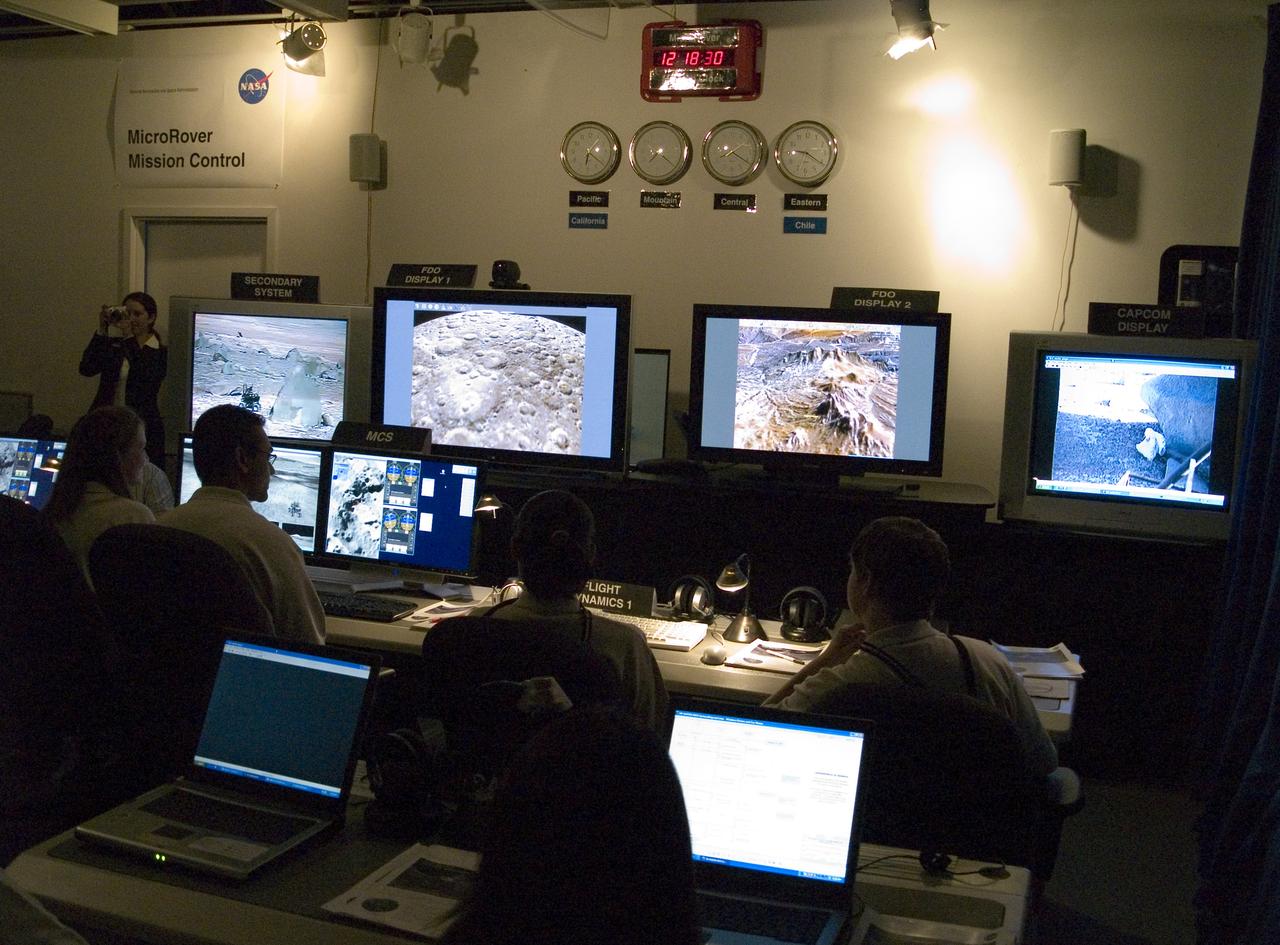
Spaceward Bound Program in Atacama Desert; shown here is a realtime webcast from Yungay, Chile vis satellite involving NASA Scientists and seven NASA Explorer school teachers. On the Ames end we find the Girl Scouts Space cookines robotic team. The robot nicknamed Zoe is looking for life in extreme environments in preparation for what might be encounter on Mars. see full text on the NASA-Ames News - Research # 04-91AR
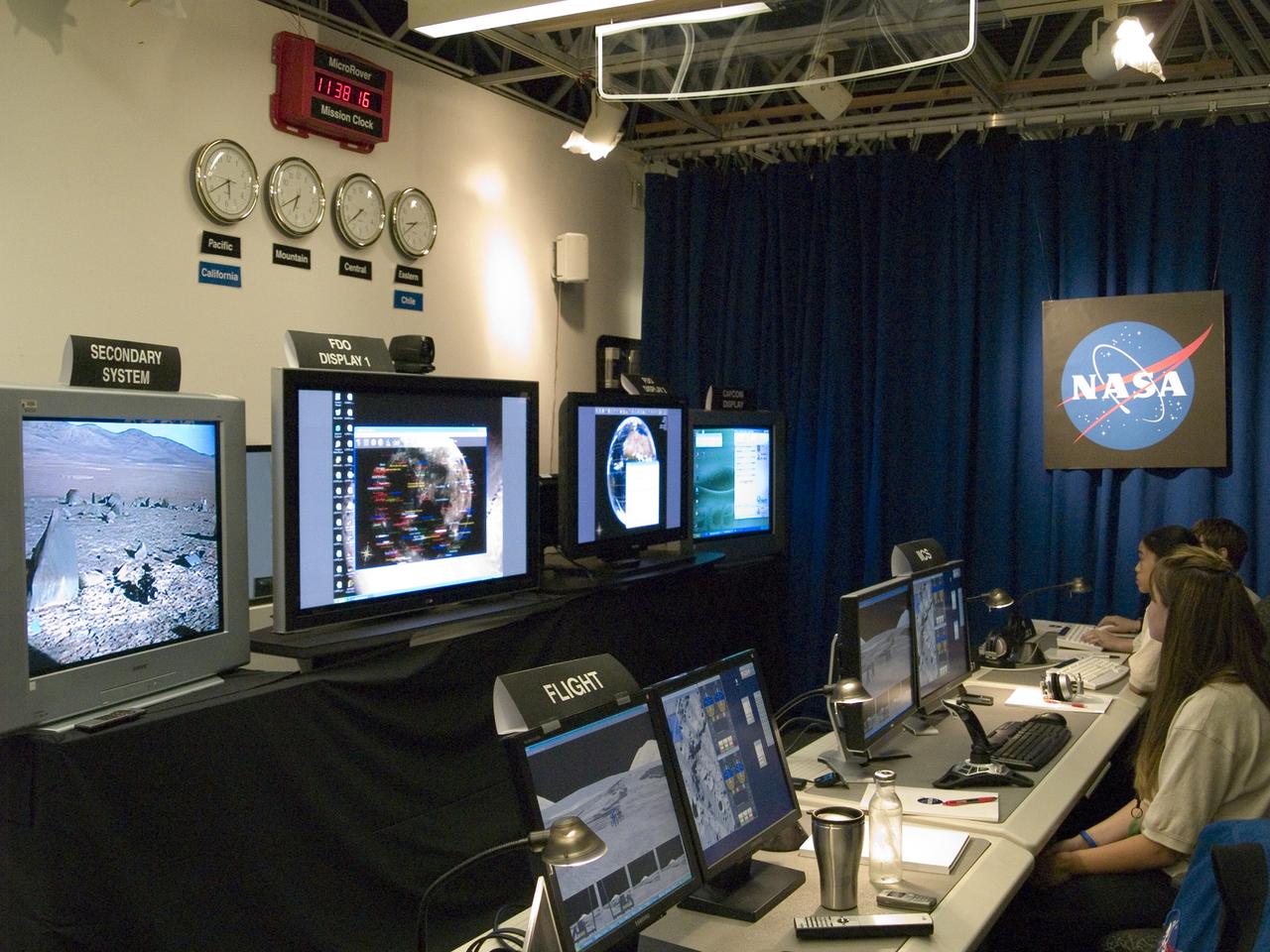
Spaceward Bound Program in Atacama Desert; shown here is a realtime webcast from Yungay, Chile vis satellite involving NASA Scientists and seven NASA Explorer school teachers. On the Ames end we find the Girl Scouts Space cookines robotic team. The robot nicknamed Zoe is looking for life in extreme environments in preparation for what might be encounter on Mars. see full text on the NASA-Ames News - Research # 04-91AR
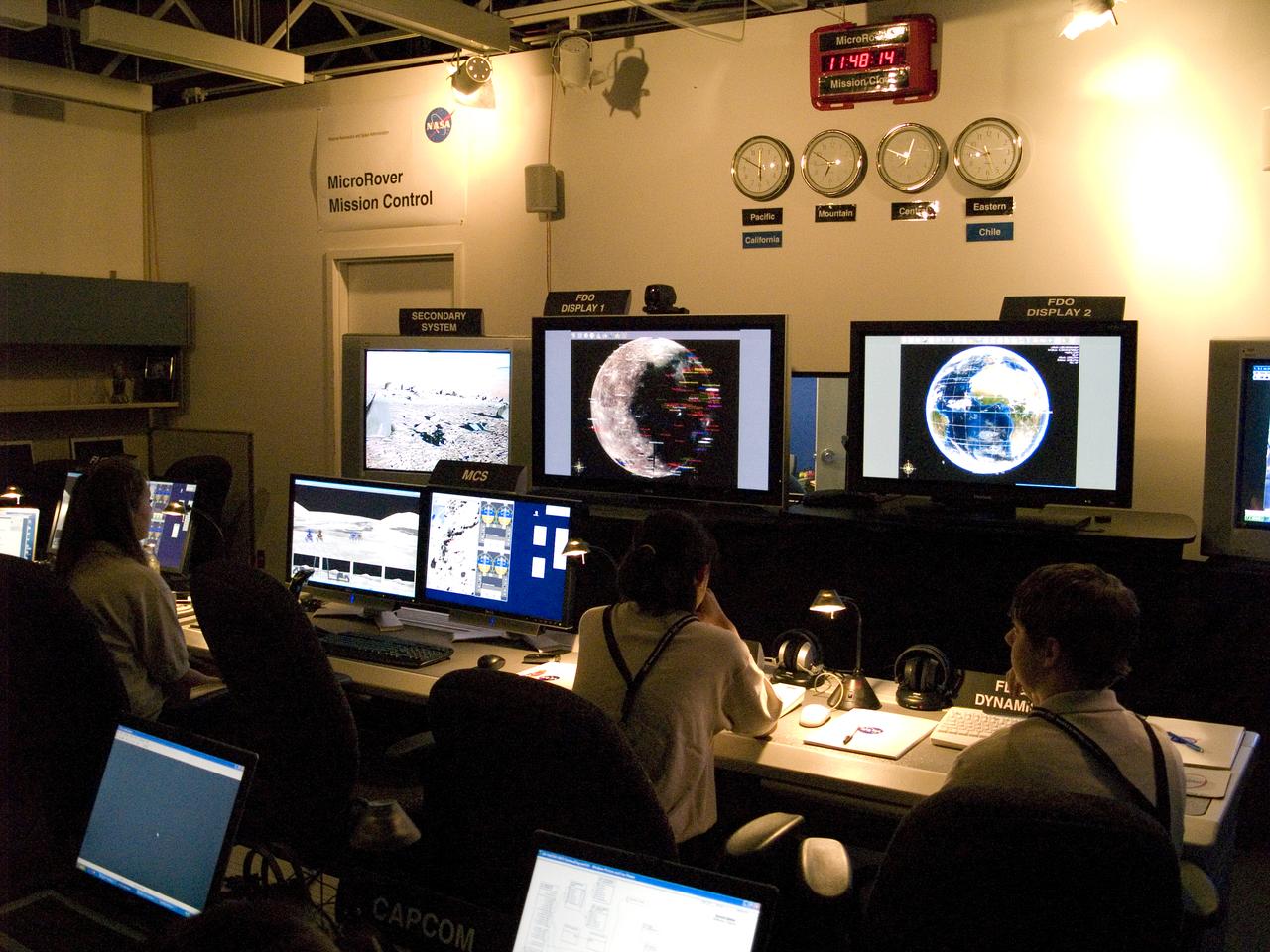
Spaceward Bound Program in Atacama Desert; shown here is a realtime webcast from Yungay, Chile vis satellite involving NASA Scientists and seven NASA Explorer school teachers. On the Ames end we find the Girl Scouts Space cookines robotic team. The robot nicknamed Zoe is looking for life in extreme environments in preparation for what might be encounter on Mars. see full text on the NASA-Ames News - Research # 04-91AR
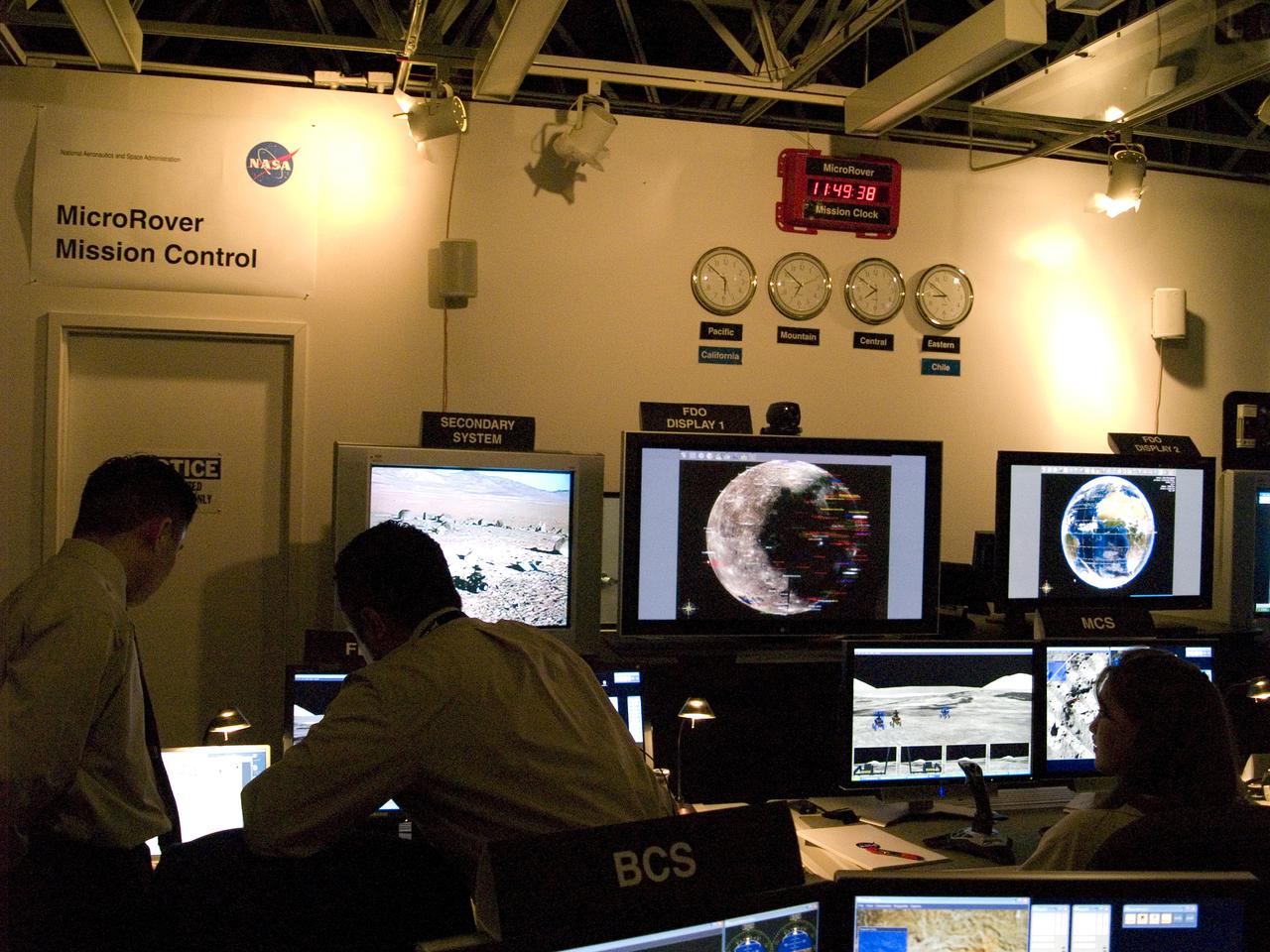
Spaceward Bound Program in Atacama Desert; shown here is a realtime webcast from Yungay, Chile vis satellite involving NASA Scientists and seven NASA Explorer school teachers. On the Ames end we find the Girl Scouts Space cookines robotic team. The robot nicknamed Zoe is looking for life in extreme environments in preparation for what might be encounter on Mars. see full text on the NASA-Ames News - Research # 04-91AR
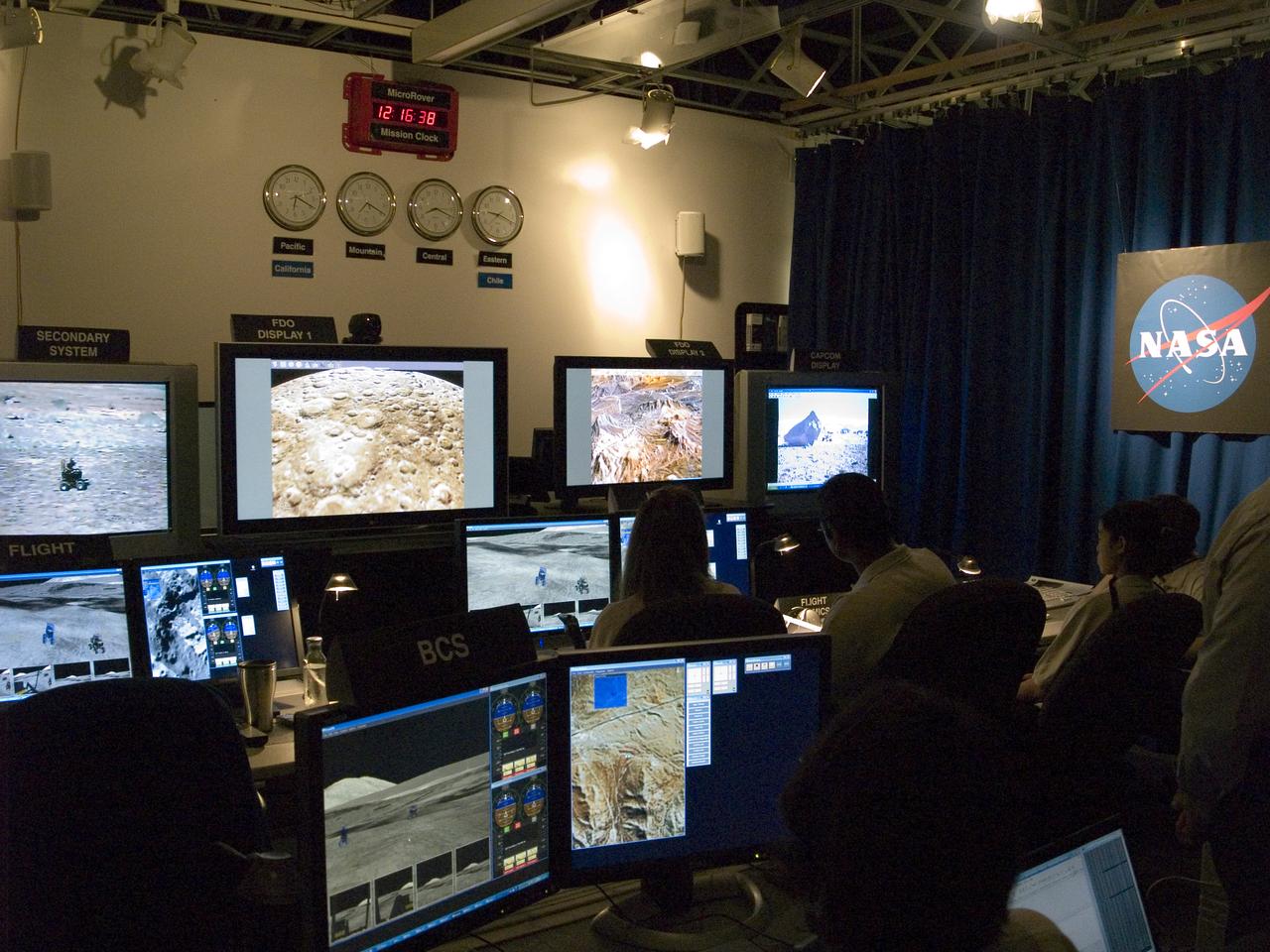
Spaceward Bound Program in Atacama Desert; shown here is a realtime webcast from Yungay, Chile vis satellite involving NASA Scientists and seven NASA Explorer school teachers. On the Ames end we find the Girl Scouts Space cookines robotic team. The robot nicknamed Zoe is looking for life in extreme environments in preparation for what might be encounter on Mars. see full text on the NASA-Ames News - Research # 04-91AR
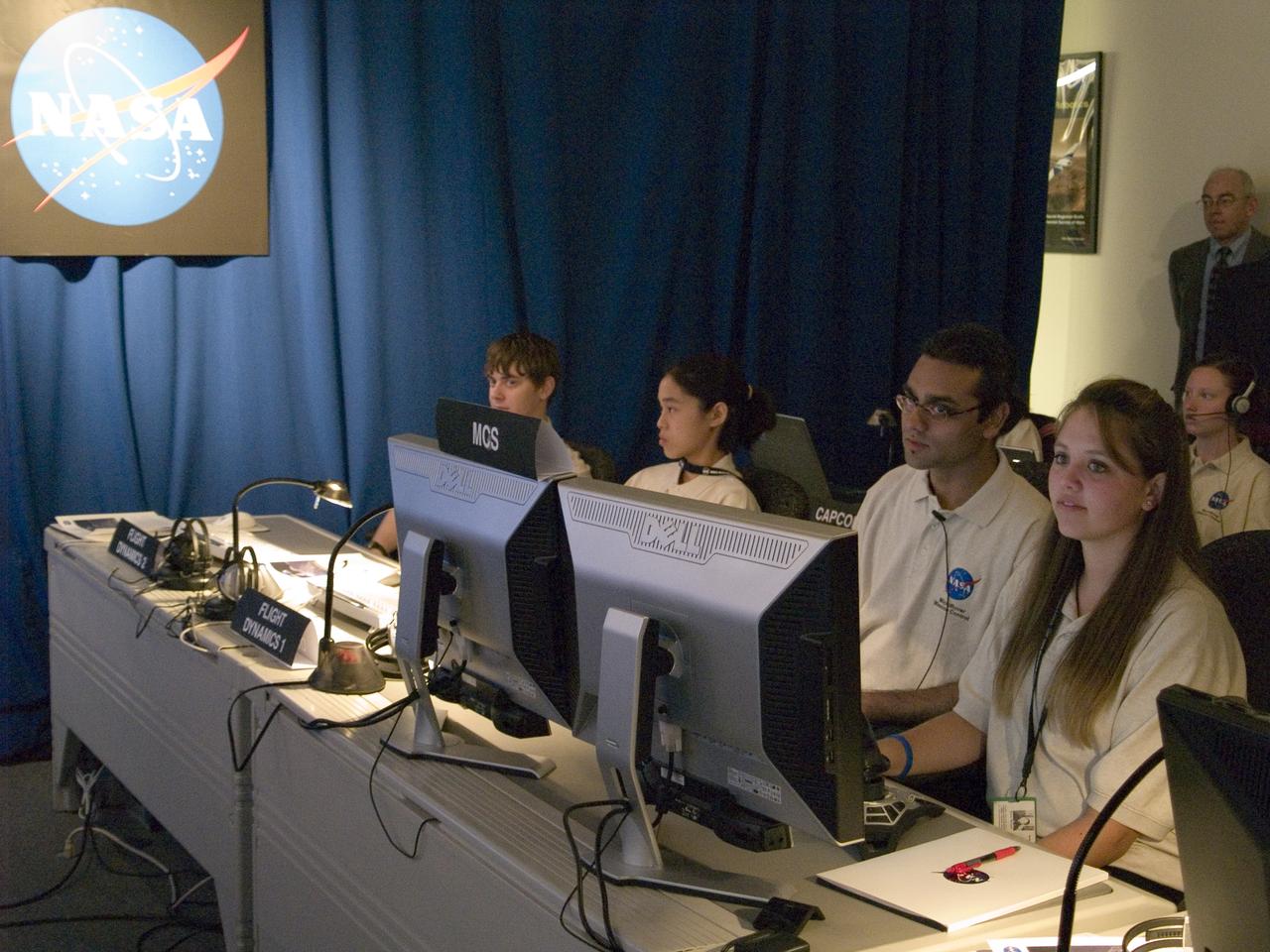
Spaceward Bound Program in Atacama Desert; shown here is a realtime webcast from Yungay, Chile vis satellite involving NASA Scientists and seven NASA Explorer school teachers. On the Ames end we find the Girl Scouts Space cookines robotic team. The robot nicknamed Zoe is looking for life in extreme environments in preparation for what might be encounter on Mars. see full text on the NASA-Ames News - Research # 04-91AR
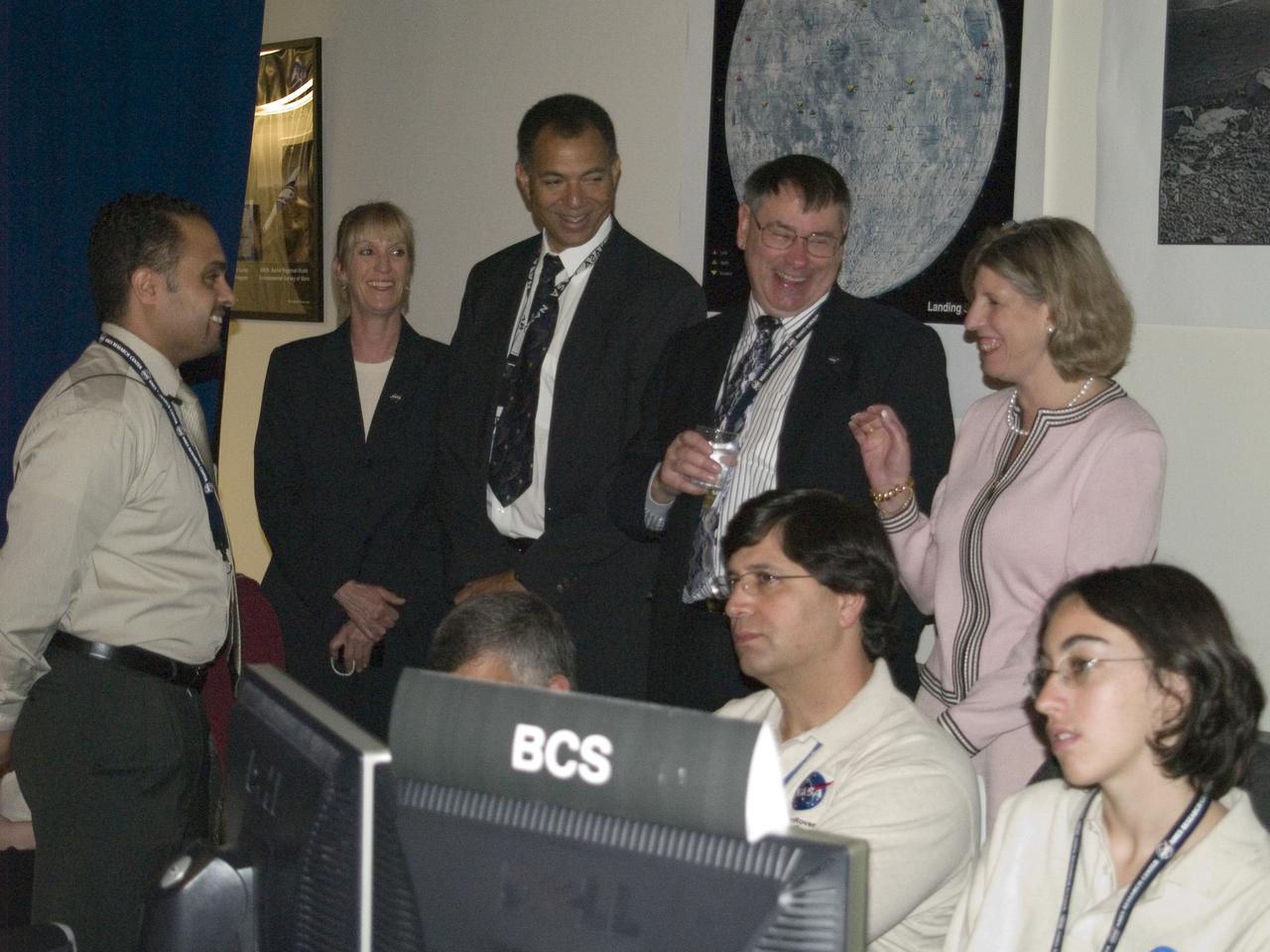
Spaceward Bound Program in Atacama Desert; shown here is a realtime webcast from Yungay, Chile vis satellite involving NASA Scientists and seven NASA Explorer school teachers. On the Ames end we find the Girl Scouts Space cookines robotic team. The robot nicknamed Zoe is looking for life in extreme environments in preparation for what might be encounter on Mars. (back row l-r) Yvonne Clearwater, Ames Education Division, Donald James, Ames Education Division Chief, Pete Worden, Ames Center Director, Angela Diaz, Ames Director of Strategic Communications) see full text on the NASA-Ames News - Research # 04-91AR
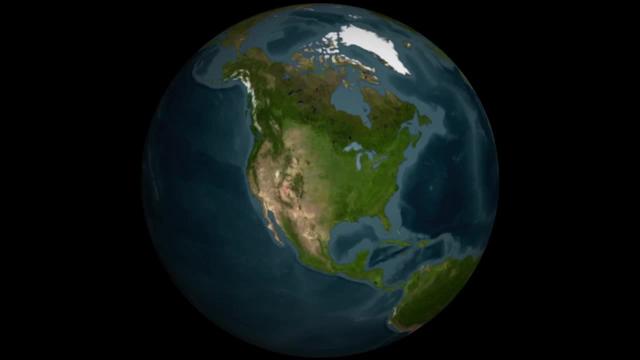
This is a visualizations of ozone concentrations over the southern hemisphere. Minimum concentration of ozone in the southern hemisphere for each year from 1979-2013 (there is no data from 1995). Each image is the day of the year with the lowest concentration of ozone. A graph of the lowest ozone amount for each year is shown. Read more/download file: <a href="http://svs.gsfc.nasa.gov/vis/a010000/a011600/a011648/" rel="nofollow">svs.gsfc.nasa.gov/vis/a010000/a011600/a011648/</a> NASA's Goddard Space Flight Center <b><a href="http://www.nasa.gov/audience/formedia/features/MP_Photo_Guidelines.html" rel="nofollow">NASA image use policy.</a></b> <b><a href="http://www.nasa.gov/centers/goddard/home/index.html" rel="nofollow">NASA Goddard Space Flight Center</a></b> enables NASA’s mission through four scientific endeavors: Earth Science, Heliophysics, Solar System Exploration, and Astrophysics. Goddard plays a leading role in NASA’s accomplishments by contributing compelling scientific knowledge to advance the Agency’s mission. <b>Follow us on <a href="http://twitter.com/NASAGoddardPix" rel="nofollow">Twitter</a></b> <b>Like us on <a href="http://www.facebook.com/pages/Greenbelt-MD/NASA-Goddard/395013845897?ref=tsd" rel="nofollow">Facebook</a></b> <b>Find us on <a href="http://instagram.com/nasagoddard?vm=grid" rel="nofollow">Instagram</a></b>

All this week, the THEMIS Image of the Day is following on the real Mars the path taken by fictional astronaut Mark Watney, stranded on the Red Planet in the book and movie, The Martian. Today's image shows a part of the flat terrain of northern Meridiani Planum. This area lies about 300 kilometers (190 miles) north of where Mars rover Opportunity is currently exploring the rim rocks of Endeavour Crater. Meridiani is a large expanse of sedimentary rock, mostly flat-lying basalt sandstone with hematite nodules ("blueberries") embedded in it. Farther south from this scene, Opportunity has examined several craters like these that expose deeper rock layers. They show that the Meridiani sandstone is made of dune sands that were soaked in sulfur-rich water. Flat terrain may make for dull scenery, but the driving is easy. This area is where astronaut Mark Watney turns his vehicle east toward Schiaparelli Crater. Before arriving here, he was driving south to get out from under a dust storm that threatened to shut off power to the vehicle's solar cells. At this point he has journeyed about 2,300 kilometers (1,400 miles) from Acidalia. Orbit Number: 6304 Latitude: 2.51711 Longitude: 355.154 Instrument: VIS Captured: 2003-05-17 13:18 http://photojournal.jpl.nasa.gov/catalog/PIA19798

Simulation frames from this NASA Goddard neutron star merger animation: <a href="http://bit.ly/1jolBYY" rel="nofollow">bit.ly/1jolBYY</a> Credit: NASA's Goddard Space Flight Center This supercomputer simulation shows one of the most violent events in the universe: a pair of neutron stars colliding, merging and forming a black hole. A neutron star is the compressed core left behind when a star born with between eight and 30 times the sun's mass explodes as a supernova. Neutron stars pack about 1.5 times the mass of the sun — equivalent to about half a million Earths — into a ball just 12 miles (20 km) across. As the simulation begins, we view an unequally matched pair of neutron stars weighing 1.4 and 1.7 solar masses. They are separated by only about 11 miles, slightly less distance than their own diameters. Redder colors show regions of progressively lower density. As the stars spiral toward each other, intense tides begin to deform them, possibly cracking their crusts. Neutron stars possess incredible density, but their surfaces are comparatively thin, with densities about a million times greater than gold. Their interiors crush matter to a much greater degree densities rise by 100 million times in their centers. To begin to imagine such mind-boggling densities, consider that a cubic centimeter of neutron star matter outweighs Mount Everest. By 7 milliseconds, tidal forces overwhelm and shatter the lesser star. Its superdense contents erupt into the system and curl a spiral arm of incredibly hot material. At 13 milliseconds, the more massive star has accumulated too much mass to support it against gravity and collapses, and a new black hole is born. The black hole's event horizon — its point of no return — is shown by the gray sphere. While most of the matter from both neutron stars will fall into the black hole, some of the less dense, faster moving matter manages to orbit around it, quickly forming a large and rapidly rotating torus. This torus extends for about 124 miles (200 km) and contains the equivalent of 1/5th the mass of our sun. Scientists think neutron star mergers like this produce short gamma-ray bursts (GRBs). Short GRBs last less than two seconds yet unleash as much energy as all the stars in our galaxy produce over one year. The rapidly fading afterglow of these explosions presents a challenge to astronomers. A key element in understanding GRBs is getting instruments on large ground-based telescopes to capture afterglows as soon as possible after the burst. The rapid notification and accurate positions provided by NASA's Swift mission creates a vibrant synergy with ground-based observatories that has led to dramatically improved understanding of GRBs, especially for short bursts. This video is public domain and can be downloaded at: <a href="http://svs.gsfc.nasa.gov/vis/a010000/a011500/a011530/index.html" rel="nofollow">svs.gsfc.nasa.gov/vis/a010000/a011500/a011530/index.html</a> <b><a href="http://www.nasa.gov/audience/formedia/features/MP_Photo_Guidelines.html" rel="nofollow">NASA image use policy.</a></b> <b><a href="http://www.nasa.gov/centers/goddard/home/index.html" rel="nofollow">NASA Goddard Space Flight Center</a></b> enables NASA’s mission through four scientific endeavors: Earth Science, Heliophysics, Solar System Exploration, and Astrophysics. Goddard plays a leading role in NASA’s accomplishments by contributing compelling scientific knowledge to advance the Agency’s mission. <b>Follow us on <a href="http://twitter.com/NASAGoddardPix" rel="nofollow">Twitter</a></b> <b>Like us on <a href="http://www.facebook.com/pages/Greenbelt-MD/NASA-Goddard/395013845897?ref=tsd" rel="nofollow">Facebook</a></b> <b>Find us on <a href="http://instagram.com/nasagoddard?vm=grid" rel="nofollow">Instagram</a></b>

Simulation frames from this NASA Goddard neutron star merger animation: <a href="http://bit.ly/1jolBYY" rel="nofollow">bit.ly/1jolBYY</a> Credit: NASA's Goddard Space Flight Center This supercomputer simulation shows one of the most violent events in the universe: a pair of neutron stars colliding, merging and forming a black hole. A neutron star is the compressed core left behind when a star born with between eight and 30 times the sun's mass explodes as a supernova. Neutron stars pack about 1.5 times the mass of the sun — equivalent to about half a million Earths — into a ball just 12 miles (20 km) across. As the simulation begins, we view an unequally matched pair of neutron stars weighing 1.4 and 1.7 solar masses. They are separated by only about 11 miles, slightly less distance than their own diameters. Redder colors show regions of progressively lower density. As the stars spiral toward each other, intense tides begin to deform them, possibly cracking their crusts. Neutron stars possess incredible density, but their surfaces are comparatively thin, with densities about a million times greater than gold. Their interiors crush matter to a much greater degree densities rise by 100 million times in their centers. To begin to imagine such mind-boggling densities, consider that a cubic centimeter of neutron star matter outweighs Mount Everest. By 7 milliseconds, tidal forces overwhelm and shatter the lesser star. Its superdense contents erupt into the system and curl a spiral arm of incredibly hot material. At 13 milliseconds, the more massive star has accumulated too much mass to support it against gravity and collapses, and a new black hole is born. The black hole's event horizon — its point of no return — is shown by the gray sphere. While most of the matter from both neutron stars will fall into the black hole, some of the less dense, faster moving matter manages to orbit around it, quickly forming a large and rapidly rotating torus. This torus extends for about 124 miles (200 km) and contains the equivalent of 1/5th the mass of our sun. Scientists think neutron star mergers like this produce short gamma-ray bursts (GRBs). Short GRBs last less than two seconds yet unleash as much energy as all the stars in our galaxy produce over one year. The rapidly fading afterglow of these explosions presents a challenge to astronomers. A key element in understanding GRBs is getting instruments on large ground-based telescopes to capture afterglows as soon as possible after the burst. The rapid notification and accurate positions provided by NASA's Swift mission creates a vibrant synergy with ground-based observatories that has led to dramatically improved understanding of GRBs, especially for short bursts. This video is public domain and can be downloaded at: <a href="http://svs.gsfc.nasa.gov/vis/a010000/a011500/a011530/index.html" rel="nofollow">svs.gsfc.nasa.gov/vis/a010000/a011500/a011530/index.html</a> <b><a href="http://www.nasa.gov/audience/formedia/features/MP_Photo_Guidelines.html" rel="nofollow">NASA image use policy.</a></b> <b><a href="http://www.nasa.gov/centers/goddard/home/index.html" rel="nofollow">NASA Goddard Space Flight Center</a></b> enables NASA’s mission through four scientific endeavors: Earth Science, Heliophysics, Solar System Exploration, and Astrophysics. Goddard plays a leading role in NASA’s accomplishments by contributing compelling scientific knowledge to advance the Agency’s mission. <b>Follow us on <a href="http://twitter.com/NASAGoddardPix" rel="nofollow">Twitter</a></b> <b>Like us on <a href="http://www.facebook.com/pages/Greenbelt-MD/NASA-Goddard/395013845897?ref=tsd" rel="nofollow">Facebook</a></b> <b>Find us on <a href="http://instagram.com/nasagoddard?vm=grid" rel="nofollow">Instagram</a></b>

Simulation frames from this NASA Goddard neutron star merger animation: <a href="http://bit.ly/1jolBYY" rel="nofollow">bit.ly/1jolBYY</a> Credit: NASA's Goddard Space Flight Center This supercomputer simulation shows one of the most violent events in the universe: a pair of neutron stars colliding, merging and forming a black hole. A neutron star is the compressed core left behind when a star born with between eight and 30 times the sun's mass explodes as a supernova. Neutron stars pack about 1.5 times the mass of the sun — equivalent to about half a million Earths — into a ball just 12 miles (20 km) across. As the simulation begins, we view an unequally matched pair of neutron stars weighing 1.4 and 1.7 solar masses. They are separated by only about 11 miles, slightly less distance than their own diameters. Redder colors show regions of progressively lower density. As the stars spiral toward each other, intense tides begin to deform them, possibly cracking their crusts. Neutron stars possess incredible density, but their surfaces are comparatively thin, with densities about a million times greater than gold. Their interiors crush matter to a much greater degree densities rise by 100 million times in their centers. To begin to imagine such mind-boggling densities, consider that a cubic centimeter of neutron star matter outweighs Mount Everest. By 7 milliseconds, tidal forces overwhelm and shatter the lesser star. Its superdense contents erupt into the system and curl a spiral arm of incredibly hot material. At 13 milliseconds, the more massive star has accumulated too much mass to support it against gravity and collapses, and a new black hole is born. The black hole's event horizon — its point of no return — is shown by the gray sphere. While most of the matter from both neutron stars will fall into the black hole, some of the less dense, faster moving matter manages to orbit around it, quickly forming a large and rapidly rotating torus. This torus extends for about 124 miles (200 km) and contains the equivalent of 1/5th the mass of our sun. Scientists think neutron star mergers like this produce short gamma-ray bursts (GRBs). Short GRBs last less than two seconds yet unleash as much energy as all the stars in our galaxy produce over one year. The rapidly fading afterglow of these explosions presents a challenge to astronomers. A key element in understanding GRBs is getting instruments on large ground-based telescopes to capture afterglows as soon as possible after the burst. The rapid notification and accurate positions provided by NASA's Swift mission creates a vibrant synergy with ground-based observatories that has led to dramatically improved understanding of GRBs, especially for short bursts. This video is public domain and can be downloaded at: <a href="http://svs.gsfc.nasa.gov/vis/a010000/a011500/a011530/index.html" rel="nofollow">svs.gsfc.nasa.gov/vis/a010000/a011500/a011530/index.html</a> <b><a href="http://www.nasa.gov/audience/formedia/features/MP_Photo_Guidelines.html" rel="nofollow">NASA image use policy.</a></b> <b><a href="http://www.nasa.gov/centers/goddard/home/index.html" rel="nofollow">NASA Goddard Space Flight Center</a></b> enables NASA’s mission through four scientific endeavors: Earth Science, Heliophysics, Solar System Exploration, and Astrophysics. Goddard plays a leading role in NASA’s accomplishments by contributing compelling scientific knowledge to advance the Agency’s mission. <b>Follow us on <a href="http://twitter.com/NASAGoddardPix" rel="nofollow">Twitter</a></b> <b>Like us on <a href="http://www.facebook.com/pages/Greenbelt-MD/NASA-Goddard/395013845897?ref=tsd" rel="nofollow">Facebook</a></b> <b>Find us on <a href="http://instagram.com/nasagoddard?vm=grid" rel="nofollow">Instagram</a></b>

Simulation frames from this NASA Goddard neutron star merger animation: <a href="http://bit.ly/1jolBYY" rel="nofollow">bit.ly/1jolBYY</a> Credit: NASA's Goddard Space Flight Center This supercomputer simulation shows one of the most violent events in the universe: a pair of neutron stars colliding, merging and forming a black hole. A neutron star is the compressed core left behind when a star born with between eight and 30 times the sun's mass explodes as a supernova. Neutron stars pack about 1.5 times the mass of the sun — equivalent to about half a million Earths — into a ball just 12 miles (20 km) across. As the simulation begins, we view an unequally matched pair of neutron stars weighing 1.4 and 1.7 solar masses. They are separated by only about 11 miles, slightly less distance than their own diameters. Redder colors show regions of progressively lower density. As the stars spiral toward each other, intense tides begin to deform them, possibly cracking their crusts. Neutron stars possess incredible density, but their surfaces are comparatively thin, with densities about a million times greater than gold. Their interiors crush matter to a much greater degree densities rise by 100 million times in their centers. To begin to imagine such mind-boggling densities, consider that a cubic centimeter of neutron star matter outweighs Mount Everest. By 7 milliseconds, tidal forces overwhelm and shatter the lesser star. Its superdense contents erupt into the system and curl a spiral arm of incredibly hot material. At 13 milliseconds, the more massive star has accumulated too much mass to support it against gravity and collapses, and a new black hole is born. The black hole's event horizon — its point of no return — is shown by the gray sphere. While most of the matter from both neutron stars will fall into the black hole, some of the less dense, faster moving matter manages to orbit around it, quickly forming a large and rapidly rotating torus. This torus extends for about 124 miles (200 km) and contains the equivalent of 1/5th the mass of our sun. Scientists think neutron star mergers like this produce short gamma-ray bursts (GRBs). Short GRBs last less than two seconds yet unleash as much energy as all the stars in our galaxy produce over one year. The rapidly fading afterglow of these explosions presents a challenge to astronomers. A key element in understanding GRBs is getting instruments on large ground-based telescopes to capture afterglows as soon as possible after the burst. The rapid notification and accurate positions provided by NASA's Swift mission creates a vibrant synergy with ground-based observatories that has led to dramatically improved understanding of GRBs, especially for short bursts. This video is public domain and can be downloaded at: <a href="http://svs.gsfc.nasa.gov/vis/a010000/a011500/a011530/index.html" rel="nofollow">svs.gsfc.nasa.gov/vis/a010000/a011500/a011530/index.html</a> <b><a href="http://www.nasa.gov/audience/formedia/features/MP_Photo_Guidelines.html" rel="nofollow">NASA image use policy.</a></b> <b><a href="http://www.nasa.gov/centers/goddard/home/index.html" rel="nofollow">NASA Goddard Space Flight Center</a></b> enables NASA’s mission through four scientific endeavors: Earth Science, Heliophysics, Solar System Exploration, and Astrophysics. Goddard plays a leading role in NASA’s accomplishments by contributing compelling scientific knowledge to advance the Agency’s mission. <b>Follow us on <a href="http://twitter.com/NASAGoddardPix" rel="nofollow">Twitter</a></b> <b>Like us on <a href="http://www.facebook.com/pages/Greenbelt-MD/NASA-Goddard/395013845897?ref=tsd" rel="nofollow">Facebook</a></b> <b>Find us on <a href="http://instagram.com/nasagoddard?vm=grid" rel="nofollow">Instagram</a></b>

Simulation frames from this NASA Goddard neutron star merger animation: <a href="http://bit.ly/1jolBYY" rel="nofollow">bit.ly/1jolBYY</a> Credit: NASA's Goddard Space Flight Center This supercomputer simulation shows one of the most violent events in the universe: a pair of neutron stars colliding, merging and forming a black hole. A neutron star is the compressed core left behind when a star born with between eight and 30 times the sun's mass explodes as a supernova. Neutron stars pack about 1.5 times the mass of the sun — equivalent to about half a million Earths — into a ball just 12 miles (20 km) across. As the simulation begins, we view an unequally matched pair of neutron stars weighing 1.4 and 1.7 solar masses. They are separated by only about 11 miles, slightly less distance than their own diameters. Redder colors show regions of progressively lower density. As the stars spiral toward each other, intense tides begin to deform them, possibly cracking their crusts. Neutron stars possess incredible density, but their surfaces are comparatively thin, with densities about a million times greater than gold. Their interiors crush matter to a much greater degree densities rise by 100 million times in their centers. To begin to imagine such mind-boggling densities, consider that a cubic centimeter of neutron star matter outweighs Mount Everest. By 7 milliseconds, tidal forces overwhelm and shatter the lesser star. Its superdense contents erupt into the system and curl a spiral arm of incredibly hot material. At 13 milliseconds, the more massive star has accumulated too much mass to support it against gravity and collapses, and a new black hole is born. The black hole's event horizon — its point of no return — is shown by the gray sphere. While most of the matter from both neutron stars will fall into the black hole, some of the less dense, faster moving matter manages to orbit around it, quickly forming a large and rapidly rotating torus. This torus extends for about 124 miles (200 km) and contains the equivalent of 1/5th the mass of our sun. Scientists think neutron star mergers like this produce short gamma-ray bursts (GRBs). Short GRBs last less than two seconds yet unleash as much energy as all the stars in our galaxy produce over one year. The rapidly fading afterglow of these explosions presents a challenge to astronomers. A key element in understanding GRBs is getting instruments on large ground-based telescopes to capture afterglows as soon as possible after the burst. The rapid notification and accurate positions provided by NASA's Swift mission creates a vibrant synergy with ground-based observatories that has led to dramatically improved understanding of GRBs, especially for short bursts. This video is public domain and can be downloaded at: <a href="http://svs.gsfc.nasa.gov/vis/a010000/a011500/a011530/index.html" rel="nofollow">svs.gsfc.nasa.gov/vis/a010000/a011500/a011530/index.html</a> <b><a href="http://www.nasa.gov/audience/formedia/features/MP_Photo_Guidelines.html" rel="nofollow">NASA image use policy.</a></b> <b><a href="http://www.nasa.gov/centers/goddard/home/index.html" rel="nofollow">NASA Goddard Space Flight Center</a></b> enables NASA’s mission through four scientific endeavors: Earth Science, Heliophysics, Solar System Exploration, and Astrophysics. Goddard plays a leading role in NASA’s accomplishments by contributing compelling scientific knowledge to advance the Agency’s mission. <b>Follow us on <a href="http://twitter.com/NASAGoddardPix" rel="nofollow">Twitter</a></b> <b>Like us on <a href="http://www.facebook.com/pages/Greenbelt-MD/NASA-Goddard/395013845897?ref=tsd" rel="nofollow">Facebook</a></b> <b>Find us on <a href="http://instagram.com/nasagoddard?vm=grid" rel="nofollow">Instagram</a></b>
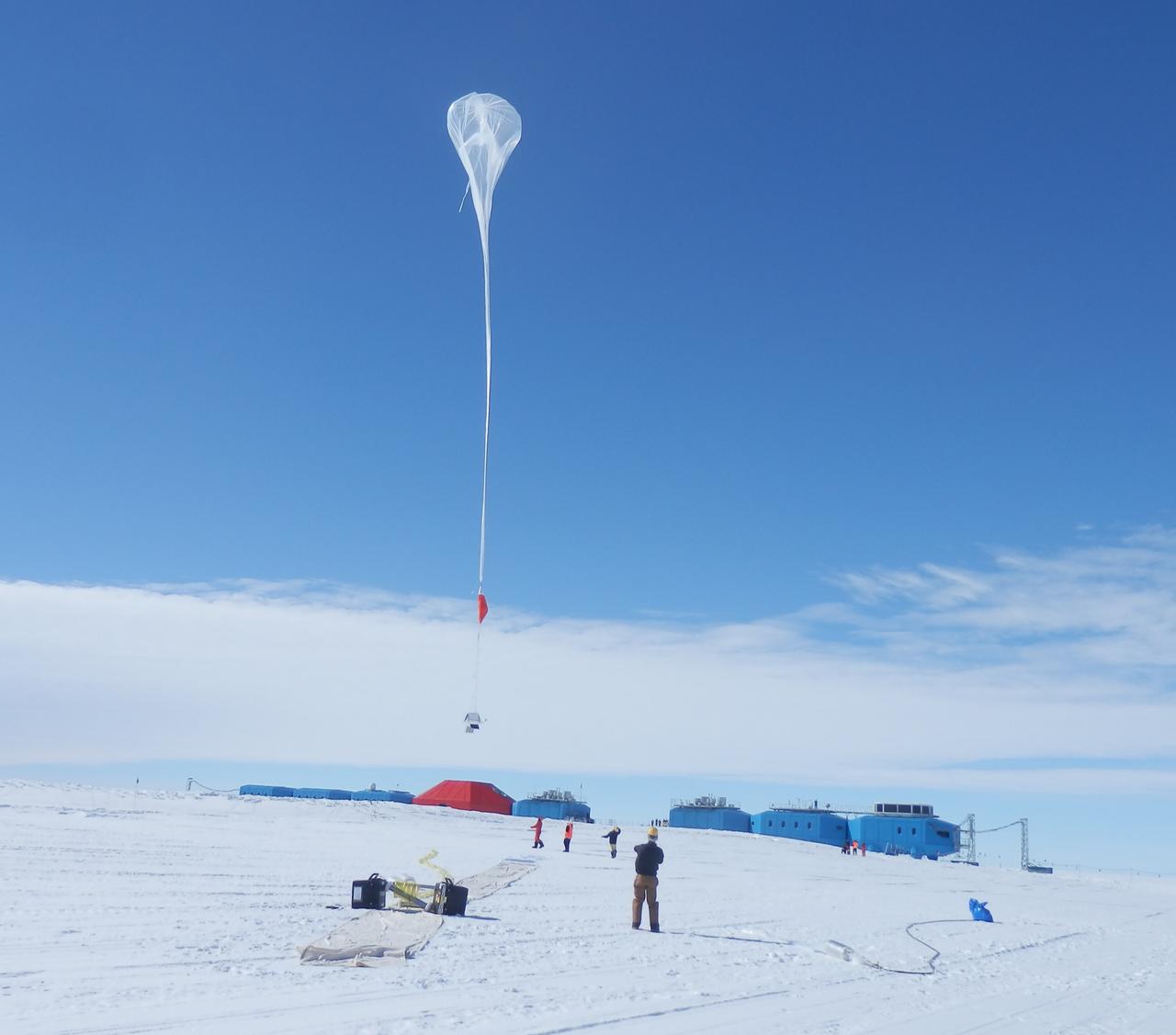
Liftoff! A balloon begins to rise over the brand new Halley VI Research Station, which had its grand opening in February 2013. Credit: NASA --- In Antarctica in January, 2013 – the summer at the South Pole – scientists launched 20 balloons up into the air to study an enduring mystery of space weather: when the giant radiation belts surrounding Earth lose material, where do the extra particles actually go? The mission is called BARREL (Balloon Array for Radiation belt Relativistic Electron Losses) and it is led by physicist Robyn Millan of Dartmouth College in Hanover, NH. Millan provided photographs from the team’s time in Antarctica. The team launched a balloon every day or two into the circumpolar winds that circulate around the pole. Each balloon floated for anywhere from 3 to 40 days, measuring X-rays produced by fast-moving electrons high up in the atmosphere. BARREL works hand in hand with another NASA mission called the Van Allen Probes, which travels through the Van Allen radiation belts surrounding Earth. The belts wax and wane over time in response to incoming energy and material from the sun, sometimes intensifying the radiation through which satellites must travel. Scientists wish to understand this process better, and even provide forecasts of this space weather, in order to protect our spacecraft. As the Van Allen Probes were observing what was happening in the belts, BARREL tracked electrons that precipitated out of the belts and hurtled down Earth’s magnetic field lines toward the poles. By comparing data, scientists will be able to track how what’s happening in the belts correlates to the loss of particles – information that can help us understand this mysterious, dynamic region that can impact spacecraft. Having launched balloons in early 2013, the team is back at home building the next set of payloads. They will launch 20 more balloons in 2014. <b><a href="http://www.nasa.gov/audience/formedia/features/MP_Photo_Guidelines.html" rel="nofollow">NASA image use policy.</a></b> <b><a href="http://www.nasa.gov/centers/goddard/home/index.html" rel="nofollow">NASA Goddard Space Flight Center</a></b> enables NASA’s mission through four scientific endeavors: Earth Science, Heliophysics, Solar System Exploration, and Astrophysics. Goddard plays a leading role in NASA’s accomplishments by contributing compelling scientific knowledge to advance the Agency’s mission. <b>Follow us on <a href="http://twitter.com/NASA_GoddardPix" rel="nofollow">Twitter</a></b> <b>Like us on <a href="http://www.facebook.com/pages/Greenbelt-MD/NASA-Goddard/395013845897?ref=tsd" rel="nofollow">Facebook</a></b> <b>Find us on <a href="http://instagram.com/nasagoddard?vm=grid" rel="nofollow">Instagram</a></b>