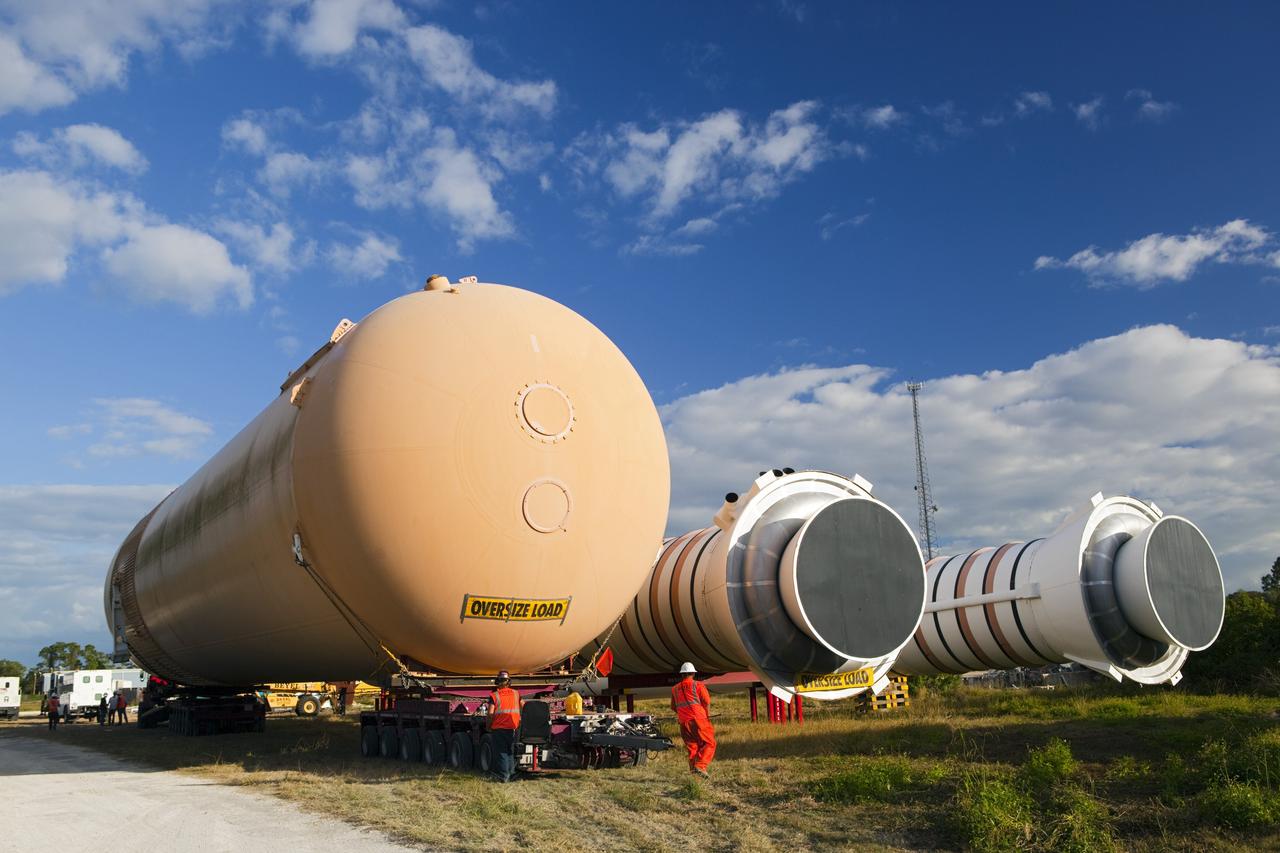
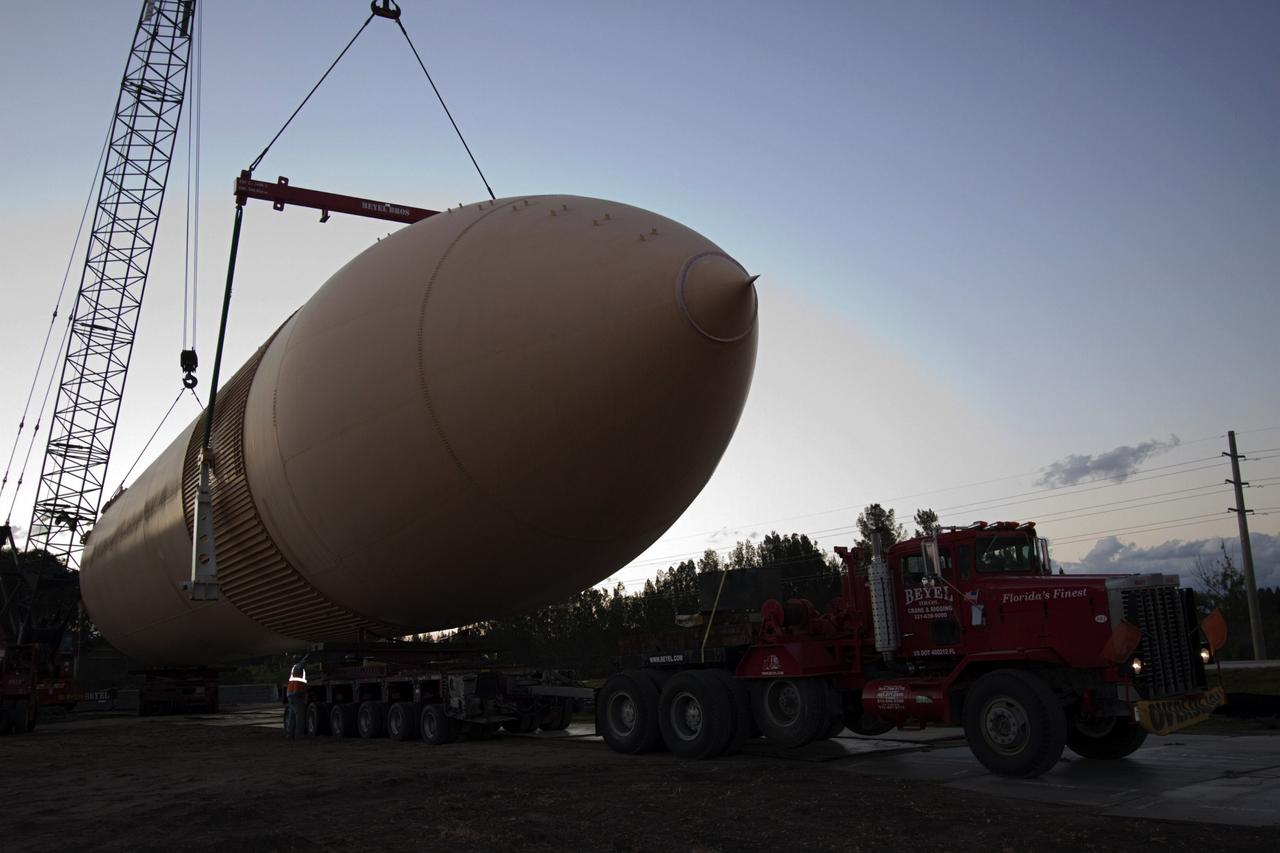
CAPE CANAVERAL, Fla. – A truck positions a full-size display of a space shuttle external fuel tank from the Kennedy Space Center Visitor Complex at a temporary storage area at NASA's Kennedy Space Center. The tank was part of a display of the external tank and two solid rocket boosters at the visitor complex that were used to show visitors the size of actual space shuttle components. A space shuttle rode piggyback on the tank and boosters at liftoff and during the ascent into space. The tank, which held propellants for the shuttle's three main engines, was not reused, but burned up in the atmosphere and fell into the ocean. Photo credit: NASA/Dmitri Gerondidakis
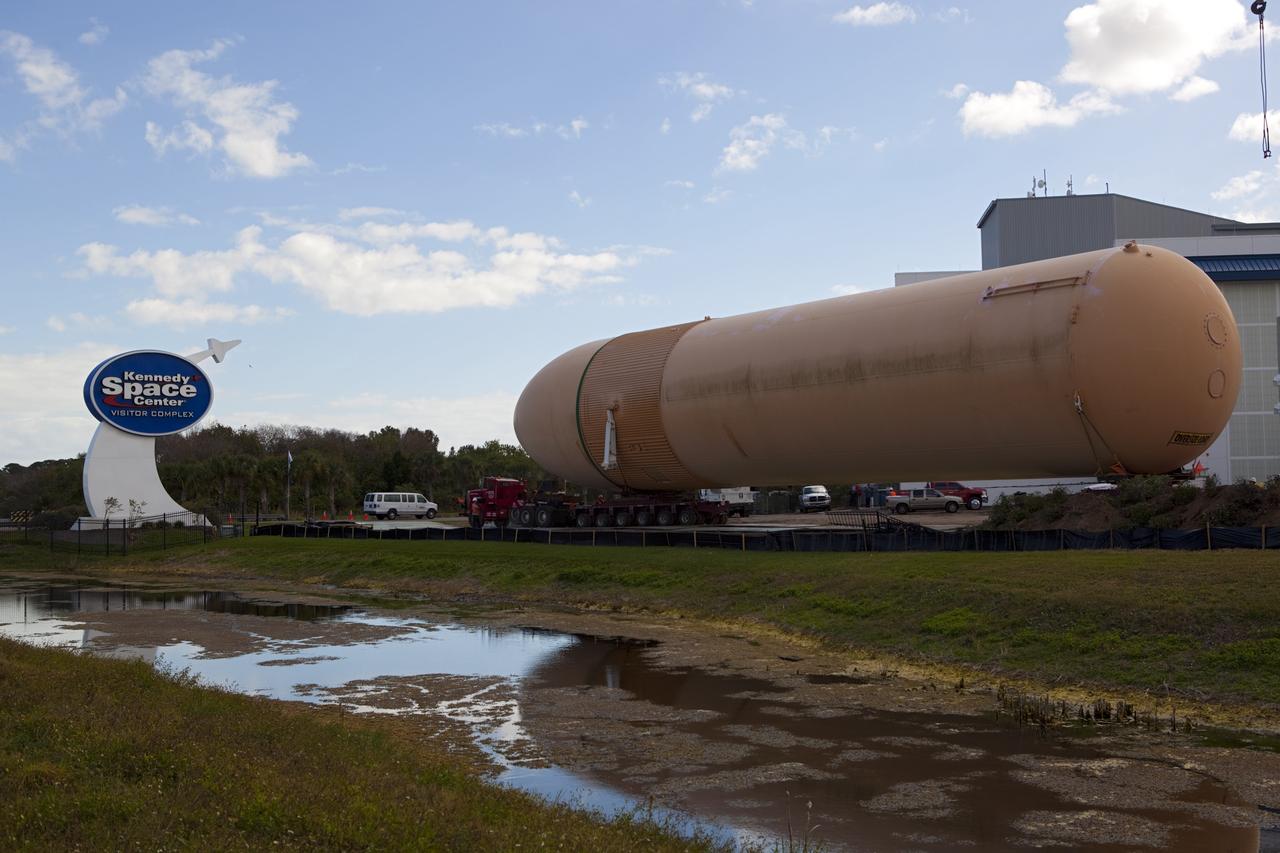
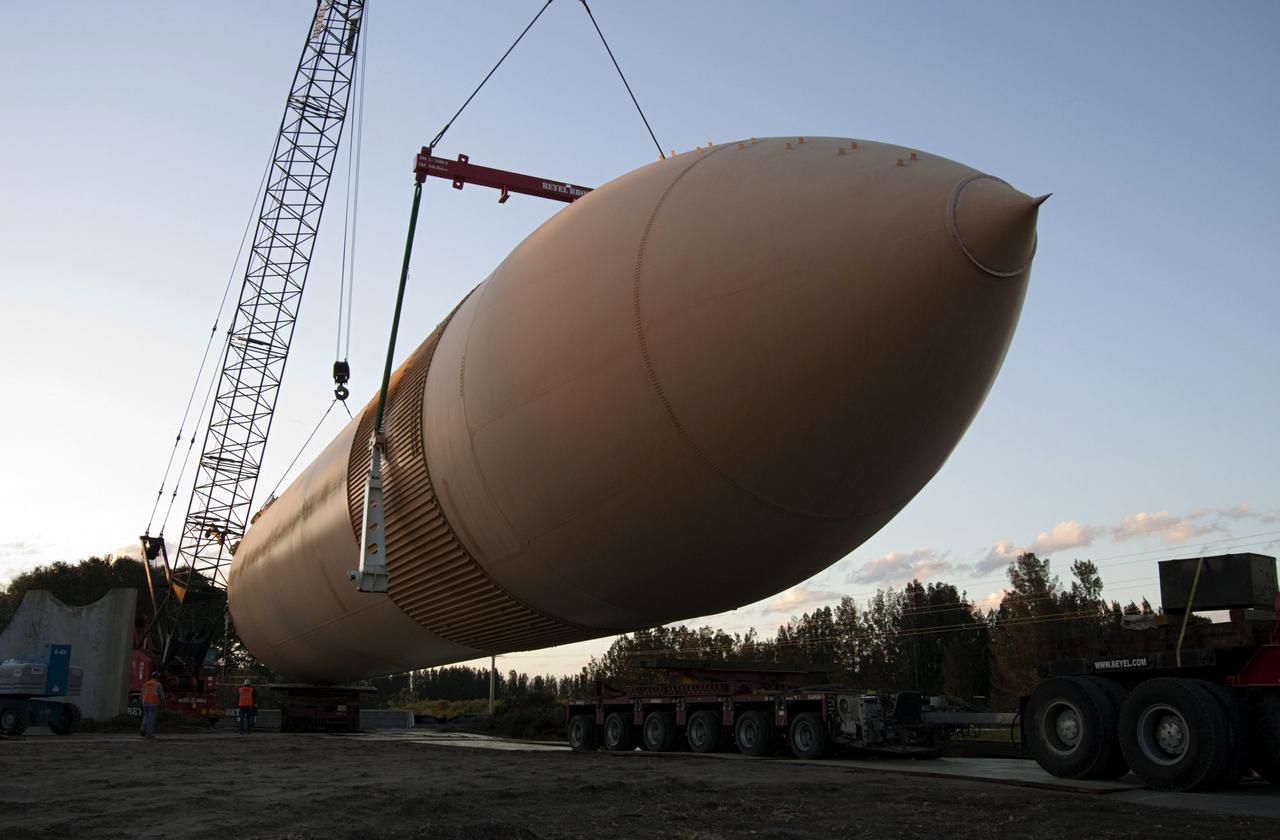
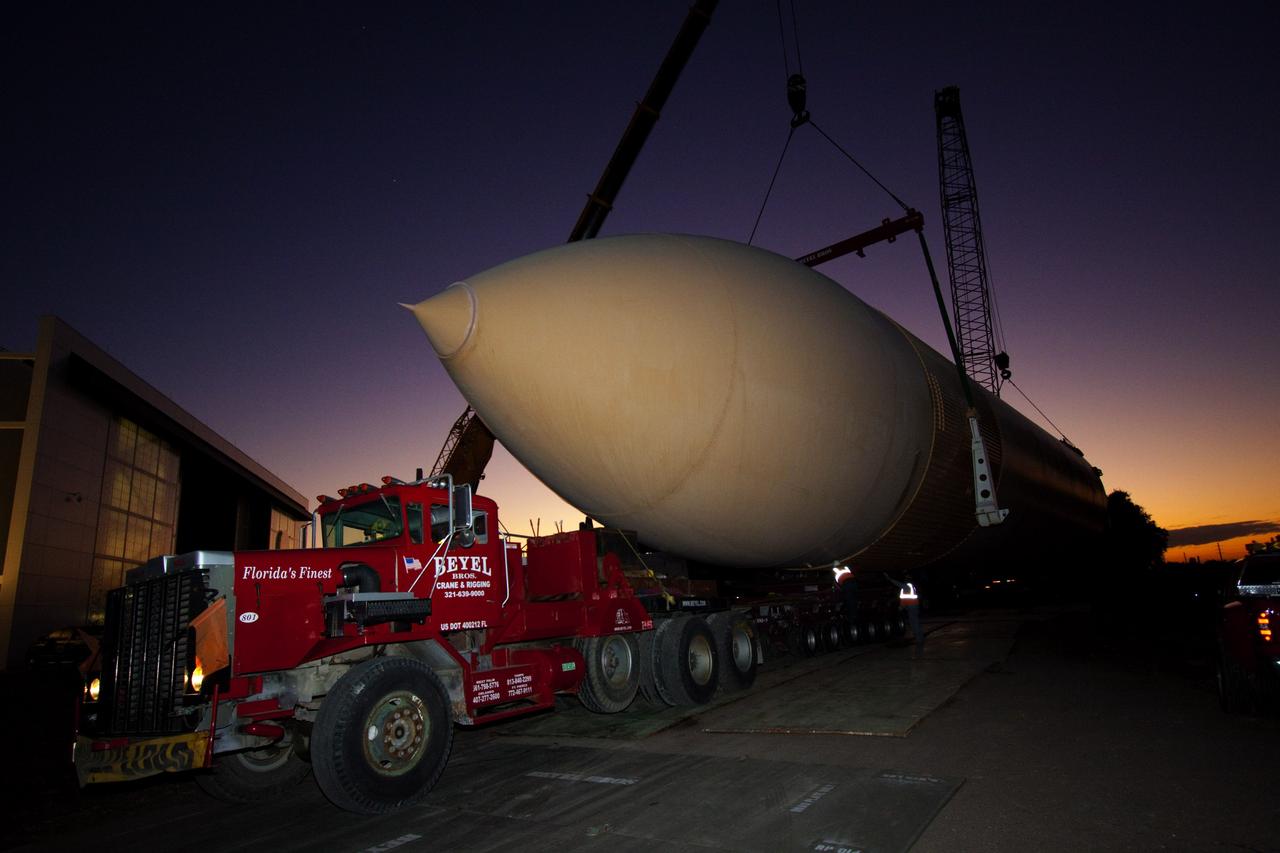
CAPE CANAVERAL, Fla. – A truck hauls a full-size display of a space shuttle external fuel tank from the Kennedy Space Center Visitor Complex as the space-themed attraction makes way for a new exhibit featuring space shuttle Atlantis, which is currently undergoing preparations to go on public display. The tank is being placed into temporary storage at NASA's Kennedy Space Center. The tank was part of a display of the external tank and two solid rocket boosters at the visitor complex that were used to show visitors the size of actual space shuttle components. A space shuttle rode piggyback on the tank and boosters at liftoff and during the ascent into space. The tank, which held propellants for the shuttle's three main engines, was not reused, but burned up in the atmosphere and fell into the ocean. Photo credit: NASA/Dmitri Gerondidakis
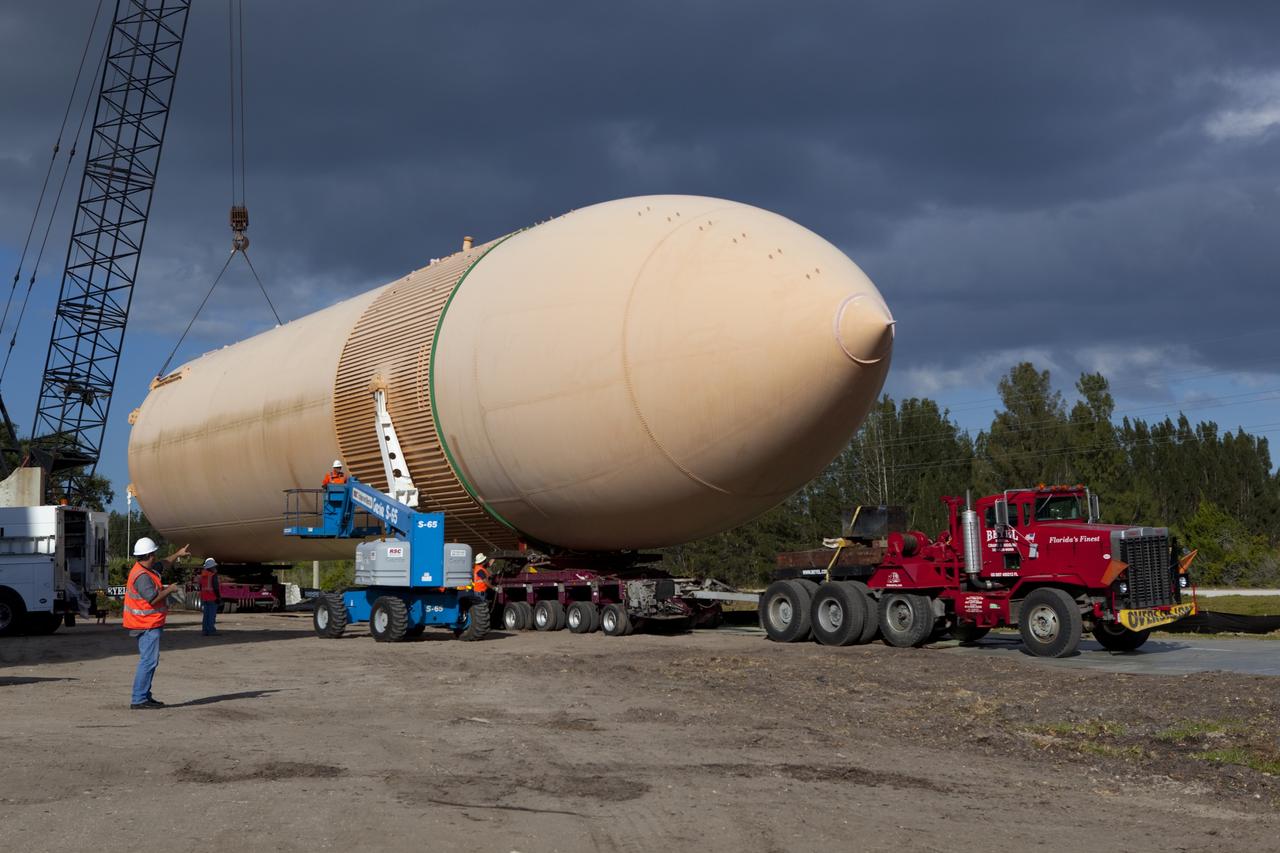
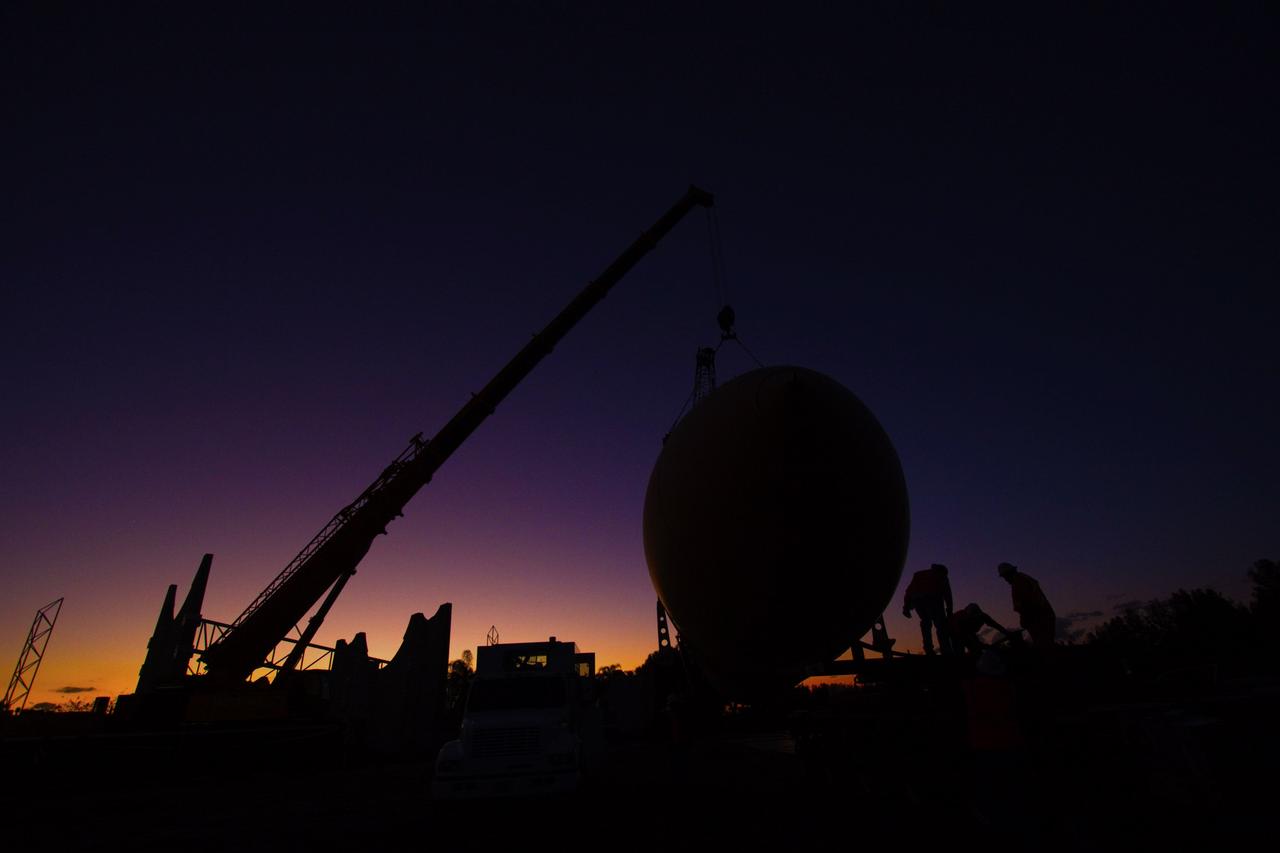
CAPE CANAVERAL, Fla. – A crane positions a full-size display of a space shuttle external fuel tank onto a truck to move it from the Kennedy Space Center Visitor Complex as the space-themed attraction makes way for a new exhibit featuring space shuttle Atlantis, which is currently undergoing preparations to go on public display. The tank is being placed into temporary storage at NASA's Kennedy Space Center. The tank was part of a display of the external tank and two solid rocket boosters at the visitor complex that were used to show visitors the size of actual space shuttle components. A space shuttle rode piggyback on the tank and boosters at liftoff and during the ascent into space. The tank, which held propellants for the shuttle's three main engines, was not reused, but burned up in the atmosphere and fell into the ocean. Photo credit: NASA/Dmitri Gerondidakis
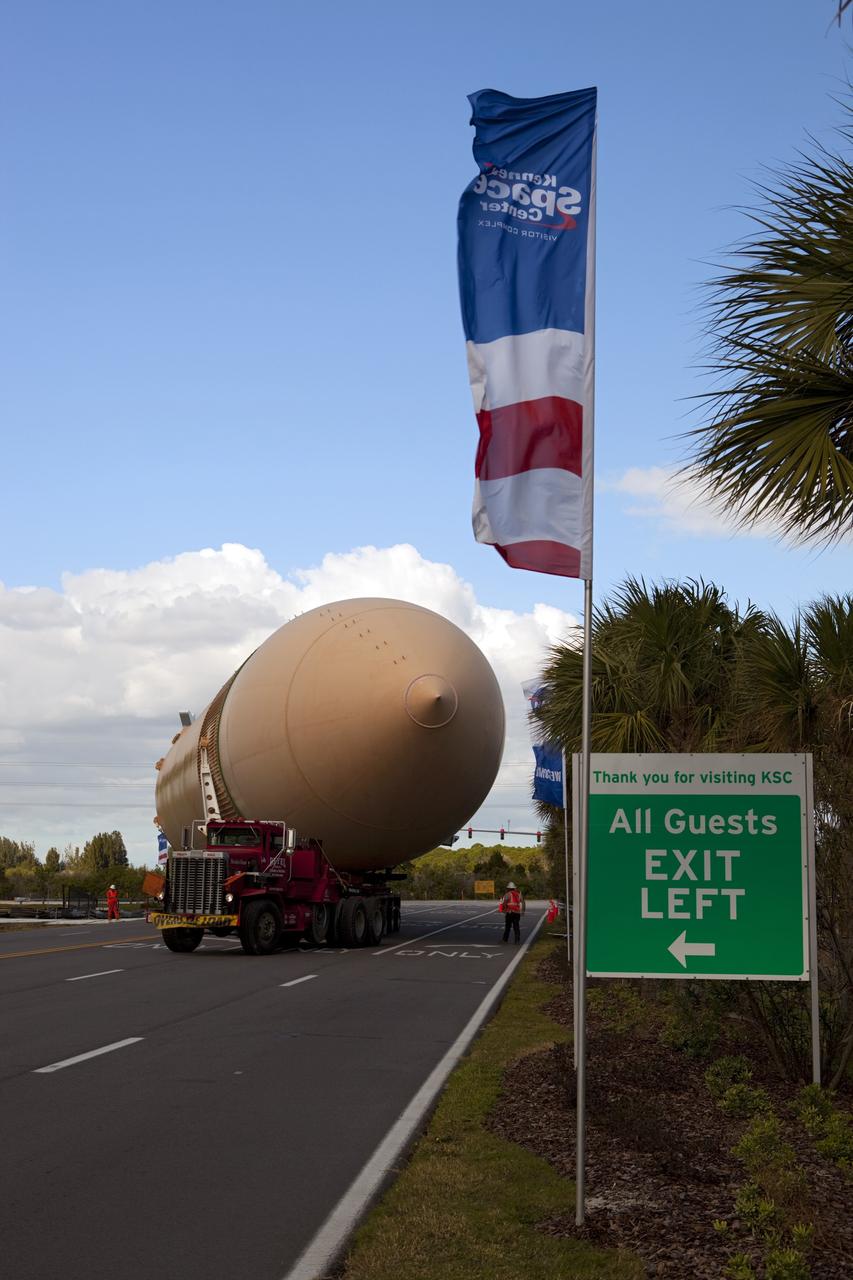
CAPE CANAVERAL, Fla. – A truck hauls a full-size display of a space shuttle external fuel tank from the Kennedy Space Center Visitor Complex as the space-themed attraction makes way for a new exhibit featuring space shuttle Atlantis, which is currently undergoing preparations to go on public display. The tank is being placed into temporary storage at NASA's Kennedy Space Center. The tank was part of a display of the external tank and two solid rocket boosters at the visitor complex that were used to show visitors the size of actual space shuttle components. A space shuttle rode piggyback on the tank and boosters at liftoff and during the ascent into space. The tank, which held propellants for the shuttle's three main engines, was not reused, but burned up in the atmosphere and fell into the ocean. Photo credit: NASA/Dmitri Gerondidakis
CAPE CANAVERAL, Fla. – A truck hauls a full-size display of a space shuttle external fuel tank from the Kennedy Space Center Visitor Complex as the space-themed attraction makes way for a new exhibit featuring space shuttle Atlantis, which is currently undergoing preparations to go on public display. The tank is being placed into temporary storage at NASA's Kennedy Space Center. The tank was part of a display of the external tank and two solid rocket boosters at the visitor complex that were used to show visitors the size of actual space shuttle components. A space shuttle rode piggyback on the tank and boosters at liftoff and during the ascent into space. The tank, which held propellants for the shuttle's three main engines, was not reused, but burned up in the atmosphere and fell into the ocean. Photo credit: NASA/Dmitri Gerondidakis
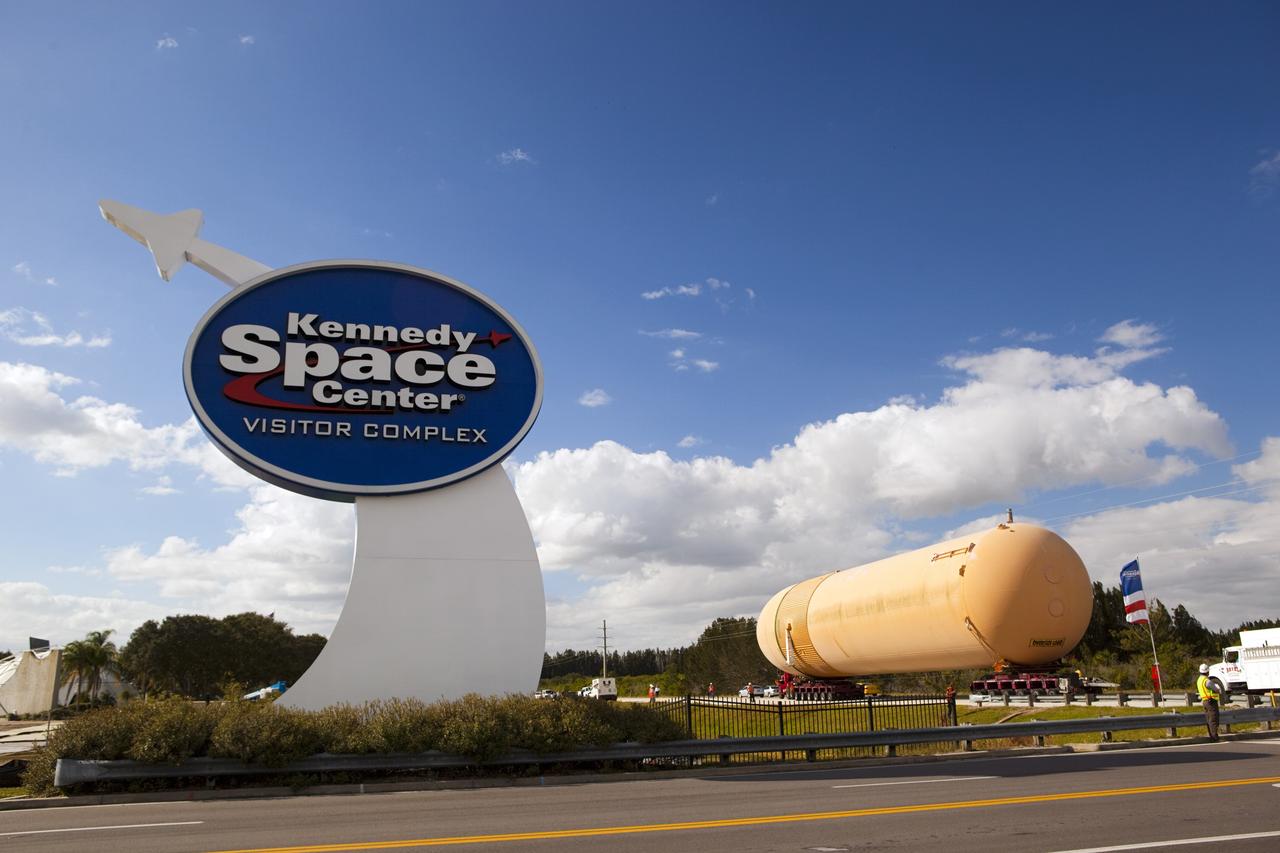
CAPE CANAVERAL, Fla. – A truck hauls a full-size display of a space shuttle external fuel tank from the Kennedy Space Center Visitor Complex as the space-themed attraction makes way for a new exhibit featuring space shuttle Atlantis, which is currently undergoing preparations to go on public display. The tank is being placed into temporary storage at NASA's Kennedy Space Center. The tank was part of a display of the external tank and two solid rocket boosters at the visitor complex that were used to show visitors the size of actual space shuttle components. A space shuttle rode piggyback on the tank and boosters at liftoff and during the ascent into space. The tank, which held propellants for the shuttle's three main engines, was not reused, but burned up in the atmosphere and fell into the ocean. Photo credit: NASA/Dmitri Gerondidakis
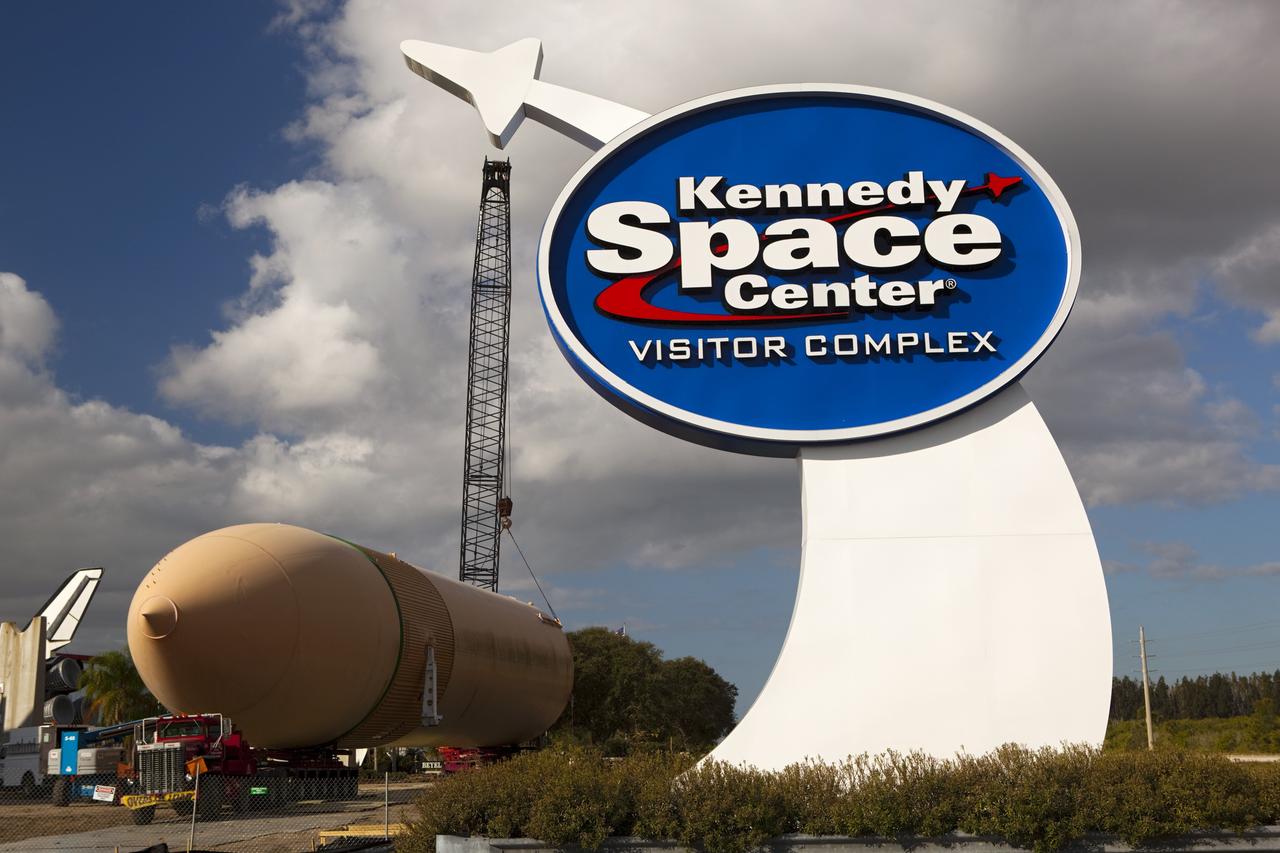
CAPE CANAVERAL, Fla. – A crane positions a full-size display of a space shuttle external fuel tank onto a truck to move it from the Kennedy Space Center Visitor Complex as the space-themed attraction makes way for a new exhibit featuring space shuttle Atlantis, which is currently undergoing preparations to go on public display. The tank is being placed into temporary storage at NASA's Kennedy Space Center. The tank was part of a display of the external tank and two solid rocket boosters at the visitor complex that were used to show visitors the size of actual space shuttle components. A space shuttle rode piggyback on the tank and boosters at liftoff and during the ascent into space. The tank, which held propellants for the shuttle's three main engines, was not reused, but burned up in the atmosphere and fell into the ocean. Photo credit: NASA/Dmitri Gerondidakis
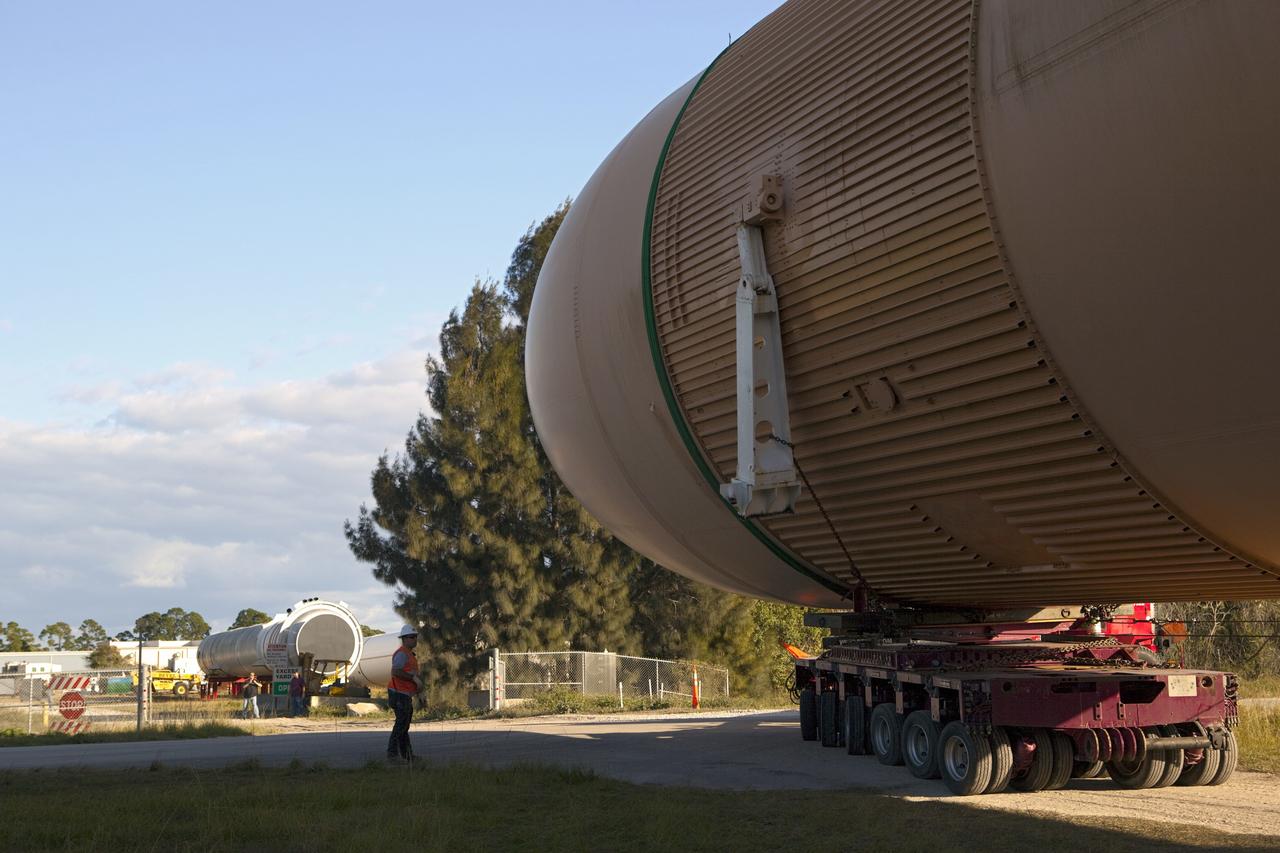
CAPE CANAVERAL, Fla. – A truck hauls a full-size display of a space shuttle external fuel tank from the Kennedy Space Center Visitor Complex as the space-themed attraction makes way for a new exhibit featuring space shuttle Atlantis, which is currently undergoing preparations to go on public display. The tank is being placed into temporary storage at NASA's Kennedy Space Center. The tank was part of a display of the external tank and two solid rocket boosters at the visitor complex that were used to show visitors the size of actual space shuttle components. A space shuttle rode piggyback on the tank and boosters at liftoff and during the ascent into space. The tank, which held propellants for the shuttle's three main engines, was not reused, but burned up in the atmosphere and fell into the ocean. Photo credit: NASA/Dmitri Gerondidakis
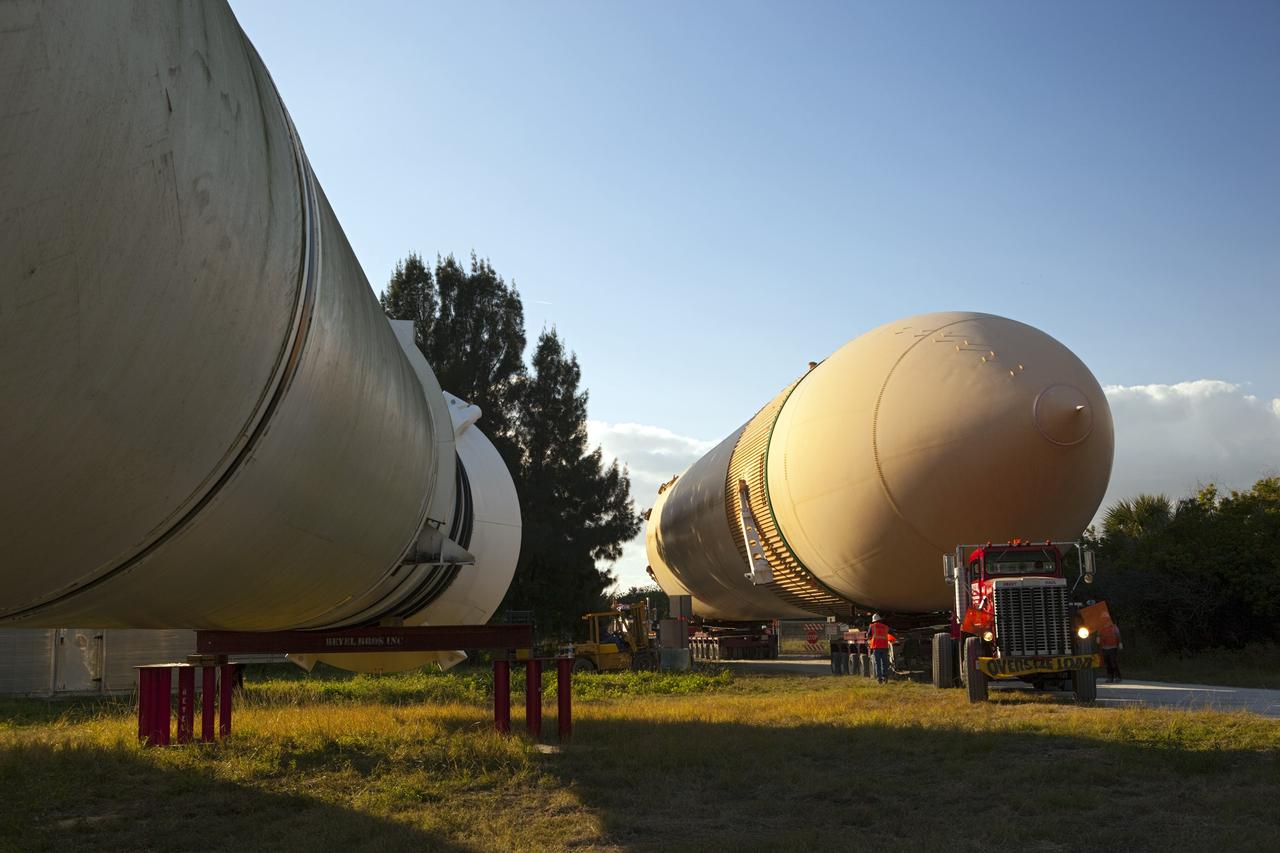
CAPE CANAVERAL, Fla. – A truck hauls a full-size display of a space shuttle external fuel tank from the Kennedy Space Center Visitor Complex as the space-themed attraction makes way for a new exhibit featuring space shuttle Atlantis, which is currently undergoing preparations to go on public display. The tank is being placed into temporary storage at NASA's Kennedy Space Center. The tank was part of a display of the external tank and two solid rocket boosters at the visitor complex that were used to show visitors the size of actual space shuttle components. A space shuttle rode piggyback on the tank and boosters at liftoff and during the ascent into space. The tank, which held propellants for the shuttle's three main engines, was not reused, but burned up in the atmosphere and fell into the ocean. Photo credit: NASA/Dmitri Gerondidakis
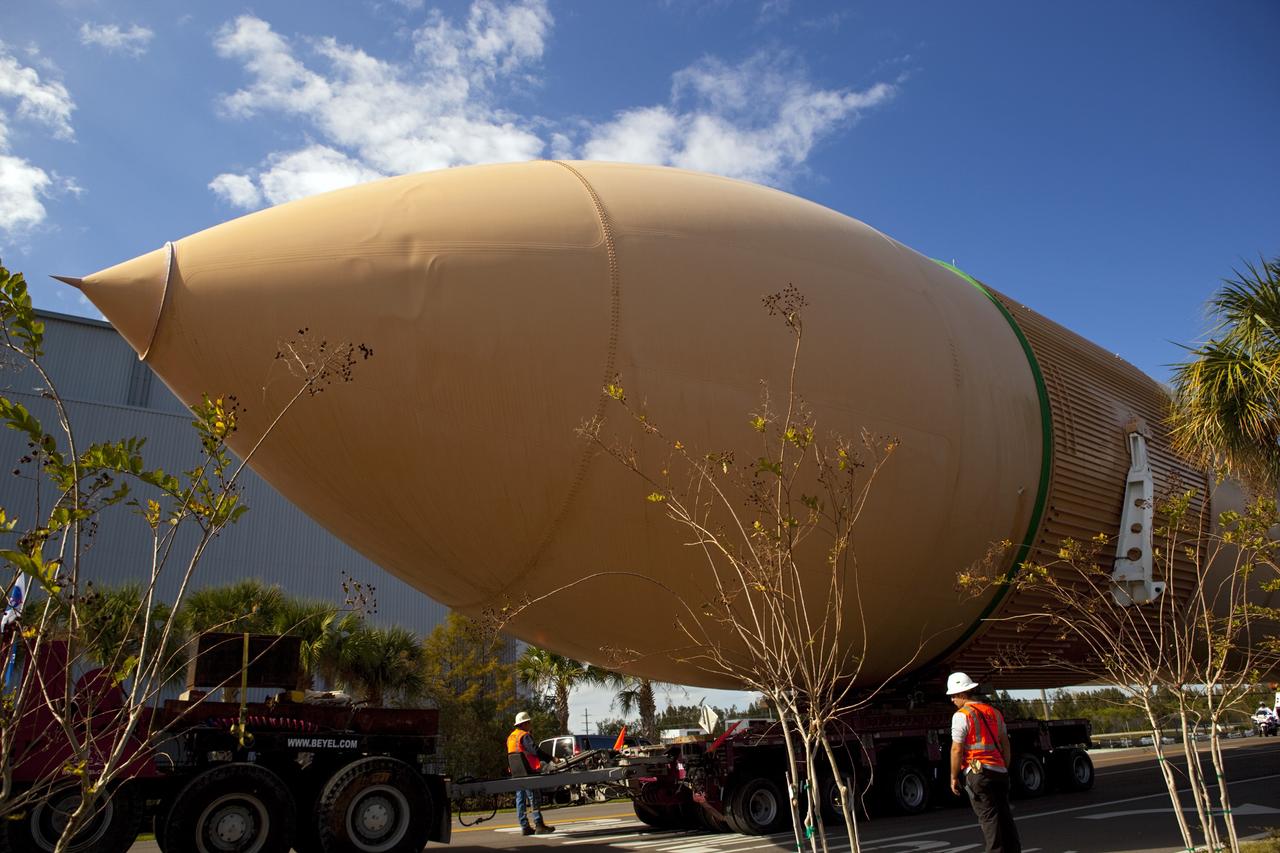
CAPE CANAVERAL, Fla. – A truck hauls a full-size display of a space shuttle external fuel tank from the Kennedy Space Center Visitor Complex as the space-themed attraction makes way for a new exhibit featuring space shuttle Atlantis, which is currently undergoing preparations to go on public display. The tank is being placed into temporary storage at NASA's Kennedy Space Center. The tank was part of a display of the external tank and two solid rocket boosters at the visitor complex that were used to show visitors the size of actual space shuttle components. A space shuttle rode piggyback on the tank and boosters at liftoff and during the ascent into space. The tank, which held propellants for the shuttle's three main engines, was not reused, but burned up in the atmosphere and fell into the ocean. Photo credit: NASA/Dmitri Gerondidakis
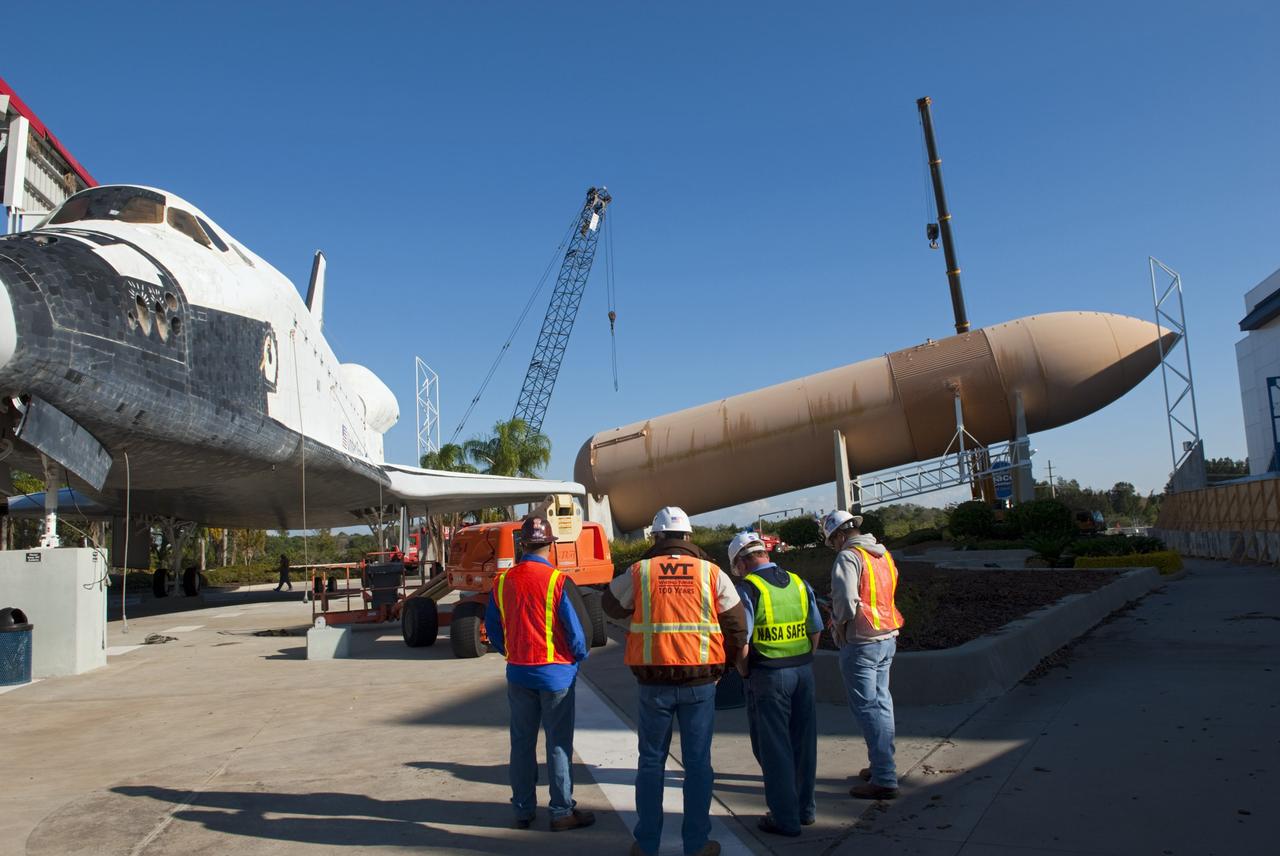
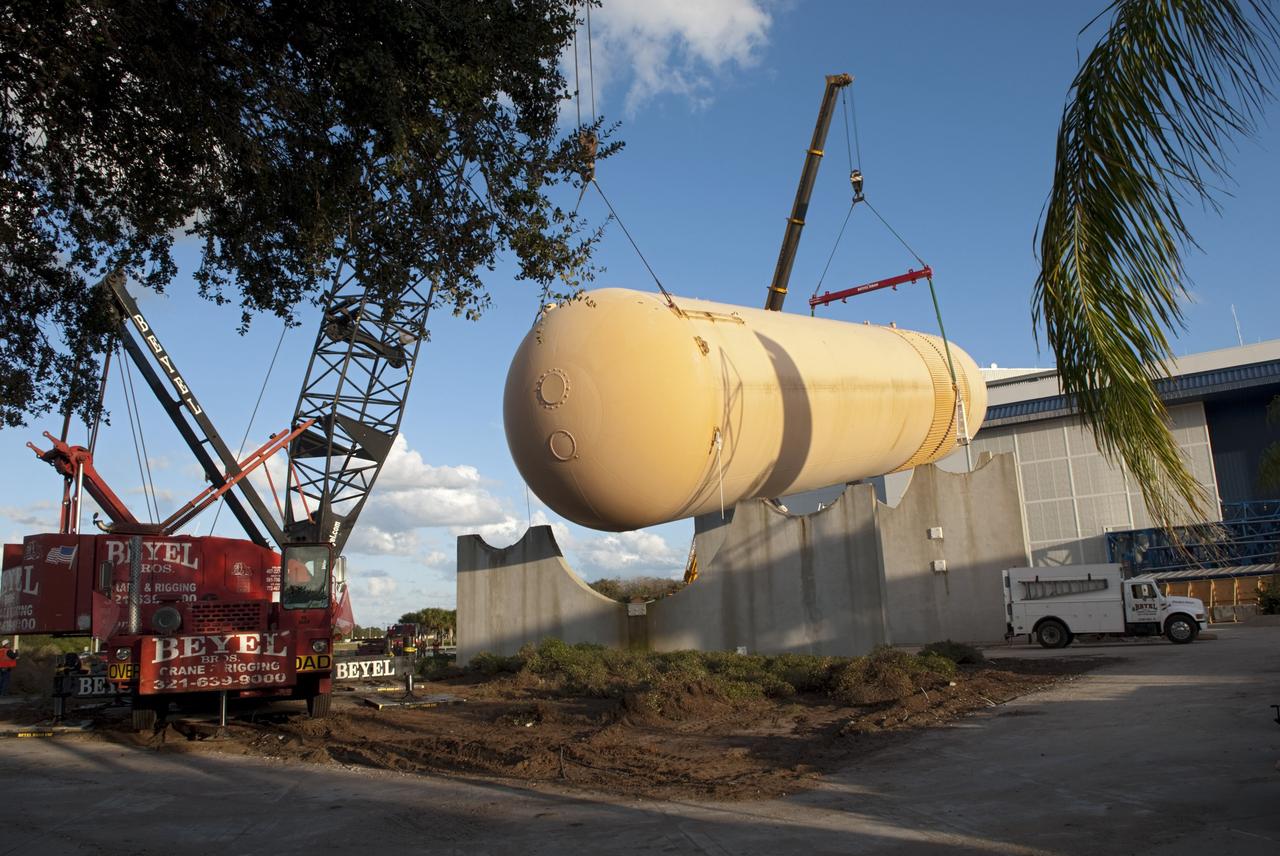
CAPE CANAVERAL, Fla. – Cranes remove a full-size replica of a space shuttle external fuel tank from the Kennedy Space Center Visitor Complex as the space-themed attraction makes way for a new exhibit featuring space shuttle Atlantis, which is currently undergoing preparations to go on public display. The tank is being placed into temporary storage at NASA's Kennedy Space Center. The tank was part of a mockup of the external tank and two solid rocket boosters at the visitor complex that were used to show visitors the size of actual space shuttle components. A space shuttle rode piggyback on the tank and boosters at liftoff and during the ascent into space. The tank, which held propellants for the shuttle's three main engines, was not reused, but burned up in the atmosphere and fell into the ocean. Photo credit: NASA/Jim Grossman
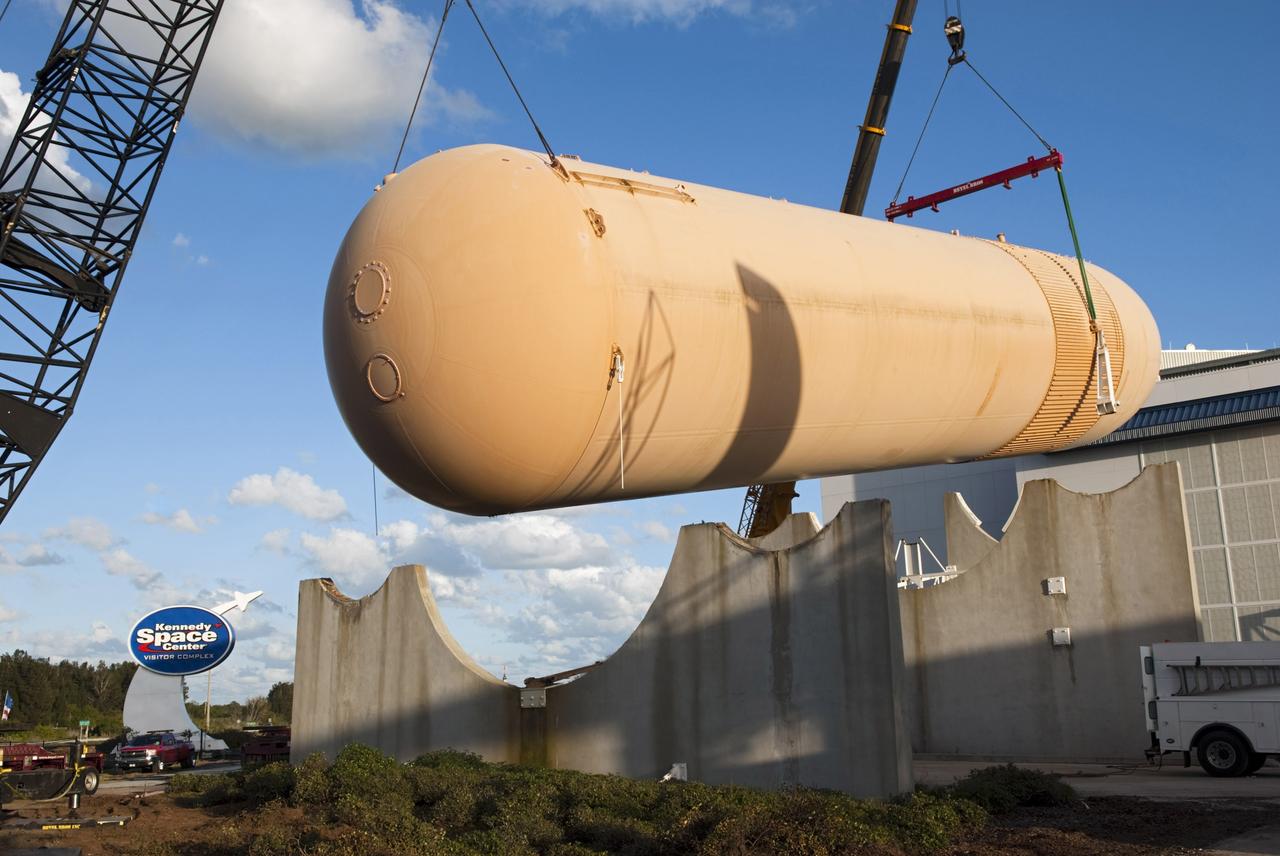
CAPE CANAVERAL, Fla. – Cranes remove a full-size replica of a space shuttle external fuel tank from the Kennedy Space Center Visitor Complex as the space-themed attraction makes way for a new exhibit featuring space shuttle Atlantis, which is currently undergoing preparations to go on public display. The tank is being placed into temporary storage at NASA's Kennedy Space Center. The tank was part of a mockup of the external tank and two solid rocket boosters at the visitor complex that were used to show visitors the size of actual space shuttle components. A space shuttle rode piggyback on the tank and boosters at liftoff and during the ascent into space. The tank, which held propellants for the shuttle's three main engines, was not reused, but burned up in the atmosphere and fell into the ocean. Photo credit: NASA/Jim Grossman
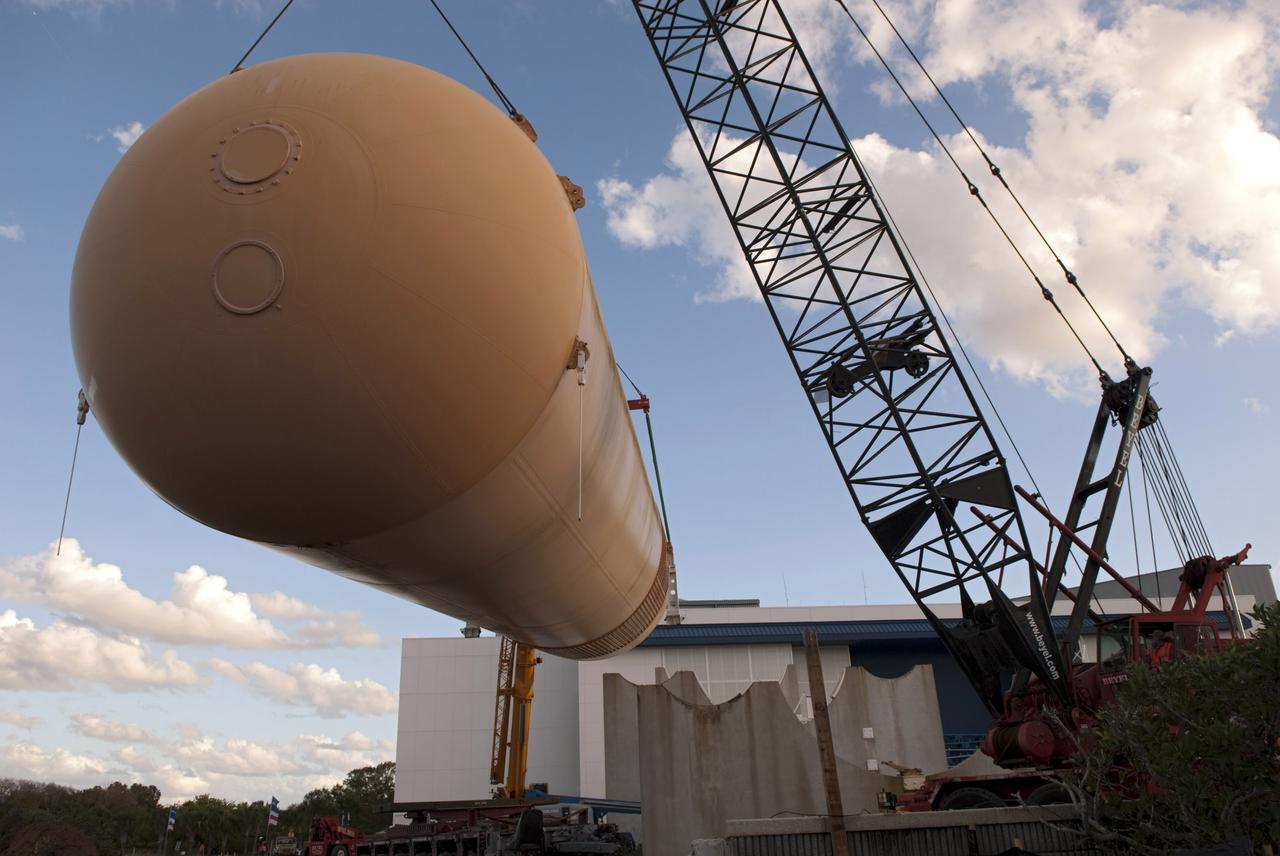
CAPE CANAVERAL, Fla. – Cranes remove a full-size replica of a space shuttle external fuel tank from the Kennedy Space Center Visitor Complex as the space-themed attraction makes way for a new exhibit featuring space shuttle Atlantis, which is currently undergoing preparations to go on public display. The tank is being placed into temporary storage at NASA's Kennedy Space Center. The tank was part of a mockup of the external tank and two solid rocket boosters at the visitor complex that were used to show visitors the size of actual space shuttle components. A space shuttle rode piggyback on the tank and boosters at liftoff and during the ascent into space. The tank, which held propellants for the shuttle's three main engines, was not reused, but burned up in the atmosphere and fell into the ocean. Photo credit: NASA/Jim Grossman
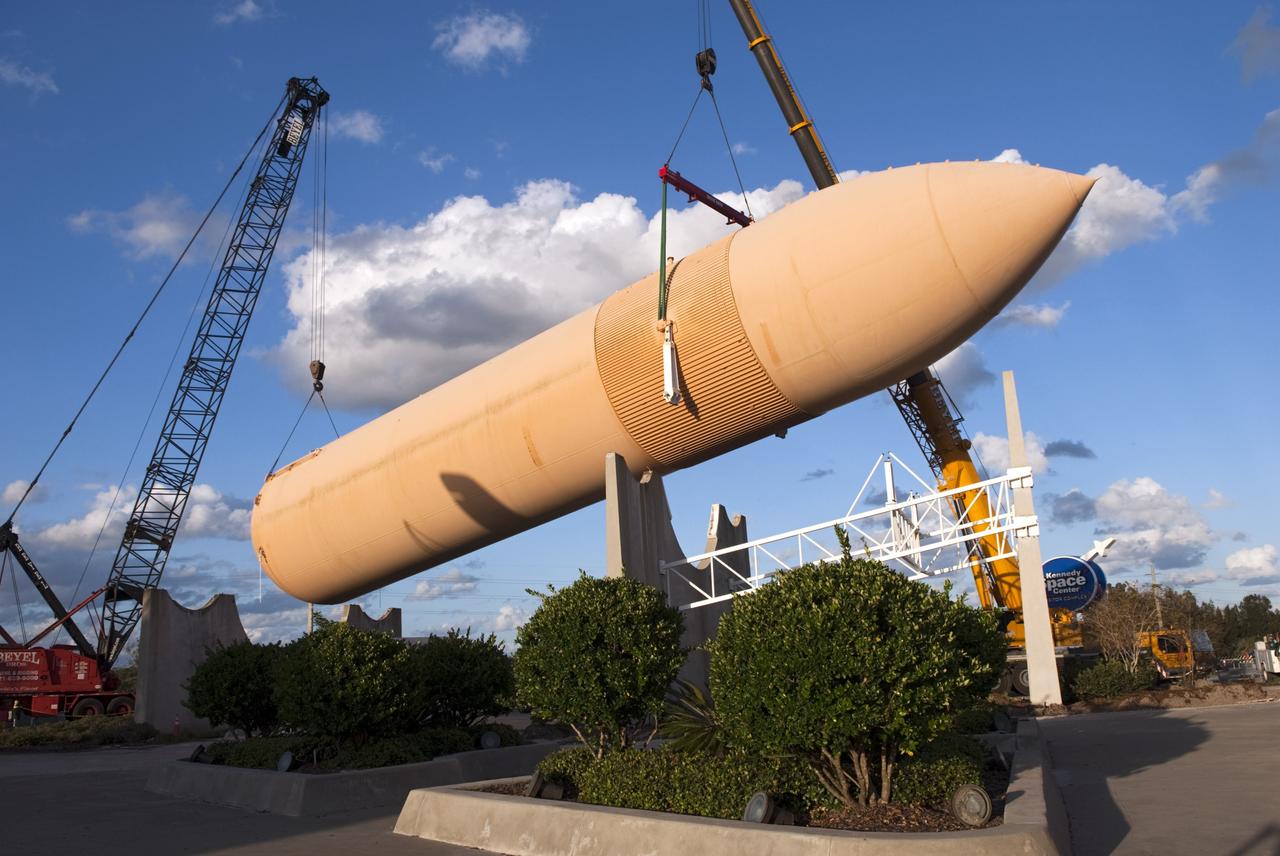
CAPE CANAVERAL, Fla. – Cranes remove a full-size replica of a space shuttle external fuel tank from the Kennedy Space Center Visitor Complex as the space-themed attraction makes way for a new exhibit featuring space shuttle Atlantis, which is currently undergoing preparations to go on public display. The tank is being placed into temporary storage at NASA's Kennedy Space Center. The tank was part of a mockup of the external tank and two solid rocket boosters at the visitor complex that were used to show visitors the size of actual space shuttle components. A space shuttle rode piggyback on the tank and boosters at liftoff and during the ascent into space. The tank, which held propellants for the shuttle's three main engines, was not reused, but burned up in the atmosphere and fell into the ocean. Photo credit: NASA/Jim Grossman
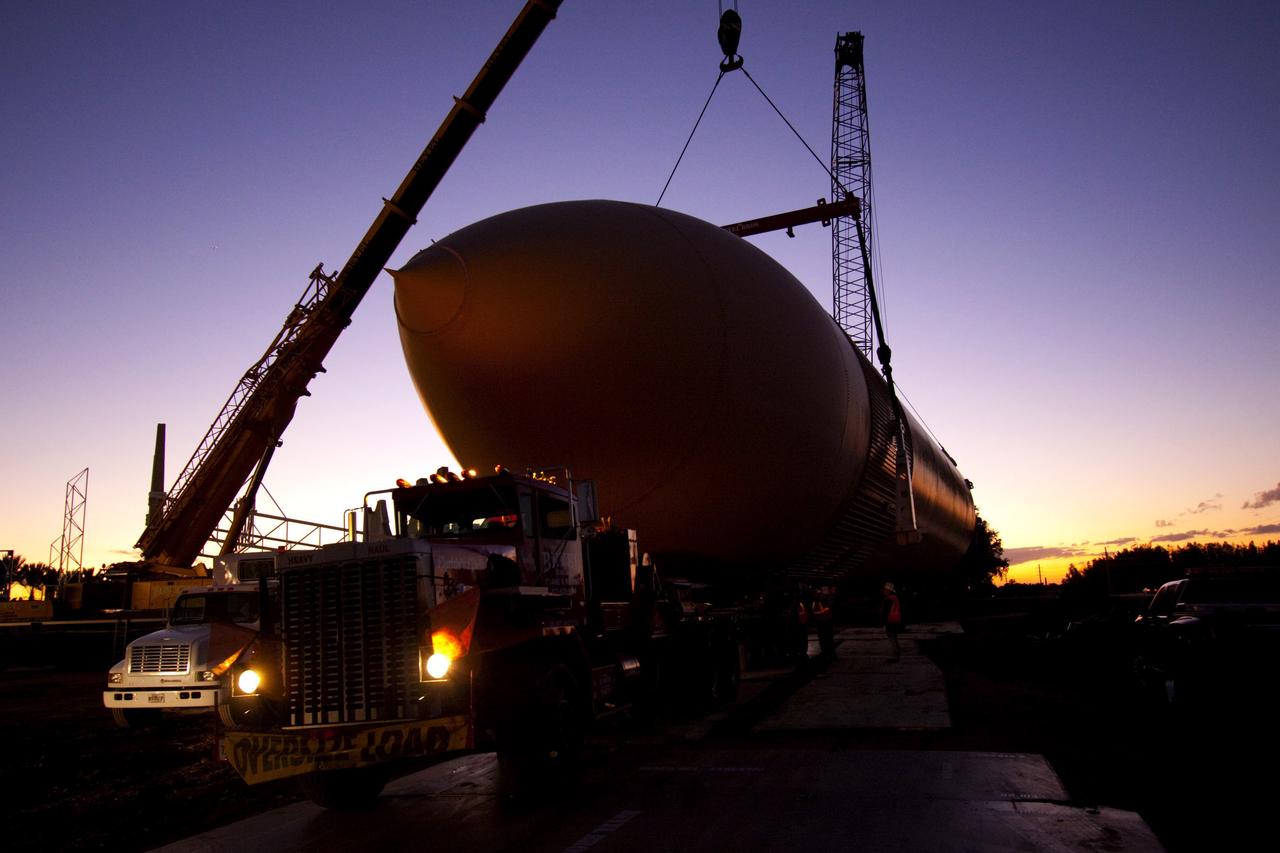
CAPE CANAVERAL, Fla. – Cranes remove a full-size replica of a space shuttle external fuel tank from the Kennedy Space Center Visitor Complex as the space-themed attraction makes way for a new exhibit featuring space shuttle Atlantis, which is currently undergoing preparations to go on public display. The tank is being placed into temporary storage at NASA's Kennedy Space Center. The tank was part of a mockup of the external tank and two solid rocket boosters at the visitor complex that were used to show visitors the size of actual space shuttle components. A space shuttle rode piggyback on the tank and boosters at liftoff and during the ascent into space. The tank, which held propellants for the shuttle's three main engines, was not reused, but burned up in the atmosphere and fell into the ocean. Photo credit: NASA/Jim Grossman
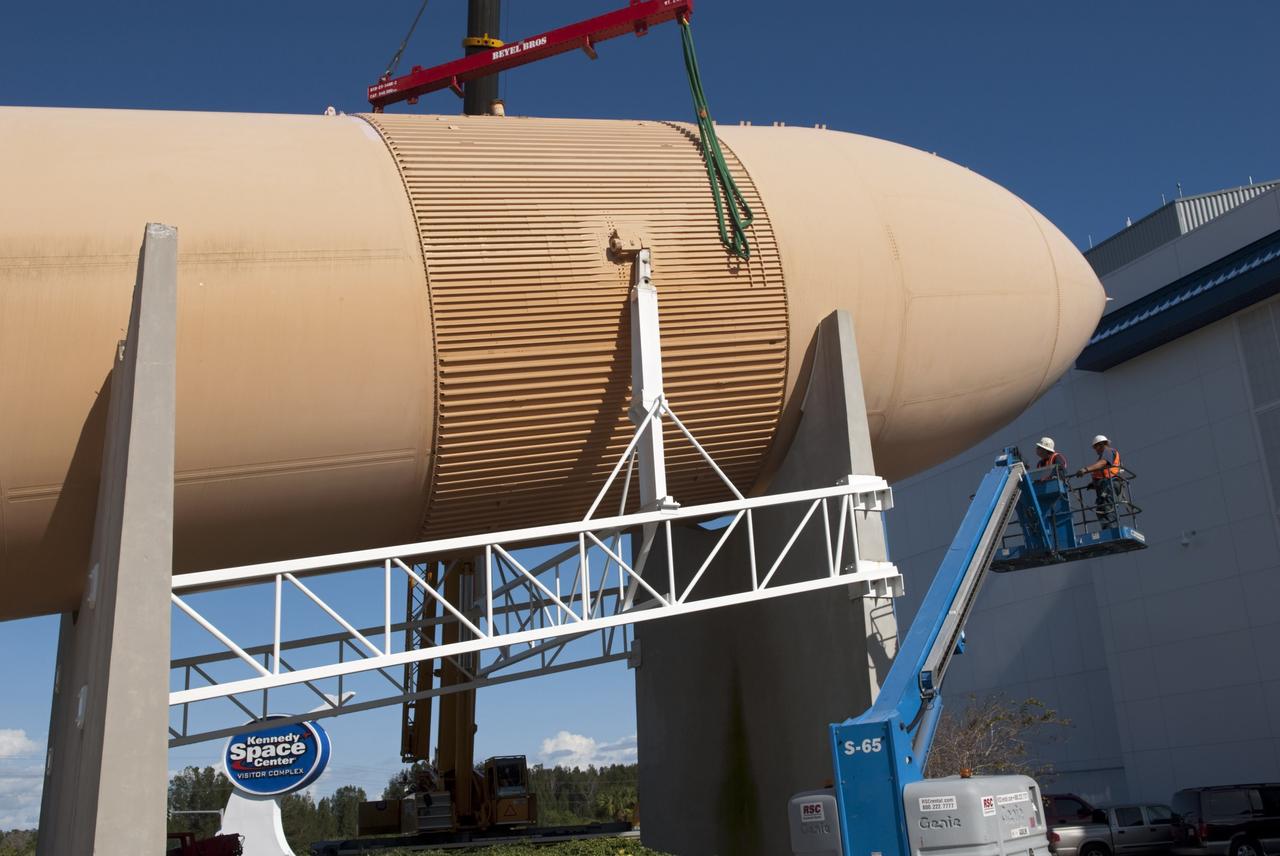
CAPE CANAVERAL, Fla. – Cranes remove a full-size replica of a space shuttle external fuel tank from the Kennedy Space Center Visitor Complex as the space-themed attraction makes way for a new exhibit featuring space shuttle Atlantis, which is currently undergoing preparations to go on public display. The tank is being placed into temporary storage at NASA's Kennedy Space Center. The tank was part of a mockup of the external tank and two solid rocket boosters at the visitor complex that were used to show visitors the size of actual space shuttle components. A space shuttle rode piggyback on the tank and boosters at liftoff and during the ascent into space. The tank, which held propellants for the shuttle's three main engines, was not reused, but burned up in the atmosphere and fell into the ocean. Photo credit: NASA/Jim Grossman
CAPE CANAVERAL, Fla. – Cranes remove a full-size replica of a space shuttle external fuel tank from the Kennedy Space Center Visitor Complex as the space-themed attraction makes way for a new exhibit featuring space shuttle Atlantis, which is currently undergoing preparations to go on public display. The tank is being placed into temporary storage at NASA's Kennedy Space Center. The tank was part of a mockup of the external tank and two solid rocket boosters at the visitor complex that were used to show visitors the size of actual space shuttle components. A space shuttle rode piggyback on the tank and boosters at liftoff and during the ascent into space. The tank, which held propellants for the shuttle's three main engines, was not reused, but burned up in the atmosphere and fell into the ocean. Photo credit: NASA/Jim Grossman
CAPE CANAVERAL, Fla. – Cranes remove a full-size replica of a space shuttle external fuel tank from the Kennedy Space Center Visitor Complex as the space-themed attraction makes way for a new exhibit featuring space shuttle Atlantis, which is currently undergoing preparations to go on public display. The tank is being placed into temporary storage at NASA's Kennedy Space Center. The tank was part of a mockup of the external tank and two solid rocket boosters at the visitor complex that were used to show visitors the size of actual space shuttle components. A space shuttle rode piggyback on the tank and boosters at liftoff and during the ascent into space. The tank, which held propellants for the shuttle's three main engines, was not reused, but burned up in the atmosphere and fell into the ocean. Photo credit: NASA/Jim Grossman
CAPE CANAVERAL, Fla. – Cranes remove a full-size replica of a space shuttle external fuel tank from the Kennedy Space Center Visitor Complex as the space-themed attraction makes way for a new exhibit featuring space shuttle Atlantis, which is currently undergoing preparations to go on public display. The tank is being placed into temporary storage at NASA's Kennedy Space Center. The tank was part of a mockup of the external tank and two solid rocket boosters at the visitor complex that were used to show visitors the size of actual space shuttle components. A space shuttle rode piggyback on the tank and boosters at liftoff and during the ascent into space. The tank, which held propellants for the shuttle's three main engines, was not reused, but burned up in the atmosphere and fell into the ocean. Photo credit: NASA/Jim Grossman
CAPE CANAVERAL, Fla. – Cranes remove a full-size replica of a space shuttle external fuel tank from the Kennedy Space Center Visitor Complex as the space-themed attraction makes way for a new exhibit featuring space shuttle Atlantis, which is currently undergoing preparations to go on public display. The tank is being placed into temporary storage at NASA's Kennedy Space Center. The tank was part of a mockup of the external tank and two solid rocket boosters at the visitor complex that were used to show visitors the size of actual space shuttle components. A space shuttle rode piggyback on the tank and boosters at liftoff and during the ascent into space. The tank, which held propellants for the shuttle's three main engines, was not reused, but burned up in the atmosphere and fell into the ocean. Photo credit: NASA/Jim Grossman
CAPE CANAVERAL, Fla. – Cranes remove a full-size replica of a space shuttle external fuel tank from the Kennedy Space Center Visitor Complex as the space-themed attraction makes way for a new exhibit featuring space shuttle Atlantis, which is currently undergoing preparations to go on public display. The tank is being placed into temporary storage at NASA's Kennedy Space Center. The tank was part of a mockup of the external tank and two solid rocket boosters at the visitor complex that were used to show visitors the size of actual space shuttle components. A space shuttle rode piggyback on the tank and boosters at liftoff and during the ascent into space. The tank, which held propellants for the shuttle's three main engines, was not reused, but burned up in the atmosphere and fell into the ocean. Photo credit: NASA/Jim Grossman
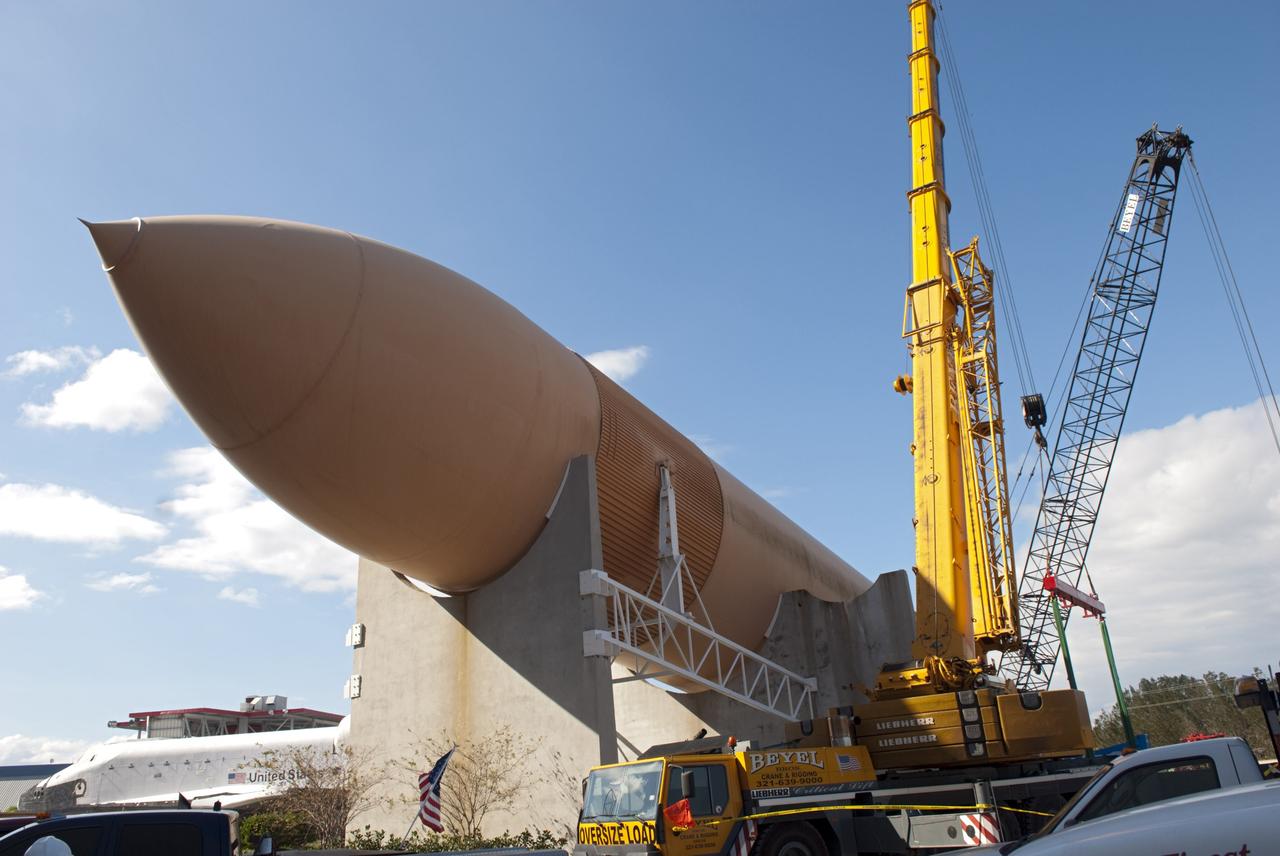
CAPE CANAVERAL, Fla. – Cranes remove a full-size replica of a space shuttle external fuel tank from the Kennedy Space Center Visitor Complex as the space-themed attraction makes way for a new exhibit featuring space shuttle Atlantis, which is currently undergoing preparations to go on public display. The tank is being placed into temporary storage at NASA's Kennedy Space Center. The tank was part of a mockup of the external tank and two solid rocket boosters at the visitor complex that were used to show visitors the size of actual space shuttle components. A space shuttle rode piggyback on the tank and boosters at liftoff and during the ascent into space. The tank, which held propellants for the shuttle's three main engines, was not reused, but burned up in the atmosphere and fell into the ocean. Photo credit: NASA/Jim Grossman
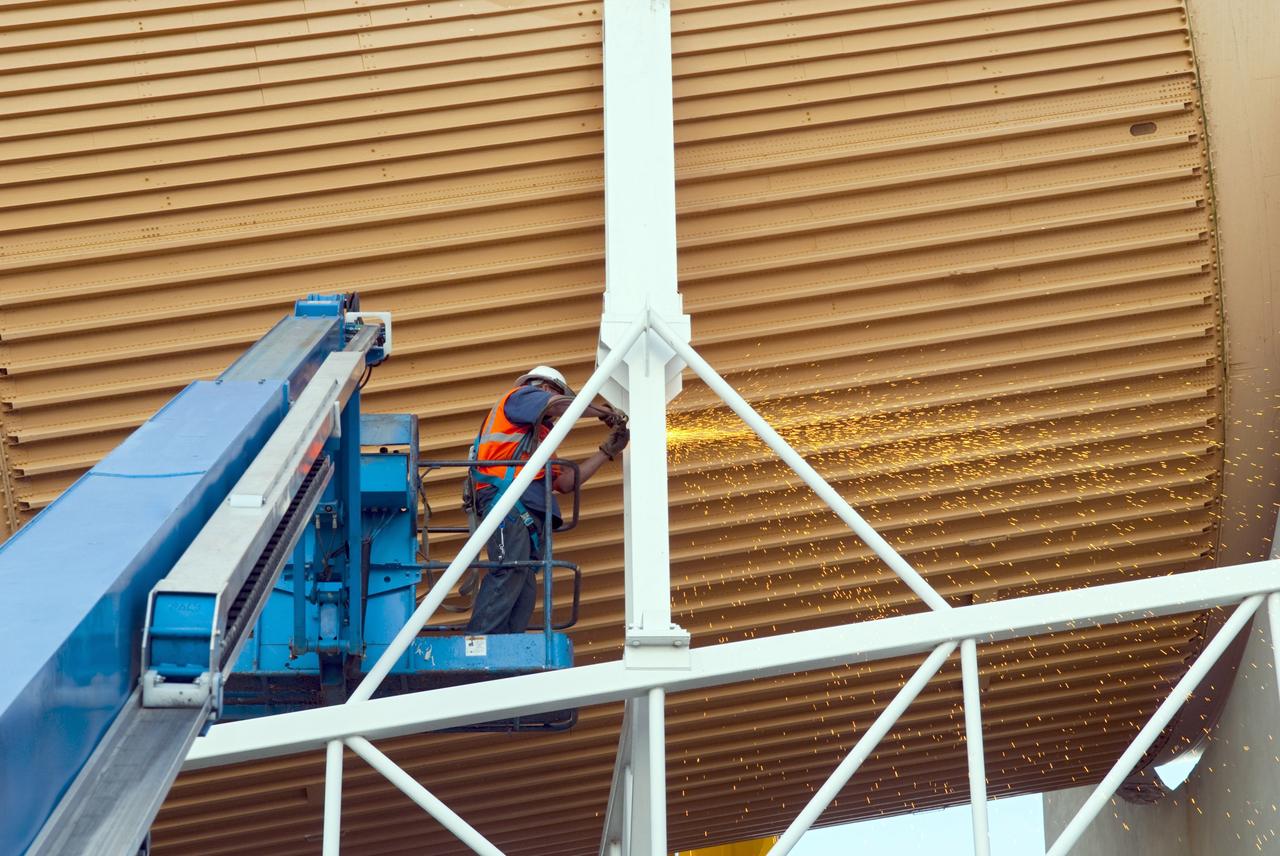
CAPE CANAVERAL, Fla. – A technician works on the removal of a full-size replica of a space shuttle external fuel tank from the Kennedy Space Center Visitor Complex as the space-themed attraction makes way for a new exhibit featuring space shuttle Atlantis, which is currently undergoing preparations to go on public display. The tank is being placed into temporary storage at NASA's Kennedy Space Center. The tank was part of a mockup of the external tank and two solid rocket boosters at the visitor complex that were used to show visitors the size of actual space shuttle components. A space shuttle rode piggyback on the tank and boosters at liftoff and during the ascent into space. The tank, which held propellants for the shuttle's three main engines, was not reused, but burned up in the atmosphere and fell into the ocean. Photo credit: NASA/Jim Grossman
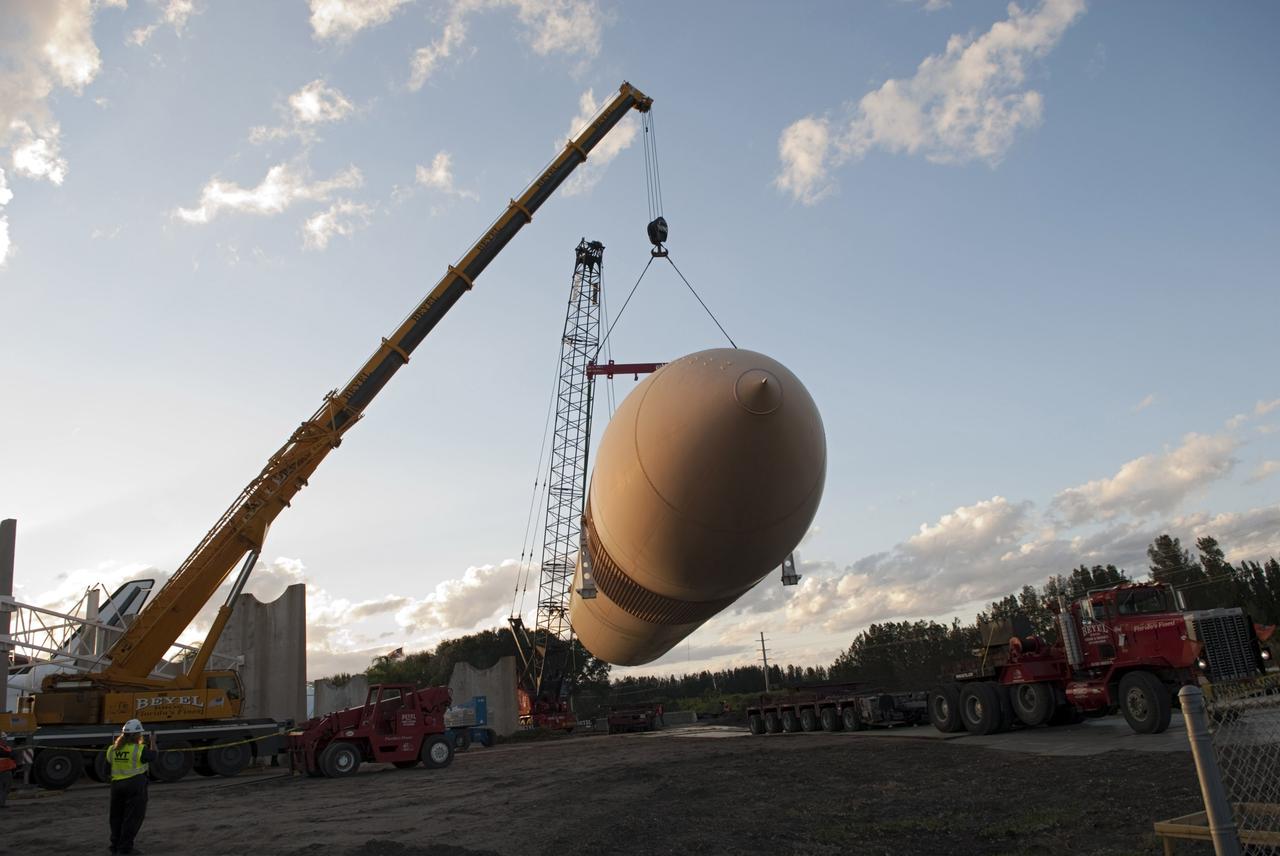
CAPE CANAVERAL, Fla. – Cranes remove a full-size replica of a space shuttle external fuel tank from the Kennedy Space Center Visitor Complex as the space-themed attraction makes way for a new exhibit featuring space shuttle Atlantis, which is currently undergoing preparations to go on public display. The tank is being placed into temporary storage at NASA's Kennedy Space Center. The tank was part of a mockup of the external tank and two solid rocket boosters at the visitor complex that were used to show visitors the size of actual space shuttle components. A space shuttle rode piggyback on the tank and boosters at liftoff and during the ascent into space. The tank, which held propellants for the shuttle's three main engines, was not reused, but burned up in the atmosphere and fell into the ocean. Photo credit: NASA/Jim Grossman
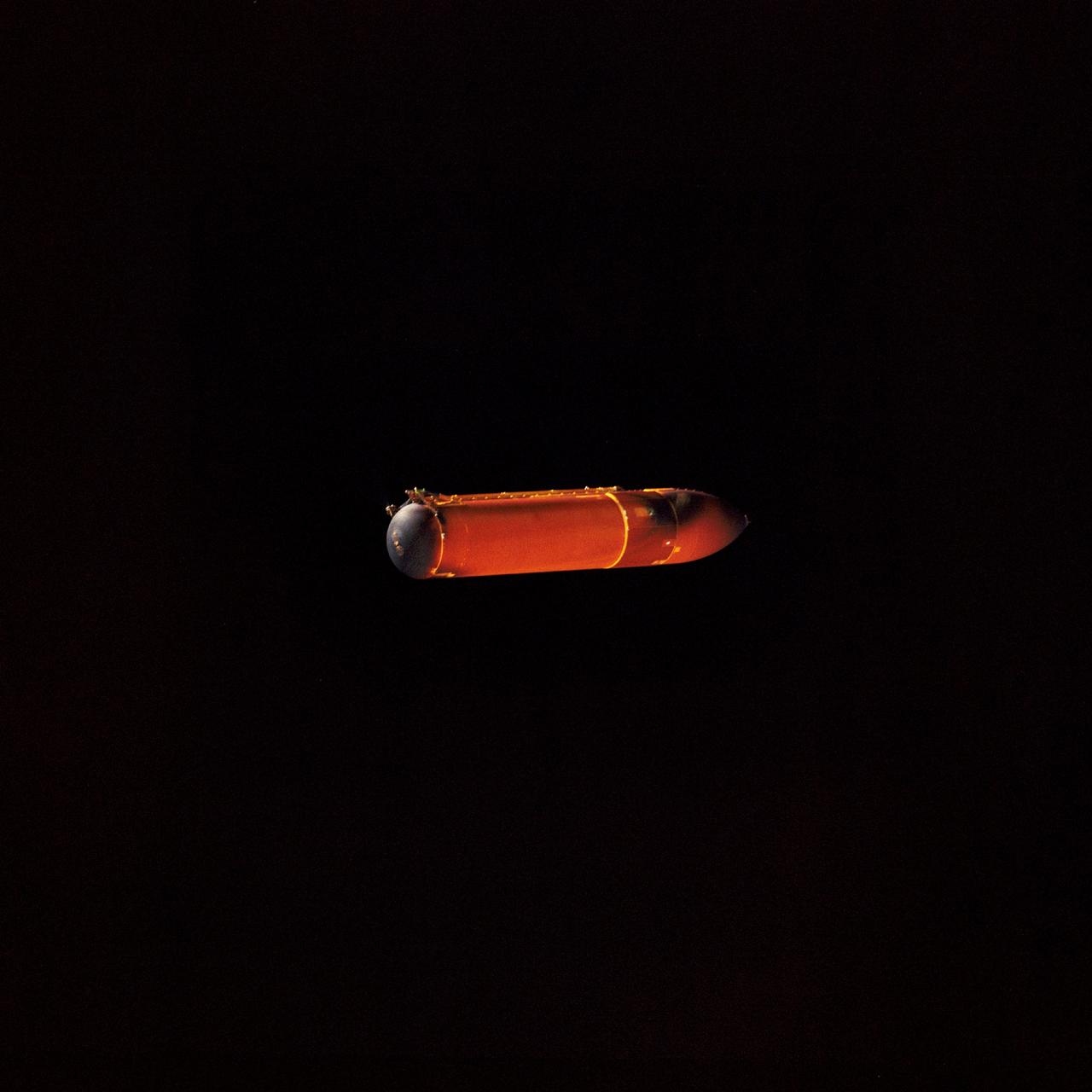
STS045-71-001 (24 March 1992) --- This 70mm photograph of the external fuel tank (ET) for STS-45 was photographed 4 1/2 minutes after having been jettisoned from Space Shuttle Atlantis. The excellent view of the starboard side of the ET shows both top and bottom attach points to the two solid rocket boosters (SRB). NASA engineers studying the STS-45 onboard photography deem the visible burn scars, caused by the SRBs, to be normal. The long thin pipe visible is the liquid oxygen line. At the bottom end of the large tank, both the liquid oxygen (nearest camera) and liquid hydrogen orbiter-to-ET attach hardware can be seen.
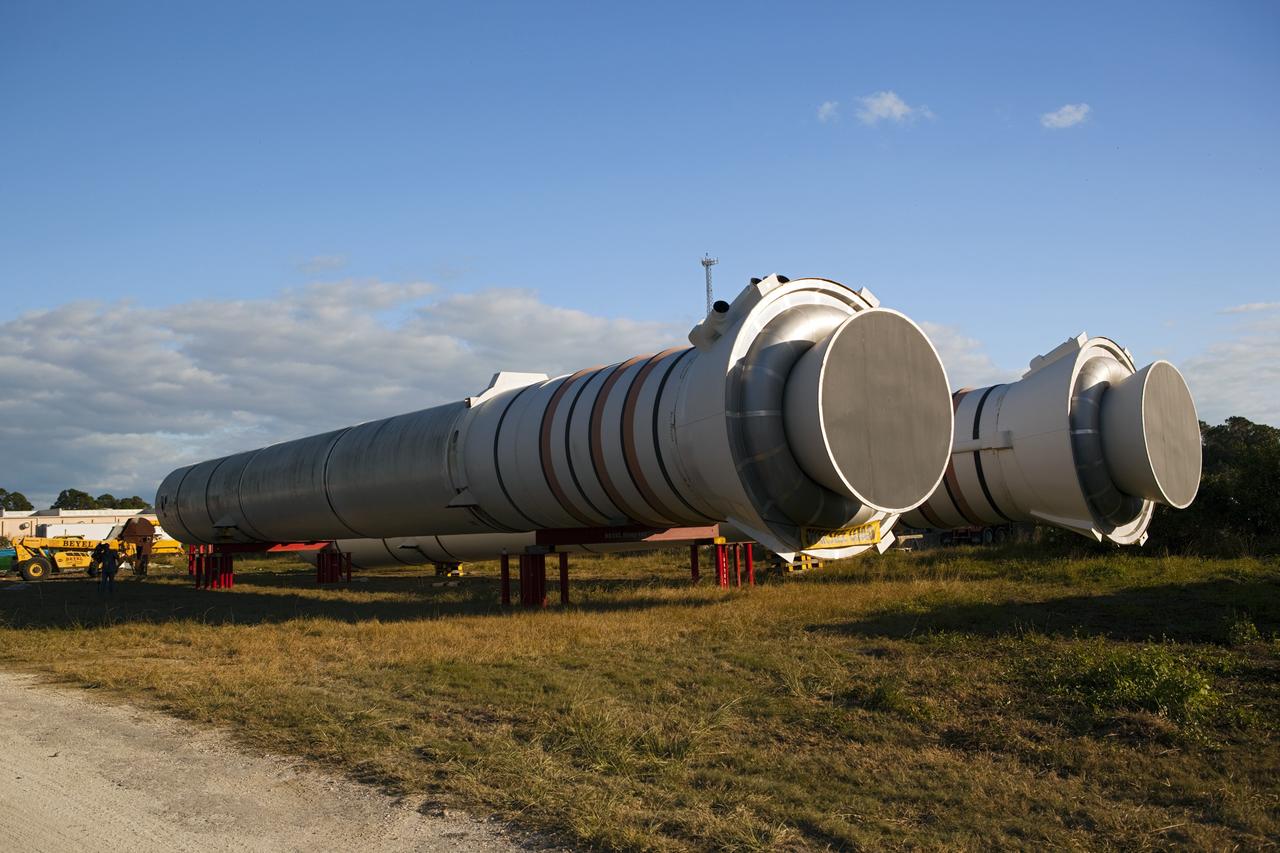
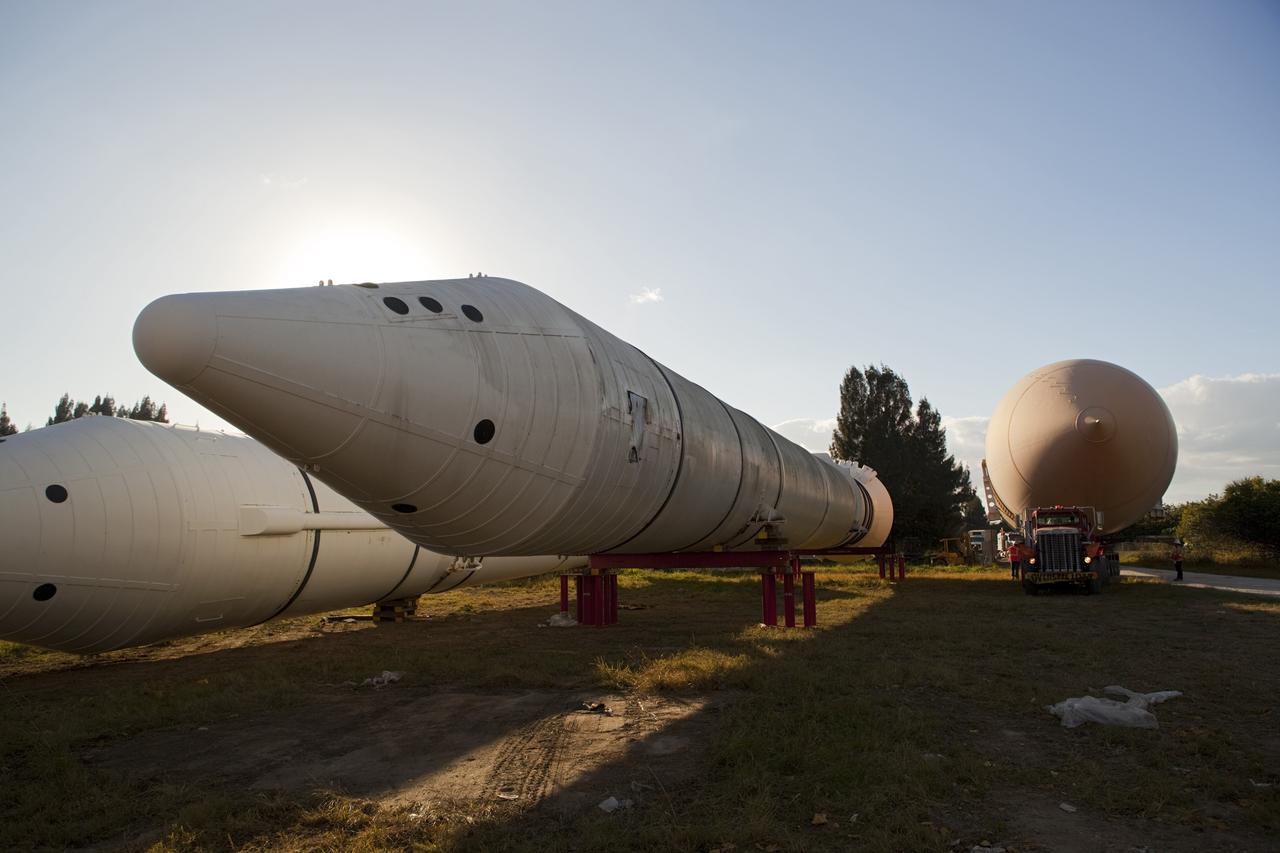
CAPE CANAVERAL, Fla. – A pair of 149-foot-long, space shuttle solid rocket booster, or SRB, displays from the Kennedy Space Center Visitor Complex sit inside a temporary storage area at NASA's Kennedy Space Center. The SRBs were part of a display of the external tank and two SRBs at the visitor complex that were used to show visitors the size of actual space shuttle components. A space shuttle rode piggyback on the tank and boosters at liftoff and during the ascent into space. The SRBs burned out after about two-and-a-half minutes of flight. After recovery from the ocean, the boosters could be used repeatedly. Photo credit: NASA/ Dmitri Gerondidakis

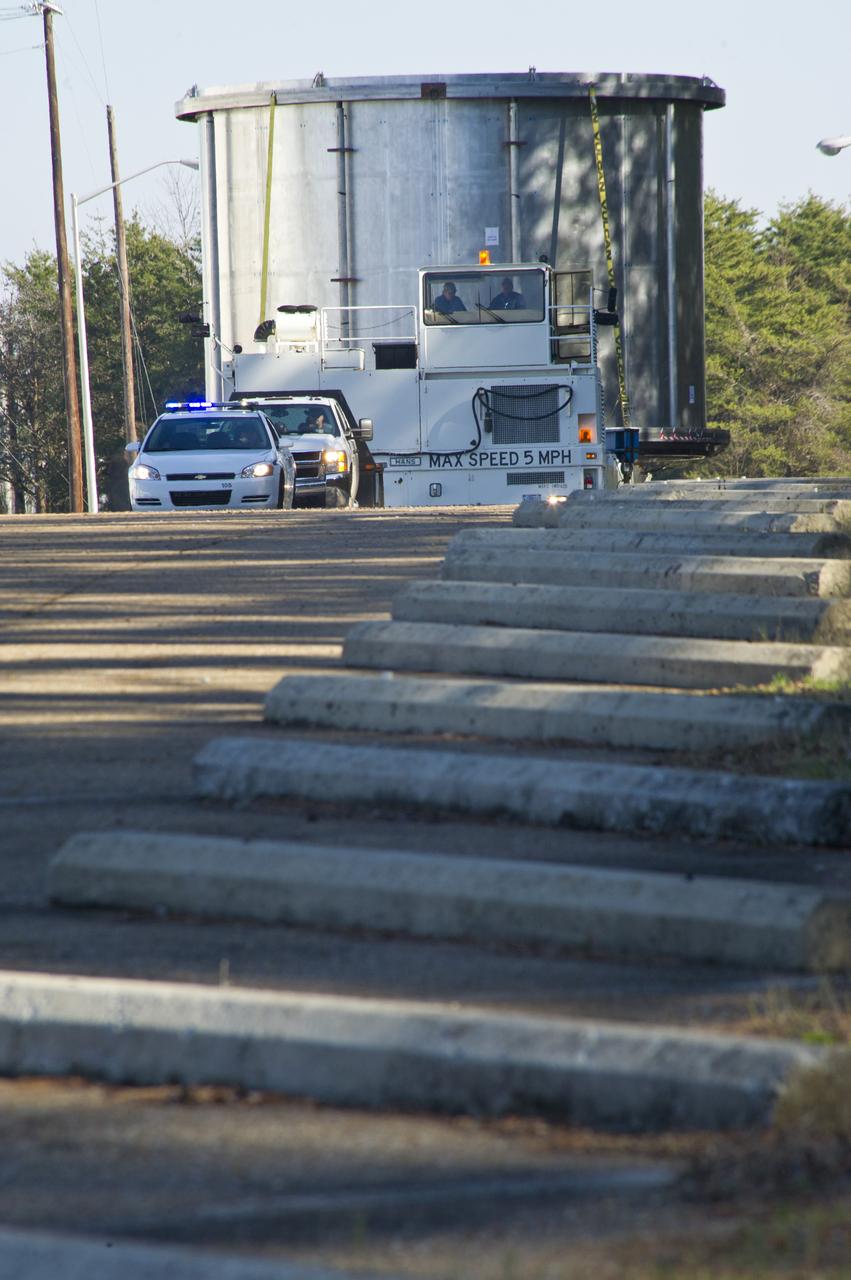
THE FINAL PRODUCTION EXTERNAL TANK ROLLS TOWARDS IT’S BARGE RIDE TO CAPE CANVERAL, FL AFTER A CEREMONY MARKING THE OCCASION AT THE MICHOUD ASSEMBLY FACILITY IN NEW ORLEANS, LA.
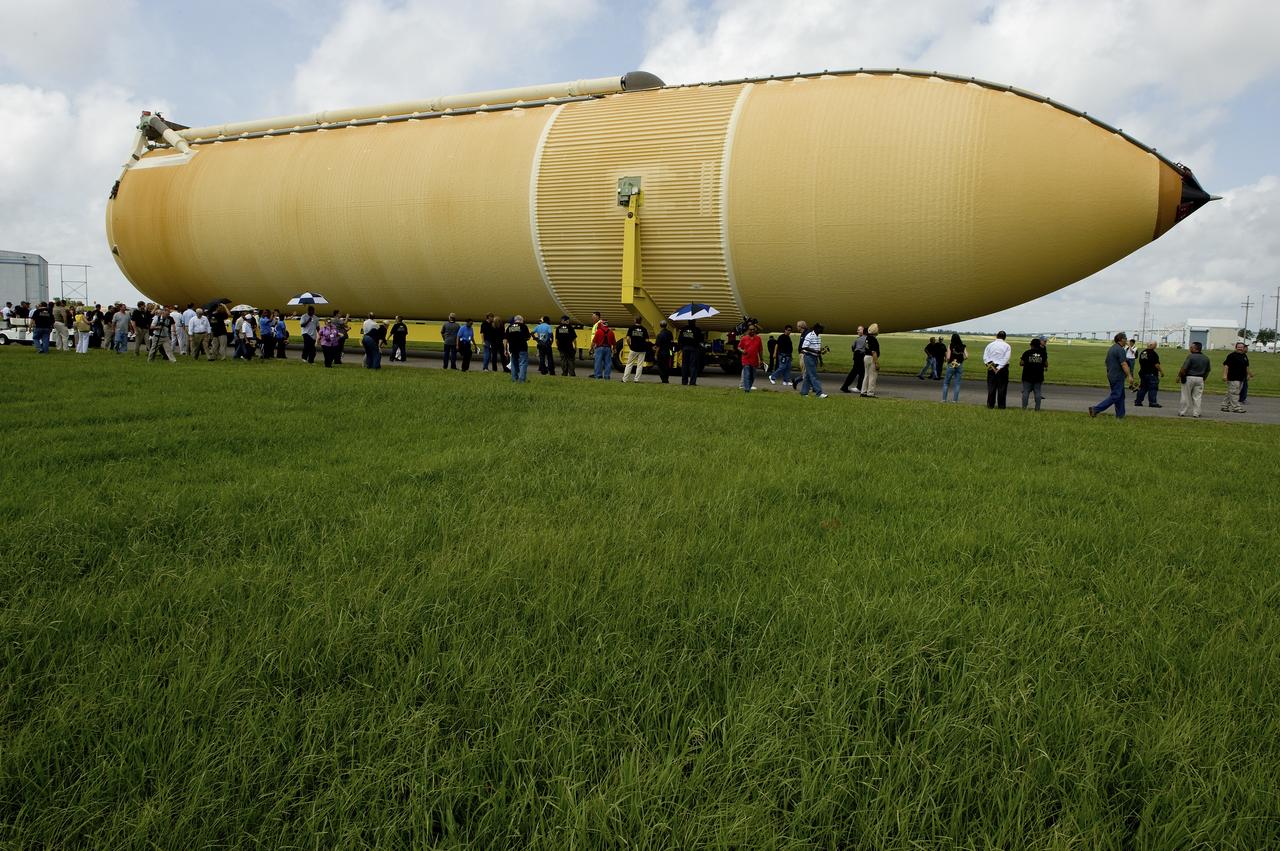
THE FINAL PRODUCTION EXTERNAL TANK ROLLS TOWARDS IT’S BARGE RIDE TO CAPE CANVERAL, FL AFTER A CEREMONY MARKING THE OCCASION AT THE MICHOUD ASSEMBLY FACILITY IN NEW ORLEANS, LA.
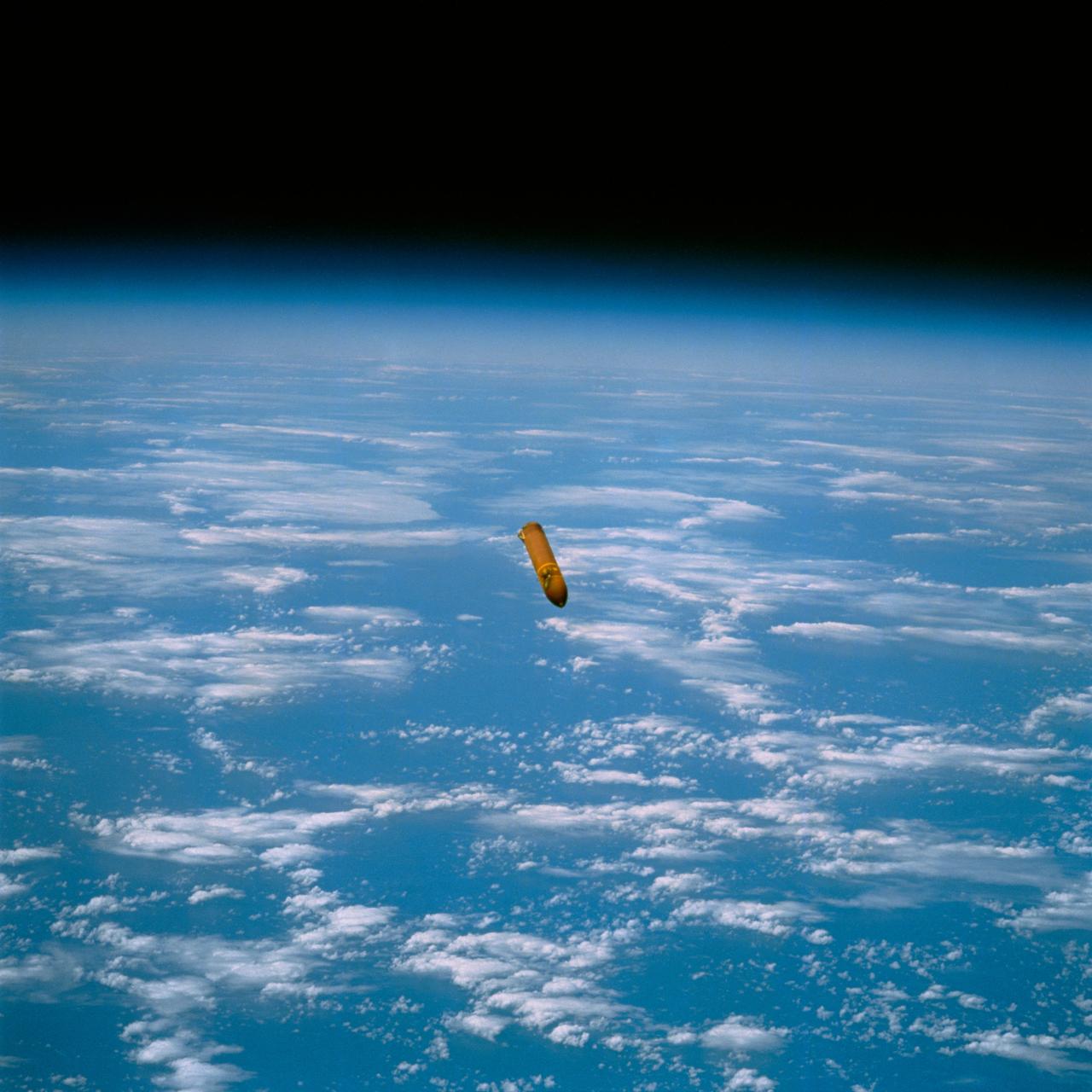
STS029-72-059 (13 March 1989) --- This 70mm photograph, taken by Astronaut James P. Bagian 16 minutes and 7 seconds after liftoff of Discovery, shows the external fuel tank (ET) against the background of Earth. The tank is falling away from the orbiter following ET separation. The left side shows the burn scar above the solid rocket booster (SRB) forward attach point. The burn is caused by the forward SRB separation motors firing during SRB separation. Post 51-L analysis of the thermal and pressure effects of the separation motor exhaust plume indicate that the scarring is not a safety hazard. However, photographs such as this one were requested for additional missions in order to document the phenomenon and corroborate this conclusion. The photo was made at 15:13:07 GMT, March 13, 1989. It was among the visuals used by the crew at its Mar. 28, 1989 post-flight press conference.
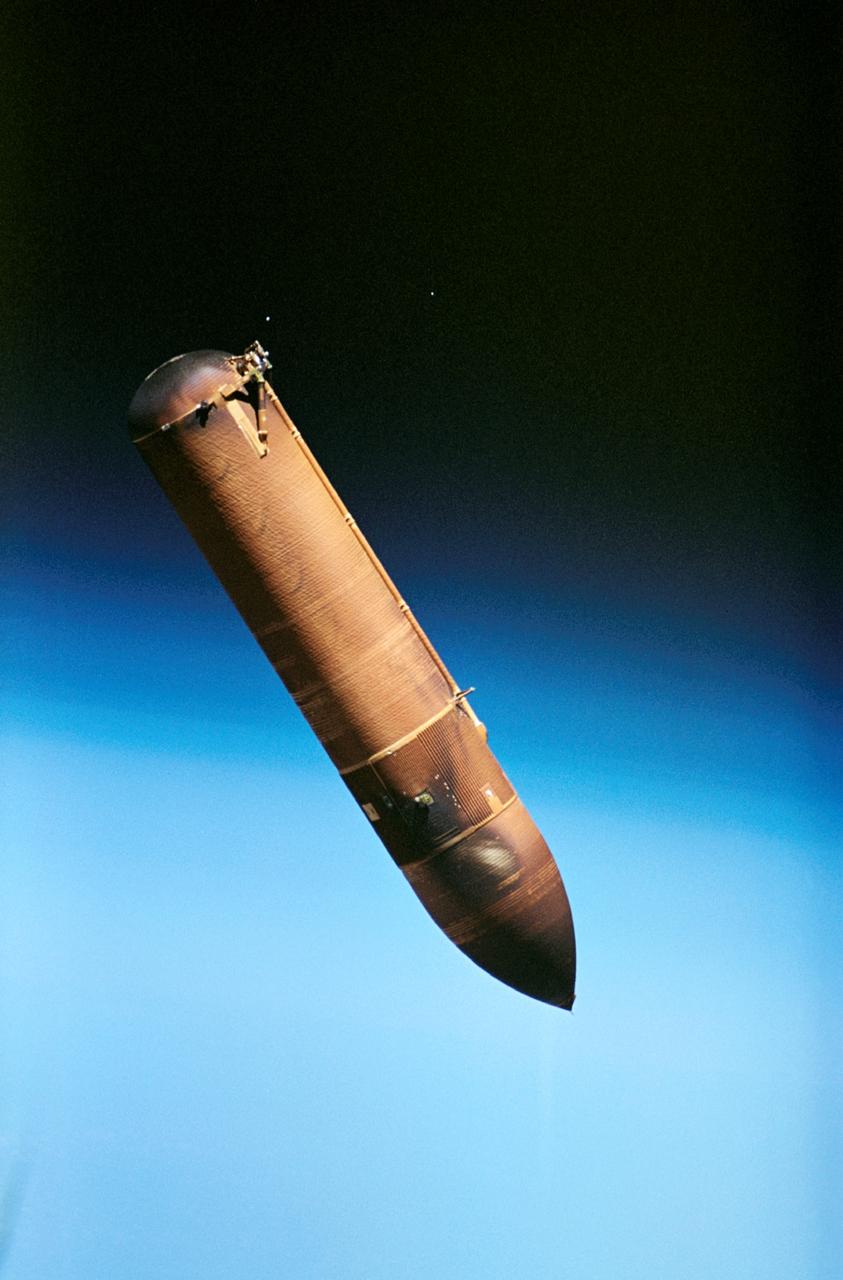
STS057-03-017 (21 June 1993) --- The external fuel tank falls toward Earth after being jettisoned from the Space Shuttle Endeavour as the spacecraft headed toward its ten-day stay in Earth orbit. A 35mm camera was used to record the ET jettison.
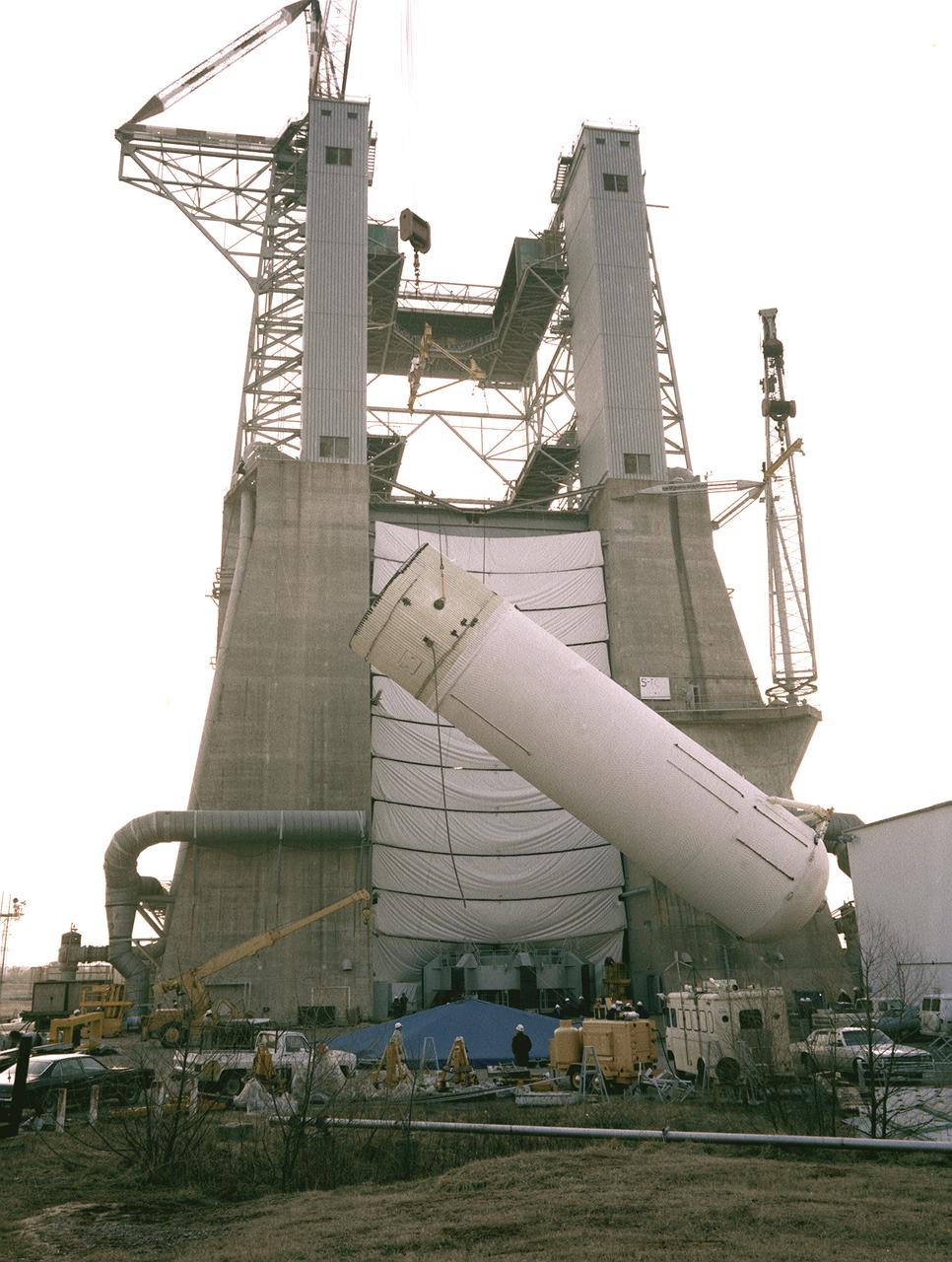
A liquid hydrogen tank of the Shuttle's external tank (ET) is installed into the S-1C Test Stand for a structural test at the Marshall Space Flight Center. At 154-feet long and more than 27-feet in diameter, the ET is the largest component of the Space Shuttle, the structural backbone of the entire Shuttle system, and is the only part of the vehicle that is not reusable. The ET is manufactured at the Michoud Assembly Facility near New Orleans, Louisiana, by the Martin Marietta Corporation under management of the Marshall Space Flight Center.
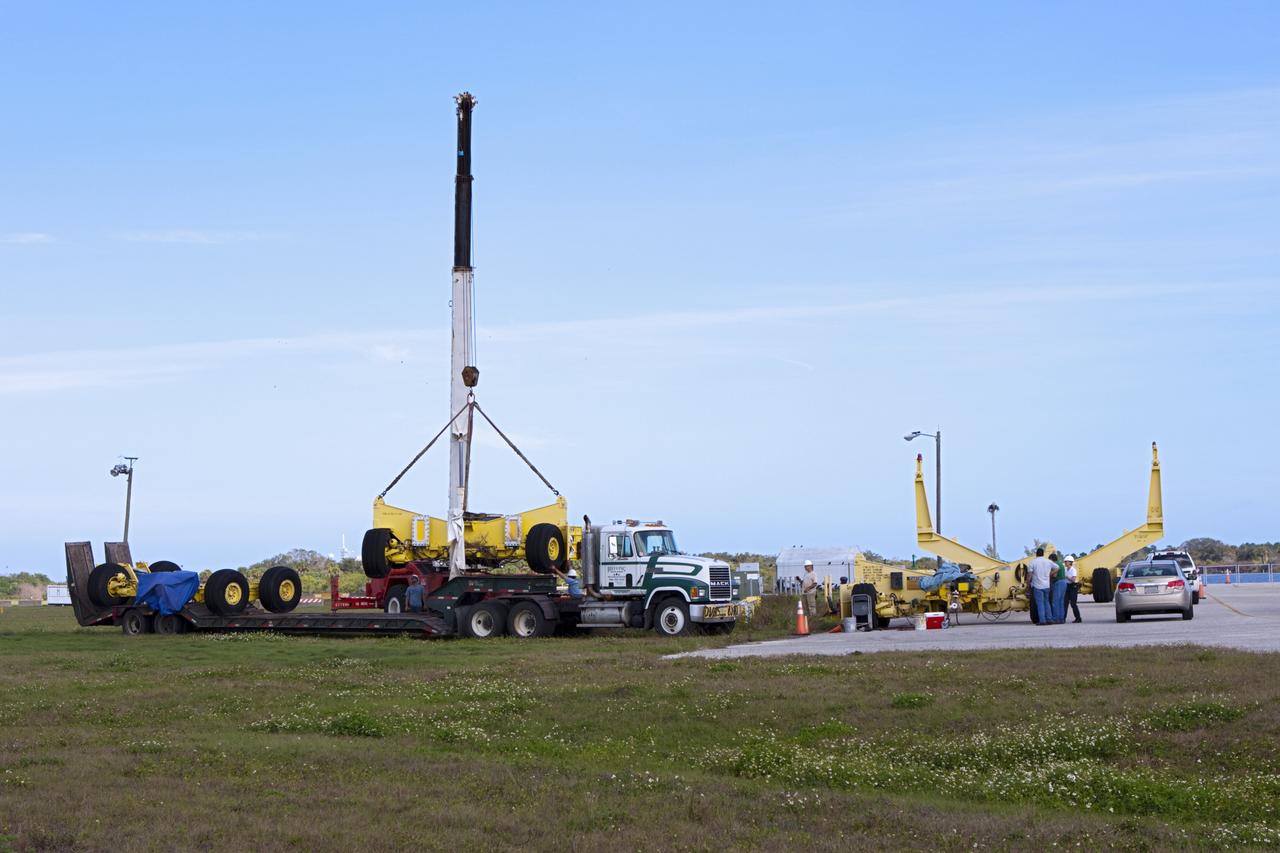
CAPE CANAVERAL, Fla. – At NASA’s Kennedy Space Center in Florida, two space shuttle external fuel tank transporters are being prepared for transfer to the Wings of Dreams Aviation Museum at Keystone Heights Airport between Gainesville and Jacksonville, Fla. At the Wings of Dreams Aviation Museum a mock-up shuttle external fuel tank will be displayed. During space shuttle launches, the external tanks contained over 500,000 gallons of liquid hydrogen and liquid oxygen propellant for the shuttle orbiters' three main engines. The effort is part of Transition and Retirement of the space shuttle. For more information, visit http://www.nasa.gov/transition Photo credit: NASA/ Jim Grossmann
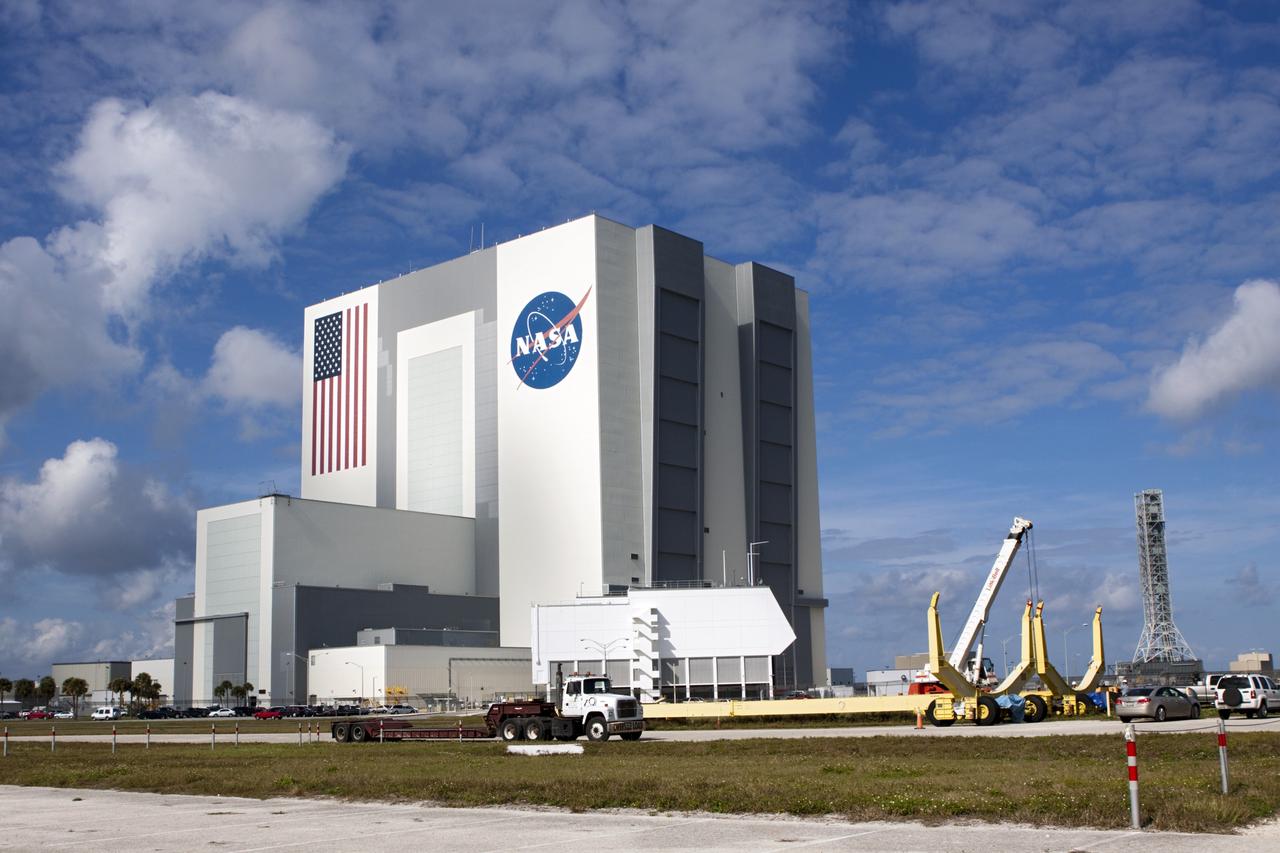
CAPE CANAVERAL, Fla. – At NASA’s Kennedy Space Center in Florida, two space shuttle external fuel tank transporters are being prepared for transfer to the Wings of Dreams Aviation Museum at Keystone Heights Airport between Gainesville and Jacksonville, Fla. At the Wings of Dreams Aviation Museum a mock-up shuttle external fuel tank will be displayed. During space shuttle launches, the external tanks contained over 500,000 gallons of liquid hydrogen and liquid oxygen propellant for the shuttle orbiters' three main engines. The effort is part of Transition and Retirement of the space shuttle. For more information, visit http://www.nasa.gov/transition Photo credit: NASA/ Jim Grossmann
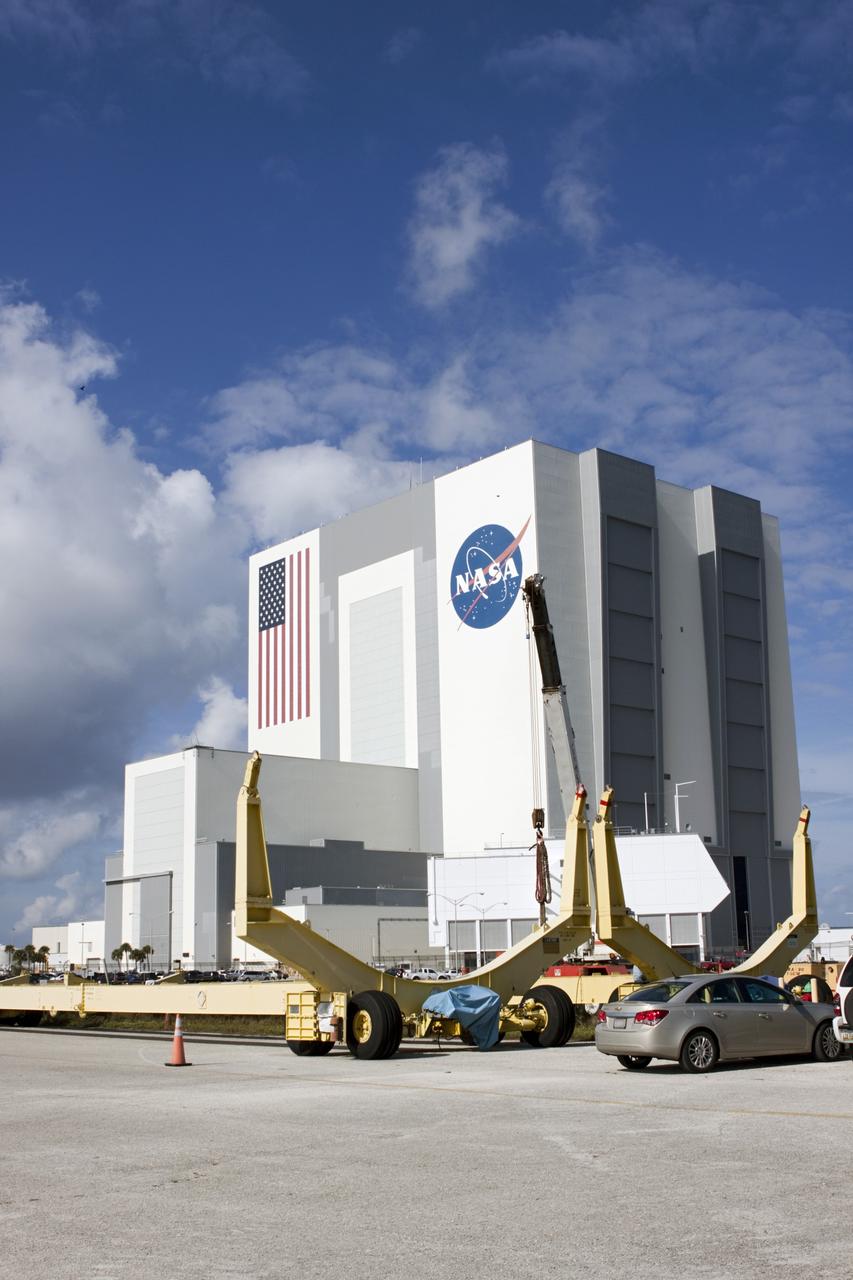
CAPE CANAVERAL, Fla. – At NASA’s Kennedy Space Center in Florida, two space shuttle external fuel tank transporters are being prepared for transfer to the Wings of Dreams Aviation Museum at Keystone Heights Airport between Gainesville and Jacksonville, Fla. At the Wings of Dreams Aviation Museum a mock-up shuttle external fuel tank will be displayed. During space shuttle launches, the external tanks contained over 500,000 gallons of liquid hydrogen and liquid oxygen propellant for the shuttle orbiters' three main engines. The effort is part of Transition and Retirement of the space shuttle. For more information, visit http://www.nasa.gov/transition Photo credit: NASA/ Jim Grossmann
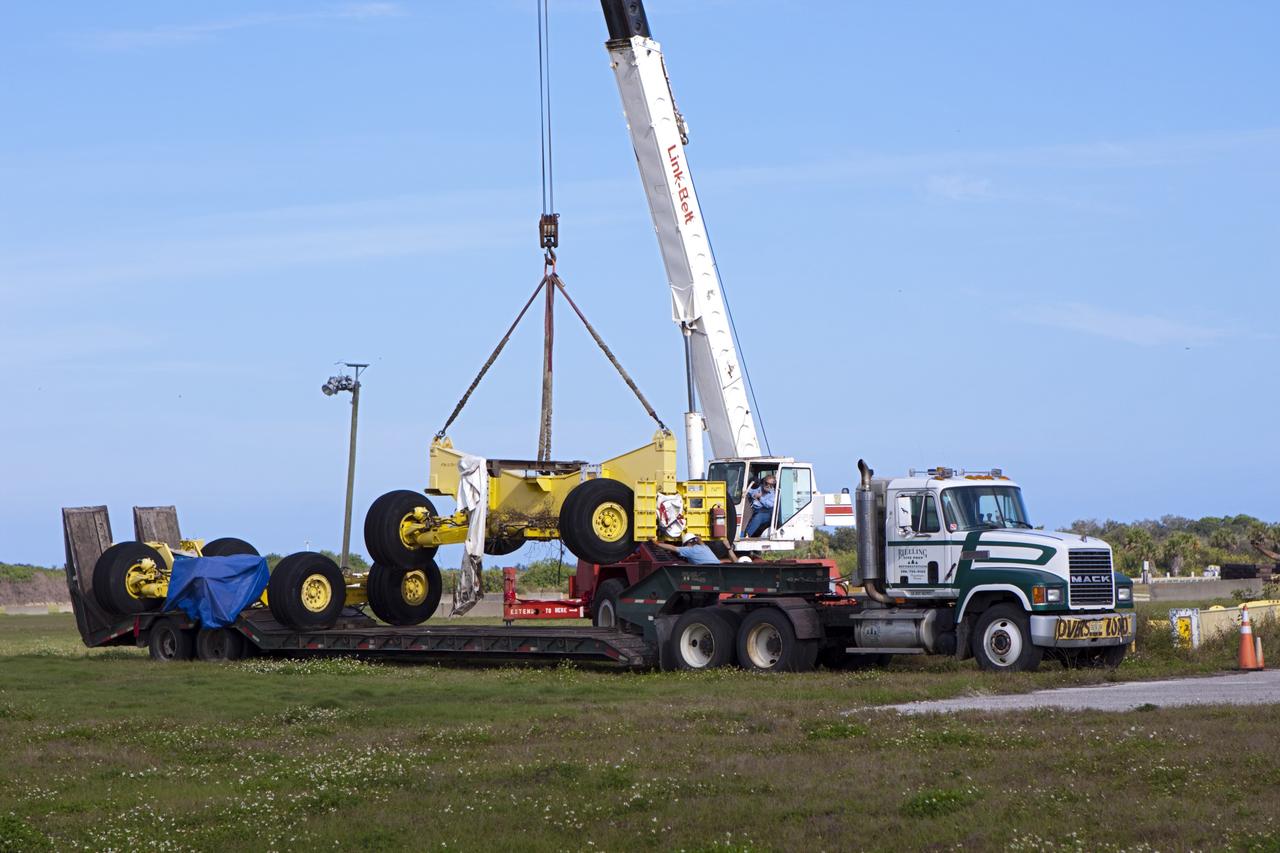
CAPE CANAVERAL, Fla. – At NASA’s Kennedy Space Center in Florida, two space shuttle external fuel tank transporters are being prepared for transfer to the Wings of Dreams Aviation Museum at Keystone Heights Airport between Gainesville and Jacksonville, Fla. At the Wings of Dreams Aviation Museum a mock-up shuttle external fuel tank will be displayed. During space shuttle launches, the external tanks contained over 500,000 gallons of liquid hydrogen and liquid oxygen propellant for the shuttle orbiters' three main engines. The effort is part of Transition and Retirement of the space shuttle. For more information, visit http://www.nasa.gov/transition Photo credit: NASA/ Jim Grossmann

This is a cutaway illustration of the Space Shuttle external tank (ET) with callouts. The giant cylinder, higher than a 15-story building, with a length of 154-feet (47-meters) and a diameter of 27.5-feet (8.4-meters), is the largest single piece of the Space Shuttle. During launch, the ET also acts as a backbone for the orbiter and solid rocket boosters. Separate pressurized tank sections within the external tank hold the liquid hydrogen fuel and liquid oxygen oxidizer for the Shuttle's three main engines. During launch, the ET feeds the fuel under pressure through 17-inch (43.2-centimeter) ducts that branch off into smaller lines that feed directly into the main engines. The main engines consume 64,000 gallons (242,260 liters) of fuel each minute. Machined from aluminum alloys, the Space Shuttle's external tank is currently the only part of the launch vehicle that is not reused. After its 526,000-gallons (1,991,071 liters) of propellants are consumed during the first 8.5-minutes of flight, it is jettisoned from the orbiter and breaks up in the upper atmosphere, its pieces falling into remote ocean waters. The Marshall Space Flight Center was responsible for developing the ET.
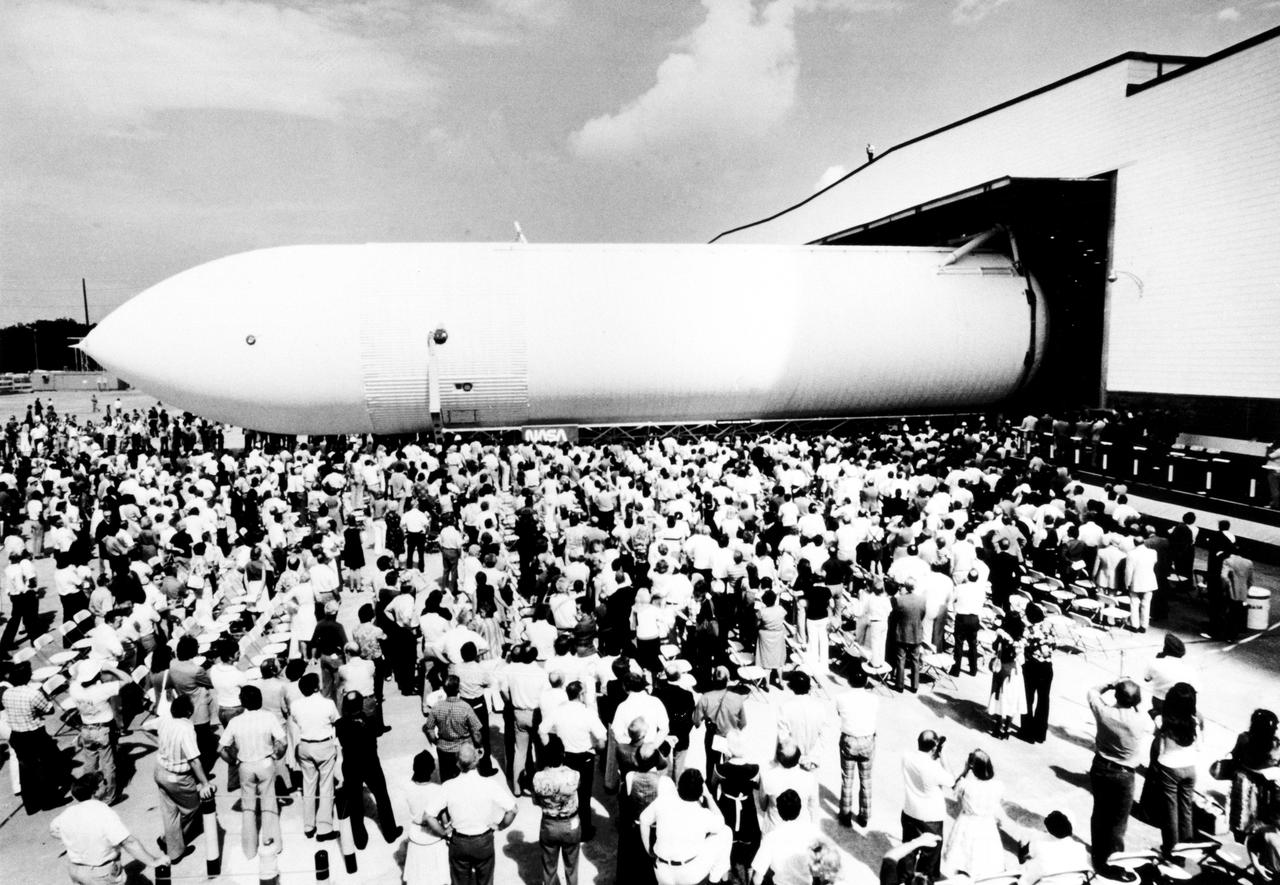
The first Space Shuttle External Tank, the Main Propulsion Test Article (MPTA), rolls off the assembly line September 9, 1977 at the Michoud Assembly Facility in New Orleans. The MPTA was then transported to the National Space Technology Laboratories in southern Mississippi where it was used in the first static firing of the three main engines. Marshall Space Flight Center had management responsibility for Space Shuttle propulsion elements, including the External Tank. Martin Marietta was the prime contractor who designed and assembled the tanks at Michoud.

KENNEDY SPACE CENTER, FLA. -- In Highbay 1 inside the Vehicle Assembly Building, technicians work on repair techniques to the hail-damaged external tank. They are inside a tented area that protects the tank. Scaffolding around the tank can be seen below. A severe thunderstorm with golf ball-sized hail caused visible divots in the giant tank's foam insulation and minor surface damage to about 26 heat shield tiles on the shuttle's left wing. A new target launch date has not been determined, but teams will focus on preparing Atlantis for liftoff in late April on mission STS-117. Photo credit: NASA/Jim Grossmann
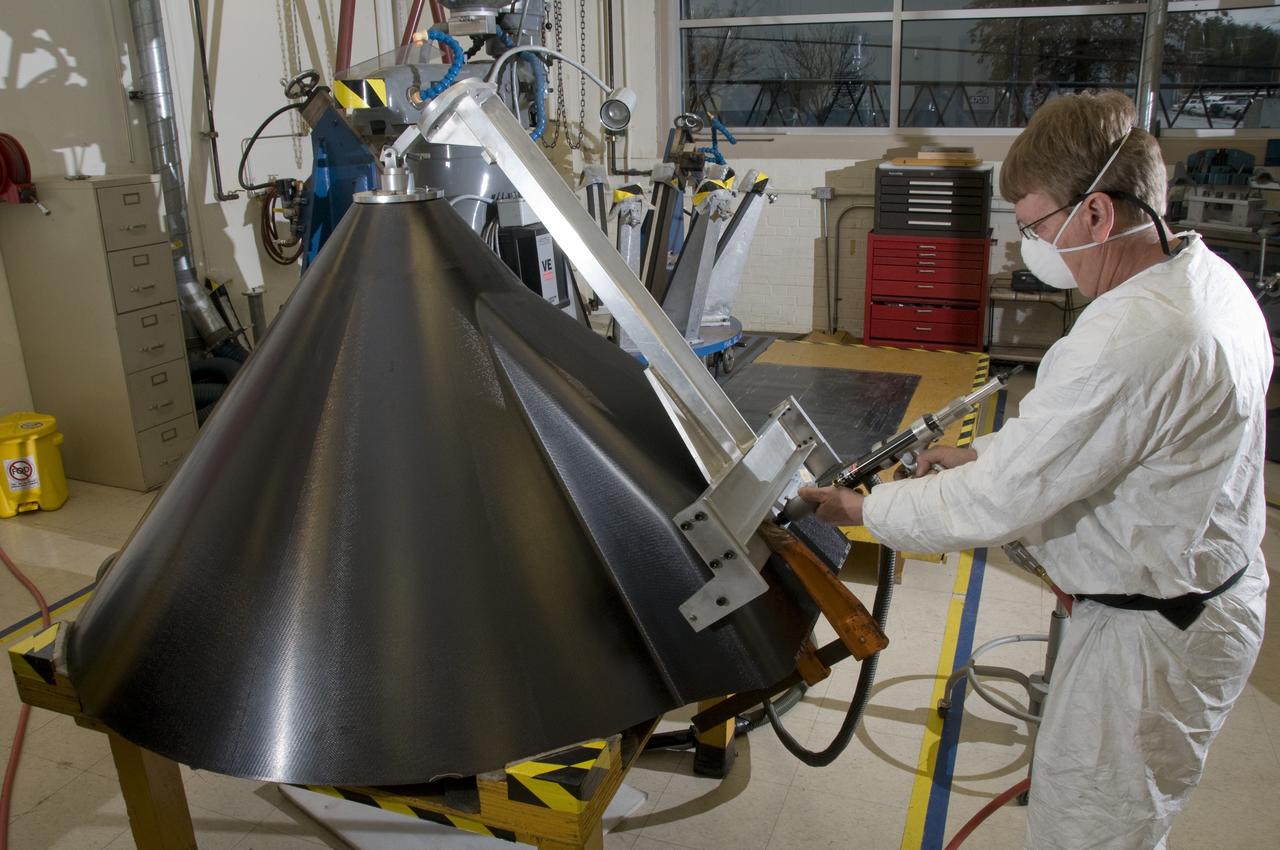
ROBERT CARROLL, A MACHINIST WITH LOCKHEED MARTIN, DRILLS ALIGNMENT HOLES ON THE EXTERNAL TANK COMPOSITE NOSE CONE
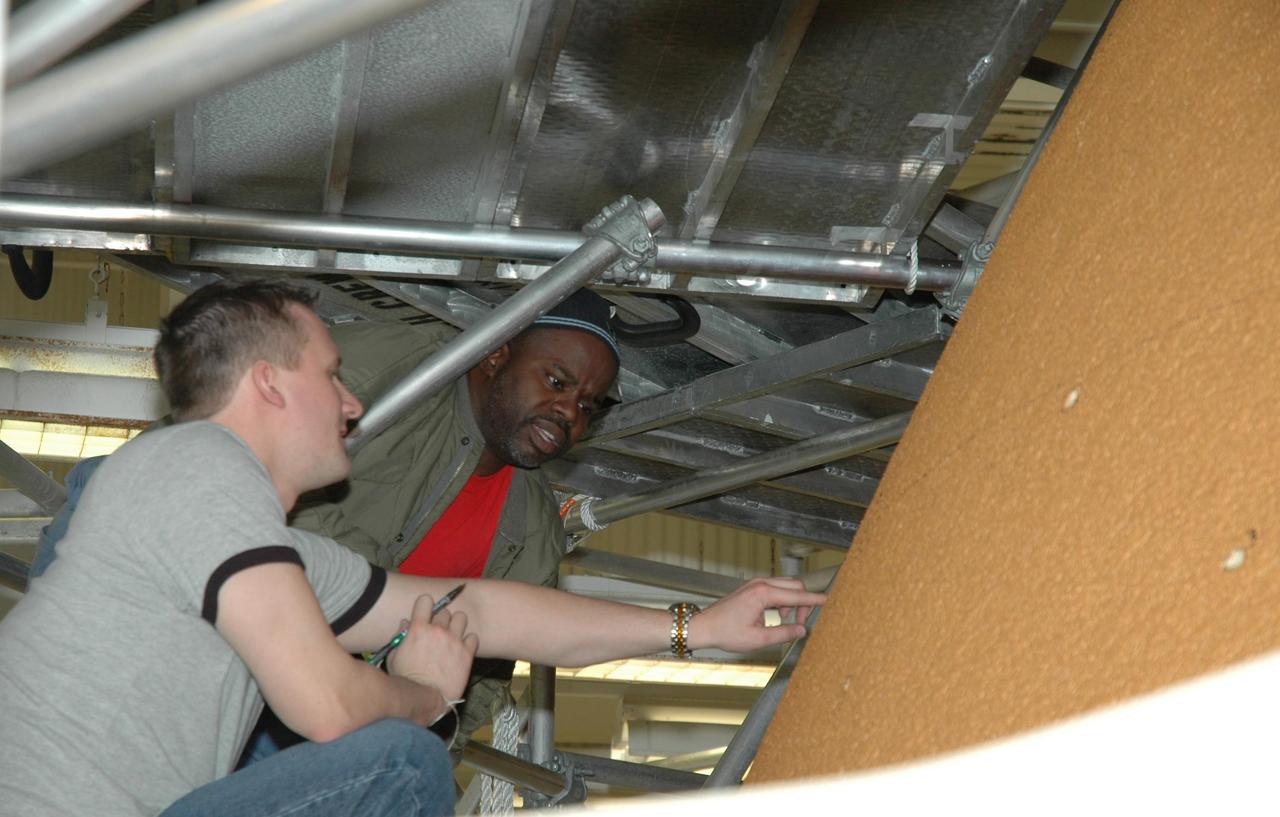
KENNEDY SPACE CENTER, FLA. -- In Highbay 1 inside the Vehicle Assembly Building, technicians look at hail damage on the external tank. A severe thunderstorm with golf ball-sized hail caused visible divots in the giant tank's foam insulation and minor surface damage to about 26 heat shield tiles on the shuttle's left wing. A new target launch date has not been determined, but teams will focus on preparing Atlantis for liftoff in late April on mission STS-117. Photo credit: NASA/Jim Grossmann
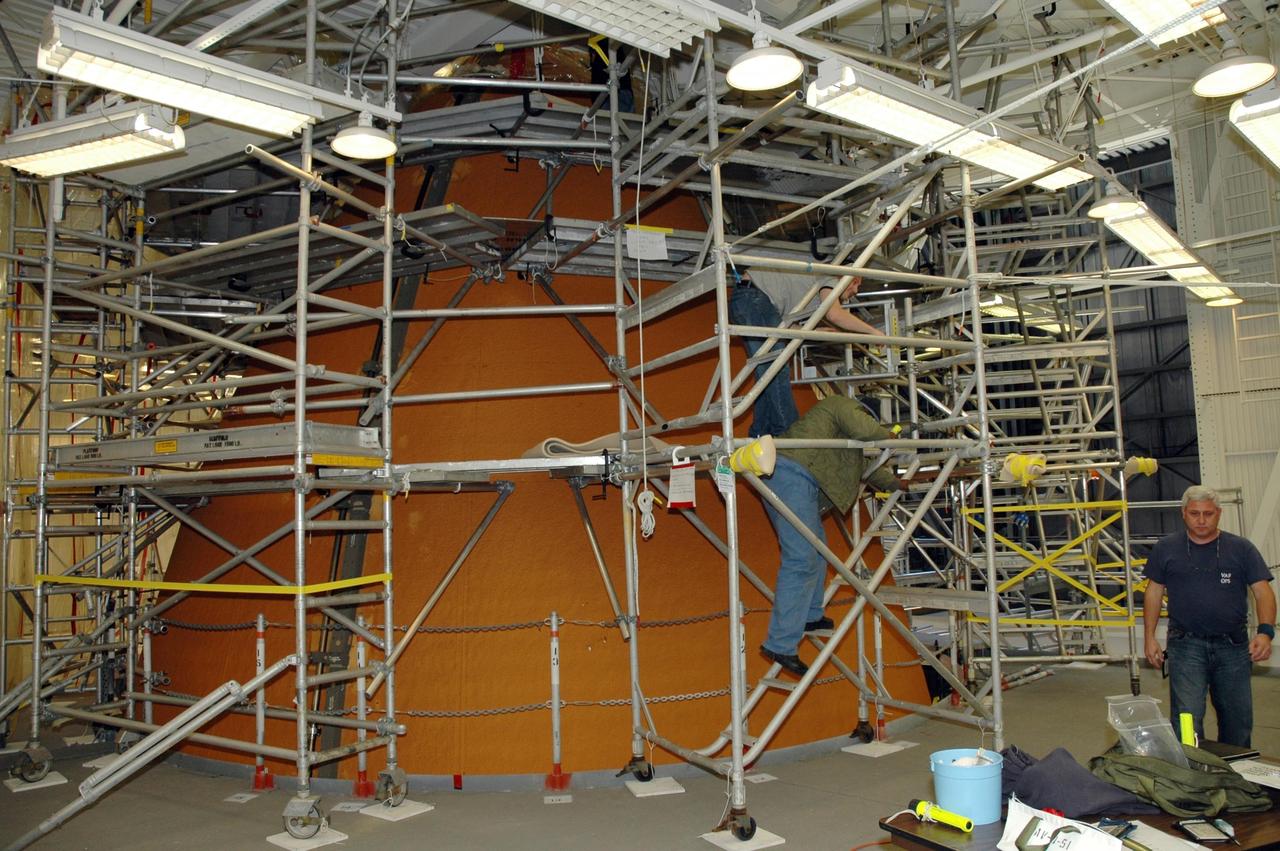
KENNEDY SPACE CENTER, FLA. -- In Highbay 1 inside the Vehicle Assembly Building, workers secure scaffolding around the external tank to prepare it for repairs. A severe thunderstorm with golf ball-sized hail caused visible divots in the giant tank's foam insulation and minor surface damage to about 26 heat shield tiles on the shuttle's left wing. A new target launch date has not been determined, but teams will focus on preparing Atlantis for liftoff in late April on mission STS-117. Photo credit: NASA/Jim Grossmann

The Space Shuttle main propulsion system includes three major elements. One of those elements is the External Tank (ET). The ET holds over one-half million gallons of liquid oxygen and liquid hydrogen that fuel the main engines.
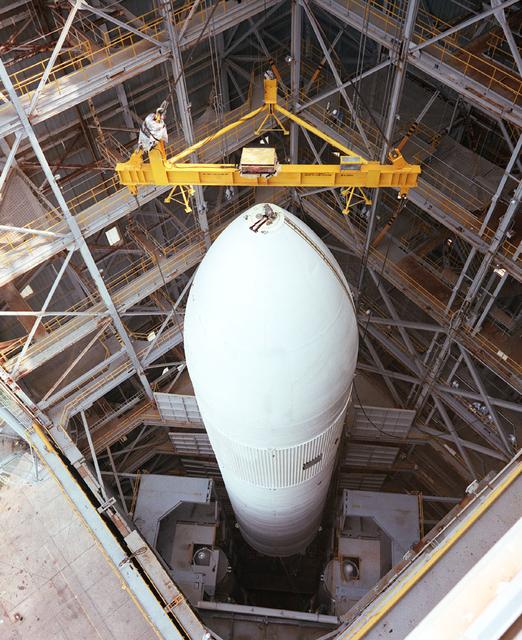
This photo depicts the installation of an External Tank (ET) into the Marshall Space Flight Center Dynamic Test Stand, building 4550. It is being mated to the Solid Rocket Boosters (SRB's) for a Mated Vertical Ground Vibration Test (MVGVT). At 154-feet long and more than 27-feet in diameter, the ET is the largest component of the Space Shuttle, the structural backbone of the entire Shuttle system, and is the only part of the vehicle that is not reusable.
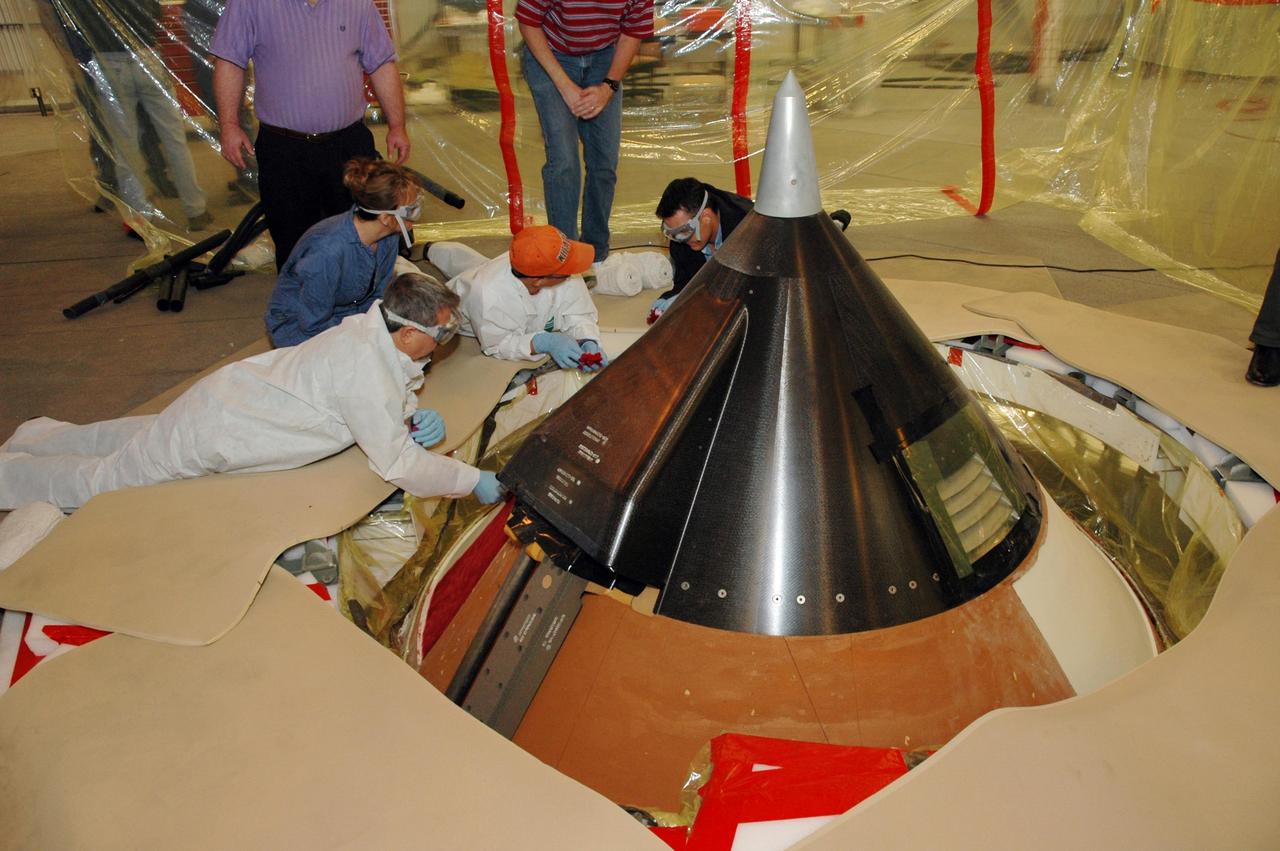
KENNEDY SPACE CENTER, FLA. -- In Highbay 1 inside the Vehicle Assembly Building, technicians perform repair techniques to the external tank inside a tented area that protects the top of the tank. A severe thunderstorm with golf ball-sized hail caused visible divots in the giant tank's foam insulation and minor surface damage to about 26 heat shield tiles on the shuttle's left wing. A new target launch date has not been determined, but teams will focus on preparing Atlantis for liftoff in late April on mission STS-117. Photo credit: NASA/Jim Grossmann
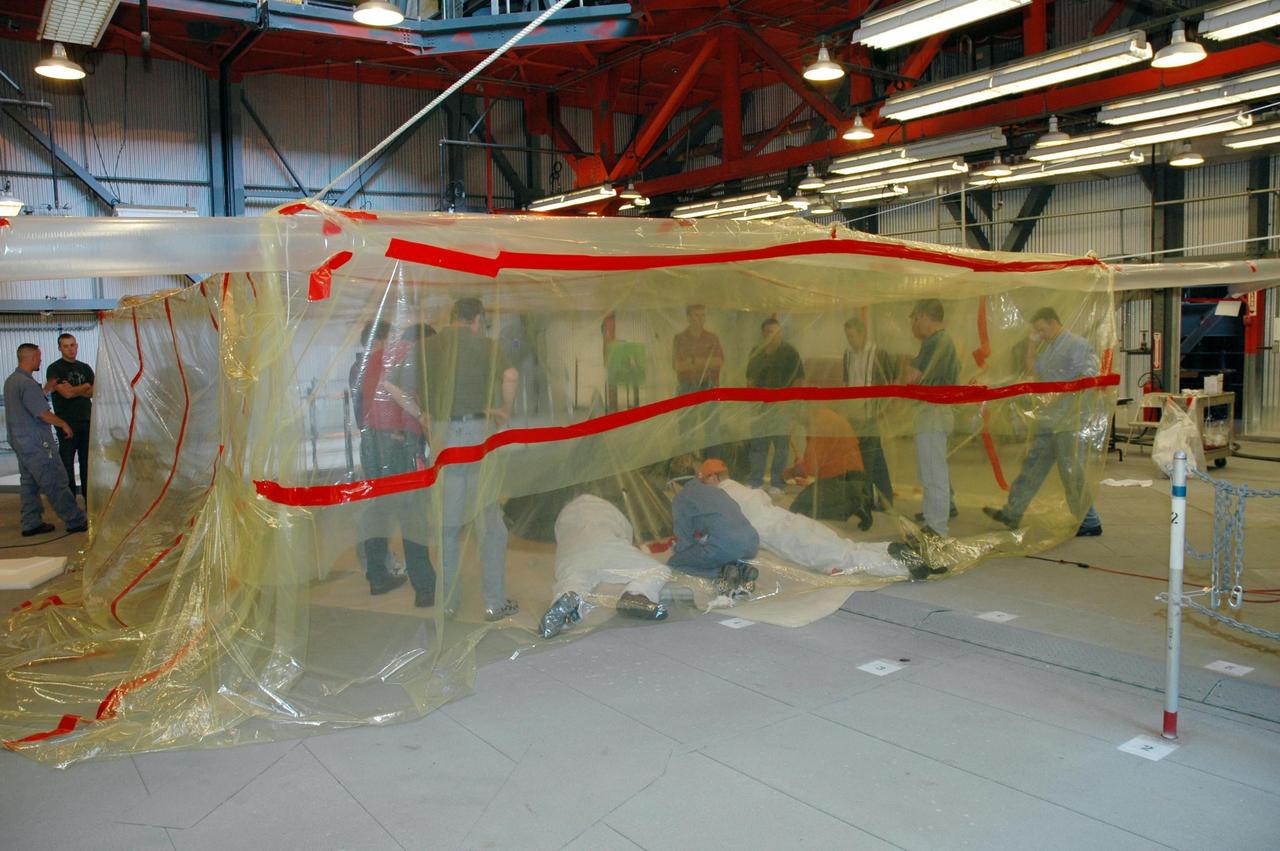
KENNEDY SPACE CENTER, FLA. -- In Highbay 1 inside the Vehicle Assembly Building, technicians work on repair techniques to the external tank. They are inside a tented area that protects the tank. A severe thunderstorm with golf ball-sized hail caused visible divots in the giant tank's foam insulation and minor surface damage to about 26 heat shield tiles on the shuttle's left wing. A new target launch date has not been determined, but teams will focus on preparing Atlantis for liftoff in late April on mission STS-117. Photo credit: NASA/Jim Grossmann
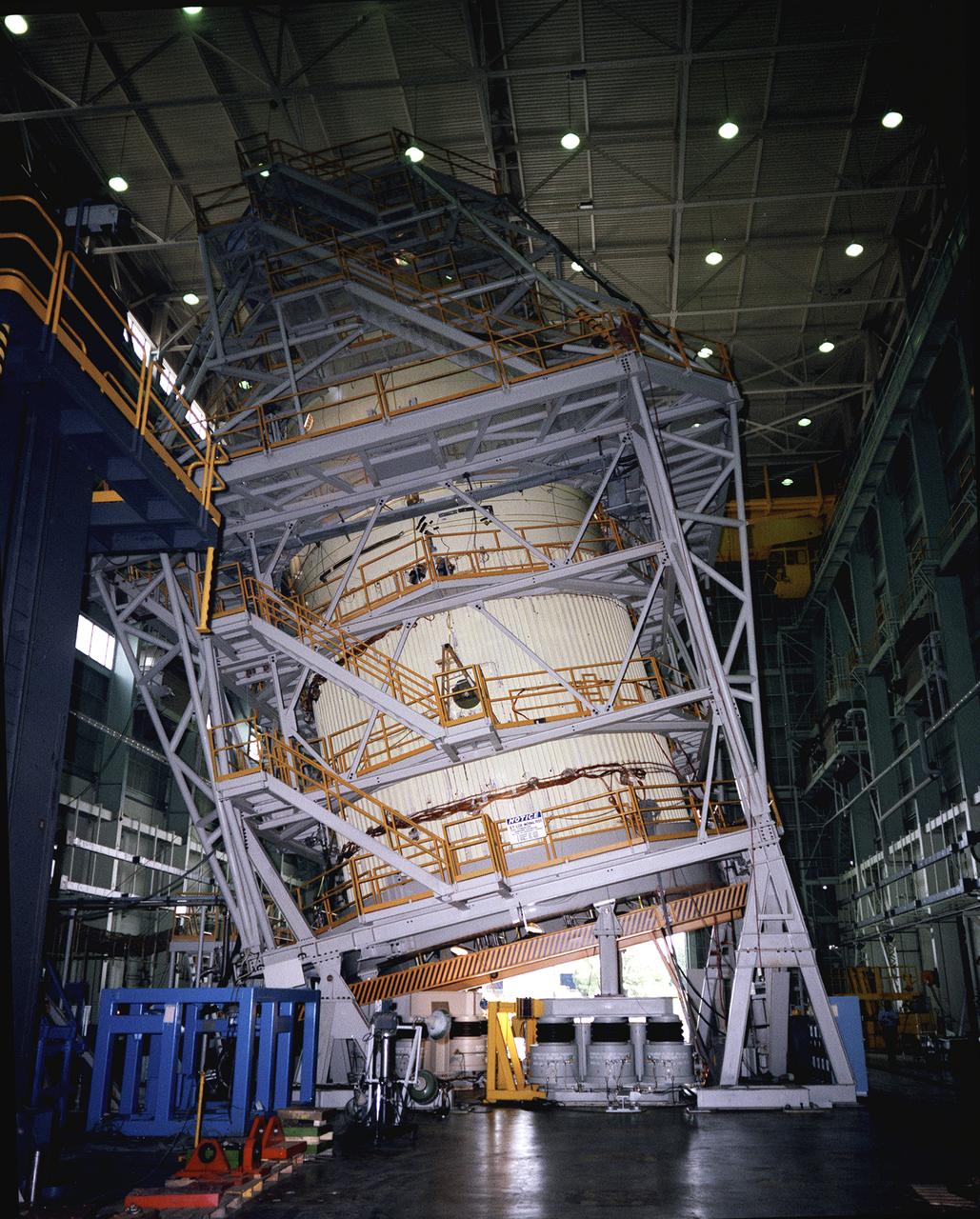
This photograph shows a liquid oxygen tank for the Shuttle External Tank (ET) during a hydroelastic modal survey test at the Marshall Space Flight Center. The ET provides liquid hydrogen and liquid oxygen to the Shuttle's three main engines during the first 8.5 minutes of flight. At 154-feet long and more than 27-feet in diameter, the ET is the largest component of the Space Shuttle, the structural backbone of the entire Shuttle system, and is the only part of the vehicle that is not reusable. The ET is manufactured at the Michoud Assembly Facility near New Orleans, Louisiana, by the Martin Marietta Corporation under management of the Marshall Space Flight Center.
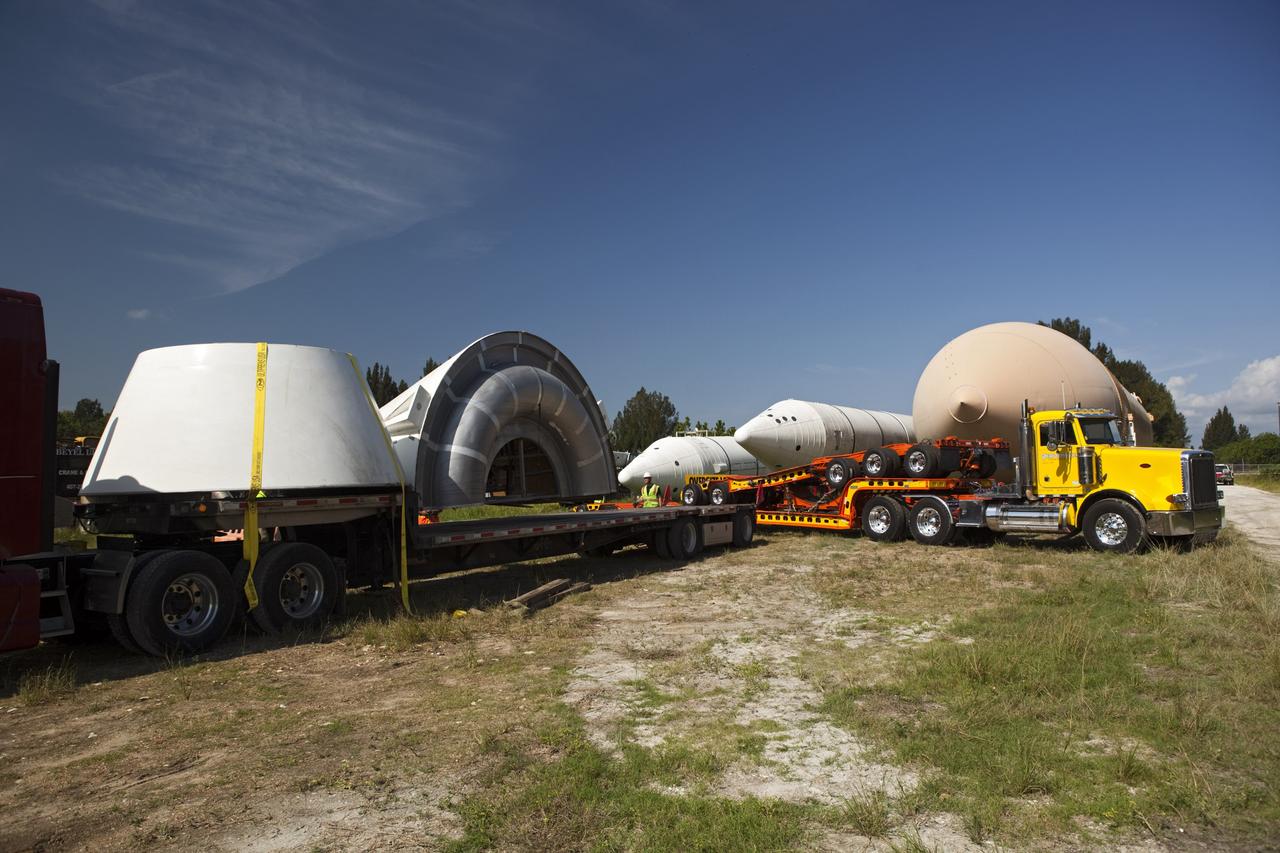
CAPE CANAVERAL, Fla. – At NASA’s Kennedy Space Center in Florida, aft skirts for space shuttle solid rocket boosters are being loaded on a truck. A twin set of space shuttle solid rocket boosters and an external fuel tank are being prepared for transport to separate museums. The solid rocket boosters, or SRBs, will be displayed at the California Science Center in Los Angeles. The external tank soon will be transported for display at the Wings of Dreams Aviation Museum at Keystone Heights Airport between Gainesville and Jacksonville, Fla. The 149-foot SRBs together provided six million pounds of thrust. The external fuel tank contained over 500,000 gallons of liquid hydrogen and liquid oxygen propellant for the shuttle orbiters' three main engines. The work is part of Transition and Retirement of the space shuttle. For more information, visit http://www.nasa.gov/transition Photo credit: NASA/ Dimitri Gerondidakis
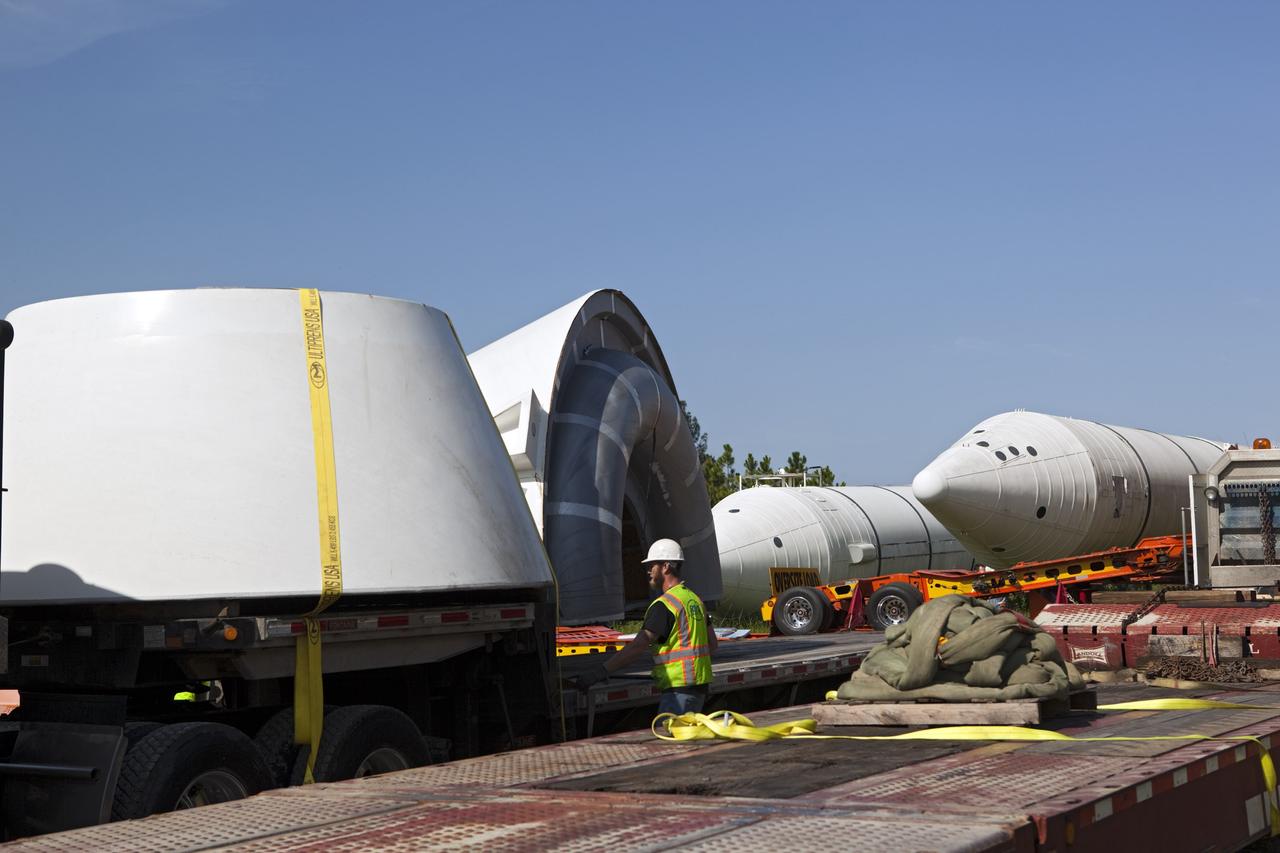
CAPE CANAVERAL, Fla. – At NASA’s Kennedy Space Center in Florida, aft skirts for space shuttle solid rocket boosters are being loaded on a truck. A twin set of space shuttle solid rocket boosters and an external fuel tank are being prepared for transport to separate museums. The solid rocket boosters, or SRBs, will be displayed at the California Science Center in Los Angeles. The external tank soon will be transported for display at the Wings of Dreams Aviation Museum at Keystone Heights Airport between Gainesville and Jacksonville, Fla. The 149-foot SRBs together provided six million pounds of thrust. The external fuel tank contained over 500,000 gallons of liquid hydrogen and liquid oxygen propellant for the shuttle orbiters' three main engines. The work is part of Transition and Retirement of the space shuttle. For more information, visit http://www.nasa.gov/transition Photo credit: NASA/ Dimitri Gerondidakis

S89-28089 (24 Jan 1989) --- The Space Shuttle Discovery is lowered for mating to the external tank and two solid rockert boosters in the vehicle assembly building (VAB) at the Kennedy Space Center. Onboard the spacecraft in mid-March for a five-day mission, on which will be deployed a third tracking and data relay satellite (TDRS-D), will be Astronauts Michael L. Coats, John E. Blaha, James F. Buchli, James P. Bagian and Robert C. Springer.
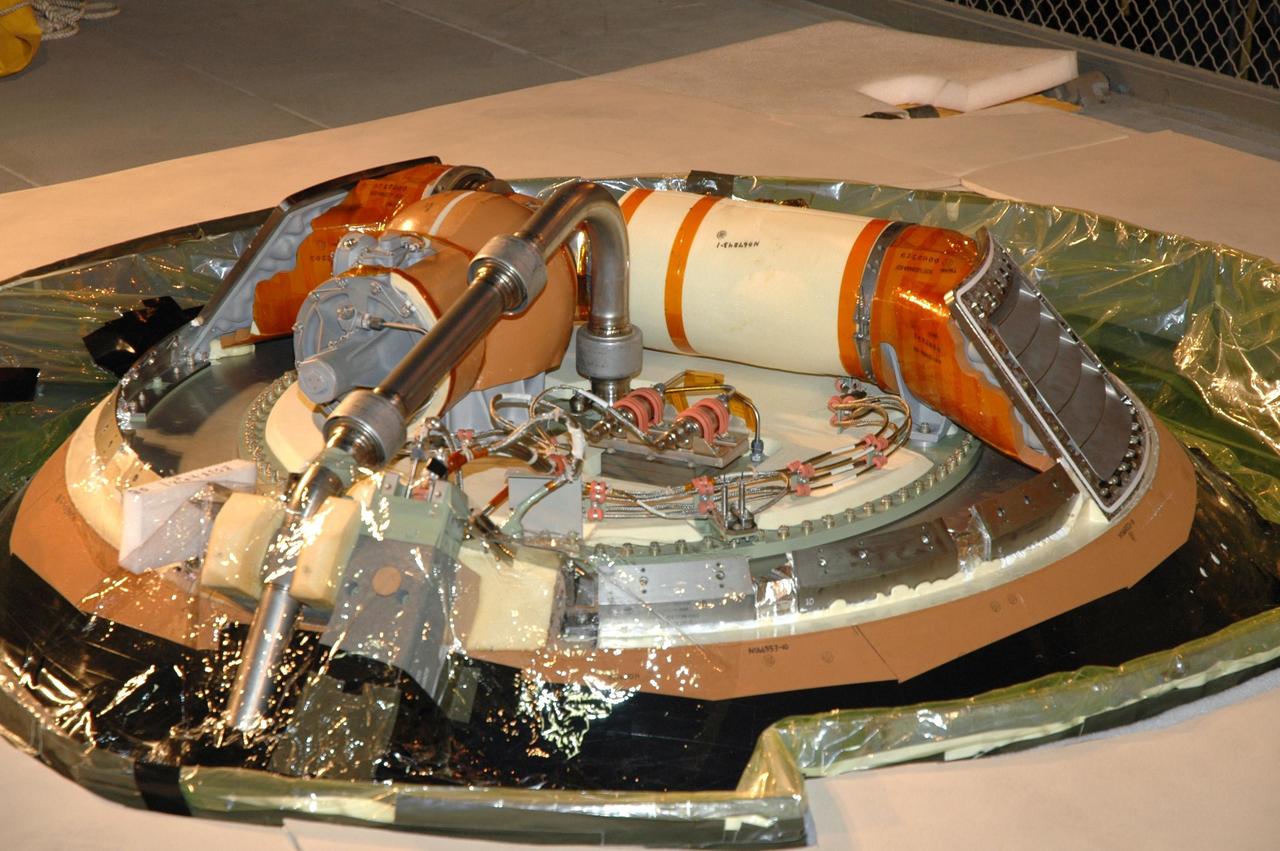
KENNEDY SPACE CENTER, FLA. - In the Vehicle Assembly Building at NASA's Kennedy Space Center, the nose cap on top of external tank number 119 has been removed. A new gaseous oxygen vent valve will be installed. Tank 119 is designated for mission STS-121. Vapors are created prior to launch as the liquid oxygen in the external tank boils off. At the forward end of each external tank propellant tank is a vent and relief valve that can be opened before launch for venting or by excessive tank pressure for relief. The vent function is available only before launch. Mission STS-121 to the International Space Station is scheduled for launch in July. Photo credit: NASA/Jim Grossmann
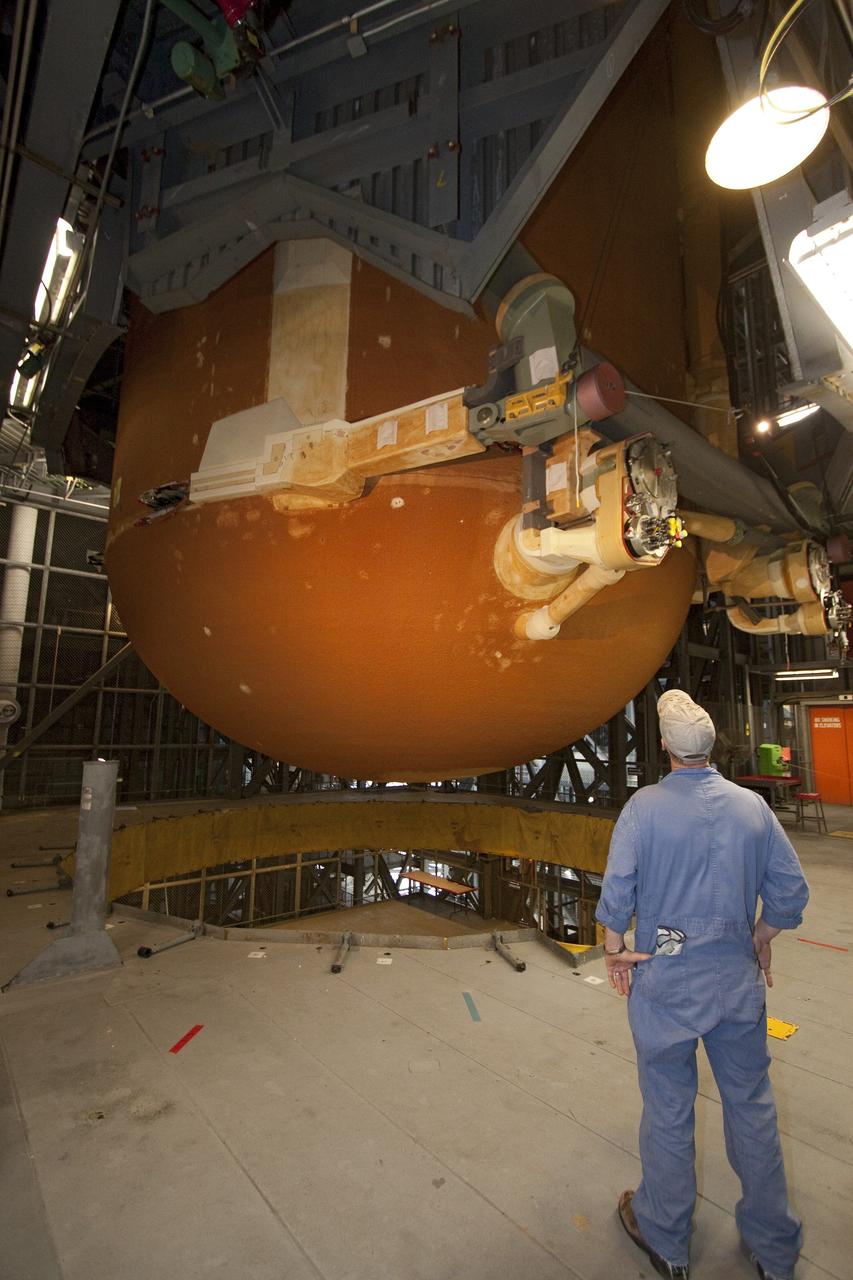
EXTERNAL TANK TEST ARTICLE (ETTA2) IS IN TRANSIT TO BE ROTATED 180° FOR INTERFACE RING INSTALLATION FOR SBKF (SHELL BUCKLING KNOCKDOWN FACTOR) CRITICAL FEEDBACK, UNDERSTANDING AND IDEAS THAT WILL ENABLE THE DEVELOPMENT AND IMPLEMENTATION OF NEW DESIGN APPROACHES AND TECHNOLOGY .
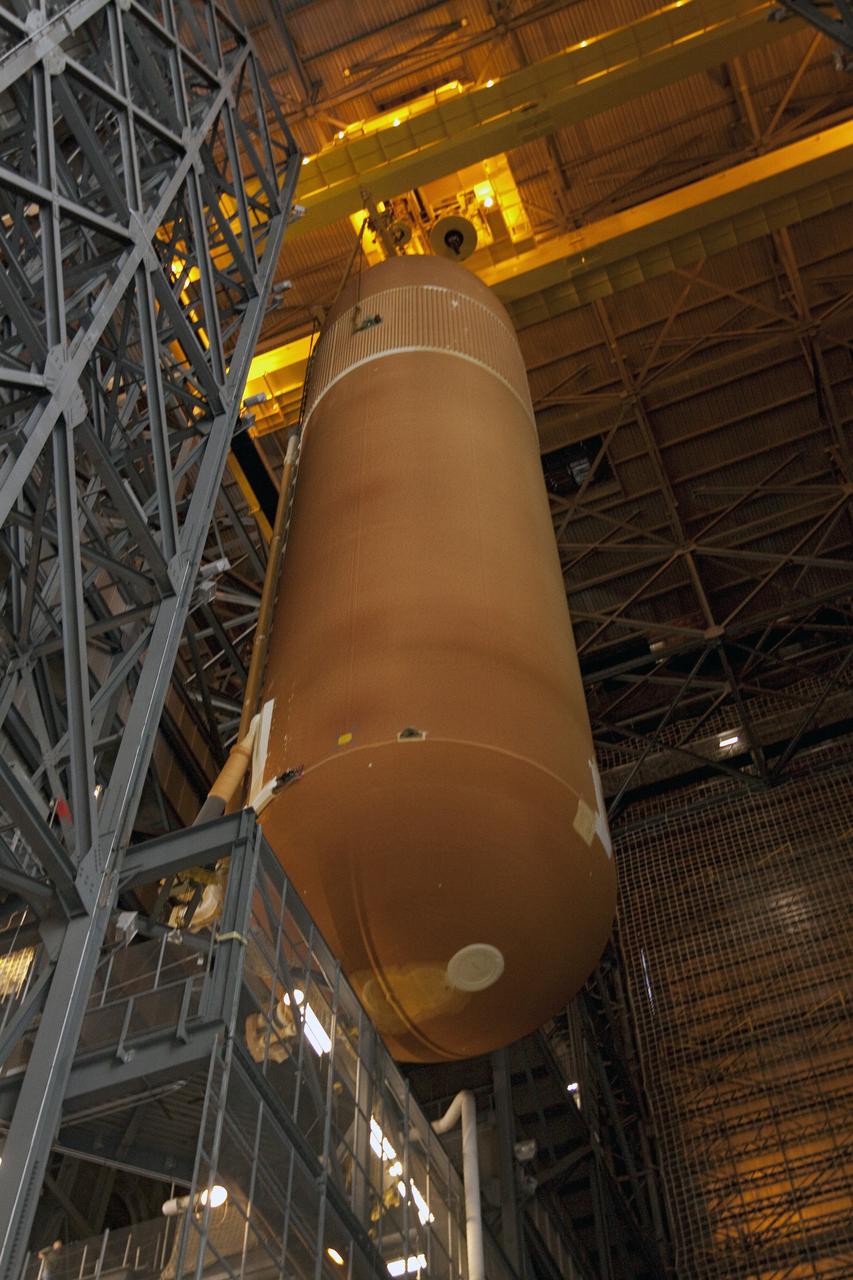
CAPE CANAVERAL, Fla. -- In the Vehicle Assembly Building at NASA's Kennedy Space Center in Florida, external fuel tank, ET-122, for space shuttle Endeavour's STS-134 mission, is being lifted from its test cell. When lowered in place, the tank will be attached to the solid rocket boosters on the mobile launcher platform. Endeavour and its crew will deliver the Express Logistics Carrier-3 and the Alpha Magnetic Spectrometer to the International Space Station. Launch is targeted for April 19. For more information visit, http://www.nasa.gov/mission_pages/shuttle/shuttlemissions/sts134/index.html. Photo credit: NASA/Jack Pfaller
CAPE CANAVERAL, Fla. -- In the Vehicle Assembly Building at NASA's Kennedy Space Center in Florida, a worker monitors external fuel tank, ET-122, for space shuttle Endeavour's STS-134 mission, as it is lifted from its test cell. When lowered in place, the tank will be attached to the solid rocket boosters on the mobile launcher platform. Endeavour and its crew will deliver the Express Logistics Carrier-3 and the Alpha Magnetic Spectrometer to the International Space Station. Launch is targeted for April 19. For more information visit, http://www.nasa.gov/mission_pages/shuttle/shuttlemissions/sts134/index.html. Photo credit: NASA/Jack Pfaller

KENNEDY SPACE CENTER, FLA. -- In Highbay 1 inside the Vehicle Assembly Building, a technician carefully applies red dye to the external tank as part of repair operations. A severe thunderstorm with golf ball-sized hail caused visible divots in the giant tank's foam insulation and minor surface damage to about 26 heat shield tiles on the shuttle's left wing. A new target launch date has not been determined, but teams will focus on preparing Atlantis for liftoff in late April on mission STS-117. Photo credit: NASA/Jim Grossmann
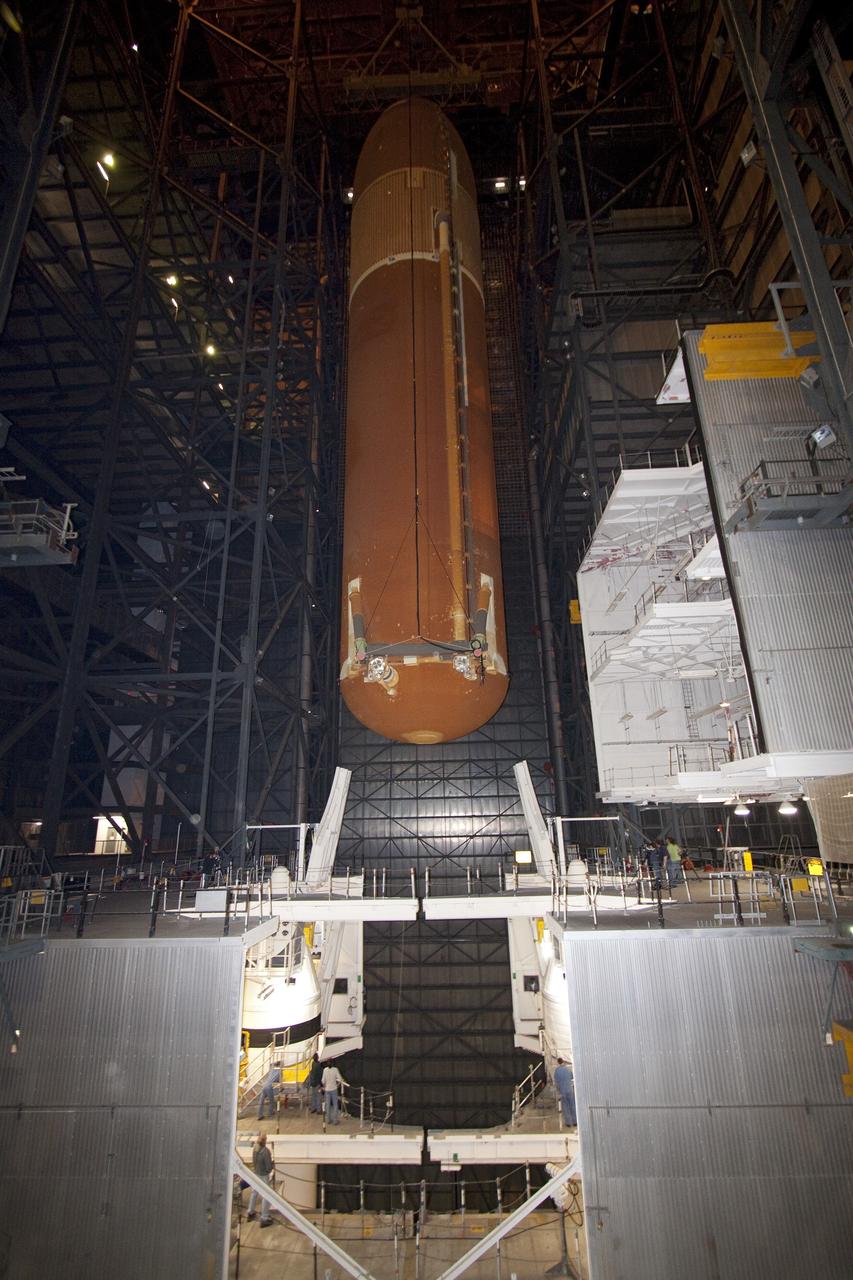
CAPE CANAVERAL, Fla. -- In the Vehicle Assembly Building at NASA's Kennedy Space Center in Florida, technicians watch external fuel tank, ET-122, for space shuttle Endeavour's STS-134 mission as it is being lowered toward the twin solid rocket boosters. When in place the tank will be attached to the boosters on the mobile launcher platform. Endeavour and its crew will deliver the Express Logistics Carrier-3 and the Alpha Magnetic Spectrometer to the International Space Station. Launch is targeted for April 19. For more information visit, http://www.nasa.gov/mission_pages/shuttle/shuttlemissions/sts134/index.html. Photo credit: NASA/Jack Pfaller
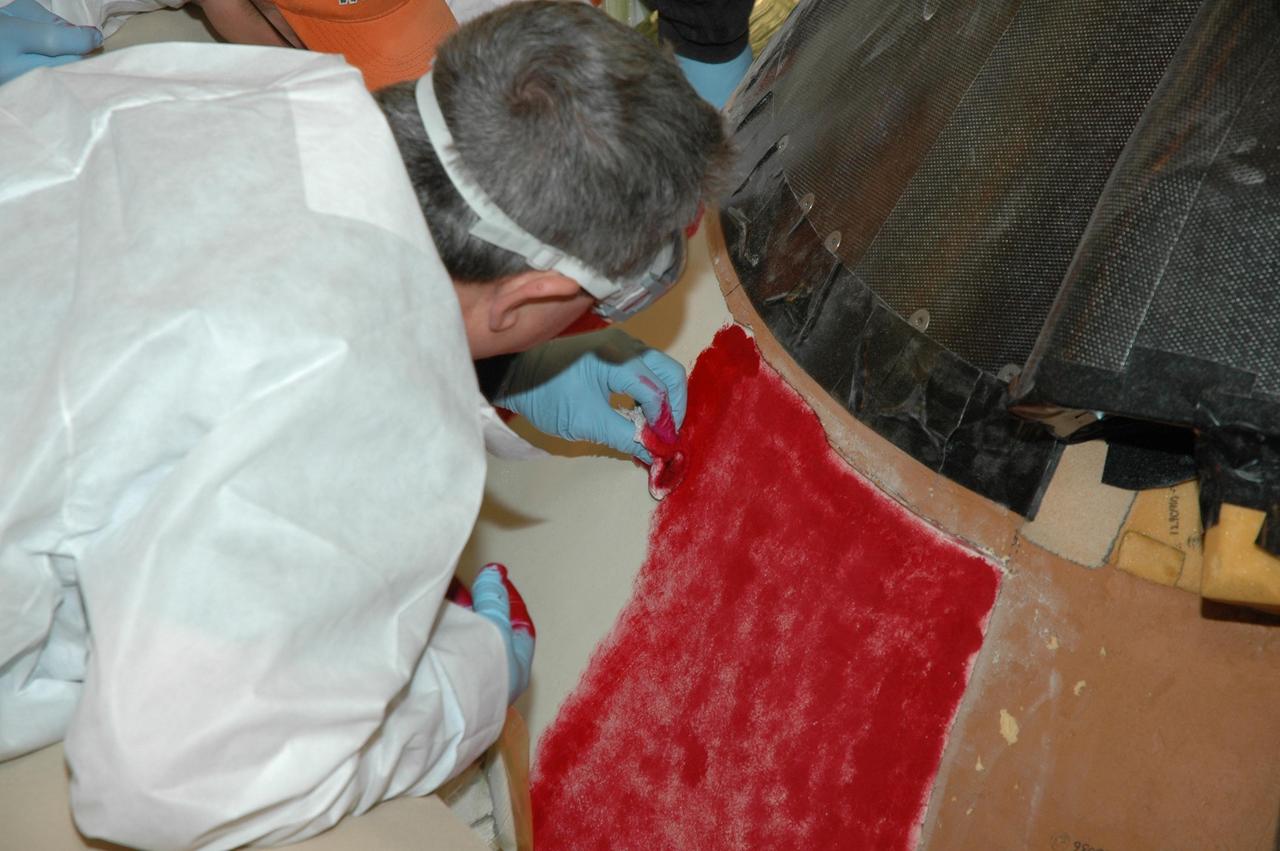
KENNEDY SPACE CENTER, FLA. -- In Highbay 1 inside the Vehicle Assembly Building, a technician carefully applies red dye to the external tank as part of repair operations. A severe thunderstorm with golf ball-sized hail caused visible divots in the giant tank's foam insulation and minor surface damage to about 26 heat shield tiles on the shuttle's left wing. A new target launch date has not been determined, but teams will focus on preparing Atlantis for liftoff in late April on mission STS-117. Photo credit: NASA/Jim Grossmann
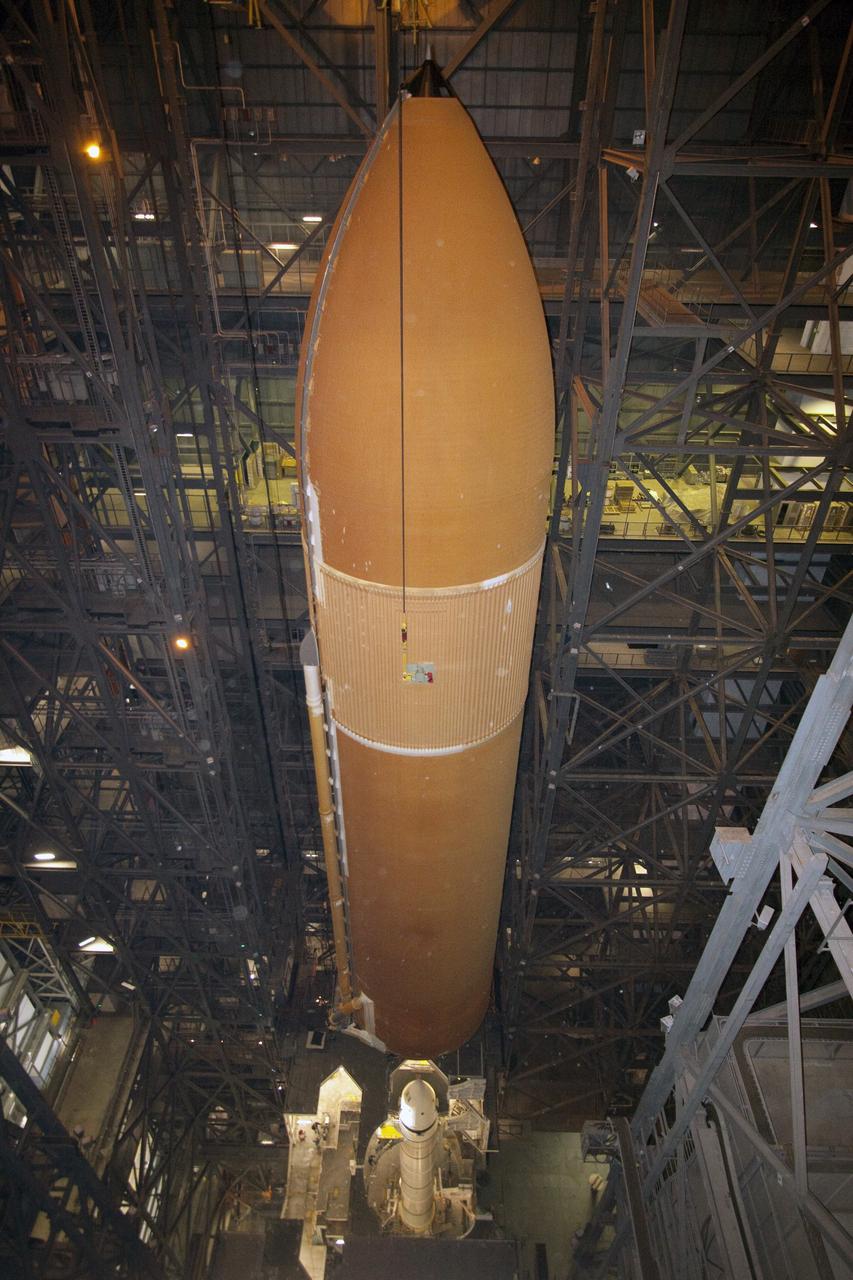
CAPE CANAVERAL, Fla. -- In the Vehicle Assembly Building at NASA's Kennedy Space Center in Florida, external fuel tank, ET-122, for space shuttle Endeavour's STS-134 mission is being lowered toward the twin solid rocket boosters. When lowered in place, the tank will be attached to the boosters on the mobile launcher platform. Endeavour and its crew will deliver the Express Logistics Carrier-3 and the Alpha Magnetic Spectrometer to the International Space Station. Launch is targeted for April 19. For more information visit, http://www.nasa.gov/mission_pages/shuttle/shuttlemissions/sts134/index.html. Photo credit: NASA/Jack Pfaller
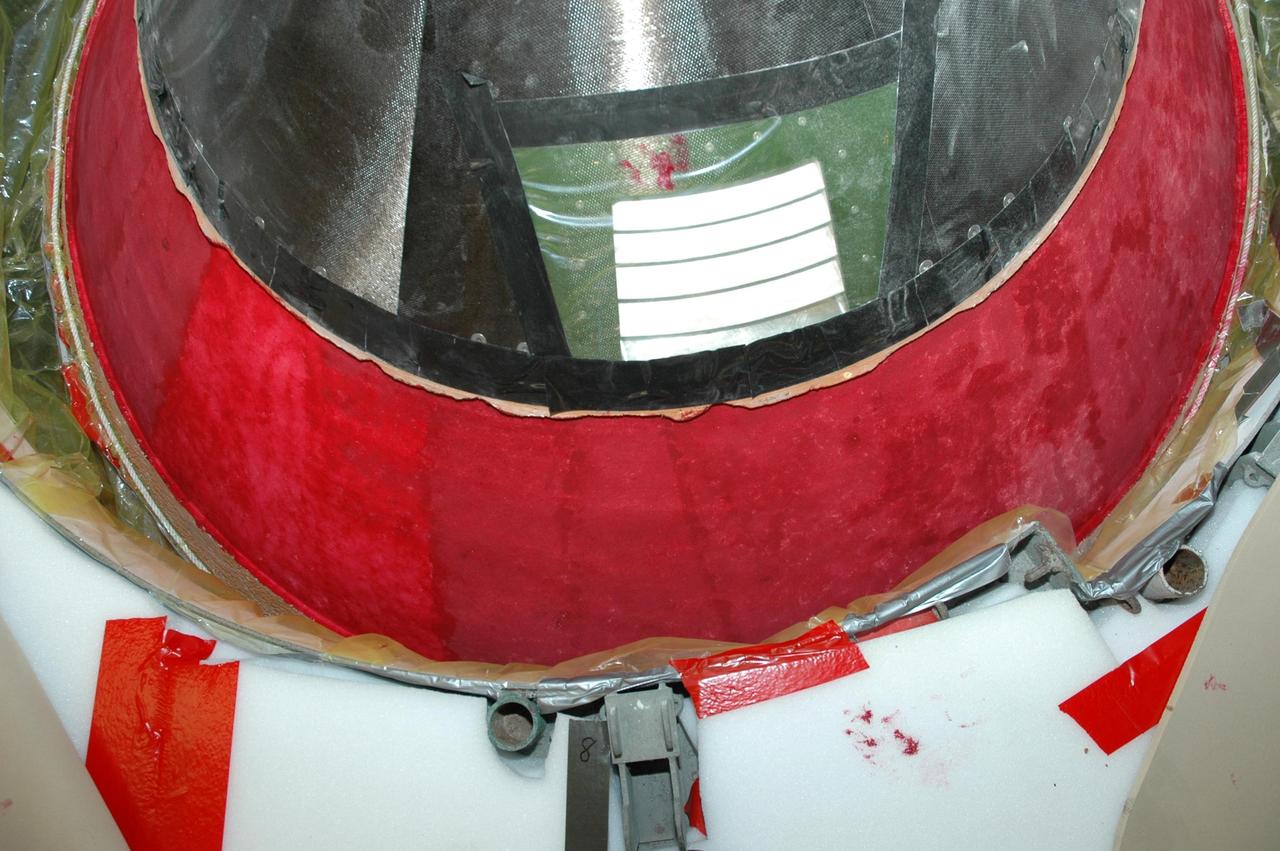
KENNEDY SPACE CENTER, FLA. -- In Highbay 1 inside the Vehicle Assembly Building, an area near the top of the external tank has been covered in a red dye to help expose cracks or compression dents. A severe thunderstorm with golf ball-sized hail caused visible divots in the giant tank's foam insulation and minor surface damage to about 26 heat shield tiles on the shuttle's left wing. A new target launch date has not been determined, but teams will focus on preparing Atlantis for liftoff in late April on mission STS-117. Photo credit: NASA/Jim Grossmann
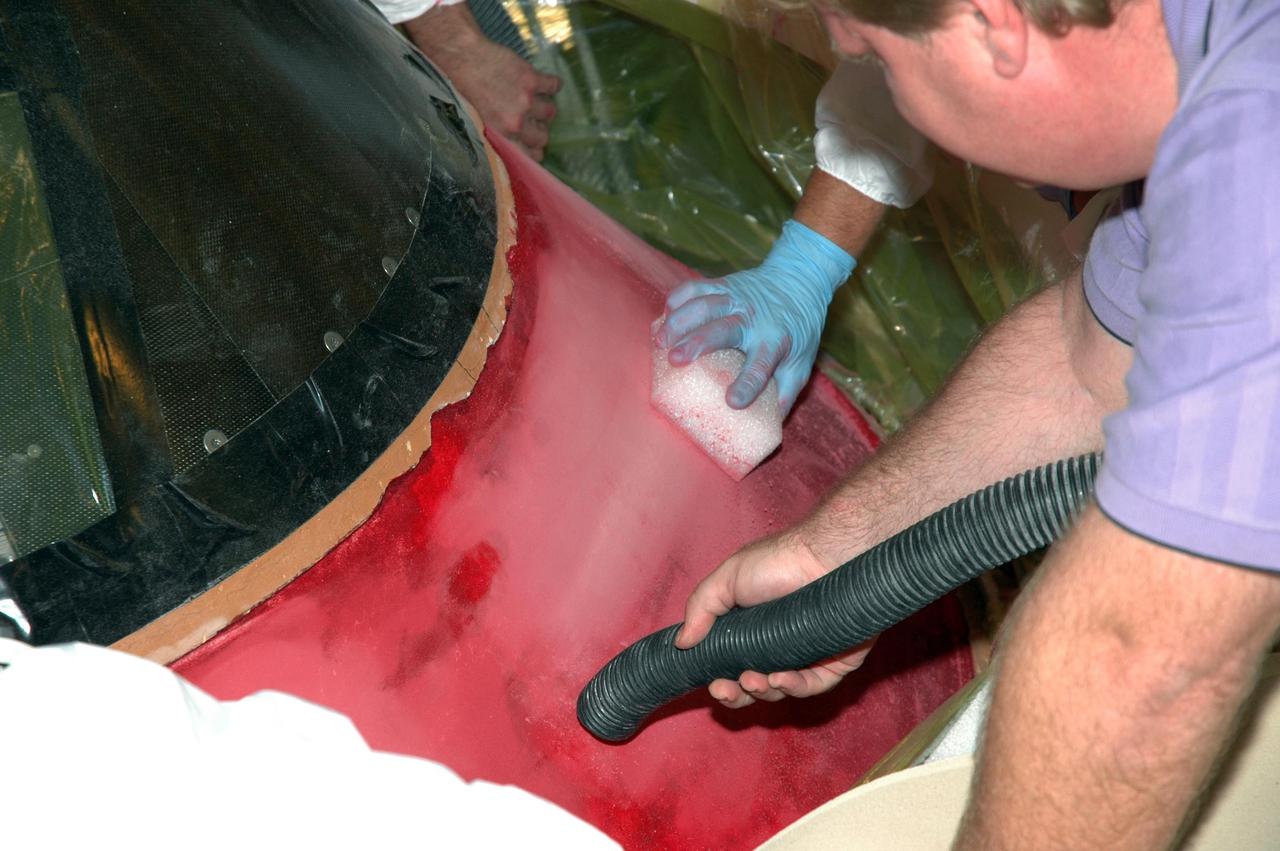
KENNEDY SPACE CENTER, FLA. -- In Highbay 1 inside the Vehicle Assembly Building, a technician carefully sands away the red dye that has been applied to the external tank to help expose cracks or compression dents, while another technician uses a compression hose to remove excess particles. A severe thunderstorm with golf ball-sized hail caused visible divots in the giant tank's foam insulation and minor surface damage to about 26 heat shield tiles on the shuttle's left wing. A new target launch date has not been determined, but teams will focus on preparing Atlantis for liftoff in late April on mission STS-117. Photo credit: NASA/Jim Grossmann
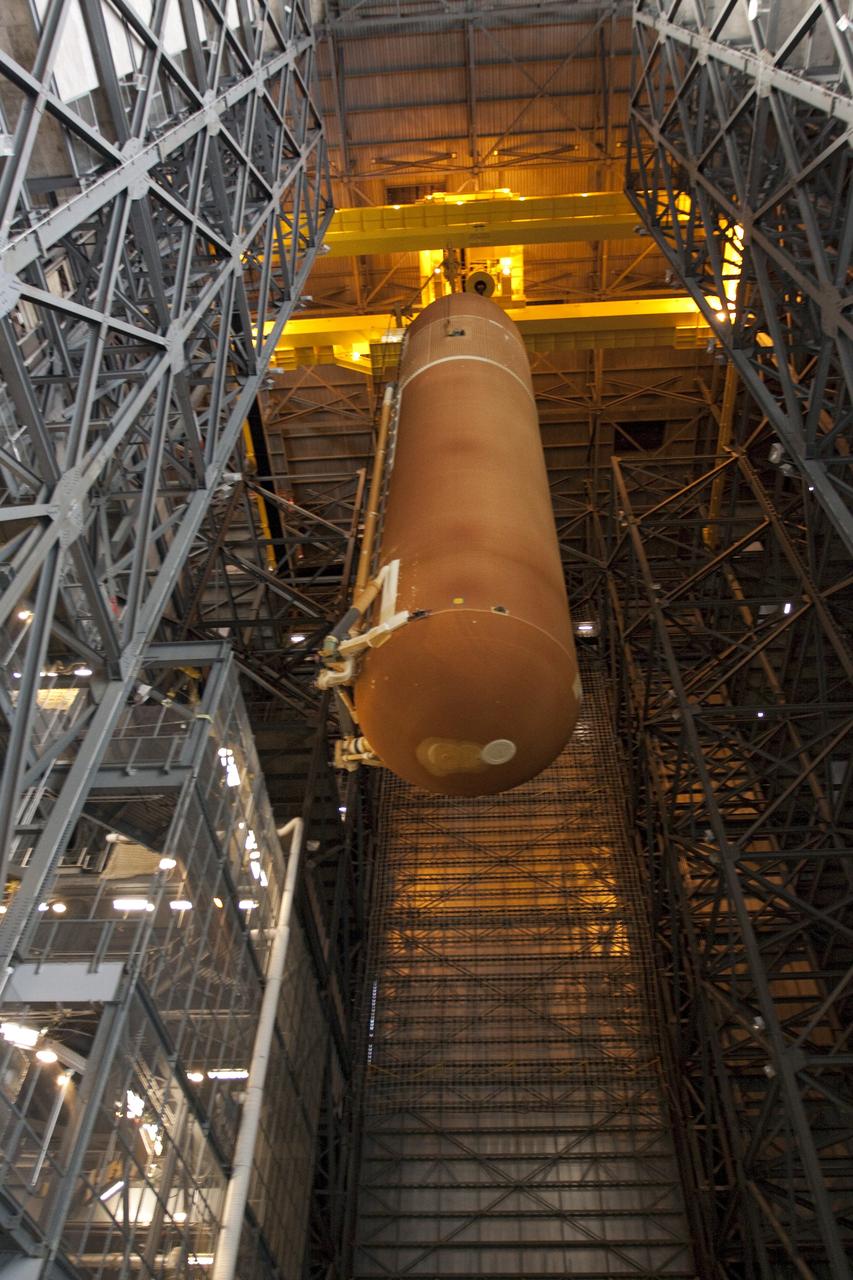
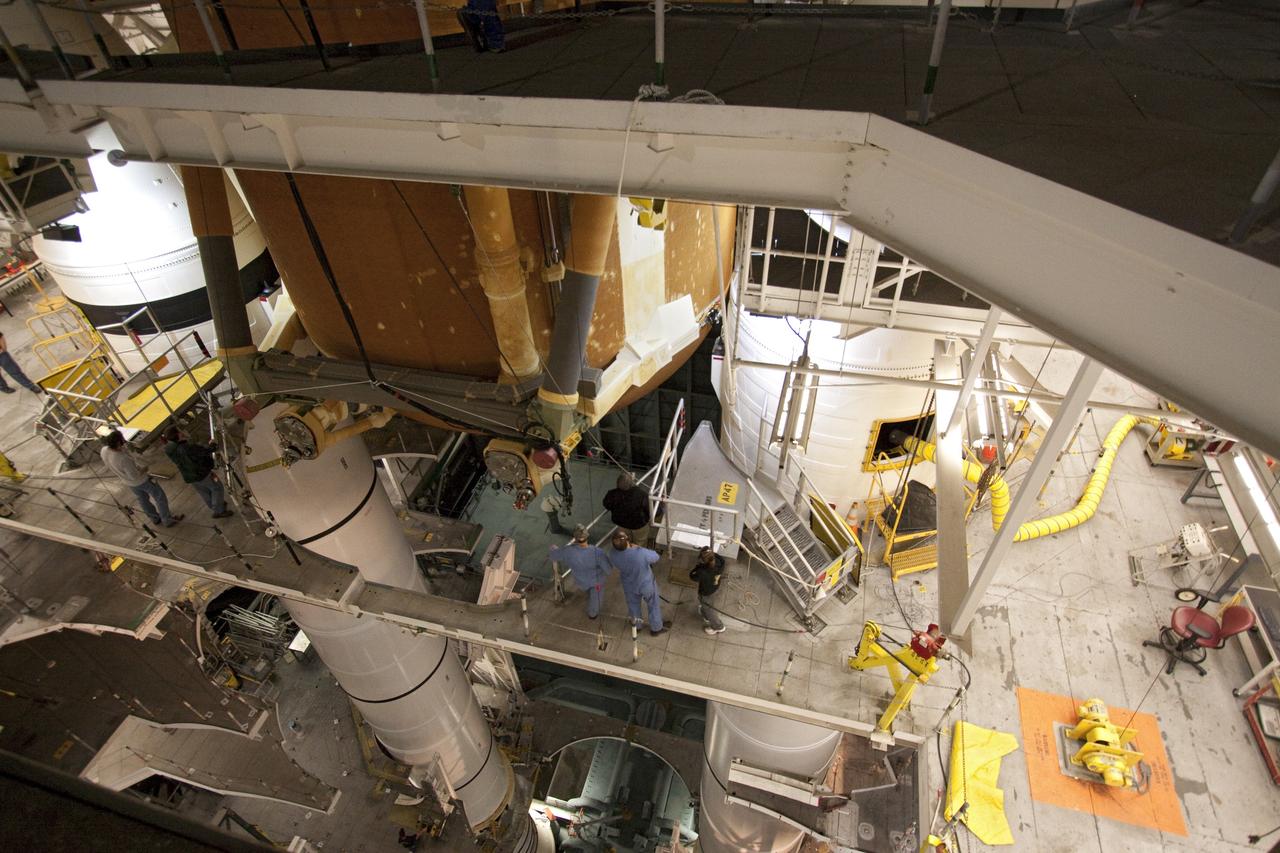
CAPE CANAVERAL, Fla. -- In the Vehicle Assembly Building at NASA's Kennedy Space Center in Florida, external fuel tank, ET-122, for space shuttle Endeavour's STS-134 mission, is suspended over the transfer aisle. When lowered in place, the tank will be attached to the solid rocket boosters on the mobile launcher platform. Endeavour and its crew will deliver the Express Logistics Carrier-3 and the Alpha Magnetic Spectrometer to the International Space Station. Launch is targeted for April 19. For more information visit, http://www.nasa.gov/mission_pages/shuttle/shuttlemissions/sts134/index.html. Photo credit: NASA/Jack Pfaller

KENNEDY SPACE CENTER, FLA. -- In Highbay 1 inside the Vehicle Assembly Building, technicians carefully inspect a portion of the external tank foam that has been covered in red dye to help expose cracks or compression dents. A severe thunderstorm with golf ball-sized hail caused visible divots in the giant tank's foam insulation and minor surface damage to about 26 heat shield tiles on the shuttle's left wing. A new target launch date has not been determined, but teams will focus on preparing Atlantis for liftoff in late April on mission STS-117. Photo credit: NASA/Jim Grossmann
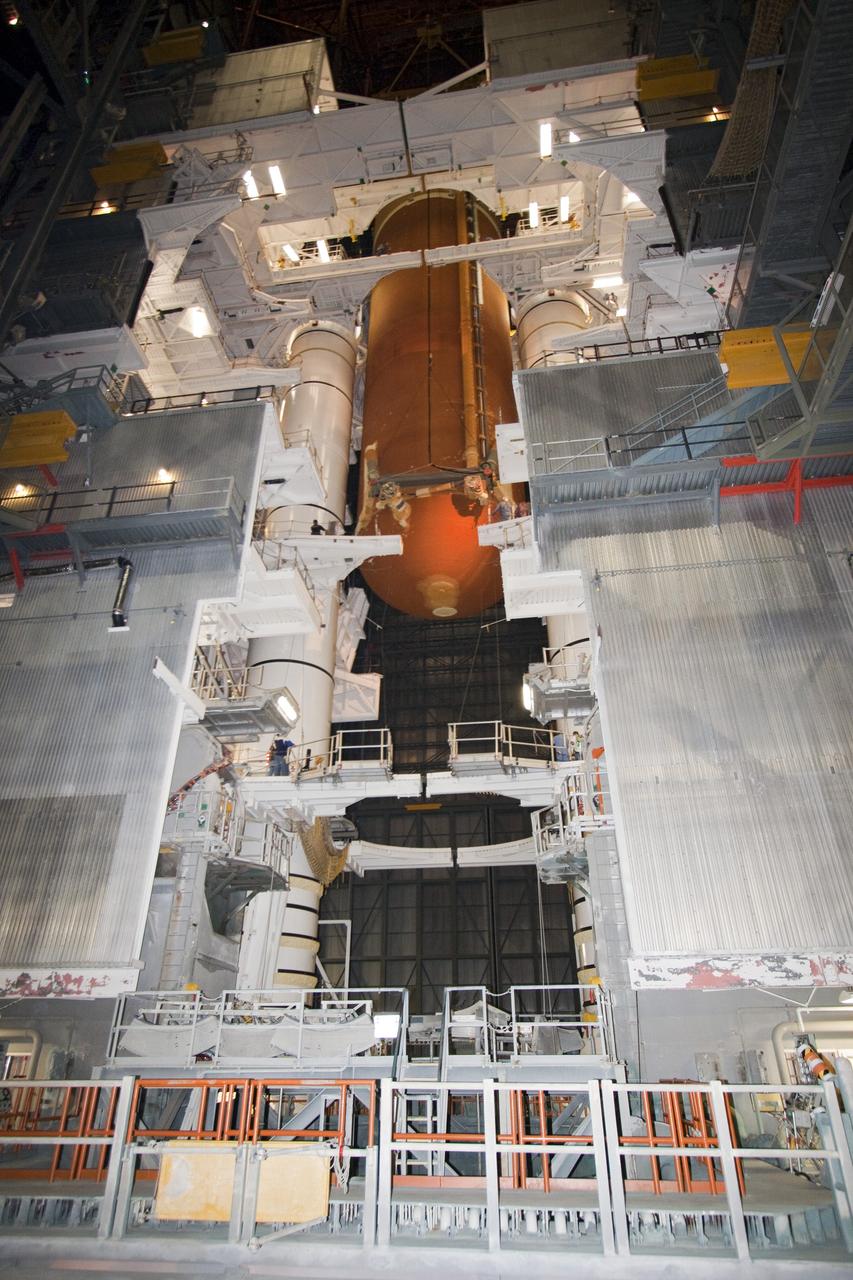
CAPE CANAVERAL, Fla. -- In the Vehicle Assembly Building at NASA's Kennedy Space Center in Florida, technicians watch external fuel tank, ET-122, for space shuttle Endeavour's STS-134 mission as it is being lowered toward the twin solid rocket boosters. When in place the tank will be attached to the boosters on the mobile launcher platform. Endeavour and its crew will deliver the Express Logistics Carrier-3 and the Alpha Magnetic Spectrometer to the International Space Station. Launch is targeted for April 19. For more information visit, http://www.nasa.gov/mission_pages/shuttle/shuttlemissions/sts134/index.html. Photo credit: NASA/Jack Pfaller
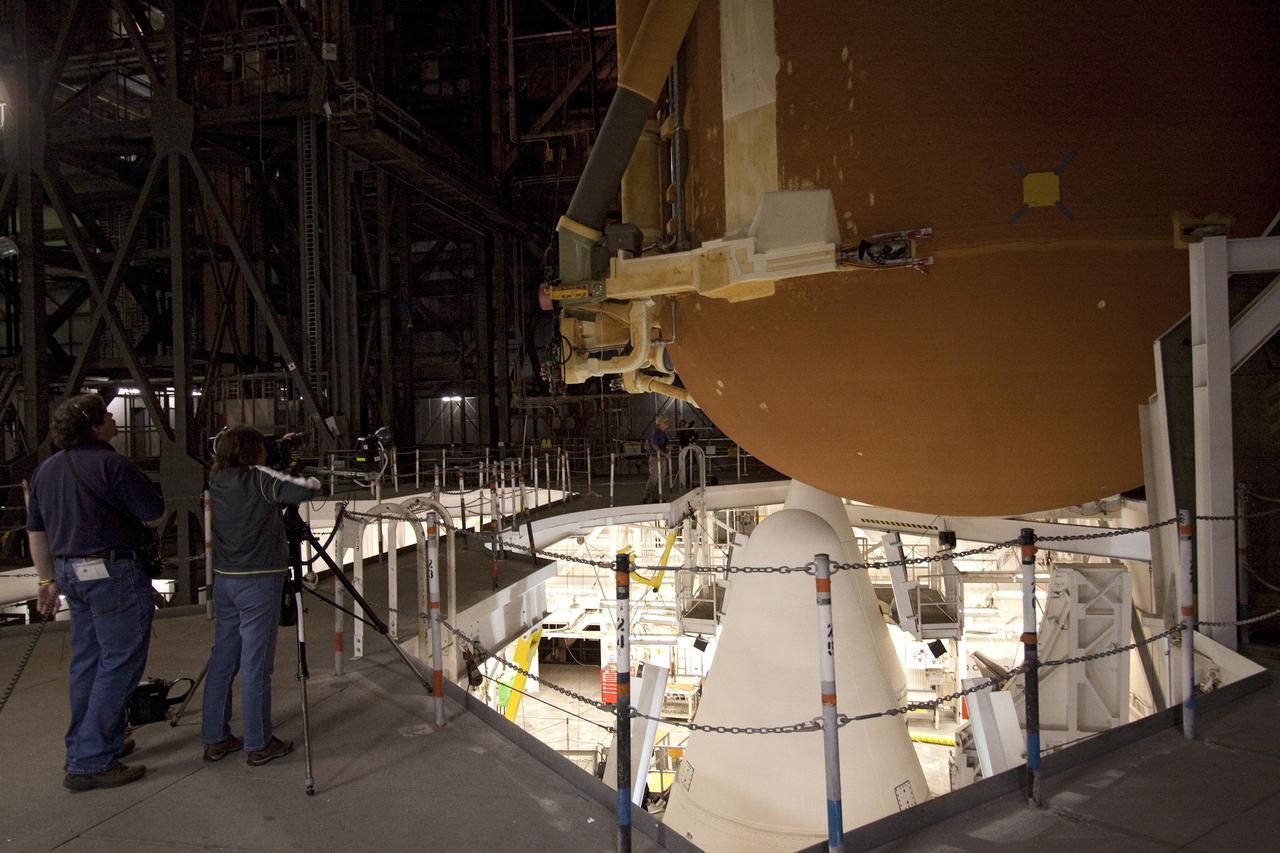
CAPE CANAVERAL, Fla. -- In the Vehicle Assembly Building at NASA's Kennedy Space Center in Florida, workers closely monitor the progress of external fuel tank, ET-122, for space shuttle Endeavour's STS-134 mission as it is being lowered toward the twin solid rocket boosters. When in place the tank will be attached to the boosters on the mobile launcher platform. Endeavour and its crew will deliver the Express Logistics Carrier-3 and the Alpha Magnetic Spectrometer to the International Space Station. Launch is targeted for April 19. For more information visit, http://www.nasa.gov/mission_pages/shuttle/shuttlemissions/sts134/index.html. Photo credit: NASA/Jack Pfaller
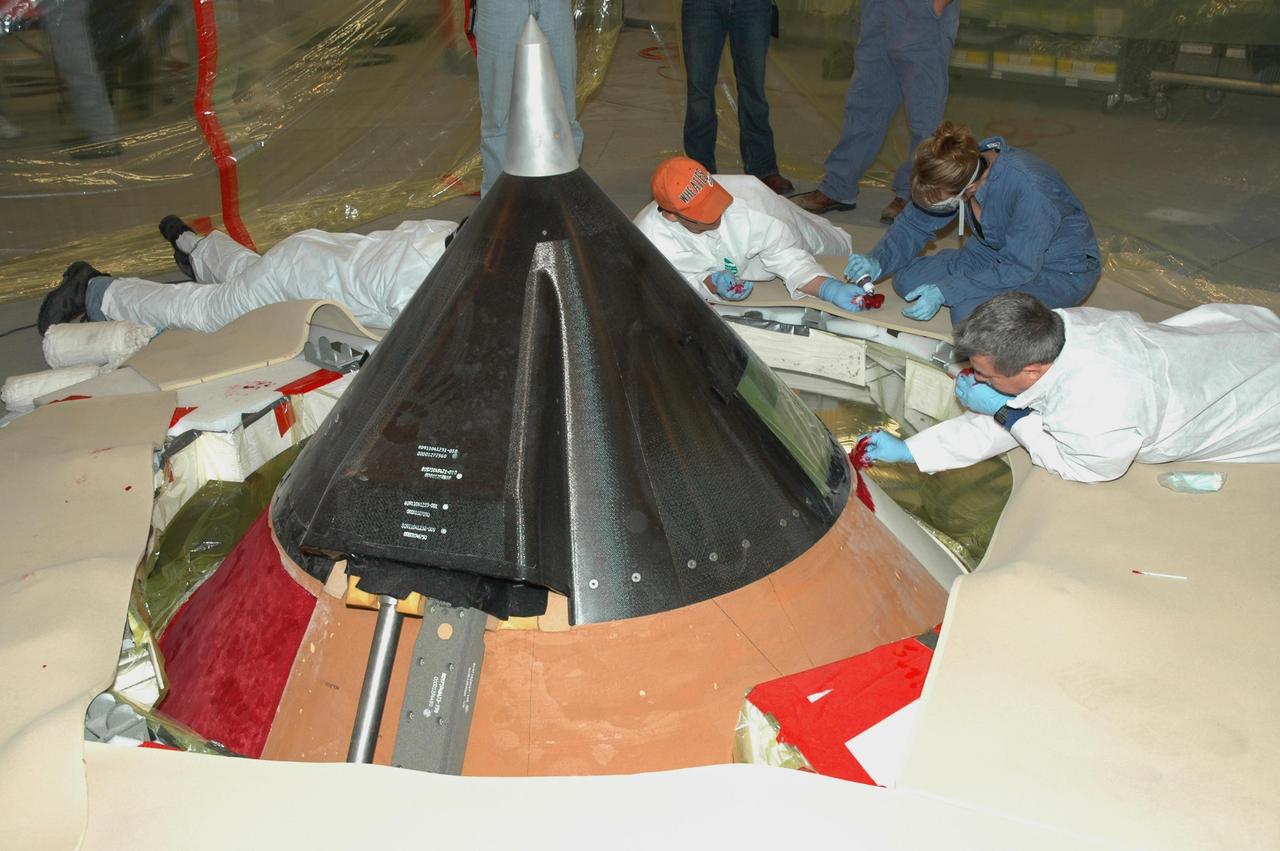
KENNEDY SPACE CENTER, FLA. -- In Highbay 1 inside the Vehicle Assembly Building, technicians carefully apply red dye to the external tank as part of repair operations. A severe thunderstorm with golf ball-sized hail caused visible divots in the giant tank's foam insulation and minor surface damage to about 26 heat shield tiles on the shuttle's left wing. A new target launch date has not been determined, but teams will focus on preparing Atlantis for liftoff in late April on mission STS-117. Photo credit: NASA/Jim Grossmann
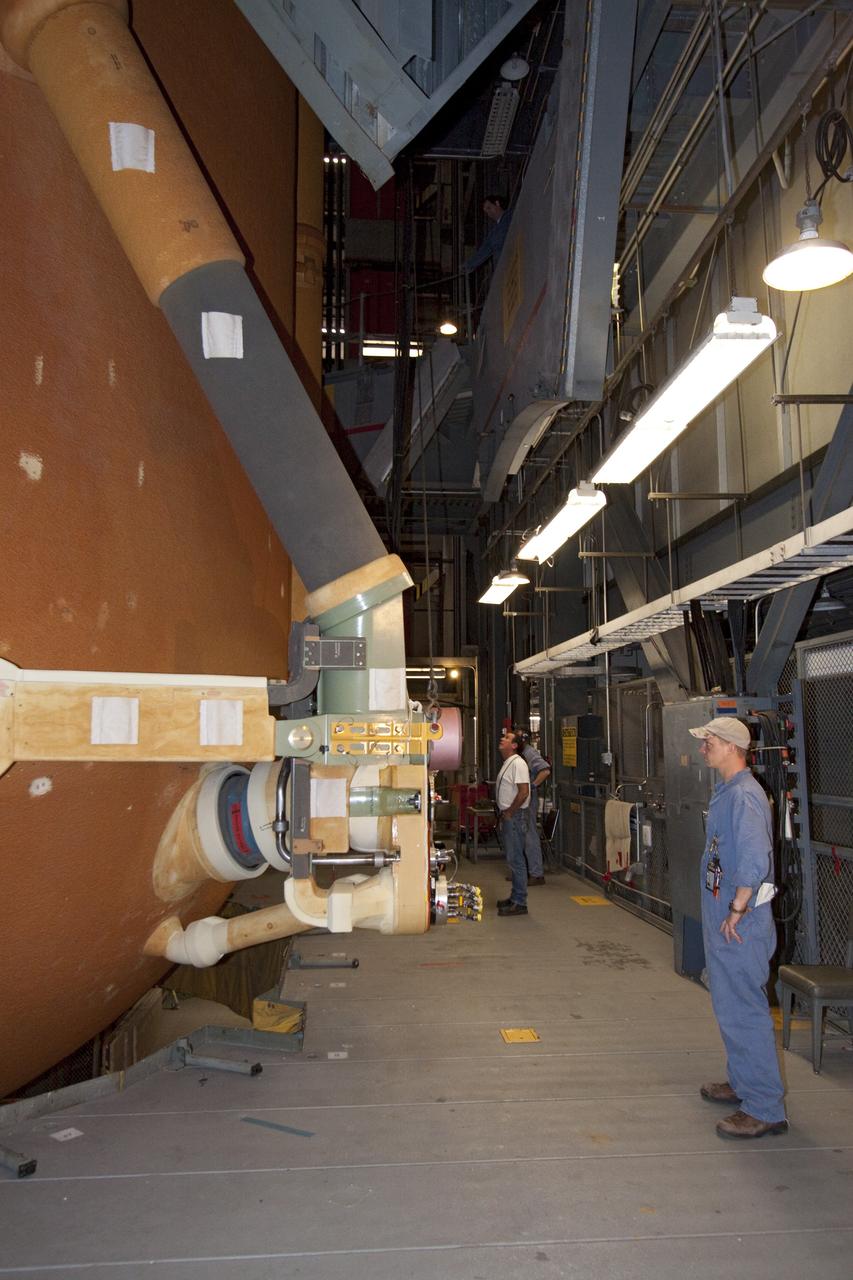
CAPE CANAVERAL, Fla. -- In the Vehicle Assembly Building at NASA's Kennedy Space Center in Florida, workers observe the external fuel tank, ET-122, for space shuttle Endeavour's STS-134 mission, as it is lifted from its test cell. When lowered in place, the tank will be attached to the solid rocket boosters on the mobile launcher platform. Endeavour and its crew will deliver the Express Logistics Carrier-3 and the Alpha Magnetic Spectrometer to the International Space Station. Launch is targeted for April 19. For more information visit, http://www.nasa.gov/mission_pages/shuttle/shuttlemissions/sts134/index.html. Photo credit: NASA/Jack Pfaller
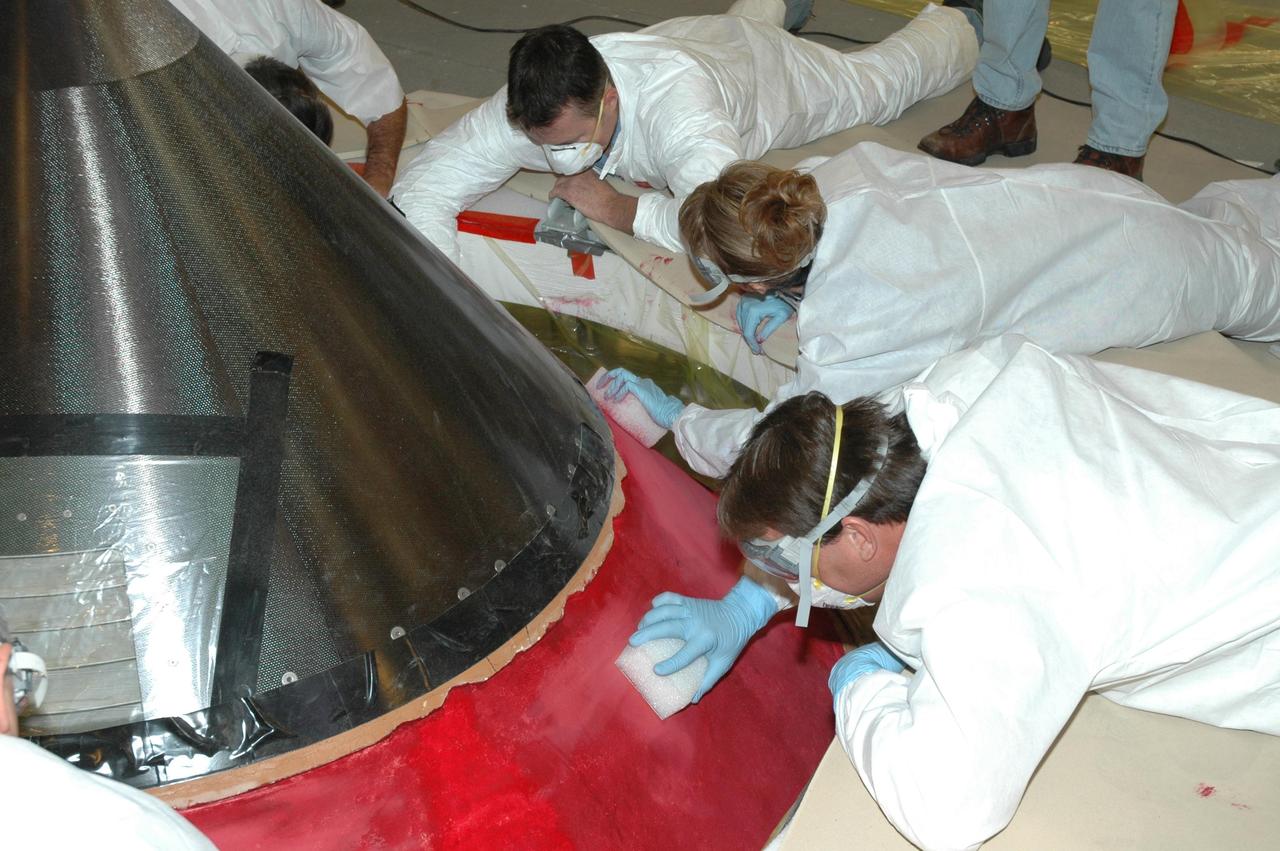
KENNEDY SPACE CENTER, FLA. -- In Highbay 1 inside the Vehicle Assembly Building, technicians begin to carefully sand away the red dye that has been applied to the external tank to help expose cracks or compression dents. A severe thunderstorm with golf ball-sized hail caused visible divots in the giant tank's foam insulation and minor surface damage to about 26 heat shield tiles on the shuttle's left wing. A new target launch date has not been determined, but teams will focus on preparing Atlantis for liftoff in late April on mission STS-117. Photo credit: NASA/Jim Grossmann
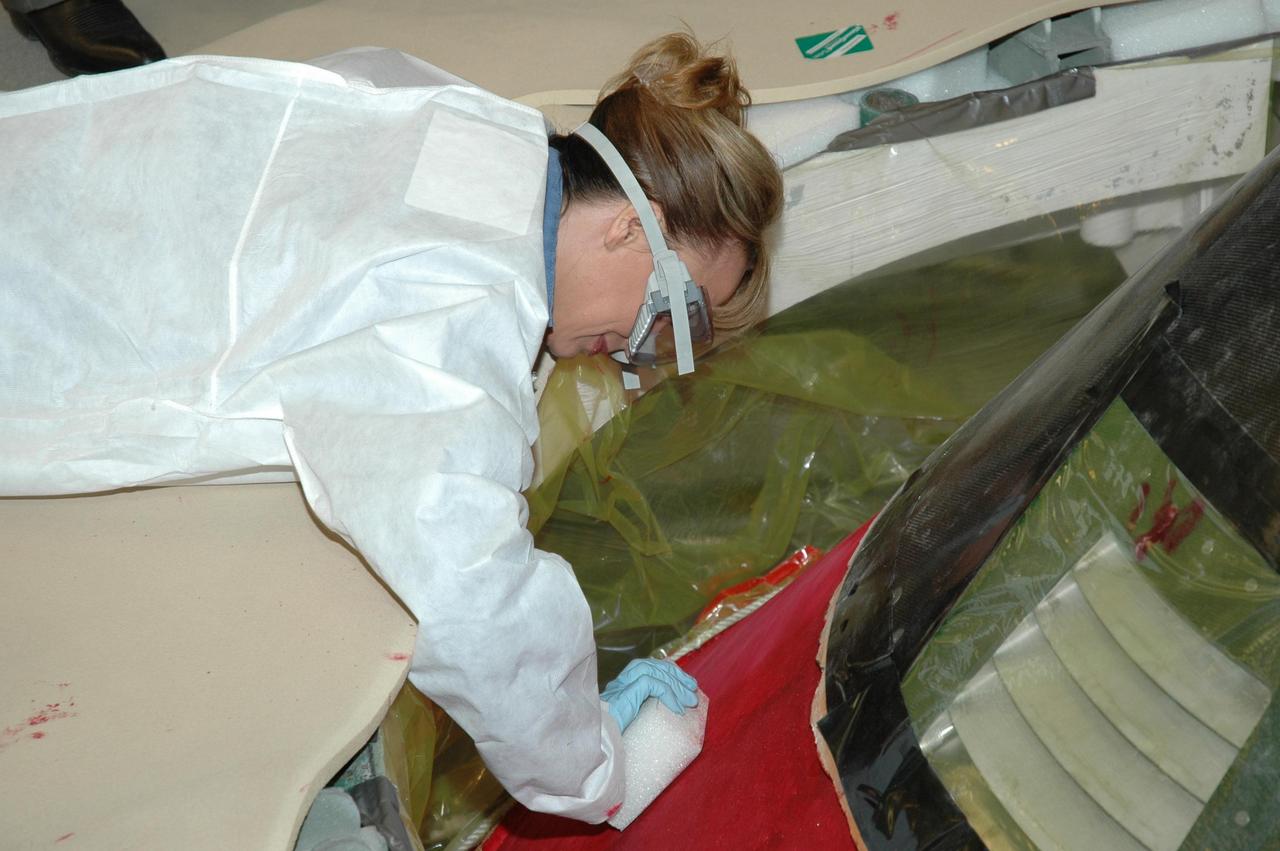
KENNEDY SPACE CENTER, FLA. -- In Highbay 1 inside the Vehicle Assembly Building, a technician carefully begins to sand away the red dye that has been applied to the external tank to help expose cracks or compression dents. A severe thunderstorm with golf ball-sized hail caused visible divots in the giant tank's foam insulation and minor surface damage to about 26 heat shield tiles on the shuttle's left wing. A new target launch date has not been determined, but teams will focus on preparing Atlantis for liftoff in late April on mission STS-117. Photo credit: NASA/Jim Grossmann

KENNEDY SPACE CENTER, FLA. -- In Highbay 1 inside the Vehicle Assembly Building, a technician carefully begins to carefully sand away the red dye that has been applied to the external tank to help expose cracks or compression dents. A severe thunderstorm with golf ball-sized hail caused visible divots in the giant tank's foam insulation and minor surface damage to about 26 heat shield tiles on the shuttle's left wing. A new target launch date has not been determined, but teams will focus on preparing Atlantis for liftoff in late April on mission STS-117. Photo credit: NASA/Jim Grossmann
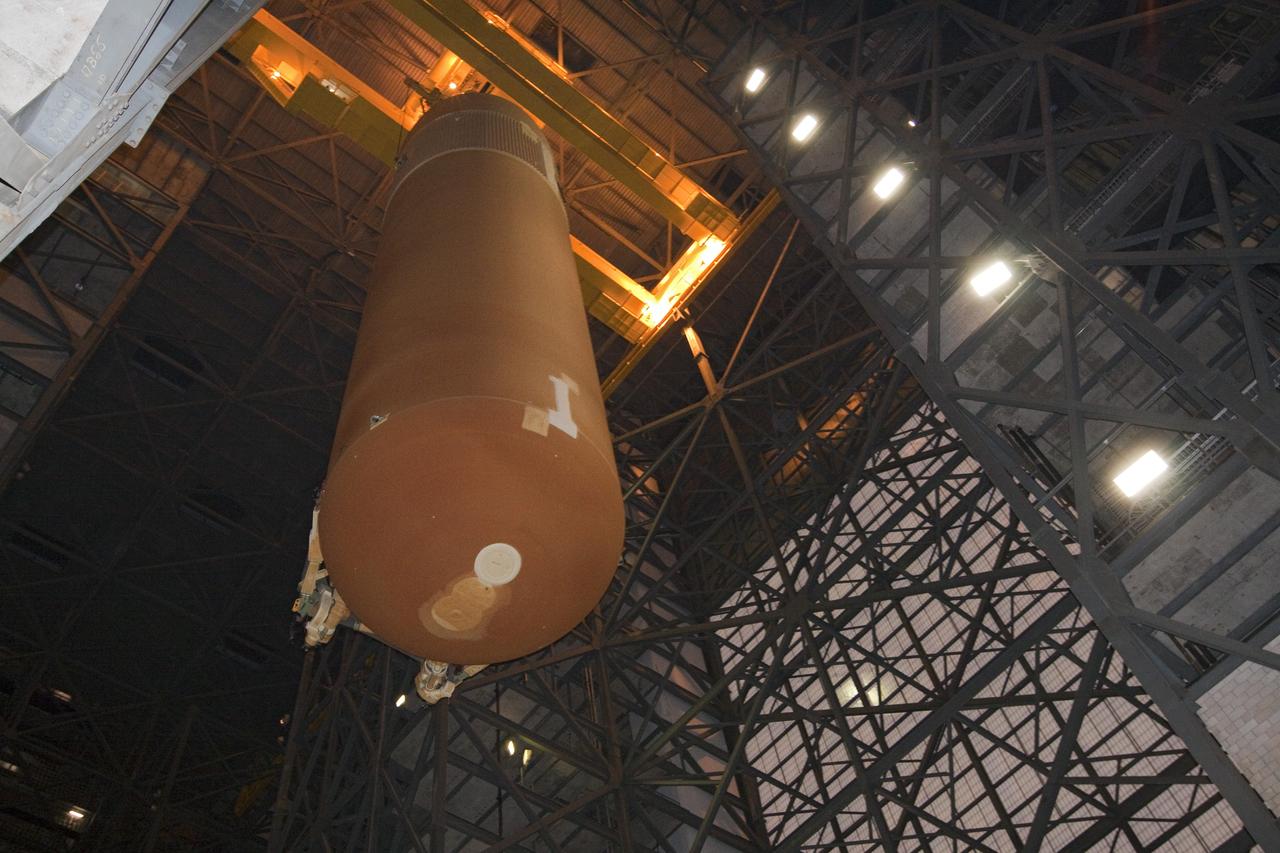
CAPE CANAVERAL, Fla. -- In the Vehicle Assembly Building at NASA's Kennedy Space Center in Florida, technicians watch external fuel tank, ET-122, for space shuttle Endeavour's STS-134 mission as it is being lowered toward the twin solid rocket boosters. When in place the tank will be attached to the boosters on the mobile launcher platform. Endeavour and its crew will deliver the Express Logistics Carrier-3 and the Alpha Magnetic Spectrometer to the International Space Station. Launch is targeted for April 19. For more information visit, http://www.nasa.gov/mission_pages/shuttle/shuttlemissions/sts134/index.html. Photo credit: NASA/Jack Pfaller
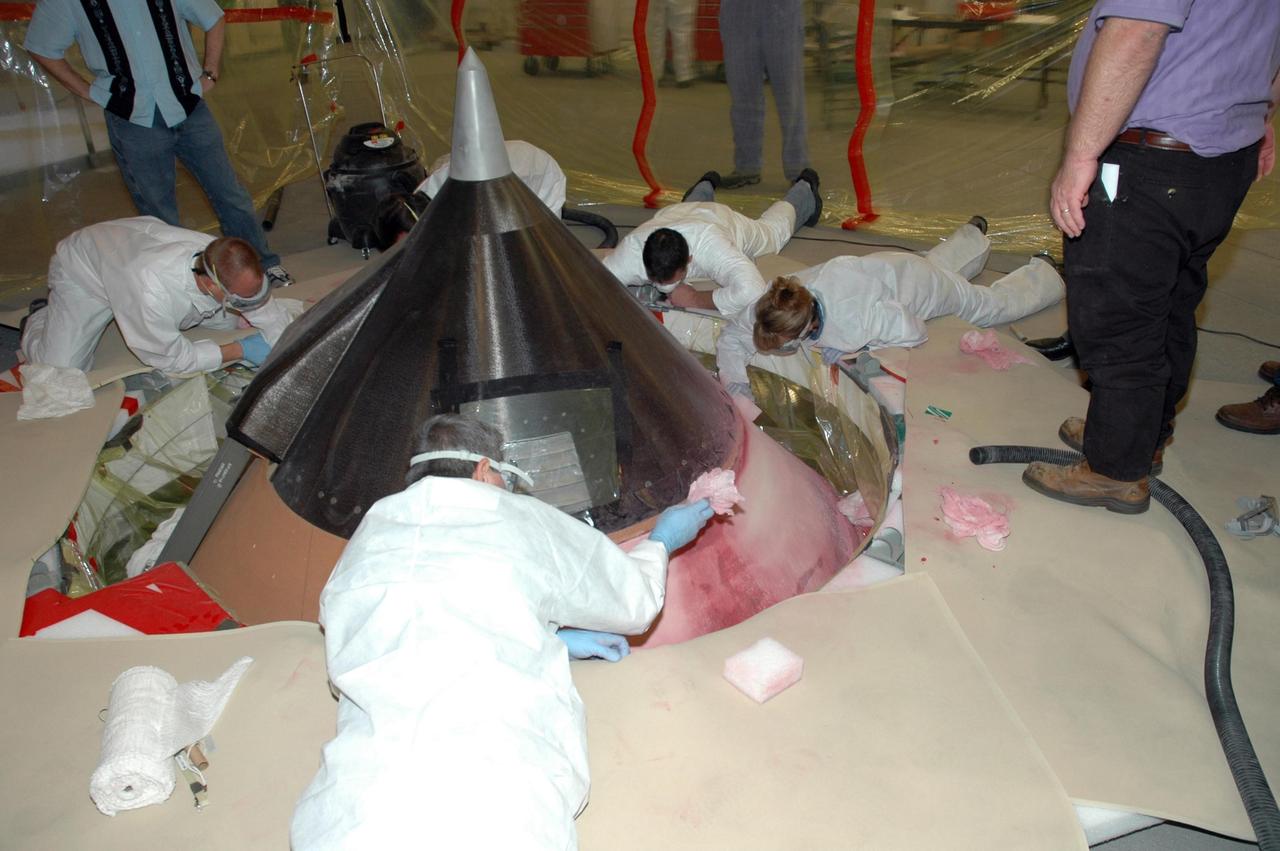
KENNEDY SPACE CENTER, FLA. -- In Highbay 1 inside the Vehicle Assembly Building, technicians carefully sand away the red dye that has been applied to the external tank to help expose cracks or compression dents. A severe thunderstorm with golf ball-sized hail caused visible divots in the giant tank's foam insulation and minor surface damage to about 26 heat shield tiles on the shuttle's left wing. A new target launch date has not been determined, but teams will focus on preparing Atlantis for liftoff in late April on mission STS-117. Photo credit: NASA/Jim Grossmann
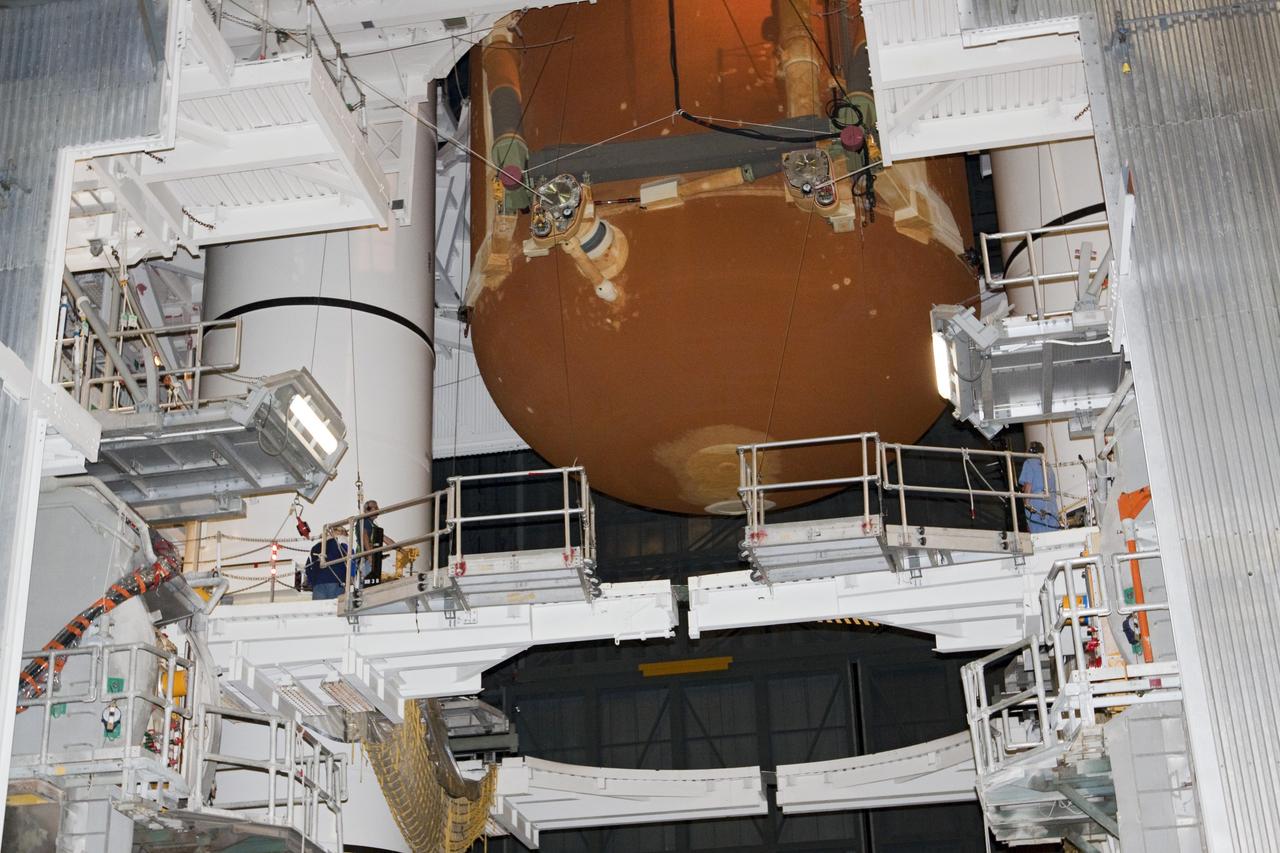
CAPE CANAVERAL, Fla. -- In the Vehicle Assembly Building at NASA's Kennedy Space Center in Florida, workers observe external fuel tank, ET-122, for space shuttle Endeavour's STS-134 mission as it is being lowered between the twin solid rocket boosters. When in place the tank will be attached to the boosters on the mobile launcher platform. Endeavour and its crew will deliver the Express Logistics Carrier-3 and the Alpha Magnetic Spectrometer to the International Space Station. Launch is targeted for April 19. For more information visit, http://www.nasa.gov/mission_pages/shuttle/shuttlemissions/sts134/index.html. Photo credit: NASA/Jack Pfaller
CAPE CANAVERAL, Fla. -- In the Vehicle Assembly Building at NASA's Kennedy Space Center in Florida, external fuel tank, ET-122, for space shuttle Endeavour's STS-134 mission, is suspended over the transfer aisle. When lowered in place, the tank will be attached to the solid rocket boosters on the mobile launcher platform. Endeavour and its crew will deliver the Express Logistics Carrier-3 and the Alpha Magnetic Spectrometer to the International Space Station. Launch is targeted for April 19. For more information visit, http://www.nasa.gov/mission_pages/shuttle/shuttlemissions/sts134/index.html. Photo credit: NASA/Jack Pfaller

The Space Shuttle External Tank 120 is shown here in its vertical position in NASA’s Michoud Assembly Facility in New Orleans. Slated for launch on the Orbiter Discovery scheduled for next Spring, the tank is in position for its new foam application process on the liquid hydrogen tank-to-inter tank flange area, a tank structural connection point. The foam will be applied with an enhanced finishing procedure that requires two technicians, one for a new mold-injection procedure to the intertank’s ribbing and one for real-time videotaped surveillance of the process. Marshall Space Flight Center played a significant role in the development of the new application process designed to replace the possible debris shedding source previously used.

The Space Shuttle External Tank 120 is shown here during transfer in NASA’s Michoud Assembly Facility in New Orleans. Slated for launch on the Orbiter Discovery scheduled for next Spring, the tank will be erected vertically in preparation for its new foam application process on the liquid hydrogen tank-to-inter tank flange area, a tank structural connection point. The foam will be applied with an enhanced finishing procedure that requires two technicians, one for a new mold-injection procedure to the intertank’s ribbing and one for real-time videotaped surveillance of the process. Marshall Space Flight Center played a significant role in the development of the new application process designed to replace the possible debris shedding source previously used.
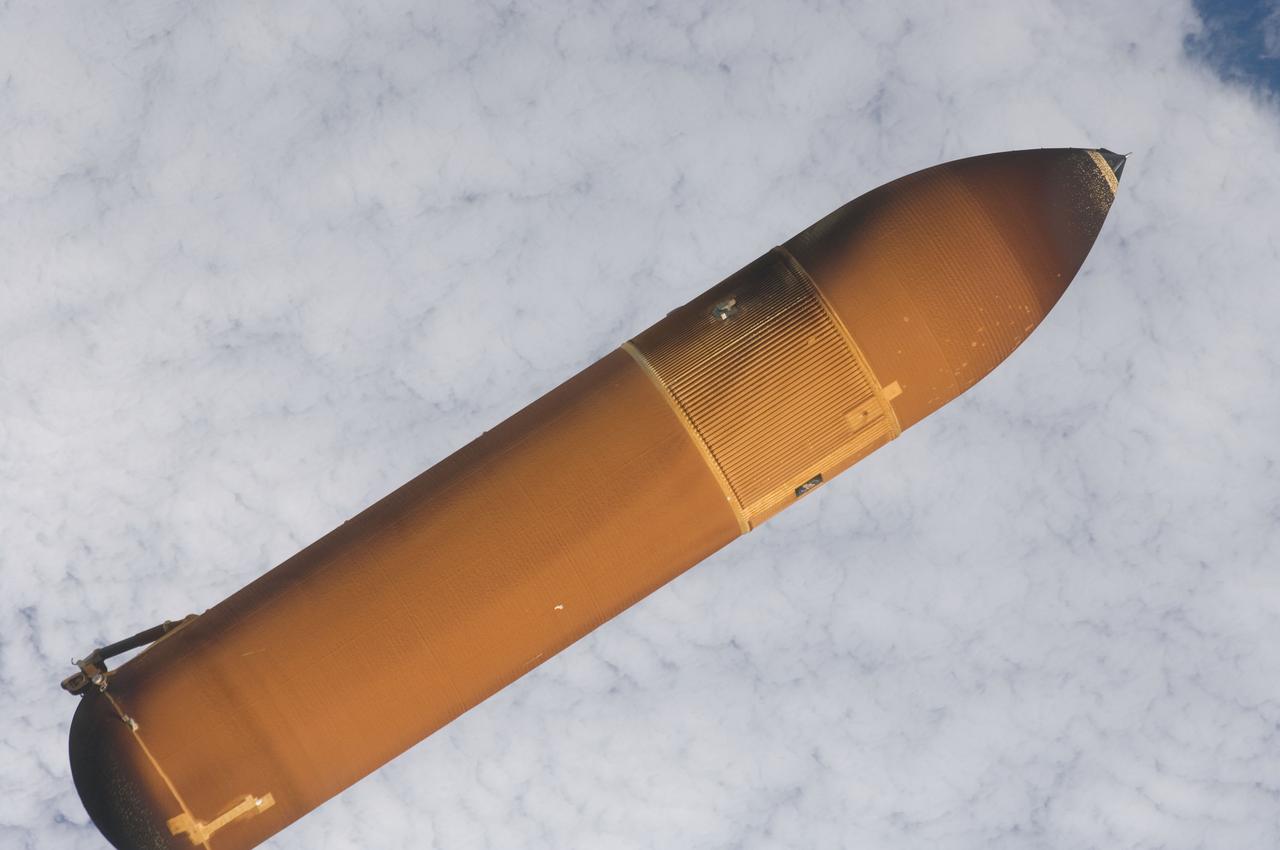
S134-E-005085 (16 May 2011) --- The STS-134 external fuel tank is seen during its release from space shuttle Endeavour in space following the successful launch on May 16, 2011. An STS-134 crew member using a hand-held still camera exposed the image. Photo credit: NASA
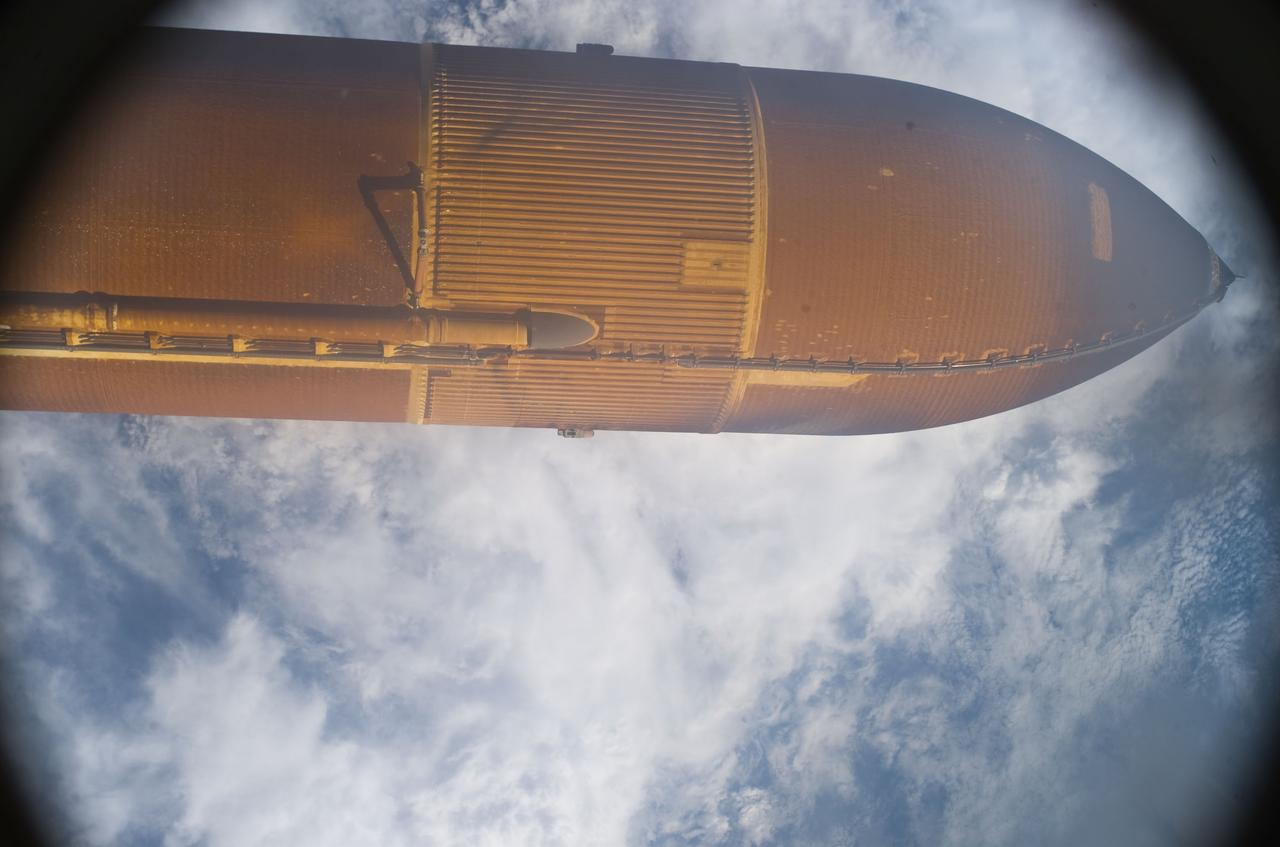
S134-E-005013 (16 May 2011) --- The STS-134 external fuel tank is seen during its release from space shuttle Endeavour in space following the successful launch on May 16, 2011. An STS-134 crew member using a hand-held still camera exposed the image. Photo credit: NASA
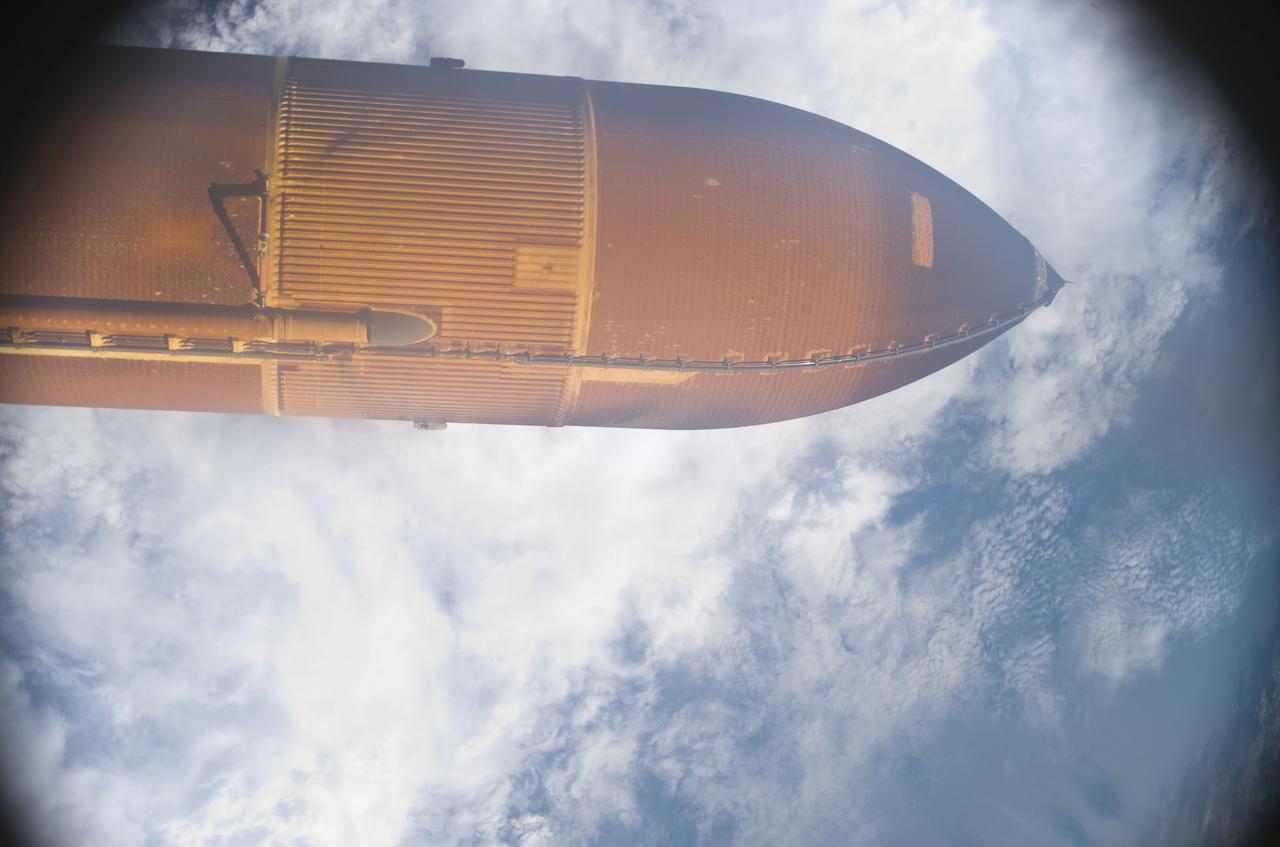
S134-E-005014 (16 May 2011) --- The STS-134 external fuel tank is seen during its release from space shuttle Endeavour in space following the successful launch on May 16, 2011. A camera in the umbilical well exposed the image. Photo credit: NASA
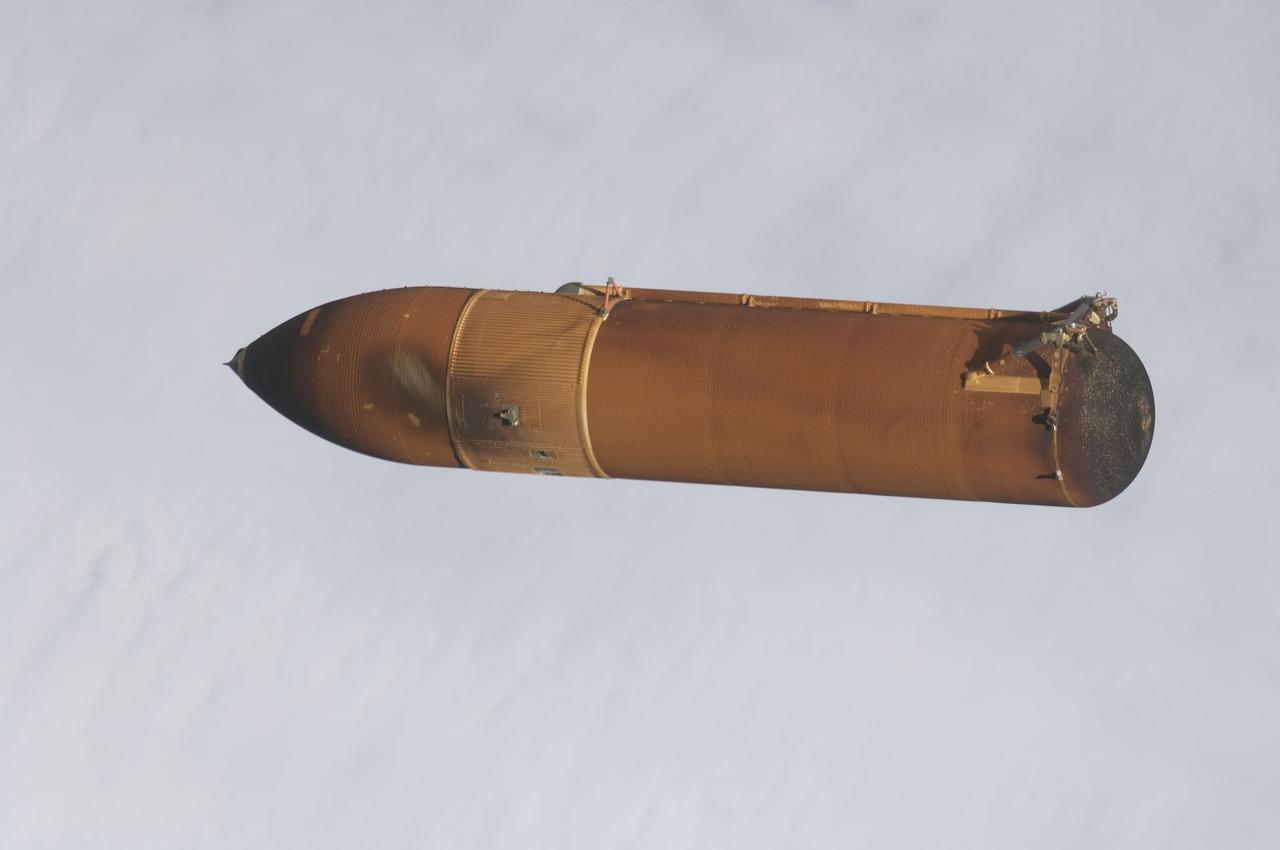
S134-E-005102 (16 May 2011) --- The STS-134 external fuel tank is seen during its release from space shuttle Endeavour in space following the successful launch on May 16, 2011. An STS-134 crew member using a hand-held still camera exposed the image. Photo credit: NASA
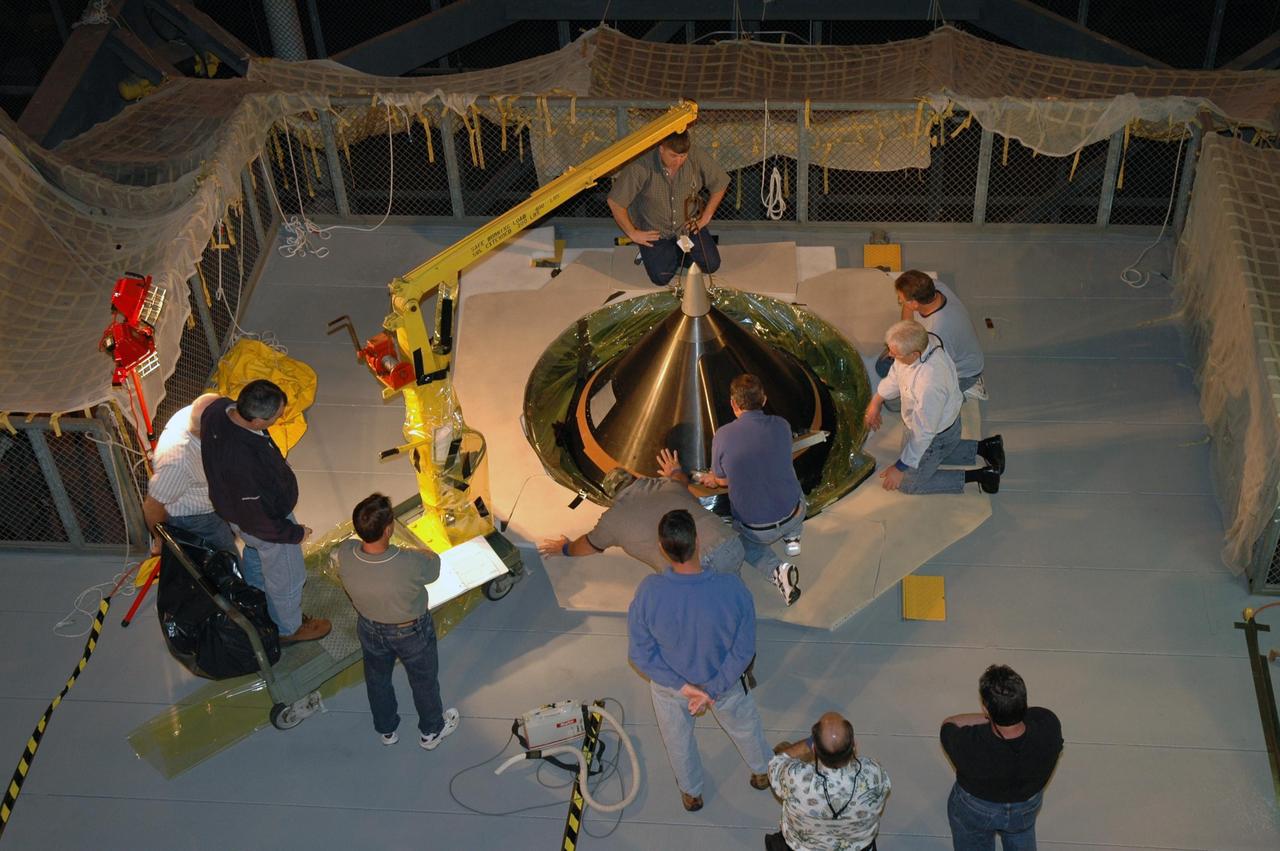
KENNEDY SPACE CENTER, FLA. - In the Vehicle Assembly Building at NASA's Kennedy Space Center, workers begin removal of the nose cap on top of external tank number 119, the tank designated for mission STS-121. The cap is being removed in order to install a new gaseous oxygen vent valve under the nose cap. Vapors are created prior to launch as the liquid oxygen in the external tank boils off. At the forward end of each external tank propellant tank is a vent and relief valve that can be opened before launch for venting or by excessive tank pressure for relief. The vent function is available only before launch. Mission STS-121 to the International Space Station is scheduled for launch in July. Photo credit: NASA/Jim Grossmann

KENNEDY SPACE CENTER, FLA. - In the Vehicle Assembly Building at NASA's Kennedy Space Center, workers remove the nose cap on top of external tank number 119, the tank designated for mission STS-121. The cap is being removed in order to install a new gaseous oxygen vent valve under the nose cap. Vapors are created prior to launch as the liquid oxygen in the external tank boils off. At the forward end of each external tank propellant tank is a vent and relief valve that can be opened before launch for venting or by excessive tank pressure for relief. The vent function is available only before launch. Mission STS-121 to the International Space Station is scheduled for launch in July. Photo credit: NASA/Jim Grossmann

KENNEDY SPACE CENTER, FLA. - Lockheed Martin technicians from NASA's Michoud Assembly Facility in Louisiana clean the area around the "manhole" on the external tank designated for mission STS-121. The work is part of the process in removing and replacing the external tank's four liquid hydrogen main engine cutoff sensors, which indicate whether the tank still has fuel during its climb to orbit. After the cleaning, the manhole will be removed to provide access to the area of the sensors for their removal. Photo credit: NASA/Jim Grossmann
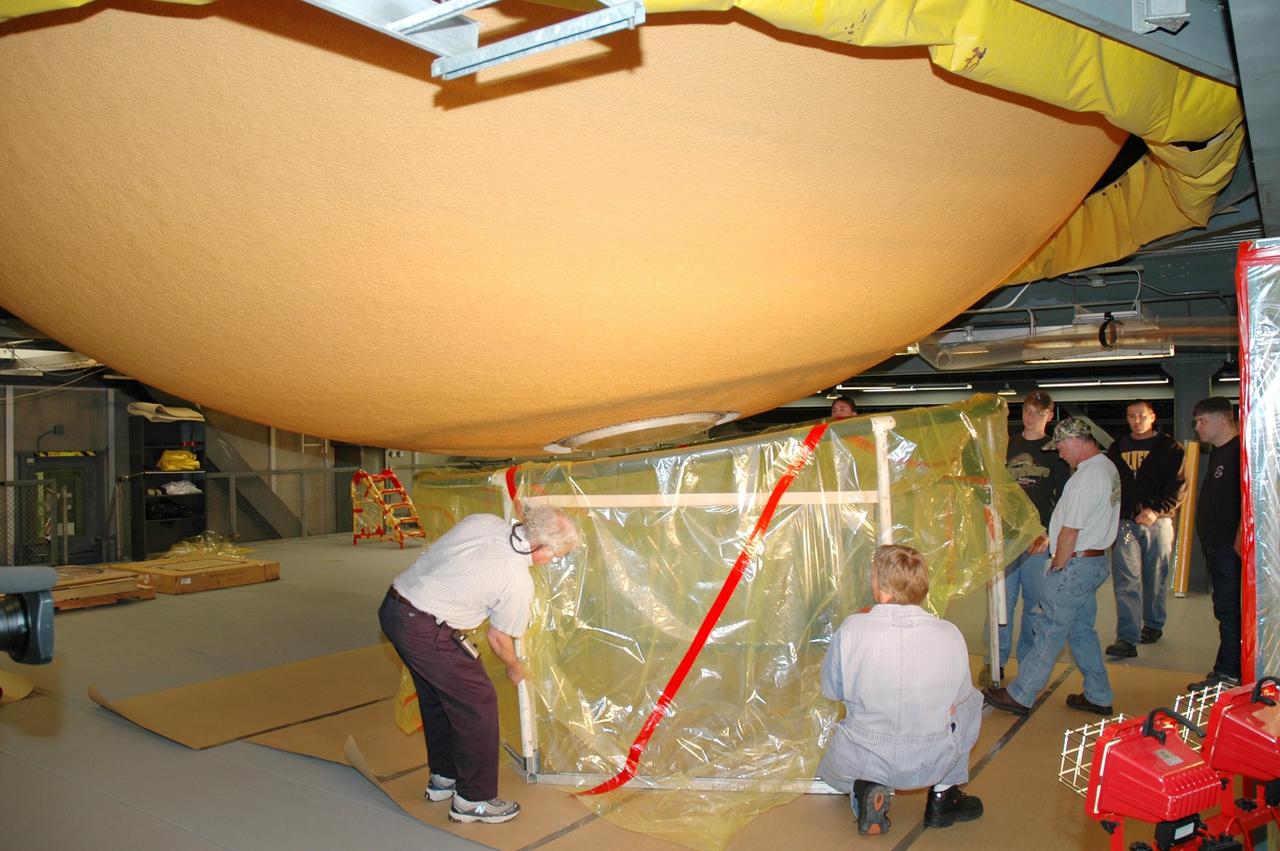
KENNEDY SPACE CENTER, FLA. - Lockheed Martin technicians from NASA's Michoud Assembly Facility in Louisiana create a clean-room working area around the "manhole" on the external tank designated for mission STS-121. The work is part of the process in removing and replacing the external tank's four liquid hydrogen main engine cutoff sensors, which indicate whether the tank still has fuel during its climb to orbit. After the cleaning, the manhole will be removed to provide access to the area of the sensors for their removal. Photo credit: NASA/Jim Grossmann
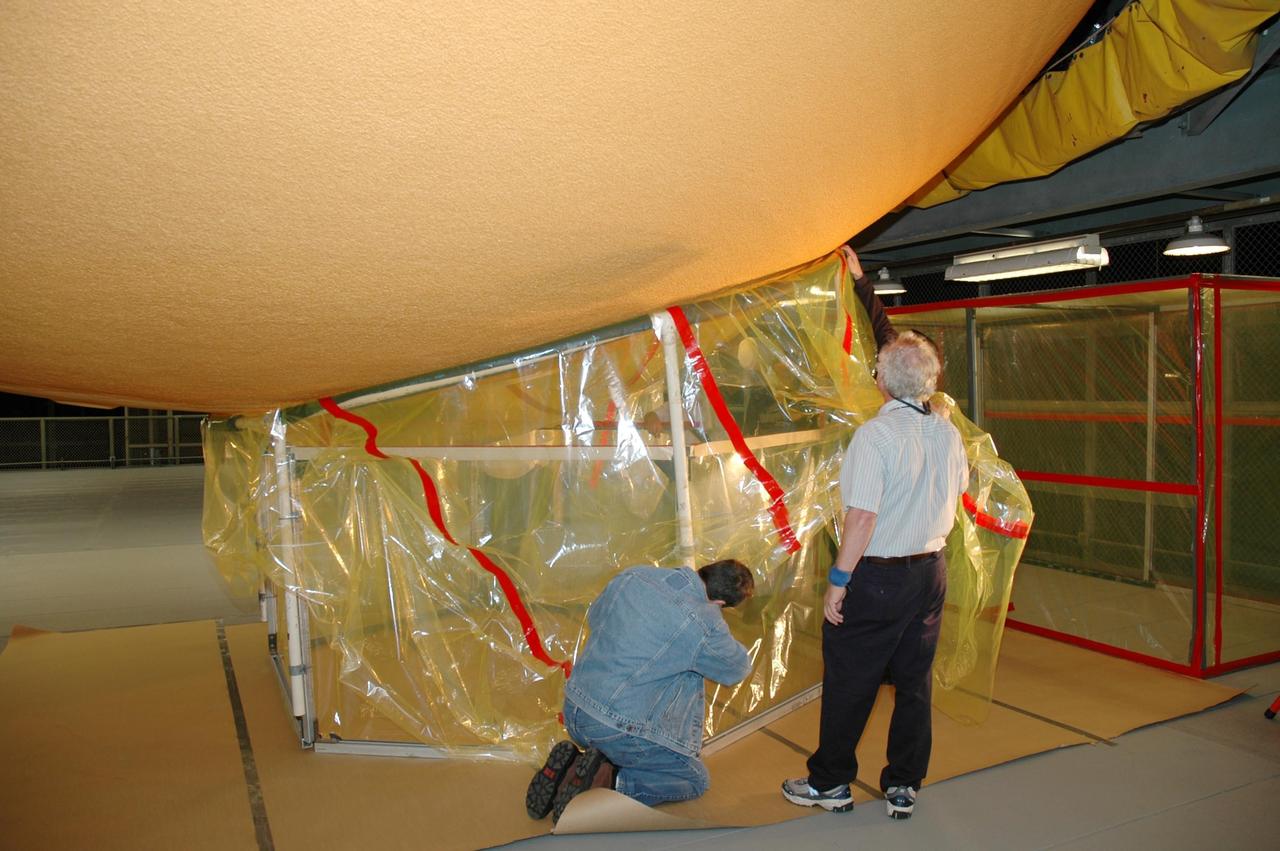
KENNEDY SPACE CENTER, FLA. - KENNEDY SPACE CENTER, FLA. - Lockheed Martin technicians from NASA's Michoud Assembly Facility in Louisiana install a clean-room working area around the "manhole" on the external tank designated for mission STS-121. The work is part of the process in removing and replacing the external tank's four liquid hydrogen main engine cutoff sensors, which indicate whether the tank still has fuel during its climb to orbit. After the cleaning, the manhole will be removed to provide access to the area of the sensors for their removal. Photo credit: NASA/Jim Grossmann
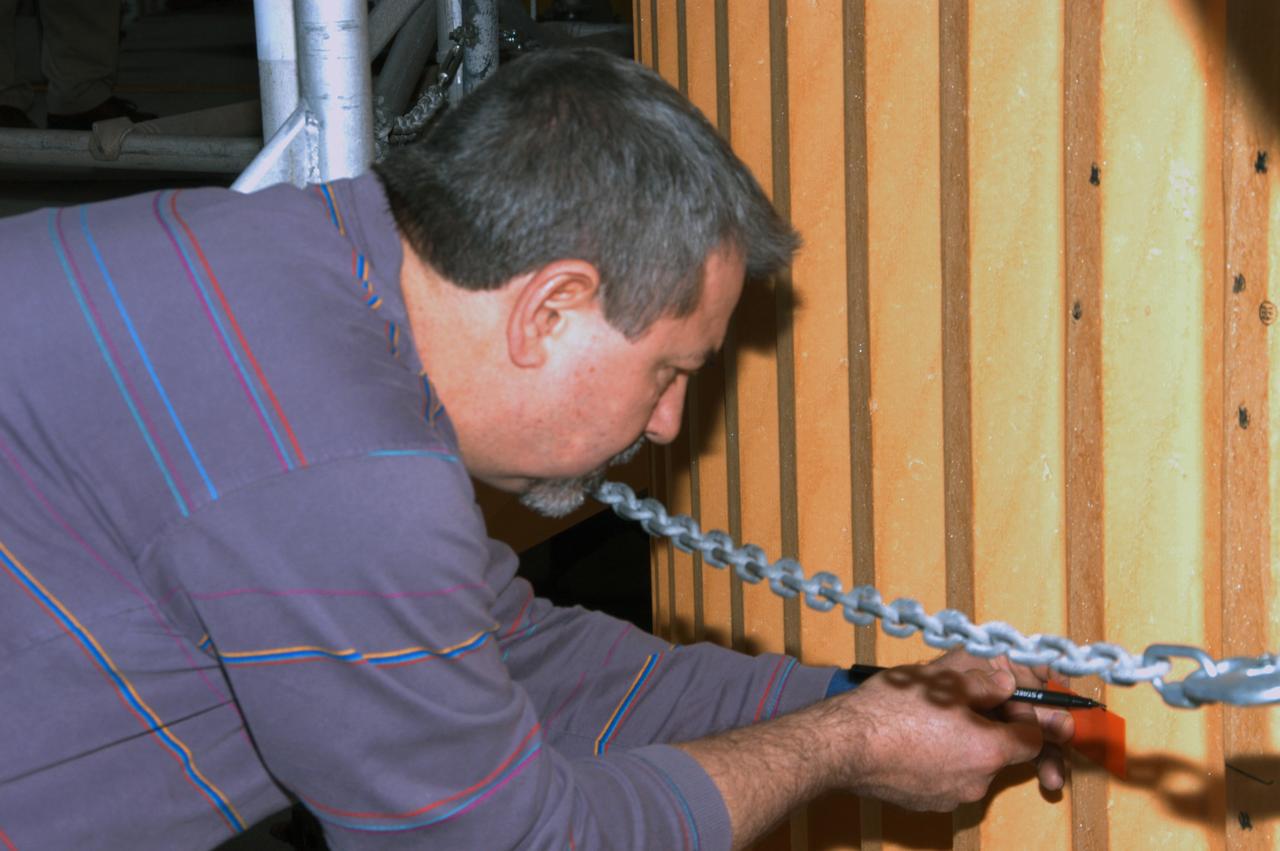
In high bay 1 of the Vehicle Assembly Building, a technician marks off an area for inspection on Atlantis' external tank. A severe thunderstorm with golf ball-sized hail caused visible divots in the giant tank's foam insulation and minor surface damage to about 26 heat shield tiles on the shuttle's left wing. Further evaluation of the tank is necessary to get an accurate accounting of foam damage and determine the type of repair required and the time needed for that work. A new target launch date has not been determined, but teams will focus on preparing Atlantis for liftoff in late April on mission STS-117.
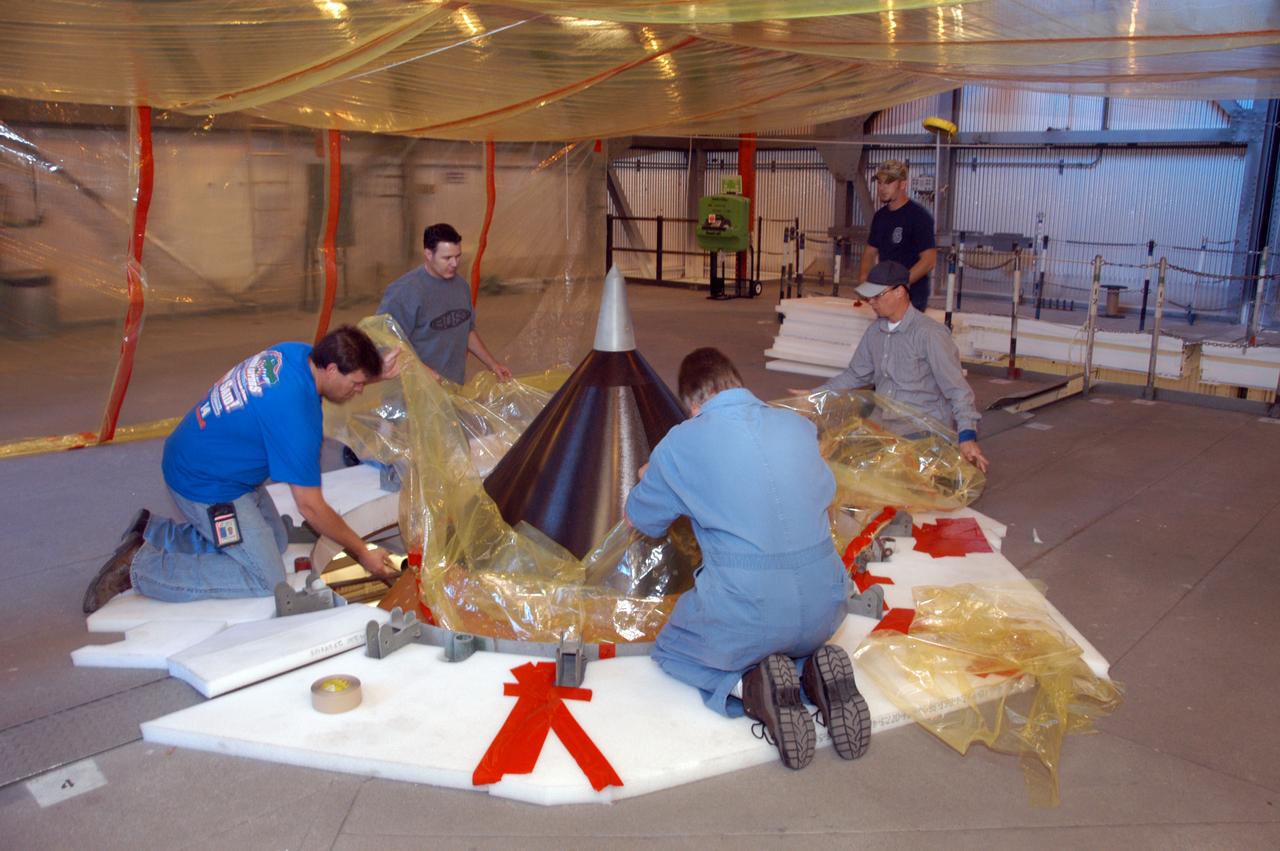
On an upper level of high bay 1 of the Vehicle Assembly Building, technicians place protective material around the nose cone of Atlantis' external tank. The nose cone will undergo repair for hail damage. A severe thunderstorm with golf ball-sized hail caused visible divots in the giant tank's foam insulation and minor surface damage to about 26 heat shield tiles on the shuttle's left wing. Further evaluation of the tank is necessary to get an accurate accounting of foam damage and determine the type of repair required and the time needed for that work. A new target launch date has not been determined, but teams will focus on preparing Atlantis for liftoff in late April on mission STS-117.
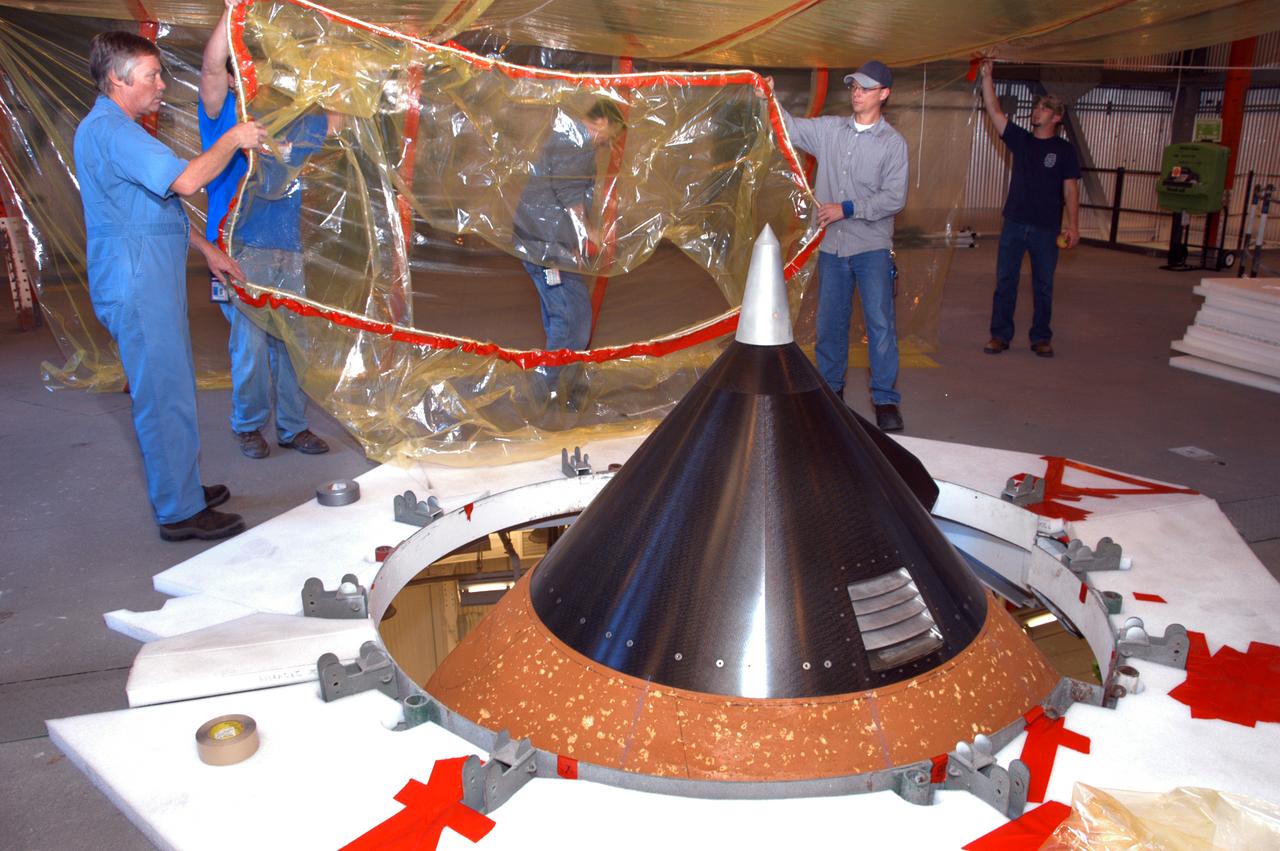
On an upper level of high bay 1 of the Vehicle Assembly Building, technicians move protective material toward the nose cone (foreground) of Atlantis' external tank. The nose cone will undergo repair for hail damage. A severe thunderstorm with golf ball-sized hail caused visible divots in the giant tank's foam insulation and minor surface damage to about 26 heat shield tiles on the shuttle's left wing. Further evaluation of the tank is necessary to get an accurate accounting of foam damage and determine the type of repair required and the time needed for that work. A new target launch date has not been determined, but teams will focus on preparing Atlantis for liftoff in late April on mission STS-117.
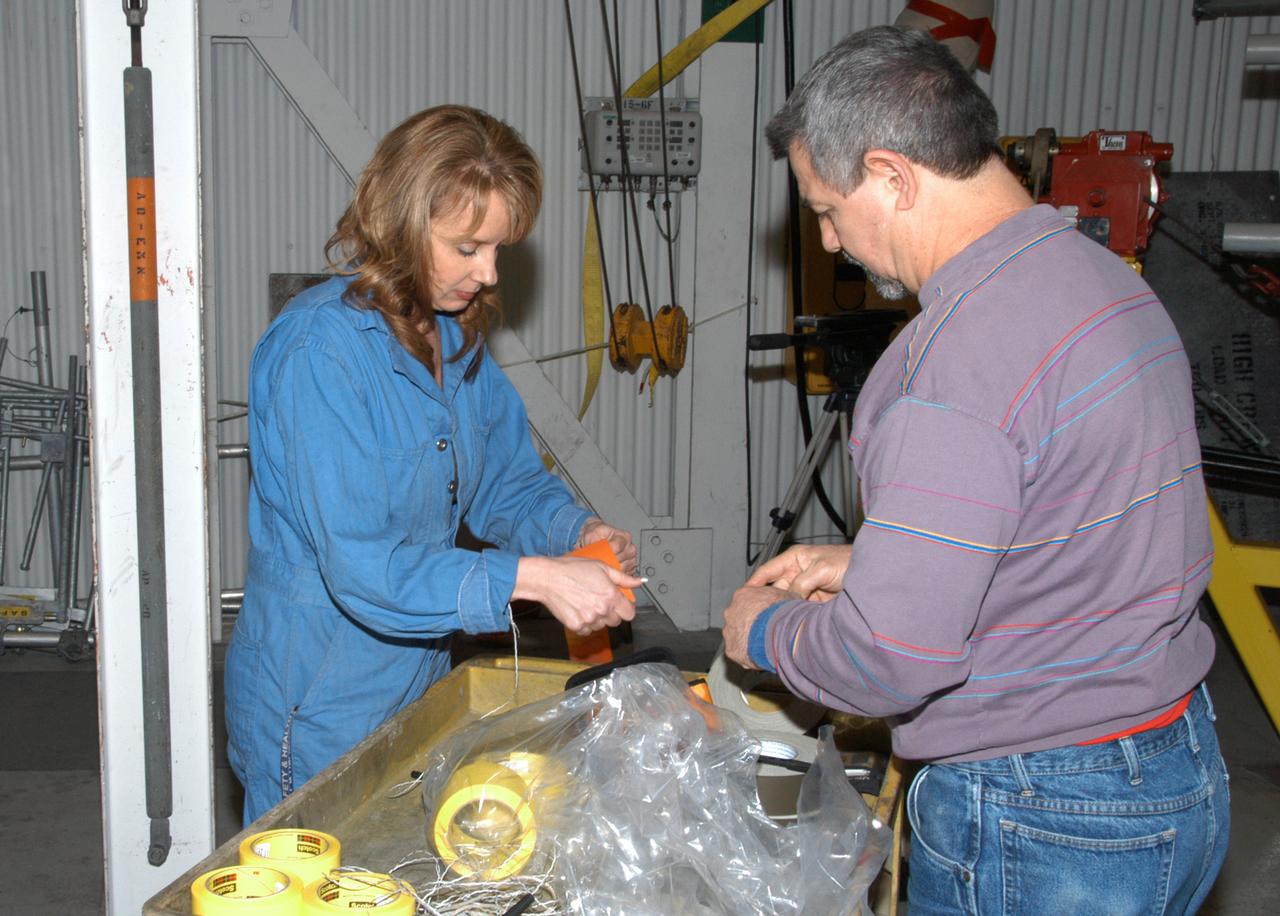
Technicians in the Vehicle Assembly Building prepare materials that will be used during repair of the nose cone on Atlantis' external tank. A severe thunderstorm with golf ball-sized hail caused visible divots in the giant tank's foam insulation and minor surface damage to about 26 heat shield tiles on the shuttle's left wing. Further evaluation of the tank is necessary to get an accurate accounting of foam damage and determine the type of repair required and the time needed for that work. A new target launch date has not been determined, but teams will focus on preparing Atlantis for liftoff in late April on mission STS-117.
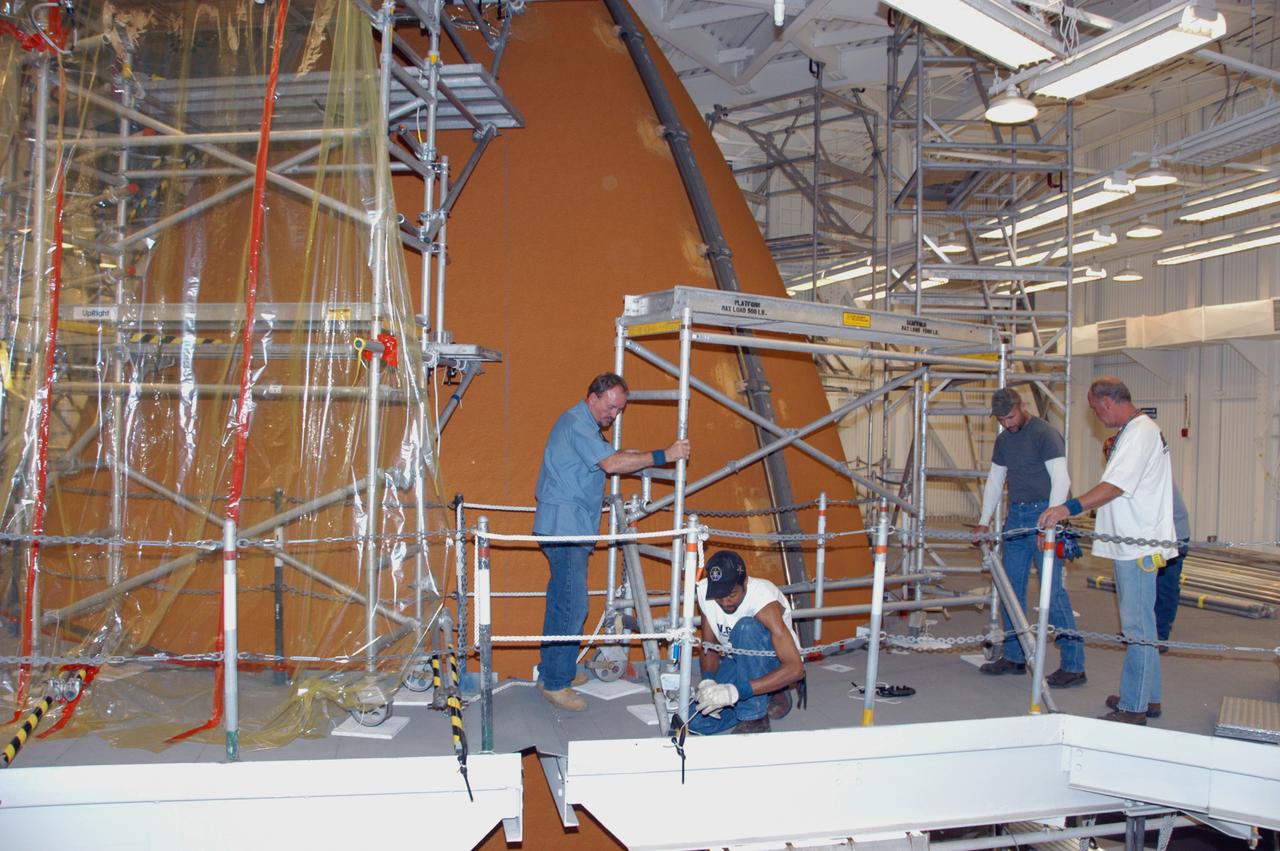
On an upper level of high bay 1 of the Vehicle Assembly Building, technicians secure protective material around Atlantis' external tank. The preparations are for future repair work of the hail damage that happened Feb. 27. A severe thunderstorm with golf ball-sized hail caused visible divots in the giant tank's foam insulation and minor surface damage to about 26 heat shield tiles on the shuttle's left wing. Further evaluation of the tank is necessary to get an accurate accounting of foam damage and determine the type of repair required and the time needed for that work. A new target launch date has not been determined, but teams will focus on preparing Atlantis for liftoff in late April on mission STS-117.

On an upper level of high bay 1 of the Vehicle Assembly Building, technicians secure protective material around the base of the nose cone of Atlantis' external tank. The nose cone will undergo repair for hail damage. A severe thunderstorm with golf ball-sized hail caused visible divots in the giant tank's foam insulation and minor surface damage to about 26 heat shield tiles on the shuttle's left wing. Further evaluation of the tank is necessary to get an accurate accounting of foam damage and determine the type of repair required and the time needed for that work. A new target launch date has not been determined, but teams will focus on preparing Atlantis for liftoff in late April on mission STS-117.
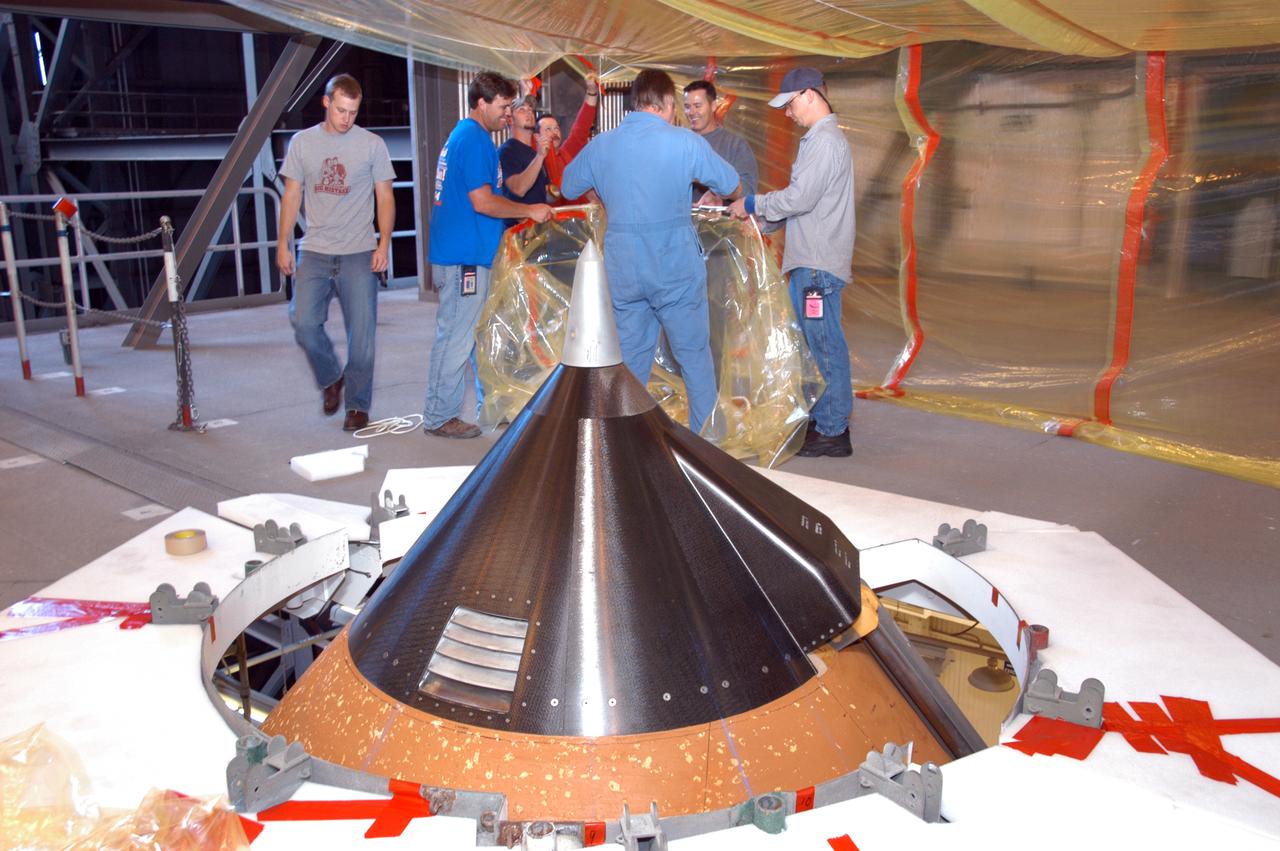
On an upper level of high bay 1 of the Vehicle Assembly Building, technicians prepare the area around the nose cone (foreground) of Atlantis' external tank that will undergo repair for hail damage. A severe thunderstorm with golf ball-sized hail caused visible divots in the giant tank's foam insulation and minor surface damage to about 26 heat shield tiles on the shuttle's left wing. Further evaluation of the tank is necessary to get an accurate accounting of foam damage and determine the type of repair required and the time needed for that work. A new target launch date has not been determined, but teams will focus on preparing Atlantis for liftoff in late April on mission STS-117.
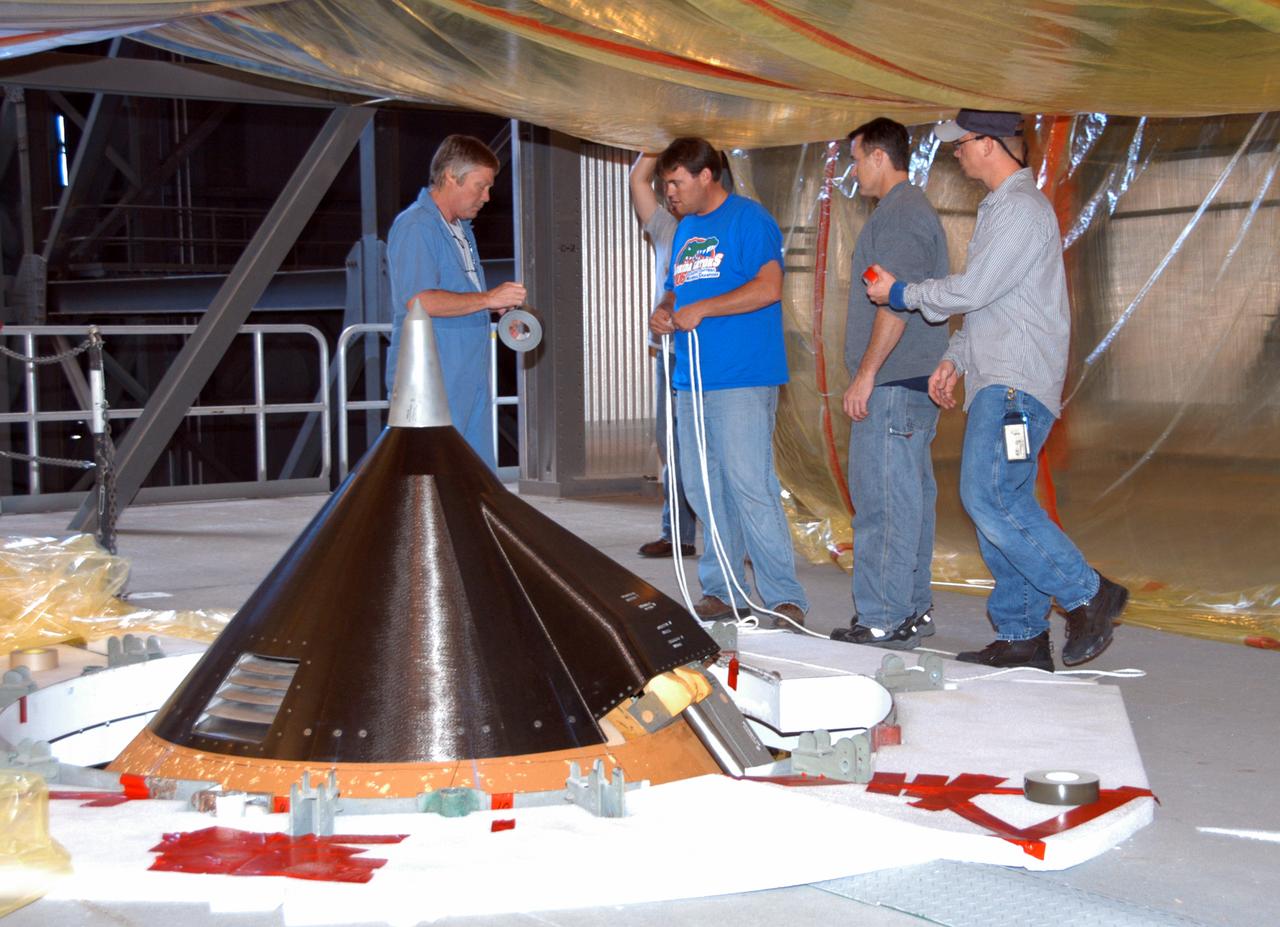
On an upper level of high bay 1 of the Vehicle Assembly Building, technicians prepare the area around the nose cone (left) of Atlantis' external tank that will undergo repair for hail damage. A severe thunderstorm with golf ball-sized hail caused visible divots in the giant tank's foam insulation and minor surface damage to about 26 heat shield tiles on the shuttle's left wing. Further evaluation of the tank is necessary to get an accurate accounting of foam damage and determine the type of repair required and the time needed for that work. A new target launch date has not been determined, but teams will focus on preparing Atlantis for liftoff in late April on mission STS-117.
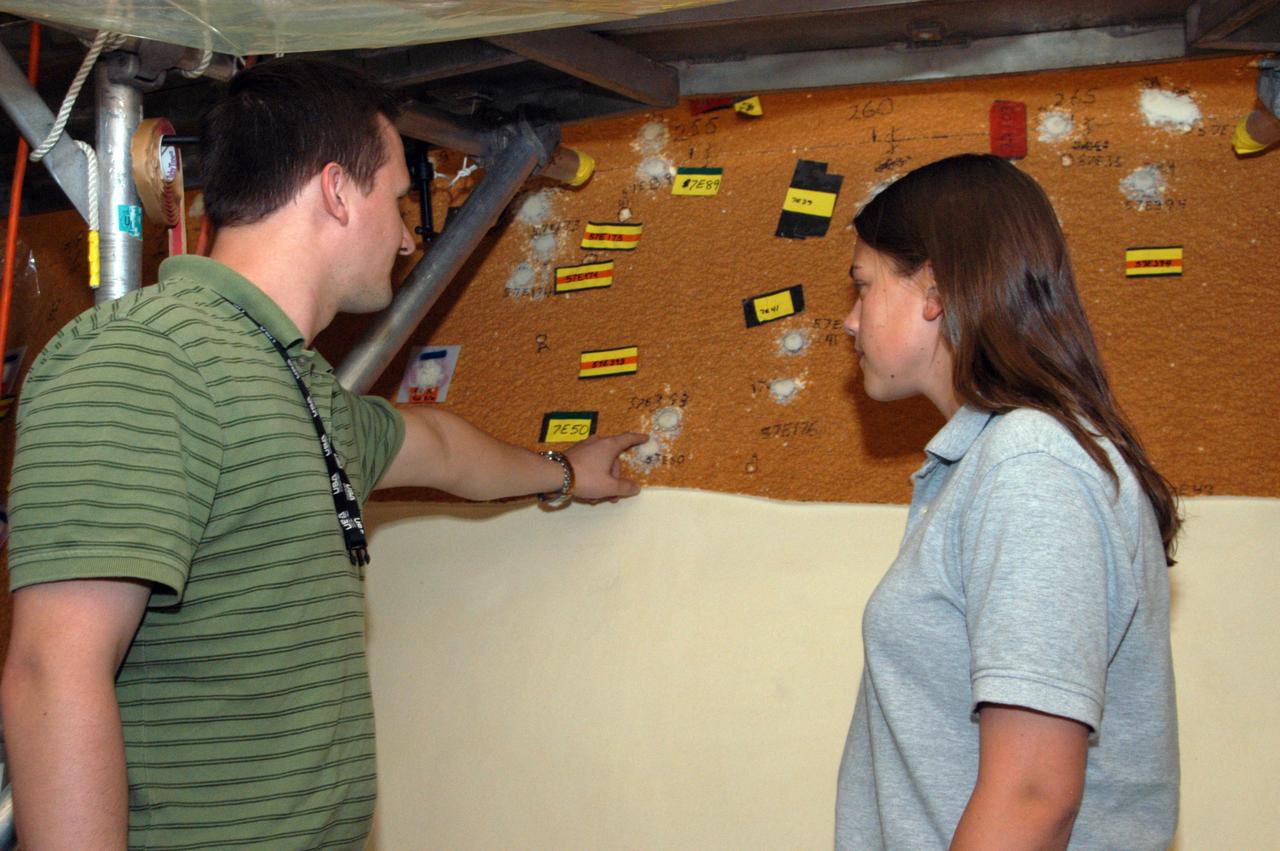
In the Vehicle Assembly Building, Mike Ravenscroft, with United Space Alliance, points to some of the foam repair done on the external tank of Space Shuttle Atlantis. Holes filled with foam are sanded flush with the adjacent area. In late February, Atlantis' external tank received hail damage during a severe thunderstorm that passed through the Kennedy Space Center Launch Complex 39 area. The hail caused visible divots in the giant tank's foam insulation as well as minor surface damage to about 26 heat shield tiles on the shuttle's left wing. The launch now is targeted for June 8.
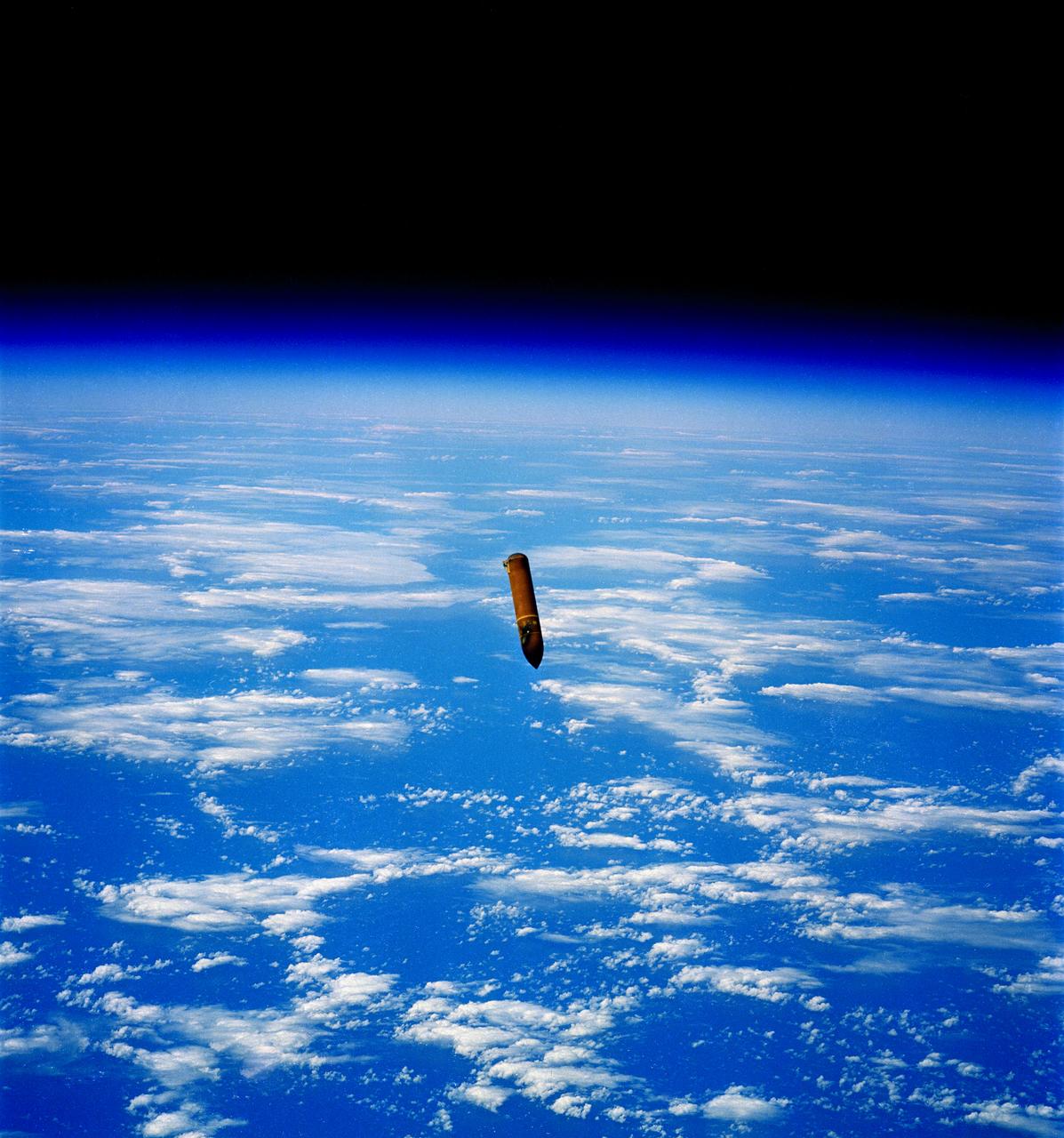
This STS-29 mission onboard photo depicts the External Tank (ET) falling toward the ocean after separation from the Shuttle orbiter Discovery. The giant cylinder, higher than a 15-story building, with a length of 154-feet (47-meters) and a diameter of 27,5-feet (8.4-meters), is the largest single piece of the Space Shuttle. During launch, the ET also acts as a backbone for the orbiter and solid rocket boosters. In separate, internal pressurized tank sections, the ET holds the liquid hydrogen fuel and liquid oxygen oxidizer for the Shuttle's three main engines. During launch, the ET feeds the fuel under pressure through 17-inch (43.2-centimeter) ducts which branch off into smaller lines that feed directly into the main engines. Some 64,000 gallons (242,260 liters) of fuel are consumed by the main engines each minute. Machined from aluminum alloys, the Space Shuttle's ET is the only part of the launch vehicle that currently is not reused. After its 526,000 gallons (1,991,071 liters) of propellants are consumed during the first 8.5 minutes of flight, it is jettisoned from the orbiter and breaks up in the upper atmosphere, its pieces falling into remote ocean waters. The Marshall Space Flight Center was responsible for developing the ET.
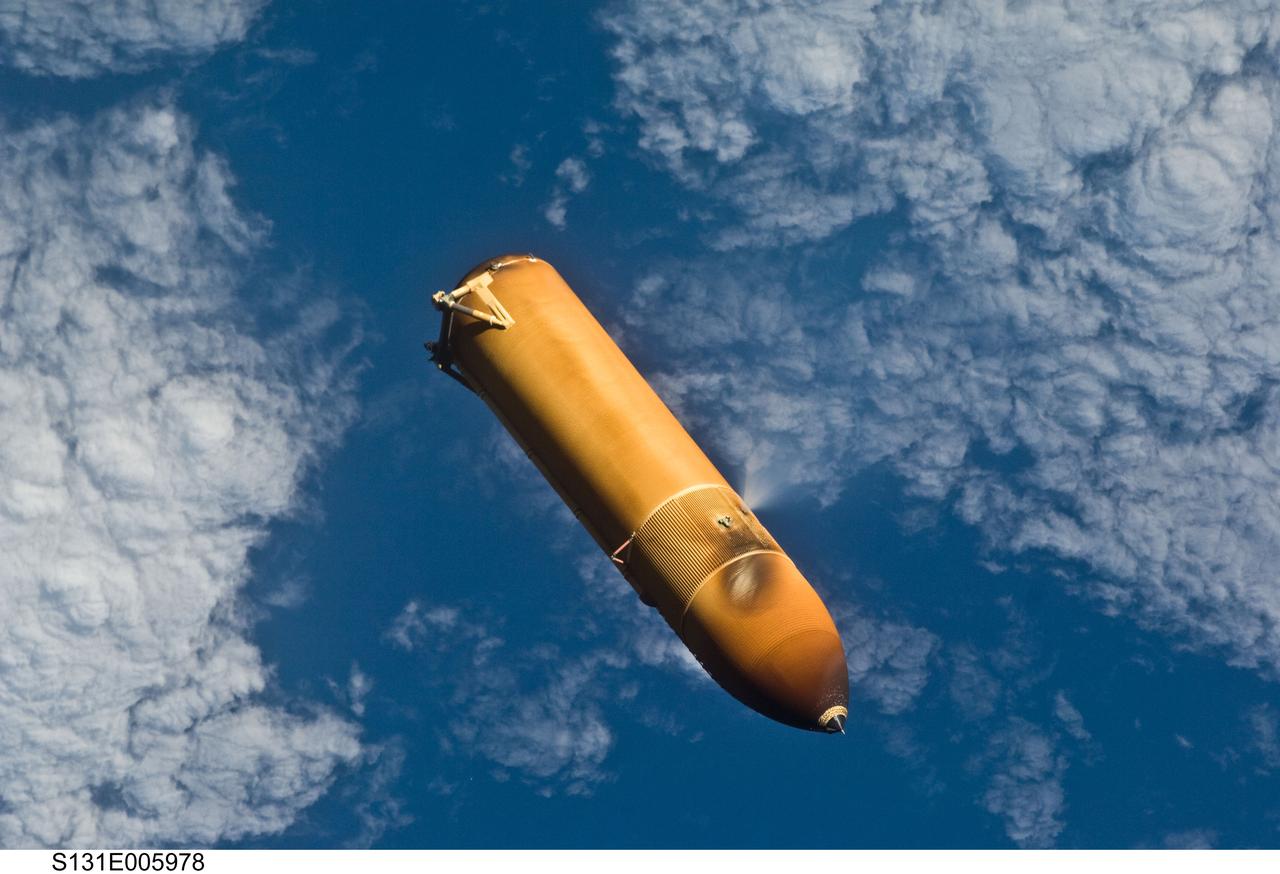
S131-E-005978 (5 April 2010) --- Backdropped by a blue and white part of Earth, the STS-131 external fuel tank (ET) begins its relative separation from the Space Shuttle Discovery following launch.
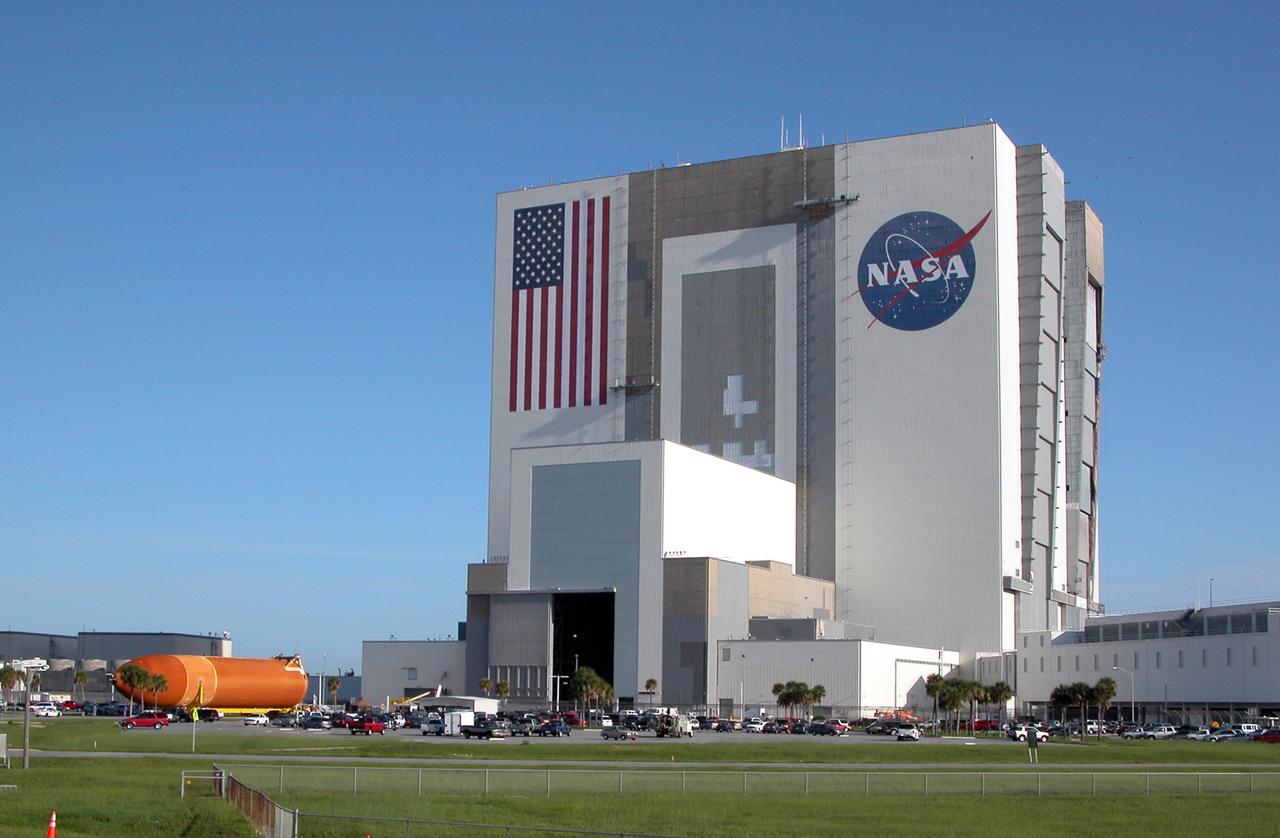
Aboard a transporter, external tank No. 120 heads for the open door of the Vehicle Assembly Building. There it will be lifted into a checkout cell. ET-120 will be used for launching Space Shuttle Discovery on mission STS-120 in October.
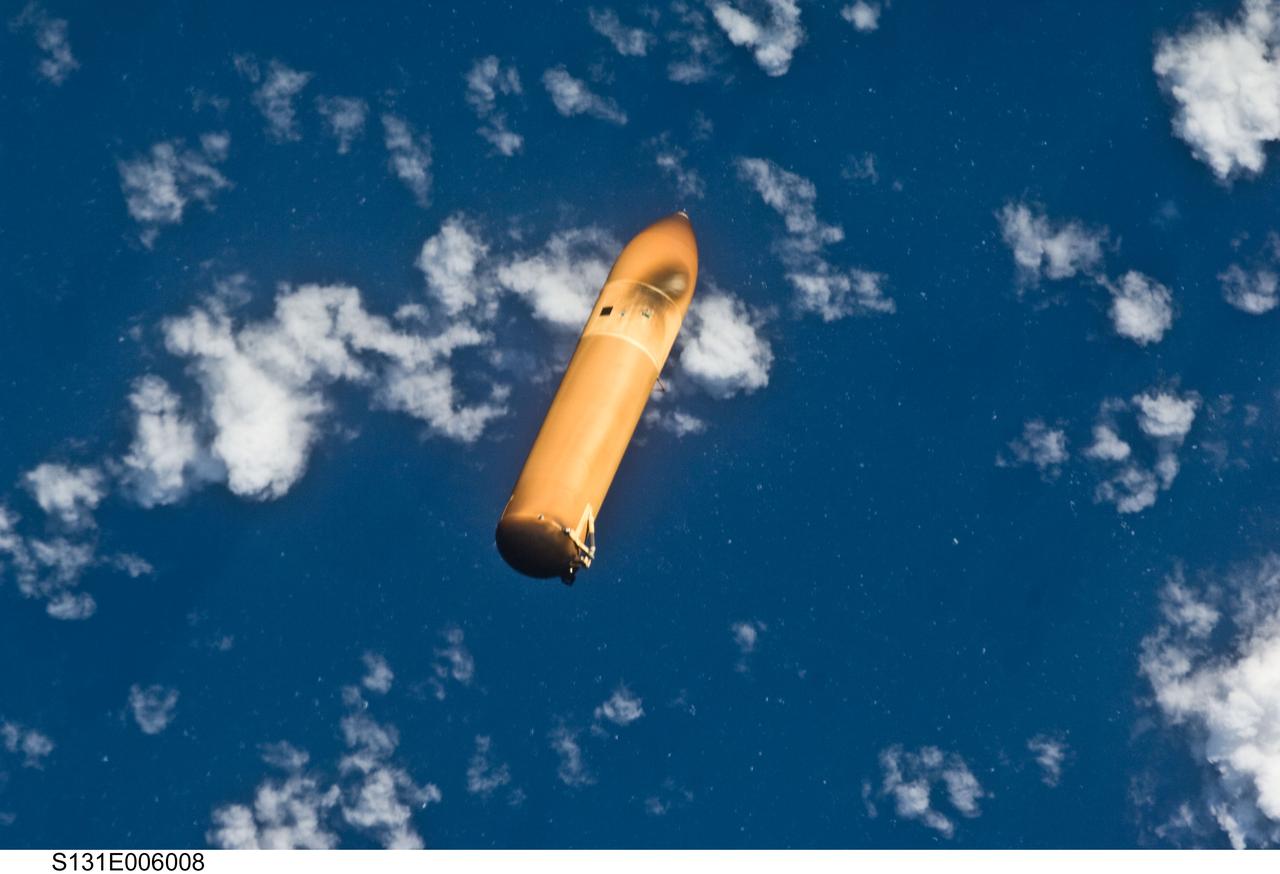
S131-E-006008 (5 April 2010) --- Backdropped by a blue and white part of Earth, the STS-131 external fuel tank (ET) begins its relative separation from the Space Shuttle Discovery following launch.
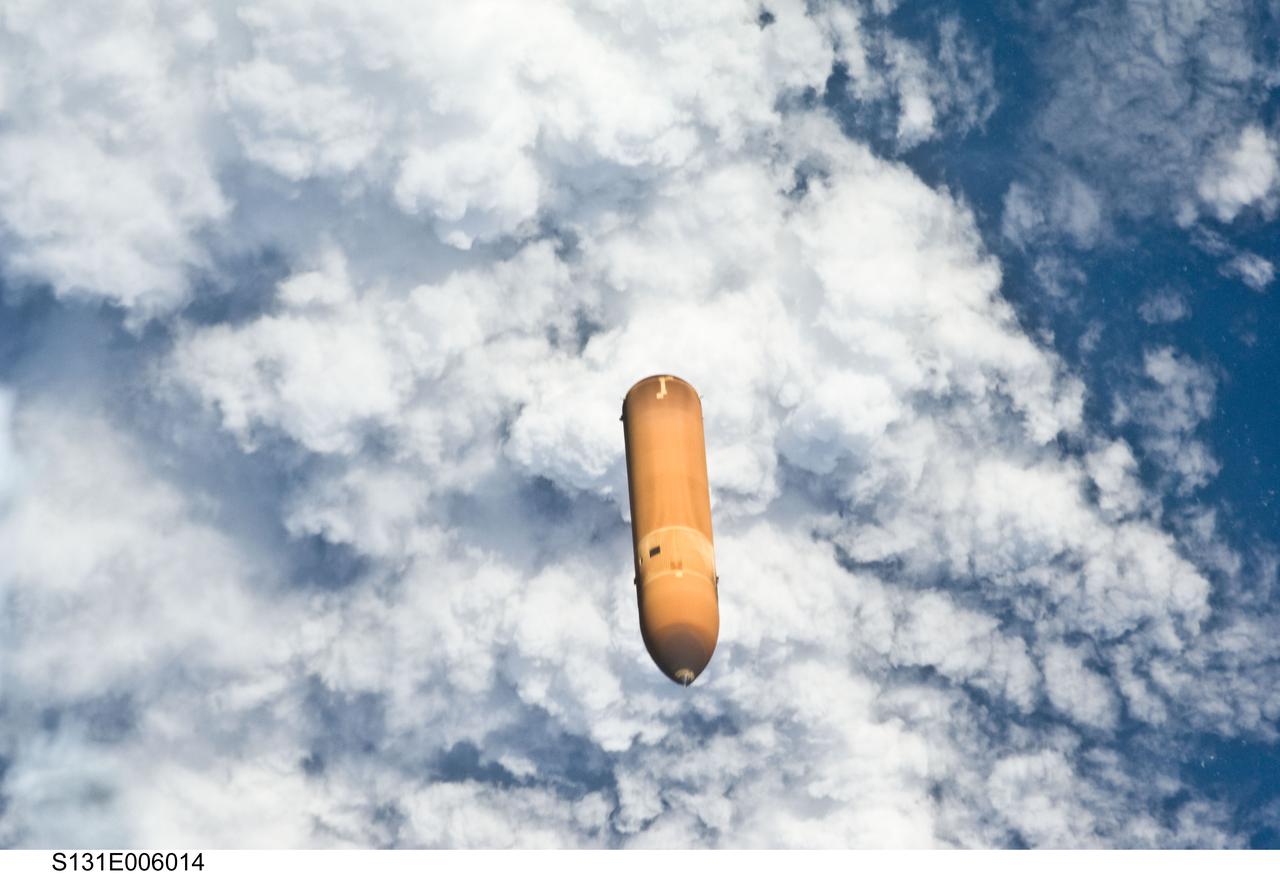
S131-E-006014 (5 April 2010) --- Backdropped by a cloud-covered part of Earth, the STS-131 external fuel tank (ET) begins its relative separation from the Space Shuttle Discovery following launch.
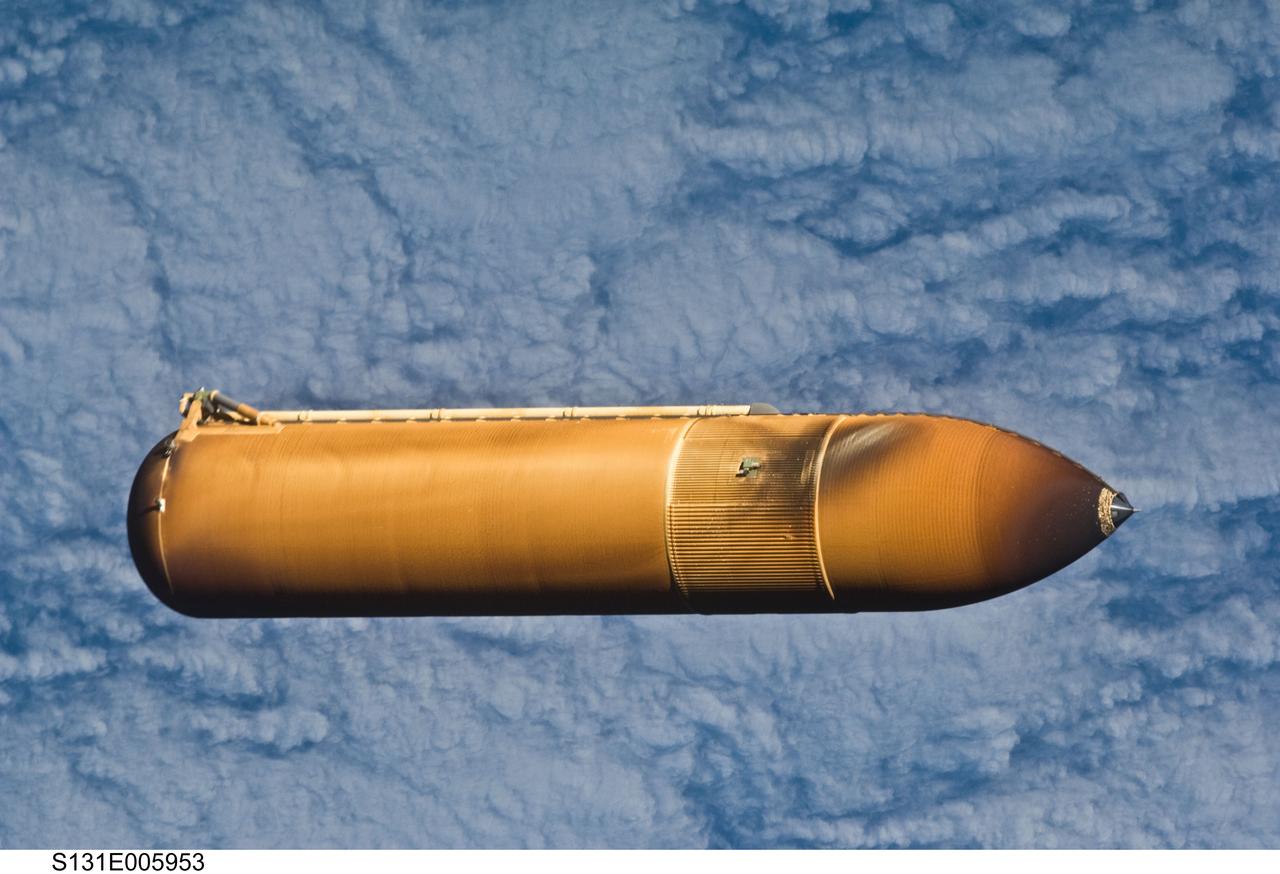
S131-E-005953 (5 April 2010) --- Backdropped by a cloud-covered part of Earth, the STS-131 external fuel tank (ET) begins its relative separation from the Space Shuttle Discovery following launch.
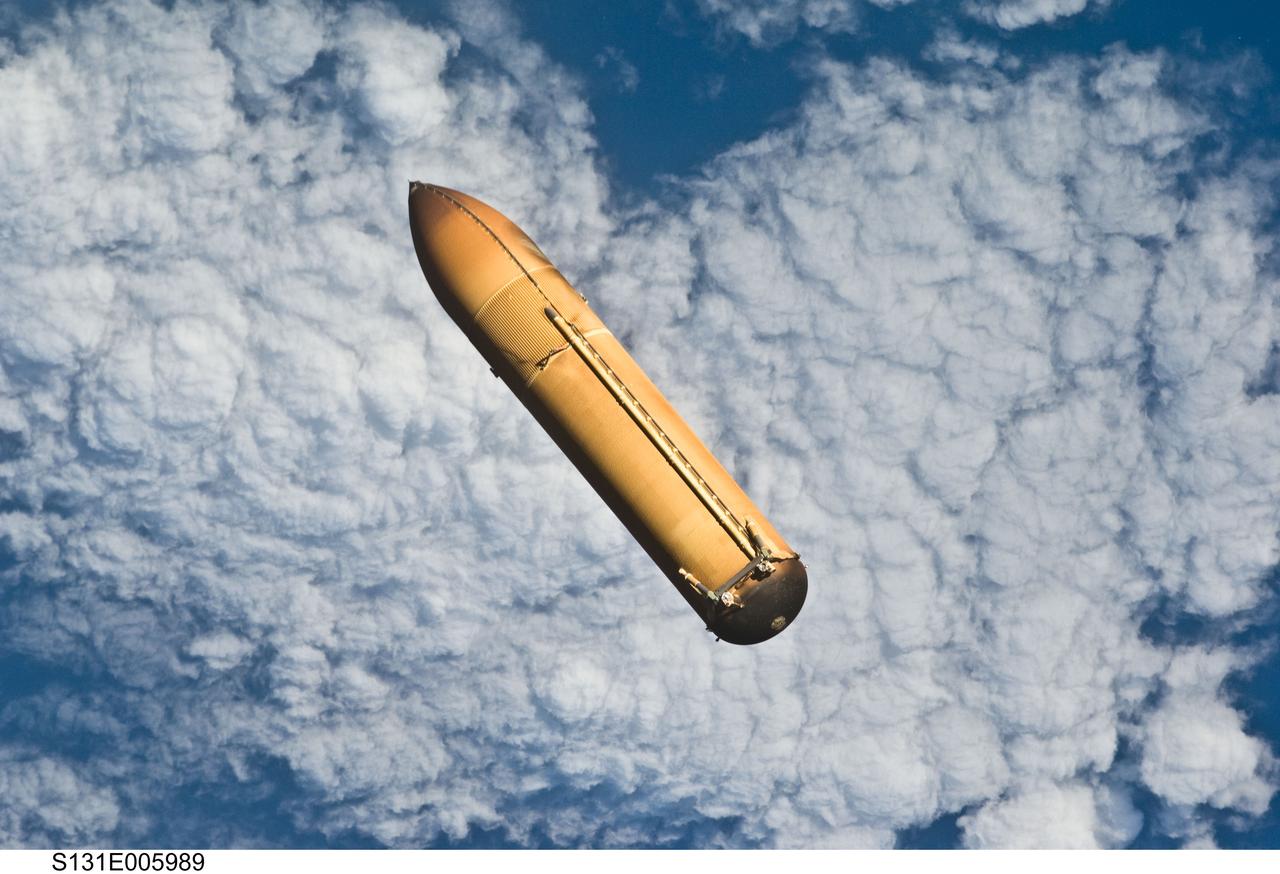
S131-E-005989 (5 April 2010) --- Backdropped by a blue and white part of Earth, the STS-131 external fuel tank (ET) begins its relative separation from the Space Shuttle Discovery following launch.
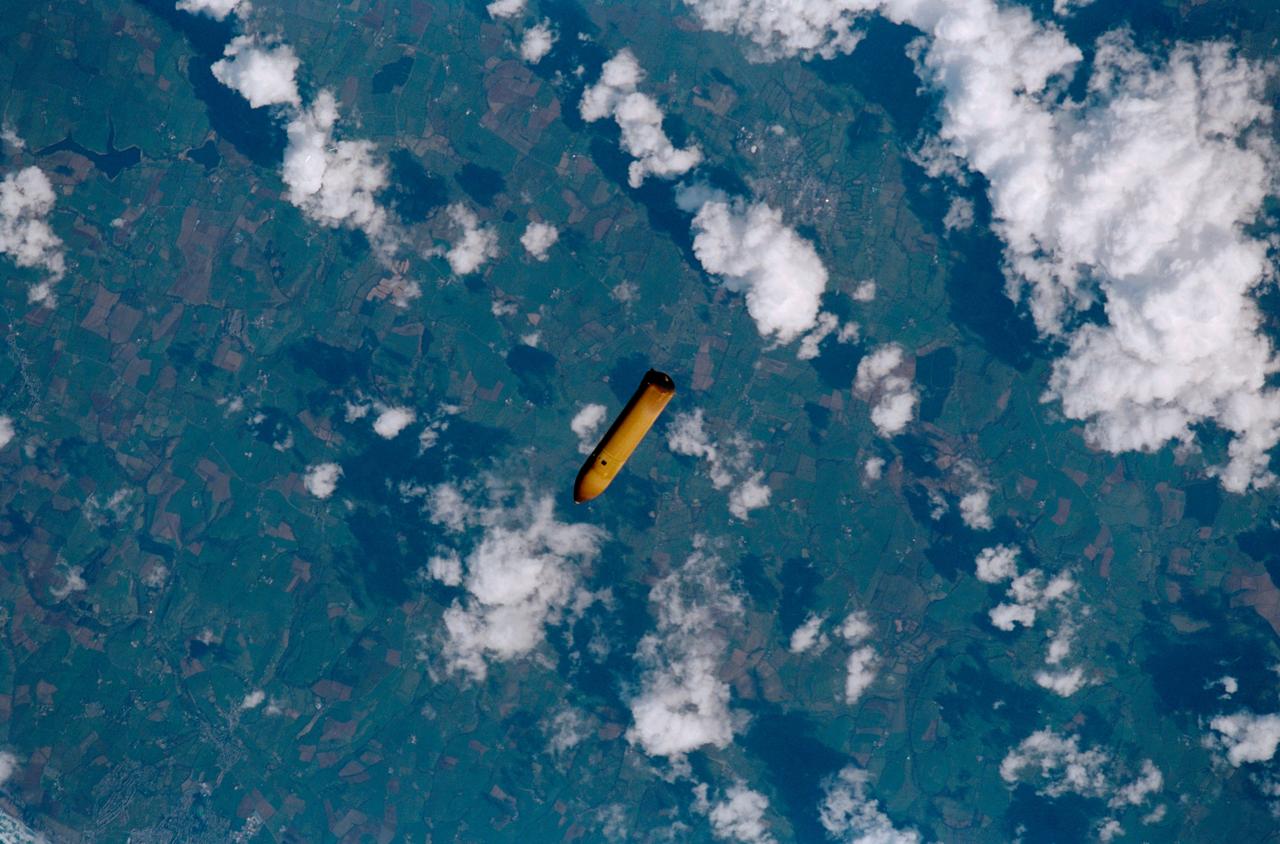
STS102-311-013 (8 March 2001) --- The external tank falls toward Earth's atmosphere during the completion of the launch phase of the STS-102 mission. Western Europe is in the background.