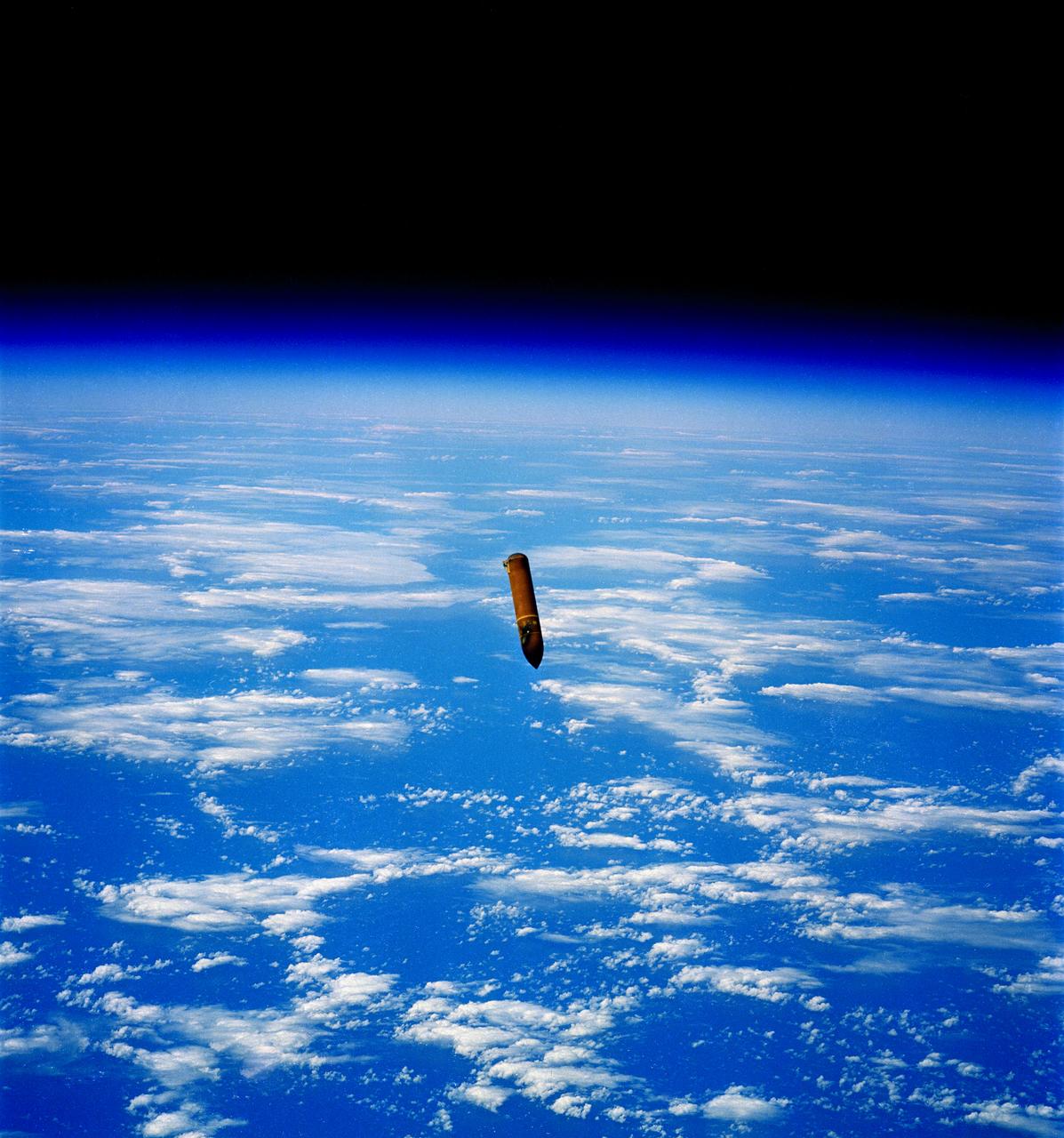
This STS-29 mission onboard photo depicts the External Tank (ET) falling toward the ocean after separation from the Shuttle orbiter Discovery. The giant cylinder, higher than a 15-story building, with a length of 154-feet (47-meters) and a diameter of 27,5-feet (8.4-meters), is the largest single piece of the Space Shuttle. During launch, the ET also acts as a backbone for the orbiter and solid rocket boosters. In separate, internal pressurized tank sections, the ET holds the liquid hydrogen fuel and liquid oxygen oxidizer for the Shuttle's three main engines. During launch, the ET feeds the fuel under pressure through 17-inch (43.2-centimeter) ducts which branch off into smaller lines that feed directly into the main engines. Some 64,000 gallons (242,260 liters) of fuel are consumed by the main engines each minute. Machined from aluminum alloys, the Space Shuttle's ET is the only part of the launch vehicle that currently is not reused. After its 526,000 gallons (1,991,071 liters) of propellants are consumed during the first 8.5 minutes of flight, it is jettisoned from the orbiter and breaks up in the upper atmosphere, its pieces falling into remote ocean waters. The Marshall Space Flight Center was responsible for developing the ET.
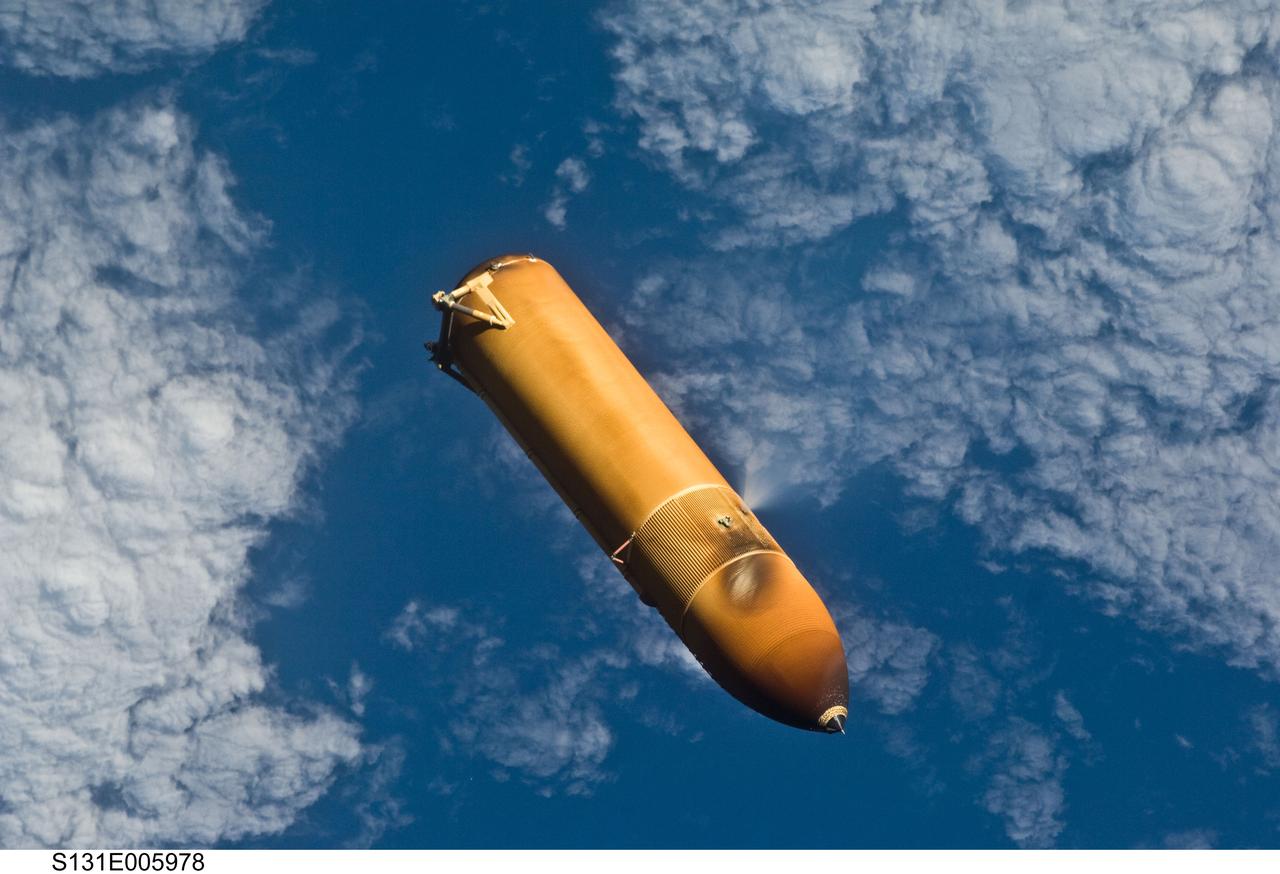
S131-E-005978 (5 April 2010) --- Backdropped by a blue and white part of Earth, the STS-131 external fuel tank (ET) begins its relative separation from the Space Shuttle Discovery following launch.
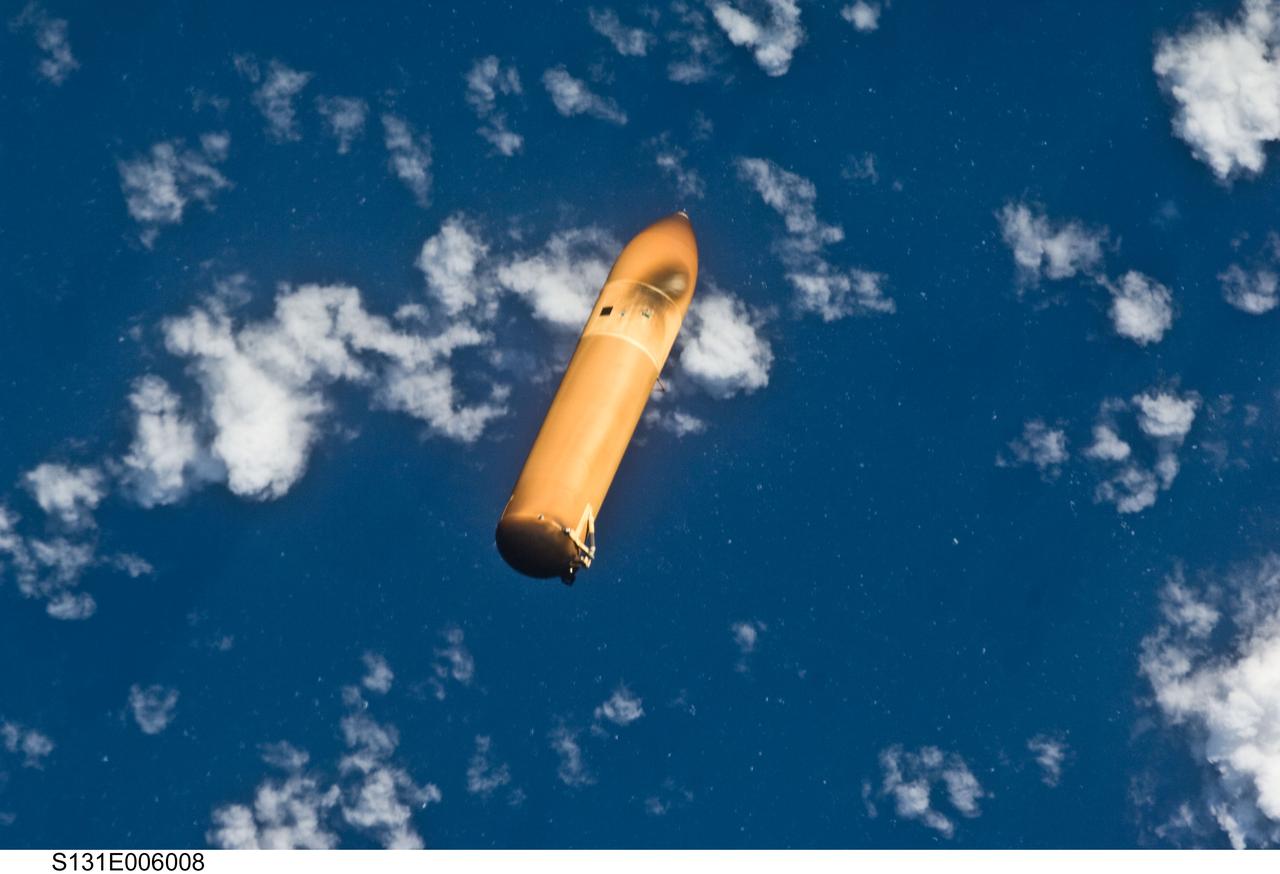
S131-E-006008 (5 April 2010) --- Backdropped by a blue and white part of Earth, the STS-131 external fuel tank (ET) begins its relative separation from the Space Shuttle Discovery following launch.
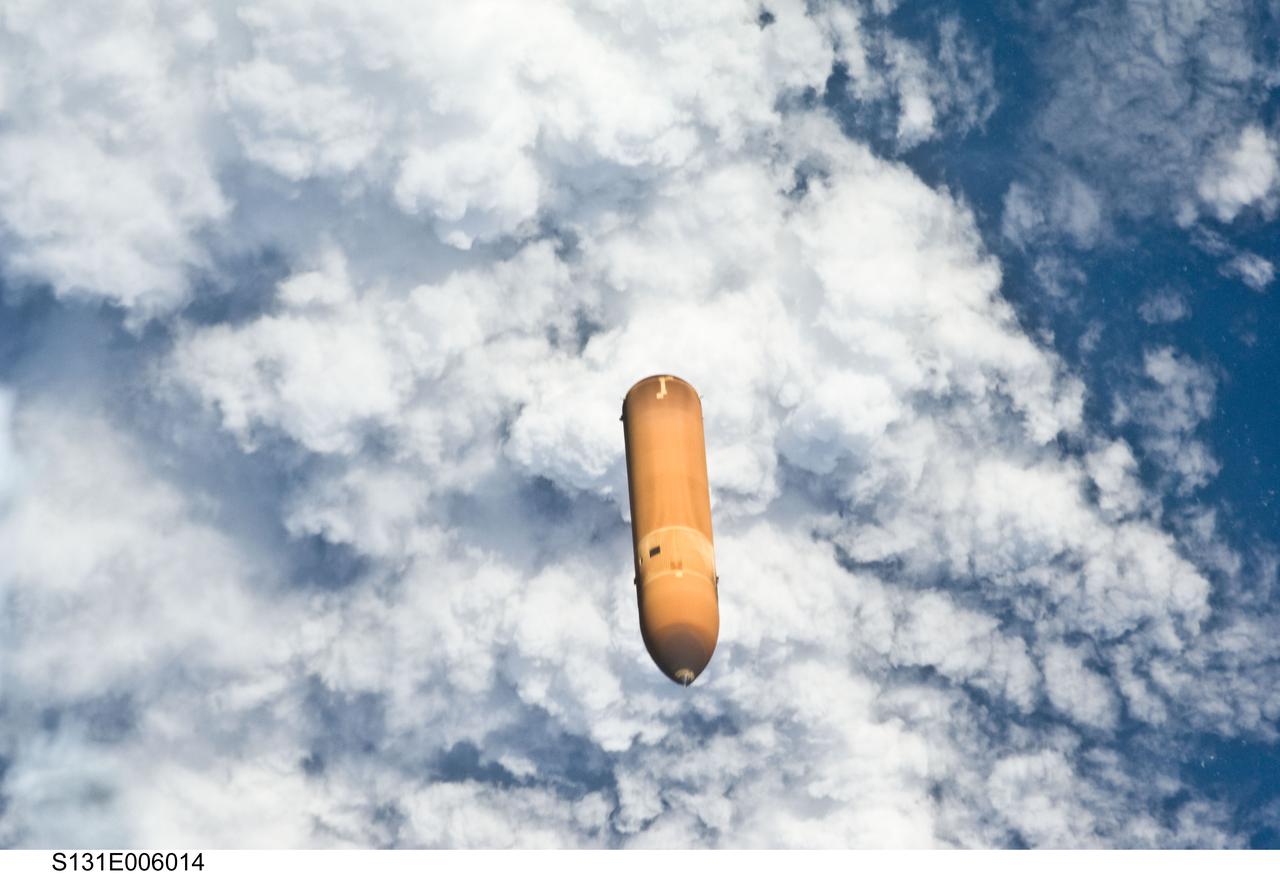
S131-E-006014 (5 April 2010) --- Backdropped by a cloud-covered part of Earth, the STS-131 external fuel tank (ET) begins its relative separation from the Space Shuttle Discovery following launch.
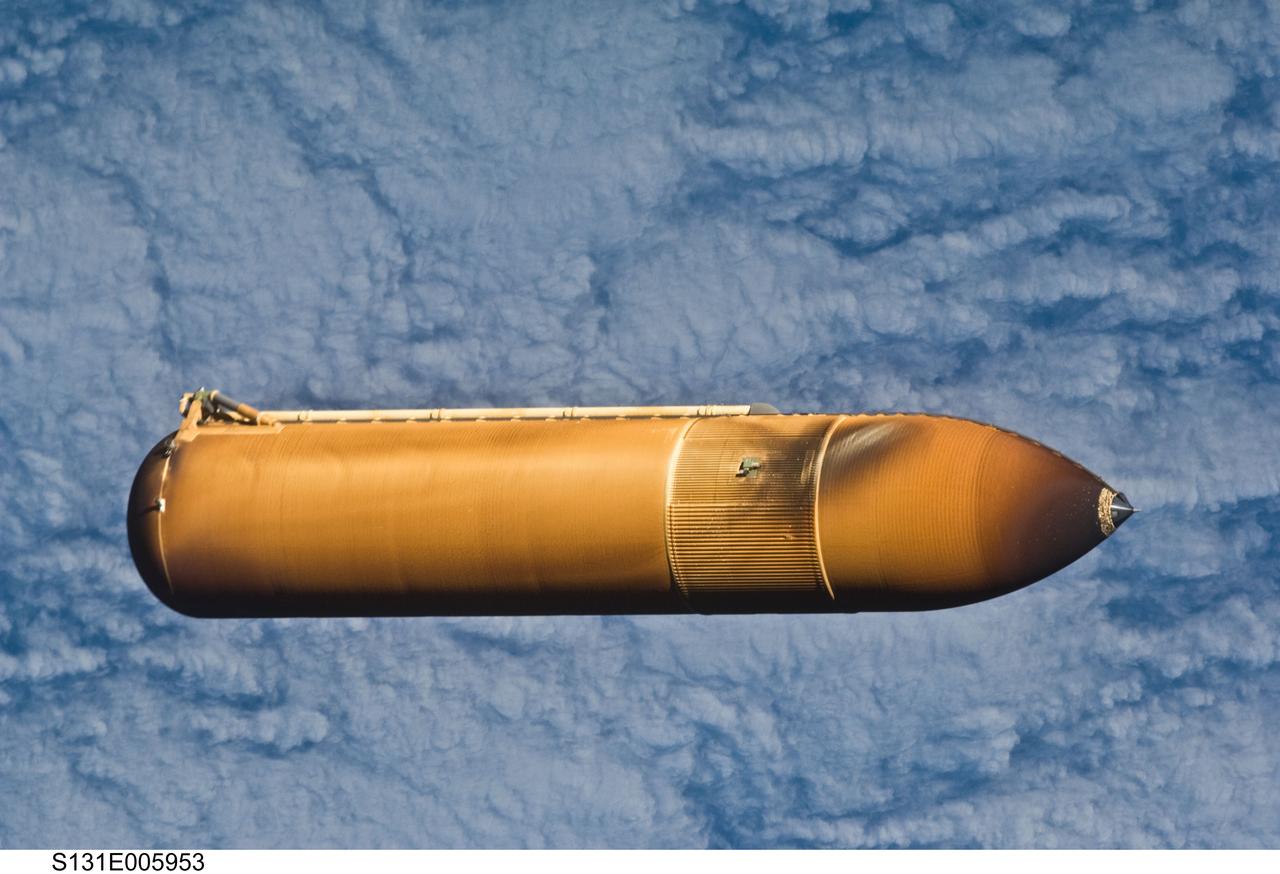
S131-E-005953 (5 April 2010) --- Backdropped by a cloud-covered part of Earth, the STS-131 external fuel tank (ET) begins its relative separation from the Space Shuttle Discovery following launch.
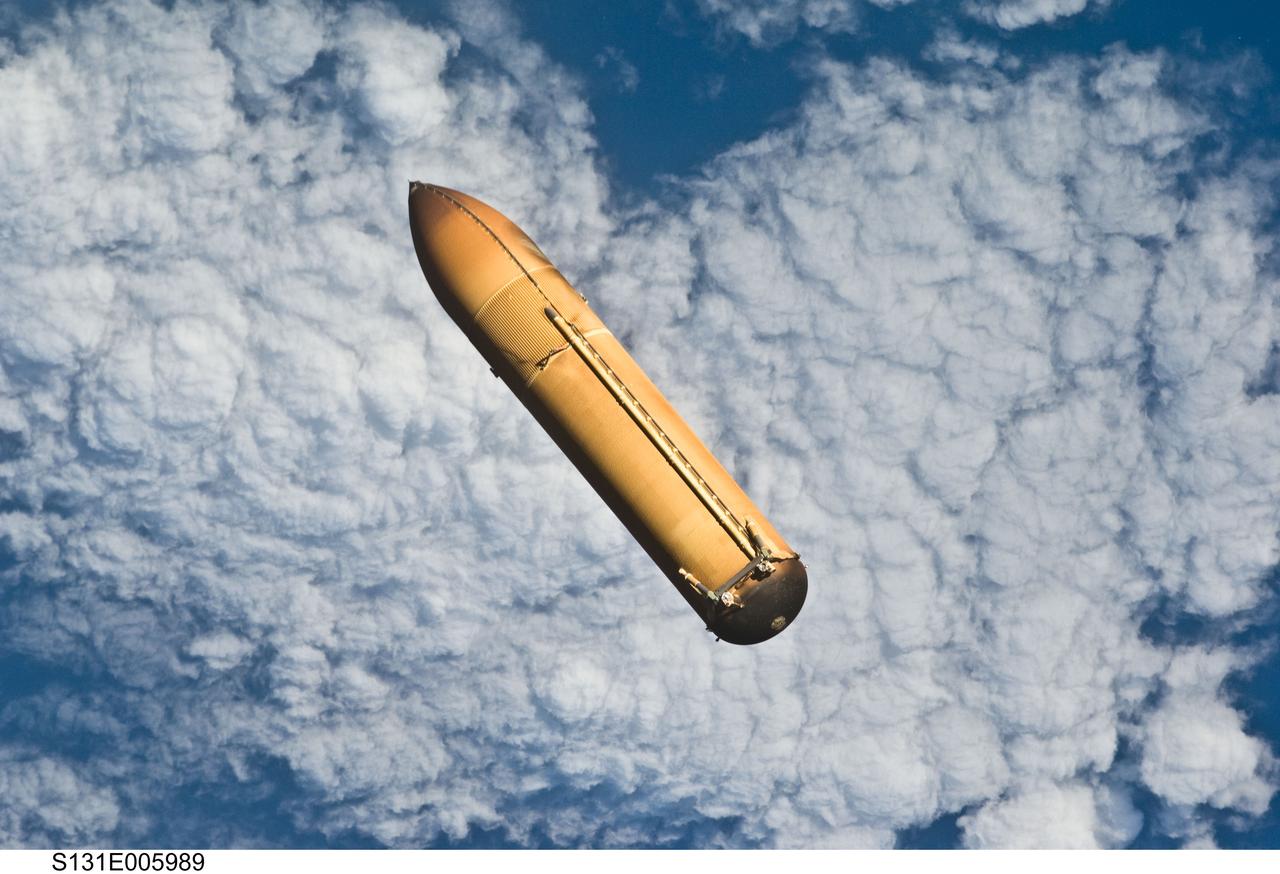
S131-E-005989 (5 April 2010) --- Backdropped by a blue and white part of Earth, the STS-131 external fuel tank (ET) begins its relative separation from the Space Shuttle Discovery following launch.
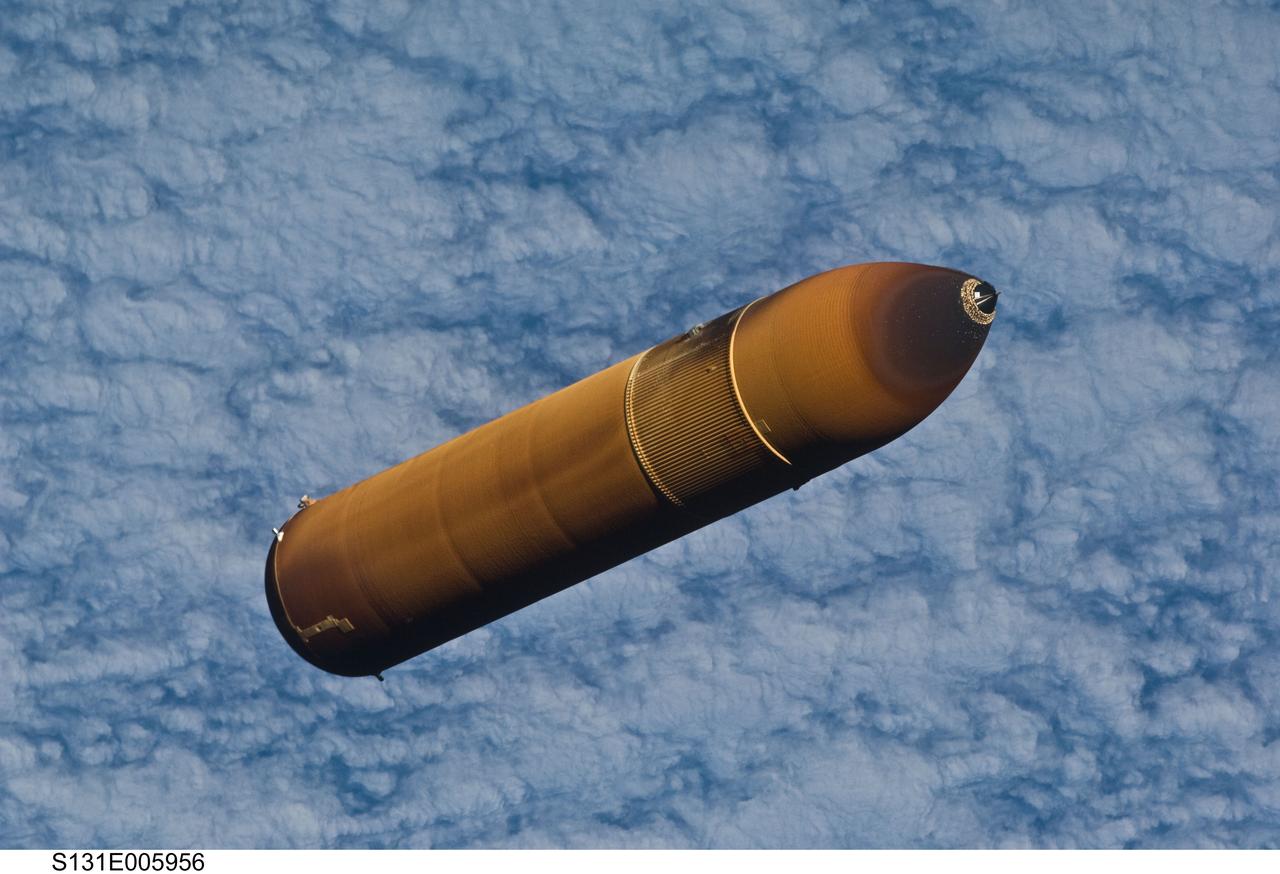
S131-E-005956 (5 April 2010) --- Backdropped by a cloud-covered part of Earth, the STS-131 external fuel tank (ET) begins its relative separation from the Space Shuttle Discovery following launch.
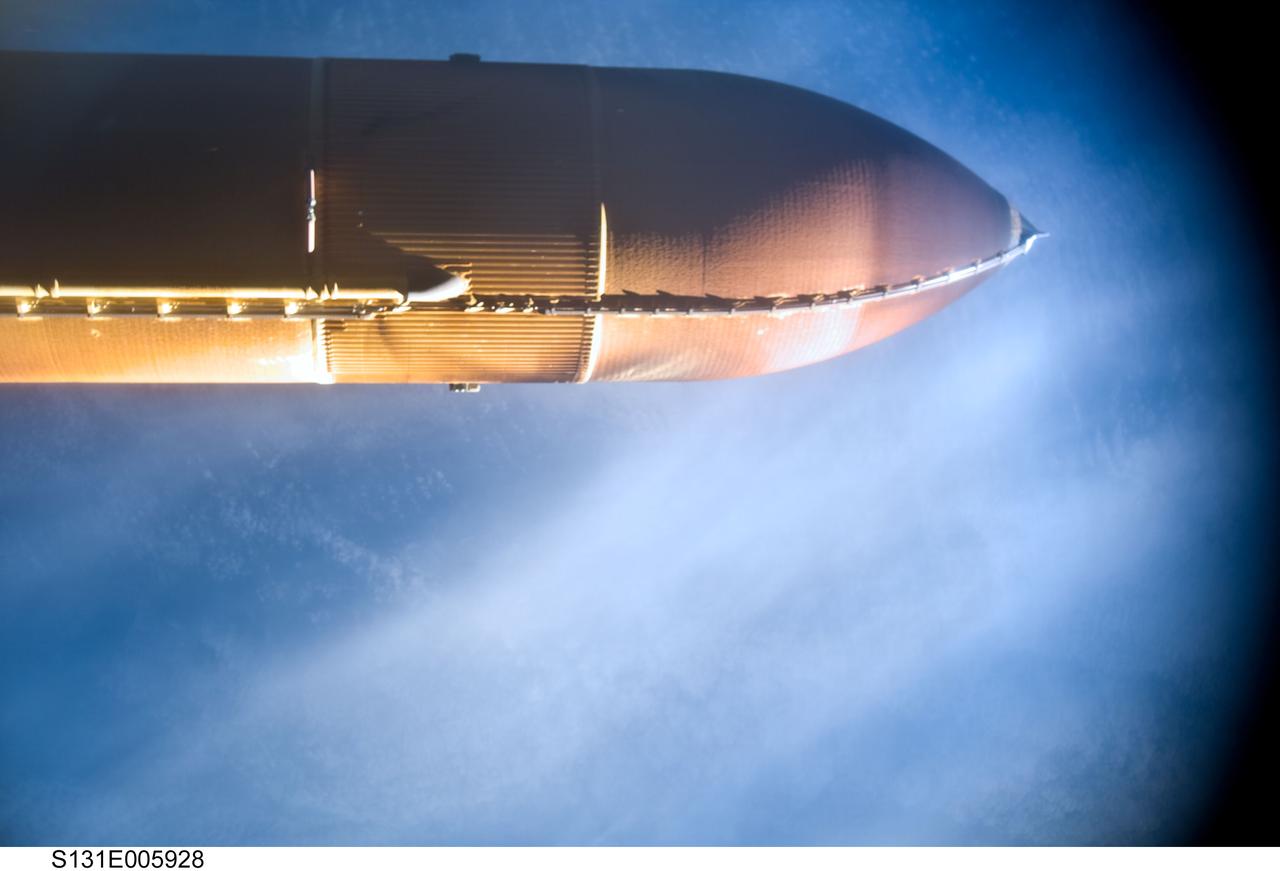
S131-E-005928 (5 April 2010) --- Space shuttle Discovery?s external fuel tank (ET) is featured in this image photographed by the umbilical well camera aboard Discovery shortly after separating from the shuttle following launch.
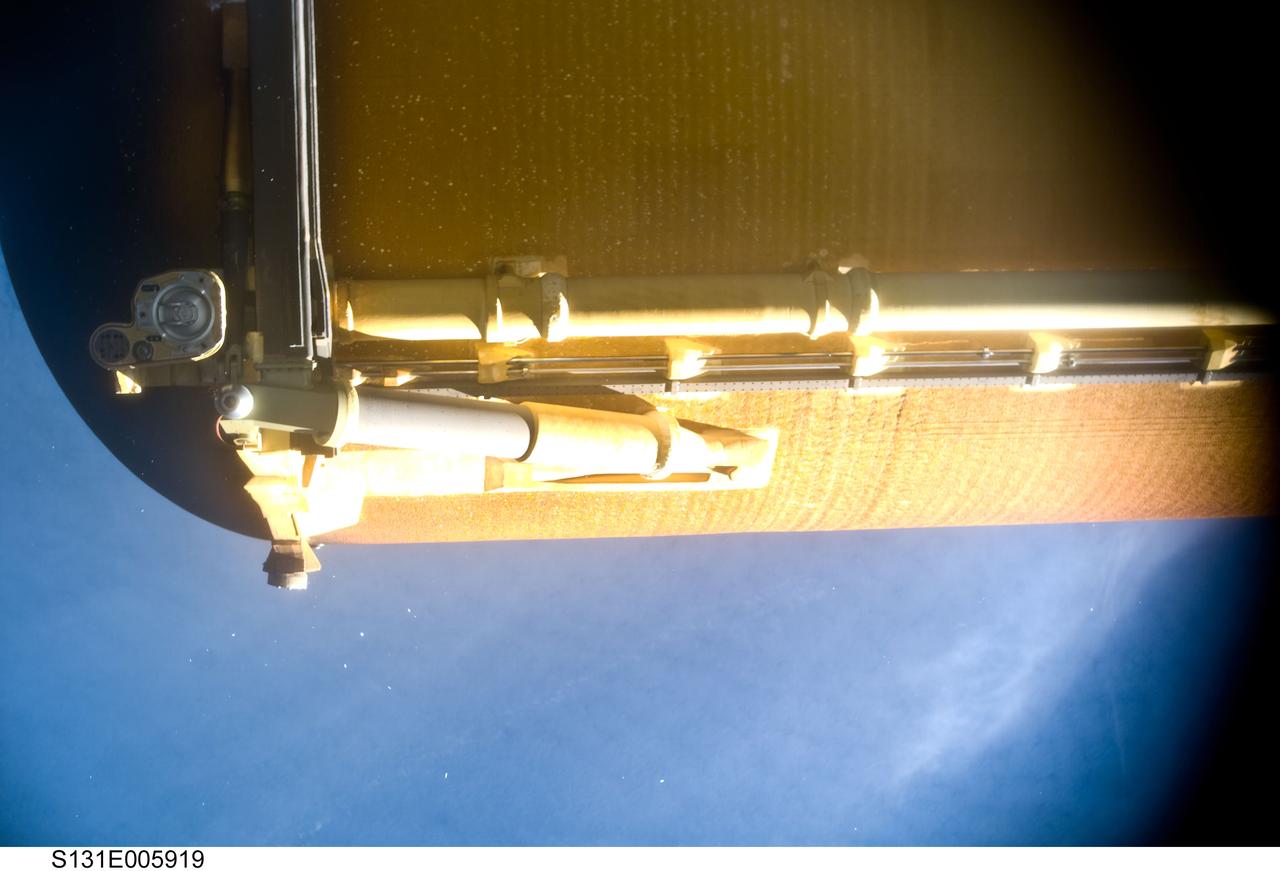
S131-E-005919 (5 April 2010) --- Space shuttle Discovery?s external fuel tank (ET) is featured in this image photographed by the umbilical well camera aboard Discovery shortly after separating from the shuttle following launch.
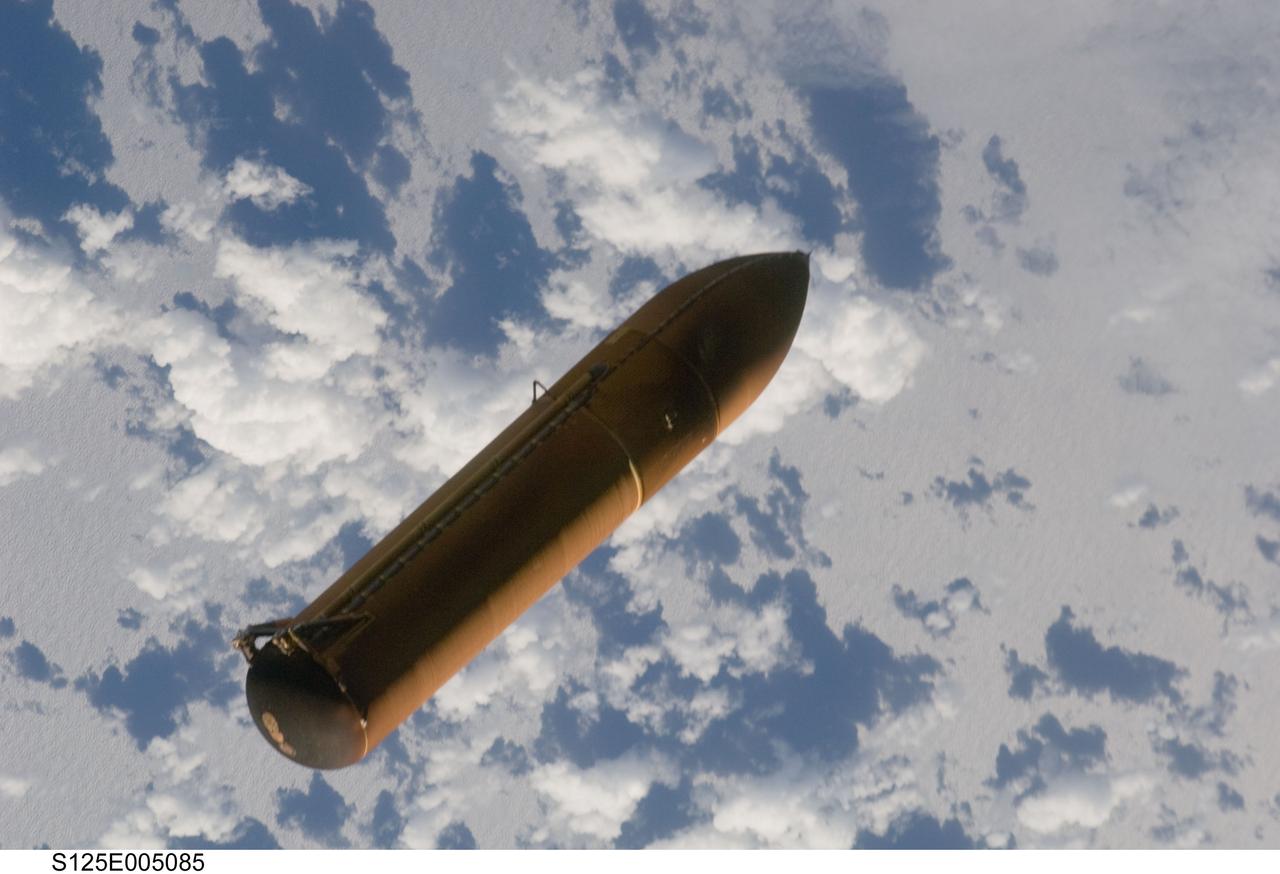
S125-E-005085 (11 May 2009) --- Backdropped by a blue and white part of Earth, the STS-125 external fuel tank (ET) begins its relative separation from the Space Shuttle Atlantis following launch.
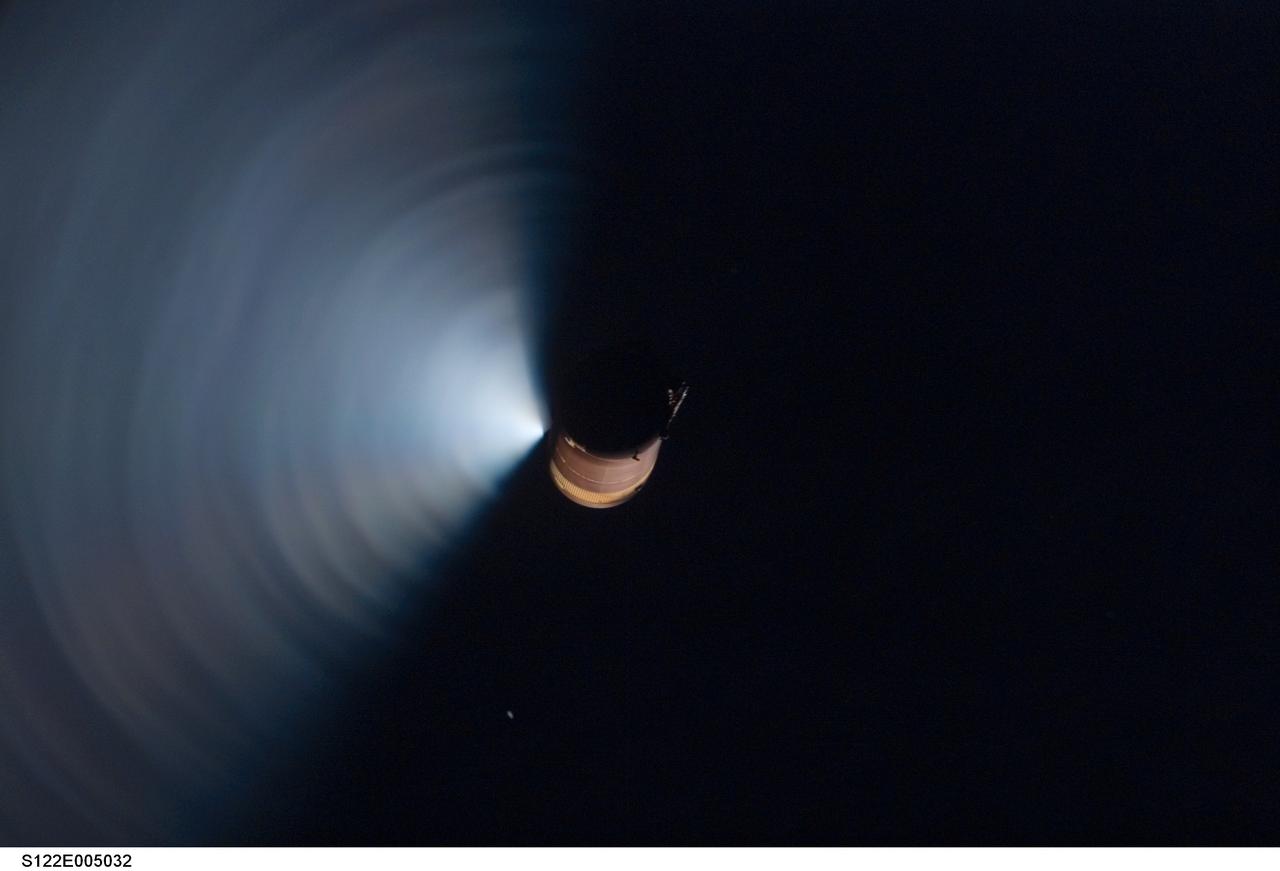
S122-E-005032 (7 Feb. 2008) --- Backdropped against the blackness of space, the STS-122 external fuel tank (ET) begins its relative separation from the Space Shuttle Atlantis. An STS-122 crewmember recorded the scene with a digital still camera. The fan-shaped bright area is the result of ET venting after orbiter separation. What happens in this nominal occurence is that the residual cryogenics in the tank heat up to some extent and the pressure increases, popping the relief valve. The residual LOX and LH2 spray out of the tank and are quite noticeable with the light reflection.
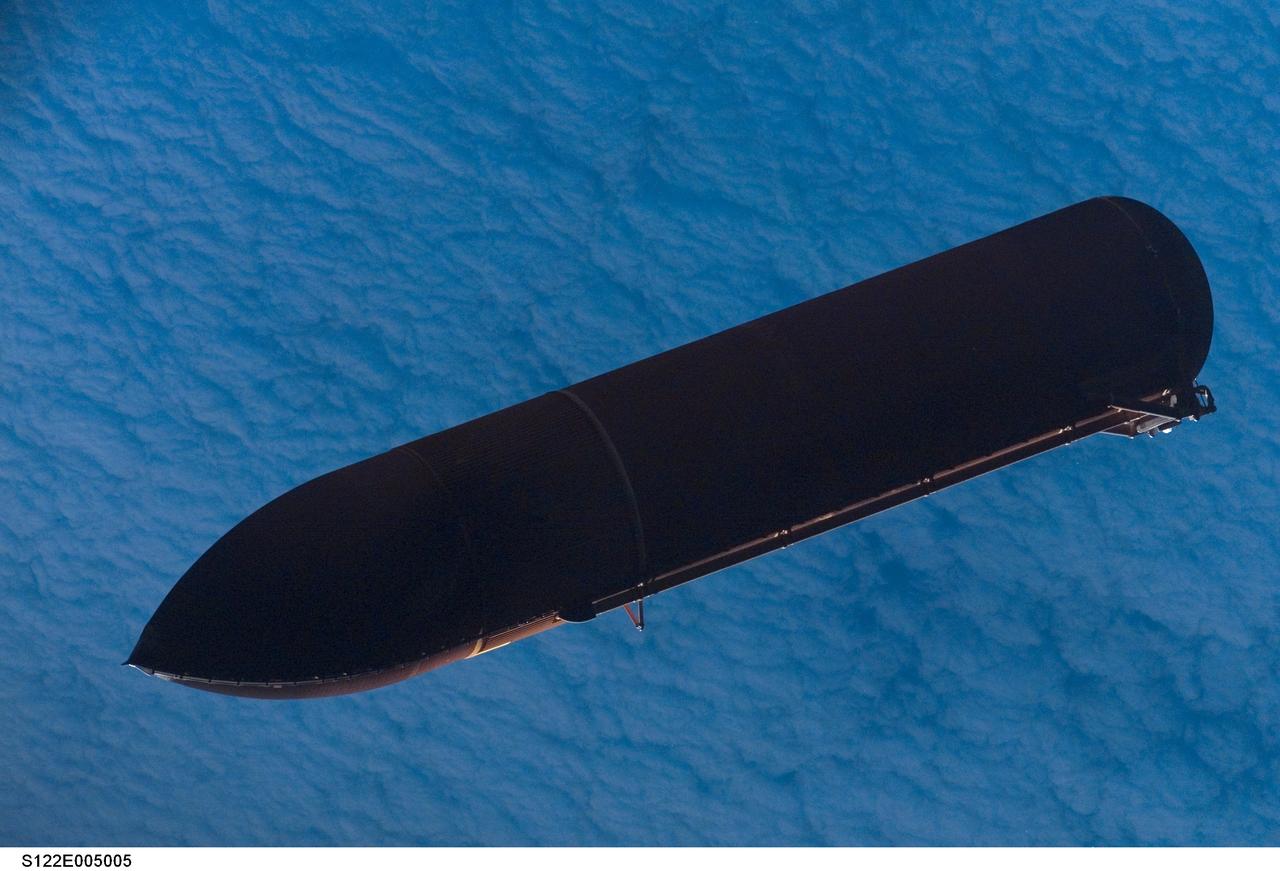
S122-E-005005 (7 Feb. 2008) --- Backdropped against a blanket of clouds, the STS-122 external fuel tank (ET) begins its relative separation from the Space Shuttle Atlantis. An STS-122 crewmember recorded the scene with a digital still camera.
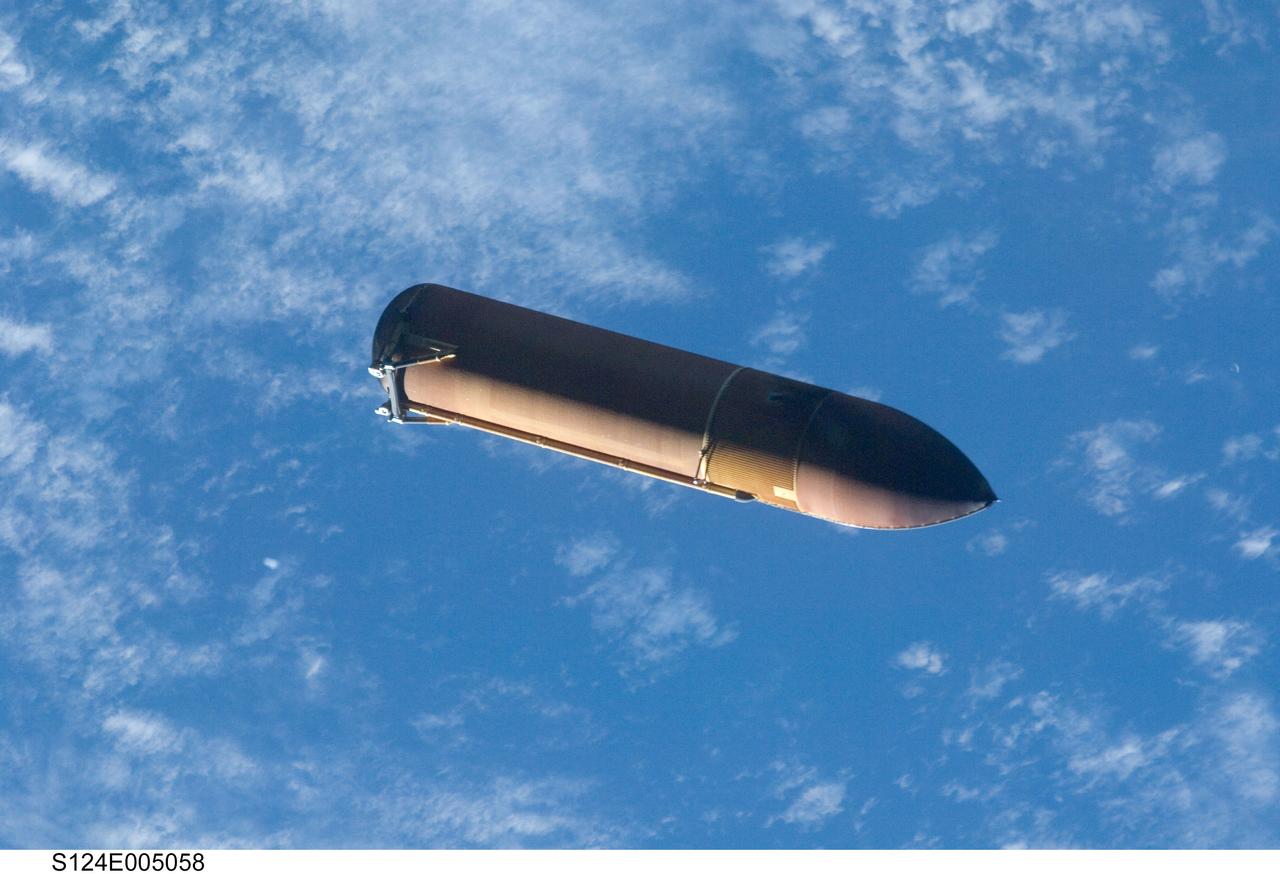
S124-E-005058 (31 May 2008) --- Backdropped by a blue and white part of Earth, the STS-124 external fuel tank (ET) begins its relative separation from the Space Shuttle Discovery. An STS-124 crewmember recorded the scene with a digital still camera.
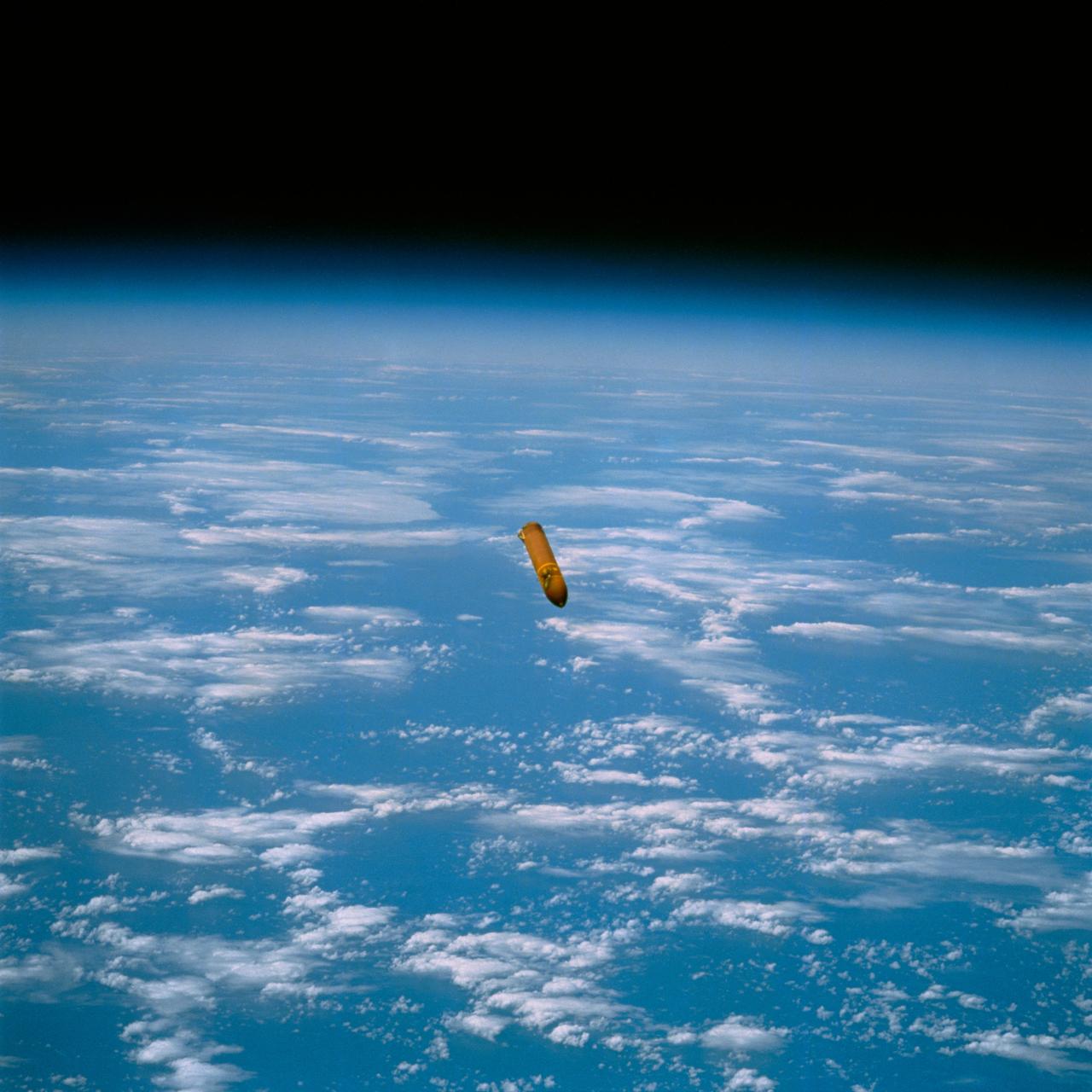
STS029-72-059 (13 March 1989) --- This 70mm photograph, taken by Astronaut James P. Bagian 16 minutes and 7 seconds after liftoff of Discovery, shows the external fuel tank (ET) against the background of Earth. The tank is falling away from the orbiter following ET separation. The left side shows the burn scar above the solid rocket booster (SRB) forward attach point. The burn is caused by the forward SRB separation motors firing during SRB separation. Post 51-L analysis of the thermal and pressure effects of the separation motor exhaust plume indicate that the scarring is not a safety hazard. However, photographs such as this one were requested for additional missions in order to document the phenomenon and corroborate this conclusion. The photo was made at 15:13:07 GMT, March 13, 1989. It was among the visuals used by the crew at its Mar. 28, 1989 post-flight press conference.
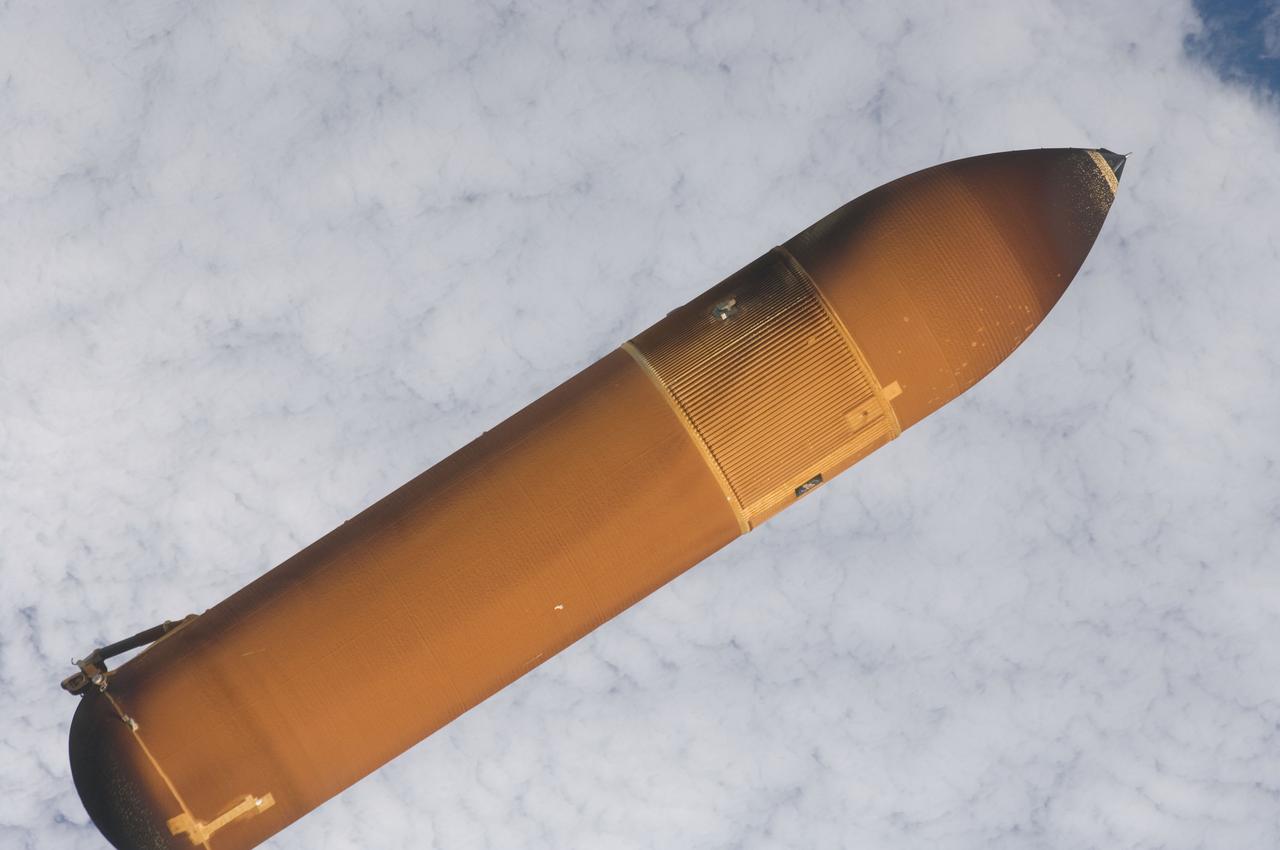
S134-E-005085 (16 May 2011) --- The STS-134 external fuel tank is seen during its release from space shuttle Endeavour in space following the successful launch on May 16, 2011. An STS-134 crew member using a hand-held still camera exposed the image. Photo credit: NASA
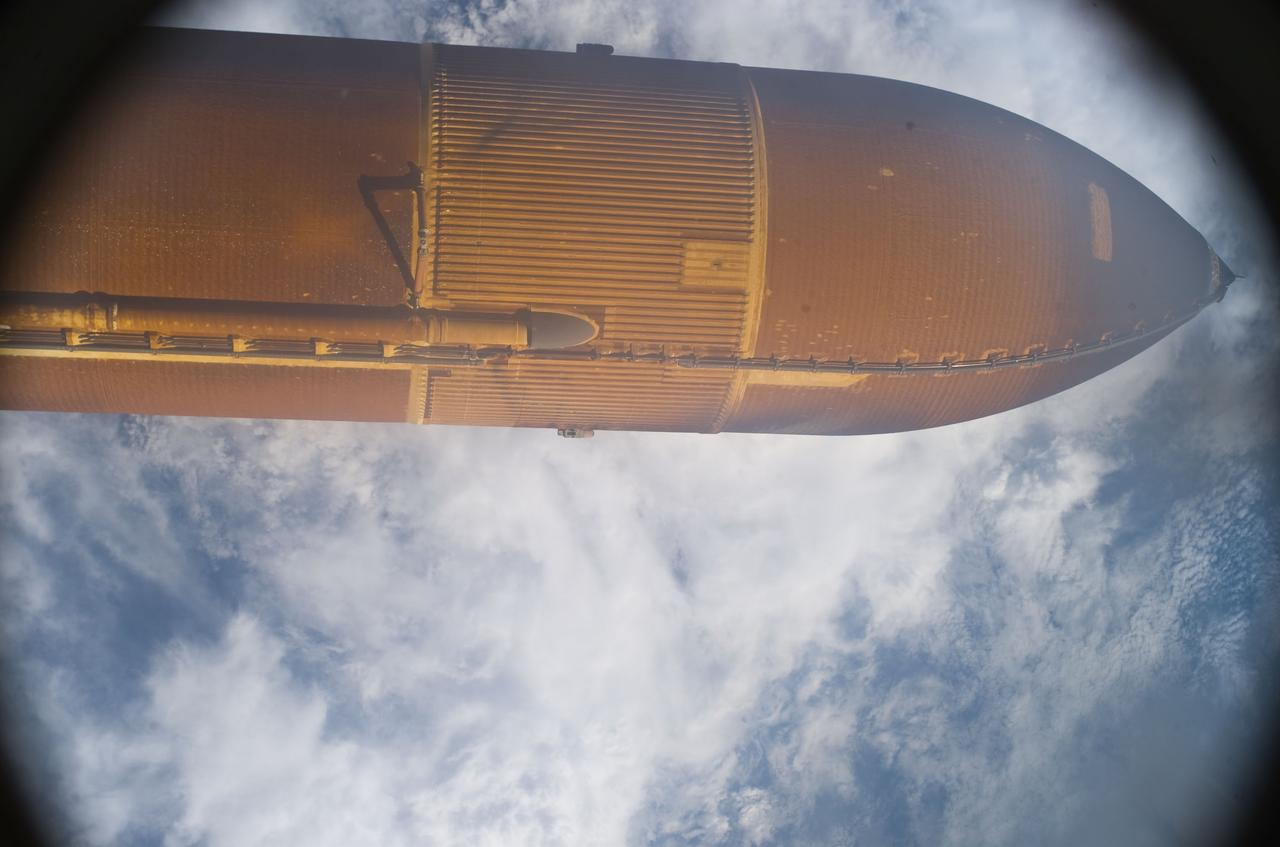
S134-E-005013 (16 May 2011) --- The STS-134 external fuel tank is seen during its release from space shuttle Endeavour in space following the successful launch on May 16, 2011. An STS-134 crew member using a hand-held still camera exposed the image. Photo credit: NASA
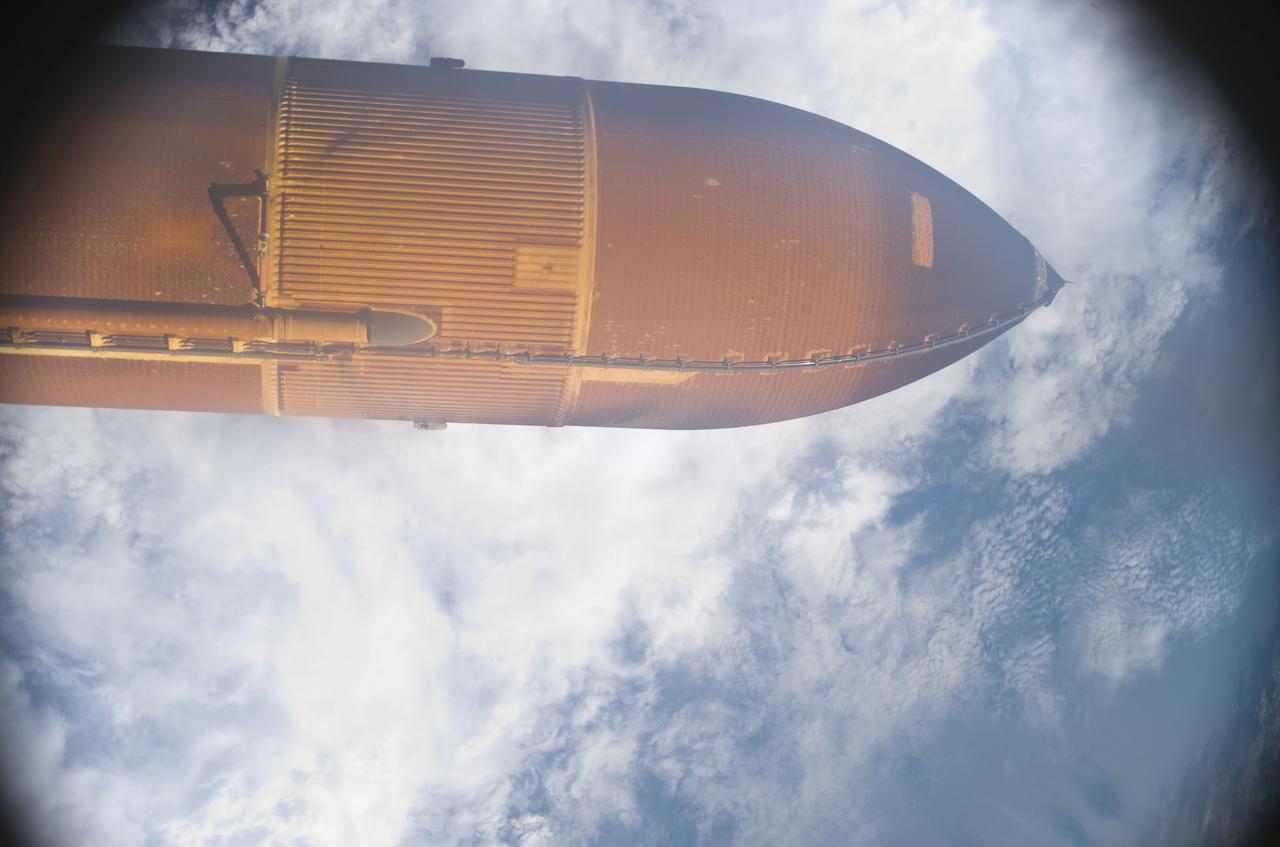
S134-E-005014 (16 May 2011) --- The STS-134 external fuel tank is seen during its release from space shuttle Endeavour in space following the successful launch on May 16, 2011. A camera in the umbilical well exposed the image. Photo credit: NASA
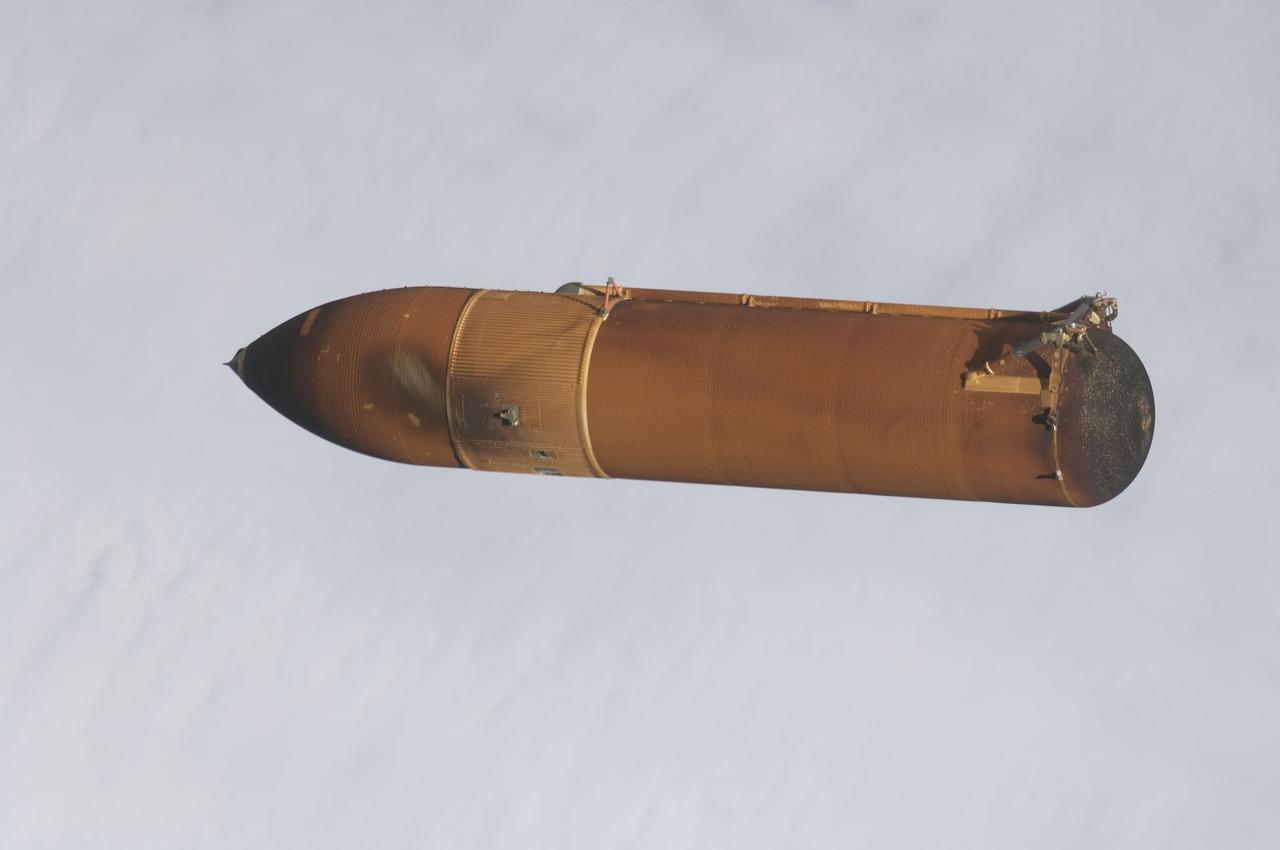
S134-E-005102 (16 May 2011) --- The STS-134 external fuel tank is seen during its release from space shuttle Endeavour in space following the successful launch on May 16, 2011. An STS-134 crew member using a hand-held still camera exposed the image. Photo credit: NASA
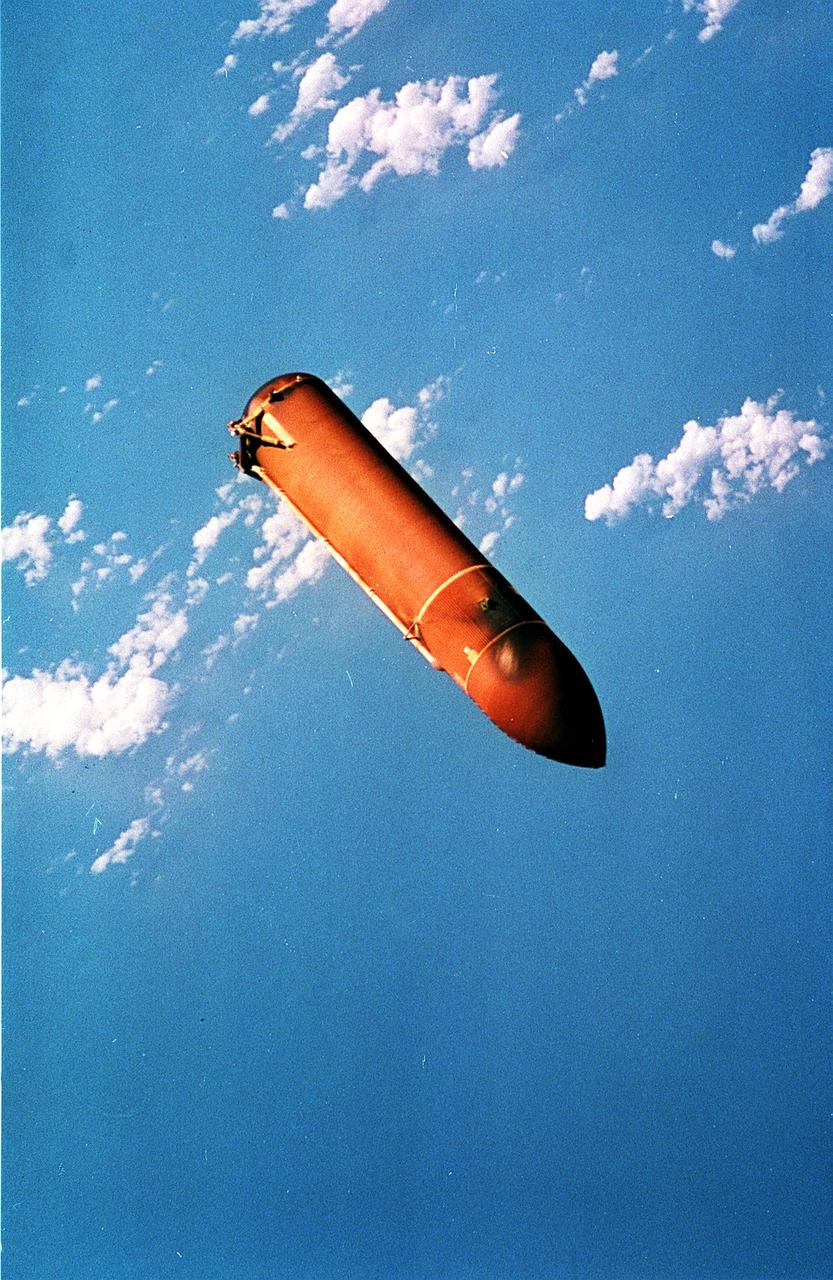
STS078-457-006 (20 June 1996) --- One of the first still pictures recorded by the crew members was this 35mm image of the External Fuel Tank (ET) soon after being jettisoned on launch day. The mission, less than ten minutes old when this picture was made, went on to set a Space Shuttle duration record of almost seventeen-days in Earth-orbit. The Indian Ocean forms the backdrop for the image.
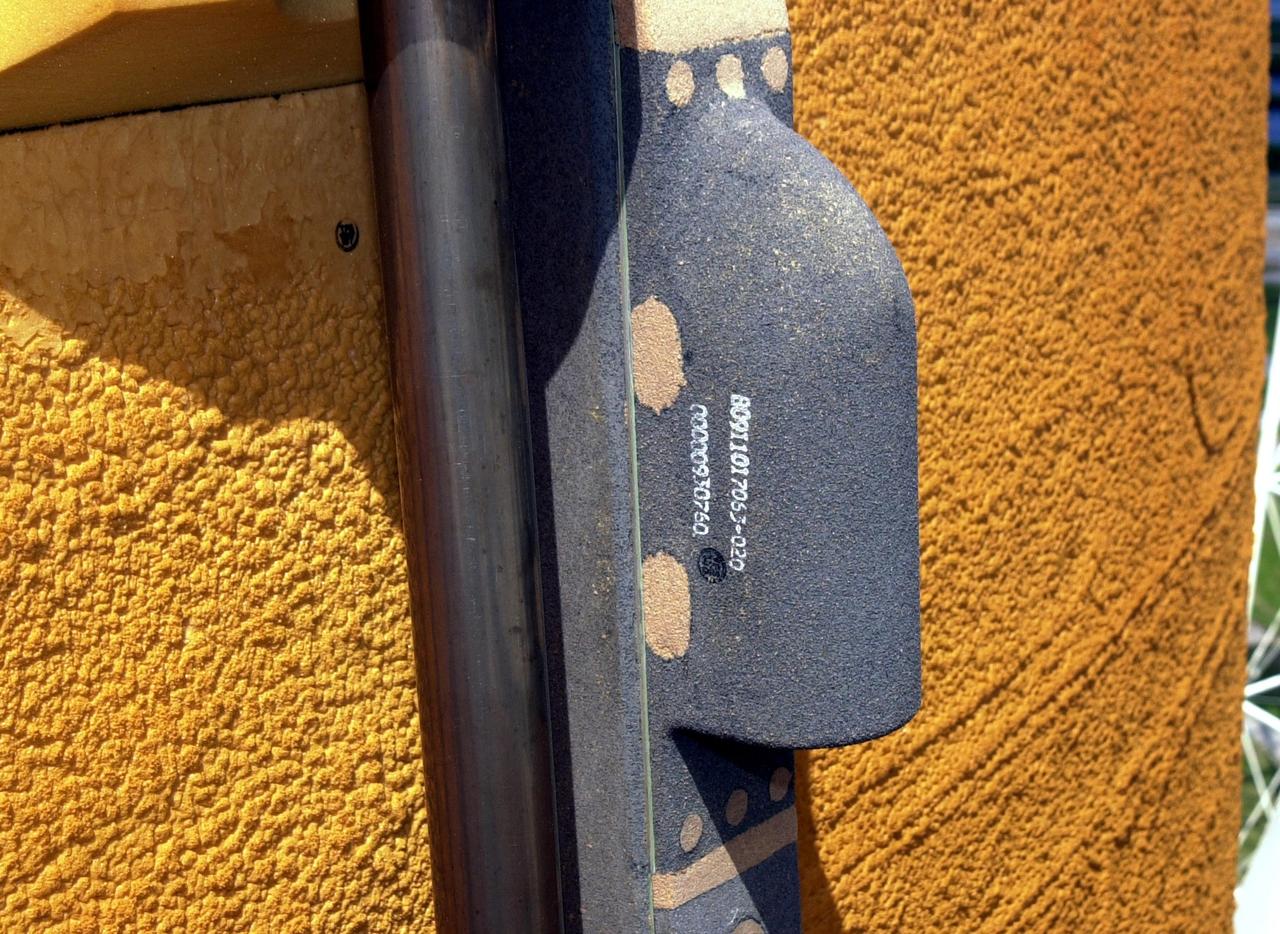
KENNEDY SPACE CENTER, FLA. - A closeup view of the camera mounted on the external tank of Space Shuttle Atlantis. The color video camera mounted to the top of Atlantis' external tank will provide a view of the front and belly of the orbiter and a portion of the solid rocket boosters (SRBs) and external tank during the launch of Atlantis on mission STS-112. It will offer the STS-112 team an opportunity to monitor the shuttle's performance from a new angle. The camera will be turned on fifteen minutes prior to launch and will show the orbiter and solid rocket boosters on the launch pad. The video will be downlinked from the external tank during flight to several NASA data-receiving sites and then relayed to the live television broadcast. The camera is expected to operate for about 15 minutes following liftoff. At liftoff, viewers will see the shuttle clearing the launch tower and, at two minutes after liftoff, see the right SRB separate from the external tank. When the external tank separates from Atlantis about eight minutes into the flight, the camera is expected to continue its live feed for about six more minutes although NASA may be unable to pick up the camera's signal because the tank may have moved out of range.
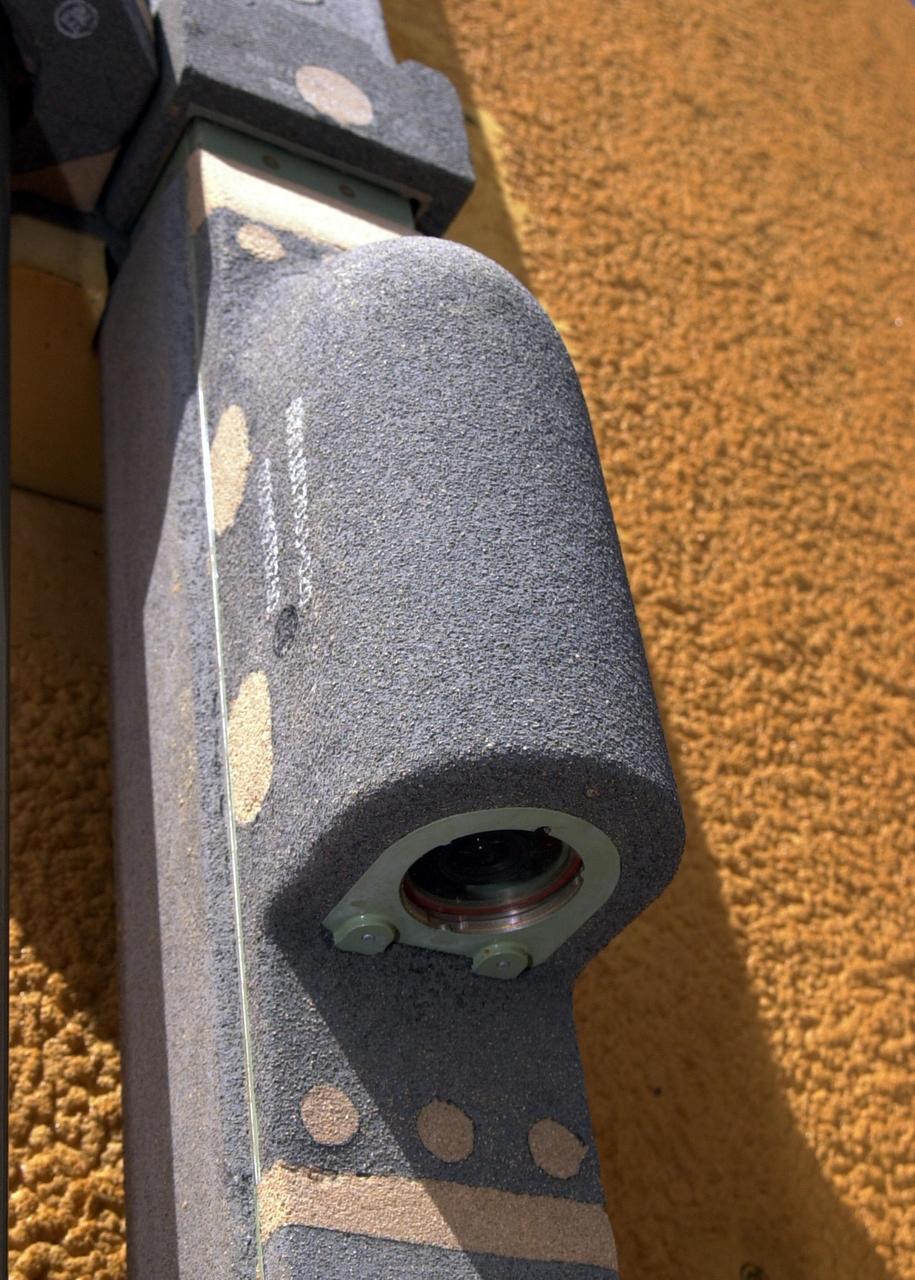
KENNEDY SPACE CENTER, FLA. - A closeup view of the camera mounted on the external tank of Space Shuttle Atlantis. The color video camera mounted to the top of Atlantis' external tank will provide a view of the front and belly of the orbiter and a portion of the solid rocket boosters (SRBs) and external tank during the launch of Atlantis on mission STS-112. It will offer the STS-112 team an opportunity to monitor the shuttle's performance from a new angle. The camera will be turned on fifteen minutes prior to launch and will show the orbiter and solid rocket boosters on the launch pad. The video will be downlinked from the external tank during flight to several NASA data-receiving sites and then relayed to the live television broadcast. The camera is expected to operate for about 15 minutes following liftoff. At liftoff, viewers will see the shuttle clearing the launch tower and, at two minutes after liftoff, see the right SRB separate from the external tank. When the external tank separates from Atlantis about eight minutes into the flight, the camera is expected to continue its live feed for about six more minutes although NASA may be unable to pick up the camera's signal because the tank may have moved out of range.
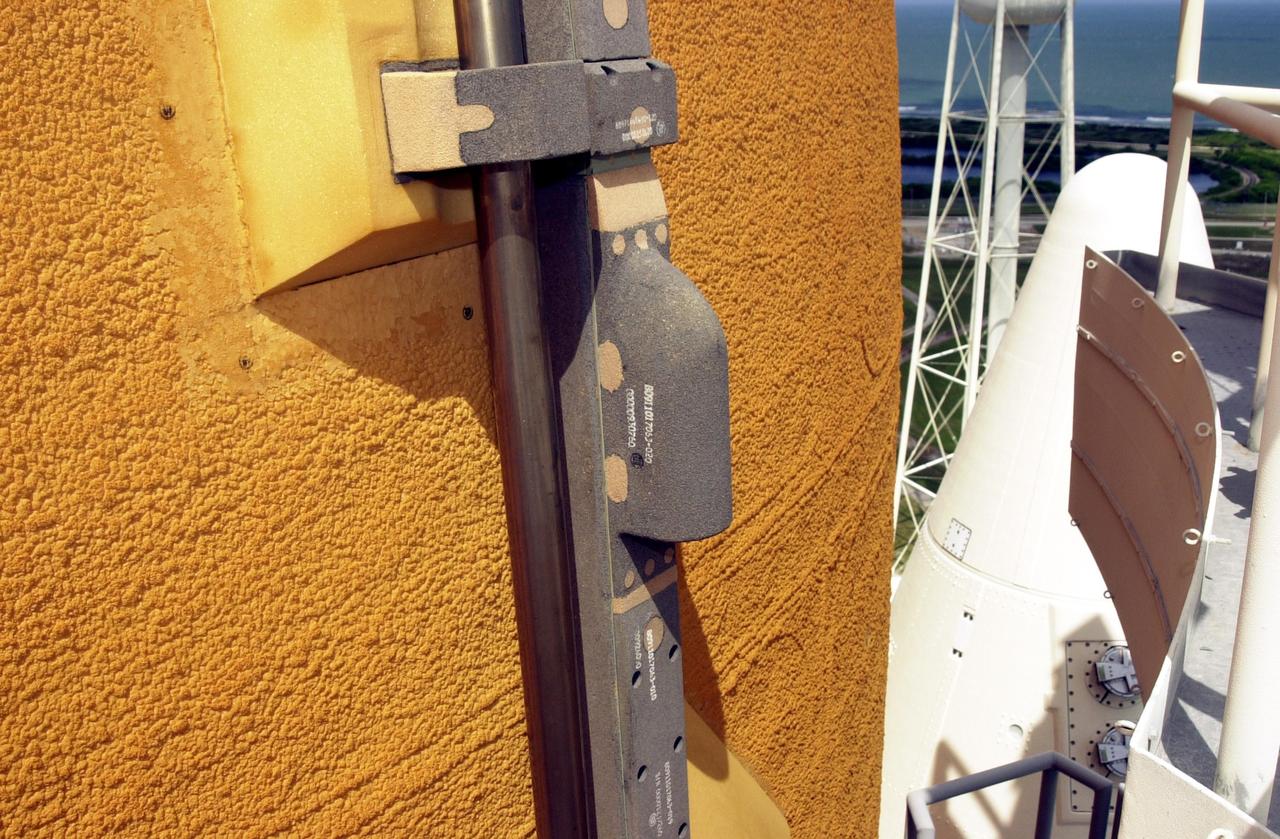
KENNEDY SPACE CENTER, FLA. - A view of the camera mounted on the external tank of Space Shuttle Atlantis. The color video camera mounted to the top of Atlantis' external tank will provide a view of the front and belly of the orbiter and a portion of the solid rocket boosters (SRBs) and external tank during the launch of Atlantis on mission STS-112. It will offer the STS-112 team an opportunity to monitor the shuttle's performance from a new angle. The camera will be turned on fifteen minutes prior to launch and will show the orbiter and solid rocket boosters on the launch pad. The video will be downlinked from the external tank during flight to several NASA data-receiving sites and then relayed to the live television broadcast. The camera is expected to operate for about 15 minutes following liftoff. At liftoff, viewers will see the shuttle clearing the launch tower and, at two minutes after liftoff, see the right SRB separate from the external tank. When the external tank separates from Atlantis about eight minutes into the flight, the camera is expected to continue its live feed for about six more minutes although NASA may be unable to pick up the camera's signal because the tank may have moved out of range.
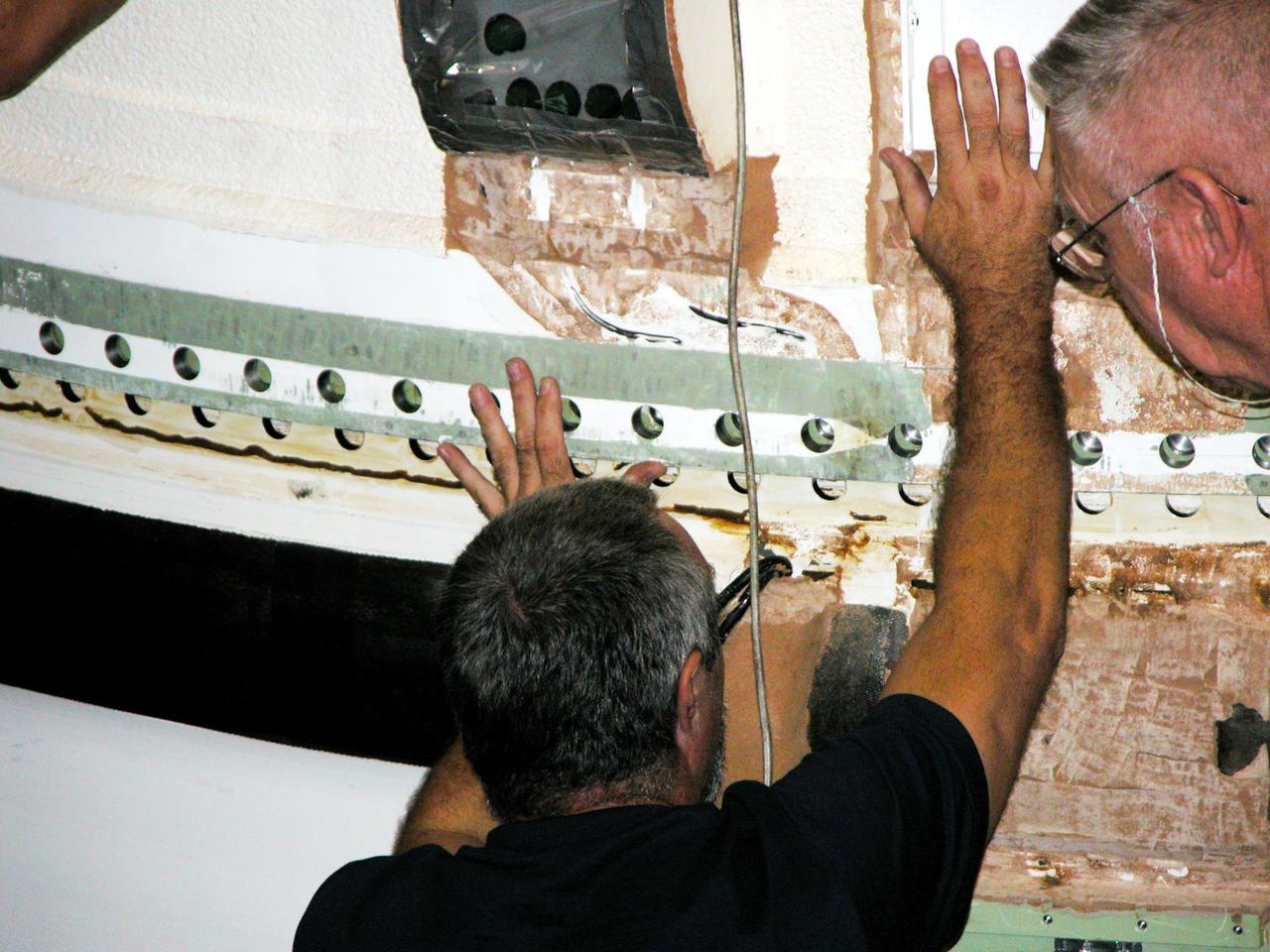
KENNEDY SPACE CENTER, FLA. - In the Vehicle Assembly Building, a KSC employee separates the forward assembly (nose cap and frustum) from a solid rocket booster (SRB) after removing the bolts. The destacking is part of time and cycle activities. The SRB was part of the stack on Atlantis originally scheduled for a March 1, 2003, launch on mission STS-114. The SRBs and external tank were demated in February 2003. The mission is now scheduled to occur no earlier than Sept. 12, 2004, on Atlantis.
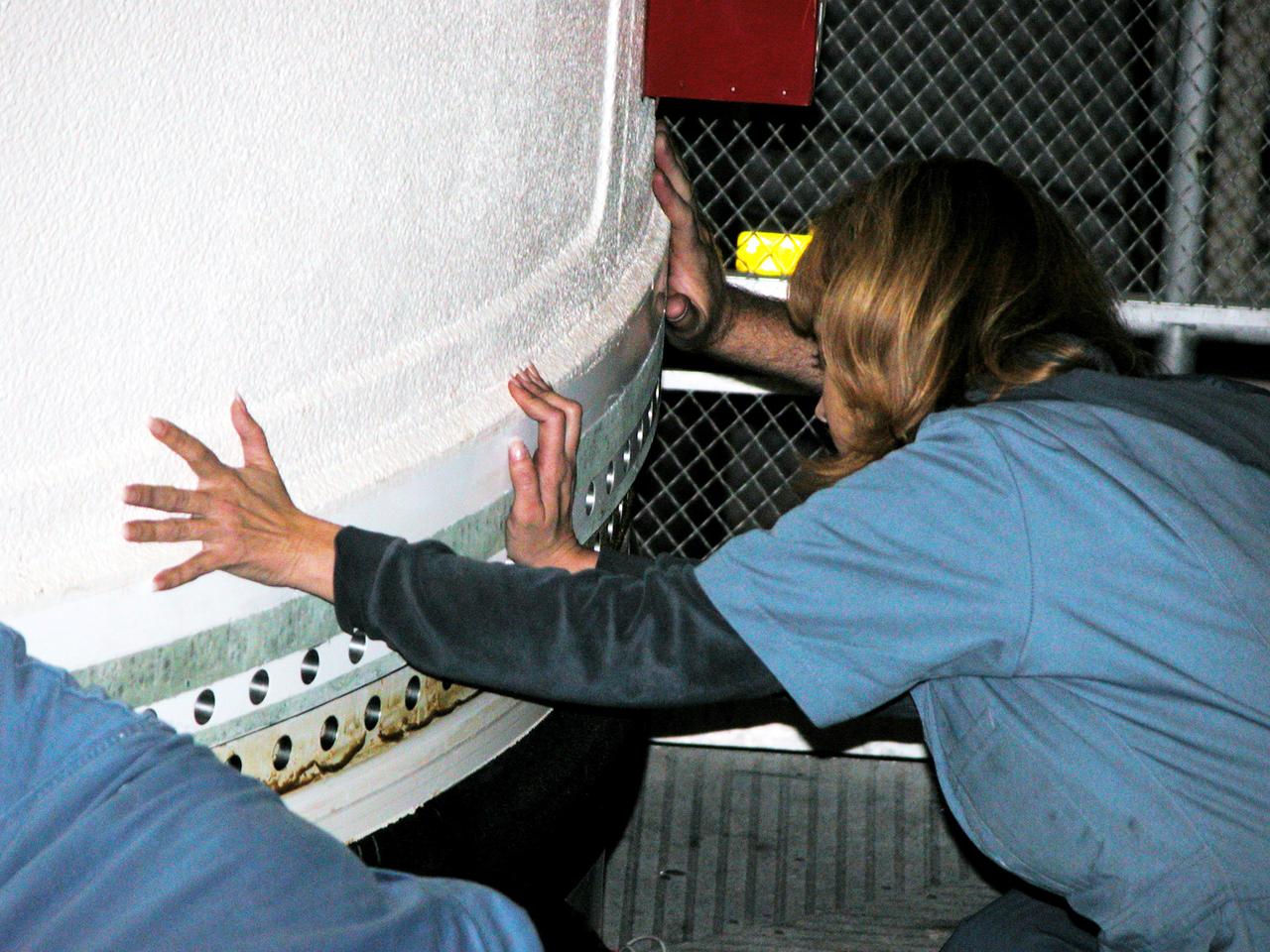
KENNEDY SPACE CENTER, FLA. - In the Vehicle Assembly Building, a KSC employee separates the forward assembly (nose cap and frustum) from a solid rocket booster (SRB) after the bolts were removed. The destacking is part of time and cycle activities. The SRB was part of the stack on Atlantis originally scheduled for a March 1, 2003, launch on mission STS-114. The SRBs and external tank were demated in February 2003. The mission is now scheduled to occur no earlier than Sept. 12, 2004, on Atlantis.
CAPE CANAVERAL, Fla. -- At NASA's Kennedy Space Center in Florida, space shuttle Discovery is attached to its external fuel tank and solid rocket boosters in the Vehicle Assembly Building. As technicians were attaching the left-side main separation bolt on the bottom of the shuttle to the external tank Sept. 10 a bolt nut slipped back into Discovery's aft compartment. To retrieve it, technicians entered Discovery’s aft section through an access door. They then moved the nut back into position to finish attaching the bolt, which is used to separate Discovery from the external tank once the shuttle is in orbit. Discovery is scheduled to roll out to Launch Pad 39A later this month for its STS-133 launch to the International Space Station. Targeted to lift off Nov. 1, Discovery will take the Permanent Multipurpose Module (PMM) packed with supplies and critical spare parts, as well as Robonaut 2 (R2) to the station. Photo credit: NASA/Dimitri Gerondidakis

CAPE CANAVERAL, Fla. -- At NASA's Kennedy Space Center in Florida, technicians in the Vehicle Assembly Building inspect space shuttle Discovery, its external fuel tank and solid rocket boosters. As technicians were attaching the left-side main separation bolt on the bottom of the shuttle to the external tank Sept. 10 a bolt nut slipped back into Discovery's aft compartment. To retrieve it, technicians entered Discovery’s aft section through an access door. They then moved the nut back into position to finish attaching the bolt, which is used to separate Discovery from the external tank once the shuttle is in orbit. Discovery is scheduled to roll out to Launch Pad 39A later this month for its STS-133 launch to the International Space Station. Targeted to lift off Nov. 1, Discovery will take the Permanent Multipurpose Module (PMM) packed with supplies and critical spare parts, as well as Robonaut 2 (R2) to the station. Photo credit: NASA/Dimitri Gerondidakis
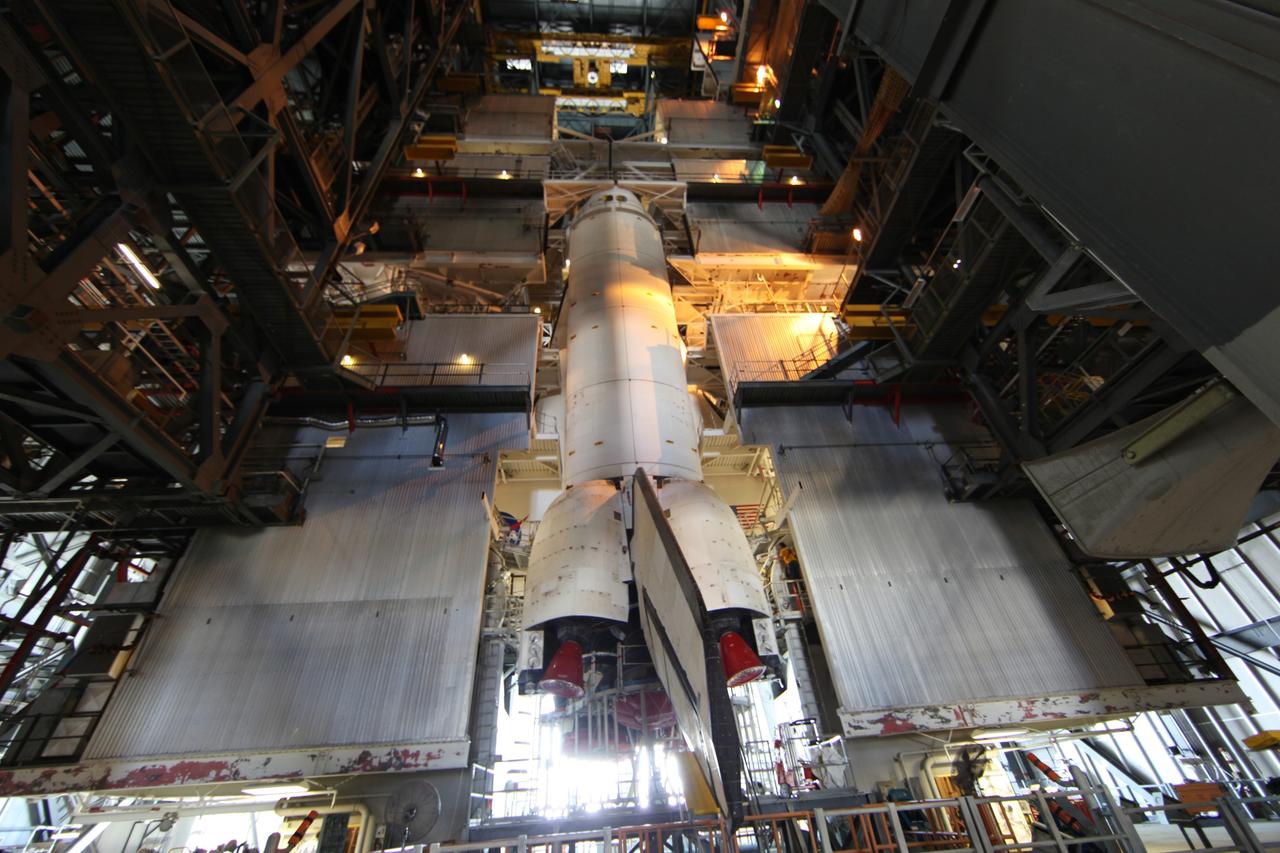
CAPE CANAVERAL, Fla. -- At NASA's Kennedy Space Center in Florida, space shuttle Discovery is attached to its external fuel tank and solid rocket boosters in the Vehicle Assembly Building. As technicians were attaching the left-side main separation bolt on the bottom of the shuttle to the external tank Sept. 10 a bolt nut slipped back into Discovery's aft compartment. To retrieve it, technicians entered Discovery’s aft section through an access door. They then moved the nut back into position to finish attaching the bolt, which is used to separate Discovery from the external tank once the shuttle is in orbit. Discovery is scheduled to roll out to Launch Pad 39A later this month for its STS-133 launch to the International Space Station. Targeted to lift off Nov. 1, Discovery will take the Permanent Multipurpose Module (PMM) packed with supplies and critical spare parts, as well as Robonaut 2 (R2) to the station. Photo credit: NASA/Dimitri Gerondidakis
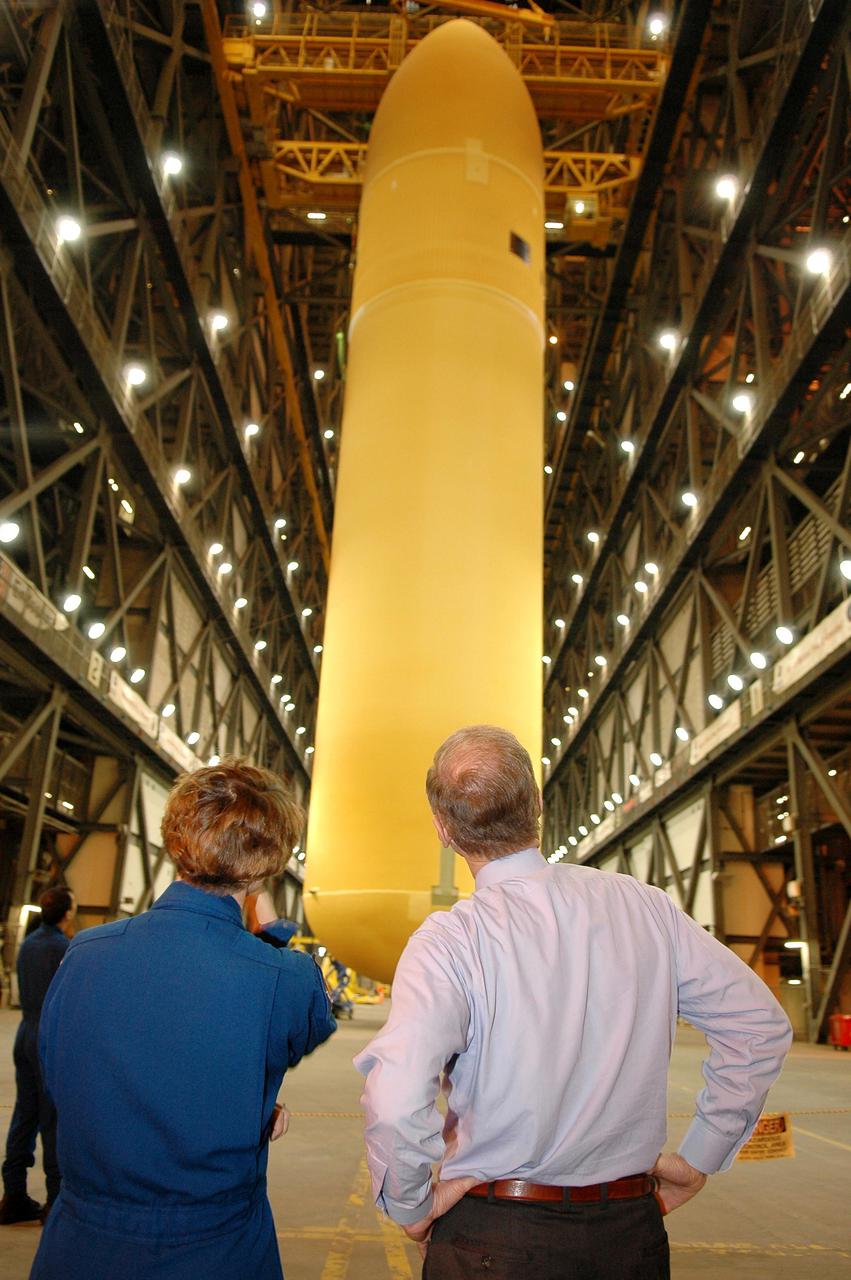
KENNEDY SPACE CENTER, FLA. - Mission STS-114 Commander Eileen Collins and Sen. Bill Nelson watch as the newly redesigned External Tank is lifted in the Vehicle Assembly Building to a “checkout cell” where the tank’s mechanical, electrical and thermal protection systems are inspected. The mission crew and Nelson are at Kennedy to observe tank activities. The tank will also undergo new processes resulting from its redesign, including inspection of the bipod heater and External Tank separation camera. The tank is designated to fly with Shuttle Discovery on Return to Flight mission STS-114. The launch window is May 12 to June 3, 2005.
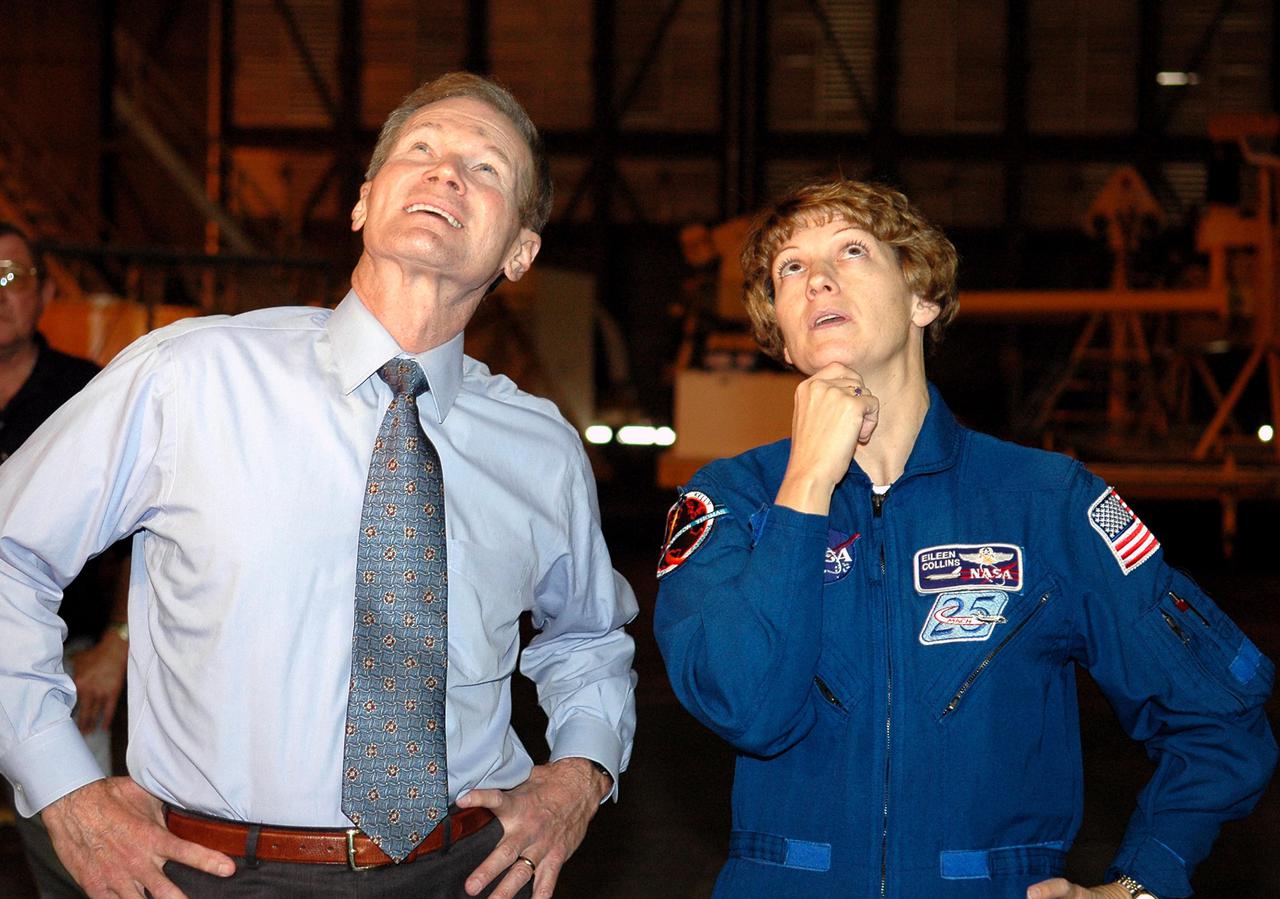
KENNEDY SPACE CENTER, FLA. - Sen. Bill Nelson and STS-114 Mission Commander Eileen Collins watch the newly redesigned External Tank being lifted in the Vehicle Assembly Building to a “checkout cell” where the tank’s mechanical, electrical and thermal protection systems are inspected. Crew members are at Kennedy to observe tank activities. The tank will also undergo new processes resulting from its redesign, including inspection of the bipod heater and External Tank separation camera. The tank is designated to fly on Shuttle Discovery on Return to Flight mission STS-114. The launch window is May 12 to June 3, 2005.
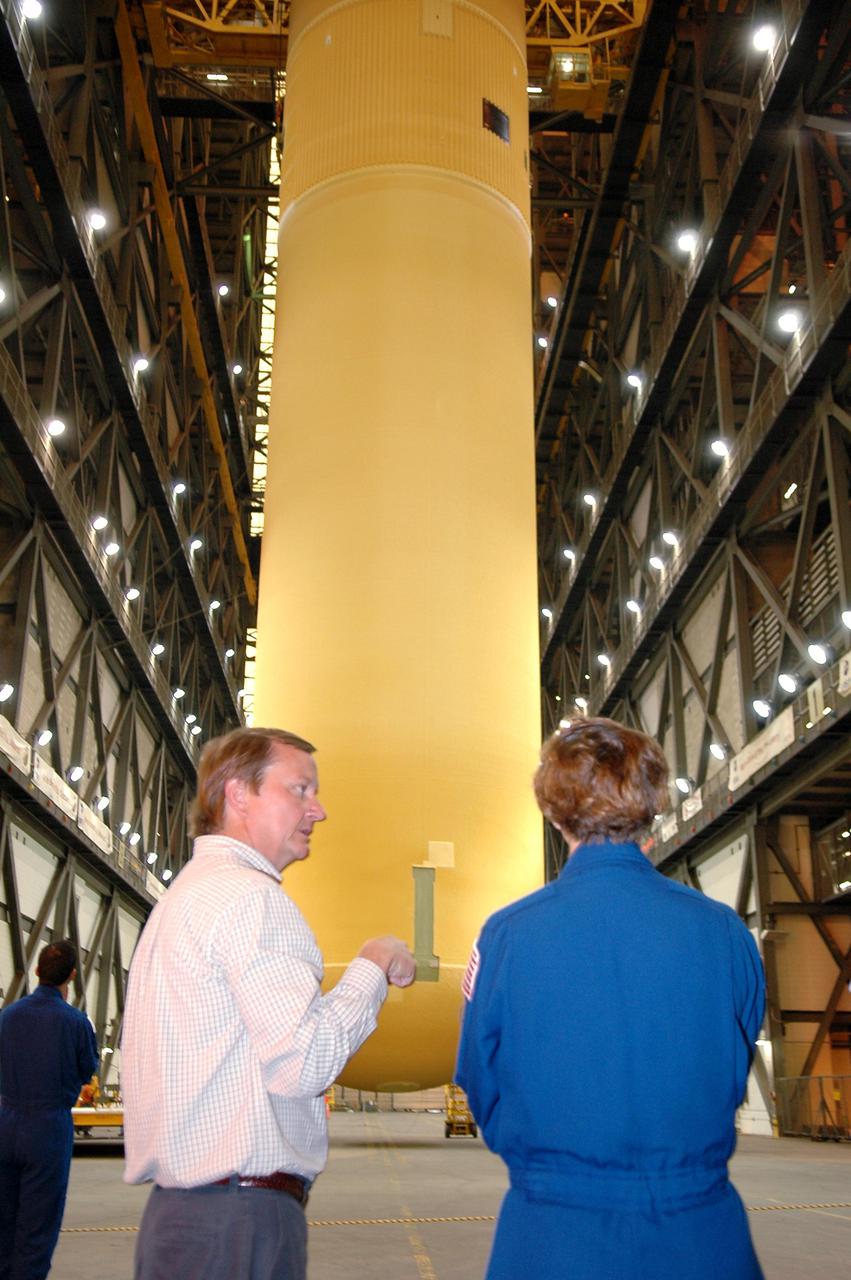
KENNEDY SPACE CENTER, FLA. - Shuttle Launch Director Mike Leinbach talks to STS-114 Mission Commander Eileen Collins as they watch the newly redesigned External Tank being lifted in the Vehicle Assembly Building to a “checkout cell” where the tank’s mechanical, electrical and thermal protection systems are inspected. Collins and the rest of the crew are at Kennedy to observe tank activities. The tank will also undergo new processes resulting from its redesign, including inspection of the bipod heater and External Tank separation camera. The tank is designated to fly on Shuttle Discovery on Return to Flight mission STS-114. The launch window is May 12 to June 3, 2005.
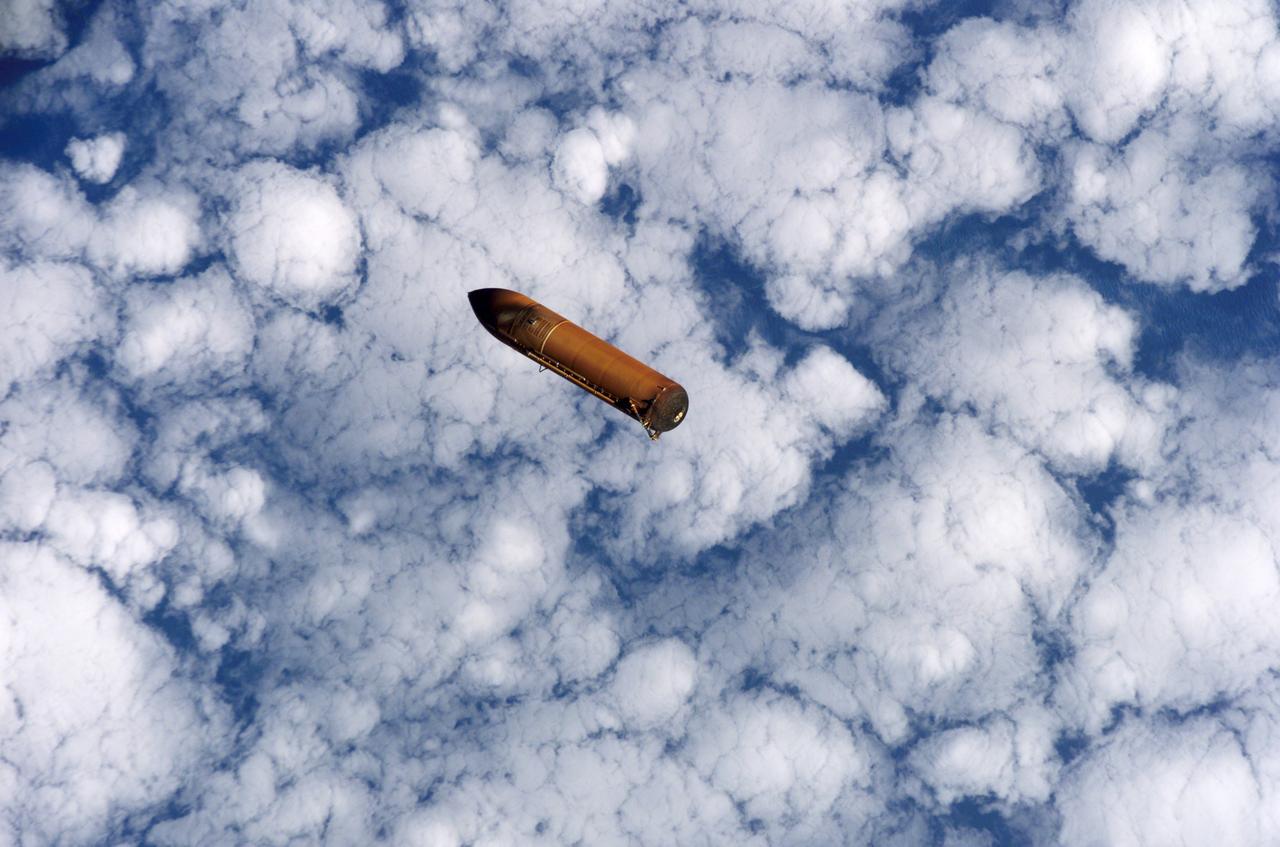
S114-E-5122 (26 July 2005) --- The external fuel tank is jettisoned from the Space Shuttle Discovery and falls toward Earth’s atmosphere during the completion of the launch phase of the STS-114 mission. A blue and white Earth forms the backdrop for this image.
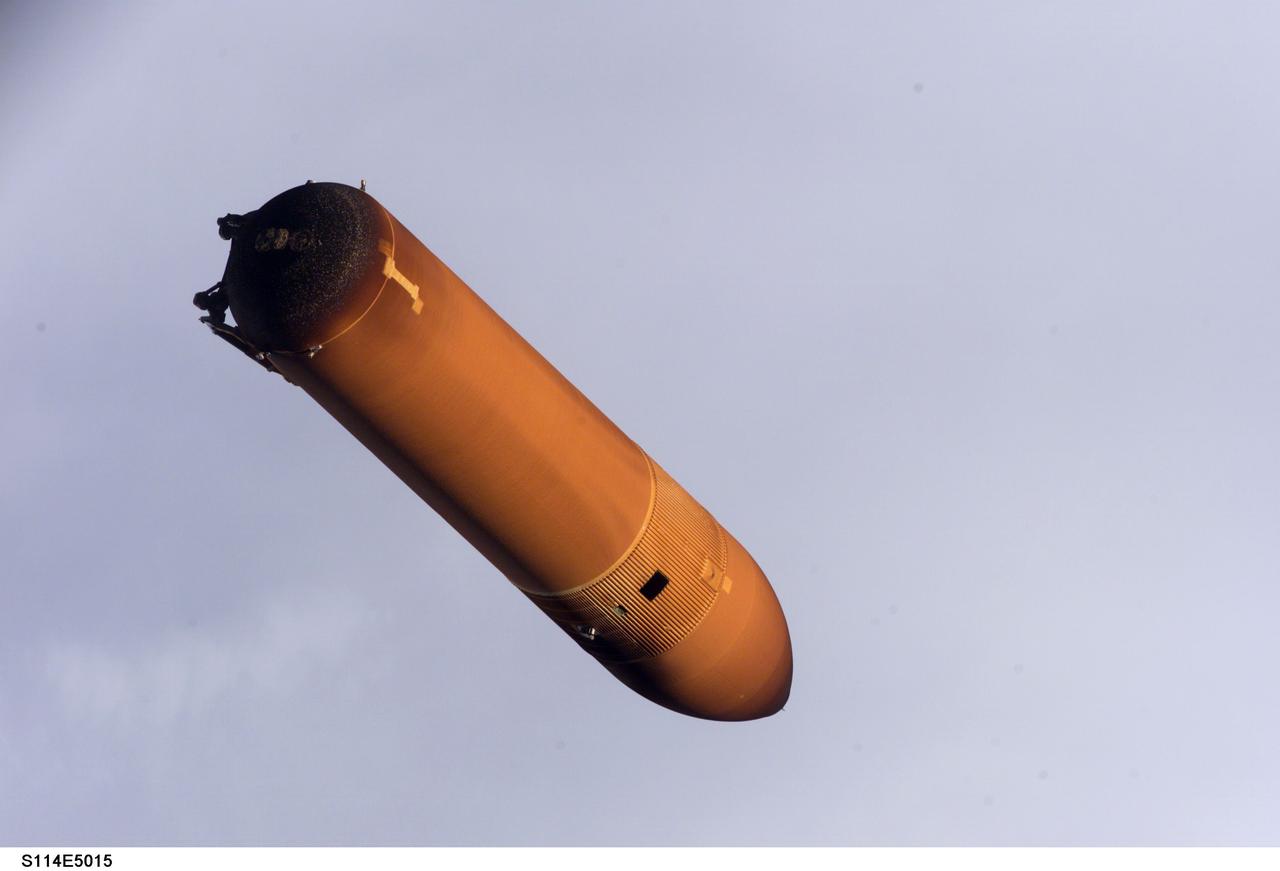
STS114-E-5015 (26 July 2005) ---- Handheld still images taken by Discovery's crew of the external fuel tank as it was jettisoned after launch on July 26 were transmitted to the ground early July 27. Engineers are analyzing these photos as part of the extensive imagery data being gathered to understand debris during the Shuttle's ascent during STS-114. These images of the external tank were taken with the tank closer to the Shuttle than on any past missions due to an earlier maneuver performed by the spacecraft shortly after main engine cutoff.
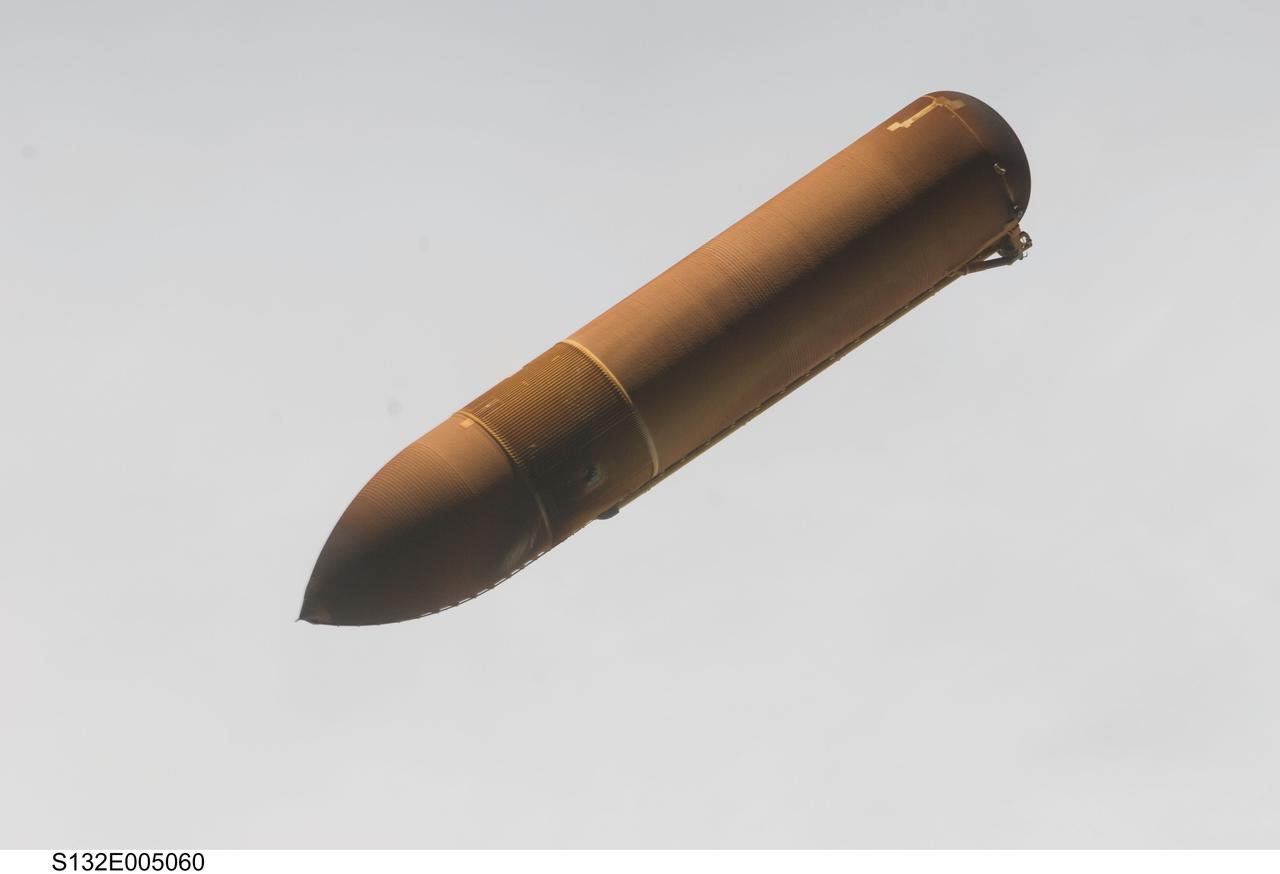
S132-E-005060 (14 May 2010) --- Just before ascending to Earth orbit, the space shuttle Atlantis dropped off its external fuel tank and one of the six STS-132 crew members onboard photographed a series of still images. Liftoff was at 2:20 p.m. (EDT) on May 14, 2010, from launch pad 39A at NASA's Kennedy Space Center. Photo credit: NASA or National Aeronautics and Space Administration
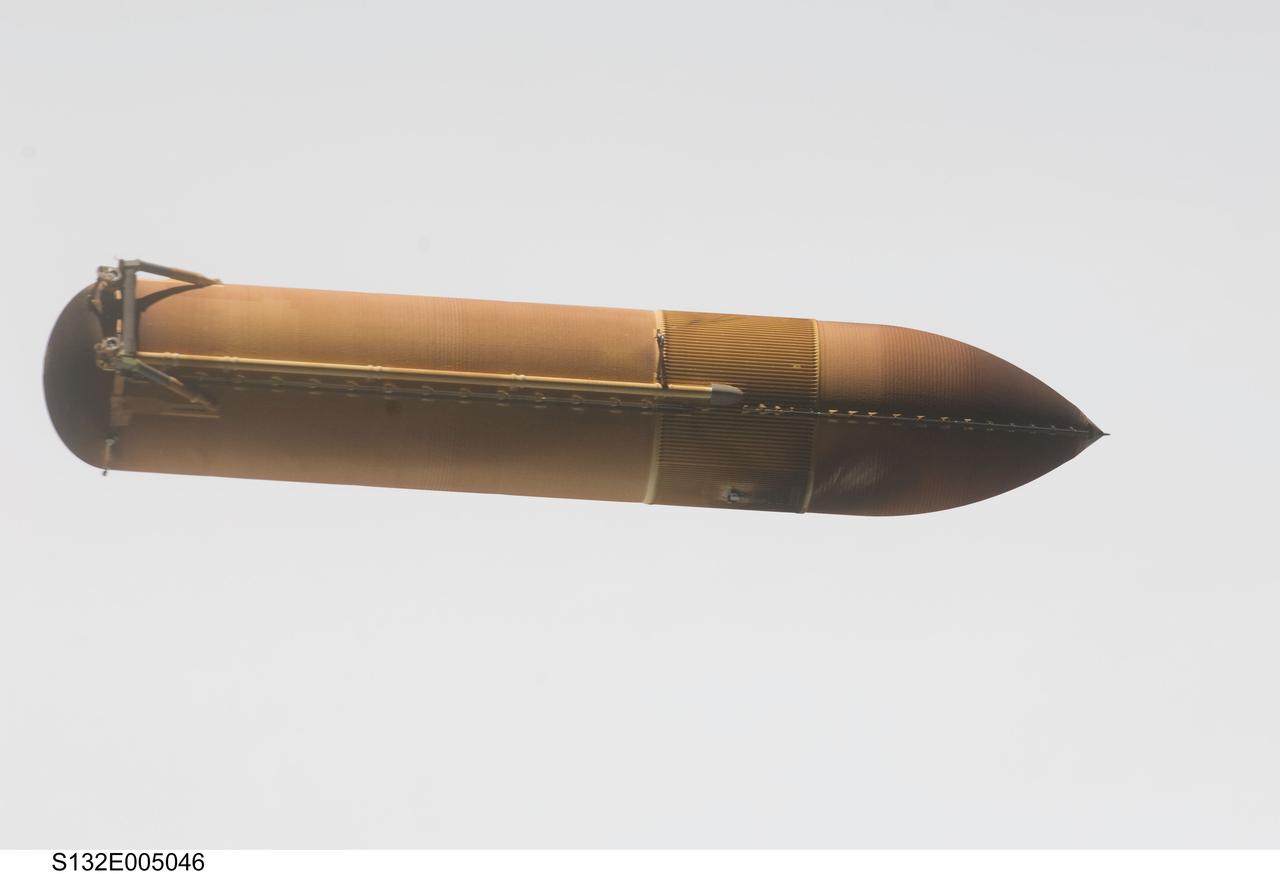
S132-E-005046 (14 May 2010) --- Just before ascending to Earth orbit, the space shuttle Atlantis dropped off its external fuel tank and one of the six STS-132 crew members onboard photographed a series of still images. Liftoff was at 2:20 p.m. (EDT) on May 14, 2010, from launch pad 39A at NASA's Kennedy Space Center. Photo credit: NASA or National Aeronautics and Space Administration
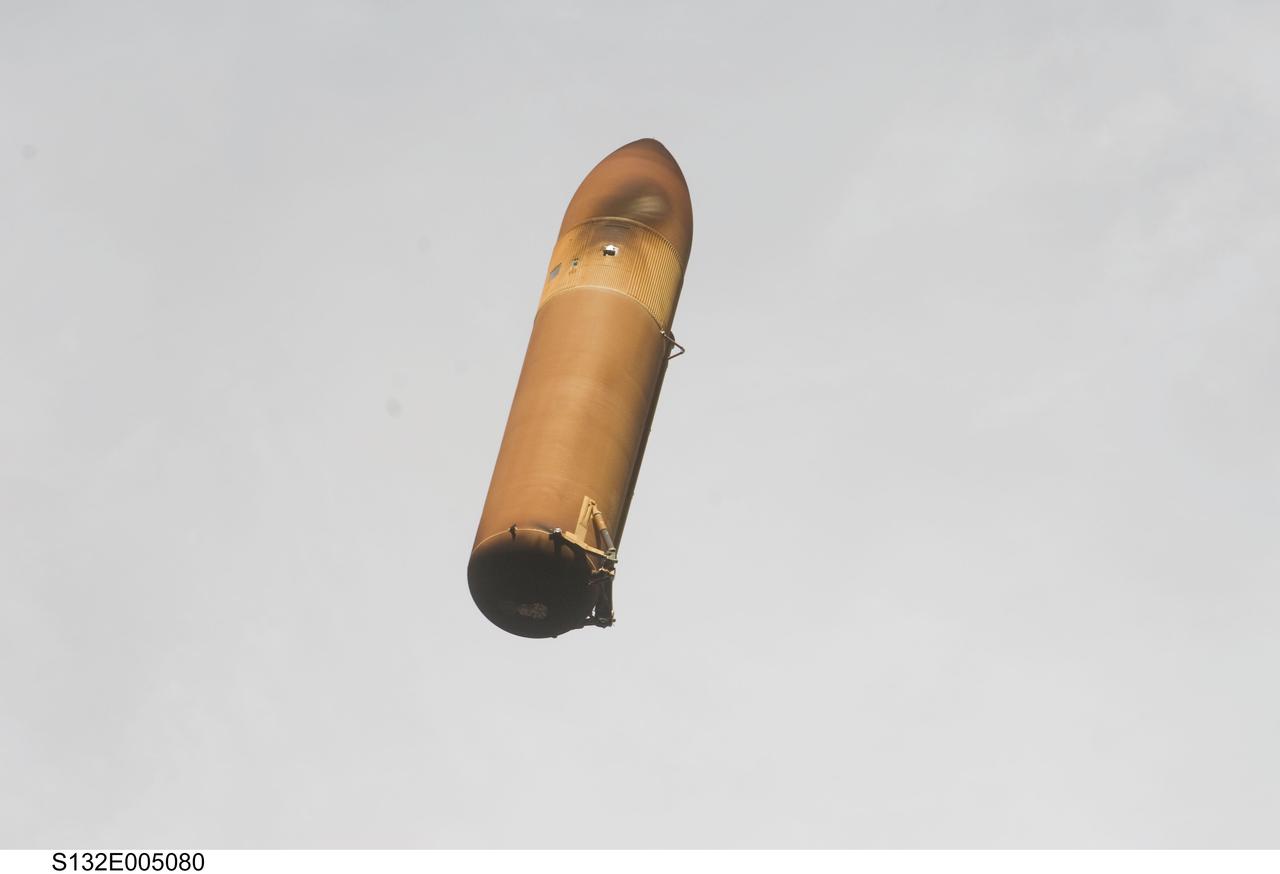
S132-E-005080 (14 May 2010) --- Just before ascending to Earth orbit, the space shuttle Atlantis dropped off its external fuel tank and one of the six STS-132 crew members onboard photographed a series of still images. Liftoff was at 2:20 p.m. (EDT) on May 14, 2010, from launch pad 39A at NASA's Kennedy Space Center. Photo credit: NASA or National Aeronautics and Space Administration
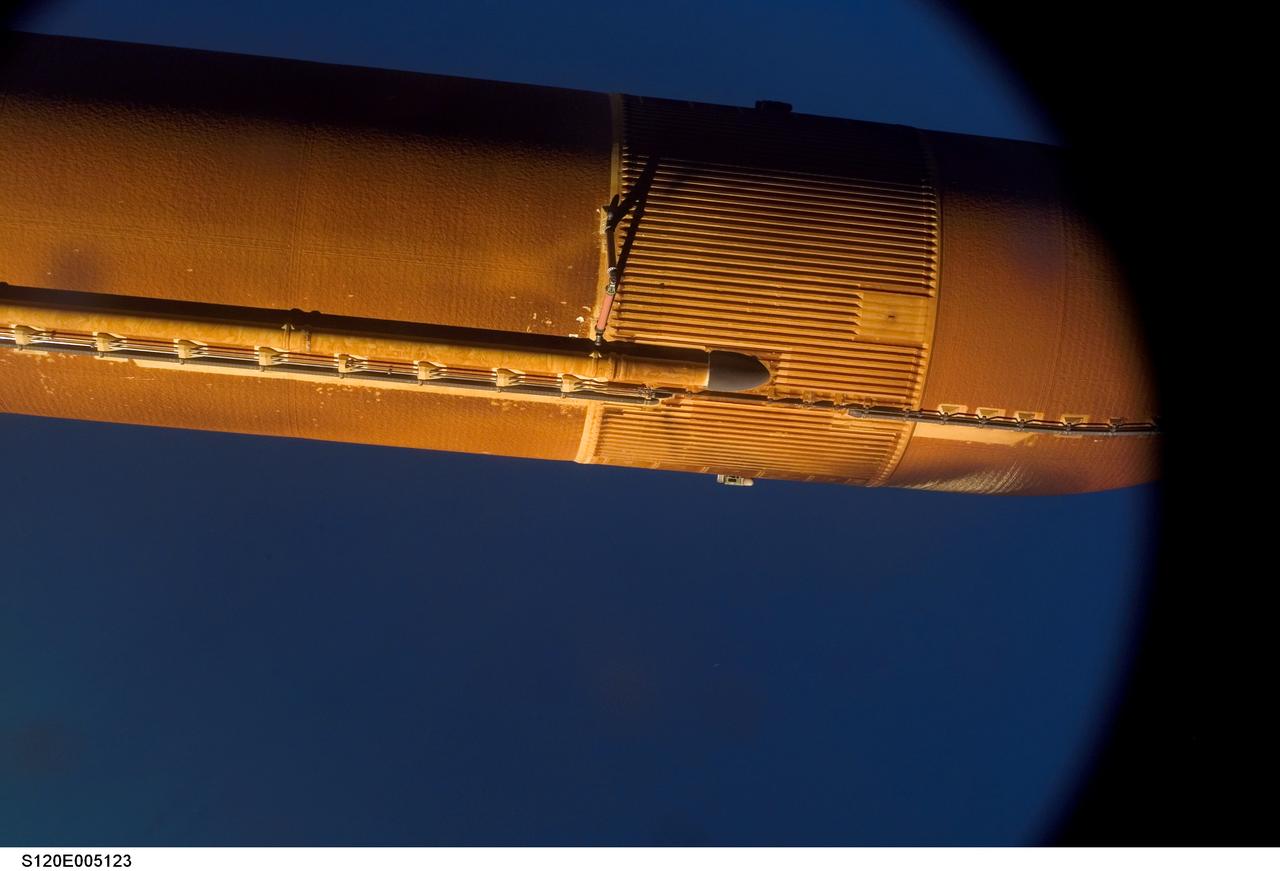
S120-E-005123 (23 Oct. 2007) --- External Tank 120 falls away from Space Shuttle Discovery as a digital camera automatically captures detailed images of the tank for analysis by imagery experts in Mission Control. This image shows little foam loss from the tank except for one small divot near the triangular shaped bipod attach fitting. The divot posed no threat of damage to Discovery.
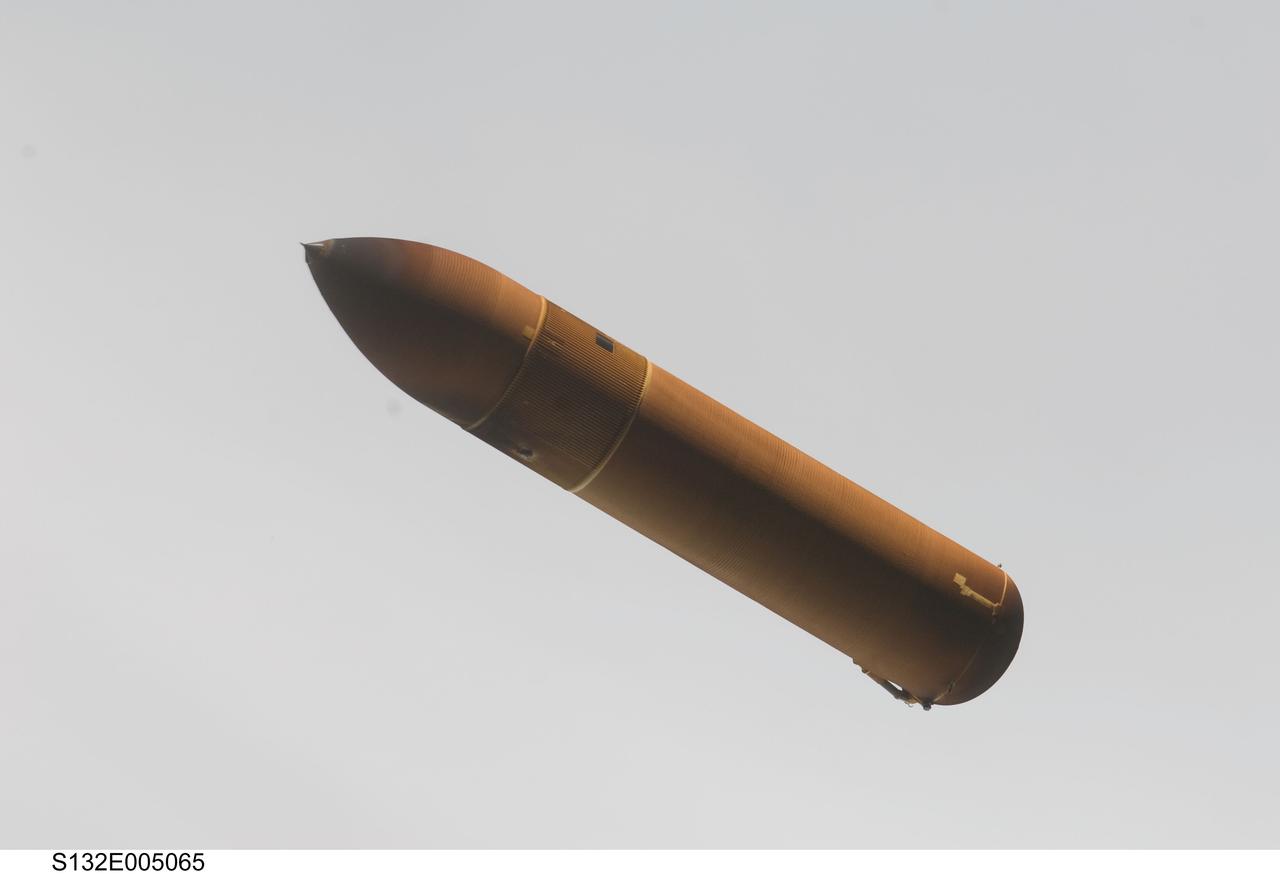
S132-E-005065 (14 May 2010) --- Just before ascending to Earth orbit, the space shuttle Atlantis dropped off its external fuel tank and one of the six STS-132 crew members onboard photographed a series of still images. Liftoff was at 2:20 p.m. (EDT) on May 14, 2010, from launch pad 39A at NASA's Kennedy Space Center. Photo credit: NASA or National Aeronautics and Space Administration
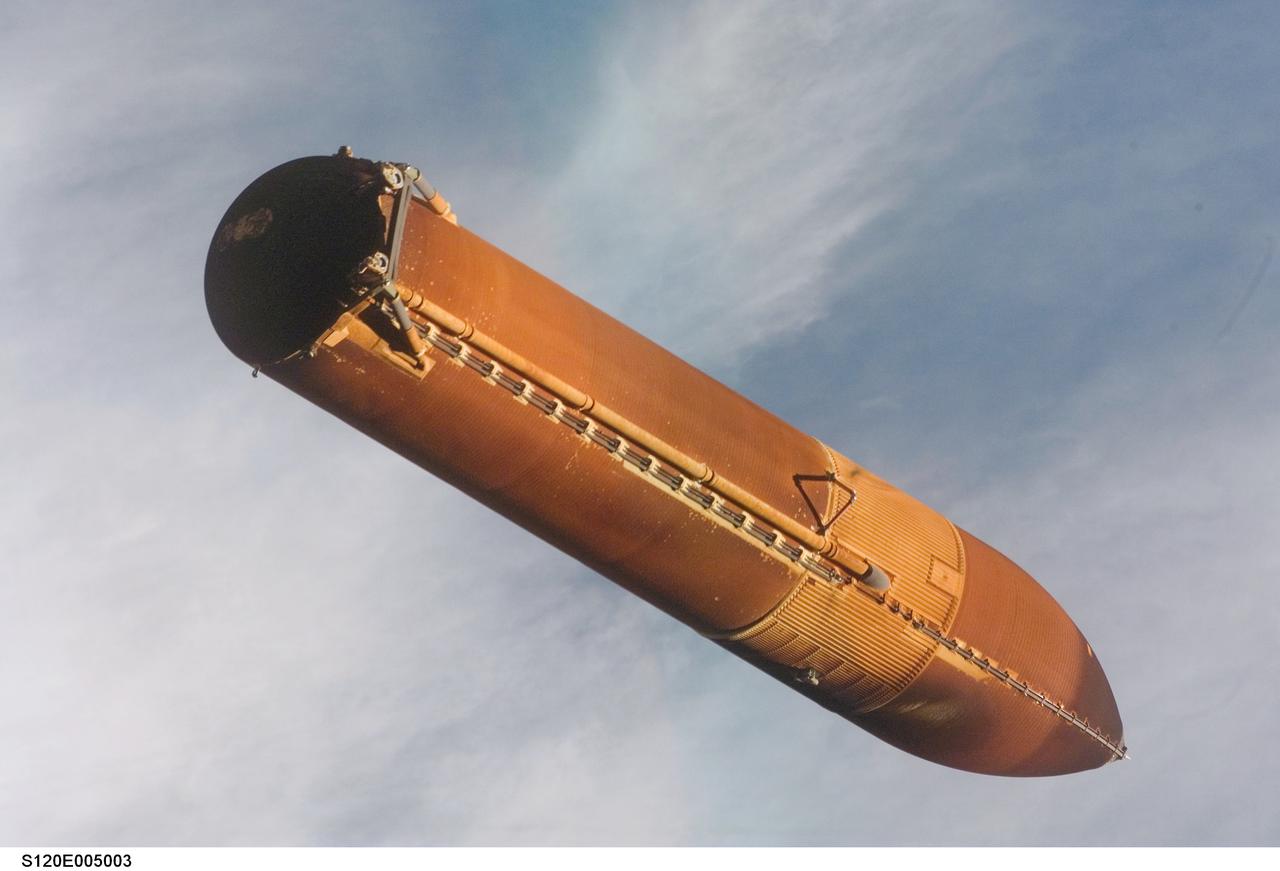
S120-E-005003 (23 Oct. 2007) --- External Tank 120 falls away from Space Shuttle Discovery as the crew onboard documents the tank's condition using a hand-held digital camera. The detailed images of the tank are reviewed by imagery experts in Mission Control. This image shows a small divot of foam loss near the triangular shaped bipod attach fitting. The divot posed no threat of damage to Discovery.
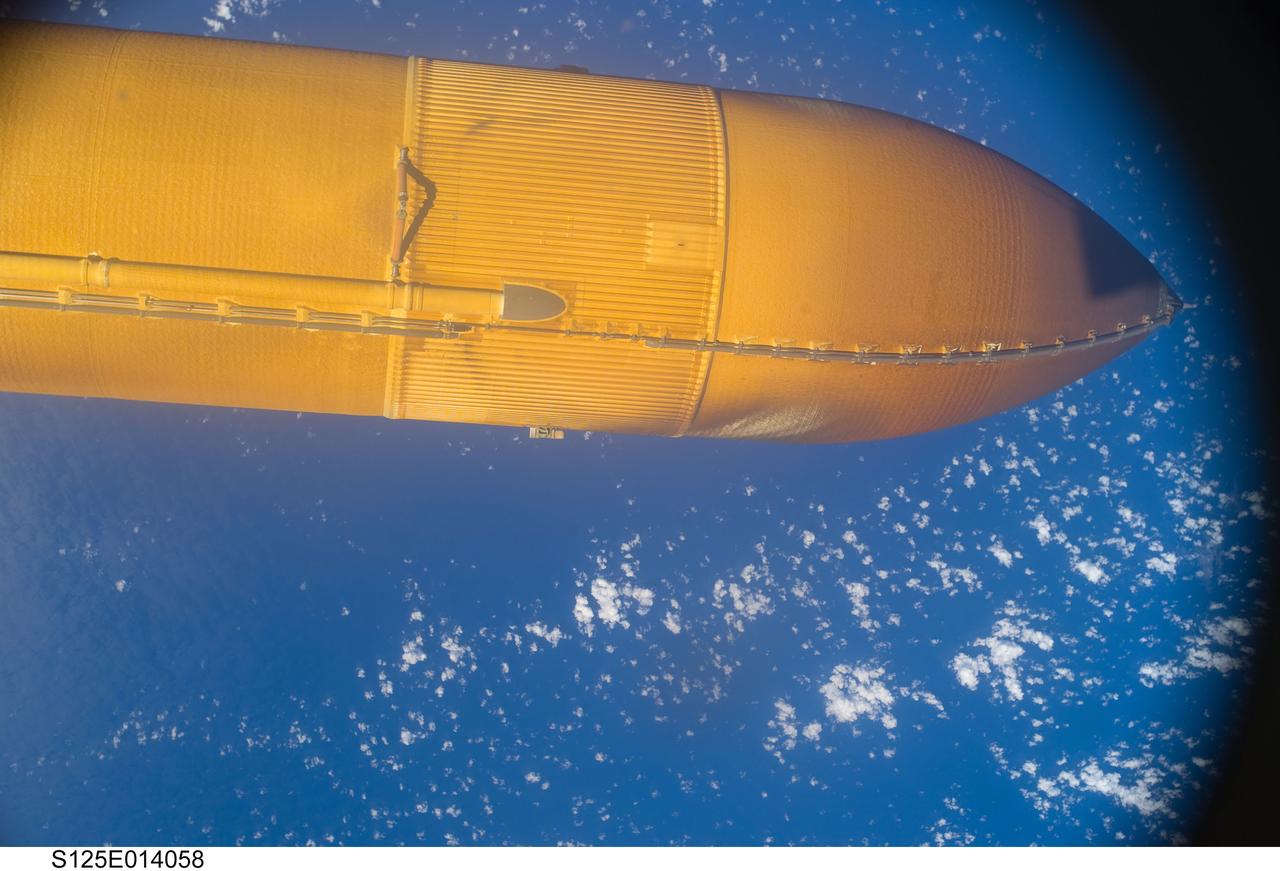
S125-E-014058 (11 May 2009) --- One of a series of photos taken by the umbilical well camera aboard the Space Shuttle Atlantis shortly after the shuttle's external fuel tank (ET) separated from Atlantis following launch.
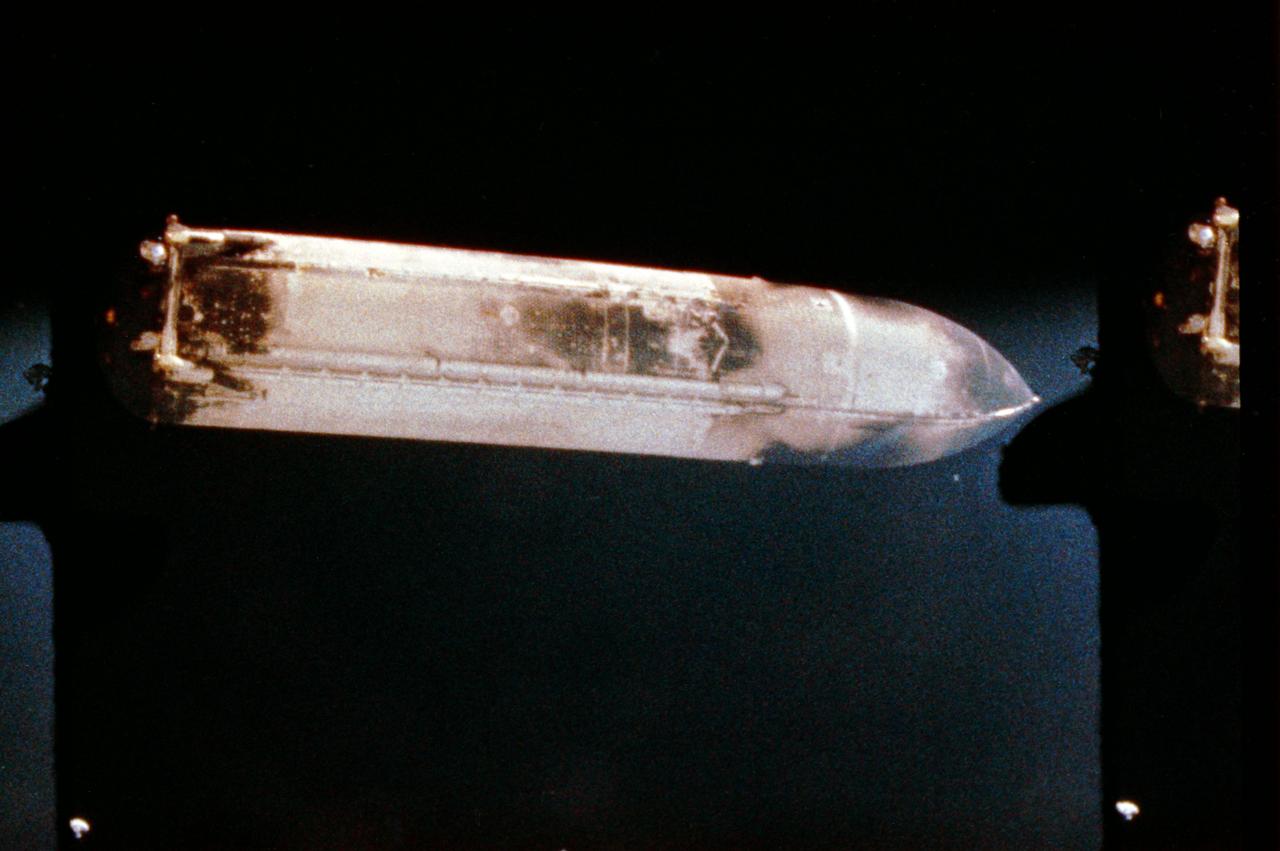
S81-30509 (12 April 1981) --- Separation of space shuttle Columbia?s external tank, photographed by motion picture cameras in the umbilical bays, occurred following the shutdown of the vehicle?s three main engines. The Columbia?s cameras were able to record the underside of the tank as the orbiter headed toward its Earth-orbital mission with astronauts John W. Young and Robert L. Crippen aboard, and the fuel tank fell toward Earth, passing through the atmosphere rapidly. Photo credit: NASA
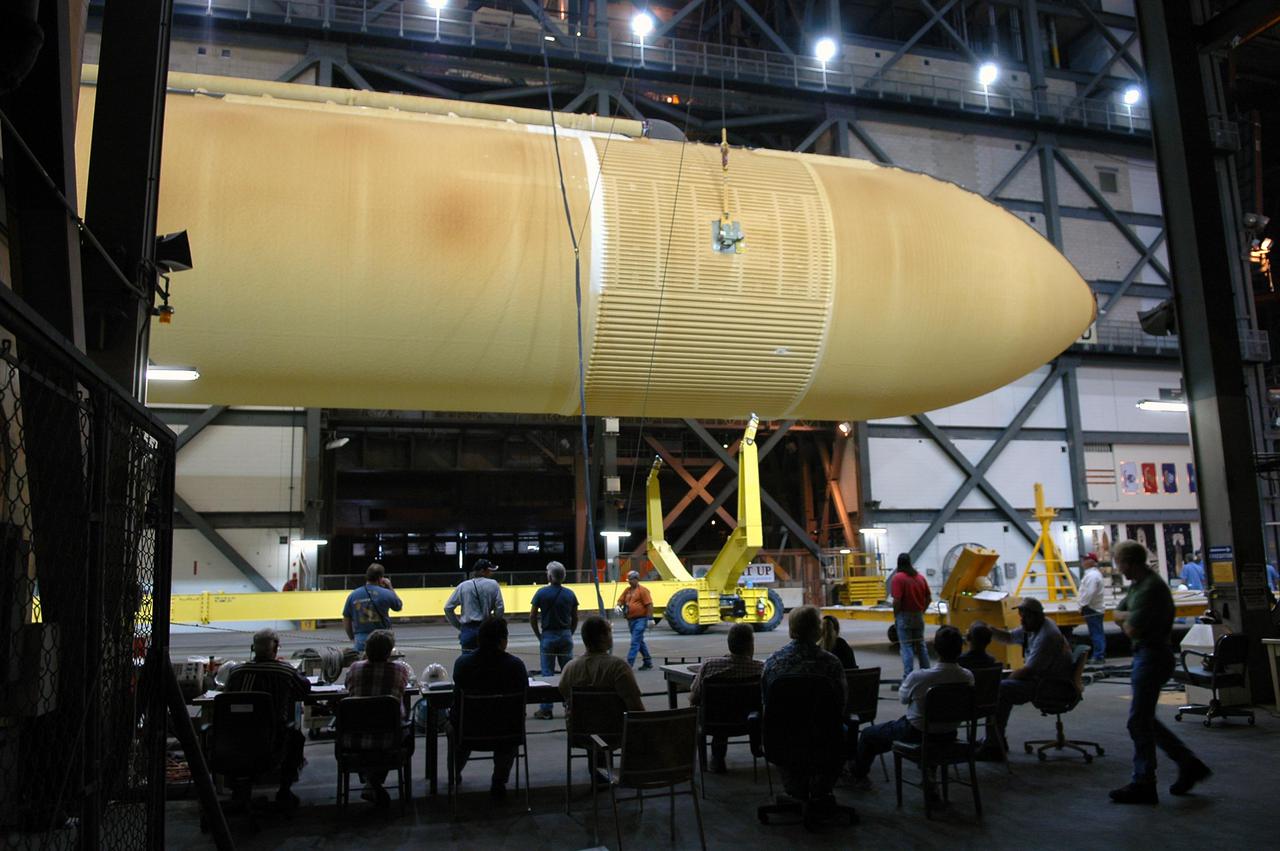
KENNEDY SPACE CENTER, FLA. - The redesigned External Tank is being raised off its transporter. It will be lifted to a vertical position and into the 'checkout cell' of the Vehicle Assembly Building where the tank’s mechanical, electrical and thermal protection systems are inspected. The tank will also undergo new processes resulting from its redesign, including inspection of the bipod heater and External Tank separation camera. The tank will be prepared for 'mating' to the Shuttle’s Solid Rocket Boosters. When preparations are complete, the tank will be lifted from the checkout cell, moved across the transfer aisle and into High Bay 1. It will be lowered and attached to the boosters, which are sitting on the Mobile Launch Platform. The SRBs and ET will be flying with Shuttle Discovery for the Return to Flight mission STS-114. The launch planning window is May 12 to June 3, 2005.
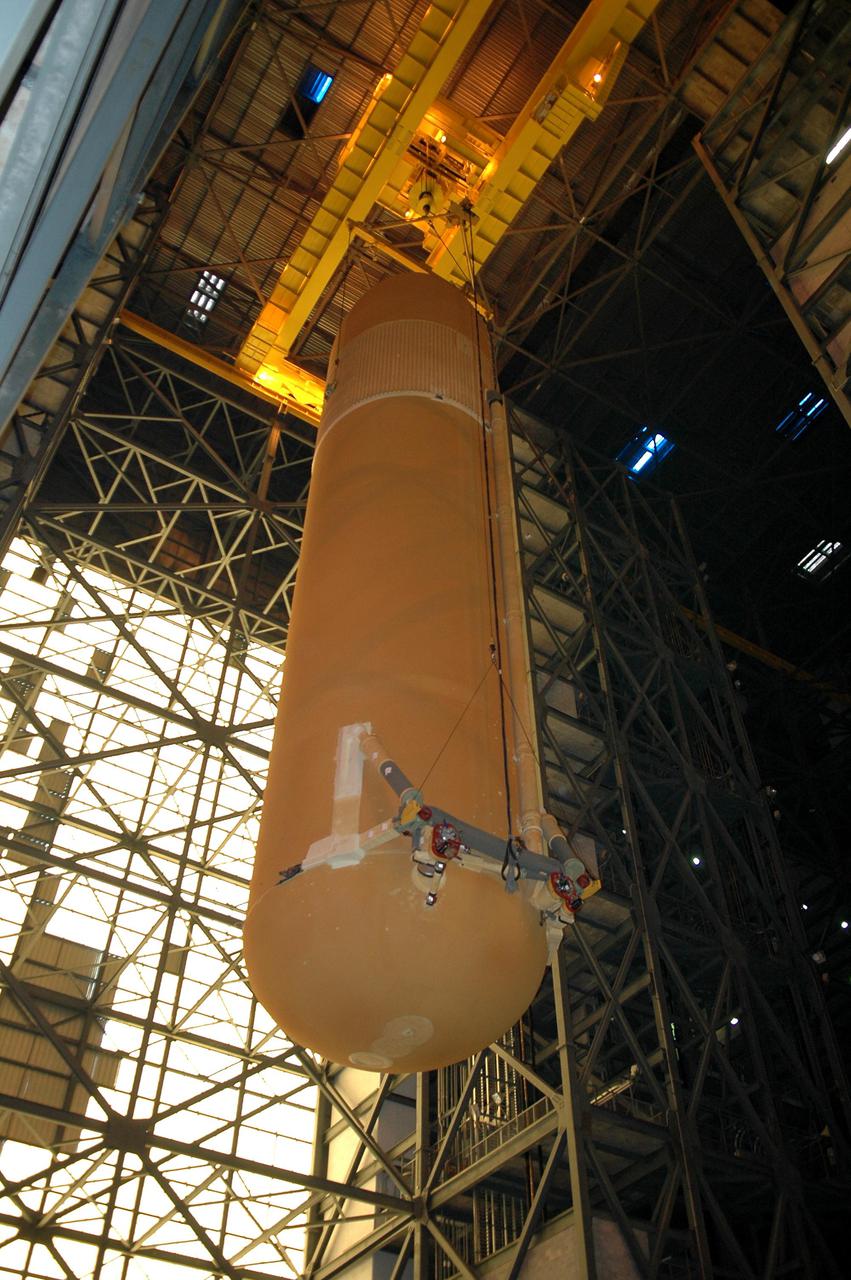
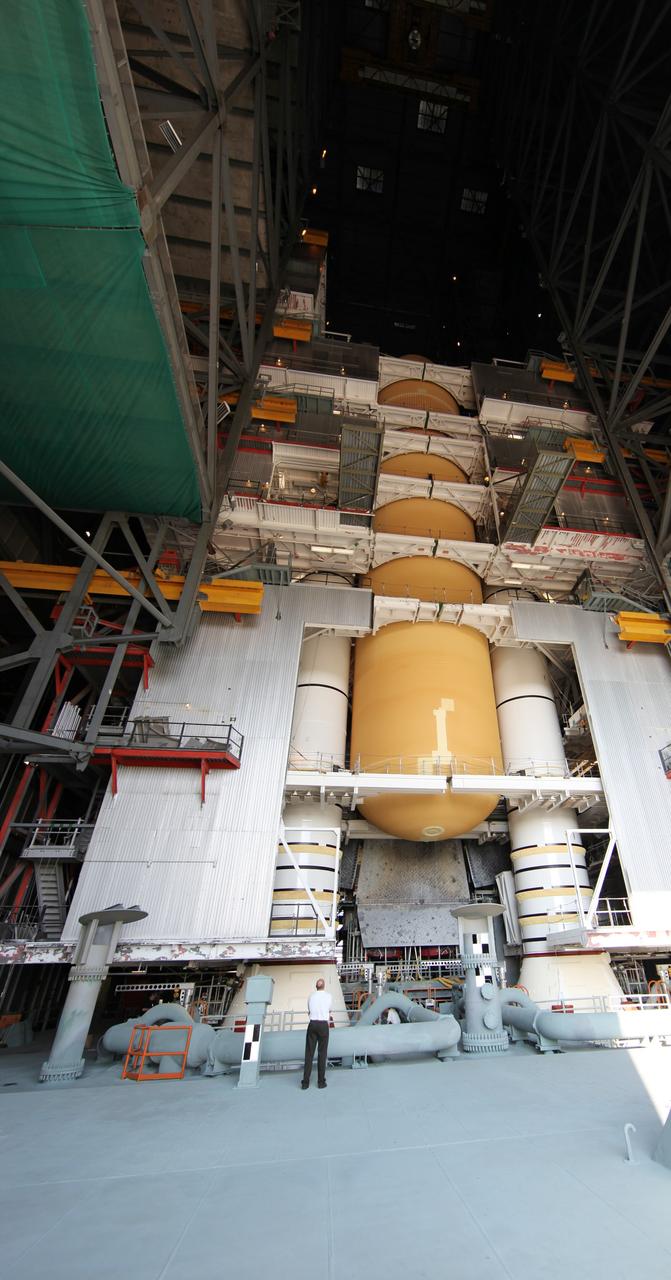
KENNEDY SPACE CENTER, FLA. - Viewed from the floor of the Vehicle Assembly Building, the redesigned External Tank is seen being lifted to the top where it will be lifted into the 'checkout cell' where the tank’s mechanical, electrical and thermal protection systems are inspected. The tank will also undergo new processes resulting from its redesign, including inspection of the bipod heater and External Tank separation camera. The tank will be prepared for 'mating' to the Shuttle’s Solid Rocket Boosters. When preparations are complete, the tank will be lifted from the checkout cell, moved across the transfer aisle and into High Bay 1. It will be lowered and attached to the boosters, which are sitting on the Mobile Launch Platform. The SRBs and ET will be flying with Shuttle Discovery for the Return to Flight mission STS-114. The launch planning window is May 12 to June 3, 2005.
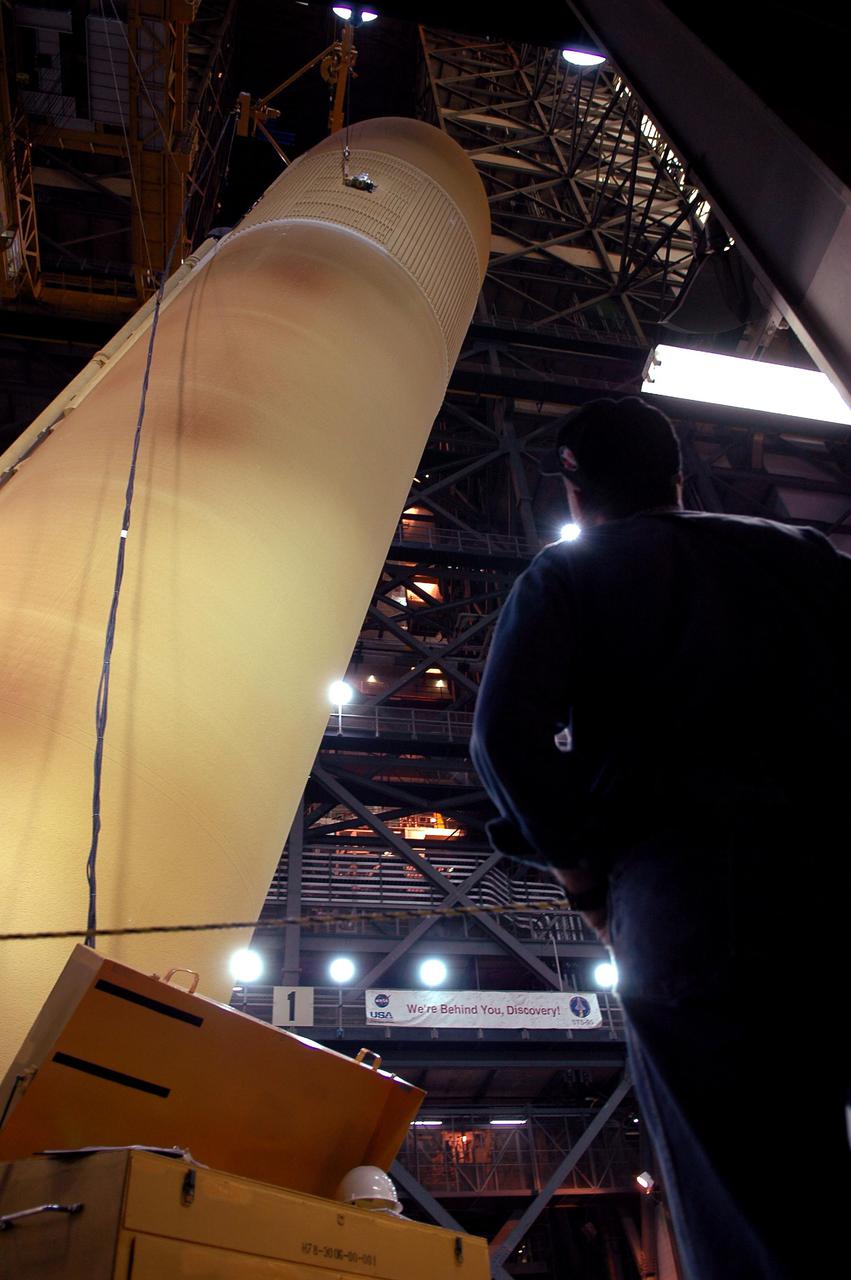
KENNEDY SPACE CENTER, FLA. - Nearly vertical, the redesigned External Tank will be lifted into the 'checkout cell' of the Vehicle Assembly Building where the tank’s mechanical, electrical and thermal protection systems are inspected. The tank will also undergo new processes resulting from its redesign, including inspection of the bipod heater and External Tank separation camera. The tank will be prepared for 'mating' to the Shuttle’s Solid Rocket Boosters. When preparations are complete, the tank will be lifted from the checkout cell, moved across the transfer aisle and into High Bay 1. It will be lowered and attached to the boosters, which are sitting on the Mobile Launch Platform. The SRBs and ET will be flying with Shuttle Discovery for the Return to Flight mission STS-114. The launch planning window is May 12 to June 3, 2005.
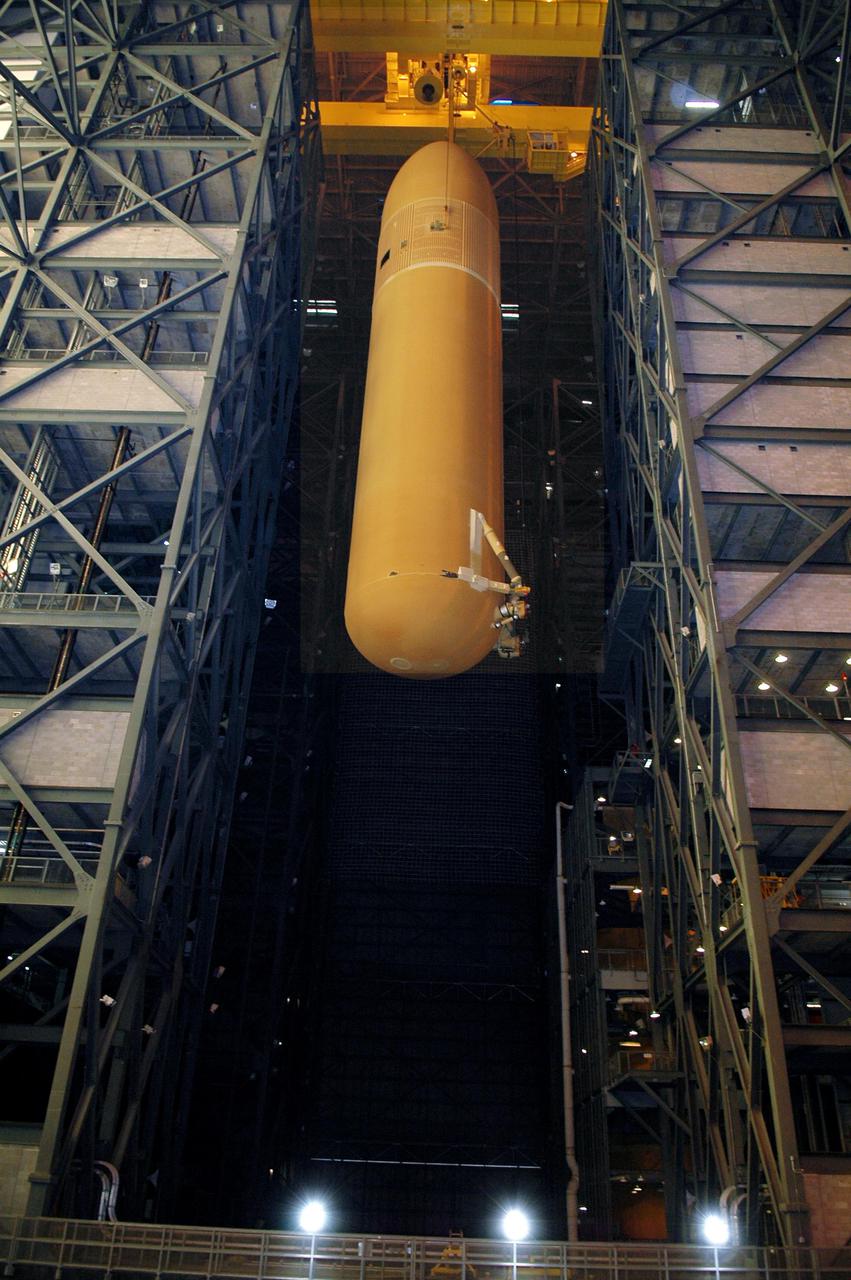
KENNEDY SPACE CENTER, FLA. - Viewed from the floor of the Vehicle Assembly Building, the redesigned External Tank is seen being lifted to the top where it will be lifted into the 'checkout cell' where the tank’s mechanical, electrical and thermal protection systems are inspected. The tank will also undergo new processes resulting from its redesign, including inspection of the bipod heater and External Tank separation camera. The tank will be prepared for 'mating' to the Shuttle’s Solid Rocket Boosters. When preparations are complete, the tank will be lifted from the checkout cell, moved across the transfer aisle and into High Bay 1. It will be lowered and attached to the boosters, which are sitting on the Mobile Launch Platform. The SRBs and ET will be flying with Shuttle Discovery for the Return to Flight mission STS-114. The launch planning window is May 12 to June 3, 2005.
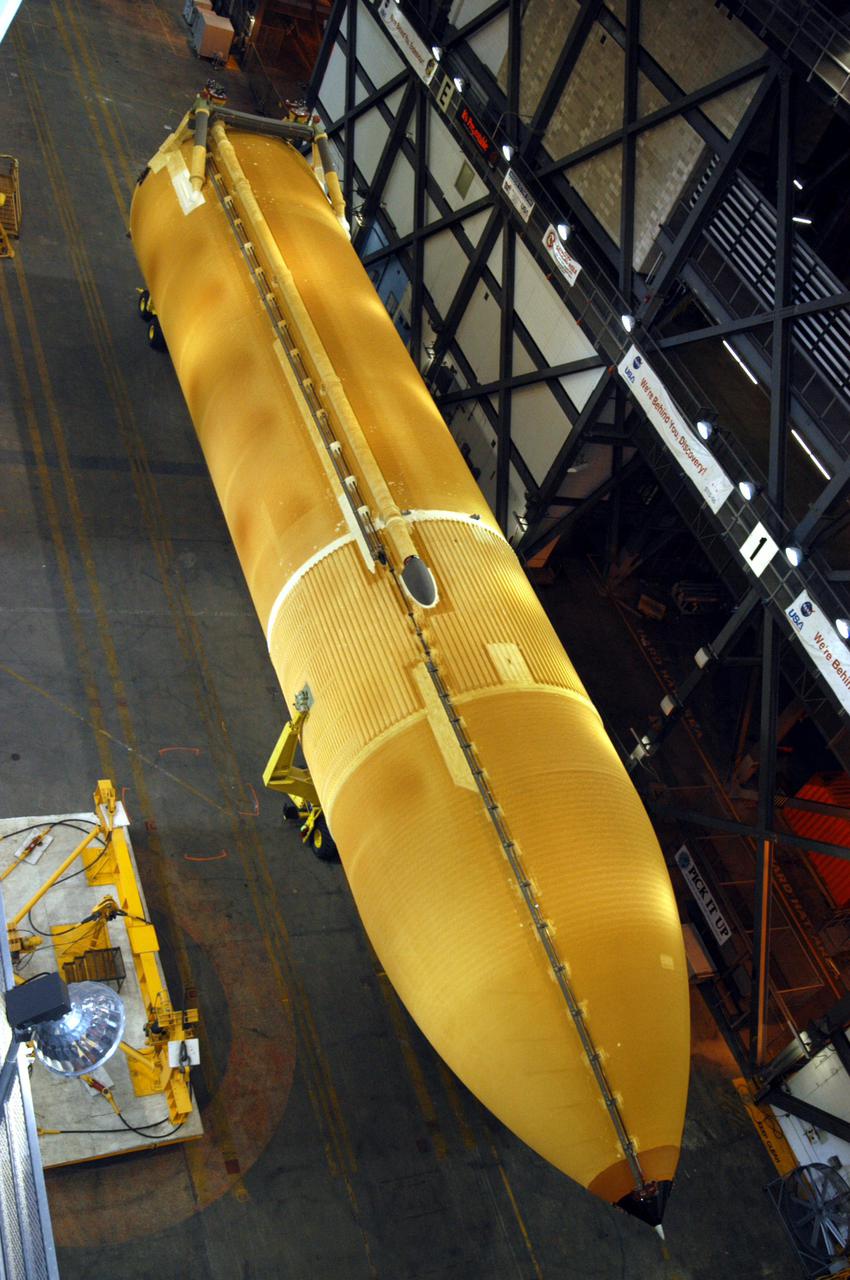
KENNEDY SPACE CENTER, FLA. - Inside the Vehicle Assembly Building, the redesigned External Tank to be used on Return to Flight mission STS-114 waits in the transfer aisle after its move from the barge in the Launch Complex 39 Area Turn Basin. The tank will be raised from a horizontal to a vertical position, then lifted high up into a storage cell, or “checkout cell,” where it will undergo inspections of the mechanical, electrical and thermal protection systems. New processing activities resulting from redesign of the tank include inspection of the bipod heater and External Tank separation camera, which includes charging the camera batteries. The tank will be then prepared for mating to the Solid Rocket Boosters. When preparations are complete, the tank will be lifted from the checkout cell, moved across the transfer aisle and into High Bay 1, where it will be lowered and attached to the boosters, which are sitting on the Mobile Launch Platform.
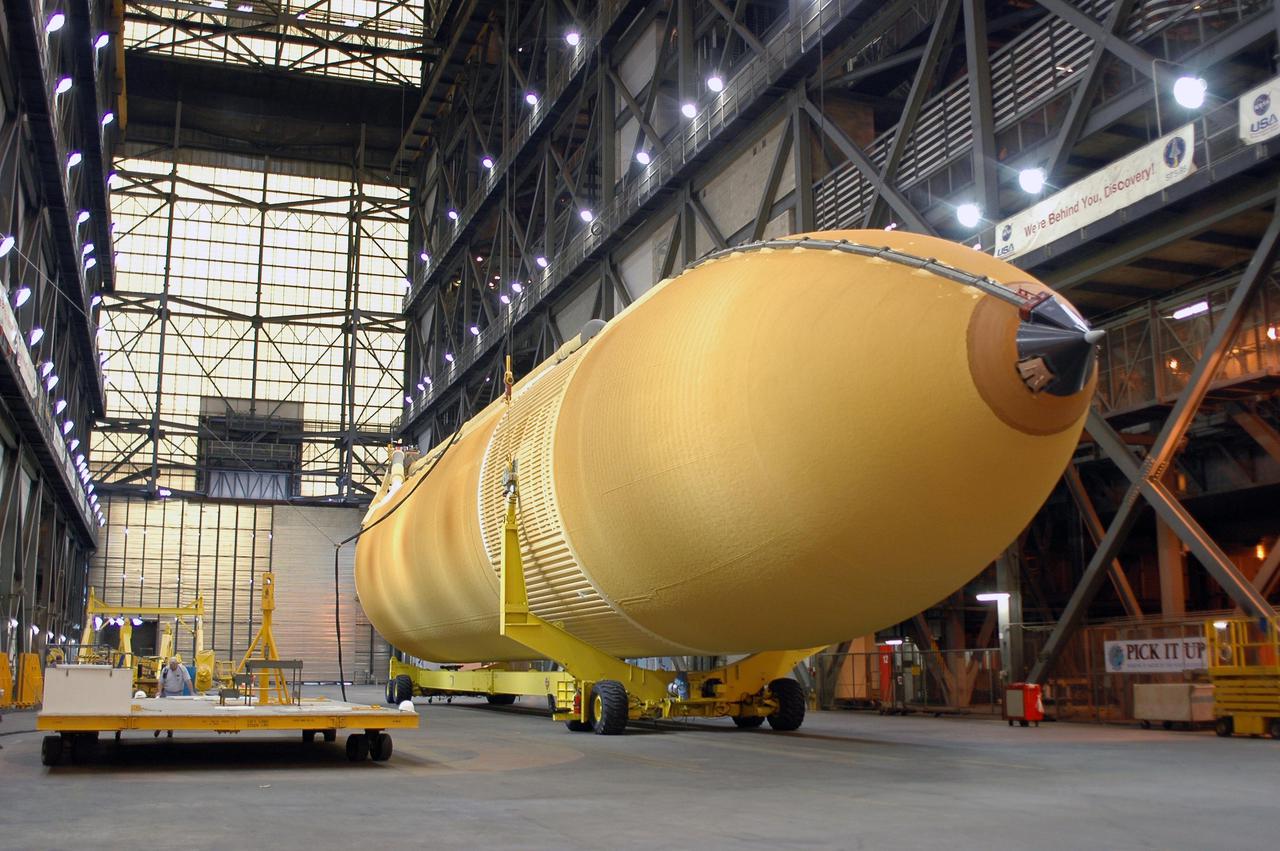
KENNEDY SPACE CENTER, FLA. - The redesigned External Tank is ready to be raised to a vertical position and lifted into the 'checkout cell' of the Vehicle Assembly Building where the tank’s mechanical, electrical and thermal protection systems are inspected. The tank will also undergo new processes resulting from its redesign, including inspection of the bipod heater and External Tank separation camera. The tank will be prepared for 'mating' to the Shuttle’s Solid Rocket Boosters. When preparations are complete, the tank will be lifted from the checkout cell, moved across the transfer aisle and into High Bay 1. It will be lowered and attached to the boosters, which are sitting on the Mobile Launch Platform. The SRBs and ET will be flying with Shuttle Discovery for the Return to Flight mission STS-114. The launch planning window is May 12 to June 3, 2005.
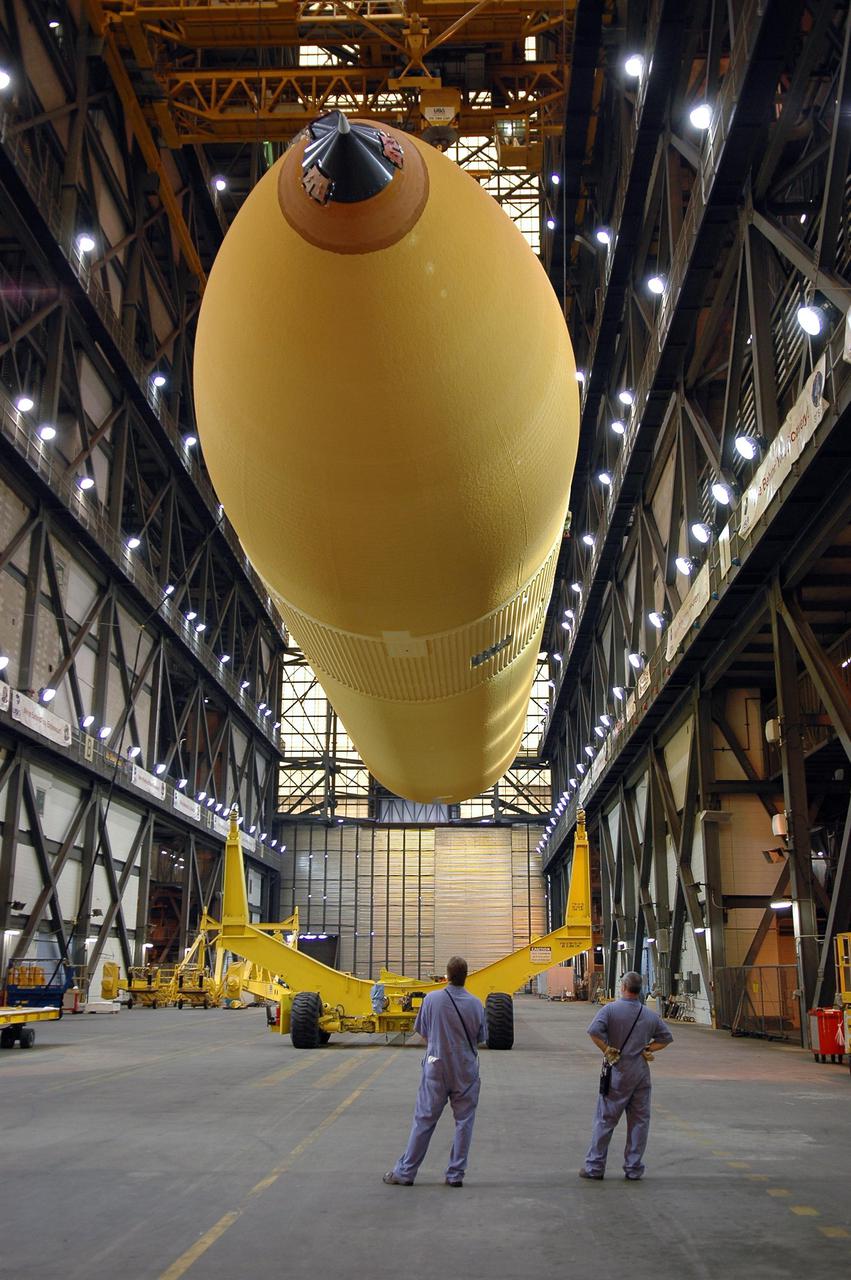
KENNEDY SPACE CENTER, FLA. - The redesigned External Tank is being raised off its transporter. It will be lifted to a vertical position and into the 'checkout cell' of the Vehicle Assembly Building where the tank’s mechanical, electrical and thermal protection systems are inspected. The tank will also undergo new processes resulting from its redesign, including inspection of the bipod heater and External Tank separation camera. The tank will be prepared for 'mating' to the Shuttle’s Solid Rocket Boosters. When preparations are complete, the tank will be lifted from the checkout cell, moved across the transfer aisle and into High Bay 1. It will be lowered and attached to the boosters, which are sitting on the Mobile Launch Platform. The SRBs and ET will be flying with Shuttle Discovery for the Return to Flight mission STS-114. The launch planning window is May 12 to June 3, 2005.
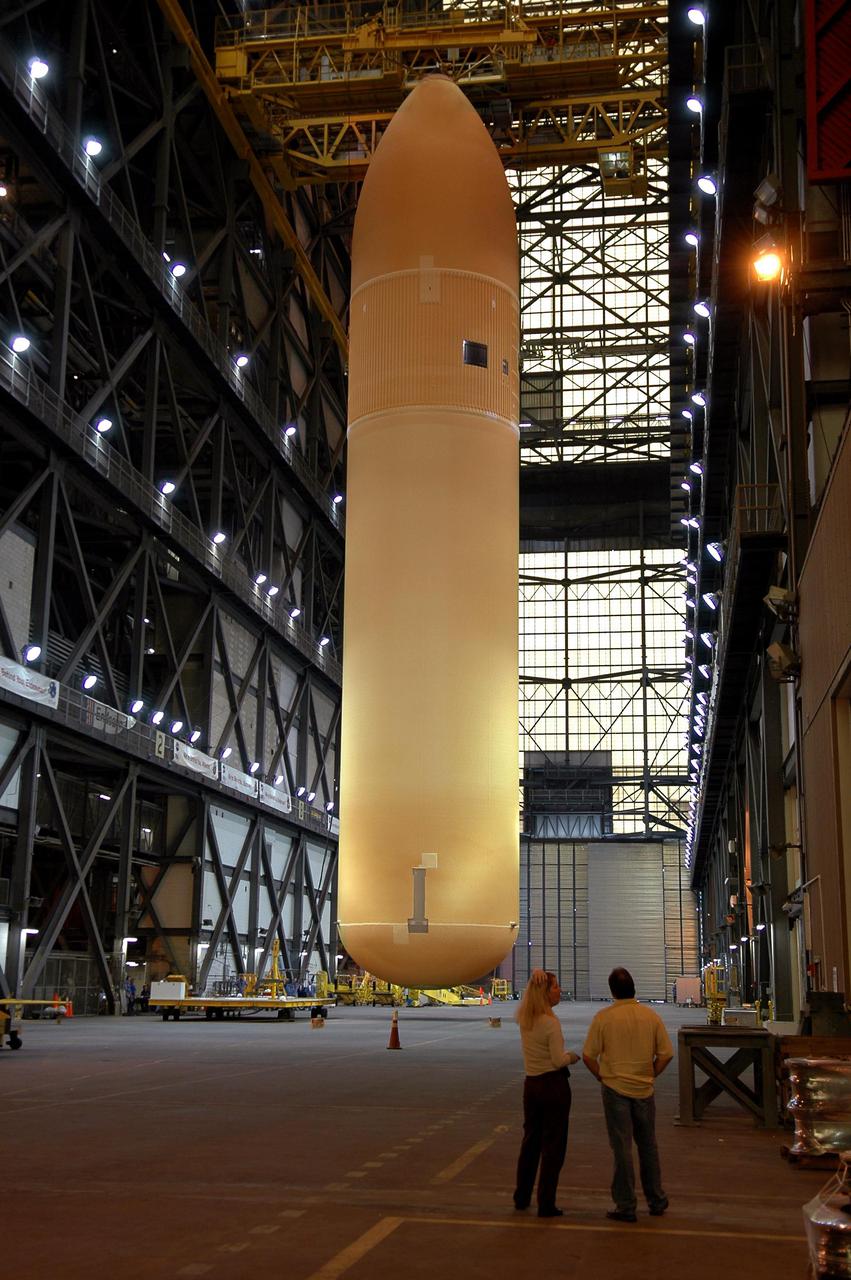
KENNEDY SPACE CENTER, FLA. - In the Vehicle Assembly Building, the redesigned External Tank is being lifted into the 'checkout cell' where the tank’s mechanical, electrical and thermal protection systems are inspected. The tank will also undergo new processes resulting from its redesign, including inspection of the bipod heater and External Tank separation camera. The tank will be prepared for 'mating' to the Shuttle’s Solid Rocket Boosters. When preparations are complete, the tank will be lifted from the checkout cell, moved across the transfer aisle and into High Bay 1. It will be lowered and attached to the boosters, which are sitting on the Mobile Launch Platform. The SRBs and ET will be flying with Shuttle Discovery for the Return to Flight mission STS-114. The launch planning window is May 12 to June 3, 2005.
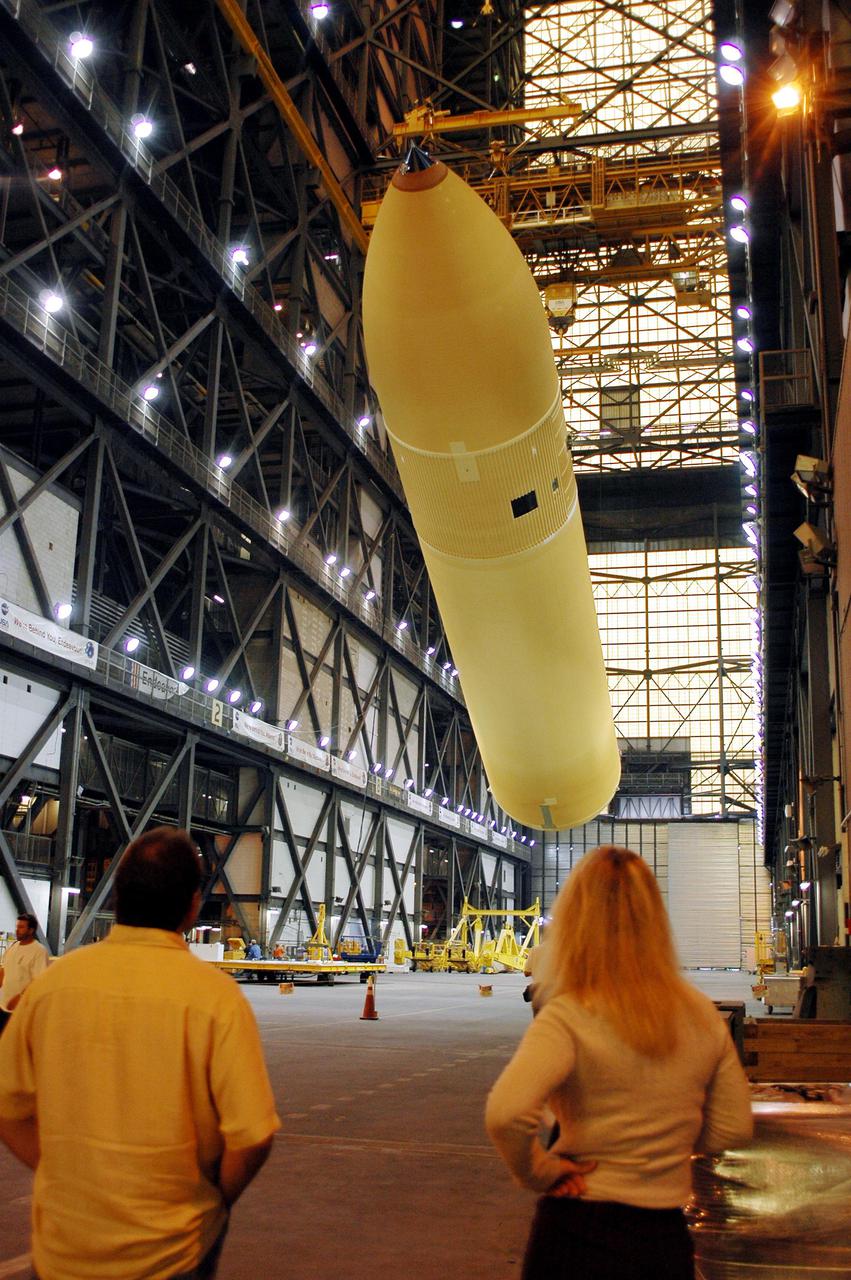
KENNEDY SPACE CENTER, FLA. - The redesigned External Tank is being raised to a vertical position in the Vehicle Assembly Building and will be lifted into the 'checkout cell' where the tank's mechanical, electrical and thermal protection systems are inspected. The tank will also undergo new processes resulting from its redesign, including inspection of the bipod heater and External Tank separation camera. The tank will be prepared for 'mating' to the Shuttle’s Solid Rocket Boosters. When preparations are complete, the tank will be lifted from the checkout cell, moved across the transfer aisle and into High Bay 1. It will be lowered and attached to the boosters, which are sitting on the Mobile Launch Platform. The SRBs and ET will be flying with Shuttle Discovery for the Return to Flight mission STS-114. The launch planning window is May 12 to June 3, 2005.
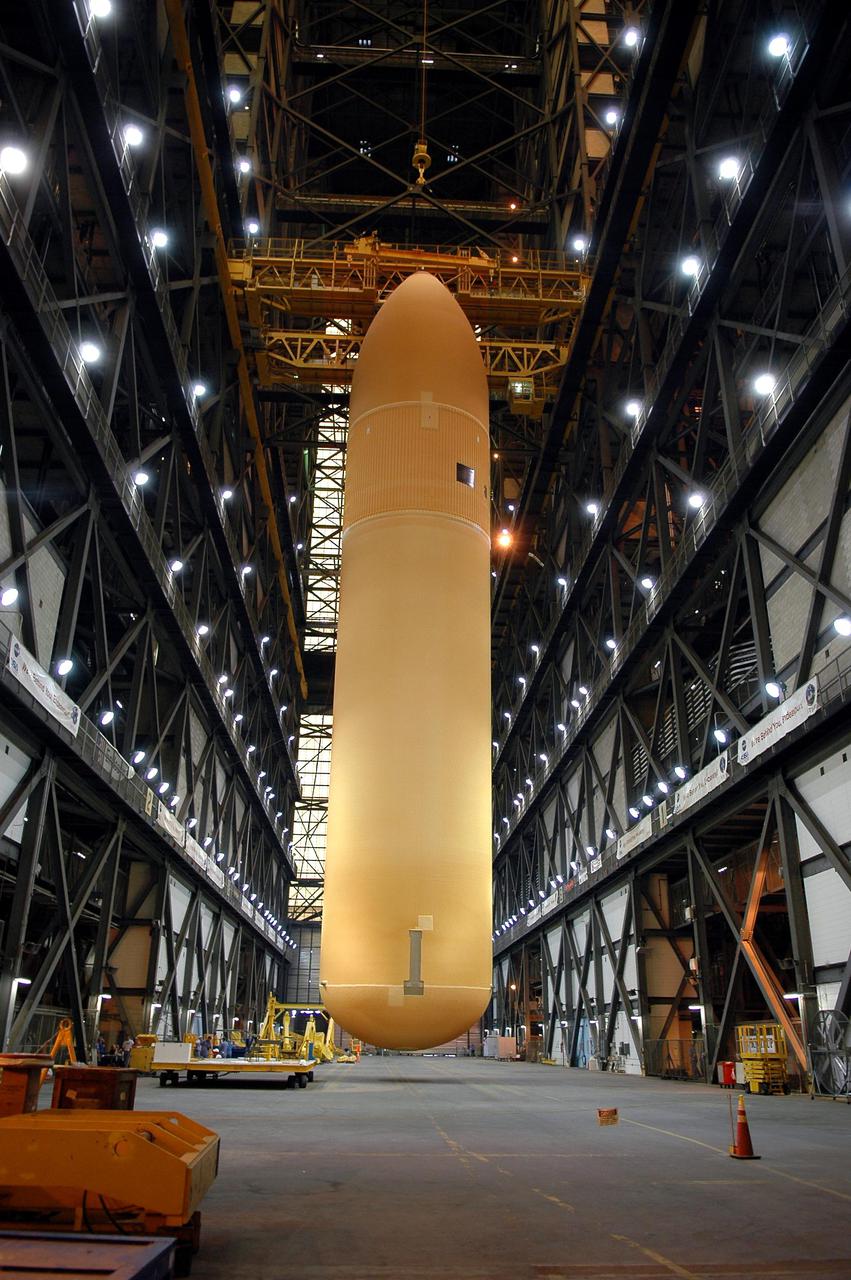
KENNEDY SPACE CENTER, FLA. - Raised to a vertical position in the Vehicle Assembly Building, the redesigned External Tank will be lifted into the 'checkout cell' where the tank’s mechanical, electrical and thermal protection systems are inspected. The tank will also undergo new processes resulting from its redesign, including inspection of the bipod heater and External Tank separation camera. The tank will be prepared for 'mating' to the Shuttle’s Solid Rocket Boosters. When preparations are complete, the tank will be lifted from the checkout cell, moved across the transfer aisle and into High Bay 1. It will be lowered and attached to the boosters, which are sitting on the Mobile Launch Platform. The SRBs and ET will be flying with Shuttle Discovery for the Return to Flight mission STS-114. The launch planning window is May 12 to June 3, 2005.
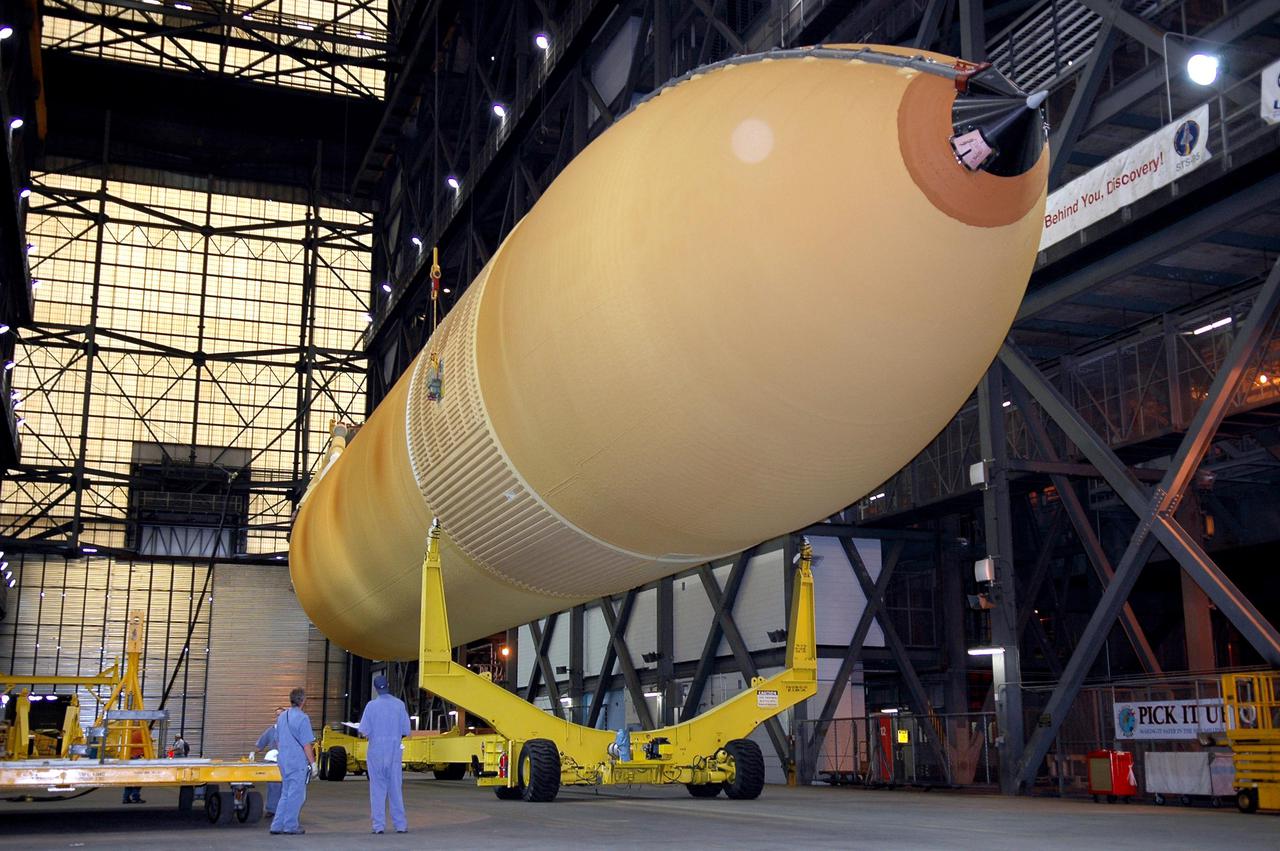
KENNEDY SPACE CENTER, FLA. - The redesigned External Tank is being raised off its transporter. It will be lifted to a vertical position and into the 'checkout cell' of the Vehicle Assembly Building where the tank’s mechanical, electrical and thermal protection systems are inspected. The tank will also undergo new processes resulting from its redesign, including inspection of the bipod heater and External Tank separation camera. The tank will be prepared for 'mating' to the Shuttle’s Solid Rocket Boosters. When preparations are complete, the tank will be lifted from the checkout cell, moved across the transfer aisle and into High Bay 1. It will be lowered and attached to the boosters, which are sitting on the Mobile Launch Platform. The SRBs and ET will be flying with Shuttle Discovery for the Return to Flight mission STS-114. The launch planning window is May 12 to June 3, 2005.
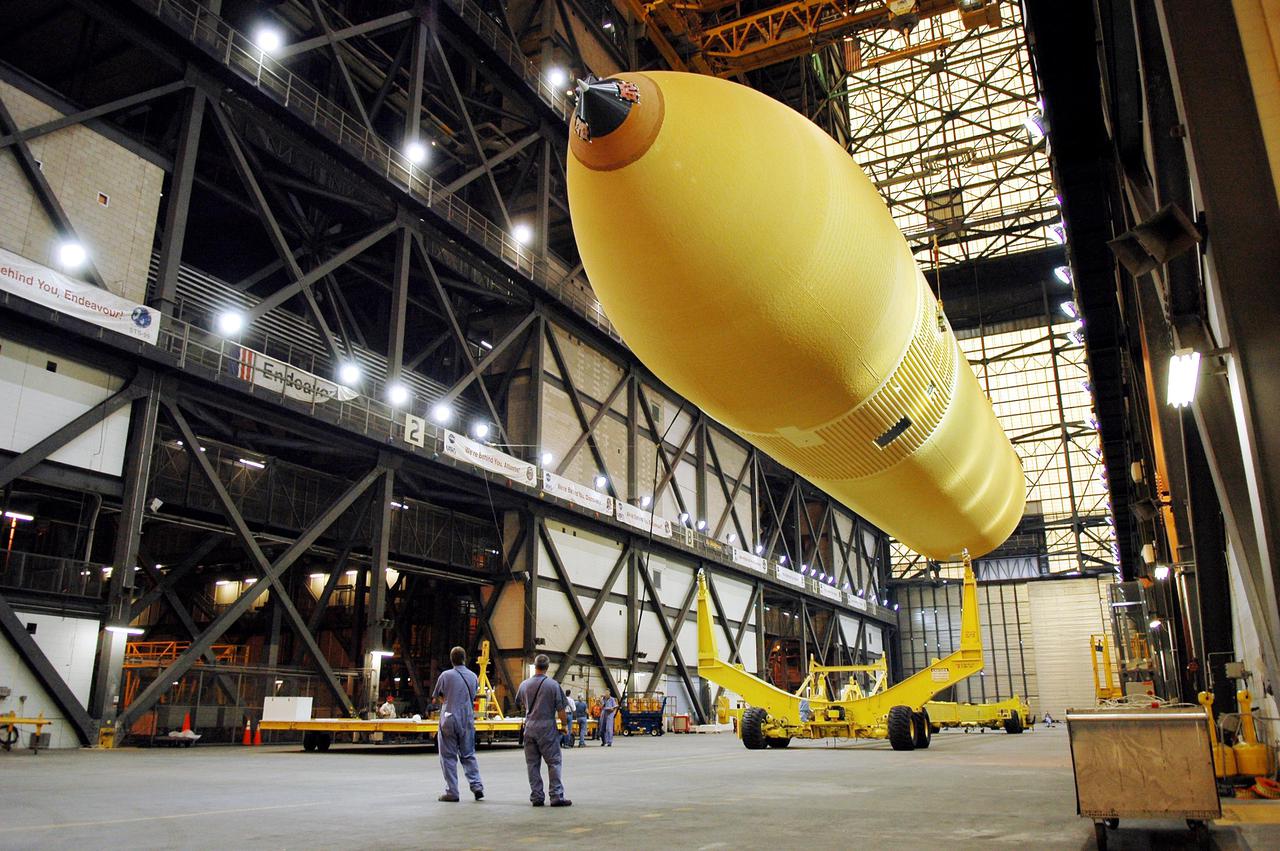
KENNEDY SPACE CENTER, FLA. - The redesigned External Tank is raised above its transporter in the Vehicle Assembly Building. It will be lifted into the 'checkout cell' where the tank’s mechanical, electrical and thermal protection systems are inspected. The tank will also undergo new processes resulting from its redesign, including inspection of the bipod heater and External Tank separation camera. The tank will be prepared for 'mating' to the Shuttle’s Solid Rocket Boosters. When preparations are complete, the tank will be lifted from the checkout cell, moved across the transfer aisle and into High Bay 1. It will be lowered and attached to the boosters, which are sitting on the Mobile Launch Platform. The SRBs and ET will be flying with Shuttle Discovery for the Return to Flight mission STS-114. The launch planning window is May 12 to June 3, 2005.

KENNEDY SPACE CENTER, FLA. - Viewed from an upper level in the Vehicle Assembly Building, the redesigned External Tank is being lifted into the 'checkout cell' where the tank’s mechanical, electrical and thermal protection systems are inspected. The tank will also undergo new processes resulting from its redesign, including inspection of the bipod heater and External Tank separation camera. The tank will be prepared for 'mating' to the Shuttle’s Solid Rocket Boosters. When preparations are complete, the tank will be lifted from the checkout cell, moved across the transfer aisle and into High Bay 1. It will be lowered and attached to the boosters, which are sitting on the Mobile Launch Platform. The SRBs and ET will be flying with Shuttle Discovery for the Return to Flight mission STS-114. The launch planning window is May 12 to June 3, 2005.
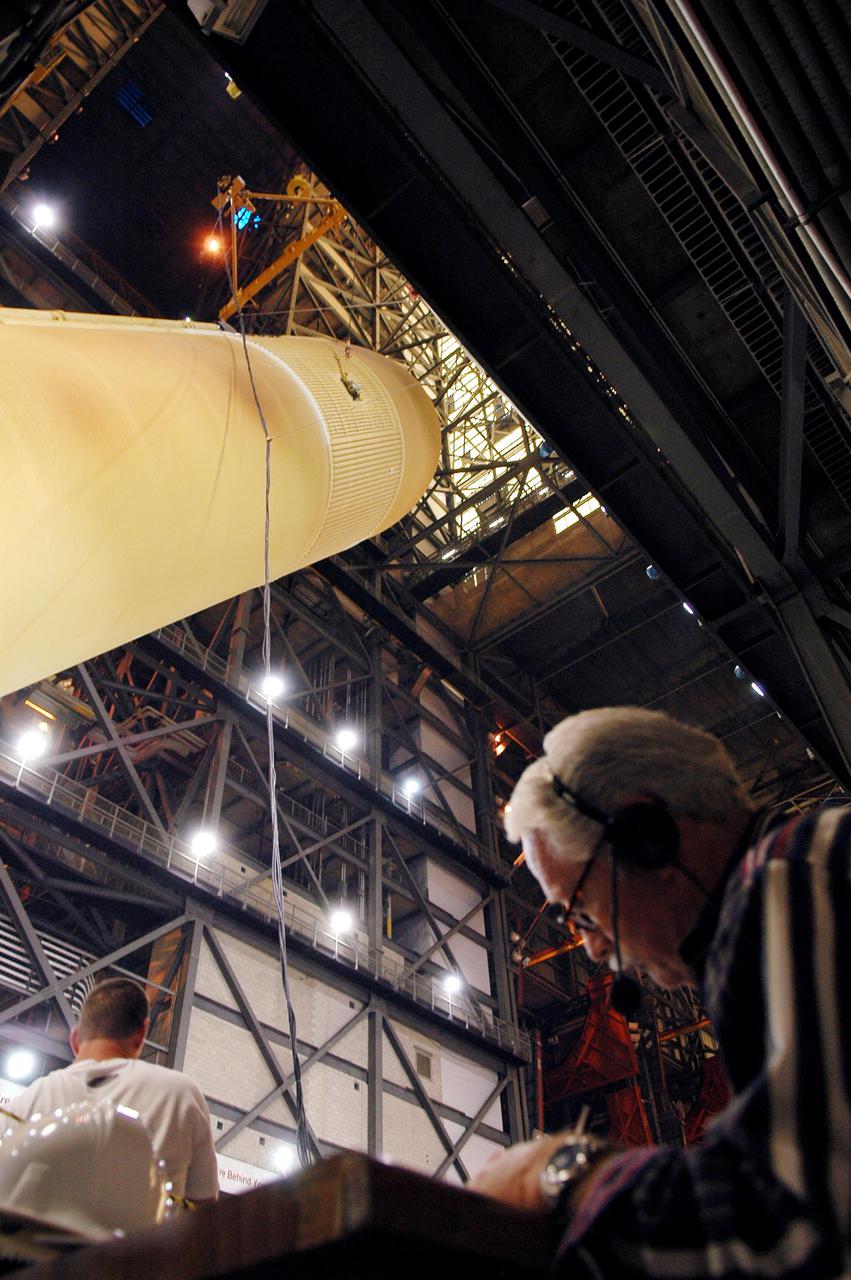
KENNEDY SPACE CENTER, FLA. - The redesigned External Tank is being raised to a vertical position in the Vehicle Assembly Building and will be lifted into the 'checkout cell' where the tank’s mechanical, electrical and thermal protection systems are inspected. The tank will also undergo new processes resulting from its redesign, including inspection of the bipod heater and External Tank separation camera. The tank will be prepared for 'mating' to the Shuttle’s Solid Rocket Boosters. When preparations are complete, the tank will be lifted from the checkout cell, moved across the transfer aisle and into High Bay 1. It will be lowered and attached to the boosters, which are sitting on the Mobile Launch Platform. The SRBs and ET will be flying with Shuttle Discovery for the Return to Flight mission STS-114. The launch planning window is May 12 to June 3, 2005.

CAPE CANAVERAL, Fla. -- At NASA's Kennedy Space Center in Florida, a left-side main separation bolt attaches the bottom of space shuttle Discovery to its external fuel tank in the Vehicle Assembly Building. As technicians were attaching the bolt Sept. 10, a bolt nut slipped back into Discovery's aft compartment. To retrieve it, technicians entered Discovery’s aft section through an access door. They then moved the nut back into position to finish attaching the bolt, which is used to separate Discovery from the external tank once the shuttle is in orbit. Discovery is scheduled to roll out to Launch Pad 39A later this month for its STS-133 launch to the International Space Station. Targeted to lift off Nov. 1, Discovery will take the Permanent Multipurpose Module (PMM) packed with supplies and critical spare parts, as well as Robonaut 2 (R2) to the station. Photo credit: NASA/Dimitri Gerondidakis
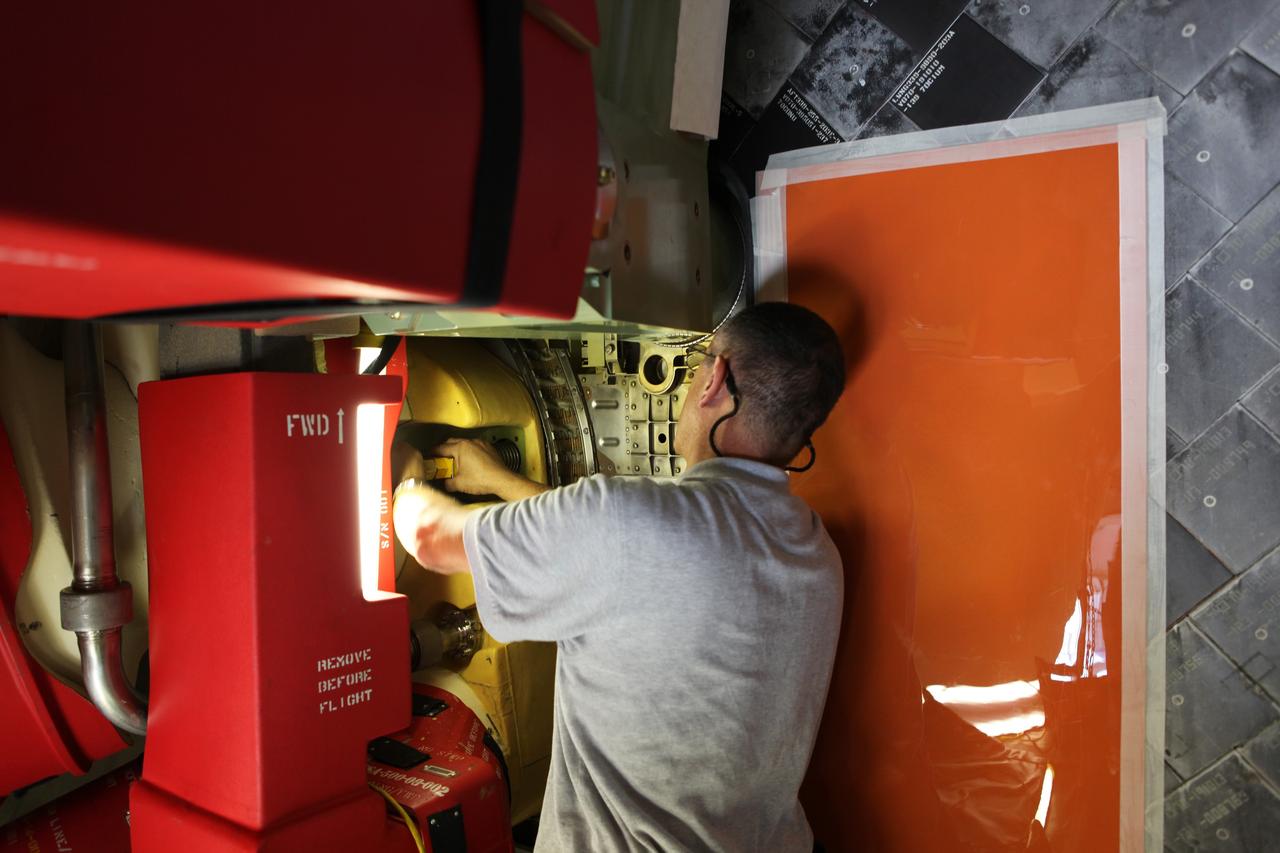
CAPE CANAVERAL, Fla. -- At NASA's Kennedy Space Center in Florida, a Vehicle Assembly Building technician adjusts a left-side main separation bolt that attaches the bottom of space shuttle Discovery to its external fuel tank. As technicians were attaching the bolt Sept. 10, a bolt nut slipped back into Discovery's aft compartment. To retrieve it, technicians entered Discovery’s aft section through an access door. They then moved the nut back into position to finish attaching the bolt, which is used to separate Discovery from the external tank once the shuttle is in orbit. Discovery is scheduled to roll out to Launch Pad 39A later this month for its STS-133 launch to the International Space Station. Targeted to lift off Nov. 1, Discovery will take the Permanent Multipurpose Module (PMM) packed with supplies and critical spare parts, as well as Robonaut 2 (R2) to the station. Photo credit: NASA/Dimitri Gerondidakis
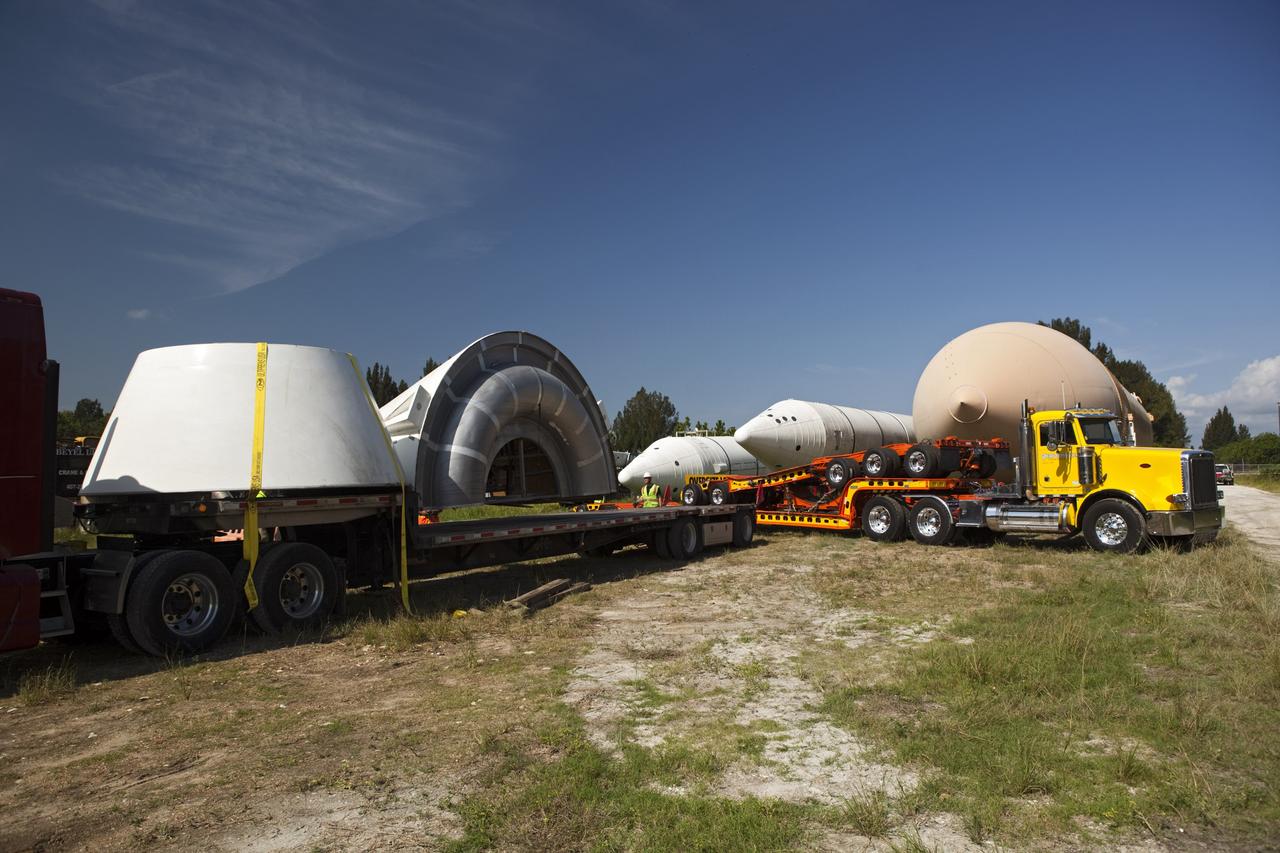
CAPE CANAVERAL, Fla. – At NASA’s Kennedy Space Center in Florida, aft skirts for space shuttle solid rocket boosters are being loaded on a truck. A twin set of space shuttle solid rocket boosters and an external fuel tank are being prepared for transport to separate museums. The solid rocket boosters, or SRBs, will be displayed at the California Science Center in Los Angeles. The external tank soon will be transported for display at the Wings of Dreams Aviation Museum at Keystone Heights Airport between Gainesville and Jacksonville, Fla. The 149-foot SRBs together provided six million pounds of thrust. The external fuel tank contained over 500,000 gallons of liquid hydrogen and liquid oxygen propellant for the shuttle orbiters' three main engines. The work is part of Transition and Retirement of the space shuttle. For more information, visit http://www.nasa.gov/transition Photo credit: NASA/ Dimitri Gerondidakis
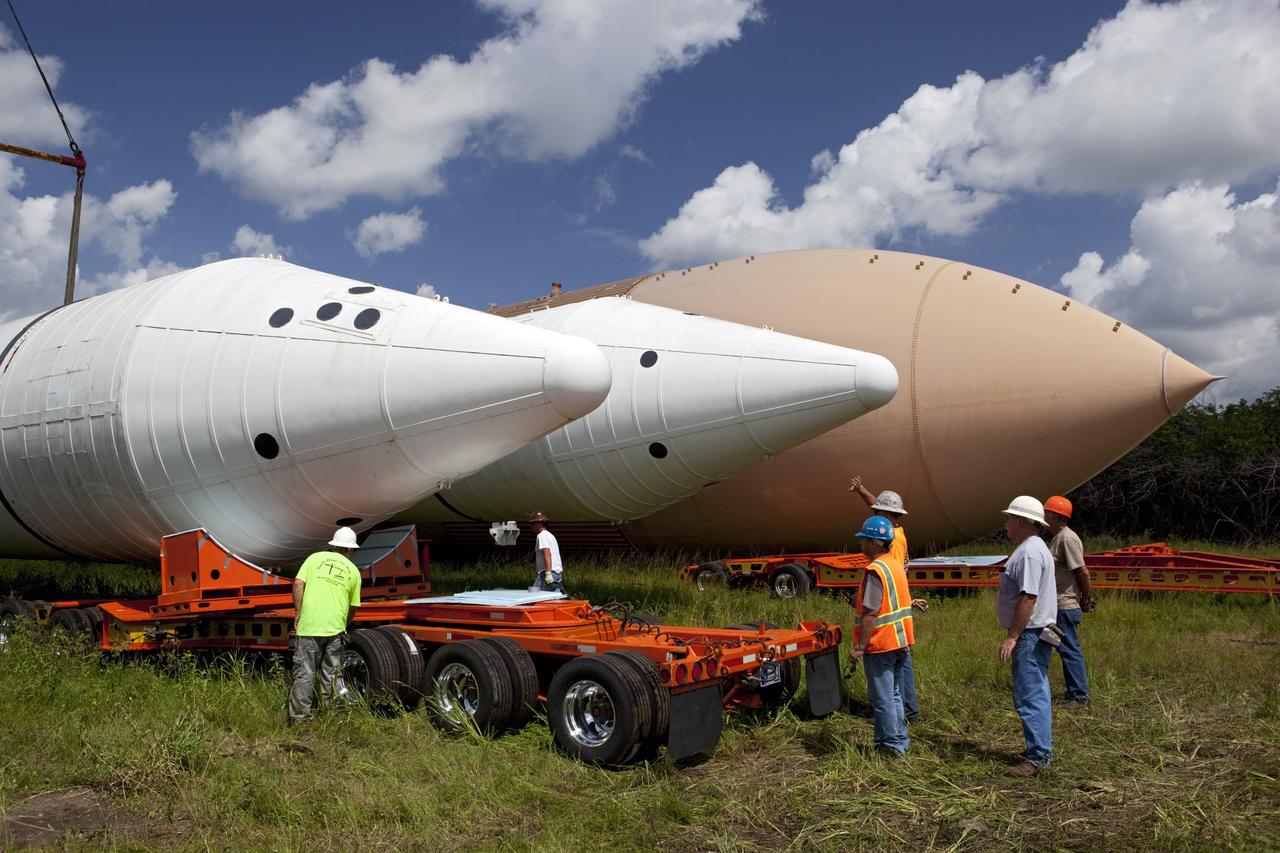
CAPE CANAVERAL, Fla. – At NASA’s Kennedy Space Center in Florida, preparations are underway to load a twin set of space shuttle solid rocket boosters and an external fuel tank on trucks for transport to separate museums. The solid rocket boosters, or SRBs, will be displayed at the California Science Center in Los Angeles. The external tank soon will be transported for display at the Wings of Dreams Aviation Museum at Keystone Heights Airport between Gainesville and Jacksonville, Fla. The 149-foot SRBs together provided six million pounds of thrust. The external fuel tank contained over 500,000 gallons of liquid hydrogen and liquid oxygen propellant for the shuttle orbiters' three main engines. The work is part of Transition and Retirement of the space shuttle. For more information, visit http://www.nasa.gov/transition Photo credit: NASA/ Dimitri Gerondidakis
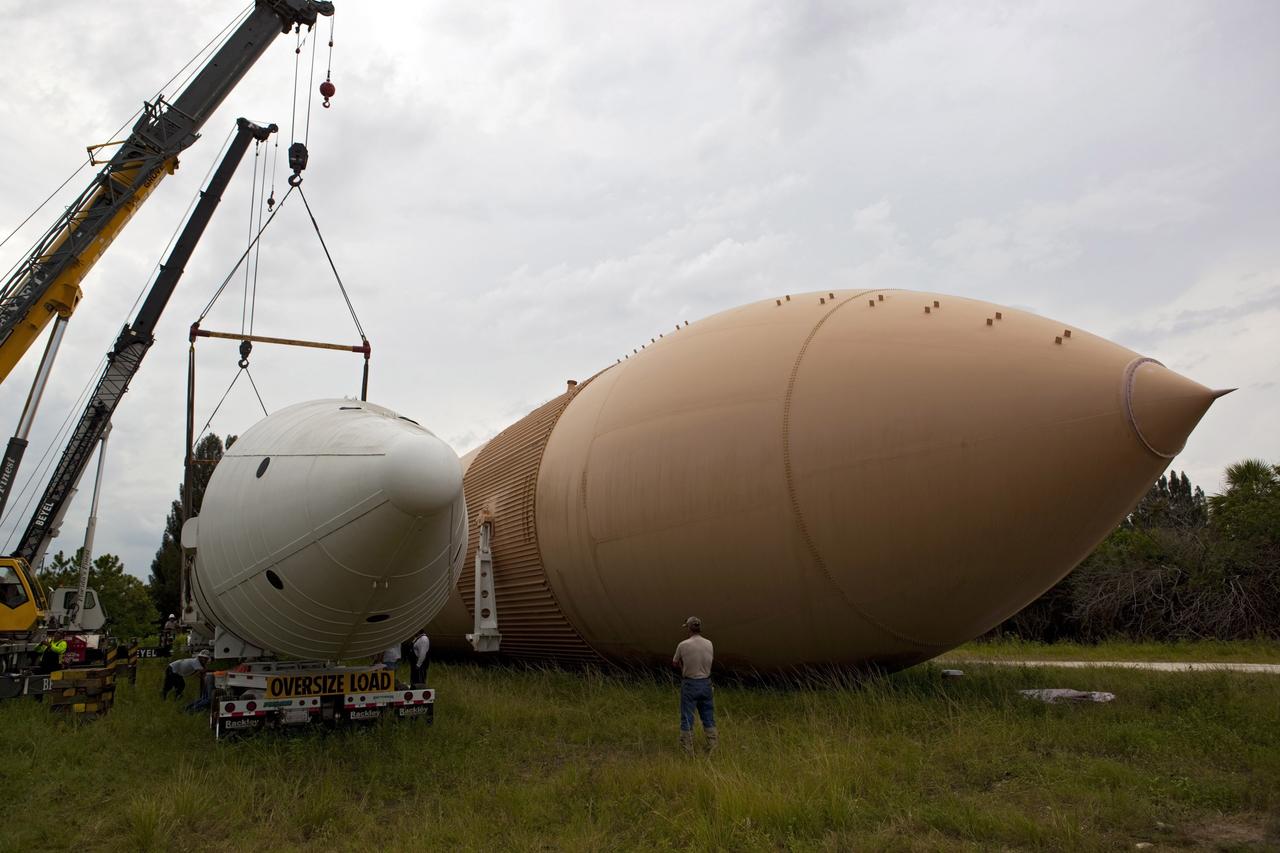
CAPE CANAVERAL, Fla. – At NASA’s Kennedy Space Center in Florida, a crane is used to load a space shuttle solid rocket booster and an external fuel tank on trucks for transport to separate museums. The solid rocket boosters, or SRBs, will be displayed at the California Science Center in Los Angeles. The external tank soon will be transported for display at the Wings of Dreams Aviation Museum at Keystone Heights Airport between Gainesville and Jacksonville, Fla. The 149-foot SRBs together provided six million pounds of thrust. The external fuel tank contained over 500,000 gallons of liquid hydrogen and liquid oxygen propellant for the shuttle orbiters' three main engines. The work is part of Transition and Retirement of the space shuttle. For more information, visit http://www.nasa.gov/transition Photo credit: NASA/ Dimitri Gerondidakis
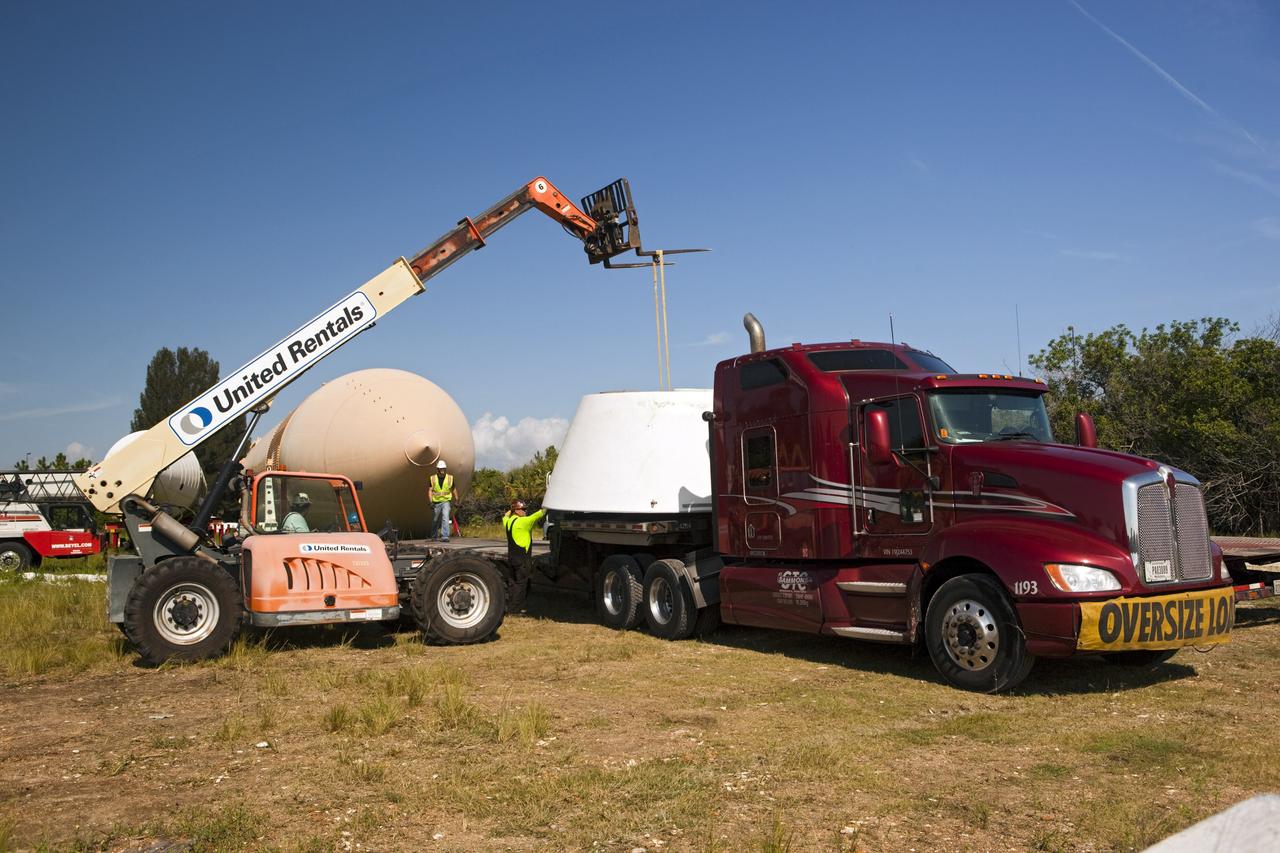
CAPE CANAVERAL, Fla. – At NASA’s Kennedy Space Center in Florida, a crane is used to load the aft skirt for a space shuttle solid rocket booster on a truck. A twin set of space shuttle solid rocket boosters and an external fuel tank are being prepared for transport to separate museums. The solid rocket boosters, or SRBs, will be displayed at the California Science Center in Los Angeles. The external tank soon will be transported for display at the Wings of Dreams Aviation Museum at Keystone Heights Airport between Gainesville and Jacksonville, Fla. The 149-foot SRBs together provided six million pounds of thrust. The external fuel tank contained over 500,000 gallons of liquid hydrogen and liquid oxygen propellant for the shuttle orbiters' three main engines. The work is part of Transition and Retirement of the space shuttle. For more information, visit http://www.nasa.gov/transition Photo credit: NASA/ Dimitri Gerondidakis
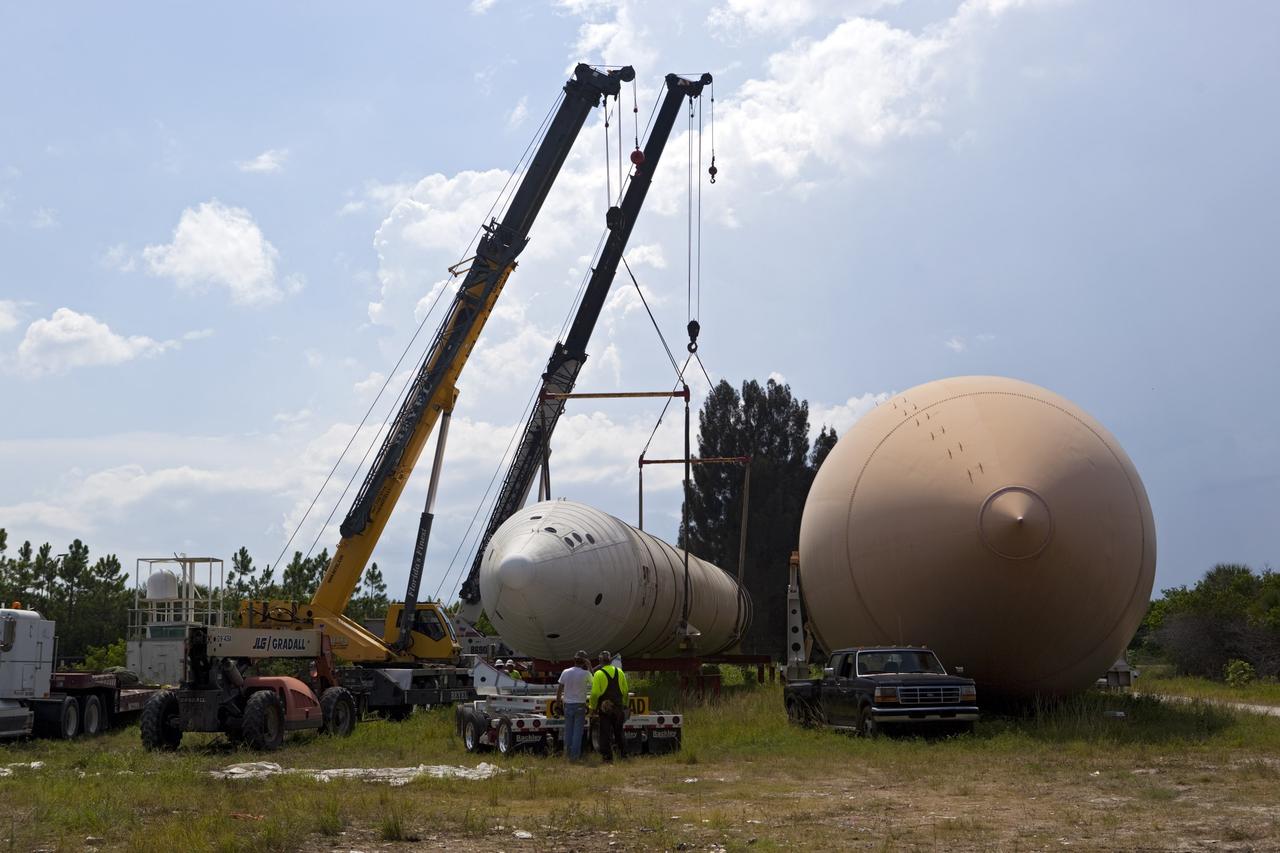
CAPE CANAVERAL, Fla. – At NASA’s Kennedy Space Center in Florida, a crane is used to load a space shuttle solid rocket booster and an external fuel tank on to trucks for transport to separate museums. The solid rocket boosters, or SRBs, will be displayed at the California Science Center in Los Angeles. The external tank soon will be transported for display at the Wings of Dreams Aviation Museum at Keystone Heights Airport between Gainesville and Jacksonville, Fla. The 149-foot SRBs together provided six million pounds of thrust. The external fuel tank contained over 500,000 gallons of liquid hydrogen and liquid oxygen propellant for the shuttle orbiters' three main engines. The work is part of Transition and Retirement of the space shuttle. For more information, visit http://www.nasa.gov/transition Photo credit: NASA/ Dimitri Gerondidakis

CAPE CANAVERAL, Fla. – At NASA’s Kennedy Space Center in Florida, a crane is used to load a space shuttle solid rocket booster and an external fuel tank on trucks for transport to separate museums. The solid rocket boosters, or SRBs, will be displayed at the California Science Center in Los Angeles. The external tank soon will be transported for display at the Wings of Dreams Aviation Museum at Keystone Heights Airport between Gainesville and Jacksonville, Fla. The 149-foot SRBs together provided six million pounds of thrust. The external fuel tank contained over 500,000 gallons of liquid hydrogen and liquid oxygen propellant for the shuttle orbiters' three main engines. The work is part of Transition and Retirement of the space shuttle. For more information, visit http://www.nasa.gov/transition Photo credit: NASA/ Dimitri Gerondidakis
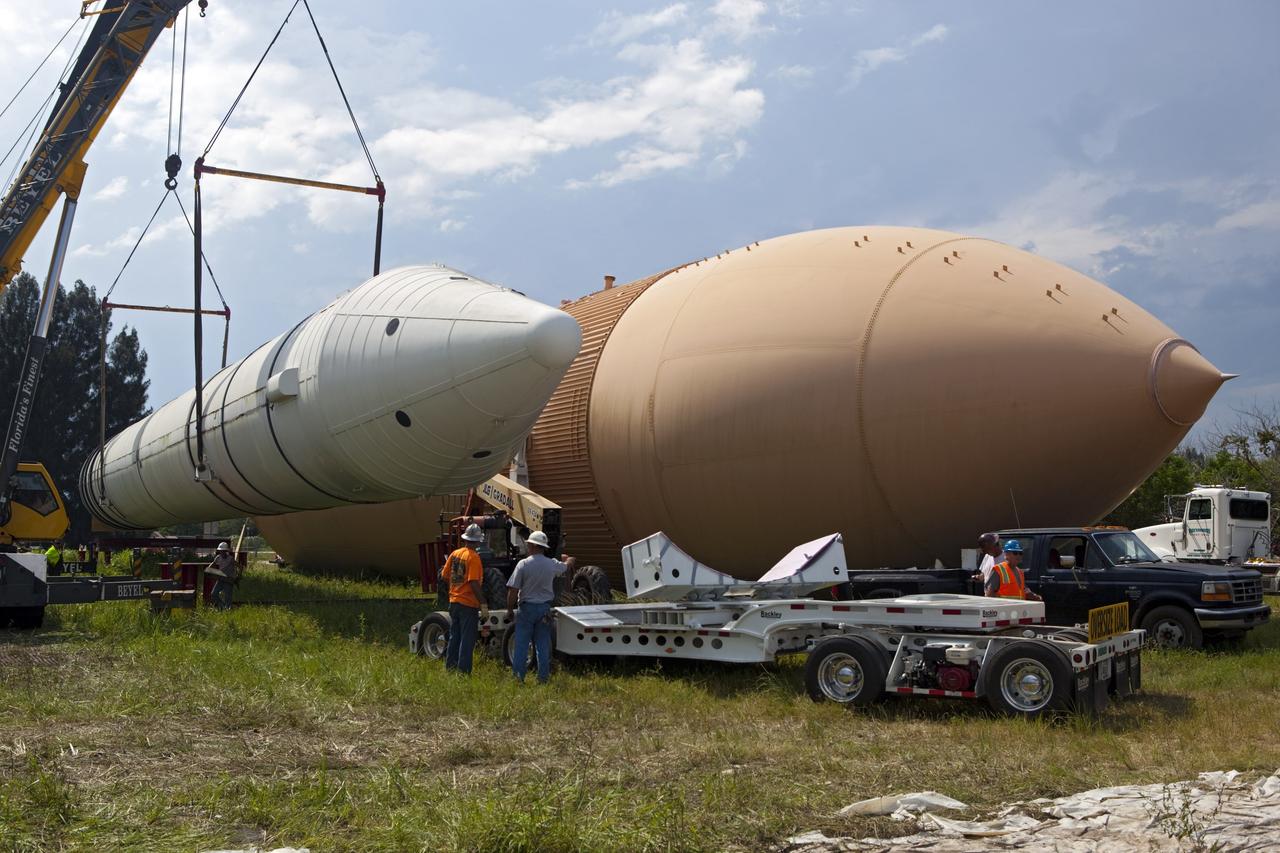
CAPE CANAVERAL, Fla. – At NASA’s Kennedy Space Center in Florida, a crane is used to load a space shuttle solid rocket booster and an external fuel tank on trucks for transport to separate museums. The solid rocket boosters, or SRBs, will be displayed at the California Science Center in Los Angeles. The external tank soon will be transported for display at the Wings of Dreams Aviation Museum at Keystone Heights Airport between Gainesville and Jacksonville, Fla. The 149-foot SRBs together provided six million pounds of thrust. The external fuel tank contained over 500,000 gallons of liquid hydrogen and liquid oxygen propellant for the shuttle orbiters' three main engines. The work is part of Transition and Retirement of the space shuttle. For more information, visit http://www.nasa.gov/transition Photo credit: NASA/ Dimitri Gerondidakis
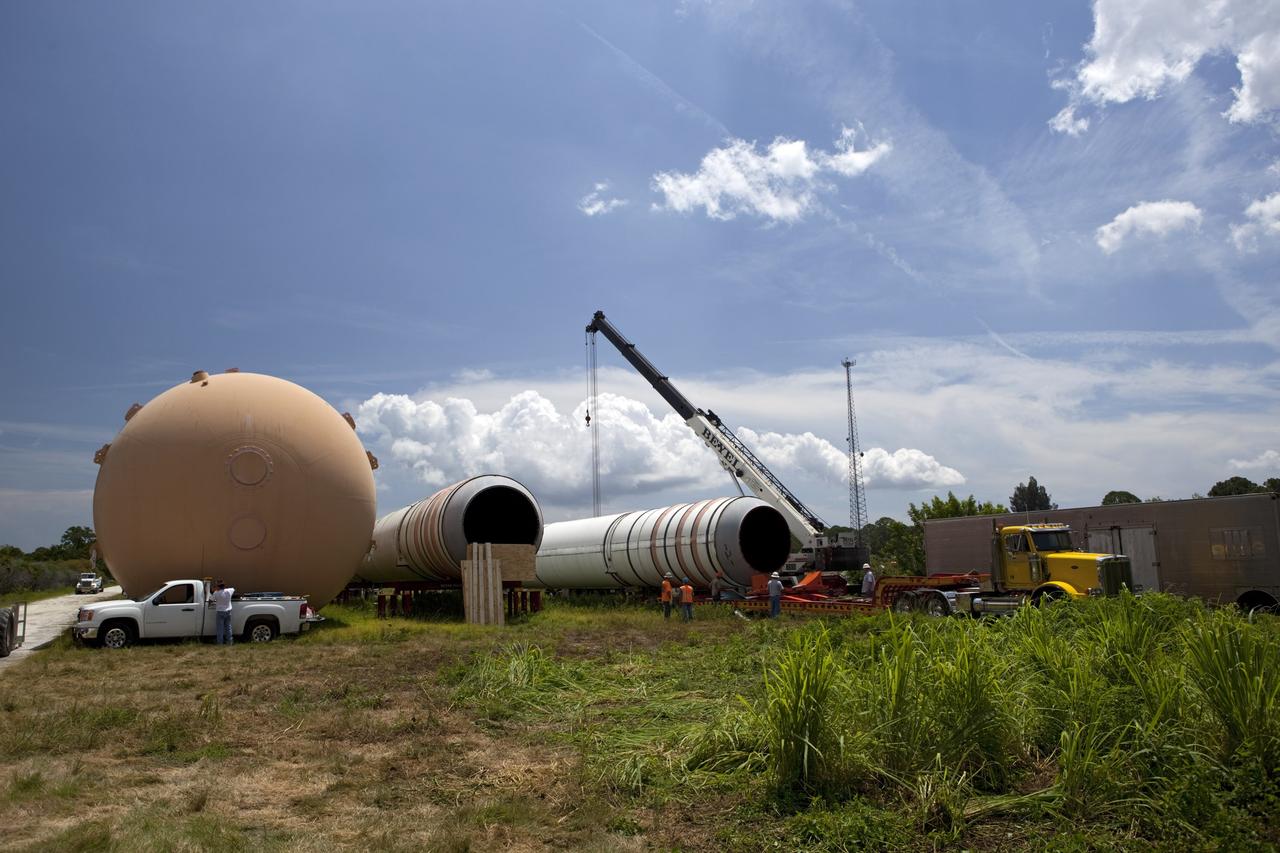
CAPE CANAVERAL, Fla. – At NASA’s Kennedy Space Center in Florida, a crane is used to load a twin set of space shuttle solid rocket boosters and an external fuel tank on trucks for transport to separate museums. The solid rocket boosters, or SRBs, will be displayed at the California Science Center in Los Angeles. The external tank soon will be transported for display at the Wings of Dreams Aviation Museum at Keystone Heights Airport between Gainesville and Jacksonville, Fla. The 149-foot SRBs together provided six million pounds of thrust. The external fuel tank contained over 500,000 gallons of liquid hydrogen and liquid oxygen propellant for the shuttle orbiters' three main engines. The work is part of Transition and Retirement of the space shuttle. For more information, visit http://www.nasa.gov/transition Photo credit: NASA/ Dimitri Gerondidakis
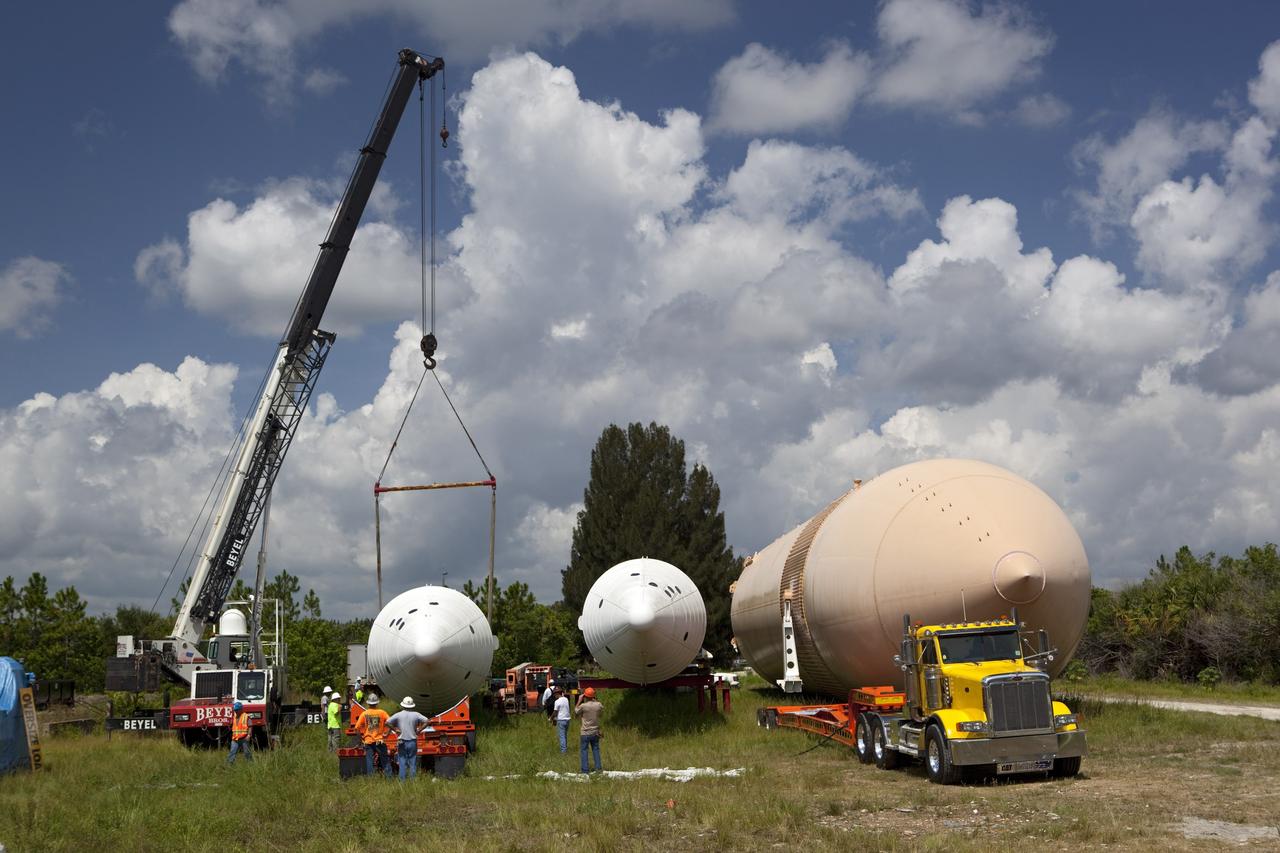
CAPE CANAVERAL, Fla. – At NASA’s Kennedy Space Center in Florida, a crane is used to load a twin set of space shuttle solid rocket boosters and an external fuel tank on trucks for transport to separate museums. The solid rocket boosters, or SRBs, will be displayed at the California Science Center in Los Angeles. The external tank soon will be transported for display at the Wings of Dreams Aviation Museum at Keystone Heights Airport between Gainesville and Jacksonville, Fla. The 149-foot SRBs together provided six million pounds of thrust. The external fuel tank contained over 500,000 gallons of liquid hydrogen and liquid oxygen propellant for the shuttle orbiters' three main engines. The work is part of Transition and Retirement of the space shuttle. For more information, visit http://www.nasa.gov/transition Photo credit: NASA/ Dimitri Gerondidakis
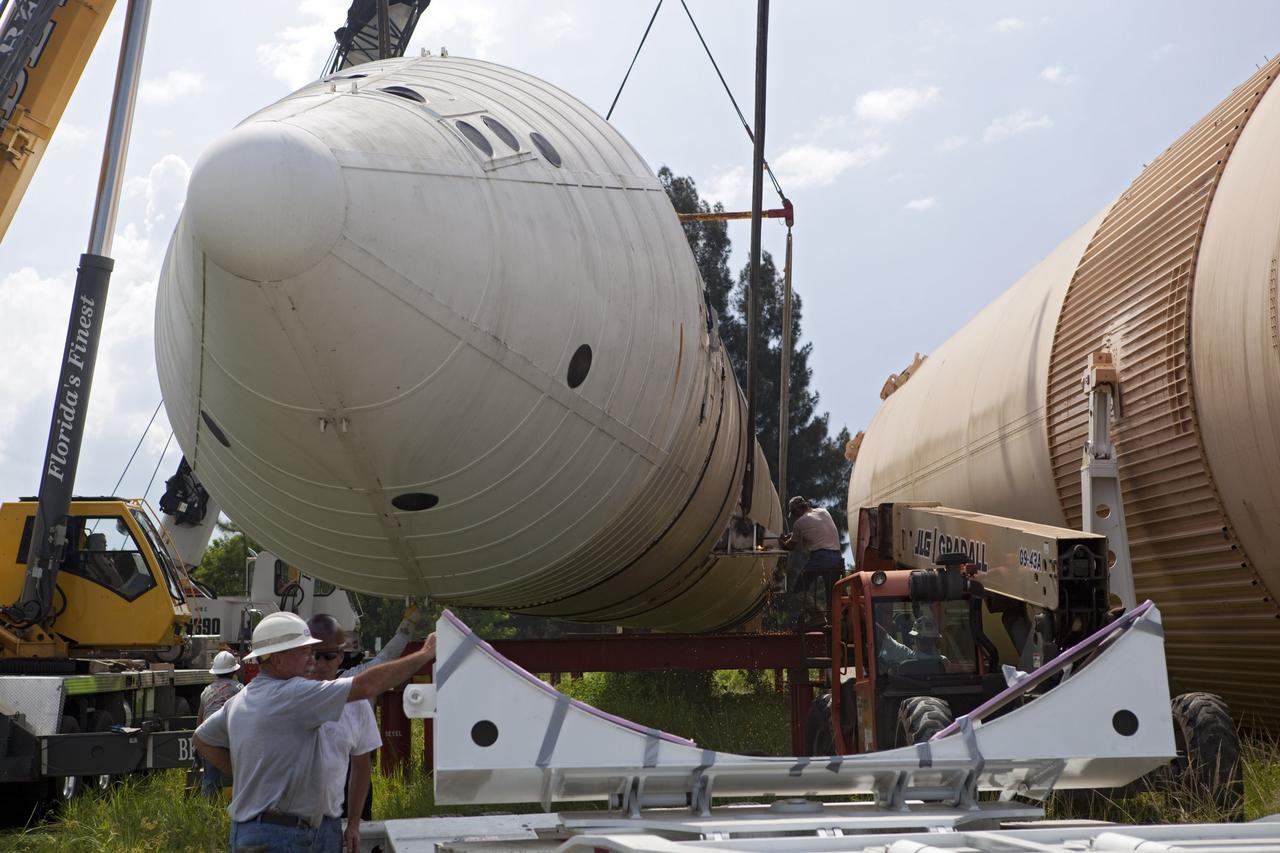
CAPE CANAVERAL, Fla. – At NASA’s Kennedy Space Center in Florida, a crane is used to load a space shuttle solid rocket booster and an external fuel tank on trucks for transport to separate museums. The solid rocket boosters, or SRBs, will be displayed at the California Science Center in Los Angeles. The external tank soon will be transported for display at the Wings of Dreams Aviation Museum at Keystone Heights Airport between Gainesville and Jacksonville, Fla. The 149-foot SRBs together provided six million pounds of thrust. The external fuel tank contained over 500,000 gallons of liquid hydrogen and liquid oxygen propellant for the shuttle orbiters' three main engines. The work is part of Transition and Retirement of the space shuttle. For more information, visit http://www.nasa.gov/transition Photo credit: NASA/ Dimitri Gerondidakis
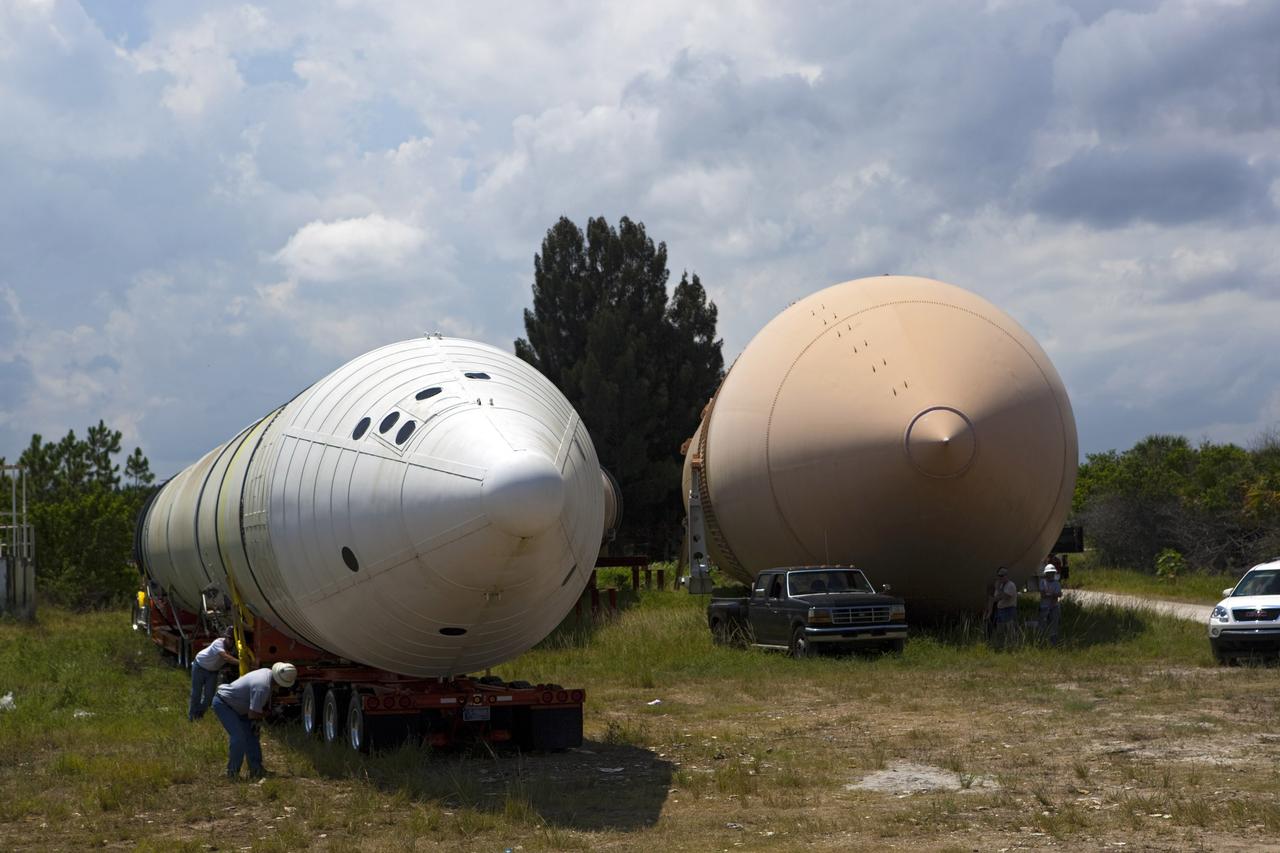
CAPE CANAVERAL, Fla. – At NASA’s Kennedy Space Center in Florida, preparations are underway to load a twin set of space shuttle solid rocket boosters and an external fuel tank on trucks for transport to separate museums. The solid rocket boosters, or SRBs, will be displayed at the California Science Center in Los Angeles. The external tank soon will be transported for display at the Wings of Dreams Aviation Museum at Keystone Heights Airport between Gainesville and Jacksonville, Fla. The 149-foot SRBs together provided six million pounds of thrust. The external fuel tank contained over 500,000 gallons of liquid hydrogen and liquid oxygen propellant for the shuttle orbiters' three main engines. The work is part of Transition and Retirement of the space shuttle. For more information, visit http://www.nasa.gov/transition Photo credit: NASA/ Dimitri Gerondidakis
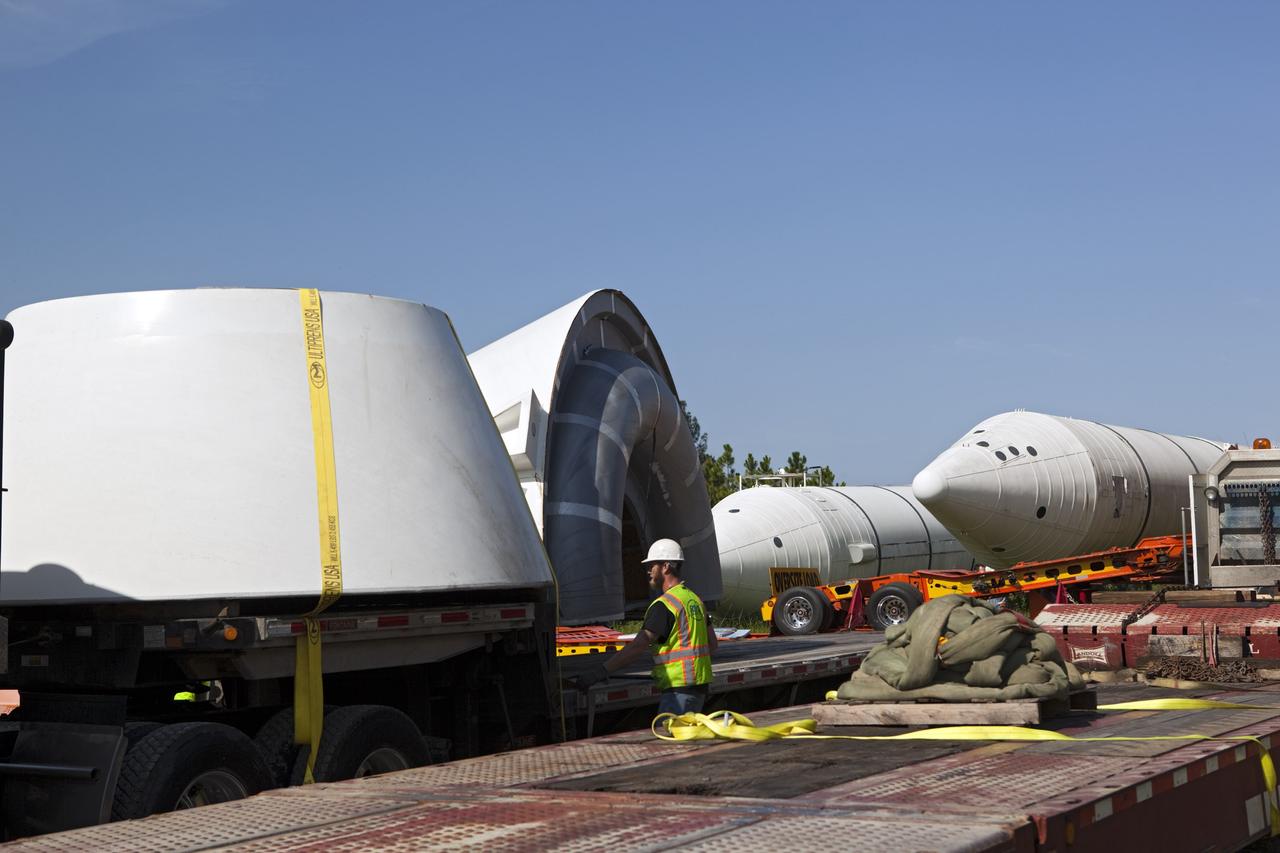
CAPE CANAVERAL, Fla. – At NASA’s Kennedy Space Center in Florida, aft skirts for space shuttle solid rocket boosters are being loaded on a truck. A twin set of space shuttle solid rocket boosters and an external fuel tank are being prepared for transport to separate museums. The solid rocket boosters, or SRBs, will be displayed at the California Science Center in Los Angeles. The external tank soon will be transported for display at the Wings of Dreams Aviation Museum at Keystone Heights Airport between Gainesville and Jacksonville, Fla. The 149-foot SRBs together provided six million pounds of thrust. The external fuel tank contained over 500,000 gallons of liquid hydrogen and liquid oxygen propellant for the shuttle orbiters' three main engines. The work is part of Transition and Retirement of the space shuttle. For more information, visit http://www.nasa.gov/transition Photo credit: NASA/ Dimitri Gerondidakis
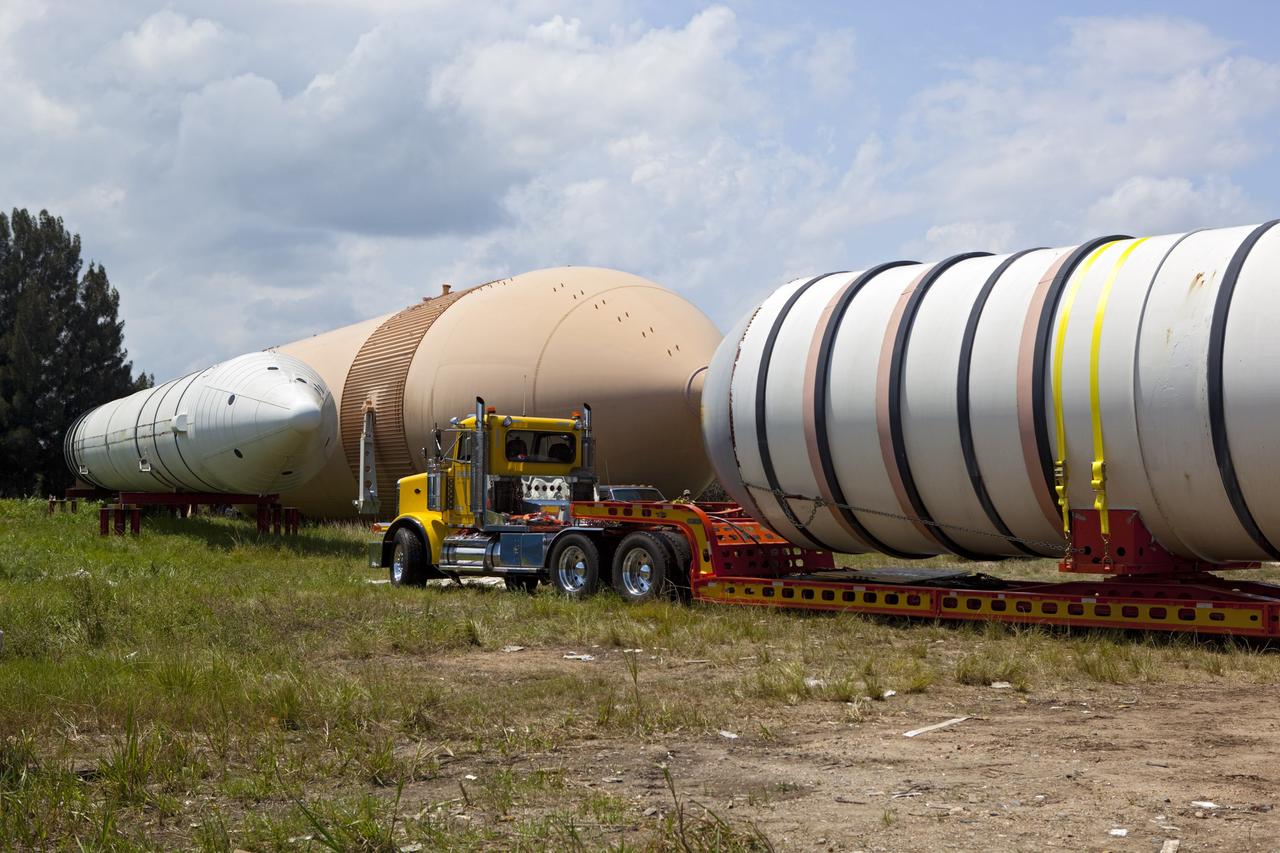
CAPE CANAVERAL, Fla. – At NASA’s Kennedy Space Center in Florida, a twin set of space shuttle solid rocket boosters and an external fuel tank are being loaded on trucks for transport to separate museums. The solid rocket boosters, or SRBs, will be displayed at the California Science Center in Los Angeles. The external tank soon will be transported for display at the Wings of Dreams Aviation Museum at Keystone Heights Airport between Gainesville and Jacksonville, Fla. The 149-foot SRBs together provided six million pounds of thrust. The external fuel tank contained over 500,000 gallons of liquid hydrogen and liquid oxygen propellant for the shuttle orbiters' three main engines. The work is part of Transition and Retirement of the space shuttle. For more information, visit http://www.nasa.gov/transition Photo credit: NASA/ Dimitri Gerondidakis
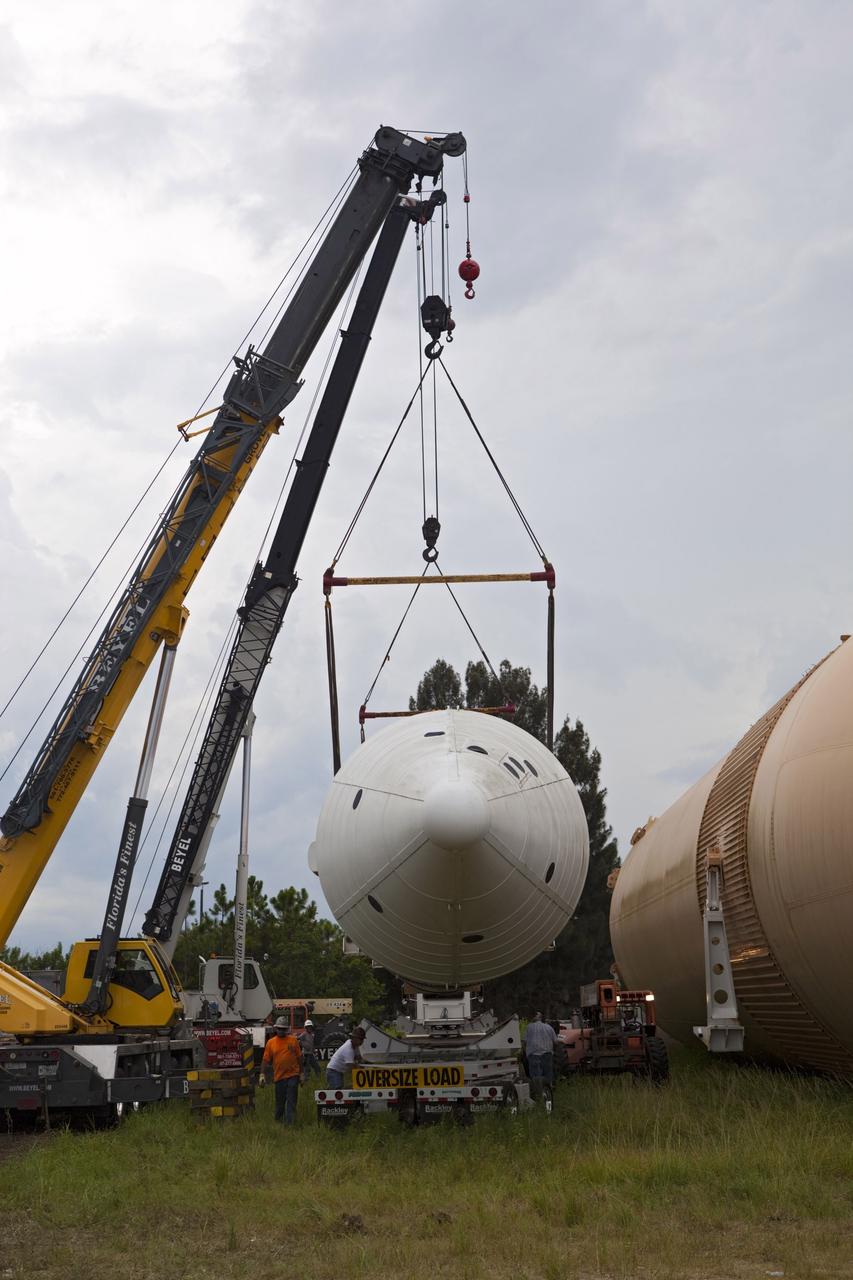
CAPE CANAVERAL, Fla. – At NASA’s Kennedy Space Center in Florida, a crane is used to load a space shuttle solid rocket booster and an external fuel tank on trucks for transport to separate museums. The solid rocket boosters, or SRBs, will be displayed at the California Science Center in Los Angeles. The external tank soon will be transported for display at the Wings of Dreams Aviation Museum at Keystone Heights Airport between Gainesville and Jacksonville, Fla. The 149-foot SRBs together provided six million pounds of thrust. The external fuel tank contained over 500,000 gallons of liquid hydrogen and liquid oxygen propellant for the shuttle orbiters' three main engines. The work is part of Transition and Retirement of the space shuttle. For more information, visit http://www.nasa.gov/transition Photo credit: NASA/ Dimitri Gerondidakis
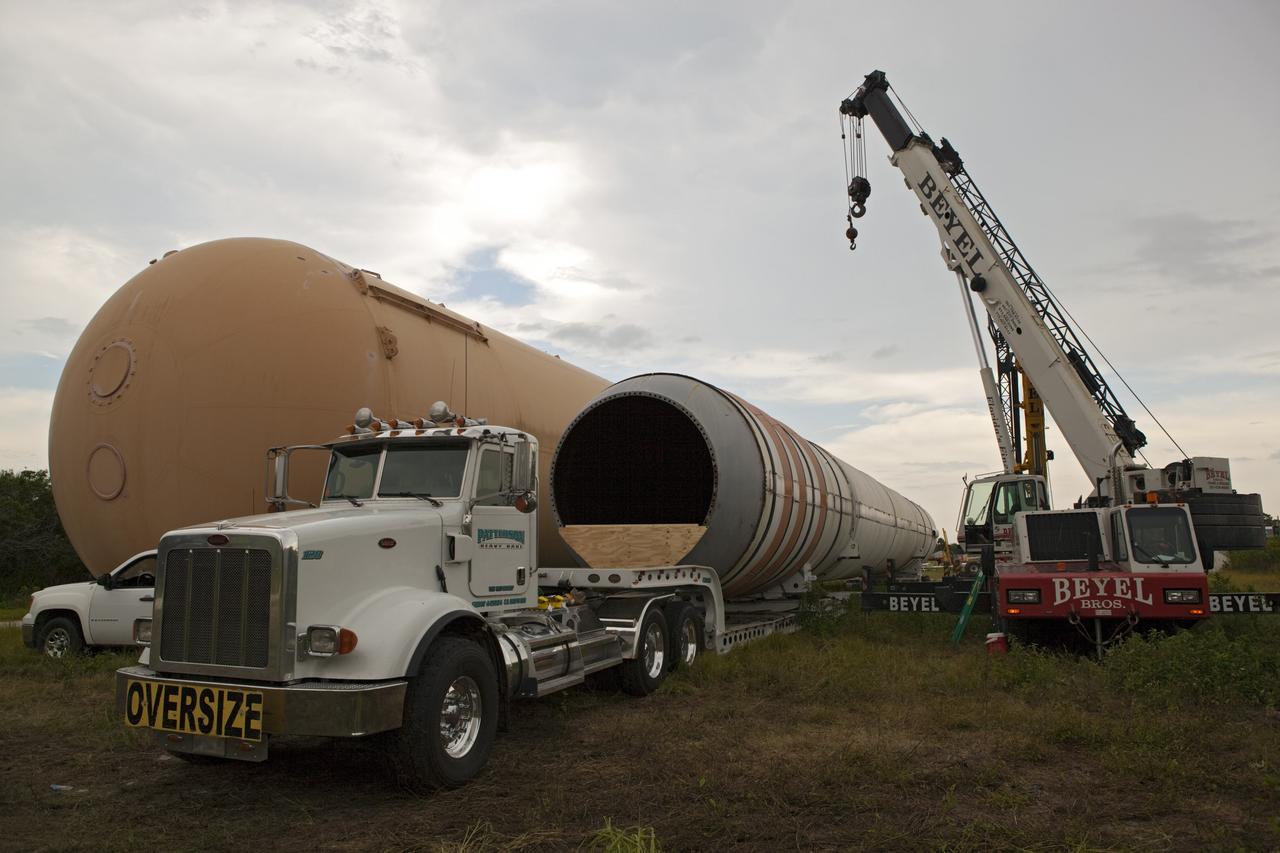
CAPE CANAVERAL, Fla. – At NASA’s Kennedy Space Center in Florida, a crane is used to load a space shuttle solid rocket booster and an external fuel tank on trucks for transport to separate museums. The solid rocket boosters, or SRBs, will be displayed at the California Science Center in Los Angeles. The external tank soon will be transported for display at the Wings of Dreams Aviation Museum at Keystone Heights Airport between Gainesville and Jacksonville, Fla. The 149-foot SRBs together provided six million pounds of thrust. The external fuel tank contained over 500,000 gallons of liquid hydrogen and liquid oxygen propellant for the shuttle orbiters' three main engines. The work is part of Transition and Retirement of the space shuttle. For more information, visit http://www.nasa.gov/transition Photo credit: NASA/ Dimitri Gerondidakis
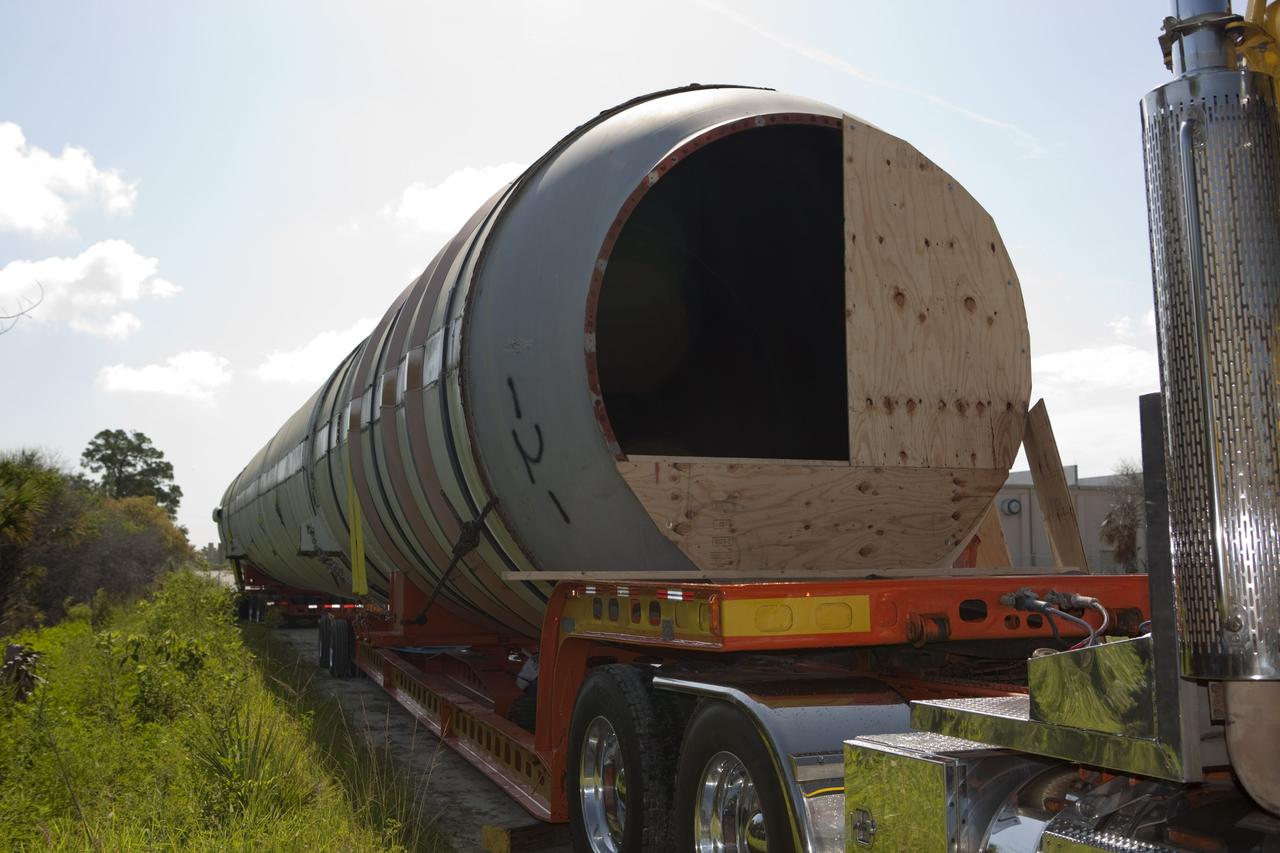
CAPE CANAVERAL, Fla. – At NASA’s Kennedy Space Center in Florida, a space shuttle solid rocket booster has been loaded on a truck. A twin set of space shuttle solid rocket boosters and an external fuel tank are being prepared for transport to separate museums. The solid rocket boosters, or SRBs, will be displayed at the California Science Center in Los Angeles. The external tank soon will be transported for display at the Wings of Dreams Aviation Museum at Keystone Heights Airport between Gainesville and Jacksonville, Fla. The 149-foot SRBs together provided six million pounds of thrust. The external fuel tank contained over 500,000 gallons of liquid hydrogen and liquid oxygen propellant for the shuttle orbiters' three main engines. The work is part of Transition and Retirement of the space shuttle. For more information, visit http://www.nasa.gov/transition Photo credit: NASA/ Dimitri Gerondidakis
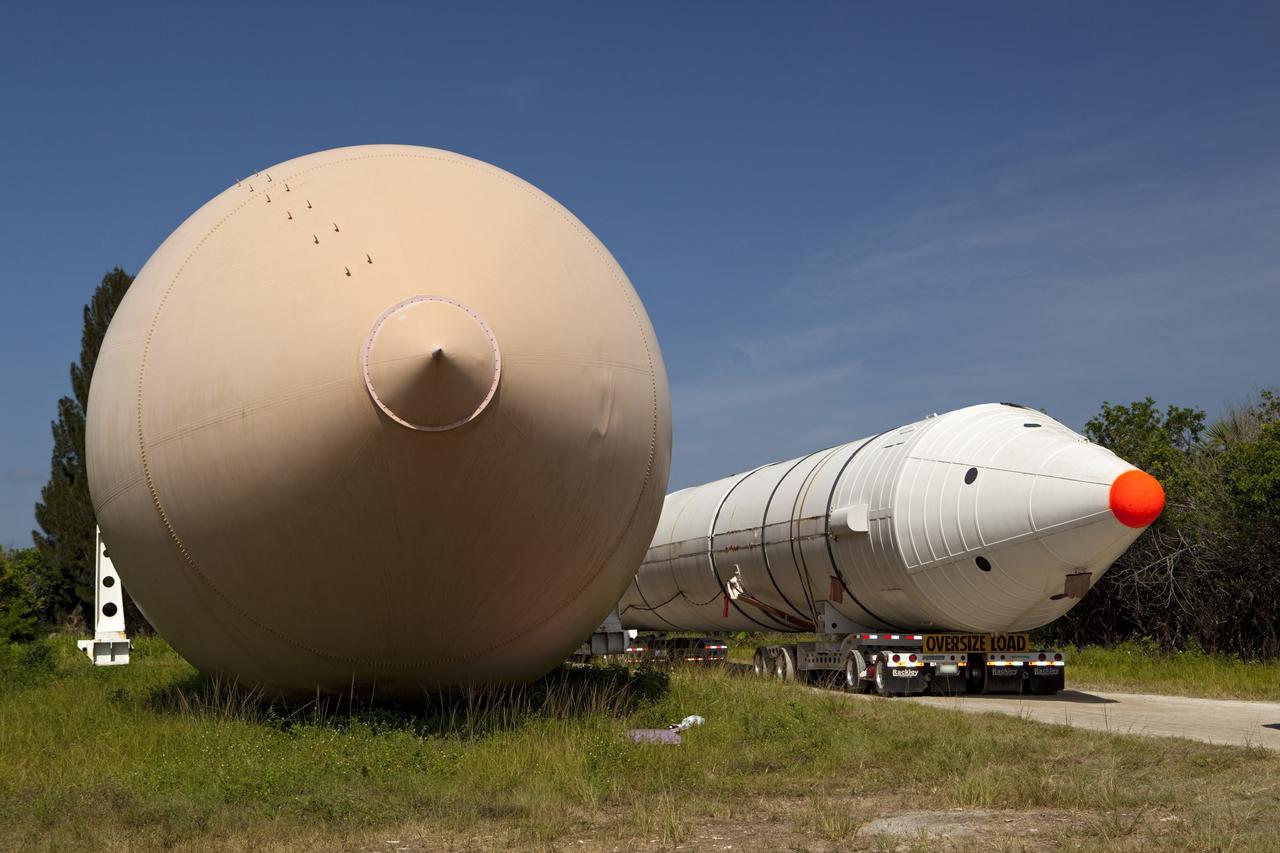
CAPE CANAVERAL, Fla. – At NASA’s Kennedy Space Center in Florida, a space shuttle solid rocket booster and an external fuel tank are being prepared for transport to separate museums. The solid rocket boosters, or SRBs, will be displayed at the California Science Center in Los Angeles. The external tank soon will be transported for display at the Wings of Dreams Aviation Museum at Keystone Heights Airport between Gainesville and Jacksonville, Fla. The 149-foot SRBs together provided six million pounds of thrust. The external fuel tank contained over 500,000 gallons of liquid hydrogen and liquid oxygen propellant for the shuttle orbiters' three main engines. The work is part of Transition and Retirement of the space shuttle. For more information, visit http://www.nasa.gov/transition Photo credit: NASA/ Dimitri Gerondidakis
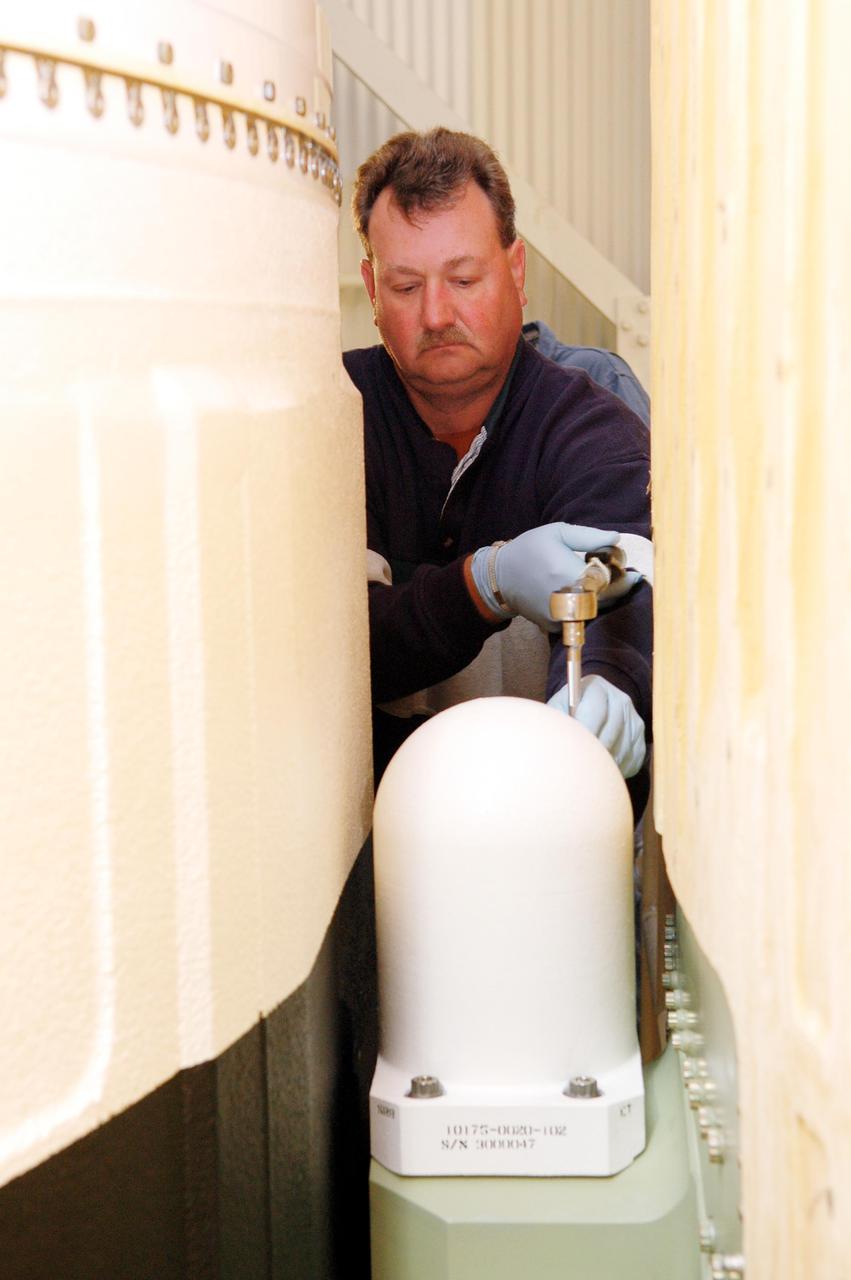
KENNEDY SPACE CENTER, FLA. - In the Vehicle Assembly Building, Lead Technician Todd Reeves, with United Space Alliance, attaches one of two bolt catchers on orbiter Discovery’s External Tank. A bolt catcher is a vertical bolt mechanism at the forward end of the External Tank that attaches each booster to the tank. At approximately two minutes into launch, SRB separation begins when pyrotechnic devices fire to break the 25-inch, 62-pound steel bolts. One half of the bolt is caught in canister-like 'bolt catchers' located on the tank; the other half remains with the boosters. Discovery is flying with a modified bolt catcher, which was upgraded from a two-piece welded design to a one-piece, machine-made design as part of NASA's effort to return to safe, reliable spaceflight. Eliminating the weld makes a structurally stronger bolt catcher design. Though the bolt catcher is mounted on the External Tank, it is considered part of the Solid Rocket Booster element design. It is built by Summa Technologies, Inc. in Huntsville, Ala., insulated at Lockheed Martin’s Michoud Assembly Facility in New Orleans, and installed on the External Tank at KSC.
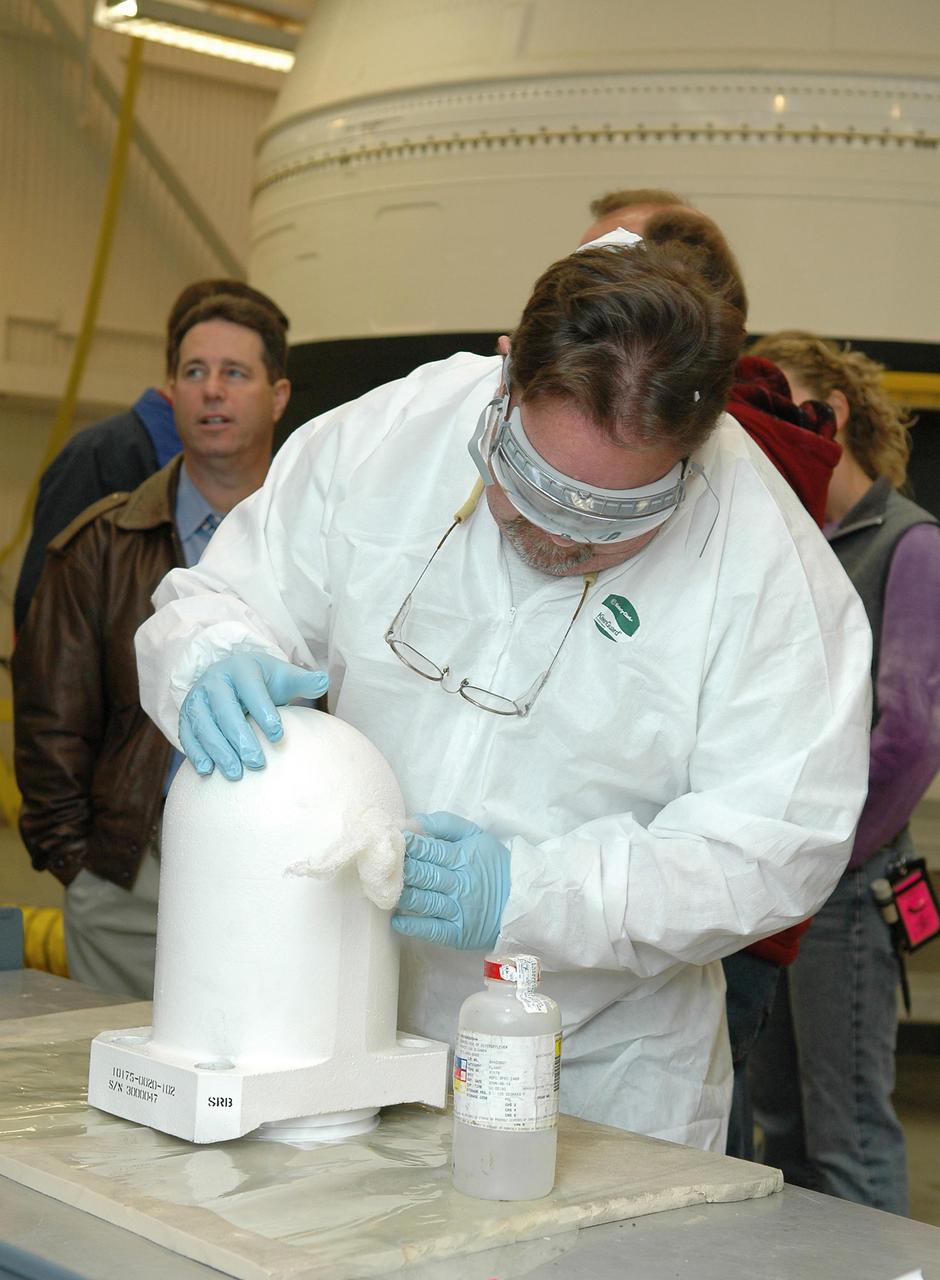
KENNEDY SPACE CENTER, FLA. - In the Vehicle Assembly Building, Senior Technician Kevin Reagan, with United Space Alliance, prepares one of two bolt catchers for installation on orbiter Discovery’s External Tank. A bolt catcher is a vertical bolt mechanism at the forward end of the External Tank that attaches each booster to the tank. At approximately two minutes into launch, SRB separation begins when pyrotechnic devices fire to break the 25-inch, 62-pound steel bolts. One half of the bolt is caught in canister-like 'bolt catchers' located on the tank; the other half remains with the boosters. Discovery is flying with a modified bolt catcher, which was upgraded from a two-piece welded design to a one-piece, machine-made design as part of NASA's effort to return to safe, reliable spaceflight. Eliminating the weld makes a structurally stronger bolt catcher design. Though the bolt catcher is mounted on the External Tank, it is considered part of the Solid Rocket Booster element design. It is built by Summa Technologies, Inc. in Huntsville, Ala., insulated at Lockheed Martin’s Michoud Assembly Facility in New Orleans, and installed on the External Tank at KSC.
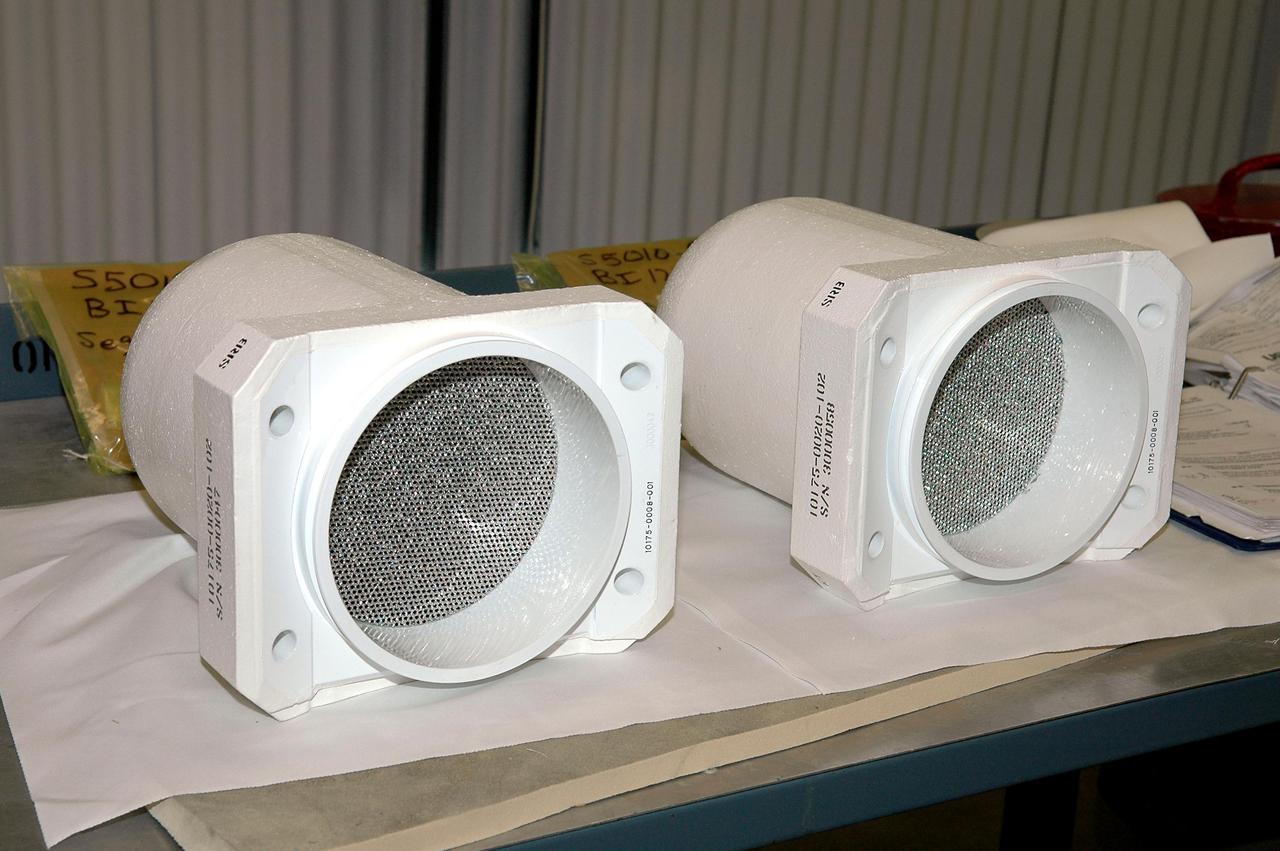
KENNEDY SPACE CENTER, FLA. - These two bolt catchers are ready for installation on orbiter Discovery’s External Tank. A bolt catcher is a vertical bolt mechanism at the forward end of the External Tank that attaches each booster to the tank. At approximately two minutes into launch, SRB separation begins when pyrotechnic devices fire to break the 25-inch, 62-pound steel bolts. One half of the bolt is caught in canister-like 'bolt catchers' located on the tank; the other half remains with the boosters. Discovery is flying with a modified bolt catcher, which was upgraded from a two-piece welded design to a one-piece, machine-made design as part of NASA's effort to return to safe, reliable spaceflight. Eliminating the weld makes a structurally stronger bolt catcher design. Though the bolt catcher is mounted on the External Tank, it is considered part of the Solid Rocket Booster element design. It is built by Summa Technologies, Inc. in Huntsville, Ala., insulated at Lockheed Martin’s Michoud Assembly Facility in New Orleans, and installed on the External Tank at KSC.
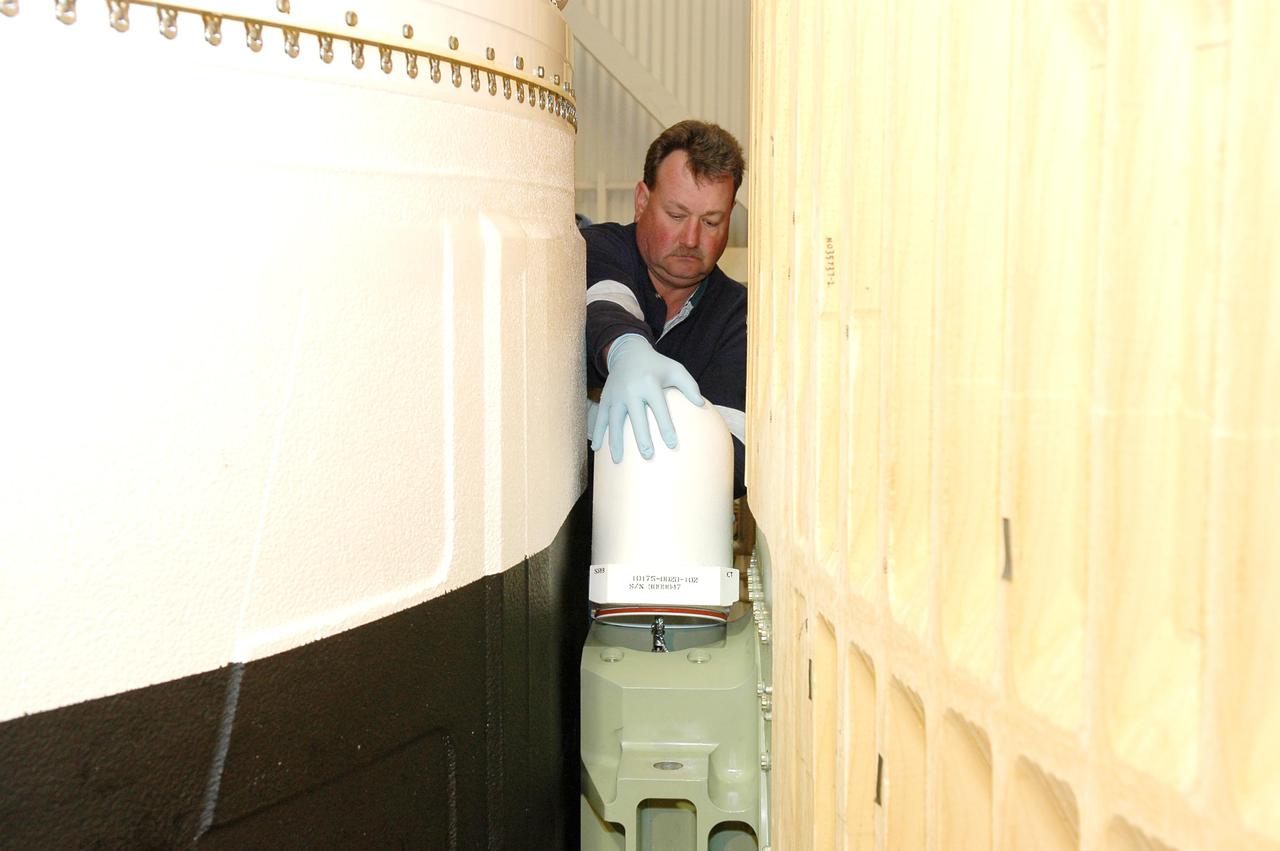
KENNEDY SPACE CENTER, FLA. - In the Vehicle Assembly Building, Lead Technician Todd Reeves, with United Space Alliance, moves a bolt catcher into place between the Solid Rocket Booster and left and the External Tank at right.A bolt catcher is a vertical bolt mechanism at the forward end of the External Tank that attaches each booster to the tank. At approximately two minutes into launch, SRB separation begins when pyrotechnic devices fire to break the 25-inch, 62-pound steel bolts. One half of the bolt is caught in canister-like 'bolt catchers' located on the tank; the other half remains with the boosters. Discovery is flying with a modified bolt catcher, which was upgraded from a two-piece welded design to a one-piece, machine-made design as part of NASA's effort to return to safe, reliable spaceflight. Eliminating the weld makes a structurally stronger bolt catcher design. Though the bolt catcher is mounted on the External Tank, it is considered part of the Solid Rocket Booster element design. It is built by Summa Technologies, Inc. in Huntsville, Ala., insulated at Lockheed Martin’s Michoud Assembly Facility in New Orleans, and installed on the External Tank at KSC.
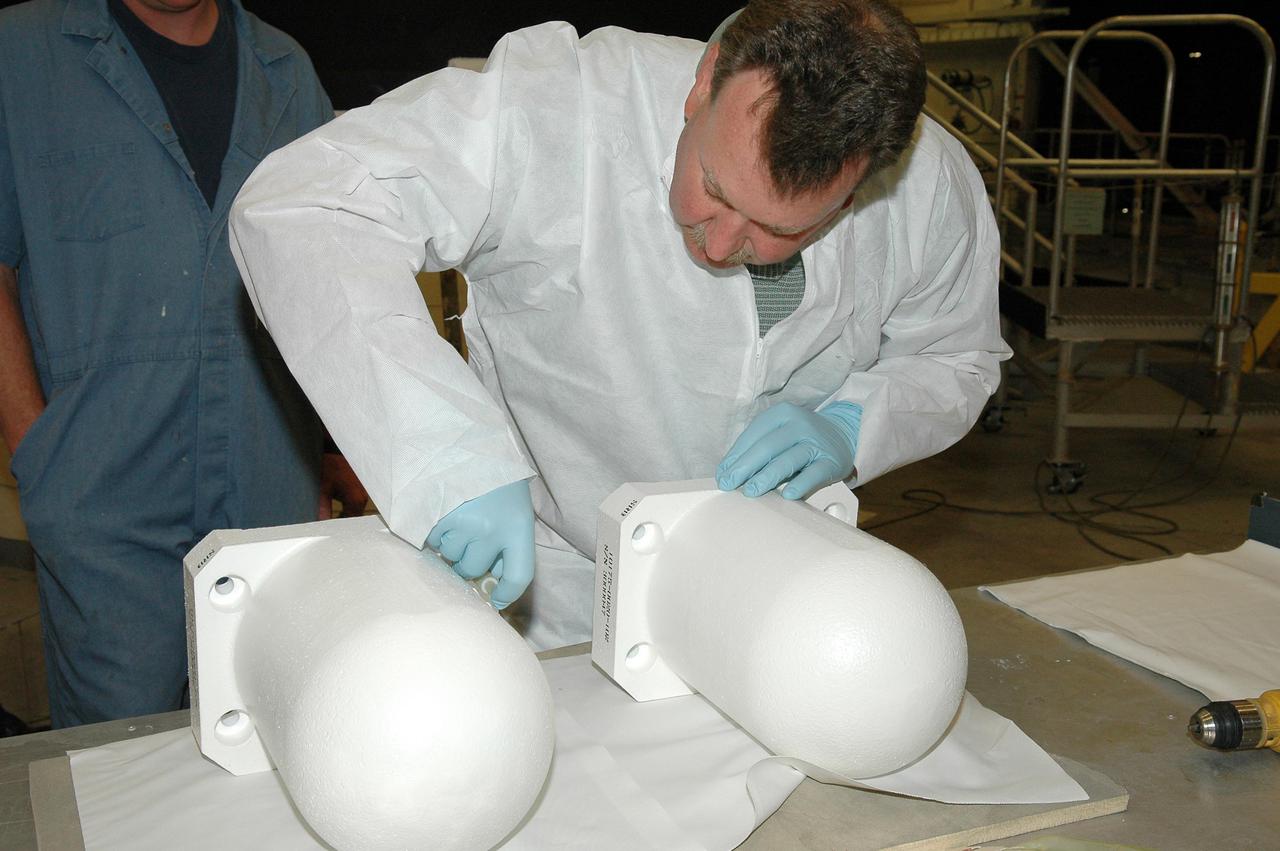
KENNEDY SPACE CENTER, FLA. - In the Vehicle Assembly Building, workers prepare these two bolt catchers for installation on orbiter Discovery’s External Tank. A bolt catcher is a vertical bolt mechanism at the forward end of the External Tank that attaches each booster to the tank. At approximately two minutes into launch, SRB separation begins when pyrotechnic devices fire to break the 25-inch, 62-pound steel bolts. One half of the bolt is caught in canister-like 'bolt catchers' located on the tank; the other half remains with the boosters. Discovery is flying with a modified bolt catcher, which was upgraded from a two-piece welded design to a one-piece, machine-made design as part of NASA's effort to return to safe, reliable spaceflight. Eliminating the weld makes a structurally stronger bolt catcher design. Though the bolt catcher is mounted on the External Tank, it is considered part of the Solid Rocket Booster element design. It is built by Summa Technologies, Inc. in Huntsville, Ala., insulated at Lockheed Martin’s Michoud Assembly Facility in New Orleans, and installed on the External Tank at KSC.
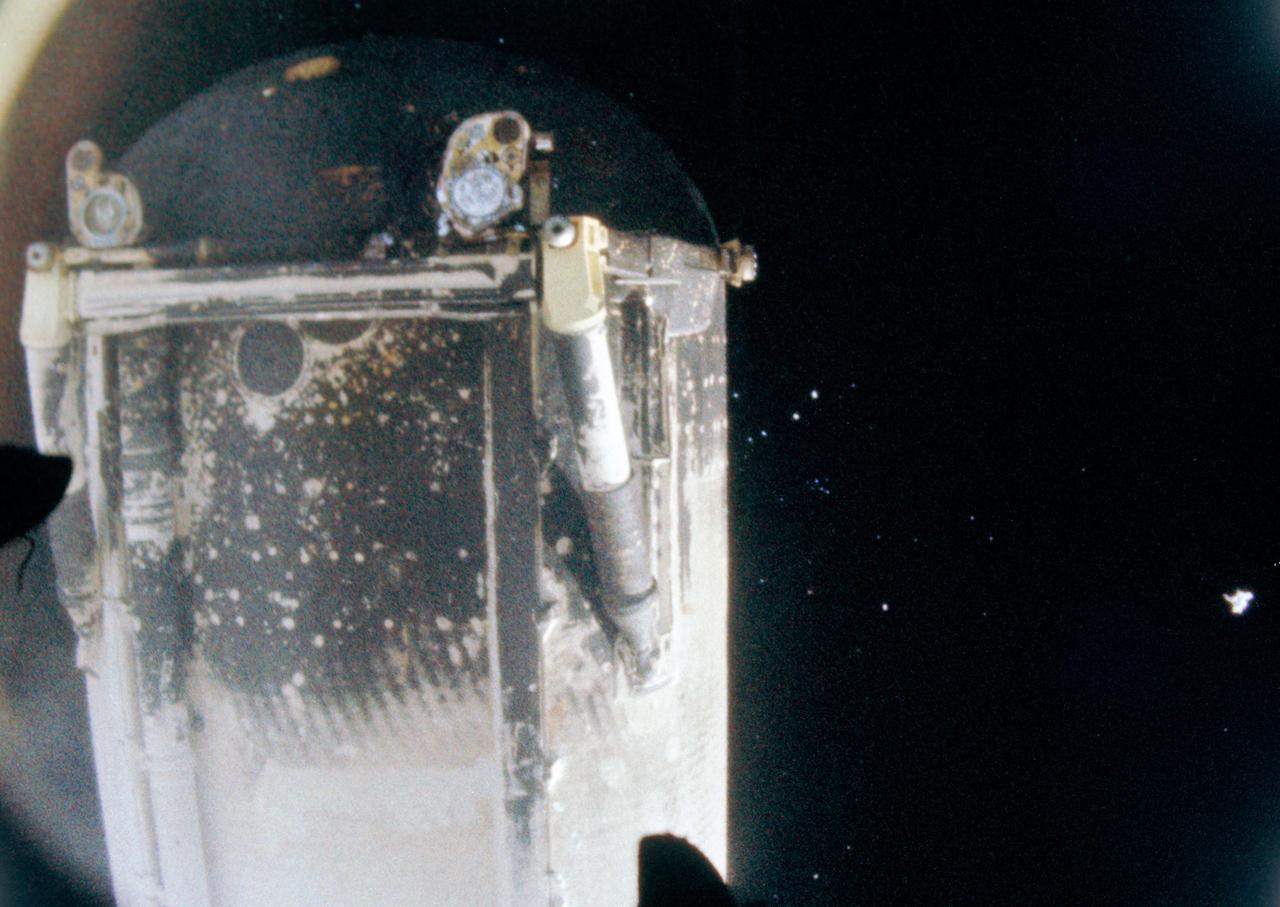
S81-30505 (12 April 1981) --- Separation of space shuttle Columbia?s external tank, photographed by motion picture cameras in the umbilical bays, occurred following the shutdown of the vehicle?s three main engines. Columbia?s cameras were able to record the bottom side of the tank as the orbiter headed toward its Earth-orbital mission with astronauts John W. Young and Robert L. Crippen aboard and the fuel tank fell toward Earth, passing through the atmosphere rapidly. Liquid oxygen and liquid hydrogen umbilical connectors can be seen at the bottom of the tank. For orientation, the photo should be held with the rounded end at bottom of the frame. Photo credit: NASA
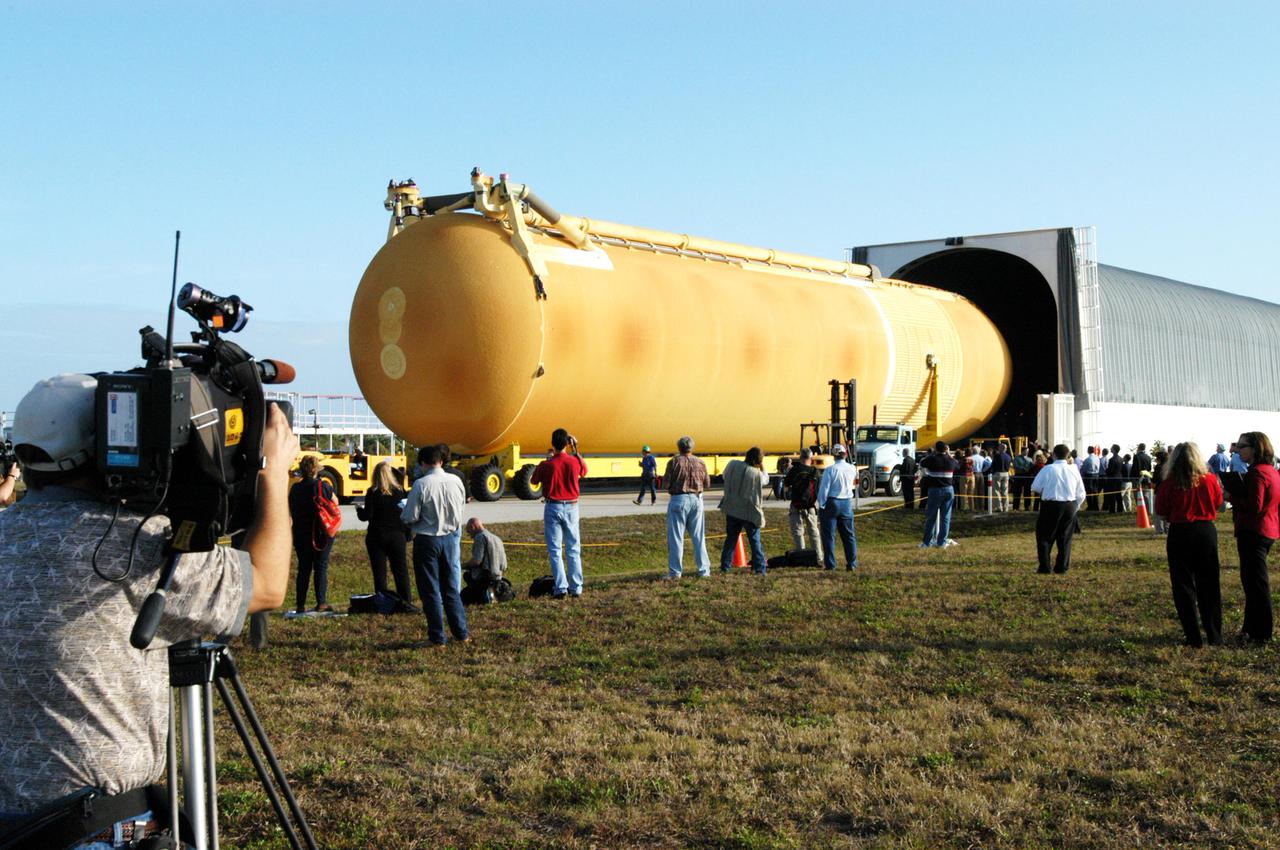
KENNEDY SPACE CENTER, FLA. - Media view the newly redesigned External Tank as it is off-loaded from the barge that carried it from the Michoud Assembly Facility in New Orleans. The tank is being transported to the Vehicle Assembly Building. The tank arrived Jan. 5 after a 900-mile sea voyage aboard NASA’s specially designed barge, Pegasus, from the Michoud Assembly Facility in New Orleans. In the transfer aisle of the VAB, the tank will be raised from a horizontal to a vertical position, then lifted high up into a storage cell, or “checkout cell,” where it will undergo inspections of the mechanical, electrical and thermal protection systems. New processing activities resulting from re-design of the tank include inspection of the bipod heater and External Tank separation camera, which includes charging the camera batteries. The tank will be then prepared for mating to the Solid Rocket Boosters. When preparations are complete, the tank will be lifted from the checkout cell, moved across the transfer aisle and into High Bay 1, where it will be lowered and attached to the boosters, which are sitting on the Mobile Launch Platform. The tank is designated for the Return to Flight mission, STS-114, targeted for a launch opportunity beginning in May. The seven-member Discovery crew will fly to the International Space Station primarily to test and evaluate new procedures for flight safety, including Space Shuttle inspection and repair techniques.
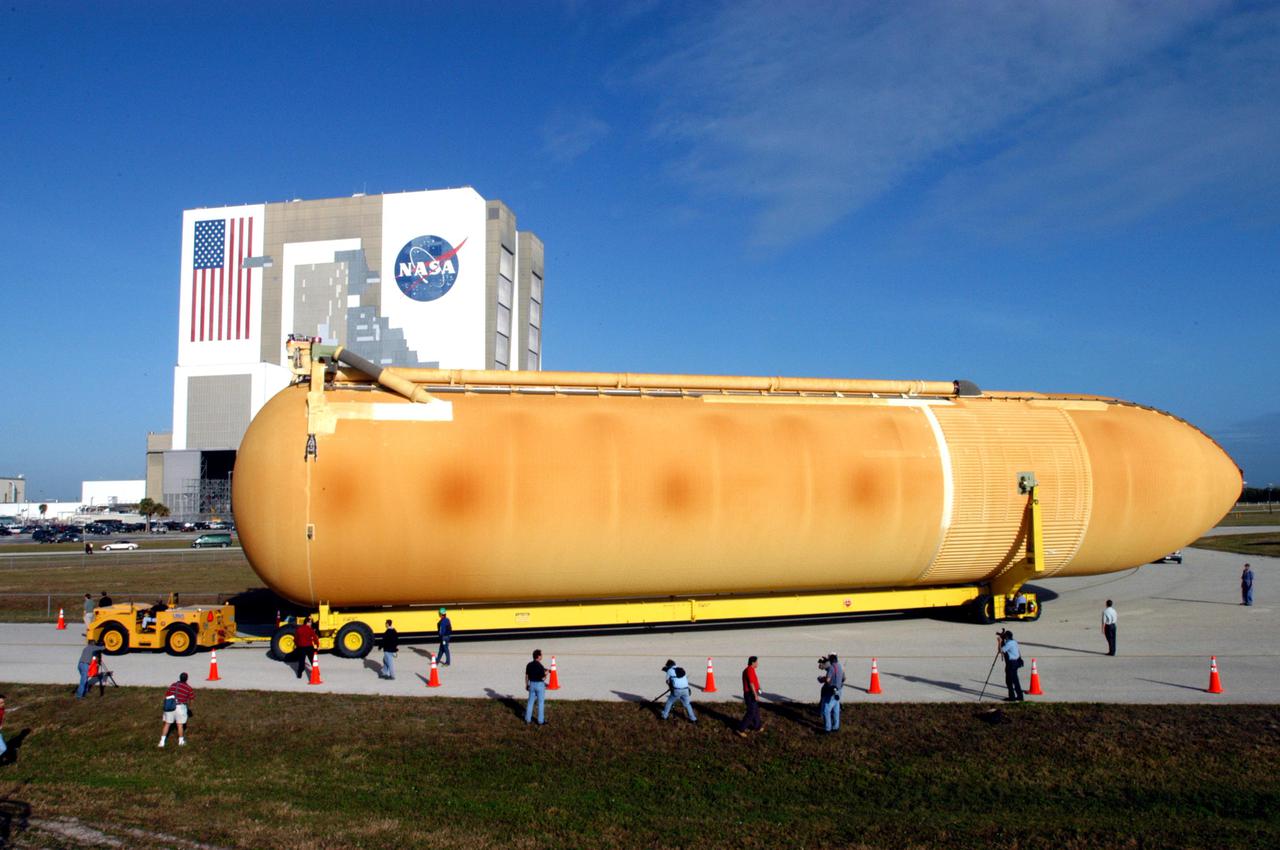
KENNEDY SPACE CENTER, FLA. - KSC employees accompany the newly redesigned External Tank as it wends its way through the parking area at the Launch Complex 39 Area Turn Basin. The tank is being moved to the Vehicle Assembly Building, seen behind it. The tank arrived Jan. 5 after a 900-mile sea voyage aboard NASA’s specially designed barge, Pegasus, from the Michoud Assembly Facility in New Orleans. In the transfer aisle of the VAB, the tank will be raised from a horizontal to a vertical position, then lifted high up into a storage cell, or “checkout cell,” where it will undergo inspections of the mechanical, electrical and thermal protection systems. New processing activities resulting from re-design of the tank include inspection of the bipod heater and External Tank separation camera, which includes charging the camera batteries. The tank will be then prepared for mating to the Solid Rocket Boosters. When preparations are complete, the tank will be lifted from the checkout cell, moved across the transfer aisle and into High Bay 1, where it will be lowered and attached to the boosters, which are sitting on the Mobile Launch Platform. The tank is designated for the Return to Flight mission, STS-114, targeted for a launch opportunity beginning in May. The seven-member Discovery crew will fly to the International Space Station primarily to test and evaluate new procedures for flight safety, including Space Shuttle inspection and repair techniques.
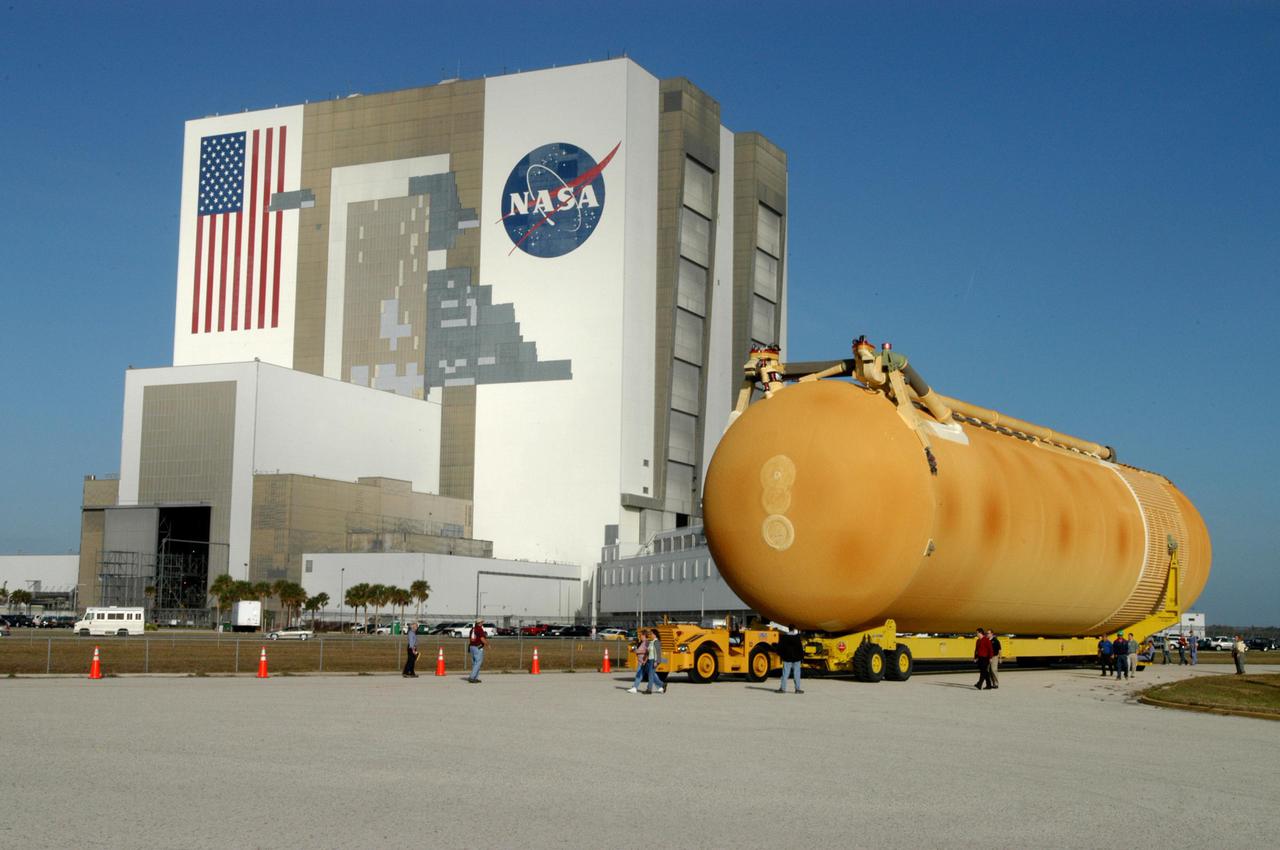
KENNEDY SPACE CENTER, FLA. - The newly redesigned External Tank is slowly moved from the dock in the Launch Complex 39 Area Turn Basin on its way to the Vehicle Assembly Building, seen at left. The tank arrived Jan. 5 after a 900-mile sea voyage aboard NASA’s specially designed barge, Pegasus, from the Michoud Assembly Facility in New Orleans. In the transfer aisle of the VAB, the tank will be raised from a horizontal to a vertical position, then lifted high up into a storage cell, or “checkout cell,” where it will undergo inspections of the mechanical, electrical and thermal protection systems. New processing activities resulting from re-design of the tank include inspection of the bipod heater and External Tank separation camera, which includes charging the camera batteries. The tank will be then prepared for mating to the Solid Rocket Boosters. When preparations are complete, the tank will be lifted from the checkout cell, moved across the transfer aisle and into High Bay 1, where it will be lowered and attached to the boosters, which are sitting on the Mobile Launch Platform. The tank is designated for the Return to Flight mission, STS-114, targeted for a launch opportunity beginning in May. The seven-member Discovery crew will fly to the International Space Station primarily to test and evaluate new procedures for flight safety, including Space Shuttle inspection and repair techniques.
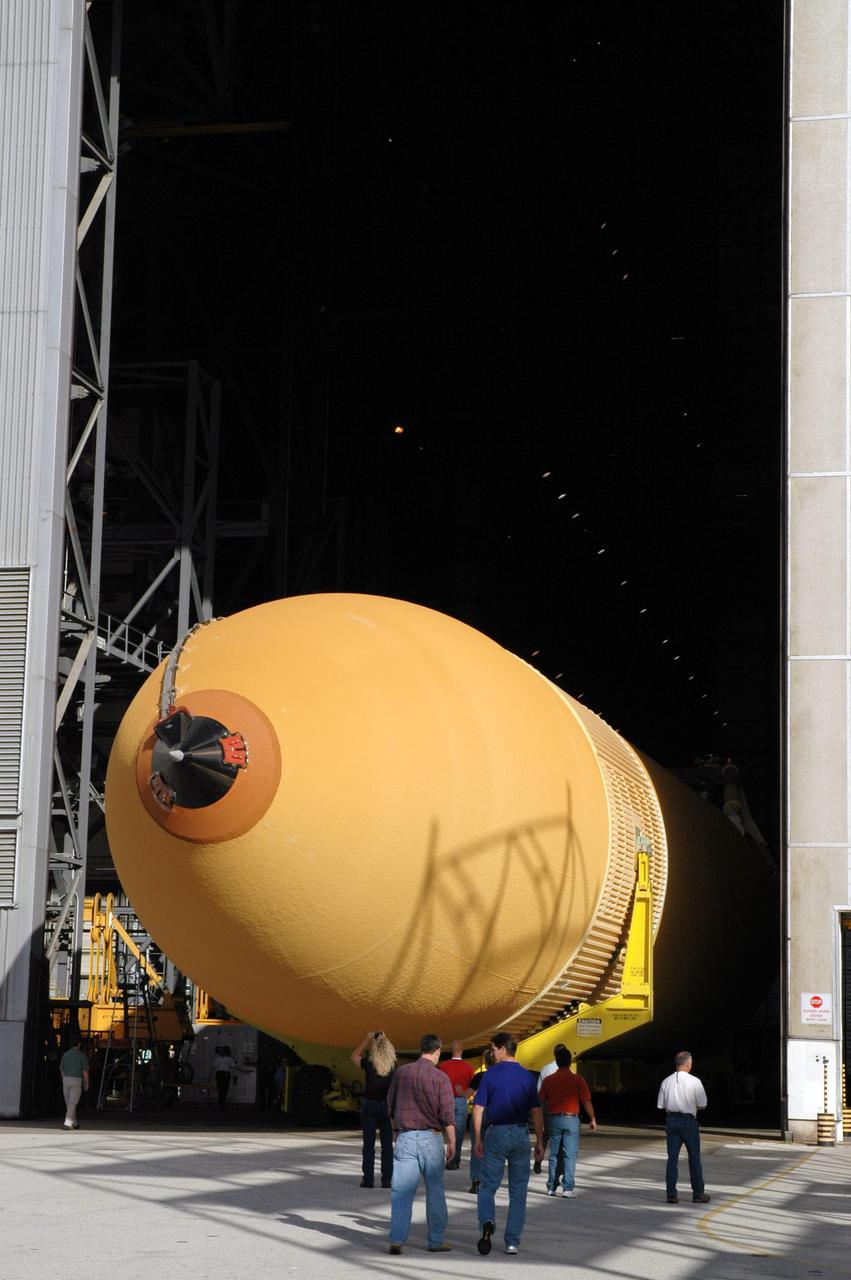
KENNEDY SPACE CENTER, FLA. - Accompanied by KSC employees, the newly redesigned External Tank rolls into the Vehicle Assembly Building. The tank arrived Jan. 5 after a 900-mile sea voyage aboard NASA’s specially designed barge, Pegasus, from the Michoud Assembly Facility in New Orleans. In the transfer aisle of the VAB, the tank will be raised from a horizontal to a vertical position, then lifted high up into a storage cell, or “checkout cell,” where it will undergo inspections of the mechanical, electrical and thermal protection systems. New processing activities resulting from re-design of the tank include inspection of the bipod heater and External Tank separation camera, which includes charging the camera batteries. The tank will be then prepared for mating to the Solid Rocket Boosters. When preparations are complete, the tank will be lifted from the checkout cell, moved across the transfer aisle and into High Bay 1, where it will be lowered and attached to the boosters, which are sitting on the Mobile Launch Platform. The tank is designated for the Return to Flight mission, STS-114, targeted for a launch opportunity beginning in May. The seven-member Discovery crew will fly to the International Space Station primarily to test and evaluate new procedures for flight safety, including Space Shuttle inspection and repair techniques.
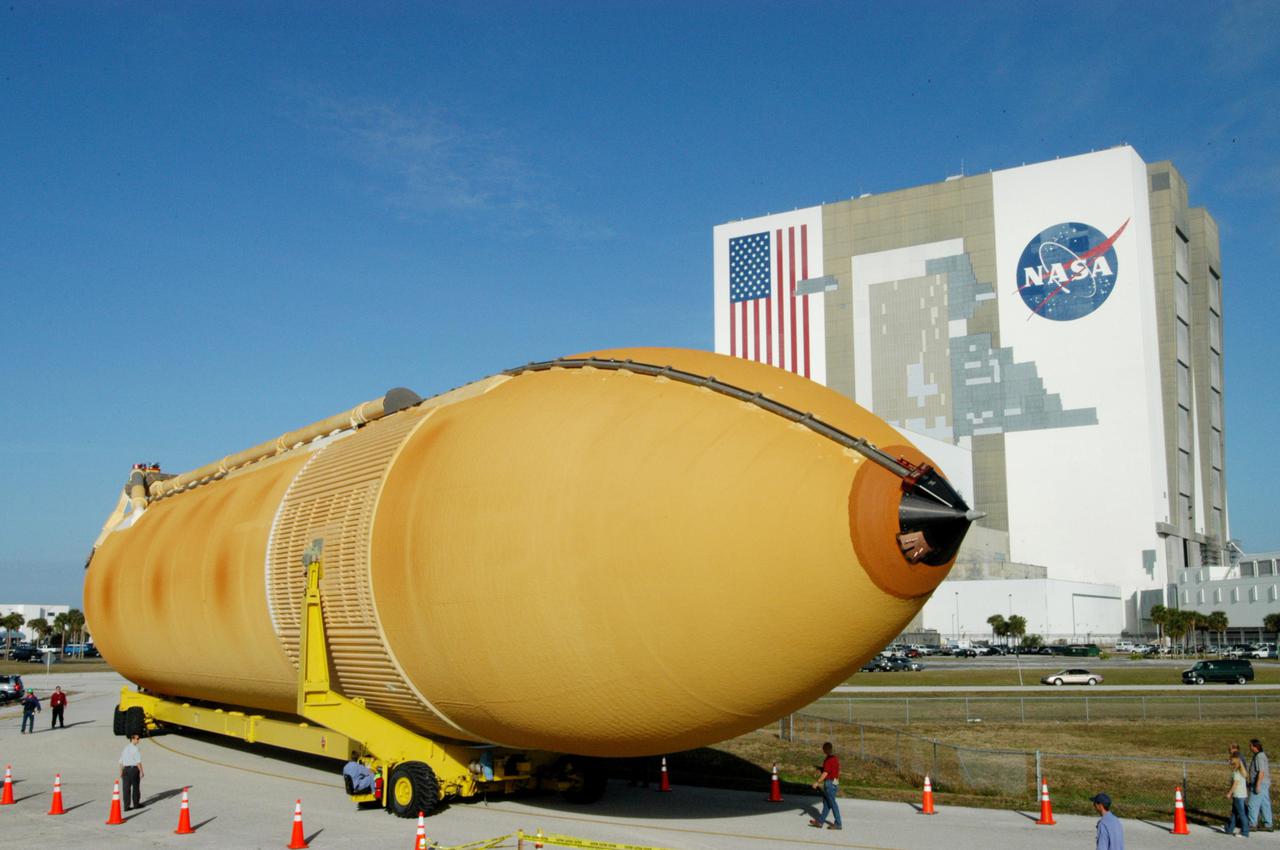
KENNEDY SPACE CENTER, FLA. - The newly redesigned External Tank turns the corner of the Launch Complex 39 Area Turn Basin parking area on its way to the Vehicle Assembly Building, seen at right. The tank arrived Jan. 5 after a 900-mile sea voyage aboard NASA’s specially designed barge, Pegasus, from the Michoud Assembly Facility in New Orleans. In the transfer aisle of the VAB, the tank will be raised from a horizontal to a vertical position, then lifted high up into a storage cell, or “checkout cell,” where it will undergo inspections of the mechanical, electrical and thermal protection systems. New processing activities resulting from re-design of the tank include inspection of the bipod heater and External Tank separation camera, which includes charging the camera batteries. The tank will be then prepared for mating to the Solid Rocket Boosters. When preparations are complete, the tank will be lifted from the checkout cell, moved across the transfer aisle and into High Bay 1, where it will be lowered and attached to the boosters, which are sitting on the Mobile Launch Platform. The tank is designated for the Return to Flight mission, STS-114, targeted for a launch opportunity beginning in May. The seven-member Discovery crew will fly to the International Space Station primarily to test and evaluate new procedures for flight safety, including Space Shuttle inspection and repair techniques.

KENNEDY SPACE CENTER, FLA. - Media view the newly redesigned External Tank after its off-loading from the barge that carried it from the Michoud Assembly Facility in New Orleans. The tank is being transported to the Vehicle Assembly Building. In the transfer aisle of the VAB, the tank will be raised from a horizontal to a vertical position, then lifted high up into a storage cell, or “checkout cell,” where it will undergo inspections of the mechanical, electrical and thermal protection systems. New processing activities resulting from re-design of the tank include inspection of the bipod heater and External Tank separation camera, which includes charging the camera batteries. The tank will be then prepared for mating to the Solid Rocket Boosters. When preparations are complete, the tank will be lifted from the checkout cell, moved across the transfer aisle and into High Bay 1, where it will be lowered and attached to the boosters, which are sitting on the Mobile Launch Platform. The tank is designated for the Return to Flight mission, STS-114, targeted for a launch opportunity beginning in May. The seven-member Discovery crew will fly to the International Space Station primarily to test and evaluate new procedures for flight safety, including Space Shuttle inspection and repair techniques.
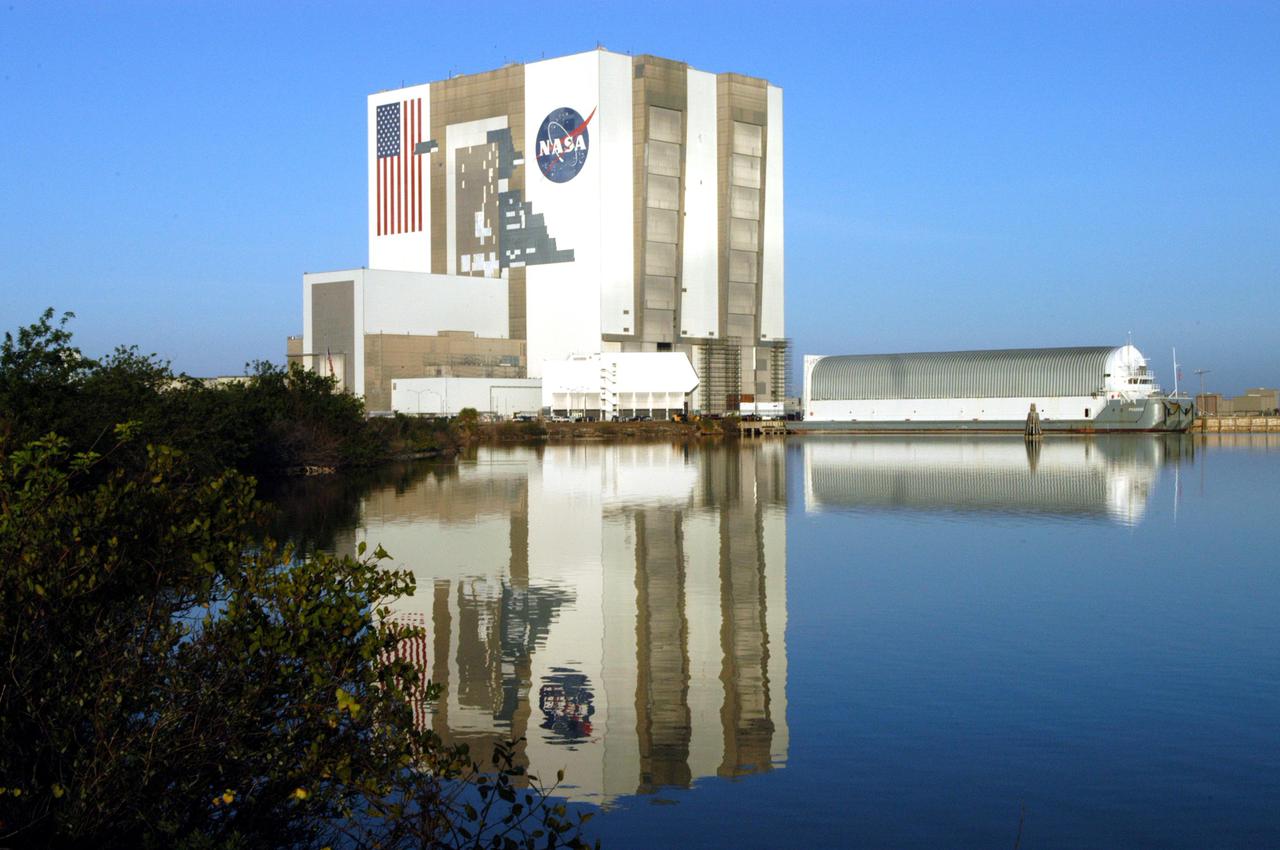
KENNEDY SPACE CENTER, FLA. - NASA’s specially designed barge, Pegasus, is docked in the Launch Complex 39 Area Turn Basin with its cargo of the newly redesigned External Tank. The barge was towed from the Michoud Assembly Facility in New Orleans. The tank will be off-loaded and transported to the Vehicle Assembly Building, seen at left of the barge. In the transfer aisle of the VAB, the tank will be raised from a horizontal to a vertical position, then lifted high up into a storage cell, or “checkout cell,” where it will undergo inspections of the mechanical, electrical and thermal protection systems. New processing activities resulting from re-design of the tank include inspection of the bipod heater and External Tank separation camera, which includes charging the camera batteries. The tank will be then prepared for mating to the Solid Rocket Boosters. When preparations are complete, the tank will be lifted from the checkout cell, moved across the transfer aisle and into High Bay 1, where it will be lowered and attached to the boosters, which are sitting on the Mobile Launch Platform. The tank is designated for the Return to Flight mission, STS-114, targeted for a launch opportunity beginning in May. The seven-member Discovery crew will fly to the International Space Station primarily to test and evaluate new procedures for flight safety, including Space Shuttle inspection and repair techniques.
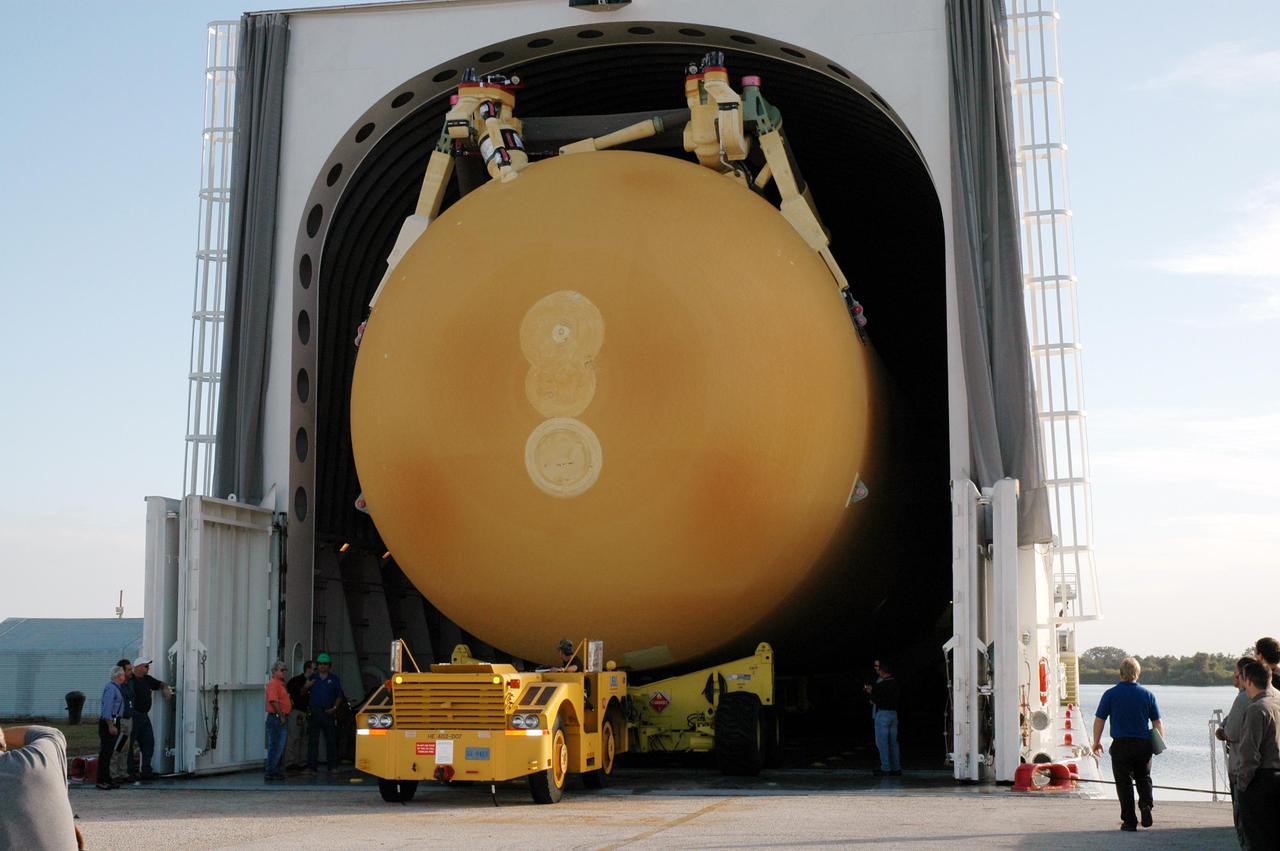
KENNEDY SPACE CENTER, FLA. - Media view the newly redesigned External Tank as a transporter begins off-loading it from the barge that carried it from the Michoud Assembly Facility in New Orleans. The tank is being transported to the Vehicle Assembly Building. In the transfer aisle of the VAB, the tank will be raised from a horizontal to a vertical position, then lifted high up into a storage cell, or “checkout cell,” where it will undergo inspections of the mechanical, electrical and thermal protection systems. New processing activities resulting from re-design of the tank include inspection of the bipod heater and External Tank separation camera, which includes charging the camera batteries. The tank will be then prepared for mating to the Solid Rocket Boosters. When preparations are complete, the tank will be lifted from the checkout cell, moved across the transfer aisle and into High Bay 1, where it will be lowered and attached to the boosters, which are sitting on the Mobile Launch Platform. The tank is designated for the Return to Flight mission, STS-114, targeted for a launch opportunity beginning in May. The seven-member Discovery crew will fly to the International Space Station primarily to test and evaluate new procedures for flight safety, including Space Shuttle inspection and repair techniques.
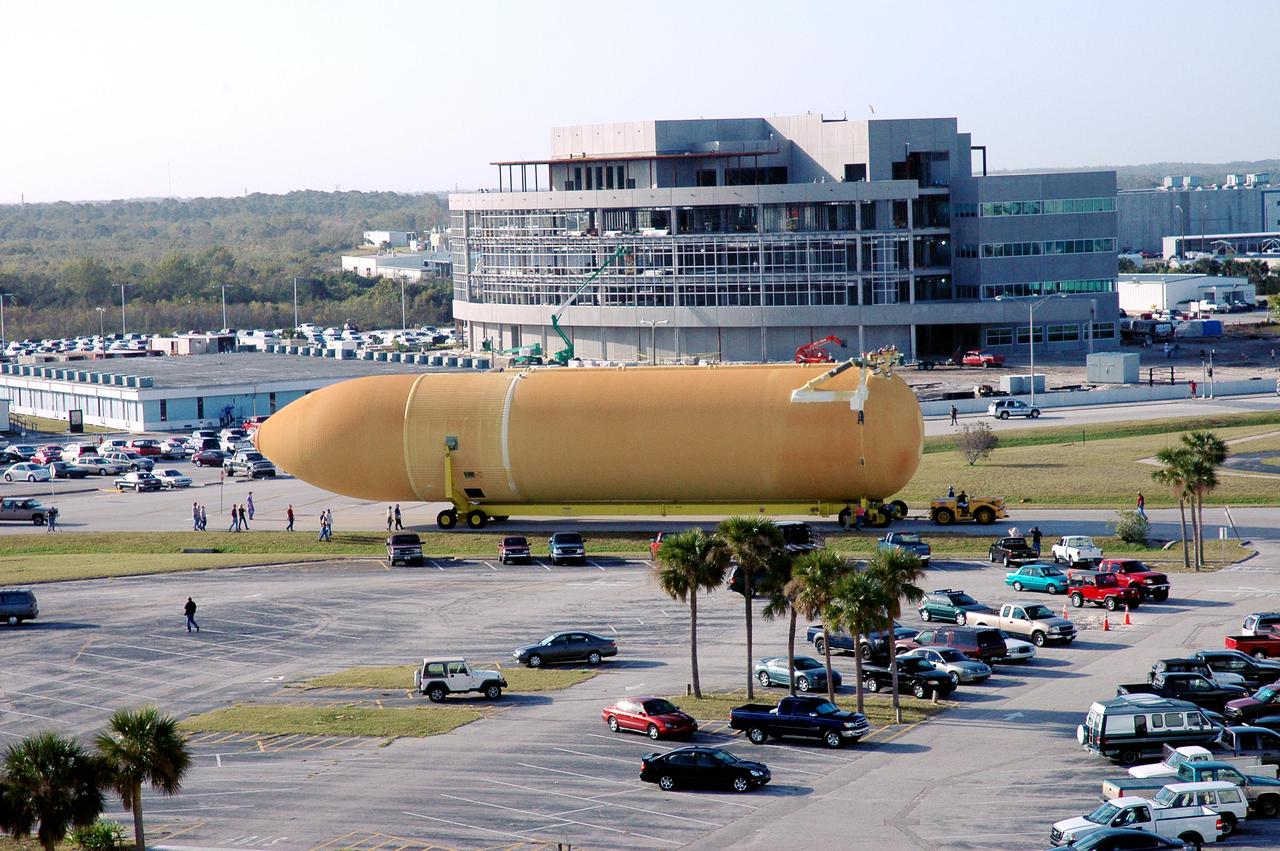
KENNEDY SPACE CENTER, FLA. - Viewed from the roof of the Launch Control Center in the Launch Complex 39 Area, the newly redesigned External Tank is seen moving past the parking area on its way to the Vehicle Assembly Building. Behind the tank is Operations Support Building II, currently under construction. In the transfer aisle of the VAB, the tank will be raised from a horizontal to a vertical position, then lifted high up into a storage cell, or “checkout cell,” where it will undergo inspections of the mechanical, electrical and thermal protection systems. New processing activities resulting from re-design of the tank include inspection of the bipod heater and External Tank separation camera, which includes charging the camera batteries. The tank will be then prepared for mating to the Solid Rocket Boosters. When preparations are complete, the tank will be lifted from the checkout cell, moved across the transfer aisle and into High Bay 1, where it will be lowered and attached to the boosters, which are sitting on the Mobile Launch Platform. The tank is designated for the Return to Flight mission, STS-114, targeted for a launch opportunity beginning in May. The seven-member Discovery crew will fly to the International Space Station primarily to test and evaluate new procedures for flight safety, including Space Shuttle inspection and repair techniques.
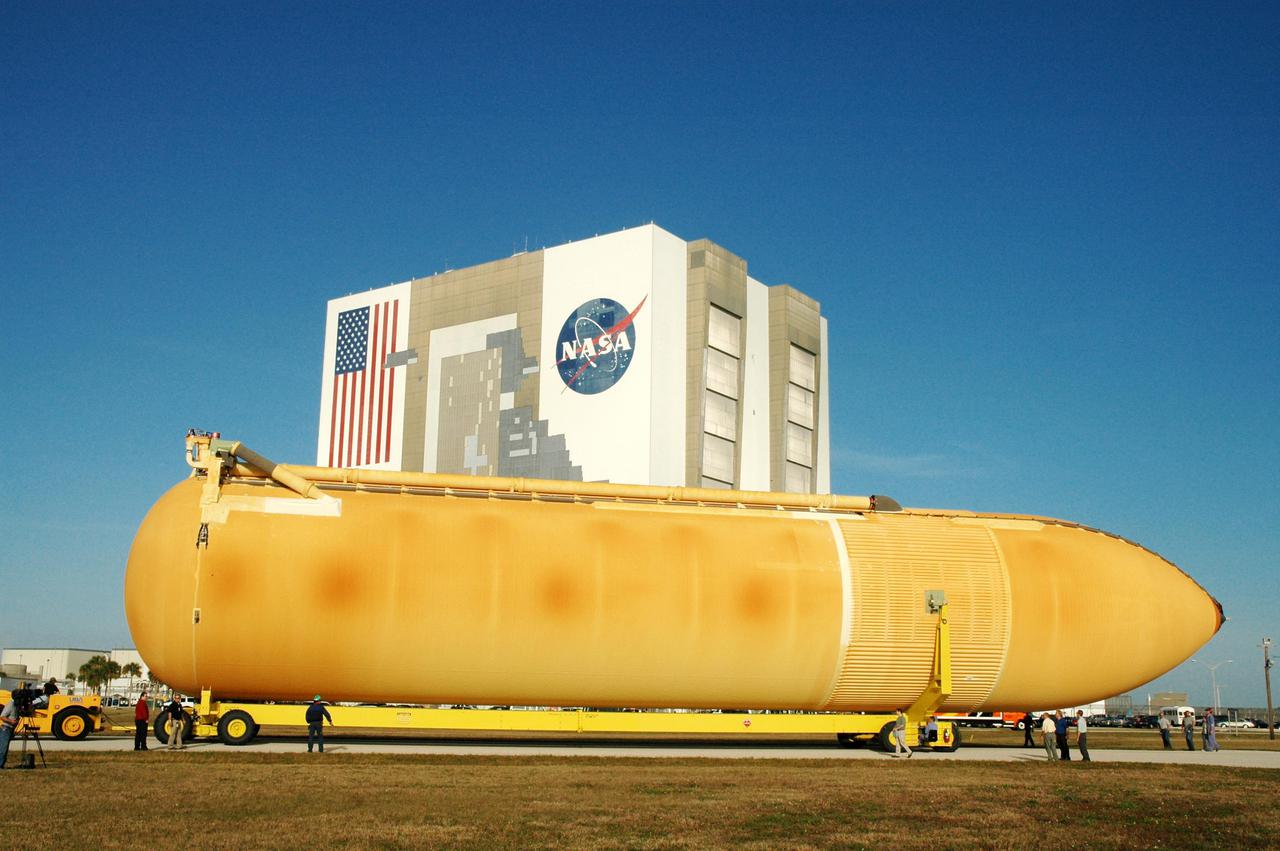
KENNEDY SPACE CENTER, FLA. - The newly redesigned External Tank wends its way through the parking area at the Launch Complex 39 Area Turn Basin on its way to the Vehicle Assembly Building, seen behind it. The tank arrived Jan. 5 after a 900-mile sea voyage aboard NASA’s specially designed barge, Pegasus, from the Michoud Assembly Facility in New Orleans. In the transfer aisle of the VAB, the tank will be raised from a horizontal to a vertical position, then lifted high up into a storage cell, or “checkout cell,” where it will undergo inspections of the mechanical, electrical and thermal protection systems. New processing activities resulting from re-design of the tank include inspection of the bipod heater and External Tank separation camera, which includes charging the camera batteries. The tank will be then prepared for mating to the Solid Rocket Boosters. When preparations are complete, the tank will be lifted from the checkout cell, moved across the transfer aisle and into High Bay 1, where it will be lowered and attached to the boosters, which are sitting on the Mobile Launch Platform. The tank is designated for the Return to Flight mission, STS-114, targeted for a launch opportunity beginning in May. The seven-member Discovery crew will fly to the International Space Station primarily to test and evaluate new procedures for flight safety, including Space Shuttle inspection and repair techniques.
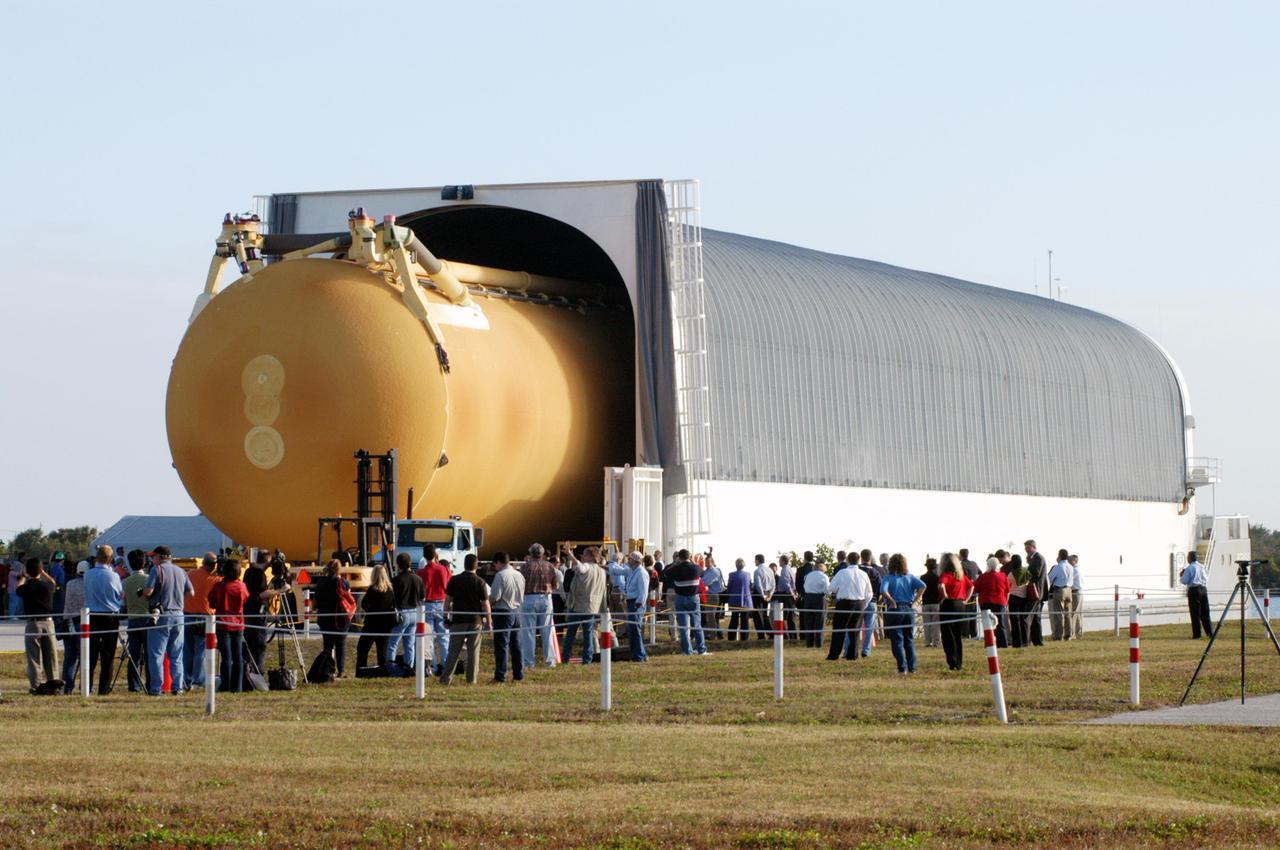
KENNEDY SPACE CENTER, FLA. - Media view the newly redesigned External Tank as it is off-loaded from the barge that carried it from the Michoud Assembly Facility in New Orleans. The tank is being transported to the Vehicle Assembly Building. In the transfer aisle of the VAB, the tank will be raised from a horizontal to a vertical position, then lifted high up into a storage cell, or “checkout cell,” where it will undergo inspections of the mechanical, electrical and thermal protection systems. New processing activities resulting from re-design of the tank include inspection of the bipod heater and External Tank separation camera, which includes charging the camera batteries. The tank will be then prepared for mating to the Solid Rocket Boosters. When preparations are complete, the tank will be lifted from the checkout cell, moved across the transfer aisle and into High Bay 1, where it will be lowered and attached to the boosters, which are sitting on the Mobile Launch Platform. The tank is designated for the Return to Flight mission, STS-114, targeted for a launch opportunity beginning in May. The seven-member Discovery crew will fly to the International Space Station primarily to test and evaluate new procedures for flight safety, including Space Shuttle inspection and repair techniques.
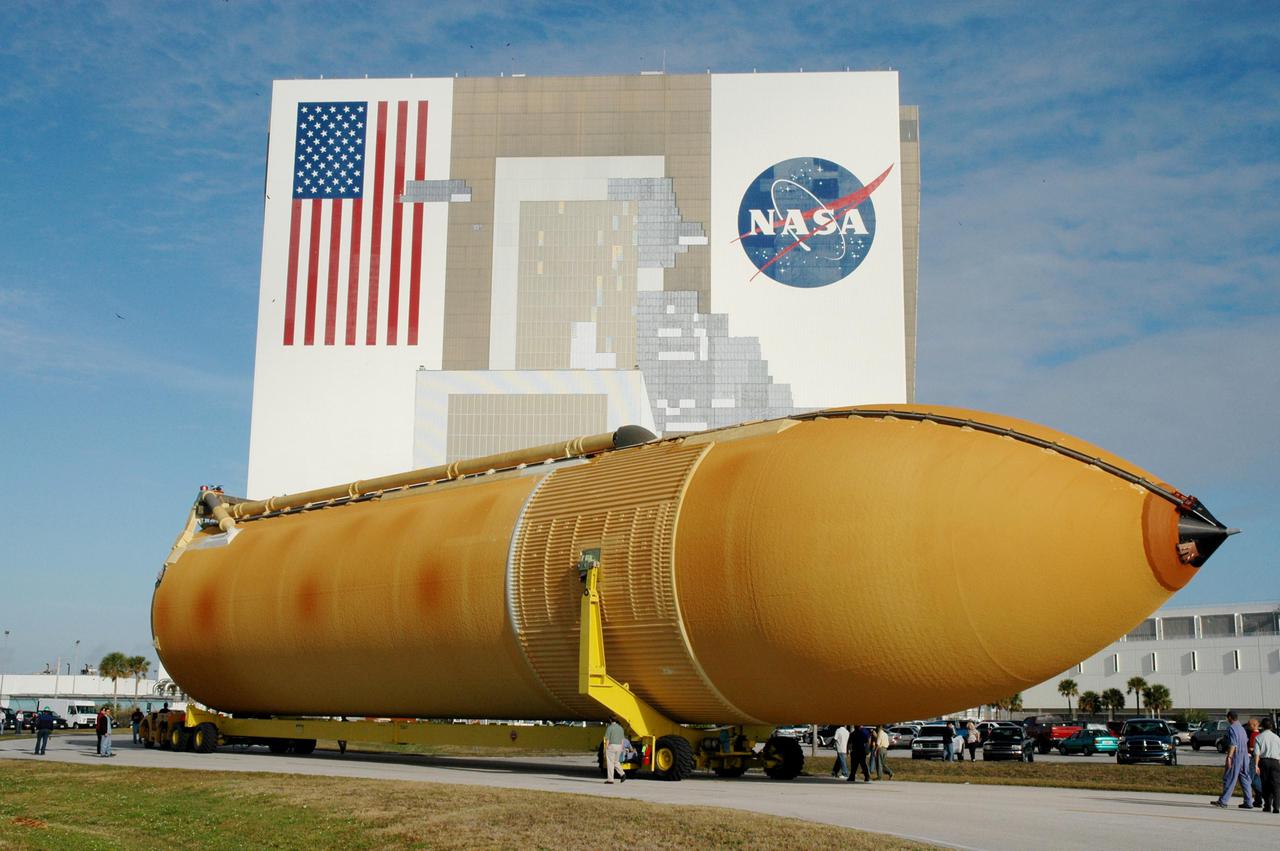
KENNEDY SPACE CENTER, FLA. - The newly redesigned External Tank moves closer to its destination, the Vehicle Assembly Building, seen behind it. The tank arrived Jan. 5 after a 900-mile sea voyage aboard NASA’s specially designed barge, Pegasus, from the Michoud Assembly Facility in New Orleans. In the transfer aisle of the VAB, the tank will be raised from a horizontal to a vertical position, then lifted high up into a storage cell, or “checkout cell,” where it will undergo inspections of the mechanical, electrical and thermal protection systems. New processing activities resulting from re-design of the tank include inspection of the bipod heater and External Tank separation camera, which includes charging the camera batteries. The tank will be then prepared for mating to the Solid Rocket Boosters. When preparations are complete, the tank will be lifted from the checkout cell, moved across the transfer aisle and into High Bay 1, where it will be lowered and attached to the boosters, which are sitting on the Mobile Launch Platform. The tank is designated for the Return to Flight mission, STS-114, targeted for a launch opportunity beginning in May. The seven-member Discovery crew will fly to the International Space Station primarily to test and evaluate new procedures for flight safety, including Space Shuttle inspection and repair techniques.
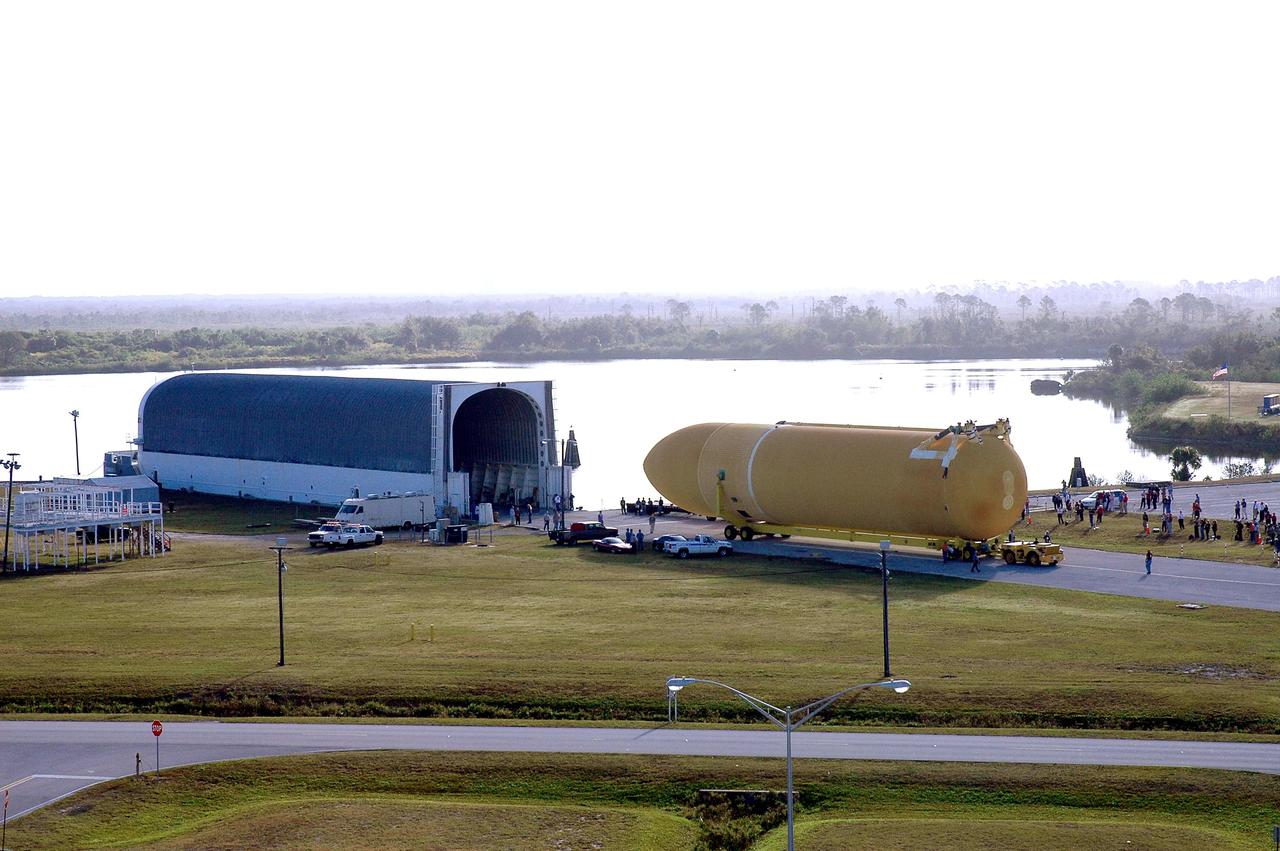
KENNEDY SPACE CENTER, FLA. - Viewed from the roof of the Launch Control Center, the newly redesigned External Tank is seen after being off-loaded from NASA’s specially designed barge, Pegasus, which delivered it from the Michoud Assembly Facility in New Orleans. The tank is being transferred to the Vehicle Assembly Building. In the transfer aisle of the VAB, the tank will be raised from a horizontal to a vertical position, then lifted high up into a storage cell, or “checkout cell,” where it will undergo inspections of the mechanical, electrical and thermal protection systems. New processing activities resulting from re-design of the tank include inspection of the bipod heater and External Tank separation camera, which includes charging the camera batteries. The tank will be then prepared for mating to the Solid Rocket Boosters. When preparations are complete, the tank will be lifted from the checkout cell, moved across the transfer aisle and into High Bay 1, where it will be lowered and attached to the boosters, which are sitting on the Mobile Launch Platform. The tank is designated for the Return to Flight mission, STS-114, targeted for a launch opportunity beginning in May. The seven-member Discovery crew will fly to the International Space Station primarily to test and evaluate new procedures for flight safety, including Space Shuttle inspection and repair techniques.
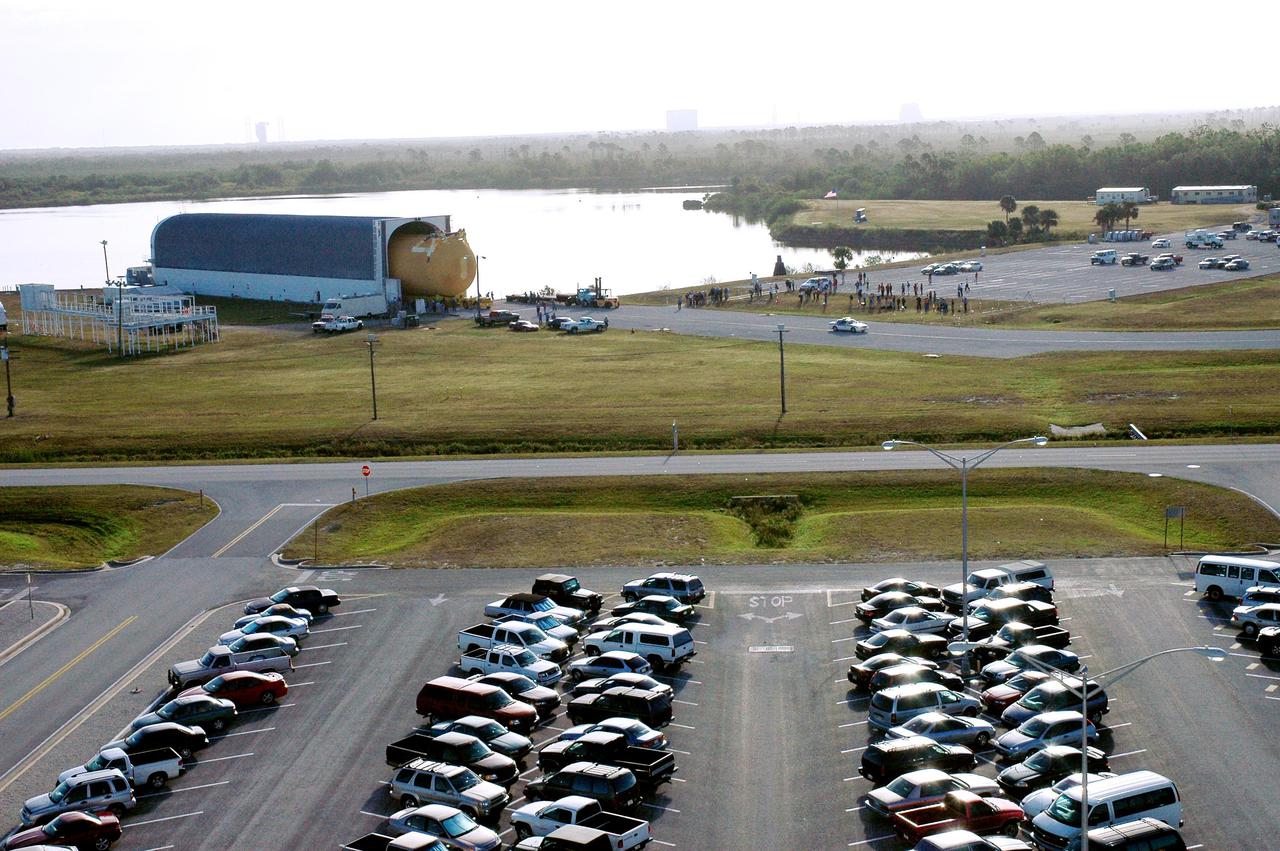
KENNEDY SPACE CENTER, FLA. - Viewed from the top of the Launch Control Center, the newly redesigned External Tank is seen moving out of NASA’s specially designed barge, Pegasus, which delivered it from the Michoud Assembly Facility in New Orleans. The tank is being transferred to the Vehicle Assembly Building. In the transfer aisle of the VAB, the tank will be raised from a horizontal to a vertical position, then lifted high up into a storage cell, or “checkout cell,” where it will undergo inspections of the mechanical, electrical and thermal protection systems. New processing activities resulting from re-design of the tank include inspection of the bipod heater and External Tank separation camera, which includes charging the camera batteries. The tank will be then prepared for mating to the Solid Rocket Boosters. When preparations are complete, the tank will be lifted from the checkout cell, moved across the transfer aisle and into High Bay 1, where it will be lowered and attached to the boosters, which are sitting on the Mobile Launch Platform. The tank is designated for the Return to Flight mission, STS-114, targeted for a launch opportunity beginning in May. The seven-member Discovery crew will fly to the International Space Station primarily to test and evaluate new procedures for flight safety, including Space Shuttle inspection and repair techniques.
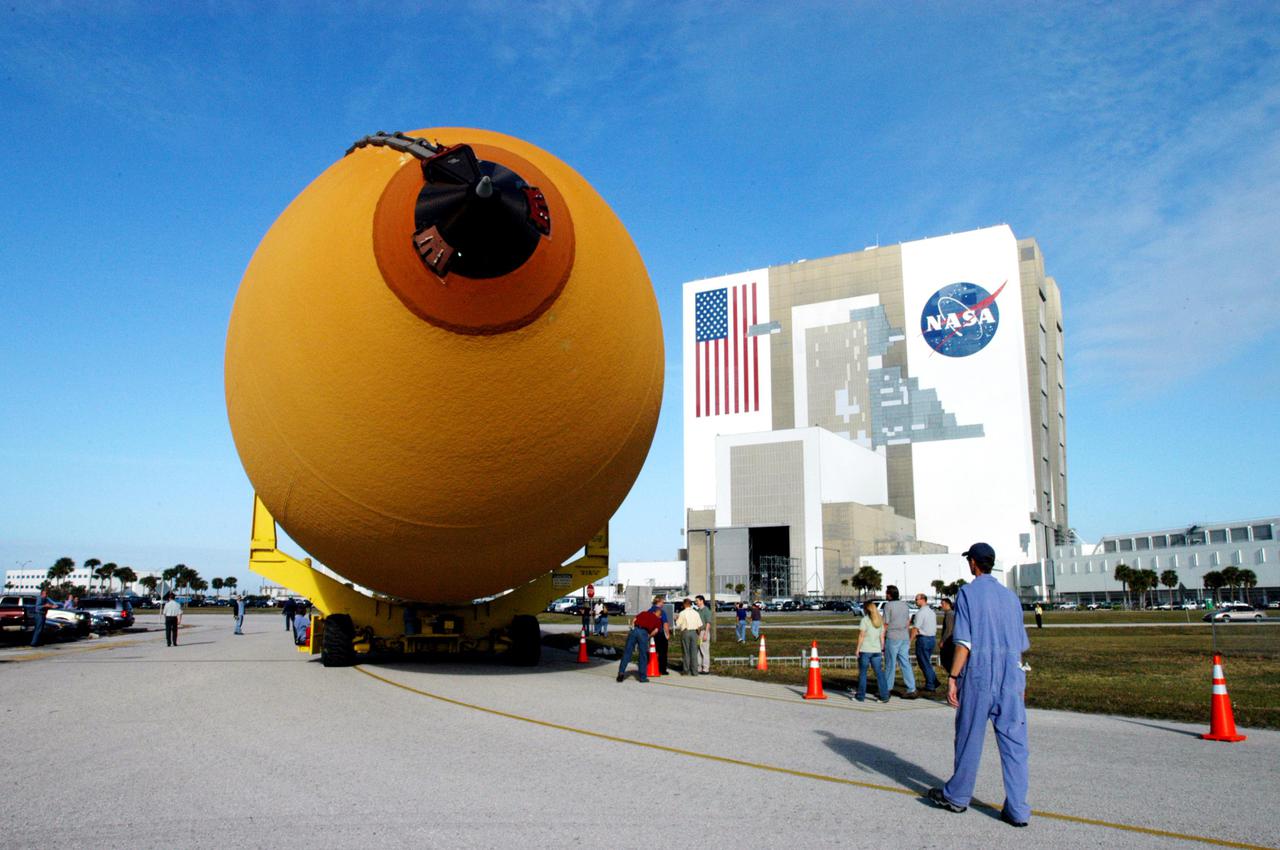
KENNEDY SPACE CENTER, FLA. - The newly redesigned External Tank slowly moves toward the Vehicle Assembly Building, seen at right. The tank arrived Jan. 5 after a 900-mile sea voyage aboard NASA’s specially designed barge, Pegasus, from the Michoud Assembly Facility in New Orleans. In the transfer aisle of the VAB, the tank will be raised from a horizontal to a vertical position, then lifted high up into a storage cell, or “checkout cell,” where it will undergo inspections of the mechanical, electrical and thermal protection systems. New processing activities resulting from re-design of the tank include inspection of the bipod heater and External Tank separation camera, which includes charging the camera batteries. The tank will be then prepared for mating to the Solid Rocket Boosters. When preparations are complete, the tank will be lifted from the checkout cell, moved across the transfer aisle and into High Bay 1, where it will be lowered and attached to the boosters, which are sitting on the Mobile Launch Platform. The tank is designated for the Return to Flight mission, STS-114, targeted for a launch opportunity beginning in May. The seven-member Discovery crew will fly to the International Space Station primarily to test and evaluate new procedures for flight safety, including Space Shuttle inspection and repair techniques.
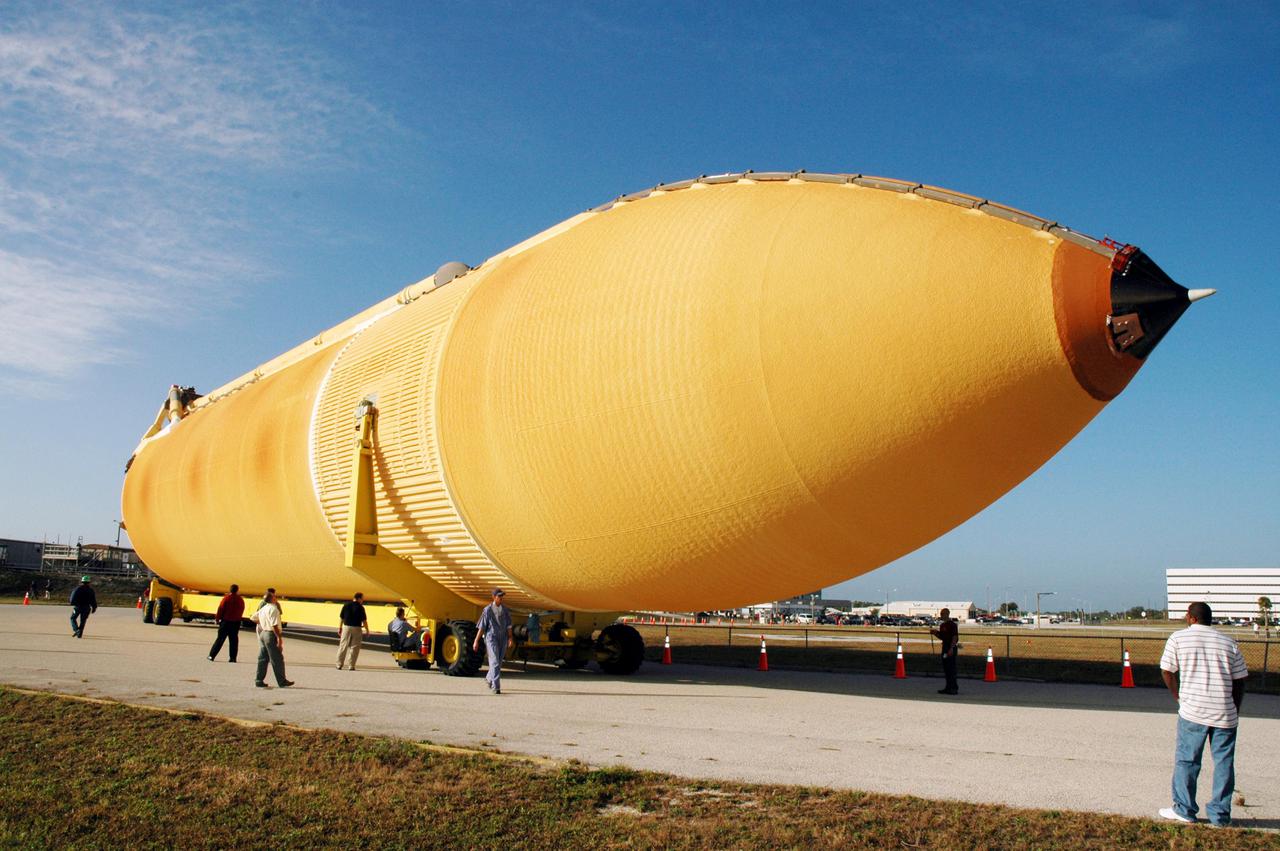
KENNEDY SPACE CENTER, FLA. - The newly redesigned External Tank turns the corner of the Launch Complex 39 Area Turn Basin parking area on its way to the Vehicle Assembly Building, seen at right. The tank arrived Jan. 5 after a 900-mile sea voyage aboard NASA’s specially designed barge, Pegasus, from the Michoud Assembly Facility in New Orleans. In the transfer aisle of the VAB, the tank will be raised from a horizontal to a vertical position, then lifted high up into a storage cell, or “checkout cell,” where it will undergo inspections of the mechanical, electrical and thermal protection systems. New processing activities resulting from re-design of the tank include inspection of the bipod heater and External Tank separation camera, which includes charging the camera batteries. The tank will be then prepared for mating to the Solid Rocket Boosters. When preparations are complete, the tank will be lifted from the checkout cell, moved across the transfer aisle and into High Bay 1, where it will be lowered and attached to the boosters, which are sitting on the Mobile Launch Platform. The tank is designated for the Return to Flight mission, STS-114, targeted for a launch opportunity beginning in May. The seven-member Discovery crew will fly to the International Space Station primarily to test and evaluate new procedures for flight safety, including Space Shuttle inspection and repair techniques.
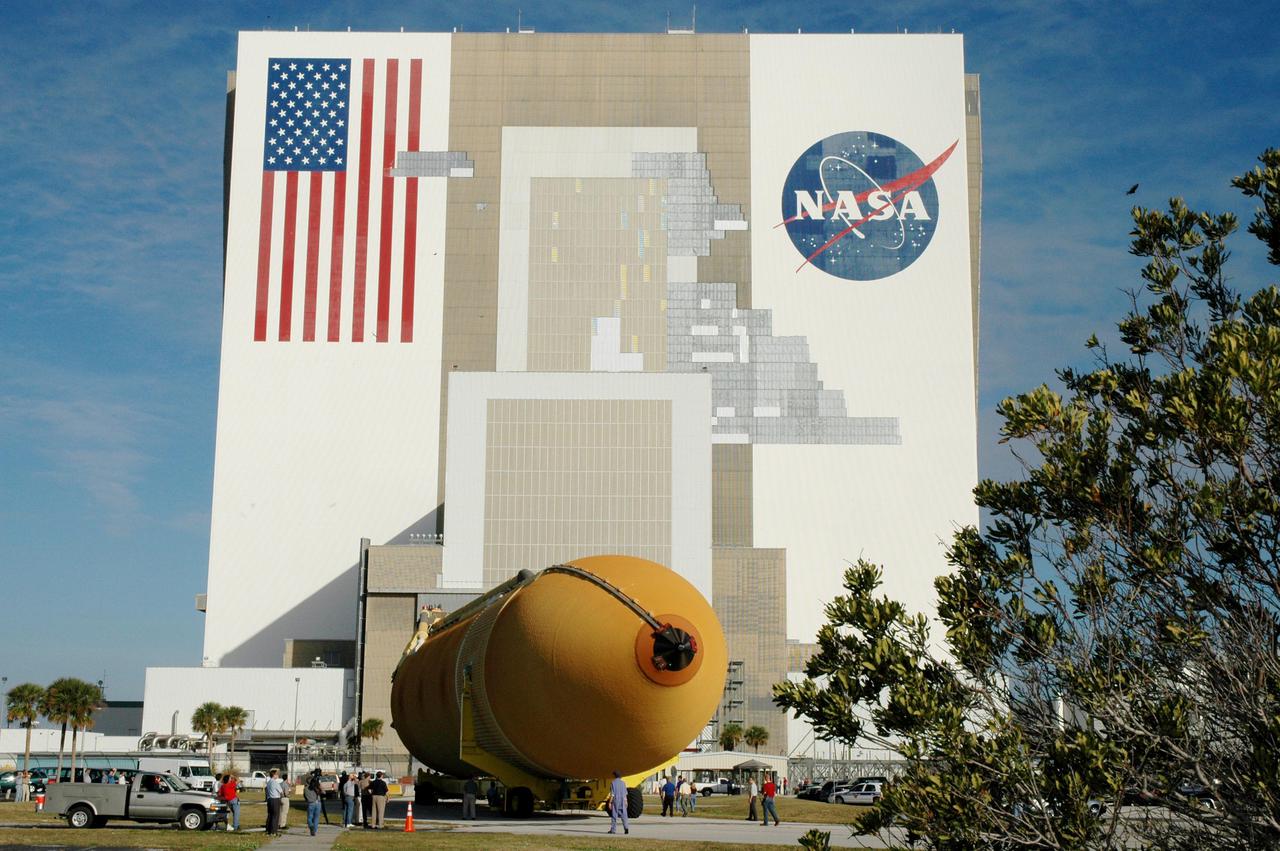
KENNEDY SPACE CENTER, FLA. - The newly redesigned External Tank heads for the open doors of the Vehicle Assembly Building, seen behind it. The tank arrived Jan. 5 after a 900-mile sea voyage aboard NASA’s specially designed barge, Pegasus, from the Michoud Assembly Facility in New Orleans. In the transfer aisle of the VAB, the tank will be raised from a horizontal to a vertical position, then lifted high up into a storage cell, or “checkout cell,” where it will undergo inspections of the mechanical, electrical and thermal protection systems. New processing activities resulting from re-design of the tank include inspection of the bipod heater and External Tank separation camera, which includes charging the camera batteries. The tank will be then prepared for mating to the Solid Rocket Boosters. When preparations are complete, the tank will be lifted from the checkout cell, moved across the transfer aisle and into High Bay 1, where it will be lowered and attached to the boosters, which are sitting on the Mobile Launch Platform. The tank is designated for the Return to Flight mission, STS-114, targeted for a launch opportunity beginning in May. The seven-member Discovery crew will fly to the International Space Station primarily to test and evaluate new procedures for flight safety, including Space Shuttle inspection and repair techniques.
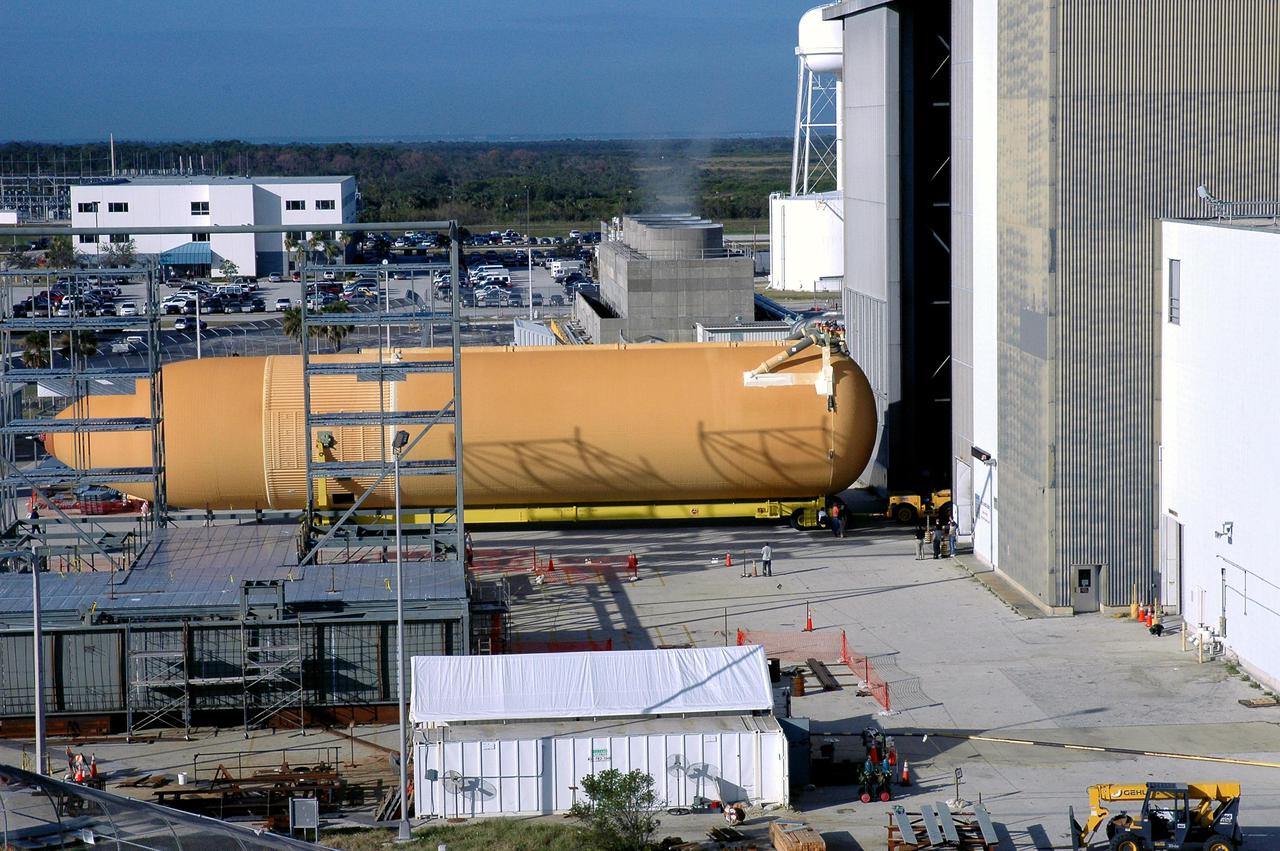
KENNEDY SPACE CENTER, FLA. - Viewed from the roof of the Launch Control Center in the Launch Complex 39 Area, the newly redesigned External Tank is seen moving into the Vehicle Assembly Building. In the transfer aisle of the VAB, the tank will be raised from a horizontal to a vertical position, then lifted high up into a storage cell, or “checkout cell,” where it will undergo inspections of the mechanical, electrical and thermal protection systems. New processing activities resulting from re-design of the tank include inspection of the bipod heater and External Tank separation camera, which includes charging the camera batteries. The tank will be then prepared for mating to the Solid Rocket Boosters. When preparations are complete, the tank will be lifted from the checkout cell, moved across the transfer aisle and into High Bay 1, where it will be lowered and attached to the boosters, which are sitting on the Mobile Launch Platform. The tank is designated for the Return to Flight mission, STS-114, targeted for a launch opportunity beginning in May. The seven-member Discovery crew will fly to the International Space Station primarily to test and evaluate new procedures for flight safety, including Space Shuttle inspection and repair techniques.
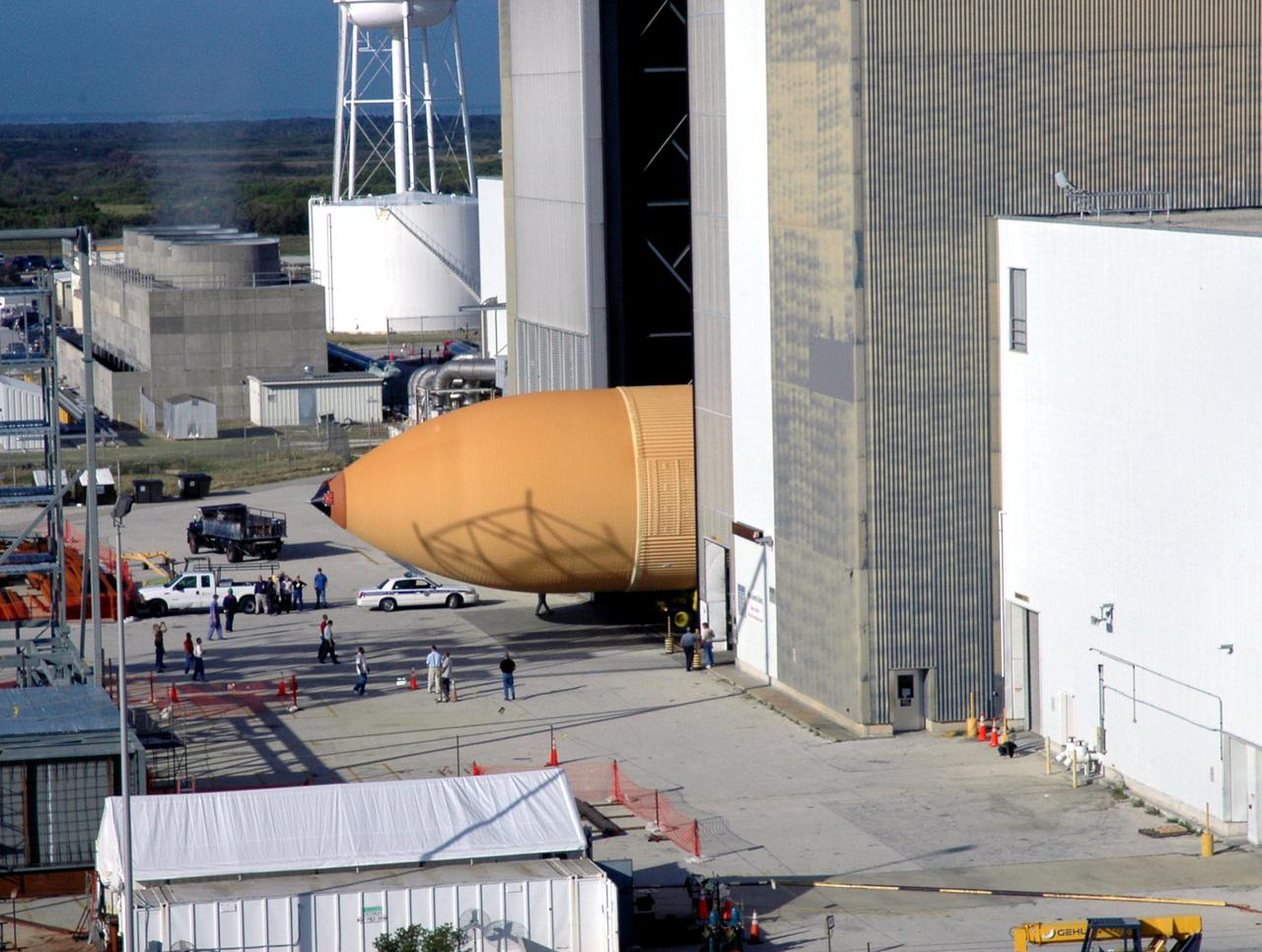
KENNEDY SPACE CENTER, FLA. - Viewed from the roof of the Launch Control Center in the Launch Complex 39 Area, the newly redesigned External Tank disappears into the Vehicle Assembly Building. In the transfer aisle of the VAB, the tank will be raised from a horizontal to a vertical position, then lifted high up into a storage cell, or “checkout cell,” where it will undergo inspections of the mechanical, electrical and thermal protection systems. New processing activities resulting from re-design of the tank include inspection of the bipod heater and External Tank separation camera, which includes charging the camera batteries. The tank will be then prepared for mating to the Solid Rocket Boosters. When preparations are complete, the tank will be lifted from the checkout cell, moved across the transfer aisle and into High Bay 1, where it will be lowered and attached to the boosters, which are sitting on the Mobile Launch Platform. The tank is designated for the Return to Flight mission, STS-114, targeted for a launch opportunity beginning in May. The seven-member Discovery crew will fly to the International Space Station primarily to test and evaluate new procedures for flight safety, including Space Shuttle inspection and repair techniques.
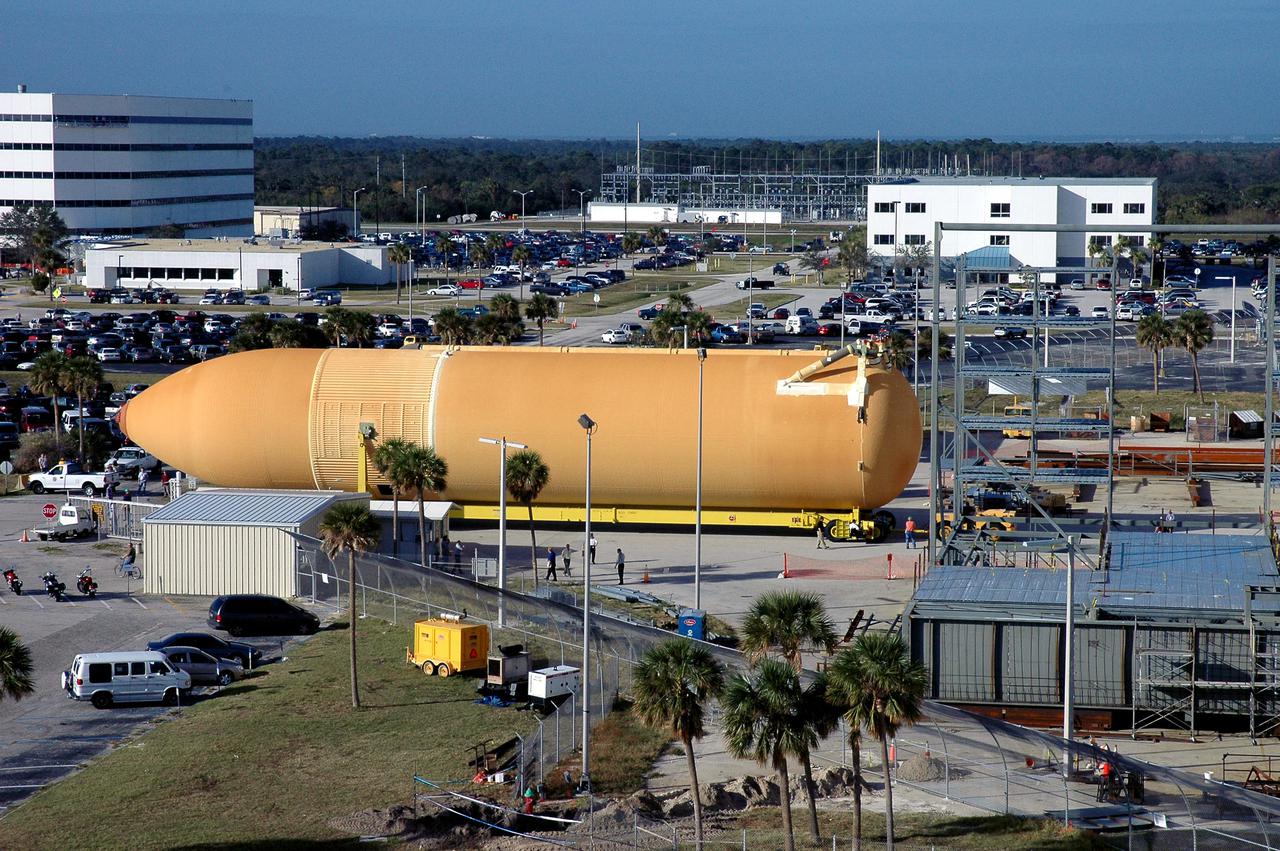
KENNEDY SPACE CENTER, FLA. - Viewed from the roof of the Launch Control Center in the Launch Complex 39 Area, the newly redesigned External Tank is seen moving along the roadway on its way to the Vehicle Assembly Building. In the background, at left, is the Operations Support Building I. In the transfer aisle of the VAB, the tank will be raised from a horizontal to a vertical position, then lifted high up into a storage cell, or “checkout cell,” where it will undergo inspections of the mechanical, electrical and thermal protection systems. New processing activities resulting from re-design of the tank include inspection of the bipod heater and External Tank separation camera, which includes charging the camera batteries. The tank will be then prepared for mating to the Solid Rocket Boosters. When preparations are complete, the tank will be lifted from the checkout cell, moved across the transfer aisle and into High Bay 1, where it will be lowered and attached to the boosters, which are sitting on the Mobile Launch Platform. The tank is designated for the Return to Flight mission, STS-114, targeted for a launch opportunity beginning in May. The seven-member Discovery crew will fly to the International Space Station primarily to test and evaluate new procedures for flight safety, including Space Shuttle inspection and repair techniques.
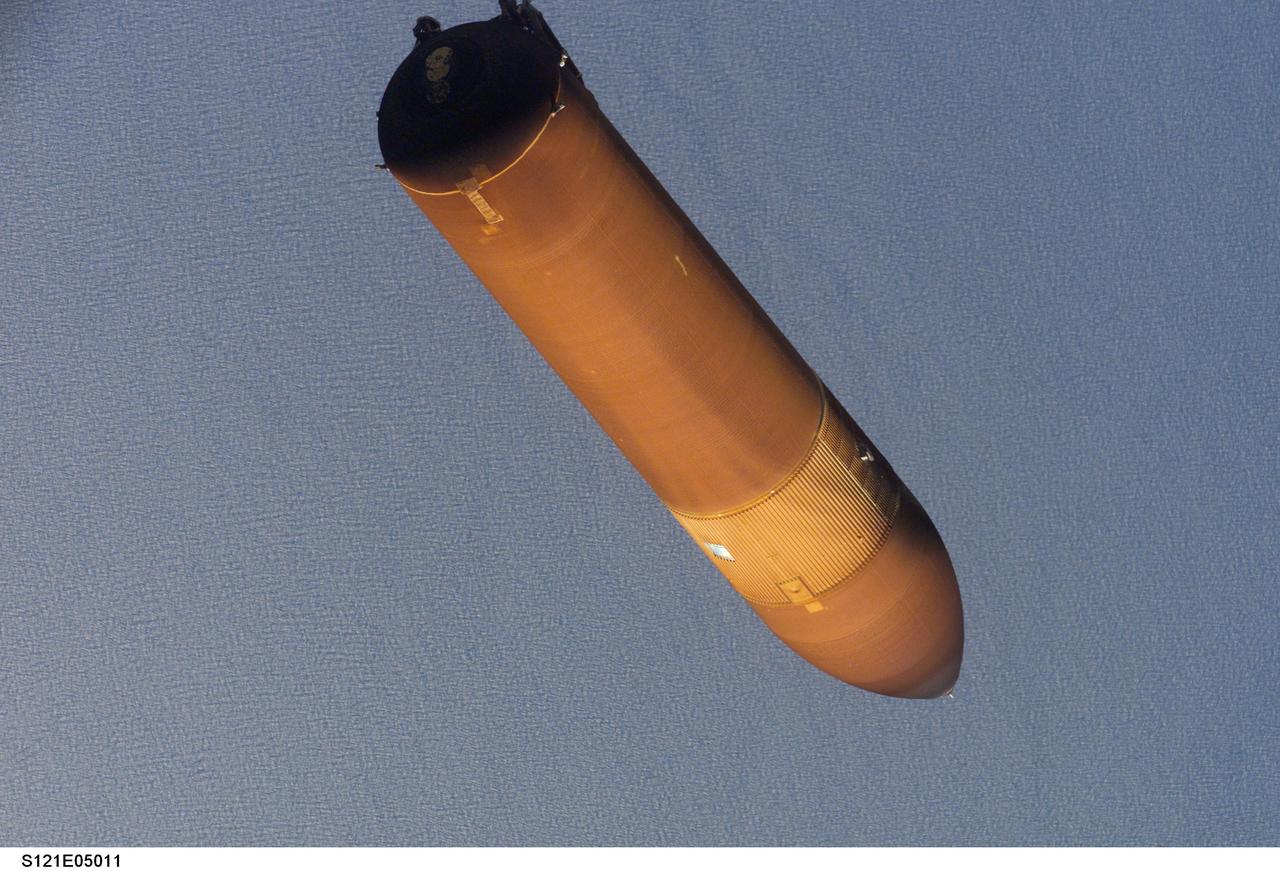
STS121-E-05011 (4 July 2006)-- This picture of the STS-121 external tank was taken with a digital still camera by an astronaut only seconds after separation from the Space Shuttle Discovery on launch day. Engineers, managers and flight controllers have carefully studied this image and other frames from this series as well as a number of pictures showing the falling ET as photographed from umbilical well cameras.