External Vision System on NASA UC-12B Aircraft
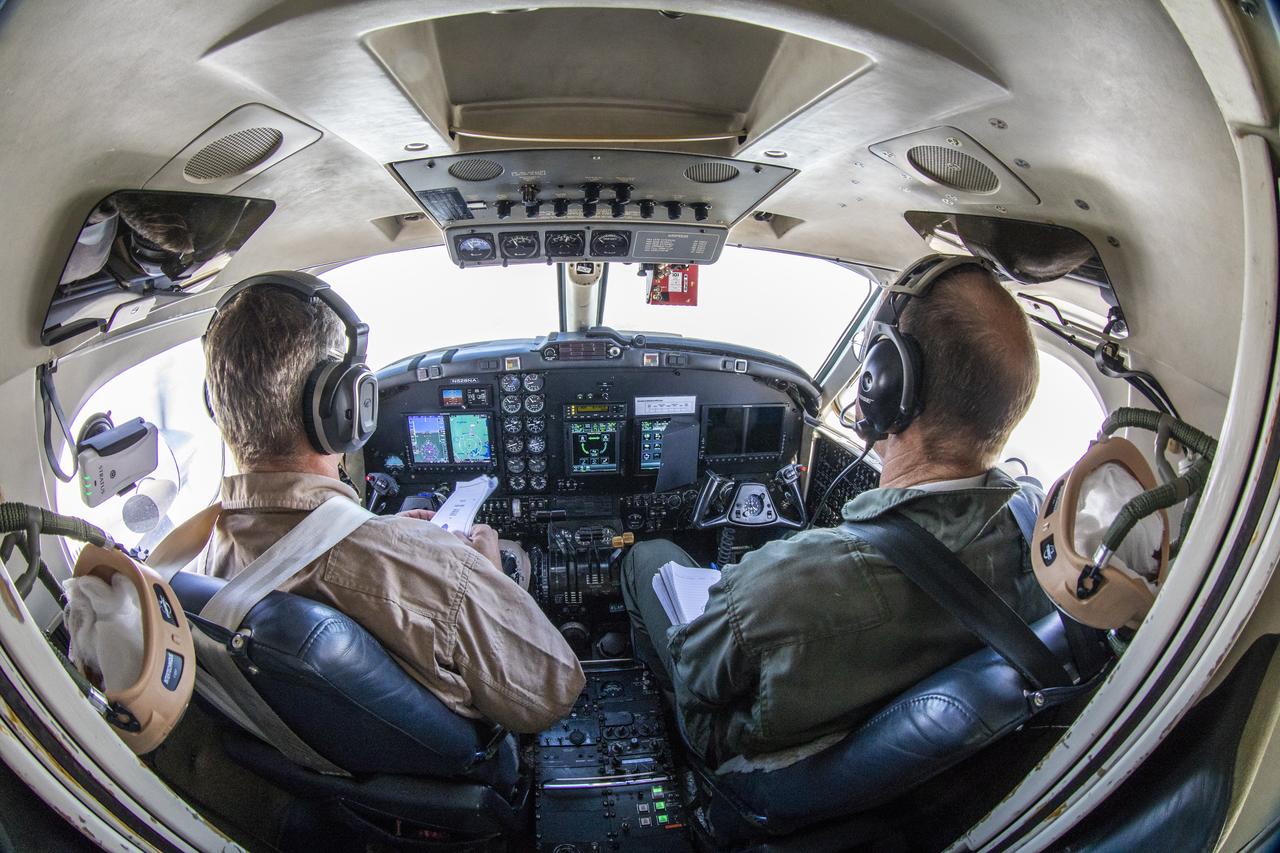
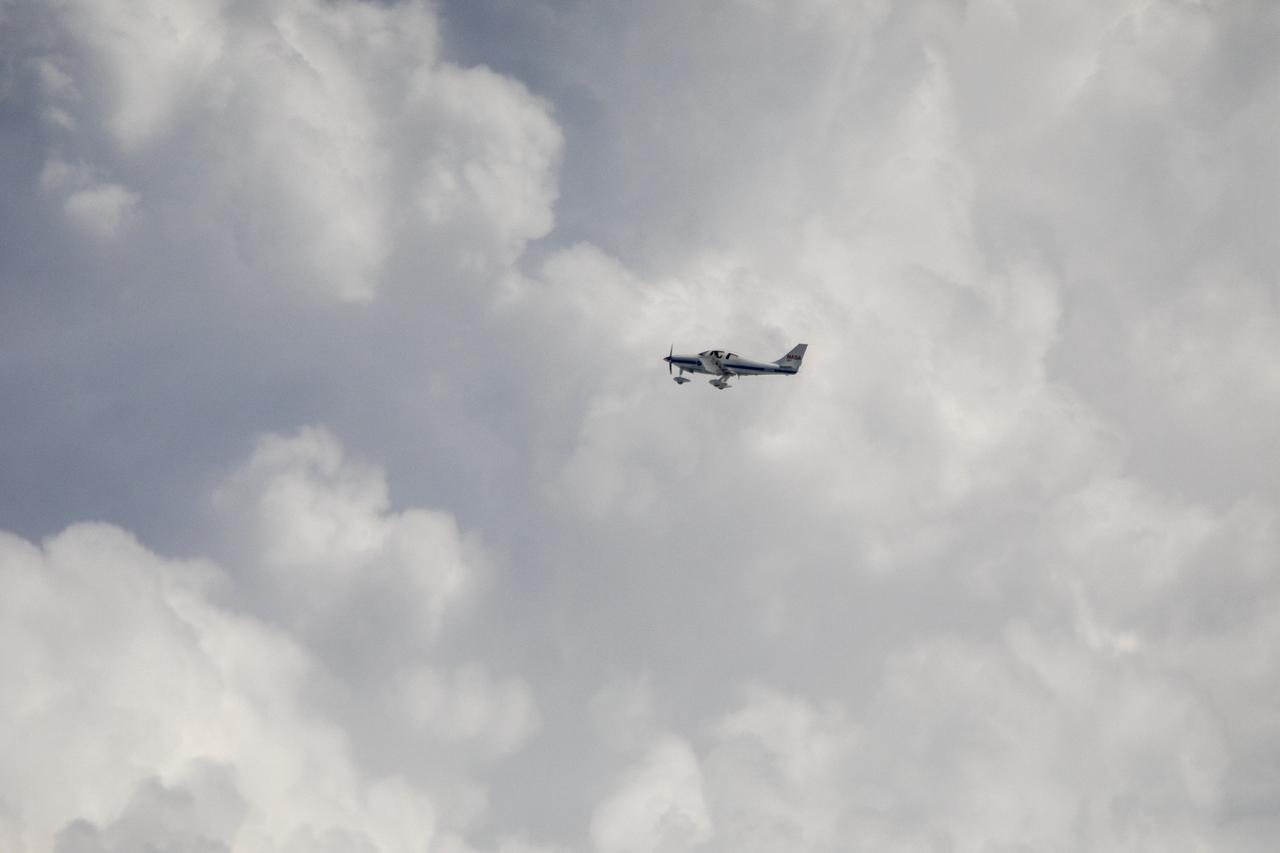
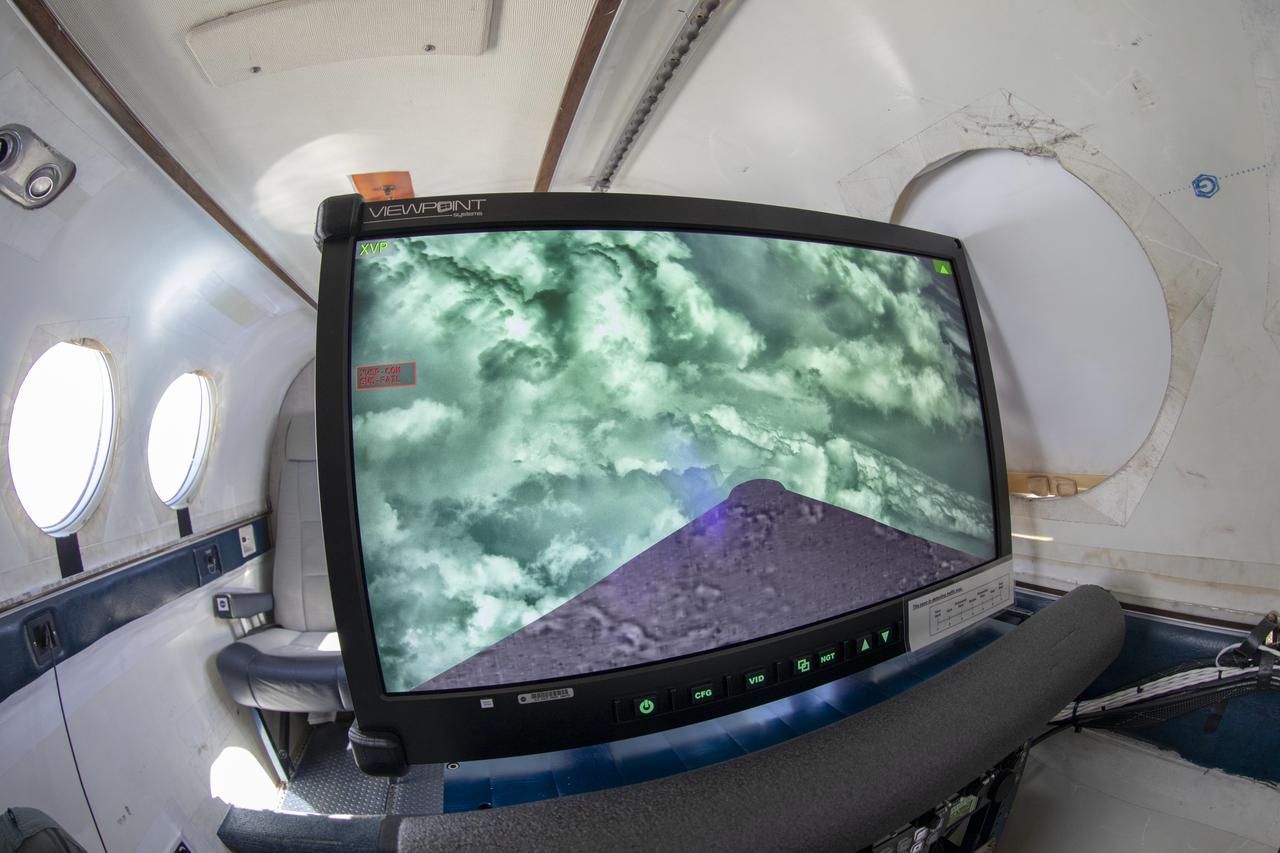
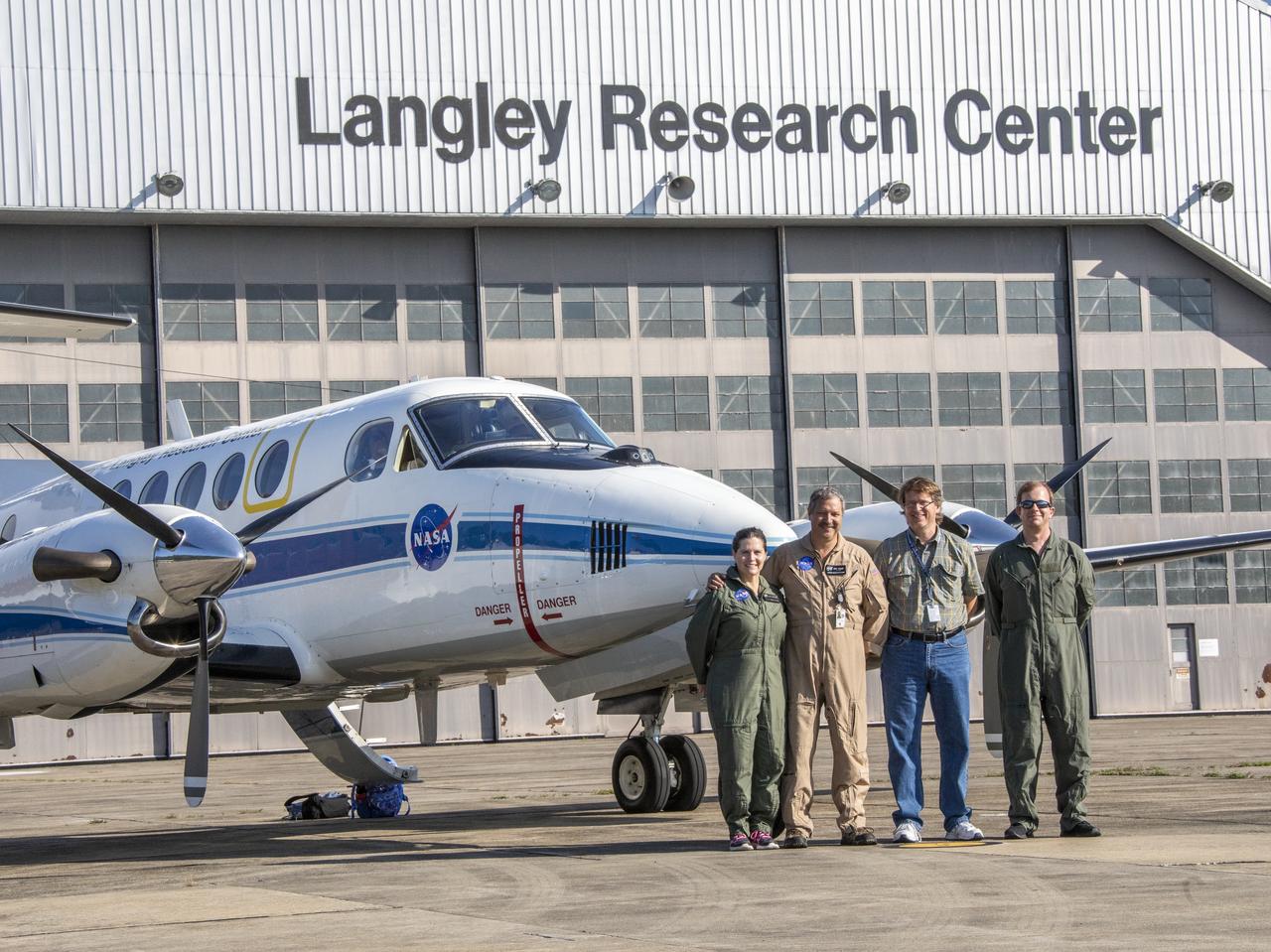
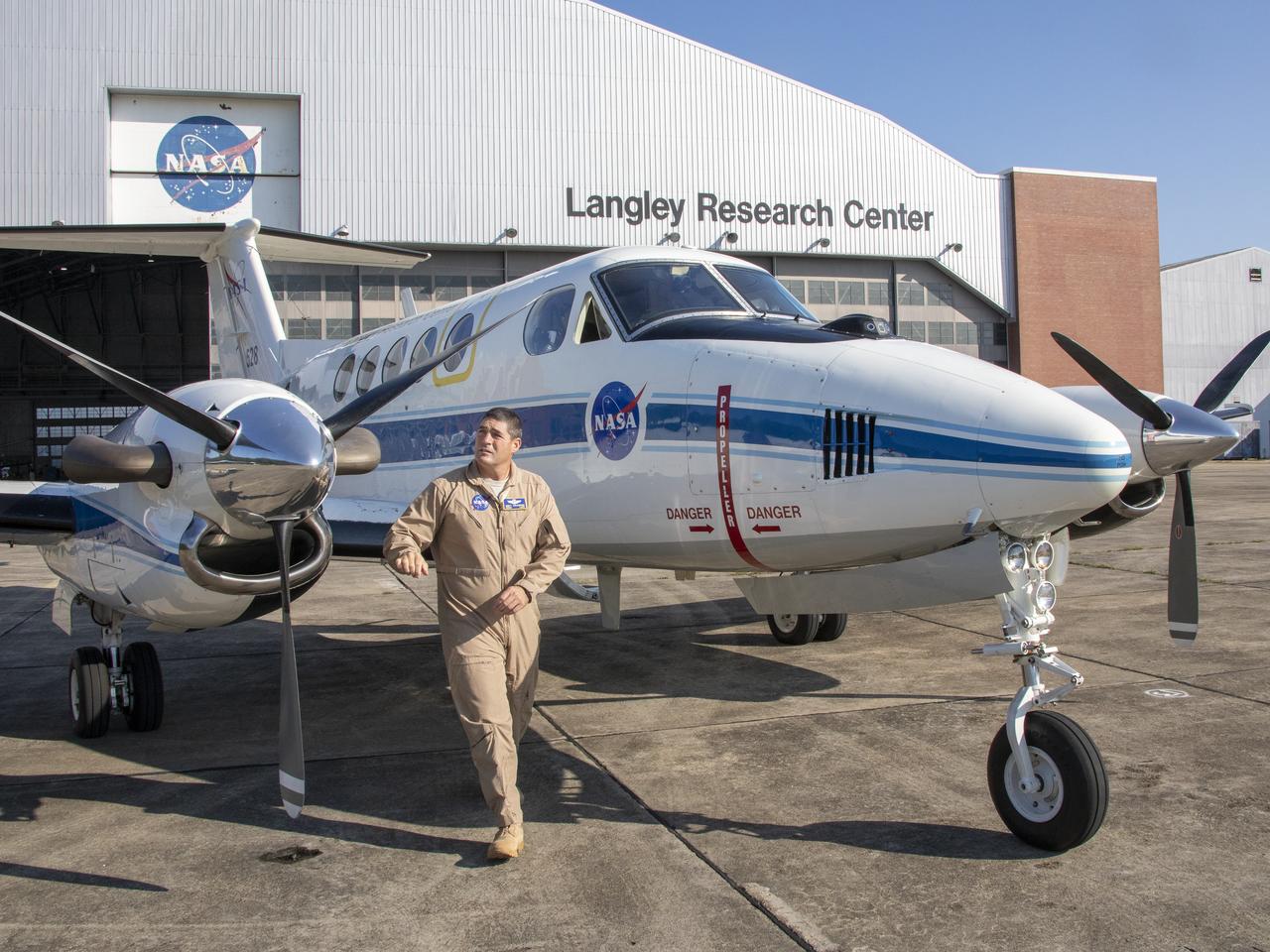
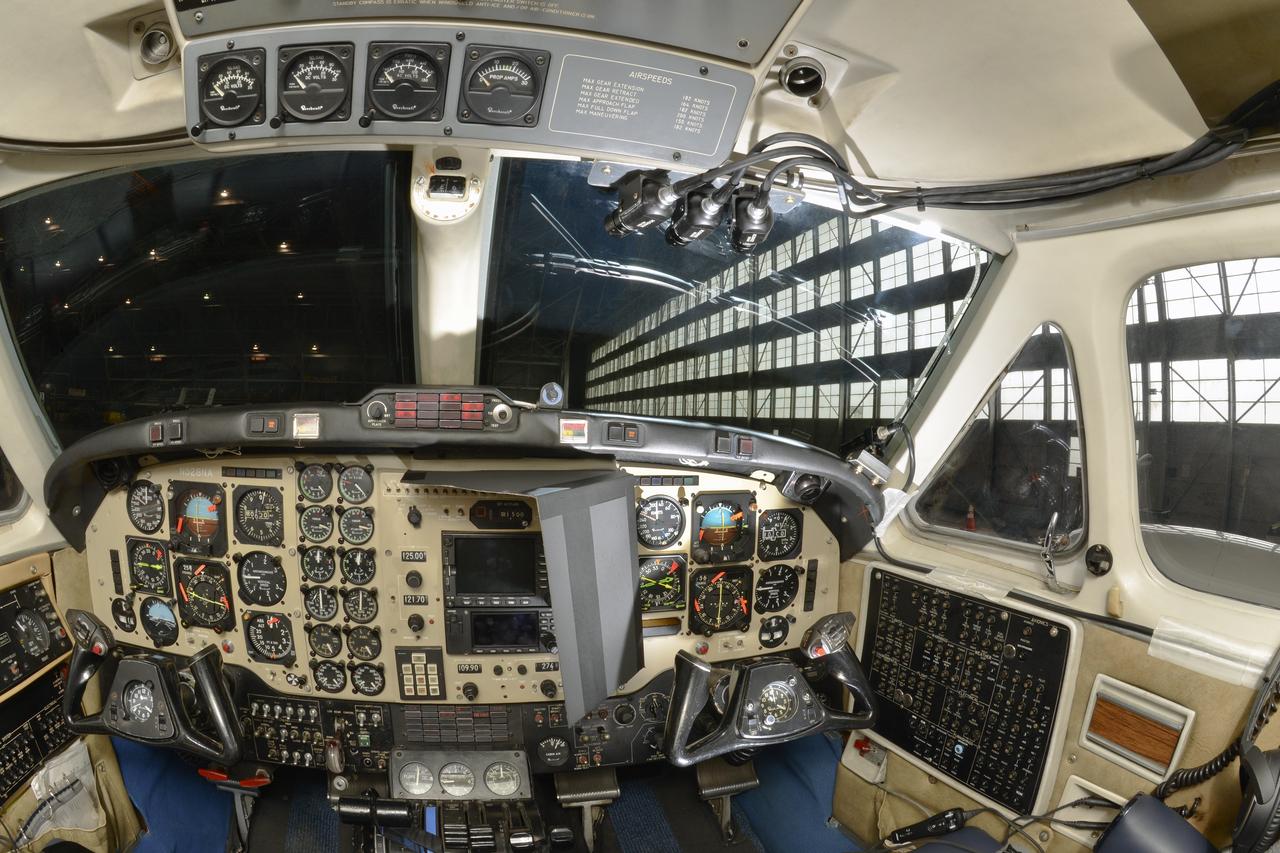
Testing of the External Vision System (EVS) Software on the B200 King Air
Testing of the External Vision System (XVS) Software on the B200 King Air
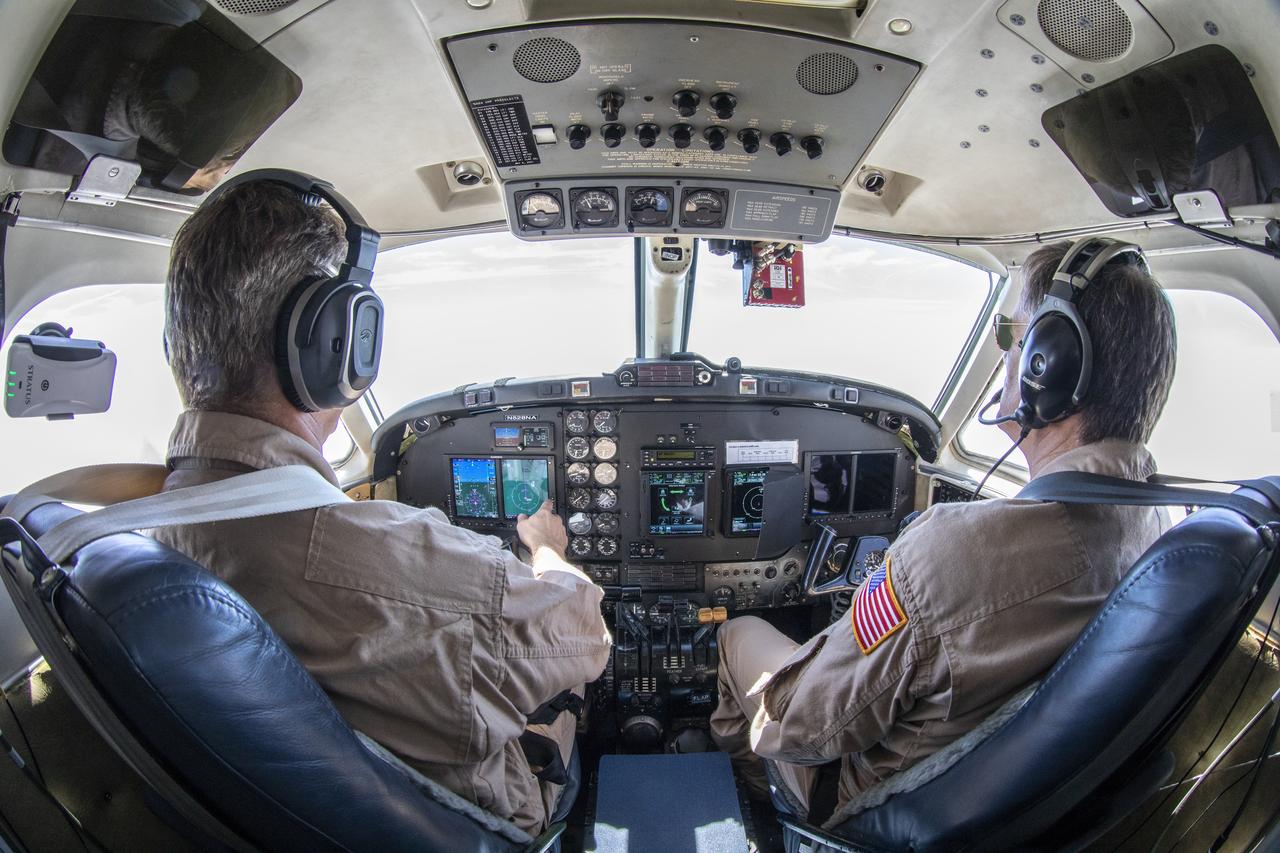
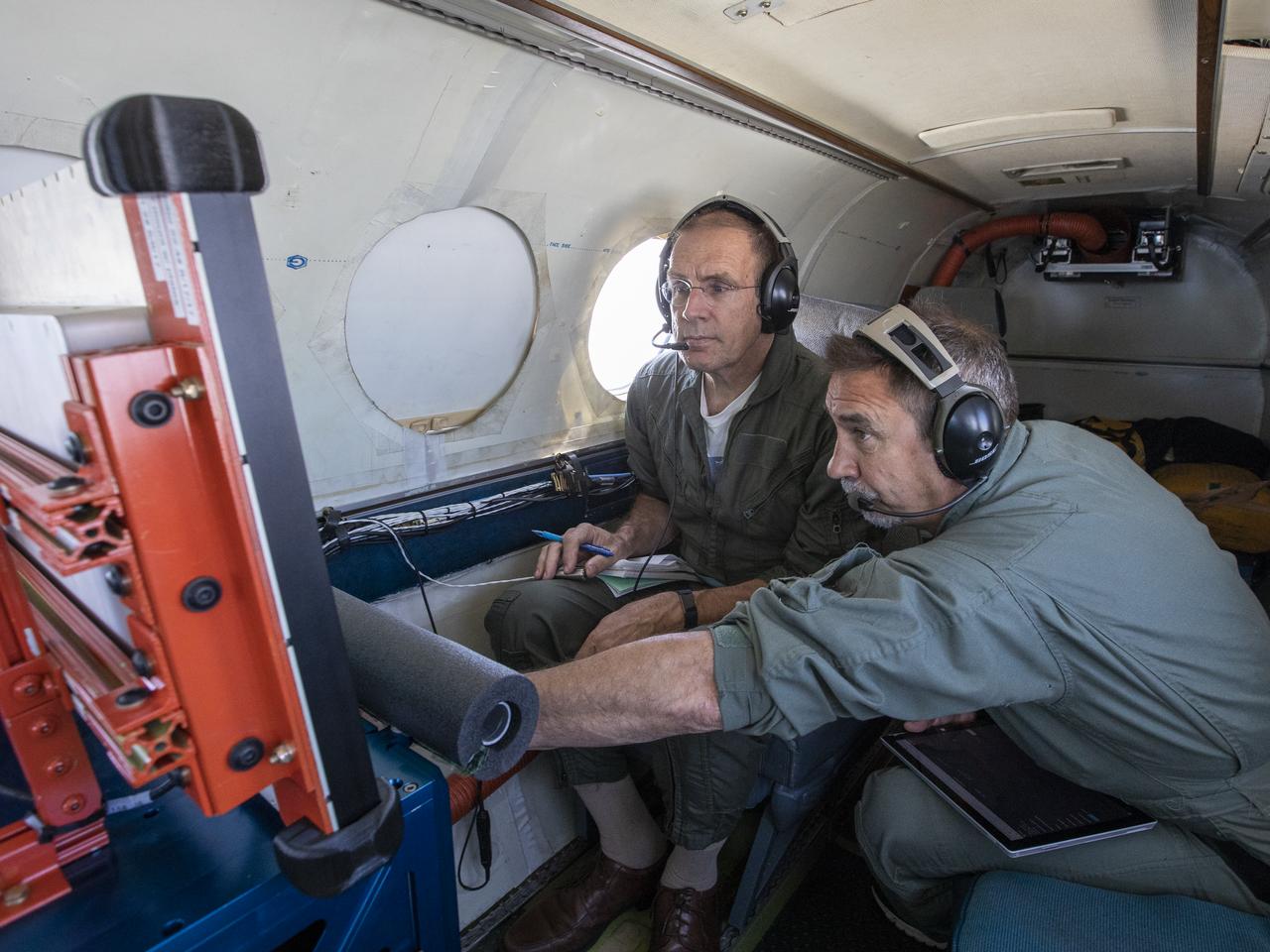
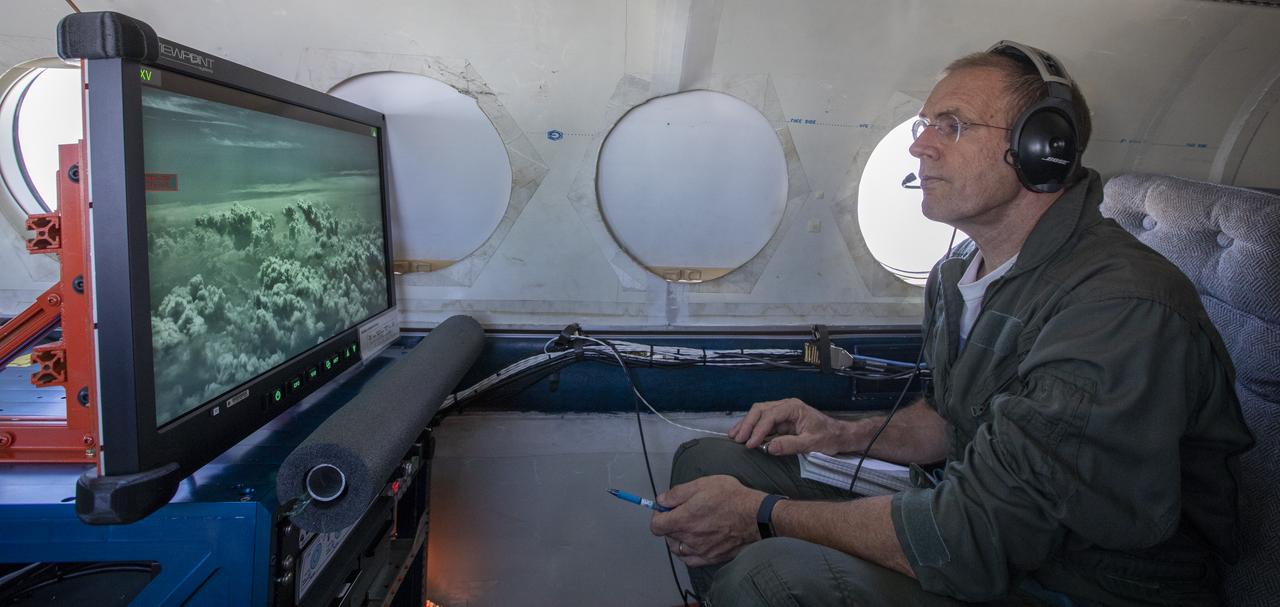
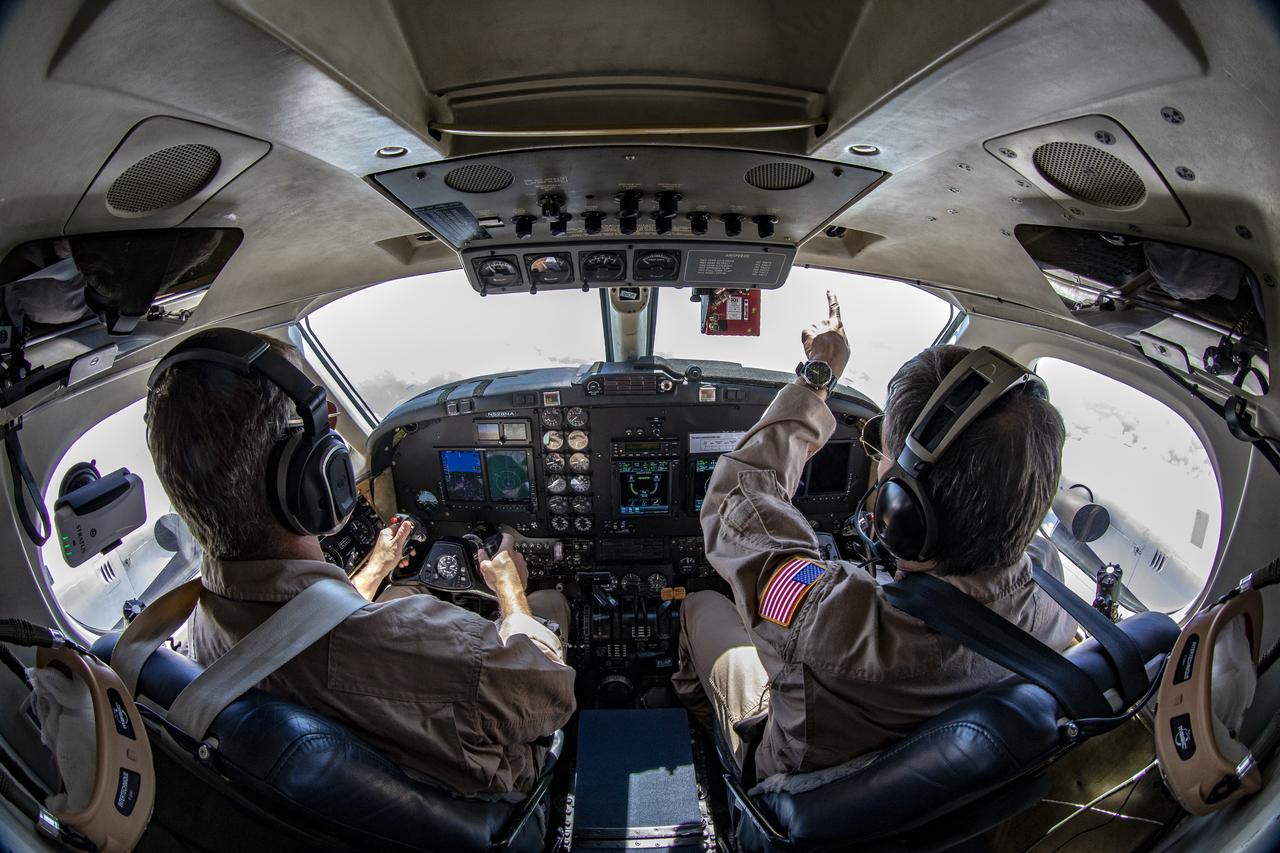
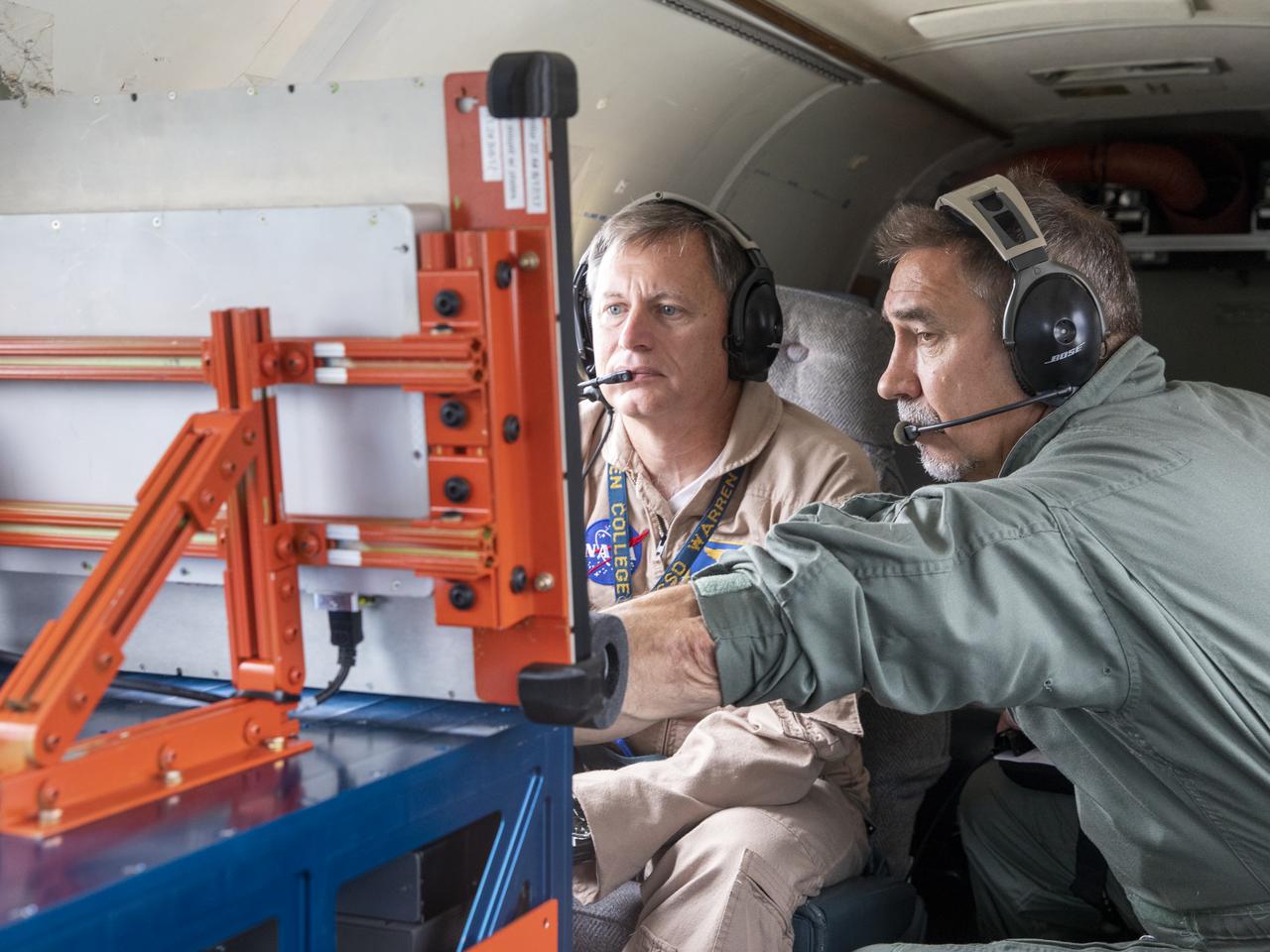
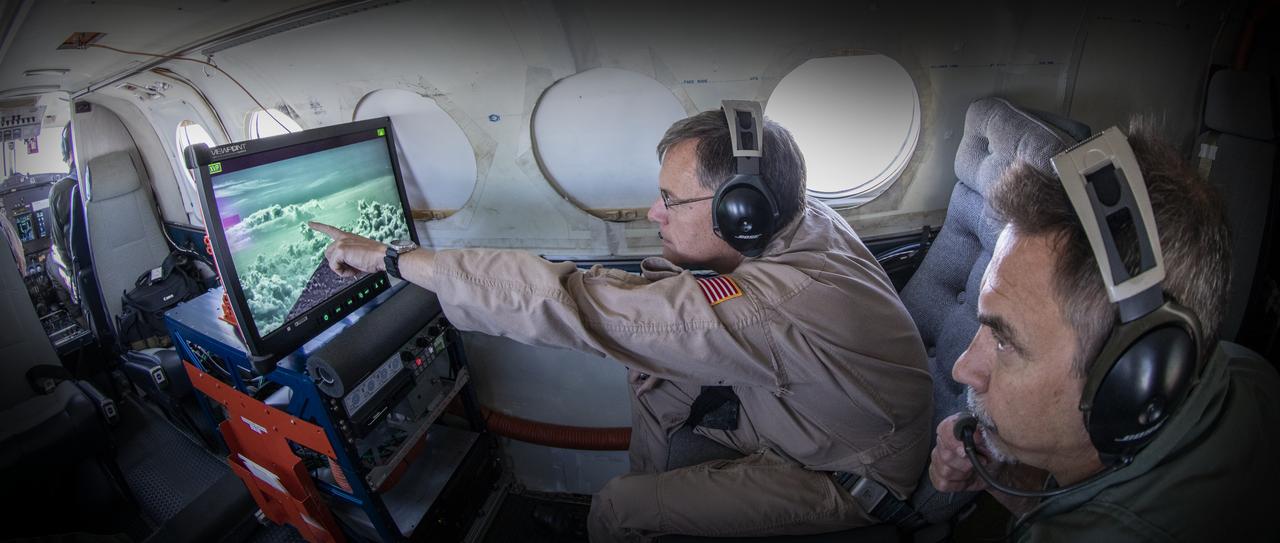
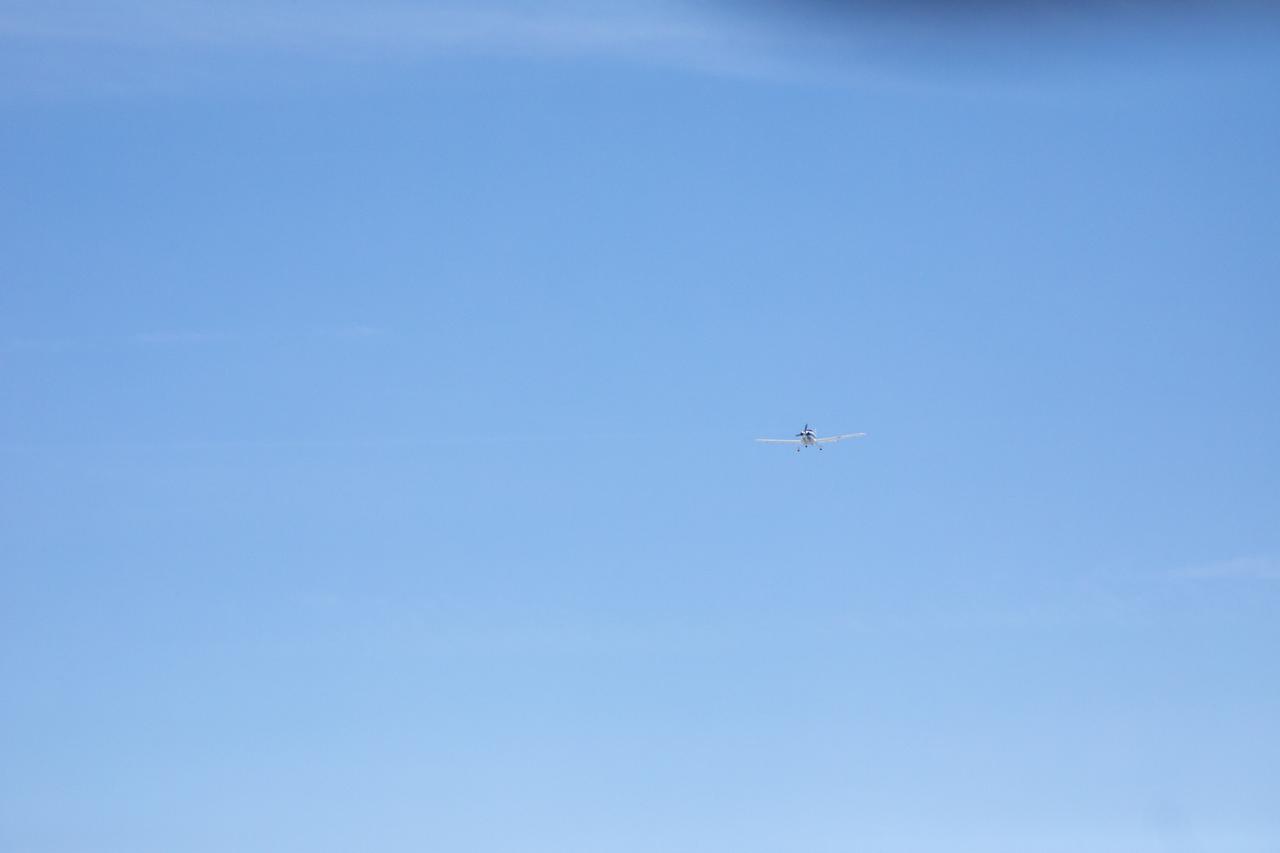
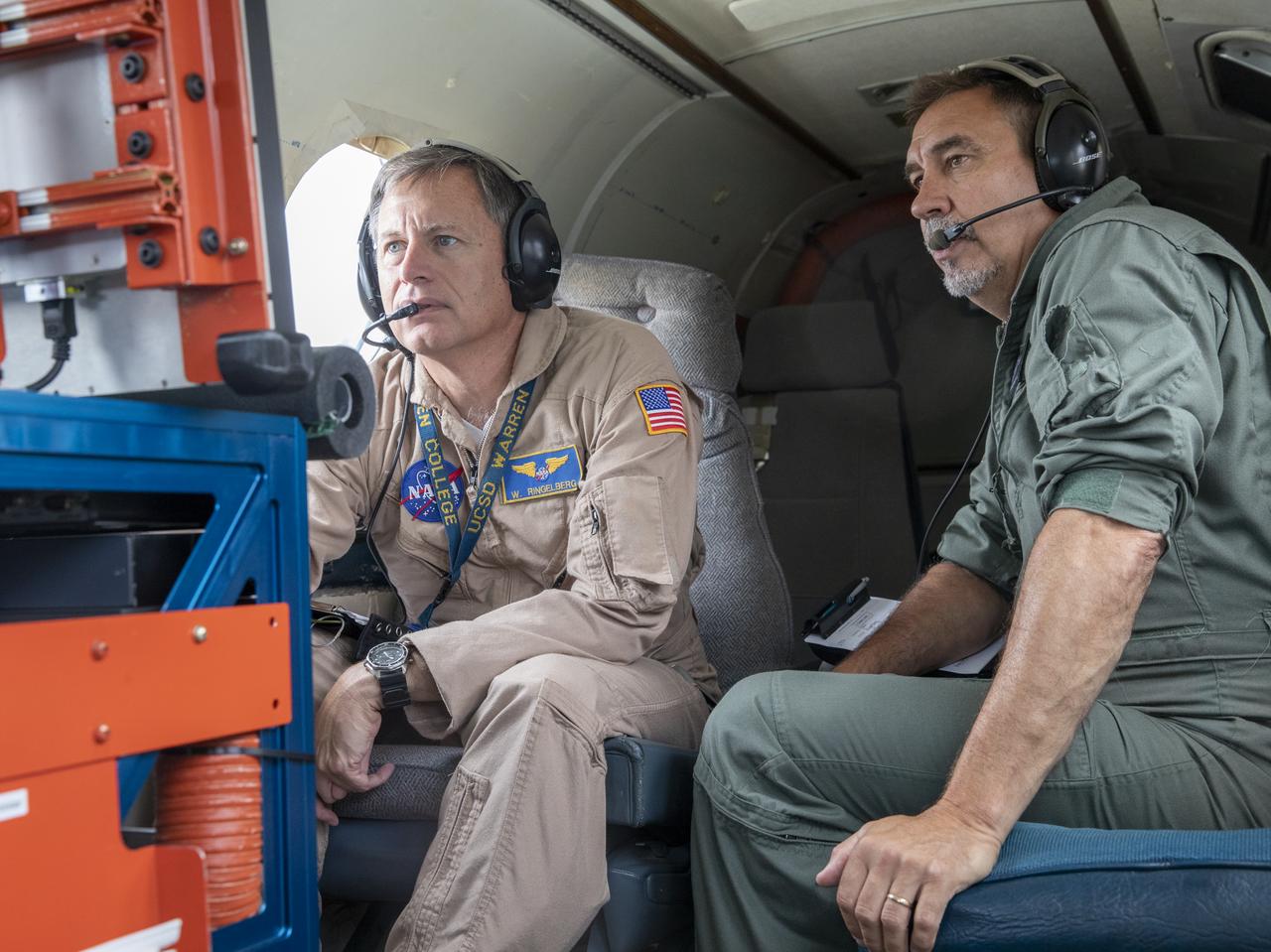
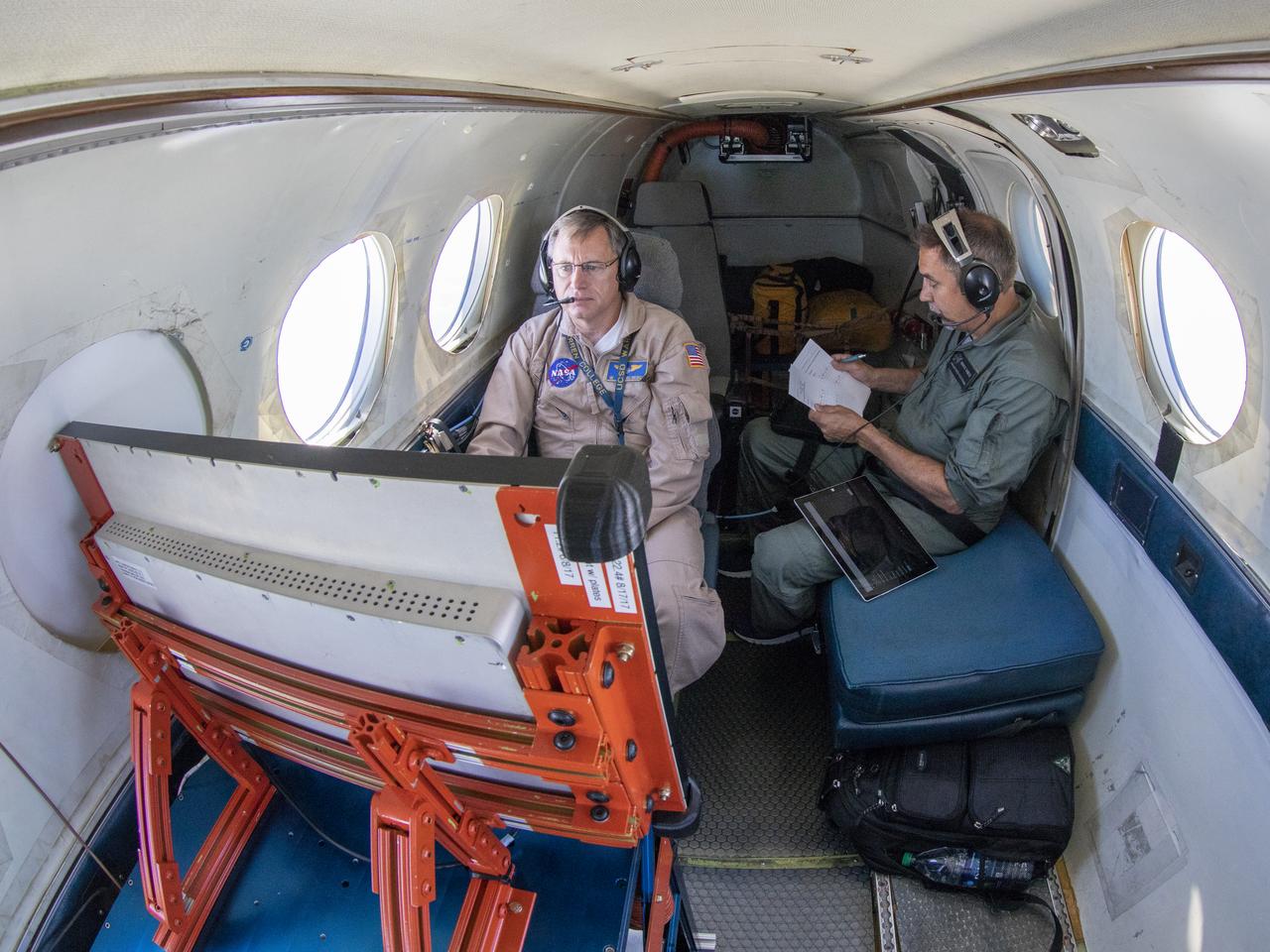
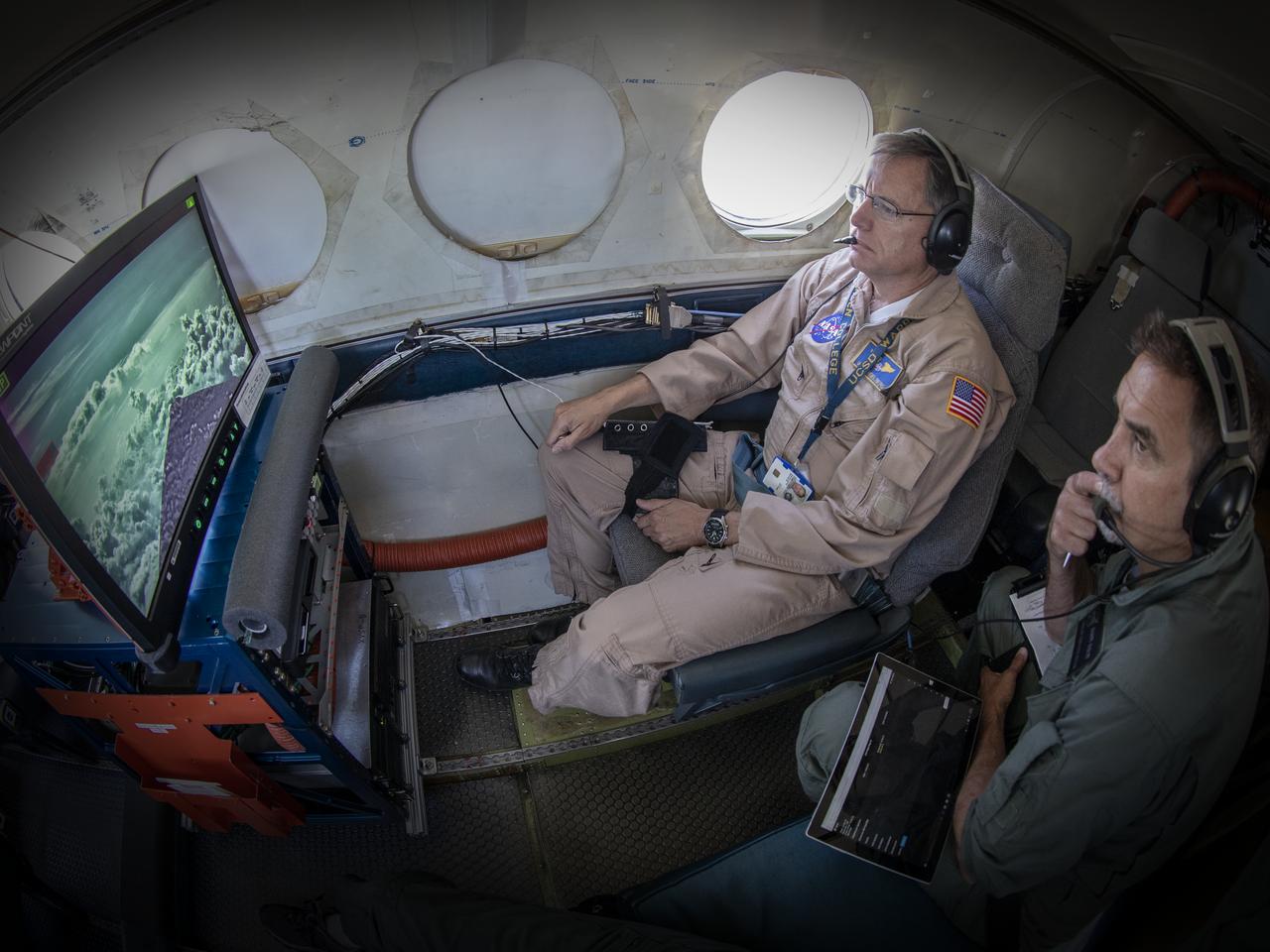
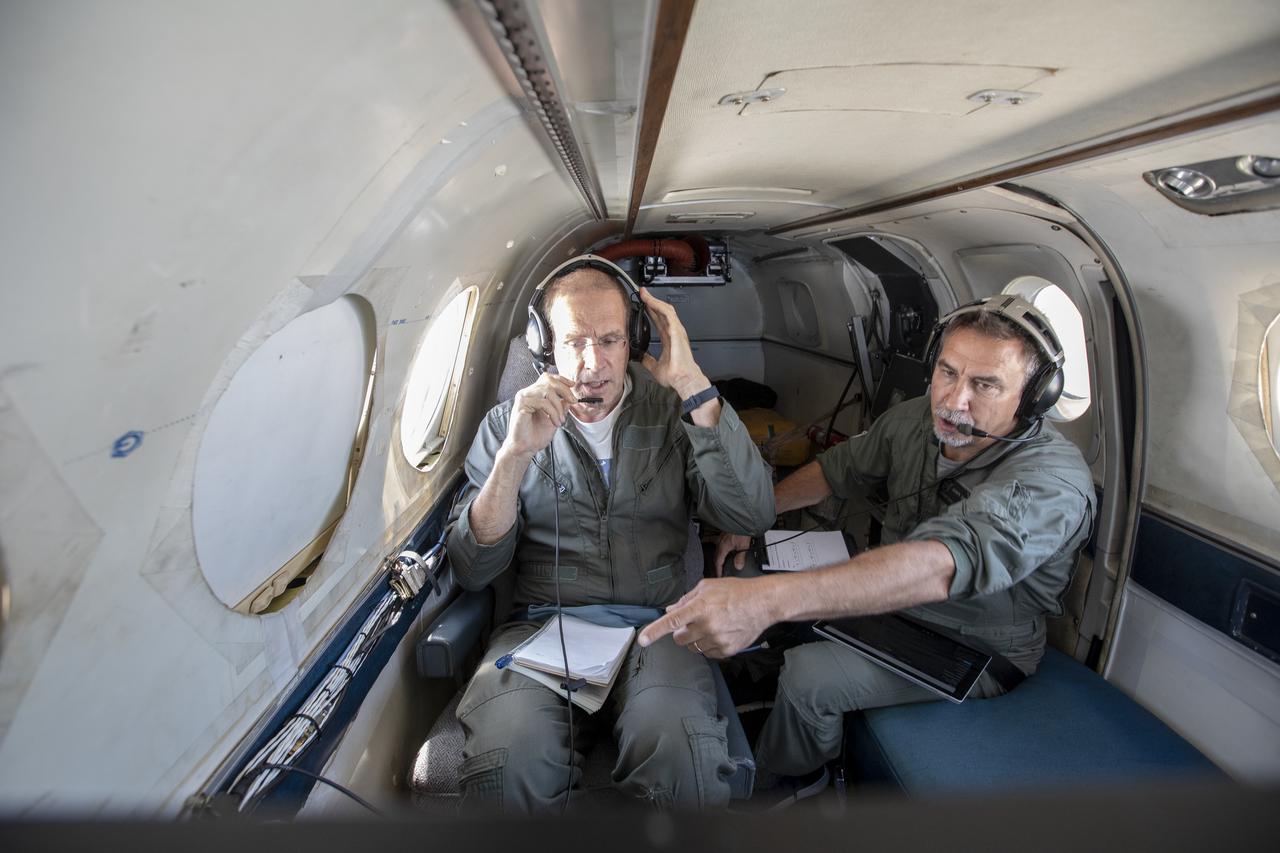
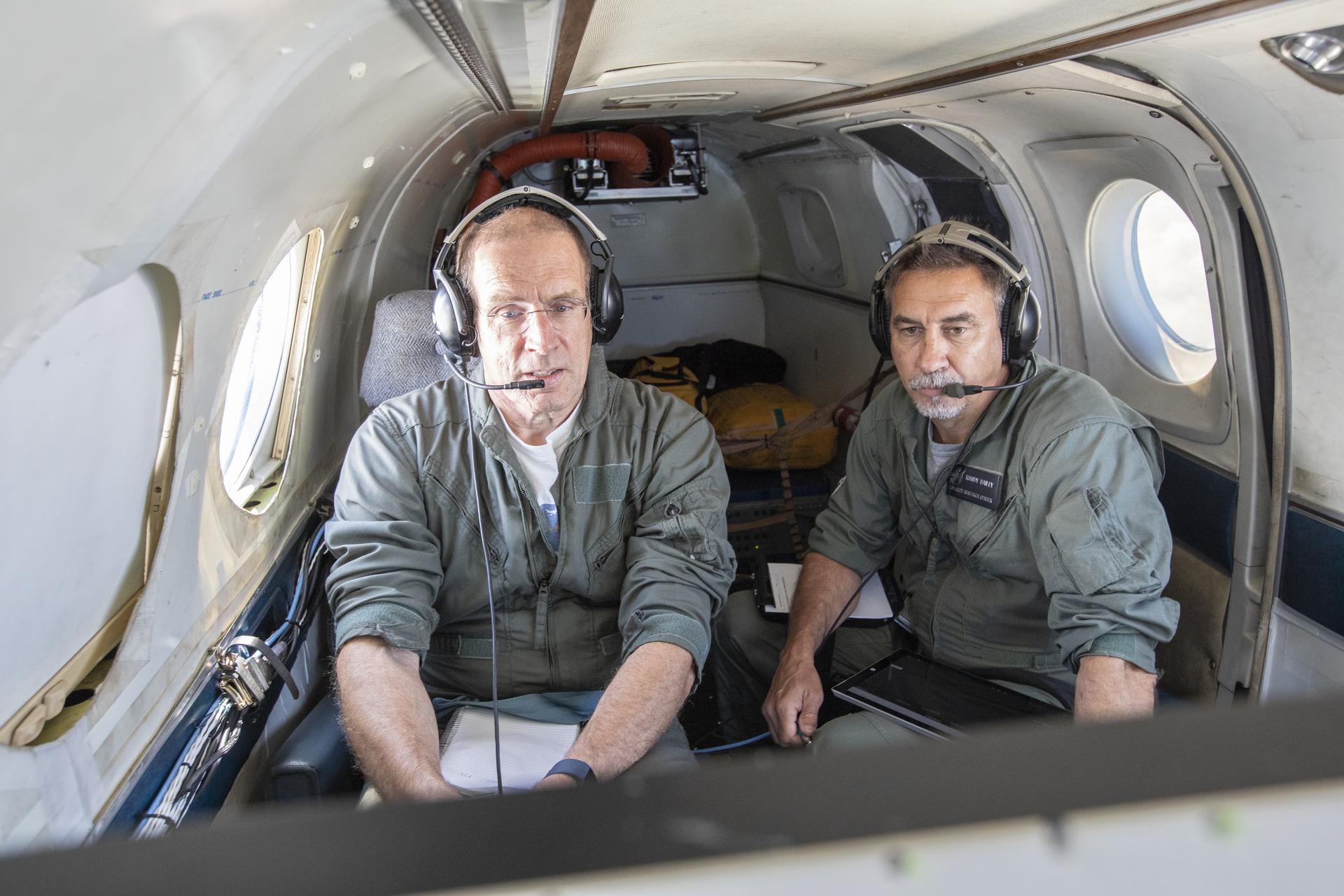
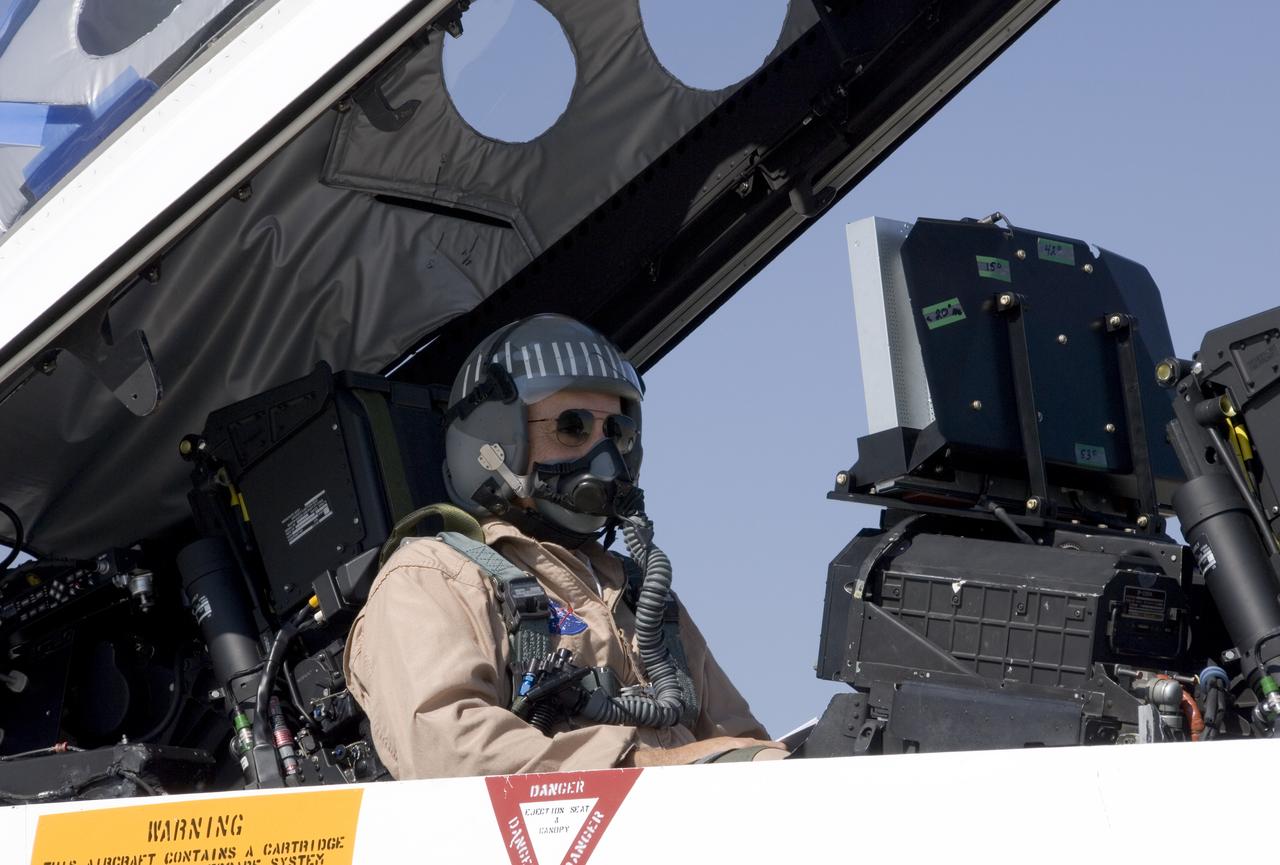
Testing the External Vision System (XVS) software on the B200 King Air. Pilots, Peter Coen and Wayne Ringelberg attempt to spot an incoming aircraft on the XVS monitor.
Testing of the External Vision System (XVS) Software on the B200 King Air
Testing the External Vision System (XVS) software on the B200 King Air. Pilots, Peter Coen and Wayne Ringelberg attempt to spot an incoming aircraft on the XVS monitor.
Testing of the External Vision System (XVS) Software on the B200 King Air
Testing the External Vision System (XVS) software on the B200 King Air. Pilots, Peter Coen and Wayne Ringelberg attempt to spot an incoming aircraft on the XVS monitor.
Testing of the External Vision System (XVS) Software on the B200 King Air
Testing the External Vision System (XVS) software on the B200 King Air. Pilots, Peter Coen and Wayne Ringelberg attempt to spot an incoming aircraft on the XVS monitor.
Testing of the External Vision System (XVS) Software on the B200 King Air
Testing the External Vision System (XVS) software on the B200 King Air. Pilots, Peter Coen and Wayne Ringelberg attempt to spot an incoming aircraft on the XVS monitor.
Testing of the External Vision System (XVS) Software on the B200 King Air
Testing the External Vision System (XVS) software on the B200 King Air. Pilots, Peter Coen and Wayne Ringelberg attempt to spot an incoming aircraft on the XVS monitor.
Testing of the External Vision System (XVS) Software on the B200 King Air
Testing the External Vision System (XVS) software on the B200 King Air. Pilots, Peter Coen and Wayne Ringelberg attempt to spot an incoming aircraft on the XVS monitor.
Testing of the External Vision System (XVS) Software on the B200 King Air
Testing the External Vision System (XVS) software on the B200 King Air. Pilots, Peter Coen and Wayne Ringelberg attempt to spot an incoming aircraft on the XVS monitor.
Testing of the External Vision System (XVS) Software on the B200 King Air
Testing the External Vision System (XVS) software on the B200 King Air. Pilots, Peter Coen and Wayne Ringelberg attempt to spot an incoming aircraft on the XVS monitor.
Testing of the External Vision System (XVS) Software on the B200 King Air
Testing the External Vision System (XVS) software on the B200 King Air. Pilots, Peter Coen and Wayne Ringelberg attempt to spot an incoming aircraft on the XVS monitor.
Testing of the External Vision System (XVS) Software on the B200 King Air
Testing the External Vision System (XVS) software on the B200 King Air. Pilots, Peter Coen and Wayne Ringelberg attempt to spot an incoming aircraft on the XVS monitor.
Testing of the External Vision System (XVS) Software on the B200 King Air
Testing the External Vision System (XVS) software on the B200 King Air. Pilots, Peter Coen and Wayne Ringelberg attempt to spot an incoming aircraft on the XVS monitor.
Testing of the External Vision System (XVS) Software on the B200 King Air
Testing the External Vision System (XVS) software on the B200 King Air. Pilots, Peter Coen and Wayne Ringelberg attempt to spot an incoming aircraft on the XVS monitor.
Testing of the External Vision System (XVS) Software on the B200 King Air
Testing the External Vision System (XVS) software on the B200 King Air. Pilots, Peter Coen and Wayne Ringelberg attempt to spot an incoming aircraft on the XVS monitor.
Testing of the External Vision System (XVS) Software on the B200 King Air
Testing the External Vision System (XVS) software on the B200 King Air. Pilots, Peter Coen and Wayne Ringelberg attempt to spot an incoming aircraft on the XVS monitor.
Testing of the External Vision System (XVS) Software on the B200 King Air
Testing the External Vision System (XVS) software on the B200 King Air. Pilots, Peter Coen and Wayne Ringelberg attempt to spot an incoming aircraft on the XVS monitor.
Testing of the External Vision System (XVS) Software on the B200 King Air
Testing the External Vision System (XVS) software on the B200 King Air. Pilots, Peter Coen and Wayne Ringelberg attempt to spot an incoming aircraft on the XVS monitor.
Testing of the External Vision System (XVS) Software on the B200 King Air
Testing the External Vision System (XVS) software on the B200 King Air. Pilots, Peter Coen and Wayne Ringelberg attempt to spot an incoming aircraft on the XVS monitor.
Testing of the External Vision System (XVS) Software on the B200 King Air
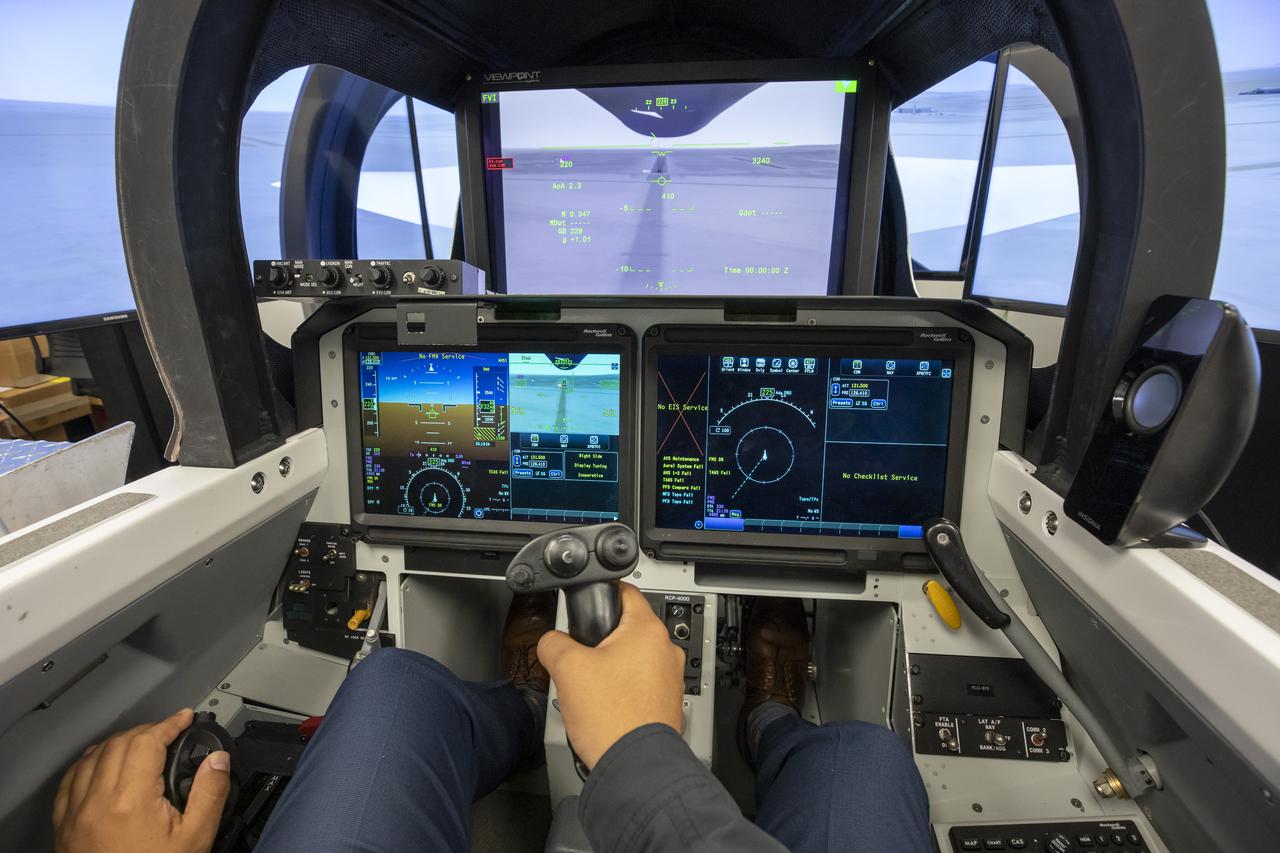
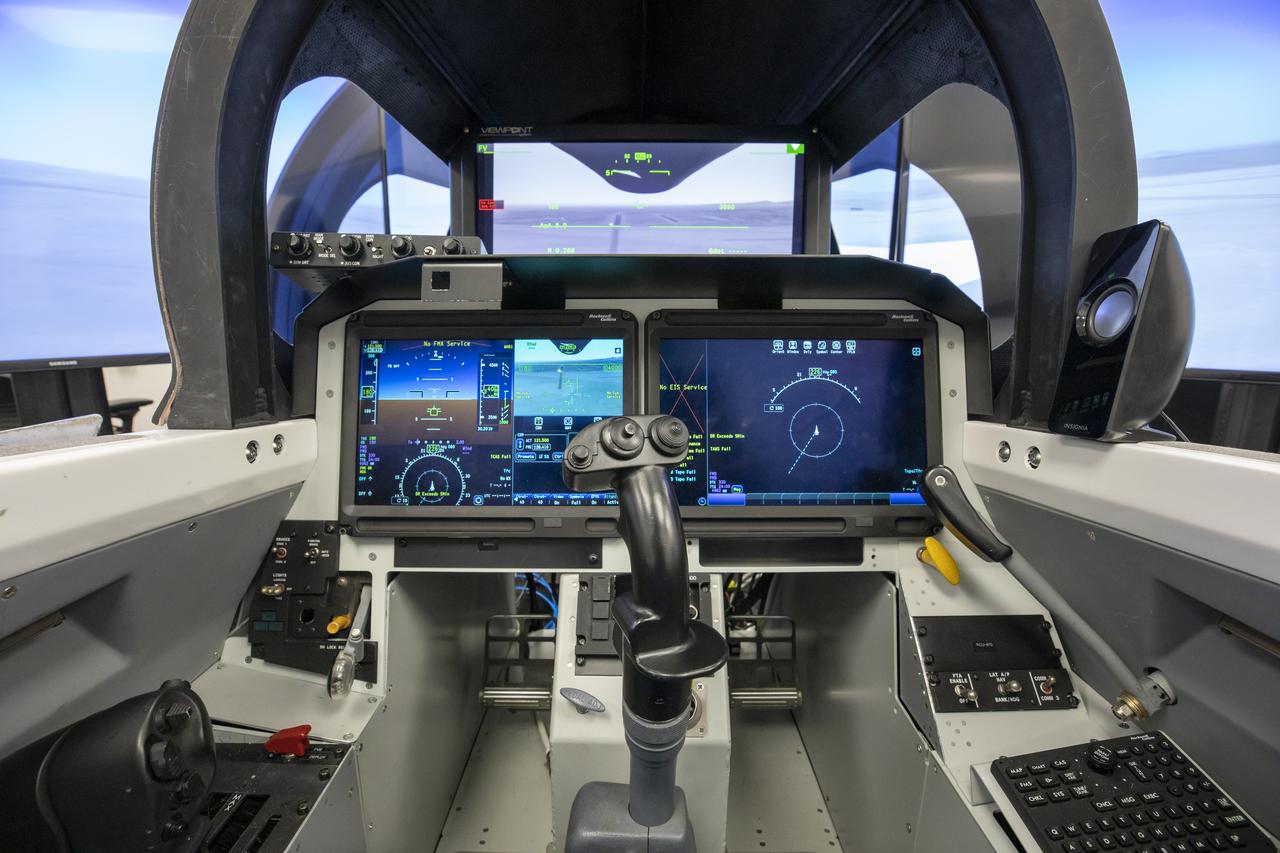
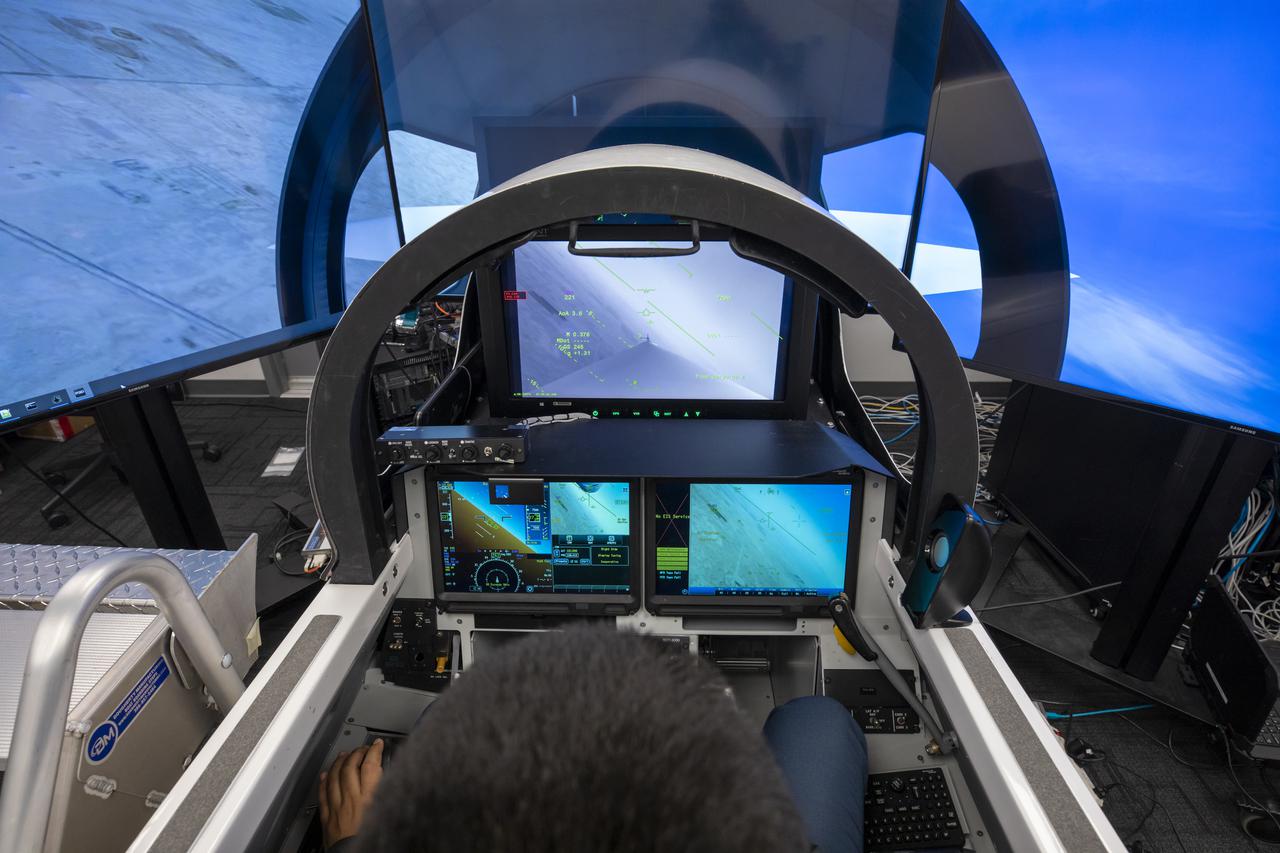
This image shows a close up of the cockpit view of the eXternal Vision System that will be placed in the X-59. Instead of a front facing window, the pilot will use these monitors for forward facing visibility.  Lockheed Martin Photography By Garry Tice 1011 Lockheed Way, Palmdale, Ca. 93599 Event: X-59 SIL Round 2 Date: 6/10/2021
X-59 SIL Round 2
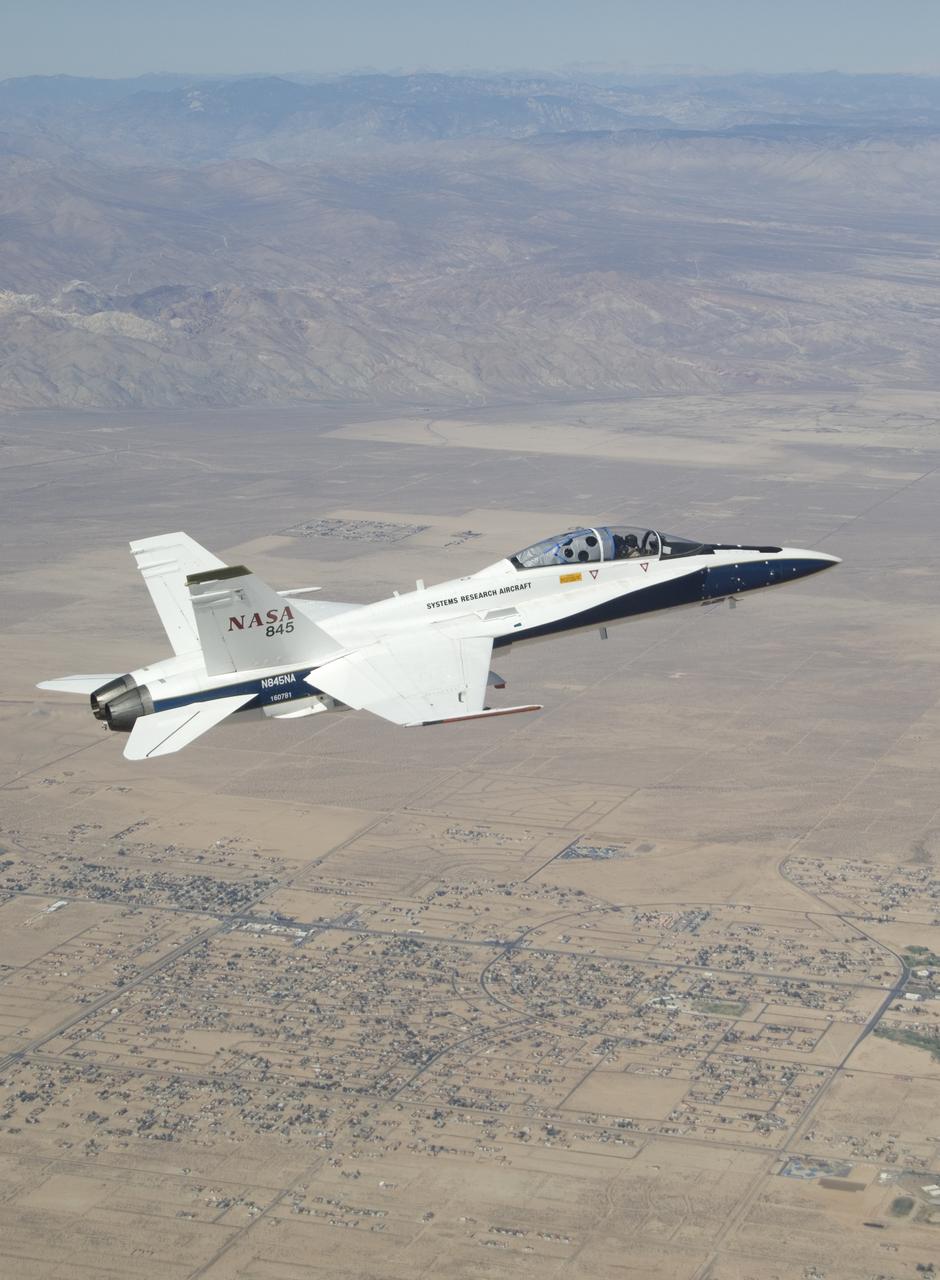
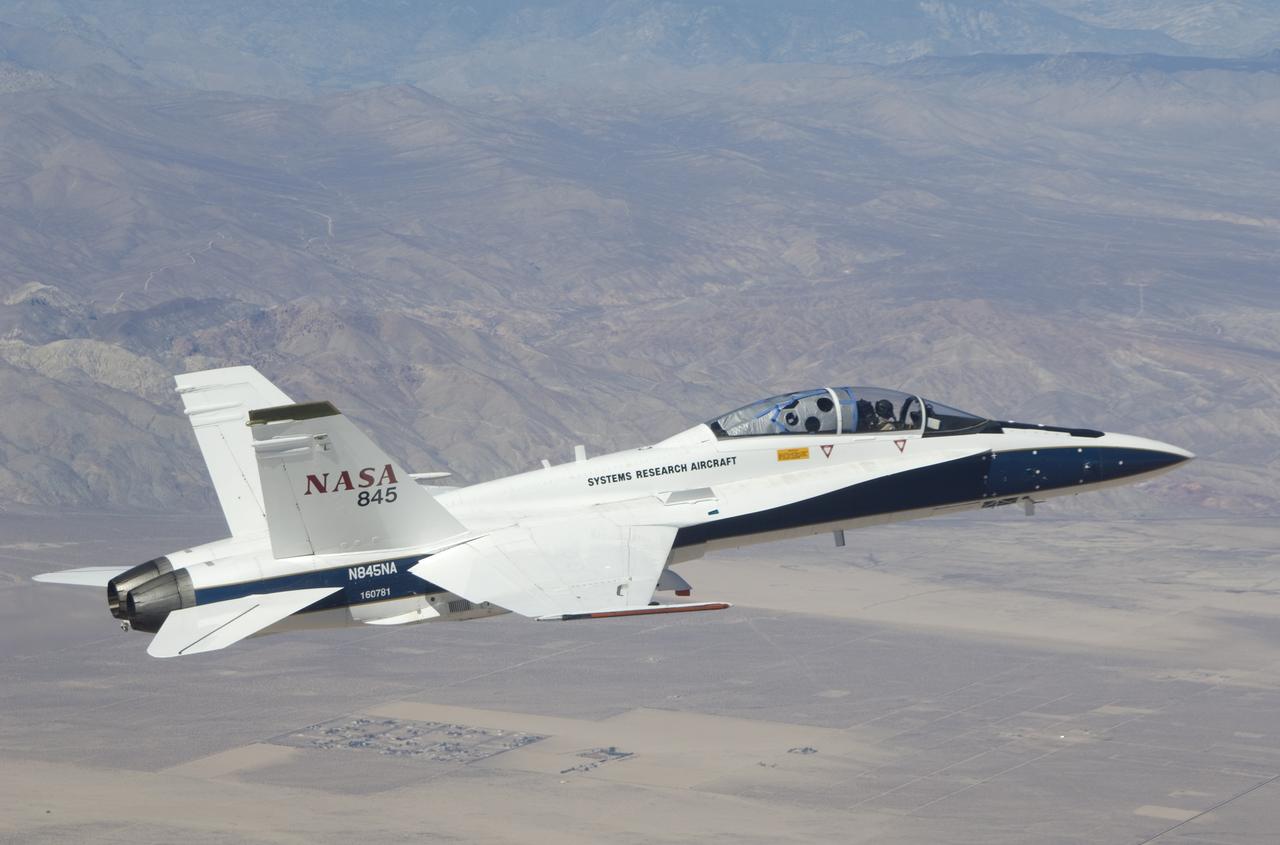
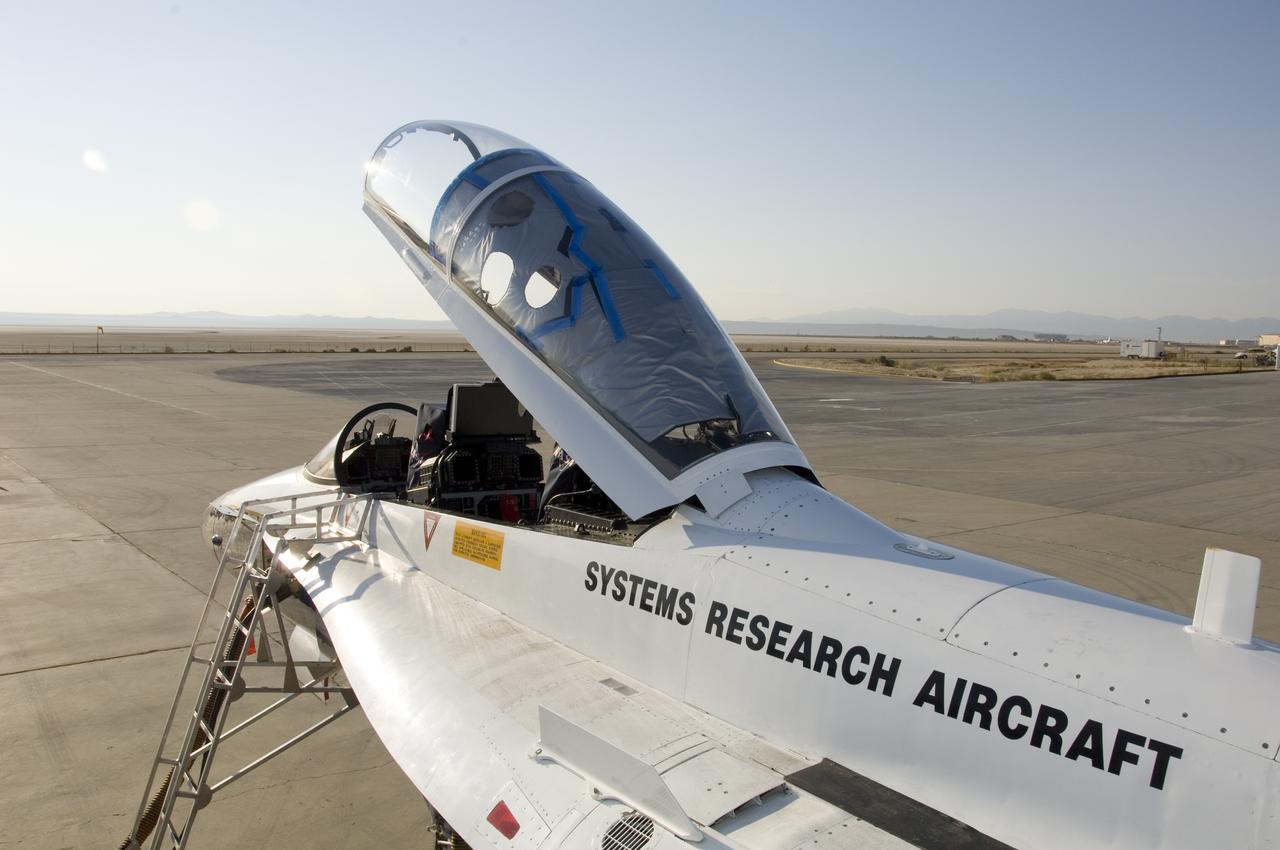
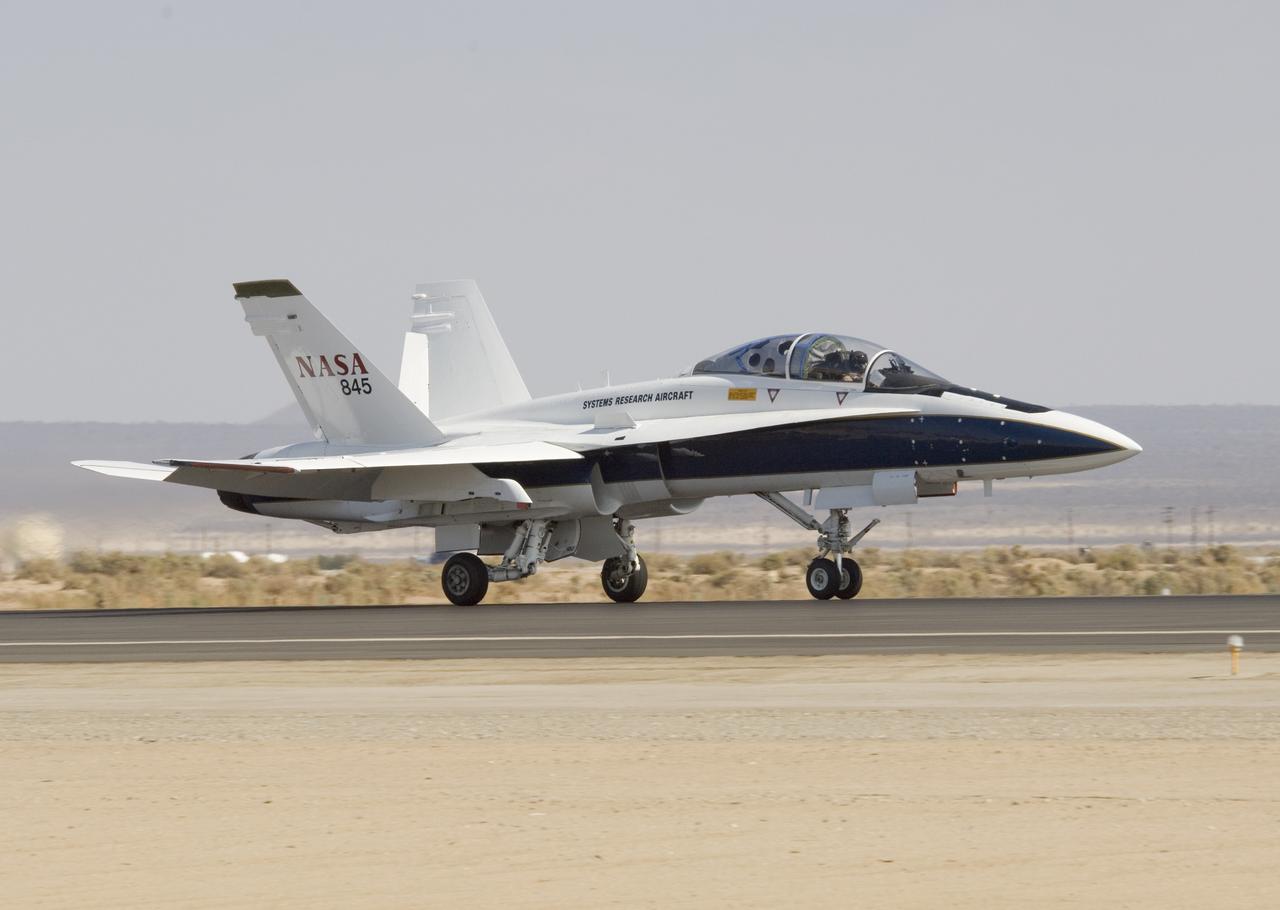
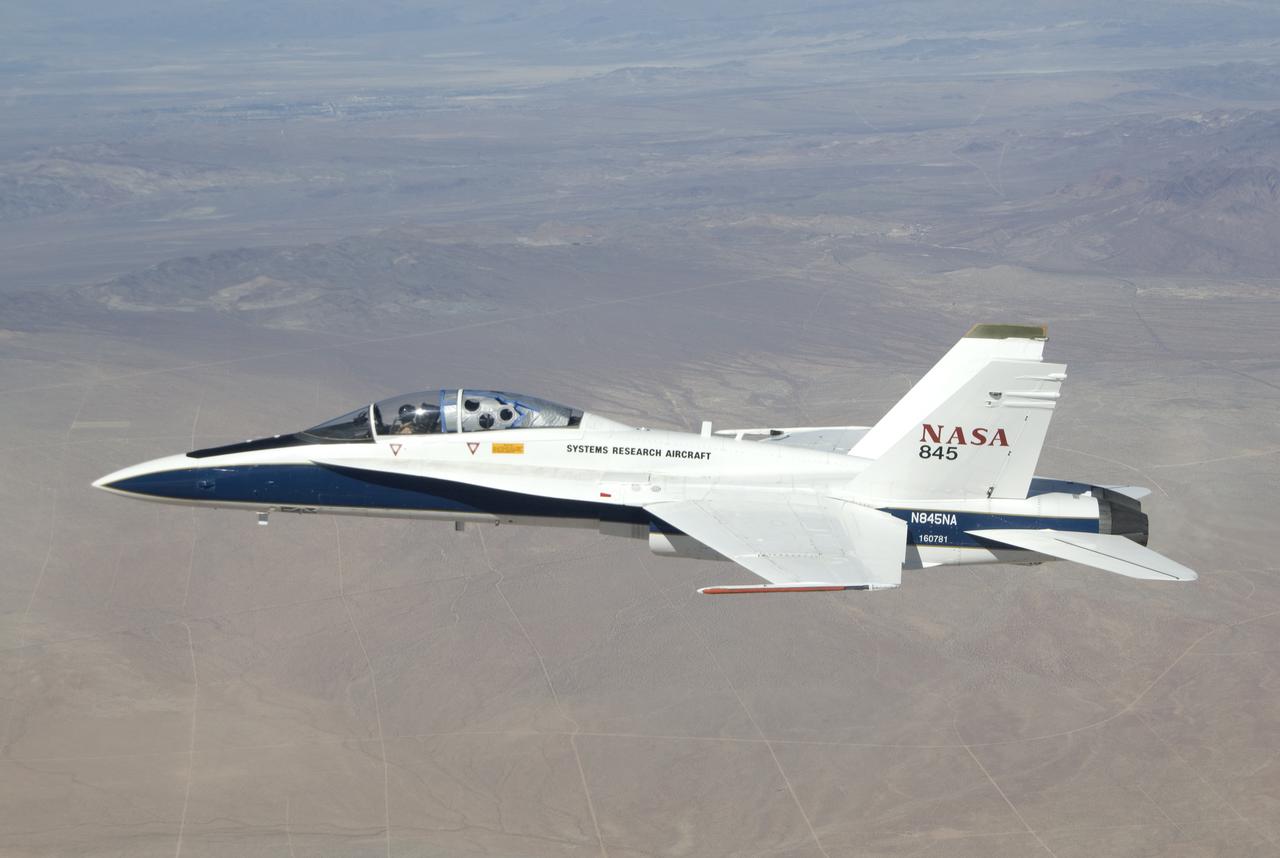
NASA Dryden Flight Research Center's F-18B Systems Research Aircraft on an External Vision System project flight.
ED08-0267-06
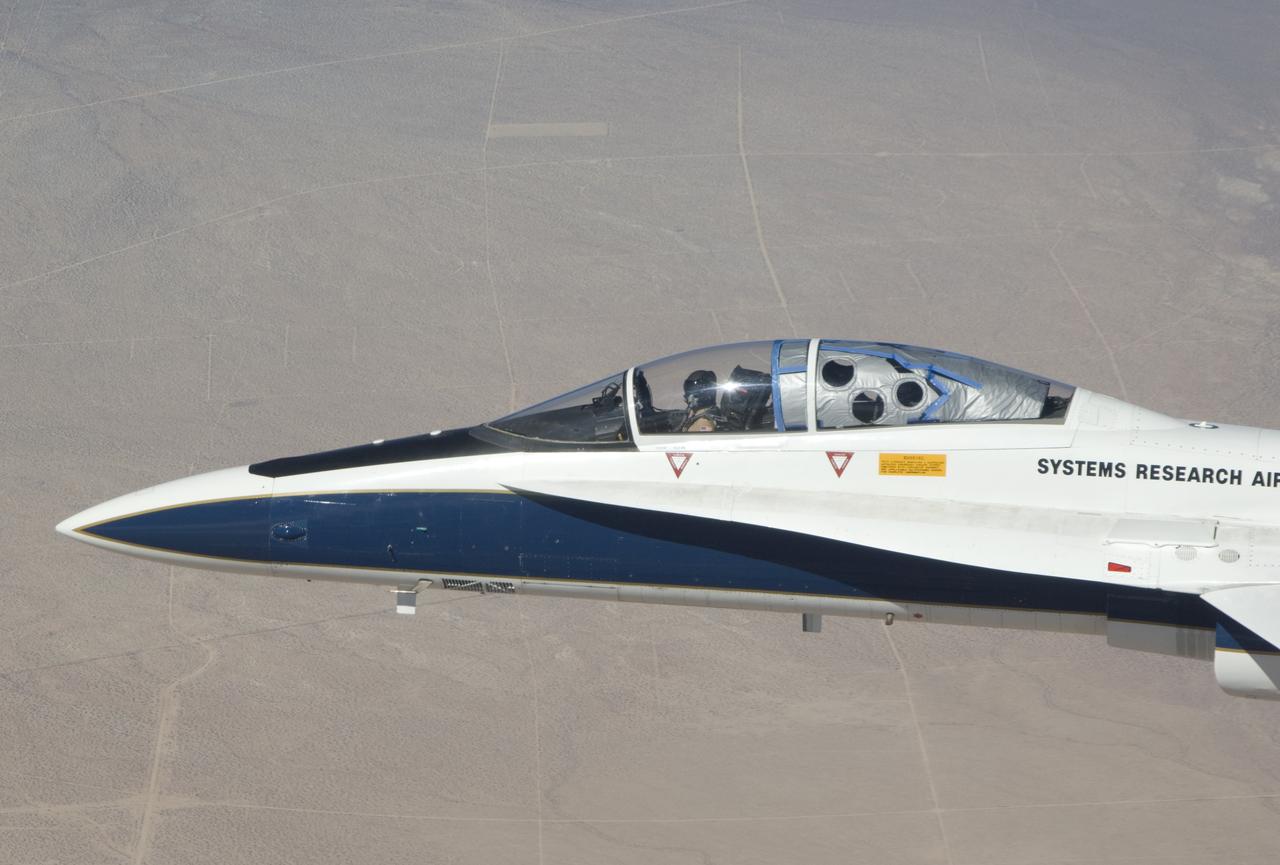
NASA Dryden Flight Research Center's F-18B Systems Research Aircraft on an External Vision System project flight.
ED08-0267-07
NASA Dryden Flight Research Center's F-18B Systems Research Aircraft on an External Vision System project flight.
ED08-0267-12
NASA Dryden Flight Research Center's F-18B Systems Research Aircraft on an External Vision System project flight.
ED08-0267-11
First test flight testing the visual display for the X59. The XVS display is aboard the B200 and the LC40 will be interacting as part of the test.
Testing of the External Vision System (XVS) Software on the B200 King Air
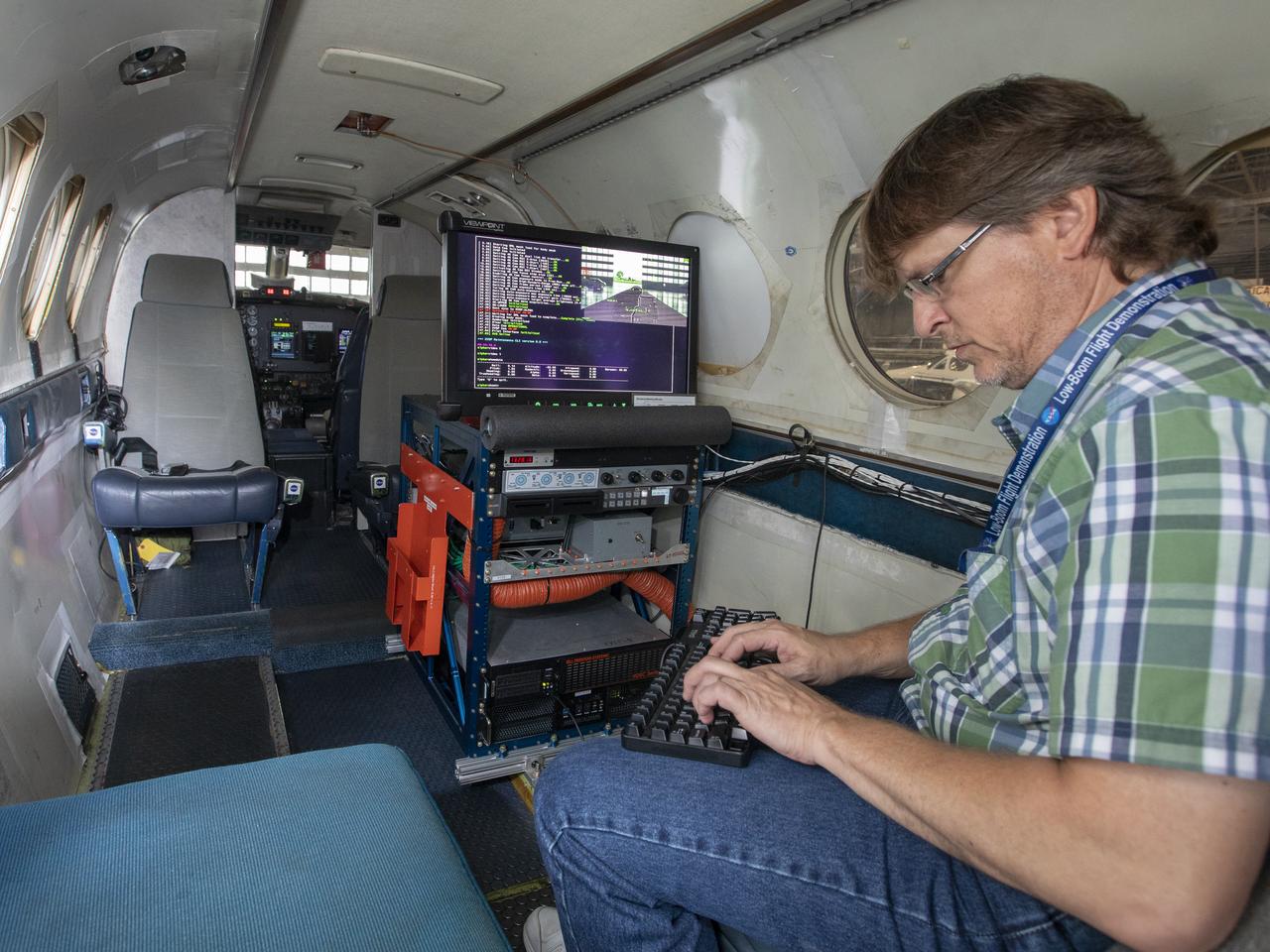
Steve Williams working on the software upgrade for the flight display for the X59.
Testing of the External Vision System (XVS) Software on the B200 King Air
Debriefing before the first test flight testing the visual display for the X59. The XVS display is aboard the B200.
Testing of the External Vision System (XVS) Software on the B200 King Air
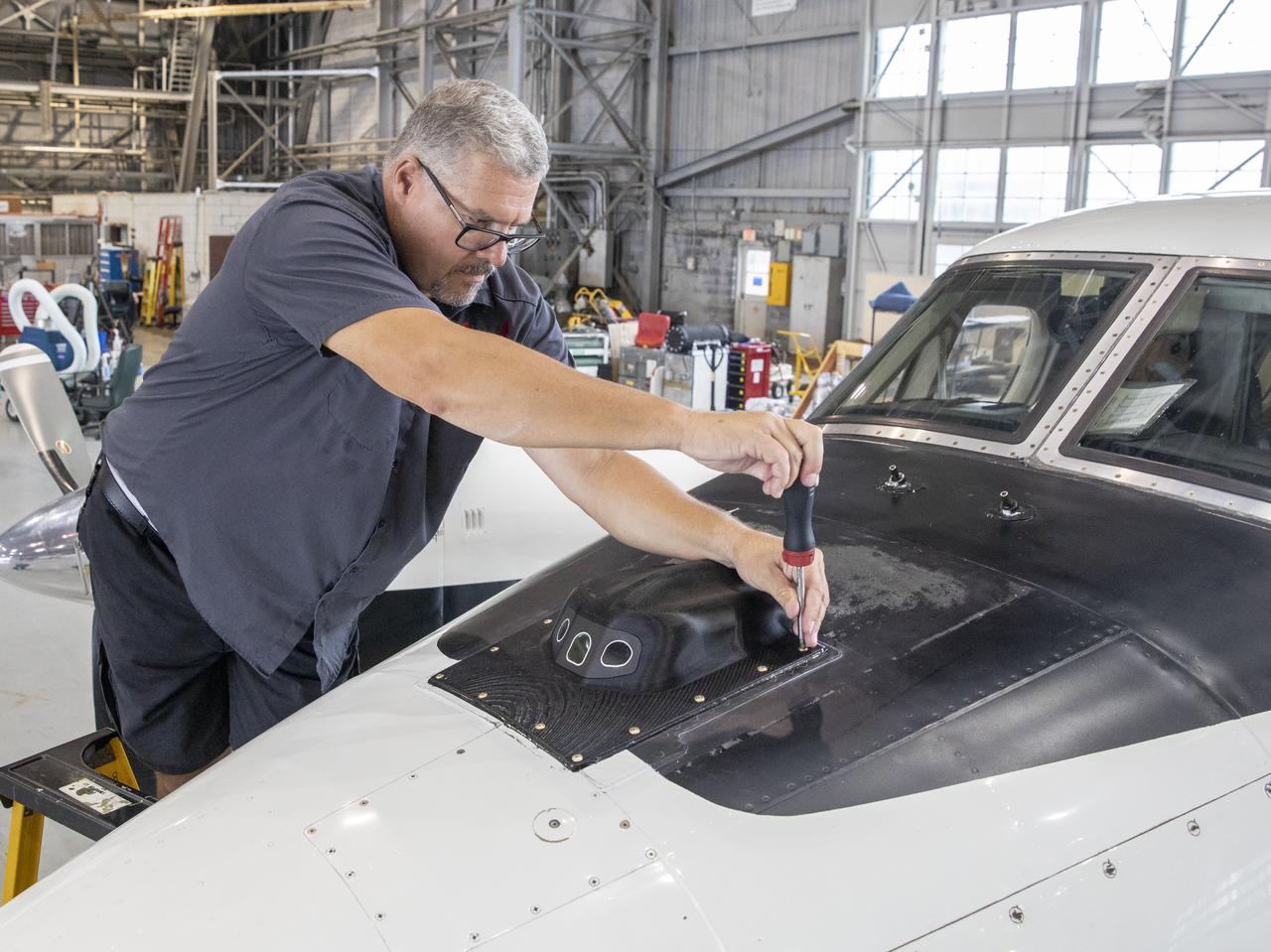
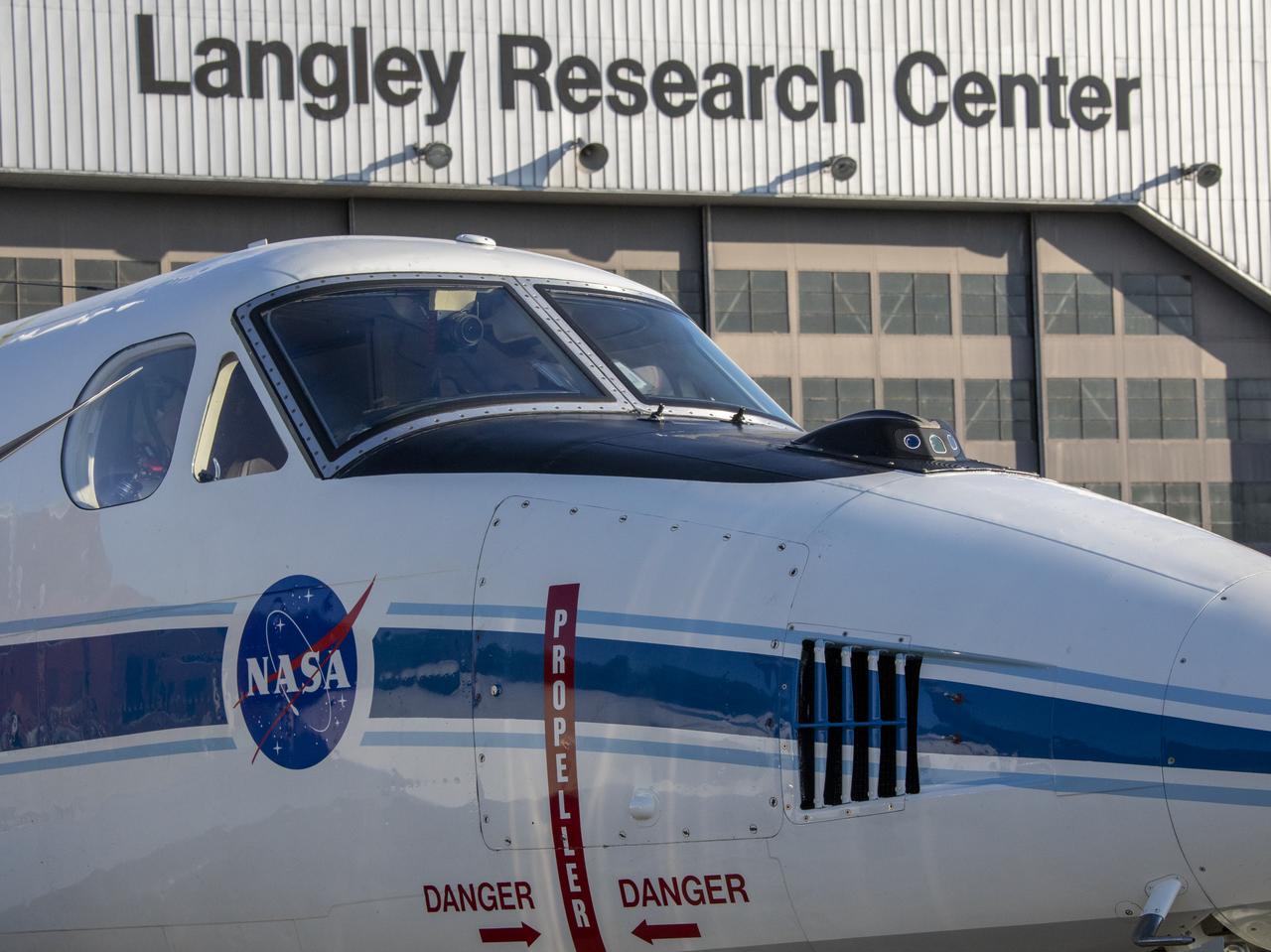
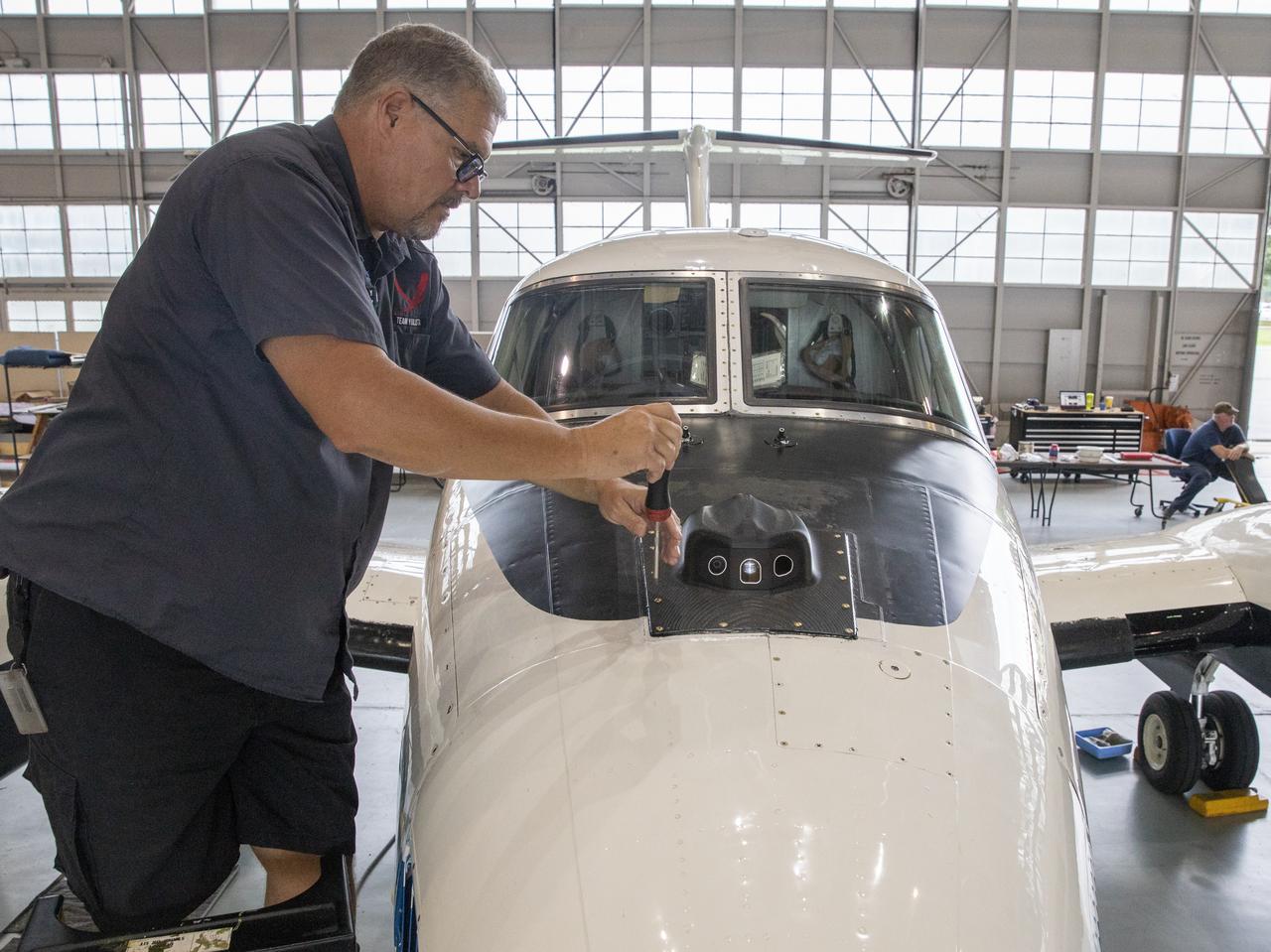
Nose camera for the X59 is being prepared for testing on the B200 King Air.
Testing of the External Vision System (XVS) Software on the B200 King Air
First test flight testing the visual display for the X59. Pilot Matt Coldsnow making a flight check before taking off.
Testing of the External Vision System (XVS) Software on the B200 King Air
First test flight testing the visual display for the X59. The XVS display is aboard the B200 and the LC40 will be interacting as part of the test.
Testing of the External Vision System (XVS) Software on the B200 King Air
First test flight testing the visual display for the X59. Researchers Lynda Kramer, pilot Kevin Shelton, Steve Williams and ? pose for photo
Testing of the External Vision System (XVS) Software on the B200 King Air
Aircraft mechanic C. Garber working on the camera housing to be tested for the flight display for the X59.
Testing of the External Vision System (XVS) Software on the B200 King Air
First test flight testing the visual display for the X59. The XVS display is aboard the B200 and the camera is mounted on the nose of the aircraft and inside the cockpit.
Testing of the External Vision System (XVS) Software on the B200 King Air
First test flight testing the visual display for the X59. The XVS display is aboard the B200 and the LC40 will be interacting as part of the test.
Testing of the External Vision System (XVS) Software on the B200 King Air
Aircraft mechanic C. Garber working on the camera housing for the flight display for the X59 to tested on the B200 King Air.
Testing of the External Vision System (XVS) Software on the B200 King Air
First test flight testing the visual display for the X59. The XVS display is aboard the B200 and the camera is mounted on the nose of the aircraft and inside the cockpit.
Testing of the External Vision System (XVS) Software on the B200 King Air
NASA is partnering with Gulfstream on the External Vision System project to demonstrate the use of an HD video system on the F-18B Systems Research Aircraft.
ED08-0252-14
NASA research pilot Jim Smolka prepares to take off in NASA's F-18 Systems Research Aircraft for an External Vision System project flight.
ED08-0252-28
Gulfstream project pilot Tom Horne readies to fly an External Vision System project flight from the backseat of NASA's F-18 Systems Research Aircraft.
ED08-0252-26
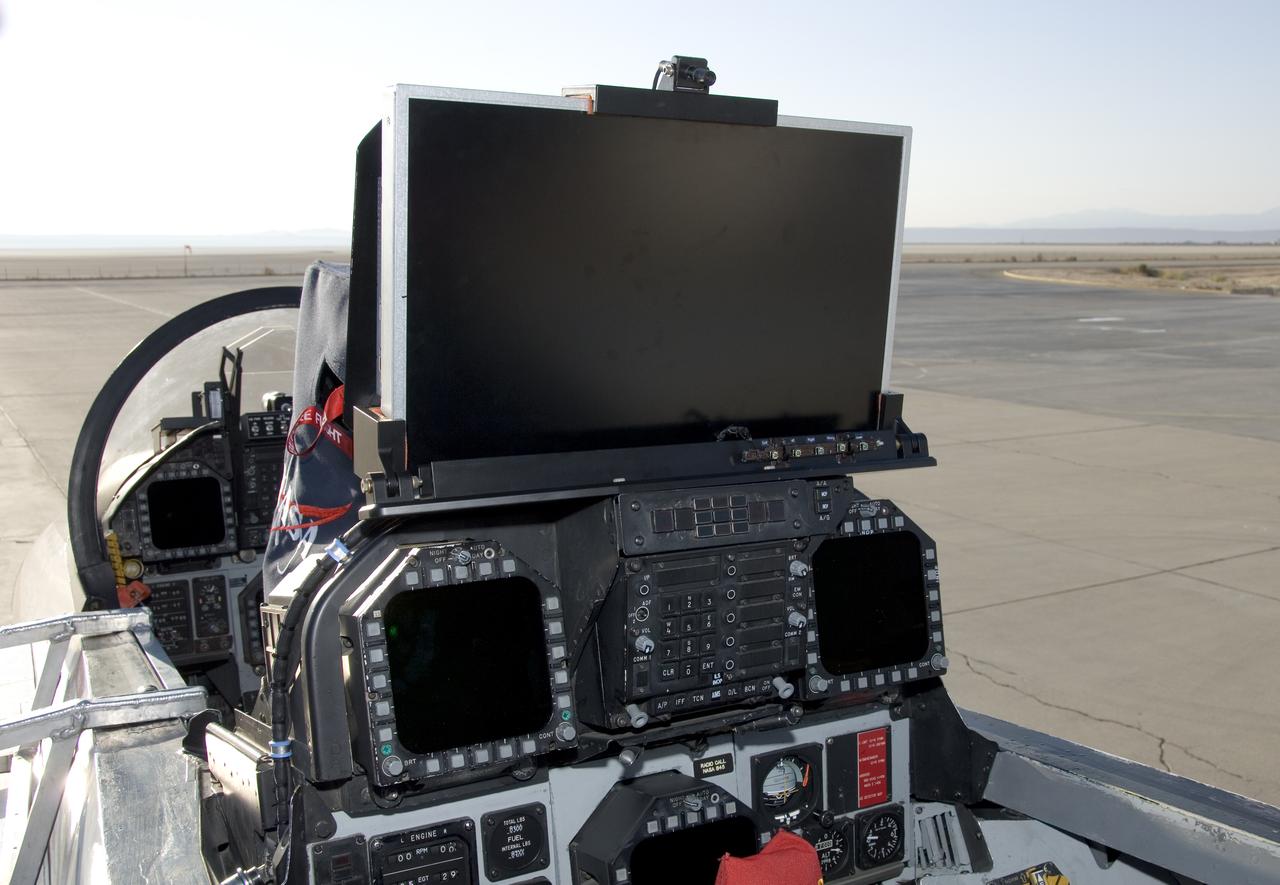
An HD display is mounted on top of the rear instrument panel in NASA's F-18 SRA aircraft, as NASA is partnering with Gulfstream on the External Vision System project.
ED08-0252-06
An HD camera is mounted behind the head-up display of NASA's F-18 SRA aircraft. NASA is partnering with Gulfstream on the External Vision System project.
ED08-0252-10
This image shows a close up of the cockpit view of the eXternal Vision System that will be placed in the X-59. Instead of a front facing window, the pilot will use these monitors for forward facing visibility.  Lockheed Martin Photography By Garry Tice 1011 Lockheed Way, Palmdale, Ca. 93599 Event: X-59 SIL Round 2 Date: 6/10/2021
X-59 SIL Round 2
This image shows a close up of the cockpit view of the eXternal Vision System that will be placed in the X-59. Instead of a front facing window, the pilot will use these monitors for forward facing visibility.  Lockheed Martin Photography By Garry Tice 1011 Lockheed Way, Palmdale, Ca. 93599 Event: X-59 SIL Round 2 Date: 6/10/2021
X-59 SIL Round 2
This image shows a close up of the cockpit view of the eXternal Vision System that will be placed in the X-59. Instead of a front facing window, the pilot will use these monitors for forward facing visibility.  Lockheed Martin Photography By Garry Tice 1011 Lockheed Way, Palmdale, Ca. 93599 Event: X-59 SIL Round 2 Date: 6/10/2021
X-59 SIL Round 2
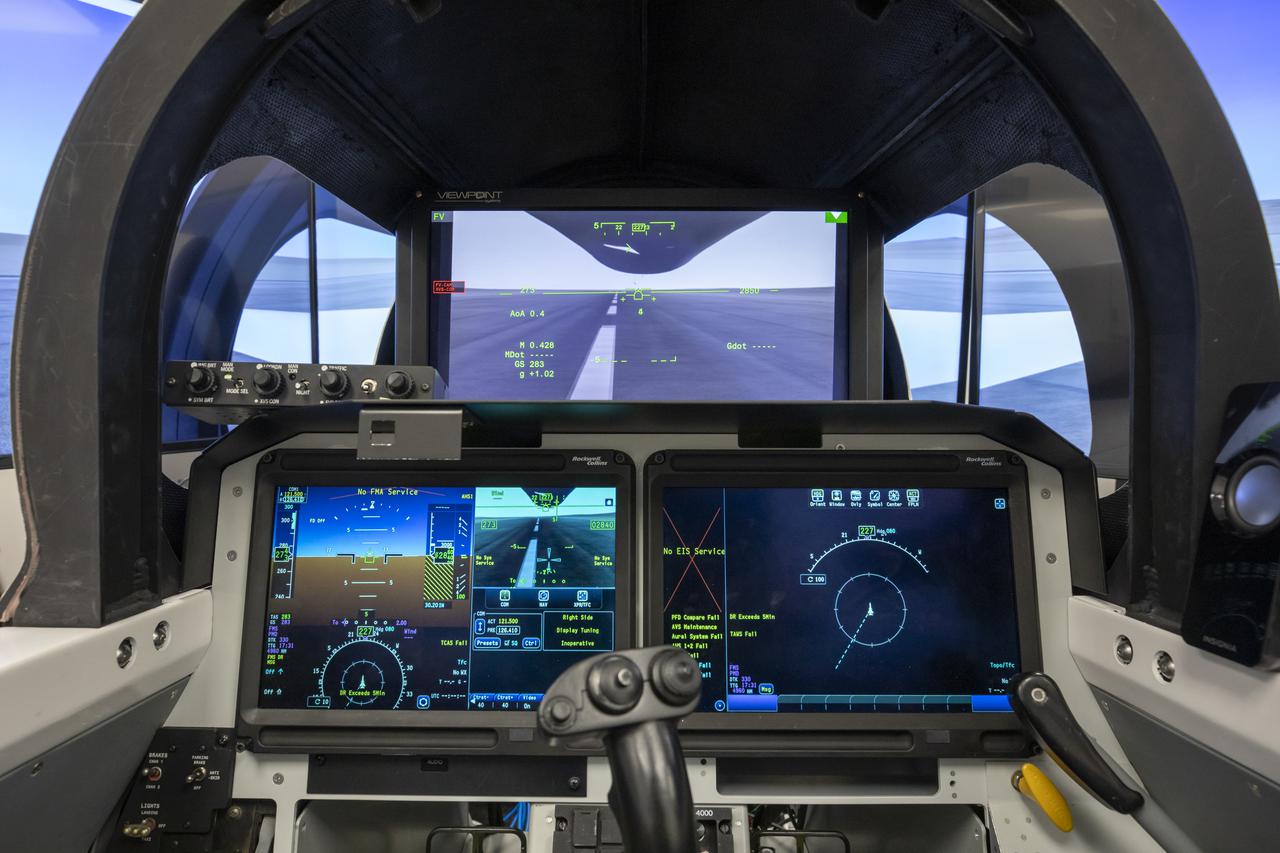
NASA test pilot, Nils Larson, inspects the X-59 cockpit displays and lighting system during system checkouts. The External Vision System (XVS) is displayed on the top screen, and the avionics flight displays, which can show navigation information or aircraft status, are shown on the bottom two screens.
Quesst Mission- NASA Test Piot Nils Larson Inspects X-59’s Cockpit
This image shows a close up of the cockpit view of the eXternal Vision System that will be placed in the X-59. Instead of a front facing window, the pilot will use these monitors for forward facing visibility.  Lockheed Martin Photography By Garry Tice 1011 Lockheed Way, Palmdale, Ca. 93599 Event: X-59 SIL Date: 6/08/2021
X-59 SIL
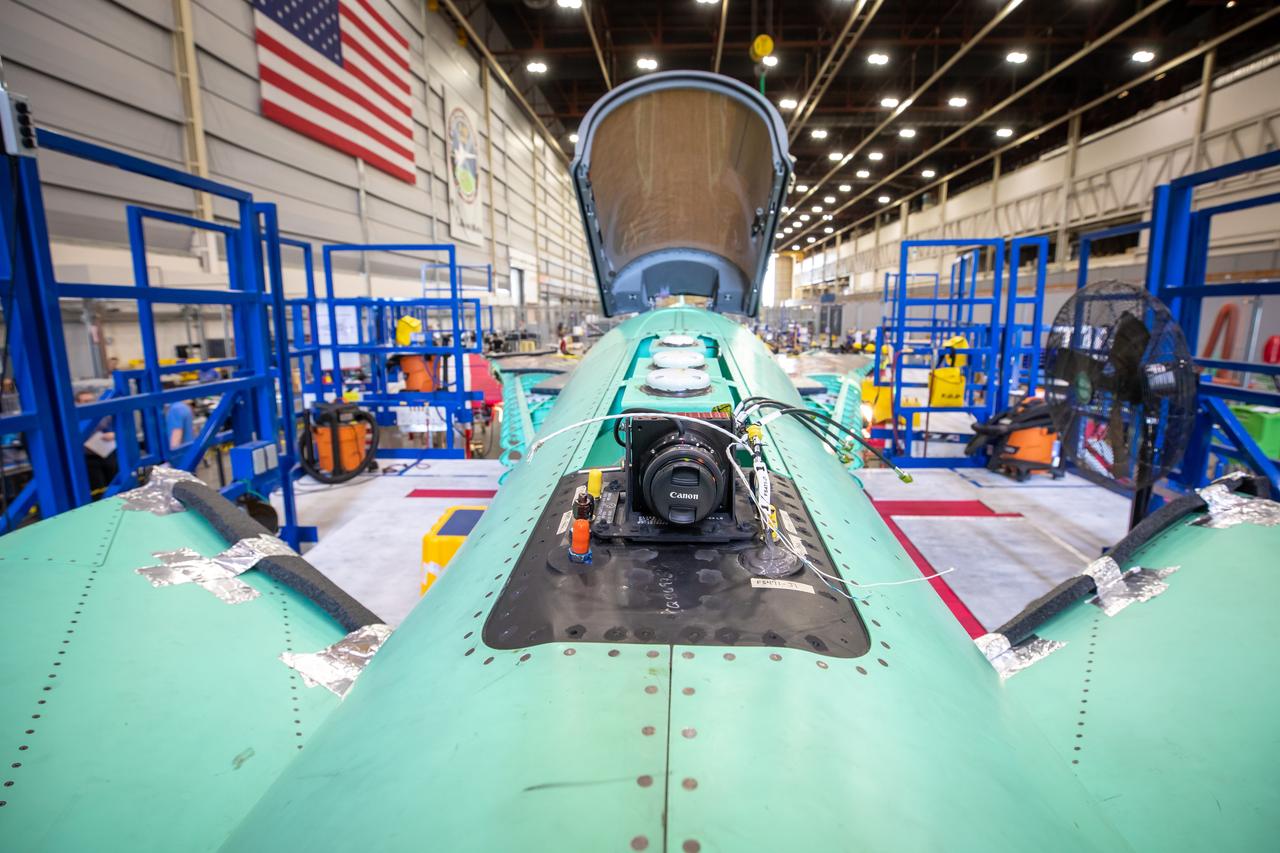
Event: Horizontal Stabilator Install A close up of the camera from the X-59’s eXternal Vision System. This camera is on the top of the X-59, but there will also be one on the belly of the aircraft. This visuals from this camera will be displayed on a 4K monitor for the pilot. As part of the supersonic shaping technology, the X-plane will not have a forward-facing window in the cockpit.
Horizontal Stabilator Install
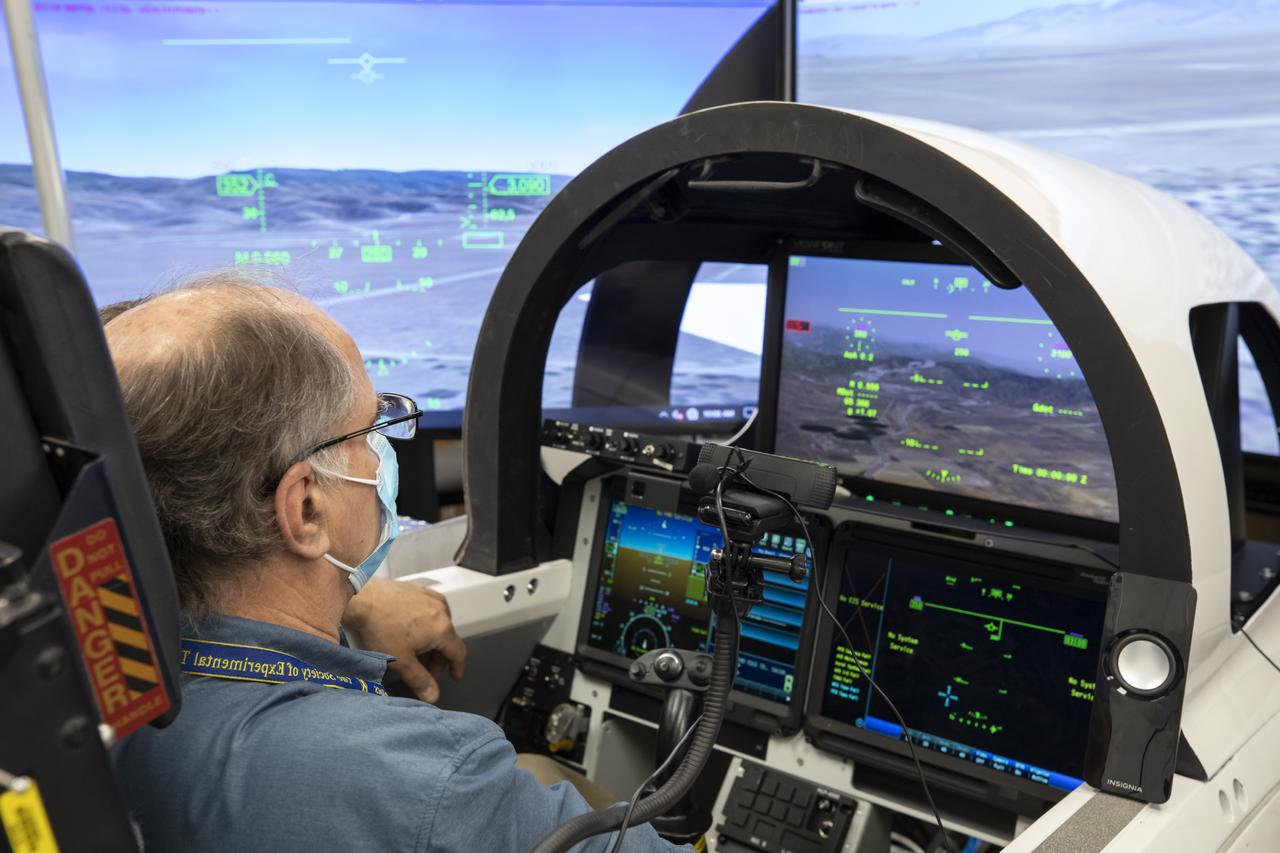
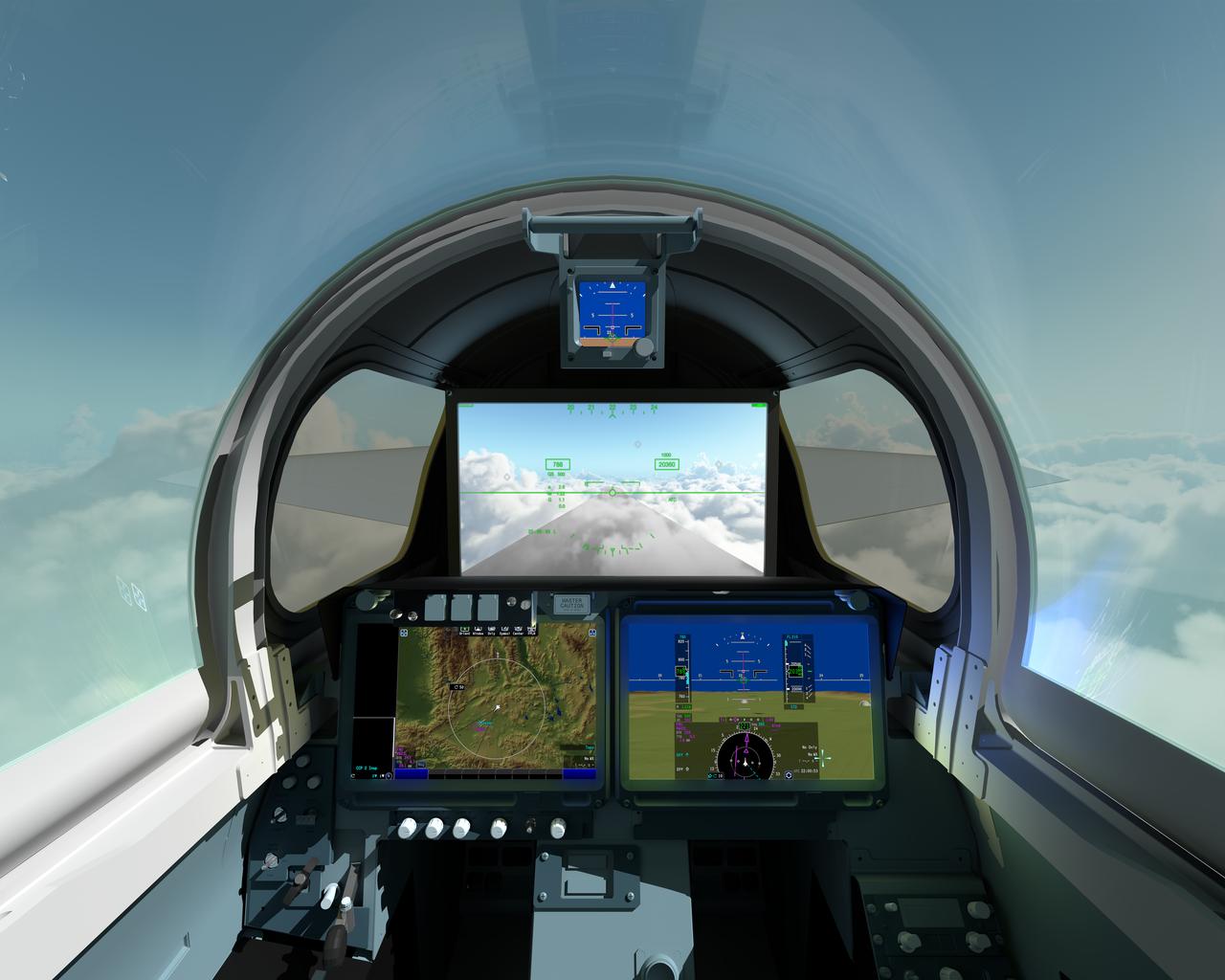
The pilot of NASAÕs X-59 Quiet SuperSonic Technology, or QueSST, aircraft will navigate the skies in a cockpit unlike any other. There wonÕt be a forward-facing window. ThatÕs right; itÕs actually a 4K monitor that serves as the central window and allows the pilot to safely see traffic in his or her flight path, and provides additional visual aids for airport approaches, landings and takeoffs. The 4K monitor, which is part of the aircraftÕs eXternal Visibility System, or XVS, displays stitched images from two cameras outside the aircraft combined with terrain data from an advanced computing system. The two portals and traditional canopy are real windows however, and help the pilot see the horizon. The displays below the XVS will provide a variety of aircraft systems and trajectory data for the pilot to safely fly.   The XVS is one of several innovative solutions to help ensure the X-59Õs design shape reduces a sonic boom to a gentle thump heard by people on the ground. Though not intended to ever carry passengers, the X-59 boom-suppressing technology and community response data could help lift current bans on supersonic flight over land and enable a new generation of quiet supersonic commercial aircraft.
NASA artist concept of the eXternal Vision System that will be used for the X-59 Quiet SuperSonic Technology aircraft.
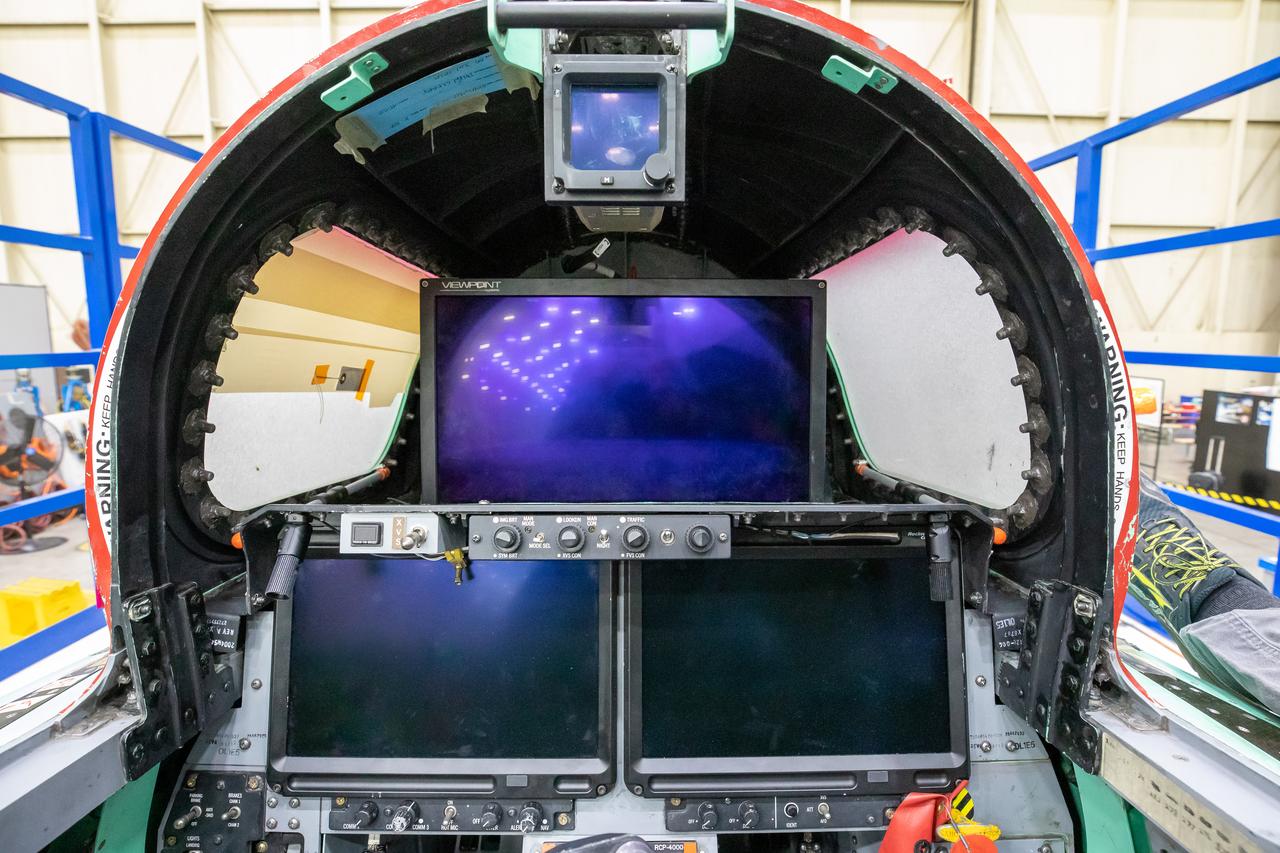
This image shows the forward view of the X-59’s cockpit with the canopy open. The aircraft will not have a forward-facing window and will use an eXternal Vision System (XVS) made up of a high definition 4K monitor (located in the center) and two monitors below to help the pilots safely fly through the skies.
Nose Installed and Cockpit Instrumentation
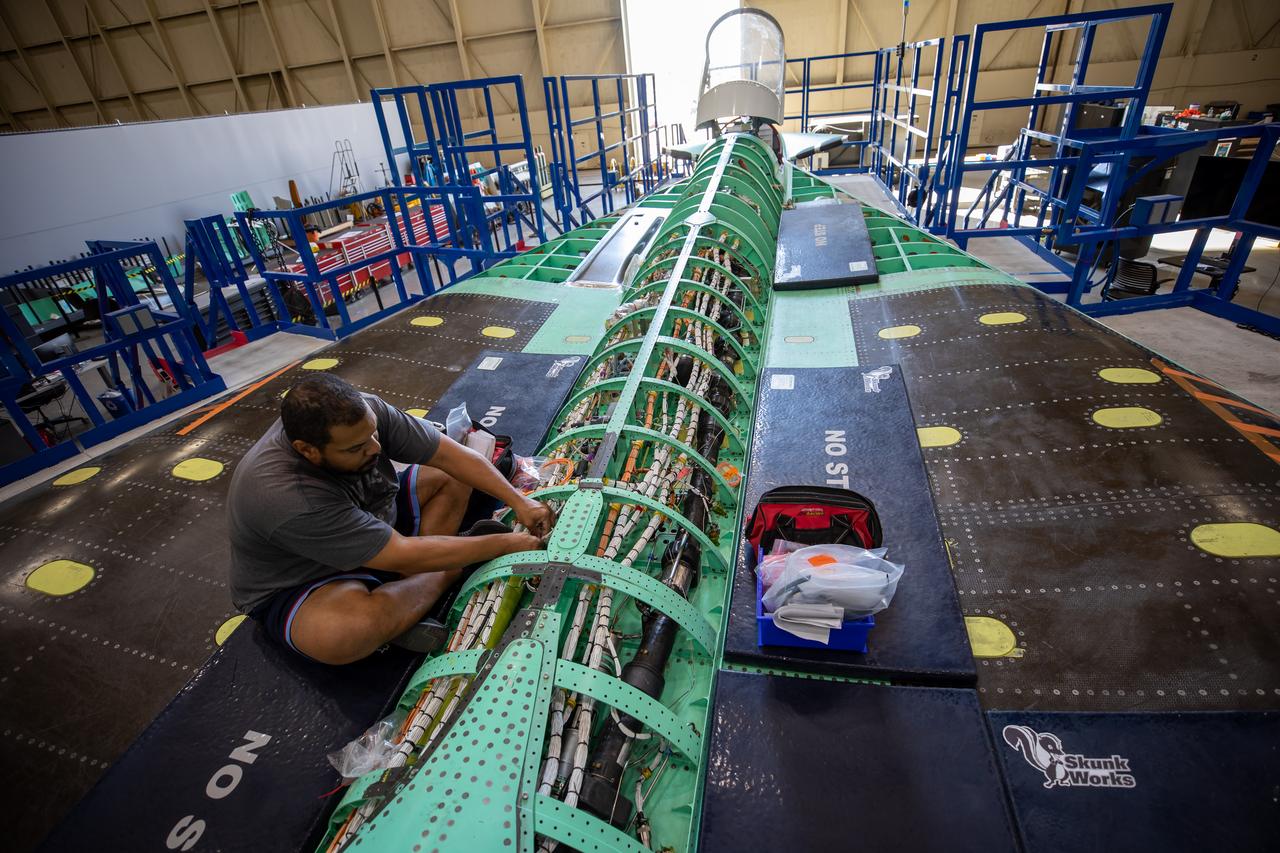
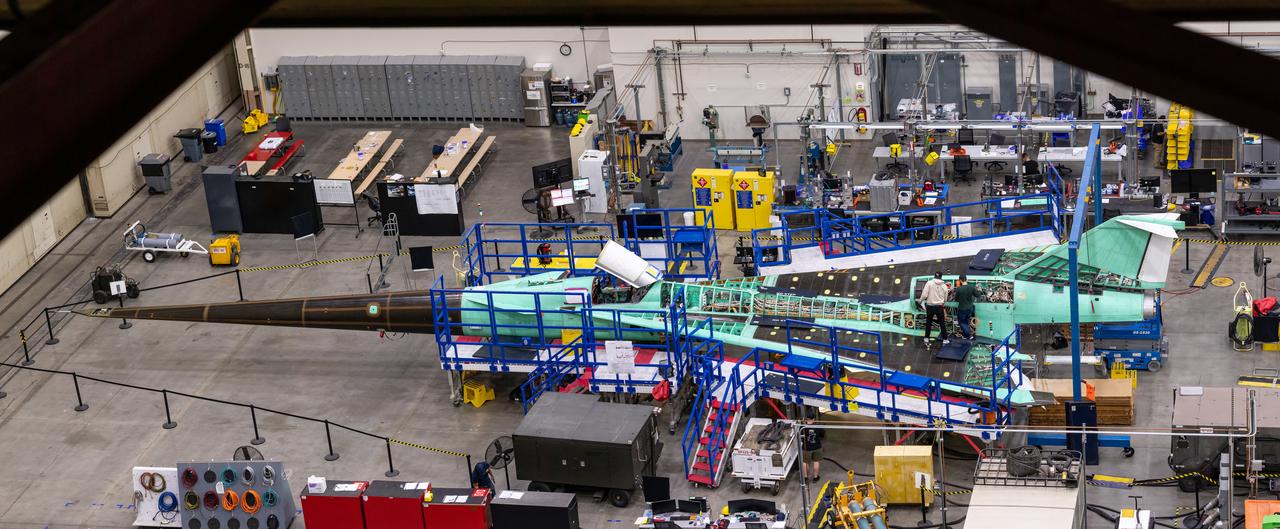
This overhead view of the X-59 shows the aircraft’s current state of assembly at Lockheed Martin Skunk Works in Palmdale, California. Throughout the manufacturing process, the team often removes components to effectively and safely assemble other sections of the aircraft. The X-59’s horizontal tails and lower empennage were recently removed from the aircraft and can be seen behind it as the team prepares for the installation of the engine. The X-59 is the centerpiece of the Quesst mission which plans to help enable commercial supersonic air travel over land.

X-59 aircraft’s current state of assembly
A Lockheed Martin technician works to complete wiring on the X-59 aircraft in preparation for the power-on system checkouts.  Once complete, the X-59 aircraft will demonstrate the ability to fly supersonic while reducing the loud sonic boom to a quiet sonic thump and help enable commercial supersonic air travel over land. This aircraft is the centerpiece of NASA’s Quesst mission.
LRC-2022-H1_P_X-59-43
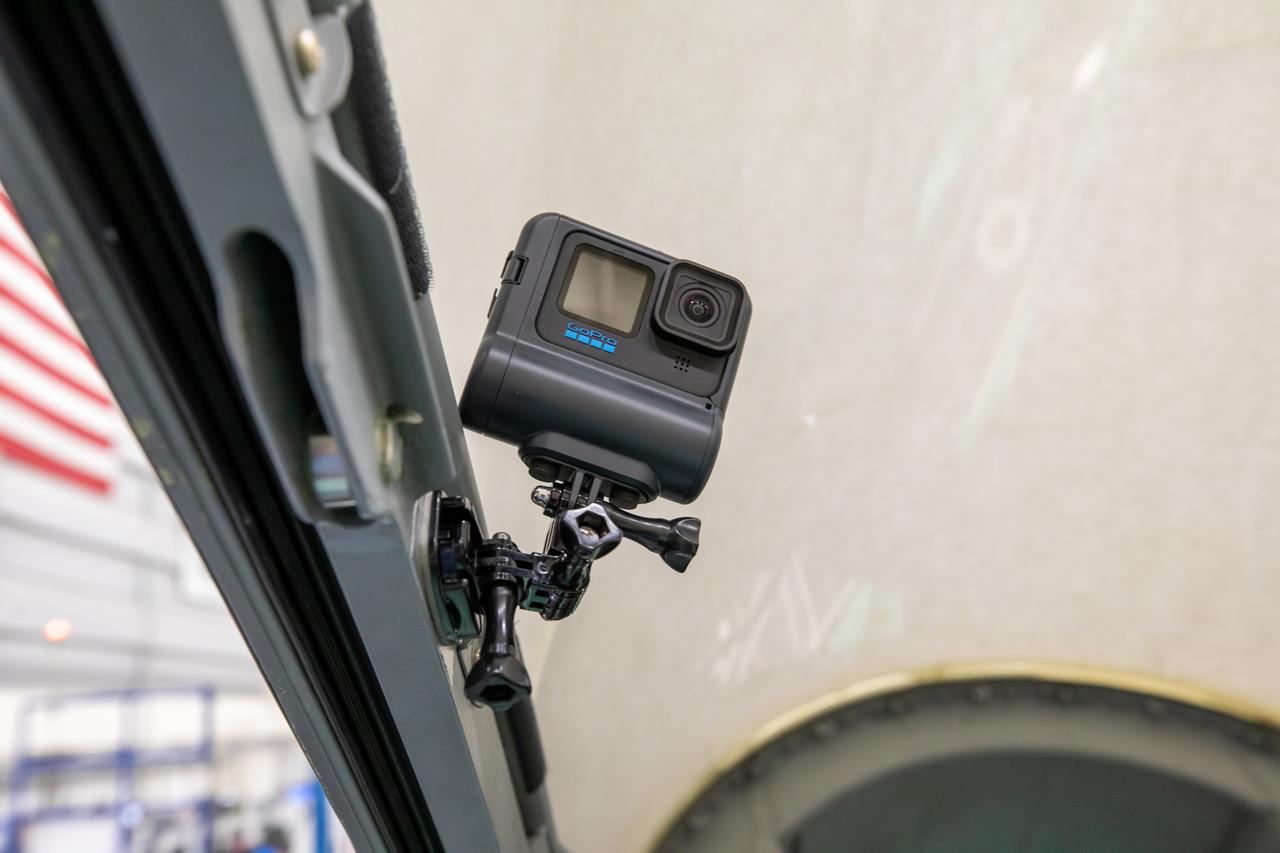
A Go-Pro is mounted on the inside of the X-59’s cockpit to capture the pilots activities during flight.
X-59’s Cockpit Outfitted with Cameras for Pilot Data
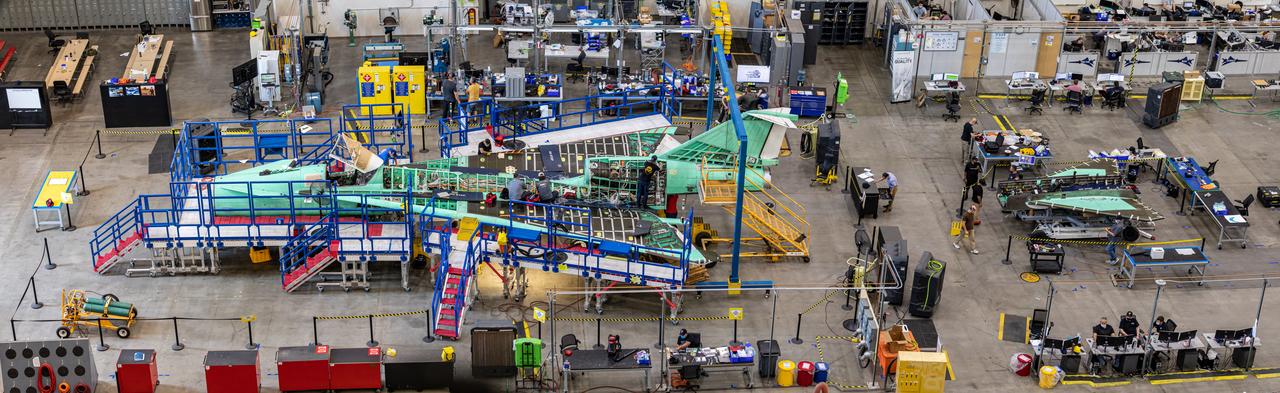
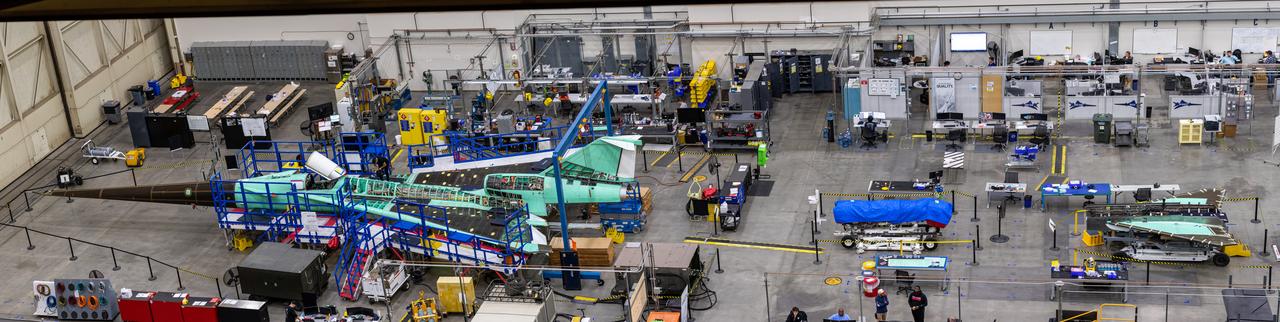
This overhead view of the X-59 shows the aircraft at Lockheed Martin Skunk Works in Palmdale, California. During the assembly of this experimental aircraft, the team often has to remove components to effectively and safely assemble other sections of the aircraft. In this image, the nose is not attached and the horizontal stabilators are shown behind the tail. The X-59 is the centerpiece of NASA’s Quesst mission which plans to produce data that will help enable commercial supersonic air travel over land.
FTIS Sensors and From Above
Here is an overhead view of the X-59 aircraft (left) prior to the installation of the General Electric F414 engine (center, located under the blue cover). After the engine is installed, the lower empennage (right), the last remaining major aircraft component, will be installed in preparation for integrated system checkouts. The X-59 is the centerpiece of the Quesst mission which plans to help enable commercial supersonic air travel over land.
From Above With Nose Installed
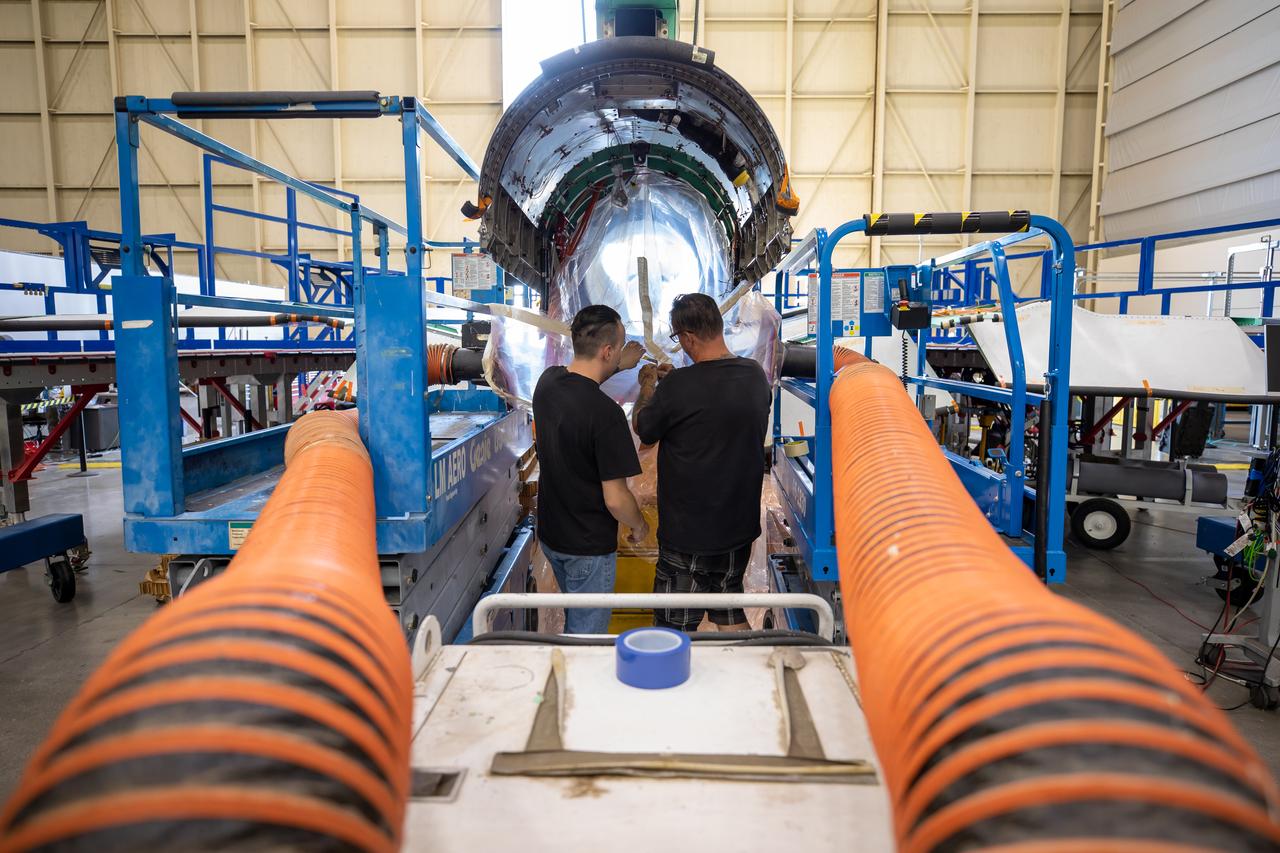
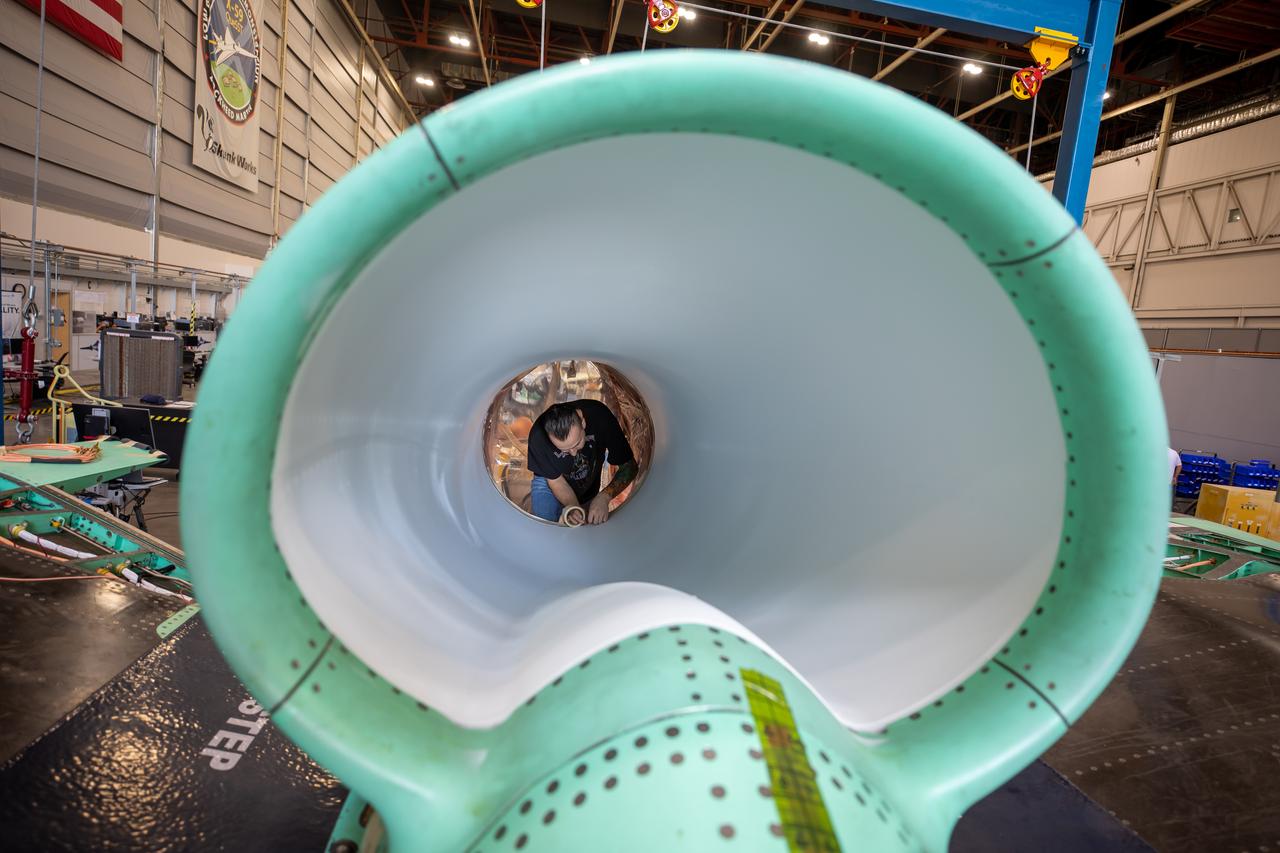
This image shows the extensive ventilation system that has been placed adjacent to the X-59 during the recent painting of the aircraft’s engine inlet. Once the aircraft build and ground testing are complete, the X-59 airplane will begin flight testing, working towards demonstrating the ability to fly supersonic while reducing the loud sonic boom to a quiet sonic thump and help enable commercial supersonic air travel over land.
LRC-2022-H1_P_X-59-41
This is an up-close view of the X-59’s engine inlet  –  fresh after being painted. The 13-foot F414-GE-100 engine will be placed inside the inlet bringing the X-59 aircraft one step closer to completion. Once fully assembled, the X-59 aircraft will begin flight operations, working toward demonstration of the ability to fly supersonic while reducing the loud sonic boom to a quiet sonic thump, helping to enable commercial supersonic air travel over land.
LRC-2022-H1_P_X-59-42
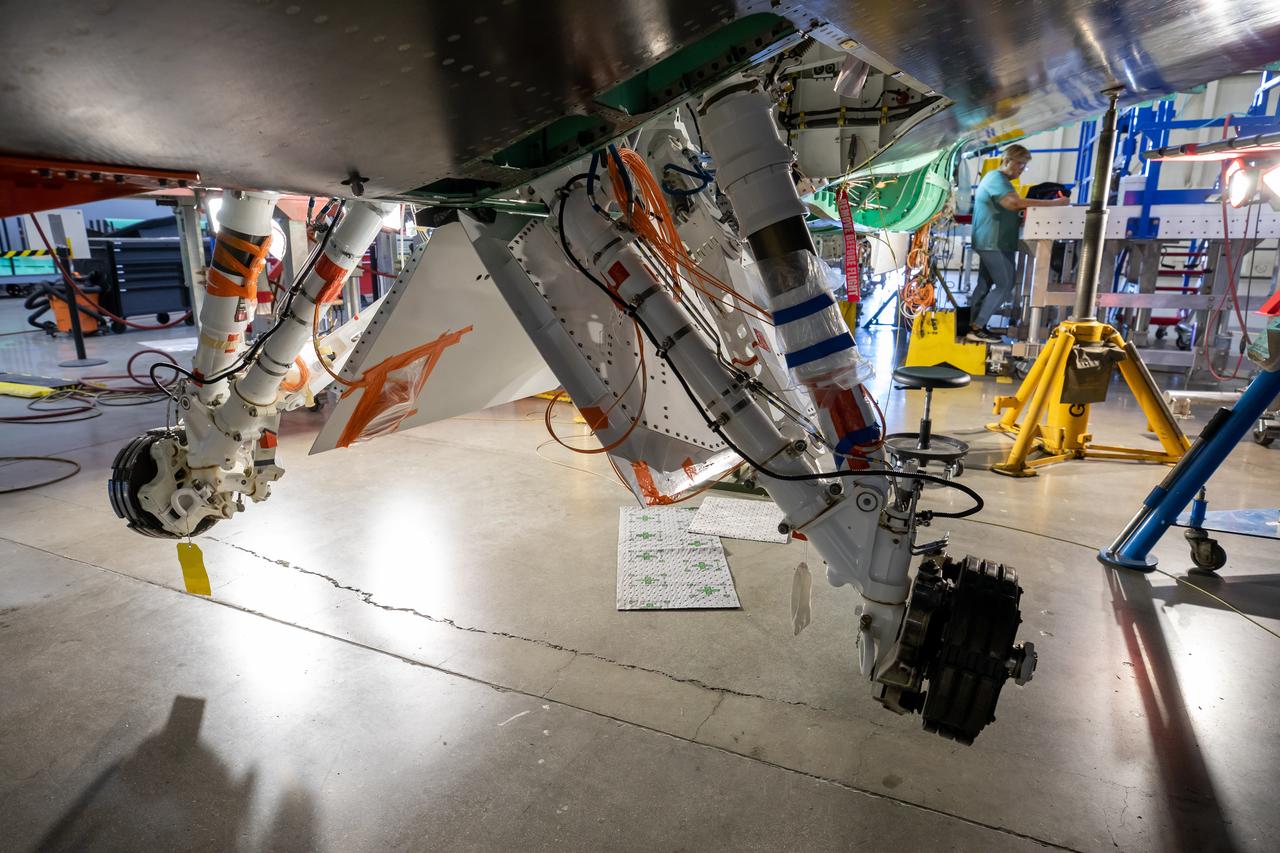
The Quesst team has repurposed the landing gear from an F-16 Fighting Falcon aircraft and is working on adjusting the fit onto the X-59 airplane. This is part of NASA’s Quesst mission which plans to help enable commercial supersonic air travel over land.
Landing Gear, XVS Camera and Updates
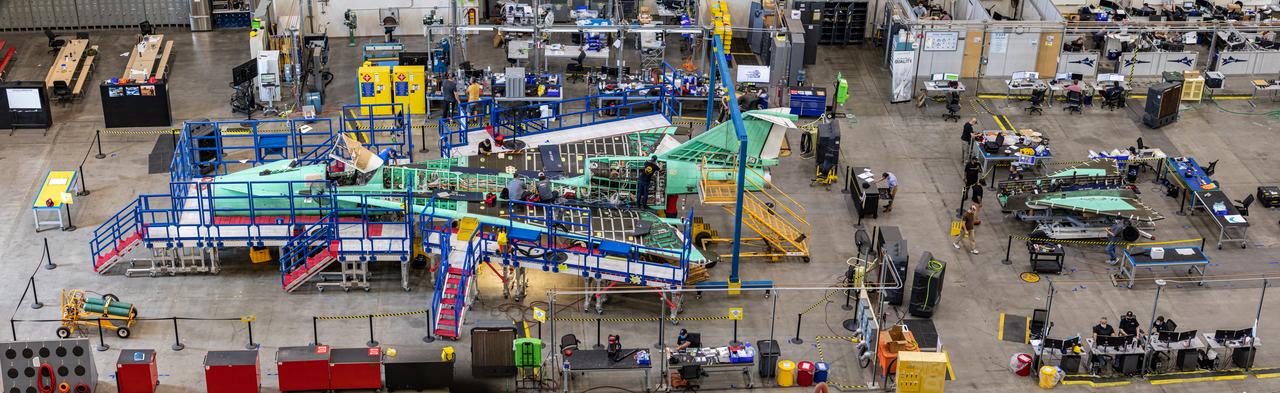
This overhead view of the X-59 shows the aircraft at Lockheed Martin Skunk Works in Palmdale, California. During the assembly of this experimental aircraft, the team often has to remove components to effectively and safely assemble other sections of the aircraft. In this image, the nose is not attached and the horizontal stabilators are shown behind the tail. The X-59 is the centerpiece of NASA’s Quesst mission which plans to produce data that will help enable commercial supersonic air travel over land.
FTIS Sensors and From Above
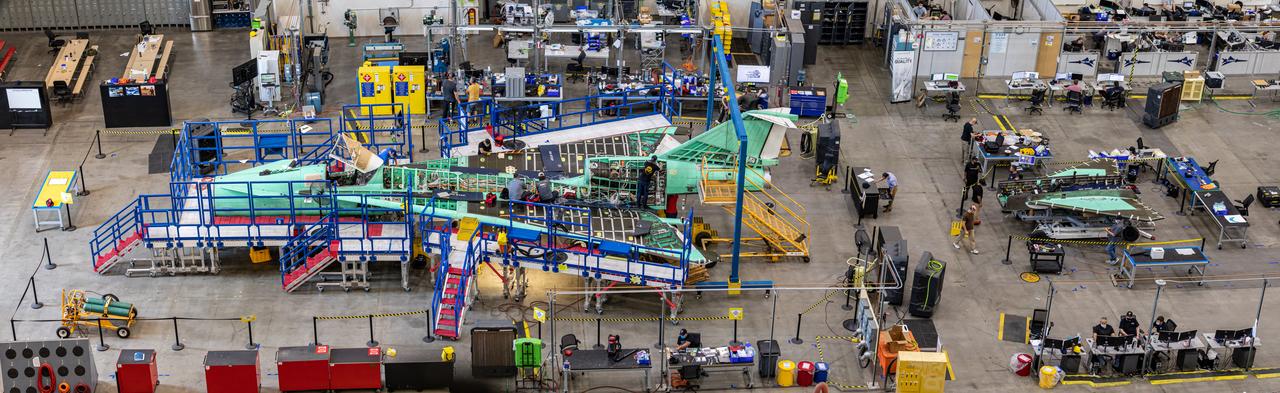
This is an overhead view of the X-59 aircraft at Lockheed Martin Skunk Works in Palmdale, California. The nose was installed, and the plane awaits engine installation. Technicians continue to wire the aircraft as the team preforms several system checkouts to ensure the safety of the aircraft. The X-59 aircraft will demonstrate the ability to fly supersonic while reducing the loud sonic boom to a quiet sonic thump and help enable commercial supersonic air travel over land.
From Above With Nose Installed