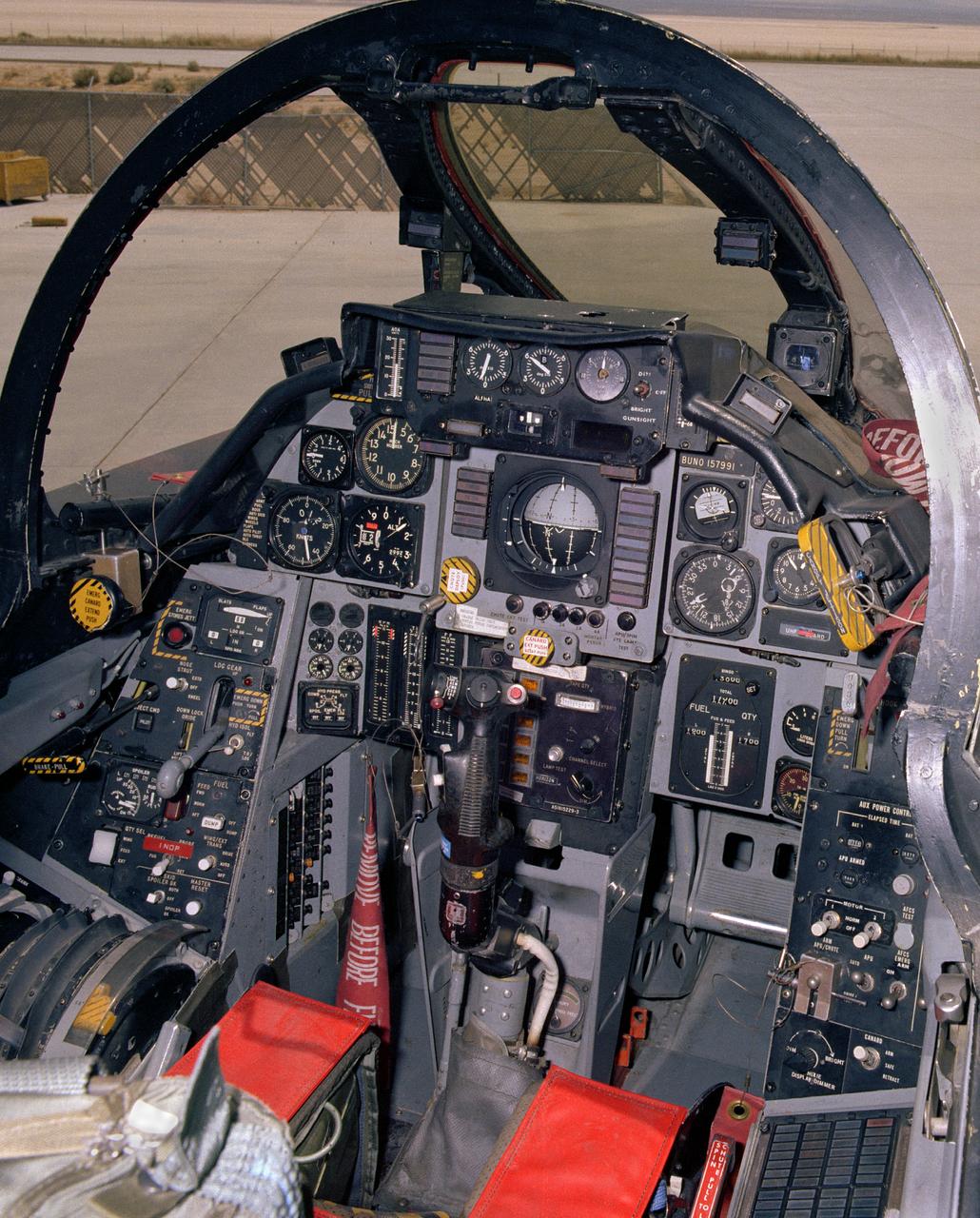
View of the cockpit of NASA's F-14, tail number 991. This aircraft was the first of a series of post-Vietnam fighters, followed by the F-15, F-16, and F-18. They were designed for maneuverability in air-to-air combat. The F-14s had a spin problem that posed problems for its ability to engage successfully in a dogfight, since it tended to depart from controlled flight at the high angles of attack that frequently occur in close-in engagements.
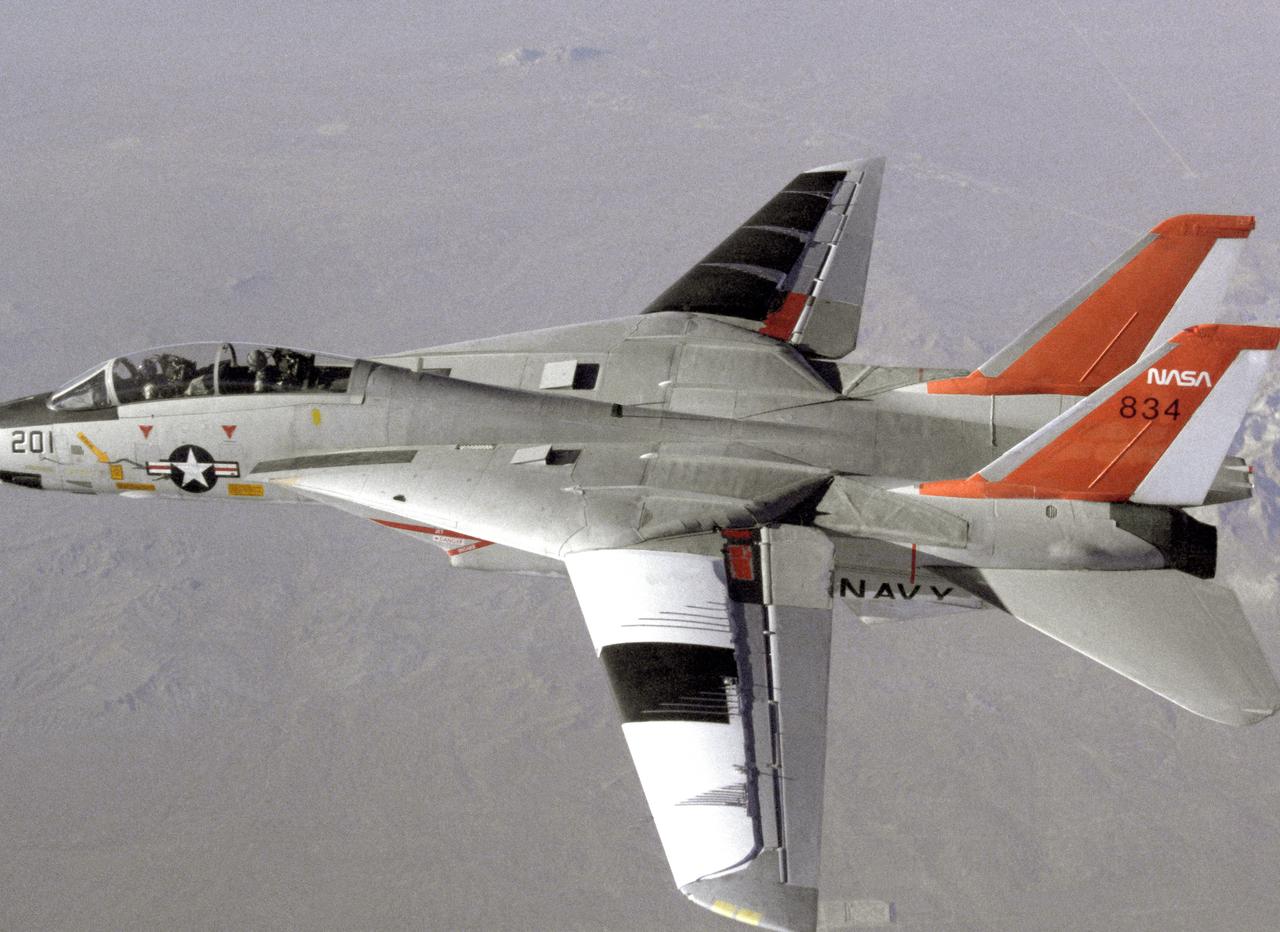
NASA 834, an F-14 Navy Tomcat, seen here in flight, was used at Dryden in 1986 and 1987 in a program known as the Variable-Sweep Transition Flight Experiment (VSTFE). This program explored laminar flow on variable sweep aircraft at high subsonic speeds. An F-14 aircraft was chosen as the carrier vehicle for the VSTFE program primarily because of its variable-sweep capability, Mach and Reynolds number capability, availability, and favorable wing pressure distribution. The variable sweep outer-panels of the F-14 aircraft were modified with natural laminar flow gloves to provide not only smooth surfaces but also airfoils that can produce a wide range of pressure distributions for which transition location can be determined at various flight conditions and sweep angles. Glove I, seen here installed on the upper surface of the left wing, was a "cleanup" or smoothing of the basic F-14 wing, while Glove II was designed to provide specific pressure distributions at Mach 0.7. Laminar flow research continued at Dryden with a research program on the NASA 848 F-16XL, a laminar flow experiment involving a wing-mounted panel with millions of tiny laser cut holes drawing off turbulent boundary layer air with a suction pump.
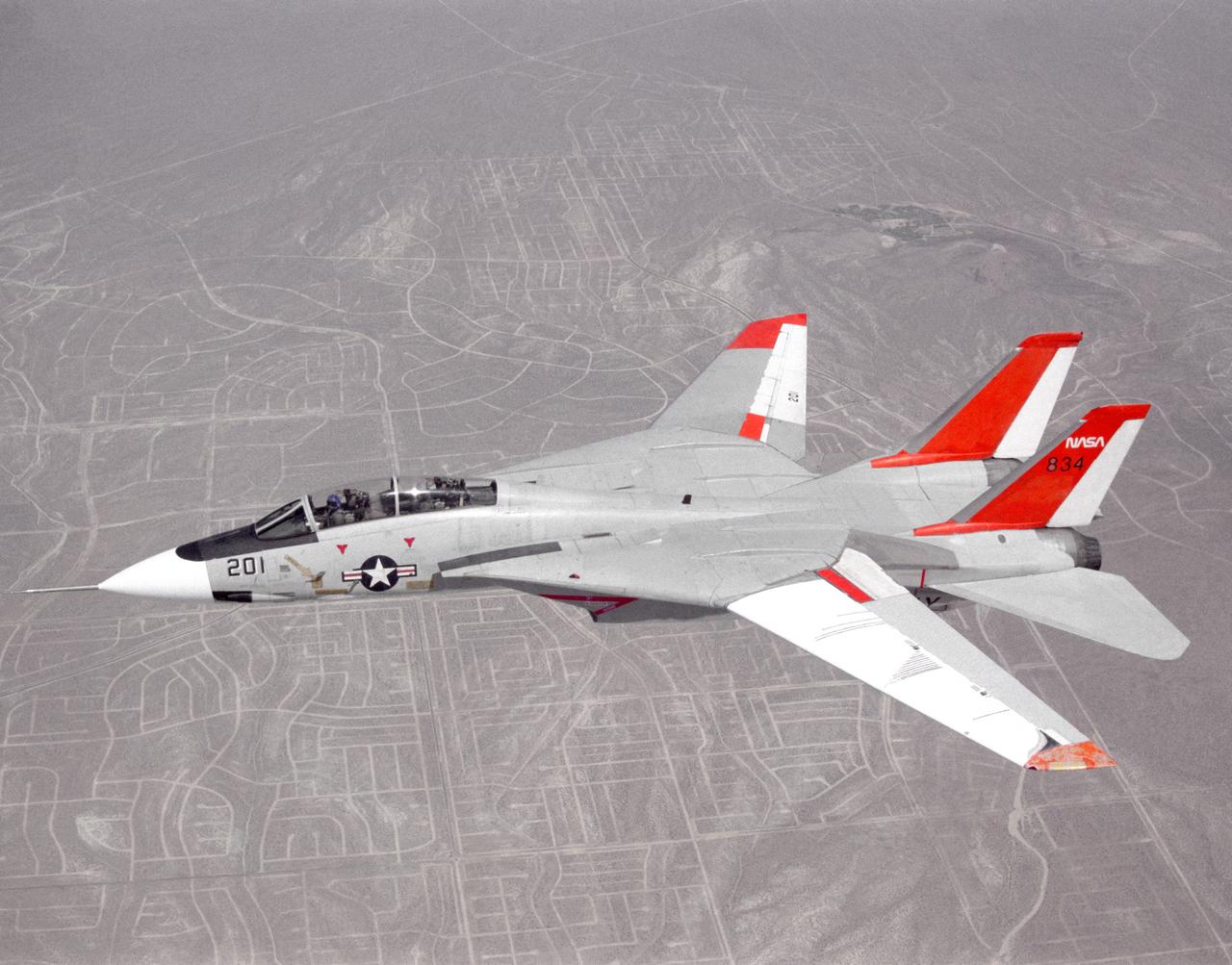
NASA 834, an F-14 Navy Tomcat, seen here in flight, was used at Dryden in 1986 and 1987 in a program known as the Variable-Sweep Transition Flight Experiment (VSTFE). This program explored laminar flow on variable sweep aircraft at high subsonic speeds. An F-14 aircraft was chosen as the carrier vehicle for the VSTFE program primarily because of its variable-sweep capability, Mach and Reynolds number capability, availability, and favorable wing pressure distribution. The variable sweep outer-panels of the F-14 aircraft were modified with natural laminar flow gloves to provide not only smooth surfaces but also airfoils that can produce a wide range of pressure distributions for which transition location can be determined at various flight conditions and sweep angles. Glove I, seen here installed on the upper surface of the left wing, was a "cleanup" or smoothing of the basic F-14 wing, while Glove II was designed to provide specific pressure distributions at Mach 0.7. Laminar flow research continued at Dryden with a research program on the NASA 848 F-16XL, a laminar flow experiment involving a wing-mounted panel with millions of tiny laser cut holes drawing off turbulent boundary layer air with a suction pump.
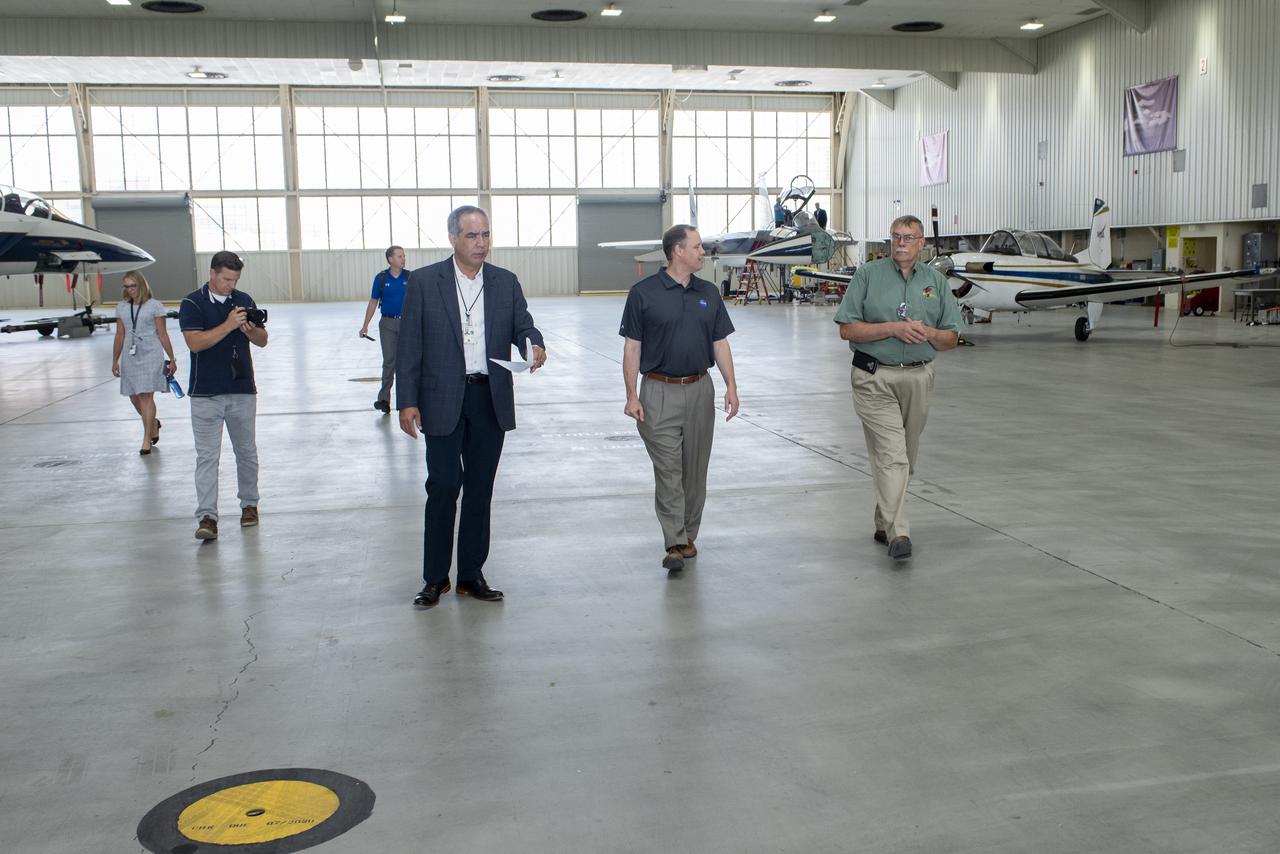
Bridenstine tours main Armstrong hangar that houses the center aircraft used for flight research and safety chase such as F/A-18, F-15B/D, King Air B-200, T-34C and TG-14 aircraft.
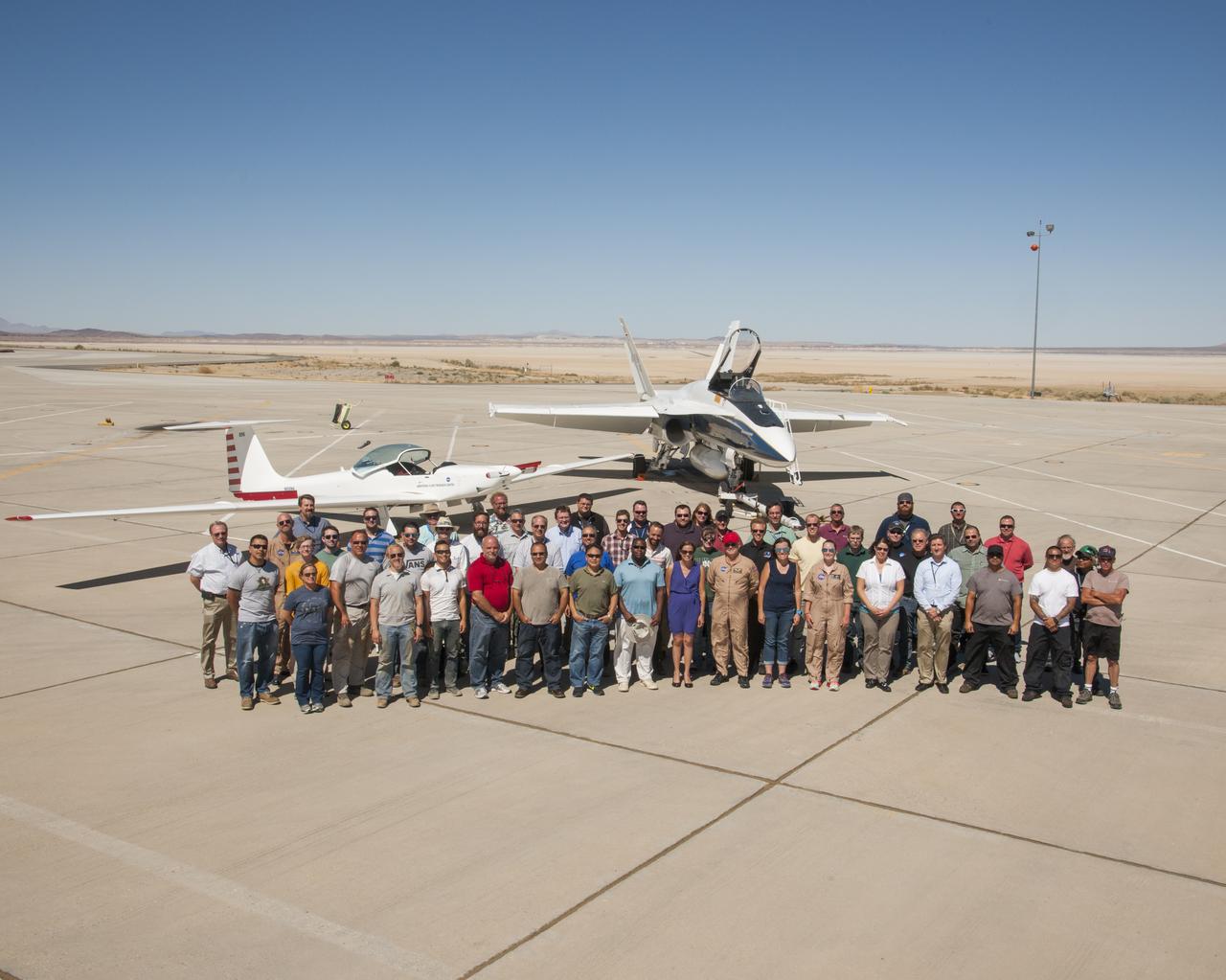
NASA’s SonicBAT team poses in front of the TG-14 motor glider and F/A-18 research aircraft, sitting side-by-side in front of Rogers Dry Lake prior to a SonicBAT flight at Armstrong Flight Research Center on Edwards Air Force Base, California. The TG-14 collected sound signatures of shockwaves created by the F/A-18, to compare with signatures collected on the ground.
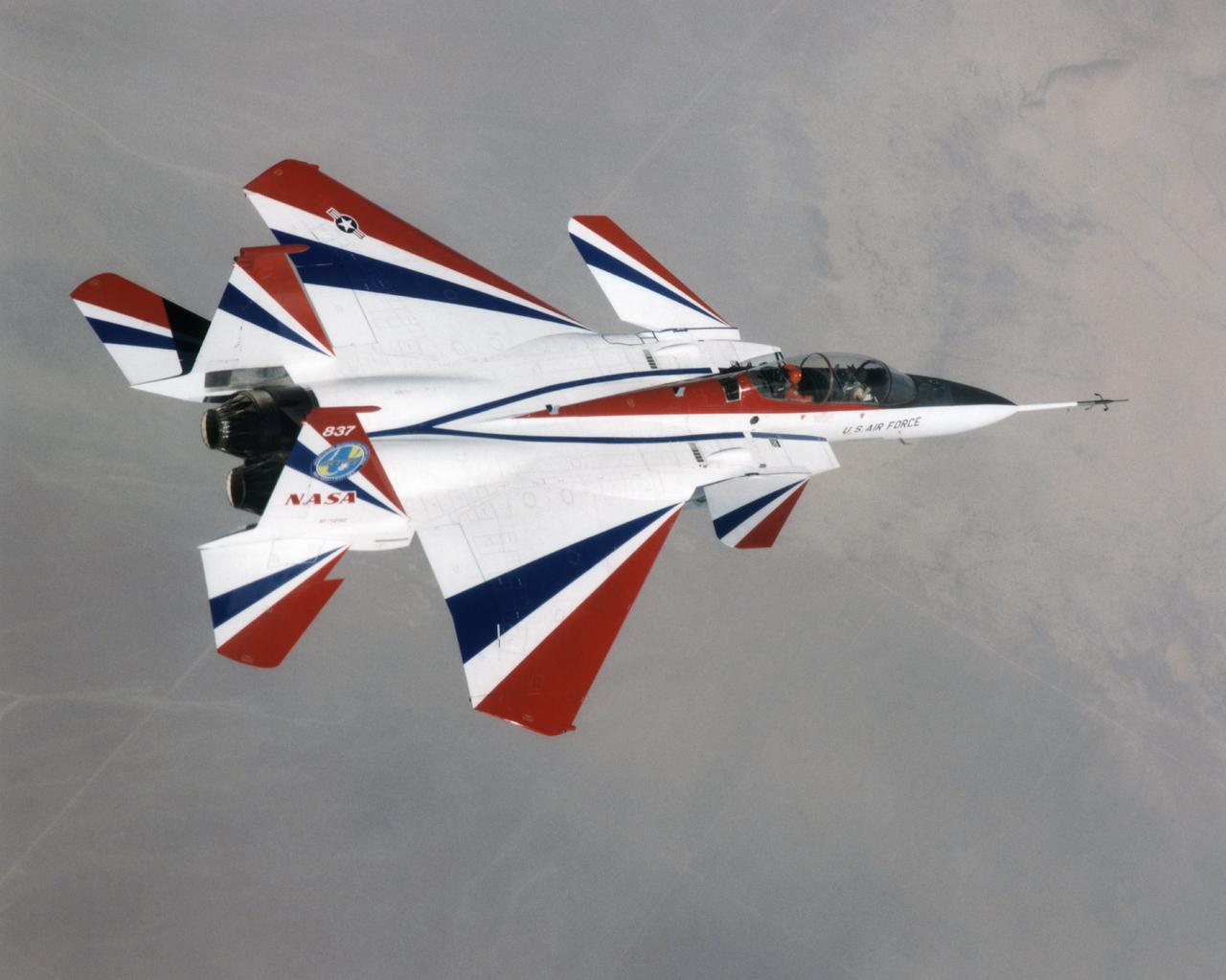
The F-15 ACTIVE in flight above the Mojave desert on April 14, 1998. The overhead shot shows the aircraft's striking red and while paint scheme/ The large forward canards are actually the tail surfaces from an F-18.
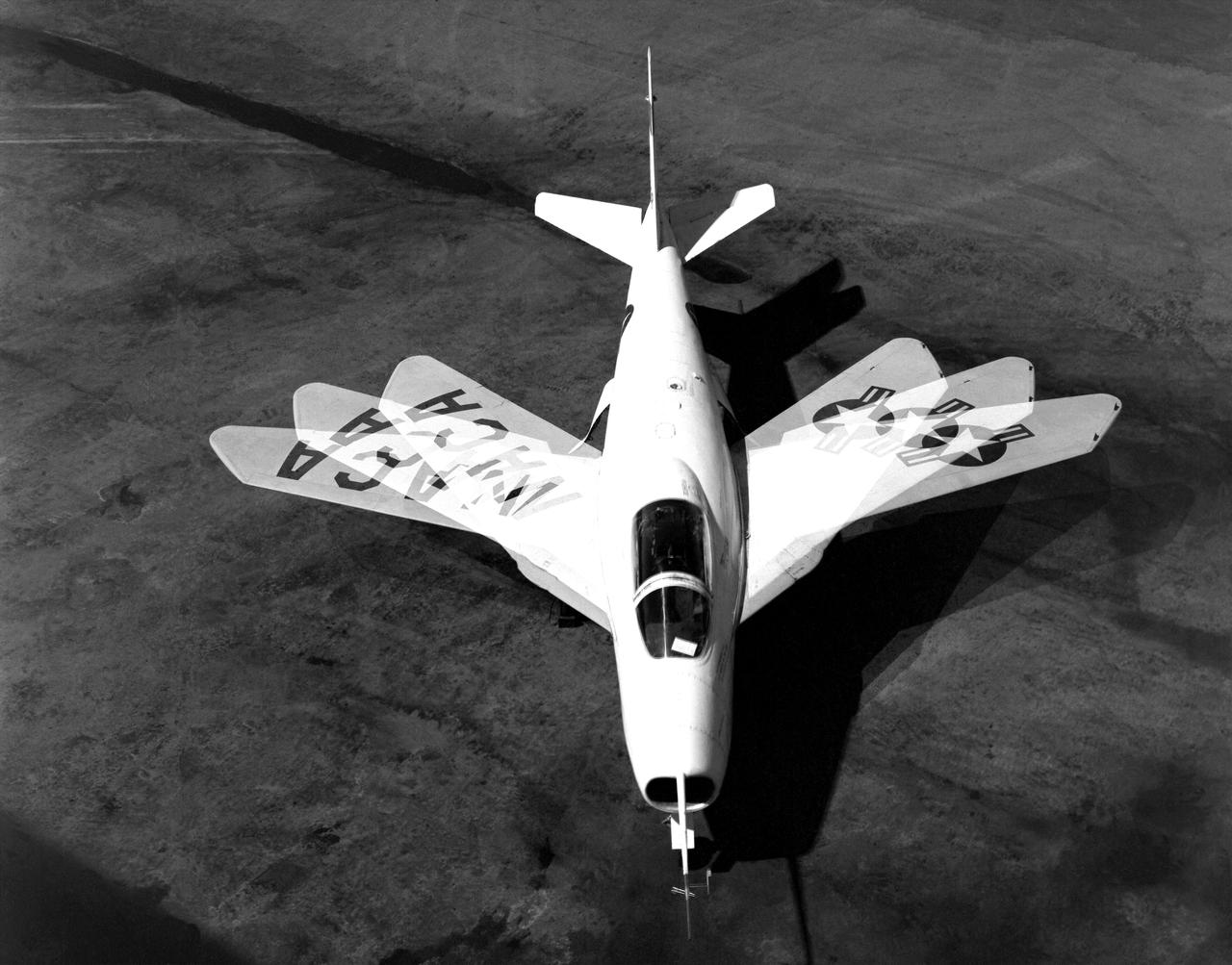
The Bell X-5 swings its wings in this multiple exposure photograph. Variable-sweep wing technology later appeared on the F-111, F-14 and B-1.
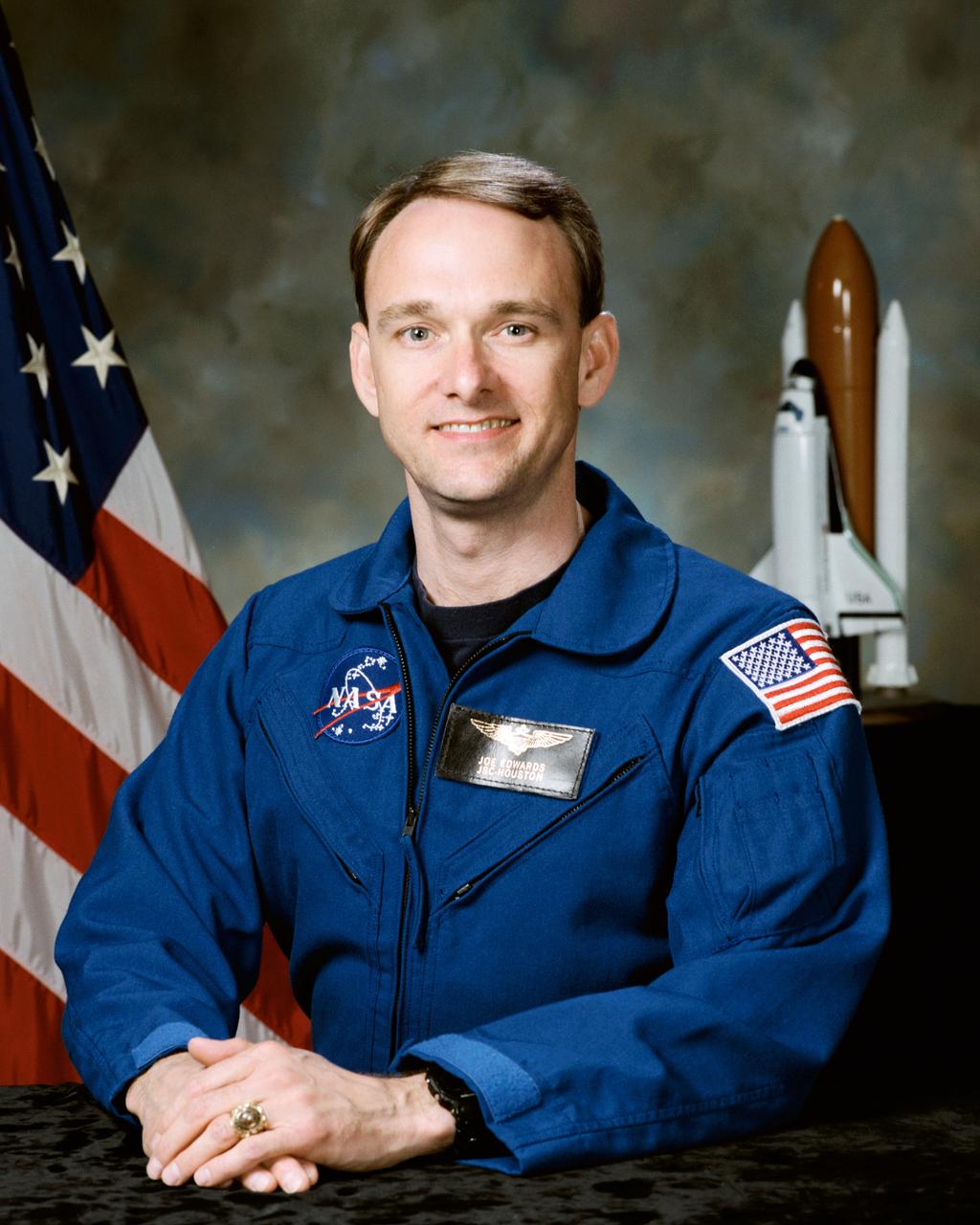
S95-07749 (14 March 1995) - Astronaut Joe F. Edwards Jr., pilot.
![[14] ISO: 100 Aprt: F4 Shut: 60 Lens: 35 Exps: P Prog: Po ExpC: -1.3 Metr: Mtrx Fl s: Norm D md: S F md: S F ar: Spot Dist: 1.6m](https://images-assets.nasa.gov/image/s93e5050/s93e5050~medium.jpg)
[14] ISO: 100 Aprt: F4 Shut: 60 Lens: 35 Exps: P Prog: Po ExpC: -1.3 Metr: Mtrx Fl s: Norm D md: S F md: S F ar: Spot Dist: 1.6m
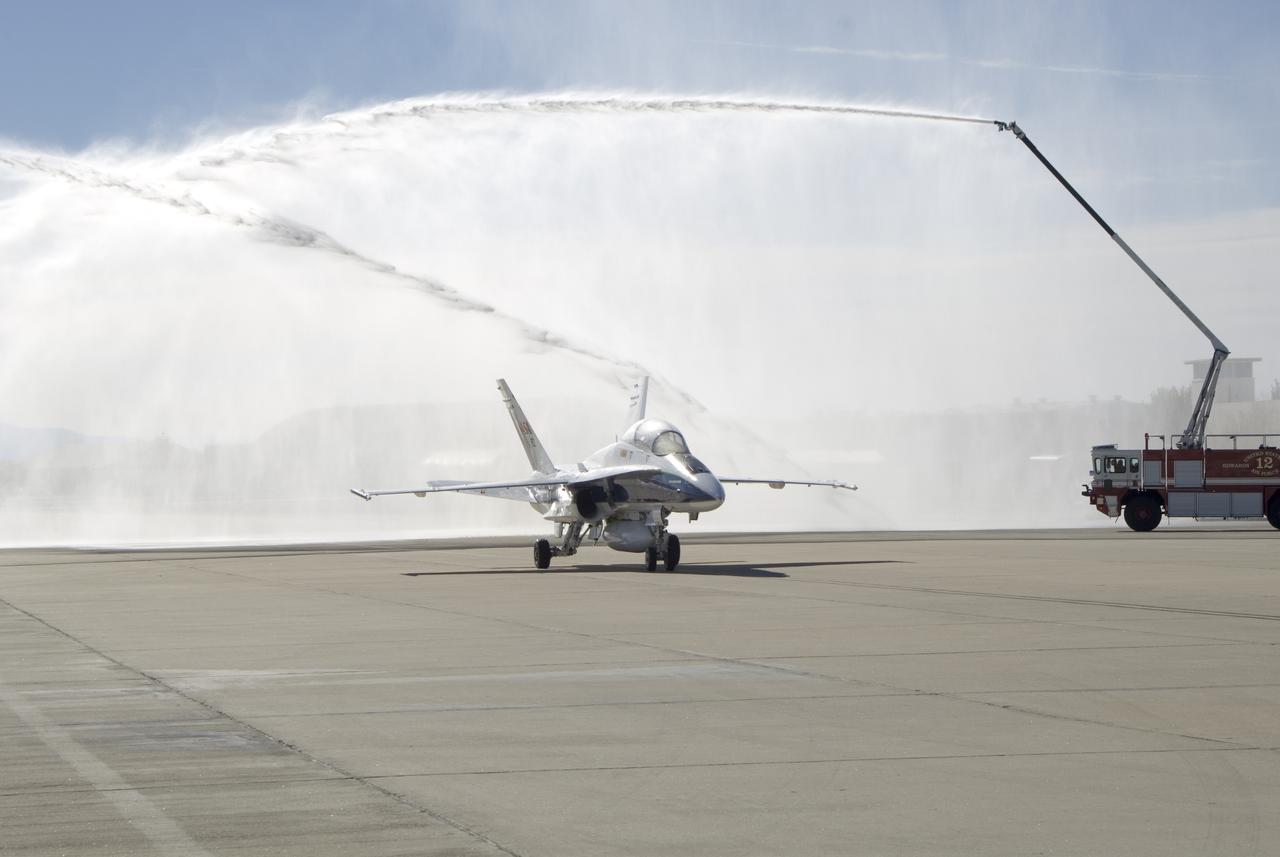
Long-time NASA Dryden research pilot and former astronaut C. Gordon Fullerton capped an almost 50-year flying career, including more than 38 years with NASA, with a final flight in a NASA F/A-18 on Dec. 21, 2007. Fullerton and Dryden research pilot Jim Smolka flew a 90-minute pilot proficiency formation aerobatics flight with another Dryden F/A-18 and a Dryden T-38 before concluding with two low-level formation flyovers of Dryden before landing. Fullerton was honored with a water-cannon spray arch provided by two fire trucks from the Edwards Air Force Base fire department as he taxied the F/A-18 up to the Dryden ramp, and was then greeted by his wife Marie and several hundred Dryden staff after his final flight. Fullerton began his flying career with the U.S. Air Force in 1958 after earning bachelor's and master's degrees in mechanical engineering from the California Institute of Technology. Initially trained as a fighter pilot, he later transitioned to multi-engine bombers and became a bomber operations test pilot after attending the Air Force Aerospace Research Pilot School at Edwards Air Force Base, Calif. He then was assigned to the flight crew for the planned Air Force Manned Orbital Laboratory in 1966. Upon cancellation of that program, the Air Force assigned Fullerton to NASA's astronaut corps in 1969. He served on the support crews for the Apollo 14, 15, 16 and 17 lunar missions, and was later assigned to one of the two flight crews that piloted the space shuttle prototype Enterprise during the Approach and Landing Test program at Dryden. He then logged some 382 hours in space when he flew on two early space shuttle missions, STS-3 on Columbia in 1982 and STS-51F on Challenger in 1985. He joined the flight crew branch at NASA Dryden after leaving the astronaut corps in 1986. During his 21 years at Dryden, Fullerton was project pilot on a number of high-profile research efforts, including the Propulsion Controlled Aircraft, the high-speed landing tests of
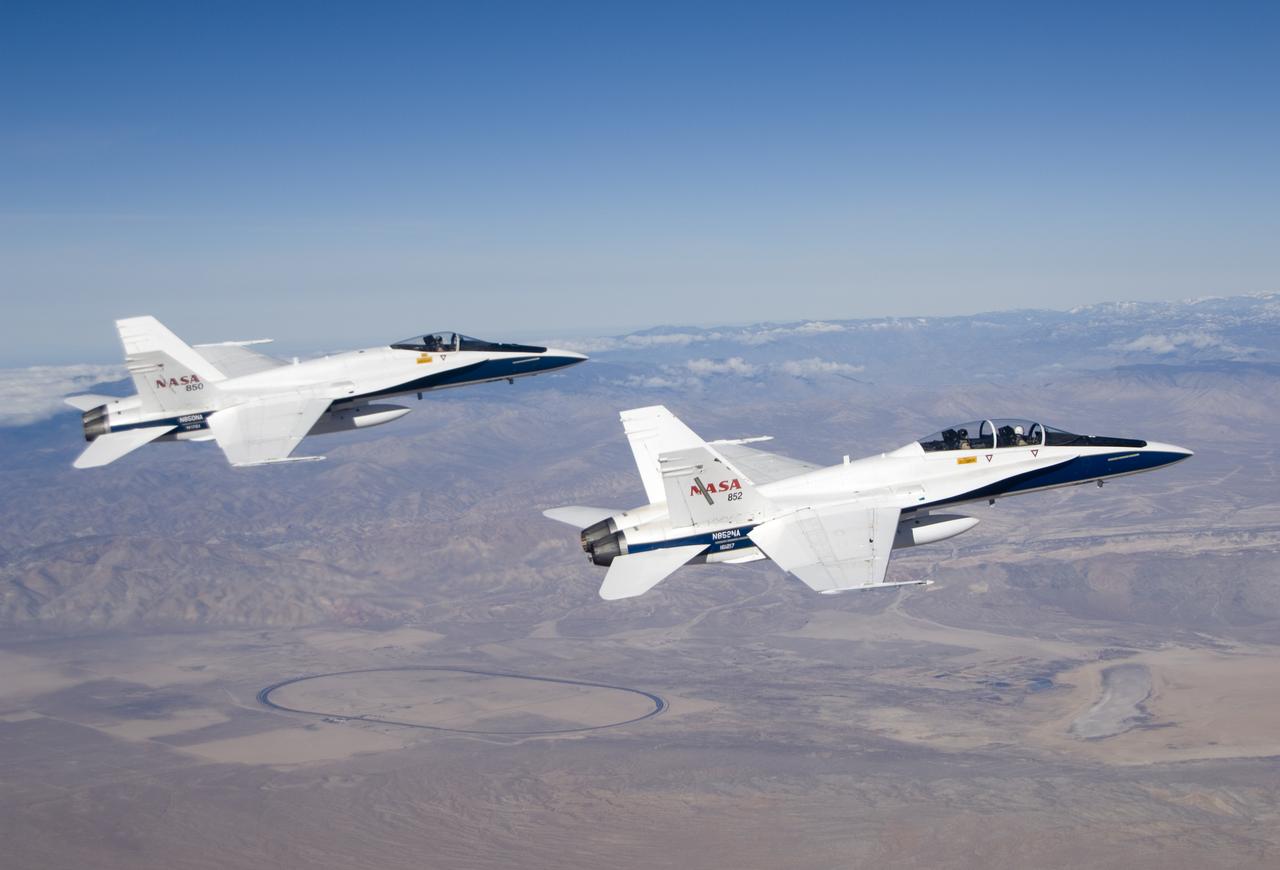
Long-time NASA Dryden research pilot and former astronaut C. Gordon Fullerton capped an almost 50-year flying career, including more than 38 years with NASA, with a final flight in a NASA F/A-18 on Dec. 21, 2007. Fullerton and Dryden research pilot Jim Smolka flew a 90-minute pilot proficiency formation aerobatics flight with another Dryden F/A-18 and a Dryden T-38 before concluding with two low-level formation flyovers of Dryden before landing. Fullerton was honored with a water-cannon spray arch provided by two fire trucks from the Edwards Air Force Base fire department as he taxied the F/A-18 up to the Dryden ramp, and was then greeted by his wife Marie and several hundred Dryden staff after his final flight. Fullerton began his flying career with the U.S. Air Force in 1958 after earning bachelor's and master's degrees in mechanical engineering from the California Institute of Technology. Initially trained as a fighter pilot, he later transitioned to multi-engine bombers and became a bomber operations test pilot after attending the Air Force Aerospace Research Pilot School at Edwards Air Force Base, Calif. He then was assigned to the flight crew for the planned Air Force Manned Orbital Laboratory in 1966. Upon cancellation of that program, the Air Force assigned Fullerton to NASA's astronaut corps in 1969. He served on the support crews for the Apollo 14, 15, 16 and 17 lunar missions, and was later assigned to one of the two flight crews that piloted the space shuttle prototype Enterprise during the Approach and Landing Test program at Dryden. He then logged some 382 hours in space when he flew on two early space shuttle missions, STS-3 on Columbia in 1982 and STS-51F on Challenger in 1985. He joined the flight crew branch at NASA Dryden after leaving the astronaut corps in 1986. During his 21 years at Dryden, Fullerton was project pilot on a number of high-profile research efforts, including the Propulsion Controlled Aircraft, the high-speed landing tests of sp
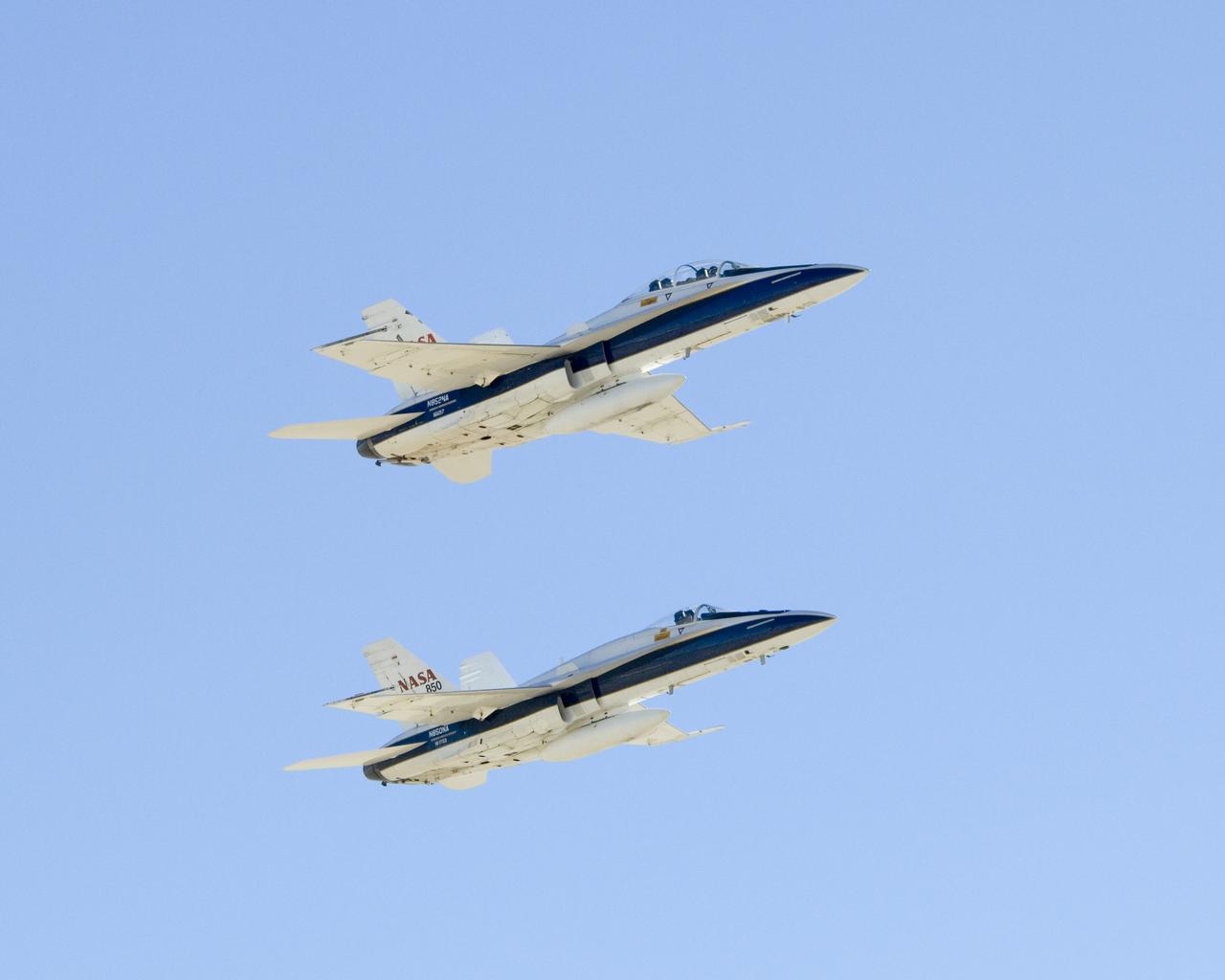
Long-time NASA Dryden research pilot and former astronaut C. Gordon Fullerton capped an almost 50-year flying career, including more than 38 years with NASA, with a final flight in a NASA F/A-18 on Dec. 21, 2007. Fullerton and Dryden research pilot Jim Smolka flew a 90-minute pilot proficiency formation aerobatics flight with another Dryden F/A-18 and a Dryden T-38 before concluding with two low-level formation flyovers of Dryden before landing. Fullerton was honored with a water-cannon spray arch provided by two fire trucks from the Edwards Air Force Base fire department as he taxied the F/A-18 up to the Dryden ramp, and was then greeted by his wife Marie and several hundred Dryden staff after his final flight. Fullerton began his flying career with the U.S. Air Force in 1958 after earning bachelor's and master's degrees in mechanical engineering from the California Institute of Technology. Initially trained as a fighter pilot, he later transitioned to multi-engine bombers and became a bomber operations test pilot after attending the Air Force Aerospace Research Pilot School at Edwards Air Force Base, Calif. He then was assigned to the flight crew for the planned Air Force Manned Orbital Laboratory in 1966. Upon cancellation of that program, the Air Force assigned Fullerton to NASA's astronaut corps in 1969. He served on the support crews for the Apollo 14, 15, 16 and 17 lunar missions, and was later assigned to one of the two flight crews that piloted the space shuttle prototype Enterprise during the Approach and Landing Test program at Dryden. He then logged some 382 hours in space when he flew on two early space shuttle missions, STS-3 on Columbia in 1982 and STS-51F on Challenger in 1985. He joined the flight crew branch at NASA Dryden after leaving the astronaut corps in 1986. During his 21 years at Dryden, Fullerton was project pilot on a number of high-profile research efforts, including the Propulsion Controlled Aircraft, the high-speed landing tests of
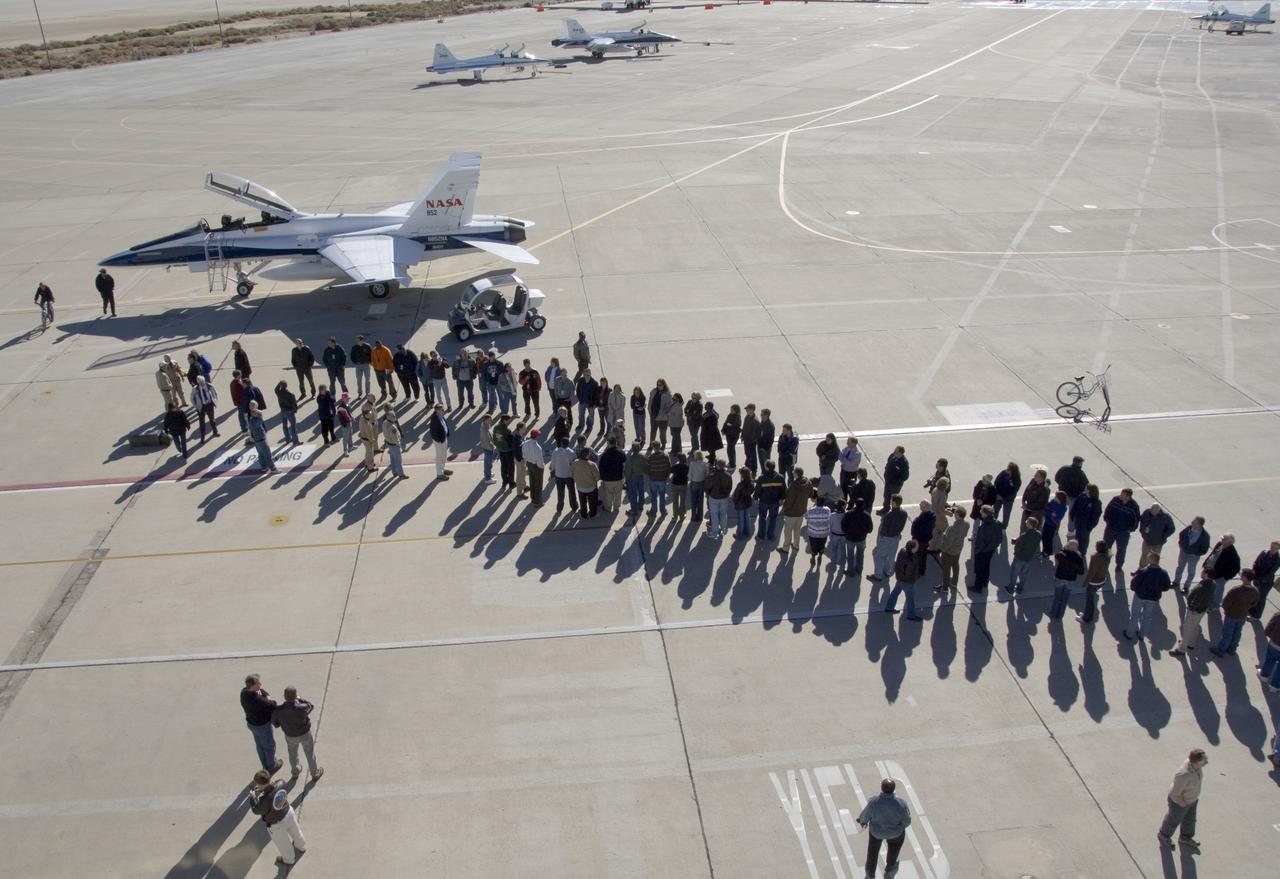
Long-time NASA Dryden research pilot and former astronaut C. Gordon Fullerton capped an almost 50-year flying career, including more than 38 years with NASA, with a final flight in a NASA F/A-18 on Dec. 21, 2007. Fullerton and Dryden research pilot Jim Smolka flew a 90-minute pilot proficiency formation aerobatics flight with another Dryden F/A-18 and a Dryden T-38 before concluding with two low-level formation flyovers of Dryden before landing. Fullerton was honored with a water-cannon spray arch provided by two fire trucks from the Edwards Air Force Base fire department as he taxied the F/A-18 up to the Dryden ramp, and was then greeted by his wife Marie and several hundred Dryden staff after his final flight. Fullerton began his flying career with the U.S. Air Force in 1958 after earning bachelor's and master's degrees in mechanical engineering from the California Institute of Technology. Initially trained as a fighter pilot, he later transitioned to multi-engine bombers and became a bomber operations test pilot after attending the Air Force Aerospace Research Pilot School at Edwards Air Force Base, Calif. He then was assigned to the flight crew for the planned Air Force Manned Orbital Laboratory in 1966. Upon cancellation of that program, the Air Force assigned Fullerton to NASA's astronaut corps in 1969. He served on the support crews for the Apollo 14, 15, 16 and 17 lunar missions, and was later assigned to one of the two flight crews that piloted the space shuttle prototype Enterprise during the Approach and Landing Test program at Dryden. He then logged some 382 hours in space when he flew on two early space shuttle missions, STS-3 on Columbia in 1982 and STS-51F on Challenger in 1985. He joined the flight crew branch at NASA Dryden after leaving the astronaut corps in 1986. During his 21 years at Dryden, Fullerton was project pilot on a number of high-profile research efforts, including the Propulsion Controlled Aircraft, the high-speed landing tests of
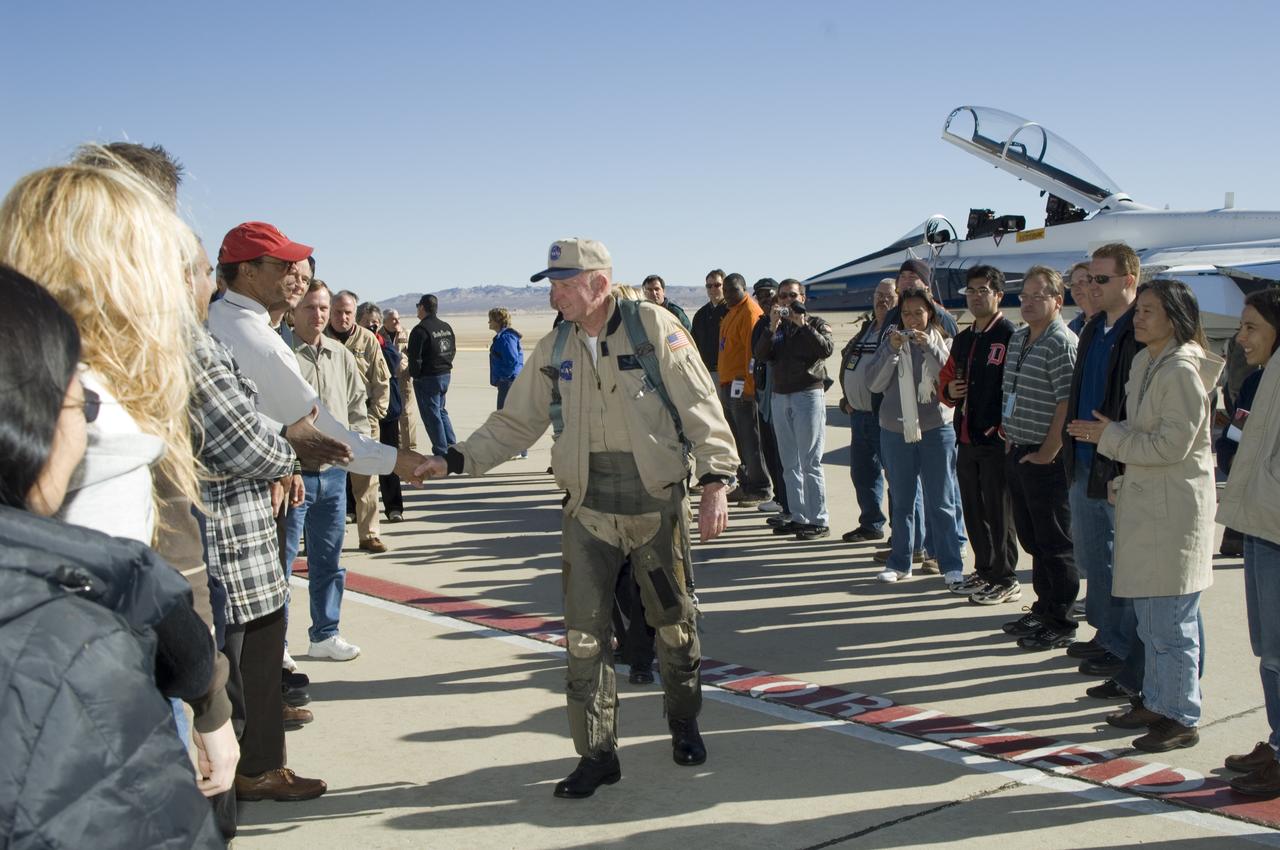
Long-time NASA Dryden research pilot and former astronaut C. Gordon Fullerton capped an almost 50-year flying career, including more than 38 years with NASA, with a final flight in a NASA F/A-18 on Dec. 21, 2007. Fullerton and Dryden research pilot Jim Smolka flew a 90-minute pilot proficiency formation aerobatics flight with another Dryden F/A-18 and a Dryden T-38 before concluding with two low-level formation flyovers of Dryden before landing. Fullerton was honored with a water-cannon spray arch provided by two fire trucks from the Edwards Air Force Base fire department as he taxied the F/A-18 up to the Dryden ramp, and was then greeted by his wife Marie and several hundred Dryden staff after his final flight. Fullerton began his flying career with the U.S. Air Force in 1958 after earning bachelor's and master's degrees in mechanical engineering from the California Institute of Technology. Initially trained as a fighter pilot, he later transitioned to multi-engine bombers and became a bomber operations test pilot after attending the Air Force Aerospace Research Pilot School at Edwards Air Force Base, Calif. He then was assigned to the flight crew for the planned Air Force Manned Orbital Laboratory in 1966. Upon cancellation of that program, the Air Force assigned Fullerton to NASA's astronaut corps in 1969. He served on the support crews for the Apollo 14, 15, 16 and 17 lunar missions, and was later assigned to one of the two flight crews that piloted the space shuttle prototype Enterprise during the Approach and Landing Test program at Dryden. He then logged some 382 hours in space when he flew on two early space shuttle missions, STS-3 on Columbia in 1982 and STS-51F on Challenger in 1985. He joined the flight crew branch at NASA Dryden after leaving the astronaut corps in 1986. During his 21 years at Dryden, Fullerton was project pilot on a number of high-profile research efforts, including the Propulsion Controlled Aircraft, the high-speed landing tests of
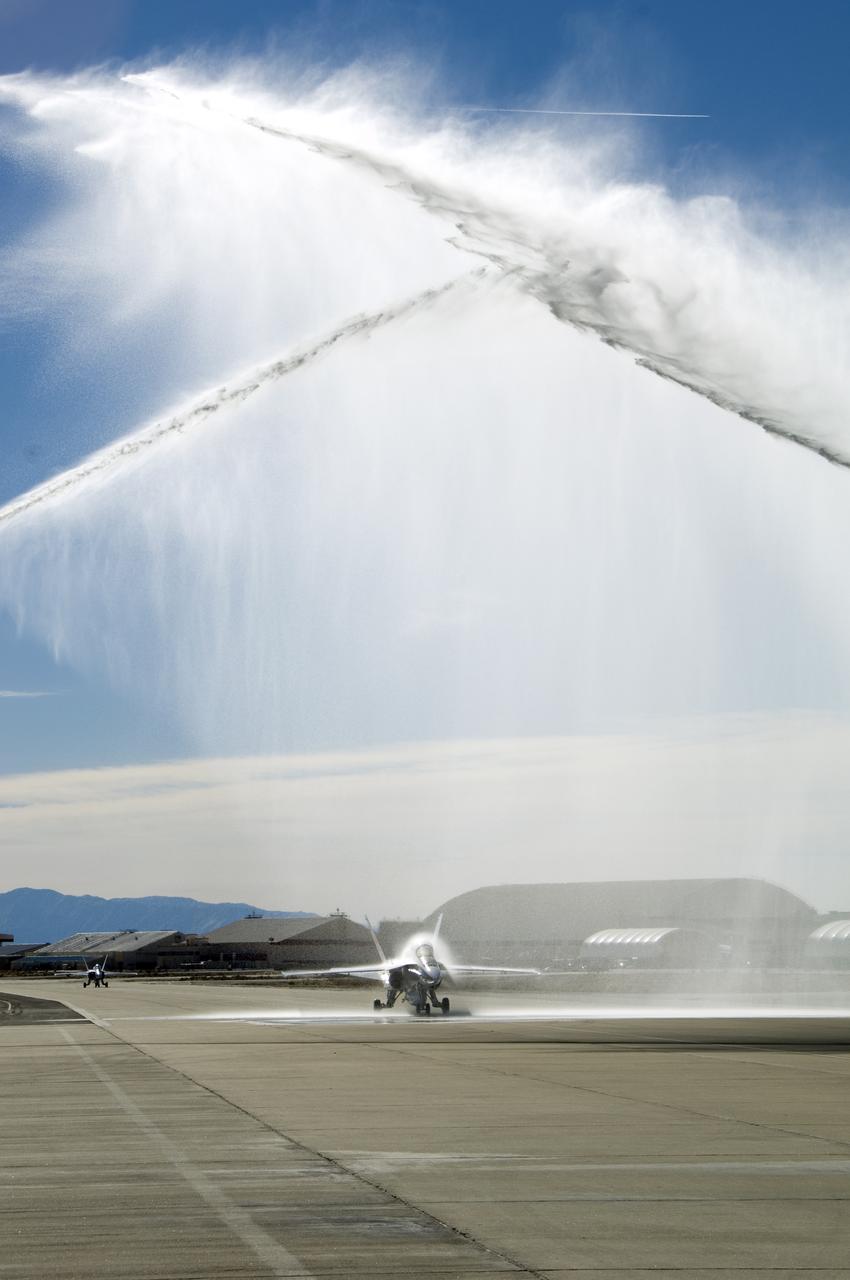
Long-time NASA Dryden research pilot and former astronaut C. Gordon Fullerton capped an almost 50-year flying career, including more than 38 years with NASA, with a final flight in a NASA F/A-18 on Dec. 21, 2007. Fullerton and Dryden research pilot Jim Smolka flew a 90-minute pilot proficiency formation aerobatics flight with another Dryden F/A-18 and a Dryden T-38 before concluding with two low-level formation flyovers of Dryden before landing. Fullerton was honored with a water-cannon spray arch provided by two fire trucks from the Edwards Air Force Base fire department as he taxied the F/A-18 up to the Dryden ramp, and was then greeted by his wife Marie and several hundred Dryden staff after his final flight. Fullerton began his flying career with the U.S. Air Force in 1958 after earning bachelor's and master's degrees in mechanical engineering from the California Institute of Technology. Initially trained as a fighter pilot, he later transitioned to multi-engine bombers and became a bomber operations test pilot after attending the Air Force Aerospace Research Pilot School at Edwards Air Force Base, Calif. He then was assigned to the flight crew for the planned Air Force Manned Orbital Laboratory in 1966. Upon cancellation of that program, the Air Force assigned Fullerton to NASA's astronaut corps in 1969. He served on the support crews for the Apollo 14, 15, 16 and 17 lunar missions, and was later assigned to one of the two flight crews that piloted the space shuttle prototype Enterprise during the Approach and Landing Test program at Dryden. He then logged some 382 hours in space when he flew on two early space shuttle missions, STS-3 on Columbia in 1982 and STS-51F on Challenger in 1985. He joined the flight crew branch at NASA Dryden after leaving the astronaut corps in 1986. During his 21 years at Dryden, Fullerton was project pilot on a number of high-profile research efforts, including the Propulsion Controlled Aircraft, the high-speed landing tests of
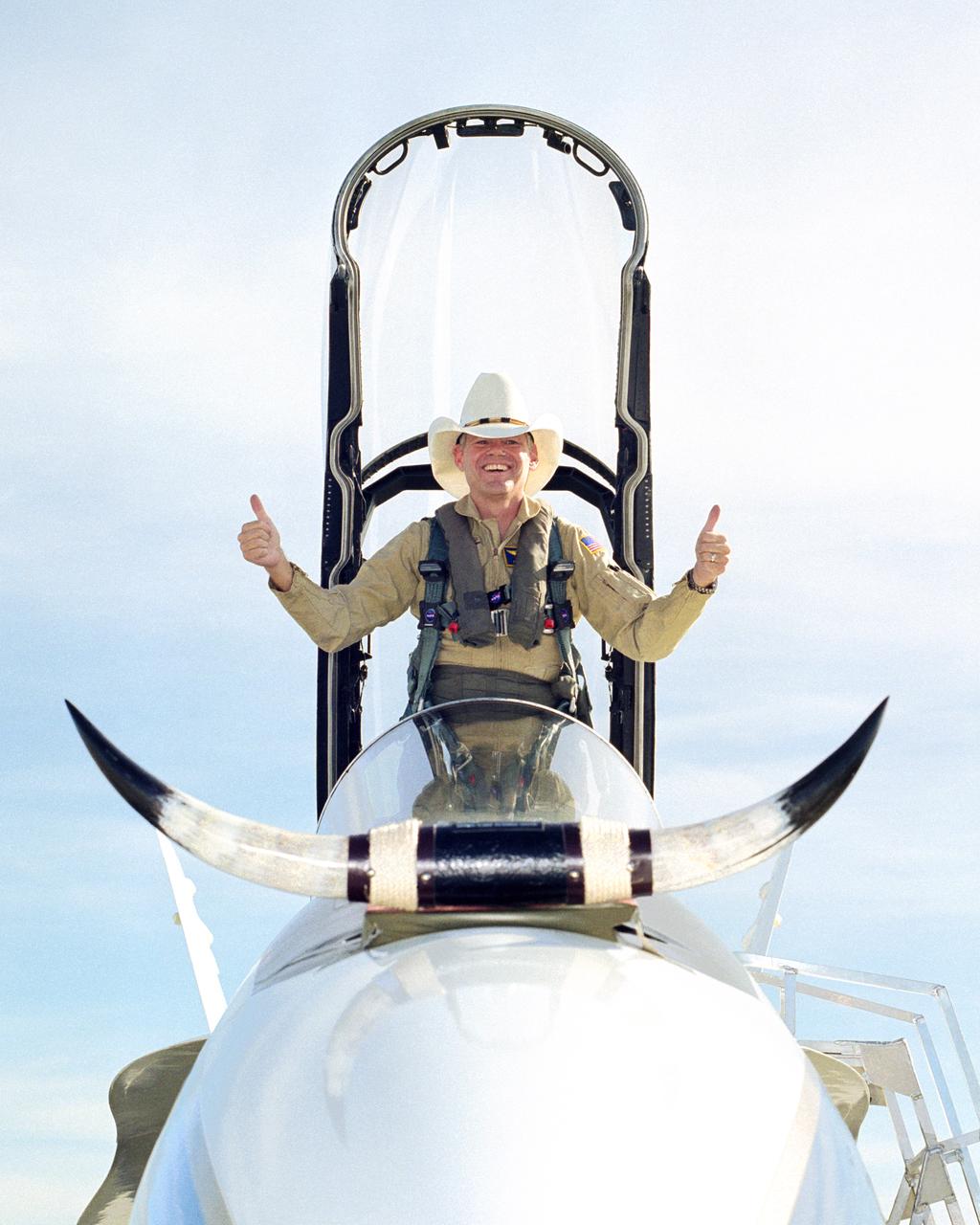
In a lighter mood, Ed Schneider gives a "thumbs-up" after his last flight at the Dryden Flight Research Center on September 19, 2000. Schneider arrived at the NASA Ames-Dryden Flight Research Facility on July 5, 1982, as a Navy Liaison Officer, becoming a NASA research pilot one year later. He has been project pilot for the F-18 High Angle-of-Attack program (HARV), the F-15 aeronautical research aircraft, the NASA B-52 launch aircraft, and the SR-71 "Blackbird" aircraft. He also participated in such programs as the F-8 Digital Fly-By-Wire, the FAA/NASA 720 Controlled Impact Demonstration, the F-14 Automatic Rudder Interconnect and Laminar Flow, and the F-104 Aeronautical Research and Microgravity projects.
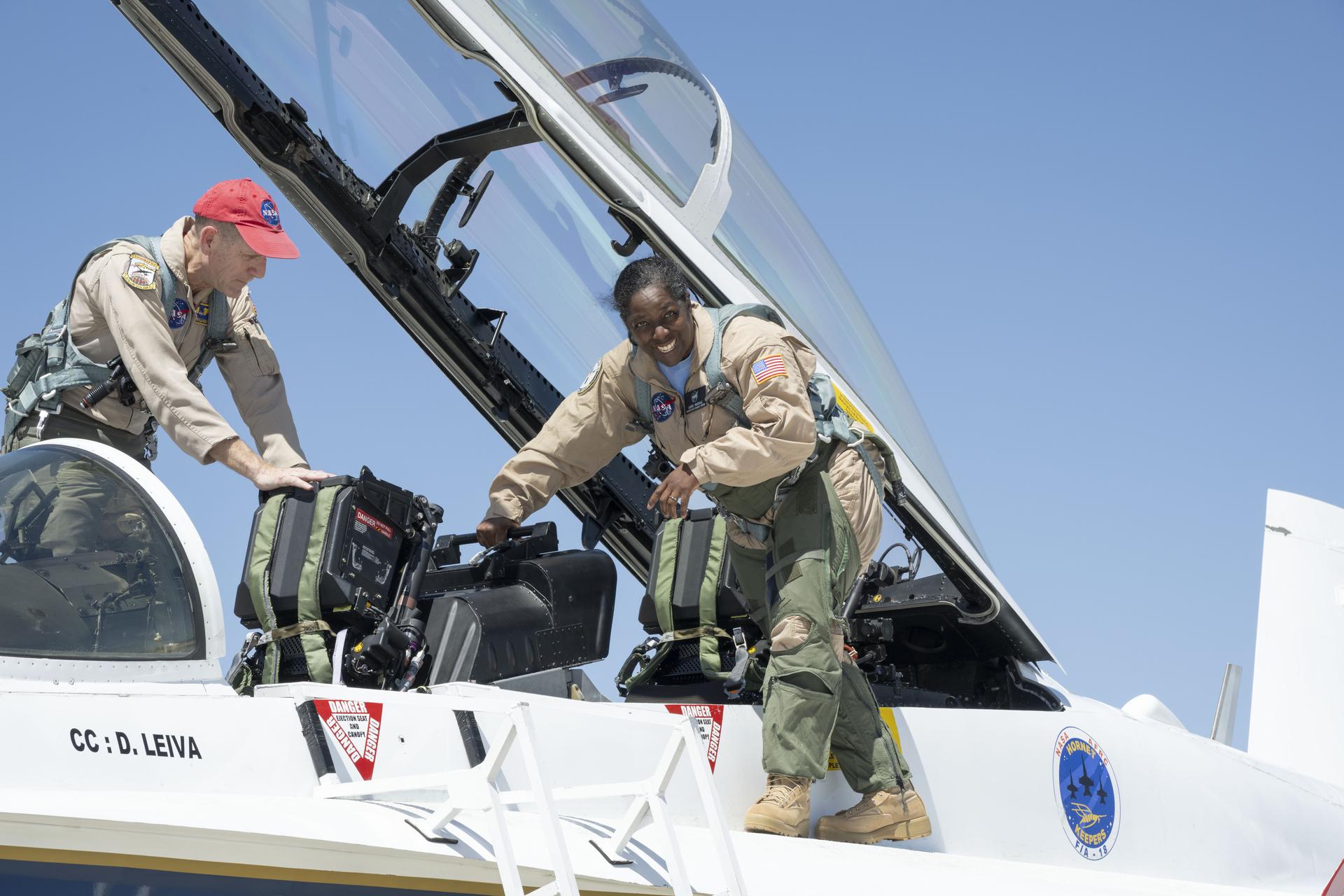
Laurie Grindle, deputy center director, steps out of an F/A-18 aircraft after completing an employee incentive flight at NASA’s Armstrong Flight Research Center in Edwards, California, on Tuesday, April 14, 2026. Timothy Williams, the pilot, secures the F/A-18 cockpit. NASA Administrator Jared Isaacman established the ride‑along program to recognize and reward workforce members for their dedication to advancing the agency’s priorities.
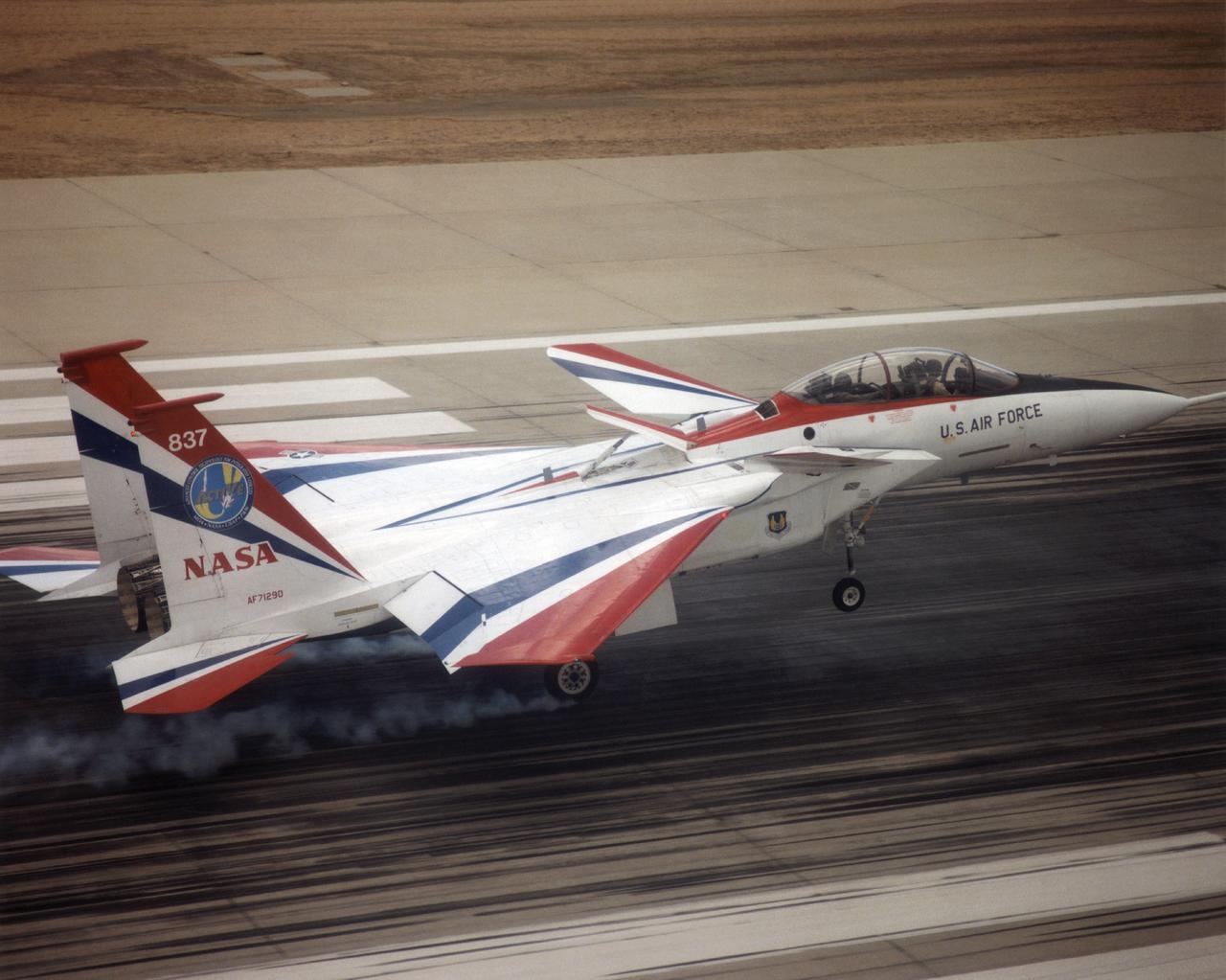
The F-15 ACTIVE touches down on the Edwards runway following its April 14, 1998 flight. The nose is high while the canards have their rear edge raised. the aircraft's speed brake, located on the top of the aircraft behind the canopy, is also raised.
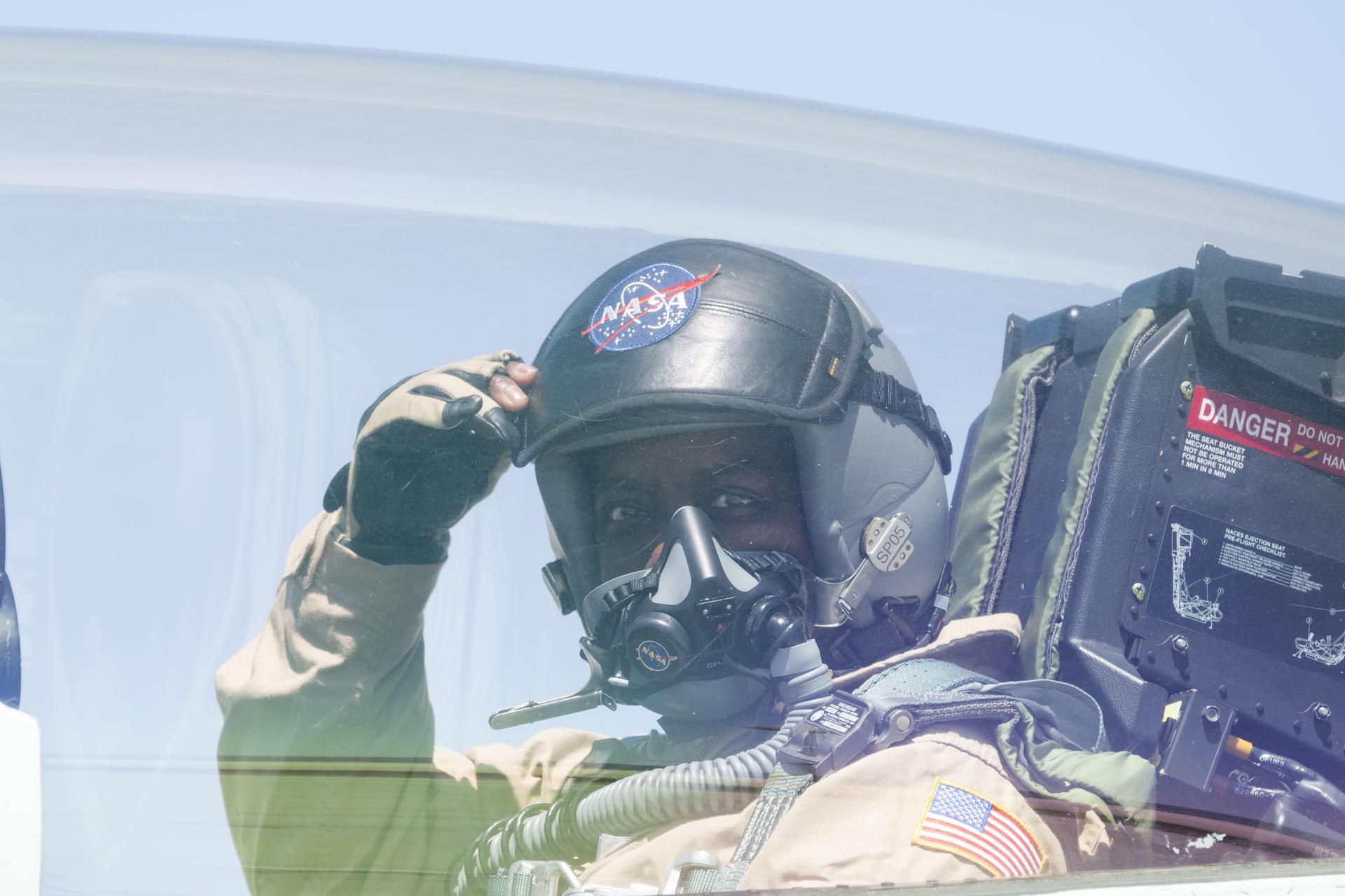
Laurie Grindle, deputy center director, prepares for an employee incentive flight in an F/A-18 aircraft at NASA’s Armstrong Flight Research Center in Edwards, California, on Tuesday, April 14, 2026. NASA Administrator Jared Isaacman established the ride‑along program to recognize and reward workforce members for their dedication to advancing the agency’s priorities.
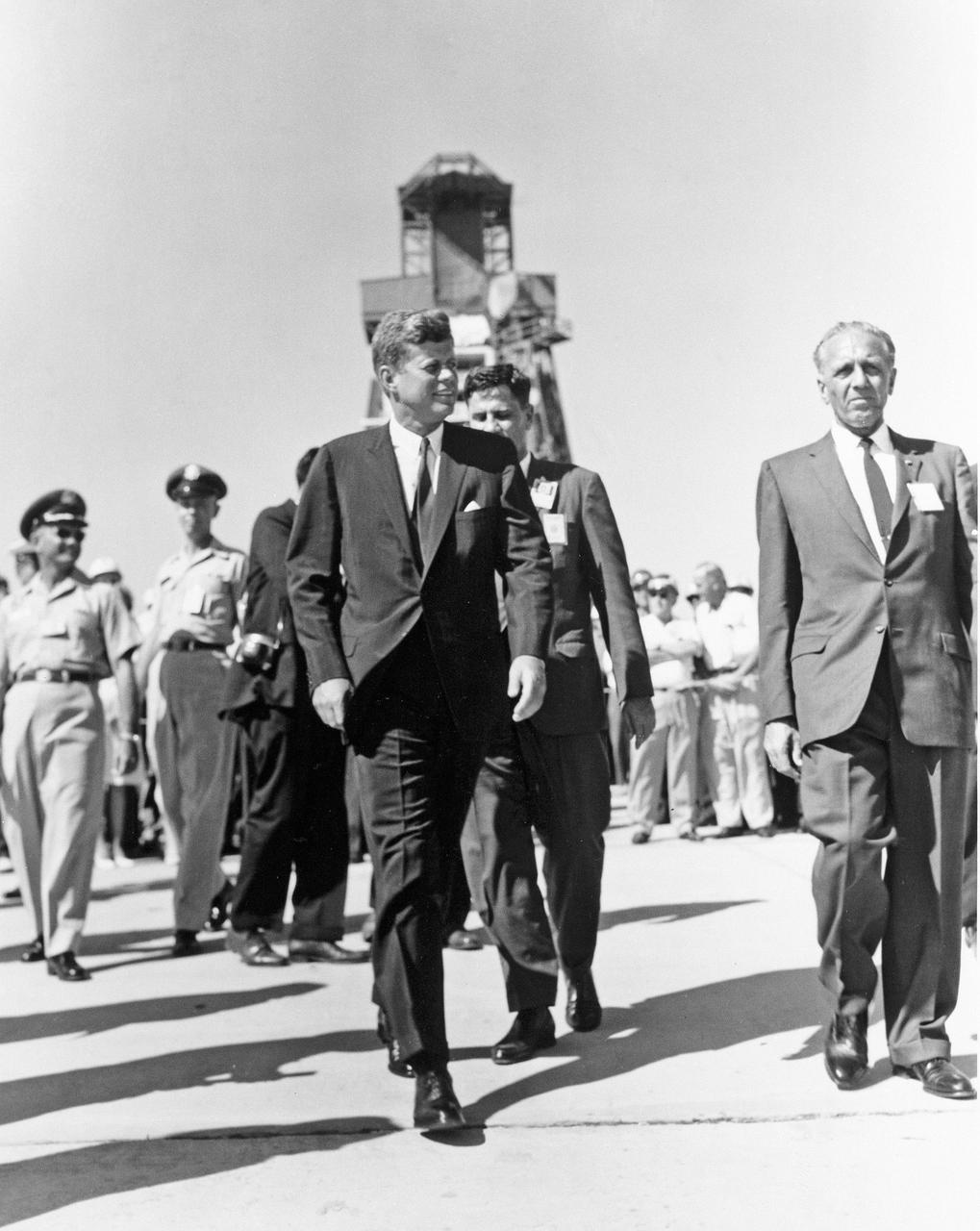
CAPE CANAVERAL Fla. -- President John F. Kennedy is escorted by Launch Operations Center Director Dr. Kurt H. Debus, on the right, on a tour of Launch Complex-14 at the Cape Canaveral Missile Test Annex in Florida. Photo Credit: NASA

S69-58881 (14 Nov. 1969) --- The three Apollo 12 crew men leave the Kennedy Space Center's (KSC) Manned Spacecraft Operations Building (MSOB) during the Apollo 12 prelaunch countdown. Leading is astronaut Charles Conrad Jr., commander; followed by astronauts Richard F. Gordon Jr., command module pilot; and Alan L. Bean, lunar module pilot. They rode a special transport van over the Pad A, Launch Complex 39, where their spacecraft awaited. The Apollo 12 liftoff occurred at 11:22 a.m. (EST), Nov. 14, 1969. Apollo 12 is the United States' second lunar landing mission.
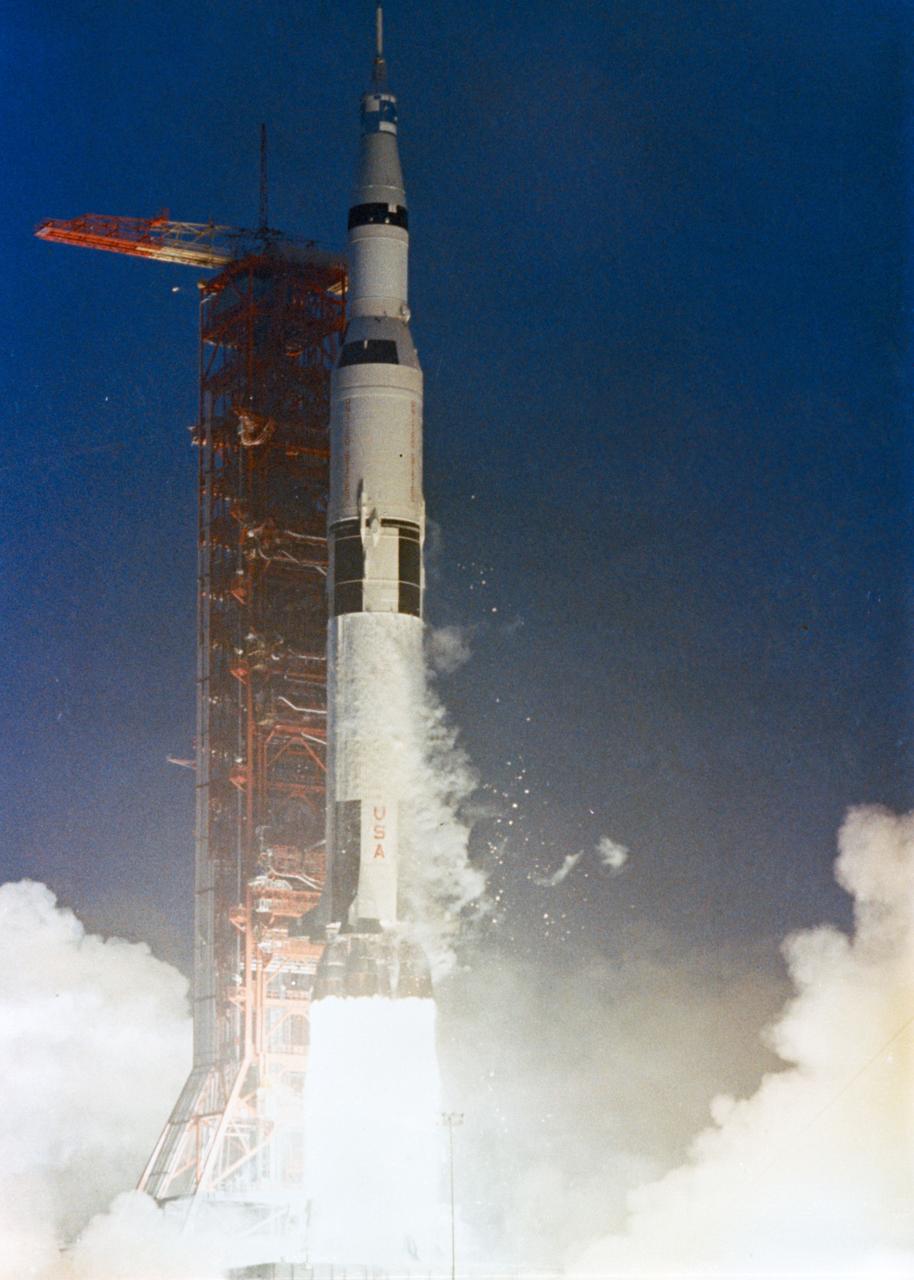
S69-58883 (14 Nov. 1969) --- The huge, 363-feet tall Apollo 12 (Spacecraft 108/Lunar Module 6/Saturn 507) space vehicle is launched from Pad A, Launch Complex 39, Kennedy Space Center (KSC), at 11:22 a.m. (EST), Nov. 14, 1969. Aboard the Apollo 12 spacecraft were astronauts Charles Conrad Jr., commander; Richard F. Gordon Jr., command module pilot; and Alan L. Bean, lunar module pilot. Apollo 12 is the United States' second lunar landing mission.
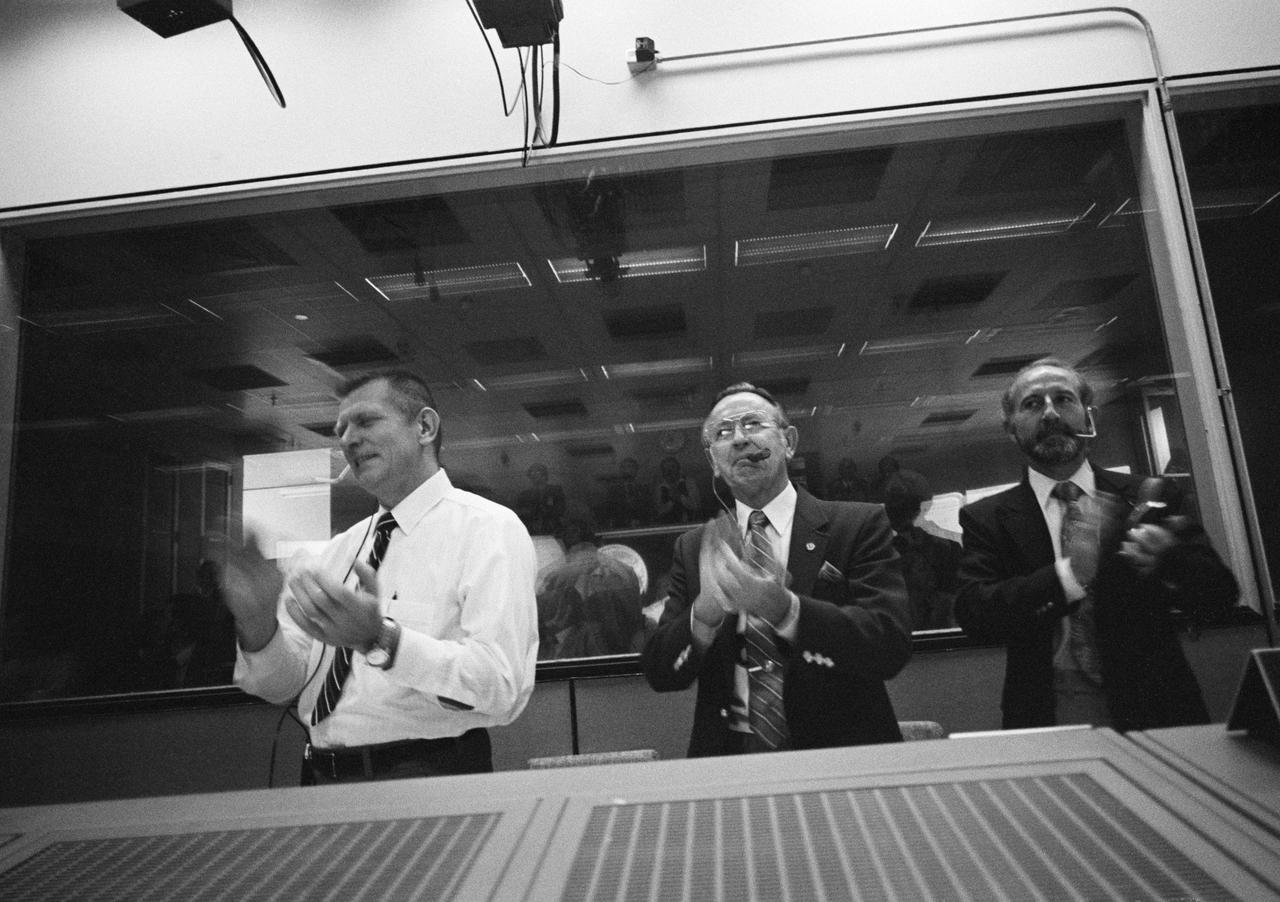
S81-39511 (14 Nov. 1981) --- The successful STS-2 landing at Edwards Air Force Base in California was cause for celebration in the Johnson Space Center?s Mission Control Center shortly before 3:30 p.m. (CST) on Nov. 14, 1981. JSC Director Christopher C. Kraft Jr. (center), not only applauds but enjoys a traditional ?touchdown? cigar, as well. Eugene F. Kranz (left), deputy director of flight operations at JSC, and Thomas L. Moser of the structures and mechanics division join the celebration. The second flight of the space shuttle Columbia lasted two days, six hours, 13 minutes and a few seconds. Photo credit: NASA
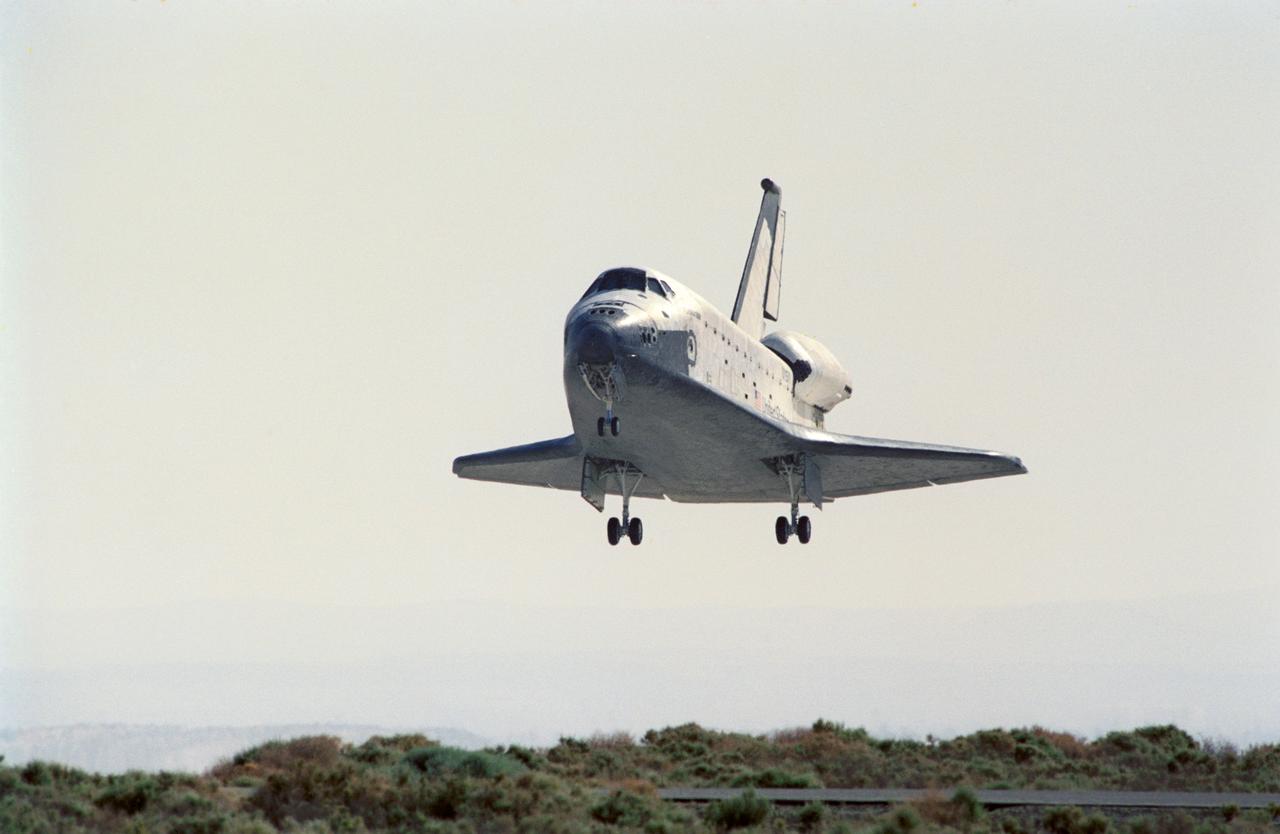
STS040-S-174 (14 June 1991) --- The Space Shuttle Columbia is only moments away from touchdown on Runway 22 at Edwards Air Force Base in California. The landing completes a successful nine-day Spacelab Life Sciences (SLS-1) mission, the first ever devoted exclusively to life sciences research. Onboard the spacecraft were astronauts Bryan D. O'Connor, Sidney M. Gutierrez, Rhea Seddon, James P. Bagian and Tamara E. Jernigan; and payload specialists F. Drew Gaffney and Millie Hughes-Fulford. Landing occurred at 8:39:11 a.m. (PDT), June 14, 1991.
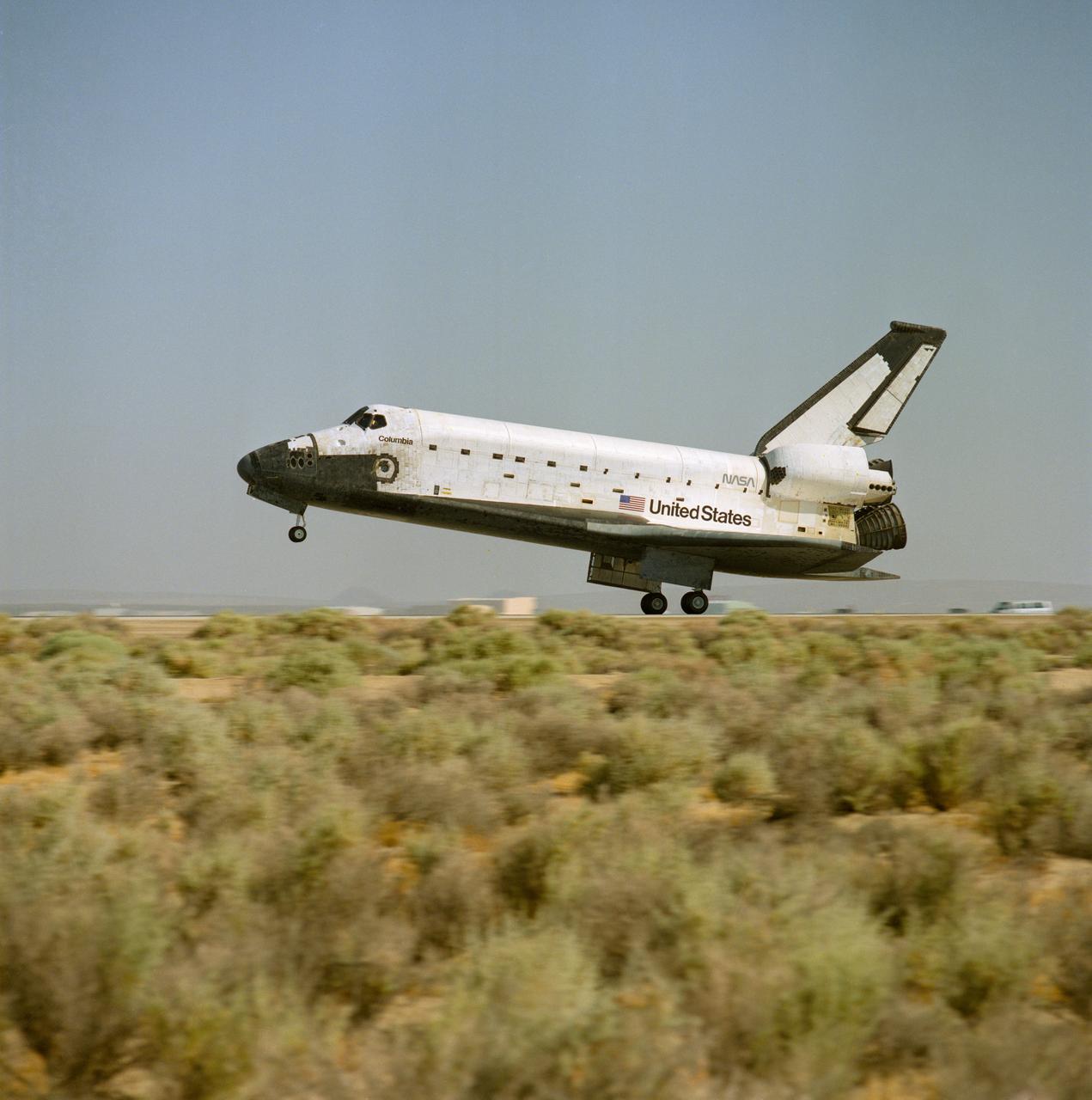
STS040-S-175 (14 June 1991) --- The main landing gear of the Space Shuttle Columbia touches down, on Runway 22 at Edwards Air Force Base in California, to complete a successful nine-day mission. The Spacelab Life Sciences (SLS-1) mission was the first ever devoted exclusively to life sciences research. Onboard the spacecraft were astronauts Bryan D. O'Connor, Sidney M. Gutierrez, Rhea Seddon, James P. Bagian and Tamara E. Jernigan; and payload specialists F. Drew Gaffney and Millie Hughes-Fulford. Landing occurred at 8:39:11 a.m. (PDT), June 14, 1991.
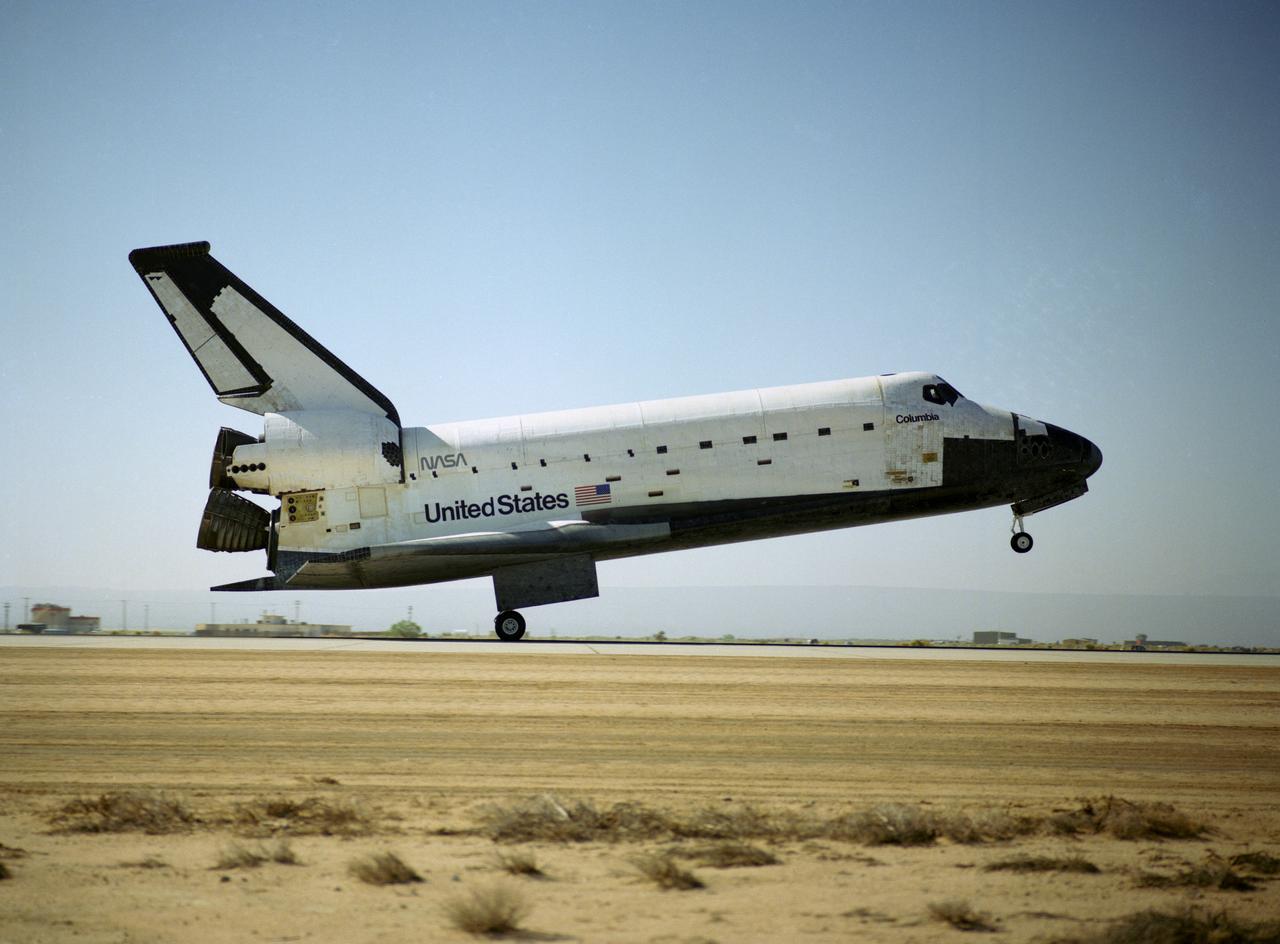
STS040-S-176 (14 June 1991) --- The main landing gear of the Space Shuttle Columbia touches down, on Runway 22 at Edwards Air Force Base in California, to complete a successful nine-day mission. The Spacelab Life Sciences (SLS-1) mission was the first ever devoted exclusively to life sciences research. Onboard the spacecraft were astronauts Bryan D. O'Connor, Sidney M. Gutierrez, Rhea Seddon, James P. Bagian and Tamara E. Jernigan; and payload specialists F. Drew Gaffney and Millie Hughes-Fulford. Landing occurred at 8:39:11 a.m. (PDT), June 14, 1991.

S69-58884 (14 Nov. 1969) --- The huge, 363-feet tall Apollo 12 (Spacecraft 108/Lunar Module 6/Saturn 507) space vehicle is launched from Pad A, Launch Complex 39, Kennedy Space Center (KSC), at 11:22 a.m. (EST), Nov. 14, 1969. Aboard the Apollo 12 spacecraft were astronauts Charles Conrad Jr., commander; Richard F. Gordon Jr., command module pilot; and Alan L. Bean, lunar module pilot. Apollo 12 is the United States' second lunar landing mission.
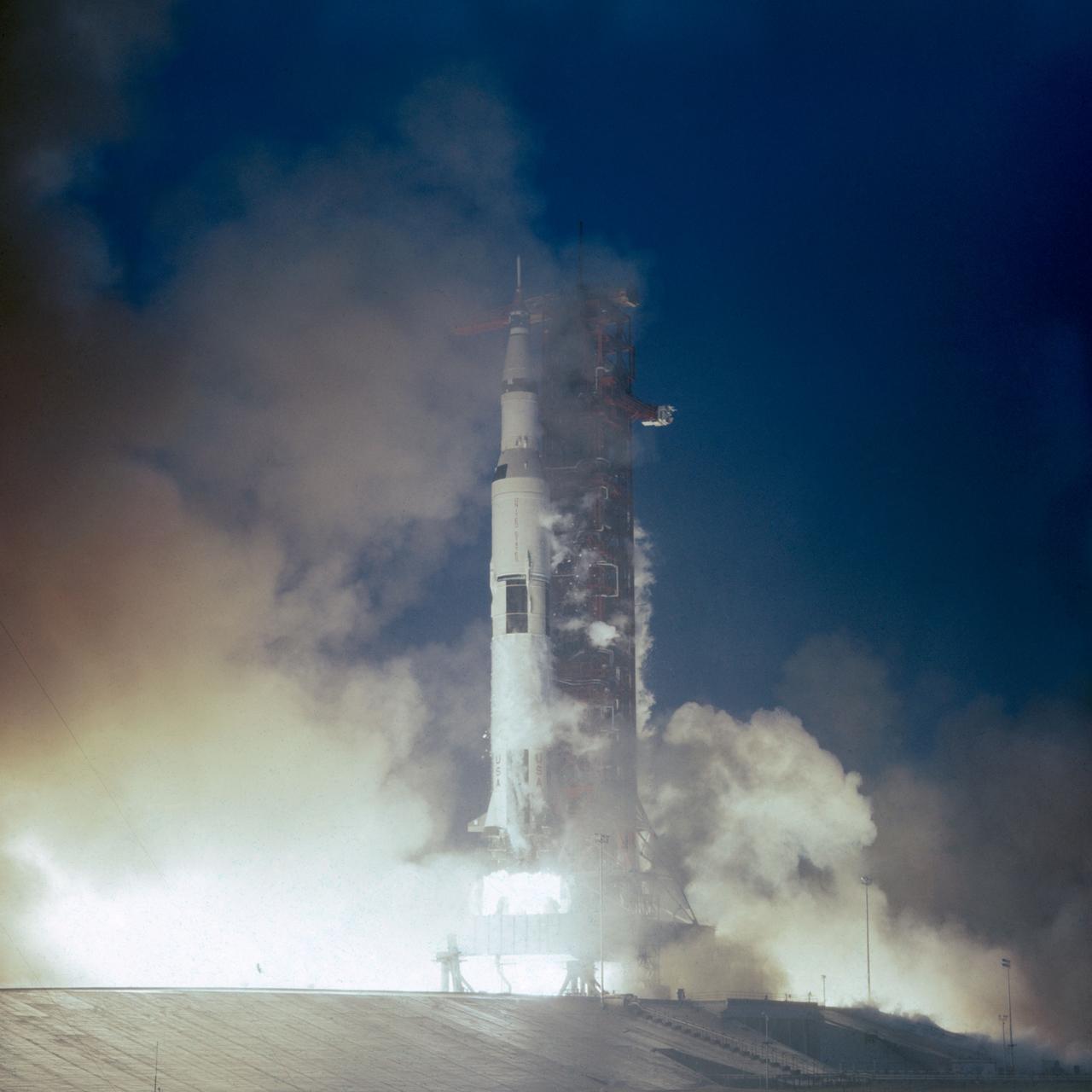
S69-58879 (14 Nov. 1969) --- The huge, 363-feet tall Apollo 12 (Spacecraft 108/Lunar Module 6/Saturn 507) space vehicle is launched from Pad A, Launch Complex 39, Kennedy Space Center (KSC), at 11:22 a.m. (EST), Nov. 14, 1969. Aboard the Apollo 12 spacecraft were astronauts Charles Conrad Jr., commander; Richard F. Gordon Jr., command module pilot, and Alan L. Bean, lunar module pilot. Apollo 12 is the United States' second lunar landing mission.
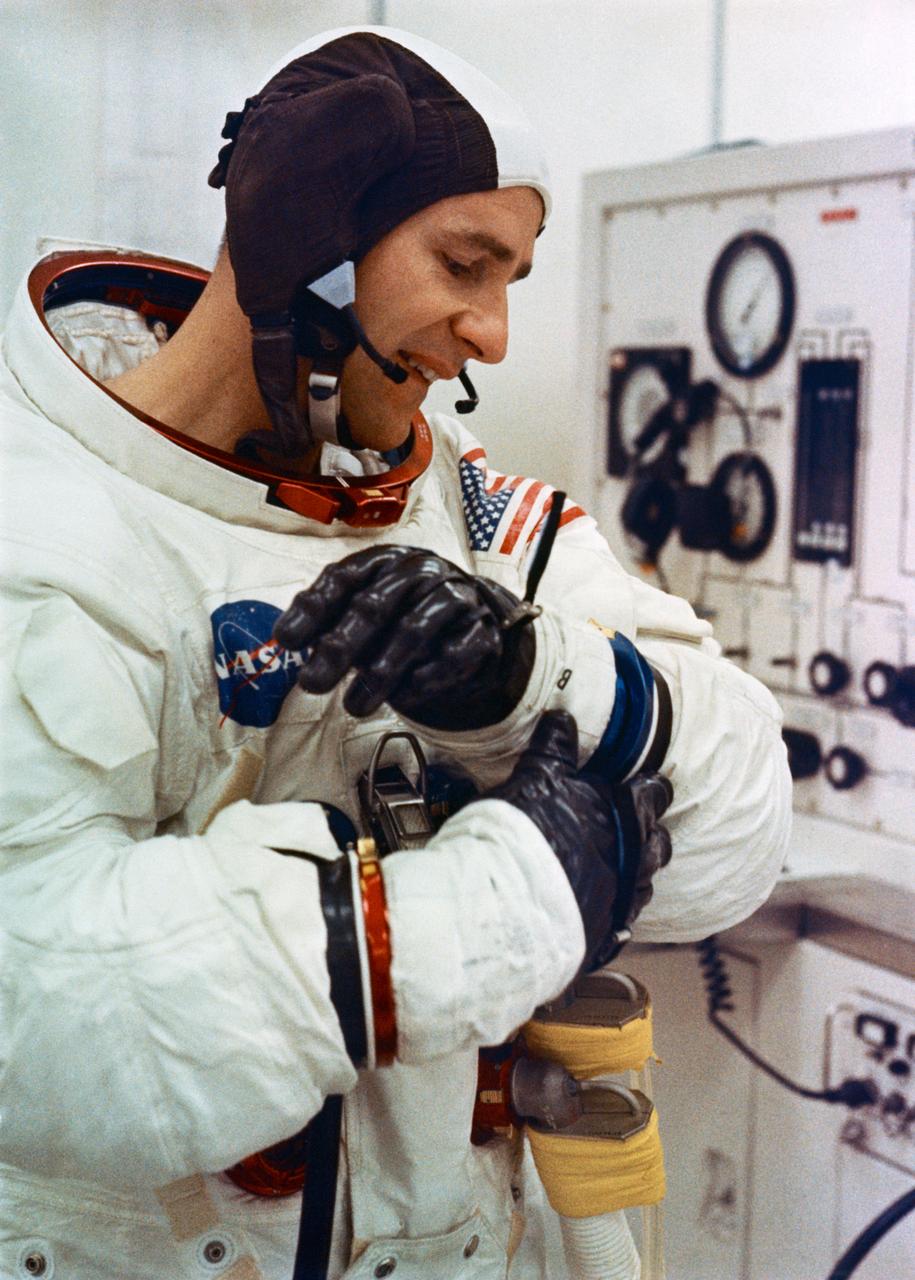
S69-58880 (14 Nov. 1969) --- Astronaut Alan L. Bean, Apollo 12 lunar module pilot, suits up in the Kennedy Space Center's (KSC) Manned Spacecraft Operations Building during the Apollo 12 prelaunch countdown. Minutes later astronauts Bean; Charles Conrad Jr., commander; and Richard F. Gordon Jr., command module pilot, rode a special transport van over to Pad A, Launch Complex 39, where their spacecraft awaited. The Apollo 12 liftoff occurred at 11:22 a.m. (EST), Nov. 14, 1969. Apollo 12 is the United States' second lunar landing mission.
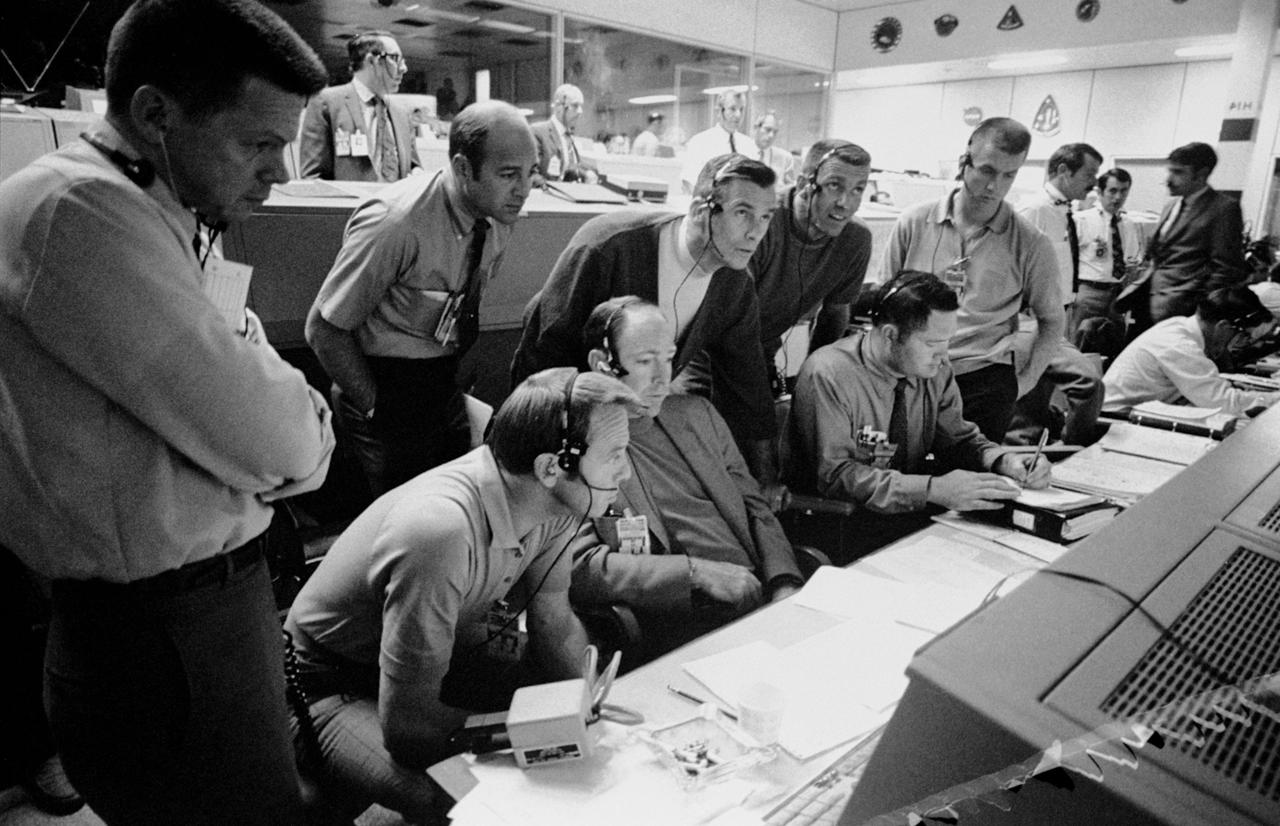
S70-34986 (14 April 1970) --- A group of six astronauts and two flight controllers monitor the console activity in the Mission Operations Control Room (MOCR) of the Mission Control Center (MCC) during the problem-plagued Apollo 13 lunar landing mission. Seated, left to right, are MOCR Guidance Officer Raymond F. Teague; astronaut Edgar D. Mitchell, Apollo 14 prime crew lunar module pilot; and astronaut Alan B. Shepard Jr., Apollo 14 prime crew commander. Standing, left to right, are scientist-astronaut Anthony W. England; astronaut Joe H. Engle, Apollo 14 backup crew lunar module pilot; astronaut Eugene A. Cernan, Apollo 14 backup crew commander; astronaut Ronald E. Evans, Apollo 14 backup crew command module pilot; and M.P. Frank, a flight controller. When this picture was made, the Apollo 13 moon landing had already been canceled, and the Apollo 13 crew men were in trans-Earth trajectory attempting to bring their damaged spacecraft back home.
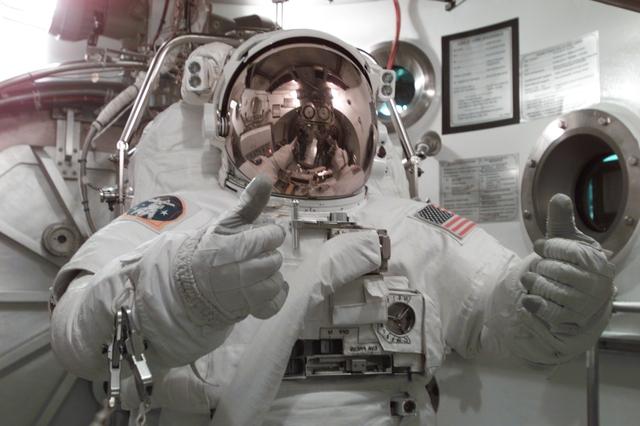
JSC2001-E-11702 (9 April 2001) --- Astronaut James F. Reilly, STS-104 mission specialist, participates in an Extravehicular Mobility Unit (EMU) fit check in one of the chambers in the Crew Systems Laboratory at the Johnson Space Center (JSC). The STS-104 mission to the International Space Station (ISS) represents the Space Shuttle Atlantis' first flight using a new engine and is targeted for a liftoff no earlier than June 14, 2001.

S68-50713 (14 Oct. 1968) --- Astronauts Walter M. Schirra Jr. (on right), mission commander; and Donn F. Eisele, command module pilot; are seen in the first live television transmission from space. Schirra is holding a sign which reads, "Keep those cards and letters coming in, folks!" Out of view at left is astronaut Walter Cunningham, lunar module pilot.
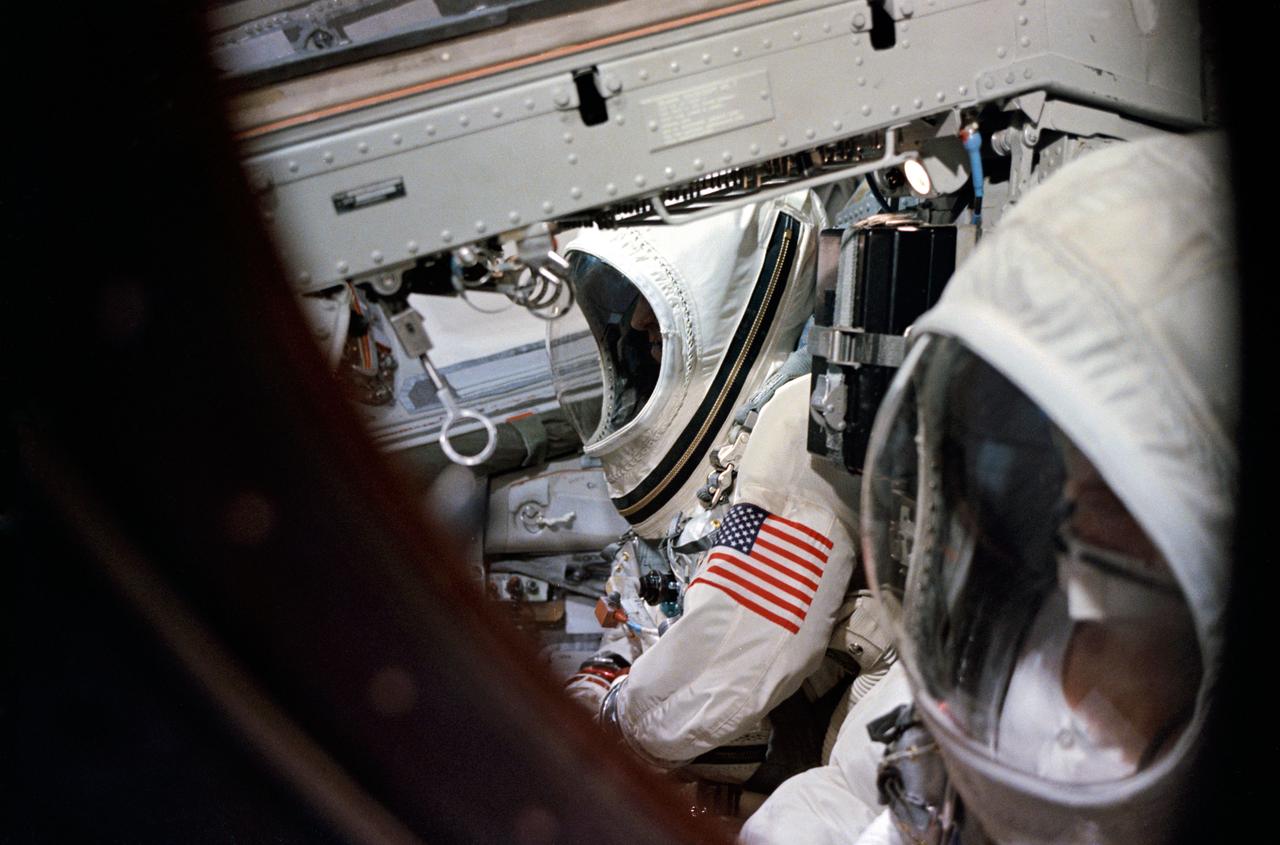
S65-59925 (4 Dec. 1965) --- Astronauts Frank Borman (foreground), command pilot, and James Lovell Jr., pilot, are sealed into their spacecraft 75 minutes prior to the launch of Gemini-7 from the National Aeronautics and Space Administration's John F. Kennedy Space Center on Dec. 4, 1965. Gemini-7 is scheduled for a 14-day mission. Photo credit: NASA

S96-12948 (14 February 1996) --- Astronaut Robert L. Curbeam, Jr. stands on a platform connected to a hoist that will lower him and astronaut Stephen L. Robinson (out of frame) into Johnson Space Center's (JSC) Weightless Environment Test Facility (WET-F) pool. The two, attired in training versions of the Extravehicular Mobility Unit (EMU), were about to participate in an underwater simulation of contingency Extravehicular Activity (EVA) for the scheduled 11-day August 1997 STS-85 mission.
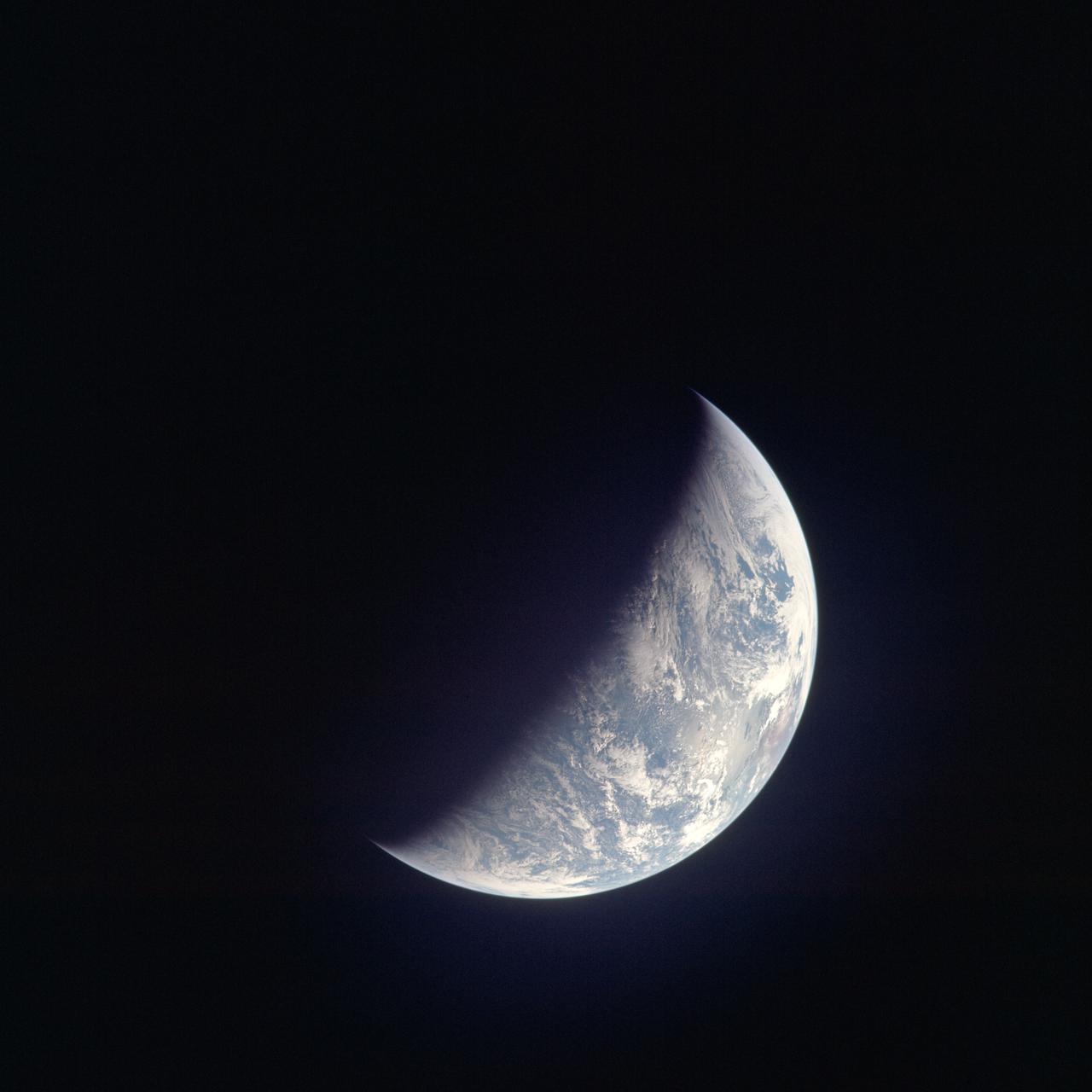
AS12-50-7362 (14 Nov. 1969) --- A view of one-third of Earth, with Australia on the horizon, as photographed by the three-man crew of Apollo 12. The Command and Service Modules, mated to the Lunar Module (yet to be removed and transpositioned for landing) were en route to the moon for man's second mission there. Onboard the spacecraft were astronauts Charles Conrad Jr., Richard F. Gordon Jr. and Alan L. Bean. Photo credit: NASA

S96-12924 (14 February 1996) --- astronaut Stephen K. Robinson stands on a platform connected to a hoist that will lower him and astronaut Robert L. Curbeam, Jr. (view obscured, other side of platform) into Johnson Space Center's (JSC) Weightless Environment Test Facility (WET-F) pool. The two were about to participate in an underwater simulation of contingency Extravehicular Activity (EVA) that might be needed to support the scheduled 11-day August 1997 STS-85 mission.
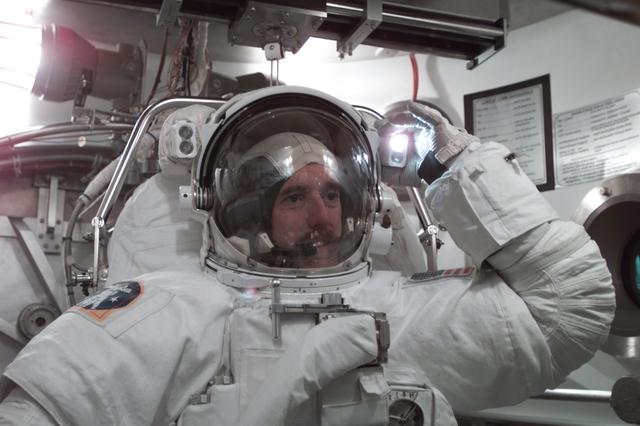
JSC2001-E-11698 (9 April 2001) --- Astronaut James F. Reilly, STS-104 mission specialist, participates in an Extravehicular Mobility Unit (EMU) fit check in one of the chambers in the Crew Systems Laboratory at the Johnson Space Center (JSC). The STS-104 mission to the International Space Station (ISS) represents the Space Shuttle Atlantis' first flight using a new engine and is targeted for a liftoff no earlier than June 14, 2001.
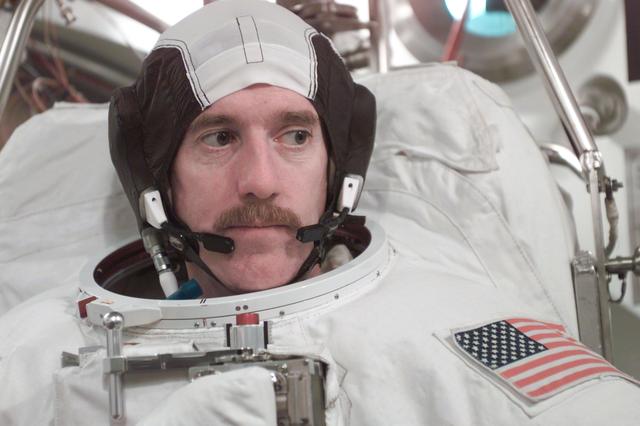
JSC2001-E-11691 (9 April 2001) --- Astronaut James F. Reilly, STS-104 mission specialist, prepares to don his helmet for an Extravehicular Mobility Unit (EMU) fit check in one of the chambers in the Crew Systems Laboratory at the Johnson Space Center (JSC). The STS-104 mission to the International Space Station (ISS) represents the Space Shuttle Atlantis' first flight using a new engine and is targeted for a liftoff no earlier than June 14, 2001.
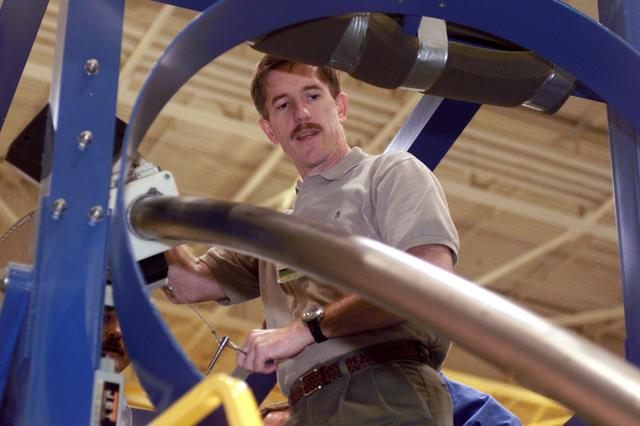
JSC2001-E-06401 (27 February 2001) --- Astronaut James F. Reilly, mission specialist, rehearses emergency egress procedures in the Systems Integration Facility at the Johnson Space Center (JSC). The long tube at left is a training version of the launch escape pole which is now carried onboard for all shuttle flights. The STS-104 mission to the International Space Station (ISS) represents the Space Shuttle Atlantis' first flight using a new engine and is targeted for a liftoff no earlier than June 14, 2001.
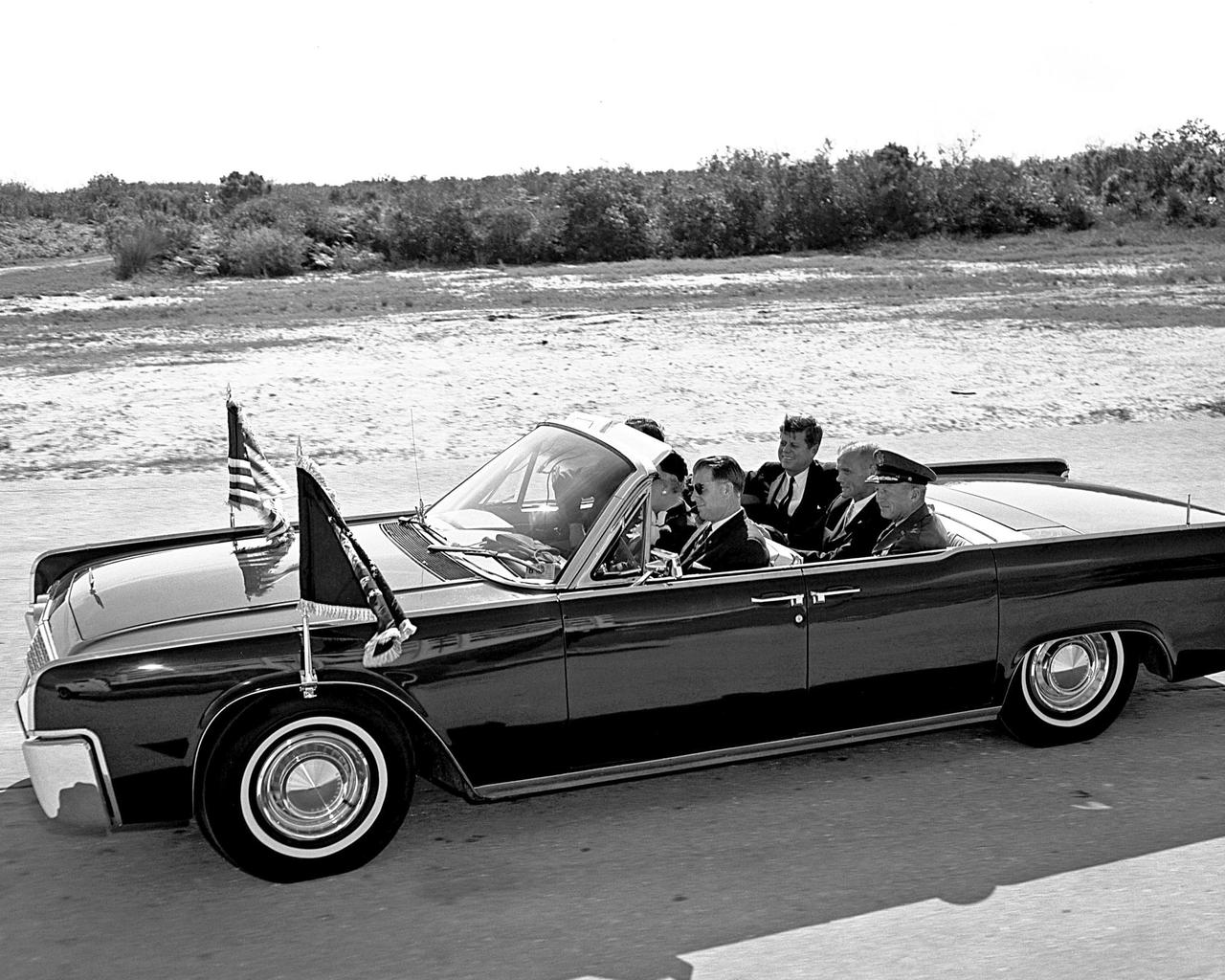
CAPE CANAVERAL Fla. -- Astronaut John H. Glenn Jr. gives a double thumbs-up as he and President John F. Kennedy arrive at the Cape Canaveral Missile Test Annex in Florida. Glenn's Mercury Atlas 6 mission lifted off from Launch Complex 14, in the background, on Feb. 20, 1962. Photo credit: NASA
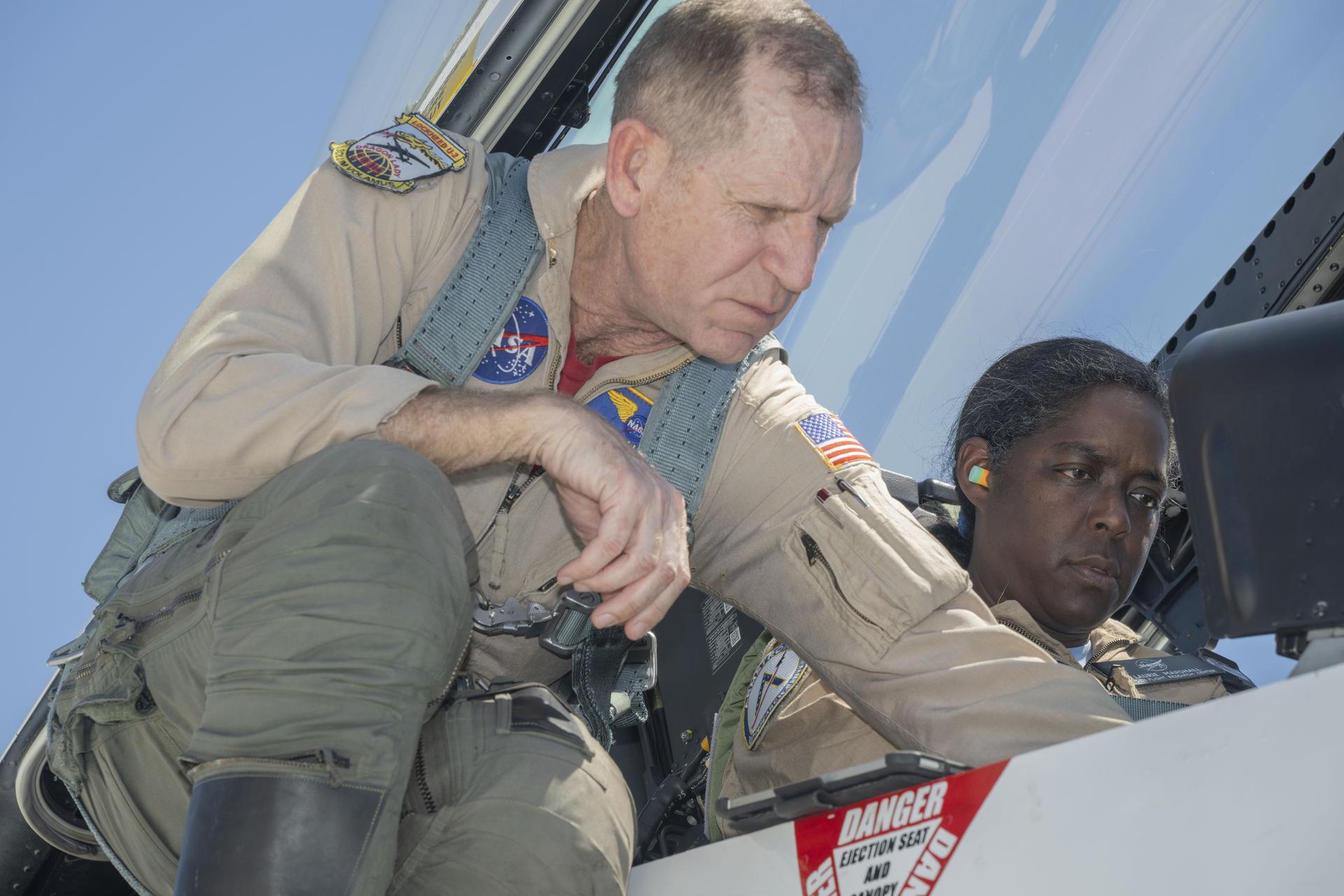
NASA pilot Timothy Williams helps prepare Laurie Grindle, deputy center director, for an employee incentive flight in an F/A-18 aircraft at NASA’s Armstrong Flight Research Center in Edwards, California, on Tuesday, April 14, 2026. NASA Administrator Jared Isaacman established the ride‑along program to recognize and reward workforce members for their dedication to advancing the agency’s priorities.

CAPE CANAVERAL Fla. -- Astronaut John H. Glenn Jr. gives a double thumbs-up as he and President John F. Kennedy arrive at the Cape Canaveral Missile Test Annex in Florida. Glenn's Mercury Atlas 6 mission lifted off from Launch Complex 14, in the background, on Feb. 20, 1962. Photo Credit: NASA
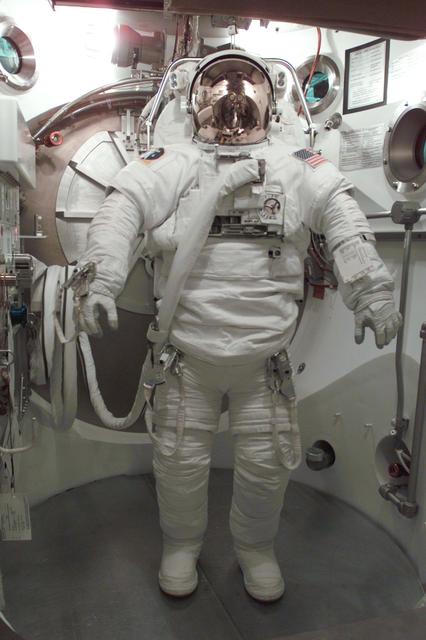
JSC2001-E-11703 (9 April 2001) --- Astronaut James F. Reilly, STS-104 mission specialist, participates in an Extravehicular Mobility Unit (EMU) fit check in one of the chambers in the Crew Systems Laboratory at the Johnson Space Center (JSC). The STS-104 mission to the International Space Station (ISS) represents the Space Shuttle Atlantis' first flight using a new engine and is targeted for a liftoff no earlier than June 14, 2001.
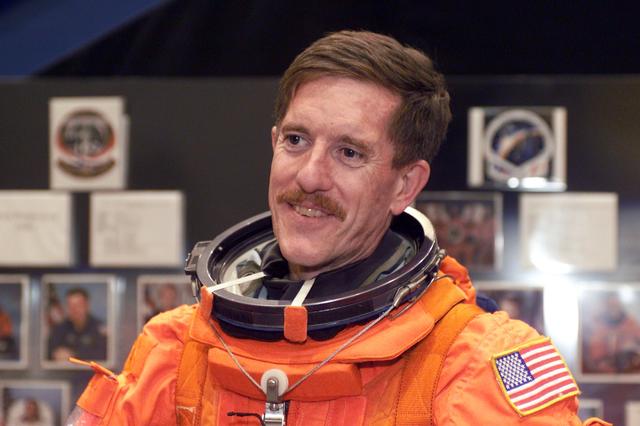
JSC2001-E-06418 (27 February 2001) --- Astronaut James F. Reilly, mission specialist, is pictured while in training at the Systems Integration Facility at Johnson Space Center (JSC). The STS-104 mission to the International Space Station (ISS) represents the Space Shuttle Atlantis' first flight using a new engine and is targeted for a liftoff no earlier than June 14, 2001.
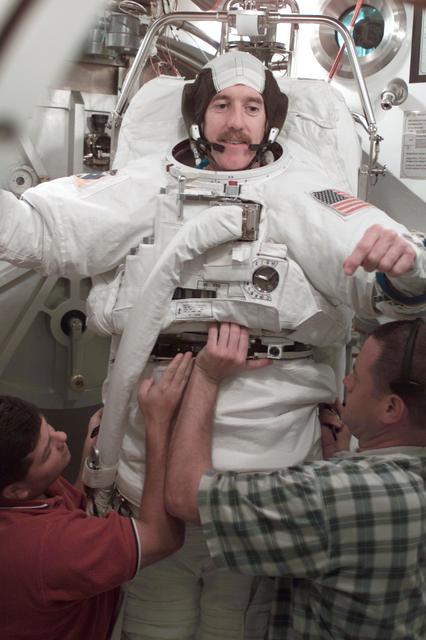
JSC2001-E-11692 (9 April 2001) --- Astronaut James F. Reilly, mission specialist, prepares to don his helmet for an Extravehicular Mobility Unit (EMU) fit check in one of the chambers in the Crew Systems Laboratory at the Johnson Space Center (JSC). The STS-104 mission to the International Space Station (ISS) represents the Space Shuttle Atlantis' first flight using a new engine and is targeted for a liftoff no earlier than June 14, 2001.
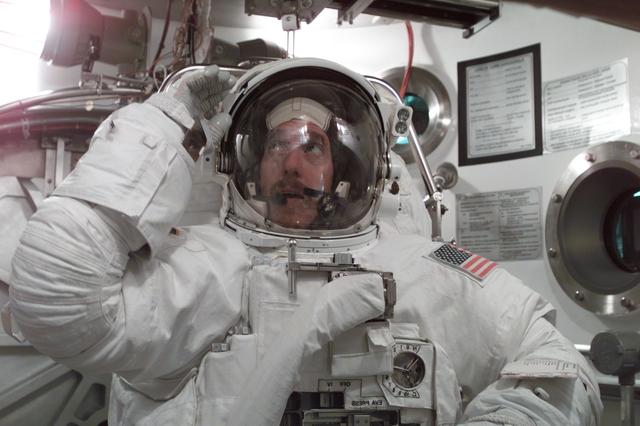
JSC2001-E-11699 (9 April 2001) --- Astronaut James F. Reilly, STS-104 mission specialist, participates in an Extravehicular Mobility Unit (EMU) fit check in one of the chambers in the Crew Systems Laboratory at the Johnson Space Center (JSC). The STS-104 mission to the International Space Station (ISS) represents the Space Shuttle Atlantis' first flight using a new engine and is targeted for a liftoff no earlier than June 14, 2001.
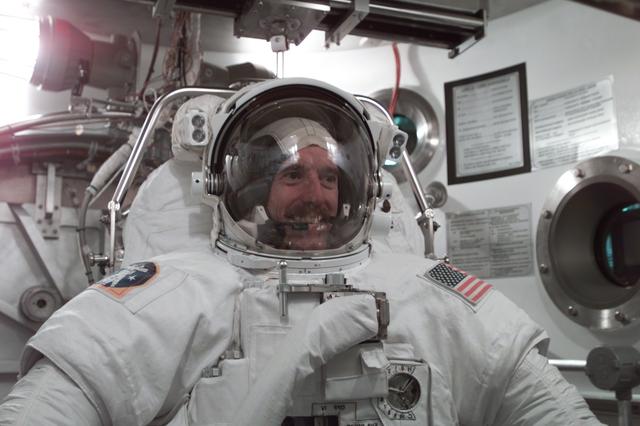
JSC2001-E-11697 (9 April 2001) --- Astronaut James F. Reilly, STS-104 mission specialist, participates in an Extravehicular Mobility Unit (EMU) fit check in one of the chambers in the Crew Systems Laboratory at the Johnson Space Center (JSC). The STS-104 mission to the International Space Station (ISS) represents the Space Shuttle Atlantis' first flight using a new engine and is targeted for a liftoff no earlier than June 14, 2001.
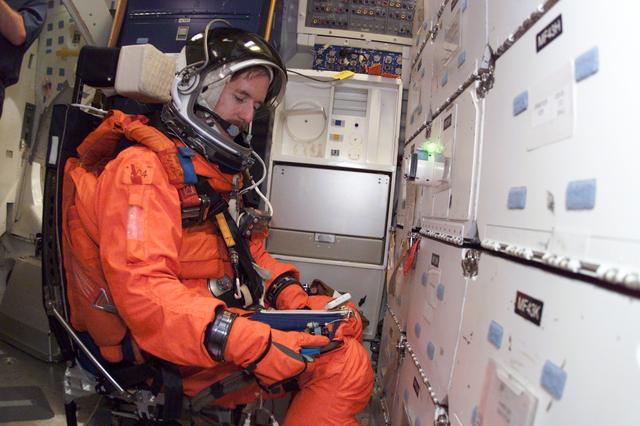
JSC2001-E-06426 (27 February 2001) --- Astronaut James F. Reilly, mission specialist, makes a notation during mission training in one of the high fidelity trainers/mockups in the Systems Integration Facility at Johnson Space Center (JSC). The STS-104 mission to the International Space Station (ISS) represents the Space Shuttle Atlantis' first flight using a new engine and is targeted for a liftoff no earlier than June 14, 2001.
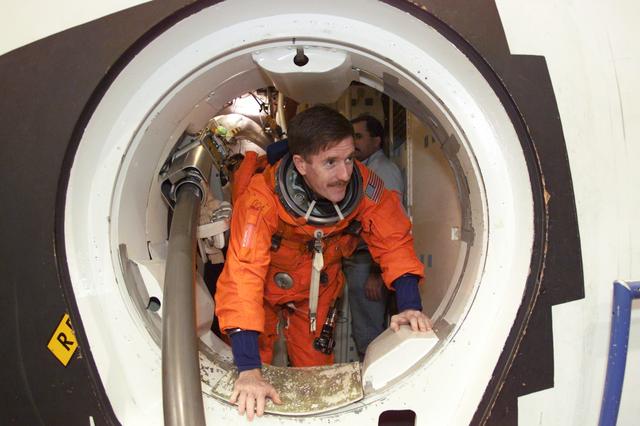
JSC2001-E-06422 (27 February 2001) --- Astronaut James F. Reilly, mission specialist, rehearses emergency egress procedures in the Systems Integration Facility at the Johnson Space Center (JSC). The long tube at left is a training version of the launch escape pole which is now carried onboard for all shuttle flights. The STS-104 mission to the International Space Station (ISS) represents the Space Shuttle Atlantis' first flight using a new engine and is targeted for a liftoff no earlier than June 14, 2001.
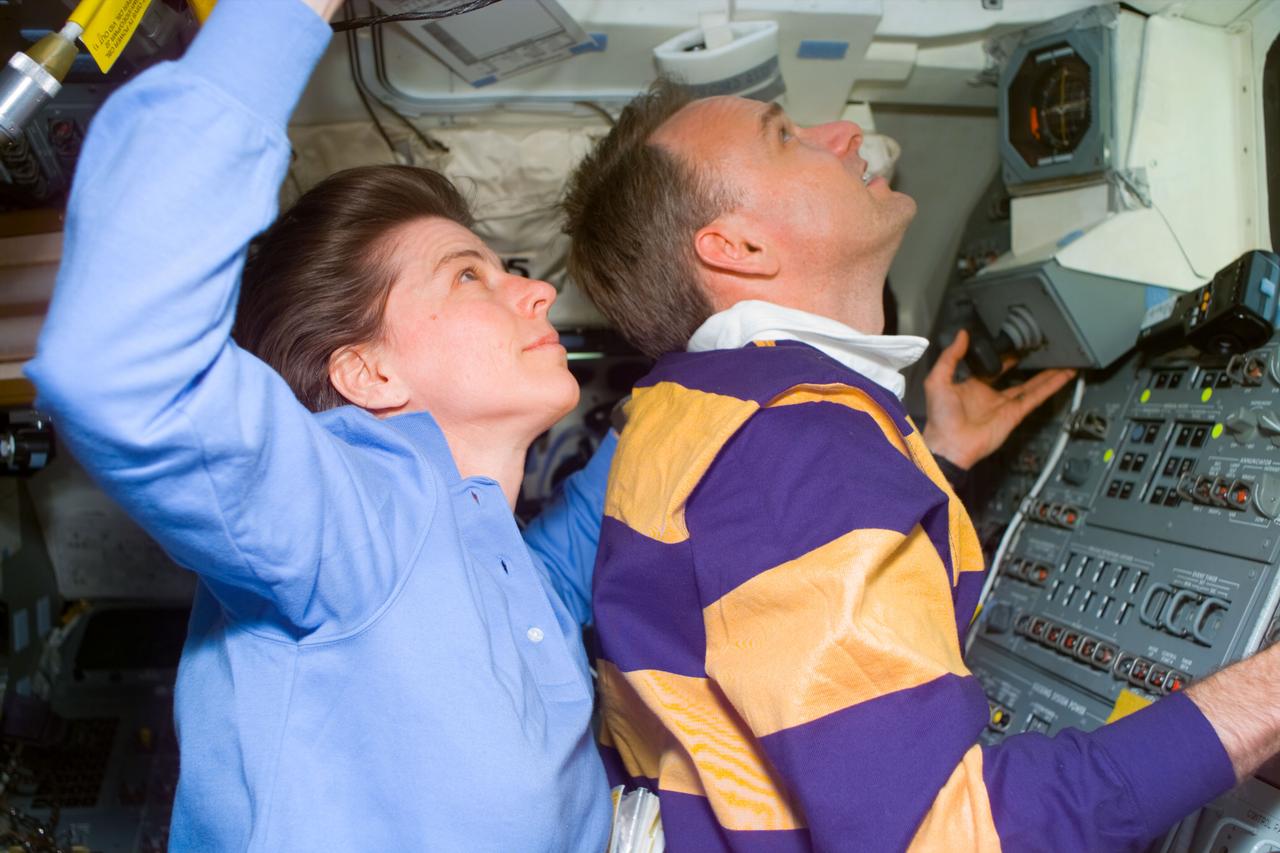
S89-E-5444 (29 Jan 1998) --- Astronauts Bonnie J. Dunbar, payload commander; and Joe F. Edwards, pilot; watch as Russia's Mir space station (out of frame) moves away from the Space Shuttle Endeavour following the undocking of the two spacecraft. The photograph was taken with an electronic still camera (ESC) at 19:14:36 GMT, Jan. 29, 1998.
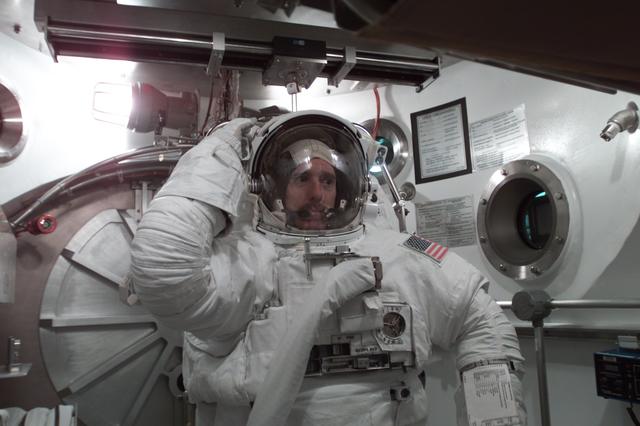
JSC2001-E-11696 (9 April 2001) --- Astronaut James F. Reilly, STS-104 mission specialist, participates in an Extravehicular Mobility Unit (EMU) fit check in one of the chambers in the Crew Systems Laboratory at the Johnson Space Center (JSC). The STS-104 mission to the International Space Station (ISS) represents the Space Shuttle Atlantis' first flight using a new engine and is targeted for a liftoff no earlier than June 14, 2001.
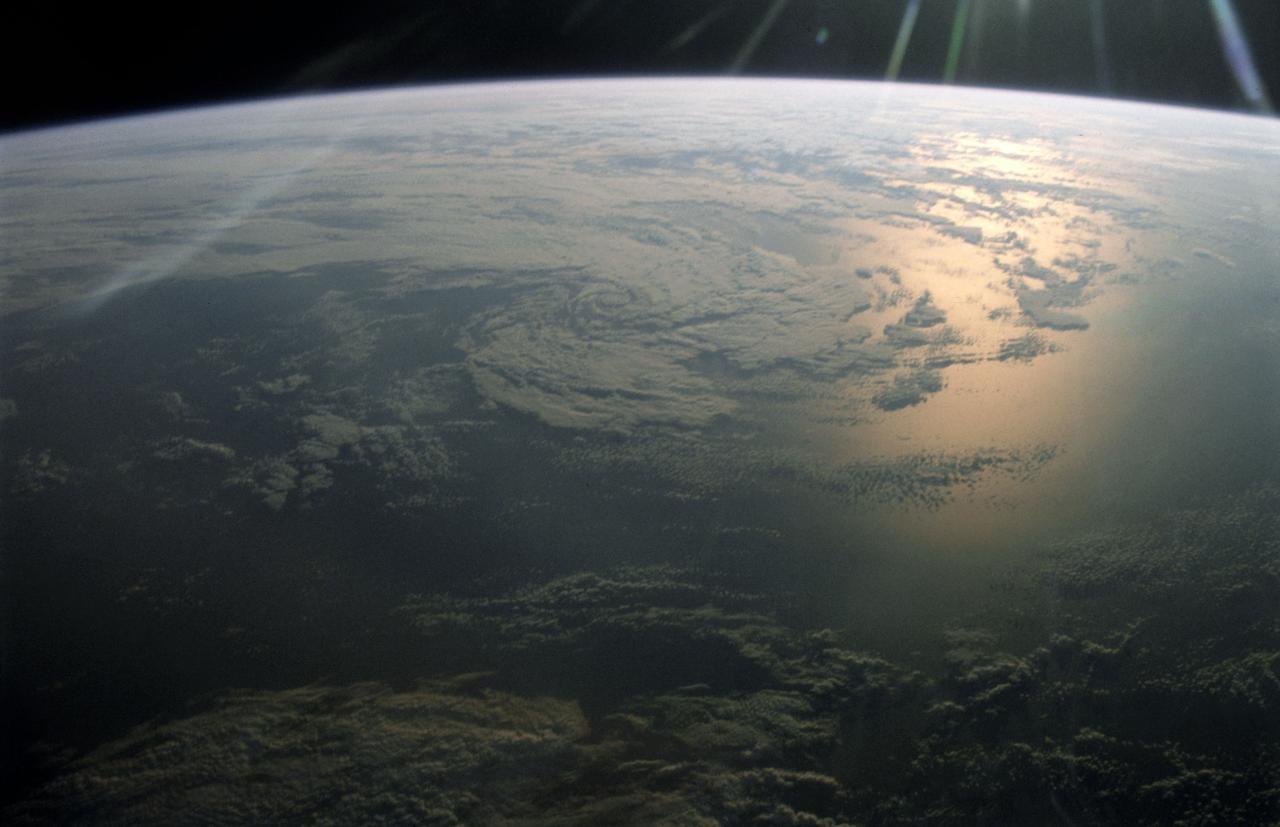
STS005-14-514 (11-16 Nov. 1982) --- This 35mm frame, taken against sunglint, shows clouds over the Pacific Ocean. A Nikon F-3 35mm modified camera and Type 5017, medium speed Ektachrome film were used to record the frame. Approximately 20 frames of 35mm and several dozen frames of 70mm photography of Earth were exposed on the week-long mission aboard the space shuttle Columbia (STS-5). Photo credit: NASA
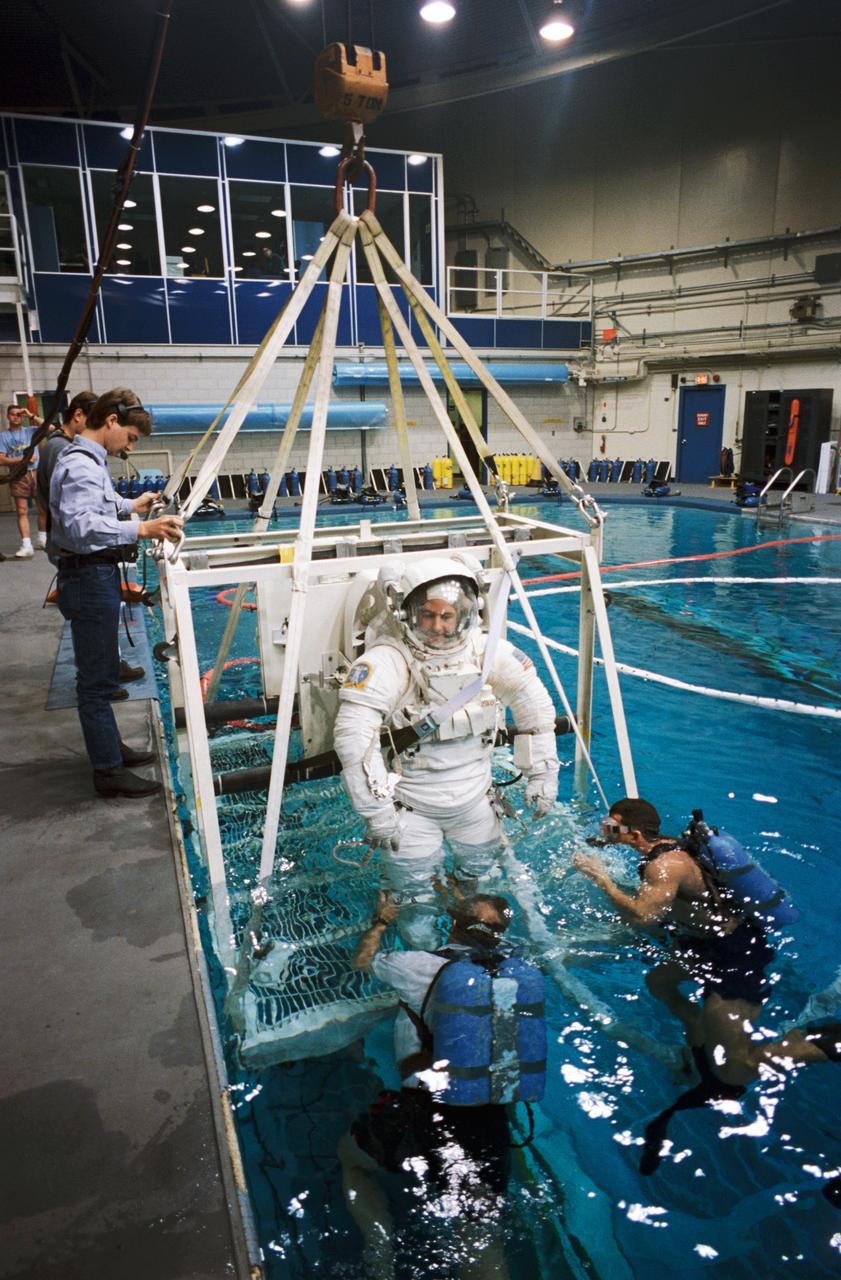
S96-12935 (14 Feb. 1996) --- Attired in a training version of the Extravehicular Mobility Unit (EMU), astronaut Stephen K. Robinson is lowered into Johnson Space Center's (JSC) Weightless Environment Test Facility (WET-F) pool. Astronauts Robinson and Robert L. Curbeam were about to participate in an underwater simulation of contingency extravehicular activity (EVA) that might be needed to support the scheduled 11-day August 1997 STS-85 mission.
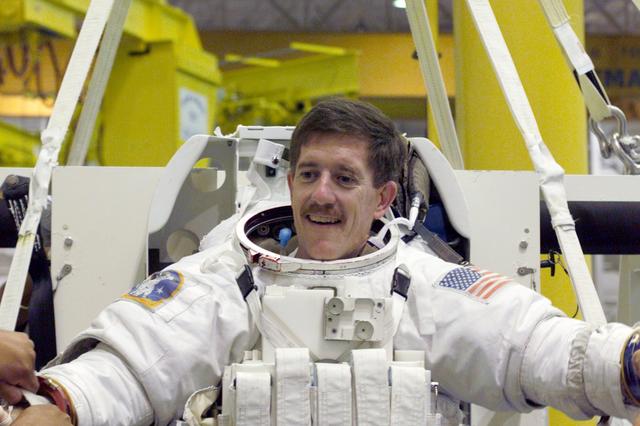
JSC2001-E-10909 (13 April 2001) --- Astronaut James F. Reilly, mission specialist, gets help with final touches on the training version of his Extravehicular Mobility Unit (EMU) space suit prior to being submerged in the waters of the Neutral Buoyancy Laboratory (NBL) at the Johnson Space Center (JSC). The STS-104 mission to the International Space Station (ISS) represents the Space Shuttle Atlantis’ first flight using a new engine and is targeted for a liftoff no earlier than June 14, 2001.
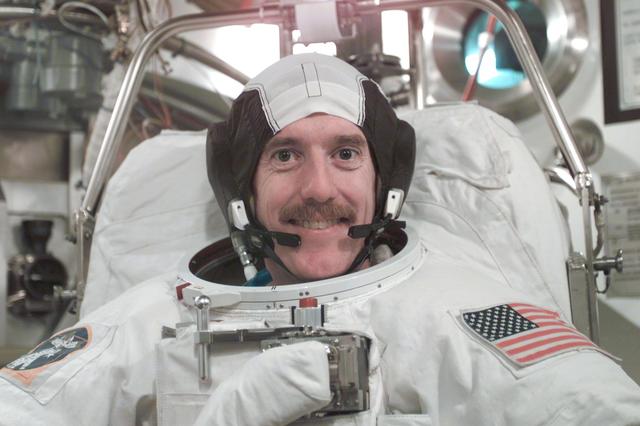
JSC2001-E-11690 (9 April 2001) --- Astronaut James F. Reilly, STS-104 mission specialist, prepares to don his helmet for an Extravehicular Mobility Unit (EMU) fit check in one of the chambers in the Crew Systems Laboratory at the Johnson Space Center (JSC). The STS-104 mission to the International Space Station (ISS) represents the Space Shuttle Atlantis' first flight using a new engine and is targeted for a liftoff no earlier than June 14, 2001.
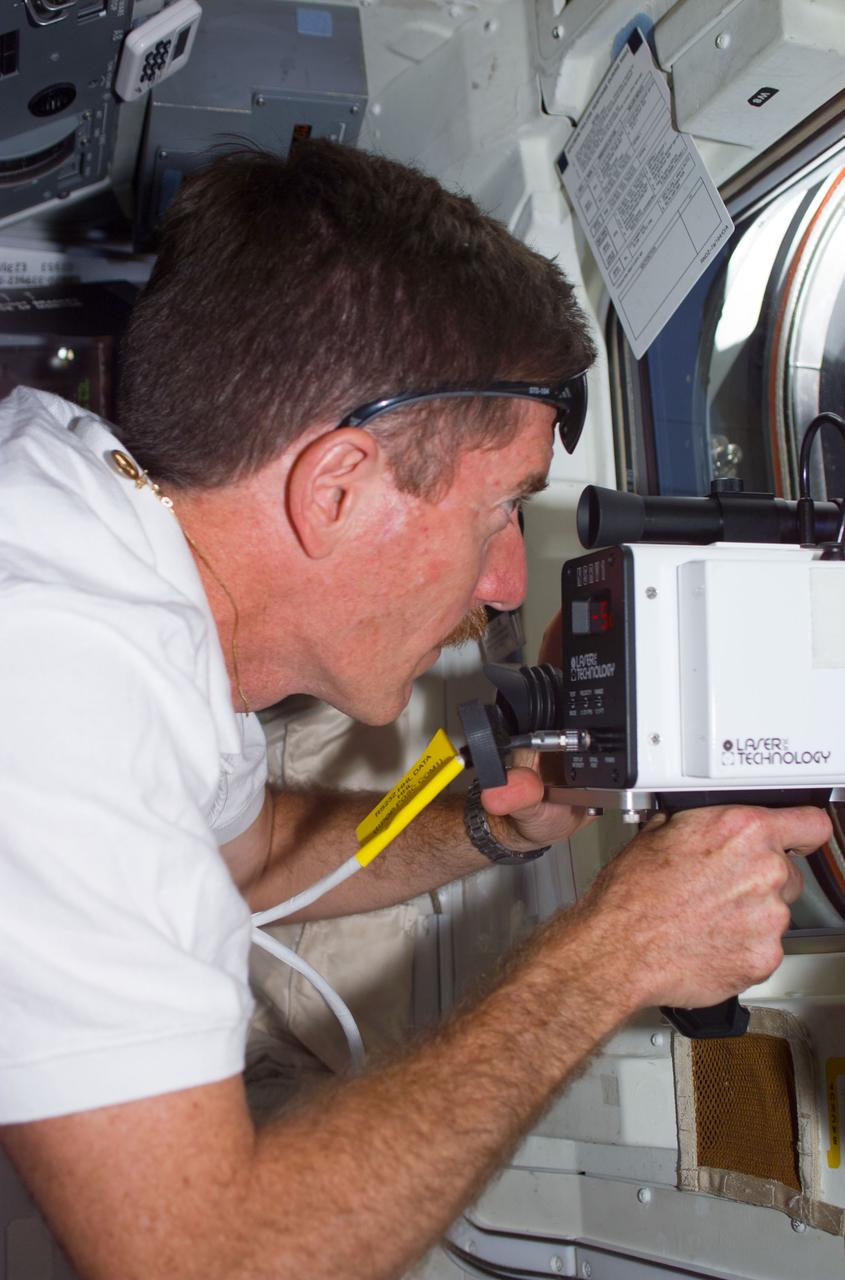
STS104-E-5026 (14 July 2001) --- Positioned near a window on the aft flight deck of the Space Shuttle Atlantis, astronaut James F. Reilly, STS-104 mission specialist, uses a laser ranging device to hone in on the International Space Station (ISS) during pre-docking operations about 237 miles above Earth.
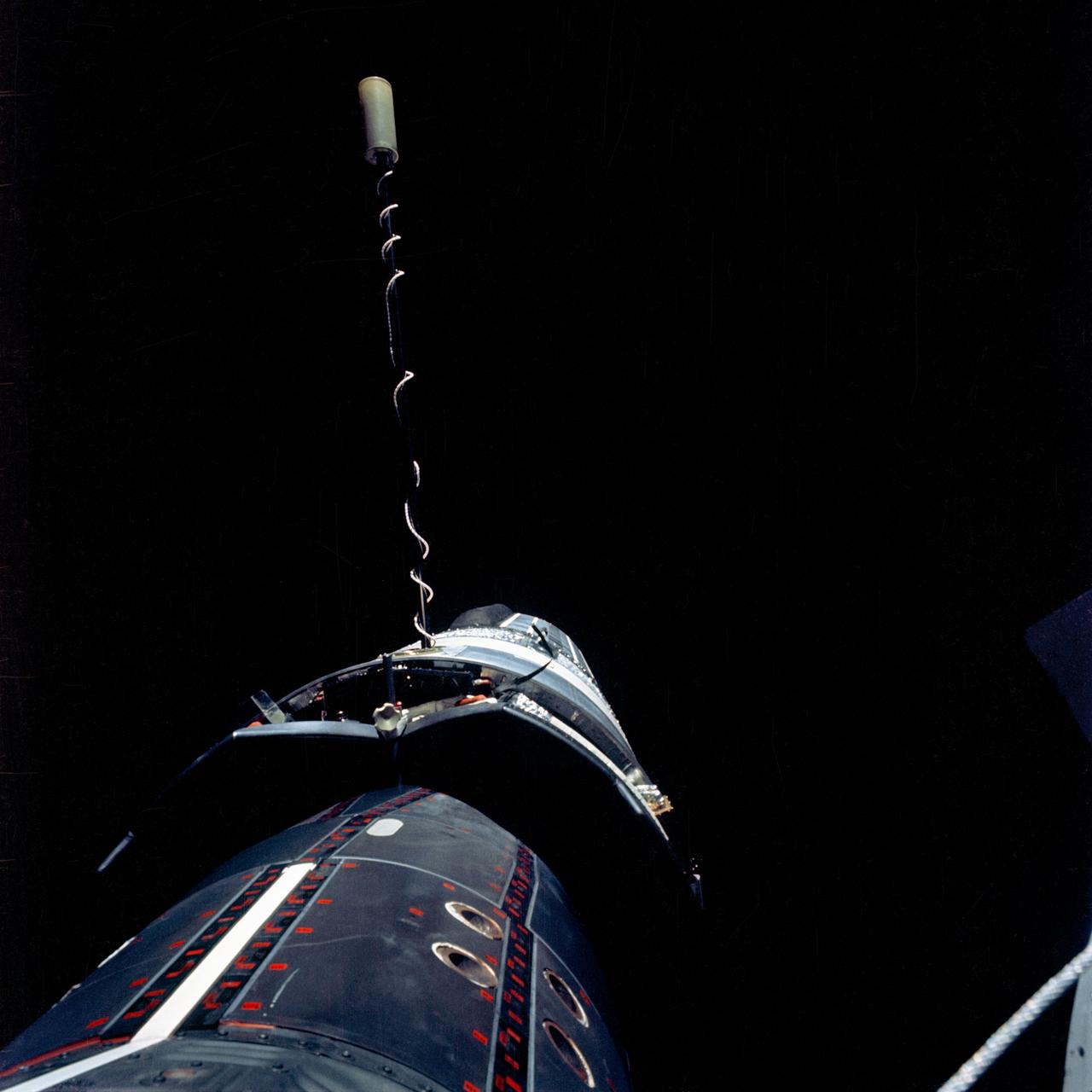
S66-54555 (14 Sept. 1966) --- The Gemini-11 spacecraft is docked to the Agena Target Vehicle in this photograph taken by astronaut Richard F. Gordon Jr., pilot, as he stood in the open hatch of the Gemini-11 spacecraft during his extravehicular activity (EVA). Note Agena's L-band antenna. Taken during Gemini-11's 29th revolution of Earth, using a modified 70mm Hasselblad camera, with Eastman Kodak, Ektachrome, MS (S.O. 368) color film. Photo credit: NASA
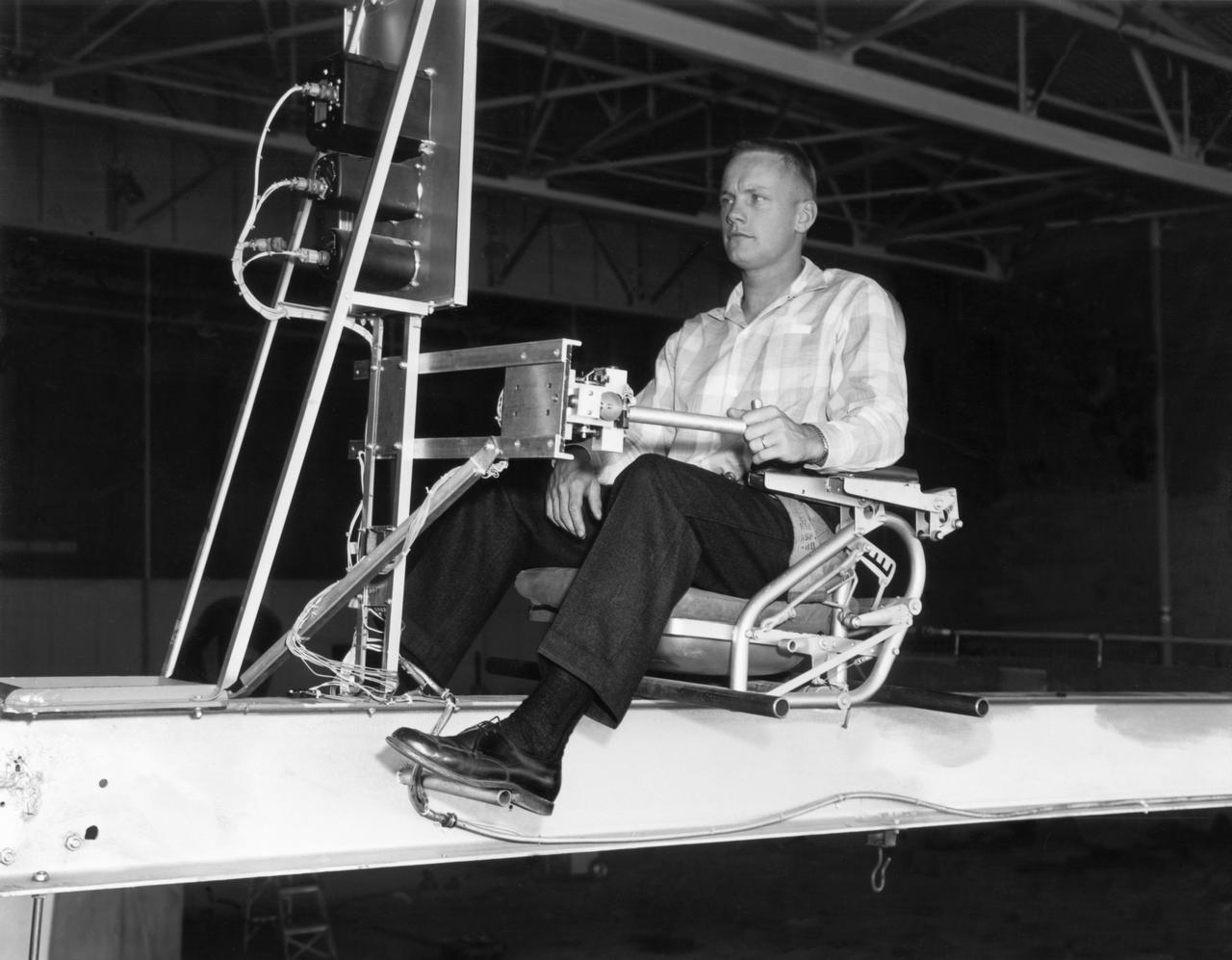
Famed astronaut Neil A. Armstrong, the first man to set foot on the moon during the historic Apollo 11 space mission in July 1969, served for seven years as a research pilot at the NACA-NASA High-Speed Flight Station, now the Dryden Flight Research Center, at Edwards, California, before he entered the space program. Armstrong joined the National Advisory Committee for Aeronautics (NACA) at the Lewis Flight Propulsion Laboratory (later NASA's Lewis Research Center, Cleveland, Ohio, and today the Glenn Research Center) in 1955. Later that year, he transferred to the High-Speed Flight Station at Edwards as an aeronautical research scientist and then as a pilot, a position he held until becoming an astronaut in 1962. He was one of nine NASA astronauts in the second class to be chosen. As a research pilot Armstrong served as project pilot on the F-100A and F-100C aircraft, F-101, and the F-104A. He also flew the X-1B, X-5, F-105, F-106, B-47, KC-135, and Paresev. He left Dryden with a total of over 2450 flying hours. He was a member of the USAF-NASA Dyna-Soar Pilot Consultant Group before the Dyna-Soar project was cancelled, and studied X-20 Dyna-Soar approaches and abort maneuvers through use of the F-102A and F5D jet aircraft. Armstrong was actively engaged in both piloting and engineering aspects of the X-15 program from its inception. He completed the first flight in the aircraft equipped with a new flow-direction sensor (ball nose) and the initial flight in an X-15 equipped with a self-adaptive flight control system. He worked closely with designers and engineers in development of the adaptive system, and made seven flights in the rocket plane from December 1960 until July 1962. During those fights he reached a peak altitude of 207,500 feet in the X-15-3, and a speed of 3,989 mph (Mach 5.74) in the X-15-1. Armstrong has a total of 8 days and 14 hours in space, including 2 hours and 48 minutes walking on the Moon. In March 1966 he was commander of the Gemini 8 or
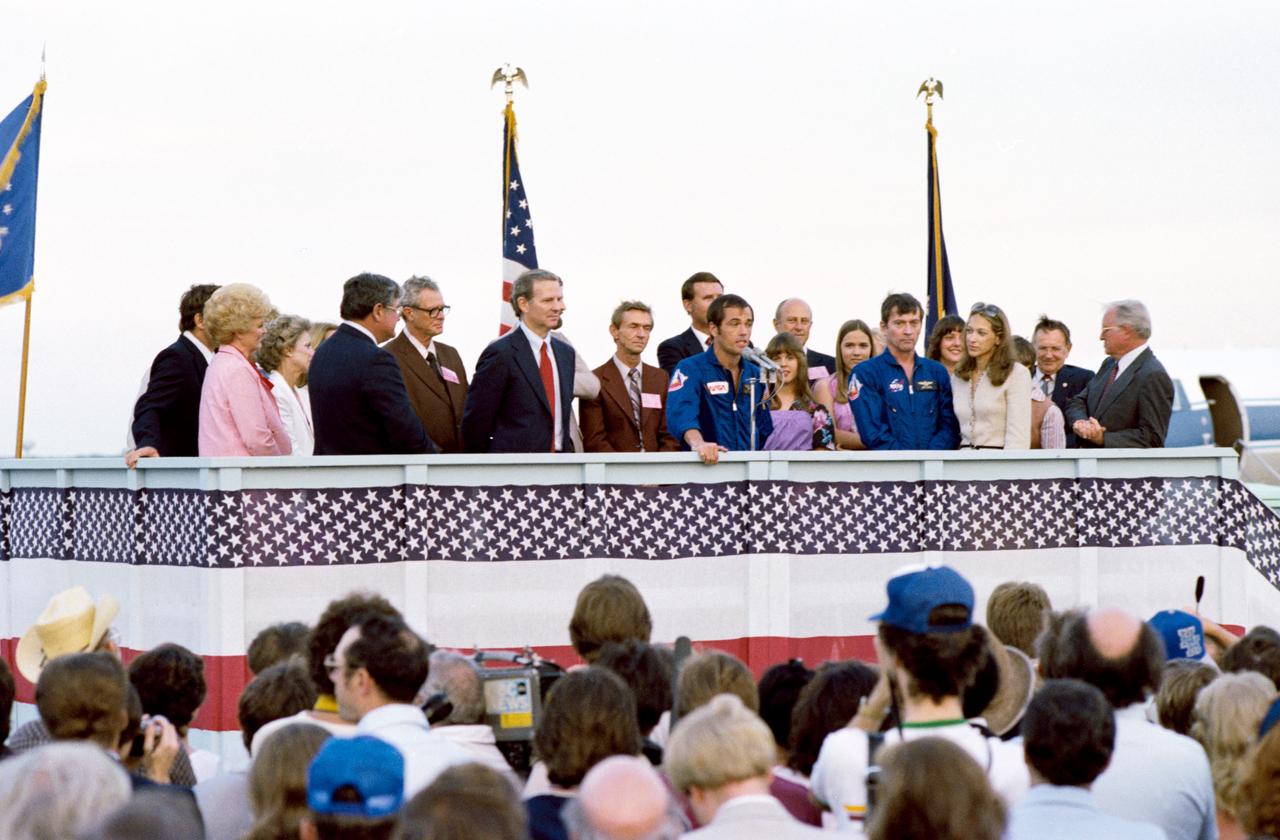
S81-30985 (14 April 1981) --- Astronaut Robert L. Crippen (center), STS-1 pilot, addresses a large turnout of greeters at Ellington Air Force Base following the return of the Columbia's crew from the Dryden Flight Research Center and their Edwards Air Force Base landing site. Astronaut John W. Young, crew commander, stands near his wife Susy at right center. Crippen's wife Virginia and children are standing behind the Youngs on the platform. Others seen include Presidential aide Jim Baker, Houston mayor Jim McConn, NASA Administrator (acting) Alan M. Lovelace, John F. Yardley, associate administrator for space transportation systems; Dr. Christopher C. Kraft Jr., JSC director; flight directors Neil B. Hutchinson, Charles L. Lewis and Donald R. Puddy; Robert F. Thompson, manager of Space Shuttle Program office. Photo credit: NASA
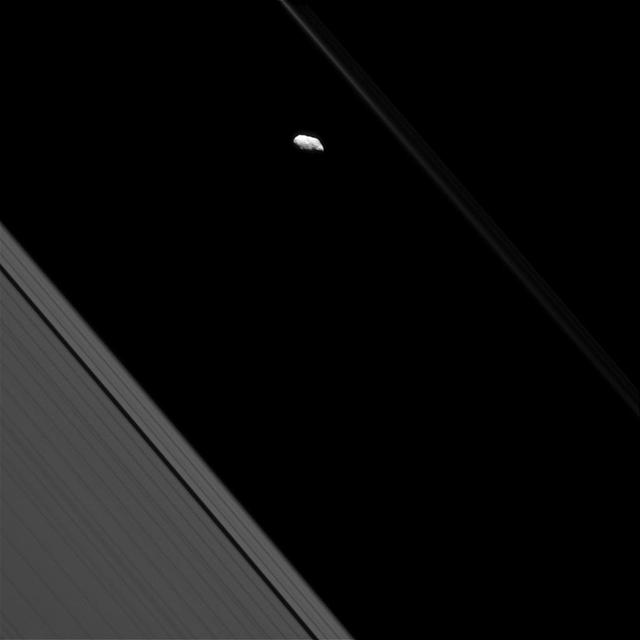
Surface features are visible on Saturn's moon Prometheus in this view from NASA's Cassini spacecraft. Most of Cassini's images of Prometheus are too distant to resolve individual craters, making views like this a rare treat. Saturn's narrow F ring, which makes a diagonal line beginning at top center, appears bright and bold in some Cassini views, but not here. Since the sun is nearly behind Cassini in this image, most of the light hitting the F ring is being scattered away from the camera, making it appear dim. Light-scattering behavior like this is typical of rings comprised of small particles, such as the F ring. This view looks toward the unilluminated side of the rings from about 14 degrees below the ring plane. The image was taken in visible light with the Cassini spacecraft narrow-angle camera on Sept. 24, 2016. The view was acquired at a distance of approximately 226,000 miles (364,000 kilometers) from Prometheus and at a sun-Prometheus-spacecraft, or phase, angle of 51 degrees. Image scale is 1.2 miles (2 kilometers) per pixel. http://photojournal.jpl.nasa.gov/catalog/PIA20508
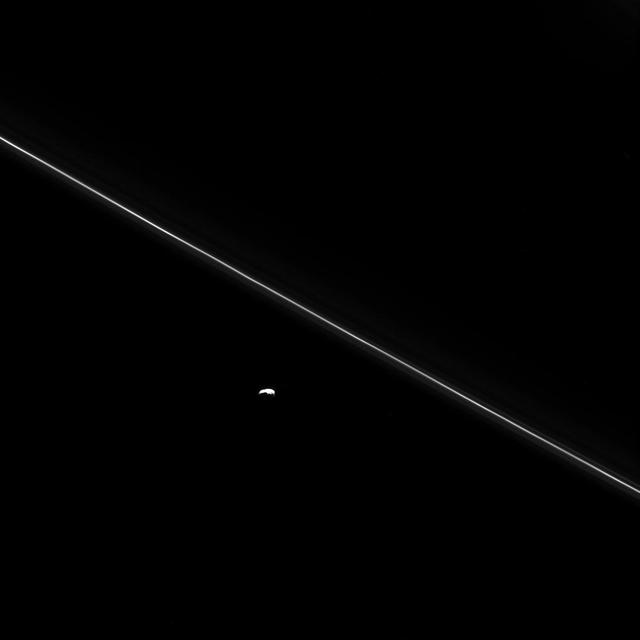
As Cassini hurtled toward its fatal encounter with Saturn, the spacecraft turned to catch this final look at Saturn's moon Pandora next to the thin line of the F ring. Over the course of its mission, Cassini helped scientists understand that Pandora plays a smaller role than they originally thought in shaping the narrow ring. When Cassini arrived at Saturn, many thought that Pandora and Prometheus worked together to shepherd the F ring between them, confining it and sculpting its unusual braided and kinked structures. However, data from Cassini show that the gravity of the two moons together actually stirs the F ring into a chaotic state, generating the "gap and streamer" structure. Recent models, supported by Cassini images, suggest that it is Prometheus alone, not Pandora, that confines the bulk of the F ring, aided by the particular characteristics of its orbit. Prometheus establishes stable locations for F ring material where the moon's own gravitational resonances are least cluttered by the perturbing influence of its sibling satellite, Pandora. This view looks toward the sunlit side of the rings from about 28 degrees above the ringplane. The image was taken in visible light with the Cassini spacecraft narrow-angle camera on Sept. 14, 2017. The view was obtained at a distance of approximately 360,000 miles (577,000 kilometers) from Pandora and at a Sun-Pandora-spacecraft, or phase, angle of 119 degrees. Image scale is about 2.2 miles (3.5 kilometers) per pixel. The Cassini spacecraft ended its mission on Sept. 15, 2017. https://photojournal.jpl.nasa.gov/catalog/PIA21355
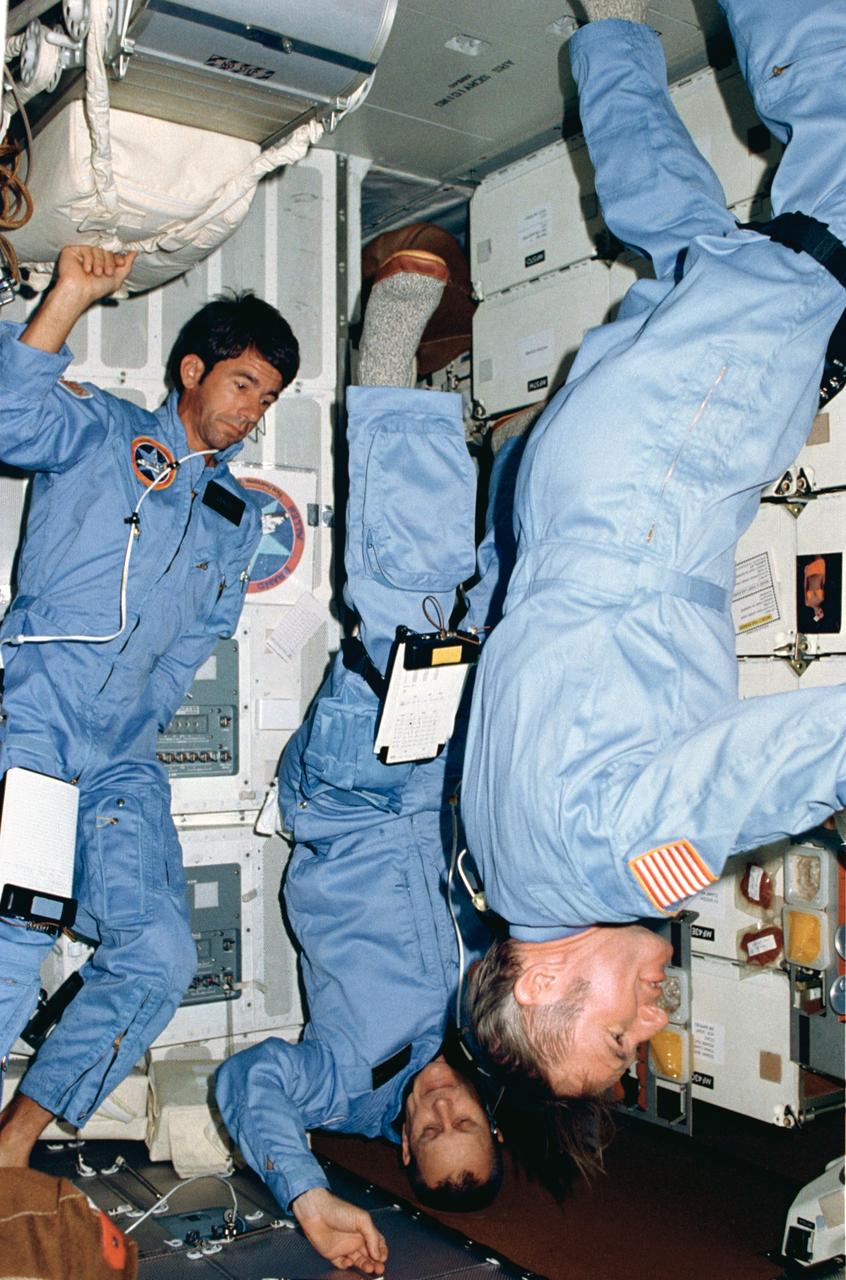
STS005-04-124 (14 Nov. 1982) --- Three members of the four-man STS-5 crew demonstrate the zero-gravity environment aboard the Earth-orbiting space shuttle Columbia. Astronaut Vance D. Brand, mission commander, holds a fairly typical Earth-bound pose, but crewmates, astronauts Robert F. Overmyer (center), pilot, and Dr. William B. Lenoir, mission specialist, perform body movements that could only be accomplished in zero-gravity. Dr. Joseph P. Allen IV, the flight’s other mission specialist, exposed this frame with a 35mm handheld camera. The four astronauts were in the middeck area of their reusable spacecraft when this photograph was made. Photo credit: NASA
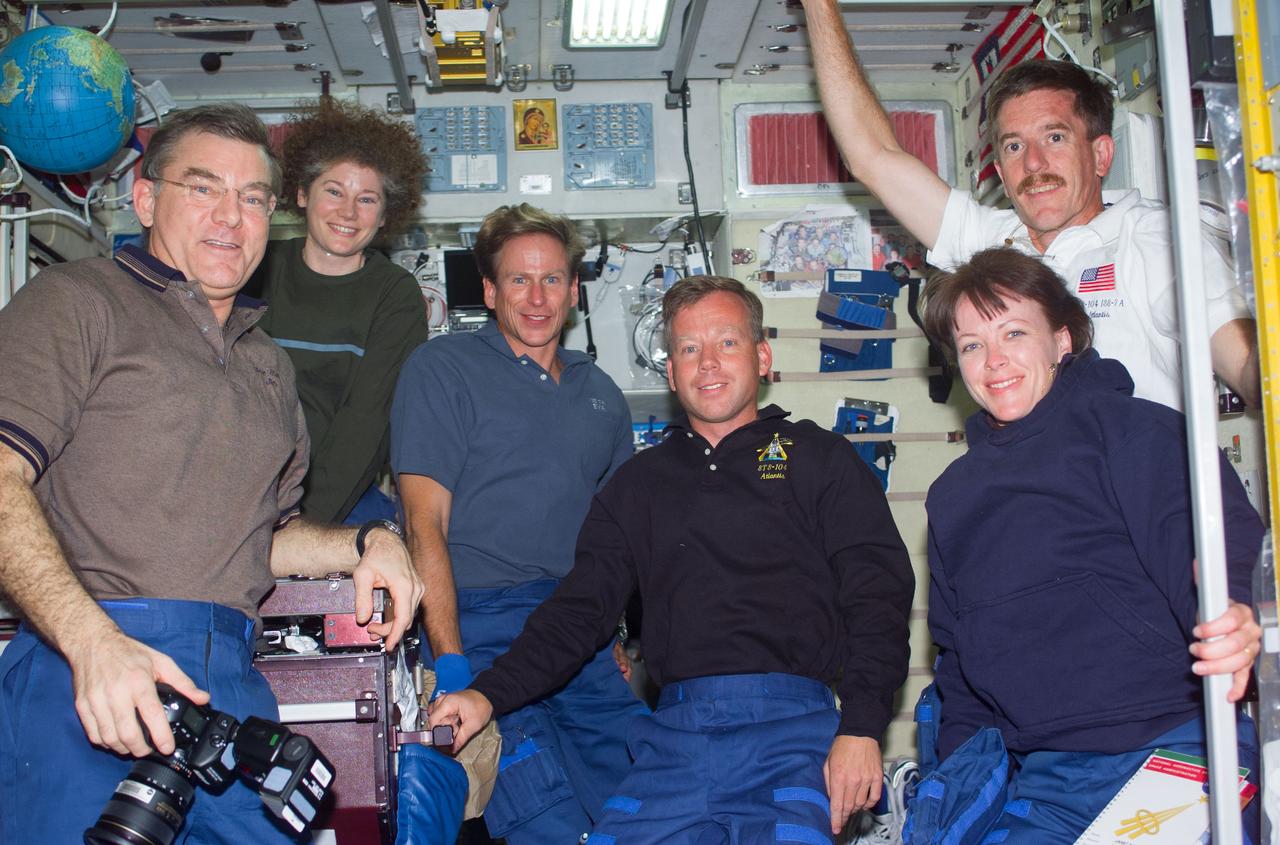
S104-E-5053 (14 July 2001) --- Soon after their ingress into the International Space Station (ISS), STS-104 crewmembers pose for a photograph with Expedition Two crewmembers in the Zvezda Service Module. From left to right are: James S. Voss, Expedition Two flight engineer; Susan J. Helms, Expedition Two flight engineer; Michael L. Gernhardt, STS-104 mission specialist; Steven W. Lindsey, STS-104 mission commander; Janet L. Kavandi, STS-104 mission specialist; and James F. Reilly, STS-104 mission specialist.
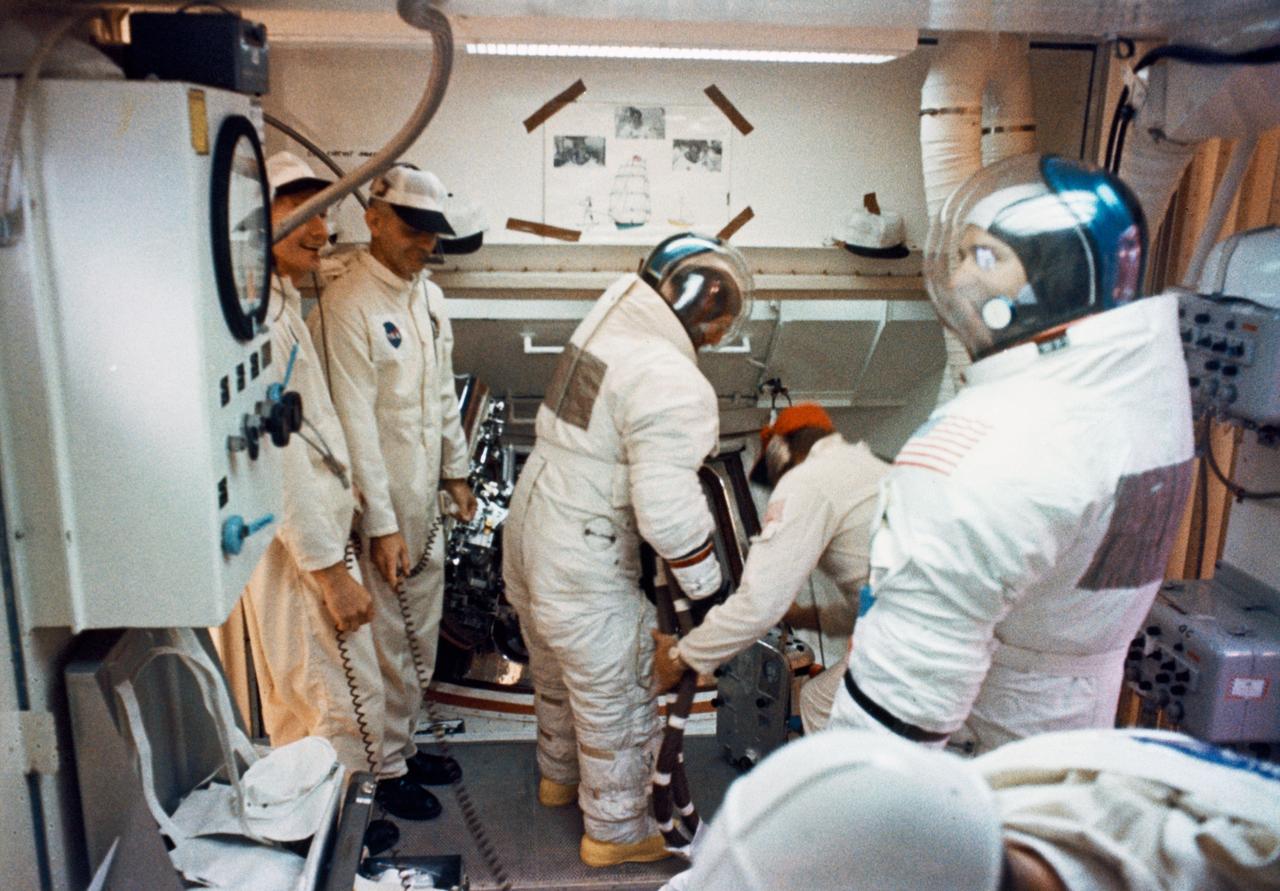
S69-58885 (14 Nov. 1969) --- Interior view of the White Room atop Pad A, Launch Complex 39, Kennedy Space Center (KSC), during the insertion of the Apollo 12 crew. In the center background preparing to ingress the spacecraft is astronaut Charles Conrad Jr., commander. Astronaut Alan L. Bean, lunar module pilot, stands in the right foreground. Awaiting his turn to ingress, but out of view, is astronaut Richard F. Gordon Jr., command module pilot. The Apollo 12 is the United States' second lunar landing mission.
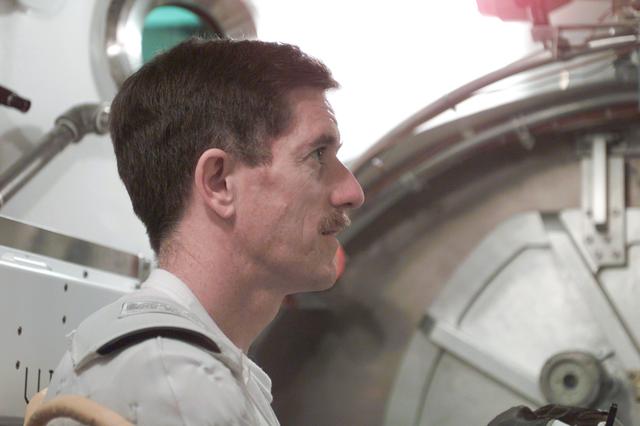
JSC2001-E-11687 (9 April 2001) --- Astronaut James F. Reilly, STS-104 mission specialist, prepares to don his Extravehicular Mobility Unit (EMU) space suit for a fit check in one of the chambers in the Crew Systems Laboratory at the Johnson Space Center (JSC). Reilly is wearing a thermal undergarment over which he will wear the EMU. The STS-104 mission to the International Space Station (ISS) represents the Space Shuttle Atlantis' first flight using a new engine and is targeted for a liftoff no earlier than June 14, 2001.
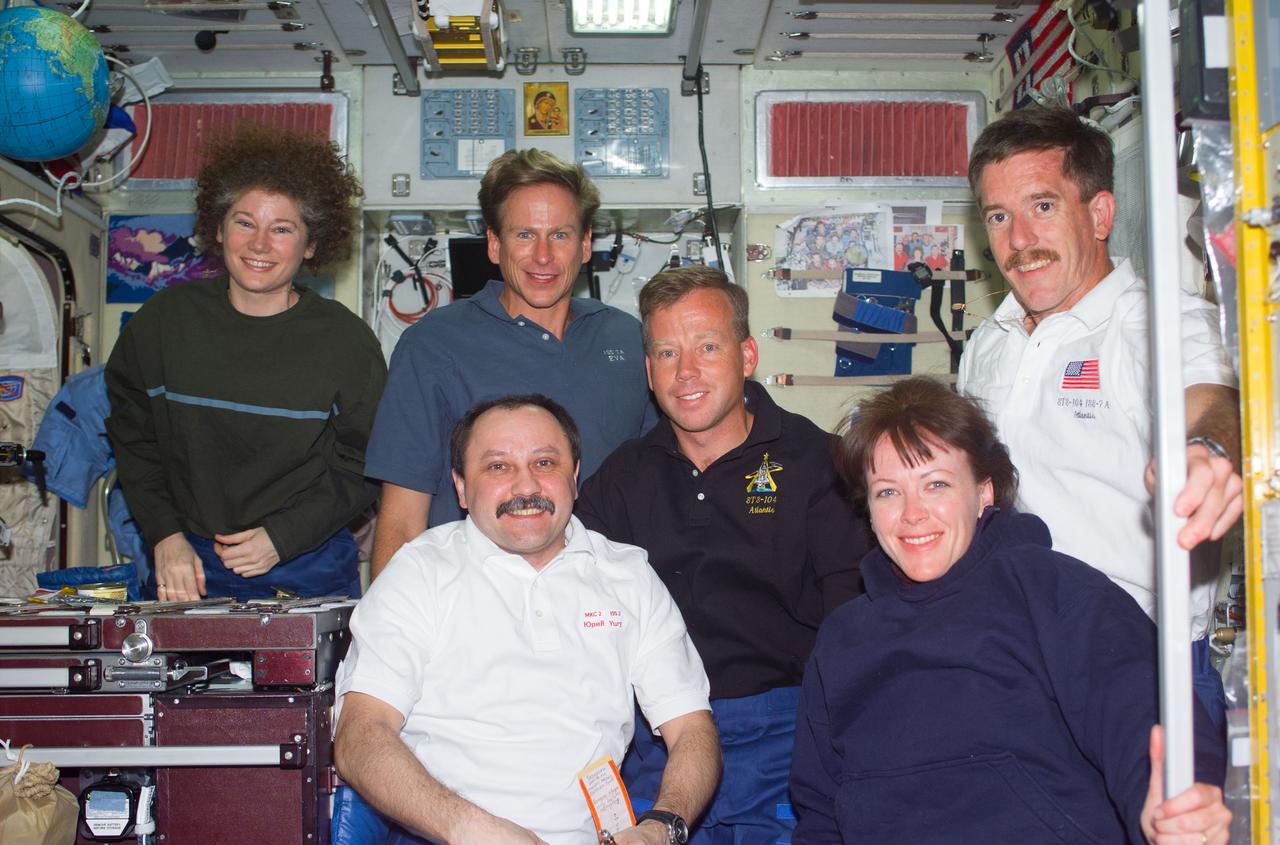
S104-E-5055 (14 July 2001) --- Soon after their ingress into the International Space Station (ISS), STS-104 crewmembers pose for a photograph with Expedition Two crewmembers in the Zvezda Service Module. From left to right are: back row - Susan J. Helms, Expedition Two flight engineer; Michael L. Gernhardt, STS-104 mission specialist; Steven W. Lindsey, STS-104 mission commander; James F. Reilly, STS-104 mission specialist; front row - Yury V. Usachev, Expedition Two mission commander; and Janet L. Kavandi, STS-104 mission specialist. Usachev represents Rosaviakosmos.
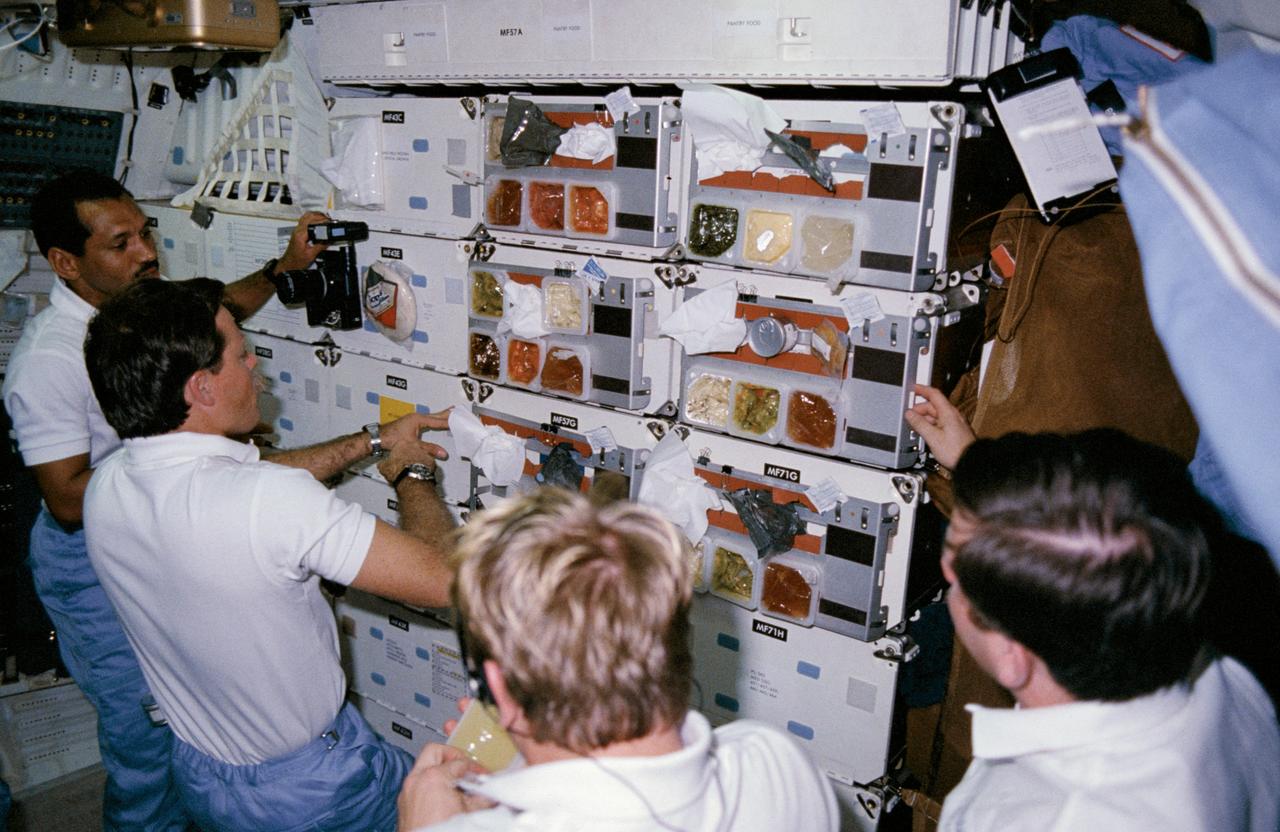
61C-14-015 (12-18 Jan. 1986) --- Astronauts Charles F. Bolden, STS-61C pilot; Robert L. Gibson, commander; George D. Nelson, mission specialist, and payload specialist Robert J. Cenker (RCA) queue at "chow line" on middeck of the space shuttle Columbia. Others onboard for the week-long mission were astronauts Steven A. Hawley and Franklin R. Chang-Diaz, mission specialists; and U.S. Representative Bill Nelson (Democrat - Florida). This photo was used as one of the visual aids at the crew's press conference on Jan. 23, 1986.
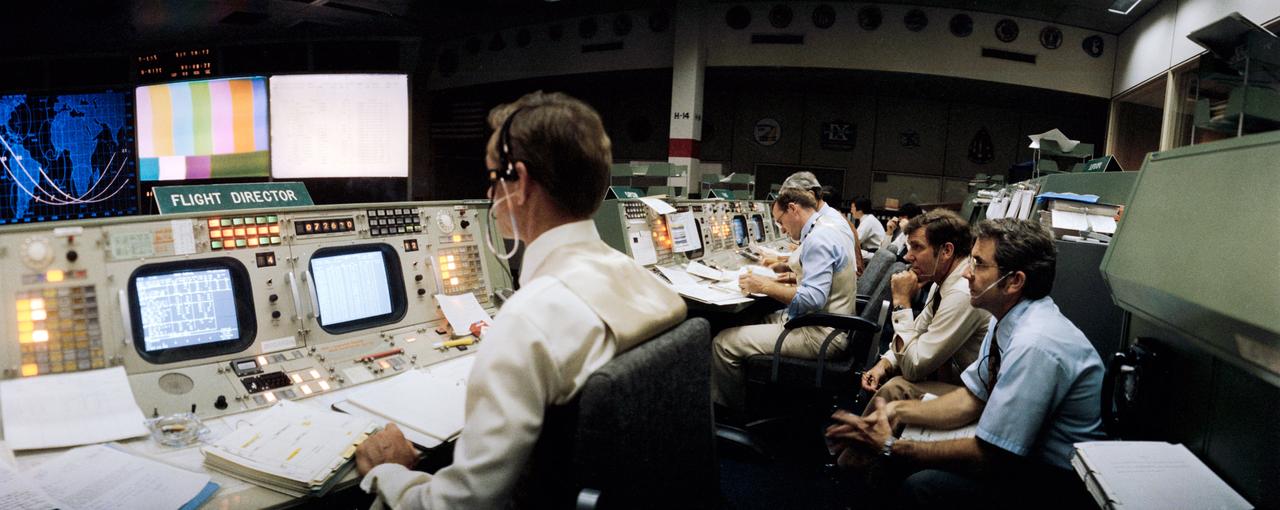
S81-30386 (14 April 1981) --- Flight director Charles R. Lewis, left, studies a chart display on his console?s monitor in the mission operations control room (MOCR) in the Johnson Space Center?s Mission Control Center. The photograph was taken just prior to a TV transmission on day two of STS-1, with a special wide-angle lens. Astronauts Joe H. Engle (second from right) and Richard H. Truly, right, are backup commander and pilot, respectively, for NASA?s first space shuttle orbital test mission. Astronaut James F. Buchli, spacecraft communicator, is at right center. Photo credit: NASA
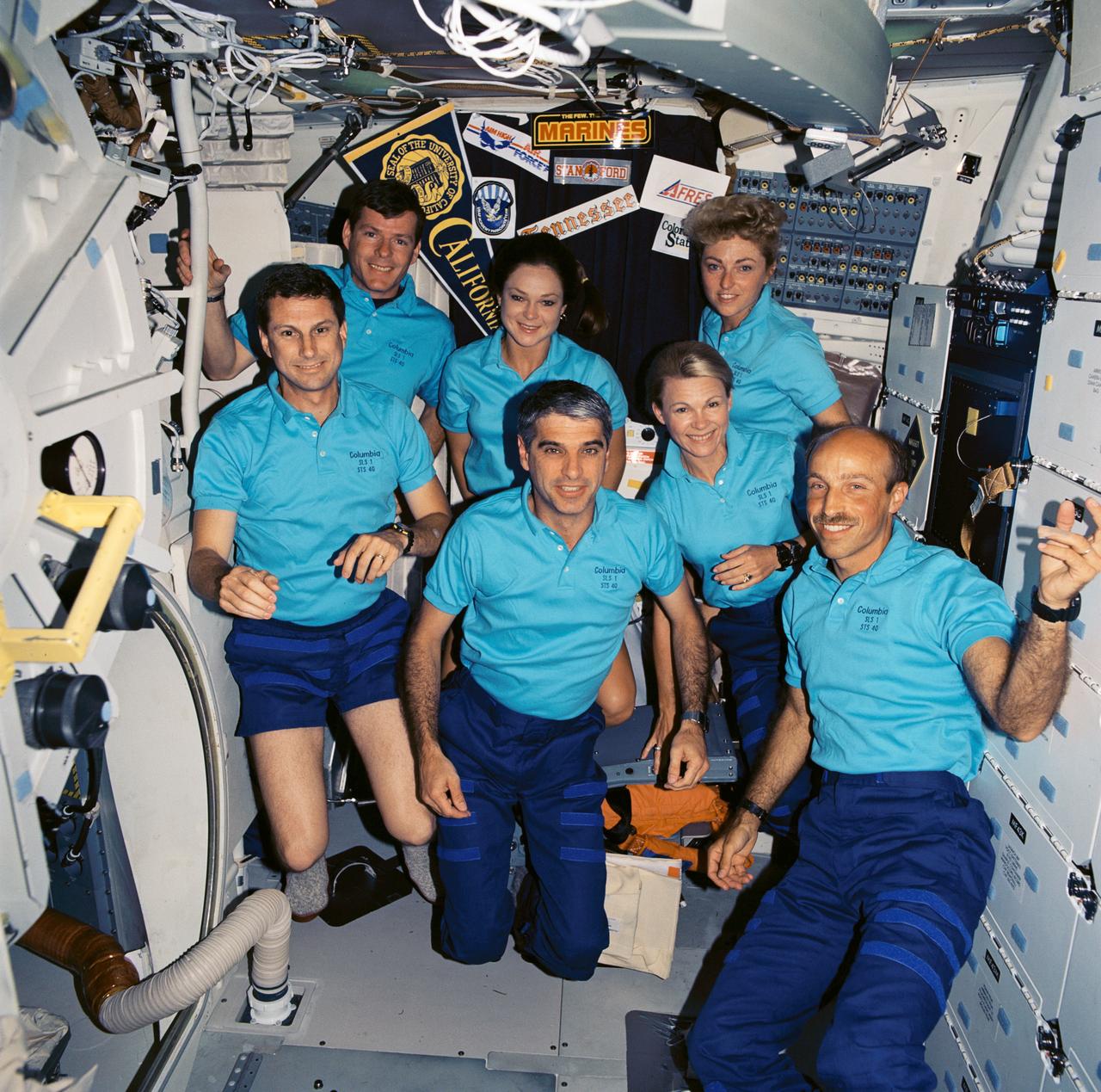
STS040-605-009 (5-14 June 1991) --- The seven crew members for STS-40 pose for an in-space portrait on the Space Shuttle Columbia's mid-deck. Left to right, in front are F. Andrew Gaffney, Sidney M. Gutierrez, Rhea Seddon and James P. Bagian; in back, Bryan D. O'Connor, Tamara E. Jernigan and Millie Hughes-Fulford. The five astronauts and two payload specialists are spending nine days in space in support of the Spacelab Life Sciences (SLS-1) mission. The image was one of 25 visuals used by the STS-40 crew at its Post Flight Press Conference (PFPC) on June 28, 1991.
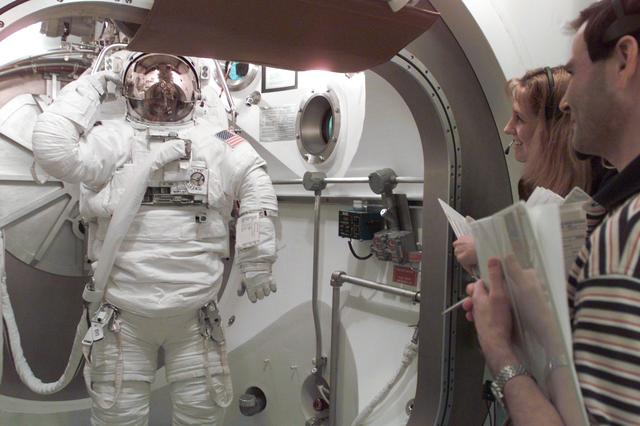
JSC2001-E-11704 (9 April 2001) --- Astronaut James F. Reilly, STS-104 mission specialist, participates in an Extravehicular Mobility Unit (EMU) fit check in one of the chambers in the Crew Systems Laboratory at the Johnson Space Center (JSC). Standing near the doorway are Peggy Berg and Dave Simon, Crew Personnel Representatives (CPR), from the Mission Operations Directorate (MOD) at the Johnson Space Center. The STS-104 mission to the International Space Station (ISS) represents the Space Shuttle Atlantis' first flight using a new engine and is targeted for a liftoff no earlier than June 14, 2001.
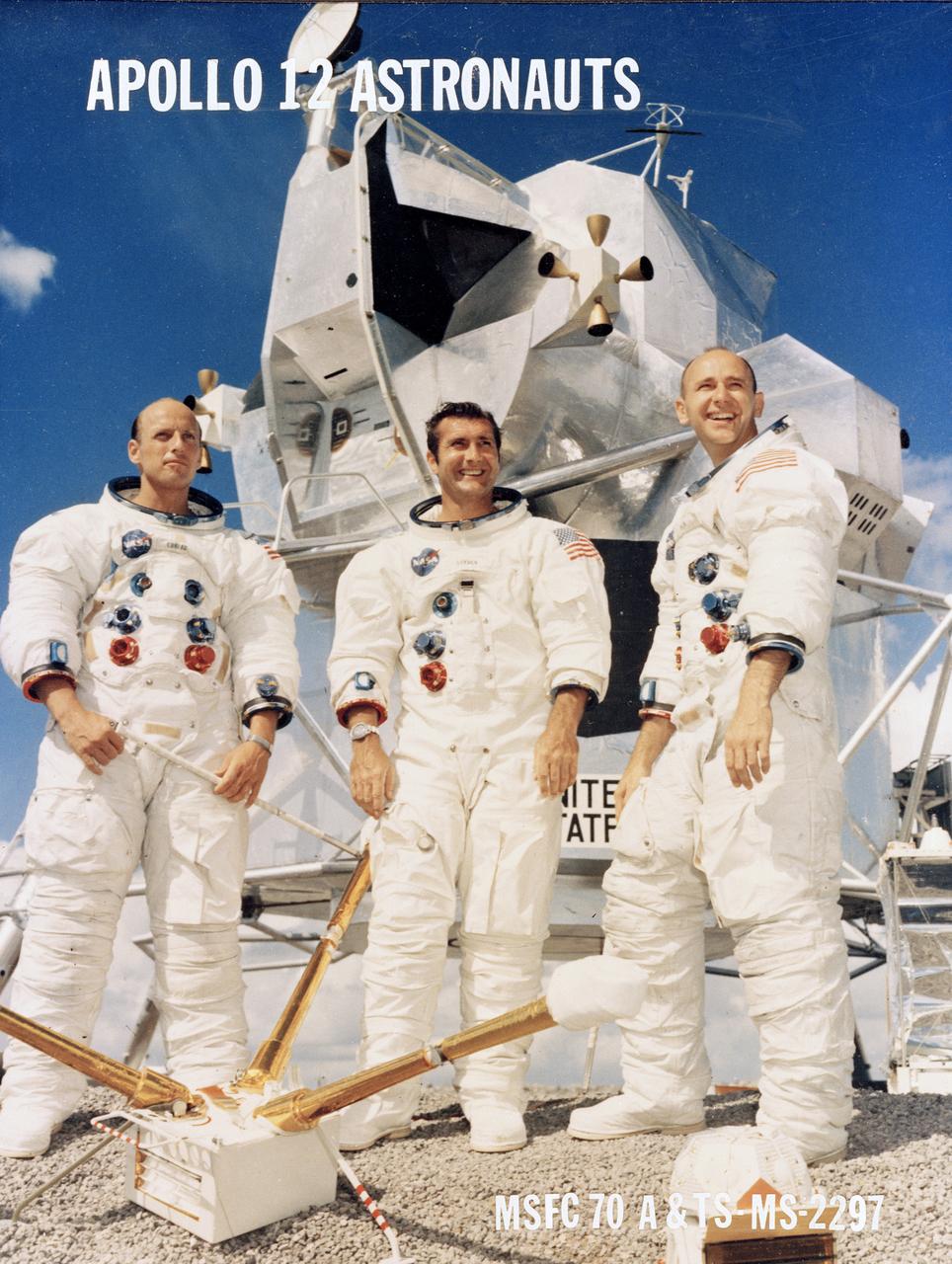
The Apollo 12 three-man crew pictured left to right are: Astronauts Charles Conrad, Spacecraft Commander; Richard F. Gordon, pilot of the Command Module `Yankee Clipper'; and Alan L. Bean, pilot of the Lunar Module `Intrepid'. Activities of astronauts Conrad and Bean on the lunar soil included setting out experiments, finding the unmarned Surveyor 3 that landed on the Moon on April 19, 1967, and collecting 75 pounds (34 kilograms) of rock samples. The second mission of the manned lunar landing and return to Earth, Apollo 12 lifted off on November 14, 1969.
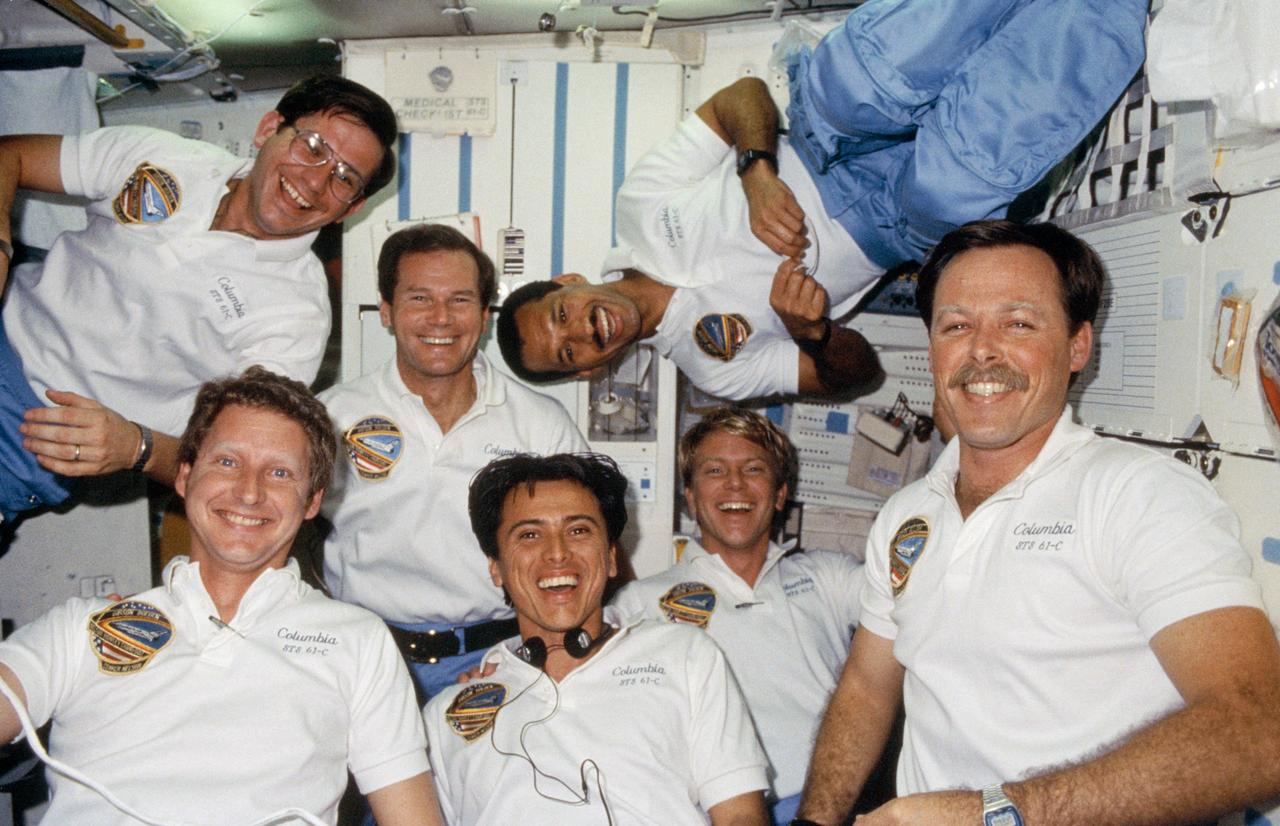
61C-14-008 (12-18 Jan. 1986) --- The seven crew members for STS-61C mission use the space shuttle Columbia's middeck for the traditional in-flight group portrait. Astronaut Robert L. Gibson (lower right corner), commander, is surrounded by fellow crew members, counter-clockwise from upper right: astronaut Charles F. Bolden, pilot; U.S. Representative Bill Nelson (D., Florida), payload specialist; Robert J. Cenker, RCA payload specialist; and astronauts Steven A. Hawley, Franklin R. Chang-Diaz and George D. Nelson, all mission specialists. Photo credit: NASA
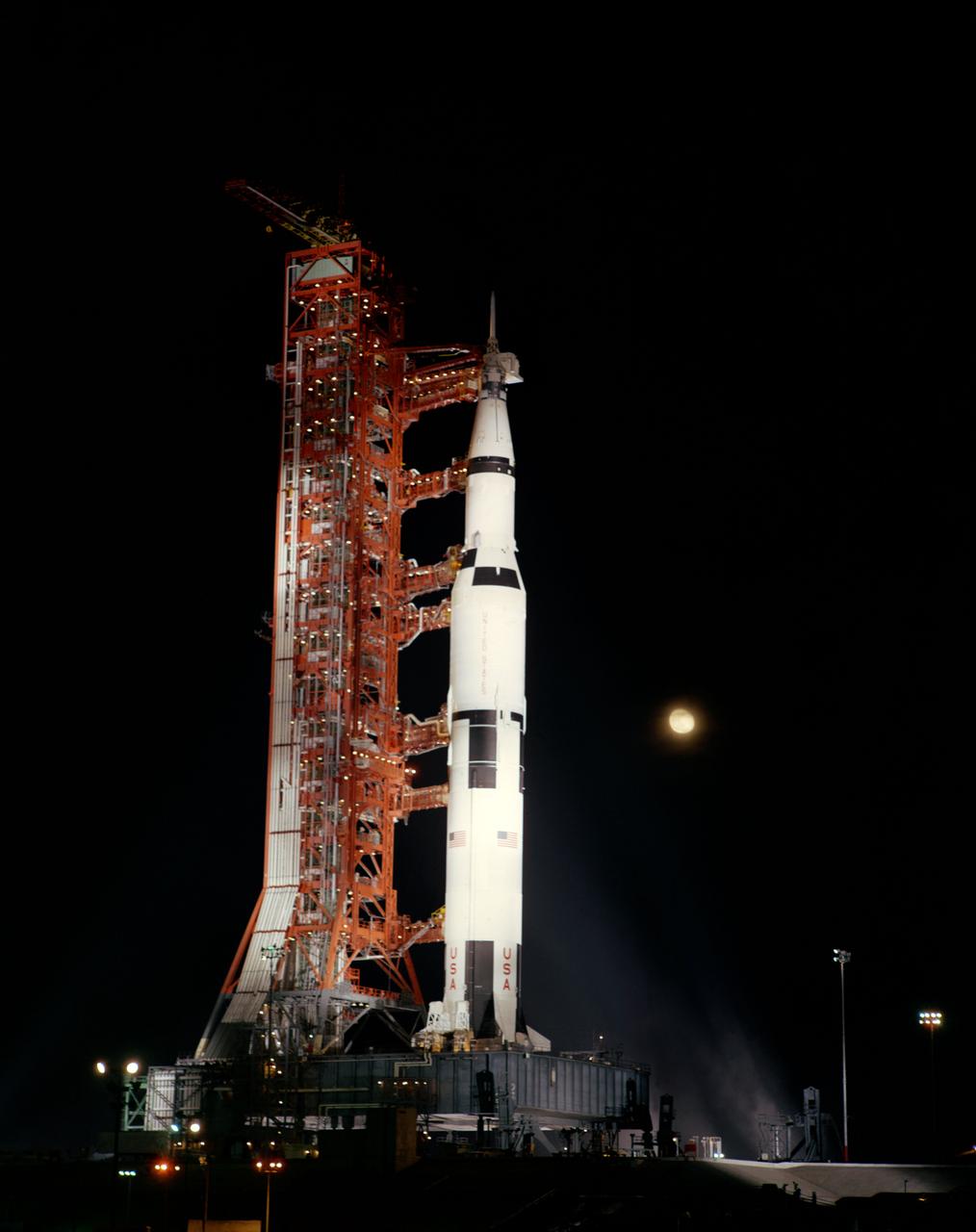
S69-56596 (28 Oct. 1969) --- A nighttime, ground-level view of Pad A, Launch Complex 39, Kennedy Space Center (KSC) showing the Apollo 12 (Spacecraft 108/Lunar Module 6/Saturn 507) space vehicle, during the terminal phase of a Countdown Demonstration Test (CDDT). The crew of the National Aeronautics and Space Administration's (NASA) second lunar landing mission will be astronauts Charles Conrad Jr., commander; Richard F. Gordon Jr., command module pilot; and Alan L. Bean, lunar module pilot. The Apollo 12 launch has been scheduled for 11:22 a.m. (EST) on Nov. 14, 1969.
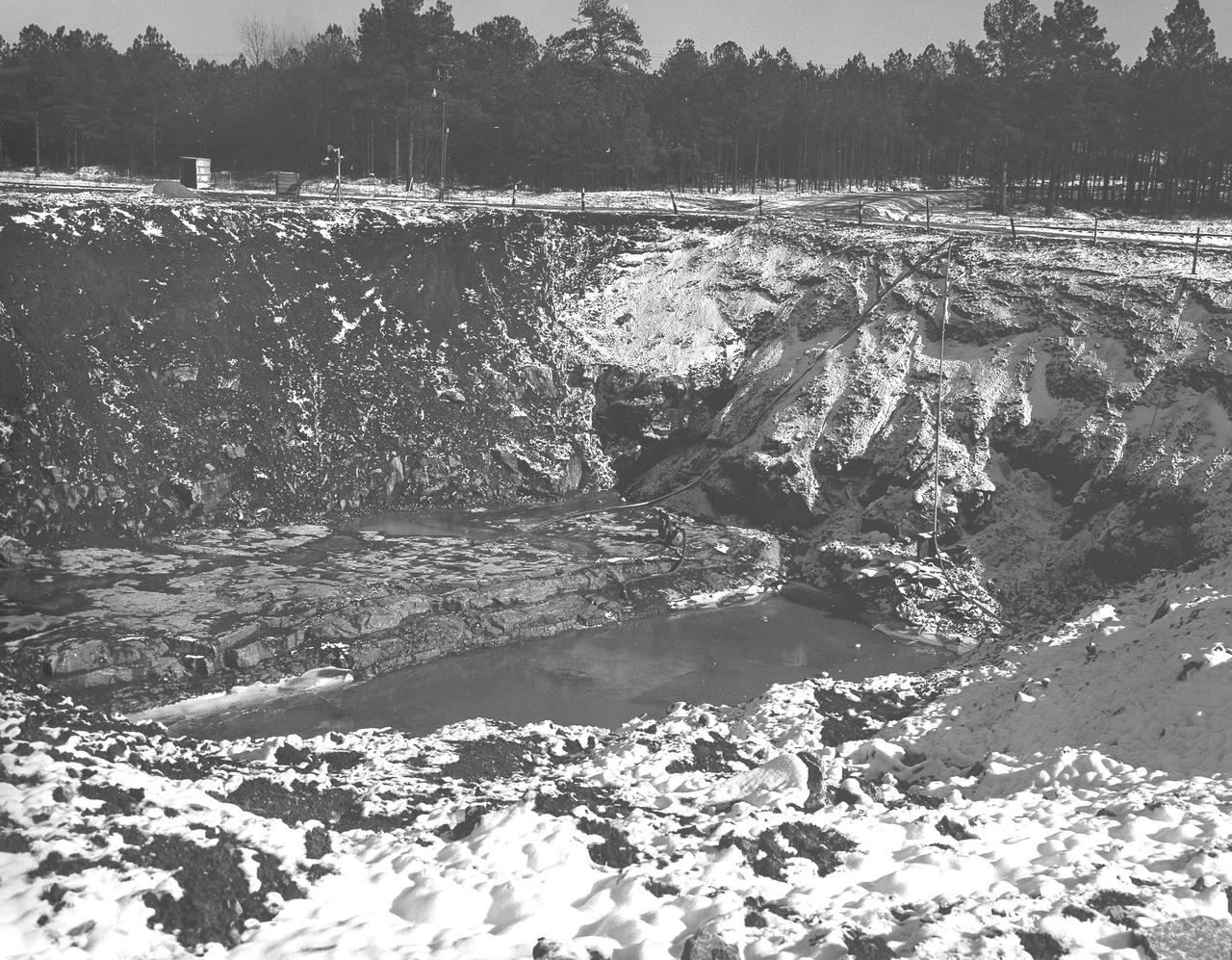
At its founding, the Marshall Space Flight Center (MSFC) inherited the Army’s Jupiter and Redstone test stands, but much larger facilities were needed for the giant stages of the Saturn V. From 1960 to 1964, the existing stands were remodeled and a sizable new test area was developed. The new comprehensive test complex for propulsion and structural dynamics was unique within the nation and the free world, and they remain so today because they were constructed with foresight to meet the future as well as on going needs. Construction of the S-IC Static test stand complex began in 1961 in the west test area of MSFC, and was completed in 1964. The S-IC static test stand was designed to develop and test the 138-ft long and 33-ft diameter Saturn V S-IC first stage, or booster stage, weighing in at 280,000 pounds. Required to hold down the brute force of a 7,500,000-pound thrust produced by 5 F-1 engines, the S-IC static test stand was designed and constructed with the strength of hundreds of tons of steel and 12,000,000 pounds of cement, planted down to bedrock 40 feet below ground level. The foundation walls, constructed with concrete and steel, are 4 feet thick. The base structure consists of four towers with 40-foot-thick walls extending upward 144 feet above ground level. The structure was topped by a crane with a 135-foot boom. With the boom in the upright position, the stand was given an overall height of 405 feet, placing it among the highest structures in Alabama at the time. In addition to the S-IC test stand, related facilities were constructed during this time frame. Built just north of the massive S-IC test stand was the F-1 Engine test stand. The F-1 test stand is a vertical engine firing test stand, 239 feet in elevation and 4,600 square feet in area at the base, and was designed to assist in the development of the F-1 Engine. Capability was provided for static firing of 1.5 million pounds of thrust using liquid oxygen and kerosene. Like the S-IC stand, the foundation of the F-1 stand is keyed into the bedrock approximately 40 feet below grade. This photo, taken January 14, 1963 depicts the F-1 test stand site with hoses pumping excess water from the site.
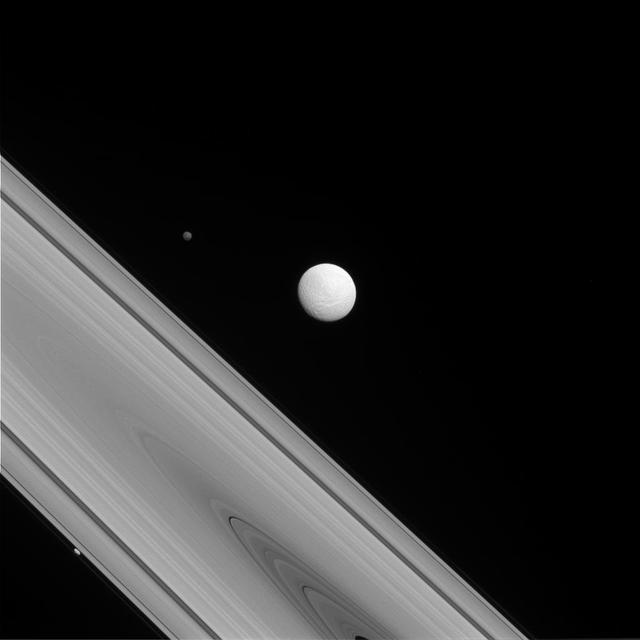
The Cassini spacecraft captures a rare family photo of three of Saturn's moons that couldn't be more different from each other! As the largest of the three, Tethys (image center) is round and has a variety of terrains across its surface. Meanwhile, Hyperion (to the upper-left of Tethys) is the "wild one" with a chaotic spin and Prometheus (lower-left) is a tiny moon that busies itself sculpting the F ring. To learn more about the surface of Tethys (660 miles, or 1,062 kilometers across), see PIA17164 More on the chaotic spin of Hyperion (168 miles, or 270 kilometers across) can be found at PIA07683 And discover more about the role of Prometheus (53 miles, or 86 kilometers across) in shaping the F ring in PIA12786. This view looks toward the sunlit side of the rings from about 1 degree above the ringplane. The image was taken in visible light with the Cassini spacecraft narrow-angle camera on July 14, 2014. The view was acquired at a distance of approximately 1.2 million miles (1.9 million kilometers) from Tethys and at a Sun-Tethys-spacecraft, or phase, angle of 22 degrees. Image scale is 7 miles (11 kilometers) per pixel. http://photojournal.jpl.nasa.gov/catalog/PIA18283
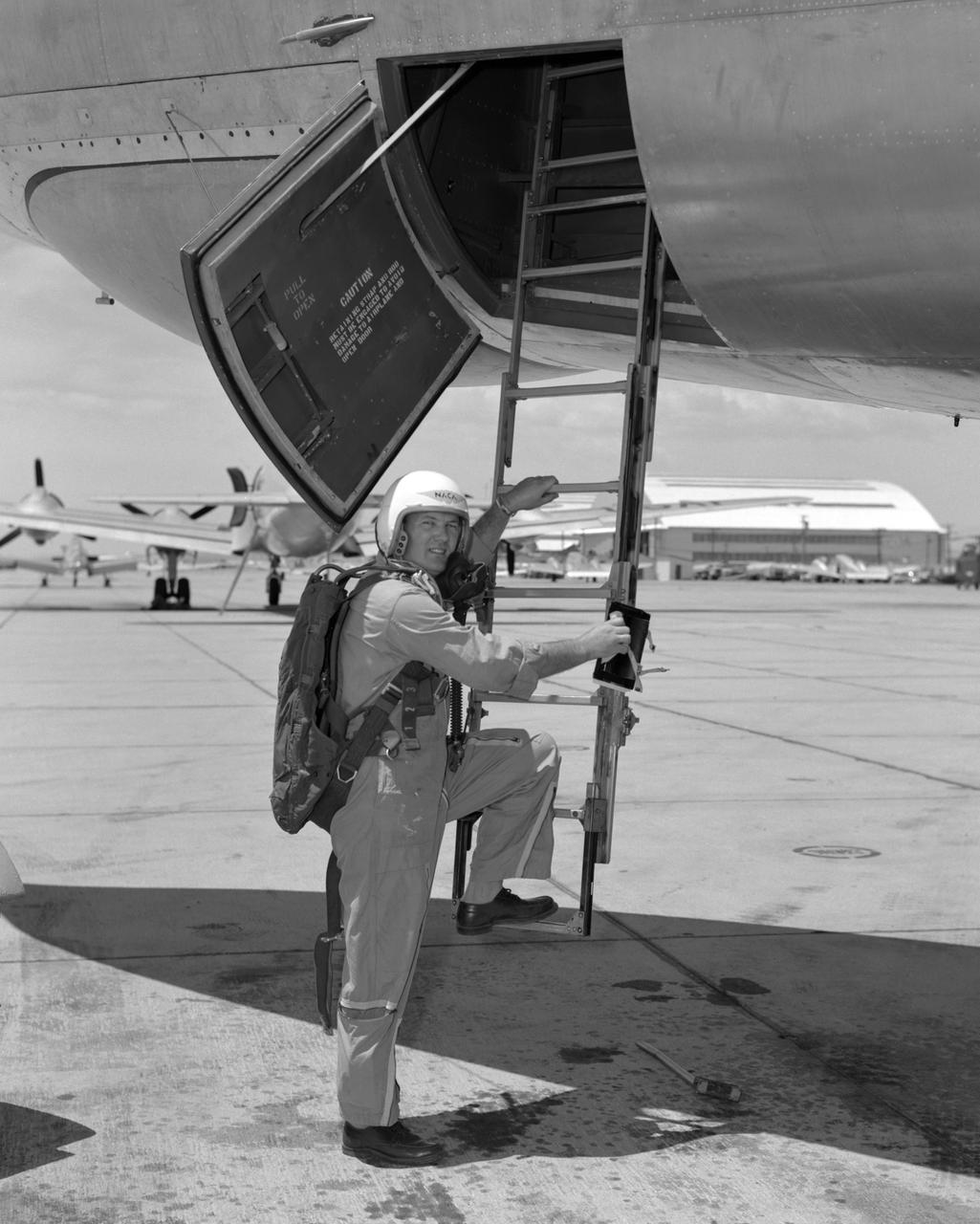
From December 10, 1966, until his retirement on February 27, 1976, Stanley P. Butchart served as Chief (later, Director) of Flight Operations at NASA's Flight Research Center (renamed on March 26, 1976, the Hugh L. Dryden Flight Research Center). Initially, his responsibilities in this position included the Research Pilots Branch, a Maintenance and Manufacturing Branch, and an Operations Engineering Branch, the last of which not only included propulsion and electrical/electronic sections but project engineers for the X-15 and lifting bodies. During his tenure, however, the responsibilities of his directorate came to include not only Flight Test Engineering Support but Flight Systems and Loads laboratories. Before becoming Chief of Flight Operations, Butchart had served since June of 1966 as head of the Research Pilots Branch (Chief Pilot) and then as acting chief of Flight Operations. He had joined the Center (then known as the National Advisory Committee for Aeronautics' High-Speed Flight Research Station) as a research pilot on May 10, 1951. During his career as a research pilot, he flew a great variety of research and air-launch aircraft including the D-558-I, D-558-II, B-29 (plus its Navy version, the P2B), X-4, X-5, KC-135, CV-880, CV-990, B-47, B-52, B-747, F-100A, F-101, F-102, F-104, PA-30 Twin Comanche, JetStar, F-111, R4D, B-720, and B-47. Although previously a single-engine pilot, he became the Center's principal multi-engine pilot during a period of air-launches in which the pilot of the air-launch aircraft (B-29 or P2B) basically directed the operations. It was he who called for the chase planes before each drop, directed the positioning of fire rescue vehicles, and released the experimental aircraft after ensuring that all was ready for the drop. As pilot of the B-29 and P2B, Butchart launched the X-1A once, the X-1B 13 times, the X-1E 22 times, and the D-558-II 102 times. In addition, he towed the M2-F1 lightweight lifting body 14 times behind an R4
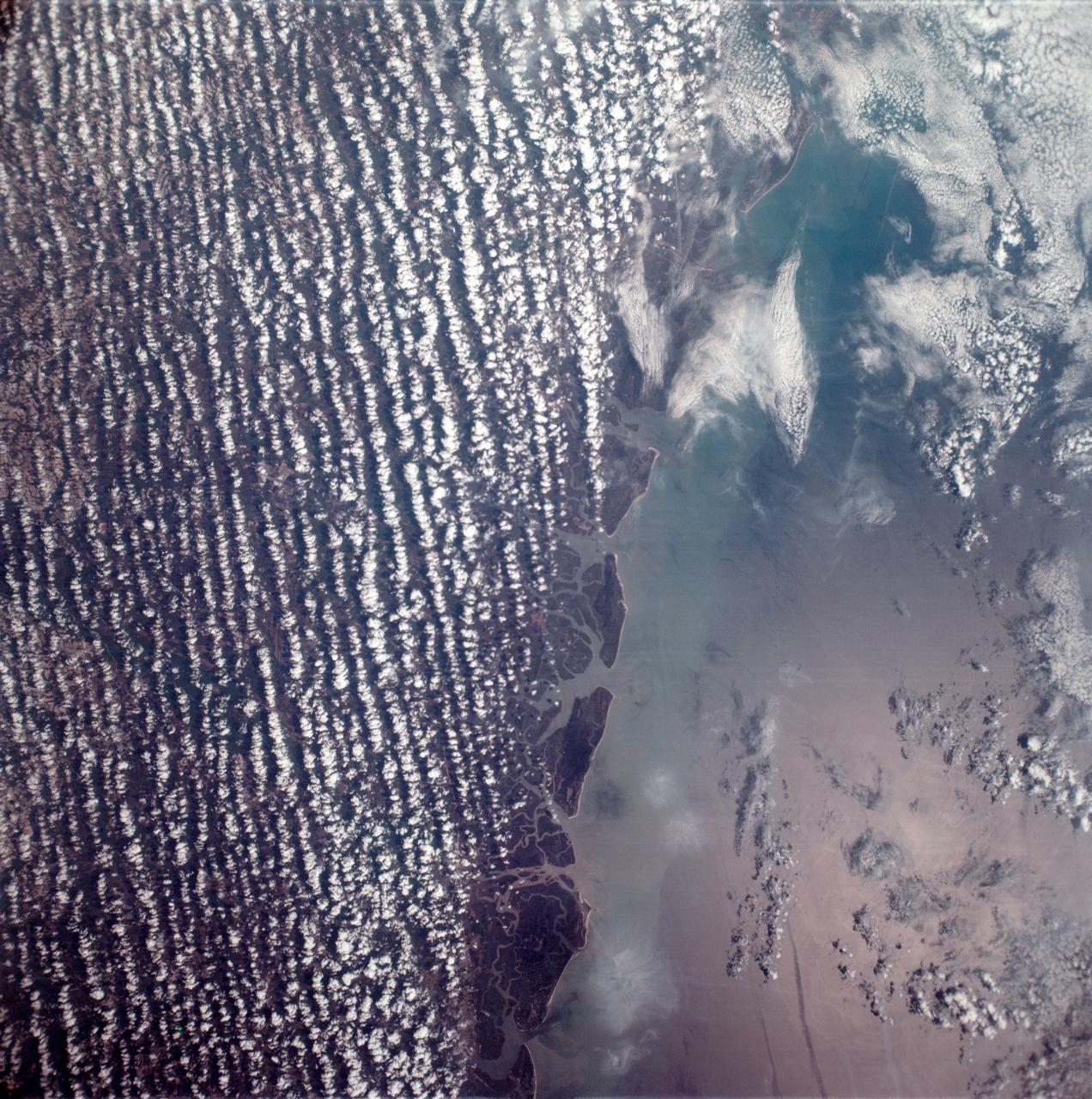
AS6-02-1485 (4 April 1968) --- View of the east coast of the United States as photographed from the National Aeronautics and Space Administration's unmanned Apollo 6 (Spacecraft 020/Saturn 502) space mission. This photograph was taken during a pass over Georgia, between Savannah and Brunswick. Altitude of the spacecraft was 100 nautical miles. Numerous jet aircraft contrails can be seen over the Atlantic Ocean. Sun glint on the surface of the ocean permits oceanographers to determine conditions of the water. This photograph was taken April 4, 1968, three hours and 14 minutes after liftoff, using Eastman Kodak SO-121 high resolution aerial Ektachrome film (exposure setting f/5.6 at 1/500 second), in a J. A. Maurer model 220G camera.
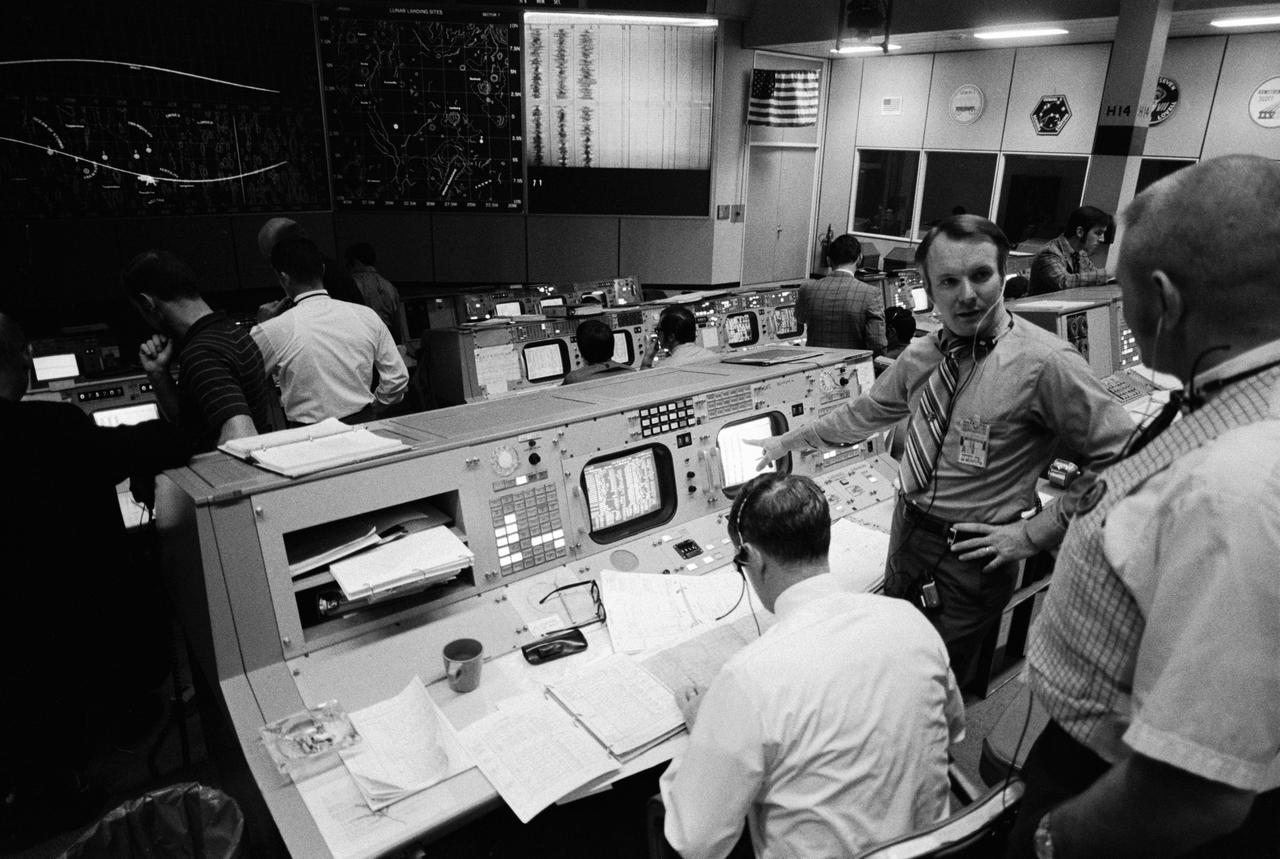
S71-17610 (4 Feb. 1971) --- Partial view of activity in the Mission Operations Control Room in the Mission Control Center at the time the Apollo 14 S-IVB stage impacted on the lunar surface. The flight director's console is in the foreground. Eugene F. Kranz, chief of the MSC Flight Control Division, is in the right foreground. Seated at the console is Glynn S. Lunney, head of the Flight Director Office, Flight Control Division. Facing the camera is Gerald D. Griffin, flight director of the Third (Gold) Team. A seismic reading from the impact can be seen in the center background. The S-IVB impacted on the lunar surface at 1:40:54 a.m. (CST), Feb. 4, 1971, about 90 nautical miles south-southwest of the Apollo 12 passive seismometer. The energy release was comparable to 11 tons of TNT.
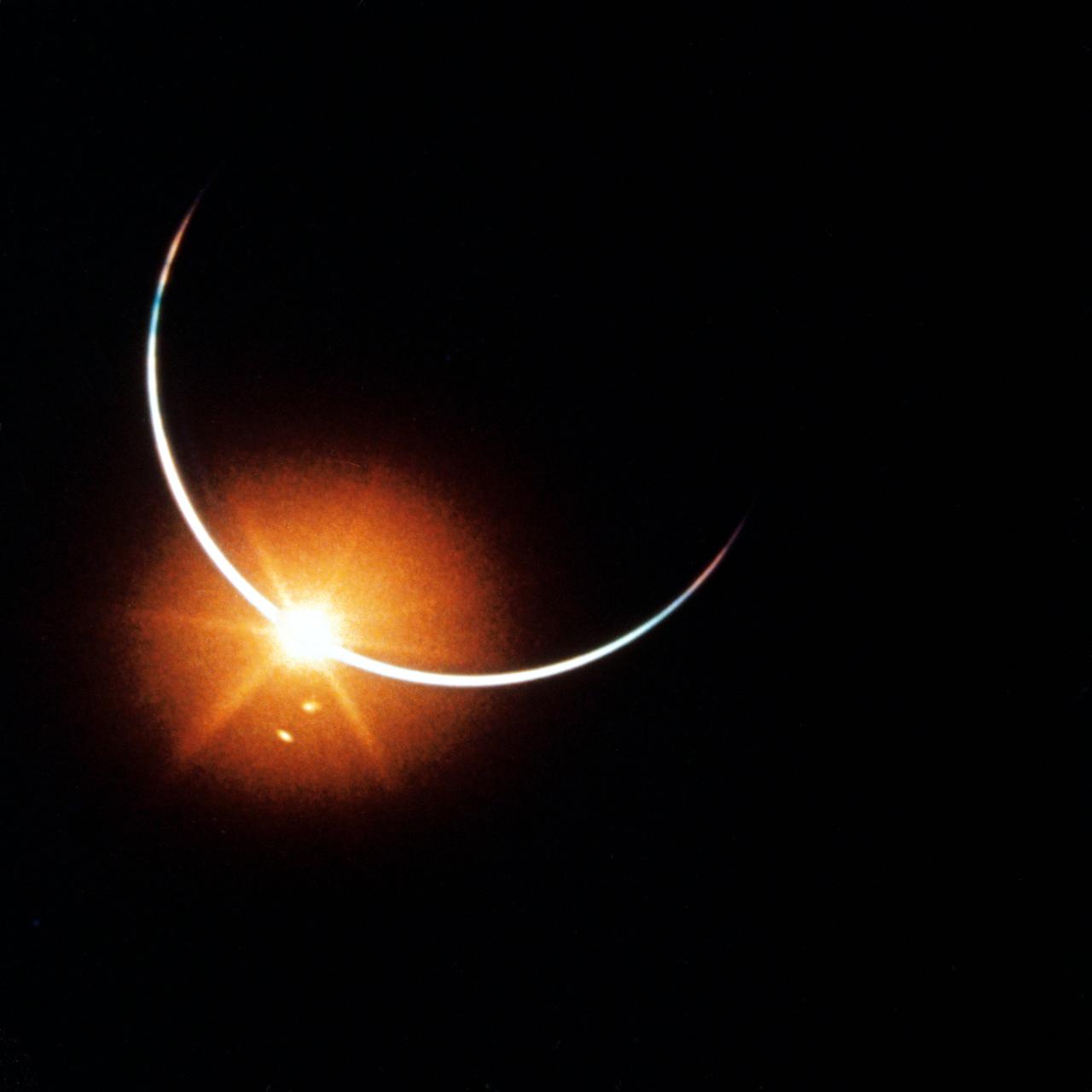
S80-37406 (14-24 Nov. 1969) --- This photograph of the eclipse of the sun was taken with a 16mm motion picture camera from the Apollo 12 spacecraft during its trans-Earth journey home from the moon. The fascinating view was created when the Earth moved directly between the sun and the Apollo 12 spacecraft. Aboard Apollo 12 were astronauts Charles Conrad Jr., commander; Richard F. Gordon Jr., command module pilot; and Alan L. Bean, lunar module pilot. While astronauts Conrad and Bean descended in the Lunar Module (LM) "Intrepid" to explore the Ocean of Storms region of the moon, astronaut Gordon remained with the Command and Service Modules (CSM) "Yankee Clipper" in lunar orbit.
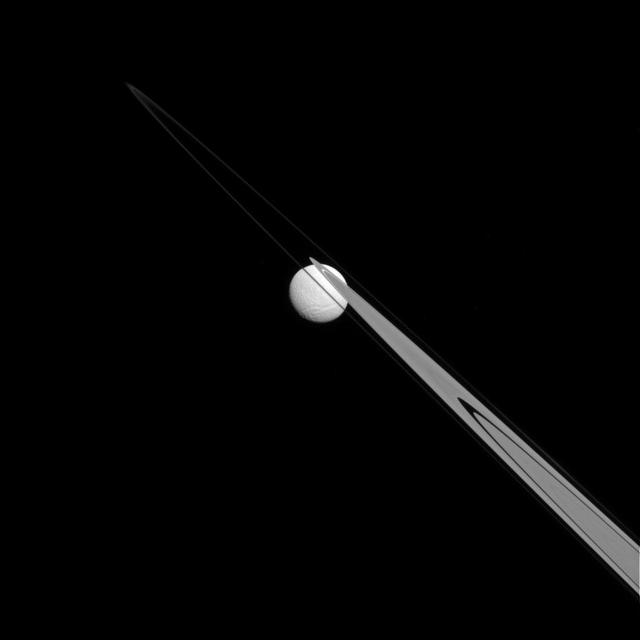
Like a drop of dew hanging on a leaf, Tethys appears to be stuck to the A and F rings from this perspective. Tethys (660 miles, or 1,062 kilometers across), like the ring particles, is composed primarily of ice. The gap in the A ring through which Tethys is visible is the Keeler gap, which is kept clear by the small moon Daphnis (not visible here). This view looks toward the Saturn-facing hemisphere of Tethys. North on Tethys is up and rotated 43 degrees to the right. The image was taken in visible light with the Cassini spacecraft narrow-angle camera on July 14, 2014. The view was acquired at a distance of approximately 1.1 million miles (1.8 million kilometers) from Tethys and at a Sun-Tethys-spacecraft, or phase, angle of 22 degrees. Image scale is 7 miles (11 kilometers) per pixel. http://photojournal.jpl.nasa.gov/catalog/PIA18284
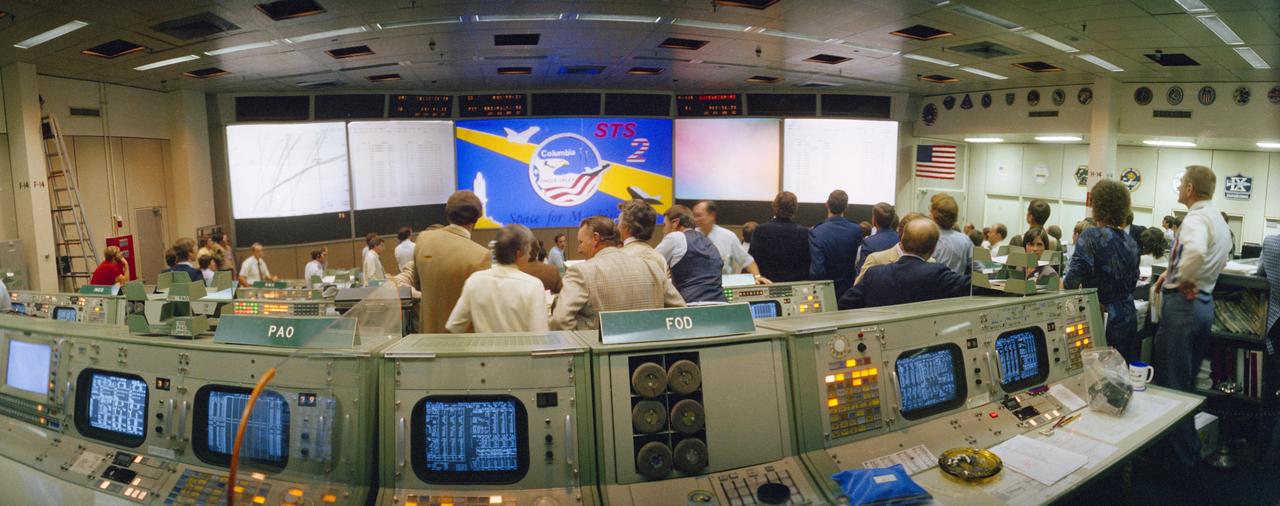
S81-39507 (14 Nov. 1981) --- This unique, wide-angle view of the many flight controllers in Houston?s mission control facility was taken moments prior to the successful touchdown of the STS-2 Columbia. Clifford E. Charlesworth, JSC Deputy Director, huddles with several flight directors for STS-2 at the flight director console on the second-from rear row of consoles in the mission operations control room (MOCR). Eugene F. Kranz, deputy director of flight operations, is at far right of frame. Columbia shortly afterward touched down safely at Edwards Air Force Base in California to complete the two-day, six-hour, 13-minute STS-2 flight. Photo credit: NASA
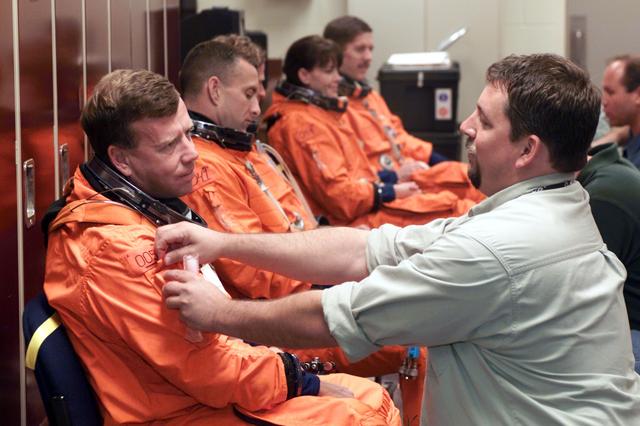
JSC2001-E-06408 (27 February 2001) --- Astronauts (from left foreground) Steven W. Lindsey, commander; Charles O. Hobaugh, pilot; Michael L. Gernhardt, Janet L. Kavandi, and James F. Reilly, all mission specialists, don training versions of the full-pressure launch and entry suit prior to a training session in one of the trainer/mockups (out of frame) in the Johnson Space Center’s Systems Integration Facility. The astronauts are assisted by suit technicians (from right foreground) Len Groce and Drew Billingsley. The STS-104 mission to the International Space Station (ISS) represents the Space Shuttle Atlantis' first flight using a new engine and is targeted for a liftoff no earlier than June 14, 2001.
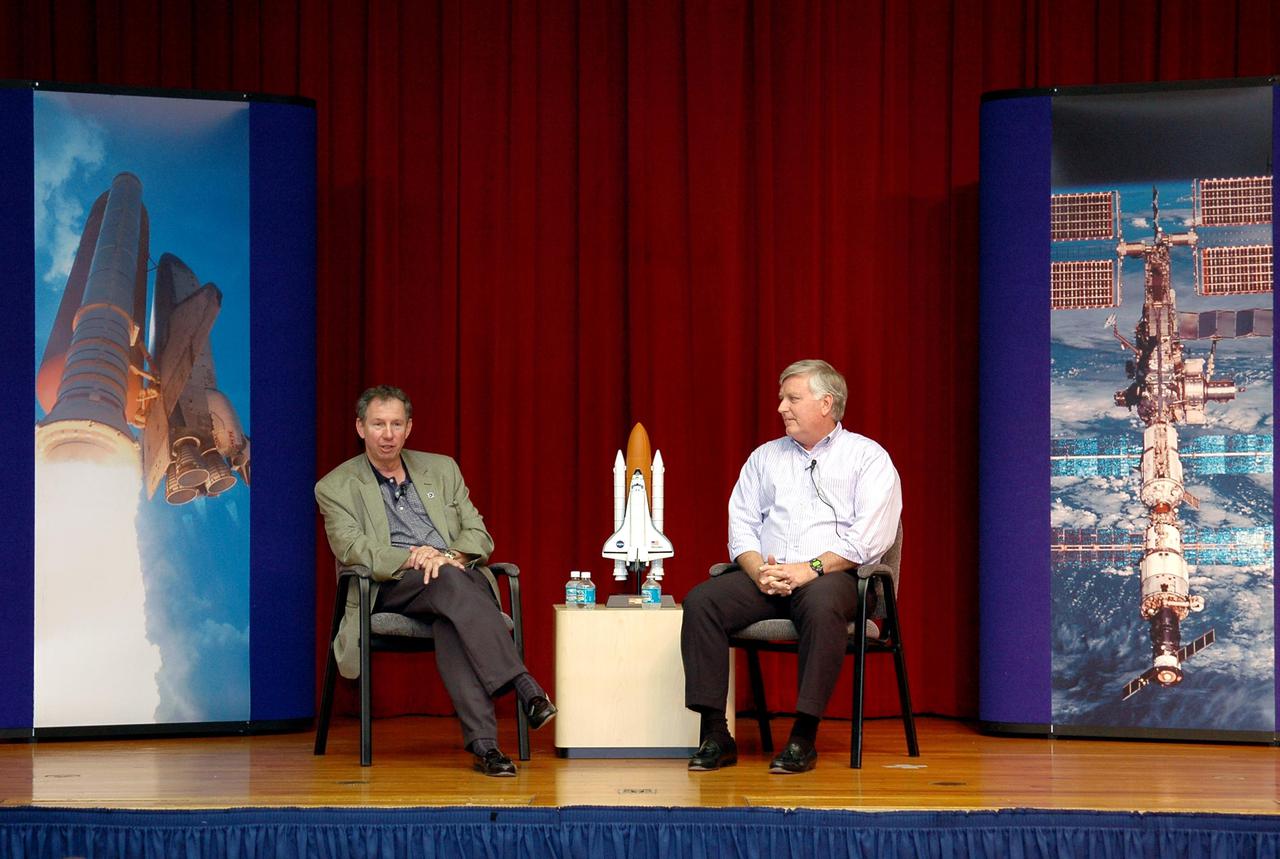
KENNEDY SPACE CENTER, FLA. - Michael Griffin (left), administrator of the National Aeronautics and Space Administration (NASA), and James Kennedy, director of the John F. Kennedy Space Center (KSC), address KSC employees during a Town Hall meeting. The meeting was held in the Training Auditorium and broadcast around the Center to employees not in attendance. This is Griffin's first official visit to Kennedy Space Center. Griffin is the 11th administrator of NASA, a role he assumed on April 14, 2005. Griffin was nominated to the position in March while serving as the Space Department head at Johns Hopkins University's Applied Physics Laboratory in Baltimore. A registered professional engineer in Maryland and California, Griffin served as chief engineer at NASA earlier in his career. He holds numerous scientific and technical degrees including a Ph.D. in Aerospace Engineering from the University of Maryland.
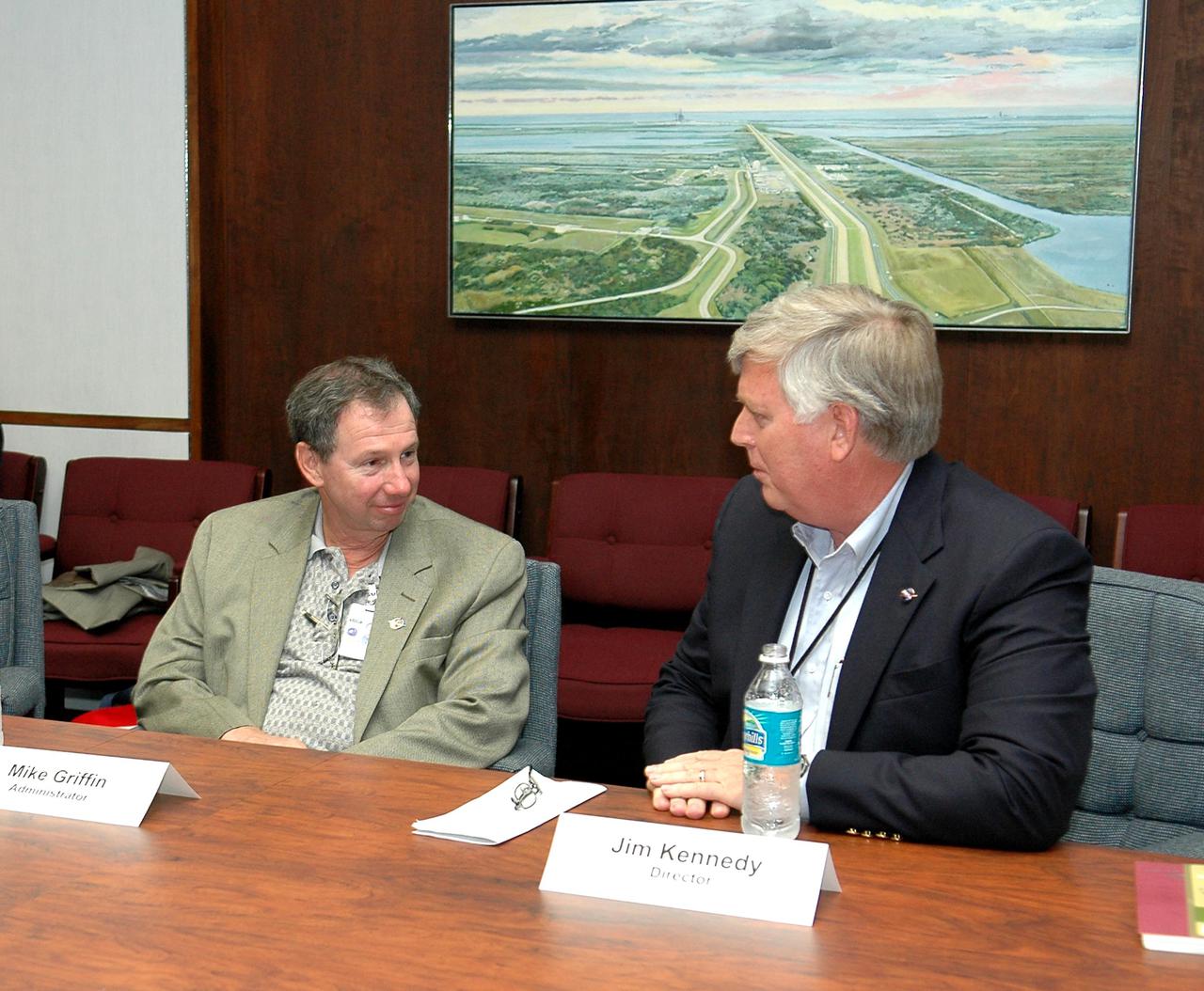
KENNEDY SPACE CENTER, FLA. - Dr. Michael Griffin (left), the new administrator of the National Aeronautics and Space Administration (NASA), meets with James W. Kennedy, the director of the John F. Kennedy Space Center (KSC) in Florida, during Griffin's first official visit to the Center. Griffin is the 11th administrator of NASA, a role he assumed on April 14, 2005. Griffin was nominated to the position in March by President George W. Bush while serving as the Space Department head at Johns Hopkins University's Applied Physics Laboratory in Baltimore. A registered professional engineer in Maryland and California, Griffin served as chief engineer at NASA earlier in his career. He holds numerous scientific and technical degrees including a Ph.D. in Aerospace Engineering from the University of Maryland.
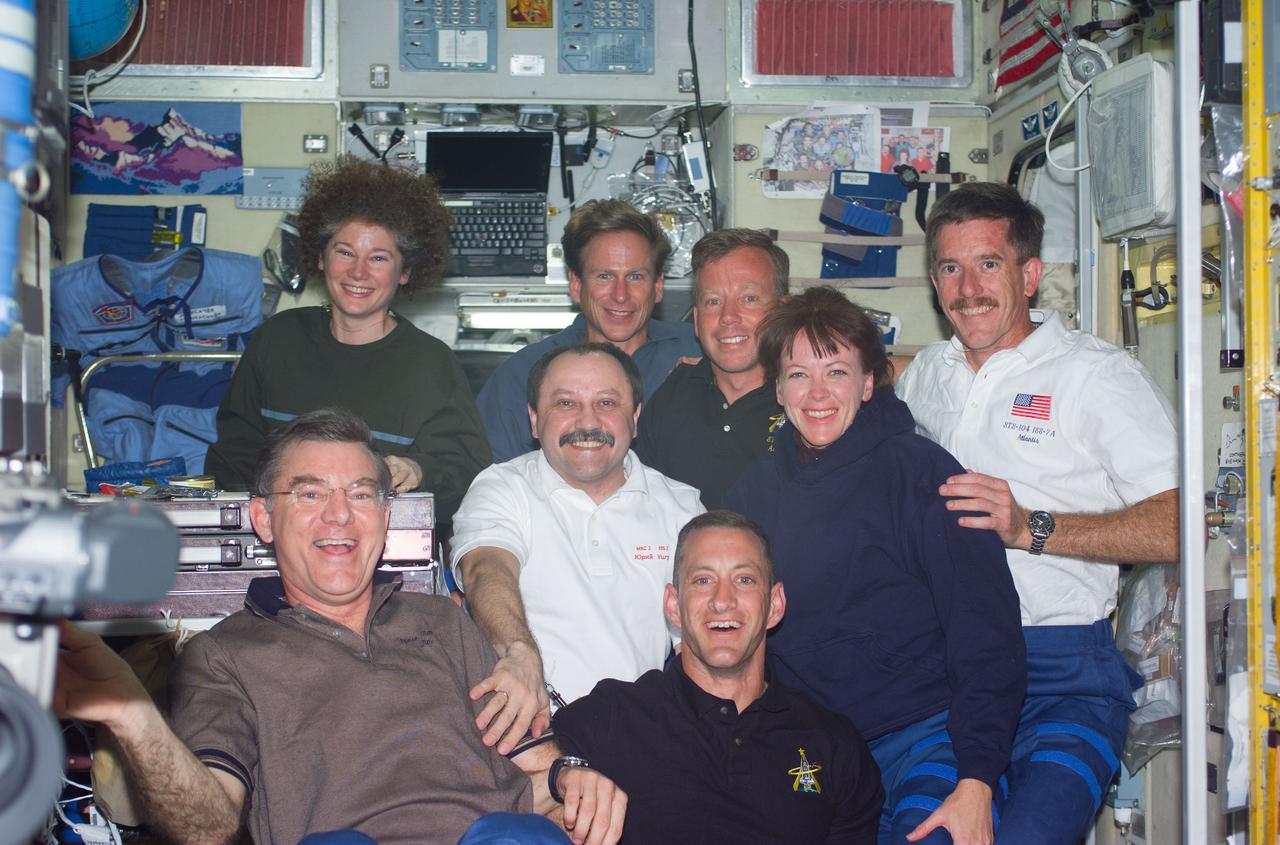
S104-E-5057 (14 July 2001) --- Soon after their ingress into the International Space Station (ISS), the STS-104 crewmembers pose for a photograph with the Expedition Two crewmembers in the Zvezda Service Module. From left to right are: back row - Susan J. Helms, Expedition Two flight engineer; Michael L. Gernhardt, STS-104 mission specialist; Steven W. Lindsey, STS-104; James F. Reilly, STS-104 mission specialist; middle row - Yury V. Usachev, Expedition Two mission commander; Janet L. Kavandi, STS-104 mission specialist; front row - James S. Voss, Expedition Two flight engineer; and Charles O. Hobaugh, STS-104 pilot. Usachev represents Rosaviakosmos.
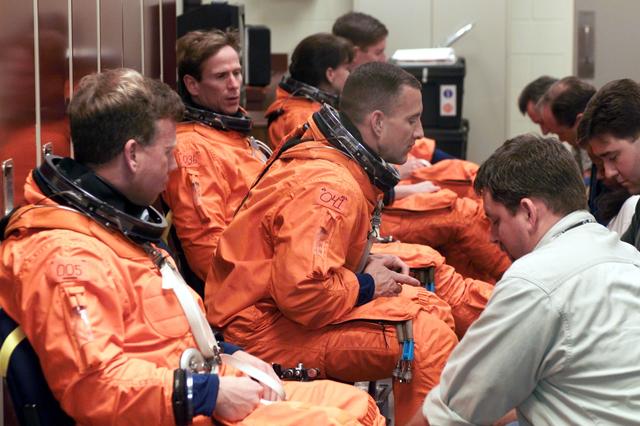
JSC2001-E-06407 (27 February 2001) --- Astronauts (from left foreground) Steven W. Lindsey, commander; Charles O. Hobaugh, pilot; Michael L. Gernhardt, Janet L. Kavandi, and James F. Reilly, all mission specialists, don training versions of the full-pressure launch and entry suit prior to a training session in one of the trainer/mockups (out of frame) in the Johnson Space Center’s Systems Integration Facility. The astronauts are assisted by suit technicians (from right foreground) Len Groce, Mike Thompson, Drew Billingsley and Jim Cheatham. The STS-104 mission to the International Space Station (ISS) represents the Space Shuttle Atlantis' first flight using a new engine and is targeted for a liftoff no earlier than June 14, 2001.
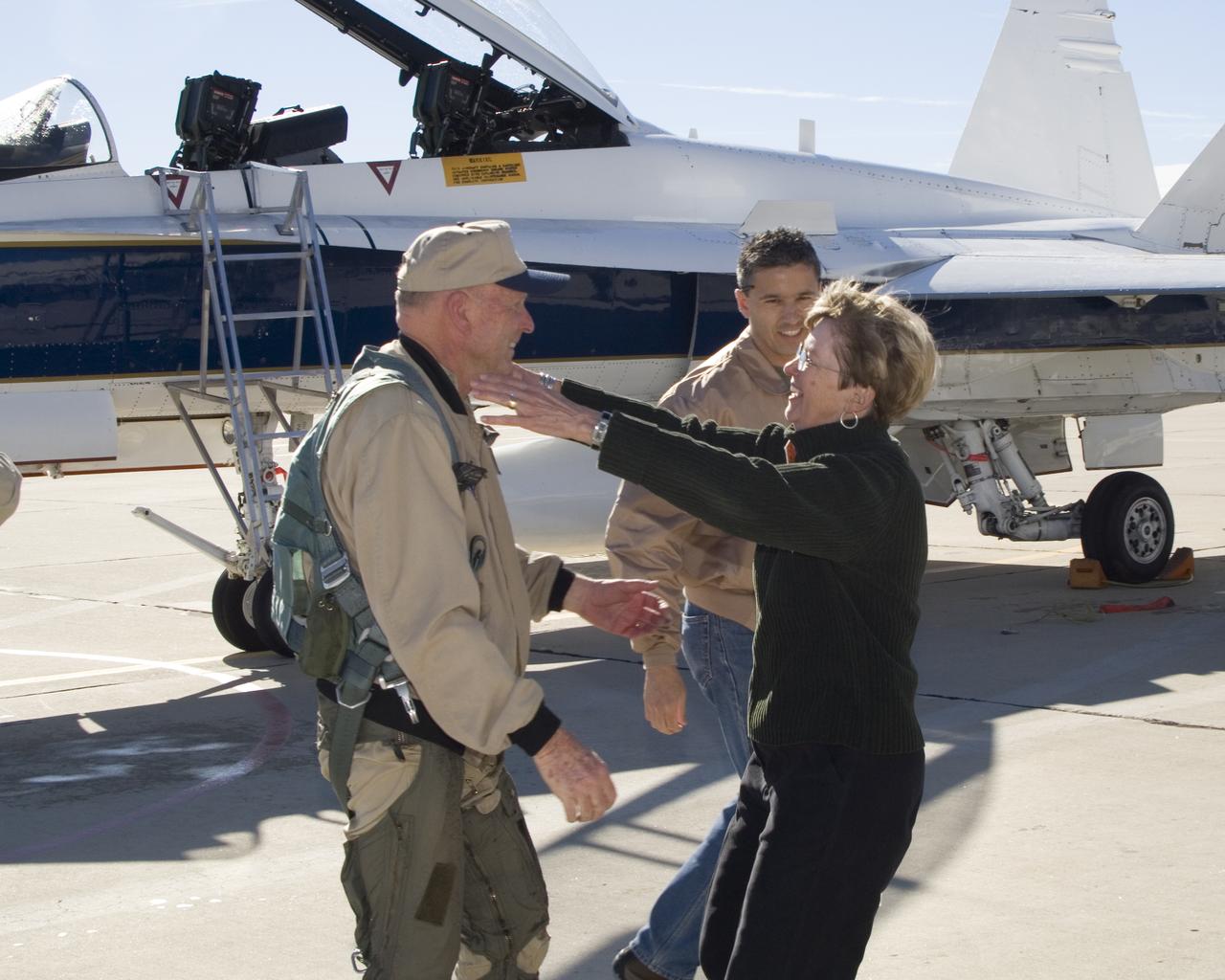
NASA Dryden research pilot Gordon Fullerton is greeted by his wife Marie on the Dryden ramp after his final flight in a NASA F/A-18 on Dec. 21, 2007.
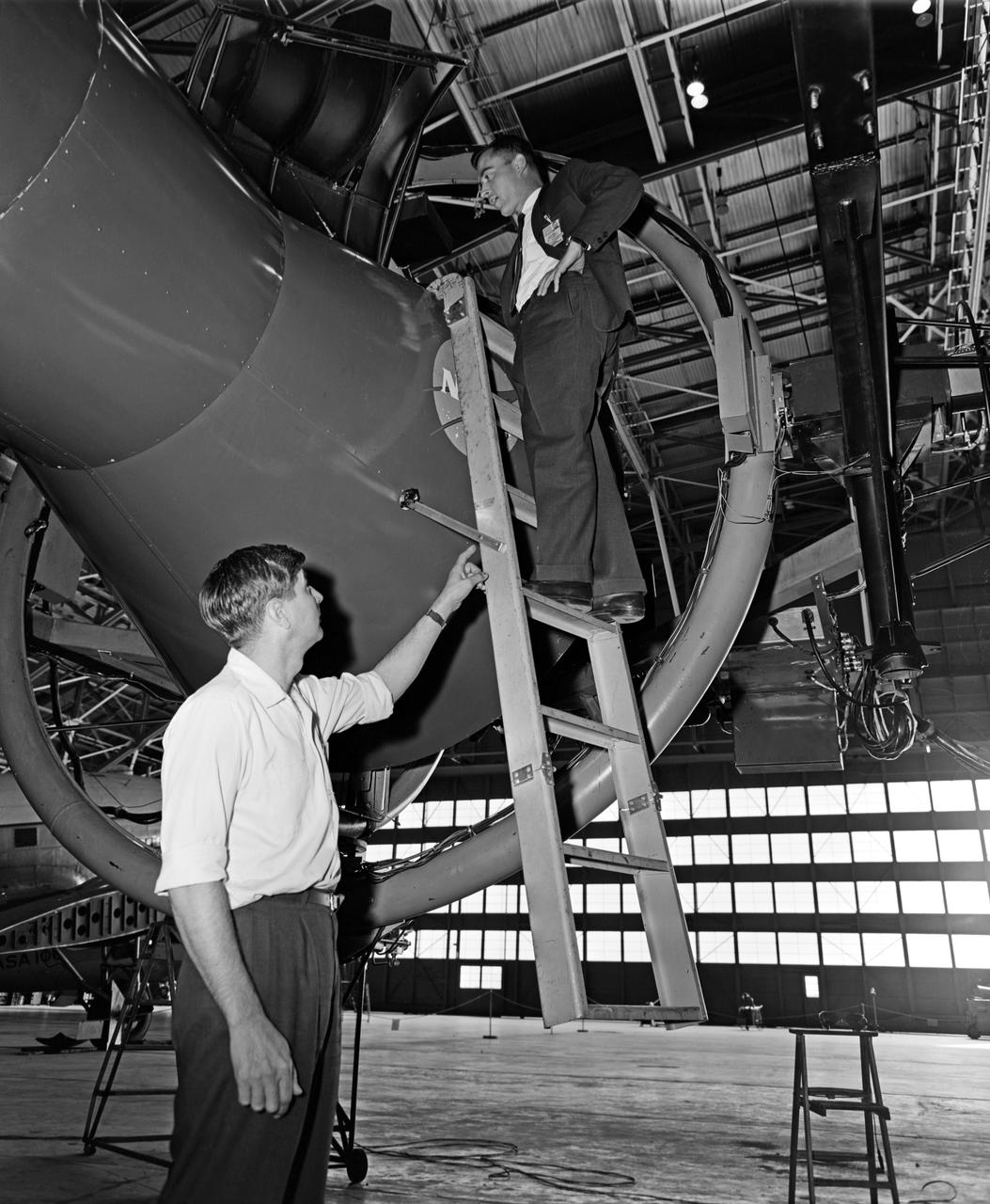
Astronaut John Young (above) was one of 14 astronauts, 8 NASA test pilots, and 2 McDonnell test pilots who took part in simulator studies. Young piloted the simulator on November 12, 1963 Arthur Vogeley wrote: "Many of the astronauts have flown this simulator in support of the Gemini studies and they, without exception, appreciated the realism of the visual scene. The simulator has also been used in the development of pilot techniques to handle certain jet malfunctions in order that aborts could be avoided. In these situations large attitude changes are sometimes necessary and the false motion cues that were generated due to earth gravity were somewhat objectionable; however, the pilots were readily able to overlook these false motion cues in favor of the visual realism." Roy F. Brissenden wrote: "The basic Gemini control studies developed the necessary techniques and demonstrated the ability of human pilots to perform final space docking with the specified Gemini-Agena systems using only visual references. ... Results... showed that trained astronauts can effect the docking with direct acceleration control and even with jet malfunctions as long as good visual conditions exist.... Probably more important than data results was the early confidence that the astronauts themselves gained in their ability to perform the maneuver in the ultimate flight mission." -- Published in Barton C. Hacker and James M. Grimwood, On the Shoulders of Titans: A History of Project Gemini, NASA SP-4203; A.W. Vogeley, "Discussion of Existing and Planned Simulators For Space Research," Paper presented at the Conference on the Role of Simulation in Space Technology, August 17-21, 1964; Roy F. Brissenden, "Initial Operations with Langley's Rendezvous Docking Facility," Langley Working Paper, LWP-21, 1964.
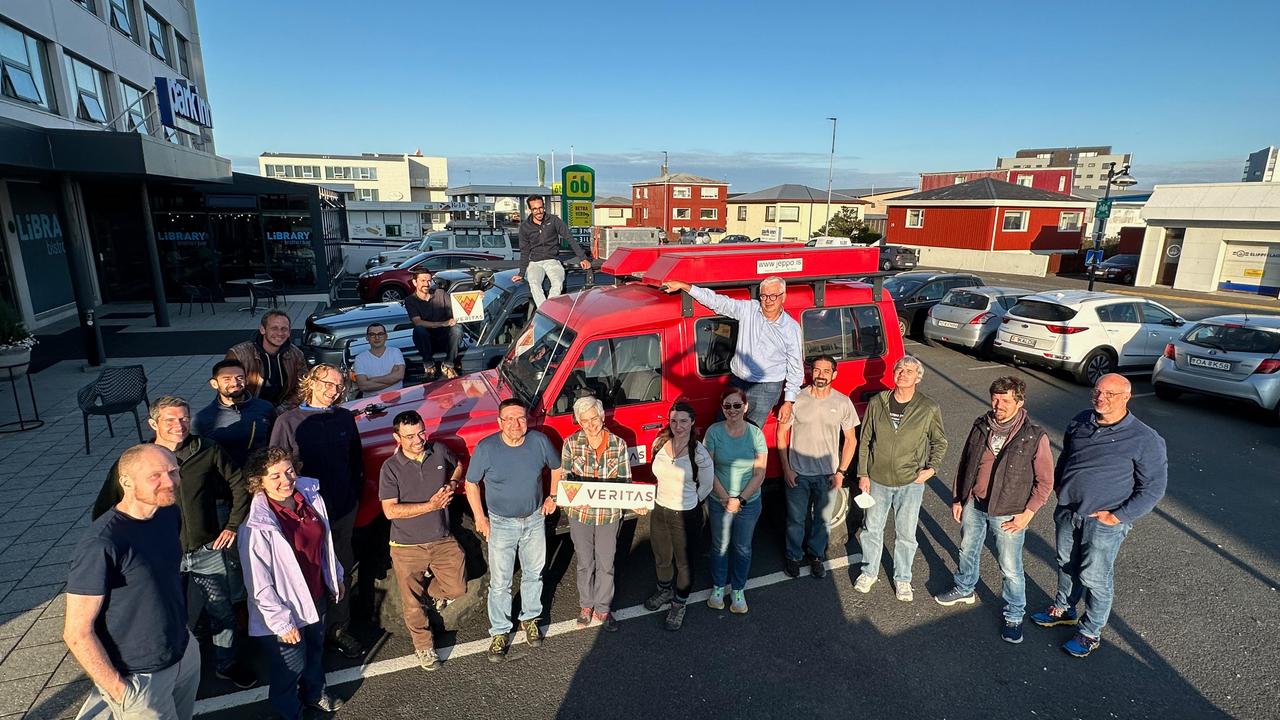
Members of the VERITAS science team pause for a photograph on July 31, 2023, after arriving in Iceland to begin a two-week campaign to study the volcanic island's geology to help the team prepare for NASA's VERITAS (short for Venus Emissivity, Radio science, InSAR, Topography, And Spectroscopy) mission to Venus. From July 30 to Aug. 14, 2023, the international science team, including local participation from the University of Iceland, worked to lay the groundwork for the science that will ultimately be done from Venus orbit. At center, holding the VERITAS mission identifier is the mission's principal investigator and the science team lead, Sue Smrekar, of NASA's Jet Propulsion Laboratory in Southern California. Flanking her are science team members from multiple U.S., Italian, and German institutions, including members of the German Aerospace Center (DLR) Flugzeug Synthetic Aperture Radar (F-SAR) airplane team. The DLR F-SAR team was tasked with collecting synthetic-aperture radar data of the regions studied by the field team. A key objective of the campaign is to refine change detection algorithms that will be used to look for global surface change (such as volcanic activity) between NASA's Magellan radar mission from the 1990s and VERITAS, as well as between VERITAS and the ESA (European Space Agency) EnVision mission to Venus, both of which are targeting the early 2030s for launch. NASA's VERITAS is an orbiter designed to peer through Venus' thick atmosphere with a suite of powerful instruments to create global maps of the planet's surface, including topography, radar images, rock type, and gravity, as well as detect surface changes. VERITAS is designed to understand what processes are currently active, search for evidence of past and current interior water, and understand the geologic evolution of the planet, illuminating how rocky planets throughout the galaxy evolve. VERITAS and NASA's Deep Atmosphere Venus Investigation of Noble gases, Chemistry, and Imaging (DAVINCI) mission were selected in 2021 under NASA's Discovery Program as the agency's next missions to Venus. The Discovery Program is managed by the Planetary Missions Program Office at NASA's Marshall Space Flight Center in Huntsville, Alabama, for the Planetary Science Division of NASA's Science Mission Directorate in Washington. https://photojournal.jpl.nasa.gov/catalog/PIA25835
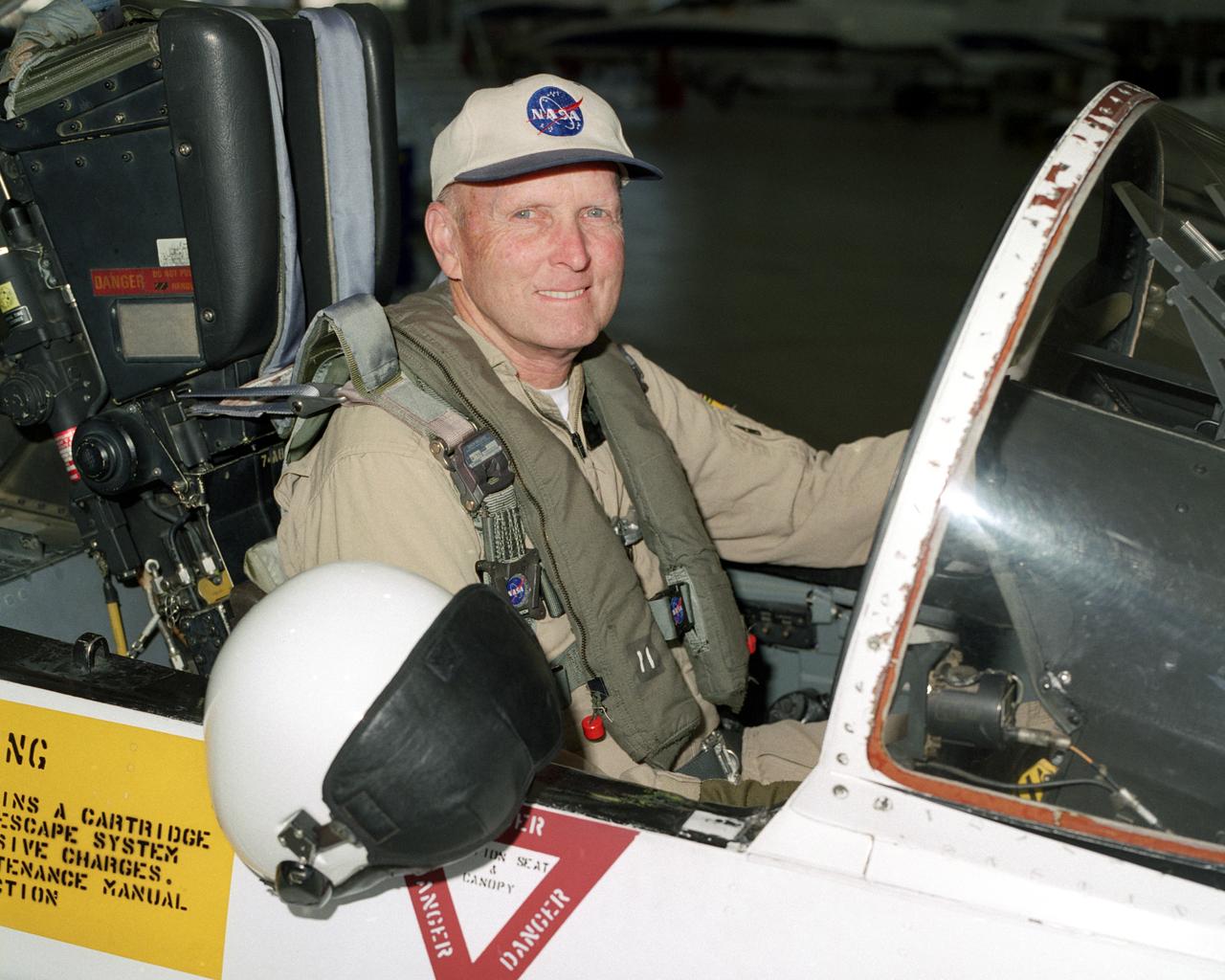
Former NASA astronaut C. Gordon Fullerton, seated in the cockpit of an F/A-18, is a research pilot at NASA's Dryden Flight Research Center, Edwards, Calif. Since transferring to Dryden in 1986, his assignments have included a variety of flight research and support activities piloting NASA's B-52 launch aircraft, the 747 Shuttle Carrier Aircraft (SCA), and other multi-engine and high performance aircraft. He flew a series of development air launches of the X-38 prototype Crew Return Vehicle and in the launches for the X-43A Hyper-X project. Fullerton also flies Dryden's DC-8 Airborne Science aircraft in support a variety of atmospheric physics, ground mapping and meteorology studies. Fullerton also was project pilot on the Propulsion Controlled Aircraft program, during which he successfully landed both a modified F-15 and an MD-11 transport with all control surfaces neutralized, using only engine thrust modulation for control. Fullerton also evaluated the flying qualities of the Russian Tu-144 supersonic transport during two flights in 1998, one of only two non-Russian pilots to fly that aircraft. With more than 15,000 hours of flying time, Fullerton has piloted 135 different types of aircraft in his career. As an astronaut, Fullerton served on the support crews for the Apollo 14, 15, 16, and 17 lunar missions. In 1977, Fullerton was on one of the two flight crews that piloted the Space Shuttle prototype Enterprise during the Approach and Landing Test Program at Dryden. Fullerton was the pilot on the STS-3 Space Shuttle orbital flight test mission in 1982, and commanded the STS-51F Spacelab 2 mission in 1985. He has logged 382 hours in space flight. In July 1988, he completed a 30-year career with the U.S. Air Force and retired as a colonel.
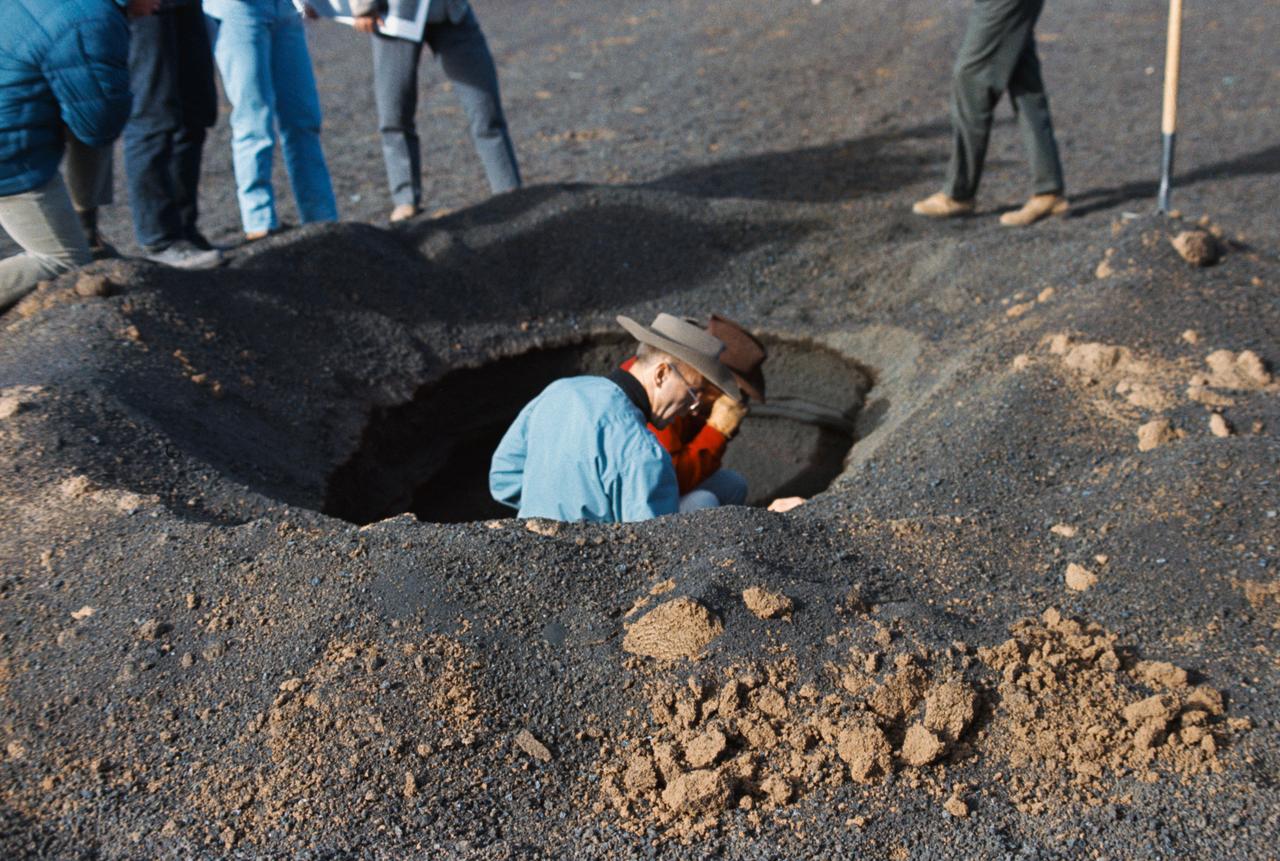
S69-55662 (10 Oct. 1969) --- Astronauts Alan L. Bean (left) and Charles Conrad Jr., the two crewmen of the Apollo 12 lunar landing mission who are scheduled to participate in two lengthy periods of extravehicular activity (EVA) on the lunar surface, are pictured during a geological field trip and training at a simulated lunar surface area near Flagstaff, Arizona. Here Conrad, the Apollo 12 commander, gets a close look through hand lens at the stratigraphy (study of strata or layers beneath the surface) of a man-dug hole, while Bean, the Apollo 12 mission's lunar module pilot, looks on. The topography in this area, with several man-made modifications, resembles very closely much of the topography found on the lunar surface. While Conrad and Bean explore the lunar surface (plans call for Apollo 12 spacecraft to land in the Sea of Storms), astronaut Richard F. Gordon Jr., command module pilot for the Apollo 12 mission, will remain with the Command and Service Modules (CSM) in lunar orbit. The Apollo 12 mission is scheduled to lift off from Cape Kennedy on Nov. 14, 1969.
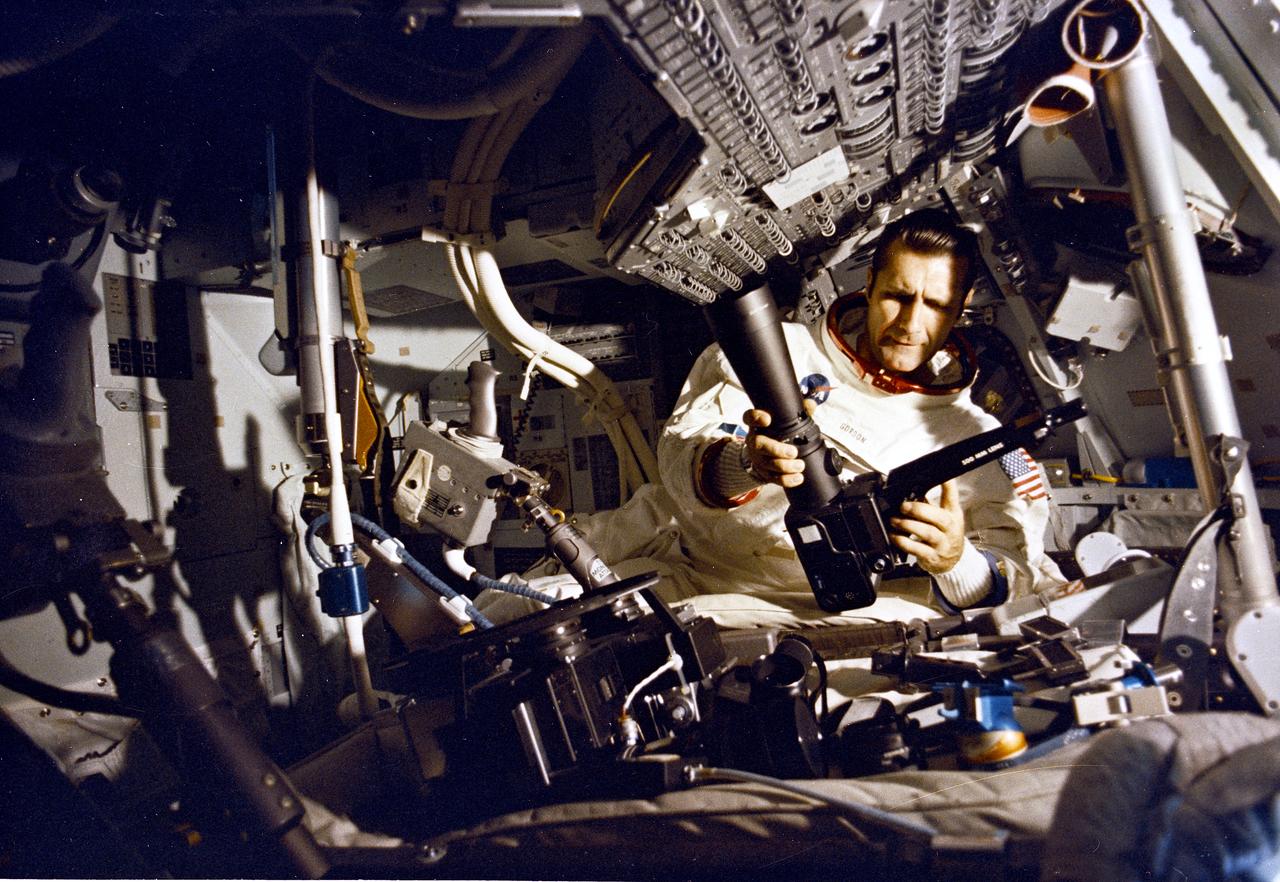
This is a view of astronaut Richard F. Gordon attaching a high resolution telephoto lens to a camera aboard the Apollo 12 Command Module (CM) Yankee Clipper. The second manned lunar landing mission, Apollo 12 launched from launch pad 39-A at Kennedy Space Center in Florida on November 14, 1969 via a Saturn V launch vehicle. The Saturn V vehicle was developed by the Marshall Space Flight Center (MSFC) under the direction of Dr. Wernher von Braun. Aboard Apollo 12 was a crew of three astronauts: Alan L. Bean, pilot of the Lunar Module (LM), Intrepid; Richard Gordon, pilot of the Command Module (CM), Yankee Clipper; and Spacecraft Commander Charles Conrad. The LM, Intrepid, landed astronauts Conrad and Bean on the lunar surface in what’s known as the Ocean of Storms. Their lunar soil activities included the deployment of the Apollo Lunar Surface Experiments Package (ALSEP), finding the unmanned Surveyor 3 that landed on the Moon on April 19, 1967, and collecting 75 pounds (34 kilograms) of rock samples. Astronaut Richard Gordon piloted the CM, Yankee Clipper, in a parking orbit around the Moon. Apollo 12 safely returned to Earth on November 24, 1969.

At its founding, the Marshall Space Flight Center (MSFC) inherited the Army’s Jupiter and Redstone test stands, but much larger facilities were needed for the giant stages of the Saturn V. From 1960 to 1964, the existing stands were remodeled and a sizable new test area was developed. The new comprehensive test complex for propulsion and structural dynamics was unique within the nation and the free world, and they remain so today because they were constructed with foresight to meet the future as well as on going needs. Construction of the S-IC Static test stand complex began in 1961 in the west test area of MSFC, and was completed in 1964. The S-IC static test stand was originally designed to develop and test the 138-ft long and 33-ft diameter Saturn V S-IC first stage, or booster stage. Modifications to the S-IC Test Stand began in 1975 to accommodate space shuttle external tank testing. This photo depicts the continuation of the modification process as of July 14, 1975. The flame deflector originally used to provide water to the 5 F-1 engines of the S-IC stage during testing has been removed.
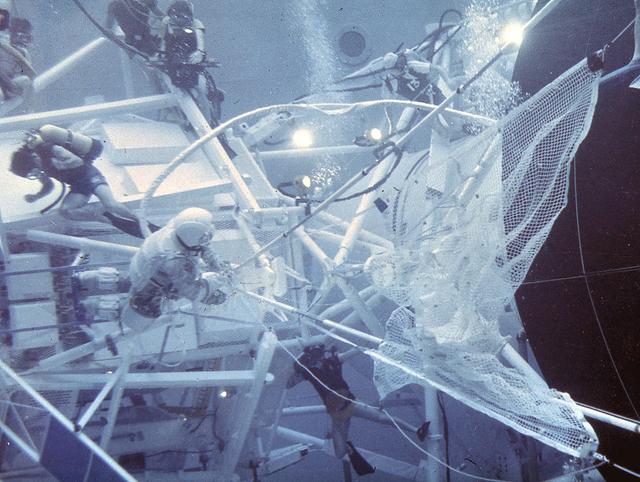
After its launch on May 14, 1973, it was immediately known that there were some major problems with Skylab. The large, delicate, meteoroid shield on the outside of the workshop was ripped off by the vibration of the launch. Its tearing off caused serious damage to the two wings of solar cells that were to supply most of the electric power to the workshop. Once in orbit, the news worsened. The loss of the big shade exposed the metal skin of the workshop to the sun. Internal temperatures soared to 126 degrees F. This heat not only threatened its habitation by astronauts, but if prolonged, would cause serious damage to instruments and film. After twice delaying the launch of the first astronaut crew, engineers worked frantically to develop solutions to these problems and salvage the Skylab. After designing a protective solar sail to cover the workshop, crews needed to practice using the specially designed tools and materials to facilitate the repair procedure. Marshall Space Flight Center's Neutral Buoyancy Simulator (NBS), was used to practice these maneuvers. Pictured here are the astronauts in the NBS deploying the protecticve solar sail. On may 25, 1973, an Apollo command and service module was launched and later docked with Skylab. The next day, astronauts Conrad and Kerwin were able to complete the needed repairs to Skylab, salvaging the entire program.
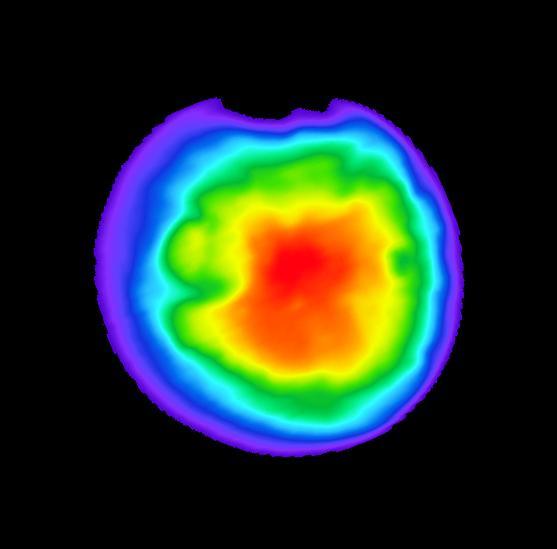
Europa Clipper, en route to the Jupiter system to investigate the icy moon Europa, swung by Mars on March 1, 2025, to use the planet's gravity to help shape the spacecraft's trajectory. The mission took the opportunity to capture infrared images of the Red Planet using the orbiter's Europa Thermal Imaging System (E-THEMIS) to calibrate the instrument. This picture is a colorized composite of several images captured by E-THEMIS from about a million miles (1.6 million kilometers) away. Warm colors represent relatively warm temperatures; red areas are about 32 degrees Fahrenheit (0 degrees Celsius), and purple regions are about minus 190 degrees F (minus 125 degrees C). The temperature variations reflect the time of day on Mars, which was noon, with the center of the globe warmest because the Sun was shining directly onto the planet, near the equator, from behind the Europa Clipper spacecraft. The instrument captured the image data in long-wave infrared wavelengths of about 7 to 14 micrometers. Europa Clipper launched from NASA's Kennedy Space Center in Florida on Oct. 14, 2024, and will arrive at the Jupiter system in 2030 to conduct about 50 flybys of Europa. The mission's main science goal is to determine whether there are places below Europa's surface that could support life. The mission's three main science objectives are to determine the thickness of the moon's icy shell and its surface interactions with the ocean below, to investigate its composition, and to characterize its geology. The mission's detailed exploration of Europa will help scientists better understand the astrobiological potential for habitable worlds beyond our planet. https://photojournal.jpl.nasa.gov/catalog/PIA26566
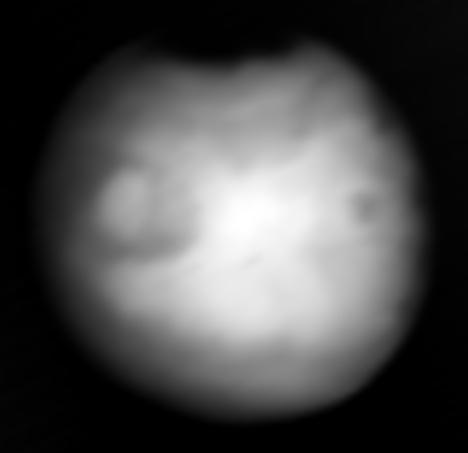
Europa Clipper, en route to the Jupiter system to investigate the icy moon Europa, swung by Mars on March 1, 2025, to use the planet's gravity to help shape the spacecraft's trajectory. The mission took the opportunity to capture to capture infrared images of the Red Planet using the orbiter's Europa Thermal Imaging System (E-THEMIS) to calibrate the instrument. This picture is a composite of several images captured by E-THEMIS, showing Mars' surface temperatures from about a million miles (1.6 million kilometers) away. Bright regions are relatively warm, with temperatures of about 32 degrees Fahrenheit (0 degrees Celsius). Darker areas are colder. The darkest region at the top is the northern polar cap and is about minus 190 F (minus 125 C). The temperature variations reflect the time of day on Mars, which was noon, with the center of the globe warmest because the Sun was shining directly onto the planet, near the equator, from behind Europa Clipper. Other variations reflect different surface features, with the fine-grained dust at the region near the equator being warm and coarser, rockier materials staying cooler. The instrument captured the images data in long-wave infrared wavelengths of about 7 to 14 micrometers. Europa Clipper launched from NASA's Kennedy Space Center in Florida on Oct. 14, 2024, and will arrive at the Jupiter system in 2030 to conduct about 50 flybys of Europa. The mission's main science goal is to determine whether there are places below Europa's surface that could support life. The mission's three main science objectives are to determine the thickness of the moon's icy shell and its surface interactions with the ocean below, to investigate its composition, and to characterize its geology. The mission's detailed exploration of Europa will help scientists better understand the astrobiological potential for habitable worlds beyond our planet. https://photojournal.jpl.nasa.gov/catalog/PIA26565
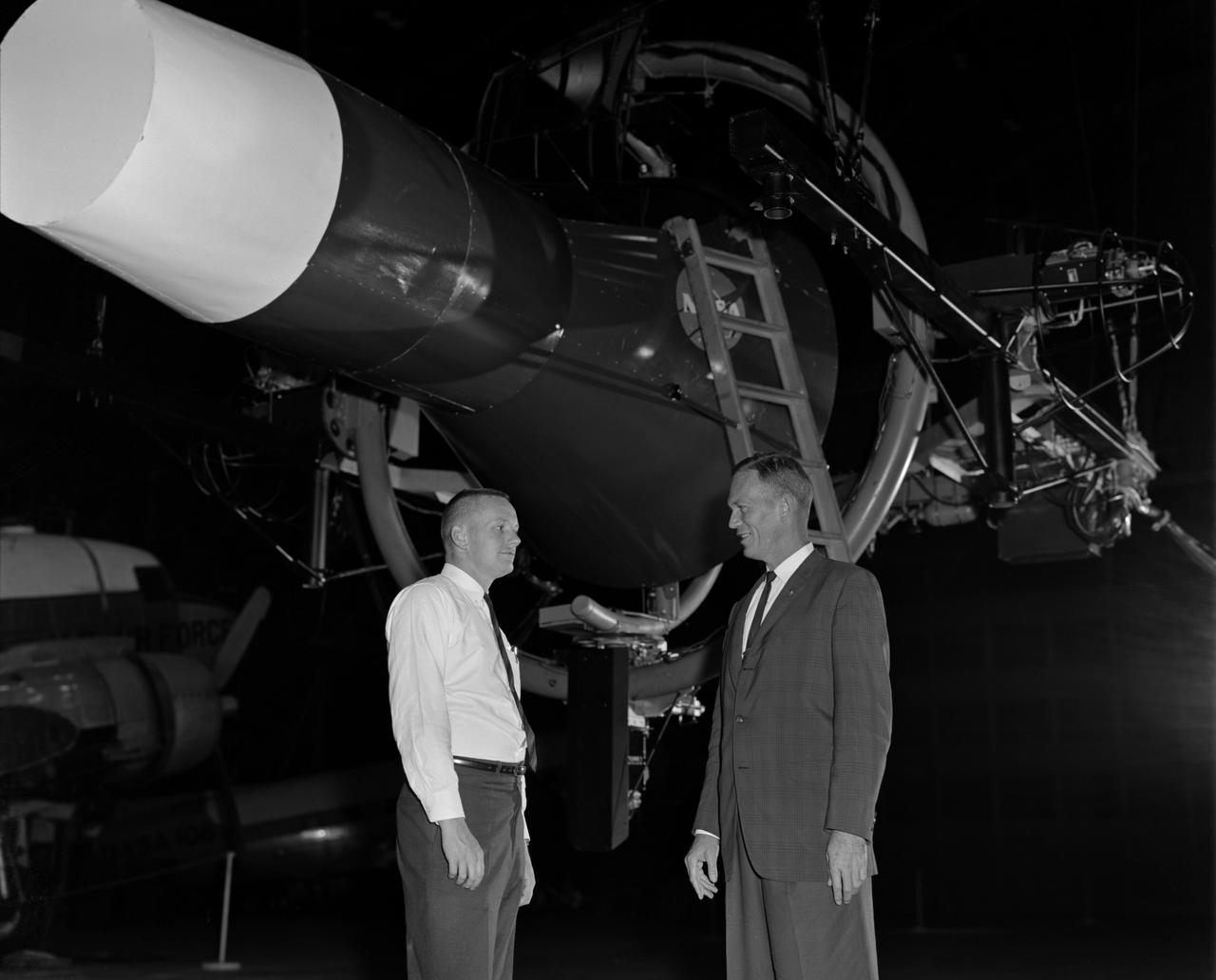
Astronaut Neil Armstrong (left) was one of 14 astronauts, 8 NASA test pilots, and 2 McDonnell test pilots who took part in simulator studies. Armstrong was the first astronaut to participate (November 6, 1963). A.W. Vogeley described the simulator in his paper "Discussion of Existing and Planned Simulators For Space Research," "Many of the astronauts have flown this simulator in support of the Gemini studies and they, without exception, appreciated the realism of the visual scene. The simulator has also been used in the development of pilot techniques to handle certain jet malfunctions in order that aborts could be avoided. In these situations large attitude changes are sometimes necessary and the false motion cues that were generated due to earth gravity were somewhat objectionable; however, the pilots were readily able to overlook these false motion cues in favor of the visual realism." Roy F. Brissenden, noted in his paper "Initial Operations with Langley's Rendezvous Docking Facility," "The basic Gemini control studies developed the necessary techniques and demonstrated the ability of human pilots to perform final space docking with the specified Gemini-Agena systems using only visual references. ... Results... showed that trained astronauts can effect the docking with direct acceleration control and even with jet malfunctions as long as good visual conditions exist.... Probably more important than data results was the early confidence that the astronauts themselves gained in their ability to perform the maneuver in the ultimate flight mission." Francis B. Smith, noted in his paper "Simulators for Manned Space Research," "Some major areas of interest in these flights were fuel requirements, docking accuracies, the development of visual aids to assist alignment of the vehicles, and investigation of alternate control techniques with partial failure modes. However, the familiarization and confidence developed by the astronaut through flying and safely docking the simulator during these tests was one of the major contributions. For example, it was found that fuel used in docking from 200 feet typically dropped from about 20 pounds to 7 pounds after an astronaut had made a few training flights." -- Published in Barton C. Hacker and James M. Grimwood, On the Shoulders of Titans: A History of Project Gemini, NASA SP-4203; A.W. Vogeley, "Discussion of Existing and Planned Simulators For Space Research," Paper presented at the Conference on the Role of Simulation in Space Technology, August 17-21, 1964; Roy F. Brissenden, "Initial Operations with Langley's Rendezvous Docking Facility," Langley Working Paper, LWP-21, 1964; Francis B. Smith, "Simulators for Manned Space Research," Paper presented at the 1966 IEEE International convention, March 21-25, 1966.

NASA image acquired August 28, 2010 Late August 2010 provided a rare satellite view of a cloudless summer day over the entire Great Lakes region. North Americans trying to sneak in a Labor Day weekend getaway on the lakes were hoping for more of the same. The Great Lakes comprise the largest collective body of fresh water on the planet, containing roughly 18 percent of Earth's supply. Only the polar ice caps contain more fresh water. The region around the Great Lakes basin is home to more than 10 percent of the population of the United States and 25 percent of the population of Canada. Many of those people have tried to escape record heat this summer by visiting the lakes. What they found, according to The Hamilton Spectator, was record-breaking water temperatures fueled by record-breaking air temperatures in the spring and summer. By mid-August, the waters of Lake Superior were 6 to 8°C (11 to 14°F) above normal. Lake Michigan set records at about 4°C (7°F) above normal. The other three Great Lakes – Huron, Erie, and Ontario -- were above normal temperatures, though no records were set. The image was gathered by the Moderate Resolution Imaging Spectroradiometer (MODIS) on NASA’s Aqua satellite at 1:30 p.m. Central Daylight Time (18:30 UTC) on August 28. Open water appears blue or nearly black. The pale blue and green swirls near the coasts are likely caused by algae or phytoplankton blooms, or by calcium carbonate (chalk) from the lake floor. The sweltering summer temperatures have produced an unprecedented bloom of toxic blue-green algae in western Lake Erie, according to the Cleveland Plain Dealer. NASA image by Jeff Schmaltz, MODIS Rapid Response Team, Goddard Space Flight Center. Caption by Mike Carlowicz. Instrument: Aqua - MODIS Click here to see more images from <b><a href="#//earthobservatory.nasa.gov/" rel="nofollow"> NASA Goddard’s Earth Observatory</a></b> <b><a href="http://www.nasa.gov/centers/goddard/home/index.html" rel="nofollow">NASA Goddard Space Flight Center</a></b> is home to the nation's largest organization of combined scientists, engineers and technologists that build spacecraft, instruments and new technology to study the Earth, the sun, our solar system, and the universe. <b>Follow us on <a href="http://twitter.com/NASA_GoddardPix" rel="nofollow">Twitter</a></b> <b>Join us on <a href="http://www.facebook.com/pages/Greenbelt-MD/NASA-Goddard/395013845897?ref=tsd" rel="nofollow">Facebook</a></b>
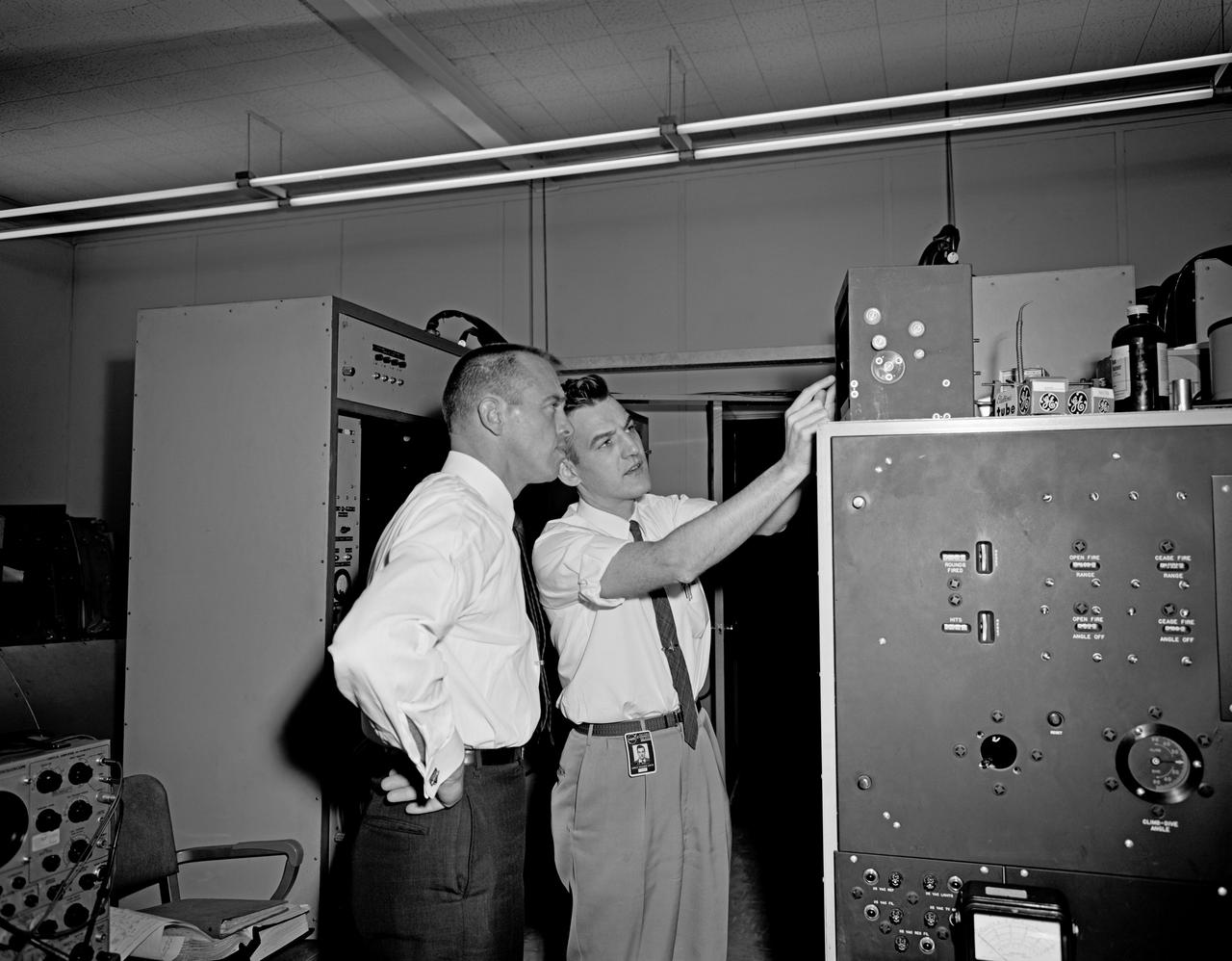
Astronaut Alan Shepard (right) was one of 14 astronauts, 8 NASA test pilots, and 2 McDonnell test pilots who took part in simulator studies. Shepard flew the simulator on November 14, 1963. A.W. Vogeley wrote: "Many of the astronauts have flown this simulator in support of the Gemini studies and they, without exception, appreciated the realism of the visual scene. The simulator has also been used in the development of pilot techniques to handle certain jet malfunctions in order that aborts could be avoided. In these situations large attitude changes are sometimes necessary and the false motion cues that were generated due to earth gravity were somewhat objectionable; however, the pilots were readily able to overlook these false motion cues in favor of the visual realism." Roy F. Brissenden noted that: "The basic Gemini control studies developed the necessary techniques and demonstrated the ability of human pilots to perform final space docking with the specified Gemini-Agena systems using only visual references. ... Results... showed that trained astronauts can effect the docking with direct acceleration control and even with jet malfunctions as long as good visual conditions exist.... Probably more important than data results was the early confidence that the astronauts themselves gained in their ability to perform the maneuver in the ultimate flight mission." Shepard commented: "I had the feeling tonight - a couple of times - that I was actually doing the space mission instead of the simulation. As I said before, I think it is a very good simulation." Shepard also commented on piloting techniques. Most astronauts arrived at this same preferred technique: Shepard: "I believe I have developed the preferred technique for these conditions and the technique appeared to me to be best was to come in slightly above the target so that I was able to use the longitudinal marks on the body of the target as a reference, particularly for a lateral translation and, of course, I used the foreshortening effect for a vertical translation, and this appeared to give me the best results. By that I mean the least number of control motions and the lowest fuel usage and the best end techniques, or the best end conditions, I should say." Engineer: "When you started to run you didn't start thrusting immediately I don't believe. It looked like you started working on your attitudes, then started closing in." Shepard: "That is correct. I did that because I felt that I wanted to get the X-axis translation in the most effective vector and for minimum fuel usage that wouldn't introduce any other lateral or vertical offsets that did not already exist." -- Published in Barton C. Hacker and James M. Grimwood, On the Shoulders of Titans: A History of Project Gemini, NASA SP-4203; A.W. Vogeley, "Discussion of Existing and Planned Simulators For Space Research," Paper presented at the Conference on the Role of Simulation in Space Technology, August 17-21, 1964; Roy F. Brissenden, "Initial Operations with Langley's Rendezvous Docking Facility," Langley Working Paper, LWP-21, 1964.
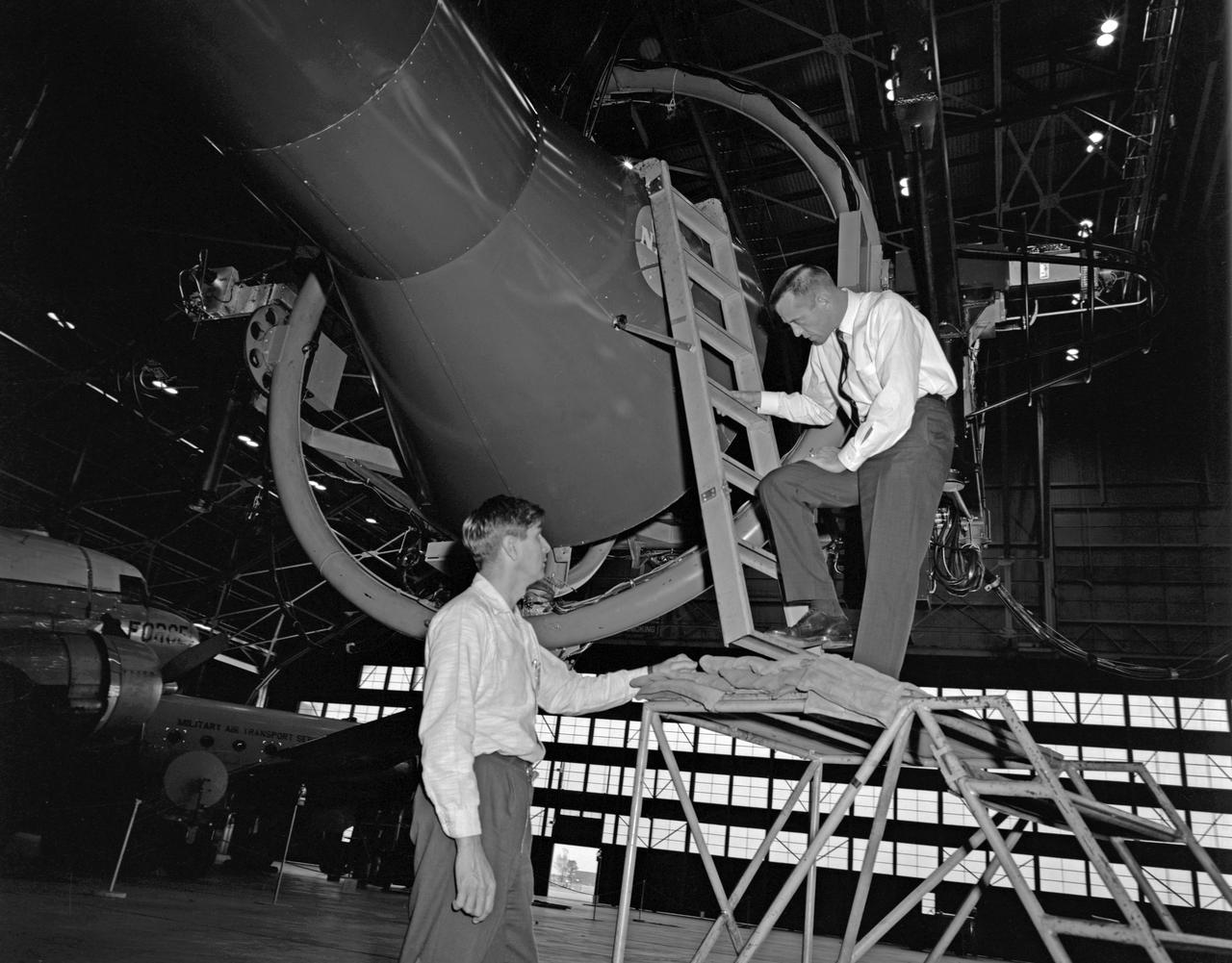
Astronaut Alan Shepard (right) was one of 14 astronauts, 8 NASA test pilots, and 2 McDonnell test pilots who took part in simulator studies. Shepard flew the simulator on November 14, 1963. A.W. Vogeley wrote: "Many of the astronauts have flown this simulator in support of the Gemini studies and they, without exception, appreciated the realism of the visual scene. The simulator has also been used in the development of pilot techniques to handle certain jet malfunctions in order that aborts could be avoided. In these situations large attitude changes are sometimes necessary and the false motion cues that were generated due to earth gravity were somewhat objectionable; however, the pilots were readily able to overlook these false motion cues in favor of the visual realism." Roy F. Brissenden noted that: "The basic Gemini control studies developed the necessary techniques and demonstrated the ability of human pilots to perform final space docking with the specified Gemini-Agena systems using only visual references. ... Results... showed that trained astronauts can effect the docking with direct acceleration control and even with jet malfunctions as long as good visual conditions exist.... Probably more important than data results was the early confidence that the astronauts themselves gained in their ability to perform the maneuver in the ultimate flight mission." Shepard commented: "I had the feeling tonight - a couple of times - that I was actually doing the space mission instead of the simulation. As I said before, I think it is a very good simulation." Shepard also commented on piloting techniques. Most astronauts arrived at this same preferred technique: Shepard: "I believe I have developed the preferred technique for these conditions and the technique appeared to me to be best was to come in slightly above the target so that I was able to use the longitudinal marks on the body of the target as a reference, particularly for a lateral translation and, of course, I used the foreshortening effect for a vertical translation, and this appeared to give me the best results. By that I mean the least number of control motions and the lowest fuel usage and the best end techniques, or the best end conditions, I should say." Engineer: "When you started to run you didn't start thrusting immediately I don't believe. It looked like you started working on your attitudes, then started closing in." Shepard: "That is correct. I did that because I felt that I wanted to get the X-axis translation in the most effective vector and for minimum fuel usage that wouldn't introduce any other lateral or vertical offsets that did not already exist." -- Published in Barton C. Hacker and James M. Grimwood, On the Shoulders of Titans: A History of Project Gemini, NASA SP-4203; A.W. Vogeley, "Discussion of Existing and Planned Simulators For Space Research," Paper presented at the Conference on the Role of Simulation in Space Technology, August 17-21, 1964; Roy F. Brissenden, "Initial Operations with Langley's Rendezvous Docking Facility," Langley Working Paper, LWP-21, 1964.