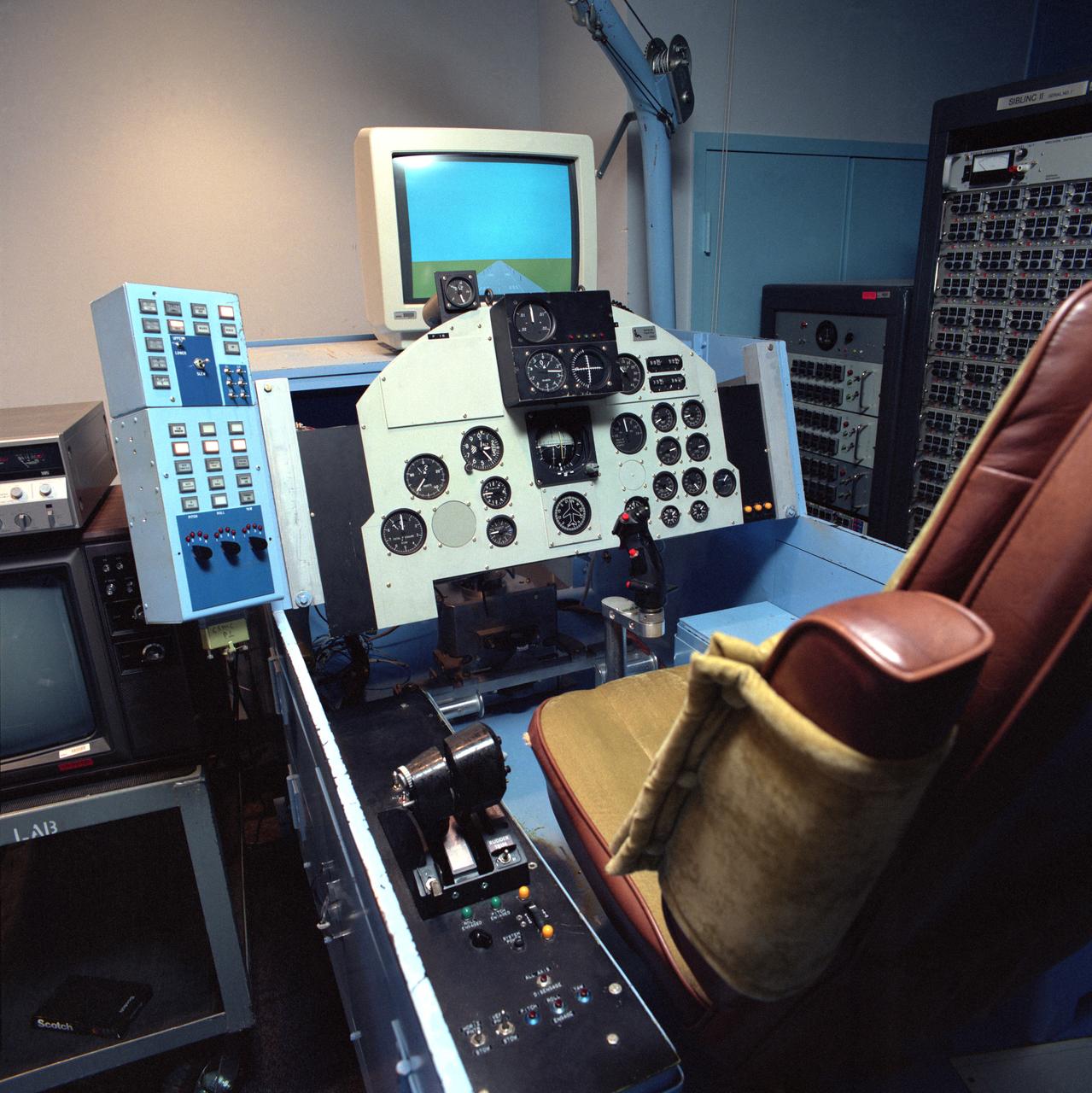
F-15 Propulsion Controlled Aircraft (PCA) simulation cockpit
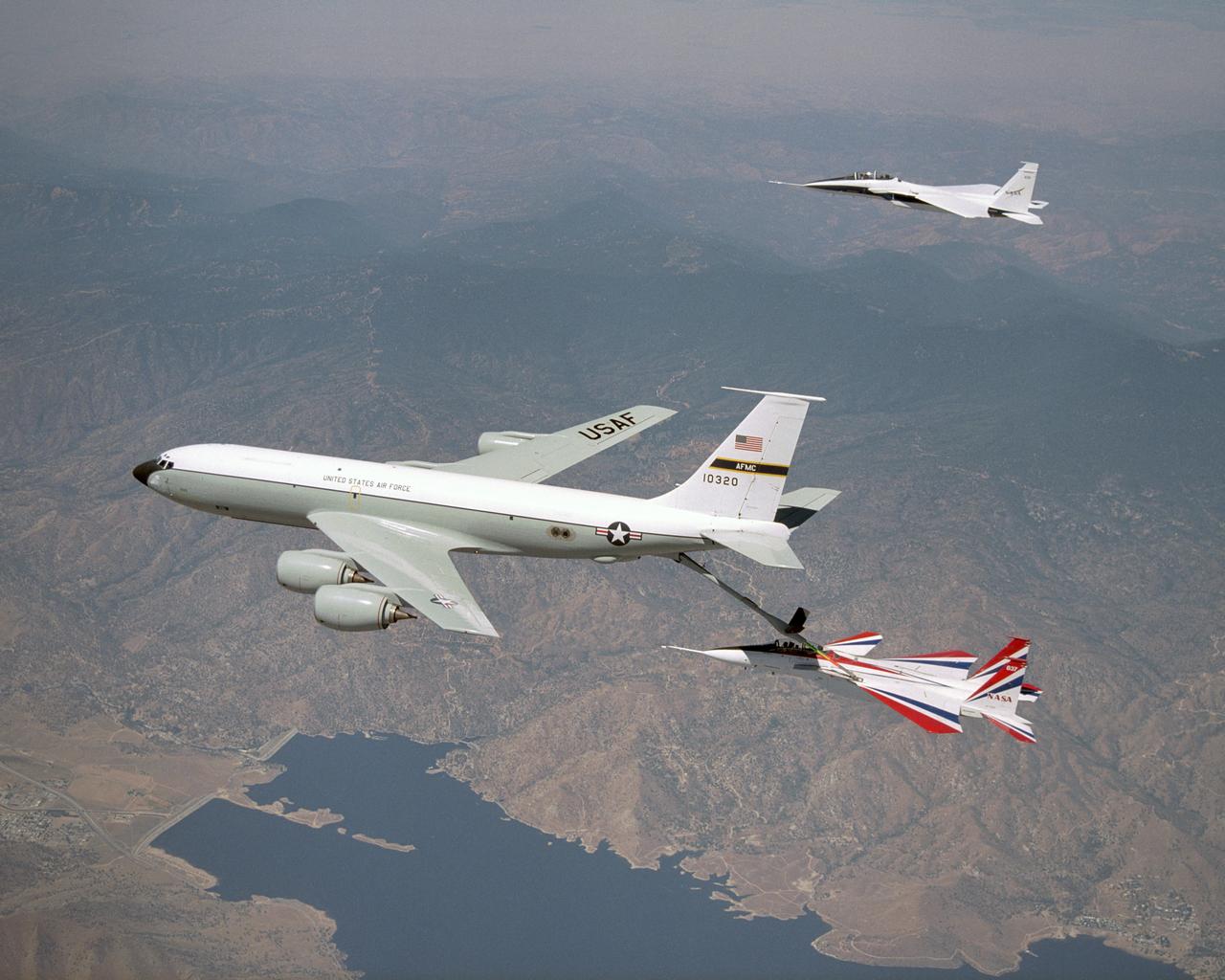
One of NASA's two F-15 research aircraft gets refueled in mid-air over Lake Isabella from a USAF KC-135 tanker while NASA's other F-15 flies chase alongside.

A F-15 aircraft owned by NASA’s Armstrong Flight Research Center in Edwards, California, flies above a mountain range on Tuesday, April 21, 2026. The agency’s Crossflow Attenuated Natural Laminar Flow (CATNLF) test article is attached to the bottom of this F-15. This project aims to lower fuel costs for future commercial aircraft by testing a scale-model wing designed to improve laminar flow.
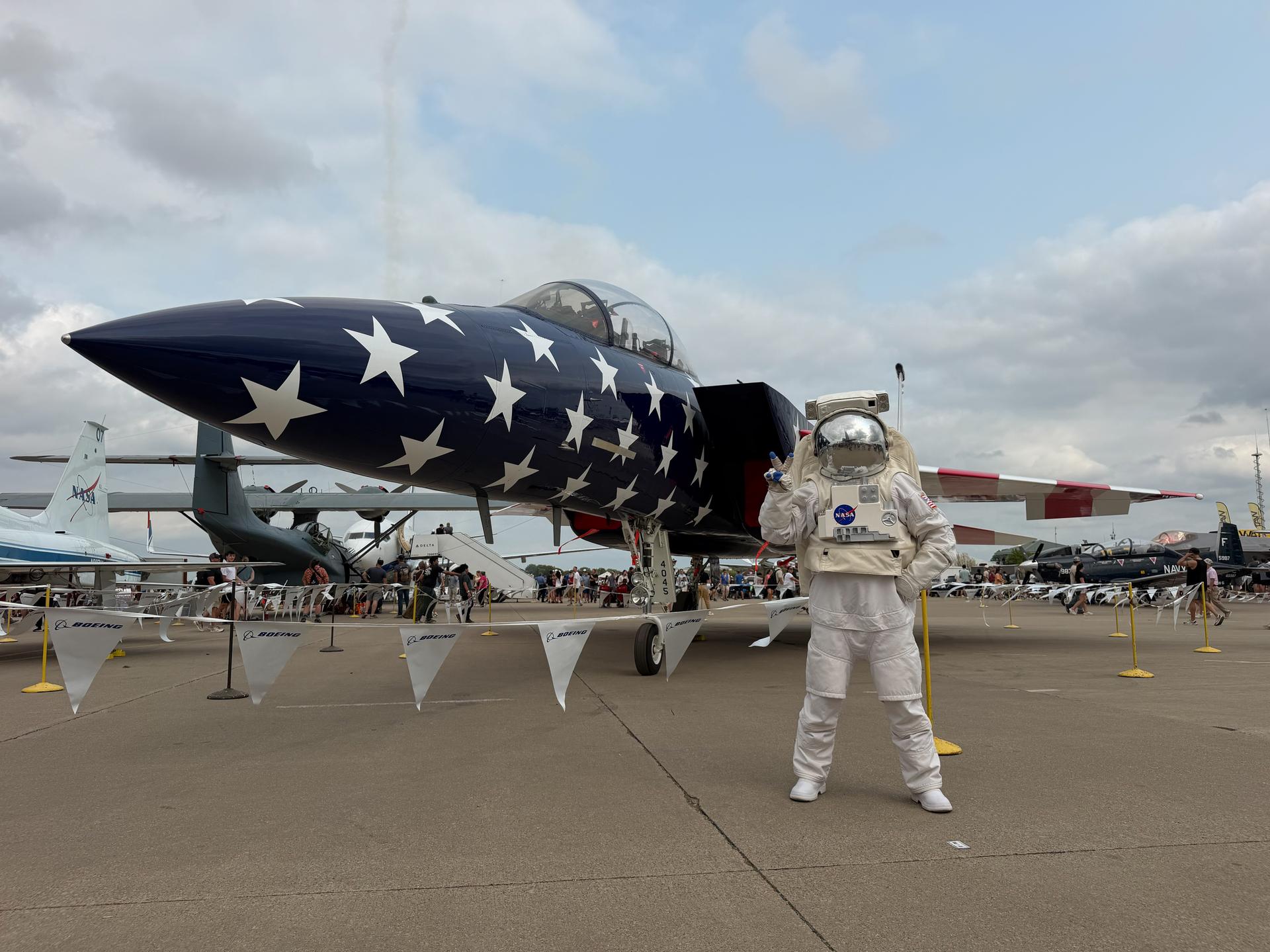
NASA’s Spacey Casey poses in front of NASA’s F-15 painted with new red, white, and blue livery to celebrate America’s 250th birthday at the Boeing Plaza at the 2026 Experimental Aircraft Association (EAA) AirVenture air show in Oshkosh, Wisconsin, on Saturday, July 26, 2026.
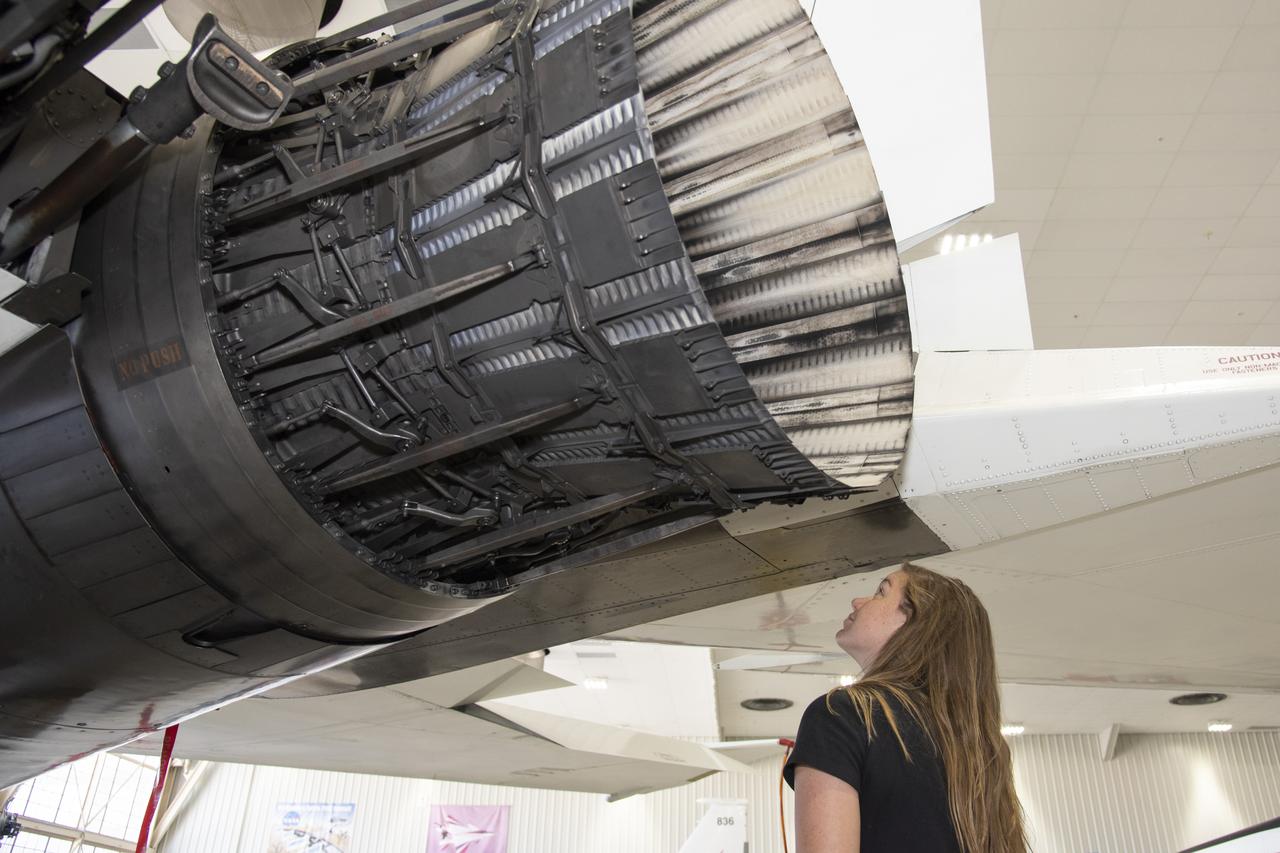
NASA’s 2017 astronaut candidates toured aircraft hangar at Armstrong Flight Research Center, in Southern California where Jenni Sidey-Gibbons looks inside engine nozzle of F-15 jet. The F-15 will fly in tandem with the X-59 QueSST during early flight test stages for the X-59 development.
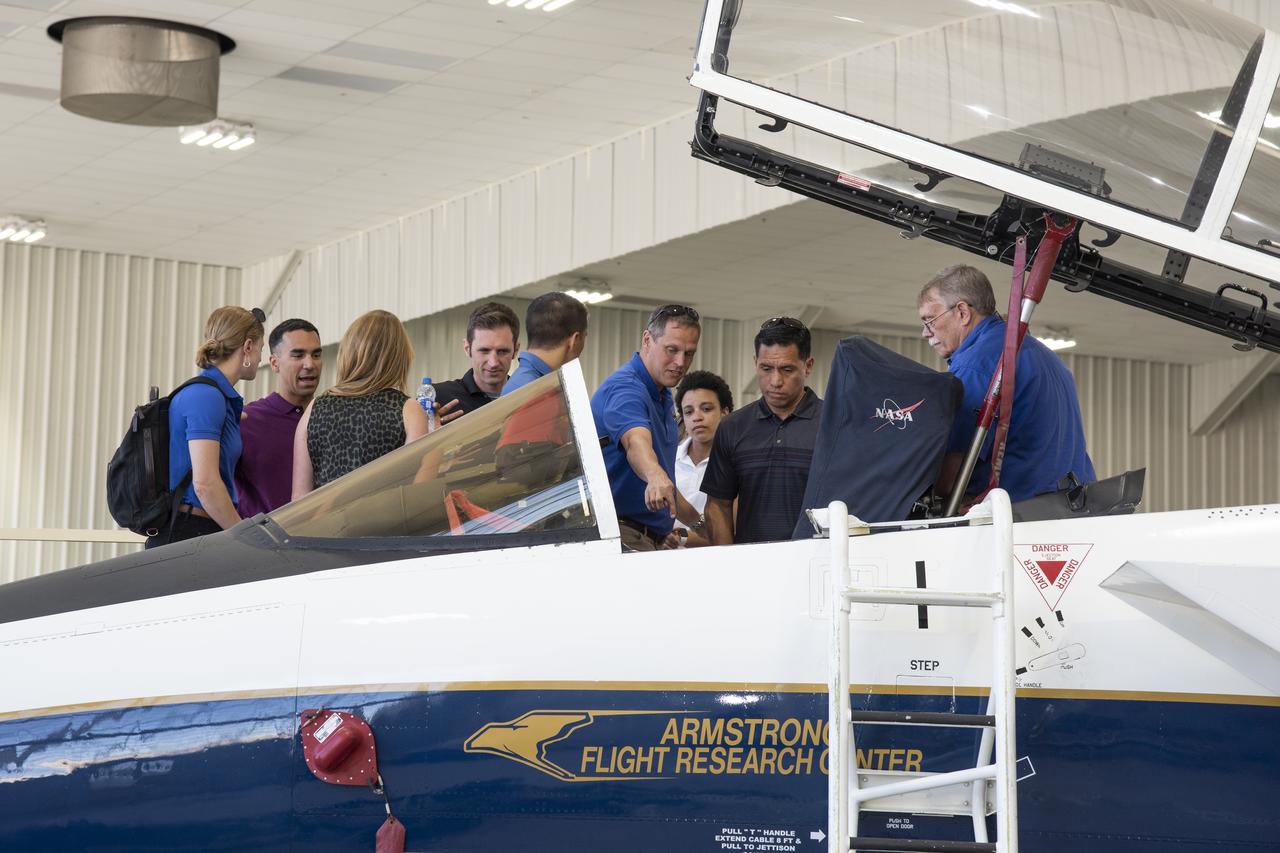
NASA’s 2017 astronaut candidates toured aircraft hangar at Armstrong Flight Research Center, in Southern California where they checked out a F-15 cockpit. The center is using its fleet of supersonic research support aircraft for sonic boom research, including the F-15, which will fly in tandem with the X-59 QueSST during early flight test stages, and the F-18, which is conducting supersonic research in support of the overall mission.
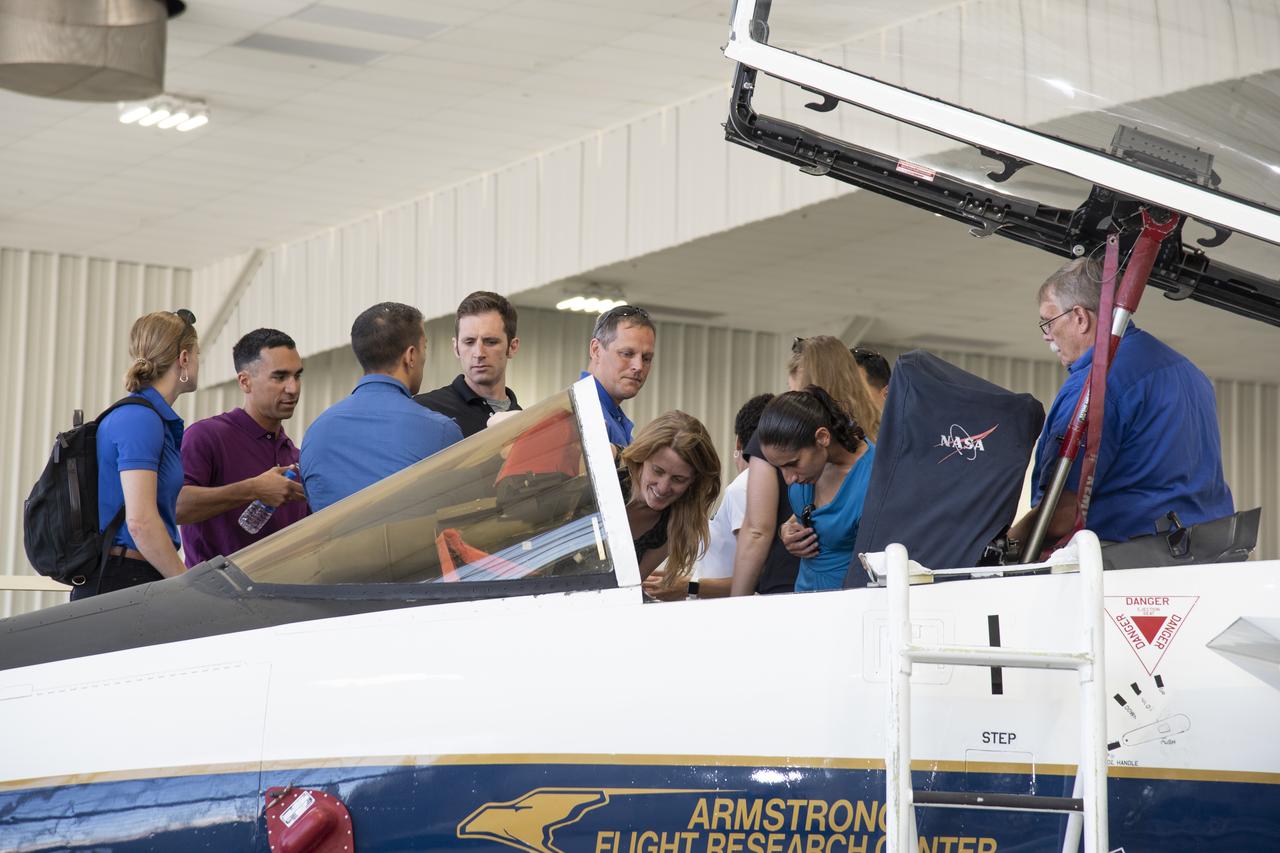
NASA's 2017 astronaut candidates toured aircraft hangar at Armstrong Flight Research Center, in Southern California where they checked out a F-15 cockpit. The center is using its fleet of supersonic research support aircraft for sonic boom research, including the F-15, which will fly in tandem with the X-59 QueSST during early flight test stages, and the F-18, which is conducting supersonic research in support of the overall mission.
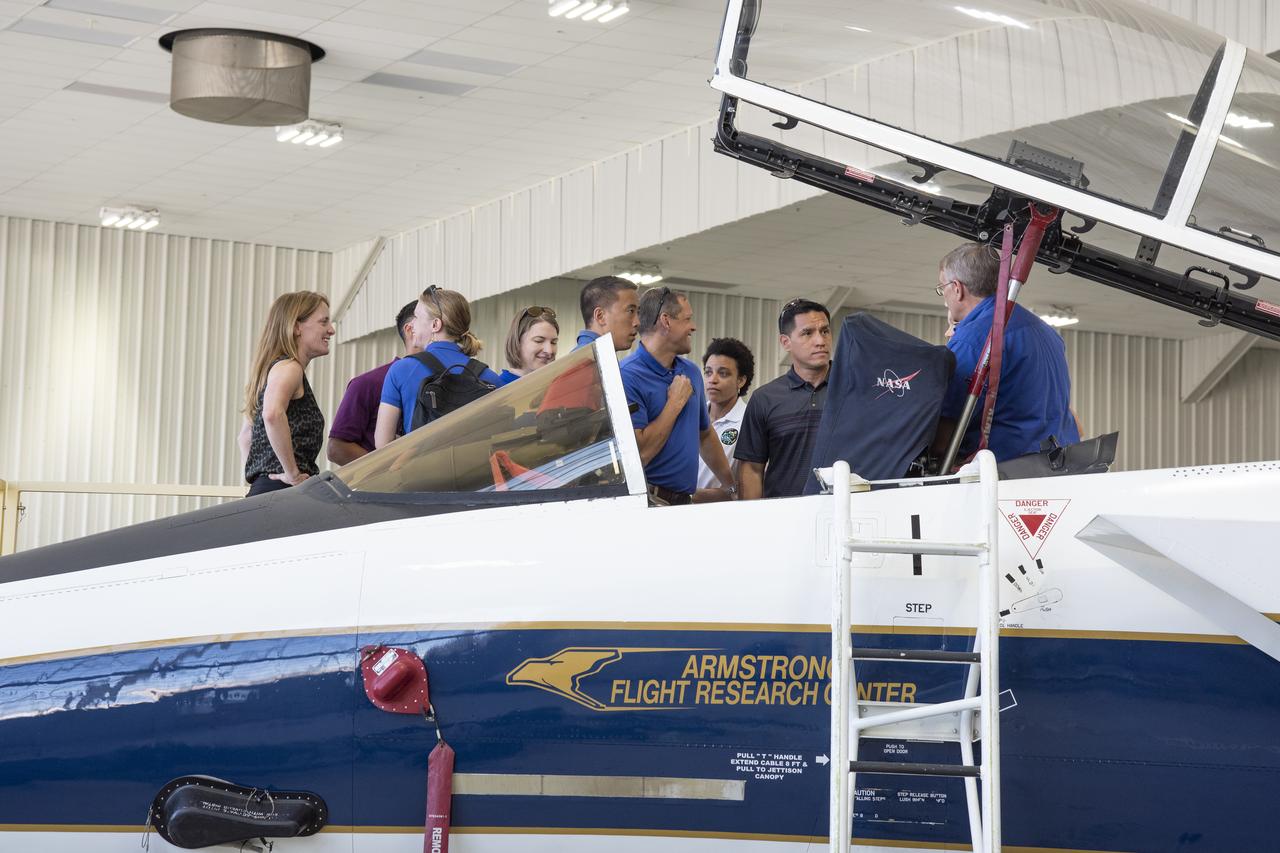
NASA's 2017 astronaut candidates toured aircraft hangar at Armstrong Flight Research Center, in Southern California where they checked out a F-15 cockpit. The center is using its fleet of supersonic research support aircraft for sonic boom research, including the F-15, which will fly in tandem with the X-59 QueSST during early flight test stages, and the F-18, which is conducting supersonic research in support of the overall mission.
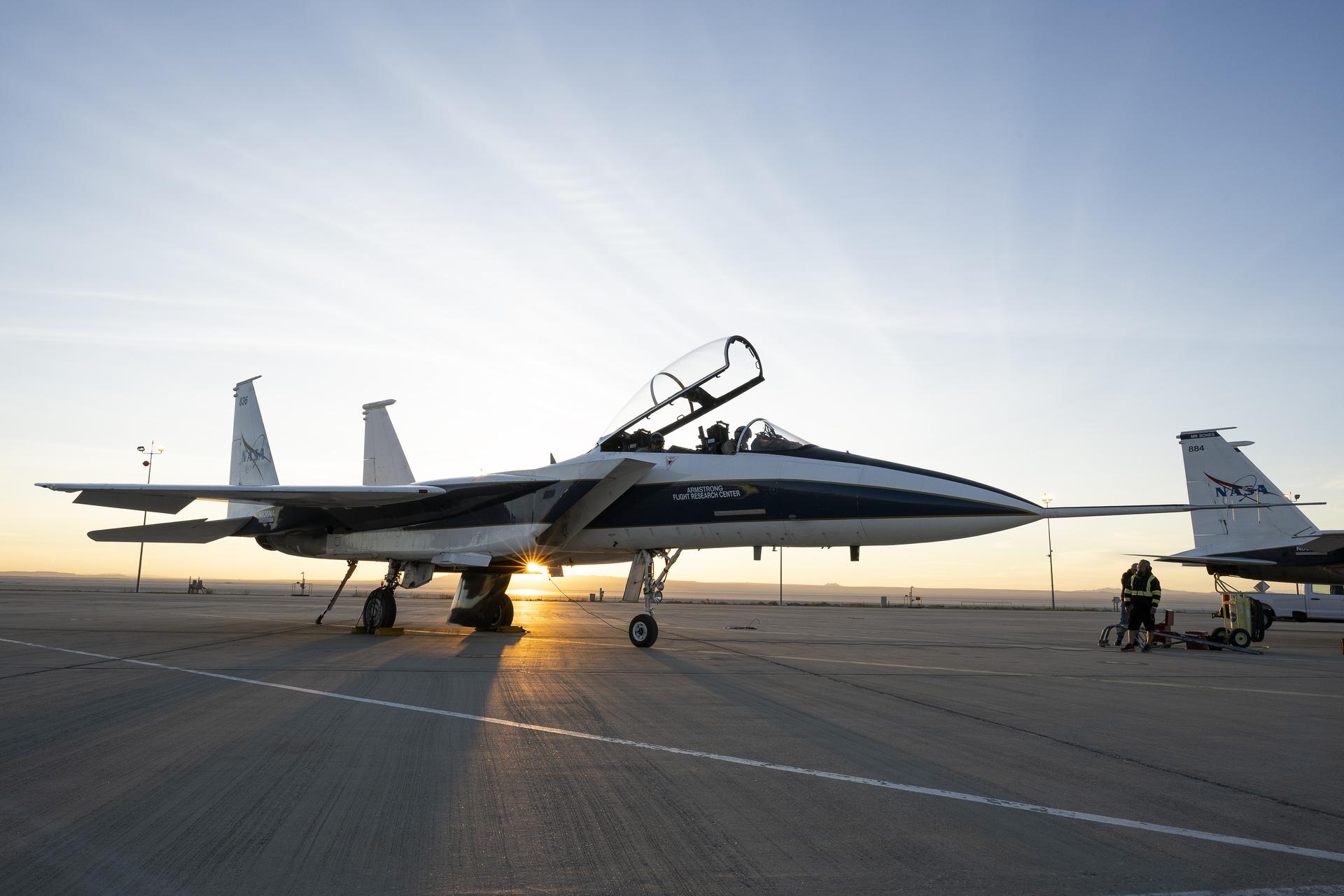
An F-15 research aircraft sits on the ramp at NASA’s Armstrong Flight Research Center in Edwards, California, on Tuesday, March 17, 2026. NASA pilots Jim Less, front seat, and Carrie Worth prepare for the flight. The agency’s Crossflow Attenuated Natural Laminar Flow (CATNLF) test article is attached to the bottom of the F-15. The project aims to lower fuel costs for future commercial aircraft by testing a scale-model wing designed to improve laminar flow.

An F-15 aircraft flies above the world’s largest compass rose above NASA’s Armstrong Flight Research Center in Edwards, California, on Monday, April 20, 2026. NASA’s Crossflow Attenuated Natural Laminar Flow (CATNLF) test article is attached to the bottom of the F-15. The project aims to lower fuel costs for future commercial aircraft by testing a scale-model wing designed to improve laminar flow.
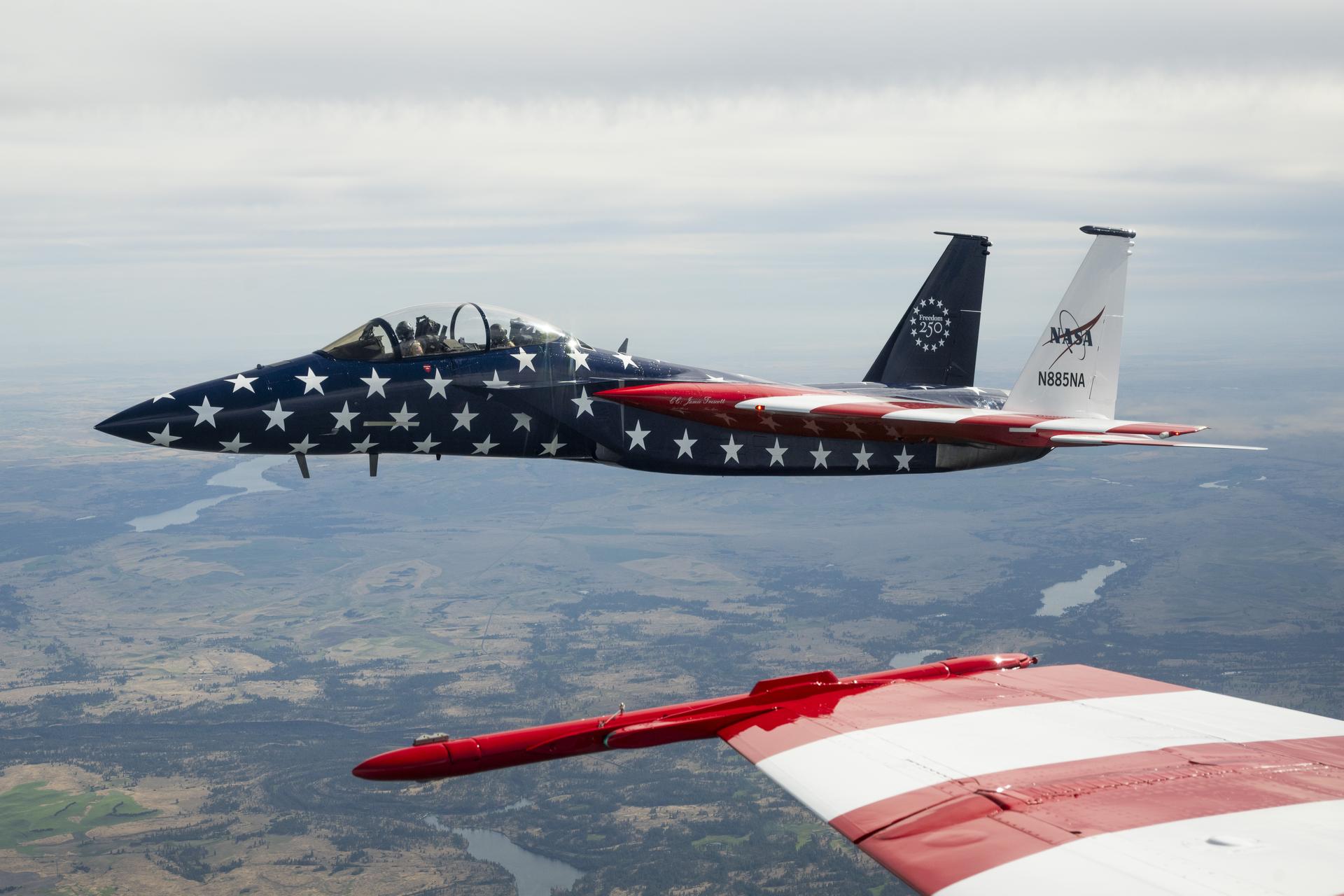
A NASA F‑15 aircraft is shown flying next to a NASA F/A‑18 during a cross‑country flight from Spokane, Washington, to Washington, D.C., on Thursday, July 2, 2026. The full F‑15 is visible, along with a partial view of the F/A‑18’s wing, as both aircraft display new red, white, and blue paint to celebrate America’s 250th birthday. The aircraft, from NASA’s Armstrong Flight Research Center in Edwards, California, participated in the Freedom 250 flyover with other NASA and military aircraft on Saturday, July 4, 2026. NASA/Jim Ross
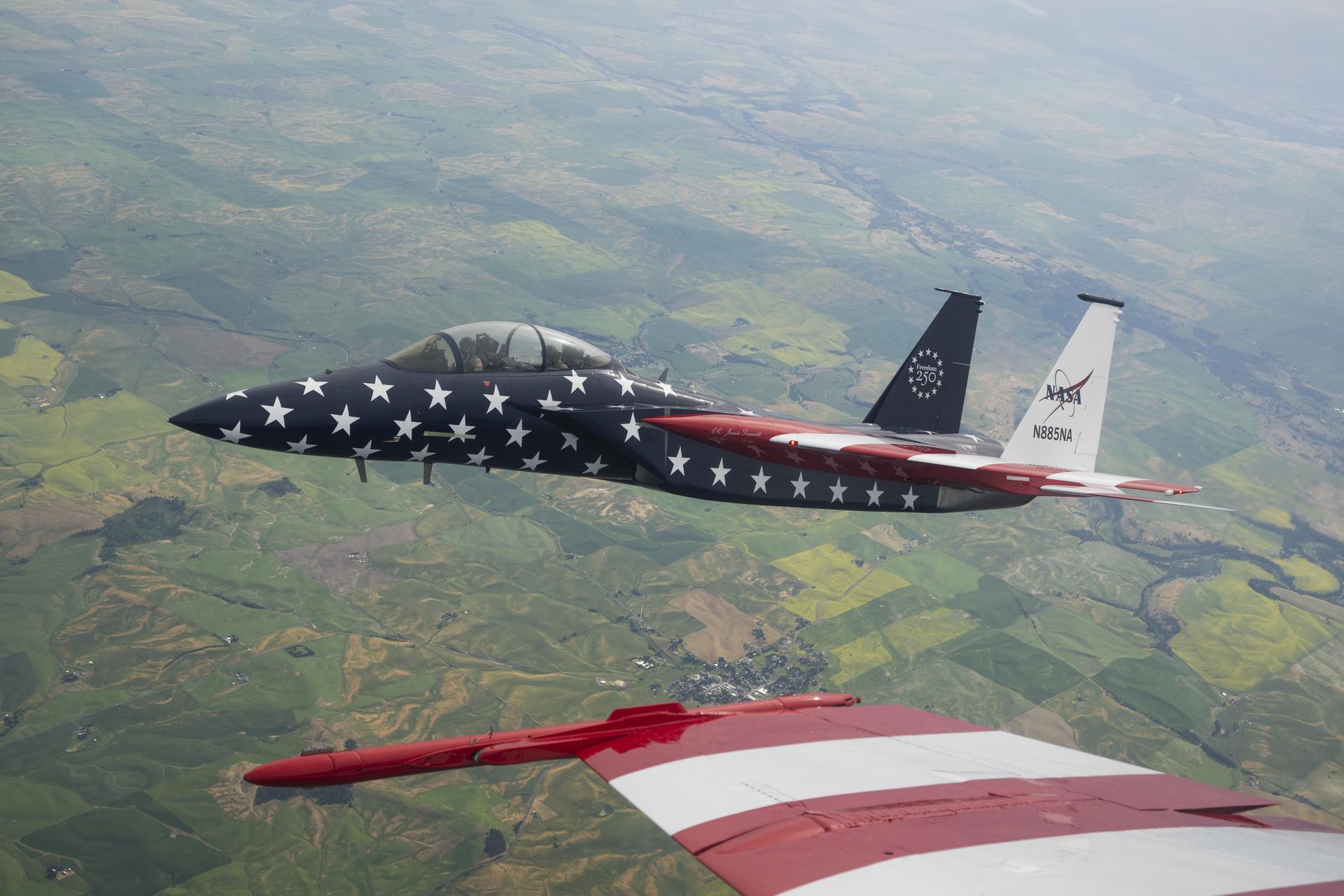
A NASA F‑15 aircraft is shown flying next to a NASA F/A‑18 during a cross‑country flight from Spokane, Washington, to Washington, D.C., on Thursday, July 2, 2026. The full F‑15 is visible, along with a partial view of the F/A‑18’s wing, as both aircraft display new red, white, and blue paint to celebrate America’s 250th birthday. The aircraft, from NASA’s Armstrong Flight Research Center in Edwards, California, participated in the Freedom 250 flyover with other NASA and military aircraft on Saturday, July 4, 2026. NASA/Jim Ross
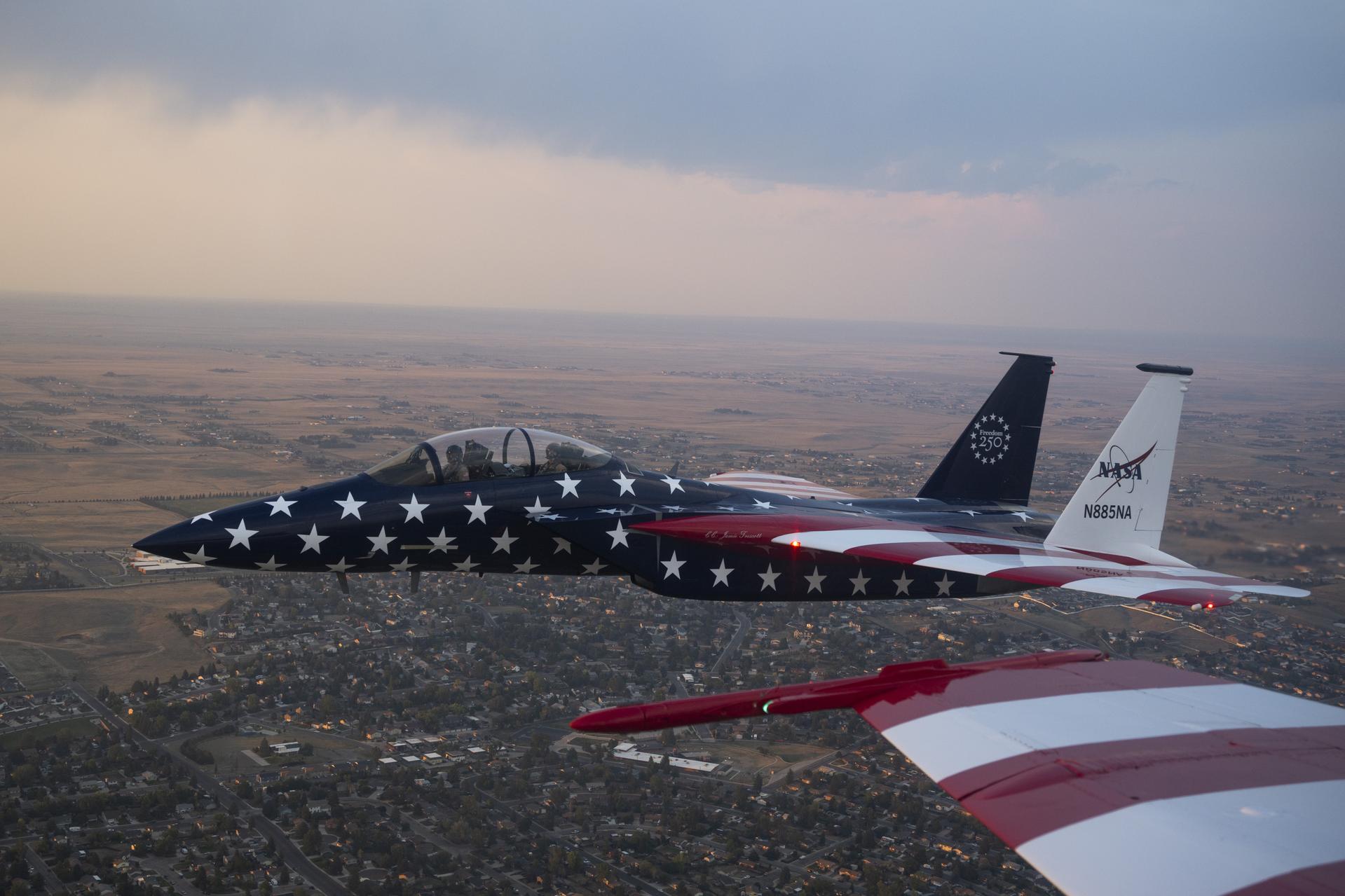
A NASA F‑15 aircraft is shown flying next to a NASA F/A‑18 during a cross‑country flight from Spokane, Washington, to Washington, D.C., on Thursday, July 2, 2026. The full F‑15 is visible, along with a partial view of the F/A‑18’s wing, as both aircraft display new red, white, and blue paint to celebrate America’s 250th birthday. The aircraft, from NASA’s Armstrong Flight Research Center in Edwards, California, participated in the Freedom 250 flyover with other NASA and military aircraft on Saturday, July 4, 2026. NASA/Jim Ross
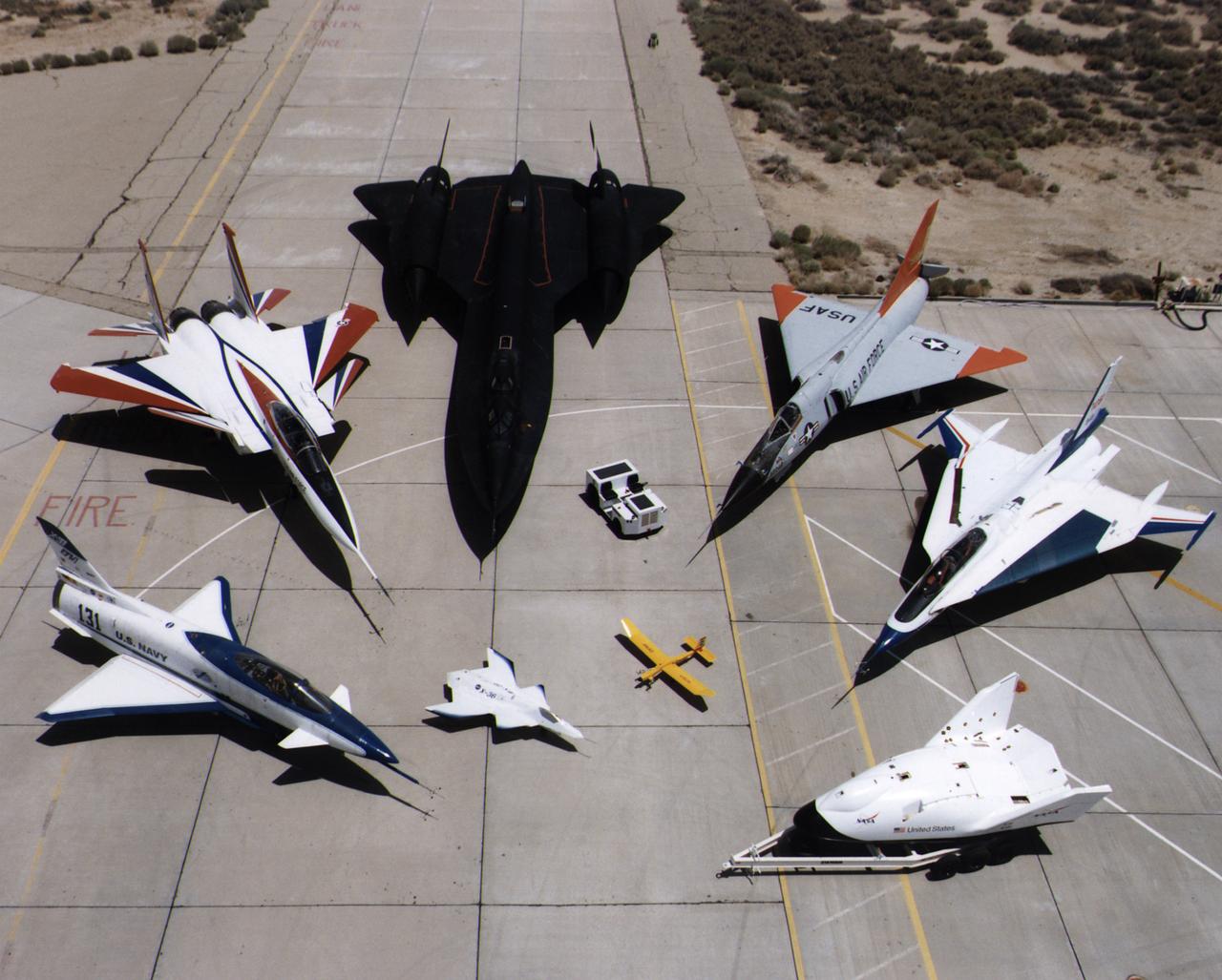
A collection of NASA's research aircraft on the ramp at the Dryden Flight Research Center in July 1997: X-31, F-15 ACTIVE, SR-71, F-106, F-16XL Ship #2, X-38, Radio Controlled Mothership and X-36.
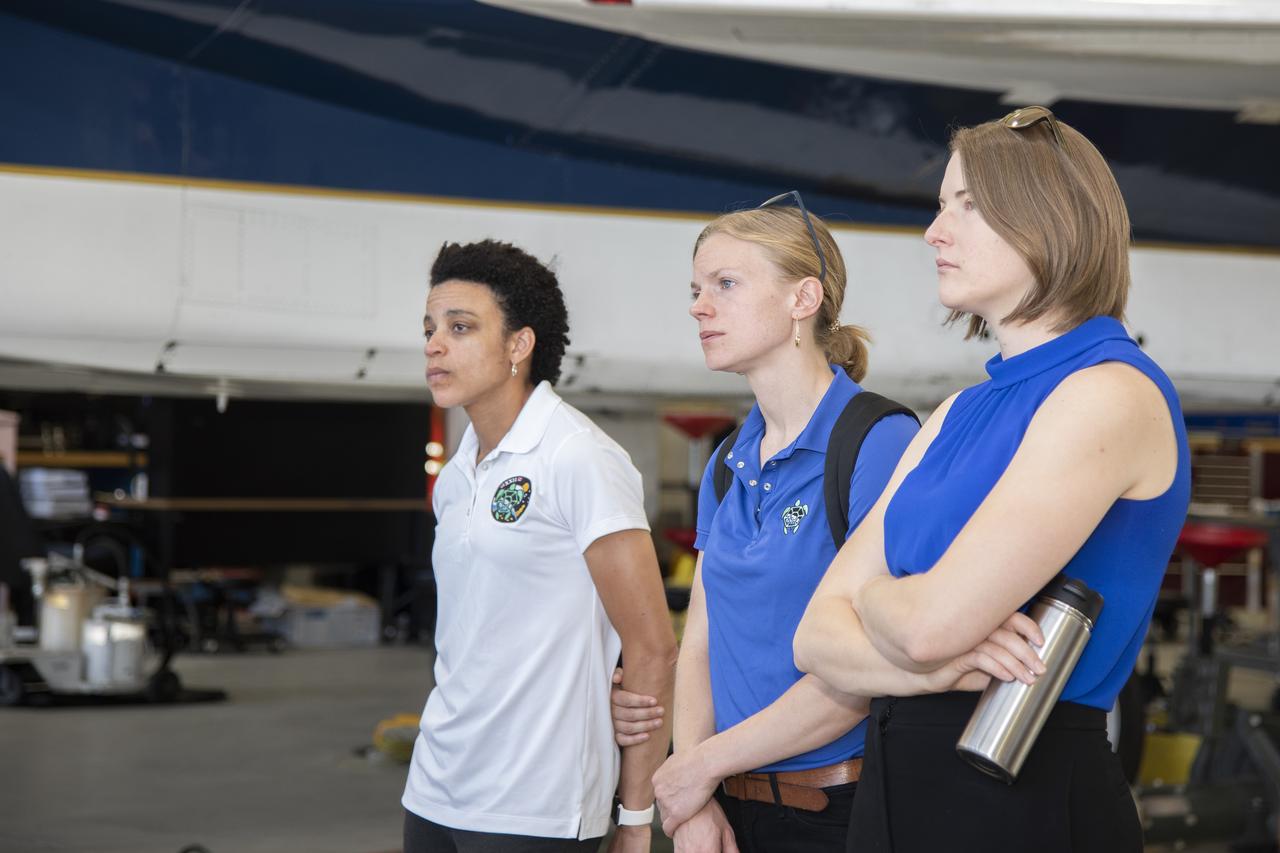
NASA’s 2017 astronaut candidates (L to R) Jessica Watkins, Zena Cardman, Kayla Barron toured aircraft hangar at Armstrong Flight Research Center, in Southern California where they were briefed on the use of Armstrong's F-15 and F-18 aircraft for studying sonic booms. The aircraft will be used during the development of the low-boom X-59 aircraft that is planned to fly supersonically over land, which is not allowed at this time because of the loud noise created when flying beyond the speed of sound.
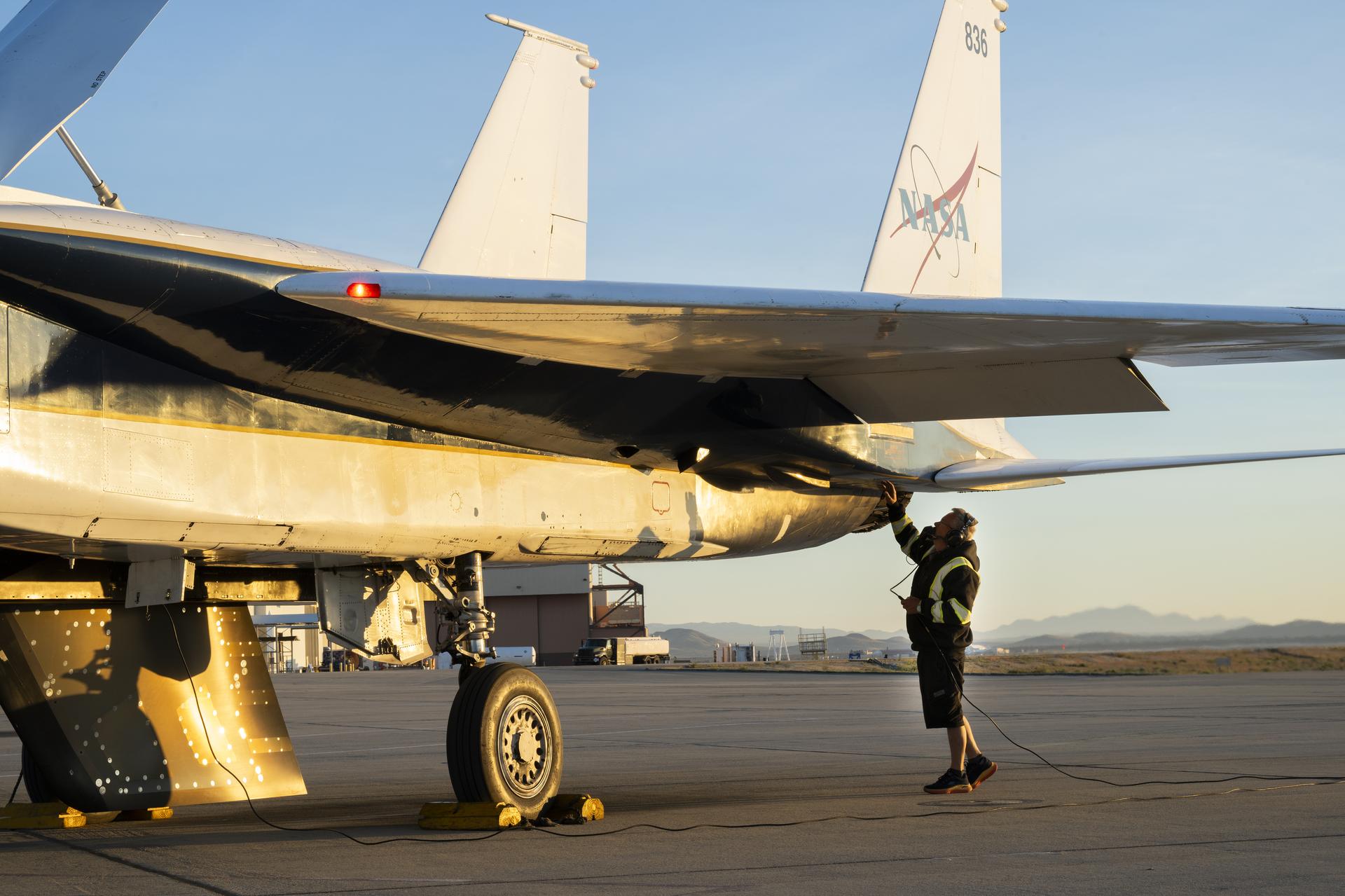
NASA crew chief Walt Kondracki checks an F-15 aircraft Tuesday, March 17, 2026, at NASA’s Armstrong Flight Research Center in Edwards, California. Ground crews, made of various roles, maintain the aircraft to be ready for each mission.
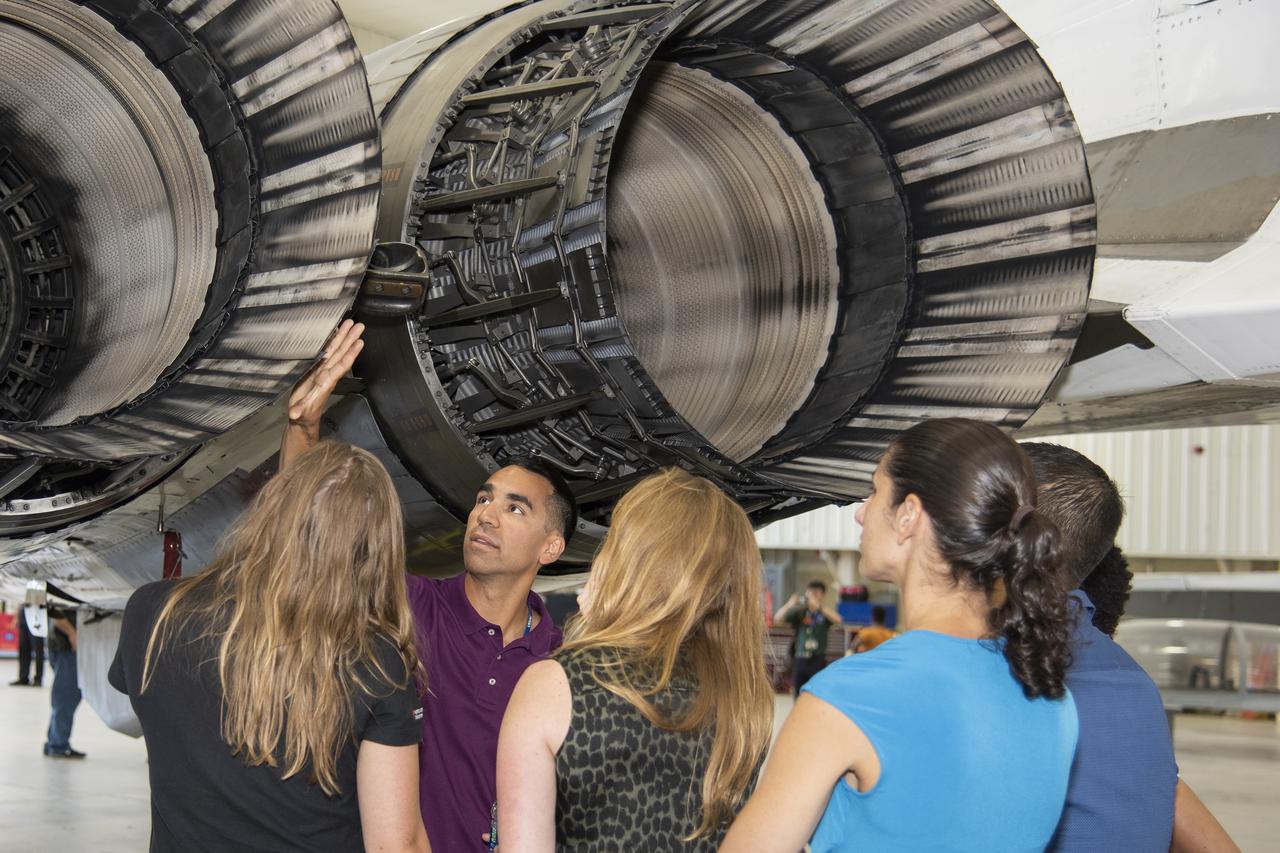
NASA's 2017 astronaut candidates toured aircraft hangar at Armstrong Flight Research Center, in Southern California (L to R) Jenni Sidey-Gibbons, Raja Chari, Loral O'Hara, Jasmin Moghbeli, Jonny Kim and Jessica Watkins look inside the engine nozzle of an F-15 jet. The F-15 will fly in tandem with the X-59 QueSST during early flight test stages for the X-59 development.
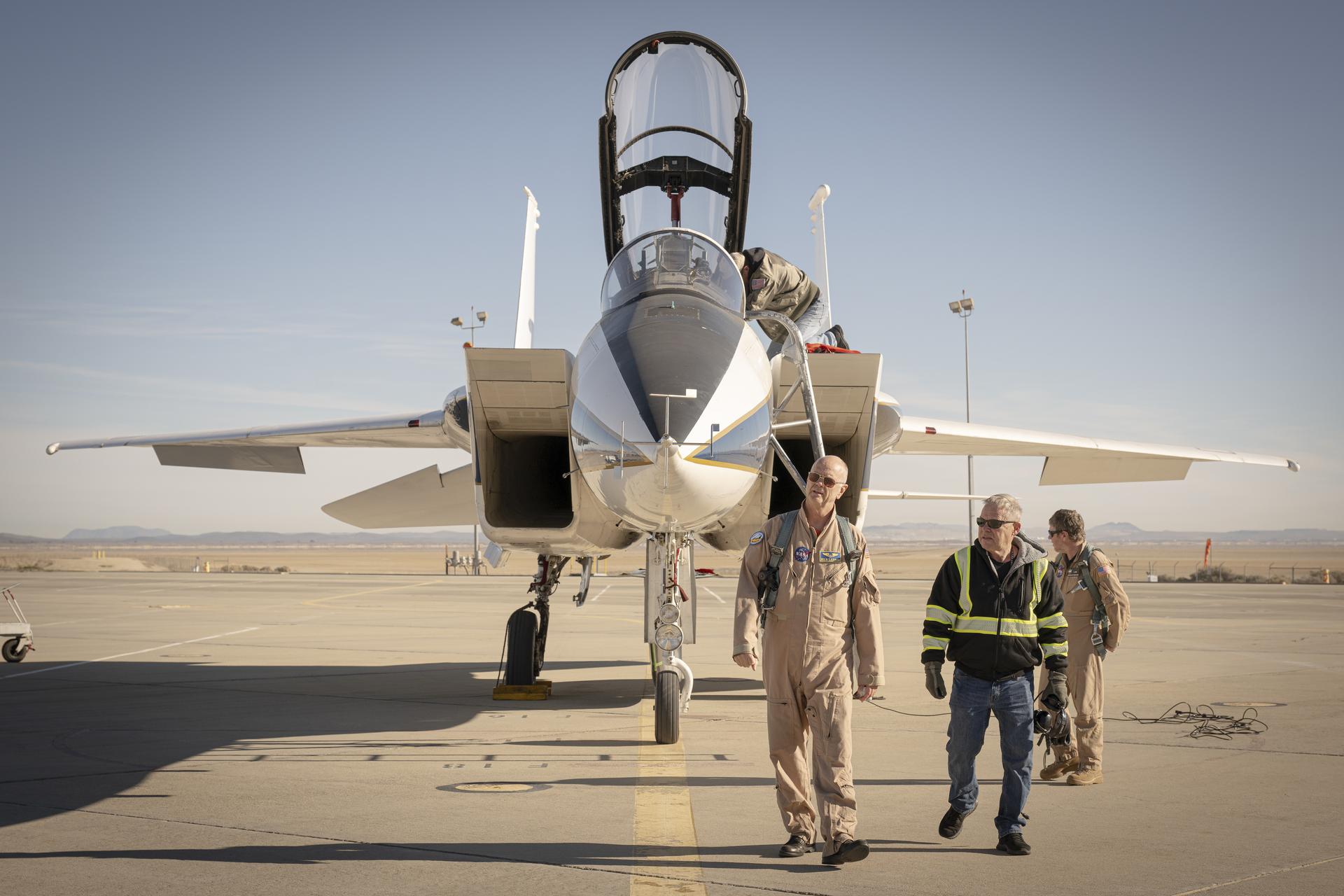
NASA pilot Nils Larson, left, walks next to crew chief Walt Kondracki, right, by an F-15 aircraft Tuesday, Jan. 13, 2026, at NASA’s Armstrong Flight Research Center in Edwards, California. In the background, NASA mechanic Tim Logan secures the cockpit inside of the F-15, and flight test engineer A.J. Jaffe stands to the right.
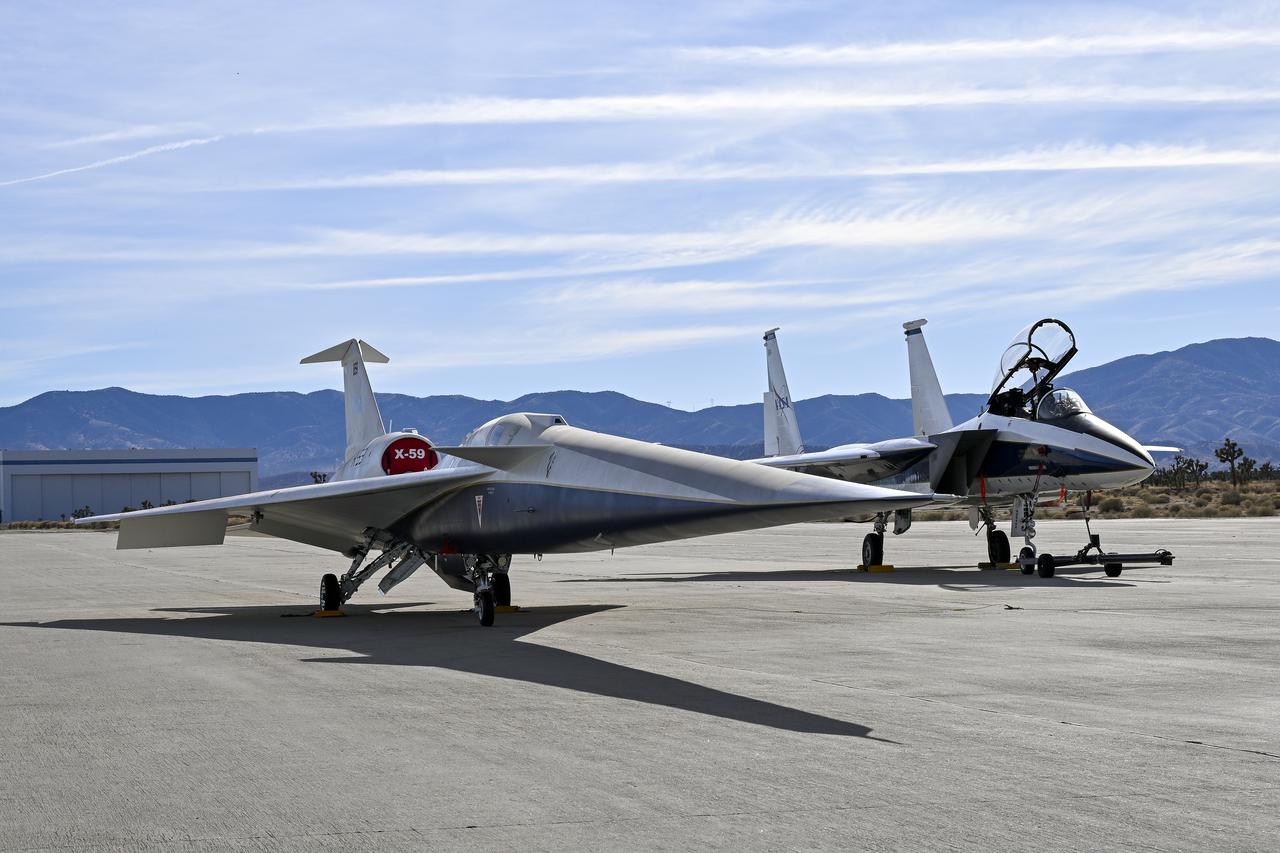
A NASA F-15 aircraft sits 20 feet off the left side of the X-59 aircraft, with a white hangar and hills in the background, during electromagnetic interference testing.
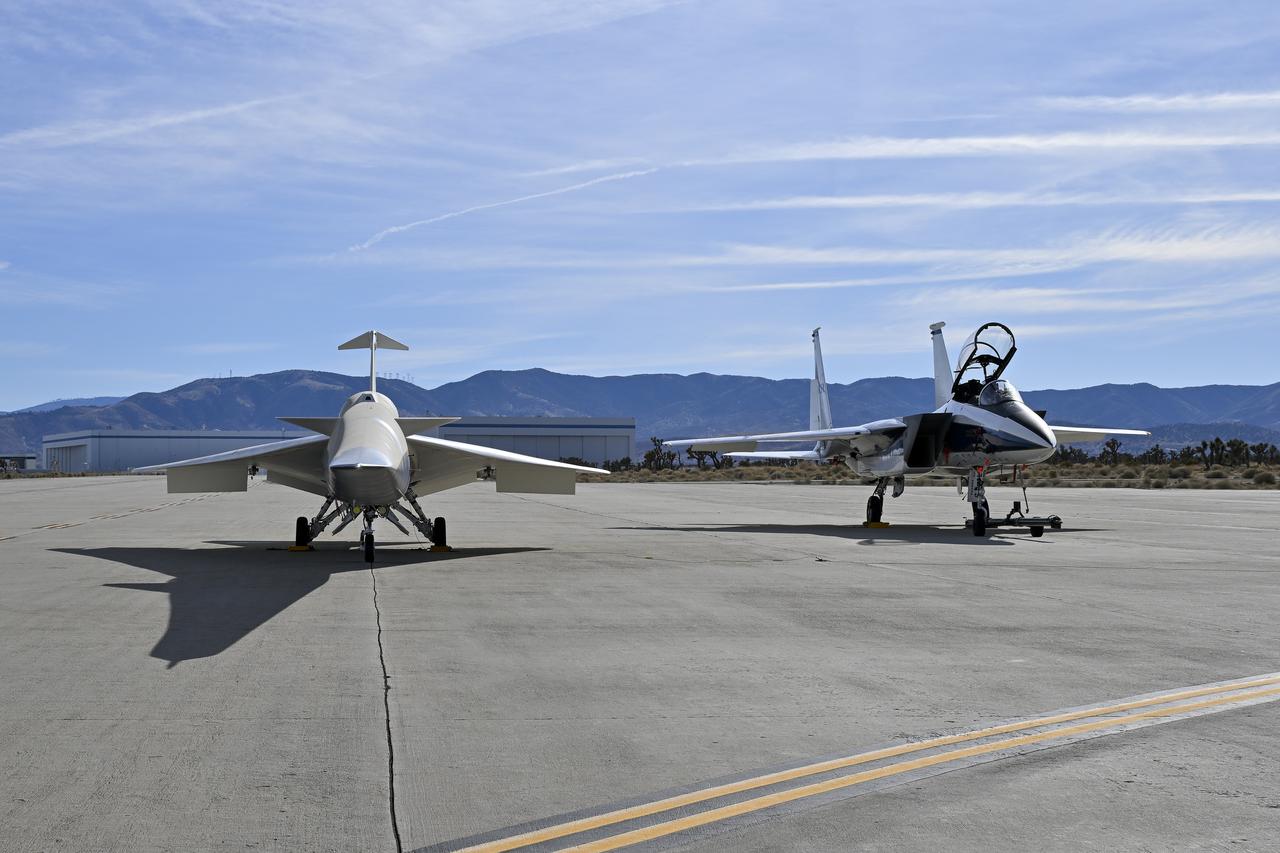
A NASA F-15 aircraft sits 20 feet off the left side of the X-59 aircraft, with a white hangar and hills in the background, during electromagnetic interference testing.
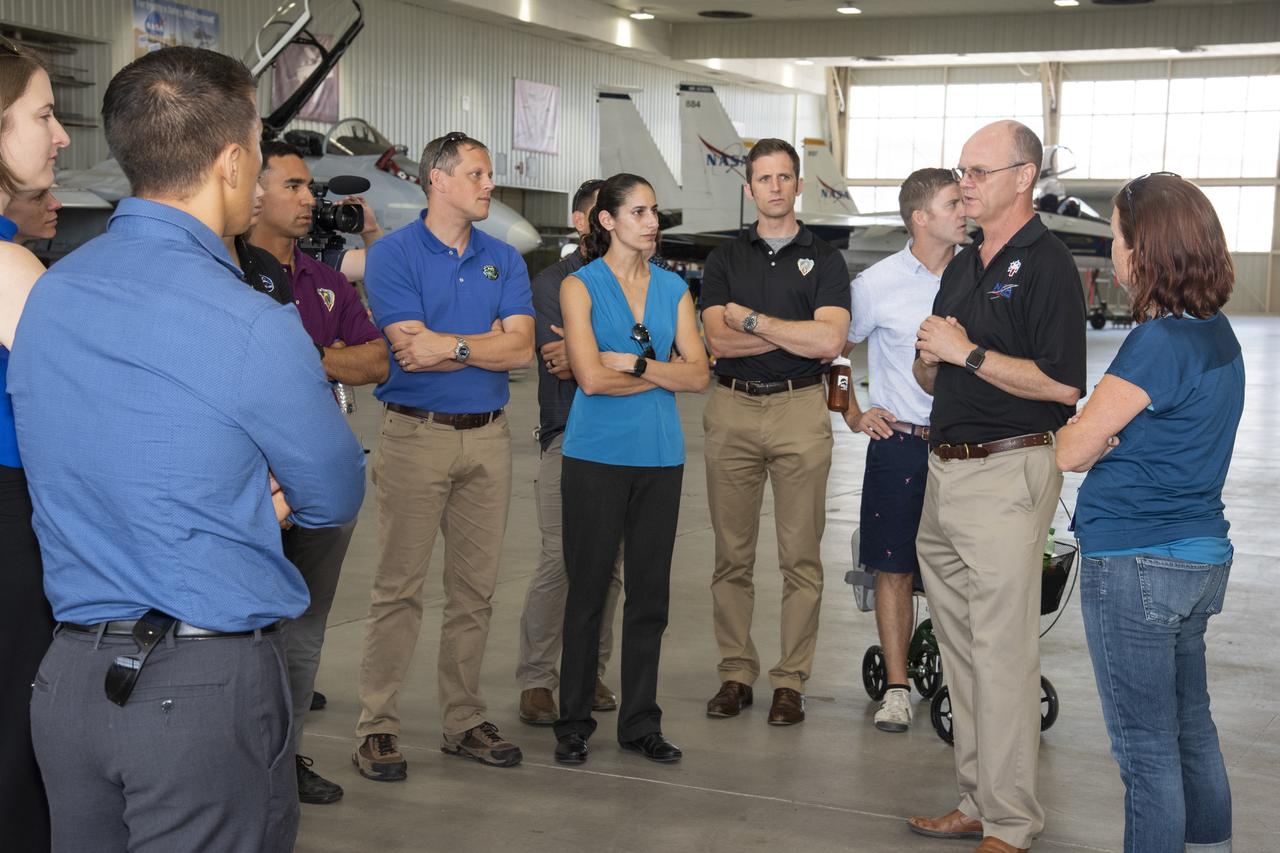
NASA’s 2017 astronaut candidates toured aircraft hangar at Armstrong Flight Research Center, in Southern California. On the right, NASA’s, X-59 pilot Nils Larsen, briefs the astronauts as they look at Armstrong’s fleet of supersonic research support aircraft, including the F-15, which will fly in tandem with the X-59 QueSST during early flight test stages, and the F-18, which is conducting supersonic research in support of the overall mission.
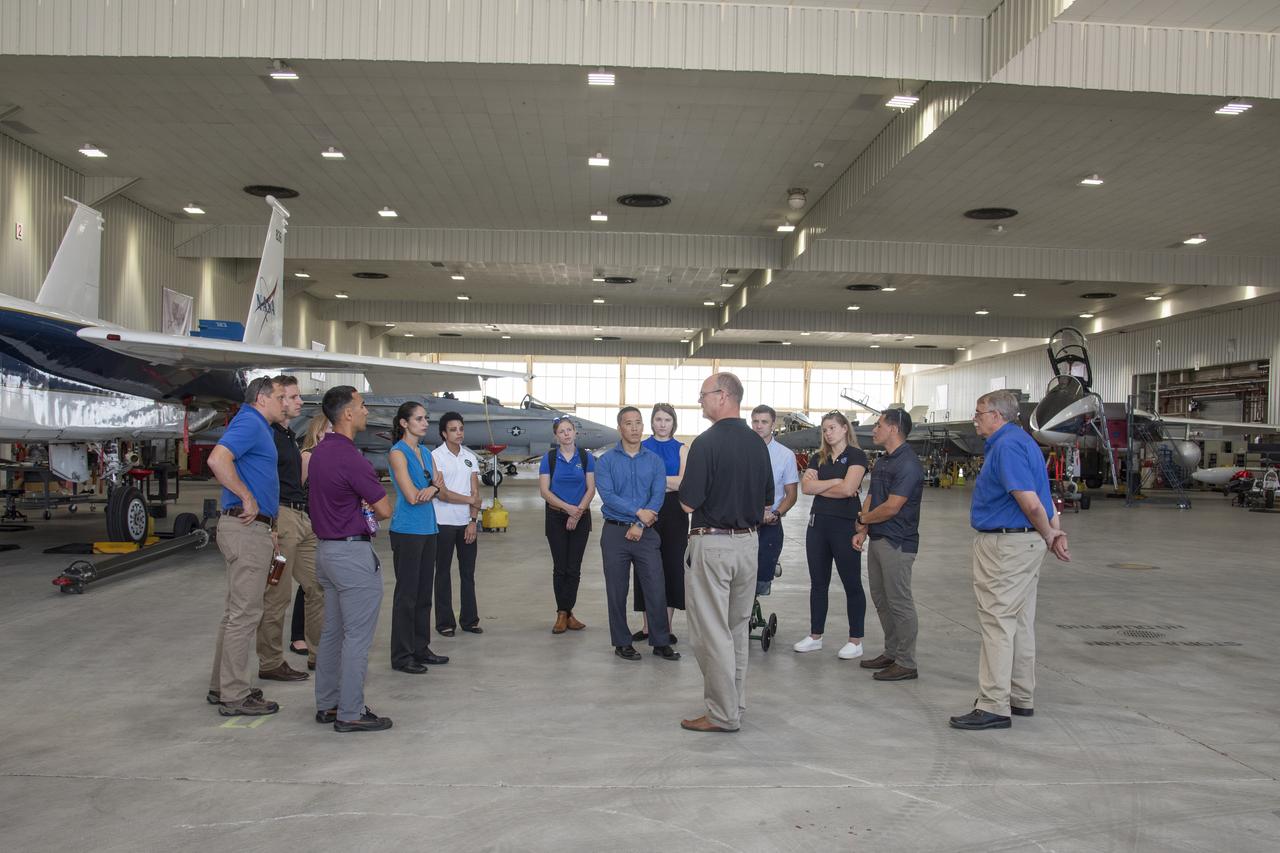
NASA's 2017 astronaut candidates toured aircraft hangar at Armstrong Flight Research Center, in Southern California. On the right, NASA's, X-59 pilot Nils Larsen, briefs the astronauts as they look at Armstrong's fleet of supersonic research support aircraft, including the F-15, which will fly in tandem with the X-59 QueSST during early flight test stages, and the F-18, which is conducting supersonic research in support of the overall mission.
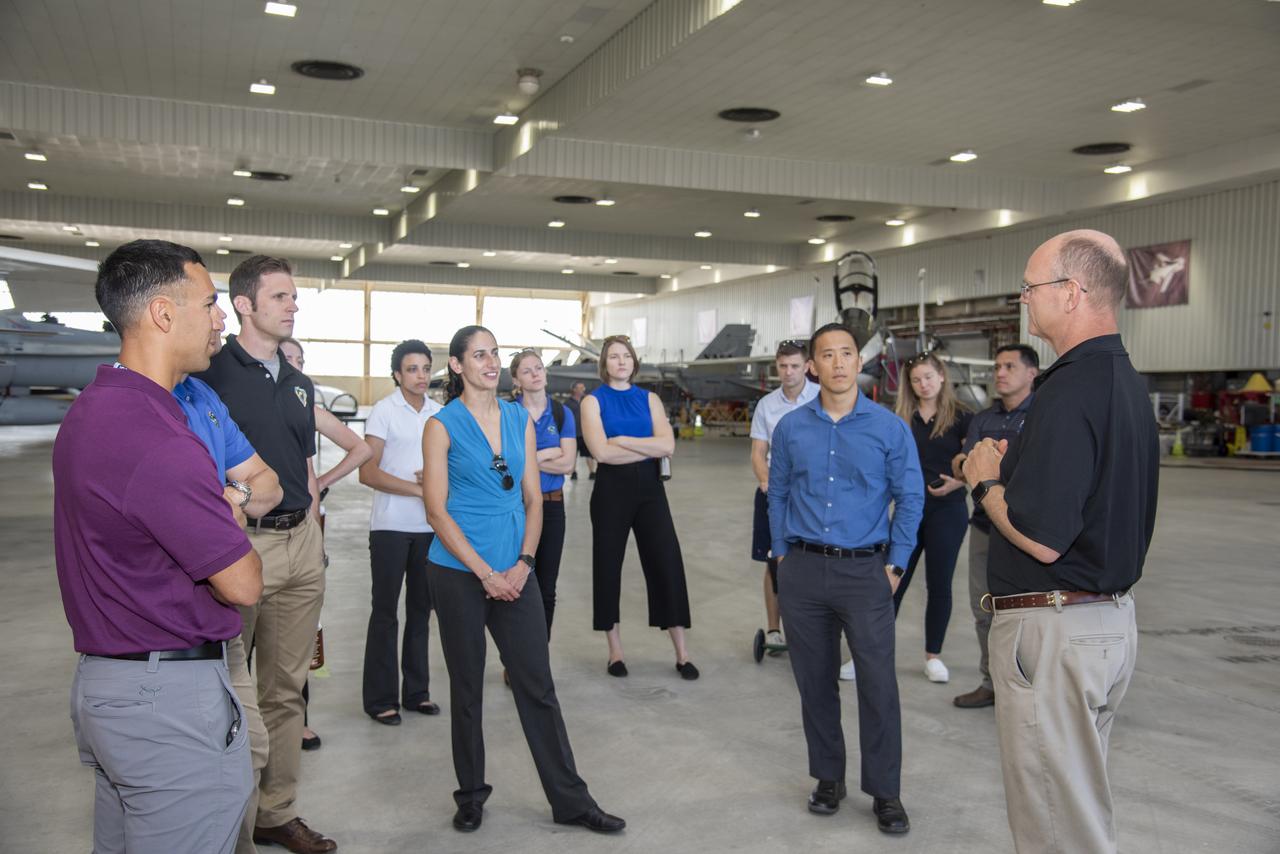
NASA's 2017 astronaut candidates toured aircraft hangar at Armstrong Flight Research Center, in Southern California. On the right, NASA's, X-59 pilot Nils Larsen, briefs the astronauts as they look at Armstrong's fleet of supersonic research support aircraft, including the F-15, which will fly in tandem with the X-59 QueSST during early flight test stages, and the F-18, which is conducting supersonic research in support of the overall mission.
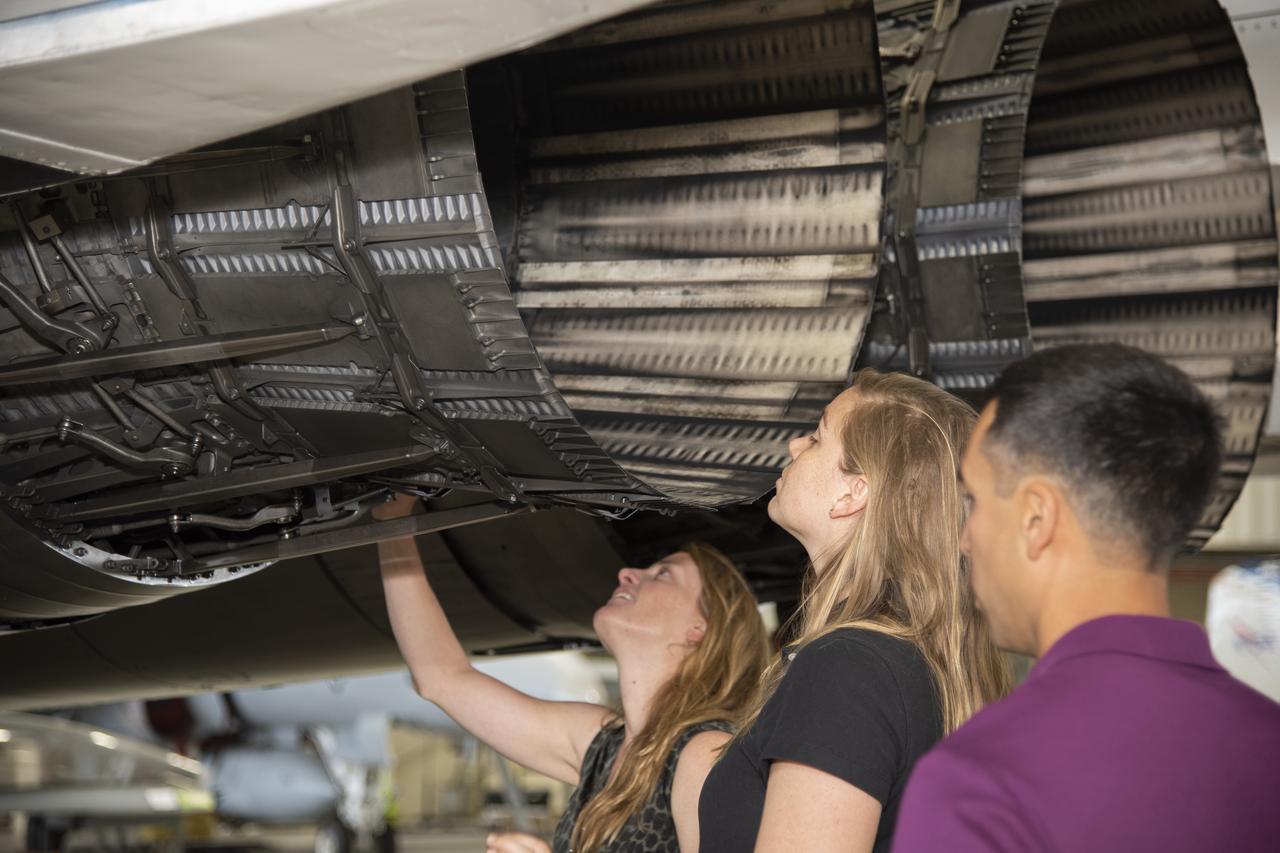
NASA's 2017 astronaut candidates toured aircraft hangar at Armstrong Flight Research Center, in Southern California where (L to R) Loral O'Hara, Jenni Sidey-Gibbons and Raja Chari look inside the engine nozzle of an F-15 jet. The F-15 will fly in tandem with the X-59 QueSST during early flight test stages for the X-59 development.
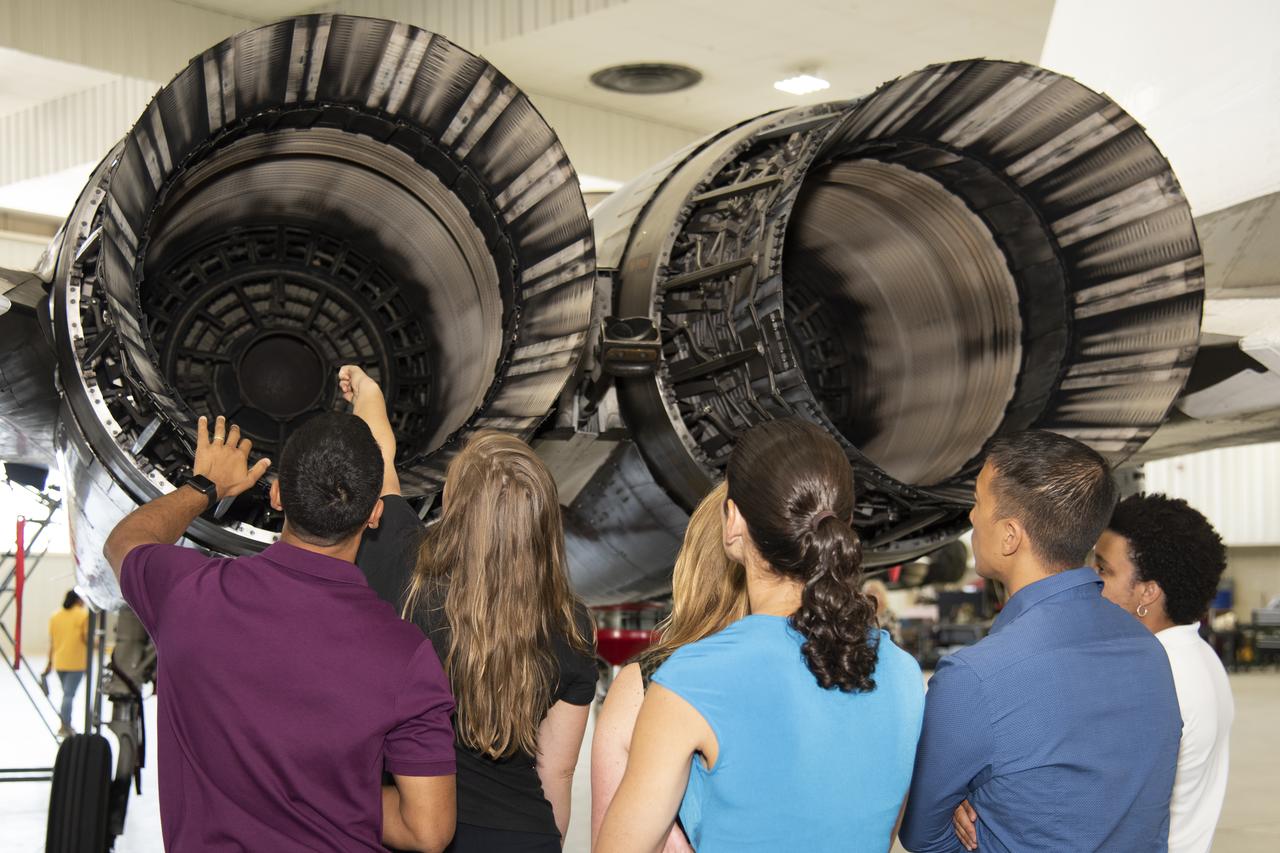
NASA's 2017 astronaut candidates toured aircraft hangar at Armstrong Flight Research Center, in Southern California (L to R) Raja Chari, Jenni Sidey-Gibbons, Loral O'Hara, Jasmin Moghbeli, Jonny Kim and Jessica Watkins look inside the engine nozzle of an F-15 jet. The F-15 will fly in tandem with the X-59 QueSST during early flight test stages for the X-59 development.
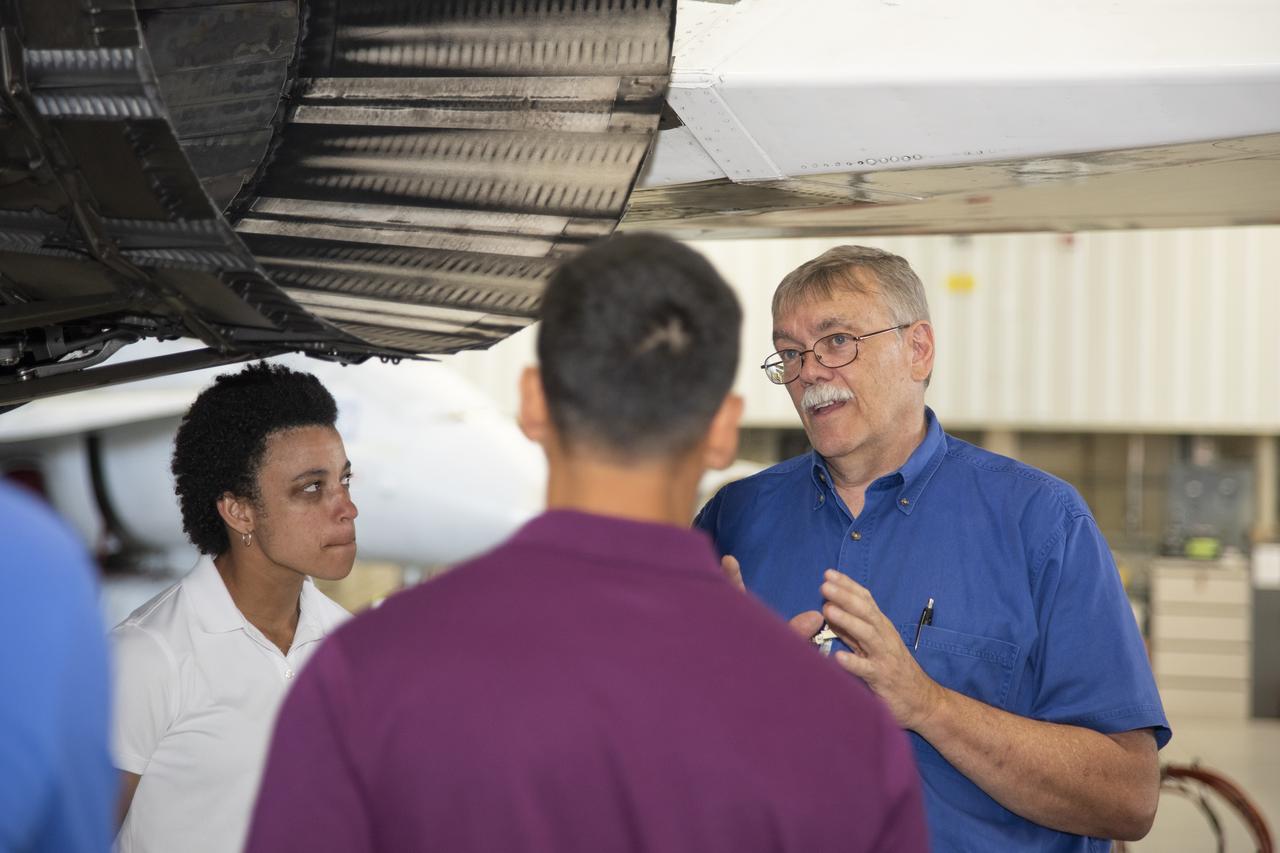
NASA's 2017 astronaut candidates toured aircraft hangar at Armstrong Flight Research Center, in Southern California where Crew Chief Tom Grindle talks with (L to R) Jessica Watkins and Raja Chari near engine nozzle of F-15 jet. The F-15 will fly in tandem with the X-59 QueSST during early flight test stages for the X-59 development.
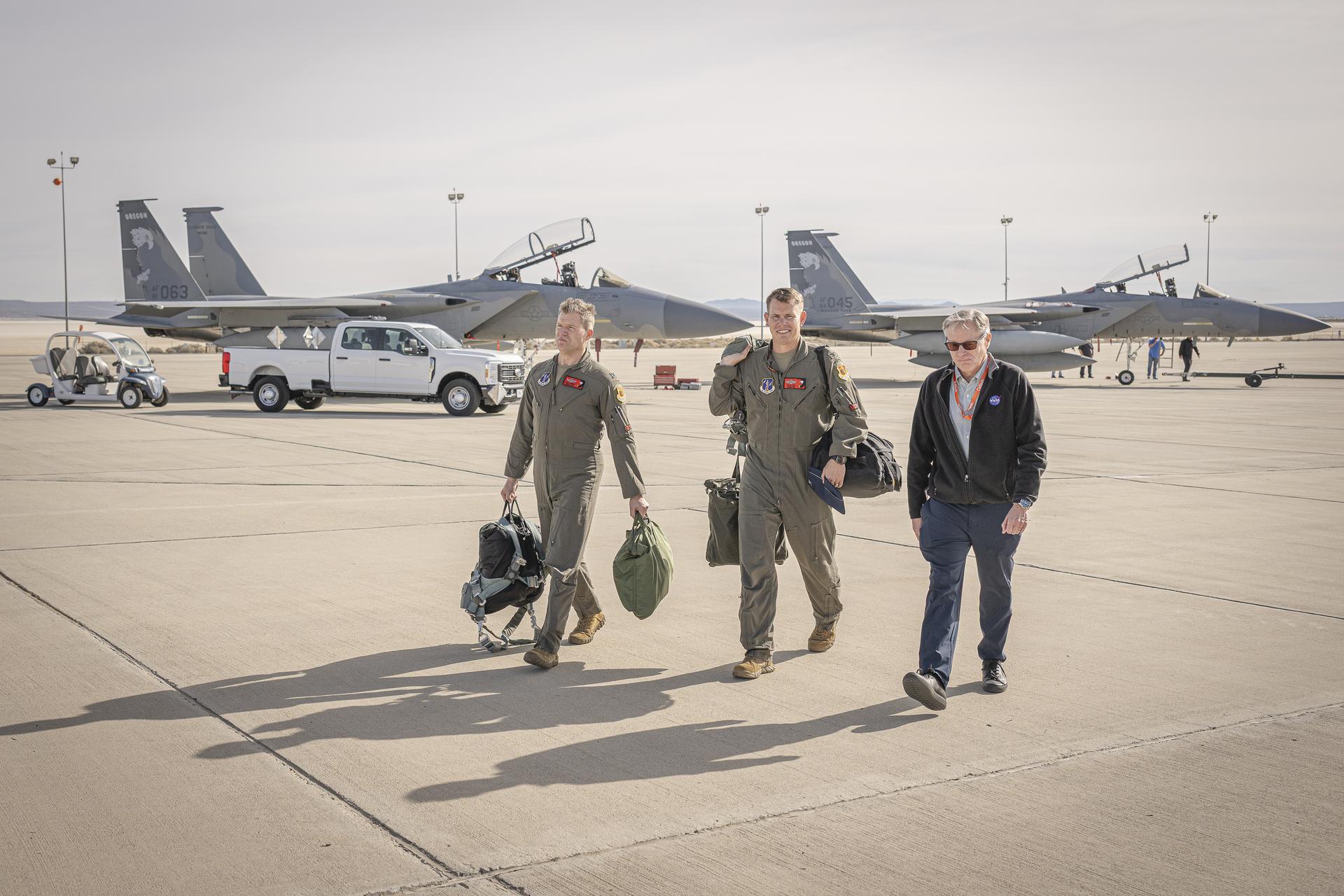
Oregon Air National Guard pilots deliver NASA’s newest F-15 aircraft from the Oregon Air National Guard’s 173rd Fighter Wing at Kingsley Field to NASA’s Armstrong Flight Research Center in Edwards, California, on Monday, Dec. 22, 2025. After completing their final flights with the Air Force, the two aircraft begin their new role supporting NASA’s flight research.

Two NASA F-15 aircraft sit on the ramp at NASA's Armstrong Flight Research Center, in Edwards, California, ahead of dual F-15 flights that validated the integration of three tools – the Airborne Schlieren Photography System (ASPS), the Airborne Location Integrating Geospatial Navigation System (ALIGNS), and shock-sensing probe. Together these tools will measure and visualize the shock waves generated by NASA's X-59.
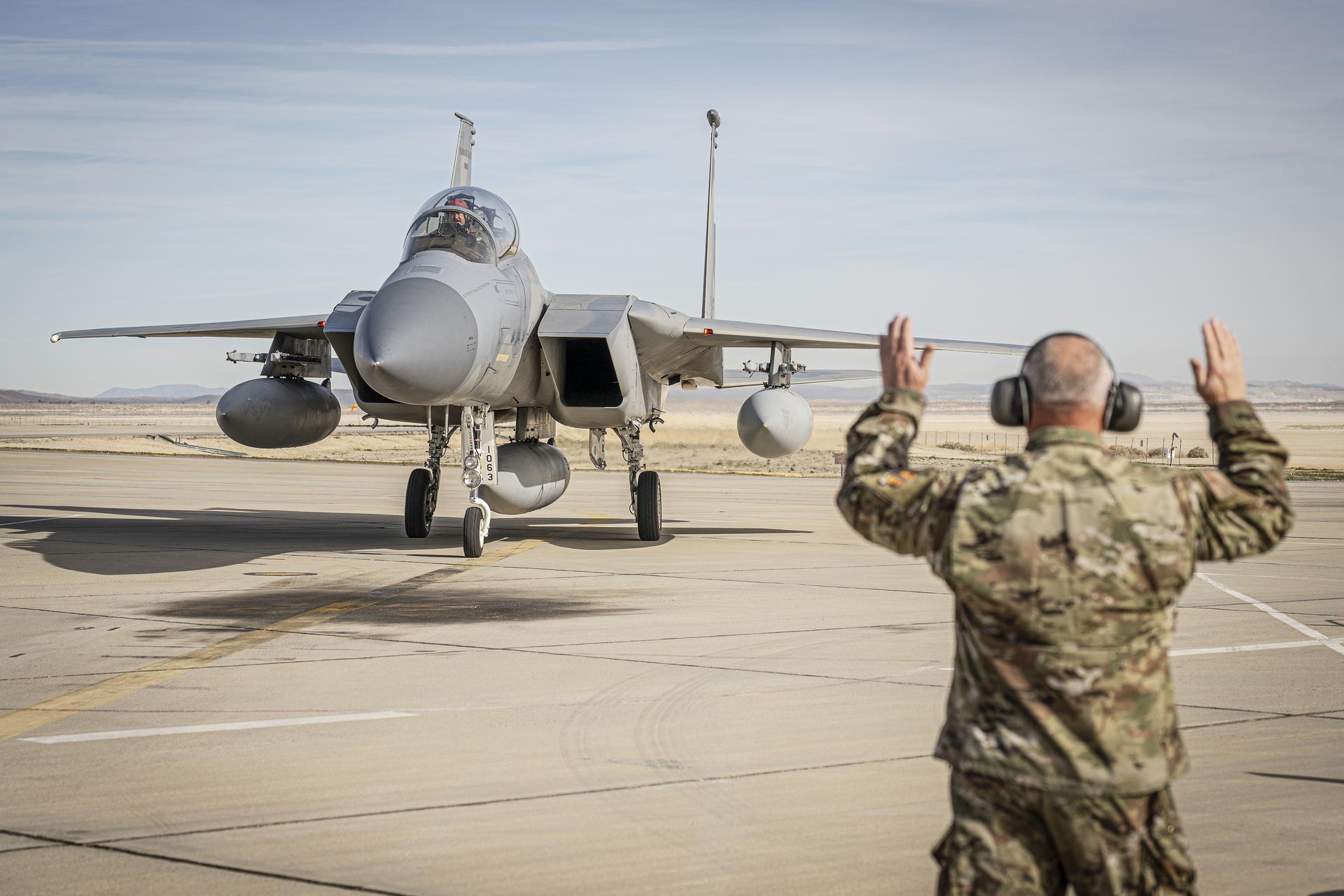
Oregon Air National Guard ground crew guides one of NASA’s newest F-15 aircraft onto the ramp at the agency’s Armstrong Flight Research Center in Edwards, California, on Monday, Dec. 22, 2025. The retired U.S. Air Force F-15s come from the Oregon Air National Guard’s 173rd Fighter Wing and will transition from military service to support NASA’s flight research fleet.
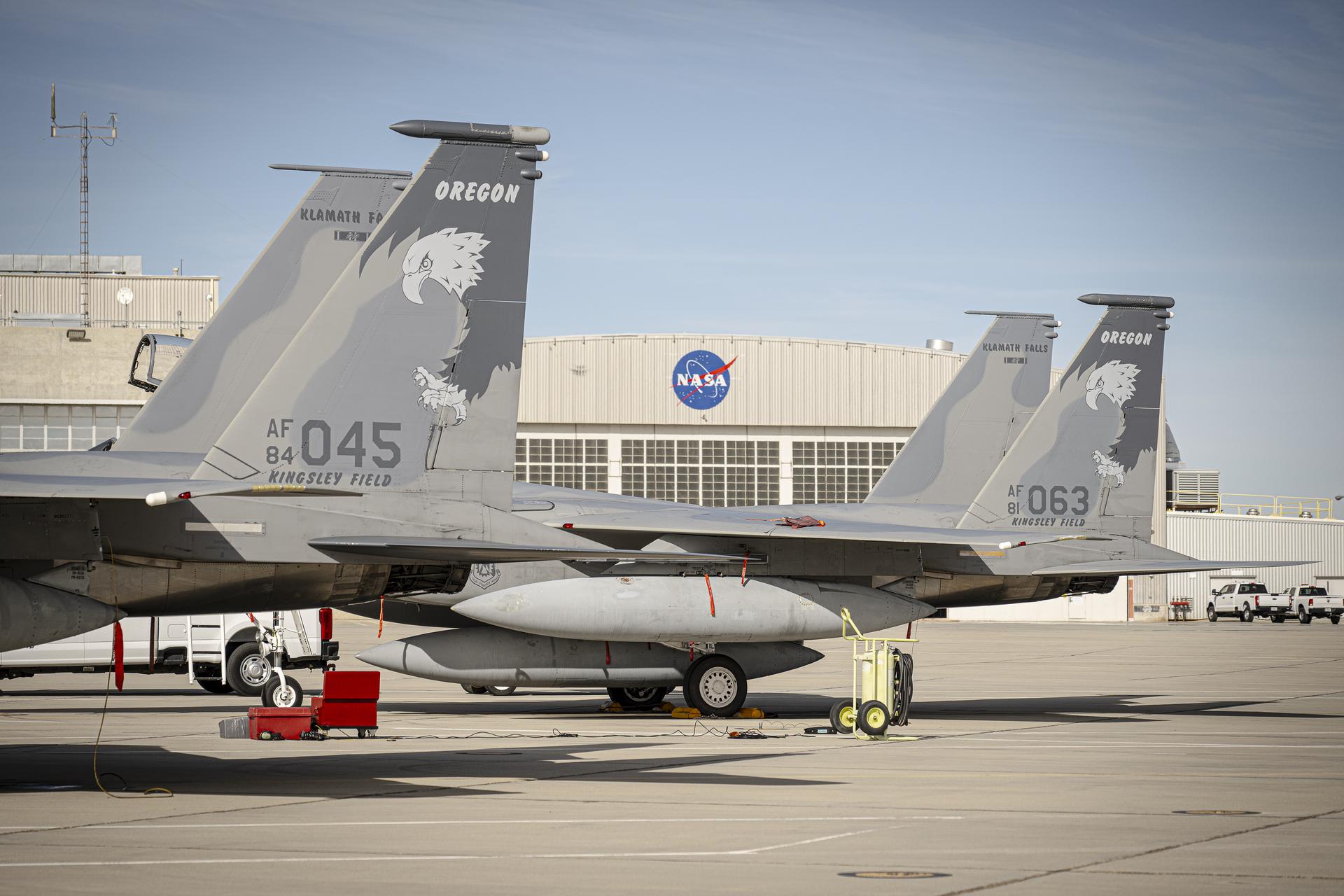
NASA’s newest F-15 aircraft arrive at the agency’s Armstrong Flight Research Center in Edwards, California, on Monday, Dec. 22, 2025. The two retired U.S. Air Force F-15s will support ongoing supersonic flight research for NASA’s Flight Demonstrations and Capabilities Project and the Quesst mission’s X-59 quiet supersonic research aircraft.
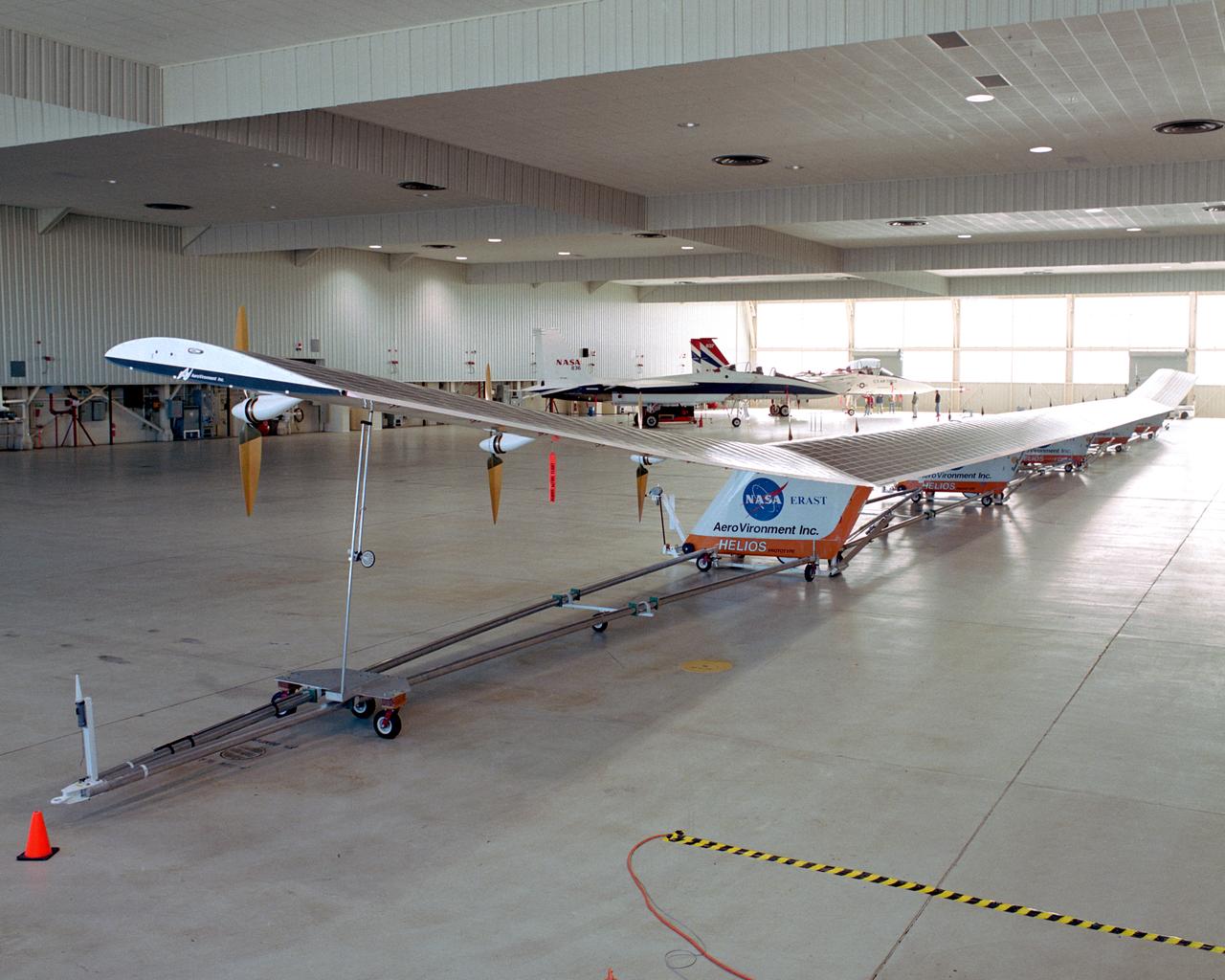
The solar-powered Helios Prototype flying wing frames two modified F-15 research aircraft in a hangar at NASA's Dryden Flight Research Center, Edwards, California. The elongated 247-foot span lightweight aircraft, resting on its ground maneuvering dolly, stretched almost the full length of the 300-foot long hangar while on display during a visit of NASA Administrator Sean O'Keefe and other NASA officials on Jan. 31, 2002. The unique solar-electric flying wing reached an altitude of 96,863 feet during an almost 17-hour flight near Hawaii on Aug. 13, 2001, a world record for sustained horizontal flight by a non-rocket powered aircraft. Developed by AeroVironment, Inc., under NASA's Environmental Research Aircraft and Sensor Technology (ERAST) project, the Helios Prototype is the forerunner of a planned fleet of slow-flying, long duration, high-altitude uninhabited aerial vehicles (UAV) which can serve as "atmospheric satellites," performing Earth science missions or functioning as telecommunications relay platforms in the stratosphere.
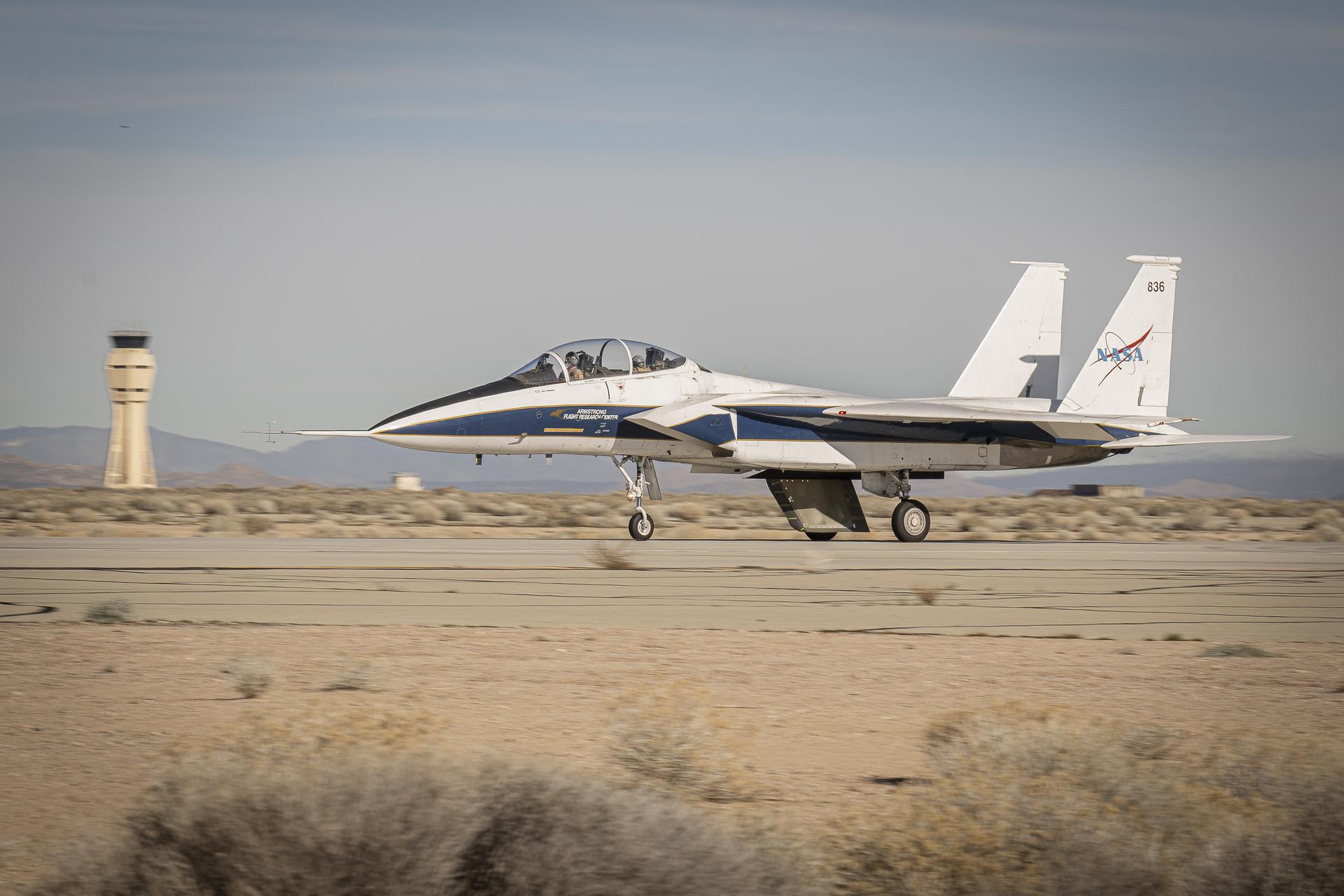
NASA’s Cross Flow Attenuated Natural Laminar Flow (CATNLF) scale model completes its first major milestone – high-speed taxi test – Tuesday, Jan. 12, 2026, at Edwards Air Force Base in California. NASA’s F-15 research aircraft, with the 3-foot-tall test article mounted on its underside, reached speeds of approximately 144 mph during testing. If successful, the technology could be applied to future commercial aircraft to improve efficiency and potentially reduce fuel consumption.
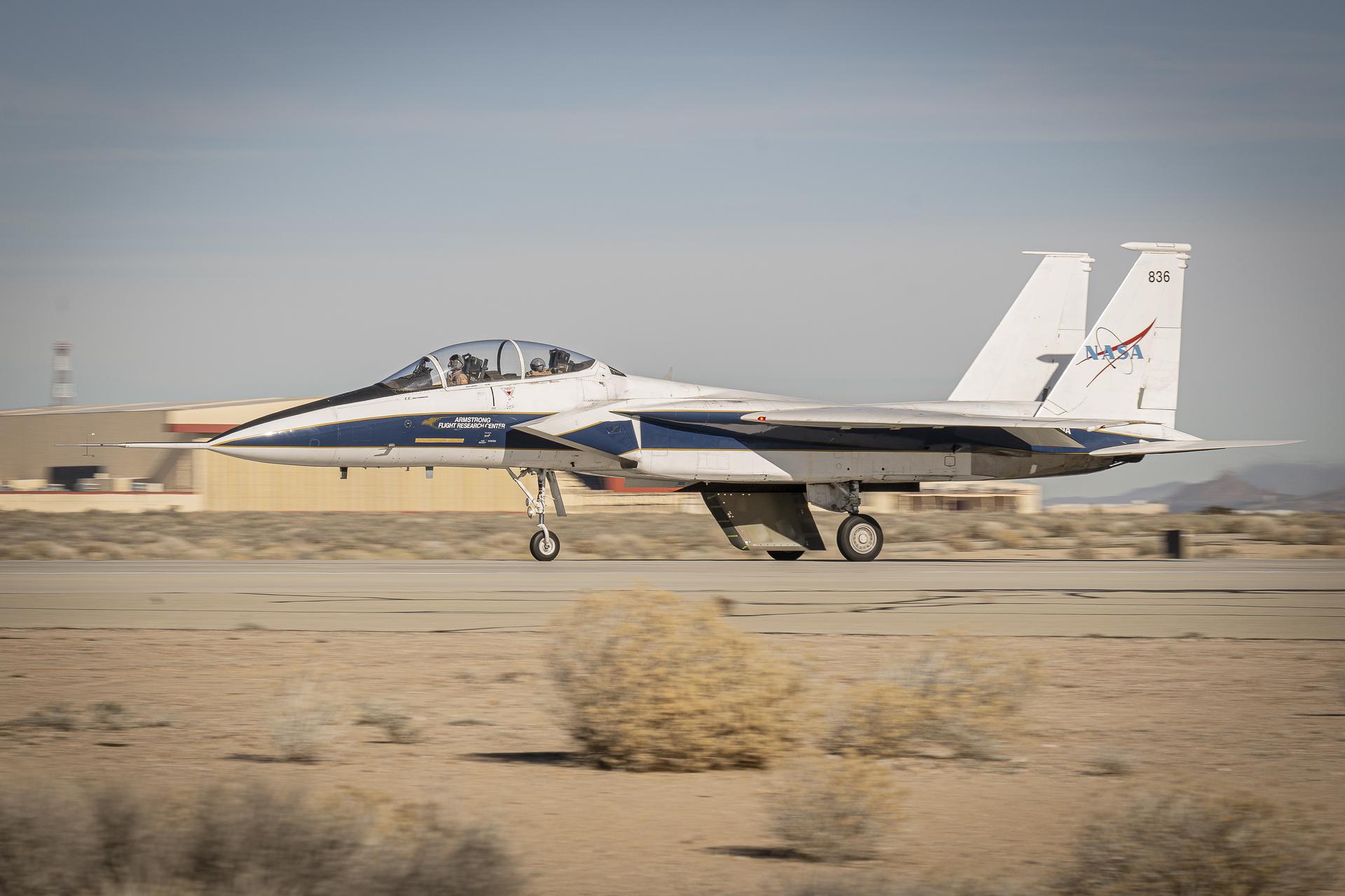
NASA’s Cross Flow Attenuated Natural Laminar Flow (CATNLF) scale model completes its first major milestone – high-speed taxi test – Tuesday, Jan. 12, 2026, at Edwards Air Force Base in California. NASA’s F-15 research aircraft, with the 3-foot-tall test article mounted on its underside, reached speeds of approximately 144 mph during testing. If successful, the technology could be applied to future commercial aircraft to improve efficiency and potentially reduce fuel consumption.
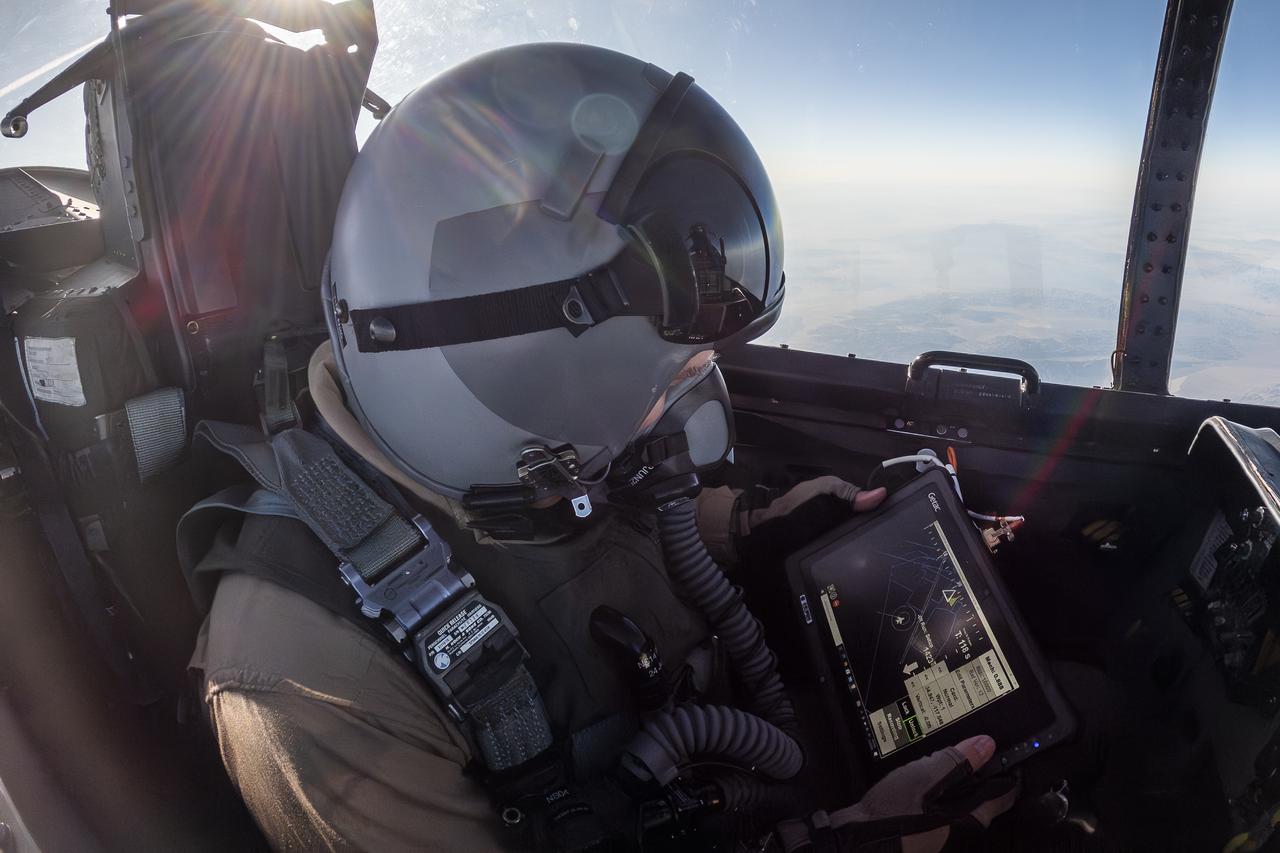
NASA photographer James Ross monitors the Airborne Location Integrating Geospatial Navigation System (ALIGNS) from the backseat of an F-15 near NASA’s Armstrong Flight Research Center in Edwards, California. The ALIGNS provides real-time positioning guidance between aircraft for shock wave probing and schlieren imagery capture.
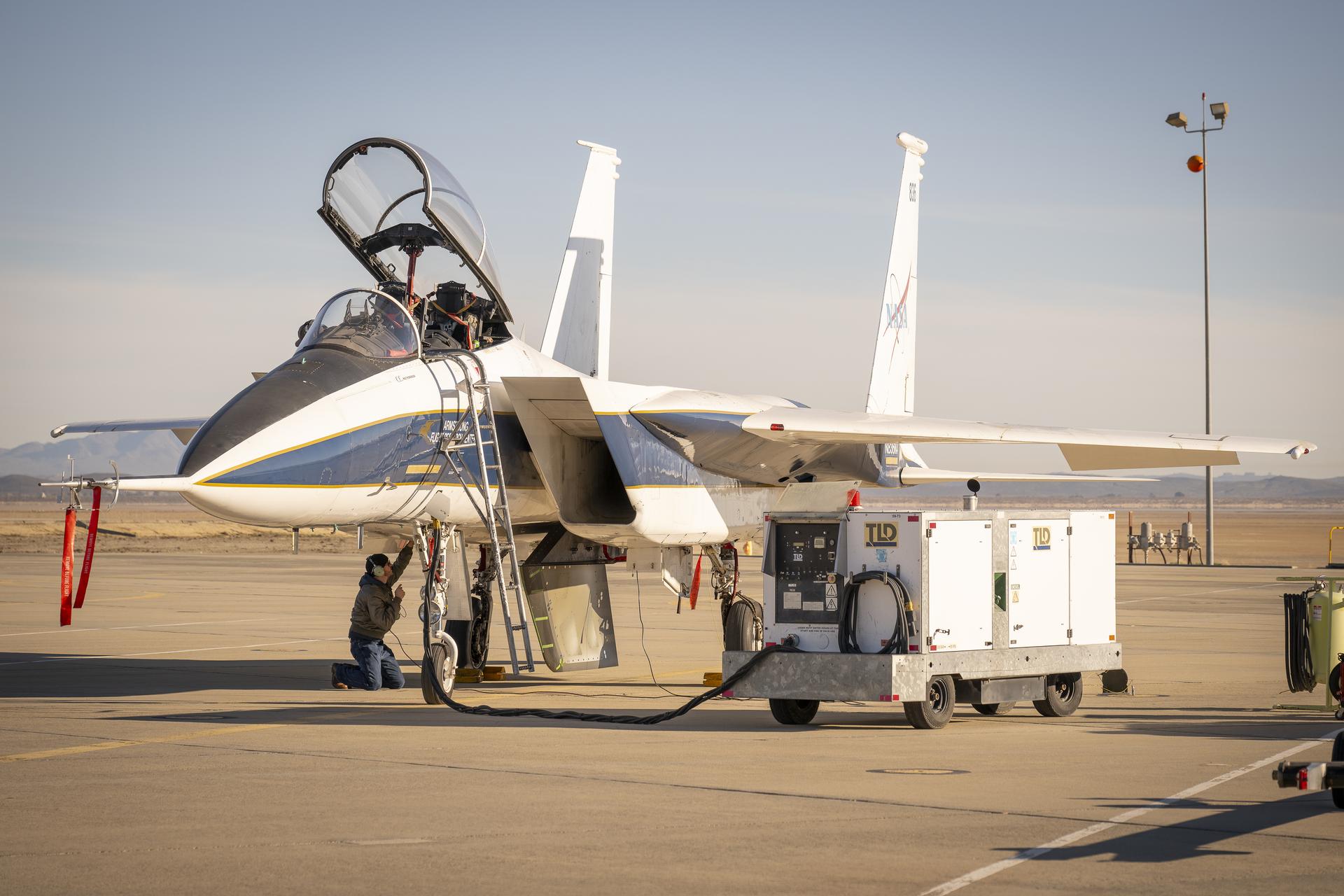
NASA ground crew prepares the agency’s F-15 research aircraft and Cross Flow Attenuated Natural Laminar Flow (CATNLF) test article ahead of its first high-speed taxi test on Tuesday, Jan. 12, 2026, at NASA’s Armstrong Flight Research Center in Edwards, California. The CATNLF design aims to reduce drag on wing surfaces to improve efficiency and, in turn, reduce fuel burn.
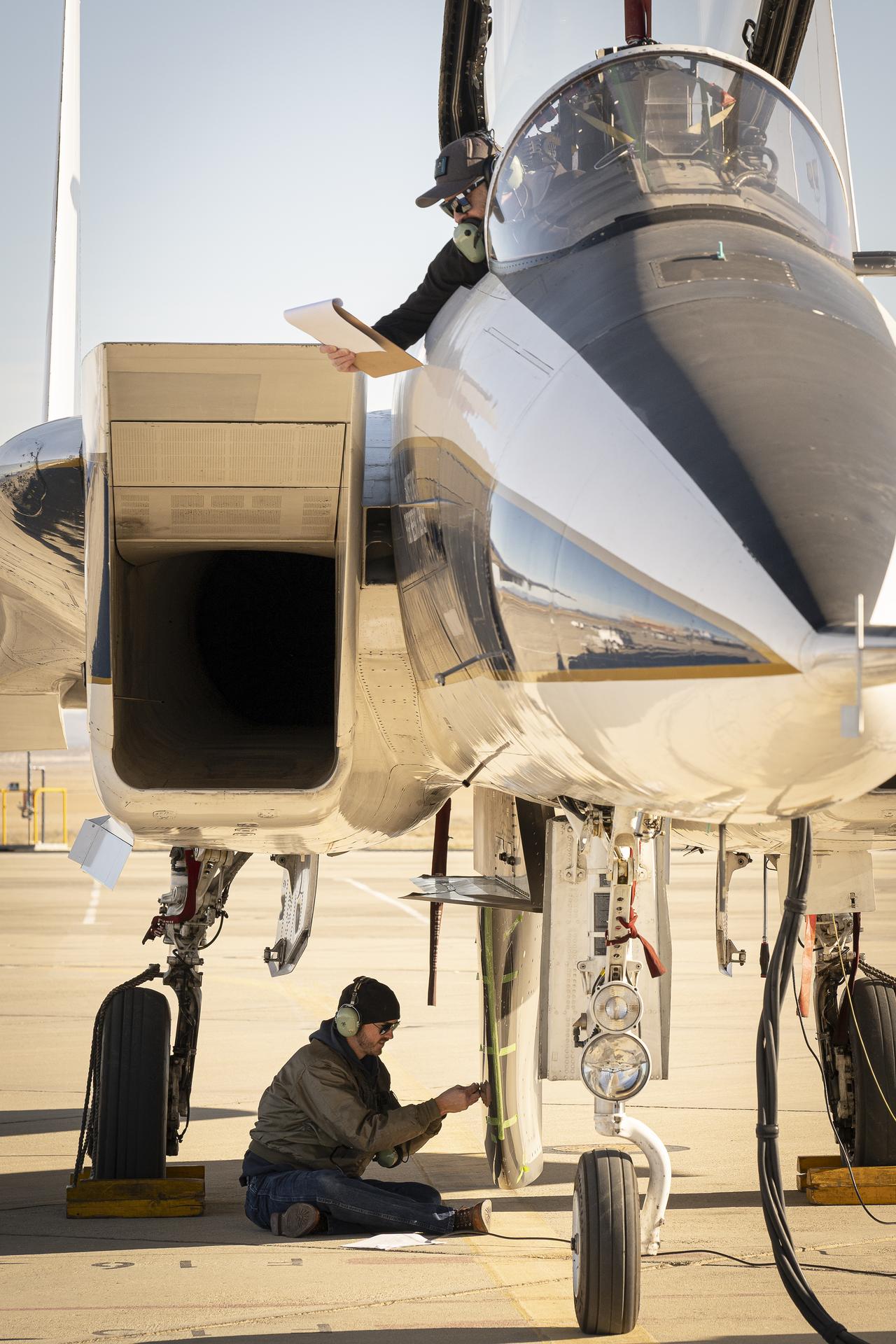
NASA ground crew prepares the agency’s F-15 research aircraft and Cross Flow Attenuated Natural Laminar Flow (CATNLF) test article ahead of its first high-speed taxi test on Tuesday, Jan. 12, 2026, at NASA’s Armstrong Flight Research Center in Edwards, California. The CATNLF design aims to reduce drag on wing surfaces to improve efficiency and, in turn, reduce fuel burn.
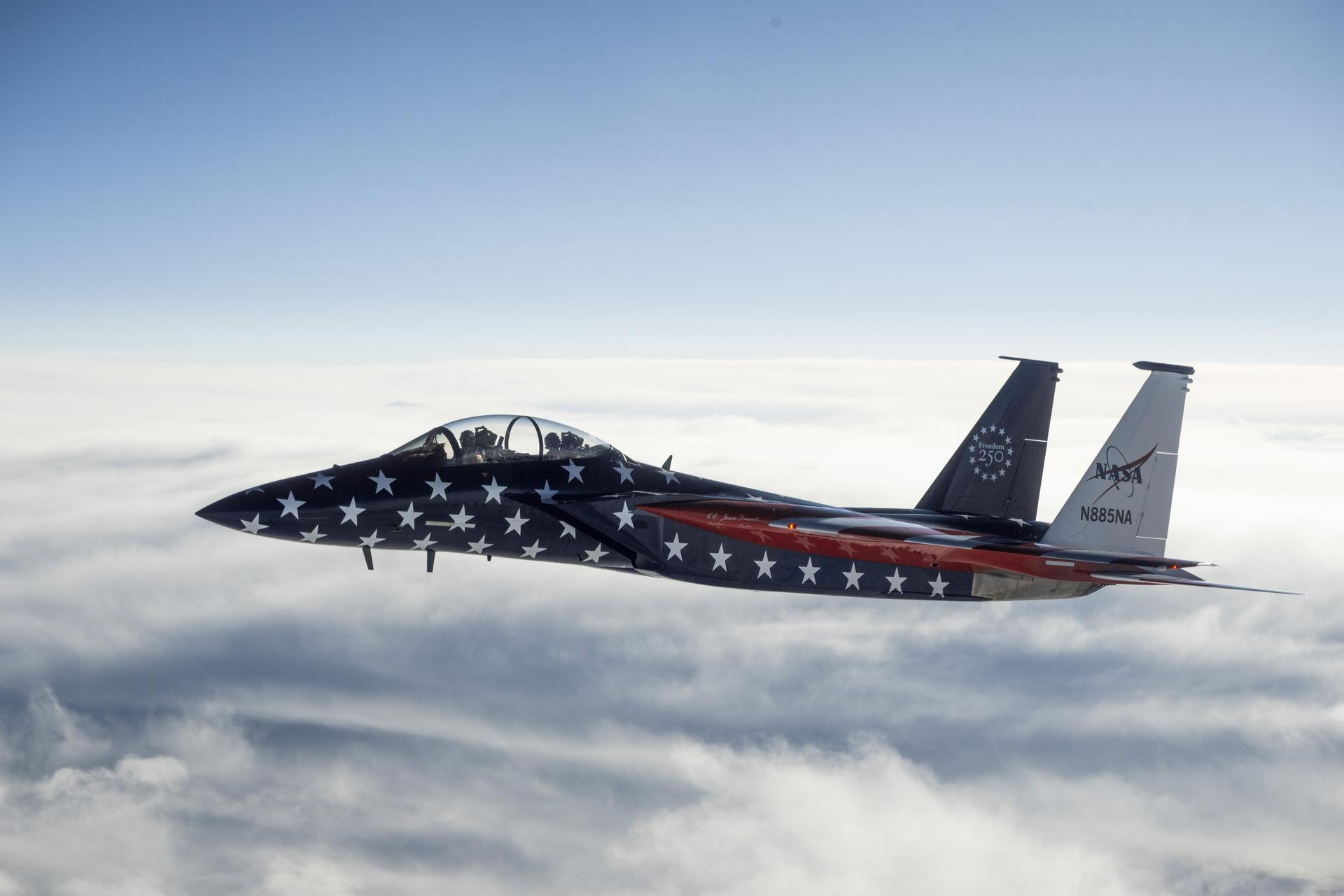
A NASA F‑15 aircraft is shown during a cross‑country flight from Spokane, Washington, to Washington, D.C., on Thursday, July 2, 2026. The aircraft displays new red, white, and blue paint to celebrate America’s 250th birthday. The F‑15, from NASA’s Armstrong Flight Research Center in Edwards, California, participated in the Freedom 250 flyover with other NASA and military aircraft on Saturday, July 4, 2026. NASA/Jim Ross
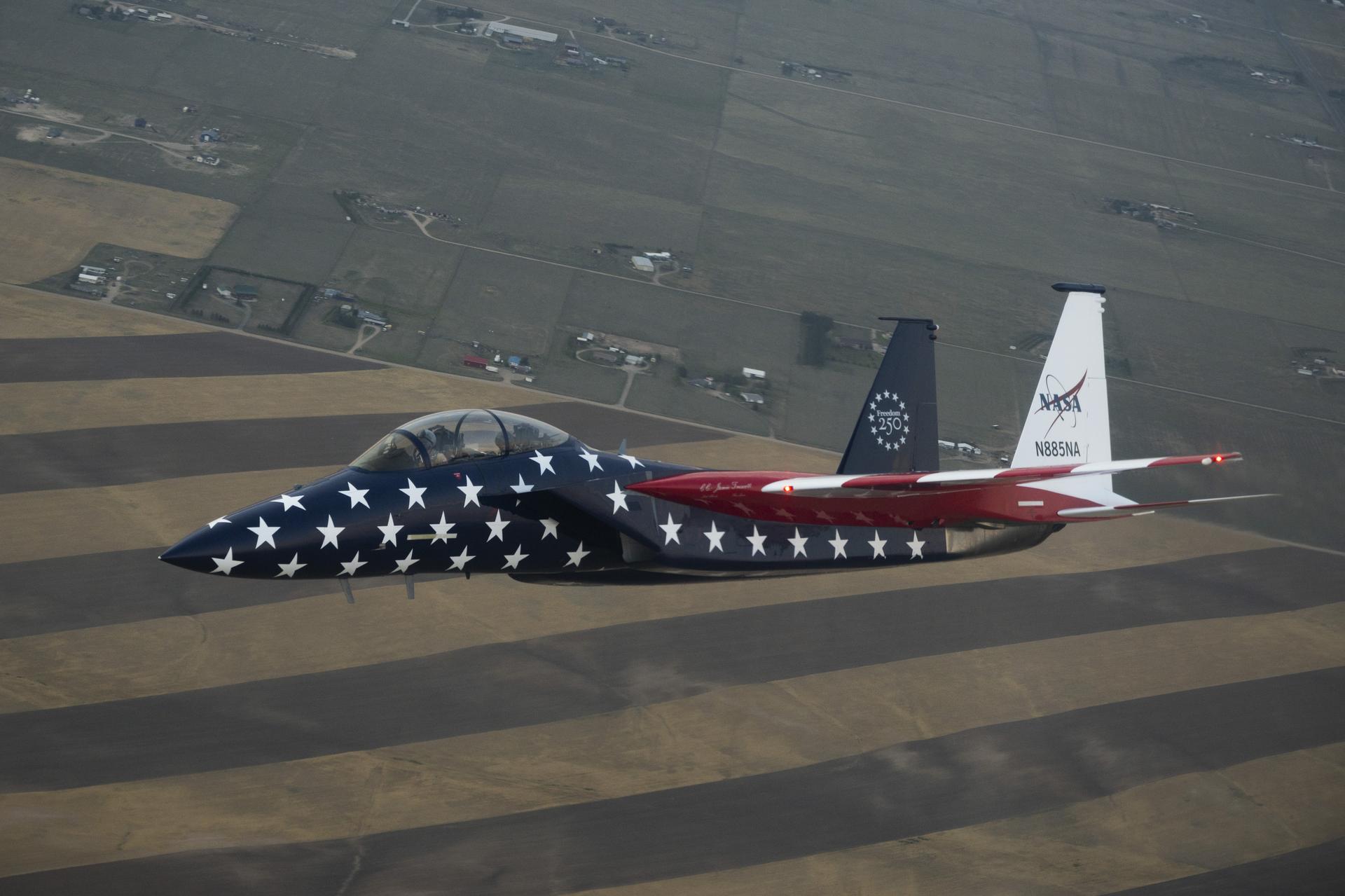
A NASA F‑15 aircraft is shown during a cross‑country flight from Spokane, Washington, to Washington, D.C., on Thursday, July 2, 2026. The aircraft displays new red, white, and blue paint to celebrate America’s 250th birthday. The F‑15, from NASA’s Armstrong Flight Research Center in Edwards, California, participated in the Freedom 250 flyover with other NASA and military aircraft on Saturday, July 4, 2026. NASA/Jim Ross
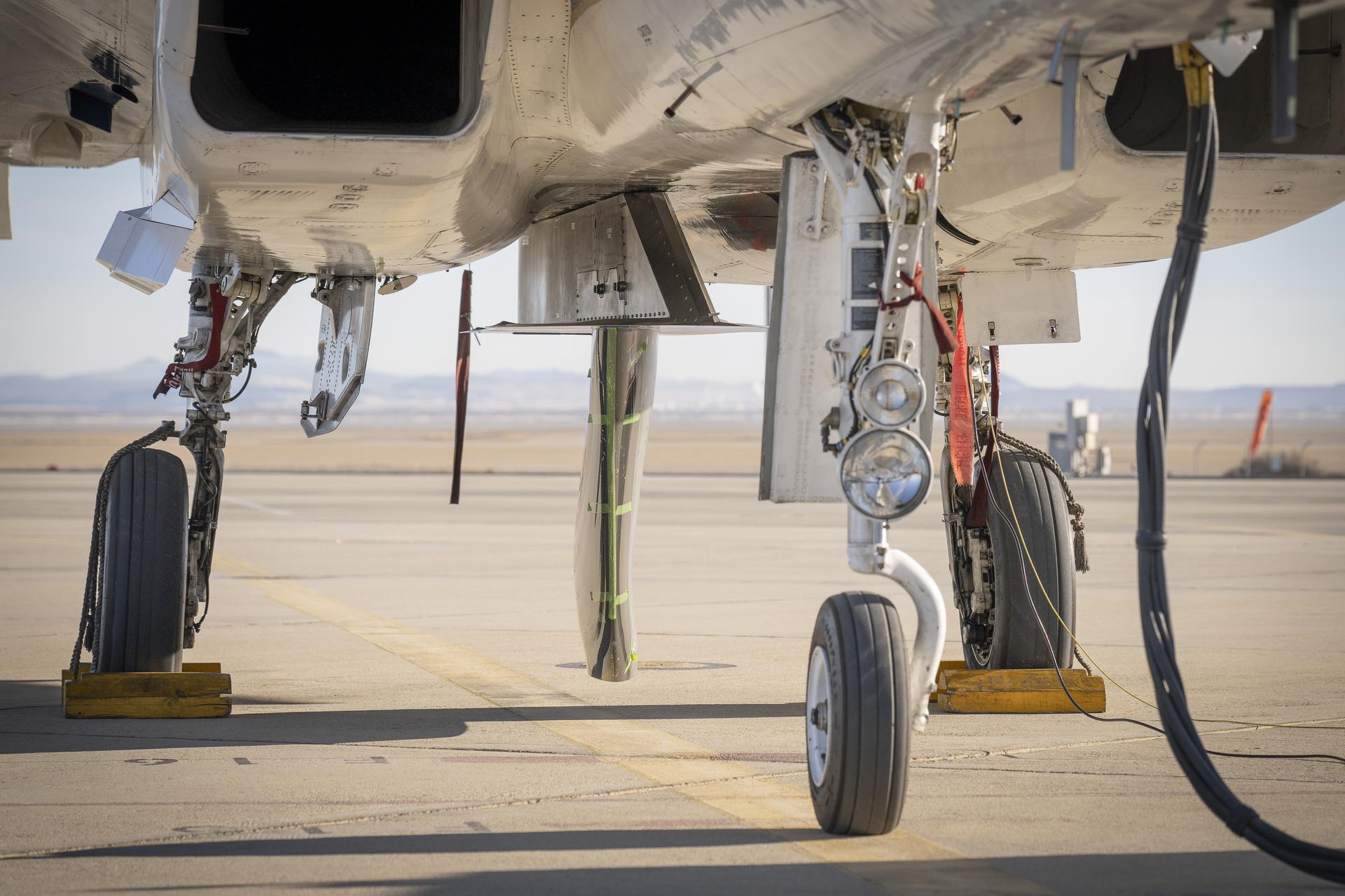
NASA’s Cross Flow Attenuated Natural Laminar Flow test article is mounted beneath the agency’s F-15 research aircraft ahead of the design’s high-speed taxi test on Tuesday, Jan. 12, 2026, at NASA’s Armstrong Flight Research Center in Edwards, California. The 3-foot-tall scale model is designed to increase a phenomenon known as laminar flow and reduce drag, improving efficiency in large, swept wings like those found on most commercial aircraft.
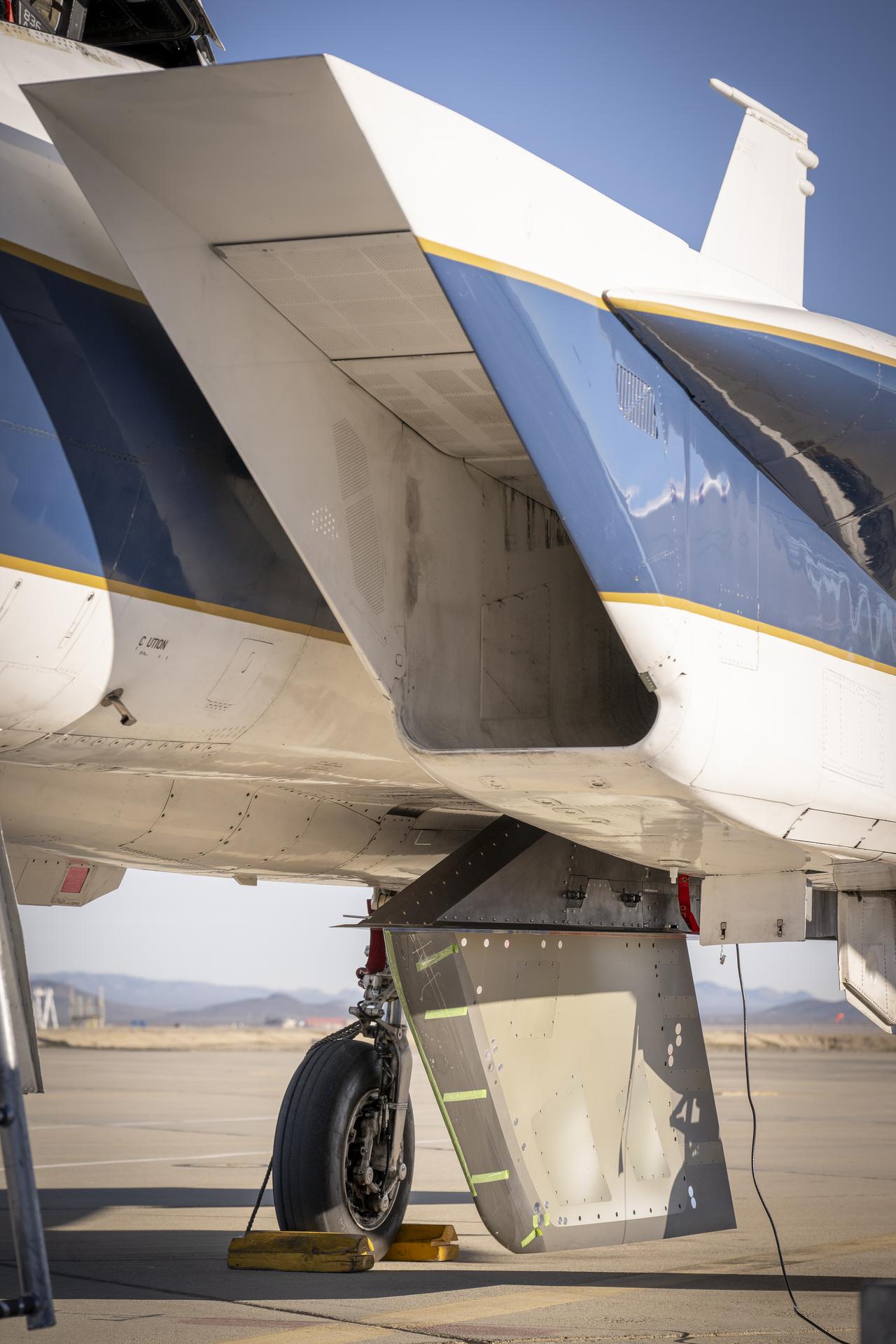
NASA’s Cross Flow Attenuated Natural Laminar Flow test article is mounted beneath the agency’s F-15 research aircraft ahead of the design’s high-speed taxi test on Tuesday, Jan. 12, 2026, at NASA’s Armstrong Flight Research Center in Edwards, California. The 3-foot-tall scale model is designed to increase a phenomenon known as laminar flow and reduce drag, improving efficiency in large, swept wings like those found on most commercial aircraft.
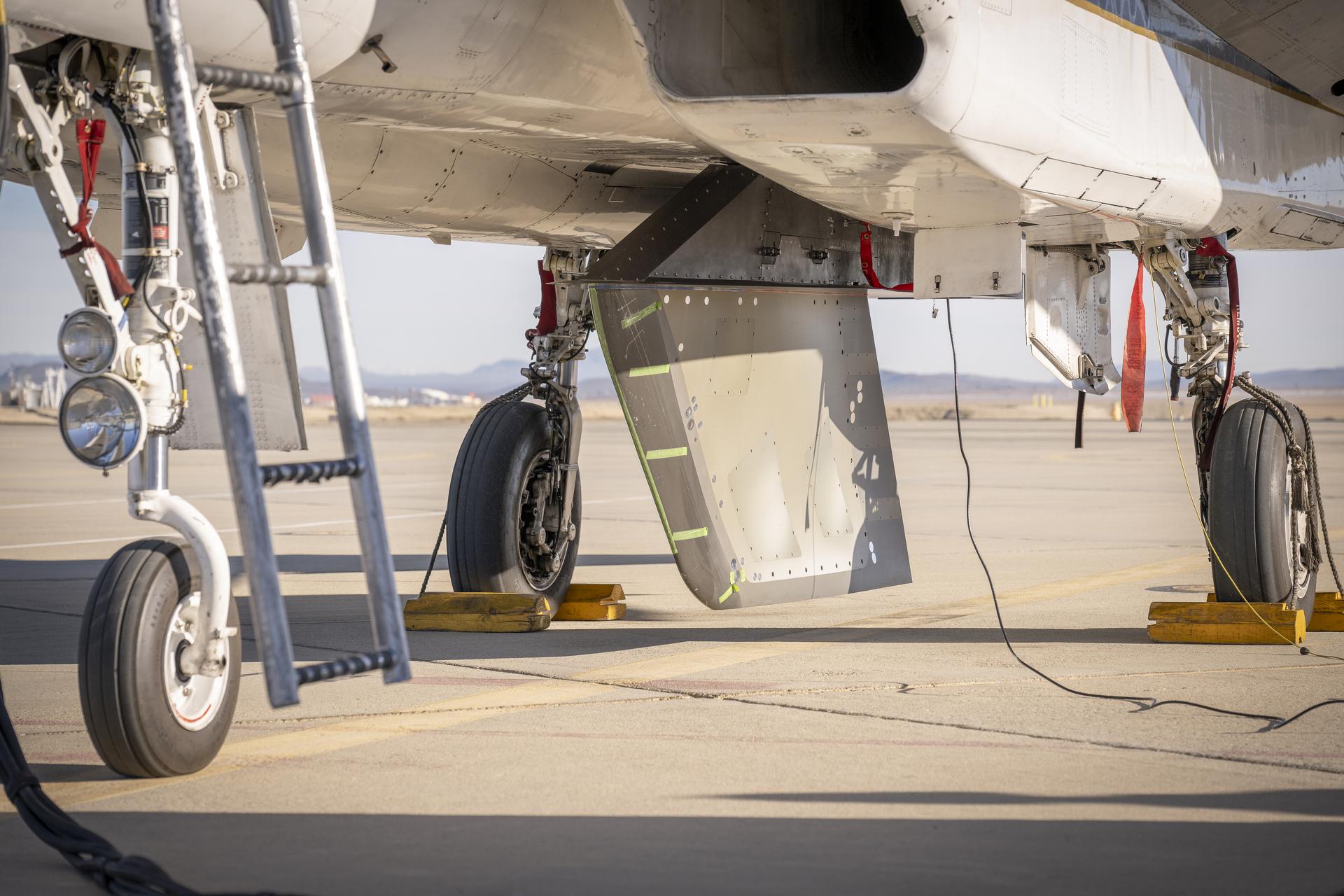
NASA’s Cross Flow Attenuated Natural Laminar Flow test article is mounted beneath the agency’s F-15 research aircraft ahead of the design’s high-speed taxi test on Tuesday, Jan. 12, 2026, at NASA’s Armstrong Flight Research Center in Edwards, California. The 3-foot-tall scale model is designed to increase a phenomenon known as laminar flow and reduce drag, improving efficiency in large, swept wings like those found on most commercial aircraft.
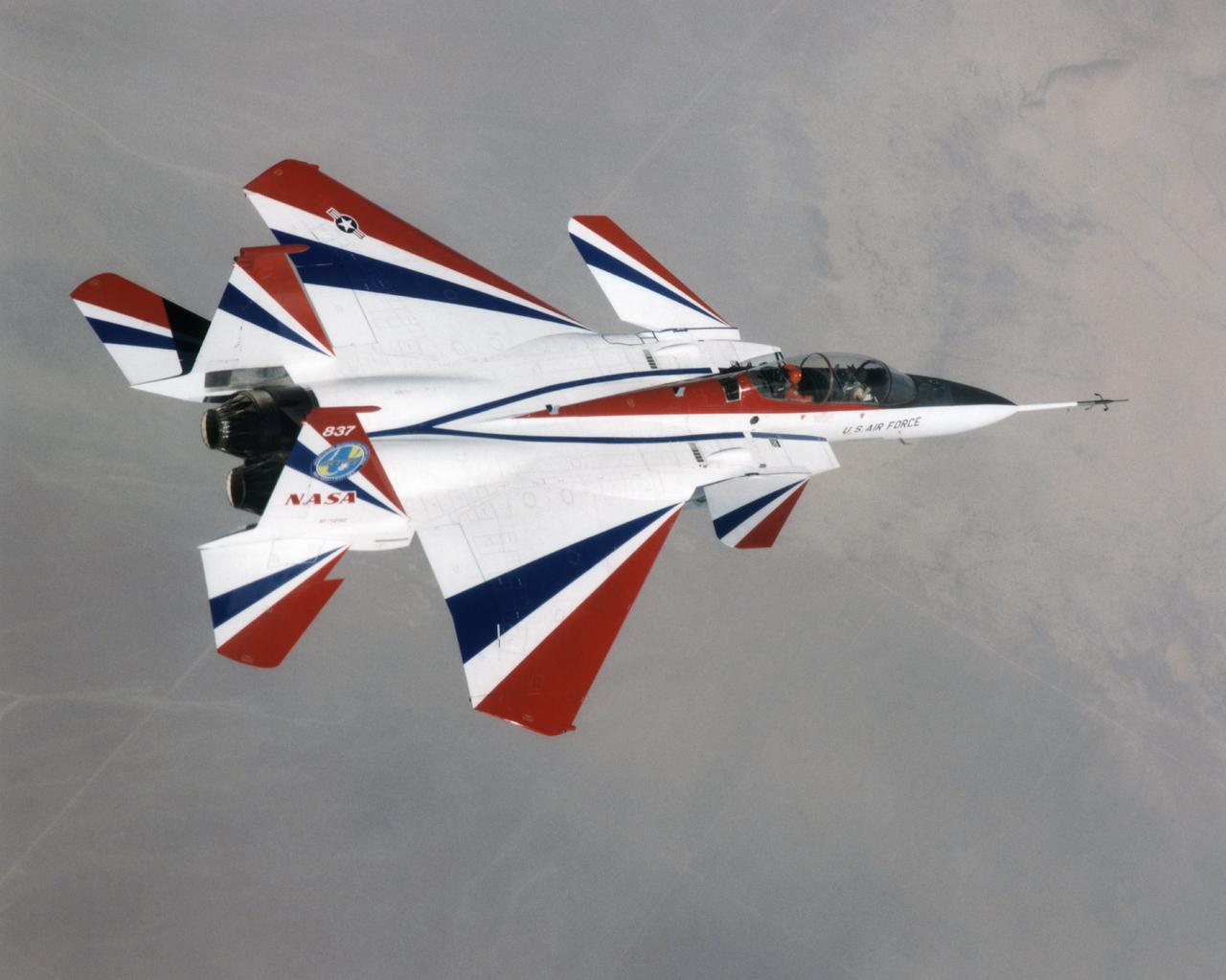
The F-15 ACTIVE in flight above the Mojave desert on April 14, 1998. The overhead shot shows the aircraft's striking red and while paint scheme/ The large forward canards are actually the tail surfaces from an F-18.
NASA photographer Jim Ross flies above Washington on Saturday, July 4, 2026, in an F-18 aircraft, as part of a flyover to celebrate America’s 250th birthday. This aircraft is from NASA’s Armstrong Flight Research Center in Edwards, California, and it joined other NASA aircraft for the flyover. A NASA F-15 is seen flying to the side of the NASA F-18.
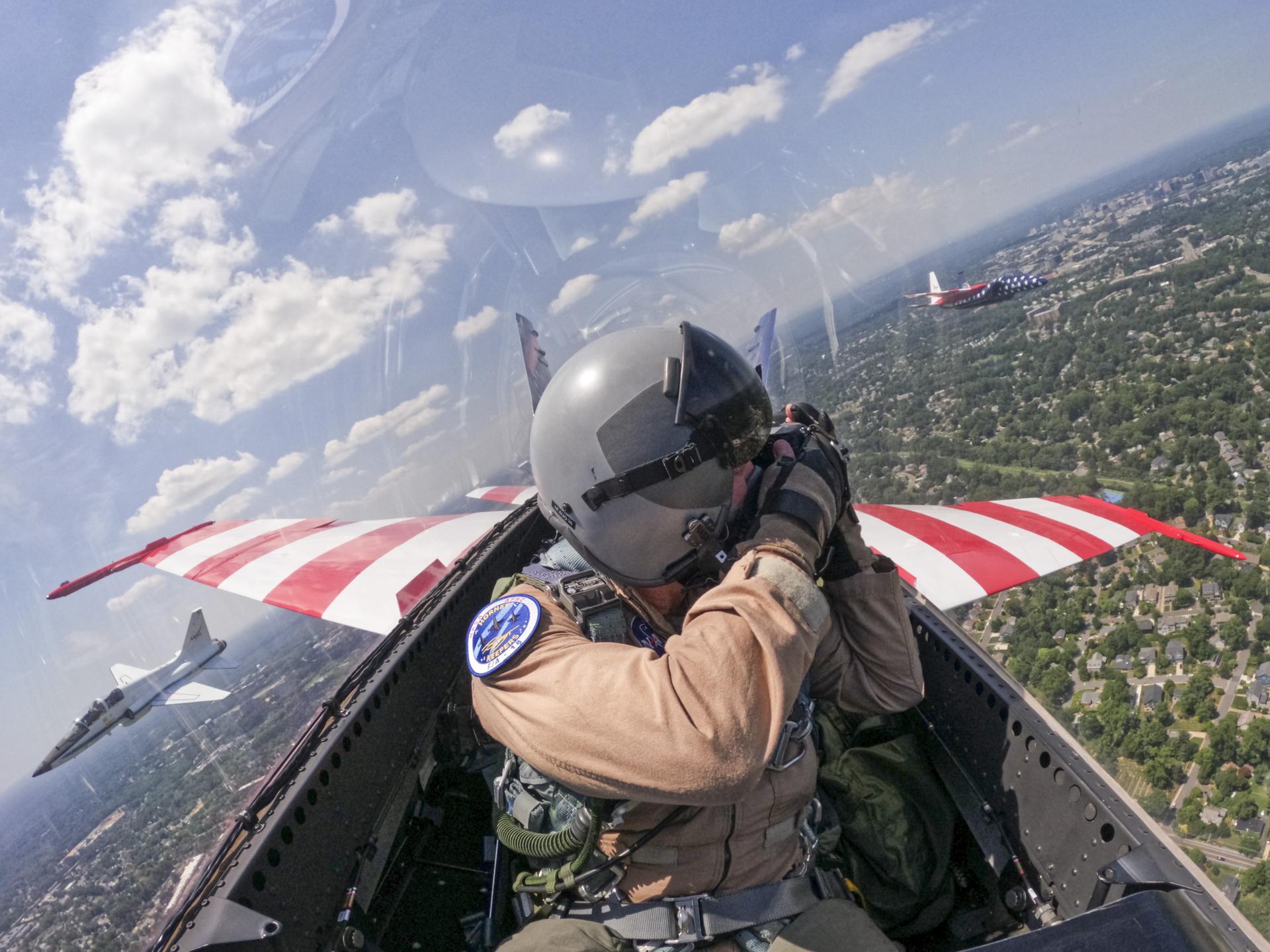
NASA photographer Jim Ross captures photos as he flies above Washington on Saturday, July 4, 2026, in an F-18 aircraft, as part of a flyover to celebrate America’s 250th birthday. This aircraft is from NASA’s Armstrong Flight Research Center in Edwards, California, and it joined other NASA aircraft for the flyover. A NASA F-15 and T-38 are seen flying to the sides of the NASA F-18.
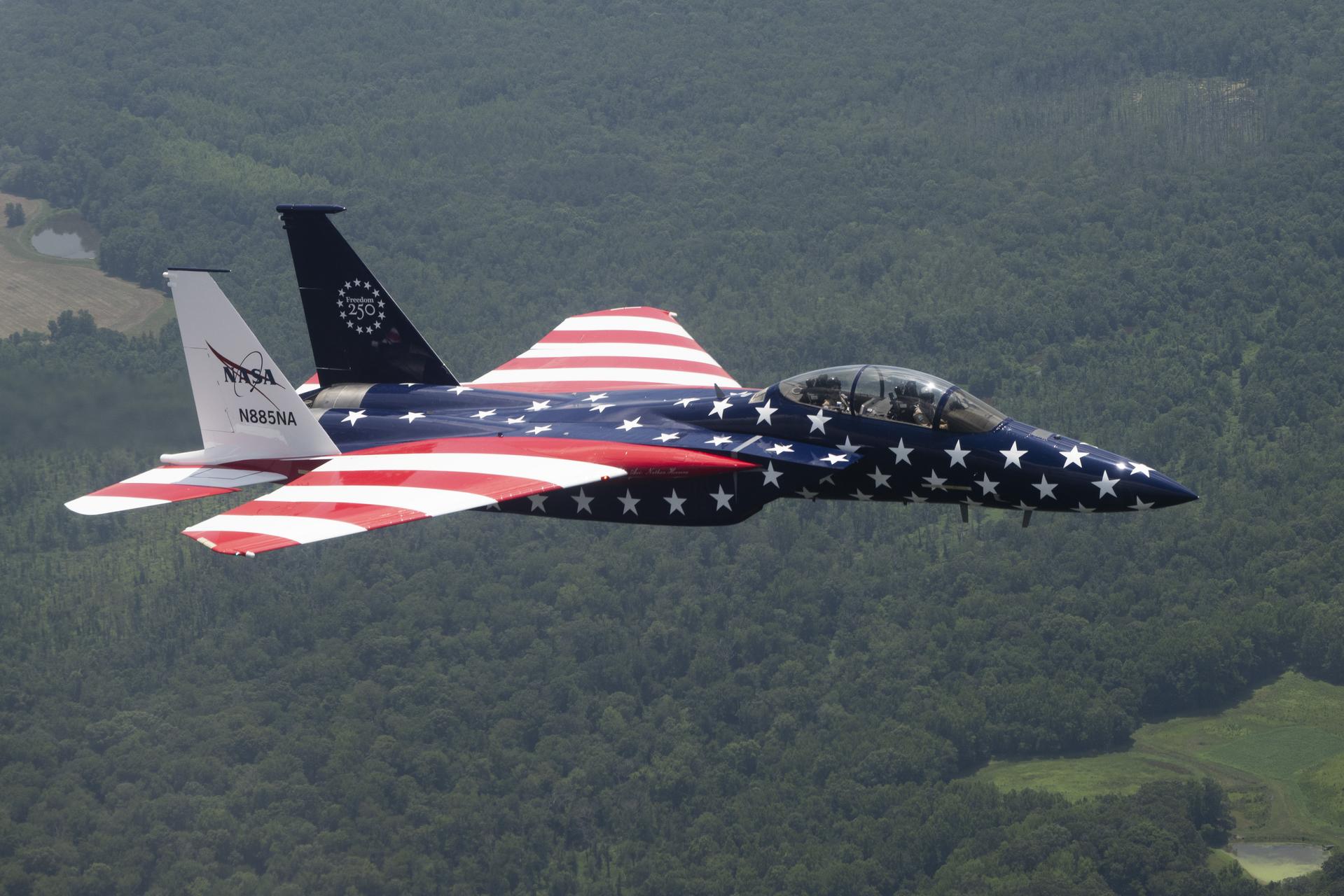
A NASA F-15 aircraft flies above Washington on Saturday, July 4, 2026, as part of a flyover to celebrate America’s 250th birthday. This aircraft is from NASA’s Armstrong Flight Research Center in Edwards, California, and it joined other NASA aircraft for the flyover.
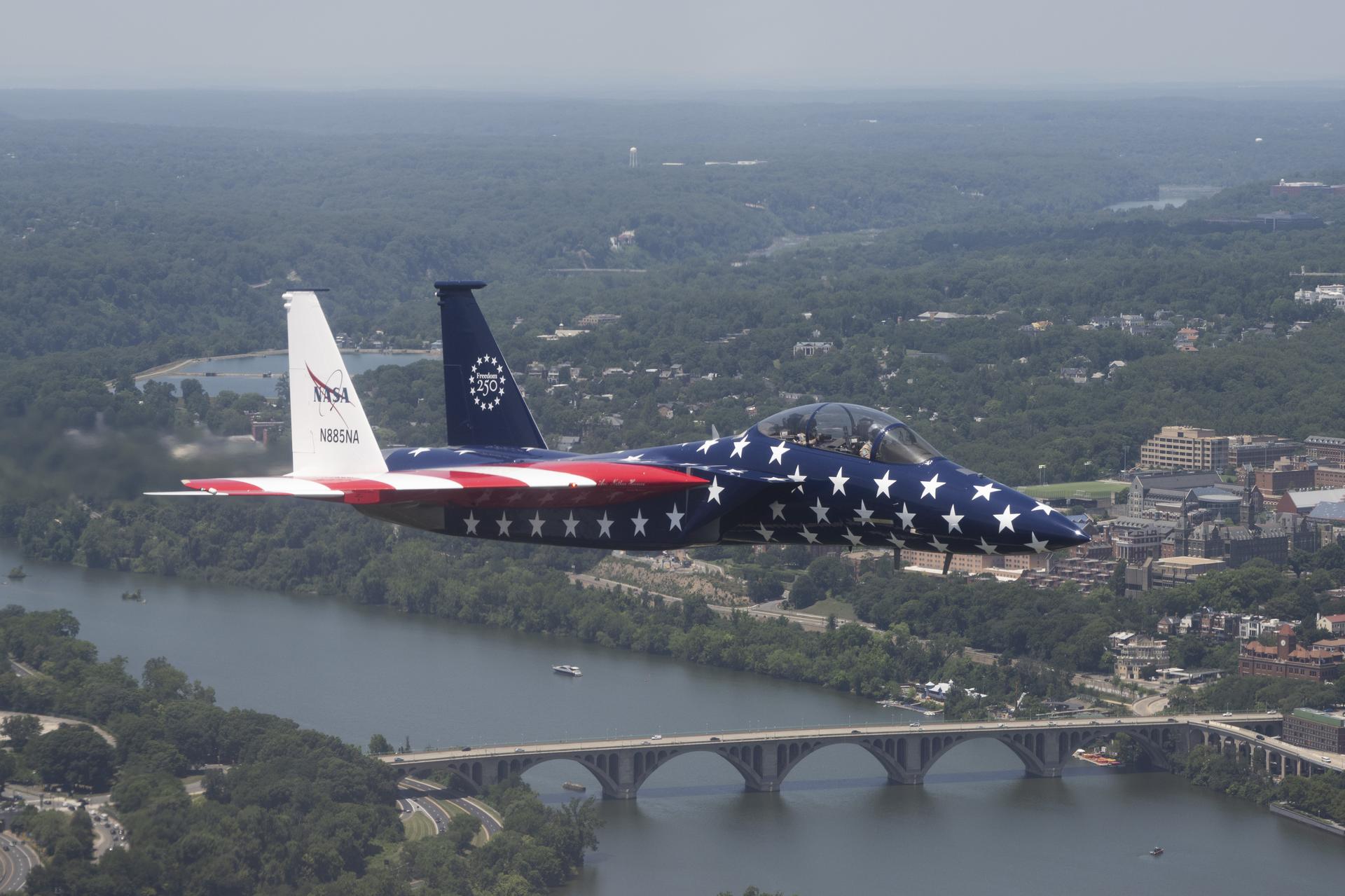
A NASA F-15 aircraft flies above Washington on Saturday, July 4, 2026, as part of a flyover to celebrate America’s 250th birthday. This aircraft is from NASA’s Armstrong Flight Research Center in Edwards, California, and it joined other NASA aircraft for the flyover.
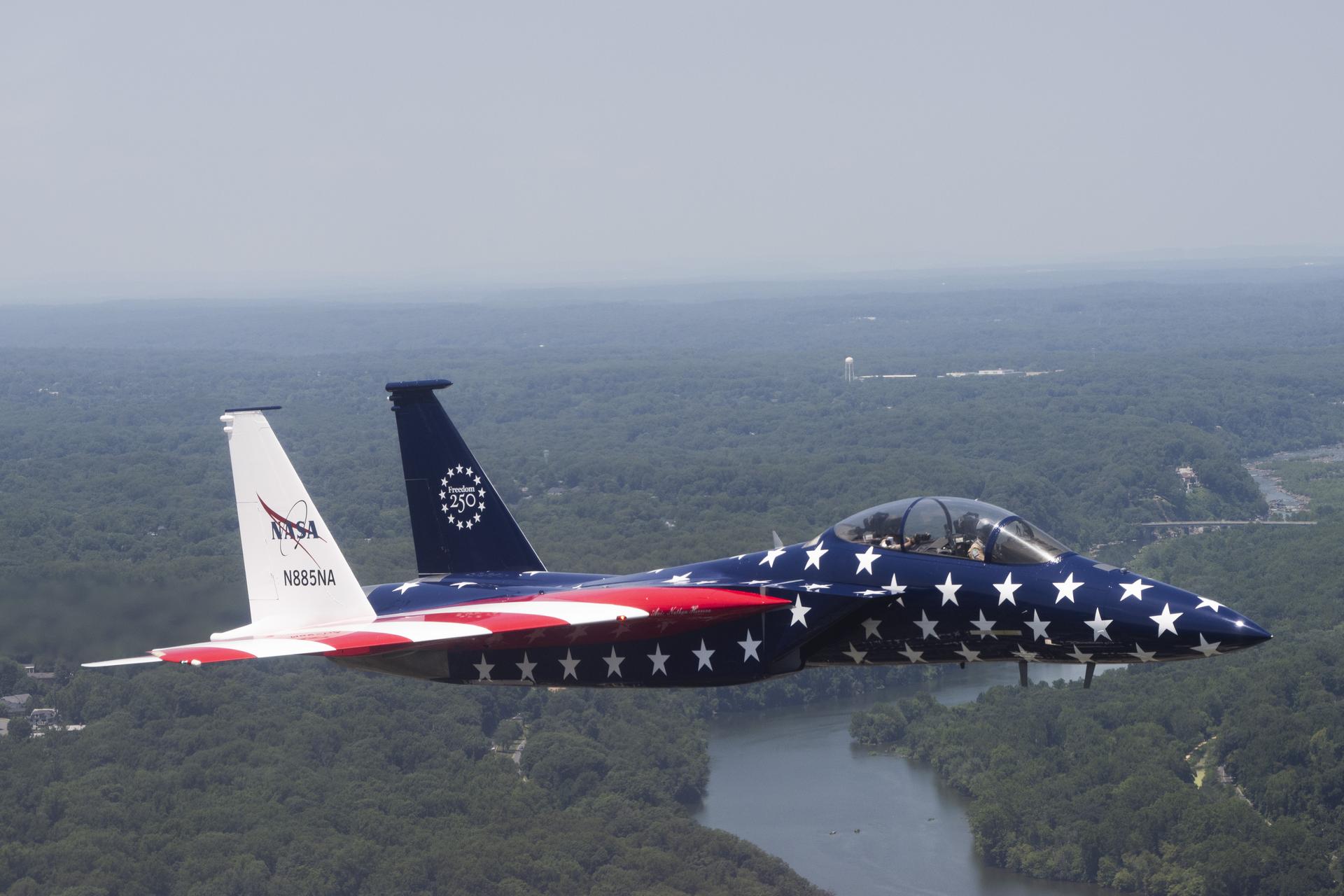
A NASA F-15 aircraft flies above Washington on Saturday, July 4, 2026, as part of a flyover to celebrate America’s 250th birthday. This aircraft is from NASA’s Armstrong Flight Research Center in Edwards, California, and it joined other NASA aircraft for the flyover.
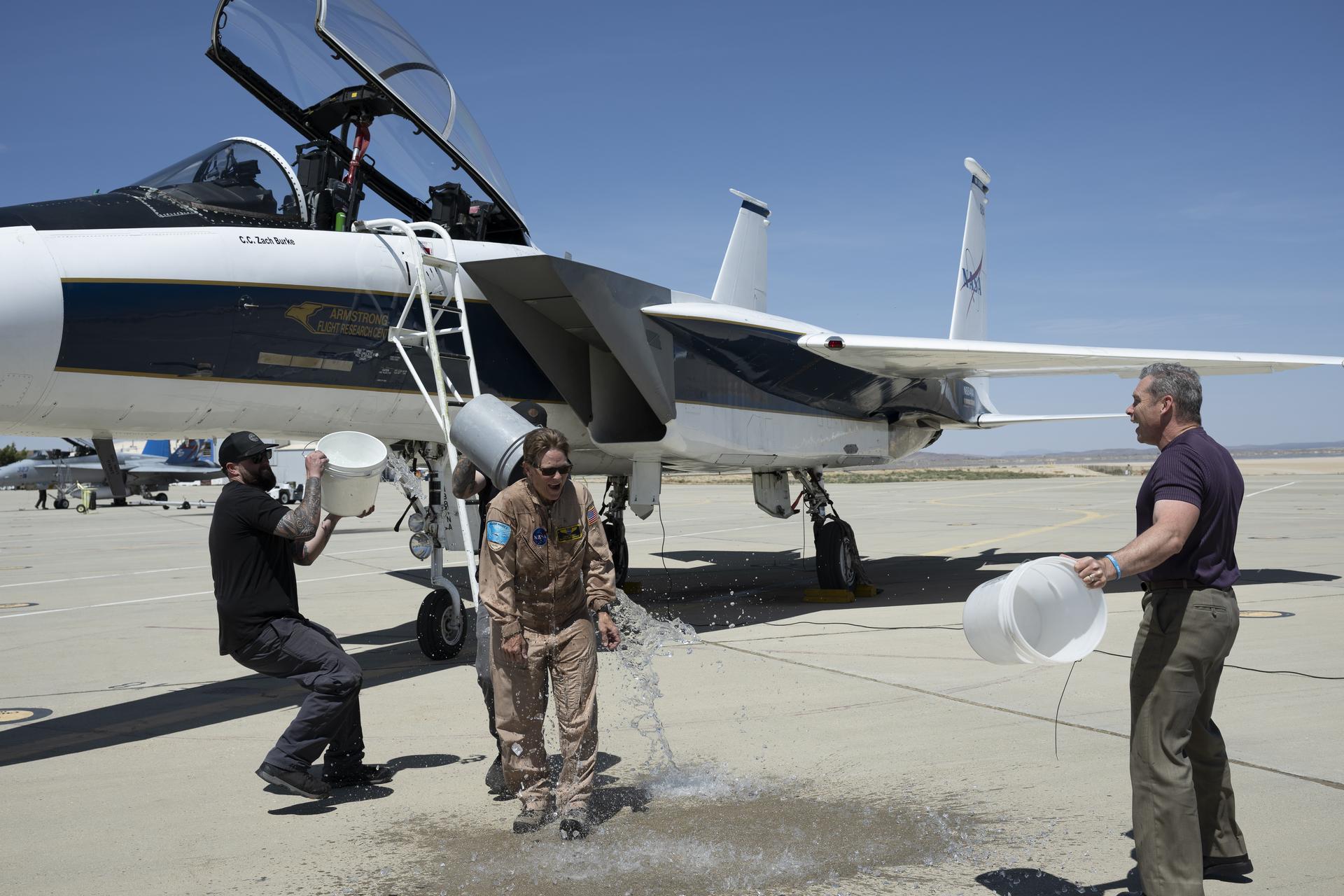
F-15 aircraft crew chief Zack Burke, left, and X-59 mechanic Jamie Trescott, center back, splash buckets of ice water on NASA aerial photographer Carla Thomas in celebration of her 1,000th flight at NASA’s Armstrong Flight Research Center in Edwards, California, on Monday, April 20, 2026. Tim Krall, NASA Armstrong support aircraft fleet manager, watches. Thomas completed her flight in the backseat of a NASA F-15 aircraft flown by NASA Armstrong chief pilot Wayne Ringelberg. For 38 years, Thomas has captured aerial photographs of research and science flights.
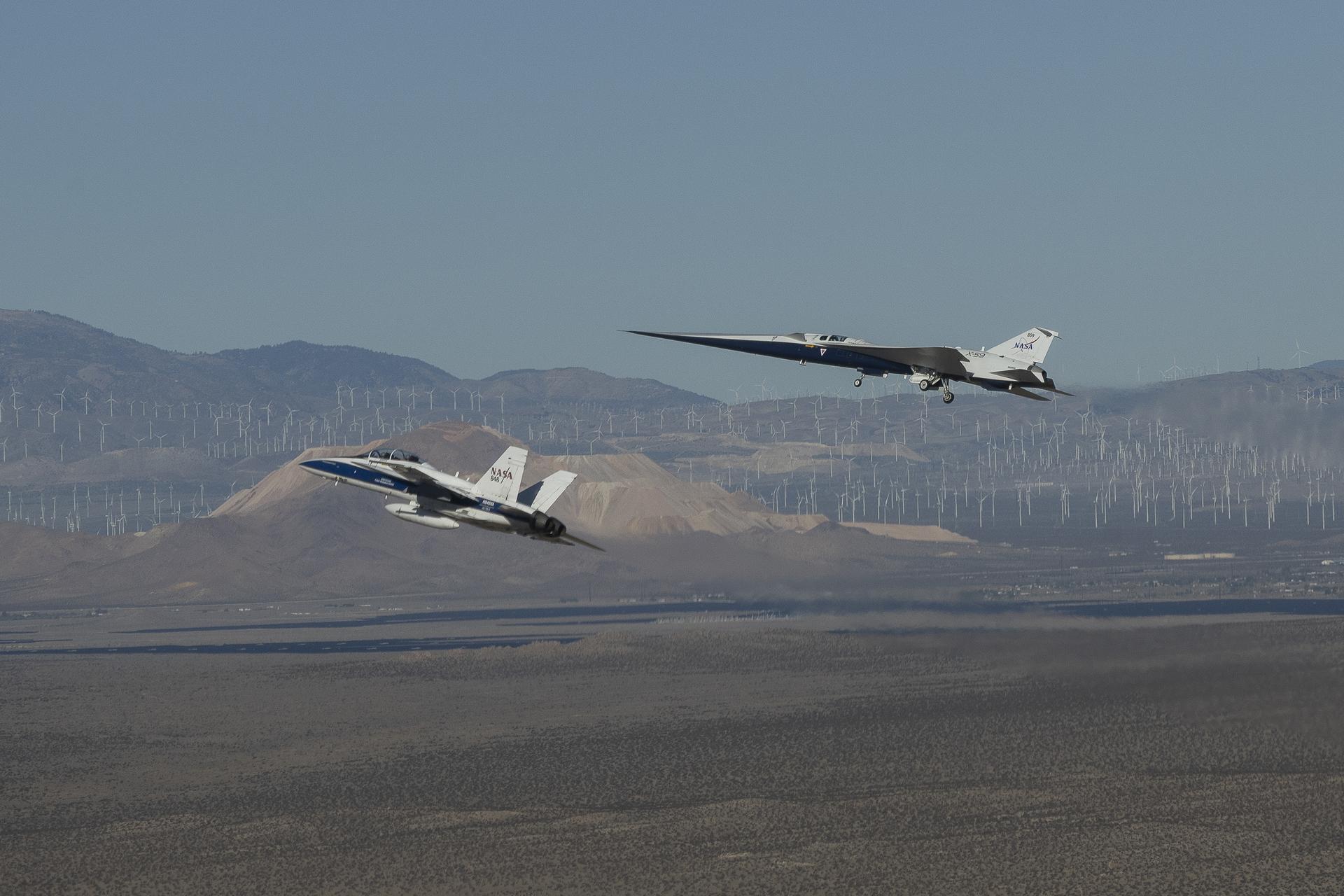
NASA’s X-59 quiet supersonic research aircraft flies above Palmdale and Edwards, California, during its first flight Tuesday, Oct. 28, 2025, accompanied by a NASA F/A-18 research aircraft. A NASA F-15 research aircraft (not pictured) captured the image as the X-59 traveled to NASA’s Armstrong Flight Research Center in Edwards, California, where it will begin flight testing for NASA’s Quesst mission, which aims to demonstrate quiet supersonic flight over land.
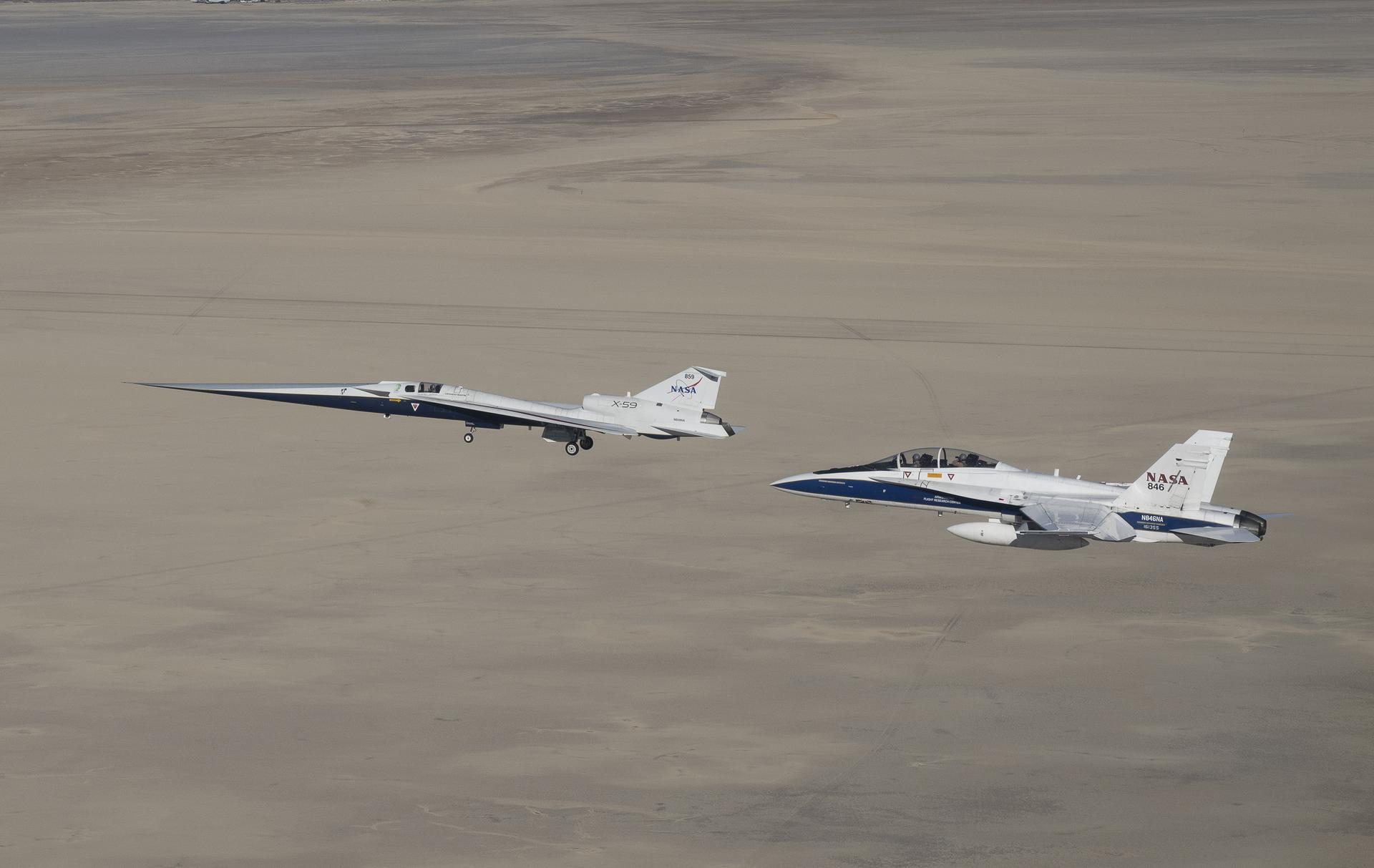
NASA’s X-59 quiet supersonic research aircraft flies above Palmdale and Edwards, California, during its first flight Tuesday, Oct. 28, 2025, accompanied by a NASA F/A-18 research aircraft. A NASA F-15 research aircraft (not pictured) captured the image as the X-59 traveled to NASA’s Armstrong Flight Research Center in Edwards, California, where it will begin flight testing for NASA’s Quesst mission, which aims to demonstrate quiet supersonic flight over land.
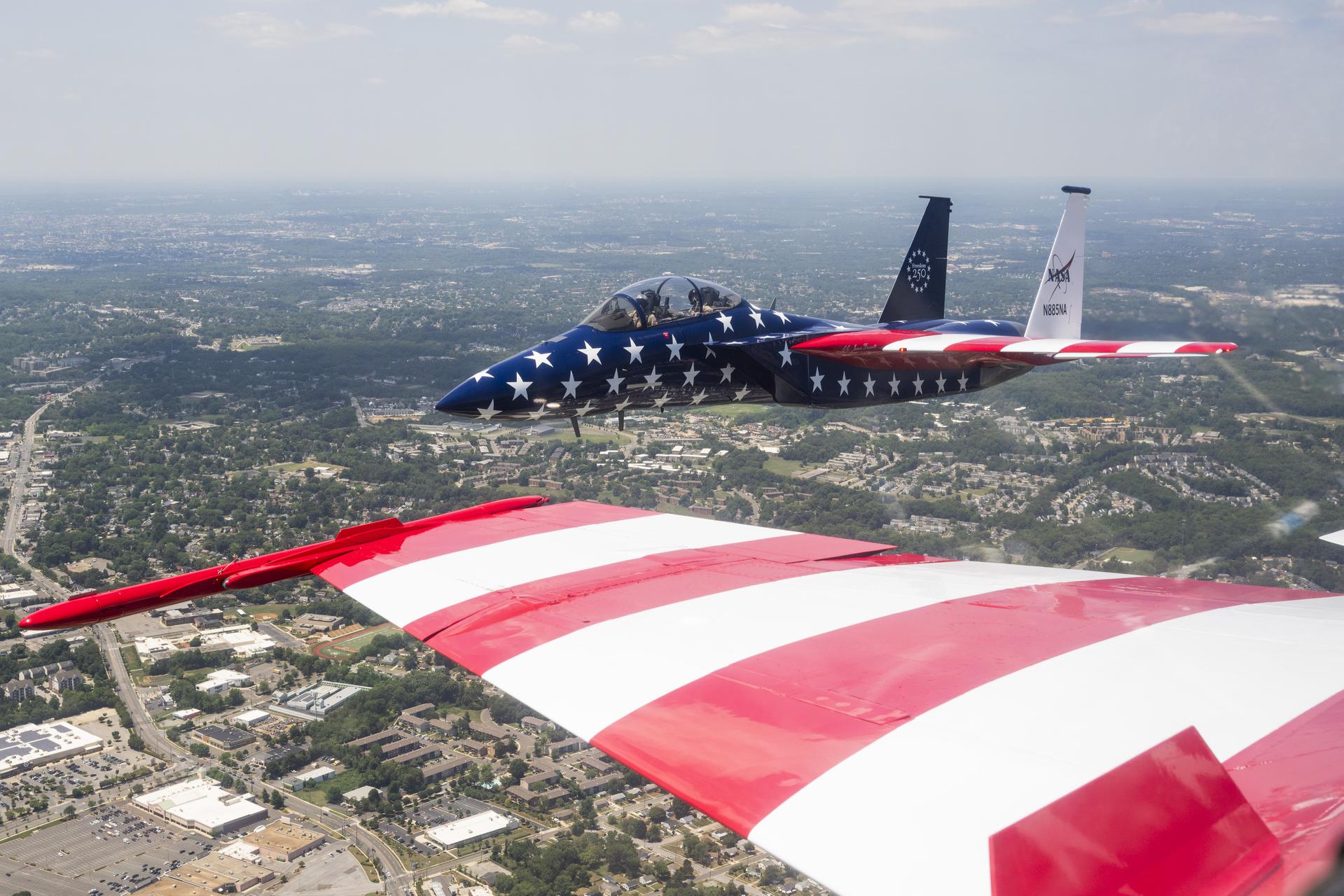
A NASA F-15 aircraft flies above Washington on Saturday, July 4, 2026, as part of a flyover to celebrate America’s 250th birthday. The wing of a NASA F-18 is seen in the foreground, as a NASA photographer captured this image from inside the cockpit. This aircraft is from NASA’s Armstrong Flight Research Center in Edwards, California, and it joined other NASA aircraft for the flyover.
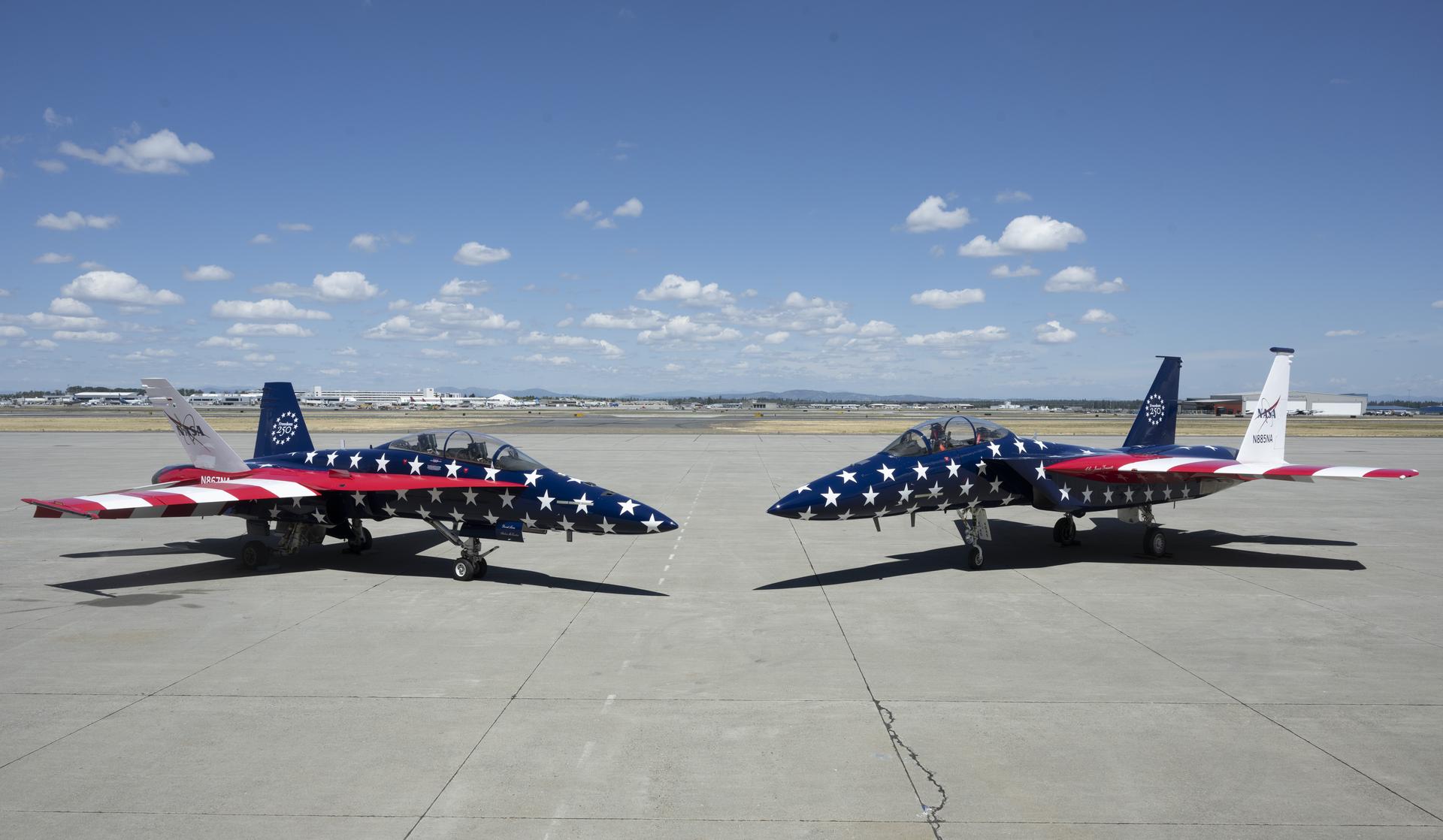
NASA’s F-15, right, and F/A-18 aircraft are shown at International Aerospace Coatings Inc.’s facility in Spokane, Washington, on Thursday, July 2, 2026, with new red, white, and blue paint to celebrate America’s 250th birthday. The aircraft, from NASA’s Armstrong Flight Research Center in Edwards, California, participated in the Freedom 250 flyover in Washington on Saturday, July 4, 2026, with other NASA and military aircraft. NASA/Jim Ross
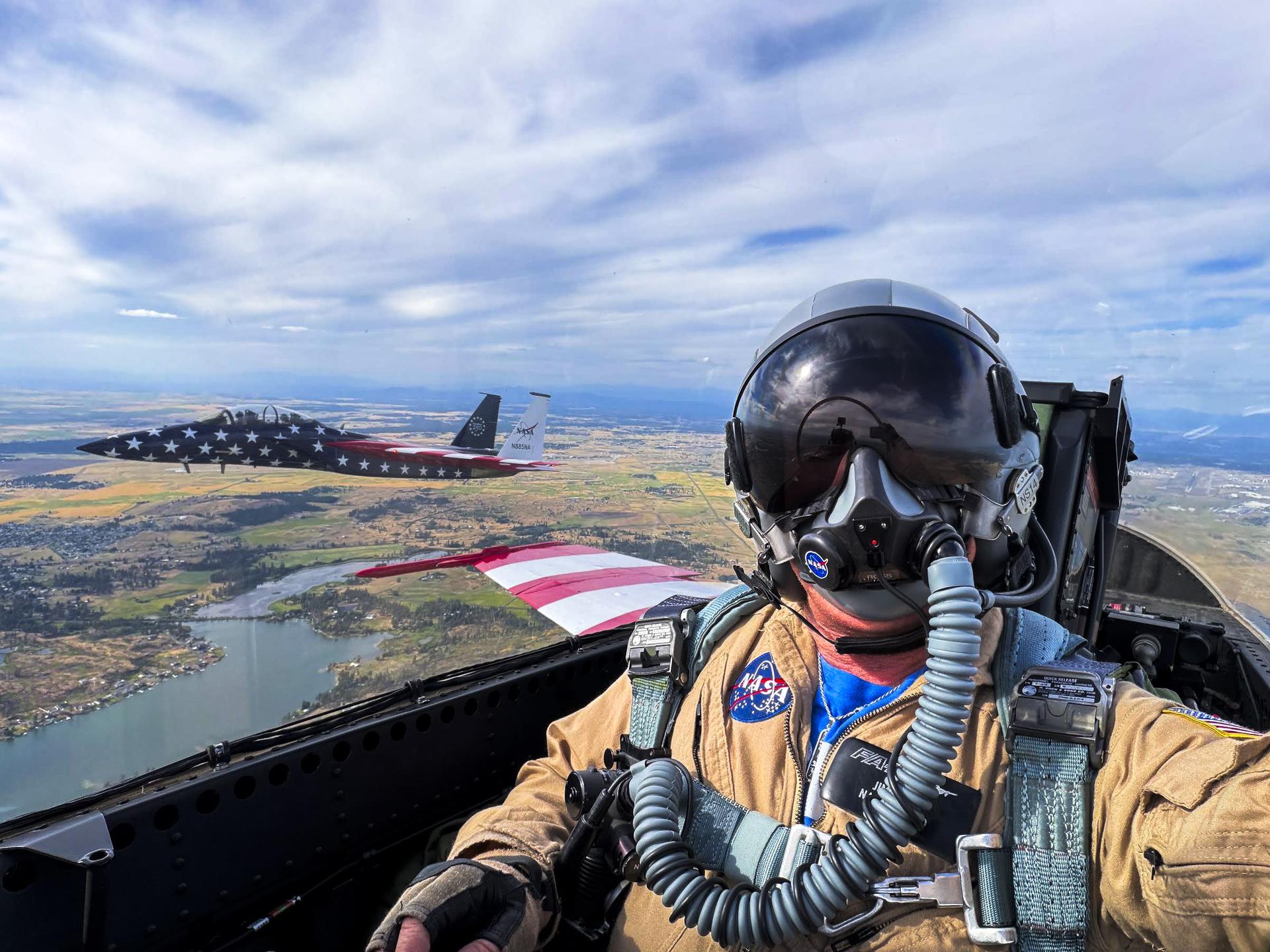
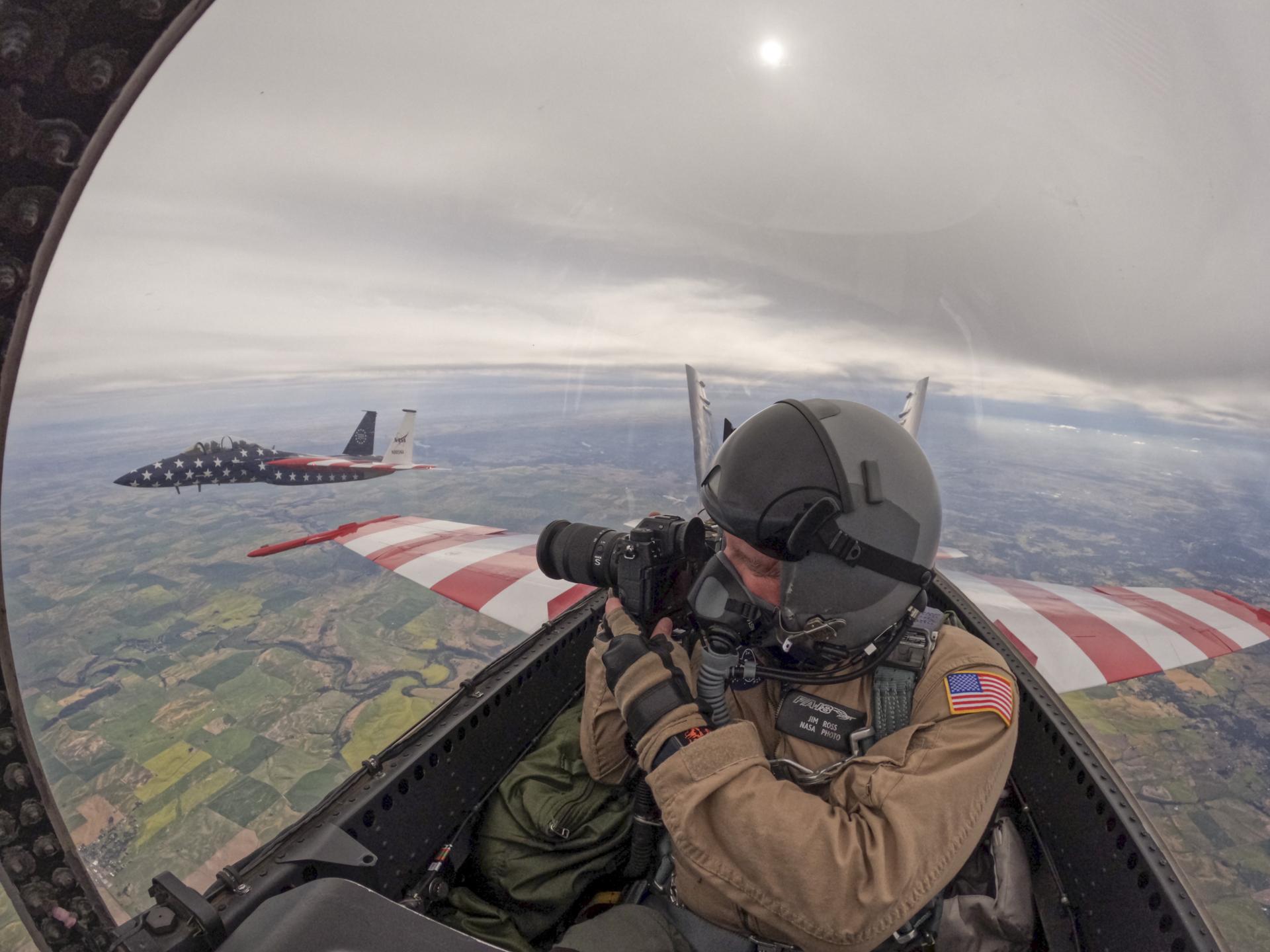
NASA photographer Jim Ross takes a selfie from the rear seat of a NASA F/A‑18 during a cross‑country flight from Spokane, Washington, to Washington, D.C., on Thursday, July 2, 2026. The agency’s F‑15, flying alongside the aircraft, is visible through the window. Both aircraft, from NASA’s Armstrong Flight Research Center in Edwards, California, participated in the Freedom 250 flyover with other NASA and military aircraft on Saturday, July 4, 2026.
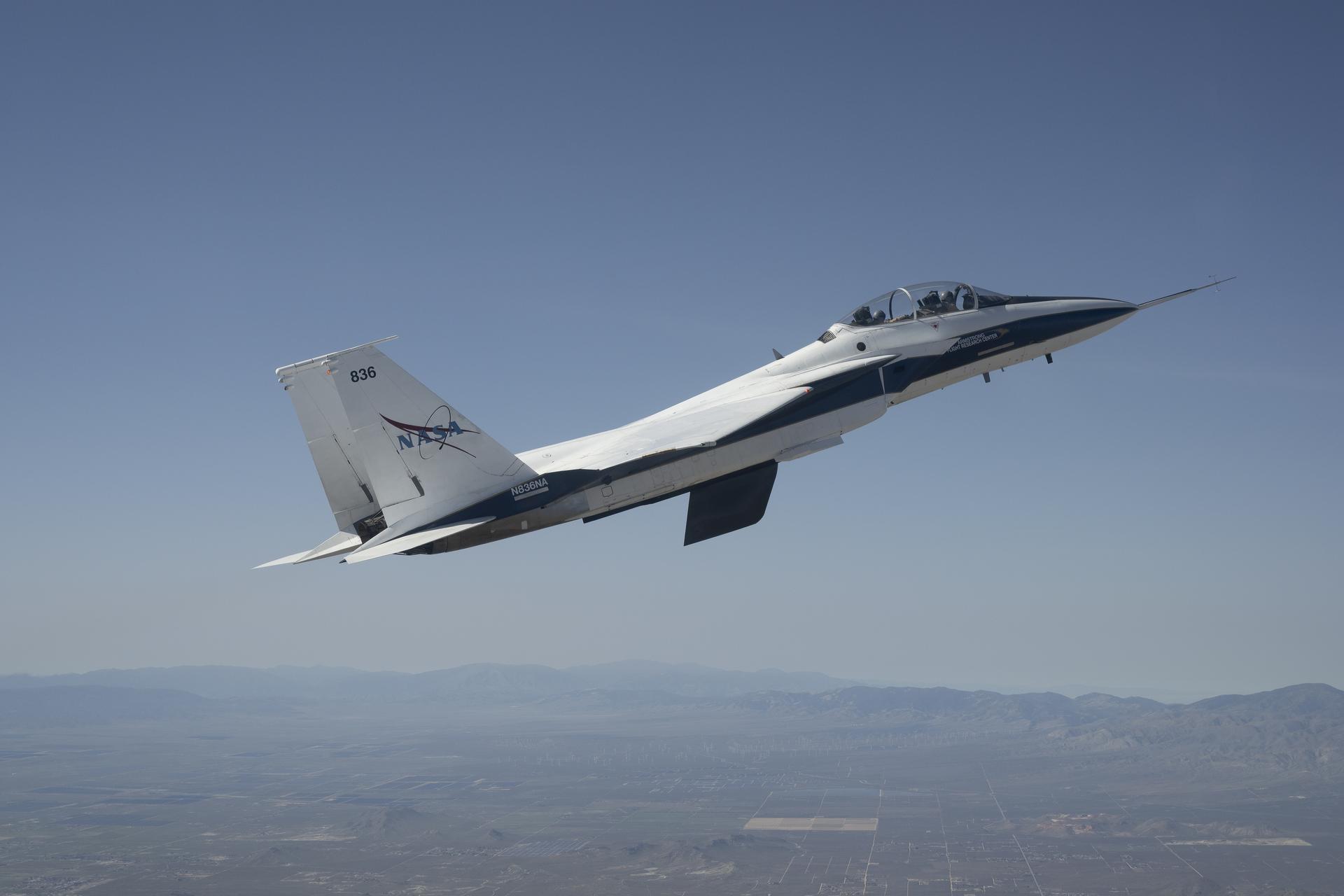
NASA’s Crossflow Attenuated Natural Laminar Flow (CATNLF) scale-model wing flies for the first time on a NASA F-15 research jet during a test flight from NASA’s Armstrong Flight Research Center in Edwards, California. The 75-minute flight confirmed the aircraft could maneuver safely with the approximately 3-foot-tall test article mounted beneath it. NASA will continue flight tests to collect data that validates the CATNLF design and its potential to improve laminar flow, reducing drag and lowering fuel costs for future commercial aircraft.
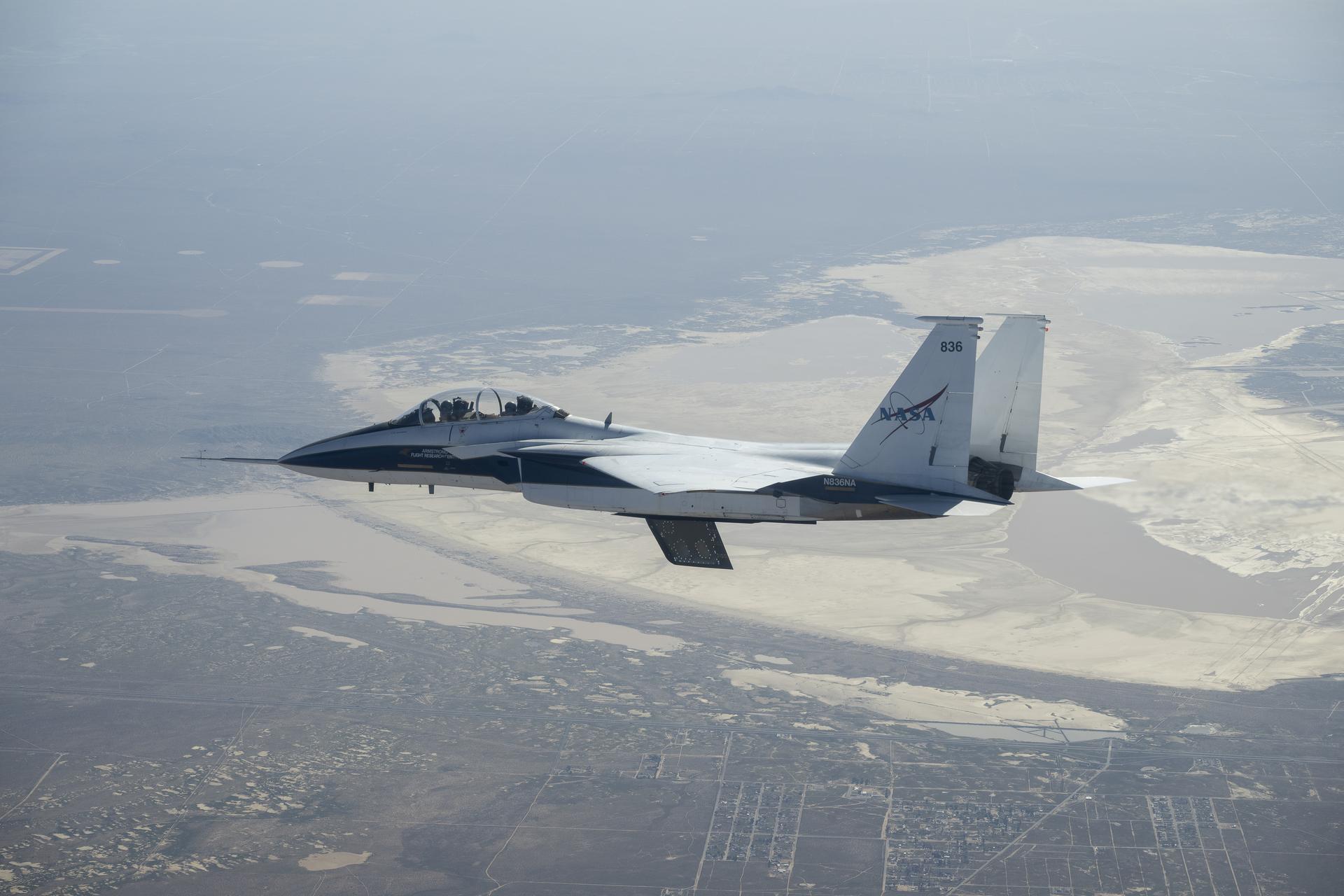
NASA’s Crossflow Attenuated Natural Laminar Flow (CATNLF) scale-model wing flies for the first time on a NASA F-15 research jet during a test flight from NASA’s Armstrong Flight Research Center in Edwards, California. The 75-minute flight confirmed the aircraft could maneuver safely with the approximately 3-foot-tall test article mounted beneath it. NASA will continue flight tests to collect data that validates the CATNLF design and its potential to improve laminar flow, reducing drag and lowering fuel costs for future commercial aircraft.
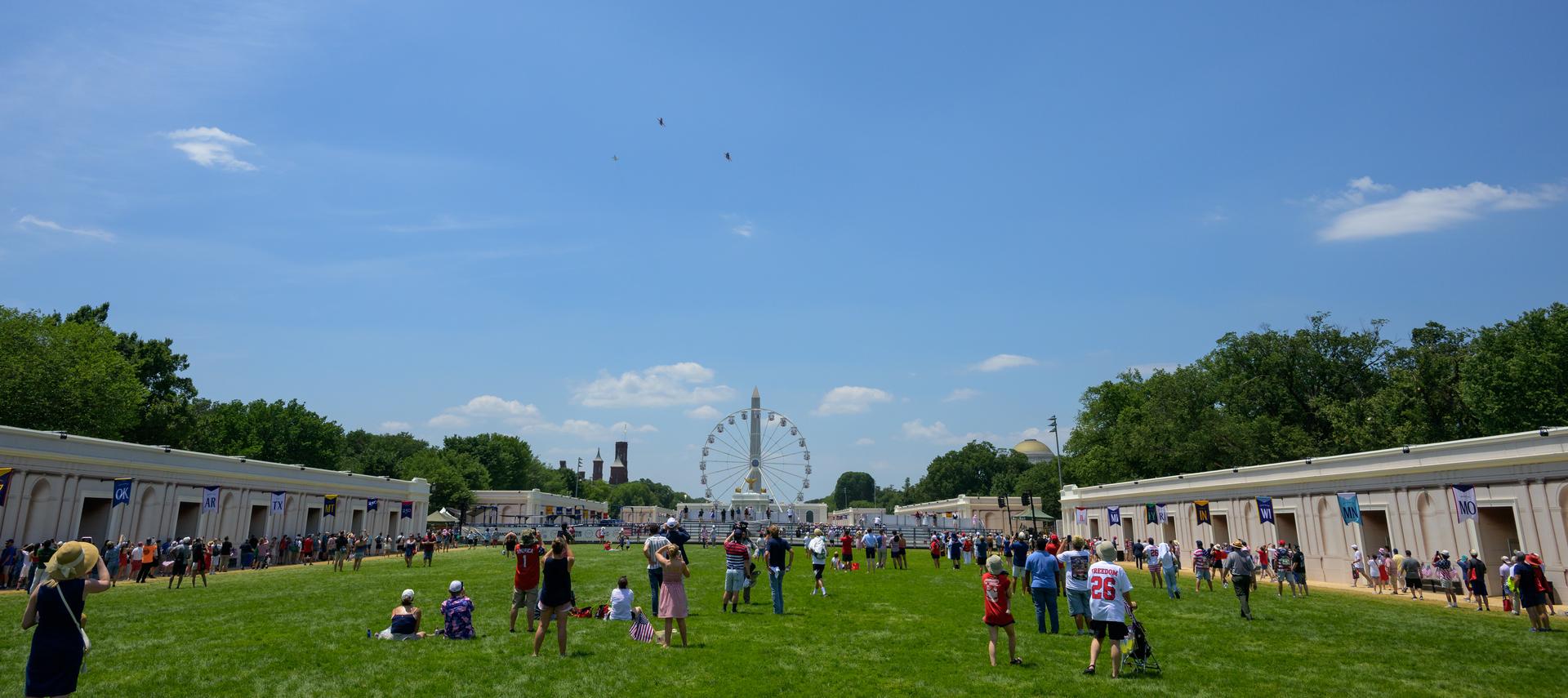
NASA’s T-38 Talon, left, F/A-18 Hornet and F-15 Eagle, right, aircraft are seen as they perform a flyover during the Great American State Fair, Saturday, July 4, 2026, on the National Mall in Washington. Photo Credit: (NASA/Bill Ingalls)
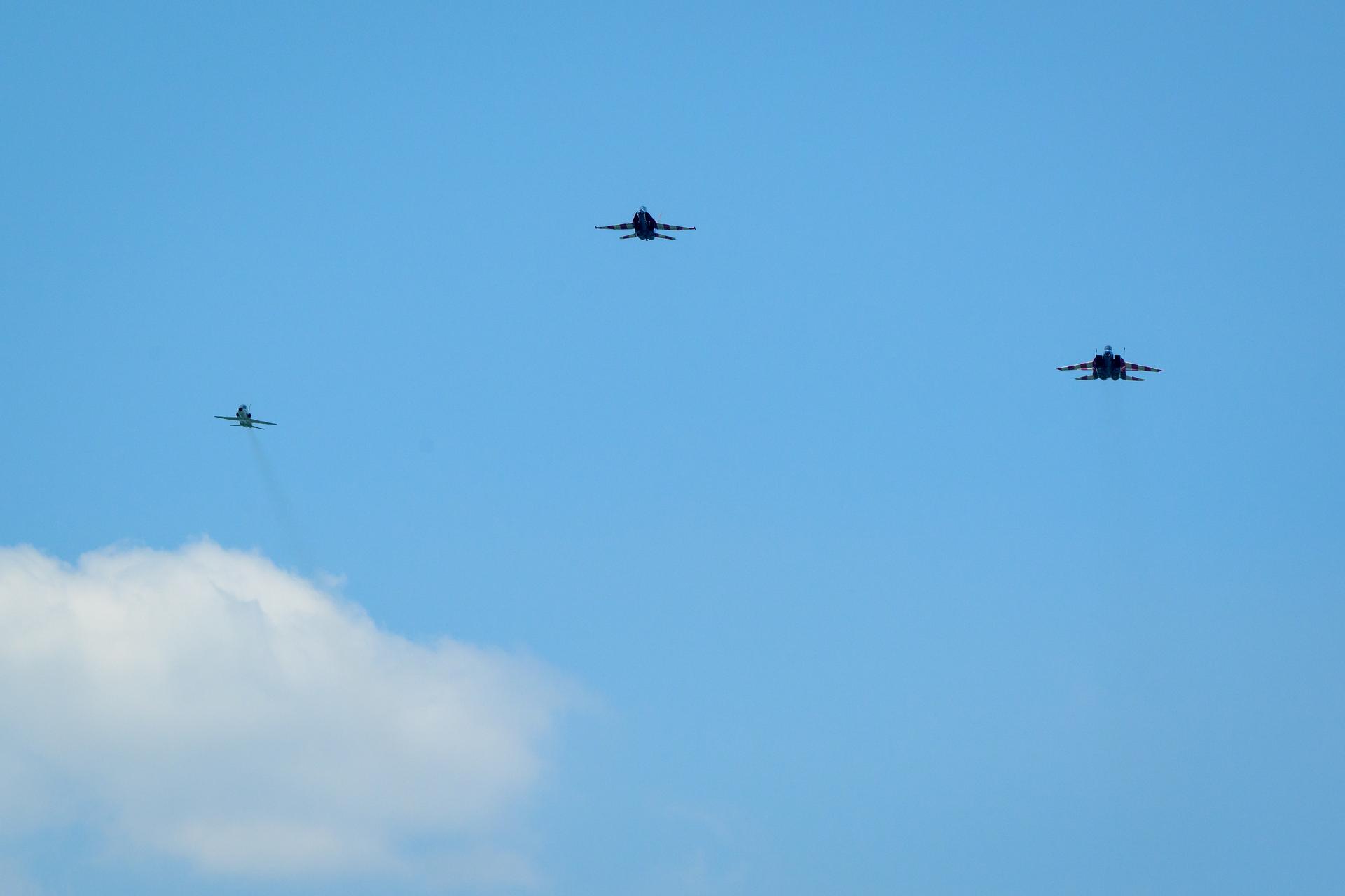
NASA’s T-38 Talon, left, F/A-18 Hornet and F-15 Eagle, right, aircraft are seen as they perform a flyover during the Great American State Fair, Saturday, July 4, 2026, on the National Mall in Washington. Photo Credit: (NASA/Bill Ingalls)
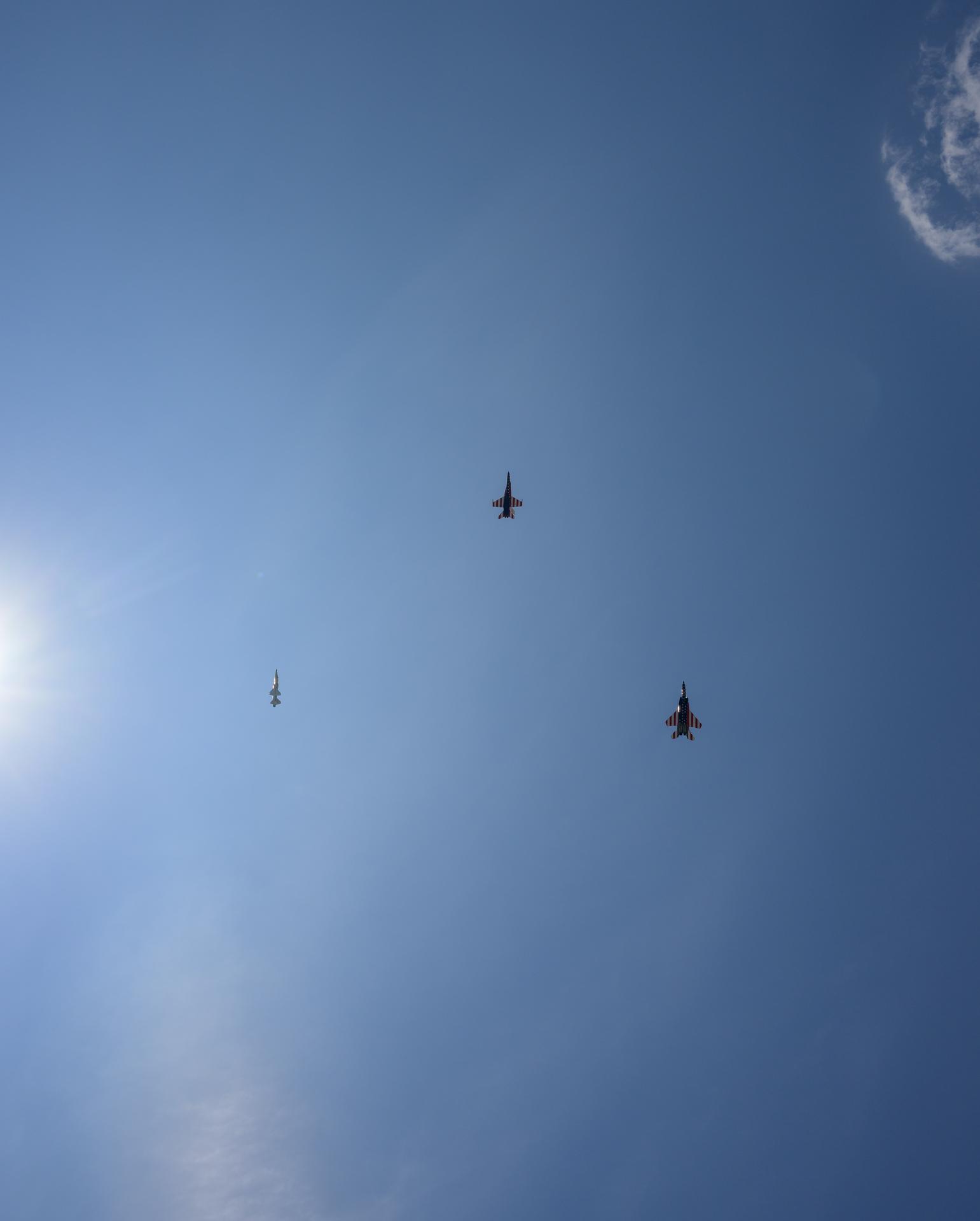
NASA’s T-38 Talon, left, F/A-18 Hornet and F-15 Eagle, right, aircraft are seen as they perform a flyover during the Great American State Fair, Saturday, July 4, 2026, on the National Mall in Washington. Photo Credit: (NASA/Bill Ingalls)
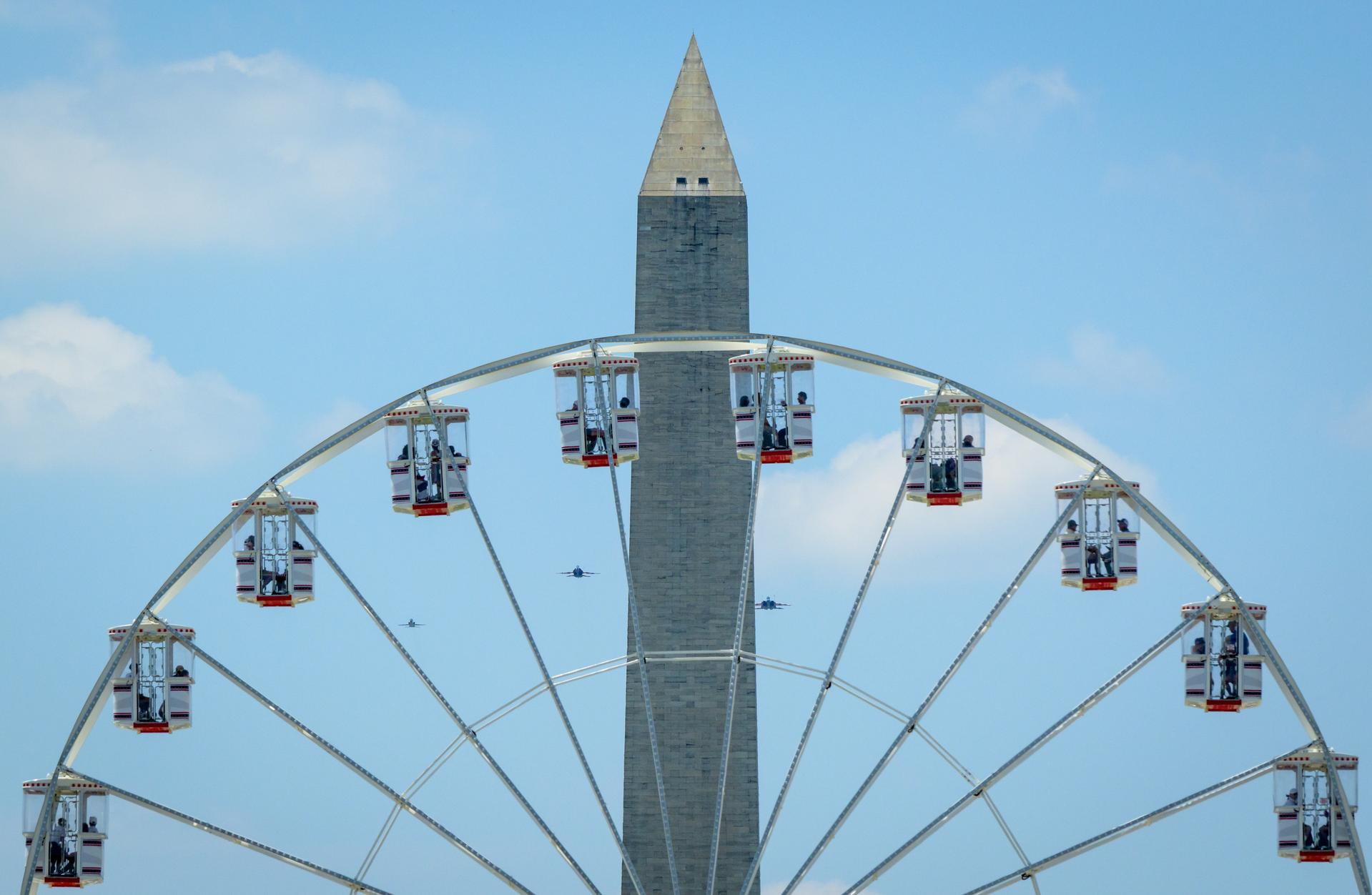
NASA’s T-38 Talon, left, F/A-18 Hornet and F-15 Eagle, right, aircraft are seen as they perform a flyover during the Great American State Fair, Saturday, July 4, 2026, on the National Mall in Washington. Photo Credit: (NASA/Bill Ingalls)
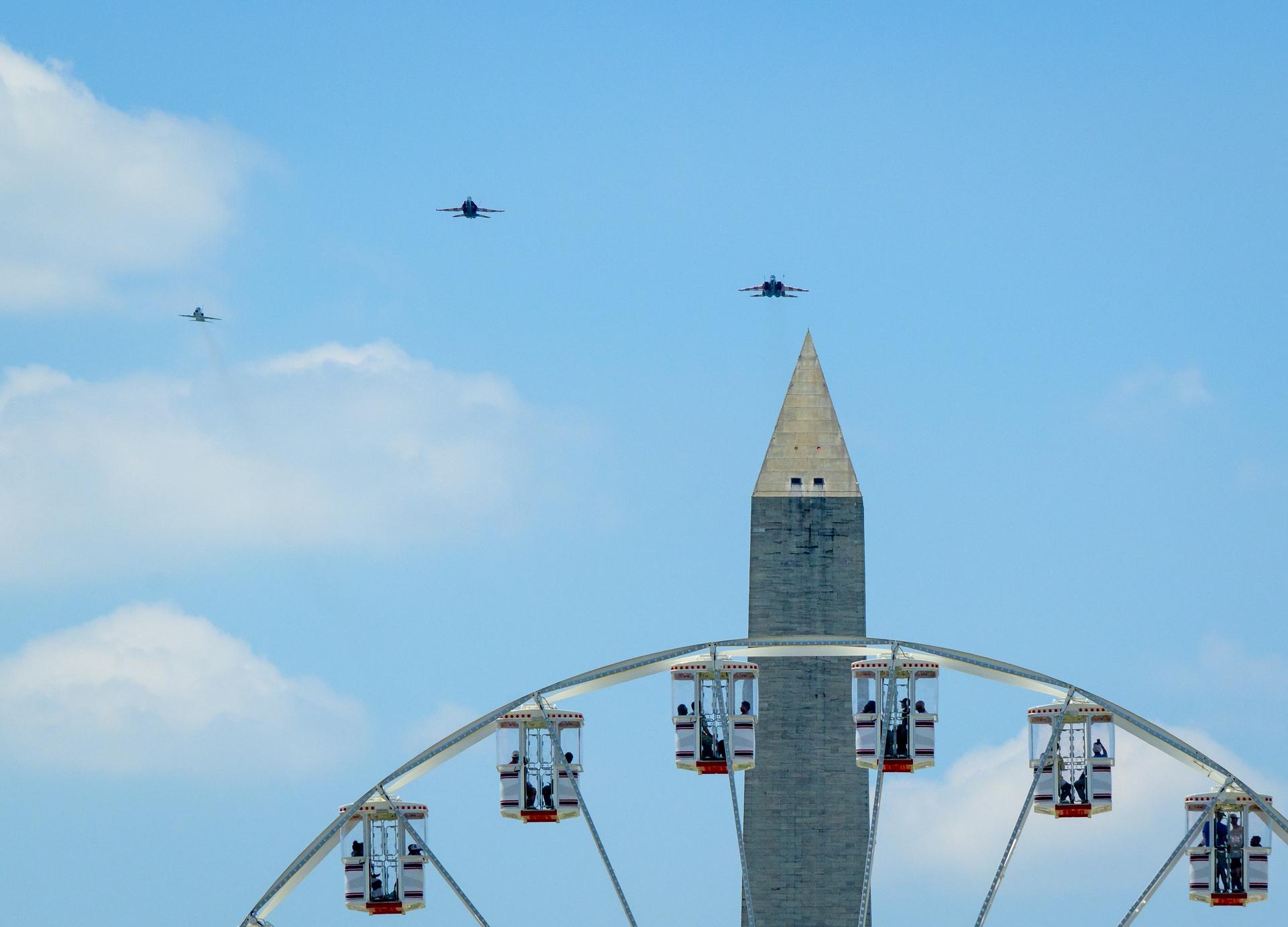
NASA’s T-38 Talon, left, F/A-18 Hornet and F-15 Eagle, right, aircraft are seen as they perform a flyover during the Great American State Fair, Saturday, July 4, 2026, on the National Mall in Washington. Photo Credit: (NASA/Bill Ingalls)
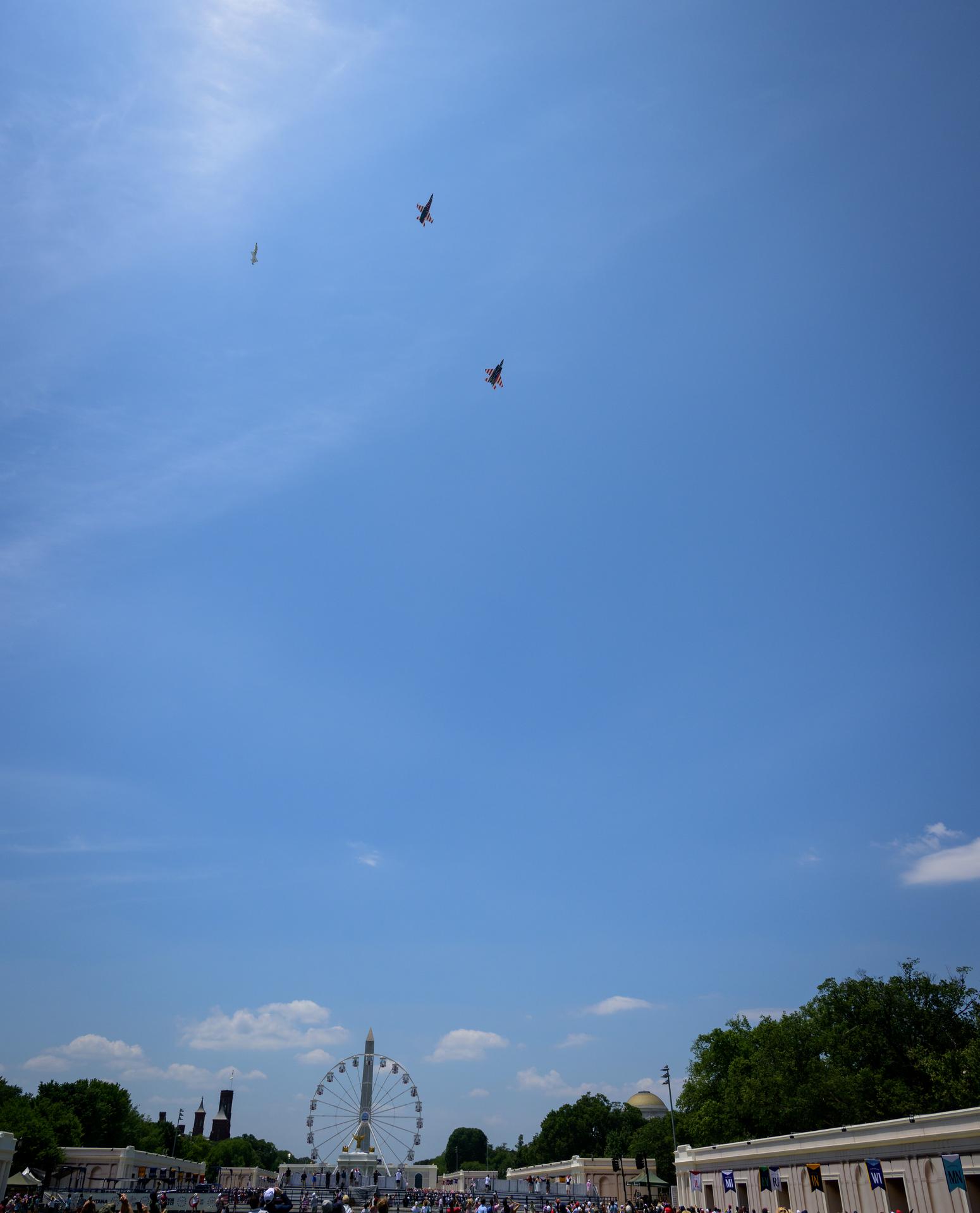
NASA’s T-38 Talon, left, F/A-18 Hornet and F-15 Eagle, right, aircraft are seen as they perform a flyover during the Great American State Fair, Saturday, July 4, 2026, on the National Mall in Washington. Photo Credit: (NASA/Bill Ingalls)
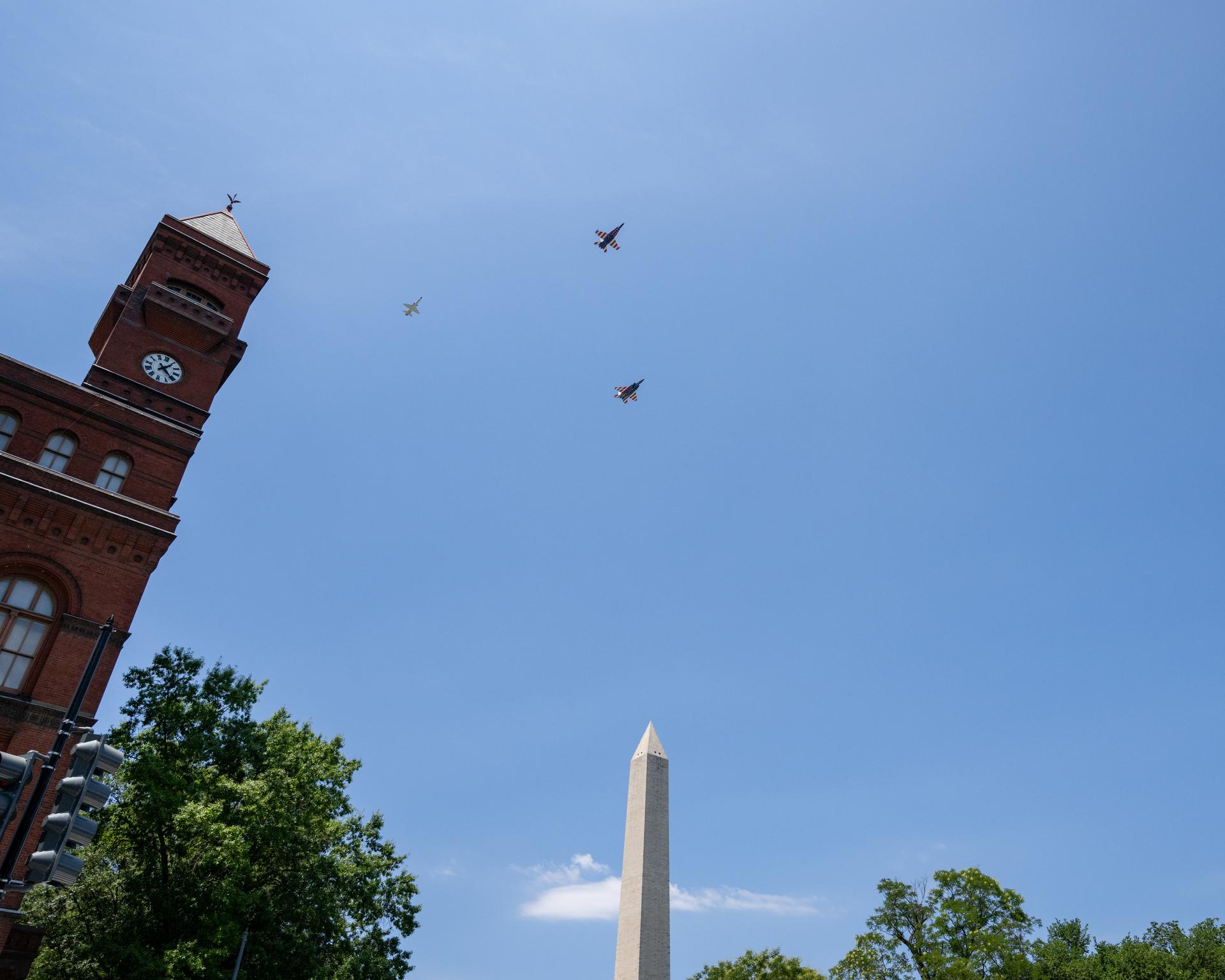
NASA’s T-38 Talon, F/A-18 Hornet and F-15 Eagle aircraft are seen as they perform a flyover during the Great American State Fair, Saturday, July 4, 2026, on the National Mall in Washington. Photo Credit: (NASA/Keegan Barber)
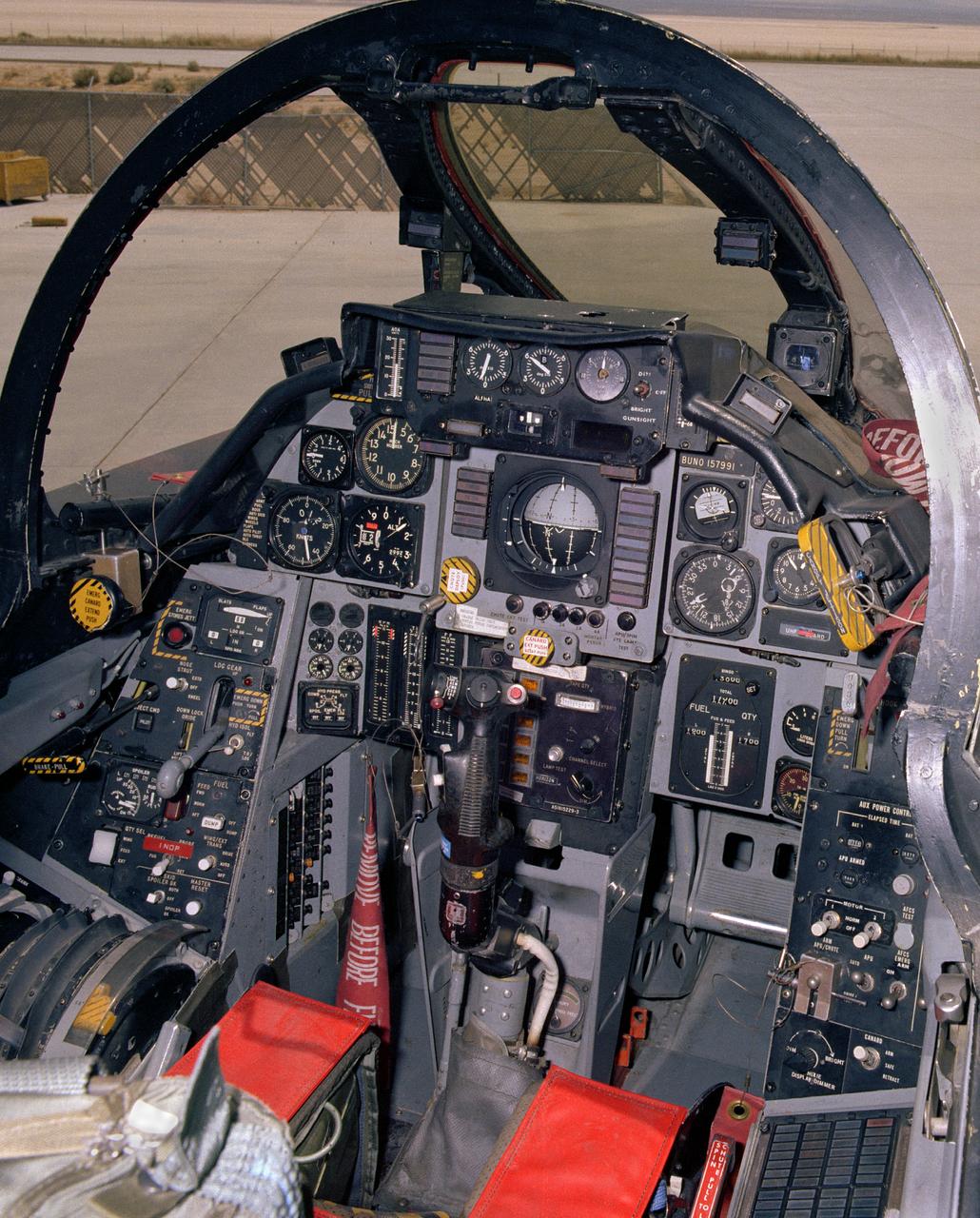
View of the cockpit of NASA's F-14, tail number 991. This aircraft was the first of a series of post-Vietnam fighters, followed by the F-15, F-16, and F-18. They were designed for maneuverability in air-to-air combat. The F-14s had a spin problem that posed problems for its ability to engage successfully in a dogfight, since it tended to depart from controlled flight at the high angles of attack that frequently occur in close-in engagements.
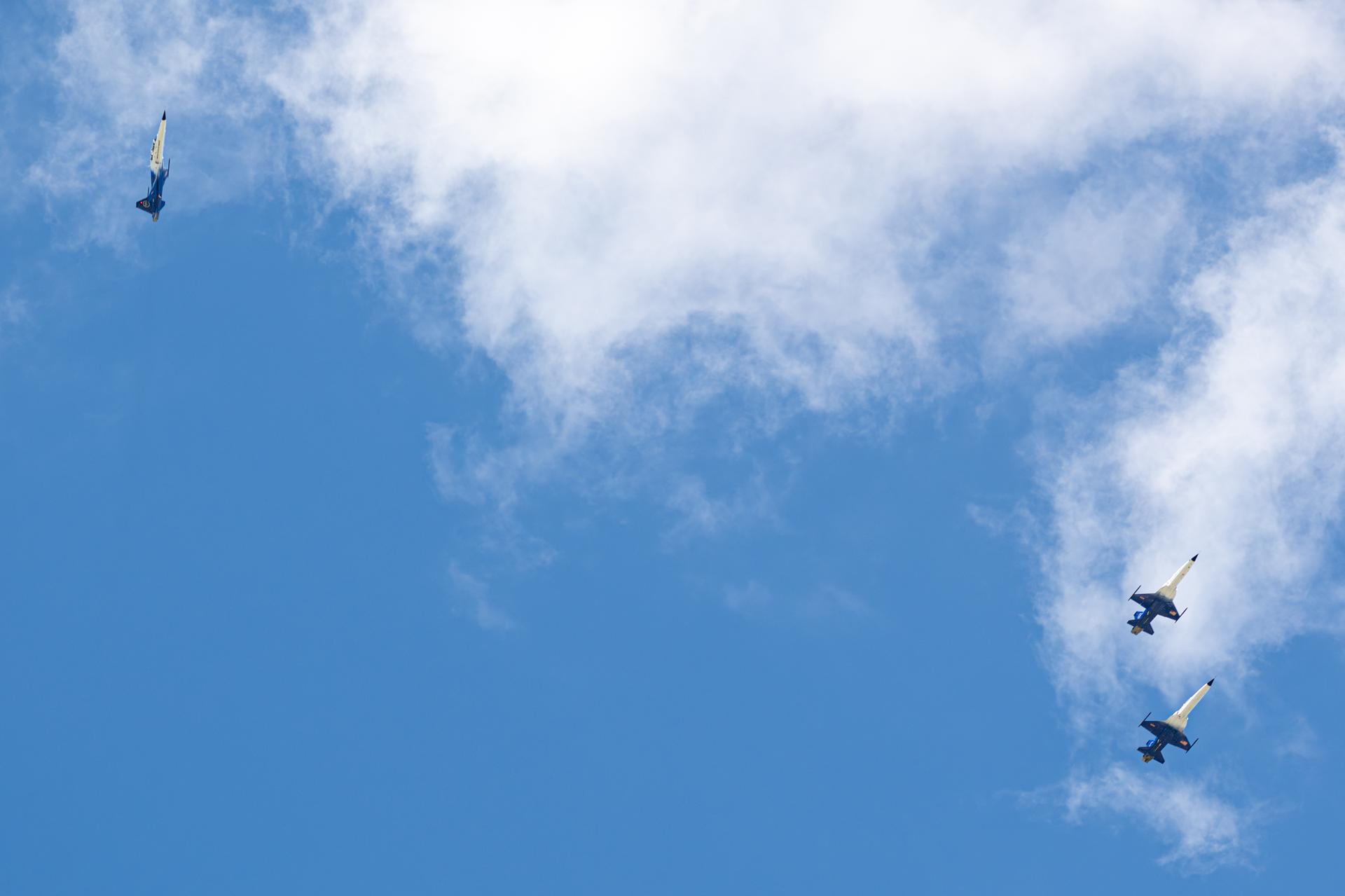
NASA Administrator Jared Isaacman arrives at the SUN ’n FUN Aerospace Expo in a formation flight with his F-5 aircraft, Wednesday, Apr. 15, 2026, in Lakeland, Fla. Photo Credit: (NASA/John Kraus)
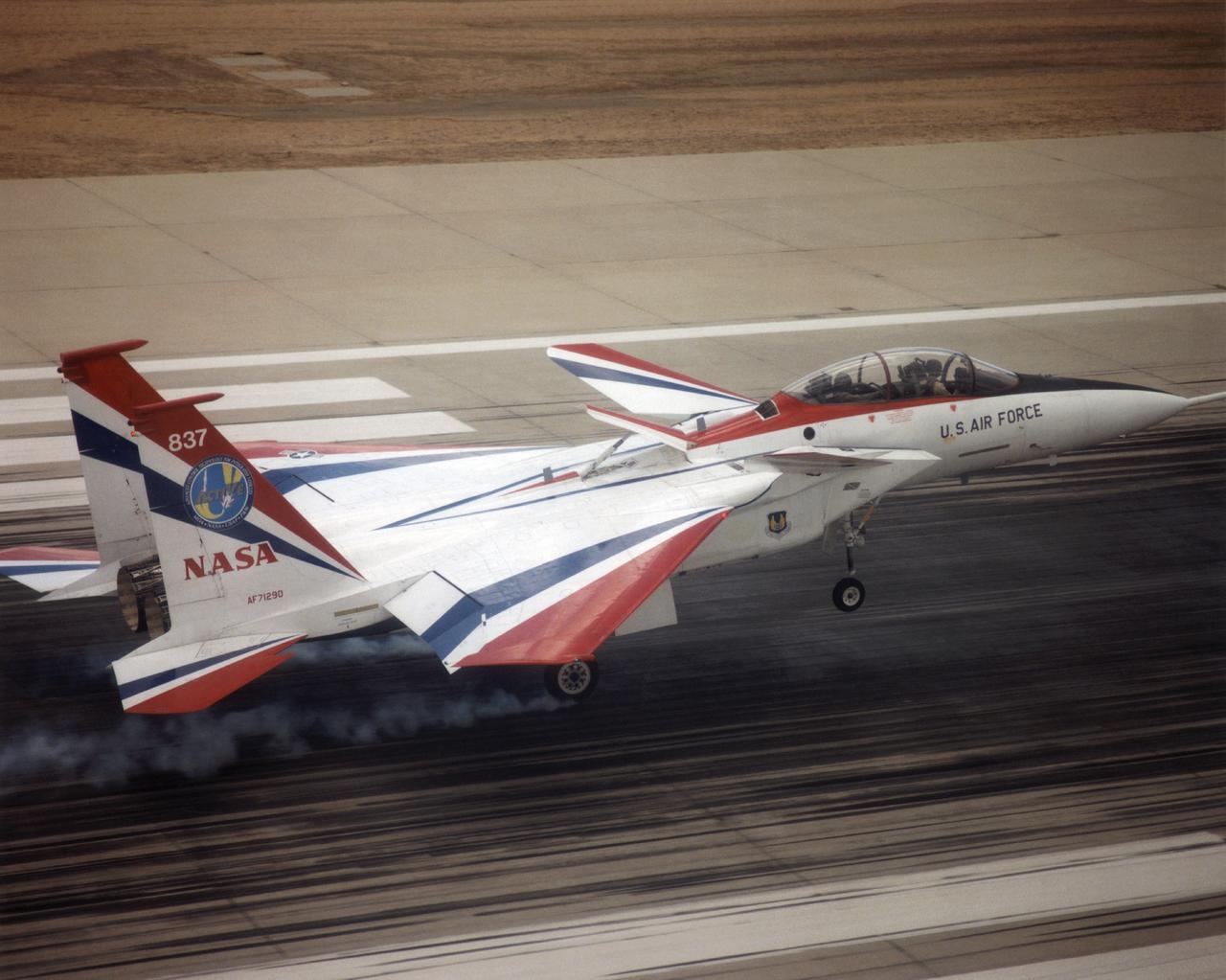
The F-15 ACTIVE touches down on the Edwards runway following its April 14, 1998 flight. The nose is high while the canards have their rear edge raised. the aircraft's speed brake, located on the top of the aircraft behind the canopy, is also raised.
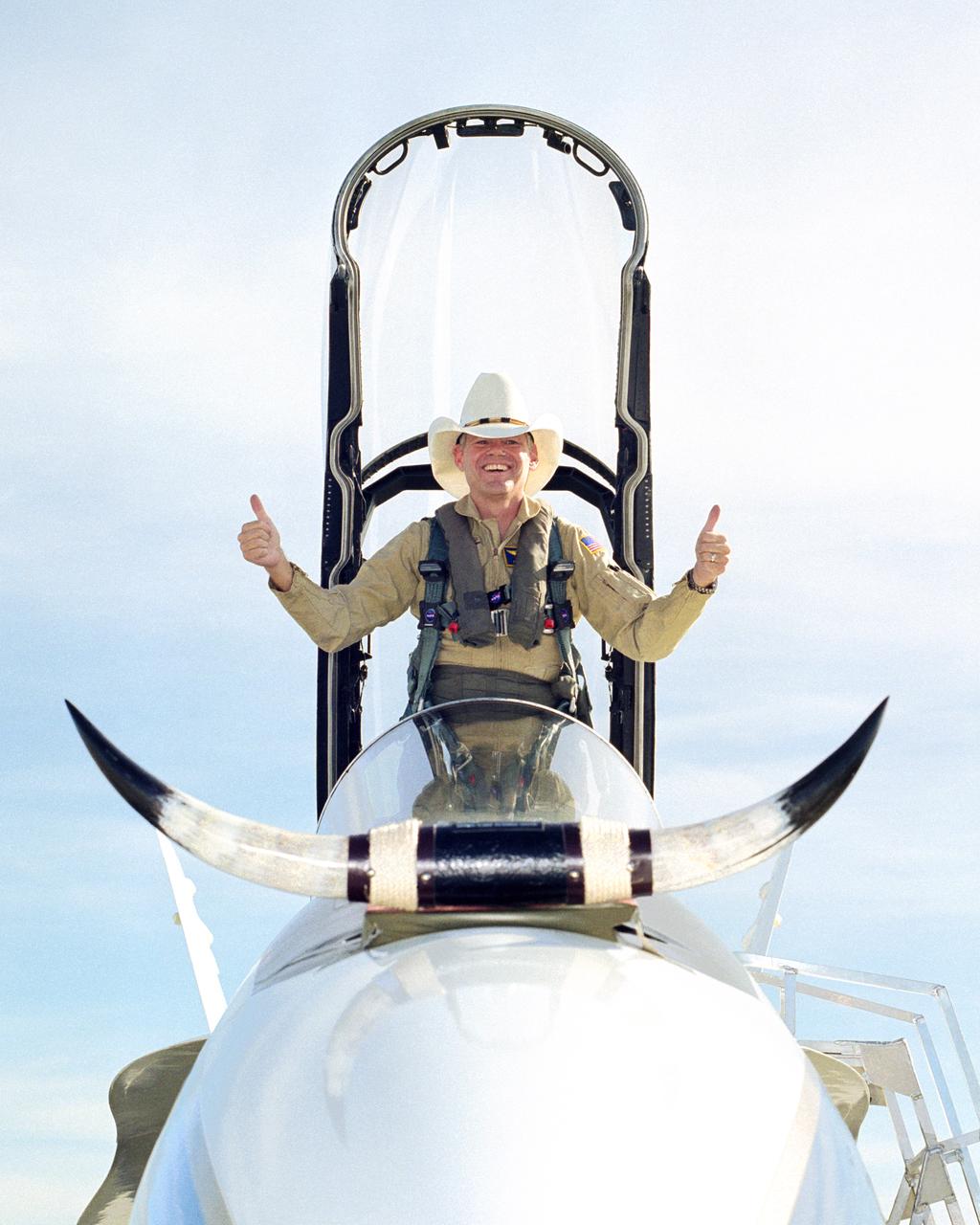
In a lighter mood, Ed Schneider gives a "thumbs-up" after his last flight at the Dryden Flight Research Center on September 19, 2000. Schneider arrived at the NASA Ames-Dryden Flight Research Facility on July 5, 1982, as a Navy Liaison Officer, becoming a NASA research pilot one year later. He has been project pilot for the F-18 High Angle-of-Attack program (HARV), the F-15 aeronautical research aircraft, the NASA B-52 launch aircraft, and the SR-71 "Blackbird" aircraft. He also participated in such programs as the F-8 Digital Fly-By-Wire, the FAA/NASA 720 Controlled Impact Demonstration, the F-14 Automatic Rudder Interconnect and Laminar Flow, and the F-104 Aeronautical Research and Microgravity projects.
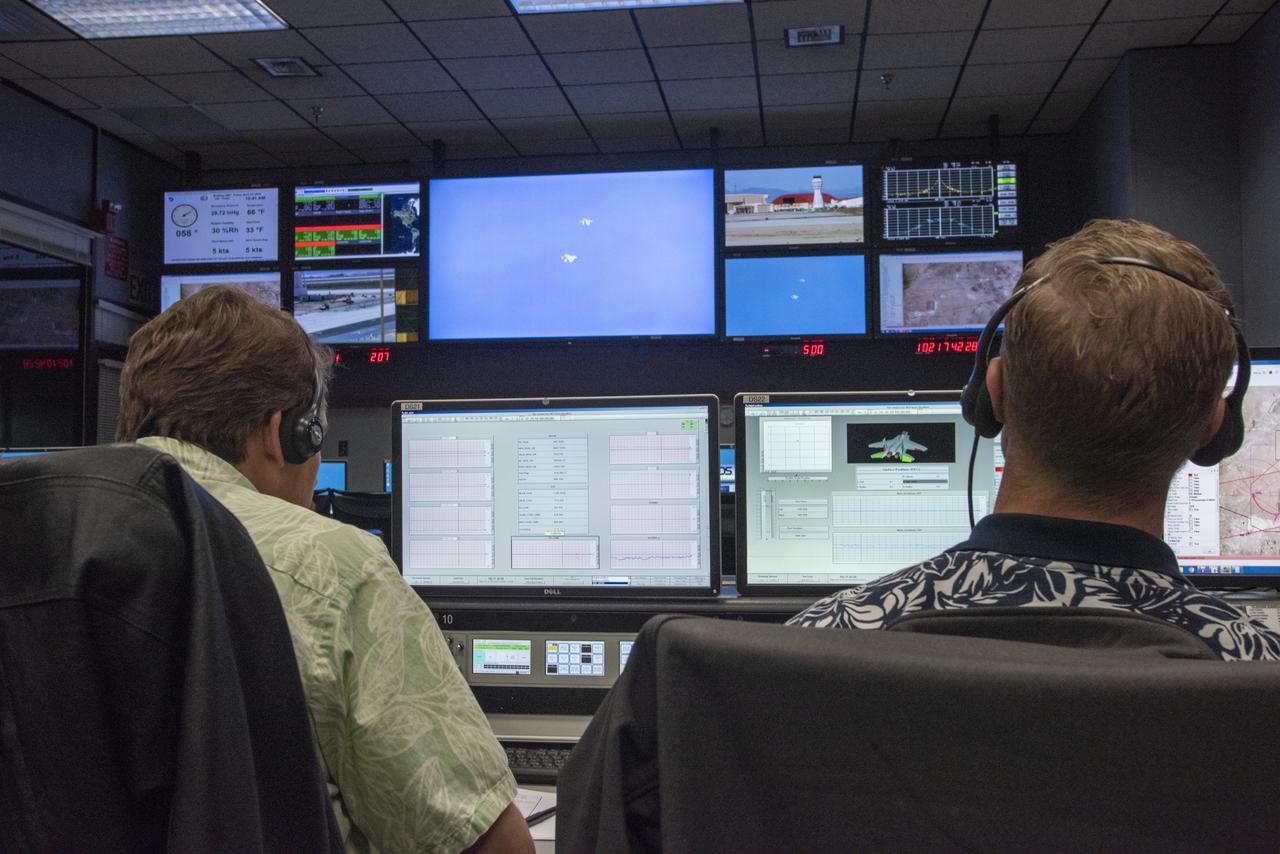
NASA engineers monitor an F-15 and an F/A-18 during a flight in support of the Shock Sensing Probe flight series, from the mission control room at NASA's Armstrong Flight Research Center in Edwards, California. The flight series included the use of a technique commonly used by NASA's predecessor, the National Advisory Committee for Aeronautics - combining two instruments onto the nose of an aircraft to measure the pressure of shock waves from another aircraft.
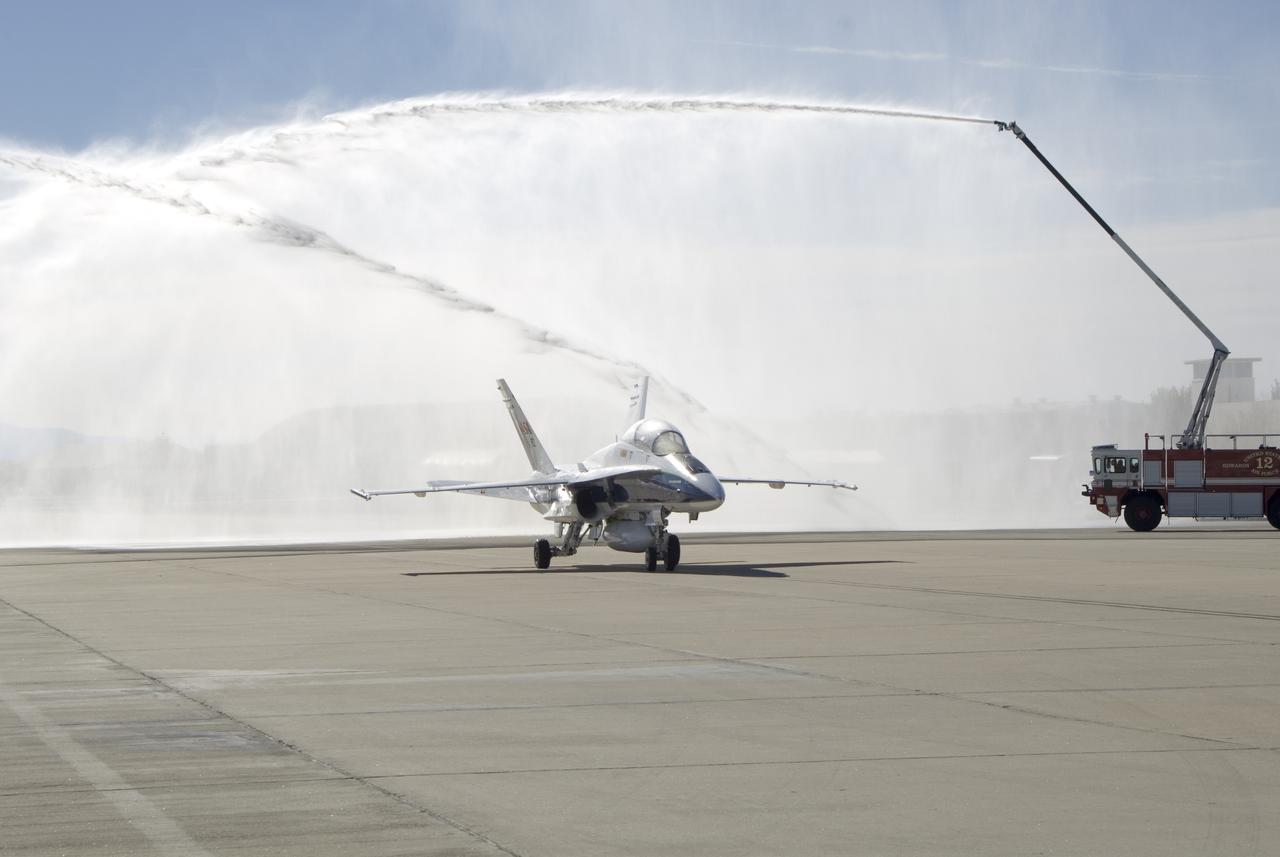
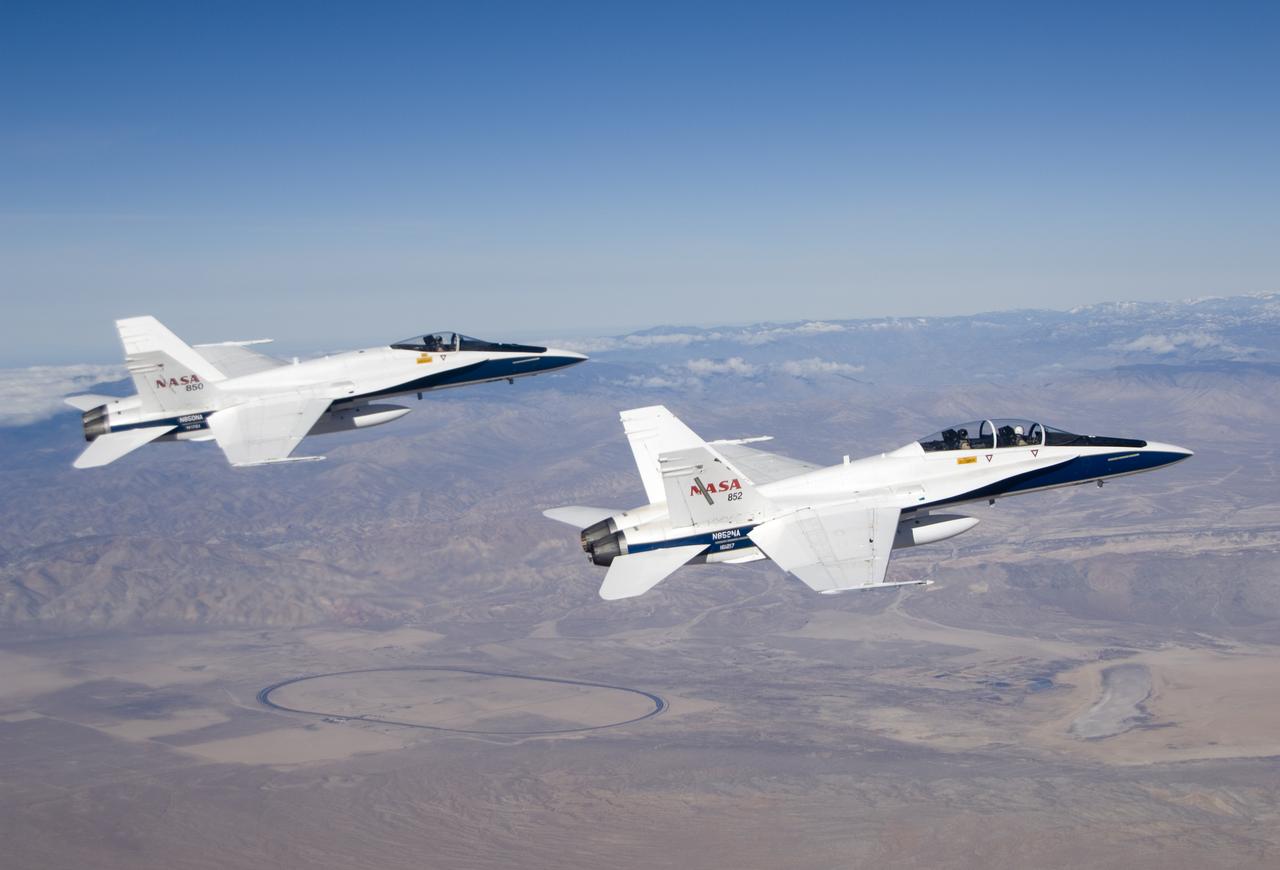
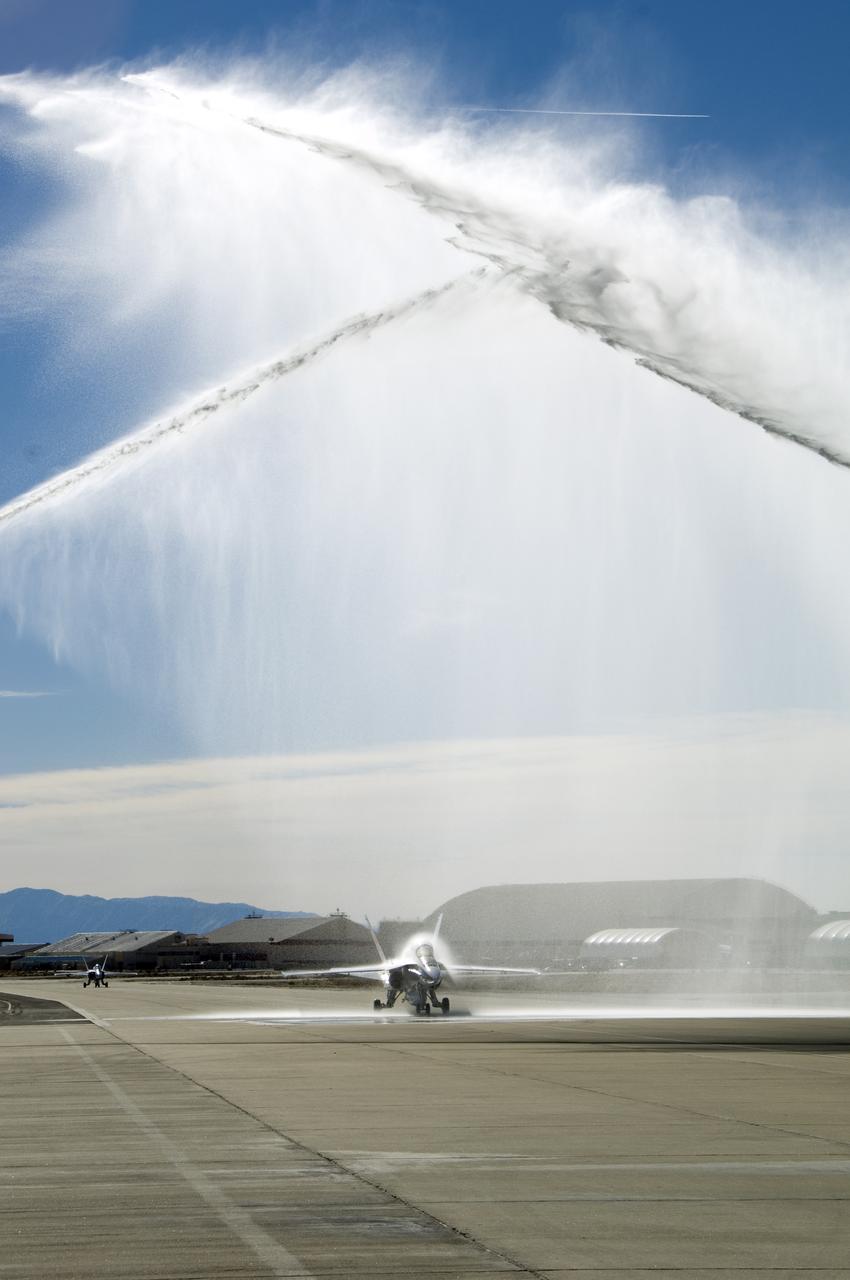
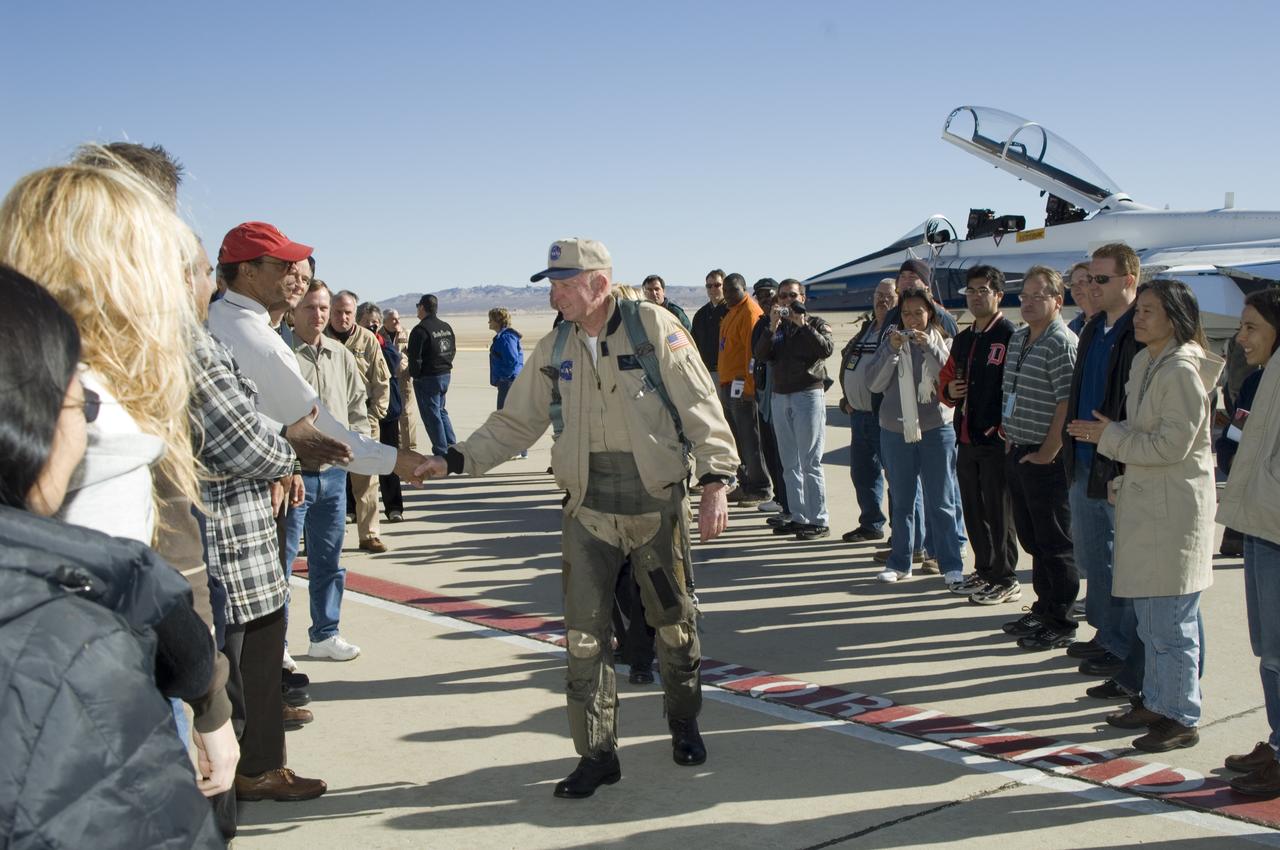
Long-time NASA Dryden research pilot and former astronaut C. Gordon Fullerton capped an almost 50-year flying career, including more than 38 years with NASA, with a final flight in a NASA F/A-18 on Dec. 21, 2007. Fullerton and Dryden research pilot Jim Smolka flew a 90-minute pilot proficiency formation aerobatics flight with another Dryden F/A-18 and a Dryden T-38 before concluding with two low-level formation flyovers of Dryden before landing. Fullerton was honored with a water-cannon spray arch provided by two fire trucks from the Edwards Air Force Base fire department as he taxied the F/A-18 up to the Dryden ramp, and was then greeted by his wife Marie and several hundred Dryden staff after his final flight. Fullerton began his flying career with the U.S. Air Force in 1958 after earning bachelor's and master's degrees in mechanical engineering from the California Institute of Technology. Initially trained as a fighter pilot, he later transitioned to multi-engine bombers and became a bomber operations test pilot after attending the Air Force Aerospace Research Pilot School at Edwards Air Force Base, Calif. He then was assigned to the flight crew for the planned Air Force Manned Orbital Laboratory in 1966. Upon cancellation of that program, the Air Force assigned Fullerton to NASA's astronaut corps in 1969. He served on the support crews for the Apollo 14, 15, 16 and 17 lunar missions, and was later assigned to one of the two flight crews that piloted the space shuttle prototype Enterprise during the Approach and Landing Test program at Dryden. He then logged some 382 hours in space when he flew on two early space shuttle missions, STS-3 on Columbia in 1982 and STS-51F on Challenger in 1985. He joined the flight crew branch at NASA Dryden after leaving the astronaut corps in 1986. During his 21 years at Dryden, Fullerton was project pilot on a number of high-profile research efforts, including the Propulsion Controlled Aircraft, the high-speed landing tests of
Long-time NASA Dryden research pilot and former astronaut C. Gordon Fullerton capped an almost 50-year flying career, including more than 38 years with NASA, with a final flight in a NASA F/A-18 on Dec. 21, 2007. Fullerton and Dryden research pilot Jim Smolka flew a 90-minute pilot proficiency formation aerobatics flight with another Dryden F/A-18 and a Dryden T-38 before concluding with two low-level formation flyovers of Dryden before landing. Fullerton was honored with a water-cannon spray arch provided by two fire trucks from the Edwards Air Force Base fire department as he taxied the F/A-18 up to the Dryden ramp, and was then greeted by his wife Marie and several hundred Dryden staff after his final flight. Fullerton began his flying career with the U.S. Air Force in 1958 after earning bachelor's and master's degrees in mechanical engineering from the California Institute of Technology. Initially trained as a fighter pilot, he later transitioned to multi-engine bombers and became a bomber operations test pilot after attending the Air Force Aerospace Research Pilot School at Edwards Air Force Base, Calif. He then was assigned to the flight crew for the planned Air Force Manned Orbital Laboratory in 1966. Upon cancellation of that program, the Air Force assigned Fullerton to NASA's astronaut corps in 1969. He served on the support crews for the Apollo 14, 15, 16 and 17 lunar missions, and was later assigned to one of the two flight crews that piloted the space shuttle prototype Enterprise during the Approach and Landing Test program at Dryden. He then logged some 382 hours in space when he flew on two early space shuttle missions, STS-3 on Columbia in 1982 and STS-51F on Challenger in 1985. He joined the flight crew branch at NASA Dryden after leaving the astronaut corps in 1986. During his 21 years at Dryden, Fullerton was project pilot on a number of high-profile research efforts, including the Propulsion Controlled Aircraft, the high-speed landing tests of sp
Long-time NASA Dryden research pilot and former astronaut C. Gordon Fullerton capped an almost 50-year flying career, including more than 38 years with NASA, with a final flight in a NASA F/A-18 on Dec. 21, 2007. Fullerton and Dryden research pilot Jim Smolka flew a 90-minute pilot proficiency formation aerobatics flight with another Dryden F/A-18 and a Dryden T-38 before concluding with two low-level formation flyovers of Dryden before landing. Fullerton was honored with a water-cannon spray arch provided by two fire trucks from the Edwards Air Force Base fire department as he taxied the F/A-18 up to the Dryden ramp, and was then greeted by his wife Marie and several hundred Dryden staff after his final flight. Fullerton began his flying career with the U.S. Air Force in 1958 after earning bachelor's and master's degrees in mechanical engineering from the California Institute of Technology. Initially trained as a fighter pilot, he later transitioned to multi-engine bombers and became a bomber operations test pilot after attending the Air Force Aerospace Research Pilot School at Edwards Air Force Base, Calif. He then was assigned to the flight crew for the planned Air Force Manned Orbital Laboratory in 1966. Upon cancellation of that program, the Air Force assigned Fullerton to NASA's astronaut corps in 1969. He served on the support crews for the Apollo 14, 15, 16 and 17 lunar missions, and was later assigned to one of the two flight crews that piloted the space shuttle prototype Enterprise during the Approach and Landing Test program at Dryden. He then logged some 382 hours in space when he flew on two early space shuttle missions, STS-3 on Columbia in 1982 and STS-51F on Challenger in 1985. He joined the flight crew branch at NASA Dryden after leaving the astronaut corps in 1986. During his 21 years at Dryden, Fullerton was project pilot on a number of high-profile research efforts, including the Propulsion Controlled Aircraft, the high-speed landing tests of
Long-time NASA Dryden research pilot and former astronaut C. Gordon Fullerton capped an almost 50-year flying career, including more than 38 years with NASA, with a final flight in a NASA F/A-18 on Dec. 21, 2007. Fullerton and Dryden research pilot Jim Smolka flew a 90-minute pilot proficiency formation aerobatics flight with another Dryden F/A-18 and a Dryden T-38 before concluding with two low-level formation flyovers of Dryden before landing. Fullerton was honored with a water-cannon spray arch provided by two fire trucks from the Edwards Air Force Base fire department as he taxied the F/A-18 up to the Dryden ramp, and was then greeted by his wife Marie and several hundred Dryden staff after his final flight. Fullerton began his flying career with the U.S. Air Force in 1958 after earning bachelor's and master's degrees in mechanical engineering from the California Institute of Technology. Initially trained as a fighter pilot, he later transitioned to multi-engine bombers and became a bomber operations test pilot after attending the Air Force Aerospace Research Pilot School at Edwards Air Force Base, Calif. He then was assigned to the flight crew for the planned Air Force Manned Orbital Laboratory in 1966. Upon cancellation of that program, the Air Force assigned Fullerton to NASA's astronaut corps in 1969. He served on the support crews for the Apollo 14, 15, 16 and 17 lunar missions, and was later assigned to one of the two flight crews that piloted the space shuttle prototype Enterprise during the Approach and Landing Test program at Dryden. He then logged some 382 hours in space when he flew on two early space shuttle missions, STS-3 on Columbia in 1982 and STS-51F on Challenger in 1985. He joined the flight crew branch at NASA Dryden after leaving the astronaut corps in 1986. During his 21 years at Dryden, Fullerton was project pilot on a number of high-profile research efforts, including the Propulsion Controlled Aircraft, the high-speed landing tests of
Long-time NASA Dryden research pilot and former astronaut C. Gordon Fullerton capped an almost 50-year flying career, including more than 38 years with NASA, with a final flight in a NASA F/A-18 on Dec. 21, 2007. Fullerton and Dryden research pilot Jim Smolka flew a 90-minute pilot proficiency formation aerobatics flight with another Dryden F/A-18 and a Dryden T-38 before concluding with two low-level formation flyovers of Dryden before landing. Fullerton was honored with a water-cannon spray arch provided by two fire trucks from the Edwards Air Force Base fire department as he taxied the F/A-18 up to the Dryden ramp, and was then greeted by his wife Marie and several hundred Dryden staff after his final flight. Fullerton began his flying career with the U.S. Air Force in 1958 after earning bachelor's and master's degrees in mechanical engineering from the California Institute of Technology. Initially trained as a fighter pilot, he later transitioned to multi-engine bombers and became a bomber operations test pilot after attending the Air Force Aerospace Research Pilot School at Edwards Air Force Base, Calif. He then was assigned to the flight crew for the planned Air Force Manned Orbital Laboratory in 1966. Upon cancellation of that program, the Air Force assigned Fullerton to NASA's astronaut corps in 1969. He served on the support crews for the Apollo 14, 15, 16 and 17 lunar missions, and was later assigned to one of the two flight crews that piloted the space shuttle prototype Enterprise during the Approach and Landing Test program at Dryden. He then logged some 382 hours in space when he flew on two early space shuttle missions, STS-3 on Columbia in 1982 and STS-51F on Challenger in 1985. He joined the flight crew branch at NASA Dryden after leaving the astronaut corps in 1986. During his 21 years at Dryden, Fullerton was project pilot on a number of high-profile research efforts, including the Propulsion Controlled Aircraft, the high-speed landing tests of
Long-time NASA Dryden research pilot and former astronaut C. Gordon Fullerton capped an almost 50-year flying career, including more than 38 years with NASA, with a final flight in a NASA F/A-18 on Dec. 21, 2007. Fullerton and Dryden research pilot Jim Smolka flew a 90-minute pilot proficiency formation aerobatics flight with another Dryden F/A-18 and a Dryden T-38 before concluding with two low-level formation flyovers of Dryden before landing. Fullerton was honored with a water-cannon spray arch provided by two fire trucks from the Edwards Air Force Base fire department as he taxied the F/A-18 up to the Dryden ramp, and was then greeted by his wife Marie and several hundred Dryden staff after his final flight. Fullerton began his flying career with the U.S. Air Force in 1958 after earning bachelor's and master's degrees in mechanical engineering from the California Institute of Technology. Initially trained as a fighter pilot, he later transitioned to multi-engine bombers and became a bomber operations test pilot after attending the Air Force Aerospace Research Pilot School at Edwards Air Force Base, Calif. He then was assigned to the flight crew for the planned Air Force Manned Orbital Laboratory in 1966. Upon cancellation of that program, the Air Force assigned Fullerton to NASA's astronaut corps in 1969. He served on the support crews for the Apollo 14, 15, 16 and 17 lunar missions, and was later assigned to one of the two flight crews that piloted the space shuttle prototype Enterprise during the Approach and Landing Test program at Dryden. He then logged some 382 hours in space when he flew on two early space shuttle missions, STS-3 on Columbia in 1982 and STS-51F on Challenger in 1985. He joined the flight crew branch at NASA Dryden after leaving the astronaut corps in 1986. During his 21 years at Dryden, Fullerton was project pilot on a number of high-profile research efforts, including the Propulsion Controlled Aircraft, the high-speed landing tests of
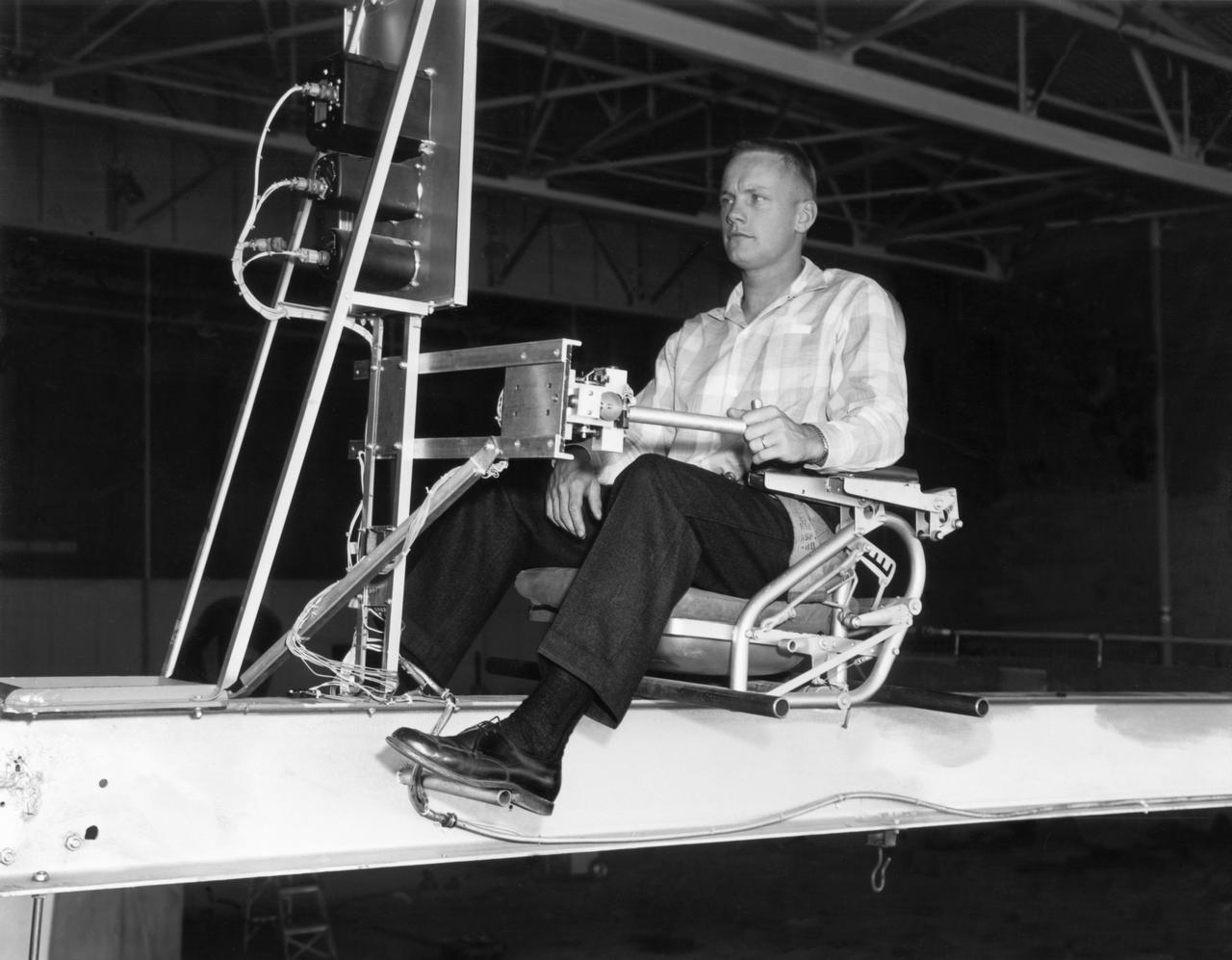
Famed astronaut Neil A. Armstrong, the first man to set foot on the moon during the historic Apollo 11 space mission in July 1969, served for seven years as a research pilot at the NACA-NASA High-Speed Flight Station, now the Dryden Flight Research Center, at Edwards, California, before he entered the space program. Armstrong joined the National Advisory Committee for Aeronautics (NACA) at the Lewis Flight Propulsion Laboratory (later NASA's Lewis Research Center, Cleveland, Ohio, and today the Glenn Research Center) in 1955. Later that year, he transferred to the High-Speed Flight Station at Edwards as an aeronautical research scientist and then as a pilot, a position he held until becoming an astronaut in 1962. He was one of nine NASA astronauts in the second class to be chosen. As a research pilot Armstrong served as project pilot on the F-100A and F-100C aircraft, F-101, and the F-104A. He also flew the X-1B, X-5, F-105, F-106, B-47, KC-135, and Paresev. He left Dryden with a total of over 2450 flying hours. He was a member of the USAF-NASA Dyna-Soar Pilot Consultant Group before the Dyna-Soar project was cancelled, and studied X-20 Dyna-Soar approaches and abort maneuvers through use of the F-102A and F5D jet aircraft. Armstrong was actively engaged in both piloting and engineering aspects of the X-15 program from its inception. He completed the first flight in the aircraft equipped with a new flow-direction sensor (ball nose) and the initial flight in an X-15 equipped with a self-adaptive flight control system. He worked closely with designers and engineers in development of the adaptive system, and made seven flights in the rocket plane from December 1960 until July 1962. During those fights he reached a peak altitude of 207,500 feet in the X-15-3, and a speed of 3,989 mph (Mach 5.74) in the X-15-1. Armstrong has a total of 8 days and 14 hours in space, including 2 hours and 48 minutes walking on the Moon. In March 1966 he was commander of the Gemini 8 or
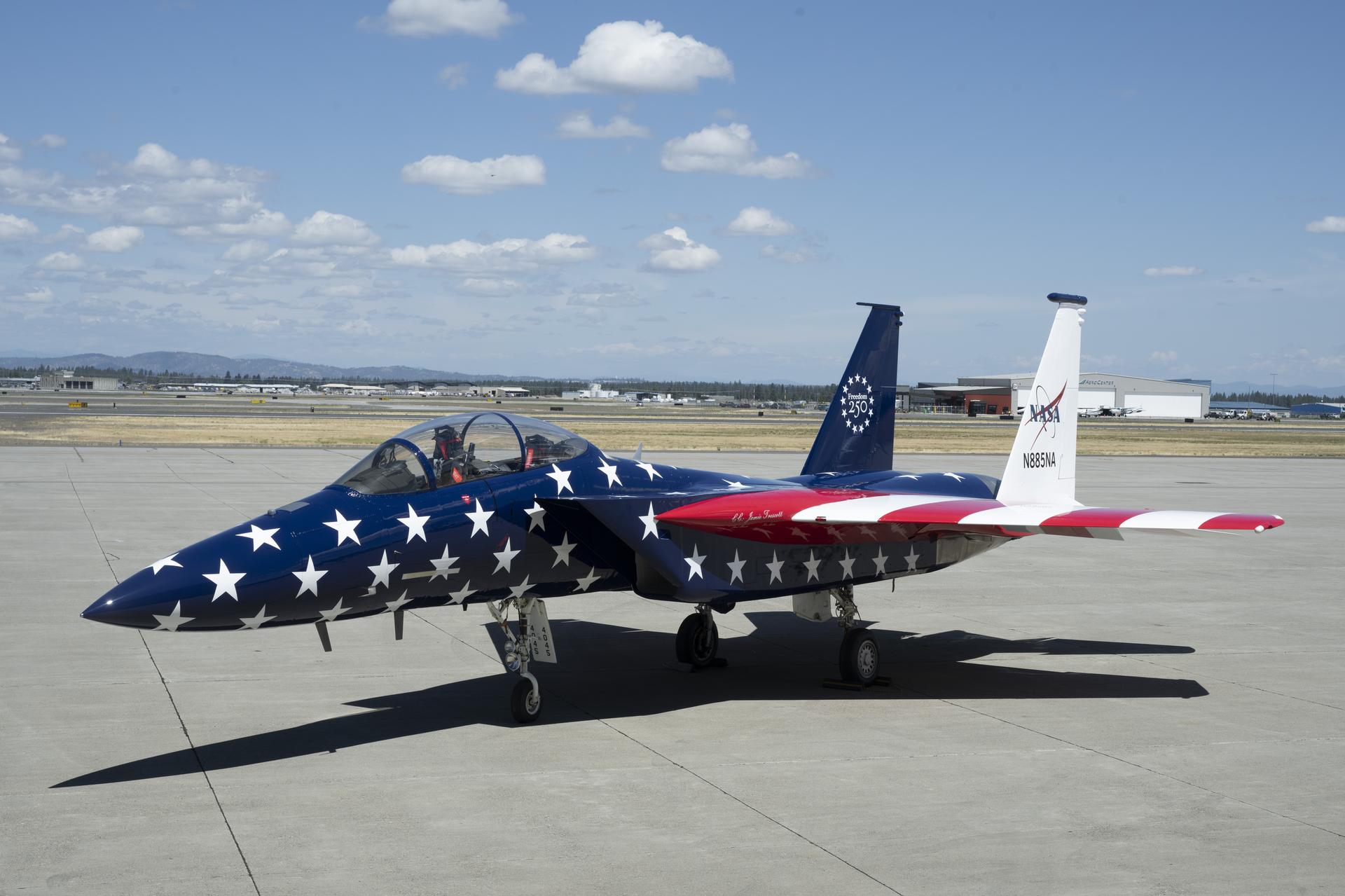
NASA’s F-15 aircraft is shown at International Aerospace Coatings Inc.’s facility in Spokane, Washington, on Thursday, July 2, 2026, with new red, white, and blue paint to celebrate America’s 250th birthday. The aircraft, from NASA’s Armstrong Flight Research Center in Edwards, California, participated in the Freedom 250 flyover in Washington on Saturday, July 4, 2026, with other NASA and military aircraft. NASA/Jim Ross
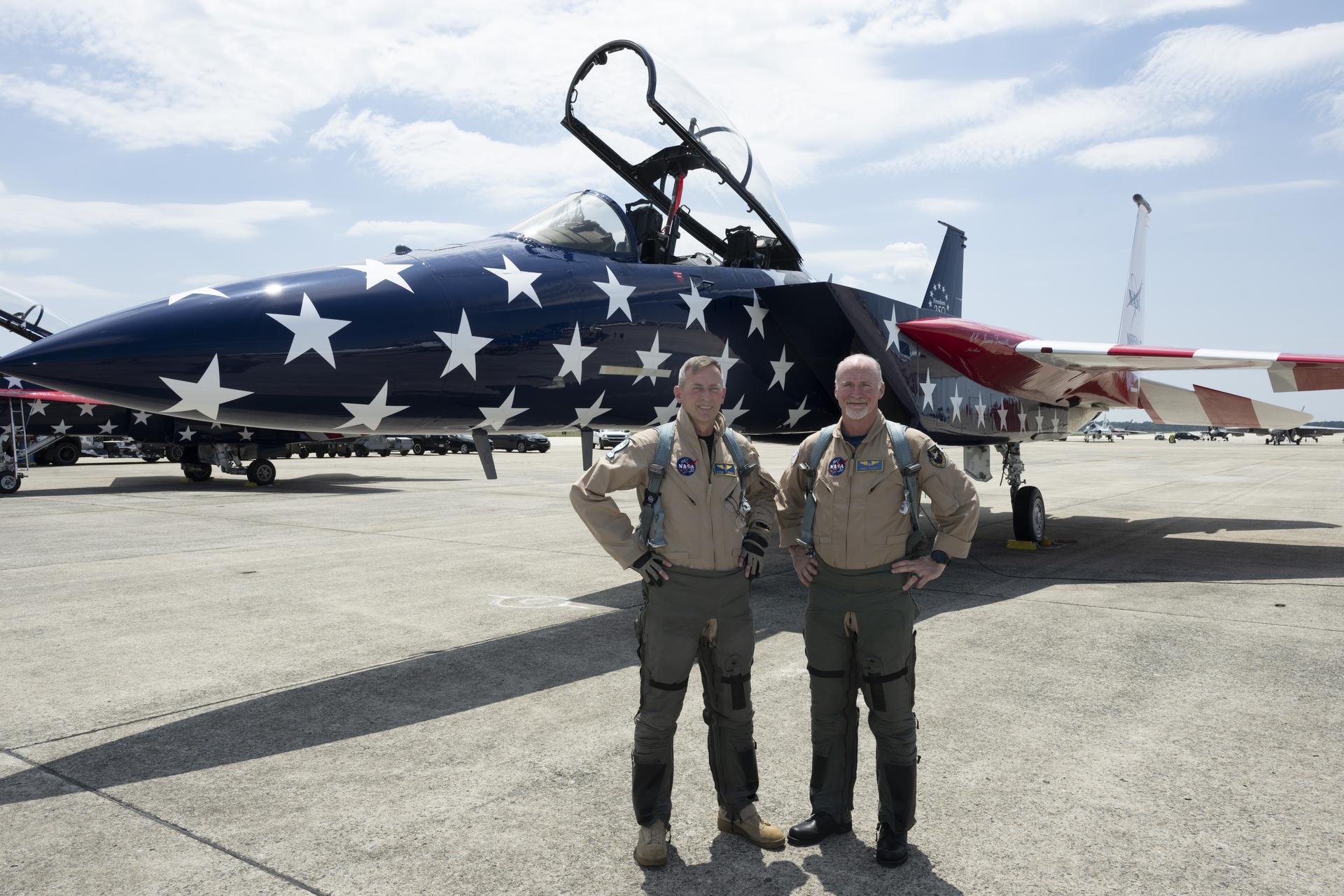
NASA Armstrong pilot Jim Less, left, and center director, Troy Asher, right, stand in front of a NASA F-15 aircraft on Saturday, July 4, 2026. Both pilots took part in a flyover to celebrate America’s 250th birthday. This aircraft is from NASA’s Armstrong Flight Research Center in Edwards, California, and it joined other NASA aircraft for the flyover.
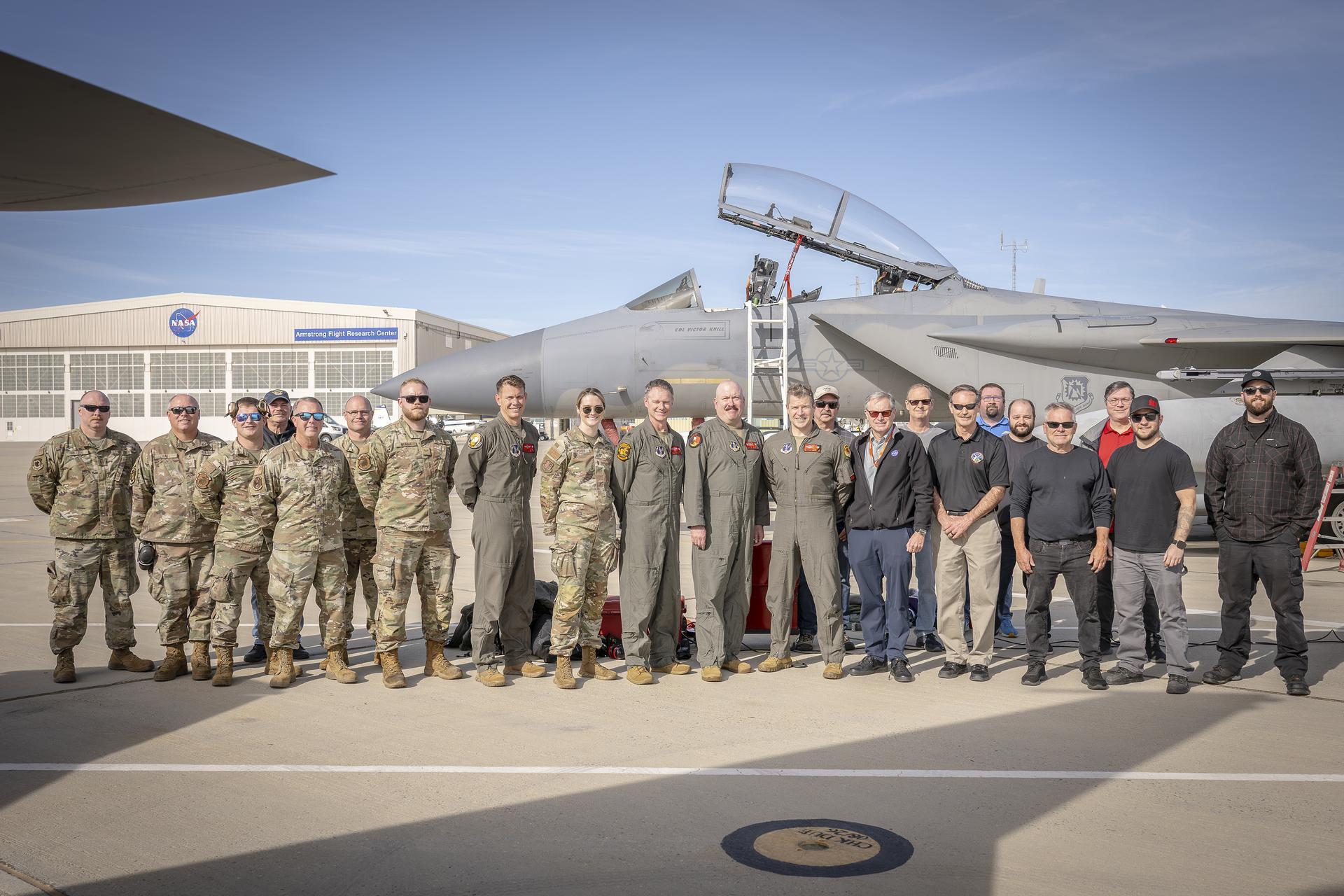
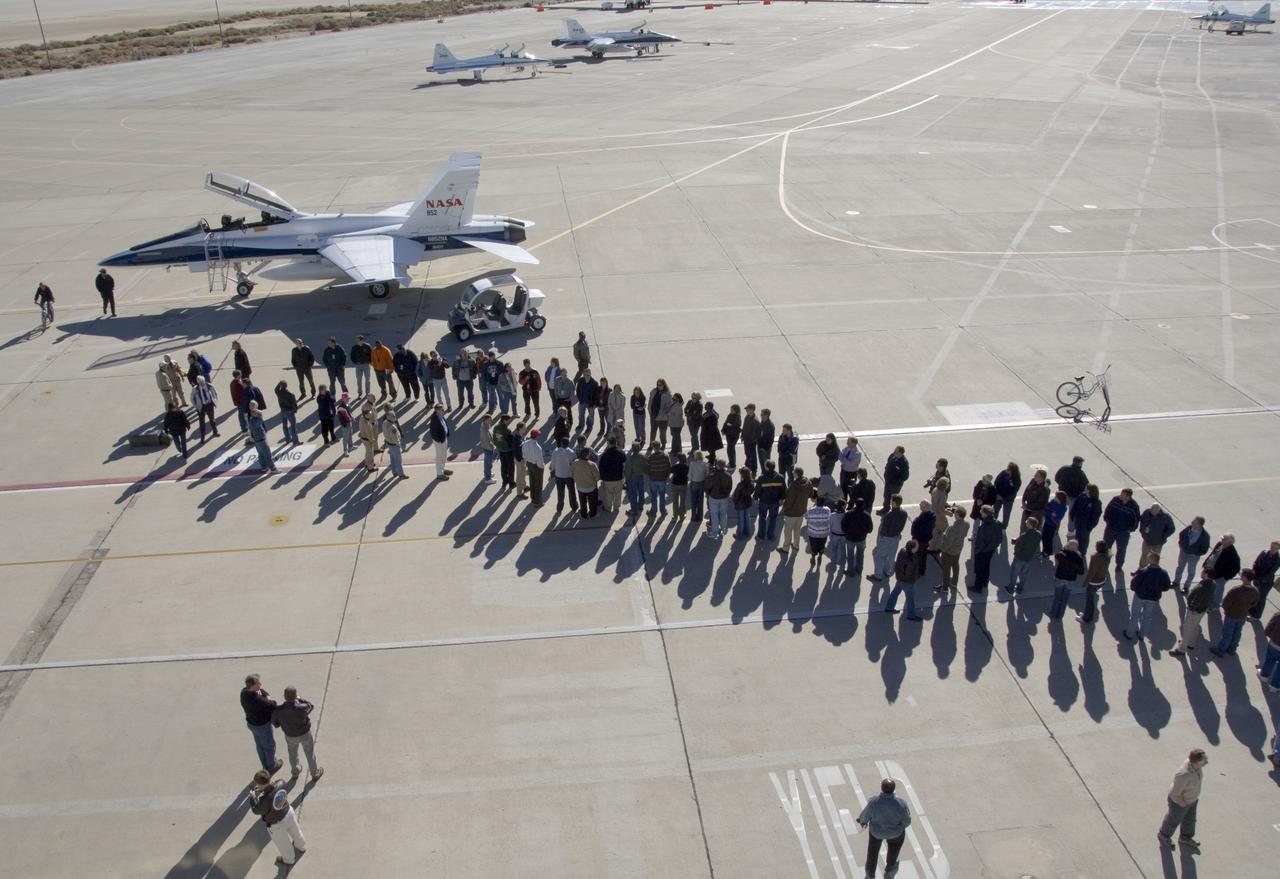
NASA staff and Oregon Air National Guard’s 173rd Fighter Wing crew pose for a group photo at NASA’s Armstrong Flight Research Center in Edwards, California, on Monday, Dec. 22, 2025. The group stands in front of one of two F-15 aircraft added to the agency’s flight research fleet.
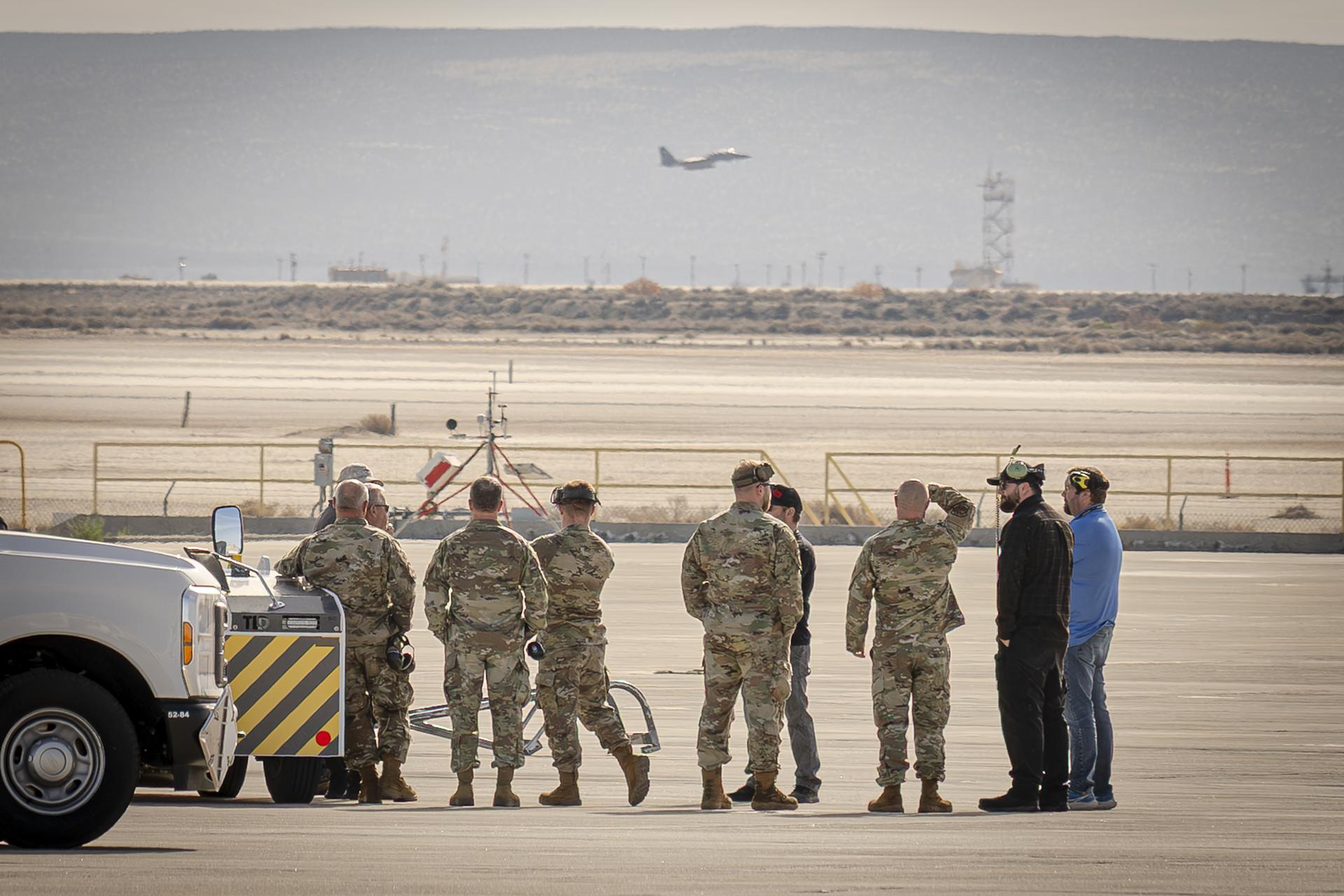
Oregon Air National Guard and NASA flight crew look out across the desert while awaiting the arrival of the NASA’s newest F-15 aircraft from the Oregon Air National Guard’s 173rd Fighter Wing to NASA’s Armstrong Flight Research Center in Edwards, California, on Monday, Dec. 22, 2025.
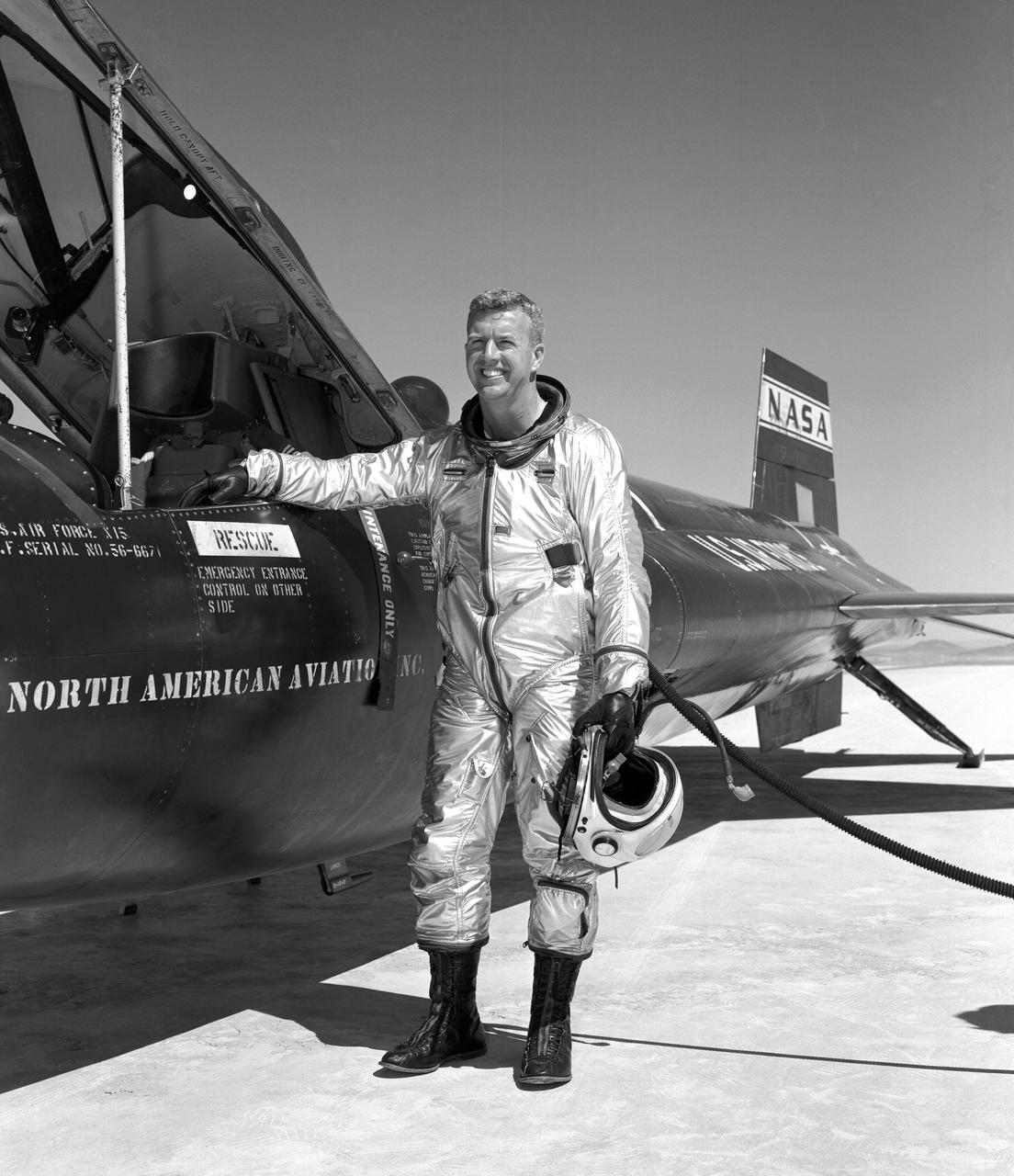
Walker made the first NASA-piloted X-15 flight March 25, 1960, and flew the aircraft 24 times, achieving its highest altitude (354,300 ft.) Aug. 22, 1963. He died piloting a F-104 that was caught up in a vortex of the XB-70.
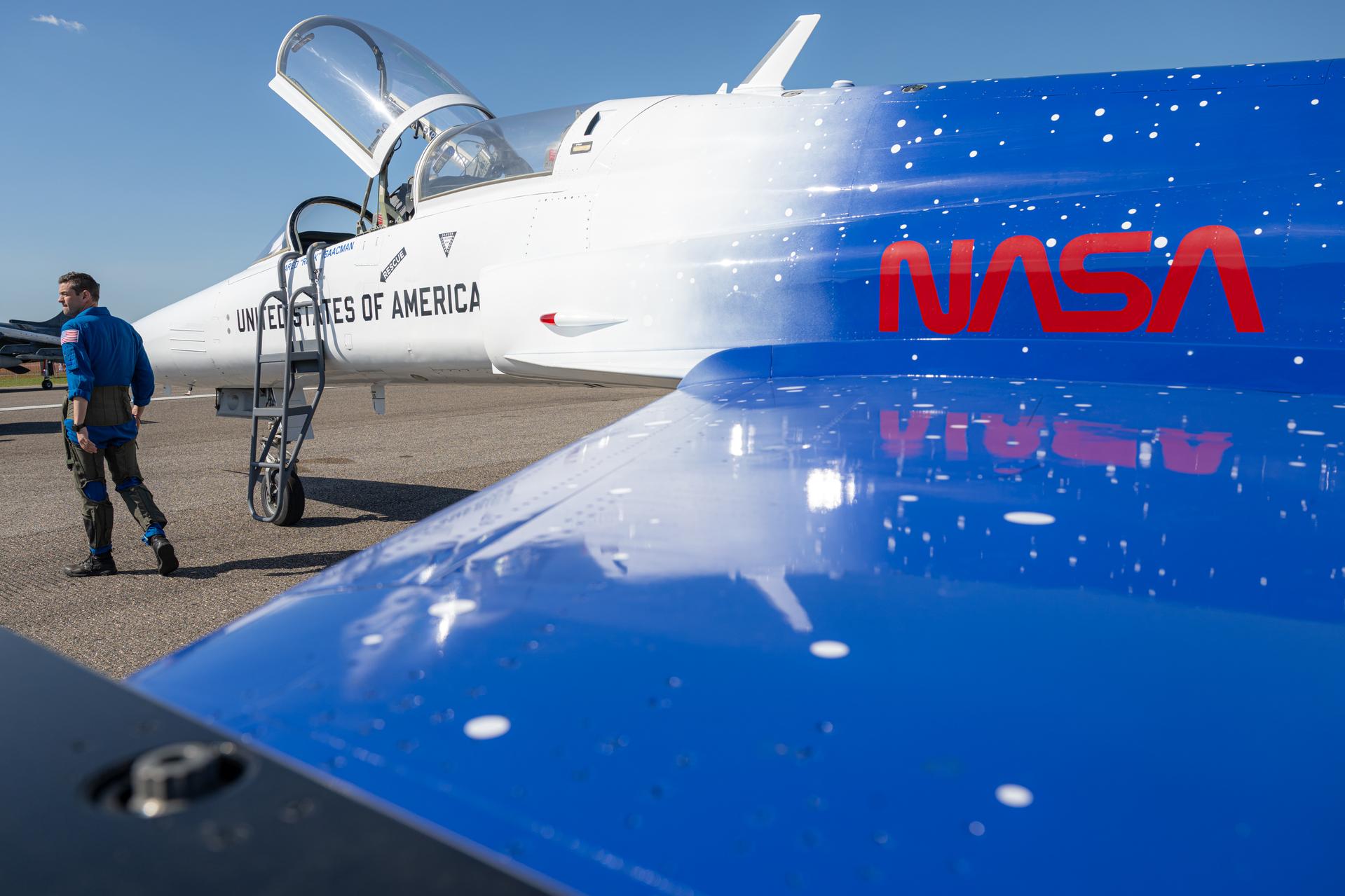
NASA Administrator Jared Isaacman is seen with one of his personal F-5 aircraft ahead of an air show performance at the SUN ’n FUN Aerospace Expo, Wednesday, Apr. 15, 2026, in Lakeland, Fla. Photo Credit: (NASA/John Kraus)
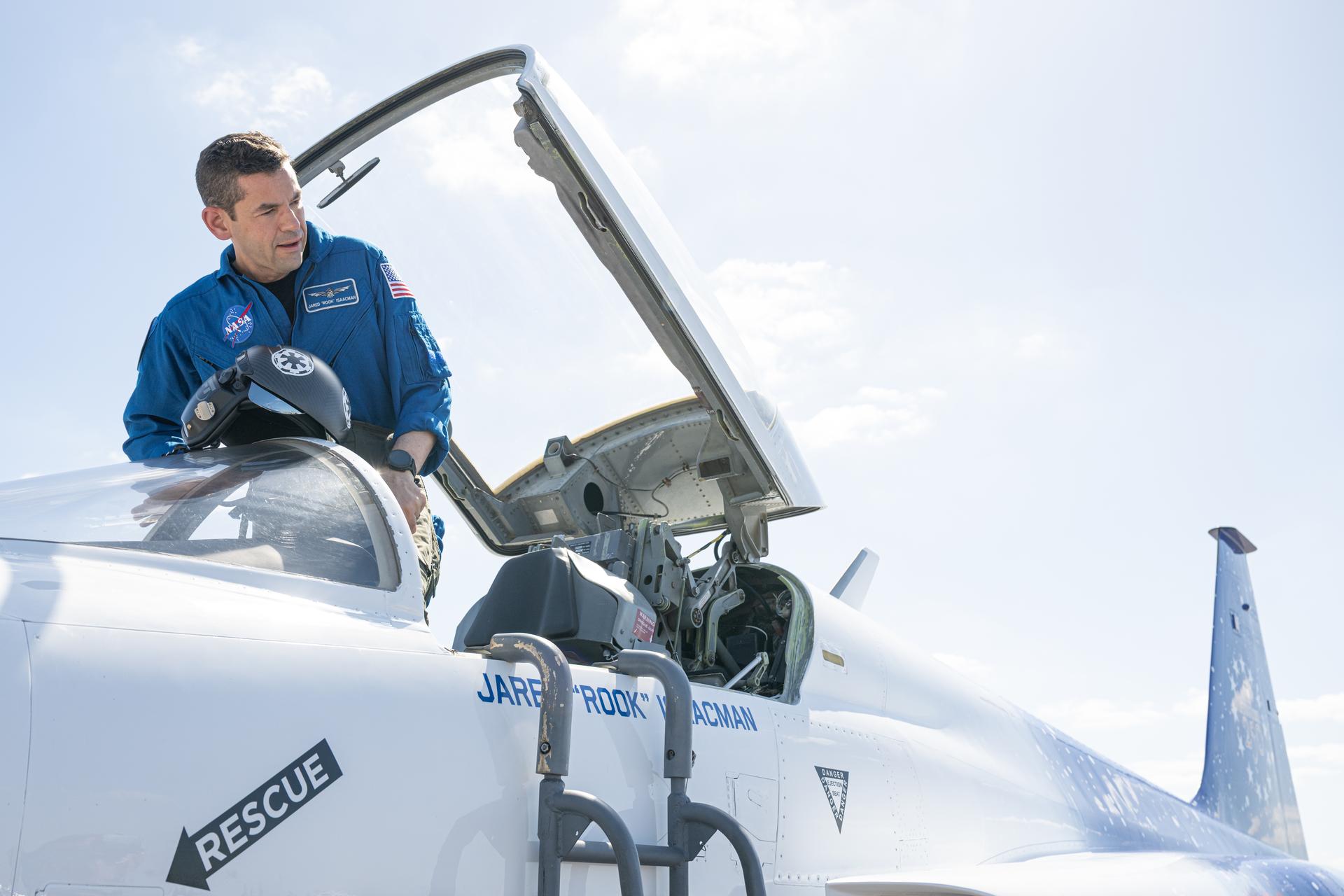
NASA Administrator Jared Isaacman is seen in the cockpit of his personal F-5 aircraft after arriving at the SUN ’n FUN Aerospace Expo, Wednesday, Apr. 15, 2026, in Lakeland, Fla. Photo Credit: (NASA/John Kraus)
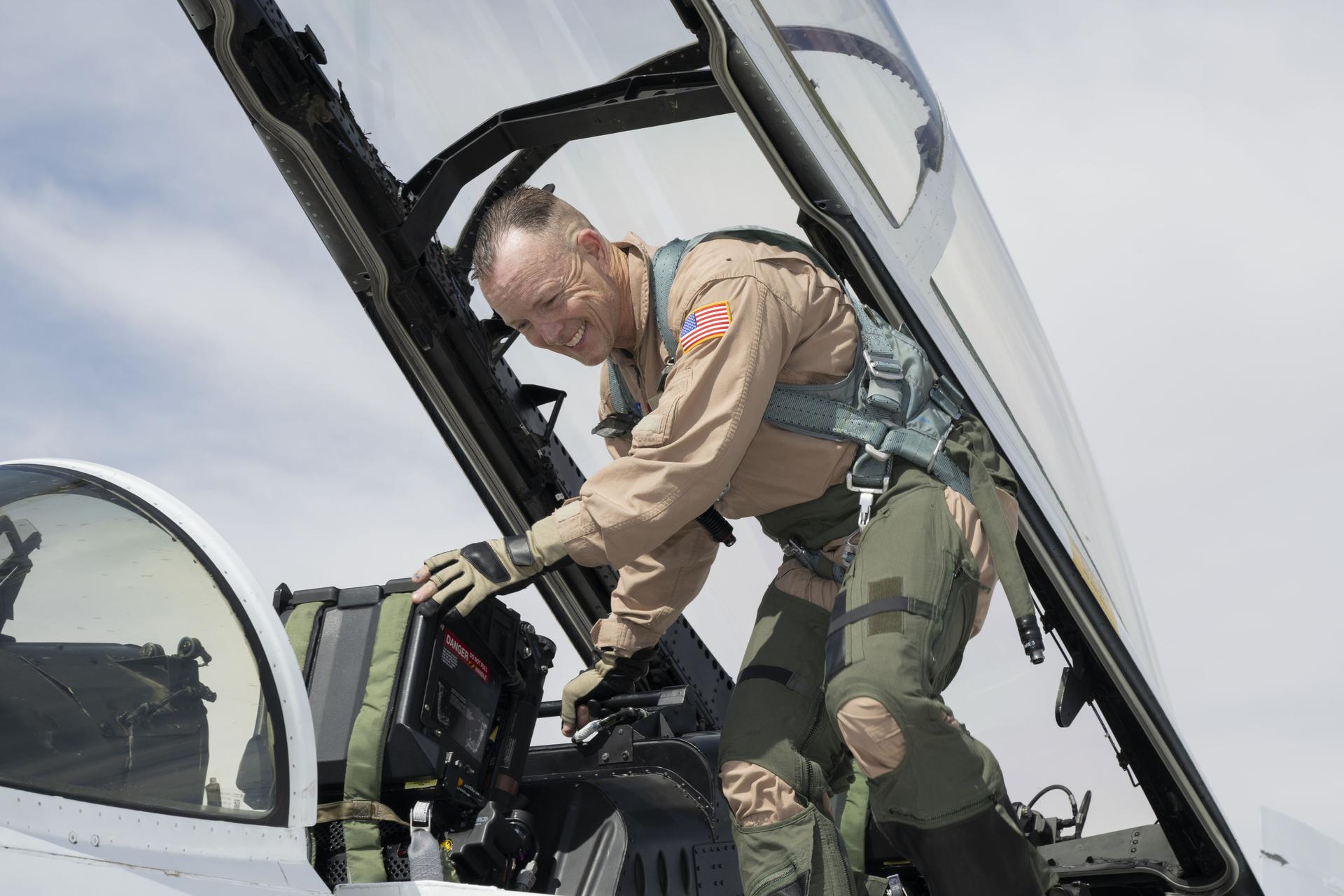
Mike Frederick, aerospace engineer and researcher, prepares for an employee incentive flight in an F/A-18 aircraft at NASA’s Armstrong Flight Research Center in Edwards, California, on Wednesday, April 15, 2026. NASA Administrator Jared Isaacman established the ride‑along program to recognize and reward workforce members for their dedication to advancing the agency’s priorities.
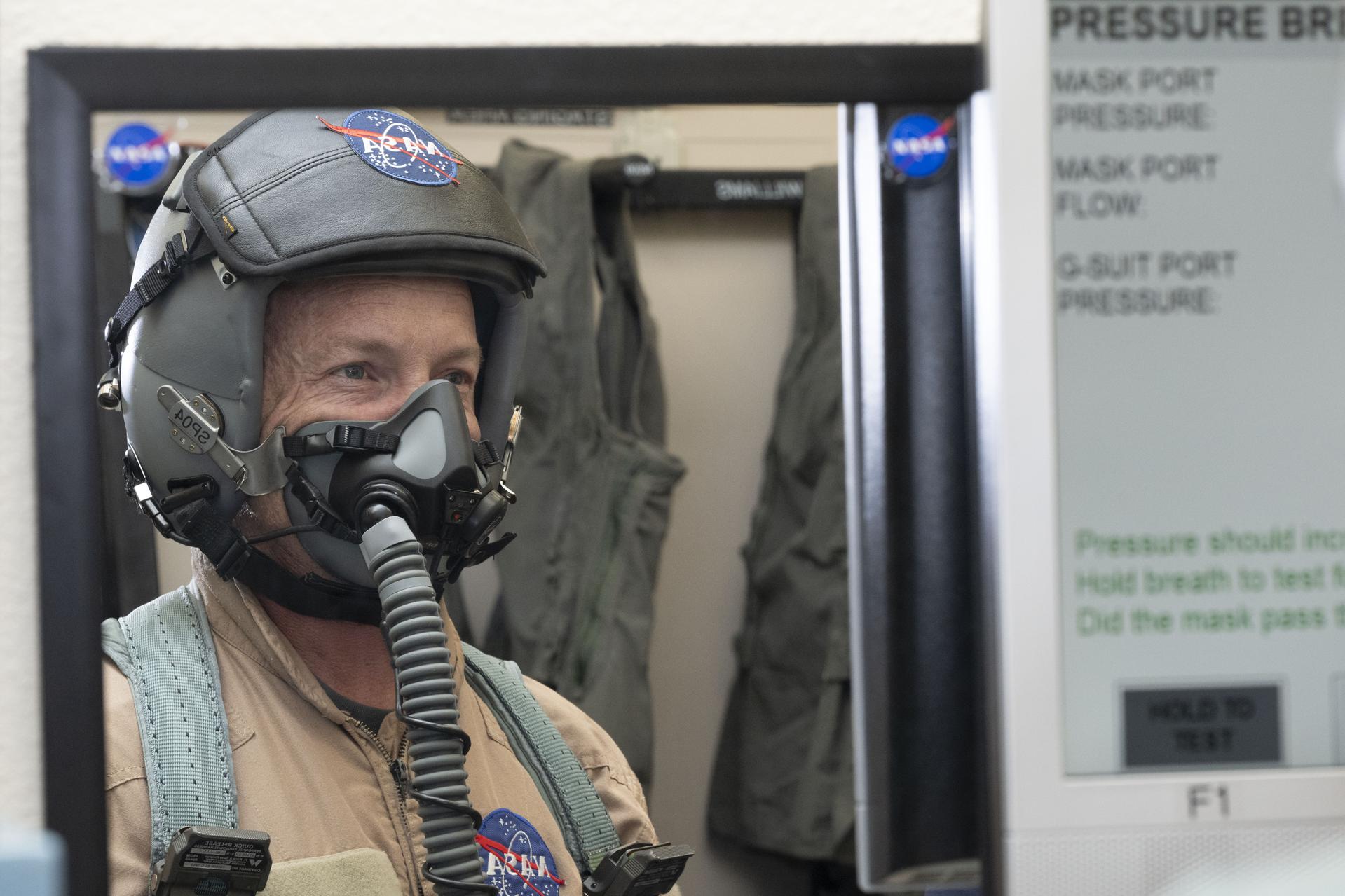
Mike Frederick, aerospace engineer and researcher, prepares for an employee incentive flight in an F/A-18 aircraft at NASA’s Armstrong Flight Research Center in Edwards, California, on Wednesday, April 15, 2026. NASA Administrator Jared Isaacman established the ride‑along program to recognize and reward workforce members for their dedication to advancing the agency’s priorities.
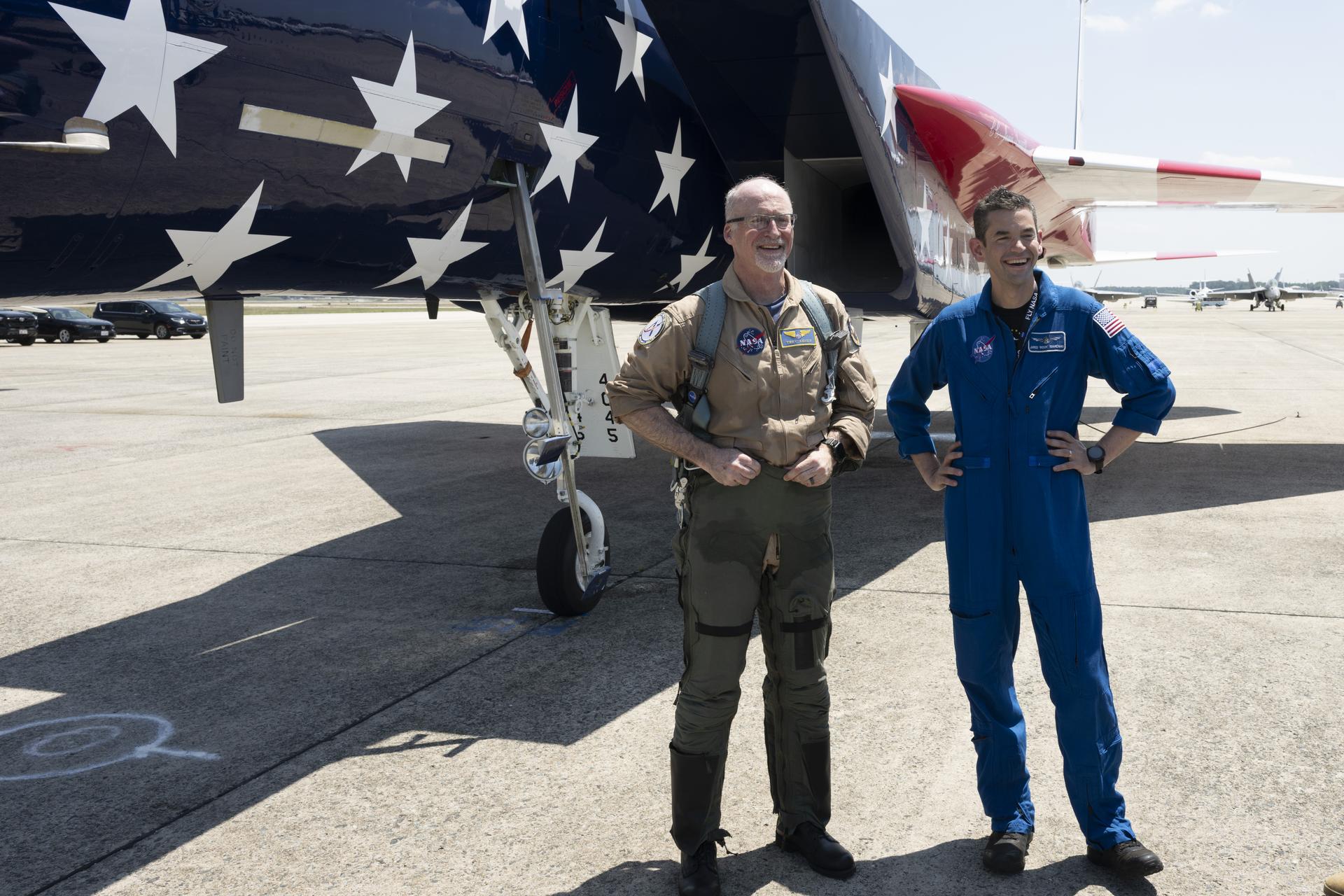
NASA Administrator Jared Isaacman stands to the right of NASA Armstrong Center Director Troy Asher, left, in front of an F-15 aircraft. Both pilots flew above Washington on Saturday, July 4, 2026, as part of a flyover to celebrate America’s 250th birthday.
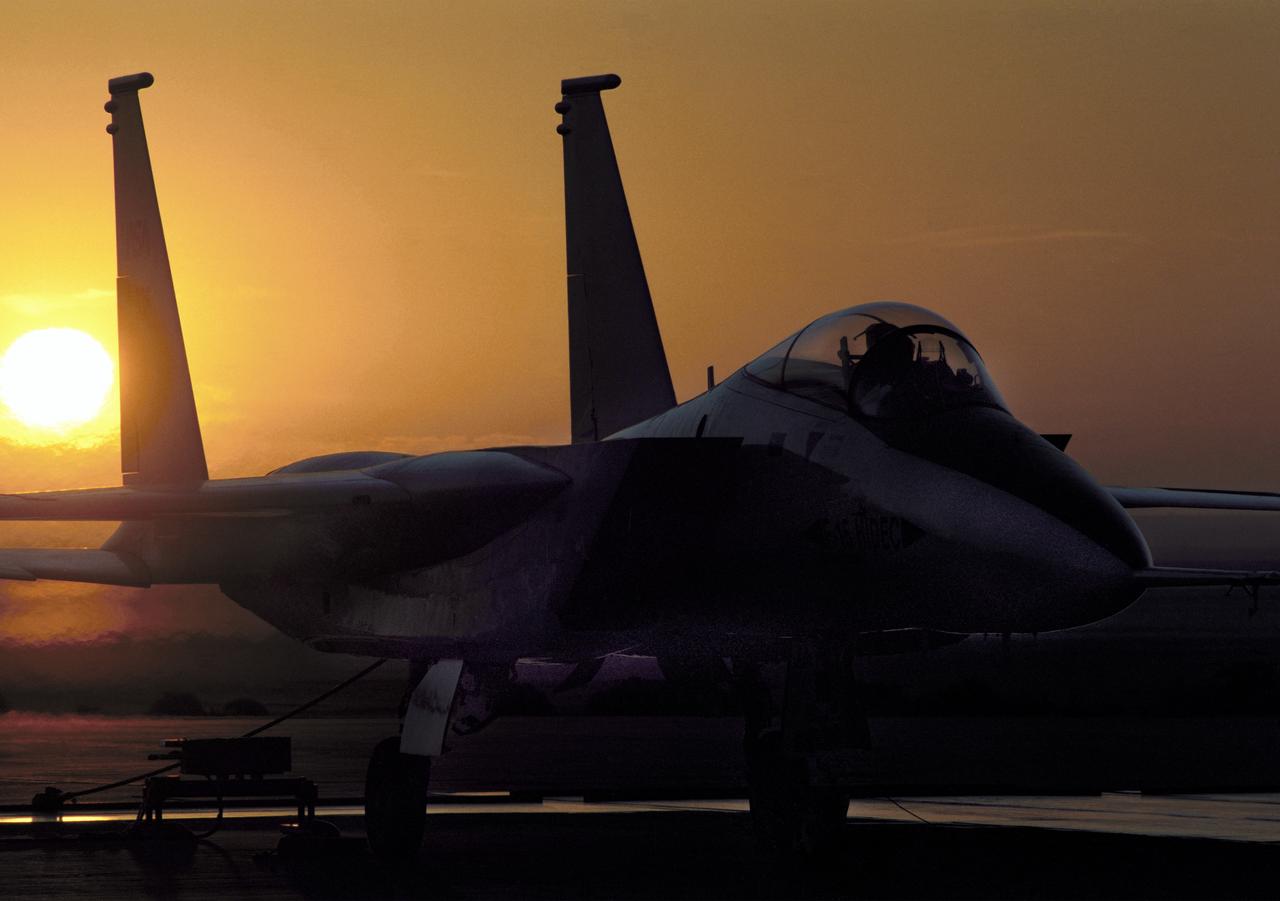
NASA's highly modified F-15A (Serial #71-0287) used for digital electronic flight and engine control systems research, at sunrise on the ramp at the Dryden Flight Research Facility, Edwards, California. The F-15 was called the HIDEC (Highly Integrated Digital Electronic Control) flight facility. Research programs flown on the testbed vehicle have demonstrated improved rates of climb, fuel savings, and engine thrust by optimizing systems performance. The aircraft also tested and evaluated a computerized self-repairing flight control system for the Air Force that detects damaged or failed flight control surfaces. The system then reconfigures undamaged control surfaces so the mission can continue or the aircraft is landed safely.
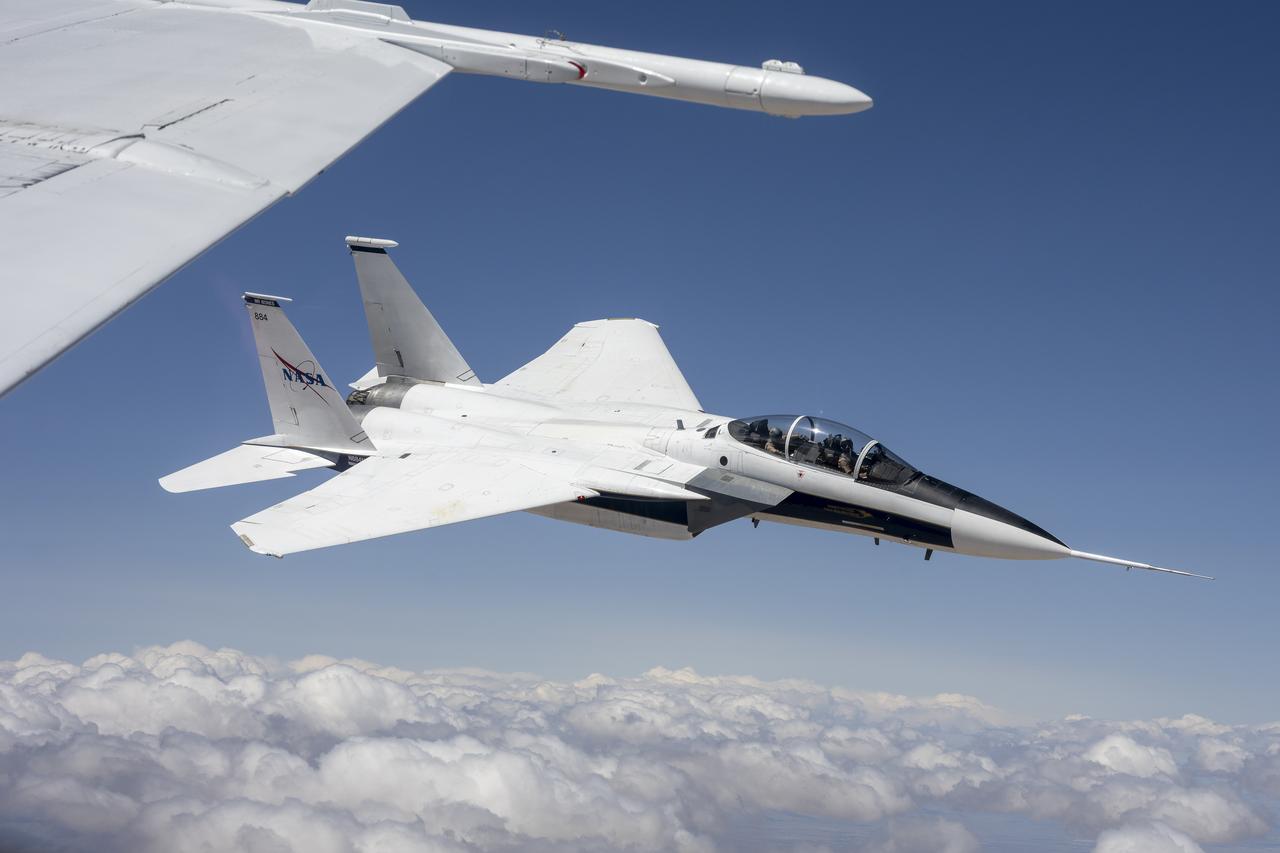
NASA's F-15D research aircraft conducts a calibration flight of a shock-sensing probe near NASA’s Armstrong Flight Research Center in Edwards, California. The shock-sensing probe is designed to measure the signature and strength of shock waves in flight. The probe was validated during dual F-15 flights and will be flown behind NASA’s X-59 to measure small pressure changes caused by shock waves in support of the agency's Quesst mission.
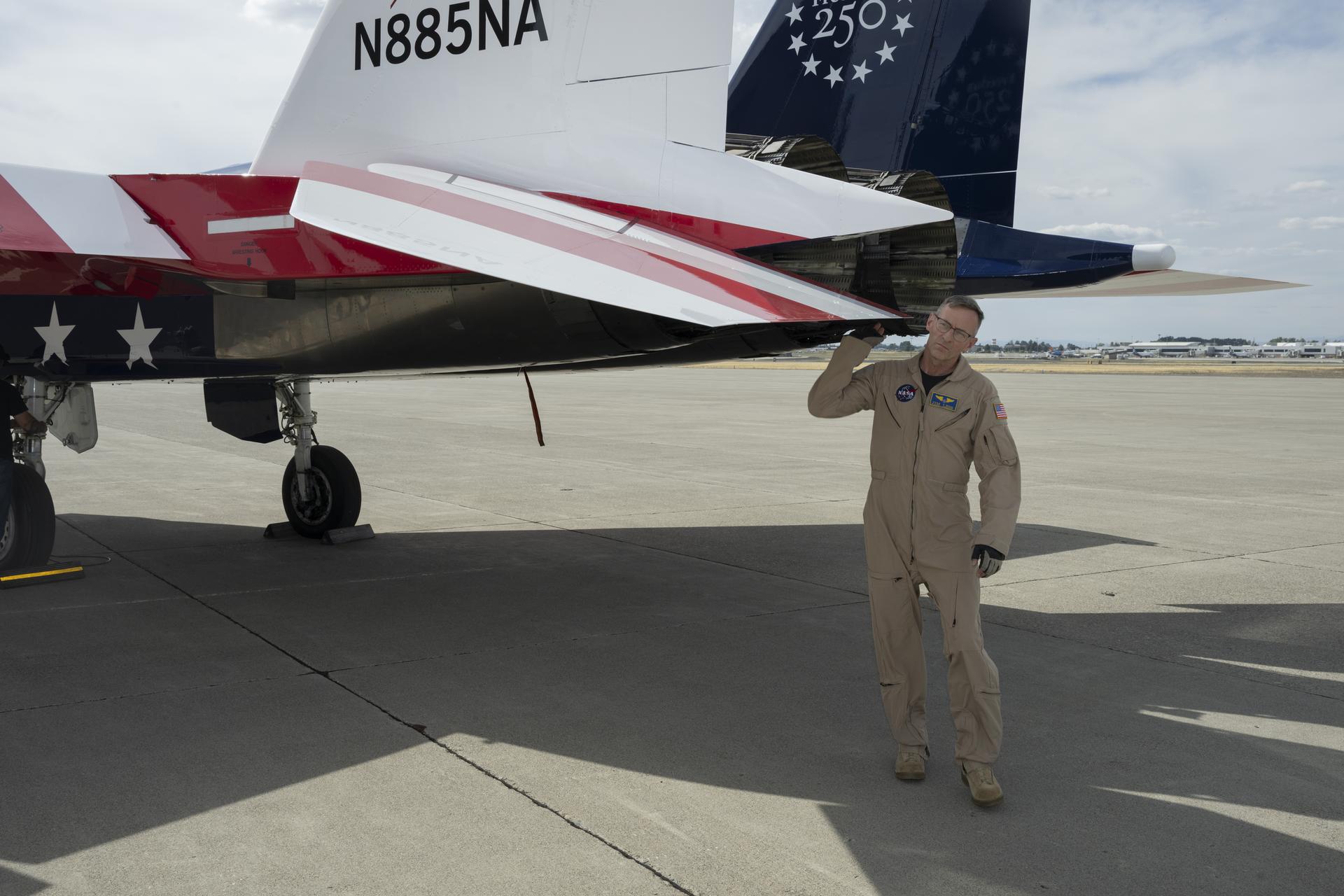
NASA test pilot Jim “Clue” Less completes pre‑flight checks on a NASA F‑15 in Spokane, Washington, on Thursday, July 2, 2026. The aircraft, from NASA’s Armstrong Flight Research Center in Edwards, California, displays new red, white, and blue paint to celebrate America’s 250th birthday and was preparing to fly cross‑country to Washington, D.C., where it participated in the Freedom 250 flyover with other NASA and military aircraft on Saturday, July 4, 2026. NASA/Jim Ross
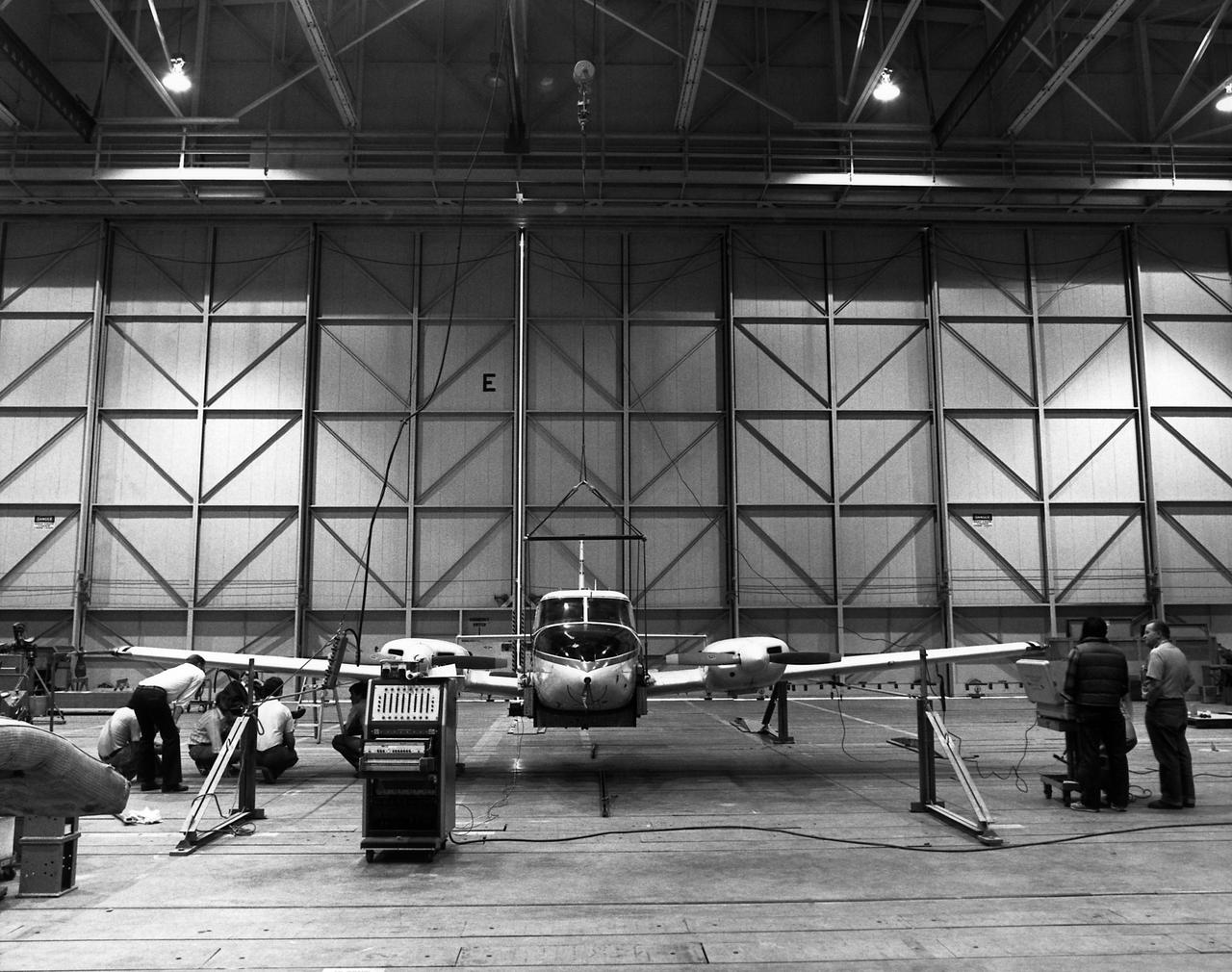
Technicians check instrumentation and systems on NASA 808, a PA-30 aircraft, prior to a research flight. The aircraft was used as the testbed in development of control systems for remotely piloted vehicles that were "flown" from the ground. The concept led to highly successful programs such as the HiMAT and the subscale F-15 remotely piloted vehicles. Over the years, NASA 808 has also been used for spin and stall research related to general aviation aircraft and also research to alleviate wake vortices behind large jetliners. This 1980 photograph taken inside a hangar shows technicians measuring moment of inertia.
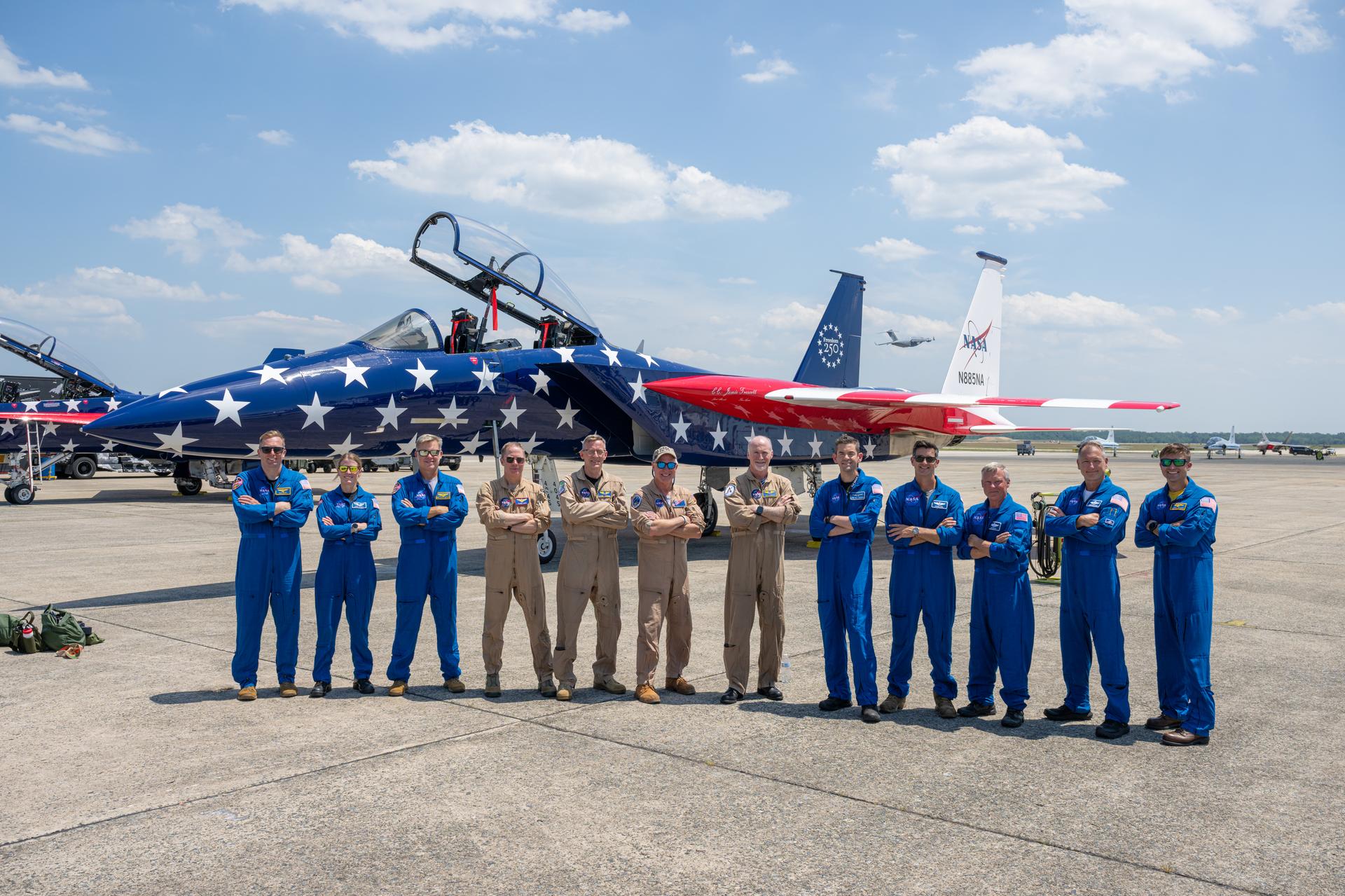
NASA Administrator Jared Isaacman, eighth from left, poses for a group photo with pilots and participants in NASA’s flyovers during the Great American State Fair, Saturday, July 4, 2026, at Joint Base Andrews in Prince George's County, Maryland. NASA aircraft conducted flyovers during the fair in Washington, D.C. Photo Credit: (NASA/John Kraus)
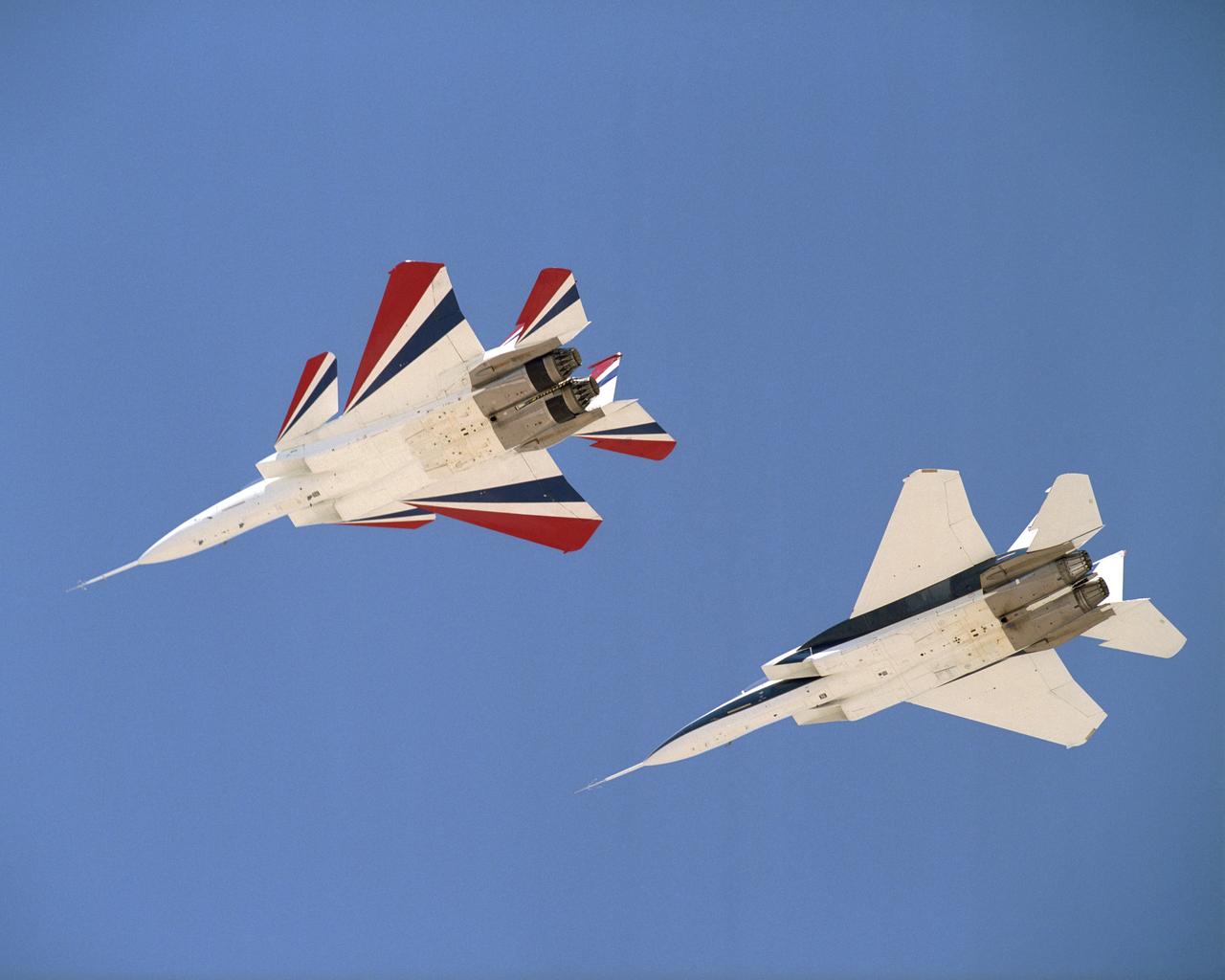
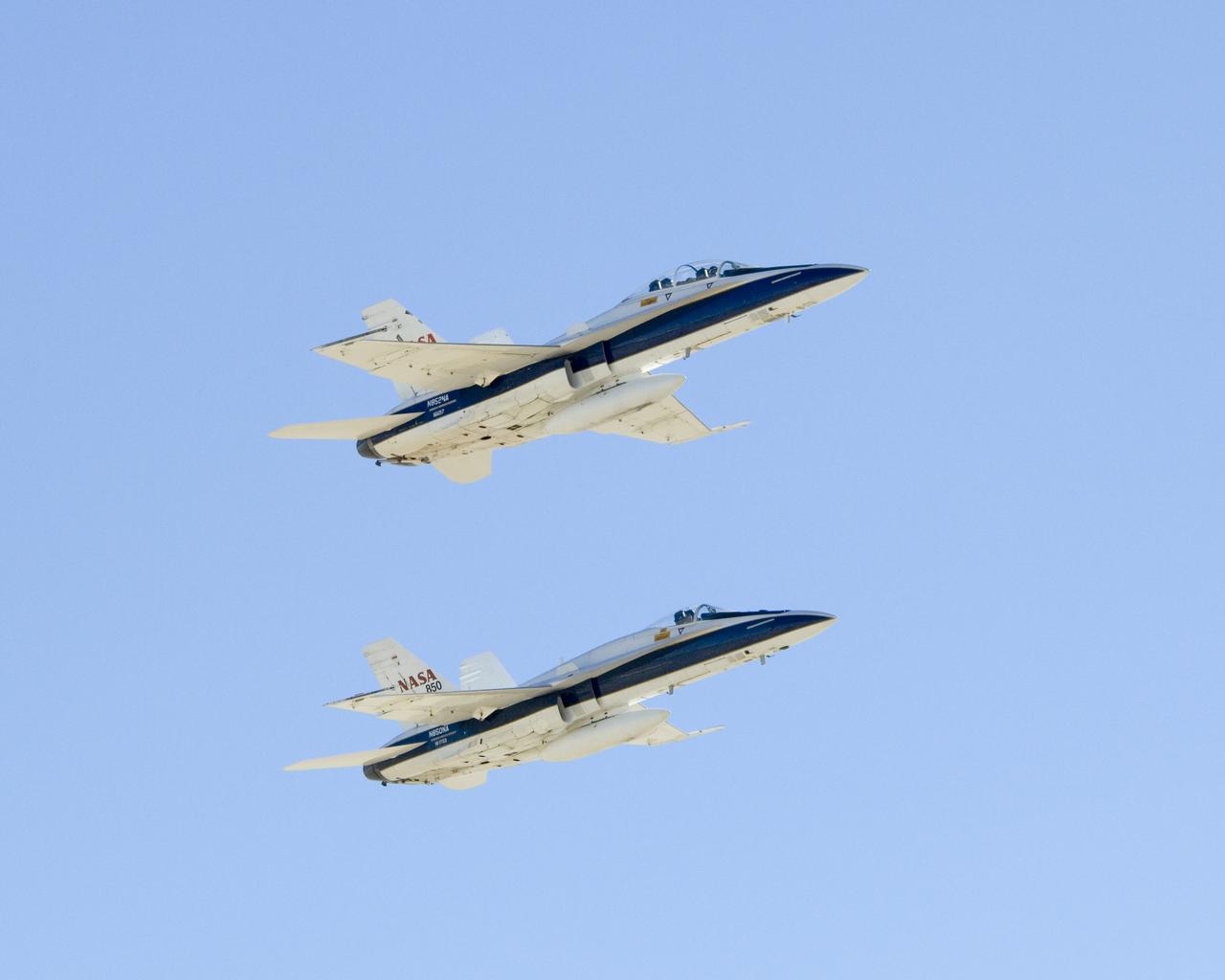
NASA's two modified F-15B research aircraft joined up for a fly-over of NASA's Dryden Flight Research Center on Edwards AFB, Calif., after a research mission.
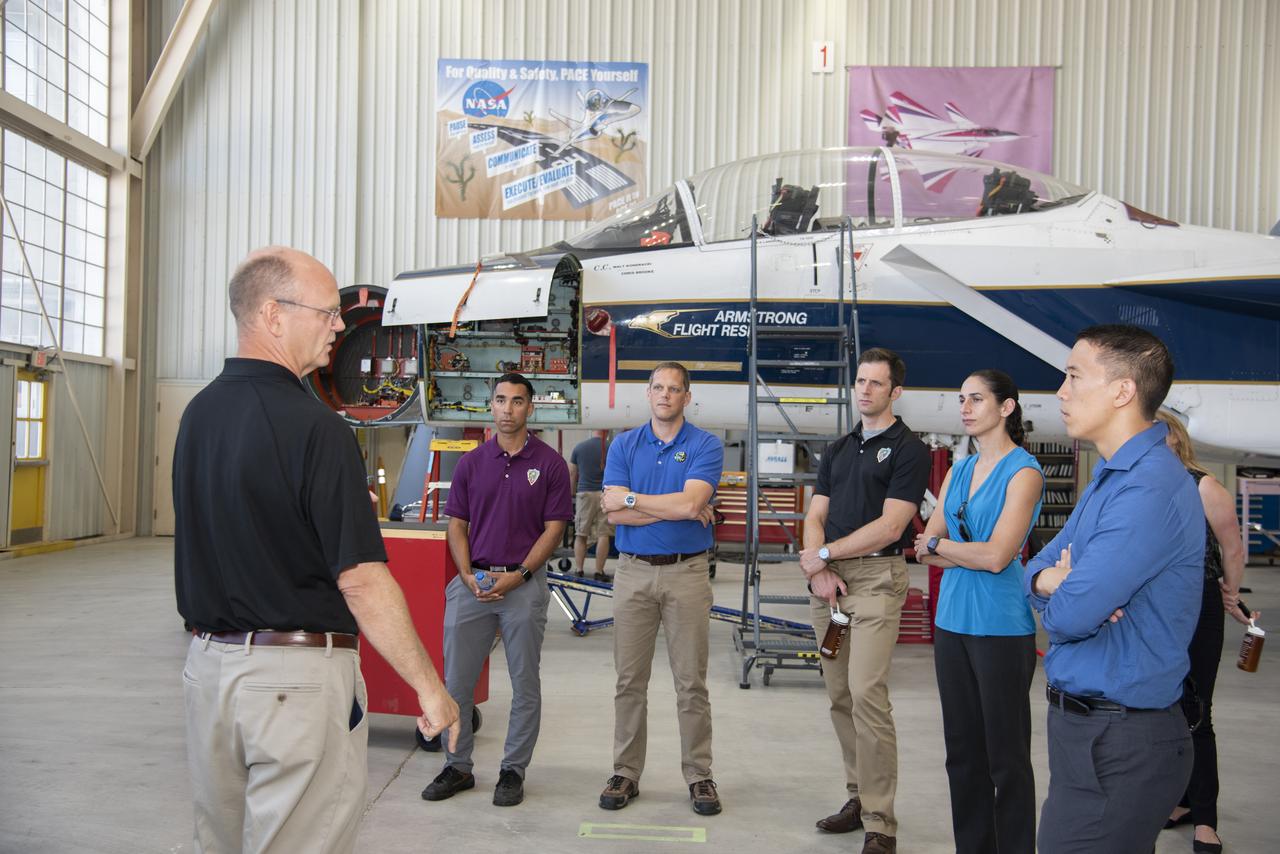
NASA’s 2017 astronaut candidates (L to R) Raja Chari, Bob Hines, Joshua Kutryk, Jasmin Moghbeli, Jonny Kim, and Jessica Watkins toured aircraft hangar at Armstrong Flight Research Center, in Southern California. On the left, NASA’s, X-59 pilot, briefs them on use of F-15 for studying sonic booms during the development of the low-boom X-59 aircraft that is planned to fly supersonically over land. Low-level supersonic flight is not allowed at this time because of the loud noise levels generated when flying beyond the speed of sound.
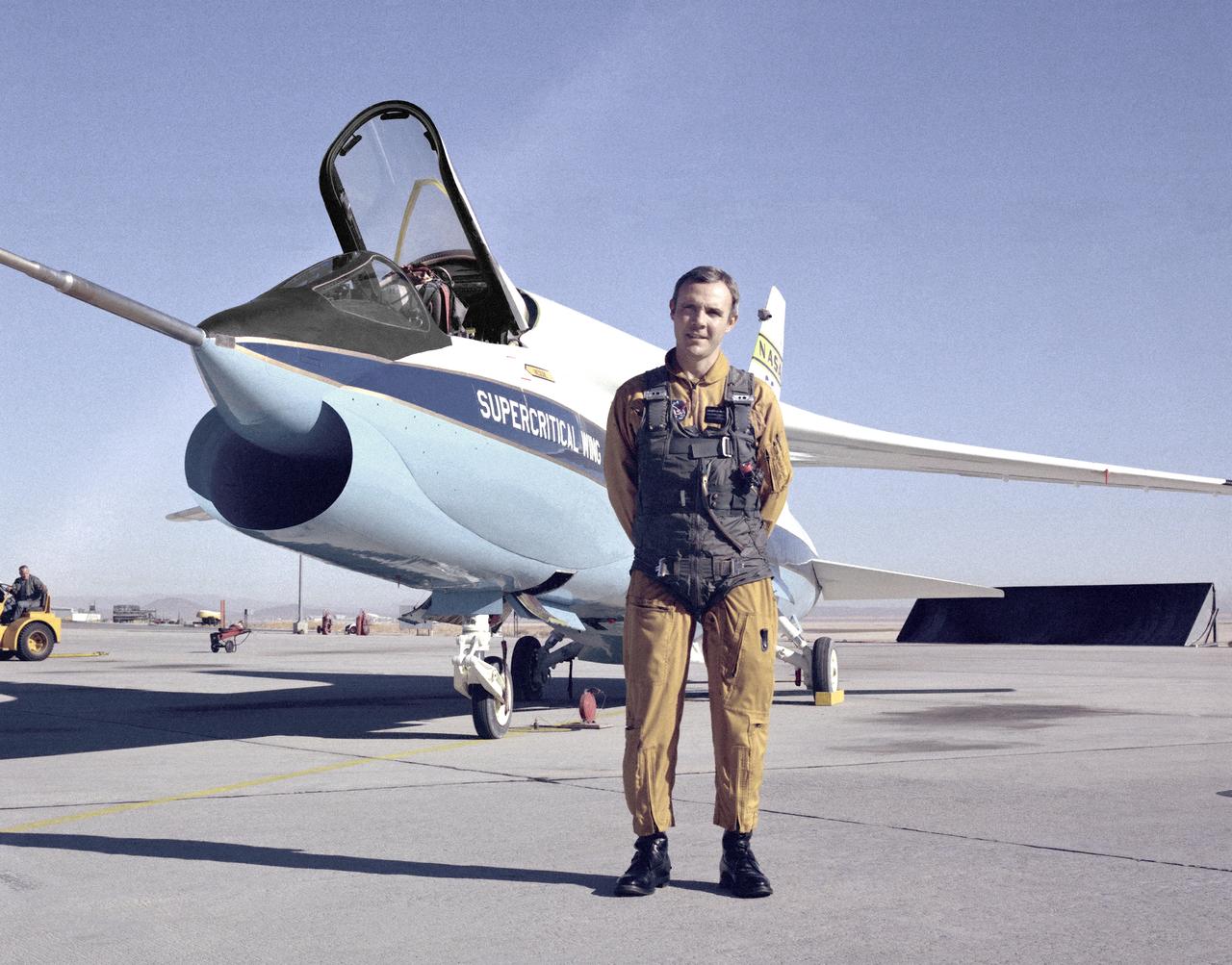
A Vought F-8A Crusader was selected by NASA as the testbed aircraft (designated TF-8A) to install an experimental Supercritical Wing (SCW) in place of the conventional wing. The unique design of the Supercritical Wing reduces the effect of shock waves on the upper surface near Mach 1, which in turn reduces drag. In this photograph the TF-8A Crusader with Supercritical Wing is shown on the ramp with project pilot Tom McMurtry standing beside it. McMurtry received NASA's Exceptional Service Medal for his work on the F-8 SCW aircraft. He also flew the AD-1, F-15 Digital Electronic Engine Control, the KC-130 winglets, the F-8 Digital Fly-By-Wire and other flight research aircraft including the remotely piloted 720 Controlled Impact Demonstration and sub-scale F-15 research projects. In addition, McMurtry was the 747 co-pilot for the Shuttle Approach and Landing Tests and made the last glide flight in the X-24B. McMurtry was Dryden’s Director for Flight Operations from 1986 to 1998, when he became Associate Director for Operations at NASA Dryden. In 1982, McMurtry received the Iven C. Kincheloe Award from the Society of Experimental Test Pilots for his contributions as project pilot on the AD-1 Oblique Wing program. In 1998 he was named as one of the honorees at the Lancaster, Calif., ninth Aerospace Walk of Honor ceremonies. In 1999 he was awarded the NASA Distinguished Service Medal. He retired in 1999 after a distinguished career as pilot and manager at Dryden that began in 1967.
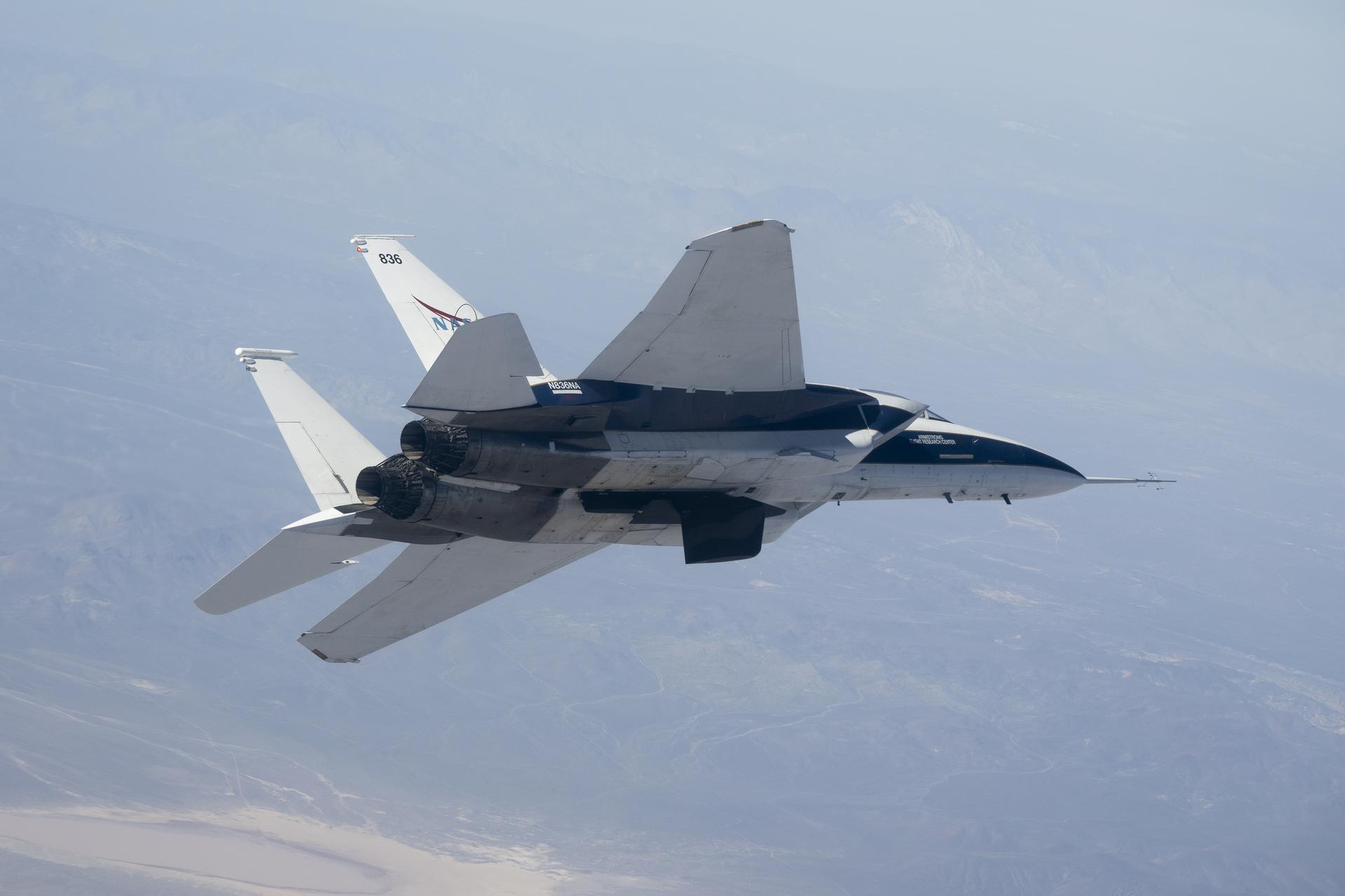
NASA’s Crossflow Attenuated Natural Laminar Flow (CATNLF) scale-model wing flies on a NASA F-15 research jet during a test flight from NASA’s Armstrong Flight Research Center in Edwards, California. The CATNLF technology is designed to maintain smooth airflow, known as laminar flow. NASA will continue flight tests to collect data that validates the CATNLF design and its potential to improve laminar flow, reducing drag and lowering fuel costs for future commercial aircraft.
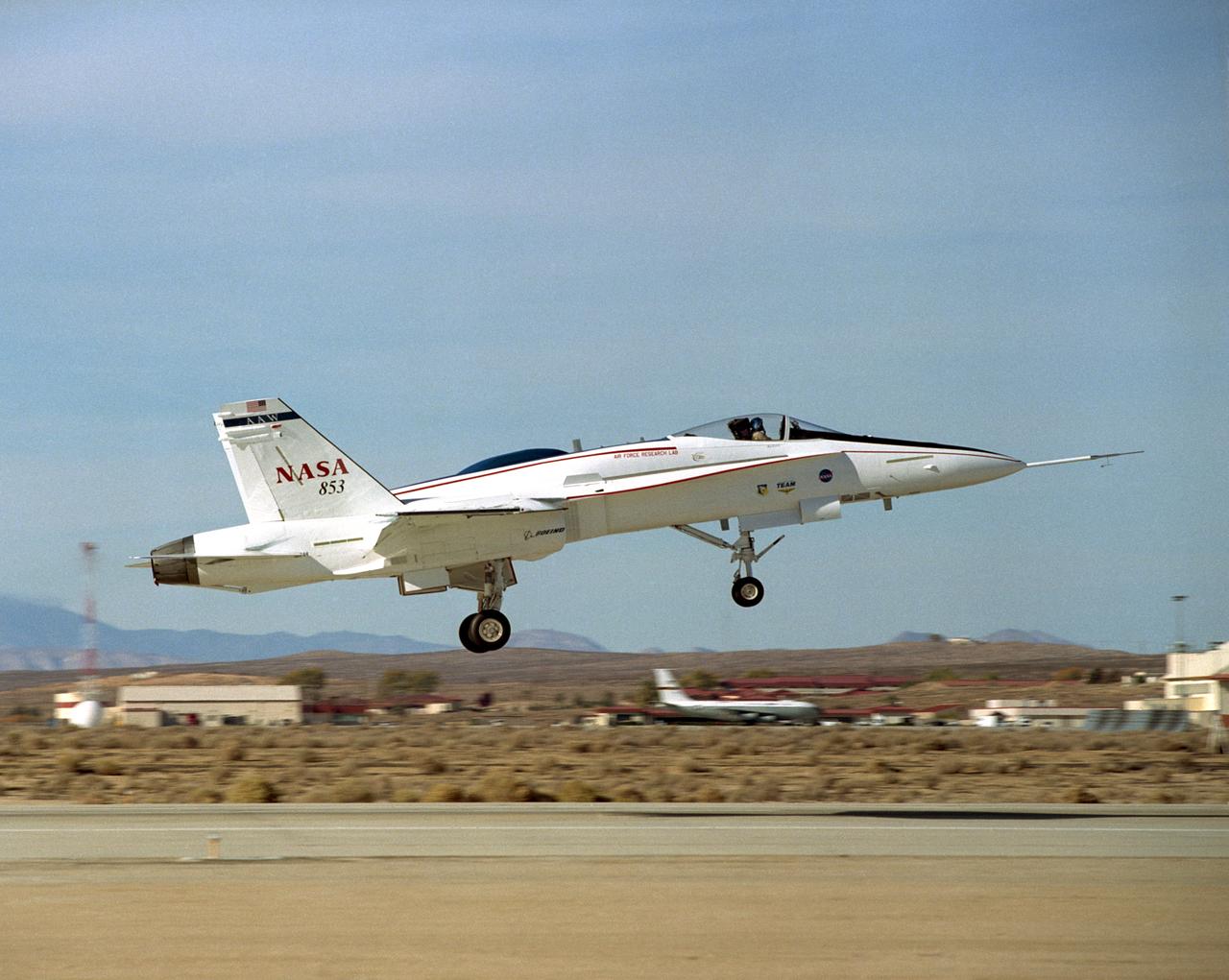
The Active Aeroelastic Wing F-18A lifts off on its first checkout flight November 15, 2002, from NASA's Dryden Flight Research Center at Edwards Air Force Base, Calif. The checkout flight initiated a two-phase NASA--Air Force flight research program that will investigate the potential of aerodynamically twisting flexible wings to improve maneuverability of high-performance aircraft at transonic and supersonic speeds.
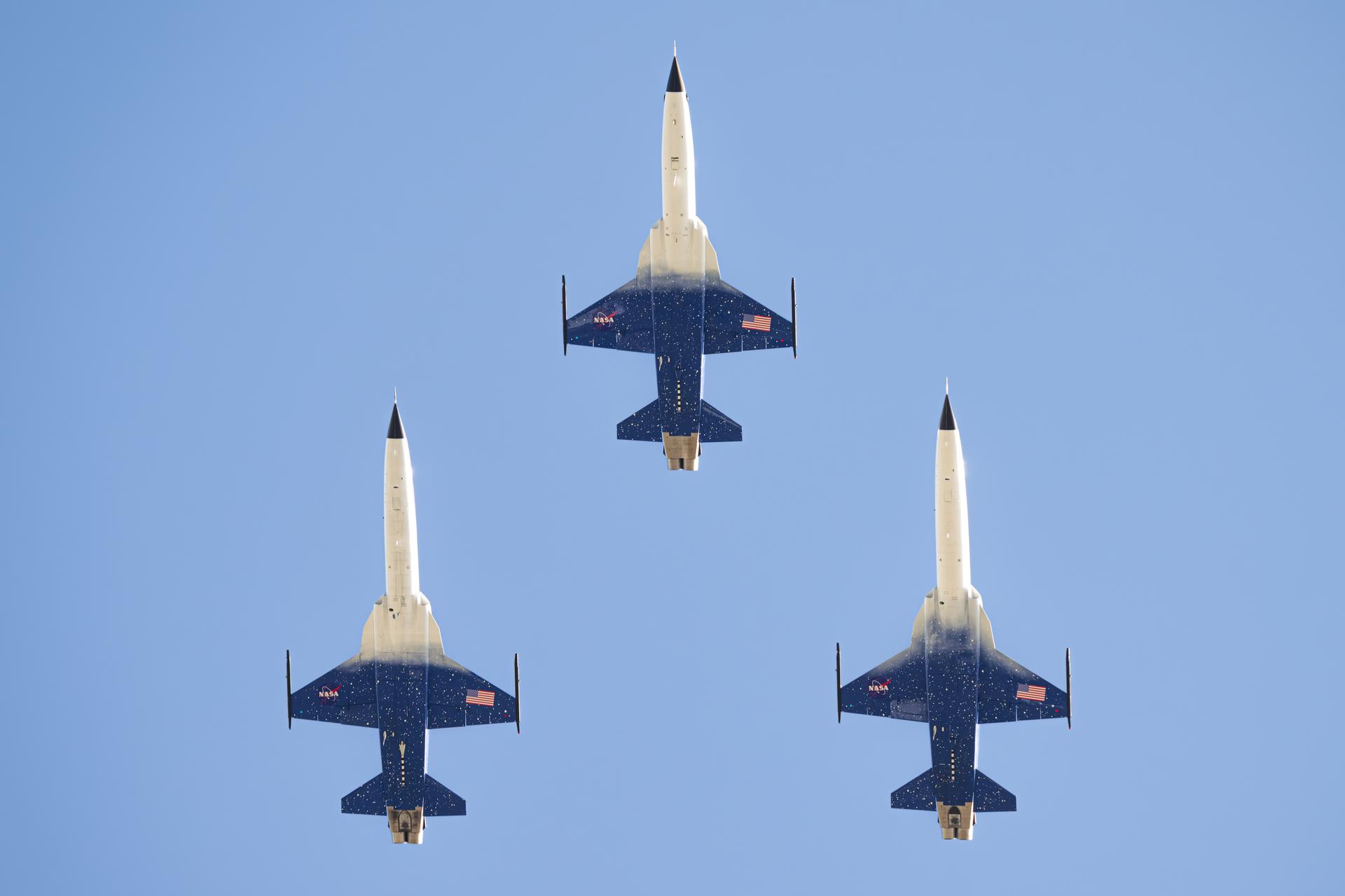
NASA Administrator Jared Isaacman participates in a formation flight with his F-5 aircraft during an air show performance at the SUN ’n FUN Aerospace Expo, Wednesday, Apr. 15, 2026, in Lakeland, Fla. Isaacman was joined by pilots Sean Gustafson, senior advisor to the administrator, and Jerry Kerby. Photo Credit: (NASA/John Kraus)
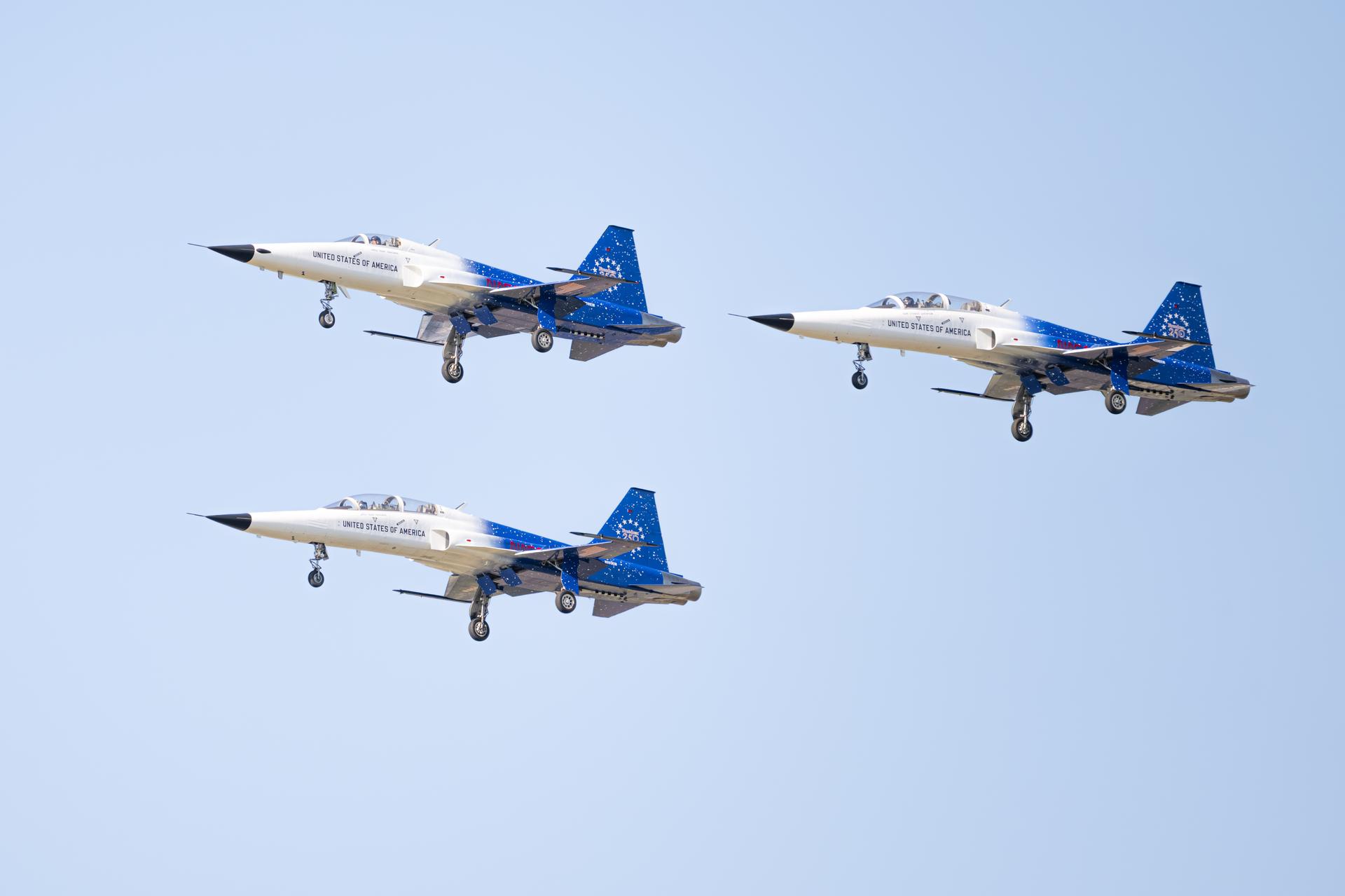
NASA Administrator Jared Isaacman participates in a formation flight with his F-5 aircraft during an air show performance at the SUN ’n FUN Aerospace Expo, Wednesday, Apr. 15, 2026, in Lakeland, Fla. Isaacman was joined by pilots Sean Gustafson, senior advisor to the administrator, and Jerry Kerby. Photo Credit: (NASA/John Kraus)
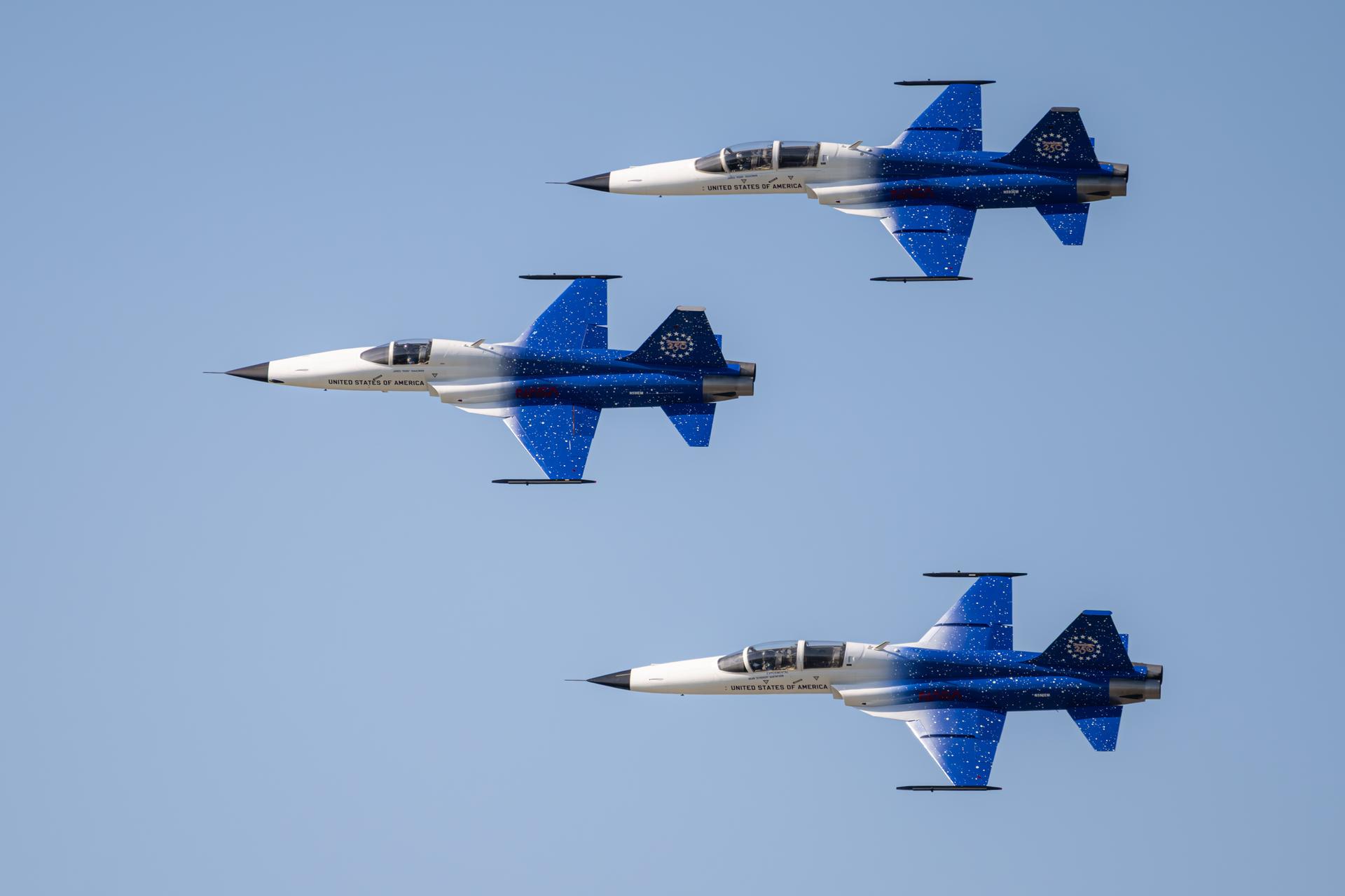
NASA Administrator Jared Isaacman participates in a formation flight with his F-5 aircraft during an air show performance at the SUN ’n FUN Aerospace Expo, Wednesday, Apr. 15, 2026, in Lakeland, Fla. Isaacman was joined by pilots Sean Gustafson, senior advisor to the administrator, and Jerry Kerby. Photo Credit: (NASA/John Kraus)
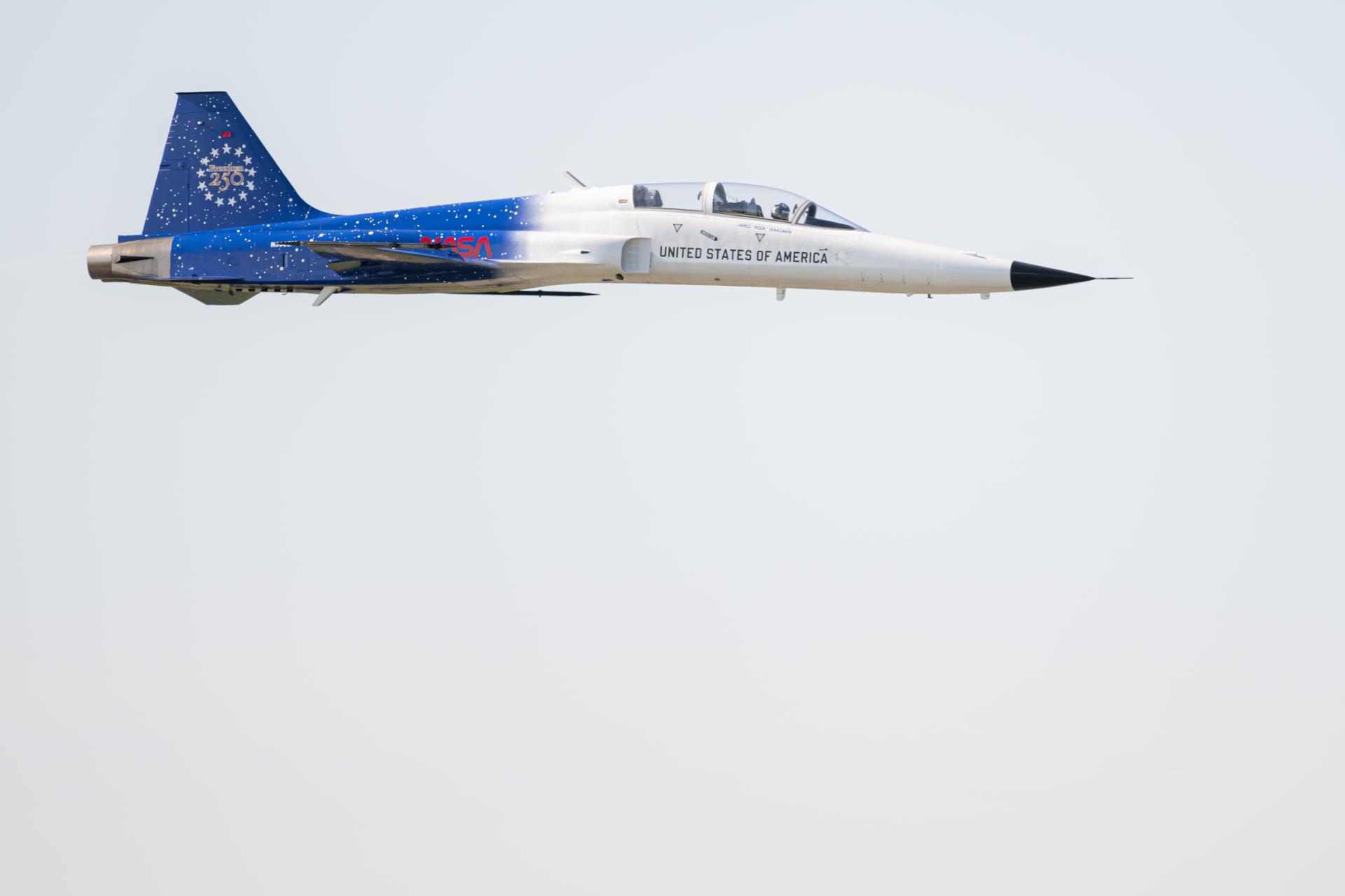
NASA Administrator Jared Isaacman participates in a formation flight with his F-5 aircraft during an air show performance at the SUN ’n FUN Aerospace Expo, Wednesday, Apr. 15, 2026, in Lakeland, Fla. Isaacman was joined by pilots Sean Gustafson, senior advisor to the administrator, and Jerry Kerby. Photo Credit: (NASA/John Kraus)
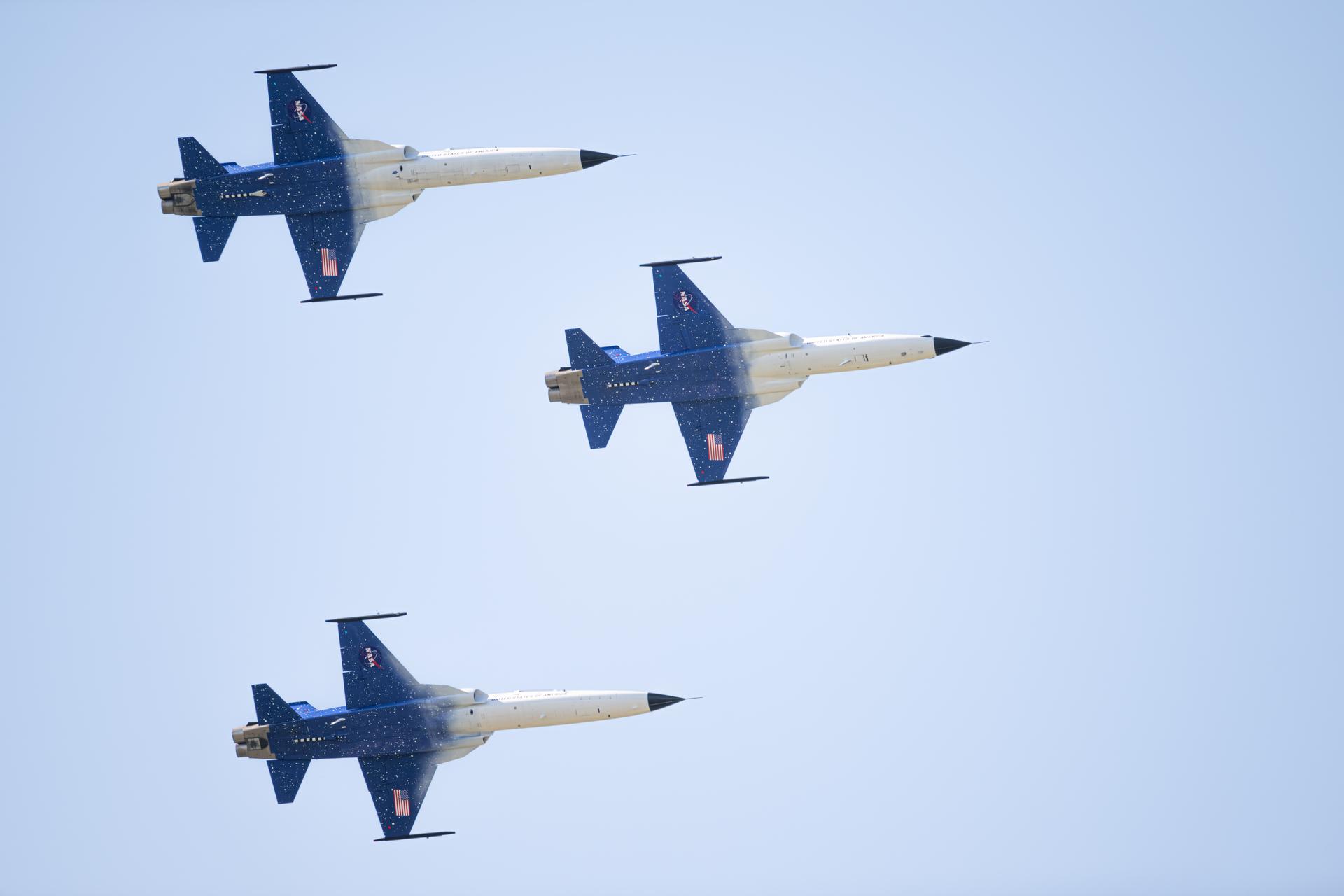
NASA Administrator Jared Isaacman participates in a formation flight with his F-5 aircraft during an air show performance at the SUN ’n FUN Aerospace Expo, Wednesday, Apr. 15, 2026, in Lakeland, Fla. Isaacman was joined by pilots Sean Gustafson, senior advisor to the administrator, and Jerry Kerby. Photo Credit: (NASA/John Kraus)
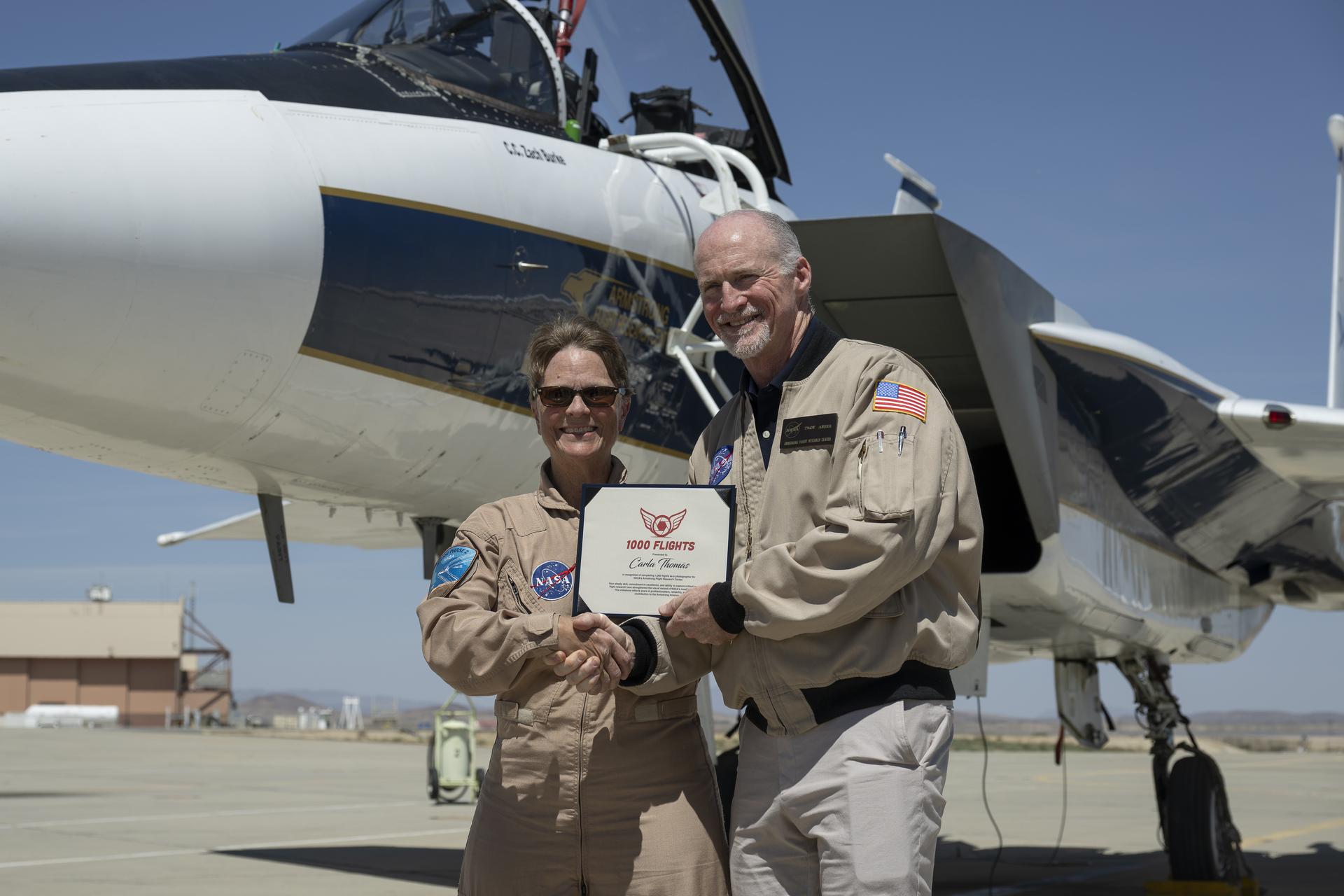
Troy Asher, acting center director, presents NASA aerial photographer Carla Thomas with an award commemorating her 1,000th flight at NASA’s Armstrong Flight Research Center in Edwards, California, on Monday, April 20, 2026. For 38 years, Thomas has captured aerial photographs of research and science flights. The milestone flight was completed in the backseat of a NASA F-15 aircraft piloted by NASA Armstrong chief pilot Wayne Ringelberg.